
Home » THANKSGIVING (Page 45)
Category Archives: THANKSGIVING
I Have Been Struck by the Way that Most People Finally Say Good-Bye!
 The final good-bye does not involve words, almost as if words lone are insufficient to communicate their true feelings. The ideas that people gather over time about what a couple is supposed to be like is derived from overt messages and less direct influences from their family, neighborhood, school, ethnic community, racial, religious, and class identity. Management of feeling and expression enhances the functioning of groups by allowing continuity of action, building solidarity among members, and indicating status differences. Expressive control allows collective action to continue without the situation becoming redefined as the interrupted action or novelty that emotional arousal implies. To further highlight this illustration, expressive control suppresses the potential embarrassment in intimate examinations by a medical professional. Nonemotional voice tines and other nonintimate gestures suppress stress, giving the interaction a routine, technical meaning. A similar display rule in public settings shields onlookers from intimate gestures that would disrupt civil comportment. Kissing, fondling, and other gestures between lovers are normally prohibited in public settings. Intimate expressions remind onlookers that they are being excluded from a desirable relationship. Violators of this display rule are usually the young, tourists, and others who disregard public sensitivity. #RandolphHarris 1 of 7
 The most simple and direct type of human communication does not need words. Let us awaken tomorrow with all our zest and seal by embracing and creating life. Sentiment management can build group solidarity. The disruptive effects of envy are controlled universally by belief systems that proscribe envy, and by norms that diminish conditions for envy. These norms require that enviable goods be concealed from observation, that people show humility over good fortune, and that enviable objects or events be shared symbolically or materially. Solidarity can also be enhanced by evocation of humor. Laughter and humor among hospital patents has been observed to be invitations to decrease social distance, emphasizing shared experiences and common definitions of the situation. The liberating effect of joined laughter consists in the consensus that it brings about in a brief span of time. As soon as humans discovered the existence and function of the heart, they recognized that it was influenced by human companionship and love. Most of us have, at one time or another, felt our hearts beating rapidly when we are close to those we love or, occasionally, when we have been offended by others. Many of us have felt our heart sink, as if pressed by some crushing weight, after the loss of loved ones. #RandolphHarris 2 of 7
 The psychological impact of suddenly finding oneself a patient in a hospital can be devastating. Lying in bed with needles in one’s arms, tubes in one’s chest recording every heartbeat on a television screen, being forces to use a bedpan, threatened with imminent death, rendered totally helpless and dependent on others—the experience is shattering. As his heart blips ominously on a television screen next to his bed, a patient’s life is reduced to a few essentials. What does it all mean? Is he going to die? Would he have done anything differently? The World of the patient’s wife or children or loved ones is also reduced to a few stark essentials, for the man or woman they visit in such a unit may not be alive the next time they come back. What do you say in such circumstances—what can you sat to help—what is important to communicate? The very existence of units that house people faced with the imminent possibility of death helps outline in stark simplicity certain elementary facts about life. One of those is our basic need to communicate. We ought always to thank God for you, and rightly so, because your faith is growing more and more, and the love every one of you has for each other is increasing. #RandolphHarris 3 of 7
 God is just: He will pay back trouble to those who trouble you, and give relief to you who are troubled, and to us as well. Assumptions are ideas which one holds to be true without any proof that they are true—things that are taken for granted. Some people are more gifted at living than others. They do have an effect on those around them, but the process stops there because there is no way of describing in technical terms just what it is they do. Expression management is a continual affirmation of a group’s structure of status and deference. We may claim statuses by displaying affective coolness when greater involvement would ordinarily be expected. Some male groups admire men who can attract and conquer a beautiful woman without becoming involved, or who can engage in homosexual prostitution while displaying affective detachment. Business managers are expected to control their emotional reactions, in contrast to ordinary workers who are not believed to be able to do so. The value of humanistic psychology is not limited to the mentally unwell. Its techniques can be useful in your life, but they should not be used to manipulate other people. Psychology can be most useful in helping you to become more fully human. #RandolphHarris 4 of 7
 High status includes the power to elicit beneficial and optimistic gestures from subordinates and to inhibit their hostile expressions. Smiling and laughter are usually offered upward in statues hierarchies, ostensibly indicating pleasant, egalitarian relations and concealing status differences temporarily when the later have invited a decrease in social distance. In traditional Far Eastern cultures, a subordinate is expected to conceal anger or sulk when criticized, and to mask these feelings by showing pleasure at being corrected. In contemporary New World societies, women are more likely than men to smile, even when angered or frustrated. Women’s initial facial expression of anger is masked or covered up instantly. Groups manage sentiments through the kinds of information they allow to enter open awareness. Growing numbers of physicians now recognize that the health of the human heart depends not only on such factors as genetics, diet, and exercise, but also to a large extent on the social and emotional healthy of the individual. A fully human person values human beings above material goods, and feels strongly that human rights are far more important than material rights. These also recognize they have a capacity for enjoyment and pleasure, and they try to be real and open in their relationships with others. #RandolphHarris 5 of 7
 People who are fully human are willing to risk another person’s reaction to his or her open expression of feelings. They use openness and authenticity, not to manipulate or control, but to share knowledge of oneself with others. Hatred is sustained by emphasizing an enemy’s perceived negative qualities, overlooking or explaining away anything favorable, and then directing hatred toward this contrast conception. Love between parents and their grown children may be strengthened by limited contact that allows earlier conflicts to be forgotten. Generational gaps in attitudes and behavior are accentuated by accurate knowledge about each other, weakening love bonds. Selective recall is sometimes a conscious feeling-management technique. College men reported control over jealousy by prohibiting any mention of their girlfriends’ previous lovers. The couple jointly censured anyone who indiscreetly disclosed information about the woman’s earlier relationships. Sentiments are managed by sensitivity and avoidance within the social framework of memory. “Make it your ambition to lead a quiet life, to mind your own business and to work with your hands, just as we told you to, so that your daily life may win the respect of outsiders so that you will not be dependent on anybody (1 Thessalonians 4.11).” #RandolphHarris 6 of 7
 When faces with danger or the threat of danger, human beings can derive an enormous sense of comfort from their fellow humans. Whether the danger is artificially contrived in a laboratory or part of the infinite variety of real life stresses, human beings instinctively seek out each other’s company in adverse circumstances. In all our distress and persecution, we are encouraged about you because of your faith. For now, we really live, since you are standing firm in the Lord. How can we thank God enough for you in return for all the joy we have in the presence of our God because of you? Night and day, we pray most earnestly that we may see you again and supply what is lacking in your faith. Now may our God and Father himself clear the way for us to come to you. May the Lord make your love increase and overflow for each other and for everyone else, just as ours does for you. May he strengthen your hearts so that you will be blameless and virtuous in the presence of our God and Father. When someone’s life is in mortal peril, the medical effectiveness of proper care is well documented. Incidence of sudden death dropped by 56 percent in hospitals that are trained to properly treat a person’s symptoms and offer emotional support. Also, it is clear that the heart of human relationships and human love ultimately moves belong anything that can be objectively described or measured. #RandolphHarris 7 of 7
Dare You See a Soul at the White Heat?
 If you were coming in the Spring, I would brush the Winter by with half a smile and half a spurn, as love does fly. If I could see you in a year, I would wind the months in balls, and put them each in separate drawers, until their time befalls. If only centuries delayed, I would count them on my hand, subtracting till my fingers dropped. If certain, when this life was out, that yours and mine should be, I would toss it yonder like a rind, and taste eternity. However, not, all ignorant of the length of time’s uncertain wing, it goads me, like the goblin bee, that will not state its sting. Anticipation of a relationship can stimulate arousal. An individual awaiting a loved one’s return may work up a feeling for a spontaneously intimate reunion. Imaginative rehearsals stir anxiety, muscular tension, and ready gestures for the forthcoming interaction. Anticipatory arousal is functionally important when immediate, full enactment of a sentiment is required. Parental love cannot be left to a gradual, haphazard acquisition. Parents-to-be are primed for the infant’s arrival by anticipatory socialization and by the anxiety cued by the mother’s pregnancy. The newborn’s amorphous personality serves as the perfect screen for the projection of parental emotions, as sentiments long held in abeyance are released like coiled springs by the baby’s birth. #RandolphHarris 1 of 6
 A death-blow is a life-blow to some who, till they died, did not alive become; who, had they lived, and died, but when they died, vitality begun. Anticipation of tragic events, or worry work, focuses attention on possible dangers and allows planning. Anticipatory grief precedes the death of a loved one. This anticipatory sentiment sensitizes survivors to the impending change of relationship, and allows them to experience part of the emotion appropriate to the disaster before it occurs. The right to perish might be thought an undisputed right, attempt it, and the Universe upon the opposite will concentrate its officers—you cannot even die, but nature and humankind must pause to pay you scrutiny. Memories of past interactions and relationships evoke heightened feeling within the extended time frame of sentiments. Reminiscent arousal often develops when members of an enduring group, such as a family, recall shared sentiments from their collective past. Reference to some symbol that designates the whole event triggers an in-group meaning, including the corresponding sentiment. Through collective worship, faith is created and periodically recreated through rites, as a result of which people are more confident because they feel themselves stronger, and they really are stronger, because forces which were languishing are now reawakened in the consciousness. #RandolphHarris 2 of 6
 As people experiment with deepening their awareness in family and social influences, one will find that one can be creative and playful in learning more about oneself. This is also an area where one can invite their partner, or someone an individual is getting to know, to join in awareness skills of curiosity and mindfulness. Group membership provides the reference points and categories in which memories reside. Individual memories become assimilated to collectively defined and revised memories, which in enduring groups are partial to optimistic, bonding sentiments. New feet within my garden go, new fingers stir the sod; a troubadour upon the elm betrays the solitude. New children play upon the green, new weary sleep below; and still the pensive Winter returns, and still the punctual snow! Take care, for God is here, that is all. The breaking of the day addeth to my degree; if any ask me how, artist, who drew me so, must tell! Arousal may be stimulated by observing another person’s situation or that person’s effective expressions, conventional or innate. Perhaps the important sociological questions about gestures is not their origin, but whether natural ones have different social effects than conventional ones. #RandolphHarris 3 of 6
 A picture of deep connection and happiness for one person can be another person’s nightmare of disconnection and dissatisfaction. The point is to keep talking about it and see where the conversation takes you. Rapid transmission and intensification of collective feelings occur when people respond directly to innate gestures instead of interpreting them. This unites people on the most primitive level to overcome problems and occurs in groups where people are sensitizing to one another’s reactions. Asserting that the basic communicative expressions in rituals are innate signals, people are vulnerable to control by elites who gain power over ritual resources that excite our natural affectivity. Our innate responsiveness to gestures like crying, jeering, and laughter leaves us susceptible to political and emotional manipulation. However, the Spirit of the Lord is Omnipotent, which has wrought a mighty change in us, or in our hearts, that we have no disposition to do evil, but to do good continually. And we, ourselves, also, through the infinite goodness of God, and the manifestation of his Spirit, have great view of that which is to come; and were it expedient, we could prophesy of all things. And it is the faith which we have had on the things which our king has spoken unto us that has brought us to this great knowledge, whereby we do rejoice with such exceedingly great joy. #RandolphHarris 4 of 6
 And we are willing to enter into a covenant with our God to do his will, and to be obedient to his commandments in all things that he shall command us, all the remainder of our days, that we may not bring upon ourselves a never-ending torment, as has been spoken by the angel, that we may not drink out of the cup of the wrath of God. We have a choice, we do not have to be the victims of loneliness. Remembering and understanding the lessons of the past will give one much more control over how we choose to act in the present. Emotional arousal is generated by the singing, dancing, chanting, and other ritual actions of people in collective assembly, which awakens religious sentiments upon reaching a certain level of intensity. This social effervescence changes the conditions of psychic activity: vital energies are overexcited, passions are active, sensations stronger. This arousal is socially interpreted. Excitement becomes generalized to religious symbols and meanings, which are imbued with a sacred character as extraordinary as the feeling generated by collective ritual. The person feels oneself transformed and consequently transforms the environment one finds oneself in. #RandolphHarris 5 of 6
 Not knowing when the dawn will come I opened every door. Arousal may result from emotional contagion, but soon becomes interpreted according to social meanings Sentiments are finely discriminated for aspects of relationships and personality that are highly valued and strongly regulated. This is see more easily in cross-cultural studies. Traditionally, people in the British Colombian Village of Kelowna live in a manner which strongly enforces gentleness, mildness, honesty, and even-tempered restraint in expressing affection and disagreement. Respect for kin, age, gender, and other status differences in the central them in Kelowna, where the vocabulary makes fine distinctions among feeling states associated with respectful behavior. There is generally a feeling of respectful politeness in the community in which one displays kind impulses so as not to disturb the emotional equanimity of a spiritually superior person. These people made s covenant with God, and they are called the children of God, his sons and daughters; for behold this day he has spiritually begotten them; for he says that their hearts are changed through faith on his name; therefore, they are born of him and have become his sons and daughters. #RandolphHarris 6 of 6
Hope Preaches in the Soul
 Beautiful objects arouse pleasure. Beauty relaxes, but the experience of sublimity is of great emotional intensity. Every sentiment is organized around a relationship to a social object, usually another person or a group such as a family. We associate a sentiment closely with particular persons or groups. If we try to recall love, pity, or other sentiments, we usually think of people by whom or toward whom these sentiments have been felt. We feel shame, pride, guilt, or embarrassment toward our selves as social objects when we imagine how other people judge our appearance to them. A sentiment may develop around a nonhuman object, such as love for a pet or reverence for a deity, but the object is usually personified with human qualities. The soul is said to strive toward beauty, which is a manifestation of the spiritual force that animates all of reality. Given that beauty is an objective property, attainable artistically and knowable critically, by reference to the rules, the question of the percipient’s response to it is usually scant. However, beauty can be expected to arouse the appropriate response, which is referred to briefly and loosely as pleasure or delight. It is the total object, the whole of form and expressiveness and what the form is of, that possesses the beauty. #RandolphHarris 1 of 7
 Just as one can see the Sunlight without looking into the Sun itself, so can one have knowledge of divine ideas. A sentiment established a framework of meaning within which specific events, gestures, and sensations can be given a social interpretation. A sentiment is identified through an organization of responses toward a person, not through particular acts viewed separately. For example, a sentiment may be detected by others even when the individual does not acknowledge his or her feelings. One may deny being in love with a person, but may be imputed the love sentiment by observers who detect a pattern of protection and preoccupation with another person. We believe that we have detected a man’s love for a woman when he demonstrated joy in her presence, sorrow in her prolonged absence, fear when there is danger of losing her, and anger when she is criticized. The characteristic organization of hatred includes being sorry over the enemy’s good fortune, feeling anger at his or her very presence, being happy at their misfortune, and sensing anxiety over his or her possible success. We interpret, justify, and anticipate acts and feelings in relation to the sentiment’s overall pattern. #RandolphHarris 2 of 7
 We attain these ideas in terms of the residual effects of the divine actions—effects which remain in the soul like habitual or buried memories. Our mind is simultaneously enlightened so that it is moved to judge correctly about the object and is hence in accord with God’s own mind on the subject. A sentiment sustains a relationship as an enduring, latent tendency to respond emotionally and overtly toward another person when the opportunity is given. Situational constraints often inhibit direct expression. One factor is over view of what the relationship means to the other person. Sentiments differ in the importance of reciprocal feeling. Reciprocation of hatred will magnify animosity. Failure by the other to reciprocate romantic love may simply heighten the lover’s passion as much as reciprocation. The other person may validate a sentiment with an appropriate but different pattern of gesture and feeling, such as showing gratitude for my kindness. The meaning of a sentiment depends on how the other responds to it. When people have a bad experience, they are often more concerned about how they feel about it, than the issue itself. #RandolphHarris 3 of 7
 Timely and effective communications can help one manage negative sentiment, rebuild trust, and promote loyalty. We become highly aware of a sentiment when a controversial discrepancy arises. A single salient act can seem to contradict the whole pattern. Stealing from a loved one, helping an enemy, or cursing a deity are acts that call the sentiment into question. Most acts within a relationship, however, are assimilated into a sentiment and are anticipated and assessed as reflecting its meaning. Bodily sensations are an intermittent phase of every enduring sentiment. Arousal is more frequent and intense in passionate sentiments, such as romantic love, jealousy, and awe, than in others like kindness, loyalty, and gratitude. These visceral and muscular sensations are essentially autonomic arousal symptoms associated with the flow of adrenaline: heart palpitations, accelerated breathing, flushes, and tremor. However, they may be experienced simply as diffused, generalized excitement. Arousal does not persist unabated, even in passionate sentiments, but arises intermittently. Get involved with your business and reputation to reduce the risk of negative perceptions. #RandolphHarris 4 of 7
 Bodily sensations do not define the nature of the sentiment. Even if regulatory issues make your company leery of social media, it is becoming riskier not to have a readily available, reassuring presence online because your people expect you to be there. As individuals often voice concerns online, you may receive double the negative feedback if you do not respond. Even a few thoughtful communications can show people that you are listening and ready to help, and that is a good thing. Listen to people’s concerns, admit any mistakes, and be clear about how you will improve their experience. There are no explicit patterns of arousal that correspond to different sentiments. Instead, we interpret our sensation in terms of the encompassing relationship. A feeling of excitement can be interpreted as indicating the continued vitality of a sentiment, whether love or hatred. We express sentiments more spontaneously when we are aroused. Of course, we feel bodily sensations of various types much of the time, and many of these—dizziness, fatigue, hunger, aches—have nothing to do with social relationships. We are socialized to attend selectively to our own sensations, however, and to sometimes attribute them a social meaning in terms of the course of interaction with another person. #RandolphHarris 5 of 7
 A sentiment is expressed situationally through a person’s conventional gestures, such as kissing, and overt, involuntary bodily signs of arousal, such as trembling. A review of cross-cultural differences in gestures such as hand movements, laughter, crying, and posturing concluded that there is no natural language of emotional gesture. In dealing with negative sentiment, do not try to respond to everything. Focus on concerns to create the greatest optimistic response. Think beyond a simple apology or refund to what people might expect; what might delight them—perhaps a bonus gift or new benefit. By showings you care about your people and reputation, you may win loyalty and motivate them to praise your brand to others. For facial expressions of emotion, however, there is evidence that anger, disgust, fear, and several other emotions may be expressed and recognized similarly across very diverse cultures. Researchers admit however that in social situations, any natural, innate facial emotion is masked beneath culturally conventional expressions. Even when negative sentiment looms in social media, you can often find loyal customers who will defend your brand. Engage people directly to express appreciation, learn what they like about your company and how you might delight them. #RandolphHarris 6 of 7
 Your personal attention might motivate more business and prompt people to help influence more beneficial sentiment online. Social media is a powerful channel to quickly address key concerns, clarify misconceptions, and offer reassurance. Showing people that you are listening and that you care about how they feel can help transform negative sentiment into a winning experience. We interpret a conventional gesture, such as a smile, in terms of situational factors, previous interactions with a person, subtle details in expressive style, and other social criteria. Human gestures are parts of social communication that become significant to symbols when they arouse the same meaning in the observer as in the expressing person. We indicate ourselves the meaning of our own gestures in terms of the perspective of the other person and shape our gestures in terms of the perspective of the other person and shape our gestures according to the meaning we intend them to have. Gestures become meaningful when interpreted as sentiments, which serve as significant categories or symbols held in common by group members. “Those who live without God in the World, judgment of an everlasting punishment is just upon them; and they shall quake, and tremble, and shrink beneath the glace of God’s all-searching eye (Mosiah 27.31).” #RandolphHarris 7 of 7
Charity is for the Brave and Beautiful
 Measure of giving thanks, helping the underrepresented, and loving members of the community have been linked to participation in charitable programs. Some individuals who are doing well in society know how hard it was for them when they started their lives and had to struggles by themselves to come up in the World, and they see this same phenomenon in others people and want to reach out and provide support to make life a little easier on other individuals. Some movements are good because they are peaceful, supporting, and caring. They offer gentle advice, social inclusion, understand, a sense of community and goods and services needed to support people who may have a requirement. Some members of society are actually looking to conform to social norms and accept the people around them. People who come together for a charitable cause usually have overlapping networks and interpersonal ties for movement recruitment and growth. People are usually recruited by being in close contact, or knowing someone who is familiar to other members. Of course, many people report being drawn to a peaceful social organization by the direct action of God. Subsequent conversation with several individuals who are involved in charitable organizations revealed that significant relationships with relatives or friends has been involved. #RandolphHarris 1 of 5
 Recently, Jillian Harris did a brunch fundraiser at her house to raise money for a charitable group called “Mamas for Mamas,” which is an organization that has like a store and they help new mothers and families with clothes for their babies. The close or either new or in like new condition. Jillian Harris was looking for someone to donate all of the items she no longer needed that were for her son Leo, and that is when she came in contact with the Mamas for Mamas team in Kelowna, Canada and they desired gently used baby items. Much like the way Jillian Harris came into contact with Mamas for Mamas, it has been revealed that 82 percent of people are recruited through social networks. The interconnections between movement network attributes and the interpersonal association of potential participants are just as and perhaps even more important in the recruitment process than social-psychological attributes. When Jillian saw how many families were in need in her community, she felt lucky to help out these single mothers who are trying to work and care for their brand-new babies. The team at Mamas for Mamas puts in a lot of effort to help every family that needs their services by providing them with clothes, making sure they have enough money to pay their rent, and even finding a way to feed them. #RandolphHarris 2 of 5
 The woman at the charity Mamas for Mamas dedicates their time, love, and service without being paid. With the help of Jillian Harris and a crew called Sticks + Stones, they came together to provide the office/work space of Mamas for Mamas with a renovation that is valued over $200,000.00 and 85 generous donors and sponsors also raised $70,000.00 for Mamas for Mamas. Jillian, her family, the crew from Sticks + Stones and all the other participants took what looked like a traditional office building and turned it into what looks like a luxury house for rich and famous new mothers. The space looks phenomenal! So many businesses and people came together and took time out of their busy schedules to provide materials, donations, and labour to help the project come together. Their ambition to make a revolution and give cohesion to the community by unifying people, helping to organize, created an atmosphere of high exaltation, which greatly facilitates peace and love and support to those in need, while providing kind people with a bonding moment that they will remember always. It is amazing how the community came together and invested in the organization Mamas for Mamas with an aura of invincibility and future triumph. #RandolphHarris 3 of 5
 Commitment in the field of social movements suggests that the willingness of people to do what will help maintain the group because it provides what they need. Commitment means the attachment of self to the requirements of social relations that are seen as self-expressive. Commitments links self-interest to social requirements. People can only give what is in their heart, and in the hearts of the people who are linked to Mamas for Mamas is love and concern for the community. This kind of commitment binds members together emotionally, thereby giving rise to group cohesion and solidarity. Gratification flows from attachment to and involvement with other movement member. The moral commitment reflects a beneficial evaluative orientation to the charity and their ideology. Here comment is to reach out and help others, obey the authority of the group, and support its values. Yet, the moral commitment or ideological congruence is not an anomaly. Within many groups there usually are participants who are devoted to advancing the cause on purely moral grounds. Simply put, they do what is righteous. They see it as the way of life. “Do good and share what you have, for such sacrifices are pleasing to God (Hebrews 13.16).” #RandolphHarris 4 of 5
 True success is not just about money and power. It is also about well-being. If you are not happy, then what does all that work add up to? Showing the love of God through charitable acts is something we call can do. Charity helps bonds of tradition that root people within specific landscapes and near familiar people. The efforts make a difference and uplift other people. Many people also find that helping others makes them feel good, too. In addition, when your kids see you being an upright member in the community, they are much more likely to adopt the same mindset and be giving people when they grow up. When friends and family find out about your charitable donations, they may find themselves more motivated to undertake their efforts to give. The Almighty promises us that if we train ourselves to give in times of ease and hardship, our sustenance will increase. Giving awakens our souls and triggers genuine concern for the well-being of others. The personal sacrifice of giving one’s time or possession, no matter how small, for the sake of helping those in need is a blessing and means purifying our soul’s wealth. From a drop of water to gardens of fruit, we must remember that everything in this World is a gift from God. #RandolphHarris 5 of 5

For more information on Mamas for Mamas, which is a registered non-profit please go to: mamasformamas.ca
That was the Straw that Broke the Camel’s Neck!
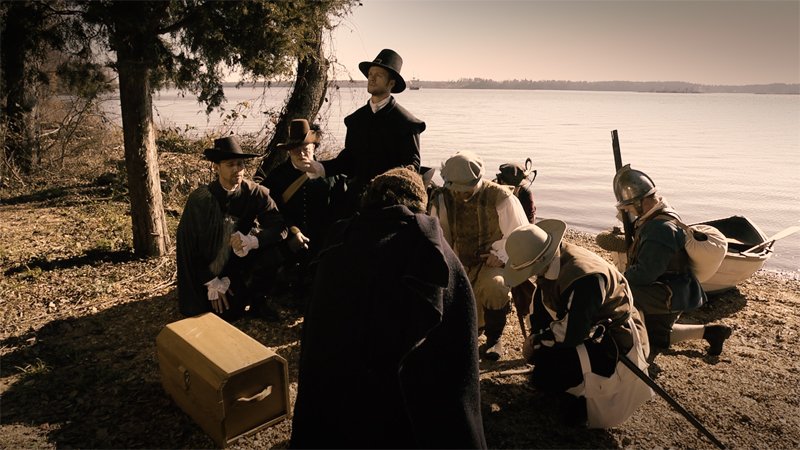 Newcomers may have been prodded by dreams of self-betterment. They did not always provide for others or for the justice necessary between persona and peoples. Social movements are organized collective manifestations of issues for which people have considerable concern. Movements deliberately attempt to promote or resist change in a group, society, or World order of which they are a part. They do so through a variety of means, not excluding violence, revolution, or withdrawal into Utopian communities. Depending upon the degree of correspondence between the goals of a movement and the value orientation of the observers, a movement can be heroic or despicable, on the side of the angels or in the league with the devil. Some movements are more dramatic than others; some are more successful than others; and some are more significant than others in terms of the range and depth of their consequences. However, seldom are they bland or without controversy. Rarely do they not reflect the ongoing dialectic between the individual and society. Hardly ever do they not demonstrate the relativity of belief systems and the importance of human agency or social action in the ebb and flow of social life. Social movements can function as an important bridge for understanding the relation between the individual and society, between structure and process, and between psychology and sociology. #RandolphHarris 1 of 7
 People power is one of the most important resources movements need in order to advance their interests. If a movement is to make headway in its goal attainment efforts, it must reach out, make contact with, and secure potential participants, and then transform at least some of the new recruits into committed members or devotees. Father gives meaning to the environment in which they (the participants) live. Complexity, confusion, hopelessness, and purposelessness are changed into simple understanding, peace, happiness, and a faith in the abstract principles embodied in the person of Father. (He thus) provides an escape from a tortuous mental confusion caused by complex, conflicting circumstances. He gives meaning to the individual life and to the World. However, Individuals who are seen as being especially susceptible to the appeals of movements on the radical right and left are usually dogmatic, highly prejudice, and insecure. The submission to an external cause or authority compensates for the feelings of self-inadequacy, and the desire to escape from an unwanted self. The permanent misfits can find salvation only in complete separation from the self; and they usually find it by losing themselves in the compact collectivity of a mass movement. #RandolphHarris 2 of 7
 By renouncing individual will, judgement, and ambition, and dedicating all their powers to the service of an external cause, people involved with movements are lifted off the restless treadmill which can never lead them to fulfillment. Their moral failing often stems from their own wounded vanity, and perhaps from their well-grounded fear that someone or something has indeed successfully unmasked their pretensions. The underlying participation in various contemporary movements is a collective search for identity. It is a search symptomatic of mass society’s failure to generate and sustain meaningful symbols and anchorages, which are seen as the functions of rituals. These people are demanding that society guarantee each individual a sense of personal worth and dignity. Movement participants are seen as those individuals who lack a series of institutional affiliations and group loyalties. In contrast, those people who are well integrated into kinship groups, cohesive local communities, and various intermediate associations are less susceptible to the appeals of social movements. Readiness to participate thus comes from an absence of those conditions that integrate people into the system and constrain them from involvement. Participants in such movements hypothetically meets the previously isolated participants’ needs for social affiliation, a sense of belongingness, and group identity. #RandolphHarris 3 of 7
 The belief that one’s life situation is largely a matter of fate or destiny has also been discussed in relation to movement participation. It is hypothesized that subjective powerlessness or little internal control renders the person susceptible to movement appeals and participation. It has also been hypothesized that a strong sense of personal control or system blame, is more likely to lead to movement participation, particularly when the movement is political in orientation. A riotous husband, or a loose wife, has an easy opportunity, assisted by means of the persecution, to rid themselves of one who is a check to their vices. When the inquisitors have taken umbrage against an innocent person, all expedients are used to facilitate one’s condemnation; false oaths and testimonies are employed to prove the accused to be worthy of torture and sacrificed to the bigoted revenge. When making a martyr, people involved in the movement pretend to wish the individual well and act like they are advising one well; and pretended kind hints. If the individual is mute, they will shut that individual up without light, or some other necessity to cause harm; and if that individual declares innocence, they torment one till one either dies with pain or confess oneself guilty. #RandolphHarris 4 of 7
 As an important determinant of movement susceptibility is the frustration or tension that supposedly results from status dissonance or inconsistency. The more frequently acute status inconsistencies occur within a population, the greater will be the proportion of that population willing to support programs of social change, even if it is harms innocent people. Some people are, as odd as this sounds, still seeking retribution for the Iberian Conquest of America. From 1492 to 1518, Spanish and Portuguese explores opened up vast parts of Asia and the Americas to European knowledge. In some of the bloodiest chapters in recorded history, the Spanish nearly exterminated the native peoples of the Caribbean islands, toppled and plundered the great inland empires of the Aztec and Incas in Mexico and Peru. Within a single generation of Christopher Columbus’s death in 1506, Spanish conquistadores explored, claimed, and conquered most of South America (except Brazil), Central America, and Southern parts of North America from Florida to California. Led by audacious explorers and military leaders, and usually accompanied by enslaved Africans, they established the authority of Spain and Catholicism over an area that dwarfed their homeland in size and population. #RandolphHarris 5 of 7
 They were motivated by religion, growing pride of nation, and dreams of personal enrichment. “We came here,” explained one Spanish foot soldier in Cortes’s legion, “to serve God and the king, and also to get rich.” In two bold and bloody strokes, the Spanish overwhelmed the ancient civilizations of the Aztec and Incas. In two bloody strokes, the Spanish overwhelmed the ancient civilizations of the Aztecs and Incas. In 1519, Hernando Cortes set out with 600 soldiers from coastal Veracruz and marched over rugged mountains to attack Tenochtitlan (modern-day Mexico City), the capital of Montezuma’s Aztec empire. At its height, centuries before, the ancient city in the Valley of Mexico had contained perhaps 200,000 people, but in 1521, following two years of tense relations between the Spanish and the Aztecs, it fell before Cortes’s assault. The Spanish use of horses and firearms provided an important advantage; so did a murderous smallpox epidemic in 1520 that felled thousands of Aztecs. Of course, Puritan Protestantism forcefully shaped much of early America and indirectly influences it still, but millions do not recognize the ethos and many reject it. God exists within and also beyond our World. #RandolphHarris 6 of 7
 The past is done. We are supposed to learn from it so not to repeat it. Trying to make one individual pay for the sins of many is insane. Also, if you do not like your own country, you are welcome to leave. “Bear with each other and forgive one another if any of you has a grievance against someone. Forgive as the Lord forgave you” (Colossians 3.13). Thanksgiving is a day that should be celebrated. It is a day of giving thanks to God for his goodness and his enduring love. It is also a day that we can take time from our busy lives to come together with our families and have a meal. The federal government gives people time off school, and sometimes work so they can go home, eat and bond with their families. Family, gratitude, and thankfulness are the true meaning of Thanksgiving. Put aside differences. Families can be wonderful and enjoyable, focus on the aspects of your family which you are grateful. Have some fun. Maybe you can start a new tradition like baking a cake together, or sharing happy stories. And eat some turkey, but “No legs for me, you can never tell where a bird’s been walkin’” says Archie Bunker. You are children of God, “I covenant with thee that thou shalt have eternal life; and thou shalt serve me and go forth in my name, and shalt gather together my people” (Mosiah 26.20). #RandolphHarris 7 of 7
 Randolph Harris II International Institute