
Home » SWAT (Page 2)
Category Archives: SWAT

It Has Been Almost 100 Years Since the American Crash of 1929

The reality is the TV news media in Sacramento does not care. They are evil. People have been injured and died as a result of their wanton disregard for human life and desire to make fake news. Children have to grow up without mothers and fathers. Families have been ripped apart, all so these gorillas can put on masks and makeup and tell lies, while making themselves feel important, when they are nothing more than low down, dirty criminals. The reporters are guilty of murder. History takes twists and turns and so, too, does the writing of history. After a process of about a thousand years, lasting from the beginning of the feudalization of the Roman Empire to the late Middles Ages, a period in which the European Continent was impregnated, through Christianity, with the ideas of African, Greek, Hebrew, and Arab thinking, Europe gave birth to a new culture. Western man discovered nature as an object of intellectual speculation and aesthetic enjoyment; he created a new science, which became—within a few centuries—the basis for a technique destined to transform nature and the practical life of man in a hitherto undreamed-of way; he discovered himself as an individual, endowed with almost unlimited energies and powers. This new period engendered also a new hope for the improvement, or even, the perfection of man. The hope for man’s perfection on this Earth and for his capacity to build a “good society” is one of the most characteristic and unique features of occidental thought. It is a hope that had been held by the Old Testament prophets as well as by Greek philosophers. It has then been overshadowed—although never lost—by the transhistorical ideals of salvation and by the emphasis on man’s substantial corruption in Christian thinking; it found new expression in the sixteenth- and seventeenth-century utopias and in the eighteenth- and nineteenth-century philosophical and political ideas. Parallel to the blossoming of hope after the Renaissance and the Reformation went the explosive economic development of the West, the first industrial revolution. #RandolphHarris 1 of 11

The organizational form it took was that of the system of capitalism, characterized by private property in the means of production, the existence of politically free wages earners, and the regulation of all economic activities by the principles of calculation and profit maximation. By 1913, industrial production increased seven times above its 1860 level, with almost all of it in Europe and North America. (Less than 10 percent of World production took place outside of these two areas.) Since the end of the First World War, mankind has entered into a new phase. The nature of the capitalistic mode of production has undergone profound changes. New Productive forces (such as the use of oil, electricity, and atomic energy) and technical discoveries have increased material productivity many times over what it had been in the middle of the nineteenth century. The new technical discoveries brought with them a new form of production. This was characterized by centralization of production in big plants, along with the dominant positions of the big corporations; managerial bureaucracies, which head these corporations but do not own them; and a mode of production in which hundreds of thousands of manual and clerical workers co-operate smoothly, supported by strong trade unions, which often share the bureaucratic character of big corporations. Centralization, bureaucratization, and manipulation are the characteristics features of the new mode of production. The earlier period of industrial development, with its need to build up a heavy industry at the expense of the satisfaction of the material needs of the workers resulted in extreme poverty for the millions of men, women, and children who worked in factories during the nineteenth century. #RandolphHarris 2 of 11

As a reaction to their misery, but also as an expression of human dignity and faith, the socialist movement spread over all of Europe and threatened to overthrow the old order and to replace it with one that would work for the benefit of the broad masses of the population. The organization of labour combined with technical progress and the resulting increased productivity permitted the working class an ever-increasing share of the national product. The extreme dissatisfaction with the system that characterized the nineteenth century gave way to a spirit of co-operation within the capitalist system. A new partnership between industry and the workers, represented by trade unions and (with the exception of the United States of America) strong socialist parties took place. The trend toward violent revolutions ended in Europe after the First World War, except in the economically most backward counties among the large powers. While the gap between the “haves” and the “have-nots” has been narrowing considerably within the Western industrial countries (and slowly in Soviet Russia), the gap between the “have countries” of Europe and North America and the “have-not countries” in Asia (with the exception of Japan), Africa, and Latin America is as wide as it ever was within one country, and is actually still widening. However, while at the beginning of the twentieth century the colonial peoples accepted their exploitation and poverty, the middle of the same century is witnessing the full-scale revolution of the poor countries. Precisely as the workers within capitalism in the nineteenth century refused to continue believing that their fate had been ordained by divine or social law, so now the poor nations refuse to accept their poverty. #RandolphHarris 3 of 11

Less Developed Countries (LCDs) demand not only political freedom, but a standard of living approaching that of the Western World and rapid industrialization as a means to that goal. Two thirds of the human race are unwilling to accept a situation in which their standard of living is only from 10 to less than 5 percent of that of people of the richest country—the United States of America—which with 4.3 percent of the World’s population, produces about 20 percent of the World’s goods which is 20 percent less than it was in 1960. The colonial revolution was sparked by many factors, among them the weakening of Europe, militarily and economically, after the two World Wars in the first half of the twentieth century; the nationalistic and revolutionary ideology transmitted from nineteenth-century Europe and America, and the new modes of production and social organization, which rise the possibility of “catching up with the West” beyond a slogan into a realm of reality. In the philosophical thinking of the modern era, we find also that the two aspects of freedom remain interwoven as they had already been in the theological doctrines of the Reformation. Thus for Mr. Kant and Mr. Hegal, autonomy and freedom of the individual are the central postulates of their systems, and yet they make the individual subordinate to the purpose of an all-powerful state. The philosophers of the period of the French Revolution, and in the nineteenth century Mr. Feuerbach, Mr. Marx, Mr. Stirner, and Mr. Nietzsche, have again in an uncompromising way expressed the idea that the individual should not be subject to any purposes external to his own growth or happiness. The reactionary philosophers of the same century, however, explicitly postulated the subordination of the individual under spiritual and secular authority. #RandolphHarris 4 of 11

The second half of the nineteenth century and the beginning of the twentieth show the trend for human freedom in its positive sense at its peak. Not only did the middle class participate in it, but also the working class became an active free agent, fighting for it own economic aims and at the same time for the broader aims of humanity. With the monopolistic phase of capitalism as it developed increasingly in the last decades, the respective weight of both trends for human freedom seems to have changed. Those factors which tend to weaken the individual self have gained, while those strengthening the individual have relatively lost in weight. The individual’s feeling of powerlessness and aloneness has increased, his “freedom” all traditional bonds have become more pronounced, his possibilities for individual economic achievement have narrowed down. He feels threatened by gigantic forces and the situation resembles in many ways that of the fifteenth and sixteenth centuries. The most important factor in this development is the increasing power of monopolistic capital. The concentration of capital (not wealth) in certain sectors of our economic system restricted the possibilities for the success of individual initiative, courage, and intelligence. In those sectors in which monopolistic capital has won it victories the economic independence of many has been destroyed. For those who struggle on, especially for a large part of the middle class, the fight assumes the character of a battle against such odds that the feeling of confidence in personal initiative and courage is replaced by a feeling of powerlessness and hopelessness. #RandolphHarris 5 of 11

An enormous though secret power over the whole of society is exercised by a small group, on the decisions of which depends the fate of a large part of society. The inflation of Germany, 1923, or the American crash, 1929, increased the feeling of insecurity and shattered for many the hope of getting ahead by one’s own efforts and the traditional belief in the unlimited possibilities of success. Most people have lived through difficult economic times of some sort. And everyone has at some point learned about the most significant economic downturn in modern USA history—the Great Depression of the 1930s. In keeping with our unique business cycle theory, ITR Economics is forecasting that another Great Depression will start near the beginning of the next decade. The causes of the upcoming Great Depression will be similar to its predecessor in the way it will be unforeseen and unexpected for the vast majority of people; for that reason, the emotional strain on people and the similar pain for unprepared businesses could parallel that of the 1930s. Just as many of us will never forget the influence of COVID-19 on our lives, the Great Depression of the 2030s will impact the way we think, how we spend money, who and what we trust, and what we assign importance on in our lives. Of course, the upcoming Great Depression will have a profound effect on mental health. Therefore, it is important to have the right financial mindset. You know it is coming, so plan, expect it, and do not overextend your business or finances. Start paying things off. Focus on longevity. Maybe stop buying cars every two years and get the scheduled maintenance done so you can keep it for seven years to a decade. #RandolphHarris 6 of 11

The goal is to reduce expenditure. If you do not need to renovate your home, do not. If your home needs repairs, start getting them done now before it becomes a problem. Scrutinize your cost-structure heading into the depression. High fixed costs will be difficult to roll back. You can do simple things like cutback on how frequently the gardener comes out. Maybe every two weeks, instead of once a week. Regarding personal finances—and this might seem difficult: save as much money as you can between now and the next decade. Consider investing in gold and silver and getting a personal safe in your home (of course keep this private). The climb out of a depression is a time of tremendous opportunity. Look to invest or start your business after the Great Depression. You do not want to look back with regret at a missed opportunity. Oh, yeah, and when you go to replace that perfectly good mobile phone, consider, instead, investing in gold. Knowing the low point of this economic contraction will give you a competitive advantage. Preparing your business now to capitalize when that moment arrives could put you ahead of the competition coming out of the depression. While the upcoming Great Depression will be driven by very different circumstances, there are many things you can do for yourself and your business to establish advantageous positioning before, during and after the downturn. Do not allow tensions about the past to continue to bubble away. Many people will find themselves in need of spiritual consolation, sustenance, and blessing. #RandolphHarris 7 of 11

Several will be wary of the machinations of evil, worried about demons, and seek protection from harm. It is possible that we will see war, epidemics and hunger. Some will view these as punishment for disobedience, sinfulness, and a lack of faith. Do not wait to fear divine judgment, dreading the possibility that God will bring about future wars to induce atonement. Repent now. Start saving money and paying down bills and make a pledge to return to church and live righteously. The believer must understand that the regaining the facile use of his faculties, and the maintenance of his mind in healthy condition after recovery from passive surrender to psychopathological offenders, will mean a steady fight with the ultimate negative—requiring the use of the weapons of warfare given in the Word of God. Weapons, for instance, such as the truth in the text “Sufficient for the day is the evil thereof,” for resisting brooding over the past, or torturing pictures of the future; “Resist the ultimate negative and it will flee from you,” when the pressure of the enemy is severe; and other “fighting” texts, which will prove truly to be the “sword of the Spirit” to thrust at the enemy in the “evil day” of his onslaught upon the escaping believer. THE STEADY ATTITUDE OR ACTION OF ONE’S WILL. In keeping the mind in normal working condition, free from the interference of the enemy, the believer should maintain the attitude of having his will steadily set: id est, “I will that my mind shall not be passive”; “I will to have full control of my faculties, and to use them”; “I will to recognize everything that comes from the enemy”—each of which declares the CHOICE of the man, rather than his determination to do these things. #RandolphHarris 8 of 11

The powers of darkness are not affected by mere determination—id est, resolve—but they are rendered powerless by the act of the will definitely choosing, in the strength given by God, to stand against them. These steps to deliverance which has been given deal with THE PRACTICAL ASPECT OF THE BELIEVER’S ACTIONS. On the divine side, the victory has been won, and the ultimate negative and his psychopathological offenders have been conquered; but the actual liberation of the believer demands his active cooperation with the Holy Spirit, plus the steady exercise of his volition—choosing freedom instead of bondage. This will result in the normal use of every faculty of his being, set at liberty from the bondage of the enemy. “He that doeth the truth cometh to the light,” said the Lord (John 3.21). Evil spirits hate scrutiny, and so work under cover with deception and lies. The believer must come to the light of God for His light upon all spiritual experiences (as well as in all other departments of life) if he is to “cast off the works of darkness” (Romans 13.12) and put on the armour of God—the armor of light. In any scheme of Chrisitan theology, the church is an indispensable agent for the harmonizing of religion and culture. Society, the bearer of culture, encounters in the church the wellsprings of the Christian religion, the abiding presence and power of Christ. In Tillichian terminology, the church in its evangelizing role must “show to the people outside the Church that the symbols in which the life of the Church expresses itself are answers to the questions implied in their very existence as human beings.” #RandolphHarris 9 of 11

And, in its prophetic role, “the Church is the guardian who reveals dynamic structures in society and undercuts their demonic power by revealing them, even within the Church itself.” Therefore, one can say that the Church judges culture, including the Church’s own forms of life. For tis forms are created by culture, as its religious substance makes culture possible. The Church and culture are within, not alongside each other. The importance of the church is measure by the importance of the New Bing, for the Church is the historical embodiment of the New Being created by the Incarnation. Consequently, the such as the community of the New Being is the place where the new theonomy is actual. However, from there is pours into the whole of man’s cultural life and gives a Spiritual center to man’s spiritual life. Final revelation appeared in Jesus as the Christ, but it is the church which is supposed to receive it in a continuous process of reception, interpretation, and actualization. The history of the church is the locus of continuous dependent revelations. The Church is also the place where the reunion of man with man is an actual event, though the Church of God is permanently betrayed by the Christian churches. Yet, even if its organization seems always a betrayal of the New Being, the church is the Community of the New Being. The church has always been my home in spite of all criticisms, which I had to exercise at an early time upon Church doctrine and upon Church practice. It is the Spiritual Community established by the Spiritual Presence. Since the Spirit is the symbolic answer to an existential question, life ontologically is the actuality of being. #RandolphHarris 10 of 11

Living is a process of continuous birth. The tragedy in the life of most of us is that we die before we are fully born. Being born, however, does not only mean to be free from the womb, the lap, the hand, et cetera, but also to be free to be active and creative. Just as the infant must breathe once the umbilical cord is cut, so man must be active and creative at every moment of birth. To the extent that man is fully born, he finds a new kind of rootedness; that lies in his creative relatedness to the World, and in the ensuing experience of solidarity with all man and will all nature. From being passively rooted in nature and in the womb, man becomes one again—but this time actively and creatively with all life. Man needs to have a sense of identity. Man can be defined as the terrestrial being that can say “I,” that can be aware of himself as a separate entity. Other terrestrial beings, being with nature and not transcending it, have no awareness of themselves, and has no need for a sense of identity. Man, being turn away form nature, being endowed with reason and imagination, needs to form a concept of himself, needs to say and to feel “I am I.” Because he is not lived, but lives, because he has lost the original unity with nature, has to make decisions, is aware of himself and his neighbour as different persons, he must be able to sense himself as the subject of his actions. If he did not find some way of satisfying his sense of identity, as with the need for relatedness, rootedness, and transcendence, this need for a sense of identity is so vital and imperative that man could not remain sane. Man’s sense of identity develops in the process of emerging from the “primary bonds” which tie him to mother nature. #RandolphHarris 11 of 11

MAGNOLIA STATION AT CRESLEIGH RANCH
Rancho Cordova, CA | low $600s
Now Selling!

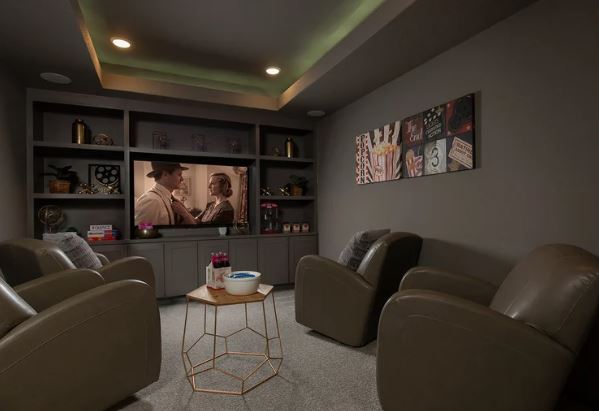
Residence Five is the largest home offered at Magnolia Station. This stunning two-story home is just over 3,700 square feet and includes five bedrooms, three and half bathroom, and a four, yes four car garage! The Flexibility is the best word to summarize this gorgeous home. With the opportunity to add an additional two bedrooms, this home is designed to meet the needs of any family size.

The Generations Suite on the first floor allows space for extended family, guests, or even a separated office space. The expansive kitchen opens up to the great room – ideal for entertaining of any kind. You’ll find the Owners’ Suite and three additional bedrooms upstairs plus a loft suitable for a game lounge, TV room, or homework space.

Best of all, each Cresleigh home comes fully equipped with an All Ready connected home! This smart home package comes included with your home and features great tools including: video door bell and digital deadbolt for the front door, connect home hub so you can set scenes and routines to make life just a little easier. Two smart switches and USB outlets are also included, plus we’ll gift you a Google Home Hub and Google Home Mini! https://cresleigh.com/magnolia-station/residence-5/

Set within a picturesque backdrop in Rancho Cordova, Magnolia Station by Cresleigh Homes is a new, highly coveted home community of spacious single-family homes. #CresleighHomes

Spirit Beings Have the Power to Absorb Our Actions and Thoughts

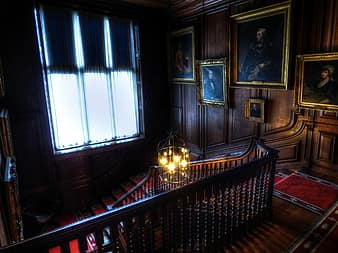
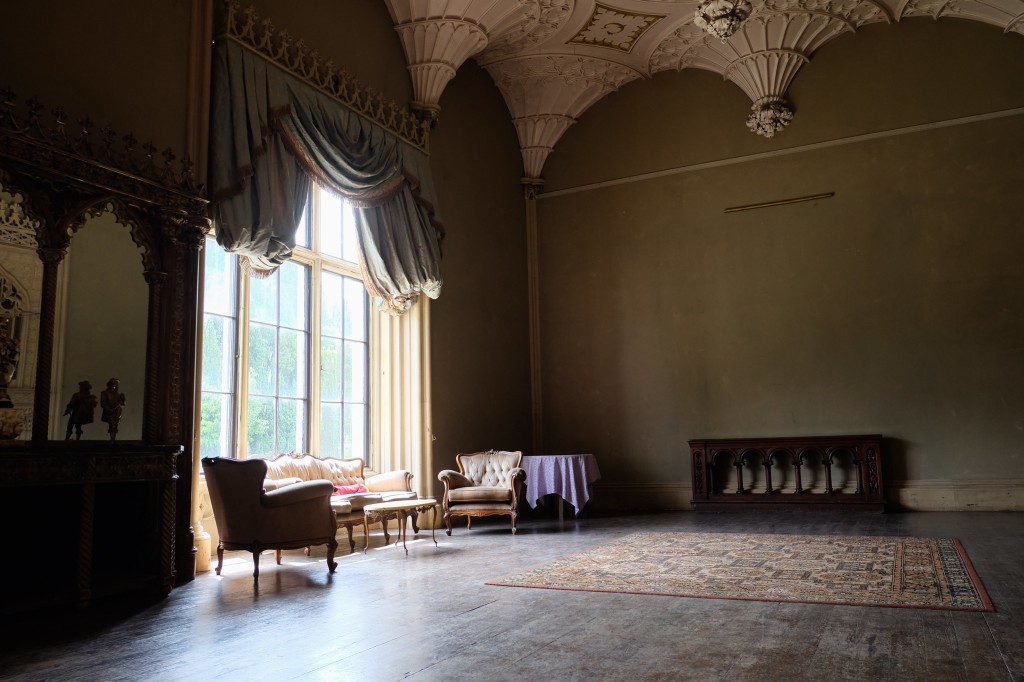
Llanada Villa was wintry with steep hand craved shingled roofs and stained-glass windows. It was built of redwood, and had countless chimneys rising from its steep gables, and a sprawling conservatory on the west side. The sheer scale of place, stranded as its own park, suggested another World. When the stars were right, they could plunge from World to World through the sky. However, the black haunted woods were where no dweller ventured. There were insane shouts and harrowing screams, soul-chilling chant and dancing devil-flames. Reluctant to be left alone, servants refused point-blank to advance an inch toward the scene of unholy worship. There were legends of a hidden lake unglimpsed by mortal sight, in which dwelt a huge, shadow with luminous eyes; and devils flew up out of caverns from the inner Earth to worship it at midnight. They said that it had been there before the Spanish Conquistadors, before the Indians, and before even the wholesome beasts and birds of the woods. It was a nightmare to see, and to see it was to die. Two bodies had once been found slaughtered, and were buried in one sepulchre, and the tree ever after brought forth blue berries, which served for memorials of our blood. Even though it made men dream, they knew to keep away. A faint glow of twilight was still in the windows overheard, but the darkness at the far end of the gallery was already impenetrable, and the dazzle of the candle confused my eyes. This particular night, I could feel the black arcades of horror emanating from within the walls of my home. #RandolphHarris 1 of 8

The last of my strength deserted me, and I sank to the floor, just managing to set the candlestick upright beside me. Hot wax stung the back of my hand. You must get up, you must get up, a voice in my head was saying, but my limbs would not obey. I was crouching a few feet from the fireplace, almost in front of the sarcophagus, which lay just within the circle of light from the candle. If you cannot stand, you must crawl, said the voice. I was making another effort to rise when I thought I heard a sound from the fireplace. I clenched my teeth to stop them chattering. There it was again, a heavy, muffled, grating sound, like stone sliding upon stone. It seemed to be coming from beneath the floor in front of me. The grating ceased; for several seconds there was absolute silence, then a faint metallic creak. I held my breath; the candle flame steadied. The lid of William’s tomb was slowly rising. In life he was a beautiful youth and fond of manly sports. He would rise before the dawn to pursue the chase. I saw him when I first looked forth, fell in love with him, and was married to this charming man and he devotedly loved me. Nevertheless, my heart gave one appalling lurch and stopped beating altogether. The next second, as it seemed, I was on the far side of the connecting door, with a rattling in the lock as I fought to turn it. I could see the faint glimmer of my candle shining through the gap beneath the door. Then another, stronger light began to play about my feet; there was a creak, and thump, and the sound of footsteps approaching. #RandolphHarris 2 of 8
I thought of running for the stairs, but I had no light, and the visitant would hunt me down. The door handle rattled; the door shook; the footsteps moved purposefully away. In a few moments, it would be on the landing. I had not time to run and lock all the doors at the far end of the library. I thought of the weapons arrayed along the gallery wall—too high for me to reach. If it seized me, most likely I would die horribly. The footsteps were still receding. I gripped the key with both nerveless hands and twisted. There was a rasp and a snick, but the footsteps did not pause. I withdrew the key and slipped back into the gallery, just as the light passed out through the double doors at the other end. The beam of a lantern played across the walk beyond; then the footsteps moved off along the landing, boards creaking at every tread. For a moment I thought I might be spared, but then I heard the squeak of hinges as my pursuer entered the library. I tried to slip the key into the keyhold, but my hand was shaking so violently that I dared not let the metal touch. My candle still burned where I had left it on the floor. Footsteps moved within the library—one, two, three, and then a pause. Light flickered beneath the door. The footsteps were moving again—I could not tell which way. I moved toward the candle, almost tripping over the hem of my dress. As I knelt to the flame, I realized I had no idea how fast the wick would burn. The floor seemed to be dropping away beneath my feet. If you faint, it will catch you, said the voice. #RandolphHarris 3 of 8

Only poetry or madness could do justice to the noises I heard as the footsteps continued to plough through the mansion toward me. Howls and squawking ecstasies tore through my home and reverberated through fireplaces like pestilential tempests from the gulfs of hell. Suddenly came the spectacle itself. The mad cacophony of the orgy fortunately deadened. Void of clothing, this hybrid spawn was some eight feet in height. It was some ancient legendary horror. Like a bird beneath the hypnotic gaze of deadly serpent, I was paralyzed by terror. The gloom of the chamber deepened. The stifling air was laden with unformulable menace, but it was constrained by the spell of a black and lethal necromancy. There crept forth the choking mustiness of hidden vaults and embalmed centurial corruption, together with the ghostly spice of a strange perfume that seemed to emanate from the beast. Then I recalled the story of a most evil creature, who had been buried somewhere in this land hundreds of years ago. I did not nurse the illusion that I was dealing here with an accidental tragedy. The creature was once a small boy who was abducted and dying of exposure lost in the wind-scoured hills that rose behind my home. He had been stolen. Then he had been murdered. And no one had ever been called to account for these awful, planned, sequential crimes. I rubbed my eyes with the heels of my hands. Anger stirred in the beast. And I knew I was sharing his indignant rage which he had so vibrantly felt. #RandolphHarris 4 of 8
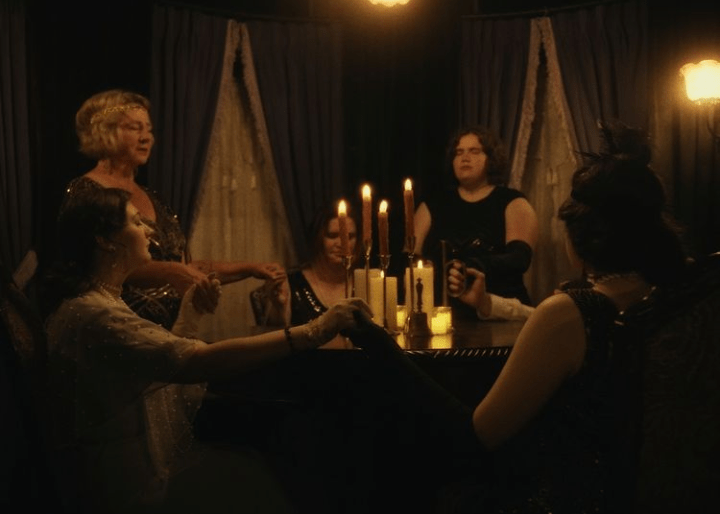
My teeth were tapping together like typewriter keys. There was something else, some faint warning that reached me. Not actually heard so much as sensed. As if someone’s breath were coming down the shaft from just over my head, slightly as if by a sounding board. I acted on it instantly, more from instinct than actual realization of danger. The beast looked at me, contorted into a maniacal grimace of impending destruction, as I reached for my ivory handled pistol, both of its arms were high over his head wielding something. It looked like a sword, but there was no time to find out. For what seemed like five minutes, the din and chaos were beyond descriptions. Shots were fired. It came hissing down in a big arc against the floor. The sword, of course, followed it a second later. The very weight of the creature’s body caused it to crash through the floor. Numb and half frozen, gusts of uncontrollable shivering swept over me every once in a while. I turned my head and looked toward that sinister beast and there was nothing left but an opening in the floor. Within the walls of this dark house, there was a secret which even torture could not extract. For shapes came out of the dark to pay the inhabitants a visit. I was overwhelmed by the supernatural situation amid whose dubious horror and ineluctable sorceries had somehow become involved. Malefic sorcery, deadly peril of both soul and body. I fled blindly into the darkness until I collided painfully with a wall. #RandolphHarri 5 of 8
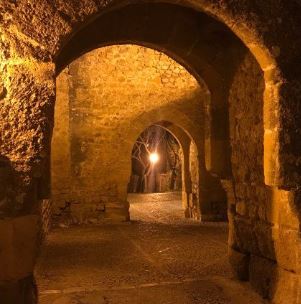
There was a secret which even torture could not extract in Llanada Villa. I was not absolutely alone, for shapes came out of the dark to visit. Although they no longer lived, those killed by the Winchester Rifle no longer lived, they would never really die. They all lay in my home preserved by spells and this ancient curse. They could live in the darkened hallways, shadows, and corners whilst millions of years rolled by. I could hear them whisper in the shadowy wings of the mansion; I caught the sibilation of ominous voices, like those of familiars that respond to the summoning of wizards; and I seemed to hear, even in the vaults and towers and remote chambers, the tread of feet that were hurrying on malign and secret errands. However, the oblivion was around me like the meshes of a sable net; and it closed in relentlessly upon my troubled mind, and drowned the alarms and of my agitated senses. A sad and sunless daylight filtered through the windows. The mansion was very still; and it seemed that the animating spirit of evil was now quiescent; the shadowy wings of the horror and malignity, the feet that had sped on baleful errands, the summoning sorcerers, the responding familiars, were all lulled in a temporary slumber. I opened the door, and tiptoed along the deserted hall. Amid the gloomy walls that surround me, the somber ancient halls, the high towers and the heavy bastions, there is but one thing that veritably exists; and all the rest is a fabric of illusion. I passed the doors of many secret rooms. There was one room in particular, a bare room, entirely built of stone, and illumined only by narrow slits high up in the wall. #RandolphHarris 6 of 8
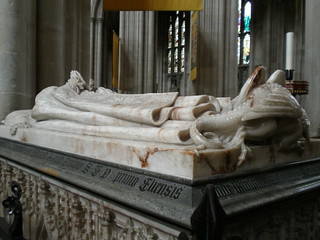
The place was very dim, but in the middle of the floor was a tomb of marble, where William lay. And there he was. He appeared to be slumbering peacefully as an infant. Darkness returned with an earsplitting crash. The floor lurched and rebounded; for a moment there was silence, and then a long, low rumble, gathering power as it approached until it broke over me with a thunderous roar. Choking dust filled my lungs, and I was flung from my feet and rolled over and over like a rag doll in a storm. There was a vile, rasping taste in my mouth and throat, and a heavy weight pressing down on the side of my head; I tried to push it away, and realized it was the floor. The area on which I was lying were covered in sharp, gritty fragments. A faint, misty glow appeared in the darkness away to my right. I began to crawl toward it, not knowing what else to go, brushing aside slivers of what felt like glass, until I saw that it was the light from the candle I had left burning in the library. The fear had left me; perhaps I had simply exhausted my capacity to feel anything at all. I rose shakily to my feet, made my way along the landing to the library, fetched the candle and returned to the gallery—what remained of it. At the far end, where the tomb and the chimney and the armour had been, was a great gaping hole in the wall. Half the floor was gone; and the boards ended in a jagged mess of splinters not ten feet from where I had been lying. Dust was floating up from a lack pit beyond. A beast was down there. The thought struck me like icy water, dashing away the numbness. Suddenly I was trembling so that I could scarcely stand, as trickling noises echoed in the darkness. Then came out of the floor the black spirits of Earth, mouldy and shadowy. #RandolphHarris 7 of 8

I conjure thee, Bechard, and constrain thee, in like manner, by the Most Holy Names of God, ELOY, ADONAY, ELOY, AGLA, SAMALABACTAY, which are written in Hebrew, Greek, and Latin; by all the sacrament, by all the names written in this spell; and by him who drove three from the height of Heaven. I conjure and command thee by the virtue of the Most Holy Eucharist, which hath redeemed men from their sins; I conjure three to come without any delay, to do and perform all my biddings, without any prejudice to my body or soul, without harming this spell, or doing injury to those that accompany me. I conjure thee, O Guland, in the name of Satan, in the name of Beelzebuth, in the name of Astaroth, and in the name of all other Spirits, to make haste and appear before me. Come, then in the name of Satan and in the names of all other demons. Come to me, I command thee, in the name of the Most Holy Trinity. Come without inflicting any harm upon me, without injury to my body or soul, without maltreating my books, or anything which I use. I command thee to appear without delay, or, that failing, to send me forthwith another Spirit having the same power as thou hast, who shall accomplish my commands and be submitted to my will, wanting which, he whom thou shalt send me, if indeed thou comest not thyself, shall in no wise depart, nor until he hath in all things fulfilled my desire. I now plant the seed of my desire within the black Earth, through the mouth of Arezura where the powers of sorcery and counter creation dwell. Through this gateway of darkness, I now shine the light and power of my will upon this World for the benefit of me and mine! #RandolphHarris 8 of 8
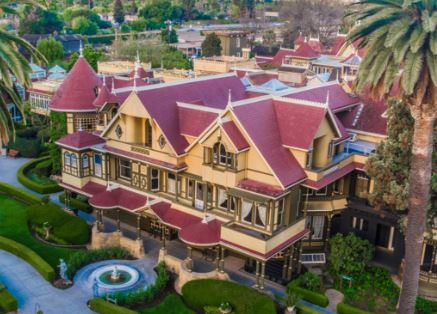
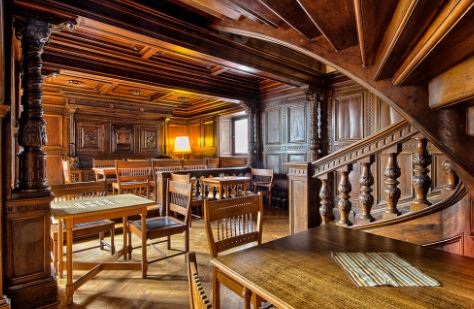
In the early summer of 2007, a couple were traveling to Santa Clara, California on a business trip. Shortly after 10 am, the decided to stop and eat at The Winchester Café. They remembered that the food was prepared in an excellent down-home country style, and that the waiter, waitress, the cook, and the other customers were so friendly in a sincere manner, and they promised that they would come back. And a sixteen years later, they tried to do exactly that on a return drive. However, The Winchester Café, which is located inside The Winchester Mystery House was nowhere to be seen. They even looped back a couple of times, thinking they may have somehow drive on by. They even got into an argument, each of them insisting that they remembered exactly where it was. They just could not find it, and since the hour was getting very late, they drove on. When they got home, they went to the website of The Winchester Mystery House and found a note saying that the mansion was closed and had gone dark for the day. They really wanted to eat at the café because the cooking was so wonderful. However, what if The Winchester Mystery House appeared and disappeared simply appeared and disappeared every so often? Or maybe the couple was lost in time and space for decades? We will never know. But at least we know the food and the company would have been good.
Cloaking is the power to hide the presence of oneself, other beings, or locations by making them imperceptible to the eye. It is effective at preventing others from discovering one’s location. Scientists at the University of Rochester in New York have discovered a way to hide large objects from sight using inexpensive and readily available lenses. Cloaking is the process that allows an object to become hidden from view, while everything around it appears undisturbed. When an object is placed behind the layered lenses it seems to disappear. “From what we know this is the first cloaking device that provides three-dimensional, continuously multidirectional cloaking,” said graduate student Joseph Choi, who helped develop the technology. In their tests, the researchers have cloaked a hand, a face, and a ruler, making each object appear “invisible” while the image behind the hidden object remains in view. The implications of this discovery are endless. Cloaking can also be achieved through the use of certain spells and potions. Additionally, beings with the power of invisibility are able to naturally cloak themselves by becoming unseeable. The Winchester Mystery House is truly mysterious.
For further information about tours, including group tours, weddings, school events, birthday party packages, facility rentals, and special events please visit the website: https://winchestermysteryhouse.com/
Please visit the online giftshop, and purchase a gift for friends and relatives as well as a special memento of The Winchester Mystery House. A variety of souvenirs and gifts are available to purchase. https://shopwinchestermysteryhouse.com/

If He is Not Capable of Creating, if He Cannot Love, this is the Evenin’ of Destruction

To keep America alive and thriving, Americans need to come together as one people—All American. Regardless of what happened in the past, people need to drop all animosity towards government, citizens, their family, and neighbours and do the right thing and obey the law and respect that Constitution of the United States of America. An American is someone who subscribes to the principles set out in our founding documents, the Declaration of Independence and the Constitution. America is, on this account, a creedal nation, perhaps the first in history, with Americans defined by an adherence to certain beliefs about equality, liberty, individual rights, and limited government. This idea of America as a creedal nation goes back to Alexis de Tocqueville, who found the peculiarity of our national experience—at least in relation to Europe—to be the absence of a feudal past, that is, the lack of a tradition of hierarchy, hereditary aristocracy, and serfdom (which, of course, is not quite true). What impressed him most about the American experience was what he called “the generative fact” of equality which all else derived. We would call this Mr. Tocqueville’s Thesis. It forms the traditional core of American patriotism. The American creed is understood as a product not of geography, tradition, or inheritance, but of reason. Its principles are the property of all who want to participate in the blessings of liberty. It requires only a willingness to express support for our established laws and religion and an expression of support for our founding creed and live by it. #RandolphHarris 1 of 25

At a recent Fourth of July picnic at the home of a colleague, the hostess asked the group if we all felt patriotic. Many people will say that they do not because they reflect on all of the hardships they have endured due to their race, gender, creed, disability, religion, material status, or sexuality. However, that is the goal of the ultimate negative. To get you to hate your home land so they can take it over and destroy it. Some of us have grown up in houses that have flown the flag, some of us have generations of ancestors who have fought in wars. When I was a kid, my dad used to read me the Declaration of Independence before lighting fireworks. As I got older, I even grew to like apple pie, and tried to engage in sports talk with other guys. If you look at the state of the World, you will realize how beautiful America is and how good we have it. It is also very important to remain patriotic and to help every American advance because Less Developed Countries (LCDs) are not competing for the title of America’s Next Top Model (Global Superpower). Therefore, we have to make sure our students are the best educated in the World, that American cars are appealing to Americans and other nations, and that we buy American poultry, produce and diary. We do not need to pack our cities full of buildings and homes. While buildings and homes are important, we need to keep land open for farms, parks, forest, and wildlife. Patriotism acknowledges America’s sins and flaws, it celebrates America’s history, her contributions to humanity, the eternal optimism and energy of her people. Above all it celebrates the documents in which successive generations of Americans have placed their faith. #RandolphHarris 2 of 25

Men and women and children and animals who have given their lives for their country know that patriotism is not the fear of something, it I the love of something. The most impressive patriots that I have met are men and women and children and animals who wearing their country’s uniform, are clearly inspired by love of country and love of its ideals. It may even be that love of your own country and countrymen is a prerequisite to genuine affection for people in other lands. American patriotism has everything to do with the evolution of the Constitution of the United States of America and the ideals that inspired the founders. Patriotism also has a great deal to do with faith in human possibility, and a belief in a better future that has inspired successive wave of colonists and immigrants. Patriotism is a feeling of love and respect for your country. The United States of America is well-suited and well-situated to take advantage of the Olympian possibilities for the manufacturing of patriotism. Since the year 2000, Americans have gained considerable freedom in their personal lives. Choices that used to be condemned, such as remaining single or childless, have become acceptable options. Family and gender roles re much more flexible and being free to develop oneself has become a goal for both women and men. I think many people have an incorrect idea that they will be allowed the same freedoms they have in America if we are invaded and conquered by another nation. They do not realize other nations have far less freedom. For instance, in certain parts of China, it is considered inappropriate for men to wear short pants. #RandolphHarris 3 of 25

The American situation—leads us to establishing values which have objective validity; this validity exists only with regard to the existence of man; outside of him there are no values. What is the nature of man, what are the special conditions of human existence, and what are the needs which are rooted in these conditions? Man is torn away from the primary union with nature, which characterized terrestrial existence. Having at the same time reason and imagination, he is aware of his aloneness and separateness, of his powerlessness and ignorance, of the accidentalness of his birth and his death. If we could not find new ties with his fellow man which replace the old ones, regulated by instincts, he could not face this state of being for a second. Even if all his physiological needs were satisfied, he would experience his state of aloneness and individuation as a prison from which he had to break out in order to retain his sanity. In fact, even if he is not behind barred windows, the insane person is the one who has completely failed to establish any kind of union and is imprisoned. The necessity to unite with other living beings, to be related to them, is an imperative need on which the fulfilment of man’s sanity depends. This need is behind all phenomena which constitutes the whole gamut of intimate human relations, of all passions which are called love in the broadest sense of the word. There are several ways in which this union can be sought and achieved. Man can attempt to become one with the World by submission to a person, to a group, to an institution, to God. #RandolphHarris 4 of 25

In this way he transcends the separateness of his individual existence by becoming part of somebody or something bigger than himself and experiences his identity in connection with the power to which he has submitted. Another possibility of overcoming separateness lies in the opposite direction: man can try to unite himself with the World by having power over it, by making others a part of himself, and thus transcending his individual existence by domination. The common element in both submission and domination is the symbiotic nature of relatedness. Both persons involved have lost their integrity and freedom; they live on each other and from each other, satisfying their craving for closeness, yet suffering from the lack of inner strength and self-reliance which would require freedom and independence, and furthermore constantly threatened by the conscious or unconscious hostility which is bound to arise from the symbiotic relationship. The realization of the submissive (masochistic) or the domineering (sadistic) passion never leads to satisfaction. They have a self-propelling dynamism, and because no amount f submission or domination (or possession or fame) is enough to give a sense of identity and union, more and more of it is sought. The ultimate result of these passions is defeat. It cannot be otherwise; although these passions aim at the establishment of a sense of union, they destroy the sense of integrity. The person driven by any one of these passions actually becomes dependent on others; instead of developing his own individual being, he is dependent on those whom he submits to or whom he dominates. #RandolphHarris 5 of 25

There is only one passion which satisfies man’s need to unite himself with the World and to acquire at the same time a sense of integrity and individuality, and this is love. Love is union with somebody, or something outside oneself under the condition of retaining the separateness and integrity of one’s own self. It is an experience of sharing, of communion, which permits the full unfolding of one’s own inner activity. The experience of love does away with the necessity of illusions. There is no need to inflate the image of the other person, or of myself, since the reality of active sharing and love permits me to transcend my individualized existence and at the same time to experience myself as the bearer of the active powers which constitute the act of loving. What matters is the particular quality of living, not the object. Love is in the experience of human solidarity with our fellow creatures, it is in the erotic love of man and woman, in the love of the mother for her child, and also in the love for oneself as a human being; it is in the mystical experience of union. In the fact of loving, I am one with All, and yet I am myself, a unique, separate, limited, mortal human being. Indeed, out of the very polarity between separateness and union, love is born and reborn. Another aspect of the human situation, closely connected with the need for relatedness, is man’s situation as a creature and his need to transcend this very state of the passive creature. Man is thrown into this World without his consent or will. In this respect he is not different from any other terrestrial being, from the plants, or from inorganic matter. #RandolphHarris 6 of 25

However, being endowed with reason and imagination, man cannot be content with the passive role of the creature, with the role of dice cast out of a cup. He is driven by the urge to transcend the role of the creature, the accidentalness and passivity of his existence, by becoming a “creator.” Man can create life. This is the miraculous quality which he indeed shares with all living beings, but with the difference that he alone is aware of being created and of being a creator. Man can create life, or rather, woman can create life, by giving birth to a child and by caring for the child until it is sufficiently grown to take care of its own needs. Man—man and woman—can create by planting seeds, by producing material objects, by creating art, by creating ideas, by loving one another. In the act of creation man transcends himself as a creature, raises himself beyond the passivity and accidentalness of his existence into the realm of purposefulness and freedom. In man’s need for transcendence lies one of the roots for love, as well as for art, religion and material production. To create presupposes activity and care. It presupposes love for that which one creates. If he is not capable of creating, if he cannot love, how, then does man solve the problem of transcending himself? If I cannot create live, I can destroy it. To destroy life makes me also transcend it. Indeed, that man can destroy life is just as miraculous a feat as that he can create it, for life is the miracle, the inexplicable. In the fact of destruction, man sets himself above life; he transcends himself as a creature. #RandolphHarris 7 of 25

In the act of destruction, man sets himself above life; he transcends himself as a creature. However, in man’s destruction of life, other creatures suffer. For example, Vaquita, the World’s rarest marine mammal, is on the edge of extinction. The plight of cetaceans—whales, dolphins, and porpoises—as a whole is exemplified by the rapid decline of the vaquita in Mexico, with about 10 individual remaining. This little porpoise was not discovered until 1958 and a little over half a century later, we are on the brink of losing them forever. Vaquita are often caught and drowned in gillnets used by illegal fishing operation in marine protected areas within Mexico’s Gulf of California. The population has dropped drastically in the last few years. If we are not careful, man will rob this Earth of all its natural resources and animal life. Free human birth control distribution in America LDCs may help save the planet. Thus, the ultimate choice for man, inasmuch as he is driven to transcend himself, is to create or to destroy, to love or to hate. The enormous power of the will for destruction which we see in the history of man and which we have witnessed so frightfully in our own time is rooted in the nature of man, just as the drive to create is rooted in it. To say that man is capable of developing his primary potentiality for love and reason does not imply the naïve belief in man’s goodness. Destructiveness is a secondary potentiality, rooted in the very existence of man, and having the same intensity and power as any passion can have. However—and this is the essential point of the argument—it is the alternative to creativeness. #RandolphHarris 8 of 25

Creation and destruction, love and the, are not two instincts which exist independently. They are both answers to the same need for transcendence, and the will to destroy must rise when the will to create cannot be satisfied. However, the satisfaction of the need to create lead to happiness, destructiveness to suffering—most of all, for the destroyer himself. Selfishness is not identical with self-love but with its very opposite. Selfishness is one kind of greediness. Like all greediness, it contains an instability, as a consequence of which there is never any real satisfaction. Greed is a bottomless pit which exhausts the person in an endless effort to satisfy the need without every reaching satisfaction. Close observation shows that while the selfish person is always anxiously concerned with himself, he is never satisfied, is always restless, always driven by the fear of not getting enough, of missing something, of being deprived of something. He is filled with burning envy of anyone who might have more. If we observe still closer, especially the unconscious dynamics, we find that this type of person is basically not fond of himself, but deeply dislikes himself. The puzzle in this seeming contradiction is easy to solve. Selfishness is rooted in this very lack of fondness for oneself. The person who is not fond of himself, who does not approve of himself, is in constant anxiety concerning his own self. He has not the inner security which can exist only on the basis of genuine fondness and affirmation. He must be concerned about himself, greedy to get everything for himself, since basically he lacks security and satisfaction. #RandolphHarris 9 of 25

The same hold true with the so-called narcissistic person, who is not so much concerned with getting things for himself as with admiring himself. While on the surface it seems that these persons are very much in love with themselves, they actually are not fond of themselves, and their narcissism—like selfishness—is an overcompensation for the basic lack of self-love. Dr. Freud has pointed out that the narcissistic person has withdrawn his love from others and turned it toward his own person. Although the first part of this statement is true, the second is a fallacy. He loves neither others nor himself. As we focus on this psychological analysis of selfishness, we find ourselves confronted with the contradiction that modern man believes himself to be motivated by self-interest and yet that actually his life is devoted to aims which are not his own; in the same way that Mr. Calvin felt that the only purpose of man’s existence was to be not himself but God’s glory. We tried to show that selfishness is rooted in the lack of affirmation and love for the real self, that is, for the whole concrete human being with all his potentialities. The “self” in the interest of which modern man acts is the social self, a self which is essentially constituted by the role the individual is supposed to play and which in reality is merely the subjective disguise for the objective social function of man in society. Modern selfishness is the greed that is rooted in the frustration of the real self and whose object is the social self. While modern man seems to be characterized by utmost assertion of the self, actually his self has been weakened and reduced to a segment of the total self—intellect and will power-to the exclusion of all other parts of the total personality. #RandolphHarris 10 of 25

The art of setting the level of aspiration for a group so that it will evoke optimum effort never ceases to be an expression of leadership. Goals which appear to have been imposed upon a group from above of from outside have a stifling effect even when they are set very low, whereas goals which emerge from a group’s attempt to better its own record can stimulate prodigious effort. Thus goals are always most strategically calculated when they can be related to a recent cycle of similar experience, less perspicuously when they are proposed for the first time. When the report has been finally assembled and approved, it is ready to be passed on to the executive or the policy-making body which commissioned its preparation. A question may remain whether and when it should be made available to the public concerned, and in what form. In general, of course, the best result is achieved by full and immediate publication. On the other hand, special circumstances may demand different timing, and publication in both popular and technical versions. The scale of distribution of the report depends on the degree to which it is to be part an educational campaign, or simply precipitated into public discussion on a take it or leave it basis. Generally speaking, the latter may appear preferable in most cases, leaving advocacy of its recommendations to such voluntary groups as by this stage of the planning process come into existence. Opportunity for the lay members of the public to see and question the experts in person is the most effective means to diminish any gulf of status or suspicion between them, and to encourage the public’s participation in the solution of its problems. #RandolphHarris 11 of 25

From the first murmurings of awareness of the existence of a problem, there will normally have been a steady gain in definiteness of its conception among the public affected. If people always knew what they wanted, professional planners would then be in the happy position of being able to speak authoritatively about the best means. However, ends are not given, nor are ends and means so nicely distinguishable. Knowledge of limitations and possibilities affect the formulation of ends, and experts may be as influential as leaders in helping to form public opinion. Nevertheless, while it is up to the experts to propose, it is up to the public to dispose, since no expert is qualified to know better than people themselves what they want. And they themselves do not know what they want until they have considered the matter. The concept of “decision load” is crucial to any understanding of democracy. All societies require a certain quantity and quality of political decisions in order to function. Indeed each society has its own unique decision structure. The more numerous, varied, frequent and complex the decisions required to run it, the heavier its political decision load. And the way this load is shared fundamentally influences the level of democracy in society. In preindustrial societies, where the division of labour was rudimentary and change was slow, the number of political or administrative decisions actually required to keep things running was minimal. The decision load was small. A tiny, semi-educated, unspecialized feudal or monarchical elite could more or less run things without help from below, carrying the entire decision load by itself. #RandolphHarris 12 or 25

Traders are a continuum, uniformly distributed along a circle of circumference. In the first period is the one where honesty or cheating are the crucial issue; the appropriate rewards or punishment come in the second period, which may as usual stand for the educed form of a longer future. The payoffs are expressed in present values so no further discounting is necessary. In each period, traders are randomly matched in pairs. Every economic problem is an economic opportunity. Someone who can solve the problem, turning the potential gains into actual ones, may be able to charge a fee for this service. In our context, if the government does not provide contract enforcement using its general revenues, then a private person may be able to do so for a profit. Theoretical and empirical literatures alike identify two difficult problems that confront large populations trying to resolve prisoners’ dilemmas: collecting and conveying information about previous cheating; and erecting a credible structure of punishment to deter cheating in current periods. The principle that “economic problems are also economic opportunities” applies to both of these. Anyone can, at a cost, collect information about individual traders’ histories of cheating, and sell this information to other prospective traders in the future. Trade associations often collect and provide such information to members. Three different forms of such associations can be distinguished. The first kind, exemplified by relatively small groups of specialized commodity traders are mainly concerned with trades among pairs of its own members, and provide information about members’ past actions in their trades with other members. #RandolphHarris 13 of 25

The second and the third kinds are concerned with interactions between a member on one side and a non-member (general public) on the other side. Of these, the second kind collect information about cheating by one of the general public and provide it to their members; credit-approval services maintained by Visa and Mastercard are an instance of this. The third kind, usually known as Better Business Bureaus, keep track of their members’ behaviour and make this information available to the public. This enables their members credibly to create and maintain reputation. The diamond traders’ club, which governs transactions between its members and other dealers who may or may not be members, seems to be a mixture of these types. In some situations, third parties charge a fee to provide information to one side of a transaction about the history of the other side; agencies that rate the creditworthiness of people or firms, or services that monitor the quality of goods and services provided by firms, are well-known examples. Such a for-profit intermediary must solve two other problems: he must discourage free riding, by making the information unavailable or useless to non-payers; and he must credibly promise not to misuse the information, for example for extortion or double crossing. However, this is simplified by the fact that the intermediary’s relationships with all customers are bilateral and non-anonymous: while two traders may meet each other only infrequently, each of them can meet the intermediary every period. #RandolphHarris 14 of 25

The difficult problem of resolving prisoners’ dilemmas in random pairwise matching from a large population is converted into the somewhat easier problem of resolving prisoners’ dilemma of direct bilateral reciprocity between each member of the population and the intermediary. This is conceptually similar to solving the problem of double coincidence of wants by introducing money. The issuer of money gets seignorage; the information intermediary charges a fee for his services. A suitably qualified intermediary can also provide an enforcement service, that is, inflict punishments on behalf of customers. We have a well-known study of private judges enforcing “the law merchant” (LM) in medieval France, who performed both functions. First, such a judge or intermediary kept records on the behaviour of traders in the markets over which he offered his services. Second, he adjudicated disputes brought before him by one of the traders. In each period, each player is matched with a partner whom he is unlikely to have met before and is unlikely to meet again. Each player in such a pair can, by paying a feed, query the LM about his current partner’s history of behaviour in previous matches. Each such pair then plays a one-time prisoner’s dilemma game. If either of the players in this game cheats, the other can, by paying another fee, complain to the LM, but only if the victim had queried the LM about the partner’s history. If such a compliant is lodged, the LM investigates at a cost and, if appropriate, awards the plaintiff a judgement (monetary restitution) against the defendant. A losing defendant decides whether to pay the judgment. An unpaid judgment becomes another act of cheating, and is recorded as such by the LM. #RandolphHarris 15 of 25

Under appropriate conditions on the various parameters, and for a suitably calculated structure of fees, this system has an equilibrium outcome where everyone (including the LM) behaves honestly. The intuition is that the LM’s record-keeping solves the information problem that would exist in a large population of traders with infrequent bilateral matches, and then punishment strategies of repeated games can work. Thus the LM serves as a complement to, not a substitute for, the usual reputation mechanism. The LM institution also contributed to the formulation of a uniform set of standards for commercial transactions across large areas of Europe, and therefore played a part in the evolution of modern commercial laws. We have a memorable example of private intermediation which involves the Sicilian Mafia. When the butcher comes to me to buy an animal, he knows that I want to cheat him [by giving him a low-quality animal]. However, I know that he wants to cheat me [by revoking his payment]. This we need Peppe [tht is, a third party] to make us agree. And we both pay Peppe a percentage of the deal. Peppe was mainly selling information for this service, he received a 2 percent commission. When in addition he acted as a guarantor of quality and payment, the percentage increased. Peppe provides his services to the people on both sides of the transaction. They use his services voluntarily. The services are of two kinds, ex ante information about each other party’s history of behaviour, and ex post punishments meted out in response to any cheating. The fees for the latter (enforcement) services are higher than those for the former (information) service. The parties to any transaction may not have any direct bilateral reciprocal interaction with each other, but each of them has such interaction with Peppe. #RandolphHarris 16 of 25

Organized crime performs functions of economic governance in other countries, and has done so throughout history. It usually operates at time or in niches where the state is absent. The origins of the Mafia’s enforcement role can be traced back to nineteenth century Sicily after the abolition of feudalism. Publicly provided security was inefficient and banditry widespread; landowners began to hire guards of former feudal lords and some of the tougher bandits to protect their property. In Japan in August-September 1945, when the government had collapsed after defeat in World War II but the occupying USA forces had not yet restored order, the Yakuza played a major role in getting markets restarted. Similar activities are found in Russia and other transition economies. As housing prices continue to increase, and in markets like San Jose, California where a one bedroom, one bathroom starts off at around $3,000.00 a month, many people are feeling insecure. Some people have been playing games for so long and bought homes when they were affordable so they can feel like feudal lords and abuse people that they have lost all touch with reality and the reality of how expensive live is in 2024. They are still running around like sixteen-year-old boys trying to have the coolest car, while others are literally slaving to try to become established in a corrupt city such as Sacramento, California. The state of affairs in Sacramento is just pathetic and for some reason the government seems unwilling or incapable to take action, leading some to question, “What is this?” because it does not even seem like this is reality. #RandolphHarris 17 of 25
The government has become like the Wizard of Ozz, a nameless, faceless, entity that can take swift and severe actions to ruin lives, but lack the power to do anything good and correct its mistakes. If you want to survive, you basically have to find the resources yourself and even if you are injured, work yourself to death to stay sane and try to find a way out of the situation. It is illegal for the government to terrorize and hold people hostage, but that is basically what is happening, while others enjoy all the freedoms guaranteed by the U.S. Constitution. And in addition to being held hostage, they make sure to isolated and alienate an individual. So that no one can help and uplift one, and put one around a bunch of dysfunctional people who need financial, mental, and physical help that they refuse to seek. There is such a collective consciousness that people do not seek to change their situation for the better, it is always “we” need to get together and go somewhere and do something is fun. However, as some of these people are part of a couple, why do they not go out on a date or go see a movie or go to a nightclub. It is almost like Sacramento is a haven for low-income criminals and white-collar criminals who help them. You see a lot of people sitting around, smoking and drinking and spitting on the ground, and wonder, why do they not go to one of, many of these, beautiful parks. Instead, they invite all their grandchildren to play in parking lots and run behind cars with high insurance so they can “get paid,” not seeming to care that someone could end up dead. #RandolphHarris 18 of 25

Also, instead of getting jobs, they target certain people and try to have an accident because, much like PG&E, even if it is not your fault, the word is insurance companies will make you pay. They do not even care about your health or injuring you to the point that you can no longer with, and will not even pay you. However, they also forget that you may have a pregnant passenger and/or a baby in the car with you. Sacramento has become so deplorable and corrupt. It is like a blackhole, seemingly impossible to escape from alive. No matter how many rituals you do, prayers you say, government agencies you ask for health, they simply stop responding. It is a pretty city, but if the state and local government decides to trap and target you, your life and the life of anyone around you does not seem to matter. You are nothing more than a placeholder, they want to use to help some criminal come up off of. There are many caring and supportive people and the community, and a lot of happy people who are able to work and have fun on their free time, but I am not sure Sacramento is a safe community. It can be like the Twilight Zone for those who are selected as targets. And then you look at the State Capitol of California, which is in Sacramento, and it looks like half the building was blown up (it is under renovation), but it just makes a person ponder stability of the city. What is it? It is a really weird place. It is a lot like a ghost town. It will make you question reality. I just have to say it, every since I came back from China in 2006, I felt it as soon as I got off the plane, but something did not seem right about this town. It did not feel like the same city I left, and what happened afterwards is even more bizarre. I will just be real. Sometimes I wonder if I am dead and is this just a government computer simulated reality. Everything feels and looks real, but something is wrong. Like, for instance, look at how President Biden acts, he is confused, falls around, misspeaks, and it barely stirs a ripple. No one says a word about it in public. And then the mainstream media is probably less reliable than The National Enquirer. #RandolphHarris 19 of 25

I honestly, even though I pretend to, do not believe anything anyone tells me anymore because so many people are constantly telling lies. I am serious, it is like this city has been overran by demons. And a lot of families do not act right anymore, a lot of daughters and mothers have confrontations and conflicts, and even people who go to church are corrupt. Someone told me the World is coming to an end, and that could explain it because a lot of this is talked about in the Christian Bible and Book of Mormon. However, if that is true, I encourage everyone to live right and ask God for forgiveness. And if you feel how hot in gets in Sacramento, could you imagine what burning in hell for an eternity would be life? God forgives everyone, but do not want until it is too late to repent. Also, make sure to enjoy life. Do not spend time around people you do not like. Find people and activities that you can enjoy. If your neighbours are annoying, go out of your way to ignore and avoid them, so they will understand what time it is. Also, with some many people carrying guns, and mental illness being a crisis in America, why are people shocked when something goes wrong and innocent people are killed because of some bully who thought being bad was the coolest thing since Jordan Basketball sneakers? And also, have you serious considered how dangerous gun control is? There more than 20,000 gangs consisting of approximately 1 million members in the United States of America; gangs are present in all 50 states, the District of Columbia, and all U.S.A. territories. CEOs think about things like this, but what is a gang decided to come to your house and target you? You know, ten fifteen men and women show up because they have a problem with you and want to cause you harm. You may need an AK-47. #RandolphHarris 20 of 25

Or what is you live in a Victorian Farmhouse in Iowa on 400 acres and a gang decided to attack you? Sometimes calling the police is not always an option, nor is it your best option. The police, many of them are on the job to protect people and will go out of their way to make sure you are safe, but there is a lot of crime going on in America, and your calls to 911 could be getting relayed to Hood Day Sacramento, for example, and an officer or someone impersonating an officer may be taking your calls. It has happened to me several times. It will be a life-or-death situation and I have been sent a text message, allegedly from the police department, saying that “We will not be responding.” I have also reported trespassers on my neighbour’s property and been told, “The owner needs to take responsibility.” How can we have a safe community when the police allow some people and properties to be targeted and refuses to help certain citizens? It just does not make sense. People have been stalked, kidnapped, raped several times, beat, attacked, robbed, had their homes and cars broken into and thousands of dollars done because someone thinks terrorism is fun and cool. The boarders to the country are wide open, allowing anyone to just walk in with any amounts of drugs, guns, criminal intent. And CBS13, KCRA News, FOX40, Good Day Sacramento, and ABC10 may be the biggest criminal organization in Sacramento. Turn the news off, stop watching them so they have to shutdown. In the words of Beyonce, “America—America has a problem.” Anyway, protection should be regarded as the Mafia main business; if it engages in some activities that may need its own protection services, this is just “downstream vertical integration.” Perhaps one can regard the Mafia as an organization that specializes in providing protection, while individual mafiosi may be entrepreneurs engaged in the activities that need the protection. The Mafia may also engage in extortion, or creating the need for protection of property by itself creating a threat to the property; these are strategies that need to be examined as part of the equilibrium of the game. #RandolphHarris 21 of 25

Peppe in his information role resembles a credit-rating agency or even a restaurant guide, except that he acts for both sides of the deal. In the guarantor or enforcer role, he resembles the official legal system, but has different information acquisition methods and different methods of punishment, and is motivated by private profit rather than by social welfare. Peppe’s commission for enforcement is higher than that for information. You may think this a trivial question, and think of obvious answers: enforcement activity is riskier to provide; that state’s criminal law (if it is functioning) may intervene; the miscreant whom Peppe is trying to punish may prove tougher than Peppe; and so on. All these arguments say that the cost of providing enforcement is higher than that of providing governance by information alone; they are supply-side reasons. Peppe usually acts as a monopolist in enforcement over an allocated territory, defined by geography or the type of activity being protected (although conflicts over monopoly rights or over territories may break out among Mafiosi or their families). A monopolist changes a prince above cost, based on the customer’s willingness to pay. Therefore we must look for demand-side reasons, namely explain why Peppe’s customers are willing to pay more for the enforcement service than for the information service. To resist the enemy on the ground of the blood of Christ means wielding the weapon of the finished work of Christ, by faith: believing that Jesus’ death for in frees the trusting believe from the guilt of sin; that Jesus’ death to sin on the cross, and the believer’s death with Him, frees the Christian from the power of sin; and that Jesus’s death-victory on Calvary frees the believer also from the power of the ultimate negative. #RandolphHarris 22 of 25

A condensed form of the principles and conditions for deliverance from the deception of psychopathological offenders in any degree may be given as follows: Recognition of the possibility of deception. Admission of actual deception. An attitude of neutrality toward all past spiritual experiences until truth concerning them is ascertained. Refusal of all ground of psychopathological offenders. The taking of the position of death to sin (Rom. 6.11). The detection and refusal of all that belongs to deception. The understanding of the criterion of the true, normal conditions so as to gauge signs of deliverance. Active usage of the faculties so that they reach the normal condition. Recognize persistently the true cause of bondage; id est, the work of a psychopathological offender or offenders. Choose to have absolutely nothing to do with the powers of psychopathological offenders. Frequently declare this. Do not talk or worry about their manifestations. Recognize, refuse, and then ignore them. Refuse and reject all their lies and excuses, as they are recognized. Notice the thoughts, and the way in which they come, and when—and immediately declare the attitudes of Romans 6.11 against all the interferences of the enemy. Hinderances to deliverances from deception may again be given here briefly, as: Not knowing it is possible to be deceived. Thinking God will not allow a believer to be deceived. Saying, “I am safe under the blood,” without intelligent knowledge of the conditions. Saying, “I have no sin.” Saying “I am doing all that God wants, so all must be right”—without seeking to understand what the will of the Lord is (Eph. 5.10-17). Some hints on overcoming passivity of mind are as follows: Act as far as you can, doing what you can. Take the initiative, instead of passively depending on others. Decide for yourself in everything you can. Do not lean on others. Live in the moment; watch and pray step by step. Use your mind, and think—think over all you do, and say, and are. #RandolphHarris 23 of 25

Fundamental to Tillichian Christology is the notion of estrangement, for it is from our estranged human situation that the New Being rescues us. The force of the method of correlation is nowhere more powerfully evident in the portrayal of man’s estrangement and the power of the New Being which overcomes it. The original sin is the state of estrangement and Creation, and the Fall coincides. Which seems to indicate that finitude is inherently evil, and sin ontologically necessary. Perhaps God understands this and that is what the Fall is all about. Man’s nature is evil and rebellious and he needs God to cultivate and teach him good. Without God, man will become corrupt and evil. God is your Heavenly Father and if you do not follow His rules, you will be a bad child. His ways are greater than yours. Much like if children did not obey their parents, even though no human is perfect and some parents are bad, when you are a minor, they typically want you to behave so the law does not punish them. If you did not listen to your parents, chances are that you would be a bad kid and end up dead or in jail. TV news reports in Sacramento, California USA say they “Do not have time to reach the (Chrisitan) Bible.” Obviously, if people are too busy to listen to their Heavenly Father, they are actively engaged and evil and you should not be learning from them. The Fall is the state of existence in which the potentialities of finite essences are actualized, but the nonbeing of the essence takes its toll also, and the creature does not perfectly live up to its essence. It is always in some degree estranged from it and, consequently, from the ground of being. #RandolphHarris 24 of 25

However, inevitability is not the same as necessity. Now, I ask you to consider, do people repeat themselves or does history? It depends on what you believe. However, many of these people may not have been reconstituted and may be new souls. Therefore, if history repeats itself, then be careful because humans could literally end up being slaves again and forced in the fields and whipped. The only way we can stop history from repeating itself is by adhering to the Gospel of God. If people continue to stray from the Lord, all that will exist is evil. Love will be replaced by material possessions and evil. Finitude is good, with God, but not perfect, and when it seeks to perfect itself by actualizing its potencies, it falls, because, after all, it is finite. That Christ is the answer to existential anguish, is a fundamental insight which Catholics have tended to neglect in a smug unconcern for those who have brought this anguish to the fore of modern thought. We should be grateful that we can learn something about Christ, that at least some aspects of Christology can be emphasized with the help of modern thinkers. Estrange, puzzled, frightened is the man of today. Theonomy means union with God, the ground of being. Finite beings can achieve it only by actualizing their essences in such a way that they are transparent to their ground. However, the universal fact of existence is estrangement, separation of beings from God, from themselves, and from one another. A new power, a New Being is needed to overcome estrangement, and in Jesus the Christ it has appeared. To whatever extent religion animates culture, this theonomous union is realized by the power of the New Being which grasps us in the ecstasy of faith. However, one of the potentialities of man is his drive toward community. We must now examine the church, the community of those who receive Jesus the Christ as the New Being. I pledge allegiance to the flag of the United States of America, and to the republic, for which it stands, one nation, under God, indivisible, with liberty and justice for all. Be sure to show love to the Sacramento Fire Department, they are understaffed and underfunded. Feel free to donate to their cause. #RandolphHarris 25 of 25

MAGNOLIA STATION AT CRESLEIGH RANCH
Rancho Cordova, CA | low $600s
Now Selling!

Models now open at Magnolia Station! Located at the corner of Rancho Cordova Parkway and Douglas Road, residents of Cresleigh Ranch will benefit from a brand new neighborhood with convenient access to the new Raley’s Shopping Center, Sunrise Boulevard, and much more!

Magnolia Station will include 81 homesites and five distinct plans ranging from 2,200 – 3,700 square feet; including three single story plans! Each plan has been thoughtfully designed to include features such as: Generations Suite, Optional Offices/Dens, Extended Great Rooms, and more! https://cresleigh.com/magnolia-station/residence-5/


The Mind-Shattering Horrors of Llanada Villa
The most merciful thing in the World, I think, is the ability of the human mind to partake in all the beautiful of the material World. We live in an infinity of reality that only the beholder can discern. If we choose to go far, we must learn to apricate our circumstances and work towards an enjoyable life. My home is a vast labyrinth, each mile straining in its own direction, and somedays piecing together the dissociated mysteries will open up such terrifying vistas of reality, and of our frightful curse therein, which shall either make one go mad from the revelation or flee from the deadly catacombs into the peace and safety of a new dark age. Within these walls, there are strange survivals of apparitions that will freeze the blood. However, it is not from them that there came the single glimpse of forbidden aeons which chills me when I think of the madness that has been bestowed upon my bloodline. The grass and trees have assumed the fresh enamel of mediaeval May, and the turf is figured with little blossoms of azure and white and yellow, like an ornate broidery, and there is a pebbly stream that murmurs beside the way, and the voices of undines are parleying deliciously beneath its waters. The sun-lulled air is laden with wafture of youth and romance; and the longing that wells from the heart of Llanada Villa seems to mingle mystically with the balsams of the fruit orchards. Llanada Villa is like a high castle which holds dominion over a surrounding forest. However, once through the threshold, dreaded glimpses of truth, flash out from a hideous past. #RandolphHarris 1 of 8

Somewhere within my haunted mansion is a hidden room notorious for sorcery. Servants speak of phantoms, grisly tales; and there are stories of loup-garous and goblins, of fays and devils and vampires that have infested these very walls. However, to these tales, I give little heed, considering it improbable that such creatures would fare abroad in open daylight. Until one day, I was nearing the appointed parlor, which a turn of the path would soon reveal; and my pulses quickened and became tremulous. My thoughts were interrupted by a shrill scream that rose to an unendurable pitch of fear and horror, issuing from the corridors of stillness of the nearby rooms. Startled, I peered at the thick doors; and as the scream fell back to silence, I heard the sound of dull and hurrying footfalls, and a scuffling as of several bodies. Again the scream arose. It was plainly the voice of a woman in some distressful peril. In a small open space beyond the parlor, I saw a woman who was struggling with three ruffians of exceptionally brutal and evil aspect. Even in the haste and vehemence of the moment, I realized that I had never before seen such men or a woman. They could not have been my servant. The woman was clad in a gown of emerald green that matched her eyes; in her face was the pallor of dead things, together with a faery beauty; and her lips were dyed as with the scarlet of newly flowing blood. The men were dark as Moors, and their eyes were red slits of flame beneath oblique brows with animal-like bristles. There was something very peculiar in the shape of their feet. All of them seemingly had cloven hooves, but somehow I could not recall what sort of clothing they had worn. #RandolphHarris 2 of 8

The woman turned a beseeching gaze upon me as I peered through the door. The men, however, did not seem to heed my presence. Lifting my pistol, I fire with tremendous power at the head of the nearest one—a shot that should have leveled the fellow to Earth. However, the bullet fell to the ground as if forced by unresisting air, and I staggered and almost fell headlong in trying to recover my equilibrium. Dazed and uncomprehending, I saw the knot of struggling figures had vanished utterly. At least, the three men had vanished but from the middle of the parlor, the death-white features of the woman smiled upon me for a moment with faint, inscrutable guile ere. I understood now; and I shivered as I crossed myself. I had been deluded by phantoms or demons, doubtless for no good purpose; I had been the gull of a questionable enchantment. Plainly there was something after all in the legends I had heard, in the ill-renown of The Curse of the Winchester Rifle. I retraced my way down the hall I had been following. However, when I thought to reach again the spot from which I had heard that shrill unearthly scream, I saw that there was no longer path leading to that parlor; nor indeed was this a section of the mansion I recognized. The marble steps, coffered ceilings, the elevator paneled in mahogany like a plutocrat’s library, which carried me to the fourth floor vanished. In lieu of this elegant new addition to Llanada Villa there lay before me a tarn of hallways that were dark and dull as clotting blood, and the trail therein like the hair of suicides, and the skeletons of rotting corpses. #RandolphHarris 3 of 8
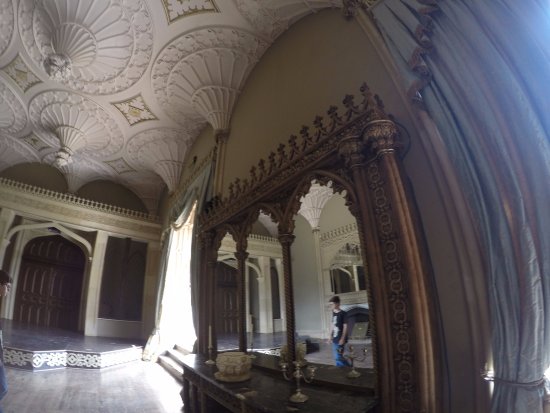
Now, beyond all question, I knew that I was the victim of an evil enchantment. In answering that beguileful cry for succor, I had exposed myself to the spell, had been lured within the circle of its power. I could not know the force of wizardly or demonry had willed to draw me thus; but I knew that my situation was fraught with supernatural menace. As I passed this scene of utter desolation and lifelessness, it seemed a place where cadavers might keep their tryst with demons. Nothing stirred, not even a hammer; and there was no whisper of a servant, no song of birds. I proceeded further and further into my mansion with a cautious eye, as the further I got, the more the scene changed. There were moving lights in the halls that vanished; there were drowned faces in the walls. The parquet floor was an obstacle course of French dollhouses and miniature Japanese castles. The draperies were green silk damask and blue velvet, the furniture Lousi XV gilded oak, the paintings signed by Renior, Cezanne, Degas, Manet, Monet. My many-turreted castle was ancienter than the World, it was older than light; it was coeval with fear and darkness; and horror dwelt upon it and crept unseen but palpable along its bastions. The 600-room mansion was a fairy-tale castle come to life, with secret entrances, mysterious sources of music, and treasure collected from all the World. My home was not so unusual during the day. On the top half, every inch was decorated with Parisian Beaux Arts ostentation, a profusion of lions, cherubs, and goddesses. Oh, but the architects were not done. Soaring above the mansion was an ornate domed tower reaching nine stories, so pleased with itself that it continued to an open cupola. #RandolphHarris 4 of 8
Although construction was continuous, there was often no sign of life about the castle; and no banners flew above its turrets or its donjon. However, spirits spoke loudly to warn me that there was a fountainhead of sorcery involved in the construction of my home. A growing panic would whisper in my brain, I seemed to hear the rustle of malignant plumes, the mutter of demonian threats and plottings. Amid my dismay and bewilderment, I thought of Annie and William and imagined that as long as I continued construction, that one day I would find them waiting for me in a parlor, library, kitchen, or hallway. Through my mansion throw which I lived was a maze of bafflement and eeriness. Sometimes I could swear I felt implacable arms that stoke to retard me; I could swear that I felt them twine about me with the strength and suppleness of living things. I fought them, insanely, desperately, and seemed to hear a crackling of infernal laughter in the walls as I fought. After years, with a leaden sinking of my heart, as into some ultimate slough of despair and terror, I resigned myself and made no further effort to escape. My very will was benumbed, was crushed down as by the incumbence of a superior volition that would no longer permit my puny recalcitrance. I was unable to resist when a strong hateful compulsion drew my footsteps along the margent of the halls down a new, never before seen room. Doors would open by themselves as if to receive an unexpected guest. But other than me, there was no sign of carpenter, architect, maid, butler, no farmer; and the walls of this great mansion were silent as those of a sepulcher. However, there were these apparent hieroglyphics and a figure of evidently pictorial intent, though its impressionistic execution forbade a very clear idea of its nature. It seemed to be a sort of monster, or symbol representing a monster, of a form which only a diseased fancy could conceive. #RandolphHarris 5 of 8
If I say that my somewhat extravagant imagination yielded simultaneous pictures of octopus, a dragon, and a human caricature, I shall not be unfaithful to the spirit of the thing. A pulpy, tentacled head surmounted a grotesque and scaly body with rudimentary wings; but it was the general outline of the whole which made it most shockingly frightful. Behind the figure was a vague suggestion of a Cyclopean architectural background. At the opposite end of the parlor was a door which stood mysteriously open, revealing a dark hall. As I approached the doorway, I saw that a man was standing on the threshold; though a moment previous I could have sworn that it was untenanted by any visible form. I knew that any weapon was futile against this supernatural foe. The man was inordinately tall and cadaverous, and was dressed in black garments of a superannuate mode. His lips were strangely red amid his bluish beard and the mortuary whiteness of his face. They were like the lips of the woman who, with her assailants, had disappeared in a manner so dubious when I approached them. His eyes were pale and luminous as marsh-lights; and I shuddered at his gaze and at the cold, ironic smile of his scarlet lips that seemed to reserve a World of secrets all too dreadful and hideous to be disclosed. “I am Gilles Garnier,” the man announced. His tones were both unctuous and hollow, and served to increase the repugnance I felt. And when his lips parted, I had a glimpse of teeth that were unnaturally small and were pointed like the fangs of some fierce animal. Mr. Garnier was haunting my mind like the funereal accents of a knell; though I could not recall at that moment the macabre and spectral ides which the name tended to evoke. #RandolphHarris 6 of 8
He turned abruptly, motioning me to follow him. I refused. There were sudden and furtive darkness had closed in upon Llanada Villa without moon or star. My mansion became airless and stifling like the gloom of a sepulcher that had been sealed for ages; and I was aware of the veritable oppression, a corporeal and psychic difficulty in breathing, as I moved from room to room. I flung open a heavy door of dark somber wood. Beyond, in what was the eating-room of this section of the mansions, several ghosts were seated about a long table by the light of cressets no less dreary and dismal than those in the hall. In the strange, uncertain glow, their faces were touched with a gloomy dubiety, with a lurid distortion; and it seemed to me that shadows hardly distinguishable from the figures were gathered around the board. I thought I should go mad with fear. Then sensation of being watched grew upon me until I sprang up and turned with my back to fire. Even then it was impossible for me to see much. I stood glancing from door to door, straining to listen over the thudding of my heart. My twin shadows swayed across the doorway of the study opposite, seeming to move independently. I thought of snuffing the candles; but then I would not be able to see the doors to the landing at all. I had learned that you could count second by your heartbeat. Mine was racing far faster than the measured ticking of a clock, but I began to count, anyway. Only I could keep it up; I would reach twenty or thirty, and be distracted by some phantom sound or movement, and start again. Thus I endured an indefinite interval, while the windows darkened further and further. #RandolphHarris 7 of 8

I conjure thee, O Guland, in the name of Satan, in the name of Beelzebuth, in the name of Astaroth, and in the name of all other Spirits, to make haste and appear before me. Come, then in the name of Satan and in the names of all other demons. Come to me, I command thee, in the name of the Most Holy Trinity. Come without inflicting any harm upon me, without injury to my body or soul, without maltreating my books, or anything which I use. I command thee to appear without delay, or, that failing, to send me forthwith another Spirit having the same power as thou hast, who shall accomplish my commands and be submitted to my will, wanting which, he whom thou shalt send me, if indeed thou comest not thyself, shall in no wise depart, nor until he hath in all things fulfilled my desire. I offer my blood unto the Divs and Druj, whom are the essence of counter creation. I offer my life force unto the powers of eternal darkness within. May they devour and destroy the imposed shackles of divine light and stasis that I may become unlimitedly powerful. I salute and conjure you, O beautiful Moon, O beautiful Star, O bright light which I hold in my hand! By the air which I breathe, by the breath which is within me, by the Earth which I touch, I conjure you, and by all the names of the spirits who are princes residing in you; by the ineffable Name On, which hath created all; by thee, O Resplendent Angel Gabriel, together with the Prince Mercury, Michiael, and Melchidae! I conjure you again by all the divine Names of God, that you send down to obsess, torment, and harass the body, spirit, soul and five senses nature. #RandolphHarris 8 of 8
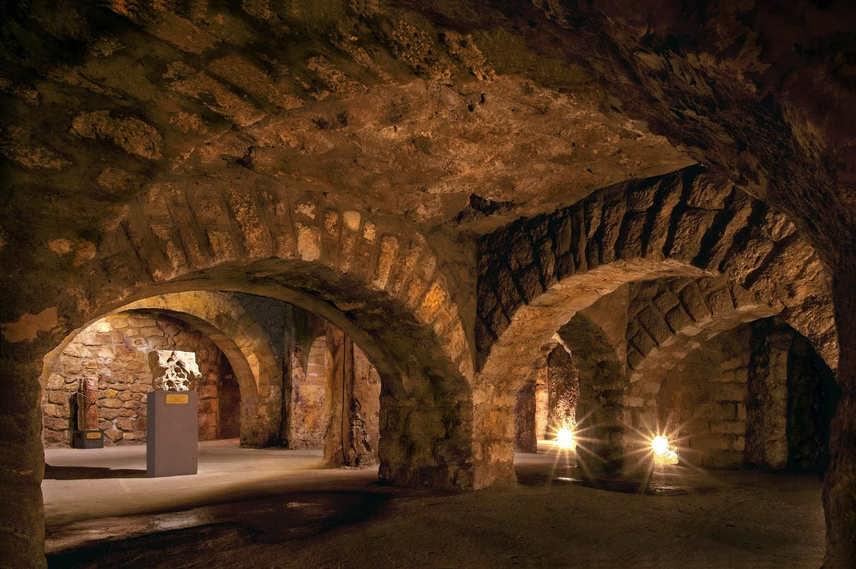
For many years there has been talk of slamming doors, muffled voices and ghost walking the corridors of The Winchester Mystery House, which is over 140-years-old. Recall, the mansion started off as an eighteen-room farmhouse, which Mrs. Sarah L. Winchester purchased. A number of persons hired as night watchmen have quit after only one night on duty, complaining of door opening and closing and invisible footsteps following them on their rounds. In July 2008 a staff member working late thought he heard the sounds of a reception in progress on the first floor, but when he reached the foot of the stairs, he found the rotunda empty, and all noises suddenly ceased. The same tour guide recalled the library room on the third floor as being particularly creepy. Late one night as he approached the library door, he remembered a cold, dank air falling on his head and neck, and he decided his work could wait until the next day. Although the mansion has gone through a considerable number of watchmen who declined the privilege of working in the building after one night on the job, one stuck with the task for more than 13 years. He simply shrugged off the angry slamming of doors that sounded behind him and the thumping noises that followed him on his rounds. However, he admitted that he did not like to work in The Winchester Mystery House after dark. He always made it a point to be out of the building by quitting time, because when darkness fell, he could sense the whole atmosphere changing.
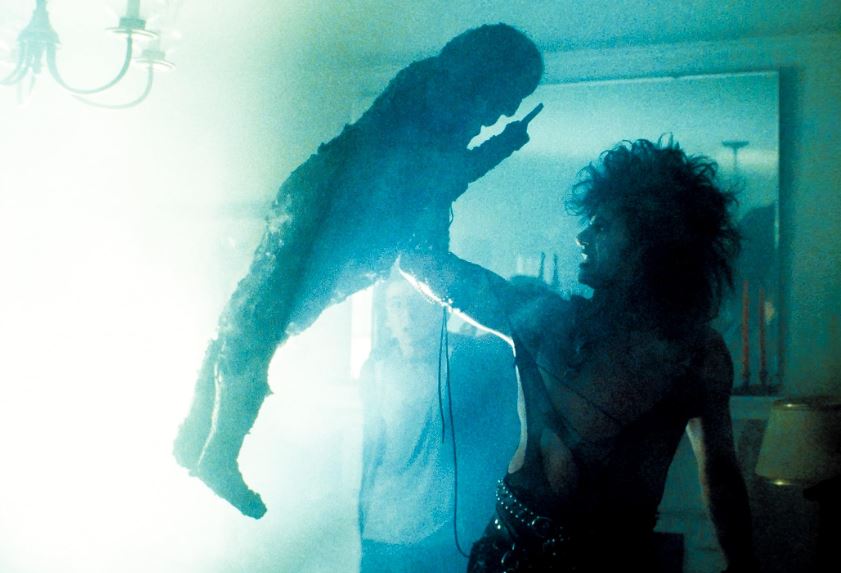
For further information about tours, including group tours, weddings, school events, birthday party packages, facility rentals, and special events please visit the website: https://winchestermysteryhouse.com/

Please visit the online giftshop, and purchase a gift for friends and relatives as well as a special memento of The Winchester Mystery House. A variety of souvenirs and gifts are available to purchase. https://shopwinchestermysteryhouse.com/


Llanada Villa—A Haunted History
Llanada Villa is a symbol of Victorian wealth and style. I built it using architects from the spiritual World. It is among one of the most haunted sites in the World. The more solid a home is, the more attractive it is to ghostly energy. It is not until I enter the house, however, that the melancholy really hits me. There are shadows everywhere, and even when it is empty, I am never alone. The stairs creak as I climb them. The house groans, as if it is alive. Even during the summer, when it is dark, nearly full night, I awaken in a chill room to the knowledge of a presence. Over by the window, there is a figure. I hold my breath, paralyzed by fear; I cannot move, cannot cry out. The dim apparition turns to me, my heart hammers—and suddenly it vanishes. As the room warms again, some deep and unexplained anxiety possessed me. It takes a few moments to realize the lingering scent in the air is William’s cologne. Then, trailing thinly through the dying crunch of the carriage wheels, I hear the curious little wail of the child’s crying, with the effect, wholly unaccountable, that it may be Annie. Every nerve in my body shot its bolt electrically, bringing me to my feet with a tingling of unequivocal alarm. Absolutely, the water ran into my eyes. I recalled their distress and deaths this morning, and it had gone into me like a knife. All through the day, indeed, had run this nightmare quality of terror and vision. However, as it came as anticlimax somehow—a sudden revelation of the mystery and excitement pulsed beneath the quiet of the stifling summer day. I fear for them. For I loved Willam best and would never marry again, and I mourned the sweet, short, tragic life of my infant daughter. #RandolphHarris 1 of 6

I was high-strung, ultra-sensitive, and it seemed to me that no one understood me, least of all my honest, tender-heated servants. The haze of the August lay over that big garden like a blanket; the wonderful flowers, which were my delight, hung motionless; the lawns, so soft and thick, cushioned all other sounds; only limes and huge clumps of guelder roses hummed with humming birds. Through this muted atmosphere of heat and haze the sounds of the child’s crying floated faintly to my ears—from a distance. Indeed, I heard this phantom child. The sound coming from the Forbidden Wing. A faintness then came over me at once, a faintness as of death, when I heard here there, where I was too terrified to go. In a hearty voice I called out to her, “Annie, my dear, I love you and miss you, please come back to me.” I only wished some spell could compel her to materialize and ran into the open arms of her fond mother. I stepped back swiftly from the hallway. The crying disappeared, and I heard no more. I felt comfort, somewhat, because I believe she had been reunited with her father in the afterlife. I looked out upon the magnificent rose garden, with its rich luxuriance, and glanced over at the thick wood of evergreen trees and, glimmering beyond, the orchard meadow, where the lambs played. I felt Llanada Villa’s spell and it haunted me. I heard it crying in an Earthly voice, and I gave it food in the form of constant expansion and ornate features. And in return, a leap extraordinarily feelings and a hint of dark, undiscovered truth became present in the atmosphere. I lay there on my bed in horror with words I could not say, but I think some power of darkness trooped across the room. #RandolphHarris 2 of 6

The way my mansion sprang to life proves, I think, that it was alive. The blood rushed from my heart as I listened. I remember that my knees shook. With a sense of nightmare certainly that left me too weak to resist its suggestion, indeed, to argue or reason it away, this certainty came with its full, blast of conviction; and the only way I can put it into words, since nightmare horror really is not properly tellable at all, seems this: that there was something missing in the Forbidden Wing of my home; something lacking that it ever searched for; something once found and taken, that would turn it rich and living as the rest. Its vibrating emotion of fearful anticipation had developed, as this house was weeping along in the Forbidden Wing. If souls could be made visible, I would stake my life upon the fact that Llanada Villa was looking to devour one or many. It was a supreme, conscious artist in the science of taking the fruits of others’. It vampired, knowingly, everyone with whom came in contact with the Forbidden Wing; leaving them exhausted, tired, listless, or soulless. In that section of the home, you could feel its presence draining you; it possessed your mind, took your strength, your words, your very breath and used them for its own benefit and aggrandizement. You felt that Llanada Villa was dangerous owing to the facile way it absorbed into itself all loose vitality that anyone had. The windows were its eyes and the groans and cries its voice and its presence had the power to devitalize you. Life, it seemed, not highly organized to resist, must shrink from Llanada Villa’s too near approach and hide away for fear of being appropriated, for fear, that is, of—death. #RandolphHarris 3 of 6

People are so wrapped up in their obsession about the treasures Llanada Villa possesses, that they are totally unaware of its stalking shadow, prowling through the East Wing. Haunting the parlors, hallways, and chambers. No one knows when it will come upon them with some silent, compelling trick of drawing out all your reserves—then swiftly pocketing them. At first you would be conscious of taunt resistance; this would slowly shade off into weariness; the will would become flaccid; then you either ran away or yielded—agree to all it said with a sense of weakness pressing ever closer upon the edges of collapse. It is a matter of life or death. Thirteen times that Forbidden Wing has descended to slash the throats and bodies of servants, staff or guests. August the 13th, 1886 was the date of the first butchery. They found him lying there with thirteen stab wounds. A ghastly murder. On August 31st, 1886, another victim. The press became interested. The Valley’s inhabitants were more deeply interested still. Who was this unknown killer who prowled in the midst of Llanada Villa and struck at will in the deserted hallways of the Forbidden Wing? And what was more important—when would he strike again? No one saw him or heard him. The atrocious nature of the slaying was the subject for shocking speculation. However, guards working on expansion of Llanada Villa in the dawn would stumble across the hacked and horrid thing that was its handiwork. He never gave out. Some instinct taught him how to protect himself from that. To humans beings, I mean, Llanada Villa never gave out. So this is how I saw him—a great human sponge, crammed and soaked with the life, or proceeds of life, absorbed from others—stolen. As people roamed the labyrinth, Llanada Villa carried out these accumulations of the life of others. #RandolphHarris 4 of 6
This evening, my eye wandered through my home, amid rich opulence of the ornate features. I watched the white mist and blue lights appear. I had never felt a night so stifling, motionless. It lay there waiting. The house was waiting—waiting for another soul. A sudden kind of darkness came, taking the summer brilliance out of everything, and that was caused by troops of small black shadows racing about us—to attack. Everything was awful—shirting the edge of things unspeakable, and so charged with danger that I could not keep my voice from trembling when I spoke. A chambermaid was cleaning, I warned her to stay out of the Forbidden Wing. I watched her hard, bleak face; I noticed how thin she was, and the curious, oily brightness of her steady eyes. They did not glitter, but they drew you with a sort of soft, creamy shine like Eastern eyes. And everything she said or did announce what I dare to call the suction of her presence. Her nature achieved this result automatically. Before five minutes had passed, however, I was aware of one thing only. Her mind focused exclusively upon the forbidden wing, and so vividly that I marveled. The Forbidden Wing started vibrating with the acquire vitality of others, as she was lured out of my presence, and went into that Wing of yawning emptiness, waiting and eager to be filled. Llanada Villa scented his prey. This active center was so dangerous that I had it sealed off, but when the chambermaid did not make it to work the next day, we all knew what happened. Yes, they followed the blood trail. They found her, in the Forbidden Library. She lay there very quietly, limbs neatly arranged. #RandolphHarris 5 of 6
Months passed. A year. The immediate interest died, but not the memory. They said Llanada Villa was haunted, which it was, but it was also an entity of its own. A carpenter died in the Forbidden Wing under mysterious circumstances; I had foreseen his death in a vision. You can see how easily a woman with a weak heart could be frightened literally to death. I had to stage a séance. Afterall, perhaps I would witness something remarkable. After the party arrived, sometime during the night, a stranger confronted me with a pistol, took my diamonds, forced himself into the Forbidden Wing. But then came the final irony: lightening struck the wing of the mansion. They fate he succumb to, I would not wish on my worst enemy. I do not believe he was instantly reduced to ashes, as the coroner concluded; men have been struck in the open, after all, and survived. Most likely the heat of the lightning set fire to his clothing, and the body burned slowly away, as with spontaneous combustion, so vividly described by Dickens, except that in case the combustion occurred within a confined space, and so was more complete. And there, ladies and gentlemen, you have it. We shall never know what became of my diamonds; I suspect that they are lying in some undiscovered hollow in the Forbidden Wing. As I rose unsteadily to my feet, and the room seemed to sway around me, we moved slowly down the long expanse of the gallery and out into the deeper chill of the mansion, where the servant immediately began to apologise for the evening’s ordeal. Someone had made up the fire in my room, and as soon as I bolted the door, I lit the two dusty candles on the mantelpiece, and lay down fully clothed, with the lantern on a chair beside me. As the warmth crept back into my veins, the mysterious sounds echoed from the Forbidden Wing and I fell into a deep sleep. #RandolphHarris 6 of 6

There are so many ghosts at the historic Winchester Mystery House in Santa Clara, California that the entities often get together to hold dances in the Grand Ballroom. A tour guide who worked at the mansion for two years, claimed to have watched a group of 10 to 12 ghosts dressed in the style of 1890, having a dance in the unfinished Ballroom (part of the house which requires a special tour to see). It was only after she watched them for a while that the tour guide realized that there was something very strange about the costumed dancers. No one paid the slightest attention to her. Everyone appeared to ignore her when she spoke. Then she noticed that there was something very eerie about their eyes, kind of dark and hollow. The ghostly figures did not seem to mind the intrusion of her physical presence. The tour guide wondered if she were observing the recreation of some past scene that had once occurred in the mansion. She remembered that they swung their partners round and round and seemed to be having a great time.
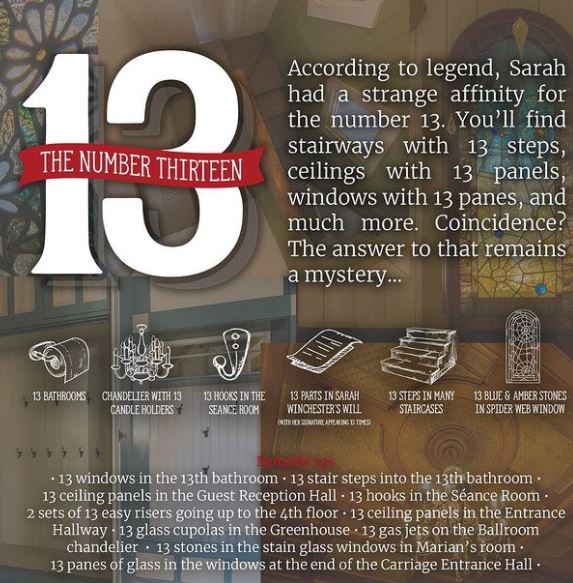
The Diasy Bedroom, the room Mrs. Sarah L. Winchester was trapped in during the 1906 earthquake received the most nominations for “most haunted” in the mansion. The conservators first became aware that strange things happened in The Daisy Bedroom when workers came in to restore it in 1985. Later, as they walked by the room with a psychically talented researcher, the man stopped suddenly and said, “There’s something going on in that room! I feel it strongly.” They immediately halted restoration plans. Three months later, during a tour, a woman found her young so carrying on an animated conversation with someone in the room. “Don’t you see her, Mommy?” the boy askes incredulously. “Don’t you see the lady by the window?” There used to be a diary filled with guest experiences with ghost through the years at The Winchester Mystery House.
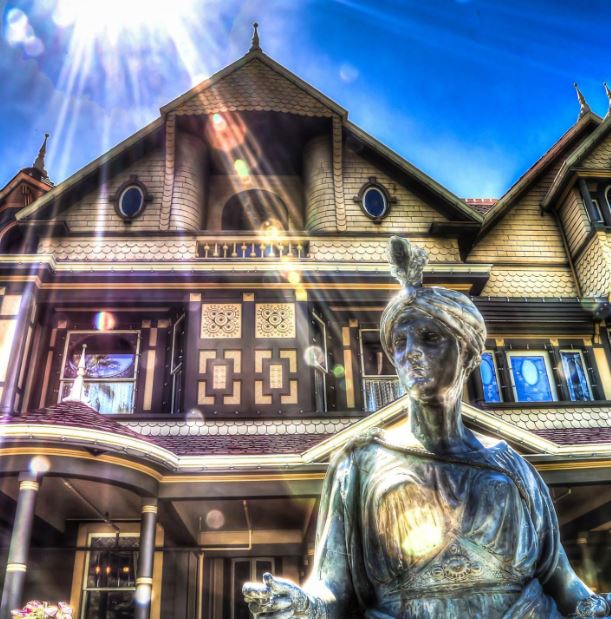
For further information about tours, including group tours, weddings, school events, birthday party packages, facility rentals, and special events please visit the website: https://winchestermysteryhouse.com/

Please visit the online giftshop, and purchase a gift for friends and relatives as well as a special memento of The Winchester Mystery House. A variety of souvenirs and gifts are available to purchase. https://shopwinchestermysteryhouse.com/

If you forget to purchase something during your visit, you can order any gift item by calling 408-247-2000 and charging them to your credit card. You can also place an order through the mail. Be sure to include a daytime telephone number with area code. Write to: Winchester Mystery House.

Humankind Cannot Bear Very Much Reality

We live in a labyrinthine World of puzzling objects, enigmatical events, and practically unintelligible (sometimes even mystical) relationships that we cannot hope ever to comprehend entirely. A word is a slur when it is when it means to express strong negative attitudes towards members of a group, attitudes in some sense grounded in nothing more than membership in the group. A slur against a group of people, for example, is a word which speakers know (and as competent speakers are expected to know) is used to insult and display contempt for an individual based on race, religion, gender, sexuality, disability, age and so forth. What makes a word a slur I that it is used to do certain things, that has a certain illocutionary potential. Given what slurs are used to do, it is no surprise tht their use often achieves extreme effect on their targets—humiliation, subjection, shame. Slurs can be used without displaying contempt or causing hurt. This happens, for example, when a slur is appropriated by its targets: it is an insult to no one, save perhaps the individual for who the slur is aimed as uses it as a term to identify themselves. A slur can be self-ascribed to record one’s status as a victim of discrimination or worse. There need beno racism in an epithet’s use by comedians to make fun or criticize various attitude and behaviours of both one who slurs and one who I slurred. One may use a slur in order to teach someone that it is a word which should not be used. And an epithet can sometimes be used non-offensively in indirect discourse or narrative to portray someone else’s racist remark or attitude. The use of slurs often reflects a complicated web of attitudes, including discomfort about or fear of what seemed pronounced physical and cultural differences. #RandolphHarris 1 of 19

Truth is, and has always been, a central topic in philosophy. Direct interest in the word true itself may ebb and flow, but it is never far from center stage. We tend to assume that truthfulness and morality go together in a clear and simple way. In an ordinary community of morally decent people there is a need for trust and community standards for telling the truth, but ordinary community, unlike the ideal scientific community, must continually face the ambiguous problem of when to tell how much of what truth and to whom. Telling the whole truth about everything to everybody all the time is an impossibility but even if it were possible, it probably would not be desirable. Deception is a touchy subject. We should all repudiate all harmfully exploitative deceptions such as consumer fraud, insider trading, the misuse of public office and public trust for self-interest, kids hiding their dope and alcohol and pregnancies from their parents, husbands and wives cheating on each other, large-scale tax evasion, the false and vicious reason of racism and sexism, TV news reporters preying on vulnerable, semiliterate audiences, marijuana and cigarette advertising, and so on. The list of reprehensible exploitations is enormous and grows longer daily. As children we are taught to revere the principle of truth telling before we have achieved a clear understanding of what truth is. For a child, how is the truth different from a captivating story tht takes us off into other vivid realities? From saying things that make people feel good? From whatever saves us when we are in danger? Truth, fantasy, goodness, happiness, excitement are not automatically separated in the thoughts of young children. Children have to be taught to isolate truth and truth telling for special treatment. #RandolphHarris 2 of 19

As our experiences widen, however, we also learn through wonderfully indirect and subtle means that truth telling, like every other moral principle, has its drawback in practice, and sometimes we have to pass over it in our calculations for getting on as decent and successful human beings. Deception is found in every culture (only attitudes toward it differ), probably because it provides advantage in carrying out one’s intentions, and because it offer a chance to escape confrontations without having to fight. We humans are active, creative mammals who can represent what exists as if it did not, and what does not exist as if it did. And we do this easily and routinely. Concealment, obliqueness, silence, outright lying—all help to hold Nemesis at bay; all help us abide to large helpings of reality. T.S. Eliot was right when he reminded us that “Humankind/Cannot bear very much reality.” In civilization no less than in the wilderness, survival at the water hole does not favor the fully exposed and unguarded self. Deception, it seems, is a vital part of practical intelligence. Much of human interaction is take up with the giving and getting of impressions, which are composed of some plain truth and some fancy, some display and some concealment, something said and something suggested, something focused and something blurred. All this for the purpose of getting done what you want to do. Lying requires a reason while telling the truth does not. Truthfulness in statements which cannot be avoided is the formal duty of an individual to everyone, however great may be the disadvantage occurring to oneself or another. #RandolphHarris 3 of 19

Thus the definition of a life as merely an intentional untruthful declaration to another person does not require the additional condition that it must harm another. For a lie always harms another; if not some other particular human, still it harms mankind generally, for it vitiate the source of the law itself. Things happen; we witness some aspects of an event from a particular vantage point; we interpret what we have taken in with our senses; we discover or compose an acceptable meaning from that subjectivity limited rendering of “fact”; express an edited, personalized version of the result, to a selected audience, at a chosen time, if we want to. There is a vast psychological distance between the “things that happen” and what we are later able to say about them, no matter how sincerely we try to be objective and to get it right. Lifelong uncertainty about the “truth” is an attribute of human sensibility; it is a product of the interplay of memory and imagination, history and choice. Truth is fully present in our experiences. We can know truth. However, the multifarious and discordant sentiments which divine mankind, afford a great temptation to skepticism, and many are carried away by it. The open enemies of the gospel take occasion from hence to justify their rejection of it: many of its professed friend have written as if they thought, that to be decided, amidst so many minds and opinions, were almost presumptuous. The principle, if not the only use of which they would make of these differences is, to induce a spirit of moderation and charity, and to declaim against bigotry. #RandolphHarris 4 of 19

To say nothing at present how these terms are perverted and hackneyed in a certain cause, let two things be seriously considered—First, Whether this was the use made by the apostles of the discordant opinions which prevailed in their times, even amongst those who “acknowledged the divinity of our Saviour’s mission?” In differences amongst Christians which did not affect the kingdom of God, nor destroy the work of God, it certainly was: Such were those concerning means, drinks, and days, in which the utmost forbearance was inculcated. However, it was otherwise in differences which affected the leading doctrines and precepts of Christianity. Forbearance in these cases would, in the account of the sacred writers, have been a crime. If Christianity be of God, and He have revealed His will in the holy scriptures, light is come into the World, though the dark minds of sinful creatures comprehend it not. It does not follow, because many wander in mazes of fruitless speculation, that there is not a way to plain that a way-faring man or one who “walketh in the truth,” though a fool, shall not err. The numerous sects among the Greeks and Romans, and even among the Jews, at the time of our Saviour’s appearing, did not prove that there was no certain knowledge to be obtained of what was truth. Our Lord considered Himself as speaking plainly, or He would not have asked the Jews as he did, “Why do ye not understand my speech?” The apostles and primitive believers saw their way plainly: and though we cannot pretend to the extraordinary inspiration which was possessed by man of them; yet, if we humbly follow their light, depending on the ordinary teachings of God’s Holy Spirit, we shall see ours. #RandolphHarris 5 of 19

Truth, we may be certain, is the same thing as what in the scriptures is denominated “the gospel,” “the common salvation,” “the common faith,” “the faith once delivered to the saints,” “the truth as it is in Jesus,”; and what this is, may be clearly understood by the brief summaries of the gospel, and of the faith of the primitive Christians, which abound in the New Testament. Of the former the following are a few of many examples: “God so loved the World the He gave His only begotten Son, that whosoever believeth in Him should not perish, but have everlasting life—The Son of Man came to seek and save that which is loft—I am the way, the truth, and the life: no man cometh unto the Father but by me—To Him give all the prophets witnesses, that through His name whosoever believeth in Him shall receive remission of sins—We preach Christ crucified, to the Jews a stumbling-block, and to the Greeks foolishness; but to them that believe, the wisdom of God, and the power of God—I determined not to know anything among you, save Jesus Christ, and Him crucified—Moreover, brethren, I declare unto you the gospel which I preached unto you, which also ye have received, and wherein ye find; by which also ye are saved, if ye hold fast what I preached to you, unless ye have believed in vain: for I delivered unto you first of all that which I also received, how that Christ died for our sins, according to the scriptures; and that He was buried, and the He rose again the third day, according to the scriptures—This is a faithful saying, and worthy of all acceptation, that Christ came into the World to save sinners, of whom I am chief—This is the record, that God hath given to us eternal life, any other: for there is none other name under Heaven given among men, whereby we must be saved.” #RandolphHarris 6 of 19
If language have any determinate meaning, it is here plainly taught the mankind are not only sinners, but in a lost and perishing condition, without help or hope, but what arises from the free grace of God, through the atonement of His Son; the He died as our substitute; that we are forgiven and accepted only for the sake of what He hath done and suffered; that in his person and work all evangelical truth concentrates; that the doctrine of salvation for the chief of sinners through His death, was so familiar in the primitive times, as to become a kind of Christian proverb, or “saying;” and that on “standing,” and final “salvation.” In this doctrine be received, Christianity is received: If not, the record which God hath given of His Son is rejected, and He Himself treated as a lair. When this doctrine is received in the true Spirit of it, (which it never is by a sinner ready to perish) all those fruitless speculations which tend only to bewilder the mind, will be laid aside; just as malice, and guile, and envies, and evil-speaking are laid aside by Him who is born of God. They will fall off from the mind, like the coat of the chrysalis, of their own accord. Many instances of this are occurring. Persons who, after having read and studied controversies, and learned first to one opinion and then to another, till their minds have been lost in uncertainty, have at length been brought to think of the gospel, not as a matter of speculation, but as that which seriously and immediately concerned them: and embracing it as good news to them who are ready to perish, have not only found rest to their fouls, but all their former notions have departed from them, as a dream when one awaketh. #RandolphHarris 7 of 19

The Christological problem begins when men realize they are estranged and wonder about a new reality with the power to conquer existence, but it does not end with the simple acceptance of Jesus as the Christ. The baptismal confession that Jesus is the Christ is the text of which the Christological dogma is the commentary. The dogma has a twofold purpose: to affirm and defend the Christian message against distortion, and to express it in conceptual terms. The first function guards the substance; the second function imparts form. The aim of the early conciliar Christological formulas was to preserve both the Christ-character and the Jesus-character of the event of Jesus as the Christ. The homoousion of Nicaea maintained the Christ-character against the Arians who would make Jesus a semi-divine being. Chalcedon warded off the attacks of the monophysites upon the Jesus-character of the Christ. Both councils succeeded in affirming and defending the substance of the Christian message, but they did so in spite of the inadequate intellectual tools of the two-natures theory. The task of present-day Protestant Christology is the development of new forms to express the substance of Nicaea and Chalcedon. However, the basic inadequacy lies in the term “nature.” When applied to man, it is ambiguous; when applied to God it is wrong. “Human nature” can mean three things: essential or created nature, existential or estranged nature, and an ambiguous unity of the two. All three meanings can be applied to Jesus as the Christ, although the second must be qualified insofar as estrangement, while remaining a real possibility, is taken into the unity with God. #RandolphHarris 8 of 19

Because of this ambiguity and need for qualification, it is imperative to dismiss altogether the term “human nature” in relation to Christ and replace it by a description of the dynamics of His life. The term “divine nature” must be understood as that which makes God what He is, His essence. However, God also has existence, or, more exactly, He is beyond both essence and existence. “Divine nature,” cannot be applied to the Christ precisely because the New Bing is not beyond essence and existence, but in existence. The Christ is a personal life in a definite period of history, subject to birth and death, temptation and finitude. The assertion that Jesus as the Christ is the personal unity of a divine and a human nature must be replaced by the assertion that in Jesus as the Christ the eternal unity of God and man has become historical reality. This is better than the two natures which lie beside each other like blocks and whose unity cannot be understood at all. In Spirit Christology, we understand that God was in Jesus the Christ because the divine Spirit totally grasped His human spirit. In this sense, one can speak of the faith of the Christ which is the state of being grasped unambiguously by the Spiritual Presence. However, although the Spirit is unambiguously present in the Christ, His faith still has a fragmentary character due to the fact tht He is subjected to the conditions of existence. Two important implications follow from Spirit Christology. First, it is not the spirit of the man Jesus that makes Him the Christ, but the Spirit of God, and thus the dangers of a Jesus-theology are avoided. #RandolphHarris 9 of 19

And secondly, the Spiritual Presence in history is the same as the Spiritual presence in the Christ; hence, He is not an isolated event, but touches the whole history through the activity of the spirit. Admittance of the possibility of deception is in the stage in break of truth upon the mind, although it may sometimes precede the doubt. To admit the possibility of being deceived—or mistaken—in any aspect of new experience or action, or even view of truth, is really a possibility which should be acknowledged by every believer; and yet so subtle is the deception of the enemy tht almost invariably the attitude of each one is tht though “others” may be open to deception, he or she is the exception to the rule. This certainty of personal exception is so deep-seated with the most visibly deceived person that the longest battle is simply to obtain entrance to the mind for the one thought of possible deception in any point at all. The believer seems armed with unshaken assurance that though others may be misled, he certainly is not; he “beholdeth the mote” in his brother’s eye and is blind—blind to the “beam” in his own. However, an open attitude to truth says, “Why not I as well as others? May not my assurance of safety be a deception of the enemy, as much as the deception I see in others?” Why all believers should admit the possibility of deception by deceiving spirits may be considered just here: The primary fact to be recognized by every human being is the complete and utter ruin of the first creation at the Fall—when the First Adam admitted the poison of the serpent, which permeated and corrupted his whole being beyond repair. #RandolphHarris 10 of 19

The utter corruption of the human race as a consequence is unmistakably declared in the New Testament: “The old man, which waxeth corrupt after the lusts of deceit,” reports Ephesians 4.22. “Being darkened in their understanding; alienated from the life of God,” reports Ephesians 4.18. “We all once lived in the lusts of flesh, doing the desires of the flesh and of the thoughts, and were by nature the children of wrath, even as the rest,” reports Ephesians 2.3. Thus the Apostle Paul described the whole race of man, Gentile and Jew, Pharisee and Publican: In all, he said, “the prince of the power of the air” has operated, as “the spirit that now worketh in the sons of disobedience.” All agencies plan, as do all persons and families; planning in the generic sense distinguishes us humans from creatures who cannot transcend the immediate. However, planning in the specific sense of highly modern attainments in social organization is what we mean when we speak of the planning stage in family agencies. In the long history of man’s ascent toward rationality in social affairs, conscious awareness of the planning process in action agencies ranks as a major invention. The image of the competent man is out of place except in the context of modern planning. The generalized outlines of the democratic planning process which follows should not be taken as a recommendation that every family agency should immediately plunge into the planning stage. Planning by a family agency is not unlike the planning by a person of his career. When the aim of an agency is personal development, there are many reasons why its planning method should self-consciously follow a model which permits the agency to transform itself by its own operations. #RandolphHarris 11 of 19

Since Dr. Cooley in 1902, if not long before, many thinkers have held that human nature and the social order reflect each other. There have been divergent opinions whether the line of causation runs from personality to community (“human nature writ large”), or whether the person as microcosm incorporates as habit the regular recurrences which constitute the institutional fabric of society. The developmental view conceives a spiral of interaction between the careers of persons and institutions. It is the obligation of the family agency that adopts the aim of optimal development to maintain this nexus in a dynamic sense. To keep the parallel always in mind can cumulatively influence multitudes of decisions. In concrete terms, the action of agencies, families, and individuals is not a constant flow; it is episodic, organized in fairly regular, qualitatively distinguishable sequences. As a unit of reference, the behavior of each of the three can usefully be brought together in a conceptual analysis of the planning process that is applicable to all three levels of abstraction. To study the phases of the planning process, as seen in the furthest advanced of the family agencies, is to see in enlarged detail what in family or personal living may be only implicit or rudimentary. However, from this enlargement of the social act one can then derive clues and questions which are relevant when observing the smallest sequence of interpersonal behaviour. #RandolphHarris 12 of 19

Before there is an agency, or planning, or the possibility of planning, there must be a public with a problem. The public and the problem are defined in reference to each other. They never stand alone, and cannot be defined alone. A problem always belongs to some group of people, and generally speaking any group comes into existence as a group because its members feel that they are confronted by a common problem or problems. However, an outside expert cannot always determine what constitutes the problem of a group. And yet the problem exists and arguments may abound as to how to define it. Alternatively, a certain state of affairs may be a problem to an observer without being regarded as a problem to those whom it seems to affect. If a state of affairs affecting a number of people is also to become the problem of the group, then the members of the group must participate in defining the problem. Otherwise it is not their problem and they are not likely to feel responsible for its solution. The expert may assist in the recognition and clarification of a problem, but must be prepared for his interpretations to be rejected. Each phase of the planning process, when fully developed in a community or a large institution, employs a characteristic type of document. In this first or problem phase, such a document functions primarily to call attention to a problem and to convince the public involved that something ought to be done about it. The definition of what ought to be done occurs in later phases of the planning process, and yet in the successful attention-getting and definition of the problem, the outlines of later phases vaguely emerge. #RandolphHarris 13 of 19

On this account, the importance of the problem phase of planning is often underestimated; that is, action goes off without adequate preparation. Even more often, the importance of getting the public involved and committed to solution of the problem is underestimated. Yet it is the arousal of concern, and participation in the definition of the problem as their problem, which motivates the public to act. Effort in the Calvinist doctrine had still another psychological meaning. The fact that one did not tire in that unceasing effort and that one succeeded in one’s moral as well as one’s secular work was a more or less distinct sign of being one of the chosen ones. The irrationality of such compulsive effort is that the activity is not meant to create a desired end but serves to indicate whether or not something will occur which has been determined beforehand, independent of one’s own activity or control. This mechanism is a well-known feature of compulsive neurotics. Such persons when afraid of the outcome of an important undertaking may, while awaiting an answer, count the windows of houses or trees on the street. If the number is even, a person feels that thing will be right; if the number is uneven, it is a sign that he will fail. Frequently this doubt does not refer to a specific instance but to a person’s whole life, and the compulsion to look for “signs” will pervade it accordingly. Often the connection between counting stones, playing solitaire, gambling, and so on, and anxiety and doubt, is not conscious. A person may play solitaire out of a vague feeling of restlessness and only an analysis might uncover the hidden function of his activity: to reveal the future. #RandolphHarris 14 of 19

In Calvinism this meaning of effort was part of the religious doctrine. Originally it referred essentially to moral effort, but later on the emphasis was more and more on effort in one’s occupation and on the results of this effort, that is, success or failure in business. Success became the sign of God’s grace; failure, the sign of damnation. These considerations show that the compulsion to unceasing effort and work was far from being in contradiction to a basic conviction of man’s powerlessness; rather was it the psychological result. Effort and work in this sense assumed an entirely irrational character. They were not to change fate since this was predetermined by God, regardless of any effort on the part of the individual. They served only as a means of forecasting the predetermined fate; while at the same time the frantic effort was a reassurance against an otherwise unbearable feeling of powerlessness. This new attitude towards effort and work as an aim in itself may be assumed to be the most important psychological change which has happened to man since the end of the Middle Ages. In every society man has to work if he wants to live. Many societies solved the problem by having the work done by slaves, thus allowing the free man to devote himself to “nobler” occupations. In such societies, work was not worthy of a free man. In medieval society, too, the burden of work was unequally distributed among the different classes in the social hierarchy, and there was a good deal of crude exploitation. However, the attitude toward work was different from that which developed subsequently in the modern era. #RandolphHarris 15 of 19

Work did not have the abstract character of producing some commodity which might be profitably sold on the market. One worked in response to a concrete demand and with a concrete aim: to earn one’s livelihood. There was, as Max Weber particularly has shown, no urge to work more than was necessary to maintain the traditional standard of living. It seems that for some groups of medieval society work was enjoyed as a realization of productive ability; that many others worked because they had to and felt this necessity was conditioned by pressure from the outside. What was new in modern society was that men came to be driven to work not so much by external pressure but by an internal compulsion, which made them work as only a very strict master could have made people do in other societies. The inner compulsion was more effective in harnessing all energies to work than any outer compulsion can ever be. Against external compulsion there is always a certain amount of rebelliousness which hampers the effectiveness of work or makes people unfit for any differentiated task requiring intelligence, initiative, and responsibility. The compulsion to work by which man was turned into his own slave driver did not hamper these qualities. Undoubtedly capitalism could not have been developed had not the greatest part of man’s energy been channeled in the direction of work. There is no other period in history in which free men have given their energy so completely for one purpose: work. The drive for relentless work was one of the fundamental productive forces, no less important for the development of our industrial system than steam and electricity. #RandolphHarris 16 of 19

The obsolescence of many of today’s governments is not some secret we alone have discovered. Nor is it a disease of America alone. The fact is that building a Third Wave civilization on the new wreckage of Second Wave institutions involves the design of new, more appropriate political structures in many nations at once. This is a painful yet necessary project that is mind-staggering in scope and will no doubt take decades to complete. In all likelihood it will require a protracted battle to radically overhaul the United States of America’s Congress, the House of Commons, and the House of the Lord, the French Chamber of Deputies, the Bundestag, the Diet, the giant ministries and entrenched civil services of many nations, their constitutions and court systems—much of the unwidely and increasingly unworkable apparatus of existing representative governments. Nor will this wave of political struggle stop at the national level. Over the months and decades ahead, the entire “global law machine”—from the United Nations at one end to the local city or town council at the other—will eventually face a mounting, ultimately irresistible demand for restructuring. All these structures will have to be fundamentally altered, not because they are inherently evil or even because they are controlled by this or that class or group, but because they are increasingly unworkable—no longer fitted to the needs of a radically changed World. To build workable governments anew—and to carry out what may well be the most important political task of our lifetimes—we will have to strip away the accumulated cliches of the Second Wave era. And we will have to rethink political life in terms of three key principles. #RandolphHarris 17 of 19

Indeed, these may well turn out to be the root principles of the Third Wave governments of tomorrow. Business in a relation-based system will expand at those margins where diminishing returns set in most slowly. This will mean preserving the closeness of the relation, even at the cost of undertaking a new activity that is not economically so close—not such a good complement in production or consumption. In such a system we will see diversified conglomerates whose component parts have nothing in common except common ownership by a closely knit extended family or similar network. One does indeed see such hodgepodge family empires in many less-developed countries (LDCs), for example India and Turkey. The South Korean chaebol, and the Japanese zaibatsu and their successor keiretsu, are also causes in point. Even in advanced industrial countries with rule-based governance, there are incentives to build diversified conglomerates—tax systems with double taxation of dividends make it costly to take profits out of the corporate sector and therefore artificially lower the cost of reinvesting retained earnings, and agency problems allow to management to indulge in its tastes for running large empires. However, in smaller and LCDs where relation-based governance prevails, the incentives to expand into seemingly unrelated activities are that much stronger. Another way to express this is to day that a relation-based system has a larger benefit of internal finance from the supply side. Thisbenefit is usually looked at from the demand side—the needs of a firm’s finance for investment are met at lower costs from retained earnings than from external borrowing. #RandolphHarris 18 of 19

However, the return to retained earnings is higher if reinvested within the firm than is possible from investments in external markets. Where borrowing and lending between different firms and their owner occurs, it will tend to be within some identifiable group defined by links that enable enforcement of implicit contracts based on reputation. This suggests that the “crony capitalism” that is observed in many LDCs (and condemned by outsiders) may have it place within their governance structure. Of course you deal with, and lend to, cronies. Non-cronies may defraud you and run away with your money; having no relation with them, you would have no recourse. “Crony socialism” existed under the central planning systems in socialist economies, and continued in the transition period. However, this compartmentalization of capital markers has a cost; it constrains that movement of capital to its most productive uses in response to changing conditions. Therefore it comprises another source of diminishing returns for the relation-based system. Transition to a rule-based system would allow more efficient reallocation of capital to take advantage of productive opportunities outside the group. Finally, although a relation-based system has low fixed costs, it can have large sunk costs—the reputational capital that makes time-separated transactions credible has to be built up, and is valuable. The combination of large sunk costs, and the small size of the economy where relation-based governance usually prevails, can create high entry barriers. Therefore one should expect to see high concentrations, or even monopolies, in such systems. That is indeed observed, not only in finance and production, but also in trade. #RandolphHarris 19 of 19

CRESLEIGH HAVENWOOD
Lincoln, CA | from the high $600s
Now Selling!

No appointment needed! Cresleigh Havenwood features four distinct floor plans ranging from 2,293 – 3,377 square feet and offering up to five bedrooms. Each plan has been thoughtfully designed and includes great features such as single story homes, guest suites, optional offices, garage workshops, and more!

Get the most out of your new home with Cresleigh’s All Ready smart home featuring all the connectivity needed to keep your house running. Best of all, each Cresleigh home comes with owned solar included!

Located off of Virginiatown Road and McCourtney Road, residents of the 83 homesites of Cresleigh Havenwood will benefit from a brand new neighborhood in the charming City of Lincoln. Palo Verde Park, is just down the street and there’s plenty of recreation to take part in all around town. https://cresleigh.com/havenwood/

Havenwood is renowned for its magnificently peaceful and pristine community, where modern establishments harmoniously coexist with the historical community.

Would Satan Have Found Companions without this Overpowering Craving?

The extraordinary powers of the TV news media threaten the civil rights and health of all humans because it is like a constant signal of unbalanced propaganda being fed through a tube into minds of people who may not be aware that the news media often lies, and the some of their stories are engineered and totally untrue. If smoking cigarettes comes with a warning, because they can be hazardous to your health, then so should the TV news media. Stories presented over the air can be dangerous, especially to young, influential minds. For instance, a TV news program explained to viewers how they could barbeque meant in the oven by placing it on the rack. However, they did not explain that underneath the rack there should be a drip pan to catch any liquids that come from the meat, so they do not drip on the heating elements, which could cause a fire. And that may not be common sense to all people, which the TV director probably assumed. Therefore, all TV new media should contain a warning, letting the audience know that the story, even if it has some facts in it, is based on an opinion and may not be the full truth, so viewers know to use discretion and do further research of themselves. In all things purely social we can be as separate as the five fingers, and yet one as the hand in all aspects essential to mutual progress. The economic structure of a society in determining the mode of life of the individual operates as condition for personality development. #RandolphHarris 1 of 19

These economic conditions are entirely different from subjective economic motives, such as the desire for material wealth which was looked upon by many writers, from the Renaissance on up to certain Marxist authors who failed to understand Mr. Marx’s basic concepts, as the dominant motive of human behaviour. As a matter of fact, the all-absorbing wish for material wealth is a need peculiar only to certain cultures, and different economic condition can create personality trait which abhor material wealth or are indifferent to it. The physiologically conditioned needs are not the only imperative part of man’s nature. There is another part just as compelling, one which is not rooted in bodily processes but in the very essence of the human mode and practice of life: the need to be related to the World outside oneself, the need to avoid aloneness. To feel completely alone and isolated leads to mental disintegration just as physical starvation leads to death. This relatedness to others is not identical with physical contact. An individual may be alone in a physical sense for many years and he may be related to ideas, values, or at least social patterns that give him a feeling of communion and “belonging.” On the other hand, he may live among people and yet be overcome with an utter feeling of isolation, the outcome of which, if it transcends a certain limit, is the state of insanity which schizophrenic disturbances represent. #RandolphHarris 2 of 19

This lack of relatedness to values, symbols, patterns, we may call moral aloneness and state that moral aloneness is as intolerable as the physical isolation, or rather that physical seclusion becomes unbearable only if it implies also moral lonesomeness. The spiritual relatedness to the World can assume many forms; the self-actualized in his cell who believes in God and the political prisoner kept in isolation who feels one with his fellow fighters are not alone morally. Neither is the English gentleman who wears his dinner jacket in the most exotic surroundings nor the petty bourgeois who, though being deeply isolated from one’s fellow men, feels one with one’s nation of its symbols. The kind of relatedness to the World may be noble or trivial, but even being related to the basest kind of pattern is immensely preferable to being alone. Religion and nationalism, as well as any custom and any belief however absurd and degrading, if it only connects the individual with other, are refuges from what man most dreads: isolation. The compelling need to avoid moral isolation is a deep concern However, learn one thing, impress it upon your mind which is still so malleable: man has a horror for aloneness And of all kind of aloneness, moral seclusion is the most terrible. The first hermits lived with God, they inhabited the World which is most populated, the World of spirits. The first thought of man, be he a leper or a prisoner, a sinner or an invalid, is: to have a companion of one’s fate. #RandolphHarris 3 of 19

In order to satisfy this drive which is life itself, man applies all his strength, all his power, the energy of his whole life. Would Satan have found companions without this overpowering craving? On this theme one could write a whole epic. Any attempt to answer the question why the fear of isolation is so powerful in man would lead us far away from the main road we are following in this report. However, in order not to give the reader the impression that the need to feel one with others has some mysterious quality. One important element is the fact that men cannot live without some sort of co-operation with other. In any conceivable kind of culture man needs to co-operate with others if he wants to survive, whether for the purpose of defending himself against enemies or dangers of nature, or in order that he may be able to work and produce. Even Robinson Crusoe was accompanied by his man Friday; without him he would probably not have become insane but would have actually died. Each person experiences this need for the help of others very drastically as a child. On account of the factual inability of the human child to take care of itself with regard to all-important functions, communication with others is a matter of life and death for the child. The possibility of being left alone is necessarily the most serious threat to the child’s whole existence. There is another element, however, which makes the need to “belong” so compelling: the fact of subjective self-consciousness, of the faculty of thinking by which man is aware of himself as an individual entity, different from nature and other people. #RandolphHarris 4 of 19

Although the degree of this awareness varies. Its existence confronts man with a problem which is essentially human: by being aware of himself as distinct from nature and other people, by being aware—even very dimly—of death, sickness, aging, he necessarily feels his insignificance and smallness in comparison with the Universe and all others who are not “he.” Unless he belonged somewhere, unless his life had some meaning and direction, he would feel like a particle of dust and be overcome by his individual insignificance. He would not be able to relate himself to any system which would give meaning and direction to his life, he would be filled with doubt, and this doubt eventually would paralyze his ability to act—that is, to live. Human nature is neither a biologically fixed and innate sum total of drives nor is it a lifeless shadow of cultural patterns to which it adapts itself smoothly; it is the product of human evolution, but it also has certain inherent mechanisms and laws. There are certain factors in man’s nature which are fixed and unchangeable: the necessity to satisfy the physiologically conditioned drives and the necessity to avoid isolation and moral aloneness. We have seen that the individual has to accept the mode of life rooted in the system of production and distribution peculiar for any given society. In the process of dynamic adaptation to culture, a number of powerful drives develop which motivate the actions and feelings of the individual. #RandolphHarris 5 of 19

The individual may or may not be conscious of these drives, but in any case they are forceful and demand satisfaction once they have developed. They become effective in molding the social process. How economic, psychological, and ideological factors interact and what further general conclusion concerning this interaction one can make are things for future discussion that deals with the reformation and of fascism. Man, the more he gains freedom in the sense of emerging from the original oneness with man and nature and the more he becomes an “individual,” has no choice but to unite himself with the World in the spontaneity of love and productive work or else to seek a kind of security by such ties with the World as destroy his freedom and the integrity of his individual self. However, the hushing of the criticism of honest opponents is a dangerous thing. It leads to some of the best of the critics to unfortunate silence and paralysis of effort, and others to burst into speech so passionately and intemperately as to lose listeners. Honest and earnest criticism from those whose interest are most nearly touched,–criticism of writers by readers, of government by those governed, of leaders by those led,–this is the soul of democracy and the safeguard of modern society. If the best of the Americans receives by outer pressure a leader whom they had not recognized before, manifestly there is here a certain palpable gain. Yet there is also irreparable loss,–a loss of that peculiarly valuable education which a group receives when by search and criticism it finds and commissions its own leaders. The way in which this is done is at once the most elementary and nicest problem of social growth. #RandolphHarris 6 of 19
History is but the record of such group-leadership; and yet how infinitely changeful is its type and character! And of all yet how infinitely changeful is its type and character! And of all types and kinds, what can be more instructive than the leadership of a group within a group?—that curious double movement where real progress may be negative and actual advancement where real progress may be negative and actual advance be relative retrogression. All this is the social student’s inspiration and despair. Nonetheless, the spirit of play can and does invade every department of culture. Every kind of work has its counterpart in play. Crafts include recreational forms which represent the categories of serious economic activity all the way from hunting and fishing, which have their counterparts in extractive industries, through fabrication and construction, distribution and communication, to services and consumption. Although such activities, as distinguished from the work the represent, are engaged in for their own sake, they all involve practice in the intelligence adaptation of physical means to envisaged ends. Thus “industrial” play is distinguished from physical play in being directed toward the exploration and manipulation of the physical environment rather than toward the exercise of the body. While some product or service of economic value may result from engaging in crafts, this is not primary objective. The distinction between work and play is perhaps less obvious where crafts are concerned than any other type of play. Also, any hobby which is pursued as recreation may also be undertaken as a livelihood, just as every hobby is in a direct sense an imitation of a serious occupation. #RandolphHarris 7 of 19

Even though work merges into play and there are no hard and fast margins between the two, it is yet useful to make some polar contrast between them. Work seems to be performed in response to the routine obligations. In the economic sense it provides the goods and services to maintain a customary standard of living. Play—including economic play—is a break in routine. It is free, not required. It explores new possibilities and potentialities, so that invention and discovery bear the closet relation to it. Treating familiar pursuits as play permits their idealization. Work is most fully work when it evokes no free release of energy and when it is all drudgery and chores, making demands for a minimum, not an optimum performance. Play is most fully play when it is spontaneous, unrestrained and unforced. To look upon play as a childish preparation for adult activity is therefore to run the risk of making it work. The ambiguities of play are at their liveliest in crafts, which makes sketchy resort to common sense in defining them a less futile strategy than attempts to define them with more precision. In economic activity, as in sport, chance can according to taste play a great or a small part; or economic activity can entirely be reduces to pure chance, as in gambling. Likewise with competition, though of course competition in economic life is different from competition in sport. Competition in sport is most zestful and fair when it occurs between equals, or when rules and devices, such as handicapping, are employed to simulate equality between competitors. #RandolphHarris 8 of 19

Rivalry between teams is perpetuated through this balancing of powers. In business, by contrast, the effort of each competitor is to enlarge rather than to diminish the advantages one possesses, with the ultimate effect of eliminating competitors. To be sure, there are many similarities between the two kinds of competition, for example, competition between business institutions is often, as in sport, invoked simply as an added stimulus to effort. Certain large organizations in particular, which have largely lost their external competitors, encourage a nondestructive sort of sporting competition among their internal units for the sake of the gains in motivation it brings. Perhaps it is not too crude a simplification of economic evolution to suggest that as the one type of competition in business runs its course, the other which emphasizes competition within, rather than between, organizations may take its place. A significant distinction is made by farmers between regular kinds of work known as chores and the work that different from day to day. The latter kind is for many farmers very close to play, just as the work of some professions gives such scope and variety to the expression of capacities that they continue to be absorbing. It is evident that the skilled practitioner of every kind of play can change from amateur to professional status, and that many people have found their vocations by this route. Happy is the person who can make one’s living by getting paid for what one loves to do. #RandolphHarris 9 of 19

In other kind of play is the shift from amateur to professional status of such broad social significance as in crafts, because in the possibility of conducting industry as the crafts are conducted lies—as thinkers like William Morris foresaw long ago—the means of restoring joy to work, and of ending the alienation from work which plagues so many contemporary occupations. The democratic revolution which has been abolishing the division of society into leisure and working classes may be completed when work and play, vocation and avocation, are merged in economic activity itself. This extreme polarization in conceptual analysis may therefore frustrate the full understanding of their interrelation. With minor exceptions, state socialism led not to affluence, equality, and freedom, but to a one-party political system, a massive bureaucracy, heavy-handed secret police, government control of the media, secrecy and the repression of intellectual and artistic freedom. Setting aside the oceans of spurting blood needed to prop it up, a close look at this system reveals that every one of these elements is not just a way of organizing people but also—and more profoundly—a particular way of organizing, channeling and controlling knowledge. #RandolphHarris 10 of 19

A one-party political system is designed to control political communication. Since no other party exists, it restricts the diversity of political information flowing through the society, blocking feedback and thus blinding those in power to the full complexity of their problems. With very narrowly defined information flowing upward through the approved channel and commands directed downward, it becomes very difficult for the system to detect errors and correct them. In fact, top-down control in the socialist countries was based increasingly on lies and misinformation since reporting bad news up the line was often risky. The decision to run a one-party system is a decision, above all, about knowledge. The overpowering bureaucracy that socialism created in every sphere of life was also a knowledge-restricting device, forcing knowledge into pre-defined compartments of cubbyholes and restricting communication to “official channels,” whole delegitimating informal communication and organization. The secret police apparatus, state control of the media, the intimidation of intellectuals and the repression of artistic freedom all represent further attempts to limit and control information flows. In fact, behind each of these elements we find a single obsolete assumption about knowledge: the arrogant belief that those in command—whether of the party or of the state—should decide what others should know. These features of all the state socialist nations guaranteed economic stupidity and derived from the concept of the precybernetic machine as applied to society and life itself. Second Wave machines for the most part operated without any feedback. Plug in the power, start the motor, and they run irrespective of what is happening in the outside environment. #RandolphHarris 11 of 19

Third Wave machines, by contrast, are intelligent. They have sensors that such in information from the environment, detect changes and adapt the operation of the machine accordingly. They are self-regulating. The technological difference is revolutionary. However, Marxist theoreticians remained stuck in the Second Wave past, as even their language suggests. Thus for Marxian socialists the class struggle was the “locomotive of history.” A key task was to capture the “state machine.” And society itself, being machine-like, could be preset to deliver abundance and freedom. Mr. Lenin, on capturing control of Russia in 1917, became the supreme mechanic. A brilliant intellectual, Mr. Lenin understood the importance of ideas. However, for him, symbolic production—the mind itself—could be programmed. Mr. Marx wrote of freedom, but Mr. Lenin, on taking power, undertook to engineer knowledge. Thus he insisted that all art, culture, science, journalism and symbolic activity in general be placed at the service of a master plan for society. In time each branch of learning would be neatly organized into an “academy” with fixed bureaucratic departments and ranks all subject to party and state control. “Cultural workers” would be employed by institutions controlled by a Ministry of Culture. Publishing and broadcasting would be monopolies of the state. Knowledge, in effect, would be made part of the state machine. This constipated approach to knowledge blocked economic development even in intermediate, smokestack economies; it is diametrically opposed to the principles needed for economic advancement in the age of the computer. #RandolphHarris 12 of 19

In international economic affairs, the most controversial component of the indigenous innovation policy is China’s government procedure system. According to the government organizations, with a few exceptions, have to be limited to domestically made products. In May 2007, “Measures for Administration of Government Procurement Budgets for Indigenous Innovation Products” prescribed governments at all levels to compile indigenous innovation procurement plans. In December of the same years, the Ministry of Finance issues “Measures for the Administration of Government Procurement of Imported Products.” To purchase imported goods, government entities were obliged to get an approval from a board of experts. Among foreign suppliers, they were recommended to favour those who transfer technologies and train Chinese personnel. Next, in November 2009, the “Circular on Carrying Out the Work on Accreditation of National Indigenous Innovation Products” announced the creation of a new national level catalog of high-tech indigenous innovation products (in the areas of computers and communication, office equipment, software, energy devices, and so on) that were eligible for preferential treatment in government procurement. An indigenous innovation product was defined as the one that has intellectual property rights (IPR) owned by a Chinese company and a commercial trademark initially registered inside China. A month later the government produced a catalog of 240 types of equipment whose production by domestic companies would be encouraged in order to upgrade the country’s manufacturing base. Along with a priority status as indigenous innovation products suppliers, their makers were promised tax incentives and R&D subsidies. #RandolphHarris 13 of 19

Western government procurement system as it effectively deprived foreign companies of the access to this very substantial augment of the Chinese market. In April 2010, the Circular was reversed. The requirements about IPR ownership by a Chinese company and initial registration of the trademark in China were dropped. Also, the Chinese side proclaimed that preferential treatment of and incentives for procedures of indigenous innovation products were fully applicable to foreign-owned companies operating in China. The government procurement system was modified to prioritize domestically designed and manufactured goods (meaning that the value created inside China exceeds a certain percentage of the total value—normally 50 percent) including those designed and manufactured by foreign-invested firms. From the very start of the market reforms, China’s message to foreign companies has been “Better produce in China than export to China.” This time it added a new message of similar character: “Better innovate in China (and share your technologies) than in your home country or anywhere else.” It looked almost like an ultimatum: Unless you innovate and produce inside China you will not be allowed to sell to the government. The West protested. In January 2011, President Hu Jintao promised President Obama to cancel the rule requiring foreign companies to design and manufacture inside the country the products they wanted to sell to Chinese government entities. In May the same year, at the U.S.-China Strategic and Economic Dialogue it was reportedly confirmed that the Chinese government would not buy indigenous innovation products on a preferential basis. #RandolphHarris 14 of 19

However, at the time of writing Western businessmen working in China are still complaining that procurement practices have not changed and provincial authorities appear or pretend to have heard nothing about the promises made by the central government. It is just a familiar bureaucratic muddle and incoherence or a new way of pursuing the old policy? At this point it is still to early to give an accurate answer. However, there is little doubt that China will continue to press foreign companies hard not only to bring in advanced technologies and products, but also, more and more, to develop them within its borders—even though they are already doing it at a rapidly growing scale on their own initiative. Given the advantages of direct reciprocity when it comes to sustaining cooperation, we should expect that traders will try to sustain good bilateral relationships, and that is indeed the case. For instance, when we surveyed firms in the transition economy of Romania, and gave weighted scores to the importance these respondents attached to various mechanisms that support their transactions, almost 56 percent of the weight was on bilateral mechanisms (“personal relationships and trust,” and “relying on each other’s own incentives”). However, in many economic situations, each member of a group plays the dilemma game against different others at different ties. For example, a seller may meet different buyers at different times, and any one buyer of a durable good does not meet the same seller at all frequently. Thus almost half of the weight in our survey went to non-bilateral mechanisms, and in turn half of that was on the kinds of non-state mechanisms that are the focus of this essay (third-party social or business relationships” and “using private dispute-resolution services”). #RandolphHarris 15 of 19

Psychopathological offenders can also counterfeit conduct disorder, by causing some apparent manifestation of the psychopathological nature in one’s life. Mature believers should be able to tell whether such a manifestation really is conduct disorder from the old nature or a manifestation from psychopathological offenders. The purpose in the latter case is to get the self-actualized to take what comes from them as from oneself, for whatever is accepted from the psychopathological offenders gives them power. When a self-actualized individuals knows the cross and one’s position of death to conduct disorder, and one’s will and practice rejects unflinchingly all known conduct disorder, if a “manifestation” of personal conduct disorder takes place one should at once take a position of neutrality to it until one know the source. If one calls it conduct disorder from oneself when it is not, one believes a lie just as much as in any other way; and if one “confesses” conduct disorder that did not come from oneself, one brings the power of the enemy upon one—power to drive one into the conduct disorder which one has confessed as one’s own. Many believers are thus held down by supposed “besetting conduct disorder” which they believe is theirs, and which no “confessing to the ultimate concern” removes, but from which they would find liberty if they attributed them to their right cause. There is no danger of “minimizing conduct disorder” in the recognition of these facts, because, in either case, the self-actualized desires to be rid of the conduct disorder or one would not trouble oneself about it. #RandolphHarris 16 of 19

We have developed a positive doctrine of God as the ground and power of being, a God whose sustaining and vitalizing activity constantly touches every corner of the Universe and penetrates to the deepest level of every creature, its very being. With this positive conception we replace the divinity of the supranaturalists and deists, a God so remote from the World that He is irrelevant once His creative push has set the wheels of time in motion. God is not at the farther fringe of our Universe as the last, desperate answer when the natural sources of knowledge have run dry for people. The danger is that, as man’s circle of knowledge widens, God recedes father and father from the center of one’s life. For example, is it not true that, in the minds of most people, evolution dispenses with, or greatly diminishes, God’s role in the creation of man? A theology for an adult World places God at the hub of human activity as the wellspring of man’s strength, love, accomplishments, and hopes, instead of establishing Him as an oracle that sends answers from the darkness beyond the frontier of science. By this ontological approach, we bring God into the heart of the cosmos, for there is nothing closer to beings, nothing more fundamental than the structure of being and its ground. In more human terms, the interplay of anxiety (non-being) and courage (being) is the very stuff of life. Love, power, and justice—the profoundest beneficial motivations of human behaviour—are rooted in God as being-itself. #RandolphHarris 17 of 19

The divine power is a thoroughly biblical doctrine, and I believe in God the Father almighty. In our age of power—nuclear, electronic, ballistic, to cite examples only of physical power—the God who is power-itself is especially apropos. By finding God at the depth of life and not at its fringes, we are paying the way for our close union of religion and culture. However, this is possible only if creation is essentially good, it there is no independent negative power which escapes the divine dominion. Non-being is a dialectical notion, that is, it is dependent upon being and helps to explain the positive power of being and the negative weakness of finite beings, but it is not a self-sufficient evil power. While, admittedly, there may be obscurities, perhaps even deficiencies, in this principle, but the divine and demonic are two aspects of the same creative surge from the abyss of being. The difference is that, in the demonic, the destructive aspect predominates over the creative, while, in the divine, creativity controls the destructive tendency. However, even in the latter cause destructivity is not entirely absent, for the old form has to be broken and cast off so that the new creation can come to be. Consequently, it is hard to see how the divine and the demonic constitute a dualism in the pejorative sense any more than do being and nonbeing. A symbol, then, is a door which opens into a religious experience and which opens out to communicate it. In both cases the pivotal hinge is analogy, the participation of the symbol in the ground of being. #RandolphHarris 18 of 19

However, the symbol primarily mediates and communicates the experience of God, not conceptual knowledge about him. Symbols yield knowledge of God only in the biblical sense of knowledge, that is, an existential relationship which enkindle the fire of love. When theology comes along with its conceptual, rational apparatus, its task is to show the relevance of the Christian symbols to the human situation, not to discover propositions which contain “revealed knowledge.” It is evident that the center of our symbolism is the religious experience of ultimacy. The “point” of immediate awareness of the unconditional which is empty but unconditionally certain; and the “breadth” of a concrete concern which is full of content but has the conditional certainty of venturing faith. Theology deals with the second element, while presupposing the first and measuring every theological statement by the standard of the ultimacy of the ultimate concern. Studying and wandering, thinking and enduring, learning and suffering, fill long periods of time. Thinking is as characteristic a trait of the Christians as suffering, or, to be more exact, thinking rendered suffering possible For it was our thinkers who prevented the wandering nation, this true “wandering Christian” from sinking to the level of brutalized vagrants, or vagabonds. The Word of God is compared to water, it cleanses man from what is debasing in life. The Word of God is compared to spirits, time cannot render it useless; yea, time increases its power. The Word of God is compared to oil, it mixes not with other elements but preserves its own distinctiveness. #RandolphHarris 19 of 19

MAGNOLIA STATION AT CRESLEIGH RANCH
Rancho Cordova, CA | low $600s
Now Selling!

Models now open at Magnolia Station! Located at the corner of Rancho Cordova Parkway and Douglas Road, residents of Cresleigh Ranch will benefit from a brand new neighborhood with convenient access to the new Raley’s Shopping Center, Sunrise Boulevard, and much more!

Magnolia Station will include 81 homesites and five distinct plans ranging from 2,200 – 3,700 square feet; including three single story plans!

All Cresleigh Homes have expansive Great Rooms, plenty of space to entertain friends and family, large Family Dining area, and gourmet Kitchens.
Each plan has been thoughtfully designed to include features such as: Generations Suite, Optional Offices/Dens, Extended Great Rooms, and more! https://cresleigh.com/magnolia-station/

Lay Bare the Secret You Keep from Each Other

It was a lie. A lie I would never forget for as long as I walked the Earth. He would tell us nothing of himself but that he was “a fool,” to be frightened by their talk, and that the rattle of a window, or the dropping of a pin was enough to scare him now. He was now asleep on the sofa. The candles were flaring, and there was a wavering shadow at the door that looked like the head of a man with a long neck, and a long, sharp nose, peeping and drawing back. The fugitive shadow seemed to be breaking up, rearranging itself oddly. I rose, and walking slowly to him, I stood over him and looked at him, at the blood that soaked his lace shirt and stained his face. He did not open his eyes. However, I felt his sorrow. I felt its immensity, and I wished I did not feel it, and for the moment I understood the gulf that divided us, and the gulf that divided his attempt to overpower me from my rather simple defense of myself. And with his eyes closed, and his hand open beside him, he appeared the abandoned offspring of time and supernatural accident, someone as miserable as myself. What had he done to become what he was? His family was ruined, I believe, in some civil wars, long ago. Through the hall door, I could see the moonlight was beautiful. As the night waned on, the young man recovered slowly from his brain fever, but not perfectly. He was not sufficiently strong to remove for change of scene and air, which were necessary for his complete restoration. In the dead of the night, Haze Austin was suddenly awakened. And in this broken child were centuries of evil and centuries of knowledge, and out of him there came no ignominious entreaty but merely the soft and bruised sense of what he was. Old, old evil, eyes that had seen dark ages of which I only dream. #RandolphHarris 1 of 8
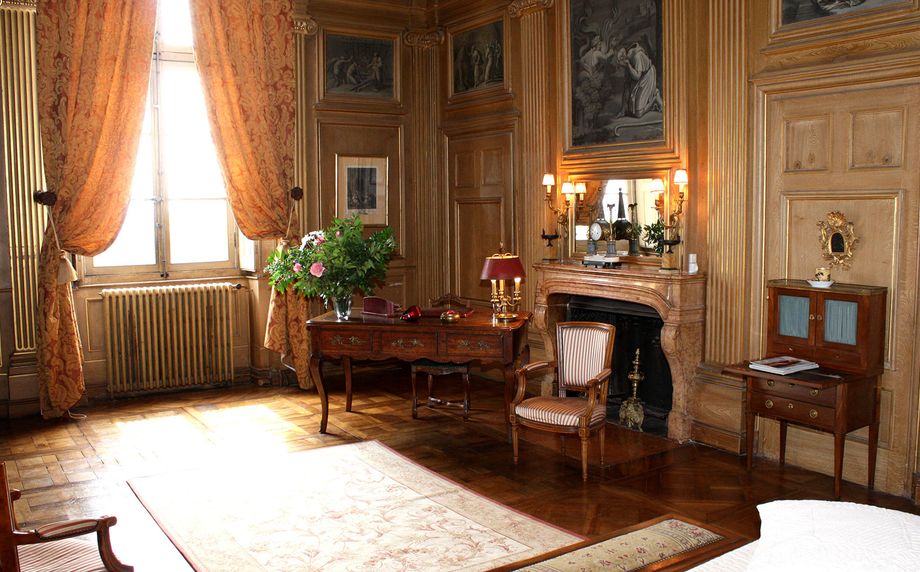
I shall never forget this sight, for he looked the perfect incarnation of hate. His green eyes blazed with lurid fire, and his white teeth seemed to almost shine through the blood which dabbled his mouth. Desperately he tried to vanquish what he did not comprehend. He was so exquisitely beautiful and so lost. “Is there a chill in the air, dear?” I said. “I almost shiver; have I been dreaming? You look ill, Mrs. Winchester; a little faint,” said Haze. “I am better now. How do you feel now, Haze?” I said. I was beginning to take alarm. Natural enough, was it not, that one of his own should take him away from Llanada Villa. “Papa would be grieved beyond measure,” he said. “If he thought we were inconveniencing you at all.” In a moment he was standing on his own feet. And then he walked drowsily beside me, my arm about his shoulder, bolstering him and steadying him, until we were moving towards his father’s cottage on my estate. I only half glanced at the figures passing us, until I saw a familiar shape under the trees. Somewhere far off in the darkened gardens, other were near. When he pushed open the door to his father’s home, he was laying dead upon the floor. His cravat was drawn halter-wise tight round his throat, and he had done its work well. The body was cold, and had been long dead. In due course the coroner held his inquest, and the jury pronounced that the deceased, Mac Austin, had died by his own hand, in a state of temporary insanity. However, Haze had his own opinion about his father’s death, though his lips were sealed, and he never spoke about it. He went and lived for the residue of his days in York, where there are still people who remember him, a taciturn and surly young man, who attended church regularly, and also drank a little, and was know to have saved some money. #RandolphHarris 2 of 8

But there occurred that night an event which gave my thoughts quite a new turn, and seemed to even startle even Haze’s languid nature. When I returned to my drawing-room, and sat down to coffee and chocolate, Elizabeth joined me, and we had a little card party. When the game was over, Elizabeth and I sat down on the sofa, and I asked her, a little anxiously, whether she had heard from her mother since her arrival. She answered “No.” I then asked her whether she knew where a letter would reach her at present. “I cannot tell,” she answered, ambiguously, “but I have been thinking of leaving you; you have been already too hospitable and too kind to me. I have given you an infinity of trouble, and I should wish to take a carriage to-morrow, and post in pursuit of her; I know where I shall ultimately find her, although I dare not tell you.” “But you must not dream such a thing,” I exclaimed. “I cannot afford to lose you so, and I will not consent to your leaving us, except under the care of your mother, who was so good as to consent to your remaining with us till she should herself return. I should be quite happy if I knew that you heard from her; but this evening the accounts of the progress of the mysterious disease that has invaded our community, grow even more alarming; and my beautiful guest, I do feel the responsibility, unaided by advice from your mother, very much. However, I shall do my best’ one thing is certain, that you must not think of leaving Llanada Villa without her distinct direction to that effect. We should suffer too much in parting from you to consent to it easily.” “Thank you, Mrs. Winchester, a thousand times for your hospitality,” Elizabeth answered, smiling bashfully. “You have all been too kind to me; I have seldom been so happy in all my life before, as in your beautiful mansion, under your care, and in the society of your dear niece.” #RandolphHarris 3 of 8
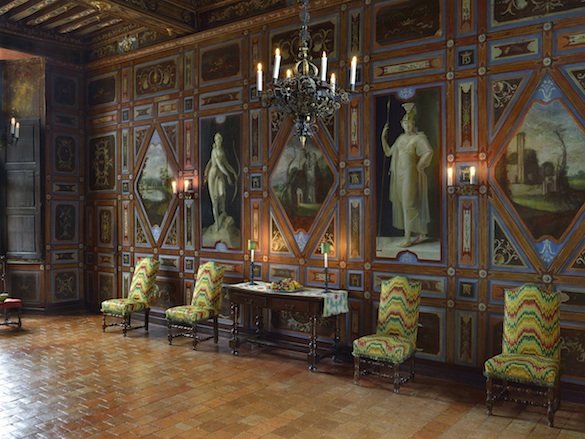
I accompanied Elizabeth to her room, and sat and chatted with her while she was preparing for bed. She turned around, “Do you think that you will ever confide fully in me about your home?” “Now, Elizabeth, you are gong to talk your wild nonsense again,” I said hastily. “Not I, silly little fool as I am, and full of whims and fancies; for your sake I’ll talk like a sage. Did you ever have a ball in the Grand Ballroom? What was it like? How charming it must be.” “I almost forget, it is years ago.” I laughed. “Mrs. Winchester, you are not so old. Your first ball can hardly be forgotten yet.” “I remember everything about it—with an effort. I see it all, as divers see what is going on above them, through a medium, dense, rippling, but transparent. There occurred that night what has confused the picture, and made it colours faith I was all but assassinated in my bed, wounded here,” I touched my breast, “and never was the same since.” “Were you near dying?” “Yes, a very—cruel love—strange love, that would have taken my life. Love will have its sacrifices. No sacrifices without blood. Let us go to sleep now; I feel lazy.” I bid her good-night, crept from the room with an uncomfortable sensation, locked her door and retired to my chambers. I was lying in bed, with my hands buried in my rich wavy hair, under my cheek, and my head upon the pillow. I often wondered whether my pretty guest ever said her prayers. I certainly had never seen her upon her knees. In the morning she never came down until long after our family prayers were over, and at night she never left the drawing room to attend our brief evening prayers in the hall. Ever since the midnight invaders, I locked all the doors in the house at night, and my whimsical alarms about prowling assassins required me to have the servants search every room in the house to make sure there were no lurking assassins or robbers “ensconced.” #RandolphHarris 4 of 8

After these measures were taken, I got into my bed and fell asleep. A light was burning in my room. This was an old habit, of very early date, ad which nothing could have tempted me to dispense with. Thus fortified I might take my rest in peace. However, dreams come through walls, light up dark rooms, or darken light ones, and their persons make their exists and their entrances as they please, and laugh at locksmiths. I had a dream that night that was the beginning of a very strange agony. I cannot call it a nightmare, for I was quite conscious of being asleep. However, I was equally conscious of being in my room, and lying in bed, precisely as I actually was. I saw, or fancied I saw, the room and its furniture just as I had seen it last, except tht it was very dark, and I saw something moving round the foot of the bed, which at first I could not accurately distinguish. However, I soon saw that it was a sooty-black figure that resembled a man. He appeared to me about five or six feet tall, he floated around the room hither and tither with the lithe sinister restlessness of a beast in a cage. I could not cry out, although as you ay supposed, I was terrified. Its pace was growing faster, and the room rapidly darker and darker, and at length so dark that I could no longer see anything of it but its eyes. I felt it spring lightly on the bed. The two broad eyes approached my face, and I could see it was Haze. He looked at me with centuries of evil blazing in his eyes, but there was not the slightest stir or respiration. And I felt a shudder. My heart expanded slightly, against my will. “I curse you,” he said. As I stared at him, I felt danger again, terrible danger. Then he appeared to have changed his place, and was now nearer to the door; then, close to it, the door opened, and he vanished. #RandolphHarris 5 of 8

It would be vain my attempting to tell you the horror with which, even now, I recall he occurrence of that night. It seemed to deepen by time, and communicated itself to the room and the very furniture that had encompassed the apparition. Later that day, I had another strange experience; I walked into the parlor that afternoon where Daisy and Elizabeth had been sitting, and a saw Haze upon the sofa. However, then I realized that he was invisible to the others. He got up and walked toward me—I was not afraid—and then—seemed to dissolve into the air. And so I wondered…whether I might have fallen into a trance. I clasped my hands and struggled to control my breathing. We know that, in the mesmeric trance, a subject may acquire unusual mental powers; The Frenchman Didier, who could read minds, play cards blindfolded, and identify the contents of sealed containers with great accuracy, is one of the best-known instances. Ancient houses, it has always seemed to me, are like Leyden jars, quietly accumulating the influences of the past…and my home is a special case. I lay awake into the small hours, worrying over these anxieties as they became more and more nightmarish until I sank into a troubled sleep. Sleeping had become so difficult one night that I wandered through this vast mansion, searching for a precious jewel William had given me. The jewel had been lost; I did not know how, but I knew that my own carelessness was to blame. To make matter worse, I could not remember what kind of stone it was, for as I went from room to room, a voice kept chanting, “Emerald, sapphire, ruby, diamond,” over and over, and none of them seemed right, because the lost stone was a different, a more beautiful colour than any of those, and I knew I ought to be able to picture it, and thus recall its name, but I could not. #RandolphHarris 6 of 8

The mansion was absolutely silent; the light throughout, even in corridors was a pale, uniform grey like that of an overcast sky. The rooms were modestly furnished; each one seemed to have its own miniature flight of stairs, up or down two or three steps, and the corridors kept changing levels in similar fashion. Though the house itself was not especially sinister, my anxiety over the fate of the jewel grew steadily more acute until it had risen to an unbearable pitch. Then it occurred to me that I still had not searched the Venetian Dining Room. The thought precipitated a vertiginous change of scene; the light sank to a dim, murky brown, and I was standing in the doorway of the room where we had dined that night. The curtains were drawn, the candles snuffed; the room seemed to be empty, but as I crept toward the table, I saw, above the back of the chair in which I usually sat, the dark outline of a head. There was time to slip away quietly; but perhaps the jewel had fallen into the lining of my chair, and if I were to tiptoe forward, I might be able to see it. I was within two feet of the motionless figure when a voice spoke from the doorway behind me, a word that rang like a loud gong, louder and louder until it became my own cry of “No!” and I woke in grey dawn light to find myself standing at the head of the stairs. And then I thought I caught sight of a shape, dak in space and light, through the door in one of the bedrooms. There was a tall figure in what I could have sworn was a black top hat, staring directly back at me. The figure was dressed formally in black morning suit. And then, with a movement so spasmodic and sudden, the man turned and stated to walk eastward, out of sight. I dismissed it, as one of the Winchester’s passing enigmas. There was much about the curse of the Winchester Mansion that I did not understand. #RandolphHarris 7 of 8

Spirits of Llanada Villa, I awaken the powers of darkness which dwell within you by the power of the blood of the three heeded Dragon Zohak that you may serve to empower Mrs. Winchester’s great work! Through serving the greater cause of dark magick which break the shackles that bind the Blackened Fire of Spirit, may you be uplifted and liberated! Awaken and empower the forbidden rites of Angra Mainyu! Awaken to empower the Mrs. Winchester’s great work of counter creation as an Apostle of the Lord of Darkness eternal and as a warrior of the path of the Lemegeton. I adjure thee, Emperor Lucifer, as the agent of the strong living God, of His beloved Son, and of the Holy Ghost, and by the power of the Great ADONAY, ELOIM, ARIEL, and JEHOVAM, to appear instantly, or to send thy Messenger Astarot, forcing thee to forsake thy hiding-place, wheresoever it may be. Aeshma, Div of wrath and fury! He who wields the bloody mace! Aeshma who is demon of the wounding spear I call you forth into this temple of counter creation! Through devotion to my becoming on this path, your spiritual weapon has been made manifest in this corporeal World through my will and counter creative power so you may fill it with your essence and might! Empower it so that it may serve me here upon the corporeal plane! May it serve as a key to the realms above and below unlocking the power and wisdom for the spirits of the Winchester’s glory and ascent! Fill this weapon with your powers of wrath and fury that it may seek out spiritual attacks made and render them useless and impotent! #RandolphHarris 8 of 8
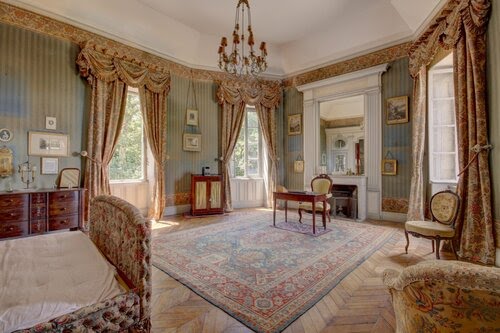
One Halloween, a tour guide saw a little boy who was no more than six years old. He was dressed in a black hood, and long black robe, and it looked like he did not have a face, as he had a black, opaque nylon covering the opening in the hood. The tour guide asked him who he was supposed to be, and the little boy said, “I’m the Angel of Life.” The tour guide then asked him who the Angel of Life is. The boy replied, “The Angel of Life is someone who comes to talk to you. He tells you things about your life.” The conviction on the little boy’s face and the non-hesitant way in which he explained who he was made the tour guide think that the boy had some knowledge of what he was talking about. Shortly after, objects in the gift shop started floating about, and glimpses of a shadowy figure were spotted in the basement. In the café, according to a female patron, she had been sitting at a table in a back corner of the room when a man suddenly appeared in a chair across the table from her. The man stared straight ahead and refused to react in any way. The female patron looked away to get the waitress’s attention and when she looked back, the man was gone. The woman related that the elusive figure was wearing old-fashioned clothes. https://winchestermysteryhouse.com/

And please be sure to check out the online gift store: https://shopwinchestermysteryhouse.com/

Return in the Darkening Twilight

Llanada Villa is a prime example of Victorian architecture. Its exterior is stately, refined, with a touch of Gothic elegance. Its front doors welcome, even as it seems to be hiding something. Inside the floors creak without warning, without any sense of someone there. The wood is thick with the humidity, as if the walls and floor breathe. Through the years, guest have reported feeling cold spots, or seeing strange, wispy streaks of light. The sense of the uncanny cries out for an explanation. Ghosts bridge the past to the present; they speak across the seemingly insurmountable barriers of death and time, connecting us to what we thought was lost. The townsfolk whispered tales of its dark history, of unspeakable horrors that occurred within the walls of my homes. As I climbed the grand staircase, each step seemed to release a flurry of hidden memories. Voices whispered incantations that send shivers down my spine. I must not faint, I told myself, and summoning all my resolve, made my way to the safety of the back parlour. There I collapsed into a couch, with my head already beginning to throb. The pain soon became so excruciating that I lost all sense of time until someone, I could not tell who, brought me a sleeping draught, and I sank at last into merciful oblivion. Next morning, I was at first bewildered to find myself fully dressed upon the parlour sofa. The parlourmaid, Trinity, brought me a cup of tea. She had set my skin crawling with fear. At this moment the unwonted sound of carriage wheels and many hoofs upon the road, arrested out attention. #RandolphHarris 1 of 6

I was haunted with a terror of robbers. My house was robbed once, and two servants murdered, so I always lock my door. It had become a habit. Still, it was a fine autumnal sunset, and melancholy lights and long shadows spread their peculiar effects over the landscape. I was looking out of one of the long drawing-room windows, when there entered the court-yard, a figure of a wanderer who I knew very well. He used to come by twice a year asking to tour my home. He was a tall man, with sharp learn features. He wore a pointed black bread, and he was smiling from ear to ear, showing his white fangs. He was dressed in buff, black, and scarlet, and crossed with more straps and belts than I could count, from which hung all manner of things. Behind, he carried a magic-lantern, and two boxes, which I well knew, in one of which was a salamander, and in the other a mandrake. These monsters used to my Mr. Hansen laugh. They were compounded of parts of monkeys, parrots, squirrels, fish, and hedgehogs, dried and stitched together with great neatness and startling effect. He had a fiddle, a box conjuring apparatus, a pair of foils and masks attached to his belt, several other mysterious cases dangling about him, and a black staff with copper ferrules in his hand. His companion was a rough spare dog, that followed at his heels, but stopped short, suspiciously at the front gate, and in a little while began to howl dismally. In the meantime, the mountebank, standing in the midst of the court-yard, raised his grotesque hat, and made us a very ceremonious bow, paying his compliments very volubly in execrable French, and German not much better. #RandolphHarris 2 of 6
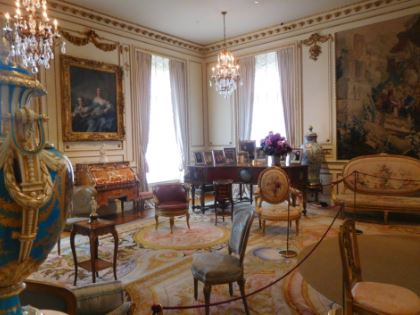
Then, disengaging his fiddle, he began to scrape a lively air, to which he sang with a merry discord, dancing with ludicrous airs and activity, that made me laugh, in spite of the dog’s howling. Then he advanced to the window with many smiles and salutations, and his hat in his left hand, his fiddle under his arm, and with a fluency that never took breath, he gabbled a long advertisement of all his accomplishments, and the resources of the various arts which he placed at our service, and the curiosities and entertainments which it was in his power, at my bidding to display. “Will your ladyship be pleased to buy an amulet against the oupire, which is going like the wolf, I hear, through these woods,” he said, dropping his hat on the floor. “They are dying of it right and left, and here is a charm that never fails; only pinned to the pillow, and you may laugh in his face.” These charms consisted of oblong slips of vellum, with cabalistic ciphers and diagrams upon them. I instantly purchased one. He was looking up, and I was smiling down at him, amused. His piercing black eye, as he looked up in my face, seemed to detect something that fixed for a moment his curiosity. “I told you that I am charmed with you in the most particulars,” he said. “You are slender, and wonderfully graceful. Your complexion is rich and brilliant; your features are small and beautifully formed; your eyes large, dark, and lustrous; your hair is quite wonderful, I never saw hair so magnificently think and long when it is down about your shoulder. It is exquisitely fine and soft, and in colour a rich very dark brown, with something of gold.” “Well, I do wonder at a wise man like you,” I replied. And so he walked on, and I heard no more. #RandolphHarris 3 of 6
Within the space of a week, my colour had returned, and I was sleeping so soundly that I was scarcely aware of my dreams. I walked miles on my estate each day, and I began to see it with new eyes. Every field, every path, even every hedgerow had its own name and its own history. I considered the amulet I purchased as an omen of good luck—and placed in beneath my pillow, to guard against further visitation. That evening, as I reached the top of the stairs, I heard a peculiar flickering sound. Entering my dressing room in the darkness, I made my way to the familiar dressing table on the right side of the room. Now the noise was even more pronounced. It sounded to me as if someone were turning the pages of book, a sound for which there was no rational source. Move over, I suddenly became away of a clammy, cold feeling around me. Since it was a warm evening, this too surprised me. In the dark, I could not be sure if there were not someone else in the dressing room. I quickly existed the room and went to bed. But this night, I was awakened by a violent shaking of my bed. I could see, in the very imperfect light, two figures at the foot oof it, holding each a bedpost. A voice said, “We’ll hang you!” Trembling, I climbed over to the footboard; and saw the figure at the other side, little more than a black shadow, begin also to scale the bed; and there was instantly a dreadful confusion and uproar in the room, and such a gabbling and laughing; I could not catch the words. I found myself on the floor. The phantoms and clamour were gone, but a crash and ringing of fragments was in my ears. #RandolphHarris 4 of 6
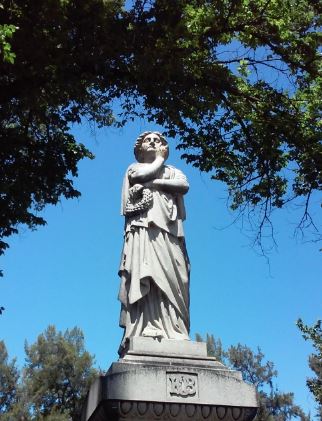
The great china bowl, from which for generations the Winchester had been baptized, had fallen from the mantelpiece, and was smashed on the hearthstone. I warned the servants not to disregard oaths and curses. A mourning coach drove up, and two gentlemen in black cloaks, and with crape to their hats, got out, and without looking to the right or the left, went up the steps to the Winchester mansion. Mr. Hansen followed them slowly. The carriage had, he supposed, gone round to the yard, for, when he reached the door, it was no longer there. So he followed the two mourners into the house. In the hall he found a fellow servant, who said he had seen two gentlemen, in black cloak, pass through the hall, and go up the stair without removing their hats, or asking leave of anyone. This was very odd, Mr. Hansen thought, and a great liberty; so upstairs he went to make them out. But he could not find them then, nor ever. And from that hour the house was troubled. In a little time there was not one of the servants who had not something to tel. Step and voices followed them sometimes in the passages, and tittering whispers, always minatory, scared them at the corners of the galleries, or from dark recesses; so that they would return panic-stricken. I, myself, had also heard these voices, and with this formidable aggravation, they came always when I said my prayers. I was scared at such moments by dropping words and sentences, which grew, as I persisted, into threats and blasphemies. These voices were not always in the room. They called, as I fancied, through the walls, very thick in this house, from the neighbouring rooms, sometimes on one side, sometimes on the other; sometimes they seemed to holla from distant lobbies, and came muffled, but threateningly, through the long paneled passages. As they approached they grew furious, as if several voices were speaking together. Whenever I applied myself to my devotions, these horrible sentences came hurrying towards the door, and, in panic, I would start from my knees, and all then would subside except the thumping of my heart against my stays, and the dreadful tremours of my nerves. #RandolphHarris 5 of 6

What these voices said, I never could quite remember one minute after they had ceased speaking; one sentence chased another away; gibe and menace and impious denunciation, each hideously articulate, were lost as soon as heard. And this added to the effect of these terrifying mockeries and invectives, that I could not, by any effort, retain their exact import, although their horrible character remained vividly present to my mind. Camile who acted as a housemaid, would not sleep in the house, but walked home, in trepidation, to her father’s, under the escort of her little brother, every night. Mrs. Rendell, the kitchenmaid, endured the nightly terrors. Mr. Hansen was testy and captious about these stories. He was already uncomfortable enough by reason of the entrance of tow muffled figures into the house, about which there could be no mistake. His own eyes had seen them. He refused to credit the stories of the servants. I made a decision not to fuel the stories of the ghost to keep the servants. “If you see ghosts here, it is no place for you, and it is time you should pack,” I would say. Here has been the cook with the kitchenmaid, as white as pipeclay, all in a row, to tell me I must have a parson to sleep among them, and preach down the devil! Upon my soul, I would not allow my home to fall into utter chaos and disarray. “Mrs. Winchester, I know you are no fool,” said the cook. “But supposed there was a such thing as a ghost here, don’t you see, it ain’t just women telling stories.” “I will not dignify such ideas,” I replied. The women left the kitchen, the cook and the butler went down, not altogether unused to such condescension in the household. The fire had gone down and I was chilled. The candles were expiring in the socket and threw on the white all long shadows, that danced up and down from the ceiling to the ground, and their black outlines I fancied resembled the two men in cloaks, whom I remembered with profound horror. I took the candle, with all the haste I could, getting along the passage, on whose walls the same dance of black shadows was continued, very anxious to reach my room before the light should go out. #RandolphHarris 6 of 6


On night in 1990, there was an unusual buzzing sound in The Winchester Mystery House, one of the staff encountered a dark, hooded figure standing at the door-to-nowhere. In the dim light issuing through the stained glass windows from an outside light, he could see that the intruder, who looked very much like a cowled monk, was waving his arms in a particular manner. Interpreting his movement as threatening, he approached the man and asked him to leave. At the very moment, the employee says he never felt so weak and helpless.
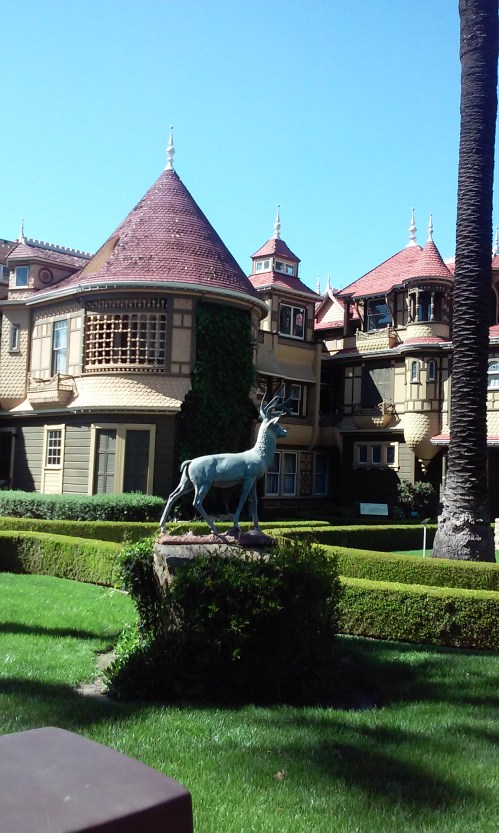
He collapsed in a heap backward onto the floor. He remembered that he actually began to weep in fear and confusion. He was completely at the mercy of whoever or whatever was standing at the door. It was then that the hooded being spoke. “Don’t be afraid,” it said in a quiet whisper. “We won’t hurt you.” And the next thing he knew, the morning sunlight was making him squint into wakefulness. As he reflected on the incident, he became more and more convinced that an actual visitation had occurred and that some kind of entity had come into the mansion. https://winchestermysteryhouse.com/

And please be sure to check out the online gift store: https://shopwinchestermysteryhouse.com/

I’m a Pharmacist, I Know What I am Doing

Recreational drug use is often portrayed in popular culture and music. To further highlight this illustration, probably the best known musical cliché of recent decades was “sex, drugs, and rock’ n’ roll,” while the Billbooard charts have been filled with songs involving drugs, such as Eric Clapton’s Cocaine or the Rolling Stones’ Sister Morphine and Mother’s Little Helper. Popular culture portrays not just recreational drug use but tragedy associated with drugs, for example, the deaths of guitarist Jimi Hendrix, Janis Joplin, and Jim Morrison and many others. Of course, not all common-use drugs are understood as dangerous or associated with tragedy. We found clear evidence of two very different modes of entry among the respondents, namely recreational abusers and therapeutic self-medicators. However, it is important to note tht these were not mutually exclusive categories of offenders. In other words, these two categories were not completely dichotomous. As is usually the case, real life seldom fits cleanly into nice, neat categories. In fact, we were able to identify a number of cognitive and behavioural themes that were common to almost all of the drug-using pharmacists interviewed. These themes were expressed by nearly all of the drug-abusing pharmacists that we interviewed, regardless of how the individual initially began their illicit drug abuse career. The existence of these common themes suggest that pharmacy-specific occupational contingencies play a center role in the onset and progression of illicit use of prescription medicines. #RandolphHarris 1 of 20
Intuitively, it should not be surprising that pharmacists would steal prescription medicines as a way of treating their own physical ailments. After all, they have been exposed to years of pharmacy training that emphasized the beneficial, therapeutic potential of these medicines. Each pharmacist has dispensed the medicines to hundreds of patients and then watched the drugs usually produce the predicted beneficial results. They have all read the literature and drug inserts detailing the chemical composition of drugs and studied the often dramatic curative effects of the chemical substances. Pharmacists, more so than any other member of society, are keenly aware of how and why drugs work. There was strong evidence to suggest that both the therapeutic self-medicators and the recreational abusers actively used the years of pharmacological knowledge that they had acquired. In their eyes, it made perfect sense that they should put their pharmacy knowledge to work on themselves. This application of knowledge can be seen in the comments of a 40-year-old female self-medicator: “So, in 1986 I was sent to the psychologist. That was when I was forced to recognize that I had an alcohol problem. And I recognized that I had to do something. And in my brilliant analysis, I made a decision that since alcohol was a central nervous system depressant, the solution for me was to use a central nervous system stimulant. That would solve my alcohol problem. So I chose the best stimulant that I had access to, and that was [pharmaceutical grade] cocaine. I started using cocaine in 1986. I never thought that it would progress. I never thought it was going to get worse. I thought, ‘I’m just going to use it occasionally.’” #RandolphHarris 2 of 20

Similar trends were observed among the recreational abuser group, only here, the applied use of drugs was based upon more recreational motives. Almost all of the therapeutic self-medicators and recreational abusers described how they became masters of quickly diagnosing their own ailments or emotional needs and then identifying the appropriate pharmacological agent that would remedy the problem. Moreover, as professionals, they were confident that they would be able to self-regulate their drug intake so as to never become addicted. All of the respondents drew upon their social status as pharmacists to convince themselves that their drug use would not progress into dependency. They recall being adamant in their view that personally they were immune from such problems, believing that only stupid, naïve people became addicted to drugs. As a 40-year-old female self-medicator put it, “I’m a pharmacist, I know what I am doing.” A 39-year-old male self-medicator went so far as to say: “I mean, we know more [about the effect of drugs] than doctors. We have all the package inserts. We have the knowledge. We know a lot about the drugs, so what’s the big deal?” Elsewhere we refer to this denial mechanism as a “paradox of familiarity,” because familiarity can breed consent, not contempt toward prescription drug use. Members of both categories of pharmacists claimed that they had never been warned about the dangers of drugs, insisting instead that their training had only stressed the beneficial side of prescription medication. #RandolphHarris 3 of 20

To further highlight this illustration, a 48-year-old male misuser stated: “I never had anybody come right out and tell me that [prescription drug abuse] was probably unethical and illegal because they assumed that we knew that. But nobody ever said this is something that is not done.” Let without guidance on the issues, some pharmacists assumed that self-medication was acceptable behaviour. To this end, a 39-year-old female self-medicator said: “It’s [self-medication] just part of it [the pharmacy job]. It’s just accepted because we know so much. I’m sure it’s the same way when the doctors do it. It wasn’t a big stretch to start going “You know, I got a headache here, maybe I should try one of these Percocets [narcotic analgesic]?” Many pharmacists spoke about their prescription drug theft/use as if it were an entitlement that went along with being a pharmacist. Much like a butcher always has fresh meat at home or a car dealer always drives a state-of-the-art automobile, pharmacists will always have the best drugs. This theme is illustrated in an exchange that occurred between the interviewer and a45-year-old-male pharmacist: “Why take plain Aspirin or plain Tylenol when you’ve got this [Percocet-narcotic analgesic]? It works better….[so] you don’t even have to struggle with it. I really believed that I had license to do that…as a pharmacist. I mean with all that stuff sitting there, you know. Oh, my back was just killing me during that period of time and this narcotic pain reliever is sitting right there. I thought, ‘why should [I] suffer through back pain when I have this bottle of narcotics sitting here?” #RandolphHarris 4 of 20

The above-mentioned themes involve cognitive dimensions of the pharmacists’ drug abuse in that they speak to common motivational and justification themes that were present in all of the interview. Perhaps more important is the fact that there was a common behavioural characteristic shared by all 50 pharmacists. In ever case, occasional prescription drug abuse eventually gave way to an advanced addictive state that was marked by an enormous intake of drugs, unmistakable habituation, and the constant threat of physical withdrawal. Members of the recreational abuser and therapeutic self-medicator groups alike routinely reported daily use levels exceeding 50-100 times the recommended daily dosage. One pharmacist reported that his drug use regimen progressed to 150 Percocets [strong narcotic analgesic] per day. Another individual reported injecting up to 200 mg of Morphine each day. Still another respondent described a daily use pattern that, among other things, included 5g of cocaine. Invariably, these advanced levels of drug use led to clear signs of habituation and the constant threat of physical withdrawal. At this point, the individual recalls growing increasingly desperate. Consider the following quote from a 44-year-ol male pharmacist who was in charge of ordering the narcotics at the independent retail pharmacy where he worked: “I was ordering excessive quantities and chasing down tracks. That’s what I used to do. I was really reaching my bottom. I would chase these delivery trucks down in the morning because I didn’t come to my store until mid-afternoon. I was in withdrawal in the morning and I was without drugs, so I had to have it. #RandolphHarris 5 of 20

“I was just going nuts. Many mornings I had gone to work sweating. It would be 30 degrees (Fahrenheit), it would be January, and the clerk would say, ‘you look sick,’ and I would say, ‘It’s the flu.’ So I would pay the delivery guys extra money to deliver my drugs first or I would chase the delivery trucks down in the morning. I knew the trucks delivered at 6 in the morning, they came by my area, and I would get up early and chase the trucks down the highway. I would go in excess of 100 miles an hour trying to catch up with this truck and flag it down.” The advanced stages of drug addiction invariably produced traumatic physical psychological outcomes. Eventually, “out-of-control” drug use patterns along with the realization of chemical dependency left the pharmacists in a problematic mental state. It was at this point that al of the pharmacists recalled coming to grips with their addiction. This personal realization was accompanied by a shift in the way they thought about their drug use. They no longer denied that situation by drawing upon recreational or therapeutic explanations. Instead, they finally admitted the dire nature of their situation and became more and more reclusive. In short, all of the respondents grew to realize that they had a drug problem, turning then to fear and ignorance to foster the final weeks or months of their drug addiction. Two identifiable criminal career trajectories were observed among the pharmacists who we interviewed: recreational abusers and therapeutic self-medicators. #RandolphHarris 6 of 20

Careful scrutiny of contemporary drug theory, policy, and practice in all areas, from prescription pharmaceuticals to illegal recreational drugs, reveals numerous apparent inconsistencies and pervasive incoherence. This results, in part, from a kind of silo thinking in which attention to drug theory and drug policy, however sophisticated in its own realm, is encapsulated within distinct professional, practical, and economic spheres or “silos.” Silos are descriptively and prescriptively dense but stand isolated from each other in an empty landscape. In other words, people in one arena of drug theory, policy, or practical programs have plenty to say to each other about the way things are and the way things should be with respect to drugs, but they don’t talk much across the open spaces between their areas of focus. Not only do they not talk much between their fields, for reasons to be explored, they cannot really do so. Clearly, our discussion of the therapeutic self-medicator category goes far beyond what is present in the existing literature. However, the first documentation of recreational drug use among health professionals, had minimal impact on the way that the various healthcare professions think about or address problem of substance abuse within their ranks. The pharmacy profession has been especially reluctant to address the reality of the prescription drug abuse situation. For instance, existing self-reports and interview research on drug using pharmacists largely ignores the recreational origins of drug use and, instead, describes the affected individuals as having misplaced therapeutic motivations. This assumption is reinforced by published biographical accounts of recovering drug using pharmacists. While principally intended to raise awareness among fellow pharmacists, these confessionals consistently emphasize the well-intentioned motives behind the individuals’ destructive drug use past. #RandolphHarris 7 of 20

Information is called observable when it is available symmetrically to both parties, and verifiable when it can be proved to third parties such as a court. In practice, this is a matter of cost, and the standard of proof required. Contracts that are intended to be enforced in a court of law can only stipulate actions that are conditioned on verifiable information; courts cannot judge whether a breach of the contractual terms has occurred if they cannot verify whether the circumstances that call for an action have actually transpired. However, observable information can be the basis for contracts that are enforced by extralegal or private methods, because the two parties can know fully well whether a breach has occurred. Such extralegal methods of enforcement come in to broad types. One is enforcement by insider third parties with specialized knowledge that enables them to verify information that outsider general courts of law cannot; arbitrators in industry associations are the most prominent enforcers of this kind. The second is based on a relationship or ongoing interaction between the parties; a breakup of this relationship constitutes the punishment that may deter one of the parties from breaching. This covers many possibilities. The same two parties may meet repeatedly; the two may not have a direct repeated interaction with each other, but each may interact with others in a group or network that transmits information about any breach to all members and collectively sanctions the miscreant, using ostracism in business interactions or social relationships or both. #RandolphHarris 8 of 20

The distinction between observable and verifiable information is standard in the economic theory of contracts. The New York Stock Exchange developed its internal rules and procedures for dispute resolution, and even Taiwanese shoe manufacturers and Western fashion houses performed dispute-resolution functions in addition to their primary matchmaking ones. One may think that these alternative methods of private ordering must suffer a crippling disadvantage relative to the government’s courts, namely their lack of coercive power to ensure that their decisions are obeyed. However, the difficulty is often nonexistent or easily overcome. First, the sanctions available for private ordering are often very effective. Breach of contract can be deterred in ongoing relationships by the threat that the miscreant will be barred from future business with this particular partner or the group; this can be buttressed by social ostracism if the group fosters social ties among its business members. Sometimes this threat may be even more severe than the fines that courts would impose in the matter. If the threat is credible, in the sense of being a part of the strategies in the subgame-perfect equilibrium of the repeated game that constitutes the ongoing relationship, then the contract is self-enforcing. Second, arbitrators may have similar sanctions at their disposal; if they can bar the miscreant from the industry association, they can instantly put one out of business, which can be a more effective sanction than the fines the courts will impose. Of course, the feasibility of such sanctions depends on the availability of the requisite information, and in the case of repeated interactions, on how highly the participants value the future relative to the present. #RandolphHarris 9 of 20

Finally, courts recognize the informational advantage of the alternative institutions. Therefore when a relational or implicit contract serves such an informational purpose, courts refuse to intervene to modify its terms, or to insert missing provisions, or to overrule the availability of discretion to one party. They also enforce the awards of industry arbitration tribunals, using the government’s power of coercion to obtain compliance if the loser in the arbitration attempts to defy the ruling. In the United States of America, this has been so since 1920; in the international context, over 100 countries now accede to the 1958 New York Convention of the Recognition and Enforcement of Arbitral Awards. By providing for the appointment of industry-expert arbitrators, who can make many factual determinations more accurately and less expensively than a judge or jury can, the rules greatly expand the “contractible” aspects of an exchange. The use of stream-lined procedures together with the appointment of expert adjudicators transforms considerations that in the public legal system would have been only observable to the parties…into considerations that are also verifiable…thereby encouraging transactors to enter into more complete contracts. The point is not that arbitrators have access to more information. Any relevant information can be elicited and brought before the court by either party to the dispute through the legal process of discovery. Conversely, many arbitration forms do not allow discovery, although the arbitrator can request additional information. #RandolphHarris 10 of 20

The key is how information is used; industry arbitrators can use their expertise to interpret it—make factual determinations—more accurately and at a lower cost than non-specialized courts can. This is the sense in which verifiability should be interpreted in this context. Arbitration is used in other contexts for other reasons. In international transactions, each party may suspect that the other country’s courts will be biased in favour of its own nationals; this can deter them from entering into contrast that may end up in national courts. Therefore both may agree ex ante to settle any disputes in an agreed international forum of arbitration. Several of these exist, based in London, Paris, Stockholm, et cetera. They differ in their procedures (degree of formality, time taken, fees charged, et cetera) and the range of legal traditions they cover (civil, common, Islamic, et cetera). These affect the choice of forum by the parties to each transaction. These forums usually lack the expertise that industry-specific forums can provide. Therefore they are not likely to lower costs or improve verifiability and permit more complete contracts; instead, removing the suspicion of bias may be their most important function. The different modes of private and official governance can interact in various ways. To further highlight the illustration, if an ongoing relationship based on the superior observability of information by the two parties breaks down, the best alternative available to the parties may be recourse to a contract based on verifiable information enforceable in a court of law, not total cessation of transactions. #RandolphHarris 11 of 20

And if an arbitrator’s award is not enforceable by direct sanctions such as fines, it may nonetheless form part of a relational arrangement where the arbitrator can terminate the miscreant’s access to future trades. Not only do modes like arbitration evolve and apply to provide governance for transactions where they have an informational advantage and can reduce transaction costs, but also transactions take forms that adapt to the available information and governance. As for the emergence and prevalence of barter and countertrade in post-Soviet Russia in this way: The advantage of paying with goods rather than money is that they can be earmarked s property of the creditor. Money is fungible and liquid; a buyer can hide money easily if he chooses to renege on his promised payment to the seller. Goods in a barter or countertrade contract are more difficult to hide, and therefore can act as deal-specific collateral that mitigates opportunism. When it comes to systems of integration, rising complexity in the economy calls for more sophisticated integration and management. In a not atypical case Nabisco, the food company, as to fill 500 orders a day for literally hundreds of thousands of different products that must be shipped from 49 factories and 13 distribution centers, and at the same time take into account 30,000 different sales promotional deals with its customers. Managing such complexity requires new forms of leadership and an extremely high order of systemic integration. That, in turn, requires greater and greater volumes of information to pulse through the organization. #RandolphHarris 12 of 20

To hold everything together—to track all the components and products, to synchronize deliveries, to keep engineers and marketers appraised of each other’s plans, to alert the R&D people to the needs of the manufacturing side and, above all, to give management a coherent picture of what is going on—billions of dollars are being poured into electronic networks that link computers, data bases and other information technologies together. This vast electronic information structure, frequently satellite based, knits whole companies together, often linking them into the computers and networks of suppliers and customers as well. Other networks link networks. Japan has targeted $250 billion to develop better, faster network. All these changes further accelerate the pace of operations and transactions. Economies of speed replace economies of scale. Competition is so intense and the speeds required so high that the old “time is money” rule is increasingly updated to “every interval of time is worth more than the one before it.” Time becomes a critical variable as reflected in “just-in-time” deliveries and a pressure to reduce DIP or “decisions in process.” Slow, sequential, step-by-step engineering is replaced by “simultaneous engineering.” Companies wage “time-based competition.” Expressing the new, it is clear that money moves at the speed of light. Information has to move faster. Thus acceleration pushed Third Wave business closer and closer to real time. #RandolphHarris 13 of 20

Taken together, these ten features of the Third Wave economy, among many others, add up to a monumental change in how wealth is created. The conversion of the United States of America, Japan and Europe to this new system, though not yet complete, represents the single most important change in the global economy since the spread of factories brought about by the industrial revolution. This historical transformation, picking up speed in the early-to mid-1970, was already fairly well advanced by the 1990s. Unfortunately, much of America’s economic thinking was left behind. Global markets of energy and mineral resources are undergoing far reaching irreversible changes, and so are perceptions about the policies needed to provide their stable supply. Global demand is surging due to a dramatic increase of consumption by the fast-growing large emerging economies. Experts project that, absent significant changes in policy or technology, global energy consumption will increase nearly 50 percent over the next 30 years. Energy consumption is growing faster than the GDP in many countries. On the supply side, uncertainties and destabilization risks are exacerbating due to rising political instability in exporting countries, periodical redirections of sales from external to domestic markets by leading suppliers, and, to a certain extent, a depletion, in some major producing countries, of existing deposits in the absence of new ones whose discovery and exploitation could make up for the loss. #RandolphHarris 14 of 20

Therefore, oil and some other natural resources are becoming more and mor attractive targets for speculators. In these circumstances, countries highly dependent on natural resources imports, especially those that do not have their own powerful resource multinationals, get increasingly concerned about supply destabilization risks. Predictions about an all-out resource war or bitter fights among buyers for limited amounts of oil or metallic ores look like an exaggeration. However, buyers’ competition for particular kinds of resources within particular periods of time due to particular circumstances is becoming a more frequent phenomenon. For instance, the Philippines and Vietnam protested to China against its patrol boats hindering their oil exploration activities near the disputed Spratly Islands in the South China Sea. China demanded that its neighbours stop exploration work in this area. Tensions rose as the United States of America declared that the South China Sea was in the sphere of its national interest and that it would stand by the Philippines as its ally. Now, when it comes to supernatural affairs, the angels are “sent forth to minister to the heirs of salvation,” reports Hebrews 1.14, but not to take the place of Christ or the Holy Spirit. The apocalypse seems to show that this ministration of angels to the saints on Earth is a ministration for war in the spiritual realm against the forces of Satan; but there is little indication given of ministry in any other way. #RandolphHarris 15 of 20

After the first Advent, when there was great angelic activity over the wondrous event of the Father brining the “Firstborn: of the new race (Romans 8.29) into the inhabited Earth (Hebrew 1.6), and again at the Advent of the Holy Spirit on the Day of Pentecost to begin His work of forming a Body like unto the Risen Head—and during the early years of the Church—the employment of an angel in direct and visible communication with believers seems to give way to the work and ministry of the Holy Spirit. The entire work of witnessing to Christ, and leading the Church into all truth, has been committed to the Holy Spirit. Therefore all intervention of “angels” or of audible voices from the spiritual realm purporting to be from God may be taken as counterfeits of psychopathological offenders, whose supreme object is to substitute the workings of their own wicked offenders in the place of God. In any case, it is best and safest in these days of peril to keep in the path of faith and reliance upon the Holy Spirit of God working through the Word of God. Man, the microcosm, the mirror of reality has structures of beings found in him, and are found analogously in the subhuman realm. Selfhood, inner awareness, freedom and destiny—all are verified analogously in subhuman beings. Furthermore, the concepts of courage, love, power, and justice are used to describe analogously the characteristics of all beings and of being-itself. The point we wish to make is that this use of analogy based on human experience seems to yield valid knowledge. #RandolphHarris 16 of 20

Moving up now to the relationship between man and God, one would expect that on the same principle, but with proper adjustments, man could get an analogous knowledge of God. Symbols are not a means of knowing God, but rather a way of speaking about Him. If one wishes to talk about God, finite material must be used, and this is justified by the fact that all finite beings participate in being-itself. Without such an analogy nothing could be said about God. However, the analogia entis is in no way able to create a natural theology. It is not a method of discovering truth about God; it is the form in which every knowledge of revelation must be expressed. In this sense anlogia entis, like “religious symbol,” points to the necessity of using material taken from finite reality in order to give content to the cognitive function in revelation. What is boils down to is that analogy or symbolism is the expression of an encounter with God. Through the revelatory experience is far more than an intellectual communication—it is primarily a reunion with the ground of being—it contains a cognitive element conveyed by symbols which are qualified as channels of communication by their participation in being-itself. Yet, it seems not, for every creature participates in being-itself, and yet not everything is a religious symbol, although it has the potentiality to become one. What is the decisive ingredient of symbolism beyond ontological participation? These symbols are not arbitrary interpretations of the concrete revelatory experiences. However, they appear within this experience itself. They are not created intentionally, but they are born in the same dimension in which the revelatory experience takes place. In and through its symbols the religious encounter with reality opens up the dimension of reality in which ultimacy appears. There is no other way of expressing our encounter with the holy than in symbols. #RandolphHarris 17 of 20

From the standpoint of the counselor who finds one’s role ambiguous, it seems more than likely that exploration of a developmental perspective would help resolve the conflicts implicit in one’s professionalization. For the psychotherapist who thinks of oneself as a physician who cures sickness, or who avoids this and speaks only of the “difficulties of living,” there may appear to be no conflict in one’s role. One may be satisfied to reduce symptoms of disorder, to solve the problem presented and to think of oneself primarily as someone who relieves distress, without defining one’s goals beyond that. However, apparently more and more thoughtful counselors do not think they can stop there, or do any permanent good, unless they leave their patients better able to cope with later problems and future strains. Some even feel that their job to plan for the optimal development of their clients, or to organize clients to plan for their own. The ambiguous feelings of the professional who presumes to assist in the personal problems of family members may be all to the good if these are construed in a framework of family relations which includes oneself. The concept of transference goes only part way. The client in the course of the counselor-client interaction frequently construes the counselor as a figure representative of previous others, with whom relations have been unresolved but are thus worked out through the interviews. The difficulty, however, from the client’s standpoint, is that no matter how versatile one’s counselor may be, and no matter how facile or fantastic one’s own imagination, the range of persons with whom a person needs intimate discourse in order to achieve one’s optimal development of self far exceeds the resources of this single relationship. #RandolphHarris 18 of 20

Moreover, there is the fact that the client must pay in cold cash for the kind of communication which the best families afford on a basis of affectional reciprocity; thus the most sacred disclosures hover at times on the verge of something equivalent to prostitution. Regardless of ethics and their enforcement by professional insistence upon its eventual termination, and the limitation of reciprocity to monetary reward; in a word, the elaboration of this relationship lead nowhere. The best hope for fruition of any gains that accrue is tht they serve as a bridge to the regeneration of their client’s involvement in a quasi-family constellation which includes near-rivals and critics, models and admirers, other ages and other genders, in both work and play. Only through others can one obtain the continual characterizations of self essential to valid knowledge of self. Research and experience have already shown that the human being, from birth until death, almost to the degree that the fish requires water, thrives only in social interaction. Neglect, isolation, loneliness, solitary confinement, and deteriorative influences very hard to endure, even though every physical condition of survival is met. And among all kinds of interaction, the most potent of all for personal development are those characterized by the unconditional acceptance of family relations. Only here is the listener who always finds more in the person than one presents in one’s actual behaviour. #RandolphHarris 19 of 20

Only here is the audience that never grows tried. Only here is the person of similar background, for whom every aspect of the culture—of class and ethic experience—resonates with comparable meaning. That a counselor could ever aspire to duplicate these functions of the optimal family is beyond the hope of those who have thought and written about it. In a sense this analysis of the implicit or potential demands on the counselor’s role both justifies and specifies a therapeutic approach. It also shows that one’s role must be transcended by more adequate institutions for providing each client with a stable constellation of significant others, who can be the precisely appropriate self-definers at each critical stage in one’s personal development. For the person whose actual family has failed one the solution suggested by this analysis is the invention of effective quasi-families. The process by which each person contributes to the self-knowledge of others, and others contribute to one’s knowledge of oneself, it immanent in human society. Where self-knowledge and self-control are deficient relative either to norms or ideals, the best means for reversing these deficiencies is effective utilization of all available knowledge of how selves originate, operate, and co-operate. Recognition that some tasks are beyond the powers of the unassisted individual does not mean that society must be divided into two classes, therapists and their patients. It means, or at least can be made to mean, joint action to perform these tasks. Such an approach is as relevant and applicable to the tasks of counseling agencies as to the other types of family agencies. #RandolphHarris 20 of 20

CRESLEIGH MEADOWS AT PLUMAS RANCH
Plumas Lake, CA |
Now Selling!

Cresleigh Meadows is now selling! Found just north of Feather River Boulevard, Cresleigh Meadows is home of the largest neighborhood in Plumas Ranch as well as the popular Bear River Park.

With four floor plans available, ranging from approximately 2,000 – 3,500 square feet offering, three to five bedrooms, we are certain you will find the home that fits your needs and lifestyle.

Popular design elements include open floor plans, large kitchen islands, and flex spaces are staples in Cresleigh homes. Multi-generational living options also available in select homes.

Homeowners will love the convenient commuter access to nearby Sacramento and Yuba City.

Take advantage of financing incentives available today! Contact our Sales Center to learn more about how we can help you buy-down your interest rate. https://cresleigh.com/cresleigh-meadows-at-plumas-ranch/

Stop by for a tour today, and make a Cresleigh Home, your home.


 Randolph Harris II International Institute