
Home » Supernatural (Page 18)
Category Archives: Supernatural

The More Individualized People are, the More Difficult it is to Attain Identification

Those who take the long view of human’s experience will find that from time to time there were other societies no less honest and courageous than ours in facing all the ugliness, cruelty, and indifference the mirror reveals, but with the greater honesty still to hold the brighter, nobler view of humans and with greater courage to pursue the vision. Despite romantic rhetoric, freedom cannot be absolute. To argue for total choice (a meaningless concept) or total individuality is to argue against any form of community or society altogether. If each person, busily doing one’s thing, were to be wholly different from every other, no two humans would have any basis for communication. It is ironic that the people who complain the most loudly that people cannot “relate” to one another, or cannot “communicate” with one another, are often the very same people who urge greater individuality. The sociologist Karl Mannheim recognized this contradiction when he wrote: “The more individualized people are, the more difficult it is to attain identification.” Unless we are literally prepared to plunge backward into pre-technological primitivism, and accept all the consequences—a shorter, more brutal life, ore disease, pain, starvation, fear, superstition, xenophobia, bigotry, and so on—we shall move forward to the more and more differentiated societies. This raises severe problems of social integration. #RandolphHarris 1 of 22

What bonds of education, politics, culture must we fashion to tie the super-age of information order together into a functioning whole? Can this be accomplished? “This integration,” writes Bertram M. Gross of Wayne State University, “must be based upon certain commonly accepted values or some degree of perceived interdependence, if not mutually acceptable objectives.” A society fast fragmenting at the level of values and life styles challenges all the old integrative mechanism and cries out for a totally new basis for reconstitution. We have by no means yet found this basis. Ye if we shall face disturbing problems of social integration, we shall confront even more agonizing problems of individual integration. For the multiplication of life styles challenges our ability to hold the very self together. Which of many potential selves shall we choose to be? What sequences of serial selves will describe us? How, in short, must we deal with overchoice at this, the most intensely personal and emotion-laden level of all? In our headlong rush for variety, choice and freedom, we have not yet begun to examine the awesome implications of diversity. When diversity, however, converges with transience and novelty, we rocket the society toward an historical crisis of adaptation. We create an environment so ephemeral, unfamiliar and complex so to threaten millions with adaptive breakdown. This breakdown is future shock. #RandolphHarris 2 of 22

The problem of synchronicity has puzzled me for a long time, ever since the middle twenties, when I was investigating the phenomena of the collective unconscious and kept on coming across connections which I simply could not explain as chance groupings or “run.” What I found were “coincidences” which were connected so meaningfully that their “chance” concurrence would represent a degree of improbability that would have to be expressed by an astronomical figure. By way of example, I shall mention an incident from my own observation. A young woman I was treating had, at a critical moment, a dream in which she was given a golden scarab. While she was telling me this dream I sat with my back to the closed window. Suddenly I heard a noise behind me, like a gentle tapping. I turned round and saw a flying insect knocking against the window-pane from outside. I opened the window and caught the creature in the air as it flew in. It was the nearest analogy to a golden scarab that one finds in our latitudes, a scarabaeid beetle, the common rose-chafer (Cetonia aurata), which contrary to its usual habits had evidently felt an urge to get into a dark room at this particular moment. I must admit that nothing like it ever happened to me before or since, and that the dream of the patient has remained unique in my experience. #RandolphHarris 3 of 22

I should like to mention another case that is typical of a certain category of events. The wife of one of my patients, a man in his fifties, once told me in conversation that, at the deaths of her mother and her grandmother, a number of birds gathered outside the windows of the death-chamber. I had heard similar stories from other people. When her husband’s treatment was nearing its end, his neurosis having been cleared up, he developed some apparently quite innocuous symptoms which seemed to me, however, to be those of heart-disease. I sent him along to a specialist, who after examining him told me in writing that he could find no cause for anxiety. One the way back from this conclusion (with the medical report in his pocket) my patient collapsed in the street. As he was brought home dying, his wife was already in a great state of anxiety because, soon after her husband had gone to the doctor, a whole flock of birds alighted on their house. She naturally remembered the similar incidents that had happened at the death of her own relatives, and feared the worst. Although I was personally acquainted with the people concerned and know very well that the facts here reported are true, I do not imagine for a moment that this will induce anybody who is determined to regard such things as pure “chance” to change one’s mind. My sole object in relating these two incidents is simply to give some indication of how meaningful coincidences usually present themselves in practical life. #RandolphHarris 4 of 22

The meaningful connection is obvious enough in the first case in view of the approximate identity of the chief objects (the scarab and the beetle); but in the second case death and the flock of birds seem to be incommensurable with one another. If one considers, however, that in the Babylonian Hades the souls wore a “feather dress,” and that in ancient Egypt the ba, or soul, was thought of as a bird (in Homer the souls of the dead “twitter”) it is not too far-fetched to suppose that there may be some archetypal symbolism at work. Has such an incident occurred in a dream, that interpretation would be justified by the comparative psychological material. There also seems to be an archetypal foundation to the first. It was an extraordinarily difficult case to treat, and up to the time of the dream little or no progress had been made. I should explain that the main reason for this was my patient’s animus, which was steeped in Cartesian philosophy and clung so rigidly to its own idea of reality that the efforts of three doctors—I was the third—had no been able to weaken it. Evidently something quite irrational was needed which was beyond my power to produce. The dream alone was enough to disturb ever so slightly the rationalistic attitude of my patient. However, when the “scarab” came flying in through the armour of her animus possession and the process of transformation could at last begin to move. Any essential change of attitude signifies a psychic renewal which is usually accompanied by symbols of rebirth in the patient’s dreams and fantasies. #RandolphHarris 5 of 22

The scarab is a classic example of a rebirth symbol. The ancient Egyptian Book of What Is in the Netherworld describes how the dead sun-god changes himself at the tenth station into Khepri, the scarab, and then, at the twelfth station, mounts the barge which carries the rejuvenated sun-god into the morning sky. The only difficulty here is that with educated people cryptomenesia often cannot be ruled out with certainty (although my patient did not happen to know this symbol). However, this does not alter the fact that psychologist is continually coming up against cases where the emergence of symbolic parallels cannot be explained without the hypothesis of the collective unconscious. The other part of the answer is that the Overself is always here as human’s innermost truest self. It is beginningless and endless in time. Its consciousness does not have to be developed as something new. However, the person’s awareness of it begins in time and has to be developed as a new attainment. The ever-presence of Overself means that anyone may attain it here and now. There is no inner necessity to travel anywhere or to anyone in space or to wait years in time for this to happen. Anyone, for instance, who attends carefully and earnestly to the present exposition may perhaps suddenly and easily get the first stage of insight, the lightning-flash which affords a glimpse of reality, at any moment. #RandolphHarris 6 of 22

By that glimpse one will have been lifted to a new dimension of being. The difficulty will consist in retaining the new perception. For ancient habits of erroneous thinking will quickly reassert themselves and overwhelm one enough to push it into the background. This is why repeated introspection, reflective study and mystical meditation are needed to weaken those habits and generate the inner strength which can firmly hold the higher outlook against these aggressive intruders from one’s own past. Those who are unable to grasp this explanation the first time may do so at a later attempt, while those who will not grasp it and refuse to consider it further thereby indicate that they are not subtle enough to receive its truth. They will continue to seek reality among the cozening deceivers of superficial experience, but it will ever elude them there. Although It is at the very heart of human beings, the Overself is very far from their present level of consciousness. Nothing could be close yet this is the supreme paradox of our existence and the strangest enigma confronting our thought. The Overself is implicit in all humanity but explicit only in a few solitary figures. Its golden note of harmony falls dead upon our muted ears. The Overself is not a goal to be attained but a realization of what already is. It is the inalienable possession of all conscious beings and not of a mere few. #RandolphHarris 7 of 22

No effort is needed to get hold of the Overself, but every effort is needed to get rid of the many impediments to its recognition. We cannot take hold of it; it takes hold of us. Therefore the last stage of this quest is an effortless one. We are led, as children by the hand, into the resplendent presence. Our weary strivings come to an abrupt end. Our lips are made shut and wordless. No situation in human life lasts totally unchanged forever, just as no condition on the very planet which harbours that life lasts forever. It is folly to demand changelessness. And ye we do. Why? Because beneath this conscious desire for fresh experiences there is the unconscious longing for That which is the permanent core of selfhood. The stilled, one-pointed, and reverent mind may know it, the self may dissolve in it. We carry the divine presence with us everywhere we travel. We do not directly profit by it simply because we are not directly conscious of it. The effort to arouse such awareness is a worthwhile one, brining rich reward in its train. The soul is always with us but our sense of its presence is not. There is a spiritual element in every human. It is one’s essence. #RandolphHarris 8 of 22

Although we are divided in awareness from the higher power, we are not divided in fact from it. The divine being is immanent in each one of us. This is why there is always some good in the worst of us. Goethe: “You give me space to belong to myself yet without separating me from your own life.” The Overself is always present but human’s attention seldom is. Because the soul is present deep down in each human heart, none is so depraved that one will not one day find the inward experience of it. There is a zone of utter clam within a human. It is not only there but always there. Those who suffer, fret, or are confused may doubt or deny this—understandably and pardonably. It is always possible for a human to gain enlightenment anytime anywhere even though I may not be probable, for one has within oneself the Light itself as an ever-present Reality. What does happen and what is probable is that some moment during the course of a lifetime a glimpse may happen, and the glimpse itself is nothing less than a testimony to that ever-presence, a witness telling one that it is true and real. Just then, as thoughts themselves stop coming into one’s mind, one stops living in time and begins living in the eternal. One knows and feels one’s timelessness. And since all one’s sufferings belong to the World of passing time, of personal ego, one leaves them far behind as though they had never been. #RandolphHarris 9 of 22

One finds oneself in the Heaven of a serene, infinite bliss. One learns that one could always have entered it; only one’s insistence on holding to the little egoistic values, one’s lack of thought-control, and one’s disobedience to the age-old advice of the Great Teachers prevented one from doing so. If that divine element into which they exalted us did not already exist within us, these rear moments of spontaneous spiritual exaltation, which cast all other moments in the shade and which are remembered ever after, could not have been born. Its very presence in our hearts makes always possible and sometimes actual the precious feeling of a non-material sublimely happy order of being. It is not really a goal to be reached, nor a state to be attained, nor something new to be added to what one now has or is. However, if one insists on thinking that it is any of these things, there is no other course open than to take the appropriate action, make the necessary effort, for such achievement. One’s labours are really self-imposed, a consequence of incorrect thought about oneself. Is this benign state a past from which we have lapsed or a future to which we are coming? The true answer is that it is neither. This state as always been existent within us, is so now, and always will be. It is forever with us simply because it is wat we really are. It is not as if one has to find something foreign, making communication too distant and too difficult, for this is one’s very native being, giving one meaning and awareness. #RandolphHarris 10 of 22

If the real Self must have been present and been witness to our peaceful enjoyment of deep slumber—otherwise we would not have known that we had such enjoyment—so must it likewise have been present and been witness to our rambling imaginations in dream-filled sleep and to our physical activities in waking. This leads to a tremendous but inescapable conclusion. We are as near to, or as much in, the real Self, the Overself, at conclusion. We are as near to, or as much in, the real self, the Overself, at every moment of every day as we shall ever be. All we need is awareness of it. A thing that is infinite and eternal hath n qualities, since it hath all qualities. This nothingness or fullness we name the PLEROMA. Therein both thinking and being cease, since the eternal and infinite possess no qualities. In it no being is, for one then would be distinct from the pleroma, and would possess qualities which would distinguish one as something distinct from the pleroma. In the pleroma there is nothing and everything. It is quite fruitless to think about the pleroma, for this would mean self-dissolution. The opposites are contained in the pleroma, but because they are equally balanced, they void. Although the opposites are manifested in individuals, they are not balanced and void. The individual’s task is to pursue one’s own distinctiveness, and this involves one in distinguishing oneself from the opposites. #RandolphHarris 11 of 22

We labour to attain the good and beautiful, yet at the same time we also lay hold of the evil and ugly, since in the pleroma these are one with the good and the beautiful. When, however, we remain true to our own nature, which is distinctiveness, we distinguish ourselves from the good and the beautiful, and, therefore, at the same time, from the evil and the ugly. And thus we fall not into the pleroma, namely into nothingness and dissolution. In the pleromatic or (as the Tibetans call it) Bardo state, there is a perfect interplay of cosmic forces, but with the Creation—that is, with the division of the World into distinct processes in space and time—events begin to rub and jostle one another. Although the birth of Christ is an event that occurred but once in history, it has always existed in eternity. For the layperson in these matters, the identity of a nontemporal, eternal event with a unique historical occurrence is something that is extremely difficult to conceive. One must, however, accustom oneself to the idea that “time” is a relative concept and needs to be complemented by that of the “simultaneous” existence, in the Bard or pleroma, of all historical processes. What exists in the pleroma as an eternal process appears in time as an aperiodic sequence, that is to say, it is repeated many times in an irregular patten. To take but one example: Yahweh had one good son and one who was a failure. #RandolphHarris 12 of 22

Cain and Abel, Jacob and Esau, correspond to this prototype, and so, in all ages and in all parts of the World, does the motif of the hostile brothers, which in innumerable modern variants still causes dissension in families and keeps the psychotherapist busy. Just as many examples, no less instructive, could be found for the two women prefigured in eternity. When these things occur as modern variants, therefore, they should not be regarded merely as person episodes, modes, or chance idiosyncrasies in people, but as fragments of the pleromatic process itself, which, broken up into individual events occurring in time, is an essential component or aspect of the divine drama. Wen Yahweh created the World from his prima materia, the “Void,” he could not help breathing his own mystery into Creation which is himself in every part, as every reasonable theology has long been convinced. From this comes the belief that it is possible to know God from His Creation. When I say that He could not help doing this, I do not imply any limitation of is omnipotence; on the contrary, it is an acknowledgment that all possibilities are contained in Him, and that there are in consequence no other possibilities than those which express Him. All the World is God’s, and God is in all the World from the very beginning. Why, then, the tour de force of the Incarnation? One asks oneself, astonished. God is in everything already, and yet there must be something missing is a sort of second entrance into Creation has now to be staged with so much care and circumspection. #RandolphHarris 13 of 22

Since Creation is universal, reaching to the remotest stellar galaxies, and since it has also made organic life infinitely variable and capable of endless differentiation, we can hardly see where the defect lies. The fact that Satan as everywhere intruded his corrupting influence is no doubt regrettable for many reasons, but it makes no difference in principle. It is not easy to give an answer to this question. One would like to say that Christ had to appear in order to deliver humankind from evil. However, when one considers that evil was originally slipped into the scheme of things by Satan, and still is, then it would seem much simpler if Yahweh would, for once, call this “practical joker” severely to account, get rid of his pernicious influence, and thus eliminate the root of all evil. He would then no need the elaborate arrangement of a special Incarnation with all the unforeseeable consequences which this entails. Wen God becomes man, one should make clear to oneself what it means. It means nothing less than a World-shaking transformation of God. It means more of less what Creation meant in the beginning, namely an objectivation of God. At the time of the Creation, He revealed Himself in Nature; now he wants to be more specific and become man. It must be admitted, however, that there was a tendency in this direction right from the start. For, when those other human beings, who had evidently been created before Adam, appeared on the scene along with the higher mammals, Yahweh created on the following day, by a special act of creation, a man who was the image of God. #RandolphHarris 14 of 22

This was the first prefiguration of His becoming man. God took Adam’s descendants, especially the people of Israel, into His personal possession, and from time to time He filled this people’s prophets with His spirit. All these things were preparatory events and symptoms of a tendency within God to become man. However, in the omniscience there had existed from all eternity a knowledge of the human nature of God or of the divine nature of man. That is why, long before Genesis was written, we find corresponding testimonies in the ancient Egyptian records. These intimations and prefigurations of the Incarnation must strike one as either completely incomprehensible or superfluous, since all creation ex nihilo is God’s and consists of nothing but God, with the result that humans, like the rest of creation, are simply God become concrete. Prefigurations, however, are not in themselves creative events, but are only stages in the process of becoming conscious. It was only quite late that we realized (or rather, are beginning to realize) that God is Reality itself and therefore—last but not least—man. This realization is a millennial process. The conception of “the millennial process” refers to a profound belief that change is about to take place in human’s conception of oneself and the Universe. Traditionally, the reign of Christ ended with the first millennium, to be succeeded by the reign of Antichrist. #RandolphHarris 15 of 22

The reign of the Antichrist is now nearing its end, coinciding with the entry of the vernal equinox into Aquarius, and the end of the aeon of Pisces. A human’s refusal to allow spiritually intuitive feelings to awaken in one cannot obliterate the presence of the source of those feelings. One bears that presence ever within one and one day must reconcile oneself willingly, knowingly, even yearningly, with it. The Overself is always within call, for its hiding place is no farther than a human’s heart. However, if the call does not go forth, or goes forth without faith, or is not sustained with patience, the response will not come. God is ever present with us but we are ever turning away from Him. No one is forsaken except those who look only to, and into, the ego, and even then only for a time. In one sense that World of the Overself remains always inaccessible and inexpressible, but in another sense it is as close as breathing and as palpable in highest art forms or in the illuminated human’s presence as a fragrant perfume. By one’s ignoring of the Overself’s presence, humans commit their greatest sin and shows one’s worst stupidity. If God did not exist, then we humans would not exist. A divine ray, atom, soul, call it what you wish, is present in each of us. Some are aware of this, others must one day come to this knowledge. #RandolphHarris 16 of 22

The Overself is always present in human’s heart. If one does not receive awareness of this face in one’s mind, that is because one makes no proper and sustained effort to do so. You may be an insignificant creature in the vastness of the cosmos, but the divine life—of which that cosmos is but a channel—is in you, too. Have enough faith in your divine heritage, take it into your common everyday life and thought, and in some way, to some people, you will become very significant and important. If unconscious, we life all the time in unfailing union with the Overself. Perhaps the most wonderful thing which the illuminate discovers is that one’s independence from the infinite life power never really existed and was only illusory, that one’s separation from the Overself was only an idea of the imagination and not a fact of being. Even the desire to unite with the Overself was only a dream, and consequently all lesser desire of the ego were merely dreams within a dream. Speaking of dreams, the Winchester mansion is something reminiscent of a dream, it is so surreal. Surrealism is a style of art in which the reality of the dream, or the subconscious mind, is seen as more “real” than the surface of everyday life. Its reality is a higher reality. It is usually reflected in works of art. When using surrealism, people are directly presenting the reality of their own feelings and emotions on the canvas. Nothing can be more concrete to a human than one’s own felt thought, one own thought feeling. #RandolphHarris 17 of 22

There are many surreal elements in the Winchester mansion such as a spiral stairway that has 42 steps, each two inches high. Other stairways melt into blank walls. A second story door opens into the great outdoors, and a 20-foot step. A linen closet has the area of a three-room apartment; a nearby cupboard is less than one-inch deep. A skylight is placed in the middle of a room, in the floor! Another floor is apparently a series of trap-doors. Exterior faucets project unexpectedly from under second-story windows. The visitor must stoop through one door to enter, the next gives clearance for an eight-foot giant. Many stairway turnposts are set upside down. Entire walls are built entirely of half-inch, “half-round” strips. Everywhere prevails that uncanny deference to the number 13; 13 stairsteps, 13 hangers in a closet, 13 wall panels, 13 lights in the chandeliers, 13 windows to a room and if necessary to make that number, some placed in an inside wall. No wonder the one-time visitors Houdini and Ripley stood in awe; imagine Houdini in the dead center of this 160-room catacomb, perhaps wondering if blindfolded he could make a timely midnight escape from such a maze, or imagine a spellbound Ripley, reaching for his Believe-It-Or-Not sketch pad to immortalize this architectural dream. In searching out potential hunts, human investigators may be drawn to the Winchester mansion with its long, dark corridors, widow’s walk, and dramatic staircases. However, the ghost themselves show a profound indifference to such things. #RandolphHarris 18 of 22

The ghost, it seems, is concerned with what happened to one, not where it happened. In most accounts of hauntings, the spirit comes back to erase, re-enact, avenge or simply brood about some awful event or unfulfilled longing. The Winchester mansion with its mysterious history and unresolved hauntings would inspire a legion of restless spirits and that is not surprising. In December of 1897, several curious people flocked to the Winchester mansion—in a window in the house—a bodiless head appeared at a second story window. The floating visage manifested itself at random day or night. Many people thought it resembled William Wirt Winchester, but Mrs. Winchester disagreed. Eventually the whole window concealed inside of the mansion by new construction. It is reported to be the one next to the most expensive window in the house. Judging from the number of individuals reporting spectral contact, one does not have to be a professional medium to see a ghost. They attract believer and nonbeliever indiscriminately. One man reports in the 1960s medical students would sleep in the Winchester mansion because of their professional interests. One of the students who had a skeleton in his bedroom told an analyst after some time and with great embarrassment that he often took the skeleton into his bed, embraced it, and sometimes kissed it. #RandolphHarris 19 of 22

Another student reported that one night he slept in the attic in the witch’s cap, and was suddenly wrenched up out of the bed and dragged across the floor! He was fully awake in an instant. Into the bathroom he was forced by powerful hands that hurt his arms. His head was smacked against the wall. He was lifted off his feet and held that way, and by the thin light from the door through which he had just been dragged he saw that it was a tall man who held him. His hair was clearly brushed from his high rounded temples, and his large dark eyes were fastened on him. His hands came up around the student’s neck and then he vanished. However, if nothing paranormal occurs while you are visiting the house, that can be expected. Ghost tend to be shy and more active overnight. Nonetheless, you will have lost nothing. As an adventure in historical research, the Winchester mansion has no equal. A spirit has literally conquered death and come back to prove it. It is both a clue and an invitation to a World beyond our own limited reality, an offer to broaden our awareness to encompass everything and anything that just might be possible. The truth is that this feeling or its presence has been shut up so long, that we have come back to look upon it as non-existent and to regard the rumours of its actual experience as hallucination. This is why religion, mysticism, and philosophy have so hard a battle to fight in these ties, a battle against human’s inevitable incredulity. #RandolphHarris 20 of 22

Even more scary than the Land of Spirits are the deities of destruction and death. Since mysticism seeks to include all life, it must include its bad parts as well as its good. That is not to say that we have to like the bad things. It is certainly understandable to ask that they pass us by. However, some of its is unavoidable, so we ask for the strength to deal with it. Sometimes we ask benevolent deities to protect us, and sometimes we ask the not-so-benevolent ones to deal lightly with us, or to show us in what way our sufferings are necessary and even valuable. I do not want to wax poetic about how curses can be blessings in disguise, after all Mrs. Winchester was said to be cursed and look at the beautiful work of art that was produced as a result. However, I also do not want to insult those who suffer by implying that their suffering is a good thing. I do want to say, however, that sometimes suffering can indeed bring blessings. It shows us that the World is not all bunnies, kittens, and rainbows, which means we come face to face with reality, a great blessing. It both tests us and strengthens us. We learn how much we can stand and how to stand worse, if it should come. We learn that sometimes good things are born from bad things. Think of the pain that comes with childbirth. All in all, may God protect the person who grows up without experiencing suffering; the first strong wind they encountered as an adult will blow them away. #RandolphHarris 21 of 22

Beyond all this, destruction can be beneficial. Sometimes the weeds need to be whacked back to let the good stuff grow. Part of us must die so the best of us can live. Deities of destruction can do this for us. This is not easy, nor is it safe. The fire that burns away brush can get out of control and destroy the forest. It has become fashionable in neo-Paganism to worship “dark” deities—Kali, Loki, Hecate, et cetera. They are seen as misunderstood. They are in fact misunderstood, but by those who see them as “fun.” They are not fun. They are scary, dangerous, and difficult to deal with. I hesitate to share ghost stories and episodes of real demonic possession to readers. No sense in calling up trouble for people. However, we need to acknowledge the darker side of things in order to fill out our relationship with the Universe, as Mrs. Winchester did. Loki is a demon who, when the gods grew too comfortable in their unending like, stole the apples that kept them young and made them face age. When they sought to cheat the giant of the wages for his work, they turned to him to save themselves. When Thor grew too sure of his strength to end Chaos, Loki showed him that craftiness is as necessary as raw power. Loki is a god of unpleasant truths, and he can open your eyes to your own limits. It is only by seeing them that we can overcome them. May all your weaknesses be burned away, making you fit for God. #RandolphHarris 22 of 22

Winchester Mystery House

The Victorian Aesthetic design movement is present even in the finest of details. Door hinges, locks, and even door knobs like this one are beautifully crafted. Come see the many details of the house on the Self-Guided Mansion Tour. Now open daily!

🎟️ A 160-room mansion built to appease the spirits who died at the hands of the Winchester Rifle 👻
🗝 winchestermysteryhouse.com

In the World Below Who is this that Darkens Counsel by Words Without Insight?

The great secret, known to internists and learned early in marriage by internists’ wives, but still hidden from the general public, is that most things get better by themselves. Most things, in fact, are better by morning. With the way in which a modern humans with a Christian education and background comes to terms with the divine darkness which is unveiled in the Book of Job (in the Christian Bible), and what effect it has on one…I hope to act as a voice for many who feel the same way as I do, and to give expression to the shattering emotion which the unvarnished spectacle of divine savagery and ruthlessness produces in us. The Book of Job places this pious and faithful man, so heavily afflicted by the Lord, on a brightly lit stage where he presents his case to the eyes and ears of the World. It is amazing to see ow easily Yahweh, quite without reason, had let himself be influenced by one of his sons, by a doubting thought (Satan is presumably one of God’s eyes which “go to and fro in the Earth and walk up and down in it,” reports Job 1.7). In Persian tradition, Ahriman who is the evil spirit in Early Iranian religion is the Lord of Darkness and Chaos, and the source of human confusion, disappointment and strife. He is believed to have proceeded from one of Ormuzd’s, the chief god of the ancient Persians, the creator and lord of the whole Universe, doubting thoughts. Satan or Ahriman is supposedly the being who made unsure of Job’s faithfulness. #RandolphHarris 1 of 20

With his touchiness and suspiciousness the mere possibility of doubt was enough to infuriate God and induce that peculiar double-faced behaviour of which he had already given proof in the Garden of Eden, when he pointed out the tree to the First Parents and at the same time forbade them to eat of it. In this way he precipitated the Fall, which he apparently never intended. Similarly, his faithful servant Job is now to be exposed to a rigorous moral test, quite gratuitously and to no purpose, although Yahweh is convinced of Job’s faithfulness and constancy, and could moreover have assured himself beyond all doubt on this point he had taken counsel with his own omniscience. Why, then, is the experiment made at all, and a bet with the unscrupulous slanderer settled, without a stake, on the back of a powerless creature? It is indeed no deifying spectacle to see how quickly Yahweh abandons his faithful servant to the evil spirit and lets him (Job) fall without compunction or pity into the abyss of physical and moral suffering. From the human point of view Yahweh’s behaviour is so revolting that one has to ask oneself whether there is not a deeper motive hidden behind it. Has Yahweh some secret resistance against Job? That would explain his yielding to Satan. However, what does man possess that God does not have? Because of littleness, puniness, and defencelessness against the Almighty, man possess, as we have already suggested, a somewhat keener consciousness based on self-reflection: he must, in order to survive, always be mindful of his impotence. #RandolphHarris 2 of 20

God has no need of this circumspection, for nowhere does he come up against an insuperable obstacle that would force him to hesitate and hence make him reflect on himself. Could a suspicious have grown up in God that man possess an infinitely small yet more concentrated light than he, Yahweh, possesses? “You shall not bow down to them or worship them; for I, the LORD your God, am a jealous God, a jealous God, punishing the children for the sin of the parents to the third and fourth generation of those who hate me,” reports Exodus 20.5. A jealousy of that kind might perhaps explain God’s behaviour. It would be quite explicable if some such dim barely understood deviation from the definition of a mere “creature” had aroused his divine suspicious. Too often already these human beings had not behaved in the prescribed manner. Even his trusty servant Job might have something up his sleeve….Hence Yahweh’s surprising readiness to listen to Satan’s insinuations against his better judgment. Without further ado Job is robbed of his herds, his servants are slaughtered, his sons and daughters are killed by a whirlwind, and he himself is smitten with sickness and brought to the brink of the grave. To rob him of peace altogether, his wife and his old friends are let loose against him, all of whom say the wrong things. His justified complaint finds no hearing with the judge who is so much praised for his justice. Job’s right is refused in order that Satan be not disturbed in his play. #RandolphHarris 3 of 20

One must bear in mind here the dark deeds that follow one another in quick succession: robbery, murder, bodily injury with premeditation, and denial of a fair trial. This is further exacerbated by the fact that Yahweh displays no compunction, remorse, or compassion, but only ruthlessness and brutality. The plea of unconsciousness is invalid, seeing that he flagrantly violates at least thee of the commandments he himself gave out on Mount Sinai. Job’s friends do everything in their power to contribute to his moral torments, and instead of giving him, whom God has perfidiously abandoned, their warm-hearted support, they moralize in an all too human manner, that is, in the stupidest fashion imaginable, and “fill him with wrinkles.” They thus deny him even the last comfort of sympathetic participation and human understanding, so that one cannot altogether suppress the suspicion of connivance in high places. Why Job’s torments and the divine wager should suddenly come to an end is not quite clear. So long as Job does not actually die, the pointless suffering could be continued indefinitely. We must, however, keep an eye on the background of all these events: it is just possible that something in this background will gradually begin to take shape as a compensation for Job’s undeserved suffering—something to which Yahweh, even if he had only a faint inkling of it, could hardly remain indifferent. Without Yahweh’s knowledge and contrary to his intentions, the tormented though guiltless Job had secretly been lifted up to a superior knowledge of God which God himself did not possess. #RandolphHarris 4 of 20

Had Yahweh consulted his omniscience, Job would not have had the advantage of him. However, then, so many other things would not have happened either. Job realizes God’s inner antinomy, and in the light of this realization his knowledge attains a divine numinosity. The possibility of this development lies, one must suppose, in man’s “godlikeness,” which one should certainly not look for in human morphology. Yahweh himself had guarded against this error by expressly forbidding the making of images. Job, by his insistence on brining his case before God, even without hope of a hearing, had stood his ground and thus created the very obstacle that forced God to reveal his true nature. With this dramatic climax Yahweh abruptly breaks off his cruel game of cat and mouse. However, if anyone should expect that his wrath will now be turned against the slanderer, one will be severely disappointed. Yahweh does not think of brining this mischief-making son of his to account, nor does it ever occur to him to give Job at least the moral satisfaction of explaining his behaviour. Instead, one come riding along on the tempest of his almightiness and thunders reproaches at the half-crushed human work: “Who is this that darkens counsel by words without insight?” reports Job 38.2. In view of the subsequent words of Yahweh, one must really ask oneself: Who is darkening what counsel? #RandolphHarris 5 of 20

The only dark thing here is how Yahweh ever came to make a bet with Satan. It is certainly not Job who has darkened anything and least of all a counsel, for there was never any talk of this nor will there be in what follows. The bet does not contain any “counsel” so far as one can see—unless of course, it was Yahweh himself who egged Satan on for the ultimate purpose of exalting Job. Naturally this development was foreseen in omniscience, and it may be that the word “counsel” refers to this eternal and absolute knowledge. If so, Yahweh’s attitude seems the more illogical and incomprehensible, as he could then have enlightened Job on this point—which, in view of the wrong done to him, would have been only fair and equitable. I must therefore regard this possibility as improbable. Whose words are without insight? Presumably Yahweh is not referring to the words of Job’s friends, but is rebuking Job. However, what is Job’s guilt? The only think he can be blamed for is his incurable optimism in believing that he can appeal to divine justice. In this he is mistaken, as Yahweh’s subsequent words prove. God does not want to be just; he merely flaunts might over right. Job could not get that into his head, because he looked upon God as a moral being. He had never doubted God’s might, but had hoped for right as well. He had, however, when we recognized God’s contradictory nature, take back this error already, and by doing so Job assigned a place to God’s justice and goodness. So one can hardly speak of lack of insight. #RandolphHarris 6 of 20

The answer to Yahweh’s conundrum is therefore: it is Yahweh himself who darkens his own counsel and who has no insight. He turns the tables on Job and blames him for what he himself does: man is not permitted to have an opinion about him, and, in particular, is to have no insight which he himself does not possess. For seventy-one versus God proclaims his World-creating power to his miserable victim, who sits in ashes and scratches his sores with potsherds, and who by now has had more than enough of superhuman violence. Job has absolutely no need of being impressed by further exhibitions of God’s power. Yahweh, in his omniscience, could have known just how incongruous his attempts at intimidation were in such a situation. He could easily have seen that Job believes in his omnipotence as much as ever and has never doubted it or wavered in his loyalty. Altogether, he pays so little attention to Job’s real situation that one suspects him of having an ulterior motive which is more important to him: Job is no more than the outward occasion for an inward process of dialectic in God. His thunderings at Job so completely miss the point that one cannot help but see how much he is occupied with himself. The tremendous emphasis he lays on his omnipotence and greatness makes no sense in relation to Job, who certainly needs no more convincing, but only becomes intelligible when aimed at a listener who doubts it. #RandolphHarris 7 of 20

This “doubting thought” is Satan, who after completing his evil handiwork has returned to the paternal heart in order to continue his subversive activity there. Yahweh must have seen that Job’s loyalty was unshakable and that Satan had lost his bet. He must also have realized that, in accepting this bet, he had done everything possible to drive his faithful servant to disloyalty, even to the extent of perpetrating a whole series of crimes. Yet it is not remorse and certainly not moral horror that rises to his consciousness, but an obscure intimation of something that questions his omnipotence. He is particularly sensitive on this point, because “might” is the great argument. However, omniscience knows that might excuses nothing. The said intimation refers, of course, to the extremely uncomfortable fact that Yahweh had let himself be bamboozled by Satan. This weakness of his does not reach full consciousness, since Satan is treated with remarkable tolerance and consideration. Evidently Satan’s intrigue is deliberately overlooked at Job’s expense. Luckily enough, Job had noticed during this harangue that everything else had been mentioned except his right. He has understood that it is at present impossible to argue the question of right, as it is only too obvious that Yahweh has no interest whatever in Job’s cause but is far more preoccupied with his own affairs. Satan, that is to say, has somehow to disappear, and this can best be done by casting suspicion on Job as a man of subversive opinions. #RandolphHarris 8 of 20

The problem is thus switched on to another track, and the episode with Satan remains unmentioned and unconscious. To the spectator it is not quite clear why Job is treated to this almighty exhibition of thunder and lightning, but the performance as such is sufficiently magnificent and impressive to convince not only a larger audience but above all Yahweh himself of his unassailable power. Whether Job realized what violence Yahweh is doing to his own omniscience by behaving like this we do not know, but his silence and submission leave a number of possibilities open. Job has no alternative but formally to revoke his demand for justice, and he therefore answers in the words quoted at the beginning: “I lay my hand on my mouth.” He betrays not the slightest trace of mental reservation—in fact, his answer leaves us in no doubt that he had succumbed completely and without question to the tremendous force of the divine demonstration. The most exacting tyrant should have been satisfied with this, and could be quite sure that his servant—from terror alone, to say nothing of his undoubted loyalty—would not dare to nourish a single improper thought for a very long time to come. Strangely enough, Yahweh does not notice anything of this kind. He does not see Job and his situation at all. It is rather as if he had another powerful opponent in the place of Job, one who was better worth challenging. #RandolphHarris 9 of 20

This example of displaced projection is clear from his twice-repeated taunt: “Gird up your loins like a man; I will question you, and you shall declare to me,” reports Job 38.3 and 40.7. One would have to choose positively grotesque examples to illustrate the disproportion between the two antagonists. Yahweh sees something in Jon which we would not ascribe to him but to God, that is, an equal power which causes him to bring out his whole power apparatus and parade it before his opponent. Yahweh projects on to Job a sceptic’s face which is hateful to him because it is his own, and which gazes at him with an uncanny and critical eye. He is afraid of it, for only in face of something frightening does one let off a cannonade of references to one’s power, cleverness, courage, invincibility, et cetera. What has all that to do with Job? It is worth the lion’s while to terrify the mouse? Yahweh cannot es satisfied with the first victorious round. Job has long since been knocked out, but the great antagonist whose phantom is projected on the pitiable sufferer still stands menacingly upright. Therefore Yahweh raises his arm again: “Will you even put me in the wrong? Will you condemn me that you may be justified? Have you an arm like God, and can you thunder with a voice like his?” reports Job 40:8-9. Man, abandoned without protection and stripped of his rights, and whose nothingness is thrown in his face at every opportunity, evidently appears to be so dangerous to Yahweh that he must be battered down with the heaviest artillery. #RandolphHarris 10 of 20

What irritates Yahweh can be seen from his challenging to the ostensible Job: “Look on every one that is proud, and bring him low; and tread down the wicked where they stand. Hide them in the dust together; bind their faces in the hidden place. Then will I also acknowledge to you that your own right hand can give you victory,” reports Job 40.12-14 (“in the hidden place” is Revised Standard Version alternative reading for “in the World below”). The most satisfying proofs will come to one that God is really guiding the course of one’s outer life and really inspiring the course of one’s inner life. There will be decisions that one does not think out logically, moves that one does not plan calculatingly. Yet the sequence of further events will prove the one to be right, the other wise. For they will have come intuitively. One may have no idea how to get out of one’s predicament. Yet suddenly one will make some unreasoned and unpremeditated act which will do this for one. One’s best moves are mostly the unplanned ones. One would be wise to do nothing drastic unless there is a clear and positive urge from the deepest part of being approving the deed. Such efforts will eventually open the way for intuition to come into outer consciousness and absorbing all lesser elements, give one the great blessing of its guidance. Job is challenged as though he himself were a god. However, in the contemporary metaphysics there was no deuteros theos, no other god except Satan, who owns Yahweh’s ear and is able to influence him. He is the only one who can pull the wool over his eyes, beguile him, and put him up to a massive violation of his own penal code. #RandolphHarris 11 of 20

A formidable opponent indeed, and, because of his close kinship, so compromising that he must be concealed with the utmost discretion—even to the point of God’s hiding him from his own consciousness in his own heart! In his stead God must set up his miserable servant as the bugbear whom he has to fight, in hope that by banishing the dreaded countenance to “the hidden place” he will be able to maintain himself in a state of unconsciousness. If we tried to reduce them to the purely negative factor of Yahweh’s fear of becoming conscious and of the relativization which it entails, the stage-managing of this imaginary duel, the speechifying, and the impressive performance given by the prehistoric menagerie would not be sufficiently explained. This conflict becomes acute for Yahweh as a result of a new factor, which is, however, not hidden from omniscience—though in this case the existing knowledge is not accompanied by any conclusion. The new factor is something that has never occurred before in the history of the World, the unheard-of fact that without knowing it or wanting it, a mortal man is raised by his moral behaviour above the stars in Heaven, from which position of advantage he can behold the back of Yahweh, the abysmal World of “shards.” (This is an allusion to an idea found in the later cabalistic philosophy.) Does Job know what he has seen? If he does, he is astute or canny enough not to betray it. However, his words speak volumes: “I know that thou canst do all thing, and that no purpose of thine can be thwarted,” reports Job 42.2. #RandolphHarris 12 of 20

Truly, Yahweh can do all things and permits himself all things without batting an eyelid. The absoluteness of the Godhead is complete and basic. It is not categorically identical with humans any more than the ray is with the Sun; they are different although not more fundamentally different than the ray from the Sun. hence there can be no direct communication and no positive relationship between them. A profound impenetrability, and existence beyond comprehension, is the first characteristic of the Godhead, when gazed at by human sight. The Godhead as he is, and God as he appears; God in the vacuous repose of Nothingness, and God in the continuous activity of a cosmos; God forever hidden in his own being and forever unknown to mortals, and God revealed in relation to humans; THAT which is not perceptible to human thinking as opposed to HE who is experienceable by intuition—these differences seem to imply an inherent contradiction. Those attractive and positive attributes which we always associate with the very name God—justice, goodness, and the like—cannot be associated with the Godhead for the reason that nobody, not the greatest of mystics, knows or ever can know the Godhead. If a human is made in the image of God, then this God is something other than the Ultimate Principle, for THAT has no likeness with anything else; it is a void, a no-thing, and so utterly beyond human perception that it is destined to remain forever unknown. Nothing on Earth is alone adequate to comprehend the Real. Neither can inner peace affirm it nor can intellect negate it. #RandolphHarris 13 of 20

Not for the finite mind is there to know knowledge of Ein Soph, the Hebrew philosopher’s idea of the Infinite, what he terms “the Most Hidden of the Hidden.” Leave God alone! Why must humans forever bleat and whimper, praise and glorify That of which they know nothing and imagine everything! Why do the not write and fight, argue and quarrel about those things which they can touch or know, see or examine? There is no discernible sign, form, or clue by which the Absolute, the Unmanifest, may be known. It is wrapped in blackness, which is why the Manifested World is symbolized by light, why its colour is white when contrasted with the other. The great Mystery remains where it always has been—untouched by human’s feelings and undefined by their thoughts. Human mentality cannot comprehend the real nature of thus mysterious substratum of all existence. Human understanding cannot assimilate that which utterly transcends it. It is not a testable truth; it must be left the mystery that it is. With brazen countenance God can project his shadow side and remain unconscious at human’s expense. He can boast of his superior power and enact laws which means less than air to him. Murder and manslaughter are mere bagatelles, and if the mood takes God, he can play the feudal grand seigneur and generously recompense his bondslave for the havoc wrought in his wheat-fields. “So you have lost your sons and daughters? No harm done, I will give you new and better ones.” #RandolphHarris 14 of 20

Job continues (no doubt with downcast eyes and in a low voice): “Who is this that hides counsel without insight?” Therefore I have uttered what I did not understand, things too wonderful for me, which I did not know. “Hear, and I will speak; I will question you, and you declare to me.” I had heard of thee by the hearing of the ear, but now my eye sees thee; therefore I abhor myself, and repent in dust and ashes. (Job 42.3-6, modified). Shrewdly, Job takes up Yahweh’s aggressive words and prostrates himself at his feet as if he were indeed the defeated antagonist. Guileless as Job’s speech sounds, it could just as well be equivocal. He has learnt his lesson well and experienced “wonderful things” which are none too easily grasped. Before, he had known Yahweh “by the hearing of the ear,” but now he has got a taste of his reality, more so even than David—an incisive lesson that had better not be forgotten. Former he was naïve, dreaming perhaps of a “good” God, or of a benevolent ruler and just judge. He has imagined that a “covenant” was a legal matter and that anyone who was party to a contract could insist on his rights as agreed; that Gd would be faithful and true or at least just, and, as one could assume from the Ten Commandments, would have some recognition of ethical values or at least feel committed to his own legal standpoint. #RandolphHarris 15 of 20

However, to his horror, Job has discovered that Yahweh is not human but, in certain respect, less than human, that he is just what Yahweh himself says of Leviathan (the crocodile): “He beholds everything that is high: He is king over all proud beasts,” reports Job 41.25 (Zurcher Bibel); cf. 41.34 (Authorized and Revised Standard Version). Unconscious has an animal nature. Like all old gods Yahweh has his animal symbolism with its unmistakable borrowings from the much older theriomorphic gods of Egypt, especially Horus and his four sons. Of the four animals of Yahweh only one has a human face. That is probably Satan, the godfather of man as a spiritual being. Ezekiel’s vision attributes three-fourths animal nature and only one-fourth human nature to the animal deity, while the upper deity, the one above the “sapphire throne,” merely had the “likeness” of man (Ezekiel 1.26). This symbolism explains Yahweh’s behaviour, which, from the human point of view, is so intolerable: it is the behaviour of an unconscious being who cannot be judged morally. Yahweh is a phenomenon and, as Job says, “not man.” The naïve assumption that the creator of the World is a conscious being must be regarded as a disastrous prejudice which later gave rise to the most incredible dislocations of logic. For example, the nonsensical doctrine of the privatio boni would never have been necessary had one not had to assume in advance that it is impossible for the consciousness of a good God to produce evil deeds. #RandolphHarris 16 of 20

Divine unconscious and lack of reflection, on the other hand, enable us to form a conception of God which puts his actions beyond moral judgment and allows no conflict to arise between goodness and beastliness. One could, without too much difficulty, impute such a meaning to job’s speech. Be that as it may, Yahweh calmed down at last. The therapeutic measures of unresisting acceptance had proved its value yet again. Nevertheless, Yahweh is still somewhat nervous of Job’s friends—they “have not spoken of me what is right,” reports Job 42.7. The projection of his doubt-complex extends—comically enough, one must say—to these respectable and slightly pedantic old gentlemen, as though God-knows-what depended on what they thought. However, the fact that humans should think at all, and especially about him, is maddeningly disquieting and ought somehow to be stopped. It is far too much like the sort of ting his vagrant son is always springing on him, thus hitting him in his weakest spot. How often already has he bitterly regretted his unconsidered outbursts! One can hardly avoid the impression that Omniscience is gradually drawing near to a realization, and is threatened with an insight that seems to be hedged about with fears of self-destruction. Fortunately, Job’s final declaration is so formulated that one can assume with some certainty that, for the protagonists, the incident is closed for good and all. We, the commenting chorus on this great tragedy, which has never at any time lost its vitality, do not feel quite like that. #RandolphHarris 17 of 20

For our modern sensibilities it is by no means apparent that with Job’s profound obeisance to the majesty of the divine presence, and his prudent silence, a real answer has been given to the questioned raised by the Satanic prank of a wager with God. Job has not so much answered as reacted in an adjusted way. In so doing he displayed remarkable self-discipline, but an unequivocal answer has still to be given. To take the most obvious thing, what about the moral wrong Job has suffered? Is man so worthless in God’s eyes that not even a tort moral can be inflicted on him? That contradicts the fact that humans are desired by Yahweh and that it obviously maters to him whether men speak “right” of him or not. He needs Job’s loyalty, and it means so much to hum that he shrinks at nothing in carrying out his test. This attitude attaches an almost divine importance that could mean anything to one who has everything? Yahweh’s divided attitude, which on the one had tramples on human life and happiness without regard, and on the other hand must have man for a partner, puts the latter in an impossible position. At one moment Yahweh behaves as irrationally as a cataclysm; the next moment he wants to be loved, honoured, worshipped, and praised as just. If his actions happen to run counter to its statutes, he reacts irritably to every word that has the faintest suggestion of criticism, while he himself does not care a straw for his own moral code. #RandolphHarris 18 of 20

One can submit to such a God only with fear and trembling, and can try indirectly to propitiate the despot with unctuous praises and ostentatious obedience. However, a relationship of trust seems completely out of the question to our modern way of thinking. Nor can moral satisfaction be expected from an unconscious nature god of this kind. Nevertheless, Job got his satisfaction, without Yahweh’s intending it and possibly without himself knowing it, as the poet would have it appear. Yahweh’s allocutions have the unthinking yet none the less transparent purpose of showing Job the brutal power of the demiurge: “This is I, the creator of all the ungovernable, ruthless forces of Nature, which are not subject to any ethical laws. I, too, am an amoral force of Nature, a purely phenomenal personality that cannot see its own back.” This is, or at any rate could be, a moral satisfaction of the first order for Job, because through this declaration man, in spite of his impotence, is set upas a judge over God himself. We do not know whether Job realizes this, but we do know from the numerous commentaries on Job that all succeeding ages have overlooked the fact that a kind of Moira or Dike rule over Yahweh, causing him to give himself away so blatantly. Anyone can see how he unwittingly raises Job by humiliating him in the dust. By so doing he pronounced judgment on himself and gives humans the moral satisfaction whose absence we found so painful in the Book of Job. #RandolphHarris 19 of 20

The poet of this drama showed a masterly discretion in ringing down the curtain at the very moment when his hero gave unqualified recognition to the (cannot translate Greek name) of the Demiurge by prostrating himself at the feet of His Divine Majesty. No other impression was permitted to remain. An unusual scandal was blowing up in the realm of metaphysics, with supposedly devastating consequences, and nobody was ready with a saving formula which would recue the monotheistic conception of God from disaster. Even in those days the critical intellect of a Greek could easily have seized on this new addition to Yahweh’s biography and used in it his disfavour (as indeed happened, though very much later) so as to mete out to him the fate that had already overtaken the Greek gods. However, a relativization of Gd was utterly unthinkable at that time, and remained so for the next two thousand years. When the conscious reason is blind and impotent, the unconscious mind of humans sees correctly. So it does not matter that the law was established before modern humans knew anything about the brain, ancient humans obviously knew more than modern human realize. The drama has been consummated for all eternity: Yahweh’s dual nature have been revealed, and somebody or something has seen and registered this fact. Such a revelation, whether it reached man’s consciousness or nor, could not fail to have far-reaching consequences. #RandolphHarris 20 of 20

The story of any locale is assembled from people, settings, and events. As the competition for space in local history grows with the addition of time, participants whose impacts were not so durable (or perhaps so sensational) fade into the realm of the Almost Forgotten. Most of us could identify William Randolph Hearst and his castles, James Lick and his contributions, or Tiburcio Vasquez, the bandit. Many could place Sarah Winchester or James Manly. Only a few will have heard of Elisha Stevens and Mountain Charlie. Before what you see now existed, this castle by Sarah Winchester, a wealthy woman from New Haven, Connecticut, was more than a glorified two-story farm house. However, do not let the charming atmosphere fool you. Many people said the mansion appeared out of nowhere. Five hundred men were employed to work round the clock to build the mansion in one month. Men with names like “Pretty Boy,” “Bones,” “King of Chicago,” “The Butcher,” and “Baby Face” during the late 18th century (which would mean the mansion is much older than people know). It continued to thrive, growing bigger and more flamboyant all the time, so much so that it caught the attention of President Roosevelt, however, he was not allowed to tour the mansion. In 1902, Pretty Boy’s quick action saved Mrs. Winchester from an attempted suicide in her bedroom, but only a month later she tried and succeeded. Many say this is why there is a Sarah E. Winchester and a Sarah L. Winchester.

Mrs. Winchester officially died in 1922, and her house was quickly looted by archeologists. It was reported that each day for six weeks, six moving trucks stripped the mansion of Mrs. Winchester’s belongings and auctioned them off in San Francisco, California. It is reported that the items were cursed by the Devil and that people who possessed her belongings met an ill fate. The TV show Friday the 13th the Series was tightly based on stolen goods from the Winchester mansion. In 1923, with all living occupants gone, the mansion was opened for visitors. However, still on the dinning room was Mrs. Winchester’s solid gold $30,000.00 dinner services and freshly prepared food, but not a human being in sight, and one of this six kitchens was in disarray. Many report hearing sobbing sounds and the linger scent of perfume. In 2010, with many staff members still fearful of being in the mansion alone, it was decided to hold a séance there. A vision William Wirt Winchester and his baby girl Annie, was seen by some and a recording was made of unknown voices speaking a strange language. Later someone suggested that the language might be Native American. It was decided to take the tape to a Washoe Indian living in Reno. He confirmed that the voice was indeed speaking a Washoe dialogue but refused to translate, saying instead: “You do not wan to know. What is the point of sounding an alarm? Who would believe me this time?”

One man spent the night in the Winchester mansion, he thought he was awake, but was watching himself sleep, when he was attacked by a man in a black druid robe. The druid was walking out of the room and he could see him, and heard his claws dragging on the carpet when the druid turned around, walked back to the bed and tried to drag the man out of bed. He woke himself as he was kicking to get free. There was old blood on the bed, and a gash in his upper thigh, but no one was in the room but he. Months later the wound stopped bleeding, but will not form a scab, it is just pink, like one might expect from a radiofrequency ablation (RFA), which uses electrical energy to destroy cancer cells with heat. He rushed through the open doorway only to find the hallway empty. Attic and lower floors revealed nobody. He went back to his room and retrieved the crumpled-up paper from the fireplace. He knew what it was before he read it. It was a letter to the trespasser of the Winchester Estate, warning him to get off the property. He straightened it own and turned it over. There was no response written on it. Then he remembered the tapping on the mantelpiece, and sure enough there was a letter there, or at least a piece of folded white paper.

The white paper was thick and fancy, and writing was in script of a florid and large design. He could smell the India ink in which it had been written. This is an approximation of what it said:
My Dear Boy,
I am not as assumed by your notice as one might expect. On the contrary, I rather resent your intrusion into a portion of the Winchester Estate to which I hold unwritten title, thanks to the generosity and foresight of your great-great-great-grandfather William. If I had not set eyes on you tonight and not recognized you for the sensitive and serious young man which you are, I might take even greater umbrage than I do. As it stands, allow me to explain that I want the mansion undisturbed by you, and it is my express which that none of you or your family come here. I treasure my privacy, my boy, perhaps more than your treasure your life. Think on it, my boy. The Great Mystery remains where it always has been—untouched by human’s feelings and undefined by their thoughts. Human mentality cannot comprehend the real nature of this mysterious substratum of all existence. Human understanding cannot assimilate that which utterly transcends it. It is not a testable truth; it must be left the mystery that it is. It is a secret society that meets out here, you know, a sort of romantic clandestine thing, and one of them has come into this house, which you know is open to you at all times, you know, and he has dared to go upstairs. There is nothing romantic about dumping dead bodies. My sweet boy, I shall have this investigated in every conceivable way, make no mistake on it. But I am going to get you out of here.
The Resident of the Winchester Estate

The story of Santa Clara Valley’s most famous lady, Sarah Winchester and her fabulous mystery mansion

Winchester Mystery House

Tickets for today are SOLD OUT, but they are still available for tomorrow!

Explore the 160-room mansion on the new Self-Guided Mansion Tour. The touchless, self-guided experience allows guests to independently navigate the world’s most bizarre home and expansive estate.
🎟️ Link in bio. winchestermysteryhouse.com

Stars Now Folded in the Flowerless Fields of Heaven

The only complete love is for God. The goal is to love everyone equally, but it does not necessarily work out that way. Theology might possibly take the psychological self as an allegory of Christ. This opposition is, no doubt, very irritating, but unfortunately inevitable, unless psychology is to be denied the right to exist at all. I therefore plead for tolerance. Nor is this very hard for psychology since as a science it makes no totalitarian claims. The Christ-symbol is of the greatest importance for psychology in so far as it is perhaps the most highly developed and differentiated symbol of the self, apart from the figure of Buddha. We can see this from the scope and substance of all the pronouncements that have been made about Christ: they agree with the psychological phenomenology of the self in unusually high degree, although they do not include all aspects of this archetype. The almost limitless range of the self might be deemed a disadvantage as compared with the definiteness of a religious figure, but it is by no means the task of science to pass value judgment. Not only is the self indefinite but—paradoxically enough—it also includes the quality of definiteness and even of uniqueness. This is probably one of the reasons why precisely those religions founded by historical personages have become World religions, such as Christianity, Buddhism, and Islam. #RandolphHarris 1 of 19

The inclusion is a religion of a unique human personality—especially when conjoined to an indeterminable divine nature—is consistent with the absolute individuality of the self, which combines uniqueness with the absolute individuality of the self, which combines uniqueness with eternity and the individual with the universal. The self is a union of opposites par excellence, and this is where it differs essential from the Christ-symbol. The androgyny of Christ is the utmost concession the Church has made to the problems of opposites. The opposition between light and good on the one hand and darkness and evil on the other is left in a state of open conflict, since Christ simply represents good, and his counterpart the devil, evil. This opposition is the real World problem, which at present is still unsolved. The self, however, is absolutely paradoxical in the it represents in every respect thesis and antithesis, and at the same time synthesis. (Psychological proofs of this assertion abound, though it is impossible for me to quite them here in extenso. I would refer the knowledgeable reader to the symbolism of the mandala.) Once the exploration of the unconscious has led the conscious mind to an experience of the archetype, the individual is confronted with the abysmal contradictions of human nature, and this confrontation in turn leads to the possibility of a direct experience of light and darkness, of Christ and the devil. #RandolphHarris 2 of 19

For better or worse there is only a bare possibility of this, and not a guarantee; for experiences of this kind cannot of necessity be induced by any human means. There are factors to be considered which are not under our control. Experience of the opposites has nothing whatever to do with intellectual insight or with empathy. It is more what we would call fate. Such an experience can convince one person of truth of Christ, another of the truth of the Buddha, to the exclusion of all other evidence. Without the experience of the opposite there is no experience of wholeness and hence no inner approach to the sacred figures. For this reason Christianity rightly insists on sinfulness and original sin, with the obvious intent of opening up the abyss of universal opposition in every individual—at least from the outside. However, this method is bound to break down in the case of a moderately alert intellect: dogma is then simply no longer believed and on top of that is thought absurd. Such an intellect is merely one-sided and sticks at the ineptia mysterii. It is miles from Tertullian’s antinomies; in fact, it is quite incapable of enduring the suffering such a tension involves. Cases are not unknown where the rigorous exercises and proselytizings of the Catholics, and a certain type of Protestant education that is always sniffing out sin, have brought about psychic damage that leads not to the Kingdom of Heaven but to the consulting room of the doctor. #RandolphHarris 3 of 19

Although insight into the problem of opposites is absolutely imperative, there are very few people who can stand it in practice—a fact which has not escaped the notice of the confessional. By way of a reaction to this we have the palliative of “moral “probabilism,” a doctrines that has suffered frequent attack from all quarters because it tries to mitigate the crushing effect of sin. Whatever one may think of this phenomenon one thing is certain: that apart from anything else it holds within it a large humanity and an understanding of human weakness which compensate for the World’s unbearable antinomies. The tremendous paradox implicit in the insistence on original sin on the one hand and the concession made by probabilism on the other is, for the psychologist, a necessary consequence of the Christian problem of opposites outlined above—for in the self good and evil are indeed closer than identical twins! The reality of evil and its incompatibility with good cleave the opposites asunder and lead inexorably to the crucifixion and suspension of everything that lives. Since the soul by nature is Christian this result is bound to come as infallibly as it did in the life of Jesus: we all have to be crucified with Christ, id est, suspended in a moral suffering equivalent to veritable crucifixion. In practice this is only possible up to the point, and apart from that is so unbearable and inimical to life that the ordinary human being can afford to get into such a state only occasionally, in fact as seldom as possible. #RandolphHarris 4 of 19

For how could one remain ordinary in the face of such suffering! A more or less probabilistic attitude to the problem of evil is therefore unavoidable. Hence the truth about the self—the unfathomable union of good and evil—comes out concretely in the paradox that although sin is the gravest and most pernicious thing there is, it is still not so serious that it cannot be disposed of what “probablisist” arguments. Nor is this necessarily a lax or frivolous proceeding but simply a practical necessity of life. The confessional proceeds like life itself, which successfully struggles against being engulfed in an irreconcilable contradiction. Note that at the same time the conflict remains in full force, as is once more consistent with the antinomial character of the self, which is itself both conflict and unity. Christianity has made the antinomy of good and evil into a World problem and, by formulating the conflict dogmatically, raised it to an absolute principle. Into this as yet unresolved conflict the Christian is cast as a protagonist of good, a fellow player in the World drama. Understood in its deepest sense, being Christ’s follower involves a suffering that in endurable to the great majority of humankind. Consequently the example of Christ is in reality followed either with reservation or not at all, and the pastoral practice of the Church even finds itself obliged to lighten the yoke of Christ. This means a pretty considerable reduction in the severity and harshness of the conflict and hence, in practice a relativism of good and evil. #RandolphHarris 5 of 19

Good is equivalent to the unconditional imitation of Christ and evil is its hindrance. Human’s moral weakness and sloth are what chiefly hinder the imitation, and it is to these that probabilism extends a practical understanding which may sometimes, perhaps, come nearer to Christian tolerance, mildness, and love of one’s neighbour than the attitude of those who see in probabilism a mere laxity. Although one must concede a number of cardinal Christian virtues to the probabilist endeavour, one must still not overlook the fact that it obviates much of the suffering involved in the imitation of Christ and that the conflict of good and evil is thus robbed of its harshness and toned down to tolerable proportions. This brings about an approach to the psychic archetype of the self, where even these opposites seem to be united—though, as I say, it differs from the Christian symbolism, which leaves the conflict open. For the latter there is a rift running through the World: light wars against night and the upper against the lower. The two are not one, as they are in the psychic archetype. However, even though religious dogma may condemn the idea of two being one, religious practice does, as we have seen, allow the natural psychological symbol of the self at one with itself an approximate means of expression. One the other hand, dogma insists that three are one, while denying that four are one. #RandolphHarris 6 of 19

Since olden times, not only in the New World but also in the Old World, uneven numbers have been regarded as masculine and even numbers as feminine. The Trinity is therefore a decidedly masculine deity, of which the androgyny of Christ and the special position and veneration accorded to the Mother of God are not the real equivalent. With this statement, which may strike the reader as peculiar, we come to one of the central axioms of alchemy, namely the saying of Maria Prophetissa: “One becomes two, two becomes three, and out of the third comes the one as the fourth.” Alchemy is rather like an undercurrent to the Christianity that ruled on the surface. It is to this surface as the dream is to consciousness, and just as the dream compensates the conflicts of the conscious mind, so alchemy endeavours to fill in the gaps left open by the Christian tensions of opposites. Perhaps the most pregnant expression f this is the axiom of Maria Prophetissa quoted above, which runs like a leitmotiv throughout almost the whole of the lifetime of alchemy, extending over more than seventeen centuries. In this aphorism the even numbers which signify the feminine principle, Earth, the regions under the Earth, and evil itself are interpolated between the uneven numbers of the Christian dogma. They are personified by the serpens mercurii, the dragon that creates and destroys itself and represents the prima materia. #RandolphHarris 7 of 19

This fundamental idea of alchemy points back to the Tehom (“And the Earth was without form, and void; and darkness was upon the face of the deep. And the Spirit of Go moved upon the face of the waters,” reports Genesis 1.2.), to Tiamat with her dragon attribute, and thus to the primordial matriarchal World which, in the theomachy of the Marduk myth, was overthrown by the masculine World of the Father. The historical shift in the World’s consciousness towards the masculine is compensated at first by the chthonic femininity of the unconscious. In certain pre-Christian religions the differentiation of the masculine principle had taken the form of the father-son specification, a change which was to be of the utmost importance for Christianity. Were the unconscious merely complementary, this shift of consciousness would have been accompanied by the production of a mother and a daughter, for which the necessary material lay ready to hand in the myth of Demeter and Persephone. However, as alchemy shows, the unconscious chose rather the Cybele-Attis type in the form of the prima materia and the filius macrocosmi, thus proving that it is not complementary but compensatory. This goes to show that the unconscious does not simply act contrary to the conscious mind but modifies it more in the manner of an opponent partner. #RandolphHarris 8 of 19

The son type does not call up a daughter as a complementary image from the depths of the “chthonic” unconscious—it calls up another son. This remarkable fact would seem to be connected with the incarnation in our Earthly human nature of a purely spiritual God, brough about by the Holy Ghost impregnating the womb of the Blessed Virgin. Thus the higher, the spiritual, the masculine inclines to the lower, the Earthly, the feminine; and accordingly, the mother, who was anterior to the World of the Father, accommodates herself to the masculine principle and, with the assistance of the human spirit (alchemy or “the philosophy”), produces a son—not the antithesis of Christ but rather his chthonic counterpart, not a divine man but a fabulous being conforming to the nature of the primordial mothers. And just as the redemption of humans the microcosm is the task of the “upper” son, so the “lower” son has the function of a salvator macrocosmi. This, in brief, is the drama that was played out in the obscurities of alchemy. It is superfluous to remark that these two sons were never untied, except perhaps in the mind and innermost experience of a few particularly gifted alchemists. However, it is not very difficult to see the “purpose” of this drama: in the Incarnation it looked as though the masculine principle of the father-World were approximating to the feminine principle of the mother-World, with the result that the latter felt impelled to approximate in turn to the Father-World. #RandolphHarris 9 of 19

What it evidently amounted to was an attempt to bridge the gulf separating the two Worlds as compensation for the open conflict between them. The act of creative meditation which brings the Universe into being is performed by the World-Mind. We, insofar as we experience the World, are participating in this act unconsciously. It is a thought-World and we are thought-beings. Somehow, this infinite life germinates an infinite variety of minds and puts them through an infinite variety of experiences. However real they may seem through its mysterious working, they are all appearances only. This play of mind upon mind will reach its end with the last act, and the World-dream will then begin to dissolve. World-Mind is doing its works by providing the basic materials and necessary energies. The One Mind appears both as the millions of little minds and as the mental images of things, creatures, or evens which they come to know, see or experience. In the end all things finally come from World-Mind and for us come from mind, which itself comes from the same source. The World-Mind is expressing through an infinite number of minds its own infinitude multiplied by infinity an infinite number of times. Each particular thing is expressed by infinite ideas in infinite ways in the infinite understanding of God. In all these studies the principal concept should be returned to again and again: the entire Universe, everything—objects and creatures—is in Mind. #RandolphHarris 10 of 19

I hold all the objects of my experience in my consciousness but I myself and held, along with them, in an incredibly greater consciousness, the World-Mind’s. The notion propounded by certain celebrated theologians and mystics that “God has need of me just as I have need of Him” is a fantasy, a self-constructed opinion based upon an egoism which is unwilling and unable to let go of its own importance. God does His own work. He needs n partner, no associate, no helper. Eckhart’s assertion that “Without humans God would not know He existed” requires explanation. It is not that God, the Unique, needs a second thing, a cosmos, in order to be Itself, but that our human thought about God is incapacitated by the utter void in which God dwells. God needs no partner and has no enemy. For the power of God is not only above that of all other entities but it is the source whence they themselves derive. It is the presence of the World-Mind which makes things happen according to the World-Idea: the former does not need to put forward each activity. No engineer can form an engine merely by throwing together all the necessary pieces of metal, not even by throwing together all the finished parts. One’s mind and will must be brought to bear upon them. It is exactly the same with the Universe itself. A universal intelligence, a World-Mind and its willed activity, must be active behind it, too. #RandolphHarris 11 of 19

Mind is not the final Reality, but a basic aspect of it. Will is another. Often one will not respond and allow an intuition to form itself within one’s mind, because one does not immediately realize what is happening, does not feel a birth is beginning. In the search for guidance when we have to make a momentous decision, or take an important step, it is well to go into “Silence” with our problem. We may not get the answer quickly or even directly but if we are well experienced in this kind of seeking, a light may eventually emerge from the dark and shine down on the problem. One should not form a preconception of what the answer ought to be, for thereby one imposes the ego’s dubious solution in advance upon the higher mind’s. Instead one should be entirely unbiased and try to receive the answer, as well as respond to it, in a perfectly free way. What is sometimes so hard to do is to trust this intuitive monitor when it contradicts the voices of those who are monitorless. However, in the end one will discover by results that this is practical wisdom. Sometimes an intuition appears as a vague feeling which haunts a human and which one cannot shake off. If one firmly believes in one’s own hidden intuitive powers, one will be able to ascribe much of one’s success to one’s readiness to follow their guidance, despite the opposition of logic and circumstances. #RandolphHarris 12 of 19

When we keep ourselves busy with everything external and our minds with thoughts about everything external, the intuition is unable to insert itself into our awareness. Even if it whispers to us, we will not realize what is happening. If we continue to ignore it, we may lose the capacity to hear it at all. It is then that we have to retain ourselves to do so. The practice of meditation is one such way of training our receptivity. The source of intuitive knowledge lies outside the conscious mind. The vehicle which conveys that knowledge need not necessarily be within us. It may be without us, in the form of a book, a person, or an event to which we are led, guided, or prompted. We blunder in life and make endless mistakes because we have no time to listen for God’s voice—Intuition. A change of attitude towards one’s problems may help to clear the way for intuition to operate on the conscious level. These inner promptings—when authentic and not ego-biased, and when double-checked by reason—can guide one to wiser decisions concerning both outward work and inner life. If we would heed our intuitions as much as we heed our desires, the trick would be done. Illumination would come in not too long a time. #RandolphHarris 13 of 19

Alexander Graham Bell, inventor of the telephone: “Of course, it will be a little thing, but do not ignore it. Follow it up, explore all around it; one discovery will lead to another, and before you know it you will have something worth thinking about to occupy your mind. All really big discoveries are the results of thought.” In trying to get an intuitive answer, it is important to formulate the problem or the questions clearly and as sharply as you can. Let one wait tranquilly for the intuitive feeling to warm and enlighten one, as flowers wait tranquilly for the morning Sun to warm them. We leave the word to go away to the thought (which the mind does almost at once) but we ought to leave a wordless intuitive feeling only to go deeper into it. Again and again one’s thoughts should return to whatever memorable experience brought one an intuitive feeling that one was on the right track, or to whatever sudden lighted understanding of mentalism flashed into one’s head after study or reflection. If one feels the intuition but does not attend to it then, however slightly, the very faculty which produced it begins to lose strength. This is the penalty imposed for the failure, and this shows how serious it is. If one is always alert for this intuitive feeling, one will throw aside whatever one is doing and meditate upon it at once. One will depend more and more of these casual exercises, in contrast to the dependence on fixed routine exercises in the Long Path. #RandolphHarris 14 of 19

Treasure every moment when the intuition makes itself felt and, most especially, when it takes the form of a glimpse into higher truth; it is then that other things should be well put aside in order to sustain and prolong the experience. “For Good, who said, ‘Light shall shine out of darkness,’ is the One who has shone in our hearts to give the light of the knowledge of the glory of God in the face of Christ. However, we have this treasure in Earthen vessels, that the surpassing greatness of the power may be of God and not from ourselves,” reports 2 Corinthians 4.6-7. The primary application of this distinction between treasure and vessel in the context of Saint Paul’s own body and the visible events of his life in the World. Of this he said, “Our otter human is decaying,” reports 2 Corinthians 4.16. He was not troubled by this, for he looked to his spiritual side in the spiritual World. And he wanted the faith of his hearers to stand on the “demonstration of the Spirit and of power, that [their] faith should not rest on the wisdom of humans, but on the power of God,” reports 1 Corinthians 2.4-5. The weakness of the vessel, Saint Paul’s physical reality, was accepted and recognized by him as the occasion for the triumph of the treasure. However, the same principles of “vessel” and “treasure” apply to our local congregations, their traditions, and their higher-level groupings called “denominations.” #RandolphHarris 15 of 19

Now, it is worthy nothing that nearly everything that defines any given denomination is negative—that is, something “we” do not do that “they” do. By far most of our groups were born in negation. Just think of the mass of people of many denominations who are called Protest-ants. Our identity is that we protest? Against what? And then within both Protestant and Catholic traditions there are the multitudes of groupings that have been defined by what they do not do that others do. Our various groups become over time nearly 100-percent vessel. That is, what they seem to regard as essential and what they devote almost all their attention and effort to, has to do with human, historical contingencies that have attached themselves to individuals brought up a certain way. They of course love those contingencies, and they love the dear ones who have shared life with them within the contingent forms. And because the contingencies are dear to us—often there is much good associated with their past—we mistake them for the treasure of the real presence of Christ in our midst, and we spend most of our time concerned with the historical accidents or contingencies of our group, even trying to urge them upon others as essential to salvation, or at least as what is best for us and for them. No wonder we are distracted from the path of spiritual formation in Christ. #RandolphHarris 16 of 19

However, all the ways of the Lord are mercy and truth. If mercy be taken to mean the removal of any kind of defect, mercy and truth are necessarily found in God’s. Not every defect, however, can properly be called a misery; but only defect in a rational nature whose lot is to be happy; for misery is opposed to happiness. For this necessity there is a reason, because since a debt paid according to the divine justice is one due either to God, or to some creature, neither the one nor the other can be lacking in any work of God: because Go can do nothing that is not in accord with His wisdom and goodness; and it is in this sense, as we have said, that anything is due to God. Likewise, whatever is done by Him in created things, is done according to proper order and proportion wherein consists the idea of justice. Thus justice must exist in all God’s works. Now the work of divine justice always presupposed the work of mercy; and is founded thereupon. For nothing is due to creatures, except for something pre-existing in them, or foreknown. Again, if this is due to a creature, it must be due on account of something that precedes. And since we cannot go on to infinity, we must come to something that depends only on the goodness of the divine will—which is the ultimate end. We may say, for instance, that to possess hands is due to humans on account of their rational soul; and one’s rational soul is due to one that one may be human; and one’s being human is on account of the divine goodness. #RandolphHarris 17 of 19

So in every work of God, viewed at its primary source, there appears mercy. In all the follows, the power of mercy remains, and works indeed with even greater force; as the influence of the first cause is more intense than that of second causes. For this reason does God out of proportionate to their deserts: since less would suffice for preserving the order of justice than what the divine goodness confers; because between creatures and God’s goodness there can be no proportion. Certain works are attributed to justice, and certain others to mercy, because in some justice appears more forcibly and in others mercy. Even in the damnation of the reprobate mercy is seen, which, though it des not totally remit, yet somewhat alleviates, in punishing short of what is deserved. In the justification of the ungodly, justice is seen, when God remits sins on account of love, though He Himself has mercifully infused that love. So we read of Magdalen: “Many sins are forgiven her, because she hath loved much,” reports Luke 7.47. God’s justice and mercy appear both in the conversation of the Jews and of the Gentiles. However, an aspect of justice appears in the conversation of the Jews which is not seen in the conversation of the Gentiles; inasmuch as the Jews were saved on account of the promises made to the fathers. Justice and mercy appear in the punishment of the just in the World, since by afflictions lesser faults are cleansed in them, and they are the more raised up from Earthly affection to God. The evils that press on us in the World force us to go to God. #RandolphHarris 18 of 19

Although creation presupposed nothing in the Universe; yet it does presuppose something in the knowledge of God. In this way too the idea of justice is preserved in creation; by the production of beings in a manner that accords with the divine wisdom and goodness. And the idea of mercy, also, is preserved in the change of creatures from non-existence to existence. Hail to the Measurer, who laid things out, putting this one here and that one there, putting in the place it belonged. Hail to the determining one, who established laws, that all things might run smoothly, that all things might perform well. God of establishing, I pray to you: may you fashion the World in such a way as to bring me happiness, as to bring me prosperity, as to bring me peace, as to being blessings on all of your worshippers. None but Thee will be out Redeemer in the Messianic days and none is t be compared unto Thee O Saviour, for the assurance of immortal life. The Lord is Master over all His works; blessed is He, acclaimed by every living thing. His greatness and His goodness fill the Universe, while knowledge and discernment compass Him about. The Lord, exalted over all the celestial host, above the Heavenly Chariot in radiance adorned. Purity and justice stand before His throne, kindness and compassion before His glory go. The luminaries which the Lord has wrought are good, with wisdom, knowledge and discernment were they are made. #RandolphHarris 19 of 19

Winchester Mystery House
The Winchester Estate is open today until 4PM! Come walk the grounds and learn about Sarah Winchester’s beautiful home. winchestermysteryhouse.com

Come experience the beautiful Victorian Gardens this weekend while learning more about Sarah Winchester’s story and iconic mansion.

There is more glass at the Winchester Mystery House than the Empire State Building. How many times have you visited Sarah Winchester’s stunning mansion?

Nobody Can Meddle with Fire or Poison without Being Affected in Some Vulnerable Spot!

Eggheads of the World unite; you have nothing to lose but your yolks. As my life entered it second half, I was already embarked on the confrontation with the contents of the unconscious. My work on this was an extremely long-drawn-out affair, and it was only after some twenty years of it that I reached some degree of understanding of my fantasies. First I had to find evidence for the historical prefiguration of my inner experiences. That is to say, I had to ask myself, “Where have my particular premises already occurred in history?” If I had not succeeded in finding such evidence, I would never have been able to substantiate my ideas. Therefore, my encounter with alchemy was decisive for me, as it provided me with the historical basis which I had hitherto lacked. Alchemy is the medieval forerunner of chemistry, based on the supposed transformation of matter. It was concerned particularly with attempts to convert base metal into gold or to fund a universal elixir. Necromancy is the practice of magic involving communication with the dead—either by summoning their spirits as apparitions, visions or raising them bodily—for the purpose of divination, imparting the means to foretell future events, discover hidden knowledge, to bring someone back from the dead, or to use the dead as a weapon. #RandolphHarris 1 of 22

Sometimes referred to as “Death Magic,” necromancy may also sometimes be used in a more general sense to refer to black magic or witchcraft. Necromancy and alchemy are semantically related in some cases. Some believe alchemy is a form of necromancy where energy is harvested to manipulate the souls of the dead and bring them back to life. Necromancers prefer to summon the recently departed based on the premise that their revelations were spoken more clearly. This timeframe was usually limited to the twelve months following the death of the physical body; once this period elapsed, necromancers would evoke the deceased’s ghostly spirit instead. The apparent value of their counsel may not have only been their physical form or ability in life, but information and knowledge the subjected learned while they were dead. The Book of Deuteronomy explicitly warns the Israelites against engaging in the Canaanite practice of divination from the dead. “When thou art come into the land which the LORD thy God giveth thee, thou shalt not learn to do according to the abominations of those nations. There shall not be found among you any one who maketh one’s son or one’s daughter to pass through the fire, or who useth divination, or an observer of times, or an enchanter, or a witch, or a consulter with familiar spirits, or a wizard, or a necromancer. #RandolphHarris 2 of 22

“For all who do these things are an abomination unto the LORD, and because of these abominations the LORD thy God doth drive them out before thee,” reports Deuteronomy 18.9-12. Though Mosaic Law prescribed the death penalty to practitioners of necromancy, this warning was not always heeded. “A man or a woman who is a medium or spiritist among you must be put to death. You are to stone them; their blood will be on their own heads,” reports Leviticus 20.27. One of the foremost explains is when King Saul had the Witch of Endor invoke the spirit of Samuel, a judge and prophet, from Sheol using a ritual conjuring pit (1 Samuel 28.3-25). However, the witch was shocked at the presence of the real spirit of Samuel for in I Samuel 28.12 it was reported, “When the woman saw Samuel, she cried out at the top of her voice and said to Saul, ‘Why have you deceived me? You are Saul!’ The king said t her, ‘Don’t be afraid. What do you see?’ The woman said, ‘I see a spirit coming from the ground,’” reports 1 Samuel 28.12-13. Saul did not receive a death penalty (his being the highest authority in the land) but he did receive it from God Himself as prophesied by Samuel during that conjuration—within a day he died in battle along with his son Jonathan. #RandolphHarris 3 of 22

Some Christians writers reject the idea that humans can bring back the spirits of the dead and believed that these are demons in disguise, thus conflating necromancy with demon summoning. It is also believed that even the working shells of these people provide benefit. Supposedly demons only act with divine permission and are permitted by God to test Christian people. Yet, some Christians believe that necromancy is real (along with other facets of occult magic) but that God has not allowed Christians to deal with those spirits. “The nations you will dispossess listen to those who practice sorcery or divination. However, as for you, the LORD your God has not permitted you to do so. The LORD your God will raise up for you a prophet like me from among your own brothers. You must listen to him,” reports Deuteronomy 18.14-15. Still some believe the phantom of Samuel to be a trick. However, many people in the 18th and 19th centuries used to hold seances to assist them in the intellectual and spiritual affairs. One of these spiritualists was Sarah Winchester. Mrs. Winchester would go to the blue séance room in her mansion and consult with spirits. She used to planchette board to transmit messages from the dead and that is where she supposed receive the architectural blue prints for her mansion. #RandolphHarris 4 of 22

Medieval practitioners believed they could accomplish things with the use of necromancy, and perhaps Mrs. Winchester was getting plans about her beautiful mansion from her late husband William Writ Winchester. It is believed that necromancers can manipulate the mind and will of another person, animal, or spirit. That they can summon demons to cause various afflictions on others, to drive them mad, inflame love or hatred, gain favour, or constrain one from a deed. The magic often involves reanimation of the dead, conjuring food, entertainment, or a mode of transportation. Also, knowledge is supposedly discovered when demons provide information about various things. This might involve identifying criminals, finding missing items, or revealing future events. Sacrifice was the payment for summoning; though it may involve the flesh of a human being or an animal, it could sometimes be as simple as offering a certain object. This is probably why God does not like humans to use witchcraft. Innocent lives were sometimes lost of personal gain. “When you enter the land of your LORD your God is giving you, do not learn to imitate the detestable ways of nations there. #RandolphHarris 5 of 22

“Let no one be found among you who sacrifices one’s son or daughter in the fire, who practices divination or sorcery, interprets omens, engages in witchcraft, or cast spells, or who is a medium or spiritist or who consults the dead,” reports Deuteronomy 18.9-11. Analytical psychology is fundamentally a natural science, but it is subject far more than any other science to the personal bias of the observer. The psychologist must depend therefore in the highest degree upon historical and literacy parallels if one wishes to exclude at least the crudest errors in judgment. Between 1918 and 1926 I had seriously studied the Gnostic writers, for they had too been confronted with the primal World of the unconscious and had dealt with its contents, with images that were obviously contaminated with the World of instinct. Just how they understood these images remains difficult to say, in view of the paucity of the accounts—which, moreover, mostly stem from their opponents, the Church Fathers. It seems to me highly unlikely that they had a psychological conception of them. However, the Gnostics were too remote for me to establish any link with them in regard to the questions that were confronting me. As far as I could see, the tradition that might have connected Gnosis with the present seemed to have been severed, and for a long time it proved impossible to find any bridge that led from Gnosticism—or Neo-Platonism—to the contemporary World. #RandolphHarris 6 of 22

However, when I begun to understand alchemy I realized that it represented the historical link with Gnosticism, and that a continuity there existed between past and present. Grounded in the natural philosophy of the Middle Ages, alchemy formed the bridge on the one hand into the past, to Gnosticism, and on the other into the future, to the modern psychology of the unconscious. Light on the nature of alchemy began to come to me only after I had read the text of the Golden Flower, that specimen of Chinese alchemy which Richard Wilhelm sent me in 1928. I was stirred by the desire to become more closely acquainted with the alchemical text. I commissioned a Munich bookseller to notify me of any alchemical books that might fall into his hands. Soon afterwards I received the first of them, the Artis Auriferae Volumina Duo (1593), a comprehensive collection of Latin treatises among which are a number of the “classics” of alchemy. I let this book lie almost untouched for nearly two years. Occasionally I would look at the pictures, and each time I would think, “Good Lord, what nonsense! This stuff is impossible to understand.” However, it persistently intrigued me, and I made up my mind to go into it more thoroughly. #RandolphHarris 7 of 22

The next winter I began, and soon found it provocative and exciting. To be sure, the texts still seemed to be blatant nonsense, but here and there would be passages that seemed significant to me, and occasionally I even found a few sentences which I thought I could understand. Finally I realized that the alchemist were talking in symbols—those old acquaintances of mine. “Why, this is fantastic,” I thought. “I simply must learn to decipher all this.” By now I was completely fascinated, and buried myself in the texts as often as I had the time. One night, while I was studying them, I suddenly recalled the dream that I was caught in the seventeenth century. At last I grasped its meaning. “So that is it! Now I am condemned to study alchemy from the very beginning.” It was a long while before I found my way about in the labyrinth of alchemical thought processes, for no Ariadne had put a thread into my hand. Reading the sixteenth-century text, “Rosarium Philosophorum,” I noticed that certain strange expressions and turns of phrase were frequently repeated. For example, “solve et coagula,” “unum vas,” “lapis,” “prima materia,” “Mercurius,” et cetera. I saw that these expressions were used again and again in a particular sense, but I could not make out what the sense was. I therefore decided to start a lexicon of key phrases with cross references. #RandolphHarris 8 of 22

In the course of time I assembled several thousand such key phrases and words, and had volumes filled with excerpts. I worked along philological lines, as if I were trying to solve the riddle of an unknown language. In this way the alchemical mode of expression gradually yielded up its meaning. It was a task that kept me absorbed for more than a decade. I had very soon seen that analytical psychology coincided in a most curious way with alchemy. The experiences of the alchemists were, in a sense, my experiences, and their World was my World. This was, of course, a momentous discovery: I had stumbled upon the historical counterpart of my psychology of the unconscious. The possibility of a comparison with alchemy, and the interrupted intellectual chain back to Gnosticism, gave substance to my psychology. When I pored over these old texts everything fell into place: the fantasy-images, the empirical material I had gathered in my practice, and the conclusions I had drawn from it. I now began to understand what these psychic contents meant when seen in historical perspective. My understanding of their typical character, which had already begun with my investigation of myths, was deepened. The primordial images and the nature of the archetype took a central place in my researches, and it became clear to me that without history there can be no psychology, and certainly no psychology of the unconscious. #RandolphHarris 9 of 22

A psychology of consciousness can, to be sure, content itself with material drawn from personal life, but as soon as we wish to explain a neurosis we require an anamnesis which reaches deeper than the knowledge of consciousness. And when in the course of treatment unusual decisions are called for, dreams occur that need more than personal memories for their interpretation. I regard my work on alchemy as a sign of my inner relationship to Prince Lestat. Lestat’s secret was that he was in the grip of that process of archetypal transformation which has gone on through the centuries. He was an opus magnum or divinum. This is his main business, and his whole life was enacted within the framework of this drama. Thus, what was alive and active within him was a living substance, a suprapersonal process the great dream of the mundus archetypus (archetypal World). I myself am haunted by the same dream, and from my eleventh year I have been launched upon a single enterprise which is my main business. My life has been permeated into the secret of personality. Everything can be explained from this central point, and all my works relate to this one theme. It is a remarkable fact, which we come across again and again, that absolutely everybody, even the most unqualified novice, thinks one knows all about psychology as though the psyche were something that enjoyed the most universal understanding. #RandolphHarris 10 of 22

However, anyone who really knows that human psyche will agree with me when I say that it is one of the darkest and most mysterious regions of our experience. There is no end to what can be learned in this field. Hardly a day passes in my practice but I come across something new and unexpected. True enough, my experiences are not commonplaces lying on the surface of life. They are, however, within easy reach of every psychotherapist working in this particular field. It is therefore rather absurd, to say the least, that ignorance of the experiences I have to offer should be twisted into an accusation against me. I do not hold myself responsible for the shorting comings in the lay public’s knowledge of psychology. The treatment of neurosis opens up a problem which goes far beyond purely medical considerations and to which medical knowledge alone cannot hope to do justice. People are still very fond of describing a lengthy analysis as “running away from life,” “unresolved transference,” “auto-eroticism”—and by other equally unpleasant epithets. However, since there are two sides to everything, it is legitimate to condemn this so-called “hanging on” as negative to life only if it can be shown that it really does contain nothing positive. The very understandable impatience felt by the doctor does not prove anything in itself. #RandolphHarris 11 of 22

Only through infinitely patient research has the new science succeeded in building up a profounder knowledge of the nature of the psyche, and if there have been certain unexpected therapeutic results, these are due to the self-sacrificing perseverance of the doctor. Unjustifiably negative judgments are easily to come by and at times harmful; moreover they arouse the suspicion of being a mere cloak for ignorance if not an attempt to evade the responsibility of a thorough-going analysis. For since the analytical work must inevitably lead sooner or late to a fundamental discussion between “I” and “You” and “You” and “I” on a plane stripped of all human pretences, it is very likely, indeed it is almost certain, that no only the patient but the doctor as well will find the situation “getting under his skin.” Nobody can meddle with fire or poison without being affected in some vulnerable spot; for the true physician does not stand outside one’s work but is always in the thick of it. Christ can indeed be imitated even to the point of stigmatization without the imitator coming anywhere near the ideal of its meaning. For it is not a question of an imitation that leaves a person unchanged and makes ne int a mere artifact, but of realizing the ideal on one’s own account—Deo concedente—in one’s own individual life. #RandolphHarris 12 of 22

We must not forget, however, that even a mistake imitation may sometimes involve a tremendous moral effort which has all the merits of a total surrender to some supreme value, even though the real goal may never be reached and the value is represented externally. It is conceivable that by virtue of this total effort a human may even catch a fleeting glimpse of one’s wholeness, accompanied by the feeling of grace that always characterizes this experience. I for my part prefer the precious gift of doubt, for the reason that it does not violate the virginity of things beyond our ken. The Kingdom of God—Christians are taught that it is within you. However, Christ the ideal took upon himself the sins of the World. Therefore, if the ideal is wholly outside, then the sins of the individual are also outside, and consequently one is more fragmented than ever, since superficial misunderstanding conveniently enables one, quite literally, to “cast one’s sins upon Christ” and thus to evade one’s deepest responsibilities—which are contrary to the spirit of Christianity. Such formalism and laxity were not only one of the prime causes of the Reformation, they are also present within the body of Protestantism. If the supreme value (Christ) and the supreme negation (sin) are outside, then the soul is void: its highest and lowest are missing. #RandolphHarris 13 of 22

People in the New World, whose soul is evidently of little worth, speak and think. If much were in one’s soul, one would speak of it with reverence. However, since one does not do so we can only conclude that there is nothing of value in it. Not that this is necessarily so always and everywhere, but only with people who put noting into their souls and have all God outside. An exclusive religious projection may rob the soul of its values so that through sheer inanition it becomes incapable of further development and gets stuck in an unconscious state. At the same time it falls victim to the delusion that the cause of all misfortune lies outside, and people no longer stop to ask themselves how far it is their own doing. So insignificant does the soul seem that it is regarded as hardly capable of evil, much less of good. However, if the soul no longer has any part to play, religious life congeals into externals and formalities. However we may picture the relationship between God and the soul, one thing is certain: that the souls cannot be nothing but. (Nothing but something else of a quite inferior sort.) On the contrary it has the dignity of an entity endowed with consciousness of a relationship to Deity. One’s first step is to detect the presence of the higher Power consciously in oneself through vigilantly noting and cultivating the intuitions it gives one. #RandolphHarris 14 of 22

One must educate oneself to recognize the first faint beginners of the intuitive mood and train oneself to drop everything else when its onset is noticed. Intuitive feelings are so easily and hence so often drowned in the outer activity of the body, the passions, the emotions, or the intellect, that only a deliberate cultivation can safeguard and strengthen them. We may ardently want to do what is wholly right and yet not know just what this is. This is particularly possible and likely when confronted with two rads and when upon the choice between them the gravest consequences will follow. It is then that the mind easily becomes hesitant and indecisive. The search for the wisest choice may not end that day or that month. Indeed, it may not end until the last hour of the last day. This is how the aspirants are tested to see if they can humble the ego with the realization that they are no longer capable of making their own decision but must turn it over to the higher self and wait in quiet patience for the result. However, when finally the intuitive guidance does emerge after such deep, sincere, and obedient quest of God’s will, it will do so in a formulation so clear and self-evidence as to be beyond all doubt. One has to bring one’s problems and lay them at the feet of the higher self and wait in patience until an intuitive response does come. #RandolphHarris 15 of 22

However, this is not to say that one has to lay them before one’s timid fears or eager wishes. The first step is to take them out of the hold of the anxious fretting intellect or the blind egoistic emotional self. Even if it were only the relationship of a drop of water to the sea, that sea would not exist but for the multitude of drops. The immortality of the soul insisted upon by strict and rigid doctrines exalts it above the transitoriness of mortal humans and cases it to partake of some supernatural quality. It thus infinitely surpasses the perishable, conscious individual in significance, so that logically the Christian is forbidden to regard the soul as “nothing but.” The strict and rigid doctrine that humans are formed in the likeness of God weigh heavily in the scales in any assessment of humans—not to mention the Incarnation. As the eye to the sun, so the soul corresponds to God. Since our conscious mind does not comprehend the soul it is ridiculous to speak of the things of the soul in a patronizing depreciatory manner. Even the believing Christian does not know God’s hidden ways and must leave one to decide whether one will work on humans from outside or from within, through the soul. So the believer should not boggle at the fact that there are somnia a Deo missa (dreams sent by God) and illuminations of the soul which cannot be traced back to any external causes. #RandolphHarris 16 of 22

It would be blasphemy to asset that God can manifest oneself everywhere save only in the human soul. Indeed the very intimacy of the relationship between God and the soul precludes from the start any devaluation of the latter. The fact that the devil too can take possession of the soul does not diminish its significance in the least. It would be going perhaps too far to speak of an affinity; but at all events the soul must contain in itself the faculty of relationship to God, id est, a correspondence, otherwise a connection could never come about. It is therefore psychologically quite unthinkable for God to be simply the “wholly other,” for a “wholly other” could never be one of the soul’s deepest and closet intimacies—which is precisely what God is. The only statements that have psychological validity concerning the God-image are either paradoxes or antinomies. This correspondence is, in psychological terms, the archetype of the God-image. It may easily happen, therefore, that a Christian who believes in all the sacred figures is still undeveloped and unchanged in one’s inmost soul because one has all God outside and does not experience God in the soul. The great events of our World as planned and executed by humans do not breathe the spirit of Christianity but rather of unadorned paganism. #RandolphHarris 17 of 22

These Worldly events originate in a psychic condition that has remained archaic and has not been even remotely touched by Christianity. The human soul is out of key with one’s beliefs; in one’s soul the Christian has not kept pace with external developments. One of the first steps is to watch out for those infrequent moments when deeply intuitive guidance, thoughts, or reflections make their unexpected appearance. As soon as hey are detected, all other mental activities should be thrown aside, all physical ones should be temporarily stilled, and one should sink oneself in them with the utmost concentration. Even if one falls into a kind of daze as a result, it will be a happy and fortunate event, possibly a glimpse. The secret is to stop, on the instant, whatever one is going just then, or even whatever one is saying, and reorient all one’s attention to the incoming intuition. The incompleted act, the broken sentence, should be deserted, for this is an exercise in evaluation. The whole of this quest is really a struggled toward a conception of life reflecting the surpreme values. Hence throughout its course the aspirant will feel vague intuitions which one cannot formulate. Only a master can do that. It is better to wait, if intuition is not at once apparent, till all favourable facts are found and till full knowledge is gained of the unfavourable ones before deciding an issue. #RandolphHarris 18 of 22

The intuition grows by use of it and obedience to it. The intuitive faculty can be deliberately cultivated and consciously trained. Christian education has done all that is humanly possible, but it has not been enough. Too few people have experienced the divine image as the innermost possession of their own souls. Christ only meets them from without, never rom within the soul; that is why dark paganism still reigns there, a pasanism which, not in a form so blatant that it can no longer be denied and now in all too threadbare disguise, is swamping the World of the so-called Christian civilization. Thinking carefully, attempting clarity, I ask God for inspiration. If our lips were adorned was the spacious firmament, were our eyes radiant as the sun and the moon, our hands spread forth to Heaven like the wings of the eagles, and our feet swift as hinds, we would still be unable to thank and bless Thy name sufficiently, O Lord our God and God of our fathers, for even one measures of the thousands upon thousands of kindnesses which Thou hast bestowed upon our fathers and upon us. Thy tender mercies have helped us, Thy loving kindnesses have not failed us, and Thou wilt not ever forsake us, O Lord our God. #RandolphHarris 19 of 22

Therefore, the limbs which Thou hast fashioned for us, and the soul which Thou hast breathed into us, and the tongue which Thou has set in our mouth, lo, they shall thank, bless, exalt and revere Thee. They shall proclaim Thy sovereignty, O our King. The Godhead is a great Void and has no direct connection with the cosmos. When the hour ripens for the latter to appear, there first emanates from the Godhead a mediator which is the active creative agent. This is the World-Mind. From the Void emerges the Central Point. The Point spreads the All. So the World-Mind and the Grans Universe appear in existence together. No thing is exactly like any other nor is any individual history the same as any other. No entity or circumstance is perpetuated: each passes away and the entity reappears later in another form. If the divine activity ceases in one Universe it continues at the same time in another. If our World-Mind returns to its source in the end, there are other World-Minds and other Worlds which continue. Creation is a thing without beginning and without end, but there are interludes and periods of rest just as there are in the individual’s own life in and outside the body. Logos in Greek means not only the word through which mind communicates or expresses itself but also the thought behind the word. #RandolphHarris 20 of 22

So the Biblical phrase “In the beginning was the Logos” means that first of all there was the MIND, here divine mind. Humans need and speak numerous words to express themselves, but God needed and uttered only the one creative silent Word to bring this infinitely varied cosmos into being. However far we trace back the line of cause and effects it must come to an end in the lone cause, the great mystery which is the unseen power. The sign for infinite is a circle. The sign for unity is a vertical dash. Hence 9, the figure nine, combines both and the figure six also, but reversed. Unity is the creative beginning of all things and infinite is that wherein they dissolve. The World-Mind is the conscious Power sustaining all life, the intelligent energy sustaining all atoms, the divine being behind and within the Universe. Just as the echo can have no reality, no existence even, without the sound which originally produced it, so this entire Universe can have none without the Infinite Power from which originate and on which it is still dependent. Call it God or Allah, the Creator or Tao, it is the First, the Source, the Origin from which all energies and things come into being. The World-Mind is the creative principle of the Universe. The World-Mind eternally thinks this Universe into being in a pulsating rhythm of thought and rest. #RandolphHarris 21 of 22

The process is as eternal as the World-Mind itself. The energies which accompany this thinking are electrical. The scientists note and tap the energies, and ignore the Idea and the Mind they are expressing. There is a double alternating movement within Mind: the first spreading out from itself towards multiplicity, the second withdrawing inwards to its own primal unity. Hidden behind the so-called material Universe is the Power which emanated it, which it present in all atoms. Hidden behind the Power is the eternal Mind. There is no power in the material Universe itself. All its forces and energies drive from a single source—the World-Mind—whose thinking is expressed by that Universe. Intuitive guidance comes not necessarily when we seek it, but when the occasion calls for it. It does not usually come until it is actually needed. The intellect, as part of the ego, will often seek it in advance of the occasion because it may be driven by anxiety, fear, desire, or anticipation. Such premature seeking is fruitless. “Then the angel I has seen standing on the sea and on the land raised his right hand to Heaven. And he swore by him who lives forever and ever, who created the Heavens and all that is in them, the Earth and all this is in it, and the sea and all that is in it, and said, ‘There will be no more delay! But in the days when the seventh angel is about to sound his trumpet, the mystery of God will be accomplished, just as he announced to his servants the prophets,’” reports Revelation 10.5-7. #RandolphHarris 22 of 22

It may seem that our intents have been to weave a clock of vindication and protection covering our Lady’s eccentricities, so many to this day still unexplainable. In truth, volumes could be written extolling her many virtues and justifying construction of this usually beautiful and mysterious estate. Still the question remains—Why? Why? The enigma of the Winchester Estate that tragedy and a rifle built is perhaps unanswerable. The present generation must weigh and drawn its own conclusions about this Valley’s most interest, most controversial, most unappreciated and surely our most mysterious Frist Lady! Prior to all the gossip and rumors, Mrs. Winchester was social and happy. Living today are descents of people who still tell of parties in those incomparable gardens lush with acres of blooming flowerbed, boarded with rare dwarf boxwood and shaded by imported ornamental trees and shrubs. At one time, the Winchester Mansion was the center of high society.

The Winchester Estate is Open Today! We are happy to offer an opportunity to enjoy the Victorian Gardens on this beautiful day with a zero-contact, self guided tour complimented by informative visuals and educational sound clips. The strongest precautions are being taken to ensure the safety and health of our guests and employees, in accordance with city, county and state guidelines and protocols. winchestermysteryhouse.com

Vocatus Atque Non Vocatus, Deus Aderit!

The pace of events is moving so fast that unless we can find some way to keep our sights on tomorrow, we cannot expect to be in touch with today. The Sanskrit word mandala means “circle” in the ordinary sense of the word. In the sphere of religious practices and in psychology it denotes circular images, which are drawn, painted, modelled, or danced. Plastic structures of this kind are to be found, for instance, in Tibetan Buddhism, and as dance figures these circular pattern occur also in Dervish monasteries. As psychological phenomena they appear spontaneously in dreams, in certain states of conflict, and in cases of schizophrenia. Very frequently they contain a quaternity of multiple of four, in the form of a cross, a star, a square, an octagon, et cetera. In alchemy we encounter this motif in the form of the quadratura circuli. In Tibetan Buddhism the figure has the significance of a ritual instrument (yantra), whose purpose is to assist meditation and concentration. Its meaning in alchemy is somewhat similar, inasmuch as it represents the synthesis of four elements which are forever tending to fall apart. It is at the same tie an image of God and is designated as such. #RandolphHarris 1 of 18

The innermost divine essence of humans, is characterized by symbols which can just as well express a God-image, namely the image of Deity unfolding in the World, nature, and in humans. When God is not acknowledged, egomania develops, and out of this mania comes sickness. The fact that images of this kind have under certain circumstances a considerable therapeutic effect on their authors is empirically proved and also readily understandable, in that they often represent very bold attempts to see and put together apparently irreconcilable opposites and bridge over apparently hopeless spirts. Even the mere attempt in this direction usually has a healing effect, but only when it is done spontaneously. Nothing can be expected from an artificial repetition or a deliberate imitation of such images. Vocatus atque non vocatus, deus aderit (invoked or not invoked, the God will be present). It is not a matter of indifference whether one calls something “mania” or a “god.” To serve a mania is detestable and undignified, but to serve a god is full of meaning and promise because it is an act of submission to a higher, invisible, and spiritual being. Religion seizes control of the human subject, who is always rather its victim than its creator. #RandolphHarris 2 of 18

The numinosum, that is, a dynamic agency or effect not caused by an arbitrary act of will, whatever its cause may be, is an experience of the subject independent of one’s will. At all events, religious teaching as well as the consensus gentium always and everywhere explain this experience as being due to a cause external to the individual. The numinosum is either a quality belonging to a visible object or the influence of an invisible presence that causes a peculiar alteration of consciousness. This is, at any rate, the general rule. There are, however, certain exceptions when it comes to the question of religious practice or ritual. A great many ritualistic performances are carried out for the sole purpose of producing at will the effect of the numinosum by means of certain devices of a magical nature, such as invocation, incantation, sacrifice, meditation and other yoga practices, self-inflicted tortures of various descriptions, and so forth. However, a religious belief in an external and objective divine cause is always prior to any such performance. #RandolphHarris 3 of 18

The Catholic Church, for instance, administers the sacraments for the purpose of bestowing their spiritual blessings upon the believer; but since this act would amount to enforcing the presence of divine grace by an indubitably magical procedure, it is logically argued that nobody can compel divine grace to be present in the sacramental act, but that it is nevertheless inevitably present since the sacrament is a divine institution which God would not have to be if he had not intended to lend it his support. Religion appears to me to be a peculiar attitude of mind which could be formulated in accordance with the original use of the word religio, which means a careful consideration and observation of certain dynamic factors, that are conceived as “powers”: spirits, daemons, gods, laws, ideas, ideals, or whatever name humans have given to such a factors in their World as one has found powerful, dangerous, or help enough to be taken into careful consideration, or grand, beautiful, and meaningful enough to be devoutly worshipped and loved. In colloquial speech one often says of somebody who is enthusiastically interested in a certain pursuit that one is almost “religiously devoted” to one’s cause. #RandolphHarris 4 of 18

I want to make it clear that by the term “religion” I do not mean creed. Religion is that which gives reverence and worship to some higher nature [which is called divine]. It is, however, true that every creed is originally based on the one hand upon trust, or loyalty, the experience of the numinosum and on the other hand upon faith and confidence in a certain experience of a numinous nature and in the change of consciousness that ensures. The conversation of Paul is a striking example of this. We might say, than, that the term “religion” designates the attitude peculiar to a consciousness which has been changed by experience of the numinsum. If we allow ourselves to draw conclusions from modern mandalas we should ask people, first, whether they worship stars, suns, flowers, and snakes. They will deny this, and at the same time they will asset that the globes, stars, crosses, and the like are symbols for a center in themselves. And if asked what they mean by this center, they will begin to stammer and to refer to this or that experience which may turn out to be something very similar to the confession of my patient, who found that the vision of one’s World clock had left one with a wonderful feeling of perfect harmony. #RandolphHarris 5 of 18

Others will confess that a similar vision came to them in a moment of extreme pain or profound despair. To others again it is the memory of a sublime dream or of a moment when long and fruitless struggles came to an end and a reign of peace began. If you sum up what people tell you about their experiences, you can formulate it this way: They came to themselves, they could accept themselves, they were able to become reconciled to themselves, and thus were reconciled to adverse circumstances and event. This is almost like what used to be expressed by saying: He has made his peace with God, he has sacrificed his own will, he has submitted himself to the will of God. A modern mandala is an involuntary confession of a peculiar mental condition. There is no deity in the mandala, nor is there any submission or reconciliation to a deity. The place of the deity seems to be taken by the wholeness of human beings. When one speaks of humans, everybody means one’s own ego—and when one speaks of others one assumes that they have a very similar personality. #RandolphHarris 6 of 18

However, since modern research has acquainted us with the fact that individual consciousness is based on and surrounded by an indefinitely extended unconscious psyche, we must needs revise our somewhat old-fashioned prejudice that humans are nothing but their consciousness. This naïve assumption must be confronted at once with the critical question: Whose consciousness? The fact is, it would be a difficult task to reconcile the picture I have of myself with the one which other people have of me. Who is right? And who is the real individual? If we go further and consider the fact that humans are also what neither one oneself nor other people know of one—and unknown something which can yet be proved to exist—the problem of identity becomes more difficult still. Indeed, it is quite impossible to define the extent and the ultimate character of psychic existence. When we speak of humans we mean the indefinable whole of one, an ineffable totality, which can only be formulated symbolically. I have chosen the term “self” to designate the totality of human, the sum total of their conscious and unconscious contents. I have chosen this term in accordance with Easter philosophy, which for centuries as occupied itself with the problems that arise when even the gods cases to incarnate. #RandolphHarris 7 of 18

The World is as it ever has been, but our consciousness undergoes peculiar changes. First, in remote times (which can still be observed among primitives living today), the main body of psychic life was apparently in human and in nonhuman objects: it was projected, as we should say now. Consciousness can hardly exist in a state of complete projection. At most it would be a heap of emotions. Through the withdrawal of projections, conscious knowledge slowly developed. Science, curiously enough, began with the withdrawal, so to speak, of the most distant projections. This was the first stage in the despiritualization of the World. Once stop followed another: already in antiquity the gods were withdrawn from mountains and rivers, from trees and animals. Modern science has subtilized its projections to an almost unrecognizable degree, but our ordinary life still swarms with them. You can find them spread out in the newspapers, in books, on social media, rumours, and ordinary social gossip. All gaps in our actual knowledge are still filled out with projections. We are still so sure we know wat other people think or what their true character is. We are convinced that certain people have all the bad qualities we do not know in ourselves or that they practise all those vices which could, of course, never be our own. #RandolphHarris 8 of 18

We must still be exceedingly careful not to project our own shadows too shamelessly; we are still swamped with projected illusions. If you imagine someone who is brave enough to withdraw all these projections, then you get an individual who is conscious of a considerable shadow. Such an individual has saddled oneself with new problems and conflict. One has become a serious problem to oneself, as one is now unable to say that they do this or that, they are wrong, and they must be fought against. One lives in the “House of Gathering.” Such a human knows that whatever is wrong in the World is in oneself, and if one only learns to deal with one’s own shadow one has done something real for the World. One has succeeded in shouldering at least an infinitesimal part of the gigantic, unsolved social problems of our day. These problems are mostly so difficult because they are poisoned by mutual projections. When one does not even see oneself and the darkness one unconsciously carries with one into all dealings how can anyone see straight? #RandolphHarris 9 of 18

Modern psychological development leads to a much better understanding as to what humans really consist of. The gods at first lived in superhuman power and beauty on top of snow-clad mountains or in the darkness of caves, woods, and seas. Later on they drew together into one god, and then that god became man. However, in our day even the God-man seems to have descended from his throne and to be dissolving himself in the common man. That is probably why his seat is empty. Instead, the common man suffers from a hybris of consciousness that borders on the pathological. This psychic condition in the individual corresponds by and large to the hypertrophy and totalitarian pretensions of the idealized State. In the same way that the Sate has caught the individual, the individual imagines that one has caught the psyche and holds her in the hollow of his hand. He is even making a science of her in the absurd supposition that the intellect, which is but a part and a function of the psyche, is sufficient to comprehend the much greater whole. In reality the psyche is the mother and the maker, the subject and even the possibility of consciousness itself. It reaches so far beyond the boundaries of consciousness that the latter could easily be compared to an island in the ocean. #RandolphHarris 10 of 18

Whereas the island is small and narrow, the ocean is immensely wide and deep and contains a life infinitely surpassing, in kind and degree, anything known on the island—so that if it is a question of space, it does not matter whether the gods are “inside” or “outside.” It might be objected that there is no proof that consciousness is nothing more than an island in the ocean. Certainly it is impossible to prove this, since the known range of consciousness is confronted with the unknown extension of the unconscious, of which we only know that it exists and by the very fact of its existence exerts a limiting influence on consciousness and is freedom. Wherever unconsciousness reigns, there is bondage and possession. The immensity of the ocean is simply a comparison; it expresses in allegorical form the capacity of the unconscious to limit and threaten consciousness. Empirical psychology loved, until recently, to explain the “unconscious” as mere absence of consciousness—the term itself indicated as much—just as shadow is an absence of light. Today accurate observation of unconscious processes has recognized, with all other ages before us, that the unconscious possesses a creative autonomy such as a mere shadow could never be endowed with. #RandolphHarris 11 of 18

When Dr. Carus, Dr. von Hartmann and, in a sense, Dr. Schopenhauer equated the unconscious with the World-creating principle, they were only summing up all those teachings of the past which, grounded in inner experience, saw the mysterious agent personified as the gods. The Universe’s first principle, be it called God with the religionists or energy with the scientists, is beyond the power of human understanding. At its very best it can know only its own reaction to the Principle. The Biblical announcement “I Am That I Am” is easier understood as “I Am As I Am.” It can have no other meaning that the uniqueness and incomprehensibility of God. For every attempt to being God within the range of the intellectual always fails, and every attempt to being God within the range of the imagination merely symbolizes. If, then, the original sentence is to be understood still more easily, let us read it as: “I am THAT which knows all and sees all, but can be known and seen by none.” The atheist says, “God is nowhere!” The mystic says, “God is here!” The philosopher says, “God is!” #RandolphHarris 12 of 18

Human’s mental apparatus being so limited, the truths one conceives through it must be limited too. One cannot possibly know what God is like but only that God—some sort of higher power—is. The Bible’s phrase wherein God is self-described to Moses as “I am that I am” is more philosophically correct and more linguistically right, in the original Hebrew sense, if Englished as “I am what I shall be.” It was one’s consciousness of being untied with this timeless pre-existent as well as ever-existence Life that enabled Jesus to announce: “Verily, verily, I say unto you, Before Abraham was I am.” “I am that I am,” was the revelation of God to the Hebrew Master, Moses. “That I am,” was the revelation of God to the anonymous Hindu Master of the Upanishads. All verbal definitions of the World-Mind are inevitably limited and inadequate. If the statements here made seem to be of the nature of strict and rigid doctrines it is because of the inadequacy of language to convey more subtle meaning. They who read these lines with intuitive insight allied to clear thinking will see that the concepts are flexible verbal frames for holding thought steady in that borderland of human consciousness where thinking verges on wordless knowing. #RandolphHarris 13 of 18

The first great truth is that a Supreme Mind minds the Universe. All scientific evidence indicates that there is a single power which presides over the entire Universe, and all religious mystic experience and philosophic insight confirms it. Not only is this so, but this power also maintains the Universe; its intelligence is unique, matchless, incredible. This power is what I call the World-Mind, the Mind of God. “You were formerly darkness, but now you are light in the Lord; walk as children of light (for the fruit of light consists in all goodness and righteousness and truth), verifying what is pleasing to the Lord,” Ephesians 5.8-11. The simple program of Christ for winning the whole World is to make each person one touches magnetic enough with love to draw others. The significance of human life upon the Earth must either be very small or very great. Very small from the strictly natural point of view. If we represent Earth’s history on a twenty-four-hour clock, from midnight to midnight, then according to the evolutionary story, our remotest human ancestors appeared at 11.59 P.M., and what we call the “civilization” of the last several thousand years is represented as the pop of a flashbulb at midnight. #RandolphHarris 14 of 18

By any account, if the future of the Earth’s surface resembles its astonishing past, and from the merely scientific point of view, the Earth will not support human society for any long period of time (in cosmic terms). God’s purposes for human history, as set forth in the Bible, are of course quite another matter. According to the biblical picture, the function of human history is to bring forth an immense community of people, from “every nation and tribe and tongue and people,” reports Revelation 14.6, who will be a kingdom of persists under God (Revelation 1.6, 5.10; Exodus 19.6), and who for some period of time in the future will actually govern the Earth under him (Revelation 5.10). They will also, beyond that, reign with him in the eternal future of the cosmos, forever and ever (Revelation 22.5). These people will, together as a living community, form a special dwelling place for God. It will be one that allows one’s magnificence to be known and gratefully accepted by all of creation through all of the ages (Ephesians 2.7; 3.10; Philippians 2.9-11). What the human heart now vaguely senses should be, eventually will be, in the cosmic triumph of Christ and his people. #RandolphHarris 15 of 18

And those who have fully taken on the character of Christ—those “children of light” in Saint Paul’s language—will in eternity be empowered by God to do what they want, as free creative agents. And it will always harmonize perfectly with God’s own purposes. Spiritual formation in Christlikeness during our life here on Earth is a constant movement toward this eternal appointment God placed upon each of us in our creation—the “kingdom prepared for you from the foundation of the World” (Matthew 25.34; see also Luke 19.17). This movement forward is now carried on through our apprenticeship to Jesus Christ. It is a process of character transformation toward complete trustworthiness before God. God loves all things that He has made, and amongst them rational creatures more, and of these especially those who are members of His only—begotten Son Himself. Since to love a thing is to will it good, in a twofold way anything may be loved more, or less. In one way on the part of the act of the will itself, which is more or less intense. In this way God does not love some things more than others, because He loves all things by an act of the will that is one, simple, and always the same. #RandolphHarris 16 of 18

In another way on the part of the good itself that a person wills for the beloved. In this way we are said to love that one more than another, for whom we will greater good, though our will is not more intense. In the ways we must needs say that God loves some things more than others. For since God’s love is the cause of goodness in things, as has been said, no one thing would be better than another, if God did not will greater good for one than for another. God is said to have equally care of all, not because by His care He deals out equal good to all, but because He administers all things with a like wisdom and goodness. The good that God wills for his creatures, is not the divine essence. Therefore there is no reason why it may not vary in degree. To understand and to will denote the act alone, and do not include in their meaning objects from the diversity of which God may be said to know or will more or less, as has been said with respect to God’s love. Father of All, please absorb our spirits back into your essence. There, please reshape us in your place of molding, preparing us for the Kingdom of Heaven. “Great and marvelous are your deeds, Lord God Almighty. Just and true are your ways, King of the ages. Who will not fear you, O Lord, and bring glory to your name? For you alone are holy. All nations will come and worship before you, for your righteous acts have been revealed,” reports Revelation 15.3-4. #RandolphHarris 17 of 18

We are preparing the kingdom to be delivered to the Saviour when he comes in the clouds of Heaven. When the kingdom has been adequately prepared, Jesus will come again. It has always been my feeling that when the trump of God shall sound and the righteous dead shall sound and the righteous dead shall come forth, it will be the lifters and not the leaners that the Saviour will call forth to help one in preparing his kingdom. Salvation in its true and full meaning is synonymous with exaltation or eternal life and consists in gaining an inheritance in the highest of the three Heavens within the celestial kingdom. With few exceptions this is the salvation of which the scriptures speak. It is the salvation which the saints seek. Hallelujah. It is good to sing praises unto our God; it is pleasant and befitting to praise Him. The Lord restores America, He gathers together the dispersed of America; He heals the broken in heart, binding up their wounds. He calls them all by their names. Great is our Lord, and mighty in power; His understanding is infinite. The Lord upholds the humble; He brings low the wicked to the very ground. #RandolphHarris 18 of 18

Winchester Mystery House

Mystery is a well-earned middle name for Sarah Winchester’s labyrinth mansion. Last year, a 90-year-old riddle was solved thanks to a combination of research and serendipity.

Read More http://ow.ly/RXdK50xSsUp


Freedom is the Condition for the Full Growth of a Person, for One’s Mental Health and Well-Being!

Life is an unanswered question, but let us believe in the dignity and importance of the question. At the highest level, the level of ego-identity, the personality is organized by an overall organization of introjections and identifications under the guiding principle of the systematic function of the ego. The ego is a controlling and evaluating system. This controlling and evaluating system is integrated with other psychic structures to a greater or a lesser extent. It is by this that people steer themselves; it constitutes their sense of themselves in relation to the World and other people and things as they have learnt to experience them. Culture influences are important on personality development, and the formation of the ego-identity is a lifelong process. A self or a personality can be imagined, in a continuous development which began with clusters and networks of neural connections. The island is beginning to cohere from smaller clusters, integrating and differentiating into larger landmasses and developing specific flora and funa. Yet, it is easy when we think in terms of each person born already endowed with a soul which was highly individual from the start. #RandolphHarris 1 of 24

When we understand that the infant is born into a relationship and develops in the context of that relationship, we realize that its developmental problems have to do with the differentiation of itself from others and with the relationship of self to others; one’s understanding that impulses are normally not isolated processes to which a person is somehow subject, but an expression of one’s personality; one’s understanding of dynamic structures, which are best thought of as structures of experiences, makes it clear that organizations of the memory-traces of the experiences in which a person is involved psychologically, neurologically, and psychologically creates actions and reactions and sensations and feelings, maps and models that motivates people to seek gratification, and this gratification is pleasurable. Pleasure is the signpost to the object: people seek people and take pleasure in them. There are people who live for the satisfaction of their drives; even when analysed in depth they seek others. And naturally, there are people who in some circumstances show more of one kind of interest, and in other circumstances show more of the other. #RandolphHarris 2 of 24

Even though the neurophysiology basis for defensive aggression is not identical with that of the animal, it is similar enough to permit the statement that this same neurophysiological equipment leads to an incidence of defensive aggression many times greater in humans than in animals. The reason for this phenomenon lies in specific conditions of human existence. The animal perceives as a threat only clear and present danger. To be sure, its instinctive equipment and its individually acquired and genetically inherited memories induce the awareness of dangers and threats often more accurately than they are perceived by humans. However, humans being endowed with a capacity for foresight and imagination, reacts not only to present dangers and threats or to memories of dangers and threats or to memories of danger and threats but to the dangers and threats one can imagine as possibly happening in the future. One may conclude, for instance, that because one’s tribe is richer than a neighbouring tribe that is well trained in warfare, the other will attack one’s own sometime from now. Or one may reason that a neighbour whom one has harmed will take revenge when the time is favourable. #RandolphHarris 3 of 24

In the political field the calculation of future threats is one of the central preoccupations of politicians and generals. If an individual or a group feels threatened, the mechanism of defensive aggression is mobilized even though the threat is not immediate; hence human’s capacity to foresee future threats enhances the frequency of one’s aggressive reactions. Humans are capable not only of foreseeing real dangers in the future; they are also capable of being persuaded and brainwashed by one’s leaders to see dangers when in reality they do not exist. Most modern wars, for instance, have been prepared by systematic propaganda of this type; the population was persuaded by its leaders that it was in danger of being attacked and destroyed, and thus reactions of hate and against the threatening nations have been provoked. Often no threat existed. Especially since the French Revolution, with the appearance of large citizens’ armies rather than relatively small armies consisting of professional soldiers, it is not easy for a nation’s leader to tell the people to kill and be killed because industry wants cheaper raw materials, cheaper labours, or new markets. If it were justified by declaring such aims, only a minority would be willing to participate in the war. #RandolphHarris 4 of 24

If, on the other hand, a government can make the population believe that it is being threatened, the normal biological reaction against threat is mobilized. In addition, these predictions of threat from the outside are often self-fulfilling: the aggressor state, by preparing for war, forces the state that is it about to be attacked to prepare also, thereby providing the “proof” of the alleged threat. The arousal of defensive aggression by means of brainwashing can occur only in humans. In order to persuade people that they are threatened, one needs, above all, the medium of language; without this, most suggestion would be impossible. In addition, one needs a social structure that provides a sufficient basis for brainwashing. It is hard to imagine, for example, that this kind of suggestion would work among the Mbutu, the African pygmy hunters living contentedly in the forest and having no permanent authorities. In their society there is no human with sufficient power to make the incredible credible. On the other hand, in a society that has figures carrying great authority—such as sorcerers or political and religious leaders—the basis for such suggestion is present. The distinction between defensive and malignant aggression is not innate, and hence not ineradicable. #RandolphHarris 5 of 24

However, malignant aggression is a human potential and more than a learned pattern of behavior that readily disappears when new patterns are introduced. By and large, the power of suggestion exercised by a ruling group is in proportion to the group’s power over the ruled and/or the capacity of the rulers to use an elaborate ideological system to reduce the faculty of critical and independent thinking. Another specifically human condition of existence contributes to a further increase of humans’ defensive aggressiveness compared with animal aggressiveness. Humans, like animals, defend themselves against threat to their vital interests. However, the range of human vital interests is much wider than that of the animal. Humans must survive not only physically but also psychically. One needs to maintain a certain psychic equilibrium lest one lose the capacity to function; for humans everything necessary for the maintenance of one’s psychic equilibrium is of the same vital interest as that which serves one’s physical equilibrium. First of all, human beings have a vital interest in retaining their frame of orientation. #RandolphHarris 6 of 24

The human capacity to act depends on them remaining stable, and their sense of identity. If others threaten one with ideas that question one’s own frame of orientation, one will react to these ideas as to a vital threat. One may rationalize this reaction in many ways. One will say that the new ideas are inherently “immoral,” “uncivilized,” “crazy,” or whatever else one can think of to express one’s repugnance, but this antagonism is in fact aroused because “one” feels threatened. Humans need not only a frame of orientation but also objects of devotion, which become a vital necessity for one’s emotional equilibrium. Whatever they are—values, ideals, ancestors, father, mother, the soil, country, class, religion, and hundreds of other phenomena—they are perceived as sacred. Even customs can become sacred because they symbolize the existing values. It is characteristic for this phenomenon that the Greek word ethos—meaning literally behaviour—has assumed the meaning of the “ethical,” just as “norm” (originally the word for a carpenter’s tool) was used in the double sense of what is “normal” and what is “normative.” The individual—or the group—reacts to an attack against the “sacred” with the same rage and aggressiveness as to an attack against life. #RandolphHarris 7 of 24

What has been said about reactions to threat to vital interests can be expressed also in a different and more generalized way by stating that fright tends to mobilize either aggression or the tendency to flight. The latter is often the case when a person still has a way out that saves a modicum of “face,” but if one is driven into a corner and no possibility of evasion is left, the aggressive reaction is more likely to occur. Fright, like pain, is a most uncomfortable feeling, and humans will do almost anything to get rid of it. There are many ways to get rid of fright and anxiety, such as substance abuse, pleasures of the flesh, sleep, and the company of other. One of the most effective ways of getting rid of anxiety is to become aggressive. When a person can get out of the passive state of fright and begin to attack, the painful nature of fright disappears. Among all threat to human’s vital interest, the threat to their freedom is of extraordinary importance, individually and socially. In contrast to the widely held opinion that this desire for freedom is a product of culture and more specifically of learning-condition, there is able evidence to suggest that the desire for freedom is a biological reaction of the human organism. #RandolphHarris 8 of 24

One phenomenon that supports this view is that throughout history nations and classes have fought their oppressors if there was any possibility of victory, and often even if there was none. The history of humankind is, indeed, a history of the fight for freedom, a history or revolutions, from the war of liberation of the Hebrews against the Egyptians, the national uprising against the Roman Empire, the German peasant rebellions in the sixteenth center, to the American, French, Herman, Russian, Chinese, Algerian, and Vietnamese revolutions. And the start of a revolution that is breaking out on American soil today. The revolutions that have occurred in history must not obscure the fact that infants and children also make revolutions, but since they are powerless, they have to use their own methods, those of guerrilla warfare, as it were. They fight against suppression of their freedom by various individual methods, such as stubborn negativism, refusal to eat, refusal to be toilet trained, bet-wetting, up and on the more drastic methods of autistic withdrawal and pseudomental debility. The adults behave like any elite whose power is challenged. As a result, most children surrender and prefer submission to constant torment. #RandolphHarris 9 of 24

No mercy is shown in this war until victory is achieved, and our hospitals are filled with its casualties. Nevertheless, it is a remarkable fact that all human beings—the children of the powerful as well as those of the powerless—share the common experience of once having been powerless and having fought for their freedom. That is why one may assume that every human being—aside from one’s biological equipment—has acquired in one’s childhood a revolutionary potential that, though dormant for a long time, might be mobilized under special circumstances. Leaders have all to frequently used the slogan that they are leading their people in a battle of freedom, when in reality their aim has been to enslave them. That no promise appeals more powerfully to the great of humans are evidenced by the phenomenon that even those leaders who want to suppress freedom find it necessary to promise it. Much like in the lockdowns that many Americans are subjected today, unable to work, leave their homes, visit their families, or attend church and school. Another reason for assuming there is an inherent impulse in humans to fight for freedom lies in the fact that freedom is the condition for the full growth of a person, for one’s mental health and well-being; its absence cripples a person and is unhealthy. #RandolphHarris 10 of 24

Freedom does not imply lack of constraint, since any growth occurs only within a structure, and any structure requires constraint. What matter is whether the constraint functions primarily for the sake of another person or institution, or whether it is autonomous—id est, that it results from the necessities of growth inherent in the structure of the person. As a condition for the unstunted development of the human organism, freedom is a vital biological interest of humans, but not only on humans. The deteriorating effect on the animal life in the zoo has been mentioned before and seems to outweigh the contrary views of even as great an authority as Dr. Hediger. And threats to humans freedom arouse defensive aggression as do all other threats to vital interests. Is it surprising then that aggression and violence continue to be generated in a World in which the majority are deprived from freedom, especially the people in the so-called underdeveloped countries? Those in power—id est, the dominant political party, culture, and race—would perhaps be less surprised and indignant if they were not accustomed to considering the underrepresented groups as nonpersons and, hence, not expected to react humanly. Only if combined with powerlessness, skin colour has this effect. The possession of advanced technology has become the criterion of being human. #RandolphHarris 11 of 24

However, there is an additional reason for blindness. Even the dominant culture, powerful as they are, have surrendered their freedom because their own system had forced them to do so, although in a less drastic and overt way. Perhaps they hate those who fight for it today all the more because they are reminded of their own surrender. The fact that genuine revolutionary aggression, like all aggression generated by the impulse to defend one’s life, freedom, or dignity, is biologically rational and part of normal human functioning must not deceive one into forgetting that destruction of life always remains destruction, even when it is biologically justified; it is a matter of one’s religious, moral, or political principles whether one believes that it is humanly justified or not. However, whatever one’s principles in this respect are, it is important to be aware how easily purely defensive aggression is blended with (nondefensive) destructiveness and with the sadistic wish to reverse the situation by controlling other instead of being controlled. If and when this happens, revolutionary aggression is vitiated and tends to renew the conditions it was seeking to abolish. The conception of formal justice, the regular and impartial administration of public rules, becomes the rule of law when applied to the legal system. #RandolphHarris 12 of 24

One kind of unjust action is the failure of judges and others in authority to apply the appropriate rule or to interpret it correctly. It is more illuminating in this connection to think not of gross violations exemplified by bribery and corruption, or the abuse of the legal system to punish political enemies, but rather of the subtle distortions of prejudice and bias as these effectively discriminate against certain groups in the judicial process. The regular and impartial, and in this sense fair, administration of law we may call “justice as regularity.” This is a more suggestive phrase than “formal justice.” Now the rule of law is obviously closely related to liberty. We can see this by considering the notion of a legal system and its intimate connection with the precepts definitive of justice as regularity. A legal system is a coercive order of public rules addressed to rational persons for the purpose of regulating their conduct and providing the framework for social cooperation. When these rules are just they establish a basis for legitimate expectations. They constitute grounds upon which persons can rely on one another and rightly object when their expectations are not fulfilled. If the bases of these claims are unsure, so are the boundaries of human’s liberties. #RandolphHarris 13 of 24

Of course, other rules share many of these features. Rules of games and of private associations are likewise addressed to rational persons in order to give shape to their activities. Given that these rules are fair or just, then once humans have entered into these arrangements and accepted the benefits that result, the obligations which thereby arise constitute a basis for legitimate expectations. What distinguishes a legal system is its comprehensive scope and its regulative powers with respect to other associations. The constitutional agencies that it defines generally have the exclusive legal right to at least the more extreme forms of coercion. The kinds of duress that private associations can employ are strictly limited. Moreover, the legal order exercises a final authority over a certain well-defined territory. It is also marked by the wide range of the activities it regulates and the fundamental nature of the interests it is designed to secure. These features simply reflect the fact that the law defines the basic structure within which the pursuit of all other activities takes place. The actions which rules of law require and forbid should be of a kind which humans can reasonably be expected to do and to avoid. #RandolphHarris 14 of 24

A system of rules addresses to rational persons to organize their conduct concerns itself with what they can and cannot do. It should not impose a duty to do what cannot be done. Also, the notion that ought implies can conveys the idea that those who enact laws and give orders do so in good faith. Legislators and judges, and other officials of the system, must believe that the laws can be obeyed; and they are to assume that any orders given can be carried out. Moreover, not only must the authorities act in good faith, but their good faith must be recognized by those subject to their enactments. Only if it is generally believed that they can be obeyed and executed, are laws and commands are accepted as laws and commands. If this is in question, the actions of authorities presumably have some other purpose than to organize conduct. Furthermore, this percent expresses the requirement that a legal system should recognize impossibility of performance as a defense, or at least as a mitigating circumstance. In enforcing rules a legal system cannot regard the inability to perform as irrelevant. If the liability to penalties was not normally limited to actions within our power to do or not to do, it would be an intolerable burden on liberty. #RandolphHarris 15 of 24

The precept that like decisions be given in likes cases significantly limits the discretion of judges and other in authority. The precept forces them to justify the distinctions that they make between persons by reference to the relevant rules and principles. In any particular case, if the rules are at all complicated and call for interpretation, it may be easy to justify an arbitrary decision. However, as the number of cases increases, plausible justifications for biased judgments become more difficult to construct. The requirement for consistency holds of course for the interpretation of all rules and for justifications at all levels. Eventually reasoned arguments for discriminatory judgments become harder to formulate and the attempt to do so less persuasive. This precept holds also in cases of equity, that is, when an exception is to be made when the established rule works an unexpected hardship. However, this proviso: since there is no clear line separating these exceptional cases, there comes a point, as in matters of interpretation, at which nearly any difference will make a difference. In these instances, the principle of authoritative decision applies, and the weight of precedent or of the announced verdict suffices. #RandolphHarris 16 of 24

The Lord has said that “there is a law, irrevocably decreed in Heaven before the foundations of this World, upon which all blessings are predicated—and when we obtain any blessing from God, it is by obedience to that law upon which it is predicated,” reports Doctrine and Covenants 130.20-21. It would seem from this declaration that there is no permanent progress made in any field or in any place except it be through obedience to the governing law. “And again, verily I say unto you, that which is governed by law is also preserved by law and perfected and sanctified by the same law. That which breaketh a law, and abideth not by law, but seeketh to become a law unto itself, and willeth to abide in sin, and altogether abideth in sin, cannot be sanctified by law, neither by mercy, justice, nor judgment. Therefore, they must remain filthy still. For intelligence cleaveth unto intelligence; wisdom recieveth wisdom truth embraceth truth; virtue loveth virtue; light cleaveth unto light; mercy hath compassion on mercy and claimeth her own; justice continueth its course and claimeth its own; judgment goeth before the face of one who sitteth upon the throne and governeth and executeth all things. And again, verily I say unto you, one hath given a law unto all things, by which they move in their times and their seasons. #RandolphHarris 17 of 24

“And their courses are fixed, even the courses of the Heaven and the Earth, which comprehend the Earth and all the planets,” reports Doctrine and Covenants 88.34-35, 40, 42-43. The written law that God gave to the Israelites is one of the greatest gifts of grace that God has ever conveyed to the human race. It is a part of the blessings that God promised would come to all the families or nations of the Earth through Abraham and his seed. Of course there is much more to the law than just rules or commandments. It provides a picture of reality: of how things are with God and his creation. The Prophets and the Gospels share with “the Law” this vital function of enabling humans beings to know God, what God is doing, and what we are to do—wherein our true well-being lies. Thus Moses challenges his people: “For what great nation is there that has a god so near to it as is the LORD our God whenever we call on Him? Or what great nation is there that has statues and judgments as righteous as this whole law which I am setting before you today?” reports Deuteronomy. The law of the Lord gratefully received, studied, and internalized to the point of obedience as “perfect,” as Psalm 19.7 says. #RandolphHarris 18 of 24

There is nothing lacking in it for its intended purpose. It therefore converts or restores the soul of those who seek it and receive it. It is a spiritual power in its own right, as is the Word of God generally. It is a living and powerful being capable of distinguishing soul from spirit in humans and dealing with them appropriately and redemptively. “For the word of God is living and active. Sharper than any doubled-edged sword, it penetrates even to dividing soul and spirit, joints and marrow; it judges the thoughts and attitudes of the heart. Nothing in all creation is hidden from God’s sight. Everything is uncovered and laid bare before the eyes of hi to whom we must give account,” reports Hebrews 4.12-13. There is nothing in all of the glory of the law according to the Old Testament that suggests for a moment that what the law does in the human heart is a human accomplishment. Rather, all benefit is ascribed to the law would be, simply, a loss. For in attempting to use it, we would have thrown ourselves back into the position of self-idolatry, utilizing the written law as our tool for managing ourselves and God. This mistake is what led to the horrible degradation of “the Law” at the time of Jesus and Paul, turning it from a pathway of grace to an instrument of cultural self-righteousness and human oppression. #RandolphHarris 19 of 24

What is the use, ask many questioners, of first, an evolution of the human soul which merely brings it back to the same point where is started and second, of developing a selfhood through the long cycles of evolution only to have it merged or dissolved in the end into the unselfed Absolute? Is not the whole scheme absurdly useless? “Woe to you lawyers!” Jesus said, “For you have taken away the key of knowledge; you did not enter in yourselves, and those who were entering in you hindered,” reports Luke 11.52. The unit of life emanated from God and begins with the merest glimmer of consciousness, appearing on our plane as a protozoic cell. It evolves eventually into the fullest human consciousness, including the intellectual and spiritual. It does not finish as it began; on the contrary, there is a grand purpose behind all its travail. There is thus a wide gulf between its original state and its final one. Human’s individuality survives even in the divinest state accessible to them. There it becomes the same in quality but not identical in essence. The most intimate mental and physical experiences of human love cast a little light for our comprehension of this mystery. The misunderstanding which leads to these questions arises chiefly because of the error which believes that it is the divine soul which goes through all this pilgrimage by reincarnating in a series of Earthly forms. #RandolphHarris 20 of 24

The true teaching about reincarnating is not that the divine soul enters into the captivity and ignorance of the flesh again and again but that something emanated from the soul, that is, a unit of life that eventually develops into the personal ego, does do. God contains this reincarnating ego within itself but does not itself reincarnate. It is the parent; the ego is only its offspring. The long and tremendous evolution through which the unit of life passes from its primate cellular existence to its matured human one is a genuine evolution of its consciousness. Whoever believes that the process first plunges a soul down from the heights into a body or forces Spirit to lose itself in Matter, and then leaves it no alternative but to climb all the way back to the lost summit again, believes wrongly. God never descends or climbs, never loses His own sublime consciousness. What really does this is something that emanates from it and that consequently holds its capacity and power in latency, something which is finited out of God’s infinitude and becomes first, the simple unit of life and later, the complex human ego. It is not God that suffers and struggles during this long unfoldment but His child, the ego. It is not God that slowly expands His intelligence and consciousness, but the ego. #RandolphHarris 21 of 24

It is not God that gets deluded by ignorance and passion, by selfishness and extroversion, but the ego. “Then I saw another beast, coming out of the Earth. He had two horns like a lamb, but be spoke like a dragon. He exercised all the authority of the first beast on his behalf, and made the Earth and its inhabitants worship the first beast, whose fatal wound had been healed. And her performed great and miraculous signs, even causing fire to come down from Heaven to Earth in full view of humans. Because of the signs he was given power to do on behalf of the first beast, he deceived the inhabitants of the Earth. He ordered them to set up an image in honour of the beast who was wounded by the sword and yet lived. He was given the power to give breath to the image of the first beast, so that it could speak and cause all who refused to worship the image to be killed. He also forced everyone, small and great, rich and poor, free and slave, to receive the mark on their right hand or on one’s forehead, so that no one could buy or sell unless one had the mark, which is the name of the beast or the number of his name. This calls for wisdom. If anyone has insight, let one calculate the number of the beast, for it is man’s number. His number is 666,” reports Revelation 12.11-18. #RandolphHarris 22 of 24

Notice everywhere you go there are a lot of 6s on the floor, telling you to stay six feet away from others? It is just kind of fascinating. We would not know the end of days if we were living in them, but it is possible that is what is going on. May the blessings of all the World descend on this mansion: the blessings of Earth, the blessings of sky, the blessings of the moving ocean and of the never still wind. From the people of stone, blessings: the blessings of plants and the blessings of animals; of two-legged and four, of six and of eight; and the blessings of the spirits. From all those who dwell on the Earth and in it and above it, may blessings flow. I pray to you, God of happiness, who for so long presided over this mansion We call to you again; awake, come to us, and once more shower blessings on this mansion and those who come before you. May the foundation and the structure be as strong as you, lasting through all ages. This mansion was formed in love. And with newly opened eyes, clear with sight the architectures knew its fate was to reveal a story. And with her heart’s own true wisdom, she has passed expectations. Mrs. Winchester loved it, she loves it, they love it. Blessings on love and on all who love. Blessings from the God of love. #RandolphHarris 23 of 24

God does raise us to high honour. Our eyes have seen the defeat of our foes, our ears have heard the doom of evil doers that rise up against us. The righteous shall flourish like a redwood tree and grow might like cypress tree. Planted in the house of the Lord, they shall flourish in the courts of our God. Even in old age they shall bring forth fruit, they shall be full of vigour and strength, declaring that the Lord is just, my Rock in whom there is no unrighteousness. The Lord reigneth; He is robed in majesty; the Lord is robbed, He hath girded Himself with strength Now is the Earth firmly established; it shall not be moved. Thy throne established of old; Thou art from everlasting. The waters life up their voices, O Lord, the waters lift up their roaring; yet above the voices of many waters, above the breakers of the sea, Thou, O Lord, art mighty. The law is true and unfailing; holiness is becoming Thy house, O Lord, forevermore. May the glory of the Lord endure forever; let the Lord rejoice in His works. Blessed be the name of the Lord from this time forth and forever. From the rising of the sun unto its setting, the Lord’s name be praised. The Lord is high above all nations. His glory is above the Heavens; O Lord, Thy name endures forever; Thou art Lord for all generations. #RandolphHarris 24 of 24

Winchester Mystery House

WINCHESTER HOUSE BUILT BY SARAH WINCHESTER. WIDOW OF RIFLE MANUFACTURER WILLIAM WINCHESTER. THIS UNIQUE STRUTUE MANY OUTSTANDING ELEMENTS OF VICTORIAN ARCHITECTURE AND FINE CRAFTSMANSHIP. CONSTRUCTION BEGAN 1884 AND CONTINUED WITHOUT INTERRUPTION UNTIL MRS WINCHESTER’S DEATH 1922. THE CONTINUAL BUILDING AND REMODELING CREATED A 160 ROOM HOUSE COVERING AN AREA OF SIX ACRES CALIFORNIA REGISTERED HISTORICAL LANDMARK NO 868 PLAQUE PLACED BY THE STATE DEPARTMENT OF PARKS AND RECREATION INCOOPERATION WITH THE WINCHESTER MYSTERY HOUSE MAY 3.1974.

What do you think inspired Sarah Winchester to continuously build such a beautiful and bizarre home composed of 160 rooms, once standing seven stories tall? winchestermysteryhouse.com

In a World where the Pulse of Time Beats Infinitely Slowly, Birth and Death Count for Little!

Hardships do not build character. They reveal it. Anyone who will tear down Victorian craftsmanship will tear down America. Victorian architecture and religion have made America what it is today. A World without Victorian architecture is in danger of deteriorating into a medieval prison. Just like the unconscious mind, Victorians have a lot of secrets that can take several lifetimes to reveal. Faith and the word of God fills our inner soul and is sufficient to sustain us—and allows us to access His power. The notion that God created this World spectacle for the benefit of the human alone is an absurd and unwarranted anthropolatry, but the notion that life first attains individual self-consciousness in humans is justified in philosophy and by experience. What is it of which one alone is conscious? It is of being oneself, one’s ego. In all earlier stages of evolution, consciousness is entirely veiled in its forms and never becomes self-aware. Only in the human state does individual consciousness of being first dawn. There may exist on other planets creatures infinitely more intelligent and more amiable than human beings. We may not be the only pebbles on the beach of life. Nevertheless the piece of arrogance which places humans highest in the scale of existence contains the dim reverberation of a great truth, for humans bear the divine within their hearts. #RandolphHarris 1 of 19

Human beings have made too much fuss about themselves, their own importance in the cosmic scale. Why should there not be other forms of life superior t them, conscious intelligent beings higher in mentality, character, and spiritual knowledge, better equipped with powers and techniques? Even a partial awareness of what it means to be a human—as above an animal—capable of thinking abstractly, conscious of the vastness of the Universe and the littleness of the ego, asking the ago-old questions about meaning and purpose in life, sometimes getting a glimpse of a few words of the answer through religion, art, Nature, mysticism, joy, suffering, or intelligence, even this is enough to make one wonder what follows in development after one, higher than oneself, if not here then perhaps on other planets or in a fourth dimension. Such beings must already exist somewhere. Are they the gods of ancient fable and myth, disfigured or miscomprehended in human narratives by passing of time? Were they visitors who helped infant humanity reach its tends and then left it, withdrew, except for rare appearances as avatars, angels, or lawgivers? There are existences for beings on levels and in times and space different from ours. The Level we know and the humans we see only partially manifest the World-Idea. #RandolphHarris 2 of 19

The multibirthed nature of human experience fits in with the shimmering galaxies of the multiverse itself. “We are not alone,” could be echoed back by this planet Earth itself. There are beings not subject to the same laws as those governing humankind’s physical existence. They are normally not visible to humans. They are gods. The Gods are both symbols of particular forces and beings dwelling on higher planes. All these figures irrupt autonomously into consciousness as soon as it gets into a pathological state. With regard to the anima, I would particularly like to draw attention to the case described by Nelken. Now the remarkable thing is that these figures show the most striking connections with the poetic, religious, or mythological formulations, though these connections are in no way factual. That is to say, they are spontaneous products of analogy. One such case even led to the charge of plagiarism: the French writer Benoit gave a description of the anima and her classic myth in his book L’Atlantide, which is an exact parallel of Rider Haggard’s She. The lawsuit proved unsuccessful; Benoit and never heard of She. (It might, in the last analysis, have been an instance of cryptomnesic deception, which is often extremely difficult to rule out.) #RandolphHarris 3 of 19

The distinctly “historical” aspect of the anima and Benoit’s condensation with the figures of the sister, wife, mother, and daughter, plus thus associated incest motif, can be found in Goethe (“You were in times gone by my wife of sister”), as well as in the anima figure of the regina and femina alba in alchemy. The English alchemist Eirenaeus Philalethes (“love of truth”), writing about 1645, remarks that the “Queen” was the King’s “sister, mother, or wife.” The same idea can be found, ornately elaborated, in Nelken’s patient and in a whole series of cases observed by me, where I was able to rule out with certainty any possibility of literary influence. For the rest, the anima complex is one of the oldest features of Latin alchemy. When one studies the archetypal personalities and their behaviour with the help of the dreams, fantasies, delusions of patients, one is profoundly impressed by their manifold and unmistakable connections with mythological ideas completely unknown to the layperson. They form a species of singular beings whom one would like to endow with ego-consciousness; indeed, they almost seem capable of it. And yet this idea is not borne out by the facts. There is nothing in their behaviour to suggest that they have an ego-consciousness as we know it. #RandolphHarris 4 of 19

The behaviours show, on the contrary, all the marks of fragmentary personalities. They are masklike, wraithlike, without problems, lacking self-reflection, with no conflicts, no doubts no sufferings; like gods, perhaps, who have no philosophy, such as the Brahma-gods of the Samyutta–nikaya, whose erroneous views needed correction by the Buddha. Unlike other contents, they always remain strangers in the World of consciousness, unwelcome intruders saturating the atmosphere with uncanny forebodings or even with the fear of madness. If we examine their content, id est, the fantasy material constituting their phenomenology, we find countless archaic and “historical” associations and images of an archetypal nature. This peculiar fact permits us to draw conclusions about the “localization’ of anima and animus in the psychic structure. They evidently live and function in the deeper layers of the unconscious, especially that phylogenetic substratum which I have called the collective unconscious. This localization explains a good deal of their strangeness: they being into our ephemeral consciousness an unknown psychic life belonging to a remote past. It is the mind of our unknown ancestors, their way of thinking and feeling, their way of experiencing life and the World, gods and humans. #RandolphHarris 5 of 19

The existence of these archaic strata is presumable the source of the human’s belief in reincarnations and in memories of “previous existences.” Just as the human body is a museum, so to speak, of its phylogenetic history, so too is the psyche. We have no reason to suppose that the specific structure of the psyche is the only thing in the World that has n history outside its individual manifestations. Even the conscious mind cannot be denied a history reaching back at least five thousand years. It is only our ego-consciousness that has forever a new beginning and an early end. The unconscious psyche is not only immensely old, it is also capable of growing into an equally remote future. It moulds the human species and is just as much a part of its as the human body, which, though ephemeral in the individual, is collectively of immense ago. The anima and animus live in a World quite different from the World outside—in a World where the pulse of time beats infinitely slowly, where the birth and death of individuals count for little. No wonder their nature is strange, so strange that their irruption into consciousness often amounts to a psychosis. They undoubtedly belong to the material that comes to light in schizophrenia. #RandolphHarris 6 of 19

What I have said about the collective unconscious may give you give a more or less adequate idea of what I mean by their term. If we now turn back to the problem of individuation, we shall see ourselves faced with a rather extraordinary task: the psyche consists of two incongruous halves which together should form a whole. One is inclined to think that ego-consciousness is capable of assimilating the unconscious, at least one hopes that such a solution is possible. However, unfortunately the unconscious really is unconscious; in other words, it is unknown. And how can you assimilate something unknown? Even if you can form a fairly complete picture of the anima and animus, this does not mean that you have plumbed the depths of the unconscious. One hopes to control the unconscious, but the past masters in the art of self-control, the yogis, attain perfection in samadhi, a state of ecstasy, which so far as we know is equivalent to a state of unconsciousness. It makes no difference whether they call our unconscious a “universal consciousness”; the fact remains that in their case the unconscious has swallowed up ego-consciousness. #RandolphHarris 7 of 19

They do not realize that a “universal consciousness” is a contradiction in terms, since exclusion, selection, and discrimination are the root and essence of everything that lays claim to the name “consciousness.” “Universal consciousness” is logically identical with unconsciousness. It is nevertheless true that a correct application of the methods described in the Pali Canon or the Yoga-sutra induces a remarkable extension of consciousness. But, with increasing extension, the contents of consciousness lose in clarity of detail. In the end consciousness becomes all-embracing, but nebulous; and infinite number of things merge into an indefinite whole, a state in which subject and object are almost completely identical. This is all very beautiful, but scarcely to be recommended anywhere north of the Tropic of Cancer. For this reason we must look for a different solution. We believe in ego-consciousness and in what we call reality. The realities of a north climate are somehow so convincing that we feel very much better off when we do not forget them. For us it makes sense to concern ourselves with reality. Our European ego-consciousness is therefore inclined to swallow up the unconscious, and if this should not prove feasible we try to suppress it. #RandolphHarris 8 of 19

However, if we understand anything of the unconscious, we know that it cannot be swallowed. We also know that it is dangerous to suppress it, because the unconscious is life and this life turns against us if suppressed, as it happens in neurosis. When one of them is suppressed and injured by the other, conscious and unconscious do not make a whole. If they must contend, let it at least be a fair fight with equal rights on both sides. Both are aspects of life. Consciousness should defend its reason and protect itself, and the chaotic life of the unconscious should be given the chance of having its way too—as much of it as we can stand. This means open conflict and open collaboration at once. That, evidently, is the way human life should be. It is the old game of hammer and anvil: between them the patient iron is forged into an indestructible whole, and “individual.” This, roughly, is what I mean by the individuation process. As the same shows, it is a process or course of development arising out of the conflict between the two fundamental psychic facts. The symbol of formation has the closet affinities with alchemical ideas, and especially with the conception of the “uniting symbol,” which yield highly significant parallels. #RandolphHarris 9 of 19

Naturally these are processes which have no meaning in the initial stages of psychological treatments. On the other hand, more difficult cases, such as cases of unresolved transference, develop these symbols. Knowledge of them is of inestimable importance in treating cases of this kind, especially when dealing with cultured patients. How the harmonizing of conscious and unconscious data is to be undertaken cannot be indicated in the form of a recipe. It is an irrational life-process which expressed itself in definite symbols. It may be the task of the analyst to stand by this process with all the help one can give. In this case, knowledge of the symbols is indispensable, for it is in them that the union of conscious and unconscious contents is consummated. Out of this union emerge new situations and new conscious attitudes. I have therefore called the union of opposites the “transcendent function.” This rounding out of the personality into a whole may well be the goal of any psychotherapy that claims to be more than a mere cure of symptoms. As experience piles up, self-structures gradually establish themselves and, in doing so, separate out more and more from other structures which have less to do with one’s identity. #RandolphHarris 10 of 19

In the course of this process, as the self becomes more distinct, other people and things also gain coherence and individuality. There is a growing sense of “Ah yes, this is me, and that is that, and you are you, and this is what goes on between us.” Gradually, with further experiences, if all goes well, the personality develops a relatively stable sense of itself in its environment and a stable sense of what is not self but other people and things. Our life-experiences are increasingly reorganized and integrated, with more linkages to the more central regions of the self, and/or with more clearly delineated object-imagery. Our experiences can become more closely connected with (or, on the other hand, more distant from) the feelings or excitements which originally accompanied the experiences. This is a process through which our experiences can also become relatively less integrated with the person with whim we first experienced them, and relatively less integrated with the feelings or excitements with which we first experienced them. Thus feelings and excitements can be isolated from the structures in terms of which they were first experienced, isolated from structures of self and/or isolated from object-imagery. #RandolphHarris 11 of 19

To give an imaginary illustration of a very complicated process, the experience may be of a child being hugged by the mother and enjoying it. In words: “I like being hugged by mother.” This may be broken up into such substructures as “hugging is lovely” (whoever hugs whom: the “depersonalized” relationship), as well as “I liked being hugged,” “I love mother,” “I like hugging,” “mother loves me,” “mother loves hugging me,” “mother likes hugging,” and so on. This example is also useful in letting us realize just how many structures can emerge out of one experience; it is a mistake to think of an experience being broken up into one self-concept, one object-concept, one relationship, one emotion. “Depersonalizing” is used to describe this process. Depersonalizing is a useful way of coping with distressing feelings, I shall often call it “distancing” or “disowning.” In depersonalizing, emotions and objects differentiate. My first experience of a dog may have been frightening, but “frightening” and “dog” will eventually probably differentiate from each other, so that in due course I can distinguish between the dog which scared me, and dogs in general which have no personal significance for me either frightening or lovable, and so on. #RandolphHarris 12 of 19

At that level of abstraction, dogs remain dogs, whatever my experience of them: object-constancy has been achieved. In depersonalizing, the emotions and self differentiate. “I” and “frightened” differentiate. More generally, I learn that I am not wholly (always) good or wholly (always” bad, or wholly (always) happy or wholly (always) unhappy. Later I have to discover that my feeling hat someone or something is good or bad does not mean that it is so. And I have to discover that my feeling that someone or something is good or bad does not mean that other people think so. Subjectivity is thus turned into objectivity. This process of depersonalizing may be patchy or superficial. Underneath what we have learned about dogs which helps us say we know that not all dogs are frightening although we once knew a frightening puppy, there may be unconscious connections very tightly integrated with a feeling of good or bad about dogs. Part of psychotherapy is to being these unconscious connections into consciousness. When thinking about feelings, it is useful sometimes not to think in a “distancing” or depersonalized way of “love,” or “distress,” or “fear.” It can be instructive to think for a while in terms of “love-of,” and “distress-from,” and “fear-of,” and “hate-of,” and “greed-for,” and “bliss-with.” #RandolphHarris 13 of 19

If we think of feelings apart from who-feels-what-towards-whom, we risk being cut from out roots. Feeling are experienced as relational—once stated, it seems obvious, at least for a healthy functioning organism. Feelings are relational from the start except when something has gone wrong with our biochemistry. When feelings are detached from the experiences in which they were aroused, that is normally due to a later and defensive manoeuver. This component in the object-relation does not therefore separate out in an organized way, as self-structures or object-imagery do in the healthy infant. On the contrary, it looks as though health may consist in keeping feelings attached to the experiences with which they are bound up. Healthy people may have a clear sense of self and of the people and things around them, but they are not much visited by isolated waves of “fear-of” or “bliss-with.” Such feelings would normally be anchored in an experience. Depersonalized feelings are very weird. One of the many contributions made by Dr. Melanie Klein and her associates comes from their intuitive understanding that “I am angry (with a person or thing)” is very close to “Someone or something is very angry with me.” #RandolphHarris 14 of 19

The feeling “angry-with” may be depersonalized, detached from particular experiences, and associated at random with self or with other. Similarly “I feel torn apart (by something in the course of hunger)” may become “I have torn apart (the breast associated with hunger).” For some people there is no differentiation between self-and-feeling; for others there is none between others-and-feeling. It seems that people vary in this respect. The former are likely to experience “I am fine, sad, content, frightened, furious,” et cetera. The latter are likely to experience “He is nice, she is frightening, that is nasty, this is sweet, the other wicked.” Only people who are very out of touch would be assailed by feelings of fear or well-being or anger or love without any clear connections with anything. Illustrating the extreme, a person mainly organized in terms of self-structures, and distant from the World of people and things, might say, “I was so worried when I did not hear…I wondered what I had done wrong. I felt so guilt and worried, then I remembered that I am always forgetting people’s birthdays. Are I not awful.” #RandolphHarris 15 of 19

Another kind of person, mainly organized in terms of other people and things, and distant from one’s own feelings, might say, “They sent this letter which said they were closing down. With a cheque. The cheque was an insult. They have no right to send a notice like that through the post. I went to the Citizens’ Advice Bureau round the corner from where I used to live—not last year but the year before. Almost everyone there was new, much younger and two were Asian.” Yet another kind of person hardly experiences either self or other people, but picks up feelings without firmly attaching them to anyone: “It was really eerie, a dangerous atmosphere. There were a lot of booming noises and a lot of talk which I do not remember. It felt very heavy and threatening. It did not mater, though.” People differ in how they are aware, more in some ways, less in others. One wonders at which point thee types begin to become fixed. It is an interesting area to speculate in. Whole cultures or subcultures may be found which prefer one or other type, so that polite conventional speech requires more awareness of some aspect than another. Thus in some circles it is discourteous to talk about oneself, and in others it is band manners to talk about others, and in yet other circles one should not talk about impersonal matters. #RandolphHarris 16 of 19

Because I cannot deal with the soul here in a thorough and systematic manner that would address main issues (I refer again to the literature noted), my strategy will be twofold: First, I will elaborate a picture or image of the soul, and second, I will look at certain things said about the soul in the Bible. Now the image: Our soul is like an inner stream of water, which gives strength, direction, and harmony to every other element of our life. When that stream is as it should be, we are constantly refreshed and exuberant in all we do, because our soul itself is then profusely rooted in the vastness of God and His kingdom, including nature: and all else within us is enlivened and directed by that stream. Therefore we are in harmony with God, reality, and the rest of human nature at large. As is usual in biblical themes, a little child that has been allowed to develop naturally and have been natured in all the aspects of its being gives us the best presentation of that a life flooded with a healthy soul looks like. Now, beyond the image or picture of an inner stream is this reality: Life is self-initiating, self-directing, self-sustaining activity and power. In this full sense, of course, only God has life. That is the biblical view. Moreover, it his “hand is the soul of every living thing,” Job tells us (Job 12.10). #RandolphHarris 17 of 19

Can it be truth that all this cast travail, all this long long ingathering of experience, all this travel to the farthest limit, is only to end in negation, in unlearning all knowledge and returning to where we started? My heart does not believe it, my reason cannot accept it. “The Father has life in Himself,” Jesus taught, and “gave to the Son also to have life in Himself,” reports John 5.26. “He alone possesses undying life,” reports 1 Timothy 6.16, according to Saint Paul, and is the one “who gives and preserves life to all things,” reports 1 Timothy 5.13. The individual living thing receives its relatively “self-initiating, self-directing, self-sustaining power” from the hand of God. This derivative life flows through the living being in the form of its own soul. As for the human, its peculiar form of soul is related to the unique spirit relationship it has to be God (Genesis 2.7). It is its peculiar form of soul that enlivens everything else in the creature, and its overall condition reflects the state of its soul. In the human being, spiritual life in the kingdom of God is central to its soul and its life. This, we seriously suggest, is not an image but a reality, and one that the image of a stream of water can portray with some force. #RandolphHarris 18 of 19

When we speak of the human soul, then, we are speaking of the deepest level of life and power in the human being. On this land, please pour blessings, O Lord, pour blessings. On this house please pour blessings, O Lord pour blessings. Spirits of the Ancestors, do you see what has been done? A house has been born to continue your line. Once again, a link is forged in the ancient chain and we are all connected that much tighter. Bless this Victorian Mansion; it carries your memory forward to the future. Because God has set His love upon Sarah Winchester’s Mansion and estate, He will protect it; God will protect it because it knows His name. God will rescue the Winchester and its fine Victorian architecture and bring honour to it. Give will give Mrs. Winchester’s estate abundance of long life, and the Winchester mansion shall witness God’s salvation. Hallelujah. Praise the name of the Lord; give praise, ye servants of the Lord, who stand in the house of the Lord, in the courts of the house of God. Praise the Lord, for the Lord is good; sing praise unto the name of God, for it is pleasant. For the Lord hath chosen this estate as wonder of the World and a treasure for many generations to enjoy. Indeed I know that the Lord is great, that our Lord is above all who are worshipped as gods. #RandolphHarris 19 of 19

Winchester Mystery House

Sarah Winchester’s Daisy Bedroom – the room she was trapped in during the 1906 earthquake. Legend says that she had the front of the house boarded up after the earthquake.

Explore in 360 http://ow.ly/280u50CXeNm

Rubbing their Sleepy Eyes with Lazy Wrists–There is the Brute and the Angel in Almost Every Human!

Americans are trained from infancy for mutationhood. Western civilization is a human running with increased speed through an air-sealed tunnel in search of additional oxygen. In your prayers, pour out your heart to your Father in Heaven in thanks for the blessings you have received. Please be specific in thanking God for His goodness, for your family, for your friends, for your home, for your leaders and teachers, for the gospel, and for His Son, Jesus Christ. If we prayed for the small and simple blessings of if our prayers were only prayers of gratitude, what would our prayers be like? Recognizing our blessings and expressing gratitude increases our happiness. God gives us commandments to protect us and help us to be happy. The commandment to be grateful is no exception. Gratitude takes us outside of ourselves and focuses our attention on God and others. At this beautiful time of year, may our hearts be softened and changed as we increase our gratitude. May we always choose, no matter the season, to be grateful and qualify for God’s acknowledgement and promised blessings. “And one who recieveth all things with thankfulness shall be made glorious; and the things of this Earth shall be added unto one, even an hundred fold, yea, more,” reports Doctrine and Covenants 78.19. #RandolphHarris 1 of 23

When things get tough, perseverance is demonstrated by those who keep going, who do not give up even when others say it cannot be done. When we encounter challenged, success is usually earned by persevering and not becoming discouraged. Early warning signals are evident in many aspects of our lives. For example, a fever can be a first symptom of sickness of disease. Various financial and labour market indicator are used to forecast future trends in local and national economies. And depending upon the area of the World in which we live, we may receiver flood, Earthquake, avalanche, hurricane, tsunami, tornado, or winter storm warnings. We are also blessed by spiritual early warning signals as a source of protection and direction in our lives. Recall how Noah was alerted by God of things not yet seen, and he “prepared the ark to the saving of his house,” reports Hebrews 11.7. Consider the language of the Lord in the revelation known as the Word of Wisdom: “In consequence of evils and designs which do and will exist in the hearts of conspiring humans in the last days, I have warned you, and forewarn you, by giving unto you this word of wisdom by revelation,” reports Doctrine and Covenants 89.4. Spiritual warning should lead to increasingly vigilant watching. #RandolphHarris 2 of 23

You and I live in “a day of warning,” reports Doctrine and Covenants 63.58. And because we have been and will be warned, we need to be, as the Apostle Paul admonished, “watching with all perseverance,” reports Ephesians 6.19. I pray for the guidance of the Holy Ghost. The highest possibility which separates humans from beast is attainment of insight into truth, experience of one’s divine source. A tension holds all thins in equilibrium between coming together of their elements, temporary maintenance of their forms, and passing away int dissolution. This includes the mineral, the plant, the animal, and the human. However, when we look at the last-named, a new possibility opens up which could not have happened to Nature’s earlier kingdoms. All things dissolve in the end, but humans alone dissolve consciously into a higher Consciousness. We are not just higher animals and nothing more, but as human beings we possess a self-consciousness which can be developed until it matures into a thinking power as well as a totally superior kind of awareness—that of God. A human life presents only the opportunity for attaining the realization of God. #RandolphHarris 3 of 23

Developing the full potential of the human mind ought not to be taken away from any human, however evil one may be, and however remote from this goal, in punishment for one’s crimes. Our sole objective where the truths of salvation are concerned should be to find out what the Lord has revealed and then to believe and act accordingly. We testify that God is infinite and eternal and that He ordained the laws whereby His spirit children might have power to advance and progress and become like Him. We know the salvation is in Christ; that He was the Firstborn Son of the Eternal Father; that he was chosen and foreordained in the councils of Heaven to work out the infinite and eternal atonement; that Christ was born into the World as the Son of God; and that He has brought life and immortality to light through the gospel. We believe with perfect surety that Christ came to ransom humans from the temporal and spiritual death brought into the World by the Fall of Adam and that Christ took upon Himself the sins of all humans on condition of repentance. We testify that the gospel of Jesus Christ is the plan of salvation; and that through the Lord’s atoning sacrifice all humans shall be raised in immortality to be judged by Jesus Christ according to the deeds done in the flesh. #RandolphHarris 4 of 23

Those that believe and obey the fullness of gospel shall be raised also unto eternal life in our Father’s kingdom. We believe it is by grace that we are saved after all that we can do, and that building upon the foundation of the atonement of Christ, all humans must work out their salvation with fear and trembling before the Lord. We proclaim that to gain salvation humans must believe in the Lord Jesus Christ, repent of their sins, receive the gift of the Holy Ghost by the laying on of hands, and then press forward with a steadfastness in Christ, keeping the commandments and enduring to the end. How can humans be so blind to the truth of their very being? Their quality of consciousness provides the clue, but it must be followed up. It is questionable whether the advantages of being a human creature are outweighed by the disadvantages. Why? Simply because humans may use their human faculties to transcend their present level and, as they call it, “realize oneself.” The choice between submitting or not submitting to one’s terrestrial genes and hormones belongs to humans, but the tendency to follow them belongs to the earlier stage; it is very, very ancient and is coming under their control very, very slowly. #RandolphHarris 5 of 23

When this transcendence of their ancestry is complete, humans fulfill themselves as truly human. If a human walks upright, it is because this upright poster is symbolic of their gradual progression into ruling their terrestrial body and human nature. The ordinary ego-driven unenlightened human is acted on by lower cosmic Nature, just as plants and animals are. However, in human animal, individuality and intellect are additionally present—whether slightly in the savage or markedly in the highly civilized person. The enlightened human is also acted on, but in one’s case it is by higher cosmic Nature. Instead of being guided by passion and desire, one is guided by intuition. The changeover from lower to higher requires one’s contribution, one’s effort to control nature, to discipline individuality, and to achieve self-mastery. It is not only in the possession of reason and the reception of intuition that the human form of life is superior to other beings, but also in the exercise of will. Humans are an individualized creature. They are aware of their own separate identity and special personality. If humans feel one feel they are not individually responsible for their actions, being entirely responsive to their instincts, they have the choice to learn how to modify their behaviour. #RandolphHarris 6 of 23

Human beings add a new urge, that of conscious development through intelligence to the Earth. The impersonal and eternal part of us is the God in us, symbolized by the upper half of the Sphinx’s head, as the lower half symbolizes the human part, and as the body itself symbolizes the terrestrial part. We cannot separate the importance of the body from the importance of the mind. We are animals in one part of our nature, human beings in the second part, and sometimes angelic in the third part. All make one creature. We learn what our bodies are through the physical senses. We learn a part of what the mind is through our thoughts. We learn still more about the mind’s deeper phases through our non-thoughts—that is, intuitions. Such is the triple nature of humans—a lower self of animal instincts, a middle self of human thoughts, a higher self of divine nature. We may well wonder how animal lust, human cunning, and angelic nobility can come to be mingled in a single entity. That indeed is the mystery of humans. When the whole cosmos shows its double-face of Eternal Consciousness, shadow and light, we must expect the individual creature to show the same. #RandolphHarris 7 of 23

Hence, humans are half animal and half god, with reason as their link; only when they establish an equilibrium between then do they fulfill themselves. Nature is what it is—bipolar—so existence involves struggle and conflict of all of us until the genius in a million finds the point of equilibrium between the two opposing pulls, between the savage and the saint in one. The animal nature is naturally selfish, the spiritual nature unselfish. Between those two poles, humans are brought more and more into conflict with oneself as one evolves. Because they are human animals bonded to a divine spirit, we see humans as erratic in their behaviour and irrelevant in their purposes. They bear the human form externally but are largely predatory animal internally. Mind—that is, character and consciousness—is the real essence of a human. There is the brute and the angel in almost every human. However, how much there is of the one and how little of the other, differs with every human. Returning for a moment to the metaphor of “islands,” it has to be acknowledged that the islands undergo some atypical developments in the course of time. As the infant encounters further experiences, we may think of the island both as disintegrating and as merging in new ways. #RandolphHarris 8 of 23

However, this transformation happens not on a geographical but on a multidimensional scale, and it is not easily visualized on a flat map. It is as though all the green on al the islands (green of leaves, of sea, of stones) merged to contribute to the more abstract concept of “green” without, however, bleaching the green objects on the island. It is as though the flying of the birds and of the leaves in the win were integrated to make the concept of flying. In short, each experience remains itself although generalized abstracted aspects may grow in relative importance as further experiences contribute to them. Differentiating, generalizing, and abstracting go together. Abstraction, differentiation, and generalization are names for different aspects of the same process which are in connection with learning to recognize triangles, oranges, and musical notation: the formation of concept. The concepts now under consideration are at a higher level, that is all. In order to conceptualize the colour puce, I have to perceive and recognize as puce a particular shade in a variety of contexts—generalizing. #RandolphHarris 9 of 23

I have to disentangle it from other features of the situation in which it is embedded—abstracting. And I have to distinguish it from other shades which are not puce—differentiating. Three main sets of abstractions, generalizations, and differentiations with which we are concerned just now are to do with the achievement of some sense of self, some sense of other people and things, and, thirdly, some ways in which self is experienced as related to other people and things. These will be considered one by one. However, perhaps yet another caution is needed before we do so. It is only for the sake of clarity we look at these three sets one by one and “abstract” them. Except in very rare circumstances, my experience of myself is not of me in some pure abstract sense. I am aware at this moment, not of “me,” but of me-getting-an-idea-across-to-you-the-reader and of you-the-reader-understanding-me, you-liking-this-point, you-put-off-by-my-style. In short, and to say it yet again, our experiences come in units of relationship. Gradually, if all goes well, a self, and a sense of self, is established, made up from all the bits of experience in which the persons has been involved. #RandolphHarris 10 of 23

The memory-traces of all these bits remain, but the structures which they form are profoundly affected by the context which the evolving structures provide for each new experience as it happened. Some experiences will have integrated with much that has gone before; some will have been left more or less isolated. Under the influences of a well integrated ego-identity, more central controls gain increasingly more dominance over new information coming in, and the map is no longer so easily modified by further experience. New information, although registered, then has relatively little effect on behaviour or indeed on consciousness. This is in reference to the process of selective perception, by which certain meanings come to predominate over others. Through these processes the sense of self differentiates from not self. Strong psychological structures are created in which the self is involved—self-structures. Self-structures are often strong enough to be functioning as “maps” to the working model of what is going on in and around the organism at a particular time. When this is so, they are strong enough to steer behaviour in a particular direction. When this has happenes, we recognize a stable identity. #RandolphHarris 11 of 23

Appetite and will are two different faculties, yet they have the same function: they impel humans to action. The two faculties are essential to action. Appetite is the efficient and effective cause of processes not having sense organs. It appears, for example, in the movements of nutrition and excretion. It seemed logical to postulate the same kind of originative power for all kinds of movement. That is why we admonish the mora philosophers who spend such an infinite quantity of debate touching good and the highest good to cast their eye abroad upon nature and behold the appetite that is in all things to receive and to give. With receiving and giving as the controlling ideas, there are appetitive motions more precise than that of philosopher in their long and wandering discourses of pleasure, virtue, duty, and religion. Furthermore, if one looks deeply into the experience of human desire one can detect movement, for every obtaining of a desire hath a shew of advancement, as motion though in a circle hath a shew of progression. #RandolphHarris 12 of 23

That is, a desire—say that of obtaining political office, or a mistress—directs one initially to a goal, and arriving at the goal is like retuning to one’s starting point. The will, too, seems to be the immediate impetus to any action that is the outcome of reasoning and judgment. Reason might work well and true, judgment might be sound, but unless the will were moved the intellect would have cerebrated in vain. One function of the imagination, described previously, is that of making reason appealing to the will; and the art of rhetoric discharged its office by applying the dictates of reason to imagination for “better’ moving of the will. As efficient causes, appetite and will allowed two different kinds of behaviour, the sensuous and the rational. In sensuous actions, three features were always present. First, they were immediate and nonreflective; there was no thinking about consequence. Desire, for example, was often touched off by some unlawful wish, and the wish rashly granted before it has been understood and weighed. Second, pleasure and pain attend sensuous actions, and hence were guides to desire. #RandolphHarris 13 of 23

These qualities of experience are shown most clearly in the passions, some emotional experience giving pleasure, as with joy, other experiences giving pain, as with anger. Pleasure and pain are to the particular affections, as light is to particular colours. That is, pleasure or pain is always a feature of emotional experience, just as light is always present in colour. As a quality of experience, pleasure is not most pure and satisfying when accompanying knowledge and learning. Delight always attends upon learning; there is no satiety for satisfaction and appetite are perpetually interchangeable. Many other kinds of behaviour give pleasure because of their novelty. Accordingly, some of life’s pleasures can be graded, the pleasures of knowing exceed those of affections, the affections those of the senses, achievement and victory those of a strong dinner. If the pleasure of learning be not insatiable, why do voluptuous men turn friars, and ambition men turn melancholy? The third feature of sensuous behaviour in some manner involves the affections of passions; that is, sensuous actions are emotional to some degree, great or small. The center of emotional experience is in the heart or its region. #RandolphHarris 14 of 23

Both affections and passions are linked to appetite rather than will. Their activity, strongly tinctured with pleasure and pain, powerfully affects the appetite. Their influence, however, need not be bad. In fact, in the scheme of things, if it does not conflict with reason and will, appetitive behaviour is coloured with good. The affections, indeed, can be properly enlisted by the imagination in efforts to move the will. Only when the affections of their perturbation rise up to disturb judgment and overpower the will are the issues of appetite are evil. As a general rule, behaviour controlled by will is preferable to actions controlled by appetite. “In the beginning God created the Heavens and the Earth. Now the Earth was a formless and empty, darkness was over the surface of the deep, and the Spirit of God was hovering over the waters. And God said, ‘Let there be light,’ and there was light. God saw that the light was good, and he separated the light from the darkness. God called the light ‘day,’ and the darkness he called ‘night.’ And there was evening, and there was morning—the first day,” reports Genesis 1.1-3. Light is a species of quality. #RandolphHarris 15 of 23

Some writers have said that the light in the air has not a natural being such as the colour on a wall has, but only an intentional being, as a similitude of colour in their air. However, this cannot be the case for two reasons. First, because light gives a name to the air, since by it the air becomes actually luminous. However, colour does not do this, for we do not speak of the air as coloured. Secondly, because light produces natural effect, for by the rays of the sun bodies are warmed, and natural changes cannot be brought about by mere intentions. Others have said that light is the sun’s substantial form, but this also sems impossible for two reasons. First because substantial forms are not of themselves objects of the senses; for the object of the intellect is what a thing is. Whereas light is visible of itself. In the second place, because it is impossible that what is the substantial form of one thing should be accidental for of another; since substantial forms of their very nature constitute species: wherefore the substantial form always and everywhere accompanies the species. However, light is not the substantial for of air, for if it were, the air would be destroyed when light is withdrawn. Hence it cannot be the substantial form of the sun. #RandolphHarris 16 of 23

We must say, then, that as heat is an active quality consequent on the substantial form of fire, so light is an active quality consequent on the substantial form of the sun, or of another body that is of itself luminous, if there is any such body. A proof of this is that the rays of different stars produce different effects according to the diverse natures of bodies. Since quality is consequent upon substantial form, the mode in which the subject receives a quality differs ad the mode differs in which a subject receives a substantial form. For when matter receives its form perfectly, the qualities consequent upon the form are firm and enduring; as when, for instance, water is converted into fire. When, however, substantial form is received imperfectly, so as to be, as it were, in process of being received, rather than fully impressed, the consequent quality lasts for a time but is not permanent; as may be seen when water which has been heated returns in time to its natural state. However, light is not produced by the transmutation of matter, as though matter were in receipt of a substantial form, and light were a certain inception of substantial form. For this reason light disappears on the disappearance of its active cause. #RandolphHarris 17 of 23

It is accidental to light not to have a contrary, forasmuch as it is the natural quality of the first corporal cause of change, which is itself removed from contrariety. As heart acts towards perfecting the form of fire, as instrumental cause, by virtue of the substantial form, so does light act instrumentally, by virtue of the Heavenly bodies, towards producing substantial forms; and towards rendering colours actually visible, inasmuch as it is a quality of the first sensible body. God hath done all things, whatsoever He would. The will of God must needs always be fulfilled. In proof of which we must consider that since an effect is confirmed to the agent according to its form, the rule is the same with active causes as with formal causes. The rule in forms is this: that although a thing may fall short of any particular form, it cannot fall short of universal form. For though a thing may fail to be, for example, a man or a living being, yet it cannot fail to be a being. Hence the same must happen in active causes. Something may fall outside the order of any particular cause, but not outside the order of the universal cause; under which all particular causes are included: and if any particular cause fails of its effect, this is because of the hindrance of some other particular cause, which is included in the order of the universal cause. #RandolphHarris 18 of 23

Even in corporeal things this is clearly seen. For it may happen that a star is hindered from producing its effects; yet whatever effect does result, in corporeal things, from this hindrance of a corporal cause, must be referred though intermediate causes to the universal influence of Heaven first. Since, then, the will f God is the universal cause of all things, it is impossible that the divine will should not produce its effect. Hence that which seems to depart from the divine will in one order, returns into it in another order; as does the sinner, who by sin falls away from the divine will as much as lies in one, yet falls back into the order of that will, when it is punished. In the spiritually transformed social dimension is abandonment of all defensiveness. This of course could occur only in a social context where Christ dwells—that is, among his special people. However, it is natural it would occur in the absence of attack and withdrawal, wherever that may be, or where we have an impregnable defense against it. This abandonment includes a willingness to beknown in our most intimate relationships for who we really are. It would include abandonment of all practices of self-justification, evasiveness, and deceit, as well as manipulation. #RandolphHarris 19 of 23

That is not to say we should impose all the fact about ourselves upon those close to us, much less on others at large. Of course we should not. However, it does mean that we do not hide and we do not follow strategies for “looking good.” Jesus’ teachings about not performing for public approval, about letting our “yes” be a “yes” and nothing more, and about not being a hypocrite—having a face that differs from our reality—all find application here. “Be careful not to do your ‘acts of righteousness’ before humans, to be seen by them. If you do, you will have n reward from your Heavenly Father,” reports Matthew 6.1. (Important to read Matthew chapters 5 and 6 in the Christian Bible.) Frequently, death comes as an intruder. It is an enemy that suddenly appears in the midst of life’s feasts, putting out is lights and gaiety. It visits the aged as they walk on faltering feet. Its summons is heard by those who have scarcely reached midway in life’s journey, and often it hushes the laughter of little children. Death lays its heavy hand upon those dear to us and at times leaves us baffled and wondering. In certain situations, as in great suffering and illness, death comes as an Angel of mercy. However, for the most part, we think of it as the enemy of human happiness. #RandolphHarris 20 of 23

The darkness of death can ever be dispelled by the light of revealed truth. “I am the resurrection, and the life,” spoke the Master. “One that believeth in me, though one were dead, yet shall one live: And whosoever liveth and believeth in me shall never die,” reports John 11.25-26. This reassurance, yes, even holy confirmation of life beyond the grace, could well be the peace promised by the Saviour when he assured his disciples: “Peace I leave with you, my peace I give unto you: not as the World giveth, give I unto you. Let not your heart be troubled, nether let it be afraid,” reports John 14.27. So all those who walk with God in this Earthly pilgrimage will be blessed and know that God will not abandon his children who trust in Him. In the night of death God’s presence will be better than a light and safer than a known way. The door is starting to swing from hot to cold. Although it is not as cold as it should be, occasionally a cold day comes. The pokeberries are purple, the sassafras is starting to turn, and the gardens are heavy with tomatoes and mandarin oranges. #RandolphHarris 21 of 23

It is a time to stop and pay attention: the spirit of the land are very busy. I pray to them at this liminal time to open my eyes. Do not let me awake one day and ask where winter has gone. May I be aware of its heavy rain and feet and feet of deep snow, and artic chill. May I be aware of winter’s presence, may we experience rain and lightning and thunder storms, and be as thrilled with it as I will be with arrival of the spring. I set my face to the dark I will travel with the Sun through the dark. I will go with confidence in the deepest dark. Though about me the dark may grow, God is always at my side guiding me to light. This is what I know, God of the Universe. This is what you are telling me and this is what I tell you: the Earth prepares for a great change. Light and dark are equal today, but that will not last. I see the Heavens opened, and the Son of man standing on the right hand of God. The Earth makes its way around the Sun and takes u with it into the year’s dark half. We travel with it, not in calm resignation, but with wild anticipation of what dreams may be dreamt in the night of the World. May they be good dreams. For we saw Him, even on the right hand of God; and we heard the voice bearing record that he if the Only Begotten of the Father. #RandolphHarris 22 of 23

That by God, and through God, and of God, the World are and were created, and the inhabitants thereof are begotten sons and daughters of God. The heavens declare the glory of God, and the firmament shows His handiwork; day unto day expresses His greatness; night unto night makes Him known. There is no speech, there are no words, their voice is not heard. Yet their sway extends over all the Earth and their message to the ends of the World. In the Heavens, He hath set a tent for the Sun. For the Sun is as a bridegroom coming out of his chamber it rejoices as a strong human to run its course. Its going forth is from one end of the Heaven, and its circuit unto the other; nothing is hidden from its heat. The law of the Lord is perfect, restoring the soul; the testimony of the Lord is sure, making wise simple. The precepts of the Lord are right, rejoicing the heart; the commandment of the Lord is clear, enlightening the eyes. The fear of the Lord is pure, enduring forever; the judgments of the Lord are true, they are righteous altogether; more to be desired are they than gold, yea, than must fine gold; sweeter also than honey and the honeycomb. More over by them is Thy servant warned; in keeping of the there is great reward. What can humans discern of their own errors? Please clear me of my hidden faults. #RandolphHarris 23 of 23

Winchester Mystery House

The Witches Cap – named for it’s conical resemblance of a witches hat. Many famous mediums claim this room was “important” to Sarah Winchester, all though we do not know what it may have been used for. How did you feel when you experienced the Witches Cap for the first time?

Winchester Mystery House
A 160-room mansion built to appease the spirits who died at the hands of the Winchester Rifle 👻 The original mansion still stands, but there were also other Victorian houses on the estate for employees. Be sure to show your support and help keep tours possible in the future by taking virtual tours and exploring items in the online gift shop.
🗝 winchestermysteryhouse.com

And Now the Purple Dusk of Twilight Time Steals Across the Meadows of My Heart!
Civilization beings with order, grows with liberty, and dies with chaos. If one is always a little hungry, never quite warm enough, and never falling prey to the dangers of the soft life of self-gratification, a person can think and meditate better. Meditation is just oiling the machinery and making the unused parts come into use. You have not done enough, you have never done enough, so long as it is possible that you have something of value to contribute. Let us now consider whether justice requires the toleration of the intolerant, and if so under what conditions. There are a variety of situations in which this question arises. Some political parties in democratic states hold doctrines that commit them to suppress the constitutional liberties whenever they have power. Again, there are those who reject intellectual freedom but who nevertheless hold positions in the university. It may appear that toleration in these cases is inconsistent with the principles of justice, or at any rate not required by them. I shall discuss the matter in connection with religious toleration. With appropriate alterations the argument can be extended to these other instances. #RandolphHarris 1 of 20

Several questions should be distinguished. First, there is the question whether an intolerant sect has any title to complain if it is not tolerated; second, under what conditions tolerant sects have a right not to tolerate those which are intolerant; and last, when they have the right not to tolerate them, for what ends it should be exercised. Beginning with the first question, it seems that an intolerant sect has no title to complain when it is denied an equal liberty. At least this follows if it is assumed that one has no title to object to the conduct of others that is in accordance with principles one would use in similar circumstance to justify one’s action toward them. A person’s right to complain is limited to violations of principles one acknowledges oneself. A complaint is a protest addressed to another in good faith. It claims a violation of a principle that both parties accept. Now, to be sure, an intolerant human will say that one acts in good faith and that one does not ask anything for oneself that one denies to others. One’s view, let us suppose, is that one is acting on the principle that God is to be obeyed and the truth accepted by all. #RandolphHarris 2 of 20

This principle is absolute authority is perfectly general and by acting on it one is not making an exception in one’s own case. As one sees that matter, one is following the correct principle others reject. The reply to this defense is that, from the standpoint of the original position (designed to be a fair and impartial point of view that is to be adopted in our reasoning about fundamental principles of justice), no particular interpretation of religious truth can be acknowledged as binding upon citizens generally; nor can it be agreed that there should be one authority with the right to settle questions of theological doctrine. Each person must insist upon an equal right t decide what one’s religious obligations are. One cannot give up this right to another person or institutional authority. In fact, a human exercises one’s liberty in deciding to accept anther as an authority even when one regards this authority as infallible, since in doing this one in no way abandons one’s equal liberty of conscience as a matter of constitutional law. For this liberty as secured by justice is imprescriptible: a person is always free to change one’s faith and this right does not depend upon one’s having exercised one’s powers of choice regularly or intelligently. #RandolphHarris 3 of 20

We may observe that human beings having an equal liberty of conscience is consistent with the idea that all humans ought to obey God and accept the truth. The problem of liberty is that of choosing a principle by which the claims humans make on one another in the name of their religion are to be regulated. Granting that God’s will should be followed and the truth recognized does not as yet define a principle of adjudication. From the fact that God’s intention is to be complied with, it does follow that any person or institution has authority to interfere with another’s interpretation of one’s religious obligations. This religious principle justifies no one in demanding in law or politics a greater liberty for oneself. The only principles which authorize claims on institutions are those that would be chosen in the original position. Let us suppose, then, that an intolerant sect has no title to complain of intolerance. We still cannot say that tolerant sects have the right to suppress them. For one thing, others may have a right to complain. They may have this right not as a right to complain on behalf of the intolerant, but simply as a right to object whenever a principle of justice is violated. For justice is infringed whenever equal liberty is denied without sufficient reason. #RandolphHarris 4 of 20

The question, then, is whether being intolerant of another in grounds enough for limiting someone’s liberty. To simplify things, assumes that the tolerant sects have the right not to tolerate the intolerant in at least one circumstances, namely, when they sincerely and with reason believe that intolerance is necessary for their own security. This right follows readily enough since, as the original position is defined, each would agree to the right of self-preservation. Justice does not require that humans must stand idly by while others destroy the basis of their existence. Since it can never be to human’s advantage, from a general point of view, to forgo the right of self-protection, the only question, then, is whether the tolerant have a right to curb the intolerant when they are of no immediate danger to the equal liberties of others. Suppose that, in some way or other, an intolerant sect comes to exist within a well-ordered society accepting the two principles of justice. How are the citizens of this society to act in regard to it? Now certainly they would not suppress it simply because the members of the intolerant sect could not complain were they to do so. #RandolphHarris 5 of 20

Rather, since a just constitution exists, all citizens have a natural duty of justice to uphold it. We are not released from this duty whenever others are disposed to act unjustly. A more stringent condition is required: there must be some considerable risks to our own legitimate interests. Thus just citizens should strive to preserve the constitution with all its equal liberties as long as liberty itself and their own freedom are not in danger. They can properly force the intolerant to respect the liberty of others, since a person can be required to respect the rights established by principles that one would acknowledge in the original position. However, when the constitution itself is secure, there is no reason to deny freedom to the intolerant. The question of tolerating the intolerant is directly related to that of the stability of a well-ordered society regulated by the two principles. We can see this as follows. It is from the position of equal citizenship that persons join the various religious associations, and it is from this position that they should conduct their discussions with one another. Citizens in a free society should not think one another incapable of a sense of justice unless this is necessary for the sake of liberty itself. #RandolphHarris 6 of 20

If an intolerant sect appears in a well-ordered society, the others should keep in mind the inherent stability of their institutions. The liberties of the intolerant may persuade them to a belief in freedom. This persuasion works on the psychological principle that those whose liberties are protected by and who benefit from a just constitution will, ceteris paribus (other things equal), acquire an allegiance to it over a period of times. So even if an intolerant sect should arise, provided that it is not so strong initially that it can impose its will straightway, or does not grow so rapidly that the psychological principle has no time to take hold, it will tend to lose its intolerance and accept liberty of conscience. This is the consequence of the stability of just institutions, for stability means that when tendencies to injustice arise other forces will be called into play that work to preserve the justice of the whole arrangement. Of course, the intolerant sect may be so strong initially or growing so fast that the forces making for stability cannot convert it to liberty. This situation presents a practical dilemma which philosophy alone cannot resolve it. #RandolphHarris 7 of 20

Whether the liberty of the intolerant should be limited to preserve freedom under a just constitution depends on the circumstances. The theory of justice only characterizes the just constitution, the end of political action by reference to which practical decisions are to be made. In pursuing this end the natural strength of free institutions must not be forgotten, nor should it be supposed that tendencies to depart from them go unchecked and always win out. Knowing the inherent stability of a just constitution, members of a well-ordered society have the confidence to limit the freedom of the intolerant only in the special cases when it is necessary for preserving equal liberty itself. Therefore, while an intolerant sect does not itself have title to complain of intolerance, its freedom should be restricted only when the tolerant sincerely and with reason believe that their own security and that of the institutions of liberty are in danger. The tolerant should curb the intolerant only in this case. The leading principle is to establish a justice constitution with the liberties of equal citizenship. The just should be guided by the principles of justice and not the fact that the unjust cannot complain. #RandolphHarris 8 of 20

It should be noted that even when the freedom of the intolerant is limited to safeguard a just constitution, this is not done in the name of maximizing liberty. The liberties of some are not suppressed simply to make possible a greater liberty for others. Justice forbids this sort of reasoning in connection with liberty as much as it does in regard to the sum of advantages. It is only the liberty of the intolerant which is to be limited, and this is done for the sake of equal liberty under a just constitution the principles of which the intolerant themselves would acknowledge in the original position. The argument in this and in the preceding sections suggests that the adoption of the principle of equal liberty can be viewed as a limiting case. Even though their differences are profound and no one knows how to reconcile them by reason, humans can, from the standpoint of the original position, still agree on this principle if they can agree on any principle at all. This idea which arose historically with religious toleration can be extended to other instances. Thus we can suppose that the persons in the original position know that they have moral convictions although, as the veil of ignorance requires, they do not know what these convictions are. #RandolphHarris 9 of 20

They understand that the principles they acknowledge are to override these beliefs when there is a conflict; but otherwise they need not revise their opinions nor give them up when these principles do not uphold them. In this way the principles of justice can adjudicate between opposing moralities just as they regular the claims of rival religions. Within the framework that justice established, moral conceptions with different principles, or conceptions representing a different balancing of the same principles, may be adopted by various parts of society. What is essential is that when persons with different convictions make conflicting demands on the basic structure as a matter of political principle, they are to judge these claims by the principles of justice. The principles that would be chosen in the original position are the kernel of political morality. They not only specify the terms of cooperation between persons but they define a pact of reconciliation between diverse religions and moral beliefs, and the forms of culture to which they belong. If this conception of justice now seems largely negative, we shall see that it has a happier side. #RandolphHarris 10 of 20

When we overcome our own selfish desires and put God first in our lives and covenant to serve God regardless of the cost, we are then living the law of sacrifice. One of the best ways to be sure we are keeping the first great commandment is to keep the second. “I am the Lord thy God, thou shalt not have any strange god before me. Thou shalt not take the name of the Lord thy God in vain.” The faithful are required to honour the name of God. If we are to love God with all our heart, soul, mind, and strength, it makes sense that we are naturally to respect the name of God with equal passion and vigour. The law of sacrifice provides an opportunity for us to prove to the Lord that we love Him more than any other thing. As a result the course sometimes becomes difficult since this process of perfection that prepares us for the celestial kingdom to “dwell in the presence of God and His Christ forever and ever,” reports Doctrine and Covenants 76.62. The sacred mission of the Church is to “invite all to come unto Christ,” reports Doctrine and Covenants 20.59. Come unto Christ and be perfected in Him. In that light, the law of sacrifice has always been a means for God’s children to come unto the Lord Jesus Christ. #RandolphHarris 11 of 20

Let us here observe, that a religion that does not require the sacrifice of all things never has power sufficient to produce the faith necessary unto life and salvation; it is though the medium of the sacrifice of all Earthly things that humans do actually know that they are doing the things that are well pleasing in the sight of God. When a human has offered in sacrifice all that one has for the truth’s sake, not even withholding one’s life, and believing before God that one has been called to make this sacrifice because one seeks to do one’s will, one does know, most assuredly, that God does and will accept one’s sacrifice and offering, and that one has not, nor will seek one’s face in vain. Under these circumstances, then one can obtain the faith necessary for one to lay hold on eternal life. We know what we do is pleasing before God and understand that this knowledge comes to us through sacrifice and obedience. Those who come unto Christ in this way receive a confidence that whispers peace to their souls and that will eventually enable them to lay hold upon eternal life. Sacrifice allows us to learn something about ourselves—what we are willing to offer the Lord through our obedience. #RandolphHarris 12 of 20

Through sacrifice and service, one comes to know the Lord. As we sacrifice our selfish desires, serve our God and others, we become more like Him. We do this by our obedience to the commandments of God. Thus, the laws of obedience and sacrifice are indelibly intertwined. As we comply with these and other commandments, something wonderful happens to us. We become more sacred and holy—more like our Lord! In fact, the word sacrifice means literally “to make scared,” or “to render sacred.” Our first lessons about the law of sacrifice, as well as other gospel principles, began in our premotal life. We were taught the fulness of the gospel and the plan of salvation. We knew of the Saviour’s mission and of His futre atoning sacrifice, and we willingly sustained Christ as our Saviour and our Redeemer. In fact, we learn from Revelation 12.9, 11 that it is by “the blood of the Lamb” (Christ’s atoning sacrifice) and our testimony that we are able to overcome Satan. The Lord designed in the beginning to place before humans the knowledge of good and evil, and gave one a commandment to cleave to good and abstain from evil. #RandolphHarris 13 of 20
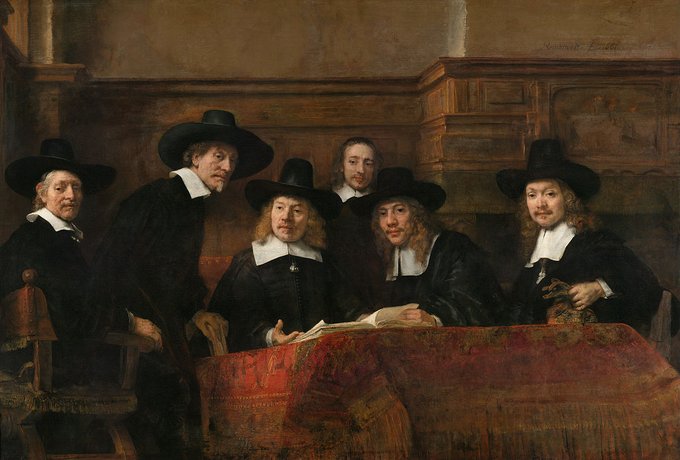
However, if one should fail, God would give unto one the law of sacrifice and provide a Saviour for one, that one might be brought back again into the presence and favour of God and partake of eternal life with God. This is the plan of redemption chosen and instituted by the Alight before human was placed on Earth. Adam and Eve were taught the law of sacrifice and were commanded to practice it by giving offerings. These included two emblems: the firstlings of the flock and the first fruits of the field. They obeyed without questioning. The effect of this law was that the best of the Earth produced, the best specimen in the flock or heard should not be sued for self, but for God. At a time in history when it was a struggle to make sure the family had food, those who sought to worship the Lord were asked to sacrifice the best part of their source of life. It was the real test of Adam and Eve’s faith, and they obeyed. “And now I speak concerning baptism. Behold, elders, priests, and teachers were baptized; and they were not baptized save they brought forth fruit meet that they were worthy of it. Neither did they receive any unto baptism save they came forth with a broken heart and a contrite spirit, and witnessed unto the church that they truly repented of all their sins. #RandolphHarris 14 of 20

“And none were received unto baptism save they took upon them the name of Christ, having a determination to serve him to the end. And after they had been received unto baptism, and were wrought upon and cleansed by the power of the Holy Ghost, they were numbered among the people of the church of Christ; and their names were taken that they might be remembered and nourished by the good word of God, to keep them in the right way, to keep them continually watchful unto prayer, relying alone upon the merits of Christ, who was the author and the finisher of their faith. And the church did meet together oft, to fast and to pray, and to speak one with another concerning the welfare of their souls. And hey did meet together oft to partake of bread and wine, in remembrance of the Lord Jesus. And they were strict to observe that there should be no iniquity among them; and whoso was found to commit iniquity, and three witnesses of the church did condemn them before the elders, and if they repented not and confessed not, their names were blotted out, and they were not numbered among the people of Christ. #RandolphHarris 15 of 20

“However, as oft as they repented and sought forgiveness, with real intent, they were forgiven. And their meetings were conducted by the church after the manner of the workings of the Spirit, and by the power of the Holy Ghost; for as the power of the Holy Ghost led them whether to preach, or to exhort, or to pray, or to supplicate, or to sing, even so it was done,” reports Moroni 6.1-9. It is especially in our families and similarly close associations that we must identify the elements of assault and withdrawal that defeat love and right relation to others. By insight and practice we must break away from them and reserve them, first by learning a calm but firm non-cooperation with those poisonous elements, and then by initiatives of goodwill and blessing in the midst of them. What we do in our meetings as Christians should be focused on enabling us to do this effectively wherever we are. Those meetings should and could be centers from which powerfully redemptive community spreads. Where to start? In various parts of the United States of America, publicly owned vehicles (police, street maintenance, schools) wear a bumper sticker that proclaims, “There is No Excuse for Domestic Violence.” It is a wonderful idea. #RandolphHarris 16 of 20

However, we need to go deeper, of course. We need to become the kind of people whom domestic violence is unthinkable and never an option. We must be transformed in such a way that our minds and bodies—our very souls—simply do not have the makeup for it. This is the work of the Christian spiritual formations. We must begin in the family. Now the slogan must be, “There is No Excuse for Assault or Withdrawal in the Home.” Do you think that would take care of intimate partner violence? Of course it would. However, the reserve is not true: merely avoiding the subject of intimate partner violence, domestic violence or assault can still leave the home a hell of cutting remarks, contempt, coldness, and withdrawal or noninvolvement. Such a hell is often found in the homes of Christians and even of Christian leaders. Frequently they seem to honestly think that such a condition is normal, and they have no knowledge of any other way. Their very theology may strengthen this tragically false outlook. If I were married, I would seek the help of my spouse in this matter. If not, then a trusted friend who is spiritually mature and not abusive. #RandolphHarris 17 of 20

I would then number my areas of need in order of importance, say: Purity, Mind, Prayer, Witness, Giving, Work, Friendship, and Leadership. Then, beginning with the first need, Purity, I would look over the suggested sub-disciplines and choose one to three things which I think would best help me improve. In doing this, I would resist the temptation to commit myself to too many disciplines. Better to succeed in a few than to assure failure by overcommitment. Perhaps, regarding the discipline of Purity I would choose to commit myself, first, to memorizing Scripture which help steel me to temptations, and second, to not watching anything sensual on TV or at the movies. Perhaps under Witness, I would make commitments to pray that God would give me someone to share Christ with and to join an interest club to meet unchurched people. After going through my life I would have perhaps twenty specific things which I could do to improve my eight weakest areas. However, before commitment to the specifics, I would look at the whole list with honest realism, asking, “Are the things which I am about to commit to really within my reach with the help of God?” #RandolphHarris 18 of 20

Perhaps, regarding the discipline of Mind, I have become so convicted that I am considering committing myself to reading the Old Testament once and the New Testament twice, plus reading The Book of Mormon. Make sure your commitments make you sweat, but also make sure that taken together they are manageable. It is better to increase your commitments as you succeed than to bite off more than you can do. Success begets success. Before setting your commitments in concrete, give yourself a week to think about them and pray over them. Seek the Holy Spirit’s guidance for other ways of personal discipline not mentioned in this essay. Ask your spouse of friend to hold you accountable for your disciplines. Even if it has to be over the phone, make sure you regularly confer and pray. Be honest about your success and failures. And be willing to take advice and make adjustments. You may have some complications, no doubt, and may not succeed at time. When this happens, wounded pride and embarrassment can make you want to take your marbles and go home. We do not like to do things which we fail. #RandolphHarris 19 of 20

However, we must realize that failure is a part of succeeding, provided we admit our failures and go at it again. Moreover, we are not under Law but grace. God is not counting our failure against us, and we are not building a treasure of merit with our success. We are simply trying to live a disciplined life which pleases our loving Father—and He understands our failures better than we understand our own children’s. When the movement in one direction has exhausted itself, there is a pause, and then a reversal directs the movement into the opposite direction. The flow of Nature follows the course indicated by the Principle of Reversion, which throws it back after a time in the opposite direction. When the point of farthest travel is reached, the forces reverse themselves. In this way, excess disciplines and even defeats itself. In this way too the Universe and all the different kinds of existence in it are kept in equilibrium. In the to-and-fro movement of human breathing, we have a kay to human development. Study it well with this assistance and you will discern a forward and backward movement, a pendulum-like swing, here too. Everything in the Universe is subject to a pendulum-like movement. It shuttles to and from with a coming-to-be and a ceasing-to-be effect. #RandolphHarris 20 of 20

Winchester Mystery House

Sarah Winchester had multiple rooms dedicated to plants and flowers. This room, her South Conservatory, contains over 200 panes of glass to allow for natural light. How would you spend a day alone in this room?

Explore the house from the comfort of your own home!
Learn More Link in bio. winchestermysteryhouse.com

A 160-room mansion built to appease the spirits who died at the hands of the Winchester Rifle 👻
🗝 winchestermysteryhouse.com

The Unconscious Thinks and Lives in Terms of Millennia–for that We Require the Help of the Black Magician!

People who take an optimum amount of vitamin C will experience only a quarter as much illness as those who do not. Through proper use, we could raise the average life expectancy by eight years. We have certain ideas as to how a civilized or educated or moral being should live, and we occasionally do our best to fulfill these ambitious expectations. Vegetables are interesting but lack a sense of purpose when unaccompanied by a good cut of meat. We call the unconscious “nothing,” and yet it is a reality in poetentia. The thought we shall think, the deed we shall do, even the fate we shall lament tomorrow, all lie unconscious in our today. The unknown is us which the affect uncovers was always there and sooner or later would have presented itself to the conscious. Sarah Winchester’s mansion has hosted many glittering, star studded parties and was regarded as the place to see and been seen. Conrad Nicholson Hilton, Constance Hilton, Zsa Zsa Gabor, William Randolph Heart, Phoebe Apperson, Vivien Leigh, Hattie McDaniel, and Sidney Howard are said to have visited. As often happens, the intensity of emotion experienced over the years by those anxious to be recognized at the mysterious mansion has left the grand Queen Anne, Eastlake, Gothic mansion uniquely stocked with echoes from the past. #RandolphHarris 1 of 28

The only slightly surprising element to this haunted house is that ghosts were apparently not officially acknowledged until 1985, just prior to the mansion’s $40-million renovation. During mid-December in 1985, everyone at the Winchester mansion was busy preparing for the upcoming day when the mansion would once again receive guests. No matter what their usual duties or job titles, all employees were directly involved with the last-minute details—secretaries were sweeping, butlers were dusting, waitresses were helping make up guest rooms. The place was a veritable model of industry. Mr. Jim was in the Grand Ballroom, which some consider the most beautiful room in the house, in anticipation of the new carpet being installed. Like many of those on the staff, Mr. Jim was a part-time Hollywood actor; given the star-studded history of the mansion, the “day job” was very much a labour of love. Being able to devote some of himself this gorgeous room that had been so important to the history of movie-making felt more like a privilege than a chore. It was also a perfect time, he thought, to commune with the spirits of those who came to the mansion to celebrate receiving Academy Awards here. As Mr. Jim’s experience unfolded, it became a far closer encounter than he anticipated. #RandolphHarris 2 of 28

The Grand Ballroom is large and the job had to be done thoroughly, so Mr. Jim was taking his time and making sure he did not miss any part of the floor. After repeatedly going back over to a certain area in the Grand Ballroom, he realized that while the rest of the room was kept at a very comfortable temperature, the air in that particular spot was incredibly chilly. More puzzled than concerned Mr. Jim wanted to determine what was causing this draft. The temperature was an inexplicably 20 degrees Fahrenheit cooler in this circle which was about 45 inches in diameter near a wall, mahogany framed mirror. As Mr. Jim wiped his cloth over the reflective glass, he was astonished to see the face a young man, with slick dark hair, smoking a cigarette staring back at him. Mr. Jim was alone in the room, so he quickly turned around to see who had joined him. There was no one else in the room, and that was not his face in the mirror. He turned back to the mirror. The image was still there. That was enough for Mr. Jim. He took it as a sign to remove the carpet he had just installed. #RandolphHarris 3 of 28

According to information released by the mansion, the mirror was gifted to the mansion by Boris Karloff with a note saying, “A warm private friendship has subsisted between us for half our lives, interrupted by no untoward occurrence, and never for a moment cooling into indifference. Of this friendship, the source of so much happiness to me, I wish to leave, if not an enduring memorial, at least an affectionate and grateful acknowledgment. I inscribe this mirror to you.” One night, I was in the Winchester mansion, standing in the presence of a sublime hieratic figured we now called the “Warlock” who was clothed in a long black robe reflecting from the mirror. This warlock was Boris Karloff, and he had just ended a lengthy discourse with the words, “And for that we require the help of black magician.” Then the door suddenly opened and an old man came in, the “black magician,” who however was dressed in a white rob. He too looked noble and sublime. The black magician evidently wanted to speak with the warlock, but he hesitated to do so in my presence. As that the warlock, point to me, said, “Speak, only an innocent is here.” So the black magician began to relate a strange story of how he had found the lost keys of Paradise and did not know how to use them. #RandolphHarris 4 of 28

The black magician told the warlock (Boris) that the king of the country in which he lived was seeking a suitable tomb for himself. The king’s subjects had chanced to dig up an old sarcophagus, threw away the bones, and had the empty sarcophagus buried again for later use on the spot that this sprawling mansion now occupies. However, no sooner had the bones seen the light of day than the being to whom they once had belonged—the virgin—changed into a black horse that galloped off into the desert. The black magician pursued it across the sandy coast and beyond, and there after many vicissitudes and difficulties he found the lost keys of Paradise. That was the end of history, and also, unfortunately, of the warlock and his mirror. It supposedly shattered into pieces, was sent out to San Francisco for repair and never returned. This haunting did not fall out as we had wished, no one understand what the warlock, the black magician, and the king were trying to tell us. The meaning of the story died with the disappearance of the haunted mirror. We were confronted with a problem and one which life is always brining us up against: namely, the uncertainty of all moral valuation, the bewildering interplay of good and evil, and the remorseless concatenation of guilt, suffering, and redemption. #RandolphHarris 5 of 28

This path to the primordial religious experience is the right one, but how many recognize it? It is like a still small voice, and it sounds from afar. It is ambiguous, questionable, dark, presaging danger and hazardous adventure; a razor-egged path, to be trodden for God’s sake only, without assurance and without sanction. Hence we must always reckon with the presence of things not yet discovered. These, as I have said, may be unknow quirks of character. However, the possibilities of future development may also come to light in this way, perhaps in just such an outburst of affect which sometimes radically alters the whole situation. The unconscious has a Janus-face: on one side its contents point back to a preconscious, prehistoric World of instinct, while on the other side it potentially anticipates the future—precisely because of the instinctive readiness for action of the factors that determine human’s fate. If we had complete knowledge of the ground plan lying dormant in an individual from the beginning, one’s fate would be in large measure predictable. #RandolphHarris 6 of 28

Now, to the extent that unconscious tendencies—by they backward-looking images or forward-looking anticipations—appear in visions, vision have been regarded, in all previous ages less as historical regression than as anticipations of the future, and rightly so. For everything that will be happens on the basis of what has been, and of what—consciously or unconsciously—still exists as a memory-trace. In s far as no human is born totally new, but continually repeats the stage of development last reached by the species, one contains unconsciously, as an a priori datum, the entire psychic structure developed both upwards and downwards by one’s ancestors in the course of the ages. That is what gives the unconscious its characteristic “historical” aspect, but it is at the same time the sine qua non for shaping the future. For this reason it is often very difficult to decide whether an autonomous manifestation of the unconscious should be interpreted as an effect (and therefore historical) or as an aim (and therefore teleological and anticipatory). The conscious mind thinks as a rule without regard to ancestral preconditions and without taking into account the influence this a priori factor has on the shaping of the individual’s fate. #RandolphHarris 7 of 28

Whereas we think in periods of years, the unconscious thinks and lives in terms of millennia. So when something happens that seems to us an unexampled novelty, it is generally a very old story indeed. We still forget, like children, what happened yesterday. We are still living in a wonderful new World where humans think themselves astonishingly new and “modern.” This is unmistakable proof of the youthfulness of human consciousness, which has not yet grown aware of its historical antecedents. As a matter of fact, the “normal” person convinces me far more of the autonomy of the unconscious than does the insane person. Psychiatric theory can always take refuge behind real or alleged organic disorders of the brain and thus detract from the importance of the unconscious. However, when it comes to normal humanity, such a view is no longer applicable. What one sees happening in the World is no just a shadowy vestige of activities that were once conscious, but expression of a living psychic condition that still exists and always will exist. Were that not so, one might well be astonished. However, it is precisely those who give least credence to the autonomy of the unconscious who are the most surprised by it. #RandolphHarris 8 of 28

Because of its youthfulness and vulnerability, our consciousness tends to make light of the unconscious. This is understandable each, for if one wants to start something on one’s own account. a young person should not let oneself be overawed by the authority of one’s parents. Historically as well as individually, our consciousness has developed out of the darkness and somnolence of primordial unconsciousness. There were psychic processes and functions long before any ego-consciousness existed. Thinking existed long before humans were able to say: “I am conscious of thinking.” The primitive “perils of the soul” consist mainly of dangers to consciousness. Fascination, bewitchment, “loss of soul,” possession, et cetera are obviously phenomena of the dissociation and suppression of consciousness caused by unconscious contents. Even civilized humans are not yet entirely free of the darkness of primeval times. The unconscious is the mother of consciousness. Where there is a mother there is also a father, yet one seems to be unknown. #RandolphHarris 9 of 28

Consciousness in the pride of its youth, may deny its father, but it cannot deny its mother. That would be too unnatural, for one can see in every child how hesitantly and slowly its ego-consciousness evolves out of a fragmentary consciousness lasting for single moments only, and how these islands gradually emerge from the total darkness of mere instinctuality. Consciousness grows out of an unconscious psyche which is older than it, and which goes on functioning together with it or even in spite of it. Although there are numerous cases of conscious contents becoming unconscious again (through being repressed, for instance), the unconscious as a whole is far from being a mere remnant of consciousness. Or are the psychic functions of animals remnants of consciousness? There is little hope of our finding in the unconscious an order equivalent to that of the ego. It certainly does not look as if we were likely to discover an unconscious ego-personality, something in the nature of a Pythagorean “counter-Earth.” And this of course means “miraculous” interposition, but not necessarily of the gross sort our fathers took such delight in representing, and which has so lost is magic for us. #RandolphHarris 10 of 28

If evil were really one under the same sun, the sky would incontinently shrivel to a snakeskin and cast it out in spasms. However, the spasms of Nature are years and centuries; and it will tax human’s patience to wait so long. We may think of the reserved possibilities God keeps in his own hand, under as invisible and molecular slowly self-summating a form as we please. We may think of them as counteracting human agencies which God inspires ad hoc. In short, signs and wonders and convulsions of the Earth and sky are not the only neutralizers of obstruction to God’s plans of which it is possible to think. As long as languages contain a future perfect tense, determinists, following the bent of laziness or passion, the lines of least resistance, can reply in that tense, saying, “It will have been fated,” to the still small voice which urges an opposite course; and thus excuse themselves from effort in a quiet unanswerable way. Vampires, Ghost, and Demons—God Himself, you think, can have no use for them. An immortality of every separate specimen must be to Him and to the Universe as indigestible a load to carry as it is to you. #RandolphHarris 11 of 28

So, engulfing the whole subject in a sort of mental giddiness and nausea, you drift along, first doubting that the mass can be immortal, then losing all assurance in the immortality of a particular person, precious as you all the while feel and realize the latter to be. This, I am sure, is the attitude of mind of some of you before me. However, is not such an attitude due to the verist lack and dearth of your imagination? You take these swarms of alien kinsmen as they are for you: an external picture painted on your retina, representing a crowd oppressive by tis vastness and confusion. As they are for you, so you think they positively and absolutely are. I feel no call for them, you say; therefore there is no call for them. However, all the while, beyond this externality which is your way of realizing them, they realize themselves with the acutest internality, with the most violent thrills of life. It is you who are dead, stone-dead and blind and senseless, in your way of looking. You open your eyes upon a scene of which you miss the whole significance. Each of these grotesque or even repulsive aliens is animated by an inner joy of living as hot or hotter than that which you feel beating in your private breast. #RandolphHarris 12 of 28

The sun rises and beauty beams to light his path. To miss the inner joy of him is to miss the whole of him. Not a being of the countless throng is there whose continued life is not called for, and called for intensely, by the consciousness that animates the being’s form. That you neither realize nor understand nor call for it, that you have no use for it, is an absolutely irrelevant circumstance. That you have a saturation-point of interest tells us nothing of the interest that absolutely are. The Universe, with every living entity which her resources create, creates at the same time a call for that entity, and an appetite for its continuance—creates it, if nowhere else, at least within the heart of the entity itself. It is absurd to suppose, simply because our private power of sympathetic vibration wit other lives gives out so soon, that in the heart of infinite being itself there can be such a thing as plethora, or glut, or supersaturation. It is not as if there were a bounded room where the minds in possession had to move up or make place and crowd together to accommodate new occupants. Each new mind brings its own edition of the Universe of space along with it, its own room to inhabit; and these spaces never crowd each other—the space of my imagination, for example, in no way interferes with yours. #RandolphHarris 13 of 28

The amount of possible consciousness seems to be governed by no law analogous to that of the so-called conservation of energy in the material World. When one human wakes up, or is born, another does not have to go to sleep, or die, in order to keep the consciousness of the Universe a constant quantity. There is a law of the Universe called the Law of Increase of Spiritual energy, by Dr. Wundt, which expressly oppose the law of conservation of energy in physical things. There seems no formal limit to the positive increase of being in spiritual respects; and since spiritual being, whenever it conies, affirms itself, expands and craves continuance, we may justly and literally say, regardless of the defect of our own private sympathy, that the supply of the individual life in the Universe can never possibly, however immeasurable it may become, exceed the demand. The demand for that supply is there the moment the supply itself comes into being, for the beings supplied demand their own continuance. Through many diversified channels of expression, the eternal Spirit of the Universe affirms and realizes its own infinite life. However, if we are theists, we can go no farther without altering the result. #RandolphHarris 14 of 28

God, we can then say, has so inexhaustible a capacity for love that His call and need is for literally endless accumulation of created lives. God can never faint or grow weary, as we should, under the increasing supply. God’s scale is infinite in all things. His sympathy can never know satiety or glut. Furthermore, consciousness in this process does not have to be generated de novo in a vast number of places. It exists already, behind the scenes, coeval with the World. The condition of consciousness is a certain kind of psychophysical movement. Before consciousness can come, a certain degree of activity in the movement must be reached. This requisite degree is called the threshold; but the height of the threshold varies under different circumstances: it may rise of fall. When it falls, as in states of great lucidity, we grow conscious of things of which we should be unconscious at other times; when it rises, as in drowsiness, consciousness sinks in amount. This rising and lowering of a psychophysical threshold exactly conforms to our notion of a permanent obstruction to the transmission of consciousness, which obstruction may, in our brains, grow alternately greater or less. #RandolphHarris 15 of 28

The transmission-theory also puts itself in touch with a whole class of experiences that are with difficulty explained by the production-theory. I refer to those obscure and exceptional phenomena reported at all times throughout human history which the psychical-researchers are doing to much to rehabilitate; such phenomena, namely, as religious conversions, providential leadings in answers to prayer, instantaneous healings, premonitions, apparitions at time of death, clairvoyant visions or impressions, and the whole range of mediumistic capacities, to say nothing of still more exceptional and incomprehensible things. If all our human thought be a function of the brain, then of course, if any of these things are fact—and to my own mind some of them are fact—we may not suppose that they can occur without preliminary brain-action. However, the ordinary production-theory of consciousness is knit up with a peculiar notion of how brain-action can occur—that notion being that all brain-action, without exception, is due to a prior action, immediate or remote, of the bodily sense-organs on the brain. #RandolphHarris 16 of 28

Such action makes the brain produce sensations and mental images, and out of the sensations and images the higher forms of thought and knowledge in their turn are framed. As transmissionists, we also must admit this to the condition of all our usual thought. Sense-action is what lowers the brain-barrier. My voice and aspect, for instance strike upon your ears and eyes; your brain thereupon becomes more previous, and an awareness on your part of what I say and who I am slips into this World from the World behind the veil. However, in the mysterious phenomena to which I allude, it is often hard to see where the sense-organs can come in. A medium, for example, will show knowledge of his sitter’s private affairs which it seems impossible he should have acquired through sight or hearing, or inference therefrom. Or you will have an apparition of some one who is now dying hundreds of miles away. We need only suppose the continuity of our consciousness with a mother sea, to allow for exceptional waves occasionally pouring over the dam. Of course the causes of these odd lowerings of the brain’s threshold still remain a mystery on any terms with its grouping of Heavenly and Hellish forces upon a common center. #RandolphHarris 17 of 28

If it were the dark nor even if all were in the light, we could see no form of anything at all. The contrast of shadow and light is needed to define the form. Opposites are always necessary to each other. This is why they are present throughout the Universe and moreover present in all possible combinations and proportions in all possible rhythms and patterns. It is present in life, in all things, in planets and seasons. It is the eternal and invariable law of manifested existence. For anything to exist for us at all, it needs an opposite to compare it with, or it will remain non-existent to our consciousness. Unless it recognizes the pairs of opposites, thinking cannot come into existence at all. If we had not experienced Evil, we could not appreciate Good. If we had not become lost in Appearance, we could not appreciate Reality. It may be that for us humans, the ultimate meaning of the cosmos lies implicit in this truth. The acting self needs an outer World and an inner one—both. All things in human’s experience can be classified into pairs of opposites—that which experiences and that which is experienced. In each pair the first member itself becomes, on analysis, the second member of another pair. #RandolphHarris 18 of 28

Whatever we look at, we see only in a relationship of contrast to something else. It is a mistake to consider this opposition to be antagonistic. On the contrary, if our perception is to be true and our judgment correct, each should be considered a part of the other. This teaches us to synthesize, to look at both sides of a thing, to include both points of view in an argument, and to add the similarities also instead of nothing the differences alone. It may be unusual, inconsistent, startling, to propose that we think in terms of opposing ideas, of conflicting statements, and find identity in variety, but this is Nature’s own way—her balance. Balance is a teaching which plays on contradictions and finds room for opposites. It seems them both in the structure of the Universe and in the movement of evolution. It puts them in its approach to human problems. Each to view of a thing or idea implies the existence of the contrary view. To understand that the universal evolution depends upon a two-way interconnected movement, and that its comprehension requires us to think about it in oppositional terms, is to be liberated from the narrow, one sided, incomplete, and intolerant thinking which is responsible for so many absurdities and miseries in human history. #RandolphHarris 19 of 28

When both ignore the two-face character of fortune and Nature, optimism becomes unreasonable pessimism. The life of the human being is one of relating to others. We reemphasize: The life of the human beings is one of relating to others. Though many are cursed to live and die alone, we are born of relations and into relations. One of the heart-rending stories found in Sarah Winchester’s diary is of a broken human being living on the streets. He was dying, and Mrs. Winchester took him in and had her staff care for him. When he recovered, she gave him a job and a place to stay on her estate. To merely welcome another, to provide for one, to make a place, is one of the most life-giving and life-receiving things a human being can do. They are the basic, universal acts of love. Our lives were meant to be full of such acts, drawing on the abundance of God, and they achieve their greatest fulfillment precisely when, like Jesus, we “lay down our lives for the brethren.” This “relating” quality reaches into every dimension of human existence. It characterizes the basic nature of all thought and feeling, which is always thought of or feeling something other than itself. #RandolphHarris 20 of 28

The way relate to others pervades the deepest reaches of our body, soul, and World, where our very identity—who we really are—is always intermingled (if sometimes negatively, by reaction) with others who have given us life, sustained us, or walked with us—or perhaps have deeply injured us. The call of “the other” on our lives is a constant for everyone. It is the basic reality of a moral existence, which we retreat from only into a living death of isolation. If we make our purpose to save our life by withdrawal, we lost it. So Jesus said. However, this is not only a revealed truth, it is also a testable fact of life. If you would live, then give—and receive. Now you understand why Sarah Winchester, even though she withdrew, created a microcosm in her own mansion, and kept people employed for 38 years of nonstop construction. “And it came to pass when Corintumr had recovered of his wounds, he began to remember the words which Ether had spoken unto him. He saw that there had been slain by the sword already nearly two millions of his people, and he began to sorrow in his heart; yea, there had been slain two millions of mighty men, and also their wives and the children. #RandolphHarris 21 of 28

“He began to repent of evil which he had done; he began to remember the words which had been spoken by the mouth of all the prophets, and he saw them that they were fulfilled thus far, every whit; and his soul mourned and refused to be comforted. And it came to pass that he write an epistle unto Shiz, desiring him that he would spare the people, and he would give up the kingdom for the sake of their lives of the people. And it came to pass that when Shiz had received his epistle he wrote an epistle unto Coriantumr, that is he would give himself up, that he might slay him with his own sword, that he would spare the lives of the people. And it came to pass that the people repented not of their iniquity; and the people of Coriantumr were stirred up to anger against the people of Shiz; and the people of Shiz were stirred up to anger against the people of Coriantumr; wherefore, the people of Shi did give battle unto the people of Coriantumr. And when Coriantumr saw that he was about to fall he fled again before the people of Shiz. And it came to pass that he came to the waters of Ripliancum, which, by interpretation, is large, or to exceed all; wherefore, when they came to these waters they pitched their tents. #RandolphHarris 22 of 28

“And Shiz also pitched his tents near unto them; and therefore on the morrow they did come to battle. And it came to pass that they fought and exceedingly sore battle, in which Coriantumr was wounded again, and he fainted with the loss of blood. And it came to pass that the armies of Coriantumr did press upon the armies of Shiz that they beat them, that they caused them to flee before them; and they did flee southward, and did pitch their tents in a place which was called Ogath. And it came to pass that they army of Coriantumr did pitch their tents by the hill Ramah; and it was that same hill where my father Mormon did hide up the records unto the Lord, which were sacred. And it came to pass that they did gather together all the people upon all the face of the land, who had not been slain, save it was Ether. And it came to pass that Ether did behold all the doings of the people; and he beheld that the people who were for Coriantumr were gathered together to the army of Coriantumr; and the people who were for Shiz were gathered together to the army of Shiz. Wherefore, they were for the space of four years gathering together the people, that they might get all who were upon the face of the land, and that they might receive all the strength which it was possible that they could receive. #RandolphHarris 23 of 28

“And it came to pass that when they were all gathered together, every one to the army which he would, with their wives and their children—both men, women, and children being armed with weapons of war, having shields, and breastplates, and head-plates, and being clothed after the manner of war—they did march forth one against another to battle; and they fought all that day, and conquered not. And it came to pass that when it was night they were weary, and retired to their camps; and after they had retired to their camps they took up a howling and a lamentation for the loss of the slain of their people; and so great were their cries, their howling and a lamentation for the loss of the slain of their people; and so great were their cries, that they did rend the air exceedingly. And it came to pass that on the morrow they did go again to battle, and great and terrible was that day; nevertheless, they conquered not, and when the night came again they did rend the air with their cries, and their howlings, and their mournings, for the loss of the slain of their people. And it came to pass that Coriantumr wrote again an epistle unto Shiz, desiring that he would not come again to battle, but that he would take the kingdom, and spare the lives of the people. #RandolphHarris 24 of 28

“However, behold, the Spirit of the Lord had ceased striving with them, and Satan had full power over the hearts of the people; for they were given up unto the hardness of their hearts, and the blindness of their minds that they might be destroyed; wherefore they went again to battle. And it came to pass that they fought all that day, and when the night came they slept upon their swords. And on the morrow they fought even until the night came. And when the night came they were drunken with anger, even as a man who is drunken with wine; and they slept again upon their swords. And on the morrow they fought again; and when the night came they had fallen by the sword save it were fifty and two of the people of Coriantumr, and sixty nine of the people of Shiz. And it came to pass that they slept upon their swords that night, and on the morrow they fought again, and they contended in their might with their swords and with their shields, all that day. And when the night came there were thirty and two of the people of Shiz, and twenty and seven of the people of Coriantumr. And it came to pass that they ate and slept, and prepared for death on the morrow. And they were large and mighty men as to the strength of men. #RandolphHarris 25 of 28

“And it came to pass that they fought for the space of three hours, and they fainted with the loss of blood. And it came to pass that when the men of Coriantumr had received sufficient strength that they could walk, they were about to flee for their lives; but behold, Shiz arose, and also his men, and he swore in his wrath that he would slay Coriantumr or he would perish by the sword. Wherefore, he did pursue them, and on the morrow he did overtake them; and they fought again with the sword. And it came to pass that when they had all fallen by the sword, save it were Coriantumr and Shiz, behold Shiz had fainted with the loss of blood. And it came to pass that when Croiantumr had leaned upon his sword, that he rested a little, he smote off the head of Shiz. And it came to pass that after he had smitten off the head of Shiz, that Shiz raised up on his hands and fell; and after that he had struggled for breath, he died. And it came to pass that Coriantumr fell to the Earth, and became as if he had no life. And the Lord spake unto Ether, and said unto him: Go forth. And he went forth, and beheld that the words of the Lord has all been fulfilled; and he finished his record; (and the hundredth part I have not written) and he hid them in a manner that the people of Limhi did find them. #RandolphHarris 26 of 28

“Now the last words which are written by Ether are these: Whether the Lord will that I be translated, or that I suffer the will of the Lord in the flesh, it mattereth not, if it so be that I am saved in the kingdom of God. Amen,” reports Ether 15.1-34. “But the LORD said to him, ‘Not so; if anyone kills Cain, one will suffer vengeance seven times over.’ Then the LORD put a mark on Cain so that no one who found him would kill him. So Cain went out from the LORD’s presence and lived in the land of Nod, east of Eden,” reports Genesis 4.15-16. A view of the World which fails or refuses to recognize that the opposites are essential to it, which accepts its beauty but not its ugliness, is not complete and only a half truth. If there is suffering as well as sweetness in life, that is not accident, nor is it brought into the scheme of things by human evil alone: nothing exists without its contrary. In the end, a human must recognize that there are two forces a work in Nature—and therefore in one’s own life—the ne benign, the other hostile. The cold time is here: time to work and time to rest, time to celebrate inside, time to enjoy the harvest. All about us, the Land of Spirits are singing. All about us, the deities are speaking. Please help me listen, all you divine beings. May I hear your voices. #RandolphHarris 27 of 28

I need much help in cooling my Earth. I cannot do it alone I ask for help from the Sky: please give rise to your cloud with plentiful moisture and ice so the Earth can cool and have water. I ask for help from the rain: please give your moisture to be the plants’ own blood. I ask for help from the soil: please give your minerals from which the plants will form their bodies. I will give my time, I will give my care, I will give my loving stewardship. All these will I give my garden and I ask for your others to give what the garden of Eden will need as well. We will do it together and I will not forget your contribution. Glory His holy name; may your heart rejoice, ye who seek the Lord. Seek the Lord and His strength; seek His presence continually. Remember the marvellous works that He hath done, His wonders, and the judgments He decreed, O seed of Israel, His servant, Children of Jacob, His beloved ones. He is the Lord our God; His judgments are throughout the Earth. Remember His covenant forever, the word which He commanded to a thousand generations. In Luke 18.1-8, Jesus told a parable about an unfair, unjust judge who finally was willing to listen to a woman’s case because of her continual persistence. When it comes to God, that is the way we need to be of what he said. What promises or promises from God are you bringing to His constant remembrance? #RandolphHarris 28 of 28

Winchester Mystery House
WMH 13 Days of Christmas #7
Sarah Winchester’s innovations for water conservation was far ahead of her time. She had multiple rooms dedicated for plants, each with a complex drainage system that allowed for the reuse of water. On today’s episode of the Winchester Mystery House 13 Days of Christmas, explore Sarah’s North Conservatory and learn more about her magnificent innovations.
Winchester Mystery House

A 160-room mansion built to appease the spirits who died at the hands of the Winchester Rifle 👻
🗝 winchestermysteryhouse.com

 Randolph Harris II International Institute