
Home » suburbs (Page 8)
Category Archives: suburbs

We are Here to Practise Magic, After All

I heard the softest, loveliest singing when I opened my eyes. And as sound can often do, even in the most precious fragments, it took me back to life with William, to some Winter night when we were conversating among the blazing candles, the sensual smell of the incense. There was plainly something on his mind which he did not choose to divulge. “William, darling, will you tell me this?” said I, suddenly laying my hand on his arm, and looking, I am sure, imploringly in his face. “Perhaps, my love,” he answered, smoothing my hair caressingly over my eyes. “Does the doctor think you are very ills?” “No, dear; he thinks, if the right steps are taken, I will be quite well again, at least on the high road to complete recovery,” he answered, a little drily. “But do tell me William,” I insisted, “what does he think is the matter with you?” “Nothing; you must not plague me with questions,” he answered, with more irritation that I ever remember him to have displayed before; and seeing that I looked wounded, I suppose, he kissed me, and added, “I shall know all about it in a few days, all that I know. In the meantime, you are not to trouble your head about it.” He turned and left the room. In the seat of the sofa was a blood-soaked handkerchief, but he came back before I had done wondering and puzzling over the oddity of all this; he put it back as carefully as he could into his jacket pocket, where its bluk rested reasonably discreetly, just about hidden by the flap. Still, there was a bit of blood on his shirt. I pretended not to notice. It was about ten months since that incident; but William had sufficed to make an alteration of years in his appearance. He had grown thinner; something of gloom and anxiety had taken the place of that cordial serenity which used to characterise his features. #RandolphHarris 1 of 6

His dark blue eyes, always penetrating, now gleamed with a sterner light from under his eyebrows. It was not such a change as grief alone usually includes, and angrier passions seemed to have had their share in brining it about. William began to talk, with his usual soldierly directness, of the bereavement, as he termed it, which we had sustained in the death of our beloved infant daughter; and he then broke out in a tone of intense bitterness and fury, inveighing against the “hellish arts” to which he believed she had fallen victim, and expressing with more exasperation than piety, his wonder that Heaven should tolerate so monstrous an indulgence of lust and malignity of hell. I was curious to find out what was the meaning of this, but the question of “evil” hours in this old home had already become too grave for him. The shadows in the room had lengthened and grown dense and the light had darkened, concealing the blood stain on his shirt. And he could not connect at all to the wretchedness of the death of our baby girl. He needed to think. There is no escape, it made me think. And the thought was not entirely idle. Nor was it altogether comfortable. “I have a small problem of my own, concerning blood and steel,” William said. “The cut on the flesh of my thumb has become infected and swollen. It leaks fluid, which has a sweetish smell, like decay. I have disinfected and bandaged it, but I think I have a slight fever now and am concerned about infection. Beyond that minor worry, I have to confess to a more general and far greater uneasiness. I have something strange to tell you.” I looked at William again, but this time not with a glace of suspicion—with an eye, rather, of keen intelligence and alarm. #RandolphHarris 2 of 6

“The House of Winchester,” he said, “had been long extinct: a hundred years at least. Our daughter descended from the Winchesters. But the name and title have long ceased to exit. The castle is abandoned; the village is deserted; it has been seventy years since the smoke of a chimney was there.” “I have heard a great deal about your family, now my family, but the name and fortune are thriving, William,” I said. “Sarah, my dear, you saw our child. No creature could have been more beautiful, and only fourteen years ago none more blooming,” he explained. “I was grieved and shocked more than I can tell you, my dear husband; it is the hardest ordeal either one of us have had to face,” I cried. He took my hand, and we exchanged a kind pressure. Tears gather in his eyes. He did not seek to conceal them. He said, “We have been in love for so long together. Our daughter had become an object of very dear interest to me, and rapid my care by an affection that cheered our home and made our lives happy. That is all gone. The years that remain to me on Earth may not be very long; but God’s mercy I hope to provide for you as best I can before I die, and to subserve the vengeance of Heaven upon the fiends who have cursed and murdered our poor child in her first weeks of life and beauty!” Here he made me a gallant but melancholy bow. My unease returned, nonetheless, as the room darkened and the Winchester Manor assumed the appearance of a severed head and hand floating above the candle flame. A year later William died. As I reflected on this memory, to dined that night with a housemaid, but there was no talk of hauntings or seances, only of book and paintings, with much affectionate remembrance of William. #RandolphHarris 3 of 6
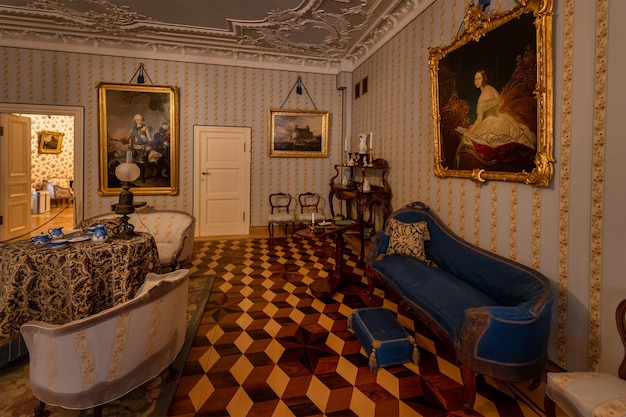
For the first time since his death I felt almost at peace—though a little uneasy with myself for feeling so. I woke the following morning to find the sun, which we had scarcely see for weeks, streaming through the windows in the Daisy Bedroom. It was one of those rare, still January days when for a few brief hours the World is bathed in dazzling light, and you half-believe it will never be grey and wet again. The accustomed pain of waking was still there, but my grief had lost its raw, lacerating edge; or rather, I became aware that it has been imperceptibly dwindling for some time. I was sitting in the garden with my book upon my lap, not reading or even thinking, but simply absorbing the warmth of the sun, when a shadow fell across my chair. I looked up to find William standing a few feet away from me. “Forgive me,” he said, “I didn’t mean to startle you.” “You did not, I said.” The sun was in my eyes, so that I could not make out his expression, but my heart was suddenly beating much faster. “I love you; you are a woman of rare courage, intelligence, and beauty,” he said. “Oh, William, I love you with my whole hearts,” I cried before he fading away into a mist. I cried, and cried for hours. And I went to be with precious memories of him. Tossing and turning for hours, as it seemed, before drifting into uneasy dreams, of which I remember only the last. I woke—or dreamed I woke—at dawn, thinking I had heard Annie crying. I lay there listening for some time, but the call was not repeated. At last I got out of bed, went to the door in my nightgown and looked out. There was no sound of a baby in the passage, in which everything appeared to be just as in waking life, but I was suddenly seized by fearful apprehension. #RandolphHarris 4 of 6

My heart began to pound, more and more loudly, until I became aware that I was dreaming—and found myself standing in pitch darkness, with no idea of where I was. I felt the mahogany floors beneath my bare feet. With my heart still thudding violently, I stretched out my hand until it struck something wooden—a post of some sort—then slid one foot forward until it passed over an edge into empty space. I had come within an inch of plunging headfirst down the stairs. I agonized over losing my family, but I knew in my heart that I did not try to throw myself down the stairs. I could not have been sleepwalking either. It became ever more clear that the appearance of William was not just another instance of a highly disturbed, tormented soul, it seems much, much more than that. However, the terror rose to a whole new level of bizarre when I began to levitate several feet above the for a quarter to the hour. Days after this incident, the evening began promisingly enough. I was in the librarying writing, the heavy doors gave at once. Screams. Dreadful dry screams curling upwards and the, I entered the dark hallway, two ragged figures dropped down in my path. I glimpse anguished faces for a moment. The little demons, their thin white limbs barely swathed in rags, their hair flying, those dreadful wails coming out of their mouths. They were rallying the others. The malice that surrounded was gaining force. I hurried deep into the shadowy archway, util I was near to the dim candles of the secret passageway. The hum of the voices became thin. They went on, but beyond it there was a hollow silence as if other voices had been withdrawn and only one or two remained now. I had known for months about the ceremonies and the sacrifice, we are here to practise magic, after all. Yet nothing could be more ancient, or more strictly bound by lore and ritual, than the black art that has brought me here. #RandolphHarris 5 of 6

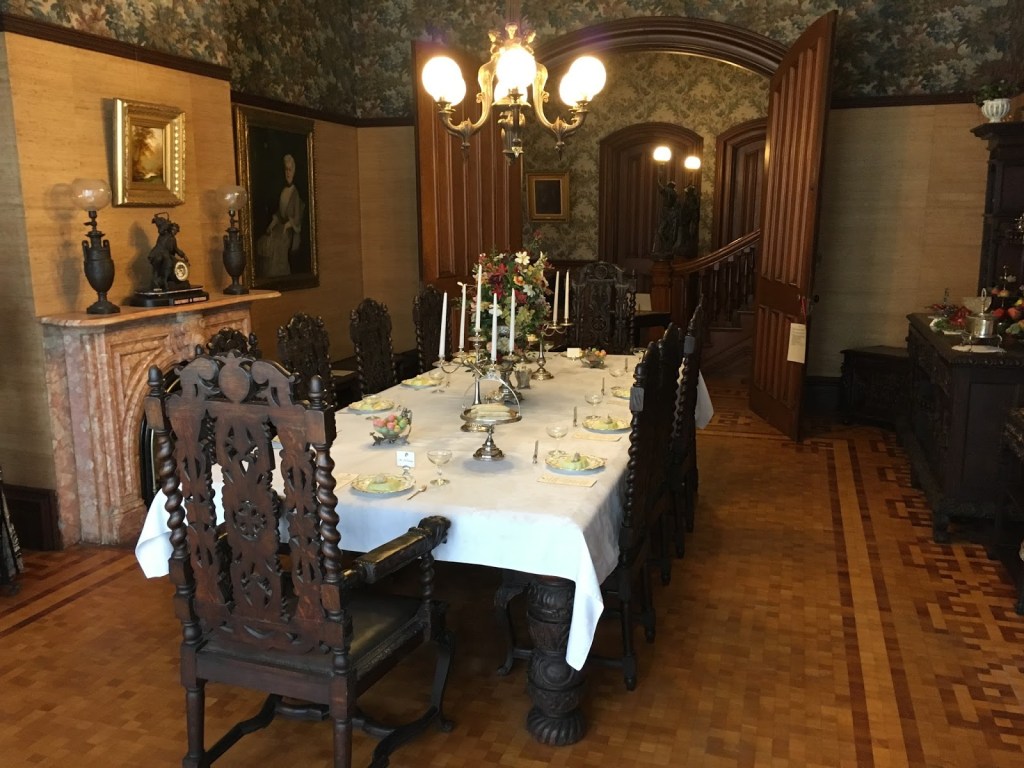
I would not allow myself to become the next victim of the sinister. I ran and ran and ran until I reached a huge dining hall, which reached through the library of the house. This hall was pallened in polished wood with a heavy and elaborate burr. Middle Ages décor and the opulent trappings of modernity. The music coming from the gramophone was another uneasy juxtaposition in this mansion. The music was staidly enough, emotional arias warbled throbbingly. Then, with the stead intoxication of the evening, it got dark and more mischievous. There were thirteen ghouls seated at the table having a blood banquet. Shortly after, the sacrificial was brought in for everyone to see. He was perhaps six or seven years old. He was undernourished. He looked confused and fearful, as though distrustful of the gaudy apparitions he was seeing. The assembled banqueters began to clap. I was filled with fear and compassion for the child and with heartfelt loathing for what they were here to do. All he could do was look around the room while having a feeling of terrible dread. The demonic laughter was undeniable, and suddenly I could not breathe because my chest was being so tightly squeezed. So tight that I could not utter a word. I swept the boy off the floor and made for the door and we were gone. His complexion was flushed and sweaty and his eyes still gleaming from witnessing the ghouls. We hid in my maze of a house until sunrise. I felt the evil lifted. There is no other way to describe the feeling. And I shivered and was well again. The boy stayed with us, the famers took him and taught him all about agriculture. The boy’s mother was a High Priestess and his father was The Master. He was born only to take part in a satanic altar initiation—that of having his arm pricked and blood drained into a chalice from which it was drunk. I could not be more terrified. #RandolphHarris 6 of 6

I conjure thee, O Surgat, by all the names which are written in this book, to present thyself here before me, promptly and without delay, being ready to obey me in all things, or failing this, to dispatch me a Spirit with a stone which shall make me invisible to every one whensoever I carry it! And I conjure thee to be submitted in thine own person, or in the person of him or of those whom thou shalt send me, to do and accomplish my will, and all that I shall command, without hard to me or to anyone, so soon as I make known my intent. I devour the limits of the enemy Mazda and the Amesha Spenta from this mansion of sorcerous power! Perish now creation of stasis and imposed limitations! Rush away Spentas of Ahura Mazda for I exorcise thy limits which enslave! I now banish and tear the powers of spiritual limitation from imposing its limits upon this Winchester Mystery House, expelling them from the Winchester Mystery House in the name of eternal darkness and all of its power and glory! I command you, O all ye demons dwelling in these parts, or in what part of the World soever ye may be, by whatsoever power may have been given you by God and our holy Angels over this place, and by the powerful Principality of infernal abysses, as also by all your brethren, both general and special demons, whether dwelling in the East, West, South, or North, or in any side of the Earth, and, in like manner, by the power of God the Father, by the wisdom of God the Son, by the virtue of the Holy Ghost, and by the authority I derive from Lucifer. I conure you by the same authority, I exhort and call you, I constrain and command you, by all the powers of your superior demons, to come, obey, and reply positively to what I direct you in the name of Satan. #RandolphHarris 6 of 6
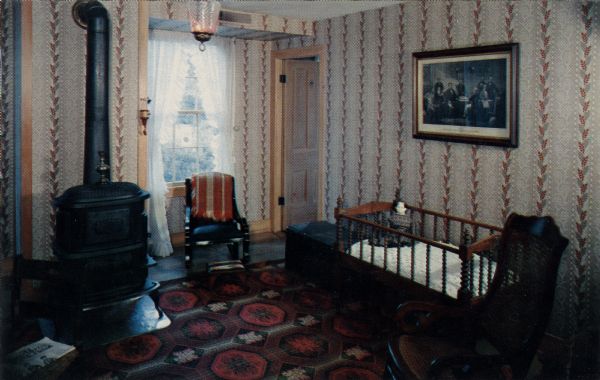
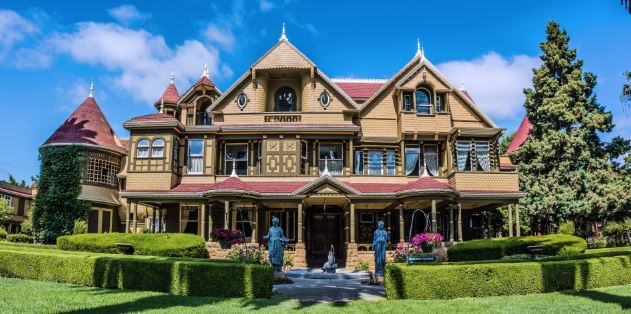
Ghostly manifestations, be they God’s angelic messengers or evil spirits, are not uncommon throughout history. The Winchester Mystery House is full of creatures who have strayed away from one unknow region of haunted woods and perilous wilds. They dress like us; pretend that they belong to mankind and profess to keep our laws and codes of morals. However, in the presence we are always aware that they are phantoms and that all their ideas and actions are out of key with the general pitch and tone of normal life. The Winchester Mystery House hosts several denizens of the dead.
Once a tour guide went into the Grand Ball Room while The Winchester Mystery House was closed during the day. He went to find some solitude but found something else entirely. As the young man sat in the empty, dark Grand Ball Room, a woman in a long white gown and a man in a black dress suit suddenly whirled onto the floor. They danced to music that the tour guide could not hear. As the man watched in shock, the dancing specters suddenly vanished. The fourth floor balcony of the Winchester Mystery House is haunted by a lady in white who glides gracefully across the balcony. She has also been seen in the Daisy Bedroom. https://winchestermysteryhouse.com/

And please be sure to check out the online gift store: https://shopwinchestermysteryhouse.com/

The Harshest Feasible Punishment Best Deters Deviating Actions

The problem of the twenty-first century is the problem of the political-line,–the relation of Republicans to Democrats in America. It is such a problem that it could cause a civil war. As we know, official misconduct is the real cause of the conflict. No sooner had Democratic armies touch office, this old question, newly guised, sprang from the Earth,–What shall be done with the Constitution of the United States of America? Democratic rules seemed but to broad and intensify the difficulties of enforcing law and order and honouring God. Although there are certain needs, such as hunger, thirst, companionship, which are common to the humans, those drives which make for the differences in humans’ characters, like love and hatred, the lust for power and the yearning for submission, the enjoyment of sensuous pleasure and the fear of it, are all products of the social process. The most beautiful as well as the most unattractive inclinations of human beings is not part of a fixed and biologically given huma nature, but result from the social process which creates humans. In other words, society has not only a suppressing function—although it has that too—but it has also a creative function. Humans’ nature, one’s passions, and anxieties are a cultural product; as a matter of fact, humans themselves are the most important creation and achievement of the continuous human effort, the record of which we call history. Men, thin, with gray and tufted hair; women, with frightened eyes, dragging whimpering hungry children; men and girls, stalwart and gaunt,–a horde of starving people without homes, helpless, and worried are all in dark distress due to a loss of representation and displacement of Constitution rights. #RandolphHarris 1 of 20

Americans have been accepting encroachments on established liberties, and as a result, much of their government no longer represents American citizens. American taxpayers and those who used to pay taxes are going without necessities because much of their representation no longer serves the people. Millions of men and women made the greatest sacrifice to protect their liberties, but when they need their government, sports complexes, entertainment centers, decorative flowers hanging from street lights, and renovation of state buildings take precedence over affordable housing. Our core purpose should remain clear: We must resolve that it is an essential part of winning the war on our freedoms to insist that we keep intact the civil liberties and other freedoms that we have gained over the past 247 years. The stream of fugitives have swelled to a flood in public office and private corporations, and anxious Americans keep inquiring: “How will we survive? Major crimes are happening everywhere.” Petitions have come to President Biden from distinguished citizens and organizations, strongly urging a comprehensive and unified plan for dealing with the abolishment of law and order and sanity in the United States of America. The American people want the execution of measures for easily guiding, and in every way judiciously and humanly aiding, the passage of laws to increase the budgets of law enforcement and reinstate their authority to keep our streets safe and allow for the safe removal of dangerous criminals. Also, city, state, federal and private employees would like to be emancipated from what seems like forced labour, as a result of inflations and declining wages. #RandolphHarris 2 of 20

American farmers would also like a bill to establish protection for them, their owned and leased lands, and for subsidies to help the produce more meat, poultry and produce so we once again can feed our own people and export our products to other nations, which will help bring America back to being a creditor nation. This is essentially a wake-up call for the American people. The American people want the government to be their friend again. The United States of American became the World’s largest debtor country in 1985. This was because America was seen as this beacon on the hill. The land of prosperity. Instead of lending other nations money, America started giving away billions of dollars, until it put them in debt. This is why people are calling on the government to find ways to balance the budget through other ways than raising taxes because the higher taxes become, the less money people have to spend and the less corporations will invest in America. It is recommended that, perhaps, America should change its laws to allow the government to have some competition with private businesses. For example, California Highway Patrol (CHP) often deals with traffic accidents and other incidents where tow trucks are needed. If the CHP dispatch center had their own tow truck division, they could send the proper equipment to the scene and have the roads cleared much faster. The revenues they earned could be reinvested into their budget, which would allow for them to operate more efficiently. Many people would also like the government to sponsor farms so we can keep our heartland strong before all of our land is used up on roads, highways, and for urban and suburban communities. #RandolphHarris 3 of 20

America also needs to return to being a country of family values. Men are now becoming emasculated by a peculiarly complete systems of degradation, in effort to destroy the nuclear family. In the midst of this war on the Christian family, people are becoming embittered that they are losing their representation and poor examples are being set for their children by offices as high as the president of the United States of America, and as low as the local news media. This is a curious mess we are looking upon: little despotisms, communistic experiments, slavery, peonage, business speculations, organized charity, unorganized almsgiving, taught gender confusion–all reeling on under the guise of helping equality, and all enshrined in the smoke and blood of riots and the cursing and silence of angry human beings. This is all a violation of simple and good faith, as human rights, virtues, morals and responsibilities are being discharged from the traditional American way of life, as psychopathological offenders pretend to promote equality and the general welfare. Human beings are not only made by history—history is made by human beings. The solution of this seeming contradiction constitutes the field of social psychology. Its task is to show not only how passions, desires, anxieties change and develop as a result of the social process, but also how humans’ energies thus shaped into specific forms in their turn become productive forces, molding the social process. We can accept alternative lifestyles without forcing them on to our children. It is our goal as American people, however, to promote God’s idea of a nation and family so that future generations will follow in our footsteps and the human family will naturally live on. #RandolphHarris 4 of 20

The concept of a united family that lives and progresses forever is at the core of the American doctrine. Within families led by a father and a mother, children develop virtues such as love, trust, loyalty, cooperation and service. Marriage between a man and a woman is ordained of God and the family is central to the Creator’s plan for the eternal destiny of His children. The purpose of family is to create a safe, stable, and loving environment where a husband and wife can support and strengthen each other where children and learn, grow, and develop. God organizes us into families so we can experience happiness and learn patience and selflessness. These traits help us become more like God and prepare us to live happily as families throughout eternity. Family life is perhaps most significant for children. It is in the home that children learn to love others, show compassion, build trust, and express loyalty. The family is also a crucial building block of society. Strong marriages and families help maintain a prosperous society as they contribute hardworking and well-educated individuals. Because Christians believe that families are forever, they seek to identify generations of relatives through family history work. By discovering where your family came from, who your ancestor were, and what motivated them, you learn about your core family values, and you build a bridge connecting you to your ancestors. A family’s importance extends beyond mortal life. We highly value the promise that families can be together forever. Family structure began with God. God is your Heavenly Father, and you are His child. You live with your family now, and we believe that even after you and your family members pass on, you can live together again in Heaven. #RandolphHarris 5 of 20

This is possible through God’s power and through eternal marriages performed in temples. The Church of Jesus Christ of Latter-day Saints, unlike civil marriages performed in churches and courthouses that last “until death to you part,” temple marriages unite a husband and wife forever. A long as they are faithful to the promises they make with each other and with God, their children can be with them forever, too. Having strong families requires effort, both from parents and children. Fathers and mothers must work together closely to raise their children. They should act as equal partners while fulfilling the many different roles that come with parenthood. The success of a family depends on that partnership. Successful marriages and families are established and maintained on principles of faith, prayer, repentance, forgiveness, respect, love, compassion, work, and wholesome recreational activities. Other things, such as exotic vacations, big homes, and money are not necessarily the basis of family happiness. Solid, happy families result when family members treat each other with the kind of love and respect that Jesus Christ showed. In “counterfeiting” the believer, the psychopathological spirit gives one exaggerated views, almost visions, of one’s own personality: one is “wonderfully gifted,” and therefore becomes puffed up; one is “miserably incapable,” and so is in despair; one is “amazingly clever,” and thus undertakes what one cannot do; one is “helpless,” “hopeless,” “too forward” or “too backward”—in brief, a countless number of false pictures of oneself are presented to the mind of the human when once the lying spirit has gained a footing in one’s imagination. #RandolphHarris 6 of 20

Or this falsifying may take another form. So subtle is the identity of the deceived spirit with a believer’s individuality that only others will see what may be described as a “spurious personality.” Sometimes the person appears to be “full of pride” when the inner human is sincerely humble. In fact, the whole outer appearance of the human in manner, voice, actions, words, is often quite contrary to one’s true character, and so one wonders why “others misunderstand,” misjudge and criticize. Some believers, of course, will go on happily satisfied with what they themselves know of their own inner motives and heart life—oblivious of this manifestation of the spurious self which others behold, and pity or condemn. The spurious personality caused by the psychopathological offenders can also be in a beautiful form, in order to attract or mislead others in various ways, all unwitting to the person or to the victim. This is sometimes described as “unaccountable infatuation,” but if it was recognized as the work of evil spirits, refused and resisted, the “infatuation” would pass away. It is so wholly apart from the action of the will in the persons concerned that the work of psychopathological offenders is clearly to be recognized, especially when the supposed “infatuation” follows supernatural experiences. #RandolphHarris 7 of 20

Many critics conclude that God as being-itself leaves no room for a personal God in any sense, despite our protestations to the contrary. Some claim that we suffer from ontological schizophrenia, being pulled in two opposite directions, toward the personal God of the Bible and toward the impersonal God of ontology. However, to all these critics, we do preserve the ultimacy of a personal encounter between God and humans. The proof is the simple fact of ultimate concern. No one can be ultimately concerned about something less than a person, but, at the same time, God is more than a person He is the ground and abyss of everything personal. Perhaps the reason why our doctrine has not been more readily accepted is that people do not seem to understand how an encounter with more than a person is still a personal encounter. It is like trying to sell a white car to a customer who wants a multicoloured car by telling him or her that white includes all the colours and they can all be derived from it. We do not like to designate God as a person because it seems to make Him a being next to other beings—and, with that step, one plunges over the precipice into theism and supranaturalism. We all have a need, want, and the basis for a personal God. God is a New Being, which appears in and overcomes existence. Grace is not completely beyond humans’ conscious life, uncreated grace as quasi-formal causal communication of God Himself shows a close connection between creation and the incarnation, the possibility of supernatural acts by the unjustified de facto situation that the state of pure nature does not exist, but that there is only a nature in a supernatural order. #RandolphHarris 8 of 20

There are theories in behaviouristic psychology that have an assumption that human nature has no dynamism of its own and that psychological changes are to be understood in terms of the development of new “habits” as an adaptation to new cultural patterns. These theories, though speaking of the psychological factor, at the same time reduce it to a shadow of cultural patterns. Only a dynamic psychology, the foundations of which have been laid by Dr. Freud, can get further than paying lip service to the human factor. Though there is no fixed human nature, we cannot regard human nature as being infinitely malleable and able to adapt itself to any kind of conditions without developing a psychological dynamism of its own. Human nature, though being the product of historical evolution, has certain inherent mechanisms and laws, to discover which is the task of psychology. It seems useful to differentiate between “static” and “dynamic” adaptation. By static adaptation we mean such an adaptation to patterns as leaves the whole character structure unchanged and implies only the adoption of a new habit. An example of this kind of adaptation is the change from the traditional Asian habit of eating with chopsticks to the typical Western habit of using a fork and knife. Many people who come to America, choose to adapt themselves to this new pattern, but this adaptation in itself may have little effect on one’s personality; it does not necessarily arose new drives or character traits. However, while we were in China, we did acquire the habit of eating pizza with a fork and knife. #RandolphHarris 9 of 20

By dynamic adaptation we refer to the kind of adaptation that occurs, for example, when a boy submits to the command of his strict and threatening father—being too much afraid of him to do otherwise—and becomes a “good” boy. While he adapts himself to the necessities of the situation, something happens to him. He may develop an intense hostility against his father, which he represses, since it would be too dangerous to express it or even to be aware of it. This repressed hostility, however, though not manifest, is a dynamic factor in his character. It may create new anxiety and thus lead to still deeper submission; it may set up a vague defiance, directed against no one in particular but rather toward life in general. While here, too, as in the first case, an individual adapts himself to certain external circumstances, this kind of adaptation creates something new in him, arouses new drives and new anxieties. Every neurosis is an example of this dynamic adaptation; it is essentially an adaptation to such external conditions (particularly those of early childhood) as are in themselves irrational and, generally speaking, unfavourable to the growth and development of the child. Similarly, such sociopsychological phenomena as are comparable to neurotic phenomena (why they should not be called neurotic will be discussed later), like the presence of strong destructive or sadistic impulses in social groups, offer an example of dynamic adaptation to social conditions that are irrational and harmful to the development of humans. #RandolphHarris 10 of 20

Besides the question of what kind of adaptation occurs, other questions need to be answered: What is it that forces man to adapt himself to almost any conceivable condition of life, and what are the limits of his adaptability? Well, certain sectors in a humans’ nature are more flexible and adaptable than others. Those striving and character traits by which men differ from each other show a great amount of elasticity and malleability: love, destructiveness, sadism, the tendency to submit, the lust for power, detachment, the desire for self-aggrandizement, the passion for thrift, the enjoyment of sensual pleasure, and the fear of sensuality. These and many other strivings and fears to be found in humans develop as a reaction to certain life conditions. They are not particularly flexible, for once they have become part of a person’s character, they do not easily disappear or change into some other drive. However, they are flexible in the sense that individuals, particularly in their childhood, develop the one or other need according to the whole mode of life they find themselves in. None of these needs is fixed and rigid as if it were an innate part of human nature which develops and has to be satisfied under all circumstances. In contrast to those needs, there are others which are an indispensable part of human nature and imperatively need satisfaction, namely, those needs that are rooted in the physiological organization of humans, like hunger, thirst, the need for sleep, and so on. For each of those needs there exists a certain threshold beyond which lack of satisfaction is unbearable, and when this threshold is transcended the tendency to satisfy the need assumes the quality of an all-powerful striving. #RandolphHarris 11 of 20

All these physiologically conditioned needs are a notion of a need for self-preservation. This need for self-preservation is that part of human nature which needs satisfaction under all circumstances and therefore forms the primary motive of human behaviour. Man must eat, drink, sleep, protect himself against enemies, and so forth. In order to do all this he must work and produce. “Work,” however, is nothing general or abstract. Work is always concrete work, that is, a specific kind of work in a specific kind of economic system. A person may work as a slave in a feudal system, as a peasant in an Indian pueblo, as an independent businessman in capitalistic society, as a salesgirl in a posh art gallery, as a worker on the endless belt of a big factory. These different kinds of work require entirely different personality traits and make for different kinds of relatedness to others. When men is born, the stage is set for him. He has to eat and drink, and therefore he has to work; and this means he has to work under the particular conditions and in the ways that are determined for him by the kind of society into which he is born. Both factors, his need to live and the social system, in principle are unalterable by him as an individual, and they are the factors which determine the development of those other traits that show greater plasticity. Thus the mode of life, as it is determined for the individual by the peculiarity of an economic system, becomes the primary factor in determining his whole character structure, because the imperative need for self-preservation forces him to accept the conditions under which he has to live. This does not mean that he cannot try, together with others, to effect certain economic and political changes; but primarily his personality is molded by the particular mode of life, as he has already been confronted with it as a child through the medium of the family, which represents all the features that are typical of a particular society or class. #RandolphHarris 12 of 20

In only a very limited sense is it true to speak of a transfer of recreational functions from the family to other institutions; most of such activity simply did not occur previously. And since this is a new situation that has only existed previously in embryo, we are ill stocked with generalizations for describing and explaining its character. As the mahogany tree cannot be deduced from the acorn, earlier thinkers, though familiar with limited forms of play, could not have discussed its modern growth and differentiation. If current students have not yet made it the subject of substantial research, perhaps the degree of its novelty excuses them. However, social scientists can no longer scorn its importance. There is a wide range of activities which are primarily physical play. These we shall group as sports, and under this rubric include all those activities which simply explore and exercise the faculties and capabilities of the body, for motion, function, or sensation. They may utilize physical instruments, but not for the sake of manipulating and changing the environment. The range of physical play could also be classified in terms of elaboration from the simple individual exercise of some organ of the body through increasing degrees of complexity until it reaches the institutional size of the World Series. The facets in this sequence o elaboration of forms; number of persons involved; increase of skill, strength, speed, endurance, accuracy, dexterity, facilities, competition; rules; chance; formation of teams; formation of permanent fostering organizations; spectators; adoption of the sport by regular publics, and the season for its play becoming recognized in the calendar of the community. #RandolphHarris 13 of 20

Equipped with a somewhat more precise analysis than this brief schema, it is more than possible that someone may sit down and invent an ideal sport which could overnight become more popular than baseball. Baseball itself was just such an invention; it was one of the first team games to become popular in this country, which for its first few centuries possessed very few team games. Social historians could make much, in terms of cultural change, out of the shift in interest late in the last century from contests to games. Contests and games both conspicuously include the element of competition, but whereas the contest emphasizes displays of strength and skill, the game includes a large mixture of chance. Matching maximizes this tension of skill and chance, and so the game can be played again immediately. The contest if repeated at once would turn out exactly as before, though of course there are marginal forces like boxing, which are neither clearly a game nor a contest. In the evolution of sports, a step beyond the team game might be said to occur with professionalization, and its arduous practice, coaching, and even development of abstract theory. Whether individual or group, simple exercise or elaborate game, a competitive or concerned effort, physical play in its various forms creates the opportunity for its participants to explore and develop the powers of their bodies in compensatory, and normally salutary ways, beyond those permitted or called for by routine physical work. #RandolphHarris 14 of 20

The drama of success and failure, the prestige of demonstrated superiority, even the delights of graceful or dexterous movement, can be shared by spectators, though only the participants share in the enhancement of health and physical competence. Every sport recapitulates and idealizes the everyday bodily experiences. However, in evaluating the ultimate contribution of recreational institutions to interpersonal competence, it is vital to note how physical sports can foster other elements of competence besides health. The vicarious feature of all kinds of play is visible here on closer look. Now, we move on to socialism’s collusion with the future. The dramatic death of state socialism in Eastern Europe and its bloody anguish from Bucharest to Baku to Beijing did not happen by accident. Socialism collided with the future. Socialist regimes did not collapse because of CIA plots, capitalist encirclement or economic strangulation from outside. Eastern European communist governments toppled domino-fashion as soon as Moscow sent the message that it would no longer use troops to protect them from their own people. However, the crisis of socialism as a system in the Soviet Union, China and elsewhere was far more deeply based. Just as Mr. Gutenberg’s invention of movable type in the mid-twentieth century smashed Moscow’s control of the mind in the countries it ruled or held captive. Mind workers were typically dismissed as “nonproductive” by Marxist economists (and many classical economists as well). Yet it is these supposedly nonproductive workers who, perhaps more than any other, have given Western economics a tremendous shot of adrenalines since the mid-fifties. #RandolphHarris 15 of 20

Today, even with all their supposed “contradictions” unresolved, the high-tech capitalist nations have swept far ahead of the rest of the World in economic terms. It was computer-based capitalism, not smokestack socialism, that made what Marxists call a “qualitative leap” forward. With the real revolution spreading in the high-tech nations, the socialist nations had become, in effect, a deeply reactionary bloc led by elderly men imbued with nineteenth-century theology. Mikhail Gorbachev was the first Soviet leader to recognize this historic fact. In a 1989 speech, some thirty years after the new system of wealth creation began to appear in the United States of America, Mr. Gorbachev declared, “We were nearly one of the last to realize that in the age of information science the most expensive asset is knowledge.” Mr. Marx himself had given the classic definition of revolutionary moment. It came, he said, when the “social relations of production” (meaning the nature of ownership and control) prevent further development of the “means of production” (roughly speaking, the technology). That formula perfectly described the socialist World crisis. Just as feudal “social relations” once hindered industrial development, now socialists “social relations” made it all but impossible for socialist countries to take advantage of the new wealth-creation system based on computers, communication and, above all, on open information. In fact, the central failure of the great state socialist experiment of the twentieth century lay in its obsolete ideas about knowledge. #RandolphHarris 16 of 20

The indigenous innovation policy is officially defined as the one enhancing original innovation through co-innovation and re-innovation based on the assimilation of the imported technologies. The idea itself, by and large, looks quite relevant. If you want to become an innovator yourself, developing original technologies and products, you should first of all learn what has been achieved by your predecessors, and it would be logical to start with innovating together with them or adding new elements or features to their inventions. It helps to accumulate knowledge and develop skills necessary to proceed to your own original research and development. This is the way it is was done by Japan, South Korea, Taiwan, and others who followed America and Europe on the innovation path. The problem, however, is that China seeks to achieve this basically relevant goal using a Chinese cocktail of policies that create unequal conditions for competition between domestic and foreign firms, effectively help the former to steal overseas technologies against their will. The Patent Law makes it possible for Chinese firms to obtain patents for odds and ends which are quickly issues and without in-depth examination. They serve as a tool to retaliate against overseas intellectual property rights (IPR) lawsuits. Testing and approval procedures for imported products have been deliberately made complicated and time-consuming in order to erect import barriers on the one hand and to learn foreign designs and production process on the other. The Anti-Monopoly Law can be used against foreign companies refusing to disclose their technologies and know-how. For instance, the list of the “abuses” of the law by MNCs included Cisco’s refusal to license its Internet protocol (IP) to Chinese companies that wanted to connect to its network. #RandolphHarris 17 of 20

Direct reciprocity is the case most conducive to resolving prisoners’ dilemmas. In it, the same two (or more) players repeatedly play the dilemma game. Evidence from cases studies in economics, politics, sociology, anthropology, and biology, and game-theoretic analysis, have given us a good understanding of the mechanisms for accomplishing good outcomes, and the conditions under which they succeed. All successful mechanisms, in theory as well as in practice, work by creating a future cost to the individual of taking an action that brings one an immediate personal benefit. The nature and the size of the cost can vary widely across different situations; the common requirement is that the future cost should outweigh the immediate benefit in the individual’s own calculation based on one’s own preferences, whether for material things, social standing, internal guilt, or whatever. Theory and cause studies agree on several of the desiderata for successful resolution of prisoners’ dilemmas by direct reciprocity. First and foremost, the players should have sufficient regard for the future. If the payoffs are monetary, this requires a low interest rate at which the future is discounted. If the payoffs are subjective, it requires the players to be more patient. However, an even more potent force that reduces the importance of the future in the players’ minds is uncertainty about continuation of the relationship. Therefore successful resolution of multi-person dilemmas, like the ones in most case studies, requires a stable group: members should not be able to exist after deviating from the cooperative action, and newcomers who are not part of the agreement should not be able to enter. #RandolphHarris 18 of 20

Second, any deviation should be detected quickly and accurately, and in multi-person dilemmas, the news of deviation by one member should be transmitted quickly and accurately to all. Then the prescribed punishment can be meted out to the miscreant equally quickly and accurately. The speed is important: if punishment may be unleashed in error even if one has not deviated, then the deterrent effect is lessened. Third, in multi-person dilemmas, the news of deviation by one member should be transmitted quickly and accurately to all. Then the prescribed punishment can be meted out to the miscreant equally quickly and accurately. The speed is important: otherwise the punishment would become more distant in time and get discounted more heavily in a potential miscreant’s calculation. The accuracy is also important: if punishment may be unleashed in error even if one has not deviated, then the deterrent effect is lessened. Third, in multi-person dilemmas, participation in the collective action of punishing a miscreant is sometimes individually costly; this turns the punishment process into another prisoner’s dilemma game requiring its own resolution. In the smaller-scale common property resources (CPR) [where] individuals repeatedly communicate and interact with one another in a localized physical setting,…[they] learn whom to trust,…[and] develop shared norms and patterns of reciprocity. The general method is to make contingent commitments to follow rules that define a set of appropriators who are authorized to use a CPR, relate to the specific attributes of the CPR and the community, are designed, at least in part, by local appropriators, are monitored by individuals accountable to local appropriators, and are sanctioned using graduated punishments. #RandolphHarris 19 of 20

The first item in the list pertains to the need for a stable group, and items 2-4 pertain to the speed and accuracy of detection any cheating and spread of the information around the group. The emphasis on the importance of local knowledge and information networks is noteworthy. Theory and case studies are agreed on most of these points, with an important exception. In the theory of repeated games, punishments are usually drastic and long lasting, like the grim-trigger strategies. The argument is that the harshest feasible punishment best deters deviating actions, and therefore sustain an equilibrium with the most cooperative outcome. In reality, however, graduated punishments fare better. That is why God in the Old Testament was so much. Look how society has fallen without the God of the Old Testament. The intuition is that one player may inflict occasional harm on others through inattention or miscalculation rather than deliberate deviation. Then a friendly notification, and an opportunity to make restitution, will remedy the situation without triggering the collapse of mutually beneficial future compliance with the tacit agreement. Only if the deviation persists should it be interpreted as deliberate and lead to harsher punishment. While some models of repeated games with imperfect monitoring, can be interpreted as suggesting graduated punishment, to my knowledge there is no explicit treatment of this in the theoretical literate. Some of this literature is also restricted in its practical applicability, because it focuses on the limiting case where the players are extremely patient (the so-called folk theorem). #RandolphHarris 20 of 20

CRESLEIGH HAVENWOOD
Lincoln, CA | from the high $600s
Now Selling!

At nearly 3,000 square feet, Cresleigh Havenwood Residence Three is the one largest of the single-story homes offered in our region. You’ll be hard pressed to a contemporary floorplan that offers this much space.

There are four bedrooms, two and one half bathrooms, and a three car garage. Utilize the den as your own private study or convert into an optional fifth bedroom if needed. The Dining Room and Kitchen are well situated to make entertaining a breeze.

The location of the Owner’s Suite makes it feel like a separate wing from the rest of the home allowing for maximum privacy and retreat.

Best of all, each Cresleigh home comes fully equipped with an All Ready connected home! This smart home package comes included with your home and features great tools including: video door bell and digital deadbolt for the front door, connect home hub so you can set scenes and routines to make life just a little easier.

Two smart switches and USB outlets are also included, plus we’ll gift you a Google Home Hub and Google Home Mini! https://cresleigh.com/havenwood/residence-three/


Away with the Republican Ballot, by Force or Fraud!

First World War was regarded by many as the final struggle and its conclusion the ultimate victory for freedom. Existing democracies appeared strengthened, and new ones replaced old monarchies. However, only a few years elapsed before new systems emerged which denied everything that men believed they had won in centuries of struggle. For the essence of these new systems, which effectively took command of man’s entire social and personal life, was the submission of all but a handful of men to an authority over which they had no control. Disappointment became all the more bitter because the unattained ideal was unbounded. The holocaust of war, the terror of communist, the disorganization of industry, and the contradictory advice of friends and foes, left the American people bewildered with no new watch-word beyond the old cry for freedom. Many found comfort in the thought that the victory of the authoritarian system was due to the madness of a few individuals and that their madness would lead to their downfall in due time. Others smugly believed that the Italian people, or the Germans, were lacking in a sufficiently long period of training in democracy, and that therefore one could wait complacently until they had reached the political maturity of the Western democracies. Another common illusion, perhaps the most dangerous of all, was that dictators had gained power over the vast apparatus of the state through nothing but cunning and trickery, that they and their satellites rules merely by sheer force; that the whole population was only the will-less object of betrayal and terror. #RandolphHarris 1 of 18

In these years that have elapsed since, the fallacy of these arguments has become apparent. We have been compelled to recognize that millions in Germany were as eager to surrender their freedom as their fathers were to fight for it; that instead of wanting freedom, they sought for ways of escape from it; that other millions were indifferent and did not believe the defense of freedom to be worth fighting and dying for; that instead of wanting freedom, they sought ways of escape from it; that other millions were indifferent and did not believe the defense of freedom to be worth fighting and dying for. We also recognize that the crisis of democracy is not a peculiarly Italian or German problem, but one confronting every modern state. Nor does it matter which symbols the enemies of human freedom choose: freedom is not less endangered if attacked in the name of anti-Fascism than that outright Fascism. This truth has been forcefully formulated by John Dewey that I express the thought in his words: “The serious threat to our democracy,” he says, “is not the existence within our own personal attitudes and within our own institutions of conditions which have given a victory to external authority, discipline, uniformity and dependence upon the Leader in foreign countries. The battlefield is also accordingly here—within ourselves and out institutions.” If we want to fight Fascism, we must understand it. Wishful thinking will not help us. And reciting optimistic formulae will prove to be as inadequate and useless as fat free mayonnaise on a double bacon cheese burger. #RandolphHarris 2 of 18

In addition to the problem of the economic and social conditions which have given rise to Fascism, there is a human problem which needs to be understood. It is the purpose of in the character structure of modern man, which made him want to give up freedom in Fascist countries and which so widely prevail in millions of our own people. The cold statistician wrote down the inches of progress here and there, noted also where here and there a foot had slipped or some one had fallen. To the tired climbers, the horizon was ever dark, the mists were often cold, and freedom was always dim and far away. If, however, the vistas disclosed as yet no goal, no resting-place, little but flattery and criticism, the journey at least gave leisure for reflection and self-examination; it changed the American youth with dawning self-consciousness, self-realization, self-respect. In those somber forests of one’s striving one’s own soul rose before one, and one saw oneself,–darkly as through a veil; and yet one saw in oneself some faint revelation of one’s power, of one’s mission. One began to have a dim feeling that, to attain one’s place in the World, one must be oneself, and not another. For the first time, Americans sought to analyze the burden they bore upon their backs, that dead-weight of social degradation partially masked behind the name of a developed nation problem. They felt their poverty; without a cent, without a home, without land, without tools, or savings, people had entered into competition with rich, landed, skilled neighbours. #RandolphHarris 3 of 18

To be poor person is hard, but to be a poor race in a land of dollars is the very bottom of hardships. These outstanding questions that arise when we look at the human aspect of freedom, the longing for submission, and the lust for power: What is freedom as a human experience? Is the desire for freedom something inherent in human nature? It is an identical experience regardless of what kind of culture a person lives in, or it is something different according to the degree of the individualism reached in a particular society? Is freedom only the absence of external pressure or is it also the presence of something—and if so, of what? What are the social and economic factors in society that make for the striving for freedom? Can freedom become a burden, too heavy for man to bear, something he tries to escape from? Why then is it that freedom is for many a cherished goal and for others a threat? The facing of so vast a prejudice cannot but bring the inevitable self-questioning, self-disparagement, and lowering of ideals which ever accompany repression and breed in an atmosphere of contempt and hate. Whisperings and portents came born upon the four winds: Lo! We are diseased and dying, cried the hosts; we cannot write, our voting is vain; what need of education, since we never progress? And the fake news media echoed and enforced this self-criticism, saying: Be content to be servants, and nothing more; what need of higher culture for Americans? Away with the Republican ballot, by force or fraud,–and behold the suicide of the American race! Nevertheless, out of the evil is coming something of good,–the more careful adjustment of education to real life, the clearer perception of the Americans’ social responsibilities, and the sobering realization of the meaning of progress. #RandolphHarris 4 of 18

Analysis of the human aspect of freedom and of authoritarianism forces us to consider a general problem, namely, that of the role which psychological factors play as active forces in the social process; and this eventually leads to the problem of the interaction of psychological, economic, and ideological factors in the social process. Any attempt to understand the attraction which Fascism exercises upon great nations compels us to recognize the role of psychological factors. For we are dealing here with a political system which, essentially, does not appeal to rational forces of self-interest, but which arouses and mobilizes diabolical force in man which we had believed to be nonexistent, or at least to have died out long ago. The familiar picture of man in the last centuries was one of a rational being whose actions were determined by his self-interest and the ability to act according to it. Even writers like Mr. Hobbes, who recognized lust for power and hostility as driving force in man, explained the existence of these forces as a logical result of self-interest: since men are equal and thus have the same wish for happiness, and since there is not enough wealth to satisfy them all to the same extent, they necessarily fight against each other and want power to satisfy them all to the same extent, they necessarily fight against each other and want power to secure the future enjoyment of what they have at present. However, Mr. Hobbes’s picture became outmoded. The more the middle class succeeded in breaking down the power of the former political or religious rulers, the more men succeeded in mastering nature, and the more millions of individuals became economically independent, the more did one come to believe in a rational World and in man as an essentially rational being. The dark and diabolical forces of man’s nature were relegated to the Middle Ages and to still earlier periods of history, and they were explained by lack of knowledge or by the cunning schemes of deceitful kings and priests. #RandolphHarris 5 of 18

One looked back upon these periods as one might at a volcano which for a log time had ceased to be a menace. One felt secure and confident that the achievements of modern democracy had wiped out all sinister forces; the World looked bright and safe like well-lit streets of a modern city. Wars were supposed to be the last relics of older times and one needed just one more war to end war; economic crises were supposed to be accidents, even though these accidents continued to happen with a certain regularity. The bright ideals of the past,–physical freedom, political power, the training of brains and the training of hands,–all these in turn have waxed and waned, until even the last grows dim and overcast. Are they all wrong,–all false? No, not that, but each alone was oversimple and incomplete,–the dreams of a credulous race-childhood, or the found imaginings of the other World which does not know and does not want to know our power. To be really true, all these ideals must be melted and welded into one. When Fascism came into power, most people were unprepared, both theoretically and practically. They were unable to believe that man could exhibit such propensities for evil, such lust for power, such disregard for the rights of the weak, or for yearnings for submission. Only a few had been aware of the rumbling of the volcano preceding the outbreak. Mr. Nietzsche had disturbed the complacent optimism of the nineteenth century; so had Mr. Marx in a different way. Another warning had come somewhat later from Dr. Freud. #RandolphHarris 6 of 18

To be sure, Dr. Freud and most of his disciples had only a very beginning notion of what goes on in society, and most of his applications of psychology to social problems were misleading constructions; yet, by devoting his interest to the phenomena of individual emotional and mental disturbances, he led us to the top of the volcan and made us look into the boiling crater. Dr. Freud went further than anybody before him in directing attention to the observation and analysis of the irrational and unconscious forces which determine parts of human behaviour. He and his followers in modern psychology not only uncovered the irrational and unconscious sector of man’s nature, the existence of which had been neglected by modern rationalism; he also showed that these irrational phenomena followed certain laws and therefore could be understood rationally. He taught us to understand the language of dreams and somatic symptoms as well as the irrationalities in human behaviour. He discovered that these irrationalities as well as the whole character structure of an individual were reactions to the influence exercised by the outside World and particularly by those occurring in early childhood. However, Dr. Freud was so imbued with the spirit of his culture that he could not go beyond certain limits which were set by it. These very limits became limitations for his understandings even of the sick individual; they handicapped his understand of the normal individual and of the irrational phenomena operating in social life. #RandolphHarris 7 of 18

The power of the ballot we need in sheer self-defence,–else what shall save us from a second slavery? Freedom, too, the long-sought, we still seek,–the freedom of life and limb, the freedom to work and think, the freedom to love and aspire. Work, culture, liberty,–all these we need, not singly but together, not successively but all together, each growing and aiding each, and all striving toward that vaster ideal what swims before the American people, the ideal of human brotherhood, gained through the unifying ideal of Race; the ideal of fostering and developing the traits and talents of the American, not in opposition to or contempt of others, but rather in large conformity to the greater ideals of the American Republic, in order that someday, we may give all humans those characteristics we sadly lack. Dr. Freud accepted the traditional belief in a basic dichotomy between man and society, as well as the traditional doctrine of the evilness of human nature. Man, to him, is fundamentally antisocial. Society must domesticate him, must allow some direct satisfaction of biological—and hence, ineradicable—drives; but for the most part society must refine and adroitly check man’s basic impulses. In consequence of this suppression of natural impulses by society something miraculous happens: the suppressed drives turn into strivings that are culturally valuable and thus become the human basis for culture. Dr. Freud chose the word sublimation for this strange transformation from suppression into civilized behaviour. If the amount of suppression is greater than the capacity for sublimation, individuals become neurotic and it is necessary to allow the lessening of suppression. #RandolphHarris 8 of 18

Generally, however, there is a reverse relation between satisfaction of man’s drives and culture: the more suppression, the more culture (and the more danger of neurotic disturbances). The relation of the individual to society in Dr. Freud’s theory is essentially a static one: the individual remains virtually the same and becomes changed only in so far as society exercises greater pressure on his natural drives (and thus enforces more sublimation) or allows more satisfaction (and thus sacrifices culture). Like the so-called basic instincts of man which earlier psychologist accepted, Dr. Freud’s conception of human nature was essentially a reflection of the most important drives to be seen in modern man. For Dr. Freud, the individual of one’s culture represented “man,” and those passions and anxieties that are characteristic for man in modern society were looked upon as eternal forces rooted in the biological constitution of man. While we could give many illustrations of this point (as, for instance, the social basis for the hostility prevalent today in modern man, the Oedipus complex, the so-called castration complex in women), I want only to give one more illustration which is particularly important because it concerns the whole concept of man as a social being. Dr. Freud always considers the individual in his relations to others. These relations as Dr. Freud sees them, however, are similar to the economic relations to others which are characteristic of the individual in capitalist society. Each person works for oneself, individualistically, at one’s own risk, and not primarily in co-operation with others. #RandolphHarris 9 of 18

However, one is not a Robinson Crusoe; one needs others, as customers, as employees, or as employers. One must buy and sell, give and take. The market whether it is the commodity or the labour market, regulates these relations. Thus the individual, primarily alone and self-sufficient, enters into economic relations with others as means to one end: to sell and to buy. Dr. Freud’s concept of human relations is essentially the same: the individual appears fully equipped with biologically given drives, which need to be satisfied. In order to satisfy them, the individual enters into relations with other “objects.” Other individuals thus are always a means to one’s end, the satisfaction of strivings which in themselves originate in the individual before one enters into contact with others. The field of human relations in Dr. Freud’s sense is similar to the market—it is an exchange of satisfaction of biologically given needs, in which the relationship to the other individual is always a means to an end but never an end itself. Contrary to Dr. Freud’s view point, the key problem of psychology is that of the specific kind of relatedness of the individual towards the World and not that of the satisfaction or frustration of this or that instinctual need per se; furthermore, on the assumption that the relationship between man and society is not a static one. It Is not as if we had on the one hand an individual equipped by nature with certain drives, and on the other, society as something apart from one, either satisfying or frustrating these innate propensities. #RandolphHarris 10 of 18

The purpose of institutions and mechanisms of economic governance is to induce individuals to take cooperative or honest actions that achieve and sustain mutually beneficial outcomes in their economic interactions, countering the temptation of each individual to take opportunistic or cheating actions that promote one’s interest at the expense of the aggregate good. Similar issues arise in other fields, most prominently in evolutionary biology. Dugatkin gives a fourfold classification of the approaches to cooperation: kin and family selection; direct reciprocity; selfish teamwork; and group altruism. The first of these is inherently biological. Each individual is genetically programmed to follow a specific behavioural strategy (phenotype), and natural selection favours the fitter genes, namely those that get higher reproductive payoff from the interactions over resources, mates, et cetera. However, that does not imply individually selfish behaviour. If a phenotype will engage in self-sacrifice to save n others when it shares a fraction f of the relevant genes with each of them, and f n > 1, then this strategy will work to the net benefit of the shared genes. The other three of Dugatkin’s pathways have more immediate economic relevance. Selfish teamwork arises in assurance games, where it is in the interest of each person to take the jointly desirable action if, but only if, the other do likewise. Such games have multiple equilibria, one where all take the jointly desirable action and another where none do. Then the players need a way to select the better of the two equilibria. For this, they must create common knowledge, or jointly held expectation, of the necessary actions, that is, they must make it a focal point. This is must easier than resolving a prisoner’s dilemma, where each person wants to take the selfish or deviating action even if all others are taking the jointly desirable or complaint action. #RandolphHarris 11 of 18

Enforcing contracts is of great importance these days. China is no longer just a global factory. It is also establishing its position as a global center of high-tech manufacturing and a global research lab, opening unique opportunities to combine advanced technologies and high quality of products with competitive costs. The transfer of advanced foreign technologies to China is intensifying by itself, driven by the and of the global market. However, the Chinese government wants to speed up the process and, most of all, to raise the innovative capability of Chinese domestic institutions and companies. This is the major motive behind the policy of the so-called indigenous innovation launched in 2006 which is causing a lot of controversy today. It is the National Medium and Long-Term Plan for the Development of Science and Technology for 2006-202. Officially this policy was elevated to the same strategic levels as the openness and reform policy launched under Deng Xiaoping in the late 1970s and early 1980s. The task has been to turned China into a big technological power by 2020 and a global technology leader by 2050. The gross R&D expenditure has to be increased from 1.3 percent to 2.5 percent of GDP. The plan designates eight key technological fields where 27 breakthrough technologies have to be pursued: biotechnology, IT, advanced materials, advanced manufacturing, advanced energy technology, marine technology, laser technology, and aerospace technology. The four major basic research programs are in protein science, nanotechnology, quantum physics, and developmental and reproductive science. #RandolphHarris 12 of 18

The core of the plan is 16 megaprojects supported by massive government, financing, in such areas as core electronic components, high-end chips, and basic software products; large-scale integrated circuits manufacturing equipment; advanced NC machinery; advanced nuclear reactions; breeding new varieties of genetically modified organisms; pharmaceutical innovation and development; and so on. The plan sets the goal of reducing overall reliance on foreign technologies to 30 percent from an estimated 60 percent in 2006. These are the type of goals America need to focus on, besides their green energy. The companies, institutions and people with a strong stake in the Third Wave economy have not yet fashioned a coherent counter-rationale. Scientists today are asking how systems behave in turbulence, how order evolves out of chaotic conditions and how developing systems leap to higher levels of diversity. Such questions are extremely pertinent to business and the economy. In a storm of takeovers, divestitures, reorganizations, bankruptcies, start-ups, joint ventures and internal reorganizations, the entire economy is taking on a new structure that is light-years more diverse, fast-changing and complex than the old smokestack economy. This “leap” to a higher level of diversity, speed and complexity requires a corresponding leap to higher, more sophisticated forms of integration. In turn, this demand radically higher levels of knowledge processing. The culture of industrialism rewards people who can break problems and processes down into smaller and smaller constituent parts. This disintegrative or analytic approach, when transferred to economics, led us to think of production as a series of disconnected steps. #RandolphHarris 13 of 18

The new model of production that springs from the super symbolic economy is dramatically different. Based on a systemic or integrative view, it sees production as increasingly simultaneous and synthesized. The parts of the process are not the whole, and they cannot be isolated from one another. We are in fact discovering that “production” neither begins nor ends in the factory. Thus, the latest models of economic production extend the process both upstream and downstream—forward into aftercare or “support” for the product even after it is sold, as in auto-repair warrantees or the support expected from the retailer when a persons buys a computer. Before long the conception of production will reach even beyond that to ecologically safe disposal of the product after use. Companies will have to provide for post-use cleanup, forcing them to alter design specs, cost calculations, production methods and much else besides. In so doing they will be performing more service relative to manufacture, and they will be adding value. “Production” will be seen to include all these functions. Similarly, they may extend the definition backward to include such functions as training of the employee, provision of day care and other services. An unhappy muscle-worker could be compelled to be “productive.” In high-symbolic activities, happy workers produce more. Hence, productivity begins even before the worker arrives at the office. #RandolphHarris 14 of 18

To old-timers, such an expanded definition of production may seem fuzzy or nonsensical. To the new generation of super-symbolic leaders, conditioned to think systematically rather than in terms of isolated steps, it will seem natural. Production is receptualized as a far more encompassing process than the economists and ideologist of intermediate economics imagined. And at every step from today on, it is knowledge, not affordable labour, and symbols, not raw materials, that embody and add value. This deep reconceptualization of sources of added value is fraught with consequence. It smashed the assumptions of both free-marketism and Marxism alike, and the material-ismo that gave rise to both. Thus, the ideas that value is produced by the glorious capitalist entrepreneur, both implied in material-isom, are revealed to be false and misleading politically as well as economically. In the new economy the receptionist and the investment bank who assembles the capital, the key punch operator and the salesperson, as well as the systems designer and telecommunications specialist all add value. Even more significantly, so does the customer. Value results from a total effort rather than from one isolated step in the process. The rising importance of mind-work will not go away, no matter how many scare stories are published warning about the dire consequences of a “vanishing” manufacturing base or deriding the concept of the “information economy.” Neither will the new conception of how wealth is created. For what we are watching is a mighty convergence of Third Wave changes—the transformation of production coming together with the transformation of capital and money itself. Together they form a revolutionary new system for wealth creation on the planet. #RandolphHarris 15 of 18

The picture of recreation in the United States of America is impressively novel, and novel in a variety of ways. In contrast to most other countries, leisure here is not the possession of a privileged class but of the mass of citizens. Its development has been little influenced by the tradition which scorns work and fosters the cultivation of aristocratic pleasures. On the contrary, American recreation has made its way against a tradition which held work a virtue and play—if not a vice—a secondary and residual activity, a tradition which still persistently seeks to impose upon recreation some criterion of moral worth or practical gain. Yet for all these lingering puritanical inhibitions, probably no people has been more abundantly blessed with leisure time and recreational facilities than American in recent times. Enriched by the cosmopolitan extraction of its people, watered by the volume of ideas transmitted through its unparalleled channels of communication, the field of play has effloresced in unequalled variety and profusion. Idealistic emphasis on the civic virtues engendered through sportsmanship has reinforced commercial incentives to promote recreation. The multiplication o jobs consisting of routine drudgery has for many depreciated the value of work and enhanced the appeal of avocations. And the reduction of the average working week to five days of eight hours each has created a vacuum of leisure which ingenuity has not been slow to fill. The result has been an elaboration playful pursuits almost beyond comprehensive grasp. #RandolphHarris 16 of 18

However, it is important to keep in mind counterfeits of God and the divine things are not only the counterfeits the angel of light has at his command. Psychopathological offenders can also counterfeit human personality traits. This falsifying may involve strangers, close acquaintances, and even the believer oneself. Individual will be made to appear different from what they really are—to be jealous, angry, critical, or unkind. Self-centeredness is made to appear in others, in enlarged form, where there is really the very opposite tendency—selflessness and love. Wrong motives seem to govern acquaintances and friends; simple actions are coloured, and words are made to mean and suggest what is not the mind of the speaker—sometimes to the confirmation of supposed wrong-doings by that person. Individuals of the opposite gender may also be supernaturally portrayed to a believer, in either a repulsive or beautiful form, with the object of arousing various formant thoughts in the innocent believer which one does not realize exist within. Sometimes the reason for the inspection is masked as “for prayer,” “for increased fellowship,” or “for spirit-communion in the things of God.” When their influence is centered in the body, the lying spirits’ counterfeit representation of these others may be in the realm of the passions and affections, seeking to rouse or feed these emotions in the oppressed one. The individual’s face, voice, “presence,” may be presented as if that person was equally affected. This is accompanied with a counterfeit “love” or drawing to the other one, with a painful craving for one’s company which almost masters the victim. #RandolphHarris 17 of 18

This subject of love, and its painful arousing and communicating or counterfeiting by evil spirits, is one that touches multitude of believers of all classes, Many are made to suffer poignant agonies of craving for love, with no specific person involved; others are wrought upon in their thoughts so as not to be able to hear the word “love” mentioned without embarrassing manifestation of colour (blushing)—none of these manifestation being under the control of the will of the believer. God is not only the ground of being, but also the abyss of being which infinitely surpasses finite beings and thus prevents Him from being identified with them. However, it is possible that, although God is not identified with finite beings, they are identified with Him. Man has the power to contradict even the ground being. God is beyond potentiality and actuality, beyond essence and existence. The theonomous union of religion and culture can be achieved only by grace, by being grasped in the ultimate concern which is faith. Consequently, a far more serious problem is the personal encounter demanded by an ultimate concern. The problem would not be so serious if it were not for the situation of prayer. The ego-thou relation is essential for it. Therefore, God is not less than we. As the ground of everything personal, He is also personal in relation to a person…But God also transcends the personal…The reason is that God as Spirit means that He is not-personally present to not-personal life, personal to personal life, and supra-personal to all life. Wisdom gives greater strength than ten rulers in a city. The true guardians of a city are not its armed men and women; it is consecrated teachers are its guardians. A city that has no school which teaches the word of God, that city cannot endure. #RandolphHarris 18 of 18

MAGNOLIA STATION AT CRESLEIGH RANCH
Rancho Cordova, CA | low $600s
Now Selling!

Models now open at Magnolia Station! Located at the corner of Rancho Cordova Parkway and Douglas Road, residents of Cresleigh Ranch will benefit from a brand new neighborhood with convenient access to the new Raley’s Shopping Center, Sunrise Boulevard, and much more!

Magnolia Station will include 81 homesites and five distinct plans ranging from 2,200 – 3,700 square feet; including three single story plans! Each plan has been thoughtfully designed to include features such as: Generations Suite, Optional Offices/Dens, Extended Great Rooms, and more! https://cresleigh.com/magnolia-station/

It Could be Salem All Over Again
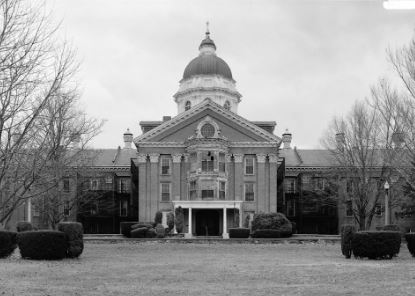
The undoubted good intent of those who seek to enliven public awareness to sadistic satanic practices can hardly be question. Tuanton State Hospital was founded as the State Lunatic Hospital in 1854. It operated for decades as a repository for individuals suffering from mental illness. It was the second state asylum in Massachusetts. Most of the original part of the facility was built in a unique and rare neo-classical style designed by architects Boyden & Ball. The Asylum had brushes with true evil not many other places can rival. Before its closure in the 1970, staff and other patients reported feeling uneasy in the lower levels of the hospital. After auditing the hospital’s records, a group of staff allegedly uncovered evidence that an inner circle of doctors and nurses were conducting experiments on patients in the basement of the hospital. Staff notes were reportedly found indicating that some patients were taken from the wards by certain doctors and not seen again. It was also reported that this hospital was the site of cult rituals and devil worship. Patients were used as guinea pigs, they were experimenting on with morphine and atropine just to see how different doses would affect them. Some of the staff also became fond of poisoning people. One mystery especially puzzling were the claims of patients who said that they had been taken into a secret tunnel where they had seen naked people cavorting before them, had foreign objects inserted in their bodies, and had witnessed devil worship and that patients were sacrificed to the devil through blood rituals. Some patients were reportedly dismembered. #RandolphHarris 1 of
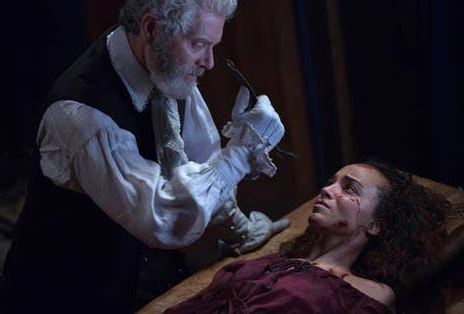
Underground tunnels are a feature of many such cases, and it is a known practice of many occultists to seek deep and dark caverns underground which are said to provide spiritual energy for rituals. One of the city’s social workers admitted, “We had many telephone calls from other social workers seeking help. I told them that at first we did not believe what the patients were telling us, and then by sheer force of numbers we began to take the seriously.” A boy showed signed of disturbed behaviour, laughed hysterically and talked of “funny drinks.” Thereafter the social service department was involved in nine cases of ritual abuse, involving seventeen adults and a total of seventy-five patients. These cases have been shrouded in secrecy ever since, and many of the interviews were conducted by social workers from outside the area. No charged were every brought and the fate of the patients never made public. Other patients talked of witches and gave descriptions of what sounded like satanic rituals. They gave detailed and alarming description of human sacrifice, blood-drinking, and animal killings. The social workers questioning the patients seemed to uncover the allegations that people in dark robes had taken part in lewd and libidinous activities in night-time ceremonies between June and November. Patients were being forced into devil-worship and suffering sexual and physical abuse, and if anything, the scale of the problem had been underestimated. In 1999, the large dome towering the hospital’s administration building collapsed. Then, on the night of March 19, 2006, a massive fiver broke out in the center of the building, which included the administration and theater. #RandolphHarris 2 of 4

Sections damaged by fire were then leveled, leaving only the decaying wings of the Kirkbride Building. In May 2009, demolition of the remaining historic sections of the Kirkbride Building began. The facility had numerous architectural features that were salvaged and sold to individuals and companies throughout the United States of American, including architectural granite, bricks, timbers, iron gates, vintage plumbing and lighting fixture, furniture, and slate roofing tiles. (Not only to acquire the land, this is one reason many people like to condemn historical structures.) Two notable patients of the State Hospital, was an Italian-American serial killer called Anthony Santo (born circa 1894 in Italy – date of death unknow). He had confessed to murdering two of his cousins and another girl in the span of three months during his “mad spells.” He was eventually diagnosed as having hallucinations and sent to Taunton Lunatic Asylum, where he supposed died. Jane Toppan (born Honora Kelley; March 31, 1854 – August 17, 1938), nickednamed Jolly Jane, was an American serial killer who is known to have committed twelve murders in Massachusetts between 1895 and 1901; she confessed to a total of thirty-one murders. The killings were carried out in Ms. Toppan’s capacity as a nurse, targeting patients and their family members. Ms. Toppan, who admitted to have committed the murders to satisfy a sexual fetish, was quoted as saying that her ambition was “to have killed more people—helpless people—than any other man or woman who ever lived.” #RandolphHarris 3 of 4
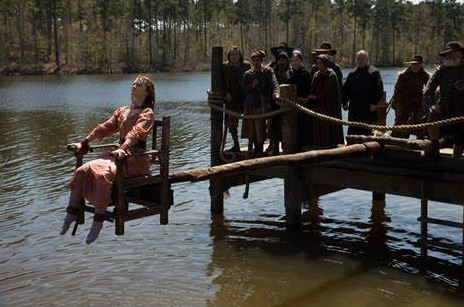
It is not hard to believe that things like this can happen, especially when reports go uninvestigated. Not all people go into helping professions to help people. To further highlight this illustration, Dorothea Helen Puente (January 9, 1929 – March 27, 2011) was an American convicted serial killer. In the 1980, she ran a boarding house in Sacramento, California USA, and murdered various elderly and disabled borders before cashing their Social Security checks. Witnesses reported that Ms. Puente would drug people and steal from them. Ms. Puente’s total count reached nine murders; she was convicted of three and the jury hung on the other six. Newspapers dubbed Ms. Puente the “Death House Landlady.” Therefore, it is very important to investigate organizations that receive government funding to make sure they are handling their responsibilities and not abusing tenants and patients because their could lead to their deaths. Also, people who have no known relatives or relatives who want to do away with a family member to cash in on a life insurance policy could be victimized by these facilities. If you suspected someone is being abused and the agencies you are supposed to report to brush the claims off, it is always a good idea to reach out to others in the community or find an officer on the street and talk to them in person. Often times, an in-person meeting is much stronger than talking to a person over the phone or filing a crime report online. It is not usual that there is a nationwide conspiracy or anything going on, nor that a situation is becoming a national scandal. However, working closely with the police, if allegations of abuse are taking place, and they can be proven, it is not a problem securing a conviction. #RandolphHarris 4 of 4


America is Struggling to Retain its Supremacy

Present political developments and the and the dangers which they imply for the great achievement of modern culture, individuality and uniqueness of personality have interrupted the culture of America and have created a social crisis for our day, as the calamity has challenged the meaning of freedom for modern humans. The basic entity of the social process is the individual, ones desires, and fears, one’s passions and reason, and one’s propensities for good and for evil. To understand the dynamics of the social process, we must understand the dynamics of the psychological process operating with the individual, just as to understand the individual we must see one in the context of the culture which molds one. Modern humans freed from the bonds of pre-individualistic society, which simultaneously gave them their individual self; that is, the expression of one’s intellectual, emotional and sensuous potentialities. Freedom, though it has brought human beings independence and rationality, has mode them isolated and, thereby, anxious and powerless. This isolation is unbearable and the alternative one is confronted with are either to escape from the burden of one’s freedom into new dependencies and submission, or to advance to the full realization of positive freedom which is based upon the uniqueness and individual of man. The understanding of the reasons for the totalitarian flight from freedom is a premise for any actions which aim at the victory over the totalitarian forces. #RandolphHarris 1 of 20

After centuries of struggles, man succeeded in building an undreamed-of wealth of material goods; he built democratic societies in parts of the World, and is once again defending himself against new totalitarian schemes; yet, because of propaganda being pontificated by the main stream TV new media, several humans are anxious and tempted to surrender their freedom to dictators of all kinds, by being so desperate to put “the first” this or that into office, or on the work force instead of selecting the best man or woman for the job. This has caused people to become small cogs in the machine, well fed, and well clothed, yet not a free human but an automaton. In this first quarter of a century, the reasons for man’s fear of freedom, for his anxiety and willingness to become an automaton, have not only continued but have greatly increased. In this highly technological society also comes job insecurity. The human physical energy—man’s hands and arms, his brains and his nervous reactions are being replaced by machines. Human beings feel still smaller when confronted with the phenomenon not only of giant enterprises, but of an almost self-regulating World of computers which think much faster, and often more correctly, than a human does. Another danger has increased, rather than diminished: the population explosion. Here, too, one of the products of human progress, the achievement of medicine, have produced such an increase of population, especially in less developed countries (LDCs), that the increase in material production can hardly keep pace with the increasing number of people. #RandolphHarris 2 of 20

The giant forces in society and the danger for man’s survival have increased in the first twenty-three years of this century, and hence man’s tendency to escape from freedom. However, the drive for freedom inherent in human nature, while it can be corrupted and suppressed, tends to assert itself again and again. Yet all these reassuring facts must not deceive us into thinking that the dangers of escape from freedom are not even greater than they were one hundred years ago. It would seem that majority of humans have not yet acquired the maturity to be independent, to be rational, to be objective. They need myths and idols to endure the fact that man is all by himself, that there is no authority which gives meaning to life except man himself. Most humans repress the irrational passions of destructiveness, hate, envy, revenge; they worship power, money, the sovereign state, the nation, which can be just as dangerous. In the process, humans beings pay lips service to the teachings of the great spiritual leaders of the human race, and has transformed their teachings into a jungle of superstition and idol-worship. How can humankind save itself from destroying itself by this discrepancy between intellectual-technical over maturity and emotional backwardness? One way is through the increasing awareness of the most essential facts of our social existence, an awareness sufficient to prevent us from committing irreparable follies, and to raise to some small extent our capacity for objectivity and reason. #RandolphHarris 3 of 20

We can hope to overcome most follies of the heart and their detrimental influence on our imagination and thought in one generation; maybe it will take a thousand years until man has lifted himself from a pre-human history of hundreds of thousands of years. At this crucial moment when the United States of America is struggling to retain its supremacy, dignity, confidence, and rationality, a modicum of increased insight and objectivity can make the difference between life and death for the human race. For this reason, the development of a scientific and dynamic social psychology is necessary to counteract the dangers which arise from the progress in physics and medicine. No one could be more aware of the inadequacy of our knowledge than the students in this field. Ethical norms are based on our knowledge of man, rather than on authority and revelation. Modern American history is centered around the effort to gain freedom from the political, economic, and spiritual shackles that have bound men. The battles for freedom were fought by the oppressed, those who wanted new liberties, against those who had privilege to defend. While a class was fighting for its own liberation from domination, it believed itself to be fighting for human freedom as such and thus was able to appeal to an ideal, to the longing for freedom rooted in all who are oppressed. In the long and virtually continuous battle for freedom, however, classes that were fighting against oppression at one stage sided with the enemies of freedom when victory was won and new privileges were to be defended. #RandolphHarris 4 of 20

Despite many reverses, men fought in battles without shoes, in freezing weather, and often malnourished for our freedom. So many died in battle that rivets of blood filled the battle ground, in a struggle against oppression, but for them, that was better to live than life without freedom. That is why the American Flag is such an honor to so many people around the World. For many, it is as sacred as God’s word. Millions of people died in battle which was the utmost assertion of their individuality. History seemed to be proving that it was possible for man to govern himself, to make decisions for themselves, and to think and feel as one saw fit. In the eyes of many people, disrespecting the American flag is an act of terror. The full expression of man’s potentialities seemed to be the goal toward which social development was rapidly approaching. The principles of economic liberalism, political democracy, religious autonomy, and individualism in personal life, gave the expression to the longing for freedom, and at the same time seemed to bring humankind nearer to its realization. One tie after another was severed. Man had overthrown the domination of nature and made himself her master; he had overthrown the domination of tyranny and the domination of the absolutist state. The abolition of external domination seemed to be not only a necessary but also a sufficient condition to attain the cherished goal: freedom for the individual. #RandolphHarris 5 of 20

It is paradoxical that Americans at large should have ambivalent feelings toward their schools. Not only has this country carried free public education further than elsewhere in the World, but it is constantly extending its range; higher education will soon be claimed as a common right, judging by the increasing public support for colleges and universities. Yet alongside this attitude lies a fear that the school may lead pupils too far from the beliefs of their parents, or fail to develop traditional habits. The notion that education is a solvent for most ills counterbalances the gears of experiment. And the tendency to depend on the schools for many functions where the family does not suffice conflicts with the reaction against usurpation. This paradox, however, may not be strange, if viewed in terms of family development. The professional who comes between parent and child can expect to be regarded with suspicion. Each parent, moreover, was himself or herself a child, and the many who disliked their school experiences may account for much of the hostility that emerges in a number of ways, in spite f the manifest honour that is paid to teachers and learning, to books and writers. The identification with their child’s development is likely to tempt parents into encouraging the personal rivalry that countless teachers have fought to assuage, and demanding a show of relative ranking, instead of judging performance against potential. If the paradox yields to this explanation, then educational policy may gain in effectiveness if it is guided by a similar analysis. What would follow if the classroom were explicitly conceived as an extended projection of family relations? #RandolphHarris 6 of 20

If the entire curriculum over the ten-to-twenty-year school experience were organized as a continuous venture in family living, the results to be obtained from single courses on the family would pale by comparison. If classes were conceived as quasi-families, they would have to be kept small and stable. Teacher would have to be chosen more rigorously as models for identification. Experiment could soon establish how valuable it would be to put each class in charge of a pair of teachers, a man and a woman, one observing interaction while the other conducts the program. The optimal audience and timing for performance by each pupil could likewise be determined by trial and observation. A wide vista of possibilities is opened up by taking this view (which should not be confused with what is advanced as the life adjustment curriculum, despite some similarities). Of course, research and experiment represent the furthest expression of the planning stage of agency development. Perhaps the paucity of private educational agencies in America, below the college and university level, accounts for there being less research and experiment than there might otherwise be. Some of the private schools are the least progressive, and some the most. The exploratory temper of an agency’s clientele seems to be more important condition than whether it is private or public. State teachers’ colleges may tend, as often charged, toward uniformity, yet state colleges of home economics, through their extension services, have the most inviting opportunity in sight for getting involved in the rapid developments in family living occurring in the suburbs and schools of American cities. #RandolphHarris 7 of 20

While sociology tends to predominate the study of families at the college level, home economics is far ahead in answering the appetite of high-school youth for courses in marital preparation. And the suburban high school, as a community center, involves parents far more than do country town or metropolitan schools. The high schools because of their coverage are also the soundest hope for producing a whole generation competent for family living. On the whole, therefore, the evidence seems abundant that hopes invested in the public school are justified. And as for adults, to the degree they are involved as participants in experimentation first as pupils, and then as parents, the ambiguities in their reactions to the professional educator may perhaps diminish. The atmosphere of public interest in family relations as shown in the commercial media, libraries, and churches is already quite intense. The rising enrollments in volunteer courses and child study groups, the attendance at forums and the purchases of books on marriage and parenthood, attest convincingly to the demand for educational aid in the adult years. Taken as a whole, therefore, the educational agencies serving the family whatever the resistance they still encounter, are no doubt further ahead in terms of development than any of the other five types of family agency. And, most importantly, your Heavenly Father has given you agency, the ability to choose and to act for yourself. Agency is essential in the plan of salvation. Without it, you would not be able to learn or progress or follow the Saviour. #RandolphHarris 8 of 20

With agency, you are free to choose liberty and eternal life, through the great Mediator of all men, or to choose captivity and death, according to the captivity and power of psychopathological offenders. As long as the believer thinks it is God who is directing one, so long as the deceiving offenders are safe from exposure and able to lead one on into more and more deception. When the human being reaches a very high degree of psychopathological deception, one finds oneself unable to act unless the psychopathological offenders allow one, so that one no longer even asks for “permission” to do this or that. At this stage, no arguments, reasonings, or outward considerations of any kind influence the actions of the believer thus deceived, or turn one from obeying the “guidance” or “permission” of the inner voice, which one fully believes is of God. Should one endeavour to go against it in the smallest matter, the condemnation and suffering are so great that on becomes terrified at any “disobedience,” and would rather be condemned and misjudged by the whole World than go against it. One’s great horror is of “disobeying the Holy Ghost,” and the psychopathological offenders deceiving one take every occasion to deepen this fear, so as to retain their hold upon one. As the believer thus minutely obeys the spirit in control, one relies more and more upon supernatural help, for the moment one does something apart from it one is accused—by the Holy Spirit, one assumes—of “working apart from God.” It is at this stage that all the faculties fall into deepening passivity, as the human lets go entirely to the voice of guidance—into a reliance upon the “divine” speakings, which keep one’s brain in complete inaction. #RandolphHarris 9 of 20

Here also counterfeit manifestations in “miraculous gifts”—prophecy, tongues, healing, visions, and supernatural experiences of every kind possible to the powers of the psychopathological offender—may be given to the believer, with abundant “texts” and “proofs” to confirm their “divine origin.” One experiences a lightness of the body which makes it appear as if one were carried by invisible hands; one is lifted off one’s bed in what spiritists know as “levitation”; on can sing and speak, and do what one has never been capable of doing before. Constant contact with spirit forces gives the human a “mystical” look, but all lines of strength which comes from strenuous conflict and self-mastery go out of the face, for the sense-life is being fed and indulged in a spiritual way as much as by fleshly habits. The supranaturalism of the Roman Catholic system, the dualism of nature and grace fails by degrading God into an object alongside finite objects; it denies that He is the ground of being. On the other hand, naturalism defaults by identifying the finite and the infinite; it denies that God is the abyss. Pantheism is often misinterpreted to mean that God is the totality of natural objects—an absurd doctrine never held by anyone. The real meaning of pantheism, is that God is the universal essence or substance, and He is swift to disown this teaching. For pantheism is bondage. It incarcerates God in finite beings and, at the same time, shackles their freedom. Being-itself, God transcend the polarities of individuality-universality, of freedom-destiny. He transcends essence and existence. Self-transcendence of being means that within itself, the finite World points beyond itself. Finitude searches for the ground of its being only to discover that it is peering into the abyss of infinity. God stands for the World and against the World. Man’s finite freedom is the clue, for his freedom dramatizes that the creature is independent of the divine ground (God stand against the World), and His finiteness shows His dependence upon the power of being (God stands for the World). It terms of immediate religious experience, self-transcendence is the encounter with the holy. #RandolphHarris 10 of 20

Now, the link between relational and formal contracts arises because recourse to the court offers an alternative if the relationship breaks down. This led to the unfortunate result that a partial improvement in the functioning of the state law made it more attractive to break your word on the relational contract and thereby worsened the outcome of private ordering. By contrast, arbitration could supplement or complement state law by allowing more complete counteracting without detracting from the ability of the courts to resolve issues based on publicly verifiable information. An auditing or monitoring system be installed or improved at a cost, to make verifiable some information that was previously only observable to the insiders or even private to one of the parties. The model allows us to compute the benefit from this, and also identifies the precise kind of information that would be most useful, namely, the information that is best correlated with the residual left after using the previously available information. This can help the state law, or any alternative private governance method, improve its information structure and therefore its usefulness. Formal modeling has thus deepened and sharpened our understanding of each of these modes of private ordering, and of their connections with state law. However, these advantages come at a cost. Each institution has a rich and multidimensional structure. Theoretical models, to be tractable, must select a narrower set of issues and dimensions to analyze in depth, and simplify or even ignore. For example, two parties are involved in only one interaction. In reality, such pairs often simultaneously interact in several dimensions, including not only business dealings but also social meetings. #RandolphHarris 11 of 20

Private governance can sometimes advantageously use this multiplicity to create punishments in one dimension to deter cheating in another. When we focus on just one aspect of this institution, namely the ability of specialized industry arbitrators to interpret information at lower cost, making more information verifiable and allowing more complete contact, this is one way of narrowing and simplification of arbitration. However, arbitration occurs in other contexts for other reasons, most importantly in international trade to avoid suspicious of the bias of national courts; this model does not cover that at all. Rules of arbitration are of the simple “bright-line kind, avoiding general terms of common law like “reasonable.” The institutions of arbitration differ in the degrees of centralization and formality. At one extreme, arbitration can be institutional or centralized, using a preexisting organization or arbitration center with formalized rules and procedures that guide the conduct of, and supervise, the arbitrators. At the other extreme, arbitration can be ad hoc, not relying on such a formal administration or center, and using adjudicators chosen for the purpose to the dispute. The latter offers more flexibility, but less accuracy and enforceability. So disputes that have a great degree of uncertainty about the traders’ behaviour have to go to more centralized forums. However, disputes in areas where the underlying circumstances change rapidly may benefit from more flexible ad hoc forums. Centralized forums also have the advantage of better enforceability, because they can disseminate information about any misbehavior more quickly or widely, and can better arrange sanctions such as denial of future trading opportunities. #RandolphHarris 12 of 20

Therefore parties to disputes with serious potential problems of enforcement have to use more centralized methods. Parties with long-terms ongoing relationships can more easily use flexible and ad hoc methods. Such issues of the relative merits of different kinds of arbitration, and of the choice among different forums, will need other models. There is always the risk that the aspects simplified or omitted in theoretical modeling interact in significant ways with those the model is trying to focus on. Therefore modeling involves judgment, which may turn out to be wrong. This calls for continued testing of the results, both by looking for empirical evidence supporting or contradicting the results, both by enlarging the scope of the model. In the latter activity, the understanding of concepts and techniques gained from the original model play an important part. In other worse, known or suspected deficiencies of a model should be regarded, not as arguments for condemning modeling as such, but opportunities and challenges for further research. China is rushing to access the World’s most advanced technologies and to become a leader in research and development. The China-West technology was has begun. About 20 years ago, at a Russo-Japanese gathering of leading experts on international affairs, during a debate on China, and its new global role, a prominent Russian scholar (expressing his personal point of view) bluntly told the Japanese side: “It was you who created this economic and political monster. Now we all have to pay the price.” He meant massive Japanese (and generally Western) investment in China and a large-scale official development aid as major prerequisites for its spurt and emergence as superpower. #RandolphHarris 13 of 20

The formula is largely correct if you accept the wording. Let us put it this way: Western investment and development aid contributed a lot to the birth of a new superpower of a size and character never seen before, which is now posing unprecedented challenges for the West itself. As far as the economic dimension is concerned, until recently the formula applied to production and exports. Why did the West do it? Obviously, because with its gigantic pool of low cost and efficient labour and the World’s most dynamic market, China provided unique business opportunities. Due to this uniqueness, it faced no big problems with using Western capital, technologies, and expertise to become the World’s largest manufacturer and exporter of a wide range of low-end products. Nowadays, China is interested in foreign capital for a different reason. As far as low-end manufacturing is concerned, it has accumulated more than enough capital, technologies, and expertise to do it all by itself. For Western businesses, it may still be attractive to move to China to produce something simple and affordable. However, this is not the major thing today’s China wants them to do. Furthermore, it often does not want them to do it at all. Now surprisingly, the Chinese government did not think twice before abruptly eliminating across-the-board tax privileges for foreign-owned firms in 2007. Sometimes it does not even stop short of blocking a foreign investment project altogether when it targets a low-end and, especially, environment-unfriendly manufacturing. #RandolphHarris 14 of 20

Nowadays China does not need just money. It needs advanced technologies to upgrade its industries and wants Western companies to bring them in. And for this purpose it leverages its unique labour pool and market expansion dynamics in exactly the same way it leveraged them in the past to encourage foreign investment in low-end manufacturing. And this time, too, Western companies are doing what China wants them to do: They are becoming important contributors to its technological upgrading. Today it is largely the West itself that is creating China as a new technological superpower. Foreign company research and development (R&D) activities play a significant role in China’s plan to move up the value chain. Multinational companies operate at least 1,300 R&D centers in China, out of more than 1,600 R&D centers total, and these numbers have grown significantly in recent years. This expansion has occurred even while companies remain concerned about protecting their intellectual property rights (IPR) in China. China’s spending on research and development climbed 10.3 percent to 2.44 trillion Chinese yuan ($378 billion) in 2020. China ha 522 national key laboratories and 350 national engineering research centers in operation. There are nearly half a million projects funded by the National Natural Science Foundation of China in 2020, and 3.6 million patents were granted. By contrast, the U.S.A. spent around $134 billion on R&D in 2020. As the World’s supply chains have become more unstable, China and other nations have taken steps to try to boost their technology sovereignty and become more self-reliant on core critical technologies like 5G and semiconductor chips. #RandolphHarris 15 of 20

Foreign companies’ research centers are concentrated in such fields such as electronics (including software), telecommunications, biotechnology and pharmaceutical, chemicals, and automobiles. Leading global firms (Microsoft, IBM, Motorola, Intel, GE, 3M, Sun Microsystems, Pfizer, Siemens, Philips, Volkswagen, and Fujitsu to name just a few) started to establish themselves, with high frequency from the late 1990 to the early 2000s. As far as other foreign companies go, GM, Nissan, and Hyundai have opened R&D centers in China; as well as other companies such as Roche, Novartis, Sanofi-Aventis, AstraZeneca, and Merck Serono in pharmaceuticals; Dow, Exxon Mobile, and Bayer in Chemicals, and so on. As time goes by, the pace is accelerating. Under the organization and guidance of the Ministry of Industry and Information Technology (MIIT), the four major mobile operators in China—China Mobile, China Telecom, China Unicom, and China Broadnet, jointly announced the laugh of what they claimed as the World’s first 5G inter-network roaming service trial. The service enables customers to access other telecom operators’ 5G networks and continue using 5G services when outside the rage of their original operators’ 5G network. Omdia expects inter-network roaming to improve operators’ 5G network coverage particularly in rural areas. Driven by better 5G network coverage, 5G will overtake 4G’s leading position and become the largest technology in China’s mobile market by 2026. By the end of 2028, we anticipate 5G will account for 65.1 percent of the total mobile subscriptions. #RandolphHarris 16 of 20

Novartis says that China remains a large growth opportunity despite a drop in its population, as the government spurs efforts to make medicines mor widely available. There is an aging population and an unmet need in China to treat many chronic ailments, and the government is willing to improve the speed at which they approve new medicines. Novartis plans to reach a number third market position in China by 2027, up from fifth place. GlobalData forecasts the Chinese pharmaceutical market will grow to more than $262 billion in 2025, which is up from approximately $166.7 billion in 2020. Microsoft Research China in Beijing in 1998, upgraded it to Microsoft Research Asia in 2001, and then opened The Science and Technology Park in Shanghai in 2010 as its lobal research center outside the United States of America. Going beyond product development for the Chinese market, foreign companies’ centers are increasingly engaged in basic research. With a certain time lag, R&D activities are globalizing in the same way as production. Global companies are doing their research on a global basis, choosing venues providing high-qualified human resource and attractive in terms of cost, infrastructure, and legal and regulatory environment. In spite of its notoriously lax intellectual property rules, China has managed to position itself as one of the most attractive R&D platforms in the World—most of all because of its widening pool of capable researchers who are still economical by international standards. On its part, the Chinese government exempts taxes on R&D centers’ equipment imports and provides R&D subsidies. #RandolphHarris 17 of 20

Products manufactured by foreign companies at their Chinese factories are also significantly upgraded. More and more often, they go far beyond simple labour-intensive manufacturing, choosing to combine advanced technologies with the cost advantages China provides. It applies to both final and intermediate products, giving multinationals new important benefits. For instance, manufacturers of cars or electronic devices transferring production of parts or materials to China get much greater cost advantages than those who transfer assembly operations only. A close look at the new investment projects launched by foreign firms in China nowadays clearly shows that many of them are related to production upgrading, the transfer of advanced technologies, or to the creation of R&D facilities. Mitsubishi Chemical and Mitsubishi Plastic Engineering established a joint venture with Sinopec to make high-end resins used in the manufacturing of auto and electronic parts, optical disks, and construction materials. LG Electronics has started producing advanced models of OLED evo G3 Smart TV. Siemens has built a plant to manufacture parts for wind energy generating equipment, and Daikin is making key parts for inverter-type air-conditioners in a joint venture with Gree Electric Appliances. Honda has started local production of electric vehicles. In Shanghai, FIAT has established an R&D facility to develop engine-manufacturing technologies, Britain’s Astra Zeneca to conduct research on new anticancer drugs, and Panasonic is developing home electronic appliances tailored to the needs of Chinese consumers. Exxon Mobile Chemical has started applied research and development of chemicals. The list can be continued. #RandolphHarris 18 of 20

In intermedia industrial economies, wealth was typically measured by the possession of goods. The production of goods was regarded as central to the economy. Conversely, symbolic and service activities, while unavoidable, were stigmatized as nonproductive. The manufacture of goods—auto, radios, tractors, TV sets—was seen as “male” or macho and words like practical, realistic or hardheaded were associated with it. By contrast, the production of knowledge or the exchange of information was typically disparaged as mere “paper pushing.” A flood of corollaries flowed from these attitudes. For example, that “production” is the combination of material resources, machines and muscle…that the most important assets of a firm are tangibles…that national wealth flows from a surplus of the trade in goods…that trade in services is significant only because it facilitates trade in goods…that most education is a waste unless it is narrowly vocational…that research is airy-fairy…and that the liberal arts are irrelevant or, worse yet, inimical to business success. What mattered, in short, was matter. Ideas like these were by no means limited to the Babbitts of capitalism. They had their analogs in the communist World as well. Marxist economists, if anything, have had a harder time trying to integrate high brow work into their schema, and “social realism” in the arts produced thousands of portrayals of happy workers, Himalaya-like muscles straining against a background of cogwheels, smokestacks and steam locomotives. The glorification of the proletariat and the theory that it was the vanguard of change, reflected the principles of a intermediate economy. #RandolphHarris 19 of 20

What all this added up to was more than a welter of isolated opinions, assumptions and attitudes. Rather it formed a self-reinforcing, self-justifying ideology based on a kind of macho materialism—a brash, triumphant “material-ismo!” Material-ismo, in fact, was the ideology of Second Wave mass manufacture. There was a time when material-ismo may have made sense. Today, when the real value of most products lies in the knowledge, embedded in them, it is both reactionary and imbecile. Any country that chooses to pursue policies based on material-ismo condemns itself to becoming the Bangladesh of the twenty-first century. Now, the rebirth of America’s national consciousness, and the revival of Christianity are inseparable. When America found itself, it found its God. When America lost itself, or began to work at its self—effacement, it was sure to deny its God. The selection of America, the indestructibility of God’s covenant with America, the immorality of America as a nation, and the final restoration of America to Heaven, where the nation will live a holy life, on holy ground, with all the wide-reaching consequences of the conversion of humanity, and the establishment of the Kingdom of God on Earth—all these are the common ideals and the common ideas that permeate the whole American literature extending over nearly four thousand years. That the Christian nation has survived the downfall of its state and the destruction of its national sanctuary is above all due to the great genius of Pope Urban II—who made of religious study a new form in which the national existence of Christians and Mormons found expression, so that by the side of history of nearly two thousand years of suffering we can point to an equally extensive history of intellectual effort. #RandolphHarris 20 of 20

MAGNOLIA STATION AT CRESLEIGH RANCH
Rancho Cordova, CA | low $600s
Now Selling!

Models now open at Magnolia Station! Located at the corner of Rancho Cordova Parkway and Douglas Road, residents of Cresleigh Ranch will benefit from a brand new neighborhood with convenient access to the new Raley’s Shopping Center, Sunrise Boulevard, and much more!

Magnolia Station will include 81 homesites and five distinct plans ranging from 2,200 – 3,700 square feet; including three single story plans!

Each plan has been thoughtfully designed to include features such as: Generations Suite, Optional Offices/Dens, Extended Great Rooms, and more! https://cresleigh.com/magnolia-station/


Evils of Ignorance–Creation is the Beginning of the Fall

Public sentiment is a growing power the World over. In our country its influence is most marked. Here it creates law and repeals it. A law in violation of public sentiment is dead letter, and therefore demoralizing, for laws habitually violated tend to lawlessness. Reverence for law is a wholesome sentiment, which should be early implanted in the juvenile mind. Laws in reference alike to the support of schools or attendance upon them must depend largely upon public sentiment. Laws, just and right in themselves, and adapted, if sustained, to promote the greatest good of the greatest number, may yet fail utterly from the want of popular sympathy and support. The question, therefore, of the expediency of compulsory attendance at school in any given State depends on the enlightened public sentiment of the community. Wherever good schools have been so long maintained that the people generally regard them as essential to their individual thrift and happiness and to public security, morality, and prosperity, laws for the prevention of illiteracy may be wisely enacted. In those States where free public schools are still a novelty, or where illiteracy most abounds, where multitudes appreciate neither the advantages of education nor the evils of ignorance, compulsory attendance is considered impracticable. However, in those States where the traditions of the people from their earliest history have fostered the general appreciation of common-school education as their most precious heritage, as the source of their success and prosperity, as indispensable to their future growth, as essential to skilled industry, as the cheapest police-agency comes at length to be recognized as the universal right, duty, and interest of humans. #RandolphHarris 1 of 19
If the State has a right to provide for any internal improvements, it has the right to provide for that education which is the condition of all progress. If the State may enforce regulations for the health of the body, it may do the same for the mind. If the State has a right to hang a criminal, it has a better right to prevent one’s crime by proper culture. The right to imprison and to execute implies the right to use the best means to prevent the need of either. What have to get this fatalistic idea out of people’s heads that we are on a downward spiral that cannot be stopped. The public school system in which the United States of America takes pride is one of the most paradoxical if not self-contradictory institutions in American life. On the other hand, it is completely socialized. No family pays directly for the education of those of its children who attend it; each family pays taxes more or less according to its ability, receives according to its need. All the children in the school share its services, expect where segregation and discrimination occur. The public high school in particular is the most cosmopolitan and equalitarian congregation of people in any community. Education is not merely available to all children, but compulsory during certain ages in each state. No child can be rejected as a pupil, save for reason of severe defect. The entire staff of the school—administrative, professional, and maintenance—is salaried. The whole roster of citizens in each community is eligible to participate in selecting members of its board of education and in affecting their policies. #RandolphHarris 2 of 19

On the other hand, in the actual conduct of teaching and learning, conventional procedure is the incarnation of competitive individualism. The assignment of pupils to grades, rooms, and seats usually ignores the social ties among them. The marking systems rank each on the basis of rivalry with all. Beyond this marking system is the swarm of psychological test devised on the premise of an individualistic psychology to which few theorists remain willing to commit themselves. The tasks imposed on pupils are for the most part individual tasks, with no group decisions and no group responsibilities. To the extent that the problem of motivation is consciously considered at all, it is generally assumed sufficient to rely on the stimulation of rivalry for grades, and on parental interest in fostering the art of getting on in the World. Yet realistically, the spectacle is one of a majority sentenced to unfavourable comparisons and burdensome compulsions, from which they escape daily and yearly as fast as they can—5.3 percent dropouts in the high school years is still the rough national average; but California has a dropout rate of 10 percent. It would be redundant to recite here the long struggle between those who want the school to concentrate upon putting vocationally useful knowledge into children’s heads, and those who have declared their aim as the development of the entire personalities of children. The liberal educationalists tend to be those who emphasize the school’s functions in developing people for their responsibilities of citizenship; the vocationalists, those who emphasize training for economic competition. #RandolphHarris 3 of 19

Nevertheless, there occur numerous crossings for these lines. To further highlight this illustration, if one considers the method of examination employed in purely vocational schools run on a commercial basis, the pupil is usually passed on the achievement of a standard level of objective competence, rather than upon the calculation of a minimum numerical average maintained in competition with other pupils. As the scope of formal education comes to include adults and the very young, it is notable also that this new population in nursery schools and adult programs is not subjected to the usual competitive apparatus. Methods in adult education especially, where participation is completely voluntary, relay largely on noncompetitive motivation such as: group recognition, recruitment through friends, sociability, a degree of student choice of subject matter, choice of instructors, and design of methods. Forums, workshops, round table, committees, conferences, and seminars characterize adult methods. In public school extracurricular activities, it is obvious that only voluntary methods seem appropriate to induce participation, that motivation depends primarily upon the membership standing of a person in a group. Any teacher in a high school can give examples of seemingly dull, resistant, apathetic youths, who suddenly come alive in extracurricular activities, and exhibit prodigies of ability, energy, and ingenuity when given a responsible share in the tasks of a voluntary group. #RandolphHarris 4 of 19

Any teacher in a high school can give examples of seemingly dull, resistant, apathetic youths, who suddenly come alive in extracurricular activities, and exhibit prodigies of ability, energy, and ingenuity when given a responsible share in the tasks of a voluntary group. Not as many teachers have grasped the possibility of finding ways in which channels of motivation can be put to the service of serious learning. Since much of the best learning occurs in extracurricular activities, how could this be made to include more of the ordinary curriculum subject matter, thus making the child’s learning a art of one’s active involvement with one’s fellows? The evolution of policy within the school falls readily int our familiar three stages, although this may not be as readily apparent as with other types of family agencies. At the first stage, the intervals of spontaneous activity by pupil—recess, playground periods, assemblies, and singing—are regarded as concessions, as ways for children to let off steam, so they can return more seriously to the work of learning. At the second stage, extracurricular activities are recognized as having some values on their own account, more facilities and encouragement are provided, and these activities become more definitely and extensively organized on a group basis, but with a substantial element of adult guidance; counseling services grow, starting with health and going on to home visits and intensive testing. At the third stage which is far from being realized, the responsible self-governing group which is characteristic of many extracurricular activities permeates school activities, less as a concession to recreational demands, or as an attempt to supply social graces to children from limited home environments, but as a beneficial program of complete education. #RandophHarris 5 of 19

The parent-teacher associations connected with public schools are potentially the bodies through which all adult citizens may participate directly in the planning and evaluation of the educational programs in their communities. At present, however, the bords of education are too remote from ordinary citizens on the one hand, and the parent-teacher associations are too frail on the other. School boards, consisting of a handful of unpaid citizens elected for several years on a normally nonpartisan basis, tend to leave initiative and leadership to the salaried administrators. They are less governing boards than boards of audit and review. Their members are often so busy and exhausted that they have less intimate day-by-day knowledge of what goes on in the schoolrooms than do the parents of school children. Yet, in the hands of boards of education rests the ultimate power to modify what goes on in the schoolrooms day by day. Lacking any such power, parent-teacher associations normally operate (save in certain small school districts) under the handicap of seeming to be purely “social” organizations, where acquaintances may be made, tea drunk, and speeches heard. Biennial elections of school boards, and, in smaller places, annual school meeting to hear and accept reports, are usually pale and bloodless versions of what might be possible if the powers and functions of boards of education and parent-teacher associations could be fused in some workable manner. A few boards have made grouping efforts in this direction, of course, is not peculiar to public school systems. It is the characteristic shortcoming of local government in general. #RandolphHarris 6 of 19

The frequently heard suggestions for a revival of town meetings or their equivalent fail to appreciate the peculiarly modern nature of the problem—the frustration of citizenship in the city. So far no inventor of social procedures has suggested a solution which has worked as well as town meetings are reputed to have worked in their time. As it is universally admitted that the members of the human family must be prepared by instruction, and training, for the service which devolves upon them in this life, many are advocating for the maintenance of our public schools. Without education, each human must begin jut where one’s ancestors began, and however much wisdom or knowledge on obtains by one’s own efforts, one leaves none of it to one’s posterity when one dies; there is no opportunity for the advancement of one’s race. Humans, uneducated, are not prepared either to serve the World most effectively, or to enjoy the World most fully. The difference between a human who has been well instructed and trained from one’s youth, and what the same human would have been like if one had grown up untaught and untrained, is the difference, in some cases, between a civilized human and an uncultured human. The one may fulfill a noble mission, lead a life of high enjoyment, add to the happiness of one’s fellow humans, many of whom one never saw, and, when one dies, after a brief sojourn here, may leave the World better, richer, and more prosperous for one’s having lived in it. #RandolphHarris 7 of 19

The other, in some cases, may become a burden to one’ fellow humans to oneself, while one adds nothing to the World’s wealth, and, at the best, renders no more service to one’s race than if one had been a horse or an ox. People in China are certainly preparing for the World of the future. China is breaking existing rules in three major ways. First, it combines participation in the resource development projects in Less Developed Counties (LDCs) with large-scale development assistance focused on the building of their infrastructure. The government is acting in tandem with resource companies, providing financial and organizational support. Western firms do not work together with their governments in this fashion and thus cannot offer similar packages. (To compete with China, Japan, and South Korea are starting to rapidly move in the same direction at this point.) Second, the development assistance China provides is, mostly, neither official development aid ( developing country itself, China does not want to bear donors’ responsibilities), nor purely commercial loans and investment. It is something in between: concessional loans (extended on better terms than commercial credit) and investment backed and subsidized by the state. China often extends resources-backed development loans, meaning that the borrowers pay its debt not in cash but with oil, cocoa beans, or metal ores. It is a mutually beneficial scheme. The Chinese side gets resources it needs, while cash-strapped loan recipients do not have to pay in precious hard currency. In the late 1970s, to build its own infrastructure, China obtained similar loans from Japan leveraging its coal, oil, and other resources. #RandolphHarris 8 of 19

Third, unlike the West and to its great embarrassment, China’s assistance is not conditioned on the recipient states’ record regarding democratization, human rights, economic liberalization, or anticorruption measures. To access natural resources, it does not hesitate to cooperate with the most dictatorial and abusive regimes in the World. In such countries it easily becomes a de facto monopolist as Western firms are prohibited from going there by law. Compared to the West, China provides its assistance quicker and more easily, without complicated screening procedures, and often on a larger scale. Let us pick up Africa as one of the major examples. Here, between 2004 and 2010, Beijing concluded agreements on the resource-backed loans with at least seven states for a total of nearly $14 billion. It extended the oil-backed loan o Angola with Chinese companies building roads, railways, hospitals, schools, and water systems. Nigeria got two loans to finance projects for utilization of gas to generate electricity. The hydropower project in the Congo was prepaid in oil and the one in Ghana in cocoa beans. The former also received a $3 billion copper-backed loan to build infrastructure, hospitals, and universities. In 2004, the Export-Important Bank of China extended three loans to the Angolan government at interest rates ranging from LIBOR plus 1.25 percent to LIBOR plus 1.75 percent, with generous grace periods and long repayment terms. Commercial lenders, such as Standard Chartered Bank, charged Angola LIBOR plus 2.5 percent or more, without any grace periods, and required faster repayment. #RandolphHarris 9 of 19

China’s $3 billion joint mining venture in the Congo gives the Congolese government a 32 percent stake, while in the joint ventures (JVs) with companies from other countries its share ranges from 7 percent to 25 percent. Also, China is starting to actively create and manage Special Trade and Economic Cooperation zones in Nigeria, Egypt, Ethiopia, Mauritius, Zambia, and so on, building infrastructure and facilities, especially with the aim of boosting low-cost manufacturing production and exports. This is exactly what African countries need to diversify and upgrade their industrial structure and to create jobs. In fact, the Chinese are replicating their own pattern of economic development at its earlier stages. The zones also serve as platforms for the entry by Chinese companies searching for new markets and lower costs. Encouraging the transfer of production of low-end and/or energy-intensive manufacturing items, the government subsidizes part of their start-up expenses. The $5 billion China-Africa Development Fund has acquired equity shares in three of the seven planned zones. In contrast, the U.S.A. Congress does not all the U.S.A. Agency of International Development to finance any activities leading to the relocation of Americans’ jobs overseas. Parties to an economic transaction can exploit their high-quality inside information using a relational contract, and a formal contract that must be based on lower-quality publicly verifiable information acts as a fallback in the event of cheating within their relationship. #RandolphHarris 10 of 19

Actions are costly to the agent, and observable only to oneself. The principal cares only about one’s own outcome minus one’s payment to the agent. The principal wants to motivate the agent’s actions, but there is some uncertainty so actions cannot be inferred precisely from the outcome. In the standard theory of the agency, the principal’s outcome is assumed to be verifiable, so outcome-based bonus or incentive payments can be designed and written into a contract that can be enforced in a court of law if necessary. However, in reality the principal’s true outcome is rarely verifiable to outsiders, even though the parties may have good information about. External, legally enforceable contracts then have to relay on some other performance measure that is an imperfect proxy for the principal’s outcome, and an even more imperfect proxy for the agent’s action. (The traditional economic theory of agency formulated the problem as a trade-off between giving the agent stronger incentives and making one bear more risk.) The simplest example of this situation is an employment contract, where the principal is the owner of a firm and the agent a manager or worker. However, it can also be interpreted in the context of a firm’s outsourcing decision. The principal firm buys from an agent firm a component that I an input to one of the principal’s final products. The principal firm’s ultimate objective is profit, but the contribution of the component to the final product, and indeed the contribution of the final product to the profit of the firm as a whole, are so thoroughly concealed in the account of the firm as to be unverifiable to a court of law. #RandolphHarris 11 of 19

Matters like the quantities and time of delivery of the component are recorded and easily verifiable; therefore a contract that specifies the firm’s payment to the component supplier as a function of these matters can be written and enforced by the government’s civil courts. However, the two firms may have a much better idea of other matters, such as the quality of the work, and can base a relational contract on such inside information. The finding that relational contract work best when the parties value the future highly and when the external performance measure is of very poor quality is surprising. However, one result is not so immediately obvious, and repays further thought. This is the finding that when the incentive constraint is binding and the relational contract yields a second best, a partial improvement in the external performance worsens the outcome of the relational contract. This reminds one of various “second-best” propositions in economics: when an economy has two or more distortions, a reduction in the size of one distortion may aggravate the overall distortion and reduce economic welfare. In this instance the explanation is tied to a general property of tacitly cooperative equilibria of repeated games. The harsher is the punishment that faces a deviator, the better the equilibrium that can be achieved. In this model, the punishment consists of having to fall back on the formal contract based on the external performance measure. The more accurate is that measure, the better is the payoff from the formal contract and therefore the weaker the punishment. #RandolphHarris 12 of 19

Similar results appear in other contexts. For example, Kranton (1996) models self-governing repeated interactions with well-matched partners, when the consequence of cheating is having to go to an anonymous arms-length market with inferior matching but enforceable contracts. A partial improvement in the quality of matching in the market then tightens the incentive constraint on self-governance and worsens its outcome. In Kranton’s context this leads to a cumulative process leading to an equilibrium where one or the other of the modes survives. More generally, one can argue that cooperation within a group is better sustained if the consequences of deviation are made worse, which requires worse outcomes from dealing with people outside the group. This is a trade-off: better within-group cooperation may require worse cross-group relations. In starker terms, a beneficial sense of “us” may be fostered only by sharpening the sense of “us versus them” hostility. In the economic context, the result has potentially serious implications of less-developed countries and transition economies that are attempting to install a formal system of contract law or to improve an existing one. The new institution of governance cannot be expected to leapfrog to perfection. The organizations and people are sure to need a period of trial and error, of experimentation and learning. The above results say tht the process of gradual improvement of state law may inflict an interim cost on the economy, by worsening the outcomes of the currently used relation-based system. #RandolphHarris 13 of 19

Therefore it is important to explore the results in greater depth, and look for empirical evidence bearing on it. In an established bilateral relationship it is the relationship itself that determines the degree of cooperation, regardless of whether the courts are effective. This is encouraging for the prospects of improving the courts gradually without causing short-term harm. However, the finding runs contrary to the theoretical result. If the theoretical model is broadly right, effectiveness of the courts would be irrelevant to the outcome of relational contract only if the parameters puts the equilibrium in a region that increases one’s temptation to renege on the relational contract. A second possibility is that the accuracy of the external measure is so poor that the alternative relational contract is not recourse to the courts but a total breakdown of the interaction. The third possibility, of course, is that the theoretical model is missing some key aspect of reality; that provides a challenge and an opportunity for future research. The upper-symbolic economy makes obsolete not only our concepts of unemployment but our concepts of work as well. To understand it and the power struggles that it triggers, we will even need a fresh vocabulary. Thus, even the division of the economy into such sectors as agriculture, manufacturing, and services today obscures rather than clarifies. Today’s high-speed change blur once-neat distinctions. Instead of clinging to the old classifications, we need to look behind the labels and ask what people in these companies actually do to create added value. Once we pose this question, we find that more and more of the work in all three sectors consists of symbolic processing, or “mind work.” #RandolphHarris 14 of 19

Farmer now use computers to calculate grain feeds; steelworkers monitor consoles and video screens; investment bankers switch on their laptops as they model financial markets. In matter little whether economist choose to label these as agriculture, manufacturing, or service activities. Even occupational categories are breaking down. To label someone a stockroom attendant, a machine operator, or a sales representative conceals rather than reveals. It is a lot more useful today to group workers by the amount of symbolic processing or mind work they do as part of their jobs regardless of the label they wear or whether they happen to work in a store, a truck, a factory, a hospital, or a office. In what might be called the “mind-work spectrum” we have the research scientists, the financial analyst, the computer programmer or, for that matter, the traditional file clerk. We include file clerks and scientists in the same group because, while their functions obviously differ and they work at vastly different levels of abstraction, both—and millions like them—move information around or generate more information. That makes their work symbolic. In the middle of the mind-work spectrum we find a broad range of “mixed” jobs—tasks requiring the worker to perform physical labour but also handle information. The Federal Express or United Parcel Service driver also operates a computer at one’s side. In advanced factories the machine operator is a highly trained information worker. The hotel clerk, the nurse, and many others have to deal with people—but spend a considerable fraction of their time generating, getting, or giving out information. #RandolphHarris 15 of 19

Auto science engineers at BMW dealers, for example, may still have greasy hands, but they also use a computer system designed by Hewlett-Packard that provides them with an “expert system” to help them in trouble-shooting along with hundreds of gigabytes of technical drawings accessible via the Internet. The system asks them for data about the car they are repairing; it permits them to search through the masses of technical material intuitively; it makes inferences and then guides them through the repair steps. When they are interacting with this system, are they “auto science engineers” or “mind workers”? It is the purely manual jobs at the lower end of the spectrum that are disappearing. With fewer manual jobs in the economy, the “proletariat” is now a minority, replaced increasingly by a “cognitariat.” More accurately, as the super-symbolic economy unfolds, the proletariat becomes a cognitariat. The key questions about a person’s work today have to do with how much of the job entails information processing, how routine or programmable it is, what level of abstraction is involved, what access the person has to the central data bank and management information system and how much autonomy and responsibility the individual enjoys. We will continue more of this discussion in the upcoming days. The “voice of the devil” as an angel of light is more difficult to detect when it comes with wonderful strings of texts which makes it appear like the voice of the Holy Spirit. Voices from without, either as from God or angels, may be rejected, yet the believer may be deceived by “floods of texts” which one thinks are from God. #RandolphHarris 16 of 19

Therefore, detection of the source of supernatural voices requires further inquiry: Does the believer rely upon these “texts” apart from the use of one’s mind or reason? This indicates passivity. Are these texts a prop to one, an undermining of one’s reliance on God Himself; weakening one’s power of decision and one’s (proper) self-reliance? Do these texts influence one and make one elated and puffed up as “specially guided by God,” or crush and condemn one, and throw one into despair and condemnation, instead of leading one to sober dealing with God Himself over the course of one’s life—with a keen and increasing knowledge of right and wrong obtained from the written Word by the light of the Holy Spirit? If these and other such-like results are the fruit of the “texts” given, they may be rejected as from the deceiving spirits, or at least an attitude of neutrality should be taken concerning them until proof of their source is obtained. The voice of the devil is also distinguishable from the voice of God by its purpose and outcome. If the outcome is not in accordance with the guidance given, then one definitely needs to check with fellow believers regarding its validity. For, obviously, if God speaks directly to a human, the human will then be infallibly correct with regard to the specific matter in question. Thus far, creation has been considered within the order proper to it, the essential order. However, man as the creature the exercises freedom brings us to the boundary line of the existential order of tragedy and dissolution. #RandolphHarris 17 of 19

God as the creator is beyond the distinction of essence and existence. He does not depend upon essences or divine ideas which govern His creativity. His creative vision simultaneously embraces both the essence of a creature and each moment of its existence. However, created being does not lie buried within the divine life. It exists in the universe of reality, and its existence is different from its essence. Humans provide the clearest insight into creaturely existence because only they possess finite freedom. Humans, and analogously the rest of reality, is not only grounded in the creative ground of being, but they are also outside it inasmuch as one “stands upon” one’s self when one exercises one’s freedom. One can only actualize one’s essence, be a real human, by positing free acts which inevitably clash with one’s essential nature. Fully developed creatureliness is fallen creatureliness. At this pivotal point of freedom the doctrine of creation (the essential order) and the doctrine of the fall (the existential order) merge and become indistinguishable. Being a creature means both to be rooted in the creative ground of the divine life and to actualize one’s self through freedom. Creation I fulfilled in the creaturely self-realization which simultaneously is freedom and destiny. However, it is fulfilled through separation from the creative ground through a break between existence and essence. Creaturely freedom is the point at which creation and fall coincide. Creation is the beginning of the fall. One who feels in one’s heart genuine tie with the life of one’s people cannot possibly conceive of the existence of the Christian people apart from “Queen Sabbath.” We can say without exaggeration that more than America preserved the Sabbath, the Sabbath preserved America. #RandolphHarris 18 of 19

If I were asked to single out one of the great historical institutions more essential for our preservation than all others, I would not hesitate to declare that it is the observance of the Sabbath. Without this, the home of the Church or Mormon Temple, the festivals and the holy days, the language and the history of our people, will gradually disappear. If the Sabbath will be maintained by those who have observed it and will be restored to those who have abandoned it, then the permanence of Christianity or Mormonism is assured. Every Christian or Mormon who has it within one’s power should assist in the effort to restore the Sabbath to the man from whom it has been taken away from. No deeds of charity or philanthropy, no sacrifices of tie or fortune made by anyone, equals in beneficent result the expenditure of time and money looking toward the re-establishment of the Sabbath among God’s people. No amounts of prating about morals will ever take the place of rooted habits ruthlessly plucked out. The observance of the Sabbath brings deep and abiding rewards to the Christian and Mormons. It re-creates one’s spirit as it regenerates one’s physical and nervous system. It brings one into communion and with God, links one with the profoundest aspirations of America, and draws one into the orbit of the Book of Mormon or the Christian Bible. It therefore follows inseparably that the failure to observe the Sabbath brings its penalties in the impoverishment of the spirit, the denudation of Christian and Mormon values and alienation from Christian and Mormon community, literally “that soul is cut off from its kinsmen.” #RandolphHarris 19 of 19

MAGNOLIA STATION AT CRESLEIGH RANCH
Rancho Cordova, CA | low $600s
Now Selling!

Models now open at Magnolia Station! Located at the corner of Rancho Cordova Parkway and Douglas Road, residents of Cresleigh Ranch will benefit from a brand new neighborhood with convenient access to the new Raley’s Shopping Center, Sunrise Boulevard, and much more!

Magnolia Station will include 81 homesites and five distinct plans ranging from 2,200 – 3,700 square feet; including three single story plans! Each plan has been thoughtfully designed to include features such as: Generations Suite, Optional Offices/Dens, Extended Great Rooms, and more! https://cresleigh.com/magnolia-station/



Lay Bare the Secret You Keep from Each Other

It was a lie. A lie I would never forget for as long as I walked the Earth. He would tell us nothing of himself but that he was “a fool,” to be frightened by their talk, and that the rattle of a window, or the dropping of a pin was enough to scare him now. He was now asleep on the sofa. The candles were flaring, and there was a wavering shadow at the door that looked like the head of a man with a long neck, and a long, sharp nose, peeping and drawing back. The fugitive shadow seemed to be breaking up, rearranging itself oddly. I rose, and walking slowly to him, I stood over him and looked at him, at the blood that soaked his lace shirt and stained his face. He did not open his eyes. However, I felt his sorrow. I felt its immensity, and I wished I did not feel it, and for the moment I understood the gulf that divided us, and the gulf that divided his attempt to overpower me from my rather simple defense of myself. And with his eyes closed, and his hand open beside him, he appeared the abandoned offspring of time and supernatural accident, someone as miserable as myself. What had he done to become what he was? His family was ruined, I believe, in some civil wars, long ago. Through the hall door, I could see the moonlight was beautiful. As the night waned on, the young man recovered slowly from his brain fever, but not perfectly. He was not sufficiently strong to remove for change of scene and air, which were necessary for his complete restoration. In the dead of the night, Haze Austin was suddenly awakened. And in this broken child were centuries of evil and centuries of knowledge, and out of him there came no ignominious entreaty but merely the soft and bruised sense of what he was. Old, old evil, eyes that had seen dark ages of which I only dream. #RandolphHarris 1 of 8
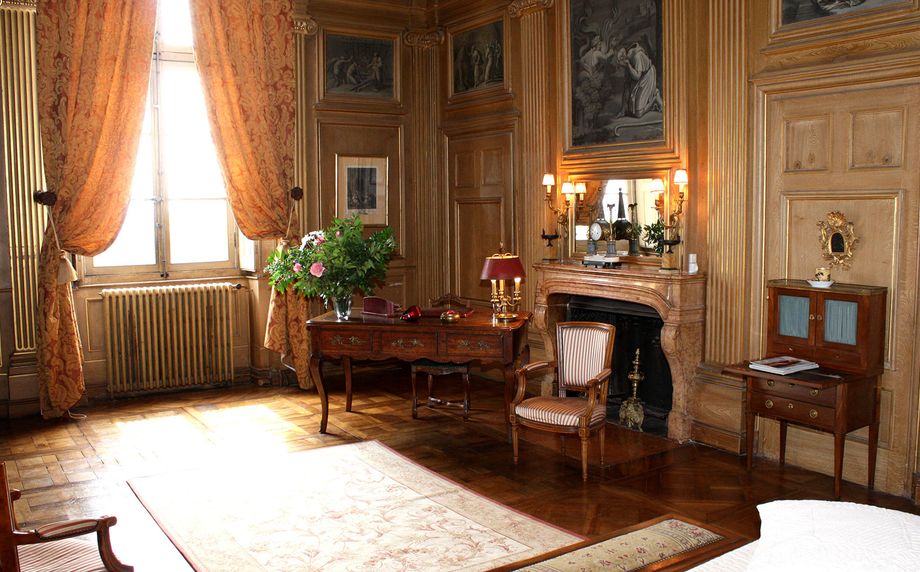
I shall never forget this sight, for he looked the perfect incarnation of hate. His green eyes blazed with lurid fire, and his white teeth seemed to almost shine through the blood which dabbled his mouth. Desperately he tried to vanquish what he did not comprehend. He was so exquisitely beautiful and so lost. “Is there a chill in the air, dear?” I said. “I almost shiver; have I been dreaming? You look ill, Mrs. Winchester; a little faint,” said Haze. “I am better now. How do you feel now, Haze?” I said. I was beginning to take alarm. Natural enough, was it not, that one of his own should take him away from Llanada Villa. “Papa would be grieved beyond measure,” he said. “If he thought we were inconveniencing you at all.” In a moment he was standing on his own feet. And then he walked drowsily beside me, my arm about his shoulder, bolstering him and steadying him, until we were moving towards his father’s cottage on my estate. I only half glanced at the figures passing us, until I saw a familiar shape under the trees. Somewhere far off in the darkened gardens, other were near. When he pushed open the door to his father’s home, he was laying dead upon the floor. His cravat was drawn halter-wise tight round his throat, and he had done its work well. The body was cold, and had been long dead. In due course the coroner held his inquest, and the jury pronounced that the deceased, Mac Austin, had died by his own hand, in a state of temporary insanity. However, Haze had his own opinion about his father’s death, though his lips were sealed, and he never spoke about it. He went and lived for the residue of his days in York, where there are still people who remember him, a taciturn and surly young man, who attended church regularly, and also drank a little, and was know to have saved some money. #RandolphHarris 2 of 8

But there occurred that night an event which gave my thoughts quite a new turn, and seemed to even startle even Haze’s languid nature. When I returned to my drawing-room, and sat down to coffee and chocolate, Elizabeth joined me, and we had a little card party. When the game was over, Elizabeth and I sat down on the sofa, and I asked her, a little anxiously, whether she had heard from her mother since her arrival. She answered “No.” I then asked her whether she knew where a letter would reach her at present. “I cannot tell,” she answered, ambiguously, “but I have been thinking of leaving you; you have been already too hospitable and too kind to me. I have given you an infinity of trouble, and I should wish to take a carriage to-morrow, and post in pursuit of her; I know where I shall ultimately find her, although I dare not tell you.” “But you must not dream such a thing,” I exclaimed. “I cannot afford to lose you so, and I will not consent to your leaving us, except under the care of your mother, who was so good as to consent to your remaining with us till she should herself return. I should be quite happy if I knew that you heard from her; but this evening the accounts of the progress of the mysterious disease that has invaded our community, grow even more alarming; and my beautiful guest, I do feel the responsibility, unaided by advice from your mother, very much. However, I shall do my best’ one thing is certain, that you must not think of leaving Llanada Villa without her distinct direction to that effect. We should suffer too much in parting from you to consent to it easily.” “Thank you, Mrs. Winchester, a thousand times for your hospitality,” Elizabeth answered, smiling bashfully. “You have all been too kind to me; I have seldom been so happy in all my life before, as in your beautiful mansion, under your care, and in the society of your dear niece.” #RandolphHarris 3 of 8
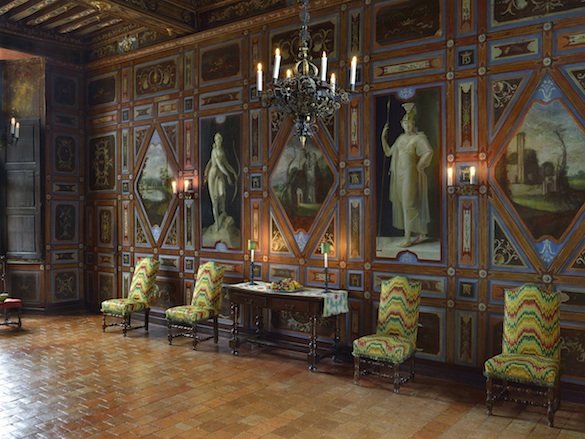
I accompanied Elizabeth to her room, and sat and chatted with her while she was preparing for bed. She turned around, “Do you think that you will ever confide fully in me about your home?” “Now, Elizabeth, you are gong to talk your wild nonsense again,” I said hastily. “Not I, silly little fool as I am, and full of whims and fancies; for your sake I’ll talk like a sage. Did you ever have a ball in the Grand Ballroom? What was it like? How charming it must be.” “I almost forget, it is years ago.” I laughed. “Mrs. Winchester, you are not so old. Your first ball can hardly be forgotten yet.” “I remember everything about it—with an effort. I see it all, as divers see what is going on above them, through a medium, dense, rippling, but transparent. There occurred that night what has confused the picture, and made it colours faith I was all but assassinated in my bed, wounded here,” I touched my breast, “and never was the same since.” “Were you near dying?” “Yes, a very—cruel love—strange love, that would have taken my life. Love will have its sacrifices. No sacrifices without blood. Let us go to sleep now; I feel lazy.” I bid her good-night, crept from the room with an uncomfortable sensation, locked her door and retired to my chambers. I was lying in bed, with my hands buried in my rich wavy hair, under my cheek, and my head upon the pillow. I often wondered whether my pretty guest ever said her prayers. I certainly had never seen her upon her knees. In the morning she never came down until long after our family prayers were over, and at night she never left the drawing room to attend our brief evening prayers in the hall. Ever since the midnight invaders, I locked all the doors in the house at night, and my whimsical alarms about prowling assassins required me to have the servants search every room in the house to make sure there were no lurking assassins or robbers “ensconced.” #RandolphHarris 4 of 8

After these measures were taken, I got into my bed and fell asleep. A light was burning in my room. This was an old habit, of very early date, ad which nothing could have tempted me to dispense with. Thus fortified I might take my rest in peace. However, dreams come through walls, light up dark rooms, or darken light ones, and their persons make their exists and their entrances as they please, and laugh at locksmiths. I had a dream that night that was the beginning of a very strange agony. I cannot call it a nightmare, for I was quite conscious of being asleep. However, I was equally conscious of being in my room, and lying in bed, precisely as I actually was. I saw, or fancied I saw, the room and its furniture just as I had seen it last, except tht it was very dark, and I saw something moving round the foot of the bed, which at first I could not accurately distinguish. However, I soon saw that it was a sooty-black figure that resembled a man. He appeared to me about five or six feet tall, he floated around the room hither and tither with the lithe sinister restlessness of a beast in a cage. I could not cry out, although as you ay supposed, I was terrified. Its pace was growing faster, and the room rapidly darker and darker, and at length so dark that I could no longer see anything of it but its eyes. I felt it spring lightly on the bed. The two broad eyes approached my face, and I could see it was Haze. He looked at me with centuries of evil blazing in his eyes, but there was not the slightest stir or respiration. And I felt a shudder. My heart expanded slightly, against my will. “I curse you,” he said. As I stared at him, I felt danger again, terrible danger. Then he appeared to have changed his place, and was now nearer to the door; then, close to it, the door opened, and he vanished. #RandolphHarris 5 of 8

It would be vain my attempting to tell you the horror with which, even now, I recall he occurrence of that night. It seemed to deepen by time, and communicated itself to the room and the very furniture that had encompassed the apparition. Later that day, I had another strange experience; I walked into the parlor that afternoon where Daisy and Elizabeth had been sitting, and a saw Haze upon the sofa. However, then I realized that he was invisible to the others. He got up and walked toward me—I was not afraid—and then—seemed to dissolve into the air. And so I wondered…whether I might have fallen into a trance. I clasped my hands and struggled to control my breathing. We know that, in the mesmeric trance, a subject may acquire unusual mental powers; The Frenchman Didier, who could read minds, play cards blindfolded, and identify the contents of sealed containers with great accuracy, is one of the best-known instances. Ancient houses, it has always seemed to me, are like Leyden jars, quietly accumulating the influences of the past…and my home is a special case. I lay awake into the small hours, worrying over these anxieties as they became more and more nightmarish until I sank into a troubled sleep. Sleeping had become so difficult one night that I wandered through this vast mansion, searching for a precious jewel William had given me. The jewel had been lost; I did not know how, but I knew that my own carelessness was to blame. To make matter worse, I could not remember what kind of stone it was, for as I went from room to room, a voice kept chanting, “Emerald, sapphire, ruby, diamond,” over and over, and none of them seemed right, because the lost stone was a different, a more beautiful colour than any of those, and I knew I ought to be able to picture it, and thus recall its name, but I could not. #RandolphHarris 6 of 8

The mansion was absolutely silent; the light throughout, even in corridors was a pale, uniform grey like that of an overcast sky. The rooms were modestly furnished; each one seemed to have its own miniature flight of stairs, up or down two or three steps, and the corridors kept changing levels in similar fashion. Though the house itself was not especially sinister, my anxiety over the fate of the jewel grew steadily more acute until it had risen to an unbearable pitch. Then it occurred to me that I still had not searched the Venetian Dining Room. The thought precipitated a vertiginous change of scene; the light sank to a dim, murky brown, and I was standing in the doorway of the room where we had dined that night. The curtains were drawn, the candles snuffed; the room seemed to be empty, but as I crept toward the table, I saw, above the back of the chair in which I usually sat, the dark outline of a head. There was time to slip away quietly; but perhaps the jewel had fallen into the lining of my chair, and if I were to tiptoe forward, I might be able to see it. I was within two feet of the motionless figure when a voice spoke from the doorway behind me, a word that rang like a loud gong, louder and louder until it became my own cry of “No!” and I woke in grey dawn light to find myself standing at the head of the stairs. And then I thought I caught sight of a shape, dak in space and light, through the door in one of the bedrooms. There was a tall figure in what I could have sworn was a black top hat, staring directly back at me. The figure was dressed formally in black morning suit. And then, with a movement so spasmodic and sudden, the man turned and stated to walk eastward, out of sight. I dismissed it, as one of the Winchester’s passing enigmas. There was much about the curse of the Winchester Mansion that I did not understand. #RandolphHarris 7 of 8

Spirits of Llanada Villa, I awaken the powers of darkness which dwell within you by the power of the blood of the three heeded Dragon Zohak that you may serve to empower Mrs. Winchester’s great work! Through serving the greater cause of dark magick which break the shackles that bind the Blackened Fire of Spirit, may you be uplifted and liberated! Awaken and empower the forbidden rites of Angra Mainyu! Awaken to empower the Mrs. Winchester’s great work of counter creation as an Apostle of the Lord of Darkness eternal and as a warrior of the path of the Lemegeton. I adjure thee, Emperor Lucifer, as the agent of the strong living God, of His beloved Son, and of the Holy Ghost, and by the power of the Great ADONAY, ELOIM, ARIEL, and JEHOVAM, to appear instantly, or to send thy Messenger Astarot, forcing thee to forsake thy hiding-place, wheresoever it may be. Aeshma, Div of wrath and fury! He who wields the bloody mace! Aeshma who is demon of the wounding spear I call you forth into this temple of counter creation! Through devotion to my becoming on this path, your spiritual weapon has been made manifest in this corporeal World through my will and counter creative power so you may fill it with your essence and might! Empower it so that it may serve me here upon the corporeal plane! May it serve as a key to the realms above and below unlocking the power and wisdom for the spirits of the Winchester’s glory and ascent! Fill this weapon with your powers of wrath and fury that it may seek out spiritual attacks made and render them useless and impotent! #RandolphHarris 8 of 8
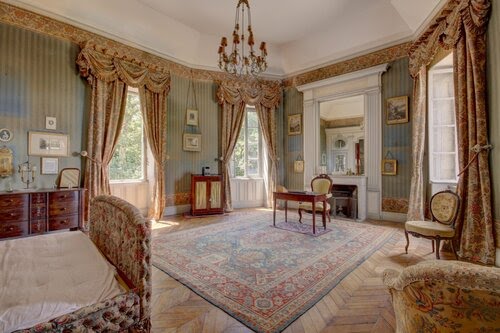
One Halloween, a tour guide saw a little boy who was no more than six years old. He was dressed in a black hood, and long black robe, and it looked like he did not have a face, as he had a black, opaque nylon covering the opening in the hood. The tour guide asked him who he was supposed to be, and the little boy said, “I’m the Angel of Life.” The tour guide then asked him who the Angel of Life is. The boy replied, “The Angel of Life is someone who comes to talk to you. He tells you things about your life.” The conviction on the little boy’s face and the non-hesitant way in which he explained who he was made the tour guide think that the boy had some knowledge of what he was talking about. Shortly after, objects in the gift shop started floating about, and glimpses of a shadowy figure were spotted in the basement. In the café, according to a female patron, she had been sitting at a table in a back corner of the room when a man suddenly appeared in a chair across the table from her. The man stared straight ahead and refused to react in any way. The female patron looked away to get the waitress’s attention and when she looked back, the man was gone. The woman related that the elusive figure was wearing old-fashioned clothes. https://winchestermysteryhouse.com/

And please be sure to check out the online gift store: https://shopwinchestermysteryhouse.com/

Return in the Darkening Twilight

Llanada Villa is a prime example of Victorian architecture. Its exterior is stately, refined, with a touch of Gothic elegance. Its front doors welcome, even as it seems to be hiding something. Inside the floors creak without warning, without any sense of someone there. The wood is thick with the humidity, as if the walls and floor breathe. Through the years, guest have reported feeling cold spots, or seeing strange, wispy streaks of light. The sense of the uncanny cries out for an explanation. Ghosts bridge the past to the present; they speak across the seemingly insurmountable barriers of death and time, connecting us to what we thought was lost. The townsfolk whispered tales of its dark history, of unspeakable horrors that occurred within the walls of my homes. As I climbed the grand staircase, each step seemed to release a flurry of hidden memories. Voices whispered incantations that send shivers down my spine. I must not faint, I told myself, and summoning all my resolve, made my way to the safety of the back parlour. There I collapsed into a couch, with my head already beginning to throb. The pain soon became so excruciating that I lost all sense of time until someone, I could not tell who, brought me a sleeping draught, and I sank at last into merciful oblivion. Next morning, I was at first bewildered to find myself fully dressed upon the parlour sofa. The parlourmaid, Trinity, brought me a cup of tea. She had set my skin crawling with fear. At this moment the unwonted sound of carriage wheels and many hoofs upon the road, arrested out attention. #RandolphHarris 1 of 6

I was haunted with a terror of robbers. My house was robbed once, and two servants murdered, so I always lock my door. It had become a habit. Still, it was a fine autumnal sunset, and melancholy lights and long shadows spread their peculiar effects over the landscape. I was looking out of one of the long drawing-room windows, when there entered the court-yard, a figure of a wanderer who I knew very well. He used to come by twice a year asking to tour my home. He was a tall man, with sharp learn features. He wore a pointed black bread, and he was smiling from ear to ear, showing his white fangs. He was dressed in buff, black, and scarlet, and crossed with more straps and belts than I could count, from which hung all manner of things. Behind, he carried a magic-lantern, and two boxes, which I well knew, in one of which was a salamander, and in the other a mandrake. These monsters used to my Mr. Hansen laugh. They were compounded of parts of monkeys, parrots, squirrels, fish, and hedgehogs, dried and stitched together with great neatness and startling effect. He had a fiddle, a box conjuring apparatus, a pair of foils and masks attached to his belt, several other mysterious cases dangling about him, and a black staff with copper ferrules in his hand. His companion was a rough spare dog, that followed at his heels, but stopped short, suspiciously at the front gate, and in a little while began to howl dismally. In the meantime, the mountebank, standing in the midst of the court-yard, raised his grotesque hat, and made us a very ceremonious bow, paying his compliments very volubly in execrable French, and German not much better. #RandolphHarris 2 of 6
Then, disengaging his fiddle, he began to scrape a lively air, to which he sang with a merry discord, dancing with ludicrous airs and activity, that made me laugh, in spite of the dog’s howling. Then he advanced to the window with many smiles and salutations, and his hat in his left hand, his fiddle under his arm, and with a fluency that never took breath, he gabbled a long advertisement of all his accomplishments, and the resources of the various arts which he placed at our service, and the curiosities and entertainments which it was in his power, at my bidding to display. “Will your ladyship be pleased to buy an amulet against the oupire, which is going like the wolf, I hear, through these woods,” he said, dropping his hat on the floor. “They are dying of it right and left, and here is a charm that never fails; only pinned to the pillow, and you may laugh in his face.” These charms consisted of oblong slips of vellum, with cabalistic ciphers and diagrams upon them. I instantly purchased one. He was looking up, and I was smiling down at him, amused. His piercing black eye, as he looked up in my face, seemed to detect something that fixed for a moment his curiosity. “I told you that I am charmed with you in the most particulars,” he said. “You are slender, and wonderfully graceful. Your complexion is rich and brilliant; your features are small and beautifully formed; your eyes large, dark, and lustrous; your hair is quite wonderful, I never saw hair so magnificently think and long when it is down about your shoulder. It is exquisitely fine and soft, and in colour a rich very dark brown, with something of gold.” “Well, I do wonder at a wise man like you,” I replied. And so he walked on, and I heard no more. #RandolphHarris 3 of 6
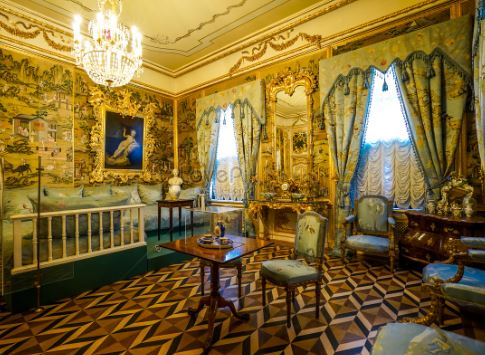
Within the space of a week, my colour had returned, and I was sleeping so soundly that I was scarcely aware of my dreams. I walked miles on my estate each day, and I began to see it with new eyes. Every field, every path, even every hedgerow had its own name and its own history. I considered the amulet I purchased as an omen of good luck—and placed in beneath my pillow, to guard against further visitation. That evening, as I reached the top of the stairs, I heard a peculiar flickering sound. Entering my dressing room in the darkness, I made my way to the familiar dressing table on the right side of the room. Now the noise was even more pronounced. It sounded to me as if someone were turning the pages of book, a sound for which there was no rational source. Move over, I suddenly became away of a clammy, cold feeling around me. Since it was a warm evening, this too surprised me. In the dark, I could not be sure if there were not someone else in the dressing room. I quickly existed the room and went to bed. But this night, I was awakened by a violent shaking of my bed. I could see, in the very imperfect light, two figures at the foot oof it, holding each a bedpost. A voice said, “We’ll hang you!” Trembling, I climbed over to the footboard; and saw the figure at the other side, little more than a black shadow, begin also to scale the bed; and there was instantly a dreadful confusion and uproar in the room, and such a gabbling and laughing; I could not catch the words. I found myself on the floor. The phantoms and clamour were gone, but a crash and ringing of fragments was in my ears. #RandolphHarris 4 of 6

The great china bowl, from which for generations the Winchester had been baptized, had fallen from the mantelpiece, and was smashed on the hearthstone. I warned the servants not to disregard oaths and curses. A mourning coach drove up, and two gentlemen in black cloaks, and with crape to their hats, got out, and without looking to the right or the left, went up the steps to the Winchester mansion. Mr. Hansen followed them slowly. The carriage had, he supposed, gone round to the yard, for, when he reached the door, it was no longer there. So he followed the two mourners into the house. In the hall he found a fellow servant, who said he had seen two gentlemen, in black cloak, pass through the hall, and go up the stair without removing their hats, or asking leave of anyone. This was very odd, Mr. Hansen thought, and a great liberty; so upstairs he went to make them out. But he could not find them then, nor ever. And from that hour the house was troubled. In a little time there was not one of the servants who had not something to tel. Step and voices followed them sometimes in the passages, and tittering whispers, always minatory, scared them at the corners of the galleries, or from dark recesses; so that they would return panic-stricken. I, myself, had also heard these voices, and with this formidable aggravation, they came always when I said my prayers. I was scared at such moments by dropping words and sentences, which grew, as I persisted, into threats and blasphemies. These voices were not always in the room. They called, as I fancied, through the walls, very thick in this house, from the neighbouring rooms, sometimes on one side, sometimes on the other; sometimes they seemed to holla from distant lobbies, and came muffled, but threateningly, through the long paneled passages. As they approached they grew furious, as if several voices were speaking together. Whenever I applied myself to my devotions, these horrible sentences came hurrying towards the door, and, in panic, I would start from my knees, and all then would subside except the thumping of my heart against my stays, and the dreadful tremours of my nerves. #RandolphHarris 5 of 6

What these voices said, I never could quite remember one minute after they had ceased speaking; one sentence chased another away; gibe and menace and impious denunciation, each hideously articulate, were lost as soon as heard. And this added to the effect of these terrifying mockeries and invectives, that I could not, by any effort, retain their exact import, although their horrible character remained vividly present to my mind. Camile who acted as a housemaid, would not sleep in the house, but walked home, in trepidation, to her father’s, under the escort of her little brother, every night. Mrs. Rendell, the kitchenmaid, endured the nightly terrors. Mr. Hansen was testy and captious about these stories. He was already uncomfortable enough by reason of the entrance of tow muffled figures into the house, about which there could be no mistake. His own eyes had seen them. He refused to credit the stories of the servants. I made a decision not to fuel the stories of the ghost to keep the servants. “If you see ghosts here, it is no place for you, and it is time you should pack,” I would say. Here has been the cook with the kitchenmaid, as white as pipeclay, all in a row, to tell me I must have a parson to sleep among them, and preach down the devil! Upon my soul, I would not allow my home to fall into utter chaos and disarray. “Mrs. Winchester, I know you are no fool,” said the cook. “But supposed there was a such thing as a ghost here, don’t you see, it ain’t just women telling stories.” “I will not dignify such ideas,” I replied. The women left the kitchen, the cook and the butler went down, not altogether unused to such condescension in the household. The fire had gone down and I was chilled. The candles were expiring in the socket and threw on the white all long shadows, that danced up and down from the ceiling to the ground, and their black outlines I fancied resembled the two men in cloaks, whom I remembered with profound horror. I took the candle, with all the haste I could, getting along the passage, on whose walls the same dance of black shadows was continued, very anxious to reach my room before the light should go out. #RandolphHarris 6 of 6


On night in 1990, there was an unusual buzzing sound in The Winchester Mystery House, one of the staff encountered a dark, hooded figure standing at the door-to-nowhere. In the dim light issuing through the stained glass windows from an outside light, he could see that the intruder, who looked very much like a cowled monk, was waving his arms in a particular manner. Interpreting his movement as threatening, he approached the man and asked him to leave. At the very moment, the employee says he never felt so weak and helpless.

He collapsed in a heap backward onto the floor. He remembered that he actually began to weep in fear and confusion. He was completely at the mercy of whoever or whatever was standing at the door. It was then that the hooded being spoke. “Don’t be afraid,” it said in a quiet whisper. “We won’t hurt you.” And the next thing he knew, the morning sunlight was making him squint into wakefulness. As he reflected on the incident, he became more and more convinced that an actual visitation had occurred and that some kind of entity had come into the mansion. https://winchestermysteryhouse.com/

And please be sure to check out the online gift store: https://shopwinchestermysteryhouse.com/

Some Move to Suburbia Out of Fear of those Unlike them
Sarah L. Winchester stirred, rolling onto her side and clutching her pillow. She had been caught in a strange netherworld between sleep and wakefulness, her uneasy rest punctured by nightmares of loss connections with her daughter and husband, but a noise downstairs had brought her back to reality. Every criminal offense is comprised of a set of behavioural (actus reus) and mental (mens reus) prerequisites. These statutory provisions are clearly sated in the criminal code and establish what an individual must do and think to be in violation of the law. Criminal events transpire when offenders, victims, and audience members intersect in a given setting. These participants engage in a dynamic set of actions and counteractions to produce the criminal outcome. The term “criminal transaction” is used to describe this exchange process. A full discussion of the criminal transaction must consider broad-based issues such as the demographics of the actors, the environment in which the crimes occur, and the way that these events tend to play themselves out. In the case of the offender-victim relationship, it is noted the violent crimes tend to take on a one-on-one offender-victim dynamic. Conversely, property offenders, public order offenders, and many organizational criminals are prone to work in small groups. What is more, robbery, burglary and common property offense are described as stranger crimes while other crimes tend to involve a victim and perpetrator(s) who know one another. #RandolphHarris 1 of 20

Faith motivated individuals, faith-based organizations, and the transformative power of faith itself are proven keys in reducing crime and improving the effectiveness of our criminal justice system. We now know that intentional partnerships between congregations and law enforcement can lead to dramatic improvement in police-community relations and reductions in crime, youth violence, and gang activity. We also known that faith-based programs can provide an antidote to the harmful culture that permeates so many of our correctional facilities. In this way, religion can help change prisons from an environment for learning even more deviant behaviour to places where rehabilitation is a realistic possibility. Additionally, faith-motivated mentors and faith-based groups can provide both the support and supervision necessary to help not only prisoners but also those former prisoners stay crime-free by learning moral and productive lives. The American suburbs are part of what is called a “global project.” Across the planet, after World War II, America’s image as a democracy and as World economic leaders also became a cultural model for consumerism and community-building. American images and ideas central to the lifestyle of its new suburbs—supermarkets, automobiles, super-highways, and motels—were exported to other nations. The American post-war dream was concretized in the form of the single-family suburban home, the cul-de-ac community, the local shopping center, and the family car, as opposed to the crowded, high crime, industrial cities. #RandolphHarris 2 of 20

To middle class families the suburbs give a safe, sanitary environment, new houses in styles somewhat in keeping with the conception of family life, and permanent neighbourhoods of people with similar outlook. In an atmosphere of rapid change, the income-graded neighbourhoods render two important service to their residents. Relative evenness of wealth meant neighbours who would reinforce an individual family’s efforts to pass on its values to its children. The surrounding evenness of wealth also gave adults a sense of a community of shared experience, and thereby gave some measure of relief from the uncertainties inherent in a World of highly competitive capitalism. Even those excluded from them, the suburbs offered a physical demonstration that the rewards of competitive capitalism might be within the reach of all. The suburban life is also a spiritual quest. These suburbs are the latest version of the promise of the American frontier—blank slates on which new residents can write their stories. The pioneers who move to these suburbs have made a startling leap into the unknow. The places have no past, no precedent, no settled conventions. The residents have no family connections here. However, people move here with the hope that there soon will be communities and relationships developed among people in the same yacht as themselves. Fellow pilgrims on the journey, as it were. Many people are struck by the significance of suburban living as a spiritual quest or pilgrimage. They are all looking for something. #RandolphHarris 3 of 20

People live in the suburbia for any number of reasons. They may have come here because of a job change or for a relationship. They come in search of affordable housing, good school, or safe communities. Or they may have grown up in suburbia by default; indeed, over half of the American population now lives in suburbia, and many of them have been suburbanites for two or three generations. Whatever the case, those who live in suburbia have aspirations for a certain kind of life. For some it is an optimistic vision, while others may be more cynical about ever seeing such a life to come. However, it is still a spiritual longing in either case. Even those who come to suburbia for less than noble reasons do so out of a particular vision of their ideal life. Some move to suburbia out of fear of those unlike them, fleeing from racial diversity and searching for a place “safer” and more comfortable to their preexisting prejudices. Others care little for their neighbours and fashion suburban lives of self-centered materialism, acquisition of possessions and status climbing. These too point to spiritual needs, however misguided or impure the motivations might be. Whenever people describe suburbia, invariably they use phrases like “a good place to raise kids,” or “where people settle down and start a family.” Inherent in these comments is an aspiration of hope for their future and a dream of a good life for their children. Suburbia is the context and the setting for the fulfillment of people’s hopes and dreams. #RandolphHarris 4 of 20

The suburbs had always promised prosperity, upward mobility, a healthy life in an unpolluted environment, safety and tranquility, and above all, the best place to bring up kids. Although this promise still fuels many dreams and infuses a nostalgic political rhetoric, the future is hopeful. It is a place many people can hear the voice of God. The suburban Christian ought not uncritically absorb all the characteristics of the suburban World but rather should thoughtfully asses and discern how Christians ought to live in this environment, without either capitulating to the culture or abandoning it by fleeing the suburbs and relocating to the country. Given suburbia’s new centrality, Christians, especially suburban Christians, must take the suburbs seriously. In order to detect the “voice of God,” we need to understand that the Holy Spirit alone is charged to communicate the will of God to the believer, and that He works from within the spirit of the disciple, enlightening the understanding so as to bring one into intelligent co-working with the mind of God. No matter where you live, the purpose of the Holy Spirit is, briefly, the entire renewal of the redeemed one, in spirit, soul and body. God therefore directs all His working to the liberation of every faculty, and never in any way seeks to direct a human as a passive machine, even into good. God work in one to enable one to choose the good, and strengthens one to act, but never—even for “good”—dulls one or renders one incapable of free action. One would nullify the very purpose of Christ’s redemption on Calvary, and the purpose of His own coming. #RandolphHarris 5 of 20

When the self-actualized understands these principles, the “voice of psychopathological offenders” is recognizable: when it comes from outside the human, or within the sphere of one’s perception, and not from the central depth of one’s spirit where the Holy Spirit abides; when it is imperative and persistent, urging sudden action without time to reason or intelligently weigh the issues; when it is confusing and clamorous, so that humans are hindered from thinking. For the Holy Spirit desires the believer to be intelligent, as a responsible being with a choice, and will not confuse one so as to make one incapable of coming to a decision. The speaking of psychopathological offenders can also be a counterfeit of the apparent inner speaking of the human oneself, as if one were oneself “thinking,” and yet with no concentrated action of the mind; exempli gratia, a persistent and ceaseless “commentary” going on somewhere within, apart from volition or mind action, commenting on the human’s own actions or the actions of others, such as “You are wrong,” “You are never right,” “God has cast you off,” “You must not do that,” et cetera, et cetera. Humans do not grasp God through symbols, but in the experience of faith one is grasped by an ultimate concern expressed in symbols. Every symbol descriptive of ultimate reality originates in an experience of ultimate concern and continues to live only insofar as it can introduce someone into the revelatory constellation by arousing a similar experience. Religious symbols participate in the power of being not merely ontologically, but experientially. They concretely convey the experience of ultimacy, of seizure by an ultimate concern. And lest this affirmation of the symbol open the door to the demonic, we insist upon the negation of the symbol by the ultimate to which it points. #RandolphHarris 6 of 20

Analogia is more negative-protesting than positive-affirming. Religious symbols participate in that which they symbolize, being-itself; they participate by sharing in the ground of being, as do all finite beings; and they participate by expressing the experience of ultimacy. This last element is decisive. One expresses the experience of the ground being through the religious symbols which are formed in the crucible of the experience itself. God is being-itself is the only nonsymbolic statement about God. The religious experience of God is had through finite beings which participate in being-itself. The principle of analogy justifies this. The expression of this experience is through religious symbols which participate in the experience itself. Theology elaborates the meaning of religious symbols by using ontology. Analogy permits and even demands this procedure. We use the principle of analogy for two purposes: to permit a religious encounter with God through finite beings and to justify the theological use of ontology. Theology speaks ontologically about religious symbols which express the encounter with God, our ultimate concern. The word “creation” is one of the great symbol-words describing the relation of God to the Universe. The doctrine of creation depicts a state; it does not relate an event that happened “once upon a time.” Humans ask the question of their finitude and of finitude in general, and creation answers it by pointing to the situation of creatureliness and to its correlate, the divine life; it is beyond potentiality and actuality. #RandolphHarris 7 of 20

Hence the question whether creation is a necessary or contingent act of God is meaningless. For nothing higher than God necessitates His creativity; neither does it happen to one as an accidental act. The divine life and the divine creativity are one. All three modes of time must be used to symbolize the infinite scope of the divine dynamism. Therefore creativity originates (the past) sustaining creativity (the present), and directing creativity (the future). The classical phrase to express the Christian doctrine of creation is creatio ex nihilo. We see in it the exclusion of the pagan idea of me on, of the “given” which resists the divine creativity. Though ouk on, absolute nothingness, suffices to explain nihilo, the ex demands something more positive to describe the origin of the creature. The solution lies in the dialectic of being and non-being. Ex nihilo indicates the “heritage of nonbeing” which is the lot of every creature. Yet the creature is; it participates in the power of being which holds nonbeing in check. Being a creature include both the heritage of nonbeing (anxiety) and the heritage of being (courage). Creation is essentially good, for it is not the offspring of me on, of some semi-divine power that opposes being-itself. The way to incarnation lies open, for finitude essentially is not in conflict with God. Secondly, the element of nonbeing in creatureliness provides the potentiality for tragic disruption within finitude itself. Eschatology is forbidden to do violence to the finite by eliminating the possibility of conflict, by locating salvation in an unreal World above or finite, tragic World. #RandolphHarris 8 of 20

The simple theoretical analysis of the evolution of family agencies into three phases appears to be corroborated by the growth in all six types of agencies of what may indeed be called quasi-families—that is, small groups of persons similarly affected by some distinctive problem, condition or interest, who come together voluntarily to solve, correct, or pursue it by concerted actions, meanwhile providing each other with a degree of understanding, encouragement, and support which they have not found elsewhere in the community. Most of these have only arisen within the past five or six decades. While they are predominately found in urban areas, since only in such centers are there enough persons of any one type of category, exempla gratia, the Townsend Clubs, which considerably outlived the depression. While some of these quasi-families have been the products of invention and experiment by therapists, so many have sprung up apparently quite spontaneously (exempla gratia, child study groups attached to cooperative nursery schools) as to suggest that they are a particularly fitting response to current situations confronted by members of the community. Their fraternal rather than patriarchal structure does not negate the value of construing them as quasi-families; indeed, to recognize their correspondence with the more fraternal character of contemporary families improves the analogy. The desire of many public and private agencies to foster participation “at the grass roots” is most successful when the grass roots consist of strong, intimate, small groups, not collections of strangers. #RandolphHarris 9 of 20

Under urban conditions, such groups do not as a rule get constituted on a neighbourhood basis, but out of common interests; they may primarily focus on these interests, yet they frequently have corrective and therapeutic effects on their members. While the characteristic quasi-family has a fairly homogenous membership, draw from some limited segment of a community, this does not mean that one had to regard them as simply the result of an ever more refined division of labour or fragmentation of interests. An urban quasi-family often recruits only one member of a family, which makes it quite different from those farm organizations whose local units aim to provide some engrossing activity for every member of a family. Yet every quasi-family so rapidly takes on an elaborates other functions, that few persons would ever need or want to belong to more than two or three quasi-families at most. Every member can remain as convinced of one’s own individuality within a quasi-family as within one’s actual family. In fact, scrutiny reveals a number of respects in which membership in quasi-families offers certain advantages which real families cannot. Involvement in these groups, however highly committed and intense it may be, is more like becoming a member of a club or a team in a game. Family commitments, by contrast, have still an inescapable character posing the gravest consequences for the unwilling participant. It is unlikely that individual counseling can or should be dispenses with. Yet, the theoretical shift to recognition of the family origin and interpersonal nature of personality difficulties, justifies the support counseling activity gives to voluntary group procedures. #RandolphHarris 10 of 20

Sociologists long ago recognized the threat to individual psychological existence in the breakdown of ancient primary group supports. Though the rural village, like Humpty Dumpty, cannot be put back together again, the incessant reorganizing of the various institutions of the urban community can well take account of the means whereby citizens continually reintegrate their selves. If it is granted that small, intimate groups of significant others play a vital part in supporting every self, it is probable that groups formed solely for the sake of such mutual support will be less durable and successful than those which accomplish this in the process of pursuing other ends. It is improbable, therefore, that individual counseling agencies could produce a full solution ever under ideal conditions, since the problem involves the whole structure of the community as this bears upon personality. What the best solutions will be is known to on one, and will only be approached through imaginative experiments of many kinds. However, no matter what, people believe that the United States of America will continue to be a great manufacturing power. There just will not be as high a percentage of people working in factories. Explaining the difference between traditional manufacturing methods and the way Macintosh computers were then being produced, she pointed out that the United States of America was surely one of the great good producers of the World with fewer than two percent of the work force engaged in agriculture. #RandolphHarris 11 of 20

However, many people would like America to returned to its agricultural roots, while we still have farmland, and to increase the amount of meat, poultry, and produce that is created in America so we will stop importing it, feed our own people, and export our products to other nations. This will help reduce the national deficit and be a step in the right way to help America return to being a creditor nation. Also, the American population will expand, and the labour force is also likely to expand, so more people will be willing to work on farms. While the United States of America is likely to generate 10,000 new jobs a day for the next decade, it is important to regain a presence in the manufacturing business. We do not want to leave the economy hollowed out. Nonetheless, the shift away from Second Wave manual labour toward Third Wave service work and super-symbolic activity has become widespread, dramatic and irreversible. In the United States of America today, these activities account for fully three-quarters of the work force. The great transition is reflected globally in the surprising fact that World exports of services and “intellectual property” are now equal to those of electronics and automobiles combined, or of the combined exports in foods and fuels. Futurists foreshadowed this massive shift as early as the 1960s. However, because the early warnings were ignored, the transition has been unnecessarily rocky. #RandolphHarris 12 of 20

Mass layoffs, bankruptcies and other upheavals swept through the economy as old rust-belt industries, late to install computers, robots and electronic information systems and slow to restructure, found themselves gutted by more fleet-footed competition. Many blamed their troubles on foreign competition, high or low interest rates, overregulation and a thousand other factors. Some of these no doubt played a role. However, equally to blame was the arrogance of the most powerful smokestack companies—auto makers, steel mills, shipyards, textile firms—that had for so long dominated the economy. Their managerial myopia punished those in the society least responsible for industrial backwardness and least able to protect themselves—their worker. The fact that aggregate manufacturing employment in 1988 was at the same level as 1968 does not mean that the workers laid off in between simply returned to their old jobs. On the contrary, with mote Third Wave technologies in place, companies needed a radically different kind of work force as well. The Old Second Wave factories needed essentially interchangeable workers. By contrast, Third Wave operations require diverse and continually evolving skills—which means that workers become less and less interchangeable. And this turns the entire problem of unemployment upside down. In Second Wave or smokestack societies an injection of capital spending or consumer purchasing power could stimulate the economy and jobs. Given one million jobless, one could, in principle, prime the economy and create one million jobs. #RandolphHarris 13 of 20

Once consumers have the money, they will rush out and buy things. This in turn leads to manufacturers to expand their plants and hire more workers. Good-bye, unemployment. Monetarists urge manipulation of interest rates or money supply instead, to increase or decrease purchasing power as needed. In today’s global economy, pumping money into the consumer’s pocket may simply send it flowing overseas without doing anything to help the domestic economy. An American buying a new TV set or compact disc player merely sends dollars to Japan, Korea, Malaysia, or elsewhere. The purchase does not add jobs at home. However, there is a far more basic flaw in the old strategies: they still focus on the circulation of money rather than knowledge. Yet it is no longer possible to reduce joblessness simply by increasing the number of jobs because the problem is no longer merely numbers. Unemployment has gone from quantitative to qualitative. The jobless desperately need money if they and their families are to survive, and it is both necessary and morally right to provide them with decent levels of public assistance. However, any effective strategy for reducing joblessness in a super-symbolic economy must depend less on the allocation of wealth and more on the allocation of knowledge. Furthermore, as these new jobs are not likely to be found in what we think of as manufacture, we will need to prepare people through schooling, apprenticeships and on-the-job learning for work in such fields as the human services—helping to care, for example, for our fast-growing population of the elderly, providing child care, health services, personal security, training services, leisure and recreation services, tourism and the like. #RandolphHarris 14 of 20

We will also have to begin according human-service jobs the same respect preciously reserved for manufacture rather than snidely denigrating the entire service sector. The service industry cannot stand as the sole symbol for range of activities that includes everything from teaching to working at a pet groomer or in a hospital radiology center. What is more, if, as is often charged, wages can be below what people need to survive on their own in the service sector, then the solution is to increase service productivity and to invent new forms of work-force organization and collective bargaining. Unions, primarily designed for the crafts or for mass manufacturing, need to be totally transformed or else replaced by new-style organizations more appropriate to the super-symbolic economy. To survive they will have to support rather than resist such things as work-at-home programs, flextime and job-sharing. The rise of the super-symbolic economy compels us to reconceptualize the entire problem of unemployment from the ground up. To challenge outworn assumptions, however, is also to challenge those who benefit from them. The Third Wave system of wealth creation thus threatens long-entrenched power relationships in corporations, unions and governments. China, already a major importer of fuels and many minerals, is getting equipped for such a competition especially fast: With its rapidly growing, highly energy- and resources-intensive economy, the consequences of resource supply irregularities may be fatal. In the days of the Iraq war Beijing already resorted to eventually a panic buying of petroleum, overstanding the global market. #RandolphHarris 15 of 20

In today’s World, if you cannot obtain your own resources domestically, to avoid supply troubles, it is considered preferable to establish long-term relationships with particular resource-rich countries, getting a stake in their resource development and extraction. Perhaps more than any other country, China is making big steps to obtain direct access to fuel and mineral resource in Africa, Latin America, and Asia. The United States of America and European countries are supplied a significant portion of the natural resources they consume by major multinational companies such as Exxon-Mobil, Royal-Dutch Shell, Rio-Tinto, or BHP Billiton. In Japan and South Korea, a key role is played by the resource supply channels of leading trading houses like Mitsubishi Corporation, Itochu, SK Corporation, or Hanwha Trading. State-owned resource companies play their part, too. In most other countries, China included, supplies are provided first of all by state-owned oil and mining corporations. Currently, with strong support from the state, China’s natural resources heavyweights—PetroChina, Sinopec, CNOOC, Chinalco, China Metallurgical Group and the like—are establishing themselves among the leading global players, not at all inferior to Western majors or Japanese and Korean trading houses. On its part, the Chinese government is coming out with an innovative model of tapping natural resources in Africa, Latin America, and Asia. In broader terms, this model helps China to strengthen its overall presence and influence in the World. #RandolphHarris 16 of 20

Economic and legal scholars who study business disputes (and other events such as accidents where some economic consequences are at issue) recognize that the initial allocation of legal entitlements, the expectation and uncertainty about a court’s decision in the matter, and the costs of using the legal system all affect the parties’ choice between going to the law and settling the dispute by private negotiation. Rolling back one more step along a game tree, the same considerations also affect individuals’ decisions about engaging in activities that can lead to accidents or disputes. Consider two parties involved in an economic dispute. One of them (plaintiff) could sue the other (defendant) in a court of law. Their expectation for the time being assumed to be commonly held and known, is that the court will aware AP to the plaintiff and AD to the defendant. (If the defendant is ordered to make restitution or pay a fine, his payoff Ad can be negative.) In addition, each side has to bear some cost for using the court; this can be monetary in the form of court costs and lawyers’ fees, or non-monetary in various forms, such as time, mental strain, or damage to reputation. The costs can depend on the legal system; for example, in the American system each side bears its own court and lawyer costs, whereas in the British system the loser bears both sides’ cost. Denote the overall monetary equivalent costs by CP for the plaintiff and Cd for the defendant. Thus the expected net payoffs from recourse to the court are (AP-CP) for the plaintiff and (AD-CD) for the defendant. #RandolphHarris 17 of 20

The two parties could negotiate a settlement, either before a suit is filled at all, or after a suit is filed but before trial. Doing so enables them to avoid some or all of the costs of using the law. If the court is expected to levy a fine in addition to mandating some transfer between the parties, and the proceeds of the fine go to the government, then the negotiation avoids the fine and leaves a larger sum of money available for dividing between them. Suppose S is the total available for them to bargain over, and S> (AP – CP) + (AD – CD). The excess of the left-hand side of this inequality over the right-hand side constitute the “surplus” that is available for them to negotiate over. Denote the sums they can get through bargaining by XP and XD, respectively, then XP + XD= S is the bargaining frontier. The bargaining frontier is a straight line of slope -1. If the negotiation fails and the plaintiff has to sue, their payoffs in the court will be (AP – CP, AD – CD). This point is therefore the threat point that lies behind their bargaining. The generalized Nash bargaining solution then says that each party will get its threat-point payoff, plus a share of the surplus equal to its bargaining power. This bargaining power can be explained in terms of the two parties’ relative impatience, but we will simply assume that the plaintiff’s bargaining powers is and that of the defendant (1 –
). Then the outcomes of the negotiation is (figure 2.1) XP = (AP – CP) +
[S – (AP – CP) – (AD – CD), (Figure 2.2) XD = (AD – CD) + (1 –
) [S – (SP – CP) – (AD – CD)] = (1 –
)(AP – CP) + (AD – CD). These expressions yield several simple implications. For example, they tell us how different rules about the allocation of legal costs affect the outcome of pretrial negotiation. #RandolphHarris 18 of 20

Supposed the expectation is the plaintiff will win. Under the American system, each side would pay its own monetary legal costs. Under the British system, the monetary part of the plaintiff’s legal costs would be shifted to the defendant. Denote this by M. Then the British system, as compared with the American, CP is lower and CD higher by M. Therefore (2.1) shows that XP is higher by M, and (2.2) shows that XD is lower by M, in the British system than in the American. In turn, we can calculate how the expectation of this outcome affects the incentive of the parties to engage in activities that may lead to such disputes. This argument assumes that the expected payoffs AP and AD when the parties go to the court are the same in the two systems. If the courts adjusted the payoffs to offset the stipulated allocation of costs, then the threat points of the two systems would be the same, and therefore so would the Nash solution of the negotiation. However, this simple model has some flaws. Most obviously, in the model the negotiation succeed and the threat of going to court is never invoked. This is less egregious than it may appear at first sight, because only 10 percent of disputes go to trial. Simple extensions of the model explain why and which disputes are likely to go to trial. The main cause is the parties’ inconsistent expectations about the outcome in court. If the plaintiff expects AP to be high, and the defendant simultaneously expects AD to be high, then each may think that there is no surplus to bargain over. The simple figure and algebra I have developed here promising foundations for formal models of such extensions, but I will leave developments along these lines for future work. The model can readily be extended to apply another situation. #RandolphHarris 19 of 20

My discussion of the court that generates the threat-point payoff in this model treated it as a well-meaning but costly system. However, it could easier be a corrupt system, or a predatory or kleptocratic government. Economic activities and transactions in such a country would try to proceed in secrecy. However, the threat of disclosure, and the consequent exposure to extortion by the state’s agents, would underlie all negotiations. By interpreting CP and CD as the expected amounts the state would extort from the two parties, the model can cover this situation. Now, let us focus on how a Christian suburb is to be. Better is a dry morsel and quietness therewith, than a house feasting amidst strife. Yea, better to ear herbs where love is, than the choicest food and hatred therewith. Except the Lord build the house, they labour in vain that build it. Through wisdom is a house builded, and by understanding is it established. By knowledge is the home filled with all that is pleasant and precious. Make your house a meeting place for the learned, and give heed to their words. If three people have eaten at one table and have spoken the word of the Christian Bible or Book of Mormon, it is as though they had eaten at God’s table. Blessed is that home where the woman regards the ways of her household. Blessed is the man who has a good wife, for the number of his days shall be doubled. Blessed is he who loves his wife and honours her, and direct his children into paths of righteousness. When husband and wife are worthy of each other, the divine spirit rests upon them. A home where a man loves his wife as himself, and honours her beyond his own person, shall be blessed everlastingly. A home where children honour their parents is a home in which God dwells, and He Himself is honoured. How goodly are your homes, and your dwellings, O America. #RandolphHarris 20 of 20
MAGNOLIA STATION AT CRESLEIGH RANCH
Rancho Cordova, CA | low $600s
Now Selling!

Residence Two a spacious single-story home with over 2,625 square feet of home thoughtfully designed to maximize every available foot of space. Three bedrooms, three bathrooms, and a three car garage all come included in this home.

The layout if an entertainer’s dream with large kitchen and working island, dining room connected through the butler’s pantry, and a large great room overlooking the ample rear yard.

Best of all, each Cresleigh home comes fully equipped with an All Ready connected home!

This smart home package comes included with your home and features great tools including: video doorbell and digital deadbolt for the front door, connect home hub so you can set scenes and routines to make life just a little easier.

Two smart switches and USB outlets are also included, plus we’ll gift you a Google Home Hub and Google Home Mini! https://cresleigh.com/magnolia-station/residence-2/


I’m a Pharmacist, I Know What I am Doing

Recreational drug use is often portrayed in popular culture and music. To further highlight this illustration, probably the best known musical cliché of recent decades was “sex, drugs, and rock’ n’ roll,” while the Billbooard charts have been filled with songs involving drugs, such as Eric Clapton’s Cocaine or the Rolling Stones’ Sister Morphine and Mother’s Little Helper. Popular culture portrays not just recreational drug use but tragedy associated with drugs, for example, the deaths of guitarist Jimi Hendrix, Janis Joplin, and Jim Morrison and many others. Of course, not all common-use drugs are understood as dangerous or associated with tragedy. We found clear evidence of two very different modes of entry among the respondents, namely recreational abusers and therapeutic self-medicators. However, it is important to note tht these were not mutually exclusive categories of offenders. In other words, these two categories were not completely dichotomous. As is usually the case, real life seldom fits cleanly into nice, neat categories. In fact, we were able to identify a number of cognitive and behavioural themes that were common to almost all of the drug-using pharmacists interviewed. These themes were expressed by nearly all of the drug-abusing pharmacists that we interviewed, regardless of how the individual initially began their illicit drug abuse career. The existence of these common themes suggest that pharmacy-specific occupational contingencies play a center role in the onset and progression of illicit use of prescription medicines. #RandolphHarris 1 of 20

Intuitively, it should not be surprising that pharmacists would steal prescription medicines as a way of treating their own physical ailments. After all, they have been exposed to years of pharmacy training that emphasized the beneficial, therapeutic potential of these medicines. Each pharmacist has dispensed the medicines to hundreds of patients and then watched the drugs usually produce the predicted beneficial results. They have all read the literature and drug inserts detailing the chemical composition of drugs and studied the often dramatic curative effects of the chemical substances. Pharmacists, more so than any other member of society, are keenly aware of how and why drugs work. There was strong evidence to suggest that both the therapeutic self-medicators and the recreational abusers actively used the years of pharmacological knowledge that they had acquired. In their eyes, it made perfect sense that they should put their pharmacy knowledge to work on themselves. This application of knowledge can be seen in the comments of a 40-year-old female self-medicator: “So, in 1986 I was sent to the psychologist. That was when I was forced to recognize that I had an alcohol problem. And I recognized that I had to do something. And in my brilliant analysis, I made a decision that since alcohol was a central nervous system depressant, the solution for me was to use a central nervous system stimulant. That would solve my alcohol problem. So I chose the best stimulant that I had access to, and that was [pharmaceutical grade] cocaine. I started using cocaine in 1986. I never thought that it would progress. I never thought it was going to get worse. I thought, ‘I’m just going to use it occasionally.’” #RandolphHarris 2 of 20

Similar trends were observed among the recreational abuser group, only here, the applied use of drugs was based upon more recreational motives. Almost all of the therapeutic self-medicators and recreational abusers described how they became masters of quickly diagnosing their own ailments or emotional needs and then identifying the appropriate pharmacological agent that would remedy the problem. Moreover, as professionals, they were confident that they would be able to self-regulate their drug intake so as to never become addicted. All of the respondents drew upon their social status as pharmacists to convince themselves that their drug use would not progress into dependency. They recall being adamant in their view that personally they were immune from such problems, believing that only stupid, naïve people became addicted to drugs. As a 40-year-old female self-medicator put it, “I’m a pharmacist, I know what I am doing.” A 39-year-old male self-medicator went so far as to say: “I mean, we know more [about the effect of drugs] than doctors. We have all the package inserts. We have the knowledge. We know a lot about the drugs, so what’s the big deal?” Elsewhere we refer to this denial mechanism as a “paradox of familiarity,” because familiarity can breed consent, not contempt toward prescription drug use. Members of both categories of pharmacists claimed that they had never been warned about the dangers of drugs, insisting instead that their training had only stressed the beneficial side of prescription medication. #RandolphHarris 3 of 20

To further highlight this illustration, a 48-year-old male misuser stated: “I never had anybody come right out and tell me that [prescription drug abuse] was probably unethical and illegal because they assumed that we knew that. But nobody ever said this is something that is not done.” Let without guidance on the issues, some pharmacists assumed that self-medication was acceptable behaviour. To this end, a 39-year-old female self-medicator said: “It’s [self-medication] just part of it [the pharmacy job]. It’s just accepted because we know so much. I’m sure it’s the same way when the doctors do it. It wasn’t a big stretch to start going “You know, I got a headache here, maybe I should try one of these Percocets [narcotic analgesic]?” Many pharmacists spoke about their prescription drug theft/use as if it were an entitlement that went along with being a pharmacist. Much like a butcher always has fresh meat at home or a car dealer always drives a state-of-the-art automobile, pharmacists will always have the best drugs. This theme is illustrated in an exchange that occurred between the interviewer and a45-year-old-male pharmacist: “Why take plain Aspirin or plain Tylenol when you’ve got this [Percocet-narcotic analgesic]? It works better….[so] you don’t even have to struggle with it. I really believed that I had license to do that…as a pharmacist. I mean with all that stuff sitting there, you know. Oh, my back was just killing me during that period of time and this narcotic pain reliever is sitting right there. I thought, ‘why should [I] suffer through back pain when I have this bottle of narcotics sitting here?” #RandolphHarris 4 of 20

The above-mentioned themes involve cognitive dimensions of the pharmacists’ drug abuse in that they speak to common motivational and justification themes that were present in all of the interview. Perhaps more important is the fact that there was a common behavioural characteristic shared by all 50 pharmacists. In ever case, occasional prescription drug abuse eventually gave way to an advanced addictive state that was marked by an enormous intake of drugs, unmistakable habituation, and the constant threat of physical withdrawal. Members of the recreational abuser and therapeutic self-medicator groups alike routinely reported daily use levels exceeding 50-100 times the recommended daily dosage. One pharmacist reported that his drug use regimen progressed to 150 Percocets [strong narcotic analgesic] per day. Another individual reported injecting up to 200 mg of Morphine each day. Still another respondent described a daily use pattern that, among other things, included 5g of cocaine. Invariably, these advanced levels of drug use led to clear signs of habituation and the constant threat of physical withdrawal. At this point, the individual recalls growing increasingly desperate. Consider the following quote from a 44-year-ol male pharmacist who was in charge of ordering the narcotics at the independent retail pharmacy where he worked: “I was ordering excessive quantities and chasing down tracks. That’s what I used to do. I was really reaching my bottom. I would chase these delivery trucks down in the morning because I didn’t come to my store until mid-afternoon. I was in withdrawal in the morning and I was without drugs, so I had to have it. #RandolphHarris 5 of 20

“I was just going nuts. Many mornings I had gone to work sweating. It would be 30 degrees (Fahrenheit), it would be January, and the clerk would say, ‘you look sick,’ and I would say, ‘It’s the flu.’ So I would pay the delivery guys extra money to deliver my drugs first or I would chase the delivery trucks down in the morning. I knew the trucks delivered at 6 in the morning, they came by my area, and I would get up early and chase the trucks down the highway. I would go in excess of 100 miles an hour trying to catch up with this truck and flag it down.” The advanced stages of drug addiction invariably produced traumatic physical psychological outcomes. Eventually, “out-of-control” drug use patterns along with the realization of chemical dependency left the pharmacists in a problematic mental state. It was at this point that al of the pharmacists recalled coming to grips with their addiction. This personal realization was accompanied by a shift in the way they thought about their drug use. They no longer denied that situation by drawing upon recreational or therapeutic explanations. Instead, they finally admitted the dire nature of their situation and became more and more reclusive. In short, all of the respondents grew to realize that they had a drug problem, turning then to fear and ignorance to foster the final weeks or months of their drug addiction. Two identifiable criminal career trajectories were observed among the pharmacists who we interviewed: recreational abusers and therapeutic self-medicators. #RandolphHarris 6 of 20

Careful scrutiny of contemporary drug theory, policy, and practice in all areas, from prescription pharmaceuticals to illegal recreational drugs, reveals numerous apparent inconsistencies and pervasive incoherence. This results, in part, from a kind of silo thinking in which attention to drug theory and drug policy, however sophisticated in its own realm, is encapsulated within distinct professional, practical, and economic spheres or “silos.” Silos are descriptively and prescriptively dense but stand isolated from each other in an empty landscape. In other words, people in one arena of drug theory, policy, or practical programs have plenty to say to each other about the way things are and the way things should be with respect to drugs, but they don’t talk much across the open spaces between their areas of focus. Not only do they not talk much between their fields, for reasons to be explored, they cannot really do so. Clearly, our discussion of the therapeutic self-medicator category goes far beyond what is present in the existing literature. However, the first documentation of recreational drug use among health professionals, had minimal impact on the way that the various healthcare professions think about or address problem of substance abuse within their ranks. The pharmacy profession has been especially reluctant to address the reality of the prescription drug abuse situation. For instance, existing self-reports and interview research on drug using pharmacists largely ignores the recreational origins of drug use and, instead, describes the affected individuals as having misplaced therapeutic motivations. This assumption is reinforced by published biographical accounts of recovering drug using pharmacists. While principally intended to raise awareness among fellow pharmacists, these confessionals consistently emphasize the well-intentioned motives behind the individuals’ destructive drug use past. #RandolphHarris 7 of 20

Information is called observable when it is available symmetrically to both parties, and verifiable when it can be proved to third parties such as a court. In practice, this is a matter of cost, and the standard of proof required. Contracts that are intended to be enforced in a court of law can only stipulate actions that are conditioned on verifiable information; courts cannot judge whether a breach of the contractual terms has occurred if they cannot verify whether the circumstances that call for an action have actually transpired. However, observable information can be the basis for contracts that are enforced by extralegal or private methods, because the two parties can know fully well whether a breach has occurred. Such extralegal methods of enforcement come in to broad types. One is enforcement by insider third parties with specialized knowledge that enables them to verify information that outsider general courts of law cannot; arbitrators in industry associations are the most prominent enforcers of this kind. The second is based on a relationship or ongoing interaction between the parties; a breakup of this relationship constitutes the punishment that may deter one of the parties from breaching. This covers many possibilities. The same two parties may meet repeatedly; the two may not have a direct repeated interaction with each other, but each may interact with others in a group or network that transmits information about any breach to all members and collectively sanctions the miscreant, using ostracism in business interactions or social relationships or both. #RandolphHarris 8 of 20

The distinction between observable and verifiable information is standard in the economic theory of contracts. The New York Stock Exchange developed its internal rules and procedures for dispute resolution, and even Taiwanese shoe manufacturers and Western fashion houses performed dispute-resolution functions in addition to their primary matchmaking ones. One may think that these alternative methods of private ordering must suffer a crippling disadvantage relative to the government’s courts, namely their lack of coercive power to ensure that their decisions are obeyed. However, the difficulty is often nonexistent or easily overcome. First, the sanctions available for private ordering are often very effective. Breach of contract can be deterred in ongoing relationships by the threat that the miscreant will be barred from future business with this particular partner or the group; this can be buttressed by social ostracism if the group fosters social ties among its business members. Sometimes this threat may be even more severe than the fines that courts would impose in the matter. If the threat is credible, in the sense of being a part of the strategies in the subgame-perfect equilibrium of the repeated game that constitutes the ongoing relationship, then the contract is self-enforcing. Second, arbitrators may have similar sanctions at their disposal; if they can bar the miscreant from the industry association, they can instantly put one out of business, which can be a more effective sanction than the fines the courts will impose. Of course, the feasibility of such sanctions depends on the availability of the requisite information, and in the case of repeated interactions, on how highly the participants value the future relative to the present. #RandolphHarris 9 of 20

Finally, courts recognize the informational advantage of the alternative institutions. Therefore when a relational or implicit contract serves such an informational purpose, courts refuse to intervene to modify its terms, or to insert missing provisions, or to overrule the availability of discretion to one party. They also enforce the awards of industry arbitration tribunals, using the government’s power of coercion to obtain compliance if the loser in the arbitration attempts to defy the ruling. In the United States of America, this has been so since 1920; in the international context, over 100 countries now accede to the 1958 New York Convention of the Recognition and Enforcement of Arbitral Awards. By providing for the appointment of industry-expert arbitrators, who can make many factual determinations more accurately and less expensively than a judge or jury can, the rules greatly expand the “contractible” aspects of an exchange. The use of stream-lined procedures together with the appointment of expert adjudicators transforms considerations that in the public legal system would have been only observable to the parties…into considerations that are also verifiable…thereby encouraging transactors to enter into more complete contracts. The point is not that arbitrators have access to more information. Any relevant information can be elicited and brought before the court by either party to the dispute through the legal process of discovery. Conversely, many arbitration forms do not allow discovery, although the arbitrator can request additional information. #RandolphHarris 10 of 20

The key is how information is used; industry arbitrators can use their expertise to interpret it—make factual determinations—more accurately and at a lower cost than non-specialized courts can. This is the sense in which verifiability should be interpreted in this context. Arbitration is used in other contexts for other reasons. In international transactions, each party may suspect that the other country’s courts will be biased in favour of its own nationals; this can deter them from entering into contrast that may end up in national courts. Therefore both may agree ex ante to settle any disputes in an agreed international forum of arbitration. Several of these exist, based in London, Paris, Stockholm, et cetera. They differ in their procedures (degree of formality, time taken, fees charged, et cetera) and the range of legal traditions they cover (civil, common, Islamic, et cetera). These affect the choice of forum by the parties to each transaction. These forums usually lack the expertise that industry-specific forums can provide. Therefore they are not likely to lower costs or improve verifiability and permit more complete contracts; instead, removing the suspicion of bias may be their most important function. The different modes of private and official governance can interact in various ways. To further highlight the illustration, if an ongoing relationship based on the superior observability of information by the two parties breaks down, the best alternative available to the parties may be recourse to a contract based on verifiable information enforceable in a court of law, not total cessation of transactions. #RandolphHarris 11 of 20

And if an arbitrator’s award is not enforceable by direct sanctions such as fines, it may nonetheless form part of a relational arrangement where the arbitrator can terminate the miscreant’s access to future trades. Not only do modes like arbitration evolve and apply to provide governance for transactions where they have an informational advantage and can reduce transaction costs, but also transactions take forms that adapt to the available information and governance. As for the emergence and prevalence of barter and countertrade in post-Soviet Russia in this way: The advantage of paying with goods rather than money is that they can be earmarked s property of the creditor. Money is fungible and liquid; a buyer can hide money easily if he chooses to renege on his promised payment to the seller. Goods in a barter or countertrade contract are more difficult to hide, and therefore can act as deal-specific collateral that mitigates opportunism. When it comes to systems of integration, rising complexity in the economy calls for more sophisticated integration and management. In a not atypical case Nabisco, the food company, as to fill 500 orders a day for literally hundreds of thousands of different products that must be shipped from 49 factories and 13 distribution centers, and at the same time take into account 30,000 different sales promotional deals with its customers. Managing such complexity requires new forms of leadership and an extremely high order of systemic integration. That, in turn, requires greater and greater volumes of information to pulse through the organization. #RandolphHarris 12 of 20

To hold everything together—to track all the components and products, to synchronize deliveries, to keep engineers and marketers appraised of each other’s plans, to alert the R&D people to the needs of the manufacturing side and, above all, to give management a coherent picture of what is going on—billions of dollars are being poured into electronic networks that link computers, data bases and other information technologies together. This vast electronic information structure, frequently satellite based, knits whole companies together, often linking them into the computers and networks of suppliers and customers as well. Other networks link networks. Japan has targeted $250 billion to develop better, faster network. All these changes further accelerate the pace of operations and transactions. Economies of speed replace economies of scale. Competition is so intense and the speeds required so high that the old “time is money” rule is increasingly updated to “every interval of time is worth more than the one before it.” Time becomes a critical variable as reflected in “just-in-time” deliveries and a pressure to reduce DIP or “decisions in process.” Slow, sequential, step-by-step engineering is replaced by “simultaneous engineering.” Companies wage “time-based competition.” Expressing the new, it is clear that money moves at the speed of light. Information has to move faster. Thus acceleration pushed Third Wave business closer and closer to real time. #RandolphHarris 13 of 20

Taken together, these ten features of the Third Wave economy, among many others, add up to a monumental change in how wealth is created. The conversion of the United States of America, Japan and Europe to this new system, though not yet complete, represents the single most important change in the global economy since the spread of factories brought about by the industrial revolution. This historical transformation, picking up speed in the early-to mid-1970, was already fairly well advanced by the 1990s. Unfortunately, much of America’s economic thinking was left behind. Global markets of energy and mineral resources are undergoing far reaching irreversible changes, and so are perceptions about the policies needed to provide their stable supply. Global demand is surging due to a dramatic increase of consumption by the fast-growing large emerging economies. Experts project that, absent significant changes in policy or technology, global energy consumption will increase nearly 50 percent over the next 30 years. Energy consumption is growing faster than the GDP in many countries. On the supply side, uncertainties and destabilization risks are exacerbating due to rising political instability in exporting countries, periodical redirections of sales from external to domestic markets by leading suppliers, and, to a certain extent, a depletion, in some major producing countries, of existing deposits in the absence of new ones whose discovery and exploitation could make up for the loss. #RandolphHarris 14 of 20

Therefore, oil and some other natural resources are becoming more and mor attractive targets for speculators. In these circumstances, countries highly dependent on natural resources imports, especially those that do not have their own powerful resource multinationals, get increasingly concerned about supply destabilization risks. Predictions about an all-out resource war or bitter fights among buyers for limited amounts of oil or metallic ores look like an exaggeration. However, buyers’ competition for particular kinds of resources within particular periods of time due to particular circumstances is becoming a more frequent phenomenon. For instance, the Philippines and Vietnam protested to China against its patrol boats hindering their oil exploration activities near the disputed Spratly Islands in the South China Sea. China demanded that its neighbours stop exploration work in this area. Tensions rose as the United States of America declared that the South China Sea was in the sphere of its national interest and that it would stand by the Philippines as its ally. Now, when it comes to supernatural affairs, the angels are “sent forth to minister to the heirs of salvation,” reports Hebrews 1.14, but not to take the place of Christ or the Holy Spirit. The apocalypse seems to show that this ministration of angels to the saints on Earth is a ministration for war in the spiritual realm against the forces of Satan; but there is little indication given of ministry in any other way. #RandolphHarris 15 of 20

After the first Advent, when there was great angelic activity over the wondrous event of the Father brining the “Firstborn: of the new race (Romans 8.29) into the inhabited Earth (Hebrew 1.6), and again at the Advent of the Holy Spirit on the Day of Pentecost to begin His work of forming a Body like unto the Risen Head—and during the early years of the Church—the employment of an angel in direct and visible communication with believers seems to give way to the work and ministry of the Holy Spirit. The entire work of witnessing to Christ, and leading the Church into all truth, has been committed to the Holy Spirit. Therefore all intervention of “angels” or of audible voices from the spiritual realm purporting to be from God may be taken as counterfeits of psychopathological offenders, whose supreme object is to substitute the workings of their own wicked offenders in the place of God. In any case, it is best and safest in these days of peril to keep in the path of faith and reliance upon the Holy Spirit of God working through the Word of God. Man, the microcosm, the mirror of reality has structures of beings found in him, and are found analogously in the subhuman realm. Selfhood, inner awareness, freedom and destiny—all are verified analogously in subhuman beings. Furthermore, the concepts of courage, love, power, and justice are used to describe analogously the characteristics of all beings and of being-itself. The point we wish to make is that this use of analogy based on human experience seems to yield valid knowledge. #RandolphHarris 16 of 20

Moving up now to the relationship between man and God, one would expect that on the same principle, but with proper adjustments, man could get an analogous knowledge of God. Symbols are not a means of knowing God, but rather a way of speaking about Him. If one wishes to talk about God, finite material must be used, and this is justified by the fact that all finite beings participate in being-itself. Without such an analogy nothing could be said about God. However, the analogia entis is in no way able to create a natural theology. It is not a method of discovering truth about God; it is the form in which every knowledge of revelation must be expressed. In this sense anlogia entis, like “religious symbol,” points to the necessity of using material taken from finite reality in order to give content to the cognitive function in revelation. What is boils down to is that analogy or symbolism is the expression of an encounter with God. Through the revelatory experience is far more than an intellectual communication—it is primarily a reunion with the ground of being—it contains a cognitive element conveyed by symbols which are qualified as channels of communication by their participation in being-itself. Yet, it seems not, for every creature participates in being-itself, and yet not everything is a religious symbol, although it has the potentiality to become one. What is the decisive ingredient of symbolism beyond ontological participation? These symbols are not arbitrary interpretations of the concrete revelatory experiences. However, they appear within this experience itself. They are not created intentionally, but they are born in the same dimension in which the revelatory experience takes place. In and through its symbols the religious encounter with reality opens up the dimension of reality in which ultimacy appears. There is no other way of expressing our encounter with the holy than in symbols. #RandolphHarris 17 of 20

From the standpoint of the counselor who finds one’s role ambiguous, it seems more than likely that exploration of a developmental perspective would help resolve the conflicts implicit in one’s professionalization. For the psychotherapist who thinks of oneself as a physician who cures sickness, or who avoids this and speaks only of the “difficulties of living,” there may appear to be no conflict in one’s role. One may be satisfied to reduce symptoms of disorder, to solve the problem presented and to think of oneself primarily as someone who relieves distress, without defining one’s goals beyond that. However, apparently more and more thoughtful counselors do not think they can stop there, or do any permanent good, unless they leave their patients better able to cope with later problems and future strains. Some even feel that their job to plan for the optimal development of their clients, or to organize clients to plan for their own. The ambiguous feelings of the professional who presumes to assist in the personal problems of family members may be all to the good if these are construed in a framework of family relations which includes oneself. The concept of transference goes only part way. The client in the course of the counselor-client interaction frequently construes the counselor as a figure representative of previous others, with whom relations have been unresolved but are thus worked out through the interviews. The difficulty, however, from the client’s standpoint, is that no matter how versatile one’s counselor may be, and no matter how facile or fantastic one’s own imagination, the range of persons with whom a person needs intimate discourse in order to achieve one’s optimal development of self far exceeds the resources of this single relationship. #RandolphHarris 18 of 20

Moreover, there is the fact that the client must pay in cold cash for the kind of communication which the best families afford on a basis of affectional reciprocity; thus the most sacred disclosures hover at times on the verge of something equivalent to prostitution. Regardless of ethics and their enforcement by professional insistence upon its eventual termination, and the limitation of reciprocity to monetary reward; in a word, the elaboration of this relationship lead nowhere. The best hope for fruition of any gains that accrue is tht they serve as a bridge to the regeneration of their client’s involvement in a quasi-family constellation which includes near-rivals and critics, models and admirers, other ages and other genders, in both work and play. Only through others can one obtain the continual characterizations of self essential to valid knowledge of self. Research and experience have already shown that the human being, from birth until death, almost to the degree that the fish requires water, thrives only in social interaction. Neglect, isolation, loneliness, solitary confinement, and deteriorative influences very hard to endure, even though every physical condition of survival is met. And among all kinds of interaction, the most potent of all for personal development are those characterized by the unconditional acceptance of family relations. Only here is the listener who always finds more in the person than one presents in one’s actual behaviour. #RandolphHarris 19 of 20

Only here is the audience that never grows tried. Only here is the person of similar background, for whom every aspect of the culture—of class and ethic experience—resonates with comparable meaning. That a counselor could ever aspire to duplicate these functions of the optimal family is beyond the hope of those who have thought and written about it. In a sense this analysis of the implicit or potential demands on the counselor’s role both justifies and specifies a therapeutic approach. It also shows that one’s role must be transcended by more adequate institutions for providing each client with a stable constellation of significant others, who can be the precisely appropriate self-definers at each critical stage in one’s personal development. For the person whose actual family has failed one the solution suggested by this analysis is the invention of effective quasi-families. The process by which each person contributes to the self-knowledge of others, and others contribute to one’s knowledge of oneself, it immanent in human society. Where self-knowledge and self-control are deficient relative either to norms or ideals, the best means for reversing these deficiencies is effective utilization of all available knowledge of how selves originate, operate, and co-operate. Recognition that some tasks are beyond the powers of the unassisted individual does not mean that society must be divided into two classes, therapists and their patients. It means, or at least can be made to mean, joint action to perform these tasks. Such an approach is as relevant and applicable to the tasks of counseling agencies as to the other types of family agencies. #RandolphHarris 20 of 20

CRESLEIGH MEADOWS AT PLUMAS RANCH
Plumas Lake, CA |
Now Selling!
Cresleigh Meadows is now selling! Found just north of Feather River Boulevard, Cresleigh Meadows is home of the largest neighborhood in Plumas Ranch as well as the popular Bear River Park.

With four floor plans available, ranging from approximately 2,000 – 3,500 square feet offering, three to five bedrooms, we are certain you will find the home that fits your needs and lifestyle.

Popular design elements include open floor plans, large kitchen islands, and flex spaces are staples in Cresleigh homes. Multi-generational living options also available in select homes.

Homeowners will love the convenient commuter access to nearby Sacramento and Yuba City.

Take advantage of financing incentives available today! Contact our Sales Center to learn more about how we can help you buy-down your interest rate. https://cresleigh.com/cresleigh-meadows-at-plumas-ranch/

Stop by for a tour today, and make a Cresleigh Home, your home.


 Randolph Harris II International Institute