
Home » suburbs (Page 3)
Category Archives: suburbs

Beyond Good and Evil

Some still believe that universal disarmament is a necessary condition for the preservation of peace and freedom. However, others would like to know how is disarmament possible? How can any power seriously negotiate disarmament as long as each suspects the other of wanting to destroy it? No political understanding is possible or practical so long as the mutual threat of extinction exists, and at the same time disarmament is not possible unless a political understanding is reached. It is believed that some nations may want disarmament to relieve their internal economic problems; and that they are probably as anxious as anyone in the West to escape the nuclear threat. The true Western answer is not to allege bad faith, but to ask how other members of the atomic club conceive that the power struggle will be conducted under the provisions they propose. None of the great power centers are prepared today to provide an answer to such a demand. If the answer is discovered, the World problem will be solved. If it is not, most of us will probably die of blast and radiation disease, and our survivours will live a very poor life on a globe somewhat less suitable than the present one for human habitation. The first condition for a political understanding is to overcome the hysterical and irrational misconception the blocs have about each other. Most nations are conservative, totalitarian, managerialism, and not revolutionary systems with the aim of World domination; many World leaders have their own political positions they have to claim. #RandolphHarris 1 of 18

We no longer have a capitalistic system of individual initiative, free competition, minimal government intervention. We are also a bureaucratic technological society with deep socialistic policies. It seems, indeed, as if the only point of which East and West agree are the cliches about each other. To disagree with this agreement is the beginning of a realistic understanding. The next step lies in the knowledge that there are no important economic or even political conflict between the atomic members club which in themselves would constitute a reason for war; that the only danger might bring about a war is mutual fear resulting from the arms race, and from ideological differences. What, then, is the realistic basis for a cohesive understand of the nations? The basis is the mutual recognition of the status quo, the mutual agreement not to change the existing political balance of power between the members of the atomic club. This means first of all that all nations must learn to respect the boundaries of other nations. It is perfectly true that satellites have come under control by force, and as a result of victorious wars. It is true that it might that at the end of any war, it might have been possible by means of greater insistence to save some countries from being dominated; some are wondering if Russian will eventually dominate Ukraine? It is obvious that Russian will not relinquish what she has or wants without a war. This may be the same method of other countries. If one faces the dilemma realistically, then there remains only one answer: to accept the facts as they are in the knowledge that the aim of avoiding war from every standpoint more important than that of a “liberated” Ukraine. #RandolphHarris 2 of 18

The irony of it is that there is no such alternative, since the real choice is only between a Communist-dominated or destroyed Ukraine. The West knows that the conflict in Ukraine cannot be stopped short of a war. However, American keeps sending money to Ukraine as a means of sustaining nationalist feelings and for political understanding. Because we are obsessed by the idea of the Russian menace and thus a need for American aid, we are driven to support a Ukrainian policy that in the long run makes a political settlement with Russia possible—and hence makes peace improbable. We must free ourselves from purely ideological cliches. Why is it that we cannot surrender the right of the Ukrainian people to determine its own fate at a time not too far distant? Is this not another way of saying that we must prevent Russian expansionism and not let them have their way? Russia’s seizure of Crimea was the first time since World War II that a European state annexed the territory of another. Because of our obsession with the Russian wish for World domination. The President Joe Biden administration and U.S.A. Congress have directed more than $75 billion in assistance to Ukraine, which includes humanitarian, financial, and military support. President Vladimir Putin’s announcement on September 21, 2023 of a partial mobilization and annexation of four Ukrainian provinces was a stark reminder that this war is nowhere near a resolution. Fighting still rages across nearly 1,000 km of front lines. Negotiations on ending the conflict has been suspended since May. #RandolphHarris 3 of 18

The trajectory and ultimate outcome of the war will, of course, be determined largely by the policies of Ukraine and Russia. However, Kyiv and Moscow are not the only capitals with a stake in what happens. This war is the most significant interstate conflict in decades, and its evolution will have major consequences for the United States of America. The U.S.A. government has an obligation to Ukrainian citizens to determine how different war trajectories would affect U.S.A. interest and explore options for influencing the course of the war to promote those interest. The specter of Russian nuclear use has haunted this conflict since its early days. In announcing his invasion in February 2022, President Putin threatened any country that tried to interfere in Ukraine with consequences “such as you have never seen in history.” He went on to order a special regime of combat duty for Russia’s nuclear forces a week later. In October 2022, Moscow alleged that Kyiv was planning to detonate a radioactive “dirty bomb” in Ukraine as a false flag operation and then blame Russia. U.S.A. officials worried that Russia was promoting this story to create a pretext for using nuclear weapons. And perhaps most disconcertingly, Western governments appear to have become convinced that Moscow considered using nonstrategic nuclear weapons (NSNW) as it forces lost ground in the fall. Russia has denied these allegations, but news reports suggest that top Russian commander did discuss this option. Some analysts have dismissed the possibility of NSNW use, contending the Russia knows that employment of nuclear weapons would be self-defeating. They point to the lack of high-value military targets (for example, concentrated Ukrainian forces) that could be effectively destroyed with such weapons and to the risk that these weapons might harm Russian troops deployed in Ukraine. #RandolphHarris 4 of 18

Use of these weapons could provoke NATO’s entry into the war, erode Russia’s remaining international support, and spark domestic political backlash for the Kremlin. Knowing this, the logic goes, Russia would be deterred from using nuclear weapons. The decision to mobilize 300,000 Russian in September 2022 shows Mr. Putin’s willingness to accept domestic costs and risks. U.S.A. President Joe Biden pleased with Republicans for more military aid for Ukraine, warning that a victory for Russia in Ukraine would strengthen Moscow to such an extent that it could then attack NATO allies and draw American troops into war. The U.S.A. announced 6 December 2023 $175 million in additional Ukraine aid from its dwindling funds for Kyiv but Mr. Biden failed to convince Republican senators to back a larger $110 billion emergency spending bill that included a large pork barrel of aid for Ukraine (of around $50 billion) amid continued disputes over southern American border security. “If Putin takes Ukraine, he won’t stop there,” Mr. Biden said. Putin will attack a NATO ally, he predicted, and then “we’ll have something that we don’t seek and that we don’t have today: American troops fighting Russian troops,” Mr. Biden said. The address drew an angry response from Moscow, with Russia’s Ambassador to the U.S. Anatoly Antonov commenting on Telegram that Mr. Biden’s comments were “provocative rhetoric unacceptable for a responsible nuclear power.” Can we be surprised that Anatoly Antonov felt personally slapped-down and, more importantly, that he had to react to this statement in a way that preserved his position in Russia? There is no denying the fact that unless an America-Russian modus vivendi is accepted there will be continued tension and a continued armament race—and the probability of a thermonuclear war. #RandolphHarris 5 of 18

That such an understanding should be possible requires, of course, in the first place, that neither side has the intention of conquering the World. However, how can the United States of America and Russian agree on the status quo in Ukraine, Asia, Africa, Latin America when there is a current conflict and these parts of the World are in a continuous ferment, both politically and socio-economically? Would not such an agreement, even if it could be arrived at, not mean freezing the present power structure all over the World, stabilizing what can not remain stable? Doe it not mean an international guarantee for the continued existence of some of the most reactionary regimes which are bound to fall sooner or later? This difficulty will appear less formidable if one considers that an agreement not to alter the present possessions and spheres of interest between the United States of America and Russia and China, is not the same as freezing the internal structure of all Asiatic, African, and Latin American states. It means, in fact, that nations, even though they change their government and their social structure, do not, for this reason, change their allegiance from one block to another. There are a number of examples showing that this is possible; the most striking one is Egypt. Egypt, which was one of the poorest countries in the World and, in addition, one of the most corruptly governed was bound to have a revolution. Like all other revolutions in Asia and Africa, the Egyptian had two aspects: it was intensely nationalistic; and it was socialistic in a broad sense, aiming at basic economic changes for the benefit of the broad masses of the Egyptian population. #RandolphHarris 6 of 18

Nasser has to free himself from the remnants of British domination, but he was resolved not to fall under Russian domination either. He took the only reasonable course, that of non-alignment, exploiting the rivalry between the two bloc to his advantage and for the political survival of an independent Egypt. It is hardly exaggerated to say that United States of America’s foreign policy as it was then formulated by the late Mr. Dulles almost drove Nasser into the Russian camp. Neutrality, according to this doctrine, was immoral, and friendly relations on the part of a small power like Egypt toward the Soviet Union were considered to hostile to the United States and were to be punished accordingly. (In the case of Egypt the abrupt withdrawal of the promised loan for the Assuan Dam.) Yet Nasser remained neutral, even in spite of the extreme Anglo-French military provocation of the Suez attack. The same holds true for Iraq, Lebanon, Indonesia. In Iraq and in Lebanon the United States of America seemed convinced that a new government would slip into the Soviet orbit, and we prepared for military intervention, but the State Department’s prognosis failed to materialize. The United States of America’s attitude was then justified as having “prevented” the Soviets from taking over these countries, even though it is very unlikely that there had been such intentions, and even less so that the respective countries wanted to be taken over by the Soviets. #RandolphHarris 7 of 18

The United States of America’s position of trying to enforce the continuance of “pro-Western governments” in countries where these governments are definitely unpopular is, in the long run, doomed to failure. The only constructive policy lies in permitted and even furthering the emergence of a bloc of nonaligned, neutral countries. Only in this way can acute American-Russian conflicts with accompanying threats of using nuclear force be avoided. The Russians have actually acted more wisely in this respect than we: they accept neutrality as a sufficient condition for friendly relations and economic help. It is time for the United States of America to adopt the same attitude. Discussing the need for accepting and furthering the political neutrality of large parts of the underdeveloped World is, however, only the beginning. The political stance of these counties cannot be separated from their internal social and economic development. It is precisely here where a more realistic attitude is necessary. Dr. Freud, when he tentatively suggested the existence of the duality of life instinct (Eros) and the death instinct suggested the existence of the duality of these two drives within man was deeply impressed, especially under the influence of the First World War, by the force of the destructive impulses. He revised his older theory in which the sexual instinct had been opposed to the ego instincts (both serving survival, and thus the purpose of life) for the sake of the hypothesis that both the striving for life and the striving for death are inherent in the very substance of life. In Beyond the Pleasure Principle (1920), Dr. Freud expressed the view that there was a phylogenetically older principle which he called the “repetition compulsion.” #RandolphHarris 8 of 18

The latter operates to restore a previous condition and ultimately to take organic life back to the original state of inorganic existence. “If it is true,” said Dr. Freud, “that once in an inconceivably remote past, and in an unimaginable way, the life rose out of inanimate matter, then, in accordance with our hypothesis, an instinct must have at that time come into being, whose aim it was to abolish life once more and to re-establish the inorganic state of things. If this instinct we recognize the impulse to self-destruction in our hypotheses, then we can regard that impulse as the manifestation of a death instinct which can never be absent in any vital process.” The death instinct may be actually observed either turned outward against others, or inward against ourselves, and often blended with the sexual instinct, as in sadistic and masochistic perversions. Opposite to the death instinct is the life instinct. While the death instinct (sometime called Thanatos in the psychoanalytic literature, although not by Dr. Freud himself) has the function of separating and disintegrating. Eros has the function of binding, integrating, and uniting organisms to each other and cells within the organism. Each individual’s life, then, is a battlefield for these two fundamental instincts: “the effort of Eros to combine organic substances into ever larger unities” and the efforts of the death instinct which tends to undo precisely what Eros is trying to accomplish. Dr. Freud himself proposed the new theory only hesitantly and tentatively. This is not surprising, since it was based on the hypothesis of the repetition compulsion which in itself was at best an unproved speculation. #RandolphHarris 9 of 18

In fact, none of the arguments in favour of his dualistic theory seem to answer objections based on many contradictory data. Most living beings seem to fight for life with an extraordinary tenacity, and only exceptionally do they tend to destroy themselves. Furthermore, destructiveness varies enormously among individuals, and by no means in such a way that the variation is only one between the respective outward and inward-directed manifestations of the death instinct. We see some persons who are characterized by an especially intense passion to destroy others, while the majority do not show this degree of destructiveness. This lesser degree of destructiveness against others is, however, not matched by a correspondingly higher degree of self-destruction, masochism, illness et cetera. Considering all these objections to Dr. Freud’s theories, it is not surprising that a large number of otherwise orthodox analysts, like O. Fenichel, refused to accept his theory of the death instinct, or accept it only conditionally and with great qualification. The contradiction between Eros and destruction, between the affinity to life and affinity to death is, indeed, the most fundamental contradiction which exists in humans This duality, however, is not one of two biologically inherent instincts, relatively constant and always battling with each other until the final victory of the death instinct, but it is one between the primary and most fundamental tendency of life—to preserve in life—and its contradiction, which comes into being when a human fails in this goal. In this view the “death instinct” is a malignant phenomenon which grows and takes over to the extent to which Eros does not unfold. #RandolphHarris 10 of 18

The death instinct represents psychopathology. The life instinct thus constitutes the primary potentiality in man; the death instinct a secondary potentiality. The primary potentiality develops if the appropriate conditions for life are present, just as a seed grows only if the proper conditions of moisture, temperature, et cetera, are given. If the proper conditions are not present, the necrophilous tendencies will emerge and dominate the person. The ultimate negative is a counterfeiter, a false “angle of the light”; the ultimate negative himself fashions himself into an angel of light, and his ministers (false apostles, deceitful workers also fashion themselves as ministers of righteousness. This aspect of victory over the ultimate negative runs on the same lines as the preceding, one; id est, by the knowledge of truth, enabling the believer to recognize the lies of the ultimate negative when he presented himself under the guise of light. Light is the very nature of God Himself. To recognize darkness when clothed in light—supernatural light—requires deep knowledge of the true light, and a power to discern the innermost sources of things that in appearance look Godlike and beautiful. The main attitude for this aspect of victory over the Adversary is a settled position of neutrality to all supernatural workings, until the believer knows what is of God. If any experience is accepted without question, how can its divine origin be guaranteed? The basis of acceptance or rejection must be knowledge. The believe must know, and one cannot know without examination; nor will one “examine” unless one maintains the attitude of “Believe not ever spirit” until one has “tested” and proved what is of the ultimate concern. #RandolphHarris 11 of 18

After the maturing process of preparation, the Kingdom of God was manifested within history by the appearance of Jesus as the Christ. The moment of this breakthrough is called Kairos, the New Testament word that means “the right time” or “the fulfilment of time.” Mr. Tillich introduced this term and he is proud of the fact that it was he and his fellow Religious Socialists who introduced the term into the discussion of the interpretation of history. It not only expressed the dynamic movement of history, but also sums up the feeling of many people in central Europe after the First World War that a moment of history had appeared which was pregnant with a new understanding of the meaning of history and life. Kairos is contrasted with chronos which is measured time or clock time. Chronos is the quantitative side of time, while Kairos stresses a quality of time which is approximated by the English word “timing.” Kairos is time of revelation. Divine revelation, through gratuitous, breaks through at the moment propitious moment, prepared for by prophetic criticism and followed by embodiment in the church. The original appearance of Jesus as the Christ is the “great Kairos,” but his manifestation is re-experienced again and again in moments of conversation which are “relative kairoi.” These secondary kairoi depend upon the great Kairos as their criterion and source of power. A relative Kairos that extends to multitudes of people and significantly shapes the course of history is rare, but, on a more modest scale, “kairoi have occurred and are occurring in all preparatory and receiving movements in church latent and manifest.” To these two senses of Kairos can be added a third meaning, namely, Kairos as a general category which the philosopher of history employs to describe any decisively important turn in history. #RandolphHarris 12 of 18

Kairos in its unique and universal sense is, for Christian faith, the appearing of Jesus as the Christ. Kairos in its general and special sense of the philosopher of history is every turning-point in history which the eternal judges and transforms the temporal. Kairos in its special sense, as decisive for our present situation, is the coming of a new theonomy on the soil of a secularized and emptied autonomous culture. How does one become aware of a Kairos which heralds the advent of a theonomous era? It is not a matter of detached observation but of involved experiences. A period of history, ripe for a Kairos, is characterized by openness to the unconditional. This is not to say that such an age is necessarily more religious than a so-called irreligious age, but an age that is turned toward, and opened to, the unconditional is one in which the consciousness of the presence of the unconditional permeates and guides all cultural functions and forms. The divine, for such a state of mind, is not a problem but a presupposition. The breakthrough of a Kairos coincides with the establishment of a theonomous culture. In describing a period of Kairos, we shall call such a situation “theonomous,” not in the sense that in it God lays down the laws but in the sense that such an age, in all its forms, is open to and directed toward the divine. The problem, of course, is why a theonomous period does not endure, if it is founded upon the presence of the unconditioned in totality of man’s cultural life. Kairos is also grounded in the Protestant principle. The Protestant principle demands the creative presence of the divine in history (the Yes) and the transcendence of the divine to all its historical manifestations (the No). #RandolphHarris 13 of 18

Kairos fulfill these conditions, for it includes both a prophetic protest, which prepares for and accompanies the manifestation of the center of history, and an affirmation of the presence of the Kingdom of God among us. The idea of “the Kairos” united criticism and creation. The Cross of the Christ proclaimed in the great Kairos must be the constant criterion of lesser kairoi. For just as the holy and faith itself is open to demonic distortion, so too is Kairos. The Religious Socialists of the 1920’s and 1930’s preached a Kairos, but, at the same time, Nazism exploited the concept to build an idolatrous nationalism and racism. Besides the danger of being demonized, every Kairos, even the great Kairos, is liable to error about calculation of time and detail. No date foretold in the experience of a Kairos was ever correct; no situation envisaged as the result of a Kairos ever came into being. However, something happened to some people through the power of the Kingdom of God as it became manifest in history, and history has been changed ever since. We “knowers” are by now mistrustful of all kinds of believers; our mistrust has gradually accustomed us to infer the very opposite of what was once inferred: namely, wherever the strength of a belief comes very much to the fore, we infer a certain weakness of demonstration, an improbability of what we believed. We do not deny that faith “beatifies”: for that very reason we deny that faith proves anything—a strong faith that beatifies raises suspicion against what it believes; what it proves is not “truth” but a certain probability—of deception. #RandolphHarris 14 of 18

How do things stand in this case?—These modern-day nay-sayers ad standoffish ones, those who are unconditional on a single point—the claim to intellectual cleanliness—these hard, strict, abstinent, heroic spirits who constitute the honour of our age, all these pale atheists, anti-Christians, immoralists, nihilists, these skeptics, ephetics, hectics of the spirit (for this they are, one and all, in some sense), these last idealists of knowledge in whom alone intellectual conscience today dwells and is embodied—they in fact believe themselves to be as free as possible of the ascetic ideal, these “free, very free spirits”; and yet, to intimate to them what they themselves cannot see—for they are standing too close to themselves—this ideal is precisely their ideal, too; they themselves represent it, and perhaps no one else; they themselves are its most spiritualized product, its most advanced warriors and scouts, its most captious, most delicate, most elusive form of seduction—If I am any kind of guesser of riddles, let me try with this proposition! They are far from being free spirits: for they still believe in truth. When the Christian crusaders in the Orient came across that invincible order of Assassins, that order of free spirits par excellence whose lower ranks lived in an obedience such as no order of monks has ever attained, they also acquired somehow or other a hint of that symbol and watchword reserved only for the highest ranks as their secretum: “Nothing is true, everything is permitted.” Now that was freedom of the spirit, with that, faith in truth itself was renounced. #RandolphHarris 15 of 18

Has any European, any Christian free spirit ever strayed into this proposition and its labyrinth consequences? Does one know the Minotaur of his cave from experience? I doubt it; in fact, I know it is not so: nothing is more foreign to those who are unconditional on a single point, these so-called “free spirits,” than freedom and unfettering in this sense; in no respect are they more firmly bound; it is precisely in their faith in truth tht they are, like no one else, firm and unconditional. I know all this from too close up, perhaps: that admirable abstemiousness of philosophers to which such faith obliges one; that stoicism of the intellect that in the end forbids the No just as strictly as it does the Yes; that wanting to stand still before the factual, the factum brutum; that fatalism of the “petits faits” (ce petit faitalisme, as I call it), in which French science now seeks a kind of moral superiority over German science; that general renunciation of interpretation (of forcing, setting straight, abridging, omitting, padding, inventing, falsifying, and whatever else belongs to the essence of all interpreting)—this, broadly speaking, expresses as much asceticism of virtue as any abnegation of sensibility (it is, at bottom, simply a mode of that abnegation). However, what it forces you into, that unconditional will to truth, is faith in the ascetic ideal itself, even if as its unconscious imperative—make no mistake about it—this is faith in a metaphysical value, the value in itself of truth, as sanctioned and guaranteed in that ideal alone (it stands or falls with that ideal). #RandolphHarris 16 of 18

There is, strictly speaking, no such things as “presuppositonless” science—the very idea is unthinkable, paralogical: a philosophy, a “faith” must always be there first, so that from it science can acquire a direction, a sense, a limit, a method, a right to exist. (Anyone who understands this the other way around, who sets out, for example, to put philosophy “on a rigorous scientific foundation,” first has to stand not only philosophy but truth itself one its head—the grossest violation of decency there can be in the presence of two such dignified ladies!) Anyone who is truthful in that bold and ultimate sense presupposed by faith in science thereby affirms a World other than that of life, nature, and history; and insofar as one affirms this “other World, must one not precisely thereby deny its counterpart, this World, our World? It is still a metaphysical faith on which our faith in science rests—even we knowing ones of today, we godless ones and antimetaphyicians, still also take our fire from the flame ignited by a faith thousands of years old, that Christian faith that was also Plato’s faith, that God is truth, that truth is divine…But what if just this were to become ever more unbelievable, if nothing else were ever to prove itself divine, only error, blindness, life—if God Himself proved to be our longest life?”—Here we must pause and reflect a while. Science henceforth stands in need of justification (which is not to say that it has one.) Just look at the most ancient and the most recent philosophies: in none of them is there any awareness of the extent to which the will to truth itself stands in need of justification; there is a gap here in every philosophy—why is that? #RandolphHarris 17 of 18

Because the ascetic idea has hitherto dominated all of philosophy; because truth was posited as being, as God, as the highest authority; because truth was simply not allowed to be a problem. Do we understand this “allowed”? –From the moment faith in the god of the ascetic ideal is repudiated, there is a new problem as well: that of the value of truth. The will to truth stands in need of critique—here we define our own task—the value of truth must be experimentally called into question. Thou who art the breath of life, who did create all humans alike in dignity, Thy power is manifest in the destiny of nations. I pledge allegiance to the flag of the United States of America, and to the republic for which it stands, one nation, under God, indivisible with liberty and justice for all. Thou make nations great; Thou bring nations low; thou gives freedom even unto the beasts and winged fowl; Thy will it is that all mankind be free. “I am the Lord thy God, who brought thee out of the land of Egypt, out of the house of bondage.” We who know the sweet delights of liberty, yet look upon ourselves in every age as if we, too, had once been Pharaoh’s slaves, ours, then, the task to loose all fetters break all bonds, and bring men out of slavery. Proclaim liberty throughout the land unto all the inhabitants thereof. Would we bear the torch of freedom’s light into a World where men are still in servitude? Then from our shackles we must first emancipate ourselves, from ignorance and blinding hate, and set out own souls free. Only one is truly free who is devoted to the Christian Bible and observes its commandments. Please be kind this holiday season, and keep the Sacramento Fire Department in your hearts by making a kind donation. They have been proudly serving the community since 1851. #RandolphHarris 18 of 18

CRESLEIGH HAVENWOOD
Lincoln, CA | from the high $600s
Now Selling!

No appointment needed! Cresleigh Havenwood features four distinct floor plans ranging from 2,293 – 3,377 square feet and offering up to five bedrooms.

Each plan has been thoughtfully designed and includes great features such as single story homes, guest suites, optional offices, garage workshops, and more!

Get the most out of your new home with Cresleigh’s All Ready smart home featuring all the connectivity needed to keep your house running. Best of all, each Cresleigh home comes with owned solar included!

Located off of Virginiatown Road and McCourtney Road, residents of the 83 homesites of Cresleigh Havenwood will benefit from a brand new neighborhood in the charming City of Lincoln. Palo Verde Park, is just down the street and there’s plenty of recreation to take part in all around town. https://cresleigh.com/havenwood/residence-four/


Be Safe on the Roads!

Be safe this Winter Season. Be sure to make sure the tires on your car fit properly, and are the correct size. If you are on a budget and cannot afford new tires, or do not know what tires fit on your car, or do not have time to shop for them, be sure to click the link below. Tire Agent has financing options for people with ANY credit rating, even if it is not stellar. They also have tire and wheel packages. So, whether you are just looking for new tires or looking to upgrade the tires and wheels on your cars, they have options for you. The right tires could save your life and the lives of others.
| Your personal share link: https://share.tireagent.com/x/0NWu2R |

Possibilities for Revolution in the West

In any system which substitutes ritualized ideology for reality, adherence to the correct ideology becomes a proof of loyalty. Since the Russians have ritualized their ideas, they must insist on the “sacredness” or, as they put it, on the “correctness” of their ideological formulae; and, since Mr. Khrushchev’s authority is based on the legitimacy of his succession to an idolized Marx-Lenin image, they must insist on the unbroken continuity of the ideology from Mr. Marx to Mr. Khrushchev. As a result there is endless repetition of the “correct” formula, and all new ideas can be expressed only by the slight changes of words or emphasis within the framework of the ideology. This method is well known to historians of religion. Change that have made great differences have been expressed only in small alterations within the doctrine, hardly noticeable to the outsider. To mention a more specific example: the official doctrine of the Roman Catholic Church that states that Protestantism is a heresy has never been formally abolished since the sixteenth century. Yet nobody would conclude from this fact that the Catholic Church wants to attack or to forcibly convert the Protestants. Turning away from its attitude in the religious wars of the seventeenth century, the Catholic Church has adopted the attitude of co-existence—yet without changing the official doctrine. As we saw in the past with the election of President John F. Kennedy, only a few bigoted groups were afraid that the election of Catholic President would mean an attempt by the Vatican to subvert the United States of America. #RandolphHarris 1 of 21

This ritualization of the ideology leads not only to the fact that its wording remains sacrosanct, but also that it is used for the direction of men’s souls and minds. The difference between religious dogma and Communist ideology lies in the fact that theological statements are the substance of the former, while the latter has its substance in what once was a sociological or historical theory. However, for the purposes of mass influence, the political ideology needs to have moral overtones like “good,” “bad,” “sacred,” and “condemned.” In Soviet ideology “capitalism” or “imperialism” are symbols for the powers of darkness, “communism” is a symbol for the powers of light and the quasi-religious aspects is to paint the picture of a cosmic fight between the two powers, the battle of Ormudz and Ariman, of Christ and the anti-Christ. We in the West give a similar twist to our ideology, which is just the reverse of the Russian. We respect the good, and some believe that they represent the evil. In fact, if we examine all the accusations and the self-praise on both sides, they are remarkably alike in content and also in fervor. The Soviet Union is a conservative state managerialism using Communist-revolutionary ideology. What matter for the evaluation of its foreign policy is its social and political structure, however, and not its ideology. The Khrushchev regime is—and must be—most interested in the development of its system; they bureaucracy ruling in the Soviet Union is expanding and securing the good life for themselves, their children, and eventually for the rest of the population. #RandolphHarris 2 of 21

Mr. Khrushchev neither believed in the possibilities for revolution in the West, nor did he want it; nor did he need it for the development of his system. What he needed was peace, a reduction in the armaments burden, and unquestioned control over his system. Our main distortion lies in the fact that we manufactured a blend between a revolutionary Mr. Lenin and an imperialist Czar, and then mistook Mr. Khrushchev’s rather conventional and limited movements for signs of the “Communist-imperialist drive for World domination.” In examining the relations between the present cast of Soviet external and domestic policy in the light of the longer-run forces operating upon it, the criterion is not whether communism as a name will be abandoned; it is not whether, full blown, a parliamentary two-party system of government will promptly emerge; it is rather, whether the linked policies of external expansion, of abnormal repression of consumption and centralized police state rule will be significantly and progressively altered. It is important to focus on the reality of the social and economical development, rather than on ideology. However, external expansion, police state rule and repression of consumption are essential elements in communism, hence difficult to change; this was essential for the Stalinist period, but not as much for Khrushchevism. #RandolphHarris 3 of 21

Nevertheless, there is considerable hope; for, the dynamics of Russian history is pressing Soviet society away from the conditions of Communist rule and in the direction of those required for an abandonment by Moscow of its aggressive stance towards the rest of the World. However, there is every reason to believe that, as the younger men shaped by the war and postwar years came to power, they dawned further along the paths leading Russian society to higher levels of welfare and consumption and to greater decentralization and diminished arbitrariness in the exercise of political power. They found it more congenial to build policy around the interests and capacities of the Russian national state than around the former Marxist-Leninist concepts and Mr. Stalin’s operational formulae, the relevance and vitality of which had steadily diminished. However, it is also possible that full consumption will enable the system to abolish most of its overtly repressive measures, and proclaim that it is fulfilling the “socialist” promises for the good life. Why should a population, caught up in the computer age be a threat to the system? More likely it will give solid support to its state managerial bureaucracy, which is making good on some of its promises. The future historian may decide that the most outstanding event in the twenty-first century was the Chinese revolution. This revolution marks the reversal of a historical trend of several hundred years. China, as well as the other countries in Asia and Africa, had been dominated politically and economically by the powerful European countries; now, not only is China seeking “great power” status and global domination, but she is building her own industrial system—although at the price of the violation of human individuality and of severe material sacrifices forced upon her less affluent masses. #RandolphHarris 4 of 21

The Chinese revolution has such historical significance because it is, at this moment, the most advanced example of a World-wide movement, namely, the colonial revolution. The underdeveloped nations in Asia, Africa, and Latin America—the “new World” of the twenty-first century—have in common a formula that, in its simplest form, is: nationalism (political independence) plus industrialization. The desire for rapid industrialization is to a large extent, of course, economically motivated, but not entirely. It has its psychological components; industrialization has for such a long time been the privilege of the Western countries—their badge of power—that industrial autonomy has become a goal for the colonial nations for psychological reasons, too. Historically speaking, the Chinese revolution marks the end of Western colonialism and the beginning of industrialization throughout the rest of the World. While the aim of China is shared by most underdeveloped countries, the decisive historical question is whether the Chinese methods will eventually also be adopted by the rest of the underdeveloped World. A feature of vital historical significance is a Chinese “discovery” that constitutes a real threat to the vales of the humanistic tradition. This is the discovery that a poor country with insufficient material capital can use another form of capital, namely its “human capital” by centrally organizing and directing the physical energy, the passion and the thoughts of all its inhabitants. #RandolphHarris 5 of 21

This totally organized human “raw material” can replace a good proportion of the material resources that are lacking. To be sure, there have been examples of the attempt to mobilize and direct the physical energy and the thought of people before, in history. This is the way the Egyptian pyramids were built; it is how the Nazi armies marched, and the Russian workers produced. Yet none of these previous attempts have reached the degree of thoroughness and totality the Chinese leaders attempt to achieve. Furthermore, so far the Chinese system seems to have succeeded to an unheard-of degree in producing the feeling, even the conviction, in a considerable number of their people, perhaps the majority, that they are making all their sacrifices voluntarily—and even gladly. How the Chinese succeeded in brining about this result is a question about which historians will still argue for many years to come. Yet it is already possible to distinguish some aspects of this method. First, they use the Marxist ideology, as they understand it as an intellectual frame of reference. This gives them a doctrine, or rather, a dogma that provides a core to which all thoughts and plans can be referred. This dogma leaves no doubts. And it is backed up by the mythical figures of Mr. Marx, Mr. Engels, Mr. Lenin, and by the idolized Mao Tse-tung, and by the fact of the success achieved by the Soviet Union. This “theoretical” aspect of the Chinese system fits in with a past in which knowledge was the most valued property and the key to advancement in the bureaucratic system that governed China for a thousand years before the 1911 revolution. The Communist leaders are the new mandarins; they know the “book,” and they prove their power by referring to the book. #RandolphHarris 6 of 21

However, new elements have been added to the Mandarin and Confucian traditions. They are a peculiar mixture of religious fervor, Russian methods of obtaining confessions and self-accusations, and the most advanced psychological method of persuasion. The quasi-religious motivation in itself is complex. To put it in a simple formula, the Chinese say: Every person is a product of his environment and can be changed if the environment is changed. Those who can not be changed must be eliminated. The first part of this formula represents eighteenth-century enlightenment philosophy, a theory according to which the environment is the only factor which accounts for character differences, attitudes, virtues, and vices. Mixed with this enlightenment formula is a concept that is similar to the thought of the Catholic Church. While most men can be saved by the Church (in the Chinese formula by the salutary influence of the new environment), those who can not be converted are lost. What is distinct about the Chinese method compared to other forms of dictatorships and communism is that it does not primarily rely on force, but on persuasion, and furthermore that this persuasion is not only intellectual, but to a large extent emotional—based on the person’s sense of guilt, isolation, and his wish to be reunited with the group—now the party and the community, and no longer the family as it was in the past. This does not mean that force is absent; it has its place within the process of persuasion. There are fundamental differences between this and the Stalinist method. Mr. Stalin wanted to liquidate all dangerous elements, and the Chinese wanted to “educate” them. #RandolphHarris 7 of 21

Never did the Russians make such an all-out attempt to mold the minds and passions of men as have the Chinese; never has a psychological method of “persuasion” (individual and social brain-washing) been more universal, as thorough, and—as it seems—as successful. The particular feature of Chinese communism is, if one puts it in a nutshell, that the Chinese leaders have recreated an effective religion. To be sure, one without a god—but, after all, neither Taoism nor Confucianism had a theistic concept of God in their systems. This new religion is centered around a strict morality, which in itself should not seem strange to any Westerner. Pride, conceit, selfishness are considered to be the main vices; they must be replaced by humility and unselfish service to the nation. This new religion has many ramifications. It affects the person’s political views, his personal habits, his philosophy. In every sphere of life there is a “right” and a “wrong,” a “good” and an “evil.” By “thought reform,” education and reeducation, the individual is made to see the “evil” within himself—and is taught how to achieve the “good”; he is taught to lose his “impurity” and to acquire “purity.” Thoughts and feelings which deflect from this politico-moral goal are evil and must be struggled against with all might. This “totalist” system is as effective and drastic as it can be found anywhere; it is opposed to all those values of individualism and free critical thoughts, which are some of the most precious flowers of Western culture. It must be noted, however, that it is somewhat naïve to forget that such thoughts control was customary in many religions and this kind of indoctrination has existed in many cultures throughout the World. #RandolphHarris 8 of 21

These and other characteristics of Chinese communism, however, can be properly understood only if we look at Chinese communism as a whole, and then compare it with the Soviet Russian system. Now, when we consider socialism, according to its basic principles, the aim of socialism is the abolition of national sovereignty, the abolition of any kind of armed forces, and the establishment of a commonwealth of nations. In the sphere of education, the main aims are those of helping to develop the critical powers of the individual and to provide a basis for the creative expression of his personality—in other words, to nurture free men wo will be immune to manipulation and to the exploitation of their suggestibility for the pleasure and profit of others. Knowledge should not be a mere mass of information, but the rational means of understanding the underlying forces that determine material and human processes. Education should embrace not only reason but the arts. Capitalism, as it has produced alienation, has divorced and debased both man’s scientific understanding and his aesthetic perception. The aim of socialist education is to restore man to the fill and free exercise of both. It seeks to make man not only an intelligent spectator but a well-equipped participant, not only in the production of material goods, but in the enjoyment of life. To offset the dangers of alienated intellectualization, factual and theoretical instruction shall be supplemented by training in manual work and in the creative arts, combining the two in craftsmanship (the production of useful objects of art), in primary and secondary education. Each adolescent must have had the experience of producing something valuable with his own hands and skills. #RandolphHarris 9 of 21

The principle of irrational authority based on power and exploitation must be replaced, not by a laissez-faire attitude, but by an authority which is based on the competence of knowledge and skill—not on intimidation, force, or suggestion. Socialist education must arrive at a new concept of rational authority which differs both from irrational authoritarianism and from an unprincipled laissez-faire attitude. Education must not be restricted to childhood and adolescence, but the existing forms of adult education must be greatly enlarged. It is especially important to give each person the possibility of changing one’s occupation or profession at any time in life; this will be economically possible if at least one’s minimal material needs are take care of by society. Cultural activities must not be restricted to providing intellectual education. All forms of artistic expression (through music, dance, drama, painting, sculpture, architecture, et cetera) are of paramount importance for the human development of man. Society must channel considerable means for the creation of a vast program of artistic activities and useful as well as beautiful building programs, even at the expense of other and less important consumer satisfactions. Great care should be taken, however, to conserve the integrity of the creative artist, to avoid turning socially responsible art into bureaucratic of “State” art. A healthy balance must be maintained between the legitimate claims of the artist upon society and its legitimate claims upon one. #RandolphHarris 10 of 21

Socialism seeks to narrow the gap between the producer and the consumer in the real of art and seeks ultimately to eliminate this distinction so far as possible by creating optimum conditions for the flourishing of every individual’s creative potentialities. However, it holds up no preconceived pattern and recognizes that this is a problem that will require much more study than has been given to it up till now. Complete equality of races and genders is a matter of course for a socialist society. This equality, however, does not imply sameness, and every effort must be made to permit the fullest development of the gifts and talents peculiar to each racial and national group, as well as to the two genders. Freedom of religious activities must be guaranteed, together with the complete separation of State and Church. The foregoing program is meant to serve as a guide to the principles and goals of socialism. Its concrete and detailed formulation requires a great deal of discussion. To conduct this discussion and to arrive at concrete and detailed suggestions is one of the main takes of a socialist party. It will take considerable time until the majority of the people in the United States of America will be convinced of the validity of socialist principles and goals. What is the task and function of a socialist party during the time before it has succeeded in this task? The SP-SDF (Socialist Party-Social Democratic Federation) must embody in its own structure and activities the very principles it stands for; it must not only strive for the achievement of socialism in the future, but must begin with its realization in its own midst immediately. #RandolphHarris 11 of 21

Hence the SP-SDF must try to convince the people of its program by appeal to irrational emotions, hypnoid suggestions, or “attractive personalities,” but by the realis, correctness, and penetration of its analysis of economic, social, political, and human situations. The SP-SDF must become the moral and intellectual conscience of the United States of America and divulge its analyses and judgments in the widest possible manner. The conduct of activities of the SP-SDF must follow its principles in the sense of the optimum of decentralization and the active, responsible participation of its members in discussions and decisions. It must also give full scope to the expression and divulgence of minority opinions. The socialist program cannot be a fixed plan, but must grow and develop through the continuous activity, effort, and concern of the members of the party. The SP-SDF thus must be different from other political parties, not only in its program and ideals, but in its very structure and way of functioning. It must become a spiritual and social home for all its members who are united in the spirit and social home for all its members who are united in the spirit of humanistic realism and sanity, and by the solidarity of the common concern for and the common faith in man and his future. #RandolphHarris 12 of 21

The SP-SDF must develop an extensive educational campaign among workers, students, professionals, and members of all social classes who can be expected to have a potential understanding for socialist criticism and socialist ideals. The SP-SDF cannot expect to gain victory in a short time. However, this does not mean that it should not aim at the widest social influence and power. It must strive to gain the allegiance of an ever-increasing number of people who, through the party, make their voices heard within the United States of America and throughout the whole World. The SP-SDF is rooted in the humanistic tradition of socialism; it strives for the transformation of the traditional socialist goals to fit the conditions of twenty-first century society as a condition for their realization. Particularly it rejects the ideas of achieving its goals by force or by the establishment of any kind of dictatorship. Its only weapons are the realism of its ideas, the fact that they appeal to the true needs of man, and the enthusiastic allegiance which those citizens will give it who have seen through the fictions and delusions which fill the mind of people today, and who have faith in a richer, fuller life. It I not enough that the members of the SP-SDF believe in a common ideal. Such faith becomes empty and sterile if it is not translated into action. The life of the party must be organized in such a manner that it offers ample and varied possibility for every member to translate one’s concern into meaningful and immediate action. How can this be done? #RandolphHarris 13 of 21

It must be understood clearly that the basic goals of socialism, especially the method of management of big enterprises by the participants, union and consumers’ representatives, the revitalization of the democratic process, the guaranteed minimum for existence for every citizen, constitute problems the details of which are exceedingly difficult to solve. Their solution requires basic theoretical research in the fields of economics, work organization, psychology, et cetera; and, in addition, it requires practical plans and experimentation. If these social problems are approached in the same spirit of faith and imagination which exists among the natural scientists and technicians, solutions will be found which, looked at from the present situation, might appear as fantastic as space travel appeared sixty years ago. Yet the difficulties of arriving at a solution for a sane and human social organization are not any greater than those in the fields of the theoretical and applied natural sciences. The first task, then, for socialists is to study the problems of applied socialism within their own sphere of activity and to discuss their experiences and suggestions for socialist solutions in the working units of their SP-SDF. Supplementing this group activity are permanent committees for the investigation of these problems. These committees will be composed of specialists in the various fields of economics, sociology, psychology, foreign policy, et cetera. The committees of investigation and the working units will be in close mutual contact, exchanging their idea and experiences, and thus stimulating each other. #RandolphHarris 14 of 21

However, the activities of the members of the SP-SDF must not be restricted to imaginative thinking and planning. Beyond this, immediate and concrete action is necessary. It is important that each member demonstrates the socialist way of life in one’s place of work, wherever it may be—in factories, offices, schools, laboratories, hospitals, et cetera. Each member must demonstrate the socialist way of approaching problems by one’s own way of dealing with them and by stimulating others. It is especially important that the members of the SP-SDF who are union members work actively for greater member activity and participation in the life of the trade unions. Inside and outside the trade unions, the members of the SP-SDF will support all tendencies for decentralization, active grass-roots participation, and fight all forms of bureaucratism. The SP-SDF wants to attract men and women who are genuinely concerned with the problem of the humanization of society and who, out of this concern, work for it and are willing to make the sacrifice in time and money which this work requires. Although the SP-SDF has its center in the fundamental goals of its programs, it will participate actively in the furtherance of all immediate political aims which are of importance for the progressive development of our society. It will cooperate with all political groupings and individuals that sincerely strive for the same aims. #RandolphHarris 15 of 21

Amon these aims are, in particular: A sane foreign policy, based on a realistic appreciation of the given facts of political life—a policy which seeks reasonable compromise and realized that war can be averted only if the two power blocs accept their present economic and political positions and renounce every attempt to change them by force. Fight against the idea that our security can be gained by armaments. The only way to avoid total destruction lies in total disarmament. This implies that disarmament negotiations must not be used to prevent real disarmament, but that we must be willing to take risks in the attempt to achieve it. A program of economic assistance to underdeveloped countries on an immensely larger scale than our present one, and at the cost of considerable sacrifice on the part of our citizens for the accomplishments of such a program. We advocate a policy which does not serve the interests of American capital investments in foreign countries and does not involves the United States of America’s foreign policy in indirect interference with the independence of small nations. Strengthening of the United Nations and of all efforts to use its assistance in the solving of international disputes and in large-scale foreign assistance. Support of all measures to raise the standard of living of that part of our population which is still living below the material standard of the majority. This applies to poverty caused by economic as well as b regional and racial factors. Support of all efforts for decentralization and grassroots activities. This implies support of all attempts to curb irresponsible power in corporate, governmental, and union bureaucracy. #RandolphHarris 16 of 21

Support of all measure for social security which lead to immediate relief in distress situations caused by unemployment, sickness, and old age. Support of all measure sin the direction of socialized medicine, with the understanding that the free choice of doctors and a high level of medical services must be upheld. Economic measures which lead to the full use of our agriculture productive capacity and our surplus, nationally and internationally. Support of measures to set up an economic commission consisting of representatives of industry, commerce, trade unions, economists, and consumer representatives. This commission should be charged with undertaking a regular examination of the needs of our economy and developing overall plans for changes in the interest of the nation as a whole. Its most immediate task would be to discuss and propose plans for the change from armaments to peace production. The reports of this commission, including minority reports, should be convoked in the field of foreign policy, culture, and education; the members of these commissions should represent wide sectors of the population, and consist of men whose knowledge and integrity are generally recognized. Vast governmental expenditures for housing, road building, and hospital construction, and for cultural activities such as music, theater, dance, and art. #RandolphHarris 17 of 21

Given the wealth of the United States of America, we can begin to experiment socially. State-owned enterprises must be organized in which various forms of workers’ participation in management are tried out. In industries of basic social importance, the government must organize yardstick enterprises, which compete with private industry and in this way force it to raise its standards. This must be done first of all in the field of radio, television and moves, and in other fields if desirable. Efforts must be made to begin with a program of workers’ participation in the management of the big corporations. Twenty-five percent of the votes on the decision-making boards should be given to workers and employees, freely elected in each enterprise. The influence of the unions must be strengthened, not only with regard to the problems of wages, but also with regard to the problems of wages, but also with regard to their influence on problems of working, conditions, et cetera. Simultaneously a process of democratization within the unions must be furthered with all energy. All attempts must be supported which aim at the restriction of hypnoid suggestion in commercial and political propaganda. We are aware that the above-mentioned program refers mainly to industrialized countries like those of North America and Europe. For all other countries the program must vary according to their specific conditions. However, the general principles underlying this program, that of production for social use, the strengthening of an effective democratic process, industrially as well as politically, are valid for other countries. #RandolphHarris 18 of 21

We appeal to every citizen to feel one’s responsibility for one’s life, that of one’s children and that of the whole human family. Man is on the verge of the most crucial choice he has ever made: whether to use his skill and brain to create a World which can be, if not a paradise, at least a place for the fullest realization of man’s potentialities, a World of joy and creativity—or a World which will destroy itself either with atomic bombs or through boredom and emptiness. Indeed, socialism differs from other party programs in that it has a vision, an ideal for a better, more human society than the present one. Socialism does not want only to improve this or that defect of capitalism, it wants to accomplish something which does not yet exist; it aims at a goal which transcends the given empirical social reality, yet which is based on a real potentiality. Socialists have a vision and say: this is what we want; this is what we strive for; it is not the absolute and the final form of life, but it is a much better, more human form of life. It is the realization of the ideals of humanism which have inspired the greatest achievements of Western and Eastern culture. Many will say that people do not want ideals, that they do not want to go beyond the frame of reference in which they live. While I am not for nor against socialism, the socialists say that this is not true. On the contrary, people have a deep longing for something they can work for and have faith in. Man’s whole vitality depends on the fact that he transcends the routine part of his existence, that he strives for the fulfillment of a vision which is not impossible to realize—even though it has not yet been achieved. #RandolphHarris 19 of 21

If he has no chance to strive for a rational, humanistic vision, he will eventually, worn out and depressed by the boredom of his life, fall prey to the irrational satanic visions of contemporary society that it offers no ideals, that it demands no faith, that it has no vision—except that of more of the same. The socialists are not ashamed to confess that they have a deep faith in man and in vision of a new, human form of society. They appeal to the faith, hope and imagination of their fellow citizens to join them in their vision and in the attempt to realize it. Socialism is not only a socioeconomic and political program; it is a human program: the realization of the ideals of humanism under the conditions of an industrial society. Socialism must be radical. To be radical is to go to the roots; and the root is Man. Cause and effect.—“Explanation” we call it, but “description” is what distinguishes us from earlier stages of knowledge and science. We describe better—we explain just as little as any of our predecessors. We have uncovered a manifold succession where the naïve man and researcher of earlier cultures saw only two things, “cause” and “effect,” as they put it; we have perfected the image of becoming, but we have neither gotten over the image nor gotten out of it. The series of “causes” confronts us more completely in every case, and we infer: this and that must come first for that to come next—but we have thereby grasped nothing. #RandolphHarris 20 of 21

In every chemical process, for example, quality appears to be a “miracle,” just like all locomotion; no one has ever “explained” an impulse. How could we possibly explain! We work only with things that do not exist, with lines, planes, bodies, atoms, units of time, units of space—how is explanation even possible if we begin by making everything into an image, our image! It is enough to regard science as an attempt to humanize things as faithfully as possible; in describing things and their successions, we learn to describe ourselves ever more precisely. Cause and effect—there probably is no such a duality; in truth, a continuum stands before us, two segments of which we isolate, just as we perceive movement always only as isolated points and, so, do not really see but infer it. The abruptness with which many effects leap out misleads us; it is an abruptness only for us. There is an endless abundance of events that elude us in this one second of abruptness. An intellect that saw cause and effect as a continuum and not, as we do, as arbitrary division and fragmentation, and which saw the flux of events—would reject the concept of cause and effect and deny all causal determination. There are seen temptations, and temptations in the unseen. Physical temptations, soulish temptations, spiritual temptations; direct and indirect temptations. The self-actualized must not only resist the ultimate negative when one tempts openly, or attacks consciously, but by constant prayer one must bring to light psychopathological offenders hidden and covered temptations, know that they are tempters, and therefore are aways planning temptation for the self-actualized. I pledge allegiance to the flag of the United States of America, and to the republic, for which it stands, one nation, under God, indivisible with liberty and justice for all. And this holiday season, please be sure to donate to the Sacramento Fire Department, for they are not receiving all of their resources. #RandolphHarris 21 of 21

MAGNOLIA STATION AT CRESLEIGH RANCH
Rancho Cordova, CA | low $600s
Now Selling!

12156 Solis Way features a Residence One, smallest of the floor plans offered at Magnolia Station. But at 2,293 square feet, there is plenty of space in this single story home.

With three bedrooms, two bathrooms, den, great room, and dining room, there is enough room for all members of the family to have their corner of the house. The two car garage boasts ample storage and a covered patio comes included in the home. The den can easily be transformed into a fourth bedroom if needed.

Enjoy the luxuries included in a Cresleigh Home such large eat-in kitchen island, ample storage, 100% Owned Solar, and All-Ready Smart Home package.

This MOVE-IN READY home comes fully complete with gorgeous finishes throughout including:
-durable luxury vinyl plank throughout all living areas
-sophisticated painted Shaker cabinetry with cabinet pulls
-designer-selected tile kitchen backsplash with sleek white quartz counters https://cresleigh.com/magnolia-station/move-in-ready-homeiste-21/


Happy is One Who Wisely Considers the Poor

Once upon a time, the police knew the community and community members so well that if your interior lights were on later than usual, they would knock on your door and check to see if everything was well. Times have changed. Economic good fortune smiles, if not on everyone, then on more people than in the past, and glossy magazines offer readers images of well-stocked refrigerators and other scenes from a good life of consumer plenty. It is the era of Paris Hilton, Justin Bieber, and Beyonce. The American youth rebels are clad in leather and denim, wilding out of rap concerts. Replacing an old, destroyed World burdened with memory with a shimmy new and complacently forgetful one has become its own type of redemption. In the face of so much good fortune, maybe people feel less need for cosmic solace, less fear of cosmic retribution. No wonder we associate the post 911 years more with economic miracles than religious ones. However, some fear that various evils such as atomic weapons, genetic experimentation, chemical food additives, a massive overreliance on pharmaceuticals, and the fact that large portions of the Earth will soon become uninhabitable is an indication that people are becoming blind to godly powers. It is believed that people need to relearn it, to use spiritual powers to recover and maintain the divine order. Even Communist ideology is losing its influence on the minds of people in general, and of the young generation in particular, and it becomes apparent in a number of reports from Russia. #RandolphHarris 1 of 19

A very vivid description of this development was to be found in an article by Marvin L. Kalb, “Russian Youth Asks Some Questions.” The author reports from Moscow about a new questionnaire of the “Public Opinion Institute” of Komsomol Pravada, organ of the Communist youth organization. The paper found it necessary to ask questions like “Do you personally have a goal in life?”, “What is it?”, et cetera, not so much for the purpose of a statistical inquiry, but in order to combat the widespread phenomena of apathy and materialism, which are found in the young generation. This is the text of one letter, which is characteristic of others: “‘Are you satisfied with your generation?’ the questionnaire asked. ‘No!’ the nihilist answered. ‘Why’ the questionnaire asked. ‘I’m 19 years old,’ she explained, ‘ and I am filled with apathy and indifference to everything around me—so much so that grown-ups are surprised and wonder, “So young, and yet so bored; what will happen to her when she is 30?” However, this should not be surprising, for it is a simple fact: life is just not very interesting. And this view is not only my own, but all those people with whom I am friendly.’ ’Have you a goal in life?’ the questionnaire asked. ‘Earlier, when I still poorly understood life,’ she wrote, ‘I had a goal—to study. I finished high school; and now I am in an institute part time. But now all my pure dreams lead to only one thing money. Money is everything. Luxury, prosperity, love and happiness—if you have money, you can have all of these things, and more…I still do not know how I am going to get these things; but every girl dreams about a successful marriage with lots of money. Naturally, not everyone succeeds, for there are more people who want money than who have it…But I assure you I shall succeed. My conviction is based on the fact that I always do what I want; and what I want I normally get.’” #RandolphHarris 2 of 19

I do not mean to imply, of course, that his letter is representative of all the young generation in the Soviet Union. However, the survey and the publication of letters like this show how serious the leaders take the problem. We in the West, of course, should not be surprised. We are dealing with the same problems of juvenile delinquency and juvenile immortality, and for the same reasons. The materialism, prevalent in our system as well as in the Soviet Union, corrodes the sense of meaning of life in the young generation and leads to cynicism. Neither religion, humanist teaching, nor Marxist ideology is a sufficiently strong antidote—unless fundamental changes occur in the whole society. Just because ideology is not synonymous with lies, just because they—and we—are not aware of the reality behind the conscious ideology, we can not expect that they will—or could—tell us in an aside “we really do not mean what we say; all this is for public consumption, for keeping control over the minds of the people.” Maybe there is an occasional cynic who thinks this; but it is the very nature of ideology that it deceives not only others, but also those who use it. Hence the only way of recognizing what is real and what is ideology is through the analysis of actions and not in accepting words for facts. If I watch a father treating his boy harshly because he considers it his duty to teach him virtue, I shall not be so foolish as to ask the father for his motivations; instead I shall examine his whole personality, many other acts of his nonverbal manifestations, and I shall arrive at an evaluation of the weight of his conscious intention in comparison with his real motivation. #RandolphHarris 3 of 19

To return to the Soviet Union, what is its ideology? It is Marxism in its crudest form; the development of man is bound up with the development of productive forces. With the development of productive forces, techniques, modes of production, man develops his own faculties, but he also develops classes which become increasingly antagonistic to each other. The development of new productive forces is hampered by the older social organization and class structure. When this contradiction becomes sufficiently drastic the older social organization is changed to accommodate the full development of the productive forces. The evolution of mankind is a progressive one; both man and his domination of nature develop increasingly. Capitalism is the most highly developed system of economic and social organization, but the private ownership of the means of production throttles the full development of the productive forces and thus hinders the full satisfaction of the needs of all men. Socialism, the nationalization of the means of production plus planning, frees the economy from its shackles; it frees man, it abolishes classes and eventually the state. At present a strong state is still needed to defend socialism against attack from abroad, but the Soviet Union is already a classless, socialist society. Capitalism, still beset with its inherent contradictions, must one day adopt the socialist system, partly because of its incapacity to cope with its own contradictions, partly because the example of the socialist countries will be so compelling that all countries will want to emulate it. Eventually, then, the whole World will be socialist, and this will be the basis for peace and the full realization of man. #RandolphHarris 4 of 19

This, in short, the Soviet catechism. It contains a mixture of ideology and theory. There is one difficulty the Western observer must overcome. We are not surprised that medieval thinking was structured in the frame of reference of theology. History was seen in terms of God’s creation, man’s fall, Christ’s death and resurrection, and the final drama of the second coming of Christ. Controversies, and even purely political disputes, were expressed in terms of this central frame of refence. The eighteenth and nineteenth centuries had a secular political-philosophical frame of reference. Monarchy versus republic, liberty versus submission, environmental influence versus innate human traits, et cetera, were the battlefields. We in the West still think in a frame of reference that is partly religious, partly political-philosophical. The Russians, on the other hand, have adopted a new frame of reference, that of a socio-economic theory of history, which, according to them, is Marxism. The whole World is looked upon from this perspective, and argument and attacks are expressed in terms of it. For the Western observer for whom such theories are at best the business of a few professors, it is difficult to understand that the Russians constantly talk in terms of class struggle, conflicts with capitalism, victory of communism. The Westerner assumes that this talk must express an aggressive and active attempt to proselytize the World. It may be useful to remember that our religious ideology, in which, for instance, Christians believe that all men will eventually believe in the true God, et cetera, does not imply that we are all set to convert the pagans. It is simply that, considering our central frame of reference, we have to express our ideas in certain term; the Russians, have their frame of reference, do so in other. #RandolphHarris 5 of 19

Soviet thinking is evolutionary and sees as the central factor in human evolution the development of the productive forces, the transformation of one social system to the next higher one. This view is not ideological in the sense in which I have used the term, but is the way the Soviet leaders really look at history, following a crude form Mr. Marx’s historical theory. It is ideological only in the negative sense that the soviet leaders do not employ this theory to analyze their own system. (Such a Marxist analysis of the Soviet system would immediately show the fictitious character of Soviet ideology.) For most Western observers, however, the theory lends itself to serious misunderstanding. When the Communist catechism says, “Communism will be victorious all over the World,” or when Mr. Khrushchev said “We will bury you,” these statements should be understood in terms of their historical theory that the next stage of evolution will be that of communism, but that does not imply that the Soviet Union sees it as its task to bring about this change by force, subversion, et cetera. It is important to understand the ambiguity of the Marxian theory. It is a theory that claims that historical changes occur when the economic development permits and necessitates the change. This aspect of the theory is one that was the basis of socialist reformist thinking in Europe, as represented by Mr. Bernstein and others. These socialists believe in the “final victory” of socialism, but they postulated that the working class need not—and could not—push events. They held that capitalism had to go through all the necessary stages, and eventually, at some unspecified time in the future, it would transform itself into socialism. #RandolphHarris 6 of 19

Mr. Marx’s view was not as deterministic and passive as that. Although he too thought that socialism could be ushered in only when the economic conditions were ripe for it, he believed that at this point the working class and the socialist parties, who by then would be in the majority, would have to take an active part in defending the new system against all hostile attacks from the former ruling groups. Mr. Lenin’s position deviated from Mr. Marx’s in that he substituted the avant-garde for the working class, and that he had more faith in the efficacy of force, especially in a Russia which had not yet gone through its bourgeois revolution. The Marxist goal of the final victory of socialism was common both to the nonactivist reformists and to Mr. Lenin. The formula itself—“Final victory of communism”—is a historical prediction and perfectly applicable to an evolutionary, nonaggressive policy as represented by Mr. Khrushchev. In judging whether Mr. Khrushchev aimed at a “World revolution” it is useful to ask oneself what one means by “revolution.” Of course, the word can be used in many different meanings, the most general one being that of any kind of complete and violent change of an existing government. In this case, Mr. Hitler, Mr. Mussolini, and Mr. Franko were revolutionaries. However, if one uses the concept in a more specific sense, namely the overthrow of an existing, oppressive government by popular forces, then none of these three men could be called “revolutionaries.” In fact, this usage is generally accepted in the West. When we speak of the English, the French, the America revolutions, we refer to revolutions from below, and not from above; to the popular attack against authoritarian systems not to the seizure of power by an authoritarian system. #RandolphHarris 7 of 19

It was in this sense that Mr. Marx and Mr. Engels used the term revolution, and it was in this sense that Mr. Lenin believed he had started his revolution. He was convinced that the avant-grade expressed the will and the interests of the vast majority of the population, even though the system he created ceased to be the expression of popular will. However, the Communist “victories” in Poland, Hungary, et cetera, were not “revolutions” they were Russian military take-overs. Neither Stalin nor Mr. Khrushchev are revolutionaries; they are leaders of conservative, bureaucratic systems, the very existence of which is based on unquestioning respect for authority. It is naïve not to see the connection between the authoritarian-hierarchical character of a system and the fact that the leaders of such a system can not be “revolutionaries.” Neither Mr. Disraeli nor Mr. Bismarck were revolutionaries although they brought about considerable changes in Europe, and remarkable advantages for their respective countries; nor was Napoleon a revolutionary, even though he used the ideology of the French Revolution. However, even though Mr. Khrushchev is not a revolutionary, his belief in the superiority of communism is perfectly sincere. For him, and probably also for the average Russian, communism and socialism are not, as for Mr. Marx, a humanist system which transcends capitalism, but an economic system that produces more effectively, that avoids economic crises, unemployment, et cetera, and hence is more capable, in long run, of satisfying the needs of a mass and machine society. #RandolphHarris 8 of 19
This is exactly why the Russian Communists believe that peaceful competition between the two systems will eventually lead to the acceptance of the Communist system throughout the World. Their concepts, here as in so many other respects, are those of capitalism—competition in the sphere of economic efficiency. Yet we hesitate to accept Mr. Khruschev’s challenge to compete with his system, and we preferred to believe that he wants to conquer us by force of subversions. While the basis general aims of humanistic socialism are the same for all countries, each country must formulate its own specific aims in terms of its own traditional and present situation, and devise it own methods to achieve this aim. The mutual solidarity of socialist countries must exclude any attempt on the part of one country to impose its methods on another. In the same spirit, the writings of the fathers of socialist ideas must not be transformed into sacred scriptures which are used by some to wield authority over others; the spirit common to them, however, must remain alive in the hearts of socialists and guide their thinking. Humanistic socialism is the voluntary, logical outcome of the operation of human nature under rational conditions. It is the realization of democracy, which has its roots in the humanistic tradition of mankind, under the conditions of an industrial society. It is a social system which operates without force, neither physical force nor that of hypnoid suggestions by which humans are forced without being aware of it. It can be achieved only by appealing to man’s reason, and to his longing for a more human, meaningful, and rich life. #RandolphHarris 9 of 19

Humanistic socialism is based on faith in man’s ability to build a World which is truly human, in which the enrichment of life and the unfolding of the individual are the prime objects of society, while economics is reduced to its proper role as the means to humanly richer life. In discussing the goals of humanistic socialism we must differentiate between the final socialist goal of a society based on the free cooperation of its citizens and the reduction of centralized State activity to a minimum, and the intermediate socialist goals before this final aim is reached. The transition from the present centralized State to a completely decentralized form of society cannot be made without a transitory period in which a certain amount of central planning and State intervention will be indispensable. However, in order to avoid the dangers that central planning and State intervention may lead to, such as increased bureaucratization and weakening of individual integrity and initiative, it is necessary: a) that the State is brought under the efficient control of its citizens; b) that the social and political power of the big corporations is broken; c) that from the very beginning all forms of decentralized, voluntary associations in production, trade, and local social and cultural activities are promoted. While it is not possible today to make concrete detailed plans for the final socialist goals, it is possible to formulate in a tentative fashion the intermediate foals for the socialist society. However, even as far as these intermediate goals are concerned, it will take many years of study and experimentation to arrive at more definite and specific formulations, studies to which the best brains and hearts of the nation must be devoted. #RandolphHarris 10 of 19

Following the principle that social control and not legal ownership is the essential principle of socialism, its first goal is the transformation of all big enterprises in such a way that their administrators are appointed and fully controlled by all participants—workers, clerks, engineers—with the participation of trade union and consumer representatives. These groups constitute the highest authority for every big enterprise. They decide all basic questions of production, price, utilization of profits, et cetera. The stockholders continue to receive an appropriate compensation for the use of their capital, but have no right of control and administration. The autonomy of an enterprise is restricted by central planning to the extent to which it is necessary to make production serve it social ends. Small enterprises should work on a cooperative basis, and they are to be encouraged by taxation and other means. Inasmuch as they do not work on a cooperative basis, the participants must share in the profits and control the administration on an equal basis with the owner. Certain industries which are of basic importance for the whole of society, such as oil, banking, television, radio, medical drugs, and transportation, must be nationalized; but the administration of thee nationalized industries must follow the same principles of effective control by participants, unions and consumers. In all fields in which there is a social need but not an adequate existing production, society must finance enterprise which serve these needs. The individual must be protected from fear and the need to submit to anyone’s coercion. #RandolphHarris 11 of 19

In order to accomplish this aim, society must provide, free for everyone, the minimum necessities of material existence in food, housing, and clothing. Anyone who has higher aspirations for material comforts will have to work for them, but the minimal necessities of life being guaranteed, no person can have power over anyone of the basis of direct or indirect material coercion. Socialism does not do away with individual property for use. Neither does it require the complete leveling of income; income should be related to effort and skill. However, differences in income should not create such different forms of material life that the life experience of one cannot be shared by, and this remains alien to, another. The principle of political democracy must be implemented in terms of the twenty-first century reality. Considering our technical instrumentalities of communication and tabulation, it is possible to reintroduce the principle of the town meeting into contemporary mass society. The forms in which this can be accomplished need study and experimentation. They may consist of the formation of hundreds of thousands of small face-to-face groups (organized along the principle of place of work or place of residence) which would constitute a new type of Lower House, sharing decision-making with a centrally elected parliament. Decentralization must strive at putting important decisions into the hands of the inhabitants of small, local areas which are still subject to the fundamental principles which govern the life of the whole society. #RandolphHarris 12 of 19

However, whichever forms are to be found, the essential principle is that the democratic process is transformed into one in which well-informed and responsible citizen—not automatized mass-men, controlled by the methods of hypnoid mass suggestion—express their will. Not only in the sphere of political decisions, but with regard to all decisions and arrangements, the grip of the bureaucracy must be broken in order to restore freedom. Aside from decisions which filter down from above, activity in all sphere of life on the grass-roots level must be developed which can “filter up” from below to the top. Workers organized in unions, consumers organized in consumers’ organizations, citizens organized in the above-mentioned face-to-face political units, must be in constant interchange with central authorities. This interchange must be such that new measures, laws, and provisions can be suggested and, after voting, decided from the grass roots, and that all elected representatives are subject to continuous critical appraisal and, if necessary, recall. Origin of knowledge. –Over vast stretches of time, the intellect produced nothing but errors; some of them turned out to be useful and species-preserving: whoever hit upon or inherited them waged the battle for themselves and their offspring with better luck. Such erroneous articles of faith, which were further passed on and finally became almost the basic endowment of the human species, are, for example: that there are enduring things; that there are equal things; that there are things, materials, bodies; that a thing is what it appears to be; that our will is free; that what is good for me is also good in and for itself. #RandolphHarris 13 of 19

Only very late did the deniers and doubter of such propositions come on the scene—only very late did truth come on the scene as the weakest form of cognition. It seemed as if one could not live with it; our organism was geared to the opposite: all its higher functions, sense perception and every kind of sensation generally, worked with those fundamental errors, incorporated from archaic times. Moreover, even in the realm of knowledge those propositions became norms according to which one measured “true” and “untrue”—down to the mot remote regions of pure logic. Thus, the strength of knowledge lies not in its degree of truth but in its age, its being incorporated, its character as a condition of life. Where life and knowledge seemed to come into conflict, there was never any serios contest; denial and doubt were considered madness. Those exceptional thinkers, such as the Eleatics, who, in spite of everything, fixed and held fast to the opposite of the natural error, thought it possible also to live this opposite; they invented the sage as the man of immutability, impersonality, universality of intuition, as at once one and all, with a special capacity for that inverted knowledge; they were of the belief that their knowledge was also the principle of life. However, in order to assert all this, they had to deceive themselves about their own condition: they had to credit themselves with impersonality and duration without change to misconceive essence of knowledge, to deny the force of impulses in knowledge, and to conceive of reason in general as a wholly free, self-originating activity; they closed their eyes to the fact that they, too, had arrived at their propositions in opposition to what was considered valid, or from a desire for tranquility, or disinterestedness, or domination. #RandolphHarris 14 of 19

The more refined development of honesty and skepticism in the end rendered even these men impossible; their life and judgment, too, turned out to be parasitic on the age-old drives and fundamental errors of all sentient existence. That more refined honesty and skepticism arose where two antithetical propositions both seemed to apply to life, both being compatible with the fundamental errors, hence where it was possible to argue about greater and lesser degrees of utility for life; likewise, where new propositions showed themselves to be, if not especially useful to life, then at least not harmful either—expressions of an intellectual play impulse, innocent and happy like all play. Gradually the human brain filled itself with such judgments and convictions, and a ferment, a struggle, a craving for power emerged in this tangle. Not only utility and delight but every kind of impulse took part in the fight over “truths”; the intellectual fight became occupation, attraction, profession, duty, dignity; knowledge and striving for the true in the end took their place as a need among other needs. From then on, not only faith and conviction but also scrutiny, denial, mistrust, and contradiction became a power; all “evil” instincts were subordinated to knowledge, put in its service, and acquired the luster of the permissible, the honored, the useful, and finally the eye and the innocence of the good. Knowledge thus became part and parcel of life itself and as such an ever-increasing power—until finally knowledge and those age-old fundamental errors collided, both as life, both as power, both in the same man. The thinker: this is now the creature in whom the drive to truth and all those life-preserving errors wage their first battle, once the drive to truth has proved that it, too, is a life-preserving power. #RandolphHarris 15 of 19
Compared to the significance of this battle, all else is a matter of indifference: here, the ultimate question concerning the condition of life is posed, and here, the first attempt is made to answer the question with an experiment. To what extent can truth be incorporated?—that is the question, that is the experiment. Victory over the ultimate negative as a tempter, and all its temptations—whether direct or indirect—must be learned by the believer from personal experience. One must remember that not all “temptations” are recognizable as temptations, nor are they always visible—for half their power lies in their being hidden. A believer often thinks that one will be as conscious of the approach of temptations as one is of a person coming into the room. Hence the children of God are only fighting a small proportion of the ultimate negative’s workings: that is, only what they are conscious of as supernatural workings of evil. Because of their knowledge of the ultimate negative’s character and methods of working is limited and circumscribed, many true children of God only recognize “temptation” when the nature of the thing presented is visible evil, and accords with their limited knowledge of evil. So they do not recognize the temper and one’s temptations when they come under the guise of lawful and apparent “good.” When the ultimate negative and one’s emissaries come as angles of light clothe themselves in light, which, in their case, stands for evil. It is a “light” which is really darkness. They come in the guise of good—for darkness is opposed to light, ignorance is opposed to knowledge, falsehood is opposed to truth. #RandolphHarris 16 of 19

Darkness is a term we ordinarily apply to evil morality and moral darkness. Hence the believer may need to discern evil spirits in the realm of the supposed good. That which comes to them as “light” actually may be darkness. The apparent “good” may be really evil. And so the apparent “help” which the believer clings to may be really a hindrance. There needs to be a choice between good and evil made perpetually by every man. The Hebrew priests of old were specially called to discern and tech the people the difference between “the holy and the common,” “the unclean and the clean,” reports Ezekiel 44.23. Yet is the Church of Christ today able thus to discern what is good and what is evil? Does she not continually fall into the snare of calling good “evil,” and evil “good”? Because the thoughts of God’s people are so often governed by ignorance and limited knowledge, they can call the works of God “diabolic” and the works of the ultimate negative “divine.” For they are not taught the necessity of learning to discern the difference between “the unclean and the clean,” nor how to decide for themselves what is of God and what is of the ultimate negative—although they are unknowingly compelled to make a choice every moment of the day. Neither do all believers know that they have a choice between good and good, id est, between the lesser and the greater good—and the ultimate negative often entangles them here. The place of the church is in a purely vertical relationship to God, the distinction between the latent and manifest church is challenged, and, the Spirit which constitutes the churches is not the Spirit of Jesus. #RandolphHarris 17 of 19

The Gestalt of grace and the sacramental principle are vehicles for the holiness of the “is,” the actual presence of the divine which, in turn, provides the positive base for the prophetic demand for the holiness of the “ought.” Furthermore, the church portrays an image which it presents to the non-believer who is incapable of seeing its theological side. On the one hand, the latent church under the vivifying power of the Spiritual Presence is in preparation for the reception of the New Being in Jesus the Christ. However, the latent church is not simply an infant awaiting baptism; it is already a mature, adult member of the Spiritual Community, ad under the drive of the Spirit it voices criticism of the manifest church through non-sectarian, secular, or even anti-religious movements. Its protest appears as a cultural phenomenon, but the underlying inspiration is religious. On the other hand, the manifest church openly and consciously acknowledges the New Being in Jesus the Christ, and, united by the bonds of a common faith, it proclaims the Word of the Gospel and the sacraments of the New Law. However, these acts of religion must be expressed in relevant cultural form. The latent church joins the Spiritual Community by participation in the New Being, but it does not know Jesus crucified. The manifest church’s explicit acknowledgement of Jesus as the bearer of the New Being gains for it the symbol of the Cross, the Protestant principle of self-reformation which is the only antidote to demonization. Possession and non-possession of the Cross seems a clear-cut distinction. How can the secular World voice truly prophetic criticism unless it too has the Cross, the symbol of the struggle against the demonic, at least implicitly? #RandolphHarris 18 of 19

What does the explicit reception of the New Being in Jesus the Christ add to the manifest church? In the manifest church, one finds that the Christian Bible, the document of the reception of final revelation, the sacraments which deepen the experience of the New Being, and the corporate organization rallies and sustains Christians in their effort to live the Gospel. Here is certainly a concrete difference between the latent and manifest churches. However, what immediately springs to mind, the demonization and profanization into which these two churches inevitably fall makes one wonder if the transition from the latent to the manifest church is worth the price. It seems that most of the latter’s energy is expended in applying the Cross to correct its own ambiguities. The impression is that the latent church is dynamic, exciting, productive, and pregnant with hope, while the manifest church is tired, dull, weighed down with ambiguities, and moribund—despite the fact that it has received the New Being in Jesus the Christ. One is tempted to conclude almost blasphemously—because it has received the New Being in Jesus the Christ. All Americans are brothers, responsible for one another. I pledge allegiance to the flag of the United States of America, and to the republic for which it stands, one nation, under God, indivisible with liberty and justice for al. If there be among you a need may, do not harden your heart. The generous heart shall be enriched, and one that satisfies others hall be satisfied oneself. #RandolphHarris 19 of 19


It is safe to say that the second most important room in the Victorian home was the dining room, where not only the family gathered, but where social interaction took place among family and visitors. In the family it should be observed as a rule to meet together at all meals of the day around one common table where the same rules of etiquette should be as rigidly observed as the table of a stranger.

For further information about tours, including group tours, weddings, school events, birthday party packages, facility rentals, and special events please visit the website: https://winchestermysteryhouse.com/

Please visit the online giftshop, and purchase a gift for friends and relatives as well as a special memento of The Winchester Mystery House. A variety of souvenirs and gifts are available to purchase. https://shopwinchestermysteryhouse.com/

Struggle for Survival

Like so many things, competition can be either good or bad, depending on how you approach it. It is bad if you define it as “seeking to humiliate and destroy others” or “obsessively comparing myself to others” or “placing winning above everything, including my character, integrity, love of others, and covenants with God.” However, it can be good if it is about coming together with others to bring out everyone’s best or have harmless fun. When it is done in the right spirit, it can make winning and losing less a matter of ego and can help you take joy in the accomplishment of others (as well as yourself). Whether it is sports, board games, a dance contest, or any other endeavour, healthy competition can sometimes enhance the experience for everyone. Unhealthy competition, on the other hand, can make everyone miserable. You can usually tell which is which by the spirit that accompanies it. “There hath no temptation taken you but such as is common to man: but God is faithful, who will not suffer you to be tempted above that ye are able; but will with the temptation also make a way to escape, that ye may be able to bear it,” reports 1 Corinthians 10.13. It is interesting to observe that in connection with this crude Darwinism the “socialist” Mr. Hitler champions the liberal principles of unrestricted competition. In a polemic against co-operation between different nationalistic groups he says: “By such a combination the free play of energies is tired up, the struggle for choosing the best is stopped, and accordingly the necessary and final victory of the healthier and stronger man is prevented forever.” Elsewhere he speaks of the free play of energies as the wisdom of life. #RandolphHarris 1 of 18

To be sure, Dr. Darwin’s theory as such was not an expression of the feelings of a sado-masochistic character. On the contrary, for many of its adherents it appealed to the hope of a further evolution of humankind to higher stages of culture. For Mr. Hitler, however, it was an expression of and simultaneously a justification for his own sadism. He reveals quite naively the psychological significance which the Darwinian theory had for him. When he lived in Munich, still an unknown man, he used to awake at 5 o’clock in the morning. He had “gotten into the habit of throwing pieces of bread or hard crusts to the little mice which spent their time in the small room, and then of watching these droll little animals romp and scuffle for these few delicacies.” This “game” was the Darwinian “struggle for life” on a small scale. For Mr. Hitler it was the petty bourgeois substitutes for the circuses of the Roman Caesars, and a preliminary for the historical circuses he was to produce. The last rationalization for his sadism, his justification of it as a defense against attacks of others, finds manifold expressions in Mr. Hitler’s writings. He and the German people are always the ones who are innocent and the enemies are sadistic brutes. A great deal of this propaganda consists of deliberate, conscious lies. Partly, however, it has the same emotional “sincerity” which paranoid accusations have. These accusations always have the function of a defense against being found out with regard to one’s own sadism or destructiveness. They run according to the formula: It I you who have sadistic intention. Therefore I am innocent. #RandolphHarris 2 of 18

With Mr. Hitler’s defensive mechanism is irrational to the extreme, since he accuses his enemies of the very thing he quite frankly admits to be his own aims. Thus he accuses the Jewish people, the Communists, and the French of the very things that he says are the most legitimate aims of his own actions. He scarcely bothers to cover this contradiction by rationalizations. He accuses the Jewish people of brining the French African troops to the Rhine with the intention to destroy, by the bastardization which would necessarily set in, the white race and thus “in turn to rise personally to the position of master.” Mr. Hitler must have detected the contradiction of condemning others for that which he claims to be the most noble aim of his race, and he tries to rationalize the contradiction by saying of the Jews people that their instinct for self-preservation lacks the idealistic character which is to be found in the Aryan drive for mastery. The same accusations are used against the French. He accuses them of wanting to strangle Germany and to rob it of its strength. While this accusation is used as an argument for the necessity of destroying “the French drive for European hegemony,” he confesses that he would have acted like Clemenceau had he been in his place. The Communists are accused of brutality and the success of Marxism is attributed to it political will and activistic brutality. At the same time, however, Mr. Hitler declares: “What Germany was lacking was a close co-operation of brutal power and ingenious political intention.” #RandolphHarris 3 of 18

The Czech crisis in 1938 and this present war brought many examples of the same kind. There was no act of Nazi oppression which was not explained as a defense against oppression by others. One can assume that these accusations were mere falsifications and have not the paranoid “sincerity” which those against the Jewish people and the French might have been coloured by. They still have a definite propaganda value, and part of the population, in particular the lower middle class which is receptive to these paranoid accusations on account of its own character structure, believed them. Mr. Hitler’s contempt for the powerless ones becomes particularly apparent when he speaks of people whose political aims—the fight for national freedom—were similar to those which he himself professed to have. Perhaps nowhere is the insincerity of Mr. Hitler’s interest in national freedom more blatant than in his scorn for powerless revolutionaries. Thus he speaks in an ironical and contemptuous manner of the little group of National Socialists he had originally joined in Munich. This was his impression of the first meeting he went to: “Terrible, terrible; this was clubmaking of the worst kind and manner. And this club I now was to join? Then the new memberships were discussed, that means, my being caught.” He calls them “a ridiculous small foundation,” the only advantage of which was to offer “the chance for real personal activity.” Mr. Hitler says that he would never have joined one of the existing big parties and this attitude is very characteristic of him. He had to start in a group which he felt to be inferior and weak. #RandolphHarris 4 of 18

Mr. Hitler’s initiative and courage would not have been stimulated in a constellation where he had to fight existing power or to compete with his equals. He shows the same contempt for the powerless ones in what he writes about Indian revolutionaries. The same man who has used the slogan of national freedom for his own purposes more than anybody else, has nothing but contempt for such revolutionists who had no power and who dared to attack the powerful British Empire. He remembers, Mr. Hitler says, “some Asiatic fakir or other, perhaps, for all I care, some real Indian ‘fighters for freedom,’ who were then running around Europe, contrived to stuff even otherwise quite intelligent people with the fixed idea that the British Empire, whose keystone is in India, was on the verge of collapse right there…Indian rebels will, however, never achieve this…It is simply an impossibility for a coalition of cripples to storm a powerful State…I may not, simply because of my knowledge of their racial inferiority, link my own nation’s fate with that of these so-called ‘oppressed nations.’” The love for the powerful and the hatred for the powerless which is so typical for the sadomasochistic character explains a great deal of Mr. Hitler’s and His followers’ political actions. While the Republican government thought they could “appease” the Nazis by treating them leniently, they not only failed to appease them but aroused their hatred by the very lack of power and firmness they showed. Mr. Hitler hated the Weimar Republic because it was wea ad he admired the industrial and military leaders because they had power. He never fought against established strong power but always against groups which he thought to be essentially powerless. #RandolphHarris 5 of 18

Mr. Hitler’s—and for that matter, Mr. Mussolini’s—“revolution” happened under protection of existing power and their favourite objects were those who could not defend themselves. One might even venture to assume that Mr. Hitler’s attitude toward Great Britain was determined, among other factors, by this psychological complex. As long as he felt Britain to be powerful, he loved and admired her. His book gives expression to this love for Britian. When he recognized the weakness of the British position before and after Munich his love changed into hatred and the wish to destroy it. From this viewpoint “appeasement” was a policy which for a personality like Mr. Hitler was bound to arouse hatred, not friendship. So far we have spoken of the sadistic one. There is the wish to submit to an overwhelmingly strong power, to annihilate the self, besides the wish to have power over helpless beings. This masochistic side of the Nazi ideology and practice is most obvious with respect to the masses. They are told again and again: the individual is nothing and does not count. The individual should accept this personal insignificance, dissolve oneself in a higher power, and then feel proud in participating in the strength and glory of this higher power. Mr. Hitler expresses this idea clearly in his definition of idealism: “Idealism alone leads men to voluntary acknowledgement of the privilege of force and strength and thus makes them become a dust particle of that order which forms and shapes the entire Universe.” Mr. Goebbles gives a similar definition of what he calls Socialism: “To be a socialist,” he writes, “is to submit the I to the thou; socialism is sacrificing the individual to the whole.” #RandolphHarris 6 of 18

Sacrificing the individual and reducing it to a bit of dust, to an atom, implies, according to Mr. Hitler, the renunciation of the right to asset one’ individual opinion, interests and happiness. This renunciation is the essence of a political organization in which “the individual renounces representing his personal opinion and his interests…” He praises “unselfishness” and teaches that “in the hunt for their own happiness, people fall all the more out of Heaven into Hell.” It is the aim of education to teach the individua not to assert his self. Already the boy in school must learn “to be silent, not only when he is blamed justly but he has also to learn, if necessary, to bear injustice in silence.” Concerning his ultimate goal he writes: “In the folkish State the folkish view of life has finally to succeed in brining about that nobler era when men see their care no longer in the better breeding of dogs, horses, and cats, but rather in the uplifting of mankind itself, an era in which the one knowingly and silently renounces, and the other gladly gives and sacrifices.” This sentence is somewhat surprising. One would expect that after the description of the one type of individual, who “knowingly and silently renounces,” an opposite type would be described, perhaps the one who leads, takes responsibility, or something similar. However, instead of that, Mr. Hitler defines that “other” type also by his ability to sacrifice. It is difficult to understand the difference between “silently renounces,” and “gladly sacrifices.” #RandolphHarris 7 of 18

Mr. Hitler recognizes clearly that his philosophy of self-denial and sacrifice is meant for those whose economic situation doe not allow them any happiness. He does not want to bring about a social order which would make personal happiness possible for every individual; he wants to exploit the very poverty of the masses in order to make them believe in hi evangelism of self-annihilation. Quite frankly he declares: “We turn to the great army of those who are so poor that their personal lives could not mean the highest fortune of this World…” This whole preaching of self-sacrifice has an obvious purpose: If the wish for power on the side of the leader and the “elite” is to be realized, the masses have to resign themselves and submit. However, this masochistic longing is also to be found in Mr. Hitler himself. For him the superior power to which he submits is God, Fate, Necessity, History, Nature. Actually all these terms have about the same meaning to him, that of symbols of an overwhelmingly strong power. He starts his autobiography with the remark that to him it was a “good fortune that Fate designated Braunau on the Inn as the place of my birth.” He then goes on to say that the whole German people must be united in one state because only then, when this state would be too small for them all, necessity would give them “the moral right to acquire soil and territory.” The defeat in the war of 1914-1918 to him is “a deserved punishment by eternal retribution.” Nations that mix themselves with other races “sin against the will of eternal Providence” or, as he puts it another time, “against the will of the Eternal Creator.” Germany’s mission is ordered by “the Creator of the Universe.” Heaven is superior to people, for luckily one can fool people but “Heaven could not be bribed.” #RandolphHarris 8 of 18

In Russia, what happened by 1922 is clearer for the historian today than it was for the participants in those events. The hope for the revolution had failed. Just as Mr. Marx and Mr. Engles in the middle of the nineteenth century had underestimated the vitality of capitalism, so Mr. Lenin and Mr. Trotsky between 1917 and 1922 had failed to recognize that the majority of the workers in the West were not willing to give up the economic and social advantages the capitalist system had provided for them for the dangerous and insecure course of a socialist revolution. At first, in 1921 and 1922 the revolutionary retreat was made in good faith by Mr. Lenin and other leaders. They made a strategic retreat and hoped that some time in the future a new revolutionary situation would arise. However, with Mr. Lenin’s illness and death, Mr. Trosky’s slow elimination, and Mr. Stalin’s ascendancy, the retreat turned into a plain fraud. Although there is probably no single point at which this change could be said to have occurred, its development can be followed quite clearly in the sequence of events from the Rapallo pact in 1922 to the pact with Mr. Hitler in 1939. After the Putsch in Germany in 1923, through which “Communist prestige suffered a new and this tine an irreparable blow” Mr. Stalin’s view of the supremacy of Russia’s national interests over the revolutionary interests of the communist parities gained steady ascendency. He always had contempt for foreign Communist Parties and expressed this contempt many times. “The Comintern represents nothing. It exists only because of our support,” he said to Lominadze in the twenties. #RandolphHarris 9 of 18

The same attitude was expressed many years later when Mr. Stalin said to the Polish leader Mikolajczyk “communism fits Germany as a saddle fits a cow.” His personal contempt for the Chinese Communist was notorious. Under him, the relationship between Russian and the Communist movement changed drastically the might of Russian was the goal, and the Communist Parties had to serve this goal. For the first time Mr. Stalin acknowledged officially in 1925 that the acute revolutionary period after the First World War had passed and was being followed by a period of “relative stabilization.” Only in 1947 did he publish a speech to Communist students that he made in 1925, which throws a retrospective light on his attitude: “I suppose that the revolutionary forces of the West are great; that they grow; that they will grow, and that they may overthrow the bourgeoisie here of there. That is true. But it will be very difficult for them to hold their ground…The problem of our army, of its strength and readiness, will inevitably rise in connection with complications in the countries that surround us…This does not mean that in any such situation we are bound in duty to intervene actively against anybody.” This statement is a good example of the difference between ritualistic language and real policy which would from then on pervade all Russian statements. The expressions of hope in the growth of the revolutionary forces are the ritual, without which no Communist statement could be made, but the operative part of the statement lies in the point that Mr. Stalin evaded any commitment tht the Red Army would come out to help foreign revolutions hold their ground. He left this open, but insisted that the was not “bound in duty” to intervene. #RandolphHarris 10 of 18

Russia’s foreign policy seemed to be successful for a while in the attempt to open friendly relations with the West, especially with Great Britain. However, the British conservative government moved clearly toward a break with Russian between 1924 and 1927. The Soviet Trade Delegation in London was raided on May 12, 1927, and, although the raid apparently did not yield any very incriminating evidences, the British government nevertheless served all official relations with Russian on May 26, 1927. After this setback in it foreign policy, “the Soviet government turned its back even more resolutely than before on actual revolutionary activities abroad, retired into a semi-isolation, and devoted its efforts to the accomplishment of two great internal programs.” These two programs were the rapid industrialization of Russia, expressed in the first Five Year Plan, 1928-33, and the establishment of a tight control over Russian agriculture. Mr. Trotsky was expelled from the party, and Mr. Stalin began the construction of a Russian managerial industrialism. As George Kennan has pointed out, this new program demanded tremendous sacrifices from the Russian population, and Mr. Stalin, as a justification for these hardships, had to emphasize the appearance of an external danger. He also used radical phraseology to hide the final abandonment of the revolutionary ideas and, in addition, to show the Western powers the nuisance value of the Communist Parties as a response to their hostile reaction after 1924. These three motives explain the new militant course of the Comintern after 1927. Mr. Stalin declared in his report on 3 December 1927, that “the stabilization of capitalism is becoming more and more rotten and unstable.” #RandolphHarris 11 of 18

The official Comintern line was changed to say that the capitalist World had now entered upon another “cycle of wars and revolutions.” This new “revolutionary” line has been often interpreted by America Sovietologists as a proof that Stalinism never relinquished its revolutionary plans. These observers do not see that this radical line was purely in the service of Russian foreign and internal policy, and not the expression of any genuine revolutionary plants. The best over-all judgment on the new revolutionary line is presented by Gustav Hilger, the Counselor of the Germany Embassy in Moscow at the time. “Thus a competent Moscow observer of that day,” writes Mr. Kennan, “was able later, in describing Soviet policy during the first Five Year Plan period, to say that the Soviet Union ‘concealed an ironclad isolationism behind a façade of intensified Comintern activity which was designed in part to detract attention from her internal troubles.’” It must be noted furthermore that in spite of all radical talk, the Comintern did not send out any directives that demanded the seizure of power, but demanded only the continued struggle against “the capitalist offensive.” With the consolidation of Mr. Stalin’s power over all opponents, Mr. Hitler’s accession to power, and the beginning of the Roosevelt era, Mr. Stalin ordered another switch. He did not try to mobilize the German workers against Mr. Hitler with the goals of establishing a leftist government in Germany. On the contrary, led by a Moscow stooge who was treated with the complete contempt by the Moscow bosses, the K.P.D. was told to follow a policy which was plainly suicidal. #RandolphHarris 12 of 18

Treating the socialists as their main enemies and making a tactical pact with the Nazis, the Communist Party did everything possible not to prevent a Nazi victory. It is unthinkable that Mr. Stalin would have demoralized and stultified the Germany Communist Part so completely had his aim been a revolution in Germany, or even the defeat of Mr. Hitler. This is not to imply that Mr. Stalin wished for Mr. Hitler’s victory. He certainly saw himself threatened by Mr. Hitler and tried his best to avert this threat. However, there are many good reasons—although no conclusive proof—to think that Mr. Stalin preferred the victory of Mr. Hitler to an authentic worker’s revolution in Germany. The German dictator was a military threat with which Mr. Stalin could hope to cope with diplomatic maneuvers and military preparation. A German workers’ revolution would have undermined the basis of his whole regime. As a society, we declare that the World’s splendour has been enriched by a new beauty; the beauty of speed. A racing motor-car, its frame adorned with great pipes, like snakes with explosive breath…a roaring motor-car, which looks as though running on a shrapnel is more beautiful than the Victory of Samothrace. We shall sing of the man at the steering wheel, whose ideal stem transfixed the Earth, rushing over the circuit of her orbit. Why should we look behind us, when we have to break in the mysterious portals of the Impossible? Time and Space died yesterday. Already we live in the absolute, since we have already created speed, eternal and ever-present. We wish to glorify War—the only health-giver of the World—militarism, patriotism, the destructive arm of the Anarchist, the beautiful Ideas that kill, the contempt for women. #RandolphHarris 13 of 18

We wish to destroy the museums, the libraries, to fight against moralism, feminism, and all opportunistic and utilitarian meanness. There is indeed no greater distinction among human beings than that between those who love life and those who love death. This love of death is typically human acquisition. Humans are the only beings that can be bored, they are the only beings that can love death. While the impotent human (not referring to sexual impotence) cannot create life, one can destroy it and thus transcend it. The love of death in the midst of living is the ultimate perversion. There are some who are the true necrophiles—and they salute war and promote it, even thought they are mostly not aware of their motivation and rationalize their desires as serving life, honour, or freedom. They are probably the minority; but there are many who never made the choice between life and death, and who have escaped in busy-ness in order to hide this. They do not salute destruction, but they also do not salute life. They lack the joy of life which would be necessary to oppose war vigorously. Mr. Goethe once said that the most profound distinction between various historical periods is that between belief and disbelief, and added that all epochs in which belief dominates are brilliant, uplifting, and fruitful, while those in which disbelief dominates vanish because nobody cares to devote oneself to the unfruitful. The “belief” Mr. Goethe spoke of is deeply rooted in the love of life. Culture which create the conditions for loving life are also cultures of belief’ those which cannot create this love also cannot create belief. #RandolphHarris 14 of 18

The historical future is already determined; there are certain limited and ascertainable alternatives. Our alternative is that between the end of the nuclear arms race—and destruction. Whether the voice of this prophet will win over the voices of doom and weariness depends on the degree of vitality the World and especially the younger generation has preserved. If we are to perish we cannot claim not to have been warned. Every word becomes a concept, not just when it is meant to serve as a kind of reminder of the single, absolutely individualized original experience to which it owes its emergence, but when it has to fit countless more or less similar—that is, strictly speaking, never equal, hence blatantly unequal—cases. Every concept arises by means of the equating of the unequal. Just as certain as it is that no one leaf is exactly the same as any other, so, too, it is certain that the concept leaf is formed by arbitrarily ignoring these individual differences, by forgetting what distinguishes one from the other, thus giving rise to the notion that there is in nature something other than leaves, something like “The Leaf,” a kind of prototype according to which all leaves were woven, drawn, delineated, coloured, crimped, painted, but by unskilled hands, so that no specimen turned out correctly or reliably as a true copy of the prototype. We call a man honest. We ask, “Why did he act so honestly today?” Our answer is, usually, “Because of his honesty.” Honesty! Which is again like saying, “Leaf is the cause of leaves.” We really have no knowledge at all of an essential quality called Honesty, but we do know countless individualized, hence unequal, actions, which we equate by leaving aside the unequal and henceforth designate as honest actions; finally, from them we formulate a qualitas occulta with the name Honesty. #RandolphHarris 15 of 18

Overlooking the individual and the actual yields concepts, just as it yields forms, whereas nature know neither forms nor concepts, hence no species, but only what remains for us an inaccessible and indefinable X. For even the distinction we draw between the individual and the species is anthropomorphic and does not stem from the essence of things, though neither can we say that it does not correspond to the essence of things, for that would be a dogmatic assertion and as such just as indemonstrable as its counterpart. What, then, is truth? A mobile army of metaphours, metonymies, anthropomorphisms—in short, a sum of human relations that have been poetically and rhetorically intensified, translated, and embellished, and that after long use strike a people as fixed, canonical, and binging: truths are illusions of which one has forgotten that they are illusions, metaphours that have become worn-out and deprived of their sensuous force, coins that have lost their imprint and are now no longer seen as coins but as metal. We still do not know where the drive to truth comes from, for we have hitherto heard only of the obligation to be truthful, which society imposes in order to exist-that is, the obligation to use the customary metaphours, hence morally expressed, the obligation to lie in accordance with a fixed convention, to lie in droves in a style binding for all. #RandolphHarris 16 of 18

Humans forget, of course, that his is how things are; one therefore lies in this way unconsciously and according to centuries-old habits—and precisely by means of this unconsciousness, precisely be means of this forgetting, one arrives at the feeling of truth. A moral impulse pertaining to truth is awoken out of this feeling of being obligated to designate one thing red, another cold, a third mute: in contrast to the liar, whom no one trusts, whom everyone shuns, man proves to himself how venerable, trustworthy, and useful truth is. As a rational being he now submits his actions to the rule of abstractions: no longer does he let himself be swept away by sudden impressions, by intuitions, one first generalizes all these impressions into paler, cooler concepts in order to hitch the wagon of one’s life and one’s action to them. Everything that distinguishes man from beast hinges on this capacity to dispel intuitive metaphours in a schema, hence to dissolve an image into a concept. For in the realm of those schemata something becomes possible that could never be achieved by intuitive first impressions, namely, the construction of a pyramidal order of castes and degrees, creating a new World of laws, privileges, subordinations, and boundary demarcations, which now stands over against the other intuitive World of first impressions as the more fixed, more universal, ore familiar, more human, hence something regulatory and imperative. Whereas every metaphour of intuition is individual and without equal and so always knows how to escape al classification, the great edifice of concepts exhibits the rigid regularity of a Roman columbarium and in logic exhales the severity and coolness proper to mathematics. #RandolphHarris 17 of 18

Whoever has felt that breath will scarcely believe that concepts, too, as bony and eight-cornered as dice, and just as moveable, are not the lingering residues of metaphours, and that the illusion of the artistic rendering of a nerve stimulus into images is, if not the mother, then at least the grandmother of every concept. In this dice game of concepts, however, “truth” means using every die s it is marked, counting it dots precisely, establishing correct classifications, and never violating the order of castes and rankings of class. Just as the Romans and Etruscans carved up the sky with rigid mathematical lines, installing a god in each circumscribed space as in a templum, so, too, every people has above it just such a mathematically divided Heaven of concepts and understands the demand of truth to mean that each concept of god is to be found only in its own sphere. In this, one may well admire man as a great architectural genius who manages to erect an infinitely complicated cathedral of concepts on shifting foundations and flowing water. Of course, in order to rest on such foundations, it must be a structure made as if of spiderwebs, delicate enough to be carried way by the waves, firm enough not to be blown apart by the wind. Measured thus, man as architectural genius far surpasses the bee: the latter builds with wax, which it gathers from nature; man builds with the much more delicate material of concepts, which he must first fabricate from out of himself. In this, he is to be admired—but not on account of his drive to truth, to the pure cognition of things. #RandolphHarris 18 of 18


Going Beyond the Build means exceeding client expectations. Our team of professionals specialize in every aspect of a Design + Build experience.

The Millhaven Difference
- Unique approach, end to end services in-house
- Transparency, organization and communication
- Live and accurate budget monitoring, no financial surprises
- High standards of quality & proven trade partners
- Clearly defined systems of execution and expectations
- 8 person team of professionals assigned to each project
- Customized software for total project management
- Going BEYOND the BUILD in every way

God, Fate, History, Nature
We have seen that certain socioeconomic and political changes, notably the decline of the middle class, war on vehicles powered by gasoline, and the rising power of the monopolistic capital, has had a deep psychological effect. These effects are increased or systematized by a political ideology—as by religious ideologies in the sixteenth century—and the psychic forces thus aroused became effective in a direction that was opposite to the original economic interest of that class. Nazism resurrected the lower middle class psychologically while participating in the destruction of its old socioeconomic position. It mobilized its emotional energies to become an important force in the struggle for the economic and political aims of German imperialism. Mr. Hitler’s personality, his teachings, and the Nazi system express an extreme form of the character structure which we have called “authoritarian” and that by this very fact he made a powerful appeal to those parts of the population which were—more or less—of the same character structure. Mr. Hitler’s autobiography is as good an illustration of the authoritarian character as any, and since in addition to that it is the most representative document of Nazi literature used for analyzing the psychology of Nazism. The essence of the authoritarian character has been descried as the simultaneous presence of sadistic and masochistic drives. Sadism was understood as aiming at unrestricted power over another person more or less mixed with destructiveness; masochism as aiming at dissolving oneself in an overwhelmingly strong power and participating in its strength and glory. Both the sadistic and the masochistic trends are caused by the inability of the isolated individual to stand alone and one’s need for a symbiotic relationship that overcomes this aloneness. #RandolphHarris 1 of 20
The sadistic craving for power funds manifold expression in Mein Kampf. It is characteristic of Mr. Hitler’s relationship to the German masses whom he despises and “loves” in the typically sadistic manner as well as to his political enemies towards whom he evidences those destructive elements that are an important component of his sadism. He speaks of the satisfaction the masses have in domination. “What they want is the victory of the stronger and the annihilation or the unconditional surrender of the weaker.” “Like a woman,…who will submit to the strong man rather than dominate the weakling, thus the masses love the ruler rather than the suppliant, and inwardly they are far more satisfied by a doctrine which tolerates no rival than by the grant of liberal freedom; they often feel at a loss what to do with it, and even easily feel themselves deserted. They neither realized the impudence with which they are spiritually terrorized, nor the outrageous curtailment of their human liberties for in no way does the delusion of this doctrine dawn on them.” Mr. Hitler described the breaking of the will of the audience by the superior strength of the speaker as the essential factor in propaganda. He does not even hesitate to admit that physical tiredness of his audience is a most welcome condition for their suggestibility. Discussing the question which hour of the day is most suited for political mass meetings he says: “It seems that in the morning and even during the day men’s power revolts with highest energy against an attempt at being forced under another’s will and another’s opinion. In the evening, however, they succumb more easily to the dominating force of a stronger will. For truly every such meeting presents a wrestling match between two opposed forces. #RandolphHarris 2 of 20

“The superior oratorical talent of a domineering apostolic nature will now succeed more easily in winning for the new will people who themselves have in turn experienced a weakening of their force of resistance in the most natural way, than people who still have full command of the energies of their minds and their will power.” Mr. Hitler himself is very much aware of the conditions which make for the longing for submission and gives an excellent description of the satiation of the individual attending a mass meeting. “The mass meeting is necessary if only for the reason that in it the individual, who is becoming an adherent of a new movement feels lonely and is easily seized with the fear of being alone, receives for the first time the pictures of a greater community, something that has a strengthening and encouraging effect on most people…If he steps for the first time out of his small workshop or out of the big enterprise, in which he feels very small, into the mass meeting and is now surrounded by thousands and thousands of people with the same conviction…he himself succumbs to the magic influence of what we call mass suggestion.” Mr. Goebbels describes the masses in the same vein. “People want nothing at all, except to be governed decently,” he writes in his novel Michael. They are for him, “nothing more than the stone is for the sculptor. Leader and masses are as little a problem as painter and color.” In another book Mr. Goebbels gives an accurate description of the dependence of the sadistic person on his objects; how weak and empty he feels unless he has power over somebody and how this power gives him new strength. #RandolphHarris 3 of 20

This is Mr. Goebbels’ account of what is going on in himself: “Sometimes one is gripped by a deep depression. One can only overcome it, if one is in front of the masses again. The people are the fountain of our power.” A telling account of that particular kind of power over people which the Nazi ca leadership is given by the leader of the German labour front, Mr. Ley. In discussing the qualities required in a Nazi leader and the aims of education of leaders, he writes: “We want to know whether these men have the will to lead, to be masters, in one word, to rule…We want to rule and enjoy it…We shall teach these men to ride horseback…in order to give them the feeling of absolute domination over a living being.” The same emphasis on power is also present in Mr. Hitler’s formulation of the aims of education. He says that the pupil’s “entire education and development has to be directed at giving him the conviction of being absolutely superior to the others.” The fact that somewhere else he declares tht a boy should be taught to suffer injustice without rebelling will no longer strike the reader—or so I hope—as strange. This contradiction is the typical one for the sado-masochistic ambivalence between the craving for power and for submission. The wish for power over the masses is what drives the member of the “elite,” the Nazi leaders. This wish for power is sometimes revealed with an almost astonishing frankness. Sometimes it is put in less offensive forms by emphasizing that to be ruled is just what the masses wish. Sometimes the necessity to flatter the masses and therefore to hide the cynical contempt for them leads to tricks. #RandolphHarris 4 of 20

To further highlight that illustration: In speaking of the instinct of self-preservation, which for Mr. Hitler as we shall se later is more or less identical with the drive for power, he says that with the Aryan the instinct for self-preservation has reached the most noble form “because he willingly subjects his own ego to the life of the community and, if the hour should require it, he also sacrifices it.” While the “leaders” are the ones to enjoy power in the first place, the masses are by no means deprived of sadistic satisfaction. Racial and political minorities within Germany and eventually other nations which are described as weak or decaying are the objects of sadism upon which the massed are fed. While Mr. Hitler and his bureaucracy enjoy the power over the German mases, these masses themselves are taught to enjoy power over other nations and to be driven by the passion for domination of the World. Mr. Hitler does not hesitate to express the wish for World domination as his or his party’s aim. Making fun of pacifism, he says: “Indeed, the pacifist-humane idea is perhaps quite good whenever the man of the highest standard has previously conquered and subjected the World to a degree that makes him the only master of this globe.” Again he says: “A state which in the epoch of race poisoning dedicates itself to the cherishing of its best racial elements, must some day be master of the World.” Usually, Mr. Hitler tries to rationalize and justify his wish for power. The main justifications are the following: his domination of other peoples is for their won good and for the good of the culture of the World; the wish for power is rooted in the eternal laws of nature and he recognizes and follows only these laws; he himself acts under the command of a higher power—God, Fate, History, Nature; his attempts for domination are only a defense against the attempt of others to dominate him and the German people. He wants only peace and freedom. #RandolphHarris 5 of 20

An example of the first kind of rationalization is the following paragraph from Mein Kampf: “If, in its historical development, the German people had possessed this group unity as it was enjoyed by other peoples, then the German Reich would today probably be the mistress of this globe.” German domination of the World could lend, Mr. Hitler assumes, to a “peace, supported not by the palm branches of tearful pacifist professional female mourners, but found by the victorious sword of a people of overloards which puts the World int the service of a higher culture.” In recent years his assurance that his aim is not only the welfare of Germany but that his actions serve the best interests of civilization in general have become well-known to every newspaper. The second rationalization, that his wish for power is rooted in the laws of nature, is more than a mere rationalization; it also springs from the wish for submission to a power outside oneself, as expressed particularly in Mr. Hitler’s crude popularization of Darwinism. In “the instinct of preserving the species,” Mr. Hitler sees “the first cause of the formation of human communities.” This instinct of self-preservation leads to the fight of the stronger for the domination of the weaker and economically, eventually, to the survival of the fittest. The identification of the instinct of self-preservation with power over others finds a particularly striking expression in Mr. Hitler’s assumption that “the first culture of mankind certainly depended less on the tamed animal, but rather on the use of inferior people.” He projects his own sadism upon Nature who is “the cruel Queen of all Wisdom,” and her law of preservation is “bound to the brazen law of necessity and of the right of the victory of the best and the strongest in this World.” #RandolphHarris 6 of 20

Russian is another power the people believe wants to eventually dominate the World. The thesis that the aim of Russia is to dominate the World is based on two assumptions. The main one is the Mr. Khrushchev, being a communist and a successor of Mr. Lenin, wanted to revolutionize the World for the victory of communism. The auxiliary assumption is that Mr. Khrushchev, as the successor of the Czars, is the leader of Russian imperialism, the aim of which is World domination. Sometimes the two assumptions are combined, sometimes it is even said that it is futile “to debate whether the Soviet Union is ‘really’ interested in World domination. For the problem may be that the Soviet conception of security results in undermining all other states.” Furthermore, there are also divided opinions about how the Soviet Union wants to achieve World domination. The opinion prevailing until recently—and maybe still today—is that the Soviet Union wants to conquer the World by the force of arms, while in view of Russian peace gestures the added assumption is frequently made that, if not by violence, the Soviet Union want to achieve domination and examine the validity of the arguments in favour of the thesis. The oldest, and probably still the most popular concept is that of the continuity of the Lenin-Stalin-Khrushchev regies and from the revolutionary communism of 1917-21 to Soviet power forty hears later. Indeed, if Mr. Khrushchev were the legitimate successor of Mr. Lenin and a Communist in the Marx-Leninist tradition, his main interest would be to the communization of the World; for, no doubt, Mr. Lenin hoped and worked for an international revolution, for the victory of communism—not of the Russian state—in the World. #RandolphHarris 7 of 20

However, Mr. Stalin and Mr. Khrushchev, all ideology to the contrary, do not represent revolutionary communism but a conservative, totalitarian managerialism, and the dominate class of this system. The question arises whether the representatives of this system and this class can be communist revolutionaries—whether they can desire, or even be in sympathy with, revolutions abroad, the spirit of which would be the opposite of that which dominates Russian. We must consider if the internal structure of a regime determines it attitude toward revolutions. A conservative power has by its very nature no use for revolutionary movements abroad. For one thing, the leaders of a conservative power are humans who rule on the basis of authority and obedience, and revolutions are movements that fight authority and obedience. Those who come to power in conservative systems are, as persons, unsympathetic to anti-authoritarian attitudes. More important, however, is the fact that revolutions in other countries, especially if they are not too distant (geographically and culturally), constitute a threat to the conservative countries. This means, concretely, that if there were workers’ revolutions in Berlin, West Germany, France, Italy, for example, the Soviet bureaucracy would have a difficult task in keeping these revolutions from spreading to East Germany, Poland, Hungary, et cetera. At best the Soviet regime would have to use tanks and machine guns again, as it had to use them against the uprising in East Germany, Poland, and Hungary to crush the uprising of the revolutionary workers. Would, or could, Mr. Khrushchev like this? #RandolphHarris 8 of 20

The idea that the Soviet Union, being a conservative, hierarchical system, is against revolutions, will at first strike many readers as little better than nonsense. They will think of Mr. Lenin and Mr. Trotsky’s hope for a World revolution, of Mr. Stalin’s and Mr. Khrushchev’s declarations about the “victory of communism,” and of the conquest of the Baltic states, Poland, Czechoslovakia, Bulgaria, and Rumania by Russia. How, so they will argue, can one maintain that Khruschevism is not a revolutionary system in view of all the obvious evidence to the contrary? There has always been ambiguity in the relationship between Russian and the international Communist movement. However, the nature of this ambiguity changed drastically between 1917 and 1925. Mr. Lenin and Mr. Trotsky had believed that only a revolution in Germany (or Europe) could save the Russian revolution. Their foreign policy was subordinated to their revolutionary aims; but when the German revolution failed to materialize and Russian remained the only Communist country, she became the symbol and the center of the Communist hopes. The survival of Soviet Russian became a goal in itself although it was still believed that the survival of Russian was necessary for the final victory of communism. Yet, in a subtle way the interest for foreign Communist Parties began to be subordinated to the interests of Soviet foreign policy. This development began as early as 1920. After the threat from the civil war and allied intervention had virtually been ended, there were first attempts to open negotiations with the West and to put the interest of the survival of the Russian state above that of the World revolution. #RandolphHarris 9 of 20

Mr. Chicherin sent out an appeal to the allied governments to enter into peace negotiations, and both he and Mr. Radek declared for the first time that capitalist states and Soviet Russia could peacefully coexist, just as “liberal England did not fight continuously against serf-owning Russia.” However, the French-supported Polish attack on Russian and the initial Russian successes put a stop to this first appearance of the hope for coexistence. Instead, these events brought the revolutionary hopes of Mr. Lenin to a last intense climax. The disappointment of these hoes was virtually the end of Moscow’s revolutionary strategy in the West. The years 1921 and 1922 mark this end unmistakably. In 1921 the German Communist uprising was defeated, Mr. Lenin introduced the New Economic Policy or NEP, concluded a trade agreement with Great Britian, and supposed the Kronstadt rebellion. Mr. Lenin and Mr. Trotsky did not give up their revolutionary hopes, but they acknowledged defeat. For the first time in the history of the Comintern, the suspicion was voiced both by Italian and by German Communists and left socialists, that there might be a latent contradiction between the interests of Russian and those of the Comintern and its member parties. One of the first signs of the subordination of communism to Russian foreign policy may be seen in the new line of the Germany Communist Party (K.P.D.) about the time the Rapallo treaty. While, until then, the K.P.D. had declined to support a German bourgeois government (as evidenced in its passive attitude toward the reactionary Kapp Putsch), between the summer of 1921 to the conclusion of the Rapallo pact in April 1922, a new attitude developed. #RandolphHarris 10 of 20

The Communist supported the treaty in the Reichstag, and the Rote Fahne praised it as “the first independent act of foreign policy by the German bourgeoisie since 1918.” These events meant, writes Mr. Carr, “that among the most advanced Communist parties in the World, attitudes and policies would be different according to whether the governments of their respective countries were in hostile or friendly relations with the Soviet government, and would have to be modified from time to time, to take into account the changes in those relations. These consequences took a long time to develop fully, and were certainly not realized by those who made the Rapallo treaty in the spring of 1922.” Six months after Rapallo, the Soviet government made a second attempt for a comeback as a World power by its support of the Turk at the Lausanne conference; the persecution of the Communist in Turkey was no hindrance to the Russo-Turkish friendship. By 1922 the failure of the revolutionary hopes was openly acknowledge. Mr. Radek declared at the IV Congress of the Comintern (November-December 1922): “The characteristic of the time in which we are living is that, although the crisis of the World capital has not yet been overcome, although the question of power is still the center of all question, the broadest masses of the proletariat have lost belief in their ability to conquer power in any foreseeable time…If that is the situation, if the great majority of the working class feels itself powerless, then the conquest of power as an immediate task of the day is not on the agenda.” The speeches of Mr. Lenin and Mr. Zinoviev, while not as drastically pessimistic, were essentially in the same minor key. #RandolphHarris 11 of 20

The Revolution failed. People do not cling to life when it is threatened; how else could one explain their passivity before the threat of nuclear slaughter? Furthermore, people confuse excitement with joy, thrill with love of life. They are “without joy in the midst of plenty.” The fact is that all the virtues for which capitalism is praised—individual initiative, the readiness to take risks, independence—have long disappeared from industrial society and are to be found mainly in westerns and among gangsters. In bureaucratized, centralized industrialism, regardless of political ideology, there is an increasing number of people who are fed up with life and willing to die in order to get over their boredom. They are the ones who say “better dead than red,” but deep down their motto is “better dead than alive.” The extreme form of such an orientation was to be found among those fascists whose motto was “Long live death.” Nobody recognized this more clearly than did Miguel de Unammo when he spoke for the last time in his life at the University of Salamanca, where he was Rector at the time of the beginning of the Spanish Civil War; the occasion was a speech by General Millian Astray, whose favourite motto was “Viva la Muerte!” (Long live death!) and one of his followers shouted it back from the hall. When the general had finished his speech Mr. Unamuno rose and said: “…Just now I heard a necrophilous and senseless cry: ‘Long live death!’ And I, who have spent my life shaping paradoxes which have aroused the uncomprehending anger of others, I must tell you, as an expert authority, that this outlandish paradox is repellent to me. #RandolphHarris 12 of 20

“General Millan Astray is cripple. Let is be said without any slighting undertone. He is a war invalid. So was Cervantes. Unfortunately there are too many cripples in Spain just now. And soon there will be even more of them if God does not come to our aid. It pains me to think that General Millian Astray should dictate the pattern of mass psychology. A cripple who lacks the spiritual greatness of a Cervantes is wont to seek ominous relief in causing mutilation around him.” At this General Millan Astray was unable to restrain himself any longer. “Abajo La inteligencia!” (Down with the intelligence!) he shouted. “Long live death!” There was a clamour of support for this remark from the Falangist. However, Mr. Unamuno went on: “This is the temple of the intellect. And I am its high priest. It is you who profane its sacred precincts. You will win, because you have more than enough brute force. But you will not convince. For to convince you need to persuade. And in order to persuade you would need what you lack: Reason and Right in the struggle. I consider it futile to exhort you to think of Spain. I have done.” However, the attraction to death which Mr. Unamuno called necrophilia is not a product of fascist thought alone. It is a phenomenon deeply rooted in a culture which is increasingly dominated by the bureaucratic organization of the big corporations, governments, and armies, and by the central role of man-made things, gadgets, and machines. This bureaucratic industrialism tends to transform human beings into things. It tends to replace nature by technical devoices, the organic by the inorganic. #RandolphHarris 13 of 20

In some remote corner of the sprawling Universe, twinkling among the countless solar systems, there was once a star on which some clever beings invented knowledge. It was the most arrogant, most mendacious minute in “World History,” but it was only a minute. After nature caught its breath a little, the star froze, and the clever beings have to die. One could invent a fable like this and still not have illustrated sufficiently how miserable, how shadowy and fleeting, how aimless and arbitrary the human intellect appears in nature. There were eternities in which it did not exist, and when it vanished once again, it will have left nothing in its wake. For the human intellect has no further task beyond human life. Instead, it is merely human, and only its owner and producer regards it so pathetically as to suppose that it contains in itself the hinge on which the World turns. If we could communicate with a mosquito, we would learn that it, too, files through the air with this same pathos, feeling itself to be the moving center of the entire World. There is nothing in nature so abject and lowly that it would not instantly swell up like a balloon at the faintest breath of that cognitive faculty. And just as every baggage carrier wants admirers, so, too, the proudest man of all, the philosopher, thinks one sees the eyes of the Universe trained from all sides telescopically on one’s thought and one’s deeds. #RandolphHarris 14 of 20

It is remarkable that the intellect manages this, considering it is simply an expedient supplied to the unluckiest, the most delicate, the most transitory creatures in order to detain them for a minute in existence; from which, without that added extra, they would have every reason to flee as swiftly as Gotthold Ephraim Lessing’s son. The arrogance involved in cognition and sensation, spreading a blinding fog over men’s eyes and senses, deceives them about the value of existence by implying the most flattering evaluation of cognition. Its most general effect is deception—but even its most particular effects have something of the same quality. The intellect, as a means of preserving the individual, develops its principal strengths in dissimulation, for this is the means by which weaker, less robust individuals preserve themselves, it being denied to them to wage the battle of existence with the horns or shape fangs of a breast of prey. This art of dissimulation reaches it peak in humans: here deceptions, flattery, lying, and cheating, talking behind the backs of others, keeping up appearances, living in borrowed splendour, donning masks, the shroud of convention, playacting before others and before oneself—in fort, the continual fluttering around the flame of vanity is so much the rule and the law that virtually nothing is as incomprehensive as how an honest and pure drive to truth could have arisen among human. They are deeply immersed in allusions and dream images; their eyes glide only over the surface of things and see “forms”; their sensations nowhere lead to truth but content themselves with registering stimuli and playing a touching—feeling game, as it were, on the back of things. #RandolphHarris 15 of 20

What is more, humans let their dreams lie to them at night, their whole life long, their moral sense never trying to prevent it; whereas they say there are people who have managed to quit snoring by sheer willpower. What does man actually know of himself? Could one ever be capable, even just once, of perceiving oneself entire, laid out as if in a glass case? Does nature not conceal virtually everything from one, even one’s body, banishing and locking one up in a proud, spurious consciousness, far removed from the convolution of the bowels, the rapid flow of the bloodstream, the intricate vibrations of nerve fibers? Nature has thrown away the key; and woe unto that fateful curiosity that might once manage to peer out through a crack in the chamber of consciousness and gain intimation that humans rest in the indifference of one’s ignorance on the merciless, the greedy, the insatiable, the murderous, suspended in dreams on the back of a tiger. Where in the World, given this setting, can the drive to truth ever have come from? In the natural state of things, that individual, inasmuch as one wants to protect oneself against other individuals, uses one’s intellect mostly for dissimulation. However, because, out of both necessity and boredom, one wants to exist socially and in herds, humans need a peace treaty and strive at the least to rid their World of the crudest forms of bellum omnium contra omnes.” #RandolphHarris 16 of 20

This peace treaty, however, brings with it something like the first step in the attainment of that enigmatic drive to truth. Namely, what is henceforth to count as “truth” is now fixed, that is, a uniformly valid and binding designation of things is invented, and the legislation of language likewise yields the first laws of truth. For here a distinction is drawn for the first time between truth and lie: the lair uses valid designations—words—to make the unreal appear real; he says, for instance, “I am rich,” precisely when the proper designation for his condition would be “poor.” He misuses fixed conventions by various substitutions or even inversions of names. If he does this in self-serving or otherwise injurious ways, society will no longer trust him and will therefore exclude him from its ranks. So it is that humans flee not so much from being cheated as from being harmed by cheating. Even on this level, it is at bottom not deception they hate but the dire, inimical consequences of certain kinds of deception. So, too, only to a limited extent do humans want truth. Humans desire the pleasant, life-preserving consequences of truth; to pure knowledge without consequences one is indifferent, to potentially harmful and destructive truths one is even hostile. And besides, what is the status of those linguistic conventions? Are they perhaps products of knowledge, of our senses for truth? Do the designations and the things coincide? Is the language the full and adequate expression of all realities? Only through forgetfulness can one ever come to imagine that one possesses truth to that degree. If one does not wish to rest content with truth in the form of tautology, this is, with empty husks, one will forever be passing illusions off as truth. #RandolphHarris 17 of 20

What is a word? The copy of a nerve stimulus to cause outside us, however, is already the result of a false and unjustified application of the principle of sufficient reason. If truth alone had been decisive in the genesis of language, and the standpoint of certainty in the genesis of the designations of things, how would we be entitled to say, “The stone is hard,” as if “hard” were something otherwise known to us and not a wholly subjective impression? We divined things according to genders: we call the tree (der Baum) masculine, the plant (die Pflanze) feminine—what arbitrary transferences! How far-flung beyond the canon of certainty! We speak of a snake: the designation pertains only to its slithering movement and so could as easily apply to a worm. What arbitrary demarcations, what one-sided preferences for now this, now that property of a thing! All the different languages, set alongside one another, show that when it comes to words, truth—full and adequate expression—is never what matters; otherwise there would not be so many languages. The “thing it itself” (which would be, precisely, pure truth without consequences) is utterly unintelligible, even for a creator of language, and certainly nothing to stive for, for one designates only the relations of things to human beings and helps oneself to the boldest metaphours. The image again copied in a sound—second metaphour! And each time a complete leap out of one sphere into an entirely new and different one. One can imagine someone profoundly dear who has never had any sensation of tone or of music: just as one will gaze in amazement at Chladnian sounds figures in sand, will find their causes in the vibration of the strings, and will swear that one now surely knows what people call a tone—so it is for all of us when it comes to language. #RandolphHarris 18 of 20

How may a believer be victorious over the powers of darkness? How may one have authority and victory over psychopathological offenders rather than be mastered by them? Any Christian who has come to recognize the devices of the enemy in one’s own life, and has learned the way of deliverance, will be deeply concerned that others also be set free. “Authority…over all the power of the enemy,” reports Luke 10.19—what a wonderful goal, for oneself and for others! A believer must learn to walk in personal victory over the ultimate negative at every point if one is to have the fullest victory over darkness. For this, one needs to know the Lord Christ in all the aspects of His name and character, so as to draw upon His power in living union with Him. The believer must also learn to know the Adversary in his various workings, as described in his names and character, so that one may be able to discern the presence of the Ultimate Negative and all one’s wicked spirits wheresoever they may be—either in attacks upon oneself, upon other, or in their working as “World-rulers” of the darkness in the World. Although the ambiguous churches are not immune to demonic distortion, nevertheless the impact of the Spiritual Presence on the functions of cultural creativity is impossible without an inner-historical representation of the Spiritual Community in a church. Culture is not vague and indeterminate; cultural creations are produced by definite individuals and social groups. The Spiritual Community must be just as specific if its force is to be felt. #RandolphHarris 19 of 20

The Spiritual Community must be localized in a human community; the Spiritual Presence, concertized in the symbols of cult and doctrine. And yet, the Spiritual Community is broader than any church which represents it, for the Spirit cannot be fettered. The Spiritual Presence works latently to prepare for the fuller manifestations of the Spiritual Community in a church. Consequently, the role of the Spiritual Community as embodies in the churches can be described as both cause and effect. The Spiritual Presence is felt within a culture because the Spiritual Community has first opened men’s hearts to it, and the free stirring of the Spirit within the cultural realm leads humans to the Spiritual Community. The free impact of the divine Spirit on a culture prepares for a religious community or is received because such a community has prepared human beings for the reception of the Spiritual impact. Giving is not the essential thing, but to give with delicacy of the feeling. I pledge allegiance to the Flag of the United States of America, and to the Republic, for which it Stands, One Nation, Under God, Indivisible, with Liberty and Justic for All. The generous heart shall be enriched, and one that satisfies others shall be satisfied oneself. And this is the offering you shall take: Gold, silver, and copper. One who give when well, one’s gift is gold; one who gives only when ill, one’s gift is silver; one who gives only in one’s will, one’s gift is copper. From Thee, O Lord, comes our wealth, and from Thine own, do we give unto Thee. Please be sure to show charity to the Sacramento Fire Department by making a donation; they are not receiving all of their resources. #RandolphHarris 20 of 20

MAGNOLIA STATION AT CRESLEIGH RANCH
Rancho Cordova, CA | low $600s
Now Selling!

Residence Three is the largest of the single story homes offered at Magnolia Station. At 2,827 square feet you’ll be hard pressed to a contemporary floorplan that offers this much space.

There are four bedrooms, two and one half bathrooms, and a three car garage. Utilize the den as your own private study or convert into an optional fifth bedroom if needed. The Dining Room and Kitchen are well situated to make entertaining a breeze.

The location of the Owner’s Suite makes it feel like a separate wing from the rest of the home allowing for maximum privacy and retreat.

Best of all, each Cresleigh home comes fully equipped with an All Ready connected home! This smart home package comes included with your home and features great tools including: video door bell and digital deadbolt for the front door, connect home hub so you can set scenes and routines to make life just a little easier.

Two smart switches and USB outlets are also included, plus we’ll gift you a Google Home Hub and Google Home Mini! https://cresleigh.com/magnolia-station/residence-3/

If You Do Not Know Who You are, this is an Expensive Place to Find Out!

Since wealth awaits those who can play this game well, it is not surprising that there is a large body of serious literature devoted to telling you how. The economy is all about hopes, fears, greed, ambition, acts of God—it would be hard to put it more succinctly. The one thing we have, whether or not we ever find true Value, is liquidity—the ability to buy and sell momentarily and relatively effortlessly. Liquidity is the cornerstone of Wall Street. It is what makes it the financial capital of the World, for it is, except for rare, odd moments of panic, a truly liquid market. It is liquid and it is run honestly, and there are few places like that in the World that if you are a rich international person who wants to be able to cash in on any given day and yet wants to make capital gains, you have virtually only one place to go. The dominate note of our time is unreality. In good times it is not hard to make money, but in times of unreality the market is saying, “You do not understand me anymore; do not trust me until you understand me.” When it comes to understanding the market, computers and statistics are important, but even more import is personal intuition. One has to know how to sense patterns of behaviour. A person’s behaviour can tell you from the start if you want to do business with them or not. Do not learn the hard way. Learn to read signs and trust your intuition. If you have problems in business when dealing with people who act goofy, sarcastic and patronizing, then take that as an indication that this will be a bad business deal and do not get burned. Professional money managers often seem to make up their minds in a split second, but what pushes them over the line of decision is usually an incremental bit of information which, added to all the slumbering pieces of information filed their minds, suddenly makes the picture whole. #RandolphHarris 1 of 19

What is it the good managers have? It is a kind of locked-in concentration, an intuition, a feeling, nothing that can be schooled. The first thing you have to know is yourself. It sounds simplistic to say the first thing you have to know is yourself, and of course you are not necessarily out to become a professional money manager. However, if you stop to think about it, here is one authority saying there are no formulas which can be automatically applied. If you are not automatically applying a mechanical formula, then you are operating in this area of intuition, and if you are going to operate with intuition—or judgment—then it follows that the first thing you have to know is yourself. You are—fact it—a bunch of emotions, prejudices, knowledge, education, faith, and twitches, and this is all very well as long as you know it. Successful speculators do not necessarily have a complete portrait of themselves, hair and all, in their own minds, but they do have the ability to stop abruptly when their own intuition and what is happening Out There are suddenly out of the kilter. A couple of mistakes crop up, and they say, simply, “This is not my kind of market,” or “I do not know what in the World is going on, do you?” and return to established lines of defense. A series of market decisions does add up, believe it or not, to a kind of personality portrait. It is, in one small way, a method of finding out who you are, but it can be very expensive. That is one of the cryptograms which are my own, and this is the first Irregular Rule: If you do not know who you are, this is an expensive place to find out. #RandolphHarris 2 of 19

It may seem a little silly to think that a portfolio of stocks can give you a portrait of the human who picked them, but any turned-in stock-picker will swear to it. I know a private fund where there are four managers, each with one section–$60 million or so—to run. Every three months they switch chairs. You can have no preconceived ideas. There are fundamentals in the marketplace, but the unexplored area is the emotional area. All the charts and breadth indicators and technical palaver are the statistician’s attempts to describe an emotional state. If the emotional area is the unexplored area, and the statistical area is being so thoroughly explored, why not explore the unexplored area? Such a study seems to require a cross of disciplines. Mass psychology and the marketplace are great areas of study. The annual labour of every nation is the fund which originally supplies it with the necessaries and connivences of life which it annually consumes, and which conflict always either in the immediate produce of that labour, or in what is purchased with that produce from other nations. According, therefore, as this produce, or what is purchased with it, bears a greater or smaller proportion to the number of those who are to consume it, the nation will be better or worse supplied with all the necessaries and conveniences which it has occasion. However, this proportion must in every nation be regulated by two different circumstances; first, by the skill, dexterity, and judgment with which its labour is generally applied; and, secondly, by the proportion between the number of those who are employed in useful labour, and that of those who are not so employed. Whatever be the soil, climate, or extent of territory of any particular nation, the abundance of scantiness, depend on upon those two circumstances. #RandolphHarris 3 of 19

The abundance of scantiness of this supply too seems to depend more upon the former of those two circumstances than upon the latter. Among the savage nations of hunters and fishers, every individual who is able to work, is more or less employed in useful labour, and endeavours to provide, as well as one can, the necessaries and conveniences of life, for oneself, or such of one’s family or tribe as either too old, or too young, or too infirm to go a hunting and fishing. Such nations, however, are so miserably poor, that, from mere want, they are frequently reduced, or, at least, think themselves reduced, to the necessity of directly destroying, and sometimes of abandoning their infants, their old people, and those afflicted with lingering diseases, to perish with hunger, or to be devoured by wild beast. Among civilized and thriving nations, on the contrary, though a great number of people do not labour at all, many of whom consume the produce of times, frequently of a hundred time more labour than the greater part of those of the society is so great, that all are often abundantly supplied, and a workman or woman, even of the lowest and poorest order, if one is frugal and industrious, may enjoy a greater share of the necessaries and convivences of life than it is possible for any savage to acquire. The causes of this improvement, in the productive powers of labour, and the order, according to which its produce is naturally distributed among the different ranks and conditions of human in the society are subjects of great importance. Whatever be the actual state of the skill, dexterity, and judgment with which labour is applied in any nation, the abundance or scantiness of its annual supply must depend, during the continuance of that state, upon the proportion between the number of those who are annually employed in useful labour, and that of those who are not so employed. #RandolphHarris 4 of 19

The number of useful and productive labourers, it will hereafter appear, is every where in proportion to the quantity of capital stock which is employed in setting them to work, and to particular way in which it is so employed. The nature of capital stock, of the manner in which it is gradually accumulated, and of the different quantities of labour which it puts into motion, are central focuses and we must understand the different ways in which they are employed. Nations tolerably well advanced as to skill, dexterity, and judgment, in the application of labour, have followed very different plans in the general conduct of direction of it; and those plans have not all been equally favourable to the greatness of its produce. The policy of some nations has given extraordinary encouragement of the industry of the country; that of others to the industry of towns. Scarce any nation has dealt equally and impartially with every fort of industry. Since the downfall of the Roman empire, the policy of Europe has been more favourable to arts, manufactures, and commerce, the industry of towns; than to agriculture, the industry of the country. The circumstances which seem to have introduced and established this policy are crucial. Russia is still a reactionary welfare state; we are still a liberal welfare state. However, it is to be assumed that things in Russian will slowly change. Clearly, the more Russian can satisfy the material need of her population, the less will she need the methods of the police state. The Russian system will shift to the same means that are used in the West: the methods of psychological suggestion and manipulation that give the individual the illusion of having and following one’s own convictions, while “one’s” decisions are in reality made by the elite of “decision makers.” #RandolphHarris 5 of 19

The Russians believe that they represent socialism because they talk in terms of Marxist ideology, and they do not recognize how similar their system is to the most developed form of capitalism. We in the West believe that we represent the system of individualism, private initiative, and humanistic ethics, because we hold on to our ideology, and we do not see that our institutions are, in fact, in many ways becoming more and more similar to the hated system of communism. We believe that the essence of the Russian system is that the individual is subservient to the State, and hence that one has no freedom. However, we do not recognize that in Western society the individual is becoming more and more subservient to the economic machine, to the big corporation, to public opinion. We do not recognize that the individual, confronted with giant enterprises, giant government, giant trade unions, is afraid of freedom, has no faith in one’s own strength, and seeks shelter by identifying with these giants. Our mode of industrial organization needs men and women similar to men and women the Russian system needs: humans who feel that they are the masters of their society (both capitalism and communism make this claim), yet who are willing to be commanded, to do what is expected of them, to fit into the social machine without friction and who can be guided without force, led without leaders, prompted without aim—except the one of making good, of being on the move, of getting ahead. We try to reach this result by means of the ideology of free enterprise, individual initiative, et cetera; the Russians by the ideology of socialism, solidarity, and equality. #RandolphHarris 6 of 19

The question whether the Soviet system is a socialist system has been answered in the negative. We have concluded that it is a state managerialism, using the most advanced methods of total monopolization, centralization, mass manipulation, and moving slowly from exercising this manipulation by violence to exercising it by mass suggestion. It is, while resembling socialism in certain economic features, its very contradiction in a social and human sense, and is actually converging with the trends of the most advanced capitalistic countries, provided these do not change their present course. It is economically a very successful system, and while unfavourable to development of authentic freedom and individualism, it has many features of planning and social welfare which can be counted as very beneficial achievements. It has often been said tht the treatment of Germany by the victors in 1918 was one of the chief reasons for the rise of Nazism. During this time, there was also an increase in witchcraft accusations as a social problem linked to the past. In fact, witchcraft accusations were the social issues of this era. Witchcraft beliefs and the trials actually still took place in the 1950s. Lawmakers and police also held meetings to discuss popular fears of witches based on evidence provided to them. The fears inspired a search for enemies, and made outsiders out of community members, and the community was encouraged to train a suspicious gaze on these “others,” now regarded as the cause of their various misfortunes. The witchcraft fears bore clear similarities to the scapegoating and persecution of Jewish people in Nazi Germany. #RandolphHarris 7 of 19

As a result, and despite attention given to the subject, the public and relevant authorities remained largely impervious to the notion of any underlying social danger in witchcraft fears—they could and did chalk them up, however vaguely, to village intrigues and “age-old” superstition. When we reflect on the Treaty of Versailles, which was a peace treaty signed on 28 June 1919, the majority of Germans felt that the peace treaty was unjust; but while the middle class reacted with intense bitterness, there was much less bitterness at the Versailles Treaty among the working class. They had been opposed to the old regime and the loss of the way for them meant defeat of the regime. They felt that they had fought bravely and that they had no reason to be ashamed of themselves. On the other hand, the victory of the revolution which had only been possible by the defeat of the monarchy had brought them economic, political, and human gains. The resentment against Versailles had its basis in the lower middle class; the nationalistic resentment was a rationalization, projecting social inferiority to national inferiority. This projection is quite apparent in Mr. Hitler’s personal development. He was the typical representative of the lower middle class, a nobody with no chances or future. He felt very intensely the role of being an outcast. He often speaks in Mein Kampf of himself as the “nobody,” the “unknow man” he was in his youth. However, although this was due essentially to his own social position, he could rationalize it in national symbols. Being born outside of the Reich he felt excluded not so much socially as nationally, and the great German Reich to which all her sons could return became for him the symbol of social prestige and security. #RandolphHarris 8 of 19

The old middle class’s feeling of powerlessness, anxiety, and isolation from the social whole and the destructiveness springing from this situation was not the only psychological source of Nazism. The peasants felt resentful against the urban creditors to whom they were in debt, while the workers felt deeply disappointed and discouraged by the constant political retreat after their first victories in 1918 under a leadership which had lost all strategic initiative. The vast majority of the population was seized with the feeling of individual insignificance and powerlessness which we have described as typical for monopolistic capitalism in general. Those psychological conditions were not the “cause” of Nazism. They constituted its human basis without which it could not have developed, but any analysis of the whole phenomenon of the rise and victory of Nazism must deal with the strictly economic and political, as well as with the psychological, conditions. The representatives of big industry and the half-bankrupt Junkers played a huge role in the establishment of Nazism. Without their support Mr. Hitler could never have won, and their support was rooted in their understanding of their economic interests much more than in psychological factors. This property-owning class was confronted with a parliament in which 40 percent of the deputies were Socialists and Communists representing groups which were dissatisfied with the existing social system, and in which were an increasing number of Nazi deputies who also represented a class that was in bitter opposition to the most powerful representatives of German capitalism. #RandolphHarris 9 of 19

A parliament which thus in is majority represented tendencies directed against their economic interest deemed them dangerous. They said democracy did not work. Actually one might say democracy worked too well. The parliament was a rather adequate representation of the respective interests of different classes of the German population, and for this very reason the parliamentary system could not any longer be reconciled with the need to preserve the privileges of big industry and half-feudal landowner. The representatives of these privileged groups expected that Nazism would shift the emotional resentment which threatened them into other channels and at the same time harness the nation into the service of their own economic interests. On the whole they were not disappointed. To be sure, in minor details they were mistaken. Mr. Hitler and his bureaucracy were not tools to be ordered around by the Thyssens and Krupps, who had to share their power with the Nazi bureaucracy and often to submit to them. However, although Nazism proved to be economically detrimental to all other classes, it fostered the interests of the most powerful groups of German industry. The Nazi system is the “streamlined” version of German prewar imperialism and it continued where the monarchy had failed. (The Republic, however, did not really interrupt the development of German monopolistic capitalism but furthered it with the means at her disposal.) There is one question that a reader will have in mind at this point: How can one reconcile the statement that the psychological basis of Nazism was the old middle class with the statement that Nazism functions in the interests of German imperialism? #RandolphHarris 10 of 19

In the postwar period it was the middle class, particularly the lower middle class, that was threatened by monopolistic capitalism. Its anxiety and thereby its hatred were aroused; it moved into a state of panic and was filled with a craving for submission to as well as for domination over those who were powerless. These feelings were used by an entirely different class for a regime which was to work for their own interests. Mr. Hitler proved to be such an efficient tool because he combined the characteristics of a resentful, hating, petty bourgeois, with whom the lower middle class could identify themselves emotionally and socially, with those of an opportunist who was ready to serve the interests of the German industrialists and Junkers. Originally he posed as the Messiah of the old middle class, promised the destruction of department stores, the breaking of the domination of banking capital, and so on. The record is clear enough. These promises were never fulfilled. However, that did not matter. Nazism never had any genuine political or economic principles. It is essential to understand that the very principle of Nazism is its radical opportunism. What mattered was that hundreds of thousands of petty bourgeois, who in the normal course of development had little chance to gain money or power, as members of the Nazi bureaucracy now got a large slice of the wealth and prestige they forced the upper classes to share with them. Others who were not members of the Nazi machine were given the jobs taken away from the Jewish people and political enemies; and as for the rest, although they did not get more bread, they got “circuses.” #RandolphHarris 11 of 19

The emotional satisfaction afforded by these sadistic spectacles and by an ideology which gave them a feeling of superiority over the rest of humankind was able to compensate them—for a time at least—for the fact that their lives had been impoverished, economically and culturally. The lover, the poet, and the mystic find a fuller satisfaction than the seeker after power can ever know, since they can retain the object of their love, whereas the seeker after power must be perpetually engaged in some fresh manipulation if one is not to suffer from a sense of emptiness. When I come to die I shall not feel I have lived in vain. I have seen the Earth turn red at evening, the dew sparking in the morning, and the snow shining under a frosty sun; I have smelt rain after drought, and have heard the stormy Atlantic beat upon the granite shoes of Cornwall. Science may bestow these and other joys among more people than could otherwise enjoy them. If so, its power will be wisely used. However, when it takes out of life the moments to which life owes its values, science will not deserve admiration, however, cleverly and however elaborately it may lead humans along the road to despair. Some feel that intellects exhaust reality, and that there is nothing of significance which cannot be grasped of it. They are skeptical toward everything which cannot be caught in an intellectual formula, but they are naively unskeptical toward their own scientific approach. They are more interested in the results of their thoughts than in the process of enlightenment which occurs in the inquiring person. #RandolphHarris 12 of 19

Pragmatism appeals to the temper of mind which finds on the surface of this planet the whole of its imaginative material; which feels confident of progress, and unaware of nonhuman limitations to human power; which loves battle, with all the attendant risks, because it has no real doubt that it will achieve victory; which desires religion, as it desires railways and electric light, as a comfort and a help in the affairs of this World, not as providing nonhuman objects to satisfy the hunger for perfection and for something to be worshipped without reserve. In contrast to the pragmatist, rational thought is not the quest for certainty, but an adventure, an act of self-liberation and of courage, which changes the thinker by making one more awake and more alive. One must have faith in the power of reason, faith in the human capacity to create one’s own paradise through one’s own efforts. Humans have existed only for a very short period—1,00,000 years at the most. What they have achieved, especially during the last 6,000 years, is something utterly new in the history of the Cosmos, so far at least as we are acquainted with it. For countless ages the sun rose and set, the moon waxed and waned, the stars shone in the night, but it was only with the coming of Man that these things were understood. In the great World of astronomy and in the little World of the atom, Man has unveiled secrets which might have been thought undiscoverable. In art and literature and religion, some humans have shown a sublimity of feeling which makes the species worth preserving? Is this to end in trivial horror because so few are able to think of Man rather than of this or that group of men? #RandolphHarris 13 of 19

Is our race so destitute of wisdom, so incapable of impartial love, so blind even to the simplest dictates of self-preservation, that the last proof of its stilly cleverness is to be the extermination of all life on our planet?—for it will be not only men who will perish, but also the animals and plants, who no one can accuse of communism or anticommunism. I cannot believe that this is to be the end. I would have humans forget their quarrels for a moment and reflect that, if they will allow themselves to survive, there is every reason to expect the triumphs of the future to exceed immeasurably the triumphs of the past. There lies before us, if we choose, continual progress in happiness, knowledge, and wisdom. Shall we, instead, choose death, because we cannot forget our quarrels? I appeal, as a human being to human beings: remember your humanity, and forget the rest. If you can do so, the way lies open to a ne Paradise; if you cannot, nothing lies before you but universal death. This faith is rooted in a quality without which neither philosophy nor fight against war could be understood: one’s love for life. To many people this may not mean much; they believe that everybody loves life. Does one not cling to it when it is threatened, does one not have a great deal of fun in life and plenty of thrilling excitement? Only in the most rugged mountain wasteland can one get a chilling sense of the feeling of solitude that pervaded the recluse of the Ephesian temple of Artemis. #RandolphHarris 14 of 19

No overwhelming feeling of sympathetic excitement, no caving, no desire to help or to save emanates from him—he is like a shining planet without an atmosphere. His eye, fiery, and turned inward, looks lifeless and cold from without, as if just for the sake of appearance. All around him, waves of delusion and distortion crash onto the fortress of his pride; he turns away in disgust. Yet even people with tender hearts shun such a tragic mask; in some remote sanctuary, amid the images of gods, in cold, magnificent architecture, such a figure might seem more intelligible. Among humans, as a man, Heraclitus was an enigma; and when he was seen watching the games of shouting children, he was pondering what no mortal ever pondered on such an occasion: the game of the great cosmic child, Zeus, and the eternal sport of World destruction and World creation. He had no need of men, not even for his knowledge; he cared not at all for what one could learn from them, nor what other sages before him were at pains to discover. “I searched out myself,” he said, using a word that refers to the fathoming of an oracle: as if he and no one else were the true embodiment and achievement of the Delphic Maxim “Know yourself.” What he heard in this oracle, however, he took to be immortal wisdom, eternally worthy of interpretation, in the same sense in which the prophetic utterances of the sibyl are immortal. It is sufficient for the most distant generations; may they interpret it simply as the saying of an oracle, just as he himself, like a Delphic god, “neither speaks nor conceals.” #RandolphHarris 15 of 19

Although he pronounces it “without laughter, without ornament, and scented ointments” but rather “fronting at the mouth,” it must resound thousands of years into the future. For the World always needs truth, and so will always need Heraclitus, though he does not need it. What is fame to him! “Fame among constantly fleeting mortals!” as he scornfully exclaims. That is something for singers and poets, and for those before him who were known as “wise” men—let them gulp down the most delicious morsels of their self-love; the stuff is too common for him. His fame matters to men, not to him; his self-love is the love of truth—and this very truth tells him that the immortality of man needs him, not that he needs the immortality of the man Heraclitus. Truth! Rapturous delusion of a god! What does truth matter to human beings! And what was the Heraclitean “truth”! And where has it gone? A vanished dream, wiped from the faces of humans, along with other dreams!—It was not the first! Of all that we with such proud metaphours call “World history” and “truth” and “fame,” a heatless demon might have nothing to say but this: “In some remote corner of the sprawling Universe, twinkling among the countless solar systems, there was once a stare on which some clever animals invented knowledge. It was the most arrogant, most mendacious minute in World history, but it was only a minute. After nature caught its breath a little, the star froze, and the clever animals had to die. #RandolphHarris 16 of 19

“And it was time, too: for although they boasted of how much they had come to know, in the end they realized they had gotten it all wrong. They died and in dying cursed truth. Such was the species of doubting animal that had invented knowledge.” This would me man’ fate were he nothing more than a thinking animal; truth would drive him to despair and annihilation, truth eternally damned to be untruth. All that is proper to man, however, is faith in the attainable truth, in the ever approaching, confidence-inspiring illusion. Does he not in fact live by constant deception? Does not nature conceal virtually everything from him, even what is nearest, for example, his own body, of which he has only a spurious “consciousness”? He is locked up in this consciousness, and nature has thrown away the key. O fateful curiosity of the philosopher, who longs to peer out just once through a crack in the chamber of consciousness—perhaps then one gains an intimation that humans rest in the indifference of their ignorance on the greedy, the insatiable, the disgusting, the merciless, the murderous, suspended in dreams on the back of a tiger. “Let him hang,” cries art. “Wake him up,” cries the philosopher, in the pathos of truth. Yet, even as he believes himself to be shaking the sleeper, he himself sinks into a still deeper magical slumber—perhaps then he dreams of “ideas” or of immortality. Art is mightier than knowledge, for it wants life, and knowledge attains as its ultimate end only—annihilation. The great need of the Church is to know and understand the laws of the spirit, so as to co-work with the Spirit of God in fulfilling the purpose of God through His people. #RandolphHarris 17 of 19

However, the lack of knowledge of the spirit life has given the deceiving spirits of the ultimate negative the opportunity for the deceptions of which we have spoken of in the past. There is a need for concrete embodiment of the Spiritual Presence. The twofold experience of the holy as being and as demand gives rise to two types of religion: the sacramental, priestly type founded upon the ontological presence of the holy, and the eschatological, prophetic type stemming from its moral insistence. Both components are actually present in both types, but one of them will predominate. It is consider domical to attribute holiness to finite beings, nevertheless the solid doctrines of the church according to which “the moral perfection of the community does not bring about the holiness of the church, but rather the holiness of the church sanctifies the community by preaching the forgiveness of sins and by leading it to the New Being upon which the church rest. Neither the prophetic type of Christianity can survive without the priestly type, nor can the eschatological, without the sacramental. The World can honestly respect one another by a mutual recognition of the Spiritual Presence that animates them all. In practical terms, the ecumenical movement is a limited, short-range success and long-range failure: In practical terms it is able to heal divisions which have become historically obsolete, to replace confessional fanaticism by interconfessional co-operation, to conquer denominational provincialism, and to produce a new vision of the unity of all churches in their foundation. However, neither the ecumenical nor any other future movement can conquer the ambiguity of unity and division in the churches’ historical existence. #RandolphHarris 18 of 19

Even if it were able to produce the United Churches of the World, and even if all latent churches were converted to this unity, new divisions would appear. The dynamics of life, the tendency to preserve the holy even when it has become obsolete, the ambiguities implied in the sociological existence of the churches, and above all, the prophetic criticism and demand for reformation would being about new and, in many cases, Spiritually justified divisions. The unity of the churches, similar to their holiness, has a paradoxical character. It is the divided church which is the united church. All your children shall be taught of the Lord, and great shall be the peace of your children. They shall not hurt nor destroy in all God’s holy mountain, for the Earth shall be full of the knowledge of the Lord, as the waters cover the sea. The work of righteousness shall be peace, and the result of righteousness, quietness and confidence forever. Then shall they sit every man under his vine. And under his fig tree, and none shall make them afraid, for the Lord Himself hath spoken it. I pledge allegiance to the flag of the United States of America, and to the Republic, for which it stands, One Nation, under God, indivisible, with Liberty and Justice for All. All Americans are brothers and sisters, responsible for one another. If there be among you a needy man, do not harden your heart. Shut not your hand to your needy brother, but surely open your hand unto him. The Sacramento Fire Department has proudly been serving the community since 1851, please consider donating to their organization so they can have the resources to continue doing an exemplary job. #RandolphHarris 19 of 19


Increase Your Purchasing Power by $100,000!

ACT NOW! Contact our Sales Team immediately at (916) 409-5595 or send us an email at nicoleb@nextnewhomes.com to discover how Cresleigh Homes can supercharge your buying potential with a $100,000 boost!

Don’t miss out on this incredible opportunity! https://cresleigh.com/havenwood/residence-four/

The Most Delicious Morsel of Our Self Love?

Colleges such a University of Southern California—Los Angeles, Cornell, Duke and Chapman are now offering courses on how to be a social media influencer as part of their business and communications department. A social media is someone who has a platform on the Internet and vast amounts of fans. Some of these influencers have hundreds of thousands to millions of fans. A lot of them are even more popular than well-known celebrities. When these influencers get popular enough and gain the attention of a brand, the brand will usually sponsor them to market their goods and/or services for a profit. The goal is for the brand to gain more popularity and increase their revenue. Some popular social media influencers are people like Taylor Swift, who by just advocating voting or mentioning that she is attending a football game, can get millions of fans to vote and attend football games. There are of course other social media influencers who may or may not be major celebrities, but became famous by marketing their talents on the Internet and/or other forms of media. A great example is Jillian Harris, who starred on Love it or List it, Too, which is a HGTV program, which comes on television and focuses on renovating and decorating homes. Now Jillian Harris uses her social media platform to help support charities and market items that her followers love. She has over 1 million fans on social media. Austin Harris Mahone, who sang Justin Bieber songs, is also a social media influence. He was discovered and currently an American singer. Micro-influencers with 10,000 to 50,000 fans may earn anywhere between $40,000 and $100,000 per year. However, Cristiano Ronaldo, with over 570 million fans on social media charges around $2.4 million for a social media post. People are now seeing becoming a social media influencer as the great equalizer that education once used to be. With the desire of so many to become famous, it leaves many wondering if fame really just the most delicious morsel of our self-love? #RandolphHarris 1 of 21

Fame has, after all, attached itself to the most uncommon men and women, as an ambition, and in turn to their most uncommon moments. These are moments of sudden illumination in which a human stretches out a commanding arm, as if creating a World, light shining forth and spreading out around one. One is then filled with the deeply gratifying certainty that what enraptured and exalted one into the farthest regions, the height of this one sensation, can never be denied to posterity; in the eternal necessity of this rare illumination for all those to come humans see the necessity of their fame. Far into the future, human kind need man, and just as that moment of illumination is the embodiment and epitome of his innermost essence, so, too, he believes himself, as the man of this moment, to be immortal, dismissing all others as dross, rot, vanity, brutishness, or pleonasm, leaving them to perish. We view all disappearance and demise with discontent, often with astonishment, as if we experienced in it something at bottom impossible. We are disturbed when a Victorian mansion is torn down, and a crumbling tower aggrieves us. Every New Year’s Eve, we feel the mystery of the contradiction of being and becoming. What offends moral man above all, though, is that an instant of supreme universal perfection should vanish without a trace, like the Mansion of the Gilded Age, leaving nothing to posterity. Humans’ imperative reads instead: whatever once served more beautifully to propagate the concept “man” must continue to exist forever. That all the great moments form a chain; that, like mountain peaks, they unite humankind across the millennia; that the greatest things from a bygone age are also great for me; and that the prescient faith of the lust for fame will be fulfilled—that is the idea at the very foundation of culture. #RandolphHarris 2 of 21

The terrible struggle of culture is ignited by the demand that what is great should be eternal; for everything else that continues to live cries out, No! The customary, the small, the common fills every nook and cranny of the World like an oppressive atmosphere we are all condemned to breathe, smoldering around what is great; hindering, choking, suffocating, deadening, smothering, dimming, deluding, it throws itself onto the road the great must travel on the way to immortality. The road goes through human brains! Through the brains of pitiful, short-lived creatures who, given over to their cramped needs, rise again and again to the same afflictions and, with great effort, manage to fend off ruin for a short time. They want to live, to live a bit—at any price. Who would discern among them that arduous torch race that only the great survive? And yet time and again some awaken who, seeing what is great, feel inspired, as if human life were a glorious thing, and as if the most beautiful fruit of this bitter plant were the assurance that someone once walked proudly and stoically through this existence, another with deep thoughts, a third with mercy, but all of them leaving behind a single lesson: that one who lives life most beautifully is one who does not hold it in great esteem. However, while the common man regards this bit of existence with such morbid seriousness, those on their journey to immortality knew how to respond to it with an Olympian laugh, or at least with sublime disdain; often they went to their graves with irony—for what did they have to bury? #RandolphHarris 3 of 21

The boldest knights among those addicted to glory, those who believe they will find their coat of arms hanging on a constellation, must be sought among the philosophers. They address their efforts not to a “public,” to the agitation of the masses and the cheering applause of their contemporaries; it is in their nature to travel the road alone. Their talent is the rarest, and in a certain respect, the most unnatural in nature, shutting itself off from and hostile even to kindred talents. The wall of their self-sufficiency must be hard as diamond not to be shattered and destroyed, for everything is on the move against them, humans and nature. Their journey to immortality is more arduous and impeded than any other, and yet no one can be as sure as the philosopher about reaching one’s goal, since one knows not where to stand, if not on the wings of all ages; for a disregard of the present and the momentary is of the nature of philosophical contemplation. One has the truth; let the wheel of time roll where it will, it can never escape the truth. It is important to realize that such humans did indeed once live. One could never imagine as a mere idle possibility the pride of the wise Heraclitus, who may serve as our example. For all striving for knowledge seems in itself unsatisfied and unsatisfying, which is why, without having learned it from history, one could hardly believe in such regal self-esteem, such boundless confidence in being the one lucky suitor of truth. Such humans live in their own solar system; that is where one must look for them. Even a Pythagoras, an Empedocles treated himself with a superhuman esteem, indeed with an almost religious awe, though the bond of compassion, together with grand faith in the transmigration of souls and the unity of all living things, led them back again to other humans, and to their salvation. #RandolphHarris 4 of 21

The World is not the way they tell you it is. Unconsciously we know this because we have al been immunized by growing up in the United States of America. The little girl watching television asks will she really get the part in the spring play if she uses Listerine, and her good mother says no, darling, that is just the commercial. It is not long before the moppets figure out that parents have commercials of their own—commercials to keep one quiet, commercials to get one to eat, and so on. However, parents—indeed all of us—are in turn being given a whole variety of commercials that do not seem to be commercials. Silver is in short supply, and the Treasury is running out and begins to fear a run. So the Treasury tells the New York Times that, what with one thing and another, there is enough silver for twenty years. Those who listened to the commercial sat quietly, expecting to get the part in the spring play, and the cynics went and ran all the silver out of the Treasury and the price went through the roof. Image and reality an identity and anxiety and money are all major concerns to us. If that does not scare you, nothing will. It is not really that serious and there is a message in here from Lord Keynes to that effect. You already know about image and reality, and you probably already know all about identity and anxiety, and everybody knows about money, so all we are doing is stirring them up together. Many are wondering, as Mr. Adam Smith did, the famous economist and moral philosopher, “To what purpose is all the toil and bustle of this World?” What is the end of avarice and ambition, of the pursuit of wealth, of power, and preheminence?” he asked in The Theory of Moral Sentiments. #RandolphHarris 5 of 21

We are taught—at least those of us who grew up without a great deal of it—that money is A Very Serious Business, that the stewardship of capital is holy, and that the handler of money must conduct oneself as a Prudent Human. It is all part of the Protestant ethic and the spirit of Capitalism and I suppose it all helped to make this country what it is. Penny saved, penny earned, waste not, want not, Summer Sale Save 10 Percent, and so on. The game of professional investment is intolerably boring and overexacting to anyone who is entirely exempt from the gambling instinct; whilst one who has it must pay to this propensity the appropriate told. Drs. John von Neumann and Oskar Morgenstern developed, some years ago, a Theory of Games and Economic Behavior. This game theory has had a tremendous impact on our national life; it influences how our defense decisions are made and how the marketing strategies of great corporations are worked out. What is the game theory? You could say it is an attempt to quantify and work through the actions of players in a game, to measure their options continuously. Or, to be more formal, game theory is a branch of mathematics that aims to analyze problems of conflict by abstracting common strategic features for study in theoretical models. By stressing strategic aspects, id est, those controlled by the participants, it goes beyond the classic theory of probability, in which the treatment of games is limited to pure chance. Drs. Von Neumann and Morgenstern worked through systems that incorporated conflicting interests, incomplete information, and the interplay of free rational decisions and choice. #RandolphHarris 6 of 21

They started with dual games, zero sum two-person games, id est, those in which one player wins what the other loses. At the other end you have something like the stock market, an infinite, n-person game. (N is one of the letters economists use when they do not know something.) The stock market is probably temporarily too complex even for the Game Theoreticians, but I suppose some day even it will become a serious candidate for quantification and equations. The market is both a game and a Game, id est, both sport, frolic, fun, and play, and a subject for continuously measurable options. If it is a game, then we can relieve ourselves of some of the heavy and possibly crippling emotions that individuals carry into investing, because in a game the winning of the stake is clearly defined. Anything else becomes irrelevant. Is this so startling? “Eighty percent of investors are not really out to make money,” says one leading Wall Streeter. Investors not out to make money? It seems almost like a contradiction in terms. What are they doing then? That can be a subject for a whole discussion, and will be, a bit later. Let us go back to the illumine, that the investment game is intolerably boring save to those with a gambling instinct, while those with the instinct must pay to it “the appropriate toll.” This really does say it all. Active investors do not pursue bonds (except convertibles) and preferreds (except convertibles). It is not that one cannot make money with these instruments, it is that they lack romance enough to be part of the game; they are boring. It is very hard to get excited over a bond basis book, where your index finger traces along a column until it gets to the proper degree of safety and yield. #RandolphHarris 7 of 21

Sometime illusions are more comfortable than reality, but there is no reason to be discomfited by facing the gambling instinct that saves the stock market from being a bore. Once it is acknowledged, rather than buried, we can “pay to this propensity the appropriate toll” and proceed with reality. There is really no more than recognizing an instinct. Dr. Thomas Schelling, a Harvard economist and the author of a number of works on miliary strategy, foes a lot further. Writing on “Economics and Criminal Enterprise,” Dr. Schelling says: “The greatest gambling enterprise in the United States has not been significantly touched by organized crime. That is the stock market…The reason is that the market works too well, Federal control over the stock market, designed mainly to keep it honest and informative…makes it a hard market to tamper with.” Sentences like the first one in that excerpt must make the public-relations people at the New York Stock Exchange wake up screaming. For years the New York Stock Exchange and the securities industry have campaigned to correct the idea that buying stocks was gambling, and while there may be some dark corners of this country that persist in a Populist suspicion of Wall Street, by and large they have succeeded. Dr. Schelling’s phrasing has to be counted as unfortunate, and in no sense is the stock market a great gambling enterprise like a lottery. However, it is an exercise in mass psychology, in trying to guess better than the crowd how the masses will behave. Sometimes the literature which was produced in order to dispel the pre-1929 suspicions can get in the way of seeing things the way they are. #RandolphHarris 8 of 21

If you are a player in the Game, or are thinking of becoming one, there is one irony of which you should be aware. The object of the game is to make money, hopefully a lot of it. All the players in the Game are getting rapidly more professional; the amount of sheer information poured out on what is going on has become almost too much to absorb. The true professionals in the Game—the professional portfolio managers—grow more skilled all the time. They are human and they make mistakes, but if you have your money managed by a truly alert mutual fund or even by one of the better banks, you will have a better job done for you than probably at any time in the past. However, if you have your money managed for you, then you are not really interested, or at least the Game element—with that propensity to be paid for—does not attract you. There are a lot of investors who came to the market to make money, and they told themselves that what they wanted was the money: security, a trip around the World, a new sloop, a country estate, an art collection, a Caribbean house for cold winters. And they succeeded. So they sat on the dock of the Caribbean home, chatting with their art dealers and gazing fondly at the new sloop, and after a while it was a bit flat. Something was missing. If you are a successful Game player, it can be a fascinating, consuming, totally absorbing experience, in fact it has to be. If it is not totally absorbing, you are not likely to be among the most successful, because you are competing with those who do find it so absorbing. The lads with the Caribbean houses and the new sloops did not, upon the discovery that something was missing, sell those trophies and acquire sackcloth and ashes. #RandolphHarris 9 of 21

The sloops and the houses and the art are still there, but the players have gone back to the Game, and they do not have a great deal of time for their toys. The Game is more fun. It probably does not make you a better person, and I am not sure it does any good for humanity; the best you can say is what Samuel Johnson said, that no man is so harmlessly occupied when he is making money. The irony is that this is a money game and money is the way we keep score. However, the real object of the Game is not money, it is the playing of the Game itself. For the true players, you could take all the trophies away and substitute plastic beads or whale’s teeth; as long as there is a way to keep score, they will play. There are cases of a predatory government just as they are in cases of firms and agencies of a benevolent government. Modeling of dynamics seems essential for a more satisfactory treatment of the distinction between roving and stationary bandits than the simple ad hoc procedures. Hierarchical agencies are important in practice because a government has to use middle-level administrators to implement its policies, and these can have their own objectives and information advantages. Thus a top-level government may be more or less benevolent while its middle-level agents are predatory, or both may be predatory and the middle-level agents may be trying to keep some of the extorted sums for themselves. Agricultural reforms in China in the late 1970s eventually won the approval of the top-level government, overcoming initial resistance by local bureaucrats. There are especially harmful consequences when a citizen needs permission from several officials of a predatory government to conduct one’s productive activities, and each of them demand a bribe. #RandolphHarris 10 of 21

If we continue in our present direction, the Soviet Union serves as a warning to Western industrialism of where we will arrive. In the West we have developed a managerial industrialism, with the concomitant “organization man”; Russia, having jumped over the intermediate stage in which we in the West still find ourselves, has carried this development to its logical end—under the names of Marxism and socialism. Nationalization (the abolition of private property in the means of production) is not an essential distinction between “socialism” and “capitalism.” It is merely a technical device for more efficient production and planning. The Soviet system is an efficient, completely centralized system, ruled by an industrial, political and military bureaucracy; it is the completed “managerial revolution,” rather than a socialist revolution. The Soviet system is not the opposite of the capitalist system, but rather the image into which capitalism will develop unless we return to the principles of the Western tradition of humanism and individualism. If concentrated ownership of property, bureaucratic management of the process of production, and manipulated consumption are essential elements of twenty-first century capitalism, the difference from Soviet communism seems to be one of degree rather than of quality. If capitalism, as Mr. Keynes said, can survive only with a considerable degree of socialization, it may be said with equal justification that Soviet communism has survived by incorporating a considerable amount of capitalism. In fact, the Soviet system and the Western system are both confronted with the same problems of industrialization and economic growth in a highly developed, centralized managerial society. They both use the methods of a managerial, bureaucratically ruled mass society characterized by an increasing degree of human alienation, adaptation to the group, and a prevalence of material over spiritual interests; they both produce the organization man who is ruled by the bureaucracies and the machines and yet believes himself to be following the lofty aim of humanistic ideals. #RandolphHarris 11 of 21
The similarities between the Soviet system and “capitalism” were strikingly demonstrated in the presentation of the class stratification and the educational goals of the Soviet Union, a comparison which shows that in many respects the Soviet system resembles the capitalist system of the nineteenth century while in some other it is more modern and “advanced” than that of the West. These similarities become even clearer if we consider one factors that, In Western opinion, is the cornerstone of capitalism: monetary incentives. What are the facts about incentives in Soviet Russia? As far as the workers in Russian are concerned the incentive is cash. The cash incentive operates in two ways. First, is the fact that wages are for the most part based on the piece-work principle. Wages “are fixed for the required output planned for the specific job. As the worker exceeds one’s quota, the incentive system sets up a rising scale to compensate one for increased production. For the labourer who raises one’s output from 1 to 10 percent, the commensurate increases in the piece rate is 100 percent.” If one consistently doubles one’s quota, one’s monthly pay will be almost double one’s regular wage. The second cash incentive for the worker is bonuses, which are paid out of the profit of the enterprise. “In many cases the bonus will make up the larger amount of a Russian worker’s annual wages.” As far as Soviet managers are concerned, the chief incentives is that of the bonus paid for the overfulfillment of targets. “The amount of income earned in the form of bonuses is substantial. The managerial personnel of the iron and steel industry earned bonuses averaging 51.4 percent of their basic income. In the food industry at the low end, the percentage was 21 percent. Since these are averages, many individual managers earned considerably more than this. Bonuses of this magnitude must be a potent incentive indeed.” #RandolphHarris 12 of 21

Also the status symbol and the expense account have become, according to Javits, an important incentive for the Soviet manager. Summing up, Berliner states that “private gain has for the last 25 years been the keystone of the management incentive system” and “we are safe in saying that for the next several decades at least, private gain will be the central economic incentive in both [the America and the Russian] systems.” For the peasants too, cash is one of the main economic incentives. There is one incentive that is paradoxical insofar as it shows a relaxation of state incentive on the one had by the Soviet, and a continued experimentation on the other hand by the United States of America. It refers to the highly publicized incentive to agriculture offered by the United States of America at its expense for the private gain of the farmer. In the Soviet Union…after having sold the required crop to the government, the members of the collectives are permitted to market the excess to the public on a supply-and-demand basis. This area of Soviet economy is about the only one in which a free marker can be found. In the period before the German Revolution of 1918, the authority of the monarchy was undisputed, and by leaning on it and identifying with it the member of the lower middle class acquired a feeling of security and narcissistic pride. Also, the authority of religion and traditional morality was still firmly rooted. The family was still unshaken and a safe refuge in a hostile World. The individual felt that one belonged to a stable social and cultural system in which one had one’s definite place. One’s submission and loyalty to existing authorities were a satisfactory solution of one’s masochistic strivings; yet one did not go to the extreme of self-surrender and one retained a sense of the importance of one’s own personality. #RandolphHarris 13 of 21

What one was lacking in security and aggressiveness as an individual, one was compensated for by the strength of the authorities to whom one submitted oneself. In brief one’s economic position was still solid enough to give one a feeling of self-pride and of relative security, and the authorities on whom one learned were strong enough to give one the additional security which one’s own individual position could not provide. The postwar period changed this situation considerably. In the first place, the economic decline of the old middle class went at a faster pace; this decline was accelerated by the inflation, culminating in 1923, which wiped out almost completely the savings of many years’ work. While the years between 1924 and 1928 brought economic improvement and new hopes to the lower middle class, squeezed in between the workers and the upper classes, was the most defenseless group and therefore the hardest hit. However, besides these economic factors there were psychological considerations that aggravated the situation. The defeat in the war and the downfall of the monarchy was one. While the monarchy and the state had been the solid rock on which, psychologically speaking, the petty bourgeois had built his existence, their failure and defeat shattered the basis of one’s own life. If the Kaiser could be publicly ridiculed, if officers could be attacked, if the state had to change its form and to accept “red agitators” as cabinet ministers and saddle-maker as president, what could the little human put one’s trust in? One had identified oneself in one’s subaltern manner with all these institutions; now, since they had gone, where was one to go? The inflation, too, played both an economic and a psychological role. It was a deadly blow against the principle of thrift as well as against the authority of the state. #RandolphHarris 14 of 21
If the savings of many years, for which one had sacrificed so many little pleasures, could be lost through no fault of one’s own, what was the point in saving anyway? If the state could break its promises printed on its bank noted and loans, whose promises could one trust any longer? It was not only the economic position of the lower middle class that declined more rapidly after the war, but its social prestige as well. Before the war one could feel oneself as something better than a worker. After the revolution the social prestige of the working class rose considerably and in consequence the prestige of the lower middle class fell in relative terms. There was nobody to look down upon any more, a privilege that had always been one of the strongest assets in the life of small shopkeepers and their like. In addition to these factors the last stronghold of middle-class security had been shattered too: the family. The postwar development, in Germany perhaps more than in other countries, had shaken the authority of the father and the old middle-class morality. The younger generation acted as they pleased and cared no longer whether their actions were approved by their parents or not. The decline of the old social symbols of authority like monarchy and state affected the role of the individual authorities, the parents. If these authorities, which the younger generation has been taught by the parents to respect, proved to be weak, then the parents lost prestige and authority too. Another factor was that, under the changed conditions, especially the inflation, the older generation was bewildered and puzzled and much less adapted to the new conditions than the smarter, younger generation. Thus the younger generation felt superior to their elders and could not take them, and their teachings, quite seriously any more. #RandolphHarris 15 of 21

Furthermore, the economic decline of the middle class deprived the parents of their economic roles as backers of the economic future of their children. The older generation of the lower middle class grew more bitter and resentful, but in a passive way; the younger generation was driving for action. Children, after being limbs of Satan in traditional theology and mystically illuminated angels in the minds of educational reformers, have reverted to being little devils—not theological demons inspired by the Evil One, but scientific Freudian abominations inspired by the Unconscious. They are, it must be said, far more wicked than they were in the diatribes of the monks; they displayed, an ingenuity and persistence in sinful imaginings to which in the past there was nothing comparable except St. Anthony. Is all this the objective truth at least? Or is it merely an adult imaginative compensation for being no longer allowed to wallop the little pests? Germany’s economic position was aggravated by the fact that the basis for an independent economic existence, such as their parents had had, was lost; the professional market was saturated, and the chances of making a living as a physician or lawyer were slight. Those who had fought in the war felt that they had a claim for a better deal than they were actually getting. Especially the many young officers, who for years had been accustomed to command and exercise power quite naturally, could not reconcile themselves to becoming clerks or traveling salesmen. The increasing social frustration led to a projection which became an important source for National Socialism: instead of being aware of the economic and social fate of the old middle class, its members consciously thought of their fate in term of the nation. The nation defeat and the Treaty of Versailles became the symbols to which the actual frustration—the social one—was shifted. #RandolphHarris 16 of 21

Instead of denying or seeking to minimize the effects of social investigation on the behaviour of the people investigated, it is probable that social science has much to gain by making them the focus of greater attention. For if the reflexive consequences of social inquiry can be isolated and studied, it is possible that the precise condition under which they occur can be predicted, and ultimately utilized. This outcome is far form certain; it may be that with every cycle of self-examination new conditions are generated, so that prediction is always one move behind self-knowledge, and the concrete outcomes will always remain indeterminate. Abstractly, on the other hand, each increment of self-knowledge is likely to produce at least an enhanced sense of self-determination. If in all social research, furthermore, the subjects were systematically made party to the research, as well as to the findings—as the subjects’ curiosity and co-operation have always seemed in fairness to warrant—the result promises new techniques of self-expression and social planning. Suppose that a survey of all parents in a certain community reveals that 75 percent of those parents beat their children for defying commands and 25 percent do not. The mere interviewing of parents to find this out may have caused large numbers of them to reflect upon beating as a debatable practice, and to discuss it with other. Suppose that the figure found are then published for the information of the whole community. Some parent who beat their children may be encouraged by realizing how many other do likewise; other may be influenced by the fat that many parents et along without beating. #RandolphHarris 17 of 21

Some parents who do not go in for beating may be encouraged to learn that there are many others who do not; others may be discouraged to realize they are in a minority. However, since many parents do not fall neatly into one category or the other, and may resort to beating only under extreme circumstances, it is likely that the interviewing process will force them to clarify their conception of themselves as beaters or nonbeaters. Also, when the results are published, knowledge of how many endorse or condemn each practice is likely to send further waverers in one direction or the other. Human beings quickly lose patience with being studied—unless they are studying themselves. As people become more aware of what is taking place in their community, discussion will occur and opinion form. Instead of the findings remaining mere factual records objectively gathered by disinterested observers, they become indices of progress and achievement; the community commences to measure itself against itself, to accentuate a direction of change guided by a preferred self-characterization; goals of the “Let’s do better next year!” type are informally or formally set up for each period. The adoption of these goals releases the energy for their achievements; new values and motives are created. Human beings change their behaviour as a consequence of studying it. Planning becomes not a procedure for reducing freedom but for increasing the scope of self-determination. Social science becomes not a technique for manipulation but a means for everyone to explore new possibilities of self-development. Family life becomes a lifelong series of experiments in personality reorganization conducted by the persons involved, and family agencies become their sources of leadership. #RandolphHarris 18 of 21

If the goal of family research and family agencies is to be the development of competent personalities, then this implies a good deal more than the acquisition and application of matter-of-fact knowledge. It requires above all the will to carry out these theoretical and practical programs. Not the least of the threats confronting western communities is a dangerous paralysis of the general will. There is compelling evidence in the volume of sales of religious books and self-help books for the existence of an almost universal desire for greater competence. As humans achieve a competence with respect to the social World comparable to their mastery over the material World, some old values may make way for new, but other are realized in higher degree. As some means become an ends in themselves, so some formers ends are reduced to the function of means. Perhaps the substitution of the pursuit of competence for the pursuit of wealth will be such instance. In the contemporary world, a parent is far better advised to endow one’s child with competence in the new sense than to leave one with “a competence” in the old sense. Democracies do not know what kind of citizen the want to create. It is likely, however, that a later generation will look back and observe that we were not trying to create a fixed type of person, as other ages and place have done. Instead, we were groping toward the creation of a person who, not conforming to a predetermine image, is unprecedently capable of determining oneself. The members of a family change and develop, and it is other family members who are the principal determinants of such development. If this is assumed to be true, then the reflexivity quotient of any participant experiment is maximized, the more the behaviour of the subjects resembles that of the members of the family. #RandolphHarris 19 of 21
The more each means to the others, and they do one, the greater the consequence of their interactions. Conversely, the influence of others upon the self sharply declines as they move outside one’s constellation of significant others. Family patterns are normally transferred to interpersonal relations in other institutions. It is the possibility of progressively reconstituting the family through experimentally establishing its preferred relations in the quasi-families which offers hope of raising the quality of family life and of making accessible to experimental research a subject previously almost inviolate to observation. It is clear that incompetence in marriage and parenthood are very common, and its consequences are difficult for millions to bear. The usual references to rates of divorce only crudely suggests how far families fall short of hopes they inspire when formed, since even families that last often fail to achieve the optimal development of their members, so much so that many writers incline to assume that marital and parental misfeasance are the normal human condition. A basic finding is that changes in certain components of competence can be produced through series of meetings of quasi-family groups of young adults, who role-play and discuss problematic family life situations. By over performance a member learns to exhibit greater competence within the sheltered forum of a small group of comparable others, before whom one is willing to expose oneself in challenging tasks of learning. They carry-over to actual life—in one’s real family and interpersonal relations—is a problem not only of competence but of identity-change. It can be accomplished by a process of identification and progressive involvement in one’s practice group from week to week. How stable such gains are is yet to be determine, but as other investigators have frequently found, the only permanent change is structural change. #RandolphHarris 20 of 21

Thus it is assumed that only as increments in competence are stabilized through changed conceptions of identity, and fortified through the actual growth of friendship, commitment, and obligation to other members of the practice group, is there reasonable chance of achieving the substantial results envisaged. And if the family as the cellular component of society can be reconstituted through participant experimentation—if the gap from quasi-family to real life situations can be steadily bridged through wider development of interpersonal competence in the next generation—then the family itself will gain in value and public honour. Because of the domination of the physical pat of the human, and the emphasis placed upon the supernatural experiences in the body, the body is made to do the work of the spirit and is forced into a prominence which hides the true spirit life. It feels the pressure, feels the conflict, and thus becomes the locus of the sense instead of it being the spirit. These believers do not perceive where they feel. If they are question as to where they “feel,” they cannot answer. They should learn to discriminate, and know how to discern the feelings of the spirit, which are neither emotional (soulish) nor physical. The spirit may be likened to an electric light. If the humans’ spirit is in contact with the Spirit of God, it is full of light; apart from Him it is in darkness. Indwelt by Him, “the spirit of the human is a lamp of the Lord,” reports Proverbs 20.27. The possibilities and potentialities of the human spirit are only known when the spirit is joined to Christ and, united to Him, is made strong to stand against the powers of darkness. The Lord will break the bow and the sword and the battle out of the land; He will make the people lie down in safety. Violence shall no more be heard in your land, neither desolation nor destruction within your borders. I pledge allegiance to the Flag of the United States of America, and to the Republic, for which it stands, One Nation, Under God, Indivisible with Liberty and Justice for All. The Sacramento Fire Department has been serving the community since 1851, they are not receiving all their resources, please make donations to them. #RandolphHarris 21 of 21

Going Beyond the Build means exceeding client expectations. Our team of professionals specialize in every aspect of a Design + Build experience.

The Millhaven Difference
- Unique approach, end to end services in-house
- Transparency, organization and communication
- Live and accurate budget monitoring, no financial surprises
- High standards of quality & proven trade partners
- Clearly defined systems of execution and expectations
- 8 person team of professionals assigned to each project
- Customized software for total project management
- Going BEYOND the BUILD in every way

A custom-built home by Millhaven Homes provides buyers with that exquisite living experience one is seeking. These homes have many windows that flood the space with natural light, allowing the owner to enjoy postcard picture views. Soaring ceilings make your new home look and feel more open and spacious. A custom-built home by Millhaven Homes provides buyers with that exquisite living experience one is seeking.

Some homes are even located on tree farms, allowing the homeowners to enjoy lush landscaping and a restort style estate which makes rest and relax a charm. Millhaven Homes offers uncompromising quality making a Millhaven Home a truly remarkable find.

The outdoor living spaces, and options like an outdoor fireplace, make al-fresco dining an option year-round. Get started today by telling us what you’re wanting and we can schedule an initial consultation. https://millhavenhomes.com/

The New World Under Construction

Nazism is an economic and political issue, but the hold it has over a whole people has to be understood on psychological grounds. The psychological aspect of Nazism, its human basis suggests two problems: the character structure of those people to whom it appealed, and the psychological characteristics of the ideology that made it such an effective instrument with regard to those people. In considering the psychological basis for the success of Nazism this differentiation has to be made at the outset: one part of the population bowed to the Nazi regime without any strong resistance, but also without becoming admirers of the Nazi ideology and political practice. Another part was deeply attracted to the new ideology and fanatically attached to the new ideology and fanatically attached to those who proclaimed it. The first group consisted mainly of the working class and the liberal and Catholic bourgeoisie. In spite of an excellent organization, especially among the working class, these groups, although continuously hostile to Nazism from its beginning up to 1933, did not show the inner resistance one might have expected as the outcome of their political convictions. Their will to resist collapsed quickly and since then they have caused little difficulty for the regime (excepting, of course, the small minority which has fought heroically against Nazism during all these years). Being a member of the SS in a society like Nazi Germany was a matter of considerable significance. In the Soviet Union, another revolutionary society, people who rose into the elite were called “new people.” They were people of the future, liberated from old norms, and distinct from the nobility of the old regime, who had attained their rank and privileges through birth or wealth. #RandolphHarris 1 of 20

The SS were the new people of Nazi Germany. However, their distinction was based less on class (as in the USSR) than on the perception that they had especially good blood. This was their entrée into the elite of the new World under construction. Early in the war, Otto Meckelburg serves as an adjutant in the Death’s Head regiment, which oversaw the administration of Germany’s concentration camps. No “task was ever too much” for Mr. Mechelburg, his boss wrote in 1940; he was always “fresh and eager to work.” Mr. Meckelburg participated in the Germans’ early campaigns in Poland and the west, and later at the Eastern Front and in Yugoslavia. He was decorated a number of times during the war and moved up the ranks. In September 1942, he was made company commander in the notorious Prince Eugen Division, whose counterinsurgency operations involved numerous war crimes, many against civilians. Whatever the precise nature of his wartime deeds, Mr. Meckelburg would be repeatedly lauded by his superiors for “particularly successful leadership” and promoted. The officer urging his promotion to Sturmbannfuhrer in 1943 described him as “open, direct, and straight-as-an-arrow,” with an “impeccably SS attitude.” He had, another assessor observed in 1944, an “instinct for the possibilities of a given situation.” Psychologically, this readiness to submit to the Nazi regime seems to be due mainly to a state of inner tiredness and resignation, which, is characteristic of the individual in the present era even in democratic countries. In Germany one additional condition was present as far as the working class was concerned: the defeat it suffered after the first victories in the revolution of 1918. #RandolphHarris 2 of 20

The working class had entered the postwar period with strong hopes for the realization of socialism or last least for a definite rise in its political, economic, and social position; but, whatever the reasons, it had witnessed an unbroken succession of defeats, which brought about the complete disappointments of all its hopes. By the beginning of 1930 the fruits of its initial victories were almost completely destroyed and the result was a deep feeling of resignation, of disbelief in their leaders, of doubt about the value of any kind of political organization and political activity. They still remained members of their respective parties and, consciously, continued to believe in their political doctrines; but deep within themselves many had given up any hope in the effectiveness of political actions. An additional incentive for the loyalty of the majority of the population to the Nazi government because effect after Mr. Hitler came into power. For millions of people Mr. Hitler’s government then became identical with “Germany.” Once he held the power of the government, fighting him implied shutting oneself out of the community of Germans; when other political parties were abolished and the Nazi party “was” Germany, opposition to it meant opposition to Germany. It seems that nothing is more difficult for the average man to bear than the feeling of not being identified with a larger group. However much a German citizen may be opposed to the principles of Nazim, if he has to choose between being alone and feeling that he belongs to Germany, most persons will choose the latter. It can be observed in many instances that persons who are not Nazis nevertheless defend Nazism against criticism of foreigners because they feel that an attack on Nazis is an attack on Germany. #RandolphHarris 3 of 20

The fear of isolation and the relative weakness of moral principles help any party to win the loyalty of a large sector of the population once that part has captured the power of the state. This consideration results in an axiom which is important for the problems of political propaganda: any attack on Germany as such, any defamatory propaganda concerning “the Germans” (such as the “Hun” symbol of the last war), only increases the loyalty to those who are not wholly identified with the Nazi system. This problem, however, cannot be solved basically by skillful propaganda but only by the victory in all countries of one fundamental truth: that ethical principles stand above the existence of the nation and that by adhering to these principles an individual belongs to the community of all those who share, who have shared, and who will share this belief. In contrast to the negative or resigned attitude of the working class and of the liberal and Catholic bourgeoisie, the Nazi ideology was ardently greeted by the lower strata of the middle class, composed of small shopkeepers, artisans, and white-collar workers. In fact, 90 percents of doctors were connected to the Nazi Party. Members of the older generation among this class formed the more passive mass basis; their sons and daughters were the more active fighters. For them the Nazi ideology—its spirit of blind obedience to a leader and of hatred against racial and political minorities, its craving for conquest and domination, its exaltation of the German people and the “Nordic Race”—had a tremendous emotional appeal, and it was this appeal which won them over and made them into ardent believers in and fighters for the Nazi cause. #RandolphHarris 4 of 20

The answer to the question why the Nazi ideology was so appealing to the lower middle class has to be sought for in the social character of the lower middle class. Their social character was markedly different from that of the working class, of the higher strata of the middle class, and of the nobility and the upper classes. As a matter of fact, certain features were characteristic for this part of the middle class throughout its history: their love of the strong, hatred of the weak, their pettiness, hostility, thriftiness with feelings as well as with money, and essentially their asceticism. Their outlook on life was narrow, they suspected and hated the stranger, and they were curious and envious of their acquaintances, rationalizing their envy as moral indignation; their whole life was based on the principle of scarcity—economically as well as psychologically. To say that the social character of the lower middle class differed from that of the working class does not imply that this character structure was not present in the working class also. However, it was typical for the lower middle class, while only a minority of the working class exhibited the same character structure in a similarly clear-cut fashion; the one or the other trait, however, in a less intense form, like enhanced respect of authority or thrift, was to be found in most members of the working class too. On the other hand it seems that a great part of the white-collar workers—probably the majority—more closely resembled the character structure of the manual workers (especially those in big factories) than that of the “old middle class,” which did not participate in the rise of monopolistic capitalism but was essentially threatened by it. #RandolphHarris 5 of 20
Although it is true that the social character of the lower middle class had been the same long before the war of 1914, it is also true that the events after the war intensified the very traits to which the Nazi ideology had its strong appeal: its craving for submission and its lust for power. There were, after all, times of spiritual malaise, of mistrust and heightened suspicion. In an atmosphere of determined, willful refusal to acknowledge basic facts, who could be blamed for imagining that evil was lurking about. It is precisely because reason is universal and transcends all nation borders, that the philosopher who follows reason is a citizen of the World; humans are their objects—not this or that person, or this or that nation. The World is one’s country, not the place where one was born. Humans fear thought more than they fear anything else on Earth—more than ruin, more even than death. Thought is subversive and revolutionary, destructive and terrible; thought is merciless to privilege, established institutions, and comfortable habits; thought is anarchic and lawless, indifferent to authority, careless of the well-tried wisdom of the ages. Thought looks into the pit of hell and is not afraid. It sees a human being, a feeble speck, surrounded by unfathomable depths of silence; yet bears itself proudly, as unmoved as if it were lord of the Universe. Thought is great and swift and free, the light of the World, and the chief glory of humans. However, if thought is to become the possession of many, not the privilege of few, we must have done with fear. It is fear that holds humans back—fear lest their cherished beliefs should prove delusions, fear lest the institutions by which they live should prove harmful, fear least they themselves should prove less worthy of respect than they have supposed themselves to be. #RandolphHarris 6 of 20

“Should the working human think freely about property? Then what will become of us, the rich? Should young men and women think freely about sex? Then what will become of morality? Should soldiers think freely about war? Then what will become of military discipline? Away with thought! Back into the shades of prejudice, lest property, morals, and war should be endangered! Better men should be stupid, slothful, and oppressive than that their thoughts should be free. For if their thoughts were free, they might not think as we do. And at all costs this disaster must be averted.” So the opponents of thought argue in the unconscious depths of their souls. And so they act in their churches, their schools, and their universities. For some philosophers, the capacity to disobey is rooted, not in some abstract principle, but in the most real experience there is—in the love of life. This love of life shines through their writings as well as through the persons. It is a rare quality today, and especially rare in the very countries where humans live in the midst of plenty. Many confuse thrill with joy, excitement with interest, consuming with being. The necrophilous slogan “Long live death,” while consciously used only by the fascists, fills the heats of many people living in the lands of plenty, although they are not aware of it in themselves. It seems that in this fact lies of one the reasons in which explain why the majority of people are resigned to accept nuclear war and the ensuing destruction of civilization and to take so few steps to prevent this catastrophe. #RandolphHarris 7 of 20

Some philosophers, on the contrary, fight against the threatening slaughter, not because they are pacifist or because some abstract principle is involved, but precisely because they are humans who love live. For the very same reason many have no use for those voices which love to harp on the evilness of humanity, in fact thus saying more about themselves and their only gloomy moods than about humans. While these steadfast individuals may not be sentimental romantics, they tend to be hard-headed, critical, caustic realist; they are aware of the depth of evil and stupidity to be found in the heart of humans, but they do not confuse this fact with an alleged innate corruption which serves to rationalize the outlook of those who are too gloomy to believe in man’s gift to create a World in those which they can feel themselves to be at home. Except for those rare spirits that are born without sin, there is a cavern of darkness to be traversed before that temple can be entered. The gate of the cavern is despair, and its floor is paved with the gravestones of abandoned hopes. The Self must die; there the eagerness, the greed of untamed desire must be slain, for only so can the soul be freed from the empire of Fate. However, out of the cavern the Gate of Renunciation leads again to the daylight of wisdom, by whose radiance a new insight, a new joy, a new tenderness, shine forth to gladden the pilgrim’s heart. However, those who feel that life on this planet would be a life in prison if it were not for the windows onto a greater World beyond; for those to whom a belief in human’s omnipotence seems arrogant, who desire rather the Stoic freedom that comes of mastery over the passions than the Napoleonic domination that sees the kingdoms of this World at its feet—in a word, to humans who do not find Man an adequate object of their worship, the pragmatist’s World will seem narrow and petty, robbing life of all that gives it value, and making Man himself smaller by depriving the Universe which he contemplates of all its splendour. #RandolphHarris 8 of 20

With the increasing development of capitalism, not only economically but psychologically, the spiritual, humanistic aims of socialism were replaced by those of the victorious capitalist system—the aims of maximal economic efficiency, maximal production and consumption. This misinterpretation of socialism as a purely economic movement, along with an acceptance of the nationalization of the means of production as an aim in itself, occurred both in the right and left wings of the socialist movement. The primary aim of the reformist leaders of the socialist movement in Europe was the elevation of the economic status of the worker within the capitalist system. Their most radical measure in this effort was the nationalization of certain big industries. Only recently has it been realized that the nationalization of an enterprise is in itself not the realization of socialism, and that to be managed by a publicly appointed bureaucracy. The leaders of the Soviet Union evaluated socialism also by the standards of capitalism and their principal claim for the Soviet system is that “socialism” can produce more effectively and abundantly than “capitalism.” Both wings of socialism forget that Mr. Marx aimed at a humanly different society, not only at a more prosperous one. His concept of socialism, despite changes in the development of his own thinking, was principally that of an unalienated society in which every citizen would be an active and responsible member of the community, participating in the control of all social and economic arrangements and not, as the Soviet practice, a “number,” fed with ideologies and controlled by a small bureaucratic minority. #RandolphHarris 9 of 20

For Mr. Marx, socialism was the control of society from below, by its members; not from above, by a bureaucracy. The Soviet Union may be called state capitalism, or anything else; one claim this managerial, bureaucratic system can not make is that of being “socialism” in Marx’s sense. No better answer can be given to this claim than Mr. Schumpeter’s statement that there is “between the true meaning of Marx’s message and Bolshevist practice and ideology at least as great a gulf as there was between the religion of humble Gallileans and the practice and ideology of the princes of the Church or the warlords of the Middle Ages.” While the Soviet system has borrowed the concept of the nationalization of the means of production and of over-all planning from Marxist socialism, it nonetheless shares many features with contemporary capitalism. The development of twentieth-century capitalism has led to an ever-growing centralization in industrial production. The big corporations are becoming increasingly the center of production in the steel, automobile, and chemical industries, in oil, food, banking, movies, and television. Only in certain branches of production, like the clothing industry, do we still find the nineteenth-century picture of a great number of small and highly competitive enterprises. Today’s big enterprises are directed by vast and hierarchically structured bureaucracies, which administer the enterprise according to the principles of profit maximization, yet are relatively independent of the millions of stockholders who are the legal owners. The same centralization has taken place in government, in the armed forces, and even in scientific research. #RandolphHarris 10 of 20

While “private enterprises” decries ideologically all socialist tendencies, it is eager to accept large direct and indirect grants by the state. The same development has led to important changes with regard to free competition and free market. The free market and free competition in the nineteenth-century sense are phenomena of the past. Even though the Western system retain some measure of competition, overt and hidden price agreements between the big corporations, state grants, et cetera, have (in spite of anti-monopoly laws in the United States of America) greatly restricted competition and the function of the free market. Assuming, for a moment, that the tendency toward centralization develops further, and that there will eventually be only one big corporation producing, respectively, automobiles, steel, films, et cetera, the picture of “capitalist” economy would not be so drastically different from the Russian socialist economy. There is of course an increasing element in state planning in Western capitalism, not only through massive state intervention, but also in the sense that the Atomic Energy Commission is the largest industrial enterprise in the United States of America, and that the armament industry, although in private hands, produces a great mass of weapons according to plans made by the state. This, however, does not imply that there is over-all planning in the United States of America beyond arms production, or even a plan for the transition from an armament to a peace economy. The mode of production in contemporary capitalism is that of large conglomerations of workers and clerks who work under the orders of the managerial bureaucracies. They are part of a vast production machine which, in order to run at all, must run smoothly, without friction, without interruption. #RandolphHarris 11 of 20

The individual worker or clerk becomes a cog in this machine; one’s functions and activities are determined by the whole structure of the organization in which one works. In the large enterprises, legal ownership of the means of production has become separated from its management, and has lost importance. The managers do not have the qualities of the old owners—individual initiative, daring, risk-taking—but the qualities of the bureaucrat—lack of individuality and imagination, impersonality, caution. They administer things and persons, and relate to persons as to things. The giant corporations, which control the economic—and to a large degree the political—destiny of the country, constitute the very opposite of the democratic process; they represent power without control by those whom they rule. Aside from the industrial bureaucracy, the bast majority of the population is administered by still other bureaucracies. First, there is the governmental bureaucracy, (including that of the armed forces) which influences and direct the lives of many millions in one form or another. More and more, the industrial, military and governmental bureaucracies are becoming intertwined, both in their activities and, increasingly, in their personnel. With the development of ever greater enterprises, unions also have developed into big bureaucratic machines in which the individual member has very little to say. Many union chiefs are managerial bureaucrats, just as the industrial chiefs are. All these bureaucracies have little authentic vision; and, due to the very nature of bureaucratic administration, this has to be so. They function rather like electronic computers, into which all the data have been fed and which—according to certain principles—make the “decisions.” #RandolphHarris 12 of 20

When humans are transformed into things and managed like things, their managers themselves become things; and things have no will, no vision, no plan. With the bureaucratic management of people, the democratic process becomes transformed into a ritual. Whether it is a stockholders meeting, or a political election, or a union meeting, the individual has lost almost all power to participate actively in the making of decision. Especially in the political sphere, elections become more and more reduced to plebiscites in which the voter can express preference for one of two slates of professional politicians. The best that can be said for that is that he is governed with his consent. However, the means used to bring about this consent are those of suggestion and manipulation and, with all that, the most fundamental decisions—those of foreign policy which involve peace and war—are made by small groups, which the average citizen hardly even knows of. Not only is the individual managed and manipulated in the sphere of production, but also in the sphere of consumption, which allegedly is the one in which one can express one’s free choice. Whether it is the consumption of food, clothing, liquor, cigarettes, or of films and television programs, a powerful suggestion apparatus is employed for two purposes: first, to increase constantly the appetite for new commodities, and second, to direct these appetites into the channels most profitable for industry. The very size of the capital investment in the consumer goods industry and the competition between a few giant enterprises makes it necessary not to leave consumption to chance, nor to leave the consumer a free choice of whether one want to be more and what one wants to buy. #RandolphHarris 13 of 20

One’s appetites have to be constantly whetted; one’s tastes have to be manipulated, managed, and made predictable. Humans are transformed into the “consumer,” the eternal suckling whose one wish is to consumer more and “better” things. To maximize its own take, the kleptocratic government would ideally to drive everyone down to the subsistence or quiescence utility level. However, such a government, provided it is rational, will recognize the need to give the higher-skilled people sufficient marginal incentives to reveal their skills, because this increases its net extraction from the economy. Therefore, it will keep only the least-skilled person at the lowest utility level, and allow the successively higher-skilled people to enjoy successively higher utility levels. Casual observation confirms that predatory governments do indeed treat the poor harshly. (A benevolent government will also have to tolerate some inequality in the interests of revelation of high skills, but it will keep even the worst-off person above the subsistence level. In fact a government with an extremely egalitarian—so-called Rawlsian—objective function wants to maximize the utility of the least-well-off person, to the extent permitted by the information and resource constraints.) Lowering the marginal tax rate on any one person reduces the revenue that the government can get from all those with higher skills. This is costly to the government: directly so for the kleptocratic government, and indirectly for the benevolent government because that tightens its revenue constraint and makes it harder to deliver utilities to citizens. #RandolphHarris 14 of 20

The calculation of the optimal tax schedule balances, at each skill level, the incentive effect of lowering the marginal tax rate for people at that skill level and the revenue loss from the people with skill levels higher than that. However, the trade-off disappears at the highest skill level that exists in the population, because then there is no higher skill level and therefore no revenue loss. Therefore the incentive effect dominates at the top skill level, and the optimal marginal tax rate is zero there. Benevolent governments usually have regard for equality and fairness. Therefore they are reluctant to lower the marginal tax rates on the most well-off people. They will let the marginal rate go to zero only at the very end, or may even choose to disregard this aspect of optimality in the interests of fairness. However, a kleptocratic government does not care about equality or fairness. Therefore we should expect such a government to treat the richest people in society especially well. They will have to contribute to the government’s coffers, to be sure, but at the margin they will be allowed to earn more income and keep it. Again causal observation supports the result that predatory dictators are often best buddies with their richest citizens. In view of the fact that all human beings organize their experience and actions through the medium of verbal categories, and that social science concepts are usually as accessible to the ordinary citizen as to the social scientist, it probably should be expected that descriptive and analytical concepts would lead to revisions of self-conception and social distinction among the human beings to whom applied. #RandolphHarris 15 of 20
Account must be taken of the common implication of citizens and scientists alike, not only in the methods, findings, and concepts of social science, but also in the interests which motivate social studies. It is not as if a special class of beings called scientists withdrew from the rest of humanity, and became mere spectators of life, knowledge of which they gathered and stored for its own sake. Moreover, the extent of resources made available for social science in general tends to vary with importance accorded to social science in a community, as against the alternative uses to which the same resources might be put. The economics of research and teaching quite clearly reveal the relative values placed upon particular problems. The sociologists of knowledge have for some time been exploring the interests which have animated the work of certain scholars in various periods, places, and settings. Thus far, however, they have only begun to explore the implications which general adoption by their own community of a scientific interest toward itself would have for their own specialty. To recognize that social facts are the creation of the persons observed, that neither persons nor institutions are permanently given but are in constant process of reconstruction, and that the verbal categories by which self and others are construed are the materials of which social organization is constructed, leads to a conception of human nature and the social order which is less a substantive description than a methodology. #RandolphHarris 16 of 20

This is the ultimate outcome of the interactional approach of social psychology, which was first developed in studies of personality in the family. The evolution of social science is not in the direction of permanently definitive statements about human nature and society, but toward the specification of the methods whereby human nature and society come to be what they are. Social theory thus becomes only suspended social action. The famous mot of Poincare, that natural scientists talk about their results while social scientists talk about their methods, is rendered pointless when it becomes evident that the methods of social science are, in this sense, its most valuable findings. Psychopathological offenders seek to create a counterfeit of the truth. If the self-actualized Christian is ignorant of the tactics of the enemy in this way, one lets go the true spirit-action (or allows it to sink into disuse) and follows the counterfeit spiritual feelings, thinking one is walking after the spirit of God all the time. When this true spirit-action ceases, the psychopathological offenders suggest that God now guides through the “renewed mind,” which is an attempt to hide their workings and the human’s disuse of one’s spirit. Upon the cessation of the spirit’s cooperation with the Holy Spirit, with counterfeit “spirit” feelings taking place in the body, what follows is counterfeit light to the mind, reasoning, judging, et cetera—the human thus walking after mind and body, and not after the spirit, with the true illumination of the mind which comes from the full operation of the Holy Spirit. To further interfere with the true spirit of life, the deceiving spirits seek to counterfeit the action of the spirit in burden and aguish. #RandolphHarris 17 of 20

The start is by giving a fictitious “divine love” to the person, the faculty receiving it being the affections. When these affections are grasped fully by the deceivers, the sense of love passes away, and the human thinks that one has lost God and all communion with God. Then follow feelings of constraint and restraint, which will develop into acute suffering—which the believer thinks is in the spirit, and of God. Now one goes by these feelings, calling them “anguish in the spirit,” “groaning in the spirit,” et cetera, while the deceiving spirits, through these sufferings given by them in the affections, compel the human to do their will. The sacramental element in Protestantism is important. For this element is the one essential element of every religion, namely, the presence of the divine before our acting and striving, in a “structure of grace” and in the symbols expressing it. The experience of the holy must be mediated in a concrete and, therefore, sacramental fashion, for the sacramental is nothing else than some reality becoming the bearer of the holy in a special way and under special circumstances. The largest sense of the term “sacramental” denotes everything in which the Spiritual Presence has been experience; in a narrower sense, it denotes particular objects and acts in which a Spiritual community experiences the Spiritual Presence; and in the narrowest sense, it merely refers to some “great” sacraments in the performance of which the Spiritual Community actualizes itself. Two factors are discernible in every sacrament: a relationship to nature, and a participation in salvation history. #RandolphHarris 18 of 20

Although, in principle, anything from the World of nature may covey the Spiritual Presence, certain elements are specially qualified to act as sacramental symbols. Symbols must participate in that which they symbolize, not merely by an arbitrary connection, but by their very nature. For instance, water has a special power which peculiarly fits it to become a sacramental material. Water, in one hand, is a symbol for the origin of life in the womb of the mother, which is a symbol for the creative source of all things, and on the other hand, it is a symbol of death—the return to the origin of things. Thus, by its very character, water has a necessary relation to baptism. Whatever the explanation of individual elements such as water, the sacramental principle asserts that nature is open to and, in fact, participates in the holy. All physical consciousness of supernatural things, and even undue consciousness of natural things, should be refused, as this diverts the mind from walking after the spirit and sets it upon the bodily sensations. Physical consciousness is also an obstacle to the continuous concentration of the mind, and in a spiritual believer an “attack” of physical “consciousness” made use of by the enemy make break concentration of the mind and bring a cloud upon the spirit. The body should be kept calm, and under full control; excessive laughter should be avoided, and all “rushing” which rouses the physical life to the extent of dominating mind and spirit. Believers who desire to be “spiritual” and “full age” in the life in God should avoid excess, extravagance, and extremes in all things. “Natural sacraments” swiftly fall prey to the demonic, and the only way they can escape demonization is by union with the New Being in Jesus as the Christ. #RandolphHarris 19 of 20

Nature has no true sacramental power apart from the history of salvation. Hence, sacraments cannot be manufactured; they “originate when the intrinsic power of a natural object becomes for faith the bearer of sacramental power.” Their origin is linked to the source of all faith, to the Spiritual Presence manifest in Jesus the Christ whose Cross offers the only sure guarantee against the forces of demonization. Since the sacramental principle embraces the whole World of nature and since faith is not restricted by time and places, the question arises: Is the Spiritual Presence bound to any definite sacramental media? Every sacramental act must be subject to the criterion of the New Being in Jesus as the Christ, or demonization would result. Furthermore, sacraments must somehow refer to the central historical and doctrinal symbols of Christianity which have emerged within the history of salvation. However, in the sense that the Spiritual Community may adopt new sacramental symbols, for its entirely possible that a symbol may gradually fade and die, that is, lost its sacramental power. It shall come to pass at the end of days, that the mountain of the Lord’s house shall be established as the top of the mountains; it shall be exalted above the hills; all the nations shall flow into it. And many peoples shall go and say, “Come, let us go up to the mountain of the Lord.” God will teach us His ways, and we will walk in His paths; God shall judge between the nations; He shall decide for many peoples. And they shall beat their swords into plowshares, and their spears into pruning forks. Nation shall not life up sword against nation; neither shall they learn war anymore. I pledge allegiance to the flag of the United States of America, and to the Republic, for which it stands, One Nation, Under God, Indivisible, with Liberty and Justice for all. Please be sure to donate to the Sacramento Fire Department. They are not receiving all of their resources and have been proudly serving the community since 1851. #RandolphHarris 20 of 20

MAGNOLIA STATION AT CRESLEIGH RANCH
Rancho Cordova, CA | low $600,000.00s
Now Selling!

Residence Four is a two-story, 3,489 square foot home features four bedrooms, including one suite on the first floor, three and one half bathroom, and a true three-car garage. The covered porch provided a warm entry and the dining room is located right off the entry way.

The Kitchen is connected through the Butler’s Pantry providing ample storage.
The great room and loft upstairs allow for various uses that will suit your family and lifestyle.

Best of all, each Cresleigh home comes fully equipped with an All Ready connected home! This smart home package comes included with your home and features great tools including: video door bell and digital deadbolt for the front door, connect home hub so you can set scenes and routines to make life just a little easier.

Two smart switches and USB outlets are also included, plus we’ll gift you a Google Home Hub and Google Home Mini! https://cresleigh.com/magnolia-station/residence-4/


Humans Have an Innate Drive for Progress

The pseudo character which thinking can assume is better known than the same phenomenon in the sphere of willing and feeling. There is a difference between genuine thinking and pseudo thinking. Let u suppose we are on an island where there are fishermen and summer guest from the city. We want to know what kind of weather we are to expect and ask a fisherman and two of the city people, who we know have all listened to the weather forecast on the radio. The fisherman, with his long experience and concern with this problem of weather, will start thinking, assuming that he had not as yet made up his mind before we asked him. Knowing what the direction of the wind, temperature, humidity, and so on mean as a basis for weather forecast, he will weigh the different factors according to their respective significance and come to a more or less definite judgment. He will probably remember the radio forecast and quote it as supporting or contradicting his own opinion; if it is contradictory, he may be particularly careful in weighting the reasons for his opinion; but, and this is the essential point, it is his opinion, the result of his thinking, which he tells us. The first of the two city summer guests is a man who, when we ask him his opinion, knows that he does not understand much about the weather nor does he feel any compulsion to understand anything about it. He merely replies, “I cannot judge. All I know is that the radio forecast is thus and thus.” The other man who we ask is of a different type. He believes that he knows a great deal about the weather, although actually he knows little about it. #RandolphHarris 1 of 20

This man is the kind of person who feels that he must be able to answer every. He thinks for a minute and then tells us “his” opinion, which in fact is identical with the radio forecast. We ask him for his reasons and he tells us that on account of wind direction, temperature, and so on, he had some to his conclusion. This man’s behaviour as seen from the outside is the same as the fisherman’s. Yet, if we analyze it more closely, it becomes evident that he had heard the radio forecast and has accepted it. Feeling compelled, however, to have his own opinion about it, he forgets that he is simply repeating somebody else’s authoritative opinion, and he believes that this opinion is one that he arrived at through his own thinking. He imagines that the reasons he gives us preceded his opinion, but if we examine these reasons we see that they could not possibly have led him to any conclusion about the weather if her had not formed an opinion beforehand. They are actually only pseudo reasons which have the function of making his opinion appear to be the result of his own thinking. He has the illusion of having arrived at an opinion of his own, but in reality he has merely adopted an authority’s opinion without being aware of this process. It could very well be that he is right about the weather and the fisherman wrong, but in the event it would not be “his” opinion which would be right, although the fisherman would be really mistaken in “his own” opinion. If we study people’s opinions about certain subjects, for instance, politics, the same phenomenon can be observed. #RandolphHarris 2 of 20

To test this theory, as an average newspaper reader what he or she thinks about a certain political question. One will give you as “his” or “her” opinion a more or less exact account of what one has read, and yet—and this is the essential point—one believes that what he or she is saying is the result of one’s own thinking. If one lives in a small community where political opinions are handed down from father to son, “his own” opinion may be governed far more than he would for a moment believe by the lingering authority of a strict parent. Another reader’s opinion may be the outcome of a moment’s embarrassment, the fear of being thought uniformed, and hence the “thought” is essentially a front and not the result of a natural combination of experience, desire, and knowledge. The same phenomenon is to be found in aesthetic judgment. The average person who goes to a museum and looks at a picture by a famous painter, say Rembrandt, judges it to be a beautiful and impressive picture. If we analyze his or her judgement, we find that one does not have any particular inner response to the picture but thinks it is beautiful because one knows that one is supposed to think it is beautiful. The same phenomenon is evident with regard to the act of perception itself. Many persons looking at a famous bit of scenery actually reproduce the pictures they have seen of it numerous times, say on postal cards, and while believing “they” see the scenery, they have these pictures before their eyes. #RandolphHarris 3 of 20

Or, in experiencing an accident which occurs in their presence, witnesses see or hear the situation in terms of the newspaper report they anticipate. As a matter of fact, for many people an experience which they have had, an artistic performance or a political meeting they have attended, becomes real to them only after they have read about it in the newspaper. The suppression of critical thinking usually starts early. A five-year-old girl, for instance, may recognize the insincerity of her mother, either by subtly realizing that, while the mother is always talking of love and friendliness, she is actually cold and egotistical, or in a cruder way by noticing that her mother is having an affair with another man while constantly emphasizing her high moral standards. The child feels the discrepancy. Her sense of justice and truth is hurt, and yet, being dependent on the mother who would not allow any kind of criticism and, let us say, having a weak father on whom she cannot rely, the child is forced to suppress her critical insight. Very soon she will no longer notice the mother’s insincerity or unfaithfulness. She will lose the ability to think critically since it seems to be both hopeless and dangerous to keep it alive. On the other hand, the child is impressed by the pattern of having to believe that her mother is sincere and decent and that the marriage of the parents is a happy one, and she will be ready to accept this idea as if it were he own. In all of these illustrations of pseudo thinking, the problem is whether the thought is the result of one’s own thinking, that is, of one’s own activity; the problem is not whether of not the contents of the thought are right. #RandolphHarris 4 of 20

As has been already suggested in the case of the fisherman making a weather forecast, “his” thought may even be wrong, and that of the man who only repeats the thought put into him may be right. The pseudo thinking may also be perfectly logical and rational. Its pseudo character does not necessarily appear in illogical elements. This can be studied in rationalizations which tend to explain an action or a feeling on rational and realistic grounds, although it I actually determined by irrational and subjective factors. The rationalization may be in contradiction to facts or to the rules of logical thinking. However, frequently it will be logical and rational in itself; then its irrationality lies only in the fact that it is not the real motive of the action which it pretends to have caused. An example of irrational rationalization is brought forward in a well-known joke. A person who had borrowed a glass jar from a neighbour had broken it, and on being asked to return it, answered, “In the first place, I have already returned it to you; in the second place, I never borrowed it from you; and in the third place, it was already broken when you have it to me.” We have an example of “rational” rationalization when person, A, who finds himself in a situation of economic distress, asks a relative of his, B, to lend him a sum of money. B declines and says that he does so because by lending money he could only support A’s inclinations to be irresponsible and to lean on others for support. #RandolphHarris 5 of 20
Now this reasoning may be perfectly sound, but it would nevertheless be a rationalization because B had not wanted to let A have the money in any event, and although he believes himself to be motivated by concern for A’s welfare he is actually motivated by his own stinginess. We cannot learn, therefore, whether we are dealing with a rationalization merely by determining the logicality of a person’s statement as such, but we must also take into account the psychological motivations operating in a person. The decisive point is not what is thought but how it is thought. The thought that is the result of active thinking is always new and original; original, not necessarily in the sense that others have not thought it before, but always in the sense that the person who thinks has used thinking as a tool to discover something new in the World outside or inside of himself or herself. Rationalizations are essentially lacking this quality of discovering and uncovering; they only confirm the emotional prejudice existing in oneself. Rationalizing is not a tool for penetration of reality but a post-factum attempts to harmonize one’s own wishes with existing reality. With feeling as with thinking, one must distinguish between a genuine feeling, which originates in ourselves, and a pseudo feeling, which is really not our own although we believe it to be. Let us choose an example from everyday life which is typical of the pseudo character of our feelings in contact with other. We observe a man who is attending a party. He is gay, he laughs, makes friendly conversation, and all in all seems to be quite happy and contented. #RandolphHarris 6 of 20

On taking his leave, he has a friendly smile while saying how much he enjoyed the evening. The door closes behind him—and this is the moment when we watch him carefully. A sudden change is noticed in his face. The smile has disappeared; of course, that is to be expected since he is now alone and has nothing or nobody with him to evoke a smile. However, the change is more than just a disappearance of the smile. There appears on his face an expression of deep sadness, almost of desperation. This expression probably stays only for a few seconds, and then the face assumes the usual masklike expression; the man gets into his car, thinks about the evening, wonders whether or not he made a good impression, and feels that he did. However, was “he” happy and gay during the party? Was the brief expression of sadness and desperation we observed on his face only a momentary of no great significance? It is almost impossible to decide the question without knowing more of this man. There is no incident, however, which may provide the clue for understanding what his gaiety meant. Human beings have many ascertainable ways to find unity. Humans can find unity by trying to regress to the animal stage, by doing away with what is specifically human (reason and love), by being a slave or a slave driver, by transforming oneself into a thing, or else by developing one’s specific human powers to such an extent that one finds a new unity with one’s fellow humans and with nature by becoming a free human—free not only from chains but free to make the development of all one’s existence to one’s own productive effort. #RandolphHarris 7of 20

Humans have an innate “drive for progress,” but one is driven by the need to solve one’s existential contradiction, which arises again at every new level of development. This contradiction—or, in other words, humans’ different and contradictory possibilities—constitutes one’s essence. It can be said without exaggeration that never was the knowledge of the great ideas produced by the human race as widespread in the World as it is today, and never were these ideas less effective than they are today. The ideas of Mr. Plato and Mr. Aristotle, of the prophets of Mr. Christ, of Mr. Spinoza, and Mr. Kant, are known to millions among the educated classes in Europe and America. They are taught at thousands of institutions of higher learning, and some of them are preached in the churches of all denominations everywhere. And all this in a World which follows the principles of unrestricted egotism, which breeds hysterical nationalism, and which is preparing for an insane mass slaughter. How can one explain this discrepancy? Ideas do not influence humans deeply when they are only taught as ideas and thoughts. Usually, when presented in such a way, they change other ideas; new thoughts take the place of old thoughts; new words take the place of old words. However, all that has happened is a change in concepts and words. Why should it be different? It is exceedingly difficult for a human to be moved by ideas, and to gras a truth. In order to do that, one needs to overcome deep-seated resistances of inertia, fear of being wrong, or of straying away from the heard. #RandolphHarris 8 of 20

Just to become acquainted with other ideas is not enough, even though these ideas is not enough, even though these ideas in themselves are right and potent. However, ideas do have an effect on humans if it is personified by the teacher, if the idea appears in the flesh. If a human expresses the idea of humanity and is humble, then those who listen to one will understand what humility is. They will not only understand, but they will believe that one is talking about a reality, and not just voicing words. The same holds true for all ideas which a human, a philosopher, or a religious teacher may try to convey. Those who announce ideas—and not necessarily new ones—and at the same time live them we may call prophets. The Old Testament prophets did precisely that: they announced the idea that humans had to find an answer to one’s existence, and that this answer was the development of one’s reason, of one’s love; and they taught that humility and justice were inseparably connected with love and reason. They lived what they preached. They did not seek power, but avoided it. Not even the power of being a prophet. They were not impressed by might, and they spoke the truth even if this led them to imprisonment, ostracism or death. They were not humans who set themselves apart and waited to see what would happen. They responded to their fellow human because they felt responsible. What happened to others happened to them. Humanity was not outside, but within them. Precisely because they saw the truth they felt the responsibility to tell it; they did not threaten, but they showed the alternatives with which humans were confronted. #RandolphHarris 9 of 20

It is not that a prophet wishes to be a prophet; in fact, only the false ones have the ambition to become prophets. One’s becoming a prophet is simple enough, because the alternatives which one sees are simple enough. The prophet Amos expressed this idea very succinctly: “The lion has roared, who will not be afraid. God has spoken, who will not be a prophet.” The phrase “God has spoken” here means simply that the choice has become unmistakably clear. There can be no more doubt. There can be no more evasion. Hence the human who feels responsible has no choice but to become a prophet, whether one has been herding sheep, tending one’s vineyards, or developing and teaching ideas. It is the function of the prophet to show reality, to show alternatives and to protest; it is one’s function to call loudly, to awake humans from their customary half-slumber. It is the historical situation which makes prophets, not the wish of some humans to be prophets. Any nations have had their prophets. The Buddha lived his teachings; Mr. Christ appeared in the flesh; Mr. Socrates dies according to his ideas; Mr. Spinoza lived them. And they made a deep imprint on the human race precisely because their idea was manifested in the flesh in each one of them. According to the leaders of the Soviet Union, the “Union of Socialist Soviet Republics” is socialist not only in name but in fact. Already in 1936 Mr. Stalin proclaimed “the complete victor of the socialist system in all sphere of the national economy,” and at the present time Russian ideology claims that Russia is realizing communism. (Characterized by Mr. Marx’s famous statement: “From each according to his capacities, to each according to his needs.”) #RandolphHarris 10 of 20

The question of the socialist character of Russia can be decided only by making a comparison between Mr. Marx’s vision of socialism and the reality of the Soviet system. What rationale did the Soviet leaders from Mr. Stalin to Mr. Khruschev have for calling their system socialism? They make this claim essentially on the basis of their definition of Marxist socialism, in which two factors are considered decisive for a socialist society: the “socialization of the means of production” and a planned economy. However, Socialism is in the sense of Mr. Marx or, for that matter, in the sense of Mr. Owen, Mr. Hess, Mr. Fourier, Mr. Proudhon, et cetera, can not be defined in this way. What was the essence of Mr. Marx’s thought and of Marxist socialism? It is bewildering how Mr. Marx’s theory is falsified and vilified not only by the ignorant, but also by many who should and could know better. A Robert L. Heilbroner has put it so well: our public newspapers and books “obscure the fact that the literature of socialist protest is one of the most moving and morally searching of all chronicles of human hope and despair. To dismiss the literature unread, to vilify it without the faintest conception of what it represents, is not only shocking but dangerously stupid.” The very beginning of an understanding of Mr. Marx is blocked by one of the most widespread and completely erroneous cliches, that of Mr. Marx’s “materialism.” This materialism is supposed to mean that the main motivation in man is his wish for material gain, as against spiritual, moral or religious values. #RandolphHarris 11 of 20

While it is rather paradoxical that those who attack Mr. Marx for this alleged materialism defend capitalism against socialism with the claim that only a monetary incentive can be a sufficiently strong motivation for humans to give their bet, the fact is that Mr. Marx’s theory is precisely the opposite of this alleged materialism. One’s main criticism of capitalism was that it is a system that put a premium on selfish and materialistic motivations, and his concept of socialism was that of a society that favours humans who are much instead of having much. Mr. Marx’s historical materialism never speaks of the economic factor as a psychological motivation, but as a socio-economic condition that leads to a certain practice of life and this shapes the character of humans. His difference with Mr. Hegel’s idealism (idealism and materialism are philosophical terms and have nothing to do with ideal versus materialistic motivation, as any high school student should know), lies in the fact that “…we do not set out from what men imagine, conceive, in order to arrive at men in the flesh. We set out from real, active men and on the basis of their real life process we demonstrate the development of the ideological reflexes and echoes of the life process.” Or, as he put it elsewhere: “As individuals express their life, so they are. What they are, therefore, coincides with their production. Both with what they produce and with how they produce. The nature of individuals thus depends on the material conditions determining their production.” #RandolphHarris 12 of 20

Mr. Marx’s discovery was that the practice of life, as it is determined by the economic systems, determines the feeling and thinking of the people involved. According to this view, a certain system may be conducive to the development of materialistic strivings; another system may lead to the preponderance of ascetic tendencies. The word “anarchy” is often used in the sense of complete chaos or disorganization, but M. Hirshleifer argues for a more subtle distinction. He used the word “amorphy” for the chaotic scramble for resources that are not owned or protected by anyone, or in other words, for cases of failure to solve common resource-pool problems. By contrast, anarchy is interference competition; people attempt to sequester resources (assets property rights) and to defend these resources (provide private protection) from others’ attempts at predation or theft. The equilibrium of an anarchic game of aggression and defense can exhibit spontaneous order. For the administrators of an agency, the appraisal of the planning process offers the opportunity for self-conscious accumulation of skill and know-how, of tried and tested techniques of action. If appropriately publicized, annual reports offer one of the most reliable means of communicating information to a clientele and quickening its involvement and support of the agency. Through unflinching reports, an agency can get the confidence of the public. The perspective derived from its annual appraisals gives balance and wisdom to day-by-day decisions on policy and personnel. Periodicity itself is a security-giving organization of work, and reports contribute to periodicity. #RandolphHarris 13 of 20

Like interim reporting, and supplementing it, annual reporting helps a worker in an organization to visualize one’s place in the whole, to assist in co-ordinating one’s work with that of others with less requirement of supervision. It strengthens discipline of members of a group by each other, instead of by supervision, and thereby can accentuate the morale of personnel. By facilitating adoption by working groups of quotas and schedules as personal commitments, annual reporting like interim reporting adds appreciably to the motivation and sense of responsibility among personnel. By causing reflection upon the method employed by an agency in achieving its results, the systematic backward look at how far they have come encourages personnel to ingenuity in devising new methods to economize effort and resources. Since the annual report, unlike interim types of reporting, goes out to the public of the agency, the mere existence of annual reports tends to increase the consciousness by personnel of their responsibilities toward clientele, and invites a sense of identification with clientele. Least these claims for the virtues of annual reporting seem too unrealistic, let note be made of the nuisance and imposition that report-writing becomes to administrators when conceived as mere record-keeping. Interim reporting especially can easily register as a pro forma duty, whose principal function is to interrupt and distract ongoing activity. Interim reporting, however should principally apply intramurally to agency personnel, and be for them not only a report to other but a means of exhibiting to themselves, in a graphic and economical way, jut how they are doing in the execution of their interlocking quotas and schedules. #RandolphHarris 14 of 20

Annual reporting, on the other hand, suffers more from under- than from overdoing—not so much in the sense of quantity as in the sense of profundity of retrospection. Unless it achieves the degree of detachment, of withdrawal from action, which permits basic and imaginative reconsideration of what the activity is all about, its result is undoubtedly stultification instead of simulation. However, reporting itself, like agency programs, benefits from inclusion within the scope of regular review; if it is working poorly, it deserves improvement, not rejection. With regard to clientele, annual reports, when properly exploited, also function to bring about identification. Thorough reporting provides the factions among the clientele at once with non-hearsay material for criticism and appreciation of an agency’s operation, and for defending it against its opponents. The public is going on to evaluate an agency anyway, but when the clientele feels itself a party to the formulation and revision of agency programs, their judgments are more likely to be responsible, sound, and fair; their own overt participation in execution, more vigorous and effective. The reporting of success enhances the appetite for more success, especially when the reaching of goals is not only matter-of-factly reported but given ceremonial recognition in meetings of personnel and clientele, exempli gratis, awards made to leaders and outstanding performers by the voluntary associations among the clientele. Finally, there is another group for whom annual reports perform an extremely valuable function. That is the planners in similar agencies elsewhere, the professionals and technical specialist who, in fashioning proposals, must draw upon as much relevant prior experiences as possible. #RandolphHarris 15 of 20

Each instance of planning is in a sense a pilot projector for similar ventures by others confronted with matching problems. And if the experience of planning is to be made available to others, the ideal form for its communication is adequate annual reports. Like the journals of scientific societies, the annual reports of planning agencies, as they come to be prepared by professional standards, develop as the media for the more repaid evolution of planning technology through its sharing. Very much like the duty of the scientist to publish one’s findings, it has become the obligation of planners to make known the assessments of their own experience in return for sharing the findings of others. Planning of the piecemeal, democratic character which we have outlined above is not a dream of the future. It is a fait accompli on the American scene, and our model is already descriptive of the operation of hundreds if not thousands of family agencies. Yet though many agencies perform these phases without explicit formulation of what they are doing, they may find it helpful to unify and clarify their activities as they examine themselves from this point of view. That is, the model of the planning process which we have sketched offers itself as a standard for the evaluation of the practice of any action agency, whether it already conceives of itself as practicing planning or not. And to evaluate is already to commence to plan, for one cannot assign a value to anything, including past experience itself, save by reference to its potential role in future action. It is, however, the task and prerogative of each family agency itself to judge its own proper degree and quality of planning. To attempt to usurp such functions would be futile as well as inconsistent with what has already been said about outside experts. #RandolphHarris 16 of 20

The notion of planning is comparable to embarking upon an endless journey. Any existing ways can be improved. Development is cumulative, one cycle of change leads to another. Planning therefore implies a sociology, a psychology, a philosophy. It is at once a theory of social organization and of social change, of motivation and personality formation, or valuation and metaphysics. Some of these implications, though not explorable further here, become visible in part as we note how another phase of one cycle of planning merges into the first phase of the next. By considering in a matter-of-fact way each previous cycle, as well as its current situation, a group can voluntarily and advisedly alter its existing procedures. Culture and social organization then become cumulatively the self-conscious product of rational intent. The group is freed from those bounds of necessity which were only necessary because they were thought to be so. This does not mean that the lessons of the past are discarded or ignored. It means that according to circumstances, what is worthy is conserved, and what is not is changed. No church can be founded on a protest, yet Protestantism became a church…The inner dilemma of Protestantism lies in this, that it must protest against every religious or cultural realization which seeks to be intrinsically valid, but that it needs such realization if it is to be able to make its protest in any meaningful way. By the power of what reality does the Protestant principle exercise its criticism? There must be such a reality, since the Protestant principle is not mere negation. The ultimate answer is the New Being manifest in Jesus as the Christ. #RandolphHarris 17 of 20

The basis of the solution is rooted in the axiom that the negative can live only from the positive, that negation must build upon affirmation. Thus, protest can exist only within a Gestalt to which it belongs, Gestalt being understood as the total structure of living reality, a structure which includes both form and negation of form, a Yes and a No. This union of protest and creation we call “the Gestalt of grace.” Grace as a reality grace as embodied in a structure, goes against the Protestant grain, for it sounds perilously similar to the Roman Catholic teaching which supposedly objectifies grace. And the objectification of grace opens the door to a whole legion of Catholic doctrines such as a sacred hierarchy, an infallible ecclesiastical authority, and the system of automatic sacraments. Many Protestants would consider a Gestalt of grace a betrayal of the essence of Protestantism. However, the jargon of Reformation controversy should not be allowed to obscure the theological facts, that the choice is not simply between the Roman Catholic objectification of grace and a completely structureless Protestant grace. There is a third possibility which is clearly seen in the Protestant notion of faith. Faith is in man, but not from man. Consequently, Protestantism can assert that grace appears through a living Gestalt which remains in itself what it is, while the Protestant protest prohibits the appearance of grace through finite forms from becoming an identification of grace with finite forms. Granted that the Gestalt of grace embraces both the positive and the negative, where is the protest voiced. In the secular World, of course. #RandolphHarris 18 of 20
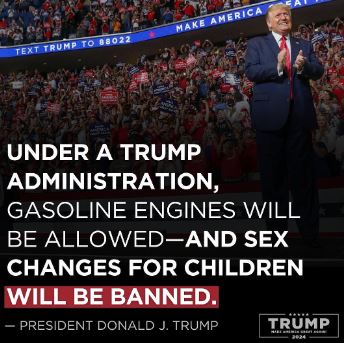
For according to the Protestant principle, grace cannot be tied down to any particular form, not even to a religious form. History shows that nonreligious, even anti-religious, movements can express a religious protest more effectively than religion itself. Consequently, Protestantism stands in a special relationship to secularism, a relationship which by its very nature, demands a secular reality. It demands a concrete protest against the sacred sphere and against ecclesiastical pride, a protest that is incorporated in secularism. Protestant secularism is a necessary element of Protestant realization. The formative power of Protestantism is always tested by its relation to the secular World. If Protestantism surrenders to secularism, it ceases to be a Gestalt of grace. If it retires from secularism, it ceases to be Protestant, namely, a Gestalt that includes within it the protest against itself. As guidance, the believer should understand that when there is no action in one’s spirit, there is no use for the brain at all, but the spirit does not always speak. There are times when it should be left in abeyance. In all guidance the mind decides the course of action—not only from the feeling in the spirit but by the light in the mind. In coming to a decision, the deciding is an act of mind and will, based upon either the mental process of reasoning or the sense of the spirit, or both, id est: Decision by mental process, reasoning, or decision by sense of the spirit, id est, moment impelling; drawing or restraint; spirit as if “dead”—no response; contraction of spirit; openness of spirit; fullness of spirit; compression of spirit; burden on spirit; wrestling in spirit; resisting in spirit. #RandolphHarris 19 of 20

God have three ways of communicating His will to humans. By vision to the mind, which is very rare; understanding by the mind; and consciousness to the spirit, that is, by light to the mind and consciousness in spirit. In true guidance, spirit and mind are of one accord, and the intelligence is not in rebellion against the leading in the spirit—as it is so often in counterfeit guidance by evil spirits, when the human is compelled to act in obedience to what one thinks is of God, supernaturally given, and fears to disobey. This all refers to guidance from the subjective standpoint, but it must be emphasized in addition that all true guidance from God is in harmony with the Scriptures. The “understanding” of the will of God by the mind depends upon the mind being saturated with the knowledge of the written Word: and true “consciousness in the spirit” depends upon its union with Mr. Christ through the indwelling Spirit of God. The mind should never be dropped into abeyance. The human spirit can be influences by the mind, therefore the believer should keep one’s mind in purity, and unbiased, as well as having an unbiased will. I pledge allegiance to Flag of the United States of America, and to the Republic, for which it stands, One Nation, Under God, Indivisible, with Liberty and Justice for All. Woe until them that call evil “good,” and good “evil,” that turn darkness into light, and light into darkness. Seek justice, relieve the oppressed, protect the fatherless, defend the case of the widow. The Sacramento Fire Department has been proudly serving the community since 1851. Currently, they are not receiving all of their resources, and it would be greatly appreciated if you could donate to the Sacramento Fire Department, so they can help keep the community safe. #RandolphHarris 20 of 20

Going Beyond the Build means exceeding client expectations.
Our team of professionals specialize in every aspect of a Design + Build experience.

The Millhaven Difference:

- Unique approach, end to end services in-house
- Transparency, organization and communication
- Live and accurate budget monitoring, no financial surprises
- High standards of quality & proven trade partners
- Clearly defined systems of execution and expectations
- 8 person team of professionals assigned to each project
- Customized software for total project management
- Going BEYOND the BUILD in every way
- https://millhavenhomes.com/custom-homes/

These trophy properties are built in highly coveted communities that provide peace, security, and privacy. Get started today by telling us what you’re wanting and we can schedule an initial consultation. https://millhavenhomes.com/

 Randolph Harris II International Institute