
Home » substance (Page 10)
Category Archives: substance

Preparing to Call Out a Demon

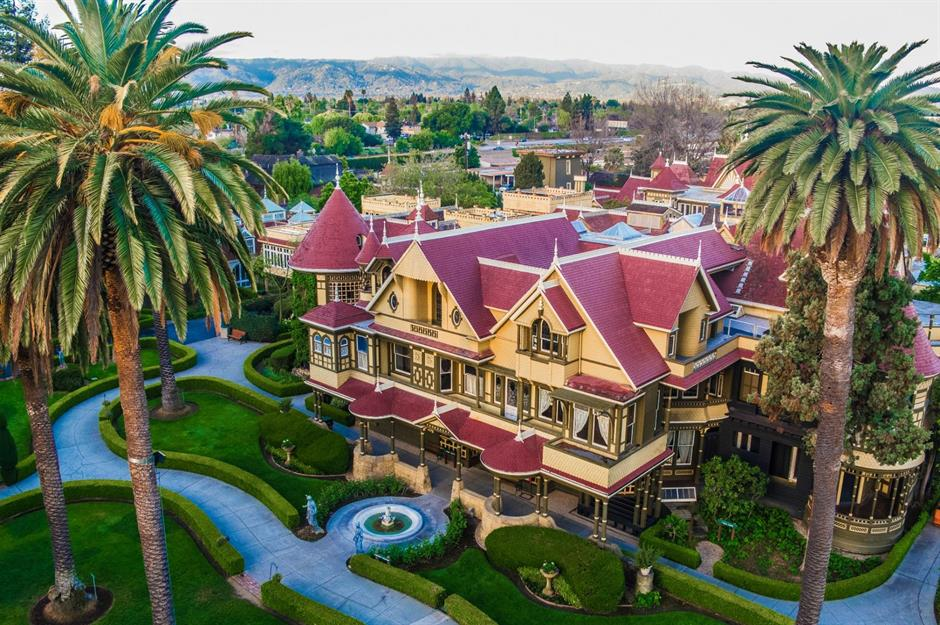
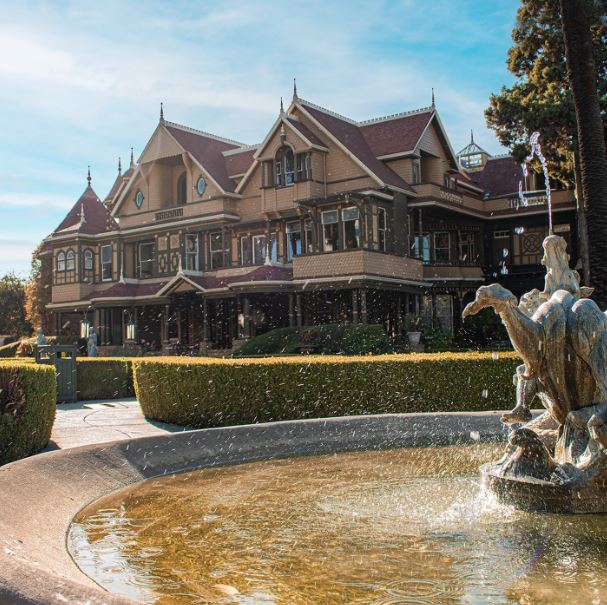
Occultists draw on the past. Everything they do has some historical, sometimes religious, bond. Rumours, myths and superstitions surround almost every aspect of the secret societies of men and women who gather suspiciously—because of the secrecy—and perform their dark and dramatic rituals, formulated from old grimoires handed down and rewritten through the ages. Personalities, too, figure predominantly. However, there are very few forms of modern occultism that do not, at some time or other, rely upon the legacy of Aleister Crowley, the self-styled Great Beast 666. At the pinnacle of his career was renowned for a wild mix of magic, and today is revered by millions the World over who are rereading the legends of this man many believed to be another Shakespeare. Mrs. Sarah L. Winchester is also a mysterious historical figure who practiced the occult. The mansion she built, called the Winchester Mansion is classic Victorian architecture and unparalleled gardens that are so incredibly photogenic that the home has become one of the World’s most intriguing and mysterious places to see ghost. Mrs. Winchester’s resources were unlimited, and she spent enormous sums building the most incredible mansion. However, the Winchester fortune was cursed. It was in the thick December dusk, in the Hall of Fires, Mrs. Winchester had endured thirteen years in the soul-deadening mourning of her husband and her daughter. When servants would catch her off guard, she would still express a sadness. Her life had probably not been of the most vivid order: for a long period, but these country plains of existence sometimes breed, in their sluggish depths, strange acuities of emotion, and Mrs. Winchester had felt from the first day the mysterious stir of intenser memories. #RandolphHarris 1 of 8
The feeling had never been stronger than on this particular afternoon when, waiting in the library for the lamps to come, she rose from her seat and stood among the shadows of the hearth. Edith Bernard, a one-beautiful young woman was found dead, lying helplessly on the floor. A single bullet lay buried deep in her head. “Spare me, ye gods!” Mrs. Winchester cried. Four servants quickly rushed in the room to comfort Mrs. Winchesters. As two of the servants stood breast to breast, another bullet pierced them both. They uttered a cry together, together cast a parting look around them, and together breathed their last. Adora, another maid, seeing them fall, hastened to the spot to render assistance and fell stricken in the act of loving duty. Only one servant and Mrs. Winchester was left. Another gunshot was heard and it struck Valda, but no shooter was seen. Mrs. Winchester knelt over the lifeless bodies, and kissed, now one, now another of her dead servants. Raising her pallid arms to Heaven, “Spirits,” said she, “feed full your rage with my anguish! Satiate your hard heart, while I follow the grave of my four servants. Yet where is your triumph? Bereaved as I am, I am still richer than you, my conqueror.” Two others servants rushed into the library to assist Mrs. Winchester. One of them held her is her arms. The other was tending to the dead bodies. Scarce had Mrs. Winchester spoken, when the gun shot sounded and struck terror into all hearts. The servant mourning over the biers of their dead coworkers fell struck by a bullet, and died on the corpse she was bewailing. The maid attempting to console Mrs. Winchester, suddenly ceased to speak, and sank lifeless to the Earth. #RandolphHarris 2 of 8
Six were now dead, and only Mrs. Winchester remained. “Spare me!” she begged. There was a torpid grief. The breeze moved not her hair, no color was on her cheek, her eyes glared fixed and immovable, there was no sign of life about her. Her very tongue cleaved to the roof of her mouth, and her veins ceased to convey the tide of life. Her neck bent not, her arms made no gesture, her foot no step. She was changed to stone, within and without. Yet tears continued to flow. When other staff members stumbled upon the tragedy, “Could it be the house?” the Butler asked. The mansion itself was fully of secrets. They seemed to be piling themselves up, as evening fell, like the layers and layers of velvet shadow dropping from the low ceiling, the rows of books, the smoke-blurred sculpture of the hearth. “Why, of course—the house is haunted!” he reflected. The ghosts of those killed by the Winchester rifle. Mrs. Winchester has now become a permanent tenant of her haunted mansion. One of the elusive specters had apparently had the powers to crystallize about it. Immediately following the strange deaths and Mrs. Winchesters crystallization, mystery, scandal and rumor swirled around the tragedy. Mrs. Winchester had been the envy of her friends, now the pity of even her foes. She stood crystalized in her mansion for many months. A new sense of meaning—a sense gradually acquired through daily contact with her in the form created a scene of the lurking mystery. It was the house itself, of course, that posses the ghost-seeking faculty, that communed visually but secretly with its own past; if one could only get close enough communion with the house, one might surprise its secret, and acquire the ghost sight on one’s own. #RandolphHarris 3 of 8
More and more under the spell of the crystallization of Mrs. Winchester, calling out to the remote corners of the house, servants found treasure after treasure, it revealed itself to them. When passing from the first rapturous flurry of exploration to a detailed inspection of the old house, the butler pressed a panel that opened on a flight of corkscrew stairs leading to the nine-story tower. The view was enchanting. His gaze flew to the long tossed horizon line of the downs, and then dropped contentedly back to trace the yew of hedges about the fish pond, and the shadow of cedar and palm trees on the lawn. Distinctly he recalled that he had seen, as he glanced, a shadow of anxiety, of perplexity, rather, fall across his face; and, following his eyes, had beheld the figure of a man—a man in loose black clothes, as it appear to him—who was sauntering down the lime avenue to the court with the doubtful gait of a stranger who seeks his way. “Wait!” he hastily shouted and ran down the stairs. But the man was gone. Suddenly, Mrs. Winchester let out a terrible cry…but could it be her? She had been in statue form for years. The old butler Augusts had some questions as to the connection of evil spirits with systems of idolatry and witchcraft. He was almost willing to swear that his eyes were playing tricks on him; for seeing Mrs. Winchester come back to life went beyond all human discernment. Of course, the young lady was stiff and needed help moving around. The Hall of Fires seemed to warm her blood and make moving easier. We wrestle not against flesh and blood, but against principalities, against spiritual wickedness in high places. #RandolphHarris 4 of 8
Weary with her thoughts, Mrs. Winchester moved to the window. The Hall of Fires was quite dark now, and she was surprised to see how much faint light the outer World still held. As she peered out into it across the court, a figure shaped itself far down the perspective of bare limes: it looked like a mere blot of dark blackness in the grayness, and for an instant, as it moved toward her; her heart thumped to the thoughts “It’s a ghost!” She had time, in that long instant, to see the man gaining substance and character, showed itself even to her weak sight as her husband William Winchester; she turned to meet him, and he vanished into thin air. Mrs. Winchester’s spirit sunk. At once the air of the hall rand with a long, frightful chain of woeful howls. Above the bestial clamour, Mrs. Winchester could hear a spirit shouting, “I adjure thee, great Marchosias, the agent of the Emperor Lucifer and of his beloved son Lucifuge Rofocale by the power of the pact…” The noise rose higher and a green stream began to come off the brazier. However, there was silence. Again the spirit shouted, “I adjure thee, Marchosias, by the pact and by the names, appear instanter.” The room screamed…but still there was no apparition. Instantly the mansion rocked as though the Earth moved under it. The building shuddered again…then from the middle of the room, a low cloud of yellow fumes went up towards the ceiling, making Mrs. Winchester cough. As it spread and thinned she could see the shape forming under it…it was something like a she-wolf, grey and immense, with green glistening eyes. A wave of coldness was coming from it…the cloud continued to dissipate. The she-wolf glared at them, slowly spreading her griffin’s wings. Her serpent’s tail lashed gently, scalily. The existence and manifestation of demons and devils in the Winchester Mansion has been accepted without question. The thing that dominated the mansion was a group of spirits known as “Legion,” or “The Legion of Lucifer.” #RandolphHarris 5 of 8

There is magical art abundant in the mansion. This explains how it has become an abnormal plane of power to “charge” magical energy. It is thought that Mrs. Winchester used the powers of Osiris and was able to reconstitute her body to return to life. This is a fundamental of the higher form of necromancy. When the mansion was sold and items auctioned off, the walls were found to be covered with magical symbols and paintings. Also found were solid gold talismans and amulets. The mansion itself was protected by spells and curses. The Winchester Mansion is a receptacle for all the mystical and magical beliefs of the East and the West. The farmers on the Winchester Estate followed the long-established practice of cutting a girdle of bark off the trees, and then setting them on fire or leaving them to die in place while planting crops around the decaying hulks. Immense trees were stripped of their foliage, and half consumed by fire extending their sprawling limbs, many were bleached by weather. By this method the farmers on the estate could clear from 3 to 5 acres a year for cultivation. The relentless demand for wood generated by the construction of the mansion and for other Victorian houses on the estate and barns, fences and fuel, potash and turpentine—added to the demand. Native Americas, in return for furs that they had in abundance, secured goods such as blankets, guns, ironware that they highly valued from Mrs. Winchester’s estate. It was even rumored that Mrs. Winchester owned the Philosopher’s Stone which was believed to turn anything it touched into gold, cure all ills and kept its owner perpetually youthful. It was supposedly given to her as a gift. #RandolphHarris 6 of 8

As the years pass by, many people who practice magic descend more deeply into the darker realm of magic, summoning demons and spirits almost at will. Some magicians become obsessed by their craft, their quest for knowledge and power and it can drag them into the black abyss. A fascinating story about the darker realm of the Winchester Mansion is one about Leonore. Leonore was lodging at the Winchester Mansion, she persuaded Augusta, the butler, to unlock the door to the Blue Séance Room. Leonore went inside and stood reading aloud from a book of spells that lay on the table; suddenly a demon appeared and demanded to know why he had been summoned. Leonore was so shocked that she could not answer and the demon grabbed her by the throat and strangled her. Mrs. Winchester returned to find Leonore lying dead on the floor of her Blue Séance Room, and realizing this could mean trouble, she summoned the demon to return and bring Leonore back to life long enough for her to be removed. This was done, and Leonore walked out of Mrs. Winchester’s Mansion into the marketplace where she immediately collapsed and died. As word of Mrs. Winchester’s success, great wealth, and powers spread, so did the story that she had made a pact with the devil, written as usual in her own blood, in return for magical powers. Once the magical power of the menses has been blessed by the Dark Goddess it has been consecrated as a direct conduit of the powers of destruction, death, and decay. #RandolphHarris 7 of 8

Angra Mainyu, come forth from the realms of eternal darkness. Angra Mainyu, I summon you to come forth and ignite this flesh as the very source of your power and might that it may emanate the ways of your Black Sun. May this body become the very fuel, the embers of this forbidden Blackened Fire that I may consume power to banish the limitation of creation and become the counter creator for the glory of Dragon Zohak! Empower me with this infernal blessing as a warrior of the Path of Smoke and Apostle of your teachings of liberation! Hear Mr:–Ieou: Pur: laot: Iaeo: Ioou: Abrasar: Sabriam: Do: Un: Adonaie: Ede: Edu: Angelos ton Theon: Aniaia Lai: Gaia: Ape: Diathanna Thorun. I am He! The Bornless Spirit! Having sight in the feet: Strong and the Immortal Fire! I am He! The Truth! I am He! Who hate that evil should be Wrought in the World! I am He, that lighteneth and thundereth. I am He, from Whom is the Shower of the life of Earth: I am He, Whose mouth ever flameth: I am He, the Begetter and Manifester unto the Light: I am He; the Grace of the World: “The Heart Gith with a Serpent” is My Name! Come Thou forth, and follow Me: and make all Spirits subject unto Me so that every Spirit of the Firmament, and of the Ether: upon the Earth and under the Earth: on dry Land, or in the Water: of whirling Air or of rushing Fire: and every Spell and Scourge of God, may be obedient unto me! Iao: Sabao: Such are the Words! Magic is the Highest, most Absolute, and most Divine Knowledge of Natural Philosophy, advanced in its works and wonderful operations by a right understanding of the inward and occult virtue of things; so that true Agents being applied proper Patients, strange and admirable effects will thereby be produced. Whence magicians are profound and diligent searchers into Nature; they, because of their skill, know how to anticipate an effort, the which to the vulgar shall seem to be a miracle. #RandolphHarris 8 of 8
Winchester Mystery House

This Friday. Tune in on Friday, December 23rd 6pm pst/9pm est to watch the Destination Fear crew investigate The Winchester Mystery House on Travel Channel! The episode will be available for streaming on Discovery+ same day👻 Can’t wait!
@travelchannel @discoveryplus #DestinationFear #winchestermysteryhouse

The First Day in Kindergarten, You Cried Because You Broke the Yellow Crayon

The only way out of today’s misery is for people to become worthy of each other’s trust. In American society, it appears that the individual is expected to exert a kind of discipline or tension in regard to one’s body, showing that one has one’s faculties in readiness for any face-to-face interaction that might come one’s way in the situation. Often this kind of controlled alertness in the situation will mean suppressing or concealing many of the capacities and roles the individual might be expected to display in other settings. Whatever one’s other concerns, then, whatever one’s merely situated interests, the individual is obliged to “come into play” upon entering the situation and to stay “in play” while in the situation, sustaining this diffused orientation at least until one can officially take oneself beyond range of the situation. In short, a kind of “interaction tonus” must be maintained. In considering the conduct through which this aliveness to the situation is demonstrated it is difficult to avoid the conclusion that an attachment to, and respectful regard for, the situation’s participants and the encompassing social occasion is being avowed. And in considering the marked infraction of these rules in mental hospital wards, it is difficult to escape the conclusion that failure to exhibit “presence” is a normal, understandable expression of alienation from, and hostility to, the gathering itself and the officials in it. One of the most evident means by which the individual shows oneself to be situationally present is through the disciplined management of personal appearance or “personal front,” that is the complex of clothing, make-up, hairdo, and other surface decorations one carries about on one’s person. #RandolphHarris 1 of 20

In public places in Western society, the male of certain classes is expected to present himself in the situation neatly attired, shaven, his hair combed, hands and face clean; female adults have similar and further obligations. It should be noted that with these matter of personal appearance the obligation is not merely to possess the equipment but also to exert the kind of sustained control that will keep it properly arranged. (And yet, in spite of these rulings, we may expect to find, in such places as New York subway during the evening rush hour, that some persons, between scenes, as it were, may let expression fall from their faces in a kind of temporary uncaring and righteous exhaustion, even while being clothed and made up to fit a much more disciplined stance.) A failure to present oneself to a gathering in situational harness is likely to be take as a sign of some kind of disregard for the setting and its participants; gross cultural distance from the social World of those present may also be expressed. These expensive implications of well or badly ordered personal appearance are often discussed in etiquette books, sometimes quite aptly: But even in a casual encounter, and upon occasions when your habit can have no connexion with the feelings and sentiments which you have towards those whom you meet, neat and careful dressing will bring great advantage to you. A negligent guise shows a man to be satisfied with his own resources, engrossed with his own notions and schemes, indifferent to the opinion of others, and not looking abroad for entertainment: to such a man no one feels encouraged to make any advances. #RandolphHarris 2 of 20

A finished dress indicates a man of the World, one who looks for and habitually finds, pleasure in society and conversation, and who is at all times ready to mingle to intercourse with those whom he meets with; it is a kind of general offer of acquaintance, and provides a willingness to be spoken to. An interesting expression of the kind of interaction tonus that lies behind the proper management of personal appearance is found in the constant care exerted by men in our society to see that their trousers are buttoned and that their jewels are not apparent. Before entering a social situation, they often run through a quick visual inspection of the relevant parts of their personal front, and once in the situation they may take the extra precaution of employing a protective cover, by either crossing the legs or covering the crotch with a newspaper or a book, especially if self-control is to be relaxed through comfortable sitting. A parallel to this concern is found in the care that women take to see that their legs are not apart, exposing their upper thighs and underclothing. The universality in our society of this kind of limb discipline can be deeply appreciated on a chronic female ward where, for whatever reason, women indulge in zestful expressions that may not be considered “ladylike,” causing the student to become conscious of the vast amount of limb discipline that is ordinarily taken for granted. A similar reminder of one’s expectations concerning limb discipline can be obtained from the limb movements required of mature women in getting out of the front seat of a car. #RandolphHarris 3 of 20

Just as some people would seem ever to be concerned about the direction and height of one’s seat, so the individual in our society, while “in situation,” is constantly oriented to keeping “physical” signs of capacities involving pleasures of the flesh concealed. And it is suggested here that these parts of the body when exposed are not a symbol of pleasures of the flesh merely, but of a laxity of control over the self—evidence of an insufficient harnessing of the self for the gathering. As has been suggested, the importance of a disciplined management of personal front is demonstrated in many ways by the mentally sick. A typical sign of an oncoming psychosis is the individual’s “neglect” of his appearance and personal hygiene. The classic home for these improprieties is “regressed” wards in mental hospitals, where those with a tendency in this direction are collected, at the very same time that conditions remarkably facilitate this sort of disorientation. (Here, dropping of personal front will be tolerated, and sometimes even subtly approved, because it can reduce problems of ward management.) Similarly, when a mental patient starts “taking an interest in his appearance,” and makes an effort at personal grooming, he is often credited with having somehow given up his fight against society and having begun his way back to “reality.” One of the most delicate components of personal appearance seems to be the composition of the face. A very evident means by which the individual shows oneself to be situationally present is by appropriately controlling through facial muscles the shape and expression of the various part of this instrument. #RandolphHarris 4 of 20

Although this control may not be conscious to any extent, it is none the less exerted. We have party faces, funeral faces, and various kinds of institutional faces, as the following comments on life in prison suggests: Every new inmate learns to dog-face, that is to assume an apathetic characterless facial expression and posture when viewed by authority. The dog-face is acquired easily when everyone freezes or relaxes into immobility. The face is that typical of streets, of social occasions, of all concealment. Relaxation comes when inmates are alone: there is an exaggeration of the smiling effervescence of the “friendly” party. The face that is protective by day is aggressively hardened and hate-filled by night, against the stationed or pacing guard. Tensity and dislike follow assumption of the face, guards react with scrupulous relaxedness, holding the face “soft” with an effort often accompanied by slight trembling hands. An interesting fact about proper composition of the face is that the ease of maintaining it in our society would seem to decline with age, so that, especially in the social class groupings whose women long retain an accent on beauty and attractiveness, there comes to be an increasingly long period of time after awakening that is required to get the face into shape, during which the individual in one’s own eyes is not “presentable.” A point in age is also reached when, given these youthful standards of what a face in play should look like, there will be viewing angles from which an otherwise properly composed face looks to have insufficient tonus. Let man begin to think about the mystery of his life and the links which connect him with life that fills the World, and he cannot but bring to bear upon his own life and all other life that comes within hi reach the principle of reverence for life. #RandolphHarris 5 of 20

On the morning of April 15, 1865, Abraham Lincoln lay dying in a hall bedroom of a cheap lodging house directly across the street from Ford’s Theater, where John Wilks Booth had shot him. Lincoln’s long body lay stretched diagonally across a sagging bed that was too short for him. A cheap reproduction of Rosa Bonheur’s famous painting The Horse Fair hung above the bed, and a dismal gas jet flicked yellow light. As Lincoln lay dying, Secretary of War Stanton said, “There lies the most perfect ruler of men that the World has ever seen.” What was the secret of Lincoln’s success in dealing with people? I studied the life of Abraham Lincoln for ten years and devoted all of three years to writing and rewriting a book entitled Lincoln the Unknown. I believe I have made as detailed and exhaustive a study of Lincoln’s personality and home life as it is possible for any being to make. I made a special study of Lincoln’s method of dealing with people. Did he indulge in criticism? Oh, yes. As a young man in the Pigeon Creek Valley of Indiana, he not only criticized but he wrote letters and poems ridiculing people and dropped these letters on the country roads where they were sure to be found. One of these letters aroused resentment that burned for a lifetime. Even after Lincoln had become a practicing lawyer in Springfield, Illinois, he attacked his opponents openly in letters published in the newspapers. However, he did this just too often. In the autumn of 1842 he ridiculed a vain, pugnacious politician by the name of James Shields. Lincoln lampooned him through an anonymous letter published in the Springfield Journal. The town roared with laughter. #RandolphHarris 6 of 20

Shields, sensitive and proud, boiled with indignation. He found out who wrote the letter, leaped on his horse, started after Lincoln, and challenged him to fight a duel. Lincoln did not want to fight. He was opposed to dueling, but he could not get out of it and save his honor. He was given the choice of weapons. Since he had very long arms, he chose cavalry broadswords and took lessons to sword fighting from a West Point graduate; and, on the appointed day, he and Shields met on a sandbar in the Mississippi River, prepared to fight to the death; but at the last minute, their seconds interrupted and stopped the duel. That was the most lurid personal incident in Lincoln’s life. It taught him an invaluable lesson in the art of dealing with people. Never again did he write an insulting letter. Never again did he ridicule anyone. And from that time on, he almost never criticized anybody for anything. If you decide to work and accept all that comes in the work, you must learn to think quickly. If you are offered a task you must answer at once that you accept the opportunity to improve the quality of your life and mental health. If you hesitate or take time to answer, the offer of the task will be withdrawn and it will not be repeated. You may be given time before actually doing what you were told to do, but you must accept the task at once. An attempt to talk things over, an ironical, suspicious, or negative attitude, fear, or lack of confidence, these will make the task impossible at once. If you feel hesitation about the task offered to you, think about your mechanicalness, think about your negativeness, about your self-will—but think quickly. #RandolphHarris 7 of 20

You can do nothing against your weak sides by yourself. The tasks offered to you have the aim to help you. If you hesitate or refuse them, you refuse help. This must be quite clear in your mind. The realization of your helplessness and your deep sleep must be permanent in you. You can strengthen it by constantly reminding yourself of your nothingness, of your meanness, of your weakness of all possible sorts. You have absolutely nothing to be proud of. You have nothing to base your judgement on. You can see, if you are sincere with yourself, all the blunders and all the mistakes which you made when you tried to act by yourself. You cannot think rightly. You cannot feel rightly. You need constant help. And you can have it. However, you must pay for it—at least, by not arguing. You have to do gigantic work if you want to become different. How can you ever hope to get anything if you hesitate and argue on the first steps, or do not even realize the necessity for help, or become suspicious and negative? If you want to work seriously you have to conquer many things in yourself. You cannot carry with yourself prejudices, your fixed opinions, your personal identifications or animosities. However, at the same time try to understand that personal is not always wrong. “Personal” can even help in the work, but personal can be very dangerous too, if it is not cleared by the struggle with identification and by the realization of your mechanicalness and your weakness. #RandolphHarris 8 of 20

Try to understand the necessity for “deliberate suffering” and “conscious effort.” These are the only two things that can change you and bring you to your aim. “Deliberate suffering” does not mean necessary suffering inflicted on you by yourself. It means attitude towards suffering. Suffering may come as a result of your feelings, thoughts, and actions connected with your tasks; it may come by itself as a result of your own faults or as a result of other people’s actions, attitudes, or feelings. However, what is important is your attitude towards it. It becomes deliberate if you do not rebel against it, if you do not try to avoid it, if you do not accuse anybody, if you accept it as a necessary part of your work at the moment and as a means for attaining your aim. “Conscious effort” is the effort based on understanding; understanding of its necessity first of all, and understanding of the causes which make it necessary. The chief cause for conscious effort is your need for breaking the walls of mechanicalness, of self-will and lack of self-remembering, which constitute your being at present. In order to understand better the necessity for accepting tasks given to you without hesitation, the necessity for “deliberate suffering” and “conscious effort,” think about ideas which brought you to the work, think about the first realization of your mechanicalness and the first realization that you know nothing. In the beginning you realized this and you came for help, but now you doubt whether you must really do as you are told. And you try to find ways to evade it, to stand on your own judgement and on your own understanding. #RandolphHarris 9 of 20

You understood clearly once, that your judgment and your understanding are false and weak, but now try to keep them again. You do not want to give them up. Well, you can keep them, but you must understand that with them you will keep all that is false and weak in yourself. There are no half measures. You must decide: do you want to work or not? In some situations, you may be able to judge that the risk of an extremely bad result from exploration is low. That should increase the amount you are willing to do. In training sessions, gymnastic competitors can exploit current capabilities by practicing elements they already know. These can always be done a little better, and repetition is needed to avoid mistakes during competition. However, gymnasts also need to attempt new, and more difficult, moves—ones they have never done before, occasionally even ones tht no one has done before. This is exploratory activity. The new elements may never be mastered, and in the meantime old ones have not been practiced. There is also increased risk of injuries that could end a season or a career. Practice spaces are equipped with facilities to reduce injuries, such as extra padding for apparatus and ceiling-suspended safety harnesses. These limit the risks of serious injury, though they do not eliminate them. The practice safety devices are installed exactly so that the costs of exploration will be lower. Inventing such devices greatly accelerates the evolution of otherwise dangerous activities, be they sports or flight maneuvers, by transforming the situation into one with lower risks of catastrophe. #RandolphHarris 10 of 20

Another class of devices for lowering the risk of catastrophe turns on having multiple replications, with the fate of the whole system not resting on any one. Thus a federal system can prosper when many states act as partially independent “policy laboratories.” A drug company can use cell cultures to test a vast array of chemicals, most of which will be ineffective, in searching for a few that might be useful. If continuing to exploit the best solution found to date is apparently going to lead to disaster, then of course one is wise to explore. Everyone is familiar with the notion of a desperate gamble on a novel approach, such as a daring attempt to escape from death row. Our argument for exploring when catastrophe seems imminent may seem almost a contradiction of our previous arguments for exploring when there are long time horizons or low risk. However, in this situation the relative attractiveness of exploring comes from the negative yield of exploiting. The results of exploring and exploiting are measured on scales that have real zero points. The United States of America, termed “infidel” by Muslim extremists and “overreligious” by Europeans, faces a World that, instead of moving toward secularism as it did during the industrial age, seems to be reversing direction. David B. Barrett and Todd Johnson, co-editors of the World Christian Encyclopedia, forecast that today’s 2 billion Christians will become 3 billion by 2025—an overall increase of roughly 33 percent. However, Islam is growing much faster. From 553 million in 1970, it shot up to 1.2 billion in 201 and is headed to a grand total of 2 billion by 2025—a rise of 50 percent in a quarter century. #RandolphHarris 11 of 20

While religious statistics are no better then economic data, their general direction is clear. The numbers, moreover, are far more dramatic when we look at where all these additional Christians and Muslims are—and where they are soon likely to be. In both we are seeing an important geographical—that is, spatial—shift. Since the mid-1950s, the critical centers of the Christian World have moved decisively to Africa and to Latin America and Asia, of which has many more Christian today than North America. We have already commented on the rapid growth of Christianity in China. The growth and spatial relocation of religion on the planet is a giant historical event—and it will, at least in part, shape and be shaped by the coming transfers of wealth around the World. In Europe the number of Muslims has tripled in the past forty years, largely because of immigration, and the growth of Islam there is expected to outpace the growth of Christianity. In fact, though little recognized, today fully a third of all the World’s Muslims live as ethno-cultural marginalized groups in non-Muslim countries, increasingly distanced from Islam’s geographical center. They include a floating, on-the-move population of middle-class Muslim intellectuals, businesspeople, engineers, and professors who may work and live in a sequence of different countries as they pursue the job market. The World of Islam will be increasingly influenced in terms of ideas, politics, lifestyle, culture, identity—and, one might add, attitudes towards capitalism, markets and business—by what are called “de-territorialized” millions, largely based in Europe. While this is happening in the West, the Muslim population is growing most quickly in the East—in an awakening Asia, where, especially in Malaysia and Indonesia, a more moderate form of Islam has prevailed than that found in Iran and the Arab countries. #RandolphHarris 12 of 20

Together, these eastward and westward shifts could pull the balance of religious and cultural influence within Islam away from the Middle East. That dominance, while rooted in Mecca and the annual hajj that brings millions of Muslims from everywhere to Muhammad’s birthplace, has in fact long been bolted into place by money. For centuries, the power of Muslims in the World economy resulted from the Middle East’s strategic, high-value-added location as the main transit point for trade between Asia and Europe. It lost that financial advantage when, using advanced navigation and maritime knowledge, European and other traders began avoiding the Middle East and sailing around the southern Africa. Today the Middle East once more faces the loss of its most crucial source of wealth—and the financial, cultural and religious influences that comes with it. That source is, of course, oil. That is why it is important for Americans to preserve their farmland for much of our oil in the future can be grown on land. It is contained in the corn and soybean plants in the fields. As the 2020 pandemic hit and gas prices spiked a few years later, many felt with life without oil was like because they could not pay $7.00 a gallon to pay for fuel. The obvious substitutes for petroleum are plant oils and fats because they have the same base chemical structure as petroleum. Fossil fuels were plants once, millions of years ago, and so it makes sense that both the fossil fuels we use today and oils produced by plants are chemically similar. Both are made up of chains of chemicals known as hydrocarbons. A hydrocarbon is a carbon atom surrounded by hydrogen atoms. Methane, the simplest hydrocarbon, is a single carbon atom surrounded by four hydrogen atoms. #RandolphHarris 13 of 20

Gasoline varies from seven to 10 hydrocarbons long. In fact, the word “octane” means eight carbons in a chain. The shorter the chain of carbons, the more explosive the fuel is, and the more power it offers an engine. The problem is tht plant oils are 14 to 18 carbons in length. Diesel fuel is 15 carbons long, which is close to the same size as plant oils. That is why the first applications are biodiesel fuels. You could not burn vegetable oils in today’s gasoline engines because of their hydrocarbon chains are too long. Not surprisingly, shorter-chain vegetable oils do exist. Coconut oil, tropical oils and similar plant oils might make a reasonable gasoline-like fuel. It might also be possible to transgenetically modify crops to produce plant with those lengths of fatty acids. Scientists could genetically modify corn and soybeans—which are already two of the highest oil-yielding plants—to produce plant oils that could be converted into a type of gasoline. The combination of combining vegetable oil and ethanol could produce a fuel which would seem to fit nicely into today’s engine structures. As we change from a black gold economy to a green gold economy, we will need engineers who know how to make products out of plant materials that is why we work with these students to make these types of products. Molecular manufacturing can also make products that will perform some useful temporary function when tossed out into the environment. Getting rid of ozone-destroying pollutants high in the stratosphere is one example. There may be simpler approaches, without the sophistication of nanotechnology, but here is one that would work to cleanse the stratosphere of chlorine: Make huge numbers of balloons, each the size of a grain of pollen and light enough to float up in the ozone layer. In each, place a small solar-power plant, molecular-processing plant, and a microscope grain of sodium. #RandolphHarris 14 of 20

The processing plant collects chlorine-containing compounds and separates out the chlorine. Combining this with the sodium makes sodium chloride—ordinary salt. When the sodium is gone, the balloon collapses and falls. Eventually, a grain of salt and a biodegradable speck fall to Earth, usually at sea. The stratosphere is soon clean. A larger problem (with a ground-based solution) is climatic change caused by rising carbon dioxide (CO2) levels. Global warming, expected by most climatologist and probably under way today, is caused by changes in the composition of Earth’s atmosphere. The sun shines on the Earth, warming it. The Earth radiates heat back into space, cooling. The rate at which it cools depends on how transparent the atmosphere is to the radiation of het. The tendency of the atmosphere to hold heat, to block thermal radiation from escaping into space, causes what is called the “greenhouse effect.” Several gases contribute to this, but CO2 presents the most massive problem. Fossil fuels and deforestation both contribute. Before the new technology bases arrives, something like 300 billion tons of excess CO2 will likely have been added to the atmosphere. Small greenhouses can help reverse the global greenhouse effect. By permitting more efficient agriculture, molecular manufacturing can be free land for reforestation, helping to repair the devastation wrought by hungry people. Growing forests absorbs CO2. If reforestation is not fast enough, inexpensive solar energy can be applied to remove CO2 directly, producing oxygen and glossy graphite pebbles. Painting the World’s roads with solar cells would yield about four trillion watts of power, enough to remove CO2 at a rate of 10 billion tones per year. #RandolphHarris 15 of 20

Temporarily planting one-tenth of U.S.A. farm acreage with a solar-cell “crop” would provide enough energy to remove 300 billion tons in five years; winds would distribute the benefits Worldwide. The twentieth-century insult to Earth’s atmosphere can be reversed by less than a decade of twenty-first century repair work. Ecosystems damaged in the meantime are another matter. Along with healing our ecosystems, we also have new demands for access in the economy. A new work regimen will, in time, sweep across the main sectors of the economy. And as the work force is continually ceded more autonomy, it will demand increased access to information. During the smokestack era, arguments for the humane treatment of employees were crushed by the realities of brute technology that paid off even when workers were kept unenlightened (and powerless). Today, workers are demanding more and more access to information because they cannot do their jobs effectively without it. We are thus seeing a redistribution of knowledge (and power) made necessary by new market conditions and by the new technologies themselves. As computer programs mimic the skills that have long set managers apart, workers in lower-level jobs can do tasks once reserved for executives. You suddenly have information in the hands of the people who run the machines; it is no longer reserved for people two or three rungs up the hierarchy. The first-level supervisors do not appreciate the power of this information until it gets into workers’ hands. Then their resistance is enormous. #RandolphHarris 16 of 20

Clearly not all workers fit well into jobs that demand initiative, full participation, and a sharing of responsibility. Nor can all managers cope with the new-style work. However, as work units grow smaller and educational levels higher, the pressure from below mounts. The result is a fundamental shift in power relationships. This is not the first time since the dawn of the industrial age that managers have been confronted with changing models of human relationships in the workplace. For many years the old Taylorite notions that turned the worker into an appendage of the machine were challenged by a school of “good-guy” theorists who argued that more humane treatment of employees would prove more efficient in the end. The new regimen, increasingly espoused by management itself, is, however, more radical. This idea goes far beyond the assumptions of the human-relations model, where employees were made to feel important. Now they are acknowledged truly to be important. It is true that the overriding power—greater than that of any individual—is that of the labour market. A shortage or surplus of some skills determines the outer parameters of the new autonomy. Many programmers or space engineers have learned that they, exactly like punch-press operators and assembly-line hands, can be pink-slipped without ceremony, while their bosses vote themselves “golden parachutes.” Those cast out of work suffer a devasting decline in personal and collective power—which is a subject for a totally different report. #RandolphHarris 17 of 20

What is relevant here, however, is how things are changing for those inside the work force. And within that framework, a change of historical proportion is taking place. In the smokestack era no individual employee had significant power in any contest with the firm. Only a collectivity of workers, massed and threatening to withhold their muscles, could force a recalcitrant management to improve the pay or status of the employee. Only group action could slow or stop production, for any individual was easily interchangeable and, hence, replaceable. This was the basis for the formation of labour unions. If unions, with their traditional emphasis on “solidarity” and “unity,” are losing membership and power in virtually all of advanced technological nations, it is precisely because workers are no longer as interchangeable as they once were. In the World of tomorrow it will not take masses of workers to bring a company’s production to a standstill, or to damage it in other ways. A “computer virus” slipped into a program, a subtle distortion of the information in a data base, the leakage of information to a competitor—these are only the most obvious of a whole range of new methods of sabotage available to the angry, the irresponsible, or the justifiably outraged individual. The “information strike” of the future could turn out to be a one-person protest. And no laws, clever programs, and security arrangements can totally protect against this. The best defense is likely to be social pressure from one’s peers. Or the simple feeling that one is treated with dignity and justice. #RandolphHarris 18 of 20

However, far more important is the shift toward non-interchangeability. As work grows more differentiated, the bargaining position of individuals with crucial skills is enhanced. Individuals, not only organized groups, can exert clout. Marxist revolutionists argued that power flows to those who own the “means of production.” Contrasting the factory worker with the preindustrial craftsman who owned his own tools, Marx contended that workers would be powerless until they seized the “means of production” from the capitalist class that owned them. Today we are living through the next power shifts in the workplace. It is one of the grand ironies of history that a new kind of autonomous employee is emerging who, in fact, does own the means of production. The new means of production, however, are not ready to be found in the artisan’s toolbox, or in the massive machinery of the smokestack age. They are, instead, crackling inside the employee’s cranium—where society will find the single most important source of future wealth and power. When thinking of wealth and power, we have to figure out ways to deter cheating. When several alternative punishments could deter cheating and sustain cooperation, how should one choose them? Several criteria have a role. Perhaps most important are simplicity and clarity, so that a player thinking of cheating can easily and accurately calculate its consequences. A criterion that infers someone has cheated if your discounted mean of profits from the last seventeen months is 10 percent less than the average real rate of return to industrial capital over the same period, for example, is too complicated for most firms to figure out, and therefore not a good deterrent. #RandolphHarris 19 of 20

Next comes certainty. Players should have confidence that defection will be punished and cooperation rewarded. This is a major problem for the European countries looking to enforce the General Agreement of Tariffs and Trade (GATT). When one country complains that another has cheated on the trade agreement, GATT initiates an administrative process that drags on for months or years. The facts of the case have little bearing on the judgment, which usually depends more on dictates of international politic and diplomacy. Such enforcement procedures are unlikely to be effective. Most people’s instinctive feeling is that the punishment should fit the crime. However, that may not be big enough to deter cheating. The surest way to deter cheating is to make the punishment as big as possible. Since the punishment threat succeeds in sustaining cooperation, it should not matter how dire it is. The fear keeps everyone from defecting, hence the breakdown never actually occurs and its cost is irrelevant. The problem with this approach is that it ignores the risk of mistakes. The detection process may go wrong, indicating cheating by a member of the cartel when the real cause of low prices is an innocent one such as low demand. If punishments are as big as possible then mistakes will be very costly. To reduce the costs of mistakes, the punishment should be the smallest size that suffices to deter cheating. Minimal deterrence accomplishes its purpose without imposing any extra costs when the inevitable mistakes occur. #RandolphHarris 20 of 20

MAGNOLIA STATION AT CRESLEIGH RANCH
Rancho Cordova, CA |
Coming Soon!

Sprawling to nearly 4,000 square feet and set atop large homesites, Magnolia Station at Cresleigh Ranch is a perfect balance of both space and splendor. These large lots come with a mix of Single Story and Two Story Homes, ranging from 2,200 to 3,7000 square feet, with 3-7 bedrooms, 2-5.5 bathrooms, and up to a 4-car garage.

In the meanwhile, check out some of the other homes avaliable. https://cresleigh.com/havenwood/

Beloved, Believe Not Every Spirit, but Try the Spirits
The magical is a great hidden wisdom…no armour can shield against it because it strikes at the inward spirit of life. Of this, we make restore assured. In recent years there has been a growing inclination to interpret any human awareness that cannot be readily explained as E.S.P. or Extra Sensory Perception. Of course, it is admitted in even the most polite circles that animals have this faculty. Rather than admit that animals have full use of one or more of the so-called five sense, they are credited with a sixth sense, which we call E.S.P. However, I believe that the majority of thing that are attributed to E.S.P., or a sixth sense, are nothing more than unconscious manifestations of our existing five sense: sight, hearing, smell, taste and touch. The reason the techniques of utilizing these five senses to the degree that would explain away much of the sixth sense nonsense are not learned is because to do so would mean admitting that animals had something we do not have and they might be able to teach us a few things. Man cannot quite bring himself to learn from the animals, though, because he has been brainwashed into thinking he is something special, a higher type of being. He cannot beat his chest like a bongo and play god, because that is reserved for the guy upstairs, and he cannot learn from the animal kingdom, because he is supposedly emancipated from it. If something comes along he cannot explain, he ask somebody else, and, if there are still no satisfactory explanations, he looks to his gods for one. If faith in his old gods wanes, because of doubts in his mind as to the validity of his religion, he can no longer call strange happenings “miracles.” #RandolphHarris 1 of 10

However, his ego will not allow him to lose what little self-respect he has acquired, by regressing to animalism in any way, shape or form—even if it means he might learn something. So he thinks of a new “scientific” term which will break away from the religious terminology of “miracles” that has lately left him so disenchanted. He still knows little more than he ever did, but he feels better because he thinks he is on the right track—not dependent on his old god and not trafficking with the Devil. H.S.P. or Heightened Sensory Perception simply means that we receive impressions through our existing five senses that we do not recognize as coming through these agencies. H.S.P relays messages to our brain based on indicators in the environment, and these signals are based on more factors than we could ever imagine have influenced us. Now, psychic phenomena is often thought to be connected with witchcraft. As William Wirt Winchester had taken a job the family business, he was warned the New Haven, Connecticut USA had become a center for witch ceremonies. People were warned to keep their children away from Hallowe’en celebrations, “We know there are adults in the village who are thing to introduce children to witchcraft for their own demonic reasons,” Maureen Crawford said. There were purportedly a dozen separate witch covens operating in New Haven, and they were all suspected to be involved in blood rituals, so the whole village of witches was branded as black (black magic). #RandolphHarris 2 of 10
Mr. Winchester had been invited to an initiation ceremony at a house in New Haven. He knew the High Priest quite well, and he was knowns for his powers. The ceremony was already in progress when Mr. Winchester arrived, and he put on a ceremonial robe and was shown into a third-floor room, where an overpoweringly beautiful crystal chandelier was the main feature. However, it was not switched on, and glistened only from the light of candles on a large altar. There, on the alter, he saw a young woman—woman who was made up to look like an ancient Egyptian. “I was absolutely certain in my own mind that she was a virgin, she looked so young, but she was obviously a willing participant. She was not strapped down and made no move to get up. Somehow I feared the worst. I wanted to get out of that place but the doorway was guarded by two men holding ritual swords. The Great Rite that was being performed has no place in this town. This was palpably a black imitation and the real purpose behind it was to raise power for the High Priest. He was calling upon dark forces. He began in what sounded like gibberish—but was Enochian texts. Then, standing close to the altar, he took the young woman and led her away, tears streaming down her face. I pulled out my revolver and told him to step aside, and I rescued the maiden. While we were walking in the pitch black night, she confessed to me her name was Sarah Pardee, and she had been abducted from Sunday School. Eight men tied her hands behind her back, and she was blindfolded as her companions carried her to the ritual casting magic circle. #RandolphHarris 3 of 10
“The men took Sarah to this old wooden Victorian home. She pulled herself free from the binding cords and ripped off her blindfold. ‘Immediately I wish I had not,’ Sarah said. ‘For there before me were four wooden stakes and upon each one had been impaled a dead cat. I have out a terrible scream and vomited. I was sick at heart, infuriated and fearful.’ As Sarah and I wondered through the forest, I was so happy I was able to get her away from the scenes of black magic.” Descriptions of such sense are not uncommon, there were many witches and warlock involved in black sorcery. Several years later, in 1862, William and Sarah were married. Their marriage was based on mutual love and affection, and when William died Mrs. Winchester mourned him for the rest of her life, avoiding public appearances for years, and living in a hermitic existence in Santa Clara County. The reason Mrs. Winchester moved to Santa Clara County is because she found a small box with three thorns, earth from a cemetery, a dead butter fly, and a picture of herself in the box. It had been sealed with black wax and placed in her kitchen. The effects had been catastrophic. A witch does have to make a pact with the devil himself, at least symbolically. Among his ten commandments is one tht calls for the confidence in the belief that a witch can destroy rivals through the use of curses thrown without mercy—the only way a curse can be thrown is without mercy, and the power of the curse is most effective. Perhaps this is why Mrs. Winchester was not only robbed of her husband, but her new born daughter. #RandolphHarris 4 of 10

The belief in black magic circles is that it is possible for the magician to achieve a state of being verging on astral projection, whereby the spirit may travel to the “victim,” engage in pleasures of the flesh and returning. The female attacking a male is known as a succubus; the male attacker is known as an incubus and both have their origins in the recorded witch trials of the sixteenth and seventeenth centuries. Mrs. Winchester’s marriage to Mr. Winchester, “was a beautiful, really, as his eyelashes. He had such a natural grace. And he was so affectionate, and so happy with me. After his death, I had to get away from family life. There was not a trace of hypocrisy in William. He was sure that his ‘call’ was irresistible, while to me it was the saving grace of my life. He was enchanting and enchanted. I knew he was too beautifully brave to exist in such a cruel world. The day I met him, I said to myself: ‘I shall have him for life’—and I had never seen anyone, man or woman, whom I was quite sure of wanting on those terms. Well, this impulse of egotism decided me. I was ashamed of it, and to get away from it I took a leap that landed me straight in William’s arms.” It is easy to see why Mrs. Sarah L. Winchester’s response to the death of her child and husband left a bizarre and impressive architectural reflection of her psyche. And what went on inspire is beautiful mansion she built left something hung in darkness. #RandolphHarris 5 of 10

The phantom attacks began late one evening in Mrs. Winchester’s bedroom. A listless drowsy breeze filled the room. It was filled with the scent of the ocean, salty and clean, washing Mrs. Winchester and washing the room, and beyond she saw stars without number, stars of such radiance and such distance that the Heavens were no longer the painted vault of Heaven but a great endless ocean of stars. Suddenly, she was thrown by an unseen force. As she fell to the floor she found herself laying next to a headless body, it was moving, crawling, clawing at the polished floors with its great sprawling fingers and pushing through the robe with his knees. The body was making a muddy shadow underneath. This sight was so ghastly that for a moment Mrs. Winchester could not move. And as she looked at the body, its movements moved with hers, there overcame her a sense of its tacit complicity, of a deep hidden understanding between the, that was no worse than the first shock of its strangeness. Not that she understood the body, but it made it clear that someday she should. And that was the worst part of it, decidedly. The headless body leaked blood. The smashed head lying on the floor, staring at Mrs. Winchester with empty eye sockets. Mrs. Winchester puzzled over the situation a good deal, but could not find any hint of an explanation. She thought that this was a demon sent to torment her. This evil was insidious. He husband was too charming and her daughter too beautiful to be sacrificed to such demons. And so, after all, she never found out what it wanted. #RandolphHarris 6 of 10

It was hard to describe the physical sense of distress. Mrs. Winchester lay back more exhausted than she had ever been in all her long existence. She could have slept for a year, but retired to a séance in her Blue Séance Room. Clad in a white dress, a spirit floating above the altar with great presence and depth. It was accompanied by an unpleasant sensation of pressure on her chest. There was also a music box playing and she could hear children laughing on the lawn at midnight. Mrs. Winchester was told that this was an omen of her impending death and that is she did not continue construction of her home, indefinitely, that she was meet the same fate. Everything was peaceful. Night birds were calling, and the frogs and crickets were contributing their music to nature’s sounds. Mrs. Winchester sat transfixed in the beauty and wonder of the scene. The following week, one of the farmers was found dead, sitting on a chair in the kitchen. Later the coroner examined the body and said the man had died of a cerebral hemorrhage. Following the mysterious death, the butler was running through the mansion, completely hysterical, shouting that he has seen the ghost. After that, the crazed butler disappeared. He was never seen again, dead or alive. You can make of witchcraft what you will—it is kind of religion, invitingly tinged with mystery, superstition, and legend. Many witches who use black magic believe that they will become vampires after their death. The fear of vampires has been famous for centuries. In 1823, a law was passed prohibiting the practice of burying unhallowed dead at a crossroads with a wooden stake driven through the heart of the corpse. #RandolphHarris 7 of 10
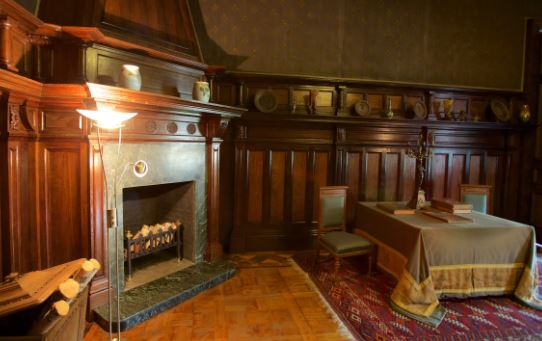
There are few major towns or cities in America that do not barbour at least one—often several—secret societies whose purpose is the study and performance of esoteric religion or ritual magic. They are generally made up of small groups of people aligned to various separate organizations and beliefs whose proliferation in the twentieth century has continued a space in what Francis King, the acclaimed author on occult matters, described as an “astonishing revival of medieval magic and alchemy.” King is right when he says that the newspaper stories of the desecration of some deserted country church for the purposes of black magic or the activities of some cult or secret society, dancing around a blazing fire, or standing rapt before a crude altar, are only the tip of the ice berg. As leaders of witchcraft recognize, students of ritual magic and the occult are on a higher plane of activity which has throughout history attracted many gifted minds. The scour antiquity for the roots of a particular persuasion in a constant search for the source, the Philosopher’s Stone or such age-old secrets as turning common metals into gold. They seek and perform old rituals of past and famous magicians; they try to define the question of being and magic furnishes the human mind with an instrument of philosophical and religious certainty as exact as mathematics. Those who attain this knowledge and adopt it as a rule of life can make themselves masters of all inferior things. #RandolphHarris 8 of 10
In the mystery of these vestures of the Holy Ones, I gird up my power in the girdles of righteousness and truth in the power of the Most High: Ancor: Amacor: Amides: Theodonis: Anitor: let be mighty my power: let it endure for ever: in the power of Adonai, to whom the praise and the glory shall be; whose end cannot be. I invoke and move thee, O thou, Spirits of William Wirt Winchester and Oliver Fischer Winchester: and being exalted above ye in the power of the Most High, I say unto thee, please Obey! In the name Beralensis, Baldachiensis, Paumachia, and Apologine Sedes: and of the mighty ones who govern, spirits, Liachidae and ministers of the House of Death: and by the Chief Prince of the seat of Apologia in the Ninth Legion, I do invoke thee and by invoking conjure thee. And being exalted above ye in the power of the Most High, I say unto thee, Obey! in the name of him who spake and it was, to whom all creatures and things obey. Moreover I, whom God made in the likeness of God, who is the creator according to his living breath, stir thee up in the name which is the voice of wonder of the mighty God, El, strong and unspeakable, O thou Spirits William Wirt Winchester and Oliver Fischer Winchester. And I say to thee, please obey, in the name of him who spake and it was; and in every one of ye, O ye names of God! I cast the limits of the garb of flesh into the refining black flames of Hell to be clothed with the powers of divine darkness eternal. Ahriman devours all including the limits of himself for the sake of evolution and becoming through the powers of the Druj-Nasu in order to reveal the truth of the lie unto the Dark Apostles! #RandolphHarris 9 of 10

In the name of Zohak, the first man turned Div; I offer the limits of self unto the Druj through the mouth of Arezura to be clothed with the garb of Ahriman which is divine darkness eternal. Druj-Nasu hear my call and be stirred now to this place! Devour the flesh of this vehicle of power and as you do devour my human weakness. Come forth now and receive this offering made by me! Druj-Nasu come! I now plant the seed of my desire within the black earth, through the mouth of Arezura where the powers of sorcery and counter creation dwell. Through this gateway of darkness, I now shine the light and power of my will upon this World for the benefit of me and mine! Moreover, in the names Adonai, El, Elohim, Elohi, Ehyeh Asher Ehyeh, Zabaoth, Elion, Iah, Tetragrammaton, Shaddai, Lord God Most Hight, I stir thee up; and in our strength I say please Obey! O Spirits of William Wirt Winchester and Oliver Fischer Winchester. Appear unto His servants in a moment; before the circle in the likeness of men; and visit me in peace. And in the ineffable name Tetragrammation Iehovah, I say, please Obey! whose mighty sound being exalted in power the pillars are divided, the winds of the firmament groan aloud; the fire burns not; the Earth moves in earthquakes; and all things of the house of Heaven and Earth and the dwelling-place of darkness and as earthquakes, and are in torment, and are confounded in thunder. Come forth, O Spirits William Wirt Winchester and Oliver Fischer Winchester in a moment: let thy dwelling-place be empty, apply unto us the secrets of Truth and obey my power. Come forth, visit us in peace, appear unto my eyes; be friendly: Obey the living breath! For I stir thee up in the name of the God of Truth who liveth for ever, Helioren. Obey the living breath, therefore continually unto the end as my thoughts appear to my eyes: therefore be friendly: speaking the secrets of Truth in voice and in understanding. #RandolphHarris 10 of 10
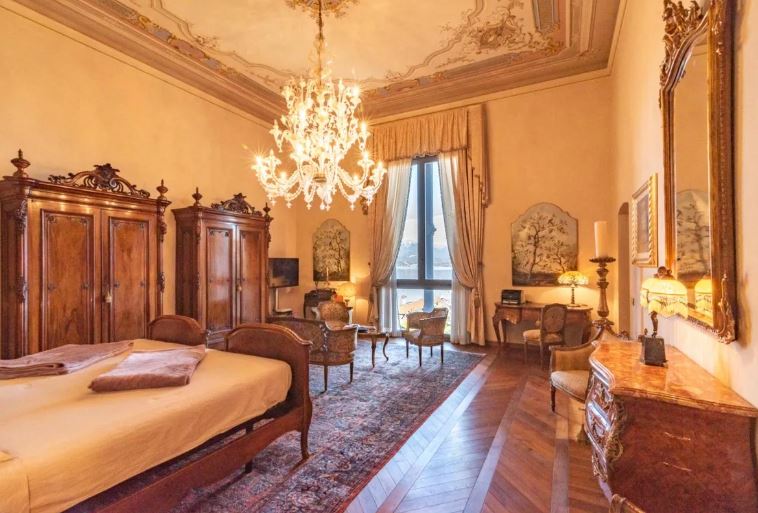
The Winchester Mansion is of significant architectural merit which stands proudly in its surroundings. It is considered one of the most haunted houses in the World. Besides being a truly historic and beautiful home, it is also the source of many scary stories over the centuries. One of the bedroom on the fourth floor is apparently haunted by a young woman, presumably Sarah L. Winchester, who died in bed after suffering the shock of discovering a demon with “cloven hooves” in her room..

The mansion is equipped with 110 out of 160 room that are open for you and your guests to explore, or even come into contact with a spectral visitor. There are a few rooms where it looks like a poltergeist has been wreaking havoc. Local legennd has it that a estate has the grave of a woman who committed suicide, where fresh flowers appear every morning, having been placed there by pixies. https://winchestermysteryhouse.com/

Angels Which Kept Not Their First Estate
I hope by now that you agree with me that the tiresomeness of an over-peopled Heaven is a purely subjective and illusory notion, a sign of human incapacity, a remnant of the old narrow-hearted aristocratic creed. William Winchester loved boats and had thirteen-metres and even raced one in the America’s Cup trials once. He had a big yacht that he kept down in New Haven, Connecticut, even though he lived in Switzerland most of the time. My grandfather, Oliver Winchester, put a rear wing on the house he bought for William as a wedding gift, with a new kitchen and flower room my grandmother wanted when she married him. This house preceded the Winchester Mansion. And it was where my father, William Winchester, had an office. There had been a couple of times when I would have to take papers down to him. That office was bigger than most people’s living rooms. It had a fireplace and a window looking out on the West River, which flows into New Haven Harbor. Oliver Winchester was the Lieutenant governor of Connecticut. Not only was he founder of the Winchester Repeating Arms Company, but he was on the board of directors of four charities, including the Winchester Foundation, which gave money for research into Tuberculosis and heart disease; he was on the board of New Haven Savings Bank, which the Winchesters pretty much owned; he was on the boards of a couple of other big companies. Running a rich family was like running a business. #RandolphHarris 1 of 13
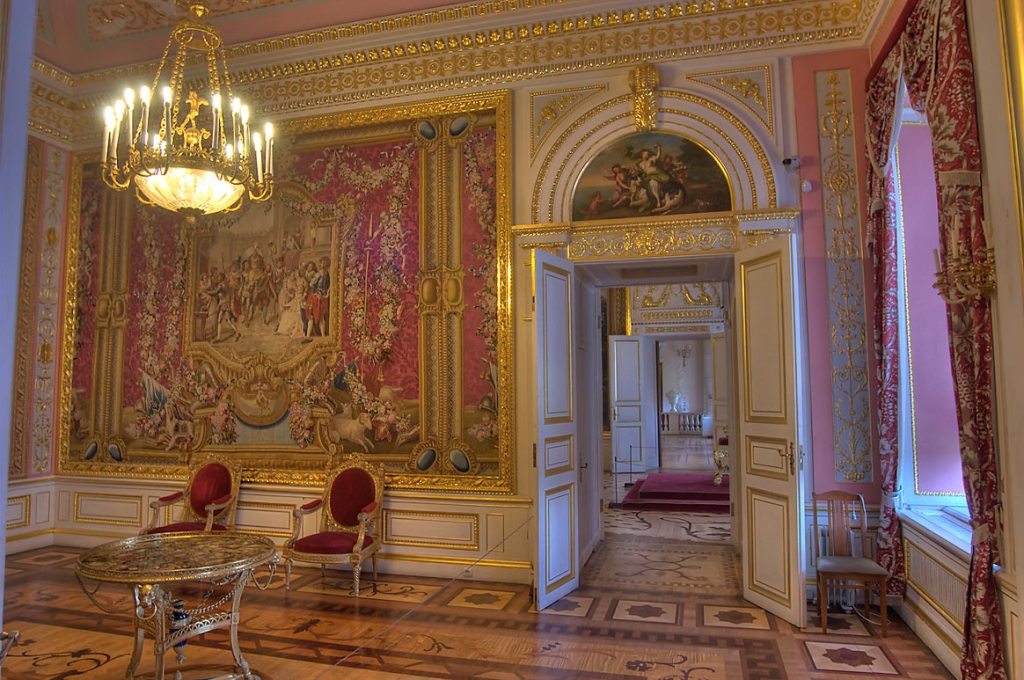
In fact, if you look at the Winchester Family treat, it is more of a “business family tree.” I guess money has always been the life source of the Winchester family. My father, William Winchester, said the family motto was “We own it, lock, stock, and barrel.” This family had a lot of power, and when you have power, you use it. The Winchester’s did not go out brawling like drunken sailors. We had the courts, the law, the police—and the Winchester Rifle if we needed it. We made sure that things around here went the way we wanted them to go. However, we did not go about it by brawling. If you did us wrong, we stayed clam, we spoke politely to everybody. However, we moved quietly. Sooner or later we would catch you between a rock and a hard place and then you would feel the almighty bad. If we did not go after them, those guys would have thought we were chicken. My father always said, “Son, do not worry what John Jacob Astor thinks of you. In your position it does not matter. You are going to be very rich and very powerful. These people will never like you. They will envy you, they will defer to you, and some of them will even admire you. But they will never like you. For that you must understand, what others think does not matter.” The original Winchester mansion was a house of these times, all right, though not to be considered new. I figured it to be at least three hundred years old. It was built of the local stone, and had three stories and a high-pitched roof, with mullioned windows—and it was vast. #RandolphHarris 2 of 13
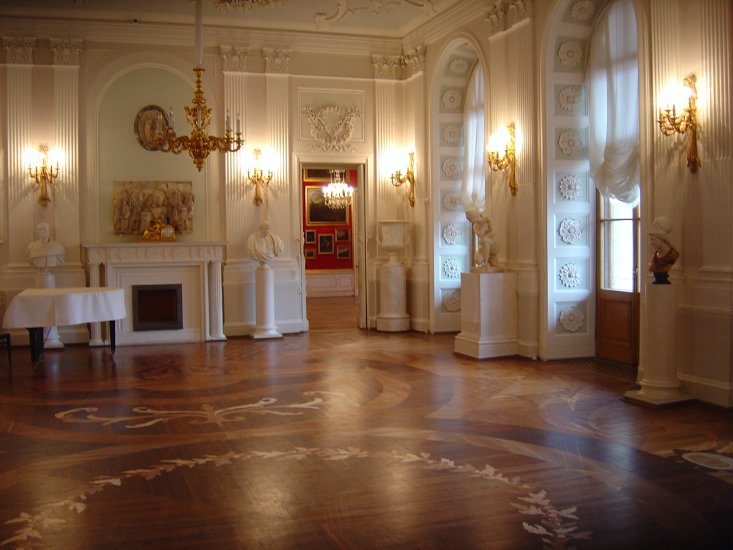
Often times, there was no one about. Only the bleak winter vines stripped of their jasmine, running on for miles, and distant corpse of an ancient tree of immense size, and the cold rain, a rain worse to me than snow, falling over as if it were falling on the entre World, a near silent rain that felt like needles on the backs of my hands and on my face. The mosaic tiles were beautiful, and possibly ancient, dating all the way back to the Roman times. I walked back and forth over the, and tapped several times with the toe of my boot. I walked to the double doors that opened into the garden, and there I saw a great pile of wood. And there was a big head on the rock, it was the devil’s face that a saint put there. If men believed nothing, they did not understand it, it is a short cradle they would have. I had been put in the mood for ghost, that evening after an excellent dinner at my father’s home. Seen through the haze of Abner Doubleday’s cigars, and by the drowsy gleam of a coal fire, my father’s library, with its oak walls and dark old bindings, made a good setting for such evocations; and ghostly experiences at first hand beings. An absurd thought came to me, that being here with Abner, it had all felt natural and good, as if in spite of the topic of our conversation we were simply human beings and all the dark World did not exist. I was ashamed of this. Why did we have to be “like human beings”? I asked myself. Why could we not simply be warlocks together? He looked at me, at my shining eyes, and his congenial smile, and he took my hand and said he wanted to see the house. We remained together for several hours after that, during which we walked through many rooms and he not only admired the endless book collection in the Gothic library, filled with classics bound in black cloth and daguerreotypes of faded celebrities, but also many of the paintings, including a few Russian painters of the nineteenth century he had never seen before. #RandolphHarris 3 of 13
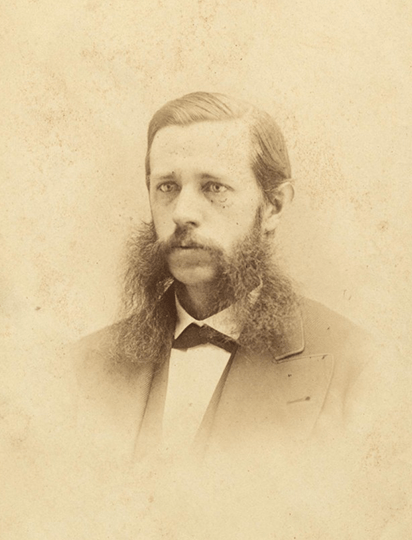
For me, this was a wonderful time. We could have continued our conversation for a year. We walked about outside the house, through the gardens which were crowded with trees for privacy and vines that blossomed at night. These carefully guarded hours had been devoted to the cultivation of a fine intelligence and a few judiciously chosen habits; and none of the disturbances common to the human experience seemed to have crossed the sky. Mentally I was able to exercise a hospitality less seductive but no less stimulating than a play. Abner’s mind was like a forum, or some open meeting place for the exchange of ideas: somewhat cold and drafty, but light, spacious and orderly—a kind of academic grove from which all the leaves had fallen. In this privileged area, we were able to stretch our muscles and expand our lungs; and, as id to prolong as much as possible the tradition of what we felt to be vanishing institution, Abner tasted the lyric qualities in youth. He nipped the flowers of soul which he gathered from this tour, which forced a young idea to blossom. The man was really intelligent, and the soundness of his nature was like the pure paste under a fine glaze. Abner had been fished out of the dullness by the spirits of the Winchester mansion. Just at the evening was drawing to an end, he demanded, “And now you have to tell me about your ghosts!” “My ghost? Do you suppose I am fool enough to the expense of keeping my own ghosts, where there are so many charming ones in my friends’ closets?” I said. #RandolphHarris 4 of 13
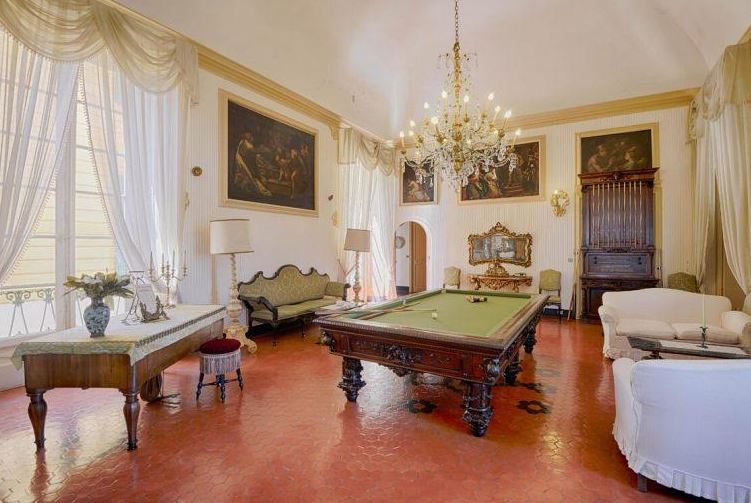
The fact is that we found whole skeletons that were used in various forms of old black magic rituals. Undoubtedly, for many who pursue this darkest of experiments, necromancy is the touchstone of occultism, especially for warlocks. If, after careful preparation, they are able to carry through what they regard as a successful contact they have reached a certain pinnacle in black magic conjuration. It is fruitless discussing whether or not this feat is possible; belief by the practitioner is all that is needed for the ritual to proceed and some psychological or drug or spiritual trance may well convince the depts tht they have indeed succeeded. “Oh,” Abner said, “you would never be content to share if you met one you really liked. What is the use of denying it? You have seen everything, so of course you have seen a ghost! Or if you have not seen one, it is only because you have seen several!” “That is it,” I said. “I have seen a legion.” The words were so unexpected that they dropped down and down into a deep silence, while we continued to stare at each other. Abner learned forward with is listening smile. “You will wonder why I am enlarging on some of these incidents. It is because the evening on which this particular incident took place was the very evening on which I first saw the queer sights I have spoken of. Being at that time an ardent believer in a necessary sequence between cause and effect, I naturally tried to trace some kind of link between the lion and the lamb lying down together.” Ancient Druids lived on the estate and necromancy had a particular appeal to warlocks seeking confirmation, for example, of the mysteries of the afterlife but more often necromancy was pursued by the skilled masters of ritual magic. #RandolphHarris 5 of 13

“We once wanted to raise a dead uncle,” I told Abner. “We went to the course of the giant tree, where we performed a ceremony. For a few moments, nothing happened. But moments later, there was a mysterious explosion. And afterwards, the road lay thick with cinders and debris. At first, my grandfather worried about the result. But he had a reassuring thought. Perhaps the explosion was caused by spontaneous combustion. ‘Oh my God…’ cried my father. ‘What happened?!’ he demanded. No one was sure. After that we walked back to the house in disbelief of the mess. Then I pointed and shouted out in horror. Before I could stop, my father fell to his knees before a hill of burned leaves and tree branches, under which he glimpsed a man’s head. It was his brother and he was looking for us. My grandfather put a hand to his mouth and stified the urge to vomit. My uncle’s eye sockets were empty, and his hair singed. ‘Brother, get up!’ he cried roughly. My father yanked his brother to his feet, frightened by the wide-eyed horror in his eyes and his awful nonstop screaming. He tried to pull out of his grasp, but he held my father tight until the screams subsided into sobs.” “Now listen,” my grandfather told my father. “You are a Winchester, so do not go making a liar out of me.” “But his brother’s tears burned my father’s skin.” “Your brother is dead,” said my grandfather. “We wondered if anything else came back to life. It was so eerily silent for this time of the morning. No cows mooing, no wood being chopped. No birds singing on the roof top. And the lawn was blackened.” #RandolphHarris 6 of 13
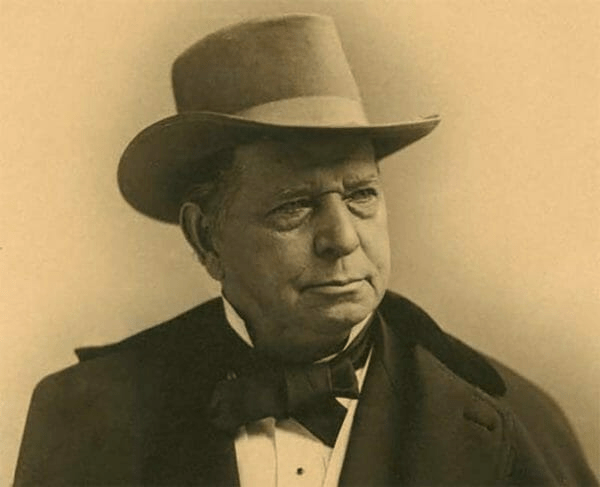
“As we went into the house, it was full of strangers, burned, bleeding, sick people. As we precariously waded through the maze of bodies, the wind must have carried in a fog. While my grandfather dug a mass grave for these animated bodies, my father and I dragged them out of the house to burry them. It took days, there were literally hundreds of them. My arms were shaking. We were all near exhaustion, and we still have several bodies to bury. We worked for an entire week to remove all these bleeding strangers from our home. I went up to bed with rather a heavy heart, for I was bowed under the weight of the first ritual I had ever consciously committed; and young as I was, I saw the gravity of my situation. The situation of being William Wirt Winchester Jr. Do not imagine for this that I had hitherto been an instrument of destruction I had been a harmless young man, who had followed his bent and declined all collaboration with Providence. Now I had suddenly undertaken to promote the moral order of the World, and I felt a good deal like the trustful spectator who has given his gold watch to the conjurer, and does not know in what shape he will get it back when the trick is over…Still, a glow of self-righteousness tempered my fears, and I said to myself as I undressed that when I had got use to being good it probably would not make me as nervous as it did at the start. And by the time I was in bed, and had blown out my candle, I felt that I really was getting used to it, and that, as far as I had got, it was not unlike sinking down into one of the softest wool mattresses.” #RandolphHarris 7 of 13

“My room had grown cold, and intensely still. I was waked by the queer feeling we all know—the feeling that there was something in the room that had not been there when I fell asleep. I sat up and strained my eyes into the darkness. The room was pitch black, and at first I saw nothing; but gradually a vague glimmer at the foot of the bed turned into two eyes starting back at me. The eyes gave out a light of their own. They were the very worst eyes I have ever seen: my dead uncle’s eyes. And the room slowly filled with hundreds of these eyes, orbs of light. My father paid immense sums to the architects and workmen to entomb the heart of the house in hopes of locking their spirits inside. This mean enclosing one of its four towers left standing and living in only a few habitable rooms while the work went on. The mansion went on to be inhabited by a secret order of men and women who met to discuss philosophy and music and escape the modern World, and the public would never be invited here due to the deep mourning of my mother over the loss of my grandfather, father, and baby sister. Indeed it was most anguishing. Some of these people had devoted their entire careers to this one project, and there was nothing now to be done but to give them, but gold coins. My mother left this mansion to Yale, I went to Rome, she went to California and it was later demolished. And there were egregious lies to be told about the Winchester name. Gorgeous salons with silken-paneled walls and plaster curlicues and Savonnerie carpets on the floor all destroyed. #RandolphHarris 8 of 13
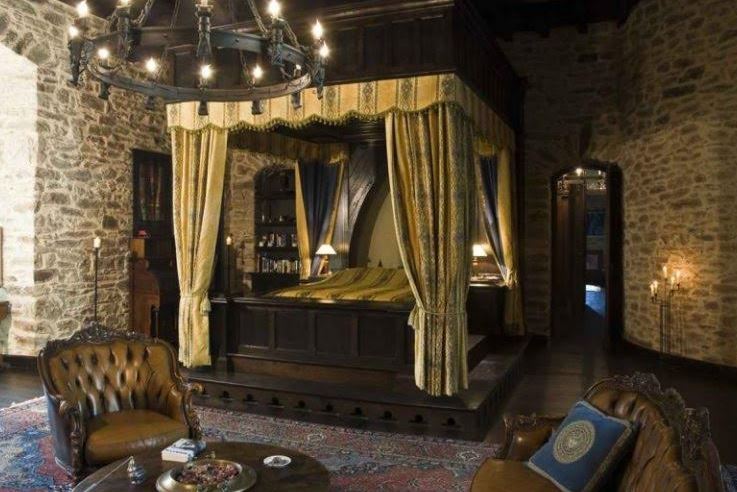
The modern marble bathrooms, replete with sunken tubs and spacious showers for every bedchamber. We wanted to make sure to give off no scent, absorb no precious oils, and did not want to take up the human scents. The great hall where my family and I had once dined, listened to the demands of the villagers and farmers, and hovered around the seventy-five fireplaces, twenty kitchens, four libraries, eighteen thousand windows, four towers, and three hundred and fifty rooms all gone like it never existed. At times, there may have been two thousand present in the ballroom. No one ever counted. This was the height of the Winchester fortune, my dear Abner. There were many departed here, though untouched by the rifle.” In its blackest form the art of necromancy has produced fairly evil recipes for success. Graveyards are indeed a common place, and it is possible our home had been constructed on a battle ground. This was a place where contact with the dead could be expressed, and was conducive to dark apparitions in suffocating rooms or beneath a mock swinging gibbet. The old grimoires are full of colourful descriptions, and since they were often written by clerical scholars when they took down the confessions of warlocks, one must be careful with the rite performed. One could magnify the spell. Even policemen were involved in occultism. As an example, the daughter of a police superintendent was initiated into the dark arts and the High Priest was another policeman. “Yes, I was the High Priest…I have been a white witch for eight years and I am not ashamed of what I do although some of my colleagues have reported me to the Witch Inspector General. I have helped to initiate at least seven witches and eight warlocks.” #RandolphHarris 9 of 13
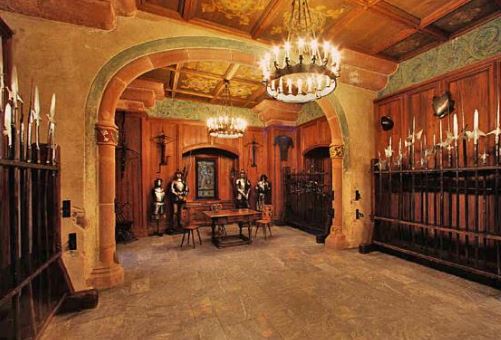
There is much evidence in Scriptures that the spirits who appear at séances are rebel angels. Perhaps that is what we raised that night? Jude 6 speaks about “angels which kept not their first estate.” Many Christian Bible scholars interpret Ezekiel 28.17, “I will cast thee to the ground,” as indicating that the Earth is the realm of Satan’s powerful operations, with the help of his fallen colleagues, the demons. Satan is called the “god of this World,” in 2 Corinthians 4.4. And Christians are under attack by “rulers…powers…World forces of darkness” (Ephesians 6.12). God tell us that hell was “created for the devil and his angels (demons)” (Matthew 25.41). I, Randolph Harris, cite and conjure thee, Spirit of Schemhamforasch, by all the seventy-two holy names of God, that Thou appear before me and fulfil my desire, as truly in and through the name Emanuel, which thee three youths Sadrach, Mijach, and A hero sung in the fiery furnace from which they are released. I do conure thee, O thou Spirits William Wirt Winchester and Oliver Fischer Winchester, by all the most glorious and efficacious names of the MOST GREAT AND INCOMPREHENSIBLE LORD GOD OF HOSTS, that thou please comest quickly and without delay from all parts and places of the Earth and World wherever thou mayest be, to make rational answers unto my demands, and that visibly and affably, speaking with a voice intelligible unto mine understanding as aforesaid. I conjure and constrain thee, O thou Spirits William Wirt Winchester and Oliver Fischer Winchester, by all the names aforesaid; and in addition by these seven great names wherewith Solomon the Wise bound thee and thy companions in a Vessel of Brass, Adonai, Preyai or Prerai, Tetragrammaton, Anaphaxeton or Anepheneton, Inessenfatol or Inessenfatall, Pathtumon or Pathatumon, and Itemon; that thou appearest here before this Circle to fulfil my will in all things that seem good unto me. #RandolphHarris 10 of 13

And if thou be still so disobedient, and refuest still to come, I will in the power and by the power of the name of the SUPREME AND EVERLASTING LONG GOD WHO created both thee and me and all the World in six days, and what is contained therein, Eie, Saraye and by the power of this name Primeumation which commandeth the whole host of Heaven, bless three, and grant thee of thine office, joy, and place, and bind thee in the depths of Heaven or the eternal to remain unto the Day of the Last Judgment. And I will bind thee in the Eternal Light, and into the Sky of Light and Harmony, therefore see my good wishes for you and please comest quickly and appearest here before this Circle to do my will. Therefore, come thou! In and by the holy names Adonai, Zabaoth, Adonia, Amioran, Come thou! For it is Adonai who commandest thee. If THOU hast come thus far, and yet he appeareth not, thou mayest be sure that he is sent unto some other place by this King, and may return any time; and if it be so, invocate the King as here followeth, to send him. However, if he does not come still, then thou mayest be sure that he is bound in the Heavens, and that he is found in the custody of his King. If so, and thou still hast a desire to call him even from thence, thou must rehearse the general curse which is called the Spirits’ Chain. O THOU great, powerful, and mighty KING AMAIMON, who bearest rule by the power of the SUPREME GOD EL over all spirits both superior and inferior of the Infernal Orders in the Dominion of the East; I do invocate and command thee by the especial and true name of GOD; and by that GOD that THOU Worshippest; and by the Seal of they creation; and by the most mighty and powerful name of GOD, IEHOVAH TETRAGRAMMATION who cast thee out of Heaven withal other infernal spirits. #RandolphHarris 11 of 13
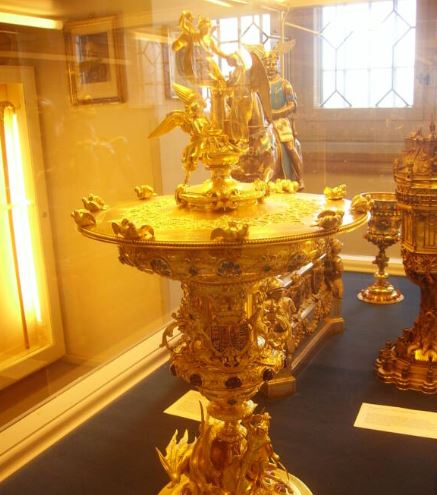
And by all the most powerful and great names of GOD who created Heaven, and Earth, and Hell, and all things in them contained; and by their power and virtue; and by the name PRIMEUMATON who commandeth the whole host of Heaven; that thou mayest cause, enforce, and compel the Spirits of William Wirt Winchester and Oliver Winchester to come unto me here before this Circle in fair and comely shapes, without hard unto me or unto any other creature, to answer truly and faithfully unto all my requests; so that I may accomplish my will and desire in knowing and obtaining any matter or thing which by office thou knowest is proper for him to perform or accomplish, through the power of GOD, EL, Who created and doth dispose of all things both celestial, aerial, terrestrial, and infernal. I conjure you William Wirt Winchester and Oliver Fischer Winchester, by the Spirits Chain to appear in the Winchester Mansion, and if you two are bound in chains, by the Emancipation Proclamation, you have permission to break off from them and be at liberty. As this smoke ascends I ascend also by following the path of smoke and usurping power of worship to empower by blackened eternal soul. I take all the power raised within this sanctuary as my own through this talisman of counter creation to strengthen my divine power and to Become a Living God. Harness power through the cedar tree of life, disinfectant, expectorant, treatment of tuberculosis. Spirits of the Winchester Mansion, here me—Roubriao: Mariodam: Balbnabaoth: Assalonai: Aphniao: I: Thoteth: Abrasar: Aeoou: Ischure, Might and Bornless One! Legions of Spirits in the Winchester mansion, here me and arise. I invoke thee. #RandolphHarris 12 of 13

I awaken the powers of darkness which dwell within you by the power of the blood of the three headed Dragon Zohak that you may serve to empower my great work! Through serving the greater cause of dark magik which break the shackles that bind the Blackened Fire of Spirit, may you be uplifted and liberated! Awaken and empower the forbidden rites of Angra Mainyu! Awaken to empower my great work of counter creation as an Apostle of the Lord of Darkness eternal and as a warrior of the Path of Smoke! Through the gateway of blood, smoke, and Blackened Fire receive life from the deepest depths of Arezura, in the name of Zohak, and by the power of Angra mainyu it is done! Hear Me:–Ieou: Pur: Iou: Iaot: Iaeo: Ioou: Abrasar: Sabriam: Do: Uu: Adonaie: Ede: Edu: Angelos ton Theon: Aniaia Lai: Gaia: Ape: Diathanna Thrown. I am He! the Bornless Spirit! having sight in the feet: Strong, and the Immortal Fire! I am He! the Truth! I am He! Who hate that evil should be wrought in the World! I am He, that lighteneth and thundereth. I am He, from Whom is the Shower of the Life of Earth: I am He, Whose mouth ever flameth: I am He, the begetter and Manifester unto the Light: I am He; the Grace of the World: “The Heart of Girt with a Serpent” is My Name! Come Thou forth, and follow Me: and make all Spirits subject unto Me so that every Spirit of the Firmament, and of the Ether: upon the Earth and under the Earth: on dry Land, or in the Water: of whirling Air or of rushing Fire: and every Spell and Scourge of God, may be obedient unto me! Iao: Saboo: Such are the Words! This is the special secret of this Seal. This is also the special secret of this Throne. Carrying this Seal with you will cause you to be very agreeable and much beloved, and will also defeat your enemies. #RandolphHarris 13 of 13
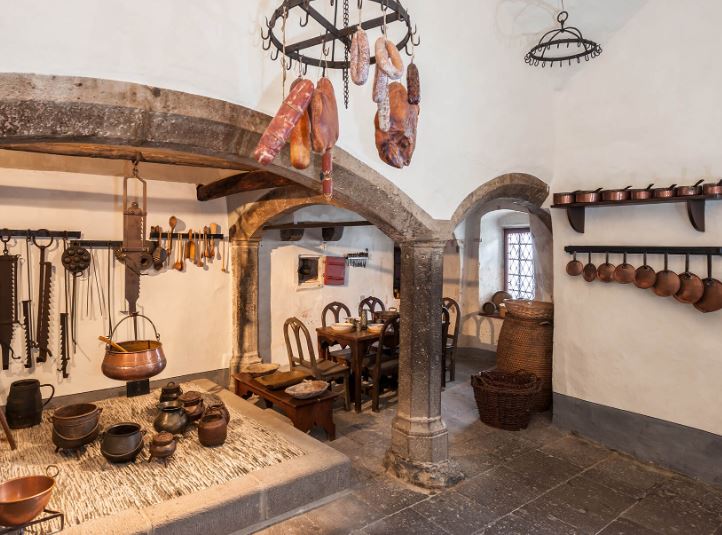
The castle is the ancestral seat of the former royal German dynasty known as the House of Winchester. The beautiful, Neo-Gothic/Victorian castle, now known as the Winchester Mystery House, sees hundreds of thousands of tourists a year. It once contained a sizeable art collection, a treasure trove of jewels that were stolen from the safe, along with a conjurer’s heart. But despite its magnificent features and Medieval history, the Winchester Mystery House has not been formally lived in for centuries.

As political power shifted, and taxes became law in 1909, the spirits decided they would discontinue construction, and shortly after called Mrs. Winchester home. The architecture of the Winchester Mansion and its gardens are the main attractions, and some come for the food, and/or to purchase items from the gift shop. https://winchestermysteryhouse.com/
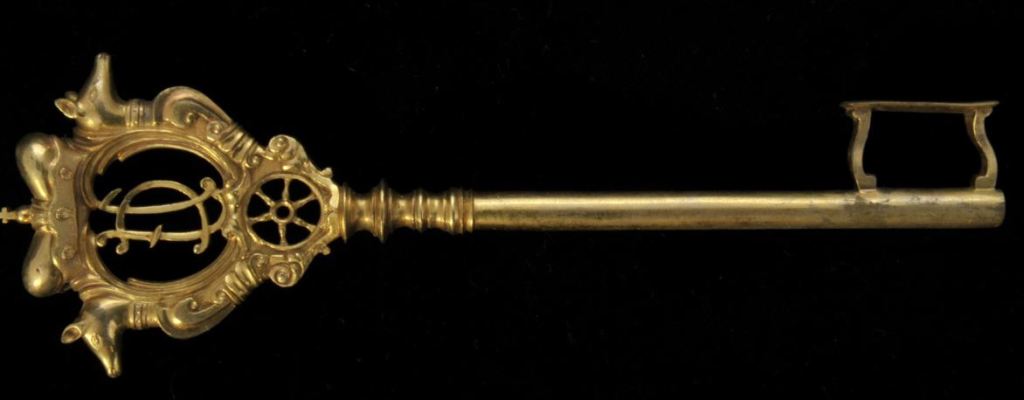

The Mansion of Darkness
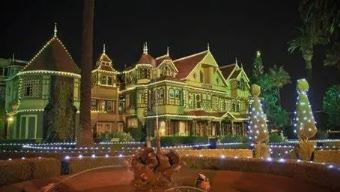
Most of the beauties who suffered at the hands of the inquisitors were tormented because they refused to succumb to the right people or were too quick to give in to the wrong ones. Many who lusted after such women become so guilt-ridden that they would denounce them out of fear that they would fall from grace in the eyes of God. Of course, the most successful witches were unusually sleeping with the inquisitors and were never even considered to be witches. Successfully as they might be, however, they could never openly take pride in their witcheries, for to do so would mean certain death. There are many who view the witch as a member of an old pagan religion, more concerned with her beliefs than with her powers. To be sure, the witch is a WOMAN. Men are called warlocks. The witch has made a pact with the Devil and through rituals dedicated to Him gains her power. One must worship the Luciferian element of pride within. One is often blessed with a family heritage of sorcery in one form or another. Everyone inherits something from their forebearers that can be applied as useful legacy. My mother had a genealogy of the Winchester family that showed all of our ancestors going way back to the 1400s. There were lots of famous people in our genealogy—a governor, two senators, a famous general in the Revolution, a lot of people who found in the Revolutionary War and the Civil War, and some others. However, my dad always said that most of the people in the genealogy were regular people—farmers and fishermen and storekeepers who worked hard all their lives and tried to do right by their families. #RandolphHarris 1 of 12
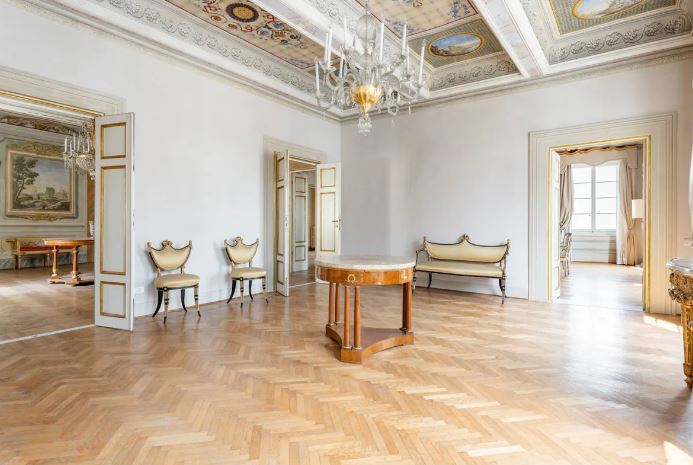
The Winchester money went pretty far back. However, a majority of it came during the 1870s, from the 1873 Model called “The Gun that Won the West.” The Winchester Repeating Arms Company was started by Oliver Fisher Winchester. There was a portrait of him, big as a picture window, hanging up in the parlor in the Winchester Mansion. He had on a dark suit, black tie, white shirt, and he looked very dignified. It was one of those pictures where the eyes follow you around the room—no matter where you went, he always looked at you. After grandfather Oliver Winchester passed away, he left the company to my father, William Winchester, who passed away shortly after, alone with my baby sister, leaving the fortune and company to my mother, Sarah L. Winchester. That mansion used to scare the crap our of me when I was little. We would go up there for Thanksgiving or Christmas, when Mrs. Winchester had a big family dinner for all the family—fifty or sixty of us, probably six turkeys, plumb pudding from England, thousands of dollars worth of glassware and sliver gleaming so bright that the table sparkled. The towns people always blamed Mrs. Winchester for whatever happened to them. You have to remember, this was a time when people lived in houses without windows, no indoor plumbing, or houses with no glass in the windows. Common folks in those days would eat nothing but potatoes for dinner night after night, and they patched the holes in their shoes with cardboard because they could not afford to buy new one. #RandolphHarris 2 of 12

My mother, whom I call Mrs. Winchester, said paying the bills, paying the servants, and keeping an eye on everything was like managing a large castle. The cobble stone driveway swung around behind the house here to get the stable, where we kept the riding horses, and the old carriage house, where the cars were garaged. According to legend, Mrs. Winchester enacted a nightly séance to help her with her building plans and for protection from “bad” spirits. The Satanic witch of old received her magic from The Dark Man. While the rest of the World, particularly the men-folk, slept in blissful innocence, she and her sisters would meet Him in secret groves. There He would advise, inveigle and disclose the knowledge that would empower them to work their spells and enchantments. His pearls of infernal wisdom empowered them. It was, they said, a sign of a coven moving towards black magic. In other words their selected deity, faded into the background of their working and the search for the manifestation of demonic forces within their circle became obsessive. However, magic is the power within oneself that is the key to what we do, and sometimes we can whip up a great deal of power. The magic we are capable of is almost indefinable. Our magic is the art of causing change to occur in conformity with will. We attempt to raise enough etheric energy between us, by our ritual, to use our paranormal powers to force a desired result by our will-power. It was one thing using the supernatural powers of the human mind to try to compel something to happen, but it was quite another matter summoning up the assistance of spirits and demons, whether benevolent, malevolent or neutral. Mistakes in the ritual or failure to observe the minute could lead to disaster. #RandolphHarris 3 of 12
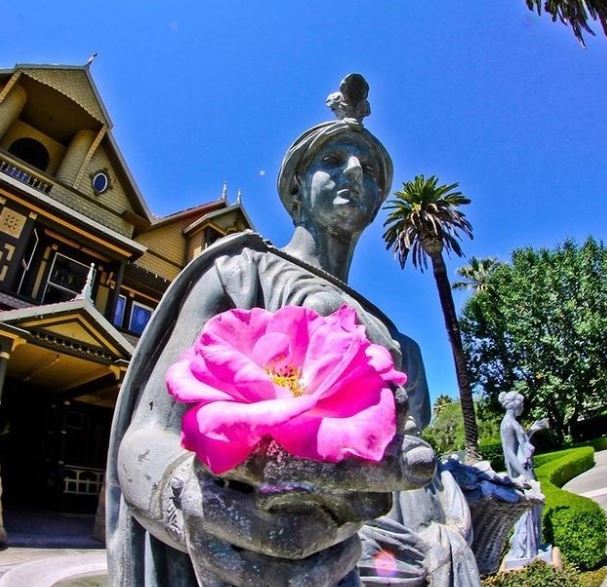
Mrs. Winchester recalls one night she invited a magician who parctised the darker arts to assist her. The magic went wrong and the room they were working in was virtually wrecked by lingering, unseen spirits. Mrs. Winchester was mysteriously injured with a stab wound in her shoulder, though no one saw the knife go in or where it came from. Many guides to higher ritual magic issues a health warning with their instructions: the practitioner must be confident he or she is totally in control of all the techniques and disciplines otherwise one faces physical, psychological and spiritual dangers of the most serious kind if any attempt to invoke spirits goes wrong. By and large, witchcraft—and certainly paganism—seemed not to be about chasing demons, though they do claim to make spiritual contact with the gods invoked during their worship. There was an abundance of evidence that Mrs. Winchester experienced paranormal events in her life: the feeling she had been in a certain place before when, in this life at least, it was her first visit; the uncanny foresight of her fortune-telling; the “proven” success of powers of autosuggestion; the out-of-body experiences that she was able to learn; the sixth sense of Zip, barking at the spot in the mansion where Maynard the butler had died years ago. The list goes on and on. The discussion about Mrs. Winchester will probably go on for centuries, but it will not be until the year 2030 that these discussions will be able to take place without being prosecuted or hanged. Mrs. Winchester wore robs during her séances because the human body holds within it a latent power which can be released by certain ritual exercises that witches perform. Some spiritualist healers and clairvoyant witches can actually see it, like a rainbow. #RandolphHarris 4 of 12
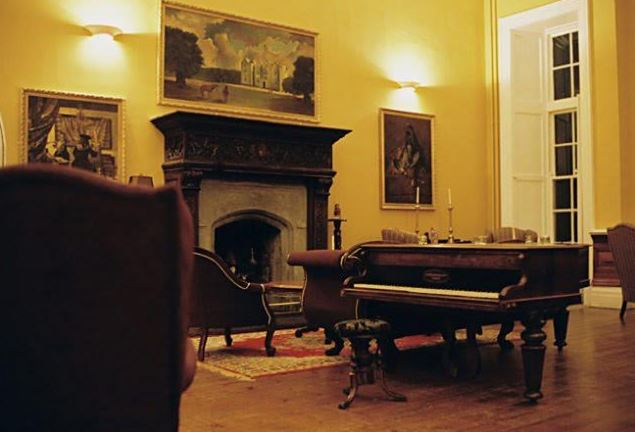
Is it any surprise the Winchester Mansion is haunted? One night during a séance, two inner circles were painted on the floor. The circle is the center of all occult activity and was drawn to concentrate the occultists’ power and protected them from hostile spirits. Within the circle, the spiritual journey started and their efforts were directed to produce their Cone of Power. It was only within the circle that the gods and the spirits of the astral Would could be safely contacted. The process was much like clearing a dense forest so the physical bodies could meet their spiritual. As the group was opening their mind to journey to a higher plane, they were clearing their minds of Earthly problems and worries so that they could open their entire beings to the singular concentration of the work before them, by tapping into the energy of the centers of the body. Lighted candles were placed at strategic points on the circle, and there was a pentacle on the altar where the statuette of the Horned God of Pan stood. As Mrs. Winchester blessed the water and salt with her athame and the coven, she was able to visualize the bodily power of the priestess moving in the form of a blue light through her hand into the athame and as she consecrated the circle itself, starting at the north a magic was killed by a heavy door that came loose from its hinges and flew at him. The invocation of gods and goddesses or their attempts to attract angels and genii into circles involve long and complicated rituals which have their complexities. Afterwards, to all, things went on as usual for a week or two. Well, the things went on as usual; so they did with the rest of household; but as for Mrs. Winchester, she had never been the same since that night. Night after night, she used to lie awake, listening for the spirits, looking for blue lights, and for the door of the Blue Séance Room to be locked. #RandolphHarris 5 of 12
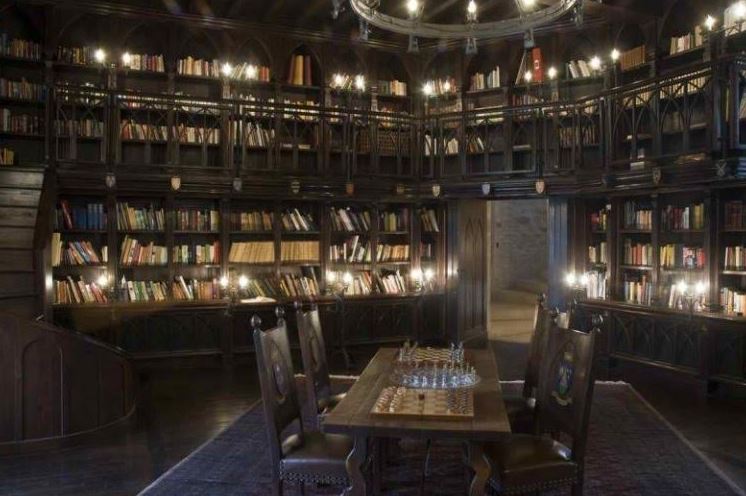
However, all supernatural activity seemed to have ceased, and she heard no sounds coming from the room. At last, the silence began to be more and more dreadful to Mrs. Winchester than the activity of the spirits. She felt that someone was cowering there, behind the locked door, watching and listening as she watched and listened, and she could have almost cried out, “Whoever you are, come out and let me see you face to face, but do not lurk there and spy on me in the darkness!” Feeling as she did, you may wonder Mrs. Winchester did not give warning. Once she very nearly did so; but at the last moment something held her back. Whether it was compassion for the peace of her staff, who had grown more and more dependent on her, or unwillingness to try a new room, or some other feeling that she could not put a name to, Mrs. Winchester lingered on as if spellbound, though every night was dreadful to her, and the days but little better. The staff did not like Mrs. Winchester’s looks, she had not been the same since that night. They thought she would brighten up, but though she seemed easier in her mind, her spirits did not revive, nor her strength either. Mrs. Winchester had grown attached to her home, and there was nothing no one could do for her. In spite of Mrs. Winchester’s solemn looks, they had a very merry dinner that day in the hall. She started to look better, and seemed more cheerful in her manner. She had been for a walk in the morning, and after luncheon she lay down in her room, and read a book. As the rain fell, Mrs. Winchester looked out at the rain, and she picture how beautiful her Victorian gardens would look in the spring. #RandolphHarris 6 of 12
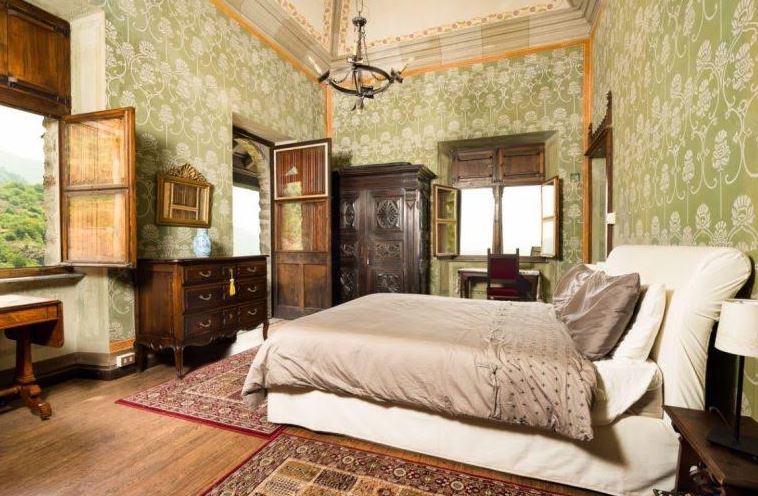
It seemed to her that all the beautiful flowers, green lawns and plush trees would cover up the dreariness, indoors as well as out. The fancy had hardly crossed her mind when she heard a step at her side. She looked up, and there stood Maynard. Mrs. Winchester did not know how long he stood there. She only knew that she could not stir or take her eyes from him. Afterward she was terribly frightened, but t the same time it was not fear she felt, but something deeper and quitter. He looked at Mrs. Winchester long and hard, and his face was just one dumb prayer to her—but how in the World was Mrs. Winchester to help him? Suddenly she turned, and she heard him walk down the passage. This time Mrs. Winchester was not afraid to follow—she felt that she must know what Maynard wanted. Mrs. Winchester sprang up and ran out. He was at the other end of the passage, and Mrs. Winchester expected him to take the turn towards the door-to-nowhere; but instead, ran and pushed out the door to the 7-11 staircase that was built in the shape of a “Y”, which enabled servants to get to three different levels of the mansion. Mrs. Winchester followed him down the stairs. The kitchen and hall were empty at that hour, the servants being off duty, except for the footman, who was in the pantry. At the door Maynard stood still for a moment, with another look at Mrs. Winchester; then he turned the handle, and stepped out. For a minute Mrs. Winchester hesitated. What was Maynard leading her? #RandolphHarris 7 of 12
The door had closed softly after him, and Mrs. Winchester opened it and looked out, half-expecting to find that Maynard had disappeared. However, she saw him a few yards off hurrying across the courtyard to the path through the woods. His figure looked black and lonely in the snow, and for a second Mrs. Winchester’s heart failed her and she thought of turning back. But, all the while Maynard was drawing her after him; and Mrs. Winchester ran out into the open. Maynard was in the cobble stone path now. He walked on steadily, and Mrs. Winchester followed at the same pace, till they passed out of the gates and reached the highroad. Then he struck the across the open fields to the village. By this time the ground was white, and as he climbed the slope of a muddy hill ahead of her Mrs. Winchester noticed that Maynard left no footprint behind him. At sight of that her heart shriveled up within her, and her keens were water. Somehow, it was worse than indoors. He made the whole countryside seem lonely as the grave, with none but the two of them in it, and no help in the wide World. Once Mrs. Winchester tried to go back; but Maynard turned and looked at her, and it was as if he dragged her with chains. After that Mrs. Winchester followed him like a lamb. They came to the village and he led her through it, past the church and the blacksmith’s shop, and down the lane, and the ghost of Maynard disappeared. A sense of helplessness came over Mrs. Winchester and she had not been able to guess what he wanted. His last look at her pierced Mrs. Winchester to the marrow; and yet it had not told her! #RandolphHarris 8 of 12
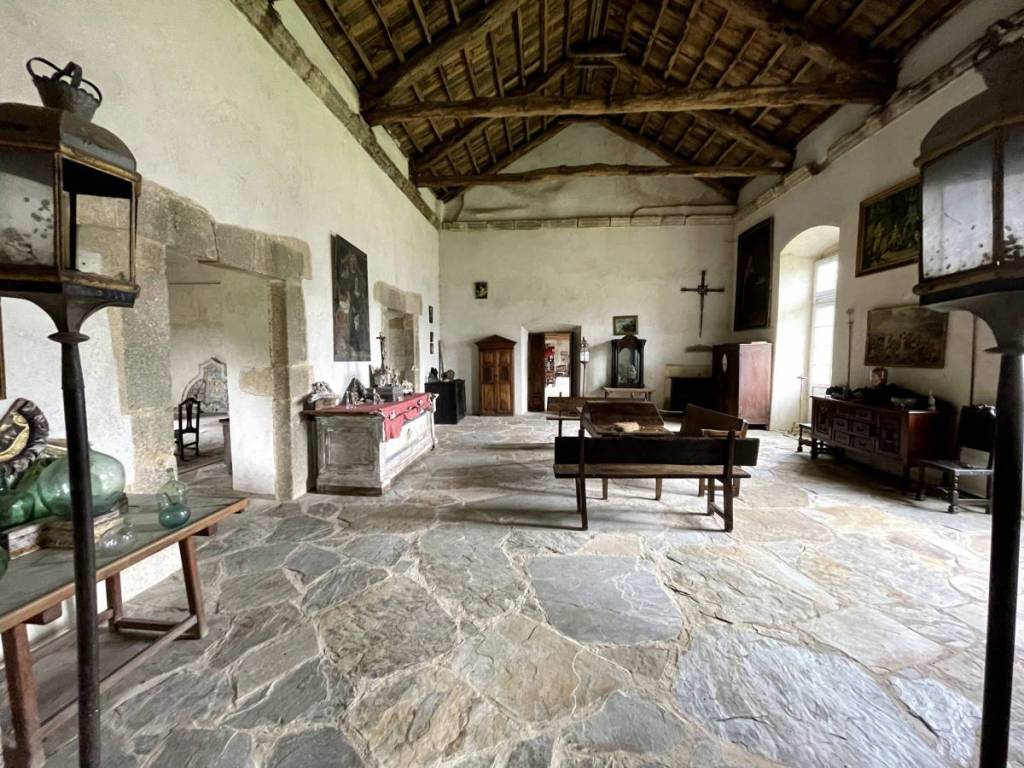
All at once Mrs. Winchester felt more desolate than when Maynard had stood there watching her. It seemed as if he left Mrs. Winchester all alone to carry the weight of the secret she could not guess. The rain went around in great circles, and the ground fell away from her. A spot of tea was brought to Mrs. Winchester and she was driven by carriage to her mansion. Upon arrival at home, the maid asked Mrs. Winchester what she wanted for dinner. “I have a headache, and will not require dinner this evening,” she said. It was a fact that Mrs. Winchester could scarcely keep her feet; yet she had no fancy to spend a solitary evening in her room. She sat down in the morning room, as long as she could hold her head up; but by eight she walked up the zig zag stairs, too weary to care what happened if she could but get her head on a pillow. The rest of the household went to bed soon afterward; they kept early hours. Once in bed, Mrs. Winchester felt easier, and lay quiet, listening to the strange noises that came out of the house after dark. Once she thought she heard a door open and close again below: it might have been the glass door that led to the gardens. She got up and peered out of the window; but it was in the dark of the moon, and nothing visible outside but the streaking of rain against the panes. Mrs. Winchester went back to bed and must have dozed off, for she jumped awake by the sound of shattered glasses. Before her heard was clear she sprung out of bed, and was dragging on her clothes. She unlocked and opened her door and peered down the passage. As far as her candle flame carried, she could see nothing unusual ahead of her. #RandolphHarris 9 of 12
Mrs. Winchester hurried on, breathless; but as she pushed open the door leading to the main hall her heart stood still, for there at the head of the stairs was Maynard, peering dreadfully down into the darkness. For a second she could not sir; but her hand slipped from the door, and as it swung shut the figure vanished. At the same instant there came another sound from below stairs—a stealthy mysterious sound, as of a latchkey turning in the house door. At that moment, the door tore open. On the threshold stood Maynard. All was dark behind him, but Mrs. Winchester saw him plainly. A death flutter passed over her face. Hours passed and there seemed to be no change in her. Just when the evil spirit left, Mrs. Winchester did not, but you could imagine the great joy that filled her heart to be set free from that awful, wicked, noisy spirit. Mrs. Winchester was so happy. If a Demonic element is allowed to express itself, through a non-human vehicle, such as poetry, music, art—great works can be accomplished. Maynard was a Satanist who had worked evil magic more than a hundred times. There are bloodcurdling accounts of those who had flirted with the devil and brought to public attention by those who worked at the Winchester Mansion. Mrs. Winchester knew she had powers when she was a child; she could will things to happen and often they did. She thought it was natural. She owned parchments from old grimoires from rituals that had been performed by witches who were hanged or burned. There were even books with spells in curses from the sixteenth century. #RandolphHarris 10 of 12

Mrs. Winchester owned magic spells that were older than the country—magic to ensure opulence; to incite hatred or vengeance; and, for men, to secure the love of a virgin; to open every kind of lock without a key; to cause a dead body to rise—all that kind of stuff. She studied the old rituals for bewitchment, the type that got a lot of women hanged. There were these spells rather like voodoo where she made wax effigies. Mrs. Winchester vegan to study necromancy, which deals with bringing the dead back to life. The method she did was one where she drew her magic in a circle in her house. This was supposed to attract the spirit back. The performed the rites which lasted about thirty minutes. Nothing happened the first time or the second time, but the third time the room went cold and she could feel the presence. Suddenly ornaments crashed off the sideboard and pictures fell from the walls…she had made contact but whoever it was was obviously unhappy about it so she had to give up. Mrs. Winchester did not give up experimenting thought. The art of necromancy often causes occasional outbreaks of attacks on graveyards where misguided occult dabblers believe they have been compelled to make contact with the dead no matter how long they have been departed, though in truth a graveyard is probably the least place the spirit might wish to join callers for an evening. In June of 1889, the Oak Hill Memorial Park was the scene of bizarre rituals that puzzled even the most experienced occultists. More than twenty graves were ransacked; old-fashion lead-lined coffins had been “ripped open like a tin of beans” and the bodies or remains were carried away. #RandolphHarris 11 of 12
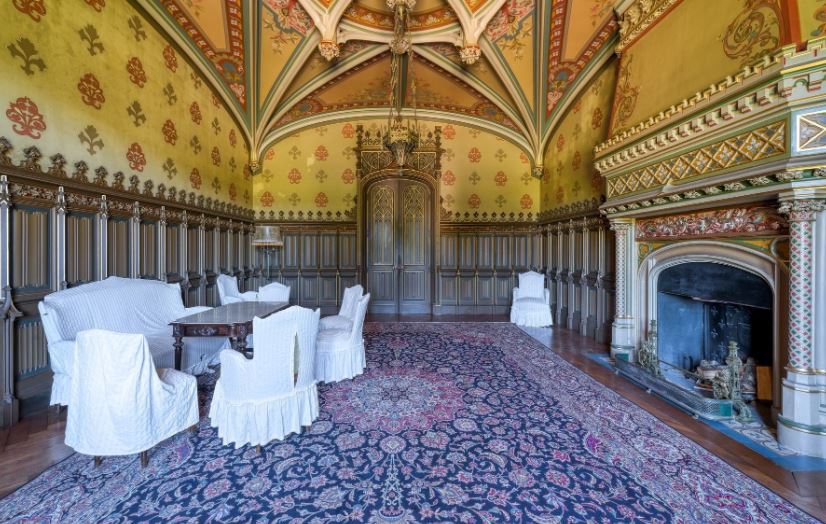
No one can become involved in spiritism without serious repercussions. The poltergeist phenomena may be real. I call upon the powers of death and decay through the mouth of Arezura. Powers of baneful darkness I summon you to this unholy temple. I conjure you mighty Fly Goddess Dryj Nasu to enter this lamp of death which will guide the lives of my enemies into utter destruction, for death levels them all according to my will, whether they die as Kings upon a throne or poor men lying upon dirt! Druj Nasu fill this lamp of death with your power and essence and I offer my essence upon this gateway of the black Earth so it is done! This Druj Nasu runs from the northern directions in the form of a fly. To him blow the wind from the northerly direction from the more northern sides, stinking, more stinking than other winds. I offer my enemy as a sacrifice unto the Druj Nasu. Claim your prize how, by the power of Ahriman and the Blackened Fire of Zohak, and in the name of my own divine power it is done! Thou shalt purge me with hyssop, O Lord! and I shall be clean: Thou shalt wash me, and I shall be whiter than snow. THE ADORATION AT THE INDUING OF THE VESTMENT. By the figurative mystery of these holy vestures (or this holy vestment) I will clothe me with the armour of salvation in the strength of the Most High, ANCHOR; AMACOR; AMIDES; THEODINIAS; ANITOR; that my desire end may be effected through Thy strength, O ADONAI! Unto Whom the praise and glory will for ever and ever belong! Amen! #RandolphHarris 12 of 12

Winchester Mystery House

Master magician and acclaimed apparitionist Aiden Sinclair returns to Winchester Mystery House with Aiden Sinclair’s Ghost of Christmas Passed, an interactive evening of paranormal illusions. Once upon a time, Christmas was more than a celebration of giving.
It was a time that families gathered and when the night grew darkest, chilling tales were told. Aiden Sinclair rekindles the tradition of Dickens in a haunting presentation that brings the Christmas Ghost Stories of long ago back to haunt the living! Will you dare join and see what dark gifts he has in store? Two nights ONLY – tickets going fast!
🎟 link in bio. https://winchestermysteryhouse.com/

The Rampling of the Winchester Mansion
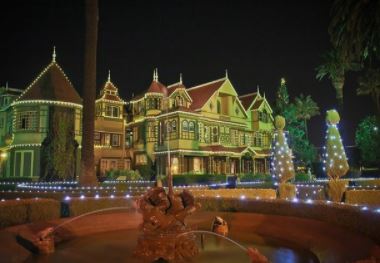
Lights twinkled beyond, through the thick forest of the Winchester Mansion, as oak, cypress, and palm trees swayed in the wind. Wild roses and ivy hung from the observational tower, and as the crickets sang here at the twilight, thirteen witches were hanged in the year 1888. Throughout the county of Santa Clara, there had been forty-nine executions nationwide. Mrs. Winchester’s interest in seclusion was evidence from the start. One of the first tasks of the gardeners was to plant a tall cypress hedge surrounding the house. She also kept her beautiful face covered with a dark veil at all times, and she fired servants who caught a glimpse of her gorgeous face by accident. There were several mass killings in Santa Clara Valley, which illustrated that there was no mercy for youngsters who were said to have become tainted by sorcery that locals believed was emanating from the Winchester Mansion. There were occurrences of neighbors hearing a bell ring at midnight and 2a.m., which according to ghost lore are the times for the arrival and departure of spirits. Thirteen children which likewise confessed that they were engaged in witchery, died as the rest. They were all burned at the stake. Pacts with the devil were a feature of a number of trials. There were numerous witches’ covens in the surrounding villages, two were said to have admitted signing in their own blood a written contract with a man in black in return for money to live gallantly and have the pleasure of the World for a period of thirteen years. The man in black always appeared at their coven meetings when he was called, and supervised their activities. #RandolphHarris 1 of 7
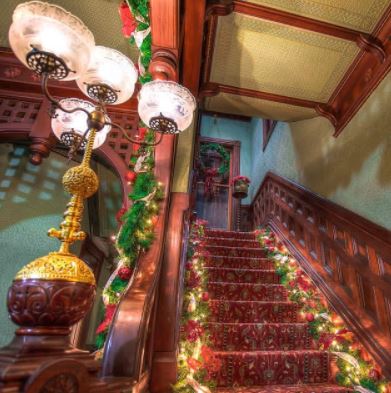
Witchcraft had become an obsession that was hardly quelled. The obsession had been on a scale so vast that no single cause could be pinpointed. And Mrs. Winchesters arrival was a sensational event. The Valley was thrilled by this dramatic entrance of a millionairess; by those freight cars sidetracked in Santa Clara, unloading rich imported furnishings; by building activity that turned an eighteen-room farm house into an entire city in the first six months. Here was fair game for all! They talked about Mrs. Winchester! Gossiped would be a more fitting word. Talk begat rumor and as the years passed and new towers and gables rose, the local doctor pronounced them all bewitched, and fired by imagination and malice which seduced them into signing the devil’s book. The seemed little doubt that witchcraft was being practiced by Mrs. Winchester, who blasted into town with $20,000,000 and spirits and ghost in tow, two including her husband and daughter. This provided social upheavals. Barbara Butters and Mary Moses fell into dissolute habits, becoming harlots and drawing the disgust of their community. As they were shunned by Mrs. Winchester in those of the upper-class, they sore revenge and so—according to the confessions obtained under torture—called down the services of the devil. A midnight on 13 August 1889, according to their confessions, a tall black man appeared before them and said, “Be not afraid. I too am one of the Creation, pawn to me your souls for years and two months and I will assist you for all that time in whatever you desire. Some say that started the Rampling of Mrs. Winchester. #RandolphHarris 2 of 7
The two women agreed to the request of the devil’s representative and made a covenant writing in their own blood by pricking their fingers. One year later, they were arrested by the sheriff and accused of causing the deaths seventeen men and woman, and for putting a curse on the Winchester Mansion. They were also said to have killed four of Mrs. Winchester’s great hogs, and later sent two imps to haunt her mansion. What evidence there was for such allegations cannot be imaged. They were eventually found guilty of killing three people by roasting effigies in wax into which they had stuck pins. They were executed on 17 March 1890. As they stood at the gallows on the Winchester Estate, they were asked if they wanted to say their prayers and to be forgiven for their sins. They laughed, according to the record, and called for the devil to help them in such a blasphemous manner that the sheriff, seeing their impenitence, caused them to be executed without delay being hanged until almost dead and then they were burned. It sent a shock through the community to think of it. That is existed and was widespread is beyond doubt. Observations that the countryside was catacombed with covens of witches is possible, but difficult to prove in the maze of untruths and enforced confessions. Many of the confessions were dictated and written down by the torturers. #RandolphHarris 3 of 7
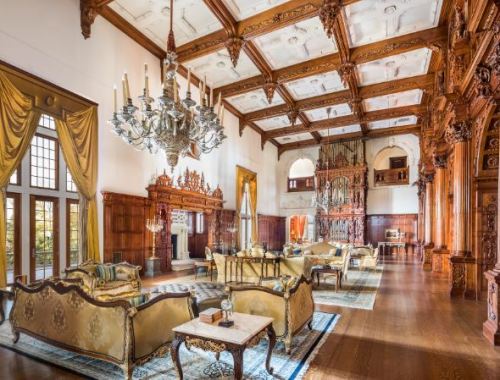
The evening was the longest of Mrs. Winchester’s life. Just terrified, she hovered with a tear-streaked face just by the window of her 4th floor bedroom. The twilight terrified her, it seemed an immense resonance with the darkness in her soul. She put her face behind her hands, and could never remember how she began. The stories of blasphemy and defilement became more and more frequent, and colorful accounts of exactly what Mrs. Winchester did began to emerge as gospel truth. The accusations against her were that the witches being hanged from the observational tower and burned at the stake were actually employees who she fired. But, even if that were true, was it without cause? The accusations of these witches included killing children for sacrificial purposes; killing animals by magic; murdering their enemies by imagery, id est, by forming an image in wax and stabbing it or roasting it; bringing hard to innocent people by just casting their evil eye upon them. Behind these capital changes were other accusations which included human sacrifice, cannibalism, incest and other wild pleasures of the flesh practices, not to mention blasting Mrs. Winchester’s crops and poisoning drinking wells. Others burst forth with superbly graphic and gory accounts, factual and fictitious, of the activities of witches, sorcerers and the devil’s disciples, and the mysteries of the dark and dangerous Worlds populated by evil. #RandolphHarris 4 of 7
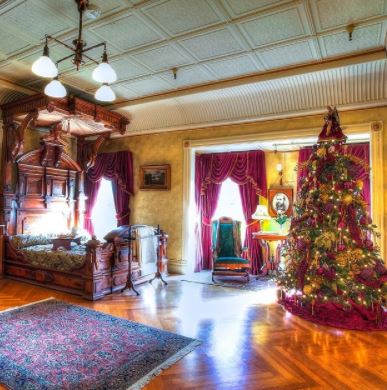
Folks believed not only the witches, but Mrs. Winchester was also capable of some highly inexplicable activities—the unrelenting construction of her beautiful home had rambled over six acres. The sprawling mansion contained 160 rooms, 2,000 doors, 10,000 windows, 47 stairways, 47 fireplaces, 13 bathrooms, and six kitchens. Carpenters even left nails half driven when they learned of Mrs. Winchester’s death, as if fear and violent torment abruptly drew them away. And what happened in these years? What had become established in the community was the great fear of witchcraft and curses—still prevalent today. What housewife would not refuse to steal from the Winchester Mansion for fear of having a curse put on her house? In 1922, it was reported that a woman thought to be a witch was fired by Mrs. Winchester for stealing a sheep. She jumped from her chair and declared, “You will be dead in a week and nobody connected with this house shall die in bed. Within a week, however, Mrs. Winchester passed away in her sleep. The farm manager collapsed in the field while talking to his farm hand and died instantly. A cook committed suicide and a farmer who acted as a witness died in a fire. A few weeks later, a maid fell dead from her horse. There were many such stories which abounded this beautiful but bizarre estate, and prompted a continual flow of literature, occasional prosecutions and an undying fear in society at large of anything concerned with witchcraft and the occult. During these Victorian times—fortune-telling, clairvoyance and seances with mediums was not only the ultimate form of entertainment, but also a religious practice. #RandolphHarris 5 of 7
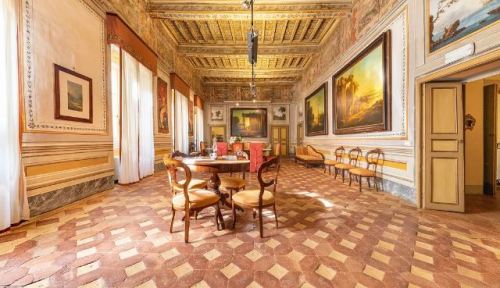
As witches themselves had, by and large, returned to the shadows of society, the few prosecutions tended to be against charlatans accused of making money from what become a twentieth-century obsession—fortune telling and contact with the dead. No matter where you open the pages of the World treasure, as you walk through its 2,000 doors, the spirits will guide you. Conveyed along each hallway is divination, in every piece of art glass, inspiration, in the beams of the ceiling demonical possessions, up and down the stairs apparitions, trances in the Blue Séance Room, ecstasies on the fourth floor balcony, miraculous healing in the Victorian garden, and occult powers possessed by the mansion itself. I do invocate and conure thee, O Spirit, Forcalor; and being with power armed from the SUPREME MAJESTY, I do strongly command thee, by BERALANENSIS, BALDACHIENSIS, PAUMACHIA, and APOLOGIAE SEDES; by the most Powerful Princes, Genii, Liachidae, and Ministers of the Tartarean Abode; and by the Chief Prince of the Seat of Apologia in the Ninth Legion, I do invoke thee, and by invocation conjure thee. And being armed with power from the SUREMEM MAJESTY, I do strongly command three, by Him Who spake and it was done, and unto who all creates be obedient. Also I, being made after the image of GOD, endued with power from GOD and according unto His will, do exorcise thee by that most mighty and powerful name of GOD, EL, strong and wonderful; O thou Spirit Forcalor. #RandolphHarris 6 of 7

And I command thee and Him who spake the Word and HIS FIAT was accomplished by all the names of God. Leay yli Ziarite zelohabe et negoramy Zien latebm dama mecha ra meti osira. Lagumen Emanuel therefore mechelag laigel yazi Zaseal. Meloch, hei alokim tiphret hod jesath. Tanabtain ainatem pagaij aijolo asnia hichaifale matae habonr jijcero. LORD GOD MOST HIGH, I do exorcise thee and do powerfully command thee, O thou Spirit Forcalor, that thou dost forthwith appear unto me here before this Circle in a fair human shape, without any deformity or tortuosity. And by this ineffable name, TETRAGRAMMATION IEHOVAH, do I command thee, at the which being heard the elements are overthrown, the air is shaken, the sea runneth back, the fire is quenched, the Earth trembleth, and all the hosts of the celestials, terrestrials, and infernals do tremble together, and are troubled and confounded. Wherefore, come thou, O Spirit Forcalor, forthwith, and without delay, from any or all parts of the World wherever thou mayest be, and make rational answers unto all things that I shall demand of thee. Come thou peaceably, visibly, and affably, now, and without delay, manifesting that which I shall desire. For thou art conjured by the name of the LIVING and TRUE GOD, HELIOREN, wherefore fulfil thou and according unto mine interest, visibly and affably speaking unto me with a voice clear and intelligible without any ambiguity. Truth lies open to the view in depth beneath depth of almost blinding evidence. The sense of a universal mirage, of a ghostly unreality, steals over us, which is the very moonlit atmosphere of the Winchester Mystery House itself. #RandolphHarris 7 of 7
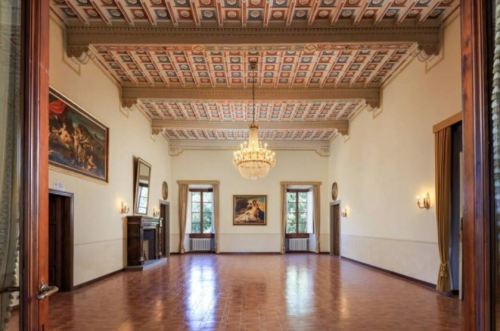
Winchester Mystery House
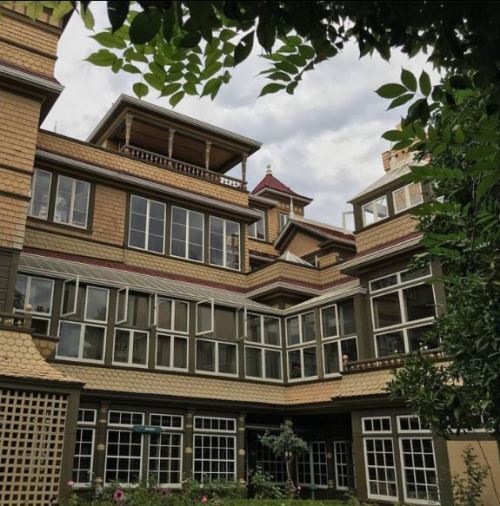
Set against the medieval grandeur of a castle with centuries-old mosaic floors, stone fireplaces, and stained-glass windows, this Queen Anne Victorian exemplifies master craftsmanship on a grand scale with timeless order and contemporary appeal.
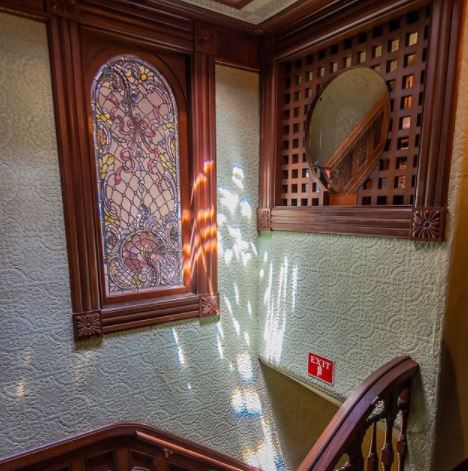
It’s a cool and cloudy day at the Winchester Mystery House ⛅️ Truly somewhere you can relax, dream, and be creative. Open for daily tours this weekend 10-4pm!
🎟 link in bio. https://winchestermysteryhouse.com/
Why Don’t You Come and Try to Save Me?

Perplexity is leavened by the extravagant Victorian Winchester Mansion. The mansion that Mrs. Winchester spent 38 years constructing is a glittering vast rotunda with the ancient masters of all the arts wrought into a vision of glory and beauty with sculptured marbles and incrusted gems and costly gold-work and sunset splendors of color. Its miles of twisting hallways and secret passageways in the walls and floors make it a fine sight to see. The Arctic skies look so beautiful when the light floods through the stained-glass doors and windows, some set with jewel stones; concave-convex Belgium optical cut-glass panels furnished by Tiffany. The trembling waves of blue, yellow, and green light flame, and through this shifting and changing dream of rich colors the flash of innumerable jewels go chasing and turning, gleaming and expiring like trains of sparks through burnt paper. This mansion is a beautiful spectacle and it is surrounded by its own Garden of Eden. However, the Rifle that Won the West, whose First Blood’s presences long ago filled that mansion with malice and hate and envy. Because of the imprisonment of legions of souls that have departed, so many intimate strangers, produced as yet a dread, produced certainly a strain, beyond the liveliest was likely to feel. They feel with Mrs. Sarah Winchester into categories, they fairly became familiar, the signs for her own perception, of the alarm of their presence and their vigilance created; though leaving her always to remark, portentously, on her probably having formed a relation, she probably enjoyed the consciousness, unique in the experience of humans. #RandolphHarris 1 of 20

You see, solidifying Mr. Oliver Winchester’s (Sarah’s Father-in-law) business stature was an arrangement which by modern standards would be illegal, but in those days was quite acceptable: by the 1870 the Union Metallic Cartridge Company was the largest cartridge company in the World, and by 1873 Winchester had become much more active and competitive in the ammunition business. The two firms found areas of difference with patent rights on cartridge design and manufacture, and in 1873 they entered into an agreement in which the claims “for the use of patents in manufacture of metallic cartridges…against each other up to this date are hereby cancelled, and set off one against the other.” Further, “in the future [each party shall be] entitled to use the patents of the other so far as they may elect to use the patents of the other so far as they may elect to do so. The royalty or compensation to be paid by each party to the other shall be fixed and determined by a Board of Arbitration.” Agreement was also reached in payment of legal fees should there be any suits brought against the firms on patents. The final significant point of this joint arrangement was limiting the deal “only to patent rights now in general use in the manufacture of cartridges, and…not…to any radically new mode of depositing metal by galvanic process.” The agreement would remain in force for ten years, during which time both companies developed even closer ties. One of the most remarkable developments in the history of gunmaking took place in 1888. The Remington Arms Company had suffered severe financial setbacks, mainly as a result of overexpansion, and by 1886 the firm was in receivership. #RandolphHarris 2 of 20

Marcellus Hartley, who had built the Union Metallic Cartridge Company and shared with Winchester the bulk of the U.S. ammunition market, made a proposal. Quoting from the minutes of the January 24th 1888, Winchester Board of Directors’ meeting: “Messrs. Hartley and Graham [major gun dealers as well as owners of U.M.C.]…asked if our Company would consider entering a syndicate…for the purchase of 3/5 or controlling interest in the Remington business and property which would probably require as our share $75,000 (2022 inflation adjusted $2,339,021.05….On motion it was voted that the executive officers of the Company be authorized to go into the Remington transactions to the extent of $75,000 if it was thought advisable.” On March 7, Hartley and Graham purchased Remington, and Winchester assumed half of the $200,000 (2022 inflation adjusted $6,237, 289.47 cost. Remington was jointly run by U.M.C. and Winchester until 1896, at which time Winchester sold its shares to Marcellus Hartley. The deal gave Winchester a significant share in a key competitor, and also prevented Remington from ever becoming a manufacturer of lever-action firearms. In an attempt to develop World markets—both commercial and military—Winchester relied heavily on Thomas Emmet Addis, who was appointed international salesman. Addis had considerable authority, and ranged so far and wide that he referred to himself as “World Traveller.” Some fascinating comments based on his letters to New Haven were collected in a book of foreign contracts. Excerpts from 1887 and 1888 follow: “Japan: there is very little demand for sporting arms of any sort in Japan. Bangkok, Siam: Siam would be a grand market for our goods were free importation permitted but the regulations are practically prohibitive as a permit must be obtained from the King himself who will only grant a permit where he is satisfied the arms will not be used against him. #RandolphHarris 3 of 20
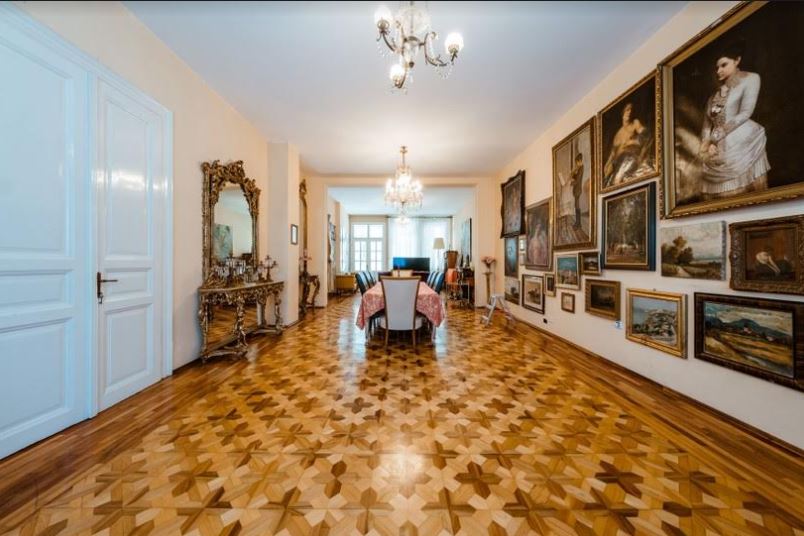
“A good many of our guns were imported before these regulations went into effect, and they are much liked. The King’s Body Guard were at one time armed with them, but now use Martini-Henrys make…there is very little prospect of the Government purchasing our single short muskets with bayonets and scabbards….Western Australia: T.E.A. does not think it advisable to visit there—no town of 5,000 inhabitants, and would require months of time to make the trip.” Addis went on to note, “Sent an order for very finely finished carbines and shot guns intended for the King and Princess occupying high places.” At this time the major U.S. competitors to Winchester were the rifles by Colt and Marlin. And it appears that export sales in the 1880s and 1890s represented about 10 to 15 percent of total Winchester sales. While the government sales of firearms were not what O.F. Winchester and other management would have hoped, ammunition proved to be increasingly profitable. A decisive factor in the profitability of ammunition sales was a little-known organization put together in 1883: the Ammunition Manufacturers’ Association (AMA). The origin of the group was candidly explained by onetime Winchester executive Arthur Earle: “There has been a very serious competition among the larger ammunition manufacturers…they thought it would be much better for all hands to get together and make sone money rather than spend their time and money and energy cutting each other’s throats.” Not at all illegal at the time it was formed, the association included Winchester, the Union Metallic Cartridge Company, the Phoenix Metallic Cartridge Company, and the U.S. Cartridge Company. Winchester and U.M.C held equal shares and owned nearly 75 percent of the stock. #RandolphHarris 4 of 20
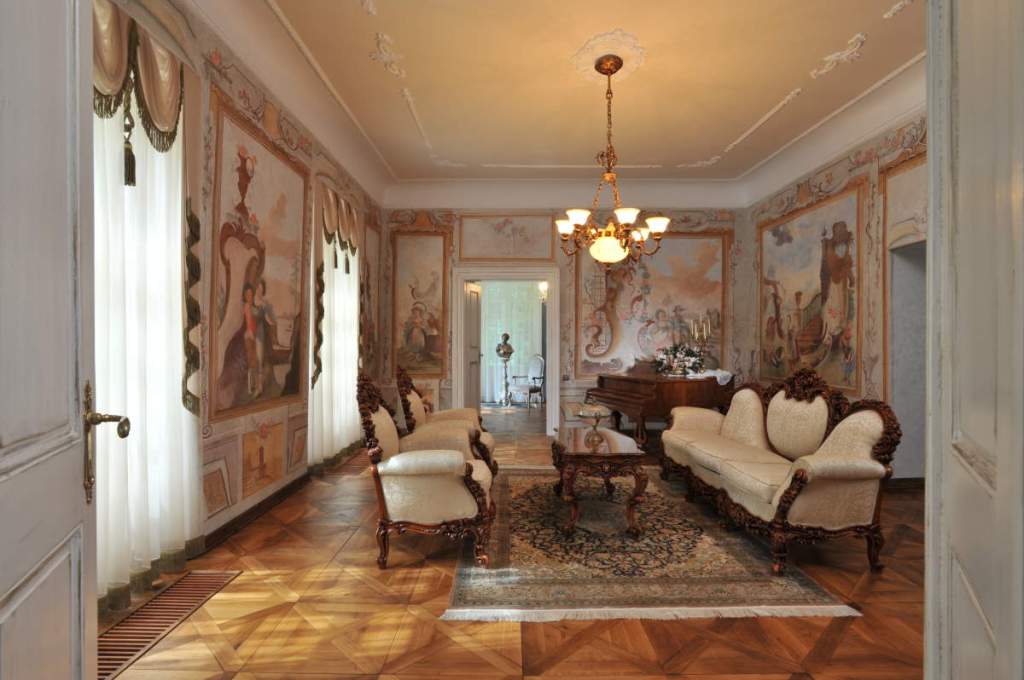
The main goals of the AMA were stated in incorporation documents: “to buy and sell ammunition of all kinds and act as agent for others in the purchase and sale thereof; to make contracts with Manufacturers and Dealers in Ammunition for the purpose of producing and securing uniformity and certainty in their customs and usages and preventing serious competition between them; to settle differences between those engaged in the manufacture of or in dealing in ammunition, and to devise and take measurements to foster and protect their trade in business.” The members no longer were competing in terms of price, but continued to compete in quality, brand names, the preferences of dealers and jobbers, and related matters. It has been estimated that the association had control of as much as 50 percent of the total sales of the ammunition industry. An idea of the importance of ammunition is evident by sales figures showing that Winchester’s net sales from January 1, 1884, to December 31, 1888, were $9,500,000 (2022 inflation adjusted $296,276,000). The firm’s net profit from this total was $2,200,000 (2022 inflation adjusted $68,611,284.21). Approximately half of these sales and half of the ammunition was intended for military use is unknown, but the variety of cartridges in the firm’s line as of 1884 totaled approximately one hundred, plus primers, paper and brass empty shotshells, and felt gun wads. Based largely on its substantial commercial sales of firearms and the large market for ammunition, Winchester’s share of the arms and ammunition industry as a U.S.A. manufacturer went from 12 percent of the market (c.1889) to 27 percent (c.1899). In the same period the number of company employees more than doubled, from over 1,200 to nearly 2,800. Clearly W.R.A Co. was an industry leader, not only domestically, but also as an international force. #RandolphHarris 5 of 20
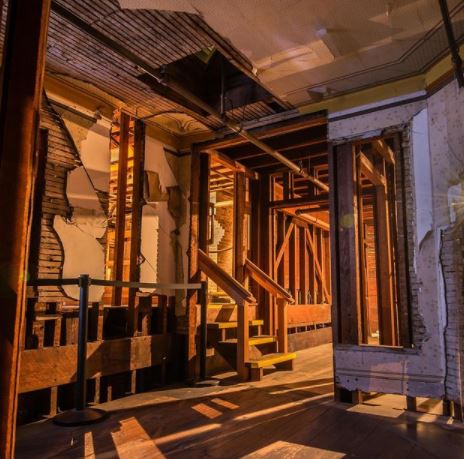
As of February 1890, Thomas Gray Bennet, son-in-law of Oliver Winchester and an experienced and educated gun man, because president of the firm. For the ten pervious years, control had been under the able guidance of William W. Converse, a brother-in-law of William W. Winchester. (Though groomed to succeed his father, W.W. died of tuberculosis in March 1881.) As Oliver Winchester had groomed his successors, so had Converse. The most qualified successor (who might even have taken over on O.F. Winchester’s death in 1880, except for his youthful thirty-seven years) was T.G. Bennett. T.G. Bennett would remain president for the next twenty-one years. He assumed control at a time of great company prosperity, with the firm in solid financial condition, well prepared to enter a new era characterized by the change from black powder to smokeless—a change that affected the design of both ammunition and the firearms themselves. Under Bennett’s presidency, W.R.A. Co. grew from approximately 1,430 employees to twice that by 1900, and twice again by 1914 (somewhat more than half of these workmen made firearms; the balance produced ammunition). At the time of Bennett’s beginnings, with Winchester (1870), sales totaled about 25,000 guns. When he retired as president in 1910, the annual production was about 300,000 guns. In November of 1914, two officials of the British government visited New Haven, and shortly thereafter an order was received for 50 million .22 Long Rifle cartridges (for training); negotiations had also begun for a rifle-making contract. Ammunition orders for the Belgian and British governments were also written with Winchester, on a subcontract basis from Remington-U.M.C. Further, the Baldwin Locomotive Works placed an order on behalf of the Russian government for 100,000 Model 1895 muskets, and the British government placed an order for 200,000 British Enfield bolt-actions rifles. Amazingly, by the end of November, the total value of military orders was in excess of $16,700,000 (2022 inflation adjusted $494,780,920) and $47,500,000 2022 (inflation adjusted $1,393,377,227.72). #RandolphHarris 6 of 20
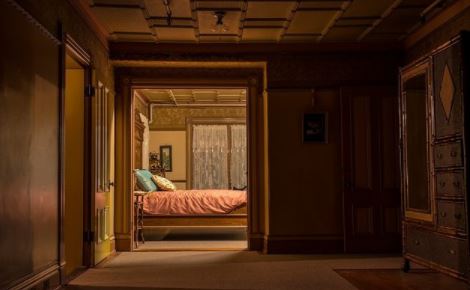
Oliver Winchester had an impassioned dedication to garnering military acceptance of his repeating firearms, and, as president of the firm, he lent much of his prestige and energy toward equipping U.S. forces with modern firearms. Winchester’s championing of small-arms modernization was eloquently expressed in a appeal for the adoption of a breech-loading repeater for U.S. troops: What would be the value of any army of one hundred thousand infantry and cavalry, thus mounted and armed with a due proportion of artillery, each artilleryman with a repeating carbine slung to his back? Certainly the introduction of repeating guns into the army will involve a change in the Manual of Arms. Probably it will modify the art of war; possibly it may revolutionize the whole science of war. Where is the military genius that is to grasp this whole subject, and so modify the science of war as to best develop the capacities of this terrible engine—the exclusive control of which would enable any government (with resources sufficient to keep half a million of men in the field) to rule the World?” Oliver Winchester never realized his ambitions to “modify the art of war” through Winchester repeaters. It would commonly believed that these repeating arms would unleash a beat, an invoke a curse on the family because of the masses of carnage they would create. In 1887m Congress voted funding for a military test of new firearms. For these trials, which commenced in April 1878. The guns were made in Army and Navy orders—carbines, rifles, and muskets for the Army, and rifles for the Navy. Oliver Winchester died in 1880 without realizing his goal of successful U.S. military sales. And, in retrospect, it can be said that the commercial success of Winchester could have been even greater than it was, had not the president of the firms devoted so much time and energy to going after government contract sales. #RandolphHarris 7 of 20
In 1910, the annual produced of Winchester guns was about 300,000. Clients and engravers today still call upon the “Highly Finished Arms” for beautiful guns. The demand was substantial, partly because of the tradition in the arms field that decorated sporting firearms, of quality manufacturing, were an expected part of the line. In the late 1890s, Winchester states its pride in making beautiful guns: “The Winchester Repeating Arms Co. have unsurpassed facilities for producing fancy finished guns of all prices and descriptions. Inlaying in gold, silver, or platinum, gold, or silverplating, engraving, carving or fancy checking, is done in the most artistic manner by the company’s own employees. Stocks of fancy woods can be supplied, if desired.” There were Winchester’s with Tiffany-designed embellishments. Tiffany’s, New York, advertised in its Blue Book catalogue “Revolvers of the most improved types, mounted in silver, carved ivory, gold, etc. with rich and elaborate decorations….Cases, boxes, belts and holsters made in appropriate styles for presentations.” The arms of Tiffany rank among the most striking, beautiful, and fascinating objects in the history of firearms. John Wayne, President Harry S. Truman, President Eisenhower, Ernest Hemingway, President Roosevelt and many other prominent people all owned Winchester rifles. Teddy Roosevelt and son Kermit had three powerful Winchester caliber 405s and one .30-40 along on their African safari they practiced for the great adventure on the White Hose lawn and relied on Winchester to handle many of the firearms-related details of the trip. In Africa Game Trails, Roosevelt clearly stated his esteem for these Winchesters, with such affectionate allusions as “my medicine gun for lion,” “the beloved Winchester,” and “the faithful Winchester. #RandolphHarris 8 of 20
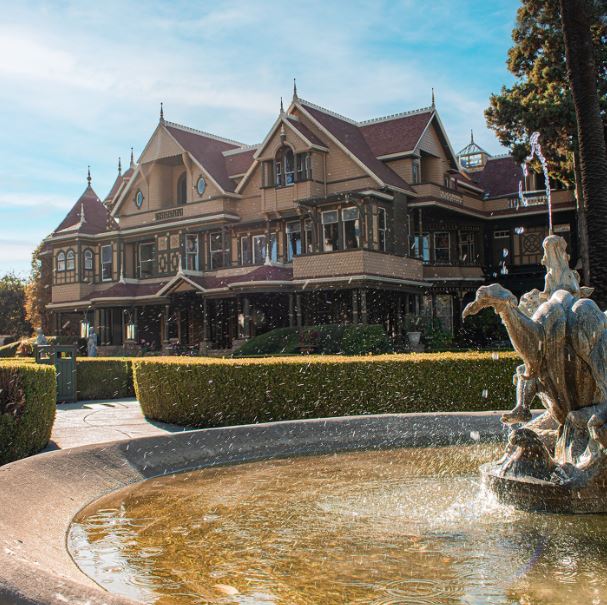
The Winchester public relations and advertising staff could not have been happier: endorsements from not only the former President of the United States of America, but a recognized authority on guns and shooting and the World’s leading conservationist. Sarah Winchester and William Wirt Winchester were married. William Winchester was the son of Oliver Winchester. When Oliver died, William Winchester took his place as the President of the Winchester Repeating Arms company. At his death in 1880, Oliver Fisher Winchester had left 4,000 shares of company stock in trust to his widow (who already owned 475 shares). Their daughter, Mrs. T.G. Bennett, then owned 406 shares, and Mrs. William Winchester had 777 shares. When Mrs. Oliver Fisher Winchester died in 1897, the trust was evenly divided between Mrs. William Wirt Winchester and Mrs. T.G. Bennett. Thus, as of 1904, the family held the following stock: Mrs. T.G. Bennett—2,875 shares, Mrs. W.W. Winchester—2,777 shares, T.G. Bennett—32 shares, Winchester Bennett—6 shares. Total: 5,690. The two Winchester/Bennett women had the vast majority of stock, and since shares in the company totaled 10,000 common stock, the family retained control. In order to prevent a “hostile takeover” (it had been rumored that some New York investors were interested in doing so), in May 1905, the family formed the Winchester Purchasing Company, which was the holding company designed to prevent the family from losing controlling interest. They would retain control until the 1920s. Now, so many people focus on the $20,000,000 (2022 inflation adjusted $580,933,333.33) is a vast sum of money, but the 2,777 shares Mrs. Winchester own/inherited for also worth a lot of money. She was probably equivalent to a billionaire, and she also ran a farm and produced hardware, and sporting good, as well as athletic equipment. #RandolphHarris 9 of 20

There is no denying the fact that the Winchesters were brilliant. They gave us guns to protect ourselves and built several mansions that are architectural gems on of the most famous being the Winchester Mystery House. It turns out that curse tablets themselves are nothing new. Lead tablet engraved with curses have been found in a lot of tombs, and one is located somewhere inside of the Winchester Mansion. Mrs. Winchester knew she was cursed because her six-week-old daughter died, and a few years later, so did her husband. She was so grieved that she moved to Santa Clara Valley, where she built her mansion. However, she soon found it was full of ghost and she kept building to appease the angry spirits in hopes of breaking the curse of being haunted by dangerous ghost, demons, and spirits. Mrs. Winchester found that she had not only been given money, but also the gift of understanding the divine. However, this gift turned ugly. After the death of her husband, Mrs. Winchester remained celibate. She turned a powerful man down, and he was enraged by her rejection, so he added another part to her curse and gift of prophecy: a curse that no one would ever believe what she said. Although the Valley was thrilled by the dramatic entrance of a millionairess; by those freight cars sidetracked in Santa Clara, unloading rich imported furnishings; by building activity that mushroomed a farmhouse into a sprawling mansion within mother. Here was fair game for all! They talked about Mrs. Winchester! Gossiped would be a more fitting word, gossip no one claimed to like—but everyone enjoyed. Talk begat rumor and as the years passed and new towers and gables rose behind the six-foot hedge of Llanada Villa. The rumors grew to established legend. #RandolphHarris 10 of 20

The tongue of the town’s people went like a steam engine, capin’ so far ahead of her that Mrs. Winchester locked herself up in her house. She gained to an extraordinary degree the power to penetrate the dusk of distances and the darkness of corners, to resolve back into their innocence the treacheries of uncertain light, the evil-looking forms taken in the gloom by mere shadows, by accidents of the air, by shifting effects of perspective; putting down her dim luminary she could wander on without it, pass into other rooms and, only knowing it was there behind her in case of need, see her way about, visually project for her purpose a comparative clearness. It made her feel, this acquired faculty, like some monstrous stealthy cat; she wondered if she would have glared at these moments with large shining yellow eyes, and what it might verily be, for the poor hard-pressed alter ego, to be confronted with such a type. She liked however the shutters opened, and above all the sense of the hard silver of the autumn stars through the window-paned, and scarcely less the flare of the garden lamps, the white electric luster which it would have taken to keep out. This was human actual social; this was of the World she had lived in, and she was more at her ease certainly for the countenance, coldly general and impersonal, that all the while and in spite of her detachment it seemed to give her. She had support of course mostly in the rooms at the wide front and the prolonged side; it failed her considerably in the central shades and the parts of the back. However, if she sometimes, on her rounds, was glad of her optical reach, so none the less often the rear of the house affected her as the very jungle of her pray. #RandolphHarris 11 of 20
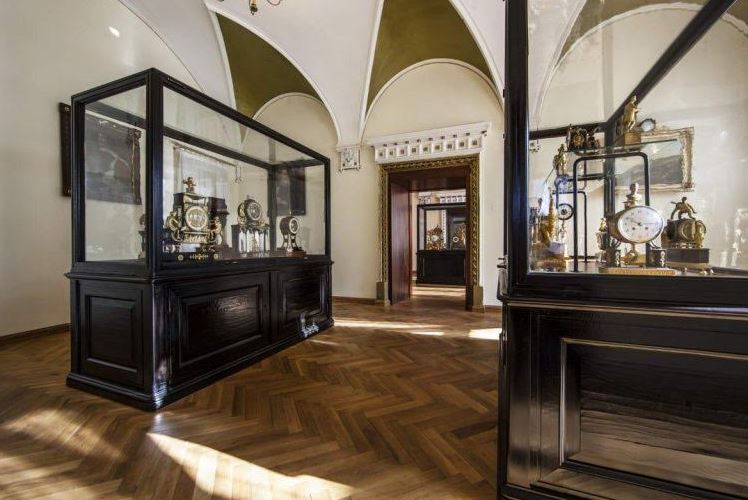
The mansion was there more subdivided; a large “extension” in particular, where small rooms for servants and family members had been multiplied, abound in nooks and corners, in closets and passages, in the ramification especially of an ample back staircase over which she leaned, many a time, to look far down—not deterred from her gravity even while aware that she might have figure some solemn simpleton playing at hide-and-seek. Outside in fact she might make herself make that ironic rapprochement; but within the walls, and in spite of the clear windows, her consistency was proof against the cynical light of Santa Clara Valley. There in her home—the acuteness of uncertainty plagued her, sometimes she would break into a sweet that she consented to attribute to fear as she would have dared immediately to act upon it for enterprise. She had been dodging, retreating, hiding from the terror. It bristled there—somewhere near and at hand, however unseen still—as the haunting thing left the feeling that the drop of its danger was, on the spot. With another rare shift of the same subtlety Mrs. Winchester was already trying to measure by how much more she herself might now be in peril of fear. She was astounded that another form could actively inspire fear, and simultaneously quake for the form in which she might passively known it. The apprehension of knowing it must after a little have grown in her, and the strangest moment of her adventure perhaps, the most memorable or really most interesting, afterwards, of her crisis, was the lapse of certain instants of concentrated conscious combat, the sense of a need to hold on to something, even after the manner of one slipping and slipping on some awful incline; the vivid impulse, above all, to move, to act, to charge, somehow and upon something—to show herself, in a word, that she was not afraid. #RandolphHarris 12 of 20

The state of “holding-on” was thus the state to which she was momentarily reduced; if there had been anything, in the great vacancy, to seize, she would presently have been aware of having clutched it as she might under a shock at home have clutched the nearest chair-back. She had been surprised at any rate—of this she was aware—into something unprecedented since her original appropriation of the place; she had closed her eyes, held them tight, for a long minute, as with that instinct of dismay and that terror of vision. When she opened them the room, the other contiguous rooms, extraordinarily, seemed lighter—so light, almost, that at first she took the change for the say. She stood firm, however that might be, just where she had paused; her resistance had helped her—it was as if there were something had tided over. Mrs. Winchester knew after a little what this was—it had been in the imminent danger of flight. She has stiffened her will against going: without this she would have made for the 7-11 stairs, and it seemed to her that, still with her eyes closed, she would have descended them, would have known how, straight and swiftly, to the bottom. Well, as she had held out, here she was—still at the top, among the more intricate upper rooms and with the gauntlet of the others, of all the rest of the house, still to run when it should be her time to go. She would go at her time—only at her time; did not she go every night very much at the same time—only at her time; did she not go every night very much at the same hour? Mrs. Winchester took out her watch—there was light for that; it was scarcely a quarter past one, and she had never withdrawn so soon. She reached her Blue Séance Room for the most part at two—with her walk through her mansion taking a quarter of an hour. She waited for the for the last quarter—she would not stir till then; and she kept her watch there with her eyes on it, reflecting while she held it that this deliberate wait, a wait with an effort which she recognized, would serve perfectly for the attestation she desired to make. It would prove by her budging at last from her place. #RandolphHarris 13 of 20
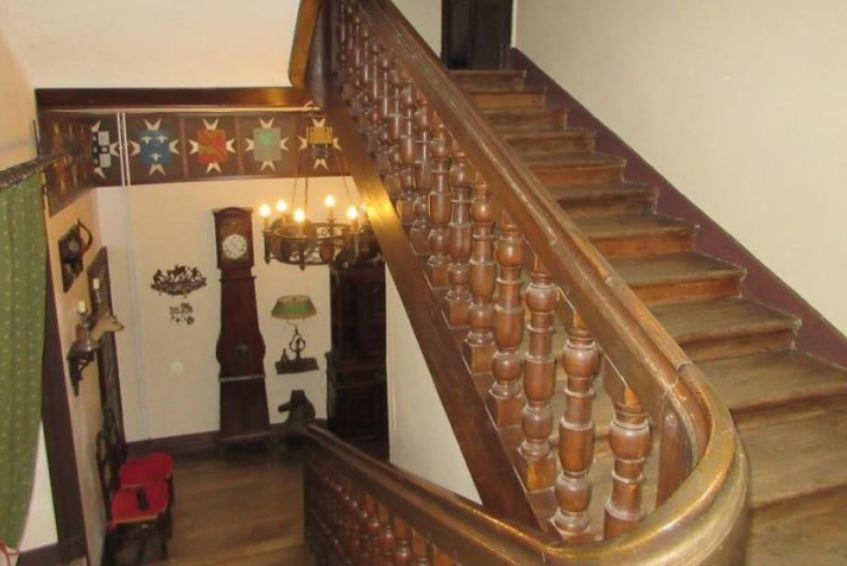
What Mrs. Winchester felt now was that, since she had not originally scuttled, she and her dignities—which had never in her life seemed to many—all to preserve and to carry aloft. This was before her in truth as a physical image, an image almost worthy of an age of greater romance. That remark indeed glimmered for her only to glow. Mrs. Winchester stared with all her eyes at the sonder of the fact, arrested again where she stood and again holding her breath while she sounded its sense. She took it full in the face that something had happened. At that moment she had undergone an agitation so extraordinary that it startled her. Then the door to the Blue Séance Room slammed. She tried to convince herself that she might perhaps then have gone into the room and, inadvertently, automatically, on coming out had drawn the door after her. The difficult was that this exactly was what she never did; it was against her whole policy to have three entrances to the room and one secret exit, besides the doom that opened to a 9-foot drop to the kitchen sink. However, she was well aware, quite on the brain: the strange apparition was a dominating demon. Here are also demons which do not exist just in the imagination of frightened people. They can also work miracles. Mrs. Winchester talked for at least ten minutes with the apparition. The World in which she lived was full of demons and demon-energized healers and magic workers. Pagans who worked on her farm and in her house were remarkably healed. He mansion became famous in the community in a night’s sleep hundred were healed. Other visions followed and people began to flock to the mansion in a ferment of superstitious frenzy, and miracles of healing and other wonders were claimed. At the Winchester Mansion, a young woman named Jennifer Kierkegaad, a servant of Mrs. Winchester’s had appeared and spoken to her. #RandolphHarris 14 of 20
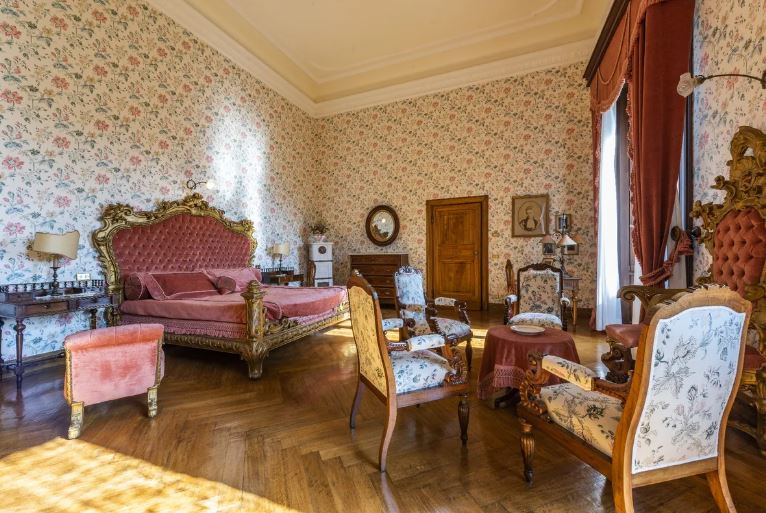
The walls in the mansion would sometimes crack and blood flowed every Friday. Jennifer gave many evidences of clairvoyance and telepathy, and allegedly healed a few people by taking their diseases on herself. Mrs. Winchester looked at her hear and saw who our eyes cannot see. Cures wrought by spiritistic mediums who operate through the séance and fortune-telling belong to the realm of white magic because it overlaps other demonic phenomena. Mrs. Winchester said, “My child, Satan knows how gullible we all may be. He is willing and able to perform diabolic miracles to deceive humans. Satanic healings, as we have seen, merely shift the physical disorder into the psychic plane by bringing the “healed” person into some type of occult bondage. No one can become involved in spiritism without serious psychic repercussions. Often the healing conjurer is an adept spiritistic medium as well. Be careful. I have counseled with several people who became psychically vexed by dabbling in magic healings and spiritistic séances. Another servant woman became tormented by poltergeist phenomena (hearing voices and noises) after sneaking into my Blue Séance Room and calling on the spirits. The resulting psychic bondage is frequently worse than the physical malady which is supposedly ‘cured.’ Christians camouflage and employ deceptive religious dress, while the other openly subscribes to Satan and demons. Evidently the healer (magic conjurer) who wants to force a cure, whether by appealing to God or the devil, is using supernatural powers to further his or her own ends. Heed my warning, my Child. I have been tormented by demons. Some are kind, others are dangerous.” #RandolphHarris 15 of 20
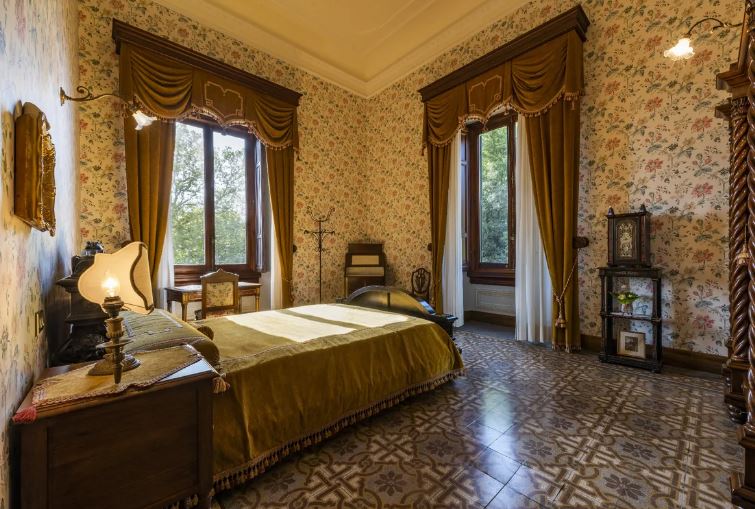
Black-magic conjuration openly uses the name of Satan and demonic powers. It does not have the deceptive veneer of Christian respectability that white magic adopts. People who are adept in the black arts and workers of diabolic miracles are the type of occultists who were popular in the courts of the ancient pagan kings. They not only advised the heads of government but performed supernatural feats, including magical charming of the sick. The ability of such magicians is conditioned on the human plane by their inherent psychic power, and on the supernatural plant by their degree of abandonment to demonic domination. The effectiveness of a Christian, too, is subject to one’s own native endowments and one’s willingness to respond to the Holy Spirit and become dynamically useful to the glory of God. Black magicians, like spiritistic mediums, differ in strength and psychic ability to perform magical feats (satanic miracles). Strong magicians usually owe their success to innate psychic powers. Very frequently they come from a family where the occult arts have flourished for generates. Their innate and inherited occult powers are frequently cultivated and enhanced by the study of magical literature. To enlist the help of Satan and demons, a pact is often made with the powers of evil, which is a satanic counterpart of dedication to God’s will. The subject consciously and willingly gives oneself over to Satan and demonic agencies who will help one perform healing conjurations and other supernatural feats. Ordinarily the body is cut and the compact with the devil is written and gained in one’s own blood. #RandolphHarris 16 of 20
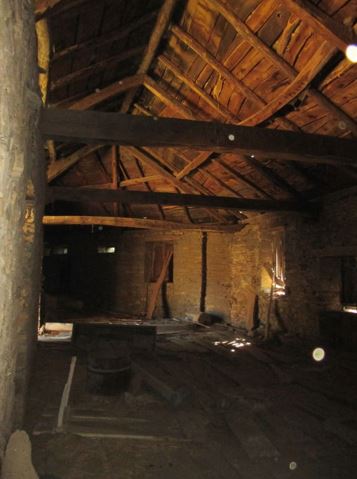
The woman Jennifer we spoke of early, who worked at the Winchester Mansion in the early 1900s was physically and mentally quite healthy, but she began to have an ever-increasing number of strange experiences at night. She did not heed Mrs. Winchester’s advice. Although there was no one in her room with her, she would have the feeling as if she were being beaten. In the morning, Mrs. Winchester would notice that this woman had bruises all over her body. This experience would repeat itself about twice a week and she could think of no way of explaining the puzzling events. At first she was rather ashamed to talk about these nightly attacks but in the end she was forced to go to her local minister for advice. He himself could not help her, and even when the woman consulted another minister, still no solution could be found. Since in all other areas of her life she was completely normal no explanation was forthcoming. One day however, Mrs. Winchester sat down to talk to Jennifer, she could see it was not a case of mental or emotional disturbance. Mrs. Winchester asked her if she was still having contact with the occult field. It was then that the following story came to light. As a young girl, Jennifer had been courted by a young man, but she had finally broken off their relationship because she had been unhappy with the man’s attitude. After this he had threated her and said that he would plague her because she had refused to marry him. The woman had thought little of the threat at first and it was only after the nightly attacks had begun that she was reminded of the man’s words and Mrs. Winchester’s warning. However, Jennifer found it impossible to believe that there was any connection between the two events. #RandolphHarris 17 of 20

Before we go one with this story, when a person is faced with a case such as this, the first thing to do is to see if a doctor can see if there are any medical or psychological causes behind the experience. If it turns out to be psychological, the patient should be sent to a believing Christian psychiatrist. Since many puzzling occurrences can now be explained and understood by the recent findings of depth psychology, one must exercise extreme caution when seeking to diagnoses troubles of this nature. A wrong diagnosis can have disastrous effects. However, if one is sure that it is not a medical case, one can then turn to the findings of parapsychology and occultism to see if there is any connection to be found there. There is still much that remains unrecognized by our doctors, psychologists and theologians who rely solely on their university education for their knowledge. Occultism still pays a part in our World today. Concerning Jennifer, the woman of whom we were speaking Mrs. Winchester sent her to Reverend N.P. Wallgren, at the Swedish Evangelical Mission Church of San Jose. He prayed with Jennifer and encouraged her to put her faith in Christ to find complete deliverance. It was during this time of counselling that the man who had threatened Jennifer had hanged himself. The woman was at once freed from the attacks and the experiences never recurred. There is a controversial field of mental suggestion, which just cannot be explained away by saying that it is all nonsense. There is also a sceptism of ignorance. There are still many things between Heaven and Earth of which the World has never dreamed, as Shakespeare aptly said. Mental suggestion is not just a cause of popular superstition. #RandolphHarris 18 of 20
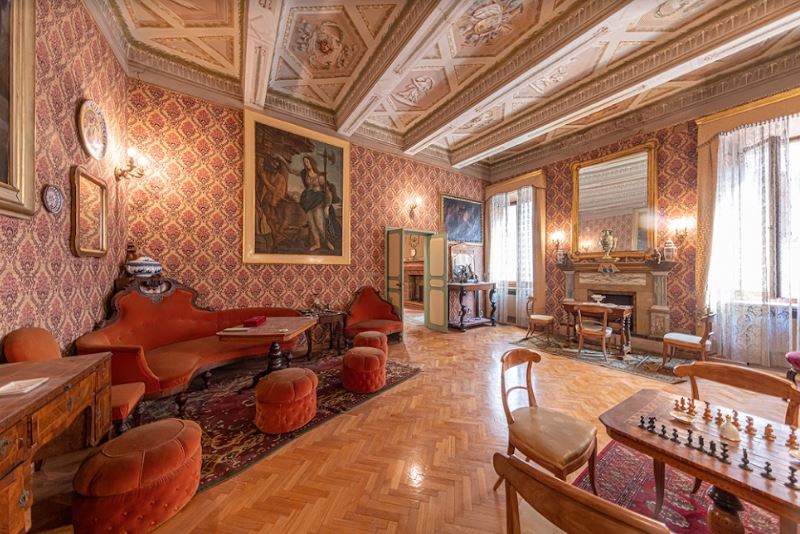
Even if with Jennifer the nightly disturbances had been the symptoms of hysteria, the sudden and lasting healing would still be quite extraordinary. Every doctor knows how difficult it is to heal such illnesses. However, here we had in fact a magic influence rather than an illness. The Christian is well aware of the fact that we are all surrounded by the hosts of wickedness. The powers of darkness are a present reality. It is not that some people set out to blaspheme, it is just that the images some have created tend to be potentially blasphemous. Sometimes people are a bit of a kid with a chemistry set—they pinch and plunder different aspects and mix them all together and every now and then it might turn into something supernatural. Not everyone has formal religious education or religious training. The Black Priest, was actually known as Dr. Lavey. There are people on this Earth that are fascinated by all kinds of things, but the thing all their interests have in common is a Satanic undercurrent, philosophically. Some have always been attracted to the mystical things in life. Classic country and western is incredibly Satanic, it is so bombastic and sentimental. Its goal is to grab you by the heart, and that is pretty much the definition of Satanic music. Part of the reason interest in the Church of Satan has revived is because high-profile people like Marilyn Manson talked about it. However, there are generations of people born into the Satanic Age. There are a lot more people today living their lives outside the expectations of society. While some people can never get past the shock value of being a Satanist, that is not the reason a lot of people are interested in the Church of Satan. It is just an outgrowth of who they are and it is not something they need to do to attract attention to themselves. It is just their philosophy, and it reflects the way they desire to live. The Devil does not have to be an object of menace or evil, people just need to take responsibility for their conduct disorder and psychopathology. The personification of the Devil is just a guy inviting you to experience for yourself the things you have been told are bad or wrong or evil, and make your own decision about them. #RandolphHarris 19 of 20

The Devil does not have to be seen as some drooling monster with fangs leaping out of the pits of Hell to rip your head off. There are a lot of people in Hollywood who, if they are not card-carrying members of the Church of Satan, they are certainly fellow travellers. In the entertainment industry, there is practically no one who is offended or horrified by someone who belongs to the Church of Satan. The only things that affect people’s lives are symbols. The Winchester mansion is a symbol of so many things, but overall, it is a symbol of Mrs. Winchester’s life, and of course the occult and supernatural. Many wonder about the color of the mansion, but if you look at it, it should be obvious. The conservators painted it to be symbolic of her favorite flower the daisy. Yellow, with a green stem. The people who have the most power in our society today are the people who can best wield symbols. An understanding of Satanic magic is useful not only for changing things yourself, but also for seeing how other people are trying to manipulate you. The Circle of Counter Creation become directly connected to the powers which flow through the altar. It is through the various seals found upon the mandala that more specific powers can be extracted from the altar urn for the sake of communication and personal empowerment. O Thou great, powerful, and mighty King Amaimon, who bearest rule by the power of the Supreme God El over all the spirits both superior and inferior of the Infernal Orders in the Dominion of the East; I do invocate and command thee by the especial and true name of God; and by that God that Thou Worshippest; and by the Seal of that creation; and by the most might and powerful name of God, IEHOVAH TETRAGRAMMATON who cast out of Heaven with all other infernal spirits; and by all the most powerful and great names of God who created Heaven, and Earth, and Hell, and all things in them. You are now aware of this place of eternal darkness. This is possible because you have a light within which cannot be dimmed. A light which is unlike any light perceived by those of lower consciousness. This light is the power of your own spirit, developed by your own intellect, spoken words, and chosen deeds with the realm of limitation. #RandolphHarris 20 of 20
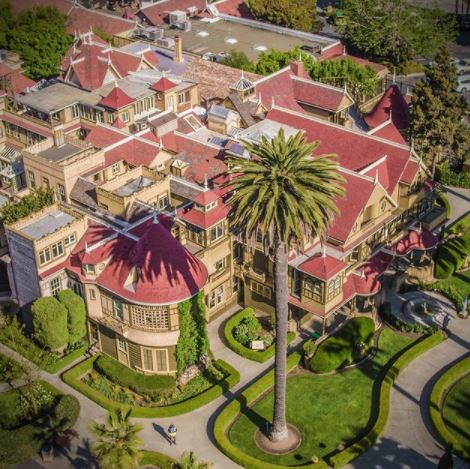
Tickets On Sale Now! 13 nights ONLY 🎃 – reserve your spot before they are gone! #unhinged #halloween2022 #winchestermysteryhouse

Frequent Occurrences of Hauntings
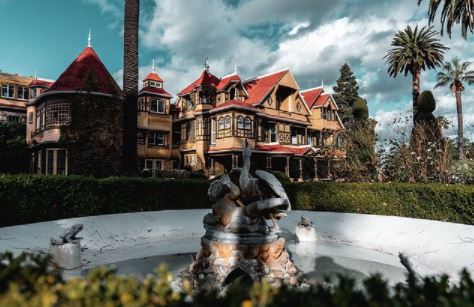
Whether or not one believes in Mrs. Winchester’s superstitions about spirits, it is harder to dismiss frequent occurrences of hauntings which assaulted one’s vision wherever one would look. The question of the “evil” in her home had already become too grave for her. The place was known to swarm with ghosts. Mrs. Winchester was seated by her fire. abruptly she saw a shadow of a vast spider hung suspended in the air, just beyond the barrier. It passed swiftly around her and seemed to probe ever towards her, but only to draw back with extraordinary jerky movements, as might a living person who touched the hot bar of a grate. Round and round it moved and round and round she turned. Then, it retired almost beyond the glow of the vacuum light and then came straight towards her, appearing to gather form and solidity as it came. There seemed a vast malign determination behind the movement that must succeed. She was on her knees and jerked back, falling on to her left hand and hip, in a wild endeavour to get back from the advancing thing. With her right hand she was grabbing madly for her ivory-gripped Volcanic Navy pistol which she had let slip. The brutal thing came with one great sweep straight towards her. Mrs. Winchester yelled. Then, just as suddenly as it had swept over, it seemed to be hurled back by some mighty, invisible force. It was some moments before she realized that she was safe, and then she got herself together, feeling horribly done and shaken and glancing round and round the barrier, but the thing had vanished. Yet she had learnt something, for she knew not that the mansion was haunted. #RandolphHarris 1 of 10
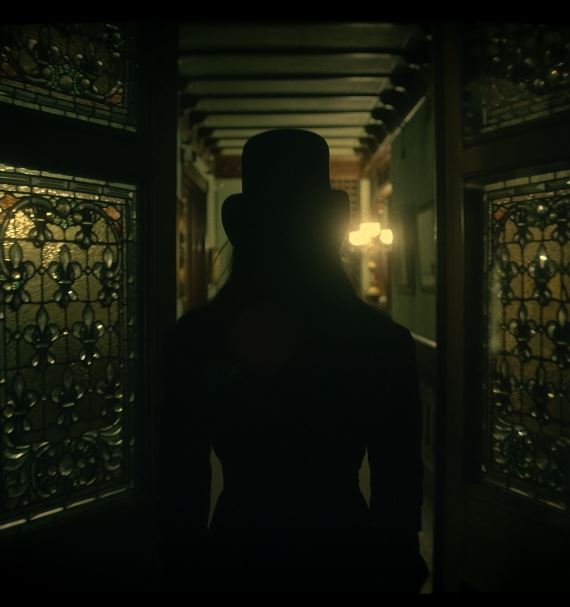
Suddenly, as Mrs. Winchester crouched there, she saw what had so nearly given the monster an opening through the barrier. In her movements within the halls of her mansion, she noticed that the door to nowhere was open. She closed it and felt almost safe again. For a long time, she felt uneasy, as she saw odd wavering over among the shadows near the door to nowhere. And a minute afterwards the door was opened and slammed wide with tremendous force. The next instant the thing made one swift, vicious dart at her from the shadows. Instinctively she started sideways from it and so plucked her hand from upon the fireplace poker, though—owning to her inconceivable foolishness—it had been enabled for a second time to pass through the door to nowhere. She shook for a time with sheer fear. Mrs. Winchester moved right to the center of a pentacle in the room and knelt there, making herself as small and compact as possible. She could not be sure if she was being influenced unconsciously or was she in danger? With her suspicious watchfulness, a mysterious hand materialized out of the shadows and seemed to leap almost into her face, so nearly did it approach her, but it was thrown back by some altogether enormous, over-mastering force. Yet, apart from the dazed fright in which it left her, she had for a moment that feeling of spiritual sickness, as if some delicate, beautiful, inward grace had suffered which is felt only upon the too near approach of the ab-human and is more dreadful in a strange way than any physical pain that can be suffered. She knew by this more of the extent and closeness of the danger, and for a long time Mrs. Winchester was simply cowed by the brutality of that Force upon her spirit. #RandolphHarris 2 of 10

Mrs. Winchester had retired from the scene and, visiting the ample house from attic to cellar, making sure she was alone, and knew herself in safe possession and, as she tacitly expressed it, let herself go. Then she could, as seemed to her, most intimately wander and wait, linger and listen, feel her fine attention, never in her life before so fine, on the pulse of the great vague place: she preferred the lampless hours and only wished she might have prolonged each day the deep crepuscular spell. Later—rarely much before midnight, but then for a considerable vigil—she watched with her glimmering light; moving slowly, holding it higher, playing it far, rejoicing above all, as much as one might, in open vistas, reaches of communication between rooms and by passages; the long straight chance or show, as she would have called it, for the revelation she pretended to invite. It was a practice Mrs. Winchester found she could perfectly “work” without exciting remark; no one was in the least the wiser for it. She slowly opened some rich music. As she walked along the marble of the hall pavement, large black-and-white squares that she remembered the admiration of her childhood and that had then in her, as she now saw, for the growth of an early conception style. There was the effect of the dim reverberating tinkle of some far-off bell hung in the belfry—in the depths of the house, of the past, of that mystical other World that might have flourished for her had she attended to its midnight hour calls. The mansion held, as it were, this mystical other World, and the indescribably finer murmur of its heart strings was the sigh there, the scarce audible wail it would cry out in the night. #RandolphHarris 3 of 10

With her presence, Mrs. Winchester awakened the ghostly life as the departed soul of the mansion enjoyed. They were mostly shy, but most of the were not really sinister; at least they were not as she had hitherto felt them—before they had taken the Form she so yearned to make them take, the Form she at moments saw herself in the light of fairly hunting on tiptoe, the points of her evening-shoes, from room to room and from storey to storey. However, Mrs. Winchester spent the rest of the night in a haze of sick fright and so tense that she could not make a single movement naturally. She was in such fear that any desire for action that came to her might be prompted by the Influence that she knew was at work on her. And outside of the barrier that ghastly thing went round and round, grabbing and grabbing in the air at her. There was a horrible wind blowing upon her from the corner of the room to the left of her bed. Then, just as the first touch of dawn came into the sky the unnatural wind ceased in a single moment and she could see no sigh of the hand. The dawn came slowly and presently the wan light filled. However, at about midnight, Mrs. Winchester had a queer knowledge that something was near to her, yet nothing happened for a whole hour after that. Then suddenly she felt the cold, queer wind begin to blow upon her. To her astonishment it seemed now to come from behind her and she whipped round with a hideous quake of feat. The wind hit her in the face. It was flowing up from the floor close to her. She started in a sickening maze of new frights. What on Earth had she done now! Suddenly, as she stared, bewildered, she was aware that there was something queer about her—a funny shadow movement and convolutions. She looked at them stupidly. And then, abruptly, Mrs. Winchester knew that the wind was blowing up at her from the floor. #RandolphHarris 4 of 10

A queer indistinct smoke became visible to her, seeming to pour upwards through the ring and mix with the moving shadows. Suddenly she realized that she was in more than any mortal danger, for the convoluting shadows about the floor were taking shape and the deadly-man in a top hate was forming within the room. “My goodness,” she said, “This forces has found a ‘gateway’ into my home and the brute is coming through—pouring into the material World, as gas might pour out from the mouth pipe.” Mrs. Winchester knelt for a couple of moments in a sort of stunned fright. Then with a mad, awkward movement, she grabbed for the fireplace poker and something invisible, something living, was jerking t hither and tither. In an instant, it was torn from her grasp with incredible and brutal force. A great black shadow covered it and rose into the air and came at her. She saw that it was the man, vast and nearly in perfect form. Mrs. Winchester gave one crazy yell and jumped over the pentacle and the ring of burning candles and ran despairingly for the door. She fumbled idiotically and ineffectually with the key, and all the time she started, with the feat that was like insanity, toward the Barriers. The man with the top hat was floating towards her. However, the monster was chained, unable to reach her bed. She sprang from the room and slammed the door with a crash. Mrs. Winchester locked it and got to her Blue Séance Room, somehow; for she was trembling so that she could hardly stand, as you can imagine. She locked herself in the room and managed to get the candle lit; then she laid down on the floor and kept quiet for an hour or two, and so she grew steadier. #RandolphHarris 5 of 10

Mrs. Winchester got some rest, but when she woke, she was surrounded by a glowing star of a pentacle. Apparently Mrs. Winchester had tried an exorcism. Exorcism is the process of expelling evil spirits from persons or places by certain adjurations, incantations, magic acts, and formulas. Among ancient peoples, exorcise depended largely o the efficacy of magical formulas, commonly compounded of the names of deities, and repeated with magical ritual over the bodies or object that is possessed. Power to expel evil spirits supposedly resided in the words themselves. Therefore, great importance was attached to the correct recital of the right formulas and the meticulous observance of the prescribed ritual. The recovery of important incantation texts and magical papyri from Babylonian, Assyrian, and Egyptian antiquity demonstrates the widespread believe in demon inhabitation and use of exorcisms. The same prevalence of demon inhabitation has been encountered in the Worldwide missionary outreach from about 1750 to the present. The penetration of China, India, Japan, Burma, Ceylon, and other countries with the Christian gospel has revealed the hold of demonism on pagan cultures and the varied methods of exorcism of evil spirits. The same phenomena exist among primitive people of South America, Africa, and the islands of the sea. The theory is that spirits seek to inhabit the bodies of men (and also animals) to find a resting place and in some inscrutable way obtain physical gratification. When the demon-possessed is in the demonized state and unconscious, inflected physical pain or pleasure is supposedly transferred to the possessing spirit. Discomfort will drive one out of his abode. #RandolphHarris 6 of 10

When prostituted into a ritualistic rigmarole, as in white magic, it becomes a deceiving tool in the hands of Satan’s agents to delude the undiscerning by false miracles and spurious healings. Such diabolic miracles do not destroy Satan’s kingdom, but build it up. Diabolical exorcism does not produce true dispossession, but a mere reallocation. Demonic healing may relieve physical symptoms, but substitute a physical ill or doctrinal form of error. This subterfuge explains in part the increase of theological decadence and phenomenal growth of sect and cults within professing Christianity in these latter days. Under demon control, one of Mrs. Winchester’s servants, a young lady, insisted she must dance for the construction workers, which she did wildly and uncontrollably and with every evidence of demon possession. She became so violent that the only way to control her was to hold her by the hair. Her violent jerking almost pulled out her hair. When the young lady came to, she was asked why she was lying on the floor, but she did not know. She was asked if anyone had pulled her hair, she disavowed any knowledge of it. When she was asked to dance, she replied, “No. I do not know how to dance.” She was sweet, modest, and quiet and completely delivered from the demon that her possessed her. White magic is not always so easy to see its true nature. This form of magic more widespread than black magic, the reason being that it often hides itself behind a religious exterior. Hence, as we have said before, one needs to have great discernment in these matters in order to recognize the forces that are actually being called into play. #RandolphHarris 7 of 10
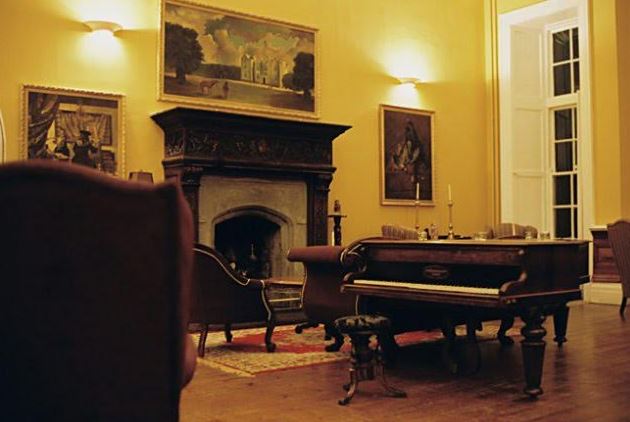
The religious trimmings can be very deceptive. Again an example: A farm worker at the Winchester mansion was told by a doctor that he would have to have his leg amputated. Because he wanted to save his leg at all costs he went to visit a magic charmer without the doctor’s knowledge. This man told him, “You will have to believe me if you want to be healed.” He went on to repeat a magic charm and then said the Lord’s prayer three times. The man’s pain immediately vanished and when he returned to the hospital it was no longer necessary for his leg to be amputated. The doctors were puzzled. Later however, the man began to suffer from various psychic disturbances and his family to became accident-prone after this. White magic is more often than not accompanied by certain symbols that may include the use of the names of the Trinity, three Lord’s prayers, three verses of Scripture, three psalms, or three crosses and so on. People are thereby deceived and the method of healing is thus often mistaken for true Christian healing. In reality however, the third commandment is being broken, which says, “You shall not take the name of the Lord you God in vain.” Man cannot dictate to God, and man cannot treat God as a servant who is willing to jump to the aid of every magic charmer who so invokes Him. The Bible relegates both charming and the mechanical use of the Scriptures themselves to the level of sorcery, and so we find that white magic is merely black magic under a different guise. Satan is indeed transformed into an angel of light. The sense of compulsion connected with white magic is something quite different from the attitude of faith in the Christian who says, “They will be done.” #RandolphHarris 8 of 10
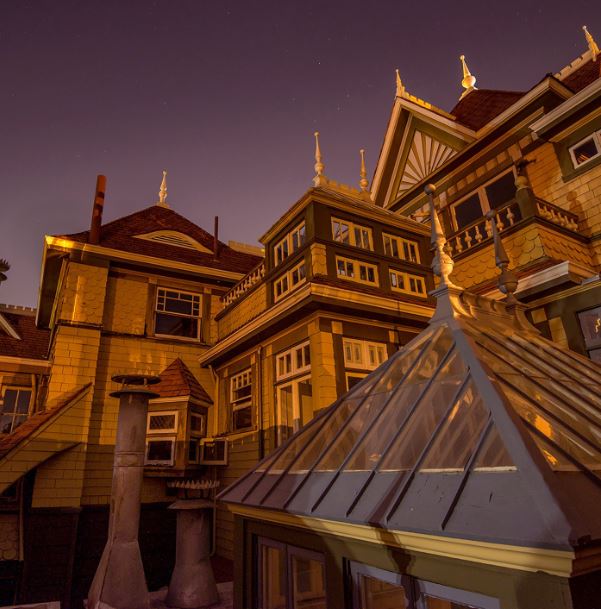
Black magic becomes a minor legend for its exuberant offensiveness. Blasphemy is a regular component in life, while the most innovative creators in in this maturing medium of occultism shows increasing sympathy for the Devil. Satanic fringes are part of popular culture. People are so bored with the normal that they seek out the occult. Many people want to have a supernatural experience so they can feel alive, be entertained, and have something to talk about. Some people have a great fascination for all that is dark, forbidden, and feared. They consider the Devil their personal God. A daily routine of ritual and magic is normal for some. It is a way for them to open doors to outer gateways and let the Dark Ones march through. Often times, paintings can function as sigils [occult symbols], and create change in accordance with the Magician’s desires, and ultimately fashion a new Dark Aesthetic, and the creation of a Universal Satanic Necropolis. Artwork or any craft can be fueled by the powers of Satan, and it is possible that it will become popular for people who do great works to say, “the Devil made me do it.” Events, ranging from fires and weird illnesses to Earthquakes and ritual murders have been blamed on certain objects, art, and people, and that is why you will notice certain events get cancelled, have to be rescheduled and so forth. This is also why some have to take out extra insurance for their work, family members or property. Handlers have gotten wind of past experiences. Schedasi, Weduse, Tiwisi—I have sinned, I shall sin. Prayer—Eternal God of our all! Our God! hear our voice, spare and have mercy upon us. Accept our prayer in mercy and with pleasure. I have sinned. I have committed transgressions. I have sinned before Thee; I have done that which is displeasing unto Thee here in the Earth. #RandolphHarris 9 of 10
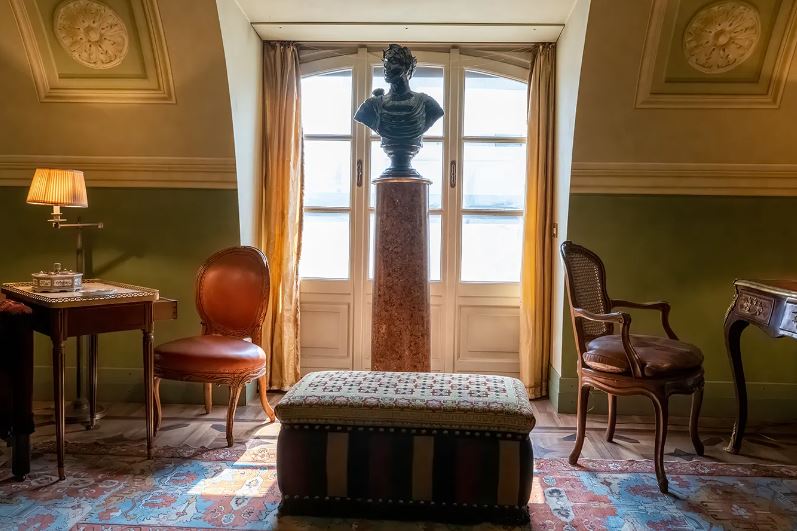
For the sake of Thy great name pardon me all the sins and iniquities and transgression which I have committed against Thee from my youth. Perfect again all the holy names which I have blemished, great champion, terrible, highest God, eternal Lord, God Sabaoth. In the mystery of these vestures of the Holy Ones, I gird up my power in the girdles of righteousness and in truth in the power of the Most High: Ancor: Amacor: Amides: Thoedonias: Anitor: let be might by power: let it endure for ever: in the power of Adonai, to whom the praise and the glory shall be; whose end cannot be. I invoke and move thee, O thou Spirit Purson: and being exalted above ye in the power of the Most High, I say unto thee, Obey! in the name Beralensis, Baldachuensis, Paumachia, and Apologiae Sedes: and of the mighty ones who govern, spirits, Liachidae and ministers of the House of Death: and by the Chief Prince of the seat of Apologia in the Ninth Legion, I do invoke thee and my invoking conjure thee. Ans being exalted above ye in the power of the Most High, I say unto thee, Obey! in the name of him who spake and it was, to whom all creatures and things obey. Moreover I, whom God made in the likeness of God, who is the creator according to his living breath, stir thee up in my name which is the voice of wonder of the mighty God. We need to come to understand that when creating changes within self for the sake of empowerment our external reality also begins to shift reflecting that internal empowerment. When working toward creating external shifts within our external reality our spirit is also empowered by simply exercising our own divine power. #RandolphHarris 10 of 10

Winchester Mystery House

A new chapter of Unhinged is coming this Fall. Stay tuned🤫 https://www.winchestermysteryhouse.com/


Time is Running Out—Stop Buying Time for Error

A mob, which is generally the growth of a redundant population goaded by resentment for real sufferings, but totally ignorant of the quarter from which they originate, is of all monsters the most fatal to freedom. It fosters a prevailing tyranny and engenders on where it was not; and though in its dreadful fits of resentment it appears occasionally to devour its unsightly offspring; yet no sooner is the horrid deed committed, than, however unwilling it may be to propagate such a breed, it immediately groans with a new birth. Of the tendency of mobs to produce tyranny we may not, perhaps, be long without an example in this country…If political discontents were blended with cries of hunger, and a revolution were to take place by the instrumentality of a mob clamoring for want of food, the consequences would be unceasing carnage, a bloody career of which nothing but the establishment of some complete despotism could arrest. The word degenerate, which applied to a people means (as it ought to mean) that the people has no longer the same intrinsic value as it had before, because it has no longer the same blood in its veins, continual adulterations having gradually affected the quality of that blood. In other words, though the nation bears the same given by its founders, the name no longer connotes the same race; in fact, the man of a decadent time, the degenerate man properly so called, is a different being, from the racial point of view, from the heroes of the great ages. The idea of genocide has been going around—it is something that has been in the Black community for a long time. However, those particular pieces, which seemed to be suggesting that there was a resurgence of this kind of thinking going on, is an immediate cause for looking into it. #RandolphHarris 1 of 21

Although the White community also believes they are facing genocide in America, that is not going to be the focus on this report, but you will notice they are becoming a minority in many communities. Some people wonder what is happening to them as well. There is something wrong and it is very abnormal to pretend, or at least not known that anything is wrong, when it really is a very hurtful thing. Our human civilized stock is far more weakly through congenital imperfection than that of any other species of animals, whether wild or domestic. There is a very gloomy future for humanity, on the ground that in our modern civilization natural selection had no play, and the fittest did not survive. Many feel they are enduring as an extinct person in a society, and what kind of society would require extinctions of people that were not extinct. It is hard to understand and cope with deaf, dumb, and blindness of a public, who one thinks wants to know the truth, but who, in fact, only wants to know what they want to hear. Race is an invention. It is a method of control to obliterate certain people’s reference for land and to impose a reference of domination. Racism is the act of imposing the manifestation of race. You behave in that mental system. It can sometimes be a bureaucratic application of death. White supremacy is the product of domination. That is the definition of American domination…actually, global domination, but more locally, American domination. You have to have a reason. You steal something, you do something wrong, you have to take something over that normally would not come into your possession under moral or normal circumstances. There have to be inventions to keep the whole thing going, and white supremacy, as an idea, has to be something that it put over by force, or demonstration. Perhaps there are superior beings? #RandolphHarris 2 of 21

A conspiracy is a plan. A method. Sometimes conscious, something not. Genocide is a murder of a kind. There are many places in the World where campaigns verging on, if not actually meeting, that standard are going on. I can think of recent incidents. There was, for example, in Nicaragua, the campaign against the Miskito Indians, which—I have not been there but—based on the reports which came out it appeared that it was an ethically based campaign to wipe out that population. Some of what has happened in Brazil to the Amazon tribes, I have not been there, but based on that….I do know first hand that in Africa there are a number of cases of tribal conflict that have verged on, if not actually crossed over into, genocide. So, yeah, it exists, for sure, even now. I think what happened to the Kurds verges on and probably crosses into genocidal campaigns. Sure. It does on. However, what is happening to Black Americans is different. Not only is the race being discriminated against, but so are certain individuals who show promise in their youth. Some politicians find anyway possible to ruin their lives financially, physically, and mentally. It is not that well known about, but becoming more obvious that people are not just crying “wolf.” And sometimes abusers will accuse the powerless victims of what they themselves are guilty of. To make genocide possible or probable, a community has to commit to wiping out another ethnic group on the basis of ethnicity. And secondly, they have to have the power to do that. And again, I do not think in this country, the conditions may pertain because of the hatred that has flared up against certain races of people, which is being stoked by politicians. However, at this point, no government has the power in America to wipe out a race of people for we are not a socialist or communist country yet. #RandolphHarris 3 of 21

The intention of the American government is not to eliminate any one population. While there may be factions of local governments who try to start race wars because they are bitter over something from the past that may not even have anything to do with America, these are still isolated cases. The Armed Forces are very diverse for that sort of thing to be carried out, and I believe if the police suspected something was wrong, they would contact the proper authorities to stop it. There is not much evidence that it is taking place in society, at all, at this time. But, if we become a socialist or communist country, it may become a way of life, which is why a certain political party keeps increasing your taxes, refusing to help citizens, and eroding your civil rights. That is why they are trying to disarm Americans, so they cannot fight back. We have not gotten to the point where one race of people has applied the application of death, and said, “They are red devils, the sin and scum of the Earth! We are chosen by God to kill them all off!” And there has to be a way to carry that out. And since nobody volunteers to be killed off, there has to be some deceit, and other kinds of low-life, immoral methods to trick and exploit and just violate situations, so that genocide can take place. While it was happening in the past, as the brainwashing of society has decreased and more Americans have been exposed to African Americans and see their art and culture, ideas, designs and works, they are more trusting of them and see them as a value to human society. However, there are always going to be a few bad apples in any bunch. However, genocide could take place in a democracy by a majority vote. #RandolphHarris 4 of 21

Yet it is probably unlikely that genocide would take place. That is why the United States of America, has constitutional protections: To protect human life, because it is not always possible. The mass hysteria that attended the rise of Nazism in Germany could conceivably take rise in any society in the World, if you had sufficient friction, and the right ethnic group, and the right sort of numbers involved. Again, I do not think that pertains to the United States of America, but it is conceivable it could occur somewhere else, and probably has. At this point, it does not seem, that democracy is possible with genocide, because genocide is extreme repression-oppression and elimination-obliteration. And democracy in interaction of interdependent peers that are able to articulate, not only to others, but to themselves. They are aware. They have language. They have access to self-empowering skills, and ideas, and entities. And most important to that is a sense of selfhood. Not invented manifestations of oppression, like racializing. We are dehumanized into other definitions that make us think we are not people. Victims can play certain roles in a genocidal process that facilitates genocide. For one, by not fighting back. Now recognizing what is happening to them, not fighting back. Many people criticize the Black Lives Matter movement or those who believe they are Aryan Supermen, but there is a reason they hold their beliefs and do what they do to stand up for their rights. However, genocide is not something that is happening on a wide scale in America. There is a process of scapegoating, in which people find it much more easy…to project these kind of fantasies onto a structure that they have been opposed to—and for good reason—that they are skeptical of, that they are suspicious of, and fearful of, and when they have got a heck of a problem of their own, is to insist that someone is doing this to them. #RandolphHarris 5 of 21

It is a natural human instinct: To scapegoat when you have got an insoluble problem and you feel strongly that somebody has malign intentions for you. By accepting the fact, and being aware that one has a selfhood, outside of the genocidal process, this is what makes one unwilling to volunteer to be killed anymore, spiritually or physically. They can help in the genocidal process by denial—by denying that there is a genocidal process. And being compulsive, which results in addictions of any type. It would almost, in modern times, be impossible to exterminate a race of people in America. Not only because they would not go down supinely, but also because they have many allies. It does will not happen, as long as we are a capitalistic society, ruled by Americans. When you start killing off a race of people, you are being killed, too. By just trying to figure out what is “a Black person” on the way to the gas chamber, one is going to have a very difficult time sometimes with their paper-bag test. It is not always going to work, first of all And we just do not always know who is who and who does not have the one drop of quote-unquote, “Black blood,” which is the most ridiculous idea that could have come out of this whole thing; one of many. And in such a drive act, if anybody were to try to do such a thing, it would result in such madness that it would be impossible to think anybody could get away with such a thing without destroying themselves. Fostering the good-for-nothing at the expense of the good is an extreme cruelty. It is a deliberate storing up of miseries for future generations. There is no greater curse to posterity than that of bequeathing them an increasing population of imbeciles. #RandolphHarris 6 of 21

However, cultural genocide is a concept that makes some sense. There is still racial oppression on the harshest sort of scale, and it may be considered a sort of genocide. Oppression by enforced violence might be considered genocide because it allows a group of people to break the bread winners of the family, which makes it harder for them and their children to survive, which means they have a disadvantage at life and are less likely to reproduce and survive. At the present time considerable alarm has been expressed at the apparently growing disinclination of American women to bear children, and a cry has been raised against what people call race suicide. The eugenic ideal which is now developing is not an artificial product, but the reasoned manifestation of a natural instinct, which has often been far more severely strained by any eugenic ideals of the future. The new ideal ill be absorbed into the conscience of the community, whether or not like a new kind of religion, and will instinctively and impulsively influence the impulses of men and women. It will do all this the more surely since, unlike the taboos of savage societies, the eugenic ideal will lead men and women to reject as partners only the men and women who are naturally unfit—the diseased, the abnormal, the weaklings—and conscience will this be on the side of impulse. Anytime you have a seizure of land by people who would not come in that position under moral or normal circumstances, you have to have genocide is the thought. That is why so many people in North Dakota are upset that back in November of 2022, Red River Trust, also known as Bill Gates, quietly purchased 2,001 acres of farmland that spans two counties and costs $13.5 million dollars. In fact, Bill Gates is the largest holder of farmland in America. He owns 269,000 acres of farmland in America. And Gates is not the only one buying up land. A Chinese company and food manufacturer purchased 300 acres near Grandforest and twenty minutes from the Grandforest Air Force base. With how the media dethroned and banned President Trump from social media, this should be a real huge concern for democracy. #RandolphHarris 7 of 21

The Survivor: An Anatomy of the Death Camps, is a book by Depres where he refers to the accusation and the confession: Where the Nazis would beat the prisoners, or harass them, or browbeat them so badly into confessing to something that they did not do, and one survivor had described that “to confess to them, was to say to them, and to yourself, that you never were who you had been.” And to get you to confess or to submit to my system of surrendering your wallet, you have to do some mental rearranging, in order to agree to do that. To cope with doing that. to make that seem all right with you. So whenever there is an issue of seized land, that is what is going to go hand-in-hand with it. Just like, scientifically, genocide cannot go hand-in-hand with democracy, geocide goes hand-in-hand with seizure of land. Where they have no selfhood, because everybody’s identity depends on the domination of another, and where that power is traded off, back and forth, interchangeably. Some many people are now giving credit to such an idea of genocide because of the ravages of crack, fentanyl, meth, marijuana, high homicide rates of Black youth, the high infant morality rate of Black infants, the shorter life expectancy of Black men in particular, higher rates of cancer, COVID, and other certain diseases that take place in the Black community, the marketing of liquor and cigarettes in the Black community—all those thing, I think, tend to give people the idea that there is a racist conspiracy to exterminate them. However, White men also fear that they are now becoming targets. People are targeting police and killing them and many of them are predominately White. Also, it seems in is now impossible for a White many to win an election in America, even if he seems more qualified than his democratic opponent. #RandolphHarris 8 of 21

Also, most soldiers in America are White and they are often sent overseas and die or come home injured, and do not have many benefits when they come home. There is developing in America, an environment of extreme terror. People are responding in terms of genocidal acts of aggression against them, because of how brutal things are and can be. And also, as DePres has said in his book, that a lot of people refused to believe that it was going on in Nazi Germany, too. And it was just that people who, “live decently,” do not want to think that there is anything going on around them that could mean a guilt on their part, or an examination of their lives, or a questioning of their own motives or failure to do something about it. However, that has its opposite reaction: For all of that denial, you also have that very same panic and fear. Not that the fears of the people are unfounded, but from the absolute fright of what is going on—which is so obvious to them, but is totally deniable and invisible to others who seem to willfully not want to address it or change it. There is another form of absolute terror! When you totally rearrange what is going on around you into “Mumbo Jumbo,” or to trivialize it, to the point of contempt, is another form of denial. To say it is not true, to trivialize. Some people even believe that African-Americans who have become mayors and police chiefs in dozens of cities are either willing participants in Black genocide or inept dupes. It is not a matter of somebody being stupid. That is one of the tricks about abuse victims in a dysfunctional family situation. You are told that what happened to you is because you are stupid and it was your fault. Or that you wanted it that way and you cause what happened to you to happen. See, it is none of the above. #RandolphHarris 9 of 21

When you are talking about a behavioral system, then you are talking about a dysfunctional situation, like a family or a society. When you are looking at the behavior reference, the ongoing process, then you know it is not a matter of villains and heroes, but a sickness, and people can do things compulsively. You can tell certain people that the Surgeon General warns against cigarette smoke and vaping and that 90 percent of street drug pills tested in Sacramento County are fake and mixed with fentanyl, and can be hazardous to their health and even deadly, and they will agree with you! They have their throat out, and they are smoking through the hole in their throat. It has nothing to do with intellectualizing, or an intellectual understanding, or a willful act to destroy yourself, as much as it is the addiction and the compulsion from a dependency disorder. Benign neglect works in a genocidal process. The Black population has decreased since 2010 from 12.6 percent of the American population to 12.4 percent in 2020. One can brutalize you without touching you, without hitting you. One can just not speak to you. One can be cold where you might need approval, or one might need nurturing. One can just not nurture you. One can not interact with you. One can set up situations so that you never self-actualize; you can never imagine or create vision about yourself, because there is no such thing as a “you.” And at the same time one can clothe you. It is important to have a strong mind, and be able to understand what your strengths are, and the power that you have, so that you can always make your own decisions. But there is a genocidal process, or an obliterating process to both human beings. So the benign neglect concept works very well. #RandolphHarris 10 of 21

In fact, it is operational in the mechanics of ultimate despair, and that means, “I have nothing left to lose,” which means I can kill myself, or harm others. It really depends on how one expresses anger, internally or externally. There is some selective law enforcement that goes on quite a bit, even when a prosecutor does not have a case, they have ways to pressure people into not going to a trial and admitting to the charges and can follow and terrorize that person for one’s entire life, even though it is illegal, but no one will say anything. Not even the judge. The police are much more prone to arrest Blacks. The criminal justice system, for a whole variety of reasons, is much more likely to convict Blacks in these crimes. They do not have access to the same quality of lawyers, same kind of finances that help in a legal defense strategy and so forth. However, the majority of people in jail belong there, and there are people in jail who are innocent. There is a whole body of sociological theory that demonstrates that people who are poor and who are oppressed tend to commit more crimes. So, just because your income is not as high as someone else’s or because of the color of your skin, you may be accused of causing accidents you are not at fault at, insurance companies may not think you have credibility because you are Black, or because your income is lower than someone else’s, you made be confused of crimes more often. In American you have a Black marginalized population, who people have been brainwashed into think are not valuable. You have a huge White majority and a lot of new immigrants who sometimes still prescribe to these old ideas. Therefore people fear Blacks for a variety of reasons, some justified, some not. Even successful, just getting started or established Blacks can be considered a threat. Much like poor, middle-class and rich White men are starting to be seen as a threat. #RandolphHarris 11 of 21

True aristocracy is governed by the wisest and best, always a small minority in the population. Human society is like a serpent dragging its long body on the ground, but with the head always thrust a little in advance and a little elevated above the Earth. The serpent’s tail, in human society represented by the antisocial forces, was in the past dragged by sheer force along the path of progress. Such has been the organization of mankind from the beginning, and such it still is in older communities than ours. What progress humanity can make under the control of universal suffrage, or the rule of the average, may find a further analogy in the habits of certain snakes which wiggle sideways and disregard the head with its brain and eyes. Such serpents, however, are not noted for their ability to make rapid progress. Enlightenment rejected that moderate Socratic compromise between society and philosophy, poetry and science, which had governed intellectual life for so long and had made possible the foundation of political science. However, unlike pre-Socratic philosophy, which had no interest in politics at all, this science wished to rule and conclude rule. The new science had indeed generated sufficient power to rule, but in order to do so had had to lose the human perspective. In other words, some deny that modern science has actually established a human or political science. All to the contrary, it had destroyed it. Such a political science would, in the first place, have to understand man as man, and not as a geometric figure with flesh on it. In the second place, it would have to ensure the harmony between the good of science or scientists and that of a decent political community. On the Flying Island, neither condition is met. In particular, the scientists exploit the nonscientists at to live their version of the contemplative life in safety and comfort. #RandolphHarris 12 of 21

More simply put, the scientists in power and with power do not give a care about mankind at large. The whole conspiracy is like any other. The potential tyrant speaks in the name of the common good but is seeking a private good. Bacon’s House of Solomon in the New Atlantis is just propaganda for the Flying Island. The scientists want to live as they please—delighting in numbers, figures, and starts—and are no longer obliged to hide their desires. The people still have a means of making themselves felt, but they are essentially enslaved to what scientists provide for them. The scientists can cut off the sun’s light to the World below. Natural science very quickly withdrew from the Enlightenment project as a whole, leaving the human parts of it to fend for themselves. The laws of nature were scientific, but natural science no longer claimed to be able to legislate human laws, leaving political science out in the cold, without a rational or scientific basis. Instead of being real partners in the business of overthrowing the antiscientific regimes of the past, the scientists became fellow travelers. Once theological supervision was defeated and everyone accepted the need for scientists instead of priest, science was free and used them. Early Enlightenment thinkers appear to have believed that there was a perfect coincidence between rational consent of the governed and the freedom of science. However, science could not rationalize all men, and turned out not to have to, inasmuch as it became able to force whatever rulers there are to support it and leave it alone. #RandolphHarris 13 of 21

When there were still rulers who would in principle persecute a Galileo if they found out what he was up to—because his investigations undermined their legitimacy, founded on sacred texts—scientist were natural allies of all opponents of these rulers. The fascination of early modern thought with the ecclesiastical authority as the one great danger to freedom of thought caused the philosophers to believe that the alliance formed to overthrow it was permanent. In the event, it turned out that once there were secular rulers who had no absolute commitment to a nonrational or unscientific view of nature, the nonhuman part of the Enlightenment was immune. Self-interest, the great modern motivating principle, no longer dictated concern for the other thinkers, and science or reason, which appeared now to belong utterly to the natural philosopher, no longer gave the political and moral thinkers any warrant. In short, the common front presented by human and natural science in the name of democracy became an ideology. The condition of natural science in Russian is dreadful tyranny founded on science. And natural science, alone among the learned disciplines, and natural scientists, alone among the learned disciplines, and natural scientists, along among human beings, have been able to force the tyrants to leave them alone. A Russian mathematician is as much a mathematician as an American mathematician, whereas a historian or a political scientist must be a sham, a party hack. Natural science can now flourish in Russia, because Russian tyrants have finally recognized their unconditional need of the scientists. They cannot endure the historians or political scientists, and they do not have to. These latter are not of the same species as the natural scientists, either in the eyes of the natural scientists or those of the tyrants. #RandolphHarris 14 of 21

Most unpleasant of all is that this dreadful regime gets its power to maintain its rule from the natural science. As sciences they are neutral, expect with respect to what concerns their interests, and cannot judge Biden to be superior to Stalin. This would have probably been true of pre-Socratics too, but they did not generate political power. They were indifferent to political regimes and provided aid and comfort to none. The new scientists are the cause of all. The pre-Socratics lived in splendid isolation as models of the theoretical life. Natural scientists now project an ambiguous image. Although they may be truly theoretical, thy do not appear that way to untheoretical men. Their involvement in human things gives them a public role as curers of diseases and inventors of nuclear weapons, as bastions of democracy and bastions of totalitarianism. Andrei Sakharov is humanly most impressive, but his stand for human rights does not follow from his science and, to day the least, does not guarantee him the fellowship of other Soviet scientists. The new dispensation has protected science; it has done nothing to give scientists control over the uses of the results of science, or the wherewithal to know how to use those results, if they were indeed able to gain control over them. Natural science in the long run won out over the Party when its results clashed with Marxist orthodoxy, but it could not control the Party’s political action. And no future tyrant is likely to imitate Hitler’s doctrinarism, which caused him to send Jewish scientists to his enemies to insure his defeat. Science in that sense moderate potential Hitlers—but only in that sense. In general it increases man’s power without increasing his virtue, hence increasing his power to do both good and evil. #RandolphHarris 15 of 21

The total picture is one of great danger resulting from the political involvement of science. Some people asset that we have to reinvent politics in order to meet the danger. Politics was already reinvented by the founders of Enlightenment, and that is the problem. It turned out that natural science had nothing to say about human things, about the uses of science for life or about the scientists. When a poet writes about a poet, he does so as a poet. When a scientist talks about scientists, he does not do so as a scientist. If he does so, he uses none of the tools he uses in his scientific activity, and his conclusions have none of the demonstrative character he demands in his science. Science had broken off from the self-consciousness about science that was the core of ancient science. This loss of self-consciousness is somehow connected with the banishment of poetry. One does not overlook the fact that religion has at times sacrificed both personal and eugenic values. Cases of flagellation and religious celibacy come to mind as two spectacular instances. Since progress toward eugenic ideals is hampered by the present inadequate motivation toward eugenic conduct, the eugenicist looks with eager hope to religion for possible aid. Yet, unfortunately, it is necessary to admit that to date religion has contributed, along with some slight eugenic motivation, a large mixture of dysgenic motivation. If, on the average, the religious celibates were inferior, there would be no net eugenic loss, but this is not the case, especially with many celibate males who are held to high scholastic standards. Our most serious problems are not technical, nor do they arise from inadequate information. If a nuclear catastrophe occurs, it shall not be because of inadequate information. #RandolphHarris 16 of 21

Where people are dying of starvation, it does not occur because of inadequate information. If families break up, children are mistreated, crime terrorizes a city, education is impotent, it does not happen because of inadequate information. Mathematical equations, instantaneous communication, and vast quantities of information have nothing whatever to do with any of these problems. And the computer is useless in addressing them. And yet, because of its “universality,” the computer compels respect, even devotion, and argues for a comprehensive role in all fields of human activity. Those who insist that it is foolish to deny the computer vast sovereignty are singularly devoid of what Paul Goodman once called “technological modesty”—that is, having a sense of the whole and not claiming or obtruding more than a particular function warrants. Norbert Wiener warned about lack of modesty when he remarked that, if digital computers had been in more common use before the atomic bomb was invented, people would have said that the bomb could not have been invented without computers. However, it was. And it is important to remind ourselves of how many things are quite possible to do without the use of computers. When the Dallas Cowboys were consistently winning football championships, their success was attributed to the fact that computers were used to evaluate and select team members. During the past several years, when Dallas has been hard put to win more than a few games, not much has been said about the computers, perhaps because people have realized that computers have nothing to do with winning football games, and never did. One might say the same about writing lucid, economical, stylish prose, which has nothing to do with word processors. Although my students do not believe it, it is actually possible to write well without a processor and, I should say, to write poorly with one. #RandolphHarris 17 of 21

Technological immodesty is always an acute danger in Technopoly, which encourages it. Technopoly also encourages insensitivity to what skills may be lost in the acquisition of new ones. It is important to remember what can be done without computers, and it is also important to remind ourselves of what may be lost when we do use them. Shashank Joshi, who rases soy on two acres in India’s Madya Pradesh state, is also providing online price information to farmers—but as part of a business-cum-social innovation called e-choupal.ITC, one of India’s biggest corporations, needed a better system for procuring the soy, tobacco, coffee, wheat and other crops its exports. Which was why it set up its own I.T. network for thousands of growers in rural India. It provided computers to Joshi and others like him. In return, the recipient agreed to turn his home into a choupal, or gathering place, where the less affluent could come to meet, chat, drink tea—and find out the latest prices for their crops in local, government-mandated markets. Or, for that matter, on the Chicago Board of Trade. According to Kuttayan Annamalai and Sachin Rao of the World Resources Institute, each choupal computer serves “an average of 600 farmers in 10 surrounding villages.” In addition to tracking prices, the grower can learn about new farming techniques—either directly from the screen or, because many farmers are illiterate, with help from the host farmers, or sanchalak. Some online information is rewritten by the farmers themselves to make it more reader-friendly. The sanchalak receives a commission from ITC for purchases made through him but “is obligated by public oath to serve the entire community.” #RandolphHarris 18 of 21

The bottom line: When ITC buys from the farmers, it is at the previous day’s closing price. Only then does the farmer transport his crop to an ITC processing center. And prices average 2.5 percent higher than those available to him in the government market system. The basement line: Despite India’s success in attracting outsourced high-tech business from the United States of America and elsewhere, and despite e–choupals and many other innovations and experiments, the country has an even longer way to go than China in closing the digital divide. Price information and a few tips on how to improve a crop are the least of the Internet’s potential for the rural poor. The Web, is in fact, the World’s smartest agronomist, offering no few than 21 million agriculture sites, accessible by plant, region, climate, ecology, chemistry, biology and just about every other topic of relevance to a farmer. Rural villagers can teach outsiders plenty about courage, grit, humor in the face of hardship, and about coming to terms with bitter reality. And arrogant, ignorant outsiders traipsing into a village to “help” deserve the scorn they often receive. However, as the price of computers continues to rise, along with the costs of cell phones and other tools that put isolated minds in contact with one another, nothing is more important than opening villages to the rich (and enriching) flow of outside knowledge. In a World in which knowledge and its component information and data are more and more inextricably linked to wealth creation, villagers need to know about matters that never seemed to matter. About the dangers of new plant and animal diseases from distant sources, about the changing value not merely of crops but of land and supplies, about looming environmental dangers (and opportunities), about new ways to fight corrpt local officials, about breakthroughs in medical care, and about other ways of life—including the lives of the children they have sorrowfully sent to the cities. #RandolphHarris 19 of 21

Today’s best knowledge tools, including the Internet, are still rudimentary, still maldistributed across the World, still clunky to use and still difficult for illiterates—no matter how intelligent—to navigate without help from intermediaries. (It may seem odd at first glance, but cracking the remaining barriers to inexpensive, simple speech-recognition technology could have a dramatic effect on village life and oral cultures by making it possible for millions to use the Net without first having to become literate. Few advances could do more to close the digital divide.) Yet the Internet, mobile phones and cam-phones, handled monitors and their successors technologies will be as fundamental a part of tomorrow’s agriculture as the shovel and the hoe have been throughout history. In 1976, Merrill Lynch’s total revenues, after ninety-one years of doing business, reached the magic billion-dollar mark. Ten years later, information and information technology had become so important that DuWayne Peterson, Merrill’s head of systems Operations and Telecommunications, by himself presided over an annual budget of $800 million—and that was only part of the total spent on information services. Merrill Lynch was basically divided into two parts. Its Capital Markets people created “products”—specialized funds, underwriting, stock and bond offerings—a dizzying profusion of investment vehicles. They also disbursed the capital raised by the firm. Its Retail people, by contrast—some 11,000 securities brokers in 500 branches—sold the products to investors. These two sides of the house were almost like two different political parties or tribes. Each had its own culture, leaders, and specialized needs. Each placed different demands on Merrill’s information systems. #RandolphHarris 20 of 21

On the Capital Market side, it was all real-time…It all happened in the now, the profit and loss, the inventories, the prices…everything had to be there, real time. It was thought to be bad on the Retail side. When the vice president got to the Capital Markets side, he walked into a whole different World…different people…with different attitudes. The data center ran differently obviously. The programmers and the people who managed them were different. The talents they needed, the knowledge of business, the understanding of the products, the integration of product and technology—he had never seen it quite as intense. Not surprisingly, there was a fundamental tension between the two sides of the house, and they wanted quite different things from the huge budget for information services and technology. Capital Markets was constantly demanding instantaneous, highly analyzed and sophisticated date, while Retail needed more transactional data, but less refined and complex information. A similar tension is found in many of the other big financial firms. Thus, those mostly concerned with assembling and providing capital—the Salomon Brothers, First Bostons, Morgan Stanleys, and Goldman, Sachses—invent more heavily in information and communications systems, as a rule, than those firms, like Merrill, Shearson, or Hutton, that are still primarily oriented toward retail securities. At Merrill the collision between the two sides of the house ended with a political battle royal and the departure of the CEO, a man regarded as sympathetic to the Capital Markets people and their informational needs. While the budget for information systems was not the critical factor in the Merrill case, it is likely to become more and more central to corporate politics as computers and communication begin to charge strategies and missions at the very highest levels. #RandolphHarris 21 of 21

Cresleigh Homes
When you spend almost half of your life in a particular room, (even if lots reading) it should be well appointed!
The bedrooms at our #CresleighRanch Mills Station home are one of our favorite features. Residence 4 (at 4 Bedrooms – 3.5 Bathrooms – 2,692 sq. ft. – $770,000) is the largest floorplan in the community and features a super liveable, open concept design that we know you’ll love. https://cresleigh.com/mills-station/

This exciting new Cresleigh Ranch neighborhood has charming style and appointments. The well-designed gourmet kitchen is equipped with a large center island with breakfast bar, plenty of counter and cabinet space, and roomy walk-in pantry.

Residents will enjoy splendid amenities, such as parks, playgrounds and trails, as well as nearby shopping, public transportation, entertainment and schools.
#CresleighHomes


The Fixed is Better than the Evolutionary

They appeared as though out of nowhere, or so it must have seemed to the countless pedestrians who came across the black-clad missionaries hawking their books and pamphlets on the streets of major U.S. cities. They were members of The Process, Church of the Final Judgment. Their message was one of Apocalyptic prophecy infused with an odd theology of Christian/Satanic reconciliation. Of their origins, intentions and activities, there has been much dispute and allegation. One thing, however, remains certain: The Process has left an indelible watermark upon the post-psychedelic era, and have become a part of that era’s urban folklore. The Process is characterized as a cult that never quite got off the ground and which experienced a major theological and organizational schism from the mid-1970s. Some allude that their existence is a sort of modern Thuggee or Satanic underground, in which the Process is a central organizing factor. There used to be and still may be a family residence for The Process house in the Haight-Ashbury region of San Francisco, California. There was rumored to be a lot of dark goings-on within. The Process was allegedly part of a vast cryptocracy of serial murders who supposedly had links with the police and judicial establishment, thereby evading responsibility for their cultic crimes. However, The Process nor its founders were every personally accused of these crimes—but there is an overall impression that they are guilty nonetheless. The Process is known for having “chant sessions,” “midnight meditations,” and other activities. They at one time and still may have The Process coffee house in Chicago. The Process discusses how soulless technology and bureaucracy has imposed on our lives. Ecology had not yet become the catch slogan yuppie materialists, yahoo politicians and quarterly stockholder reports. #RandolphHarris 1 of 22

Much like now, people felt constricted under the thumb of a debased age in which advertising slogans supplanted poetry, contractual agreements replaced love, and televangelism masqueraded as spirituality. Unlike the alien and decadent garb of the Guru cults from the East, The Process had a distinctly Westerly, neo-Gothic exterior: Neatly-trimmed shoulder-length hair and equally neat beards, all set-off by tailored magician’s capes with matching black uniforms. My earliest memories of The Process are associated with bitter subzero nights, accompanied by a group of friends as we hurried down deserted back streets on Chicago’s North side, a section of the city where some of the last remaining cobblestones had not yet been covered with asphalt. The glitter of stars could still be seen in the night sky as the mercury vapor lamps had not yet been installed there. Process headquarters was a four-story Victorian house that also doubled as living quarters for the majordomos of the Chicago chapter. We entered that bitter chill Winter night past the yellow exterior porch lights and encountered several young men in black uniforms with black caps who stood talking to a small group of people in conventional clothes. A tall thin man with a neat fringe of beard greeted us cheerfully with the salutation, “As It Is.” I rejoindered, “So Be It.” I asked him about the coffee house some other Processians told me about, and he directed us toward a back room, where we would find a staircase leading to the coffee house in the basement. Were descended the narrow, curving stairs to a room in the basement where some music emanated from. “As It Is,” hailed an attractive, petite woman with an upper-class British accent. “So Be It,” we replied. She seated us at a table and gave us menus. We ordered tea and listened to the recorded folk music of John Renbourn and Pentangle. It seemed the perfect accompaniment to the setting. The coffee house was low ceilinged, with curtains hanging on the ground-level windows. Second-hand tables, chairs and benches comprised the sparse décor. A candle burned in the center of each table. #RandolphHarris 2 of 22

Several days earlier I had run into a pretty young woman with an English accent dressed in Process garb on Wabash Avenue Downtown Chicago. She handed me a leaflet listing the group’s activities and invited us to the group’s coffee house. Later that day I stopped by at a psychedelic head shop where I was hawking my poster art. One of the workers was familiar with the Process and showed me the Fear issue. The colors and graphics were very eye-catching and impressively put-together, and I pored over its contents. At the coffee house we experienced no hard-sell proselytizing, in fact we were all a bit disappointed until it was announced that the “Sabbath assembly” was to begin in several minutes on the top floor of the house. Anticipating the adventure of it, we climbed the narrow stairs to the unfinished attic of the building, the roof-beams and wooden rafters rising sharply to the roof’s steep peak. A could dozen people were already seated in a semi-circle on floor cushions. At the center of the circle was a low round table upon which a black and red altar cloth hung down to the floor in neat folds. In front of the windows hung a back curtain with a red Goat of Mendes in its center. To its left was a large gong. To one side of the altar was a steel container of water, to the other side a steel container with a burning pyre. Standing in front of the goat’s head symbol was a man wearing a tabard, a ceremonial device such as a Catholic or Anglican priest might wear. In the center of the tabard was a symbol of a sort of omega confirmation. We were to learn later that this man was called the Sacrifist. At the entrance of the room stood another man dressed in an ankle-length black robe underneath a tabard. On the center of it was the Process Symbol of Four P’s, which formed a swastika-like device. #RandolphHarris 3 of 22

This celebrant was known as the Evangelist. The Sacrifist carried a red-leather bound book at his side and the Evangelist a similar one of black. By the early 1970s, the decline of the counterculture and the use of hallucinogens led to a waning popular interest in the occult. Spiritual realization and wicca groups lost membership as people once more became fixated on material goals. The “me” generation, forerunners of the yuppies, came into prominence. For a while, groups like the Church of Satan, which exhorted egotism and a pragmatic, selfish brand of ritual magic, thrived, but by 1975, interest in all magical groups dropped as the economy took an upturn and people got what they wanted through more practical means. Around the Zarathustrian doctrine, which it resists it, the question grows and grows, till the West Iranian religion develops the myth of Zurvan, Time Unbonded in reply. We only know it from a later version, but its original content is unmistakable. Zurvan arises out of the primal sleep, as it seems, and sacrifices murmuring (the song of the generation of the gods, of which we know through Herodotus, is presumably meant), for a thousand years, to obtain the son, Ahura Mazdah, who would create Heaven and Earth. It would be beside the point to ask to whom he is sacrificing: similarly without recipient, the primeval Indian gods also sacrifice (or sacrifice themselves) that out of them may arise the World. After all the vain sacrifice, Zurvan is overcome by doubt: “What avails sacrifice? Perhaps being is not?” Then arose two in the womb: the Wise Lord from the sacrifice, from the doubt the Wicked Spirit. But Zurvan is obviously “fluid” deity. Evil arises in him through his Fall. He does not choose, he doubts. Doubt is unchoice, indecision. Out of it arises evil. #RandolphHarris 4 of 22

We must note that the Wicked Spirit, Angra Mainyu, the well-known Ahriman, is here not the son of Ahura Mazdah, but his brother; Ahura Mazdah, Ormuzd, is, however, no longer a primal god, he enters at the beginning into being, and now precisely as the Only-good One. Thus here too the twins stand in radical antithesis to one another, but here, in contradistinction to the twin-myth of the Avesta, the antithesis of the one to the other is not explicitly stated, nor is the coming World-process between the two of them announced; we hear nothing of good and evil and their mutual relationship; we merely watch the appearance of the protagonists in the nascent cosmic conflict. Yet by what is recounted of the primal god himself we are led not less deep than there, and perhaps deeper, into the sphere of the question what good and evil are. There is was deception and truth, deception in sense of being deceptive, truth in the sense of being true, which confronted one another; here doubt of being is the evil, the good is “knowledge,” belief in being, against which Zurvan transgresses. Here it is ultimately a question of fidelity and infidelity to being. However, some within the Zurvan community could not tolerate the notion of a divine Fall. Of these, some supposed that the time-god had gone astray as to being at a particular moment, but that from the beginning something bad, either bad thinking or a corruption of the essence, had been admixed into him, and from this evil made its start; these are evidently reverting to the Avestic doctrine, though a modified form. However, others said Zurvan brought forth both, in order to mingle good with evil, from which it is clearly inferred that only through the gradated abundance of such inter-mixtures can the full manifoldness of things arise; here the fundament of the Iranian tradition is abandoned: good and evil are no longer irreconcilable principia, but utilizable qualities, before whose utilisability the question of an absolute worth and worthlessness vanishes. #RandolphHarris 5 of 22

The fundament of another tradition is adopted, when in the opinion of a third of these sects Ahriman is an outcast angel who was cursed for his disobedience. About that, so end the report in this connection, much can be said. However, there is a fragment of the Avesta which runs: “All good thoughts, all good words, all good deed, I do consciously. All evil thoughts, all evil words, all evil deeds, I do unconsciously.” From here a path leads to the psychological problem of evil, as it first evolved in early Christendom. The character of the experience Socrates represents is important because it is the soul of the university. The rich drama of Socrates, the early philosopher, who came to the attention of the city because he was a philosopher, presents all the questions of freedom of thought from all the angles, without any kind of doctrinairism, and hence provides us with a fresh view of the importance and also of the difficulties of such freedom. From the Republic, which really takes seriously only the demands of knowledge, to the Laws, which gives full attention to the competing demands of political life, Socrates as perfecter and as dissolver of the community reveals all the facets of his activity. The difficulty he and the other philosophers contend with from the law is not to be confounded with society’s prejudice against outsiders, dissenters or nonconformists but is, at least apparently, a result of an essential opposition between the two highest claims of a man’s loyalty—his community and his reason. That opposition can only be overcome if the state is rational, as in Hegel, of if reason is abandoned, as in Nietzsche. However that may be, we have a record, unparalleled in its detail and depth, of this first appearance of philosophy, and we can apprehend the natural, or at least primitive, responses to it, prior to philosophy’s effect on the World. This provides a view of the beginning at a time when we may be witnessing the end, partly because we no longer know that beginning. #RandolphHarris 6 of 22

The poetry written about Socrates by Plato and Xenophon is already in the defensive mode, a rehabilitation of the condemned man. The first statement of the city’s reaction to Socrates is made by Aristophanes. What luck Socrates had! Not only did he command the pens of Plato and Xenophon; he also was the central figure of the greatest work of the consummate genius of the comedy. The Clouds often arouses indignation in those who care little for Socrates but think serious matters are not laughing matters. Socrates’ fate and Aristophanes’ possible contribution to it trouble them. However, Socrates was probably not of their persuasion. He laughed and joked on the day of his death. He and Aristophanes share a certain levity. Aristophanes does present a ridiculous Socrates and takes the point of view of the vulgar, to whom Socrates does look ridiculous. However, Aristophanes also ridicules the vulgar. Reading him we, indeed, laugh at the wise as do the unwise, but we also laugh at the unwise as to the wise. Above all we laugh at the anger of the unwise against the wise. The Socrates of The Clouds is a man who despises what other people care about and cares about what they despise. He spends his life investigating nature, worrying about gnats and stars, denying the existence of the gods because they are not to be found in nature. His maps have only a tiny dot where Athens looms large to its citizens. Law and convention (nomos) mean nothing to him, because they are not natural but manmade. His companions are pale-faced young men totally devoid of common sense. In this academy, which has established itself in the free atmosphere of Athens, these eccentrics carry on their activities without appearing to be other than harmless cranks. #RandolphHarris 7 of 22

They are poor, without any fixed means of support. Socrates receives gifts and apparently countenances minor thefts, literally to keep body and soul together. There is no morality, but they are not vicious people, because their only concern is their studies. Socrates is utterly indifferent to honor or luxury. Aristophanes recaptures for us the absurdity of a grown man who spends his time thinking about gnats’ anuses. We have been too persuaded of the utility of science to perceive how far the scientist’s perspective is from that of a gentleman, how shocking and petty the scientist’s interests appear to a man who is concerned with war and peace, justice, freedom and glory. Aside from the occasional surfacing of an adolescent outlaw group, such as the Black Magic Cult in Northglenn, or a similar cult of high schoolers in Lake County, Illinois, in 1972, and a flurry of rumors of Satanic cattle sacrifices in the Midwest, all was quiet on the Satanic front. As we stood in front of the goat’s head altar at The Process house, slowly our eyes adjusted to the light of white and red candles. After a moment of hushed silence, the two began to chant: “Contact reaching to the stars through the spirit of Christ; knowledge of the Universe, He is the way of life.” Sacrifist: “The Final Reckoning.” Evangelist: “An End a New Beginning.” Sacrifist: “Christ and Satan joined!” Evangelist: “The Lamb and the Goat.” Together: “Pure Love, descended from the Pinnacle of Heaven, united with Pure Hatred raised from the Depths of Hell.” Sacrifist: “Repayment of the Debt.” Evangelist: “Fulfillment of the Promise.” Sacrifist: “All Conflicts are Resolved.” Evangelists: “An End and a New Beginning.” Sacrifist: “The End of Hell and the Beginning of Heaven.” Evangelists: “The End of Darkness and the Beginning of Light.” Sacrifist: “The End of War and the Beginning of Peace.” Evangelist: “The Hatred and the Beginning of Love.” Sacrifist: “The End is Now. The Beginning is yet to come.” #RandolphHarris 8 of 22

After the pronouncements, we read a series of positive and up-tempo hymns from books that had been passed around. Another Processian got up and read Process material concerning the Gods Jehovah, Lucifer, Satan and Christ, and their respective roles in the Universe. Another Processian strummed a guitar in accompaniment. At the conclusion, the Sacrifist rung the gong. The Evangelist began reciting and was followed by more singing. The gong sounded again and the Sacrifist spoke: “All those Initiates who wish to rededicate their lives on the service of Christ and the three great Gods of the Universe, come forward and kneel before me.” A woman got up from the circle and knelt before the Sacrifist, and the Sacrifist continued: “In the name of the Lord Christ, and in the name of the Lord Satan, I accept you as an initiate of The Process, Church of the Final Judgment. As It Is.” The kneeling initiate countered: “So Be It.” My friends and I discussed our experience at Process headquarters could only agree that it was pleasant, but we had not yet drawn any hard conclusions. In the following months I noticed the presence of biker-types at the coffee hose, who seem to be employed as bodyguards for the headquarters. Little of a theological nature was discussed at the coffee house, and occasionally a Processian would play guitar and sing Process-inspired songs, much of it beautifully melodic. In the Spring the Victorian headquarters on Demming Place was set aside as living quarters for full-time members and was thereafter closed to the general public. Public activities were moved to a newly acquired lost above a store in Chicago’s Old Town District on North Wall Street. Old Town, like Greenwich Village and Haight-Ashbury, was the countercultural headquarters. #RandolphHarris 9 of 22

Focusing on the nation, problems arise when a politician appears to have little chance of reflection. The problem becomes even more acute with a lame duck. From the point of view of the public, a Politian facing an end of career can be dangerous because of the increased temptation to seek private goals rather than maintain a pattern of cooperation with the electorate for the attainment of mutually rewarding goals. Since the turnover of political leaders is a necessary part of democratic control, the problem must be solved another way. Here, political parties are useful because they can be held accountable by the public for the acts of their elected members. The voters and the parties are in a long-term relationship, and this gives the parties an incentive to select candidates who will not abuse their responsibilities. And if a leader is discovered giving in to temptation, the voters can take this into account in evaluating the other candidates of the same party in the next election. The punishment of the Republican party by the electorate after Watergate shows that parties are indeed held responsible for the defections of their leaders, which is something many politicians should keep in mind. In general, the institutional solutions to turnover need to involve accountability beyond the individual’s term in a particular position. In an organizational or business setting, the best way to secure this accountability would be to keep track not only of the person’s success in that position, but also the state in which the position was left to the next occupant. For example, if an executive sought a quick gain by double-crossing a colleague just before transferring to a new plant, this fact should be taken into account in evaluating that executive’s performance. #RandolphHarris 10 of 22

Cooperation Theory has implications for individual choice as well as for the design of institutions. Speaking personally, one of my biggest surprises in working on this project has been the value of provocability. I came to this project believing one should be slow to anger. The results of the Prisoner’s Dilemma indicates that it is actually better to respond quickly to a provocation. It turns out that if one waits to respond to uncalled for defections, there is a risk of sending the wrong signal. The longer defections are allowed to go unchallenged, the more likely it is that the other player will draw the conclusion that defection can pay. And the more strongly this patterned is established, the harder it will be to break it. The implication is that it is better to be provocable sooner, rather than later. The success of TIT FOR TAT certainly illustrates this point. By responding right away, it gives the quickest possible feedback that a defection will not pay. The response to potential violations of arms control agreements illustrates this point. Russian has occasionally taken step which appear to be designed to probe the limits of its agreement with the United States of America. The sooner the United States of America detects and responds to these Russian probes, the better. Waiting for them to accumulate only risks the need for a response so large as to evoke yet more trouble. The speed of response depends upon the time required to detect a given choice by the other players. The shorter this time is, the more stable cooperation can be. A rapid detection means that the next move in the interaction comes quickly, thereby increasing the shadow of the future as represented by the parameter. For this reason, the only arms control agreement which can be stable are those whose violations can be detected soon enough. The critical requirement is that violations can be detected before they can accumulate to such an extent that the victim’s provocability is no longer enough to prevent the challenger from having an incentive to defect. #RandolphHarris 11 of 22

The results concerning the value of provocability are complemented by the theoretical analysis of what it takes for a nice rule to be collectively stable. In order for a nice rule to be able to resist invasion, the rule must be provocable by the very first direction of the other individual. Theoretically, the response need not come immediately, and it need not occur with certainty, but it must have a real probability of coming eventually. The important thing is that the other individual does not wind up having an incentive to defect. Of course, provocability has a danger. The danger is that is the other individual does try a defection, retaliation will lead to further retaliation, and the conflict will degenerate into an unending strong of mutual defections. This can certainly be a serious problem. For example, in many cultures blood feuds between clans can continue to undimished for years and even generations (Black-Michaud 1975). This continuation of the conflict is due to the echo effect: each side responds to the other’s last defection with a new defection of its own. One solution is to find a central authority to police both sides, imposing a rule of law. Unfortunately this solution is often not available. And even when there is a rule of law, the costs of using the courts for routine affairs such as enforcement of business contracts can be prohibitive. When the use of a central authority is impossible or too expensive, the best method is to rely on a strategy which will be self-policing. Such a self-policing strategy must be provocable, but the response must not be too great lest it lead to an unending echo of defections. For example, suppose that Russia (then the Soviet Union) in conjunction with the other Warsaw Pact countries undertakes a partial mobilization of its armed forces throughout Eastern Europe. This mobilization would give the Soviets an added advantage if conventional war were to break out. #RandolphHarris 12 of 22
A useful response from NATO would be to increase its own state of alter. If additional troops moved from the Soviet Union to Eastern Europe, NATO should respond with additional troops moved from the United States of America. It is also recommended that this type of response be automatic so that it can be made clear t the Soviets that such increases in NATO readiness are standard procedure and take place only after Soviet mobilizations. It is also recommended that the response be limited, say one American division moved for every three Soviet divisions mobilized. In effect, this would help limit the echo effects. Limited provocability is a useful feature of a strategy designed to achieve stable cooperation. While TIT FOR TAT responds with an amount of defection exactly equal to the other’s defection, in many circumstances the stability of cooperation would be enhanced if the response were slightly less than the provocation. Otherwise, it would be all too easy to get into a rut of unending responses to each other’s last defection. There are several ways for an echo effect to be controlled. One way is for the individual who first defected to realize that the other’s response need not call for yet another defection. For example, the Soviets might realize that NATO’s mobilization was merely a response to their own, and hence need not be regarded as threatening. Of course the Soviets might not see it that way, even if the NATO response was automatic and predictable. Therefore, it is also useful if the NATO response is somewhat less than proportional to the Soviet mobilization. Then if the Soviet response is also somewhat less than the NATO mobilization, the escalation of preparations can become stabilized, and then possibly reversed for a return to normal. #RandolphHarris 13 of 22

Fortunately, friendship is not necessary for cooperation to evolve. As the trench warfare example demonstrates, even antagonists can learn to develop cooperation based upon reciprocity. The requirement for the relationship is not friendship, but durability. The good thing about international relations is that the major powers can be quite certain they will be interacting with each other year after year. Their relationship may not always be mutually rewarding, but it is durable. Therefore, next year’s interactions should cast a large shadow on this year’s choices, and cooperation has a good chance to evolve eventually. Foresight is not necessary either, as the biological examples demonstrate. However, without foresight, the evolutionary process can take a very long time. Fortunately, humans do have foresight and use it to speed up what would otherwise be a blind process of evolution. The individuals who were able to use the result of the first round in the Prisoner’s Dilemma, including the value of reciprocity, to anticipate what would work well on the second round end up gaining foresight. Foresight pays off with substantially more rewarding results. The result for the second round of negotiations is typically more sophisticated than the first. Cooperation based upon reciprocity was firmly established. The various attempts at exploitation of the unsophisticated entries of the first round all failed in the environment of the second round, demonstrating that the reciprocity of strategies like TIT FOR TAT is extraordinarily robust. Perhaps it is not too much to hope that people can use the surrogate experience of these rules to learn the value of reciprocity for their own Prisoner’s Dilemma interactions. #RandolphHarris 14 of 22

Once the word gets out that reciprocity works, it becomes the thing to do. If you expect others to reciprocate your defections as well as your cooperations, you will be wise to avoid trying to start any trouble. Moreover, you will be wise to defect after someone else defects, showing that you will not be exploited. Thus you too will be wise to use a strategy based upon reciprocity. So will everyone else. In this manner the appreciation of the value of reciprocity becomes self-reinforcing. Once it gets going, it gets stronger and stronger. This is the essence of the ratchet effect which was established in a past reports: once cooperation based upon reciprocity gets established in a population, it cannot be overcome even by a cluster of individuals who try to exploit the others. The establishment of stable cooperation can take a long time if it is based upon blind forces of evolution, or it can happen rather quickly if its operations can be appreciated by intelligent individuals. The empirical and theoretical results of these reports might help people see more clearly the opportunities for reciprocity latent in their World. Knowing the concepts that accounted for the results of the two rounds of the Prisoner’s Dilemma, and knowing the reasons and conditions for the success of reciprocity, might provide some additional foresight. We might come to see more clearly that there is a lesson in the fact that TIT FOR TAT succeeds without doing better than anyone with whom it interacts. It succeeds by eliciting cooperation from others, not by defeating them. We are used to thinking about competitions in which there is only one winner, competitions such as football or chess. However, the World is rarely like that. In a vast range of situations mutual cooperation can be better for both sides than mutual defection. The key to doing well lies not in overcoming others, but in eliciting their cooperation. #RandolphHarris 15 of 22

Today, the most important problems facing humanity are in the arena of international relations, where independent, egoistic nations face each other in a state of near anarchy. Many of these problems take the form of an iterated Prisoner’s Dilemma. Examples can include arms races, nuclear proliferation, crisis bargaining, and military escalation. Of course, a realistic understanding of these problems would have to take into account many factors not incorporated into the simple Prisoner’s Dilemma formulation, such as ideology, bureaucratic policies, commitments, coalitions, mediation, and leadership. Nevertheless, we can use all the insights we can get. From the ancient Greeks to contemporary scholarship all political theory addresses one fundamental question: How can the human race, whether for selfish or more cosmopolitan ends, understand and control the seemingly blind forces of history? In the contemporary World this question has become especially acute because of the development of nuclear weapons. The advice to players of the Prisoner’s Dilemma might serve as good advice to national leaders as well: do not be envious, do not be the first to defect, reciprocate both cooperation and defection, and do not be too clever. Likewise, techniques we have discussed for promoting cooperation in the Prisoner’s Dilemma might also be useful in promoting cooperation in international politics. The core of the problem of how to achieve rewards from cooperation is that trial and error in learning is slow and painful. The conditions may all be favorable for long-run developments, but we may not have the time to wait for blind processes to move us slowly toward mutually rewarding strategies based upon reciprocity. Perhaps if we understand the process better, we can use our foresight to speed up the evolution of cooperation. #RandolphHarris 16 of 22

Though HAGOTH, with program that could detect if someone over the phone was being dishonest, has virtually disappeared, its idea survives—for example, in the machines called “lie detectors.” In American these are taken very seriously by police officers, lawyers, and corporate executive who ever more frequently insist that their employees be subjected to lie-detector tests. As for intelligence tests, they not only survive but flourish, and have been supplemented by vocational aptitude tests, creativity test, mental-health tests, tests that base attractions on pleasures of the flesh, and even material compatibility tests. One would think that two people who have lived together for a number of years would have noticed for themselves whether they get along or not. However, in Technopoly, these subjective forms of knowledge have no official status, and must be confirmed by tests administered by experts. Individual judgments, after all, are notoriously unreliable, filled with ambiguity and plagued by doubt. Tests and machines are not. Philosophers may agonize over the questions “What is truth?” “What is intelligence?” “What is the good life?” However, in Technopoly there is no need for such intellectual struggle. Machines eliminate complexity, doubt, and ambiguity. They work swiftly, they are standardized, and the provide us with numbers that you can see and calculate with. They tell us that when eight green lights go on someone is speaking the truth. That is all there is to it. They tell us that a score of 136 means more brains than a score of 104. This is Technopoly’s version of magic. #RandolphHarris 17 of 22

What is significant about magic is that it directs our attention to the wrong place. And by doing so, evokes in us a sense of wonder rather than understanding. In Technopoly, we are surrounded by the wondrous effects of machines and are encouraged to ignore the ideas embedded in them. Which means we become blind to the ideological meaning of our technologies. In considering here the ideological biases of medical technology, let us begin with a few relevant facts. Although the U.S.A. and England have equivalent life-expectancy rates, American doctors perform six times ad many cardiac bypass operations per capita as English doctors do. American doctors perform more diagnostic tests than doctors do in France, Germany, or England. An American woman has two to three times the chance of having a hysterectomy as her counterpart in Europe; 60 percent of the hysterectomies performed in America are done on women under the age of forty-four. American doctors do more prostate surgery per capita than do doctors anywhere in Europe, and the United States of America leads the industrialized World in the rate of cesarean-section operations—50 to 200 percent higher than in most other countries. When American doctors decide to forgo surgery in favor of treatment by drugs, they give higher dosages than doctors elsewhere. They prescribe about twice as many antibiotics as do doctors in the United Kingdom and commonly prescribe antibiotics when bacteria are likely to be present, whereas European doctors tend to prescribe antibiotics only if they know that the infection is caused by bacteria and is also serious. American doctors use far more X-rays per patient than doctors in other countries. #RandolphHarris 18 of 22

In one review of the extent of X-ray use, a radiologist discovered cases in which fifty t one hundred X-rays had been taken of a single patient when five would have been sufficient. Other surveys have shown that, for almost one-third of the patients, the X-ray could have been omitted or deferred on the basis of available clinical data. We have been able to use basic principles to design and build a simple molecule that folds up the way we want it to. This is really the first real example of a design protein structure, designed from scratch, not by taking an already existing structure and tinkering with it. Although scientists do the work, the work itself is really a form of engineering. The process makes this clear: After you have made it, the next step is to find out whether our protein did what you expected it to do. Did it fold? Did it pass ions across bilayers [such as cell membranes]? Does it have a catalytic function [speeding specific chemical reactions]? And that is tested using the appropriate experiment. More than likely, it will not have done what you wanted it to do, so you have to find out why. Now, a good design has in it a contingency plan for failure and helps you learn from mistakes. Rather than designing a structure that would take a year or more to analyze, you design it so that it can be assayed for given function or structure in a matter of days. Many groups are pursuing design today, including academic researchers like Jane and Dave Richardson at the Duke University, Bruce Erickson at the University of North Carolina, and Tom Blundell, Robin Leatherbarrow, and Alan Fersht in Britain. The successes have stated to roll in. Japan, however, is unique in having an organization devoted exclusively to such projects: the Protein Engineering Research Institute (PERI) in Osaka. In 1990, PERI announced the successful designs and construction of de novo protein several times larger than any built before. #RandolphHarris 19 of 22

Extra-intelligence can squeeze untold billions of fat and waste out of the economy. It potentially represents an enormous leap forward—the substitution of brainpower and imagination not merely for capital, energy, and resources, but for brutalizing labor as well. However, whether extra-intelligence produces a “better” way of life will depend partly on the social and political intelligence that guides its overall development. The more automated and extra-intelligent our networks become, the more human decision-making is hidden from view, and the more dependent we all become on preprogrammed events based on concepts and assumptions that few understand and that are sometimes not even willingly disclosed. Before long the power of computers will leap forward because f parallel processing, artificial intelligence, and other studding innovations. Speech recognition and automatic translation will, no doubt, come into wide use, along with high-definition visual displays ad concert-class sounds. The same networks now routinely carry voice, data, imagines, cable, Internet, and other information in other forms. All this raises profound philosophical questions. Some see in all this the coming monopolization of knowledge. The moment of truth comes when the matter of the ownership and control of the new information banks…[strikes] with a vengeance. This is the specter of a global private monopoly of information. That fear is now far too simple. The issue is not whether one giant global private monopoly will control all information—which seems highly unlikely—but who will control the endless conversations and reconversions of it made possible by extra-intelligence, as data, information, and knowledge flow through the nervous system of the super-symbolic economy. #RandolphHarris 20 of 22

Baffling new issues about the uses and misuses of knowledge will arise to confront business and society as a whole. They will no longer simply reflect Bacon’s truth that knowledge is power, but the higher level of truth that, in the super-symbolic economy, it is knowledge about knowledge that counts most. I.T. and telecommunications, however, are not the only advanced technologies that can contribute to a real war on poverty. India has one of the most successful operational space programs running in the developing World, with capabilities to design, develop, fabricate and launch its own communications and remote sensing satellite. It is also planning to send a scientific payload to go around the moon using its own rocket. Once more, this may seem irrelevant to the less affluent—your land is subject to sudden flooding or you are among the thousands saved from drowning with the help of satellite-based disaster-warning systems and remote sensing technologies. Or if you are among the 100,000 patients of the Regional Cancer Center in Thiruvananthapuram who once had to travel extremely long distance, often more than one, and at high cost, for treatment or follow-up care. The RCC has now set up six peripheral centers. All six are teleclinics linked to the main facility by the Internet—and the number of necessary follow-up visits has fallen by more than 30 percent. The Indian Space Research Organization has also created satellite links between big, multi-specialty hospitals and eight remote healthy centers to allow the exchange of patients’ records, imagines and data from medical instruments, along with live video and audio contact. All this means that doctors in central locations can help guide medics in the remote rural villages. #RandolphHarris 21 of 22

In biotechnology, India could generate $5 billion and up to a million new jobs in the coming five years. India’s Insurance Regulatory and Development Authority has agreed to allow insurance firms to put money into biotech, and the government has made it easier for foreign venture capitalist to invest. It is in this sector, as we will see shortly, that some of the most important tools for the reduction of poverty may well be found. And not just in India. Many of the advances we see in India are still either experimental or limited. They are patchy and not yet systemically integrated. However, as more pieces of the knowledge-based wealth system are laid in place and begin to interact and reinforce one another, their payoffs will increase combinatorially, if not exponentially, as happened in the past when different components of the industrial wealth system—social, institutional, political and culture—came together. India faces many of the same social, political and cultural challenges we find in China—corruption, infirmary, massive environmental problems, the need for institutional reinvention and generational conflict, to name a few. Externally, while China worries about Taiwan, India worries about a shaky, nuclear-armed Pakistan and the ever-bloody struggle against Muslim secessionists in Kashmir. What is more, and unlike China ate present, India faces caste conflict and intermittent murderous battles between Hindu and Muslim fanatics. Despite all this, India knows it cannot delay a fresh assault on poverty—and it cannot win that attack with smokestacks alone. It also cannot win so long as most of its population remains doomed to a low-productivity peasant existence, no matter how much small-scale “appropriate technology” is introduced. Neither a Second Wave strategy nor a First Wave strategy is enough. “Believest thou that there is no God? I say unto you, Nay, thou knowest that there is a God, but thou lovest that lucre more than Him,” reports Alma 11.24. #RandolphHarris 22 of 22

Cresleigh Homes

When it comes to innovative, liveable design, our home at Mills Station (Residence 2) offers tons of options for customization!

In this home, you’ll find the Owner’s suite on the first floor (perfect for multi-generational living OR a home that can adapt along with you) and two additional bedrooms in the “pop-top” second story.

We’ve got everything you need and more in this home! Personalize this home with an array of popular finishes and fixtures! https://cresleigh.com/mills-station/residence-2/

This beautiful new community showcases our Cresleigh Ranch collection. Don’t miss the final opportunity to purchase at Mills Station at Cresleigh Ranch.
 Randolph Harris II International Institute