
Home » Sleep (Page 26)
Category Archives: Sleep
I Love You Anyway, is it So Rare that I Have Been Sleeping with the Dead?


In Humility the Quest is to be Begun: in Even Greater Humility it is to be Fulfilled


It is Not too Late at Any Period of Life to Obtain the Eye of Faith and Learn to Live Correctly!
 I went into my chamber and in the incandescent light rising from the sea, I unlocked the violin case and I looked at the Stradivarius violin. Of course I did not know how to play it, but we are powerful mimics. We have superior concentration and superior skills. And I had seen Nicki do it so often. I tightened the bow now and subbed the horsehair with the little piece of resin, as I had seen him do. Now I took it out of its case and I carried it through the house. It made a sound, did it not, that no one had ever heard in the ancient World, a sound so human and so powerfully affecting that people thought the violin the work of the devil and accused its finest players of being possessed. That is what a $16,000,000.00 violin sounds like. It is a 1715 ex-Bazzini – De Vito violin, made by Antonio Stradivari. This 304-year-old instrument can speak and tell something to all the people, not only people who understand the music, but all people. The light of the lamps danced in a thousand tiny specks of gold in the murals. I looked down at the violin and tried to remember my idea, and I ran my fingers along the wood and wondered what this thing looked like to them. In a hushed voice I explained what it was, that I wanted them to hear it, that I did not really know how to pay it but that I was going to try. #RandolphHarris 1 of 20
 I was not speaking loud enough to hear myself, but surely they could it if they chose to listen. And I lifted the violin to my shoulder, braced it under my chin, and lifted the bow. I closed my eyes and I remembered music, Nicki’s music, the way that his body had moved with it and his fingers came down with the pressure of hammers and he let the message travel to his fingers from his soul. I plunged into it, the music suddenly wailing upwards and ripping down again as my fingers danced. It was a song, all right, I could make a song. The tones were pure and rich as they echoed off the close walls with a resounding volume, an incredible chemistry occurred creating the wailing beseeching voice that only the violin can make. I think every violin has its own soul, and the soul has been imprinted by a previous performer. So I definitely feel the soul of Nicki on this violin. If the violin is not played for a few months, it goes to sleep. I went on madly with it, rocking back, back, fourth, and fourth, forgetting Nicki, forgetting everything but the feel of my fingers stabbing at the soundboard and the realization that I was making this perfect sound that has mystified experts for centuries, and it plummeted and climbed and overflowed ever louder and louder as I bore down upon it with the frantic sawing of the bow. #RandolphHarris 2 of 20
 Violins mimic aspects of the human voice, I was singing with it, I was humming and then singing loudly, and all harmonic tones corresponded to resonances in the vocal tract, and the gold of the little room was a blur. This Stradivari violin has a brightness and brilliance, and suddenly it seemed my own voice became louder, inexplicably louder, wit a pure high note which I knew that I myself could not possibly sing. Yet it was there, this beautiful note, steady and unchanging and growing even louder until it was hurting my ears. I played harder, more frantically, and I heard my own gasps coming, and I knew suddenly that I was not the one making this strange high note! It was a tone that rivaled the most perfect female voice. Without out stopping the music, without giving in to the pain that was splitting my head, I looked forward and I saw Akasha had risen and her eyes were very wide and she appeared to be singing, her voice was lively and sweet, and she was moving off the steps of the tabernacle toward me with her arms outstretched and the note pierced my eardrum, and a modern instrument could not compare to the magic of this sound. The moment healed my wounded body and soul. #RandolphHarris 3 of 20
 Sheer will has shaped my experience more than any other human characteristic. God still exists and damnation and salvation have established the boundaries of a small and hopeless World, allowing one to see over the jungle of dark singing treetops at the distant silver curve of the river and the low Heavens where the stars burned through the pearl gray clouds. I was weeping at the sheer sight of it, at the feel of the damp wind against my face. As some may know, the follower of a labelled cause, movement, or part tends to become unfair to competing causes, exaggerating their weak points but minimizing or even shutting one’s eyes to those of one’s own. One who refuses to attach oneself but remains independence is more likely to judge without prejudice and after a genuine investigation of both sides. The advantages of being in a position of intellectual and social, religious and personal independence are several. If it is luckily found, the chance of finding truth and, of expressing it, is surely large. Still, drug addiction is another possible effect of powerlessness. The conviction of powerlessness is especially profound with young people, and this is also where drug addiction is most prevalent. #RandolphHarris 4 of 20
 Their addiction is a form of violence, first of all, in that the individual violates one’s own mind—which, indeed, is the purpose of the drug; and there follows later all the petty crime and greater crime that drug addicts get into. The basis of addiction is a lot of weakness and a blocked anger. The weakness takes the form of I cannot meet the demands of my family; I cannot get a job; I am impotent in pleasures of the flesh; I am a no person. The anger takes the form of the addict’s revenge upon one’s family and the World for forcing one into this painful position of powerlessness. Impotence in pleasures of the flesh is present before taking the drugs; a large majority of addicts report that they had suffered from premature or quick climaxes or had great difficultly in standing at attention at all. Their fear is that they were not man enough to satisfy a woman. The heroin wipes away all this discomfort of perpetually feeling weak. It anesthetizes the person, partly through chemical and partly through psychological means, and gives complete relief in place of the original profound and continuous pain. No more inferiority, no more worry about being a failure in the working World, no more fear of being a coward in battle, no more disappointing one’s parents—all these oppressive feelings evaporate. #RandolphHarris 5 of 20
 A typical case of an affluent drug addict is roughly as follows: he grows up in the lace curtain suburbs, where the scents are so strong you smell the raw green leaves as well as the pink and yellow blossoms. His father works at a white shoe firm, comes from a long line of feudal lords who licked their fingers and threw the bones over their shoulders to the dogs as they dined, and his mother quells her own anxiety by feeding him (the “Eat, baby, eat. It is proof you love me” syndrome). His father is successful financially but otherwise could be stronger; he has two Cadillacs but can only throw his weight around the house by boisterous swearing or some other way of expressing his frustration. The son is enlists and goes to Vietnam. On his way back, he throws his medals into the Pacific as a symbol of freedom. Back home he gets a position as a Criminal Investigator with in the Office of Investigation at the United States Post Office, leading complex federal criminal, civil and administrative investigations. Feeling increasingly social, he meets some new friends in the music scene and they convince him to take a shot of heroin. #RandolphHarris 6 of 20
 Finding it gives him great comfort and that is all his friends do on their spare time, he soon also finds he has to pick up this habit to fit in, as it gives them a purpose in life. His friends start also stealing money from him for the drug. His employers find out and dismiss him from his job, telling him to come back when he is clean. Throughout the whole sorry account, he gets a divorce, his wife gets custody of his daughter and keeps the custom house in the hills, and there emerges most clearly the young man’s powerlessness and loss of purpose. The origin of this sense of powerlessness is generally the young person’s lack of a relationship with a strong father. (Sometimes it is attributable to his relationship with the mother, but not as often.) Having no male figure with whom he can identify, he has no direction, no structure which the father is supposed to bring in from the outside World, no set of values by which to direct oneself or against which to rebel. In less affluent household, this lack of a strong father is taken for granted. Sometimes less affluent people have more realistic reasons for taking heroin—their problems are externalized, and hence drug addiction does not represent such a serious illness as it does for the affluent. The affluent drug addict seems not to have the oedipal motive of striving to surpass his father, which can give a constructive dynamic for development; but the son will take revenge upon the father by means of the addiction. #RandolphHarris 7 of 20
 Heroin addiction gives a way of life to the young person. Having suffered under perpetual purposelessness, one’s structure now consists of how to escape the police, how to get the money one needs, where to get one’s next fix—all these give one a new web of energy in place of one’s previous structureless World. The treatment method comes out of this situation of powerlessness. In the home of a good church, a great deal of power is let loose in sessions and Bible study, power that is directed toward the demand for absolute authenticity. These groups are encouraged to be as direct as possible with each other (without being rude or physical violence) in insisting on honesty. The phrase dope fiend is used, for example, because there is no euphemism in it; they insist on not covering up the cold truth in how they handle their affairs. However, when we spend so much time describing the attacking serpent that we fail to see the source of healing, we are no different than a dope fiend. We do not have to focus on the serpents or the pain of their venomous bites or their fear of death in order to be healed. We simply have to look to the source of healing: our Saviour, Jesus Christ. Obviously this gives a structure that cannot be evaded; the strong substitute father comes out in our faith in Christ. #RandolphHarris 8 of 20
 We know from the scriptures and the teachings of latter-day prophets that genuine repentance requires feeling sincere remorse. However, focusing too much on the negative can lead to fear, loss of hope, and diminishing self-worth—in the words of Nephi, we begin to “droop in sin” (2 Nephi 4.28). Those who struggle with sin sometimes lie and rationalize in an attempt to minimize the consequences of their behavior. However, somewhere inside themselves, they are aware of that they have done and know they are accountable for it. They know they are in spiritual bondage. Almost everyone I have met struggling with addiction suffers from a terrible sense of shame and a belief that he or she is broken, defective, and beyond the love and grace of God. However, this belief, in my experience, is far from the truth. Usually I find that those who struggle with addictions are warriors with tenacity, courage, and a strong desire to be clean. They win far more battles than they lose as they march toward recovery. This seems to boil down to a rediscovery of one’s power and how to use it. The notorious permissiveness that was so completely followed in the Clinton and Obama era is out, and what is in is what gives personal power. #RandolphHarris 9 of 20
 This may be hard for some to comprehend—if people are so strong, why is overcoming addiction so difficult? Addiction is often misunderstood, and some believe that if a person would simply choose to recover or work harder at stopping, he or she would be able to. However, the nature of addiction—and all sin, for that matter—is such that we cannot heal ourselves from it. The children of Israel could not heal themselves from the bites of the fiery serpents, and we cannot simply wish or even work addiction away. We must find our hope of healing in Christ. On the anvil on which the treatment is hammered out, all things are used that will recover some sense of power in the addict, which is necessary for one’s cure. The addict’s anger and one’s energy are connected; the angrier one can becomes—which means direct, not expressed in revenge or in other indirect ways—the more likely one is to get cured. The addict is a person of much energy, but it has been blunted by one’s drugs. When one comes off drugs, one is apt to have a good deal of anger; it is on this angry energy that one’s rehabilitation depends. However, it is the social side of power that is stressed. The desired emphasis seems to Dr. Alfred Adler’s concept of social interest; we all have one basic desire and goal: to belong and to feel significant. #RandolphHarris 10 of 20
 Consider the experience of those who struggle with addiction and how it brings heavy burdens of secrets and pain. Repentance may involve an emotional and physical process. Both repentance and recovery may take time. Even though a person may have some initial success, further emotional healing may be necessary to completely repent and recover. It takes faith, hope, love, support, time, and prayer to heal from the patterns of self-deception. In its panorama of disorder and change, history offers plentiful evidence that mortals in times past also felt no small uncertainty about themselves and their identities, suffered no little anguish of gloom, despair and feelings of detachment. Great and small people are saying they wish they had never been born. No public office stands open where it should, and the masses are like river hogs, eating whatever is insight, without think about their Saviour. Artists have ceases to ply their art. The few slay the many. One who yesterday was indigent I now wealthy, and the sometime rich overwhelm one with adulation. Impudence is rife. Oh that man cease to be, that women should no longer conceive and give birth. Then, at length, the World would find peace. #RandolphHarris 11 of 20
 There was a similar moral collapse in Greece during the Peloponnesian war. As for medieval Europe, Huizinga reminds us that the Middle Ages were essentially violent in character: wars, class struggles, hysterical crowd behavior, vice and crime (on an unparalleled scale, particularly in university towns), plagues, scarcity, superstition, the conviction that the World was coming to an end—such was the “black” background of medieval life. The unattached person during the Middle Ages was one either condemned to exile or domed to death: if alive, one immediately sought to attach oneself, at least to a band of robbers. To exist, one had to belong to an association: a household, a manor, a monastery, a guild; there was no security expect in association, and no freedom that did not recognize the obligations of a corporate life. One lived and died in the style of one’s class and corporation. People had known a kind of psychological security; they took for granted all the actual insecurity of life in a vale of tears. If one has to analyse problems for oneself and has no one else to do it for one, the endeavour may help one to learn discrimination and good judgement. It is better to make one’s own decisions independently. This is not the case, however, if one feels too incapable of thinking out an issue, or too illiformed about it, or too vacillating to make up one’s mind on its pros and cons. #RandolphHarris 12 of 20
 If one’s understanding of this teaching delivers one from excessive dependence on another mortal or on external methods, it will clear one’s path and help one’s self-reliance. However, if it outruns itself and makes one cocksure, proud, arrogant, and irreverent towards one’s Saviour, then it has degenerated into misunderstanding. This will block one’s path. Joy is more than pleasure; and it is more than happiness. Happiness is a state of mind which lasts for a longer and shorter time and is dependent on many conditions, external and internal. In the ancient view it is a gift of the gods which they give and take away again. In the American Constitution, “the pursuit of happiness” is a basic human right. In economic theory the greatest happiness of the greatest possible number of people is the purpose of human action. In the fairy tale, “they live happily ever after.” Happiness can stand a large amount of pain and lack of pleasure. However, happiness cannot stand the lack of joy. For joy is the expression of our essential and central fulfillment. No peripheral fulfillments and no favorable conditions can be substituted for the central fulfillment. Even in an unhappy state a great joy can transform unhappiness into happiness. What, then is you? #RandolphHarris 13 of 20
 Let us first ask what is its opposite. It is sorrow. Sorrow is the feeling that we are deprived of our central fulfillment, by being deprived of something that belongs to us and is necessary to our fulfillment. We may be deprived of relatives and friends nearest to us, of a creative work and a supporting community which gave us a meaning of life, of our home, of honor, of love, of bodily or mental health, of unity of our person, of a good conscience. All this brings sorrow in manifold forms, the sorrow of sadness, the sorrow of loneliness, the sorrow of depression, the sorrow of self-accusation. However, it is precisely this kind of situation in which Jesus tells his disciples that his joy shall be with them and that their joy shall be full. Sorrow can be the Sorrow of the World which ends in death of final despair, and it can be Divine sorrow which leads to transformation and joy. For joy has something within itself which is beyond joy and sorrow. This something is called blessedness. Blessedness is the eternal element in joy, that which makes it possible for joy to include in itself the sorrow out of which it arises, and which it takes into itself. In the Beatitudes, Jesus calls the less affluent, those who mourn, those who hunger and thirst, those who have been persecuted blessed. And he says unto them: “Rejoice and be glad!” #RandolphHarris 14 of 20
 Joy within sorrow is possible to those who are blessed, to those in whom joy has the dimension of the eternal. By its very nature the eternal You cannot become an It; because by its very nature it cannot be placed within measure and limit, not even within the measure of the immeasurable and the limit of the unlimited; because by its very nature it cannot be grasped as a sum of qualities, not even as an infinite sum of qualities that have been raised to transcendence; because it is not to be found either in or outside the World; because it cannot be experienced; because it cannot be thought; because we transgress against it, against that which has being, if we say: “I believe that he is”—even “he” is still a metaphor, while “you” is not. And yet we reduce the eternal You ever again to an It, to something, turning God into a thing, in accordance with our nature. Not capriciously. The history of God as a thing, the way of the God-thing through religion and its marginal forms, through its illuminations and eclipses, the times when it heightened and when it destroyed life, the way from the living God and back to him again, the metamorphoses of the present, of embedment in forms, of objectification, of conceptualization, dissolution, and renewal are one way, the way. #RandolphHarris 15 of 20
 Here we must once more reply to those who attack Christianity because they believe that it destroys the joy of life. In the view of the Beatitudes they say that Christianity undercut the joy of life by pointing to and preparing for another life. They even challenge the blessedness in the promised life as a refined form of seeking for pleasure in the future life. Again we must confess that in many Christians, joy in the way is postponed till after death, and that there are Biblical words which seem to support this answer. Nevertheless, it is wrong. Jesus will give his joy to his disciples now. They shall get it after he has left them, which means in this life. And Paul asks the Philippians to have joy now. This cannot be otherwise, for blessedness is the expression of God’s eternal fulfillment. Blessed are those who participate in this fulfillment here and now. Certainly eternal fulfillment must be seen not only as eternal which is present, but also as eternal which is future. However, if it is not seen in the present, it cannot be seen at all. This joy which has in itself the depth of blessedness is asked for and promised in the Bible. It preserves in itself its opposite, sorrow. This blessed joy provides the foundation for happiness and pleasure. #RandolphHarris 16 of 20
 Blessed joy which is promised in the Bible for this lifetime on Earth presents in all levels of mortal’s striving for fulfillment. It consecrates and directs them. It does not diminish or weaken them. It does not take away the risks and dangers of the joy of life. It makes the joy of life possible in pleasure and pain, in happiness and unhappiness, in ecstasy and sorrow. Where there is joy, there is fulfillment. And were there is fulfillment, there is joy. In fulfillment and joy the inner aim of life, the meaning of creation, and the end of salvation, are attained. The asserted knowledge and the posited action of the religions—whence do they come? The presence and strength of revelation (for all of them necessarily invoke some sort of revelation, whether verbal, natural, or psychic—there are, strictly speaking, only revealed religions), the presence and strength that mortals received through revelation—how do they become a content? The explanation has two levels. The exoteric, psychic level is known when a mortal is considered by oneself, apart from history. The esoteric, factual one, the primal phenomenon of religion, when we afterward place one in history again. Both belong together. #RandolphHarris 17 of 20
 Mortals desires to have God; one desires to have God continually in space and time. One is loath to be satisfied with the inexpressible confirmation of the meaning; one wants to see it spread out as something that one can take out handle again and again—a continuum unbroken in space and times that insures life for one at every point and moment. A mortal can achieve one’s independence by grades without rebellion but one is seldom so wise as to do so. More often, one lacks patience, takes the more foolish violent way, and attains one’s freedom at a cost, to oneself and to others, that could have been much less for the same result by evolutionary ways. The passionate contempt for organized authority, or its complete rejection, may be only a cover for weakness: the inability to undergo a course of discipline, much less undertake it for oneself. The danger of walking alone is also the danger of identifying one’s own private judgments, impulses, desires, and thoughts as intuitions from the higher self. However, independence of mind as its own perils, for it may lead to stubbornness in error, to arrogance in behaviour, and to fanaticism in attitude. One who depends upon one’s own personal intellect and personal strength alone, deprives oneself of the protection which God could give one. #RandolphHarris 18 of 20
 The endeavor after independence can achieve only a partial success, never a total one. We find that we are tied to other people. Life’s rhythm of pure relation, the alternation of actuality and a latency in which only our strength to relate and hence also the presence, but not the primal presence, wanes, does not suffice mortal’s thirst for continuity. One thirsts, thirst, pain as clear as light for something spread out in time, for duration. Thus God becomes an object of faith. Originally, faith fills the temporal gaps between the acts of relation; gradually, it becomes a substitute for these acts. The ever new movement of being through concentration and going forth is supplanted by coming to rest in an It in which one has faith. The trust-in-spite-of-all of the fighter who knows the remoteness and nearness of God is transformed ever more completely into the profiteer’s assurance that nothing can happen to one because one has faith that there is One who would not permit anything to happen to one. The life-structure of the pure relation, the lonesomeness of the I before the You, the law that mortals, however one may include the World in one’s encounter, can still go forth only as a person to encounter God—all this also does not satisfy mortal’s thirst for continuity. #RandolphHarris 19 of 20
 The magic of faith leaves something stronger than memory of the circuit of the blood of Christ through us. One thirsts for something spread out in space, for the representation in which the community of the faithful is united with God. Thus God becomes a cult object. The cult, too, originally supplements the acts of relation, by fitting the living prayer, the immediate You-saying into a spatial context of great plastic and power and connecting it with the life of the senses. And the cult, too, gradually becomes a substitute, as the personal prayer is no longer support but rather pushed aside by communal prayer; and as the essential deed simply does not permit any rules, it is supplanted by devotions that follow rules. We can fully trust in a loving Heavenly Father, who is constantly trying to help us become the person he knows we can become. Our Father in Heaven has given us not only one but two physical eyes. We can see adequately with only one eye, but the second eye provides us with another perspective. When both perspectives are put together in our brains, they produce a three-dimensional image of our surrounding. And by the power of the Holy Ghost ye may know the truth of all things. We have a loving Father in Heaven, and we all agreed to come to this Earth as part of a divine plan. #RandolphHarris 20 of 20
One Must Know What the Struggle Between Self and Soul Really Feels Like through One’s Own Experience!
 We even went in search of haunted houses together—a newfound pastime that excited us both. Of course, most of the time we found nothing in the empty buildings where spirits were supposed to appear. And those wretched persons supposed to be supposed to by possessed by the devil were often no more than commonly insane. What, then, shall we do? The only answer is: Be compassionate. The universality of evil makes human compassion necessary. I often remark to the parents who are sad about the part they are played in the problems of their children. You and I—all of us who are human—are on the same yacht. Platitude through this is it often helps relieve them of the solitary, pariahlike quality that makes them feel they are alone in their mistakes and solitary in their evil. Mere rationalism can never solve the problem of life for the intellect no longer knows is from the ought, or known from the known—that is to say, ascents to Heaven; only the dead can be forgiven; but when I think of that my tongue’s a stone. However, there is an act of harmony between the two. I am content to follow to its source every event in action or in thought; measure the lot; forgive myself the lot! When such as I cast out remorse so great a sweetness flows into the heart, we must laugh and we must sing, we are blest by everything, everything we look upon is blest. #RandolphHarris 1 of 16
 This is an exquisite description of what happens in the deeper sense of forgiveness toward oneself. The forgiveness extends, in the case of parents and children, to the sons and daughters as well; for the regrets are often bound up with what seems to be their opposite, resentment on the part of the parents at the son or daughter for causing him or her such perplexity and sufferings. Thus forgiveness of oneself permits one to forgive others. Forgiveness, which is one phase of compassion, puts deeper meaning into our human comedies, and enables us to get insight from our tragedies so that they become bearable. Forgiveness means to overcome the resentment—to cast out remorse—which is the curse that accumulates in most human relationships. Forgiving ourselves as well as others may be the only way of transcending this resentment. The health-enhancing aspect of the forgiving of others is that it helps wipe away the resentment toward oneself at the same time. Compassion gives us fresh perspective on what it means to be human, and helps us judge less harshly ourselves as well as the persons who impinge upon us. Paradoxical as it sounds, this gives us a point outside our remorse from which we can do more to correct it. We stop, then, condemning ourselves for being human, and we can at the same time stop condemning others for the same condition. #RandolphHarris 2 of 16
 All my brilliantly colored birds given away, probably for sale in the bazaar. Gray African parrots that live to be as old men. Nicolas de Lenfent lived to be thirty. Two hundred years ago, the people of Paris would have got him. He would not have had to burn himself. Got me too maybe. But I doubt it. No, there never would have been any witches place for me. He lives on in my mind now. Pious mortal phrase. And what kind of life is that? I do not like living here myself! What does it mean to live on in the mind of another? Nothing, I think. You are not really there, are you? This means that everybody needs all the clarity they can muster regarding their ignorance and finiteness, and all the support they can obtain in order to face the upsetting implications of what their clarity reveals to them. A compassionate person is one who, by virtue of accepting this situation, can provide others as well as self with such support. As a mortal walks through life keeping a secret loyalty to one’s inner spiritual self, one is likely to make a few friends among those who are keen-sighted enough to perceive this loyalty, and a few enemies among others who misconstrue one’s actions and misunderstand one’s motives. #RandolphHarris 3 of 16
 And because one firmly believes in complete payment for all deeds by God sets over humankind, one will remain indifferent without resentment and without hatred to the latter, while silently returning a benign love to one’s friends. Freedom without compassion is demoniacal. Without compassion, freedom can be self-righteous, inhuman, self-centered, and cruel. The less affluent and the rich are both equally free to sleep under the bridges of Paris at night—this illustrates how freedom can turn into cruelty toward the less fortunate. Many of the crusades under the banner of freedom—and not merely the ones we read about in history books—have consisted of requiring the other person to accept one’s own concept of freedom. Thus, they have turned out to be tyrannical. This can be seen in some experiences of psychotherapy. The therapist may be convinced that one’s own form of freedom is the only thing that is good for the client, which then makes for coldness, rigidity, inhumanness in the therapist even though what one does may be technically correct. Mysticism is not concerned with those who depend on traditional forms of worship and current religious creeds for the satisfaction of all their inner needs. It is not for them and could do nothing for them. #RandolphHarris 4 of 16
 However, those to whom such dependence is mere incidental or mostly provisional may find further nutriment in mystical teachings and practices. Spiritual pride can take different forms. One of them is a studied intellectual independence, a refusal to be committed, the maintenance of a so-called open mind which never comes to a decision. Any good thing overdone becomes a bad thing and although independent judgment and thinking for oneself, if pushed to an extreme it merges into mere pride—egoistic pride. It is only as one gets released from all the self-pictured, self-made, much limited imaginations provided for one by less educated but well-meaning mortals that one can begin to let in the grace-bestowed new understanding of God. The person, young or mature, who has one’s mind set on higher things than pleasures of the moment and is willing to sacrifice a fragment of time, attention, and interest of such studies and such prayers, will find one’s refusal to conform to other people’s ways is repaid in inner growth on the quest. Attainment of sanctity may not be bought at the price of relinquishment of sanity. I once supervised a psychiatrist whose patient, a young woman of nineteen, was giving him a good deal of trouble. #RandolphHarris 5 of 16
 The patient was constantly being irritated, changing the subject, and in general angry and petulant. I remarked in the supervisory hour that the young woman might be trying to get some sign of affection from the therapist. The psychiatrist in the next session, when the young woman was playing out her petulant drama, interrupted her with “You know, I like you.” The patient stopped talking, paused a moment and then said, “I guess that is what it is all about.” When the therapist reported this to me, I asked, “Do you like her?” And he answered, “No, I really do not.” There flashed before my mind a glimpse of the whole treatment collapsing, for there is no doubt that patients in therapy can sense this presence of lack of compassion, despite all pretenses. Surely enough, she broke off the therapy after a couple of sessions. Compassion on the part of the therapist is the essence of any psychotherapy which deserves the name. When the level is basic as compassion, even if though they may not speak of it, patients will see through any pretense, since they are taught in our culture to pretend that they do not see such negative things. #RandolphHarris 6 of 16
 If people would learn to accept the authority of the Voice of Inspiration whenever and wherever it spoke to them, they would not need to cramp and confine themselves within the narrowing walls of any sect or section, any cult or organization. The Real Self dwells above time and space, matter and form, inviolable in its perfect liberty. If that be the goal of ideal state, one must sooner or later make a beginning to come into closer relations to it and to grow by the radiance of its light. Therefore one does no wrong in standing aloof from the confinements of discipleship to one particular mortal, and the restrictions of membership in one organized group. No longer is one willing to accede to the World’s demand for one’s loyalty, for one’s conformity, for one’s surrender. One is recovering one’s own individual identity and is determined to keep it. It is to God that one must give one’s ultimate allegiance. If one’s mind is filled with other people’s teachings, it may give no attention to God’s teachings, leading, and intuitions. There is a teaching principle in every mortal which can provide one with whatever spiritual knowledge one needs. However, one must first take suitable measures to evoke it. These include cleansing of body and mind, aspiration of feeling and thought, silencing of intellect and ego. #RandolphHarris 7 of 16
 As an expression of the divine life-power, one is unique. In the end, one will always have to take one’s guidance from within, that is to say, direct from that life-power which has made one what one is. The independent seeker, uncommitted to any cult, may be a sheep without a fold but one is not necessarily without a shepherd. The inner voice can guide and care for one no less than a mortal in the flesh. A therapist colleague of mine was seeing regularly a patient whose manner was generally bombastic and insolent. One day the therapist’s daughter had been seriously hurt. Nothing was said by the therapist in the session about the accident, but the patient that day, as we heard on the tape, was tender, kind, and completely without his usual bombast, as though he were aware of the therapist’s tragedy—which he could not have known. Does this presuppose some degree of mental telepathy in therapy or some capacity to pick up the tiny cues such as the sound of one’s voice? I believe both are probably true. Dr. Freud was right, in my judgment, in his mortal theory of telepathy, stating that he had learned not to lie in therapy because he hand often enough experienced the fact that the patient would see through the lie n matter how hard Dr. Freud tried to cover it up. #RandolphHarris 8 of 16
 Some refuse to claim unity exists or does not exist. One who has passed though all the trials of immersion will persist in unity after death or one will not persist in it. This refusal, this noble silence, has been explained in two way. Theoretically: because perfection is said to elude the categories of thought and assertion. Practically: because the unveiling of such truths would not assist salvation. In truth both explanations belong together: whoever treats being as the object of an assertion, pulls it down into division, into the antitheses of the It-World—in which there is no salvation. When the view prevails that soul and body are identical, there is no salvation; when the view prevails that the soul is one and the body is another, then also there is no salvation. In the envisaged mystery, even as in lived actuality, neither this it is nor thus it is not prevails, neither being nor not being, but rather thus-and-otherwise, being and not-being, the indissoluble. To confront the undivided mystery undivided, that is the primal condition of salvation. #RandolphHarris 9 of 16
 We may follow the faithful to the truth of our encounter; going further would involve a betrayal of the actuality that we do not fetch from our own depths but that has been inspired in us and apportioned to us, we know: if this is merely one of the foals, then it cannot be ours; and if it is the goal, then it has been misnamed. And: if it is one of the goals, then the path may lead all the way to it; if it is the goal, then the path merely leads closer to it. Jesus says, “I came into this World, that those who do not see may see.” And the apostle says, “That which we have seen with out eyes, which we have looked upon—we proclaim to you.” Both speak not about the future, but about something they have seen and still see. And they certainly do not feel as do old and new theologians that there is a conflict between seeing and hearing, between seeing and believing. “That which we have seen and heard,” writes the apostle. “Everyone who see the Son and believes in him,” says Jesus. And most important and surprising: That which we have seen with our eyes according to our gospel is the Word, the eternal Word or Logos in whom God speaks, who can be seen through the words of creation and who is visible in the man Jesus. The Word can be seen, this is the highest unity of hearing and seeing, that is the truth which can bridge the Protestant and the Catholic half-truths. #RandolphHarris 10 of 16
 The technique of treatment must be in yourself for the best therapist is one who has problems one’s self, but is aware of them and is working on them. In psychotherapy one cannot have compassion for another if one never has experienced psychological problems of one’s own. Note that I do not ay the same psychological problems as the clients—that is not necessary. However, the therapist must know what the struggle between self and soul really feels like through one’s own experience. This is why, in interviewing and selecting candidates for two different psychoanalytic training institutes, I would never consider the candidate who was “well adjusted” and who had not endured the wresting with one’s own destiny. I assumed—and I believe rightly so—that such persons would not empathize with and feel compassion for the patient or client. The two greatest therapists I ever knew personally, Frieda Fromm-Reichmann and Harry Stack Sullivan, had, individually, almost every problem you can imagine, and both had fantastic insight into the problems of their patents and corresponding compassion. One of the obvious and central functions of the didactic therapy that the trainee is required to go through is to sensitize oneself to the problems within oneself in order to have compassion for the other persons one is to work with. #RandolphHarris 11 of 16
 The person who lack compassion does not grasp the whole circuit in one’s human relationships. When we speak of the importance of art, poetry, religion, and other right-brain functions, unassisted consciousness must always tend toward hate; not only because it is good common sense to exterminate the other fellow, but for the more profound reason that, seeing only arcs of circuits, the individual is continually surprised and necessarily angered when one’s hardheaded policies return to plague inventor. The inadequacy of a solely ration point of view, for reason is pliable to every sense, and in practice reason is often a matter of truth on this side of the Pyrenees, error on that. It is our destiny to live always in some form of community. Even the frontiersman who counted it a matter of pride that all of twenty miles separated one from one’s nearest neighbor was still bound to that neighbor by a language no matter how rarely one spoke it, by one’s memory, by every thought, ad infinitum. The wolf child is an anomaly and, indeed, is a proof of what I am saying in that one became human only when one exhibited a communal morality. #RandolphHarris 12 of 16
 The fact that we belong to a community as well as being individual persons requires that we acknowledge this destiny and relate to each other with compassion. Compassion limits our freedom, but it renders freedom human at the same time. As we have seen, the refusal to admit destiny is to cut ourselves off from other. And now we can see its cruelty. Surely it is relevant: If I do not take care of myself, who else will? However, if one takes care only of oneself, one’s freedom can become cruelty to others. Love, of which compassion is the first step, keeps freedom from becoming tyrannical. The universality of evil also makes necessary human mercy, the gentle virtue, as Shakespeare, in The Merchant of Venice, rightly insisted. Mercy not only drops like a soft Spring rain, but it is like forgiveness in that it blessed one who gives and one wo takes, Mercy is the attribute to awe and majesty, wherein doth sit the dread and fear of kings; but mercy is above this sceptered sway, it is enthroned in the hearts of kings, it is an attribute to God himself, and Earthly power doth then show likest God’s when mercy seasons justice. Evil will not disappear of shrink away during the night. We will never wake up in the morning to find that evil has vanished from the face of the Earth. #RandolphHarris 13 of 16
 The purpose of human life is not to avoid mistakes, nor to show an unblemished escutcheon, but to rise to meet the challenges as our destiny reveals itself and to search out in freedom the challenges we wish to engage in. As I read the human tragicomedy, we will go on struggling, avoiding complete nuclear catastrophe by the skin of our teeth, trying to become aware of the pitfalls in ourselves and our society, so that we can make constructive choices whenever possible. In this tragicomedy forgiveness and mercy will season justice and make life bearable with the presence of beauty, the emotion of love, and the occasional experience of joy. Seeing is the most astonishing of our natural powers. It receives the light, the first of all that is created, and as the light does it conquers darkness and chaos. It creates for us an ordered World, things distinguished from each other and from us. Seeing shows us their unique countenance and the larger whole to which they belong. Whenever we see, a piece of the original chaos is transformed into creation. We distinguish, we recognize, we give a name, we know. I have seen—that means in Greek I know. From seeing, all science starts, to seeing it must always return. We want to ask those who have seen with their eyes and we ourselves want to see with our eyes. #RandolphHarris 14 of 16
 Only the human eye is able to see in this way, to see a World in every small thing and to see a Universe of all things. Therefore the human eye is infinite in reach and irresistible in power. It is the correlate to the light of creation. However, seeing means more than the creation of a World. Where we see we unite with what we see. Seeing is a kind of union. As poetry has described it, we drink colors and forms, forces and expression. They become part of ourselves. They give abundance to the poverty of our loneliness. Even when we are unaware of them they stream into us; but sometimes we notice them and welcome them and desire more of them. Those bewildered by the doctrinal differences between the established or traditional creeds, theologies, liturgies, and customs, yet still seeking some mental satisfaction, finding similar differences between the religious heresies, the non-established or modern cults, have a way out of their problem. This is to apply themselves to direct personal practices which can give them their own experience, their own teaching, from within. #RandolphHarris 15 of 16
 These standard practices include self-purification and prayer. For this inner work they do not have to join any group or organization, do not have to search for, follow or cling to any guide. The God within them becomes, with faith, patience, persistence, and practice, the light on their path. If one finds the same tenet in ten different religious creeds or metaphysical codes one is glad to get their repeated confirmation. However, in the end one must get it for oneself from within one’s own self—God. It is the firmest base of life. Although it is quite true that each quester must travel the path for oneself, must move on one’s own two feet, this does not mean that one is travelling completely along, or on one’s own. If one has no personal guide to accompany one, God is still there, within one, pulling, drawing, leading, or pointing, if only one can learn how to recognize it. One wants to be faithful to the Glowing Light within, not subjected to or obstructed by an outside authoritarianism. If the Infinite Power is everywhere present, it can surely make itself known to is ardent seeker in any place, even though that place be bereft of masters. “It is by faith that miracles are wrought; and it is by faith that Angels appear and minister unto mortals; wherefore, if these things have ceased wo be unto the children of mortals, for it is because of unbelief, and all is vain,” reports Moroni 7.37. #RandolphHarris 16 of 16
Why Do I Harm the Very Person I Love?
 Do you think we find our destiny somehow, no matter what happens? I mean, do you think even as immortals we follow some path that was already marked for us when we were alive? We have said that human freedom gives birth to the human spirit and that spirit is necessary if there is to be freedom. However, are not human spirit and freedom also the sources of evil? What did do we really mean when we say the wrath of God is necessary if there is to be any love of God? In the course of my therapeutic experience I have met and talked with a number of parents whose son or daughter happened to be in treatment with me. When the parents let their hair down, their attitudes varied from tearful regret on the part of a clergy member high up in the ecclesiastical hierarchy about his son’s depression to the genuine, if sad, puzzlement of a mother whose psychotic episode when her daughter was born had a good deal to do wit the latter’s present promiscuity to the boisterous instructions of a Wall Street executive who adjured me to hurry and get his son to shape up. The boisterousness of the executive only served to emphasize his subconscious realization that his authoritarianism had a good deal to with his son’s perpetual failures in everything he tired. #RandolphHarris 1 of 13
 If these parents could have spoken out of the depths of their feelings, each one of them—even the Wall Street executive—would have cried out, “Why do I harm the very person I love?” When we see the evil we do, scarcely any of us can remain unaffected, mostly unintentionally, to those in our own family and to people we love by our inability to understand what is going on in the other’s thoughts. Oscar Wilde’s line “Yet each man kills the thing he loves” may relieve us to some extent in that it presents the universal quality of the problem of evil; we are not alone in the harm we partly cause. However, Oscar Wilde also makes it impossible for us to forget that each of us participates in the inhumanity to other human beings. The inevitability of evil is the price we pay for freedom. And the denial of evil is also the denial of freedom. Since we have some margin of freedom, we have to make some choices; and this means the chance of making the wrong choice as well as the right one. Freedom and evil presuppose each other, whether we accept responsibility for our freedom and evil or not. Possibility is possibility for evil as well as good. We can pretend innocence, but such retreating to childhood ignorance does not help anyone. #RandolphHarris 2 of 13
 There is an inescapable egocentricity in all of us, leading to the absolutizing of our own perceptions, which then become destructive to those closest to us. There is a tendency in each one of us to be absolute in one’s self. Each of us is bound up in one’s own skin, each of us sees life through one’s own eyes, and none of us can escape doing some violence to those we long most to understand. The good that I would I do not, and the evil that I would not do, that I do. There is no evading this dilemma. This is the original sin: each of us speaks out of one’s separate individuality and thus inexorably runs roughshod over yearnings and perceptions that are precious to people we love. And if one tried very hard not to do this, if one makes every effort to do good, one succeeds only in adding an element of self-righteousness to the ways one confronts one’s fellows. The problem of evil has been a stumbling block for philosophers and theologians for millennia. Those who represent the rational approach to evil, from Aristotle through Aquinas to the rational philosophers of today, hold that the more we solve our problems, the less evil will exist. Evil is thus a lack of goodness. #RandolphHarris 3 of 13
 The more our science progresses, the argument goes, the more mysterious of life and nature are solved, and the less evil there is in this would. However, I believe this point of view is wrong. I heard this judgment much more in my earlier days before the advent of Adolph Hitler, before the Second World War with all its newly technologized ways of killing, before the use of concentration camps as an accepted political arm of the government, and before hydrogen bomb, with its unutterably cruel mass maiming and slaying. This depressing list should make clear the fact that the progress of science and technology has not resulted in our being less evil. Human cruelty and capacity for evil increase neck and neck with technological progress, just look at how many of the TV news stations lie, distort facts, and ruin lives for fun. Our ways of killing are made more efficient as well as our ways of living. In fact it is thought, people who are terrorized for fun should be beautiful in person so the insult to God might be greater when the Dark Tick is done. When the World of mortals collapses in ruin, beauty will take over. The trees shall grow again where there were streets; the flowers will again cover the meadow that is now a dank field of hovels. #RandolphHarris 4 of 13
 That shall be the purpose of the Satanic master, to see the wild grass and the dense forest cover up all trace of the once great cities until nothing remains. And why call this Satanic? Why not call it chaos? That is all it is. However, mortals invented Satan, did they not? Satanic is merely the name they give to the behavior of those who would disrupt the orderly way in which mortals want to life. Satan is mortal’s invention, a name for the force that seeks to overthrow the civilized order of things. The first man who made laws—be he Moses or some ancient Egyptian king Osiris—that lawmaker created the devil. The devil meant the one who tempts you to break the laws. And we are truly Satanic in that we follow no law for mortal’s protection. So why not truly disrupt? Why not make a blaze of evil to consume all the civilizations of Earth? The main example of the evil that is present in technology along with the good is, of course, nuclear power. If we had any doubts about the dangers to health and even life itself in radiation, nuclear residue, as well as the nuclear bombs per se we have only to listen to the Union of Concerned Scientists to shock us out of our delusions. Not only can nuclear fission destroy the World population many times over, but there is evidence that radiation and strontium 90 may already be seeping into the bodies of an unknown number of us. #RandolphHarris 5 of 13
 In any case, we walk a razor’s edge in dealing with nuclear fission. Science and technology deal with the how of life, and not the why or what for—which truth reputable scientists by the score tell us. Science increases the possibilities for good and the possibilities for evil, which many esteemed scientists have been shouting to us from the housetops. There is also another group of philosophers and the theologians who take a different approach. This group includes Heraclitus, who said “war is both king of all and father of all,” through Sokratis, Augustine, Pascal, Boehme, and down to Kierkegaard and Bateson. These thinkers directly face the fact that freedom makes evil inevitable. As long as there is freedom there will be mistake choices, some of the catastrophic. However, to relinquish the capacity to make choices in favor of the dictatorial segment of us called our reason is to surrender what makes us human in the first place. The modern form of the Grand Inquisitor’s plan leads people to hand over their responsibility to the scientists in the white coat or to the psychotherapist in the comforting office or to the priest in the church or to the anonymous environment all about us. If we could do these things, we would have the temporary facsimile of evading evil. #RandolphHarris 6 of 13
 However, while we are no longer committing evil, we also are no longer committing goodness; and the age of the robot will be upon us. The ultimate error is the refusal to look evil in the face. This denial of evil—and freedom along with it—is the most destructive approach of all. To take refuge with the Moonies, or with Jonestown, or any others of the hundreds of cults, most of which seem to spring up in California, is to find a haven where our choices will be made for us. We surrender freedom because of our inability to tolerate moral ambiguity, and we escape the threat that one might make the wrong choice. The mass suicides at Jonestown seem to me to be the terrible, if brilliant, demonstration of the ultimate outworking of the attitudes with which the adherents joined in the first place. They committed spiritual suicide in surrendering their freedom to evade the partial evil of life, and they end up demonstrating to the World in their own mass suicides the final evil. Religious people have for millennia fervently asked, “How could a God of love permit evil?” An answer is given by that tributary of Christianity, Gnosticism: God allowed evil to exist, woven into the texture of the World, in order to increase mortal’s freedom and one’s will to prove one’s moral strength in overcoming. #RandolphHarris 7 of 13
 However, the question the religious people above ask is simplistic. Let us recall the words of Boehme, above, that God is a fire and it is necessary to confront the wrath of God if the love of God is to have any reality. A Hassidic saying points toward the same thing: God is not nice, God is no uncle. God is an Earthquake. We note that some saints through history have spoken of themselves as the “Chief of sinners.” Obviously, this cannot mean sinner in the sense of committing overt, objective crimes. However, it can mean that the saints, being more highly developed spiritually than ordinary people, have a correspondingly deeper awareness of their pride, vanity, hardness of heart, and obtuseness of understanding. If we look at sin from the inside, we see that there is indeed, sound meaning to their claim. It is impossible to have a sensitive conscience and a good conscience at the same time. If one has a sensitive conscience one will be aware of the evils of the World in which we as human beings participate. Hence, there is no clear, good conscience, but an active concern about the evils. It is not at all surprising, then, that in the Garden of Eden myth, the knowledge of good and evil comes by virtue of the evil of rebellion against God. #RandolphHarris 8 of 13
 If Adam and Eve are to have any freedom, any true autonomy or true independence, they must defy the orders of God; and whether Yahweh is benevolent or destructive does not at that moment matter. This defying of the orders of God is essential for this development of their own consciousness. Otherwise they will forever be the inert appendage of God. Is this alienating? Anxiety-creating? Guilt-producing? Of course. However, what become available with these “curses” are the blessings of love, responsibility, and the passion and power to create. Still, after meeting with certain people, one may complain about a sense of depression which comes to one’s mind. One should reduce such meetings to the least number possible, and where it is necessary to deal with them, to do so by correspondence as much as one can. It does not matter that such people may have spiritual interests and many also on the Quest. The Quest is an individual matter; it is not a group Quest. One finds God by oneself, alone in the privacy of one’s heart and life, not with the help of a group nor in public associations. Be yourself, your own divine self. Why play a part? Why be an echo? Why follow the World in its pursuit of the trivial, the stupid, the pain bringing? #RandolphHarris 9 of 13
 One should not permit oneself to be re-entangled by others in past contacts which have out served their purpose and which now will only keep one down. This freedom to search for and find truth as well as to select one’s own path of approach toward it, is a precious prerogative. One refuses to accept a label; one feels oneself to be outside all the common categories. The divergence of opinion among leading individuals on every subject is extraordinary and emphasizes one again the necessity of thinking for oneself. Remember that custom and habit are the great tyrants who enslave the mass of humankind. Only when one is true to one’s own self, real freedom is possible. Do not permit yourself to be hypnotized by the common indifference to these high matters, but be loyal to the promptings of the spirit. With this decree one runs up one’s personal declaration of independence. No school can hold one. One’s loyalty is henceforth given to global thought. Nor is this all. The mystic life depends on no institution, no tradition, no sectarianism. It is an independent and individual existence. Without falling into the vacuity of skepticism, the intelligent and independent seeker shuns strict and rigid doctrines sectarian intellectual or emotional positions. #RandolphHarris 10 of 13
 However, this openness of mind, one’s semi-detached stand, do not prevent one’s forming favourable appreciations or accommodating unflattering impressions. “All this is the genius of Our Divine Violinist, but we must now be with him every waking moment. To force him to write we tie him to a chair. We put ink and paper in front of him. And if this fails, we make him dictate as we write down plays.” If you do not feel any affinity with it, let others follow whatever path attracts them, but do not let them impose their path upon you. The unified I: for (as I have said earlier) the unification of the soul occurs in lived actuality—the concentration of all forces into the core, the decisive moment of mortals. However, unlike that immersion, this does not entail ignoring the actual person. Immersion want to preserve only what is pure, essential, and enduring, while stripping away everything else; the concentration of which I speak does not consider our instincts as too impure, the sensuous as too peripheral, or our emotions as too fleeting—everything must be included and integrated. What is wanted is not the abstracted self but the whole, undiminished mortal. This concentration aims at and is actuality. The doctrine of immersion demands and promises penetration into thinking the One, that by which the World is thought, the pure subject. #RandolphHarris 11 of 13
 However, in lived actuality no one thinks without something being thought; rather is that which thinks as dependent on that which is thought as vice versa. A subject that annuls the object to rise above it annuls its own actuality. A thinking subject by itself exists—in thought, as the product and object of thought, as a limit-concept that lacks all imaginable content; also in the anticipatory determination of death for which one may also substitute its metaphor, that deep sleep which is virtually no less impenetrable; and finally in the assertions of a doctrine concerning a state of immersion that resembles such deep sleep and is essentially without consciousness and without memory. These are the supreme excesses of It-language. One has to respect its sublime power to ignore while at the same time recognizing it as something that can at most be an object of living experience but that cannot be lived. In the former centuries there was a long-lasting struggle in the Church about the religious significance of hearing and seeing. First, seeing prevailed, but then hearing became more and more significant. Finally, in the days of the Reformation hearing became completely victorious. #RandolphHarris 12 of 13
 The typical Protestant church-building bear witness to the victory. They are halls to hear sermons, emptied of everything to be seen of pictures and sculptures, of lights and stained windows, of most of the sacramental activities. Around the desk of the preacher a room was built to listen to the words of the law and gospel. The eye could not find a place to rest in contemplation. Hearing replaced seeing, obedience replaced vision. Truth is knowledge of things as they are, and as they were and as they are to come. Truth looks backward and forward, expanding the perspective of our small point in time. Jesus said, “I am the way, the truth, and the life.” Truth shows us the way to eternal life, and it comes only through our Savior, Jesus Christ. There is no other way. Jesus Christ teaches us how to life, and, through his Atonement and Resurrection, he offers us forgiveness from our sins and immortality beyond the veil. This is absolutely true. Our mortal quest is to strengthen our faith in the Lord Jesus Christ, to choose good over evil, and to keep his commandments. While we celebrate the innovations of science and medicine, the truths of God go far beyond these discoveries. We can know things of God as we seek them spiritually. The things of God knoweth no mortal, except one as the Spirit of God for they are spiritually discerned. #RandolphHarris 13 of 13
My God—What Have We Done?
 Torches blazed ahead, and over a chorus of mourful wails, there came other cries, distant but filled with pain. Yet something beyond these puzzling cries had caught my attention. Amid all the foulness, I sensed a mortal was near. It was Nicolas and he was alive and I could hear him, the warm, vulnerable current of his thoughts mingled with his scent. And something was terribly wrong with his thoughts. They were chaos. Also, when I exercised my freedom and vice versa the anxiety engulfed me like a tidal wave. The anxiety came in the person of this figure whom I identified as my enemy-friend, a kind of figurative devil. It is the anxiety that comes, in varying intensity, whenever one leaps into the field of new possibilities, whenever one moves into the area of new idea or new compositions in music or a new style in art. It comes after such subconscious thoughts as “Ah, there is a new vision—nobody ever painted a scene like this before.” Then there comes the feeling “Do I want to venture out so far?” And I remind myself of all the dangers in venturing into that no man’s land. In such situations the person finds oneself adjuring oneself to calm down, not to get too excited, when getting excited in the sense of becoming inspired is exactly what, on the deepest level, one wants. #RandolphHarris 1 of 13
 Freedom and anxiety are two sides of the coin—there is never one without the other. The anxiety is part and parcel of the vision or an idea that, in the particular form it comes to us, no one has ever thought of before. This anxiety—or dread, if we wish to translate angst that way—is a function of the freedom of imagination we must exercise in order to get any idea of significance. The dread comes with the new possibility and the risk that this leap requires. We might, like the scientists who split the atom, break through into a new land, where the usual mooring places by which we have oriented ourselves no longer even exist. Hence, the sense of alienation and bewilderment—and even the experience of intense human aloneness—that such a breakthrough brings in its train. I am told that when the scientists stood behind their glass barrier near Los Alamos and saw the first atomic explosion, the faces of a number of them turned white. One cried aloud, “My God, what have we done?” There is a rational explanation for this anxiety. We must keep in mind that the anxiety comes not from the possibility that the new idea or discovery might be wrong and useless (then it can simply be discarded), but from the possibility that it might be true, as it was, for example, with atomic fission or with Armin van Buuren’s new idea about musical harmonies. #RandolphHarris 2 of 13
 Then one’s colleagues, the professors at one’s university, will be jolted, will be required to change their lecture notes because the possibility that there are new truths has been proven to be correct. This causes upset, which was very great indeed with the splitting of the atom. Or if one is a Nicolas Copernicus with new theory that the Earth moves around the Sun, or a Karl Marx with a radically new approach to the economic life of humankind, the uproar that accompanies the shaking of the foundations will be that much more catastrophic. Although the examples above are of great mortals, we are illustrating something that we all experience, though to a lesser degree. When he or she exercises the freedom to move out into the real World of possibility, every human being experiences this anxiety. Only by not venturing—that is, by surrendering our freedom, we can escape the anxiety. I am convinced that many people never become aware of their most creative ideas since their inspirations are blocked off by this anxiety before the ideas even reach the level of consciousness. A pressure toward conformism infuses every society. One function of any group or social system is to preserve homeostasis, to keep people in their usual positions. #RandolphHarris 3 of 13
 The danger of freedom to the group is possessed exactly at that point: that the nonconformist will upset the homeostasis, will use one’s freedom to destroy the tired and true ways. Sokratis was condemned to drink hemlock because, so the good citizens of Athens believed, he taught false daimones (moral philosophy that defines right action as that which lead to the well-being of the individual, thus holding good behavior as an essential value) to the youth of Athens. Jesus was crucified because he upset the accepted religion of his day. Joan of Arc heard voices and was burned at the stake. Aaliyah choose the material and images she liked best and perished in a mysterious plane crash. These extreme examples are of person whose idea later become the cornerstones of our civilization. However, the fact only confirms my point. The persons whose insights are too disturbing, who bring too much of the anxiety that accompanies freedom, are put to death by their own generation, which suffers the threat caused by the Earthquake of the news ideas. However, when their ideas are crystallized into the strict and rigid doctrines of the new age and there is no chance of the dead figures rising from their silent graves to disturb the peace a new, they are worshipped by subsequent generations. #RandolphHarris 4 of 13
 The prototype of the person who produces something new is found in Prometheus, who created fire—or, as the myth presents it, stole it from the gods—and gave it to humankind as the beginning of human civilization. No one envies his punishment in being chained to a mountainside, where an eagle would eat away at his liver all day. At night, the liver would grow back, and the same grisly process would begin all over again the next day. This accompanies his great act of defiance, which was one aspect of Prometheus’ personal freedom. The denying of the dizziness of freedom is shown in the phrase pure spontaneity. For no one can seek that without succumbing to the dreadful implications of freedom. Even John Lilly, in his experiencing pure spontaneity in one’s stimulus-free tank, describes the great dangers therein, and one’s own great anxiety in one’s experience hovering on the edge of nonbeing, death. One may envy one’s colleagues who claim to exist in pure spontaneity and who seem to be on a perpetual high. Yes, we may envy them, but we do not love them for that. We love them for their vulnerability—which means their accepting and owning the dizziness of their freedom, their destiny which always stalks their freedom. #RandolphHarris 5 of 13
 The legend of Icarus presents a picture of a young man refusing to accept the dizziness, or the anxiety, of freedom. Icarus that day must have felt a sense of great adventure—to be the first person who could sail high and taste the ecstasy, the sheer freedom from the bonds of the Earth, with no limits at all. For this one afternoon he was completely subject, not limited even by the distant reaches of the sky. One could order one’s Universe as one wished, could live out one’s whim and desire born in one’s own imagination. Here, indeed, was pure spontaneity. No longer part of the World, no longer subject to the laws of Earth or its destiny or the requirements of community. What exhilaration there must have been in the young man’s heart! A great dream comes true, an experience of complete freedom, pure spontaneity at last. One needs only the self-preoccupation, the refusal to consider compromise. He is like humanists of previous decades who insisted that there was no evil they need bother to consider. Human kind had done such great things in the past; why could we not overcome any and all difficulties in the future? Icarus remained as spontaneous as a child and burst into the sea to drown not as a young man, but as a child. #RandolphHarris 6 of 13
 When they hear these truths concerning the inward life and Universal laws, how sad, how foolish that so many people turn their heads away in indifference, in apathy, and in inertia! They believe that, even if there were any truth in them, these ideas are only for a handful of dreamers, for an esoteric cult with nothing better to do with its times and thought than to entertain them. There does not seem to be any point of contact between these ideas and their own lives, no applicability to their personal selves, and hence, no importance in them at all. How gross this error, how great this blindness! The mystic’s knowledge is full of significance for every other mortal. The mystic’s discoveries are full of value for one. Mortal’s hope for a happier existence and need of faith in Universal meaning has led one to try so many wrong turnings which brought one only father from them, that it is understandable why cynicism or indifferentism should claim so many votaries. However, this is not yet the end result. The few who today have found both hope and need adequately satisfied are presages of what must happen to the others. Even those mortals who do not believe in God are unknowingly seeking to find him or waiting for him. Every mortal has within one this divine possibility. However, if one refuses to believe it, or puts one’s faith in a hard materialism, or fails to seek for it, it will remain only latent. #RandolphHarris 7 of 13
 It is the thought of attaining happiness in some way which induces mortals to commit most crimes, just as it is the thought of attaining truth which induces them to hold the most materialistic beliefs. Although they see both happiness and truth from a wrong angle and so are given this deceptive result, still the essential motivation of their lives is the same as that of the questers. The segregation in thought of a spiritual elite as being the only seekers is valid only for a practical view, not for an ultimate one. Like people who are visually impaired, they seek the unseen. Like mystics they want the unknow centre of their being, but the conscious mind does not yet share in this desire. Everything else they try must in the end fail them, since life itself fails them at death. Those who do not choose to tread the path of mysticism need not therefore tread the path of mysticism need not therefore tread the path of misunderstanding it. This wisdom is latent in the bad as well as the good mortal. Any moral condition will suffice as a starting point. Jesus spoke to sinners as freely as to those of better character. One’s words were not wasted as the sequence showed. Even to those who had committed great crimes, as they as they repent and understand what repentance entails, Jesus promised salvation. #RandolphHarris 8 of 13
 Was it for the sake of a small withdrawn spiritual elite that Jesus walked in Galilees, that Buddha wandered afoot across India, that Sokratis frequented the Agora in Athens? There is hope for all, benediction for the poor and the rich, the good and the bad, for every mortal may come into this great light. However—some mortals may come more easily, more quickly, while others may drag their way. “If anyone among you thinks that one is wise in this age, let one become a fool that one may become wise. For the wisdom of this World is folly with God,” reports 1 Corinthians 3.18-19. When a speaker in a morning chapel service used this as his text, I got a written question in class: “What do you think about this morning’s sermon?” And this was the implication: How can philosophy stand in view of Paul’s deprecating words? I want to answer by trying to interpret what I believe Paul means, not only in the passage above but in the whole context. At the end of his discussion he gives the key by saying: Let no one boast of mortals. For all things are yours, whether Paul or Apollos or Cephas or the World or life or death or the present of the future, all are yours; and you are Christ’s and Christ is God’s. (I Corinthians 3.21-23.) #RandolphHarris 9 of 13
 Paul has asked, “Has not God made foolish the wisdom of the World?” And now he exclaims, “World and life and Apollos are yours.” This means that the wisdom of the World is ours also. How could it be otherwise? We could not even read Paul’s words without the wisdom of the World which enables us to understand ancient texts, which gives us the technical tool to spread the Christian message all over the Earth, which produces and sustains the political and educational and artistic institutions which serve and protect the Church. All this is ours. And even the different theologies are ours: the more dialectical one of Paul, the more ritualistic one of Peter, the more apologetic one of Apollos. There is only one type of theology which Paul dislikes—that which wants to monopolize the Christ and call itself the party of Christ. For each of these theologies wisdom of the World is needed; scribes are needed, debaters are needed, philosophers are needed, a language is needed to which everybody contributes. It is impossible to deny all this. However, it is possible to discredit through loose talk what one cannot avoid using at the same time. There is a deep dishonesty in the accusation against the use of historical research and philosophical thought in theology. In daily life one calls somebody dishonest who bring defamation upon those whom one uses. #RandolphHarris 10 of 13
 We should not commit this dishonesty in our theological work. And we cannot escape using the wisdom of this World. If we say “let us use a little of it, but not much in order to escape the dangers implied in it, this is no escape. This is certainly not what Paul means. The whole World is yours, he says, the whole life, present and future, not parts of it. These important words speak of scientific knowledge and its passion, artistic beauty and its excitement, politics and their use of power, eating and drinking and their joy, pleasures of the flesh and its ecstasy, family life and its warmth and friendship with its intimacy, justice with its charity, nature with its might and restfulness, the mortal-made World above nature, the technical World and its fascination, philosophy with its humility—daring only to call itself love of wisdom—and its profundity—daring to ask ultimate questions. In all of these things is wisdom of this World and power of this World and all these things are ours. They belong to us and we belong to them; we create them and they fulfill us. However, and this “but” of Paul’s is not one of those prepositions in which everything is taken back that was given before. The great preposition to the World which is ours gives both the foundation and the limit of the World that is ours: “And you are Christ’s,” namely, that Christ whose Cross is foolishness and weakness to the wisdom of the World. #RandolphHarris 11 of 13
 The wisdom of this World in all its forms cannot know God, and the power of this World with all its means cannot reach God. If they try it, they produce idolatry and are revealed in their foolishness which is the foolishness of idolatry. No finite being can attain the infinite without being broken as one who represented the World, and its wisdom and its power, was on the Cross. This is the foolishness and the weakness of the Cross which is ultimate wisdom and which is the reason that Christ is not another bearer of wisdom and power of this World but that he is God’s. The Cross makes him God’s. And out of this foolishness we win the wisdom to use what is our, the wisdom of the World, even philosophy. If it be unbroken, it controls us. If it be broken, it is ours. “Broken” does not mean reduced or emaciated or controlled, but it means undercut in its idolatic claim. Paul’s courage in affirming everything given, one’s openness towards the World, his sovereignty towards life should put to shame each of us as well as all our Churches. We are afraid to accept what is given to us: we are compulsive self-seclusion towards our World, we try to escape life instead of controlling it. #RandolphHarris 12 of 13
 We do not behave as if everything were ours. And the Churches do so even less. The reason for this is that we and out Churches do not know as Paul did what it means to be Christ’s and because of beings Christ’s, to be God’s. Those who feel no call to develop themselves spiritually, no obligation to follow the quest, are nevertheless unwittingly doing both. Only, they are doing so at so sow and imperceptible a pace that they do not recognize the activity and the moment. All the experience of life are in the end intended to induce us to seek wholeheartedly for God. That is, to lead us to the very portal of the Quest. The vision of the tree of life shows us how the effects of casualness can lead us away from the covenant path. Consider that the rod of iron and the strait and narrow path, or the covenant path, led directly to the tree of lie, where all the blessings provided by our Savior and his Atonement are available to the faithful. If we are not careful in living our covenants with exactness, our casual efforts may eventually lead us into forbidden paths or to join with those who have already entered the great and spacious building. If not careful, we may even drown in the depths of a filthy river. “The Spirit of Christ is given to every mortal, that one may know good from evil and is sent forth by the power and gift of Christ; wherefore ye may know with a perfect know it is of God,” reports Moroni 7.16. #RandolphHarris 13 of 13
No Victory Can Ever Be Won When it is Already Lost in the Mind–The Intervals Between the Events Are More Significant than the Events Themselves!
 I pulled the bank notes out of my pocket and put them in his unsteady hand. I spilled gold coins onto the payment. The actors darted forward fearfully to gather them up. I scanned the crowd around for the source of this strange distraction, what was it, not Nicolas in the door of the deserted theater, watching me with a broken soul. No, something else both familiar and unfamiliar, having to do with the dark. This conception of the pause gives us a whole new World. It is in the pause that people learn to listen to silence. We can hear an infinite number of sounds that we normally never hear at all—the unending hum and buzz of insects in a quiet Summer field, a breeze blowing lightly through the golden hay, a thrush singing in the low bushes beyond the meadow. And we suddenly realize that this is something—the World of silence is populated by a myriad of creatures and myriad of sounds. In childhood, we were taught to sit still and enjoy the silence. We were taught to use our organs to smell, to look when apparently there was nothing to see, and to listen intently when all seemingly was quiet. We learned that silences as well as sounds are significant in the forest, and we learned how to listen to the silences. Deeply felt silences might be said to be the core of our religion. During these times, the nature within ourselves found unity with the nature of the Earth. #RandolphHarris 1 of 13
 In Japan, free time and space—what we call pauses—are perceived as ma, the valid interval or meaningful pause. Such perception is basic to all experience and specifically to what constitutes creativity and freedom. This perception persists in spite of the adoption of Western culture and science. Even in 1958, Misako Miyamoto wrote of the No plays, “The audience watches the play and catches the feeling through not only the action and words but also the intervals of the period of pauses. There is a free creation in each person’s mind; and the audience relates to this situation with free thinking.” Of silent intervals in speech, she says, “Especially in the pauses in a tone of voice, I can feel the person’s unique personality and one’s joy, sorrow or other complicated feelings.” On listening to a robin in early Spring, “It sand with pauses, I could have time to think about the bird in the silent moment between one voice and others. The pauses produced the effect of the relation between the bird and me. Lest these examples seduce us into assuming that this valuing of the pause is chiefly in Eastern esoteric cultures, let me point out that the phenomenon is just as clear, though not as frequent, in our own modern culture. #RandolphHarris 2 of 13
 John Cage, a composer noted for his originality, gave a concert in New York which consisted of his coming out on the stage, sitting down at the keyboard for a period of time, and not playing one note. His sim, as he explained to a less-than-pleased audience, was to give them an opportunity to listen to the silence. Hos recorded music shows precisely this—many pauses are interspersed with heterogeneous notes. John Cage sharpens our awareness, makes our sense keener, and renders us alive to ourselves and our surroundings. Listening is our most neglected sense. The very best essence of jazz is in the space between notes, called the afterbeat. The leader of a band in which I once played used to sing out “um-BAH,” the “Bah”—or the note coming always between the beats. This syncopation is a basis of jazz. Duke Ellington, for example, keeps the audience tantalized, on edge, expectant—we have to dance to work out the emotion building up within us. On an immediate level this expectancy has a similarity to the exquisite levels of feeling before climax. #RandolphHarris 3 of 13
 Hence, some musicians, can simulate the process of pleasures of the flesh in the tantalizing beat of their song. In the ever-changing jazz group at Preservation Hall in New Orleans, this infinite variety, with each person improvising, produces each time a piece of music never before played and never to be played again. This is freedom par excellence. There seems to be no pause in technology. Or when there is, it is called a depression and is denied and feared. However, pure science is a different matter. We find Alert Einstein remarking that “the intervals between the events are more significant than the events themselves.” The significance of the pause is that the rigid chain of cause and effect is broken. The pause momentarily suspends the billiard-ball system of Pavlov. In the person’s life response no longer blindly follows stimulus. There intervenes between the two our human imaginings, reflections, considerations, ponderings. Pause is the prerequisite for wonder. When we do not pause, when we are perpetually hurrying from one appointment to another, from one planned activity to another, we sacrifice the richness of wonder. And we lose communication with our destiny. #RandolphHarris 4 of 13
 When they learn about it for the first time, too many persons will have nothing to do with the Quest. This is not because they find it impossible to believe some of the ideas on which it is based, such as the idea of reincarnation. Nor is it because the metaphysical side is too abstruse for them to go through the needed labour of troubling their minds with it. No—it is because the ideal set up for the questers is, they claim, completely outside their horizon and quite unreachable by most, if not nearly all of them. Its peak seems so austere, the climb up it so demanding of the bravery that a mortal could ever possess, that few even venture to approach it. They hear of saints who seem to achieve the impossible—a happiness which eludes their fellow denizens of this planet and a self-control which puts human desire and passion easily underfoot. What these spiritual superpeople can do, in temptation-free Himalayan heights of European monastic retreats, they see no prospect of ever doing in their noisy busy cities. It is not possible, they think, to live on such a high Godlike plane in a World where meanness and violence are everyday patterns. This is a plausible view but it is not the only one. It is impossible only if they think so. When it is already lost in the mind, no victory can ever be won. #RandolphHarris 5 of 13
 Even if it were offered to them, those persons who are satisfied with substitutes for the Truth could not appreciate or recognize it. Those who seek neither moral elevation nor spiritual teaching do not thereby show their indifference to thought about life. They show only that they are smugly satisfied with the little they thought they have managed to do. Those who are content with a life of nothing more than sitting down to meals, going out to make money, and coming back to enjoy pleasures of the flesh—that is, wit a solely materialistic life—find nothing in such inspired messages and get noting from such mystical teachings. There is no large idea in their petty lives. It will not engage the interest of the spiritually indolent. So long as we keep ourselves focused wholly in the physical World of thoughts such as these may be read but will not reach our minds. The mortals who see no need for a higher concept of one’s nature than the merely physical one will see no need for a higher goal than feeding, clothing, sheltering, and amusing one’s body. In letting the senses, the passion, the intellect, and the ego take sole charge of one’s life, one quite naturally sees only mere emptiness beyond. #RandolphHarris 6 of 13
 One doubts and refutes the intuitive-spiritual and denies and rejects the spiritual. The Infinite is nothing to one so long as one prefers to remain shut in within the sense bound outlook. This is why one dismisses spiritual experience, religious feeling, and philosophic insight as mere hallucinations. However, all the opposition takes place only in one’s conscious mind for there is unavoidable recognition on one’s subconscious mind. One wants to escape from oneself, however, and fears the ordeal of facing oneself. These words will make no appeal to the materialistic mentality which still regards all spiritual experience as the outcome of pathological conditions. Such an attitude, fortunately, has become less sure of itself than it was when I first embarked on these studies and experiments, now more than a decade ago. People neglect the real because they believe they already have it (in sense-experience of the World outside) and for the same reason they do not seek truth. The unfortunate who have been unable to manage their affairs or to recover from the blows of destiny may turn to religion for comfort: they seldom turn to philosophy. For this fails to confront their emotions: it appears is only to those who are learning that emotions need to be checked or balanced or controlled by reason. #RandolphHarris 7 of 13
 The mass of people do not want, and may even fear, the spiritual and intellectual freedom to search for truth. They are more comfortable inside the gregarious protection of ready-made group tradition. It is not only that so many people are not capable of comprehending the truth but also that a large number of them do not want to comprehend it. The truth hurts their ego, contradicts their desires, and denies their expectations. Mortal’s communal life cannot dispense any more than one oneself with the It-World—over which the presence of the You floats like the spirit over the face of the waters. Mortal’s will to profit and will to power are natural and legitimate as long as they are tied to the will to human relations and carried by it. There is no evil drive until the drive detaches itself from our being; the drive that is wedded to and determined by our being is the plasma of communal life, while the detached drive spells its disintegration. The economy as the house of the will to profit and the states as the house of the will to power participate in life as long as they participate in the spirit. If they abjure the spirit, they abjure life. To be sure, life takes its time about settling the score, and for quite a while one may still think that one sees a form move where for a long time a mere mechanism has been whirring. #RandolphHarris 8 of 13
 Introducing some sort of immediacy at this point is surely futile. Loosening the framework of the economy or the state cannot make up for the fact that neither stands any longer under the supremacy of the You-saying spirit, and stirring up the periphery cannot replace the living relationship to the center. The structures of communal human life derive their life from the fullness of the relational force that permeates their members, and they derive their embodies form from the saturation of this force by the spirit. The states person of business person who serves the spirit is no dilettante. One knows well that one cannot simply confront the people with whom one has to deal as so many carriers of the You, without undoing one’s own work. Nevertheless one ventures to do this, not simply but up to the limit suggested to one by the spirit; and the spirit does suggest a limit to one, and the venture that would have exploded a served structure succeeds where the presence of the You floats above. One does not become a babbling enthusiast; one serves the truth, which, though supra-rational, does not disown reason but holds her in lap. #RandolphHarris 9 of 13
 What one does in communal life is no different from what is done in personal life by a mortal who knows that one cannot actualize the You in some pure fashion but who nevertheless bears witness of it daily to the It, defining the limit every day anew, according to the right and measure of that day—discovering the limit anew. Neither work nor possessions can be redeemed on their own but only by starting from the spirit. It is only from the presence of the spirit that significance and joy can slow into all work, and reverence and the strength to sacrifice into all possessions, not to the brim but quantum satis—and that is worked and possessed, though it reminds attached to the It-World, can nevertheless be transfigured to the point where it confronts us and represents the You. There is no back-behind-it; there is, even at the moment of the most profound need—indeed, only then—a previously unsuspected beyond-it. Whether it is the state that regulates the economy or the economy that directs the state is unimportant as long as both are unchanged. Whether the institutions of the state become freer and those of the economy juster, that is important, but not for the question concerning actual life that is being posed here; for they cannot become free and just on their own. #RandolphHarris 10 of 13
 You-saying, responding spirit—remains alive and actual; whether what remains of it in communal human life continues to be subjected to the state and the economy or whether it becomes independently active; whether what abides of it in individual human life incorporates itself again in communal life. However, that certainly cannot be accomplished by dividing communal life into independent realms that also include the life of the spirit. That would merely mean that the regions immersed in the It-World would be abandoned forever to this despotism, while the spirit would lose all actuality. For the spirit in itself can never act independently upon life; that it can do only in the World—with its force which penetrates and transforms the It-World. The spirit is truly at home with itself when it can confront the World that is opened up to it, give itself to the World, and redeem it and, through the World, also itself. However, the spirituality that represents the spirit nowadays is so scattered, weakened, degenerate, and full of contradictions that it could not possibly do this until it had first returned to the essence of the spirit: being able to say You. Most people are contented with their chains or even strongly attached them—such is the awesome power of desires, passions, infatuation, and especially egoisms. #RandolphHarris 11 of 13
 And when we defend our Christian faith, they point to the fact that the World has not become better since the days of Hosea and Jeremiah, and that the prophetic visions of doom are more realistic today than they were in those days. It is hard to answer this; but we must answer it for not only the Christians, but for humanity, or friends, and our children, and something in ourselves asks these questions. It is hard to answer them. What, for instance, can we answer when our children ask us about the child in the Manger while in some parts of the World all children from two years old and under have died and are dying, not by an order of Herod, but by ever-increasing cruelty of ear and its result in Christian era and by the decrease of the power of imagination of the Christian people. Or, what can we answers the Jews when the remnants of the Jewish people, returning from death-camps, worse than anything in Babylon, cannot find a resting place anywhere on the surface of the Earth, and certainly not amongst the great Christian nations? #RandolphHarris 12 of 13
 Or, what can we answer Christians and non-Christians who have realized that the fruit of centuries of Christian technical and social civilization is the imminent threat of a complete and universal self-destruction of humanity? When we look at the unhealed and unsaved state of our lives after the message of healing and salvation has been heard at every Christmas for almost two thousand years, what answer can we give to ourselves? Should we say that the World, of course, is unsaved but that there are men and women in all generations who are saved from the World? However, this is not the message of Christmas. All those in Christmas legend who expect the Christ and receive the divine are looking out for the salvation of Israel and of the Gentiles and for the World. For all of them, and for Jesus himself, and for the apostles, the kingdom of God, the universal salvation is at hand. However, if this was the expectation, has it not been utterly refuted by reality? Many people fear the quest because they fear that, if they get involved in it too seriously, they might have to repress some inclination in their nature or renounce some habit in their way of living. So they take from it only what appeals to them, and discard the rest. #RandolphHarris 13 of 13
Time and Growth are Needed Before a Mortal Can Sign that Absolute Commitment of Mind and Life for Which it Asks!
 I think he handled the notes much differently from other violinist. And the pauses between the notes—ah, there is where the artistry is possessed! Nicolas bore down on the strings, and I could almost see him against my eyelids, swaying back and forth, his head bowed against the violin as if he meant to pass into the music, and then all sense of him vanished and there was only the sound. The long vibrant notes, and the chilling glissandos, and the violin singing in its own tongue to make every other form of speech seem false. Yet as the song deepened, it became the very essence of despair as if its beauty were a horrid coincidence, grotesquely without a particle of truth. The goal of music and fasting is inner unity. This means hearing but not with the ear; hearing, but not with the understanding; it is hearing with the spirit of God, with your whole being. The hearing that is only in the ears is one thing. The hearing of the understanding is another. However, the hearing of the spirit is not limited to any one faculty, to the ear, or to the mind. Hence, it demands the emptiness of all the faculties. And when the faculties are empty, then the whole being listens. There is then a direct grasp of what is right before you that can never be heard with the ear or understood with the mind. Fasting of the heart empties the faculties, frees you from limitations and from preoccupations. #RandolphHarris 1 of 13
 Was this what Nicolas believed, what he had always believed when I talked on and on about goodness? Was he making the violin say it? Was he deliberately creating those long, pure liquid notes to say that beauty meant nothing because it came from the despair inside him, and it has nothing to do with the despair finally, because the despair was not beautiful, and beauty was then a horrid irony? I did not know the answer, but the sound went beyond him as it always had. It grew larger than the despair. It fell effortlessly into a slow melody, like water seeking its own downward mountain path. It grew richer and darker still and there seemed something undisciplined and chastening in it, and heartbreaking and vast. I lay on my back on the roof now with my eyes on the stars. Pinpoints of light mortals could not have seen. Phantom clouds. And the raw, piercing sound of the violin coming slowly with exquisite tension to a close. We define freedom as the capacity to pause in the midst of stimuli from all directions, and in this pause to throw our weight toward this response rather than that one. The crucial term, and in some ways the most interesting, is that little word pause. It may seem strange that this word is the important one rather than terms like liberty, independence, spontaneity. And it seems especially strange that a word merely signifying a lack of something, an absence, a hiatus, a vacancy, should carry so much weight. #RandolphHarris 2 of 13
 In America especially, the word pause refers to a gap, a space yet unfilled, a nothing—or, better yet, a no thing. I was in some silent understanding of the language the violin spoke to me. Beauty was not the treachery some imagine it to be, rather it is an uncharted land where one can make a thousand fatal errors, a wild and indifferent paradise without signpost of evil or good. In spite of all the refinements of civilization that conspired to make art—the dizzying perfection of the string quartet or the sprawling grandeur of Fragonard’s canvases—beauty was savage. It was as dangerous and lawless as the Earth had been eons before mortals had one single coherent thought in their hears or wrote codes of conduct on tablets of gold plates. Beauty was a Savage Garden. Good and evil, those are concepts mortals have made. And better, really, than the Savage Garden. However, maybe deep inside Nicki had always dreamed of a harmony among all things that I had always known was impossible. Nicki had dreamed not of goodness, but of justice. #RandolphHarris 3 of 13
 The word pause, like the word freedom, seems essentially to signify what something is not rather than what it is. We have seen that freedom is defined almost universally by what it is not—or, in a sentence definition, “Freedom is when you are anchored to nobody or nothing.” Similarly, the past is a time when no thing is happening. Can the word pause give us an answer not only as to why freedom is a negative word, but is also loved as the most affirmative term in our language? This conception of nothingness as somethinhness enabled the philosophers to perceive the integrity of non-being, to name the free space and give us zero. Freedom is experienced in our World in an infinite number of pauses, which turn out not to be negative but to be the most affirmative condition possible. The ultimate paradox is that negation becomes affirmation. Thus, freedom remains the most loved word, the word that thrills us most readily, the condition most desired because it calls forth continuous, unrealized possibilities. And it is so with the pause. The no thing turns out to bespeak a reality that is most clearly something. It is paradoxical that in our lives empty can be full, negative can be affirmative, the void can be where most happens. #RandolphHarris 4 of 13
 There is something in the Christian message which is opposed to established authority. There is something in the Christian experience which revolts against subjection to even the greatest and holiest experiences of the past. And this something is indicated in the question of Jesus, “Was the baptism of John from God or mortals?” and in his refusal to give an answer! That which makes an answer impossible is the nature of an authority which is derived from God and not mortals. The place where God gives authority to a mortal cannot be circumscribed. It cannot be legally defined. It cannot be put into the fences of doctrines and rituals. It is here, and you do not know where it comes from. You cannot derive it. You must be grasped by it. You must participate in its power. This is the reason why the question of authority never can get an ultimate answer. Certainly there are many preliminary answers. There is no day in our lives in which we do not give, silently or openly, answers to the questions of authority, saying mostly “yes” and sometimes “no.” However, an ultimate answer we cannot give. We only point to a reality, as Jesus does. And this is what our religious leaders could and should do—the churches, and the ministers, and the theologians, and every Christian who acts as a priest to other Christians. #RandolphHarris 5 of 13
 They all can raise their fingers as Jesus did to John, and as John did to Jesus. We all can point passionately, but not as established authorities, to the Crucified—as does the Baptist, in the tremendous picture by the antiquated painter Matthias Grunewald. There his whole being is in the finger with which he points to the Cross. This is the greatest symbol of which I know for the true authority of the Church and the Bible. They should not point to themselves but to the reality which breaks again and again through the established forms of their authority and through the hardened forms of our personal experiences. And once more we ask: “What does it mean that the question of authority cannot get ultimate answer?” It would sound like a blasphemy if I said, “Because God cannot give an answer.” It would sound not blasphemous but conventional if I said, “Because God is Spirit.” Yet both sentences mean the same. God who is Spirit cannot give an ultimate answer to the question of authority. #RandolphHarris 6 of 13
 The churches, their leaders and members, often ignore the infinite significance of the words “God is Spirit.” However, the sharp eyes of the enemy see what these words mean. Nietzsche calls the mortal who first said that God is Spirit the first one of those who have killed God. His profound insight into the human soul made it certain to him that a God who is not circumscribed on a definite place, who does not answer definitively the question of authority, cannot be accepted by most human beings. If he were right, we either had to agree with him that there is no God left, or we had to return to a God who tells us a definite answer to the question of authority, and subjects us by Divine order to an established religious authority as the Earthly representative of one’s own Heavenly authority as the Earthly representative of one’s own Heavenly authority. However, this God is not the God who is Spirit. Actually, such a God is the Heavenly image of the Earthly authorities which use him for the consecration of their own power. This God is not the God of whom Jesus speaks in our story. The God who cannot answer the question of ultimate authority because he is Spirit does not remove the preliminary authorities with whom we live our daily lives. God does not deprive us of the protection of those who have more wisdom and power than we have. #RandolphHarris 7 of 13
 God does not isolate us from the community to which we belong and which is a part of ourselves. However, he dines ultimate significance to all these preliminary authorities, to all those who claim to be images of his authority and who distort God’s authority into the oppressive power of a Heavenly tyrant. The God who does not answer the questions of ultimate authority transforms the preliminary authorities into media and tools of himself—of the God who is Spirit. Parental authority in Heaven, but it is the earliest tool through which the Spiritual qualities of order and self-control and love are mediated to us. Therefore, the parents must be and remain subjects of honor, but not of unconditional authority. Even God whom we call the Father in Heaven cannot answer the ultimate questions of authority. How could the parents? The authority of wisdom and knowledge on Earth is not the consecrated image of the authority of Heavenly omniscience, but it is the tool through which the Spiritual qualities of humility and knowledge and wisdom are mediated to us. Therefore, the wise ones should be honored but not accepted as unconditional authorities. The authorities in community and society, in nation and state, are not consecrated images of Heavenly power and justice, but they are tools through which the Spiritual qualities of mutuality, understanding, righteousness, and courage can be mediated to us. #RandolphHarris 8 of 13
 Therefore, the social authorities should be accepted as guarantees of the external order but not as those which determine the meaning of our lives. The authority of the Church is not consecrated Earthly image of the Heavenly Ruler of the Church, but it is a medium through which the Spiritual substance of our lives is preserved and protected and reborn. Even the authority of Jesus the Christ is not the consecrated image of the mortal who rules as a dictator, but it is the authority of one who is emptied oneself of all authority; it is the authority of the mortal on the Cross. If you say that God is Spirit and that he is manifest on the cross, it is one and the same thing. And you who are fighting against authorities and you who are searching for authorities, listen to the story in which Jesus fights against them and establishes an authority which cannot be established! Here is an answer, namely, that no answer can be given except the one that, beyond all preliminary authorities, you must keep yourselves open to the power of one who is ground and the negation of everything which is authority on Earth and in Heaven! #RandolphHarris 9 of 13
 It is easy to understand why so many persons have little faith in such teachings, but it is hard to understand why so few persons take the trouble to investigate them. Most people are too shallow—for which they are not to be blamed, since living itself is a fatiguing job—to be able to mine successfully for Reality, or for Truth, which is the knowledge of reality. It is hard for the moderns to appreciate that are years, when measured against Jesus’ teaching, are often spent in futile activities, hard to understand with the spiritual that they merely exist and do not really live. They bow too quickly before the mystery of life and being, resign further search and enquiry, make no more effort to develop and use their mental and intuitive faculties. Faith and patience are deserted too soon. Quite a number seek understanding of life’s meaning, but few seek a true understanding. Most want a partisan or prejudiced one, an endorsement of inherited ideas or personal satisfactions. Too many are married for life to their personal views: they are not seekers of Truth and are not really willing to learn the New and the True. It is a wrong and yet common notion to believe that one is not in a position to start out on the Quest. The business person pleads one’s business cares, the sinner one’s sins, the antiquated mortal one’s age, and the young person one’s youth as an excuse for failing to make any beginning at all. #RandolphHarris 10 of 13
 However, is it not the communal life of modern mortals bound to be submerged in the It-World? Consider the two chambers of this life, the economy and the state: are they even thinkable in their present dimensions and ramifications, expect on the basis of a superior renunciation of all immediacy—and even an inexorably resolute repudiation of any alien authority that does not itself have its source in this area? And if the I that experiences and uses holds sway here—in the economy, the I uses opinions and aspirations—is it not precisely to this absolute dominion that we owe the extensive and firm structure of the great objective fabrics in these two spheres? Does not the form-giving greatness of leading state people and business people depend on their way of seeing the human beings with whom they have to deal not as carriers of an inexperienceable You but rather as centers of service and aspirations tat have to be calculated and employed according to their specific capacities? If they refused to add up He + He + He to get an It, and tried instead to determine the sum of You and You and You, which can never be anything else than you, would not their World come crashing down upon them? If not an exchange of form-giving mastery for a puttering dilettantism, and of lucid, powerful reason for murky enthusiasm, what would this come to? #RandolphHarris 11 of 13
 And when we turn our eyes from the leaders to the led and consider the fashion of modern work and possession, do we not find that modern developments have expunged almost every trace of a life in which human beings confront each other and have meaningful relationships? It would be absurd to try to reverse this development; and if one could bring off this absurdity, the tremendous precision instrument of this absurdity, the tremendous precision instrument of this civilization would be destroyed at the same time, although this alone makes life possible for the tremendously increased numbers of humanity. Speaker, you speak too late. However, a moment ago you might have believed your own speech; now this is no longer possible. For an instant ago you saw no less than I that the state is no longer led: the strokers still pile up coal, but the leaders merely seem to rule the racing engines. And in this instant while you speak, you can hear as well as I how the machinery of the economy is beginning to hum in an unwonted manner; the overseers give you a superior smile, but death lurks in their hearts. #RandolphHarris 12 of 13
 They tell you they have adjusted the apparatus to modern conditions; but you notice the henceforth they can only adjust themselves to the apparatus, as long as that permits it. Their spokesperson instruct you that the economy is taking over the heritage of the state; you know that there is nothing to be inherited but the despotism of the proliferating It under which the I, more and more impotent, is still dreaming that it is in command. Only seldom during a lifetime, and that very briefly, will mortals give a thought to these larger features of their existence—to its unreality, to its unreality, to its changeability, and to its mortality. Some people do not succeed n making the self-disciplinary grade which the quest of philosophy calls for. This is because they are more easily distracted from the quest by their personal feelings than they should be. People who live unaware of why they are here consequently live unconcerned with what seem like mere abstractions lacking any utility at all. They could not face truth for they would be embarrassed by the Goddess’s unshrinking gaze. I learned from each thing that I touched. And there were moments when all the color and texture became too lustrous, too overpowering. I wept inwardly. #RandolphHarris 13 of 13
Age of No Mystery—It is So Nice to be in Love for I am Tired of Doing it for My Complexion!
 And yet my grief was not entirely gone from me. It lingered like an idea, and the idea had a pure truth to it. I believe that this masking of dating without something to strive for, is an expression of narcissism, that it is also a rationalization for fear of intimacy and closeness in interpersonal relations, and that is arises from the alienation in our culture and adds to this alienation. Intimacy is the sharing between two people not only of their dreams, visions, goals, aspiration, values and religion, but also their personal space and thoughts. Intimacy is sensation blooming into emotion. Love is a state of being. That relation is intimate which is enriched by sharing our nature, in which one longs to hear the other’s fantasies, dreams, and experiences and reciprocated by sharing one’s own. Having lived for three years in a country in which the carnival season was built into the yearly calendar, I can testify to the great relief and pleasure in attending champagne parties that went on all night long and that ended only when the Sun was rising. For most people the carnival season is a time to dream dreams that my never come into reality. A patient from Germany, shy man among whose problems was a fear of intimacy, told how he had gone regularly to the masked balls in Berlin after the way, always hoping to meet some mysterious great love. However, of course, he never found anybody. #RandolphHarris 1 of 13
 Dating without intimacy is sometimes helpful for adolescents, when deal with their peer group, for they are still navigating their way into the mysterious World and do not want to get trapped. Yet another use is for the divorcees in healing the wounds of separation, abandonment, and rejection. Dating without intimacy is said by some therapists to be a stage in getting emotionally free from the estranged spouse and launching oneself into the stream of life again. Other therapists add that a period of friendships can be a way of avoiding marrying on the rebound or getting too deeply involved with a partner before one has lived through the inevitable mourning period of the previous abandonment. Now we note that each of these is clearly a freedom from. Serial dating is supposedly free from tension; masked balls are freedom from the perpetual burden of too much consciousness; adolescents dating their peers is a freedom from bewilderment; divorcees’ dating is a freedom from the pain of wounded self-esteem. If dating without intimacy cannot enhance freedom of being itself, at least it can prepare the ground for later enhancement. Reading about these truths has a revelatory effect upon certain minds but only a boring or irritating effect upon others. #RandolphHarris 2 of 13
 Why might learning about the truth be boring or irritating? It is because the first have been brought by the experience or reflection to a sufficiently sensitive and intuitive condition to appreciate the worth of what they are reading, whereas the second, comprising for the most part an extroverted public, will naturally be impatient with such mystical ideas and contemptuous of their heretical expounder. Indeed, some of these writings must seem as incomprehensible to a Western ear as the babblings of a man just awakening from the chloroformed state. The masses would show no interest for they possess insufficient mental equipment to understand it. How can large principles find a resting place in such little persons? The incomprehensions of the undeveloped minds and unrefined hearts puts up a barrier between them and philosophy. To ignore it is first to bewilder and then to frustrate them. It is not fair to ask them to accept and believe in teachings which seems to be contradicted by all their experiences and by all the experience of the society around them. How can we demand that they violate their own thinking and their own feeling by doing so? #RandolphHarris 3 of 13
 They are not necessarily more materialistic. It is simply that they have not begun to think about life, to question its meaning and ask for its purpose. The call to a higher kind of life may sound absurd to the lower kind of mind. It is often said in the criticism that its doctrines are unreasonable and its techniques impracticable. It is a subject which the arrogant intellectuals of our time, being unable to cope with it, find irritating or bewildering. The seeming failure to get these truths accepted more widely, still more to get them practiced, is no failure at all. Mortals are what they are as a result of what they were in the past. It is easier for most persons to lay down their distressing burdens at the door of faith in formal religion than turn to the quest which explains the very presence of these burdens and prescribes the technique to remove them. Too many people who are ordinarily supposed to be good people with some religious side to their character, hide behind their duties and responsibilities to avoid the Quest for truth of God. They find in these two things sufficient excuse to disregard the larger questions of life. They keep themselves busy supporting themselves and their family or keeping up a position in the World of activity, following an occupation, or maintaining a business. In this way they are able to ignore any self-questioning about why they are here on Earth at all or what will happen to them after death or whether these practical duties and responsibilities are that is required from them by the God they profess to believe in. #RandolphHarris 4 of 13
 However, when dating without intimacy is made into one’s overall way of life a la Playboy or Playgirl a very different thing occurs. This is a compartmentalization of the self, an amputation of the important parts of one’s being. In one’s fascination with the mystery in masked balls or dating without intimacy, one wakes up, in our twenty-first century “age of no mystery,” to find oneself with the mechanical counterpart to the masks, the love machines, literally or in the form simply of feelingless people. It is so nice to be in love. I am tired of doing it for my complexion. Sometimes relations or serial dating, without a real connection, is boring. Many people have an aim to learn to be in relationships without sensation or without emotion. The strange thing is that these same clients sometimes come for therapy on the advice of their partner. A young woman in her first session stated that she wanted a monogamous relationship with her partner and she was entirely happy with her partner and did not want to see other people, but her partner persuaded her that something was wrong if she could not date other men. And this is what she, at his urging, had come to learn to do. One woman tells of a quarrel she has with her spouse in which he expressed his irritation that she confined herself to a monogamous relationship with him. She found herself crying out, “If I want to be faithful to you, what bloody business is it of yours?” #RandolphHarris 5 of 13
 In such men we see the fear of intimacy, often stimulated by their general fear of women. They may be afraid that too much responsibility will be dumped on them by the woman, afraid of enchainment to the woman’s emotions, afraid of being encroached upon by the woman’s needs. Obviously, women have similar fears of men: fear that they will be enveloped by the man, fear that they will not be able to express themselves, that they will lose their autonomy—fears made all the stronger by the cultural emphasis, at least until recently, on the woman’s role as subordinate to men. The fears are understandable. Being in a committed relationship requires momentous acts of trust and intimacy. And for tens of thousands of years before the last few decades, this has meant the man’s leaving his pearl with her with the possibility of her carrying a fetus for none months and then having another mouth to feed and child to take responsibility for. What arrogance makes us think we can change that cultural inheritance of tens of thousands of years’ duration in a couple of decades? All the World complains nowadays of a press of trivial duties and engagements which prevents their employing themselves on some higher ground they know of; but undoubtedly, if they were made of the right stuff to work on that higher ground, they would now at once fulfill their superior engagement and neglect all the rest, as naturally as they breathe. They would never be caught saying that they had no time for this when the dullest man knows that this is all that he has time for. #RandolphHarris 6 of 13
 There are now so many activities calling for one’s interest and energies that modern mortals thinks one has no time to devote to finding one’s soul. So one does not seek it: and so one remains unhappy. The joining of two people in a loving relationship is, psychologically and physiologically, the most intimate of all relationships to which the human being is heir. It is a uniting of the most sensitive parts of ourselves, our soul, mind, heart, finances, secrets, identity, and emotions with an intimacy greater than is possible than with anyone else. A loving relationship is the ultimate way we become part of each other; the throb of the other’s heart and pulse are then felt as our own. It is not the fear of intimacy I am questioning—there is no wonder we yearn for freedom from intimacy in carnivals and occasional flings. However, I am questioning the rationalization of this fear into a principle that ends up amputating the self. Another rationalization is the idea that, since dating is at times recreation, it is noting but recreation; and one does not get intimate with one’s partner in tennis or bridge. This ignores not only the meaning of love, but the power of the soul. No wonder true love in our society is being steadily replaced by pornography. However, in these days, pleasures of the flesh without intimacy in the extreme, leads ultimately to one’s own death. #RandolphHarris 7 of 13
 The discomfort of being confronted by the fundamental questions which we must at some time, early or late, ask of life can be evaded—as all too many persons do evade it—by deliberately turning to more activity, or reinforced narcissism. Some reject the whole system for such reasons as “I do not want to become a saint,” or “I have to earn my livelihood.” This is an unwise attitude. Their minds are mostly occupied by personal matters, both petty and large, leaving little or no space in them for thoughts about life in general. How then can there be interest in the quest for truth? They dismiss the teachings in a few seconds under the erroneous belief that it is expounder is just another cultist. It is easy to fall into such gross misconceptions since they know nothing about it, or about the ancient tradition behind it. The fact is that, in the ordinary consciousness, many people are not interested in the question of truth, nor in the discovery of what seems without personal benefits of a Worldly kind; they are certainly not willing to practice various controls of thoughts, emotion, speech, and passion. Considering these factors, it will not come as a surprise when I state that, on the basis of my psychotherapeutic experiences, the people who can best function in a system of dating without intimacy are those who have little capacity for feeling in the first place. #RandolphHarris 8 of 13
 It is the persons who are compulsive and mechanical in their reactions, untrammeled by emotions, the persons who cannot experience intimacy anyway—in short the ones who operate like nonsentiment motors—that can most easily carry on a pattern of dating without intimacy. One of the saddest things about our culture is that this nonloving, compulsive—obsessional type seems to be the fruit of the widespread mechanistic training in our schools and life, the type our culture cultivates. The danger is that these detached persons who are afraid of intimacy will move toward a robotlike existence, heralded by the drying up of their emotions not only on personal levels, but on all levels, supported by the motto “my love don’t cost a thing.” Little wonder, then, that in the story which cites what the women of different nationalities say after dating, the American woman is portrayed saying “What is your name, darling?” I have noticed that in detached relationships with women, some male patients, not uncommonly intellectuals, are very competent with having modern relationships. They not only exemplify serial dating, but they also think and live without intimacy; and their yearnings, hopes, fears have been so strait-jacketed as to be almost extinct. #RandolphHarris 9 of 13
 Then in therapy they begin to make process. Suddenly they find themselves impotent. This troubles them greatly, and they often cannot understand why I regard it as a gain that they have become aware of some sensibilities within themselves and can no longer direct their pleasures of the flesh on command as one would a computer. They are beginning to distinguish the times when they really want to have an intimate, monogamous relationship and the times they do not. This impotence is the beginning of a genuine experiences of pleasures of the flesh with intimacy. Now their adult life ideally can be built on a new foundation of relationship; now they can be monogamous partners, instead of serial dating. In contrast, the new narcissist is permissive about promiscuity, but this has given those types of individuals no true peace. What happens is that a premium is placed upon not feeling. Susan Stern, in describing how she gravitated toward the Weathermen, confesses an “inability to feel anything. I grew more frozen inside, more animated outside.” Some women who encourage their male partners to explore with other woman admit they would be hurt only if they felt too much, for instance, developed some intimacy with the other woman along with pleasures of the flesh. #RandolphHarris 10 of 13
 Enlightenment has suffered miscomprehension in its own land by its own people and many are unfamiliar or unable to cope with righteous intuitive perceptions. The pleasures of the flesh without intimacy trend in our culture goes hand in hand with the loss of the capacity to feel. His is a trend I saw developing in patients in therapy as early as the 1950s. Speaking of some new moments in our culture, our of a pervasive dissatisfaction with the quality of personal relations, many are taught not to make too large an investment in love and friendship, to avoid excessive dependence on others, live out loud, and to live for the moment—the very conditions that created the crisis of personal relations in the first place. Our society has made deep and lasting friendships, love affairs, and marrieds increasingly difficult to achieve. Some of the new therapies dignify this combat as assertiveness and fighting fair in love and marriage. Others celebrate impermanent attachments under such formulas as open marriage and open-ended commitments. Thus they intensify the disease they pretend to cure. Too many quacks, incompetents, fanatics, charlatans, tools, or lunatics have brought reproach and opprobrium on them. Only a small handful of persons employ them deliberately to express the lofty, the admirable, and the honorable meanings. #RandolphHarris 11 of 13
 Few are willing to undergo the philosophical discipline because few are willing to disturb their personal comfort or disrupt their personal ease for the sake of a visionary ideal. The eagerness to improve oneself, the willingness to cultivate noble qualities are uncommon. If some joyfully recognize the truth as soon as they meet with it, others shudderingly turn away from it. The materialistically minded persons are too sceptical to take up this training and re-education of the mind; the self-indulgent ones are too lazily unwilling to disturb their comfort with it and come out of the groove in which they have sunk; while the narcissistic are too uninterested in merely long-range, far-off, and tangible benefits to se any value in it. Many people, especially in the working and the petty bourgeious classes, find their felicity at the beer and bacon table or the television, in idle chatter or in the particular successes of ambition. The notion that anyone could find it by means of nothing that can be measured in materialistic terms would seem foolish to them, while the Quest of God would seem the highest point of all foolishness. They accept the futility of materialism because they have never known the vitality of transcendentalism. #RandolphHarris 12 of 13
 This is not the atmosphere in which those minds are satisfied with the shackles of strict doctrines or the pretensions of mere opinion can thrive: hence few glances at philosophy are often enough to keep them away. Most people devalue themselves, although they do not know it. A part of them is divine, but it is ignored and neglected. The improvement of the ability to experience and use generally involves a decease in mortal’s power to relate. The mortal who sample the spirit as if it were spirits—what is one to do with the beings that live around one? “Tempting to place in coherent collage the bee, the mountain range, the shadow of my hoof—tempting to join them, enlaced by logical vast and shining molecular thought-thread thru all Substances—Tempting to say I see in all I see the place where the needle began in the tapestry—but ah, it all looks whole and part—long live the eyeball and the lucid heart,” reports Stan Rice from “Four Days in Another City” Some Lamb (1975). First problem with us today is that we have not enough faith in God; the second is that we have become too soft and will not submit our lives to God. Amusements, sports, gossip, even pleasures of the flesh protect the thoughtless masses from having to confront the higher challenges of life, from having to let into the minds basic questions. It allows them to escape all through the length of their incarnation from the one thing they were put here on Earth to face. In short, they hide from the Quest. #RandolphHarris 13 of 13
Justice Without Love is Always Injustice Because it Does Not Do Justice to the Other One, Nor to Oneself, Nor to the Situation in Which We Meet!
 I stood on the hilltop in the Moonlight and I tried not to see this paradise. I tried to picture those I loved. Were they gathered still together in that fairy-tale wood of beautiful trees? If only I could see their faces or hear their voices. I looked on these verdant green valley, now patched with beautiful contracted Cresleigh homes, a picture book World with flowers blooming in profusion, the red poinsettia as tall as trees. And the clouds, ever changing, borne like the tall sailing ships on brisk winds. What had the first Europeans thought when they looked upon this fecund land surrounded by the sparkling sea? That this was the Garden of God? Even the most uneducated people would not dare to affirm that compassion, gratitude, love of the beauty of the World, love of religious practices, and friendship belonged exclusively to those centuries and countries that recognize the Church. These forms of love are rarely found in their purity, but it would even be difficult to say that they were met with more frequently in those centuries and countries than in the others. To think that love in any of these forms can exist anywhere Christ is absent is to belittle him so grievously that it amounts to an outrage. It is impious and almost sacrilegious. #RandolphHarris 1 of 17
 These kinds of love are supernatural, and in a sense they are absurd. They are the height of folly. So long as the soul has not had direct contact with the very person of God, they cannot be supported by any knowledge based either on experience or reason. They cannot therefore rest upon any certainty, unless the word is used in a metaphorical sense to indicate the opposite of hesitation. In consequence it is better that they should not be associated with any belief. This is more honest intellectually, and it safeguards our love’s purity more effectively. On this account it is more fitting. In what concerns divine things, belief is not fitting. Only certainty will do. Anything less than certainty is unworthy of God. During the period of preparation, these indirect loves constitute an upward movement of the soul, a turning of the eyes, not without some effort, toward higher things. After God has come in person, not only to visit the soul as he does for a long time beforehand, but to possess it and to transport its center near to his very heart, it is otherwise. The chicken has cracked its shell; it is outside the egg of the World. These first loves continue; they are more intense than before, but they are different. One who has passed through this adventure has a deeper love than every for those who suffer affliction and for those who help one in one’s own, for one’s friends, for religious practices, and for the beauty of the World. #RandolphHarris 2 of 17
 However, one’s love in all these forms had become a movement of God himself, a ray merged in the light of God. That at least is what we may suppose. These indirect loves are only the attitude toward beings and things here below of the soul turned toward the Good. They themselves have not any particular good as an object. There is no final good here below. Thus strictly speaking we are no longer concerned with forms of love, but with attitudes inspire by love. In the period of preparation the soul loves in emptiness. It does not know whether anything real answers its love. It may believe that it knows, but to believe is not to know. Such a belief does not help. The soul knows for certain only that it is hungry. The important thing is that it announces its hunger by crying. If we suggest to a child that perhaps there is no bread, the child does not stop crying. It goes on crying just the same. The danger is not lest the soul should doubt whether there is any bread, but lest, by a lie, it should persuade itself that it is not hungry. It can only persuade itself of this by lying, for the reality of its hunger is not a belief, it is a certainty. #RandolphHarris 3 of 17
 We all know that there is no true good here below, that everything that appears to be good in this World is finite, limited, wears out, and once worn out, leaves necessity exposed in all its nakedness. Every human being has probably had some lucid moments in one’s life when one has definitely acknowledged to oneself that there is no final good here below. However, as soon as we have seen this truth we cover it up with lies. Many people even take pleasure in proclaiming it, seeking a morbid joy in their sadness, without ever having been able to bear facing it for a second. Mortals feel that there is a mortal danger in facing this truth squarely for any length of time. That is true. Such knowledge strikes more surely than a sword; it inflicts a death more frightening than that of the body. After a time it kills everything within us that constitutes our soul. In order to bear it we have to love the truth more than life itself. Those who do this turn away from the fleeting things of time with their souls. They do not turn toward God. When they are in total darkness, how could they do so? God himself sets their faces in the right direction. He does not, however, show himself to them for a long time. It is for them to remain motionless, without averting their eyes, listening ceaselessly, and waiting, they know not for what; deaf to entreaties and threats, unmoved by every shock, unshaken in the midst of every upheaval. #RandolphHarris 4 of 17
 If after a long period of waiting God allow them to have an indistinct intuition of his light or even reveals himself in person, it is only for an instant. Once more they have to remain still, attentive, inactive, calling out only when their desire cannot be contained. If God does not reveal this reality, it does not rest with the soul to believe in the reality of God. In trying to do so it either labels something else with the name of God, and that is idolatry, or its belief in God remains abstract and verbal. Such a belief prevails wherever religious doctrines are taken for granted, as is the cause with those centuries and countries in which it never enters anyone’s head to question it. The state of nonbelief is then what Saint John of the Cross calls a night. The belief is verbal and does not penetrate the soul. At a time like the present, if the unbeliever loves Go, if one is like the child who does not know whether there is bread anywhere, but cries out become one is hungry, incredulity may be equivalent to the dark night of Saint John of the Cross. When we are eating bread, and even when we have eaten it, we know that it is real. We can nevertheless raise doubts about the reality of bread. Philosophers raise doubts about the reality of the World of the senses. Such doubts are however purely verbal; they leave the certainty intact and actually serve only to make it more obvious to a well-balanced mind. #RandolphHarris 5 of 17
 In the same way one to whom God has revealed his reality can raise doubts about this reality without any harm. They are purely verbal doubts, a form of exercise to keep one’s intelligence in good health. What amounts to criminal treason, even before such a revelation and much more afterward, is to question the fact that God is the only thing worthy of love. That is a turning away of our eyes, for love is the soul’s looking. It means that we have stopped for an instant to wait and to listen. Queen Akasha did not seek Lestat, she waited for him. When she was convinced that he no longer existed, and that nowhere in the whole World was there anything that could be Lestat, she did not on that account return to her former associates. She drew back from them with greater aversion than ever. She preferred the absence of Lestat to the presence of anyone else. Lestat awakened her from her statue state, from her cold slumber. She no longer hoped for that. However, never for an instant did dream of employing another method which could obtain a luxurious and honored life for her—the method of reconciliation with her kith and kin. Akasha did not want wealth and consideration unless they came with Lestat. She did not even give a thought to such things. However, she wanted to turn Earth into a Heaven. #RandolphHarris 6 of 17
 At that moment Lestat could hold out no longer. He could not help declaring himself. He gave certain proof that he was Lestat. Akasha saw him, she heard him, she touched him. There would be no more question for her not as to whether her savior was in existence. One who has had the same adventure as Akasha, one whose soul has seen, heard, and touched for itself, one will recognize God as the reality inspiring all indirect loves, the reality of which they are as it were the reflections. God is pure beauty. This is incomprehensible, for beauty, by its very essence, has to do with the senses. To speak of an imperceptible beauty must seem a misuse of language to anyone who has any sense of exactitude: and with reason. Beauty is always a miracle. However, when the soul receives an impression of beauty which, while it is beyond all sense perception is no abstraction, but real and direct as the impression caused by a song at the moment it reached our ears, the miracle is raised to the second degree. Everything happens as though, by a miraculous favor, our very sense themselves had been made aware that silence is not the absence of sound, but something infinitely more real than sounds, and the center of a harmony more perfect than anything which a combination of sounds can produce. Furthermore there are degrees of silence. When compared with the silence of God, there is a silence in the beauty of the Universe which is like noise. #RandolphHarris 7 of 17
 God is, moreover, our real neighbor. The term of person can only be rightly applied to God, and this is also true of the term impersonal. God is one who bends over us, afflicted as we are, and reduced to the state of being nothing but a fragment of inert and bleeding flesh. Yet at the same time he is not some sort of victim of misfortune as well, the victim who appears to us as an inanimate body, incapable of thought, this nameless victim of whom nothing is known. The inanimate body is this created Universe. If we were able to attain it, the love we owe to God, this love that would be our crowning perfection is the divine model both of gratitude and compassion. God is also the perfect friend. So that there should be between him and us, bridging the infinite distance, something in the way of equality, he had chosen to place an absolute quality in his creatures, the absolute liberty of consent, which leaves us free to follow or swerve from the God-ward direction he has communicated to our souls. He has also extended our possibilities of error and falsehood so as to leave us the faculty of exercising a spurious rule in imagination, not only over the Universe and the human race, but also over God himself, in so far as we do not know how to use his name aright. He has given us this faculty of infinite illusion so that we should have the power to renounce it out of love. #RandolphHarris 8 of 17
 In fact, contact with God is the true sacrament. We can, however, be almost certain that those whose love of God has caused the disappearance of the pure loves belonging to our life here below are no true friends of God. After the soul has had direct contact with God, our neighbor, our friends, religious ceremonies, and the beauty of the World do not fall to the level of unrealities. On the contrary, it is only then that these things become real. Previously they were half dreams. Previously they had no reality. “In my vision at night I looked, and there before me was one like a son of man, coming with the clouds of Heaven. He approached the Ancient of Days and was led into his presence. He was given authority, glory and sovereign power; all peoples, nations, and mortals of every language worshipped him. His dominion is an everlasting dominion that will not pass away, and his kingdom is one that will never be destroyed,” reports Daniel 7.11. Could God possibly forgive people without at least demanding their conversation and some ritual observances? People, at any time, can return and be accepted by God. God can at any time forgive those who repent. Many people say we live in a sick society—and the quality of life might be changed radically by the development of a new sense of community. If every person returns from one’s evil way and from the violence on one’s hands, who knows, God may return. #RandolphHarris 9 of 17
 Modern mortals are voracious readers who have never learned to read well. Part of the trouble is that one is taught to read drivel that is hardly worth reading well. (There was a time when children learned to read by reading the Bible.) One ends up by reading mainly newspapers and magazines—ephemeral, anonymous trash that one scans on its way to the garbage can. One has no wish to remember it for any length of time; it is written as if to make sure that one will not; and one reads it in a manner that makes doubly sure. There is no person behind what one reads; not even a committee. Somebody wrote it in the first place—if one can call that writing—and then various other people took turns changing it. For the final result no one is responsible; and it rarely merits a serious response. It cries out to be forgotten soon, like the books on which one is learned to read, in school. They were usually anonymous, too; or they should have been. In adolescence students are suddenly turned loose on books worth reading, but generally do not know how to read them. And if, untaught, some instinct prompts them to read well, chances are that they are asked completely tone-deaf questions as soon as they have finished their assignment—either making them feel that they read badly after all or spoiling something worthwhile for the rest of their lives. #RandolphHarris 10 of 17
 We must learn to feel addressed by a book, by the human being behind it, as if a person spoke directly to us. A good book or essay or poem is not primarily an object to be put to use, or an object of experience: it is the voice of You speaking to me, requiring a response. “So whatever you wish that mortals would do to you, do so to them; for this is the law and the prophets,” reports Matthew 7.12. Recently I have had to think about the relation of love to justice. And it occurred to me that among the words of Jesus there is a statement of what is called the “Golden Rule.” The Golden Rule was well known to Christians and Greeks, although mostly in a negative form: What you do not want that mortal should do to you, do not so to them. Certainly, the absolute for is richer in meaning and nearer to love, but it is not love. It is calculating justice. How, then, is it related to love? How does it fit the message of the kingdom of God and the justice of the kingdom as expressed in the Sermon on the Mount where the Golden Rule appears? Let us think of an ordinary day in our life and of occasions for the application of the Golden Rule. We meet each other in the morning, we expect a friendly face or word and we are ready to give it although our minds are full of anxious anticipation of the burdens. #RandolphHarris 11 of 17
 Somebody wants a part of our limited time, we give it, having asked somebody else to give us a part of one’s time. We need help and we give it if we are asked, although it includes sacrifice. We are frank with others, expecting that they will be frank with us even if it hurts. We are fair to those who fight against us expecting fairness from them. We participate in the sorrows of our neighbors, certain that they will participate in ours. All this can happen in one day. All this is Golden Rule. And if somebody has violated this rule, consciously or unconsciously, we are willing to forgive as we hope to be forgiven. It is not astonishing that for many people the Golden Rule is considered as the real content of Christianity. It is not surprising that in the name of the Golden Rule criticism is suppressed, independent action discouraged, serious problems avoided. It is even understandable that statesmen ask other nations to behave toward their own nations according to the Golden Rule. And does not Jesus himself say that the Golden Rule is the law and the prophets? However, we know that this is not the answer of the New Testament. The great commandment as Jesus repeats it and the descriptions of love in Paul and John’s tremendous assertion that God is love, infinitely transcend the Golden Rule. #RandolphHarris 12 of 17
 The Golden Rule must be transcended, for it does not tell us what we should wish that mortal would do to us. We wish to have freedom from heavy duties. We are ready to give the same freedom to others. However, someone who loves us refuses to give it to us, and one oneself refuses to ask us for it. And if one did, we should refuse to give it to one because it would reduce our growth and violate the law of love. We wish to receive a fortune which makes us secure and independent. We would be ready to give a fortune to a friend who asks us for it, if we had it. However, in both cases love would be violated. For the gift would ruin us and the other individual. We want to be forgiven and we are ready to do the same. However, perhaps it is in both cases an escape from the seriousness of a personal problem, and therefore against love. The measure of what we shall do to mortals cannot be our wishes about what they shall do to us. For our wishes express not only our right but also our wrong and our foolishness more than our wisdom. This is the limit of the Golden Rule. This is the limit of calculating justice. Only for one who knows what one should wish and who actually wishes it, is the Golden Rule ultimately valid. Only love can transform calculating justice into creative justice. Love makes justice just. #RandolphHarris 13 of 17
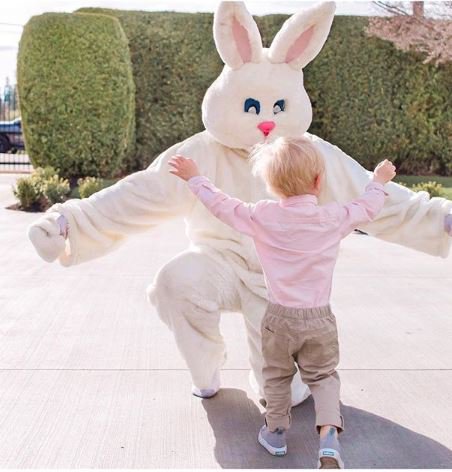 Justice without love is always injustice because it does not do justice to the other one, nor to the oneself, nor to the situation in which we meet. For the other one and I and we together in this moment in this place are unique, unrepeatable occasion, calling for a unique unrepeatable act of uniting love. If this call is not heard by listening love, it is not obeyed by the creative genius of love, injustice is done. And this is true even of oneself. One who loves listens to the call of one’s own innermost center and obeys this call and does justice to one’s own being. For love does not remove, it establishes justice. It does not add something to what justice does but it shows justice what to do. It makes the Golden Rule possible. For we do not speak for a love which swallows justice. This would result in chaos and extinction. However, we speak for a love in which justice is the form and structure of love. We speak for a love which respects the claim of the other one to be acknowledged as what one is, and the claim of ourselves to be acknowledged as what we are, above all as persons. Only distorted love, which is a cover for hostility or self-disgust, denies that which united love. #RandolphHarris 14 of 17
 Love makes justice just. The divine love is justifying love accepting and fulfilling one who, according to calculating justice, must be rejected. This justification of one who is unjust is the fulfillment of God’s creative justice, and of God’s reuniting love. Knowing that the ultimate meaning of freedom will elude us, let us still endeavor to define the term as best we can. The first definition is on the psychological level, the domain of everyday actions: Freedom is the capacity to pause in the face of stimuli from many directions at once and, in this pause, to throw one’s weight toward this response rather than that one. This is the freedom we experience in a store when we pause over the purchase of a necktie or a shirt. We summon up in our imaginations the image of how we will look in this or that tie, what so-and-so will say about it, or how the color will fit such and such a suit. And then we buy the tie or we move on to something else. This is freedom of doing, or existential freedom. This freedom is shown most interestingly in the supermarket, when we push our carts through the aisles between the tumultuous variety of packages and cans of food on the shelves, each one silently shouting through its bright-colored label “Buy me!” We see the shoppers with expressions of hesitancy, vacuity, wonder, pausing for some inspiration as to which of all these foods will be good for dinner tonight. #RandolphHarris 15 of 17
 The shopper seems hypnotized, charmed, preoccupied. Like patients on a ward in a mental hospital, they do not see me as I walk directly across their line of vision. The expressions of wonder and hesitancy are a readiness, an invitation, an openness to some stimulus on the shelves to persuade them to throw the balance this way of that in making their choice. This first freedom is experienced by each of us hundreds of times every day. It is decked up in respectable terms like decision/choice when we discuss freedom in psychology classes—if we ever discuss freedom in psychology classes at all. The most profound illustration of this kind of freedom is our ability to ask questions. Take, for example, my asking a question after listening to a lecture. The very fact that the question comes up in my mind at all implied that there is more than one answer. Otherwise there would be no point in asking the question in the first place. This is freedom; it implies that there is some possibility, some freedom of selection in what I ask. The speaker then pauses for a few seconds after I have asked it, turning over in his or her mind the possible answers. We sense that there is, in asking and answering questions, a good deal more going on, and it is of a richer nature, than the mere responding to various stimuli and selecting a response. #RandolphHarris 16 of 17
 Each person who lights this candle within one’s own mind will soon begin to attract other mortals like moths to a flame burning by a fire—not all mortal nor many mortals but only those who are groping for a way out of their darkness. Can a scrupulously impartial search through World-thought and experience lead to discovery of truth? “Wilt thou be made whole?” asked Jesus. Questioning implies some value judgment, some investment of the person’s life, some invitation to share, to make contact, some challenge to consider a new idea. Regrettably, in recent decades our very idea of freedom has been diminished and grown shallow in comparisons with previous ages; it has been relegated almost exclusively to freedom from outside pressure, to freedom from state coercion—to freedom understood on the juridical level, and no higher. Only when this search for a higher life has becomes an absolute necessity to a mortal, has one found even the first qualification needed for the Quest. “And the Lord God doth work by means to bring about his great and eternal purposes; and by very small means the Lord doth confound the wise and bringeth about the salvation of many souls,” reports Alma 37.7. #RandolphHarris 17 of 17
 Randolph Harris II International Institute