
Home » #RandolphHarris (Page 74)
Category Archives: #RandolphHarris

Faith in Machinery is Mankind’s Greatest Menace

Along with the venality of its controllers, the technology of television predetermines the boundaries of its content. Some information can be conveyed completely, some partially, some not at all. The most effective telecommunications are the gross, simplified linear messages and programs which conveniently fit the purposes of the medium’s commercial controllers. Television’s highest potential is advertising. This cannot be changed. The bias is inherent in the technology. A good way to think about television—in fact all the media—is as a kind of telescope in the sky, flying around, constantly looking. Then from it perch in the sky, it zooms down to a single spot on the planet, a small group of people shooting each other. It takes this single event out of billions and billions of other little events and sends it zooming through space to television antennas, and then out through an electron gun into (on average) 120 million people sitting at home in dark rooms with their eyes still. The event gets reconstructed in the brains of these people as an image. Recorded. All these 120 million people have recorded the same image from this single distant spot where they are not. This becomes their experience of that moment. If the telescope has selected a shooting from an entire planet’s worth of activities, in the next moment it may choose a Super Bowl game, or a threatening remark by someone who is unhappy with America, or a program of people trying to win prizes, or a movie about the Old West. All others subjects were not selected, at least in this moment. The telescope did not select views of the ocean as the tide comes in, or people sitting on front porches, or young people knocking on doors to tell a neighbourhood about a zoning hearing. #RandolphHarris 1 of 21

If there is logic in this selection is the question to ask. Are there reasons why the telescope selects one thing and not another? There certainly are. Dozens of them. The first and most obvious of these reasons is the one that most critics of television devote themselves to. The people who control television, businessmen, operate strictly out of considerations of budget and profit, in addition to brining alone their own political, perceptual, and social biases. It was to allay their influence that so many thousands of media reformers devoted years of effort to democratizing access to the medium and its content. And yet at present there are still no poor people running television, no marginalized group, no ecologist, no political radicals, no Zen Buddhists, no factory workers, no revolutionaries, no artists, no Communists, no Luddites, no hippies, no botanists, to name only a few excluded groups. To have only businessmen in charge of the most powerful mind-implanting instrument in history naturally creates a boundary to what is selected for dissemination to nearly 335 million people. If other categories of people had control, there can be little disagreement with the point that the choices would be different. If television is a medium of brainwash, then with it now being a more diverse brainwashing system, it is surely an improvement over the sort we got in the past. Still that is debatable because with less diversity in the past, the programs were more family friendly. The overriding bias of television, then, the bias which contains all the other biases, is that it offers preselected material, which excludes whatever is not selected. Now, of course, this is utterly obvious. And, yes, it is true of all experiences. When you are doing one thing, you exclude everything else that you might be doing. #RandolphHarris 2 of 21

When we forget that someone has selected our experience for us, and we have given up awareness, information and experience that is not part of television, this only then becomes significant concerning television. When you are spending time in front of the television, you are not doing other things. The young child of three or four years old is in the stage of the greatest emotional development that human beings undergo. And we only develop when we experience things, real-life things: a conversation with Mother, touching Father, going places, doing things, relating to others. This kind of experience is critical to a young child, and when the child spends thirty-five hours per week in front of the TV set, it is impossible to have the full range of real-life experience that a young child must have. Even if we had an overabundance of good television programs, it would not solve the problem. The act of sitting in front of television is itself a replacement of other modes of experience and the awareness these would bring. In this way, television is an acceleration of a condition that began with our artificial environments. We are already separated from most experiences with an unmediated planet. We have given up our personal sensory informational systems. The artificial forms around us already limit our experience and awareness. Our knowledge of the outside World was confined to a narrower field even before television was invented. With television, however, the artificial information-field is brought inside our darkened rooms, inside our stilled minds, and shot by cathode guns through out unmoving eyes into our brains, and recorded. We have no participatory role in gathering data. Our information is narrowed to only what the telescope provides. If we do not experience a wider information field, we lose knowledge of that field’s existence. We become the hermit in the cave who knows only what the TV offers. We experience what is, not knowing what is not. #RandolphHarris 3 of 21

The people who control television become the choreographers of choosing information. We live within their conceptual frameworks. We travel to places on the planet which they choose and to situations which they decide we should see. What we can know is narrowed to what they know, and then narrowed further to what they select to send us through this instrument of theirs. The kind of people who control television is certainly a problem. However, this is only the beginning. While our field of knowledge is constrained by their venality and arrogance, the people who run television are constrained by the instrument itself. Television is no open window through which all perception may pass. Quite the opposite. There are many technological factors that conspire to limit what the medium can transmit. Some information fits and some does not. Some information can pass through, but only after being reshaped, redefined, packaged, and made duller and coarser than before. Some ways of mind can be conveyed and some cannot. The wrinkle in the story is what can be conveyed through television are the ways of thinking and the kinds of information that suit the people who are in control. This is why they like it so much. It is obviously efficient for them to concentrate their communications within a medium that is good at conveying their forms of mind, just as a person with a drive for power is more apt to express that in politics than in gardening. Conversely, it is logical that the medium will not respond well to people or attitude that defy its limits. It will throw them off, or distort their messages, as a computer would shun anyone who wishes to use it to express feelings of loving tenderness. It might program such a message, but only the words will come out on the tape; not the loving tenderness. #RandolphHarris 4 of 21

So we have a chicken-egg problem. It is difficult to tell which came first, the technology or its controllers. It may not be that the corporate mentality won the war to control television. The technology itself picked its master, through the inexorable technological factors that confine its use. Molecules matter because matter is made of molecules, and everything from air to flesh to spacecraft is made of matter. When we learn how to arrange molecules in new ways, we can make new things, and make old things in new ways. Perhaps this is why Japan’s MITI has identified “control technologies for the precision arrangement of molecules” as a basic industrial technology for the twenty-first century. Molecular nanotechnology will give thorough control of matter on a large scale at low cost, shattering a whole set of technological and economic barriers more or less at one stroke. A molecule is an object consisting of a collection of atoms held together by strong bonds (one-atom molecules are a special case). “Molecule” usually refers to an object with a number of atoms small enough to be counted (a few to a few thousand), but strictly speaking a truck tire (for instance) is mostly one big molecule, containing something like 1,000,000,000,000,000,000,000,000,000 atoms. Counting this many atoms aloud would take about 10,000,000,000 billion years. Scientists and engineers still have no direct, convenient way to control molecules, basically because human hands are about 10 million times to large. Today, chemists and materials scientists make molecular structures indirectly, by mixing, heating, and the like. The idea of nanotechnology begins with the idea of a molecular assembler, a device resembling an industrial robot arm but built on a microscopic scale. A general-purpose molecular assembler will be a jointed mechanism built from rigid molecular parts, driven by motors, controlled by computers, and able to grasp and apply molecular-scale tools. #RandolphHarris 5 of 21

Molecular assemblers can be used to build other molecular machines—they can even build more molecular assemblers. If given the raw materials, assemblers and other machines in molecular-manufacturing systems will be able to make almost anything. In effect, molecular assemblers will provide the microscopic “hands” that we lack today. (Chemists are asked to forgive this literary license; the specific details of molecular binging and bonding do not change the conclusion.) Nanotechnology will give better control of molecular building blocks, of how they move and go together to form more complex objects. Molecular manufacturing will make things by building from the bottom up, starting with the smallest possible building blocks. The nano in nanotechnology comes from nanos, the Greek word for dwarf. In science, the prefix nano– means one-billionth of something, as in nanometer and nanosecond, which are typical units of size and time in the World of molecular manufacturing. When you see it tacked onto the name of an object, it means that the object is made by patterning matter with molecular control: nanomachine, nanomotor, nanocomputer. These are the smallest, most precise devices that make sense based on today’s science. (Be cautious of other usages, though—sone researchers have begun to use the nano– prefix to refer to other small-scale technologies in the laboratory today. As we use it, nanotechnology means the precise, molecular nanotechnology of the future. British usage also applies the term to the small-scale and high-precision technologies of today—even to precision grinding and measurement. The latter are useful, but hardly revolutionary.) #RandolphHarris 6 of 21

Digital electronics brought an information-processing revolution by handling information quickly and controllably in perfect, discrete pieces: bits and bytes. Likewise, nanotechnology will bring a matter-processing revolution by handling matter quickly and controllably in perfect, discrete pieces: atoms and molecules. The digital revolution has centered on a device able to make any desired patterns of bits: the programmable computer. Likewise, the nanotechnological revolution will center on a device able to make (almost) any desired pattern of atoms: the programmable assembler. The technologies that plague us today suffer from the messiness and wear of an old phonography record. Nanotechnology, in contrast, will bring the crisp, digital perfection of a compact disc. Say only, “It is here.” However, when did ‘here’ begin? When did Bacon’s ideology become a reality? When, to use Siegfried Giedion’s phrase, did mechanization take command? To be cautious about it, we might locate the emergence of the first true technocracy in England in the latter half of the eighteenth century—let us say with James Watt’s invention of the steam engine in 1765. From that time forward, a decade did not pass without the invention of some significant machinery which, take together, put an end to medieval “manufacture” (which once meant “to make by hand”). The practical energy and technical skills unleashed at this time changed forever the material and psychic environment of the Western World. An equally plausible date for the beginnings of technocracy (and, for Americas, easier to remember) is 1776, when Adam Smith’s Wealth of Nations was published. As Bacon was no scientist, Smith was no inventor. However, like Bacon, he provided a theory that gave conceptual relevance and credibility to the direction in which human enterprise was pointed. Specifically he justified the transformation from small-scale, personalized, skilled labour to large-scale, impersonal, mechanized production. #RandolphHarris 7 of 21

Smith not only argued convincingly that money, not land, was the key to wealth, but gave us his famous principle of the self-regulating market. In a technocracy—that is, a society only loosely controlled by social custom and religious tradition and drive by the impulse to invent—an “unseen hand” will eliminate the incompetent and reward those who produce cheaply and well the goods that people want. It was not clear then, and still is not, whose unseen mind guides the unseen hand, but it is possible (the technocratic industrialists believed) that God could have something to do with it. And if not God, then “human nature,” for Adam Smith had named our species “Economic Man,” born with an instinct to barter and acquire wealth. In any case, toward the end of the eighteenth century, technocracy was well underway, especially after Richard Arkwright, a barber by trade, developed the factory system. In his cottons-pinning mills, Arkwright trained workers, mostly children, “to conform to the regular celerity of the machine,” and in doing so gave an enormous boost to the growth of modern forms of technocratic capitalist. He exemplified in every particular the type of nineteenth-century entrepreneur to come. As Siegfried Giedion has described him, Arkwright created the first mechanization of production “[in] a hostile environment, without protectors, without government subsidy, but nourished by a relentless utilitarianism that feared no financial risk or danger.” By the beginning of the nineteenth century, England was spawning such entrepreneurs in every major city. By 1806, the concept of the power loom, introduced by Edmund Cartwright (a clergyman no less), was revolutionizing the textile industry by eliminating, once and for all, skilled workers, replacing them with workers who merely kept the machines operating. #RandolphHarris 8 of 21

By 1850, the machine-tool industry was developed—machines to make machines. And beginning in the 1860s, especially in America, a collective fervor for invention took hold of the masses. To quote Giedion again: “Everyone invented, whoever owned an enterprise sought ways and means to make his goods more speedily, more perfectly, and often of improved beauty. Anonymously and inconspicuously the old tools were transformed into modern instruments.” Because of their familiarity it is not necessary to describe in detail all of the inventions of the nineteenth century, including those which gave substance to the phrase “communications revolution”: the photograph and telegraph (1830s), rotary-power printing (1840s), the typewriter (1860s), the transatlantic cable (1866), the telephone (1876), motion pictures and wireless telegraphy (1895). Alfred North Whitehead summed it up best when he remarked that the greatest invention of the nineteenth century was the idea of invention itself. We had learned how to invent things, and the question of why we invent things receded in importance. The idea that if something could be done, it should be done was born in the nineteenth century. And along with it, there developed a profound belief in all the principles through which invention succeeds: objectivity, efficiency, expertise, standardization, measurement, and progress. It also came to be believed that the engine of technological progress worked most efficiently when people are conceived of not as children of God or even as citizens but as consumers—that it to say, as market. Not everyone agreed, of course, especially with the last notion. In England, William Blake wrote of the “dark Satanic mills,” which stripped men of their souls. Matthew Arnold warned that “faith in machinery” was mankind’s greatest menace. Carlyle Ruskin, and William Morris railed against the spiritual degradation brough by industrial progress. #RandolphHarris 9 of 21

In France, Balzac, Flaubert, and Zola documented in their novels the spiritual emptiness of “Economic man” and the poverty of the acquisitive impulse. The nineteenth century also saw the emergence of “utopian” communities, of which perhaps the most famous is Robert Owen’s experimental community in Scotland called New Lanark. There, he established a model factory community, providing reduced working hours, improved living conditions, providing reduced working hours, improved living conditions, and innovative education for the children of workers. In 1824, Owen came to America and founded another utopia at New Harmony, Indiana. Although none of his or other experiments endured, dozens were tried in an effect to reduce the human costs of a technocracy. In America charisma is not just a description but something good that has to do with leadership. It even seems to confer an extralegal title to leadership by virtue of “something special” inhering in the leader. Although Webber was thinking of Moses and Buddha, or of Napoleon, the gang leader formally suits his definition of charisma. Weber sought to make a place in politic for things that political legalism excludes and that claim to have a title to attention although they are not founded on reason or consent—the only titles to rule in liberal democracy. It is not to be wondered at, then, that all the demagogic appetites frustrated by our constitutional system should latch on to a word that appears to legitimize and to flatter them. Moreover, democratic individualism does not officially provide much of a place for leaders in a regime where everyone is supposed to be one’s own master. Charisma both justifies and excuses followers. The very word gives a positive twist to rabble-rousing qualities and activities treated as negative in our constitutional tradition. And its vagueness makes it a tool for frauds and advertising men adept at manipulating image. #RandolphHarris 10 of 21

Charisma, as Weber knew perfectly well, is God-given grace, which confers leadership through God’s sanction. In keeping with his analysis in the Protestant Ethic, he treats the self’s value-positing as the human truth of God-given grace. His account of it appears to be merely descriptive, but it becomes prescriptive. In passages deeply influenced by Nietzsche, he analyzes the state as a relation of domination of man by man, founded on legitimate violence—that is, violence that is considered to be legitimate. If they have certain beliefs, men inwardly accept being dominated. There is no more foundation to legitimacy than the inner justification the dominated make to themselves in order to accept the violence of those who dominate them. These justifications are, according to Weber, of three kinds: traditional, rational, and charismatic. Some men submit because that is the way it has always been; others consent to obey competent civil servants who follow rationally established rules; and other are enchanted by the extraordinary grace of an individual. Of the three, charismatic legitimacy is the most important. No matter what conservatives think, traditions had a beginning that was not traditional. They had a founder who was not a conservative or a traditionalist. The fundamental values informing that tradition were his creation The tradition is the continuing half-life of the charmed moment when a happy few could live on the heights of inspiration with the creator. Tradition adjusts that inspiration to the ordinary, universal motives of man, such as greed and vanity; it routinized the charisma. It is what it is because of that original impulse. So charisma is the condition of both the charismatic and the traditional legitimacies. It is also the splendid form of legitimacy. The rational is not informed by charisma, and the civil servants—bureaucrats—are therefore unable to make real decisions or take responsibility. They cannot, as we would say, determine the broad outlines of policy or, put more classically, establish ends. #RandolphHarris 11 of 21

Mere competence can only serve already established goals and decide according to the established rules. It must be at least supplemented by charismatic leadership in order to be pointed in the right, or any, direction. So again charisma comes out on top. Value creation, the activity that writes the table of laws by which a people is constituted and lives, is, as Nietzsche tells, the nut in the shell of existence. Whatever the merit of Weber’s analysis and categories, they became holy writ for hosts of intellectuals. They were, as Weber recognized, not only an academic exercise. They expressed his vision of the crisis of the twentieth century. This is a case where the alleged facts also spoke the values. The tradition-based regimes had exhausted their impulse and were on their way to extinction. The ones based on rationality were simply becoming the administration for “the last man,” the intolerable negative pole. Imperative, then, was a stab at some form of charismatic leadership in order to revitalize the politics of the West. The whole undertaking rested on the assurance that Nietzsche was right that the last man is also the worst possible man, or more generally that his critique of reason was correct. Foresight is not necessary for the evolution of cooperation. The theory of biological evolution is based on the struggle for life and the survival of the fittest. Yet cooperation is common between member of the same species and even members of different species. Before about 1960, accounts of the evolutionary process largely dismissed cooperative phenomena as not requiring special attention. This dismissal followed from a misreading of theory that assigned most adaptation to selection at the level of populations or whole species. As a result of such misreading, cooperation was always considered adaptive. Recent reviews of the evolutionary process, however, have shown no sound basis for viewing selection as being upon benefits to whole groups. #RandolphHarris 12 of 21

Quite the contrary. At the level of a species or a population, the processes of selection are weak. The original individualistic emphasis of Darwin’s theory is more valid. To account for the manifest existence of cooperation and related group behaviour, such as altruism and restraint in competition, evolutionary theory has recently acquired two kinds of extension. These extensions are, broadly, genetical kindship theory and reciprocity theory. Most of the recent activity, both in fieldwork and in further developments of theory, has been on the side of kindship. Formal approaches have varied, but kindship theory has increasingly taken a gene’s-eye view of natural selection. A gene, in effect, looks beyond its mortal bearer to the potentially immortal set of its replicas existing in other related individuals. If the players are sufficiently closely related, altruism can benefit reproduction of the set despite losses to the individual altruist. In accord with this theory’s predictions, almost all clear cases of altruism, and most observed cooperation—apart from their appearance in the human species—occur in context of high relatedness, usually between immediate family members. The evolution of the suicidal barbed sting of the honeybee worker could be taken as paradigm for this line of theory. Conspicuous examples of cooperation (although almost never of ultimate self-sacrifice) also occur where relatedness is low or absent. Mutually advantageous symbioses offer striking examples such as these: the fungus and alga that compose a lichen; the ants and ant-acacias, where the trees house and feed the ants and ant-acacias, where the trees house and feed the ants which, in turn, protect the trees; and the fig wasps and fig tree, where wasps, which are parasites of fig wasps and fig tree, where wasps, which are parasites of fig flowers, serve as the tree’s sole means of pollination and seed set. #RandolphHarris 13 of 21

Usually the course of cooperation in such symbioses is smooth, but sometimes the partners show signs of antagonism, either spontaneous or elicited by particular treatments. Although kindship may be involved, as will be discussed later, symbioses mainly illustrate the other recent extension of evolutionary theory—the theory of reciprocity. In societies where the shamanic profession is intact, shamans have been perhaps the most fully rounded and powerful cultural figures in history. The poets, mythographers, visual artists, musicians, medical doctors, psychotherapists, scientist, sorcerers, undertakers, psychopomps, and priests of their tribal groups, they have been one-person cultural establishments. They have also been independent, uncontrollable, and eccentric power figures whose careers have often originated in psychotic episodes—what anthropologists call the “sickness vocation.” As a result, when societies increase their demands for internal order, the old shamanic role, with its unassimilable combination of power and freedom, is broken up into more manageable specialty professions; in our society, the doctor, the poet, the artist, and so on, have each inherited one scrap from the original shaman’s robe. Beginning with the Romantic period an attempt was made to reconstitute something like the fullness of the shamanic role within the art realm; poets especially were apt to attribute both healing and transcendentalizing powers to the art experience. This project has been acted out in the last twenty years by those artists whose work appropriates its material from the early history of religion. Perhaps the most shocking element in the various performance works mentioned here is the practice of self-injury and self-mutilation. This has, however, been a standard feature of shamanic performances and primitive initiation rites around the World. #RandolphHarris 14 of 21

Siberian shamans cut themselves while in ecstatic states brought on by drugs, alcohol, drumming and dancing. Tibetan shamans are supposedly able to slit their bellies and exhibit their entrails. Related practices are found in the performance art under discussion. Chris Burden crawled through broken glass with his hands behind his back. Dennis Oppenheim did a piece in which for half an hour rocks were thrown at him. Linda Montano inserted acupuncture needles around her eyes. The Australian performance artist Stelarc, reproducing a feat of Ajivika ascetics in India, has had himself suspended in various positions in the air by means of fishhooks embedded into his flesh. The number of instances could be easily multiplied. The element of female imitation, found in the works of Brus, McCarthy Jones, and others, is also a standard shamanic an initiatory motif, involving sympathetic magic. Mae shamans and priests around the World, as well as tribal boys at their puberty initiations, adopt female dress to incorporate the female and her powers. In lineages as far apart as North Asian and Amerindian, shamans have worn women’s clothing and ritually married other men. Akkadian priests of Ishtar dressed like their goddess, as did Ramakrishna in nineteenth-century India. A Sanskrit religious text instructs the devote to “discard the male (purusa) in thee and become a woman (prakriti).” Various tribal rites involve the ritual miming, by men, of female menstruation and parturition, as in the works of McCarthy. Freudian and Jungian theories of bisexuality of the psyche and the need to realize it are relevant both to archaic and to modern exercises of this sort. Female imitation and self-mutilation combine in certain practices of ritual surgery found in primitive cultures around the World, though most explicit in Australia. #RandolphHarris 15 of 21

In Central Australian initiation rites, for example, a vulvalike opening is cut into the urethral surface of the male organ, symbolically incorporating the female principle into the male body. Bruno Bettelheim has observed this motif in the fantasies of disturbed children. Brus, in a performance, once cut a vuvalike slit in his groin, holding it open with hooks fastened in his flesh. Ritual surgery to create an androgynous appearance is common in archaic religious practice generally, as an attempt to combine male and female magical powers into one center. The emphasis on the mutilation of the male genitals in much of the Viennese work is relevant here. In classical antiquity the priests of Cybele castrated themselves totally (both the male organ and testicles) in their initiation, to become more like their goddess; thereafter they dressed like women and were called “females.” In subsequent ecstatic performances they would cut themselves in the midst of frenzied dancing and offer blood to the goddess. The public performance of taboo acts is also an ancient religious custom with roots in shamanism and primitive magic. Both art and religion, through the bracketing of their activities in the half-light of ritual appropriationism, provide zones where deliberate inversions of social custom can transpire; acts repressed in the public morality may surface there, simultaneously set loose for their power to balance and complete the sense of life, and held safely in check by the shadow reality of the arena they occur in. Art can be very unusual and interest and even reflect things that we may have never considered as forms of art. However, many different cultures and many different people all enjoy different ways to express life, emotion, feel, and creativity. #RandolphHarris 16 of 21

When it comes to business, we sometimes find striking cases of sham transformation, at the global level, and this particularly case was fond in the halls of the United Nations (UN). Facing a sever crisis in the U.N., Secretary-General Kofi Annan announced in 2003 the “urgent need” to restructure the Security Council to reflect the new “geopolitical realties” of the twenty-first century. The Security Council today reflects power as it was half a century ago, just after the United States of America, Britain, Russian, France, China and their allies defeated the attempt by Germany, Italy and Japan to jointly take over the World. Each of the main victors was rewarded with a permanent Security Council seat and the right to veto any proposed action by the full council. Since then, some of the Big Five have lost power while such countries as Japan, India Brazil, and Germany have gained in global economic and diplomatic importance, yet lack permanent seats and vetoes. Annan wants to fix this problem. However, it will take much more than a redistribution of seats among nation-states to save the United Nations. The U.N.’s influence in the World today is bleeding away because, as a group, nations and/or states are themselves losing power. As we shall see shortly, other forces are gaining clout—global corporations, bond and currency markets, resurgent World religions, tens of thousands of NGOs, sub- and supranational regional units. All these vitiate the dominance of individual nations and states. Collectively, to an even greater extent, they dilute the U.N.’s power. If the United Nations, therefore, really wants to represent the new realities in the twenty-first century, it must bring these newly powerful global players into its fold, giving them, and not just nations and/or states, voting power as well. #RandolphHarris 17 of 21

We see, then, in these very different examples involving very different institutions, the same underestimation of the revolutionary character of the knowledge-based wealth system, the same ignorance about the deep fundamentals, and the same forlorn hope that sake transformation can save them. One reason that overt corporate or business violence is now so rare is that over the years it has been increasingly “contracted out.” Instead of business producing their own violence, they have, in effect, bought the services of government. In all industrial nations, state violence replaces private violence. The first thing any government tries to do, from the moment it is formed, is to monopolize violence. Its soldiers and police are the only ones legally permitted to exert violence. In some cases the state is politically controlled by the corporations, so that the line between the exercise of private and public power in hair-thin. However, the old Marxist idea—that the state is nothing more than the “executive committee” of the ruling corporate power—ignores what we all know: that politicians more often act on their own behalf than on the behalf of others. Moreover, the Marxist assumed that only capitalist corporations or governments would ever use force against unarmed workers. That was before communist police, armed with tear gas, fire hoses, and more ominous equipment, tried to stamp out Poland’s Solidarity union movement in the early 1980s, and China had a standoff with its students and workers near Tiananmen Square, behaving exactly like the soldiers and police of Pinochet’s Chile or any number of other vehemently anticommunist countries. By seizing into its own mailed first the technologies of violence, and attempting to eliminate or control all violence, the state reduces the independent manufacture of violence by the corporation and other institutions. #RandolphHarris 18 of 21

Another reason why direct physical aggression seems to have almost vanished from ordinary business life is that violence has been sublimated into law. All business, capitalist, and socialist alike, depends upon law. Every contract, every promissory note, every stock and bond, every mortgage, every collective bargaining contract, every insurance policy, every debit and credit is ultimately backed by the law. And behind every law, good or evil, we find the barrel of a gun. Currently 33 percent of American making over $250,000 a year are living pay check to pay check. As tersely put by former French President Charles de Gaulle, “The law must have force on its side.” Law is sublimated violence. Thus when one company sues another, it ask the government to bring the force of law to bear. It wants the government’s guns (concealed behind obscuring layers of bureaucratic and judicial rigmarole) stuck into the ribs of its adversary to compel certain actions. It is not entirely accidental that corporate lawyers in the United States of America are called “hired guns.” The very frequency of recourse to the law (as distinct from other ways of resolving business disputes) is a fair measure of force in the economy. By this criterion, the United States of America has a “force-full” economy. Today, there are 32.5 million businesses establishments in the United States of America and 1,327,910 lawyers—id est, approximately one lawyer for twenty-four businesses. More than a than 46,443 civil lawsuits are painfully processed by the clogged district court systems every business day of the year. U.S. businessmen complain loudly about the allegedly unfair intimacy between Japanese businesses and government. Yet ironically, when it comes to settling disputes, it is the Americans, not the Japanese, who rush to litigate, thereupon calling upon the power f the state to intervene on their behalf. #RandolphHarris 19 of 21

From the smallest commercial litigation to the multibillion-dollar lawsuit involving a dispute between Pennzoil and Texaco over a takeover bid, law masks force—which, in the end, implies the potential application of violence. Corporate campaign contributions can be seen as another camouflaged way of getting a government to pull a gun out of its holster in the interest of a company or industry. In Japan, passed out huge amounts of stock at below-market price to top politicians in the ruling Liberal Democratic Party, his attempt to curry favor was so blatant it outraged the press and pubic and led to the resignation of Prime Minister Noboru Takeshita. The scandal bore some resemblance to the earlier case of the Flick empire in West German, whose executives channeled illegal funds to various political parties. The Japanese also spend over $60 billion a year—more than they spend for their automobiles—in 14,500 garishly lit “pachinko parlors,” where they play a game that involves guiding a stainless-steel ball downward past obstacles into an appropriate slot. Winners receive prizes, some of which they can exchange for money. Like game arcades in the United States of America, pachinko is a cash business, made to order for tax evasion and money laundering. Criminal gangs siphon off protection money from the parlors and sometimes war with one another for control of the most lucrative one. To ward off legislation aimed at opening their books to the police, parlor operators have made large contributions to both leading parties. Whenever business funds are passed to candidates or political parties, the presumption is that a quid or pro quo is expected. In the United States of America, despite repeated reforms and changes in the laws governing campaign contributions, every important industry pipes funds to one or both of the parties to buy, at a minimum, as hearing for its special point of view; and ingenious methods—inflated speaking fees, the purchase of otherwise unsalable books, the “loan” of real estate, the granting of low-interest loans—are constantly invented to avoid or evade the legal restrictions. #RandolphHarris 20 of 21

The mere existence of government creates a set of indirect, often hidden, and unintentional cross—subsidies and cross-penalties in the economy. To the extent that government actions are ultimately backed by force—by guns and soldiers and police—the nation of power-free or violence-free economics is puerile. However, the last, and most important, reason why corporations—and even governments—resort to open violence less often than in the preindustrial past is that they have found a better instrument with which to control people. That instrument is money. Coins, paper, digital currency, certificates, are a medium people use as payment for goods or services. It is sometimes a symbol of materialism. Materialism is the tendency to consider material possessions as more important than spiritual values “To find real happiness, we must seek for it in a focus outside ourselves. No one has learned the meaning of living until one has surrendered one’s ego to the service of one’s fellow man. Services to others is akin to duty, the fulfillment of which brings true joy,” reports President Thomas S. Monson. For better of worse, money can change lives and has the potential of blessing lives or drawing a person away from God. As becomes manifest subsequently, the serpent is both right and wrong in denying that this will be the consequence: Adam and Eve do not have to die after eating, they merely plunge into human mortality, that is, into the knowledge of death to come—the serpent plays with the word of God, just as Eve played with it. And now the incident itself begins: the woman regards the tree. She does not merely see that it is a delight to the eye, she also sees in it that which cannot be seen: how good its fruit tastes and that it bestows the gift of understanding. This seeing has been explained as a metaphorical expression for perceiving, but how could these qualities of the tree be perceived? “And this he said unto them having been commanded of God and they did walk uprightly before God, imparting to one another both temporally and spiritually according to their needs and their wants,” reports Mosiah 18.29. #RandolphHarris 21 of 21

Cresleigh Homes
An open and spacious single-level home with a generous sized primary suite, make this home an exceptional value.

No, you’re not dreaming 😴 – that’s the actual size of our closet at Riverside Residence 1! 😍

Think of the great home your shirts, jackets, and shoes will have – they’ll love it as much as you do. 😉 And if you’re tempted to host your own fashion reality show, don’t blame us!
#CresleighHomes
#PlumasRanch

Not in Frequently the Mafia Helped Employers “Deal With” Militant Workers

Francis Bacon, born in 1561, was the first man of the technocratic age. In saying this, one may be disputing no less an authority than Immanuel Kant, who said that a Kepler or a Newton was needed to find the law of the movement of civilization. Perhaps. However, it was Bacon who first saw, pure and serene, the connection between science and the improvement of the human condition. The principal aim of his work was to advance “the happiness of mankind,” and he continually criticized his predecessors for failing to understand that the real, legitimate, and only goal of the sciences is the “endowment of human life with new inventions and riches.” He brought science down from the Heavens, including mathematics, which he conceived of as a humble handmaiden to invention. In this utilitarian view of knowledge, Bacon was the chief architect of a new edifice of thought in which resignation was cast out and God assigned to a special room. The name of the building was Progress and Power. Ironically, Bacon was not himself a scientist, or at least not much of one. He did no pioneering work in any field of research. He did not uncover any new law of nature or generate a single fresh hypothesis. He was not even well informed about the scientific investigation of his own time. And though he prided himself on being the creator of a revolutionary advance in scientific method, posterity has not allowed him this presumption. Indeed, his most famous experiment makes its claim on our attention because Bacon died as a result of it. He and his good friend Dr. Witherbone were taking a coach ride on a wintry day when, seeing snow on the ground, Bacon wondered if flesh might not be preserved in snow, as salt. The two decided to find out at once. They bought a hen, removed its innards, and stuffed the body with snow. #RandolphHarris 1 of 22

Poor Bacon never learned the result of his experiment, because he fell immediately ill from the cold, most probably with bronchitis, and died three days later. For this, he is sometimes regarded as a martyr to experimental science. However, experimental science was not where his greatness lay. Although others of his time were impressed by the effects of practical inventions on the conditions of life, Bacon was the first to think deeply and systematically on the matter. He devoted much of his work to educating men to see the links between invention and progress. In Novum Organum he wrote, “It is well to observe the force and effect and consequence of discoveries. These are to be seen nowhere more conspicuously than in those three which were unknown to the ancients, and of which the origin, though recent, is obscure; namely, printing, gunpowder, and the magnet. For these three have changed the whole face and state of things throughout the World; the first in literature, the second in warfare, the third in navigation; whence have followed innumerable changes; insomuch that no empire, no sect, no start seems to have exerted greater power and influence in human affairs than these changes.” In this passage, we can detect some of Bacon’s virtues and the source of his great influence. Here is so sleepwalker. He knows full well what technology does to culture and places technological development at the center of his reader’s attention. He writes with conviction and verve. He is, after all, among the World’s great essayists; Bacon was a master propagandist, who knew well the history of science but saw science not as a record of speculative opinion but as the record of what those opinions had enabled man to do. And, if not the World, he was ceaselessly energetic in trying to convey this idea to his countrymen. #RandolphHarris 2 of 22

In the first two books of Novum Organum, which consists of 182 aphorisms, Bacon sets out nothing less than a philosophy of science based on the axiom that “the improvement of men’s minds and the improvement of his lot are one and the same thing.” It is in this work that he denounces the infamous four Idols, which have kept man from gaining power over nature: Idols of the Tribe, which lead us to believe our perceptions are the same as nature’s facts; Idols of the Cave, which lead us to mistaken ideas derived from heredity and environment; Idols of the Market-place, which lead us to be deluded by words; and Idols of the Theater, which lead us to the misleading dogmas of the philosophers. To read Bacon today is to be constantly surprised at his modernity. We are never far from the now familiar notion that science is a source of power and progress. In The Advancement of Learning, he even outlines the foundation of a College for Inventors that sounds something like the Massachusetts Institute of Technology. Bacon would have the government provide inventors with allowances for their experiments and for traveling. He would have scholarly journals and international associations. He would encourage full cooperation among, scientists, an idea that would have startled Tycho Brahe, Kepler, and Galileo, who used some of their genius to devise ways of concealing their work from one another. Bacon also believed that scientists should be paid well to give public lectures, and that information the public of the utility of invention was as important as invention itself. In short, he conceived of the scientific enterprise as it is conceived today—organized, financially secure, public, and mankind’s best weapon in the struggle to improve his condition and to do so continuously. #RandolphHarris 3 of 22

As I have said, Bacon is the first man of technocracy, but it was some time before he was joined by the multitude. He died in 1626, and it took another 150 years for European culture to pass to the mentality of the modern World—that is, to technocracy. In doing so, people came to believe that knowledge is power, that humanity is capable of progressing, that poverty is great evil, and that life of the average person is as meaningful as any other. It is untrue to say that along the way God died. However, any conception of God’s design certainly lost much of its power and meaning, with that loss went the satisfactions of a culture in which moral and intellectual values were integrated. At the same time, we must remember that in the tool-using culture of the older European World, the vast majority of people were peasants, impoverished and powerless. If they believed their afterlife was filled with unending joy, their lives on Earth were nonetheless “nasty, brutish, and short.” As C.P. Snow remarked, the Industrial Revolution of the nineteenth century, which was the fruit of Baconian science, was the only hope for the poor. And if their “true Deity became mechanism,” as Thomas Carlyle said, it is probable that by then most people would not have traded their Earthly existence for life in a Godly integrated tool-using culture. If they would, since there was little use in lamenting the past, it did not matter. The Western World had become a technocracy from which there could be no turning back. Addressing both those who were exhilarated by technocracy and those who were repulsed by it, Stephen Vincent Benet gave the only advice that made any sense. In John Brown’s Body he wrote: “If you at last must have a word to say, say neither, in their way, ‘It is a deadly magic and accursed,’ Nor ‘It is blest,’ but only ‘It is here.’” #RandolphHarris 4 of 22

The transfusion of this religious mythmaking or value-positing interpretation of social and political experience into the American bloodstream was in large measure effected by Max Weber’s language. His success here is, I am tempted to say, miraculous. A good example is his invention, the Protestant Ethic. I read his book of that name in my first social-science course at the University of Chicago when I was being initiated into the modern mysteries. This course was a survey of social-science “classics,” among which was also Marx—not only the Communist Manifesto but also goodly chunks of Capital. Of course, neither Locke nor Smith, the official spokesman for “capitalism,” who might very well even be considered its founders, was on the list, because we were dealing with thinkers whom a contemporary social scientist could take seriously. Marx explained the emergence of capitalism as a historical necessity, in no one’s control, the result of class conflict over material property relations. For him Protestantism was just an ideology reflecting capitalist control of the means of production. I did not see, and I am not sure that my teachers saw, that, if Weber was right, Marx—his economics and his revolution, in short, Marxism and the kinds of moral sympathies it inevitably engenders—was finished. Weber purported to demonstrate that there was no such material necessity, that men’s “Worldviews” or “values” determined their history, spirit compelling matter rather than the other way around. This has the effect of restoring the older view that individual men count for something, that there is human freedom and the need for leadership. Weber said it was Calvin’s charisma and the vision allied to it, routinized by his followers, that was decisive for the development of capitalism. #RandolphHarris 5 of 22

However, how different Weber’s charismatic leader is from the rational statesmen looked to by Locke, Montesquieu, Smith and the Federalist. They strive for ends grasped by reason and self-evidently grounded in nature. No values, no creative visions are required for them to see what all reasonable men should see—that hard work is required to have sober, secure and prosperous freedom. Marx is arguably closer to the core of their belief in that respect; although men, according to him, are in the grip of the historical process, that process itself is rational and has as its end the rational freedom of man. Man remains, somehow, the rational animal. Weber, on the other hand, denies the rationality of the “values” posited by the Calvinists; they are “decisions,” not “deliberations,” imposed on a chaotic World by powerful personalities, “Worldviews” or “World-interpretations” with no foundation other than the selves of the Protestants. Those “values” made the World what it was for the Protestants. They are acts that are primarily of the will, and constitute the self and the World at the same time. Such acts must be unreasonable; they are based on nothing. In a chaotic Universe, reason is unreasonable because self-contradiction is inevitable. The prophet becomes the pure model of that stateman—with very radical consequences. This was something new in American social science and should have, but did not, make it clear that a new kind of causality—entirely different from that know to natural science—had entered the scene. In spite of this, the Weberian language and the interpretation of the World it brings with it have caught on like wildfire. I have read about the Japanese Protestant ethic, the Jewish Protectant ethic. #RandolphHarris 6 of 22

The manifest absurdity of such locutions appears to have struck some, so now “work ethic” is gradually replacing “Protestant ethic,” but this is merely an adjustment and barely disguises the point of view that still remains underneath it. Those interested in the free market do not seem to recognize, when they use this language, that they are admitting that this morality is not itself rational—or at least the choice of it is not rational, as they understand reason. Delay of gratification may make sense for the system as a whole, but it is unarguably good for the individual? Is increase of wealth self-evidently superior to poverty for a Christian? If the work ethic is just one choice among many equally valid choices, then the free-market system itself is also just one choice among many. So proponents of the free market should not be surprised when they see that what was once generally agreed upon no longer compels belief. One had to go back to Locke and Adam Smith in a serious way not just for a set of quotes, to find arguments for the rational moral basis of liberal society. This they no longer do; and because they have lost the habit of reading serious philosophic books or of considering them really essential, they probably could not do so. When the liberal, or what came to be called the utilitarian, teaching became dominant, as is the case with most victorious causes, good arguments became less necessary; and the original good arguments, which were difficult, were replaced by plausible simplifications—or by nothing. The history of liberal thought since Locke and Smith has been one of almost unbroken decline in philosophic substance. When the liberal economic thought or way of life was manifestly threatened, its proponents, in order to defend it, took whatever came to hand. A religion must, it seems, be wakened in order to establish it. And religion, contrary to containing capitalism’s propensities, as Tocqueville though it should do, is now intended to encourage them. #RandolphHarris 7 of 22

It goes without saying that Weber never for a moment considered whether Calvin might actually have had a revelation from God—which would certainly change the looks of things. Weber’s atheism was dogmatic, but he was not interested in proving that Calvin was a charlatan or a madman. He rather preferred to believe in the authenticity of Calvin and other such founding figures as representing peak psychological types who can live and act in the World, who know how to take responsibility, who have an inner sureness or commitment. The religious experience is the thing, not God. The old quarrel between reason and revelation is a matter of indifference, because both sides were wrong, had faulty self-understandings. However, revelation teaches us what man is and needs. Men like Calvin are the value producers and hence the models for action in history. We cannot believe in the ground (God) of experience, but that experience is critical. We are not interested in finding out how they understood themselves but rather in searching in the self for the mysterious substitute for their ground. We cannot have, and do not want to have, their peculiar illusions; but we do not want values and commitments. The result of this atheistic religiosity is the mysterious musings and language of Weber and many others (think of Sartre) about belief and action, which culminate in something very different from what either religious leaders or rational statesmen ever said or did. It fuses the two kinds of men, but with greater weight given to the former, to the necessity of faith and all that goes with it. The intellectual apparatus accompanying this analysis tends to obscure the alternatives to it, particularly the rational alternatives. As a result there is a continuous skewing of historical perspective towards religious explanations. #RandolphHarris 8 of 22

Secularization is the wonderful mechanism by which religion becomes nonreligion. Marxism is secularized Christianity; so is democracy; so is utopianism; so are human rights. Everything connected with valuing must come from religion. One need not investigate anything else, because Christianity is the necessary and sufficient condition of our history. This makes it impossible to take Hobbes or Locke seriously as causes of that history, because we know that superficial reason cannot found values and that these thinkers were unconsciously transmitting the values of the Protestant ethic. Reason transmits, routinizes, normalizes; it does not create. Philosophy’s claims are ignored; religious claims are revered. Dogmatic atheism culminates in the paradoxical conclusion that religion is the only thing that counts. Out of this “Worldview” issues the gaudy religious word “charisma” which has had such fateful political consequences while becoming one of the most tiresome buzzwords in America. In Chicago there is a Charisma Cleaners, and every street gang leader is called “charismatic.” The origins, maintenance, and destruction of the live-and-let-live system of trench warfare are all consistent with the theory of the evolution of cooperation. In addition, there are two very interesting developments within the live-and-let-live system which are new to the theory. These additional developments are the emergence of ethics and ritual. The ethics that developed are illustrated in this incident, related by a British officer recalling his experience while facing a Saxon unit of the German Army. “I was having tea with A Company when we heard a lot of shouting and went out to investigate. We found our men and the Germans standing on their respective parapets. Suddenly a salvo arrived but did no damage. Naturally both sides got down and our men started swearing at the Germans, when all at once a brave German got on to his parapet and shouted out ‘We are very sorry about that; we hope no one was hurt. It is not our fault, it is that damned Prussian artillery.’” #RandolphHarris 9 of 22

This Saxon apology goes well beyond a merely instrumental effort to prevent retaliation. It reflects moral regret for having violated a situation of trust, and it shows concern that someone might have been hurt. The cooperative exchanges of mutual restraint actually changed the nature of the interaction. They tended to make the two sides care about each other’s welfare. This change can be interpreted in terms of the Prisoner’s Dilemma by saying that they very experience of sustained mutual cooperation altered the payoffs of the players, making mutual cooperation even more valued than it was before. The converse was also true When the pattern of mutual cooperation deteriorated due to mandatory raiding, a powerful ethic of revenge was evoked. This ethic was not just a question of calmly following a strategy based on reciprocity. It was also a question of doing what seemed moral and proper to fulfill one’s obligation to a fallen comrade. And revenge evoked revenge. Thus both cooperation and defection were self-reinforcing. The self-reinforcement of these mutual behavioral patterns was not only in terms of the interacting strategies of the players, but also in terms of their perceptions of the meaning of the outcomes. In abstract terms, the point is that not only did preferences affect behaviour and outcomes, but behaviour and outcomes also affected preferences. The other addition to the theory suggested by the trench warfare case is the development of ritual. The rituals took the form of perfunctory use of small arms, and deliberately harmless use of artillery. For example, the Germans in one place conducted “their offensive operations with a tactful blend of constant firing and bad shooting, which while it satisfies the Prussians causes no serious inconvenience to Thomas Atkins.” Even more striking was the predictable use of artillery which occurred in many sectors. #RandolphHarris 10 of 22
“So regular were they [the Germans] in their choice of targets, ties of shooting, and number of rounds fired, that, after being in the line one or two days, Colonel Jones had discovered their system, and knew to a minute where the next shell would fall. His calculations were very accurate, and he was able to take what seemed to uninitiated Staff Officers big risks, knowing that the shelling would stop before he reached the place being shelled.” The other side did the same thing, as noted by a German soldier commenting on “the evening gun” fired by the British. “At seven it came—so regularly that you could set your watch by it….It always had the same objective, its range was accurate, it never varied laterally or went beyond or fell short of the mark. There were even some inquisitive fellows who crawled out…a little before seven, in order to see it burst.” These rituals of perfunctory and routine firing sent a double message. To the high command they conveyed aggression, but to the enemy they conveyed peace. The men pretended to be implementing an aggressive policy, but were not Ashworth himself explains that these stylized acts were more than a way of avoiding retaliation. “In trench war, a structure of ritualized aggression was a ceremony where antagonists participated in regular, reciprocal discharge of missiles, that is, bombs, bullets and so forth, which symbolized and strengthened, at one and the same time, both sentiments of fellow-feelings, and beliefs that the enemy was a fellow sufferer.” Thus these rituals helped strengthen the moral sanctions which reinforced the evolutionary basis of the live-and-let-live system. The live-and-let-live system that emerged in the bitter trench warfare of World War I demonstrates that friendship is hardly necessary for cooperation based upon reciprocity to get started. Under suitable circumstances, cooperation can develop even between antagonists. #RandolphHarris 11 of 22

One thing the soldiers in the trenches had going for them was a fairly clear understanding of the role of reciprocity in the maintenance of the cooperation. However, there are biological examples that demonstrate that the participants are not really necessary for cooperation to emerge and prove stable. The use of force to extract wealth did not end with the age of the steam engine. In the 21th century, violence has been used on a truly grand scale. In placed like the United States of America, millions of Americans and others provide dirt-cheap labour for logging, and mining. These are used to suppress the political opposition to the 2000s revolution of hyperinflation; and they are also a means of solving purely economic tasks. Many people complain of being basically forced into slave labour in most industries in America because the wages are not keeping up with the cost of living and have not been for decades. However, not until the COVID-19 crisis sweep the World and the war in the Ukraine did these cries for help and more become widespread, but they are still not yet being acknowledged because there is no emergency relief, which leaves people feeling like the end of the World is near. All over the World, the COVID-19 Pandemic and now the Monkey Pocks are turning munitions, chemicals—and corpses. And America’s brutal treatment of every class of citizen from homeless and working class, upper middle class and wealth has been a form of labour control based on restrictions of homeless camps, panhandling, taxes, high fuel costs, high houses cost, rising food costs, low wages, truncheons, and tear gas. The history of the labour movement in the United States of America, as in other nations, is steeped in repressive violence and occasional terrorism. From the Molly Maguires, who tried to organize the Pennsylvania coal fields in the 1870s, to the Knights of Labour: from the Haymarket massacre in 1886 at the start of the campaign for an eight-hour workday, to the great textile strike in Gastonia, North Carolina, in 1929 and the Memorial Day Massacre at Republic Steel in Chicago in 1937, employers and police attempted to prevent the organization of unions. #RandolphHarris 12 of 22

As recently as the late 1930s in the United States of, companies hired strong-arm men to break strikes or to intimidate union organizers and their followers. Harry Bennett and his infamous “goon squads” were routinely called out to bust heads when Ford Motor Company employees asked for raises or threatened to organize. Not infrequently the Mafia helped employers “deal with” militant workers. In South Korea today many companies have set up “Save the Company” squads to break strikes and prevent unionization. At the Motorola plant in Seoul, violence reached the point at which two workers doused themselves with gasoline and set themselves on fire to protect the company’s refusal to recognize a union. Japanese employers in the early postwar period called on the Mafia-life Yakuza to intimidate union activists. And in Japan, even today, despite its advanced stage of economic development, the Yakuza factor has not completely vanished. Yakuza-linked sokaiya—pointy-shoed hooligans and thugs—often to embarrass or to protect the management. In 1987 the first meeting of shareholders following the privatization of the Nippon Telegraph and Telephone Company (NTT) was marked by disruption when a garishly dressed sokaiya accused a director of punching his secretary. Dozens of others leaped to their feet to drag out the discussion. One demanded to know why he had to queue up for the toilets in the building. When an officer apologized, the man asked why an NTT employee had committed an indecent act. To groans from the audience, he hit his stride with questions about missing promissory notes worth a few thousand dollars and about telephone bugging. The sokaiya did not stop this harassment, intended to embarrass rather than reform the company, until suddenly, as though from nowhere, a large number of husky young men surrounded the room—at which point the sokaiya quietly made their exit. #RandolphHarris 13 of 22

Not all business crime ends so peacefully, as Japan discovered when Kazuo Kengaku, a well-known investment fund manager with links to the Yakuza, was found encased in concrete in Osaka. The Yakuza are also involved deeply in real estate speculation and supply strong -arm men to frighten residents or small shop-owners reluctant to move out of the way of high-rise developments. So well known are these tactics that they provided the substance for Juzo Itami’s 1989 movie, A taxing Woman’s Return. Valuable real estate also lay behind a recent case in which the collapse of a financial deal led to fraud litigation. An American lawyer in Tokyo, Charles Stevens of Coudert Brothers, representing a U.S. firm, received threatening calls and wound hp keeping a baseball bat at his desk. Violence in the business demimonde takes on bizarre forms on occasion—especially on the fringes of the entertainment business. In South Korea local film distributors have tried to frighten customers away from theaters showing U.S. films by releasing snakes in the theaters. In France, when Saudi Arabian investors, together with the French government, built Mirapolis, a $100 million amusement park, carnival workers, fearing competition, poured sand in the gears of thrill rides. (The park turned out to be a disaster for other reasons.) Similarly, Japanese sarakin, like loan sharks the World over, sometime rely on physical “persuasion” to coerce borrowers in repaying usurious debts—the money from these activities flowing smoothly into major bans and other financial institutions. In the United States of America, as in many other countries, force is sometimes used to shut the mouth of corporate “whistle blowers”—employees who call attention to questionable practices of their bosses. This was the role of Silkwood chose for herself. Silkwood was killed in a car crash after protesting her employer’s handling of nuclear materials, and there are those who still, years after the event, question whether the crash was accidental. They will never stop believing that her company had killed her. #RandolphHarris 14 of 22

Of course, all these cases are dramatic precisely because they are exceptions in the advanced economies. The daily experience of an American executive with a sheaf of printout in hand, the Japanese salaryman on his telephone, or the salesperson spreading a sample on a counter is so remote from any hint of violence that even to mention it is to draw skeptical looks. Yet just because most transactions in business involve no direct violence does not mean that violence had vanished. The reality is that violence has been contained, transmuted into another form—and hidden. Although institutions in Europe, Japan, and other economies are also being shaken by changes in their deep fundamentals, it is the United States of America—precisely because it has advanced farther than other beyond the industrial age—that the need to create a new institutional infrastructure is most pressing. And nowhere, therefore, is there more loose talk of “transformation”—and so little understanding of what it implies. Take the case of education. All recent U.S.A. presidents have wanted to be known as the “education president,” Obama was the only exception—he wanted to known as a rebel and entertainer. The absolute key to any real improvement in education in the United States of America is recognition of the changes required by an economy primarily based on knowledge production and distribution. Education is more than occupational preparation, but it surely cheats students if it seeks to ready them for jobs that will not be there. Yet today’s mass-production schools—out of sync with the real economy—still mainly emphasized rote, repetitive, factory-like learning. The supposedly radical Trump plan, not only emphasized curiosity, thought, creativity, individuality and self-starting entrepreneurialism—traits needed in knowledge-based economies—but it also calls for yet more routine, standardized testing of students, teachers, and schools—tools to make obsolete schools run more efficiently. #RandolphHarris 15 of 22

An equally striking example of what might be called fake “transformation” can be found in Washington’s bureaucratic response to the 9/11 attack—the creation of a Department of Homeland Security. This big-budget, cabinet-level department crunched together twenty-two preexisting pyramidal bureaucracies into a single mega-pyramid. Washington, in short, did what it knows how to do best: Construct industrial-style bureaucracies. The resultant institution is massive, vertical and hierarchical, with countless competing units, and is supposed to plug into and support tends of thousands of smaller municipal and state bureaucracies. By contrast, terrorist organizations are designed to run rings around bureaucracies. Comprising tiny, loosely networked cells whose members know the identity of only one or two other people, most can make decision quickly, are trained to hit, run, and vanish—or to blow themselves up. Compared with the Department of Homeland Security, Al Qaeda is flat as a pancake. And its members do not belong to civil-service unions. Sham transformation is not uniquely American. It is widespread in Europe, where companies and public-sector institutions at the national level are being forced to submit to growing, rigidifying constraints imposed by the European Union, itself a prime example of industrial-age bureaucratic organization. In 1965 Nitsch formed the Wiener Akitonismus group in conjunction with Otto Muhl, Gunter Brus, and Rudolf Schwarzkogler. Much of their work focused on the motifs of self-mutilation and self-sacrifice that were implicit, though not foregrounded, both in Klein’s career and in the OM Theatre performances. Brus, during his performing period (1964-1970), would appear in the performance space dressed in a woman’s black stockings, brassiere, and garter belt, slash himself with scissors till he ran with blood, and perform various acts ordinarily taboo in public settings, such as defecating, eating his own feces, vomiting, and so on. #RandolphHarris 16 of 22

Schwarzkogler’s pieces presented young males as mutilated sacrificial victims, often wounded in the genitals, lying fetally contracted and partially mummy-wrapped as if comatose, in the midst of paraphernalia of violent death such as bullet cartridges and electrical wires. Not only the individual elements of these works, but their patterns of combination—specifically the combination of female imitation self-injury, and the seeking of dishonour though the performance of taboos acts—find striking homologies in shamanic activities. The same motifs reappeared, not necessarily with direct influence from the Viennese, in the works of several America performances artists who have stretched audiences’ sympathies beyond the breaking point Paul McCarthy, a major exponent of the art of the taboo gesture, first heard the calling not from the Viennese but from Klein. As a student at the University of Utah in 1968, he leapt from a second story window in emulation of Klein’s Leap into the Void. By about 1974 his work had found its own distinctive form, developing into a modernized shamanic style so difficult for audiences to bear that the pieces were usually published only as video tapes. These performances, like Schneemann’s, were often developed from dream material, indicating their intimate relation both with shamanic magic and with depth psychology. Like Brus, McCarthy has sometime appeared dressed as aw woman, and has worked, like Schwarzkogler, with the themes of self-mutilation and castration; some pieces have acted out of the basic female imitation of feigning menstruation and parturition (magical pantomimes that are common in primitive initiation rites). In others, McCarthy has cut his hand and mixed the blood with food and water in bowls, clearly echoing various sacramental rites from the Dionysian to the Christian. #RandolphHarris 17 of 22

In still others that, like Nitsch’s, have sometimes been shut down by the police, he has acted out the seeking of dishonour as an exploration of the Dionysian-Freudian depths of psychobiological life. In Sailor’s Meat, a videotape from 1975, for example, he appeared in a room in a wino hotel wearing black lace panties smeared with blood and a blonde female wig and lay on the bed having pleasures of the flesh with piled of raw meat and ground hamburger with his male organ painted red and a hot dog shoved up his rear end As Old Man in My Doctor, 1978, he slit a rubber mask over his head to form a female organ—slanted opening on it and from the opening gave birth to a ketchup-covered doll. The piece was a conscious remaking of the myth of the birth of Athena from the cleft brainpan of Zeus, a myth that reverts to the age when male priests and their divinities sought to incorporate the female principle and its powers. In Baby Boy, 1982, McCarthy gave birth to a doll from between his ketchup-covered male thighs as he lay on his back with his feet in the air like a woman in missionary-style pleasures of the flesh. In these and other works self-mutilation, female imitation, and the performance of taboo acts are combined in a structure of roughly parallel to that of Brus’ work, though with a great range of expressiveness. Similar materials recur in the work of Kim Jones. In a performance in Chicago in 1981, Jones appeared naked except for a mask made of woman’s pantyhose, covered himself with mud (as both African and Australian shamans do when performing), and lay naked on the fire escape in the cold to accumulate energy (a shamanic practice knowns Worldwide but most famous from Tibet). Returning to the performance space, he produced a mayonnaise jar filled with his own feces, and smeared himself with it, embraced members of the audience while covered in it, and finally burned sticks and green plants till the smoke drove the remaining audience from the gallery. #RandolphHarris 18 of 22

In another piece, Jones cut himself with a razor blade twenty-seven times in a pattern suggesting the body’s circulatory system, then pressed himself against the gallery wall for a self-portrait. Understandably, to audiences habituated to the traditional boundaries of art, to audiences for whom easel painting was still the quintessential art activity, these performances were offensive and even insulting. Of course, the point of such works when they first appeared was in part their seeming to be radically even horrifying, out of context. However, for twenty years they have been part of the art scene, if somewhat peripherally, legitimized by art World context and critical designation again and again. In order to understand the wellsprings of such works, in order to approach them with a degree of sympathy and clarity, it is necessary to frame them somewhat in cultural history, where in fact they have a clear context. Many of the artists discussed here feel that shamanic material and primitive initiation rites are the most relevant cultural parallels to their work. However, most of them feel that the tone of their work arose first, often under Freudian and Jungian influence, and was later confirmed and further shaped by some study of shamanic literature. The question of origins, then—whether from shamanic literature, or from the Jungian collective unconscious, or from the Freudian timeless repository of infantile memory, or from all these sources—though it is worthwhile to state, cannot be answered. In any case it is important in terms of any theory of the function of art that these artists have introduced into the art realm material found elsewhere only in the psychiatric records of disturbed children and in the shamanic thread of the history of religion. Western society, biased toward the objective mental mode of experience, tends to be blind not only to the power of images but also to the fact that we are nearly defenseless against their effect. #RandolphHarris 19 of 22

Since we are educated and thoughtful, as we like to think, we believe we can choose among the things that will influence us. We accept fact, we reject lies. We go to movies, we watch television, we see photographs, and as the images pour into us, we believe we can choose among those we wish to absorb and those we do not. We assume that our rational processes protect us from implantation, or brainwashing. What we fail to realize is the difference between fact and image. Our objective processes can help us resist only one kind of implantation. There is no rejection of images. Raise your eyes from the page for a moment. Look about your room. Can you reject what you are seeing? In Nicholas Roeg’s The Man Who Fell to Earth, the main character is a visitor from another planet who arrives on Earth and is slowly transformed by what he sees. He becomes transfixed by television. At one point, in a fit of madness, he screams at the TV screen: “Stop it, get out of my mind, go back where you came from.” However, the images do not go bac. They remain. He goes crazy. You are watching Walter Cronkite. He is reporting the news. It is impossible for you to judge the truth of most of what he tells you. He reports events from a thousand miles away. You take his information on faith, or you decide that he is wrong. Then he says the bank you work in was robbed today. “Not true,” you shout, “wrong bank.” You have rejected the news. You could reject it because it came as a fact that you could check. You could halt its entry into you. However, one of the most bizarre things is allowing the news to do its own “fact checking.” They will tell you what they believe to be true, which may be misinterpreted or down right a lie. Meanwhile, however, you have ingested Cronkite. His smile, his hand movements, his tone of voice, the way he holds his head. The images enter your cells. Style is also content. #RandolphHarris 20 of 22

If you are watching The Flash, or the president explaining a policy, or Brad Pitt talking to his beautiful women friends, or Fallon Carrington on Dynasty, you are receiving several levels of information at the same time. There is the verbal information and the ideas connected to this. Then there are the images, the way people behave, their movements, mannerisms, forcefulness or peacefulness, their style of emoting, their tone of voice, their way of relating to each other, the kind of people they are, their seriousness, grimness, lightness, joyfulness, heaviness and so on. We absorb these along with the objective news. They are all content. If you see Trump or Cronkite or The Flash, or slaps on the back or kisses or violence—the images of these are not in the realm of correct or incorrect. They just are. There is nothing to disagree with. There is no way to resist them. They flow inward, passing through all discernment processes. Even if you could keep your mind alive while watching—no mean feat—the images would still enter into your unconscious storage area. You have got them. They are yours. You may not believe Jimmy Carter when he speaks. However, you have got Jimmy Carter inside of you. You may believe that Brad Pitt is an actor, and your kinds may believe this too. However, they slowly become like Brad Pitt. They move and walk as he does. You may believe The Flash is fiction, but his image lives within you. If I ask you to, you can bring it to mind. It is part of your image pool. You may draw on it forever. You may watch the television and “know” those are actors performing, but the image of one person stabbing another is in you. You have got it. It is yours. Thinking will not halt its entry into you or into thirty million others. You may watch the actor playing doctor in the commercial, speaking seriously, professionally, authoritatively. You know this is an actor, but you ingest him nonetheless. His authoritativeness becomes yours. #RandolphHarris 21 of 22

We all become more like Cronkite, like Carter, like The Flash. We all become more fast or more Bradlike, or display a TV-announcer authority. Once they are in your mind and stored, all images are equally valid. They are real whether they are toothpaste, Walter Cronkite, Kojak, President Carter, Mary Hartman, The Flash, Brad Pitt, Justin Bieber, Pete Rose, a BMW 3 Series, a cougar, Elvis Priestly, Mary Hartman, Anton LaVey, Rhoda, or your mother and father. Once inside your head, they all becomes images that you continue to carry in memory. They become equally real and equally not-real. Our thinking process cannot save us. To the degree that we are thinking as we watch television, a minute degree at most, the images pass right through anyway. They enter our brains. They remain permanently. We cannot tell, for sure, which images are ours and which came from distant planets. Imagination and reality have merged. We have lost control of our images We have lost control of our minds. The man—and with him his woman, who was not created till after the prohibition had been pronounced, but who appears to have become cognizant of it in some peculiar manner whilst still a rib within the body of the man—may give or withhold his obedience, for he is at liberty; they are both at liberty to acceded to their creator or to refuse themselves to Him. Yet their transgression of the prohibition is not reported to us as a decision between good and evil, but as something other, of whose otherness we must take account. The terms of the dialogue with the serpent are already strange enough. It speaks as though it knew very imprecisely what it obviously knows very imprecisely what it obviously knows very precisely. “Indeed, God has said: You shall not eat of every tree of the garden…” it says and breaks off. Now the woman talks, but she too intensifies God’s prohibition and adds to it words which he did not use: “…touch not, else you must die.” “And the chief judge stood before them, and smote them again, and said unto them: If ye have the power of God deliver yourselves from these bands, and then we will believe that the Lord will destroy this people according to your words,” reports Alma 14.24. #RandolphHarris 22 of 22

MILLS STATION AT CRESLEIGH RANCH
Rancho Cordova, CA |
Now Selling!

Mills Station at Cresleigh Ranch is Rancho Cordova’s newest home community! This charming neighborhood offers an array of home types with eye catching architecture styles such as Mission, Mid-Century Modern, California Modern, and Contemporary Farmhouse.

Located off Douglas Road and Rancho Cordova Parkway, the residents of Cresleigh Ranch will enjoy, being just minutes from shopping, dining, and entertainment, and quick access to Highway 50 and Grant Line Road providing a direct route into Folsom. Residents here also benefit from no HOA fees, two community parks and the benefits of being a part of the highly-rated Elk Grove Unified School District.

Upstairs in the primary suite, you’ll find two walk-in closets, primary bath options including a freestanding tub and separate shower.

For Auto Insurance that Cares About Humans

For a great auto insurance company, who will make sure you and your loved ones are safe and taken care of, in the event something unexpected happens, please click on the link below: https://www.metromile.com/

Need Help With Car Maintanence from Someone You Can Trust?

For auto science engineers you can trust, please click on the link below. They will even come to you, and have great prices!

How Could She Possibly Have Fallen to Sleep When Her Heart Was Breaking?

The Winchester mansion’s construction began in 1887. In the dead center of this 160-room catacomb, it is rumored that the house would swallow people whole. Amidst specially designed thousand-dollar stained-glass doors and windows, anti-social kids would melt back into obscurity. It was on the evening of August 25, 1889 that a man was discovered on the stairwell leading to the third floor, wearing only his underwear, had sustained 25 stab wounds to the face and chest. Rumours abounded concerning the perpetrators of this frenzied attack: fundamentalist Christians, a rival of Mrs. Winchester’s from San Francisco, fanatical anti-Nazis were all suggested on the grapevine. The evil act was perpetrated, like some troop of Satanic boy scouts were thirsty for blood, while listening to haunting hymns of the Norse gods of old. It was terrible. Mrs. Winchester patiently waited for someone to remove the body, the thick carpet was bloody and blood trickled down the walls, as it dripped from the ceiling. But across her fact was a frightful gash, like a sabre-cut, deep and shadowy within, but clean and sharp at the edges. When the butler tenderly pressed her head to close the gaping wound, the edges made a find grating sound, that was painful to hear, and the lids of the dark eyes quivered and trembled as Mrs. Winchester was also suffering dreadfully. “Poor Mrs. Winchester!” he exclaimed sorrowfully. “But I shall not hurt you much, though you will take a long time to get strong.” After done tending to Mrs. Winchesters wound, he wrapped the body in plastic and dragged it to the basement to incinerate it in the furnace. Mrs. Winchester had evidently not been long in the World; for her complexion was perfect, her hair was smooth where is should be smooth, and surely where it should be curly, and her silk clothes were perfectly new. #RandolphHarris 1 of 12

This is why Mrs. Winchester’s arrival to the valley was sensational. The valley was thrilled by the dramatic entrance of a millionairess; by those freight cars sidetracked in Santa Clara, unloading rich imported furnishing. However, also intriguing was the fact that the mansion seemed to mushroom to 500 rooms in what seemed like a matter of day, but people were also spooked by the ghostly screams heard coming from inside and the shadowy figures that lurked in the windows at night and that could be seem in daylight, quiet frequently, stalking about in the Victorian gardens. The longer Mrs. Winchester worked on her glorious estate, the more fond the spirits became of her chestnut brown hair, and caramel coloured eyes. The ghosts sat for hours gazing at Mrs. Winchester’s delicate face. She was wonderfully mended. She was quite strong, and in a valley where she could live for a hundred years to tell of the fearful curse that had befallen her and the Winchester mansion. As the twilight deepened, Mrs. Winchester grew anxious, and walked up and down the zig zag stairs, no longer able to think of Annie and William. An indefinable, disquieting sensation came upon her by fine degrees, a chilliness and a faint stirring of her thick hair, joined with a wish to be in any company rather than to be alone with the ghosts much longer. It was the beginning of fear. She stood back from the table, to get out of the way of the chair, and began to cross the board floor. Something was following her in the dark. There was a small pattering, as of tiny feet upon the boards. She stopped and listened, and the roots of her hair tingled. It was nothing. She made two steps more, and she was sure that she heard the litter pattering again. Mrs. Winchester turned her back to the window, leaning against the sadh so that the panes began to crack, and she faced the dark. Everything was quite still. #RandolphHarris 2 of 12

Mrs. Winchester sensed that someone was in the room. “Is anyone there?” she cried. But no answer in the room. Just darkness. Mrs. Winchester was shocked at how long she had been alone. She was shocked and frightened, and she ran across the room to the door. As she fumbled for the door handle, he distinctly heard the running of the little feet after her. “Mice!” she exclaimed feebly, just as she got the door open. She shut it quickly behind her, and felt as though some cold thing had settled on her back and were withering upon her. The passage was quite dark, but she could hear laughter and calls of children, playing some game out of doors. She wondered how she could have been so nervous, and for an instant she thought of the motive from the crime that had occurred that evening. A gaggle of adolescent nihilists who found themselves transformed into a “cult” or naughty spirits? There were a number of similar cases that received plenty of attention on the “Satanic” angle. There was a story of a ghoul stabbing a priest to death. Another ghoul murdered an unpopular fifteen-year-old boy. And another ghoul shot a man in the neck at the back of Italy. Two young farmers were convicted of the crime, both had alibis, however. While these murders—which occurred alongside a spate grave desecration, the violence barely made a ripple. However, around 100 youths, chiefly from affluent families in the valley, were arrested and charged with “Satan worship.” Their homes were ransacked and “evidence”—such as voo doo dolls, drawings, and magic spells was recovered. It was rumoured that the Winchester mansion was so large, these kids held “Satanic Parties” while Mrs. Winchester slept. One of the accused observed, “I don’t have anything to do with Satanism. I joined because their parties were exciting, and people wore amazing costumes and appear and disappeared right before my eyes.” #RandolphHarris 3 of 12

There is no justification for those who stir up hostility, commit acts of blasphemy, vandalism, violence and even murder. But, when it came to the Winchester mansion, it was hard to tell if the ghosts were real, supernatural, or a mixture of both. When the feared tide of violence failed to break Mrs. Winchester, business as normal resumed. It was one o’clock in the morning when Mrs. Winchester went up stairs to her bedroom. As she turned the key to unlock the door again, worn out and hopeless and broken-hearted, her heart stood still, for she knew that she was awake and not dreaming, and that she really heard those tiny footsteps pattering to meet her in the passage of her house. However, she was too unhappy to be much frightened any more, and her heart went on again with a dull regular pain, that found its way all through her with every pulse. So she went in her room in the dark, and lite a candle. Mrs. Winchester was so completely devastated that she sat down in her chair before the work-table and almost fainted, as her face dropped forward upon her folded hands. Beside her the solitary candle burned steadily with a low flame in the still warm air. She was so terrible hurt that she did not even feel something pulling at her nightgown so gently that it was like the nibbling of a tiny mouse. If she had noticed it, she might have thought that it was really a mouse. Then a coo breath stirred her thin hair, and the low flame of the one candle dropped down almost to a mere spark, not flickering as though a draught were going to blow it out, but just dropping as if it were tired out. Mrs. Winchester felt her hands stiffening with fright under her face; and there was a faint rustling sound, like some small silk thing blown in a gentle breeze. She sat up straight, stark, and scared, and a small ghoulish voice spoke to her. #RandolphHarris 4 of 12

“Ma-ma” it said, with a break between the syllable. Mrs. Winchester stood up with a single jump, and her chair feel over backwards with a smashing noise upon the wooden floor. The candle had almost gone out. It was Annie’s voice that had spoken, and she should have known it among the voices of a hundred other ghosts. And yet there was something more in it, a little human ring, with a pitiful cry and a call for help, and the wail of a hurt child. Mrs. Winchester stood up, stake and stiff, and tried to look round, but at first, she could not, for she seemed to be frozen from head to foot. Then she made a great effort, and she raised one hand to each of her temples, and pressed her own head round as she would have turned a manikin’s head. The candle was burning so low that it might as well have been out altogether, for any light it gave, and the room seemed quite dark at first. Then she saw something. She would have no believed that she could be more frighted than she had been just before that. However, she was, and her knees shook, for she saw her daughter Annie standing in the middle of the floor, shining with a faint and ghostly radiance, her pretty glassy brown eyes fixed on her. And across Annie’s face and her delicate pink lips was a smile, and her chubby ruby red cheeks. Yet there was something more in the eyes, too; there was something more human than ghostly. It was enough to bring back all of Mrs. Winchester’s pain which made her forget her fear. “Annie! My little Annie!,” she cried aloud. The small ghost moved. “Ma-ma,” it said. It seemed this time that there was even more of Annie’s tone echoing somewhere between the wooden notes that reached her ears so distinctly, and yet so far away. Annie was calling her, Mrs. Winchester was sure she was. Her face was perfectly white in the gloom, but her knees did not shake any more, and she felt that she was less frightened. “Yes, baby girl! Where are you? Where are you?” she asked. “Where are you, Annie?” “Ma-ma!” #RandolphHarris 5 of 12

Annie died when she was only six weeks old, so these were the first words Mrs. Winchester ever heard her speak. She broke down in tears, not realizing that the Satanic ritual the boy performed had manifested her daughter who had been running around in the mansion for days trying to get her attention. Annie had lost her left shoe and was trying to get Mrs. Winchester attention so she could put it back on her. Mrs. Winchester had not been dreaming. The candle burned brightly now, and she heard Annie’s foot steps running to the door. Mrs. Winchester had fallen asleep and was not able to tend to her ghost child. How could she possibly have fallen asleep when her heart was breaking? She said what a fool she was. She should have been out in the streets looking for her child. “Ma-ma!” The longing, wailing, pitiful little wooden cry rang from the secret passage behind the wall, which was being a wall, and behind another wall. Mrs. Winchester stood for a moment later her hand was on the handle. Then she was in the secret room, with the light streaming from the open door behind her. Quite at the other end she saw the little phantom shining clearly in the shadow, and the right hand seemed to beckon to her as the arm rose and fell once more. She knew all at once that it had not come to fright her, but lead her, and when it disappeared, an she walked boldly towards the door, she knew that it was in the safe, waiting for her. Mrs. Winchester forgot she was tired and had eaten no supper, and had walked many miles, for a sudden hope ran through and through her, like a golden stream of life. And sure enough, it led her to the door-to-nowhere. She saw the small ghost flitting before her. Sometimes it was only a shadow, where there was other light, but then the glare of the gasoliers made a pale green sheen on the wall. The entire figure shone out brightly, with its light brown hair with blonde highlights. #RandolphHarris 6 of 12

Baby Annie seemed to trot like a tiny child, and Mrs. Winchester could almost hear the pattering of the golden slippers on the hardwood floors as it ran. However, it went so very fast, and she could only just keep up with it, tearing along with her thick brown hair blown by the night breeze. Then the little angel was gone. Mrs. Winchester was suddenly troubled and disturbed. She heard noises as if chains were being rattled, together with crashes and sounds of knocking. Her bed began to move up and down repeatedly. At first she did not know whether it was a sign of mental illness or a result of her magi practices. She tried to read her Bible and pray but this was almost impossible. She was convinced that the source of the trouble lay in some evil power. Mrs. Winchester went to one of her friends, a Christian woman in Oakland, and subsequently a group was formed to pray for her. At first she wavered between faith and doubt. She was in a turmoil. She longed to be at peace with God but could not rid herself of a terrible feeling of fear. The battled lasted for decades. In the end she saw a vision of a golden cup being handed down from Heaven It was full of blood and the words came to her, “This is the blood of Christ which has been shed for you.” From that moment her attacks ceased as she believed in her Saviour. Faith in Christ had delivered her. However, there was still two kinds of spirits in the Winchester mansion. The ones that smiles like a dame of Heaven before she is married, and the ones that gets to be tearing devils after her market’s made and she has got a husband. In the summer of 1898, a demon-possessed farmer at the Winchester mansion heard of the Christian gospel through Mrs. Winchester. He then tore down his Victorian cottage Mrs. Winchester provided for, which had been his shrine and ceased worshipping the demon. The death of his sick child occurred a few days later. In great distress his wife urged him to restore the shrine and resume the worship, believing her daughter’s death was caused by the offended demon. #RandolphHarris 7 of 12

However, the new Christian remained adamant and refused to break his vow to worship and trust in Jesus. A few days later, the demon Bifrons returned and spoke through his victim to the wife: “I have returned but for one visit. If your husband is determined to be a Christian, this is no place for me. But I wish to tell you I have nothing to do with the death of your child.” Demons not only know of Christ, who had delivered people from the power of demons, they are experts in their own bailiwick. They share in the cunning subtlety and deception of Satan and carry on his work with great skill in an effort to blind the minds of unbelievers (2 Corinthians 4.4). The possession of extraordinary knowledge always characterizes the demon as he speaks through the body of his victim. Powers of oratory and poetic expression and the gift of ventriloquism are often evidenced. Perhaps the most striking character is the demon’s ability to speak languages unknow by the subject. This is a widespread phenomenon frequently referred to by Chinese witnessed. In Germany under the ministry of Pastor John Christopher Blumhardt (1805-1880), demons encountered in his prayer cures “spoke in all the different European languages, and in some which Blumhardt and others present did not recognize. The victim’s new personality often displays not only supernatural knowledge but supernatural physical strength and other physical alterations as well. Rapid change of facial expression quickly turns friendliness into dreadful grimace. A sudden shift of voice, perhaps from a high soprano to a resounding bass, introduced the new personality. These psychic transformations are commonly accompanied by a display of tremendous physical strength, often expressed in delirium, wild flailing of hands and feet, and destructive mania endangering those near at hand. Frail women or even children under demon possession can resist three or four strong men. #RandolphHarris 8 of 12
Children who have visited the Winchester mansion report bursting forth with unified voices. They say that witch’s specters come to torment them. In 1888, one child was demon possessed for more than ten days, while visiting the Winchester mansion. He has such show of physical strength that the people had leashed him to a tree like an animal. As soon as the farmers prayed for him, the chained boy gave several mighty leaps in the air and said, “Take off the chains!” The people were afraid to obey, but the took the chains off the boy and led him quietly into the house, where the victim fell into a peaceful sleep. Satanism that had emerged in the New World was very different from its European counterpart. According to the confessions, the witches met in a pasture outside the Winchester mansion at night. A trumpet was sounded, audible to all witches in Santa Clara County, but never heard by those who were not in tuned to the supernatural. The witches, thus signaled, mounted, their broomsticks and flew to the meeting. Once there, they all sat in an orderly congregation, partaking of the sacrament in the usual manner, except for the fact that both blood and wafers. Then they heard a sermon delivered by the Devil. The sermon usually dealt with the overthrow of the theocratic system then in existence and the abolition of strict social laws; the new system that would follow would bring with it greater abundance and more pleasurable life. The singing of the Devil’s book was present, but the initiates differed as to the method of signing. Few of the confessors said they had signed the book in the traditional manner, with their own blood, but most of them had signed with plain pen and ink. Epidemics of possession tend to occur most frequently in times of social tension. Since a possessed person is no longer responsible for one’s behavior, such outbreaks function psychologically as a release, as a means of casting off authority with impunity, as well as a method of casting off authority with impunity, as well as a method of projecting repressed doubts or guilt. “The Devil made me do it.” #RandolphHarris 9 of 12

It is not surprising, then, that outbreaks of mysterical contagion have historically taken place in areas where authority, manifested in an overpowering social structure or system of values, was the greatest, and where emotional safety of values, was the greatest, and where emotional safety valves for bleeding off social tensions were the least. Ironically, though the criminal antics of the Black Metal Circle attracted the international attention that led to the genre’s global renaissance, most current black metal bands distance themselves of the early 1990s—while conceding that they lent the genre a pathological allure. There is an ambivalence at work that is almost classically Satanic. The sheer number and diversity of bands involved in the black metal scene today is breathtaking: “black metal” is defined not so much by a musical style as by a lyrical fixation with the Satanic (though not necessarily Satanism itself), evoking dark passions and gothic moods. Within these boundaries, black metal is arguably the most vital and creative force in contemporary music. Black metal musicians plunder almost every aspect of the Western musical canon, from folk and techno to orchestral and jazz influences. They are also becoming increasingly literate and well-informed. Whereas, three decades before, Black Sabbath were inspired by a Dennis Wheatly novel, the new generation of demonic rockers are exploring writers like Dante and Milton, with Norwegian act Ulver releasing an album based upon Willian Blake’s Marriage of Heaven and Hell. Black Metal is the state-of-the-art pinnacle in extreme music and the most alternative, most underground form of demi-monde culture this side of hades! BLACK METAL, blackmetal, BM, Norwegian, Northern, true, elite, modern black, dark-metal, Greek, blackened death, gothic-metal, Pagan metal, vampiric, death-industrial, black-noise, dark-ambient/black-ambient, etcetera—these are the nomenclature that sets our music apart from the mediocrity of conventional culture and brings us all together in the most cutting-edge community!…Hail Satan! #RandolphHarris 10 of 12

If you get down to the magic of the Winchester Mystery House, you will discover the spirits come straight from the heart. One does not have to do it very often, but if your music is emotional and affects you, it is Satanic. It can be classical, death metal, whatever. It is a manner of how you write it and why you write it. People are becoming more aware. A lot of things are getting exposed and people are getting sick of the corruption. Certain people get a lot of balderdash. Death threats in person. People vandalize cars and gardens, and attack others. It is ridiculous. They call those who express their nature bad guys, but they are the ones who behave in a bad fashion. Rituals are quite important as they impress one’s mind—you know you are dealing with serious stuff—and that is how magic works. It comes from within: you release certain energies and draw certain energies; therefore it is important that people can control their own minds This takes a lot of effort to master. For examples, novices should not throw themselves into situations they cannot normally cope with, learn to cope with them first. A Satanist should suffer from no paranoias and master their fears. The Decadent movement of Mrs. Winchester’s time is why the nineteenth century was known as the Satanic century, and the concept of Decadent lifestyle is quite appealing. I am a great fan of Decadent writers, such as Edgar Allan Poe, and enjoy stories about the macabre and unknown in general, like the work of H.P. Lovecraft. I agree with a lot of Nietzsche’s philosophy on the will to power, morals, and the superman. I read the Marquis de Sade, who I find fascinating—Gilles de Rais was also a very interesting character. Satanism is a way of living. It is a philosophy and a magical path. I think to be a Satanist you have to have a dark, sinister side to you—you have to be born that way. You must be an extreme person, a strong-willed person—emotional but not controlled by your emotions. #RandolphHarris 11 of 12

You have to understand the darker aspects of human psychology and behaviour. You must be your own master, be responsible for your own actions. A Satanist is an individual. A Satanists is usually also a misanthrope. One appreciates that most people are weak and foolish and follow the crowd, like sheep. Satanism is quite masculine. It required logical, cold thinking. Most white magicians are too scared to step into the dark side because they know they cannot handle it. If they cannot handle “demons,” how can they call themselves magicians? It is pathetic. The real demon is their own fear. Another characteristic of demonomania is the complete change of moral character and spiritual disposition of the victim when the new personality is in control. This transformation is due to the nature of the inhabiting demon who completely controls one’s victim during the demonized state (the attack), and thus manifests one’s own character. Just like human beings, demons have different intellectual, moral, and spiritual traits. These traits will manifest themselves accordingly through the possessed person. Some demons are refined, educated, cultured, and ever appear to be “good” and benevolent, parading as elect unfallen angels, even as the Holy Spirit himself. Others are unrefined, uneducated, coarse, vile, and morally filthy. Demons are not always viciously immoral and unclean. However, all spirits who are not of God always display their essential God-defying and Christ-resisting trait. They always abhor the triune God and the Christian faith. If you ever hear ghostly music wafting from the dark mansion, the bell in the belfry high in the gables tolling, maybe the Winchester Mystery House is summoning you. #RandolphHarris 12 of 12

Winchester Mystery House

Schedule Weekend Plans ✅
🎟 https://www.winchestermysteryhouse.com/

The Business World’s Equivalent of a Star!

He is a celebrity. The business World’s equivalent of a star. His marriages make the gossip pages. His name induces fear and fascination in the financial community. Still in his forties, he is a cocky man, by turns charming and choleric. He is a rabid reader whose Sunday afternoons may be spent wandering the Upper East Side of Manhattan, unrecognized in a turtleneck sweater, in search of a bookstore to browse in. He has butted heads with some of the mightiest corporate chieftains, made front-page business news, and built a personal fortune estimated at nearly half a billion dollars. He is also a lawbreaker. What is more, the law he has broken is not some wimpy law against stock market shenanigans or white-collar crime. It is the most macho of laws—that which prohibits violence. Paraphrased for brevity’s sake, here is this story. “After flames broke out in one of my company’s computer centers in a nearby city, our investigators came to the conclusion the fire was set by a pissed-off employee. Trouble is, we didn’t have evidence that would stand up in court, and we couldn’t get the local cops interested. Even if we could, we knew it would take forever to get anything done about it. So we wired up another employee with a hidden tape recorder and sent him to a bar, where he sidled up to the guy we suspected. He admitted it. Even bragged about it. When he did that, I wasn’t going to take any chances. So our security men had a little talk with him and threatened to break his legs (or more) if he didn’t quit his job in my company and get the hell out of town—fast! Was that against the law? Sure. Would I do it again? You bet! The next fire he set would have killed some of my employees. Am I going to wait around for the cops and the courts to see what would happen? #RandolphHarris 1 of 14

This story reminds us that in every society there is what might be called a “secondary enforcement system,” which operates around the edges of the formal, official law-enforcement system. However, it also tells us that, under the smooth surface of business, things happen that few wish to speak about. We seldom stop to think about force as a factor in business. Most of the trillions of business transactions carried out each day are so free of anything suggesting violence, so peaceful on the surface, that we seldom lift the lid to see what may be seething below. Yet the same three sources of power we find in family life, government, or any other social institution operate in business as well, and much as we might prefer to think otherwise, violence has always been part of the economy. From the day the first paleolithic warrior smashed a rock into a small animal, violence has been used to produce wealth. Taking preceded making. In may be just a fluke, but Roget’s Thesaurus, which devotes 26 lines to synonyms of the word borrowing and 29 lines to lending, devotes fully 157 lines to alternative descriptions of taking—including “capture,” “colonize,” “conquer,” and “kidnap,” not to mention “rape,” “shanghai,” and “abduct.” The agricultural revolution, starting some 10,000 years ago, represented a dramatic shift from taking—through fishing, foraging, or hunting—to make wealth. However, even agriculture was steeped in violence. Knout and knife, club and quirt were as much a part of the agricultural economy as the sickle, the scythe, or the space. Before the smokestack revolution, when our great-grandparents slaved away on the soil, the whole World was as economically underdeveloped as the poorest, most capital-starved countries to day. There were no “developed” economies to turn to for billion-dollar loans or foreign assistance. Where, then, did the first fortunes come from that financed the earliest smokestack industries? #RandolphHarris 2 of 14

Many of them flowed, directly or indirectly, from pillage, plunder, and piracy…from the slavemaster’s whip…from the conquest of land…brigandage…extortion….terrorization of the peasant by the lord…forced Indian labor in gold and silver mines…from the vast tracts of land granted by grateful monarchs to their warriors and generals. Thee pools of red-stained wealth turned pink and later snowflake-white as they passed from father to son and grandson, over the generations. Eventually they funded those first iron foundries, textile mills, shipping lines, and clock factories that came alive in the late 1600s and early 1700s. Violence continued to play a role in the production of wealth in those early factories and mills, as children were shackled to machines and beaten, women miners brutalized or raped, men cudgeled into resignation. Los Angeles is famous for its freeways, one of which, the 405, is notorious for its bumper-to-bumper traffic, so jammed that much of it spills over to the street that parallels it for many miles, Sepulveda Boulevard. It is on Sepulveda that one finds what is surely one of the World’s most unusual business enterprises: A car wash. What makes this particular car wash unique is not the gas pumps and autos you see when you pull up but the surprise that awaits you when you go inside to pay your bill. For what you have entered just could be the World’s only combination car wash and bookstore. And as we will see, it is the spirit that led to that strange juxtaposition that will be needed to overcome—or better yet prevent—the systemic breakdown of the institutions we rely on every day for our lives. From its start in early 1900s until 1980s, American Telephone and Telegraph grew into the World’s biggest company. It is hard today to appreciate just how dominating an institutional presence AT&T was in American life for the part of a century. #RandolphHarris 3 of 14

“Ma Bell,” as it was known, was a part of every community. Its black rotary telephone was present in virtually every American home. It had enormous political influence, not only in Washington but in communities all over the nation. Its Bell Labs, bedecked with Nobel Prizes, was commonly regarded as the greatest industrial research and development organization in the World. By the 1970s, AT&T employed almost a million workers. In that age of pre-digital telephones, a tremendous number of these employees were female phone operators, and their number was rising year after year. Broken up by Uncle Sam in 1984. AT&T eventually shrank to a bare wisp of what it once was. And in 2005 its remnants were acquired by SBC Communications. If that can happen to AT&T, it can happen, and a lot faster, to even the most seemingly solid of institutions. Speaking of institutions, one of the problems in World War I that had to be overcome to maintain the stability of cooperation was the rotation of troops. About every eight days, a battalion would change places with another battalion billeted behind it. At longer intervals, larger units would change places. What allowed the cooperation to remain stable was the process of familiarization that the outgoing unit would provide for the incoming unit. The particular details of the tacit understandings with the enemy were explained. However, sometimes it was sufficient for an old timer to point out to a newcomer that “Mr. Bosche ain’t a bad fellow. You leave “im alone; ‘e’ll leave you alone.” This socialization allowed one unit to pick up the game right where the others left it. Still another problem for the maintenance of stable cooperation was the fact that the artillery was much less vulnerable to enemy retaliation the was the infantry. #RandolphHarris 4 of 14

Therefore, the artillery had a lesser stake in the live-and-let-live system. As a consequence, the infantry tended to be solicitous of the forward observers from the artillery. As a German artillery man noted of the infantry, “If they every have any delicacies to spare, they make us a present of them.” The goal was to encourage the artillery to respect the infantry’s desire to let sleeping dogs lie. A new forward observer for the artillery was often greeted by the infantry with the request, “I hope you are not going to start trouble.” The best answer was, “Not unless you want.” This reflected the dual role of artillery in the maintenance of mututal restraint with the enemy: the passiveness when unprovoked, and the instant retaliation when the enemy broke the peace. The high commands of the British, French, and German armies all wanted to put a stop to tacit truces; all were afraid that they sapped the morale of their men, and all believed throughout the war that a ceaseless policy of offense was the only way to victory. With few exceptions, the headquarters could enforce any orders that they could directly monitor. Thus the headquarters were able to conduct large battles by ordering the men to leave their trenches and risk their lives in charging the enemy position. However, between large battles, they were not able to monitor their orders to keep up the pressure. After all, it was hard for a senior officer to determine who was shooting to kill, and who was shooting with an eye to avoiding retaliation. The soldiers became expert at defeating the monitoring system, as when a unit kept a coil of enemy wire and sent a piece to headquarters whenever asked to prove that they had conducted a patrol of no-man’s-land. What finally destroyed the live-and-let-live system was the institution of a type of incessant aggression that the headquarters could monitor. #RandolphHarris 5 of 14

This was the raid, a carefully prepared attack on enemy trenches. If the raid was successful, prisoners would be taken; and if the raid was a failure, casualties would be prof of the attempt. There was no effective way to pretend that a raid had been undertaken when it had not. And there was no effective way to cooperate with the enemy in a raid because neither live soldiers nor dead bodies could be exchanged. The live- and-let live system could not cope with the disruption caused by the hundreds of small raids. After a raid neither side knew hat to expect next. The side that had raided could expect retaliation but could not predict when, where, or how. The side that had been raided was also nervous, not knowing whether the raid was an isolated attack or the first of a series. Moreover, since raid could be ordered and monitored from headquarters, the magnitude of the retaliatory raid could also be controlled, preventing a dampening of the process. The battalions were forced to mount real attacks on the enemy, the retaliation was undampened, and the process echoed out of control. Ironically, when the British High Command undertook its policy of raiding, it did not do so in order to end the live-and-let-live system. Instead, its initial goal was political, namely, to show their French allies that they were doing their part to harass the enemy. Their image of the direct effects of raiding was that it increased the morale of their own troops by restoring an offensive spirit and that it promoted attrition by inflicting an offensive spirit and that it promoted attrition by inflicting more casualties on their own troops by restoring offensive spirit and that it promoted attrition by inflicting more casualties on the enemy in the raids than the raiding troops themselves would suffer. #RandolphHarris 6 of 14
Whether these effects on morale and casualty ratios were realized has been debated ever since. That is clear in retrospect is that the indirect effect of the raids was to destroy the conditions needed for the stability of the tacit restraints widely exercised on the Western Front. Without realizing exactly what they were doing, the high command effectively ended the live-and-let-live system by preventing their battalions from exercising their own strategies of cooperation based on reciprocity. The introduction of raids completed the cycle of the evolution of the live-and-let-live system. Cooperation got a foothold through exploratory actions at the local level, was able to sustain itself because of the duration of contact between small units facing each other, and was eventually undermined when these small units lost their freedom of action. Small units, such as battalions, used their own strategies in dealing with the enemy units they faced. Cooperation first emerged spontaneously in a variety of contexts, such as restraint in attacking the distribution of enemy rations, a pause during the first Christmas in the trenches, and a low resumption of fighting after bad weather made sustained combat almost impossible. These restraints quickly evolved into clear patterns of mutually understood behavior, such as two-for-one or three-for-one retaliation for actions that were taken to be unacceptable. The mechanism of the evolution of these strategies must have been trial and error and the imitation of neighboring units. The mechanisms for evolution involved neither blind mutation nor survival of the fittest. Unlike blind mutation, the soldiers understood their situation and actively tried to make the most of it. They understood the indirect consequences of their acts as embodies in what I call the principle: “To provide discomfort for the other is but a roundabout way of providing it for themselves.” #RandolphHarris 7 of 14
The strategies were based on thought as well as experience. The soldiers learned that to maintain mutual restraint with their enemies, they had to base that restraint on a demonstrated capability and willingness to be provoked. They learned that cooperation had to be based upon reciprocity. Thus, the evolution of strategies was based on deliberate rather than blinded adaption. Nor did the evolution of strategies was based on deliberate rather than blind adaption. No did the evolution involve survival of the fittest. While an ineffective strategy would mean more casualties for the unit, replacements typically meant that the units themselves would survive. Now, restoration Day Ceremonies are always moving events. For some reason, the seniors always cry, even though they day they are happy. Crying, Tracy Stiegler thinks, does not may any sense. She looks again through the camouflage screen over the sandy Triangle Keys beach, gazing across the Caribbean, toward the Yucatan Peninsula. Soon this will be theirs again, and that is all to the good. Tracy and the other scientists from BioArchive have positions of honor in today’s Restoration Day Ceremony. Since the mid-twentieth century, there has been no living Caribbean monk seals, only grisly relics of the years of their slaughter: seal furs and dry museum specimens. Tracy’s team struggled for years, gathering these relics and studying them with molecular instruments. It had been known for decades—since the 1980s—that genes are tough enough to survive in dried skin, bone, horn, and eggshell. Tracy’s team had collected genes and rebuilt cells. They worked for years, and gave thanks to the strict protection—late, but good enough—that saved one related species. At last, a Hawaiian monk seal had given birth to a genetically pure Caribbean monk seal, twin to a seal long dead. And now there were five hundred, some young, some middle-aged, with decent genetic diversity and five years’ experience living in the confines of a coastal ecological station. #RandolphHarris 8 of 14

Today, with raucous voices, they are moving out into the World to reclaim their ecological niche. As Tracy watches, she thinks of the voices that will never be heard again: of the species, known and unknown, that left not even a bloody scrap to be cherished and restored. Thousands (millions?) of species had simply been brushed into extinction as habits were destroyed by the farming and logging. People knew—for years they had known—that freezing or drying would save genes. And they knew of the ecological destruction, and they knew they were not stopping it. And the ignorant individuals did not even keep samples. Tracy discovers that she, too, cries at Restoration Day Ceremonies. People will surely push biomedical applications of nanotechnology far and fast for human health care. With a bit more pushing, this technology base will be good enough to restore some species now thought lost forever, to repair some of the damage human beings have done to the web of life. It would be better to preserve ecosystems and species intact, but restoration, even of a few species, will be far better than nothing. Some samples from endangered species are being kept today, but not enough, and mostly for the wrong reasoners. We are also facing an unstable arms race. Disputes over technology development and trade sourced relationships between Singapore and the Japan-United States of America alliance. Diplomatic inquires regard peculiar seismic and sonar readings in the South China Sea had just begun when they suddenly became irrelevant: and estimated one billion tons of unfamiliar, highly automated military hardware appeared in coastal waters around the World. Accusations began to fly between Congress and PeaceWatch personnel: “If you’d done your jobs—” “If you’d let us do our jobs—” And so, in late February, Singapore emerged as a military superpower. #RandolphHarris 9 of 14

Low cost, high-quality, high-speed production can be applied to many purposes, not all attractive. Nanotechnology has enormous potential for abuse. Copernicus, Kepler, and Galileo put in place the dynamite that would blow up theology and metaphysics of the medieval World. Newton lit the fuse. In the ensuing explosion, Aristotle’s animism was destroyed, along with almost everything else in his Physics. Scripture lost much of its authority. Theology, once the Queen of the Sciences, was now reduced to the status of Court Jester. Worst of all, the meaning of existence itself became an open question. And how ironic it all was! Whereas men had traditionally looked to Heaven to find authority, purpose, and meaning, the Sleepwalkers (as Arthur Koestler called Copernicus, Kepler, and Galileo) looked not to Heaven but to the heavens. There they found only mathematical equations and geometric patterns. They did so with courage but not without misgivings, for they did their best to keep their faith, and they did not turn away from God. They believed in a God who had planned and designed the whole of creation, a God who was a master mathematician. Their search for the mathematical laws of nature was, fundamentally, a religious quest. Nature was God’s text, and Galileo found that God’s alphabet consisted of “triangles, quadrangles, circles spheres, cones, pyramids, and other mathematical figures.” Kepler agreed, and even boasted that God, the author, had to wait six thousand years for His first reader—Kepler himself. As for Newton, he spent most of his later years trying to computer the generations since Adam, his faith in Scripture being unshaken. Descartes, whose Discourse on Method, published in 1637, provided nobility to skepticism and reason and served as a foundation of the new science, was profoundly religious man. #RandolphHarris 10 of 14

Although he saw the Universe as mechanistic (“Give me matter and motion,” he wrote, “and I will construct the World”), he deduced his law of the immutability of motion from the immutability of God. All of them, to the end, clung to the theology of their age. They would surely not have been indifferent to knowing when the Last Judgment would come, and they could not have imagined the World without God. Moreover, the science they created was almost wholly concerned with questions of truth, not power. Toward that end, there developed in the late sixteenth century what can only be described as a passion for exactitude: exact dates, quantities, distances, rates. It was even thought possible to determine the exact moment of the Creation, which as it turned out, commenced at 9.00 a.m., October 23, 4004 B.C. These men who thought of philosophy (which is what they called science) as the Greeks did, believing that the true object of investigating nature is speculative satisfaction. They were not concerned with the idea of progress, and did not believe that their speculations held the promise of any important improvements in the conditions of life. Copernicus, Kepler, Galileo, Descartes, and Newton laid the foundation for the emergence of technocracies, but they themselves were men of tool-using. Nietzsche’s psychology concerns the impulse toward God, for in that impulse the self arrays and displays all its powers; and his influence brought a new burst of religious interest, if not religion, to the intellectual World. God is myth Nietzsche taught. Myths are made by poets. This is just what Plato says in the Republic, and for him it is equivalent to a declaration of war between philosophy and poetry. The aim of philosophy is to substitute truth for myth (which by its definition is falsehood, a fact too often forgotten in our post-Nietzschean fascination with myth). #RandolphHarris 11 of 14

Since myths are there first and give men their first opinions, philosophy means a critical destruction of myth (which by its very definition is falsehood, a fact too often forgotten in our post-Nietzschean fascination with myth). Since myths are there first and give men their first opinions, philosophy means a critical destruction of myth in favor of truth for the sake of freedom and living naturally. Socrates, as depicted in the Platonic dialogues, questioning life; and his death at the hands of his countrymen for not believing in their myths epitomizes the risks of philosophy. Nietzsche drew precisely the opposite conclusion from the same facts about myth. There is no nature and no such freedom. The philosopher must do the contrary of what Socrates did. So Nietzsche is the first philosopher ever to have attacked Socrates, because Socrates’ life is not the model life, but a corrupt and monstrous one lacking in all nobility. The tragic life, which is Socrates defused and purged, is the serious life. The new philosopher is the ally of the poets and their savior, or philosophy it itself the highest kind of poetry. Philosophy in the old mode demythologizes and demystifies. It has no sense of the sacred; and by disenchanting the World and uprooting man, it leads into a void. The revelation that philosophy finds nothingness at the end of its quest informs the new philosopher that mythmarking by his central concern in order to make a World. Some call advertisers mythmakers. Advertisers do not care at all is you know the advertising is fictional. They make very little effort to fool you about that, because whether or not you know it is fictional, the image of the product goes into your head. From then on, you have got the image and there is no letting it go. #RandolphHarris 12 of 14
If you then always through a supermarket and spot the toothpaste that you have been carrying as an image, a little click goes off in your head. Familiarity. It does not mean you will buy the toothpaste, but the click goes off anyway. They implanted the image, and you then carry it around inside of your like some kind of neuronal billboard. If you are going to keep watching television at all, there is nothing you can do about it. Your knowledge of real and not-real is useless. All images are real. In a sense, the advertising images are more real than other television images because you get to see the image “live” right in your supermarket. First you ingest the image of the toothpaste from television and file it. Then you see it in the store and you recognize it. (Have you heard our child say, “Hey, I saw that on television”? There is a real excitement being expressed.) If you buy the toothpaste, it is then right there in your bathroom, so the image from the screen materializes in your homes. Advertisers are the alchemists of our day. It works the same way, albeit more subtly, with the behavioral content of advertising and programs. You see Archie Bunker of the Waltons solve a family problem. You find yourself in a family situation which is not dissimilar. The image flashes past. You may reject it, but it flashes past nonetheless. If that is the only imagine instance you have available to call upon for such a situation, you are somewhat more likely to be influenced by it. You do not interrupt your behavior to say, “Wait a minute; I have got to keep straight my bank of television imagery from my bank of real-World imagery.” The mind does not work that way. #RandolphHarris 13 of 14
Many people have been preoccupied with the problem of evil. The struggle must begin within one’s own soul—all else will follow upon this. The darkness out of which one was hewn needed to be taken from nowhere else than from our own slothful and malicious hearts. It is our betrayal of God that has made Gog to grow so great. We are dealing here, as Plato already knew, with truths such as can be communicated adequately to the generality of humankind only in form of the myths. The anthropological exposition shows the domain in which they materialized again and again. Everything conceptual in this connection is merely an assistant, a useful bridge between myth and reality. Its construction is indispensable. Humans know of chaos and creation in the cosmogonic myth and one learns that chaos and creation take place in oneself, but one does not see the former and the latter together; one listens to the myth of Lucifer and hushes it up in one’s own life. One needs the bridge. The Biblical account of the so-called fall of man may well be founded upon a primeval myth of the envy and vengeance of gods, of whose contents we have no more than an inkling: the story that has been written down and preserved for us has acquired a very different meaning. The divine being whose actions are here recorded is repeatedly referred to (with the exception of the dialogue between the serpent and the woman) by appellation, alien to the style of the rest of the Bible, which is compounded out of a proper name—interpreted elsewhere (Exodus 3, 14) as He-is-there—and a genetic term which is plural in form and corresponds most nearly to our “Godhead.” This God is the sole possessor of the power both of creation and of destiny; He is surrounded by other celestial beings, but all these are subject to him without names or power of their own. Of course, he does not impose His will upon man, the last of His works; He does not compel him, He only commands, or rather forbids him albeit under a severe threat. #RandolphHarris 14 of 14


Cresleigh Homes builds homes with spacious floorplans, eyecatching architectural detailing in highly desirable locations.


Why Does the Work Force Seem Riddled with Ulcer-Producing Levels of Angry and Envy?

It is hardly surprising that even smart executives seem confused. Some take Dale Carnegie courses on how to influence people, while others attend seminars on the tactics of negotiation, as though power were purely a matter of psychology or tactical maneuver. Still others privately bewail the presence of power in their firms, complaining on that power-play is bad for the bottom line—a wasteful diversion from the push for profit. They point to energy dissipated in personal power squabbles and unnecessary people added to the payroll of power-hungry empire-builders. When many of the most effect power wielders smoothly deny have any, confusion is redoubled. The bewilderment is understandable. Free-marketeer economists like Milton Friedman tend to picture the economy as an impersonal supply-and-demand machines and ignore the role of power in the creation of wealth and profit. Or they blandly assume that all the power struggles cancel one another out and thus leave the economy unaffected. This tendency to overlook the profit-making importance of power is not limited to conservative ideologues. One of the most influential texts in U.S.A. universitites is Economics by Paul A. Samuelson and William D. Nordhaus. Its latest edition carries an index that runs to twenty-eight pages of eye-straining fine print. Nowhere in that index is the word power listed. (An important exception to this power-blindness or purblindness among celebrated American economists has been J.K. Galbraith, who, regardless of whether one agrees with his other views, has consistently tried to factor power into the economic equation.) #RandolphHarris 1 of 20

Radical economists do a lot of talking about such things as business’s undue power to mold consumer wants, or about the power of monopolies and oligopolies to fix prices. They attack corporate lobbying, campaign contributions, and the less savory methods sometimes used by corporate interests to oppose regulation of worker healthy and safety, environment, progressive taxation, and the like. However, at a deeper level, even activists obsessed with limiting business power mistake (and underestimate) the role of power in the economy, including its beneficial and generative role, and seem unaware that power itself is going through a startling transformation. Behind many of their criticisms lurks the unstated idea that power is somehow extrinsic to production and profits. Or that the abuse of power by economic enterprises is a capitalist phenomenon. A close look at today’s powershift phenomenon will tell us, instead, that power is intrinsic to all economies. Not only excessive or ill-gotten profit, but all profits are partly (sometimes largely) determined by power rather than by efficiency. (If it has the power to impose its own terms on workers, suppliers, distributors, or customers, even the most inefficient firm can make a profit.) At virtually every step, power is an inescapable part of the very process of production—and this is true for all economic systems, capitalist, socialist, or whatever. Even in normal times, production requires the frequent making and breaking of power relationships, or their constant readjustment. However, today’s times are not “normal.” Heightened competition and accelerated change require constant innovation. Each attempt to innovate sparks resistance and new power conflict. #RandolphHarris 2 of 20

However, in today’s revolutionary environment, when different systems of wealth creation collide, minor adjustments often no longer suffice. Power conflicts take on new intensity, and because companies are more and more interdependent, a power upheaval in one firm frequently produces reverberating shifts of power elsewhere. As we push further into a competitive global economy heavily based on knowledge, these conflicts and confrontations escalate. The result is that the power factor in business is growing more and more important, not just for individuals but for each business as a whole, bringing power shifts that often have a great impact on the level of profit than cheap labor, new technology, or rational economic calculation. From budget-allocation battles to bureaucratic empire-building, business organizations are already increasingly driven by power imperatives. Fast-multiplying conflicts over promotions and hiring, the relocation of plants, the introduction of new machines, or products, transfer pricing, reporting requirements, cost accounting, and the definition of accounting terms—all will trigger new power battles and shifts. The Italian psychologist Mara Selvini Palazzoli, whose group studies large organizations, report a case in which two men together owned a group of factories. The present hired a consulting psychologist, ostensibly to boost efficiency. Telling him that morale was low, he encouraged the consultant to interview widely to find out why the work force seemed riddled with ulcer-producing levels of angry and envy. The vice-president and co-owner (30 percent, versus 70 percent owned by the president) expressed skepticism about the project. Hiring a consultant, the president shrugged, was merely “the thing to do” nowadays. #RandolphHarris 3 of 20

Analysis by Palazzoil’s group revealed a snake pit of power relationships gone awry. The consultant’s overt agenda was to increase efficiency. However, his real task was different. In actuality, the president and vice-president were at dagger-points and the president wanted an ally. Palazzoli and her group write: “The president’s secret agenda was an attempt to gain control, through the psychologist, of the whole company, including manufacturing and sales [which were largely under the control of his vice-president and partner]….The vice-president’s secret agenda was to prove himself superior to his partner and to show that his authority derived from his greater technical competence [id est, better knowledge] and more commanding personality.” The case is typical of many. The fact is that all businesses, large and small, operate in a “power field” in which the three basic tools of power—force, wealth, and knowledge—are constantly used in conjunction with one another to adjust or revolutionize relationships. However, what the above case chronicles is merely “normal” power conflict. In the decades just ahead, as two great systems of wealth creation come into violent collision, as globalization spreads and the stakes rise, these normal contests will take place in the midst of far greater, more destabilizing power battles than any we have yet seen. This does not mean that power is the only goal, or that power is a fixed pie that companies and individuals fight to divine, or that mutually fair relationships are impossible, or that so-called “win-win” deal (in which both sides gain) are out of the question, or that all human relationships are necessarily reduced to a “power nexus,” rather than to Marx’s famous “cash nexus.” #RandolphHarris 4 of 20

However, it strongly suggests that the immense shifts of power that face us will make today’s takeovers and upheavals seem small by comparison, and will affect every aspect of business, from employee relations and the power of different function units—such as marketing, engineering, and finance—to the web of power relations between manufacturers and retailers, investors and managers. Men and women will make those changes However, the instruments of change will be force, wealth, and knowledge and the things they covert into. For inside the World of business, as in the larger World outside, force, wealth, and knowledge—like the ancient sword, jewel, and mirror of the sun goddess Amaterasu-ominkami—remain the primary tools of power. Failure to understand how they are changing is a ticker to economic oblivion. If that were all, business-men and -women would face a time of excruciating personal organizational pressure. However, it is not all. For a powershift, in the full sense, is more than a transfer of power. It is a sudden, sharp change in the nature of power—a change in the mix of knowledge, wealth, and force. To anticipate the deep changes soon to strike, therefore, we must look at the role of all three. Thus, before we can appreciate what is happening to power based on wealth and knowledge, we must be prepared to take an unsettling look at the role of violence in the business World. One reason the “surplus complexity” imposed on consumers when companies bundle too many functions into a single product is hopes of widening its market, a holdover from the era of mass merchandising. #RandolphHarris 5 of 20

The result is cell phones that play music, take pictures, screen videos, offer games, track appointments, identify location, store memos and—if you are lucky—place and receive phones calls. Or a Volkswagen Passat that boasts of 120 different features, including a refrigerated glove compartment that can keep sushi cool. However, the more multi-functional a product, the more suboptimized its functions are, the more costly it is, and the more difficult it is to use. Since few customers want or need all the functions, the rest of us are victims of this surplus complexity. Complexity at the personal level is immensely amplified at the level of business, finance, the economy and society. In America, Elon Musk, who ought to know, speaks of “overcoming astronomically rising complexity.” In Germany, the Federal Financial Supervisory Board speaks of the “growing complexity of banking.” In Basel, Switzerland, the powerful Bank for International Settlements, which sets rules for banks all over the World and tells them how much capital they need to keep on hand, drafted a new set of proposed regulations called Basel II. These rules can shake up the World’s biggest banks, and governments everywhere are battling over them. Yet they were so obfuscating and complex that, according to banking consultant Emmanuel Pitsilis of McKinsey & Co., “Nobody understands 100 percent of Basel II or its implications.” Similarly, the United Nations Conference on Trade and Development is pulling together a collection of the financial and business instruments used in foreign direct investment and in deals among multinational corporations. Designed to be “conveniently available” to its user, the compendium runs to a mere fourteen volumes. #RandolphHarris 6 of 20

Welcome to “Complexorama”—the new everyday reality. Computers are supposed to help us cope with complexity, but software, according to MIT’s Technology Review, has “outrun our ability to comprehend it. It’s next to impossible to understand what is going on…whenever a program runs lager than a few hundred lines of code—and today’s desktop software contains millions of lines.” Microsoft’s ubiquitous Windows software contains fifty million lines of code and its Vista product even more. Says Ran S. Ross of the National Information Assurance Partnership, the complexity of I.T. systems themselves has “outstripped our ability to protect them,” making “complexity…the No. 1 enemy of security.” We see mounting complexity in every aspect of business, from scheduling and marketing to calculating taxes. Especially taxes. The Cato Institute in Washington reports that the American tax code has been changed no fewer than seven thousand times in the past two decades, requiring a 74 percent increase in the number of pages needed to print it. The complexity of the system costs Americans an estimated six billion hours each year spent filling out forms, trying to understand the rules and collecting and storing records of transactions. Then there is the compliant, by USA Today, that the perennially low American savings rate is being further depressed by complexity. With seven different types of individual retirement accounts and many others offered by employers, each with its own rules and constraints, “a once simple savings concept has grown into an incomprehensible thicket that can be stored out only by high-priced accountants.” #RandolphHarris 7 of 20

Exactly as one might therefore expect, the U. S. Bureau of Labor Statistics reports that positions for accountants are multiplying rapidly. As one job search firm puts it, the growing demand reflects the “increasing complexity of the corporate transactions and growth in government.” Yet another measure of skyrocketing complexity is the increase in sub-and sub-sub-specialties in many fields. Half a century ago, before the shift to a knowledge economy began, the health-care profession was divided into about ten specializations. Today there are more than 220 categories of medical professionals, says Dr. David M. Lawrence of the Kaiser Permanente health network. In the 1970s they had to stay abreast of approximately one hundred randomized, controlled clinical research trials a year. Today the annual number is ten thousand. Outside the United States of America, we see a slower but similar process of complexification at work. The European Union agency devoted to R&D speaks of the “growing complexity of all our societies,” adding that “companies’ ability to manage this complexity will be a determining factor for Europe’s future innovation capacity.” An official of the British prime minister’s Office of Public Reform reports that “more complex personal and social problems are presented for state solution” and that “national objectives for better education, health and other outcomes can only be successful by engaging with this complexity.” Meanwhile, Karola Kampf of the University of Mainz in Germany describes the escalating complexity of higher education. Kampf speaks of the “increasing number of system levels,” the multiplying types of “corporative actors” involved with the university, the rising importance of NGOs and “intermediary actors,” the “growing number of policy fields concerned with higher education” and a rise in “different modes of coordination.” #RandolphHarris 8 of 20

The mounting complexity of universities, however, whether in Europe or elsewhere, is nothing compared with the dizzying complexity of health-care systems dependent on fast-diversifying medical specializations, tests and forms of medical treatment, equipment, schedules, government regulations, financial and accounting arrangements—all constantly interacting at high speed. These are just a few examples. However, lay over these the additional intricate complexities of local, national and now global environmental regulations; financial and trade rules; disease controls; anti-terror constraints; negotiations over water and other resources; and an endless list of other interrelated functions, processes and laws. Then lay on top of that the complexities introduced by tends of thousands of NGOs each proposing or demanding it own new complexities. A decade ago, the Union of International Associations in Brussels published the two-volume Encyclopedia of World Problems and Human Potential. Its ambitions compendium listed no fewer than12203, “world problems,” each one cross-referenced to others that are “more general,” more specific, related, aggravating, aggravated, alleviating [or] alleviated.” The index to the section had no fewer than 53,825 entries, backed by a bibliography of 4,650 sources. And that was then. We are moving beyond the relative simplicity of an industrial era that everywhere emphasized uniformity, standardization and one-size-fits-all massification. And the United States of America is not alone in generating the new complexity. Add the byzantine complexities imposed by the European Union in an attempt to “harmonize” everything from education to cheese. Only computers can keep track. #RandolphHarris 9 of 20

What we see, then, are changes in the deep fundamentals that are creating the revolutionary wealth system and a corresponding way of life, both based on unprecedented levels of economic and social complexity. Together, the convergence of acceleration, de-synchronization and reglobalization, along with a tsunami of new knowledge, is overwhelming our rust-belt institutions and driving us ever closer to implosion. Fortunately, there is a way out. Before looking further at the stability of the cooperation, it is interesting to see how cooperation got started in the first place. The first stage of the war, which began in August 1914, was highly mobile and very bloody. However, as the lines stabilized, nonaggression between the troops emerged spontaneously in many places along the front. The earliest instances may have been associated with meals which were served at the same time on both sides of no-man’s land. As early as November 1914, a noncommissioned officer whose unit had been in the trenches for some days, observed that “the quartermaster used to bring the rations up…each night after dark; they were laid out and parties used to come from the front line to fetch them. I supposed the enemy were occupied in the same way; so things were quiet at that hour for a couple of nights, and the ration parties became careless because of it, and laughed and talked their way back to their companies.” By Christmas there was extensive fraternization, a practice which the headquarters frowned upon. In the following months, direct truces were occasionally arranged by shouts or by signals. An eyewitness noted that: “In one section the hour of 8 to 9am was regarded as consecrated to “private business,” and certain places indicated by flag were regarded as out of bounds by the snipers on both sides.” #RandolphHarris 10 of 20

However, direct truces were easily suppressed. Orders were issued making clear that the soldiers “where in France to fight and not to fraternize with the enemy.” More to the point, several soldiers were court martialed and whole battalions were punished. Soon it became clear that verbal arrangements were suppressed by the high command and such arrangements became rare. Another way in which mutual restraint got started was during a spell of miserable weather. When the rains were bad enough, it was almost impossible to undertake major aggressive action. Often ad hoc weather truces emerged in which the troops simply did not shoot at each other. When the weather improved, the pattern of mutual restraint sometimes simply continued. So verbal agreements were effective in getting cooperation stared on many occasions early in the war, but direct fraternization was easily suppressed. More effective in the long run were various methods which allowed the two sides to coordinate their actions without having to resort to words. A key factor was the realization that is one side would exercise a particular kind of restraint, then the other might reciprocator. Similarities in basic needs and activities let the solider appreciate that the other side would probably not be following a strategy of unconditional defection. For example, in the summer of 1915, a soldier saw that the enemy would be likely to reciprocate cooperation based on the desire for fresh rations. “It would be child’s play to shell the road behind the enemy’s trenches, crowded as it must be with ration wagons and water carts, into a bloodstained wilderness…but on the whole there is silence. After all, if you prevent your enemy from drawing his rations, his remedy is simple: he will prevent you from drawing yours.” #RandolphHarris 11 of 20

Once started, strategies based on reciprocity could spread in a variety of ways. A restraint undertaken in certain hours could be extended to longer hours. A particular kind of restraint could lead to attempting other kinds of restraint. And most importantly of all, the progress achieved in one small sector of the front could be imitated by the units in neighboring sectors. Just as important as getting cooperation started were the conditions that allowed it to be sustainable. The strategies that could sustain mutual cooperation were the ones which were provocable. If necessary, during the periods of mutual restraint, the enemy soldiers took pains to show each other that they could indeed retaliate. For example, German snipers showed their prowess to the British by aiming at spots on the walls of cottages and firing until they had cut a hole. Likewise, if they wished to, the artillery would often demonstrate with a few accurately aimed shots that they could do more damage. These demonstrations of retaliatory capabilities helped police the system by showing that restraint was not due to weakness, and the defection would be self-defeating. When a defection actually occurred, the retaliation was often more than would be called for by TIT FOR TAT. Two-for-one or three-for-one was a common response to an act that went beyond what was considered acceptable. “We go out at night in front of the trenches…The German working parties are also out, so it is not considered etiquette to fire. The really nasty things are rifle grenades…They can kill as many as eight or not if they do fall into a trench…But we never use ours unless the Germans get particularly noisy, as on their system of retaliation three for every one of ours come back.” #RandolphHarris 12 of 20
There was probably an inherent damping process that usually prevented these retaliations from leading to an uncontrolled echo of mutual recriminations. The side that instigated the action might not the escalated response and not try to redouble or retriple it. One the escalation was not driven further, it would probably tend to die out. Since not every bullet, grenade, or shell fired in earnest would hit its target, there would be an inherent tendency toward escalation. Therefore, it is clear that business negations are a lot like war strategy. When it comes to transportation outward, there are other things we need to consider. For example, Jim Salin’s afternoon from Dulles International is on the ground, late for departure. Impatiently, Jim checks the time: any later, and he will miss his connecting flight. At last, the glassy-surfaced craft rolls down the runway. With gliderlike winds, it lifts its portly body and climbs steeply toward the east. A few pages into his novel, Jim is interrupted by a second recitation of safety instructions and the captain’s announcement that they will try to make up for lost time. Jim settles back in his seat as the main engines kick in, the wings retract, the acceleration builds, and the sky darkens to black. Like the highest-performance rockets of the 1980s, Jim’ liner produces an exhaust of pure water vapor. Spaceflight has become clean, safe, and routine. And more people go up than come down. The cost of spaceflight is mostly the cost of high-performance, reliable hardware. Molecular manufacturing will make aerospace structures from nearly flawless, superstrong materials at low cost. Add inexpensive fuel, and space will become more accessible than the other side of the ocean is today. #RandolphHarris 13 of 20

Galileo did not invent the telescope, although he did not always object to the attribution. A Dutch spectacle-maker named Johann Lippershey was probably the instrument’s true inventor; at any rate, he was the first to claim a license for its manufacture, in 1608. (It might also be worth remarking here that the famous experiment of dropping cannon balls from the Tower of Pisa was not only not done by Galileo but actually carried out by one of his adversaries, Giorgio Coressio, who was trying to confirm, not dispute, Aristotle’s opinion that larger bodies fall more quickly than smaller ones.) Nonetheless, to Galileo must go the entire credit for transforming the telescope from a toy into an instrument of science. And to Galileo must also go to the credit for transforming the telescope from a toy into an instrument of science. And to Galileo must also go the credit of making astronomy a source of pain and confusion to prevailing theology. His discover of the four moons of Jupiter and the simplicity and accessibility of his writing style were key weapons in his arsenal. However, more important was the directness with which he disputed the scriptures. In his famous Letter to the Grand Duchess Christina, he used arguments first advanced by Kepler as to why the Bible could not be interpreted literally. However, he went further in saying that nothing physical that could be directly observed or which demonstrations could prove ought to be questioned merely because Biblical passages say otherwise. More clearly than Kepler had been able to do, Galileo disqualified the doctors of the church from offering opinions about nature. To allow them to do so, he charged, is pure folly. He wrote, “This would be as if an absolute despot, being neither a physician nor an architect, but knowing himself free to command, should undertake to administer medicines and erect buildings according to his whim—at grave peril of his poor patients’ lives, and the speedy collapse of his edifices.” #RandolphHarris 14 of 20

From this and other audiation arguments, the doctors of the church were sent reeling. It is therefore astonishing that all the church made persistent efforts to accommodate its beliefs to Galileo’s observations and claims. It was willing, for example, to accept as hypotheses that the Earth moves and that the sun stands still. This, on the grounds that it is the business of mathematicians to formulate interesting hypotheses. However, there could be no accommodation with Galileo’s claim that the movement of the Earth is a fact of nature. Such a belief was definitively held to be injurious to holy faith by contradicting Scripture. Thus, the trail of Galileo for heresy was inevitable even though long delayed. The trail took place in 1633, resulting in Galileo’s conviction. Among the punishments were that Galileo was to abjure Copernican opinion, serve time in a formal prison, and for three years repeat once a week seven penitential psalms. There is probably no truth to the belief that Galileo mumbled at the conclusion of his sentencing, “But the Earth moves” or some similar expression of defiance. He had, in fact, been asked for times at his trial if he believed in the Copernician view, and each time he said he did not. Everyone knew he believed otherwise, and that it was his advanced age, infirmities, and fear of torture that dictated his compliance. In any case, Galileo did not spend a single day in prison. He was confined at fist to the grand duke’s villa at Trinita del Monte, then to the palace of Archbishop Piccolomini in Siena, and final to his home in Florence, where he remained for the rest of his life. He died in 1642, the year Isaac Newton was born. #RandolphHarris 15 of 20

In a society like ours, in which people have become increasingly isolated from each other in their offices, private cars, single-family living units and television-watching, sharing personal information has become a rarity. The extended family is gone and neighborhood community gatherings are increasingly the exception to the rule. There is less and less interpersonal sharing of intimate problems, few windows into other people’s lives. Now our only windows are professional counselors, psychiatrists, and, least expensive and most available, television. It becomes the window for most people. That it looks into fictional lives is irrelevant. Although critics complain about the stereotyped characters and plots of TV dramas, many viewers look on them as representatives of the real World. Anyone questions that assertion should read the 250,000 letters, mostly containing requests for medical advice sent by views during the first five years of one doctor’s practice on television. Imagine a hermit they suggest, who lives in a cave linked to the outside World by a television set that functions only during prime time. One’s knowledge of the World would be built exclusively out of the images and facts one could glean from the fictional events, persons, objects and places that appear on television. His expectations and judgments about the ways of the World would follow the conventions of TV programs with their predictable plots and outcomes. His views of human nature would be shaped by the shallow psychology of TV characters. There are definite distortions of reality in three areas that we measured: Heavy users of television were more likely to overestimate the percentage of the World population that lives in America; they seriously overestimated the percentage of the population who have professional jobs; and they drastically overestimated the number of police in the United States of America and the amount of violence. #RandolphHarris 16 of 20

In all these cases, the overestimate matched a distortion that exists in television programming. The more television people watched, the more their view of the World matched television reality. Knowledge that the television programs were fictional—surely no one who watched them can consciously doubt that police dramas are fiction—does not prevent one from “believing” them anyway, or at least gaining important impressions which lead to beliefs. If you need further proof of this, there is always advertising. A recent study showed that a greater percentage of voters based their decisions concerning candidates and ballot propositions on information received from advertising than on information received in any other way. This may be partially due to the fact that, except for big electoral races which are widely reported in all news media, we are likely to receive a greater quantity of data from advertising than from the news. This is certainly true of most congressional races and ballot issues. Yet we all know that advertising cannot be considered always truthful. In fact, it is by nature one-sided. Advertising always reflects only the facts and opinions of the people who pay for it. Why lese would they pay for it? And yet, knowing that people use advertising information as though it can be relied upon. When it comes to product advertising, the situation is clearer still. When one is watching an advertisement, one knows for sure that the advertiser is trying to get you to do something: but the product. One also knows that the people in the ad are not “real,” that is, they are actors who are speaking lines, in situations that do not represent their actual lives. Everyone knows this. We all know that the motive of the sponsor and the actors and the writers of the ads is that they are all trying to implant a feeling in us that will eventually get us to but something. We know they are doing this, but we often act on the ad. #RandolphHarris 17 of 20

In Meat Joy (Paris, 1964) nearly naked men and women interacted, in a rather frenzied, Dionysian way, with one another and with hunks of raw meat and carcasses of fish and chickens. They smeared themselves with blood, imprinted their bodies on aper, tore chickens apart, threw chunks of raw meat and torn fowl about, slapped one another with them, kisses and rolled about “to exhaustion,” and so on. The sparagmatic dismemberment and the suggestion of the suspension of mating taboos both evoke Maenadism and the Dionysian cult. The wild freedom advocated by this ancient cult, as well as its suggestions of rebirth, seemed appropriate expression of the unchecked newness that faced the art World as its boundaries dissolved and opened on all sides into unexpected vistas, where traditional media, torn apart and digested, were reborn in unaccountable new forms. The Dionysian subversion of ego in the cause of general fertility has become another persistent theme of appropriation performance. Barbara Smith has performed what she calls a Tantric ritual, that included pleasures of the flesh, in a gallery setting as an artwork. In general, performance works involving appropriate of religious forms follow two groups: those that select from the neolithic sensibility of fertility and blood sacrifice, and those that select from the paleolithic sensibility of shamanic magic and ordeal; often the two strains mix. Both may be seen as expression of the desire, so widespread in the 60s and early 70s, to reconstitute within Modern civilization something like an ancient or primitive sensibility of oneness with nature. Though the erotic content of the works based on the themes of fertility has been received with some shock, it is the work based on the shamanic ordeal that the art audience has found most difficult and repellent. #RandolphHarris 18 of 20

Clearly that is part of the intention of the work, and in fact a part of its proper content. However, it is important to make clear that these artists have an earnest desire to communicate, rather than simply shock. Seen in an adequate context, their work is not aggression but expression. Nietzsche restored to something like the soul to our understanding of man by providing a supplement to the flat, dry screen of consciousness, which with pure intellect looks at the rest of humanity as something alien, a bundle of affects of matter, like any other object of physics, chemistry and biology. The unconscious replaces all the irrational things—above all divine madness and eros—which were part of the old soul and had lost significance in modernity. It provides a link between consciousness and nature as a whole, restoring therewith the unity of humanity. Nietzsche made psychology, as the most important study, possible again; and everything of interest in psychology during the last century—not only psychoanalysis but also Gestalt, phenomenology, and existentialism—took place within the confines of the spiritual continent he discovered. However, the difference between the self and the soul remains great because of the change in the status of reason. The reconstitution of man in Nietzsche required that sacrifice of reason, which Enlightenment, whatever its failings, kept the center. For all the charms of Nietzsche and all that he says to hearten a lover of the soul, he is further away from Plato in this crucial respect than was Descartes or Locke. Since the wicked man has negated his existence, he ends in nothing, his way is his judgement. However, with sinners it is different: their “not standing” does not refer to the decision of the supreme judgement, it is only a human community which is unable to offer them any stability if it is not to make its own stability questionable. #RandolphHarris 19 of 20

However, entry into this community is not closed to them. They need only to carry out that turning into God’s way, of which permits us to the divine, is not merely open to them but that they themselves may desire it in the depths of their hearts, whereas they do not feel themselves strong enough, or rather fancy they are not strong enough, to enter upon it. Is the way, then, closed to the wicked? It is not closed from God’s side—so we may continue the reflection of the divine way—but it is closed from the side of the wicked themselves. For in distinction from the sinners they do not wish to be able to turn. That is why their way peters out. Here, it is true, there arises for us modern interpreters of the Divine way to which neither this nor any other work of knowledge nor any human word knows the answer: how can an evil will exist, when God exists? The abyss which is opened by this question stretches, even more uncannily than the abyss of Job’s question, into the darkness of the divine mystery. Before this abyss the interpreter of the Psalms stands silent. Underlying principles of respect that were once commonplace in society have increasingly given way to unkind behavior. To help our children and youth set aside the many negative examples that bombard them, we must first understand respect, reasons we sometimes act disrespectfully, gospel principle that apply, and ways we can be better teachers and exemplars of respect. Respect is being polite or civil to those we meet or with whom we interact. This would include being respectful of a teacher. We hope grandchildren will treat grandparents respectfully during visits. We usually treat strangers with polite respect. We want children and others to treat us with respect—using good manners—but also to honor our standards, which we seek to exemplify through Christlike living. #RandolphHarris 20 of 20

Cresleigh Homes

Who says single story homes can’t be absolutely luxurious?! ✨ Our bathroom at #Havenwood Residence 1 is nothing short of glam – and that little peep of the closet? 👀 Tempting!
All homes in the Cresleigh community come with an All Ready connected home – “Alexa, play spa 🎶 music!”


In the “Judgement” it is Existence Which is at Stake

Mutual cooperation can emerge in a World of egoists without central control by starting with a cluster of individuals who rely one reciprocity. When conditions are right, cooperation can evolve even without friendship or foresight, with is much more conducive than mutual treachery. Sometimes cooperation emerges where it is least expected. During World War I, the Wester front was the scene of horrible battles for a few yards of territory. However, between these battles, and even during them at other places along the five-hundred-mile line in France and Belgium, the enemy soldier often exercised considerable restraint. A British staff officer on a tour of the trenches remarked that he was, “astonished to observe German soldiers walking about within rifle range behind their own line. Our men appeared to take no notice. I privately made up my mind to do away with that sort of thing when we took over; such things should not be allowed. These people evidently did not know there was a war on. Both sides apparently believed in the policy of “live and let live.” This is not an isolated example. The live-and-let-live system was endemic in trench warfare. It flourished despite the best efforts of senior officers to stop it, despite the passions aroused by combat, despite the military logic of kill or be killed, and despite the ease with which the high command was able to repress any local efforts to arrange a direct truce. This is a case of cooperation emerging despite great antagonism between the players. As such, it provides a challenge for the application of the concepts and the theory we developed in past reports. In particular, the main goal is to use the theory to explain: How could the live-and-let-live system have gotten started? How was it sustained? Why did it break down toward the end of the war? Why was it characteristic of trench warfare in World War I, but of few other wars? #RandolphHarris 1 of 20

A second goal is to use the historical case to suggest how the original concept and theory can be further elaborated. The Historical situation in the quiet sectors along the Western Front was an iterated Prisoner’s Dilemma. In a given locality, the two players can be taken to be the small units facing each other. At any time, the choices are to shot to kill or deliberately to shoot to avoid causing damage. If a major battle is ordered in the sector, for both side, weakening the enemy is an important value because it will promote survival. Therefore, in the short run it is better to do damage now whether the enemy is shooting back or not. This established that mutual defection is preferred to unilateral restraint (P>S), and that unilateral restraint by the other wise is even better than mutual cooperation (T>R). In addition, the reward for mutual restraint is preferred by the local units to the outcome of mutual punishment (R>P), since mutual punishment would imply that both units would suffer for little or no relative gain. Taken together, this establishes the essential set of inequalities: T>R>P>S. Moreover, both sides would prefer mutual restraint to the random alternation of serious hostilities, making R> (T + S)/2. This the situation meets the conditions for a Prisoner’s Dilemma between small units facing each other in a given immobile sector. Two small units facing each other across one hundred to four hundred yards of no-man’s-land were the players in one of these potentially deadly Prisoner’s Dilemmas. Typically, the basic unit could be taken to be the battalion, consisting of about one thousand men, half of whom would be in the front line at any one time. The battalion played a large role in the life of an infantryman. It not only organized its members for combat, but also fed, paid, and clothed them as well as arranged their leave. All of the officers and most of the other soldiers in the battalion knew each other by sight. For our purposes, two key factors make the battalion the most typical player. #RandolphHarris 2 of 20

On the one hand, it was large enough to occupy a sufficient sector of the front to be “held accountable” for aggressive actions which came from its territory. On the other hand, it was small enough to be able to control the individual behavior of its men, through a variety of means, both formal and informal. A battalion on one side might be facing parts of one, two, or three battalions on the other side. Thus each player could simultaneously be involved in several interactions. Over the course of the Western Front, there would be hundreds of such face-offs. Only the small units were involved in these Prisoner’s Dilemmas. The high commands of the two sides did not share the view of the common soldier who said: “The real reason for the quietness of some sections of the line was that neither side had any intention of advancing in that particular district….If the British shelled the Germans, the Germans replied, and the damage was equal: if the Germans bombed an advanced piece of trench and killed five Englishmen, an answering fusillade killed five Germans.” To the army headquarters, the important thing was to develop an offensive spirit in the troops. The Allies, in particular, pursued a strategy of attrition whereby equal losses in men from both sides meant a net gain for the Allies because sooner or later Germany’s strength would be exhausted first. So at the national level, World War I approximated a zero-sum game in which losses for one side represented gains for the other side. However, at the local level, along the front line, mutual restraint was much preferred to mutual punishment. Locally, the dilemma persisted: at any given moment it was prudent to shoot to kill, whether the other side did so or not. What made each trench warfare so different from most other combat was that the same small units faced each other in immobile sectors for extended periods of time. This changed the game from a one-move Prisoner’s Dilemma in which defection is the dominant choice, to an iterated Prisoner’s Dilemma in which the theory’s predictions: with sustained interaction, the sable outcome could me mutual cooperation based upon reciprocity. In particular, both sides followed strategies that would not be the first to defect, but that would be provoked if the other detect. #RandolphHarris 3 of 20

Now, running a business can be a lot like fighting in a war. Business may be turning out products and profits. However, it is hard to resist the suspicion that it is also becoming a popular form of theater. Like theater, it has heroes, villains, drama, and—increasingly—it has stars. The names of business tycoons ricochet through the media like those of Hollywood celebrities. Surrounded by publicists, trained in all the arts of self-promotion, characters like Donald Trump, Paris Hilton, or Elon Musk have become living symbols of corporate power. They are satirized in the comics. They (and their writers) crank out best sellers. All of these people have even been mentioned—or perhaps arranged to have themselves mentioned—as potential candidates for the presidency of the United States of America, and one has actually been elected as president. Business has arrived in the Age of Glitz. Business had its stars in the past, too, but the very context of stardom is different today. The tinselly new glamour acquired by business is a superficial facet of the new economy, in which information (including everything from scientific research to advertising hype) plays a growing role. What is happening is the rise of an entirely new “system for wealth creation,” which brings with it dramatic changes in the distribution of power. This new system for making wealth is totally dependent on the instant communication and dissemination of data, ideas, symbols, and symbolism. It is, as we will discover, a super-symbolic economy in the exact sense of that term. Its arrival is transformational. It is not, as some still belatedly insist, a sign of “de-industrialization,” “hollowing out,” or economic decay, but a leap toward a revolutionary new system of production. This new system takes us a giant step beyond mass production toward increasing customization, beyond mass marketing and distribution toward niches and micro-marketing, beyond the monolithic corporation to new forms of organization, beyond the nation-state to operations that are both local and global, and beyond the proletariat to a new “cognitariat.” #RandolphHarris 4 of 20

The collision between forces favoring this new system of wealth creation and defenders of the old smokestack system is the dominant economic conflict of our time, exceeding in historical importance the conflict between capitalism and communism or among the United States of America, Europe, and Japan. Moving from an economy based on smokestacks to one based on computers requires massive transfers of power, and it largely explains the wave of financial and industrial restructuring that has been ripping through the corporate World, throwing up new leaders, as companies desperately seek to adapt to fresh imperatives. Takeovers, raids, acquisitions, leveraged buy-outs, corporate buy-backs, all made financial headlines throughout the 1980s, and involved not only U.S.A. firms but many foreign companies as well, despite legal and other restrictions that limit “unfriendly” takeovers in countries like Germany, Italy, or Holland. It would be an exaggeration to say that all these wild doings on Wall Street and the thrashing about in companies around the World are direct manifestations of the shift to a new kind of economy. Tax considerations, the integration of Europe, financial liberalization, old-fashioned greed, and other factors all play a role. Indeed, if anything, people like Trump, Hilton, Musk, and Iacocca represent heralds of the past and the new. Successfully lobbying Washington to bail out a failing auto maker, Iacocca’s chief claim to fame, or putting one’s name on flashy skyscrapers and gambling casinos hardly make one business revolutionary. In a revolutionary period, however, all sorts of strange flora and funa appear—atavists, eccentrics, publicity hounds, saints, and crooks, along with visionaries and genuine revolutionaries. #RandolphHarris 5 of 20

Beneath all the razzle-dazzle, the refinancings and reoganizations, there is an emerging pattern. For what we are seeing is a change in the structure of business and the beginnings of a shift of power from “smokestack money” to what might be called “super-symbolic money”—a process we will explore in more detail later. This broad restructuring is necessary as the entire wealth-creation system, driven by competitive pressures, steps up to a more advanced level. Thus, to picture the takeover frenzy of the late eighties as nothing more than an expression of me-first greed is to miss its larger dimensions. Nevertheless, the new economy has rewarded well those who first saw it coming. In the smokestack era any list of the richest people in the World would have been dominated by car makers, steel barons, rail magnates, oil moguls, and financiers, whose collective wealth ultimately came from the organization of inexpensive labor, raw materials, and the manufacture of hardware. By contrast, Forbes magazine’s latest list of the ten richest American billionaires includes fully seven whose fortunes were based on media, communications, or computer—software and services rather then hardware and manufacturing. They reflect what the Japanese call the new “softnomics.” The spasm of mergers, takeovers, divestitures, and financial reshuffling is, however, only one aspect of the transition to the new economy. At the same time that they are trying to fend off raiders or to make acquisitions, companies are also frantically striving to cope with an info-technological revolution, a restructuring of markets, and a host of other related changes. It adds up to the biggest shake-up the business World has known since the industrial revolution. So deep a restructuring does not happen without anguish and confrontation. As happened at the start of the industrial revolution, millions find their incomes threated, their ways of work made obsolete, their futures uncertain, their power slashed. #RandolphHarris 6 of 20

Investors, managers, and workers alike are thrown into conflict and confusion. Strange alliances spring up. New forms of judo are invented. In the past, labor unions exerted power by striking or threatening to do so. Today, in addition, they hire investment bankers, lawyers, and tax experts—purveyors of specialized knowledge—hoping to become part of a restructuring deal rather than its victim. Managers seeking to head off a takeover, or to buy out their own firm, along with investors seeking to profit from such upheavals, are increasingly dependent on timely, pinpointed information. Knowledge is a key weapon in the power struggles that accompany the emergence of the super-symbolic economy. So is the ability to influence the media—thereby shaping what others know (or think they know). In this volatile environment, flashy personalities skilled at manipulating symbols have a distinct advantage. In France the epitome of the entrepreneur is Bernard Tapie, who claims to have built a privately held business with annual revenues of $1 billion. Tapie hosts his own TV show. In Brain, Richard Branson, who founded the Virgin Group, breaks speedboat records and, in the words of Fortune, enjoys “the sort of celebrity once reserved for rock stars or royalty.” As an old system cracks, the faceless bureaucrat-managers who run it are blown away by a guerrilla army of risk-taking investors, promoters, organizers, and managers, many of them antibureaucratic individualists, all of them skilled at either acquiring knowledge (sometimes illegally) or controlling its dissemination. The arrival of the new super-symbolic system for creating wealth not only shifts power but changes its style as well. One need only compare the temperaments of, say, John DeButts, the slow, solemn who ran the American Telephone and Telegraph Company in the 1970s before it was broken up, with that of William McGowan, who cracked AT&T’s monopoly and created MCI Communications Corporation to compete with it. #RandolphHarris 7 of 20

Impatient and irreverent, the son of a railroad unionist, McGowan began by peddling alligator purses, wound up raising funds for Hollywood producers Mike Todd and George Skouras when they made the wide-screen version of Oklahoma, and then founded a small defense contracting firm before zeroing in on AT&T. Or compare the cautions “business statesmen” who ran General Electric for a decade or two, with Jack Welch, who gained the nickname “Neutron Jack” as he tore up the giant and reshaped it. The stylistic shift reflects changed needs. For the task of restructuring companies and whole industries to survive in the super-symbolic economy is not a job for nit-picking, face-saving, bean-counting bureaucrats. It is, in fact, a job for individualists, radicals, gut-fighters, even eccentrics—business commandos, as it were, ready to storm any beach to seize power. It has been said that today’s risk-taking entrepreneurs and deal-makers resemble the “robber barons” who originally built the smokestack economy. Today’s Age of Glitz, indeed, does bear a resemblance to the so-called Gilded Age, just after the American Civil War. That, too, was a time of fundamental economic restructure, following the defeat of agrarian slavery by the rising forces of the industrializing North. It was the era of conspicuous consumption, political corruption, wild spending, financial peculation and speculation, peopled by larger-than-life characters like “Commodore” Vanderbilt, “Diamond Jim” Brady, and “Bet a Million” Gates. Out of that era, marked by anti-unionism and contempt for the poor, came the decisive burst of economic development that thrust American into the modern industrial age. However, if today’s breed are more buccaneer than bureaucrat, they could be termed “electronic pirates.” The power they seize is dependent on sophisticated data, information, and know-how, not just bags of capital. #RandolphHarris 8 of 20

Say California financier Robert I. Weingarten, describing the corporate takeover process, “The first thing you do is create a computer screen which lists your criteria. Then you search for a target company that meets them by running these criteria against various data bases until you identify the target. And the last thing you do? The last thing you do is call a press conference. You start with the computer and end with the media. “In between,” he add, “you call in a host of highly specialized knowledge workers—tax lawyers, proxy war strategists, mathematical modelers, investment advisers, and PR experts—most of whom are also very dependent on computers, facsimile machines, telecommunications, and the media. “Nowadays the ability to make a deal happen very often depends more on knowledge than on the dollars you bring to the table. At a certain level it is easier to obtain the money than the relevant know-how. Knowledge is the real power lever.” Because takeovers and restructure challenge power, they produce high drama, hence heroes and villains. Names like Carl Icahn and T. Boone Pickens become household words around the World. Feuds breakout. Steve Jobs, co-founder of Apple Computer and once the boy wonder of American industry, resigns after a corporate coup d’etat by John Sculley, despite Job’s vast holdings in the company. Iacocca continues his interminable vendetta against Henry Ford II. Roger Smith of General Motors is satirized in a movie, Roger & Me, and savaged in public by Ross Perot, the computer millionaire whose company Smith acquired. The list lengthens each day. To imagine that takeovers are peculiarly American, an artifact of inadequate regulation of Wall Street, is to miss their deeper significance. In Britain, Roland “Tiny” Rowland battles bitterly for control of Harrods department store and Sir James Goldsmith, the burly, brash financier launches a $21 billion raid of BAT Industries PLC. Carlo de Benedetti, head of Olivetti, battles with Gianni Agnelli of the Fiat empire and il salotto buono—the inner circle of entrenched industrial power in Italy—and shocks all of Europe with a sudden bid for control of Societe Generale de Belgique of Brussels, a group that controls a third of the entire Belgian economy. #RandolphHarris 9 of 20

Groupe Bull, the French computer firm, eyes the computer operation of Zenith in the United Sates of American. Groupe Victorie takes over Germany’s second-largest insurer, Colonia Versicherung A.G., while the Dresdner Bank buys out the French Banque Internationale de Placement. In Spain, where drama often turns into melodrama, the public has been treated to what the Financial Times has called “probably the most riveting and, ultiamately, tasteless, display in decades,” and explosive battle between “los beautiful people” and “los successful people”—old and new money. Focused on control of the nation’s three largest banks and their related industrial empires, the battle pitted Alberto Cortina and his cousin Alberto Alcocer against Mario Conde, a brilliant, Jesuit-trained lawyer who capture control of Banco Espanol de Credito and tried to merge it with Banco Central, already the largest bank in the country. The battle hit the pages of the soft-porn press when one of “los Albertos” fell in love with a twenty-eight-year-old marquesa who was photographed in a nightclub wearing a miniskirt san undies. In the end the grand merger, touted by the Spanish Prime Minister as “possibly the economic event of the century,” broke apart like shattered glass, leaving Conde fighting to survive in his own bank. All this is exciting fodder for the media mills, but the international character of the phenomenon tells us that something more is involved than glitz, greed, and local regulatory failures. As we will see, something more serious is happening. Power is shifting on a hundred fronts at once. The very nature of power—the mix of force, wealth, and knowledge—is changing as we make the transition to the super-symbolic economy. Has anyone noticed how complicated sports have become? Once upon a time, recreational and even professional sports formed a relatively simple part of a modern economy. Today we seem more and more teams, more leagues, more rules and many multifaceted relations between teams and leagues. #RandolphHarris 10 of 20

Moreover, the sports World finds itself entangled in everything from drug laws, television, politics, labor unitions and gender conflict to urban planning and intellectual-property issues. And sports, as a business, is increasingly linked to other industries, new technologies, and audiences, forming a far more complex mesh of constantly changing relationships. Ohio University notes that its graduates now work in “intercollegiate athletics, professional sports, public assembly facilities, sports tours, motor sports, corporate sports organizations, sports media, and the entertainment industries.” The engineering department of the University of Cape Ton in South Africa offers studies in “hardness testing of cricket bats, the drag of bicycle wheels, mountain bike tire aerodynamics….and the heat transfer of cycling helmets.” A software company advertises that, “the increased attention that the big sports events draw has resulted in complex scheduling problems” that its customizing software can handle. The greater the variety and number of interacting components in any system, and the faster the changes among them, the greater its complexity. And this is not just a matter of soccer and skating. Each of history’s three great wealth systems—agrarian, industrial and knowledge-based—differs in its levels of complexity. Today we are experiencing a historic, system-wide leap toward greater economic and social complexity. And it affects everything from business to politics, and from child rearing to shopping. Malls are filled with more and more styles of flashy sneakers. Pizza comes with more exotic toppings. Bottled water is available in multiple flavors. Pharmaceutical houses move toward drugs customized for each patient. Not surprisingly, everything in daily life now seems more complex and interdependent: Choosing a mobile phone, a credit card or an Internet provider—even, in fact, the way our kids choose their friends. #RandolphHarris 11 of 20

For young people, the choice of a portable digital gizmo affects the games one plays and the groups one hangs out with. The social group, in turn, affects the clothes one wears, the music one listens to, who is “in” and who is “out.” The very criteria that snobs apply have become more complicated. It is this combination of diversity and interdependence that makes life so complex. Nietzsche finds these decadents, pessimists or protonihilists revelatory, as he does the fakers of great deeds and passions who are the reverse side of the coin, in particular Wagner. He has contempt for the former, not because they lack honesty or because their characterization of the World around them is inaccurate, but because they know that once there were gods and heroes and that they were the products of poetic imagination—which means that poetic imagination can make them again—yet do not have the courage or the resolve themselves to create. Therefore they are hopeless. They alone can still long; but they are secret believers in the Christian God or, at least, in the Christian Worldview and cannot believe in the really new. They are afraid to set sail on stormy, uncharted seas. Only Dostoyevski has a vitality of soul, proof against decadence. His unconscious, filtered through a Christian conscience, expresses itself in forbidden desires, crimes, acts of self-abasement, sentimentality and brutality; but he is alive and struggling and proves the continuing health of the animal and all that is in ferment down under. The artists is the most interesting of all phenomena, for one represents creativity, the definition of humans. One’s unconscious is full of monsters and dreams. It provides the pictures to consciousness, which takes them as given and as “World,” and rationalizes them. Rationality is only the activity of providing good reasons for what has no reason or is unreasonable. We do what we do out of a fate that is our individuality, but we have to explain and communicate. This latter is the function of consciousness; and when it has been provided with a rich store by the unconscious, its activity is fruitful, and the illusion of its sufficiency is even salutary. However, when it has chopped up and chewed over its inheritance, as mathematical physics has now done, there are not enough nourishing plants left whole. Consciousness now requires replenishment. #RandolphHarris 12 of 20

Thus Nietzsche opened up the great terrain explored by modern artists, psychologist and anthropologists, searching for refreshment for our exhausted culture in the depths of the darkest unconscious or darkest Africa. Not all that Nietzsche asserted is plausible, but its charm is undeniable. He went to the end of the road with Rousseau, and beyond. The side of modernity that is less interesting to Americans, which seeks less for political solutions than for understanding and satisfaction of man in his fullness or completeness, finds it profoundest statement in Nietzsche, who represents the culmination of that second state of nature. Above all he was a friend of artists, who were the first to recognize him when he was disreputable among academics; and among them his influence was clearly most fertile. One need only think of Rilke, Yeats, Proust and Joyce. The greater philosophic tribute to him is Heidegger’s book Nietzsche, the most important part of which is entitled “The Will to Power as Art.” In Vienna in the early 1960s, Hermann Nitsch began presenting a series of performances that, in 1965, he would consolidate as the OM, or Orgies Mysteries, Theatre. His work was a focused exercise to bring the performance genre to its darkest spaces, its most difficult test, at once. In OM presentations the performers tear apart and disembowel a lamb or bull, cover themselves and the environment with the blood and gore, pour the entrails and blood over one another, and so on. These events last up to three hours (though Nitsch is planning one that will last for six days and nights). They have occasionally been shut down by the police. They have occurred in art galleries and have been reported in art magazines and books. The OM Theatre performances open into dizzyingly distant antiquities of human experience. In form they are essentially revivals of the Dionysian ritual called the sparagmos, or dismemberment, in which the initiates, in an altered state produced by alcohol, drugs, and wild dancing, tore apart and ate raw a goat that represented the god Dionysus, the god of all thrusting and wet and hot things in nature. #RandolphHarris 13 of 20

It was, in other words, a communion rite in which the partaker abandoned his or her individual identity to enter the ego-darkened paths of the unconscious and emerged, having eaten and incorporated the god, redesignated as divine. In such rites ordinary humanity ritually appropriates the aura of godhood, through the ecstatic ability to feel the Law of Identity and its contrary at the same time. Euripides, an ancient forerunner of the Viennese artists, featured this subject in several works. Like Nitsch, he did so partly because this was the subject matter hardest for his culture, as for ours, to assimilate in the light of day. In the Bacchae especially he presents the dismemberment as a terrifying instrument of simultaneous self-abandonment and self-discovery. The Appollonian tragic hero, Pentheus, like our who rationalist culture, thought his boundaries were secure, his terrain clearly mapped, his identity established. Rejecting the Dionysian rite, which represents the violent tearing apart of all categories, he became its victim. Disguising himself as Maenad, or female worshipper of Dionysus, he attempted to observe the ritual, but was himself mistaken for the sacrificial victim, torn apart, and eaten raw. In short, his ego-boundaries were violently breached, the sense of his identity exploded into fragments that were then ground down into the primal substrate of Dionysian darkness which both underlies and overrides civilization’s attempts to elevate the conscious object above nature. Nitsch writes of his work in consciously Dionysian terms as celebrating a “drunken, all-encompassing rejoicing,” a “drunken ecstasy of life,” a “liberated joy of strong existence without barriers,” “a liturgy of exultation, of ecstatic, orgiastic, boundless joy, of drugged rapture…” He has created, in fact, a purely classical theory for it, based on Freudian and Jungain reinterpretations of the scape goat as the wellspring of purification for the community. Another state of the OM ritual finds a young male standing or lying naked beneath a slain carcass marked with religious symbols and allowing the blood and guts to flow over his naked body. Again an ancient source has been appropriated. #RandolphHarris 14 of 20

In the initiation rite called the taurobolium, the aspirant was placed named in a pit over which, atop a lattice of branches, a bull representing the god, was slain and disemboweled. When the initiate emerged covered with the bull’s blood and entrails, he was hailed as the reborn god emerging from the Earth womb. These works demonstrate the category shift involved in the appropriation process. In part this shift from the sone of religion to that of art represents the residual influence of Romanticism: the artist is seen as a kind of extramural initiation priest, a healer or guide who points the alienated soul back towards the depths of the psyche where it resonates to the rhythms of nature. In addition, it is the neutrality of the unbounded category that allows the transference to occur. Religious structures in our society allow no setting open enough or free enough to equate with that of ancient Greek religion, which was conspicuously nonexclusionary; the art realm in the age of boundary dissolution and the overflow did offer such a free or open zone. Gunter Brus, another Viennese performer, has claimed that placing such contents within the art realm allows “free access to the action”—a free access that the category of religion, with its weight of institutionalized beliefs, does not allow. The assumption, in other words, is that in the age of the overflow the art context is a neutral and open context which has no proper and essential context of its own. Art, then, is an open variable which, when applied to any culturally bound thing, will liberate it to direct experience. That is was the age of psychedelic drugs, and that psychedelic drugs were widely presumed to do the same thing, is not unimportant. As the tradition advanced along the path to the underworld, it was increasingly influenced by psychopharmacology with its sense of the eternally receding boundaries of experience. Soon after Nitsch’s first performances in Vienna, Carolee Schneemann presented a series of now-classic pieces also based on the appropriation of ritual activities from ancient and primitive sources. The general shape of these works arose, as among ancient shamans and magicians, from a variety of sources, including dream material and experience with psychedelic drugs. Like Nitsch’s work, Schneemann’s are based both on depth psychology and on the appropriation of contents from the neolithic stratum of religious history, especially the religious genre of the fertility rite. #RandolphHarris 15 of 20

Some also consider television a form of art because of its visual images, but that can lead to some issues because it is also mistaken as reality. Several people confuse television with real life because there are images of real people on the screen, and they are often doing logical, amusing and interesting things. It is difficult to get at exactly what is going on here. After all, there is it. Those are real people. It is happening. It is real. When people are watching television, they are watching people do things, and they are doing them. It is the same as the south-flying birds. The things that some see are real. It is just that they are made-up real. But that is pretty subtle. The question of what is real and unreal is itself a new one, abstract and impossible to understand. The natural evolutionary design is for humans to see all things as real, since the things that we see have always been real. Seeing things on television as false and unreal is learned. It goes against nature. Yet how is a child to understand that? When some of the audience is watching a television program, a few have no innate ability to make any distinction between real and not-real. Once an image is inside the box and then inside the child’s mind, having never existed in any concrete form, there is no operable distinction. All such images are equally real and the child is correct to see it that way. Only after the image is ingested can it be noted as unreal, and by then it is too late. It does not work. The images are already stored in the brain, with all these other images. Whatever one can say about the images being in a separate category called “unreal” has only superficial meaning. Images are images. They run through the audience’s dreams the same way whether they are real or not. They occupy one’s mind, whether real or not. The Bionic Man’s movements, his way of speaking, his attitudes, his way of relating to people, are in some people’s mind no matter what one tells them about reality and unreality. This causes people to suffer severe acute television intoxication. They believe TV is reality and that they can do the things people on TV do. And that they can just make up plots and assume that they are true and that others are on the same wavelength and understand what game they are playing. #RandolphHarris 16 of 20

By now, people with severe acute television intoxication have learned although they have questions on al this, they had better not ask too many of them. Even people who are in touch with reality get annoyed with them, and other adults may actually laugh. Slowly, as people mature, they are becoming educated. They will finally know how to discern what adults in our modern World mean by real and not real an can remind oneself of that as they watch television. Humanity is learning to repress millions of years of genetic programming to accept all images as real, and to interfere with their own instincts, substituting interpretation. In this way one becomes more adult, which is to say, alienated from oneself. One learns, as we have, that images from television cannot be relied upon automatically as true and believable and that they have to be evaluated in some way: separated, categorized, dealt with differently from other images. One is developing sensory cynicism. One does this, as we all do, by placing one’s intellect above one’s senses, as a kind of judge, reporter, observer upon one’s own experience. One says to oneself, “This is real to me but I have learned that there are things in this World which are not real, even though they look perfectly real; many of these things are on television. Somebody wrote this program and those are actors playing the parts so it is not real, so I do not believe it.” However, one does believe it. Of course you and I can tell the difference between real and not real on television. Correct? Well, friend, maybe we can, but there is sure a lot of evidence that everyone else is pretty confused. Now, this is an area that has been studied. There have been hundreds of reports showing that adults are having only a slightly less-hard time than children separating what is television from what is life. A majority of adults, nearly as high a percentage as children, use television to learn how to handle specific life problems: family routines; relationships with fellow workers; hierarchical values; how to deal with rebellious children; how to understand deviations from the social norm, sexually, politically, socially and interpersonally. The overall fare of television situation-comedies and dramatic programs is taken as a valid, useful, informative, and, true to life. #RandolphHarris 17 of 20

Most viewers of television programming give the programming concrete validity, as though it were not fictional. When solving subsequent, similar problems in their own families, people report recalling how the problem was solved in a television version of that situation. They often make similar choices. Practical knowledge and methods of problem-solving lead the list of knowledge reported acquire through these programs. Furthermore, these dramatic programs are most often seen as realistic. Many viewers then seem to be seeing the shows they value as directly relevant to their own lives…[they] evidently take the fictionalized content of dramatic programs more seriously and literally than most social thinkers and behavioral scientists have recognized. Technology is very helpful, but we are still coming to understand affects it is having on people. Behind a village school in the forest a stone’s throw from the Congo River, a desktop computer with a thousand times the power of an early 1990s supercomputer lies half-buried in a recycling bin Indoors, Joseph Adoula and his friends have finished their day’s studies; now they are playing together in a vivid game universe using personal computers each a million times more powerful than the clunker in the trash. They stay late in air-conditioned comfort. Trees use air, soil, and sunlight to make wood, and wood is inexpensive enough to burn. Nanotechnology can do likewise, making products as cheap as wood—even products like supercomputers, air conditioners, and solar cells to power them. The resulting economics may even keep tropical forests from being burned. In Earth’s atmosphere, the twenty-first century rise in carbon-dioxide levels has halted and reversed. Fossil fuels are obsolete, so pollution rates have lessened. Efficient agriculture had free fertile land for reforestation, so growing trees are cleansing the atmosphere. Surplus solar power from the World’s repaved roads is being used to break down excess carbon dioxide at a rate of 5 billion tons per year. Climates are returning to normal, the seas are receding to their historical shores, and ecosystems are beginning the slow process of recovery. In another twenty years, the atmosphere will be back to the pre-industrial composition in had in the year 1800. #RandolphHarris 18 of 20

Kepler was Born in 1571, he began his career by publishing astrological calendars, and ended it as court astrologer to the duke of Wallenstein. Although he was famous for his service as an astrologer, we must credit him with believing that “Astrology can do enormous harm to a monarch if a clever astrologer exploits his human credulity.” Kepler wished astrology to be kept out of sight of all head of the state, a precaution that in recent years has not always been taken. His mother was accused of being a witch, and although Kepler did not believe this specific charge, he would probably not have denied categorically the existence of witches. He spent a great deal of his time corresponding with scholars on question concerning chronology in the age of Christ, and his theory that Jesus was actually born in 4 or 5 B.C. is generally accepted today. In other words, Kepler was very much a man of his time medieval through and through. Except for one thing: He believed that theology and science should be kept separate and, in particular, that angels, spirits, and the opinions of saints should be banished from cosmology. In his New Astronomy, he wrote, “Now as regards the opinions of the saints about these matters of nature, I answer in one word, that in theology the weight of authority, but in philosophy the weight of Reason alone is valid.” After reviewing what various saints had said about the Earth, Kepler concluded,”…but to me more sacred than all these Truth, when I, with all respect for the doctors of the Church, demonstrate from philosophy that the Earth is round, circumhabited by antipodes, of a most insignificant smallness, and a swift wanderer among the stars.” In expressing this idea, Kepler was taking the first significant step toward the conception of a technocracy. We have here a clear call for a separation of moral and intellectual values, a separation that is one of the pillars of technocracy—a significant step but still a small one. No one before Kepler had asked why planets travel at variable rates. Kepler’s answer was that it must be a force emanating from the sun. However, this answer still had room in it for God. #RandolphHarris 19 of 20

In a famous letter sent to his colleague Maestlin, Kepler wrote “The sun in the middle of moving stars, himself at rest and yet the source of motion, carries the image of God the Father and Creator….He distributes His motive force through a medium which contains the moving bodies even as the Father creates through the Holy Ghost.” Kepler was a Lutheran, and although he was eventually excommunicated from his own church, he remained a man of sincere religious conviction to the end. He was, for example, dissatisfied with his discovery of the elliptical orbits of planets, believing that an ellipse had nothing to recommend it in the eyes of God. To be sure, Kepler, building on the work of Copernicus, was creating something new in which truth was not required to gain favor in God’s eyes. However, it was not altogether clear to him exactly what his work would lead to. It remained for Galileo to make visible the unresolvable contradictions between science and theology, that is, between intellectual and more points of view. One who in one’s own activity serves the God Who reveals Himself—even though one may by nature be sprung from a mean Earthly realm—is transplanted by the streams of water of the Direction. Only now can one’s own being thrive, ripen and bring forth fruit, and the law by which seasons of greenness and seasons of withering succeed one another in the life of the living being, no longer holds for one—one’s sap circulates continually in undiminished freshness. These, who are constant in the way of God, stand in contrast to those two other classes of humans, the sinners and the wicked. It is essential to distinguish these two classes from one another. The parallelism in the form means here, as so often, not a mere correspondence but a completion. “Wicked” here really describes a kind of human, a persistent disposition, whereas “sinners” describes rather a condition, a fit which from time to time attacks the human, without adhering to one. The sinner does evil, the wicked human is evil. That is why it is said only of the wicked, and not of sinners, that their way peters our and that they “do not stand,” there is a fundamental distinction. The wicked do not stand “in the judgment,” while the sinners do not stand only “in the congregation of the proven ones.” In the “judgement” it is existence which is at stake. #RandolphHarris 20 of 20

Cresleigh Homes

Allow the natural light into your life with large windows throughout your new Cresleigh Home.

The kitchen is a chef’s dream come true. It features long-range counter space and a perfectly spacious island.

The open, airy floor plan of our home at #PlumasRanch has us all excited for gatherings with premium cranberry juice 🍷and twinkle lights – look out for some amazing backyard barbeques this year!

Enjoy every minute when you love where you live; we’re so glad we do!
#CresleighHomes


By the Way of King Diamond and Diamond Baby

Black metal, as a 1990s phenomenon, is a creature with an identity largely distinct from its parent heavy metal music. Growing like a poisonous fungus away from the light of mainstream media and interest, it developed its own bizarre sounds, imagery and philosophies. Fostered upon a diet of xeroxed fanzines with names like Thanatograpy (after Thanatos, Greek god of death), Hammer of Damnation and Baphomet, its teenage male exponents were keen to make their mark with a genre too willfully obnoxious for outsiders. Visually, bands tried to outdo each other with outrageously macabre or offensive imagery: fire-breathing; tattered black clothing or robes; blood-soaked or naked flesh; medieval weaponry; bullet belts and spiked leather; insane calligraphy—spattered with profane images—which rendered band names illegible or scarcely identifiable. The most striking black-metal “fashion statement,” however, was the sepulchral black-and-white make-up worn by many bands which became known as “corpse paint”—a mutated offspring of the theatrical greasepaint worn by KISS in the 1970s, by way of King Diamond. At the movements genesis, few band members had racked up enough years of experience to excel at their instruments in the traditional fashion—instead, they concentrated on producing unearthly, crazed, bizarre sounds with guitars, drums, the human voice and keyboards. Specialist independent record labels, founded by fans or the bands themselves, sprang up as a truly international underground: Osmose Productions in France; Blackground Records 2.0 and Wild Rags in America; Candlelight Records in Spain. The list continues to proliferate to the present day, but the most influential of all was a small Scandinavian label called Deathlike Silence—of which, much more later. #RandolphHarris 1 of 21

One of the more arresting rock artists of the early 1990s bridged the gap between the musical extremes of black metal and rock “n” roll’s demonic roots in the blues. Far subtler than most black metal bands, Glenn Danzig still operated at the infernal end of the spectrum. An anomaly who stubbornly refused to bow to the expectations of either purists or populists, Danzig began his career at the height of the punk revolution in 1977 as vocalist for New Jersey band the Misfits. No ordinary punk band, Danzig’s classic rock “n” roll delivery gave a quasi-1950s feel to their abrasive sound, while they spurned the usual punk look in devour of an all-year-round Halloween image. Sporting monstrous black quiffs they dubbed “devil locks,” the Misfits often took the stage in skeletal garb—indeed, Danzig’s skull make-up was prescient of the “corpse paint” popular among the 1990s black metal bands. The Misfits were one of the first punk bands whose songs possessed a strong gothic undercurrent. Many reflected their love of fascinating schlock movies, such as “Teenagers from Mars” and “Return of the Fly,” but others were genuinely disturbing explorations of hat and violence. Their second recording, Bullet, featured a song entitled “Hollywood Babylon,” inspired by magus and film-maker Kenneth Anger, while another track included an authentic Latin chant for effecting a werewolf transformation. In what was to become a familiar pattern, Danzig tired of the more tongue-in-cheek aspects of the Misfits, forming Samhain (pronounced “Sow-En”—the precursor to Halloween, a Celtic festival dedicated to fire and death) who released their first album, Initium, in 1984. This was a stark journey into primal evil, threatening rhythms and bleak guitars combining with Danzig’s lupine vocals to create a musical beast that howled at the World. It was all too bleak for most audiences and, in 1987, the vocalist dissolved the band in order to enter his third incarnation—called simply Danzig. #RandolphHarris 2 of 21

Danzig was in many ways the singer’s most innovative project, as well as the most overtly Satanic. Voodoo blues as deep and black as Mississippi mud met predatory heavy metal, with vocal style redolent of early rock “n” roll’s late-fifties/early-sixties crooners. Typically, Glenn Danzig’s insistence on treating his Satanic subject matter without a trace of irony did not endear him to the press. Short, powerfully built, with raven black hair and prominent side-burns, the music media dubbed him as “Evil Elvis” or, more irreverently, “Fonzig.” Some audiences were also perplexed: younger black metal fans wanted a less subtle Satanism, while rock fans who appreciated Danzig’s musical approach found his lyrical preoccupation off-putting. Nevertheless, the ban attracted a dedicated fan base, appreciative of a familiarity with demonic subject matter that most shock-horror rockers could only envy. Nietzschean howls of defiance against the Creator, such as “Godless,” complemented more traditional takes on hellish suffering like “Tired of Being Alive.” At his quietest, Danzig was at his most sinister—like the poet William Blake, Danzig identified love as “a Devil’s thing.” In 1994, when MTV picked up on the video for the anthemic “Mother, the band received mainstream attention; in the same year, an uncompromising Glenn Danzig released a solo project entitled Black Aria: an album of quasi-classical music retelling the story of Satan’s fall from grace. In 1996, after four albums of powerfully-infernal rock music, Danzig took his eponymus band in a new direction. BlackAcidDevil was predominantly an industrial record, many fans mourning the passing of the classic Danzig sound and dismissing at as “poor man’s Nine Inch Nails.” In truth, when the industrial grind is layered with the dark velvet of Danzig’s seductive tones—as on “Come to Silver,” an exploration of temptation—then the material becomes really interesting. #RandolphHarris 3 of 21

The indifferent sales and reviews that greeted BlackAcidDevil tested Danzig’s already-strained relationship with the music business. He let the band slip back into the cult status he was perhaps happiest with, and began spending the money he had made from his musical career on other projects—most notably a comic-book company named Verotik. As the company’s name suggests, these comics are crammed with violence and erotica, combined with the fascination for all things infernal that has become Glenn Danzig’s trademark. Scripting many of the comic-strips himself, Danzig introduced overly devilish characters, like the vamp Satanika, to stake his claim as one of the main modern contributors to Satanic popular culture. On the continent of Europe, particularly in the Norwegian capital, Oslo, things were being taken to a less subtle extreme. Deathlike Silence was an independent record label owned by a young man who re-named himself Euronymous—according to some folklore traditions, a cannibalistic demon with skin the bluish-black colour of a meatfly’s carapace—who also ran a dank, dingy specialist record store named Helvete (meaning “Hell”) and founded a band called Mayhem. Mayhem formed in 1984, just as the original black metal scene was peaking, debuting with a demo called Pure Fucking Armageddon and an album called Deathcrush. Interest in Satanic imagery, with its attendant gothic spikes-and-leather garb, was faltering among audiences at this time, but Mayhem clung onto its uncompromising style. They sounded like a rawer, more grinding version of Venom, screaming and thundering between militaristic marches and growling rage. As the tastes of young underground fans in the 1990s swung further towards the diabolical excess, Euronymous’ obsessive dedication made him a potent force on the newly-burgeoning black metal scene. #RandolphHarris 4 of 21
During the early 1990s, Euronymous’ store became the focus for a small circle of likeminded Scandinavian metal fans who all started their own bands. This loose group named itself variously the Black Metal Circle, Satanic Terrorists or Black Metal Mafia, and was influenced by the supposedly Satanic doctrines of Euronymous—based around a vague reading of the biblical concept of war between Heaven and Hell. For Euronymous, siding with Satan meant endorsing everything that was considered evil, spiteful, hateful. Hate motivated his philosophy, coloured by the cold, depressive morbidity that characterizes the negative edge of the Scandinavian psyche. All of the releases on Deathlike Silence were stamped with the “Anti-Mosh” symbol (moshing is a raucously combative form of dancing common to thrash and death metal fans). Around the symbol were stamped the messages “No Mosh,” “No Core” (a reference to the hardcore punk revival), “No Trends” and “No Fun”—these sentiments taking against those metal audiences who were introducing splashes of gaudy mainstream colour, in the form of Bermuda shorts, baseball caps and skateboards. In the center of the “No Moshing” symbol was a red line struck through those figures Euronymous professed to hate most: Scott Burns, the Florida-based record producer whose work had come to dominate the death metal scene, and curiously, Anton LaVey. Euronymous divorced himself from all Satanic tradition, loathing LaVey because of the Church of Satan’s philosophy of self-empowerment and individualism. Euronymous’ simple faith expressed all that was negative: a cold core for violent code of self-destructive nihilism. Joining Mayhem in their isolated World of hate were several other extreme bands. Burzum—chiefly a vehicle for Count Grishnackh (given name Kristian Vikernes, though he legally changed his first name to Varg, Norwegian for “wolf”), who had lived in the damp, lightless cellar of the Helvete record shop for some time—were a prominent presence. Burzum were an odd blend of frustrated insanity and strange, sad, ambient mood music, pained pathos and gibbering fury—oddly effective, but distinctly disturbed. #RandolphHarris 5 of 21

Founder member Grishnackh took his name from one of the evil “orc” characters in J.R.R. Tolkien’s fantasy trilogy The Lord of the Rings, while Burzum meant “darkness” in the orcish language conceived by Tolkien. Perverse as this seems, it should be remembered that The Bible is just a book of stories—in this light, perhaps using The Lord of the Rings as the basis for an (im)moral philosophical code is not wholly ludicrous. However, it does an infernal philosopher’s credibility no favours to identify too closely with “hobbits” (glorified goblin). Grishnackh’s personal mythology combined the darkness-versus-light motifs of “mystic quest”/sword-and-sorcery sagas with the violent Viking tradition he believed true Northern Europeans belonged to. While this seems symptomatic of Scandinavia’s peripheral removal from—and distorted imitation of—Western pop culture, it also has an authentic dark side. As is common among Norse pagan revivalists, the Black Metal Circle began to espouse race-based Nazi political views. (Though totalitarian-loving Euronymous also expressed admiration for communist despots and Cambodian genocidalist Pol Pot.) Also pivotal in this new movement were the bands Emperor, Immortal, Enslaved and Arcturus. The last to join Euronymous’s Norwegian cadre were Dark Throne, who had already recorded one death metal album, Soulside Journey, in 1990. In the following year, they disowned their debut, donned corpse-paint and joined the “Satanic Mafia” with their album A Blaze in the Northern Sky. If Euronymous exemplified the nihilistic hate at the heart of the Black Metal Circle, and Burzum represented its violent Norse/Nazi fantasies, then Dark Throne symbolized the Circle’s isolation and sociopathic need for solitude. Taking their country’s sombre, anti-social reputation to extremes, the band never met to record, spoke little, and spent increasing periods alone in the frost-bitten Norwegian wilderness. #RandolphHarris 6 of 21

In the spring of 1991, Mayhem’s vocalist died: a Swede who, by way of black comedy, had re-named himself “Dead.” Dead blew his head off with a shotgun, leaving a note to day that he felt he was not of this World, but belonged instead to the cold solitude of the forest. He also apologized for the mess. As in common with obsessively inward-looking groups like the Black Metal Circle, a crisis of this type either causes the grouping to dissolve, or re-enforces their convictions. The latter instance applied, and the Circle hailed Dead as a hero. Euronymous, who found the corpse, rushed out for a camera to take his final photograph of Dead before altering the authorities—claiming a morsel of brain to make into soup and a fragment of skull to fashion into a necklace. At this point, the Black Metal Circle were no longer merely a group of disaffected teens and early-twentysomethings, but a subculture who believed themselves to be at the center of significant, apocalyptic events. Euronymous’ demented, anti-social rants were making him a regular feature in the underground metal fanzines; despite the continued indifference of the global music media, black metal was rising from the grassroots across the World. The “legend of Dead” contributed to a growing international interest in extreme, Scandinavian Satanic metal, with Deathlike Silence treating the grim event as a grotesque promotional gimmick. For the first time, European countries bordering the Mediterranean also began throwing up a slew of black metal acts—most notably the Greek band Rotting Christ. In contrast to the could hatred of the Northerners, the Southern European scene was inclined to a less self-destructive, more LaVeyan approach—though Anton LaVey would have regarded many of them as blasphemy-fixated novices, struggling to topple the repressive Christianity that dominates their culture. #RandolphHarris 7 of 21

Much of black metal is supposed to be inspired by demons. They cannot be any worse than human being, right? Many of them just have never possessed a body of their own. They are souls who have been lurking around before humanity. Before the dinosaurs. They are the darkness. The reason God created life so that life could flourish and grow and rest when it is dark. Demon possession is a condition in which one or more evil spirits or demons inhabit the body of a human being and can take complete control of their victim at will. By temporarily blotting out one’s consciousness, they can speak and act through one as their complete slave and tool. The inhabiting demon (or demons) comes and goes much like the proprietor of a house who may or may not be “at home.” When the demon is “at home,” one may precipitate an attack. In these attacks the victim passes from one’s normal state of possession. The condition of the afflicted person in the “possessed” state varies greatly. Sometimes it is marked by depression and deep melancholy, sometimes by vacancy and stupidity that resemble idiocy. Sometimes the victim may be ecstatic or extremely malevolent and wildly ferocious. During the transition from the normal to the abnormal state, the victim is frequently thrown into a violent paroxysm, often falling to the ground unconscious, foaming at the mouth with symptoms similar to epilepsy or hysteria. The intervals between attacks vary greatly from an hour or less to months. Between attacks, the subject may be healthy and appear normal in every way. The abnormal or demonized stages can last a few minutes or several days. Sometimes the attacks are mild; sometimes they are violent. If they are frequent and violent, the health of the subject suffers. The chief characteristic of demon possession or demonomania is the automatic projection of a new personality in the victim. During attack the victim’s personality is completely obliterated, and the inhabiting demon’s personality takes over completely. #RandolphHarris 8 of 21

The inhabiting demon uses the victim’s body as a vehicle for one’s own thoughts, words, and acts. The demon even speaks out of the victim’s mouth and declares emphatically that one is a demon. Frequently one gives one’s name and dwelling place. The new personality reveals itself in a different voice and sometimes uses a different language or dialect on a completely different educational or cultural level. Pronouns are used to emphasize the new personality. The first personal pronoun consistently designates the inhabiting demon. Bystanders are addressed in the second person. The victim is referred to in the third person and looked upon during the attack as unconscious and for all practical purposes as nonexistent during this interval. Demonomania should be clearly differentiated from the insanity in which a person imagines oneself to be someone else, often a famous personality such as Liz Taylor, Julius Caesar, of William Randolph Hearst. The demoniac, when in the demonized state characterized by the new personality, speaks and acts in all respects like a completely different person. By contrast, the insane person is one’s own diseased self, one’s assumed personality being a transparent unreality. In cases of demon possession the new personality clearly and constantly recognizes the distinct existence and individuality of its “possessed” victim, speaking of that victim in the third person, an element entirely lacking in cases of insanity. Because various inadequate theories have left demon possession largely unexplained, it is quite probable that some patients in mental hospitals are demon possessed rather than insane. This was the conviction of the famous nineteenth-century specialist in mental diseases, Dr. Forces Benignus Winslow (1810-1874). He correctly recognized the demoniac by a strange duality; and by the fact that, when temporarily relived from the oppression of the demon, he is frequently able to describe the force which takes control of one and compels one to act and speak shamefully. #RandolphHarris 9 of 21

While in the demonized state many persons give evidence of knowledge which cannot be accounted for naturally. The demon who takes control of the body of one’s victim is obviously the source of the superhuman knowledge. While demon possessed, many persons recognize the Lord Jesus Christ as the Son of God, and display an aversion to and a fear of Him (Mark 1.23-24; 5.7). The case of Mrs. Winchester, who lived in Santa Clara County, illustrates how a woman came under demon domination through practicing séances. Being centered within our own God like power is of utmost importance. Even when evoked to create change directly, keep in mind that you are the God that wields these powers for the cause of Counter Creation. Just be careful! As a God you will be tested and so how these powers are wielded is a powerful initiatic test in its own right. Mrs. Winchester was in her Blue Séance Room, she lite a candle on her left first, and then a candle on her right. A sacred serpent was sacrificed over the wood sigil and the blood was left to drain upon the idol. Then the body of the serpent was encircled around it, she chanted “I do invocate and conjure thee, O Spirit, Sabnock; and being with power armed from the SUPREME MAJESTY, I do strongly command thee, by BERALANENSIS, BALADACHIENSIS, PAUMACHIA, and APOLOGIAE SEDES; by the most Powerful Princes, Genii, Liachidae, and Ministers of the Tartarean Abode; and by the Chief Prince of the Seat or Apologia in the Ninth Legion, I do invoke thee, and by invocating conjure thee. And being armed with power from the SUPREME MAJESTY, I do strongly command thee, by Him Who spake and it was done, and unto whom all creatures be obedient. Also I, being made after the image of GOD, endued with power from GOD and created according unto His will, do exorcise thee by that most mighty and powerful name of GOD, EL, strong and wonderful; O thou Spirit Sabnock. And I command thee and Him who spake the Word and HIS FIAT was accomplished and by all the names of God. #RandolphHarris 10 of 21

“Also by the names ADONAI, EL, ELOHIM, ELOHI, EHYEH, ASHER EHYEH, ZABAOTH, ELION, IAH, TETRAGRAMMATON, SHADDAI, LORD GOD MOST HIGH, I do exorcise thee and do powerfully command thee, O thou Spirit Sabnock, that thou dost forthwith appear unto me here before this Circle in a fair human shape, without any deformity or tortuosity. And by this ineffable name, TETRAGRAMMATON IEHOVAH, do I command thee, at which being heard the elements are overthrown, the air is shaken, the sea runneth back, the fire is quenched, the Earth trembleth, and all the hosts of the celestials, terrestrials, and infernals do tremble together, and are troubled and confounded. Wherefore come thou, O Spirit Sabnock, forthwith, and without delay, from any or all parts of the World wherever thou mayest be, and make rational answers unto all things that I shall demand of thee. Come thou peaceably, visibly, and affably, now, and without delay, manifesting that which I shall desire. For thou art conjured by the name of the LIVING and TRUE GOD, HELIOREN, wherefore fulfill thou my commands, and persist thou therein unto the end, and according unto mine interest, visibly and affably speaking unto me with a voice clear and intelligible without any ambiguity. I do invocate, conjure, and command thee, O thou Spirit Sabnock, to appear and to show thyself visible unto me before this Circle in fair and comely shape, without any deformity or tortuosity; by the name and in the name IAH and VAU which Adam heard and spake; and by the name of God, AGLA, which Lot heard and was saved with his family; and by the name IOTH, which Jacob heard from the angels wrestling with him, and was delivered from the hand of Esau his brother; and by the name ANAPHAEXTON which Aaron heard and spake and was made wise; and by the name ZBAOTH, which Moses named and all the rivers were turned into blood; and by the name ASHER EHYEH ORISTON, which Moses named, and all the rivers brought forth frogs, and they ascended into the house, destroying all things. #RandolpHarris 11 of 21
“And by the name ELION, WHICH Moses named, and there was a great hail such as had not been since the beginning of the World; and by the name ADONAI, which Moses named, and there came up locusts, which appeared upon the whole land, and devoured all which the hail had left; and by the name SCHEMA AMATHIA which Ioshua called upon, and the sun stayed his course; and by the name ALPHA and OMEGA, which Daniel named, and destroyed Bel, and slew the Dragon; and in the name EMMANUEL, which the three children, Shadrach, Meshach and Abed-nego, sang in the midst of the fiery furnace, and were delivered; and by the name HAGIOS; and by the SEAL OF ADONI; and by ISCHYROS, ATHANATOS; and by these three secret names, AGLA, ON, TETRAGRAMMATION, do I adjure and constrain thee. And by these names, and by all other names of the LIVING and TRUE GOD, the LORD ALMIGHTY, I do exorcise and command thee, O Spirit Sabnock, even by Him Who spake the Word and it was done, and to Whom all creatures are obedient; and by the dreadful judgments of GOD; and by the uncertain Sea of Glass, which is before the DIVINE MAJESTY, mighty and powerful; by the four beasts before the throne, having eyes before and behind; by the fire round about the throne; by the holy angels of Heaven; and by the mighty wisdom of GOD; I do potently exorcise thee, that thou appearest here before this Circle, to fulfill my will in all things which shall seem good unto me; by the Seal of BASDATHEA BALDACHIA; and by this name PRIMEUMATON, which Moses named, and the Earth Opened, and did swallow up Kora, Dathan, and Abiram. Wherefore thou shalt make faithful answers unto all my demands, O Spirit Sabnock, and shalt perform all my desires so far as in thine office thou art capable hereof. Wherefore, come thou, visibly, peaceably, and affably, now without delay, to manifest that which I desire, speaking with a clear and perfect voice, intelligibly, and to mine understanding. #RandolphHarris 12 of 21

“Tbatlu! Bualu! Tulatu! Labusi! Ubisi!—Let thee also appear and being before me the Spirit of Sabnock. Sovar, merciless leader of Divs come forth! Inner eye behold the demon before me. Sovar awaken! Rise up within that I may compel the rise of the fallen ones and devour the very essence of the Holy Angel Shahrewar! I stand alone as the embodiment of the Adversary known as Ahriman, the Black Dragon of Chaos and becoming! I devour the natural order of stasis brought forth by Ahura Mazda and forge my destiny through the power of the Black Sun! Taromat, beautiful Div or rebellion come forthy! Inner eye behold the demoness before me. Toramat awaken! Rise up within that I may compel the rise of the fallen ones and devour the very essence of the Holy Angel Spandarmad! Ahirman, Lord of Darkness divine, I thank you for your presence within this unholy temple of counter creation. I have offered you the life of this noxious creature as a gateway to your manifestation within this realm to stand before me! You are Angra Mainyu who is the Lord of counter creation, whom has brought forth the mountains to the plains! You have brought forth the beasts to the field and the creatures of the night! Ahriman with your infernal blessing I ask that you would bring forth the baneful powers of the wolf kin to fill this oil with their essence that it may be compelled according to my will! I offer my nails as fangs which will devour that which stands in my way! I offer my hair to embody their predatory essence! I give my blood as a gateway to empower them to act within this world according to my will and purpose!” Then Mrs. Winchester heard the distant howling of wolves and she perceived their phantom shadows as they began to surround her and encroach. She was focused on Sabnock and dared not fear that which she had just conjured. SABNOCK—of course is the Forty-third Spirit of the Winchester Mansion. He is a Marquis, Mighty, Great, and Strong, appearing in the Form of an Armed Soldier with a Lion’s Head, riding on a pale-coloured horse. His office is to build high Towers, Castles and Cities, ad to furnish them with Armour, etcetera. Also he can conflict Men for many days with Wounds and with Sores rotten and full of Worms. He giventh Good Familiars at the request of the Exorcist. Commandth 50 Legions of Spirits; and his Seal is this, etcetera. #RandolphHarris 13 of 21

Mrs. Winchester fell down unconscious, frothing at the mouth, and was carried to her room, outside where the crescent hedge is planted. A doctor was called in gave her large doses of medicine to no avail. He left and refused to have anything more to do with the case as he saw with in hours gables and towers rise, wings of the mansion extended right before his eyes, and gardens grow from sprouts and spring up to mature plants and trees before night fall. For five of six days Mrs. Winchester raved wildly, and her staff and friends were in great distress. In desperation they proposed giving Mrs. Winchester more medicine. However, the demon, speaking through her, replied: “Any amount of medicine will be of no use.” Daisy then implored, “If medicine will be of no use, what shall we do?” The demon replied, “Burn incense to me, and submit yourself to me, and all will be well.” The staff knelt down and worshiped the demon, imploring him to torment Mrs. Winchester no longer. During that time Mrs. Winchester was in a state of complete unconsciousness. A little later when the demon drove Mrs. Winchester to renewed frenzy, her distraught staff repeated their promise to worship and serve him. They also promised that they would urge their Mrs. Winchester to do likewise. When Mrs. Winchester regained consciousness, she reluctantly consented to do so. The demon gave explicit directions regarding the proposed worship. On the first and fifteenth of each month, incense was to be burned, food offered, and the require prostration made before the shrine of himself, SABNOCK. Periodically the demon came, sometimes every few days, sometimes after a month’s lapse. Each time, Mrs. Winchester felt fluttering of her heart, a sense of overwhelming fear, and inability to control herself. She would quietly as Daisy to fetch a neighboring woman whenever the demon came. The two would burn incense to the demon in Mrs. Winchester’s stead and receive his directives, which they then communicated to the possessed. #RandolphHarris 14 of 21

Although these communications were spoken by the Mrs. Winchester’s (the victim) lips, she was completely unaware of them, since she was in the demonized state. The demon often bade the audience not to be afraid, protesting he would not harm them, but rather help them in various ways. He declared he would instruct the victim in the healing art, so that people would flock to her and be cured of their sickness. This soon proved true, although may diseases were not under the demon’s control. Apparently only those afflicted by evil spirits were completely cured. Mrs. Winchester’s long-ill child was not helped. The demon declared he controlled many inferior spirits. He also frequently outlined his plan for Mrs. Winchester’s life and work. He promised he would help her grow more proficient as a healer, and the people would compensate her for her services. Gifts thus earned were donated to the nearby ancient pagan temple. As certain parts of the Winchester mansion would appear but once every seventeen years, SABNOCK was never seen save on the eve of some awful calamity, visitors to the mansion had a very slight chance of seeing his physical body. There could be no doubt though of the existence of the mansion and SABNOCK, for everybody knows he was one of the greatest of the giants during his natural lifetime, nor could any better evidence be asked then the facts that he guided Mrs. Winchester into turning stone, wood, and class into the World’s most beautiful and bizarre mansions. The door-to-nowhere was also known as Lovers’ Leap;” from which Mrs. Winchester once flung herself when she was a state of deep morning, and survived unharmed. The path SABOCK made from the door-to-nowhere to the mountains was used by him when he would leave his island and come to shore. Upon being informed of the variety and amount of legendary material collected about the Winchester mansion and Mrs. Winchester’s doings, many people unhesitatingly pronounced the entire assortment condemned all the gathered treasures as creations of the supernatural. #RandolphHarris 15 of 21

It was very well beknown that in them old days there were giants in plenty hereabouts, but they did not make the make an appearance at the estate very often. But everyone knows that there were giants, because if there were not, no one would know of them at all. They were just like human beings, except in the matter of size, and one of them could make a dozen like men that live now. When they walked, they carried oak trees for sticks and lived in the forest of the giants, and carved the mountain and caves. (It should be noted that spiritistic visions of this nature are quite likely to occur in the course of reading occult literature. Sometimes people mistake these visions for genuine religious experiences. However, it is again a case of Satan disguising himself as an angel of the light.) Yet, there are more than 20,000 accounts of spirits, ghost, angels and demons being seen in the Winchester mansion. The uncanny phenomena places one under a charm. The pattern of the courts during this early period in the 1800s was erratic, sometimes convicting, sometimes throwing cases out of court for lack of evidence, something awarding damages for slander to those who had been maligned as witches by accusers. This vacillation sprang from the fact that the judicial bodies that heard the causes were not religious but secular, and therefore had little competence in dealing with matters that were primarily religious. As far as control was concerned, in adhering to the principles of congregationalism, the responsibility for suppressing heresy and enforcing religious behavior within the communities went to the state. The trial judges were not the sure, steadfast, confident Dominican Inquisitors or Protestant prosecutors of the Old World, but merely secular officials of the valley who had been forced into the position of trying heresy for lack of anyone else to do it. Mary Johnson, who was hired at the Winchester mansion in 1887, as a cook, admitted have had “familiarity with the Devil” and was executed by the state. She confession to have pleasures of the flesh with demons and other sorted things. She made no mention of mass meetings; rather, her Devil seems to have been a personal one, coming to her assistance when needed. #RandolphHarri 16 of 21
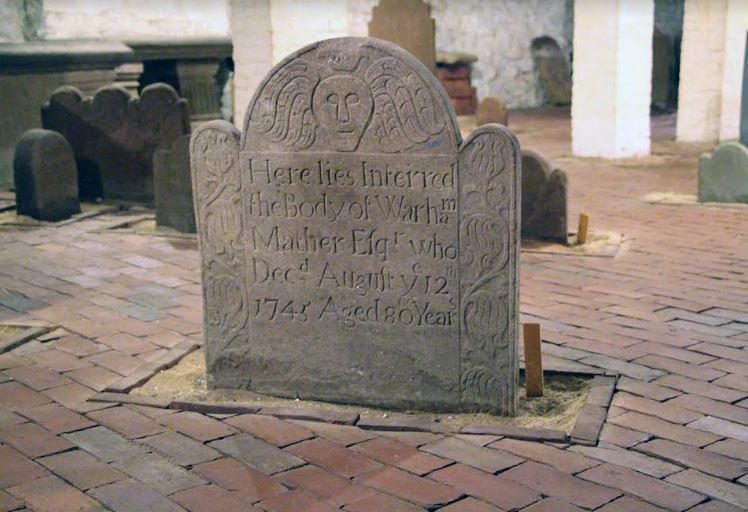
Dolls were sometimes used as a means of projecting curses, and Mary said she had attended meetings with Satan and his consorts. Witches’ pact with Satan was attributed as part of God’s inscrutable plan of the Universe. The Puritan settlers in Santa Clara Valley believed in the doctrine of Original Sin wholeheartedly; their pessimistic outlook proclaimed that all men were unworthy until God saw fit to bestow His grace upon them. They believed that the God allowed the Devil to afflict not only the guilty but also anybody else that might happen to get in the way. If He had to teach misguided humans a lesson, He might punish an entire community for the sins of the most wicked in that community. And it appeared to the God-fearing Puritans that He was doing just that. The Puritans were highly intolerant and has a paranoiac distrust of other religious groups, some were farmers at the Winchester mansion, and did not always like the rituals that were performed, but they were very loyal and protective of Mrs. Winchester. Many of the people who worked at the Winchester mansion were often under suspicion of witchcraft. The Puritans came to the Winchester mansion because they felt it was a true kingdom of God on Earth, and they could help Mrs. Winchester live peacefully. However, what they found was something different. They found that the vast acres of the estate had bitterly cold winters, and the terrain could be inhospitable. They found themselves in a wilderness, surrounded by demonic tribes whom they considered to be the legions of Hell incarnate. Having come to settle in this last stronghold of the Devil, they were plagued by him constantly for the very reason that they were God’s chosen people, thus the most likely target for unholy temptation. The fact that the new settlers in the Santa Clara Valley were being attacked by Satan seemed incontestable. The estate was ravaged by smallpox, and had suffered constant harassment by envious local town’s people and demonic tribes. Mrs. Winchester wondered what she had done to offend God that He should allow the Devil such free range. She experimented with the spirits to bring peace to her life and home. #RandolphHarris 17 of 21

Mrs. Winchester had an answer: Judgment Day was at hand and Satan was therefore stepping up his activities in one last desperate move. It was simply the nova-like burst of the energy from a dying star. She glibly stated that “there will again be an unusual Range of the Devil among us, a little before the Second Coming of the Lord, which will be to give the last stroke in destroying the works of the Devil.” This theory found wide acceptance among the servants and laity of Santa Clara Valley, for not only did it offer a simple explanation for all their maladies and misfortunes, but it also gave them hope, promising cooly a quick end to their hardships. Satan is most able to seduce human in periods o great discontent, for human, in times of poverty and affliction, will turn knowingly to whatever hands will feed them. The valley had had a difficult time of it up to that time, and famines had reduced the population drastically. However, as if labouring under the most severe environmental handicaps was not enough, Puritan perfectionism went even further in making life unbearable. In seeking to establish a holy kingdom, according to Heaven’s law, self-indulgence in any form was strictly repressed. Severe punishments were meted out for drinking, swearing, and licentiousness; in Santa Clara, it was a punishable offense to walk on the streets on Sunday, except when going to and from church. And witches, people possessed by demons, and others also attended church to blend in and keep the peace. On top of it all, there stood the Calvinistic doctrine of election, holding that as soon as man was born, eh was judged to be headed for either Heaven or Hell, this choice being made according to God’s immutable law. However, even if a human thought oneself to be damned, the civil punishment for one’s indulgence were still exacted upon one. It was into this environment that the waters of the witchcraft flood would soon pour. The good people of Santa Clara clearly saw signs of Satanic activity in their midst, and an investigation was launched. #RandolphHarris 18 of 21

Mrs. Winchester confessed to having attended witches’ Sabbaths and of having met with the Devil, who was a tall, black man from New Haven, Connecticut. Soon the witch fever spread, and more people from the valley became posses by demons. The common belief was that at that time witches, when entering into a Covenant with Satan, because the owners of specters, with the help of which they could do harm to any person of their choosing. People believe that God—the Alpha and Omega was both God and Satan. That He has a soul and character. He is not just this futile entity but someone you can see many aspects to. Some people fled to Satanism because they had to deal with so much evil from Christians that they wanted another source of power to exalt them. Satanism is supposed to be something to be something secret, something people do not know anything of. One goes to America and in the telephone directory one can see “Church of God,” “Church of Jesus,” and “Church of Satan.” One calls, and a person answers: “Church of Satan, how may I help you?” One thinks, “This is not Satanism!” The Church of Satan deny Satan, they say He does not exist, yet they act as if He dd, they rebel against God. They call themselves Satanists because He also rebelled against God, but they are basically light and life worshipping individualists. Well, the phone is tapped, so I think you better write what you know. Some people have disappeared. And of course the normal grave yard desecration. Anne Winchester’s headstone was recently stolen, but replaced. Normal people just disappear and never show up again. It could have a Satanic connection. Every human is life, and some hate life, especially human life. That is why people disappeared. These people may have disappeared for some form of sacrifice. Something like that would be called a Satanic murder. The murder is the ritual sacrifice. These murders gain power from whoever was responsible. Everybody has their own aura, and auras can be stolen by sacrificing an individual, this allows one to gain more power. #RandolphHarris 19 of 21
Places of worship, such as churches, have their own spirit—the Winchester Mystery House, for example, has been worshipped in for maybe hundreds of years and has thus gained a lot of spirit in that time, it could qualify as a church and gain charitable tax exemption. But that is not the point. A person who sacrifices that will gains a lot of power and grows stronger. Some people fear the Winchester mansion, because there are a lot of different energies. There is fear, terror and suspense, but others feel a lot of light, happiness, and goodness. Sometimes the energy is mixed. Anton LaVey really surprises me. If your every rea his work, he seems very intelligent and not scary at all, but I guess it depends on what one reads. I have read parts of his Bible, and it is very straightforward, it is stuff people tell their kids every day. Stand up for yourself and do not let people run you over. I think that the Winchester mansion should also open on nights of a full Moon, not just Friday the 13th. During the full Moon, there is a lot of energy and symbolic value. A lot of people believe in the full Moon and a lot of people believe in virgins. That makes both the full Moon and the virgin more powerful because of belief in them. God was first and He created the World. Of course, a lot of scientists would deny that. However, I would challenge their view because I believe God used evolution, which is why it took so long, which is why we have evidence like dinosaur bones. Yet, some Gnostic Christians have suggested Satan created the World. Everybody will be taken as slaves except the warlords. Euronymus, who we talked about earlier, was murdered in August 1993, Aaliyah 2001. Some say that is a month when sacrifices are made. Grishnackh killed Euronymous, and a few hours later, he was laughing and joking, saying, “Ha ha, Euronymous is dead, I’m going to dance and piss on his grave.” It reminded of the jokes Howard Stern made about Aaliyah. It was not funny. These are not the rantings of someone who is all there. Grishnackh talked about the dynamite he had and how he was going to blow things up. Basically, they took things to illogical extremes, but it all made sense in their own heads. #RandolphHarris 20 of 21

It is possible when dabbling with occultism for one to make an unconscious contract with the powers of darkness. The gift of discernment is absolutely necessary in life. It is generally not wise to lay one’s hands on a person who is occultly subjected. The retuning spirits will often attempt to creep back under the guise of some pious camouflage. It is in this way that evil can often enter unnoticed into one’s Christian life. A maid at the Winchester mansion once accepted the invitation of one of her coworkers to attend some spiritistic meetings. At first she felt as though she had gain something from going along to the meetings but later on she began to notice some psychic changes taking place in herself. She began to notice some psychic changes taking place in herself. She began to suffer from depression which resulted in her consulting a neurologist. During the course of the treatment she was committed to a lunatic asylum. However, as her condition improved, she could no longer attend the spiritistic séances. At the hospital the chaplain came to see her through his help and counsel she was able to make a complete recovery. One of the farmers at the estate wanted to see if charms actually worked, and some of them He. He practiced in the basement of the Winchester mansion. He drew a magic circle on the ground and drew some other magic symbols in the circle. He then used a charm three times in order to invoke the spirit. However, no spirit came. Yet, as he repeated, the charm he fell down in the magic circle and lay there unconscious for some time. The result was that for several weeks following this event he was semi-paralysed and drained of all his physical strength and will-power. After a few weeks, he died. Frequently identified as a common spot where the “wheelbarrow Ghost” is sighted, Steam Alley is one of the most well-known paranormal hot-spots in the mansion. Have you ever seen anything in the basement? #RandolphHarris 21 of 21


Some stroll Sarah’s lovely gardens this Memorial Day Weekend. There is a beautiful parrot which Mrs. Winchester used to pet, it talks! He is supposed to be happy and impudent, and talks and laughs and screeches all the time. Maybe you may catch a glimpse at this wooded, flowery estate. It is such a beautiful spectacle, all of that life and grace and animation, and sun-smitten flash and sprinkle of rich colour.

This impressive mansion dates back to the 1880s, when it was developed by Sarah Winchester and the spirits, whose project enobed and enriched the community. It once had a nine-story military watchtower. Mrs. Winchester further developed the grounds of the 160 room mansion, introducing a Victorian garden at the hands of World renowed architect Gino Coppede around the turn of the century.

These adaptions made this idyllic mansion a unique asset, tinged with the signs and influences of eclecticism and Liberty, juxtaposed to the ancient Architectural characteristics of its medieval heritage. This mansion presents itself as impressive and spectacular. The building now spreads on four floors plus the basment, for a total of approximently 25,000 feet square.
There is lovely gift shop and cafe, and it is also an ideal venue for hosting private events, conventions and/or ballrooms are located on the back overlooking the internal garden with its panoramic position which glows thanks to its night-time lighting.
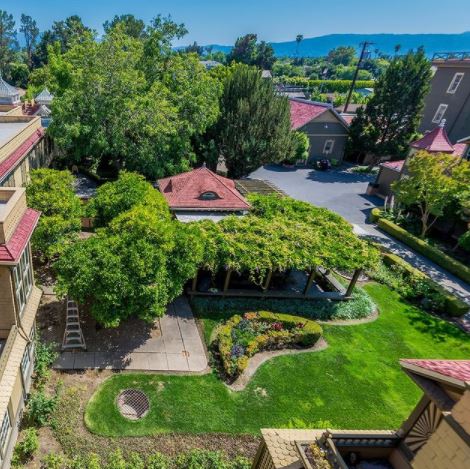
Inside the property there are splendid rooms filled with historial furniture, decorated ceilings and flamboyant fireplaces, vaulted ceilings and richly frescoes walls. In addition, there are several bedrooms, nine kitchens. and thirteen bathrooms, which made the structure a perfect luxurious accommodation for guests, and is now a tourist destination.

This mansion is located within a private park of 4 acres and elegant Nineteenth-century Victorian-gardens, that offer areas of wide lawns, and further green spaces. There is also a parking area, with free parking. Currently used to host guided tours and private events and functions. The enitre porperty sits at a close distance from the mall, hotels, and resturants. The high-fashion outlet complex and gourmet food has brought further development and tourism to Santa Clara County. https://www.winchestermysteryhouse.com/


Drowned in Venomous Hatred of the Bourgeoisie

The World which is arising is still half-buried in the ruins of the World falling into decay…and no one can know which of the old institutions…will continue to hold up their heads and which in the end will go under. The FBI is a highly intelligent law enforcement group. However, the system can sometimes delay the process of investigation. Often times, many attacks and violence and threats are stopped before they happen. So often times, people do not realize how efficient law enforcement is. In a World in which business transactions (and criminal transactions) are accelerating, the FBI’s response time, like that of most bureaucracies, should be accelerated. When traces of anthrax turned in the Hamilton, New Jersey, postal facility and left five people dead, it took the FBI nearly a year to test all the mailboxes. When the Slammer virus rocketed out of nowhere to contaminate hundreds of thousands of computer systems, the FBI took thirteen hours to publicly acknowledge the threat, by which time private antivirus companies had already issued alerts. FBI experts were at home, a White House official explained, and it was hard to get “the right personnel” to respond However, this is not a story about the FBI, which, in fact, is little different from, and in many way better than, other government bureaucracies. Nothing it did in the sniper case matches, for example, the brilliance of the U.S. Immigration and Naturalization Service, which—six moths after they crashed two airliners into the World Trade Center—issues student visas to the decidedly dead terrorists Mohamed Atta and Marwan al-Shehhi. Meanwhile, referring to his agency’s general response to crisis, State Department official Marc Grossman lamented in 2005 that “decision cycles sped up so much that the way we do business at the State Department was now too slow…If we do not change…then we are going to go out of business.” After Hurricane Katrina in 2005, and the breakdown of the levee system, New Orleans did, in fact, go “out of business.” #RandolphHarris 1 of 14

Bureaucracies at the level of nation, state and town were hopelessly unable to work together. The Federal Emergency Management Agency proved feckless, leaving hundreds of thousands of victims to fend for themselves. Would today’s bureaucracies, not just in the United States of America, but in Europe and Asia, be any more effective in the event of a flu pandemic? Well, the European Commission reported that between 60 percent and 80 percent of the EU population was estimated to be infected with COVID-19, as of the bloc enters a post-emergency phase in which mass reporting of cases was no longer necessary. Whereas in American 58 percent of the population was infected with COVID-19. Everywhere today we find slow-moving and slow-thinking bureaucracies struggling unsuccessfully to keep up with the acceleration of the acceleration of change. And given the many powerful, converging forces driving us in this direction, it will become worse. Extreme economic competition, the cumulative nature of scientific research, the increasing number of minds committed to innovation and the instantaneity of communication are just some of the pressures pushing and shoving transitioning societies toward real-time response rates—and leaving bureaucracies behind. Many are reeling from the “acceleration effect.” Worse yet, todays high-speed changes in the economy and society come unevenly and, by their very nature, magnify the de-synchronization effect. At the level of the firm, as we noted earlier, when one department shifts to precisely calibrated “just-in-time” operations, another is forced to resynchronize, causing de-synchronization in still other departments, not to mention their suppliers (and their suppliers). Much the same happens in government agencies. However, something far more basic is happening at a higher level. #RandolphHarris 2 of 14

Across the board, a time wedge is being driven between the private sector and the public sector—one racing faster and faster, the other falling farther and farther behind. This worsens relations between the two as companies and governments inadvertently bang into each other, interfering with each other’s schedules, obstructing each other, wasting everyone’s time and money. Political hostilities intensify. Bureaucrats are demonized as inept, lazy or corrupt. Businesspeople are stigmatized as greedy. Politics becomes even more polarized. And the dysfunctionality of our institutions grows—driven, at least in part, by today’s transformatory changes in our relationships to the deep fundamental of time. Time, however, is only one of the deep fundamentals on which our institutions depend. Growing disparities in our treatment of time are matched by growing disparities in space. Today a company may manufacture in one country, locate its accounting and back-office operations in another, write its software somewhere else, put its customer-service call centers in still another country, maintain sales offices all around the World, put certain tax-avoiding financial operations on a remote Caribbean Island and still nominally call itself an American firm. It may be Japanese like Sony—gets 70 percent of its stock overseas. The NGOs Greenpeace and Oxfam operate in forty and seventy countries respectively. However, while private-sector institutions and NGOs alike are increasingly global, most public-sector organizations operate only nationally or locally. In short, as faster communication connects the World, goods, services, people, ideas, crime, disease, pollution, and terrorists all spill beyond national boundaries. Eroding traditional notions of sovereignty, they outflank and outrun public-sector institutions designed for purely local or national purposes. #RandolphHarris 3 of 14

These changes with respect to the deep fundamental of space amplify the disruptions in time. No wonder so many institutions—designed for slow-tempo operations in a pre-global World—find it almost impossible to carry out their assigned functions effectively. The looming institutional implosion is brought still closer by changes with respect to the deep fundamental of knowledge. And here, again, managers and workers in the public sector are often at a disadvantage. Rapid change reduces more and more of what all of us know—or think we know—to obsoledge. However, the speed at which obsolete knowledge is replaced, updated and reformulated is frequently faster in the private sector, where competitive pressures force quick response and better technology makes that possible. Thus, by the time much of the data, information and knowledge that public employees need to do their jobs reaches them in useful form, it has already been acted on by private-sector players. Public-sector workers cannot keep up. Worse yet, bureaucratic institutions in both sectors break up knowledge and its components, storing and processing them in separate compartments, or “stovepipes.” Over time, these stovepipes multiply as ever-more-narrow specialization increases the number of such uncrossable boundaries. This makes it extremely difficult to cope with fast-changing new problems requiring knowledge that falls beyond artificial departmental borders. On top of that, guarding each stovepipe is an executive whose power is enhanced by control over data, information and knowledge, with little incentive to share it. Yet today, as industrial-age boundaries break down, it is only by sharing that important problems can be solved. #RandolphHarris 4 of 14

The reluctance to share within an organization is even more pronounced with respect to outsiders. Thus the CIA and FBI have historically refused to cooperate with each other, as post-9/11 investigations have shown. Local officers do not like sharing crime information with national police agencies. Sales organizations, political parties, even, increasingly, scientists, try to hold their cards close to the chest—sometimes at horrific costs. What we see, therefore, melting the bolts and corroding the wires holding our industrial-age institutions together, are interconnected changes in our relations to the deep fundamentals. Each change has its own effects. Each increase the likely implosion of institutions in country after country and at the global level as well. However, it is the combination of changes in all three-time, space, and knowledge—that is likely to topple our familiar institutions and hurl us, unprepared, into a strange new economic and social tomorrow. Say hello, then, to Complexorama. And if that sounds like the name of a theme park it is because tomorrow will be filled with thrills, surprises and, for those brought up in the middle of the twentieth century, a definite sense of unreality. Knowledge and communication systems are not antiseptic or power-neutral. Virtually every “fact” used in business, political life, and everyday human relationships is derived from other “facts or assumptions that have been shaped, deliberately or not, by the preexisting power structure. Every “fact” thus has a power-history and what might be called a power-future—an impact, large or small, on the future disputation of power. Nonfacts and disputed facts are equally products of, and weapons in, power conflict in society. False facts and lies, as well as “true” facts, scientific “laws,” and accepted religious “truths” are all ammunition in ongoing power-play and are themselves a form of knowledge, as the term will be used here. #RandolphHarris 5 of 14

There are, of course, as many definitions of knowledge as there are people who regard themselves as knowledgeable. Matters grow worse when words like signs, symbols, or imagery are given highly technical meanings. And the confusion is heightened when we discover that the famous definition of information by Claude Shannon and Warren Weaver, who helped found information science, while useful for technological purposes, has no bearing on semantic meaning or the “content” of communication. In general, in the pages ahead, data will mean more or less unconnected “facts”; information will refer to data that have been fitted into categories and classification schemes or other patterns; and knowledge will mean information that has been further refined into more general statements. However, to avoid tedious repetition, all three terms may sometimes be used interchangeably. To make things simple and escape from these definitional quicksands, even at the expanse of rigor, in the pages ahead the term knowledge will be given and expanded meaning. It will embrace or subsume information, data, images, and imagery, as well as attitudes, values, and other symbolic products of society, whether “true,” “approximate,” or even “false.” All of these are used or manipulated by power-seekers, and always have been. So, too, are the media for conveying knowledge: the means of communication, which, in turn, shape the messages that flow through them. The term knowledge, therefore, will be used to encompass all of these. Besides its great flexibility, knowledge has other important characteristics that make it fundamentally different from lesser sources of power in tomorrow’s World. Thus force, for all practical concerns, is finite. There is a limit to how much force can be employed before we destroy what we wish to defend. The same is true for wealth. Money cannot buy everything, and at some point even the fattest wallet empties out. #RandolphHarris 6 of 14

By contrast, knowledge does not. We can always generate more. If a traveler goes halfway to his destination each day, the Greek philosopher Zeno of Elea pointed out that one can never reach his final destination, since there is always another halfway to go. In the same manner, we may never reach ultimate knowledge about anything, but we can always take one step closer to a rounded understanding of any phenomenon. Knowledge, in principle at least, is infinitely expandable. Knowledge is also inherently different from both muscle and money, because, as a rule, if I use a gun, you cannot simultaneously use the same gun. If you use a dollar, I cannot simultaneously use the same dollar. By contrast, both of us can use the same knowledge either for or against each other—and in that very process we may even produce still more knowledge. Unlike bullet or budget, knowledge itself does not get used up. This alone tells us that the rules of the knowledge-power game are sharply different from the precepts relied on by those who use force or money to accomplish their will. However, a last, even more crucial difference sets violence and wealth apart from knowledge as we race into what has been called an information age: By definition, both force and wealth are the property of the strong and the rich. It is the truly revolutionary characteristic of knowledge that it can be grasped by the weak and the poor as well. Knowledge is the most democratic source of power. Which makes it a continuing threat to the powerful, even as they use it to enhance their own power. It also explains why every power-holder—from the patriarch of a family to the president of a company or the Prime Minister of a nation—wants to control the quantity, quality, and distribution of knowledge within one’s domain. The concept of the power triad leads to a remarkable irony. For at least the past three hundred years, the most basic political struggle within all the industrialized nations had been over the distribution of wealth: Who gets what? Terms like left and right, or capitalist and socialist have pivoted on this fundamental question. #RandolphHarris 7 of 14

Yet, despite the vast maldistribution of wealth in a World painfully divided between rich and poor, it turns out that, compared with the other two sources of Worldly power, wealth has been, and is, the least maldistributed. Whatever gulf separates the rich from the poor, an even greater chasm separates the armed from the unarmed and the ignorant from the education. Today, in the fast-changing, affluent nations, despite all inequities of income and wealth, the coming struggle for power will increasingly turn into a struggle over the distribution of and access to knowledge. This is why, unless we understand how and to whom knowledge flows, we can neither protect ourselves against the abuse of power nor create the better, more democratic society that tomorrow’s technologies promise. The control of knowledge is the crux of tomorrow’s Worldwide struggle for power in every human institution. These changes in the nature of power itself are revolutionaizing relationships in the World of business. From the transformation and capital to the growing conflict between “highbrow” and “lowbrow” business and the emergence of startling new organizational forms, we will trace the new trajectory of power. These deep changes in business and the economy are paralleled by significant changes in politics, the media, and the global espionage industry. This will allow us to see how today’s tremendous, wrenching powershift will impact on the impoverished nations, the remaining socialist nations, and the future of the United States of America, Europe, and Japan. For today’s powershift will transform them all. If one imagines a system starting with individuals who cannot be enticed to cooperate, the collective stability of humanity implies that no single individual can hope to do any better than go along an be uncooperative as well. A World of “meanies” can resist invasion by anyone using any other strategy—provided that the newcomers arrive on time. The problem, of course, is that a single new comer in such a mean World has no one who will reciprocate any cooperation. If the newcomers arrive in small clusters, however, they will have a chance to get cooperation started. #RandolphHarris 8 of 14

Now supposed several people use TIT FOR TAT. Now if the TIT FOR TAT newcomers are a negligible proportion of the entire population, the meanies will be almost always interacting with other meanies. Thus, even a small cluster of individual’s using TIT FOR TAT can achieve more success than the large population of meanies they enter. Because the people who use TIT FOR TAT do so well when they do meet each other, they do not have to meet each other very often to make their strategy the superior one to use. In this way, a World of meanies can be invaded by a cluster of TIT FOR TAT—and rather easily at that. To illustrate this point, suppose a business school teacher taught a class of students to initiate cooperative behavior in the firms the join and to reciprocate cooperation from other firms. If the students did act this way, and if they did not disperse too widely (so that a sufficient proportion of their interactions were with other members of the same class), then the students would find that their lesion paid off. Therefore, for instance, a firm switching to TIT FOR TAT would need to have only 5 percent of its interaction with another such firm for them to be glad they gave cooperation a chance. Even less clustering is necessary when the interactions are expected to be of longer duration or the time discount factor is not as great. Nietzsche’s new beginning in philosophy starts from the observation that a shared sense of the sacred is the surest way to recognize a culture, and the key to understanding it and all of its facets. Hegel made this clear in his philosophy of history, and he had found the same awareness in Herodotus’ studies of various peoples, Greek and barbarian. What a people bows before tells us what it is. However, Hegel made a mistake; he believed there could be a thoroughly rational God, one who conciliated the demands of culture and those of science. Yet somehow he also saw that this was not so when he said that the owl of Minerva flies at dusk, meaning that only when a culture is over can it be understood. #RandolphHarris 9 of 14

Hegel’s moment of understanding of the West coincided with its end. The West had been demythologized and had lost is power to inspire and its view of the future. Therefore, it is evident that its myths are what animates a culture, and the makers of myths are the makers of cultures and of humans. They are superior to philosophers, who only study and analyze what the poets makes. Hegel admits that poetry has lost its prophetic power but consoles oneself with the belief that philosophy will suffice. The artists whom Nietzsche saw around him, those whose gifts were the greatest, attested to this loss. They were what he called decadents, not because they lacked talent or their art was not impressive, but because their works were laments of artistic impotence, characterizations of an ugly World that the poets believe they cannot influence. Immediately after the French Revolution there had been a stupendous artistic effervescence, and poets thought they could again be the legislators of humankind. The vocation provided for the artists in the new philosophy of culture heartened them, and a new classic age was born. Idealism and romanticism appeared to have carved out a place for the sublime in the order of things. However, within a generation or two the mood had noticeably soured, and artists began to represent the romantic visions as a groundless hoax. Men like Baudelaire and Flaubert turned away from the public and made the moralism and romantic enthusiasm of their immediate predecessors look foolish. Adulteries without love, sins without punishment or redemption became the more authentic themes of art. The World had been disenchanted. Baudelaire presented sinning man as in the Christian vision, but without hope of God’s salvation, piercing pious fraudulence, hypocrite lecteur. And Flaubert drowned in venomous hatred of the bourgeoisie, which had conquered. #RandolphHarris 10 of 14

Culture was just fodder for its vanity. The great dualisms had collapsed; and art, creativity and freedom had been swallowed up by determinism and petty self-interest. In his greatest creation, M. Homais, the pharmacist, Flaubert encapsulated everything that modernity was and is to be. Homais represents the spirit of science, progress, liberalism, anticlericalism. He lives carefully with an eye to health. His education contains the best that has been thought and said. He knows everything that has ever happened. He knows that Christianity helped to free the slaves, but that it has outlived its historical usefulness. History existed to produce him, the man without prejudices. He is at home with everything, and nothing is beyond his grasp. He is a journalist, disseminating knowledge for the enlightenment of the masses. Compassion is his moral theme. An all this is nothing but petty amour-propre. Society exists to give him honor and self-esteem. Culture is his. There are no proper heroes to depict nor audiences to inspire. They are all one way or another. Emma Bovary is Homais’ foil. She can only dream of a World and men who do not and cannot exist. In this sober World she is nothing but a fool. She, like the modern artist, is pure longing with no possible goal. Her only triumph and her only free act is suicide. The art of appropriation, then, is a kind of shadowy recreation of the Universe by drawing it, piece by piece, into the brackets of artistic contemplation. Artists engaged in this pursuit have concentrated on the appropriation of religious forms, of philosophical forms, of political forms, of popular forms, and more recently, of art historical styles. These enterprises have met different fates. The appropriation of religious contents has been the most unpopular, even taboo, while that that based on philosophy, even linguistic philosophy, for a while acquired and made chic. In this discrimination the Apollonian (to use Nietzsche’s dichotomy) surfaced over the hidden depth of the Dionysus, the unconscious, in which all things flow into and through oner another. #RandolphHarris 11 of 14

In the Apollonian light each thing is seen clear and separate, as itself; in the Dionysian dark all things merge into a flowing and molten invisibility. That our culture, in the age of science, should favor the Apollonian, is not surprising. The value of light is beyond question; but where there is no darkness there can be on illumination. Rejection of the Dionysian does not serve the purpose of clear and total seeing. If it is to be practice with sufficient range of feeling not to trivialize life, universal appropriation has an exciting task. The levity, the sense of the will to entertain, that prevailed when Ben or Gilbert & George displayed themselves as sculptures was balanced by the sometimes horrifying order through which the appropriation of religious forms unfolded. It was necessary to descend from the pedestal, with its Apollonian apotheosis of the ego, into the Dionysian night of the unconscious, and to being into the light the logic of its darkness. There is a widespread belief that some things on television are “real” and some things are not real. Sports events are real; when we see them happening on television, we can count on the fact that they happen as we see them. Talk shows are real, although it is true that they happen only for television and they sometimes happen some days before we see them. Situation comedies are not real; neither are the police dramas, although they may be based on real events from time to time. Are historical programs real? Well, no, not exactly. Most are re-created various of events that happened a long time ago when cameras did not even exist. The people we see in them are actors, playing real people, or at least people who used to be real but are now dead. The actors are speaking for them, but they are usually not saying the exact words that the real people said. Also, some of the events in the historical treatment are dropped out—for reasons of time, or because they do not fit the line of the story—and some others are left in. So is it real? Or is it semireal? Or not real? #RandolphHarris 12 of 14

Advertising is, of course definitely not real. Well, on the other hand, those are real people in those ads—we see them walking and talking—but the situations they are portraying are not real, although of course they may be true to life. Does this make them more real? How about Alice in Wonderland Sesame Street Are they real? Again, they are real people dealing with real subjects: animals, kids, math, jokes…but what does “real” mean in that context? Our society assumes that human beings can make the distinction between what is real and what is not real, even when the real and not-real are served up in the same way, intercut with one another, sent to us from many distant places and times and arriving one behind the other in our houses, shooting out of a box in our living rooms straight into our heads. What we see in our heads are real-looking human beings, walking and talking as though they were real, even though much of the time they are, or, that is, the parts they are playing are not real. At the University of Michigan, Joel Gregory grabs a molecular rod with both hands and twists it. It feels a bit weak, and a ripple of red reveals too much stress in a strained molecular bond halfway down its length. He adds two atoms and twists the rod again: all greens and blues, much better. Joel plugs the rod into the mechanical arm he is designing, turns up the temperature, and sets the whole thing in motion. A million atoms dance in thermal vibration, gears spin, and the arm swings to and fro in programmed motion. It looks good. A few parts are still mock-ups, but doing a thesis takes time, and he will work out the rest of the molecular details later. Joel strips off the compute display goggles and glovers and blinks at the real World. It is time for a sandwich and a cup of coffee. He grabs the computer itself, stuffs it into his pocket, and head for the student center. #RandolphHarris 13 of 14

Researchers already use computers to build models, and “virtual reality systems” have begun to appear, enabling a user to walk around the image of a molecule and “touch” it, using computer-controlled goggles. We cannot build a super computer able to model a million-atom machine yet-much less build a pocket supercomputer—but computers keep shrinking in size and costs. With nanotechnology to make molecular parts, a computer like Joel’s will become easy to build. Today’s supercomputers will seem like hand cranked adding machines by comparison. In 1543, scholars and philosophers had no reason to fear persecution for their ideas so long as they did not directly challenge the authority of the church, which Copernicus had no with to do. Though the authorship of the preface to his work is in dispute, the preface clearly indicates that his ideas are to be taken as hypotheses, and that his “hypotheses need not be true or even probable.” We can be sure that Copernicus believed that the Earth or the planets moved in the manner described in his system, which he understood to consist of geometric fictions. And he did not believe that his work undermined the supremacy of theology. It is true that Martin Luther called Copernicus “a fool who went against Holy Writ,” but Copernicus did not think he had done so—which proves, I suppose, that Luther saw more deeply than Copernicus. The way is shown by God in his “direction,” the Torah. This God directs, that is, he teaches us to distinguish between the true way and the false ways. His direction, his teaching of the distinction, is given to us. However, it is not enough to accept it. We must “delight” in it, we must cling to it with a passion more exalted than all the passions of the wicked. Nor is it enough to learn it passively. We must again and again “mutter” it, we must repeat its living word after it, with our speaking we must enter into the word’ spokenness, so that it is spoken anew by us in our biographical situation of today—and so on and on in eternal actuality. #RandolphHarris 14 of 14

Cresleigh Homes

Sleek built-in bookcases make this den in the #Havenwood Model 1 into a stylish office – but this room can easily be converted into a fourth bedroom!

Single story living doesn’t have to mean sacrificing space – and if you check out the floor plan, you’ll see! With 3 bedrooms, 3 bathrooms, and a great room, the 2293 square feet are laid out just right.
#CresleighHomes
 Randolph Harris II International Institute