
Home » #RandolphHarris (Page 74)
Category Archives: #RandolphHarris

The Culture of Narcissism—Everyone Fixed at an Age Between Twenty and Thirty

Some years ago, while watching a program called the Vidal Sassoon Show (now mercifully defunct), I came across the quintessential example of something very fascinating about things that used to be exclusively adult secrets, and how this privacy has been lost. Vidal Sassoon is a famous hairdresser whose television show was a mixture of beauty hints, diet information, health suggestions, and popular psychology. As he came to the end of one segment of the show, the theme music came up and Sassoon had just time enough to say, “Don’t go away. We’ll be back with a marvelous new diet and then a quick look at incest.” Television is relentless in revealing and trivializing all things private and shameful. The subject matter of the confessional box and the psychiatrist’s office is now the public domain. Indeed, soon enough we will have the opportunity to see commercial television’s first experiments with presenting actual nudity, which will probably not be shocking to anyone, since television commercials have been offering a form of soft-core adult films for years, as for example Paris Hilton’s famous Carl’s Junior commercial. And on the subject of commercials—the one million of them that American youth will see in the first twenty years of their lives—they, too, contribute toward opening to youth all of the secrets that once were the province of adults, everything from feminine hygiene sprays to life insurance to the cause of martial conflict. And we must not omit the contributions of new shows, those curious entertainments that daily provide the young with vivid images of adult failure and even madness. As a consequence of all this, childhood innocence is impossible to sustain, which is why children have disappeared from television. Have you noticed that all the children on television shows are depicted as merely small adults, in the manner of thirteenth- and fourteenth-century paintings? For example, pre-teen Grover on the TV show The Neighborhood hangs out with only adults and has no friends his age.

Watch any of the soap operas or family shows or situation comedies, and I think you will see children whose language, dress, sexuality, and interests are not different from those of the adults on the same shows. And yet, as television begins to render invisible the traditional concept of childhood, it would not be quite accurate to say that it immerses us in an adult World. Rather, it uses the material of the adult World as the basis for projecting a new kind of person altogether. We might call this person the adult-child. For reasons that have partly to do with television’s capacity to reach everyone, partly to do with the accessibility of its symbolic form, and partly to do with its commercial base, television promotes as desirable many of the attitudes that we associate with childishness—for example, an obsessive need for immediate gratification, a lack of concern for consequences, an almost promiscuous preoccupation with consumption. Television seems to favor a population that consists of three age groups: on the one end, infancy; on the other, senility; and in between, a group of indeterminate age, where everyone is somewhere between twenty and thirty and remains that way until dotage descends. In this connection, I recall to mind a television commercial which sells hand lotion. Or perhaps it was for Ivory soap. In it, we are shown a mother and a daughter, and then challenged to tell which is which. I find this to be a revealing piece of sociological of evidence, for it tells us that in our culture it is considered desirable that a mother should not look older than her daughter, or that a daughter should not look younger than her mother. If there is no clear concept of what it means to be an adult, whether this means that childhood is gone or adulthood is gone amounts to the same thing, there can be no concept of what it means to be a child.

However, you wish to describe the transformation taking place, it is clear that the behavior, attitudes, desires, and even physical appearances of adults and children are becoming indistinguishable. There is now virtually no difference, for example, between adults’ crimes and children’s crimes; and in many states, the punishments are becoming the same. Just for the record: from 1950-1985 years, the increase among the under-fifteen-year-old population in what the FBI calls “serious crimes” exceeded 11,000 percent! That is very important because many people want to relax the laws, members of the Catholic Church want to make celibacy extinct, and this is an indicator of how more crimes will progress as we dismiss rule, regulations, laws and traditions to make life more accommodating for those who maybe need to just stop pretending to be what they are not and chose another profession. There is also very little difference in dress. The children’s clothing industry has undergone a virtual revolution within the past fifteen years, so that there no longer exists what we once unambiguously recognized as children’s clothing. Eleven-year-old wear three-piece suits and Stacy Adams to birthday parties, and sixty-one-year-old women were Daisy Dukes, crop tops, belly piercings and nose rings to birthday parties. Twelve-year-old girls wear high heels, and fifty-two-year-old men wear sneakers. On the streets of New York and Chicago, you can see grown women wearing lingerie, stiletto thigh high boots, a mini-skirt, and a men’s blazer that is an example of adults imitating the Catholic school girl uniform. To take another case: children’s games, once so imaginatively rich and varied and so emphatically inappropriate for adults, are rapidly disappearing. Little League baseball and Peewee football, for example, are not only supervised by adults but are modeled in their organization and emotional style on big league sports.

Junk food, once suited only to the undiscriminating palates and iron stomachs of the young, is now common fare for adults. It has already been forgotten that adults are supposed to have more developed taste in food than children; McDonald’s and Burger King commercials show us that this distinction is no longer relevant. However, I think that is because society is becoming less formal and extremely expensive. The language of children and adults has also been transformed so that, for example, the idea that there may be words that adults ought not to use in the presence of children now seems faintly ridiculous. With television’s relentless revelation of all adults secrets, language secrets are difficult to guard, and it is not inconceivable to me that in the near future we shall return to the thirteenth- and fourteenth-century situation in which no words were unfit for a youthful ear. Of course, with the assistance of modern contraceptives, the appetites for pleasures of the flesh can be satisfied without serious restraint and without mature understanding of its meaning. Here, television has played an enormous role, since it not only keeps the entire population in a condition of high sexual excitement but stresses a kind of egalitarianism of fulfillment of pleasures of the flesh: pleasures of the flesh is transformed into a product available to everyone—let us say, like mouthwash or under-arm deodorant. It remains for me to mention that there has been a growing movement to recast the legal rights of children to that they are more or less the same as adults’. The thrust of this movement, which, for example, is opposed to compulsory schooling, resides in the claim that what has been thought to be a preferred status for children is instead only an oppression that keeps them from fully participating in society.

In short, our culture is providing fewer reasons and opportunities for children. I am not so singleminded as to think that television alone is responsible for this transformation. The decline of the family, the loss of a sense of roots—just over 40 million Americans change residence every year—and the elimination, through technology, of much significance in adult work are other factors. However, I believe television creates a communication context that encourages the idea that childhood is neither desirable nor necessary; indeed, that we do not need children. In talking about childhood’s end, I have not, of course, been talking about the physical disappearance of children. However, in fact that, too, is happening. Our birth rate in North America is declining and has been for over a decade, which is why schools are being closed all over the country. And the idea of children implies a vision of the future. They are the living messages we send to a time we will not see. However, television cannot communicate a sense of the future or, for that matter, a sense of the past. It is a present-centered medium, a speed-of-light medium. Everything we see on television is experienced as happening now. The grammar of television has no analogue to the past and future tenses in language. It amplifies the present out of all proportion and transforms the childish need for immediate gratification into a way of life. We end up with the culture of narcissism—no future, no children, everyone fixed at an age between twenty and thirty. You even have adults, senior citizens, who are fixed on living like the corrupt politicians, law enforcement, and the little girls from Pretty Little Liars—mixing preteen games and lies with major crimes. I believe that what we are describing is disastrous—partly because many value the charm, curiosity, malleability, and innocence of childhood, and partly because we believe that human beings need first to be children before they can be grown-ups.

Otherwise they remain like television’s adult-child all their lives, with no sense of belonging, no capacity for lasting relationships, no respect for limits, and no grasp of the future. However, mainly I think it is disastrous because as the television culture obliterates the distinction between child and adult, as it obliterates social secrets, as it undermines concepts of the future and the value of restraint and discipline, we seem destined to be moving back toward a medieval sensibility from which literacy had free us. TV also has other effects on the body and mind. The light we receive in our eyes and our cell structure. This is the chain of events: Light passes through the eye to contact the retina. The retina has a dual function. The first is the obvious one: translating the light into images by way of channels to the brain. The second, equally important function is for the light rays, aside from the role as image creators, to pass via neurochemical channels into and through the pineal and pituitary glands and therefore into the animal and human endocrine systems. The kind of light that passes through the eyes determines the reactions of human cells. When it comes to even minute changes in wavelength spectra (what we call “color”)—say, between one kind of artificial light and another, or between natural light and artificial light—cause important biochemical alterations. Critical to understanding all of this is the term “light,” which does not apply to a single, monolithic element. When we speak of “light” we ordinarily do not make distinctions between natural light or artificial light; not do we make the distinction between kinds of artificial light. We tend to lump al of them together. One flips the switch to “on” and what one gets is “light.” When it is “on” one can see. However, there is where the similarity ends.

Natural sunlight is made up of all the radiant wavelengths of energy (spectra) that fit within what we call “light.” What is more, it contains them in a specific mixture. So much of this and so much of that. Artificial light from any source—whether incandescent or fluorescent—leaves out many segments of the spectral range contained in natural light, and it delivers an entirely different mix of spectral ingredients. Incandescent light, for example, emphasize the portion of the spectrum near the infrared while minimizing or leaving out others. Artificial light is quite literally not the same element as natural light. To use the same term for both is to destroy understanding. We learned in school that plants ingest light and then convert it to energy for growth. The process is called photosynthesis. The plant literally takes light into its cells and converts it into nourishment. For a plant, light is a form of food. Changing the light source so that a plant ingests one set of spectral ingredients rather than another changes the nourishment and therefore the cellular and growth patterns of the plant. If you grow your own plants at home, you also know this to be true. You may not have a microscope with which to watch it, but if you move a plant nearer to the window (or farther away), it changes. Plant stores now sell special bulbs which help plants grow. When you move the plant or buy the bulb, what you are doing is changing the amount and the spectral character of the light the plant receives. You are changing its diet. Through photobiology we are finally beginning to grasp that what is true for plants seems also to be true for animals and humans. For all, light is a kind of food. Humans take light in through the eyes; and via the retinal-pituitary-endocrine system, it passes into cells. The exact mix of spectral ingredients that we ingest affects many aspects of human health and vitality. As you change the light, you change the spectra; as you change the spectra, you change the light-nourishment that finds its way to the cells; as you alter the cells, you alter the human body.

Now, when it comes to memory, the more times an experience is repeated, the longer the memory of the experience lasts. Repetition encourages consolidation. When researchers examined the physiological effects of repetition on individual neurons and synapses, they discovered something amazing. Not only did the concentration of neurotransmitters in synapses change, altering the strength of the existing connections between neurons, but the neurons grew entirely new synaptic terminals. The formation of long-term memories, in other words, involves not only biochemical changes but anatomical ones. That is why memory consolidation requires new proteins. Proteins play an essential role in producing structural changes in cells. The anatomical alterations in a slug’s relatively simple memory circuits were extensive. In one case, the researchers found that, before a long-term memory was consolidated, a particular sensory neuron had some thirteen hundred synaptic connections to about twenty-five other neurons. Only about forty percent of those connections were active—in other words, sending signals through the production of neurotransmitters. After the long-term memory had been formed, the number of synaptic connections had more than doubled, to about twenty-seven hundred, and the proportion that were active had increased from forty percent to sixty percent. The new synapses remained in place as long as the memory persisted. When the memory was allowed to fade—by discontinuing the repetition of the experience—the number of synapses eventually dropped to about fifteen hundred. The fact that, even after a memory is forgotten, the number of synapses remains a bit higher than it had been originally helps explain why it is easier to learn something a second time. The growth and maintenance of new synaptic terminals makes memory persist.

The process also says something important about how, thanks to the plasticity of our brains, or experiences continual shape our behavior and identity. The fact that a gene must be switched on to form long-term memory shows clearly that genes are not simply determinants of behavior but are also responsive to environmental stimulation, such as learning. Furthermore, our intellectual skyline has been altered by German thinkers even more radically than has our physical skyline by Germany architects. My insistence on the Germanness of all this is intended not as a know-nothing response to foreign influence, the search for a German intellectual under every bed, but to heighten awareness of where we must look if we are to understand what we are saying and thinking, for we are in danger of forgetting. The great influence of a nation with a powerful intellectual life over less well endowed nations, even if the armies of the latter are very powerful, is not rare in human experience. The most obvious cases are the influence of Greece on Rome and of France on Germany and Russia. However, it is precisely the differences between these two cases and the example of Germany and the United States of America tht makes the latter so problematic for us. Greek and French philosophy were universalistic in intention and fact. They appeared to the use of a faculty potentially possessed by all men everywhere and at all times. The proper noun in Greek philosophy is only an interesting tag, as it is in French Enlightenment. (The same is true of Italian Renaissance, a rebirth that is proof of the accidental character of nations and the universality of Greek thinkers.) The good life and the just regime they taught know no limits of race, nation, religion, or climate.

This relation to man as man was the very definition of philosophy. We are away of this when we speak of science, and no one seriously talks of German, Italian, or English physics. And when we Americans speak seriously about politics, we mean that our principles of freedom and equality and the rights based on them are rational and everywhere applicable. World War II was really an educational project undertake to force those who did not accept these principles to do so. However, the German philosophy after Hegel cast doubt on them, and there was some relationship between German politics and German thought. Historicism has taught that the mind is essentially related to history or culture. Germanness is, according to later German philosophers, an essential part of them. For Nietzsche and those influenced by him, values are the product of folk minds and have relevance only to those minds. The possibility of translation itself is doubted by Heidegger. For him the Latin traditions of the Greek philosophical terms are superficial and do not convey the essence of the translated text. German thought tended not toward liberation from one’s own culture, as did earlier thought, but toward reconstituting the rootedness in one’s own, which had been shattered by cosmopolitanism, philosophical and political. We are like the millionaire in The Ghost (Geist) Goes West who brings a castle from brooding Scotland to sunny Florida and adds canals and gondolas for “local color.” We choose a system of thought that, like potato salad, does not travel; we chose a way of looking at things that could never be ours and had its starting point dislike of us and our goals. The United States of America was held to be a nonculture, a collection of castoffs from real cultures, seeking only comfortable self-preservation in a regime dedicated to superficial cosmopolitanism in thought and deed.

Our desire for the German things was proof we could not understand them. The decisive character of peoples and their values that was decreed by historicism of all kinds, but particularly by Nietzsche’s radical historicism, makes the German case the opposite of the Greek one. The difference can be seen in the way Cicero treats Socrates as opposed to the way Nietzsche does. For Cicero, Socrates is a friend and contemporary; for Nietzsche he is an enemy and an ancient. Given our country’s extreme Enlightenment universalism, nothing could be ore unwelcome to Nietzsche and Heidegger than our embrace. America, like Germany, also contains intelligent persons who were attracted, at least in the beginning and more so since the COVID pandemic, to fascism, for reasons very like those motivating the Left ideologues, reflections on autonomy and value certain. Once one plunges into the abyss, there is no assurance whatsoever that equality, democracy or socialism will be found on the other side. At the very best, self-determination is indeterminate. However, the conditions of value creation, particularly its authoritative and religious or charismatic character, would seem to militate against democratic rationalism. The sacred roots of community are contrary to the rights of individuals and liberal tolerance. The new religiosity connected with community and culture influenced people who look at other things from the perspective of creativity to lean toward the Right. On the Left there was only an assertion that Marx would, after his revolution, produce exactly what Nietzsche promised, while on the Right there was meditation on what we know of the conditions of creativity. Decent people became used to hearing things about which they would have in the past been horrified to think, and which would not have been allowed public expression. An extreme outcome in the struggle between Right and Left is inevitable.

The great mystery is the kinship of all this to American souls that were not prepared by education or historical experience for it. Perhaps the fantastic success of Freud in America was due simply to the fact that so many people were seeking refuge from tyranny, and there were very effective propagandists, or whether there was some special need for tyrants. This was also seen in Sacramento, California. Many people thought Darelle Steinberg would be a better mayor than Kevin Johnson, but they both seem like the same person. Their goal is not to help the citizens, but use taxpayer money to build and modernize buildings for entertainment. However, police shootings and overall police behavior was better when Johnson was the mayor. Steinberg seems really out of touch with the community. The assembled powers are not cosmic in nature, but historical. The chief function with which they are entrusted is that of judging the Earth and they have clearly not to judge alongside one another, but the Earth is divided among them; to each a land and a nation is specially allotted. Each of them is a governor for God, and, each, are to dispense justice to one’s people, both outwardly and inwardly. Outwardly they may all have fulfilled their office honorably, and each of them may have adequately represented the cause of one’s nation in so far as that cause was righteous; for God does not speak of this. It is unjust rule of which He accuses them all, more precisely, failure to act against social injustice. Instead of fulfilling their task of helping the powerless and the unprotected to obtain justice in the face of the oppressor, they have adjudged to this man, just because he had all the power, all that he coveted. However, how long can measured GDP levels grow before the bankruptcy lawyers arrives? As we have seen, GDP figures are grossly distorted because of their failure to take prosumers output fully into account.

If the economists assigned value to it, the total costs of health care would loom immensely larger. Long term health care costs in America are now $4.1 trillion annually. However, this underestimates the economic resources devoted to long-term health care…because most care is delivered informally by family and friends and is not included in economic statistics. It has been estimated that the economic value of such informal care-giving in the United States of America reaches $600 billion a year. Other researcher suggests that in the United States of America, family care for Alzheimer’s patients alone had a value exceeding $300 billion in 2020. And none of these figures includes unpaid caregiving for short-term problems. Governments and health industry officials worry that an aging population will mean more disease and debility, and therefore even higher costs. In the United States of America, pharmacies on average fill nineteen prescriptions a year for customers over fifty-five, compared with only eight for younger people. Health care costs for those over 65 years are thee to five times greater than for those younger than 65. Finally, add to all this the potential bankruptcy of pension systems as we known them, and the entire high-pitched public discussion plunges into the panic zone. There are, however, flaws in this overall picture. First, many such numbers are based on straight-line projections of past experience. That may be delusory in times of crisis or revolution. The longer-lived new generation will likely prove healthier than its parents were. Second, the same demographics that are increasing the percentage of elderly will reduce the percentage of young people and could reduce the cost of schools and pediatric care. Other financial offsets may also be possible. Nevertheless, none of these qualifications alters the need for radical reconceptualization of the entire problem of health in the twenty-first century.

Unfortunately, well-intentioned reforms based on industrial-age assumptions only make matters worse. To cut costs, politicians typically seek “efficiencies” that translate into assembly-line health care, a “managed” system offering one-size-fits-all, standardized treatment. Exactly as in low-tech factories, efforts are made to speed up the medical assembly line, essentially putting doctors into cubicles and allowing them only a few minutes with each patient. This is a self-defeating Second Wave strategy for a situation tht desperately needs a Third Wave response. In a business lagging behind other industries, smart pharmaceutical companies will soon transition toward de-massified, highly targeted, customized products that could reduce side effects and the additional costs they often impose. Cost-cutting reformers, in the meantime, seek just the opposite—mass-production health care in for form of standardized, cookie-cutter protocols, procedures and drugs. With costs and inefficiencies continuing to mushroom, the crisis in health economics cannot be resolved—until we look beyond industrial solutions to the extraordinary opportunities opened to us by the arrival of the knowledge economy and the new potentials for prosumer health care. Now, there is also a lot of contention when it comes to religion and celibacy. In 1970, the Jesuit magazine America predicted that by middecade, married priest would be a reality. Optimistic Dutch and Brazilian priests married. Optional celibacy, they believed, was almost certainly in the offing. How wrong intransigent Churchdom proved them! Not only did marriage remains strictly forbidden, but the Church subjected those requesting release from their vows to treatment many described as demeaning, even traumatizing. Virginity as a deliberately chosen vocation, based on a vow of chastity, and in combination with vows of poverty and obedience, creates particularly favorable conditions for the attainment of perfection in the New Testament sense.

However, some people believe that celibacy is the cause of priestly sinning in pleasures of the flesh, as a barrier to the religious vocations, and as a violation of human rights. This is to become a virginal kingdom of Heaven, as was the case with Mary. The virgin can become a wonderful channel of grace to the World, as was Mary. Because polygamy is becoming more common, clerical celibacy is an enormous obstacle to the recruitment of indigenous priests. It directly contradicts the traditional view that marriage is the focus of existence…a duty, a requirement from the corporate society, and a rhythm of life in which everyone must participate. One who does not is a cruse to the community, one is a rebel and a law-breaker, one is not only abnormal, but underhuman. It seems celibacy is neither understood nor respected. The temptation of the flesh is too strong for humans to resist. Many people believe that compulsory celibacy is going to eventually change, but what will that mean for society. Several think that the sexual revolution has gone too far, and would like to see some pillars in the community upholding the law of chastity. However, about 40 percent of U.S. priests are routinely uncelibate, a figure that excludes those whose lapses are infrequent. This is alarming and sparking worry that the sacraments dispensed by clergy who routinely desecrate their holy vows, will be inspiring in their congregations the notion that it is okay to be menu Catholics when something seems inconvenient or incompatible with their deepest beliefs, and that is perfectly acceptable. In fact, 84 percent of people in the United States of America would allow priests to marry. Indisputably, vast numbers of priests are either openly or clandestinely uncelibate, and in many countries large contingents are even married, either legally or de facto. Therefore, who prefers to operate within the Church’s defined spiritual parameters? Who prefers the public battle to clandestine defiance? Keep in mind, there are God’s representatives, but they do not have to be.

Cresleigh Homes

Good neighbors make life sparkle. ✨Cresleigh Havenwood showcases exquisite luxury single-family homes.

The numerous windows fill the home with natural light, and the open concept makes home the perfect place for entertaining.

There are also many other rooms that offer privacy, such as a home office, den, or loft.

Make some new connections and settle into life in our community; we love quality hangouts!


Back in America He Meets His First Love

It is normal for a sober adult citizen to take the wildness and absurdities of the younger generation tolerantly and with a touch of envious admiration, just as those adults who are more inhibited and insecure always must deplore them and feel that things are going to the dogs. In solidly established Augustan ages, such as the period in England between 1688 and the Industrial Revolution, the excesses of well-brought-up young men are even socially obligatory, under the style of sowing wild oats. In outrageously bad ages, such as the period around the World since the COVID-19 pandemic, rebellious youth is esteemed as the hoped-for agent of change. These attitudes all make sense and are still current. There has no doubt been a spirit of variously tolerant, envying, deploring, approving, and esteeming. It is not an interesting question whether or not our present Youth Problems are fundamentally different from those of other times, whether or not they will blow over; whether the Beats are a fad and the Delinquents no worse than in 1850. Rather, such problems, by their form and content, test and criticize the society in which they occur. The burden of proof, as to who is “wrong,” does not rest with the young but always with the system of society. Some societies bear it easily; our society is not outrageously bad, but it is far from adequate, and it stand the test poorly. A poor showing is proved by the fact that young people are paid attention to as a group, as they must be if they are importantly “in the right”; and there are Fathers and Sons, or Flaming Youth, or Youth Problems. In America, our Flaming Youth and Youth Problems have occurred after great wars, for then the adults really disgraced themselves.

We must distinguish between two kinds of special attention paid these days by the Americas to their young. The first is the effect of the disappointment and resignation of the older generation—it is a kind of Lear complex: they themselves have failed to be men and women; they are therefore both timid and guilty before the young. With respect to children, this adult resignation results in the child-centered suburb and the emphasis on “psychology.” With regard to the adolescents, it appears as a craving for youth for oneself, to act like youth, to give in to youth, meaning by youth the teenage foolishness that still has some vitality. This comes to the 27.7 million American teenagers, who spend an estimated $63 billion annually, what can these kids think up except to imitate the customers of their elders? Naturally, once there is such a vast market, sales-minded publicists give most earnest attention to youth. This kind of youth is far from “problematic.” It seems that it will be even more worthless than its parents, and God pity us. However, the second kind of attention is that claimed by the problematic who are importantly in the right. They are problematic because they try to vomit up the poisonous mores. They will not eat them—they are sick because they have eaten too many of them. And they are in the right” because they are obviously in the right, everybody knows it. Flaming Youth of the 1920s had salutary effects. It speeded the sexual revolution and the new permissive psychology of child care. It put the seal on the new simple prose. Our present round of Youth Problems has been dampened and delayed by war anxiety and disillusionment, yet event so it will have, it has already had, positive successes. The young people have latched on to the movement in art that is the strongest in our generation, the so-called Action Painting or New York School.

In music, the matching numbers are the percussive atonalists like Varese, or the musique concrete made of the tapes. There is an Action Architecture. Artaud preached an Action Theater. We have tried to show that this disposition to go back to the material elements and the real situation, is intrinsic and spontaneous in the art action and poetry action of some of the young groups. This means that they are not off the main track. It can be said that this Action art lacks content, it does not carry enough humanity. And we know this to be true. However, it is just its eschewing of a stereotyped or corrupt content while nevertheless affirming the incorruptible content of the artist’s own action, that is its starved and brave humanity—a step beyond the nihilism of Dada—a beginning. Young people have hit, too, on rituals of expression in face-to-face groups, and in provoking the public audience as a face-to-face group, that are clearly better than the canned popular culture or the academic culture. However, these things are in line with what the best sociologists and community planners are also after. It is a move against anomie and the lonely crowd. Naturally it is drunken and threadbare. The English Angry Young Men, again, have specialized in piercing the fraudulent speech of public spokesmen and in trying to force them out to put up or shut up. They have learned to cry out “Shame!” When a million Americans—and not only young men—can learn to do this, we shall have a most salutary change. Disaffected young groups in America, England, and France have also flatly taken direct action in race relations. They present racial brotherhood and miscegenation as a fait accompli. More generally, all the recent doings of problematic youth, whether in the middle of class or among the underprivileged juvenile delinquents, have had a stamp of at least partly springing from some existent situation, whatever it is, and of responding with direct action, rather than keeping up appearances and engaging in role playing.

There is also among them a lot of phony role playing, but no more than in present acceptable society, and rather less than in the average young man or adolescent who has a “line.” I think that the existential reality of Beat, Angry, and Delinquent behavior is indicated by the fact that other, earnest, young fellows who are not themselves disaffected and who are not phony, are eager to heart about them, and respect them. One cannot visit a university without being asked a hundred questions about them. Finally, some of these groups are achieving a simpler fraternity, and animality, and sexuality than we have had, at lest in America, in a long, long time. This valuable program is in direct contrast to the mores of what we have been calling “the organized system,” its public relations, and its avoidance of risk and self-exposure. That system and its mores are death to the spirit, and any rebellious group will naturally raise a contrasting banner. Now the organized system is very powerful and in its full tide of success, apparently sweeping everything before it in science, education, community planning, labor, the arts, not to speak of business and politics where it is indigenous. Let me say that we of the previous generation who have been sickened and enraged to see earnest and honest effort and human culture swamped by this muck, are heartened by the crazy young allies, and we think that perhaps the future may make more sense than we dared hope. Each of us has the moral and social duty to draw the line somewhere against obedience to error. We cannot afford to throw away good teachers to save face for mistaken administrators. It is the glory of good administration precisely to smooth the path for objective work to proceed. Dr. Freud was very dubious about the future of civilization and the role of reason in the life of humans.

He certainly was not a convinced advocate of democracy or equality. And Dr. Weber, much more thoughtful than Dr. Freud about science, morals and politics, lived in an atmosphere of permanent tragedy. His science was formulated as a doubtful dare against the chaos of things, and values certainly lay beyond its limit. This is what the very precarious, not to say imaginary, distinction between facts and values meant. Reason in politics leads to the inhumanity of bureaucracy. Dr. Weber found it impossible to prefer rational politics to the politics of irrational commitments like any other commitments, incapable of asserting their own goodness, thus having lost what had always been most distinctive in them. Politics required dangerous and uncontrollable semireligious value positing, and Dr. Weber was witnessing a struggle of the gods for possession of man and society, the results of which were unpredictable. Calculating reason would end up in dried-up, heartless and soulless administration of things without community-forming and sustaining values; feeling would lead to selfish indulgence in superficial pleasures; political commitment would likely foster fanaticism, and it was questionable whether there was enough value-positing energy left in humans. Everything was up in the air, and there was no theodicy to sustain one in one’s travail. Dr. Weber, along with many other in Germany under Nietzsche’s influence, saw that all that we care for was threatened by his insight and that we were without intellectual or moral resources to govern the outcome. We require values, which in turn require a peculiar human creativity that is drying up and, in any event, has no cosmic support. Scientific analysis itself concludes that reason is powerless, while dissolving the protective horizon within which humans can have no value.

None of this is peculiar to Dr. Weber or comes simply from his distressed personality, which he had at least partly because of the bleak perspective that lay before him. If it is true and it is believed in, there is no doubt that value relativism takes one into very dark regions of the soul and very dangerous political experiments. However, on enchanted American ground the tragic sense has little place, and the early proponents of the new social science gaily accepted the value insight, sure that their values were just fine, and went ahead with science. Compare the character and concern of Talcott Parsons with those of Max Weber and you have the measure of the distance between the Continent and us. In Parsons you see the routinization of Weber. It was not until the sixties that the value insight began to have its true effects in the Untied States of America, as it had had in Germany thirty or forty years earlier. Suddenly a new generation that had not lived off inherited value fat, that had been educated in philosophic and scientific indifference to good and evil, came on the scene representing value commitment and taught their elders a most unpleasant lesson. The image of this astonishing Americanization of the German pathos could be seen in the smiling face of Louis Armstrong as the belted out the words of this great hit “Mack the Knife.” As most American intellectuals know, it is a translation of the song “Mackie Messer” from The Threepenny Opera, a monument of Weimar Republic popular culture written by two heroes of the artistic Left, Bertolt Brecht and Kurt Weill. There is a strange nostalgia among many of the American intelligentsia for this moment just prior to Hitler’s coming to power, and Lotte Lenya’s rendition of this song has long stood with Marlene Dietrich’s singing “Ich bin von Kopf bis Fuss auf Liebe eingestellt” in the Blue Angel as the symbol of a charming, neurotic, sexy, decadent longing for some hazy fulfillment not quite present to the consciousness.

Less known to our intelligentsia is an aphorism in Nietzsche’s Thus Spake Zarathustra, a book well known to Brecht, entitled “On the Pale Criminal,” which tells the story of a neurotic murderer, eerily resembling Raskolnikov in Crime and Punishment, who does not know, cannot know, that he committed murder out of a motive as legitimate as any other and useful in many important situations, but delegitimized in our pacific times: he lusted after “the joy of the knife.” This scenario for “Mack the Knife” is the beginning of the supra-moral attitude of expectancy, waiting to see what the volcano of the id will spew forth, which appealed to Weimar and its American admirers. Everything is all right as long as it is not fascism! With Armstrong taking Lenya’s place, as Mai Britt took Dietrich’s it is all mass-marketed and the message becomes less dangerous, although no less corrupt. All awareness of foreignness disappears. It is thought to be folk culture, all-American, part of the American century, just as “stay loose” (as opposed to uptight) is supposed to have been an insight of rock music and not a translation of Heidegger’s Gelassenheit. The historical sense and the distance on our times, the only advantage of Weimar nostalgia, are gone, and American self-satisfaction—the sense that the sense is ours, that we have nothing important to learn about life from the part—is served. If only one substitutes Mary McCarthy for Louis Armstrong and Hannah Ardent for Lotte Lenya, or David Riesman for Armstrong and Erich Fromm for Lenya, and so on through the honor roll of American intellectuals, this image can be seen in our intellectual history. Our stars are singing a song they do not understand, translated from a German original and having a huge popular success with unknow but wide-ranging consequences, as something the original message touches something in American souls. However, behind it all, the master lyricists are Nietzsche and Heidegger.

Demography, some believe, is destiny. If so, destiny is changing along with everything else. We are fast approaching the point at which a billion people (currently 962 million) will be over the age sixty. By 2050, there will be 2.1 billion people over the age is sixty. Life expectancy at birth is increasing, even in many parts of the less affluent World, according to the World Health Organization. In the last half century—in spite of all their poverty, misery, disease, water shortages and environmental disasters—developing countries have seen average life expectancy shoot upward from forty-one years in the early 1950s to sixty-two by 1990 to nearly eighty years old as of 2020. Meanwhile, demographers at Cambridge University and the Max Planck Institute in Germany tell us that a female baby born in France today has a 50 percent chance of living to age one hundred—which would put her into the twenty second century. The World Health Organization (WHO) reports that Europe, as a region, is not the “oldest” part of the World, while Japan, as a nation, has the highest percentage of people over age sixty. Currently Japan has the highest proportion of elderly citizens of any country in the World. The country is experiencing a “super-ageing” society both in rural and urban areas. It is estimated that in 2022, 41 percent of the Japanese population is above the age 60, 27 percent are age 65 or above, and 14 percent are aged 75 or above. And in Japan, France, Germany and Spain, among people over sixty, one in five will be older than eighty. No country’s health-care system has been designed for this combination of diseases heavily dependent on behavioral and lifestyle factors plus an aging population. It is historically new, and no currently proposed “reform” of health care will be added to deal with it. Nor do we adequately understand the full effects of these changes on taxes, pensions, housing, employment, retirement, finance and other key wealth variables. What is needed is far more drastic than mere reform.

When you are watching television the major thing you are doing is looking at light. This in itself represents an enormous change in human experience. For four hours a day, human beings sit in dark rooms, their bodies stilled, gazing at light. Nothing like this has ever happened before. Previous generations, millions of them, looked at starlight, firelight and moonlight, and there is no doubt that these experiences stir important feelings. There are cultures that spent time gazing at the sun, but there is no culture in all of history that has spent such enormous blocks of time, all of the people together, every day, sitting in dark rooms looking at artificial lights. TV viewing is so important that homes builders are not building large rooms in houses, without windows, so home buyers can have a theater like experience. Television might itself might represent a surrogate moon; a substitute for the original experience for which we, somewhere, continue to long. If true, this might be merely poignant if it were not for some important distinctions between looking at the moon or a fire and looking at television. Television light is purposeful and directed rather than ambient. LCD and plasma TVs are thin and light. LCD stands for liquid crystal display. Liquid crystal is a substance that flows like a liquid but has some tiny solid parts, too. The display sends light and electric current through the liquid crystal. The electric current causes the solid parts to move around. They block or let light through in a certain way to make the picture on the screen. A plasma display has tiny colored lights containing a gas called plasma. Electric current sent through the plasma causes it to give off lights, which makes the picture. LCD televisions will operate between 100 and 200 volts of electricity. Plasma TVs used between 240 and 575 volts. The streams of light glow, and the light projects from the screen into our eyes.

However, it is not quite accurate to say that when we watch television, we are looking at light; it is more accurate to say that the light is projected into we. We are receiving light through our eyes into our bodies, far enough in to affect our endocrine system. Some physicists say that the eye does not distinguish between ambient light, which comes straight at the eye, undeterred, but others think the different is important. There is another hot debate in physics on the question of whether light is particulate matter or wave energy. For our purposes, however, what needs to be appreciated is that whether light is matter of energy it is a thing which is entering us. When you are watching television, you are experiencing something like lines of energy passing from the TV into your eyes and body. You are connected to the television set as your arm would be to the electrical current in the wall—about which there is the same question of wave versus particle—if you had stuck a knife into the socket. These are not metaphors. There is concentrated passage of energy from machine to you, and none in reverse. In this sense, the machine is literally dominant, and you are passive. And this can be bad for your eyes. Blue light from electronics is linked to problems like blurry vision, eyestrain, dry eye, macular degeneration, and cataracts. Some people have sleep issues. Blue light may also damage your retinas. That is called phototoxicity. The amount of damage depends on wavelength and exposure time. Animal studies show even short exposure (a few minutes to several hours) may be harmful. A filter that cuts 94 percent of blue light has been show to lessen damage. There is evidence blue light could lead to permanent vision changes. Almost all blue light passes straight through to the back of your retina. Blue light exposure might raise your risk for certain cancers. One study found that people who work the night shift are at greater risk for breast, prostate, and colorectal cancers.

Nighttime exposure not only causes sleep disturbance, but is also linked to depressive symptoms in animal studies. In one celebrated series of studies, the roots of bean plants were placed in front of a color television set and they grew upward out of the soil. Another set of plants became monstrously large and distorted. Mice which were similarly placed developed cancerous lesions, but these new TVs only emit a small amount of radiation. However, LCD, LED, and plasma TVs still to emit enough radiation at a close distance that it is worth keeping your children and yourself at a fair distance. When plants are affected by artificial light, the chloroplasts usually vary from moving faster, more slowly, sluggishly, or they may leap about crazily, completely out of synchrony with the prior pattern. Humans and animals, which are made up of virtually the same chemical mixture as plants, also react to light in various ways. We receive light through the cells of our skin, but more remarkably, we receive light through our eyes and absorb it into our cell structure. Light effects changes in particular strains of cancer-sensitive laboratory rats. Pink fluorescent produces the highest rates of cancer in rats; natural daylight the lowest. In one experiment involving three hundred cancer-sensitive mice, these were the results: ordinary day light, 97 percent survival rate. All fluorescent 88, percent survival rate. White florescent, 94 percent survival rate. Pink fluorescent, 61 percent survival rate. Cancer was not the only reaction to artificial light. When mice were kept under one particular pink fluorescent for long periods of time, their tails would literally wither and fall off. Under a certain dark blue fluorescent, the cholesterol level in the blood of the mice rose sharply; male mice became obese, although the females did not.

Experiments were done on other animals as well. A filter placed over ordinary incandescent light was found to weaken and rupture the heart cells of chick embryos. A blue incandescent light placed over the cages of chinchillas increased the number of females in the litter; a similar light increased the female population of some fish in a tank. Other light changes caused aggressiveness, hyperactive behavior, aimlessness and disorientation, as well as changes in sexual patterns among mice, rats and other animals. Sounds like reading is a really healthy option to TV viewing. Neurologists and psychologists had known since the end of the nineteenth century that our brains hold more than one kind of memory. In 1885, the German psychologist Hermann Ebbinghaus conducted an exhausting series of experiments, using himself as the sole subject, that involved memorizing two thousand nonsense word. He discovered that his ability to retain a word in memory strengthened the more times he studied the word and that it was much easier to memorize a half dozen words at a sitting than to memorize a dozen. He also found that the process of forgetting had two stages. Most of the words he studied disappeared from his memory very quickly, within an hour after he rehearsed them, but a smaller set stayed put much longer—they slipped away only gradually. The results of Ebbinghaus’s tests led William James to conclude, in 1890, that memories were of two kinds: “primary memories,” which evaporated from the mind soon after the event that inspired them, and “secondary memories,” which the brain could hold onto indefinitely. At around the same time, studies of boxers revealed that a concusive blow to the head could bring on retrograde amnesia, erasing all memories stored during the preceding few minutes or hours while leaving older memories intact. The same phenomenon was noted in epileptics after they suffered seizures.

Such observations implied that a memory, even a strong one, remains unstable for a brief period after it is formed. A certain amount of time seemed to be required for a primary, or short-term, memory to be transformed into a secondary, or long-term, one. The hypothesis was backed up by research conducted by two other German psychologists, Georg Muller and Alfons Pilzecker, in the late 1890s. In variation on Ebbinghaus’s experiments, they asked a group of people to memorize a list of nonsense words. A day later, they tested the group and found that the subjects had no problem recalling the list. The researchers then conducted the same experiment on another group of people, but this time they had the subjects study a second list of words immediately after learning the first list. In the next day’s test, this group was unable to remember the initial set of words. Muller and Pilzecher then conducted one last trial, with another twist. The third group of subjects memorized the first list of words and then, after a delay of two hours, were given the second list to study. This group, like the first, had little trouble remembering the initial list of words the next day. Muller and Pilzecker concluded that it takes an hour or so for memories to become fixed, or “consolidated,” in the brain. Short-term memories do not become long-term memories immediately, and the process of their consolidation is delicate. Any disruption, whether a jab to the head or a simple distraction, can sweep the nascent memories from the mind. Subsequent studies confirmed the existence of short-term and long-term forms of memory and provided further evidence of the importance of the consolidation phase during which the former are turned into the later.

In the 1960s, University of Pennsylvania neurologist Louis Flexner made a particularly interesting discovery. After injecting mice with an antibiotic drug that prevented their cells from producing proteins, he found that the animals were unable to form long-term memories (about how to avoid receiving a shock while in a maze) but could continue to store short-term ones. The implication was clear: long-term memories are not just stronger forms of short-terms memories. The two types of memory entail different biological processes. Storing long-term memories requires the synthesis of new proteins. Storing short-term memories does not. Before the printing press, children became adults by learning to speak, for which all people are biologically programmed. After the printing press, children had to earn adulthood by achieving literacy, for which people are not biologically programmed. This meant that schools had to be created. In the Middle Ages, there was no such thing as primary education. In England, for example, there were thirty-four schools in the entire country in the year 1480. By the year 1660, there were more than 450, one school for every twelve square miles. With the establishment of schools, it was inevitable that the young would come to be viewed as a special class of people whose minds and character were qualitatively different from adults’. Because the school was designed for the preparation of literate adults, the young came to be perceived not as miniature adults but something quite different—unformed adults. School learning because identified with the special nature of childhood. Childhood, in turn, became defined by school attendance, and the word “schoolboy” became a synonym for the word “child.” We began, in short, to see human development as a series of stages, of which childhood is a bridge between infancy and adulthood.

For the past 350 years, we have been developing and refining our concept of childhood; we have been developing and refining institutions for the nurturing of children; and we have conferred upon children a preferred status, reflected in the special ways we expect them to think, talk, dress, play, and learn. All of this, I believe, is now coming to an end, at least in the United States of America. And it is coming to an end because of our communication environment has been radically altered once again, this time by electronic media, especially television. Television has a transforming power at least equal to that of the printing press and possibly as great as that of the alphabet itself. And it is my contention that with the assistance of other media such as radio, film, and records, television has the power to lead us to childhood’s end. Here is how the transformation is happening. To begin with, television is essentially non-linguistic; it presents information mostly in visual images. Although human speech is heard on television, and sometimes assumes importance, people mostly watch television. And what they watch are rapidly changing visual images—as many as, 1,200 different shorts every hour. The average length of a shot on network television is 3.5 second; the average in the commercial is 2.5 seconds. This requires very little analytic decoding. In America, television-watching is almost wholly a matter or pattern recognition. What I am saying is that the symbolic form of television does not require any special instruction or learning. In America, television-viewing begins at about the age of eighteen months, and by thirty-six months children begin to understand and respond to television imagery. They have favorite characters, they sing jingles they hear, and they ask for products they see advertised.

There is no need for any preparation or prerequisite training for watching television; it needs no analogue to the McGuffer Reader. Watching television requires no skills and develops no skill. That is why there is no such thing as remedial television-watching. That is also why you are no better today at watching television than you were five years ago, or ten. And that is also why there is no such thing, in reality, as children’s programming. Everything is for everybody. So far as symbolic form is concerned “Blue Bloods” is as sophisticated or as simple to grasp as “Sesame Street.” Unlike books, which vary greatly in syntactical and lexical complexity and which may be scaled according to the ability of the reader, television presents information in a form that is undifferentiated in its accessibility. And that is why adults and children tend to watch the same programs. I might add, in case anyone is thinking that children and adults at least watch at different times, that approximately 3 million children watch television every day of the year between 11.30pm and two in the morning. What I am saying is that television erases the dividing line between childhood and adulthood in two ways: it requires no instruction to grasp its form, and it does not segregate its audience. Therefore, it communicates the same information to everyone, simultaneously, regardless of age, gender, level of education, or previous condition of servitude. One might say that the main difference between an adult and a child is that the adult knows about certain facets or life—its mysteries, its contradictions, its violence, its tragedies—that are not considered suitable for children to know. As children move toward adulthood, we reveal these secrets to them in ways we believe they are prepared to manage. That is why there is a such thing as children’s literature. However, television makes this arrangement quite impossible.

Because television operates virtually around the clock, it requires a constant supply of novel and interesting information to hold its audience. This means that all adult secrets—social, sexual, physical, and the like—are revealed. Television forces the entire culture to come out of the closet, taps every existing taboo. Incest, divorce, promiscuity, corruption, adultery, sadism—each is now merely a theme for one or another television show. And, of course, in the process, each loses its role as an exclusively adult secret. This caused a golden glow of optimism which warmed religious yearning for fundamental change. And why not? Unwillingly celibate—or guiltily uncelibate—religious were convinced optional celibacy would solve the age-old dilemma, making honest men and women of those called to the service of God but without the concomitant sacrifice of their sexuality. Some confident priests even took the extraordinary step of marrying, certain that Vatican II would vindicate and legitimize their status. However, the Church still seems unsure on its stance on celibacy. Some believe that public deliberations on celibacy are totally inappropriate and that the Church must preserve the rule of celibacy. Priestly celibacy has been guarded by the Church for centuries as a brilliant jewel, and retains it value undiminished even in our time when mentality and structures have undergone such profound change. A desire [has been] expressed, to ask the Church to reexamine this characteristic institution of hers. It is said that in the World of our time its observation has come to be of doubtful value and almost impossible. However, I believe it is just a sign of the times, everything is becoming less formal and people cannot control the desires of their loins and are ready to give up and engage in carnal desires.

Celibacy is freely chosen as an act of obedience to either a special religious or spiritual gift. The Church Fathers wrote long ago—different times, different mores. If they cannot accept lifetime celibacy, the rule of celibacy bars devout Catholics blessed with religious calling from joining holy orders. The Church values clerical celibacy more highly than the need for priests in desperately undermanned parishes Worldwide. A married priesthood would eliminate most of the harmful deceptions and hypocrisy currently eroding its membership. Perpetual celibacy has detrimental physical and psychological effects, including alienation and bitterness. A religious’s acceptance of celibacy is passive rather than voluntary. Convincing? Shatteringly so? The sum of these objections would appear to drown out the solemn and age-old voice of the pastors of the Church and of the masters of the spiritual life, and to nullify the living testimony of the countless ranks of saints and faithful ministers of God, for whom celibacy has been the object of the total and generous gift of themselves to the mystery of Christ, as well as its outward sign. The heart and soul assures true celibates that the present law of celibacy should today continue to be firmly linked to the ecclesiastical ministry [and] should support the minister in his exclusive, definitive, and total choice of the unique and supreme love of God. Christ was a lifetime celibate and recommended celibacy as a special gift. Celibacy denotes and also generates great charity, love, and spiritual devotion. Priest “made captive by Christ” come to share his essence, of which celibacy is an essential feature. Priests who face “a daily dying,” or renunciation of legitimate families, will draw closer to God. Celibacy liberates religious from familial demands that would take time away from ministry. Celibacy is not unnatural, for God-given logic and free will can overcome pleasures of the flesh. Solitary religious are not lonely but rather filled with God’s presence. Occasional loneliness replicates the life of Christ, who in the most tragic hours of his life was alone. The lamentable defections of priests are not a reflection on the rigors of celibacy but on the inadequacies of the initial screening process. Rather than warping personalities, celibacy contributes to maturity and psychic integration. The law of priestly celibacy existing in the Latin Church is to be kept it its entirety.

Cresleigh Homes

Did you know 🤔 that #PlumasRanch homes are designed with the option for multi-generational living in mind? Features to accommodate your dynamic family can be incorporated into your build.

The best homes are built to fit the person you are NOW and the one you will be the future. We’re proud to invite you to check out our community! 🎉
#CresleighHomes

Are You Brave Enough to Explore the House at Night?

The one problem with oral language is that after being handed down from generation to generation, the reasons for certain social laws are often forgotten and they become elevated to the stature of natural laws, the breaking of which is felt by humans to be detrimental to one’s survival as an organic entity. The laws begin to work independently of the reasons for their existence and in the process assume greater force. “Thou shalt not” is the basic of the concept of social evil. Thou shalt not kill, thou shalt not steal, thou shalt not covet they neighbor’s wife—all these are examples of social evils. If indulged, such acts are evil in that they would facilitate the breakdown of ties within the culture; they are prohibitions aimed at maintenance and control. Seldom have these evils been personified by any particular god, since they act in the capacity of universal laws and, as such, are mechanical, impersonal. Satan has not personified these social taboos in the same sense that Set personified the night and Horus personified the sun; he rather has skillfully manipulated these moral edicts in an attempt to undermine the forces of righteousness and good. Satan as personification of evil has beaten a consistent and clear path through the religious history of Western man and in each guise has been representative of the social type of evil. He has been uniformly antisocial, anti-humanity, anti-God throughout all the religious systems in which he has appeared, at least according to the tenants of the opposing side. However, only under one of the religions in which he appears, Christianity, did a separate movement materialize devoted to his worship as a symbol of the anti-God. The reason for this has been stated many times by writers and historians: historically, Satanism as a religion was the anomalous child of Christian repression.

The reason that Devil worship reached the degree of organization and the size that it did under Christianity, and under other monotheistic religious systems, is the Christian definition of evil. The idea of social evil for the Christians soon became aligned and synonymous with self-indulgence. The Christian idea of the Seven Deadly Sins (greed, pride, envy, anger, gluttony, lust, and sloth) is indicative of this aversion to self-indulgence. Pleasure came to be looked upon as being tainted. Man found it hard, nevertheless, to dissociate himself intellectually from self-indulgence and from his own carnality, from his emotions and from his physical delights. His self became divided and he found that he was being led in two directions at once. A gulf widened between man’s conscious and unconscious mind, and he found himself obsessed by images of his instinctual nature, his animal being. The Devil, conceived and cast in the form of the ubiquitous chtonic snake, functioning at an unconscious level as man’s animal being, was looked upon by the Christian theologians with stern foreboding. The people were told that the Devil was evil, that he represented carnality, pride, lust, gluttony, rebelliousness, all those centrifugal forces that would tend toward atomization and social disintegration. They were told that Satan was evil because he had dared to opposed God, the perfect and omnipotent creator of the Universe. The people nodded in agreement, for they knew that this was correct, but at a deeper level of consciousness something squirmed uncomfortably. It all struck a chord that was just a bit too familiar, for the Devil reminded them of somebody they knew very well—themselves. He was self-indulgent and so were they; he had great pride and so did they; he rebelled against tyrannical authority and so did they often use to.

Satan painted a colorful picture, to be sure, much more attractive than the one of an overpowering, intolerant, faultless God whom none could ever hope to approach in perfection. So the Devil remained intact as a symbol under Christianity; he was humanity in all its weakness, and it was from this manifestation that he originally derived all his strength. In other religions in which he played a major role, Satan had never achieved any great following simply because the theologians, in their mythmaking functions, were more careful in their social definitions of evil. All those religious systems in which Satan has appeared share one common trait: they are all monotheistic and, as such, need a negative balance for the beneficial construct of an all-powerful, all-good, and merciful God. Satan is necessary because there is no other way to dispose of the evil realities constantly confronting humanity. Since pestilence, famine, and death are formidable evils faced by all humans, and since it is difficult, to day the least, to attribute their origin to pure goodness, an evil source must be assumed to exist. In undertaking to relate some of my experiences in connection with the purchase and sale of haunted houses, I was successful in this class of business, but some of my adventures I went through were of such a character that I dared not continue. My nerves are fairly strong, but there are some things which I never wish to face again. I was first tempted to dabble in this unlucky class of business with what is now known as the Winchester Mystery House, which is an extravagant maze of beautiful Victorian craftmanship—marvelous, baffling, and eerily eccentric, to say the least. The Winchester Mystery House became known as “the house built by the spirits.” At the time of Mrs. Winchester’s death in 1922, there were rooms full of ornate treasures still waiting to find a niche in the massive home.

A client was anxious to see me one day, he wanted to make an immediate offer, at almost any price, for the most mysterious hose in the World. However, once he took a tour of the house, he said it was haunted and ran out the front door. The house became very hard to sell. It was all nonsense, of course; but the people in the neighborhood had it in their head that this was a haunted house; and now if any tenants come they are sure to hear of it directly, and get frightened. The result is that I had lost tenant after tenant, and the reputation of the Winchester mansion was so bad that I could not sell it. I assured the clients that the house was in thorough repair, but tended to be reluctant to answer the questions about the ghosts. Potential buyers would ask, “Are there any stories about the house?” Anything to account for its being haunted?” “No; no. What story should there be? It is a modern house—hardly been built for 36 years.” “And how long has it been your property?” “I bought it as soon as it was put up.” “And how long has it been haunted?” I frowned because I disliked to hear this word. “The hose has been talked about for some years now—20 or 30 years,” I replied. The client’s curiosity about the Winchester Mansion was so strong. When I took him on the tour of the estate, he was shocked at how beautiful it was. I had no, however, been able to find a caretaker because you must pay them for living in such a house. I had been trying to get someone to come and occupy it rent free for a time in order to live down its reputation, but often times the tenants would go missing. The client asked if there was any room particularly connected with the ghostly rumours. The grounds have their share of unexplained mysteries.
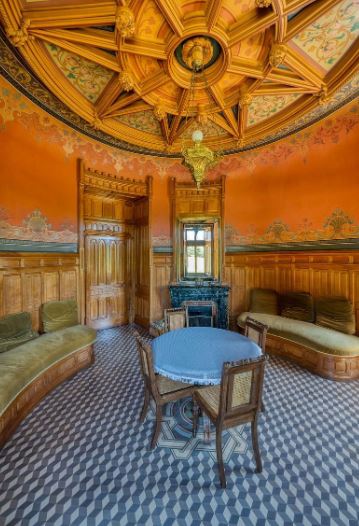
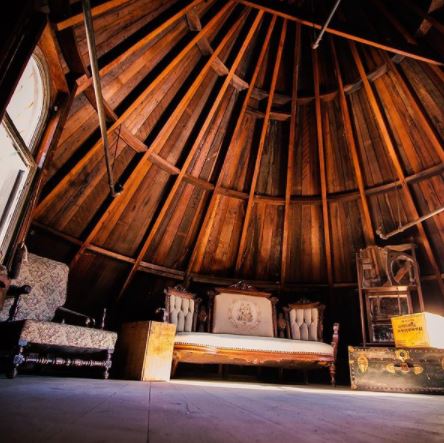
After a monetary hesitation, I led him upstairs into what was Mrs. Winchester’s principal bedroom. In the inner courtyard, there is a crescent shaped hedge that points to Mrs. Winchester’s bedroom—the one where she died. Coincidence? Maybe…but again, we will never know for sure. “Is this where the ghosts walk?” he asked as he glanced around the empty room. I was plainly annoyed by his insistence. “There are no ghosts, and they do not always anywhere,” I said irritably. I glanced up at the ceiling, and swiftly withdrew my eyes with a nervous tremor. I could tell the client was firmly persuaded that I had been the victim of some spectral horror, though I was anxiously trying to conceal it for fear of frightening him off. “Perhaps I had been not tell you anything,” I said, after considering a moment. “There is a great deal in the influence of suggestion, so it is said. If I were to tell you what the people who have slept in this room have seen, or dreamt they have seen, that might be enough to make you dream the same. Whereas, if a sensible man without any notions came and slept here, one would most likely never be disturbed.” Upstairs I showed him another room which was an unfinished attic space. The prospect from the widow showed hum that it was situated over the haunted chamber. “Is there something wrong with this room as well?” he demanded. “The servants do not like sleeping in it,” was my grudging admission. “It does very well as a boxroom.” The client was very anxious to secure an option to purchase the Winchester Mansion at the end of the month. My next step was to secure some attendance, and to send down some furniture for the many empty rooms which they mystery appeared to cling. All of Mrs. Winchester furniture had been sold at auction.

It took movers six weeks, six truck loads a day, to empty the mansion. Many of them often got lost. I was not very well pleased with the idea of taking the ghosts seriously. However, I knew that there were things in Nature which ordinary rules did not explain. I had seen things myself which could not be accounted for by natural means. I dared not tell the client that there had been a murderer lurking in the mansion ready to spring on potential clients and stab them. Suddenly, we heard a low moan—the moan of a creature in mortal terror, drawn out till it became a muffled scream. The moan was repeated, coming distinctly from the room below us. This is why I did not live having an open house at night. With candles in hand, as we reached the third floor landing the moan was repeated in a more terrible key—the key of horror instead of terror. At the same moment the door of one of the haunted rooms was thrown open, and suddenly Agnus, the maid, appeared on the threshold, with a cloak thrown over her shoulders, and a look of fear and distress on her face. “What is it?” I asked. “Merrill, she has seen something horrible, and I cannot get her to come to.” Without stopping to consider questions of etiquette, I dashed into the room. The gas had been turned full on, and by its light I saw the young lady lying stretched out on a couch at the foot of the bed, her features frozen into expression of one who looks upon some horrid sight, while from her parted lips there issued those appalling sounds which wounded like the stabs of a knife. I caught her by the shoulders and shook her, without making the slightest change in her swoon-like conditions. “Water!” I called out to Agnus, who stood wringing her hands, too dazed to act.
The water was brought, and I dashed half a glass in the face of the sufferer. At first it had no more effect than if she had been dead. Then came a startling change. The moans suddenly ceased, the victim opened her eyes, which showed the dull glassy stare of a somnambulist, and sitting half up, she commenced muttering so quickly and indistinctly that it was difficult to catch the words. “The blood, the blood, the blood, the blood, dripping, dripping, from the read lead in the ceiling, the red leak in the ceiling, in the ceiling, dripping on me, dripping on me, dripping on me!” The words rose into a wild shriek as her blank eyes were turned full on the ceiling overheard, the ceiling between the room she was in and the dressing room the size of three rooms. Involuntarily I looked up and the ceiling did not show the slightest mark. We lifted the unconscious lady and carried her out of the accursed room, and into one adjoining, where we laid her on the floor. Hardly had she passed the doorway of the haunted chamber when the dreadful screams began to die away, and the rigidity of the features to relax. In a short time the trance conditions passed away and we left Merrill to sleep. When she woke in the morning, we told her she had just has a bad dream, but she remembered nothing of what had passed in the night. At her own request, at breakfast, I described to her what had occurred, as minutely as possible. She was profoundly impressed. Of course, the client had bolted out of the house. However, Merrill, said with great conviction, “I am certain that what I saw represents something that actually happened in this house. Dreadful as it sounds, I firmly believe that somebody has been murdered in that attic with the witches cap, and that his blood did drip through the ceiling of the room below, as I saw it last night.”

As soon as the staff left the house, I went straight to a builder’s in the neighborhood, and engaged him to send some men to examine the flooring between two of the haunted rooms. The builder received my order with marked interest. “I knew there was something the matter with that house,” he observed. “It ain’t likely that tenant after tenant would come away sacred without something was wrong. Why, do you know, sir, in the last year since Mrs. Winchester died, I’ve white-washed one ceiling in the house thirteen times!” The builder’s interest led him to accompany his men, a carpenter and a plasterer, to the scene of action. I pointed out that place on the ceiling, as nearly as I could judge it, from which the ghostly dew had appeared to fall. Then men took measurements, and then, proceeding to the attic above, located a spot under the bed I used to sleep in. The bed was quickly removed, the flooring stripped off, and in the space between the joists there was exposed a mass of lime. Both the men, as well as their master, were quick to declare that the lime could not have been left there for no good,” the builder asserted. “If you want somethings hidden away and destroyed, there is nothing better than what lime is when it is fresh. It burns as well as fire, and makes no smoke.” “You mean a dead body?” I said shuddering. “I don’t say nothing about that,” the builder answered, pulling himself up. “It ain’t for me to say what that lime’s been used for. All I say is it wasn’t me that left it there, nor yet my men.” The two men began clearing the stuff away. The volatile element had evidently evaporated long ago. As they struck downward with their tools, one of them went through the plaster of the ceiling below, and a shaft of light came up.

An exclamation from one of the men followed. I bent down and peered into the cavity. On a large beam which here crossed the floor I saw a deep black stain, the stain of long-dried blood! A moment after the carpenter stood suddenly, griped about with one hand amid the woodwork, and drew forth to the light a small sharp stiletto, rusted with the same dismal stain. Nothing more was found. I gave the builder an order to entirely renew the flooring between these two haunted rooms. The most extraordinary part of the story remains to be told. The report of what had taken place having got abroad in the county, the local police came to me to obtain the stiletto, which I had been careful to preserve. By its means they were enabled to unearth a crime which had gone unsuspected till that hour, and to extort a confession from the murderer. Into the details of this terrible case, I do not care to enter. However, it is sufficient to say that the victim had perished while asleep in the attic, and that his blood had actually soaked through the ceiling into the room below, which was that of his murder—the Butler! Later that night, I was alone in the Winchester Mansion. A bright moon was out that night, and I heard a noise like a million soldiers, thrampin’ on the road, so I looked, and the hallway was full of little men, the length of my palm, with gray coats on, and all in rows like one of the regiments; each spoke with a pike on their shoulders and a shield on their arms. One was in front, byway he was the general, walking with his chin up as proud as a peacock. They marched right out the door-to-nowhere and there was another army of men with red coast. The two armies had the biggest fight you have even seen, the grays against the reds.

After looking on a bit, I got excited, for the grays were beating the reds like blazes. And then the sight left my eyes and I remembered no more until morning. I was laying on the floor, in the hallway, where I had seen them, as stuff as a crutch. Typically old castles, deserted graveyards, ruined churches, secluded glens in the mountains, springs, lakes, and caves all are the homes and resorts of fairies, as is very well known on the west coast. The better class of fairies are fond of human society and often act as guardians to those that they love. They are believed to living in the Winchester Mansion to receive the souls of dying and escort them to the gates of Heaven, not, however, being allowed to enter with them. On this account, fairies love graves and graveyards and of course this 160-room mansion built to appease the spirits who died at the hands of the Winchester rifle. They have often been seen walking to and fro among the rooms and gardens. There are, indeed, some accounts of faction fights among the fairy bands at or shortly after a new soul enters the mansion. The question in dispute being whether the soul of the departed belonged to one of the other faction. The amusements of the fairies consist of music, dancing, and ball playing. In music their skills exceed that of men, while their dancing is perfect, the only drawback being the fact that it blights the grass, “fairy-rings” of dead grass, apparently caused by a peculiar fungous growth. Mrs. Winchester used to host fairy balls in her Grand Ball Room, the music for which was furnished by an orchestra which the management had no doubt been at great pains expensive to secure and instruct. All around the fairies would dance like angels the fireflies giving them light to see by, and the moonbeams shinning on the lake for it was light to see by. Even now, staff who have been at the Winchester Mystery House sometimes hear the soft strains of their voices in the distance, and will hurry away least they discover one’s presence and be angry at the intrusion of their privacy.

When in unusually good spirits the fairies will sometimes admit a mortal to revels, but if one speaks, the scene at once vanished, one becomes insensible, and generally finds oneself by the roadside the next morning, with the drudgery of pains in one’s arms and legs and back, that if thirteen thousand devils were after one, one could not stir a toe to save the soul of one, that is what the fairies do be pinching and punching one for coming on them and speaking out loud. Black magic has not changed since the Middle Ages. The term “black art” was then applied to magic because the proficient in it were considered to be in league with the powers of darkness. The term “black magic” refers to the art of producing supernatural effect by direct league with Satan and demons. Frequently those who practice black magic make an actual pact with the powers of darkness, signing their allegiance to the devil in their own blood. This ceremony had come down from the Middle Ages to present-day Europe, where it is practiced in parts of Germany, France, and Switzerland. The ritual of signing an agreement involves a complete sell-out to the devil. Some magic involves the direct solicitation and help of demons, specifically the devil. It is the most terrible and powerful form of occult art, majoring in enchantment for persecution and vengeance, but also employing diabolical powers for defense and healing. An example of this nefarious practice is found in the death spells cast by witch doctors among aboriginal people, such as the Papuans on the island of New Guinea. Enchantment for persecution and vengeance, as well as for defense and healing, is still practiced today, not only in pagan cultures but also in civilized lands where occultism flourishes. Literature on magic was found in the Winchester Mansion and auctioned off with the rest of Mrs. Winchester’s belongings. There were incantations, charms, and spells.

One of the movers, who have never been troubled with psychic disturbances, returned home from taking the items to San Francisco to be auctioned off, and suddenly found himself suffering from acute fear dreams. He had the feeling during sleep that a neighbor lady, the mother of his coworker who was still missing after moving items out of the mansion, was strangling him. The tormented man went to an occultist who told him he was under magic persecution. The neighbor woman was seeking revenge on him for his good fortune in the light of her son’s bad fortune. With the occultist’s help, the terror-dreams creased. (That is why theft from the Winchester Estate is not tolerated. It is said to bring curses on those who remove sacred items without permission or payment.) Then the former mover found himself under a new attack: the neighbor was causing his cattle to die, head after head. The conjurer promised to remedy this new menace. Scraps of paper inscribed with magical formulae were to be mixed with the food of the cattle. The astonishing result was the cessation of the cattle epidemic. In addition to many cases of persecution and self-defense by black magic, occult healing are also common. A local farmer at the Winchester estate went to Mrs. Winchester for counseling and related the traffic results of charming by black magic. The farmer’s son had become paralyzed after an illness. The doctor could not help. However, Mrs. Winchester healed the boy through black magic, so that the paralysis disappeared completely. She had developed this skill after the death of her six-week-old daughter and her husband. Ancient and modern pagan religions, as well as those who subscribe to Christianity, have produced such psychically endowed mediums who have improved their gifts by the study and practice of the magical arts.

From what source people derive their power is not always clear—probably neither to they themselves nor their devotees have ever set themselves the task of unravelling that psychological problem. If they were turned wizards or witches, and indeed they only represented white witchcraft in a degenerate and colourless stage. Their entire time is not occupied with such work, nor, in the majority of cases, do they take payment for their services; they are ready to practice their art when occasion arises, but apart from such moment they pursue the ordinary avocations of rural life. The gift has come to them either as an accident of birth, or else the especial recipe or charm has descended from father to son, or has been bequeathed to them by the former owner; as a rule such is used for the benefit of their friends. Seen from the parapsychological point of view, magic persecution is a mediumistic problem similar to that of materialization. In the same way that a medium can emit energy that can be transformed into the phantasm of a man, so he is able to transform the same energy into the form of an animal. We have on record many cases of the materializations of dogs, cats, frogs, snakes, and even cases where the apparition was half man and half animal. If a phantasm is injured in some way at a spiritistic séance then the medium also suffers in a similar way. The same holds true in the case of animal phantasms. We are thus justified in coming to the conclusion that magic persecution is on the same level as materialization. Many methods of defence magic are based on this fact. If the victim is able to injure the phantasm that is assaulting one, it is reckoned that one has as good won the battle. We have seen then that certain forms of spiritistic offensive and defensive magic are based on materializations.

In 1888, a large black cat was found to be hanging around the Winchester mansion. In one of the cottages, on the estate, a farmer’s wife was about to give birth to a child. The cat would not go away until finally someone threw an axe at it, thereby injuring its leg. Next day it was discovered that an old woman on the estate also hurt her foot. The servants knew this woman to be a master of black magic, and indeed a few days later she took her revenge. On visiting the mother, Ida, of the new-born child, the witch murmured something and at the same time patted the child on the head. Thereafter the child cried continuously for days on end and could not be pacified. It was also discovered that as the child grew up its memory was particularly weak. Afterward the woman had three miscarriages, suffered the early death of her mother and disappearance of her father, but the source of her mental problems was far more spectacular than these mundane tragedies. Using hypnosis, Mrs. Winchester discovered that this mother to a new born had been repressing memories of an horrific past in which she had been an unwilling member of a murderous Satanic cult. Recollections would have convinced many mental-health professionals that she was suffering from pathological delusions. Her “memories” revealed a cult, led by the a monstrous Joris-Karl Huysmans, who indulged in acts of unbelievable brutality in the name of the Devil, such as blood-drinking, and other unspeakable acts. Mrs. Winchester considered the woman to be of nervous debility and easily influenced. When she had the servants cottage searched, they discovered a secret room, holding an apparently sacrificial altar with a wooden dagger suspended above a glass bowl.

In our files, there are about 40 examples involving cats, and almost all of them deal with the same problem, that of a person causing an apparition to appear in the Winchester Mystery House or elsewhere on the estate. Hamilton Howard was once hired for a job on the estate. The young man was on the verge of being dismissed because he very mysterious. He had a fair share of Satanic drawings in the cottage he was allowed to stay in, while working at a farm hand, and he never had meals with the other men. He belonged to a blood drinking cult. This might explain why stories began circulating about the carcasses of cows being discovered on Mrs. Winchester’s farm and other nearby farms drained of blood, with their eyes, lips, and private organ removed. The mystery of where the blood had cone, and how and why these animals had been operated on with seemingly surgical precision, gave birth to stories of Dracula in California and the California Cannibals. Occasionally, starving people have resorted to cannibalism for survival necessity. It is no secret, however, that Mrs. Winchester had her fair share of hauntings. One night, she heard footsteps going from the basement to the attic and then back again. There were also footsteps in the hall and at first, they thought that it was a burglar. Often her staff would search for an intruder. In addition to the footsteps the lights were sometimes turned on, and the gas too. No amount of careful investigation was able to produce any evidence as to the cause of the apparent haunting. One night, Mrs. Winchester had a séance in her Blue Séance Room. The spirit with whom she had made contact started that he had been a Catholic priest who had lived in the house 200 years before she renovated the original farm house and turned it into a mansion. He had murdered his housekeeper and had buried her in the basement. Since then, he had had to haunt the scene of his crime.

When asked in which room he had murdered the housekeeper the table suddenly began to move across the floor. It then hit the door of the room so hard that the wood was chopped. As Mrs. Winchester opened the door, the table rushed into the adjoining room and slid into the corner. In the course of doing this it hit an oak bedstead so hard that it left a permanent impression on it. The spirit was questioned further and when she asked is there was anything that could be done for him, he replied, “Yes, you can pray for me.” Mrs. Winchester did in fact pray for the restless ghost after that, and for a number of years the mansion was no longer haunted. The mansion has been haunted for several generations before its expansion. However, more than one ghost was attached to the property and it became a nexus for spiritual activity. Every person possesses one’s own home spiritually. This possession continues to live on in the house after the departure of the person concerned. Humans do not only leave behind their physical body when they die, but also a spiritual “larva.” When one dies, one leaves a spiritual complex behind that has an independent existence in the astral World, and which sometimes only disintegrates centuries later. This spiritual complex is supposed to cause the phenomen on ghost and apparitions. For some, the real of the dead is not so much a place as a state of being, and some think that there are times, as for example at one’s deathbed, when this realm of the dead becomes visible to our Earthly eyes. The idea that human beings have to remain in the mortal sphere after their death until they are freed from all the thing that once tied them to the World is widely accepted. This idea is similar to the popular opinion that criminals and other such people have to haunt the place of their crime until they are taken out of this sphere to a higher or lower level of existence. Ghosts do not occur only in connection with spiritism, but we have dealt with them here since the problem arose.

Winchester Mystery House

Are you brave enough to explore the house at night? 👀 The Winchester Mystery House is offering Friday the 13th Self-Guided Flashlight Tours. Tickets going fast! Click the link or hastage for tickets and more information.

NEVER MISS A MYSTERIOUS MOMENT

As enshrined in legend as Mrs. Winchester is her beautiful mansion, the Winchester Estate (now known as the Winchester Mystery House). No casual visitor can see it all. Palatial elegance unfolds with each turn. Nowhere is there more conspicuously displayed occult history, habits, and characteristics of the Victorian people. According to the most reliable of the honorable grounds’ keepers, the rural “fairy-men,” a race now nearly extinct, the fairies were once angels, so numerous as to have formed a larger population of Heaven. When Satan sinned and drew throngs of the Heavenly host with him into open rebellion, a large number of the less warlike spirits stood aloof from the contest that followed, fearing the consequences, and not caring to take sides till issue of the conflict was determined. Upon the defeat and expulsion of the rebellious angels, those who had remained neutral were punished by banishment from Heaven, but their offence being only one of omission, they were not consigned to the pit with Satan and his followers, but were sent to Earth where they still remain. Many of them took up residence at the Winchester mansion, not without hope that on the last day they may be pardoned and readmitted to Paradise. They are thus on their good behavior, but having power to do infinite harm, they are much feared, and spoken of, either in a whisper or aloud, as the “garden people.” These fairies are not solitary, they are quite sociable, and always live in large societies, the members of which pursue the cooperative plan of labor and enjoyment. They helped to build the Winchester mansion, and are also responsible for making the grounds so beautiful. They travel in large bands, and although their parties are never seen in the daytime, there is little difficult in ascertaining their line of march, for, sure they made the terriblest little cloud of dust ever raised, and not a bit of wind in it at all, so that fairy migration was sometimes the talk of the country.

Though, be nicer, they are not the length of your finger, they can make themselves the biggness of a tower when it pleases them, and with that ugliness that you would faint with the looks of them, as knowing they can strike you dead on the spot or change you into a dog, or a pig, or a unicorn, any other beast they please. As a matter of fact, however, the fairies are by no means so numerous at present as they were formerly. Someone was rapidly driving them out of the Winchester mansion, for the suspect(s) hated learning and wisdom and are lovers of discord and dysfunction. Many people were envious of Mrs. Winchester’s estate. A mansion is not a mansion and Mrs. Winchester was just as attentive to the exterior of her estate as she was to the rambling labyrinth. The fairies helped Mrs. Winchester by planting rare and exotic plants, flowers, trees, shrubs, and herbs from over 110 countries around the World. Some of the original plantings still flourish today—among them, 140-year-old rose bushes, ferns, and feather and fan date palms, as well as evergreen trees. Mrs. Winchester loved to spend time in her gardens, and she had gazebos built where she could sit and enjoy her trees and flowers. Nearly 12,000 boxwood hedges were planted along the pathways tht wind through the gardens. In addition, all the laws were replanted, and some 1,500 major plants, shrubs, and trees were replaced. Today the home and its garden are still the showplace of the Satan Clara Valley, a reminder of the gracious past, which we will discuss more of. Mrs. Winchester gave her estate, Llanada Villa, a mysterious name. The words are Spanish for “house on flat land,” but no one knows what special meaning they had for Mrs. Winchester.

The Winchester mansion is priceless. It has had more people begging to purchase it than any estate in the World. Many people also desire to invest it the mansion and restore it to its former glory. However, the owners like to leave some rustic evidence of the past, but are restoring some of the rooms that were damaged in the 1906 earthquake to their former glory. It now contains 160 room (but was significantly larger), 25,000 square feet (that is about the size of 20-40 houses, and maybe more because the attics and basements are not counted in the square footage), there are 10,000 windows, nine kitchens, and 47 fireplaces built of rosewood, cherry, mahogany, Italian marble, oak, teak, and pipestone; all hand carved and no two alike. Not including the fairies, commonly, 16 carpenters were employed at one time, some having worked for 20 years without change. They produced the largest, most complicated, and exclusively private residence in the United States of America. There are five different heating systems and three elevators, one hydraulic and two electric. Some of the 13 bathrooms lacked privacy; they have glass doors! One rambling room has four fireplaces and five hot-air registers. A spiral stairway has 42 steps, each two inches high. Other stairways melt into blank walls. A second story door opens into the great outdoors and a 20-foot step. A linen closet has the area of a three-room apartment; a nearby cupboard is less than one-inch deep. A skylight is placed in the middle of a room, in the floor! Another floor is apparently a series of trap-doors. Exterior faucets project unexpectedly from under second-story windows. The visitor must stoop through one door to enter, the next gives clearance for an eight-foot giant. Many stairways turn posts are set upside down. Entire walls are built entirely of half-inch “half-round” strips. Many of these oddities may have been to accommodate the fairies.

Everywhere prevails that strange deference to the number 13; 13 stairsteps, 13 hangers in a closet, 13 wall panels, 13 lights in the chandeliers, 13 windows to a room and if necessary to make that number, some placed in an inside wall. Although Mrs. Winchester’s arrival in California was sensational, the fairies were in the country long before the coming either of human beings or animals. The bodies of the fairies are not composed of flesh and bones, but of an ethereal substance, the nature of which is not determined. One can see themselves as plain as the nose on one’s face, and can see through them like it was a mist. They have the power of vanishing from human sight when they please, and the fact that the air is sometimes full of them inspires the respect entertained from them by humans. Sometimes they are heard without being seen, and when they travel through the air, as they often do, are known by a humming noise similar to that made by a swarm of bees. Whether or not they have wings is uncertain. John Hansen, who was caretaker of the estate, thought they had; for several seen by him a number of years ago seemed to have long; semi-transparent pinions, like them that grow on a dragon fly. Young lady fairies wore pure white robes and usually allowed their hair to flow loosely over their shoulders; while fairy matrons bind up their tresses in a coil on the top or back of the head, also surrounding the temples with a golden band. Young gentlemen elves wore green jackets, with white breeches and stockings; and when a fairy of either gender has need of a cap or head-covering, the flower of the fox-glove is brought into requisition. Male fairies are perfect in all military exercises, for, like the other inhabitants of the Winchester mansion, fairies are divided into factions, the objects of contention not, in most cases, being definitely known.

One night, the wind was roaring; and the windows rattled and the mansion creaked like it was moving to a different location. Mrs. Winchester then knew her house was possessed of unusual powers. She could feel the reaper. The next day, Ezra Benson, the head chef, was not down stairs at five in the morning preparing Mrs. Winchester’s breakfast, as was his custom, nor at seven, nor at nine. As the servants went into the kitchen, a glass ball came flying into the room, and all the doors and windows had been shut! The ball fell at the feet of Agnus who picked it up. It felt hot, but was undamaged. On the ball was a picture of Mrs. Winchester. She claimed that ball had been in the living room, and so the servants when to investigate. The ball in the living room had disappeared! As the servants continued to search around searched around the house for Ezra, they saw 135 objects fly through the rooms in an inexplicable manner. Hereupon the servants went and knocked at his chamber door. The door was opened at last from the outside, and they found Ezra dead and black. No marks of violence appeared at the moment, but the window was open. As was, natural, in the great swelling and blackness of the corpse, there was talk made among the neighbors of poison. The body was very much disordered as it laid in bed, being twisted after so extreme a sort as gave too probable conjecture that Ezra had expired in great pain and agony. And yet what is as yet unexplained, Aimee du Buc de Rivery was entrusted with the lay-out of the corpse and washing it, being both sad and well respected, she went to Mrs. Winchester in pain and distress of both mind and body, saying, what was indeed confirmed upon the first view, that she had no sooner touched the breast of the corpse with her naked hands than she was sensible of a more than ordinary violent smart and aching in her palms, which, with her whole forearms, in no long time swelled so immoderately the pain still continuing, that, as afterwards proved, during many weeks she was forced to lay be the exercise of her calling; and yet no mark seen on the skin.

Upon hearing this, Mrs. Winchester made as careful a proof as she was able by the help of a small magnifying lens of crystal of the condition on the skin on this part of Aimee’s body: but could not detect with the instrument she had any matter of importance beyond a could of small punctures or pricks, which Mrs. Winchester then concluded were the spots by which the poison might be introduced. So much was to be said of the symptoms seen on the corpse. There was on the table by the bedside a Bible of the small size. Mrs. Winchester took it and went into her Blue Séance room where she was going to try to get a message from the superstitious practice of drawing. Proficiency in occultism in general combined with abilities and gift in magical arts in particular is not an accident. Endowment with magical powers may be the result of a number of factors. First, and perhaps foremost, is heredity. Also important are occult transference, subscriptions to Satan, and occult experimentation. The general history of occultism shows that mediumistic powers can often be traced through four generations. It is a common thing for a dying father to bestow upon his eldest son or daughter his magical abilities. As Mrs. Winchester was writing to find the cause and events of these dreadful events. She went into a trance, and wrote “Cut it down. It shall never be inhabited; her young ones also suck up blood.” Ezra was laid to rest. His room was not slept in by anyone else. A certain amount of interest was excited in the city when it was known that a famous witch, Ursula Southeil, who was still remembered by a few, was to be exhumed. She had supposed moved to San Jose, California 1885 and shortly after was buried. People believed that maybe she had been hexing the Winchester estate. And the feeling of surprise and indeed disquiet, was very strong when it was found that, though her coffin was fairly sound and unbroken, there was no trace whatever inside it of body, bones, or dust.

Indeed, it is a curious phenomenon, for at the time of her burying no such things were dreamt of as resurrection-men, and it was difficult to conceive any rational motive for stealing a body otherwise then for the use of dissecting-room. Mrs. Winchester knew the secrets of this terrible death was mystery. Many believed that the spirit of Ursula had using Mrs. Winchester’s mansion as her lair and needed to be forced out. They found below a white oak a rounded hollow place in the Earth, wherein were two or three bodies of creatures, and at the side of this den, against the wall, was crouching the anatomy of skeleton of a human being, with the skin dried upon the bones, having some remains of brown hair, which was pronounced by those that examined it to be undoubtedly the body of a woman, and clearly dead for over hundred years. The history of magic is replete with extraordinary extrasensory phenomena that involved the spirit realm and every phase of the natural World as well, including human beings, animals, plants, and inorganic matter. Spirit-rapping, apparitions, ghosts, moving of furniture, and playing of musical instruments by invisible hands, stones falling from a ceiling, magical killing of cattle, unexplained creatures, and blighting of crops, et cetera, are just a few of the weird occurrences that took place at the Winchester mansion that fill the annals of occult practice. Incredible as it may seem, even in modern scientific age millions are now, or have been at some time, involved in some manner with ancient magic practices and rites, ranging from using spells, magic herbs, and hex signs on houses and barns (which can still be seen in some areas of the estate and other places). The precise character of magic has been even more heatedly disputed than its definition. One lauds it as a gift from God. Another denounces it as an operation of Satan and demons. Another denies it any moral quality and views it merely as the working of neutral forces of nature, which can be employed either positively or negatively.

The liberal theologian sees magic as the crystallization of time-bound ideas and customs. They psychologist looks at the magically subjected person as wrongly adjusted to life and the natural World. The psychiatrist sees the whole magical complex as symptomatic of mental aberration. The Christian Bible condoms magic, it clearly recognizes the reality of its power. (Exodus 20.1-6; Deuteronomy 18.9, 10). Human history will end with a tremendous demonic revival (Revelation 9.1-20) that will culminate in the reign of Antichrist, who will be attended by diabolic signs and magical wonders (2 Thessalonians 2.9-12; Revelation 13.13-18). Armageddon will be a demon-energized revolt and a satanic attempt to take over the Earth (Revelation 16.13, 14). Just as modern humans have inherited their ideas of God and the Universe from their Christian predecessors, so had they inherited the Devil. Satan is an archetype, a force embedded in humans’ unconscious, a remnant of their psychological evolution. Satan is the child of fear, and fear is innate in all humans. Eve from the Garden of Eden used to roam around and take up with animals. Nothing was amiss to her, in the animal line. She trusted them all, they trusted her; and because she would not betray them, she thought they would not betray her. The snake advised her to try the fruit of the forbidden tree, and told her the results would be a great and fine and noble education. Adam told her there would be another result, too—it would introduce death into the World. That was a mistake—he should have kept that remark to himself; it gave her an idea. Adam escaped that night, and rode a horse all night as fast as he could go, hoping to get clear out of the Garden and hide in some other country before the disaster should fall. Eve had eaten the fruit and death was come into the World.

Eve found Adam outside the garden. He was not sorry she had come, for there was absolutely nothing to eat, but meagre pickings here, and she brought some of those apples, and Adam was obliged to eat them, he was so hungry. It was against his principles, but he did it anyway. Evil, as it has appeared through human history, has a schizoid development, manifesting itself in two forms. The most elementary of these forms is purely internal, deriving from humans’ instinctual drive toward self-preservation, the concept “self” here including humans’ own physical being and the physical beings of related others. The object of this type of fear is anything that humans might see as impairing one’s fight for survival. As the primitive human sits in a jungle clearing by his fire at night and hears the sounds of animals stirring in the bushes around him, he fears for his safety. He feels powerless and is overcome by a seemingly unbridgeable gap between knowledge and environment. He feels himself to be a mere pawn, a plaything, victimized by nature’s capricious ways. Drowned by nature’s angry waters, baked by her merciless sun, attacked by her vicious animals, starved, beaten, bullied, he is at a loss for an explanation. Though fully aware mentally, he finds himself totally blind in the face of her inscrutable ways. What recourse does he have? He must attempt in some way to make these strange and wonderous forces less capricious and more subject to his control. So he recreates them in his own mind, makes them more tangible, more related to his own experience. He takes them out of their detached state to give them more personal meaning. Once he has done this, he had some recourse for his grievances: now he may make offerings, get down on his knees and ask the god for a good crop or an abundant herd, attempt to cajole or coerce the god into granting his request.

Those deities that humans have traditionally created to represent evil have stemmed from those forces of nature that they have found to be most uncontrollable; the shapes into which they have been cast being those shapes and forms that they have feared the most. Primitive humans saw hideous demons with six heads and fierce claws waiting from them in the darkness, and they were forced to respond to the danger. The popularity of heavy metal rock acts in the 1970s gradually started to work against them, as audiences associated them with big business rather than rebellion. However, the music changed. Heavy metal had moved out of the Californian sunshine and cosmic otherworldliness of the late 1970s, back into the rainy alleyways and gloomy English pubs that were its birthplace. Satanism had also secured a prominent position in the iconography of the New Wave. For most bands, it was nothing more than an exciting image that sold records. However, the Devil could be a risky card to play—as is His nature, for every potential fan He attracted, He also incited hostility. Iron Maiden’s 1982 album Number of the Beast, which sported a leering Satan on the cover, proved to be their commercial breakthrough. The title track, like the eponymous “Black Sabbath,” describes stumbling across an horrific Satanic ritual. Despite bassist Steve Harris’ limp insistence that “Number of the Beast” is an anti-Satan song, the record not only took them to the top of the charts but also to the top of the hate list for Christian anti-rock campaigners. The band were more than a little complicit in this, hyping the album with spooky stories about its cursed conception: mysterious power failures, radio interference and exploding amps apparently plagued the recording sessions: most sinister of all, the producer had a car crash at the time, his repair bill coming to $666.

More petitely, as Anton Lavey once noted, you cannot employ Satanism without promoting it. True to this dogma, other young bands utilized Satan not as a throwaway reference but as the core of their identity. Their new sub-genre would become knows as black metal, after a 1982 album titled by the band Venom. In many ways black mental is the musical genre that never was—its style is basically the rawest, most malignant heavy metal, with a strong occult element in the lyrical content. The Satanic tag attracted a strange regiment of musicians who wished to test the musical and moral boundaries of what the rock business deemed acceptable. Prominent among these bands was Witchfynde, founded in 1976. They never enjoyed much success, and were almost universally spurned by the music press, but some of their material retains a darkly naïve charm—especially on their 1980 debut Give ‘Em Hell. According to press releases of the time, “It is no secret that guitarist Montalo does more than dabble in the occult and that both he and the band draw upon these sources for guidance.” Though Anglewitch, disassociated themselves from the darker edges of the occult—notably in the song “Hades Paradise,” in which they accuse Satanists of being “sick in the head,” there were suggestions that Angelwitch’s occultic roots were darker than they would have their audience believe. Most unusual in their approach were Demon. Unlike their contemporaries, who boosted their Satanic imagery with aggressive guitars, Demon’s keyboard-anchored sound emphasized more mystical, subtly sinister aspects. Like Black Sabbath, Demon hypocritically warned against the subject that clearly fascinated them. The audience that eluded Demon flocked to a number of black metal acts who matched extreme Satanic lyrics with extreme, blistering tones. At the forefront were the Danish band Mercyful Fate, led by the unashamed Satanist King Diamong—who, taking the stage in black and white face paint, would influence the visual image of Satanic rock for decades to come.

Formed in 1981, the band debuted with the mini-album A Corpse Without a Soul. The cover boasted a scandalous sketch inspire by the song “Nuns Have No Fun.” Mercyful Fate’s first full-length album, Melissa, came out in 1983, inspired by a skull Diamond which he liked to believe once belonged to a witch. Don’t Break the Oath, which followed the year after, contained a title track which was Diamond’s most brazen dedication to Satan: “By the symbol of the Creator, I swear/A faithful servant of his most puissant Archangle/The prince Lucifer/Whom the Creator designated as his Regent/And Lord of this World. Amen.” King Diamond followed this same devotional approach to Satanism in interviews and everyday life. His inspiration was Anton LaVey, who Diamond visited in San Francisco (during this visit, the eccentric LaVey regaled his Danish guest with a keyboard rendition of “Wonderful Copenhagen”). In return, King Diamon received an honorable mention in LaVey’s 1990s biography, The Secret Life as a Satanists, as the only Satanic rocker then paying proper dues to the Prince of Darkness. He won the respect of figures in both the occult ad rock Worlds for his well-mannered sincerity. The shell of Mercyful Fate went off to form the uninspired Fate, while in Diamond’s new band, the modestly-titled King Diamond, Satan was conspicuously by his absence. However, the songs were atmospheric mini-horror movies, and the anti-Christian slant remined—most notably on their best release The Eye, which retold a historical tragedy surrounding the Catholic Inquisition—though records sold disappointingly. Often times, it is the band’s Satanism, however, that convinced many young metal fans to buy the album. On the band Venom’s debut album Welcome to Hell ran the blurb on the back of the sleeve, “We’re possessed by all that is evil. The death of your God we demand. We spit at the virgin you worship. And sit at Lord Satan’s left hand.”

One could day that concerts are Satanic rituals because one is definitely letting so much energy loose. If one did it the right way, one could probably turn it into one of the most powerful Satanic rituals. My God it would be powerful. Satanism is a lot to do with a life philosophy. There are also the steps of how to perform a ritual. However, there too you have to be careful. Not just everybody can do it, you have to have certain features and abilities so you can release the right energies at the right moment. If you cannot do that, nothing will come of it. Many artists perform Satanic rituals at home, but not on stage because they do not want to take advantage of the audience. Satan stands for the powers of the unknow, the powers of darkness, that are all around us which we can use for our or other people’s benefit. Satanism sells because it is the twisted horror of it. Horror sells, death sells, anything nasty sells. You just have to turn on your TV and watch the news and there is more and more violence in your face. Why? Because people like to see it. They like to sit there and know it is not them—that they are better off. Sometimes it is healthy because these things happen, you cannot avoid them. There is no way you can erase that part of life. I do not think we have more or less bad in the World since I have lived. It just moves around a bit. It Is always going to be there, you might as well try and learn to live with it. People like black metal because it gives you a shiver up your spine. There are different purposes to music and different songs that generate different basic emotions—pathos or a marching tune, for example. Successful music feeds upon your emotional needs, while dissonant music feeds humans’ habitual masochism. If you watching the 2001 Anne Rice film, Queen of the Damned, you can get a feeling at the excitement of black metal and Satanism, but as experts recommend, be careful. The star of the film, the beautiful Aaliyah died in a plane crash just months before the film was released. She was only 22, but the film is really intense, and Queen of the Damned is also a great sound track.

Satanists are on the move. Other Satanists might not be quite as “understanding,” but there is a warning to those who tap into Satanism for economic advantage; they should be careful not to slander their seminal roots. They may not care now, but they may vert well have to care in the future. Aaliyah really got into the dark roots and even studied Egyptian culture and loved rock music, but experts are not joking with their warnings. It is a dangerous hobby and way of life. Magic and the fall of man—magic came into being with the spiritual fall of man at the threshold of human history. Demonic forces are engineering the gigantic apostasy of the end of time that will culminate in the rise of Antichrist and the greatest demonstration of diabolic miracle and demonic wonders the World has ever seen (2 Thessalonians 2.8-10; Revelations 13:1-18). One can imagine tht in the hands of a person of criminal tendencies such a spiritistic ability would be the cause of much harm. Mrs. Winchester reported that for several years she had been frightened each night by the appearance of one of her neighbours between 12 and 1 o’clock. Passers-by also heard ghostly music wafting from the dark mansion. Every time this had happened, Mrs. Winchester had woken up with a start. She had been terribly frightened. It was not a dream for she has always seen the apparition as she was actually waking up. The phantom was in fact that of one of them women in the county. This particular woman had the reputation of being an evil person who indulged in plaguing people through black magic. After the woman’s death, Mrs. Winchester ceased to have these strange experiences. I guess the bell in the belfry summoned her with the incoming flights of spirits, and then tolled again to warn her, along with other visitors, to return to their sepulchers.

A young farmer on the Winchester estate had the experience of being beaten up at night in his Victorian cottage on the estate. Sometimes he was beaten so badly that he actually bled. The whole village had seen him on numerous occasions with black and blue weals across his body. As is only to be expected in a country where the majority of the inhabitants were engaged in agricultural pursuits, most of the strange doings are not only connected with ghost, but with cattle as well. One of the herdsmen at the Winchester estate had wounded a hare, which he had discovered sucking on one of the cows under his charge, tracked it to a solitary cottage near the mansion, where he found an old woman, smeared with blood and gasping for breath, extended almost lifeless on the floor. Certain witches had the power of turning themselves into hares and in that shape sucking cows. The early demons, however, were never complete personifications of evil in the social sense. They were always incomplete in their evilness, due to their rather personal nature. For the most part, they were projections of man o nature and, as such, most of them had at least some of humans’ character in them, rendered both consciously and unconsciously. This can be seen in the mythologies of the winged serpent, for, in fact humans’ ambivalence toward oneself and nature is reflected in one’s casting of one’s many demons and gods in this shape. The wings are symbolic, at an unconsciously level, of a loftier striving, an attempt at spiritual transcendence, while the snake has always been an object of instinctual fascination for humans. Humans’ ancient dichotomy of intellect versus instinct is apparent in this symbolism. The old gods, then, were oddly like men, so that they could either heal or destroy, assist man or plague him, depending on whether he awoke in the morning with heartburn or had had a satisfying night with his wife. Evil structuralized in society is socially harmful, and it threatens social rather than person disintegration. Evil inspires fear and awe and thus assume the proportions of a force of nature.

When Mrs. Winchester’s safe was open, after she went to Heaven, an ivory tablet was found that said, “Lord Satan approves.” However, it was not in Mrs. Winchester’s hand writing. The ivory tablet was authenticated. Radio carbon dating indicated that it dated back to the 17th century. One of the movers thought someone from a satanic cult was monitoring them when they opened the safe. One of the guys quickly quit and dedicated his life to Christ. And just a few years ago, as the Winchester Mystery House was closing for the night, a glass rose into the air, then slowly put itself back down on the table. Some of the tour guides feel very comfortable when they see things like that happen because they believe the spirits are their protectors, guardian angels, and feel very comfortable that they are still in the mansion that was built by spirits. Magical powers may be acquired by signing an agreement with Satan, often in one’s own blood. (Please do not try this. Self-harm is not acceptable.) This is an age-old phenomen. Isaiah mentions “making a covenant with hell” (28.15). Such blood-bound occultist frequently become endowed with astonishing magic capabilities. However, they become demonic captives and may be delivered only with the greatest difficult. Often they become hopelessly shackled. The practice of a satanic blood pacts is not a mere superstitious hangover from medieval witchcraft and hobgoblins. It is a well-known and fairly common custom today in various rural districts of Europe where magic literature has circulated for centuries and magical powers have passed from one generation to another. Magical powers can also be acquired through dabbling in the occult. In the late 1900s, a farmer at the Winchester mansion wanted to become rich like Mrs. Winchester. He became enamored with tales of easy money made by occult healers and mesmerizers. He purchased some magical literature and stated mastering charms and spells, underwent devils’ ceremonies, and began healing experiments. His magical healing ability developed rapidly. He soon found his income far exceeded his former wages. Numerous forms of magic exist. Among them are black magic, white magic, neutral magic, mental suggestion, criminal hypnosis, and magical mesmerism. When any of these forms enlist demonic powers, they are authentic cases of magic. In the absence of occult power, the phenomena do not belong to the field of magic.


Happy Earth Day! Mrs. Winchester was very “green” for her day – before it was popular!

An example can be found in the North Conservatory – not wanting to waste resources, she had the floor built at an angle so that excess water would flow down to the exterior gardens below!

Victorian Seance? Fate & Fortune Telling? Count us in 🙋🏻♀️ Join us on April 29th as we welcome back Aiden Sinclair to The Winchester Mystery House. Purchase your tickets today – they are going FAST! https://www.winchestermysteryhouse.com/aiden-sinclair/

The Great Depression of 1930s Never Ended

The strict and rigid doctrines will at most permit you to carry out conditionality with your life and to “remain free” in your soul. However, one that returns considers this freedom the most ignominious slavery. In A Room of One’s Own, Virginia Woolf’s ringing essay about women’s need for personal autonomy including independent means, she fantasizes that William Shakespeare had a sister Judith, every bit as gifted and imaginative as he was. However, as she was a girl, the Shakespeares did not send her to school as they had her brother, for in those days, girls stayed home, apprentices training for their future as housewives and mothers. Judith was restless as she mended William’s torn trousers, absentminded as she bent over to stir the oily stew pot. Sometimes, rebelliously, she would snatch up a book and read a few pages, until Mistress or Mr. Shakespeare caught her slacking and sharply rebuked her for mooning about. In wilder moments, perhaps Judith even scribbled down her thoughts and dreams, then burned her work to hide all traces of her insubordination. Before Judith was out of her teens, the Shakespeares arranged her betrothal to the son of a neighboring wool stapler. “Marriage is hateful!” she cried out in desperation when her parents informed her of their decisions. Alarmed and angry, Mr. Shakespeare beat her severely, then relented and, instead, implored her not to shame him with her sullen behavior. He even restored to bribery, promising her a necklace or a fine petticoat in return for her sunny cooperation. Judith was brokenhearted, torn between loyalty to her parents and to the fierce longings for her unquiet heart. Her heart prevailed, and with a bundle of her meager possessions, she ran away and set out for the theaters of London. However, the managers were blind to her genius for fiction, her lust “to feed abundantly upon the lives of men and women and the study of their ways.” She might be as talented as young William, but Judith Shakespeare was a female, and that was all anyone needed to know. #RandolphHarris 1 of 18

At last Nick Greene, an actor-manager, took her in. He also deflowered her and made her pregnant. Driven by “the heat and violence of the poet’s heart when caught and tangled in a woman’s body,” Judith killed herself. Judith’s dilemma was every Elizabethan woman’s. The brilliant, artistic soul trapped inside her body would, Mrs. Woolf said, “certainly have gone crazed, shot herself, or ended her day in some lonely cottage outside the village, half witch, half wizard, feared and mocked at.” In Judith’s case, attempting to breach the dramatic World of actor-managers was fatal, for it meant compromising her chastity. And “chastity had then, it has even now, a religious importance in a woman’s life, and has so wrapped itself round with nerves and instincts that to cut it free and bring it to the light of day demands courage of the rarest…It was the relic of the sense of chastity that dictated anonymity to women even so late as the nineteenth century.” Chastity in this Woolfian sense extends far past inviolate private parts and encompasses both intellect and spirit. Their purity, like the body’s, is defined by rigid conventions, penetrable only by appropriate agents designated by social and cultural mores. A wild spirit, free-ranging and unfettered, was unchaste. A surging ambition, longing to communicate to the World, was unchaste. Judith Shakespeare combined these with a grateful heart and surrendered her chastity, forking it over in return for the chance—unrealized!; stolen from her by Nick Greene’s lustful bullying—to touch the World in iambic pentameter. Chastity is the ultimate purity. Those who are chaste are morally clean in their thoughts, words, and actions. Chastity means not having any relations involving pleasures of the flesh before marriage. It also means complete fidelity to husband or wife during marriage. #RandolphHarris 2 of 18

Breaking the law of chastity and encouraging someone else to do it is not an expression of love. People who love each other will never endanger one another’s happiness and safety in exchange for temporary personal pleasure. When people care for one another enough to keep the law of chastity, their love, trust, and commitment increase, resulting in greater happiness and unity. In contrast, relationships built on pleasures of the flesh and immorality sour quickly. Those who engage in pleasures of the flesh and immorality often feel fear, guilt, and shame. Bitterness, jealousy, and hatred soon replace any beneficial feelings that once existed in their relationship. We have been given the law of chastity for our protection. Obedience to this law is essential to personal peace and strength of character and to happiness in the home. Those who keep themselves sexually pure will avoid the spiritual and emotional damage that always comes from sharing physical intimacies with someone outside marriage. Those who keep themselves sexually pure will be sensitive to the Universe’s guidance, strength, comfort, and protection and will fulfill an important requirement for receiving a temple recommended and participating in temple ordinances. Sins of pleasures of the flesh are more serious than any other sins except murder and denying the Creator. All pleasures of the flesh relations outside of marriage violate the law of chastity and are physically and spiritually dangerous for those who engage in them. Therefore, abstain from fornication, and speak out against the evil practice of sexual abuse and those who bare false testimony about it. Those who find themselves struggling with temptations of pleasures of the flesh, including nontraditional attraction, should not give in to those temptations. People can choose to avoid such behavior and receive help as they pray for strength and work to overcome the problem. No matter how strong the temptations seem, you can withstand them. #RandolphHarris 3 of 18

Most useful theories about science invoke unseen forces to explain observable events. However, the unseen forces (exempli gratia, gravity) should be capable of generating fairly reliable predictions. Does the invocation of God in Creation Science meet this criterion? Does Natural Selection? We suspect that when these two theories are put side by side and students are given the freedom to judge their merit as science, Creation theory will fail ignominiously (although Natural Selection is far from faultless). In any case, we must take our chances. It is not only bad science to allow disputes over theory to go unexamined, but also bad education. Some argue that the schools have neither the time nor the obligation to take notice of every discarded or disreputable scientific theory. “If we carried your logic through,” one science professor has said to us, “we would be teaching post-Copernican astronomy alongside Ptolemaic astronomy.” Exactly, and for two good reasons. The first was succinctly expressed in an essay George Orwell wrote about George Bernard Shaw’s remark that we are more gullible and superstitious today than people were in the Middle Ages. Mr. Shaw offered as an example of modern credulity the widespread belief that the Earth is round. The average man, Mr. Shaw said, cannot advance a single reason for believing this. Mr. Orwell took Mr. Shaw’s remark to heart and examined carefully his own reasons for believing the World to be round. He concluded that Mr. Shaw was right, that most of his scientific beliefs rested solely on the authority of scientists. In other words, most students have no idea why Mr. Copernicus is to be preferred over Mr. Ptolemy. If they know of Mr. Ptolemy at all, they know that he was “wrong” and Mr. Copernicus was “right,” but only because their teacher or textbook says so. #RandolphHarris 4 of 18

The way of believing that inclines one not to questions textbooks or specialists is what scientists regard as strict and rigid and authoritarian. It is the exact opposite of scientific belief. (This works when one’s job is based on being fair and unbiased and knowing that their performance matters to their career and name.) Nonetheless, real science education would ask students to consider with an open mind the Ptolemaic and Copernican World views, array the arguments for and against each, and then explain why they think one is to be preferred over the other. A second reason to support this approach is that science, like any other subject, is distorted if it is not taught from a historical perspective. Ptolemaic astronomy may be a refuted scientific theory but, for that very reason, it is useful in helping students to see that knowledge is a quest, not a commodity; that what we think we know comes out of what we once thought we knew; and that what we will know in the future may make hash of what we now believe. Of course, this is not to say that every new or resurrected explanation for the ways of the World should be given serious attention in our schools. Teachers, as always, need to choose—in this case by asking which theories are most valuable in helping students to clarify the bases of their beliefs. Ptolemaic theory, it seems to me, is excellent for this purpose. And so is Creation Science. It makes claims on the minds and emotion of many people; its dominion has lasted for centuries and is thus of great historical interest; and in its modern incarnation it makes an explicit claim to the status of science. It remains for me to address the point (not quite an argument) that we dare not admit Creation Science as an alternative to Evolution because most science teachers do not know much about the history and philosophy of science, and even less about rules by which scientific theories are assessed; that is to say, they are not equipped to teach science as anything but dogma. If this is true, the we have made a serendipitous discovery and should take action at once to correct a serious deficiency, id est, by improving the way science teachers are educated. #RandolphHarris 5 of 18

A second example of columbusity originates in still another assault by the fertile right wing. This one is not as infamous as Creation Science but nonetheless offers liberal educators an excellent opportunity to improve themselves, their students, and education in general. We refer to the movement known as Accuracy in Academia (AIA), an offshoot of a rightwing group called Accuracy in Media (AIM), which carefully monitors newspapers, radio, and television in an effort to discover left-wing bias. Mr. Reed Irvine, who heads AIM, has now extended his surveillances to include the classroom. The idea is to have members of AIA, who would mostly be students, secretly but carefully monitor the lectures and remarks of their teachers with the purpose of exposing inaccuracies and standard-brand academic opinions, most of which tend to lean toward the port side. Naturally, liberals have reacted with disdain, chagrin, righteousness, and other varieties of defensiveness to the thought of student-spies assiduously evaluating everything their teachers say. Befogged by columbusity, liberals have overlooked the fact that Reed Irvine has come up with the best idea yet invented for achieving what every teacher—left-wing, right-wing, or center—longs for: first, to get students to pay attention, and second, to get them to think critically. Of course, the flaw in Mr. Irvine’s idea is that he wishes students to think critically in only one direction. However, this is easily corrected. All that is necessary is that at the beginning of each course the teacher address students in the following way: “During this semester, I will be doing a great deal of talking. I will be giving lectures, answering questions, and conducting discussions. Since I am an imperfect scholar and, even more certainly, a fallible human being, I will inevitably be making factual errors, drawing some unjustifiable conclusions, and perhaps passing along my opinions as facts. #RandolphHarris 6 of 18

“I should be very unhappy if you were unaware of these mistakes. To minimize that possibility, I am going to make you all honorary members of Accuracy in Academia. Your task is to make sure that none of my errors goes by unnoticed. At the beginning of each class I will, in fact, ask you to reveal whatever errors I made in the previous session. You must, of course, say why these are errors, indicate the source of your authority, and, if possible, suggest a truer or more useful or less biased way of formulating what I said. Your grade in this course will be based to some extent on the rigor with which you pursue my mistakes. And to ensure that you do fall into the torpor that is so common among students, I will, from time to time, deliberately include some patently untrue statements and some outrageous opinions. There is no need for you to do this alone. You should consult with your classmates, perhaps even from a study group which can collectively review the things I have said. Nothing would please me more than for one or several of you to ask for class time in which to present a corrected or alternative version of one of my lectures.” It is a good guess that Mr. Irvine did not have this sort of thing in mind. That is unimportant, just as it is unimportant that Columbus thought he was in the East Indies. A discovery is a discovery, and an idea is an idea. Its source is irrelevant. In fact, these days the most advanced liberal ideas seem to come from the right wing. That the right wing does not know it is probably understandable. That the liberal wing does not is quite unforgivable. Our political position were developed to oppose the absolutism of the kings who has unified the warring feudal states; the program for children and adolescents has been a response to modern industrialism and urbanism; and so forth. However, it does not follow, as some sociologist think, that they can therefore be superseded and forgotten as conditions change. #RandolphHarris 7 of 18

The ideals that we Westerners associate with the classic, liberal, bourgeois period of modern culture may well be rooted in this one historical stage of this one type of society. Such ideals as personal freedom and cultural autonomy may not be inherent, necessary features of cultural life as such. However, this is much like saying that tragic poetry or mathematics was “rooted” in the Greek way of life and is not “inherently” human. This kind of thinking is the final result of the recent social-scientific attitude that culture is added onto a featureless animal, rather than being the invention-and-discovery of human powers. This is effectually to give up modern enterprise altogether. However, we will not give it up. New conditions will be the conditions of, now, this kind of man, stubbornly insisting on the ideals that he has learned he had in him to meet. Yet the modern positions are not even easily consistent with one another, to form a coherent program. There have been bitter conflicts between Liberty and Equality, Science and Faith, Technology and Syndicalism, and so forth. Nevertheless, we will not give up one or the other, but will arduously try to achieve them all and make a coherent program. And indeed, experience has taught that the failure in one of these ideals at once entails failure in others. For instance, failure in social justice weakens political freedom, and this compromises scientific and religious autonomy. If we continue to be without Constitutional enforcement, we may end up without a labor force. The setbacks of progressive education makes the compulsory school system more hopeless, and this now threatens permissiveness and freedom of pleasures of the flesh; and so forth. So, if we are to fulfill our unique modern destiny, we struggle to perfect all these positions, one buttressing another. #RandolphHarris 8 of 18

There is no doubt, too, that in our plight new modern positions will be added to these, and these too will be compromised, aborted, their prophetic urgency bureaucratized and ironically transformed into the opposite. But there it is. Relativism in theory and lack of relatedness in practice make students unable to think about or look into their futures, and they shrivel up with the confines of the present and material I. They are willing to mutter the prescribed catechism, the substitute for thought, which promises them salvation, but there is little faith. As a very intelligent student said to me, “We are all obsessively going to the well, but we always come up dry.” The rhetoric of the campus homosexuals only confirms this. After all the demands and the complaints against the existing order—“Do not discriminate against us; do not legislate morality; do not put policemen and policewomen in every bedroom; respect our orientation”—they fall back into the empty talk about finding life-styles. There is not, and cannot be, anything more specific. All relationships have been homogenized in their indeterminacy. The eroticism of our students is lame. It is not the divine madness Mr. Socrates praised; or the enticing awareness of incompleteness and the quest to overcome it; or nature’s grace, which permits a partial being to recover one’s wholeness in the embrace of another, or a temporal being to long for eternity in the perpetuity of one’s seed; or the hope that all men will remember one’s deeds; or one’s contemplation of perfection. Eroticism is a discomfort, but one that in itself promises relief and affirms the goodness of things. It is the proof, subjective but incontrovertible, of man’s relatedness, imperfect though it may be, to others and to the whole of nature. Wonder, the source of both poetry and philosophy, is its characteristic expression. Eros demands daring from its votaries and provides a good reason for it. #RandolphHarris 9 of 18

This longing for completeness is the longing for education, and the study of it is education. Mr. Socrates’ knowledge of ignorance is identical with his perfect knowledge of erotics. The longing for his conversations with which he infected his companions, and which was intensified after his death and has endured throughout the centuries, proved him to have been both the neediest and most grasping of lovers, and the richest and most giving of beloves. The pleasures of the flesh that our students participate in and their reflection on them disarm such longing and make it incomprehensible to them. Reduction has robbed eros of its divinatory powers. Because they do not trust it, students have no reverence for themselves. There is almost no remaining link visible to them between what they learn in sex education and Plato’s Symposium. Yet only from such dangerous heights can our situation be seen in proper perspective. The fact that this perspective is no longer credible is the measure of our crisis. When we recognize the Phaedrus and the Symposium as interpreting our experiences, we can be sure that we are having those experiences in their fullness, and that we have the minimum of education. Mr. Rousseau, the founder of the most potent of reductionist teachings about eros, said that the Symposium is always the book of lovers. Are we lovers anymore? This is my way of putting the educational question of our times. In all species other than humans, when an animal reaches puberty, it is all that it will ever be. This stage is the clear end toward which all of its growth and learning is directed. The animal’s activity is reproduction. It lives on this plateau until it starts downhill. Only in humans is puberty just the beginning. The greater and more interesting part of his learning, moral and intellectual, comes afterward, and in civilized man is incorporated into his erotic desire. #RandolphHarris 10 of 18

His tastes and hence his choices are determined during this “sentimental education.” It is as though his learning were for the sake of his sexuality. Reciprocally, much of the energy for that learning obviously comes from his sexuality. Nobody takes human children who have reached puberty to be adults. We properly sense that there is a long road to adulthood, the condition in which they are able to govern themselves and be true mothers and fathers. This rod is the serious part of education, where terrestrial ways become human ways, where instinct gives way in man to choice with regard to the true, the good and the beautiful. Puberty does not provide man, as it does other animals, with all that he needs to leave behind others of his kind. This means that the terrestrial pert of his sexuality is intertwined in the most complex way with the higher reaches of his soul, which must inform the desires with its insight, and that the most delicate part of education is to keep the two in harmony. As we slowly begin to understand that the American Dream was not merely a dream, but is becoming a hoax, as America and Americans no longer come first in the United States of America, and that far from benefitting economic democracy, it produced a terrifying concentration of wealth and power, we can also grasp the quality of our new dependency. It is similar to the old company-store syndrome. These few huge enterprises control the jobs, and as job competition increases, they also control the salaries. We work for the company, we beg to keep our jobs, we do not make trouble, and we buy at the company store (not steal or patronize the competition). In retrospect we can see that what should have been obvious all along. If this is true, then we have made a serendipitous discovery and should take action at once to correct a serious deficiency, id east, by improving the way science teachers are education. #RandolphHarris 11 of 18

Upon the heels of its 100-year anniversary, we know now that the Great Depression of the 1930s never ended. It went underground, covered over by a war which created jobs and expanded industrial capacity, and then, when the war was over, by an advertising fantasy, a pipe dream sold to us with promise. The new American lifestyle based on commodity consumption, emphasizing credit buying on the never-never plan, and economic growth with its inevitable concentration of economic power, only produced a more virulent version of the older Depression. In the 1930s, as the number of jobs went down, at least prices did too. Now, because economic concentration has advanced to the point where price competition is passe, as jobs disappear, prices go up. This new phenomenon was summarized in Mother Jones (February 1977) by economist David Olson and Richard Parker, reporting on a study by Dr. Howard Wachtel and Peter Adelsheim for the Joint Economic Committee of Congress: “They found that corporations in food, utilities, rubber, tobacco, computers, aircraft, to name a few, had all raised their prices at times the textbooks say they should have rolled them back. How can corporations raise prices when the economy is stagnant, demand is falling, factories are operating well below full capacity and more and more people are out of work? The answer, Dr. Wachtel says, is economic concentration—entire industries increasingly dominated by a small number of even-larger firms…fewer and fewer big businesses need to compete through pricing. This creates a situation in which prices can be increased and inflation kept rising even during periods of recession.” Meanwhile, the government of this country, like the governments of other Western countries, has been losing the power to control these actions. Existing outside the boundaries of the country, the multinational companies, in concert with banks, are capable of the economic domination of the entire nations. Governments slip slowly into a new role subordinate to and supportive of them. #RandolphHarris 12 of 18

Dr. Lester Thurow concluded his paper in the Public Interest Economics Newsletter, “There is no satisfactory answer to the question of why the American people have been content to leave untouched the enormous concentration of wealth that characterizes this economy.” It is possible that Dr. Thurow was being coy when he made that statement, because there certainly is an obvious explanation. Too few people have ever heard of the figures listed here, and many of those that have heard them may have been too indoctrinated with accepted economic theory to grasp their true meaning. All of our cultural institutions teach us that Keynesian economics and the trickle-down theory of economic growth have a certain effect when they actually have an effect which is opposite to what is claimed. Since the overwhelming majority of Americas are removed from any personal participation in economic processes, we have come to believe in an artificial economic construct propagated by the people who benefit from it and who control the media that explain it to us. Prosuming takes myriad forms, from writing shareware or rewiring a lamp to baking brownies for the school fund-raiser. It may include hunting down anthrax, saving earthquake victims, building churches, or searching for life in outer space. It can be done with the help of a hammer and nails or with a giant supercomputer and the Internet. Prosuming is what Sharon Bates of Alvaston, England, does when she cares for her homebound epileptic husband, even though she herself is disabled by arthritis. She receives no paycheck for that—although she was nominated for “Mum in a Million” award. (She also cares for two children.) Prosuming is what our close friend Enki Tan did when he suddenly canceled dinner with us in California to fly all night to Aceh, Indonesia, which was, at the time, devasted by the tsunami. #RandolphHarris 13 of 18

A physician by training, Dr. Enki bandaged babies, performed surgery, fought to keep victims alive, struggling without adequate instruments, under unimaginable conditions—one of the thousands of volunteers from twenty-eight countries who rushed to help the victims of this traffic disaster. Then there is Canadian physician Bruce Lampard, who treks through Nigeria or the Sudan helping to set up health clinics in villages lacking electricity and safer water. Marta Garcia, a single mom with three children, cannot roam the World, but in addition to working for pay six hours a day, she volunteers to stamp books in the library of the nearby charter school and serves as secretary of her neighborhood association. In Yokosuka, Japan, Katsuo Sakakibara, a bank employee, helps out each year at a sports event for the mentally impaired. And in Belo Horizonte, Brazil, Mariana Pimenta Pinheiro, Despite warnings about crime and violence, climbs up a narrow stairway one day a week to the top of a favela—a shanty-town—to teach children English and how to use a computer—preparing them for an escape from misery. It is in the invisible prosumer economy that we comfort friends who have lost a child. We collect toys for homeless children, take out the garbage, separate recyclables, drive a neighbor’s kid to the playground, organize the church choir and perform countless other unpaid tasks in home and community. Many of these cooperative activities are what author-activist Hazel Henderson describes as “socially cohesive.” They balance equally valuable competitive activities in the paid economy. Both create value. Recognizing this, according to Daily Yomiuri, Japan’s Ministry of Health, Labor and Welfare noted that working means “not only paid labor, but also volunteer work for non-profit organizations and community services.” #RandolphHarris 14 of 18

Focusing on the family, Norwegian sociologist Stein Ringen of Oxford University explains, “When a family sits down to a meal, its members enjoy the product of a range of activities which are carried out in the market and in the household. From the market, they benefit from farming and fishing, processing, packaging, storage, transport and retailing. The family contributes by shopping, preparing ingredients, cooking, setting the table and washing up afterwards.” All these typically unmeasured activities are production, he writes, “every bit as much as when similar activities are provided in the market.” They are, in a word, presumption—production in the non-money economy. And were we to hire and pay others to do such tasks for us, the size of the bill would stagger us. To recognize reason as the rose in the cross of the present and thus to delight in the present—this rational insight brings us that reconciliation with actuality which philosophy grants those who have once been confronted by the inner demand to comprehend. Scores on many common tests designed to measure intellectual skills seem to be either stagnant or declining. Scores on PSAT exams, which are given to high school juniors throughout the United States of America, did not increase at all during the years from 1999 to 2008, a time when Net use in homes and schools was expanding dramatically. In fact, while the average math scores held fairly steady during that period, dropping a fraction of a point, from 49.2 to 48.8, scores on the verbal portions of the test declined significantly. The average critical-reading score fell 3.3 percent, from 48.3 to 46.7, and the average writing-skills score dropped an even steeper 6.9 percent, from 49.2 to 45.8. Scores on the verbal sections of the SAT tests given to college-bound students have also been dropping. The U.S Department of Education showed that twelfth-graders’ scores on tests of three different kinds of reading—for performing a task, for gathering information, and for literary experience—fell. #RandolphHarris 15 of 18

Literary reading aptitude suffered the largest decline, dropping twelve percent. One general rule to abide by is that each 10-point increase on the SAT necessitates about three hours of intensive study. Students who take advantage of growing SAT School Day program, show improvement in their Math and Evidence-Based Reading and Writing scores, and greater percentage of students become on track for college and career readiness. More than 7.3 million students show a nearly 10 percent increase from the previous year, and they are from all backgrounds. Many experts believe this is because these students are not distracted by the Net and spend more time working with their peer, teachers, and using textbooks to improve their grades. Before the Net was really up and popular, in the United Kingdom, for example, IQ scores had been increasing. However, after decades of increases, after more started using the Internet, the scores of teenagers dropped by two points. Many theories have been offered to explain why since the popularity of the Internet, why have some scores been increasing, while others seem to be declining. Some say it is because of better family nutrition and also the expansion of formal education. Other say that children are just smarter these days. Yet, how can children get smarter when they do not have larger vocabularies, no larger stores of general information, no greater ability to solve arithmetical problems? Perhaps because IQ scores have less to do with an increase in general intelligence than with a transformation in the way people think about intelligence. Obviously, though, intelligence may be linked to greater preparation. Less teens have to work to provide for their households and more parents are now college educated so they can help their students to learn or hire them help. #RandolphHarris 16 of 18

In the past, many people saw their intelligence as a matter of deciphering the workings of nature and solving practical problems—on the farm, in the factory, at home. Living in a World of substance rather than symbol, they have little cause or opportunity to think about abstract shapes and theoretical classification schemes. Now days, economic, technological and educational reasoning is moving into the mainstream. Yet, do not discount those with practical knowledge of cars, agriculture, farming, woodwork and those kinds of skills. As money becomes tighter, you could have students who are very well educated to work in a corporation and succeed, but what happens if they lose their jobs and have no idea why the electronics in their car is not working, when it may be something as simple as a fuse. We have to know how to bridge the gulf between our minds and the minds of our ancestors. When you are low on money, would you not better like a friend who knows how to gossip or one who can save you thousands of dollars and fix your car? We are not more intelligent than our ancestors, but we have learned how to apply our intelligence to a new set of problems. Therefore, do not totally detach logic from the concrete. Even though the World is willing to deal with the hypothetical, the World is not only a place that needs to be understood scientifically, but it also needs to be a place we can manipulate with our hands, instead of always turning to expensive experts, who may not even do the repair charges properly, or overstate the repairs they are actually doing. Then later explain to you that changes all the hoses in a car only means the radiator hoses and not the heater hoses. If you do not have a basic understanding of cars, electrical, plumbing, woodwork, farming, and home economics, you are putting yourself at a disadvantage because you will only be functional when you have money and you will not understand that people could be overcharging for services and damaging things that were fine before they touched them. #RandolphHarris 17 of 18

Boys still need to learn to be men and work with their hands and not their brains only. It is important to have a father figure or other guys friends for him to learn from. Boys need to socialize with other boys so they can learn to be well rounded adults. Therefore, we are not necessarily smarter than our ancestors, but we do depend on others, money and technology more, and that may make us seem more intelligent. We are just skilled in different ways. And that influenced not only how we see the World but also how we raise and educate our children. One of my friends is an auto science engineer, and he learned how to work on cars with his father and grandfather on their 400-acre farm. Now he owns an auto mechanic shop and specializes in BMWs, and has a really big house with a balcony and hundreds of thousands worthy of nice BMWs because he learned how to work with his hands. No matter what the economy is like, he will always have business because people will always need their cars repaired. While a lot of researchers, even in a good economy, are still not making any money. Likewise, you have doctors paying off student loans until they are ready to retire. This social revolution in how we think about thinking explains why we have become ever more adept at working out the problems in the more abstract and visual sections of IQ tests, while making little or no progress in expanding our personal knowledge, bolstering our basic academic skills, or improving our ability to communicate complicated ideas clearly. We are trained, from infancy, to put things into categories, to solve puzzles, to think in terms of symbols in space. Our use of personal computers and the Internet may well be reinforcing some of those mental skills and the corresponding neural circuits by strengthening our visual activity, particularly our ability to speedily evaluate objects and other stimuli as they appear in the abstract realm of a computer screen, but that does not mean our brains our better. It just means we have different brains. #RandolphHarris 18 of 18

Cresleigh Homes
When you know, you know…the Residence 1 model at #Meadows just calls to us! Open concept? ✔️ Single story living? ✔️ All Ready connected home features? ✔️

Yes to all of it!


The Belief in Doom is a Delusion from the Start

We need a new language, and new poets to create it, and new ears to listen to it. Meanwhile, if we shut our ears to the old prophets who still speak more or less in the old tongues, using ancient words, occasionally in new ways, we shall have very little music. We are not so rich that we can do without tradition. Let one that has new ears listen to it in a new way. After the Bible, The Kreutzner Sonata is possible the World’s best-known literary endorsement of chastity. Written in 1890, eleven years after Leo Tolstory’s religious conversion, its central theme is the chastity that Mr. Tolstory fervently believed was essential to humankind’s moral health. It was in many ways a fictionalized and wildly fantasized account of his own marital struggles and resonated so deeply that Mahatma Gandhi acknowledged the profound influence The Kreutzer Sonata had on his own thinking and way of life. Mr. Tolstory had, after his religious metamorphosis as reborn Christian in 1879, attempted to reconcile his new beliefs with his daily life. Far from the monkish asceticism he dreamed of, his fame and fortune supported and indulgent family lifestyle he came to abhor. Mr. Tolstory gave up drinking and smoking and embraced vegetarianism. He often wore simple peasant clothes, cleaned his own room, worked in the fields, and made his own boots. He tried hard but unsuccessfully to convince his wife to give away their possessions and join him in an ascetic, contemplative religious life. Perhaps even more importantly, from Mr. Tolstory’s perspective, was his attempt to transform his marital relations from active pleasures of the flesh to purely platonic. His ideal in marriage was chastity, and for the briefest of periods, he succeeded. The Kreutzer Sonata is a tormented diatribe against marriage, lust, romantic love, and pleasures of the flesh. The narrator is Mr. Pozdnischeff, an elderly man who pours out his vitriolic story of a lawyer, a fellow train-traveler. #RandolphHarris 1 of 19

The Kreutzer Sonata is the name of a Beethoven sonata, and we learn that Mr. Pozdnischeff’s wife has been playing it with a musician friend. Mr. Pozdnischeff, consumed by jealousy, suspects her of infidelity. His poor wife has no chance. He procures a dagger, bursts in on her and her friend, and though the lawyer (and readers) understand she is completely innocent of any wrongdoing, her crazed husband stabs her to death. Mr. Pozdnischeff’s views on marriage reflect his chillingly murderous past: “Marriages…have existed and still exist for some people who see in marriage something sacred, a sacrament which is entered into before God. For such people it exists. Among us, people get married, seeing nothing in marriage but” pleasures of the flesh, “and the result is either deception or violence.” The narrator has, furthermore, concluded that pleasures of the flesh is unnatural, shameful, and painful. The Shakers are right, he says, are right. “Passion…is an evil, a terrible evil, to be combated, not fostered, as it is in our society. The words of the Gospel that ‘whosoever looketh on a woman to lust after her, hath committed adultery with her already in his heart,’ apply not only to other men’s wives, but also and mainly to one’s own. In our World as at present constituted, the prevalent views are exactly contrary to this, and consequently to what they ought to be.” Relating this to Darwinism and evolution, he adds: “The highest race of animas is the human race…To hold its own in the struggle with other races it must…unite like a swarm of bees, and not go on endlessly multiplying and increasing; and like the bees it should bring up the sexless, that is to say, it ought to aim at restraint, and not by any means contribute to inflamed the passions.” He realizes, however, that most people will strenuously object to his theory, for “try to persuade people to refrain from procreation in the name of morality—ye gods, what an outcry!” #RandolphHarris 2 of 19

The old man denounces pleasures of the flesh, carnal love as “the most powerful and vicious and obstinate” of all human passions. Were it annihilated, however, “the aim of mankind [for] happiness, goodness, love,” would be fulfilled. The human ideal, he continues, is for “goodness attained by self-restraint and chastity.” Pleasures of the flesh, he elaborates, breaks the moral law. Honeymoons, therefore, “are nothing but a sanction for lewdness.” The vilest aspect of love, he says bitterly, is that “whereas in theory love is described as an ideal state, a sublime sentiment, in practice it is a thing which cannot be mentioned or called to mind without a feeling of disgust…It was not without cause that nature made it so. But if it be revolting, let it be proclaimed so without any disguise. Instead of that, however, people go about preaching and teaching that it is something splendid and sublime.” The old murderer’s rant even detours toward pregnant or nursing women, for whom he articulates deep sympathies. Because lustful men force them into pleasures of the flesh, he says, angrily, the hospitals are full of women suffering from delirium driven there by psychic anguish after they have broken the laws of nature. The Kreutzer Sonata maintains its enraged tone until the end, a diatribe against marriage and the hatred that too often develops between husband and wife, and against the theories and arguments that encourage procreation. It is also, like a message reflected in a mirror, a monologue in defense of sexual chastity based on the murderer’s , and Mr. Tolstory’s conviction that moral law and moral health demand humans renounce sexuality. Ironically, soon after The Kreutzer Sonata was published, Mr. Tolstoy was unable to abide by his own impassioned pleas. He violated his vow of chastity by forcing himself on his wife, simultaneously impregnating and embittering her. #RandolphHarris 3 of 19

Abuse is the mistreatment or neglect of others (such as a child or spouse, the elderly, or the disabled) in a way that causes physical, emotional, or sexual harm. Abuse cannot be tolerated in any form and that those who abuse will be accountable. The Lord expects us to do everything we can to prevent abuse and to protect and help victims. No one is expected to endure abusive behavior. Reports of abuse should never be dismissed. Everyone should respond with compassion and sensitivity toward victims and their families. Those affected by abuse need to be heard and supported. Abuse may also violate the laws of society. Any person who learns of the abuse of children, the elderly, or the disabled is legally required to tell civil authorities. Leaders, family members, and friends should make every effort to stop abuse, find safety for the victim, and help the victim seek healing. Some victims may need help reporting abuse to law enforcement or to protective services. Victims may also need help through their healing process from professionals, including doctors and counselors. Most victims are abused by someone they know. Such people can be spouses, family members, dating partners, friends, or other acquaintances. Victims should be assured that they are never to blame for the harmful behavior of others—no matter who abuses them. A victim is not guilty. While some types of abuse may cause physical harm, all forms of abuse affect the mind and spirit. Victims of abuse often struggle with feelings of confusion, doubt, guilt, shame, mistrust, and fear. They may feel helpless, powerless, lonely, and isolated. They may even question the love of Heavenly Father and their own divine worth. #RandolphHarris 4 of 19

However, victims and those who support them can be assured that in life there is healing, and power. Victims of abuse may find comfort in seeking spiritual guidance and support from Church leaders as they heal. The first responsibility of leaders is to help those who have been abused and protect those who may be vulnerable to future abuse. Every actual relationship in the World is exclusive; the other breaks into it to avenge its exclusion. There is a designed way of life, and that is the perfect way, the way things are meant to go where there is no suffering. However, with that comes the alienated World, the life experience and the use. Let your soul toward the World come to life, life that affects the World, actual life—and in actual life paths coming from very different attitudes of the soil. The more a human being, the more humanity is dominated by the id, and the more does the I fall prey to inactuality. In such ages the person in the human being and in humanity comes to lead a subterranean, hidden, as it were invalid existence—until it is summoned. Yesterday, we talked about better a real city tainted by selfish motives than one that cannot exist, expect in speech, and that promotes tyranny. We are not arguing here that the old family arrangements were good or that we should or could go back to them. We are only insisting that we not cloud our vision to such an extent that we believe that there are viable substitutes for them just because we want or need them. The peculiar attachment of mothers for their children existed, and in some degree still exists, whether it was the product of nature or nurture. That fathers should have exactly the same kind of attachment is much less evident. If nature does not cooperate, we can insist on it, but all our efforts will have been in vain. #RandolphHarris 5 of 19

Biology forces women to take maternity leaves. Law can enjoin men to take paternity leaves, but it cannot make them have the desired sentiments. Only the rankest ideologue could fail to see the difference between the two kinds of leave, and the contrived and somewhat ridiculous character of the latter. Law may prescribe that the male nipples may be made equal to the female ones, but they still will not give milk. Female attachment to children is to be at least partly replaced with promissory notes on male attachment. Will they be redeemed? Or will not everyone set up one’s own little separate psychological banking system? Similarly, women, due to the unreliability of men, have had to provide the means for their own independence. This has simply given men the excuse for being even less concerned with woman’s well-being. A dependent, weak woman is indeed vulnerable and puts herself at men’s mercy. However, that appeal did influence a lot of men a lot of the time. The cure now prescribed for male irresponsibility is to make them more irresponsible. And a woman who can be independent of men has much less motive to entice a man into taking care of her and her children. In the same vein, I heard a female lieutenant-colonel on the radio explaining that the only thing standing in the way of woman’s full equality in the military is male protectiveness. So, do away with it! Yet male protectiveness, based on masculine pride, and desire to gain the glory for defending a blushing woman’s honor and life, was a form of relatedness, as well as a way of sublimating selfishness. These days, why should a man risk his life protecting a karate champion who knows just what part of the male anatomy to go after in defending herself? What substitute is there for the forms of relatedness that are dismantled in the name of the new justice? #RandolphHarris 6 of 19

All our reforms have helped strip the teeth of our gears, which can therefore no longer mesh. They spin idly, side by side, unable to set the social machine in motion. It is at this exercise in futility that young people must look when thinking about their future. Women are pleased by their success, their new opportunities, their agenda, their moral superiority. However, underneath everything lies the more or less conscious awareness that they are still dual beings by nature, capable of doing most things men do and also wanting to have children. They may hope otherwise, but they fully expect to pursue careers, to have to pursue careers, while caring for children alone. And what they expect and plan for is likely to happen. The men have none of the current ideological advantages of the women, but they can opt out without too much cost. In their relations with women they have little to say; convinced of the injustice of the old order, for which they were responsible, and practically incapable of changing the direction of the juggernaut, they wait to hear what is wanted, try to adjust but are ready to take off in an instant. They want relationships, but the situation is so unclear. They anticipate a huge investment of emotional energy that is just as likely as not to end in bankruptcy, to a sacrifice of their career goals without any clarity about what reward they will reap, other than a vague togetherness. Meanwhile, one of the strongest, oldest motives for marriage is no longer operative. Men can now easily enjoy the pleasures of the flesh that previously could only be had in marriage. It is strange that the tiredest and stupidest bromide mothers and fathers preached to their daughters—“He won’t respect you or marry you if you give him what he wants too easily”—turns out to be the truest and most probing analysis of the current situation. Women can say they do not care, that they want men to have the right motives or none at all, but everyone, and they best of all, knows that they are being, at most, only half truthful with themselves. #RandolphHarris 7 of 19

Serendipity is the word we use when someone who is looking for one thing discovers another, more valuable thing. It is odd that we have no word for serendipity’s close-by but troublesome cousin, specially because it is a more common variety of experience. We refer to a situation in which someone looks for one thing, discovers a more valuable thing, but does not know it. We propose the word “columbusity,” in honor of Christopher Columbus, who in looking for China discovered the New World but persisted in believing he had not. Columbusity visits us all at one time or another, and comes in several disguises. In the case of Columbus, he was afflicted with too much confidence in himself and his beliefs about the size of the World to notice that in his defeat he had achieved a great victory. His columbusity came in the form of hubris. However, it may also come in the form of fear. We may, for example, be so preoccupied with defending ourselves against attack that we are unable to recognize when our enemy is inadvertently helping our cause. This is why Napoleon warned his generals that they must never interrupt an enemy when he is in the process of committing suicide. Napoleon’s advice is particularly apt for liberal educators who are so unsettled by right-wing assaults that they do not recognize a suicide when they see it. Let us take two examples among several that are available. Perhaps the most serious attack on liberal education in America comes from fundamentalist Christians who wish Creation Science to be taught in the schools. Like evolution, Creation Science purports to explain how the World and all that is in it came to be, but does so by taking the Bible as an infallible account of the World’s history. #RandolphHarris 8 of 19

For reasons too complex for us to understand, more and more people believe in Creation Science, and not a few of them have taken the inevitable line that their belief is infused with sufficient respectability to be included in the school curriculum. Among the more articulate of those is George E. Hahn, who has written the following: “Why do we want to see creation-science in public schools? First, we feel that students have the right to know. At present, few students are exposed to the weaknesses of evolution, let along to the data supporting the creation-science alternative. Including creation-science in a balance approach would keep positions honest.” With enemies like Mr. Hahn, liberals and other lovers of science do not need friends. The trouble is that they do not seem to know it. Without considering the implications of Mr. Hahn’s challenge, they rush to defend evolution by banishing Creation Science. In doing so, they sound much like those of legislators who in 1925 prohibited by law the teaching of evolution in Tennessee. In that case, anti-evolutionists were fearful that a scientific idea would undermine religious belief. In the present case, pro-evolutionists are fearful that a religious idea will undermine scientific belief. The former had insufficient confidence in religion; the latter have insufficient confidence in science. Good science has nothing to fear from bad science, and by our putting one next to the other, the education of our youth is served exceedingly well. Mr. Hahn is proposing that Creation Science sacrifice itself to further liberal education. It is a generous offer, and only those who are plagued by columbusity will not see it. Thus, we join with Mr. Hahn in proposing that Evolution and Creation Science be presented in schools as alternative theories. #RandolphHarris 9 of 19

The reasons why are fairly interesting. In the first place, Dr. Darwin’s explanation of how evolution happened is a theory. So is the updated various of Darwin. Even the “fact” that evolution occurred is based on high levels of inference and supposition. Fossil remains, for example, are sometimes ambiguous in their meaning and have generated diverse interpretations. And there are peculiar gaps in the fossil record, which is something of an if not an embarrassment to evolutionists. The story told by Creationists is also a theory. That theory has its origins in a religious metaphor or belief is irrelevant. Not only was Mr. Newton a religious mystic but his conception of the universe as a kind of mechanical clock, constructed and set in motion by God, is about as religious an idea as you can find. What is relevant, to both science and liberal education, is the question, To what extent does theory meet scientific criteria of validity? The dispute between evolutionists and Creation Scientists offers textbook writers and teachers a wonderful opportunity to provide students with insights into the philosophy and methods of science. After all, what students really need to know is not whether this or that theory is to be believed, but how scientists judge the merit of a theory. Suppose students were taught the criteria of scientific theory evaluation and then were asked to apply these criteria to those two theories in question. Would not such a task qualify as authentic science education? To take an example: It is fundamental that a theory be stated in such a way that it can (at least in principle) be shown to be false. If there is no possibility of its being refuted, then it falls outside the purview of science. Science has no interest in self-confirming theories. Can Creation Science meet the “refutability” criterion? Does Darwin’s theory meet this criterion? #RandolphHarris 10 of 19

Flaws in the fantasy–since the dream was packaged and sold by advertising people, it ought to be no surprise that the flaws in it were never mentioned. It is inherent in the advertising process to tell only those parts of the story that encourage the desired belief. Two major flaws were covered over. The first was that commodity consumption and economic growth, even if beneficial, could not go on forever. The second was that economic flow in a private enterprise economy, during periods of rapid growth, is inexorably distorted to favor the rich. Unlimited economic growth is a planetary impossibility. It could only have been conceived by minds out of touch with natural limits. It is dependent upon a suicidal overuse of resources and an impossible rate of commodity consumption. It depends upon all elements of the resource-production-consumption cycle operating at an accelerated rate that cannot be maintained in the long run. At the initial signs of raw materials shortages, of which oil and copper were only the first, production began to decline, jobs, were lost, buying power decreased, while, contrary to the textbook laws of supply and demand, prices went up. The handful of corporations that totally dominate supply were able to raise prices, getting more money from the ever-shrining number of people who could afford to pay. In addition, many of our clients governments abroad, which had been paving our way to their resources, began t fall to revolutionary movements. This was particularly true in African, Asian, and Middle Eastern nations, brining into view the bottom of the bottomless pit of goodies. Meanwhile the limits of commodity consumption were appearing. People cannot buy two new BMW i4 M50 Ultimate Driving Machines for life. #RandolphHarris 11 of 19

At the initial signs of raw materials shortages, of which oil and copper were only the first, production began to decline, jobs were lost, buying power decreased, while, contrary to the textbooks laws of supply and demand, prices went up. The handful of corporations that totally dominate supply were able to raise prices, getting more money from the ever-shrinking number of people who could afford to pay. In addition, many of our client governments abroad, which had been paving our way to their resources, began to fall to revolutionary movements. This was particularly true in African, Asian, and Middle Eastern nations, brining into view the bottom of the bottomless pit of goodies. Meanwhile the limits of commodity consumption were appearing. People cannot buy two new cars every year forever. Nor can road builders keep building roads once the landscape is mostly covered. People cannot replace their living-room furnishings, microwave ovens or television sets annually, no matter how much advertising they see. Eventually, purchase rates slow down. There is an end to the consumption process. Markets can be overexploited. While many Americans do not realize that this is what has happened, the largest corporations have known it for some time. Many of them seeing a burned-out market, have been dismantling their American operations and reestablishing themselves as transnational entities. The United States of America, with its ravaged cities and exploited landscapes, faces the prospect of becoming a sort of gigantic boomtown, exploited and abandoned. With operations geared to nations that are just emerging as markets, the multinational corporations are taking television into places in Asia, Africa, and South American where there are often no telephones or paved roads. If you think about it, companies should be paying you to use cable. #RandolphHarris 12 of 19

Satellite television systems have been installed in many countries ahead of modern transportation or sanitation systems. TV provides pretraining for the commodity life that is coming up fast. People in villages where electricity has just arrived are watching ads filled with ecstatically happy people using artificial milk, Coca-Cola and electric shavers. Even if economic growth could go on forever, it does not benefit all people. It benefits only the owners of businesses, not the working people, and it surely has nothing to offer the jobless. It does not take a Marxist economist to explain why. Such distinguished corporate experts as Louis Kelso have been predicting our present malaise for decades. In his brilliant How to Turn Eight Million Workers into Capitalists on Borrowed Money, Kelso argues that as capitalist enterprise grows, the rich must get richer and the poor poorer because owners of businesses have more kinds of incomes. They have wage income, which is many times higher than that of the average wage earner, and they also have dividend income. Then, they have another advantage: In periods of economic growth, they enjoy large profits that may be used for further capital investment, which will provide additional profits at a later time. Workers, whether blue- or white-collar, have only one income source: wages. There may be occasional wage hikes, but the rate of wages increases can never match threefold opportunities of the business owners. The workers, therefore, fall further behind as time passes. During the postwar period, while most of us were singing the praises of our expanding economy and buying toasters, washing machines, cars and gas-powered lawn mowers, all of which were designed to breakdown after a certain period, some people were able to use their double or triple incomes to build new plants and buy up small companies, labor-saving technology and raw materials such as Chilean mines, oil rights or Brazilian forests. #RandolphHarris 13 of 19
This ignored by trickle-down theorists, who keep saying that the owners of the business use their extra wealth in reinvestments which expand job markets, suggesting that it is actually desirable that some people have more money than others. However, investment is labor-saving technology reduces jobs. Expansion of overseas facilities reduces American jobs. The purchase of small companies means the merging or elimination of some production facilities, further reducing jobs. Aside from this, much of the surplus wealth is not spent on capital investment. It is plowed into inflation hedges such as gems, art and land, driving the prices of those items further out of reach of the wage earners. As often as not, the disparity incomes increases while the total number of jobs is reduced. In an economic climate where a few large businesses control supply and prices, as the number of jobs declines any employee who becomes too uppity or too demanding can easily be ousted. Where unions are strong, whole businesses can be packed up and moved, for example, to South Korea or Hong Kong, where workers tolerate fourteen-hour days at forty cents an hour. American wage earners are left with their single incomes, their shrinking power, and a widening gap between them and the people who control their lives. In contrast to the seven doorways into the money economy, the hidden or off-the-books economy has a thousand doorways. These are open to everyone, monied and moneyless alike. There are no requirements for entry. We are all born prequalified. This invisible economy should not be confused with the underground or “black” economies of the World where money is laundered, taxes evaded and terrorists, dictators and drug lords flourish. The very fact that the black economy is used to transmit and conceal money were are describing here. #RandolphHarris 14 of 19

The economic map most of us use today—and on which business leaders and politicians heavily reply—is actually a fragment, a detail of a much larger map. It charts only the money economy. However, there is also a massive “hidden” economy in which large amounts of mostly untracked, unmeasured and unpaid economic activity occurs. It is the non-money Prosumer Economy. When people turn out good, services or experiences for sale in the money economy, we call the “producers” and the process “production.” However, there were no counterpart words, at least in English, for what happens in the off-the-books, non-money economy. In the Third Wave (1980), we therefore invented the word prosumer for those of us who create goods, services or experiences for our own use or satisfaction, rather than for sale or exchange. When, as individuals or groups, we both produce and consume our own output, we are “prosuming.” If we bake a pie and also eat it, we are prosumers. However, prosuming is not just an individual act. Part of the purpose of baking that pie might be to share it with family, friends, or community without expecting money or its equivalent in return. Today, given the shrinkage of the World because of advances in transportation, communications and I.T., the notion of prosuming can include unpaid work to create value to share with strangers half a World away. We are all prosumers at one time or another, and all economies have a prosumer sector because many of our highly personal needs and wants are not or cannot be supplied in the marketplace, or are too expensive, or because we actually enjoy prosuming or desperately need to. Once we take our eyes off the money economy and mute all the econobabble, we discover surprising things. First, that this prosumer economy is huge; second, that it encompasses some of the most important things we do; and third, that even though it is given little attention by most economists, the $100 trillion money economy they monitor could not survive for ten minutes without it. #RandolphHarris 15 of 19

No axiom is uttered with more heartfelt conviction by conventional businesspeople and economist than “There is no such thing as a free lunch.” Most of us happily mumble the phrase even as we munch the meal. Yet no mantra is more misleading. Prosumer output is the subsidy on which the entire money system depends. Producing and prosuming are inseparable. Most people, including most economist, would unhesitatingly agree that what we do as prosumers—whether it is caring for a sick father or volunteering at a community organization or firehouse—has social value. However, most would also, to the degree that they think about it, accept the common assumption that an impenetrable Iron Curtain or Berlin Wall separates what we do for money and what we do as prosumers. By contrast, we hope to show—logically but, given the paucity of quantitative data, anecdotally—that this curtain or wall does not exist in reality, that many prosumers regularly move back and forth from one side of it to the other, and that what we do as prosumers profoundly affects the money economy in often overlooked ways. Moreover, we will show that this is not just an abstract matter for economists to ponder. It is important for parents paying tuition or taxes to educate their children for the future. It is important for marketing executives and managers, advertising agencies and investors, CEOs, and venture capitalists bankers, lobbyists and strategic planners. It is especially important for policymakers and political leaders who wished to lead us safely into tomorrow. Finally, some reforms directly connected with children and adolescents should be reviewed. No child labor. Children have been rescued from the exploitation and training of factories and sweat shops. However, relying on the public schools and the apprentice-training in an expanding and open economy, the reformers did not develop a philosophy of capacity and vocation. #RandolphHarris 16 of 19

Nor, since there were many small jobs, did they face the problems of a growing boy needing to earn some money. In our days, the result is that growing youths are idle and vocationally useless, and often economically desperate; and the schools, on the contrary, become apprentice-training paid for by public money. Compulsory education. This gave to all children a certain equality of opportunity in an open expanding industrial society. Formal elementary discipline was sufficient when the environment was educative and provided opportunities for advancement. In our circumstances, formal literacy is less relevant, and overcrowding and official interference make individual attention and real teaching impossible; so that it could be said that the schools are as stupefying as they are educative, and compulsory education is like jail. However, school is a blessing and keeps so many people out of jail. Students and their parents simply have to understand that school is the job of their children and they need to be encouraged to read, write, and study so they can go to college and get a great job. Even when children are at home, everyday parents should make sure they remind their children to do their homework and ask to look at it on occasions to make sure they are doing a sufficient job. The sexual revolution—this has accomplished a freeing or passionate functioning in general, has pierced repression, importantly relaxed inhibition, weakened legal and social sanctions, and diminished the strict animal-training of small children. As that it is still in process, strongly resisted by inherited prejudices, fears, and jealousies. By and large it has not won practical freedom for older children and adolescents. The actual present result is that they are trapped by inconsistent rules, suffer because of excessive stimulation and inadequate discharge, and become preoccupied with thoughts of intimate passions as if these were the whole of life. #RandolphHarris 17 of 19

When it comes to permissiveness, children have more freedom of spontaneous behavior, and their dignity and spirit are not crushed by humiliating punishments in school and in very many homes. However, this permissiveness has not extended to provide also means and conditions: Young folk might be free with their pleasures of the flesh but have no privacy; they are free to be angry, but have no asylum to escape from home, and no way to get their own money. Besides, where upbringing is permissive, it is necessary to have strong values and esteemed behavior at home and in the community, so that the child can have worthwhile goals to structure his experience; and of course it is just these that are lacking. So permissiveness often leads to anxiety and weakness instead of confidence and strength. Progressive education is a radical proposal, aimed at solving the dilemmas of education in the modern circumstances of industrialism and democracy, was never given a chance. It succeeded in destroying the faculty psychology in the interests of educating the whole person, and in emphasizing group experience, but failed to introduce learning-by-doing with real problems. The actual result of the gains has been to weaken the academic curriculum and foster adjustment to society as it is. As we study IQ scores, it has been noted that over the past 40 years, they have been rising steadily—and pretty much everywhere—throughout the century. Controversial when originally reported, but the phenomenon has been confirmed by many subsequent studies. It is real. Every since this discovery, anyone who suggest that intellectual powers have been on the wane is wrong. Perhaps in certain areas there are a lot of broken people. However, this leads a lot of people to believe that the Internet, TV, video games, and personal computers are not dumbing people down. #RandolphHarris 18 of 19

Raw IQ scores have been going up three points a decade since World War II. The gains have been sharpest among segments of the population whose scores have lagged in the past. However, there are still good reasons to be skeptical of any claim that people are smarter today than they used to be or that the Internet is boosting the general intelligence of the human race. For one thing, IQ scores had been going up for a very long time—since well before World War II, in fact—and the pace of increase has remained remarkably stable, varying only slightly from decade to decade. That pattern suggest that the rise probably reflects a deep and persistent change in some aspect of society rather than any particular recent event or technology. The fact that the Internet began to become widespread use only about 22 years ago makes it all the more unlikely that it has been a significant force propelling IQ scores upward. Other measures of intelligence do not show anything like the gains we have seen in overall IQ scores. In fact, even IQ tests have been sending mixed signals. The tests have different sections, which measure different aspects of intelligence, and performance on them has varied widely. Most of the increase in overall scores can be attributed to strengthening performance in tests involving mental rotation of geometric forms, the identification of similarities between disparate objects, and the arrangement of shapes into logical sequences. Tests of memorization, vocabulary, general knowledge, and even basic arithmetic have sown little or no improvement. Therefore, keep in mind, whoever merely has a living “experience” of one’s attitude and retains it in one’s sou may be as thoughtful as one can be, one is wordless—and all the games, arts, intoxications enthusiasms, and mysteries that happen within one do not touch the World’s skin. Nothing can doom the human but the belief in doom, for this prevents the movement of return. #RandolphHarris 19 of 19

Cresleigh Homes
Gardening brings so many benefits for mental and emotional health – and when you’re planting herbs, it’s great for the appetite, too!

Today we’re talking about the best herbs to plant in early spring.

You’ll be snipping fresh greens 🌱 to add to your recipes in no time; it’s incredibly rewarding!

Just click the link in bio to read the full article! And while browsing, be sure to check out model homes, and choose from numerous architectural style, open concept spaces, flex spaces, and other options.

Once inside, the foyer will lead you into the open-concept kitchen that overlooks the casual dining and family room. Some homes even come for formal dinings rooms and butler’s pantries. https://cresleigh.com/

A Vast Unsleeping Money Machine

Basic words do not state something that might exist outside them; by being spoken they establish a mode of existence. Beginning about 1960, the fifty-two-minute play and its variations began to disappear. There were many reasons for its demise. For one thing, writers discovered that there was much more money to be made writing movie scripts, and many of them fled to Hollywood, including, by the way, Paddy Chayesky. Some of them left because they objected to the limitations imposed by the television screen, including the commercial interruptions, and they hoped to find greater artistic freedom on the stage and in the movies. Second, and of special importance, was the advent of color, video tape, improved editing techniques, and other technical developments, including the use of film. Television became the technician’s medium, not a writer’s medium. Everyone became fascinated with the ingenious possibilities of technical magic—which is also the case, by the way, with current American filmmakers—and the quality of scripts came to be irrelevant. Third, television broadcasting began to occupy all the hours of the day, and it is of course impossible to write and produce meaningful drama for such a ravenous consumer of talent and material. Entrepreneurs and executives had discovered that money may not grow on trees, but television is a vast, unsleeping money machine, provided that it is used to keep viewers in a condition of almost psychopathic consumership. Thus, American television turned away from serious, provocative, original drama, and toward sit-coms, soap operas, and game shows. In other words, the function of television changed. Its uses fell into the hands of merchants who, obviously, have different agenda from other artists. #RandolphHarris 1 of 21

Executives are very excited that there are still undeveloped communities that have not been yet exposed to television. You have audiences that are not over saturated with television, so they are neither cynical nor stupefied. Your merchants have not yet taken control of television, and you have stringent government regulations to hold them back. You do not have a large and powerful movie industry nor, we should add, advertising industry, to steal away talented directors, writers, and actors. Your entire nation sits within one time zone, which makes live television a practical consideration. And please keep in mind that the “liveness” of television broadcasts gives them an immediacy and simultaneity that film, videotape, and books may never have. To deny television drama this distinctive feature is the equivalent of doing a film without the benefit of editing. (However, many people would not like to only see the directors cut of films, but also the unedited versions. Hollywood still has magic most in the World have never seen in person.) Moreover, there is no need to limit yourselves to the fifty-two-minute drama, although one hopes Ingmar Bergman’s self-indulgent eleven-hour experiment, Scenes from a Marriage, will not be used as a model. Remember: a television play that can be shown, cut or uncut, in a movie theater is probably not much of a television play. To continue: You do not operate your television system twenty-four hours a day, so television will not eat everyone up in two months. You have a rich culture that is increasingly significant in World affairs, especially in its effort to reduce international paranoia and nuclear-bomb madness. So your writers are provided with weighty themes to explore, and they have the political freedom to do so. #RandolphHarris 2 of 21

At the same time, your culture creates disturbing problems for its people, leading to the development of interesting and serious grievances. Keep in mind that grievance, as Ibsen and Strindberg have shown us, is always the stuff of important drama. And finally, we assume you have a wealth of young and energetic writers and directors who are not obsessed with technological wizardry but who, on the contrary, are passionate about the mystical and transcendent possibilities of the dramatized word. Thus, the conditions are present here for the emergence of a television theater that will speak to and for a national audience who will support and take pride in it. If we are wrong in assessment, we hope you will be gentle and circumspect in correcting us. We are trying our best to see things a beneficial way, and it is not good for our health to get too much bad news. Television has certain effects on individuals. It was not only abstract entities like corporations that benefited disproportionately during the commodity boom. So did the people who owned the corporations. Dr. Lester C. Thurow, professor of economics and management at MIT and former member of the Council of Economic Advisors, published some enlightening figures in the Public Interest Economics Newsletter of December 1975. By 1962, says Mr. Thurow, during the final spurt of the greatest economic growth of any industrial nation in history: “The top 18 percent of all families owned 76.2 percent of all privately held wealth in the United States of America, while the bottom 25 percent, roughly 50 million people, had no assets at all…recent estimates suggest no significant change.” Mr. Thurow continues: “The top 5 percent of the families own more wealth than the bottom 81 percent. The top .008 percent hold as many assets as the bottom half of the population.” #RandolphHarris 3 of 21

Mr. Thurow goes on to say that “wealth and power are even more concentrated than are indicated in these data, because of the inter-relationships among the wealthiest individuals and the large corporations they control.” In other words, this .008 percent can, through their stock ownership and interlocking directorships, effectively dominate the few corporations that in turn dominate the few corporations that in turn dominate the economy. We believe Mr. Thurow is suggesting conspiracy, or at least a startling degree of collaboration among these few. Perhaps his academic standing prevents him from putting it that way. Since we do not have know all the details, we are willing to draw the obvious conclusions. Mr. Thurow goes on to talk about income: “The income gap between the bottom 5 percent [of the families] and the top 5 percent is 45 to 1, and the income gap between the bottom 1 percent and the top 1 percent is 525 to 1. The top 1 percent received nearly three times as much income annually as the bottom 20 percent of the America population. The fact that only the government transfer payments [social security, welfare, food stamps, unemployment insurance have kept the position of the lowest income groups from declining, indicates that the distribution of earnings by the private sector is becoming more and more unequal…The lowest fifth of the population receives only 1.7 percent of the earnings as distributed by the market [private industry], down from the already miserable 2.6 percent in 1943. The top fifth receives through the market 28 times as much in wages and salaries as the lowest fifth.” Mr. Thurow’s point is that if the government, that is, the taxpayer, did not pick up the slack which industrial growth has created, the widening gap between the rich and the poor would be perfectly obvious. #RandolphHarris 4 of 21

In the false belief that industrial growth will provide benefits to the poor and unemployed, we provide tax breaks to assist individual growth. Meanwhile, with out own taxes, we feed the growing number of hungry and poor, who are blamed for the rising taxes. We pay for what is being taken away from us. At each turn of the cycle, the situation becomes more desperate. What these figures reveal is that America is every bit as dominated and directed by a tiny fraction of wealthy people. To further illustrate this example, it would be as to say all the politicians in the United States of America are the ones with the money, and make more money when they are out of office and everyone else is less affluent. People are wondering why the less affluent are penalized so heavily, when it has been proven that the trickle-down method does not work, and for those who are being stabilized by it, others use the system to try and make sure these people lose their financial support and become even worse off. Looking at the past 22 years, 2000-2022, through our new reality of unemployment lines, bankrupted small businesses and corporations, and the immense profits of congress and a handful of corporate giants, we can see that we are now much further away from an egalitarian society than we were three decades ago. We need to fight a war on poverty in the United States of America, focus on putting our own farms and farmers back to work, buying American beef, pork, lobster, fish, fruit, vegetables, and grain. And produce our own toys, cars (American cars are becoming so popular and to make sure they stay that way, and to stimulate the economy, the government should issue $5000-$15,000 in down payment assistance instead of tariffs on other products), steel, cloths and more. This would help to increase not only the minimum wage, which should be around $30 an hour by now, but it would also drive-up overall wages so people can afford to rent and buy in their communities without government assistance. We have to make sure the American Dream was not just a dream. #RandolphHarris 5 of 21

The inharmoniousness of final ends finds its most concrete expression in the female career, which is now precisely the same as the male career. There are two equal careers in almost every household composed of educated persons under thirty-five. And those careers are not mere means to family ends. They are personal fulfillments. In this nomadic country it is more than likely that one of the partners will be forced, or have the opportunity, to take a job in a city other than the one where his or her spouse works. What to do? They can stay together with one partner sacrificing his career to the other, they can commute, or they can separate. None of these solutions is satisfactory. More important, what is going to happen is unpredictable. Is it the marriage or the career that will count most? Women’s careers today are qualitatively different from what they were up to twenty years ago, and such conflict is not inevitable. The result is that both marriage and career are devalued. For a long time middle-class women, with the encouragement of their husbands, had been pursuing careers. It was thought they had a right to cultivate their higher talents instead of being household drudges. Implicit in this was, of course, the view that the bourgeois professions indeed offered an opportunity to fulfill the human potential, while family and particularly the woman’s work involved in it were merely in the realm of necessity, limited and limiting. Serious men of good conscious believed that they must allow their wives to develop themselves. However, with rare exceptions, both parties still took it for granted that the family was the woman’s responsibility and that, in the case of potential conflict, she would subordinate or give up her career. It was not quite serious, and she usually knew it. #RandolphHarris 6 of 21

This arrangement of giving up her career to take care of the family was ultimately untenable, and it was clear in which way the balance would tip. Couples agreed that the household was not spiritually fulfilling for most women and that many women have equal rights. The notion of a domestic life appropriate to women had become incredible. Why should not women take their careers as seriously as men take theirs, and have them be taken as seriously by men? Terrific resentment at the injustice done to women under the prevailing understanding of justice found its expression in demands seen as perfectly legitimate by men and women, that men weaken the attachment to their careers, that they share equally in the household and the care of the children. Women’s abandonment of the female persona was reinforced by the persona’s abandoning them. Economic changes made it desirable and necessary that women work; lowering of infant mortality rates meant that women had to have fewer pregnancies; greater longevity and better healthy meant that women devoted a much smaller portion of their lives to having and rearing children; and the altered relationships within the family meant that they were less likely to find continuing occupation with their children and their children’s children. At forty-five they were finding themselves with nothing to do, and forty more years to do it in. Their formative career years had been lost, and they were, hence, unable to compete with men. Even if she were to brave the long hostile public opinion, a woman who now wanted to be a woman in the old sense would find it very difficult to do so. In all of these ways the feminist case is very strong indeed. However, though the terms of marriage had been radically altered, no new ones were defined. #RandolphHarris 7 of 21

The feminist response that justice requires equal sharing of all domestic responsibility by men and women is not a solution, but only a compromise, an attenuation of men’s dedication to their careers and of women’s to family, with arguably an enrichment in diversity of both parties but just as arguably a fragmentation of their lives. The question of who goes with whom in the case of jobs in different cities is unresolved and is, whatever may be said about it, a festering sore, a source of suspicion and resentment, and the potential for war. Moreover, this compromise does not decide anything about the care of the children. Are both parents going to care more about their careers than about the children? Previously children at least had the unqualified dedication of one person, the woman, for whom their care was the most important thing in life. Is half the attention of two the same as the whole attention of one? Is this not a formula for neglecting children? Under such arrangements the family is not a unity, and marriage is an unattractive struggle that is easy to get out of, especially for men. And here is where the whole business turns nasty. The souls of men—their ambitious, warlike, protective, possessive character—must be dismantled in order to liberate women from their domination. Machismo—the polemical description of maleness or spiritedness, which was the central natural passion in humans’ souls in the psychology of the ancients, the passion of attachment and loyalty—was the villain, the source of the difference between the genders. The feminists were only completing a job begun by Hobbes in his project of taming the harsh elements in the soul. With machismo discredited, the beneficial task is to make men caring, sensitive, even nurturing, to fit the restructured family. #RandolphHarris 8 of 21

Thus once again men must be re-educated according to an abstract project. They must accept the “feminine elements” in their nature. A host of Brad Pitt and Paris Hilton types invade the schools, popular psychology, TV and the movies, making the project respectable. Men tend to undergo this re-education somewhat sullenly but studiously, in order to avoid the opprobrium of the most attractive label and to keep peace with their wives and girlfriends. And it is indeed possible to soften men. But to make them “care” is another thing, and the project must inevitably fail. It must fail because in an age of individualism, persons of either gender cannot be forced to be public-spirited, particularly by those who are becoming less so. Further, caring is either a passion or a virtue, not a description like “sensitive.” A virtue governs a passion, as moderation governs lust, or courage governs fear. However, what passion does caring govern? One might say possessiveness, but possessiveness is not to be governed these days—it is to be rooted out. What is wanted is an antidote to natural selfishness, but wishes do not give birth to horses, however much abstract moralism may demand them. The old moral order, however imperfect it may have been, at least moved toward the virtues by way of the passions. If men were self-concerned, that order tried to expand the scope of self-concern with themselves. To attempt the latter is both tyrannical and ineffective. A true political or social order requires the soul to be like a Gothic cathedral, with selfish stresses and strains helping to hold it up. Abstract moralism condemns certain keystones, removes them, and then blames both the nature of the stones and the structure when it collapses. The failure of agriculture in socialist collective farming is the best political example of this. #RandolphHarris 9 of 21

An imaginary motive takes the place of a real one, and when the imaginary motive fails to produce the real effect, those who have not been motivated by it are blamed and persecuted. In family questions, inasmuch as men were understood to be so strongly motivated by property, an older wisdom tried to attach concern for the family to that motive: the man was allowed and encouraged to regard his family as his property, so he would care for the former as he would instinctively care for the latter. This was effective, although it obviously had disadvantages from the point of view of justice. When wives and children come to the husband and father and say, “We are not your property; we are ends in ourselves and demand to be treated as such,” the anonymous observer cannot help being impressed. However, the difficulty comes when wives and children further demand that the man continue to care for them as before, just when they are giving an example of caring for themselves. They object to the father’s flawed motive and ask that it be miraculously replaced by a pure one, of which they wish to make use for their own ends. The father will almost inevitably constrict his quest for property, cease being a father and become a mere man again, rather than turning into a providential God, as others ask him to be. What is so intolerable about the Republic, as Plato shows, is the demand that men give up their land, their money, their wives, their children, for the sake of the public good, their concern for which had previously been buttressed by these lower attachments. The hope is to have a happy city made up entirely of unhappy men. Similar demands are made today in an age of slack morality and self-indulgence. Plato taught that, however laudable justice may be, one cannot expect prodigies of virtue from ordinary people. Better a real city tainted by selfish motives then one that cannot exist, except in speech, and that promotes real tyranny. #RandolphHarris 10 of 21

Samuel Richardson’s Pamela or virtue Rewarded, published in 1740, was a literary milestone of massive proportions. When the kindly and sympathetic Mr. Richardson penned it, he was merely an accomplished, professional how-to-letter-writer who expanded his craft into narrative form, told a true story that had deeply affected him, and unwittingly produced the English language’s first novel. For fifteen years after “a gentleman” had recounted it to him, Mr. Richardson had pondered the story of a young servant girl and her unpleasant and all-too-representative experience in service. As a mere slip of a twelve-year-old, this child had been forced to go into service because of her family’s financial problems. She became the personal maid of a woman who died three years later, whereupon her dead mistress’s son attempted, “by all manner of temptations and devices, to seduce her.” So far, so ordinary—this was, after all, the lot of hundreds of thousands of young domestics throughout England. However, here the story deviated from the usual path of pregnancy, discovery, disgrace, expulsion from service, childbirth in a hovel or even a ditch, ruin, misery, perhaps death. For in the story Mr. Richardson heard, the bonnie lass “had recourse to…many innocent stratagems to escape the snares laid for her virtue,” which included nearly drowning herself. However, she persevered, and finally, “by her noble resistance, watchfulness, and excellent qualities, subdued” her tormentor so that he actually did the decent but astonishing thing and married her. Even more astonishingly, the bride managed to vault the social abyss between herself and her husband and “behaved herself with so much dignity, sweetness, and humility, that she made herself beloved by everybody.” Both rich and poor adored her and her grateful husband blessed her. Apparently this is what had really happened, and Mr. Richardson set himself the task of committing the story to paper. Mr. Richardson painstakingly presented it from the heroine’s perspective, with all the nuances and judgment a beleaguered fifteen-year-old might have had. #RandolphHarris 11 of 21

Pamela is the 533-page result. Pamela was staggeringly successful, to its publisher’s delight, selling out five editions in its first year. (282 years later, it is still required reading for thousands of postsecondary literature courses.) Its message—that maidenly virtue and virginity were marketable commodities that could greatly advance their owner and her family—resonated with the rising middle class. The great poet Alexander Pope raved that Pamela’s would do more for virtue than volumes of sermons. However, vociferous critics also emerged, foremost among them Henry Fielding, who detested Pamela’s cloying and calculating coyness. Months after Pamela’s triumphant appearance, Mr. Fielding counter-attacked with Shamela, subtitled “An Apology for the Life of Mrs. Shamela Andrews. In which, the many notorious Falsehoods and Misrepresentations of a Book called Pamela, Are exposed and refuted; and all the matchless Arts of that young Politician, set in a true and just Light…Necessary to be had in all Families…” Ten months later, Mr. Fielding’s lengthier novel Joseph Andrews appeared, still parodying Pamela. Here the hero is the virtuous Joseph Andrews, in dire danger from his aggressive, lascivious, and upper-class female employer. When he resists her advances, she is aghast. “Have you the assurance to pretend, that when a lady demeans herself to throw aside the rules of decency, in order to honor you with the highest favor in her power, your virtue should resist her inclination? That when she had conquered her own virtue, she should find an obstruction in yours?” “Madam,” said Joseph, “I can’t see why her having no virtue should be a reason against my having any: or why, because I am a man, or because I am poor, my virtue should be subservient to her pleasures.” “I am out of patience,” cries the lady: “did ever a mortal hear of a man’s virtue! Did ever the greatest, or the gravest, men pretend to any of this kind! Will magistrates who punish lewdness, or parsons who preach against it, make any scruple of committing it?” #RandolphHarris 12 of 21

Mr. Fielding was getting in his own strikes against what he regarded as the preposterous and morally revolting Pamela, in which virginity is called a virtue, ticketed with a price tag, and hawked to the highest bidder. In his own moral scheme, chastity—true chastity—is essential, for men ad for women. He slips in lessons about the consequences of debauchery—a ruined young woman condemned to Newgate Prison for prostitution, while her seducer suffers only pangs of remorse. Joseph Andrews’s chastity is more than his physical virginity. It is his commendable ability to master his sensuality. Chastity is not some smug item for barter. It is a religiously derived way of life and deserving of more profundity than Pamela was able to give it. Let us proceed to some more general moral premises of modern times. The Protestant Reformation won the possibility of living religiously in the World, freed individuals from the domination of the priest, and led, indirectly, to the toleration of private conscience. However, it failed to withstand the secular power; it did not cultivate the meaning of vocation as a community function; and in most sects the spirit of the churches did not spring from their living congregations but was handed down as dogma and ascetic discipline. The final result has been secularism, individualism, the subordination of human beings to a rational economic system, and churches irrelevant to practical community life. Meantime, acting merely as a negative force, the jealous sectarian conscience has drive religion of social thought. The Scientific revolution associated with the name of Mr. Galileo freed thinking of superstition and academic tradition and won attention to the observation of nature. However, it failed to modify and extend its method to social and moral matters, and indeed science has gotten further and further from ordinary experience. With the dominance of science and applied science in our times, the result has been a specialist class of scientists and technicians, the increasing ineptitude of the average person, a disastrous dichotomy of “neutral” facts versus “arbitrary” values, and a superstition of scientism that has put people out of touch with nature, and also has aroused a growing hostility to science. #RandolphHarris 13 of 21

The Enlightenment unseated age-old tyrannies of state and church and won a triumph of reason over authority. However, its universalism failed to survive the rising nationalisms except in special sciences and learning, and its ideal of encyclopedic reason as the passionate guide to life degenerated to the nineteenth-century hope for progress through science and learning. And we now have an internationalism without brotherhood or peace, even concealing science as a strategic weapon; and a general sentiment that the rule of reason is infinitely impractical. The rebellion for honest speech that we associate with Ibsen, Flaubert, etcetera, and also with the muckrakers broke down the hypocrisy of Victorian prudishness and of exploiting pillars of society; it reopened discussion and renovated languages; and it weakened official censorship. However, it failed to insist on the close relation between honest speech and corresponding action. The result has been a weakening of the obligation to act according to speech, so that, ironically, the real motives of public and private behavior are more in the dark than ever. Popular culture—this ideal, that we may associate in literature with the name of Sam Johnson and the Fleet Street journalists, in the plastic arts with William Morris and Ruskin, freed culture from aristocratic and snobbish patrons. It made thought and design relevant to everyday manners. However, it did not succeed in establishing an immediate relation between the writer or artist and his audience. The result is that the popular culture is controlled by hucksters and promoters as though it were a saleable commodity, and our society, inundated by cultural commodities, remains uncultivated. More than a billion humans, we are frequently told, subsist on the equivalent of less than a dollar a day. Many survive—just barely—on much less. #RandolphHarris 14 of 21

Today the total annual output of the World money economy—what we have referred to as the visible economy—is something on the order $100 Trillion. That is, we are told, the total economic value created on the planet each year. However, what if the total we humans produce each year is not $50 trillion a year in goods, services, and experiences, but closer to $200 trillion? What if, in addition to the $100 trillion, there were another $100 trillion “off the books,” so to speak? We believe there may well be, and the hunt for that missing $50 trillion is the subject of the next several reports. The hunt will take us from supercomputers to Hollywood and hip-hop music, biological threats, piracy and the search for life in outer space. Nonetheless, there are compensations for the Internet. Research shows that certain cognitive skills are strengthened, sometimes substantially, by our use of computers and the Net. These tend to involve lower-level, or more primitive, mental functions such as hand-eye coordination, reflex response, and the processing of visual cues. One much-cited study of video gaming, published in Nature in 2003, revealed that after just ten days of playing action games on computers, a group of young people had significantly increased the speed with which they could shift their visual focus among different images and tasks. Veteran game players were also found to be able to identify more items in their visual field than novices could. The authors of the study concluded that “although video-game playing may seem to be rather mindless, it is capable of radically altering visual attentional processing.” While experimental evidence is sparse, it seems only logical that Web searching and browsing would also strengthen brain functions related to certain kinds of fast-paced problem solving, particularly those involving the recognition of patterns in a welter of data. #RandolphHarris 16 of 21

In fact there are still vast numbers who live without any money at all. They have never entered the World money system, scratching by, as our distant ancestors did, basically consuming only what they themselves can produce. A substantial part of this impoverished population would do almost anything to move into the money economy. To enter that economy, humans have had to go through one of what might be called the “Seven Doorways to Money.” Imagine a long hallway with seven doors locked doors. A tired, dirty, hungry crowd pushes and pulls its desperate way along the hall. Each doorway bears a brief, brusque sign telling what must be done to open the lock. Illiterates eagerly ask others to read the signs to them. The signs read as follows: Doorway One: CREATE SOMETHING SALABLE. Grow surplus corn. Draw a portrait. Make a pair of sandals. Find a buyer and you are in. Doorway Two: GET A JOB. Work. Get paid money in return. You are in the money system. As such, you are now a part of the visible economy. Doorway Three: INHERIT. If your parents or your Uncle William bequeaths money to you, this door will swing open. You thereby enter the system. You may never need a job. Doorway Four: OBTAIN A GIFT. Someone—anyone—could give you money, or something you can sell or translate into money. Whatever its form, one you have it, you, too, are in. Doorway Five: MARRY. (Or remarry.) Pick a spouse who has already walked through one of the doors and will share his or her money. Then you, too, can walk on in. Doorway Six: GO ON WELFARE. Money may be grudgingly transferred to you by a government. The amount may be a pittance, but to that degree, you, too, are in the money system. Doorway Seven: STEAL. Finally, there is always theft, first resort of the criminal and last resort of the desperate poor. Of course, there are minor variations—bribes, accidental discovery of money and the life. However, these seven are the main portals through which humanity over the centuries has marched into the money economy. #RandolphHarris 15 of 21

Through the repetitive evaluation of links, headlines, text snippets, and images, we should become more adept at quickly distinguishing among competing informational cues, analyzing their salient characteristics, and judging whether they will have practical benefit for whatever task we are engaged in or goal we are pursuing. One British study of the way woman search for medical information online indicated that the speed with which they were able to assess the probable value of a Web page increased as they gained familiarity with the Net. It took an experienced browser only a few second to make an accurate judgment about whether a page was likely to have trustworthy information. Other studies suggest that the kind of mental calisthenics we engage in online may lead to small expansion in the capacity of our working memory. That, too, would help us to become more adept at juggling data. Such research indicates that our brains learn to swiftly focus attention, analyze information, and almost instantaneously decide on a go or no-go decision. It is believed that as we spend more time navigating the vast quantity of information available online, many of us are developing neural circuitry that is customized for rapid and incisive spurts of directed attention. As we practice browsing, surfing, scanning, and multitasking, our plastic brains may well become more facile at those tasks. The importance of such skills should not be taken lightly. As our work and social lives come to center on the use of electronic media, the faster we are able to navigate those media and the more adroitly we are able to shift our attention among online tasks, the more valuable we are likely to become as employees and even as friends ad colleagues. Our jobs depend on connectivity, and our pleasure-cycles—no trivial matter—are increasingly tied to it. The practical benefits of Web use are many, which is one of the main reasons we spend so much time online. It may be too late to retreat to a quieter time. #RandolphHarris 17 of 21

Still, it is a serious mistake to look narrowly at the Net’s benefits and conclude that technology is making us more intelligent. It could be making us more dependent and less intelligent in the long run. If the power goes out, fuel supplies are compromised, and your car cannot drive and park itself or do the lane sensing change, what then? If the power goes out nationwide and you have a book report to do and there is no Net, and you need to charge your car up, what then? For instance, people are pushing electric cars, but in January and February of 2023, Japan is expected to see electricity shortages, as they are expecting record cold temperatures. Some thermal facilities where damaged by an earthquake, so they will not be able to produce the needed power. We need to find other alternatives to electric cars. If one does not learn these skills and think beyond the trends, without having a computer assist them, that may have dire consequences. While the constant shifting of our attention when we are online may make our brains more nimble when it come to multitasking, improving our ability to multitask actually hampers our ability to think deeply and creatively. Does optimizing for multitasking result in better functioning—that is, creativity, inventiveness, productiveness? The answer is, in more cases than not, no. The more you multitask, the less deliberative you become; the less able to think and reason out a problem. You become more likely to rely on conventional ideas and solutions rather than challenging them with original lines of thought. As we gain more experience in rapidly shifting our attention, we may overcome some of the inefficiencies inherent in multitasking, but except in rare circumstances, you can train until you are blue in the face and you would never be as good as if you just focused on one thing at a time. What we are doing when we multitask is learning to be skillful at a superficial level. The Roman philosopher Seneca may have put it best two thousand years ago: To be everywhere is to be nowhere.” Every medium develops some cognitive skills at the expense of others. Our growing use of the Net and other screen-based technologies has led to widespread and sophisticated development of visual-spatial skills. #RandolphHarris 18 of 21

We can, for example, rotate objects in our minds better than we used to be able to. However, our new strengths in visual-spatial intelligence go hand in hand with a weakening of our capacities for the kind of deep processing that underpins mindful knowledge acquisition, inductive analysis, critical thinking, imagination, and reflection. Only if we define intelligence by the Net’s own standards, the Net is making us smarter. If we take a broader and more traditional view of intelligence—if we think about the depth of our thought rather than just its speed—we have come to a different and considerably darker conclusion. Given our brains plasticity, we know that our online habits continue to reverberate in the workings of our synapses when we are not online. We can assume that the neural circuits devoted to scanning, skimming, and multitasking are expanding and strengthening, while those used for reading and thinking deeply, with sustained concentration, are weakening or eroding. Researchers have also found signs that this shift may already be well under way. They gave a battery of cognitive tests to a group of heavy media multitaskers as well as a group of relatively light multitaskers. They found that the heavy multitaskers were much more easily distracted by irrelevant environmental stimuli, had significantly less control over the contents of their working memory, and were in general much less able to maintain their concentration on a particular task. Whereas the infrequent multitaskers exhibited relatively strong top-down attentional control, the habitual multitaskers showed a greater tendency for bottom-up attentional control, suggesting that they may be sacrificing performance on the primary task to let in other sources of information. Intensive multitaskers are suckers for irrelevancy. Everything distracts them. As we multitask online, we are training our brains to pay attention to the crap. The consequences for our intellectual lives may prove deadly. #RandolphHarris 19 of 21

The mental functions that are losing the “survival of the busiest” brain cell battle are those that support calm, linear thought—the ones we use in traversing a lengthy narrative or an involved argument, the ones we draw on when we reflect on our experiences or contemplate an outward or inward phenomenon. The winners are those functions that help us speedily locate, categorize, and assess disparate bits of information in a variety of forms, that let us maintain our mental bearings while being bombarded by stimuli. These functions are, not coincidentally, very similar to the ones performed by computer, which are programmed for the high-speed transfer of data in and out of memory. Once again, we seem to be taking on the characteristics of a popular new intellectual technology. On the evening of April 18, 1775, Samuel Johnson accompanied his friends James Boswell and Joshua Reynolds on a visit to Richard Owen Cambridge’s grand villa on the banks of the Thames outside London. They were down into the library, where Cambridge was waiting to meet them, and after a brief greeting Dr. Johnson darted to the shelves and began silently reading the spines of the volumes arrayed there. “Dr. Johnson,” said Cambridge, “it seems off that one should have such a desire to look at the backs of books.” Dr. Johnson, Mr. Boswell would later recall, “instantly started from his reverie, wheeled about, and replied, ‘Sir, the reason is very plain. Knowledge is of two kinds. We know a subject ourselves, or we know where we can find it.” The Net grants us instant access to a library of information unprecedented in size and scope, and it makes it easy for us to sort through that library—to find, if not exactly what we were looking for, at least something sufficient for our immediate purposes. What the Net diminishes is Dr. Johnson’s primary kind of knowledge: the ability to know, in depth, a subject for ourselves, to construct within our own minds the rich and idiosyncratic set of connections that give rise to a singular intelligence. #RandolphHarris 20 of 21
Much of the way of the World, as you know, has become anti-Christ, or anything but Jesus Christ. Our day is a replay of Book of Mormon history in which charismatic figures pursue unrighteous dominion over others, celebrate license of pleasures of the flesh, and promote accumulating wealth as the object of our existence. Their philosophies justify in committing a little sin, or even a lot of sin, but none can offer redemption. That comes only through the blood of the Lamb. Th best, the “anything but Christ,” or “anything but repentance” crowd can offer is the unfounded claim that sin does not exist or that is it exists, it ultimately has no consequences. We cannot see that argument getting much traction at the Final Judgment. We do not have to attempt the impossible in trying to rationalize our sins away. And on the other hand, we do not have to attempt the impossible in creasing the effects of sin by our own merit alone. Ours is not a religion of rationalization nor a religion of perfectionism but a religion of redemption—redemption through Jesus Christ. If we are among the penitent, with His Atonement our sins are nailed to His cross, and with his stripes and stars we are healed. We are not motivated by the desire to condemn. Our true desire mirrors the love of God. We love those to whom we are sent, whoever they may be and whatever they may be like. Just as the Lord, His servants do not want anyone to suffer the pains of sin and poor choices. Clouds and mountains all tangled together up to the blue sky, a rough road and deep woods without any travellers far away the lone moon a bright glistening white nearby a flock of birds sobbing like children. O Lord, give us righteous humans! Humans who are just, humans who are free, humans who respond to their brothers’ and sisters’ needs; who work together with resolute will to speed the approach of Thy kingdom on Earth. O Lord, give us faithful humans! Men like Abraham, dauntless and true, who bring to Thine altar devoted love; who brave every hardship Thy will to perform, befriending the stranger in homage to Thee. #RandolphHarris 21 of 21

Cresleigh Homes

Sometimes, we swear we can see sparkles ✨ bouncing off the gorgeous tiled backsplash of our new home at #Havenwood! When you’ve got a kitchen this fabulous, it feels almost too good to be true.

The Model 1 at #Havenwood is the smallest in the community, but still includes a separate dining room AND three bedrooms with option to convert the den into a fourth. 🙌 What a find!
Gerogeous open plan living with ahead of the trend designs–the American Dream you’ve always desired is attainable with Cresleigh Homes.

All the space you require, and enchanting features everywhere you look.



The Precious Instant of Recognizing the Beloved

Vitality and intentionality are united in the ideal of human perfection, which is equally removed from barbarism and from moralism. The best point of entry into the very special World inhabited by today’s students is the astonishing fact that they usually do not, in what were once called love affairs, say, “I love you,” and never, “I will always love you.” One student told me that, of course, he says, “I love you,” to girlfriends, “when we are breaking up.” It is the clean and easy break—no damage, no fault—at which they are adept. This is understood to be morality, respect for other persons’ freedom. Perhaps young people do not say “I love you” because they are honest. They do not experience love—too familiar with pleasures of the flesh to confuse it with love, too preoccupied with their own fates to be victimized by love’s mad self-forgetting, the last of the genuine fanaticisms. Then there is distaste for love’s fatal historical baggage—gender roles, making the object of one’s affection into possessions and object without respect for their self-determination. Young people today are afraid of making commitments, and the point is that love is commitment, and much more. Commitment is a word invented in our abstract modernity to signify the absence of any real motives in the soul for moral dedication. Commitment is gratuitous, motives in the soul for moral dedication. Commitment is gratuitous, motiveless, because the real passions are all low and selfish. One may be attracted to someone physically, but that does not, so people think, provide any sufficient motive for real and lasting concern for another. Young people, and not only young people, have studied and practiced a crippled eros that can no longer take wing, and does not contain within it the longing for eternity and the divination of one’s relatedness to being. They are practical Kantians: whatever is tainted with lust or pleasure cannot be moral. #RandolphHarris 1 of 22
However, they have not discovered the pure morality. It remains an empty category used to discredit all substantial inclinations that were once moralizing. Too much emphasis on authenticity has made it impossible to trust one’s instincts, and too much seriousness about pleasures of the flesh has made it impossible to take intimate passions seriously. Young men and women distrust eroticism too much to think it a sufficient pointer toward a way of life. The burdens implied in and blessed by eros are only burdens without it. It is not cowardice to avoid taking on responsibilities that have no charm even in anticipation. When marriage occurs it does not usually seem to result from a decision and a conscious will to take on its responsibilities. The couple have lived together for a long time, and by an almost imperceptible process, they find themselves married, as much out of convenience as passion, as much negatively as positively (not really expecting to do much better, since they have looked around and seen how imperfect all fits seem to be.) Among the educated, marriage these days seems to be best acquired in a fit of absence of mind. Part of the inability to make commitments involving pleasures of the flesh result from an ideology of the feelings. Young people are always telling me such reasonable things about jealousy and possessiveness and even their dreams about the future. However, as to dreams about the future with a partner, they have none. That would be to impose a rigid, authoritarian patter on the future, which should emerge spontaneously. This means they can foresee no future, or that the one they would naturally foresee is forbidden them by current piety, as sexist. Similarly, if his or her partner has pleasures of the flesh relations with someone else, why should a man or a woman be jealous? A serious person today does not want to force the feeling of others. The same goes for possessiveness. #RandolphHarris 2 of 22

When I hear such things, all so sensible and in harmony with a liberal society, I feel that I am in the presence of robots. This ideology only works for people who have had no experience of feelings, have never loved, have abstracted from the texture of life. These prodigies of reason need never fear Othello’s fate. Kill for love! What can that mean? It may very well be that their apatheia is a suppression of feeling, anxiety about getting hurt. However, it might also be the real thing. People may, having digested the incompatibility of ends, have developed a new kind of soul. None of these possibility for intimate passions students have actualized was unknow to me. However, their lack of passion, of hope, of despair, of a sense of the twinship of love and death, is incomprehensible to me. When I see a young couple who have lived together throughout their college years leave each other with a handshake and move out into life, I am struck dumb. Students do not date anymore. Dating was the petrified skeleton of courtship. They lived in herds or packs with no more sexual differentiation than any herds have when not in heat. Human beings can, of course, engage in pleasures of the flesh at any time. However, today there are none of the conventions invented by civilization to take the place of heart, to guide mating, and perhaps to channel it. Nobody is sure who is to make the advances, whether there are to be a pursuer and a pursued, what the event is to mean. They have to improvise, for roles are banned, and a man pays a high price for misjudging his partners’ attitude. The act takes place but it does not separate the couple from the flock, to which they immediately return as they were before, undifferentiated. It is easier for men to get gratification than it used to be, and many men have the advantage of being pursued. Certainly they do not have to make all kinds of efforts and pay all kinds of attention, as men once did. #RandolphHarris 3 of 22

There is an easy familiarity. However, at least some of those advantages for men are offset by nervousness about their performance in pleasures of the flesh. In the past a man could think he was doing a wonderful thing for a woman, and expect to be admired for what he brought. However, that was before he could be pretty sure that he was being compared and judged, which is daunting. And certain aspects of the undeniably male biology sometimes make it difficult for him to perform and cause him to prefer being the one to express the desire. Women are still pleased by their freedom and their capacity to chart an independent course for themselves. However, they frequently suspect that they are being used, that in the long run they may need men more than men need them, and that they cannot expect much from the feckless contemporary male. They despise what men used to think women had to offer (that is partly why it is now offered so freely), but they are dogged by doubt whether men are very impressed by what they are now offering instead. Distrust suffuses the apparently easy commerce between the genders. There is an awful lot of breaking up, surely disagreeable, though nothing earthshaking. Exam time is great moment for students to separate. They are under too much stress and too busy to put up with much trouble from a relationship. “Relationships,” not love affairs, are what they have. Love suggests something wonderful, exciting, positive and firmly seated in the passions. A relationship is gray, amorphous, suggestive of a project, without a given content, and tentative. You work at a relationship, whereas love takes care of itself. In a relationship the difficulties come first, and there is a search for common grounds. Love presents illusions of perfection to the imagination and is forgetful of all the natural fissures in human connection. #RandolphHarris 4 of 22

About relationships there is ceaseless anxious talk, the kind one cannot help overhearing in student hangouts or restaurants frequently by man and women who are “involved” with one another, the kind of obsessive prattle so marvelous captured in old Nichols and May routines or Woody Allen films. In one Nichols and May bit, a couple who have just had pleasures of the flesh for the first time, assert with all the emptiness of doubt, “We are going to have a relationship.” This insight was typical of University Chicago in the fifties, of The Lonely Crowd. The only mistake was to encourage the belief that by becoming more “inner-directed,” going farther down the path of the isolated self, people will be less lonely. The problem, however, is not that people are not authentic enough, but that they have no common object, no common good, no natural complementarity. Selves, of course, have no relation to anything but themselves, and that is why “communication” id their problem. Gregariousness, like that of the animals in the herd, is admitted by all. Grazing together side by side and rubbing against one another are the given, but there is a desire and a necessity to have something more, to make the transition from the herd to the hive, where there is real interconnection. Hence, the hive—community roots, extended family—is much praised, but no one is willing to transform his indeterminate self into an all too determinate worker, drone or queen, to submit to the rank-ordering and division of labor necessary to any whole that is more than just a heap of discrete parts. Selves want to be wholes, but have lately also take to longing to be parts. This is the reason why conversation about relationships remains so vacuous, abstract and unprogrammatic, with its whole content stored in a bottle labeled “commitment.” It is also why there is so much talk about phenomena like “bonding.” #RandolphHarris 5 of 22

In the absence of any connectedness in their souls, human beings seek reassurance in fruitless analogy to mechanism found in brutes. However, this will not work because human attachment always has an element of deliberate choice, denied by such analogy. One need only compare the countless novel and movies about male bonding with Aristotle’s discussion of friendship in the Ethics. Friendship, like its related phenomenon, love, is no longer within our ken because both require notions of soul and nature that, for a mixture of theoretical and political reasons, we cannot even consider. The reliance on relationships is a self-delusion because it is founded on an inner contradiction. Relations between the genders have always been difficult, and that is why so much of our literature is about men and women quarreling. There is certainly legitimate ground to doubt their suitability for each other given the spectrum—from the harem to Plato’s Republic—of imaginable and actually existing relations between them, whether nature acted the stepmother or God botched the creation by an afterthought, as some Romantic believed. That man is not made to be alone is all very well, but who is made to live with him? This is why men and women hesitated before marriage, and courtship was thought necessary to find out whether the couple was compatible, and perhaps to give them basic training in compatibility. No one wanted to be stuck forever with an impossible partner. However, for all that, they knew pretty much what they wanted from one another. The question was whether they could get it (whereas our question today is much more what is wanted). A man was to make a living and protect his wife and children, and a woman was to provide for the domestic economy, particularly in caring for husband and children. Frequently this did not work out very well for one or both of the partners, because they either were not good at their functions or were not eager to perform them. #RandolphHarris 6 of 22

In order to assure the proper ordering of things, the women in Shakespeare, like Portia and Rosalind, are forced to masquerade as men because the real men are inadequate and need to be corrected. This happens only in comedies; when there are no such intrepid women, the situation turns into a tragedy. However, the assumption of male garb observes the proprieties or conventions. Men should be doing what the impersonating women are doing; and when the women have set things right, they become women again and submit to the men, albeit with a tactful, ironical consciousness that they are at least partially playacting in order to preserve a viable order. Even if it is only conventional, the arrangement implicit in marriage tells those who enter into it what to expect and what the satisfactions are supposed to be. Very simply, the family is a sort of miniature body politic in which the husband’s will is the will of the whole. The woman can influence her husband’s will, and it is supposed to be informed by the love of wife and children. Now all of this has simply disintegrated. It does not exist, nor is it considered good that it should. However, nothing certain has taken its place. Neither men nor women have any idea what they are getting into anymore, or, rather, they have reason to fear the worst. There are two equal wills, and no meditating principle to link them and no tribunal of last resort. What is more, neither of the wills is certain of itself. This is where the “ordering of priorities” comes in, particularly with women, who have not yet decided which comes first, career or children. People are no longer raised to think they ought to regard marriage as the primary goal and responsibility, and their uncertainty is mightily reinforced by the divorce statistics, which imply that putting all of one’s psychological eggs in the marriage basket is a poor risk. The goals and wills of men and women have become like parallel lines, and it requires a Lobachevskyan imagination to hope they may meet. #RandolphHarris 7 of 22

The inharmonious of final ends finds its most concrete expression in the female career, which is now precisely the same as the male career. There are two equal careers in almost every household composed of educated persons under thirty-five. And those careers are not mere means to family ends. They are personal fulfillments. In this nomadic country it is more than likely that one of the partners will be forced, or have the opportunity, to take a job in a city other than one where his or her spouse works. What to do? They can stay together with one partner sacrificing his career to the other, they can commute, or they can separate. None of these solutions is satisfactory. More important, what is going to happen is unpredictable. It is the marriage or the career that will count most? Women’s careers today are qualitatively different from what they were up to twenty years ago, and such conflict is now inevitable. The result is that both marriage and career are devalued. There is also a cultural reason why we do not talk much about beauty. Our culture worships change. We become bored instead of serene; and how then can we appreciate the sense of eternity, the timelessness of this experience? In our age “time is money”; we construct great buildings only to tear them down in seventy-five years. We once erected the tallest buildings in the World, the World Trade Center, which was destroyed. Our age is not one in which beauty has a firm place at the Board of Directors meeting. We must nevertheless, being human, communicate by words as much as we can. We see in the Greek ideal of beauty as both male and female. The masculine and feminine are merged. Balance is part of the beauty of humanity. However, the television has some unique qualities that are destroying the natural order. #RandolphHarris 8 of 22

Television is so successful because the writers are successful at recognizing certain inescapable facts about the medium, its audience, and the environment in which the audience characteristically viewed the play. For example, television drama, such as Black Knight: The Man Who Guards Me, focuses on people rather than plots, places, or even ideas. The “normal” view of the players on a television screen is the close-up. As a consequence, the human face is given such a continued and forceful presence that it tends to become the overriding emphasis of the play, whether the author intends it or not. Bridges falling down and planes zooming high may be thrillingly pictured in films or described in novels. However, on live television, of course, the space limitations in a studio make them impossible. Even in televised film sequences, such actions are not dramatically persuasive because of the smallness of the screen and the relatively crude definition of the image. Television, as one director puts it, is a “psychoanalytic medium.” What television drama does best is to show faces, and to suggest wat is behind them. Rod Serling once wrote, “The key to TV drama is intimacy, and the facial study on a small screen carries with it a meaning and a power far beyond its usage in the motion picture.” As these writers and directors discovered, television drama is also at its best when highly compressed. There is little time for subplots or for much elaboration of the main plot. The television dramatist, like the short story writer, has time only to relate a bare narrative and evoke a mood, which he does with the help of the camera. Occasionally, the writer is faced with the problem of expanding a brief story, but typically his problem is reverse. Television cannot take a thick, fully woven fabric of drama. It can only handle simple lines of movement and consequently smaller moments of crisis. #RandolphHarris 9 of 22

We must remember also that television is family entertainment viewed within the home. In an earlier time, producers and writers believed that this imposed limitations on both language and the themes of television plays. Controversial topics might be maturely explored in the theater or in other literary forms, but (they believed) on television such subjects tended to be shocking, not only because of television’s unselected audience but especially because of the medium’s almost painful explicitness. It is probably still true that words that might scarcely be remembered when read in novels or heard on the stage can almost never be forgotten when they invade the living room. A now famous example of this occurred on February 19, 1956, when the Alcoa Hour presented Reginal Rose’s Tragedy in a Temporary Town. One of the actors, Lloyd Bridges, was overcome by the excitement of a particular scene and uttered an expletive that was not in the script but that might have been had the play been performed on the stage. The words themselves would have gone practically unnoticed in a Norman Mailer or Nelson Algren novel. On television, the event was a cause celebre. Television writers worked for years within these limitations and produced a substantial body of serious drama, true theater of the masses. They were able to do so for reasons that may be instructive to any who hope to use television to the same end. In the first place, the emphasis was on original drama written by young and largely unknown writers—writers who had little experience in the theater and therefore did not bring to their work the prejudices of theatrical tradition. Along with their equally young directors, they were free to explore the resources of television as a new and unique medium. They wrote television plays, not stage lays or movie scripts. Second, they were not interested in adapting Shakespeare and the rest of the classical cannon to the television screen. They wanted to write in the idiom of their own time, about anxieties and issues that concerned their audiences. #RandolphHarris 10 of 22

Moreover, the young actors they used were not trained in the classical repertoire, and would not have been any good at doing Shakespeare, Moliere, Ibsen, Rostand, Shaw, or even Strindberg. However, they were well suited to speak in the voices of Americans—a butcher from the Bronx of a misunderstood man from Mississippi or a baseball player from Indiana. Among the actors who got their start by doing fifty-two-minute plays are James Dean, Grace Kelly, Dustin Hoffman, Paul Newman, Eva Marie Saint, Joanne Woodward, Robert Redford, and Rod Steiger. And, since so many plays were required to fill the screen each week, the television networks gathered together what amounted to a repertory company. In other words, there was work, and plenty of it, for writers, with the result that talented people from all over the country flocked to New York with scripts in hand and reasonable prospects of seeing their plays produced on television. As Moss Hart, himself one of America’s most famous writers for the stage, once remarked in urging writers to turn their attention to television: “Consider, we write one play [for the stage], it takes months to put on, and then, if it is a success, we play it eight performances a week, two hours a performance. When we sell out, we reach a weekly audience of perhaps nine thousand people…if we sell out.” However, a television play can be produced in a matter of weeks, he went on, and when it is shown, millions of people see it at once. Of course, many of the plays produced during this period were not that great and quickly forgotten. However, that was also the case with Elizabethan drama. We judge an era by its successes, not its failures. Speaking of failures, perhaps the most important feature of this era was the relative absence of a fear of failure. Plays were not excessively expensive to produce. Thus, failure was not a financial catastrophe, as it is now, and was then in the theater and movies. #RandolphHarris 11 of 22

Moreover, each program was sponsored by only one company, and these were often headed by entrepreneurs who were themselves humans of daring, not terrified by failure. Neither were the writers and directors, who were filled with the enthusiasm and conviction of youth. They had something to say and they were not afraid to say it. There were the audiences of the time. These audiences were made up of people who were not over-saturated with television. In those days, television was not on twenty-four hours a day, and the screen was not filled with programs that dull the senses. People looked forward to these weekly dramas, and expected them to be serious and thought-provoking. Unlike today, the commercials were not overbearing, and were designed to fit the mood of the play. The play was the thing, not the commercial. And the play invariably was about the experience and World of the audience. Its characters were recognizable, its issues relevant, its language mature and comprehensible, its themes realistic and poignant. The period of rapid growth from 1946 to 1970, which coincided with the emergence of television and electronic advertising, concentrated wealth and power in this country to an unheard-of degree. It put effective control of the economy in the hands of a few corporate entities. It concentrated immense wealth among a handful of people. Meanwhile, the working classes, and the more disadvantaged nonworking people, to whom the commodity life had promised dazzling benefits, ended up in a far worse, more desperate and more dependent position than ever before. A New York advertising man, Lawrence G. Chait, was the first person to articulate clearly the economic concentration made inevitable by economic growth. In a now-famous speech he gave in Detroit in 1968, Mr. Chait said, “The factor of overwhelming significance in our business and financial life for some years now has been the tend toward concertation of economic power.” #RandolphHarris 12 of 22

Pointing out that in 1965 this country had 412,000 business units, he added, “The fifty largest controlled 35.2 percent of the total manufacturing assets.” As for profits, “The twenty largest manufacturing corporations, [who hold] 25 percent of total corporate assets, had 32 percent of [the nation’s] profits after taxes.” That means that only .005 percent of the corporations in this country enjoyed one-third of all corporate profits. Mr. Chait went on: “Assets and profits are, of course, important measures of concentration in national economic life, but there are other very interesting indices. In 1963, for example, there were 112 industries in which 4 companies accounted for more than 50 percent of production. In 29 of these 112 industries, the top 4 companies accounted for more than 75 percent of production. By 1963, 30 percent of the volume of production of consumer goods came from industries in which the top 4 firms accounted for over 50 percent of production.” Mr. Chait quoted economics professor Corwin Edwards to explain why the larger corporations inevitably get larger during periods of economic growth, absorbing or driving out smaller ones: “In encounters with small enterprises it [the corporate conglomerate] can buy scarce materials and attractive sites, inventions and facilities; pre-empt the services of the most expensive technicians and executives; and acquire reserves of material for the future. It can absorb losses that would consume the entire capital of smaller rival…Moment by moment the big company can outbid, out-spend in advertising, technology or talent, or out-lose the smaller ones; and from the series of such momentary advantage it derives an advantage in attaining its larger aggregate results. “The sociologist may very well take exception to this trend,” Mr. Chait said, “but as pragmatists, we must recognize that this in fact is the direction in which the economic organization of our country is moving.” #RandolphHarris 13 of 22

Finally, he quoted Dr. Edwin G. Nourse, who believes, “There are no discernible limits at which such concentrations of economic power, once fully underway, would automatically cease.” A moving example of the way the process works is offered in The American Farm by Maisie and Richard Conrat. The authors points out that only two hundred and seventy years ago, 95 percent of the population of this country lived on farm land; now less than 5 percent do. The family farm is a creature of the past, and so is the moderately large farm. The economics of technological scale nourish only the hugest agribusinesses and their machines. The critical period in this change came immediately after World War II: “With astonishing rapidity, the 60 horsepower general purpose tractor was replaced by a new 140 horsepower model, then by a towering 235 horsepower machine with a $40,000 price tag. The single-row corn harvester gave place to machines that could handle four rows simultaneously, then eight rows. The cost of such new equipment made it economically imperative for farmers to take on more acreage. Between 1950 and 1975, the acreage of the average American farm doubled and the value of farm machinery trebled…those who could not keep up with the frenzied pace were shoved aside and forced to drop out. In the new agriculture there was no room for the man who simply wished to live on the land and work in the soil and sell enough to pay his bills. The dairyman with twenty cows notified by his milk company that they would not be making pick-ups at his place anymore. From now on the company trucks were stopping only at the farms of the large operators. Small scale vegetable producers, orchardists, and general famers found themselves underpriced and cut out of the market by supermarket chains and agribusiness corporations.” What was true for farmers was true for all business as the rapid-growth phenomenon gave automatic advantage to the larger, better-financed, more technologically advanced elements of the system. #RandolphHarris 14 of 22

Smaller competitors were driven from competition by the mere scale of the expenditure required at every level, from the cost of automation to the salaries of executives to the availability of bank loans. Banks, recognizing very early that large companies are better loan risks than small ones, actively assisted the advancing juggernaut. Smaller companies were wise to face the fact that it was usually better to sell out before things got worse. Nowhere were the advantages of size more evident than in advertising. Only the largest corporations in the World have access to network television time because broadcasting costs average between $120,000 to more than $1 million per minute to reach 30 million viewers. Television is the media counterpart to the eight-row corn harvester. Technology is definitely changing our culture. The switch from reading to power-browsing is happening very quickly. Already, reports Ziming Liu, a library science professor at San Jose State University, “the advent of digital media and the growing collection of digital documents have had a profound impact on reading.” In 2003, Dr. Lui surveyed 113 well-educated people—engineers, scientists, accountants, teachers, business managers, and graduate students, mainly between thirty and forty-five percent said that they were spending more time “browsing and scanning,” and eighty-two percent reported that they were doing more “non-liner reading.” Only twenty-seven percent said that the time they devoted to “in-depth reading” was on the rise, while forty-five percent said it was declining. Just sixteen percent said they were giving more “sustained attention” to reading; fifty percent said they were giving it less “sustained attention.” The findings, said Dr. Lui, indicate that “the digital environment tends to encourage people to explore many topics extensively, but at a more superficial level,” and that “hyperlinks distract people from reading and thinking deeply.” #RandolphHarris 15 of 22

One of the participants in the study told Dr. Lui, “I find that my patience with reading long documents is decreasing. I want to skip ahead to the end of the articles.” Another said, “I skim much more [when reading] html pages than I do with printed materials.” It is quite clear, Dr. Lui concluded, that with the flood of digital text pouring through our computers, and phones, “people are spending more time on reading” than they used to. However, it is equally clear that it is a very different kind of reading. A “screen-based reading behavior is emerging,” he wrote, which is characterized by “browsing and scanning, keyword spotting, one-time reading, [and] non-liner reading.” The time “spent on in-depth reading and centered reading,” is, on the other hand, failing steadily. There is nothing wrong with browsing and scanning, or even power-browsing and power-scanning. We have always skimmed newspapers more than we have read them, and we routinely run our eyes over books and magazines in order to get the gist of a piece of writing and decide whether it warrants more thorough reading. The ability to skim text is every bit as important as the ability to read deeply. What is different, and troubling, is that skimming is becoming our dominant mode of reading. Once a means to an end, a way to identify information for deeper study, scanning is becoming an end in itself-our preferred way of gathering and making sense of information of all sorts. We have reached the point where a Rhodes Scholar like Florida State’s Joe O’Shea—a philosophy major, no less—is comfortable admitting not only that he dies not read books but that he does not see any particular need to read them. Why bother, when you can Google the bits and pieces you need in a fraction of a second? What we are experiencing is, in a metaphorical sense, a reversal of the early trajectory of civilization: we are evolving from being cultivators of personal knowledge to being hunters and gatherers in the electronic data forest. #RandolphHarris 16 of 22

Yet even these crises are only part of a vastly larger intellectual drama. Economics and science are, for all their importance, only interacting parts of the World’s far larger knowledge system. And that entire system is caught up in a history-making upheaval. We are slicing and dicing knowledge in new way, crashing out of industrial-age disciplinary boundaries and reorganizing the deep structure of our knowledge system. Knowledge without organization loses accessibility and context. Thus scholars throughout time have divided knowledge into distinct categories. When twelfth-century Europeans translated the works of Arab philosopher Abu Nasr al-Farabi (AD 870-950), they found what has been called a “map of the knowable”—a systematic, hierarchical organization of knowledge into categories. In the medieval West, later on, universities mapped knowledge differently. Every educated person was supposed to master the trivium (consisting of grammar, rhetoric and Aristotelian logic) and the quadrivium (astronomy, arithmetic, geometry and music). Today, as knowledge is broken into more and more specialized and subspecialized categories university offerings are still, like al-Farabi’s, neatly categorized in hierarchical structures. For example, in terms of both academic status and budget, science typically outranks the social sciences, which are regarded as too “soft.” Physics until recently topped science pyramid but is currently being nudged off its pinnacle by biology. Of all the social sciences, economics pulls top rank because, being highly mathematized, it is (or pretends to be) the most “hard.” However, these structures are in danger of collapsing under their own weight. More and more jobs require cross-disciplinary knowledge, so that we find increasing need for hyphenated backgrounds—“Astro-biologist,” “biophysicist,” “environmental-engineer,” “forensic-accountant.” Some tasks require two or more hyphens. Hence, “neuro-psycho-pharmacologist.” #RandolphHarris 17 of 22

Soon, it seems clear, we will run out of hyphens. Seemingly permanent disciplines and hierarchies may disappear altogether as knowledge is organized into ad hoc non-hierarchical configurations determined by the problems at hand. At which point the “map of knowable” becomes a flickering set of constantly changing patterns. This alone represents a quake in the knowledge system that will transform work groupings, professions, universities, hospitals and bureaucracies in general. Beneficiaries of the old ways of organizing ever-more-specialized knowledge—tenured professors, bureaucrats, economists and others—will resist such changes. Surely, deep specialization has paid enormous dividends. However, it also kills surprise and imagination, and breeds individuals afraid to step, let alone think, outside their disciplinary perimeter. Conversely, imagination and creativity are fed when previously unrelated ideas, concepts or categories of data, information or knowledge are juxtaposed in fresh ways. By pulling together widely diverse streams of personal experience and know-how, knowledge workers are likely to bring temporary, novel, out of the you-know-what ideas into their thinking and decision-making. As we have seen, what may be lost in knowledge based on long-term, deeper and deeper specialization may thus, in this new system, be compensated for by enhanced creativity and imagination. Powerful new technologies will help us inject temporary disciplines into fresh plug-in, plug-out modules and models. They already do. We are mining and matching bigger and more diverse databases against one another in search of previously unnoticed patters and connections. This matching is more than just a convenient tool for finding out how supermarket sales of premium cranberry justice and diapers, or how Pop-Tarts and hurricanes may be related. #RandolphHarris 18 of 22

Data mining products sometimes startling “who would have thought” insights. Virginia health officials used it to trace an outbreak of salmonella to fruit produced in a small packing shed on a farm in Brazil. Said an official of the U.S. Centers for Disease Control and Prevention: “We never had an outbreak from mangos that we have recognized before.” If creativity involves the novel juxtaposition of facts, ideas or insights previously thought to be unconnected, then mining and matching are fundamental parts of the innovation process. When we put changes like these together and then add the splitting data, information and knowledge into smaller, more granular chunks—making it more perishable, classifying things differently, proliferating what-if scenarios, introducing new models at a faster and faster rate and operating at ever-higher levels of abstraction—it is clear that we are not simply accumulating more knowledge. And when we add these to the crises in economic thinking and science, it becomes evident that we are engaged in the fastest and most profound restructuring of knowledge in history, with implications reaching far beyond the economy to culture, religion, politics and social life. At the same time we are making the wealth of individual and nations alike more dependent than ever on that growing global knowledge base. We do not know what strange shortcuts and twisted pathways knowledge as an expanding, organic system will take, or where it will ultimately carry us. Even when we combine all these changes in humanity’s relationships to time, space and knowledge—and the other deep fundamental as well—we only glimpse the truly awesome outlines of today’s global revolution. To see beyond, we need to look at the extraordinary changes that lie ahead, not merely in the visible economy but in the “hidden half” of the entire emerging wealth system. Without taking this next exploratory step, we, as individuals and as societies, will stumble into tomorrow unaware of the amazing potential we hold in our hands. #RandolphHarris 19 of 22

John Milton’s Lady, one of the lovely maidenly “stars breathing soft flames,” is captured by a despicable gang of men with evil intentions. The leader, Comus, exhorts her to swallow a magic potion: “List, lady; be not coy, and be not consen’d with that same vaunted name, Virginity…what need a vermeil-tinctur’d lip for that, love-daring eyes, or tresses like the morn? Fortunately, the Lady knows better: Thou hast nor ear, nor soul to apprehend the sublime notion, and high mystery, that must be utter’s to unfold the sage and serious doctrine of Virginity.” After much debate, the Lady’s two brothers dash onto the scene, swords at the ready, and save their sister from the repulsive fate Mr. Milton described as coupling “in the rites of nature by the mere compulsion of lust, without love or peace, worse than wild beast.” Underling Comus was Mr. Milton’s revulsion for the bestiality of pleasures of the flesh and his yearning for celibacy. His chaste love affair with a young Italian man was his most cherished relations, and when Charles Diodati died in 1638, Mr. Milton’s literary epitaph was a passionate ode to their restraint: “Because the flush of innocence and stainless youth were death to thee, because though did’dt not know the joys of marriage, lo, for three virginal honors are reserved.” However, Mr. Milton violated his own precepts. A mission to collect a bad dent was somehow transformed into a proposal of marriage, and instead of the money, he arrived home with Mary, his very young wide. The marriage was unhappy for both husband and wife. Mary found the dour John a bore, and he fond her flighty and incompatible. “It is not strange though many who have spent their life chastely, are in some things not so quick sighted, while they haste too eagerly to light the nuptial torch,” he wrote in self-exculpation. Mary was the real loser, for though her mother and sister moved in with her and Mr. Milton, she died delivering their fourth child. #RandolphHarris 20 of 22

Mr. Milton, meanwhile, was going blind, but his daughters scorned him as brutally as Mary’s mother. He endured a wretched domestic life. His girls stole housekeeping money and sold his books until he finally sent them off to learn the lace-making trade. He remarried, but his second wife died within a year. Throughout this torturous period, Mr. Milton was trying to write Paradise Lost. In 1663, understanding friends introduced Mr. Milton to his third wife, Elizabeth Woodhull. She was a much younger woman who care for him until his death in 1674, and provided the tranquility and stability he needed to complete Paradise Lost, published in 1677. His persona life, specifically his three marriages, was a constant reproach to his values, and this is reflected repeatedly in his poetry. In the magnificent epic poem Paradise Lost, Mr. Milton again celebrated chastity, coupling it with an exploration of terrible temptations to transgress. “Judge not what is best by pleasure, though to nature seeming met,” he warns: For that fair female troop those saw’st, that seem’d of Goddesses, so blithe, so smooth, so gay, yet empty of all good wherein consists woman’s domestick honor and chief praise; bred only and complete to the taste, of lustful appetence, to sing, to dance, to dress, and troll the tongue, and roll the eye; to these that sober race of men, whose lives religious titled them the sons of God, shall yield up all their virtue, all their fame.” In another harsh description of the temptation triumphant, “Adam and Even after they Fell,” Mr. Milton laments that, “SO rose the Danite strong, Herculean Samson, for the harlot-lap of Philistean Dalilah, and wak’d shorn of his strength, they destitute and bare of all their virtue.” Much later, a repentant Eve tells Adam, “…and is miserable it is to be to other cause of misery, our own begott’n, and of our loins to bring into this cursed World a woeful race, that afte wretched life must be at least food for so foul a monster.” In the poetry of the great John Milton, chastity is the ultimate virtue, pleasures of the flesh a mortal sin, and women the seductive snake who entices wavering men to lie with her. Doctrinally speaking, Mr. Milton’s lyrics hark back to the Early Christian Fathers. In that respect, Comus, Paradise Lost, and his other masterpieces are like St. Augustine togged out in gilt-embroidered poetics. #RandolphHarris 21 of 22

I walked in your World a mercy, a healing—like a like the Midas touch rained gold, rainbows came from your glance. The Fall of rain, evening rain, was truly a blessing. “Hear, O Heavens, and give ear, O Earth! For the Lord has spoken: I have nourished and brought up sons and have made them great and exalted, but they have rebelled against Me and broken away from me,” reports Isaiah 1.2. God has a plan for each of us. He created this Earth and sent us here so we could have faith and find joy. Our challenges help us grow and prepare us to live with Him again. God wants to help His children be happy. He has blessed us with so much. He loves you, watches out for you, and wants you to communicate with Him through prayers. Jesus Christ has promised, “Your Father which is in Heaven [will] give good things to them that ask Him,” Matthew 7.11. To ensure a righteous judgment, the Savior’s atoning sacrifice will clear away the underbrush of ignorance and the painful thorns of hurt caused by others. The more we understand the Savior’s gift, the more we will come to know, in our minds and in our hearts the truths of the Book of Mormon and that they have the power to heal, comfort, restore, succor, strengthen, console, and cheer our souls. O Lord, give us fearless humans! Humans to meet the trials of life with faith and vision, steadfast hearts and willing hands; human who dare to do the right, and yield not truth to wealth or power. O Lord, give us righteous humans! Humans who are just, humans who are free, humans who respond to their brothers’ and sisters’ needs; who work together with resolute will to spend the approach of Thy kingdom on Earth. The glorious promise of the Savior’s atoning sacrifice is that as far as our mistakes as parents are concerned, He holds our children blameless and promises healing for them. And even when they have sinned against the light—as we all do—His arm of mercy is outstretched, and if they will look to Him and live, He will redeem them. Although the Savior has power to mend what we cannot fix, He commands us to do all we can to make restitution as part of our repentance. Our sins and mistakes displace not only our relationship with God but also our relationships with others. #RandolphHarris 22 of 22

Cresleigh Homes

When the home amenities AND the community amenities are on point, you know you’ve found a winner.

We can’t get over the kitchens 👨🍳- and we just keep picturing all the fun memories to be made now that we’re living at Cresleigh Ranch.

This is the best of sophisticated design is enhanced by the high-style of this open-concept, two-story home.

Bright windows, a large front patio, flex room and optional 4th bedroom are just some of the outstanding features on this home.

Kitchen Dramas—Are they Arms Race or Saving Civilization as We Know it?

One a person experiences the full impact of the conflict in consciousness, one turns in an accusing rage on the target object. During the past several years, I have spent a good deal of my time blaming television for many of the more obvious dysfunctions from which Western culture—and especially America—is now suffering. It has been pointed out to me that I do this because I am by nature a negative person, always ready to condemn what is wrong rather than to praise what is right. Several of my students have even gone so far as to observe that had I lived during the period of incunabula—during the first fifty years of the printing press—I would have burdened everyone with a long list of depressing prophecies about the dangers of the machine-made book and universal literacy. However, my students are only half right. Assuming I had the brains to see what was happening in the year 1500, I would certainly have warned the Holy See that the printing press would place the word of God on every Christian’s kitchen table, and, as a consequence, the authority of the Church hierarchy would be put in jeopardy. Had I been granted a papal audience, I would have warned the Pop that armed with a printing press, Martin Luther was more than a malcontent priest suffering from a bad case of constipation. The printed word made him a serious revolutionary. I might also have warned the local princes that their days were numbered, that printing would give form to a new idea of nationhood which would make local potentates obsolete. And if the Brotherhood of Alchemists had allowed me to give the keynote address at their annual convention, I would have told them to go into another line of work, that printing would give great impetus to inductive science and that alchemy would not stand against the glare of publicly shared scientific knowledge. #RandolphHarris 1 of 20
I would also have told any wandering bards who came my way that within a hundred years their trade would lie in ruins, that tribal lays and epic poetry were doomed, and that they would be wise to urge their trainees to turn their talents to writing essays and reading novels. Now, not every one of these prophecies foretells a bad thing. That is why I said my students are only half right. Whether or not a prophecy is negative depends on your point of view. For example, since most of you are Lutherans, you probably would have cheered the breakup of the Holy Roman Empire. The Catholics of those times would, of course, have mourned it passing. In any case, there are some changes brought about by new media benefit some, harm others, and to a few do not make much of a difference. This is as true of television as it was of the printing press or any other important medium, although in the case of television there are very few indeed who are not affected in one way of another. For most of you here, television will provide a gratifying career. On the other hand, and in the long run, television may bring an end to the careers of schoolteachers, since school itself was an invention of the printing press and must stand or fall on the issue of how much importance the printed word will have in the future. New media break up old knowledge monopolies; indeed, create new conceptions of knowledge, even new conceptions of politics. If not for television, Joe Biden, for example, would not be President of the United of America, which is good for him and the interests he represents, but not so good for the poor and vulnerable. However, television can people good as it creates a true theater of the masses. For example, between the years 1948 and 1958, approximately 1,500 fifty-two-minute plays were performed “live” on American television. #RandolphHarris 2 of 19

“Live” means that these plays were performed at the precise moment they were seen by the television audience, a condition which since the advent of videotape and the widespread use of film has become increasingly rare; “fifty-two minutes” describes the actual running time of the play, eight minutes of the hour being subtracted for commercial messages, the listing of credits, and publicity for the next week’s play. There is no doubt that American television’s finest dramatic moments were provided by fifty-two-minute hours, particularly by such weekly series as the Kraft Television Theater (1947-58), the Philco-Goodyear Playhouse (1948-50), and the Studio One (1948-57). These programs began by presenting adaptations of classic and established contemporary novels but by 1950 had shifted to original dramatic work. By that time, such producers and directors as Worthington Miner, Fred Coe, Delbert Mann, Arthur Penn, and John Frankenheimer has assembled about them several gifted young writers who were prepared to devote their collective talents to a serious exploration of television’s artistic resources. Included in that group, among others, were Reginal Rose, Tad Mosel, Robert Alan Aurthur, Horton Foote, Rob Serling, J.P. Miller, and Gore Vidal. None, however, wrote more fittingly for television than Paddy Chayefsky, whose name, along with Edward. R. Murrow’s, symbolizes what romantics call “the golden age of television.” Mr. Chayefsky was to the “original” television drama what Mr. Ibsen was to the “social drama,” which is to say that he was one of the first creators and certainly its most distinguished one. Like Mr. Ibsen, he achieved an almost perfect union of form and content. Critics have observed, for example, that the effects that Mr. Ibsen achieved in A Doll’s House and Ghosts were a function not only of his themes, with which audience were certainly familiar in 1879 and 1881, but also of the stark, simple, and economical form in which he stated them. #RandolphHarris 3 of 19

Social dramas had been written before Mr. Ibsen, but it remained for him to discover the form for dramatizing social problems. Mr. Chayefsky, of course, did not write for the stage behind a proscenium arch, viewed from a distance in a darkened theater. He wrote for a seventeen-inch screen situated in a family living room, on which the only colors were varying shades of gray. He also had to present his story, from start to finish, in fifty-two minutes, and he could make two assumptions with absolute assurance: that his play would be interrupted at least twice for commercial messages, and that he would have to attract his audience instantly or lose much of it to other channels. He knew, too, as did his director, Delbert Mann, that the picture on the television screen is considerably cruder in visual definition than that on a motion-picture screen. So Mr. Chayefsky wrote his plays in anticipation of the audience’s observing the players in almost unrelenting “close-up.” Mr. Chayefsky realized that some of these technical-aesthetic conditions could create, as could perhaps no other medium, a sense of utter and absolute reality; could create the illusion that what the audience was seeing was not a mere play but life as seen through a seventeen-inch, nearly square hole. Beginning with a play called Holiday Song, which dealt with a rabbi’s re-examination of one’s faith in God, Mr. Chayefsky created a series of dramas that have often been characterized as “small” masterpieces, sometimes referred to as “kitchen” dramas, since much of the action seemed to take place in family kitchens. In any case, they were plays about unexceptional situations. The plots were uncluttered, and undaring, and highly compressed. They had few unexpected turns, little action, no treachery, no perversion, and no heroic gestures (in the traditional sense). #RandolphHarris 4 of 20

Mr. Chayefsky’s stories were “small” very much as Sherwood Anderson’s stories are small. The setting was New York, not small-town Ohio, but like Mr. Anderson, Chayefsky explored in economical but meticulous detail the agonizing problems of small people. And thus he elevated the status of both the problems and the people who suffered them. In fact, Mr. Chayefsky once remarked that “Your mother, sister, brothers, cousins, friends—all of these are better subjects for drama than Iago.” He was talking, of course, about television drama. Mr. Chayefsky’s most known play, Marty, tells the story of an unmarried, inarticulate butcher who is attacked to a sensitive but homely woman. Marty’s friends attempt to dissuade him from seeing the woman because she is, in their words, “a dog.” His mother, who fears being abandoned resents the woman bitterly. Against a backdrop of such universal themes as man’s need of loving and being loved, his fear of living alone, and his need to communicate, Mr. Chayefsky pursued his “small” story with persistent literalness, concluding with an equally “small” crisis in which Marty decides, against the protests of his friends and family, to phone the woman and ask her for a date. On the stage of in a novel, the plot would be too flimsy to carry much dramatic weight. When the play was adapted for the movies, it required more “movement” or action and the addition of at least one subplot. On the television screen, however, they play was an artistic triumph, producing a disturbing and edifying illusion of intimacy. Perhaps no other medium is better suited to the “slice of life” drama than television, a fact that is apparently well known to Ingmar Berman. Although television was invented in the 1920s, it did not exist for any practical purposes until after World War II. It is easy to forget that advertising, at least on the scale we have come to know it, barely existed before then either. #RandolphHarris 5 of 20

In 1946, advertisers spent about $3 billion. For the previous two decades, advertising expenditure had been fairly constant at about that level. By 1975, however, the national advertising budget had grown by 1,000 percent to $30 billion. In 2021, the national advertising budget reached $82 billion (expected to around $95 billion by the end of 2022). In that same year the television advertising budget has skyrocketed to $68 billion, and could be approximately $80 billion by the end of 2022. As you see, most of the increases in advertising. However, what is significant is that within only tend years of its effective inauguration, television was absorbing 60 percent of all advertising spending and driving hundreds of newspapers, magazines and radio stations out of the market. A symbiotic relationship developed. Advertising financed television’s growth. Television was the greatest delivery system for advertising that had ever been invented. We could call it love at first sight, except in this case, the match may have been prearranged. If you are fortunate enough to recall, think back to the days immediately after World War II. Although I was only ten in 1945, I remember the expectant and uncertain feeling of the times very well. Everyone was relieved that the war was over and was expecting things to get back to normal, but what was normal? Memories of the Depression loomed. I remember listening to my parents talk with their friends on those backyard summer evenings of 1945, and I could feel the fear. Like most ordinary people, my parents know that the war had alleviated the Depression. During the war, American industrial capacity, lying fallow only a few years before, had actually expanded to build the military machine. My father’s own business was an example. Now there were no more uniforms to make, and no more tanks. The war had given men jobs as soldiers and women jobs as factor workers. Full employment had practically become a reality. Now Johnny was marching home again, jobless. #RandolphHarris 6 of 19

If this was the talk among ordinary people, one can only imagine what was said in industrial boardrooms and at the Department of Commerce. With industrial capacity and capital investment expanded as they were, the consequences of a drop in production could make the 1930s look like golden years. A long-standing criticism of capitalism—that it can stave off cyclic depression only through war-seemed about to be confirmed. Suddenly in 1946, government and industry started making identical pronouncements about regearing American life to consume commodities at a level never before contemplated. It was not that military production was about to be abandoned. Even now it remains the single most important factor in the United States of America’s economy. However, in 1946 with the war just over, it was not clear that the decline in military spending would be as temporary as it turned out to be. Some new offsetting factor was needed. Thus, a new vision was born that equated the good life with consumer goods. An accelerate economy, continuing booming expansion of wartime, added to a new consumer ideology achieved the greatest economic growth rate in the country’s history from 1946 to 1970. To make such growth possible, both ends of the transformation process described previously had to be hyped up. First, we needed to insure an abundant supply of raw material to convert into commodities. This led to a burst of American investment overseas as well as to enormous assistance programs for sympathetic “underdeveloped” countries. Often we secured our supply by the creation of client governments propped up with military assistance. Raising anticommunism to the status of a holy war in the 1940s and the 1950s formed the political foundation for these military and economic programs and underlay the assertion of the patriotic virtues of foreign investment. #RandolphHarris 7 of 19

At the other end of the transformation equation, an accelerated movement of commodities into consumers’ homes was critical. People had to be convinced that life without all these products was undesirable and unpatriotic. It was time to forget the rationing of the war years and consumer for your country. Advertising and television were the dynamic duo that would rededicate the consuming American. Advertising’s ability to create a passionate need for what is not needed was already well established. Since economic growth and a consumer economy had to be based upon selling far more commodities than were needed to meet actual needs, economic growth depended upon advertising. Television, which had been lying around in mothballs since the 1920s, was dusted off and enlisted as the means to deliver the advertising lifestyle fast, right into people’s homes and heads. Quick to spot any new technology that could assist their urgent cause, big advertisers immediately invested hundreds of millions of dollars in developing this idle sales tool. And so advertising gave birth to television, and television have advertising a whole new World to conquer. Together they made possible an enormous, though temporary, economic bonanza. Can you recall the TV advertising of the 1940s and 1950s? Smiling, happy people. Scrubbed children. Housewives showing their impossibly clean wash. Smiling junior-executive husbands emerging from their new cars, greeted at the picket fence by their clean, cheerful families? The happy mowing of the lawn. The happy faces reflected off the polished toasters? The nuclear family was idealized to a greater extend than ever before, because the family was the ideal consumption unit. Women had to get out of those factories and overalls and back into little pink dresses in the kitchen. #RandolphHarris 8 of 19

Those returning soldiers needed jobs. Rosie the Riveter gave way to June Allyson. Separate family units maximized production potential. Private homes. Private cars. Two cars. Private washing machines. Private television sets. Within a few years, the World started changing. The battery-operated lawn mower I saw on television one day appeared on my lawn the next week. So did the car. The whole neighborhood started looking like a television commercial. The woods near my house in disappeared and were replaced by hundreds of identical versions of my house. Neighborhoods everywhere started looking like each other. Freeways replaced country roads. Shopping centers replaced corner markets. Pavements covered everything. “Prosperity,” “security,” “happiness,” studded ads and presidential speeches alike. This incredible outpouring of commodities, this entire revamping of landscape, this filling of houses with gadgets was supposed to constitute some kind of Latter-Day Saints Kingdom of God. That is what everyone was thinking, saying, and believing. It was what made America America. One of my high school teachers during the 1950s told my class that it was America’s commitment to a consumption economy that made our country different and better than all others. He told us that by expanding our economy, we could soon make everyone wealthy. America was already the World’s only classless society, he said. Workers and managers were equal partners in a glorious process benefiting everyone. In America everyone was equal. Our standard of living made it that way. Everyone could have a car. Everyone could have a business. We are not developing nations, where the water is dangerous to drink, and there are few rich people and everyone else is poor and all of them wished they had what we had. Because of this prosperity, we did not have to deal with the chaotic times of psychological and spiritual upheaval nor have actual fear among people of witchcraft, sorcerers, and others who claimed to know how to consort with the demons. The medieval period had died, and the modern period was born. #RandolphHarris 9 of 19

A few years later at the Wharton School of Business at the University of Pennsylvania, I learned how and why this commodity life and the economic growth it produces was supposed to be so good for absolutely everyone. I learned that they had been talking about in these boardrooms and at the Department of Commerce. It was called the “trickle-down theory.” It goes more or less like this: Industrial expansion, rapid economic growth and the consumption economy benefit everyone. The theory—which is the basis of Keynesian American economics—has it that when people buy more and more commodities, they produce more profits for industry, enabling it to expand. When industry expands, more jobs result. This puts more money into circulation, enabling people to buy more commodities, expanding profits again, yielding more investments, more jobs and starting the cycle around on another turn. This is an oversimplified process, which leaves out such variables as savings, borrowing, and so on. The way it is presented here is more or less the way it is translated through the media and through out educational system into popular understanding: a beautiful circle of activity, everyone helping everyone else, labor and management rowing the boat together, all serving the common good and growing endlessly. It explained the patriotic urgency of people spending more and more on commodities. The benefits would “trickle down” to everyone in this country, including those at the bottom on the pyramid. Jobs, money, prosperity, happiness, security, democracy, equality were all lumped together as inevitable results of this cycle. Most people believe in this “trickle-down-theory” still. Presidents get elected based on whether they can convince the public that they will stimulate the beautiful cycle. President Trump was elected for doing it and he proved his word. #RandolphHarris 10 of 19

The tickle-down theory is the nice simple kind of economic model that can be sold to a mass population removed from any deeper understanding of how things really work. Trying to come to grips with economic nuance is for most of us no easier than trying to understand how much nuclear radiation is “safe.” Who knows? The “experts” know. Like every other organizing model in our society, economic processes have been removed from personal participation, appropriated into a nether World of flow charts, financial analyses, and circle graphs. Like scientific and technological systems, once economic systems reach a certain size and complexity, they can be controlled only by forces far outside the grasp of the individual and community. One explanation of them sounds as plausible as another. In the absence of a really thorough training in economics—a training which itself supports many arbitrary and fantastic theories—this trickle-down model of the benefits of a consumer society sounds perfectly valid. It certainly seemed valid for a little while. People had jobs, the economy was growing, and homes were filling up with every more intricate gadgets. Only now, thirty years after the trip was launched, can we see the process from the vantage point of joblessness, inflation, bankruptcy and default, and realize that something was terribly wrong somewhere. In fact, it was a fantasy. It was packaged and sold to us like the seven-piece matching living-room sets on the television screen. Buy now, pay later when you are richer than you are now. However, when later came, very few of us were richer (and that usually happens to everyone). It turned out that the pursuit of all those happy goodies did not produce happy people; it produced isolated, frustrated, alienated people. More important, the economic benefits did not trickle down to create some egalitarian democracy. The benefits tickled up. That is why President Trump also used the tickle charger. Not only did he cut taxes, but also infused the less affulent with supercharged unemployment benefits, and helped the veterns, disabled, retirement and others reciveing government transfer pays by sending the a large cash sum of money, and then a few other payments for less, and he also supported businesses get through the pandemic. So the economy was stimulated and had a few trickle charges to keep the market flowing well. #RandolphHarris 11 of 19

The democratic revolution succeeded in extending formal self-government and opportunity to nearly everybody, regardless of birth, property, or education. However, it gave up the ideal of the town meeting, with the initiative and personal involvement that alone could train people in self-government and give the practical knowledge of political issues. The actual result has been the formation of a class of politicians who govern, and who are themselves symbolic front figures. Correspondingly, the self-determination won by the American Revolution for the regional states, that should have made possible real political experimentation, soon gave way to a national conformity; nor has the nation as a whole conserved its resources and maintained its ideals. The result is a deadening centralism, with neither local patriotism nor national patriotism. The best people do not offer themselves for public office, and no one has the aim of serving the Republic. Typical is the fate of the hard-won Constitutional freedoms, such as freedom of speech. Editors and publishers have given up trying to give an effective voice to important but unpopular opinions. Anything can be printed, but the powerful interests have the big presses. Only the safe opinion is proclaimed and other opinion is swamped. The liberal revolution succeeded in shaking off onerous government controls on enterprise, but it did not persist to its goal of real public wealth as the result of free enterprise and honestly informed choice on the market. The actual result is an economy dominated by monopolies, in which the earnest individual entrepreneur or inventor, who could perform a public service, is actively discouraged; and consumer demand is increasingly synthetic. Conversely, the Jeffersonian ideal of a proud and independent productivity yeomanry, with natural family morals and a co-operative community spirit, did in fact energize settling the West and providing the basis for our abundance. #RandolphHarris 12 of 19

However, because it has failed to cope with technological changes and to withstand speculation, “farming as a way of life” has succumbed to cash cropping dependent on distant markets, and is ridden with mortgages, tenancy, and hired labor. Yet it maintains a narrow rural morality and isolationist politics, is a sucker for the mass culture of Madison Avenue and Hollywood, and in the new cities (exempli Gratia, in California, where farmers have migrated) is a bulwark against genuine city culture. Constitutional safeguards of person were won. However, despite the increasing concentration of state power and mass pressures, no effect was made to give to individuals and small groups new means easily to avail themselves of the safeguards. The result is that there is no longer the striking individuality of free men; even quiet nonconformity is hounded; and there is no asylum from coast to coast. Fraternity—this short-lived ideal of the French Revolution, animating a whole people and uniting all classes as a community, soon gave way to aa dangerous nationalism. The ideal somewhat revived as the solidarity of the working class, but this too has faded into either philanthropy or “belonging.” Brotherhood of races—the Civil War won formal rights for African Americans, but failed to win social justice and factual democracy. The actual result has been segregation, and fear and ignorance from various people of all races. However, in the 2020s, that stigma is fading. Pacificism—this revolution has been entirely missed. Acceleration not only makes facts obsolete but blunts some of the key tools we use when we think. Analogy provides a case in point. It is virtually impossible for us to think without relying on analogies. This “thought-tool” is based on identifying similarities in two or more phenomena and then drawing conclusions from one to apply to the other. Doctors, we noted, will often say “the heart is like a pump” and then describe its “values” and other components in mechanical terms. This model helps them conceptualize and treat the heart. Often this process yields powerful results. #RandolphHarris 13 of 19

However, once similarities are identified, it is typically taken for granted that the similarities continue. And in slow-change eras, they may do so for long periods. In today’s hyper-change environment, however, once-similar things also change and very often become markedly dissimilar, often making conclusions based on the analogy false and misleading. To deal with today, therefore, we need not only new knowledge but new ways to think about it. Yet too many economists, consciously or otherwise, cling to the belief that economics is analogous to physics. This notion arose centuries ago, when Newtonian ideas about equilibrium, causation and determinism dominated that science. Since then, of course, physicists have drastically revised their views about these matters. However, many economists still base their findings on crude Newtonian assumptions. Trained to think in industrial terms, many find it difficult to grapple with the odd character of knowledge—the fact that it is non-rival and non-depletable, that it is intangible and thus hard to measure. It is only when we set today’s failures of economics alongside the looming crisis in science that we begin to gauge their true significance. For together these two fields have the greatest—or at least the most direct—impact on how we create wealth. And both are heading for transformation. When it comes to relationships, a university teacher of liberal arts cannot help confronting special handicaps, a slight deformity of the spirit, in the students, ever more numerous, whose parents are divorced. I do not have the slightest doubt that they do as well as other sin all kinds of specialized subjects, but I find they are not as open to the serious study of philosophy and literature as some other students are. I would guess this is because they are less eager to look into the meaning of their lives, or to risk shaking their received opinions. #RandolphHarris 14 of 19

In order to live with the chaos of their experience, they tend to have rigid frameworks about what is right and what is wrong and how they ought to live. They are full of desperate platitudes about self-determination, respect for other people’s rights and decisions, the need to work out one’s individual values and commitments, etcetera. All this is a thin veneer over boundless seas of rage, doubt, and fear. Young people habitually are able to jettison their habits of belief for an exciting idea. They have little to lose. Although this is not really philosophy, because they are not aware of how high the stakes are, in this period of their lives they can experiment with the unconventional and acquire deeper habits of belief and some learning to go along with them. However, children of divorced parents often lack this intellectual daring because they lack the natural youthful confidence in the future. Fear of both isolation and attachment clouds their prospects. A large measure of their enthusiasm has been extinguished and replaced by self-protectiveness. Similarly, their open confidence in friendship as part of the newly discovered search for the good is somewhat stunted. The Glauconian eros for the discovery of nature has suffered more damage in them than in most. Such students can make their disarray in the cosmos the theme of their reflection and study. However, it is a grim and dangerous business, and more than any student I have known, they evoke pity. They are indeed victims. An additional factor in the state of these students’ souls is the fact that they have undergone therapy. They have been told how to feel and what to think about themselves by psychologists who are paid by their parents to make everything work out as painlessly as possible for the parents, as part of no-fault divorce. If ever there was a conflict of interest, that is it. There are big bucks for therapists in divorce, since the divorces are eager to get back to persecuting the wretches who smoke or to ending the arms face or to saving “civilization as we know it.” #RandolphHarris 15 of 19

Meanwhile, psychologists provide much of the ideology justifying divorce—exempli gratia, that it is worse for kids to stay in stressful homes (thus motivating the potential escapees—that is, the parents—to make it as unpleasant as possible there). Psychologists are the sworn enemies of guilt. And they have an artificial language for the artificial feelings with which they equip children. However, it unfortunately does not permit such children to get a firm grip on anything. Of course, not every psychologist who deals with these matters simply plays the tune called by those who pay the piper, but the givens of the market and the capacity for self-deception, called creativity, surely influence such therapy. After all, parents can shop around for a psychologist just as some Catholics used to shop for a confessor. When these students arrive at the university, they are not only reeling from the destructive effects of the overturning of faith and the ambiguity of loyalty that result from divorce, but deafened by self-serving lies and hypocrisies expressed in a pseudoscientific jargon. Modern psychology at its best has a questionable understanding of the soul. It has no place for the natural superiority of philosophic life, and no understanding of education. So children who are inclined to believe that philosophy live in a less enlightened state and have a long climb just to get back up to the cave, or the World of common sense, which is the proper beginning for their ascent toward wisdom. They do not have confidence in what they feel or what they see, and they have an ideology that provides not a reason but a rationalization for their timidity. These students are the symbols of the intellectual-political problems of our time. They represent in extreme form the spirit vortex set in motion by loss of contact with other human beings and with the natural order. #RandolphHarris 16 of 19

However, all students are affected, in the most practical everyday way, unaware that their situation is peculiar, because their education does not give them perspective on it. Now, Web sites routinely collect detailed data on visitor behavior, and those statistics underscore just how quickly we leap between pages when we are online. Over a period of two months in 2008, an Israeli company named ClickTale, which supplies software for analyzing how people use corporate Web pages, collected data on the behavior of a million visitors to sites maintained by its clients around the World. It found that in most countries people spend, on average, between nineteen and twenty-seven seconds looking at a page before moving on to the next one, including the time required for the page to load into their browser’s window. German and Canadian surfers spend about twenty-one second, Indians and Australians spend about twenty-four seconds, and the French spend about twenty-five seconds. On the Web, there is no such thing as leisurely browsing. We want to gather as much information as quickly as our eyes and fingers can move. That is true even when it comes to academic research. As part of a five-year study, a group from University College London examined computer logs documenting the behavior of visitors to two popular research sites, one operated by the British Library and one by a U.K. educational consortium. Both sites provided users with access to journal articles, e-books, and other sources of written information. The scholars found that people using the sites exhibited a distinctive “form of skimming activity” in which they would hop quickly from one source to another, rarely returning to any source they had already visited. They would typically read, at most, one or two pages of an article or book before “bouncing out” to another site. “It is clear that users are not reading online in the traditional sense,” the authors of the study reported; “indeed there are signs that new forms of ‘reading’ are emerging as users ‘power browse’ horizontally through titles, contents pages and abstracts going for quick wins. It almost seems that they go online to avoid reading in the traditional sense.” #RandolphHarris 17 of 19
The shift in our approach to reading and research seems to be an inevitable consequence of our reliance on the technology of the Net, and it bespeaks a deeper change in our thinking. There is absolutely no question that modern search engines and cross-referenced websites have powerfully enabled research and communication efficiencies. There is also absolutely no question that our brains are engaged less directly and more shallowly in the synthesis of information when we use research strategies that are all about “efficiency,” “secondary (and out-of-context) referencing,” and “once over, lightly.” As people are falling in love with the Internet, reading and its mediums is reminiscence of some of Capellanus’s more universal rules. He believed that love is always in a flux, either growing or diminishing. Making it public usually kills it. Its very nature as next to impossible to consummate is also its most powerful stimulus, and during its fleeting lifetime, jealously will sharpen the intensity of the country lovers feelings. Courtly love is obsessive and best endured by constant contemplation of the beloved. By the fourteenth century, an anonymous poet was refining the notion of love. In his “Ten Commandments of Love,” he advocated faith or honesty, attentiveness, discretion, patience, secretness, prudence, perseverance, pity, measure or moderation, and mercy. The lover in Chaucer’s “Complaint to His Lady” is so excessively long-suffering that he swears to obey his lady in whatever she dies, would rather die than offend her, and begs only for a drop of her grace. Here is his version of courtly love: “But I, my lyf an deeth, to yew obeye, and with right buxom herte, hooly I preye, as [is] your moste pleasure, so doth by me; and therfor, swete, rewe on my peynes smerte, and of your grace, graunteth me some drope; for ells may me laste no blis no hope, no dwelle within my trouble careful herte.” #RandolpHarris 18 of 19

Courtly love was agonizing and admirable, the source of chivalrous virtue. For these same reasons, it was often chaste, both because the logistics of consummation defeated the would-be lovers and also because, in some manifestations, courtly love was inherently pure. As one troubadour sang, “Out of love comes chastity.” As enormous but logical stretch puts courtly love together with the secret feudal societies that adopted then institutionalized a collective devotion to an unattainable woman who inspired their members to deeds of greatest daring and valor. The woman? The Virgin Mary, whose immaculate conception the early medieval Church had just begun to celebrate. The most famous of these secret societies was the Knights Templar, excommunicated knights who swore oaths of poverty, obedience, and chastity and dedicated themselves to the (newly immaculately conceived) Virgin Mary. Unlike their secular counterparts, however, whose courtly love involved personal grooming as a token of respect to their lady loves, virginal or otherwise, the Knights of the Templar who were abstinent, according to St. Bernard of Clairvaux, “never combed, rarely washed, [and wore] their beards bushy, sweaty, and fusty, stained by their harness and the heat. Centuries of literature and lives imitating art transformed courtly into romantic love, intense and unattainable, a phenomenon too high—mindedly impractical to survive marriage and the trials of time, routine, and old age. The precious instant of recognizing the beloved, the stylized pursuit, the exchange of extravagant words penned on scented paper, the self-indulgently obsessive meditating on each other—these became the characteristic of this new kind of love. Attraction based on pleasures of the flesh fueled it, just as it had the courtliest of loves, but in this case as well, intimate passions dominated the lover’s agenda. As literature, romantic love flirted and seduced as it inflamed and seared, titillating its aficionados with its stately ritual of gallant chase, heartsick suffering, rapturous encounters, gushing epistles, all in the name of profoundest if evanescent love. Sometimes this love was chaste by intention. Even when it was not, pleasures of the flesh was usually overpowered by complications of plot and character that, depending on your point of view, either reprieved the lovers from the banality of pleasures of the flesh or condemned them to its nonconsummation. Centuries of courtly and romantic love challenged thousands of lovers. Ultimately, most emerged from its clutches with their virtue intact. If our World is made up of such changes, as these, is it strange that my heart is so sad. prophets. #RandolphHarris 19 of 19

Cresleigh Homes

Luxurious outdoor living requires porch space AND a spot for the littlest members of the household to enjoy the sunshine, too! 😍
Our home at #MillsStation Residence 4 is the largest home in the community, but that extra playhouse definitely gives it an edge. https://cresleigh.com/mills-station/residence-4/

The lounge off the entry amplifies this social core; optional bedroom enhances the choices. This design lends a little Victorian formal touch to the arrival for family and guests.
The beautiful quartz counter top island has an optional built-in quartz tablecounter, which allos plenty of island seating.
The abundant cabinet space highlights the kitchen, while gathered windows and sliding door generate seamless connectivity to the home’s outdoor entertainment and leisure spaces.


The Cathedral of the Fallen Angel
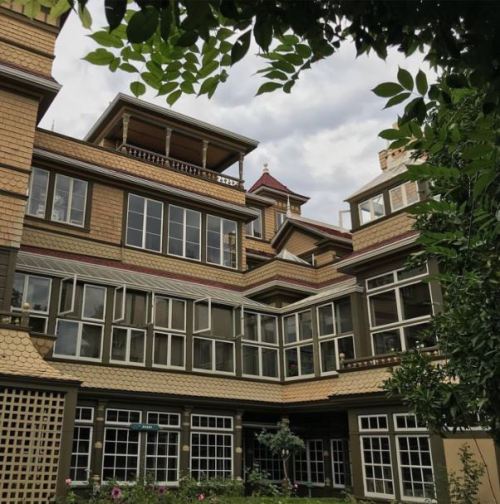
During a Connecticut thunderstorm, Mrs. Winchester’s husband and baby lost their lives in a tragic fire. The distracted widow turned to spiritualism and was advised to take a trip around the World. This she did, visiting mediums, spiritualists and wizards in Europe and India. Foretelling her future, one seer warned her of all the countless thousands of departed souls slain by her husband’s rifles; she was told to plan a castle and continue its building indefinitely because as long as it was under construction she would live; cessation would prove immediately fatal. In the afternoon of Tuesday, July 10, 1888, the inhabitants of Santa Clara Valley, were greatly excited by the sudden appearance, far out in the fields, of a mansion where none was known to exist. The people of the town were farmers and knew the area well. The day before, they had been out on their horses and rode over the spot where the unusual mansion appeared, and where certain that the locality was the best farmland in the valley. And still they gazed, and still the wonder grew, for the day was clear and the mansion could be seen as plainly as they saw the hills to the south. It was massive. The estate was surrounded by a six-foot hedge, densely wooded; here and there were deep shadows in its sides indicating glens heavily covered with undergrowth and grasses. At one end the mansion rose almost precipitously from the from the land; at the other, the declivity was gradual; the thick forest of the estate gave way to smaller trees, these to shrubs; these to green meadows that finally melted into the valley. It was patrolled by a pack of ferocious hellhounds, plus, of course, Mrs. Winchester’s staff of armed bodyguards. Hundreds of people from all over California came to investigate; when, as they neared the spot, the beautiful but bizarre mansion became dim in outline, less vivid in color, and at last vanished entirely, leaving the wonder-stricken farmers to return, fully convinced that for the first time in their lives they had really seen this enchanted mansion. #RandolphHarris 1 of 15

For once there was a topic of conversation that would outlast the day, and the enchanted Winchester mansion passed from lip to lip, both story and the mansion grew in size till the latter was little less than a continent, contain a labyrinth mansion with towers and steeples, stupendous mountain range views, fertile valleys, and wide spreading plains; while the former was limited only be the patience of the listener, and embraced the personal experience, conclusions, reflections, and observations of every woman, man, and child in the valley who had been fortunate enough to see the mansion, hear of it, or tell where it had been seen elsewhere. This is the invariable history of its appearance. No one had ever been able to come close to its grounds, but it had been so often seen on the west coast, that a doubt of its existence, if expressed in the company of farmers, will at once establish for the sceptic a reputation for balderdash of the common affairs of every-day life. In Santa Clara, for instance, the Winchester mansion had been seen by hundreds of people, while many more could testify to its appearance near San Francisco. In San Jose, all the population saw it a few years ago, and shortly before, the villagers of Oakland, saw it, if not by themselves, at least by some of their friends. The Enchanted Winchester mansion, it should be stated that its resemblance to a Victorian/Gothic castle is sometimes very close, and shows that the “enchanter” who has it under a spell knows her business, and is determined to keep her mansion for herself changes its appearance as well as its location in order that her property may not be recognized nor appropriated. At night, passers-by heard ghostly music wafting from the dark mansion. Mrs. Winchester’s arrival was a sensational event. They talked about Mrs. Winchester! Gossiped would be a more fitting word, gossip no one claimed to like-but everyone enjoyed. #RandolphHarris 2 of 15

Talk begat rumor and as the years passed and new towers and gables rose behind the six-foot hedge of Llanada Villa, the rumors grew to established legend. Populations said it just appeared out of nowhere two years ago. Sure two twins could not be like her, and when it appeared in Santa Clara, the mansion would move around to different locations. It had also appeared in San Francisco, Oakland, and Berkeley, but it went no further than the Bay Area. Concerning Mrs. Winchester’s mansion, legendary authorities differ on many material points. Some believed that its architecture was due to geometry or some other enchantment, while opponents of this materialistic view were inclined to the opinion that the mansion was not what it seemed to be, that was to say, not Earth, wood, and stones, like as those most people see, but only an illusion that evil spirits or the devil created to deceive the town. Public opinion on the west coast was therefore was strongly divided on the subject, unity of sentiment existing on two points only; that the island had been seen, and that there was something quite out of the ordinary in its appearance. People believe that it would come and go in the night like a light in a bog, and when you do see it, you can see through it. An old fisherman of San Francisco called Ebenezer Thornton knew all about the enchanted Winchester mansion, having not only seen it himself, but, when a boy, learned its history from a “fairy man,” who obtained his information from “the good people” themselves, the facts stated being therefore, of course, of indisputable authority, what the fairies did not know concerning the doings of supernatural and enchanted circles, being not worth knowing. He said that the Winchester mansion was full of temples and round towers all covered with gold and silver till they shone so one could not see it for the brightness. There was a great enchantress in the mansion, and she had all kinds of secrets, and knew where to dig for a pot of gold. She built the castle in one night, and could make herself disappeared when she wanted and could take any shape she pleased. #RandolphHarris 3 of 15

Ebenezer when on to say that Mrs. Winchester’s husband gave her a charm before he died to use when she was in mortal danger, he also left her a ton of diamonds and millions of dollars. She was a pretty smart woman. One night, Mrs. Winchester was awakened by a noise in one of the kitchens. She tole down, and found her old housekeeper, Madge, with half a dozen of her kidney, sitting by the fire drinking whisky. When the bottle was finished, one of them cried, “It’s time to be off,” and at the same moment she put on a peculiar red cap, and added:–“By yarrow and rue, and my red cap, too, hie over to England!” and seizing a twig she soared up the chimney. As the latter was making her preparations Mrs. Winchester rushed into the kitchen, snatched the cap from her, and placing herself astride of her twig uttered the magic formula. She speedily found herself high in the air over the Irish Sea, and swooping though the empyrean at a rate unequalled by the fastest airplane. They rapidly neared the Welsh coast, and espied a castle afar off, towards the door of which they rushed with a frightful velocity; Mrs. Winchester closed her eyes and awaited the shock, but found to her delight that she had slipped through the keyhole without hurt. The party made their way to the cellar, where they caroused heartily, but the spirits proved too heady, and somehow Mrs. Winchester was captured and dragged before the lord of the castle, who sentenced her to be hanged. On her way to the gallows an old woman in the crowd called out in Irish, “Ah, the enchantress herself, Sarah Winchester alanna! Is it going to die you are in a strange place without your magical charm?” She reached into her pocket and held it in her hand. On reaching the place of execution she was allowed to address the spectators, and did so in the usual ready-made speech, beginning, “Good people all, a warning take by me.” But when she reached the last line, “My parents reared me tenderly” instead of stopped she unexpected added, “By yarrow and rue, good-bye I love you,” with the result that she shot up through the air, to the great dismay of all beholders. #RandolphHarris 4 of 15

Magic persecution. Genuine magic is the art of bringing about results beyond human powers through the enlistment of supernatural agencies. Black magic deliberately involves the devil and demons, and the resulting enchantment is used for persecution and revenge. A spiritistic circle of twenty members furnishes a good example. Working with black magic, these spiritis experimented to see if they could cause psychic harm or even illness in people they disliked. A strong medium of this occult group chose a minister as a target and vowed to afflict and eliminate her. The minister suffered a nervous breakdown and was unable to work for several months. Some phenomena must be eliminated from the spiritistic magic field. In the psychiatric realm, for example, many schizophrenics claim to be magically persecuted. In reality this is only a symptom in the course of psychotic disease. Eliminating all such cases, there are still large-scale, genuine phenomena, especially in areas where occultism has flourished for many years. One common form of magic persecution is beatings by an invisible attacker. Parapsychology also sees magical persecution as a mediumistic problem in the sphere of materializations. Strong mediums (when under demon control) send out energy with which to build up human phantasms and are also able to transform this energy into animal forms, including dogs, cats, frogs, snakes, or human bodies with animal heads, etcetera. This explains the bizarre spiritistic persecution through phantoms in the form of various animals of human bodies with nonhuman heads. These animals bite, scratch, or otherwise torment their victims. Examples, of these occult phenomena abound in areas where the black arts are practiced. However, such occurrences are denied by many intellectuals. Often peasants and country people, especially in Europe, know more about magic than university graduates, who claim to swindle or hocus-pocus trickery are used instead of occult powers. #RandolphHarris 5 of 15
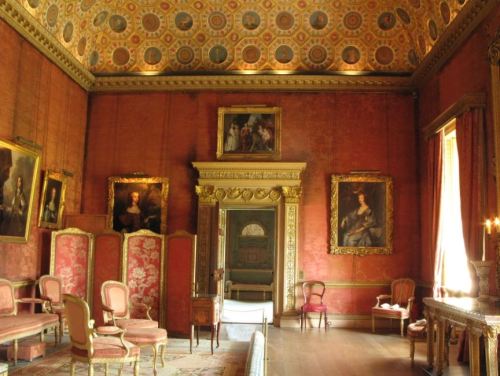
Magic defense. Magic defense enlists supernatural agencies to counteract or unto the mischief wrought by magic persecution. Various kinds of spells, charms, or incantations are employed. In spiritistic séances it is an established fact that injuries inflicted upon a phantasm are sustained by the medium, even in the case of animal phantasm. Many defensive customs develop to combat this threat since magical persecution involves materialization. If a victim can injure an aggressive phantasm one has won the struggle. Many in the West wanted to remove Satan from the equation of black magic and demonic aspects of life. However, more serious discontent came from Satanists whose concerns were completely the opposite. Anton LaVey did not believe in Satan as a literal entity—He was a name for the dark, brutal aspects of humans and nature, as well as a symbol for the potency of humans’ untrammeled will. The Church of Satan was not a religion, and did not worship deities. For many, however, this was not enough. They wanted a real Devil to worship—belonging to a dark, mysterious coven, in the traditional gothic style, seemed much more appealing than being part of some cultural and social elite. Some believed that Satan, although thrown out of Heaven, was reinstated as the son of God and is directly in contact with him. If any coven members offends, they are a bit evil now and again, given corporal punishment, or is expelled from one’s coven and cursed. However, this is said to be for the members own good. They really believe in love, the sanctity of woman as the child bearer and procreator of life, and in worshipping Satan their master. Aleister Crowley was grooming Kenneth as his successor. Mr. Grant’s work examined lost gods, strange spiritual traditions and forbidden symbols, often leading him to some disreputable spiritual neighborhood where devils and demons might be expected to reside, like the Winchester Mystery House. #RandolphHarris 6 of 15

If you have a lot of magic in you, you can be a Satanist and have no idea. As if they are the mafia or something, sometimes those who are suspected of being Satanists have their offices broken into like they are the Mafia or something. The Church of Satan, however, has saved lives because it has given them power, power to come out and be themselves when traditional churches would not accept these people. The Dark Lord, was said to be an anthropoid but faceless. Looking at the concept as a diamond, much like the ones left to Mrs. Winchester by her husband William Wirt Winchester, Satan or Lucifer was just other facets of that diamond, purely ways of achieving workings which encompassed the whole. So, if you are particularly drawn to the gothic Satanist current, fine, use rituals based around that. In the Temple of Darkness one could equally have Satanists, Setians, or followers of other paths, the principle being that the whole thing is a psychodrama anyway. Magic is basically the Western version of yoga. Everything that happens in magic happens first in your head. Set, the Egyptian god of evil, was an older deity than Satan. Satan derives from Set. Set, who is defined as the Prince of Darkness, is a force about which you could say, “As we are now, he once was.” When you die your force can survive. Magic is mind enhancing. When one perishes or passes, instead of going into the cosmic whole—becoming one with the goddess or whatever—by sheer force of the will the existence of that magician’s mind can be sustained. This is the whole idea of the Temple of Set, and they use the word “xeper,” meaning “to become,” to define this. Spiritistic cults. If you did not know, Mrs. Winchester was a spiritists. Spiritism is considered a form of Christianity, practically in all civilized countries. A typical meeting consists of hymns, prayer, and a sermon as in a Christian service. The sermon, however, is allegedly given by a spirit from the other World, through a medium. These cults are said to be affected by the “doctrines of demons” and press into the supernatural World. #RandolphHarris 7 of 15
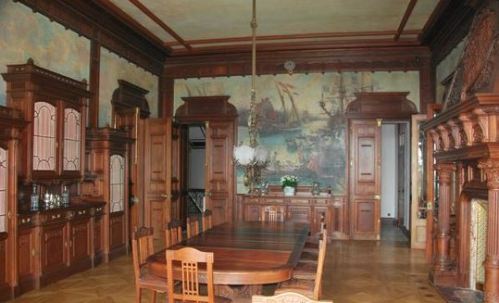
However, even born-again Christians often cannot differentiate between the spiritual and the psychic-demonic when under the spell of doctrinal errors, particularly those concerning the work of the Holy Spirit. The result can sometimes be confusion, division, and promotion of certain spiritual gifts accredited to demons. We have sometimes seen people end up suffering from mediumistic psychosis. Quite a number of patients who have suffered serious psychic disturbances through the misuse of such practices have become split personalities. The spirits which they called, confused them. One who tries to discover the promises of the other side through superstition endangers oneself to fall a prey to the dark side of one’s psyche. However, many Christians say that spirits of loved ones cannot be brought back from the dead, and the it is just a demon impersonating them. Yet, consider the case of Saul’s visit to the spiritistic medium at Endor (1 Samuel 28.3-25). Samuel’s spirit was actually brought back from the spirit World when the medium Endor tried to contact him. Yet, God brought the spirit back. The Lord stepped. Still one must be careful because many become enslaved and oppressed by occult powers and become victims of various manifestations of spiritistic phenomena. While overwhelming evidence from Christian counseling confirms the fact that spiritistic complicity serious damages the believer’s spiritual life, adherents of Buddhism, Island, or even false cults of Christianity sense no ill effects. Spiritists claim that spiritism has strengthened their belief in life after death and deepened their religious devotion. Psychiatry, psychology, and medical treatment are not sufficient for the healing of the whole human. The gospel of Christ and the liberating power of the Word of God can fully heal body, soul, and spirit. #RandolphHarris 8 of 15

Mrs. Winchester had a pain in her right forearm. At first the pain was treated as rheumatism but one day the Mrs. Winchester made the interesting discovery that the pain would suddenly subside if she wrote a letter. Having discovered this, whenever the pain became unbearable, she would always take a pencil and begin to write in order to alleviate the pain. However, after a period of time the Mrs. Winchester when go into her Blue Séance Room, where she developed a writing compulsion. She would write things down that she could normally speaking never have written. Often times, this is where the blueprints from her mansion came from. Added to this the written material on each occasion turned out to be some form of religious treatise. Mrs. Winchester took the articles to her minister to let him examine them. He was surprised at their intellectual content. Mrs. Winchester had become a spiritistic writing medium. The parapsychologist would merely see in this example a psychic automation involving the expression of subconscious thoughts. It is true that we need not consider the Mrs. Winchester to be in direct contact with the dead, or putting it another way we need not assume that this is a case of direct demonization, but God could be speaking to her. This is why some believe Mrs. Winchester to be a prophetess. During one of her spiritistic seances, as it happened, a phantasm did in fact appear during a séance. However, it is still not necessary to believe that a spirit really did appear in this instance. Depth psychology suggest that a phantasm can be produced in the following way. The medium through emitting energy causes matter to form as a result of this. In nuclear physics we have the idea that matter is nothing more than concentrated energy. Einstein’s formula E=M.c^2 illustrates this relationship. A comparison can also be drawn from another branch of physics. It is found that both particles and anti-particles are formed at the cathode of an X-ray tube when a current is passed through it at a very high voltage. Energy in the form of electro-magnetic waves is in this way transformed into matter. #RandolphHarris 9 of 15

The next step in the mediumistic process involves the unconscious tapping of the information from some source or other, and then the newly formed matter is physically shaped according to this information. The final step is made when the phantasm is brought under the control of the medium. Looking at it from this point of view there is no necessity to believe that the dead person has in any way been disturbed. An animistic explanation based on the powers of the subconscious is thus sufficient to explain the phenomenon of materialization. Yet this is not to say that the rationalistic explanation does justice to the facts of the case. The problem is not as simple as that. However, we do not have the time to delve further into the scientific side of the issues. We have, on many occasions witnessed a disintegration of the personalities of both mediums and participants where materializations have taken place. In addition to this in every case where a person has frequently taken part in spiritistic séances, there is some kind of reaction, even if it is not immediately notice or if there is no manifestation—something happens. There are also people who are able to practise the excursion of the soul. Spiritists affirm that people can send out an astral body from their material body, and commission it to do whatever they ask. Perhaps that was the case when Mrs. Winchester appeared in another country? Spiritism haunts the dark jungle of human aberration. During a séance as the Winchester mansion, Mrs. Winchester noticed that time was passing somewhat wearily. She could hear an occasional thud, thud. Some time must have elapsed before she became, dimly at first, and then distinctly, aware of a bluish phosphorescent emanation from a skeleton. This seemed to rise above it like a faint smoke, which gradually gained consistency, took form, and became distinct; and she saw before her the misty, luminous form on an unclothed man, with wolfish countenance, prognathous jaws, glaring at her out of eyes deeply sunk under projecting brows. #RandolphHarris 10 of 15
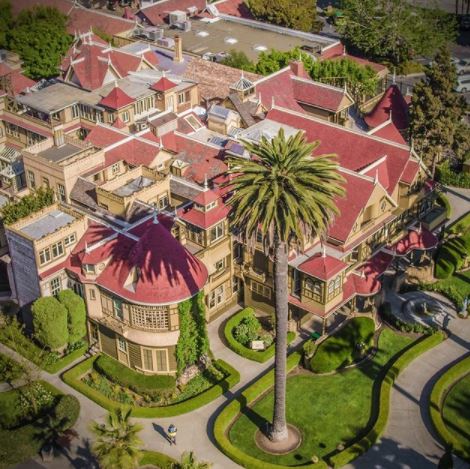
Although she thus descried what she saw, it gave her no idea of substance; it was vaporous, and yet it was articulate. Indeed, she could not say for sure if she saw this apparition with her eyes, or whether it was a dream-like vision of the brain. Though luminous, it cast no light on the wall of the Blue Séance Room; if she raised her hand, it did not obscure any portion of the form presented to her. Then she heard: “I will tear you with the nails of my fingers and toes, and rip you with my teeth.” “What have I done to injure and incense you?” she asked. No word was uttered by either of them; no word could have been uttered by this vaporous form. It had no material lungs, nor throat, nor mouth to form vocal sounds. It had but the semblance of a man. It was a spook, not a human being. However, it proceeded through the walls, odylic force which smote on the tympanum of her mind or soul, and thereon registered the ideas formed by it. So in a like manner Mrs. Winchester thought her replies, and they were communicated back in the same manner. If vocal words had passed between them neither would have been intelligible to the other. No dictionary was ever compiled, or would be compiled, of the tongue or prehistoric man; moreover, the grammar of the speech of that race would be absolutely incomprehensible to humans now. However, thoughts can be interchanged without words. When we think we do not think in any language. It is only when we desire to communicate our thoughts to other humans that we shape them into words and express them vocally in structural grammatical sentences. The beasts have never attained to this, yet they can communicate with one another, not by language, but by thought vibrations. Mrs. Winchester knew as she conversed with him that she was not speaking to him in English, nor in French, nor in Latin, nor in any tongue whatever. Moreover, when she used the words “said” or “spoke,” she meant no more than that the impression was formed by her brain-pan or the receptive drum of her soul, was produced by the rhythmic, orderly sequence of thought-waves. #RandolphHarris 11 of 15

When, however, she expressed the words “screamed” or “shrieked,” she signified that those vibrations came sharp and swift; and when she said “laughed,” tht they came in a choppy, irregular fashion, conveying the idea, not the sound of laughter. “I will tear you! I will rend you to bits and throw you in pieces about this mansion!” shrieked this demon man. Mrs. Winchester remonstrated, and inquired how she had incensed him. However, yelling with rage, he threw himself upon her. In a moment she was enveloped in a luminous haze, strips of phosphorescent vapour laid themselves about her, but she received no injury whatever, only her spiritual nature was subjected to something like a magnetic storm. After a few moments the spook disengaged itself from Mrs. Winchester, and drew back to where it was before, screaming broken exclamations of meaningless rage, and jabbering savagely. It rapidly cooled down. “Why do you wish to ill me?” She asked again. “I cannot hurt you. I am spirit, you are matter, and spirit cannot injure matter; my nails are psychic phenomena. Your soul you can lacerate yourself, but I can effect nothing, nothing.” “Then why have you attacked me? What is the cause of your impotent recement?” “Because you are the heiress to the Winchester Rifle, and I lived eight thousand years ago. Why are you nursed in the lap of luxury? Why you enjoy your comforts, a civilization that we new nothing of? It is not just. It is cruel on us. We have nothing, nothing, literally nothing, not even lucifer matches!” Again he feel to screaming, as might a caged monkey rendered furious by failure to obtain an apple which he could not reach. “I am very sorry, but it is no fault of mine.” “Whether it be your fault or not does not matter to me. You have these things—we had not. Why, I saw you just now strike a light on the sole of your boot. It was done in a moment. We had only flint and ironstone, and it took half a day with us to kindle a fire, and then it flayed our knuckles with continuous knocking. No! we have nothing, nothing—no lucifer matches, no commercial travellers, no Benedictine, no pottery, no metal, no education, no elections, no chocolat menier.” #RandolphHarris 12 of 15
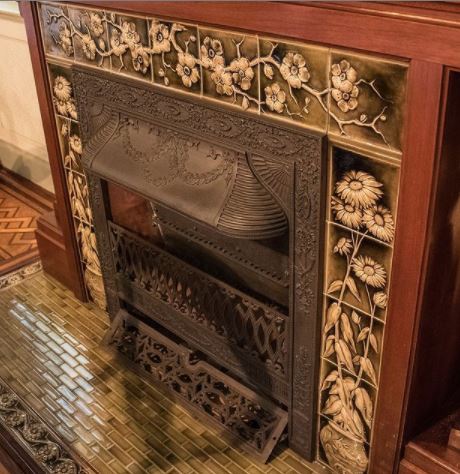
“How do you know about these products of the present age, here, buried one hundred feet of soil for eight thousand years?” “It is my spirit which speaks with your spirit. My spook does not always remain with my bones. I can go up; rocks and stones and earth and your labyrinth mansion heaped over me do not hold me down. I am often above. I am in the gasolier overhead. I have seen your servants plough the fields. I have seen a bottle of Benedictine. I have applied my physical lips to it, but I could taste, absorb nothing. I have seen commercial travellers there, cajoling the patron into buying things he did not want. They are mysterious, marvellous beings, their powers of persuasion are little short of miraculous. Why do you think of doing with me?” “Well, I propose first of all photographing you, then soaking you in gum Arabic, and finally transferring you to a museum.” He screamed as though with pain, and grasped: “Do not! do not do it. It will be torture insufferable.” “But why so? You will be under glass, in a polished oak or mahogany box.” “Do not! You cannot understand what it will be to me—a spirit more or less attached to my body, to spend ages upon ages in a museum with fibulae, triskelli, palstaves, celts, torques, scarabs. We cannot travel very far from our bones—our range is limited. And conceive of my feelings for centuries condemned to wander among glass cases containing prehistoric antiquities, and to hear the talk of scientific men alone. Now here, it is otherwise. Here I can pass up when I like into your mansion, and can see the maid and butlers cleaning, the roses and trees growing, the farmers working the field and the magnificent glow of your fine estate. Give me life. There is a sort of filmy attachment that connects our psychic nature with our mortal remains. It is like a spider and its web. #RandolphHarris 13 of 15

“Suppose the soul to be the spider and the skeleton to be the web. If you break the thread the spider will never find its way back to its home. So it is with us; there is an attachment, a faint thread of luminous spiritual matter that unites us to our Earthly husk. It is liable to accidents. It sometimes gets broken, sometimes dissolved by water. If a black beetle crawls across it it suffers a sort of paralysis. I have never been to the other side of the of your mansion, I feared to do so, though very anxious to see your architecture and furniture.” “This is news to me,” replied Mrs. Winchester. “Do you know of any case of rupture of connection?” Yes,” he replied. “My old father, after he was dead some years, got his link of attachment broke, and he wandered about disconsolate. He could not find his own body, but he lighted on that of a young female of seventeen, and he got into that. It happened most singularly that her spook, being frolicsome and inconsiderate, had got its bond also broken, and she, that is her spirit, straying about in quest of her body, lighted on that of my venerable parent, and for want of a better took possession of it. It so chanced that after a while they met and became chummy. In the World of spirits there is no marriage, but there grow up spiritual attachments, and these two got rather fond of each other, but never could puzzle it out which was which and what each was; for a female soul had entered into an old male body, and a male soul had taken up its residence in a female body. Neither could riddle out of which each gender was. You see they had no education. However, I know that my father’s soul became quite sportive in that young woman’s skeleton. Each generation makes some discovery that advances civilization a stage, the next enters on the discoveries of the preceding generations, and so culture advances stage by stage. Man is infinitely progressive; even the brute beast is.” #RandolphHarris 14 of 15

At that moment, Mrs. Winchester heard a shout—saw a flash of light. The construction workers had pierced the barrier. A rush of fresh air entered. She staggered to her feet. She felt dizzy. Kind hands grasped her. She was dragged forth. Brandy was poured down her throat. When she came to herself, she said, “Thank you. Talking with spirits can be terrible dreadful. When you are trying to summon one, souls get crossed and the one you are seeking may not cross through. They are so desperate to find a medium to communicate with.” As an ingredient of idol worship, magic goes back to antiquity. By virtue of their multiplicity and limited knowledge and power, the gods (demons) of paganism are incapable of establishing stability and security in society. This deficiency forced both gods and men to make use of magic—an inactive power independent of gods and men, but which could be activized by the assistance of incantations and rituals in order to accomplish supernatural deeds. Because of widespread denial of the reality of supernatural power—both divine and demonic, confusion abounds concerning the nature of magic. The history of magic is replete with extraordinary extrasensory phenomena that involve the spirit realm and every phase of the natural World as well, including human beings, animals, plants, and inorganic matter. Spirit-rapping, apparitions, ghosts, moving of furniture, and playing of musical instruments by invisible hands, stones falling from a ceiling, magical killing of cattle and blighting of crops, etcetera, are just a few of the weird occurrences that have happened at the Winchester Mystery House in its 134 years. However, there have also been beautiful supernatural events such as apparitions getting married, giant spirits of light in the shape of a man peering out guests, and on occasion, even rainbows and angels have appeared. Not all spirits or evil or angry, some or loving and welcoming. Few of thousands of annual transient guests are disappointed for here one finds visible truth even stranger than all the weird Mystery House features. #RandolphHarris 15 of 15
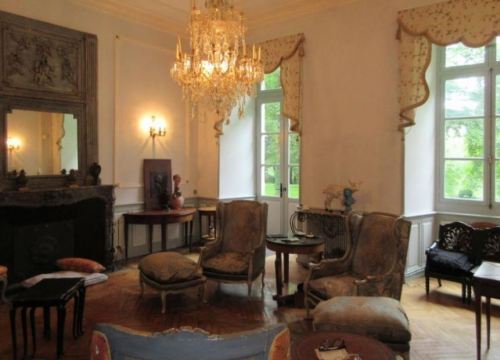
Winchester Mystery House
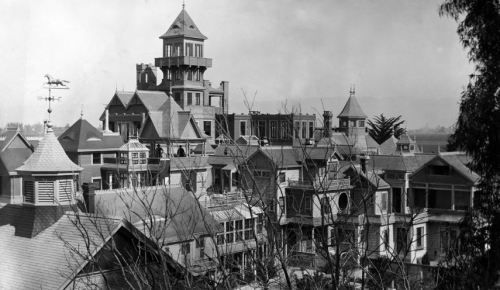
Beautiful weather calls for a walk around Sarah’s iconic gardens ⛲️🪴Open 10AM – 5PM this weekend!
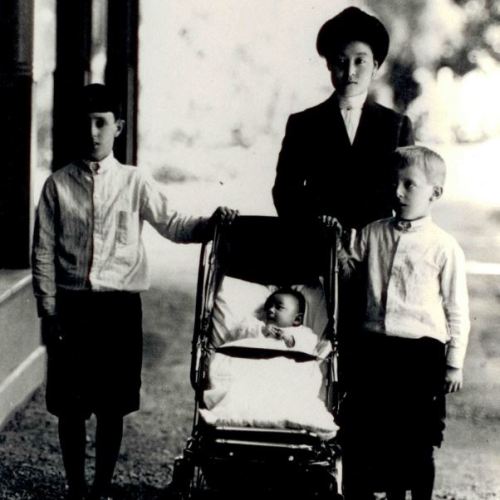
A 160-room mansion built to appease the spirits who died at the hands of the Winchester Rifle , or who were jealous of its wealth 👻
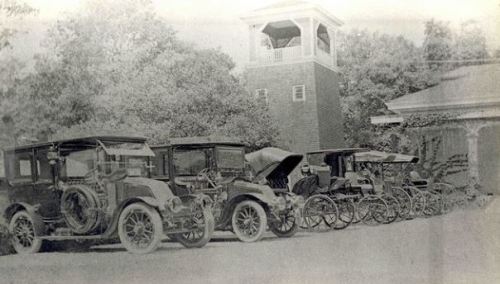
 Randolph Harris II International Institute