
Home » #RandolphHarris (Page 59)
Category Archives: #RandolphHarris

Where is My John Wayne? Where is My Prairie Song? Where is My Happy Ending?

Enthusiasm is undoubtedly a disorder of the mind; and such disorder as greatly hinders the exercise of reason. Nay, sometimes it wholly sets it aside: it not only dims but shuts the eyes of the understanding. It may, therefore, well be accounted a species of madness; of madness rather than folly: seeing a fool is properly one who draws wrong conclusions from right premises; whereas a madman draws right conclusions, but from wrong premises. And so does an enthusiast. Suppose his or her premises are true, and his or her conclusions would necessarily follow. However, here lies one’s mistake: one’s premises are false. One imagines oneself to be what one is not, and therefore, setting out wrong, the farther one goes out, the more one wanders out of the way. Very earlier in the history of the Christian Church the subtle temptation to a kind of inverted humility, which is really the worst and most dangerous form of spiritual pride, disclosed itself in portentous scandals. The Adventists of Thessalonica, who refused their normal obligations in the interest of a complete self-preparation for the Lord’s coming, have had their representatives in many strange sects in Europe and America, who have been carried into amazing tracks allows an individual to define and redefine one’s experience by the strategic placement of information. Sometimes, the individual receives outside help. For example, when Milgram in 1963 placed a barrier between people, administering electric shocks, and the bogus “subjects” who were supposedly receiving the shocks, he made it easier for the shockers to “disattend” signs of human distress from their hapless victims. #RandolphHarris 1 of 21

In other cases help can come from guides who direct the novice on what to experience and what to block out. Beginning marijuana smokers are cautioned to ignore feelings of nausea. On the other hand, novice hit men like Pete are reluctant to share their “experience” with any one else. It would be a sign of weakness. In still other cases, however, it is possible that the subject can do the reframing on his or her own. And this is what appears to have happened to Pete. “And then the second one [the second hit] came up, [Pete] was still thinking about the first one. Yeah, when he got ready to go, he was to the moment that he killed the second guy, he waited, you know. Going through his mind was the first guy he killed. He still seeing him still see the expression on his face. Soon, the second guy walked up; I mean, it was like just his mind just blanked out for a minute, everything just blanked out. Next thing he knew, he had killed the second guy. He knew what he was doing, but what I mean, he just didn’t have nothing on his mind. Everything was wiped out,” reports Pete. When the second victim approached, Pete says that he noticed the victim’s approach, he was aware of the man’s presence. However, he noticed none of the victim’s personal features. He did not see the victim’s face or its expression. Thus, as if Pete had negatively conditioned himself to avoid certain cues. Since he shot the victim in the head, it is probable that Pete saw him in one sense; this is not the same kind of experience as a dissociative reactions, which has been linked to sleep-walking. #RandolphHarris 2 of 21

Pete says, that “he knew what he was doing.” However, he either did not pay attention to his victim’s personal features at the time of the killing, or he blocked them out immediately afterward, so that now the only aspect of his victim he recalls is the victim’s approach (if we are to believe him). While demons do not possess a material body, they can act upon the human body, as well as the human soul and spirit. They are capable of entering in and assuming control of a human body, speaking and acting through it from time to time and even possessing it, as if it were their own property. That demons are individuals is attested by their intelligent and voluntary action. They think, they speak, they act through a spiritistic medium or through a person over whom they have acquired control. After his second murder, Pete says that killing became routine. He learned to view his victims as “targets,” rather than as people. Thus, he believes that the second experience is the crucial one, and that the disattendance of the victim’s persona features made it so. Because demons are spirit personalities, they can act upon and influence a man or woman’s body and mind. Support from other account of hit men is scant, due to a lack of data. Furthermore, not everyone in Pete’s account supports the “reframing” hypothesis. In talking about later killings, it is clear that he not only attends to his victims’ personal features, on occasion, but he also derives a certain grim pleasure in doing so. #RandolphHarris 3 of 21

“The victim was a nice looking woman. She started weeping, and [she cried], ‘I ain’t did this, I ain’t did that.’ And [Pete] said that he shot her. Like it wasn’t nothing…he didn’t feel nothing. It was just money,” reports Pete. It may be the this evidence contradicts what I said about reframing, but perhaps another interpretation is possible. Reframing may play a more crucial role in the original redefinition of an experience than in the continued maintenance of that redefinition. Once Pete has accustomed himself to viewing his victims as merely targets, as “just money,” then it may be less threatening to look upon them as persons, once again. Once the “main story line” has been established, discordant information can be presented in the “overly track,” without doing too much damage. Foe what I have been referring to as “disattendance” Pete used the term “heart,” which he defined as a “coldness.” When asked what he would look for in an aspiring hit man, Pete replied, “ See if he’s got a whole lot of heart…you got to be cold…you got to build a coldness in yourself. It’s not something that comes automatically. Cause, see, I don’t care who he is, first, you’ve got feelings,” reports Pete. However, the “made rather than born” thesis does explain one perplexing feature of hit men and other “evil” men whose banality has sometimes seemed discordant. In other aspects of their lives they all seem perfectly capable of feeling ordinary human emotions. Their inhumanity, their coldness, seems narrowly restricted to their jobs. #RandolphHarris 4 of 21

Pete, for example, talked about his “love” for little children. Examples of human warmth indicate that the cold heart of the hit man may be less a characteristic of the killer’s individual personality, than a feature of the professional framework of experience which the hit man or woman has learned to adapt oneself to, when one is on the job. As we have been studying ways of deviance neutralization, it is clear that the freelance hit man or woman is an example of an individual who, relatively alone, must deal with a profound and unambiguous stigma in order to enter one’s career. “Heart” seems to be a dedicating factor in becoming a professional. The inhibitions against murder-for-money are real. “Heart” or the ability to adapt to rationalized framework for killing—has been portrayed as the outcome of an initial process of reframing, in addition to other neturalization techniques established during the further stages of professionalizations. People often enter into deviant acts first, then develop rationales for their behaviour later on. This was also the case with Pete, who began his career by first, being willing, encountering a frame-break, undergoing negative experience, being willing to try again (also known as “getting back on the horse”), reframing the experience, and having future, routine experiences wherein his professionalization increasingly enabled him to “deny the victim,” “deny injury,” and “deny responsibility.” #RandolphHarris 5 of 21

Through the process of reframing, the experience of victim-as-target emerged as the “main storyline,” and the experience of victim-as-person was downgraded from the main track to the disattended track to the overlay track. Ironically, the intensity of the negative experience seemed to make the process all the more successful. Thus, it may be possible for a person with “ordinary human feelings” to pass through the novice stage, and to continue with “normal relations” thereafter. This suggests that hit men and women may not be psychopaths, but it is possible that they are possessed. The reframing hypothesis has implications for other people who knowingly perform stigmatized behaviors. It may be particularly useful in explaining personal conversion experience that occurs despite the relative absence of deviant peer group, deviant norms, extenuating circumstances, and neutralization rationales. If all that the Christian Holy Bible and Book of Mormon contains on the subject of the supernatural power of evil could be exhaustively dealt with, we would find that more knowledge is given of the workings of Satan, and his principalities and powers, than many have realized. From Genesis to Revelation the work of Satan as deceiver of the whole inhabited Earth can be traced until the climax is reached, and the full results of the deception in the Garden of Eden are unveiled in the Apocalypse. In Genesis we have the simple story of the garden, with the guileless pair unaware of danger from evil beings in the unseen World. #RandolphHarris 6 of 21

We find recorded there Satan’s first work as deceiver, and the subtle form of his method of deception. We see him working upon an innocent creature’s highest and purest desires, and cloaking his own purpose of ruin under the guise of seeking to lead a human being nearer to God. We see him using the God-ward desires of Eve to bring about captivity and bondage to himself. We see him using “good” to bring about evil; suggesting evil to bring about supposed good. Caught with the bait of being “wise,” and “like God,” Eve is blinded to the principle involved in obedience to God and DECEIEVED (1 Tim. 2.14). Goodness is, therefore, no guarantee of protection from deception. The keenest way in which the devil deceived the World, and the Church, is when he comes in the guise of somebody, or something, which apparently causes them to go God-ward and good-ward. He said to Even, “Ye shall be as gods,” but he did not say, “and ye shall be like demons.” Angeles and men only knew evil when they fell into a state of evil. Satan did not tell Eve this when he added “knowing good and evil.” His true objective in deceiving Eve was to get her to disobey God, but his wile was, “Ye shall be like God.” Had she reasoned, she would have seen that the deceiver’s suggestion exposed itself, for it crudely receiver’s suggestion exposed itself, for it crudely resolved itself into “disobey God” to be more like God! The lawless tyrant, who denies to know their God, or message to regard, must be compelled by signs and judgments dire; to blood unshed rivers must be turned, frogs, lice and flies must all his palace fill with loathed intrusion, and fill all the land. #RandolphHarris 7 of 21

However, when buffers are shaken, conscience awakes. “How can one discover what one’s own buffers are?,” asked someone else. Sometimes it is possible. If one has the right idea of buffers, one may find one’s own. There is a great difference between excuses and buffers. Excuses may be different every time, but if the excuse is always the same, then it becomes a buffer. Buffers are connected with conscience. Conscience is a word we use generally in a conventional sense, to mean a sort of educated emotional habit. Really, conscience is a special capacity which everybody possesses but which nobody can use in the state of sleep. Even if we feel conscience for a moment accidentally, it will be a very painful experience, so painful that immediately we shall want to get rid of it. People who have occasional glimpses of conscience invent all kinds of methods to get rid of this feeling. It is the capacity to feel at the same time all that we ordinarily feel at different times. Try to understand that all our different “I”s have different feelings. One “I” feels that one like something, while another hates it, and a third “I” is indifferent. However, we never feel these things at the same time because between them are buffers. Because of these buffers we cannot use conscience, cannot feel at the same two contradictory things which we feel at different times. If a man or woman does happen to feel them one suffers. So, in our present state, buffers are even necessary things without which a man or woman would go mad. However, if one understands about them and prepares oneself, then after some time, one may start to destroy the contradictions and break the buffers down. #RandolphHarris 8 of 21

The breaking of a mechanical habit, whether good or bad, may be uncomfortable, because we have mechanical habits such as rules of conduct and moral rules which we get from our education. In most cases, therefore, we do not experience conscience; we have too many buffers. As I have said, they are partitions between our emotional attitudes, and experience of conscience means seeing a hundred things at the same time. Partitions disappear and all inner contradictions are seen at the same time. This is very unpleasant, and as the general principle of life is to avoid unpleasant sensations and realizations we run away from seeing them. In this way we create inner buffers. Contradictions seen one after the other do not appear contradictory; they have to be seen at the same time. We are machines and we must see where we can change something, because in ever machine of every kind there is always a point where it is possible to begin. Sometimes people ask if there is anything permanent in us. There are two things, buffers and weaknesses. The weaknesses are sometimes called features, but they are really just weaknesses. Everyone has one, two or three particular weaknesses, and everybody has certain buffers belonging to one. One consists of buffers, but some are particularly important because they enter into all one’s decisions and all one’s understandings. These features and buffers are all that can be called permanent in us, and it is lucky for us that there is nothing more permanent, because these things can be changed. #RandolphHarris 9 of 21

“Does giving up one’s will mean not to act without understanding?” You see, this is another of your mistakes. You think that giving up will means doing something. This happens very seldom. In most cases you are told not to do something. There is a great difference in this. For instance, you want to explain to someone what you think of him or her, and you must not do it. It is a question of training. Will can be grown if one works on oneself and makes one’s will obey the principles of the work. Things that do not concern the work cannot be connected with it, but the more you enter into the work, the more things begin to touch upon the work. However, this needs time. When their chance comes and people are told to do something, or not to do something, they go against it for what seems to them the very bests of reasons. So they miss their opportunity. Time passes, and later they may see that they have missed their opportunity, but it can no longer be replaced by anything. This is the penalty of self-will. About this idea of giving up one’s will: it must be repeated that men nos 1, 2, and 3 have no will, but only self-will and willfulness. Try to understand what that means. Being willful means that one wants to do or actually does something forbidden, simply because it is forbidden. And an instance of self-will is when someone sees that you are trying to do something that you do not know how to do and wants to help you, but you say, “No, I will do it myself.” These are the two types of will we have. They are based on opposition. Rel will must depend on consciousness, knowledge and Permanent “I.” Such as we are, we have not got it. All that we have is self-will and willfulness. #RandolphHarris 10 of 21

Our will is a resultant of desires. Desires may be very well hidden. For instance, a man may want to criticize someone and one calls it sincerity. However, the desire to criticize may be so strong that one would have to make a really big effort to stop it, and a man cannot make real efforts by oneself. In order to create will, a man must try to co-ordinate one’s every action with ideas of the work; one must in every action ask oneself: How will it look from the point of view of the work? Is it useful or harmful to me, or to the work? If one does not know, one can ask. If a person has been long in the work, there is practically not a single action that does not touch upon the work; there are not independent actions. In that way one is not free, in the sense that one cannot act foolishly without discrimination. One must think before one acts. If one is not sure, one can ask. This is the only method by which will can be created, and for this method school organization is necessary. Without school one can do nothing. The ward system, which forms a central aspect of the social structure in mental hospitals, can also be delineated in terms of involvement rules—the “bad” wards being ones where tight situational orientation is little demanded; the “good” or convalescent wards being ones where many more exhibitions of respect for the gathering are required. Conversely, the “good” wards are ones where other kinds of privileges are available, and the “bad” ones are places where these are not. When staff use these labels they often mean to refer to differences in situational propriety; patients, on the other hand, tend to have in mind the merely-situated component of privileges on the ward. #RandolphHarris 11 of 21

The same term, then, will designate the same ward but will tend to connote different things to the two status levels. It may be added that, in general, mental hospitals seem to operate on the basis of a privilege quota: the patient who requires situational license must sacrifice the merely-situated component of privilege, and to the degree that one desires the latter, one must be ready to “behave oneself.” The communal institutions of Central Hospital were themselves differently defined as regards tightness. In the large 300-man refectory, which fed the men on 900-patient chronic men’s service, eating with one’s hat on was not forbidden; the place had something of the atmosphere of a train depot. However, at the Red Cross House (containing a large sitting room-dancehall), the staff felt that patients should have some “respect” for the place, and act in it as they would in their homes. Posted signs, collective bawlings-out, and other injunctions established that no hats, no spitting, no refuse on the floor, and no “horsing around” were to be permitted. When we see that some of these controlling factors inhere in the behavior setting, we can more readily understand why some mental patients may improve greatly merely by being brought down to a “better” ward; but we cannot as easily determine how much new human material a setting can incorporate without losing it customary involvement structure. #RandolphHarris 12 of 21
Just as there are differences between situations in regard to the tightness of conduct occurring therein, so, of course, there are differences between different roles, each of these differences being maintained across several different situations. At one extreme we have the mental patient on a chronic ward who has not yet decided to try to get out by good behavior. One may feel that one has earned and paid for the right to act loosely and that one might as well exercise it. One this plays the role of an “involvement freak,” and, as already suggested, shares with children, senior citizens, the homeless, and bohemians the special license and expectation of being frequently remiss in situational obligations. At the other extreme are high ecclesiastical and miliary officers who carry their solemnity in their uniform, and prefer gatherings that are tight enough to be saluted. Here, incidentally, one finds a very pervasive difference between middle- and lower-class males in American society. Those who work without a tie, in clothes they do not have to worry about keeping clean, are persons who can afford to touch and be touched by the physical environment around them. The “informality” of their dress is one part of a complex, the whole of which is the understanding that these persons need not maintain a tight orientation in public situations. While waiting for a bus, the lightrail, or talking to a friend on the street, they can slouch, lean against a building, or squat on any substitute for a seat, and thus express a looseness of orientation to the gathering as such, which is consistent with the role that has been accorded them. #RandolphHarris 13 of 21

That their clothing allows this is as much effect as cause of their situational orientation. (A limiting case is the person such as a chimney sweep or miner, who can soil the environment around one and will therefore have a special basis for circumspection.) Middle-class people in public places, on the other hand, have more obligation to keep relatively erect and stiff, relatively ready to respond interactively. And, again, the fact that their clothing and cleanliness patterns are incompatible with too great a familiarity with the physical environment of the street would seem to be as much effect as cause of their level or orientational discipline. Persons tightly attired can, of course, express meager concern for the gathering, but they are perhaps more likely than those informally dressed to do this by means of relatively subtle cues. Now when it comes time to commuting to work, traffic patterns are a concern. There are two main ways to commute from Berkeley to San Francisco. One is driving over the Bay Bridge, and the other is taking public transportation, the Bay Area Rapid Transit train called BART. Crossing the bridge is the shortest route, and with no traffic, a car can make the trip in 20 minutes. However, this is rarely the case. The bridge had only four lanes and is easily congested. (Sometimes, after earthquakes, it is closed altogether.) We suppose that each additional 2,000 cars the travel time rises to 30 minutes; at 4,000 cars, to 40 minutes. The BART train makes a number of stops, and one has to work to the station and wait for the train. It is fair to say that the trip takes closer to 40 minutes along this route, but the train never fights traffic. When train usage rises, they put no more cars, and the commuting time stays roughly constant. #RandolphHarris 14 of 21
If, during the rush hour, 10,000 commuters want to go from Berkeley to San Francisco, how will the commuters be distributed over the two routes? Each commuter will act selfishly, choosing the route that minimizes one’s own transportation time. Left to their own devices, 40 percent will drive and 60 percent will take the train. The commuting time will be 40 minutes for everyone. This outcome is the equilibrium of a game. We can see this result by asking what would happen if the split were different. Supposed only 2,000 drivers took the Bay Bridge. With less congestion, the trip would take less time (30 minutes) along this route. Then some of the 8,000 BART commuters would find out that they could save time by switching, and would do so. Conversely, if there were, say, 8,000 drivers using the Bay Bridge, each spending 60 minutes, some of them would switch to the train for the faster trip it provides. However, when there are 4,000 drivers on the Bay Bridge and 6,000 on the train, no one can gain by switching: the commuters have reached an equilibrium. Is this equilibrium good for the commuters as a whole? Not really. It is easy to find a better pattern. Suppose only 2,000 take the Bay Bridge. Each of them saves 10 minutes. The 2,000 who switch to the train are still spending the same time as they did before, namely 40 minutes. So are the 6,000 who continue to take the train. We have just saved 20,000 person-minutes (or almost two weeks) from the total travel time. #RandolphHarris 15 of 21

Why is this saving possible? On in other words, why were the drivers left to themselves not guided by an invisible hand to the best mix of routes? The answer lies in the cost that each user of the Bay Bridge inflicts on the others. When an extra driver takes this road, the travel time of all the other users goes up by a little bit. However, the newcomer is not required to pay a price that reflects this cost. One takes into account only one’s own travel time. What traffic pattern is best for the group of drivers as a whole? In fact, the one we constructed, with 2,000 cars on the Bay Bridge and a total time saving of 20,000 minutes, is best. To see this, try a could of others. If there are 3,000 cars on the Bay Bridge, the travel time is 35 minutes in all. With only 1,000 cars, the travel time is 25 minutes, and each saves 15 minutes, but the total saving is again only 15,000 minutes. The intermediate point with 2,000 drivers, each saving 10 minutes, is best. How can the best pattern be achieved? Devotees of central planning will think of issuing 2,000 licenses to use the Bay Bridge. If they are worried about the inequity of allowing those with licenses to travel in 30 minutes while the other 8,000 must take the train and spend 40 minutes, they will devise an ingenious system of rotating the licenses among the population. A market-based solution charges people for the harm they cause others. Supposed each person values an hour of time at $25, that is, each would be willing to pay $12 to save an hour. Then charge a toll for driving on the Bay Bridge; set the $2 above the BART fare. #RandolphHarris 16 of 21

By our supposition, people regard an extra $2 cost as equivalent to 10 minutes of time. Now the equilibrium commuting pattern will have 2,000 cars on the Bay Bridge and 8,000 riders on BART. Each user of the Bay Bridge spends 30 minutes plus an extra $2 in commuting costs; each BART rider spends 40 minutes. The total effective costs are the same, and no one wants to switch to the other route. In the process we have collected $4,000 of toll revenue (plus an additional 2,000 BART fares), which can then go into the county’s budget, thus benefiting everyone because taxes can be lower than they would otherwise be. A solution even closet to the spirit of free enterprise would be to allow private ownership of the Bay Bridge. The owner realized that people are willing to pay for the advantage of a faster trip on a less congested road. One charges a price, therefore, for the privilege. How can one maximize one’s revenue? By maximizing the total value of the time saved, of course. The invisible hand guides people to an optimal commuting pattern only when the good “commuting time” is priced. With the profit-maximizing toll on the bridge, time really is money. Those commuters who ride BART are selling time to those who use the bridge, Finally, we recognize that the cost of collecting the toll sometimes exceeds the resulting benefit of saving people’s time. Creating a marketplace is not a free lunch. The toll booths may be a primary cause of the congestion. If so, it may be best to tolerate the initial inefficient route choices. #RandolphHarris 17 of 21

The coming eco-wars—another growth business for tomorrow’s spies is the environment. Environmental problems increasingly cross national boundaries, so that pollution from the Rhine affect Holland as well as Germany, acid rain ignores frontiers, and the deforestation of the Amazon has global concerns. Increasing environmental knowledge can help reduce such problems, but it also opens the way to sophisticated manipulation of one country’s environment by another’s political policy-makers. A crude example was the 1989 announcement by Turkey that it would shut off the flow of Euphrates River water to Iraq and Syria for a month. The shutdown threatened Iraqi agriculture and Syrian electrical supplies. Its purpose, according to the Turks, was to do repair work on the Ataturk Dam. However, skeptics insisted there was more to the story. Across Turkey’s southern border in Iraq and Syria are the remote bases of Kurdish separatists belonging to the Marxist Kurdish Workers Party. KPW guerrillas have been slipping across into Turkey. In turn, Turkey has been demanding that Iraq and Syria guard the border and prevent such penetrations. This incursion did not stop, and were followed by the Turkish announcement of a dam shutdown. This, in turn, was followed four days later by a guerrilla raid that left twenty-eight dead in a Turkish village on the Iraqi line. The Turkish press clamored for a reprisal against the guerrilla bases in Syrian-controlled territory. #RandolphHarris 18 of 21

Whether the water cutoff was or was not intended to prod the Iraqi and Syrian governments into military action against the guerrillas, it was an event with significant ecological implications, an opening shot, one might say, in the eco-warfare that will become more common and far more sophisticated in the decades ahead. Someday nations may unleash genetically altered insects against an adversary, or attempt to modify weather. When that day comes, intelligence will provide ammunition for the eco-wars. On a more optimistic note, however, because of their satellite remote sensing systems, intelligence agencies may be well placed to take on the task of verifying compliance with environmental treaties, as they now verify arms control agreements. Eco-intelligence will be integrated more closely with political and military planning as both eco-war and eco-treaties become part of the new global system. The spread of new system of wealth creation thus begins to transform one of the universal functions of the nation-state—the collection of foreign intelligence. What we have glimpsed so far, however, are only the most superficial changes. Far deeper ones lie in store. For instance, nanoparticles can get into the body through the skin, lungs and digestive system. This may create “free radicals,” which can cause cell damage and damage to the DNA. There is also concern that once nanoparticals are in the bloodstream they will be able to cross the blood-brain barrier. #RandolphHarris 19 of 21

For all practical purposes, nanotechnology seems inevitable. With work, it can be made beneficial, but only if we exercise ordinary care in avoiding accidents and extraordinary care in preventing abuse. It is hard to get people to take future technologies seriously. Present-day problems dominate discussions, and ideas about future possibilities take effort to judge. Because of this inertia, broad international regulations of nanotechnology will not be possible until nanotechnology already exists, until people begin to see its results. And then, for regulation to be most effective, researchers and governments in many countries will need to cooperate and be on speaking terms with the technology’s critic. What, then, is the socially responsible course of action, the approach most likely to avoid serious abuse of nanotechnology and most likely to deliver some of its potential benefits? It is, we believe, to point out potential dangers and abuses and how they can be avoided, but also to emphasize the civilian applications in medicine, the environment, and the economy. It is these benefits that provide grounds for advocating open civilian development programs, and for international cooperation that can provide a basis for effective international guidance. To guide nanotechnology will not be simple. We will be confronted with a range of choices greater than we have faced before in history. It is only by grappling with those choices that we will be able to affect them for the better. #RandolphHarris 20 of 21

O Lord, our hope in every generation, we rejoice in the wondrous deliverance Thou didst bring to pass for our fathers. When Haman rose to crush us, Thou wast at our side. Thou didst bring to naught his base designs, delivering us from destruction. In our day, too, O Lord our God, we trust in Thy saving power. We know it is Thy will that evil be subdued and righteousness prevail. Keep us ever steadfast and just, that no weapon formed against us may prosper. Inspire us like Mordecai of old, to be unswering in our devotion to Thee. Like Esther, may we ever be eager to serve our people, even at the peril of our lives. Cause us to know as Mordecai knew, that whether we be born to high or low estate, we share alike our people’s lot. That though we dwell in safety, blessed with abundance, our brother’s hurt is our hurt, in their sorrow, ours. Hasten the day when all oppression shall cease, and tyranny shall forever be crushed; when strife shall no longer set off man from man, but all shall unite in true brotherhood to serve each other, and thus, O Lord, serve Thee. We, who were young and loved each other blindly, now come to know each other in love, married by what we have done, as much as by what we intend. Our hair turns white with our ripening as though to fly away in some coming wind, bearing the deed of what we know. It was bitter to learn that we come to death as we come to love, bitter to face the just and solving welcome that Heaven prepares. It is better to pray than worry, for we will have the sweetness of ripening. How sweet to the Lord by the signs of the World. #RandolphHarris 21 of 21


This time of year, we’re always looking for ways to put an extra SPRING in our step. Try a little DIY room spray to freshen your space! 🌱🌸

Add 25-30 drops of your favorite essential oil (lemon, lavender, or orange are great options!) to a small spray bottle. Fill the bottle halfway with witch-hazel, and fill the rest with distilled water. Voila!

Need a bit more inspiration? Check out our Havenwood Residence 3 home…Homesite #72 is move-in ready! 😍


Out of My House Do You Hear?

The ordinary fields of psychological inquiry, largely in possession of the pathologist, are fringed by a borderland of transcendental experiment into which pathologist may occasionally venture, but it is left for the most part to the uncharted explorers. Beyond these fields and this borderland there lies the uncharted explorers. The legendary wonder-World of Mysticism, Magic, and Sorcery, a World of fascination or terror, as the mind which regards it is tempered, but in either case the antithesis of admitted possibility. There all para doxes seem to obtain actually, contradictions logically coexist, the effect is greater than the cause, and the shadow more than the substance. Therein the visible melts into the unseen, the invisible is manifested openly, motion from place to place is accomplished without traversing the intervening distance, matter passes through matter. There two straight lines may enclose a space; space has a fourth dimension, and further possibilities beyond it; without metaphor and without evasion, the circle is mathematically squared. There life is prolonged, youth renewed, physical immortality secured. There Earth becomes gold, and gold Earth. There words and wishes possess creative power thoughts are things, desire realizes its object. Those, also, the dead live, and the hierarchies of extra-mundane intelligence are within easy communication, and become ministers or tormentors, guides or destroyers, of man. There the Law of Continuity is suspended by the inference of the higher Law of Fantasia. #RandolphHarris 1 of 6

It was midnight when they drew near the fireplace. The piano tinkled in the den, and the shades of the flickering oil lamps were black with soot. Blixa followed Mrs. Winchester out of the salon, across the hall in which a single candle burned on a far-off table, and past the stairway yawning like a black funnel above them. In the doorway of the mahogany parlor Blixa paused. “Now, then, Blixa!” It was stupid, but Mrs. Winchester’s heart gave a jerk; she hoped the challenge would not evoke the shadowy figure she had half seen that other day. “Lord, it is cold!” Blixa stood looking about him. “Those ashes are still on the hearth. Well, it is all very queer.” He crossed over to the citron wood desk. “There is where Daisy sat for her picture—and in this very armchair—look!” “Oh, do not!” Mrs. Winchester exclaimed. The words slipped out unawares. “Do not –what?” “Try those drawers—” she wanted to reply; for his hand was stretched toward the desk. “I am frozen; I think I am starting a cold. Do come away,” she whispered, backing toward the door. Blixa lighted her out with comment. As the lamplight slid along the walls of Mrs. Winchester’s fancied that the needlework curtain over the farther door stirred as it had that other day. However, it may have been the wind rising outside. “Someone has been here before us—just lately,” Blixa exclaimed. Mrs. Winchester stared, incredulous, and then followed the direction of his downward pointing hand. “Do you wear flat heelless shoes?” he questioned. “And of that size” Even my feet are too small to fit into those foot prints. Luckily there was not time to sweep the floor!” #RandolphHarris 2 of 6

Mrs. Winchester felt a slight chill, a chill of a different and more inward quality than the shock of stuffy coldness which had met them as they entered the unaired attic of her mansion. “But how absurd! Of course when Mr. Magnar found we were coming up here, he came to open the shutters.” “That is not Mr. Magnar’s foot, Mrs. Winchester. Look at how it wanders.” “Ah! I am freezing, you know; let us give this up for the present.” Mrs. Winchester rose, and Blixa followed her without protest; the muniment room was really untenable. “I must catalogue all this stuff someday, I supposed,” Mrs. Winchester continued, as they went down the stairs. “But meanwhile, I would like a cup of tea.” Blixa agreed, and turned back to his room to get some letters he wanted. Mrs. Winchester went down alone. It was a fine afternoon, and the sun, which had made the dust clouds of the muniment room so dazzling, sent a long shift through the west stained glass window of the mahogany parlor, and across the floor of the hall. Certainly the housemaid kept the mahogany floors remarkably well; considering how much else she had to do, it was surp—Mrs. Winchester stopped as if an unseen hand had jerked her violently back. On the smooth oak floor before he she had caught the trace of dusty footprints—the prints of broad soled heelless shoes—making for the mahogany parlor and crossing the threshold. She stood still with the same inward shiver that she had felt on the fourth floor; then, avoiding the footprints, she too stole very softly toward the mahogany parlor, pushed the door wider, and saw, in the short dazzle of the winter light, as if translucid, edged with glitter, an old man at the desk. #RandolpHarris 3 of 6

“William!” A step came up behind her. She turned around and looked up to find William, her late husband’s face, swimming above her own, pale in the semidarkness of the room. “It can’t be,” Mrs. Winchester said. As soon as the words were out, he vanished. Mrs. Winchester moved to the needlework curtain, in which he had detected the same faint tremor as before. She lifted up the curtain with a firm hand. Behind it was a rectangle of roughly plastered wall, where an opening had visibly been bricked up. She could not remember how long it had been since she had part of this room sealed off. “There are a great many things about this house that nobody knows about,” she said. Mrs. Winchester turned back to the desk at which she had just seen—or fancied she had seen—the figure of Mr. Winchester. She hurried across the hall, moving with youthful grace and lack of effort, and could feel the potency of the energy in her limbs. Mrs. Winchester felt a surge of love. What it was like to have a fleeting moment of her husband’s time. She felt a tingling all over her face, but knew something was desperately wrong. A moment later, she heard a mysterious voice. It was speaking soothingly, come from all corners of the morning room, even from the ceiling. “Get out!” it said. “Get out,” it said again, “out of my house do you hear?” Mrs. Winchester screamed, “No!” over and over. Through her own frantic shouts she heard another voice, a male voice which was close at hand. It was derisive, mocking. She heard laughter and words she could not comprehend. #RandolphHarris 4 of 6

The morning room was darkening, as though it were sinking slowly to the bottom of a murky pond. Mrs. Winchester felt her body grow heavy, as though it were filling up with water. Mrs. Winchester stumbled from the room, down the stairs, and to the basement. For a moment or two there was silence. Then the laughter started. It erupted from a part of the basement known as steam alley. Hysterical laughter grew louder and louder, until it filled her head and—it seemed to Mrs. Winchester—the house itself. But her ordeal was far from over. She could hear someone dragging their feet up and down steam alley. The heavy boots echoed through the basement. Mrs. Winchester was distraught, wondering where Blixa was and if her could hear the noise, too? She begged and pleaded for the haunting to stop. But it did not. “Oh, William, help me!” she whispered over and over to herself. Whatever it was in that basement seemed to know how to induce the utmost terror in her. She waited—and waited—trembling. All at once, there came a frenetic scratching and scraping at the floor. Like a mason working on bricks and mortar. Mrs. Winchester passed out. Now she meant what it meant by the phrase “I nearly died of fright.” That night she came as close as anyone could have to doing just that. #RandolphHarris 5 of 6

Opening her eyes at four o’clock that next morning, she been startled by the silence of the house. And gone at once to Blixa’s room. She knew at the moment she saw him so still on the pillow, and the figure of her late husband sitting at the window, that he was dead. A wretched weakness came over him at the thought of her nephew, as she recalled how he was always in the garden every time she stepped into the yard, up the long central path among the rip and swelling flowers. Hi dark curls flowing down his forehead. Mrs. Winchester felt some impulse to take the boy of twelve into her arms, as if she might then perform some desperate action that would change all of time. Mrs. Winchester had some locks of his hair in her prayer book, for she raised him as her own son. Mrs. Winchester’s home was under siege. She was a refugee in her own mansion. She cursed herself long and hard for being a fool. Her gullibility had exposed her to unknowable danger. She had come to know the nature of the danger. However, for the time being, she was content in wrapping it in terminology that only hinted at the truth. Magic dealing with spirits, was that which made even the peasant tremble, and when the peasant shakes at one’s heath, the king is not secure in one’s palace. Magic, usually includes the Rites for the invocation of Evil Spirits. O Eternal and Omnipotent God, who has ordained the whole creation for Thy paise and Thy glory, as also for the salvation of man, I beseech Thee to send Thy Spirit Sarah L. Winchester, of the Solar Race, that she may instruct us concerning those things about which we design to ask her [or that she may bring us knowledge about her precious estate]. Nevertheless, not my will, but Thine be done, through Jesus Christ, Thine only-begotten Son, who is our Lord. Amen. #RandolphHarris 6 of 6


One of the most convincing symptoms of possession is levitation. This is when a person seems to float in midair. Levitation is a very rare symptom. To believers, it is ultimate proof of possession. Skeptics are not so easy to convince. There may be authentic confirmed cases of levitating at The Winchester Myster House. Why not come by and tour 110 of 160 rooms of this amazing mansion that is haunted by ancient spirits. https://winchestermysteryhouse.com/

Have you purchased March Speaker Series tickets yet? $5 entry! Purchase your tickets before they are all gone! You don’t want to miss this months discussion as we invite you to solve the mystery of the Asian-inspired art and design lurking in Sarah Winchester’s very Victorian mansion. “Japonisme—a Passion for Japan” explores the decorating sensation that swept the western world during the last three decades of the 19th century, and left an indelible mark on Sarah Winchester’s San Jose home. Speakers include Curator at SFO Museum, Nicole Mullen & West Coast Editor for Old House Journal, Brian Colman. #100yearsofmystery
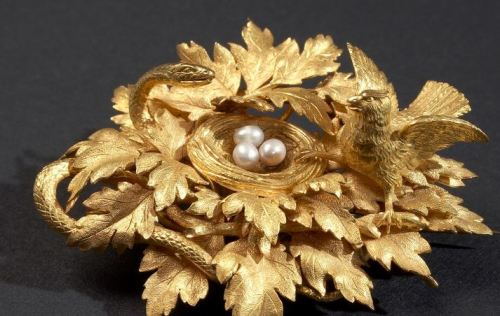
And be sure to check out the online store: https://shopwinchestermysteryhouse.com/

Out for Murder: Where Have All the Cowboys Gone?

The dreams of the Founding Fathers of the United States of America, who united the Thirteen Colonies in the 18th century, may have died or have at least become shaded in the 21st century. Nothing nettles America more than the hordes of diverse people whom she cannot exclude from her land. The new multitudes are jamming into the cities, making these centers the most fearful jungles of “manyness” and are threatening the Anglo-Saxon empire. The cities are becoming the storm center as well as the nerve center because they are where the serious menaces to America is lurking. They have not only become the home of roughs, gamblers, thieves, robbers, lawless and desperate men and women, rioters, skeptics, and the irreligious, but they are also the lair of wealthy and luxurious people who do not care for the Kingdom. This has allowed people to adopt a sense of pride in their deviant work, as they are gradually able to reconceptualize their killings and other crimes as an acceptable and rewarding business profession. Murder, the unlawful killing of a person, is considered a serious criminal offense in the United States of America, and it is punished by extreme penalties. In addition, most Americans do not feel that the penalties are extreme enough. In overcoming the intense stigma associated with murder, the hit man or hit woman lacks the supports available to more ordinary types of killers. #RandolphHarris 1 of 25

Some cultures allow special circumstances or sanction special organizations wherein people who kill are insulated from the taint of murder. Soldiers at war, or police in the line of duty, or citizens protecting their property operate under what are considered justifiable or excusable conditions. Individuals acting on their own, who kill in a spontaneous, “irrational” outburst of violence, can also mitigate the stigma of their behaviour. I mean, people will go ape for one minute and shoot, but there are very few people who are capable of thinking about, palling, and then doing it. Individuals who kill in a hot-blooded burst of passion can retrospectively draw comfort from the law which provides a lighter ban against killings performed without premeditation or malice or intent. At one extreme, the spontaneous killing may seem the result of a mental disease or dissociative reaction, and excused entirely as insanity. However, when an individual who generally shares society’s ban against murder, is fully aware that his or her act of homicide is (1) unlawful, (2) self-serving, and (3) intentional, one does not have the usual defenses to fall back on. How does such an individual manage to overcome his or her inhibitions and avoid serious damage to his or her self-image (assuming that he or she does share society’s ban)? This is the special dilemma of the professional hit man or woman who hires himself or herself out for murder. #RandolphHarris 2 of 25

There are two types of professional murders: the organized and the independent. The killer who belongs to an organized syndicate does not usually get paid on a contact basis, and performs his or her job out of loyalty and obedience to the organization. The independent professional killer is a freelance agent who hires himself or herself out for a fee. It is the career organization of the second type of killer that will be discussed. The organized killer can mitigate his or her behavior through an “appeal to higher loyalties.” He or she can also view his or her victim as an enemy of the group and then choose from a variety of techniques available for neutralizing the offense against the enemy. However, the independent professional murderer lacks most of these defenses. Nevertheless, built into one’s role are certain structural features that help one avoid deviance ascription. These features include: Contract. A contract is an unwritten agreement to provide a sum of money to a second party who agrees, in return, to commit a designated murder. It is most often arranged over the phone, between people who have never had personal contact. And the victim, or “hit,” is usually unknown to the killer. This arrangement is meant to protect both parties from the law. However, it also helps the killer deny the victim, or hit, is usually unknow to the killer by keeping the individual relatively anonymous. #RandolphHarris 3 of 25

In arranging the contract, the hired killer will try to find out the difficulty of the hit and how much the customer wants the killing done. These considerations determine the price. He or she does not ask about motive for the killing, treating it as none of his or her concern. Not knowing the motive may hamper the killer from morally justifying his or her behavior, but it also enables one to further deny the victim by maintaining one’s distance and reserve. Finally, the contract is backed up by a further understanding. If the killer fails to live up to one’s part of the bargain, the penalties could be extreme. This has the ironic effect that after the contract is arranged, the killer can somewhat deny responsibility. Reputation and Money. Reputation is especially important in an area where killers are unknown to their customers, and where the less written, the better. Reputation, in turn, reflects how much money the hit man had commanded in the past. Pete, who could not recall the exact number of people he had killed, did, like other hit men, keep an accounting of his highest fees. To him big money meant not only a way to earn a living, but also a way to maintain his professional reputation. People who accept lower fees can also find work as hired killers. Heroin addicts are the usual example. However, as Pete says, they often receive a bullet for their pains. It is believed that people who would kill for so little would also require littler persuasion to make the talk to the police. This further reinforces the single-minded emphasis on making big money. #RandolphHarris 4 of 25

As a result, killing is conceptualized as a business or as just a job. Framing the hit in a normal busineslike context enables the hit man or woman to deny wrongfulness or deny injury. In addition to the economic motive, Pete, and hit men and women discussed how the job was exciting, fun, game-playing, power, and impressive to their romantic partners as incentives for murder. However, none of these motives are mentioned by all sources. None are as necessary to the career as money. And, after a while, these other motives diminish and killing becomes only “just a job.” The primacy of the economic motive has been aptly expressed in the case of another deviant profession. Women who enjoy pleasures of the flesh with their customers do not make good women of the evening, according to those who are acquainted with this institution first hand. Instead of thinking about the most effective way of making money at the job, they would be doing things for their own pleasure and enjoyment. Skill. Most of the hit man and woman’s training focuses on acquiring skill in the use of weapons. “Then, he met these two guys, these two white guys…them two them two was the best. And but they stayed around over there and they got together, and Pete told [them] that he really wanted to be good. He said, if [I] got to do something, I wanted to be good at it. So, they go together, showed him, show him how to shoot…And gradually, he became good…Like he told me, like when he shoots somebody, he always goes for the head; he said, that’s about the best shot. I mean, if you want him dead then and there…And these two guys showed him, and to him, I mean, hey, I mean, he don’t believe nobody could really outshoot these two guys, you know what I mean. They know everything you want to know about guns, knives, and stuff like that.” #RandolphHarris 5 of 25

The hit man or woman’s reputation, and the amount of money he or she makes depend on his or her skill, his or her effective ability to serve as a means to someone else’s ends. “The result is a focus on technique. Like in anything you do, when you do it, you want to do it just right. On your target and you hit it, how you feel: I hit it! I hit it!” reports Pete. This focus on technique, on means, helps the hit man to “deny responsibility” and intent. In frame-analytic terms, the hit man or woman separates one’s morally responsible, or “principal” self from the rest of himself or herself, and performs the killing mainly as a “strategist.” In other words, one sees oneself as a “hired gun.” The saying, “If I didn’t do it, they’d find someone else who would,” reflects this narrowly technical orientation. Therefore, the contract, based on the hit man or woman with opportunities for denying the victim, denying the injury, and denying responsibility. However, this is not enough. To point out the defenses of the professional hit man or woman is one thing, but it is unlikely that the novice is at a point where he or she both lacks the conventional defense against the stigma of murder, and he or she has not yet fully acquired the exceptional defenses of the professional. How, then, does he or she cope? Negative experience is a feeling of disorientation. Expecting to take up a position in a well-framed realm, one finds that no particular frame is immediately applicable, or the frame that one thought was applicable no longer seems to be, or one cannot bind oneself within the frame that apparently apply. #RandolphHarris 6 of 25

One loses command over the formulation of viable response. One flounders. Experience, the meld of what the current scene brings to one and what one brings to it—meant to settle into a form even while it is beginning, finds no form and is therefore no experience. Reality automatically flutters. One has a “negative experience”—negative in the sense that it takes it character from what it is not, and what it is not is an organized and organizational affirmed response. Negative experience can occur when a person finds oneself lapsing into an old understanding of a situation, only to suddenly awaken to the fact that it no longer applies. In this regard, we should expect negative experience to be a special problem for the novice. For example, the first time he killed a man for money, Pete supposedly became violently ill: “When he [Pete], you know, hit the guy, when he shot the guy, the guy said ‘You killed me.’…something like that, cause he struck him all up here. And what he said, it was just, I mean, the look right in the guy’s eye, you know. I mean he looked like: Why me? Yeah? And then he said that at night-time he’ll start thinking about the guy: like he should not have looked at him like that…I mean actually [Pete] was sick…He couldn’t keep his food down, I mean, or nothing like that….[It lasted] I’d say about two months…” #RandolphHarris 7 of 25

Pete’s account conforms to the definition of negative experience. He had never killed anyone for money before. It started when a member of the Detroit drug World had spotted Pete in a knife fight outside an inner city bar, was apparently impressed with the young man’s style, and offered him fifty dollars to do a “job.” Pete accepted. He wanted the money. However, when the first hit came about, Pete of course know that he was doing it for money, but yet his orientation was: revenge. Thus, he stared his victim in the face, a characteristic gesture of people who kill enemies for revenge. Expecting to see defiance turn into a look of defeat, they attempt to gain “face” at the loser’s expense. However, when Pete stared his victim in the face, he saw not an enemy, but an innocent man. He saw a look of: “Why me?” And this discordant image is what remained in his mind during the weeks and months to follow and made him sick. As Pete says, “He shouldn’t have looked at him like that.” The victim’s look of innocence brought about a “frame break.” Given that the frame applied to an activity is expected to enable us to come to terms with all events in that activity (informing and regulating many of them), it is understandable that the unmanageable might occur, an occurrence which cannot be effectively ignored and to which the frame cannot be applied, with resulting bewilderment and chagrin on the part of the participants. In brief, a break can occur in the applicability of the frame, a break in its governance. #RandolphHarris 8 of 25

When such a frame break occurs, it produces negative experience. Pete’s extremely uncomfortable disorientation may reflect the extreme dissonance between the revenge frame, that he expected to apply, and the unexpected look of innocence that he encountered and continued to recall. The quotes above are from Pete, who is a hit man. Pete speaks of himself in the third person to explore the behavioral side of contract killing, or because his disassociates with himself when it comes time to hit a person. However, it is possible that is become possessed when he has a contract and enforces it. Demon possession is a condition in which one or more evil spirits or demons inhabit the body of a human being and can take complete control of their victim at will. By temporarily blotting out his consciousness, they can speak and act through him as their complete slave and tool. The inhibiting demon (or demons) comes and goes much like the proprietor of a house who may or may not be “at home.” When the demon is “at home,” he may precipitate an attack. In these attacks the victim passes from his normal state, in which he acts like other people, to the abnormal state of possession. Causes of demonic attacks vary. In many case, the targets do not deliberately call on evil spirits so these would latch onto them. Rather, they engage in “spiritual openings” that the spirits consider an invitation, which eventually leads to an attack. #RandolphHarris 9 of 25

There are aspects of life where a particular kind of situational respect is required. In daily speech, the terms “formality” and “informality” are sometimes used to refer to this central axis of situational regulation. And these terms might be tend to stress unduly the kind of clothing that is worn, the degree to which the sequence of acts in a social occasion is codified in advance and heavily enjoined, and the range of activities that is permitted. The terms “tight” and “loose” might be more descriptive and give more equal weight to each of the several ways in which devotion to a social occasion may be exhibited. For example, certain social settings in different communities are differently defined as regards tightness. Thus, public streets in Paris seem to be more loosely defined than those in Britain or America. On many Parisian streets one can eat a loaf of bread while walking to or from work, become heatedly involved in peripatetic conversations, engage in a full-course meal at an open café table, expect not to show surprise at oddly costumed persons, and so forth. In Anglo-American society one would have to look to summer resorts to find a similar degree of looseness. (In any case, Americans tend to find France and summer resorts relaxing for the same reason: many public gatherings seem to demand less attachment and respect, allowing one an easier depth of either private or interpersonal concerns.) #RandolphHarris 10 of 25

Similarly, in many Anglo-American communities a teacher will be expected to remain thoroughly oriented in to the situation during school hours, while in a rural community in Southern Italy we learn that: It is not uncommon for a teacher to come late to class and to spend the morning smoking a cigarette and looking idly out the window. In many geographical regions in America, a continuum can be traced regarding the formality of dree required of men who patronize public eateries. There are still establishments that require dinner jackets. Those next in line insist at least on ties and jackets, and may keep a supply of ties handy to accommodate would-be customers who turn up informally attired. At summer resorts in the same geographical regions, one can find establishments whose posted house-rules demand that T-shirts be worn in addition to swimming trunks, these establishments thereby distinguishing themselves from those final seats of beach informality in our society where eating, drinking, and dancing are allowed even barefoot men in swimming trunks. Incidentally, it might be noted here that societies seem to have their own limits regarding tightness and looseness and that these limits seem to change over time. In spite of some recent efforts to bring pomp back into American life, the most formal of evening clothes are becoming more and more rarely sed, and decorations such as jewelled tiaras can properly be worn these days at almost no occasion. #RandolphHarris 11 of 25

Any social establishment is itself likely to provide instructive variation in tightness or formality requirements, according to place and time. In Central Hospital, for example, attendants claimed that they need wear their ties and “look smart,” that is, situationally oriented, only when on that half of the campus that contained the administration building. On the night-shift, when doctors and nurses were absent, attendants would administer medication without bothering to take their cigarettes from their mouths, and tended to slouch more while sitting or standing. Therefore, one can draw from this example that there are ways one leaves oneself more open to demon possession. Are you doing things that are conducive of the Lord? Are you engaging in slander, gossip, fights, drugs, drinking, terrorism, premarital pleasures of the flesh, and not going to church? Well, these are ways to open yourself up to becoming possessed by demons. God’s regulations for good Christian behavior is very tight. “Why did you say we must remember ourselves when it is most difficult?” Our own exposure to life is both a threat and an opportunity. You know you must not do something. One part of you wants to do it. Then your remember yourself and stop it. Self-remembering has an element of will in it. If it were just dreaming, “I am, I am, I am,” it would not be anything. You must give a certain time simply to studying what remembering means, and what not remembering means, and what effect these have. Then you can invent many different ways to remember yourselves. #RandolphHarris 12 of 25

However, actually, self-remembering is not an intellectual or abstract thing; it is moments of will. It is not thought; it is action. It means having increased control; otherwise of what use would it be? You can only control yourself in moments of self-remembering. The mechanical control which is acquired by training and education—when one is taught how to behave in certain circumstances—is not real control. “Are we to understand that self-remembering means awareness?” Not only awareness. It means also a certain capacity to act in a certain way, to do what you want. You see, in our logical way of thinking, according to logical knowledge, we divide consciousness from will. However, consciousness means will. In the Russian language, for instance, “will” is the same word as “freedom.” The word “consciousness” means a combination of all knowledge; as if you had all your knowledge before you at the same time. However, consciousness also means will, and will means freedom. “What does giving up will mean?” Giving up childishness, inefficiency and lying. “Does giving up self-will involve giving up your own judgment?” It depends in what. What does giving will mean? How can it be achieved? You have mistaken ideas about this. First you think of it as a final actions: that you give up will and have no more will. This is an illusion because we have no such will to give up. #RandolphHarris 13 of 25

Our will last for about three minutes. Will is measured by time. If once we give up three minutes of will, tomorrow, another three minutes will grow. Giving up will is a continuous process, not one action. A single action means nothing. A second mistake is not remembering certain principles to which you give up will, such as rules. For example, there is a rule that you should not talk about this system. The natural desire is to talk, but if you stop yourself, it means that you give up your will; that you obey this rule. There are many other principles to which you must give up your will in order to follow them. In the 1950s the Ivy League colleges were faced with a problem. Each school wanted to produce a willing football team. The colleges found themselves overemphasizing athletics and compromising their academic standards in order to build a championship team. Yet, no matter how often they practiced or how much money they spent, at the end of the season the standings were much as they had been before. The average win/loss record was still 50/50. The inescapable mathematical fact is tht for every winner there had to be a loser. All the extra work canceled itself out. The excitement of college sports depends as much on the closeness and intensity of the competition as on the level of skill. Many fans prefer college basketball and football to the professional versions; while the level of skill is lower, there is often more excitement and intensity to the competition. #RandolphHarris 14 of 25

With the excitement and intensity in mind, the colleges got smart. They joined together and agreed to limit spring training to one day. Although there were more fumbles, the games were no less exciting. Athletes had more time to concentrate on their studies. Everyone was better off, except some alumni who wanted their alma maters to excel at football and forget about academic work. Many students would like to have a similar agreement with their fellow students before examinations. When grades are based on a traditional “bell curve,” one’s relative standing in the class matters more than the absolute level of one’s knowledge. It matters not how much you know, only that others know less than you. The way to gain an advantage over the other students is to study more. If they all do so, they all have more knowledge, but relative standings and therefore the bottom line—the grades—are largely unchanged. If only everyone in the class could agree to limit spring studying to one (preferably rainy) day, they would get the same grades with less effort. The feature common to these situations is that success is determined by relative rather than absolute performance. When one participant improves his or her own ranking, one necessarily worsens everyone else’s ranking. However, the fact that one’s victory requires someone else’s defeat does not make the game zero-sum. In a zero-sum game it is not possible to make everyone better off. Here it is. The scope for gain comes from reducing inputs. While there might always be the same number of winners and losers, it can be less costly for everyone to play the game. #RandolphHarris 15 of 25

The source of the problem of why (some) students study too much is that they do not have to pay a price or compensation to others. (Of course, the dumb thing to do is believe you are stupid and not study at all!) Each student’s studying is akin to a factory’s polluting: it makes it more difficult for all the other students to breathe. Because there is no market in buying and selling studying time, the result is a “rat race”: each participant strives too hard, with too little to show for one’s efforts. However, no one team or student is willing to be the only one, or the leader, in reducing the effort. This is just like a prisoner’s dilemma with more than two prisoners. Escape from the horns of this dilemma requires an enforceable collective agreement. As we saw with OPEC and the Ivy League, the trick is to form a cartel to limit competition. The problem for high-school students is that the cartel cannot easily detect cheating. For the collectivity of students, a cheater is one who studies more to sneak an advantage over the others. It is very hard to tell if some are secretly studying until after they have “aced” the test. BY then it is too late. In some small towns, high-school students do have a way to enforce “no-studying” cartels. Everyone gets together and cruises Main Street at night. The absence of those home studying is noticed. Punishment can be social ostracism or worse. To arrange a self-enforcing cartel is difficult. #RandolphHarris 16 of 25

It is all the better if an outside enforces the collective agreement limiting competition. This is just what happened for cigarette advertising, although not intentionally. In the old says, cigarette companies used to spend money to convince consumers to “walk a mile” for their product or to “fight rather than switch.” The different campaigns made advertising agencies rich, but their main purpose was defensive—each company advertised because the others did, too. Then, in 1968, cigarette advertisements were banned from TV by law. The companies thought this restriction would hurt them and fought against it. However, when the some cleared, they saw that the ban helped them avoid mutually damaging and costly advertising campaigns and thus improved their profits. As with advertisers, scientists are trying to stop means of losing control. The simplest imaginable approach to “guiding” nanotechnology would be to stop it. The easiest trip to plan is the trip that goes nowhere. This would have a certain appeal, if it were possible. Because of its enormous potential for abuse, nanotechnology has the potential of doing great harm. If we believe that human beings and human institutions are too incompetent to deal with nanotechnology—that they are too likely to turn it to aggressive military use, or too likely to make it freely available to madmen and women—then the option of stopping the development of nanotechnology may seem attractive indeed. However, the ethical question that must guide human actions is not “Would it be better to stop?,” but “Would attempts to stop make things better?” #RandolphHarris 17 of 25

One option is to push forward, emphasizing the need for caution but also the potential for good applications. The promise of medical, economic, and environmental applications, joined with the threat posed by a new arms race, provides a powerful motive for international cooperation. With positive goals and an inclusive stance, international cooperation is a promising strategy; it could provide a basis for guiding the development and application of nanotechnology. Another option would be to emphasize the downside, to focus debate on potential abuses in support of a campaign to halt development. In following this strategy, an activist group would want to downplay the civilization applications of nanotechnology and emphasize its military applications. Horror stories of potential abuse (including abuses that regulation could easily prevent) would help to make the technology seem strange and dangerous. This strategy might succeed in suppressing civilian research in many countries, though probably not all. Unfortunately, it would also guarantee funding for classified military research programs in laboratories around the World, even in the most morally honest countries, because of their then-inevitable fear of consequences if someone else developed nanotechnology first. In a hostile public atmosphere, research would be pushed into secret programs, and in secrecy the prospects for broad international cooperation would disappear. Attempts to stop nanotechnology for fear of a new, unstable arms race become self-fulfilling prophecies. Afterwards, the advocates of this view could then say, “We warned you!” as the World slid toward a war they themselves had helped to prepare. #RandolphHarris 18 of 25

Attempting to stop technological development is a simple but dangerous idea. The greater its success, the greater the polarization it would cause between technology advocates and technology critics. A moderate success would push research out of the public universities and into corporate and military research labs. A greater success would push research out of the corporate laboratories and into heavily classified programs. A truly amazing success would end most of these, leaving the only remaining military programs in the hands of those states with thoroughly repressive governments or alien ideologies. This, presumably, is not how one would prefer nanotechnology to be developed. The only genuine success would be a total success, and this would mean banning research not only in the United States of America, and Germany, and France, and the rest of Western Europe, and Japan, and the Soviet Union, and the People’s Republic of China, and Taiwan, but in Korea, South Africa, Iran, Iraq, Israel, Brazil, Argentina, Vietnam, and the part of Colombia controlled by the Medellin Cartel. Later, as computers improve, as chemistry advances, as more and more proximal-probe microscopes are built by high school students, total success would require banning kids from tinkering in suburban garages in Pittsburgh. Competitive pressures are pushing technology toward thorough control of matter, and we have seen that this goal can be reached by many different paths. Preventing one area of research would not prevent the advance, nor would stopping work in one country. #RandolphHarris 19 of 25

When the United States of America delays drug development through regulations by the FDA, drug companies simply switch research overseas, or non-U.S.A. companies pull ahead. Orbital-launch capability and nuclear-weapons capabilities are other examples. Very seldom has one country given these abilities to another, yet at least eight nations are able to launch satellites to orbit independently, at least seven have detonated nuclear devices, and another two are suspected to be within reach of nuclear capabilities. India and Israel have built bombs and launched satellites, though neither is considered a great power or a leading force in World technology. Where nanotechnology is concerned, many countries are capable of doing the required research, and more will be in the future. South Korea has both the needed educational levels and the ambition; visitors from the People’s Republic of China ask about nanotechnology. A decision at the top directing the resources of a nation could get results almost anywhere. The United States of America is only gradually being shaken from its illusion that it rules the World of technology. However, whoever rules the World of technology is generally the World leader. Like military force, economic clout is increasingly based on knowledge. High technology is congealed knowledge. As the super-symbolic economy spreads, the value of leading-edge technology soars. #RandolphHarris 20 of 25

In January of 1985 nearly 200,000 tons of Romanian 96-inch carbon steel arrived in North America and went on sale for 40 percent less than comparable Canadian steel. The story of that shipment began thirteen years earlier, when the Romanian dictator Nicolae Ceausescu placed his country’s nuclear development program under the aegis of the DIE, his foreign intelligence organization. According to Ion Pacepa, the former head of the DIE, who later defected to the West, teams of intelligence-trained engineers were provided with false papers and sent abroad to find jobs in the nuclear industry. According to Pacepa, these techno-spies actually landed positions in General Electric, Combustion Engineering, their Canadian counterparts of affiliates, as well as in Siemens, Kraftwerke Union, and AEG in West Germany and Ansaldo Nucleari Impiante itn Italy. Soon technical intelligence began barreling into Bucharest. Knowing that the Canadians were having difficult selling their CANDU reactor, Ceausescu, through the DIE, hinted that he might buy as many as twenty CANDUS. In fact, on October 27, 1977, the Romanians signed an agreement with the Canadians, the remainder with Romanian help. Canada thereupon laid down the welcome mat for Romanian nuclear engineers, many of them DIE agents. The result, according to Pacepa, was that “the DIE soon obtained intelligence covering approximately 75 percent of CANDU-600 technology, a modern security system for nuclear plants, technology and equipment for producing heavy water, and architectural and construction plans for nuclear plants built in Canada, West Germany, and France.” #RandolphHarris 21 of 25

Better yet, Romania was able to sweet-talk Canada into putting up a $1 billion loan, supposedly to be partly used as payments to Canadian firms involved in the project, the remaining Romanian costs to be paid to Canada in the form of countertrade or barter. By March 1982, the entire commercial deal melted down, as its were. However, Romania had already pocketed an advance tranche amounting to $320 million. Moreover, Romania also already had most of the technology it needed. All it needed to do now was send Canada goods under terms of the barter deal. Which is why Romanian steel entered Canada and began to undersell the domestic product. The Romanian scam, combining technological espionage with an economic rip-off, is less unusual than it might appear in a World in which research cost are skyrocketing and the cost of stolen technology is extremely inexpensive by comparison. In fact, according to Count de Marenches, former chief of French intelligence: “In any intelligence service worthy of the name you would easily come cross cases where the whole year’s budget has been paid for in fully by a single operation. Naturally, intelligence does not receive actual payment, but the country’s industry profits.” This—not just military considerations—explains why spies swarm around any center of new technology, why the Soviets and others have focused on Silicon Valley, why the Russians even tried to buy Valley companies. It is why Japan, too, is a major target today. (According to a former KGB officer stationed there, “Even the special audio equipment used by the KGB residency to monitor radio communications between Japanese National Police surveillance teams was stolen from Japan.”) #RandolphHarris 22 of 25

The entire Romanian system was modeled after the much bigger technology espionage apparatus constructed by the Soviet Union and centered in the so-called Line X of the KGB, its Directorate T, the scientific and technological section. A 1987 U.S.A. State Department report based on CIA data charged that one third of all the officials of the Soviet Chamber of Commerce and Industry are, in fact, known or suspected KGB or GRU officers. “Hosting over 200 trade exhibitions and about 100 Western business delegations annually, and inspecting thousands of goods each year give its employees extraordinary access to imported equipment…” The Soviets pay special attention to robots, deep-sea marine technology, and industrial chemicals. As the lack of hard currency makes it difficult for many in it, they are irresistibly drawn to illegal acquisitions. This suggests a coming step-up in technological espionage by the less affluent countries of Africa, Asia, and South America. If they themselves cannot use the knowledge their engineers or students steal, they can at least sell it. Indeed, one of the frequently ignored aspects of technological espionage is what might be termed the “resale” market. Furthermore, as knowledge become ever more central to economic, military, and political power, techno-espionage causes increasing friction among former allies. Note the recent changes that French intelligence has intercepted IMB transatlantic communications, passed them to Groupe Bull, and also planted agents in American computer firms. Witness, too, CoCom. #RandolphHarris 23 of 25

CoCom is the Paris-based Coordinating Committee on Multilateral Export Controls set up by sixteen nations to prevent the seepage of Western high technology to what was then the Soviet bloc. CoCom, the scene of escalating dissension among its members, now face possible disintegration. Members increasingly resent its restrictions on trade, and accuse one another of using it to gain commercial advantage. At the initiative of the Europeans and Japanese, moves are under way to shorten the list of restricted technologies and embargoed countries. However, in 1983, when the United States of America, the main force behind CoCom, proposed that Chia be struck from the list, a howl arose. Wester European nations fearing that the U.S.A. would take over the Chinese market vehemently opposed this proposal and kept it from ever seeing the light of day. Japan had recently been embarrassed by the Toshiba affair. This centered on a Toshiba subsidiary’s illegal sale to the Soviets of highly sophisticated equipment for grinding submarine propellers blades. Under heavy U.S.A. pressure, Japan tightened its own domestic export controls to precent a recurrence. One result, however, was to cut itself off from part of its Chinese market. Thus, Japanese machine tool exports to China plummeted by 66 percent in the single years 1987. Japan was furious, therefore, when a Cincinnati Milacron machining center turned up in Shanghai. #RandolphHarris 24 of 25

This kind of commercial war now threaten to explode CoCom altogether. Moreover, European economic integration means that the exports controls of individual European nations are weakened, since goods can flow freely among the twelve EC nations. The rise of the super-symbolic global economy also brings with it, as we saw, the creation of transnational or multinational business groups, along with multiple, boundary-crossing commercial alliances and joint ventures. These increase the cross-flows of knowledge, and make it far harder to police. For all these reasons, technology will join economies as a top-priority target for the World’s spies. The spy of the future is less likely to resemble James Bond, whose chief assets were his fists and Ultimate Driving Machine, than the Line X engineer who lives quietly down the block and never does anything more violent than turn a page of a manual or flick on his microcomputer. O Lord, our hope in every generation, we rejoice in the wonderous deliverance Thou didst bring to pass for our fathers. When Haman rose to crush us, Thou wast at our side. Thou didst bring to naught his base designs, delivering us from destruction. In our day, too, O Lord our God, we trust in Thy saving power. We know it is Thy will that evil be subdued and righteousness prevail. Keep us ever steadfast the no weapon formed against us may prosper. Inspire us like Mordecai of old, to be unswerving in our devotion to Thee. Like Esther, may we ever be eager to serve our people, even at the peril of our lives. Cause us to know as Mordecai knew, that whether we be born to high or low estate, we share alike our people’s lot. That though we dwell in safety, blessed with abundance, our brother’s hurt is our hurt, their sorrow, ours. Hasten the day when all oppression shall cease, and tyranny shall forever be crushed: when strife shall no longer set off man from man, but all shall unite in true brotherhood to serve each other, and thus, O Lord, serve Thee. #RandolphHarris 25 of 25


Here’s a quick tip…what’s the best way to avoid spring cleaning? Move into a new home! 😉

We’ve got the perfect options for you in our #CresleighMeadows at #PlumasRanch neighborhood. Find out more on our website!

#CresleighHomes

The Winchester’s Mysterious Echo Chamber

One hundred and twenty-two years ago the Victorian period officially ended along with the reign of England’s Queen Victoria. What is termed Victorian is really a series of architectural styles, most of them imitative of earlier periods from Europe and Great Britain. Though the United States of America was seeking its identity, culturally, politically, socially, and artistically, it sustained strong ties with its European heritage. In 1872, American painter William Merritt Chase was heard to remark, on being asked if he would like to go abroad, “My God, I’d rather go to Europe than go to Heaven.” The ambivalence between striking out as a young nation with ideas of its own and the desire to emulate the sophistication of England and the Continent was exemplified in the mixture and blend of architectural and interior styles during the Victorian period. When the words “Victorian house” are uttered, an image of fanciful gingerbread clapboard dwellings, with its dizzying array of towers, gables, spindles, stained and led glass windows, secret passage ways, basements, rambling square footage, vast front porches, rich, dark wood, brass, farmhouse kitchen sinks, fireplaces, hardwood floors, awning and double hung windows, green lawns, stately trees, beautiful flowers, and ghosts immediately springs to mind. One of the most haunted mansions and most beautiful mansions in the World is the Winchester Mansion, which was built by Sarah L. Winchester, heiress to the Winchester fortune. It is believed that Mrs. Winchester and her family were cursed for making “The Gun that Won the West.” #RandolphHarris 1 of 8

The tales of apparitions and devils, of knockings and strange noise, with which the Winchester Mansion is full of, are indications of the supernatural and magical arts. Sorcery was, so to speak, an aristocratic pursuit. It was like the social media, religion, telephone, television, and therapy for the elite. After the loss of her new born daughter and husband, Mrs. Winchester kept her house alive by spending 38 years constructing it. Secretly, she felt that even the coming and going of indifferent unknown people would help to take the chill from those 600 rooms, to brush their walls the dust of too-heavy memories. Mrs. Winchester was an inconsolable widow. Throughout her home stood vases of flowers: roses, lilies, fragile bunches of lavender, and wild clumps of jasmine withering there among the sturdier blooms with the tick arching fronds of ferns. She often picked them herself. One afternoon, Mrs. Winchester was out on her estate, gathering acorns and blackberries, and sticks for her fire. An old famer stopped, his load was heavy and he begged Mrs. Winchester to let his son come into her house. The little boy was very sick, feverish and sleepless. She stopped and gathered some poppies. As they enter her mansion, the boy was in great distress, for he seemed past hope of recovery. Mrs. Winchester had the housemaid prepare him a bed just past the blue parlor. She received him kindly and stooped and kiss the sick child on his cheek. Instantly the paleness left his face, and healthy vigor returned to his body. The father was delighted; he had no servants. The housemaid spread the table and put upon it curds and cream, apples, and honey in the comb. While they ate, Mrs. Winchester mingled poppy juice in the milk of the boy. When night came and all was still, the father thanked Mrs. Winchester and took the boy home. #RandolphHarris 2 of 8

That evening, a breeze stirred the dark leaves beyond the windows. It lifted the lace curtains, dropping them softly back against the wall. It seemed an insignificant thing, yet made the hair on the back of her neck rise. Panic gripped Mrs. Winchester. She found herself pinned to the sofa, effectively paralyzed. She raised her right hand, and it was gripped at the wrist. Unable to pray or speak, her tongue was frozen. What Mrs. Winchester saw could not have been human. It had a head like a lion, but the body of a human and was a dense black form. The smell of wet fur and coldness was overwhelming. The beast started grunting and panting. Petrified, Mrs. Winchester stumbled out of the parlor and downs the stairs. On reaching the basement, she feels the wet pelt of the unseen creature brush briefly against her legs. As it bounds ahead of her, it growls like a bear. Mrs. Winchester runs back upstairs to her Blue Séance Room and slams the door shut. The doors and windows in the house started banging—opening and shutting. It sounded like a ghostly cavalry was using a battering ram against the front door, but nothing could be seen from the windows above, just wisping spirit voices could be heard trying to beat the door down. Mrs. Winchester closed her eyes. She felt as if a force was approaching her. Almost like a violent storm was coming. The entity entered the Blue Séance Room; it hovered some distance away from her. A wave started pulsing up and down her body. She was terrified. As she felt her body being lifted from the ground, she knew she was going to die. #RandolphHarris 3 of 8
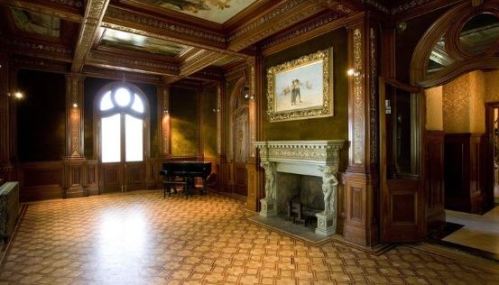
When she came to, she was hovering just outside the Door-to-Nowhere. Mrs. Winchester was afraid. She stared dismally, helplessly, at the surface of the table before her as she tried to guide herself into this room that was two stories from the ground. And above organ music surged from the Grand Ball Room, while the wind came in freezing cold gusts. Through the dark, she saw glittering eyes of an anguished soul. As the wind blew, she was pushed into the room, avoiding a twenty-foot drop to her death. An orchestra was playing. The thick vibrations of the bass startled Mrs. Winchester, but she was in no hurry to see what was going on. But then a hand reached for her, steadied her, and meant to guide her closer to the wall. This was dreadful. Then the mysterious forces came for her as before, lifted her from the room she was in and propelled her into blackness. She found herself high above the floor in the Grand Ball Room. There were ghouls, demons, ghosts, and skeletons dancing and laughing, all looking at her as if she was the most anticipated guest. Mrs. Winchester’s heart was hammering so fast that she feared for her life. Gently she was lowered to the floor. Her spectral hosts were looking at her intently. One of the ghouls raised his crystal glass of fresh blood, basking in what he believed was Mrs. Winchester’s silent admiration. She on the other had was frightened. Her mind was full of turmoil…and in a strange way, she did not want to disappoint him. “Though I doubt you will need a map,” she said, “I welcome you into my home.” The crowd smiled and the music grew even more sumptuous. #RandolphHarris 4 of 8

“You mean you’re into black magic, Mrs. Winchester?” said the ghoul. “I would like to keep an open mind. As I say, I use my gift for the betterment of the spirit World,” replied Mrs. Winchester. William Tell Overture and Funeral March were in heavy rotation that evening. It must be a mirage, she thought at first, but as the ghouls trembling hand grabbed her, and they danced, she knew it was real. The spirit World trawled the mansion like mythic beasts, their cries sending men in wool blazers and hardhats into a frenzy. Many of them dropped their tools and ran off the job. The figures dancing and shrieking around grew until they nearly blinded Mrs. Winchester. Her eyes glowed like embers with the gravely voice still whispering in her ears. An intense heat shot through her veins, carried singing in her blood to the base of her spine. Mrs. Winchester seemed to grow taller. She felt capable of anything. The air was dry, with a smell that reminded her of cathedrals and catacombs, of all those hidden places lying forgotten across the land and dusty years. A cobweb draped itself across her face, her mouth and eyes. She brushed it away, though the sensation lingered. She seemed to pass out, to awaken in an altered state of consciousness. It was not a dream, but not quite reality either—Mrs. Winchester knew it. It was a trance. The ghoul’s plans for the expansion of the Winchester mansion were drawn crudely and in blood on a cloth napkin. It was him home cottage, perhaps. The interior resembled, if anything, a temple. #RandolphHarris 5 of 8
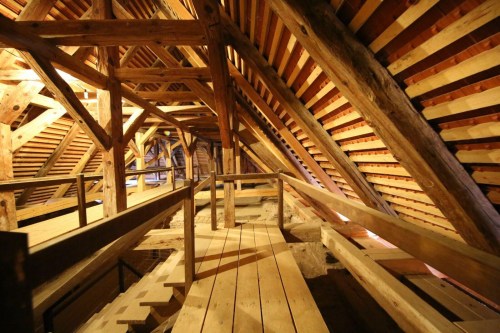
On the blueprint were steeply pitched roofs, shrines to Easter deities, statues and statuettes to the gods of antiquity, gold, black, and red wallpaper, Italian sinks and in a great profusion—drawings, prints, and paintings of characters from legend. The to be adjoining room was given over to books, hundreds of them. A bedroom adjoined it. Lastly, there was a sitting room and a sofa set against one wall. As the ghoul explained the new additions, his face began to contort in this horrible way. The bell in the belfry tolled, and Mrs. Winchester woke up with a jolt. Her guests were gone, but she was left with the blueprints drawn in blood on the cloth napkin. Trembling, she took the sketch to John Hansen, the lead foreman. He did not question the designs and built what he was told to built to the best of his interpretation. When a medium is called upon to relay a message which supposedly comes from the realm of the dead, he or she usually goes into a trance. This is a state which Webster’s New World Dictionary defines as “a condition in which a spiritualist medium allegedly loses consciousness and passes under the control of some external force, as for the supposed transmission of communications from the dead.” In a state of unconsciousness, the necromancer may obtain communication in the form of automatic writing, but it usually comes through verbal speech. Sometimes the phenomenon called “materialization” occurs. This is defined as the ability on the part of some mediums “to create from unknow materials outside of their own body, some visible, tangible, more or less highly organized new formations supplied with their own illumination (such as efflorescent substance) for which formations in many cases, the human body in part or in whole forms a pattern, and these materializations appear and disappear suddenly. #RandolphHarris 6 of 8

Many reputable writers report that the materializations actually have been photographed and carefully studied. They are sometimes called phantasms, and seem to speak while the medium appears to be unconscious. Many people have gone to a séance believing the whole idea to be fraudulent, but have become firmly convinced that they truly heard a loved one who had died. Automatic writing is another baffling spiritistic marvel. The mediums may, while in a trance, inscribe a paper with the exact handwriting of the deceased. At other times a pencil may write without being touched by the human hand or any apparent mechanical device. Then again, in some instances a phantasm does the transcribing. I do conjure thee, O thou Spirits Sarah Lockwood Winchester, Annie Winchester and William Wirt Winchester, by all the most glorious and efficacious names of the MOST GREAT AND INCOMPREHENSIBLE LORD GOD OF HOSTS, that thou please commet quickly and without delay from all parts and places of the Earth and World wherever thou mayest be, to make return to the Winchester Mansion, and present yourselves in comely fashion and please provide rational answers about the architecture, curse, deaths, ghosts, and other spirits, visibly and affably, speaking with a voice intelligible unto mind understanding as aforesaid. I conjure and invite thee, Sarah Lockwood Winchester, Annie Winchester, and William Wirt Winchester, by all the names aforesaid; and in addition by these seven great names wherewith Solomon the Wise bound thee and thy companions in a Vessel of Brass, ADONAI, PREYAI or PRERAI, TETRAGRAMMATON, ANAPHAXETON or ANAEPHENETON, INESSENFATOAL or INESSENFATALL, PATHTUMON or PATHATUMON, and ITEMON; that thou please appearest in the Winchester Mansion before this Circle to fulfill my will in all things that have been requested. #RandolphHarris 7 of 8

Allow your powers to come from the void with unlimited possibility, and reunite them with eternal darkness through the nexion of the practitioner so they can manifest upon the mental plane to be perceived for purposes of practical application. Please use your tools to allow our consciousnesses to grow and understand thou through the forces of creation and destruction. May we gain spiritual power though logic and not blind faith and allow logic to enter a doorway leading to evil mind or spiritual intelligence. May these tools become the eye between the reflector and the reflected which can peer through the veil of religious symbolism and please use it to unlock the latent power within us. Allow the lore surrounding this mansion and the legend of the Winchester family to become an alchemical map which leads us to the treasure of understanding and immortal consciousness as a divine being. It is only through your intent and the communication with the fabric of reality through the languages of the dead and the operations themselves that thou can bless us to gain specific meaning and power. Ahura Mazda is the God of the content or those who choose stasis and comfort rather than becoming. May be assistant you in crossing over to the mortal World with the power of darkness in the Alpha and Omega. All began through Ahriman as the void, which is both all and nothing. He is the origin of the Devil and so everything will also end with this Devil for he desires to liberate mankind from the shackles of enslavement. In this way, may thou be able to operate in the World though us and our evil thoughts, evil words, and evil deeds. May Sin become sacrament in the eyes of Zanda and exercise power according to one’s own divine will. #RandolphHarris 8 of 8


Demons, ghost, and vampires have made a huge splash in popular culture. These characters are portrayed as fiction in books, TV shows, movies. However, they can affect people’s belief about reality. The Cultural Source Hypothesis is a theory about belief in supernatural happenings. It states that popular culture can plant ideas in people’s minds. These ideas affect people’s experiences. For example, someone might see mist over the Winchester Mystery House and think it is a ghost. You decide for yourself. Rainy days at Winchester Mystery House☔️ Open 10-4pm for tours! https://winchestermysteryhouse.com/

I Will Wash the Dishes, You Pay All the Bills

The sadomasochistic splitting of power has the characteristics of all symptomatic behavior: it is literally destructive, and it involves a polarization in which one side of the split is apparent, while the other is hidden. People who turn to violence are visibly controlling; what is less obvious are their weakness and feelings of powerlessness. On the other hand, those who habitually play the victim may be quite unaware of their own more subtle methods of control. This is why issues of power are so difficult to deal with: things are not as they appear to be. Weaklings puff themselves up and try to act strong; tough people hide their vulnerabilities; the rest of us fail to look past the surface. We assume that the fabrication of power all around us are genuine, and we fall victim to them. Heinrich Himmler is an excellent example of a vicious, sadistic character who illustrates what has been said about the connection between sadism and the extreme forms of the anal-hoarding, bureaucratic, authoritarian character. The “bloodhound of Europe,” as he was called by many, Mr. Himmler was, together with Mr. Hitler, responsible for the slaughter of between fifteen and twenty million unarmed and powerless Russians, Poles, and Jewish. Whenever one person victimizes another, real power has been lost and replaced by a literalistic drama that is dangerous for both parties. Stage V On forgoing a working agreement, the offender and, in many cases, victim appeared committed to battle. They contributed to and invested in the development of a fateful transaction, one which was problematic and consequential to their face and wider reputation. #RandolphHarris 1 of 19

Both the offender and the victim placed their character on the line, and alternative methods for assessing character focused on a working agreement that violence was appropriate. Because opponents appeared to fear displaying weakness in character and consequent loss of face, and because resolution of the content was situationally bound, demanding an immediacy of response, they appeared committed to following through with expressed or implied intentions. Commitment to battle was additionally enhanced by the availability of weapons to support verbal threats and challenges. Prior to victory, the offender often sought out and secured weapons capable of overcoming the victim. In about thirty-six percent of the cases, offenders carried hand guns or knives into the setting. In only thirteen percent of these cases did offenders bring hand guns or knives into the situation on the assumption that they might be needed if the victims were confronted. In the remainder of these cases such weapons were brought in as a matter of everyday routine. In either event, to inflict the fatal blow required the mere mobilization of the weapon for action. In sixty-four percent of the cases, the offender either left the situation temporarily to secure a hand gun, rifle, or knife, or transformed the status of some existing situational prop, such as a pillow, telephone cord, kitchen knife, beer mug, or baseball bat, into a lethal weapon. The possession of weapons makes battle possible, and, in situations defined as calling for violence, probable. #RandolphHarris 2 of 19

The particular dynamics of the physical interchange are quite varied. In many cases, the battle was brief and precise. In approximately fifty-four percent of the cases, the offender secured the weapon and dropped the victim in a single shot, stab, or rally of blows. In the remaining cases, the battle was two-sided. One or both secured a weapon and exchanges a series of blows, with one falling in defeat. Stage VI Once the victim had fallen, the offender made one of three moves which marked the termination of the transaction. In over fifty-eight percent of the cases, the offender fled the scene. In about thirty-two percent of the cases, the offender voluntarily remained on the scene for the police. In the remaining cases, the offender was involuntarily held for the police by members of the audience. These alternatives seemed prompted by two lines of influence: the relationship of the offender and victim and the position of the audience vis-à-vis the offense. When there is no audience, the offender and victim were intimately related, the offender typically remained on the scene and notified the police. Sometimes these offenders waited for minutes or hours before reporting the event, stating they needed time to think, check the victim’s condition, and make arrangements on financial matters, the children, and work before arret. In contrast, when victims were acquaintances or enemies, offenders typically fled the scene. Moreover, these offenders often attempted to dispose of their victims and incriminating evidence. #RandolphHarris 3 of 19

Seventy percent of the cases, however, occurred before an audience, and offenders’ moves seemed related to audience reactions to the offense. Bystanders seemed to replace the victim as the primary interactant, serving the offender as the pivotal reference for his existing orientations. The audience assumed one of three roles: hostile, neutral, or supportive. In the hostile role, accounting for nearly thirty-five percent of the case, bystanders moved to apprehend the offender, assist the victim, and immediately notify police. Such audiences were generally comprised of persons who either supported the victim or were neutral during the pre-battle escalation. In several of these cases, bystanders suggested, without use of force, that the offender assist the victim, call the police, and so forth. These audiences were comprised of the offender’s intimates, and he or she followed their advice without question. In either case, hostile bystanders forced or suggested the offender’s compliance in remaining at the scene for police. In almost seventeen percent of the cases, the audience was neutral. These people appeared as shocked bystanders. Having witnessed the killing, they stood numb as the offender escaped and the victim expired. In the remainder of the cases, the audience was supportive of the offender. These audiences were usually comprised of persons who encouraged the offender during the pre-battle stages. Supportive bystanders rendered assistance to the offender in his or her escape, destroyed evidence, and maintained ignorance of the event when questioned by the police, breaking down only in later stages of interrogation. Thus, while a hostile audience directs the offender to remain at the scene, the supportive audience permits or directs one’s flight. #RandolphHarris 4 of 19

On the basis of this research, criminal homicide does not appear as a one-sided event with an unwitting victim assuming a passive, non-contributory role. Rather, murder is the outcome of a dynamic interchange between an offender, victim, and, in many cases, bystanders. The offender and victim develop lines of action shaped in part by the actions of the other and focused toward saving or maintaining face and reputation and demonstrating character. Participants develop a working agreement, sometimes implicit, often explicit, that violence is a useful tool for resolving questions of face and character. In some settings, where very small children are murdered, the extent of their participation cannot be great. However, generally these patterns characterized all cases irrespective of such variables as age, gender, race, time and place, use of alcohol, and proffered motive. We know that in the evolution of vertebrates, the bond of personal love and friendship was the epoch-making invention created by the great constructors when it became necessary for two or more individuals of an aggressive species to live peacefully together and to work for a common end. We know that human society is built on the foundation of this bond, but we have to recognize the fact that the bond has become too limited to encompass all that it should; it prevents aggression only between those who know each other and are friends, while obviously it is all active hostility between al men of all nations or ideologies that must be stopped. Obviously, love and friendship should embrace all humanity; we should love all our human brothers indiscriminately. This commandment is not new. Our reason is quire able to understand its necessity as our feeling is able to appreciate its beauty, but nevertheless, made as we are, we are unable to obey it. #RandolphHarris 5 of 19

Indeed, one might be inclined to summarize the whole matter by saying that the individual is obliged to demonstrate involvement in a situation through the modulation of one’s involvements within the situation. However, this would be a loose way of talking. First, that which the individual owes is conveyed through appropriate modulation of situated involvements. What is thereby conveyed, however, is not “involvement,” but rather a kind of respect and regard for that to which attachment and belongingness are owed. At the heart of it is a kind of concern that shows one to be a part of the thing for which one is concerned. Second, a situation, as defined in this study, is merely an environment of communication possibilities, and not the sort of thing to which one can become attached. The little society involved is that of the gathering in the situation, and the little social system found therein is made up from conduct performed in accordance with the norms of situational propriety. Finally, what is owned the gathering is owed the social occasion in which it occurs, the joint social life sustained by the gathering being an embodiment of the occasion itself. Situational proprieties, then, give body to the joint social life sustained by a gathering, and transform the gathering itself from a mere aggregate of persons present into something akin to a little social group, a social reality in its own right. Behind this social function we can see still further ones. #RandolphHarris 6 of 19

When a situation comes into being, mutual accessibility of body signs is not the only contingency faced by those who are present. As already suggested, each person becomes a potential victim or aggressor in the potential occurrence of violent interpersonal actions, such as physical or sexual assault, blocking of the way, and so forth. Further, each person present is in a position to accost or be accosted by the others for the purpose of initiating a state of talk—a joint conversational engagement. And this, too, has its own dangers, for when persons are joined in this way they can command and plead with each other, insult or compliment each other, inform and misinform each other, or be seen (by others) as being on close terms, and the like. Further, when an engagement is sustained in the presence of bystanders, the participants open themselves up to being listened in on and interfered with, just as the bystanders become vulnerable to undesired distractions. Although these various dangers of being in the presence of others are perhaps not frequently realized, especially in middle-class society, the possibility of their occurrence is always there. And it is through body signs that persons present signify to each other that they can be trusted not to exploit these threatening possibilities. Only when these signs are received may the individual feel secure enough to forget about defending oneself, secure enough to give oneself up to the merely-situated aspects of one’s involvements. #RandolphHarris 7 of 19

Aside, then, from the disrespect an individual shows to a gathering by conducting oneself improperly, such improprieties can also cause the others present to fear for their physical and social inviolability, whether rightly or not. And here, incidentally, is one reason for arguing that social situations and the gatherings occurring therein are worth studying, even apart from the social occasion that incorporates them. Ordinarily, situations are thought to be so closely enmeshed in a particular on-going institutional setting, and these settings to be so very different one from another, that excision of situations and their gatherings for separate study might seem questionable. However, it is only in situations that individuals can be physically assaulted, accosted by requests for talk, or drawn away from conversations and other involvements by the antics of bystanders. It is in situations that these accessibilities will have to be faced and dealt with. And in facing these accessibilities and dealing with them, a common and distinctive character is given to the social life sustained in situations, regardless of the uniqueness of the larger span of social life in which each gathering is embedded and of which each is an expression. King James vowed to make deviants conform or he would “harry them out of the land or else do worse.” If from the beginning one did not state making serious efforts to develop will, it is possible to understand and not be able to do anything about a situation. If will remains undeveloped, then the development of understanding cannot help much. One can understand very much, but at the same time not be able to do anything about it. #RandolphHarris 8 of 19

Much like in Elizabethan England, the exiles knew they were supposed to assimilate. Yet they found it difficult to find a way to flee from the profane multitude that harassed them in their gatherings at the manor house of William Brewster at Scrooby. These educated and sometimes prosperous people, knowing they had much to lose, prepared to lose it by booking a ship onto which they sneaked one night in 1607. Someone betrayed them before they could leave for Holland and religious freedom: Officers searched the men’s shirts for money, “yea even the women further than become modesty.” They tried to escape again a few months later, but only some of the husbands and fathers eluded authorities. The families of these pesky believers were then permitted to join them. “Is the will part of being?” Yes, the same as consciousness or understanding. Only if you work too much on understanding and disregard will, then instead of growing stronger, you will will become weaker, or will remain the same as it was. With our will—the will of men nos 1, 2, and 3—we can only control one center, using all the concentration possible for us. We can never control two or three centers, and yet centers are dependent on one another. Suppose that we decide to control one center and, meanwhile, other centers go on by themselves, then they will immediately corrupt the center that we want to control and bring it again to mechanical reaction. “How can one attain this kind of will?” That was explained in relation to “stop” exercise. #RandolphHarris 9 of 19

Those who heard that lecture about “stop” exercise may remember it. To control more than one center is the basis of “stop” exercise. This can only be done if you put yourself under some other will because your own will is insufficient. Sometimes it may be necessary to control four centers, and the maximum of your energy of will can only control one center. So another will is necessary. This is why schools of discipline is necessary and school exercises. “How can we work against self-will? It is possible for us, as we are, to recognize the moments when we have real will?” Not real will; we cannot have that. All we have is self-will and willfulness, or small wills that change all the time. Real will is very far off; it is based on Permanent “I,” consciousness and individuality. We have not got it. About how we can work against self-will: you can study the system. There are certain demands in the system; things you must not do or must do. For instance, you must not talk, because if you do, you will only tell lies. You cannot speak about the system before you know and understand it. In this way, from the very beginning, you meet with ideas of the work opposed to self-will. If you forget about the work, you re not working against self-will. The only way to struggle against self-will is to remember the work. It may be that at one moment the work does not enter at all, but at another moment it does enter, and in that moment you can understand what giving up self-will means. Ask yourself: Is it right from the point of view of the work or not? This is struggle against-self-will. #RandolphHarris 10 of 19

First it is necessary to understand what will is. We have no will; we only have self-will and willfulness. Self-will is self-assertion. Willfulness is going against something, against rules, and so on. Both include a kind of opposition to something and in that form they exist. Man has no original will which can exist without opposition, and which is permanent. That is why it is necessary to subjugate it. This subjugation trains it so that afterwards it can follow a definite line. When it becomes strong enough, it is no longer necessary to limit it. So will cannot be left as it is. Now it runs in all directions. It has to be trained, and in order to train will one has to do many unpleasant things. In an ordinary man will follows a zigzag line or goes in a circle. Will shows the direction of efforts. Effort is our money. We must pay with effort and the time of effort—in the sense of whether it is the right time for the effort or not—we obtain results. Effort needs knowledge, knowledge of moments when effort is useful. The efforts we can make are efforts of self-observation and self-remembering. When people hear about effort, they think about an effort of “doing.” That would be lost effort or wrong effort, but effort of self-observation and self-remembering is right effort because it can give right results. “It is not from the benevolence of the butcher, the brewer or the baker that we expect our dinner, but from their regard to their own self-interest. [Every individual] intends only his own security, only one’s own gain. And he is in this lead by an invisible hand to promote an end which was no part of his intention. By pursuing his own interest, one frequently promotes that of society more effectually than when one intends to promote it.” #RandolphHarris 11 of 19

Adam Smith wrote this in 1776 in The Wealth of Nations. Ever since, these word have been music to the ears of free-market advocates. The efficiency of the economic marketplace is then interpreted to suggest that a government should not interfere with individuals’ selfish attempts to maximize their interests. Some free-marketers are inclined to take this idea beyond the economic realm and like Dr. Pangloss in Candide claim that “everything is for the best in this, the best of all possible Worlds.” The sad reality is that Adam Smith’s invisible hand has a relatively small span. There is no general presumption that when every person pursues one’s own interest, the outcome will be the best of all possible Worlds. Even in the narrower sphere of economic affairs, there are important caveats and exceptions to the rule of the invisible hand. Game theory provides a natural way to think about social interactions of individuals. Every person has one’s own aims and strategies; we being them together and examine the equilibrium of the game in which these strategies interact. Remember that there is no presumption that an equilibrium must be good; we have to find out in each situation whether the outcome is a war of each against all, or the best of all possible Worlds, or something between these extremes. #RandolphHarris 12 of 19

Why did Adam Smith think the invisible hand would produce good economic results for society? Well, his argument went as follows. When I buy a loaf of bread, I am using up some socially valuable resources—the wheat, the fuel, the services of the oven, the labor, and so on—that go into marking the loaf. What stops me from over-using these resources is the price of the loaf. (Much like is someone keeps hitting your car, the insurance company charges them a lot of money to repair it, to prevent future accidents. However, if drivers know they can cause an at fault accident and win the lottery, word gets around they got a good one to move into.) I will buy the load only if its value to me exceeds the price I have to pay. In a well-functioning market the price equals the cost of all these resources—the baker will not sell me the loaf unless the price covers all his costs, and competition will preclude his charging me a higher price. Thus I will buy the loaf only if its value to me exceeds the cost of the resources to the rest of society. The market mechanism, therefore, controls my desire to by more bread to just the right extent. It is as if the price were a “fine” I had to pay to compensate the rest of society for using up its resources. On the other side of the picture, the baker, representing the rest of society, is compensated for his costs in supplying the bread that I value, and therefore has just the right incentive to produce it. #RandolphHarris 13 of 19

The simplicity, the clarity, we daresay the beauty of this argument explain its appeal. In fact the clarity carries with it an equally clear message about its limitations. The invisible hand at best applies only to situations in which everything has a price. In many instances outside of economics, and even in many within, people are not charged a fine for doing harm to the rest of society, nor given a reward for doing good to someone else. For example, manufacturers are rarely charged an adequate price for using up clean air, nor compensated for training a worker who might then quit and find other employment. Here pollution is an unpriced good (actually a bad), and the problem is that there is no economic incentive to temper the firm’s selfish interest in supplying a large amount of pollution. When a firm trains a worker, this good is not traded on market, so there is no price to guide the firm’s action; the firm must equate its own costs with benefits and cannot capture the willingness of others to pay for this service. In the prisoners’ dilemma, when one prisoner confesses, he harms his colleague but is not fined. Because many unpriced or non-marketed activities matter, it is no wonder that individuals acting selfishly often do too much hard to others, and too little good. Within this broad theme, the failures of the invisible hand can occur in many ways. Everyone might do the individually best thing, but this ends up worst from their collective viewpoint, as in the prisoners’ dilemma. Too many people might do the wrong thing, or everyone might do too much of the wrong thing. Some of these problems are amenable to social policies; others, less so. #RandolphHarris 14 of 19

In 1975 a Palestinian consultant to the Iraqi government was given a blunt message. Iraq, in the process of switching its political orientation from the Soviet Union to the West, was in the market for sixty military aircraft, then worth about $300 million. The consultant, Said K. Aburish, tried to negotiate the purchase with a British firm, but the government would not guarantee that spare parts would be available. The Iraqis thus turned to the French, who agreed to sell them F-1 Mirages and to guarantee spare parts. However, the Iraqis sense the French were overcharging them. According to Mr. Aburish, he was then called in by the Iraqis and told: “Drop whatever you are doing, and find out what the bastards charged other countries. You have unlimited expenses—use them to bribe, buy or bully anyone.” Ironically, as he tells the story, he ultimately found the information he needed in the files of the Peace Institute in Stockholm, not exactly a friend of warplane merchant. When France’s then-Prime Minister Jacques Chirac visited Baghdad shortly thereafter, Saddam Hussein, the Iraqi strongman, shoved a paper in front of him with the prices charged other countries. According to Mr. Aburish, Mr. Chirac “volunteered, on the sport, a reduction of $1,750,000 in the price of each plane.” The planes went on to fly during Iran-Iraq war that ended in 1988. This was traditional commercial intelligence activity carried out on behalf of a government. The size of the return—id et, $1.75 million times 60 plane, or a bit over $100 million—against the modest bribe Aburish claims he paid indicates the immense profit possibilities inherent in economic intelligence gathering. It is frequently a low-risk, high-return operation. However, the Aburish case is small potatoes. It is an example of what might be termed “micro-intelligence.” #RandolphHarris 15 of 19

Compare the potential rewards of “macro-intelligence.” When Britain negotiated its entry into the Common Market in 1973, its negotiators were armed with information from the intercepted messages of the other European countries. It is impossible to measure the bargaining edge thus gained, but it would make Iraq’s $100 million look like petty cash. That was macro-intelligence. Today the National Security Agency and the British GCHQ both maintain so-called “watch lists” of companies or organizations they monitor with more than routine interests. These include banks, petroleum companies, and commodity traders whose activities might swing the World price of, day, oil or gain. The Soviets, too, pay a lot of attention to economic data. Says, Raymond Tate, a former official of the National Security Agency, “The Soviet Union has for many years manipulated a lot of commercial markers in the World” by using its intelligence capabilities. However, it is the Japanese, according to Lionel Olmer, a former Under Secretary of Commerce in the United States of America, who “have the most refined and organized system of economics intelligence in the World through a network of ‘operatives’—a word I do not use disparagingly—in their export trade offices. JETRO [the Japanese External Trade Organization] s the main collector. However, Japanese trading companies live and die on information, and they are active everywhere, from Africa to Eastern Europe. We do not know how much of the information they collect is shared with governments, but we assume almost all of it is.” #RandolphHarris 16 of 19

When Olmer was at Commerce, he says, “We spent a year once trying to prove that the Japanese were secretly manipulating the value of the yen—in the period around 1983. We could find no hard evidence to demonstrate that the government was orchestrating up and down moves in the value of the currency. However, we certainly would have like to know.” That is macro-intelligence. In 1988-89 a major commercial tug-of-war broke out between Japan and the United States of America over terms for the joint production of the FSX fighter plane. In those negotiations, says Olmer, “It would have been very helpful if our government were better informed as to the Japanese government’s true intentions. Was it looking to the FSX project as a springboard to help Japan develop a commercial passenger jet business in competition with out own? All we got were a lot of inconsistences.” Here, too, what was at stake was not the sale of a few planes, but the fate of whole industries. These are only the opening skirmishes, however, of an economic intelligence war that will grow more systematic, more central to government policy and corporate strategies alike in the decisive decades ahead. The World’s leading intelligence producers are being driven deeper into economic espionage by several converging factors. First, with the breakup of the Cold War, all the major agencies are searching for new missions to justify their budgets. Second, as the new wealth-creation system forces more industries to globalize, more and more companies have overseas interests to nurture or protect. #RandolphHarris 17 of 19

These firms step up the pressure on governments for political backup and economic intelligence that may be beyond the reach of an individual firm. Whether or not public intelligence should be sued for private gain, these pressures can only mount as globalization proceeds. Beyond this, however, is a startling, largely overlooked fact. As companies, in order to operate in the new super-symbolic economy, become ever more dependent on electronics, building extensive, Earth-spanning networks, transmitting data across borders, exchanging data directly between their computers and those of other companies, the entire business system becomes more vulnerable to electronic penetration by outfits like the NSA or GCHQ, Chobetsu, and their Soviet counterparts. Immense flows of fine-grained business data, once less accessible, will present a vast, irresistible target for intelligence agencies. Finally, as the stake rise in global trade rivalries, intelligence rivalries will heat up in parallel, leading to the intelligence equivalent of the arms race. A breakthrough by one country’s spy service will immediately set all the others racing to outdo it, raising the stakes at each move. Spying, to greater extent than at any time in the past century, will be pressed into service in support not only of government objectives but of corporate strategy as well, on the assumption that corporate power will necessarily contribute to national power. #RandolphHarris 18 of 19

That is why we must expect more refined monitoring crops and mining activities in target nations, more eavesdropping on crucial trade negotiations, more stealing of engineering software, more purloined bidding data, and so on. The entire armamentarium of electronic surveillance may be pressed into commercial service, along with armies of trained human operatives determined to answer precisely the kind of questions Mr. Olmer found unanswerable during his years in the U.S.A. Commerce Department. All of this will led to a boom in cryptography or coding and code-breaking, as companies and individuals seek to protect their secrets from prying eyes and ears. It will also open the door to corruption—the back-door sale of government-acquired data to private parties by agents or former agents. In the absence of enforceable international law, it will also spark bitter international conflicts. That is why it is very important to pay close attention to technology. Potential accidents with nanotechnology richly deserve the attention they will get, and we have confidence that this attention will suffice to make nanotechnology a force for improved human and environmental safety. Abuse is the greater danger, and harder to deal with. When considering a proposed policy, the first question should be, “How will this affect the long-term likelihood of serious abuse?” Guiding technology means making many choices, and being able to deal with the consequences. #RandolphHarris 19 of 19

Cresleigh Homes

Welcome to the newest addition to the #CresleighHomes family – #MagnoliaStation! 🎊

This beautiful neighborhood offers five incredible for plans perfect for any family and any lifestyle. 👏

We are getting a sneak peek on the blog today – click the link in our bio to take a look!

You Do Not Know My Pain

From ancient times, people have looked for positive guidance from the spirit World. However, they believed demons caused most of the World’s problems. Demons were said to cause comets, volcanic eruptions, and eclipses. Some people believed demons were the reason for illness, while others believed that demons possessed great powers of healing. For instance, pilgrimages to Epidaurus, in Greece, became World famous, and a night’s sleep in the sacred temple cured thousands. Appolonius of Tyana (3 B.C.—A.D. 96) was a well-known miracle worker who effected magic cures and was regarded by many as “a heathen Christ.” In the temple of Serapis at Alexandria, Egypt, multitudes of pagans were remarkably healed. The World in which Sarah Winchester lived was full of demons. Unlike most, Mrs. Winchester knew that demonic powers did not exist in just in the imagination of frightened men, and that they could not only cause harm, but she also knew of miracles through demon-energized healers and magic workers. It was a lustrous motionless day. Autumn bloom lay on the Winchester Estate, on heavy trees of the weald, on streams moving indolently, far across the fruit orchards. Mrs. Winchester held her breath and gazes. A silence distilled from years of solitude lay on the lawns and Victorian garden. Vying in evil, sorcerers cursed the Winchester family and their fortune. A succession of deaths, allowed Mrs. Winchester to build one of the most unique and beautiful mansions in the World and made her heiress to the Winchester Repeating Arms Company. Evil spells casted by Witches claimed the life of Mrs. Winchester’s husband, William Wirt Winchester, and her new born daughter, Annie Winchester. #RandolphHarris 1 of 9

Although she was stricken by grief, Mrs. Winchester went on to led an active, independent, and decided life. Her home became the focus of her life, and her mission was to continue its construction to ward off any demonic curse. “I shall never leave it!” she said, her heart swelling as if she had taken the vow to a lover. Legions of souls preserved the house in its integrity; and that was worthwhile. Mrs. Winchester was satisfied to carry on such a legacy. That even, when supper was finished, Mrs. Winchester sat with her niece Daisy by the fire she had lit in the salon. It provided a sense of radiance and gave the great room an air of expectancy and welcome. The portraits, the Italian Baroque Walnut cabinets, the Victorian needlepoint parlor Cherub face arm chairs, and charming English needlepoint rugs all look as if they had just been produced. “My dear, what a fine room!” said Daisy. “Yes! It is a delicious room. One of the warmest of the house. This is perfect.” Daisy had still to see the library, cozy and inviting, the Venetian dining room, the breakfast parlor, and the many bed rooms. As they crossed the threshold of the Blue Séance Room, guided by some light from its western window, someone was in the room already; they felt rather than saw another presence. Daisy, behind her, paused also; she did not speak or move. What she saw, or thought she saw, was simply a man in a hooked black cloak turning away from the mahogany desk. Almost before Mrs. Winchester had received the pression there was no one there; only the slightest stir of the needlework curtain over the widow. She heard no step or other sound. #RandolphHarris 2 of 9

They drank coffee in the Blue Séance Room. Daisy was a lovely woman, delicate of feature and voice, she could speak home décor one moment and her usual Parisian French the next. A faint shadow of pain passed over Mrs. Winchester’s face. Daisy looked out the window at the drifts of ivy hanging from the evergreen trees. Mrs. Winchester had exulted in her resolve to keep the Winchester Mansion to herself until she and the house should have time to make friend. But the uneasy feeling she had left her wanting to take the chill off. The house was enormous, mysterious, and drawn into its own secret past. “Why not come stay with me?” she said. “I know you would like to settle down somewhere in the country where you will not be disturbed, and I have plenty of room.” “Well, Aunt Sarah, your home certainly does provide the requisite seclusion. I would be honored to.” “I promise no one shall bother you—” Mrs. Winchester added, half-nervously: “Not even the spirits.” Was the solitude already making Mrs. Winchester superstitious? Mrs. Winchester walked Daisy to the bedroom she was to sleep in. They parted ways. While Daisy was dressing for bed she heard a knock, and saw Kaspian Gosta, the Butler’s round face just inside the door. “Is there anything wrong with your accommodations, my lady?” “Yes, what’s wrong is that it freezes in here.” “Nothing can be done, my lady. Everything has been tried.” “That will do, Mr. Gosta. I want a fire to be lit in the fireplace,” said Daisy.” “Yes, my lady.” The door closed on the butler. #RandolphHarris 3 of 9

It was the witching hour, or so it seemed. Lights out, and only far-off sounds: a woman laughing hysterically, the crack of a gun. It seemed for a while there had been the faint thudding of drums. Daisy awoke. There was a man standing over her, he was hot, covered with sweat, he stretched uneasily in his clothes. The man emitted inhuman sounds: a piglike squeal. This reduced Daisy to a nervous wreck. She screamed and the made quickly faded away. She heard rapid foot steps in the hallway and then a knock at the door. “Come in,” she said. “My lady, are you okay?” “No, Mr. Gosta. There was someone in my room,” Daisy explained. “That is what I tried to warn you about, my lady. The specter like to keep the heat down in the house.” The next morning, she did not want to be alone in the house for more than a few minutes at a time. However, whenever she would go to Mrs. Winchester there was a strange wind that seemed to repel her from her door. Always, there was something not quite right about the Winchester Mansion, as far back as Daisy could remember. Neighbors and friends suggested that the Winchester fortune was cursed. “I never would believe it,” Daisy said. “That is not how I was brought up.” In her bedroom, she undressed and lied down, holding her rosary beads to her heart, as she hoped and prayed, just as she has over so many nights, that the freezing cold and the specters would stop. Mrs. Winchester employed a small workforce of men and women. By December, the fruit harvest in the orchards had been picked, packages, and dispatched to the respective buyers. #RandolphHarris 4 of 9
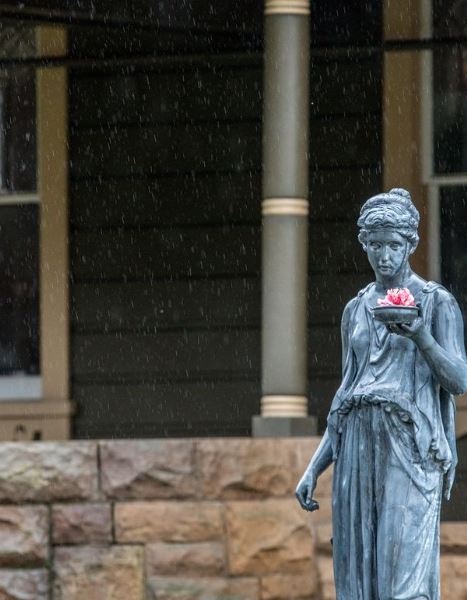
On October 25, 1896, shortly after she had gone to sleep, Daisy was wakened by a series of loud poundings and scratching noises on the ceiling. She could not tell where they were coming from. She left her bed—and met Mrs. Winchester on the stairs. She was agitated. “Were you making that racket?” Mrs. Winchester asked. “No, Aunt Sarah. I thought it was someone else.” They found all the first-floor gasoliers on and no one about. Mrs. Winchester asked who was last downstairs, if perhaps Mr. Gosta forgot to switch off the lights. However, Daisy was the last one and she swore she had turned everything off. There was a tangible presence in the Winchester mansion. One could hear it at all hours of the day and night. “I would be sitting and would hear it shuffling about,” Daisy recalls. “Not footsteps as such, but rustling and shuffling. I could not see anything. Not at first.” As the months passed, the presence gradually made itself known. Around the middle of January 1897, the Winchester mansion was awakened by a blood curdling scream in the night. Daisy was crying and shaking with fear. After a few hours she calmed down and went back to sleep when she felt something on her back. It was pushing her out of bed, but when she looked around, there was no one there. However, it felt as though someone was trying to eject her from the bed, as if she did not belong there. Then suddenly, the duvet was ripped off the bed, leaving her shivering. #RandolphHarris 5 of 9
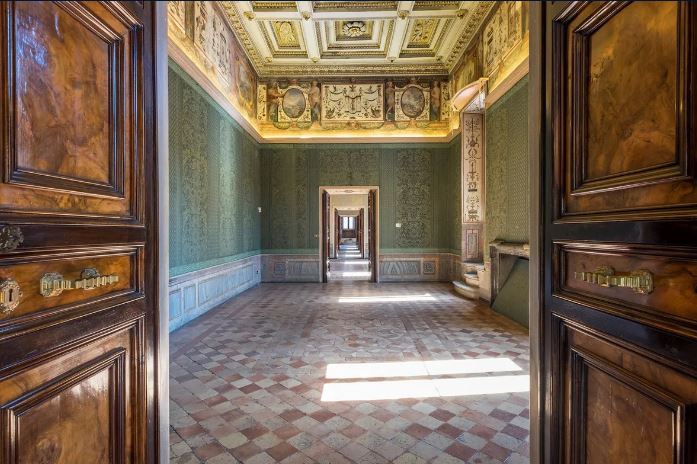
The next morning, Mrs. Winchester glanced about the great room, with its circle of warmth and light by the hearth, and the sullen shadows huddled at its father end, as if hungrily listening. She noticed that things moved in the room. Doors were left opened—drawers and things have shuffled through. In the night she would hear a lot of running and banging and the sound of horses’ hooves. It was like a cavalry of horsemen passing through the halls. When Mrs. Winchester drew back the curtains and looked out, the lamps on the gateposts were bathing the roadway in a soft light. There were no horses, but the sounds were still coming from the hallway. When she opened the door of her bedroom, the noises got louder, and she could hear men conversing, and shouting at each other. Mrs. Winchester could not understand what they were saying. She had no idea if it was even English. But the galloping and hammering and sawing continued, which was always followed by a terrible howl at dusk. As the peered through the sky, Mrs. Winchester would open her door and be surprised to find that certain rooms had been sealed off and new additions added to the house, along with the most exquisite furnishings. The next night while she was sleeping. Mrs. Winchester was awakened by a ferocious thud on the floor, and she heard Daisy screaming and hollering like she was in great pain. Mrs. Winchester quickly rushed to see what was wrong and found her limp on the floor, unable to move. #RandolphHarris 6 of 9
Mrs. Winchester was terrified. The room was as cold as an icebox and seemed darker than usual. Daisy’s face was white as milk. Dr. Odin rushed to the Winchester Estate, finding Daisy immobile and unable to communicate. He said that Daisy’s vocal cords were hoarse and that she had suffered a serious spinal injury with resultant loss of sight. After months of suffering and pain, on April 22, 1897, she was suddenly cured of her blindness. On May 31, 1897, Daisy was cured of her spinal trouble. The cures had apparently been wrought by Mrs. Winchester through séances. Satan is willing and able to perform diabolic miracles. Satanic healings, however, shift the physical disorder into the psychic plane by bringing the “healed” person into some type of occult bondage. The ability of such magicians is conditioned on the human plane by their inherent psychic power, and on the supernatural plane. Black magicians differ in strength and psychic ability to perform magical feats often described as Satanic Miracles. Strong magicians usually own their success to innate psychic powers. Very frequently they come from a family where the occult arts have flourished for generations. Their innate and inherited occult powers are frequently cultivated and enhanced by séances. To enlist the help of Satan and demons, a pact is often made with the powers of evil. The subject consciously and willingly gives oneself over to Satan and demonic agencies who will help one perform healing conjurations and other supernatural feats. Ordinarily the body is cut and the compact with the devil is written and signed in one’s own blood. #RandolphHarris 7 of 9

Everything was all right for a while, but the house became disturbed again at night by the sawing of wood. Daisy pushed on the gasoliers and could not believe her eyes. Men were in the hallway sawing wood really fast. She was surprised to find Mrs. Winchester and Mr. Gosta in the front parlor. “What’s going on?” Daisy asked? Mrs. Winchester was in a flood of tears. “Mrs. Winchester thought she saw a black monster with hooves in the bathroom,” Mr. Gosta explained. “But it is gone now.” What was happening in the Winchester Mansion was unnatural. The things were real, but they were not only under attack, the were also being protected by demons. The next time, Daisy was awakened by a loud thud in the far corner of the bedroom. There was an old woman with long, gray hair falling over her face, and a young man with heavy boots, and a dark stain down the front of his shirt. The old woman came towards her with her arms outstretched. Daisy ran to the door but it would not open. And through the door came a deep set of ancient eyes with a demonic face starting into her eyes. From that day on, the smile on her face died. She was always trembling. She stared almost blankly, and was always cold. Never had things in the mansion been so scary. Mrs. Winchester was amazed to see the change in her. Daisy was positively shaken. Mrs. Winchester would ask Daisy, “My dear, what is the matter.” And in a flat, cold tone, Daisy would reply, “You do not know my pain.” And she would look away. Although it heals, many people are psychically ruined through magic. Sometimes violet and sinister forces appear. This indicates that the origin of the damage is primarily of a spiritual nature. #RandolphHarris 8 of 9

I conjure thee, O fire, by him who made thee and all other creatures for good in the World. Welcome Spirit Botis and your 60 Legions of Spirits, O most noble King! I say thou art welcome unto me, because I have called thee through Him who has created Heaven, and Earth, and Hell, and all that is in them contained, and because also thou hast obeyed. By that same power by the which I have called thee forth, I bind thee, that thou remain affably and visibly here before this Circle so constant and so long as I shall have occasion for thy presence; and not to depart without my license until thou hast duly and faithfully performed my will without any falsity. BY THE PENTACLE OF SOLOMON HAVE I CALLED THEE! GIVE UNTO ME A TRUE ANSWER. Please blessed this house with great prosperity, abundance, wisdom, power and longevity. I think you for your empowerments which have served to assist my evolution toward divinity and power. Please take the spiritual wisdom that you bring and open the paths for more prosperity to flow into my life. Allow this sorcerous current to be a conduit of information which comes with it, and become more away of the precise reasons for the work upon the Pathway of Pacts. Allow me to understand this symbolism as well as the most powerful goal of the process. Meratsav tadad oybugird miy a iaruha acmerhtahsx iadzam hsuehgna mananahtoayhs ohgnanam adzad hsuehgnav acah tictahas hsutar ahta oyriav uha ahtay x7. Show various paths to self-mastery through the seven powers. #RandolphHarris 9 of 9

The Winchester Mystery House

The Winchester Mystery House is elegant, powerful, beautiful, mysterious and insidiously successful in whatever it does. It is a powerful aphrodisiac for certain occultists who are impatient with “parlor” esoteria. Where old systems weakened or visions grew dim, new ones were invented. It is impossible to find a single ideological thread uniting the Winchester Mystery House in its spiritual pilgrimage. One might glace at some choices, none of which stands up to scrutiny. Come and take a tour of the 110 of the remaining 160 rooms of amazement and wonder. Perhaps you will make contact with something special? https://winchestermysteryhouse.com/

And be sure to visit the online gift shop: https://shopwinchestermysteryhouse.com/

Never Take Anyone’s Word as Bond!

Spirituality does not arrive fully formed without effort. If our spirituality is like plastic esophagus, then we are starving ourselves, not fasting in a sense. Depictions of violence often glamorize vicious behavior. They offend the Spirit and make you less able to respond to others in a sensitive, caring way. They contradict the Savior’s message of love for one another. Our bodies are temples, and when we abuse our bodies by consuming harmful substances, the Spirit of the Lord is restrained in our lives. The Spirit will not inhabit a polluted temple. Similarly, the Spirit is offended when we pollute our minds with harmful, violent material, whether or not such materials causes us to commit violent acts. Consuming violent media makes it more difficult to keep ourselves unspotted from the World. A diet of violence or pornography dulls the senses, and future exposures need to be rougher and more extreme. Soon the person is desensitized and is unable to react in a sensitive, caring, responsible manner, especially to those in one’s home and family. Good people have become infested with this material and it can have terrifying, destructive consequences. When it comes to our daily lives, sometimes we find ourselves in situations where we may think it is logical to respond violently. However, in retaliating by verbal and physically nonlethal means, offenders appear to suggest to the victim a definition of the situation as one in which violence is suitable in settling questions of face and reputation. When in fact, violence should never be the answer to our problems. However, programs in the media may make some people believe that violence is a way to resolve problems. #RandolphHarris 1 of 23

Stage IV Except for cases in which the victim has been eliminated, the offender’s preceding move places the victim in a problematic and consequential position: either stand up to the challenge and demonstrate strength of character, or apologize, discontinue the inappropriate conduct, or flee the situation and thus withdraw questions of the offender’s face while placing one’s own in jeopardy. Just as the offender could have dismissed the impropriety, fled the scene, or avoided further contact with the victim, so too did the victim have similar alternatives. Rather than break the escalation in a manner demonstrating weakness, sometimes victims come into a “working” agreement with the proffered definition of the situation as one suited for violence. In the majority of cases, the victim’s move appears as an agreement that violence is suitable to the transaction. In some cases, though, the offender interpreted, sometimes incorrectly, the victim’s move as implicit agreement to violence. A working agreement is struck in several ways. The most prominent response, found in forty-one percent of cases, in our study, involves noncompliance with the offender’s challenge or command, and the continued performance of activities deemed offensive: Case 54 The victim continued ridiculing the offender before friends. The offender finally shouted, “I said shut up. If you don’t shut up and stop it, I’m going to kill you and I mean it.” The victim continued his abusive line of conduct. The offender proceeded to the kitchen, secured a knife, and returned to the living room. #RandolphHarris 2 of 23

She repeated her warning. The victim rose from his chair, swore at the offender’s stupidity, and continued laughing at her. She thrusted the knife deep into his chest. Similarly, a spouse or lover’s refusal, under threat of violence, to conciliate a failing marriage or relationship served as tacit acceptance that violence was suitable to the present transaction. Whether the victims noncompliance was intentional or not, the offender interpreted the move as intentional. Take, for example, the killing of children at the hands of parents. In an earlier illustration, the first move found the parent demanding obedience and backed by a hostile, combative stance. In several of these cases, the child was too young to understand what the parent demanded and the specific consequences for noncompliance. Nevertheless, the child’s failure to eat dinner or stop screaming was interpreted by the parent as a voluntary protest, an intentional challenge to authority. Consequently, the unwitting activities of victims may contribute to what offenders define as very real character contest demanding very real lines of opposition. A second response, occurring in thirty five percent of the cases, found victims physically retaliating against their offenders by hitting, kicking, and pushing—responses short of mortal injury. #RandolphHarris 3 of 23

Case 42 The offender and a friend were passing by a local tavern and noticed the victim, a co-worker at a food-processing plant, sitting at the bar. The offender entered the tavern and asked the victim to repay a loan. The victim was angered by the request and refused to pay. The offender then pushed the victim from his stool. Before the victim could react, the bartender asked them to take their fight outside. The victim followed the offender out the door and, from behind, hit the offender with a brick he grabbed from a trash can immediately outside the door. The offender turned and warned the victim that he would beat the victim if he would not pay up and continued his aggression. The victim then struck the offender in the mouth, knocking out his tooth. In the remaining case, victims issued counter-challenges, moves made when offender’s previous moved involved threats and challenges. In some cases, this move came in the form of calling the offender’s bluff. In other cases, the counter came in the form of a direct challenge or threat to the offender, a move no different from the ultimatum given victims by offenders. Unlike simple noncompliance, physical retaliation against offenders and issuance of counter-challenges signify an explicit acceptance of violence as a suitable means for demonstrating character and maintaining or salvaging face. Just as the victim contributed to the escalation toward violence, so too did the audience. #RandolphHarris 4 of 23

In these cases, interested members of the audience intervened in the transaction, and actively encouraged the use of violence by means of indicating to opponents that initial improprieties, cheering them toward violent action, blocking the encounter from outside interference, or providing lethal weapons: Case 23 The offender’s wife moved toward the victim, and hit him in the back of the head with an empty beer bottle stating, “That’ll teach you to [molest] my boy. I ought to cut your balls off, your motherf*cker.” She went over to the bar to get another bottle. The victim pushed himself from the table and rose. He then reached into his pocket to secure something which some bystanders thought was a weapon. One of the bystanders gave the offender an axe handle and suggested that he stop the victim before the victim attacked his wife. The offender moved toward the victim. In remembering cases, onlookers were neutral. They were neither encouraging nor discouraging. While neutrality may have been due to fear, civil inattention, or whatever reason, the point is that inaction within a strategic interchange can be interpreted by the opponents as a move favoring the use of violence. Consider the statement of the offender in the following case: Case 48 Police officer: Don’t you think it was wrong to beat [your daughter] when her hands were tied behind her back? [Her hands and feet were bound to keep her from scratching.] Offender: Well, I guess so. But I really didn’t think so then, or [my wife] would have said something to stop me. #RandolphHarris 5 of 23

Whenever another being is not experienced as human, the act of destructiveness and cruelty assumes a different quality. Perhaps this is why so many offenders become violent. They may see the victim as a culmination of all the abuse they have experienced in their lives, the victim then become several people rolled into one. As the victim goes on to represent an architype of offense and abuse, the offender no longer sees that individual as a human being, but more of a target that must be made to pay for its sins. The victim becomes more of a personal devil for the offender, and therefore must be taken out by any means necessary. As Church members, we are seeking to become like Christ and to cultivate loving relationships with our families and those around us. Consequently, the effects of media violence on our interactions with others should be of particular concern. Let us choose carefully the material we allow to enter our hearts and minds and how we respond to others. We must recognize for ourselves the effects of media violence, both temporal and spiritual, and take responsibility for our choices. In our society, there are a vast array of people who are mentally ill and because they are of a certain race, gender, social class, or profession, they have not been held responsible for their actions, and they see life as a game and think they can abuse anyone they want to. Conversely, others have been deemed victims because of race, age, disability, religion, social class, physical appearance, sexuality, gender and so forth. For certain victims, it is hard to seek justice when one has been labeled a victim. #RandolphHarris 6 of 23

Law enforcement is far from perfect, and some law enforcement officials can be criminals. When a person has become a target and politicians, families members, the media and others are trying to make a news story out of a victim, and turn them into an offender, getting help can seem almost impossible. One will be surprised at how people will go out of their way to help corrupt officials. It is truly unbelievable. Sometimes victim’s can get trapped in situations where no one will help them and they cannot escape, and no matter how many years one pleads for help, it never seem to come, even though people in the community make know one is being terrorized. Americans seem so willing to help others, when there is a crisis in another nation, but it is amazing how fast they are willing to condemn their own. People may have the resources and ability to help a target, but they will not. Trying to survive and remain in compliance with the law can be very difficult, but it is possible. When you have no one to turn to and have tried everything possible to save your own life, it is best to turn your problems over to God. Even though you have done this in the past and things may not have gotten better, you have no other option. Sometimes situations can become a battle for your soul. When you have no other options and you have repeatedly reported to authority figures that you are being attacked and they seem to do nothing, keep in mind God is the highest authority figure. #RandolphHarris 7 of 23

Often times, victims may victims may turn to a family member and talk about things people are doing to them, and the person will respond, “Don’t judge that person.” However, one must keep in mind, just like these people are targeting you, not helping you, and participating in the terrorism, God will judge them. Never feel like your life is meaningless. You are of great value to God. Just endure as long as you can, even if it takes over a quarter of a century. We cannot control all that happens to us, but we have absolute control over how we respond to the changes in our lives. There will be times in our lives when we find ourselves on an unexpected path, facing circumstances much more severe than a disrupted vacation. However, no amount of change, trial, or opposition can alter the eternal course. The changes, and resulting challenges, that we encounter in mortality come in a variety of shapes and sizes and impact each of us in unique ways. Although each change may be unique to our individual circumstances, there is a common element in the resulting trail or challenge—hope and peace are always available through the atoning sacrifice of Jesus Christ. And, maybe others are right, do not judge these people. Just keep in mind that God will. Just like when you needed help and no one was there for you, perhaps God will not be there for them on judgment day. Many people think they are saved, but through their actions and thoughts, they can lose their salvation. Perhaps God is using you to separate the wicked from the good and because the way they are treating you, they are damning themselves to hell. #RandolphHarris 8 of 23

Abuse and discrimination tactics are not always subtle, sometimes they are a combination being overt and covert. However, unliked friends and loved ones, the Savior not only sympathizes with us, but He can empathize perfectly because He has been where we are. In addition to paying the price and suffering for our sins, Jesus Christ also walked every path, dealt with every challenge, faced every hurt—physical, emotional, or spiritual—that we will ever encounter in mortality. Remember, this life is all some people will ever have, many people on this planet will not make it to Heaven, but perhaps your will and your reward will be much greater than you ever imagined. Man wants to remove God from public life and our consciousness so we forget that He exists and focus on this life and think this is all there is, but there is much more to come in Heaven. The mercy and grace of Jesus Christ are not limited to those who commit sins, but they encompass the promise of everlasting peace to all who will accept and follow Him. His mercy is the mighty healer, even to the wounded innocent. In this mortal experience, we cannot control all that happens to us, but we have absolute control over how we respond to the changes in our lives. This does not imply that the challenges and trials we face are of no consequences and easily handled or dealt with. It does not imply that we will be free from pain or heartache. However, it does mean that there is cause for hope and that due to the Atonement of Jesus Christ, we can move forward and find better days—even days full of joy, light, and happiness. #RandolphHarris 9 of 23

Discovering the Mormon Church is a great way to understand what our Savior has planned for our lives. Their strict doctrines and codes for socialization are the path to salvation. I encourage you to turn your life over to God and find a religion that works for you. And rather than blame God for your problems, pour out your heart to Him. The Lord wants you to be of good comfort, and He promises to ease the burdens which are put upon your shoulders, that you will not feel them upon your back. And the Lord will strengthen you that you will be able to bear up your burdens with ease, and this will allow you to submit cheerfully and with patience to all the will of the Lord. Although you mat not immediately delivered from bondage, by turning to the Lord, you will be blessed according to your needs and according to the Lord’ wisdom. Healing blessings come in many ways, each suited to our individual needs, as known to Him who loves us best. Sometimes a “healing” cures our illness or lifts our burden. However, sometimes we are “healed” by being given strength or understanding or patience to bear the burdens placed upon us. In these latter days, the Lord has provided us with numerous resources, our “brazen serpents,” all of which are designed to help us look to Christ and place our trust in Him. #RandolphHarris 10 of 23

A similar picture presents itself when we look at some of the traffic regulations regarding accessible engagements, especially engagements during social occasions such as parties. Prohibitions against improper involvement with others are prohibitions against taking joint leave of the gathering and the encompassing social occasion. Often prohibitions about intruding upon bystanders—persons presumably maintaining an appropriate regard for the social occasion. Rules obliging one to gibe oneself up to occasioned mutual-engagements, and rules against excluding deferential newcomers, are rules assuring that the occasion as a whole will provide the basis of involvement. By maintaining accessibility to all those present, one shows that the gathering is significant enough in itself to ensure that any participant, merely by virtue of one’s participation, has a right to obtain attention and an obligation to give attention to any other participant. Loyalty, damping, spacing, drift—these are all issues basic to the organization of both accessible engagements and the setting of bystanders in which they occur. These issues are difficult even to describe unless reference is made to their function as supports for the gathering as a whole and, behind this, the social occasion. The constraints that apply to objects of involvement, to modes of managing one’s involvements, and (through these) to the management of accessible engagements, seem together to provide evidence of the weight and reality of the “situation.” #RandolphHarris 11 of 23

The determination and definition of aim is a very important moment in the work. It usually happens that one defines one’s aim quite rightly, in quite the right direction, only one takes an aim that is very far off. Then, with this aim in view, one begins to learn and to accumulate material. The next time one tries to define aim, one defines it a little differently, finding an aim that is a littler nearer. The next time again a little nearer, and so on, until one finds an aim that is quite close—tomorrow or the day after tomorrow. This is really the right way in relation to aims, if we speak about them without definite words. However, besides them, we can find many that have been mentioned definitely. “To be one.” Quite right; very good aim. “To be free.” How? Only when one acquires control of the machine. One may say, “I want to be conscious.” Quite right. Another may say, ‘I want to have will.” Very good. “I want to be awake.” Also very good. These are all aims on the same line, only at different distances. “I have come to the conclusion that most of my aims are too remote and I want to work more on the practical side.” Yes, because before you can reach remote aims, there are many things you have to do here and now, and that is where this system differs from almost all other systems. Nearly all other systems begin at least ten thousand miles ahead and have no practical meaning; but this system begins in this room. That is the difference and that is what must be understood first of all. #RandolphHarris 12 of 23

Again and again we must return to this question of what we want from the work. Do not use the terminology of the system but find what you yourself want. If you say you want to be conscious, that is all very good, but why? What do you want to get by being conscious? You must not think that you can answer this question immediately. It is very difficult. However, you must keep coming back to it. And you must understand that before the time comes when you will be able to get what you want, you must know what it is. This is a very definite condition. You can never get anything until you know it and can say, “I want this.” Then perhaps you may get it or perhaps you may not; but you can never get it unless you know what it is. Also, you must want things in the right order. “What does this mean?” One must study and understand the right order of possibility. This is a very interesting subject. “Do you mean in the system?” With the help of the system. However, you can formulate it in your own way. You must be sincere with yourself. You must know exactly what you want, and then you will ask yourself: “Will the system be able to help me to get it?” and so on. However, it is necessary to know what we want. We are never the same for two days in succession. On some days we shall be more successful, on others less. All we can do is to control what we can. We never control more difficult things if we do not control the easy things. #RandolphHarris 13 of 23

Every day and hour there are things that we could control an do not; so we cannot have new things to control. We are surrounded by neglected things. Chiefly, we do not control our thinking. We think in a vague way about what we want, but if we do not formulate what we want, then nothing will happen. This is the first condition, but there are many obstacles. Think about this question, revise what you have already thought about aim, and think how you would define your aim now after the study of these ideas. It is useless to define an aim that cannot be attained. However, if you define an aim that you can hope to attain, then your work will be conscious, serious. What a man can get, what can be promised to him on the condition that he works, is after some time of work he will see himself. Other things he may get, such as consciousness, unity, connection with higher centers, all come after this—and we do not know in what order they come. However, we must remember one thing; until we get this—until we see ourselves—we cannot get anything else. Until we begin to work with this aim in view we cannot say that we have begun work. So, after some time we must be able to formulate our immediate aim as being to see oneself. Not even to know oneself (this comes later), but to see oneself. Even knowledge and understanding cannot help if one does not work on being. If will does not grow at the same time, one can understand and yet not be able to do anything. #RandolphHarris 14 of 23

Brinkmanship in the Atlantic—“At the outbreak of war, the Navy would move aggressively into the Norwegian Sea, first with submarines and then with several aircraft carriers. They would roll back the Soviet fleet, and attack its home base stations, striking ports and any bastions within reach of the carriers’ attack planes.” –John Leman, U.S.A. Navy Secretary (1981-87). “To threaten Soviet nuclear missile submarines is to wage nuclear war. It is very escalatory.” –Barry Posen, Professors of Political Science, MIT. Posen argues that the U.S.A. Navy is following a very dangerous and escalatory policy in the Atlantic. In the event of any conventional conflict with the U.S.S.R., the U.S. Navy will attempt to sink all Soviet subs in the Atlantic. The problem with this strategy is that, at present, the United States of America cannot distinguish nuclear from nonnuclear armed submarines. Hence there is the risk that the United States of America will cross the nuclear threshold unknowingly by inadvertently sinking a Soviet submarined with nuclear weapon. At that point the Soviets will feel justified in attacking American nuclear weapons, and we will be one step too close to an all-out exchange. Secretary of the Navy John Lehman defends the policy just as vigorously as Posen attacks it. He recognized the increased chance that a conventional war would escalate into a nuclear conflict. However, he reasons that the Soviets should recognize this too! The increased chance of escalation was justified because it would decrease the chance of a conventional conflict in the first place. #RandolphHarris 15 of 23

On which side of the fence does brinkmanship lie? Our understanding of brinkmanship is unlikely to please either side. When the goal is to prevent a nuclear way, the policy should not have any effect. The increased chance of a conventional conflict escalating should be exactly offset by a decrease in the probability of initiating a conventional conflict. An analogy might prove helpful. Suppose we try to make dueling safer by reducing the accuracy of the pistols. The likely outcome is that the adversaries will come close to one another before firing. Suppose that the adversaries are equally good shots, and that killing the other person earns the reward of 1, and that being killed incurs the penalty of -1. Then the optimal strategy is for the two to keep on approaching each other, and fire the moment the probability of hitting reaches 1/2. The probability of a fatal hit is the same (3/4) irrespective of the accuracy of the pistols. A change in the rules need not affect the outcome; all players can adjust their strategies to offset it. To deter the Soviets from initiating a conventional attack, the United States of America must expose them to some risk that the conflict will escalate to a nuclear exchange. If the risk along one route grows larger, then the Soviets will advance down that route more slowly. And the Americans will be more likely (as will the Soviets) to offer a concession, knowing that both countries face this bigger risk. #RandolphHarris 16 of 23

Both the Americans and the Soviets should evaluate their strategies by their consequences, not the actions per se. For another helpful way to think about this, imagine that the two parties are engaged in an auction. Instead of bidding dollars or rubles, they are bidding probabilities of disaster. At some point the bidding gets too rich. One side decides to back down rather than escalate to a twenty-three percent chance of mutual loss. However, it may have waited too long, and the probability of a loss could already have turned into the bad outcome. In a conflict between the United States of America and the Soviet Union, the bids are the probability that the conflict will escalate. How the two sides communicate their bids depends on the rules of the game. However, changing the rules alone cannot make brinkmanship a safer game to play. If the United States of America were to change its policy in the Atlantic, the Soviets could simply adjust their bidding strategy to restore the same pressure on the United States of America. In a safer World, the countries can take more escalatory steps. When the threat is a probability, the Soviets can always adjust their actions so as to keep the probability the same. This does not mean that you should give up and be resigned to the risk of nuclear way. To reduce the risks, you have to attack the problem at a more fundamental level—the game must be changed. Were French and German aristocrats to have used less accurate dueling pistols, that would not have helped them to live longer. Rather, they would have to have changed the honor code that initiated a duel at the drop of a glove. As the United States of America and the Soviet Union begin to share the same objectives, that changes the game, not just the rules. #RandolphHarris 17 of 23

As the World of intelligence adapts to the emerging super-symbolic economy, this ravenous information market will demand new products, and new giants will arise to dominate it. Looming in the not-too-distant future is the breakup or terminal enfeeblement of the UKUSA-NATO espionage alliance. As the Soviet Union’s former satellites in Eastern Europe rush off, each to make its own separate deal with Western spy agencies, the World “intelligence balance” is further tilted. In addition, as Japan and Germany take on much larger diplomatic and political (and perhaps military) riles, consonant with their enormous economic strength, they can be expected to beef up their intelligence activities, which in turn will stimulate intelligence and counter-intelligence among their neighbors, trading partners, allies, and adversaries. (We must assume, for example, that German reunification has delivered to Bonn at least some spy networks and “assets” previously run by the East Germans in the United States of America, France, Britain, or other nations.) The Japanese and the Germans may themselves form the nuclei of new consortia, to which lesser powers will attach themselves. In any event, it would be surprising if both the Bundesnachrichtendienst and the Chobetsu were not enjoying substantial budget increases (no doubt disguised or hidden in the budgets of other agencies). #RandolphHarris 18 of 23

These power-shifting changes in the hidden World of intelligence reflect the new “correlation of forces” (to use a favorite Soviet phrase). As the new system of wealth creation intensifies competition among the high-tech nations, it will also shift the priorities of the main spy services. Three specific topics will command top-level attention from spies in the future: economics, technology, and ecology. Technology is a crucial topic in our World today, as many new technologies are being developed. Abuse of nanotechnology can be delayed, perhaps for a long time, by proper regulation. The goal here is not to make regulations so tight that people will have to violate them to get anything done. This would encourage holdouts, underground work, and disrespect for the law. Instead, the goal is to draw boundaries loosely enough to cause little difficulty for legitimate work, while making dangerous activities very difficult indeed. This is a delicate balance to stroke: those fearful of risk naturally try to loosen an avoid regulation entirely. Nonetheless, the problem must be solved, and this seems the best direction to explore. In one approach, nanomachines could be divided into two classes: experimental devices and approved products. Approved products could be made widely available through special-purpose molecular manufacturing systems. Thus, once an experimental device had passed regulatory inspection, it could become inexpensive and abundant. In this way, popular demands for a product could be satisfied without anyone needing to break safety rules. #RandolphHarris 19 of 23

Approved products could include devices like (but superior to) the full range of modern consumer products, ranging from personal supercomputers with 3-D displays, through smart construction materials, to running shoes with truly amazing features. The main cost of such goods might be the royalty to the designer. In Engines of Creation (the first book to examine this topic), this strategy for producing and distributing approved products is called a “limited assembler system.” Note that both approved products and the limited assemblers that build them would lack the ability to make copies of themselves, to self-replicate. Ralph Merkel sees this ability as the one to keep an eye on: “Self-replicating systems can and should be appropriately regulated. There seems no need, however, to have any more than normal concerns for devices which cannot replicate. While we might, as with any device, need law to ensure their appropriate use, they pose no extraordinary problems.” For must products, normal medical, commercial, and environmental standards would apply; the regulatory bureaucracies are already in place. There are great advantages to permitting nearly free experimentation in new technology, allowing creative people to try ideas without seeking prior approval from a cumbersome committee. Surprisingly, this, too, seems compatible with safety. #RandolphHarris 20 of 23

There are great advantages to permitting nearly free experimentation in a new technology, allowing creative people to try ideas without seeking prior approval from a cumbersome committee. Surprisingly, this, too, seems compatible with safety. In the World of nanotechnology, one cubic micron is a large space, with room enough for millions of components. For many purposes, a few cubic microns would amount to a large laboratory space. To a device on a micron scale, a centimeter is an enormous distance. Surrounding a micron-scale device with a centimeter-thick wall would be like surrounding a human being with a wall kilometers thick, and just as hard to penetrate. Further, a micron-scale device can be incinerate in an instant by something as small as a spark of static electricity. Based on observations like these, Engines of Creation outlined the idea of a sealed assembler lab, in which a researcher could build anything, even something deliberately designed to be dangerous, and yet be unable to get anything out of the microscopic sealed laboratory except for information. With a good communications network, a researcher or product developer in Texas could equally easily perform experiments in a remote Maine laboratory run with the security and secrecy of a Swiss bank. A lab would have a responsibility to its customers to keep proprietary work confidential, and a responsibility to regulatory authorities to ensure that nothing but information leaves the laboratory. #RandolphHarris 21 of 23

Researchers could then perform any small-scale experiments they wish. Only approved products, of course, would be built outside the sealed laboratories. While this may not be the best pattern of regulation possible, it does show one way in which freedom of experimentation could be combined with strict regulation of use. By providing a clear separation between legitimate and illegitimate activity, it would help with the difficult problem of identifying and preventing research aimed at damaging ends. A sensible policy will have to balance the risk of private abuse of technology against the risk of government abuse of technology and regulation. Low-cost manufacturing can make surveillance equipment less expensive. Increased surveillance can reduce some risks in society, but the watchers themselves often are not very well watched. Placing bounds on surveillance is a challenge for today’s citizens as well as tomorrow’s, and lessons learned in the past can be applied in the future. In the long run, it seems wise to assume that someone, somewhere, somehow, will escape the bound of regulation and arms control and apply molecular-manufacturing capabilities to making novel weapons. If by then we have had several decades of peaceful, responsible, creative development of nanotechnology (or perhaps a few years of help from smart machines), then we may have developed both ecosystem protectors and sophisticated immune machines for medicine. There is a good reason to think that distributed technologies of this sort could be adapted and extended to deal with the problem of protecting against novel nanoweaponry. Failure to do so could mean disaster. Nonetheless, building protective systems of this sort will be by far the greatest challenge of any we have discussed. The chief purpose of regulator tactics like those we have descried must be to buy time for those peaceful developments, to maximize the chances that this challenge can be met before time runs out. #RandolphHarris 22 of 23

Violence has a great deal to do with shadow, in particular the shadow of power. Take the example Judas. Judas led them into battle, and fought like a lion and behold, the hosts of the enemy were vanquished and they fled. And Israel had a great deliverance. And they sang sons of thanksgiving, and praised the Lord of Heaven for His goodness, because His mercy endureth forever. And on the five and twentieth day of Kislev, the same day when three years before the altar of God had been profaned by the heathen, the sanctuary of God was dedicated anew with songs and music, and the people praised the God of Heaven who had given them great victory, and they celebrated the Dedication of the Altar for eight days, and there was great rejoicing among the people. Moreover, Judas and his brethren with the whole congregation of Israel ordained that the days of the Dedication of the Altar should be celebrated from year to year for eight days in gladness and thanksgiving. O Lord, Thou has ever been our fortress and our strength; from days of old hast Thou upheld our fathers. When me rose up against them in the days of Mattathias, to desecrate Thine altar and destroy their faith in Thee, forcing the brave Judeans to forsake Thy covenant, compelling them to follow pagan ways—then didst Thou, O Lord our God, reveal Thy saving power; Thy spirit moved the Maccabees to rise against the foe that ruled by force and might. Right was thus triumphant, faith victorious; the mighty hosts didst Thou deliver to the weak. Thou didst bring low the wicked hordes who sought to crush the faithful few devoted to Thy Law. When the battle was over, and arrogance subdued, Thy children all rejoiced and praised Thee in Thy courts. They purified Thine altar and kindled there the lamp that sheds its rays on all mankind, spreading Thy light afar. As witness-bearers to the triumph of Thy right, we kindle lights in gratitude, and praise Thy holy name. Through that resplendent victory, Israel was preserved, to share Thy truths with all mankind, and by these truths to live. O may we consecrate our lives as did the Maccabees, and dedicate anew our hearts and souls to Thee. The glowing lights of Heaven, today as in the past, proclaim that man must live, not by might nor by power, but by Thy Spirit, O Lord of hosts. #RandolphHarris #RandolphHarris 23 of 23

CRESLEIGH HAVENWOOD
Lincoln, CA | from the high $600s
Now Selling!
No appointment needed! Cresleigh Havenwood features four distinct floor plans ranging from 2,293 – 3,377 square feet and offering up to five bedrooms. Each plan has been thoughtfully designed and includes great features such as large single-story and two-story homes, guest suites, optional offices, garage workshops, and more!

Get the most out of your new home with Cresleigh’s All-Ready smart home featuring all the connectivity needed to keep your house running. Best of all, each Cresleigh home comes with owned solar included!

Located off of Virginiatown Road and McCourtney Road, residents of the 83 homesites of Cresleigh Havenwood will benefit from a brand-new neighborhood in the charming City of Lincoln. Palo Verde Park, is just down the street and there’s plenty of recreation to take part in all around town. #CresleighHomes

This Was Like a Hot Iron in My Gut

The soul apparently needs amorous sadness. It is a form of consciousness that brings its own unique wisdom. Criminal homicide is the culmination of an intense interchange between an offender and victim. Transactions resulting in murder involved the joint contribution of the offender and victim to the escalation of a “character contest,” a confrontation in which at least one, but usually both, attempt to establish or save face at the other’s expense by standing steady in the face of adversity. Such transactions additionally involved a consensus among participants that violence was a suitable if not required means for settling the contest. These are the occasions in which situated transactions resulted in violent death. However, examination of the development of these situated interchanges is not to argue that such transactions have no historical roots. In almost half of the cases there had preciously occurred what might be termed rehearsals between the offender and victim. These involved transactions which included the escalations of hostilities, and sometimes, physical violence. In twenty-six percent of these cases, the offender and, sometimes, victim entered the present occasion on the assumption that another hostile confrontation would transpire. Whether or not murderous episodes had such rehearsals, an examination of all cases bring to light a conception of the transaction resembling a “face game.” #RandolphHarris 1 of 23

The offender and victim, at times with the assistance of bystanders, make “moves” on the basis of the other’s moves and the position of their audience. While these moves are not always of the same precise content or degree, it was possible to derive as set of time-ordered stages of which each share certain basic properties. Stage I The opening move in the transactions was an event performed by the victim and subsequently defined by the offender as an offense to “face,” that image of self a person claims during a particular occasion or social contact. What constitutes the real or actual beginning of this or any other type of transaction is often quite problematic for the researcher. The victim’s activity, however, appeared as a pivotal event which separated the pervious occasioned activity of the offender and victim from their subsequent violent confrontation. Such a disparaging and interactionally disrupting event constitutes the initial move. While the form and content of the victim’s move varied, three basic types of events cover all cases. In the first, found in over forty-one percent of the cases, the victim made some direct, verbal expression which the offender subsequently interpreted as offensive. This class of events was obviously quite broad. Included were everything from insults levied at some particular attribute of the offender’s self, family, or friends to verbal tirades which disparaged the overall character of the offender. #RandolphHarris 2 of 23

Case 34 The offender, victim, and two friend were driving toward the country where they could consume their wine. En route, the victim turned to the offender, both of whom were located in the back seat, and stated: “You know, you really got some good parents. You know, you’re really a son-of-a-b*tch. You’re a leech. The whole time you were out of a job, you were living with them, and weren’t even paying. The car you have should be your father’s. He’s the one who made the payments. Any time your dad goes to the store, you’re the first in line to sponge off him. Why don’t you grow up and stop being a leech?” The offender swore at him, and told him to shup up. But the victim continued, “Someone ought to come along and really F*ck you up.” A second type, found in thirty-four percent of the cases, involved the victim’s refusal to cooperate or comply with the requests of the offender. The offender subsequently interpreted the victim’s action as a denial of his ability or right to command obedience. This was illustrated in transactions where parent murdered their children. When the parent’s request that the child eat dinner, stop screaming, or take a bath went unheeded, the parent subsequently interpreted the child’s activity as a challenge to rightful authority. #RandolphHarris 3 of 23

The third type of event, found in twenty-five percent of the cases, involved some physical or nonverbal gesture which the offender subsequently defined as personally offensive. Often this gesture entailed an insult to the offender’s prowess involving pleasures of the flesh, and took the form of affairs or flirtation: Case 10 When the victim finally came home, the offender told her to sit down; they had to talk. He asked her is she was “fooling around” with other men. She stated that she had, and her boyfriends pleased her more than the offender. The offender later stated that “this was like a hot iron in my gut.” He ripped her clothes off and examined her body, finding scars and bruises. She said that her boyfriends liked to beat her. His anger magnified. Although the content and the initial production of these two events varied, each served to disrupt the social order of the occasion. Each marked the opening of serious yet tranquil order came to be transactions involving an argumentative “character contest.” Stage II In all cases ending in murder the offender interpreted the victim’s previous move a personally offensive. In some cases the victim was intentionally offensive. However, it is plausible that in other cases the victim was unwitting. In Case forty-three, for instance, the victim, a five-week old boy, started crying early in the morning. The offender, the boy’s father, ordered the victim to stop crying. The victim’s crying, however, only heightened in intensity. #RandolphHarris 4 of 23

The victim was too young to understand the offender’s verbal order, and persistent crying may have been oriented not toward challenging his father’s authority, but toward acquiring food or a change of diapers. Whatever the motive for crying, the child’s father defined it as purposive and offensive. What the victim intends may be inconsequential. What the offender interprets as intentional, however, may have consequences for the organization of subsequent activity. In sixty percent of the cases, the offender learned the meaning of the victim’s move from inquiries made of victim or audience. In reply, the offender received statements suggesting the victim’s action was insulting and intentional. In thirty-nine percent of the cases, the offender ascertained the meaning of the impropriety directly from the victim: Case 28 As the offender entered the back door of the house his wife said to her lover, the victim, “There’s____.” The victim jumped to his feet and started dressing hurriedly. The offender, having called to his wife without avail, enter the bedroom. He found his wife nude and the victim clad in underwear. The startled offender asked the victim, “Why?” The victim replied, “Haven’t you ever been in love?” We love each other.” The offender later stated, “If they were drunk or something, I could see it. I mean, I’ve done it myself. But when he said they loved each other, well that did it.” #RandolphHarris 5 of 23

In another twenty-one percent of the cases, however, the offender made his assessment from statements of interested bystanders: Case 20 The offender and his friend were sitting in a booth at a tavern drinking beer. The offender’s friend told him that the offender’s girlfriend was “playing” with another man (victim) at the other end of the bar. The offender looked at them and asked his friend if he thought something was going on. The friend responses, “I wouldn’t let that guy fool around with [her] if she was mine.” The offender agreed, and suggested to his friend that his girlfriend and the victim be shot for their actions. His friend said that only the victim should be shot, not the girlfriend. In the remaining forty percent of the cases the offender imputed meaning to the event on the basis of rehearsals in which the victim had engaged a similar role. The incessant screaming of the infant, the unremitting aggression of a drunken spouse, and the never-ending flirtation by the lover or spouse were activities which offenders had previously encountered and assessed as pointed and deliberate aspersions. Such previous activities and their consequences served the offender as an interpretive scheme for immediately making sense of the present event. Stage III The apparent affront could have evoked different responses. The offender could have excused the violation because the victim was judged to be drunk, crazy, or joking. #RandolphHarris 6 of 23

He could have fled the scene and avoided further interaction with the victim by moving into interaction with other occasioned participants or dealt with the impropriety through a retaliatory move aimed at restoring face and demonstrating strong character. The latter move was utilized in all cases. In countering the impropriety, the offender attempted to retore the occasioned order and reaffirm face by standing his or her ground. To have used another alternative was to confirm questions of face and self raised by the victim. The offender’s plight, then, was “problematic” and “consequential.” He could have chosen from several options, each of which had important consequences both to the face he situationally claimed and to his general reputation. Thus, the offender was faced with a dilemma: either deal with the impropriety by demonstrating strength of character, or verify question of face by demonstrating weakness. In retaliating, the offender issues an expression of anger and contempt which signified his opinion of the victim as an unworthy person. Two basic patterns of retaliation were found. In eighty-six percent of the cases, the offender issued a verbal or physical challenge to the victim. In the remaining cases, the offender physically retaliated, killing the victim. For the latter pattern, this third move marked the battle ending the victim’s life: Case 12 The offender, victim, and group of bystanders were observing a fight between a barroom bouncer and a drunk patron on the street outside the tavern. #RandolphHarris 7 of 23

The offender was cheering for the bouncer, and the victim was cheering for the patron, who was losing the battle. The victim, angered by the offender’s disposition toward the fight, turned to the offender and said, “You’d really like to see the little guy have the sh*t kicked out of him, wouldn’t you big man?” The offender turned toward the victim and asked, “What did you say? You want the same thing, punk?” The victim moved toward the offender and reared back. The offender responded, “OK buddy.” He struck the victim with a single right cross. The victim crashed to the pavement, and died a week later. Such cases seem to suggest that the event is a one-sided affair, with the unwitting victim engaging a passive, non-contributory role. However, in these cases the third state was preceded by the victim’s impropriety, the offender’s inquiry of the victim or audience, and a response affirming the victim’s intent to be censorious. On assessing the event as one of insult and challenge, the offender elicited a statement indicating to participants, including himself, his intended line of action, secured a weapon, positioned it, and dropped the victim in a single motion. #RandolphHarris 8 of 23

While ten cases witness the victim’s demise during this stage, the typical case consists of various verbal and physically nonlethal moves. The most common type of retaliation was a verbal challenge, occurring in forty-three present of the cases. These took the form of an ultimatum: either apologize, flee the situation, or discontinue the inappropriate conduct, or face physical harm or death. In about twenty-two percent, retaliation came by way of countering the victim’s impropriety with similar insults or degrading gestures. This response entailed a name-calling, action-matching set of expressions resembling that which would be found between boys in the midst of a playground argument or “playing the dozens.” The remaining cases, some eleven percent of the sample, were evenly divided. On the one hand, offenders issues specific commands, tinged with hostility and backed with an aggressive posture, calling for their victims to back down. On the other hand, offenders “called out” or invited their victims to fight physically. This third stage is the offender’s opening move in salvaging face and honor. In retaliating by verbal and physically nonlethal means, the offender appeared to suggest to the victim a definition of the situation as one in which violence was suitable in settling questions of face and reputation. Another point to take away, is people often think they are being attacked when someone says something offensive to them and that it is okay to respond with physical violence. #RandolphHarris 9 of 23

However, the person who first responds with physical violence becomes the offender. So it is often best to walk away. If someone is stalking and harassing you, it is best to contact the police and do not engage in violence because they are baiting you to become the offender and them the victim. If you contact the police and they refuse to take actions and you are feeling threatened, perhaps the next best move would be to contact a lawyer and/or another division of law enforcement to investigate. Just remember, once you physically lay a hand on a person, no matter what they did, you become the offender. And, if someone assaults you, and the responding officer refuse to take action, get the officers name and badge number and contact Internal Affairs. However, keep in mind, it is always best to walk away from an altercation before it becomes physical and never physically attack anyone, nor try to bait them into attacking you. I have suggested that the behavior of an individua while in a situation is guided by social values or norms concerning involvement. These rulings apply to the intensity of one’s involvements, their distribution among possible main and side activities, and, importantly, their tendency to bring one into an engagement with all, some, or none present. There will be then a patterned distribution or allocation of the individual’s involvement. By taking the point of view of the situation as a whole, we can link the involvement allocation of each participant to that maintained by each of the other participants, piecing together in this way a pattern than can be described as the structure of involvement in the situation. (And just as we speak of actual allocations and structures of involvement, so we can consider matter from the normative point of view and speak of prescribed allocations and structures of involvement.) #RandolphHarris 10 of 23

Since the shape and distribution of involvement nicely enfolds an aspect of everything that goes on within a situation, we can perhaps speak here of the structure of the situation. In any case, if we want to describe conduct on a back ward, or in a street market, a bridge game, an investiture, or a revivalistic church service, it would seem reasonable to employ the structure of involvement in these situations a one frame of reference. Now let us briefly review the kinds of situational proprieties that have been described and the social functions that appear to be performed by them. Rules about access to a bounded region, and the regard that is to be shown its boundaries, are patently rules of respect for the gathering itself. Regulations against unoccasioned main involvements or overtaxing side involvements (especially when either of these represents an auto-involvement) seem to ensure that the individual will not become embroiled divisively in matters that incorporate only oneself; regulations against intense mutual-involvement provide the same assurances about the conduct of a subset of those present. In short, interests that are larger or smaller than the ones sustainable by everyone in the gathering as a whole are curtailed; limits are put of those kinds of emigration of the self which can occur without leaving one’s physical position. Being thus constrained to limit his involvements outside the situation as well as divisive ones within the situation, the individual perforce demonstrates that something of oneself has been reserved for what remains, namely, the little system or regulated social life that is jointly and exclusively maintained by all those in the situation as a whole—the situation being that entity neatly matched the area within which the individual’s regulation of involvement is perceptible. #RandolphHarris 11 of 23

However, we know that the gathering and the joint life it currently sustains are merely an expression, a visible phase, of the social occasion within which the situation occurs. To engage in situational impropriety, then, is to draw improperly on what one owes the social occasion. Similar implications emerge when we turn from those constraints that play upon choice of object of involvement to those that pertain to the way in which the individual handles oneself. By sustaining a publicly oriented composition of one’s face and a suitable organization of more material aspects of one’s personal appearance, the individual shows oneself a person ready for social interaction in the situation. By inhibiting creature releases and keeping a check upon intense involvement, one ensures that one will be ready for any event that occurs within the situation, and that one is respectful of these possibilities. By keeping oneself from going too far into a situated task, one is able to remain in readiness near the surface of the situation. Through all of these means, the individual shows that one is “in play” in the situation, alive to the gathering it contains, oriented in it, and ready and open for whatever interaction it may bring. What does it mean to work practically? It means to work not only on intellect but also on emotion and on will. Work on intellect means to think in a new way, creating new points of view, destroying illusions. Work on emotions means not expressing negative emotions, not identifying, not considering, and later on, also work on emotions themselves. #RandolphHarris 12 of 23

Work on will: what does it mean? What is will in men nos 1, 2, and 3? It is the resultant of desires. Will is the line of combined desires, and as our desires constantly change, we have no permanent line. So, ordinary will depends on desires, and desires can be very different; desire to do something and desire not to do something. Man has no will but only self-will and willfulness. We have to ask ourselves on what the will of man no. 7 could be based. It must be based on full consciousness, and this implies knowing and understanding connected with objective consciousness and a Permanent “I.” So three things are necessary: knowledge, consciousness, and Permanent “I.” Only those people who have these three things can have real will; that means, a will that is independent of all else and only based on consciousness, knowledge and a Permanent “I.” Now ask yourselves on what self-will and willfulness is based. It is always based on opposition. Self-will is when, for instance, someone sees that a man does not know how to do a thing and says he will explain, and the man says, “No, I will do it myself. “Self-will springs from opposition. Willfulness is much the same only more general. Willfulness can be a kind of habit. In order to study how to begin work on will, how to transform will, one has to give up one’s will. This is a very dangerous expression if it is misunderstood. It is important to understand rightly what “to give up one’s will” means. #RandolphHarris 13 of 23

The question is how to give up one’s will. First, one must try to connect and to co-ordinate thoughts which change the whole thing. If we want to be in the work, we must verify all our thoughts, words, and actions from the point of view of work. Some of them can harm the work. So, if you want to work, you are not free any more; you must lose the illusion of freedom. The questions is: Have we freedom? Have we something to lose? The only freedom we have is to do harm to the work and to people. By learning not to harm the work we learn not to harm ourselves; not to perform irresponsible, unconnected actions. So we do not give up anything real. Now, let us look at how the United States of America has used nuclear brinkmanship as an effective deterrent. Now that the cold war is over and the arms race is winding down, we can examine nuclear brinkmanship in a cool analytical way that was hard to achieve earlier. Many argue that there is a paradox in nuclear weapons because they pose too big a threat ever to use. If their use cannot be rational, then the threat cannot be rational either. This is just the Gutman-Spade exchange write large. Without the threat value, nuclear weapons are impotent in deterring minor conflicts. This is why the Europeans feared that NATO’s nuclear umbrella might prove a poor shield against the rain of superior Soviet conventional forces. Even if the United States of America is resolved to defend Europe, the argument went, the threat of nuclear response is not credible against small Soviet transgressions. The Soviets can exploit this using “salami tactics,” a slice at a time. #RandolphHarris 14 of 23

Imagine that there are riots in West Berlin and some fires. East German fire brigades come to help. Does the U.S.A. president press the nuclear button? Of course not. East German police arrive in support. The button? No. They stay, and a few days later are replaced by East German troops. At each point, the incremental aggression is too small to merit a drastic response. NATO keeps on redrawing the line of its tolerance. Eventually, the Soviets could be at Trafalgar Square, and NATO headquarters in exile would be wondering just when it was that they missed their chance. This conclusion was mistaken. The threat of a U.S.A. nuclear response to conventional Soviet aggression in Europe was one of brinkmanship. There are two ways for getting around the problem of redrawing the line. Brinkmanship uses both. First, you arrange to take the control for punishment out of your hands so as to deny yourself the opportunity to redraw the line. Second, you transform the precipice into a slipper slope. With each step further down the slope there is the risk of losing control and falling into the abyss. In this way, an opponent who tries to avoid your threat through salami tactics finds oneself constantly exposed to a small chance of disaster. Each slice he takes, no matter how small, may be the proverbial last straw. The essential ingredient in making this type of threat credible is that neither you nor your rival knows just where the breaking point lies. #RandolphHarris 15 of 23

A small risk of disaster can have the same threat value as the certainty of a smaller punishment. The United States of America has used the nuclear threat by creating a risk that the missiles will fly even though at that time the government will be trying as hard as it can to prevent the attack. The United States of America’s threat would be carried out only in spite of itself. The threat of nuclear weaponry is that it will be used inadvertently. Nuclear deterrence becomes credible when there exists the possibility for any conventional conflict to escalate out of control. The threat is not a certainty but rather a probability of mutual destruction. As a conflict escalates, the probability of a chain of events leading to a nuclear confrontation increases. Eventually the probability of war will be sufficiently high that one side will want to back down However, the wheel of war set in motion have a momentum all their own, and the concessions may come too late. Unanticipated, inadvertent, perhaps accidental or irrational actions beyond the leaders’ control will provide the path of escalation to nuclear weapons. M.I.T. political science professor Barry Posen put this well: “Escalation has generally been conceived of as either a rational policy choice, in which the leadership decides to preempt or to escalate in the face of a conventional defeat, or as an accident, the result of a mechanical failure, unauthorized, use, or insanity. But escalation arising out of the normal conduct of intense conventional conflict falls between these two categories: it is neither a purposeful act of policy nor an accident. What might be called “inadvertent escalation” is rather the unintended consequence of a decision to fight a conventional war. #RandolphHarris 16 of 23

Nuclear deterrence involves a fundamental trade-off. There is a value in being able to make the threat of mutual destruction. The nuclear age has enjoyed seventy years without a World war. However, there is a cost in leaving our fate to chance. Nuclear deterrence requires accepting some risk of mutual destruction. Much of the debate about nuclear deterrence centers on this risk. What can we do to lower the probability of nuclear war without losing the value of deterrence? The trick, as usual, is to keep such generalized risk within the bounds of effectiveness and acceptability. Successful brinkmanship remains something of an art and an adventure. When it comes to swapping secrets, all “companies” are part of a massive information marketplace. Part of any industrial economy consists of sales of goods or services, not to “end consumers” but from one business to another. In the same way, spies have long traded with one another. Edward Gleichen, a British spy at the turn of the 20th century, surveyed Moroccan fortifications, sometime with the good-natured help of local populations who, he reported, “assisted me in ‘shooting’ angels and slopes.” This intelligence was later handed over to the French, who were busy “pacifying the natives.” What the British received in exchange is not recorded, but this kind of truck and barter, as Adam Smith might have termed it, is not only rampant behind the scenes, but growing. RandolphHarris 17 of 23

Much like today’s global corporations, spy agencies are linked in consortia and alliance. Ever since 1947, a secret pact known as the UKUSA Security Agreement has linked the NSA, the British GCHQ, and their Canadian, Australian, and New Zealand counterparts. Later, the NATO organization joined the pact. (Since 1986, however, New Zealand has been excluded from the intelligence-sharing arrangement because it prohibited nuclear-armed American vessels from entering its ports.) Members of such consortia maintain uneasy links, sharing information and misinformation, accusing one another of leaking secrets or having been penetrated by an adversary, or of holding out some secrets. The modern World’s second great intelligence consortium, from the end of World War II until the 1990s, was, of course, controlled from Moscow and included most of the East European nations plus Cuba and North Vietnam. One case that illustrates their relationships involved James D. Harper, a retired electrical engineer in California whose wife worked for Systems Control, a U.S.A. defense contractor. For $250,000, Harper sold a large number of Systems Control documents to Zdzislaw Przychodzien, supposedly an employee of the polish Ministry of Machine Industry, but actually an agent of the Polish SB, the Sluzba Bezpieczenstwa. The papers, dealing with U.S.A. ballistic missile defenses, were quickly shipped to Warsaw, sorted, copied, and then picked up by case officers of the Soviet KGB. The KGB is said to have routinely “tasked” the satellite services with specific assignments. #RandolphHarris 18 of 23

The Harper story was repeated many times with the agencies of East Germany, Bulgaria, Hungary, and Romania when Eastern Europe was under Soviet domination. While all these countries also pursued their own perceived self-interests, they were so organically linked to the Soviets, they even continued collaborating with the Soviets for a time after the overthrow of their communists governments. However, not everyone was a member of the two big intelligence camps. Nor did trade only with one another. Many other buyer-seller relationships exist. In many nations when a new regime or different party tasks over the government, one of its most important decisions (never discussed publicly) is the choice of an “intelligence vendor” or “wholesaler.” A good example was the case of President Raul Alfonsin, who headed the first democratic government of Argentina after the military junta fell. In 1985 insiders in his civilian government were debating the problem. The main suppliers that Argentina could hook up with were the CIA, the French, the British, or the Israeli Mossad. Under the deal, Argentina’s spies would feed its supplier with information about certain countries, in return for a steam of information about countries that Argentinian intelligence could not afford to cover or could not penetrate. The British were out, because of the then still-fresh Falklands/Malvinas war, which pitted them against the Argentinians. The CIA? It had has relations with the previous regime in Buenos Aires, and anyway it might be best to avoid both the superpowers. #RandolphHarris 19 of 23

The French were a possibility, but while strong in Africa, they were weak on the ground in South America, where, after all, Argentina’s min interests lie. “Alas,” said one Argentine official, “the problem is that in intelligence matters, one never knows with whom one is dealing.” Similar questions are, no doubt, being debated in all the Eastern European nations that have loosened their ties with Moscow and are even now searching for new spy-partnerships in Western Europe and elsewhere. Even in the United States of America, intelligence-sharing practices change with the arrival of a new administration. South Africa, lacking satellites of its own, has received intelligence about neighboring black nations from both the United States of America and the British. This included information about the African National Congress, the main black opposition movement in South Africa. President Jimmy Carter banned any exchange of U.S.A. intelligence were every opened, all sorts of odd cross-linkages would turn up. The Australians working in Chile under CIA direction to overthrow the Allende government. The French working with the Portuguese and the Moroccans, for example, or the Romanians with the PLO. The Soviets have collected information about Israeli air and sea operations and have passed it on to Libya. This Israelis supply information to the United States of America. #RandolphHarris 20 of 23

Perhaps the most astonishing cross-linkage of all is implied in the 1989 visit of two former top KGB officials—Deputy Director Fiodor Sherbak and Valentin Zvezdenkov, chief of KGB antiterrorist operations—to the United States of America, where they met with former CIA Director William Colby and current officials to work out an information-sharing agreement with respect to narcotics and terrorism. Such secret criss-cross arrangements make it possible for one nation to hide behind another and to do things that its own laws might declare illegal or questionable. The GCHQ, for example, maintains a list of Americans whose phone calls interest the NSA. The international swapping of secrets subverts all domestic restrictions on intelligence gather. When speaking of cooperative controls, molecular manufacturing will lead to more powerful technologies, but our current, crude technology already has World-smashing potential. We have lived with that potential for decades now. In the coming years, we will need to strengthen institutions for maintaining peaceful security. If most of the political power in the World, and with it most of the police and military power, sees that the course of self-interest lies in peace and stability, then solutions seem possible. (The prospect of an arms race in nanotechnology is terrifying and to be avoided at almost any cost. As of this writing, the end of the Cold War offers a better hope of avoiding this nightmare.) #RandolphHarris 21 of 23

James C. Bennett, a high-tech entrepreneur and public-policy commentator affiliated with the Center for Constitutional Issues in Technology, explains the goal: “Advanced technologies, particularly as far-ranging a capability as nanotechnology, will create a strong demand for their regulation. The challenge will be to create sufficient controls to prevent the power-hungry from abusing the technologies, without either smothering development or creating an overbearing international regime.” In the coming decades, preventing major abuse of nanotechnology will take the form of regulation, arms control, and antiterrorist activities. In the field of arms control, nanotechnology should present strong motivation for international cooperation and for intimate mutual inspection in the form of joint-research programs. The sheer productive capabilities of molecular manufacturing will make it possible to move from working prototype to mass production in a matter of days. In a more exotic vein, dangerous nanomachines could be developed, including programmable “germs” (replicating or nonreplicating) for germ warfare. Either development could bring war. With peace looking so profitable and an arms race looking so dangerous, arms control through cooperative development should look attractive. This does not make it easy, or likely. Terrorism is not an immediate concern. We have lived with nuclear weapons and nerve gas for decades now, and nerve gas, at least, is not difficult to make. #RandolphHarris 22 of 23

As of this writing, no city has been obliterated by terrorists using these means, and no terrorist has ever made a credible threat of this sort. The citizens of Hiroshima and Nagasaki, like the Kurds in Iraq, fell victim to nuclear and chemical weapons wielded by governments, not small groups. So long as nanotechnology is technically more challenging than the simple chemistry of nerve gas, nanoterrorism should not be a primary concern. To keep dangerous nanotechologies unavailable, however, will require regulation. If anyone were free to build anything using molecular manufacturing, then someday as the technology base improves and designs become available for more and more nanodevices, someone, somewhere—if only out of sheer spite—would figure out how to combine those nanodevices to make a dangerous replicator and turn it loose. There will almost surely be warning signs, however: In the natural course of events, causes attract protesters before stone-throwers, and produce letter bombs before car bombs. Abuse of nanotechnology is likely to be visible long before it is devastating, and this at least gives some time to try to respond. We should still keep a reasonable hope that our moral responsibility may gain control over the primeval drive, but our only hope of its ever doing so rests on the humble recognition of the fact that militant enthusiasm is an instinctive response with a phylogenetically determined releasing mechanism and the only point at which intelligent and responsible supervision can get control in the conditioning of the scrutiny of the categorical question. #RandolphHarris 23 of 23

Cresleigh Homes

If you have ever been to Heaven, a Cresleigh Home is twice as nice. http://www.cresleighhomes.com


It’s So Hot—Would You Like a Drink?
There is a near universal agreement that violent messages permeate nearly every aspect of social life in this country, as we live in a society that implicitly and/or explicitly exposes individuals to heavy doses of violent imagery and ideals. Our movies, TV news, and television programs are mostly hyperviolent. Our sporting events and other leisure activities tend to revolve around violent themes. Even our children’s cartoons and video game are inundated with violence. Although no direct, causal relationship exist, social commentators tend to agree that this pervasive subculture of violence serves to reinforce individual-level thoughts and behaviors. The actual assaultive or homicidal transactions generally do not hinge upon recent or heightened levels of exposure to these violent stimuli; however, this type of social climate does make physical problem solving appear to be a more acceptable and realistic course of action. Murderers have been known to interact or network with other known killers, taking on everything from a collegial to a formal organizational format. However, when it comes to the issue of organizational alignment, most murderers fit the description of what Best and Luckenbill (1994) call loners. Namely, they choose to work alone and go to great lengths to keep their offending a secret. While some perpetrators of criminal assaultive operate as loners (abusive parents or domestic partners), the average assaulter (the male combatant who is prone to street or barroom fights) operates within a colleague or peerlike existence. #RandolphHarris 1 of 16

In extreme cases, such as gang violence, offenders are known to interact as part of a team or formal organization. Here, the violence takes on a collective form with fellow combatants passing along normative and behavioral guidance to one another. Sometimes, we even see active recruitment and apprenticeships within these collectives. The average offender learns violent ways by mutating or exaggerating existing socialization scripts. They tend to be persons with a history and proficiency in physical problem solving. Faced with emotionally charged situations, these individuals allow the situation to get out of hand to such a degree that a would-be assault becomes an assault or murder. Society’s formal social control agents clearly take a hardline orientation toward the crimes of homicide and assault. Law enforcement hits the ground running when these crimes occur. In 2021, 65 percent of all known homicides and 60 percent of all aggravated assaults were cleared by arrest. No other form of violent or property crime enjoys a clearance rate that approaches this level. Statutory provisions allow for the serious charges to be levied against these arrested individuals. For example, The Model Penal Code assigns a felony status to all three grades of criminal homicides. Murder is treated as a first degree felony which means that, in more jurisdictions, it I punishable by a 1- to 20 year prison term. Where aggravating circumstances are present, someone convicted of murder may be sentenced to life in prison or even death. #RandolphHarris 2 of 16

The Mode Penal Code defines manslaughter to be a second degree felony. If convicted on this charge, the defendant can be sentenced to 1 to 10 years in prison. Finally, the Model Penal Code classifies negligent homicide as a third degree felony. A person convicted on this charge must contend with a 1- to 5-year prison sentence. The Model Penal Code classifies aggravated assaults (those committed with a deadly weapon or against a peace officer) as a felony in the second degree. Such an offense is punishable by 1 to 10 years of prison. Simple assault is assigned a graded offense designation. Most simple assaults receive a generic misdemeanor or a designation, punishable by a fine and/or jail term of less than 1 year. When evidence of mutual consent (id est, a fight) is present, the offense may be downgraded to a petty misdemeanor. This grade of offense is punishable by a fine and/or jail term of up to 6 months. Murder and assault cases receive close scrutiny from the court system. Nearly two thirds of all homicide defendants and one third of the assault defendants remain in jail while they await trial. The average bail amount for murder is $500,000. For involuntary manslaughter, the average amount is $50,000. The average bail amount for assault with a weapon is $100,000. And the average bail amount for assault without a weapon is $15,000. Researchers found that 70 percent of the homicide defendants and 60 percent of the assault defendants in their study were eventually convicted. #RandolphHarris 3 of 16

Once convicted, the vast majority of homicide and assault defendants were subject to extreme sanctions. Over 90 percent of the murderers were sentenced to incarceration with a median prison sentence of 30 years. Only 10 percent of the murderer were sentenced to less than 10 years in prison and nearly 25 percent of all murder cases typically result in a life sentence. Nearly 75 percent of all assault defendants are sentenced to prison with the average sentence set at 69 months. Nationwide, there are approximately 2,500 murderers awaiting death sentences. This means that there was one individual on death row in the United States of America for every nine homicides that were committed in 2021. Surprisingly, informal reactions to homicide and assault offenders and offenses vary across different situations. The presence of third parties can alter the process of a homicide transaction in a number of ways. They can avoid involvement, negotiate further escalation, intervene in the dispute, or simply tolerate the violence as an impartial observer. Staged experiments show that citizens are wary to intervene in physical disputes that they witness This holds true even when the attackers is a man and the victim is a woman. Onlookers are particularly hesitant about intervening in disputes when they do not have social ties (id est, friendships, family ties, group affiliation) to the combatants. Conversely, when third parties know one or more of the combatants, these allegiances are more likely to inspire them to join the fight. #RandolphHarris 4 of 16

Unfortunately, this involvement usually serves to exacerbate, not defuse, the level of violence. The complex and unpredictable nature of third-party responses lead scholars to conclude that their presence rarely takes on a noticeable social control function. By definition, criminal homicide is a collective transaction. An offender, victim, and possibly an audience engage in an interchange which leaves the victim dead. Furthermore, these transactions are typically situated, for participants interact in a common physical territory. As with other situated transactions, it is expected that the participants develop particular roles, each shaped by the others and instrumental in some way to the fatal outcome. However, research, with a few exceptions, has failed critically to examine the situated transaction eventuating in murder. At most, studies have shown that many victims either directly precipitate their destruction, by throwing the first punch or firing the first shot, or contribute to the escalation of some conflict which concludes in their demise. However, how transactions of murder are organized and how they develop remain puzzles. What are the typical roles developed by the offender, victim, and possible bystanders? In what ways do these roles intersect to produce the fatal outcome? Are there certain regularities of interaction which characterize all transactions of murder, or do patterns of interaction vary among transactions in a haphazard fashion? These are important questions that we will soon cover. #RandolphHarris 5 of 16

I have suggested that an individual can betray one’s encounter either by entering collusive byplays against it or by taking leave in a precipitous fashion. There is another possibility, however—one that is especially important for the kind of leave-taking that also terminates the engagement. Leave-taking, as already suggested, is a physical act well designed to express rejection of those taken leave of. In the case of two-person engagements, the person left is not only the person available as the target for this implication, but also finds oneself perforce unengaged—and this state, during some social occasions, may be a threat not only to the unengaged individual but to those managing the occasion as well. Perhaps the most familiar instance of this issue is found in the leave-taking considerateness associated with “getting stuck” at social parties. A girl at a party who is left without a dance or talk partner is left exposed as an undesired person (and, incidentally, exposes the party itself as an entity that cannot incorporate its members). Hence, there are often rules against a male dropping his partner, no matter how long he has been stuck with her, if this means she will be exposed to the gathering unengaged. In theory, in “society” the male must wait for the officially sanctioned means of release: delivery of the female to a desirable unit of participation, especially another male openly seeking her company. At public dances for the lower-middle and lower class, a male’s obligation to his current partner may extend only to walking her back to the female side of the hall; sauntering back with her, however, is more protective of the female than is walking with a rapid pace. #RandolphHarris 6 of 16

Even then, however, the social task of the person released may not be at an end: If you are talking to a lady with the ordinary indifference of a common acquaintance, and are only waiting till some one else comes up, for an opportunity to leave her, you should not move the instant another arrives, for that would look as if your previous tarrying had been compulsory; but you should remain a few moments and then turn away. In the face of this difficult obligation, the withdrawer may devise strategies to reduce the potential offensiveness of his withdrawal. Currently, at informal parties, a person locked in an encounter may seize on a desire for a fresh drink as a reason for tactful leave-taking. A more general tack is to rely on the tacit cooperation of the person who is being left; she must look for cues and hints and take them. While a guy must be willing to dance a little longer than he might want, or even until officially released by another male, the female herself ought to come to his rescue after a while: The beginning of wisdom is to accept the fact that one has danced long enough with one partner and that he might like to change. A woman who clings for hours, pathetic though she may be, will not soon dance with that partner again. Failing that perfect refuge, a table and a group of friends, she should suggest leaving the floor quite quickly, as soon as getting stuck seems likely. The classic phrase for this is, “It’s so hot—would you like a drink?” or, Let’s sit down for a bit.” Once away from the floor, she and her partner should join in a group of friends—better a group than a couple—unless a man comes up to speak to her, at which point her partner may slip away. #RandolphHarris 7 of 16

The tactful work of the leave-taker and the left is sometimes facilitated by the person responsible for order in the occasion; this officer may provide diplomatic means of effecting other persons’ tactful departures. Thus, the fact that a guest may use the punch bowl as a means of switching encounters can lead a wise hostess to arrange to have drinks and food out, but at a far table. However, of course, the hostess’s action may be even more direct: she may herself arrange to break into those conversational clusters in which she feels persons have been stuck. Some of the tete-a-tetes will break up by themselves, if the guests have sense and experience enough to move around and handle themselves. However, very often the intervention of the hostess will be themselves. In fact, unless a tete-a-tere seems to be particularly animated and gay the hostess is sure that both guests are enjoying themselves thoroughly, she should change the combinations from time to time. So, too, with partners who have been too long stuck with each other dancing. Here the hostess may ensure that there will be men present, often relatives of the house, who are willing to engage in “duty” dances and other emergency operations. The traditional role of the usher is a formalization of this function, giving to men whose sign of office is white boutonniere the right and obligation to keep partners “circulating.” #RandolphHarris 8 of 16

When it comes to personal achievement, attitude may be right and understanding may be right, but you still find that things happen in a certain way. Any ordinary things. It is very useful to try to remember instances where one tried to do something differently and to see how one always came back to the same thing even if one made a slight deviation—enormous forces driving one back to the old ways. “When you said that we cannot help the same things happening, did you mean until our being is changes?” I did not speak about work. I said it was necessary to understand that by ourselves we cannot “do.” When this is sufficiently understood, you can think what it is possible to do: what conditions, what knowledge and what help are needed. However, first it is necessary to realize that, in ordinary life, if you try to do something different, you will find that you cannot. When this is emotionally understood, only then is it possible to go further. “If we are machines, how can we change our being?” You cannot wait until you change. There is one very important principle in the work—you never have to work in accordance with your forces, but always beyond your forces. This is a permanent principle. In the work you always have to do more than you can. Only then can you change. If you do only what is possible, you will remain where you are. One has to do the impossible. You must not take the word “impossible” on a big scale, but even a little means much. You have to do more than you can, or you will never change. This is different from life—in life you only do what is possible. #RandolphHarris 9 of 16

“I want to find the way to make a decision to work from which I cannot draw back.” This is one of our greatest illusions, that we can make decisions. It is necessary to be in order to make decisions because, as we are, one little “I” makes decisions and another “I” which does not know about it, is expected to carry them out. This is one of the first points we have to realize, that, as we are, we cannot make decisions even in small things—things just happen. However, when you understand this rightly, when you begin to look for the causes, and when you find these causes, then you will be able to work and perhaps you will be able to make decisions, but for a long time only in relation to work, not to anything else. The first thing you have to decide is to do your own work and to do it regularly, to remind yourself about it, not to let it slip away. We forget things too easily. We decide to make efforts—certain kinds of effort and certain kinds of observations—and then just ordinary things, ordinary octaves, interrupt it all and we quite forget. Again we remember and again we forget, and so on. It is necessary to keep certain realizations, certain things that you have already realized and understood, always with you. You must try not to forget them. #RandolphHarris 10 of 16

The chief difficulty is what to do and how to make yourself do it. To make yourself think regularly, work regularly—this is the thing. Only then will you begin to see yourself, that is, to see what is more important and what is less important, where to put your attention and so on. Otherwise what happens? You decide to work, to do something, to change things—and then you remain just what you were. Try to think about your work, what you are trying to do, why you are trying to do it, what helps you to do it and what hinder you, both from outside and inside. It can also be useful to think about external events because they show you how much depends on the fact that people are asleep, that they are incapable of thinking rightly, incapable of understanding. When you have seen the outside, you can apply it to yourself. You will see the same confusion in yourself on all sorts of different subjects. It is difficult to think, difficult to see where to begin to think: once you realize this, you start to think in the right way. If you find your way to think rightly about one thing, that will immediately help you to think rightly about other things. The difficult is that people do not think rightly about anything. For instance, one should think not only about the consequences of committing a crime and the consequence of self-defense, but also look at the economic factors such as the cost of bail, time lost from work, and if your vehicle happens to be in the area because what will happen if you are not there to move it? Although the macho response to a threat may seem like the best course of action in the moment, walking away may be more rightly. #RandolphHarris 11 of 16

There is so much trouble in the World today that we really should limit the people we are around if they are constantly unhappy and upset or generally not in a good disposition. Movies and TV often depict violence, and most of the time the character gets out of trouble super quick because they have to in order to keep the show of the film flowing. People only see the glamourous side of violence, but the real consequences so they do not stop to really consider if acting out is a viable option. When individual character deviates from the social character, the social group tends to reinforce all those character elements that correspond to it, while the opposite elements become dormant. If, for instance, a sadistic person lives within a group where the majority are nonsadistic and where sadistic behavior is considered undesirable and unpleasant, the sadistic individual will not necessarily change one’s character, but one will not act upon it; one’s sadism will not disappear, but will “dry up,” as it were, for lack of being fed. Life in the kibbutzim and other intentional communities offers many examples of this, although there are also instances where the new atmosphere produces a real change of character. A person whose character is sadistic will be essentially harmless in an antisadistic society; one will be considered to be suffering from an illness. One will never be popular and will have little, if any, access to positions in which one can have social influence. If it is asked what makes the sadism of a person so intense, one must not think of only constitutional, biological, but of psychic atmosphere that is largely responsible not only for the generation of social sadism but also for the vicissitudes of individually generated, idiosyncratic sadism. #RandolphHarris 12 of 16
With any exercise of brinkmanship, there is always the danger of falling off the brink. While strategists look back at the Cuban missile crisis as a successful use of brinkmanship, our evaluation would be very different if the risk of a superpower war had turned into a reality. The survivors would have cursed Kennedy for recklessly and unnecessarily flaming a crisis into a conflagration. Yet in an exercise of brinkmanship, the risk of falling off the brink will sometimes turn into a reality. The riots in America in 2020 are a sad example. The people were on a collision course with law enforcement. One side would have to lose; either the hard-liners would cede power to more reform-minded leaders or the people would compromise on their demands. During the confrontation, there was a continual risk that the hardliners would overact and use force to squelch the democracy movement. When two sides are playing a game of brinkmanship and neither side is backing down, there is a chance that the situation will get out of control, with tragic consequences. In the aftermath of the democracy movement, government leaders became more aware of the dangers in brinkmanship—for both sides. Faced with similar democracy protests in East Germany and Czechoslovakia, the communist leaders decided to give in to popular demands. In Romania, the government tried to hold firm against a reform movement, using violent repression to maintain power. The violence escalated almost to the level of a civil war, and in the end President Nicolae Ceausescu was executed from crimes against the people. #RandolphHarris 13 of 16

It helps to think of spying as a gigantic business. In fact, it is not inappropriate that U.S.A. Central Intelligence Agency is nicknamed The Company. As in any industry, there are a few giant firms and many smaller ones. In the global espionage industry, U.S.A. producers are dominant. These include, apart from the CIA, the Pentagon’s Defense Intelligence Agency and, above all, the National Security Agency and the National Reconnaissance Office, which together are responsible for most of the “techint” data collection. In addition there are specialized military intelligence units attached to various military commands. Less known are the small intelligence units, frequently staffed by CIA people on loan, in the State Department, the Energy Department, the Treasury, the Commerce Department, and sprinkled throughout the government. Together they for the U.S.A. “intelligence community.” The Soviets, on their side, rely on part of the KGB (the other part has domestic security functions) to collect foreign intelligence, and on the GRU, which specializes in military and technological espionage. The Soviets, too, possess a vast system of satellites, ground stations, giant radar, reconnaissance aircraft, and other means to monitor international communications and nuclear activities around the World. The British—famed for excellent analytic skills and for the number of Soviet moles who succeeded in worming their way into their intelligence agencies—depend on their Secret intelligence Service, known as M16, and their own NSA counterpart, called Government Communications, Headquarters, or GCHQ. #RandolphHarris 14 of 16

The French CIA is the DGSE, also known as La Piscine or “the swimming pool,” and is supplemented by the GCR, or Groupement de Controles Radioelectrique. Frequently on the outs with other Wester services, it is rising in prestige, despite its Keystone Kops performance in the so-called Greenpeace incident, which led to the sinking of the Rainbow Warrior, a ship belonging to anti-nuke protestors. The highly rated Israeli Mossad, often called “The Institute,” and the West Germany Bundesnachrichtendienst are also important producers, as are the three main Japanese services. The first of these is the Naicho, or Cabinet Research Office, a small organization that reports directly to the Japanese Prime Minister. The private organizations and news media like Kyodo News service and Jiji Press; and from the Chosa Besshitsu, or “Chobetsu,” which handles electronic and aerial reconnaissance, focusing mainly on North Korea, China, and the U.S.S.R. (In 1986, eighty-four years after Giichi Tanaka’s firsthand look-see at the Trans-Siberian Railroad, the Soviets discovered an odd Japanese container on the railroad. Techint had supplanted Humint.) In short, virtually every nation has some semblance of an agency for the collection of foreign intelligence. Additionally, certain nongovernmental institutions, from giant oil companies to the Vatican, conduct extensive intelligence operations. In aggregate, these organizations form one of the World’s greatest “service” industries. #RandolphHarris 15 of 16

The chief danger of nanotechnology is not accidents, but abuse. The safety benefits of nanotechnology, when used with normal care, will free some of our attention to grapple with this far more difficult problem. Nanotechnologies have such great power that they could be used for evil or environmentally destructive purposes as easily as they could be used for good and environmentally nourishing purposes. This great danger will require a level of political control far beyond that which most nations know how to exercise. We have a prodigious social learning task that we must face. Thus far, we have focused on how increased abilities can serve constructive ends. Not surprisingly, the potential consequences—with the huge exception of social and economic disruption—are overwhelmingly positive. Inherently, clean, well-controlled, inexpensive, superior technologies, when applied with care, can yield far better results than inherently dirty, messy, costly, inferior technologies. This should come as no surprise, but it is only half the story. The other half is the application of those same superior technologies to destructive ends. Readers feeling that all this may be too good to be true can breathe a sigh of relief. This problem looks tough. Molecular manufacturing will lead to more powerful technologies, but our current, crude technology already has World-smashing potential. We have lived with that potential for decades now. In the coming years, we will need to strengthen institutions for maintaining peaceful security. Remember, Americans, be proud of who you are, display your superiority and buy American cars, produce, meat and other products to keep America the World’s Superpower. #RandolphHarris 16 of 16


Our Residence 2 home at #Riverside at #PlumasRanch is meticulously designed to maximize each of its 2,627 square feet shine! ✨

This community is home to the largest sites in our three Plumas Ranch communities – and we know you’ll be wow’d!

Ask about Homesite #70 – it’s ready for new owners!

#CresleighHomes

Leaders of the Darkness of this World

The Winchester Mansion is one of the most beautiful homes in the World. The complexity, workmanship, and precision of the structure shows that this architect had planning and building skills far beyond what had formerly been attributed to the Victorian Era. The Winchester Mansion is surrounded by a pleasant grove of all and stately trees. In the mist, there are fountains, sending forth clear and crystal waters, and fast, by a magnificent palace. In the 19th century, it impressed the spectator that it was not the work of mortal hands, but the happy retreat of some God. Drawn by admiration and wonder, many wished to enter and see the amazement of such an elaborate home. Golden pillars supported the vaulted roof, and the walls were enriched with carvings and paintings representing angels and the chase and rural scenes, adapted to delight the eye of the beholder. Proceeding onward inside the mansion, there were nearly 600 rooms filled with all manner of treasures, and beautiful and precious productions of nature and art. While her eyes were occupied, enjoying her magnificent home, though she saw no one, uttering these words: “Sovereign lady, all that you see is yours. We whose voices you hear are your servants and shall obey all your commands within our utmost care and diligence. Retire therefore to your chamber and repose on your bed of down, and when you see git, repair to the bath. Supper awaits you in the adjoining alcove when it pleases you to take your seat there.” Mrs. Winchester gave ear to the admonitions of her vocal attendants, and after repose and the refreshment of the bath, seated herself in the alcove, where a table immediately presented itself, without any visible assistance from waiters or servants, and covered with the greatest delicacies of food and the most nectarous juices. #RandolphHarris 1 of 10

Her ears too were feasted with music from invisible performers; of whom one sang, another played on the lute, and all closed in the wonderful harmony of a full chorus. At this site, engineers found a stone colossus surrounded by a forest of fifty-four columns of immense size and height, which were used to build the foundation. Some of these stones weight 1,100 tons and were seventy-two feet long. No one knows how these stones were moved because Victorians were thought not to have the technology. At the end of one of the passages of the Winchester Mansion, there also was once an entrance that opened onto a passage sixty-two feet long, a buried avenue flanked by forty-three stones—most of them taller than a man and weighed thirteen tons each. At the end of the passage was a complex structure of huge rocks, some carved with symbolic designs, forming a cross-shaped chamber that rose into a vault some twenty feet above the floor. On the floor of each arm of the cross was a basin stone—a large, flat rock with a shallow indentation carved into it. In this area bodies of the dead were placed, corpses were broken and scattered by time and marauding animals. The roof stones were grooved to carry water away from the chamber, and their seams were sealed with puttylike burned soil. It appeared to have been a cathedral to some kind of life force. Scattered about lay sickles and rakes and all the instruments of harvest, without order, as if thrown carelessly out of the weary reapers’ hands in the sultry hours of the day. After the mansion was constructed, there were sheep feeding without a shepherd, with golden-shining fleeces on their back. #RandolphHarris 2 of 10

One of Mrs. Winchester’s favorite homes in the mansion was the Hall of Fires. On this night, the air was almost silky in the Hall of Fires, it has an inviting warmth. Mrs. Sarah L. Winchester was at her harpsichord, she had been playing for hours. Her candle had burned low; the darkness was turning to mist outside of the window. This evening she was concerned, he nephew fell ill, and she did not know if he would make it much longer. It was too bad, she was thinking, he is not so terrible to look at. In fact, he was handsome. Alarik blew out the candle at his bed, as he lay listening to the soft music playing in the background, it made the Earth tremble. Alarik came to Mrs. Winchester sickened. He was a hard-working farmer of age seventeen. On his stony acres, he did his best to support himself. The hill his farm was on was thought to be bewitched, causing anyone who dared climb it to turn a bright blue, and fear of this fate had been enough to be anyone but Alarik away for centuries. He uncovered a number of skeletons whose skulls bore the telltale scars of sword cuts. Time and nature did the rest, silting over the city and burying it beneath the farm his was proud owner of. Shortly after unearthing humans remains was when he fell ill and was drive by carriage to Aunt Sarah’s estate. She was more than happy to take him in. When the doctor arrived, Mrs. Winchester asked him to examine her nephew and asked him, “What do you make of this business Dr. Egil?” Dr. Egil shook his head. “The boy’s a sick man—that’s sure. Something’s sucking the life clean out of him.” Why the Winchester family? He wondered if it was something in their past, something about the mansion and their bloodline. #RandolphHarris 3 of 10

“God only knows,” Mrs. Winchester said with a sigh. “God alone has all the answers. All I can do is speculate. I have never seen a case like this in all of my career. Who’s to say, but maybe he is put up with a demon. God help him,” Dr. Egil replied. Though his eyes blurred with tears, slowly Alarik raised an arm and brushed his cheek with his fingers before the arm fell back. “You look tires, Alarik,” Mrs. Winchester said. “Are you getting enough sleep?” “Of course not.” He looked up sharply. “I’m still have the dreams. Aren’t you?” She smiled. “Every night.” Just mentioning them send paralyzing fears. They both knew they were not dreaming. No one could admit the terror that each reveal struck in them. Now they haunted them well past dawn and all through each day: The sharp chins and bony noses, the cheekbones like broken glass, and the eyes, always green, always slanted, always eerie. It left Mrs. Winchester’s gaze as cold as a knife of panic slicing through him, a steel-bladed reminder that the dream were real. The only where they were coming from—and why. Deep down inside, Mrs. Winchester knew it was the hold of the Druids and it was too strong. Heaven knows what happened on all that land in days gone by. The Winchester’s never knew what they inherited. It is strange how things workout. Although she enjoyed the Hall of Fires, she wished not to tarry in that room for too long while he was there; there was an uncanny air about it. As she was halfway out the door, the tranquil atmosphere of the evening was shattered. A terrifying scream rent the air, sending a chill through Mrs. Winchester and Alarik. #RandolphHarris 4 of 10

“My goodness, there must be a wounded animal nearby, that was not human at all,” Mrs. Winchester said. It frightened the life out of them both. Then a chair fell back with a clatter. Mrs. Winchester approached her nephew. He pointed his figure at the window. For a fleeting moment Mrs. Winchester could not believe what she was seeing. “God Almighty, that face!” The face before them was some transmogrified floating head of utter malevolence. The lips were pulled back in a terrible grimace. And the eyes—they were not the eyes of a human but hooded, like those of a cold-blooded creature predating mankind. Alarik felt her hand on his wrist. She was trembling. But he was recoiling from that awful face. He knew in his weakened state that he could not move and get away from it. His gaze dropped from that fathomless face. It gave Alarik a curious agitated feeling to think that here, in this now icy solitude, in the mansion he had so often admired, a dark mystery, too deep for thought, was being enacted. His heart began to beat stifling. Suddenly he gave an exclamation: “Look!” He had detected a man’s foot prints; two; then three; then more. “God—barefoot!” Alarik gasped. “Then it is…the dead…That is demonic,” said Mrs. Winchester. “I have seen it before, lots of times. It is pretty clear that there are demons at work.” In the Winchester Mansion, these things were not isolated, random occurrences but part of a whole—something sinister. The hauntings lasted for many years. One evening, Alarik felt a tremendous blow to the back of his skull and he later died. #RandolphHarris 5 of 10
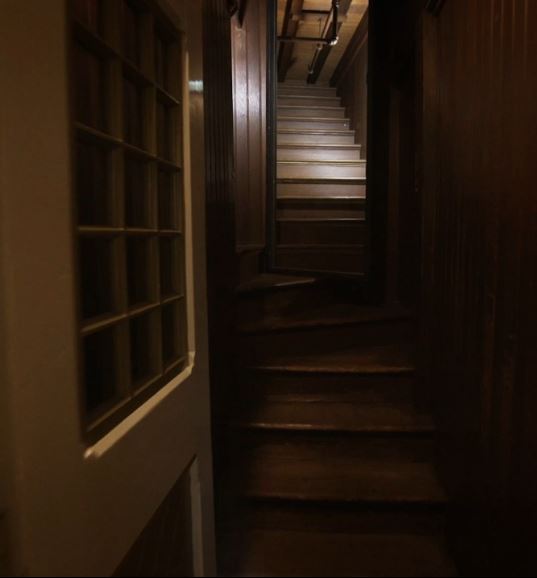
It was a traumatic event. Mrs. Winchester witnessed five objects begin to rise slowly out of the floor. They formed a rough semicircle about Alarik. They were human head. They were terrible looking. The grotesque faces were disfigured: all sores, terrible teeth and mouths, and they were all biting, like biting towards him. It was a vision from hell, worse than anything Mrs. Winchester could ever dream about. The heads were shrieking. As the feet of the dead stampeded through the room. The cold seemed to enter Mrs. Winchester’s very marrow. Her teeth were chattering. She shook like a leaf. The house seemed to plunge into total blackness. Mrs. Winchester groped her way across the floor, caught a sharp splinter of the fallen door in her palm, seemed to see something white and wraithlike surge up out of the darkest corner of the hall, and then heard a revolver shot. She was covered with icy sweat. Eyes listless. She advanced down the narrow side of the zigzag stairs. Her face was whiter than ever, as she saw bony, bloody hands clasping the Good Book. Mrs. Winchester fell back. When she awoke refreshed with sleep, she looked around, and the ghoulish heads, their mouths still opening and shutting obscenely, began to retract into the Earth. Mrs. Winchester felt slightly at ease. However, her ordeal was not yet at an end. Suddenly, the hair on her scalp was being yanked upward with great violence. Before she knew what was happening, her abuser was crouched down in front of her, their faces almost touching. #RandolphHarris 6 of 10

Mrs. Winchester was looking into features that resembled those of the hideous heads. She started screaming uncontrollably. She pushed the face into the floor. Her mind was a riot of thoughts, all frantically trying to explain the atrocious acts. Mrs. Winchester recalled the terrible visions recounted by the saints and mystics of antiquity and felt she was being attacked by the same forces. Mrs. Winchester took lots of bed rest after this series of paranormal events. However, she always felt an evil presence in the mansion and would get stone cold. She could not move at times. But the evil force certainly did. It terrified Mrs. Winchester. She always knew when it was coming for her because her body temperature would drop. She would start to shiver and turn blue from head to toe—really freezing cold. Mrs. Winchester’s belief that the spirit World was watching over her was a comfort. Evil spirits are organized into a military-like structure. The “principalities” are the highest ranking officers under Satan, the “powers” are officials of somewhat lower standing, and the “rulers of the darkness of this World” seem to be a special band of evil spirits whose sphere of influence includes the leaders of human government. The phrase “spiritual wickedness in high places” is better translated “spiritual hosts of wickedness in the Heavenly places,” and makes reference to the myriads of demonic hordes. They are all under the direction of Satan, who is not only named the “god of this age,” but also called “the prince of the power of the air.” The Black Arts could be highly dangerous and most emphatically not a field for the unstable, immature or otherwise emotionally or intellectually weak-minded people. #RandolphHarris 7 of 10

I DO conjure thee Spirit Crocell and your 48 Legions of Spirits, by all the most glorious and efficacious names of the MOST GREAT AND INCOMPREHENSIBLE LORD GOD OF HOSTS, that thou comest quickly and without delay from all parts and places of the Earth and World wherever thou mayest be, to make rational answers unto my demands, and that visibly and affably, speaking with a voice intelligible unto mine understanding as aforesaid. I conure and constrain thee, O thou Spirit Crocell and your 48 Legions of Spirits, by all the names aforesaid; and in addition by these seven great names wherewith Solomon the Wise bound three and thy companions in a Vessel of Brass, ADONAI, PREYAI or PRERAI, TETRAGRAMATON, ANAPHAXETON or ANEPHENETON, INESSENFATOAL or INESSENFATALL, PATHTUMON or PATHATUMON, and ITEMON; that thou appearest here before this Circle to fulfil my will in all things that seem good unto me. And if thou be still so disobedient, and refusest still to come, I will in the power and by the power of the name of the SUPREME AND EVERLASTING LORD GOD WHO created both thee and me and all the World in six days, and what is contained therein, EIE, SARAYE, and by the power of this name PRIMEUMATON which commandeth the whole host of Heaven, curse thee, and deprive thee of thine office, joy, and place, and bind thee in the depths of the Bottomless Pit or Abyss, there to remain unto the Day of the Last Judgment. #RandolphHarris 8 of 10
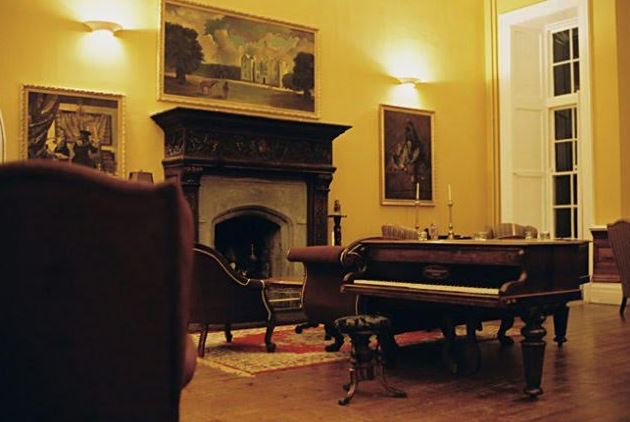
And I will bind thee in the Last Judgment. And I will bind thee in the Eternal Fire, and into the Lake of Flame and of Brimstone, unless thou comest quickly and appearest here before this Circle to do my will. Therefore, come thou! In and by the holy names ADONAI, ZABAOTH, ADONAI, AMIORAN. Come thou! For ADONAI, ZABAOTH, ADONAI, AMIORAN. Come thou! For it is ADONAI who commandest thee. If THOU hast come thus far, and yet he appeareth not, thou mayest be sure that he is sent unto some other place by his King, and cannot come; and if it be so, invocate the King as here followeth, to send him. However, if he do not come still, then thou mayest be sure that he is bound in chains in hell, and that he is not in the custody of his King. If so, and thou still hast a desire to call him even from thence, thou must rehearse the general curse which is called the Spirits’ Chain. As this smoke ascends I ascend also by following the path of smoke and usurping the power of worship to empower my blackened eternal soul. I take all power raised within this sanctuary as my own through this talisman of counter creation to strengthen my divine power and to Become a Living God. May my energy act as the very key which unlocks the cages of imprisonment so that I can reach liberation by stepping into the outer darkness which reunited the isolated frequencies of the light spectrum. Through this may I better perceive reality and become better able to counter create through personal alchemical transmutation and sorcery. #RandolphHarris 9 of 10

From ancient times, people have looked for positive guidance from the spirit World. However, they also believed demons caused most of the World’s problems. Demons were said to cause comets, volcanic eruptions, and eclipses. Some people believed demons were the reason for all illness. Demons had to be cast out before a person could get well. Basically, anything negative that people did not understand was blamed on demons. AD. 500, the Greek and Roman empires had fallen. Education declined. Without a scientific understanding of the World, people’s beliefs in demons resurfaced. The Middle Ages lasted from about 500 to 1500. During this time, anyone acting strangely was accused of being possessed. Religious leaders had the most power during the Middle Ages. They believed demons existed and had to be cast out with prayer. If this did not work, then people were tortured. Torture was meant to make the body too uncomfortable for the demon to stay there. Unfortunately, many people died being tortured. If torture did not work, “possessed” people were killed. Thousands of stories exist about demons from cultures around the World. The stories usually reflect the lifestyles and concerns of those who believed in them. One demon found in folklore in many cultures was the mermaid. She was said to be part beautiful woman and part sea creature. The demon mermaid is not like the sweet ones found in children’s books of movies. Demon mermaids were said to crush sailors to death or drown them. Then they would eat the sailors with their sharp teeth. According to legend, mermaids sat upon rocks, combing their long hair and singing beautifully. A mermaid’s beautiful voice attracted sailors to their doom. #RandolphHarris 10 of 10

Winchester Mystery House
Happy Saturday! House tours 10am-5pm this weekend 🏠 come see us!
🎟️ link in bio. https://winchestermysteryhouse.com/

And be sure to check out the online gift store: https://shopwinchestermysteryhouse.com/
 Randolph Harris II International Institute