
Home » #RandolphHarris (Page 55)
Category Archives: #RandolphHarris

If You Believe, I Need You to Believe in Love Right Now

Very few robbers operate in a lonerlike capacity. Instead, they interact with others members of the criminal element, rubbing shoulders, jointly partaking in illicit underground markets (exempli gratia, drugs, stolen property systems), and exchanging communications. This attachment to a criminal subculture means that many robbers operate in a colleague-like fashion. The same cannot be said about the robbers who work in groups. These individuals internalize the “safety in numbers” motto and choose to gang up on their prey. More often that not, conspirators rely on a loose network of fellow thieves, switching on and offer between collaborators as theft opportunities present themselves. In this regard, the social organization of most conspiratorial robbers is best described as peerlike—they do not get too cozy with one another but are willing to work together to achieve a mutually beneficial end. There is, however, a select minority of the offender population that interact in a much more stable and collaborative capacity. Movies such as Heat or Point Break depict robbery crews that forge long-term criminal associations with a clear set of roles and a well-defined division of labor. A teamlike social organization exists among some robbery specialists, particularly bank robbers. Those robbers who are active participants in the criminal subculture (id est, colleagues, peers, and teams) are provided ample opportunity to draw upon a host of socialization scripts that serve to shape and advance their criminal agenda. #RandolphHarris 1 of 17

Implicit and explicit messages serve to reinforce robbery as an acceptable means of survival. Street thugs are not explicitly tutored in “ways of the badass,” but rather come to internalize these norms and behaviors through imitation and street-level informal interactions. Robbery generally receives a firm formal response from the criminal justice system. The Model Penal Code classifies robbery as a second degree felony. If convicted, the perpetrator shall be sentenced to 1 to 10 years in prison. When the offender threatens or achieves “serious bodily harm,” he or she is likely to see the charge elevated to a first degree felony. In most jurisdictions, an armed robber, especially one involving a firearm, will result in this more sever statutory designation. A person charged with a first degree felony faces anywhere from 1 year to life in prison. A robbery must first be apprehended before facing these stiff penalties. Unfortunately, most offenders get away with their crimes. In 2022, law enforcement authorities reported a meager 25 percent clearance rate for the crime of robbery. If items are not marked with recorded serial numbers and no one knows who stole and sold them, they are hard to find, as well as the thieves. That means that roughly 75 percent of all robberies that are reported to police go unsolved. The 2022 Uniform Crime Reports reveal that law enforcement authorities made 108,400 robbery arrests that year, which translates into a per capita arrest rate of 39.8 per 100,000. When called upon to year robbery cases, our nation’s court system responds with considerable care. #RandolphHarris 2 of 17

Robbery cases comprised 7 percent of the total court dockets that were studied. It was discovered that the vast majority of the accused robbery offenders (87 percent) were offered some sort of pretrial release option (exempli gratia, bail), with the median bail amount observed at $25,000. Despite these release options, only 39 percent of robbery defendants were able to gain release prior to the final disposition of their case. Of those released, roughly one third (34 percent) violated the conditions of their release order and 22 percent were rearrested before their original case could be resolved. This is particularly disturbing when one considers that two thirds of the cases were resolved in less than 6 months. A review of the available adjudication data suggests that courts follow through a relatively hardline stance toward robbery offenders. We found that 70 percent of the robbery defendants in our sample were eventually convicted. A full 90 percent of convicted robbers face some sort of incarceration. While the median sentence was 5 years, nearly one in five were sentenced to more than 10 years in prison. Among all felony offenses, only murder and rape experience higher felony conviction rates and/or longer median sentences. On average, an imprisoned robber can expect to serve a little less than one half of one’s sentence behind bars before being paroled. #RandolphHarris 3 of 17

It appears that informal social control plays a large part in the dynamics of robbery. Interviews with known offenders reveal that many stick-up artists specifically target other members of the criminal underworld. Some are even targeted for repeat victimization. These can include drug dealers (id est, drug robbery), pimps, prostitutes, or the run-of-the-mill street thug. These persons tend to have money or valuables (id est, cars, clothes, jewelry, drugs) in their possession and, more importantly, are not inclined to report their victimizations to the police. This sets the stage for “street justice” or vigilantism. A single robbery victimization can set in motion a contagious of violence in which escalating vendetta cycles get played out over extended periods of time. The origin of these cycles of violence goes largely undetected by police and usually spill over to other community members. Much lip service has been paid to the criminal motivation, yet very little systematic understanding has emerged on the topic. A need for money services as the primary and most immediate motivation for robbery. However, unwritten conduct norms of the street serve as the critical secondary motivator for these habitual offenders. A constant flow of cash is needed to finance a carefree lifestyle that includes new clothes, endless partying, and the never-ending ability to impress themselves and others. Over time, the cyclical pursuit of money and free spending transforms robbery into a central feature of the person’s everyday life. These observations thus provide valuable insight into both the proximate (day-to-day) and distal (long-term) aspects of robbery motivation and behavior. #RandolphHarris 4 of 17

Motivation is the central, yet arguably the most assumed, causal variable in the etiology of criminal behavior. Obviously, persons commit crimes because they are motivated to do so, and virtually no offense can occur in the absence of motivation. Though the concept inheres implicitly or explicitly in every influential theory of crime, this is far from saying that its treatment has been comprehensive, exhaustive, or precise. In many ways, motivation is criminology’s dirty little secret—manifest yet murky, presupposed but elusive, everywhere and nowhere. If there is a bogeyman lurking in or discipline’s theoretical shadows, motivation may well be it. Much of the reason for this can be located in the time-honored, positivistic tradition of finding the one factor, or set of factors, that accounts for it. Causality has been called criminology’s “Holy Grail,” the quest for which makes other disciplinary pursuits seem tangential, sometimes inconsequential. The search typically revolves around identification of background risk factors—behavioral correlates—that establish nonspurious relationships with criminal behavior. A panoply of such factor have been implicated over many decades of research—spanning multiple levels, as well as units, of analyses. They include, among other things, anomie, blocked opportunities, deviant self-identity, status frustration, weak social bonds, low self-control, social disorganization, structural oppression, unemployment, age, gender, class, race, deviant peer relations, marital status, body type, IQ, and personality. #RandolphHarris 5 of 17

Common to all such factor, however, is their independent status from the “foreground” of criminal decision making—the immediate phenomenological context in which decisions to offend are activated. Though background factors may predispose persons to crime, they fail to explain why two individuals with identical risk factor profiles do not offend equally, why persons with particular risk factors go long periods of time without offending, why individuals without the implicated risk factors offend, why persons offend but not in the particular way a theory directs them to, or why persons who are not determined to commit a crime one moment become determined to do so the next. Decisions to offend, like all social action, do not take place in a vacuum. Rather, they are bathed in an “ongoing process of human existence,” and mediated by prevailing situational and subcultural conditions. While the decision to commit robbery stems most directly from a perceived need for fast cash, this decision is activated, mediated, and channeled by participation in street culture. Street culture, and its constituent conduct norms, represent essential intervening variable linking criminal motivation to background risk factors and subjective foreground conditions. Now, the Gospel records refer repeatedly to the workings of evil spirits. They how that wherever the Lord moved, the emissaries of Satan sprang into active manifestation in the bodies and minds of those they indwelt, so that the ministry of Christ and His apostles was directed actively against them. #RandolphHarris 6 of 17

Again and again we read: “He went into their synagogues through all Galilee, preaching and casting out demons” (Mark 1.39); He “cast out many demons, and He suffered not the demons to speak, because they knew Him” (Mark 1.34); “Unclean spirits whensoever they beheld Him, fell down before Him, and cried, saying, Thou art the Son of God” (Mark 3.11). Then came the sending out of the twelve chosen disciples, and again the spirits of evil are taken into account, for “He gave them authority over the unclean spirits” (Mark 6.7). Later He appointed seventy other messengers: they too, as they went forward in their work, found the demons subject to them through His name (Luke 10.17). Are we to conclude that Judea, Galilee and Syria were in reality overflowing with people who were insane and epileptic? Is it not evident, rather, that the Son of God dealt with the powers of darkness as the active, primary cause of all sin and suffering of this World, and that the aggressive part of His and His disciples’ ministry was directed persistently against them? On the one hand, He dealt with the deceiver of the World and bound the “strong man”; on the other, He taught the truth about God to the people, to destroy the lies which the prince of darkness had placed in their minds about His Father and Himself (2 Cor. 4.4). We find, too, that the Lord clearly recognized the devil behind the opposition of the Pharisees (John 8.44), and in the “hour and power of darkness” (Luke 22.53) behind His persecutors at Calvary. He says that His mission was to “proclaim release to the captives” (Luke 4.18), and He revealed who the captor was when, on the eve of Calvary, He said, “Now is the judgement of this World: now shall the prince of the World be cast out” (John 12.31). #RandolphHarris 7 of 17

The theologian is a committed man, committed to the gospel message and committed to his task of interpreting it. He is a believing, self-surrendering, answering man. The theologian and the philosopher of religion have some things in common. Both of them are committed in the sense that even their most scientific efforts are directed by a mystical a priori—and immediate experience of something ultimate in value and being of which one can become intuitively aware. Examples of the mystical a priori and being-itself, universal substance, identity of spirit and nature, absolute spirit, and cosmic person. If, after scientific investigation, this a priori is discovered, it is only because it was present and operative from the very start. At this stage both theologian and philosopher are within a philosophical circle described by their mystical a priori, but there is no petition principii, for spiritual things can be understood only in circular fashion. However, the theologian steps inside the theological circle of commitment to the gospel message. The philosopher deals in the abstract, with universal concepts. The theologian works with a concrete message that claims historical uniqueness. The radius of the theological circle is shorter than that of the philosophical one. Since it is necessary that the theologian places oneself within the circle of Christian commitment, the problem arises: What is the touchstone for commitment? Who can be sure of one’s commitment, of one’s faith, one’s justification? Acceptance of the word of Christ as depends on one being ultimately concerned with the Christian message. #RandolphHarris 8 of 17

Our finite concerns about our work, our science, our money, and our nation will be taken from us by the melancholy law of transitoriness. However, everything seems the same and yet everything has changed, for we are grasped by the one thing needed, by the infinite. Ultimate concern is the abstract formulation of the great commandment: “You shall love the Lord your God with al your heart, and with all your soul, and with all you might” (Deut. 6.5). Concern not only means that one is related to or interested in something, but it also implies an existential element of anxious solicitude. Thus, man is concerned about many things—food and shelter, knowledge, art, social problems, politics—with varying degrees of urgency. However, a concern becomes ultimate only when it demands total surrender and promises total fulfilment. Ultimate concern is unconditional, total, and infinite. Any concern less than this is a preliminary concern, for it is conditional, partial, and infinite. Preliminary concern can be related to ultimate concern in three possible ways. First, by a mutual indifference ultimate concern can be placed beside preliminary concern so that the former loses its ultimacy. It fails to transcend; it becomes secularized. Secondly, preliminary concern can be “elevated to ultimacy,” but in so doing it becomes demonic by usurping the place of the truly ultimate. Thirdly, preliminary concern can become a vehicle of the ultimate concern without claiming ultimacy for itself. It points beyond itself; it is transparent to the holy. #RandolphHarris 9 of 17

Extreme nationalism is one of our favorite examples of an ultimate concern—a demonic one to be sure, but all the more indicative of its unconditional character. In the name of the god Nation, all other concerns are ruthlessly sacrificed and systematically subordinated. However, unconditional demand is balanced by unconditional fulfilment more or less vaguely expressed in such symbols as the greatness of the nation or the conquest of the World. Exclusion from the promised fulfilment is a threat which reinforces the demand. The above points to the ambiguous nature of ultimate concern. Ultimacy and holiness go together, for the holy is the quality of that which concerns man ultimately. Only that which is holy can give man ultimate concern, and only that which gives man ultimate concern has the quality of holiness. When this holy, ultimate concern is directed toward the infinite, the unconditioned, the truly ultimate, then it is divine. When directed toward the finite, the conditioned, the preliminary, then it is demonic and its holiness is idolatrous. However, even in the latter case, the holy which is demonic is still holy. The ambiguity of ultimate concern lies in the fact that ultimacy consists of a demand for total surrender and a promise of total fulfilment, and even the demonic can demand sacrifice and offer promises. #RandolphHarris 10 of 17

Ultimate concern constitutes the basic credentials for admittance to the theological circle, this can be further refined by the theologian’s basic commitment by formulating two criteria for the theological statements. They are formal criteria, that is, abstracted from the content of the whole system. The first criterion states: The object of theology is what concerns us ultimately. Only those propositions are theological which deal with their object in so far as it can become a matter of ultimate concern for us. This principle distinguishes theology from other sciences, for it rules out preliminary concern. The second criterion handles the content of ultimate concern: Our ultimate concern is that which determines our being or not-being. Only those statements are theological which deal with their object in so far as it can become a matter of being or not-being for us. In this statement, “being” does not refer to a man’s life in time and space, but to the whole of human reality, the structure, the meaning, and the aim of existence. When it comes to joint venters, the issue arises in personal partnerships just as in business ones. Imagine a working couple, both of whom dislike cooking but cannot afford to ear out more than one a week. They start with an implicit or explicit understanding that they will split the cooking chores equally—three days a week each. However, the wife, says, knows that the husband is not likely to walk out just because she cuts her share down to two days. She is tempted to discover essential work that demands her presence at the office for an extra hour on some days, making it impossible for her to get home in time to fix dinner even though it is her turn. The husband in turn should look ahead to this and try to arrange the initial deal in such a way that the wife’s future temptation is reduced. #RandolphHarris 11 of 17

Of course the personal and long-term aspects of a marriage often suffice to ensure that the parties do not try such tricks, or that they resolve such disputes amicably when they do arise. Businesses partnerships are less influenced by personal emotions, and the dollar amounts of the temptation to cheat are often higher. Therefore the kinds of contracts we will discuss are more relevant in this setting, even though the marriage analogy sometimes makes for more striking and amusing stories. What are the essential features of this class of situations? First, these situations involve projects that require simultaneous participation by two or more people or firms. Each side must make some investment up front—a stake it stands to lose if the relationships is terminated—or else the other side’s walking out will be no threat at all. Second, there must be some uncertainty about subsequent events that acts as a justification for reopening of the agreement, or else a simple clause that provides large punitive damages for any breach will serve the purpose. China and the United States of America are in a relationship. Globalization has entered a critical stage, as the ongoing economic disruptions have prompted many of us to reexamine its promises. The World today is characterized by pronounced fragility and heightened uncertainty, fed by external shocks and multiple crises that are dangerously reinforcing. Against the backdrop of these unprecedented challenges, we are witnessing an economic and geopolitical power shift from the developed to the emerging World. #RandolphHarris 12 of 17

By 2030, most of the World’s largest economies will be non-Western and more than half of the World’s 1,000 largest corporations will have their origins in the emerging countries. This will directly impact the way globalization work. As emerging economies rewrite the rules of globalization, the West is overly advocating more protectionism. One of the main criticisms made of globalization by its detractors has been that it is Western-drive and Western-centric—in other words, that the West calls the shots and that most benefits go to Western players. Yet, as globalization was gathering momentum, it assumed new and striking features that ran contrary to that Western-focused characterization. Non-Western players start to emerge as vital sources of energy and initiative in globalization; they have become its new engines, and their companies are strengthening their global position at an unprecedented pace. Chia is the leader of the emerging World. In the year 2022, its share of the global manufacturing exports reached 28.7 percent, this is up from 12.1 percent in 2009. The trend is likely to persist in this decade. Eventually, China will reach a point at which mounting labor costs trigger declining shares in low-end exports, offsetting gains in the mid and high-end value segments. However, we are not there yet. China’s goods are more high-end than before, but it is still predominately a labor-intensive, export power, excelling in production of commodities such as clothing, textiles, footwear, electronics, medication and toys. #RandolphHarris 13 of 17

However, the future of exports from China will be led by equipment manufacturers, and, although they may not be penetrating Western markets, coemption in third markets is intensifying. The greatest shock that might face European and U.S.A. manufacturers is the full-scale export of Chinses manufacturing capability similar to that of the Japanese entry into the U.S.A. and European markers several decades ago. China wishes to establish its global image as that of a benign power in many sectors, but it will not be perceived as mature if it doles out money to spent causes. It brought into the U.S.A. debt, perhaps fueling too much credit and inflaming U.S.A. purchase of cheap Chinese-made goods. It will have learned that hard lesson, and now Europe has to behave in a more relevant way than the old United States of America did in order to be creditworthy in China’s eyes. That seems fair. The China-West rivalry (economic wars) are in particular fields: trade/currency, environment, natural resources, technologies, and company acquisitions. China is not only a World factory, but also a World research lab and leader in green business. China is an undisputed leader in export volumes of electrical/electronic products and light industry goods. Its presence in other merchandise export markets is much smaller. Having joined the ranks of important exporters of services, it still remains far behind the United States of America and other leading services nations. The Chinese state is emerging as effectively the World’s number one financial powerhouse (soon you will feel it stronger, as Beijing will become a key emergency lender for cash-strapped Western governments), but China’s private investors are still relatively new and financial assets of its households growing. #RandolphHarris 14 of 17

One more country looked upon as a new great economic power comparable to China is India. No doubt, as the second-largest emerging economy, India is becoming increasingly important, but compared to China, it is in a different weight category and the global impact of its growth is much smaller. Compared to Western economies, China looks better in terms of not only average growth rates (this may be natural as economic development stages are different), but also growth stability. The rise of a new media system, corresponding in form with the requirements of a wholly new way of creating wealth, challenges those in power, giving rise to new political methods, constituencies, and alliances. Just as people at, say, the beginning of the 18th century could not imagine the political changes that flowed from the spread of a smokestack economy, so today it is almost impossible, short of the science-fiction-style speculation, to foresee the political uses to which the still emerging media system will be put. Take for example, interactivity. By allowing TV viewers to use, rather than merely view, the screen, interactivity could someday change political campaigning and candidates. Interactive media make possible far more sophisticated opinion polling than ever before, not simply asking yes-no questions, but allowing respondents to make trade-offs among many options. However, the possibilities go beyond polling. #RandolphHarris 15 of 17

Would a candidate, once elected, trade off jobs for environmental improvements—and if so, how many? How would the candidate respond to a hostage crisis, a race riot, or a nuclear disaster under differing sets of circumstances? Instead of trying to test the values and judgment of a potential President by listening to thirty-second commercial, the interactive video users of tomorrow could tune into a program, or insert a diskette, that would virtually show the candidate discussing and making decisions under a variety of conditions programmed in by the voter. Political platforms could be issued in a spreadsheet format, so that the voters could manipulate their underlying budgetary assumptions and ask “what if” questions. If large numbers can participate in a mass-appeal game show like Jeopardy with a computer tallying their responses, it does not take too much imagination to see how similar technology could be adapted to political polling or collective decision-taking—and political organizing of a new kind. Futurists, simulation experts, and others have long speculated about the possibility of organizing very large numbers of citizens in political “games.” Professor Jose Villegas at Cornell University developed models for such activity as far back as the late 1960s, including games that less affluent residents and transient populations could engage in as a form of political education—and protest. What was missing was the technology. The spread of networked interactivity will place the tools for political “games” in millions of living rooms. With them, citizens could, in principle at least, conduct their own polls, and form the own “electronic parties” or “electronic lobbies” and pressure groups around various issues. #RandolphHarris 16 of 17

One can also easily imagine electronic sabotage, not as the act of individual hackers or criminals, but for the purpose of political protests or blackmail. At 2.25 P.M. on the afternoon of January 15, 1990, engineers in Bedminster, New Jersey, noticed read lights flashing on the seventy-five screens that display the status of AT&T’s long-distance telephone network in the United States of America. Each light indicated trouble. “It just seemed to happen. Proof, there it was,” said William Leach, manager of AT&T’s network operations center. That “proof” assed up to a massive breakdown in the U.S.A. long-distance phone system lasting for nine hours, during which an estimated 65 million calls were blocked. AT&T investigators concluded that the breakdown resulted from a faulty computer program. However, they could not “categorically rule….out” the possibility that it resulted from sabotage. It so happened that January 15 was the national holiday celebrating the birth of Dr. Martin Luther King, Jr. It also happened to be true that some racist Americans bitterly hated King and were outraged that a national holiday should commemorate him. The AT&T “blackout” may simply have been a random occurrence. However, it does not stretch credulity too far to imagine electronic political protests and sabotage in the future. One need not engage in sci-fi speculation, however, to recognize some of the profound social tensions already arising from the introduction of a new form of economy—problems relate to the way knowledge is disseminated in society. #RandolphHarris 17 of 17


Going Beyond the Build means exceeding client expectations.

Our team of professionals specialize in every aspect of a Design + Build experience.

- Unique approach, end to end services in-house
- Transparency, organization and communication
- Live and accurate budget monitoring, no financial surprises
- High standards of quality & proven trade partners
- Clearly defined systems of execution and expectations
- 8 person team of professionals assigned to each project
- Customized software for total project management
- Going BEYOND the BUILD in every way


To Where the Damned Have Howled Away their Hearts

I stumbled back against the hall table, sending a crystal vase of red roses crashing to the floor. Water and glass and torn petals all over the rug. The despair threatened to drown out my own thoughts. Softly, gently, Elsa reached out and covered my hand with hers. Her skin was cold, her touch insubstantial, so light, as if she were barely there. But I was overwhelmed by the understanding implicit in her gesture. Grateful for her care. “Mrs. Winchester, we have been seeing some pretty amazing things here in your fabulous mansion lately,” Elsa said, “some true signs from God. I’m talking angles. I’m talking miracles. I’m talking End of Times. Do you believe?” “That is just the point, my dear Elsa. In believing you, what do I have to lose?” I replied. “I’m here to tell you that everything can change for you. I’m here to take you to a place where you can begin to be the person you might have been…if certain things had not happened. I’m here to tell you…” She broke off. We had reached the library. “What, tell me what?” I said. We were eye to eye and Elsa seemed wrapped in a calm that my fear could not penetrate. The library was dark, lit only by a skylight, and the single open door through which we has passed. It was vast and shadowy filled with books and desks and lamps. It was an important place for me, a place that I surely always had a glorious time in. This sense of elation was familiar. It was like the way one feels after being sick for a spell and suddenly a clearheaded good feeling comes over you, and life seems worth living again. Else sat perfectly still beside me and I could see the light in her eyes. #RandolphHarris 1 of 4

“God loves you,” she said softly, almost dreamily. “I’m here to offer to offer you another way.” I went quiet. I saw all of these things suddenly, tumbling through my mind, and that is when the pounding began. The noise was not very loud at first; it sounded as if someone was knocking on the wall with one’s knuckles. I felt along the walls, but it was the strangest thing. The pounding did not really seem to be coming from the walls at all. I could not really tell where the sounds were originating. When the books and the chairs started to move, Elsa began to scream hysterically that she wanted to leave my home. She was in extreme distress. Her face was ashen, and she appeared about to faint. We watched the chair do a complete flip, then gently return to its upright position. “He’s fighting for you hard. He doesn’t want to let you go,” Elsa said. Unable to explain the source of the commotion and thus unable to provide a source of relief for the traumatized young lady, I suggested she show herself the way out. I could feel myself shaking again. I was not afraid. Every ten minutes or so, the entire mansion would seem to tremble, as if we were experiencing an earthquake. The beautiful decorative frescoes and artwork started to fall and crack. I saw a man standing at the back of the library and I approached him to see why he was trespassing. When I drew near to the fellow, he simply disappeared. The man seemed very real and I had not thought about ghosts until he vanished into thin air. As I opened the door to another room on the third-floor and pressed the button to turn on the light, I was astonished to see a strange young woman, standing before the full-length mirror, admiring herself. #RandolphHarris 2 of 4

Before I could ask her who she was or what she was doing, the stranger ran into the closet next to the mirror. I walked over to the closet to find out who this intruder was and what she wanted. I was breathing rapidly, my body carrying the weight of all this, but my mind felt wondrously clear. Opening the doors and sliding the dresses around on their hangers I found nothing. I felt the urge to cry, to dissolve into a state of weakness. Frantically, I shoved the clothes out of my way, even removing some of them and tossing them on the bed. However, there was no one there, and no visible escape route from the closet. “Why? Why have you come here for me?” I asked. My voice broke. I turned my back on the closet. I felt like I was walking into a wall of blackness. It had been a cold winter and a bone-cracking winter wind came sweeping through the room. Even with a fireplace in this room, I could feel the chill. Out of the corner of my eye, I saw something at the window. As I turned on the light, I saw a child’s face, hovering outside the window, peering in at me. The strange thing was that the little boy’s face was blue—the odd, pinkish-blue cast taken on by human skin after it has been exposed too long to cold temperatures. Shocked and frightened at a face levitating in the window three stories off the ground, I ran from the room. In the hallway, the words “Help me,” were scrawled on the wall in blood. #RandolphHarris 3 of 4

It was this, I think, the not knowing, that preyed on my mind. Not knowing what happened to him, how he had died, when he had died. Was I scared? I should have been, certainly. In the hall above, women were screaming, and men were shouting, children were crying. The sound of rook splintering and the clatter of metal on metal. Then the door thudded shut at my back and I was plunged into silence. To where the damned have howled away their hearts. One can only imagine the spirits of the Winchester Mansion, ancient dead descending from their graves to my home, the floating along passageways, emerging in this ghost ship, passing through rock and concrete and wood as they are wont to do, and materializing at times of their own choosing. Rising up from the Earth like water that seems to help draw them. Then, as they appear and disappear, sinking back into the labyrinthine. Death, who washes away this worrisome World, has guided countless souls to my home. By the end of the day, the weather had grown threatening, and the wind became aggressive and unpredictable. Windows and doors have been left open to the cold air all afternoon, and after closing them up tight, I built a fire. Without warning, all the lights in the house went out. I became motionless. A dark entity grabbed me. It twisted me around and forced me toward the floor. Gripped by terror immediately I started to have trouble breathing. I was hyperventilating. And I was convinced that the entity would murder me. I struggled, then the entity suddenly vanished. The violence was disturbing. #RandolphHarris 4 of 4


There are Worlds, access to which we are no longer allowed. Worlds just inches from us, as we stand in our own World. Invisible, they contain not only the present, but the past, and, some say, the future as well. https://winchestermysteryhouse.com/

All I Know, All there is a Reflection of You, a Home to this Body of Conflict

The body responds to extreme experiences by secreting stress hormones. These are often blamed for subsequent illness and disease. However, stress hormones are meant to give us the strength and endurance to respond to extraordinary conditions. People who actively do something to deal with a disaster—rescuing loved ones or stranger, transporting people to a hospital, being part of a medical team, pitching tents or cooking meals—utilize their stress hormones for their proper purposes and therefore are at much lower risk of becoming traumatized. (Nonetheless, everyone has his or her breaking point, and even the best-prepared person may become overwhelmed by the magnitude of the challenge.) Some violent transactions (id est, murder, assault, and rape) take shape as one-on-one conflicts between known acquaintances. This is not generally the case with robbery. The vast majority of robbery offenders and victims have no prior relationship. More than 75 percent of robbery victims describe their attackers as strangers. Men, African Americans, and the elderly are almost never attacked by known assailants. Furthermore, unlike other violent crimes, only 5 percent of all robberies occur between individuals who are related to one another by blood or marriage. Almost all robbery transactions involve a lone victim; however, it is not uncommon for multiple perpetrators to join in the attack. Victim reports reveal that 94.5 percent of the persons who were rubbered in 2022 were alone at the time of the attack. The offender dynamic is somewhat different. #RandolphHarris 1 of 22

In 2022, 43 percent of all robbery victims claimed that they were attacked by multiple assailants. No other form of violent crime experiences this level of group offending. A number of observations can be made about the setting of the average robbery event. One, robberies are equally distributed across daytime and nighttime hours. Two, victim reports suggest that robberies take place in a variety of locales; about half of the robbery victimizations take place in open-air venues (exempli gratia, in streets, parks) and another 30 percent take place at or near the victim’s home. Keep in mind that the data focuses largely on personal victimizations. Those offenders who target commercial establishments are largely omitted from these data. Fortunately, the FBI’s Uniform Crime Reports solicits information on the robbery setting. While these data show that public streets remain the favorite setting for robbery (a little less than 50 percent of known cases), commercial and/or financial establishments are targeted in roughly 25 percent of the cases, and private residence comprise another 13 percent of the cases. Given the risks and complexities that go along with pulling off a robbing in an institutional setting, one might expert that robbers would target the most lucrative businesses. This is not the case. Only a small fraction of these robberies occur at banking establishments (average yield in 2022 = $5,000) while a surprising majority transpire in “low budget” convenience stores (average yield in 2022 $700). The participants in the robbery transaction are disproportionately young, men. #RandolphHarris 2 of 22

In 2022, individuals between the age of 12 and 24 experienced a robbery victimization rate that exceeded five per 1,000 persons or households. That victimization rate was roughly double the one for persons between the ages 25 and 49 and nearly five time the rate for persons 50 years or older. A similar age pattern emerges among the offender population. Roughly three and ten robbery victims estimate that their attacker(s) were under the age of 20 and an estimated six in tend claim that they were attacked by a person(s) under the age of 30. These data indicate that robbery is an intra-aged crime. The majority of robbery victims and offenders are men. Males accounted for two thirds of the robbery victims in 2022. This translated into victimization rates for men (3.8 per 1,000) that more than doubled that for women (1.7). Most robbery victims claim that they were attacked by male assailants—a man was present in 99.2 percent of all multiple-offender robberies and 93.9 percent of all single-offender robberies that occurred in 2022. Clear racial disparities exist among robbery offenders and victims. In fact, 80 percent of the robbery victims were white and 16 percent black. A full 21 percent identify themselves as Hispanic. When one factors in relative representation in the U.S.A. population, the following robbery victimization rates emerge: 5.3 (per 1,000) for Hispanic, 3.6 for African Americans, and 2.6 for whites. A more extreme picture emerges among the offender group. African Americans accounted for more than half (55 percent) of the robbery arrests that were reported by law enforcement authorities. This means that the robbery arrest rate for blacks is more than 6 times that of whites. #RandolphHarris 3 of 22

The robbery victimization rate for the average American was estimated to be 2.8 per 1,000 persons or households in 2022. That same years, Hispanic males experienced a victimization rate of 7.9 percent; for black males, it was 6.4. In addition, black males between the ages of 16 and 19 were victimized at a rate of 27.6 per 1,000 persons or households. Most robberies unfold as extremely abrupt, but unmistakably volatile exchanges. Regardless of whether the attacks take form as a street mugging or bank robbery, it is in the offender’s best interest to move quickly and purposefully. Most robberies follow a set chronology of events. First, the attacker must get the victim’s undivided attention and clearly state his or her intentions—eight in ten (83.1 percent) robbery victims report that their attackers introduced some unprovoked threat or act of force into the equation. This defining moment is called the declaration of stick-up and can take on a variety of shapes, ranging from a verbal statement to the passing of a note to a bank teller. This initiating step is forceful, direct, and seeks to place the offender in complete control of the victim’s emotions and behavior. Next, the robber must go about his or her efforts to collect the desired money and/or valuables from the victim. This is clearly the most unpredictable stage of the game. Here, the attacker hopes that his or her threats and posturing will produce unwavering compliance from the victim. This is seldom without complication—only one third of all robbery victims simply submit to their attackers’ wishes. #RandolphHarris 4 of 22

Once the robbery offender has successfully or unsuccessfully confiscated the victim’s valuables, he or she then goes about closing out the interaction. In addition to physically fleeing the scene, most offenders try to obscure their identity from any potential onlookers. Robbery offenders tend to have long, pronounced criminal careers. Criminal history checks revealed that 62 percent of the accused robbers had a prior felony rap sheet. Nearly one in three (29 percent) had at least five felony arrests to his or her credit. A full 40 percent of the robbers in the sample had been convicted of a prior felony. Furthermore, 70.2 of the released robbers in our recidivism study had been rearrested within 3 years. No other category of violent offenders lead such active criminal careers. It is tempting to think of robbers as offense specialists (id est, deal exclusively in robbery or similar offense). This is not an unrealistic suggestion given that would-be thieves have a host of targets from which to choose. There are clearly enough potential persons and financial institutions to keep a person busy in a one-dimensional criminal career. Recidivism explain that 20 percent of robbers who are released from prison are typically rearrested on another robbery within three years. However, interviews with known robbery offenders reveal the presence of a much broader criminal repertoire. Most robbers describe themselves as opportunists—persons who will pursue any course of action that is likely to yield desired ends. The drugs/crime connection serves to further solidify these individuals’ commitment to a diversified criminal portfolio. A survey of state prison inmates found that 30 percent claimed to have committed their most recent offense in an effort to get money to buy drugs. #RandolphHarris 5 of 22

On the whole, the available data suggest that most robbers are criminal generalists. They are individuals who grow accustomed to a certain way of life; a life that includes fast living, heavy spending, and habitual drug use. This Worldview requires offenders to seek a constant flow of cash that can be sustained only by a diversified and highly active commitment to crime. Few would disagree that there are instrumental motives resent in the mindset of the average robber. The most immediate goal of this type of offense is to deprive the victims of their valuables for personal consumption. Nonetheless, news reports are full of stories in which thieves expose themselves to high levels of risk in order to collect on very small sums of money. Convenience store robberies and/or the taxicab stick-ups are prime examples. The growing presence of these high-risk, low-yield robberies had led numerous researchers to conclude that expressive motives also play an important part in the cognitive aspect of robbery. For example, many robbers allege that they commit their crimes for emotional gratification or revenge. More importantly, these researchers have shown that inner-city street norms bestow a great deal of status onto individuals who are willing to live by the “survival of the fittest” credo. Many robbers commit their crimes while under the influence of drugs and/or alcohol. Nearly 33 percent of persons robbed in 2022 had reason to believe that the assailant(s) was under the influence of drugs or alcohol at the time of the attack. Not surprisingly, the accounts of known offenders suggests that the actual percentages may be somewhat higher. #RandolphHarris 6 of 22

Interviews with a sample of imprisoned robbers revealed that 40 percent were under the influence of drugs or alcohol when they committed the violent theft that led to their incarceration. This impairment can limit the offenders’ ability to make sound and reasoned decision. This speaks further to the drugs/crime connections that impacts robbery. Planning does not appear to play a large role in most robberies. Most violent thieves operate as alert opportunists—when in need of cash, they head out into the streets with the necessary weaponry and a behavioral script for how they would like to see the robbery event unfold. At the same time, they may have learned from past experience that most robberies are unpredictable, and thus view meticulous planning as a waste of time. Interviews with habitual robbers reveal that even the most seasoned thieves feel a need to invoke some sort of normative neutralization to help set themselves and other at ease about their behavior. Robbers often times blame the victim, claiming that the naïve fool had it coming. Others adopt a “survival of the fittest” mentality, asserting that they are simply doing what must be done to get by in life. Still others speak of a “natural order on the streets,” in which robbery is just another way of making a living. Regardless of the content, the message is clear: Robbers negotiate their identities like any other person. Among all the threats to man’s vital interests, the threat to his freedom is of extraordinary importance, individually and socially. And robbery certainly threatens these conditions. #RandolphHarris 7 of 22

In contrast to the widely held opinion that this desire for freedom is a product of culture and more specifically of learning-conditioning, there is ample evidence to suggest that the desire for freedom is a biological reaction of human organism. It is a remarkable fact that all human beings—the children of the powerful as well as those of the powerless—share the common experience of once having been powerless and of having fought for their freedom. While a person is struggling in lonely silence to find their way back to life again, to give birth to a new path that comes from within to restore one’s spirit and passion for life, one needs strong, unqualified affirming voices. When it seems, and indeed is true, that one’s life is dissolving around one, know that God is always there. In choosing yourself over your reflection of self, God will always be there. When one decides that, whatever the price, one has to be in touch with oneself, has to follow one’s own instincts, God will be there. God allows people to access their strong, unqualified, affirming voice. And many people are thankful for God. The Lord was always prepared to meet again the antagonist whom He has foiled in the wilderness, and who had left Him only “for a season” (Luke 4.13). So when He discerned Satan at work in Peter, He exposed him in one swift sentence, even mentioning his name (Matt. 16.23). Addressing the Jewish people, He likewise stripped aside the mask of the hidden foe and said, “Ye are of your father, the devil” (John 8.44); with keen-edged words He spoke of him as the one who was lying to them and prompting them to kill Him (John 8.40-41). #RandolphHarris 8 of 22

And when, in the store on the lake, He is awakened suddenly, He is at once alert to meet the foe, and stands with calm majesty to rebuke the storm which the prince of the power of the air had roused against Him and the disciples (Mark 4.38-39). In brief, we find the Lord, right on from the wilderness victory, unveiling the powers of darkness as He went forward in steady mastery over them. Behind what appeared “natural,” He sometimes discerned a supernatural power which demanded His rebuke. He rebuked the fever in Peter’s wife’s mother (Luke 4.39), just as He rebuked the evil spirits in other and more manifest forms, while in other instances He simply healed the sufferer by a word. Now note the vast difference between the attitude of Satan himself to the Lord and that taken by the lesser spirits of evil. Satan, the prince, tempts Jesus, seeks to hinder Him, prompts the Pharisees to oppose Him, hides behind a disciple to divert Him, and finally takes hold of a disciple to betray Him and sways the multitude to put Him to death; but the spirits of evil bowed down before Jesus, beseeching Him to “let them alone” and not to command them to go into the abyss (Luke 8.31). The realm of this deceiver-prince is specifically mentioned by the Apostle Paul in his description of him as “prince of the power of the air” (Eph. 2.2), the aerial or “Heavenly places” being the special sphere of the activity both of Satan and his hierarchy of powers. Even the derogatory name “Beelzebub,” means “the god of the files,” suggestively speaks of the aerial nature of his powers. #RandolphHarris 9 of 22

The Lord’s description of Satan’s working through “fowls of the air” (Matt. 13.4, 19) strikingly corresponds to these other statements, together with John’s language about the “whole World lying in the evil one” (1 John 5.19)—the atmosphere itself being the sphere of operation of these aerial spirits. And this realm in which the whole human race must move is said to be now “in the evil one.” The foundation of Christian belief is not the historical Jesus, but the biblical picture of Christ. Existential experience of the mysterium tremendum et fascinans—ultimate concern—is destined to play a role in advancing the holy experiences to the idea of God. God is the abyss and ground of being. The holy is liberated from the dominance of the ethically good. The relation of religion and morality is not an external one, but the religious dimension, source, and motivation that are implicit in al morality, acknowledge or not. The holy is first experiences as a numinous reality and only secondly as a moral demand. Religion is no longer seen by some to be confined to institutions, cult, and doctrine—in a word, to the churches—but religion is now the state of being ultimately concerned. There is religion in the narrow sense of institutionalized and formalized religion, and in the large sense of being grasped by an ultimate concern. Justification through faith rends every human claim in the face of Hod and every identification of God and man, and yet man is justified in the midst of his guilt and doubt. #RandolphHarris 10 of 22

In the light of this principle, the cross of Christ is seen as the embodiment of the divine Yes and No against the World, an interpretation which forms the core of Tillichian Christology and dogma. A union of this Protestant principle with the historicocritical biblical research may led some to reject nineteenth-century liberal dogmatic theology which replaces the crucified Christ by the historical Jesus, and which dissolves the paradox of justification into moral categories. The substance of my religion is and remains Lutheran. It embodies the consciousness of the “corruption” of existence, the repudiation of every social Utopia, including the metaphysics of progress, the knowledge of the irrational demonic character of life, an appreciation of the mythical elements of religion, and a repudiation of Puritan legality in individual and social life. In personal dimensions of life and tastes, there are things that may exercise a certain influence upon one’s theology, though perhaps indirectly. The ones some may consider are the love of the sea, one’s preference for the city, one’s interest in art. From the age of eight, I spent several weeks, even months, at the seashore every year. The meeting of sea and the land means for some a boundary-experience of the infinite and the finite. The sea with its never-resting, limitless expanse and depths become a symbol for the absolute, the ground and the abyss. Its dynamism suddenly erupts in an ecstacy of storm and waves which aggressively break over the land that quietly rests in its self-sufficient finitude. The sea provides an element of phantasy that one may consider essential to living thought. #RandolphHarris 11 of 22

One’s love for nature, however, goes hand-in-hand with preference for the bustling life of the city. The city is indispensable for developing the critical side of intellectual and artistic endeavor. Furthermore, in a large urban center one finds concentrated all the important political and social trends. To the realism of the city, some attribute the escape from a romantic hostility against technology. And, strange to say, the experience of the city is analogous to the experience of the sea: The impression of the big city is somehow similar to that of the sea: infinity, openness, unrestricted space! However, beyond that it was the dynamic character of life in Berlin that affected me. The discovery of art (in the sense of the visual arts, but especially painting) is an event of far-reaching consequences. Turning to it by way of reaction during the fearful, ugly, destructive pandemic, allows one to discover the marvels of architecture. All the bookish church history in the World could never provide the kind of insights occasioned by the mosaics of the early Roman basilicas. For ultimate reality is experienced and expressed directly in religious symbols and myths, but the artists, while intending nothing but good art, cannot help but indirectly express ultimate reality. Besides being telescoped into the life of one man, these dimensions are linked together by other bonds of unity. In all of them one discerns the deep current of religious concerns—in the search for Christian community, in the theological view of history, in the quest for a philosophy that is realistic and open to the transcendent, and in a sensitivity to the presence of the holy in nature and art. #RandolphHarris 12 of 22

One life can be unity because it unifies. It can unify by drawing together the conflicting elements of an age in transition: authority and autonomy, theory and practice, nature and technology, idealism and existentialism, World was and World unity. There is an urgent cry of human hope and despair not only in the thoughts of many people, but also in their experience as we deal with massive corruption, hyperinflation, and a president who does not represent the American people. Theology, as a function of the church, is the methodological interpretation of the Christian faith for the human situation. Thus, it mediates between two poles, the eternal and the temporal. The eternal pole is the Christian message, and one function of theology is to state its truth. The temporal pole is the human situation, and the other function of theology is to respond to its needs. The “situation” does not refer to the psychological or sociological condition of individuals or even of groups, as for instance, a feeling of uncertainty that demands an uncomplicated unequivocal reassurance. Rather, it signifies the totality of man’s creative self-interpretation in a special period, that is the sum of the artistic, the scientific, philosophical, economic, political, and ethical forms in which men of a certain era express their understanding of life. If one stresses the unchangeable truth of the message (kerygma) over against the changing demands of the situation, the theology is kerygmatic. Such a theology preserves the Christian faith from the relativities of mundane exigencies. The drawback, however, is that kerygmatic theology hurls the message at the situation like a stone. It establishes no common ground with those in the situation, and so runs the risk of being irrelevant. #RandolphHarris 13 of 22

If, on the other hand, one first listens attentively to the questions implied in the temporal situation and then responds with the power of the eternal message, that theology is “apologetic.” Apologetic theology is “answering theology.” It bears no semblance to the discredited relic that has borne the name in the past. Apologetic theology searches for the common ground between the message and the situation by listening to the questions that the situation poses before answering in terms of the message. The danger in such a procedure is that the word of the message may be distorted amid the clamor of the questions. However, apologetic theology is important for two reasons, one is because it is a fact, and because of the conviction. The fact is that for the last three hundred years the central problem of theology has been the adaption of the Christian faith to the modern mind. For instance, we no longer stone the unfaithful. We pray for them, send them to counseling or separate from them. With such an evolutionary synthesis, it is possible—and necessary—if Christianity is to avoid becoming a fossilized curiosity and if civilization is not to lose one of its most powerful stimulants. The Gospel records refer repeatedly to the workings of evil spirits. They show that wherever the Lord moved, the emissaries of Satan sprang into active manifestation in the bodies and minds of those they indwelt, so that the ministry of Christ and His apostles was directed actively against them. Again and again we read: “He went into their synagogues through all Galilee, preaching and casting out demons” (Mark 1.39; He “cast out many demons, and He suffered not the demons to speak, because they knew Him” (Mark 1.34). #RandolphHarris 14 of 22

Why have socialist economic systems failed so miserably? The best laid Five Year Plan of Stalin and his successors “gang agley” because the workers and the managers lacked adequate incentives. Most importantly, the system offered no reward for doing a good job rather than a merely adequate one. People had no reason to show initiative or innovation, and every reason to cut corners wherever they could—fulfilling quantity quotas and slacking on quality, for example. A market economy has a better natural incentive mechanism, namely the profit motive. A company that succeeds in cutting costs, or introducing a new product, makes a greater profit; one that lags behind stands to lose money. However, even this does not work perfectly. Each employee or manager in a company is not fully exposed to the chill wind of competition in the market, and the top management of the firm has to devise its own internal carrots and sticks to obtain the desired standards of performance from those below. When two firms join forces for a particular project, they have the added problems of designing a contract that will share the incentives between them in the right way. We bring out the important idea for the design of incentive schemes through a series of examples. Imagine yourself as the owner of a high-tech company in California trying to develop and market a new computer chess game, Wizard 1.0. If you succeed, you will make a profit of $200,000 from the sales. If you fail, you make nothing. Success or failure hinges on what your expert player-programmer does. One can either put one’s heart and soul into the work, or just give it a routine shot. With high-quality, effort, the chances of success are 80 percent, but for routine effort, the figure drops to 60 percent. #RandolphHarris 15 of 22

Chess programmers can be fired for $50,000, but they like to daydream, and will give only their routine effort for this sum. For high-quality effort, you have to pay $70,000. What should you do? Low-Quality Effort: Chance of success is 60 percent, average revenue is $120,000, salary payments are $50,000, and average profit = revenue – salary which is $70,000. High-Quality Effort: Chance of success is 80 percent, average revenue is $160,000, salary payments are $70,000 and average profit = revenue – salary, which is $90,000. A routine effort will get you $200,000 with a 60 percent chance, which comes out to $120,000 on average. Subtracting the $50,000 salary leaves an average profit of $70,000. The corresponding calculation if you hire a high-effort expert is 80 percent of $200,000 minus $70,000, that is, $90,000. Clearly you do better to hire a high-effort expert at the higher salary. However, there is a problem. You cannot tell by looking at the expert’s working day whether one is making routine effort or quality effort. The creative process is mysterious. The drawings on your programmer’s pad may be the key to a great graphics display that will ensure the success of Wizard 1.0, or just doodles of pawns and bishops to accompany one’s day dreaming. Knowing that you cannot tell the difference between routine effort and quality effort, what is to prevent the expert from accepting the salary of $70,000 appropriate for high effort, but making routine effort just the same? Even f the project fails, that can always be blamed on chance. After all, even with genuine quality effort, the project can fail 20 percent of the time; this was just that kind of bad luck. #RandolphHarris 16 of 22

When you cannot observe the quality of effort, you have to base your reward scheme on something you can observe. In the present instance that can be only the ultimate outcome, namely success or failure of the programming effort. This does have a link to effort, albeit an imperfect one—higher quality of effort means a greater chance of success. This link can be exploited to generate an incentive scheme. What you do is offer the expert a remuneration that depends on the outcome: a larger sum upon success and a smaller sum in the event of failure. The difference, or the bonus for success, should be just enough to make it in the employee’s own interest to provide high-quality effort. In this case, the bonus must be big enough so that the expert expects a higher effort will raise one’s earnings by $20,000, from $50,000 to $70,000. Hence the bonus for success had to be at least $100,000: a 20 percent increase in the chance of getting a $100,000 bonus provides the necessary $20,000 expected payment for motivating high-quality effort. It remains to find the separate sums to be paid in the event of success or failure. That needs a little calculation. The answer is that you should pay the employee $90,000 for success, and one should pay you a find of $10,000 in the event of failure. With this incentive scheme, the programmer’s incremental reward for success is $100,000, the minimum necessary for inducing quality effort. The average payment to one is $70,000 (an 80 percent chance of $90,000 and a 20 percent chance minus $10,000). This leaves you, the owner, an average profit of $90,000 (an 80 percent chance of $200,000 minus the average salary of $70,000). If you could observe quality of effort by direct supervision, this is exactly what you could have gotten. The incentive scheme has done a perfect job; the unobservability of effort has not made any difference. #RandolphHarris 17 of 22

In essence, this incentive scheme sells 50 percent of the firm to the programmer in exchange for one’s effort. One’s net payments are then either $90,000 or -$10,000, and with so much riding on the outcome of the project it becomes in one’s interest to supply high-quality effort in order to increase the chance of success (and one’s profit shares of $100,000). The only difference between this contract and the fine/bonus scheme is in the name. While the name may matter, we see there is more than one way to achieve the same effect. However, these solutions may not be possible, either because assessing a fine on an employee may not be legal or because the worker does not have sufficient capital to pay the $10,000 for one’s 50 percent stake. What do you do then? The answers is to go as close to the fine solution or equity-sharing as you can. Since the minimum effective bonus is $100,000, the worker gets $100,000 in the event of success and nothing upon failure. Now the employee’s average receipt is $80,000, and your profit falls to $80,000. With equity-sharing, the worker has only one’s labor and no capital to invest in the project. However, one still has to be given a 50 percent share to motivate one to supply high-quality effort. So the best you can do is sell one 50 percent of the company for one’s labor alone. The inability to enforce fines or get workers to invest their own capital means that the outcome is less good from your point of view—in this case, by $10,000. Now the unobservability of effort makes a difference. #RandolphHarris 18 of 22

Another difficulty with the fine/bonus scheme or equity-sharing is the problem of risk. The worker’s incentives arise from one taking a $100,000 gamble. However, this large risk may not be evaluated by the statistical average of the outcomes. In this case, the worker has to be compensated both for supplying high-quality effort and for bearing risk. The bigger the risk, the bigger the compensation. This extra compensation is another cost of a firm’s inability to monitor its workers’ efforts. Often the best solution is a compromise; risk is reduced by giving the worker less than ideal incentives and consequently this motivates less than an ideal amount of effort. In other instances you may have other indicators of the quality of effort, and you can and should use them when designing your incentive scheme. Perhaps the most interesting and common situation is one in which there are several such projects. If there are more observations, even though success is only an inexact statistical indicator of the quality of effort, it can be made more precise. There are two ways in which this can be done. If the same expert works for you on many projects, then you can keep a record of one’s string of successes and failures. You can be more confident in attributing repeated failure to poor effort quality rather than the working of chance. The greater accuracy of your inference allows you to design a better incentive scheme. The second possibility is that you have several experts working on related projects, and there is some correlation in the success or failure of the projects. If one expert fails while others around one are succeeding, then you can be more confident that one is a shirker and not just unlucky. Therefore rewards based on relative performance—in other words, prizes—will generate suitable incentives. #RandolphHarris 19 of 22

When an employer designs incentives to motivate a worker, the problems are only one-sided. More complicated and more interesting are the problems of joint ventures in which each side has to provide the right incentives to motivate the other. Ubiquitination is the systematic spread of the new media system around the World and down through every economic layer of society. A potential nightmare facing high-tech governments derives from the split-up of populations into the info-rich and the info-poor. Any government that fails to take concrete actions to avoid this division courts political upheaval in the future. Yet this dangerous polarization is hardly inevitable. In fact, one can imagine considerable equality of access in the emerging society, not because of compassion or political good sense on the part of the affluent elites, but because of the workings of what might be called the Law of Uniquity. This law holds that strong commercial, as well as political, incentives will arise for making the new electronic infrastructure inclusive, rather than exclusive. In its infancy the telephone was regarded as a luxury. The idea that everyone would someday have a phone was simply mystifying. Why on Earth would everybody want one? The fact that almost everyone in the high-tech nations now has a phone, rich and poor alike, did not stem from altruism but from the fact that the more people plugged into a system, the more valuable it became for all users and especially for commercial purposes. The same proved true, as we have seen, in the early development of postal services. #RandolphHarris 20 of 22

The industrial economy needed a way to send bills to, or advertise to, or sell newspapers and magazines to everyone, not just the rich. And today, once more, as fax machines and email have replaced the industrial-era post office, similar pressures are accelerating the spread of the new technology. There were 2.5 million fax machines in the United States of America in 1989, churning out billions of pages of faxed documents per year. There are no 43 million fax machines in operation. The more faxes out there, the greater the value of the system to all concerned. It is, therefore, in the distinct self-interest of the affluent to find ways of extending the new systems to include, rather exclude, the less affluent. DVDs and Blu-ray discs and players are being replaced by streaming services. Video streaming services are used by nearly 2 billion people Worldwide, while music streaming platforms have 524 million users. Their combined numbers of users total to more than 2.3 billion. Such a level is more than half of the total number of internet users globally which currently stands at 5.03 billion. Cable television is also being left in the past. As of September 2002, 65 percent of adult pay for cable and 82 percent of USA adults claim that streaming shows provide more entertaining shows than cable does. Streaming services now provide a wider variety of entertainment compare to cable, cater batter to the busy schedules of today’s younger populations and are also producing better quality television due to higher budgets. #RandolphHarris 21 of 22

The widest diffusion of communication capabilities is an inseparable part of the new system of wealth creation. The direction is almost inevitably toward what the old Bell phone company called “universal service”—id est, ubiquity—combined with interactivity, mobility, convertibility, and connectibility. Finally, the new infrastructure is global in scope. As capital flows electronically across national borders, zipping back and fourth from Zurich to Hong Kong, Hong King to Norway, Norway to Tokyo, Tokyo to Wall Street in milliseconds, information traces equally complex pathways. A change in U.S.A. T-bill rates or the yen-deutsche mark ratio is instantly known around the World, and the morning after the big event in Los Angeles, youngsters in Ho Chi Minh City discuss the latest Grammy winners. The mental borders of the state become as permeable as its financial frontiers. The combination of these six principles produces a revolutionary nervous system for the planet, capable of handling vastly enlarged quantities of data, information, and knowledge at much faster transmission and processing rates. It is a far more adaptable, intelligence, and complex nervous system for the human race than ever before imagined. However, what is amazing, is technology is so advanced, but public WiFi is still hard to find in most cities. Traffic is still a major problem. And a lot of old technology is still being used. For instance, there are touch screen elevators and voice command elevators, but many new construction projects are still going with the traditional push button. #RandolphHarris 22 of 22

Cresleigh Homes

On paper, #Havenwood Model 1 is the smallest home in the community – but you’d never guess from this photo! Our homes are designed for maximum livability, and the 3 bedroom, 2 bathroom home lets the whole family spread out.

Did you know all our Havenwood homes also come with a Google Home Hub and Home Mini?! “Alexa, play coffee shop jazz.” 🎶

#CresleighHomes

There Were Omens from the Beginning

That voice. His voice. How could it be? On the fourth floor, the air plays such tricks, distorts and changes perspective, but I was certain it was William I had heard. “It was you,” I said in disbelief, yet knowing I was right. “It was you I heard.” However, I turned my face away, and took the elevator down stairs. There was Mr. Hansen going on construction plans. “Mr. Hansen?” I said urgently. “Was it you on the fourth floor a few moments ago? Was it? Did you see me? Mr. Hansen, please.” Still he did not answer, and I would have pressed him further, except I was suddenly aware the atmosphere in my mansion had changed. The air was suddenly charged with anticipation, with tension. I took my eyes away from Mr. Hansen for a moment. While we had been talking, everything else had receded, my sight, my hearing, my smell. Now, like the lights coming up in the Grand Ball Room at the end of a concert, the World came back into focus. The white sofa was pristine, but there were empty coffee cups, splashes of spilled coffee and crumbs of cookies, prunes and butter. The noise level had dropped. Like the low growl of the sea, the rumbling of voices was constant but muted. Everyone seemed to be speaking in hushed voices. Hooded and watchful eyes, no laughter now. For the first time since sitting down on the sofa, I felt uncomfortable. Mr. Hansen took the leather chair opposite. But he said nothing. Nothing would come out of his mouth. #RandolphHarris 1 of 7

The carpet in the room had been woven for the room, an immense sea of dark flowers, banded in gold along the walls and the high polished baseboards. Mr. Hansen has never seen a rug made for a room quite like this one. “Why do you not stop clutching that gun and talk to me?” “I can do everything you’ve asked,” said Mr. Hansen. “I’m eager to do it.” Mr. Hansen was powerfully excited to add an apartment of new rooms to the mansion. But he did not let on. The music in his head would not stop. I knew how excited he was as I watched him. I could see it in his breathing and in the warmth in his eyes, which perhaps he did not notice. “What is it you want for all this, besides money? I asked him. Now Mr. Hansen was startled. And there was a dramatic change in his face. Mr. Hansen noticed it, the blood in his cheeks, and the flash in his eyes. “More work,” said Mr. Hansen. “Lot of it. And the finest tools you can buy.” I shook my head. Then I heard, quite distinctly, the stomp of horses’ hooves outside in the street and the rattle of a harness. I figured it must have been another load of construction materials for the drawing room. However, as the far end of the west wing, an altercation broke out. Voices raised, shouting, the sound of a chair being overturned. At first, I assumed it was some kind of childish play. I turned toward the entrance, and at that precise moment the heavy wooden doors were flung open. Two men strode into the hall. “What in God’s name…” Their faces were concealed beneath square iron helmets and the sunlight shined on their unsheathed swords, sending flashed of silver shining around them like sparks. #RandolphHarris 2 of 7

For a moment, nobody spoke. And, just for a moment, I wondered if this was some kind of entertainment. Then a woman screamed and I knew it was not. Panic took hold. I fell against a wall. “Mr. Hansen,” I whispered. A small group of farmers were attempting to drive the intruders from the hall. Some brandished hunting daggers, drawn from their sheaths on their belts. Others grabbed at whatever at rifles. Bullets flew, blades jabbed and sliced through the air, though never connecting. It was an unequal fight for my men were armed. The cry went up to barricade the door. And despite the exhaustions of the long day, despite the fact that it was now evening, I felt suddenly alive. The renovations of the mansion continued. When Mr. Hansen was done with this portion of the expansions, twenty-two rooms with fireplaces had been added. I fulfilled my request and built tunnels in the basement that ran all the way to the fruit orchards so that we could hall the fruit to the basement for storage. A young boy made a home for himself in the tunnels. He was nine years old at the time, when the men were carrying fruit from the orchard to the basement one of them saw a soldier, in a somewhat outdated uniform, standing in the darkened tunnel. “Who’s that man?” asked one of the farmers, surprised and a bit apprehensive to see a stranger in the tunnels. “Oh, he’s all right,” replied the boy who had seen him many times before. Poltergeist most often find their energy center in the psyche of an adolescent, who performs the ghostly effects, both consciously and unconsciously. The adolescent is gifted for the time being with something mysterious. #RandolphHarris 3 of 7

The particular direction of this power is always toward the secret or concealed weakness of the spirit. Something is released from the recesses of the soul. The mysteries of puberty, that trance or dozing of the psyche before it wakes into adult life, is a favorite playground for the poltergeist. Ghosts haunt houses, and poltergeist hunts people. The poltergeist is very often not really a ghost but a cacophony of projected repressions. One sultry summer morning the farmers came to complain to the boy for coming in the basement in the middle of the night and eating a huge portion of the harvest. Of course the boy would never steal anything, and so, when he explained this, the farmers were at a loss to determine just who ate the fruit. Some of the farmers who were working to harvest fruit that summer mentioned to the boy that, in the tunnels some places were unusually cold. As well, they complained to the noy about being awakened in the middle of the night by horses pawing the ground and snorting outside. When they went to the window to see who in the World was out riding after midnight, through the fields, they saw no horses or riders. The boy also counted at least eight times that the farmers had queried him about the Confederate soldier they had seen in the tunnels, in the basement, or standing in the one doorway. The boy said that many sightings and noises went on during the harvest season, but at other times when the tunnels were not in use it was a peaceful place to rest. #RandolphHarris 4 of 7

That evening, I shut myself away in the drawing room. I could hear Helga and Judit, two caretakers, talking behind the closed door. I pressed my ear against the polished room, praying that they would know I was there and they would come in and comfort me. However, they did not. I sat up straight, my heart pounding as my eyes darted around the room. Despite the darkness, I could see there was a woman wearing a long cloak wandering the hallway. She was easy to see because she glowed softly as she walked along. The woman was crying faintly as she searched for something. Fear throbbed in my veins. As she glided up the stairs, she then hanged herself, but the body and the noose disappeared shortly after. “Where are they coming from?” I wondered aloud. A sick feeling began to brew in my stomach.” “Is anyone there?” I cried. “Did you hear that?” Helga asked. “Hear what?” Judit replied. They were still oblivious to my presence. Blood slammed through my veins. I looked down, trying to shake away the horrible vision I had just scene. Just then a porcelain figurine was lifted from the coffee table and began to float through the air and traveled more than twelve feet before in smashed into the wall. After this demonstration of prowess on the part of the spirits, I decided to retire for the evening. #RandolphHarris 5 of 7

But upon entering my bedroom, I found that a heavy bureau has tipped face down on the floor, and a phonograph began orbit around the room. I felt curiously like an intruder in my own home. I paced the corridors, entered many of the other bedchambers and for the most part the doors were closed, and I shut those doors that stood open before making my way to the basement. It had been divided into two sections. On this occasion, I saw a woman at the fireplace in the old section tending food. Quickly I walked to the second basement, which was built in an L shape. It was very dark. I could hear a little girl singing near the tunnel entrance. And there were figures shifting in the dark shadows, as if hiding. Since the caretakers could not hear me, and I was having such a hard time locating them, I figured it would be best to learn to embrace and enjoy the spirits. Feeling unsettled, I walked through the plush gardens. There, under a large tree about a hundred feet away, was a gray, misty figure, seated, resting against the tree. So indistinct were his features that he could not possibly have been real. At a hundred feet or less, anyone with average vision can easily recognize another human being. However, there was something definitely non-human about this human form. I stood there watching him for ten minutes or so, but I was unwilling to examine this apparition more closely to see if it was a fellow traveller in this World, or true ectoplasm. I made my way back to my home with a ticklish feeling on the back of my neck. When I looked behind me, the apparition had vanished. #RandolphHarris 6 of 7

ASTRACHIOS, ASACH, ASARCA, ABEDUMABAL, SLLAT, ANABOTAS, JESUBILIN, SCIOIN, DOMOL, Lord God, who dwellest above the Heavens, whose glance searchest the abyss; please grant us, we pray Thee, the power to conceive in our minds and to execute that which we desire to do, the end of which we will attain by Thy help, O God Almighty, who livest and reignest for ever and ever. I conjure thee, LUCIFER, OUYAR, CHAMERON, ALISEON, MANDOUSIN, PREMY, ORIET, NAYDRUS, ESMONY, EPARINESONT, ESTIOT, DUMOSSONT, DANOCHAR, CASMIEL, HAYRAS, FABELLERONTHON, SODIRNO, PEATHAM, by the great living God, the Sovereign Creator of all things, to appear under a comely human form, without noise and without terror. Emperor Lucifer, please respond in a clear and intelligible voice, point by point, to all that we shall ask thee, falling which, thou shall ask thee, thou shalt be most surely compelled to obedience by the power of the divine ADONAY, ELOIM, ARIEL, JEHOVAM, TAGLA, MATHON, and by the whole hierarch of superior intelligences. I command and I adjure thee, Emperor Lucifer, as the representative of the mighty living God, and by the power of Emanuel, His only Son, who is they master and mine, and by the virtue of His precious blood, which He shed to redeem mankind from thy chains, I command thee to quit thine abode, wheresoever it may be, swearing that I will give three one quarter of an hour alone, if thou dost not straightway come hither and communicate with me in an audible and intelligible voice or, if thy personal presence be impossible, please dispatch me thy Messenger Astarot in a human form. COME, LUCIFER. #RandolphHarris 7 of 7

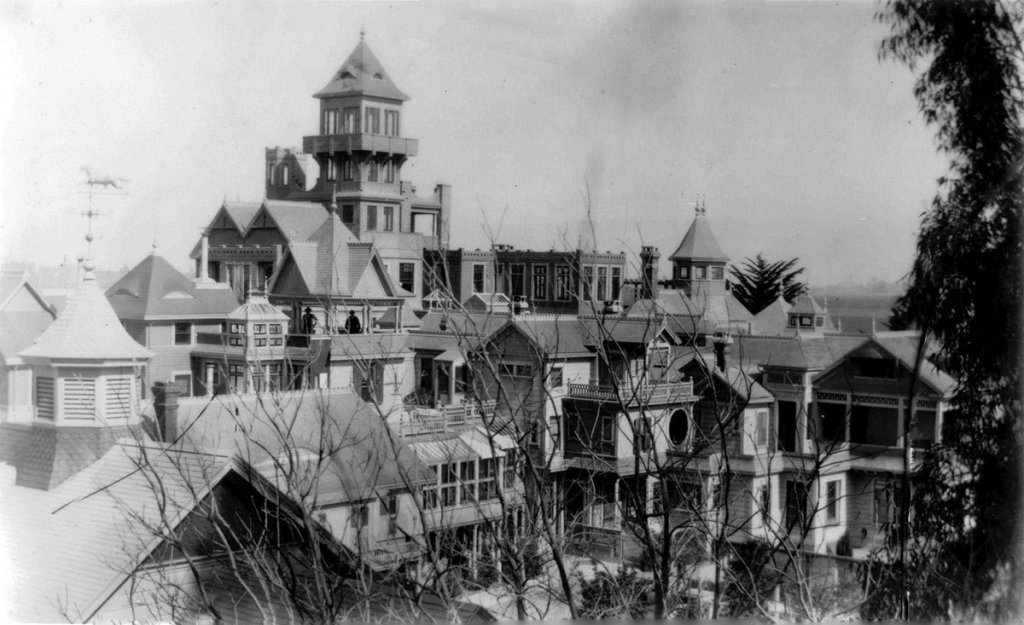
Many researchers have noted that, in addition to the sadistic attacks directed upon authoritarian figures (parents, older siblings, police officers, clergymen), the individual who serves as the poltergeist’s energy center—the psychic “eye of the storm”—may receive wounds that appear to be the effects of stigmata. The individual may also experience painful swelling of the body, and vile and obscene writing may appear on walls or various personal objects. If we only knew more about the nature of energy, perhaps we would understand its relationship to time. Why do we bind, in our reasoning minds, energy within the boundaries of time? There is no law that says energy must start and stop within the certain bounds of time. That is exists in time should be enough.
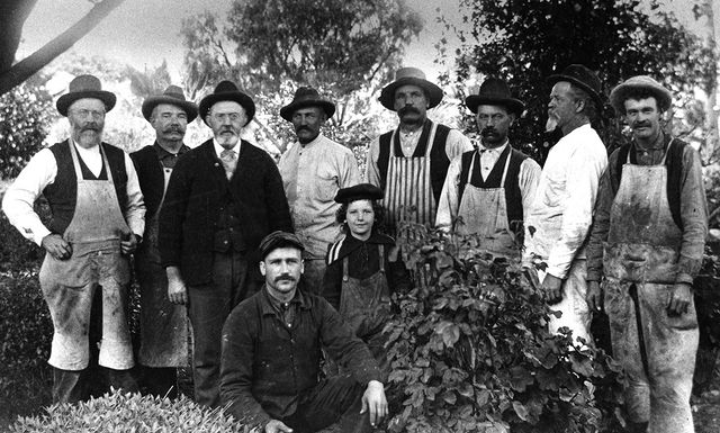
That it exists throughout time, in one form or another, sometimes recognizable, sometimes not, could explain why some places seem to have an abundance of psychic energy long after the people associated with that energy have gone. There is one law of physics that might apply—that of thermodynamics—which states that energy is a constant in the Universe, that energy can neither be created nor destroyed, but merely changes form. In a liberal interpretation, it could explain a lot. https://winchestermysteryhouse.com/
And please be sure to check out the online gift store: https://shopwinchestermysteryhouse.com/

I Guess it’s Hard to Understand Life When it Hits You in the Face with a Backhand

One of the ways memory of helplessness is stored is as muscle tension or feelings of disintegration in the affected body areas: head, back, and limbs in accident victims, the private parts and rectum in victims of sexual abuse. The lives of many trauma survivors come to revolve around bracing against and neutralizing unwanted sensory experiences, and most people I see in my practice have become experts in such self-numbing. They may become serially obese or anorexic or addicted to exercise or work. At least half of all traumatized people try to dull their intolerable inner World with drugs or alcohol. The flipside of numbing is sensation seeking. Many people cut themselves to make the numbing go away, while others try bungee jumping or high-risk activities like prostitution and gambling. Any of these methods can give them a false and paradoxical feeling of control. When people are chronically angry or scared, constant muscle tension ultimately leads to spasms, back pain, migraine headaches, fibromyalgia and other forms of chronic pain. They may visit multiple specialists, undergo extensive diagnostic tests, and be prescribed multiple medications some of which provide temporary relief but all of which fail to address the underlying issues. Their diagnosis will come to define their reality without ever being identified as a symptom of their attempt to cope with trauma. My interviews with wife rape survivors revealed that women not only developed strategies for coping during the sexual assaults, but they also developed strategies for emotional survival after each incident of sexual abuse. #RandolphHarris 1 of 18

Emotional survival is defined as the extent to which women are able to reconstruct their lives so that the experience of sexual violence does not have an overwhelming and continuing negative impact on their lives. Following their experiences of wife rape, the women in this sample, like other sexual assault survivors, worked not only to exist but also to put back together the pieces of their lives. Six women in this study began to do this by terminating their relationships with their partners immediately following their first experience of wife rape. Thus, as I indicated earlier, they did not take steps to manage the violence. They emotionally survived the assault by distancing themselves from their partners, seeking the help of service providers and turning to friends. Gwen was raped once by her partner after she returned home from having major surgery. Following the rape, she remembered getting dressed and leaving the house in a daze: “I wound up at the police department, and then I found out husbands can rape their wives, so they sent me to a doctor for a rape test [kit] and then…I signed a criminal complaint and called [a rape crisis center] the next day.” However, the majority of women in this sample were raped multiple times by their partners. These women developed strategies to cope after each assault. Kayla typifies the reaction of many women in this sample. She recalled what happened one time after she was raped: “He fell asleep and I got up and cleaned myself up and then I pretended that nothing happened. I thought about the kids coming over, and I just didn’t deal with it [the rape]. I thought to myself, it wasn’t that bad.” #RandolphHarris 2 of 18

Kayla’s recollection reveals the complex process of coping after sexual abuse and indicates several of the strategies women I interviewed used to put their lives back together again—cleaning themselves up, forgetting about the incident, justifying the assault, and minimizing the effects of the violence. Like other survivors of sexual assault, most of the women I interviewed felt the need to “be clean” following their experiences of rape. For example, Sally told me, “I went into the shower and I washed myself and scrubbed myself. I did everything a rape victim would do. Everything. It was like you knew what had been done to you and that this was something all rape victims do. And you knew you had to heal yourself because if you didn’t heal yourself, nobody else would.” After each sexual assault, Sara said she would “take shower after shower because I felt so dirty and I couldn’t get clean.” Two other strategies women used were to rationalize the violence and minimize the severity of the assault. It Is important for women who decide to stay in the relationship, either because they do not want to leave or are unable to leave the marriage, to discount the trauma of the rape. Similarly, minimizing the effects of sexual violence allows women to define the violence in a way in which they do not have to immediately act, possibly because they see no other available options or because they fear the consequences of their actions. Thus, for most women to be able to remain in the marriage, they must “work” on their emotions, transforming the social reality of their situation, so that they do not see themselves as victims or their husbands as rapists. #RandolphHarris 3 of 18

Many abused wives reconstruct their experiences by holding themselves, rather than their husbands, responsible. Although self-blame is a characteristic more commonly associated with wives who are battered than with those who are raped, a significant number of raped wives (estimates range from 6 percent to 20 percent) engage in self-blame. The length of time a women remains in the violent relationship and the extent to which she holds traditional ideals about the family are directly related to self-blame. In this sample, one third of the women initially blamed themselves to some extent for their husband’s actions. Many of these women felt they had failed in their roles as wives so they were able to rationalize that it was their own fault that the forced sex occurred. For example, both Sonya and Cory were incest survivors who were generally not interested in having sexual intercourse with their partners. They felt their unresponsiveness was the cause of the sexual abuse. Sonya said, “I wouldn’t let him touch me for the first 2 months after we got married because of what I went through with my father….and I was afraid he was going to go and get an annulment, and I felt like part of the problem of our marriage is because I can’t. It’s like I want to have sex with him, but I keep having flashbacks about what happened to me, and I just can’t handle it. And I knew he’s my husband.” Some people who have been raped may feel unsure about sex and may not want to enjoy it after a rape or are mentally and physically unable to because their feelings are distorted, and/or their body is injured. #RandolphHarris 4 of 18

These women viewed sex as their marital obligation and felt their husbands were being neglected because they were unable to fulfill their duties. Thus, they did not, at last initially, blame their husbands for raping them. Three other women I interviewed did not blame their husbands for assaulting them but instead blamed drug or alcohol use for triggering the attacks. Crack cocaine was one substance that several of the women blamed for changing their partners from loving individuals into sexually and physically abusive men. These examples indicate that rather than viewing their husbands as assailants, these women perceived them as the victims in some way. By constructing the violence in this way, their husbands were free from blame, and they were able to remain in their relationships and cope with the sexual abuse. It was not uncommon for victims of rape to minimize or limit the impact of incidents that they defined as abusive to some degree. Many of the women in this sample also minimized the extent of the sexual violence they had suffered. For example, after each rape, Debbie would tell herself, “That wasn’t that bad. I got through that one so I’ll get through another.” Similarly, Becky thought, “I love him and I know he really loves me, so it [the abuse] wasn’t so bad.” These women were hesitant to acknowledge the severity of their experiences because for a variety of reasons, including emotional and economic ties, they were not in a position to leave. Thus, rather than leave the relationships, they redefined their experiences in ways that were acceptable to them and developed elaborate coping strategies allowing them to survive from day to day. However, eventually all of these women reached a point where they were unable to cope with the violence any longer and ended their relationships. #RandolphHarris 5 of 18

A high value can be placed on loneliness or from empathy for others undergoing such experiences. Looking back on childhood, for many people it was very lonely—at least all the requirements were there—and yet one may not have been aware of it as such; one may not think of calling it by that name. As a child, when an individual is hospitalized, they may have no real understanding of the situation. Being given shots every four hours, having several blood transfusions per day, and learning that one may not live is shocking. However, sometimes people want time away from their parents and their parents’ friends so they can be a lone and experience a real life without being manipulated. By being close to oneself, confronting oneself, and learning who you are and what about you is artificial is a crucial part of development. When a person is alone, two things may change: one is one’s decision to undergo psychoanalysis, and the other is their intimate relationship with their girlfriend. Both of these are acute and unavoidable confrontations of oneself with oneself. Both are quite painful, particularly the relationship with the girl, for one may feel like she never really accepted one as one was (perhaps this may be mutual), and yet neither party wants to break it off either. And at the same time one never has experienced such violence of emotion—love or hate—except for as a preteen. Feelings which one never suspected of having inside well up to overwhelm the individual, often feelings of lust or hate. #RandolphHarris 6 of 18

It is impossible for one to really feel again those feelings a one is stagnant. One knows they happened, some as recently as two or three months ago, and yet to recall them is exceedingly difficult. Partly because they are part of a whole complex which one would probably prefer submerged out of the picture. At the same time, one knows when one reads poetry now one responds with more feeling and understanding then before all of this happened. Now is that not strange? It is just like music. When you fall in and out of love the songs have more feeling, or when you know you are an outcast or doing your best, you can really connect with how the artist may be feeling. I had completely forgotten an experience that happened to me this summer. I went down on foot into the bottom of the Grand Canyon. It is hard for me to really believe that I could have been totally unaware of what I was getting in for, and yet I acted that way. I took with me a camera, a few biscuits, and a small canteen of water; I ended up walking, with occasional rest periods, for 14 or 15 hour, with next to no food or water. Why did I do it? I have no understanding of it, and yet connections are forming in my mind. If you will, it was senseless, stupid, and yet I had been guided by sense I would have avoided with this experience. I have rarely wanted (or perhaps I have had the want beaten out of me) to communicate my inmost thoughts to others, because I know that they will not understand. I have very rarely withheld my sympathy from anyone, but I just now wonder if that is not some kind of compensation for the fact that I do withhold other things. #RandolphHarris 7 of 18

For a while now, I do not know how long exactly, I have felt prepared to die. By that I do not mean at all that I want to (though I have felt that too), but rather that I was alive enough to die. I went through a long period when I was very anxious about death. However, this past week I looked at the parade of planets, and somehow realized that I could accept my death as mine because when you die, your mind releases a chemical and every living essence goes into another realm. And maybe that is where we experience true freedom. Heaven and Hell may be a myth. There is some kind of pleasure in knowing that my death is waiting for me somewhere. Distinctions between the various workings of prince Satan and his demonic agents should be definitely noted, so to understand their devious methods at the present day. For to many, the Adversary is merely a tempter, while they little dream of his power as a deceiver (Rev. 12.9), hinderer (1 Thess. 2.18), murderer (John 8.44), liar (John 8.44), accuser (Rev. 12.10), and a false angel of light; and still less do the imagine the hosts of spirits under his command, constantly besetting their path, bent upon deceiving, hindering, and prompting to sin. A vast host is wholly given up to wickedness (Matt. 12.43-45), delighting to do evil, to slay (Mark 5.2-5), to deceive, to destroy (Mark 9.20)—and has access to men of every grade, prompting them to all kinds of wickedness, being satisfied only when success accompanies their wicked plans to ruin the children of men (Matt. 27.3-5). #RandolphHarris 8 of 18

There is, however, a distinction between Satan, the prince of the demons (Matt. 9.34), and his legion of wicked spirits—a difference in rank which is clearly recognized by Christ and may be noted in many parts of the Gospels (Matt. 25.41). We find Satan in person challenging the Lord in the wilderness temptation, and Christ answering him as a person, word for word, and thought for thought, until he retires, foiled by the keen recognition f his tactics by the Son of God (Luke 4.1-13). We read of the Lord describing him as the “prince of the World” (John 14.30); recognizing him as ruling over a kingdom (Matt. 12.26); using imperative language to him as a person, saying, “Get thee hence”; while to the Jewish people He describes his character as “sinning from the beginning,” and being a “murderer” and a “liar.” He is the “father of lies” who “abode not in the truth” (John 8.44) having departed from the position which he once held as a great archangel of God. Moreover, he is called “that wicked one” (1 John 3.12), the “Adversary,” and that “old serpent” (Rev. 12.9). In respect of the devil’s method of working, the Lord speaks of hum as “sowing tares,” which are “sons of the evil one,” among the wheat, the sons of God’s kingdom (Matt. 13.38-39)—thus revealing the Adversary as possessing the skill of a mastermind, who directs, with executive ability, his work as “prince of the World” throughout the whole inhabited Earth, having power to place the men who are called his “sons” wherever he wills. #RandolphHarris 9 of 18

We read, also, of Satan watching to snatch away the seed of the Word of God from all who hear it—once again indicating his executive power in the World-wide direction of his agents, whom the Lord describes as “fowls of the air.” In His own interpretation of the parable (Matt. 13-3-4, 13, 19; Mark 4.3-4, 14-15; Luke 8.5, 11-12) Jesus said tht by these “fowls” (plural) He meant the “evil one” (Matt. 13.19), “Satan” (Satanas, Mark 4.15), or the “devil” (diabolos, Luke 8.12). We must remember, however, from the general teaching of other parts of the Scripture that the devil is but one person, and does much of his work through the wicked spirits he has at his command. For although Satan is able to transport himself with lighting velocity to any part of his World-wide dominions, he is not omnipresent. But what shall be the spiritual center of this new World? Already religion has been largely replaced by political and social movements with their new myths of nation and social justice. Yet they have not proved to equal to the task, and so, today, at the center of the World there is a vacuum which demonic forces struggle to fill. The vacuum is an absence of meaning: The spiritual disintegration of our day consists in the loss of an ultimate meaning of life by the people of the Western civilization. Through the racial and gender wars started around the World by the sinful state of California, they have left behind pessimism and cynicism. “The World is going crazy.” Well, many people around the World believes the craziness is seeping from California, to the rest of America and then globally. Whatever the explanation one attaches the philosophy of California, one thing is unmistakably clear. #RandolphHarris 10 of 18

The scholars of this generation differ from the generations of their teachers in that the former have been thrust into history, forced to face up to it realistically, and to interpret it theologically. The renowned theological faculties of Berlin, Tubingen, and Halle there existed a consensus that identified the last four centuries of theology with the history of Germany theology. Consequently, it is our feeling that only in Germany is the problem of how to unite Christianity and the modern mind taken seriously. All this was a mixture of limitation, arrogance, and some elements of truth. It has been felt that Germany, after 1800, succeeded to ancient Greece as the center of philosophy. One trait in particular is supped to account for the superiority: the attempt to reunite, in a great synthesis, Christianity with the modern mind. It is in its heart philosophy of religion, it is Weltanschauung, a vision of the World as a whole. And we despised every philosophy which was less than this. Two events have broken the gip of this intellectual provincialism: the fact that the supposedly superior Germany culture could produce Mr. Hitler; and secondly, his emigration to the quite different intellectual climate of the United States of America. Many people, like the Mayor of Sacramento, California USA; Daryl Steinberg, blame America from the creation of Mr. Hitler and if you ask many citizens is not much better than Mr. Hitler. In fact, he does not even try to help the residence of his city, he leaves them sleeping in masses on the street to die, but spends hundreds of millions of taxpayer dollars on sports entertainment, instead of housing. #RandolphHarris 11 of 18
American intellectual life is characterized by its imitation relating of theory to practice and by its wide-open horizons. Protestant theology in American cannot rest content with theorizing, but draws out practical conclusions; hence its special contribution in the field of social ethics. Mention has already been made of how its theological horizons have been kept broad, but there is a certain typically American unity of theological discussion, competition, and teamwork. In general, the American bent for practicality permits a widespread concrete realization of religious truth, while the European drive for ultimate insures it profundity. The European danger is a lack of horizontal actualization; the American danger is a lack of vertical depth. There should be a chief concern between the relationship of the infinite and the finite. Our discussions should center around God’s relation to the World and to man. The absolute objectifies itself in nature and becomes conscious of itself through the reflection of man, nature is unconscious but on the way to consciousness, and reaches it with the birth of man. (Also, keep in mind, some people believe Satan is God.) Human consciousness is that which realized God; consequently, all history is the history of religion, and that is true when you look at the crusades and the establishment of America and the wars in other countries. Many of them start over religion. It is in history that man comes to a consciousness of God; thus, even the cultural process is religious in its roots and can be considered from the viewpoint of the history of religion. All men and women have a religious experience. The polarity of mysticism and sense of guilt (Mystik und Schuldbewusstsein) is brought about by man’s union with and separation from God. #RandolphHarris 12 of 18

Mysticism means the feeling of union with the absolute; it implies the principle of identity of absolute and individual spirit. Guilt means the consciousness of opposition to God; it implies the experience of conflict between the holy Lord and the sinful creature. I began my philosophical school in German idealism and can never unlearn what I there acquired. By idealism, one usually means the identity of thought and being as the principle of truth. Between the human spirit and reality there exists a correspondence which is best expressed in the concept of meaning (Sinn). The system is an expression of a specific but limited encounter with reality. Man lives in existence and not in essence, as the idealists would have him do. The depths of psychology is related to existentialism as part to whole. Their common root is the protest against the philosophy of essence or consciousness which has dominated modern industrial society and endangered freedom, individuality, and creativity. Dr. Freud’s discovery of the irrational, unconscious level of man heled enormously to combat this philosophy. Depth psychology and existentialism are both basically concerned with man’s existential predicament—temporal, spatial, finite and estranged—as opposed to man’s essential nature. There are certain unmistakably existential themes in theology: the original goodness of being and of man, the universal fall, and salvation as healing or making whole a disrupted World. Transposed into philosophical language, these themes are: essential goodness, existential estrangement, and the teleological nature of man which points to a unity beyond the essence and existent. #RandolphHarris 13 of 18

However, while theology contributes its insights to the existentialist movement, existentialism returns the favor. It opens up a whole new psychological dimension in the immense religious literature of the past. It rediscovers sin as a state of separation instead of a series or moral acts. It lays bare the demonic structures that shape conscious decision. It reinforces the meaning of grace as acceptance of the unacceptable—recall the manner in which an analyst handles one’s patient. And, finally, it raises the question of human existence which systematic theology must answer by the reinterpretation of religious symbols. Every individual can relate to skirmishes with friends or family members in which they wrestled the television remote control of the last Eggo waffle away from one’s wanton adversary. If you are coming up short on material, embark on an afternoon visit to your local playground or daycare center and you are sure to find dozens of examples of children using force to gain exclusive rights to their favorite today. These are mundane and seemingly harmless instances of people using force to get what they want. The most extreme manifestations of forcible taking, thefts that often involve weapons and produce serious bodily harm are becoming more common in some communities. The Model Penal Code says an individual is guilty of robbery when he or she inflicts or threatens to inflict serious bodily injury upon another while in the course of committing a theft. The legal notion of what constitutes “in the course of committing a theft” includes those behaviors associated with the individual’s attempt to take the item as well as the flight (escape) efforts that follow. #RandolphHarris 14 of 18

In addition, most jurisdictions specify that the assailant need not be armed with a weapon. Any aggressive action on top of the minimal effort required to extract and carry the targeted item away is generally enough to satisfy the force requirement of the robbery statue. Robbery poses a quandary for scholars who prefer to classify crimes as either violent, property, or public order offenses. A robbery is not a simple theft, nor is it a simple act of interpersonal violence. Instead, a robber combines elements of property theft and violence into a single criminal transaction. This prompts some to treat robbery as a unique conceptual entity—an aggravated property crime. On a more practical level, the unpredictable and multifaceted nature of the crime means that the given offense may allow for criminal justice authorities to purse multiple charges against a single perpetrator—it is not uncommon for perpetrators to have charges of theft, fraud, assault, possession of stolen property, burglary, and/or weapons possession stacked on top of a robbery rape. Robbery is treated as a form of violent crime. An estimated 650,795 attempted or complete robberies occurred in the United States of America in 2022. This figure represents 11 percent of the total number of violent offenses that year (second to assault). This translates into a victimization rate of 2.8 robberies per 1,000 persons or households. Police are never made away of a considerable portion of the robberies that occur each year. Roughly 40 percent of robbery victims choose not to notify law enforcement authorities. Generally, 250,000 robberies are withheld from being reported to law enforcement. #RandolphHarris 15 of 18

Considerable physical, emotional and financial losses stem from robberies. Nearly one-third of the robberies (almost 350,000 annually) were shown to produce some form of injury. Of these injuries, 81 percent were describe as minor (id est, bruises, cuts, scratches) while 19 percent were deemed severe (id est, flesh wound, broken bones, loss of consciousness, internal bleeding). More than one-half (53 percent) of the injuries required medical treatment and one in four resulted in a emergency room visit. Surveys of our nation’s hospitals reveal that emergency room personnel administer care to well over 20,000 robbery victims annually. The financial costs of robbery are also sizeable. The FBI states that $532 million in property losses were produced by the more than 400,000 robberies that were investigated by police. This translates to an average dollar loss per incident of $1,258. Given the large numbers of robberies that go unreported to police, one can reasonably assume that somewhere in the neighborhood of $1 billion in property is lost to robbery offenders each year. Most notably, robbery victimization rates reached an all-time high of 7.4 per 1,000 persons or households. Robbery victimization rates are traditionally higher in the western and southern regions of the United State of America. Victimization rates in the Midwest and Northeast (2.1 and 2.7, respectively) were noticeably lower than in the West and South (3.1 and 3.0 per 1,000 respectively). The District of Columbia, Maryland, New York, California are most burdened by robbery calls. Conversely, Vermont, North Dakota, Wyoming, Montana, and South Dakota weigh in at the bottom of the state-level rankings. #RandolphHarris 16 of 18

As is the case with all forms of violent crime, increased population density yields significantly higher robbery victimization rates. City dwellers experienced a robbery victimization rate of 4.9 per 1,000 persons or households. This compares to reported rates of 2.2 in suburban areas and 1.4 in rural locales. Of our major cities, the FBI lists Atlanta, Newark, and Miami as having the highest robbery rates. At the other end of the spectrum, San Jose, Mesa, and El Paso are major cities with low robbery rates. U.S. robbery rates tend to exceed those experienced in other developed nations. Our robbery rate is 165.4 per 100,000 persons This was surpassed only by Spain which posted a rate of 168.9. Significantly lower robbery rates were experienced in France, England, and Wales, Australia, Canada, Germany, Israel, and Japan. Robbery is a classic example of an unskilled crime where the offender enlists fear and intimidation tactics to achieve his or her goals. Weaponry and robbery often go hand in hand—roughly half of all robbery victims recently claimed that their assailant was armed: 29.9 percent of attackers were said to carry a gun, 13.6 a knife or sharp object, and 4.6 percent relied on a blunt object (id est, club, pipe, baseball bat). At the same time, almost four in every ten attacks took the form of “strong arm robberies” in which the offender relied only on the threat or use of brute force. Alternative sources of data suggest that the numbers of gun-toting robbers may be significantly higher. A full 42 percent of the robberies that police investigated were found to involve some sort of firearm. Luckily, less than 10 percent of the inmate sample reported firing shots. The FBI estimated a robbery-by-firearm rate of 59.5 per 100,000. #RandolphHarris 17 of 18

Gun control advocates often attribute our high robbery rates to this country’s fascination with firearms. Reports estimate 223 million firearms were circulating throughout the United States of America. Add to that roughly 4 million new firearms that are purchased each year and another 300,000 or so that get reported stolen, and it becomes abundantly clear that there are plenty of guns to go around. Some have argued that rigorous gun control measures would significantly reduce our robbery rates. However, an in-dept study found that injuries occurred far less frequently in robberies involving a gun than did when a knife, club, or no weapon present. S the perceived lethality of the situation decreased (id est, knives were less threatening than guns), robbery victims exhibited a greater willingness to resist or challenge their attackers. Both good news and bad news flow from these findings. Resisting seems to increase the chances that the victim will remain in control of his or her valuables. However, this course of action increases the likelihood that the attacker will turn to a weapon of choice as an equalizer. In the case of a gun, this generally results in dire consequences for the victim. Look forward and reason backward. It is better to give than to receive when you are the victim of a robbery. Most material items can be replaced and it is best to walk away with your life. Time is money. And sometimes giving away money is certainly worth your time. A robbery is like a negotiation, but you have no power. A lot of people think the United States of America is frequently robbed, but is the World’s Super Power. The fact that the greater share in bargaining agreements goes to the more patient side also very unfortunate for the United States of America. Our system of government, and its coverage in the media, fosters impatience. When negotiations with other nations on military and economic matters are making slow progress, interested lobbyists seek support from congressmen, senators, and the media, who pressure the administration for quicker results. Our rival nations in the negotiations know this very well, and are able to secure greater concession from us. #RandolphHarris 18 of 18

Isn’t Residence Four at #MagnoliaStation at #CresleighRanch gorgeous?! 😍

This 2-story, 3,489 square foot home features 4 bedrooms, 3.5 bathrooms, and a true 3-car garage. The spacious great room and loft upstairs allow for extra space to use however you and your family please! https://cresleigh.com/magnolia-station/residence-5/

Plus each Cresleigh home comes fully equipped with an All Ready connected home, including a video door bell, digital deadbolt for the front door, connect home hub, two smart switches & USB outlets, plus we’ll even gift you a Google Home Hub & Google Home Mini! 🎁

Don’t miss the opportunity to purchase your brand new dream home at Magnolia Station! We’re now selling!


Disturbing the Dead is Never a Good Idea

So time passed and did not move at all. Ten years of voices in my head, of memories that were more real, more vivid, than the World outside my window. Ten years of constant construction. All this might suggest that I was very far adrift from reality, that I was incapable of distinguishing true from false. Were there hideous dream coming in the night? Visitations, or more of glowing, late-night specters suddenly visible just outside my bedroom window? Had I really seen blood ooze from behind the walls? It had got quite dark, as if a sudden storm was sweeping up over the sky. Others were near me, but I could not see them. We were standing by the palm trees at the turn of the drive, and as Mr. Hansen came to me, I passed behind the palm trees and, in the darkness, I hurried back to the house. And a queer thing was that as I reached the door the black cloud vanished, and there was the transparent twilight again. In the house everything seemed as usual, and the caretakers were busy about their work; but I could not get it out of my head that a shadow of a cloud had concealed the sun. I paused for breath, and began again. In the hall I stopped at the annunciator to call for help, but unknown forces seemed to answer my call. A mass fog started hovering at the end of the hall, and out of it came a tall thin man with a pocket watch in his vest and black garters on his arms. He was carrying a lantern down the hall toward me. He was extremely pale as if suffering from a high fever. When the phantasm’s eyes met my own, his features appeared quite tranquil and not at all disagreeable, but I could not help being filled with some sort of nameless dread. #RandolphHarris 1 of 7

Suddenly, there came a fierce bombardment of stones against the roof and doors. Fearing an attack by bandits, I ran to grab my revolver, and shouted an alarm. Cautiously looking out into moonlit fields, I saw nothing. No one. Then, as I blinked my unbelieving eyes, the front gate was wrenched from its hinges by an invisible force and tossed high into the air. Venturing out to investigate, my revolver clenched firmly in my hand. A volley of stones was suddenly hurled at me, and I feld back into the mansion. As I slammed and barred the front door behind me, the caretakers shuttered the windows. However, shutters made no difference to the stones. In they came, through glass, through shutters, rolling down the chimney, smashing against the door. Objects in the room began to hurl themselves at me. Candles were blown out. The bars on the doors began to bend under the solid blows of an invisible hammer. A tea cup smashed itself against a wall. Somehow, I managed to survive this night of horror. However, much to my dismay, the stone-throwing spirit had not vanished with the coming dawn and the rooster’s crowing. That day, haystacks in the fields were broken up and the hay tossed into the high branches of trees. As the farmers attempted to go about their farmwork, stones pursued them. This could not be the work of naughty little boys. One of the boys who had been helping put up the hay was struck so hard on the back that he began to cry. This spirit never developed a voice, but was quite proficient at snorting and whistling. It smashed pottery and slammed furniture about the room. #RandolphHarris 2 of 7

One night I was standing on the stairs, talking to a stonemason who told me his tools were being knocked out of his hand while he was working by an invisible demon and others went missing. As we were talking, we both caught a glimpse of a shadowy figure floating down towards us carrying the tools. The farmers has also had sickle blades broken by stones, and several rows of corn had been uprooted. If passion, fear, anger or other emotions must be expended to create a haunting, then it should be no surprise that my mansion was host to its share of ghost. Staff often reported hearing what sounded like heated arguments coming from the Blue Séance Room, and the sweet smell of smoking tobacco, despite no one ever smoked in my home. On December 24, 1896, two men using a key opened the safe in the Grand Ball Room and stole over $1,000,000 in money and bonds were removed from the vault, but the bonds were thrown away and they took what gold and silver they could carry without attracting attention. The sheriff was dumbfounded. However, they soon leaned that two locksmiths, Robert and David Bowles had recently changed the locks, so they were arrested. The two of them lived in the attic of my home. There was not enough evidence to hold the men, so the men were set free. They both contracted yellow fever while in jail, and died a week later. Soon after their deaths, reports began to surface that the staff of the Winchester mansion were being haunted by Robert and David. Loud banging or dragging noises came from the attic and the hallway just outside it. #RandolphHarris 3 of 7

Since the late 1880s, there has been a persistent sight of a young woman, dressed all in white. We believe her name to be Astrid, she was one of my caretakers who fell in love with one of the farmers Baldur. It seems that they used to meet in the greenhouse, and that his family disapproved of her. However, he was certain their love would prevail, and promised he would be with her forever in marriage, eventually. Their meetings continued, her love growing deeper and deeper for him. But even the strength of love has its limits. He finally told her that it would not work out, the problems that they faced were insurmountable, and that he would have to break his promise that they would be together in marriage. They met in the greenhouse one last time. She committed suicide and died in his arms. Now, whenever a promise is broken, there, among the deep green plants, a pale phantasm hovers in the greenhouse. Forever, mourning a broken pledge, forever haunts the Woman in White. Frequently on Easter Sundays, clocks would move about on the mantelpiece in the Hall of Fires and the room would be lit up by a vibrating glow. I had been naturally a fearless child; now I live in a state of chronic fear. Fear of what? I cannot say—and even at the time, I was never able to formulate my terror. It was like some dark undefinable menace, forever stalking my steps, lurking, and threatening; I was conscious of it wherever I went by day, and at night it made sleep impossible, unless a light and caretaker were in the room. However, whatever it was, it was most formidable and pressing when I was returning from my daily walk. #RandolphHarris 4 of 7

During the last few years, and while I waited on the door-step, I could feel it behind me, upon me; and there was any delay in opening of the door I was seized by a choking agony of terror. It did not matter who was with me, for no one could protect me. This species of hauntings lasted seven or eight years, and I was a young lady with long skirts and my hair up before my heart ceased to beat with fear if I stood a minute on the door-step! Then one day, at the very front door, I looked up and saw an officer, dressed in Union blue, tall, gaunt, and apparently a modern re-enactor moving rapidly down the wide open lawn, toward my home. He seemed in a hurry to reach the front doors. I looked away to make sure they were opened, and as I looked back at him, he had completely vanished. I immediately had the front doors sealed so that his soul would rest in my estate. From the day on, the Devil had appeared to me on a number of occasions, the first time offering me a purse of silver. I was lost. Bewilderingly, heart and soul, lost. There was a promise that there was an entire life to be lived if I could only take the chance. I can still recall the sense of possibility that came over me then, a kind of lightness. Every sinew, every muscle, every vein in my body seemed suddenly to vibrate, to be alive. If I could find the courage to speak, people would listen. I took a deep breath and then slowly, steadily exhaled. Finally, I began to talk. I noticed that I could speak in languages that I had never learned. I remember everything about that day. Every tiny detail. The smell and the texture of it, every second before and after the Devil appeared. The purple leaves on the copper beech turning and there was condensation on the inside of the window in the early morning. The fire had been lit for the first time since the previous winter and there was a pleasant smell of pine in the room. #RandolphHarris 5 of 7

I did not hear the knock at the door, but I remember being aware of footsteps on the floors in the hall. Even then, I think I knew. There was something in the quality of the silence that shouted out that this caller was unwelcome. I stopped what I was doing and listened, listened to the silence. Then I heard a voice in the hall. I ran. Sending the door flying back against the wall, I ran down the stairs. From the hall below, a sound that tore through me like a butcher’s knife. Not screaming exactly, more a howling, a wailing, the same word repeated over and over, “Mine, mine, mine.” I was struck on the head by a falling hammer. Laying on the floor unconscious, I awoke, and it was the Devil, he told me that I must live and continue to build my estate and that every coin of silver in his purse represented the years I had to live. If I wanted to see my husband and my darling daughter again, it was an offer I could not refuse. When I awoke, my most valued pieces of furniture were rudely destroyed by the violent and unbidden guest, but there were nearly one hundred silver coins in a purse. I had no visible injuries, nor suffered any terrible mental or emotional pain. But there was a piercing scream, followed by a raucous cacophony of voices filling the room. That night as I lay in bed, I thought about seeing my husband and daughter again. I thought about how I would devote this mansion, not only to the spirits, but also to the spirits of my family. My face was stained with tears. I thought about the pact I had made. I got up, put on my clothes, keeping my revolver in my pocket, and went down the steps of my home, past the two caretakers playing cards in the living room. One of the me got up. “Mrs. Winchester, you want something, a cup of tea maybe?” “I need to walk,” I said. No one stopped me. #RandolphHarris 6 of 7

I went outside and walked around the gardens. I noticed the lay the leaves looked in the trees that were nearest the lamppost. I noticed how the branches of the evergreen trees were gleaming with dew. I studied the tall steep shingled roofs of the house. I looked at the glint of light in the diamond-paned windows. I listened to the sound of grass under my feet, and came to the cupid fountain that was running in spite of the cold, and watched the water erupt from the jet and fall down in an airy white shower into the basin that boiled under the dim light. The air smelled of pine needles and of burning wood. There was a freshness and a cleanness I had not experienced. There was a deliberate beauty. I made my way back to the house slowly. I could not sleep. Then a strange thing occurred, as I drew near the mansion. From within the house, I heard a subtle stirring music. Surely a window was open to the cold for me to hear something of such tenderness, and subtle beauty. I knew it to be a harp. There was the window up ahead, tall and made of leaded glass and opened to the cold. From there the music was coming: a long swelling note, and then a cautious melody. Finally, the music stopped. I glanced up and saw a black shadow jump out the window toward me. I found myself shaken, frightened without reason by the sound of voices crying out in pain and the echoes of sobbing. Looking over to the nine-story observation tower, there was a ghostly guard walking his eternal watch. My home seems to be a place haunted by shadows and furtive ghosts. It seems to have been taken over by spirits. #RandolphHarris 7 of 7

The Winchester Mystery House
The Winchester Mansion is one of the World’s most haunted places. For more information on the site and the haunted house events, please visit: https://winchestermysteryhouse.com/

And please be sure to check out the online gift store: https://shopwinchestermysteryhouse.com/

Have I Been Wrong, Have I Been Wise to Shut My Eyes and Play Along?

Violence seems to beget violence, from generation to generation. In violence, we do not just consider injuring others but also give the green light to doing so, often with a forceful as unrestrained as it is self-justified. Vengeance, bloodlust, severe dehumanization, rape, torture, acting with extreme prejudice—whatever its form, violence is aggression with no restraints, further fueled by a mindset that adds an emphatic, not-to-be debated stamp of approval. There are plenty of views about what constitutes and causes violence, but any deep understanding of violence has to include our capacity for extreme aggression and the dehumanizing of others, especially toward those who offend us. How do women cope with their experiences of wife rape? Women implement a variety of coping strategies to deal with the violence in their lives and protect themselves from harm. Women who are abused by their husbands must manage the violence and this involves the attachment of meaning to the violence and development of strategies to cope with it. The meanings the woman attaches to the violence and the resources she believes she has shape strategies for living with, or ending the violence. Women coping with sexual violence is defined as the actions take to avoid or control distress. Women’s coping responses are active, constructive adoptions to the experiences of abuse. The responses of any particular woman will depend on how she defines her experience, the context within which it occurs, and the resources which are available to her at the time and subsequently. #RandolphHarris 1 of 17

Just as battered women and other survivors of repeated acts of violence learn to manage the violence, my research indicates that wide rape survivors too develop strategies to cope with their experiences of sexual abuse, beginning with the first incident. For the majority of women in this study, the first forced sexual experience was merely one in a long line of abuses to come. Indeed, only seven women were able to escape the relationship after having been raped only once. Six of these women terminated their relationships immediately after the first incident of rape. Those women were either separated or seriously considering separation from their partners at the time of the rape, and several had the economic resources to survive on their own. For example, Rhonda and her husband were separated at the time of the incident but maintained an amicable relationship. On the night of the rape, he entered her house, which was not unusual, and then, she says, “It was like something just snaped in him. He grabbed me and said, ‘We gonna have sex, I need to f*ck.’” Rhonda was raped for 7 hours before her husband finally left. At the time of the rape, Rhonda owned her own home, had a job, and was already separated from her assailant, so the decision to remove herself from any further contact with her husband was easy to make. Whereas Rhonda’s circumstances allowed her to immediately end all contact with her husband, most of the women in this study were not in a position to do this. For example, although Karen also identified her first experience as rape, it took her 2 month to save money and finalize her plans to leave. She was raped 11 more times during this period. #RandolphHarris 2 of 17

The vast majority of women in this sample did not leave the relationship after the first incident but instead tried to manage the violence. After the first incident, all of the women reported feeling a similar sense of shock that the assault was happening to them and a general feeling of disbelief that someone they loved was responsible for their pain. Debbie is typical in her response to the first rape: “The first time, I though, ‘I don’t believe this is happening, I just don’t believe it.’ I was in shock—totally numb—and I don’t know how I ever got over being that numb. It just blew me out, and I thought this can’t be happening to me.” Most of the women reported that they though the first assault was an aberrant incident that would never happen again. Shock, confusion, anxiety, fear, helplessness, and a belief that this will only happen once are common psychological responses to victimization. Indeed, for most victims of haphazard crimes, this coping mechanism of treating the incident as a single occurrence may suffice. However, many survivors of wife rape (more than 80 percent of women in this sample) learn that the first incident is not aberrant but an ongoing problem. Thus, after the initial shock has ceased, survivors of wife rape are forced either to develop strategies to manage the violence or end the relationship. Two fundamental goals in managing violence are protecting oneself from injury and justifying the continuation of the relationship. #RandolphHarris 3 of 17

During the course of the relationship, a woman’s coping strategies often change as it becomes clear to her that she will or will not be able to avoid an assault. My interviews revealed that a variety of strategies were employed by women to protect themselves, including minimizing the risk of violence, diminishing injuries once the violence had begun, and emotionally surviving the violence. A primary way women in this sample tried to cope with being raped by their partners was to minimize the risk that violence would occur. As Sally told me, “You know what’s gonna happen, and you’re trying to think in your brain, how can I stop this without getting hurt? And you don’t know how to stop it without angering him because you know you’re going to get killed, and it’s like looking a murderer straight in the eye, and they have this cold-blooded look, and you know you’re dead unless you can do something.” There were several strategies implemented by women to minimize the risk that they would be sexually assaulted. Active resistance—most women in this sample attempted, on at least one occasion, to minimize the risk of violence by physically resisting their partners. One quarter of the women in this sample were successful at least once in resisting their husbands’ attempt to rape them. For example, Erica physically resisted to the point where her husband grew tired and gave up. On one occasion, Samantha was able to kick her husband in the groin and escape. Several other women used weapons, such as guns or knives, to deter their partners; Teri stabbed her partner in the arm with a kitchen knife. #RandolphHarris 4 of 17

Clearly, these women were courageous and creative in their attempts to resist their partners’ attacks. However, most of the women in this sample said they learn not to resist but merely to “give in.” Debbie recalled how she quickly learned not to resist her husband: “I love in an apartment where you go up the steps to get in, and do you know how many times I’ve been dragged up the stairs? Get away? It just doesn’t happen. So I learned quick, and then I never fought back or anything because it would just prolong the agony. It’s over quicker if I just give in.” Avoidance—most of the women in this sample found that a more successful strategy than active resistance was simple avoidance. Indeed, several women tried a tactic similar to Natalie’s: “He would come home from work angry over something and take it out on me. So I would try to stay out of his way.” Danielle knew that she was particularly at risk for being sexually assaulted after her husband watched pornographic movies, so she made extra efforts to avoid him at these times. Many women avoided the bedroom, feigned sleep, or went to bed only after they were certain their partners were asleep. Other women in this sample used more direct tactics to avoid their husbands. For example, Debbie particularly feared her husband when he had been drinking. When he came home drunk, she regularly took advantage of his ulcer by putting tabasco sauce into his food. The result was that he became very thirsty and continued to drink more beer, not realize why he was so thirsty. Debbie says that, “if I was lucky; he would pass out and leave me alone.” Otherwise, Debbie was forced to have sexual intercourse until he passed out from sheer exhaustion. #RandolphHarris 5 of 17

Placating their husbands—the most popular tactic for minimizing the risk of assault was for women to placate their husbands. Placation took many forms, including not seeing close friends of whom their husbands did not approve, quitting their jobs, distancing themselves from their families, maintaining a clean home, having dinner ready at specific times, and keeping the children quiet at all times. These were all components of what these women perceived as their roles as “good wives,” and they tried actively to meet their husbands’ expectations in order to avoid violent episodes. The majority of women told stories similar to this account by Annabel, who remained with her husband for 29 years: “I felt if I could just be what he wanted—a good wife—and stay at home, then he would stop.” Cory remembered thinking, “OK, I can play housewife, I can do that.” Like many battered women, most of the women in this sample understood that if they could fulfill their partners’ expectations about being a good wife and mother, they would reduce their risk of experiencing violence. However, it should be emphasized that these women were not merely passive in their acceptance of their husbands’ demands and gender role expectations; placating their partners was an active coping strategy used to minimize their risk of being abused. Although most of the women went to great lengths to please their husbands, they all learned that they could not manipulate every situation and avoid being sexually assaulted. #RandolphHarris 6 of 17

Thus, they tried to minimize their injuries as a way of maintaining some form of control over the violence. Stacey said, “I would try to manipulate him during the sex, not for my own needs or orgasms, but to control his anger and try to reduce it so I wouldn’t het really hurt.” Many of the women tried to appease their husbands sexually in order to minimize their risk of harm. For example, Annabel knew that she had to “service him [her husband] to keep the peace.” Natalie told me, “I would fake it (orgasm)—I was the best damn actress—I could have won an award. I even did things to him when there were tears in my eyes.” One quarter of the women in this sample said they sometimes performed oral sex on their husbands, although they despised this act, so that the abuse would end quickly. This was particularly difficult for several of the women, who were incest survivors and recall being forced to engage in fellatio with their assailants when they were children. Other women in this sample recalled engaging in what they referred to as “perverse” activities, such as anal intercourse and bondage, to reduce their risk of injury. Although she despised having anal intercourse, Lorraine remembered that she allowed her husband to do this so that he would not severely batter her in front of the children. When rape appeared inevitable, these women had little choice but to focus their energy on limited their injury and emotionally surviving the attack. All of the women who experienced more than one assault described mechanisms that allowed them to survive the actual rape. #RandolphHarris 7 of 17

When it comes to incest survivors, many victims of sexual assault resort to psychological measures to minimize the trauma. Some women find their time perception and sensory perception altered as they disassociate themselves from the experience or treat it as if it is happening to somebody else. This process is defined as “cutting off” as not just a coping strategy but also an act of resistance. In doing this, a woman refuses to let her partner control her mind and feelings. One of the most prevalent survival strategies was best described by Debbie as “orbing out.” She recalled, “He would be all over me, and then I just went out in my mind—I just wasn’t there anymore. I took myself somewhere else, and I fond out later that I had done that a lot. Even growing up and all, if anything hurts me, I orb out—I get total numb. Although this strategy was consistently employed, particularly by the one quarter of the women in this study who were survivors of incest, some women reported out-of-body experiences only during certain episodes. For example, Karen described having “out-of-body experiences—like I was watching from a corner of the room because I couldn’t feel anything”—only during the sexual assaults but not during the physical assaults. Several other women said they coped with the actual rape by focusing their thoughts ironically on the happy days of their marriages or on other aspects of their lives. For example, Kayla recalled, “I would lay there and pretend it’s not happening to me. I would think of shopping or the kids or whatever else I had to do.” Others, such as Rebecca and Wanda, repeated the same phrase continually in their minds in order to distract themselves from what was happening and help them to cope with the assaults. #RandolphHarris 8 of 17

All of these mechanisms enabled he survivors to cope during the actual time of crisis and to minimize emotional trauma. These offenders cannot be taken lightly. Please try to understand their philosophy of life and society. They have no fear of man-made laws or the laws of God…to them crimes as serious as murder comes easy…these people will stop at nothing. They are like a secretive society, bonded together by a common need and desire to mete out havoc on society. There are plenty of views about what constitutes and causes violence, but any deep understanding of violence had to include our own capacity for extreme aggression and the dehumanizing of other, especially toward those who offend us. The more intimate we are with our own violent urges and their roots, the less likely we are to be irresponsible with such urges, and the deeper our understanding will be of others’ violence. This does not necessarily mean that we will then be more likely to excuse or marginalize it or look the other way, but we will be able to more skillfully related to it and its origins, getting a deeper sense of how to best approach and work with it. As uncomfortable as it may be to bring our own violence or capacity for violence out of the shadows, we owe it to ourselves—and everyone else—to do so. People who are the victims of violence may feel a loneliness, accompanied with the terrors of manic-depression and suicide. It is not just the loneliness, not the shock, not the fear, not the sense of failure, but the sense of a dying, of a relationship dying, and no one can stop it, not really—not yourself, your work, your money, your efforts, your hopes, your dreams; not your realities, not your friends, not anybody. #RandolphHarris 9 of 17

And then the victim comes to realize that there will be more grief to come, more hard realities to face, certainly more hurt and abuse; and they pray, and pray that in the breakdown of their home, their family, their relationship with their husband, that in some way their children ma find enough strength to endure and grow because that is where the real guilt and sense of failure lies. You know you can never repair what has been broke; it is to the children, not anybody else that you have a responsibility. It is them you need to feel for not mama or daddy, not really; it is to them that the dawn must speak and comfort and help grow; it is to them that hopefully out of the mess, their goodness might survive. Man as we know him is regarded not as a completed being but as a being in a certain definite phase of one’s possible transformation. This transformation is considered to be possible in one lifetime, that is, it is considered that a man born in one phase can, during one lifetime, pass into another. If we take the example of a butterfly then a man born in one phase can, during one lifetime, pass into another. If we take the example of a butterfly, then man is approximately a caterpillar. And the vast majority of people die as “caterpillars.” However, out of the masses of caterpillars a small percentage of transforming beings is constantly emerging. These evolving beings are, for us, people of higher mind. We can know of their existence by traces of their activity in history, chiefly in rt and in religions. Possessing a more perfect mind than ordinary people they possess greater knowledge. #RandolphHarris 10 of 17

We have schools that have as their aim to bring ordinary people, who have felt or realized the necessity of escaping from their present state, near to the ideas coming from people of higher mind, because these ideas alone can assist their transformation, that is, their transition to a new level of being. The solution of the thinker must be capable of exciting a sympathetic vibration in the personality of the man. Or more exactly, the thinker instinctively shies away from certain solutions and gravitates toward others simply because they strike or fail to strike a resonance in one’s temperament and background. The process of life can no longer be adequately described by the metaphor “level,” and the metaphor “dimension” must replace it. The multiplicity of beings demands a principle of organization which in the past was the hierarchical principle with the concomitant image of levels. Besides social and political levels, there are other processes described in terms of the body-soul level, the organic-inorganic level, the levels of religion and culture, and the levels of nature and supernature. Levels, however, are static, with no implications between them, and the only interaction is by interference, that is, control of one level by another, or revolt of one against the other. Since the Renaissance and the Reformation, however, these levels have been gradually broken down so that a new insight into the unity and compenetration of life demands a new metaphor. “Dimension” is a geometric image which expresses unity within diversity. Dimensions have their property that they meet in a point but do not interfere with each other. They do not life next to one another, nor above one another, nor below one another. They lie in one another, and are untied in the point where they meet. #RandolphHarris 11 of 17

Though all dimensions are present at any given point one of the will predominate in the process of life. This dominant dimension is called a “realm” (Bereich), as for example, the inorganic and organic realms and the historical and spiritual realms. The simultaneous presence of all dimensions is explained by the distinction between the potential and the actual. Both are realities, for the potential has a power for being that has not yet been activated. Potential dimensions exist within actual ones. Since the actualization of potencies is a gradual, evolutionary process that extends in its totality over millions of years, some dimensions will prevail over others. However, these successive realms do not constitute a pyramid of levels, for the lie within, not atop one another. One can say, therefore, that in the atom is present the spiritual power that created Shakespeare’s Hamlet, just as the movements of the atoms in Shakespeare’s body participated in the spiritual acts that produced Hamlet. Evidently, tensions and ambiguities exist in every life process, but these are not conflicts between levels. They are conflict between forces that operate in every dimension. The four dimensions are the social, historical, intellectual, and personal. No specifically religious dimension is constructed because religion cannot be confined to a special realm; it permeates all dimensions, giving them depth. #RandolphHarris 12 of 17

The hour of need always brings a corresponding measure of power from God to meet that need. The Church of Christ must lay hold of the equipment of the apostolic period for dealing with the ongoing influx of evil spirits hosts among her members. Believers today may receive the equipment of the Holy Spirit whereby the authority of Christ over the demon hosts of Satan is manifested, for this is proved not only by the instance of Philip the deacon in the Acts of the Apostles, but also by the writings of the “Fathers” in the early centuries of the Christian era. These writings show that the Christians of that time recognize the existence of evil spirits, knew that they influenced, deceived, and possessed men, and believed that Christ gave His followers authority over them through His name. And this authority through the name of Christ, is available for the servants of God even at this present time. The Spirit of God is making this known in many and diverse ways. God gave a recent object lesson through a Chinese Christian, Pastor His, who acted upon the Word of God in simple faith without the questioning caused by the mental difficulties of Western Christendom. And He has awakened a portion of the Church in the West through the last Revival in Wales—by an outpouring of the Spirit of God which has not only manifested the power of the Holy Spirit at work in the twentieth century as in the days of Pentecost, but has also unveiled the reality of satanic powers in active opposition to God and His people, spotlighting the need among the Spirit-filled children of God for equipment for dealing with them. #RandolphHarris 13 of 17

Incidentally, too, the Revival in Wales has thrown light upon the Scripture records, showing that the highest point of God’s manifested power among men are invariably the occasion for concurrent manifestations of the working of Satan. For it was like that when the Son of God came forth from the wilderness conflict with the prince of darkness and found the hidden demons in many lives aroused to malignant activity, so that from all parts of Palestine crowds of victims came to the Man before whom the possessing spirits trembled in impotent rage. The awakened part of the Church of today has now no doubt of the real existence of spirit-beings of evil, and that there is an organized monarchy of supernatural powers set up in opposition to Christ and His kingdom who are bent upon the eternal ruin of every member of the human race. And these believers know that God is calling them to seek the fullest equipment obtainable for withstanding and resisting these enemies of Christ and His Church. In order to understand the methodology of this deceiver-prince of the power of the air, and become acute to discern his program and his tactics in deceiving men, we should search the Scriptures thoroughly to obtain a knowledge both of his character and how hi evil underlines are able to possess and use the bodies of men. The World is in process of becoming a Kosmos, a unified, structured, historical whole in which all the parts interact with one another. However, the forms of thought and action are still chaotically individualistic, and so the World as a historical reality is being born in labor pains of two wars. #RandolphHarris 14 of 17

At almost the precise midpoint of the 20th century, George Orwell published 1984, hi scorching indictment of totalitarianism. The book pictured a government in total control of the mass media. Mr. Orwell’s brilliant neologisms, like newspeak and doublethink, entered the language. The book became a powerful assault weapon in the fight against censorship and mind-manipulation, which is why it was banned for decades in the Soviet Union. While it helped rally forces opposed to dictatorship of the mind, however, the book’s projection of the future turned out to be highly questionable. Mr. Orwell correctly envisioned such technologies as two-way television screens that could be used to deliver the state’s propaganda to viewers while simultaneously spying on them, and his warnings about potential invasions of privacy are, if anything, understated. However, he did not foresee—nor did anyone else at the time—the most important revolution of our era: the shift from an economy based on muscle to one dependent on mind. He did not, therefore, anticipate today’s astonishing proliferation of new communication tools. The number and variety of these technologies is now so great, and changing so swiftly, that even experts are bewildered. To confront the army of technical abbreviations, from HDTV and ISDN to VAN, ESS, PABX, CPE, OCC, and CD-I, is to sink into alphabetical asphalt. Even to scan the advertisements for consumer electronics is to come away dazed. Rise above this clutter, however, and the basic outlines of tomorrow’s Third Wave media become strikingly clear. #RandolphHarris 15 of 17

The electronic infrastructure of the advanced economies will have six distinct features, some of which have already been foreshadowed. These half-dozen keys to the future are: interactivity, mobility, convertibility, connectivity, ubiquity, and globalization. When combined, these six principles point to a total transformation, not merely in the way we send messages to one another, but in the way we think, how we see ourselves in the World, and, therefore, where we stand in relationship to our various governments. Put together, they will make it impossible for governments—or their revolutionary opponents—to manage ideas, imagery, data, information, or knowledge as they once did. Our account of bargaining has so far focused on just one dimension, namely the total sum of money and its split between the two sides. In fact there are many dimensions to bargaining: the union and management care not just about wages but health benefits, pension plans, conditions of work, and so on. The United States of America and its NATO allies care not just about total defense expenditures, but how they are allocated. In principle, many of these are reducible to equivalent sums of money, but with an important difference—each side may value the items different. Such differences open up new possibilities for mutually acceptable bargains. Suppose the company is able to secure group health coverage on better terms than the individual workers would obtain on their own—say, $1,000 per year instead of $2,000 per year for a family of four. Now the workers would rather have health coverage than an extra $1,500 a year in wages, and the company would rather offer health coverage than an extra $1,5000 in wages, too. #RandolphHarris 16 of 17

It would seem that the negotiators should throw all the issues of mutual interest into a common bargaining pot, and exploit the differences in their relative valuations to achieve outcomes that are better for everyone. This works in some instances; for example, broad negotiations toward trade liberalization in the General Agreement on Tariffs and Trade (GATT) have had better success than ones narrowly focused on particular sectors or commodities. However, joining issues together opens up the possibility of using one bargaining game to generate threats in another. For example, the United States of America may have had more success in extracting concessions in negotiations to pen up the Japanese market to its exports if it threatened a breakdown of the military relationship, thereby exposing Japan to a risk of Soviet or Chinese aggression. The United States of America had no interest in actually having this happen; it would be merely a threat that would induce Japan to make the economic concession. Therefore, Japan would insist that the economic and military issues be negotiated separately. #RandolphHarris 17 of 17

CRESLEIGH HAVENWOOD
Lincoln, CA | from the high $600s
Now Selling!

No appointment needed! Cresleigh Havenwood features four distinct floor plans ranging from 2,293 – 3,377 square feet and offering up to five bedrooms. Each plan has been thoughtfully designed and includes great features such as single story homes, guest suites, optional offices, garage workshops, and more! Get the most out of your new home with Cresleigh’s All Ready smart home featuring all the connectivity needed to keep your house running. Best of all, each Cresleigh home comes with owned solar included!

Located off of Virginiatown Road and McCourtney Road, residents of the 83 homesites of Cresleigh Havenwood will benefit from a brand new neighborhood in the charming City of Lincoln. Palo Verde Park, is just down the street and there’s plenty of recreation to take part in all around town

.

Haunting Phenomena and Unsolved Winchester Mysteries

As we made our way through the hall, the cold outdoor light flooded the drawing room. The shutters had not been closed, nor the curtains drawn. I looked about me. The room was empty and every chair was in its usual place. My armchair was pushed up by the chimney, and the cold hearth was piled with the ashes of the fire at which I had warmed myself. My home was filled with ancient artifacts and historic pieces. It also housed several spirits. One night, as I sat in my armchair, my fear seemed to take on a new quality. It was like an icy liquid running through every vein, and lying in a pool about my heart. I discovered that there was something wrong with the chair when I felt someone grab my arm in a painful grip while I was resting in. Whatever it was left fingerprint bruises on my arm. I was convinced that a vengeful spirit had grabbed me. It absorbed me so completely that I was not aware how long I rained there. But suddenly a new impulse pushed me forward, and I walk on toward the scullery. I went there first because there was a service slide in the wall, through which I might peep into the kitchen without being seen; and some indefinable instinct told me that this particular kitchen held the clue to the mystery. I still felt strongly that whatever had happened in parlor must have its source and center in this kitchen. In the scullery, as I have expected, everything was clean and tidy. However, a voice was speaking in the kitchen—a man’s voice, low but empathic, and which I had never heard before. #RandolphHarris 1 of 7

I stood there, cold with fear. But this fear was again a different one. As I turned to retreat across the smooth slippery floor, halfway through I crashed down on the tiles. The noise seemed to echo on and on through the emptiness, and I stood still, aghast. Now that I had betrayed my presence, flight was useless. Whoever was beyond the kitchen door would be upon me in a second. But to my astonishment the voice went on speaking. It was as though neither the speaker nor his listener had heard me. The invisible stranger spoke so ow that I could not make out what he was saying, but the tone was passionately earnest, almost threatening. The next moment I realized that he was speaking in a foreign language, a language unknown to me. Once more my terror was surmounted by the urgent desire to know what was going on, so close to me yet unseen. I crept to the slide, peered cautiously through into the kitchen, and saw tht it was as orderly empty as the other rooms. I froze when I saw a blue mist coming down their stairs. The mist dispersed before reaching me. I must have fainted them, I supposed; at any rate I felt so weak and dizzy that my memory of what happened remained indistinct. But in the course of time, I walked through the deserted ground floor, up the stairs, and down the corridor to my room. There, apparently, I feel across the threshold, again unconscious. When I came to, I saw a specter wandering the halls and hurrying along through the bookshelves. He literally knocked me out of his way. He plowed over me as he hurried toward the bookshelves. I was a bit flustered by his ungentlemanly behavior. #RandolphHarris 2 of 7
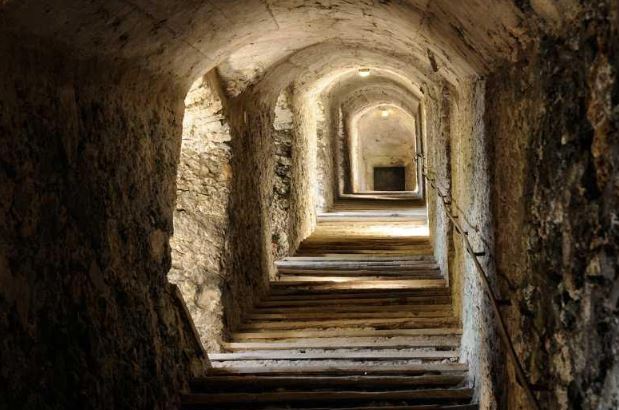
I got up and crept silently down the stairs, walked through the hallways. It was a beautiful night, and a full moon was riding high in the sky. I felt quite exhilarated and not at all afraid. All the caretakers on the estate were fast asleep, so there was little chance of meeting anyone on my stroll through my mansion. Enjoying the solitude of my walk, I did not notice how far I had gone. It must have been two or three miles. As I realized that, I start my way back. Looking out the windows, I noticed that sky became overcast, covering the moon and making the night darker and darker. My mood changed to an eerie sort of fear and I kept walking faster and faster. Soon it was so dark that my fear almost became panic, for I could hardly in front of me anymore. At last, I could a candle and lit it. Suddenly I turned my head and looked over my shoulder. There, just a few yards behind me, floating about three feet above the ground, was a boy with blonde hair, following me at the same pace I was walking. He was glowing dully, but shed no light around him or on the ground. Almost as soon as I had seen him, he veered towards the wall, roe a bit, then sailed into the wall and disappeared. This strange boy behaved as if he were intelligent, for he had been following me in a straight line. But as soon as he was discovered, he swerved aside an went into the wall, as if hiding. And had not there been something unnatural about the sudden darkness? #RandolphHarris 3 of 7

Deep within the 600 rooms of my home, the imagination can be filled with bright colors of love and joy and the somber hues of tragic death and heartbreak. Then it came, the next morning while the famers were plowing and planting and caring for the young crops, the estate exploded in a scarlet haze. It was very odd. The sleep field and fruit orchards were littered with pieces of human flesh and cadavers of men and horses. In a few days, the famers found themselves planting quite a different crop around the estate and through the fertile fields. I had never seen anything worse than this vast sea of anguish. The spirits must have been upset. Although I had inherited $20,000,000 and $1,000 a day, I paid for this with my heart’s blood. Later that evening, my home was pelted by a shower of limestone and other debris as I sat reading in the front parlor on the first floor. Believing my mansion was crumbling, I jumped to my feet. Glancing warily toward the ceiling, there were no cracks in the ceiling. How could lime and debris fall on me from the ceiling if there was no hole from which they might drop? I stood up on a chair so that I might better inspect the ceiling. I was unable to detect one single sign of damage, but as I searched the area above me, lime once again began to rain down. I picked up a number of pieces from the fresh fall and they felt very cold to the touch, as if they had come from an outside wall. I continued studying the ceiling for some kind of opening through which the lime might have dropped. When I awakened the next morning, I was greatly disturbed to find the room carpeted by the mysterious lime, but there seemed to be no gaping cracks in the walls or ceiling that would have caused so much lime to fall. #RandolphHarris 4 of 7

The following night, I was awakened by the sounds of what sounded like feet slipping across the floor. Then I clear heard a man say, “pardon me.” I lit got out of bed, lit a candle, proceeded down the hallway, and heard what sounded like voices in deep conversation, but no one was insight. I got the feeling of not being alone. As if someone invisible was with me. Walking down to the front parlor, I notice the picture William’s mother had given to us for a wedding present was no longer hanging over the fireplace, but learning against the fireplace screen. Moment later in levitated and hung itself back over the fireplace. The candles in the dining rooms appeared to be lighting themselves. The lights seemed to have a mind of their own. Walking through the house to inspect more rooms, I caught a glimpse of a man coming down toward me. Instinctively, I stepped back at the landing so the man could pass. No one came by and when I turned, I saw that I was alone. Who had been following me down the stairs? This was only one of many encounters with a man on their stairs or in the parlor. Before I removed the mansion, guests would have to go up to the second floor to use the rest room. Several guests were quite startled to see the face of a skeleton looking at them in the mirror rather than their own reflections. #RandolphHarris 5 of 7

By the next evening, I had conducted an exhaustive search of all the possible “natural causes” for the disturbances. As the activity began to intensify, it became very apparent that the spirits were angry. Candlesticks flew from one corner of the room to another. When the I sat down to dinner, knives, forks, plates, and food became animated and airborne. Anything movable seemed to be possessed and have the ability to levitate about the room. Later that evening, I retired to the Daisy Bedroom and managed to start a fire in my grate, and after warming myself, got back into bed. The evening passed in a haze of pain, out of which there emerged now and then a dim shape of fear—the fear that I might lie here alone and untended still I died of cold, and of the terror of my solitude. For I was sure by the time that the house was empty—completely empty, from garret to cellar. I knew it was so, I could not tell why; but again I felt that it must be because of the peculiar quality of the silence—the silence which had followed my steps wherever I sent, and was now folded down on me like a pall. I was sure that the nearness of any other human being, however queer and secret, would have made a faint crack in the texture of that silence, flawed it as a sheet of glass is flawed by a pebble through against it. The lovely decorated walls of my gentle home was splattered with crimson residue; the wooden, oiled floors smeared umber from the writhings of the wounded. Innumerable bloated forms and traumatic horrors appeared. Putrefying human gore, and light hovered over the Grand Ball Room from perturbed spirits. And ectoplasm ascended upon the windows. #RandolphHarris 6 of 7

O thou great and powerful King AMAYMON, who rulest by the power of the Supreme God, El, over all Spirits, superior and inferior, but especially over the Infernal Order in the Dominion of the East, I invoke and command three by the particular and true Name of God, and by the God whom thou dost worship, by the Seal of thy creation, by the most mighty and powerful name of God, JEHOVAH, TETRAGRAMMATON, who cast thee out of Heaven with the rest of the Infernal Spirits, by all the other potent and great names of God, Creator of Heaven, Earth and Hell, of all contained therein, by their powers and virtues, and by the Name PRIMEMATUM, which commands the whole host of Heaven. Do thou force and compel the Spirit Sarah L. Winchester here before this mansion, in a fair and comely shape, without injury to myself or to any other creature, that she may give us true and faithful answers, so that we may accomplish our desired end, whatsoever it be, provided that it is proper to her office, by the power of God, EL, who hath created and doth dispose of all things, celestial, aerial, terrestrial, and infernal. Welcome, Spirits, welcome art thou unto us; we have called three through Him who created Heaven, Earth, and Hell, with all contained therein, and thou hast obeyed also by the like power. We bind three to remain affably and visibly before this mansion, within the mansion, so long as we need thee, and to depart not without or license, till thou hast truly and faithfully fulfilled all that we shall require. #RandolphHarris 7 of 7

While there may be many instances in which the outbreak of poltergeist phenomena might be associated with the dramatic changes that adolescence brings to a child’s psyche, many of the classic cases of noisy ghosts throwing objects and severely disrupting the normal flow of things occurred where no adolescent was present. https://winchestermysteryhouse.com/

And be sure to check out the online gift store: https://shopwinchestermysteryhouse.com/

In the Diamond Markets, the Scarlet Welcome Carpet, that they Just Rolled Out for Me

Many view aggression not as innate, but as a disposition fueled and governed by personal and cultural conditioning. According to social learning theory, aggression is a self-serving learned behavior: we assume we need or deserve something, and we find that we can get it—and sometime even more—through being aggressive, whether directly or indirectly (as when we manipulate another into acting out our aggression). This starts very early in life. Very young children can get aggressive simply though seeing others getting what they want through being aggressive. Not surprisingly, aggression is commonly imitated when it seems that it is justified. Such justification can be very primitive, being no more than a matter of “I want it; therefore it should be mine.” The logic is starkly simple: if you have it and I want it, and I can take it from you through being aggressive with you, then I will. This type of rationalization can be very dangerous. The experience of women who were raped by their partners differed not only by the type of violence they suffered but also in terms of the frequency of the incidents. For a few women in this sample, rape was a relatively rare occurrence. For example, Abigail was married to her partner for 25 years and was raped once early in the relationship. Other women were raped so frequently they lost count. Debbie was raped as often as three times a say over a period of 8 years. Most women (55 percent) were raped frequently—more than twenty times during the course of their relationship. Also, 50 percent of the women in the ample were raped more than twenty times. Although there is a wide range of experiences represented in this sample, rape was not an infrequent occurrence but the norm for most women. #RandolphHarris 1 of 18

Women who are raped by their husbands experience not only vaginal penetration but a variety of unwanted, forced sexual acts. In fact, marital rape survivors are more likely to experience unwanted oral and anal intercourse than women who are raped by acquaintances. About 57 percent of the women in my sample were vaginally raped by their partners. However, 40 percent of the women reported at least one incident of anal rape, and 33 percent have been forced to perform oral sex on their partners. Thus, we see considerable variation in the type of sexual violence women experienced and the frequency with which they were raped by their partners. The women in this sample offered many explanations for the rapes inflicted on them by their partners. However, it is significant to note that these explanations were offered after they had ended the violence. While the relationships were ongoing, many of the women said, they blamed themselves for the violence. In retrospect, they were more likely to hold their husbands responsible for sexually abusing them. One of the most popular explanations women offered was that their partner believed that he had the right to sexual intercourse on demand; when refused, he had the right to take it. Such thinking is created and perpetuated, not necessarily by the patriarchal family structure, but because of hierarchical or status seeking behavior in youth. When this type of aggression is supported by parental and social rewards, it becomes innate. Also, this type of aggressive behavior that some men impose on their wives can be part of social modeling. #RandolphHarris 2 of 18

Social modeling can play a huge role in the arising and development of aggression, as shown through research indicating that witnessing physical abuse between one’s parents is more strongly correlated to later involvement in marital violence than being hit by one’s parents. The glorification of aggression—admiring those who claw their way to the top, blitz the opposition, run over the competition—makes non-aggression seem bland, flat, not very pleasurable, and not very manly. Patriarchal society is unfairly blamed for all the ills in society. However, most patriarchs are not deviant. Also, the first thing people who when something grows wrong in the how is that there was not a strong role model. So, no matter what men do, they are seen to be at fault for everything that goes wrong. Nonetheless, the ideal of sex as a conjugal right is particularly evident among men who rape their wives. Research reveals that some men feel a sense of entitlement to their wives’ bodies and thus do not regard forced sex as rape. The majority of women in this sample indicated that their husbands felt a sense of ownership that gave them the sexual rights to their wives’ bodies at all times. For example, Wanda remembered that her husband tole her repeatedly “That’s my body—my ass, my tits, my body. You gave them to me when you married me and that belongs to me.” Similarly, Emily recalled that on the night her husband raped her, “he was saying something like I’m his wife and I’m supposed to have sex with him and by law I was his or something like that—his possession.” #RandolphHarris 3 of 18

When several of the women in this study informed their partners that the act they had committed was rape, the men still adamantly denied this because of their sense of sexual entitlement. For example, Rhonda’s husband told her, “You’re my wife—this ain’t rape.” When Terri confronted her partner, he said, “Girl, I didn’t rape you. How can I rape my own woman?” I have often heard other men express these kind of ideas, but they also tend to not be the most highly educated people. Often times, these ideas are shared by men who view sex as their duty and mission in life. In fact, many of us think that men who have like eight kids before the age of 40 are being reckless and making mistakes. However, they, in some cases, are doing this on purpose. Getting women pregnant is a for of control. Furthermore, the Christian Bible tells men to procreate. Also, as Dr. Darwin explained, it could also be about survival of one’s race. So not only may men get women pregnant as a form of control, it could also have something to do with their biological function. Whereas other men have different socializing. They want to be fathers, be their for their children, take care of them and establish a career, so they will usually be more careful about the number of children they produce to make sure they can afford them. There are people in society who believing in saving up for their child’s education. They want to rely as little of the government as possible. Whereas others may need government assistance or feel they are entitled to it. Nonetheless, even after eight of the women in the sample filed criminal charges against their partners for sexual assault, the majority of the men continued to deny that their actions could legally be rape. #RandolphHarris 4 of 18

When they were forbidden, for medical reason, to have sex with their partners, several women in this study said that their risk of being raped increased because their partners’ sense of entitlement was challenged. In one of the most brutal examples in my study, Stacy returned home from having a cesarean section to have this encounter with her husband, who was a physician: “I told him [my husband] I couldn’t have intercourse, and he told me ‘Skin heals in 72 hours.’ I’ll never forget that. Then he kneeled with a knee on either side of my shoulder and smacked his penis across my face and said, ‘You suck me, b*tch.’” Stacy’s husband reasserted “his rights” by forcing her to have an oral intercourse, after which he sodomized her. This sense of entitlement often lasts even after the couple is separated or divorced, as was the case with 20 percent of the women in this sample. For example, after she was separated, Lisa was raped frequently by her partner when he showed up to give his child support payments. She said, “I dreaded the weekends. It was like clockwork, and he would jut make me do it, and I knew it was coming and that made it worse.” When they are separated or divorced, women are particularly at risk of being raped because despite the dissolution of the marital bond, this sense of entitlement and the belief that their (ex) wives are their property live on. Several of the women in my sample believed that the sexual abuse was their partners’ attempt to punish either their loved ones or the women themselves. For example, Sally recalled the following exchange that occurred one night, just before her rape: “I think he thought I was his wife, and he could do anything to me, and if he wanted sex, he got sex. And he could do anything and do no wrong and I belonged to him. Like one night when my daughter came back from her date, he flipped because the boy didn’t shake his hand, and he screamed, ‘She’s never going out with him again.’ And he went on and on and said, ‘Now it’s time for you to pay. It’s time to pay up like you did the other night.’” #RandolphHarris 5 of 18

Sally was punished for the actions of her daughter’s boyfriend. Other women were raped as punishment for their own “sins,” as Natalie described here: “A lot of times it [rape] happened because he was so jealous. He always thought tht I was looking at other men. Like the time my brother and his friend—who I grew up with—were over, and he thought I was looking at his friend, and he was really mad. He started hitting me and then forced me to have sex.” Tanya remembered a similar linkage between punishment and rape: “He [her partner] would try to choke me, and then I would pass out. Then he would rape me. He would put me to sleep and then rape me. Sometimes when we were out somewhere, and he didn’t like something I did, he would ay ‘You wanna go to sleep?’ and laugh like it was real funny. It was like a punishment.” Like Natalie and Tanya, several women in this study recalled tht their partners force them “to pay” sexually as punishment. Ultimately, these women perceived the assaults as their partners’ attempt to control their behavior. The majority of women in this sample saw the sexual violence as their partners’ way to assert power and control over them. As Pam told me, “The more control he thought he was losing, the worse it got. If I got a job or I was doing good, he would take it away. He would beat me up and force me up and force me [to have sex] just to get that control back.” Nine of the women told me that their partners, in an ultimate attempt at control, raped them in order to impregnate them so they would not leave the relationship. In five cases, their partners’ efforts were successful. For example, Annabel said, “We had five children. I think he raped me to keep me pregnant all the time because he knew I would never leave the kids.” #RandolphHarris 6 of 18

Whereas some partners used pregnancy to control their wives, several women told me that their husbands were angered by their pregnancies, possibly because this represented a loss of control over them. Indeed, three women in this study talked about their partners’ attempts to make the “lost the baby” through increased violence and/or coerced abortions because they believed that their wives had been unfaithful to them. For example, Wanda recalled that her husband, “tried to force me to have an abortion because he didn’t believe it was his child….When I refused to get an abortion, he took me to [the] women’s clinic, and I was on the table and I was far enough along that the doctor said he couldn’t do it.” Although he was not successful in forcing his wife to have an abortion, her husband continued to sexually and physically abuse her throughout her pregnancy, Wanda said, possibly with the hope that she would lose the baby. In this sample, pregnancy was a factor that appeared to place women at a higher risk of being both physically and sexually abused. Researchers have noted that there is a correlation between battering and pregnancy. Women who were sexually abused by their partner were also more likely to be abused during pregnancy. One third of the women in my sample spoke about the increase in physical and sexual violence they experienced during pregnancy. The women who were raped during their pregnancies were traumatized, not only by the sexual assaults but also by the fear of how their unborn children might be affected by their partners’ violent behavior. However, most of the women felt that there was little they could do to stop the sexual abuse and their husbands’ attempts to dominate them in this way. #RandolphHarris 7 of 18

We see that there are a variety of explanations offered by women to explain the sexual violence in their lives. Furthermore, it is clear that the sexual violence the women in this sample experienced varied greatly. Indeed, no stereotypical depiction of the “average wife rape” emerges from their description. Despite individual differences among the participants’ experiences, there were similarities in how these women managed the sexual violence. Aggression is not just a matter of physiology or social conditioning, but a result of biological, psychological, and social factors operating in conjunction. Biological reductionism (assigning biology and genetics too much responsibility for bad behavior) leaves unchallenged our habit of overlooking or vastly underestimating the power of our conditioning to determine or aggressiveness. This can easily lead to an overreliance on medication to deal with aggressiveness, as if all we needed to do to truly reduce our aggressiveness was to take some pills. Where biological reductionism looks at aggression and sees not much more than “chemical imbalance” (a questionable concept that is started to lose its moorings), environmental reductionism (assigning external factors, such as family structure and cultural conditions, too much responsibility for bad behavior) looks at aggression and sees not much more than something simply requiring behavioral modification. Aggression cannot be reduced to physiology, nor to behavior, nor to cognition, nor to socialization, for it arises for each of us from a uniquely evolving weave of all these. #RandolphHarris 8 of 18

In the midst of aggression, we have an opportunity to experience the instinctual and the conditioned, the reflexive and the reflective, the biological and the biographical, all happening at the same time. We can begin with facing our aggressiveness; then unearth the anger that underlies it, developing more and more intimacy with that anger, eventually feeling deeply empowered, simultaneously vulnerable and filled with a healing courage. There is undeniable growth in such work, requiring both a keenly discerning awareness and a full “yes” to passion, bringing together heart, guts, and head in ways that sever our highest good. It is important to come to terms with the strong and powerful feelings we experience. Something is usually always very much alive in us of the pain we know. Each time some individuals try to speak of the pain they feel inside, they chock and the words never come out. It can be a struggle to say farewell to a World that one has known from the beginnings, a World of tenderness and caring, to know that with the end of a relationship, this World may never exist again. While offenders may have a chemical imbalance that causes them to abuse their wives, the life she provides for them may be the only comfort they know and that could be a reason why they fight so hard to keep it. Even though abuse does not justify their behavior. They too fear that loss of human support being sharply and suddenly gone. However, offenders need to deal with the shattering awareness that abuse is not acceptable and seek professional help to deal with the darkness and uncertainty. #RandolphHarris 9 of 18

We all have to find joy and fulfillment, and create that World on our own. It can be hard to live with this truth, with all the barriers and obstacle that others put before us. In relationships, love is supposed to flower between two individuals. We should be able to cherish one’s music, one’s joking ways, how one enters a room and stands, one’s quickness, one’s putting everything one has into what matters to that individua, and how one has been able to grow through steady persistence. This is what allows a coupe to enjoy what they share. Love should be here all the time. It should enrich one’s life, making sense of the absurdity, bringing light into the darkness, contributing to one’s life as a human being. This love goes with you into that unknown World we face everyday and comforts us with a steady presence when we face the problems and issues of living and it shines like a beacon to light one’s way back home. What is meant by growth of knowledge and growth of being? The growth of knowledge means a transition from the particular to the general, from details to the whole, from the illusory to the real. Ordinary knowledge, or what is called knowledge, is always a knowledge of details without knowledge of the whole, a knowledge of the leaves, or the veins and serrations in the leaves, without a knowledge of the tree. Real knowledge not only shows a given detail, but the place, the function and the meaning of this detail in the whole. In our ordinary knowledge there are times which bring us near to real knowledge. For instance, in the ordinary system of notation any number not only defines the power but shows the place of this power in the series of powers from zero to infinity. All real knowledge is of this nature. #RandolphHarris 10 of 18

Real knowledge comes from higher mind, that is, from the minds of men who have attained the fullest development possible for men. It is called objective knowledge, as distinct from the knowledge of ordinary men, which is called subjective knowledge. Objective knowledge is always school knowledge, that is, knowledge acquire in a school. A man cannot arrive at it with his own mind or get it from books. One of the first ideas of objective knowledge is that a knowledge of the real World is possible, but only on the condition of being able to make use of the principles of relativity and scale and then knowing of the fundamental laws of the Universe, the law of three and the law of seven. The approach to the study of objective knowledge begins with the study of an objective language. The next step is the study of oneself which begins with the understanding of man’s place in the Universe and the study of the human machines. The knowledge of oneself is both an aim and a means. A man who has not had school teaching, that is, a man of a subjective way of thinking, lives surrounded by illusions, first of all about oneself. One thinks that one has will and the possibility of choice every moment of one’s life; one thinks that one can do; one thinks that one has individuality, that is, something permanent and unchangeable; one thinks one has an “I” or an Ego likewise permanent and unchangeable; one considers oneself a conscious being and supposed that one is able to arrange life on Earth by following the indications of reason and logic; one’s usually state of consciousness, in which one lives and acts, one calls clear consciousness when in reality it is sleep. #RandolphHarris 11 of 18

In this sleep, one lives, writes books, invents theories, carries on wars, kills other sleeping people and dies oneself without even suspecting for a moment that one can wake. One does not realize the possibility of development or growth. One ascribes to oneself that which one does not possess. However, one does not know how much it is that one could acquire it. If one is a man of scientific views, one does not admit the possibility of any individual evolution of man beyond the limits of ordinary intellectual development during life. Instead one acknowledges the possibility of the evolution of man as a species and one considers such evolution to be entirely mechanical, that is, not dependent upon anybody’s will. If one is a religious man, one believes in a future life and that one is guided for one’s own good by higher powers with whom one can have intercourse by means of prayer. If one is familiar with theosophy, one believes in the law of Karma and in reincarnation; one considers that one has an astral body, a mental body and a causal body, and that through an inevitable evolution one will attain to the very highest degrees, if not on Earth, then on some other planet. If one has already understood the inadequacy and the illusory nature of scientific, religious and theosophical ideas and realizes the necessity for inner change in man, one does not realize the difficulty of this, one does not realize the necessity for lengthy and systematic efforts which are impossible without a knowledge of the human machine. It seems to one that what can come must come. However, in reality, nothing comes of itself. #RandolphHarris 12 of 18

A person must free oneself from illusions and then work to attain another being. This work requires long and systematic efforts and knowledge. In the post-apostolic period this manifested power of God continued in varying degrees, rising and subsiding. Then the forces of darkness gained, and, wit intermittent intervals and exceptions, the professing Church sank down under their power, until, in the darkest hour, which we call the Middle Ages, sins having their rise through the deceptive workings of the evil spirits of Satan were as ride as in Canaan before its conquest. Moses had written by the command of God: “Thou shalt not learn to do after the abominations of those nations. There shall not be found with thee…one that useth divination, or that practiceth augury, or an enchanter, or a sorcerer, or a charmer, or a consulter with a familiar spirit, or a wizard, or a necromancer” (Deut. 18.9-11). However, even as in Old Testament times, this admonition was again often ignored. Why Christendom in the present century doe not universally recognize the existence and workings of evil supernatural forces can only be attributed to its low condition of spiritual life and power. Even at the present time, when the existence of evil spirits is recognized by the heathen, this is often looked upon by the Western missionary as “superstition” and ignorance. Actually, such ignorance is on the part of the shepherd who is blinded by the prince of the power of the air to the revelation given in the Scriptures concerning these satanic powers. #RandolphHarris 13 of 18

The “ignorance” on the part of the heathen is in their propitiatory attitude to evil spirits. They seek to appease the spirits because of their ignorance of the gospel message of a Deliverer and Saviour sent to “proclaim release to the captives” (Luke 4.18), and who, when He was on Earth, went about healing all who were “oppressed by the devil” (Acts 10.38). He also sent His messengers to open the eyes of the bound ones, that they might “turn from darkness to light, and from the power of Satan unto God” (Acts 26.18). If missionaries to the heathen recognized the existence of evil spirits, and that the darkness in heathen lands was caused by the prince of the power of the air (Eph. 2.2; 4.18; 1 John 5.19; 2 Cor. 4.4), and then proclaimed to the heathen the message of deliverance from the evil hosts they know so well to be real and malignant foes—this in addition to the remission of sins and victory over sin through the atoning sacrifice of Calvary—a vast change would come over the mission field in a few brief years. When it comes to brinkmanship and strikes, before an old contract expires, the union and the firm begin the negotiations for a new labor contract. However, there is n sense of urgency during this period. Work goes on, no output is sacrificed, and there is no apparent advantage to achieving an agreement sooner rather than later. It would seem that each party should wait until the last moment and state its demand just as the old contract is about to experience and a strike looms. That does happen sometimes, but often an agreement is reached much sooner. In fact, delaying agreement can be costly even during the tranquil phase when the old contract still operates. The process of negotiation has its on risk. There can be misperceptions of the other side’s impatience or outside opportunities, tensions, personality clashes, and suspicion that the other side is not bargaining in good faith. The process may break down despite the fact that both parties want it to succeed. #RandolphHarris 14 of 18

Although both sides may want the agreement to succeed, they may have different ideas about what constitutes success. The two parties do not always look forward and see the same end. They may not have the same information or share the same perspective, so they see things different. Each side must make a guess about the other’s costs of waiting. Since a side with a low waiting cost does better, it is to each side’s advantage to claim its cost is low. However, these statements will not be taken at face value; they have to be proven. The way to prove one’s waiting costs are low is to begin incurring the costs and then show you can hold out longer, or to take a greater risk of incurring the costs—lower costs make higher risks acceptable. It is the lack of a common view about where the negotiations will end that leads to the beginning of a strike. The situation is tailor-made for the exercise of brinkmanship. The union could threaten an immediate breakdown of talks followed by a strike, but strikes are very costly to union members as well. While time for continued negotiation remains, such a dire threat lacks credibility. However, a smaller threat can remain credible: tempers and tensions the union does not really want it to. If this bothers the management more than it bothers the union, it is a good strategy from the union’s perspective. The argument works the other way around too; the strategy of brinkmanship is a weapon for the stronger of the two parties—namely, the one that fears a breakdown less. Sometimes wage negotiations go on after the old contract has expired but without a strike, and work continues under the terms of the old contract. #RandolphHarris 15 of 18

This might seem to be a better arrangement, because the machinery and the worker are not idle and output is not lost. However, one of the parties, usually the union, is seeking a revision of the terms of the contract in its favor, and for it the arrangement is singularly disadvantageous. Why should the management concede? Why should it not let the negotiation spin on forever while the old contract remains in force de facto? Again the threat in the situation is the probability that the process may break down and strike may ensue. The union practices brinkmanship, but now it does so after the old contract has expired. Time for routine negotiations is past. Continued work under an expired contract while negotiations go on is widely regarded as a sign of union weakness. There must be some chance of a strike to motivate the firm to meet the union’s demands. When the strike happens, what keeps it going? They key to commitment is to reduce the threat in order to make it credible. Brinkmanship carries the strike along on a day-by-day basis. The threat never to return to work would not be credible, especially if the management comes close to meeting the union’s demands. However, waiting one more day or week is a credible threat. The loses to the workers are small than their potential gains. Provided they believe they will win (and soon), it is worth their while to wait. If the workers are correct in their beliefs, management will find it more affordable to give in and in fact should do so immediately. Hence the workers’ threat would cost them nothing. The problem is that the firm may not perceive the situation the same way. If it believes the workers are about to concede, then losing just one more day’s or week’s profits is worth getting a more favorable contract. In this way, both sides continue to hold out, and the strike continues. #RandolphHarris 16 of 18

Earlier, we talked about the risk of brinkmanship as the chance that both sides would fall together down the slippery slope. As the conflict continues, both sides risk a large loss with a small but increasing probability. It was this increasing exposure to risk that induced one side to back down. Brinkmanship in the form of a strike imposes costs differently, but the effect is the same. Instead of a small chance of large loss, there is a large chance, even certainty, of a small loss when a strike begins. As the strike continues unresolved, the small loss grows, just as the chance of falling off the brink increases. The way to prove determination is to accept more risk or watch strike losses escalate. Only when one side discovers that the other is truly the stronger does it decide to back down. Strength can take many forms. One side may suffer less from waiting, perhaps because it has valuable alternatives; winning may be very important, perhaps because of negotiations with other unions; losing may be very costly, so that the strike losses look smaller. This application of brinkmanship applies to the bargaining between nations as well as that between firms. When the United State of America tries to get its allies to pay a greater share of the defense costs, it suffers from the weakness of negotiating while working under and expired contract. The old arrangement in which the Americans bear the brunt of the burden continues in the meantime, and the U.S.A. allies are happy to let the negotiations drag on. Can—and should—the United States of America resort to brinkmanship? #RandolphHarris 17 of 18

Risk and brinkmanship change the process of bargaining in a fundamental way. In the earlier accounts of sequences of offers, the prospect of what would come later induced the parties to reach an agreement on the very first round. An integral aspect of brinkmanship is that sometimes the parties do go over the brink. Breakdowns and strikes can occur. They may be genuinely regretted by both parties, but may acquire a momentum of their own and last surprisingly long. In China, wall campaigners were a traditional First Wave tool of protest in China. Early in 1989 campaigners began showing up on the walls near Beijing University, asking for more representation so they could be more like the privileged children of the party’s top leaders. Urging for broadened democracy, students thanked Premier Li Peng and others for their leadership and requested to speak with them. By late spring, that other First Wave communications team, the crowd, came into play. Using the memorial service for the late Hu Yaobang, a reformist Communist Party leader, students from Beijing universities politely asked for freedom of expression. The peaceful crowds were assured that the request would be met and thanked the government. They returned to classes. The World was impressed with how civil, kind and peaceful China was and Asian culture became more popular in America, as well as America’s interest in China. Today, the Second Wave mass media still exert enormous influence. As the World speeds deeper into the Powershift Era, the Second Wave tools of mind control, once so overwhelming, will themselves be overheled by the subversive media of tomorrow. #RandolphHarris 18 of 18


Picture summer at #MillsStation at #CresleighRanch Residence 4. Complete with top-tier design features, in a desirable location, this is the home you have always dreamt of. The stylish kitchen features high quality appliances and quartz countertops.
The main living room provides a cozy atmosphere for the whole family, and there is also a loft upstairs. The great room is perfect for bringing the outdoors, inside with the large windows and sliding glass door that opens to an oversized covered porch.

Don’t wait any longer to make it a reality! Head to our website for more info. https://cresleigh.com/mills-station/residence-4/


Mrs. Winchester Might be the Next Victim
In reliving those years of despair, I weep for my beautiful angel as she was experiencing a most unfortunate horror. My heart filled with anguish as I remember the horrible ending to her life. Her lungs had filled beyond further help; her stomach could no longer function properly and she could not be fed orally any longer. She was only six weeks old. My husband and I consulted with her doctors about her condition and were advised that no further feedings be given. However, the final decision was ours. Our final decision to discontinue all further feedings took all our strength. Although we were aware it was the only human thing to do, we also knew that while we watched her take her last breaths, we too would be dying within ourselves. We loaded the carriage and drove her to the hospital for the last time. As I held Annie in my I arms, I knew that this memory would remain within my heart eternally. The memory of that trip and the finality that is possessed still feel so real to me. When we arrived at the hospital, I laid my baby girl gently in her bed, never to hold her in my arms again. Later, I tried to hold her again but she became extremely rigid in the process of lifting her. The doctor said she was dying from malnutrition. She has a curious disease known as Marasmus. My baby could not digest her food. She was so tiny. She did not have round waxen arms and legs like other babies, now puffy pink cheeks. My dear Annie was reduced to a skeleton. Her beautiful eyes were vacant. She barely had the energy to muster up a cry. #RandolphHarris 1 of 3

I knew then that she could no longer endure living with great pain she had known. She was ready to leave us. There was nothing more we could do for her but allow her to leave. Two days later, Annie died, along, unaware of another human being. She had been under heavy sedation and was unable to further communicate. Her days of torment and agony were over. It broke my heart that I brought a baby in the World who was slowly, agonizingly dying as we pondered the imponderable eternity for days, hours, until her life force abandoned us. But her precious memories will always remain alive and real in our hearts. She left the deepest feeling of compassion and love with Mr. Winchester and myself. Her tragic memories are embedded within our hearts. I shall find a way to dedicate meaning to her life so she will not have suffered in vain. In 1862, Sarah L. Winchester married William Wirt Winchester, son of Oliver Fisher Winchester, Lieutenant Governor of Connecticut and manufacturer of the famous Winchester repeating rifle. The couple’s life together was happy, and they moved in the best of New England society. However, in 1866, disaster struck when their infant daughter, Annie Winchester, died of the then curious childhood disease marasmus. Mrs. Winchester fell into a deep depression from which she never fully recovered. Fifteen years later, in March 1881, her husband’s premature death from tuberculosis added to Mrs. Winchester’s distress. A medium explained to Mrs. Winchester her family and her fortune were cursed and being haunted by spirits and that she would be the next victim. #RandolphHarris 2 of 3

However, the medium also claimed that there was an alternative. Mrs. Winchester was instructed to move West and appease the spirits by building a great house for them. As long as construction never ceased, Mrs. Winchester could rest assured that her life was not in danger. Building such a house was even supposed to being her eternal life. Innumerable spirits shuffled off their mortal coils embrace the Winchester Mansion as their home. They have surrendered their spirits to the miles of winding and twisting hallways in the Winchester Mansion. Humans beings that were mowed down in sheaves, bowled over by bounding shot, decapitated, disemboweled, dismembered, exterminated instantly all call this place home. Although bullets dropped many of them, they all did not die right away. They gagged their last words, hoping that God would hear them. They paid with their heart’s blood for defending this great nation. Countless others as well, unready, perhaps unwilling, have left their shadows behind to haunt this estate. It cannot be surprising then, that Mrs. Winchester and the caretakers, reluctantly admit they saw apparitions. Particularly on sultry moonlit summers nights, when the mists hang low in the garden, there can be seen, slowly trotting across the lawn, a long horseman, in the finery of a Civil War officer. Where medical doctors were scarce in the Civil War, witches provided cures for a variety of common ailment. They were said to worship Satan Himself during their infamous sabbats, gatherings at which the Devil was sometimes present in person, and can almost be seen lurking about the estate. #RandolphHarris 3 of 3


It is difficult to see in hindsight what Mrs. Winchester had to do with all this, but as time went on and the estate grew, wild accusations came to be leveled, chief among which was that of Mrs. Winchester having made a pact with Satan. How else but through diabolic abetment could a mere woman exercise such power? https://winchestermysteryhouse.com/

And be sure to check out the online gift store: https://shopwinchestermysteryhouse.com/
 Randolph Harris II International Institute