
Home » #RandolphHarris (Page 52)
Category Archives: #RandolphHarris

What is the Meaning of this Life Which is Given to Me?

Comments and conclusions about marriage and the family no doubt can be traced back to the first time Mrs. Neanderthal leaned out of her cave to gossip with a neighbour. However, competence is a synonym for ability. It means a satisfactory degree of ability for performing certain implied kinds of tasks. As with virtually all human abilities by practice and purposeful training wide differences result. In this sense, interpersonal competence although based upon inherited potentialities, and directly contributing to self-conceptions, may be compared to acquired skills. To conceive of interpersonal relations as governed by relative degrees of skill in controlling the outcome of episodes of interaction is to diverge greatly from some other explanations of characteristic differences in behaviour. The term “social skills” is now quite widely used. It might seem more advantageous and less awkward to employ it, rather than “interpersonal competence.” Unfortunately, however, it has already accumulated a number of connotations which hinder its conveying what is intended here. Thus social skill often indicates correct etiquette or polish. At other times it means success in achieving popularity through display of coveted virtues. Social skill is also used instead of a word such as rhetoric. In some of the numberless books on self-help and human relations readers are initiated into the various tricks and routines for persuading others—into the sort of skills that are necessary for salesmanship and supervision. #RandolphHarris 1 of 21
While selling and supervision are legitimate activities, and success in these no doubt makes some use of interpersonal competence, skill in influencing others would be a very limited and limiting objective to impose upon family life. Countless educational media—though ostensibly not commercially or manipulatively minded—likewise profess to furnish training for leadership, which is described in the language of social skill. Again, however, their emphasis tends to be on institutional ends, to the relative neglect of self-realization in day-to-day family living. However, it is fairly often observed that a person can function quite successfully in one’s job or committee post, though one’s behavior as a husband or father is unsatisfactory to all concerned. Conversely, even the development of extraordinary competence in interpersonal relations—though it may help—cannot guarantee success in business or politics. Despite these warnings against confusing interpersonal competence with the social skills of success literature, a word can be said in defense of the impulse which moves writers and readers of self-help books on human relations. Immense numbers of our fellow-citizens feel inept in their interpersonal relations; they sense narrow limits to their ability to influence or even to conciliate others. Their belief that something can be done about their ineptitude is hopeful and constructive. Were they to adopt the pessimistic alternative, and construe their fate as recalcitrant to all throughout or effort, the result would undoubtedly be grave for them and the community at large. #RandolphHarris 2 of 21

The mounting demand for functional courses in marriage and parenthood may be interpreted in part as a response to the fact that knowledge and skill in these matters can no longer be simply absorbed through watching one’s parents. The motives which inspire this demand are not merely intended to repair a deficit. Many people feel that they can learn to do a better job or do a better job than their parents did. In nearly all such expressions the assumption is evident that differing outcomes depend upon relative degrees of competence. One reason people want to be more competent parents is because they do not want their children to grow up to be criminals. Research suggest that the motivational aspects of common property offending can vary significantly. For example, in a five-part taxonomy of shoplifting offenders: impulse, occasional, episodic, amateur, and semiprofessional. Impulse shoplifters are spontaneous in their thefts and do so with little concern of the product’s utility or the consequences of their actions. Their thefts are ritualistic in nature and often arise from some psychological malady (id est, self-punishment, kleptomania, stress, depression). Occasional shoplifters steal inexpensive items for peer approval or to alleviate boredom. Episodic shoplifters are emotionally troubled thieves who steal specific items to satisfy bizarre rituals or perceived needs. Amateur shoplifters are opportunistic thieves who steal select items for which they do not want to pay. Finally, the semiprofessionals are habitual perpetrators who steal large quantities of goods for resale purposes. #RandolphHarris 3 of 21

The literature on motor vehicle theft also highlights the presence of varied motivation. We can differentiate between profit motives, transportation motives, and recreational motives among auto thieves. The first of these categories takes on decidedly instrumental qualities while the second and third fit the description of expressive motivations. Most scholars agree that the motivational aspects of automobile theft can be directly linked to the offender’s intent. Those persons (usually youths) who steal cars for joyriding (recreational) purposes tend to exhibit expressive motives (id est, status attainment) while those who intend to resell all or part of the car exhibit toward instrumental motives. There appears to be a sense of situational rationality that goes into the planning and target selection aspects of common property crimes. Take shoplifting, for example. Researchers accompanied known shoplifters though retail environments where they were asked to describe their thoughts and ideas about potential theft opportunities and preferences. The researchers used reported theft histories to categorize some subjects as “novices” and others as “experts.” Novice shoplifters were acutely aware of their surroundings and much more planful about their proposed theft opportunities, processing environmental cues more thoroughly and targeting small, expensive products. Professional automobile thieves (id est, those who steal cars or their parts for resale purposes) are often meticulous in their planning and target selection. They my seek out specific makes and models of cars depending on their resale potential. #RandolphHarris 4 of 21

Once an in-demand target has been acquired, they quickly scan the car to assess potential security and surveillance impediments before electing to break into it. Oftentimes, they sell the cars to illegal chop shops that cut the car up and resell it for a profit. A very different trend emerges among youthful car thieves. Most juveniles who steal cars for transportation (id est, to get from point A to point B or to commit a crime) or recreation (id est, to go cruising or show off) engage in little theft planning. We use the term joyrider to describe these offenders. In some cases, joyriders will steal the first soft target available. Other juveniles are more selective, seeking out luxury or sports cars that fit their driving fancy. Drug and alcohol use appears to play a prominent role in the common property theft transaction. When asked to describe their state of mind, more than half of the larceny-theft and automobile theft inmates surveyed indicated that they were under the influence of form of mind-altering substance at the time of their offense. Moreover, it appears that the financial demands of a drug habit often serve as the driving force behind routinized property offending. Interviews with seasoned property offenders establish a clear link between the frequency and intensity of drug use and the frequency and intensity of criminal activity. #RandolphHarris 5 of 21

Most common property thieves are quite unsympathetic about their victims’ losses and unapologetic about their own behaviors. They tend to justify their actions and the resulting fallout on the basis of need. Persistent property thieves describe their victims as “suckers” or “tricks” or “easy marks.” This sort of conceptualization allows offenders to downplay the wrongfulness of their actions at the same time as it put them at ease about the degree of loss that they have brought upon their victims. For example, shoplifters will often reason that retail chains can afford minor losses or that they simply pass the losses on to paying customers in a “shoplifting tax” that amounts to mere pennies. Auto thieves have a tendency to emphasize insurance coverage or the temporary nature of a victim’s loses (id est, joyriding) as a way of rationalizing their behavior. The social organization of common property offending can take on a number of forms—offenders organize themselves as loners, colleagues, peers, or even team. The loner variety often takes shape among amateur shoplifters, naïve check forgers, and automobile thieves. Here, the individual lives out a solitary existence, stealing as the opportunity or perceived need arise. Other property offenders operate under a colleague-like level of organization. For example, “systematic check forgers” (habitual offenders) choose to operate alone but are well aware of the other “paper hangers” that are at work in the same area. Professional shoplifters (boosters) tend to organize as peers. #RandolphHarris 6 of 21

Under this arrangement, we find offenders embarking upon collaborative theft activities in which short-term roles (id est, lookout, diversionary, box man) are assumed to increase efficiency. In the case of professional automobile thieves, we often see the social organization of offending take on a teamlike format. In these instances, set roles and relationships emerge out of the need for steady business as chop shop owners need reliable in-house employees to cut up stolen cars and reliable thieves to target and deliver in-demand models. Simplicity tends to be a hallmark of the socialization scripts that underlie common property offending. More often than not, learning takes place “on the fly” with a lone offender or collective of offenders reding and reacting to their surroundings. They tend to have considerable contact with the criminal subculture but the lack of planning and pervasiveness of drug and/or alcohol use makes for a less than ideal learning scenario. Only in the case of peer or teamlike arrangements do we see point-by-point instruction taking place. In general, common property crimes do not receive a harsh treatment from the criminal justice system. This trend begins with the legal classification of the offenses. The Model Penal Code contains three-tiered offense grading for the crimes of larceny-theft and motor vehicle theft. The theft of a firearm, any motor vehicle, or any form of property valued in excess of $500 is deemed a felony in the third degree and thus subject to a potential sentence of 1 to 5 years in prison. #RandolphHarris 7 of 21

A midlevel grading of misdemeanor is assigned to all thefts in which the targeted property is valued in excess of $50 but not more than $500. These offenses are punishable by up to 1 year in jail. Those theft involving property valued at less than $50 are assigned a petty misdemeanor status, meaning that the perpetrator could be subject to a sanction ranging from a small fine to 6 months in jail. Police are overwhelmed with property crime calls for service. In 2022, law enforcement officers made more than 1.6 million arrests on the charges of larceny-theft (19 percent) and motor vehicle theft (15 percent) were well below those of almost every type of crime, for example, the nearly 50 percent of violent crime clearance rate that was recorded for murder, assault, rape, and robbery combined. In fact, burglary (14 percent) was the only form of index crime to post a lower clearance rate. An arrest is not the only outcome that citizens hope for when they have been the victim of a common property crime. They also ask for the safe return of their valuables. Law enforcement data reveal that police are able to return roughly 60 percent of the stolen automobiles to their rightful owners. These data also show that the recovery of a stolen vehicle more than doubles the likelihood that an arrest will occur. #RandolphHarris 8 of 21

Given the shear volume of common property crime arrests that occur each year (larceny-theft cases alone accounted for 52 percent of the index crimes arrests that were recorded by police in 2022), it should come as no surprise that court dockets are overflowing with these cases. Common property offenders comprise roughly 20 percent of all felony defendants that are processed through the U.S.A. court system. Roughly 70 percent of property crime defendants were able to obtain their release from jail while awaiting the final disposition of their case. A full one-third of the bailees engaged in at least one form of misconduct while under conditional release, and one in seven were rearrested before their pending case was even settled. Only 55 percent of the theft-related cases resulted in a felony conviction and sizable portions were resolved via a plea bargain to misdemeanor charges (18 percent) or a dismissal (32 percent). Of all the offenses types represented in the study, we found that felony theft defendants were less likely (25 percent) to be convicted and sentenced to prison. More often than not, a finding of guilt led to jail time (36 percent) or probation (38 percent). For those theft defendants who were unlucky enough to receive a term of imprisonment, the majority received a sentence of less than 2 years. It is estimated that 1 in every 113 motor vehicle thefts that get reported to police result in an arrest and felony conviction. Moreover, it is contended that slightly more than 1 in 10 of the motor vehicle thefts that produce an arrest will lead to a felony conviction and term of incarceration—with only 6 percent receiving a prison sentence. #RandolphHarris 9 of 21

The U.S.A. correctional system also appears to adopt a relatively relaxed approach to common property offenders. On average, these inmates serve less than half of their original sentence behind bars. A person who is imprisoned for felony larceny or fraud can expect to serve only 15 months in prison. These average time served figures are shorter than any other form of felony except felony drug possession. The general public would be hypocritical to complain about the leniency that is afforded common property offenders by the agents of the criminal justice system. There is a severe lack of effort when it comes to the informal social control of common property crime. Take, for instance, the crime of shoplifting. Research has confirmed the long-feared assumption that shoppers are unwilling to intervene in the shoplifting event. For example, we found that few shoplifters come to the attention of store personnel as a result of customer-initiated action. A series of quasi-experimental studies, known as staged shoplifting studies, were conducted to assess the thought process behind this lack of informal social control. Well, it was found that only 30 percent of persons who admitted to witnessing the theft reported the incident to store personnel. #RandolphHarris 10 of 21

The race, gender, and perceived social class of the perpetrator play an important role in the shoppers’ decision to intervene in shoplifting. The findings of these staged shoplifter studies have spawned several efforts to get customers more involved in the social control of retail theft. Numerous public awareness efforts have been undertaken to raise levels of concern and intervention among the general public. These include the use of in-store signs, media campaigns, and ingenious school-based initiatives. Regardless of their form and process, we have concluded that these efforts to mobile citizen concern and action have been largely unsuccessful and sometimes unadvised for safety reasons. In the final analysis, public opinion polls establish that the average citizen does not consider shoplifting to be a serious crime. One would think that a capitalist country such as the United States of America would have a low tolerance for theft of personal capital. However, we have long adopted weak formal and informal social control responses to crimes such as larceny and auto theft. Why is it that we as a country have been able to develop and maintain this seemingly conflict set of ideals? It is commonly agreed that drug addiction plays an important part in the motivation of many chronic property offenders. This had led some scholars to argue that the legalization of drugs might be expected to vastly reduce the occurrence of crimes such as theft and fraud. How feasible is this argument and how might one best approach the implementation and empirical assessment of this assertion? #RandolphHarris 11 of 21

With crimes rates being so high, many parents not being fit to have children, and other parents not wanting their children to grow up to become criminals, to have or not to have children has become more fully a matter of judgment and planning, with the consequence of marked fluctuations in fertility among those classes which exercise superior foresight and exert most influence on the other segments of the community. Among rural families and the more traditional urban groups, where children’s labour contributes to family income, children have been wanted in the past as additional hands. However, among the increasing other groups, where each child as an uncompensated cost tends to be evaluated against alternative expenditures of money and effort, a sufficient motive must be found in other terms than economic worth for the child not to be accidental and unwanted. Thus results not only the smalless of contemporary families but the heightened self-consciousness with which couples approach parenthood, instead of taking it for granted. When the population is graded according to income and education, it is found that the major contributors to the baby boom of the early 1950’s, for example, were mostly the same white-collar groups among whom family limitation was most pronounced in the 1930’s. It is among these that early marriage had gained most rapidly since. These families, through the mass media and the public schools, furnish the model for other families, and the deliberateness of their approach to parenthood has become a pervasive cultural influence. #RandolphHarris 12 of 21

It could be argued that population dynamics—almost by definition—should not be taken as a conditioning factor external to families. On the other hand, from the standpoint of any given family, it is obvious that the example of family size set by others, the general atmosphere of optimistic or pessimistic expectation, and such tangibles as the availability of large houses and uncrowded schools are rather influential conditions. Families are more likely to feel they must adapt to them, than that they can appreciably modify them. To relate family size positively to family income is coming to be both a cultural and statistical pattern among the prototype strata. The chance to become righteous is not to be waited for, but take or RECEIVED from the ultimate concern. One must learn to speak the truth, trust the truth, have great discernment, and learn to recognize the devious plots of offenders and their counterfeit working of the law. Righteous people work according to laws and conditions, and those who uphold the law become known as trustworthy to others. However, it is important to keep in mind that no man is absolutely right in all that he says and does. Sin has been deeply ingrained in many people, and we cannot believe that sin has been eliminated from the whole being. For one to say, “I am is so wise, I do not believe I can be deceived,” is a shutting off of the eyes to fact around us on every hand. Some people learn more quickly than others. That is true. However, one must not close one’s mind to the facts of life nor the help of others who could throw light upon the way. #RandolphHarris 13 of 21

Self-transcendence of morality and culture is constantly endangered by the ambiguity of profanization. The intellectual sphere is a kind of fortress. Ambiguity, however, is the proximate, not the remote, an answer to the objection. For one must ask: Why is there ambiguity? The ultimate answer lies in the nature of life itself, in the actualization of potentiality, in the transition from essence to existence. Ours is a fallen World, id est, in transition from essence to existence. I am not sure it has actually gotten any better or worse, for it is hard to judge suffering. Life has changed, but there are more people on the planet to do more bad, more people on the planet to increase the good, but one thing is for sure, it does not seem that the planet was meant for human life to be as advanced as it is, or as primitive as it is. It depends on how you look at it. For we create a lot of waste and are destroying the natural environment and killing animals. This is not always being done out of malicious intent. For instance, the tiny microbeads that were used in face wash to exfoliate the skin, they are being consumed by humans and fish and are poison and being embedded in our DNA, which alters it. The medications we used to save lives can also harm the environment when they are passed through the body into the sewer system. And then there is plastic. We use a lot of plastic to build houses and make sprinkler pipes and sprinkler heads. The sprinkler pipes and sprinklers used to be made from metal, sometimes brass. However, when the town Paradise, California burned down, the plastics used in housing materials released more toxins in the air than usual. The goal of using plastics was to reduce cost, not to hurt anyone nor the environment. #RandolphHarris 14 of 21

The ultimate concerns says that because we are in a unenlightened World, everything we do, even good, causes harm. However, I guess it is better to try and do the right thing, than to knowingly do harm. Eventually, the planet will correct itself. One must keep one’s efforts focused on the creative depth of the ultimate concern. Being self-actualized is part of the human being, namely, the dimensions of depth in all of its functions. People go wrong with the tragic estrangement from their soul loses its own ground and depth. But glorious or inglorious, genuine or distorted, the being cannot be avoided no matter how man twists or turns. It is less than human to live without asking the question, “What is the meaning of this life which is given to me?” And now this is what becoming self-actualized means. Self-actualization means ultimate concern about the ultimate, unconditional seriousness about that which is ultimately serious, infinitely serious, namely, the question of the meaning of my life. While many question what is the purpose of their live, several are born knowing they need to wake up and make money. Until recently Japan was a one-legged nation. If a nation’s global influence springs mainly from military potential wealth, and knowledge, Japan’s, until very recently, rested on one leg of the power triad, much like that of the Soviet Union. Instead of nuclear weapons and the Red Army, Japan had cash. And more cash. But one-legged stools are notoriously unstable. And even wealth has its limitations. For this reason, Japan today is pursuing the power balance. #RandolphHarris 15 of 21

At first bullied into military spending by Washington; Japan has recently needed little prodding to expand its armed forces. What has been unthinkable since Hiroshima—the notion of a nuclear-armed Japan—is no longer regarded as entirely out of the question. It has become, instead, a noticeable gleam in the eye of some Japanese hawks. Japan’s military budget is now the third-largest in the World, after that of the United States of America and the Soviet Union. Its hawks, according to their critics, now want to expand the military’s role beyond Japan’s immediate territorial waters, but China and Japan have been having conflicts over ownership of islands and military expansion. To write a mutual security pact with a neighboring country, giving Japan a definite role as a regional policeman; and to equip the navy with an aircraft carrier so Japanese power can be projected over a much wider radius. Japan’s budding military-industrial complex is champing at the bit to build its own fighter aircraft, missiles, and other advanced weaponry. Companies like Fuji Heavy Industries, Kawasaki, Heavy Industries, Nissan, Mitsubishi, and Komatso all produce military goods under U.S.A. license. After acrimonious negotiations with the United States of America, a joint project is under way to build the FSX advanced fighter plane using active phased array radar, sophisticated composite materials, and other advanced technologies. Japan is also engaged in research on missile defense. #RandolphHarris 16 of 21

Japan is neither aggressive nor irresponsible. It military, since World War II, has been firmly under civilian control, and every survey shows the Japanese public to be fare more peace-loving than some other nations. Nevertheless, it is hard to say how long that sentiment will last as frictions rise between Washington and Tokyo. It is by no means clear what role the Japanese military might play in Southeast Asia if U.S.A. forces were further weakened or withdrawn; and war or revolution threatened Japan’s huge investments in the region. With political unrest flaring from Beijing and Hong Kong to Manila, Japan’s neighbours in the region have one worried eye cocked on Japan’s rearmament and the other on America’s post-Vietnam retrenchment, its troop withdrawals from South Kore, and its defense cutbacks in general. Japan is now driving toward military self-sufficiency, preliminary to suggesting, it the most courteous way, the U.S.A. forces are no longer needed in Japan—or in the region. In 1988, former Prime Minister Noboru Takeshita put Japan’s military buildup in sharp perspective. Japan, he told the Japanese Defense Academy, needed military power to match its enormous new economic clout. Japan is racing to balance its triad. When it comes to China, China’s nominal GDP has just become the second largest in the World. From now on, the World economy will be rapidly adopting a two-towers-dominated shape: with the United States of America and Chinese towers much taller than all other buildings. Moreover, the Chinese tower will continue growing much faster than the American and overtake it, most likely, in the first half of this century. #RndolphHarris 17 of 21

Within this U.S.A.—China duopoly, China will first of all further strengthen its position as the leading manufacturing nation, while America will be the number one services nation. At the same time, China will gradually becoming a strong competitor in services as well. On their part, America and the West have opportunities in manufacturing, but will have to work hard not to miss them. Second, “China as the number one producer” had become an international standard for most manufacturing industries and products. As a rule, gaps between China and the followers are increasing. The circle of industries and goods whose top producer is another nation (in most cases, it is the United States of America) is becoming more and more narrow. By and large, it is already limited to several materials-producing sectors. Third, China’s drive to the number one position in merchandise exports, mostly in manufacturing, was even faster than in manufacturing production. In the electronics/electrical products and the light industry consumer goods sectors it is becoming not just a leading, but a dominant exporter. However, in other industries, China’s growing lead in production does not necessarily translate into the lead in exports, as most of its production increment is absorbed by the domestic market. In these industries China often emerges as a big net importer. #RandolphHarris 18 of 21

Especially, growth of China’s manufacturing production and exports is accompanied by a rapid increase of the imports of production. What countries and companies will succeed in tapping China’s capital goods market. Up till now, in this regard East Asia has been doing much better than the West. Fourth, Chinese producers have become the World’s dominant players in the production and exports of low-tech—low-end—mass products segment. Their global presence in the low-end—differentiated-product segment and especially in the high-end products segments is much weaker, though increasing. At the domestic market they are rapidly occupying the latter two niches as well. Fifth, China’s manufacturing production/export offensive drastically changes the global rules of the game and the status of Western manufacturers. For the West, if not meaningless, it is getting increasingly difficult to protect traditional local industries from the inflow of affordable made-in-China products by imposing punitive tariffs or other import restrictions. The notion of local industry itself is changing. Because China-West production cost differentials are enormous, Western factories are doomed to lose in the low-tech-low-end mass-products segment and, more and more, also in the segment of high-tech-low-end mass products. In these two segments, globalization and the Chinese offensive deprive them of the economic rationale to continue operating. It is a new globalized World, and it is high time to change the mentality. #RandolphHarris 19 of 21

In a way, it is very simple. Here is the World—your World—and if you want to manufacturer a particular item, find the place in this World where you can make it most efficiently and the markets where it will sell well. If you stick to a different way of thinking and want, by all means, to produce in your home country (it is understandable: In spite of globalization, many people, perhaps the majority, would still prefer to live and work in their homeland), then you have to find an answer to the key question: What particular products does it make sense to manufacture there and why? Basically, today’s Western factories have no other rational option but to drift to the segments of low-end-differentiated products but to drift to the segments of low-end-differentiated products and, especially, high-end products—in other words, to aggressively differentiate their products raising nonprice competitiveness. This drive has to be accompanied by the increase in exports, especially to the most dynamic Chinese and other Third World markets. Governments have to do much more for exports promotion. Exportability of the product—its acceptance by consumers around the World—is becoming the major criterion of whether or not it should be manufactured in this or that particular place. #RandolphHarris 20 of 21

The number of West-based manufacturers is and will be declining, and only “excellent producers” capable of differentiating their products and competing on their quality and uniqueness will feel good at home. Others will either have to move to China and the like to produce mass products or continue a bitter fight for survival. Sixth, though China is becoming an increasingly important player in the global market of services as well, it is not a strong service economy. To become one, China has shown traditional, committed and skilled human resources, and know-how. China has gained a competitive edge in the service industry. Seventh, China has become one of the World’s leading financial powers (that is why BMW changed the 750iL to the 760Li), and, technically, the number two creditor nation, but its financial might first and foremost reflects the strength of the Chinese state. The major manifestation of this strength is the unprecedented amount of foreign exchange reserves. They are working as a very important factor in global politics, letting China set terms on a wide range of issues. On the other hand, they are brining very modest returns and are not used efficiently enough to solve China’s development problems and raise the living standards of its people. As far as household wealth is concern, China is on its way to becoming a World superpower. Chinese families’ saving rates are exceptionally high. China is a rich state and the wealth of its people is growing rapidly. #RandolphHarris 21 of 21


They Feel an Unusual Calmness in Her Presence
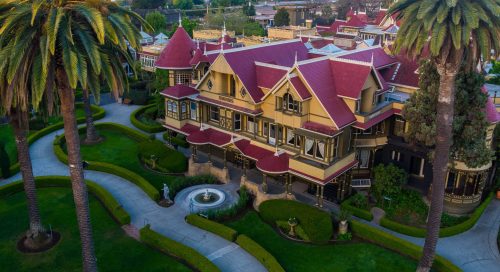
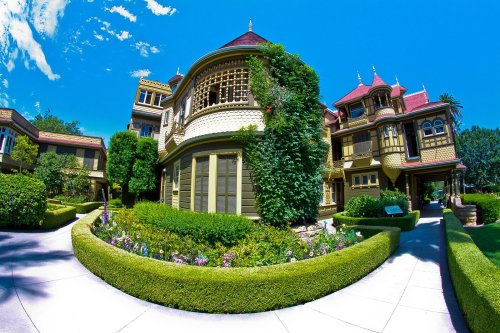
It is a stunning and wonderous sight sitting on over 700 acres of grounds and containing priceless works of art, ranging from paintings and furniture, tapestries and stained glass, to sculptures and carvings, as well as heraldry and armor. In the light of a warm summer day, it does not appear haunted in any way. However, this is not the case. Having purchased the eighteen room farmhouse for myself, I turned it into a palace. Years of extravagant and expensive refurbishment grew the mansion into one of the finest and largest homes in the West. The program included four stories, a nine-story observation tower, tennis courts, bowling alleys, lavish gardens, nine kitchens, as many as 600 rooms, and several dining rooms, a fruit orchard and a park. Still, there have been a number of strange and disturbing events. Oddly enough, one evening, there were a couple of dozen people in the Grand Ball Room. However, there was no sound. I was astonished because I had not invited any guests. As I went to inquire as to what the occasion was, the figures seemed to glide rather than walk, then they just melted into the walls. Gracefully, insidiously, I was quick to retire that evening. I arose sleepily from my bed. It was 1.13 A.M. I looked out over the moonlit farmyard and listened to the night noises. It was an especially hot summer; I had been working hard and not able to catch up on my sleep. While in a blissful dreamlike state, I walked out on the balcony for bit of fresh air. The fragrant air was full of the scent of lilac and jasmine. #RandolphHarris 1 of 5

As I returned to bed, I was startled to see myself already in bed fast asleep. The form was unmistakably my own body. But how could I be in two places at once? I felt a tingle of fear…a strange tugging sensation…then I jerked away with a jolt of lightning. A dream? It has all been a bizarre dream? But the balcony door was open. It would see that my soul separated itself from my sleeping body. Not only had I freed the spiritual essence from within my physical body, I was able to see my own ghost. That same night, the servants, while working on renovations, saw a woman dressed in white floating down the gallery towards the door-to-nowhere. Shocked, Buck said to Erik, “No use blamin’ it on the whiskey. We was cold sober when we decided to come here. If any of us had the sense God gave a goose, we’d of rose out of Santa Clara and went home when we was paid off at the end of the day.” That is when they sighted a large hooded figure with a deformed face lurking in the doorways. “Well, I’m damned if I’ll swamp a saloon again, even for the grub,” Erik replied. “I reckon we can all agree that we need work,” Buck said. “Oh, I reckon we have work here,” replied Erik. Other curious events happened in my home. Occasionally, the housemaids and the farmers sometimes fell in love. Yngvild loved her Ansgar more than life itself. She was terrified when he told her that he was leaving the estate to help care for his mother. He promised to marry her when he returned to work. However, she could not dissuade him, so she dressed in er prettiest white gown and wept her tearful good-bye. #RandolphHarris 2 of 5

Weeks turned into long months. Word rarely came from Ansgar. The little notes were proof that he had recently been alive. As such, they were read and reread and wept over. Yngvild lived for the day when he would return. Despite sharing her fears with me, Yngvild felt alone. Her entire life was suspended until Ansgar returned. As the months dragged by, Yngvild lost hope that she would see Ansgar ever again. She sat alone in the observation tower with her letters and waited. And when the letters stopped, she began to walk for hours on end. In the observation tower, Yngvild waiting night and day to see if Ansgar was approaching. One day, she dressed in the same white dress that she had worn to see Ansgar off. She sat in the tower quietly all day. The carpenters inquired if they could help her, but Yngvild needed no help. Each day, she sat in the observation tower dressed in the same white dress and spoke to kindly carpenters. I simply could not make the heartbroken dear work in such a state and could not let her go, so I kept paying her not to work. Gradually Yngvil slipped away from reality. She thought she saw Ansgar floating outside of the tower with a ghastly look of despair. At last word came that, although Ansgar had his 1873 Winchester .44 U.S. Army Colt, while he was on the train, the Earth shook with force of an explosion. There was an immediate blast of the locomotive’s whistle and a grinding, shuddering sensation as the brakes were applied. When the locomotive had ground to a halt, it just as suddenly reversed, but he was shot and killed by outlaws who had galloped after the departing train. #RandolphHarris 3 of 5
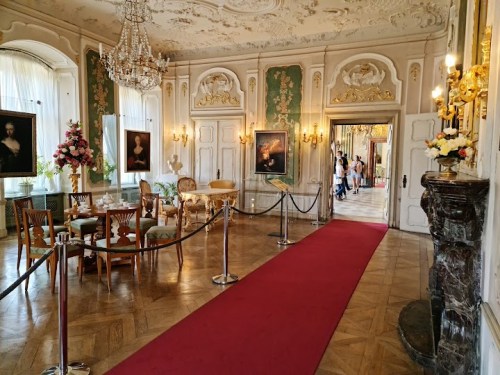
A gang of outlaws blew the track. Ansgar’s sister brought the telegram to Yngvil. If looks could kill, Yngvil slowly turned away from Ansgar’s sister and began talking to me about her Ansgar. She told me she was waiting for Ansgar to return so that they could marry. Slowly Yngvil began to waste away. She took little food and seemed to need nothing. The housemaids brought the frail young girl food, but she barely noticed the food as she ate it. One night, she committed suicide, throwing herself off the tower after losing the love of her betrothed. On moonlit nights, she can be seen wandering around the tower. Weeks later, a couple of the farmers were sleeping in their Victorian cottages with their Winchesters handy. The mansion was said to be haunted by a black devil-dog that prowled the mansion at night as well as the grounds of the mansion. Also know as a Hell Hound, among other names, these dogs are essentially a nocturnal specter and its appearance is often regarded as a portent of death. In general, they are much larger than a physical dog and are quite often reported as having large, glowing eyes and a silent gait. Seeing one three times will result in the witness dying an untimely and suspicious death. Not surprisingly they are often associated with moors, lonely back roads, and crossroads and in this case, the mansion. “We figure if these owl hoots are that damn determined, we’ll have to fight ‘em sooner or later,” said Buck. “I reckon there’ll be plenty of shootin’ if one of those bothersome Hell Hounds attacks me under the cover of darkness,” said Erik. That night, Erik chased and killed what he thought was a Hell Hound. He later tragically discovered that it was in fact his own son he had killed. As a result, his remorseful ghost is said to wander the grounds. #RandolphHarris 4 of 5

Some people passing my home at dead of night have reported the distinctive sound of spectral revels emanating from inside. Others have told of hearing strange oaths and foreign-sounding songs. Outlaws had conspired to steal weapons and ammunition from my homes. They spent weeks planning to take them. People would do anything for the loot. “There are ten men guardin’ the Winchester Mansion,” said Cort, “and from what I’ve been told, they’re a salty bunch. Four of ‘em have been deputized by Sheriff Addis. I reckon we’ll have to deal with them all, and the sheriff, too, if he gets froggy.” “I reckon we understand one another then,” said Hicks. “We don’t leave nobody behind that’s got sand to come after us.” “My sentiments exactly,” Cort replied. “We won’t move in until after midnight, so Sarah and her staff will be mostly asleep.” There was no room, and it being past midnight, they rode in from the east. There was only an occasional distant light. By the time they were within half a mile of my mansion, the night wind brought them disembodied voices, along with an unexplained drop in temperature. Then they heard a loud scream and gunshots. Thoroughly convinced that they were under attack, Cort and Hicks ran for cover. Two sets of footsteps came toward them. “Drop the guns, amigos. You’re covered.” But the challenge went unheeded. There was a roar, followed by an answering blast, as the Sherriff fired at the muzzle flash. An agonized groan told them what they wanted to hear, and Cort and Hicks eased the down the hammers on their colt. Finally there was the distant sound of galloping horses. “The bastards,” grunted the Sherriff, “they’re…runnin’ out…on me.” #RandolphHarris 5 of 5

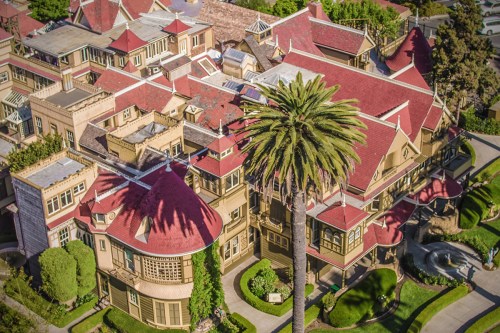
The Winchester Mansion has many ghosts. One of many is Mrs. Winchester herself. She has been described as having long brown hair and wearing a Victorian-style dress, and has been seen walking along corridors and even through the walls. She is known to be a friendly spirit and those who have encountered her remark that they feel an unusual calmness in her presence. In October of 2013, a ghostly figure was captured on CCTV while security staff reviewed surveillance footage. After investigating and securing some open doors, security staff returned to inspect surveillance footage. On the first occasion, the door-to-nowhere flew opened without any sign of anyone opening it.
However, on the second occasion the next day, the staff was shocked to see a figure, in what appeared to be Victorian attire, appear and then close the door-to-nowhere. This patten was repeated on the third day, but the ghostly figure was absent. Then Winchester Mansion is known as being a very, very spooky place at night. A security guard was called out shortly after 1.00 A.M. to accompany an engineer to check a fire alarm. A thermal camera detected an elevated temperature, in one of the fireplaces, in the Hall of Fires.

As the they approached the room, they both heard the sound of footsteps running away up a flight of stairs, although the thermal cameras did not detect anyone in the building, other than the two security guards. However, there was a little heat in the fireplace, but no signs of anything devious. It is not uncommon for staff to report a feeling of being watched or having doors inexplicably slam behind them when there is no one around. https://winchestermysteryhouse.com/

And please be sure to check out the online gift store: https://shopwinchestermysteryhouse.com/

A Prison Stay Does Not Appear to Deter Common Property Criminals

The subject matter of social science is the behavior of human beings. When people are the subjects of any particular study, their permission if not their active co-operation is indispensable. Whether people will permit themselves to be observed, whether they will answer questions truthfully or at all, whether they will carry out experimental tasks, whether indeed they will give of their means to maintain the professional investigator, are all field problems which have to be solved before any new knowledge of their behavior can be gained. After their infancy, it is only in their public behavior that human beings remain indifferent or unaware of observers. One alternative is for the observer to secretly intrude on people’s privacy. To be admitted with their consent as an observer to their private behavior requires the establishment of trust in the investigator and eventually of some kind of reciprocity, some quid pro quo. The significance of these commonplaces of social research may be overlooked or unrecognized when social research is thought to be too closely analogous to natural science. It would be unrealistic to insist that social science cannot be conducted as if it were a natural science. Much of what goes on under this name follows the model of natural science. Its phenomena—its subject matter and subjects—are assumed to be passive objects, indifferently receptive to contemplation or manipulation, and findings of a sort do accrue. Moreover, the goodwill of persons used in this way seems almost inexhaustible, with a manageable modicum of recalcitrant exceptions. However, meanwhile the potentialities of the alternative assumption remain relatively unexplored. #RandolphHarris 1 of 19

Social science is the only branch of science which needs the co-operation of its subjects and where the results are of interest to the subjects. This is acknowledged every time the subjects of a survey are promised a later look at the findings. To recognize the subjects’ stake in the social sciences does not infringe the principles of scientific methods; it only demands an acceptance of empirical fact. Yet acceptance of such a pregnant axiom fundamentally affects everything that the social scientists does. The potentialities to be derived from this axiom are so extensive as to raise the question of why they have attracted so little attention up till now. The predominant prestige of the contemplative-manipulative model of natural science may be the reason, or perhaps the blame lies in the social scientist’s failure to appraise one’s professional role. Due to its origins, social science has been pursued mainly as an avocation or as a derivative branch of liberal education; only recently has social research become a full-time paid occupation. In defining one’s profession, the social scientist may conceive oneself as serving several employers or audience. One may conceive oneself as applying one’s techniques to predicting or manipulating the behavior or one group on behalf of another, such as buyers and sellers, voters and office-seekers, workers and managers. Research adds dimension and devices for self-regulation to the persons and groups which before they did not possess, or experienced only through flashes of genius. In this sense social science represents the democratization of critical insight about behavior; it is both the product and means of generalized access to social knowledge and self-control. #RandolphHarris 2 of 19

There tends to be a decidedly unskilled dimension to property theft transactions, as thieves seem to prefer to keep things simple. Take, for example automobile theft. As many as 20 percent of all auto thefts require little or no skill on the part of the offender as the offender gains entry through an unlocked door or takes advantage of the keys being left in the vehicle. If a would-be offender is not lucky enough to happen upon a defenseless automobile, then he or she needs only a minimal amount of expertise to close the deal. Very little skill is required to smash a window or gain access using a coat hanger or “slim jim” (a tool designed to assist tow truck drivers or police officers in opening unlocked doors). One inside, the steering column can be easily broken with a hammer or crowbar and the car can be started in seconds with the turn of a screwdriver. Research also shows that automobile thieves, especially seasoned violators, are well versed at defeating antitheft devices such as alarms and steering column locks. An observational study of shoplifters reveals further evidence of the unskilled nature of common property crime. Of the 105 persons observed stealing products in a retail drug store, less than 15 percent relied on anything more than their unmodified clothing to conceal the stolen merchandise. A sizable number of thieves (15 percent) made no effort whatsoever to conceal the merchandise and simply walked out of the store with the product(s) in hand. #RandolphHarris 3 of 19

Ecological factors play an important role in our understanding of property theft transactions. For starters, the setting play an important role in the property theft equation. Victimization data reveal that 40 percent to 50 percent of all automobile thefts occur from areas immediately surrounding one’s homes (id est, streets, parking lots, garages). Automobile theft victimizations are also likely to be concentrated in certain places such as parking lots for railway stations, shopping centers, and select public parking lots. The hallmark of these auto theft “hot spots” is that they represent impersonal public venues with large numbers of unoccupied vehicles and low levels of guardianship. Research suggests that retail thieves also try to blend into their environment. Shoplifters seem to prefer a moderately crowded store wherein they can rely on employees to be busy with other customers while at the same time being able to access and conceal merchandise in a secluded location. Similarly, pickpockets seem to thrive in crowded streets or transit stations where they can operate with little fear of detection. The offenders and victims of common property crime are disproportionately young men. The motor vehicle theft victimization rate for a household headed by a person under the age of 20 (27.5 per 1,000) was more than 8 times the rate experienced by households headed by a person 65 years of older. A nearly identical pattern is observed in the offender pool. Persons under the age of 25 accounted for 66 percent of all motor vehicle theft arrets and 56 percent of all larceny-theft arrests occurring. #RandolphHarris 4 of 19

Conversely, only a small fraction of the arrests for these two offenses (4 percent of all larceny-theft arrests and 1 percent of all motor vehicle theft arrests that year) involved persons over the age of 50. Self-report data provide further evidence of juveniles’ willingness to engage in common forms of property crime. It was found that nearly one in three high school students admitted to shoplifting to engaging in thefts in excess of $50 (12.5 percent) and motor vehicle theft (5.2 percent). Race also appears to play an important role in the dynamics of common property crimes. For example, data suggests that European American households experience below average victimization rates for motor vehicle theft (8.2 per 1,000), whereas African American (16.1) and Hispanic American (19.8) households experience victimization rates that far exceed the national average. Less pronounced race-based trends are observed in the theft victimization data. Less pronounced race-based trends are observed in the theft victimization data. Shifting to offender-based data, African Americans comprised 31 percent of the larceny-theft arrests and 40 percent of the motor vehicle theft arrests. This means that African Americans are overrepresented by a factor of 2 to 1 in larceny-theft arrest figures and a factor of 3 to 1 with regard to motor vehicle theft arrests. #RandolphHarris 5 of 19

Next, we consider the way that gender manifests itself in the common property theft equation. Males accounted for 64 percent of the larceny-theft arrests and 84 percent of the motor vehicle theft arrests occurring. It is worth nothing that no other form of crime posts female arrest percentages that even approach the 37 percent that is observed for the crime of larceny-theft. This anomaly is likely a function of women’s high level involvements in shoplifting. If fact, 51 percent of person who were secretly observed stealing from a chain drug store were women. Most property crime transactions occur quickly, before the unsuspecting victim even knows what happened. Most offenders are able to perpetrate their crimes in a matter of minutes or even seconds without drawing much attention to themselves. Offender-based research reveals that thieves are willing to conceal merchandise on their person within plain view of shoppers or even employees. Property criminals tend to have relatively flat but drawn-out criminal careers. In other words, they tend to perpetrate numerous thefts over the course of their lives but the intensity of the violations remains predictably low. A full 60 percent of the persons charged with a theft-related felony (grand theft, grand larceny, or motor vehicle theft) had a prior felony arrest record. In fact, almost one in eight had a rap sheet containing ten or more prior felony arrets. Only burglary and drug defendants had more involved criminal histories. Over 40 percent of the felony theft defendants had prior felony convictions on their record (10 percent had five or more) and 38 percent were in active criminal justice status (id est, on parole, probation, or pretrial release) at the time of their felony theft arrest. #RandolphHarris 6 of 19

A prison stay does not appear to deter common property criminals from future offending. In fact, 79 percent of the automobile thieves and 75 percent of the larceny inmates in a recidivism study were rearrested within 3 years of release. Perhaps more significant is the fact that one-third of the larceny-theft offenders and slightly more than one-tenth of the motor vehicle theft offender found themselves under indictment for the exact same offense within 3 years. Interviews with known juvenile car thieves speaks further to the issue of offense specialization. It appears that a sizable portion of juvenile car thieves (approaching 50 percent) concentrate their illegal activities in the area of car crime. Those who stray outside the ream of auto theft tend to concentrate their offending in the areas of property and/or public order crime. Regardless of their level of specialization, a career portrait emerges in which individuals start out engaging in minor property and public order crime at an early age and then graduate to more serious types of crimes as they move into their late teens and early twenties. The career dimensions of youth automobile crime suggests that most persistent property thieves begin their criminal careers while still in their early teen years. They tend to dabble in a variety of offenses, guided mostly by opportunity and pressure. The frequency and intensity reaches a peak during their twenties while their sill and comfort level with the crimes is at a high and the rigidity of their domestic and employment lives are at a low. Only hardened few see their criminal careers persisting into the middle-age years. #RandolphHarris 7 of 19

The development of identity in a person or a group, is established by the pattern of recurrence of related events. The paradox of personality is that it changes; identity is the thread which unites episode to episode, as much as they are untied, but it is a wandering thread, and often not one thread but several. Moreover, there are many transitions and turning points, and each is a dramatic event, which may be appraised as news or as development—as either a subtle or discordant variation on the previous theme. When people help each other in self-examination they greatly alter their notions about themselves. Self-examination alters relations within the group, confirms some tendencies, and discourages others. In a group of affectionate friends, the adjectives used as are potent to cultivate growth as the views of the hostile to curb it. A person flourishes in one group, fails in another, and remains unchanged in a third because no appraisal has been given, it being either repressed or ignored. The secret of self-examination and the secret of families, friends, and foes is that only those can hurt or help us whose view—whether hostile, helpful, or a mixture of both—is close enough to us to be known and respected. From the static view of personality, nothing could result from such a game. According to this there is only one truth, which does not change and it is only enlarged by additional knowledge. However, the developmental view recognizes the reflexive effect of another person’s evaluation. Each description is all the more constitutive as its speaker supposed it fact, and acts accordingly toward the person one so described. #RandolphHarris 8 of 19

If all behavior were determined by the ascriptions of others, then the self would be left with no room for movement, or for self-determination; when consensus prevails there is no choice. However, there are always discrepancies in the estimations of others. Even the smallest child soon learns to distinguish between his father’s and mother’s differing evaluation of one’s behavior. And given the chance, one gravitates toward that audience which helps one develop one’s self. At least this hypothesis of the thematic selection from the stream of events appears the only one which can offer the person potential control over the course of one’s own development and prevent the diffusion of one’s identity in episodic flux. Some ascriptions by others are taken as true, some not, and some are problematic and are either rejected or assimilated. Some we wish were true, some not, and there are some perplexing maybe’s. Yes we must tarry to act righteous or else one may be rudely awakened. Take time to think your thoughts through. Do not live on the wrong side of the law. There is a lot of good out in the World, but one has to make sure to surround themselves by people who have morals, ethics, values, and follow the law so they do not go astray. There is a time of development where we learn what is right and wrong, and when we selected actions that are good and noble, opportunities will open up for us. Just as there are numerous academic disciplines which bear upon family behavior from one theoretical aspect or another, so there is a wide range of public and private agencies which attack one kind of practical family problem or another—medical, economic, protective, psychological, educational, or recreational. #RandolphHarris 9 of 19

And just as the disciplines tend to segment the family, so do the professions. For example, a strong case has recently been made that family welfare agencies, in the interests of efficiency and effectiveness, ought to coordinate their efforts in order to deal with problem families rather than with family problems. The ultimate measure of the effectiveness of any such agency is take to be the observable change it produces in the behavior are so interconnected within the family that efforts which deal only with one aspect of a person, and that disregard this network have only partial results. Family research, therefore, is here confined to generalization at the level of the family unit. When reduced analytically to the constituent aspects and processes, it is with the idea of reconstituting them as a more direct means of realizing the family’s functions. They very phrase “family research” raises many problems about what include or exclude. Fortunately the issue of reductionism has been threshed out so fully that it may suffice simply to state that a study of the family on its own level is intended. While the network of relationships based on occupation is thus reorganized, consumption patterns likewise shift qualitatively and substantially with inflation and general rise in real family incomes. Even where most gratifying, these gains often have unsettling effects in the development of persons and families. Mass distribution methods and industrial research confront consumers with a frequently bewildering array of incentive to buy. At the same time, amidst general prosperity, the massive fluctuations in particular segments of the national economy are especially disruptive to certain disadvantaged populations—unemployed workers in heavy manufacturing, farmers, aged people on small fixed incomes, the lowest-salaried, the dependent. #RandolphHarris 10 of 19

Moreover, the strenuous pace of competition for advancement puts severe strains on even the most successful. The takes us to another leg of the power triad: knowledge. The wildfire spread of the computer in recent decades has been called the single most important change in the knowledge system since the invention of movable type in the 15th century or even the invention of writing. Paralleling this extraordinary change has come the equally astonishing spread of new networks and media for moving knowledge and its precursors, data and information. Had nothing else changed, these twin developments alone would warrant the term knowledge revolution. But as we know, other related changes are transforming the entire knowledge system or “info-sphere” in the high-tech World. They hyper-speed of change today means that given “facts” become obsolete faster—knowledge built on them becomes less durable. To overcome this “transience factor,” new technological and organizational tools are currently being designed to accelerate scientific research and development. Others are intended to speed up the learning process. The metabolism of knowledge is moving faster. Equally important, the high-tech societies are beginning to reorganize their knowledge. As we have seen, the everyday knowhow needed in business and politics is growing more abstract every day. Conventional disciplines are breaking down. With the help of the computer, the same data or information can now easily be clustered or “cut” in quite different ways, helping the users to view the same problem from quite different angels, and to synthesize meta-knowledge. #RandolphHarris 11 of 19

Meanwhile, advanced in artificial intelligence and expert systems provide new ways to concentrate expertise. Because of all these changes, we see rising interest in cognitive theory, learning theory, “fuzzy logic,” neurobiology, and other intellectual developments that bear on the architecture of knowledge itself. Knowledge is being restructured at least as profoundly as violence and wealth, meaning that all the elements of the power triad are in simultaneous revolution. And each day the other two sources of power themselves become more knowledge-dependent. This, then, is the turbulent background against which the rise and fall of civilizations and of individual nations needs to be seen, and it explains why most current power assessments will prove misleading. Diplomats like to talk about the balance of power. The powershift principle helps us gauge not only the balance of power but the “power of balance.” Nations (or alliances) can be divided into three types: those whose power is based predominately on a single leg of violence-wealth-knowledge stool, those whose power rests on two legs, and those whose global clout is balanced on all three of the main sources of power. #RandolphHarris 12 of 19

To judge how well the United States of America, Japan, or Europe will fare in the global power struggle to come, we need to look at all three of these sources of power, focusing special attention on the third: the knowledge base, since this will increasingly determine the value of the other two. This knowledge base includes far more than conventional items like science and technology or education. It encompasses a nation’s strategic conceptions, its foreign intelligence capabilities, its language, its general knowledge of other cultures, its cultural and ideological impact on the World, the diversity of its communication systems and the range of new ideas, information, and imagery flowing through them. All these feed or drain a nation’s power and determine what quality of power it can deploy in any given conflict or crisis. Going beyond the triad, the powershift principle introduces a further useful insight by asking about the relationship of violence to wealth to knowledge in any given period. If we look at the power balance, as distinct from the balance of power, we discover that throughout the Cold War, the power of the United States of America has been extremely broadly based. America not only had massive military might but supreme economic clout, and the World’s best supply of power-knowledge, ranging from the finest science and technology to a popular culture much of the World wished to emulate. #RandolphHarris 13 of 19

By contrast, the Soviet power was, and remains, totally unbalanced. Its claim to superpower status derived exclusively from its military. Its economy, a shambling wreck at home, counted for little in the World’s system. While its Research and Development was excellent in a few defense-related sectors, its general technological know-how was backward, cramped by paranoid secrecy. Its telecommunications were abominable. Its education system was mediocre, its centrally controlled media, tightly censored and backward. Over the long run of the Cold War, it was the power-balanced United States of America, rather than the one-legged Soviet Union, that won the enduring race. This insight, only half-understood by the main global players, helps explain much of what China, Europe, the United States of America, and Japan are doing as they race toward their coming collision. In 2022, the total household wealth in China was USD $2.6 trillion, now ranking second in the World. With the rapid development of financial markets and the increase in family wealth, the importance of family finance has become increasingly prominent. In relative terms, the Chinese save much more than Westerners. It is a well-known and frequently mentioned fact. In the 2000s, households’ net savings in China stood at a 20-25 percent of their disposable income. The average American savings account balance is $4,500. Between 1959-2022, the average U.S.A. saving rate has been 8.96 percent. The average household savings rate in the United States of America was only 5.1 percent in the second half of 2022. In total, gross personal savings in the U.S.A. is worth USD $2.3 trillion. #RandolphHarris 14 of 19

The gross financial assets of Chinese households increased 13.6 percent to USD $29,689 billion in 2020. The financial position of the United States of America includes assets of at least USD $117.72 trillion in 2021. At this point China’s strength as a global financial power does not stem from the wealth accumulated by Chinese people. It is rather the opposite: State coffers overfilled with cash on the one hand and mostly not-so-wealthy, if not poor, households on the other This situation may be socially explosive, as there are 560 million people in China is zero in saving. Is China already a new major financial power? Yes, definitely yes. However, it is a financial superpower of a very special kind. Its financial strength does not stem from the wealth of the vast majority of its citizens. First and foremost, it reflects the might of the state, which, due to soaring exports and inward investment, accumulated a -tremendous amount of foreign currency reserves. The Chinese ruling elite feels very comfortable on the international area using this financial might as big leverage to win concessions from its counterparts and push its own interests and priorities. This is one of the major reasons why it is not that eager to reduce the country’s trade surplus and to speed up the appreciation of yuan. The weak yuan is a political choice whose main goal is to strengthen the system of Communist Party rule. #RandolphHarris 15 of 19

France—household saving rate was 17.43 percent in December of 2022, Germany household saving rate is 19.96 in December of 2022, in Italy the gross saving rate in December 2022 was an average of 20.3 percent. Households’ saving ratio as of the second quarter of 2020 was 23.9 percent in the United Kingdom. The household saving rate in the euro area (EA-19) was 14.2 percent in the fourth quarter of 2022. In the fourth quarter of 2022, financial assets held by households in Japan amounted to USD $15.02 trillion. IN 2021, China had 6.2 million millionaires, up by more than a million from 2020, while globally total number of millionaires increased by 5.2 million. That number in China is expected to double to 12.2 million in five years time. Global household wealth reached USD $463.6 trillion by the end of 2021, mainly propelled by a strong rise in financial assets, which worsened inequality in 2021. Global household wealth is expected to increase by USD $169 trillion by 2026 to USD $632.6trillion. China is rapidly emerging as a leading international lender. Its major state-owned banks are feeling more and more confident as major players in the global banking community. In other important respects—effectively all the respects unrelated to the state and state-owned financial entities—today’s China is still becoming a financial superpower in the true meaning, and as it does, life will change around the globe. The role of its companies (not to say its individuals) as international investors remains comparatively small, though it is growing. Most companies are still gaining international experience and expertise. #RandolphHarris 16 of 19

China’s domestic financial market is heavily regulated. Still, the global market is dominated by the West, but Chinese financial institutions have already joined the leaders’ ranks. Demand for the yuan as an international currency is growing, but we are not sure how it will challenge the dollar or euro until it is allowed to appreciate. Western governments have become increasingly dependent on China as a creditor. With $1.1 trillion in Treasure holdings, Japan is the largest foreign holder of U.S.A. debt. Japan surpassed China as the top holder in 2019 as China shed over $250 billion, or 30 percent of its holdings in four years. Chinese state-owned banks will establish a key position among the World’s major lenders to clients not only in the developing, but also in the developed World. A relatively narrow circle of big companies, especially state-owned ones, will rapidly develop as important foreign direct investors. On the other hand, the formation of a wider range of strong Chinese multinationals, include private firms—a range comparable to the one in the major countries of the West—will take a longer period of time, as well as the emergence of a cohort of Chinese largescale investors into securities around the World. In these areas, competition from China is still relatively mild. The wide-scale and rapid growth of leisure—through shorted working hours, vacations, lengthened schooling, and retirement—has created vast new wants which American culture as yet does not fully satisfy. The aspiration for leisure is often associated with a lack of involvement in work, but with everything costing so much, many people are looking to pick up more hours at work, instead of shallow and restless pursuit of a good time. Many see that our students need to become more serious so they can compete with China. #RandolphHarris 17 of 19

Personality has become an object of popular concern, as much as the soul was formerly. The belief in fostering the optimal development of children, in psychosocial respects as well as physically and mentally, is propagated through countless media and organizations, among which the parent-teacher associations are pre-eminent and characteristic of the American scene. Due to the desire for scientific sanction for practices adopted, it is not too early to speak of the professionalization of parenthood, or at least of motherhood. Except for those who remain thoroughly confident of traditional recipes for child-rearing, many parent exhibit some uncertainty and even anxiety over the satisfactory performance of their own roles and their children’s development. This effortfulness may therefore somewhat limit the joy and ease with which they conduct their family living. Popular concern with mental health and hygiene, which are professionally recognized as primarily the responsibility of the home, adds a special edge to the concerns of certain families. Stray psychiatric thought lends a faintly ominous tinge to some of the literature intended for normal parents of normal children, and may thereby accentuate—among those who expose themselves to it—the hazards as against the satisfactions of family life. It is possible that in retrospect his decade will be seen as a transitional to one in which professional emphasis will be upon the joys of competent performance as parents, rather than upon the difficulties and threats of failure. It is unlikely, however, that a later decade will witness any decline of parental self-awareness, as long as better knowledge and recommended practice continue to be evolved. #RandolphHarris 18 of 19

Life has many functions. People are to be logical, aesthetic, ethical, and social. These spheres, theoretical and practical, are concerned with the fulfilment of meaning for the self-actualized. Thus, in the sphere of knowledge, culture attends to conditioned forms of being and their unity. In the sphere of law, the unconditioned person learns the personal grounds of every right; and, in the social sphere, to unconditioned love. Self-actualization is the practice of learning to use one’s power and meaning in unity to designate the human dimension of life to causes that improve humanity, environment and self. Life is the actualization of potential. Life actualizes itself in several dimensions or realms which, while distinct and often in conflict, compenetrate one another. In each of these dimensions life is actualized in three basic functions: self-integration, self-creativity, and self-transcendence. Self-integration appears as morality; self-creativity, as culture; and self-transcendence of life under the dimension of morality. The goal is to adhere to the ultimate concern, and this state cannot be restricted to a special realm. The unconditional character of this concern implies that it refers to every moment of our life, to every space ad every realm. The subjective unconditionality of the ultimate concern means it encompasses the total engagement of the person, is linked with objective unconditionality, the ground and abyss of being and meaning. Once in the grasp of such ultimates, man cannot limit his response to an isolated area. The scope of life and self-transcendence is not another horizontal line of actualization, but a striving in the vertical direction toward the ultimate and infinite being. Self-actualization has no horizons; its only dimensions are the unlimited height and dept of being and meaning. #RandolphHarris 19 of 19


The Feeling of Being Watched and Impending Danger Gradually Increased

Shortly before nine o’ clock, a butler, dressed in an azure tailcoat and navy-blue breeches, escorted Me to my estate. A coldly sumptuous hall, it was the first point of entry to the 600-room mansion. Rows of muskets, taller than a man, and hundreds of swords, their blades sharp-edged and glinting lined its walls. From the vaulted ceiling hung several beautiful chandeliers. Directly in front of them, a magnificent staircase swept to the state rooms on the upper floors; and yet, as the butler led me across the hall, he veered to the right, heading for its farther corner. There, he ushered me through a discreet swing door. We had stepped into the “invisible World.” Behind the secret door, the entire ground floor was devoted to privacy. A magnificent hinterland of fifty rooms, some cavernous, some no larger than a closet, it was where many of the servant lived and worked. From here, a network of passages coursed through the mansion: hidden routes, which spiraled up the narrow turrets and towers to the splendid rooms above, enabling the servants to carry out their duties unobserved. One might ask, why was I touring the part of my home? It was through this labyrinth of passages, deep in the servants quarters, where the rooms were subjects of wild speculations, fueled by servants’ fears that someone had come back from the dead. It seems a few of the servants had been thinking of ways to make money. One of the servants, Olov told Stellan about a plan to end their money troubles. The scheme was simple. Each of the men would take a life insurance policy out of another one of the servants, twenty-year-old Leif Titus. #RandolphHarris 1 of 7
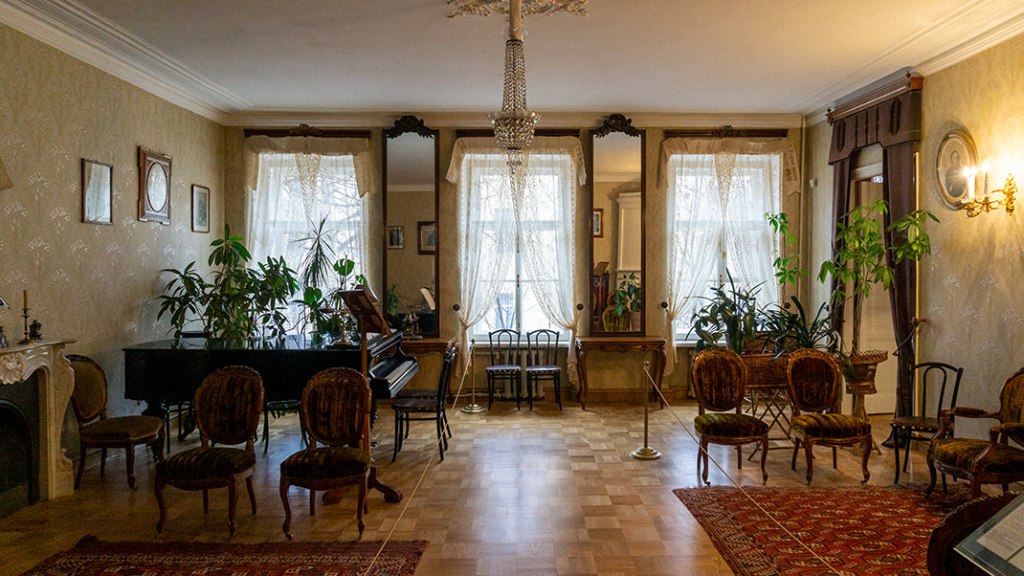
They would say that they had helped raise and support Leif in his life and were looking for reimbursement for their help upon his death. There was nothing illegal about that. Then they would wait awhile before killing Leif, collect on the policies, and all of their money troubles would be over. Stellan asked who would kill Leif. “That’s the beauty of it,” Olov told his friend. “We each kick in a percentage of the policy money to pay an assassin so none of us has to do the killing.” Stellan was quiet for a moment, and then he nodded. They could get someone at the tavern to do it. Olov arranged for a meeting with Duke. They worked it all out the details of the murder plot and agreed to execute the plan. The other men paid Duke $400 to arrange and carry out the murder. This was a lot of money, so Duke agree to do the deed. June 6, 1890, was just another day to Leif Titus as he went about his work on the estate. He was not surprised when Olov told them that their friend Duke had come by to see if he might want to go for a drink later that evening. The two men had hung out at the tavern from time to time, so he readily accepted the invitation. The two men set off after work. It was after dark and Leif and Duke rode horse back to the tavern. However, before getting their Duke fired his rifle, Leif horse was scared, threw him from the saddle. He fell off the horse, hitting his head on the cobble stones and his life had been snuffed out for $9,000 in life insurance policies. It was the perfect crime, or so it seemed to the men. They said that Leif fell off his horse and died on the way back from the tavern. And they seemed to have gotten away with it. #RandolphHarris 2 of 7

Saturday night, Olov arrived back to my estate, and went to his room to lie down on his bed. He had not been there long when he heard noises. As he was just involved in a plot that robbed another man of his life, he became quite nervous. That night, there were doors opening and closing, footsteps of unseen guests. As he got up to go investigate, Olov felt a strange touch at his back; then a tug; then he felt the back of his sweater pulled several inches away from his back. He turned to look over his shoulder and wondered how, without moving, he could have hooked his sweater on something. However, there was nothing upon which his sweater could have been stuck. Just then he saw Stellan, eyes wide with astonishment. He blurted out to Olov, “I just saw the back of your sweater pull out all by itself!” Later the following evening Olov was closing up the mansion for the night, at about 9.00 P.M. Like all Victorian homes, “The House Built by Spirits” has its share of creaks and groans. Creaks and groans are one thing—but witnessing something supernatural is another thing entirely. He was turning out the lights. The house, as the light are slowly being extinguished, does have a certain “feeling” to it: as it grows dark, one gets the inkling that one need to hurry, that someone—or something—cannot wait for you to leave so that they may get on with their existence—if that is what one could call it—in peace. Moving from the parlor to the morning room, he casually looked into the darkened stairwell. His eye was caught by the manifestation of a spectral being. A strange man with long hair appeared in the morning room. Olov mistake this spectral man for a servant. #RandolphHarris 3 of 7
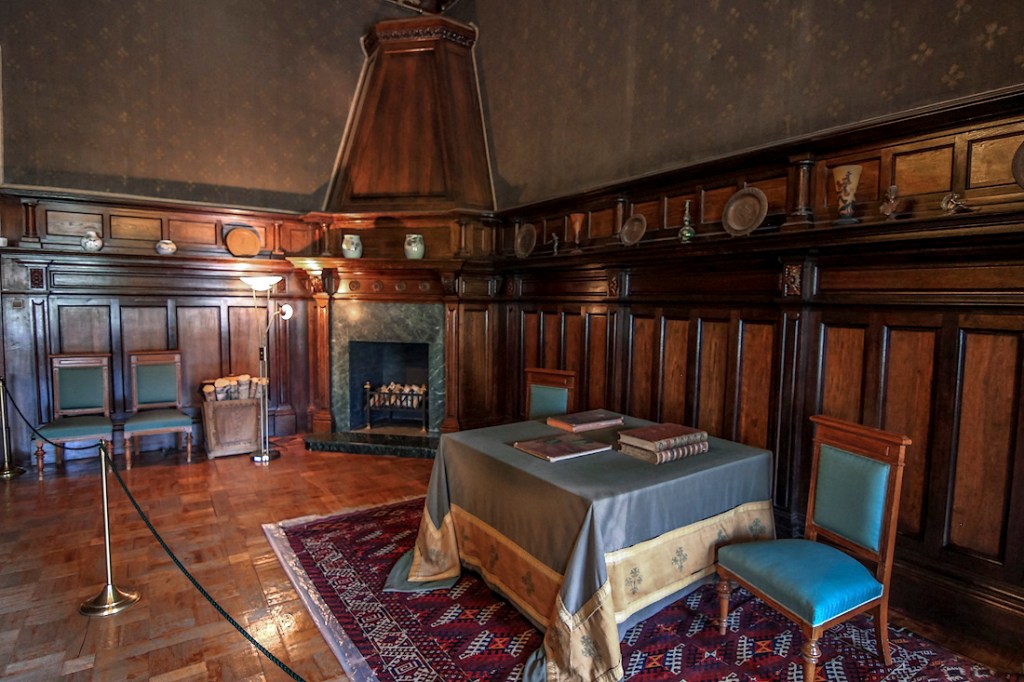
When he realized his mistake, Olov hurried forward to see who the person was. As he watched the figure, the long-haired man moved out of the morning room, he followed him. Just as the icy fingers of fear had begun to trace a slow, deliberate path up the length of his spine, the figure floated the through the mahogany wall and disappeared. Stellan arrived to find Olov in a near state of panic. While in the servants’ quarters, he had been sitting in a chair with his back to the door. He heard the door open and close and the sound of footsteps enter the house and approach the spot directly behind his chair. Imagine the horror when he turned around and saw a misty figure take the form of a tall man all in gray. The ghost, wearing a tattered Revolutionary War uniform, looked unkempt with long hair and a grizzled appearance. Olov screamed, but it was only second before the specter faded away. When Stellan reached him, his was quivering and inconsolable. Stellan then figure it would be a good idea for the two men to quit their jobs and move north. After all, they now had the money to do so, they were rich. On that evening, Olov wandered into a dark and deserted section of the mansion. This was the most active area of the mansion and too dangerous to inhabit. The stairway to the attic was narrow and winding. Suddenly a shrill scream came from the attic. Stellan ran to the fourth floor where Olov was discovered lying on the floor, stabbed through the heart. He was dead. Stellan figured the men had been hexed, and he would be the next one to die. #RandolphHarris 4 of 7
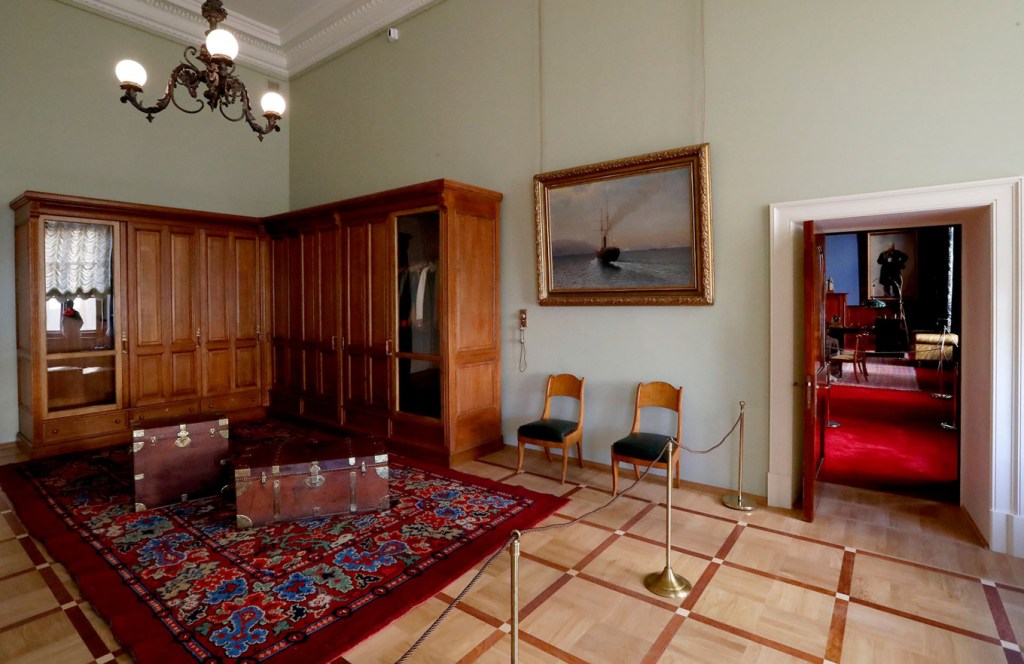
Stellan went into a secret room under one of the kitchens through a trap door—a secret room that house Mrs. Winchester’s magic. He was looking for her book of spells in the secret room. However, there was someone in that room, perhaps waiting for a century or more, for someone to open the trap door. Walking through the small, arched doorway, the room was furnished and there were antique carpets near the alter. He heard music and instruments. Out of the corner of his eye, he saw a figure of a small woman, seemingly cloaked in a long, dark, flowing dress with a wide-brimmed, black hat, standing in the corner. He stood for a brief moment, seeing her out of the side vision, afraid to look directly at her, since he realized that entities can sometimes only be seen through peripheral vision. Indeed, when he turned to confront the dark lady, he was struck on the head with a piece of stove wood, killing him. The story of a mysterious man in the servants quarters had spread throughout the estate, as we were touring the room that belonged to Leif, we herd the sounds of horses hooves and whips. Then sudden sound heralded the appearance of a bright figure we immediately recognized of Leif. He told us how he had died and how his poor mother was near a breakdown; after someone had dug up bushes in her yard, she took it as a sign that Leif’s body would also be dug up. He had him exhumed and reburied in the flower bed outside her house. Here she piled a huge mound of stones over his grave. Vowing to get revenge, she would sit up nights watching for grave robbers and crying for her lost son, until she died from a broken heart. And from beyond the grave, she had discovered who took the life of her son and returned the favor. #RandolphHarris 5 of 7
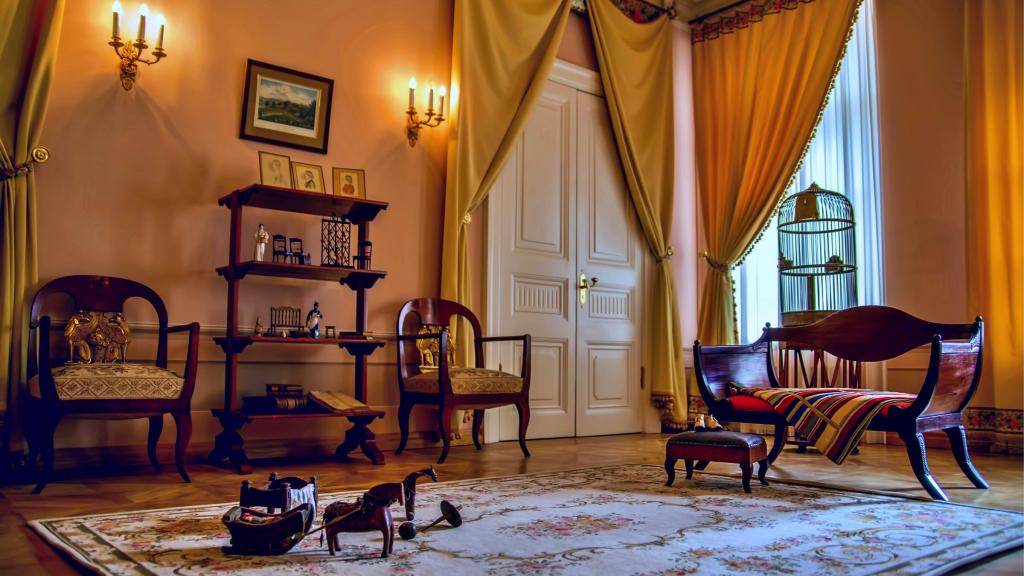
Through the years the servants on occasion have hear Olov’s shrill last crimes repeated over and over again. The antique carpets in the secret alter room were cleaned, but the bloodstain frequently reappears. One of the servants mentioned that he saw an injured man, blood, and a woman in a dark dress in the alter room, leaning up against the walls, exhausted, dirty, bloody, smelling like sweat and fear. After hearing the specter’s story, I was trembling. I said nothing for a second or two, trying to find the words. Nothing ever came to mind. It is when things are busiest in their dwelling-places that the spirits are most active. Already disposed once out of their bodies, they react when they are again dispossessed of their homes. There was a great deal of strong, negative energy coming from this particular corner of the room. From the moment on, I closed off this section of the house and had Mr. Hansen build Victorian cottages for the servants to live in and increased their pay three times more than the going rate. The servants were good and faithful people. Perhaps these ghosts and restless spirits return to remind mortals of the evil that can be done in the name of good. Many people whisper that no one can make it through this area of the mansion. It is said that strange fear grips people as they approach the servant’s wing. As they pass through the threshold, they feel that they should turn back. A feeling of being watched and of impending danger gradually rises as they wander deeper and deeper into this wing. #RandolphHarris 6 of 7
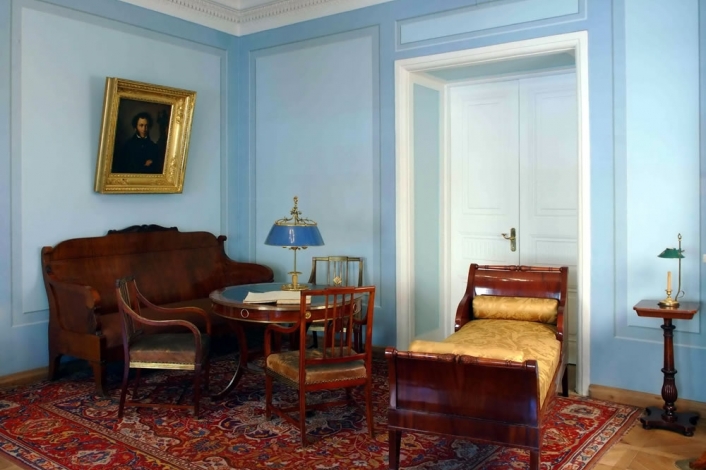
O thou great and powerful King AMAYMON, who rulest by the power of the Supreme God El, over all Spirits, superior and inferior, but especially over the Infernal Order in the Dominion of the East, I invoke and command thee by the particular and true Name of God, and by the God whom thou dost worship, by the Seal of thy creation, by the most mighty and powerful Name of God TETRAGRAMMATION, who cast thee out of Heaven with the rest of the Infernal Spirits, by all the other potent and great names of God, Creator of Heaven, Earth, and Hell, of all contained therein, by their powers and virtues, and by the Name PRIMEMATUM, which commands the whole host of Heaven. Do thou force and compel the Spirit ADONAI, king of Kings here before this circle, in a fair and comely shape, without injury to myself or to any creature, that he may tide and time receive our wish, and grant us new beginnings so that we may accomplish our desires, whatsoever the be, provided that it is proper to his office, by the power of God, EL, who hath created and doth dispose of all things, celestial, aerial, terrestrial, and infernal. ASTRACHIOS, ASACH, ASARCA, ABEDUMABAL, SLLAT, ANABOTAS, JESUBLIN, SCIOIN, DOMOL, Lord God, who dwellest above the Heavens, whose glance searchest the abyss; grant us, we pray Thee, the power to conceieve in our minds and to execute that which we desire to do, the end of which we would attain by Thy help, O God Almighty, who livest and reignest for ever and ever. Amen. #RandolphHarris 7 of 7
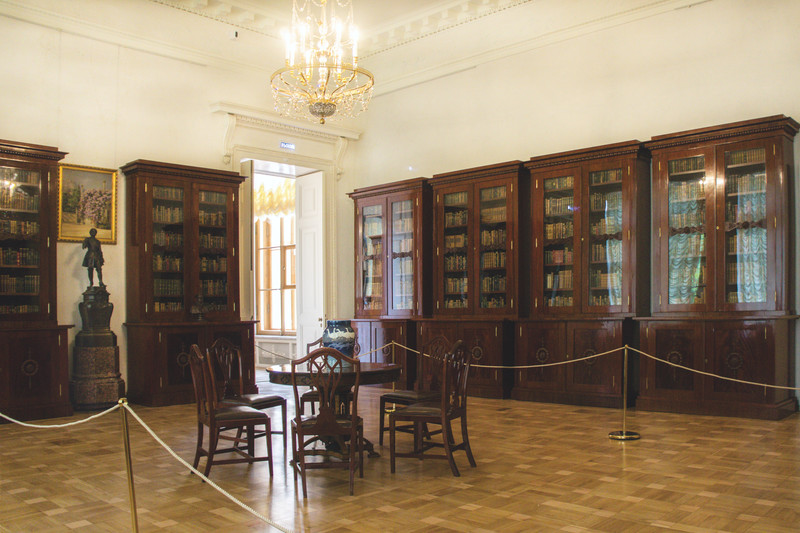

Our technology tells us that fluorescent lamps do not continuously provide light, but are actually flickering on and off at a rate that is just too fast for us to discern…reality at large is really a frequency domain, and our brain is a kind of lens that converts these frequencies into the objective World of appearances…there may be all kinds of things out there in the frequency domain that we are not seeing, things our brains have learned to edit out regularly of our visual reality. https://winchestermysteryhouse.com/

And please be sure to check out the online gift store: https://shopwinchestermysteryhouse.com/

Many False Opinion May be Exchanged for True Ones

I have learned from experience that many false opinions may be exchanged for true ones, without in the least altering the habits of mind of which false opinions are the result. The American public, for example, are quite as raw and undiscerning on subjects of political economy since the nation has been converted to free-trade, as they were before; and are still further from having acquired better habits of thought or feeling, or being in any way better fortified against error, on subjects of a more elevated character. For, though they have thrown off certain errors, the general discipline of their minds, intellectually and morally, is not alerted. I am now convinced, that no great improvements in the lot of mankind are possible, until a great change takes place in the fundamental constitution of their modes of thought. Unfortunately, our country’s ardent commitment to capitalism and the accumulation of wealth comes with a downside: Faced with the pressing need to obtain and expend monetary resources, untold scores of people simple take from their fellow citizens as a means of getting what they want. It is widely accepted that crimes against property account for the vast majority of criminal victimizations that occur annually in this country. However, these offenses tend to remain in the background of our discussions of crime, as society is much more concerned with the documentation and prevention of violent crime. This means that one must traverse a fragmented empirical and conceptual landscape when trying to piece together the nature and dynamics of what constitutes common property crime. #RandolphHarris 1 of 18

When it comes to shear incidence and law enforcement workload allocation, common property crimes collectively constitute a most menacing foe. Turning to the limited list of eight Part I index crimes, we see that property offenses (burglary, arson, larceny/theft, and motor vehicle theft) accounted for 88 percent of all offenses known to the police in 2022. That translated to an official property crimes rate of 3,656 per 100,000 persons. These four offenses generated 1.6 million arrests in 2022, but this is only part of the picture. Several noteworthy forms of property crime are included on the supplemental list of Part II index offenses, namely, fraud, forgery and counterfeiting, embezzlement, receiving stolen property, and vandalism. When these offenses are added to the mix, we see that more than 2.5 million arrests for crimes against property occur each year in this country. One could legitimately include, a long list of offense when trying to frame a discussion of what constitutes “common” property crime. The list might include such offenses as burglary, larceny-theft, motor vehicle theft, arson, fraud, forgery and counterfeiting, embezzlement, receiving stolen property, and vandalism. Given its unique status as a “crime of intrusion,” burglary had been allocated its own separate discussion. Even with this significant paring, a full treatment of the remaining laundry list of property crimes is far beyond the scope of this report. Luckily, this sort of comprehensive discussion is not necessary because the similarities between these crimes far outweigh the differences. #RandolphHarris 2 of 18

In the tradition of the typologies approach, we will use the single conceptual category that is termed common property crime. These two offenses were chosen for several reasons. First, they are among the most recognizable and pure forms of crimes against property. Second, their status as Part I index crimes means that comprehensive data are readily available on each. These two offenses comprise roughly 80 percent of known Part I property crimes each year and more than 50 percent of all Part I and II property crime arrests that are effected each year. The crime of larceny is steeped in a rich legal history. In common law times, the larceny statue was comprised of five essential parts: (1) an act of wrongful taking; (2) an act of carrying away; (3) a piece of property; (4) a rightful owner; and (5) the intent to permanently deprive the owner of possession. As the nature of property and property relationships grew more complicates, so too did the larceny statue. In particular, the courts had to grapple with such complex issues as ownership versus possession, misappropriations that occur while a property owner has voluntarily relinquished possession to another for shipping or safekeeping, and what exactly constitutes “property.” The result was the gradual emergence of a flexible and more amorphous legal definition of larceny that incorporates all acts of wrongful property misappropriation. #RandolphHarris 3 of 18

Today, most jurisdictions follow the direct of the Model Penal Code and rely upon a consolidated larceny-theft statue. For example, the Uniform Crime Reports (UCR) defines larceny-theft as any “unlawful taking, carrying, leading, or riding away of property from the possession or constructive possession of another.” Note that this definition effectively incorporates all forms of property theft under a single heading, regardless of the means or motivations that lay behind the act. There are two important caveats that accompany the UCR’s consolidated definition of larceny-theft. First, it does not apply to the theft of a motor vehicle. In particular, the theft or attempted theft of a self-propelled vehicle (id est, any nonmanual, nonrailrunning vehicle including cars, trucks, motorboats, construction equipment, airplane, or farming equipment) is in its own category named motor vehicle theft. Second, the UCR’s consolidated definition does not apply to acts of theft or conversion that are accomplished by “false pretenses” (id est, fraud), those thefts committed during the course of a contractual or work relationship (id est, embezzlement), or other legal contexts that would allow for the act to be categorized under the heading of specialized form of property crime. The National Crime Victimization Survey (NCVS) collapses all form of theft by taking, regardless of their manifestations (id est, by stealth or deceit) into one generic category—theft. Motor vehicle theft is afforded a separate offense designation. The NCVS classifies all nonviolent thefts from the body of a person under the heading of purse snatching or pocket picking. #RandolphHarris 4 of 18

Approximately 14,135,090 thefts, 1,008,720 motor vehicle thefts, and 188,370 purse snatchings/pocket pickings occurred in 2022. Combined, generic thefts, motor vehicle thefts, and purse snatchings/pocket pickings accounted from almost two-thirds of the overall victimization tall from 2022. Because crimes rates are so high and homeowners want more security than stationary cameras, within the next decade, it is predicted that homeowners will be able to purchase a noninvasive form of a satellite, probably smaller than a golf ball, which will blend in with the environment, that will hover over their homes and give them an aerial view of their property, and will detect body temperature and have infrared sensors that will allow homeowners to detect if there is an intruder hiding on their property, as thieves are becoming more and more stealth due to all of the modern technology. Nonetheless, the raw property crime numbers produce some lofty victimization rates. For example, the 2022 theft rate was reported at 129 per 1,000 persons or households. This is more than 4 times higher than the rate of any other type of crime that is tracked by the NCVS (burglary is second with a rate of 28.7 per 1,000). The rate of 9.2 motor vehicle thefts per 1,000 persons or households was also among the highest crime-specific victimization rates that year. #RandolphHarris 5 of 18
The public is hesitant to report most property crimes to the police. This trend is illustrated by the reporting rates of 30.1 percent and 35.2 percent that are observed for the larceny-theft and purse snatchings/pocket pickings offenses in the 2022 NCVS. Debriefings indicate that victims see little benefit from reporting property crimes, as police are thought to be too busy to attend to such minor crimes, thus making the recovery of their lost property unlikely. Motor vehicle theft stands as a glaring exception to the rule. In 2022, 82 percent of all automotive vehicle theft victims reported the incident to the police. No other form of crime surpasses the 66 percent reporting level. This inordinately high reporting rate is drive primarily by insurance regulations that require victims to file police reports prior to having their automobiles replaced or repaired. In the aggregate, common property crimes generate a sizable price tag. Conventional victimization reports set the property losses due to larceny-thefts round $5.5 billion annually, with an average loss per incident of roughly $500. However, it is important to note that crimes against institutional or corporate entities are beyond the scope of the NCVS. This results in the exclusion of sizeable numbers of shoplifting, employee theft, and embezzlement offenses that are perpetrated against business. Shoplifting alone costs retailers an estimated $15 billion each year. In light of this oversight, it seems reasonable to conclude that the actual dollar loss from larceny-theft offenses is far larger than what is reported by the NCVS. #RandolphHarris 6 of 18

Equally disturbing dollar losses are attributed to motor vehicle theft. Victimization data suggest that the average auto theft victim experiences approximately $8,886 loss. There were an estimated 721,885 thefts of motor vehicles nationwide in 2019. The estimated rate of motor vehicle thefts was 219.9 per 100,000 inhabitants. More than $6.4 billion was lost nationwide to motor vehicle thefts. There appear to be no clear-cut regional disparities for common property crimes. Data from the Uniform Crime Reports shows that theft-larceny rates were highest in Texas, Florida, Arizona, New Mexico and Louisiana. West Virginia, Kentucky, Massachusetts, New Hampshire, and North Dakota were found to have the lowest theft-larceny rates that year. Shifting our attention to state-level rates of motor vehicle theft offending, we see that Arizona, Nevada, Florida, Washington, and Michigan were top of the 50-state list. Officials in New Hampshire, South Dakota, Wyoming, Maine, and Idaho reported the lowest rates of motor vehicle theft in 2022. Residents in densely populated, inner-city areas clearly experiences a higher risk of property crime victimization than do their counterparts who live in more sparsely populated outlying areas. The 2022 NCVS data reveal an inverse relationship in theft rates across urban, suburban, and rural locales (rates of 160.4, 123.9, and 101.6, respectively). A similar trend is observed in the 2022 motor vehicle theft victimization, where the rates in urban areas exceed those of suburban and rural areas. #RandolphHarris 7 of 18

Critics observe that motor vehicle theft rates appear to be more a function of automobile density (measured either in terms of cars per square mile or per capita automobile registrations) than population density. A city-level analysis of UCR data reveals tht New York, Chicago, Los Angeles, and Huston consistently rank among the top five most problematic locales in terms of larceny and motor vehicle theft rates. The larceny-theft and motor vehicle theft rates in the United States of America compare favorably to those reported by other developed countries. The United States of America experienced a larceny rate of 2,728.1 per 100,000 persons and an auto theft rate of 459.0 per 100,000. The official larceny and motor vehicle theft rates of our peer nations were as follows: England and Wales (3,460.2 and 753.0), Australia (3,033.7 and 706.2), France (2,527.5 and 546.1), Canada (2,431.0 and 547.10, Germany (2,406.3 and 137.4), Israel (2,149.0 and 694.1), Japan (1,198.1 and 28.4), and Spain (650.8 and 343.1). A guessing game of more than playful significance can be played among persons who have spent a few days sociably together, as in a series of parties or at a resort: one person attempts to describe the kinds of families from which the group members came, with no prior knowledge of their personal histories. The same is most successfully played when the group includes mainly young adults but some other and younger people. #RandolphHarris 8 of 18

Still, if the attitudes of the group members toward waiters or clerks can be observed, more clues can be secured. Hits or misses are determined by checking guesses against the facts, and score is kept by noting the correct guesses and comparing them with the record of other guessers, or with the results that might be obtained by chance alone. A practiced observer of normal sensitivity and adult experience can usually make a surprisingly large number of correct guesses. The kind of questions to which one can most frequently give accurate answers are these: Did the person have any brothers or sisters? Were these brothers or sisters older or young? Ho much was one loved by one’s mother? Father? (Another adult?) With which did one tend to identify more? Was one’s family close and demonstrative, or cold and distant? Were one’s parents young or old when one was born? Was one’s mother or father dominant, or were they equal in authority? Was either parent repeatedly cruel or arbitrary in disciplining one? Which parent was more influential in the person’s career choices? Were one’s parents, or one’s siblings, approving or critical of one’s achievements? Which parent was the more intellectual? Action-oriented? Sociable? Sometimes, though less frequently, even such characteristics as the presence and importance of grandparents, adoptive status, father’s occupation, mother’s education, the family’s social status, and some quite idiosyncratic circumstances can be guessed. #RandolphHarris 9 of 18

As the guesser goes from the common relations of authority and affection among parents and children into these more peculiar features of another person’s upbringing, one’s chances of being right go down; one’s chances of being right by luck alone, however, decrease still faster. Yet the validity of some of one’s faintest premonitions can be quite astounding to one’s audience. Indeed, the more accurate in detail the guesser become, the more likely it is that the game will encounter two specific hazards. The person whose family origins are so closely described may suspect and charge that one ha been previously investigated and resent the implied invasion of one’s privacy, or one may be embarrassed by the disclosure of such intimate and perhaps ungratifying facts to the remainder of the group. Yet, if this game is played correctly, the guesser has depended for clues entirely upon what each particular subject has already disclosed about oneself through the characteristic patterns of one’s interactions with others. Whether consciously or not, each person tells one’s history publicly in one’s behavior, and could only conceal it by withdrawing from society, an act that in itself is diagnostic and occasionally observed. There is nothing mysterious or occult about the inferences employed. They are all derived from the theorem that one reproduces one’s earlier family relations in one’s interpersonal relations beyond the family. #RandolphHarris 10 of 18

Father-figure, mother-figures, brother-figures, sister-figures, rivals, servants, authorities, as first experienced in the family, furnish the prototypes for apprehending and responding to all later intimates. Especially in the rapid development of intimate association with strangers, the prototypical family constellation is most recognizably reproduced, and the characteristic actions which it guides from the “person” that becomes known to others. When a person is most spontaneously free, these same expressive acts are usually subjectively taken by one to be one’s natural self. A person’s identity in such a group is thus—or can be—simultaneously one’s self as privately conceived. Yet even one’s reactions to constraints upon one’s self-expression tell something of the figures one fears; in this sense, all one’s acts are representative. And it is precisely upon the evidence of many small but representative encounters witnessed between each subject of this game and the others that successful guesses and generalizations can be made. In later discussion, the basis for errors through insufficient evidence or mistaken inference may be brought out, but no evidence used is found invalid. (Such checking back is useful for improving the skill of the guesser.) To be sure, no single episode leads directly back to a specific family pattern. Rather, by recurrence of similar episodes in orderly relationship to episodes of other kinds, the generic constellation is pieced together. As more information is added, the more the pattern hangs together and even indicates missing evidence to be sought for by reviewing a wider range of incidents. #RandolphHarris 11 of 18

For instance, a girl bumps a boy and blushes; he speaks to her cordially and thereafter her eyes follow him about the room; a younger boy tries to gain her attention, but is ignored; she appears respectful toward a male teacher and defends him against gibes by other girls; after a downpour, she organizes the drying out of clothes by other girls; her female teacher speaks equivocally of her as independent. Is it possible that her father was a widower, and let her play the role of a “little mother” to her small sister—which she did out of a desire to please him, who she admires? Even with these many observed details, much of the complex is missing from which a successful guess might be made; but at least the principle employed is evident. If it is remembered that boys who have dated her found her somewhat repressed and inclined toward intellectual conversation, further confirmation may be added, but also complications may emerge which reduce the plausibility of the previous guess. From experience in playing this game, several limitations become evident. The older the person—the further one had left one’s parental family behind, in time or in any other sense—the less does one’s present behavior tell about one’s past. And if one’s succeeding experience has been markedly heterogeneous, with strong emotional attachments intervening between one’s original family and one’s present circle of intimates, the less does the present constellation tell us about the original. #RandolphHarris 12 of 18

If the person’s cultural or sub-cultural background is markedly foreign to the guesser’s, of course the latter has more difficulty in interpreting the biographical significance of behavior. Patterns of sociability among teenagers still living at home, by contrast, almost transparently reveal the structure of their families. Although there is thus no mystery as to why successful guessing is not really guessing or intuition, but complex inference from objective evidence, explanation of the procedure does not dimmish the uncanny feeling of some of the subjects that they are being laid bare. Even when the bits of evidence are painstakingly pointed out and are admitted to be public knowledge, the sense of exposure may persist and give rise to mild dismay on the part of the beholders as well. If the procedure were explored systematically and no longer used mainly as a game, what might develop is a matter for speculation. However, questions are raised by the demonstration of the underlying theorem which are far more important than the mild shock of the shyer players. If postdiction is this easy, why is prediction so hard? And if prediction from pervious to future behavior is hard, does not this fact qualify the determinisitic assumption which underlies an characterizes much research and writing in social science? And finally, what might this game of revelation disclose about the role of the social scientists and one’s ultimate audience? #RandolphHarris 13 of 18

There is a mistake about forgiveness by the ultimate concern that many people make. First, a mistake conception about the “shelter of the blood,” claimed upon an assembly as a guarantee of absolute protection from the working of the powers of darkness. However, if we walk in light, if we confess our transgression, then the blood of Jesus cleanses from sin. The blood of Jesus gives us access to the Holiest of all, because of the cleansing power from sin. The blood of Jesus is the ground victory over the Offender, because of its cleansing from every confessed sin, and because at Calvary the Offender was conquered. (However, remember, you can confess your sins silently in prayer. Not all religious figures uphold their oath and keep the things you say confident, much like therapists or their employers.) However, nowhere do we read that any person can be put “under the blood” apart from one’s own volition and individual condition before God. Therefore, if the “shelter of the blood” is claimed over an assembly of people and someone present is giving ground to the Offender, the “claiming of the blood” does not avail to prevent Offender from working on the ground to which one has a right in that person. This misconception about the protecting power of the blood is serious; for those who are present at a meeting where the Offender as well as God is working many believe they are personally safe from the Offender’s workings apart from their individual condition and dealing with God. However, through the ground they have given—even unknowingly—to the Adversary, they are open to one’s power. #RandolphHarris 14 of 18

Faith, religion, and revelation, are readily intelligible. If one simply stated that religion is ultimate concern, a turning toward the unconditional, and that it is not a special function of man’s spirit but a centered act of his personality, that would be an adequate summation of the broad sense of religion. Here faith and religion are identical. The narrow sense of religion is the “churchy” sense—doctrine, rites, and all the appurtenances of an institution. While the above paragraph sufficiently describes religion, a somewhat deeper examination is called for. The ultimate concern is what we rely on chronologically as an evolved insight of religion more than faith. Doctrine is developed under the heading of religion. Religion cannot be identified with any of the functions of spirit and it cannot be placed beside them as a special function animated by one’s thinking at a very early date, and this insight is decisive. Religion is an attitude of spirit which participates in all these spheres. Spirit depends on two other concepts, thought and being, which are in constant dynamic tension. Spirit is neither pure thought nor pure being, but involves both. Being and Spirit are the essential components of the act of knowledge. The act or intention is thought, and the object or thing intended is being. For Spirit is the form of thought-in-being. Every being has something of thought in it, but the more thought it contains the more reality is possesses. The most real of beings is the one in which thought as thought is realized, that is, a spirit-bearing totality—man. #RandolphHarris 15 of 18

In the economy, there are power triads, and wealth is one, which is experiencing deep transformation as the new system for wealth creations spreads across the planet. As corporations integrate their production and distribution across national boundaries, acquire foreign firms, and draw on brainpower from around the entire World, they inevitably need fresh sources of capital in many countries. They also need it fast. Thus we see a race to “liberalize” capital markets so that investments can flow more or less freely across national frontiers. The result is a surging ocean of capital free of restraining walls. This, however, shifts power away from central banks and individual nations, undermining sovereignty and introducing new dangers of financial fibrillation on a Worldwide scale. After the 1987 Wall Street crash, it was understood that building a single completely open financial system, subject to minimal regulation, is like building a supertanker without airtight compartments. With adequate dividers or safety cells, a big system can survive the breakdown of certain parts. Without them, a single hole in the hull can sink a tanker. There was also a warning that the creation of multinational securities firms that buy, sell, underwrite and invest in many nations increases the risk of large-scale breakdown. A loss by one or more of these firms, could result in transmitting a disturbance from one country to another. As finance is globalized, nations risk losing control over one of the keys to their power. #RandolphHarris 16 of 18

The proposed all-European currency, for example, would reduce the flexibility of individual nations to cope with their own unique economic problems. Another proposal would arm the EC commissioners with far greater control over the budgets of Europe’s supposedly sovereign nations than the federal government of the United States of America exerts over its fifty states—a centralizing power shift of massive proportions. While this power redistribution is going on, the entire wealth system becomes, as we have seen, super-symbolic. Like violence, wealth, too, is shifting and being transformed at the same time. Until recently, China was not on the list of the World’s major foreign direct investor nations. An important breakthrough came in 2008. According to the National Bureau of Statistics, outbound FDI increased dramatically to $55,907 million from $26,506 million in previous years (flow; FDI by financial institutions is not included). In 2009, it rose further to $56,529 million, in 2010 it hit $59 billion. In recent years, China has been the second largest recipient of foreign direct investments (FDI) Worldwide, attracting approximately USD $181 billion in 2021. That is extremely significant. Compared to the U.S.A FDI of USD $367.38 billion. According to preliminary figures, monthly foreign direct investments (FDI) inflows to China amounted to approximately USD $20.69 billion dollars in February 2023. For the whole year of 2022, FDI flows to China reached around $189.1 billion, an increase of 12 percent compared to the year before. Western companies have become a hot topic around the World. #RandolphHarris 17 of 18

Acquisitions account for 40 percent of China’s total FDI. The major targets are mining industry, high-tech manufacturing firms, and well-known but usually ailing companies possessing famous brands. Such acquisitions are usually carried out with the backing of the government, mostly by state-owned companies. On the other hand, Chinese companies, especially the private ones, are gradually increasing FDI of quite a conventional Character. They are investing in India, Africa, North Korea, Vietnam, Myanmar, and elsewhere in the developing World seeking lower production costs or better access to local markets. Also, more and more often, they are coming to the West entirely on their own initiative (without the government’s backing), attracted by markets, technologies, and high-skilled human resources. In these cases, Chinese investors act basically the same way and pursue the same goals as investors from any other country, whether America, a European state, or Japen. China’s foreign portfolio investment reached an all-time higher of USD $99.45 billion in December 2020. United States of America’s foreign portfolio investment accounted a record deficit of USD $206.805 billion in December 2022. American leaders should be scrambling to invest in improving technology and infrastructure in American cities, investing more in education and recruitment of students for medical, engineering, and computer science careers. #RandolphHarris 18 of 18


Picture family dinner in this space! 🥳

When you’re looking for a home that can hold everyone you love, look no further than #MagnoliaStation at #CresleighRanch. 👏

Residence 2 is a spacious single story model including over 2,600 square feet with three bedrooms, three bathrooms, AND a three car garage! See the details on our website. https://cresleigh.com/magnolia-station/residence-2/


For We are Seized in the Very Center of Our Personality

We have seen that activities related to transportation and store in the stolen property system (SPS) can be shared by fence and thief. The sharing of responsibility for these functions is not, however, haphazard nor random in nature. Instead it is determined by the degree of control which each is considered to determine by the degree of control which each is considered to exercise over the stolen property at a given point in time. Thus, any storage or transportation activities that are required, pursuant to an agreement reached in the exchange process, are likely to be performed by the thief. Once this exchange agreement has been satisfied any further need for transport or storage becomes the fence’s responsibility. To require the thief to perform such functions beyond those pursuant to the exchange process would be to defeat one’s prime motivation for making an agreement with the fence, which is to divest oneself of the stolen property. Similarly, to require the fence to perform these functions prior to an exchange agreement would force one to exercise control over property which one has not as yet decided to purchase. Both thief and fence recognize that their possession of (id est, effective control over) stolen property requires the performance of certain activities; neither, however, will be willing or likely to assume responsibility for such activities once possession has been relinquished or before it has been undertaken. The final activity area, marketing mode, which includes transportation and storage, demand analysis, packaging, and advertising, of the SPS is the preparation of property resale. #RandolphHarris 1 of 21

This is almost exclusively the province of the criminal receiver who, following the exchange with the thief, becomes the new seller of the merchandise. It is the fence who takes responsibility for decisions relating to modification of the goods prior to sale, in what quantities one will sell the goods, and in what manner one will present the items to potential customers. With some items, such as automobiles, the fence will find it important to remove or disguise identifying numbers while keeping the make and model apparent. In other cases, with fair-traded appliances for example, it may be more important to disguise make and model than identifying numbers. The type of customer which the fence serves, whether retail or wholesale, corporate or individual, knowledgeable or native, will determine the quantities in which the merchandise is sold and the manner in which it is promoted. The planning and coordination of activities in the packaging and promotion area emphasize again the organizational know-how and financial base which a fence needs to operate efficiently. It also serves to explain why one may not be able to “afford” to reward the thief too generously for one’s efforts. There are certain limited cases in which the thief shares responsibility for preparing stolen property resale. One such case is that of the professional thief. ITEM 16: (interview with Greg, professional burglar) “As soon as we finished a job we always went back to my apartment. There I’d remove all the stones from their settings, weight them, appraise them and put them in jeweler’s paper to protect them.” #RandolphHarris 2 of 21

Greg explained that this was done for two reasons: first, as a form of protection. Often the only identity possessed by a gem is its setting. By removing a gem from its setting, then, its identification becomes much more difficult so that even upon apprehension by the police one and one’s associated had a good chance of not being charged with anything. Second, Greg found that he could make better deals with fences with loose stones since he had saved them the trouble of removing the setting. In addition, the origins of the items could remain somewhat obscure protecting both of them. The professional thief is probably one of the few classes of thieves who has sufficient skill or motivation to perform such preparatory activities. It is obvious that one does not perform them as a favor to the fence but out of one’s own self-interest. This activity area in mode 4, then, is similar to the area of transportation and storage where activities are performed by the individual in control of the property. Because of the nature of the packaging and promotion activities and the point in time in which they occur, it is the fence who in nearly all situations is in possession of the merchandise. Responsibility for these activities, therefore, falls primarily on one. From our review of mode 4 activity areas it also becomes quite clear that the fence is the prime mover in the marketing process of the SPS. Nonsequential activity performance—the second axiom of the SPS relates to the nonsequential nature of the functioning modes. #RandolphHarris 3 of 21

In order to demonstrate the sort of variety which this axiom suggests, we will discuss three modal configurations in the SPS: (1) the system beginning at mode 2 (extraction) and proceeding spontaneously; (2) the system beginning at mode 1 (planning), moving to mode 3 (exchange agreement) then to mode 2 (extraction) and finally proceeding to modes 4 and 5; (3) the system beginning at the mode 5 (redistribution) then moving to modes 1, 3, 2, and 4 in that order. Each of these configurations represents not only different degrees of determinateness in the SPS, but also different degrees of integrative control exhibited by the fence. The SPS beginning at extraction mode 2, having eliminated a research and planning phase. This configuration can be termed the “cheapest opportunity” model. It is likely to be initiated by the least killed thief or the addict thief. Because of the lack of planning involved, it will also be the least determinate, least integrated and least efficient model in the SPS for one of two reasons. First, it is unlikely to yield property of great resale valuesince its targets must be those which can be attacked spontaneously and with a minimum effort. For example: ITEM 17: (police radio message item) “B & E at pawnbroker’s shop on____ St. Window broke and two trays of jewelry removed. Assailant believed to be on foot.” In some cases, this model of the SPS will yield nothing at all and instead will serve only to create a disturbance within the environment surrounding the system. #RandolphHarris 4 of 21

ITEM 18: (police activity report) “Alarm sounded at warehouse on ____ Avenue. Two w/m seen running from building. Would-be thieves didn’t have time to get anything. Pct 2. will put a patrol car in the area in case they try again.” The second reason why the “cheapest opportunity” model is inefficient is that it fails to predetermine a demand for merchandise. For example, consider the luckless thieves below who managed to steal merchandise of some value but whose lack of planning rendered it not only valueless to them but also incriminating. ITEM 19: (police activity report) “X and Y (thieves) were arrested this AM in the act of trying to peddle meat from the ____ warehouse. They did not have a refrigerated truck so most of it had already started to spoil when recovered.” This model, if it is to be effective at all, requires the existence of the generalist fence who is willing to handle a wide range of items of varying quality and indeterminate quantity. The SPS does of course provide for this sort of individual in the form of owners of secondhand and general merchandise outlets and used furniture and appliance stokes. Fences who engage in this sort of trade do so because they can acquire property very inexpensively from hard-pressed thieves whose lack of planning has put them in precarious possession of stolen property. If, then, the thefts initiated of the least rewarding variety to the thief. For the fence they also represent the “cheapest opportunity” since they comprise the best bargains one can get from any set of thieves. #RandolphHarris 5 of 21

If this model is to have any determinateness, it is the fence who must introduce it by manipulating the rewards offered in the exchange mode. By giving such direction to the thief’s activities, the fence is not generating a planning process but only narrowing the range of products which one is likely to encounter. This can help make the thief a bit more predictable and the system a bit more determinate and efficient. This model of the SPS remains, however, the least integrated configuration. The SPS in the modal sequence of planning (mode 1), exchanging (mode 3), extraction (mode 2), marketing (mode 4), and redistribution (mode 5). This is the “exchange-oriented” model of the system in which thefts are planned but not carried out until the terms of the exchange agreement and the responsibilities for activities pursuant to that agreement are determined. This model is significantly more determinate and efficient than is the “cheapest opportunity” model, although this is only true through the exchange-extraction process. The marketing and redistribution modes retain an indeterminate quality in this model. The degree of integration in the “exchange-oriented” model depends upon who generates and plans the theft and who initiates the terms of the exchange agreement. Two basic situations are possible: the thief-generated pact, and the fence-generated pact. The thief-generated pact is the situation in which the thief assures a market for the theft one envisions by making preliminary arrangements with a fence to buy the product of one’s activities. In some sense, then, t is the thief’s insurance policy which one hopes will prevent one from being caught holding stolen property unnecessarily. #RandolphHarris 6 of 21

ITEM 20: (Robert E. Barnes) “one…must always remain conscious of the fact, it is impracticable for the thief to steal what one cannot sell. What should be of vital importance to law enforcement officials is the fact that semi and professional thieves seldom steal before they sell, thus proving the fact that all major crimes whereas [sic] merchandise is involved would never occur if there were no outlets for this merchandise.” In many cases the professional thief wants more than the assurance of a market, one may also want to make sure that one’s efforts will be sufficiently rewarded before attempting a “big score.” Perhaps the most important element of the above statement is the fence’s “if.” It is clear that the professional thief can succeed in getting binding agreement upon the fence before one has seen the merchandise. Robert E. Barnes, for example, maintains that fences are notorious for promising to pay a certain price prior to the thefts of goods and then defaulting on the agreement later. The thief-generated pact under the exchange-centered model of the SPS, then, does not display very much integration. All it really does is assure the thief of a buyer and notify the fence as to the type of property one is likely to receive and when. The fence-generated pact is somewhat different. Here a high degree of integration can be introduced into the system as the fence has opportunity to specifically direct the activities of the thief and to beneficially determine the products one will acquire. #RandolphHarris 7 of 21

The fence who plans the theft and who provides information important to its commission is also in a position to extract from the thief a specific exchange agreement. This makes for a highly rationalized extraction process which has been preplanned with an exchange phase that is predetermined. The integrative control of the fence over the exchange-extraction process produces a more efficient and determinate model of SPS behavior. The SPS beginning at the redistribution phase (mode 5) and proceeding through mode 1 (planning), mode 3 (exchange), mode 2 (exchange), and mode 4 (marketing). This final modal configuration of the SPS is by far most complex and sophisticated sequence. The most apt term for this configuration s the “production to order” mode. What happens in this case is that no activities relating to theft are initiated until and order for the merchandise has been received. Once this order is received, the theft is planned; an exchange agreement decided upon; the extraction carries out; and the marketing activities completed. And all of the above processes are coordinated and directed by the fence. The “production to order” model is an accommodation made in the legitimate marketplace to avoid the stacking up of inventory surpluses and gluts in the marketing process. The fence uses the model for similar reasons but has the advantage over the legitimate marketer that one’s suppliers (thieves) are likely to produce goods quicker than is the legitimate manufacturer who supplies the legitimate businessman. The model, then, is likely to be much more effective within the SPS than it has been found to be in the legitimate marketplace. #RandolphHarris 8 of 21

The most frequent cited example of the “production to order” model in the SPS is the auto theft ring. Instances have been reported of automobiles being stolen to meet the exact specifications of buyers, with color and bogus engine numbers added before resale. Robert Earl Barnes suggests that the “production to order” model is not limited to the stolen auto area, being particularly prevalent in the hijacking and cargo theft arena: “Prior to any hijacking, the merchandise has already been sold to underworld sources, and once the crime has been set-up, and carried out by the thieves, the merchandise is extremely difficult to recover, as it may go out for resale on the legitimate market to as many as 50 to 100 middle men.” Both the “cheapest opportunity” and “exchange-centered” models of the SPS require the fence to have increasing amounts of control over the forces of supply in the system. The “production to order” model requires of one the ability to generate the forces of demand as well. Demand control by the fence is somewhat more amorphous than is supply control. It will depend on such things as one’s individual abilities to forecast the desire of disparate customers: the kinds of contacts one has been able to cultivate at the wholesale and retail levels of the legitimate marketplace; and often upon one’s particular occupation. For example, the individual described blow pursues a legitimate occupation of which generating orders for merchandise is an integral part. Their additional abilities to initiate an illegitimate supply process, allows them to operate a tight and effective stolen property distribution system. #RandolphHarris 9 of 21

ITEM 23: (police activity report) “Mr. S who owns a jewelry manufacturing company is alleged to be fencing for some of our better burglars. He supposedly has nationwide customers and contacts. Should be kept in mind whenever jewelry is taken in residence jobs.” The control which the fence has over the sequencing of events in the SPS under the “production to order” model makes it possible for one to bring the forces of demand and supply into a fairly stable equilibrium. This makes the model highly efficient and determinate. It also serves to protect all of the persons involved since by insuring that all aspects of the system are coordinated beforehand, stolen property can move swiftly to its final destination, minimizing the risk of either thief or fence being found in possession of it. The limits upon the “production to order” model are of two orders. The model is limited, first, by the individual ability of the fence to generate demand (id est, contacts and outlets to do business with one.) Second, the model hinges upon the amount of organizational and financial resources at the fence’s disposal which can facilitate the completion of all activities based in mode 4, the marketing mode. This is perhaps the more important limitation since it defines the size and scope of one’s operation. If one cannot command the use of storage and transportation, or cannot finance the performance of such activities by others, no matter how organizationally skilled the fence is his business volume will remain small. The “production order” model need not, then be characterized by large scale operations. Instead this model describes a highly integrated, tightly controlled and finely precisioned model of the SPS in which the fence is both the orchestrator and the central character. #RandolphHarris 10 of 21

The Powershift Era has only begun and already, it would appear, the future is up for grabs. With the “East” in upheaval, the “South” increasingly divided, and the leading powers of the “West”—Europe, Japan, and America—on a collision course, we face a frantic, endless round of summits, conferences, treaties, and missions as diplomats meets to construct a new global order. No matter how much hammering, sawing and wordsmithing they do, however, the new architecture of World power will depend less on their words than on the quantity and quality of power each brings to the table. Are the United States of America and the Soviet Union both now global has-beens? If so, how many new “superpowers” will arise to take their place? Some speak of a World organized around Europe, Japan, and the United States of America. Others see the World broken into six or eight regional blocs. Still others believe the bipolar World is turning into a five-sided star, with China at one of the points, India at another. Will the new Europe stretch from the Atlantic to the Soviet border—or beyond? No one can solve these puzzles with certainty. However, the powershift principle can help. It reminds us that while many other factors—from political stability to population growth—all count, violence, wealth, and knowledge are the three main rivers from which most other power resources flow, and each is now in the process of being revolutionized. Take violence. #RandolphHarris 11 of 21

So much has been written about “peace breaking out” that World attention has drifted away from the menacing fact that as the two former superpowers scale down their arms, other nations are racing to fill the gap. India, for example, despite its image as a backward, peace-loving land, has been the World’s biggest arms buyer since 1986, purchasing in 1987 more weapons than warring Iran and Iraq combined. This policy had drawn fire from the Japanese and a sharp riposte from New Delhi. India already possesses nuclear weapons and is party to the Missile Technology Control Regime (MTCR), which allows the country to develop a missile with a range of over 300 km weighing more than 500 kg but not to export it to other countries. This is true even in the case of the supersonic BrahMos missile, the latest variant of which has a range of 500 km. The export version is capped at 290 km to comply with the MTCR restrictions of 300 km. The BrahMos-II is expected to be capable of travelling at speeds of up to Mach 7 and had a range of over 300 miles. It is being designed to be launched from multiple platforms, including land, air, and sea. Hypersonic weapon systems are advanced military technologies that can trave at extremely high speeds, typically defined as Mach 5 or higher (five times the speed of sound). These weapons are designed to be extremely maneuverable, able to change course quickly and evade enemy defence, an dcan travel long distances in a very short time. #RandolphHarris 12 of 21

Furthermore, HWS are capable of carrying out launches from a variety of platforms, including ground-based systems, aircraft, and submarines. They are typically designed to carry conventional or nuclear warheads and are seen as a potential game-changer in military operations, particularly in terms of their speed, range, and ability to penetrate enemy defence. Pakistan continues to expand its nuclear arsenal with more warheads, more delivery systems, and a growing fissile materials production industry. Analysis of a large number of commercial satellite images of Pakistani army garrisons and air force bases shows that appear to be launchers and facilities that might be related to the nuclear forces. We estimate that Pakistan now has a nuclear weapon stockpile of approximately 165 warheads. The U.S.A. Defence Intelligence Agency projected in 1999 that Pakistan would have 60 to 80 warheads by 2020, but several new weapon systems have been fielded and developed since then, which leads us to the higher estimate. Pakistan may become the World’s third-largest nuclear weapon state—with a stockpile of some 350 warheads by 2030. If the trend continues, their stockpile could more realistically grow to around 200 warheads by 2025. According to William Webster of the CIA, fully fifteen countries are known to produce ballistic missiles: the United States of America, France, Russian, China, North Korea, South Korea, Taiwan, India, Pakistan, Iran, Israel, Egypt, Syria, Ukraine, and Argentina. #RandolphHarris 13 of 21

Beyond this lie a number of terrifying scenarios. Soviet nukes are located in Azerbaijan and other Muslim republics where ethnic fighting has broken out, leading some experts to speculate on the nightmarish possibility that a breakaway republic might seize some of these weapons. Asks one alarmed U.S.A. official: “Will the fourth-biggest nuclear power be Kazakhstan?” So serious are the risks that Moscow had reportedly begun withdrawing nuclear arms from the tense Baltic region, and a top Soviet official, speaking privately to the author, has said: “I used to be against SDI [Washington’s Strategic Defense Initiative whose goal is to intercept and destroy income nuclear missiles]. But now I’m for SDI. If the U.S.S.R. splits apart, the World could suddenly find itself confronted with ten more nuclear-armed countries.” In fact, a civil war in the Soviet Union—or any other nuclear power-raises the possibility that rebel forces might seize the weapons, or that rebel and loyalist forces might each seize part of the nuclear arsenal. Even more ominously, some “developing countries”—Iraq and Libya are not alone—are designing plans to manufacture chemical and bacteriological weapons as well. The present distribution of weapons in the World, and especially nuclear weapons, neither fixed nor stable. A key source of state power, therefore, the capacity for hyper-violence that was once concentrated in a few nations, is now becoming democratically but dangerously dispersed. #RandolphHarris 14 of 21

At the very same time, the nature of violence itself is undergoing profound change, becoming increasingly dependent on such knowledge-intensive technologies as microelectronics, advanced materials, optics, artificial intelligence, satellites, telecommunications, and advanced simulation and software. Thus, whereas the first F-16 fighters needed 135,000 lines of computer programming, the Advanced Tactical Fighter now on the drawing boards will require 1,000,000 lines. These changes in World military systems do more than merely shift power from here to there; they revolutionize the nature of the global game. Shintaro Ishihara, a former Cabinet member in Japan, blew up a storm in Washington recently with a brief book called The Japan That Can Say No, which consisted of speeches he and Akio Mortia, co-founder of Sony, had made on various occasions. In it Ishihara pointed out that to radically improve the accuracy of their nuclear weapons to the United States of America and the U.S.S.R. alike would need extremely advanced Japanese-made semiconductor technology. Referring to the United States of America, he said, “It has come to the point that no matter how much they continue military expansion, if Japan stopped selling them the chips, there would be nothing more they could do. If, for example, Japan sold ships to the Soviet Union and stopped selling them to the U.S.A., this would upset the entire military balance. Some Americans say that is Japan were thinking of doing that, it would be occupied. Certainly, this is an age where things could come to that.” Mr. Ishihara’s remarks underscore the growing dependence of violence on knowledge, a reflection of today’s historic powershift. #RandolphHarris 15 of 21

Meanwhile, when it comes to powershifts, China has become the largest international lender for developing countries, and it rapidly emerging as one of the World’s leading lender nations. China’s overseas development finance is almost as sizable as the World Bank’s, though more intermittent in nature. From 2008-2019, Chinese overseas development finance amounted to nearly half a trillion dollars–$462 billion. In the same time period, the World bank (through its sovereign lending windows, the International Bank for Reconstruction and Development and International Development Association), barely exceeded this amount, extending $467 billion. China has also become a global infrastructure powerhouse, reflecting the goals of the Belt and Road Initiative. Over half of the finance commitments listed in the dataset–$249 billion—went to construction of infrastructure projects, particularly in the sectors of transportation and power generation and distribution. In terms of assets, Chinese commercial banks, especially the Big Four (Industrial and Commercial Bank of China, Bank of China, China Construction Bank, and Agricultural Bank of China), are rapidly approaching the World’s top 10. Industrial and Commercial Bank of China is the sixth largest bank in the World, and has total assets for the quarter ending September 30, 22 of $5,774.397 billion, a 19.3 percent increase year-over-year. CITIGROUP INC $2.4 trillion, BNP $2.67 trillion. Chinese commercial banks are becoming increasingly important lenders for Western companies. #RandolphHarris 16 of 21

When the self-actualized first hear of the possibility of counterfeits in the hierarchy and sacred things, they almost invariably ask, “How are we to know which is which?” It is enough, first of all, for them to know that such counterfeits are possible. Then, as they mature and seek light from the ultimate concern, they shall learn to know for themselves, in a way that no human being can explain to them. However, they cry, “We do not know, and how can we know?” Well, they should remain neutral to all forms of enlightenment. There is among many self-actualized a wrong anxiety to know, as if that knowledge alone would extricate them. They think that they must be solidly for or against certain things, things which they cannot decide are from the ultimate concern or an unenlightened source. They desire to know infallibly which is which, that they may declare their position. However, self-actualized should take only a tentative attitude of “for” or “against” while uncertain whether the things in doubt are sacred or of the unenlightened nature—maintaining the wisdom and safety of the neutral position. In time, by a means which cannot be fully described, they will know what they have wanted to understand. Over-eagerness in desiring certitude can result in mental suffering, restless anxiety, worry and grief, which can cause a loss of moral poise and power. #RandolphHarris 17 of 21

It is important in seeking one source of knowledge not to destroy another. In seeking certainty in these matters of the ultimate concern, let not the self-actualized lose patience, and calm, quiet restfulness and assurance. Let one watch oneself, lest the offenders gain advantage, and rob one of moral power even while one is keen to get light regarding the way of victory. The battle for truth may keep us awake at night. The source of expression can sometimes be a mystery. One’s thoughts and feelings come, not from any attempt to force change, but from an intense and compelling desire to live and respond fully to life. One’s communication may be strong and intense, a response to indifference, to purely self-centered interests, to sleep in the face of tragic searching and suffering. Perhaps these intense feelings are potent enough to break into one’s own detachment, isolation, and loneliness. In the face of human struggles met with complacency and indifference, one may begin to feel deeply the tragic nature of the life before one. One may begin to experience once more an involvement and intoxication with life. The mystery of what it is all about remains to be unsolved for some. The metaphysical solution one seeks may never come to one but that is not the ultimate concern. Once one is in touch with people of like-mind, fully awake, with all of one’s sense, a search for communal values is underway. This is essential beginning. Everything is moving toward this reality. People will appear in the dawn of the new day. Everything has to recrystallize. #RandolphHarris 18 of 21

Ambiguity is a characteristic not of the structure of being, but of the process of life, according to which positive and negative elements are mixed in such a way that definite separation of the negative from the positive is impossible. The positive elements are essential elements, and the negative ones are existential; however, they cannot be separated simply into good and evil, for in all life processes an essential and an existential element, created goodness and estrangement, are merged in such a way that neither one nor the other is exclusively effective. For example, one of the ambiguities of being self-actualized, is that, on the one hand, it is self-transcendent—it points beyond itself to the ultimate concern, on the other hand, it is profanized—it becomes a finite institution, a sociological unit subject to the same laws that govern secular groups. Life basically consists in a going-out and a return-to-self. Against this movement of life there is always a counter-movement, so that the life process of self-integration struggles against disintegration; self-creativity struggles against destruction; and self-transcendence struggles against profanization. This struggle of tendencies—one positive, one negative—is ambiguity. The sacred is ambiguous because it embraces the clean (the positive) and the unclean (the negative), both of which produce “numinous awe.” However, this ambiguity is merely an instance of the more radical ambiguity of the scared which embraces bot divine and the demonic. #RandolphHarris 19 of 21

The sacred manifests itself in consecrated objects, for without the finite bearer of the revered, the sanctified would remain unknowable. These objects are not sacred in themselves, but they become consecrated only by negating themselves in pointing to the sanctified which they are the medium. If their sacredness is considered inherent, they become demonic. They are still sacred, but their sacredness is anticonsecrated. These sacred objects, whose function is to represent man’s ultimate concern, usurp the place of the hallowed and establish themselves as his ultimate concern. They are transformed into idols. Sacredness provokes idolatry. As an example of demonic, we can consider the Roman empire which became demonically possessed in compelling men to worship itself. Both the sacred and the demonic appear n the concrete as ecstatic, overpowering, and awe-inspiring. However, the demonic refuses to bow to the unconditioned, and, in fact, elevates itself to the same level. If the ambiguity of the divine-demonic loses its tension and the two elements are separated, the result is a religious dualism such as Manichaeism. Religious dualism concentrates divine holiness in one realm and demonic holiness in another realm. Reality is then partitioned between the two realms, and what belongs to the demonic realm is essentially evil. The concern is to keep the divine and the demonic, the clean and the unclean, ambiguously united, as they re in the primitive notion of the holy. One never ceases to remind us that the demonic’s favored place is the holy. #RandolphHarris 20 of 21

This analysis of the experience of the holy lays bare the root of faith. The unconditionality of ultimate concern springs from an encounter with the mysterium tremendum et fascinans, the ground and abyss of being and meaning. The total demand of ultimate concern is explained by the stern “ought-to-be” of the holy, while ultimate concern’s promise of total fulfilment arises from the majestic presence of the holy. The ambiguity of faith, the possibility of its deterioration into idolatrous faith, is accounted for by the ambiguity of the holy itself which is open to invasion by the demonic. A systematic analysis inevitably dilutes the intensity of a religious experience. As a gesture to offset this loss, we conclude the exposition of faith with the poetic description of the moment of faith. It is only in a concrete situation that the ultimate power of being, the ground of reality appears and reveals the infinite depth and meaning of the present moment. Yet, in the light of the ultimate the concrete present is shown in all its shallowness. Thus it affirms and negates; it is transparent for its ground which is also its abyss. The experience is like a blinding flash of lightning at night. Reality is seen as something new, for in the ecstasy of faith its ground is glimpsed. Nor do we remain as detached subjects staring at an object, for we are seized in the very center of our personality. We are grasped, in the experience of faith, by the unapproachably holy which is the ground of our being and breaks into our existence and which judges us and heals us. #RandolphHarris 21 of 21


By the Terrible Torment of Demons
Here haunts eternally the curse of the Winchester fortune; here lives the mysteries of the fruit orchards, harbinger of spirits; many voices may echo, among the Queen Anne Victorian mansion, but perhaps none more curious than the mischievous demons. No region in the West is richer in legend than my home. The tales of The Winchester Mansion range in subject-matter from buried treasure to black arts, secret passageways and portals to other Worlds. An opening into a mysterious passageway may be seen behind one of the 47 fireplaces. However, where the tunnel leads in its subterranean wanderings none can say, for its walls have caved in not far from the entrance and its secret is buried. I had this tunnel as an emergency entrance and to my mansion. I kept my horses there shod backward to deceive the foeman who might study their tracks. The ghost of this spot is the specter of a huge dog with wolfen teeth, glittering eyes, and a jet coat that here comes back from a dog-pound beyond the grave to plague the servants at midnight. Inside the gate of my estate is the undying spell of blooming roses, plush green trees, emerald green lawns, flowers the color of gems, elegant statues, and the sun makes a dazzling spectacle of the sea green mansion. The orchards are abloom with the promise of a fruitful harvest, but at night, one passes through the gate into the twilight of the great shadowy mansion and its encircling walls, and one feels ice cold hands taking hold of them, a certain death none can excel, as the door is opened to Heaven or Hell. #RandolphHarris 1 of 6

People wander through the doors to areas where visions of spirit orbs and spectral children dwell; where long dead residents or perhaps soldiers, true to their duty unto death (and beyond) still practice their lives and manifest themselves by talking, touching and interacting with employees and visitors alike. Once a tunnel ran from the nine story observation tower to the basement. Thence it led to the fields. Its entrances were eventually blocked by fallen stone. I have led guest to the well beneath the observation tower and pause impressively to drop a stone into it. Long afterward the faint tinkle of a splash comes echoing back. The shaft of the surface is far below the surface. The mile-long tunnel was cut deep in the rock by men with considerable patience and ingenuity. As you enter the house, it certainly does not look haunted, but in that first room a number of dark, unexplainable, paranormal events have occurred. One night I was alone in the house. The place was quiet…until I heard something entirely out of place. Echoing softly from the dark stairwell across the room—and apparently across decades of time as well—came footsteps. I herd them lightly descend, one step at a time, and could actually follow the sounds, as the footfalls came slowly down the stairs and stopped at the bottom. I peered into the darkened hall, but saw no one. I bravely walked around the desk and cautiously peeked around the corner to the foot of the stairs. No one—at least no one visible—was there. #RandolphHarris 2 of 6
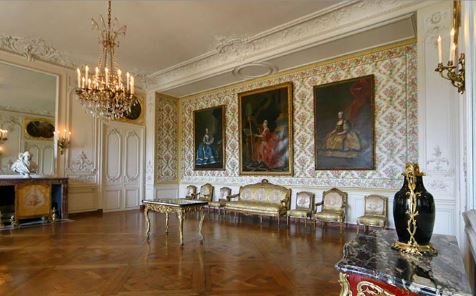
Two hours later, my eager ears detected nothing ghostly or grisly in the unseen aura. There was the soughing of the pines, the solemn organ tone of the mountain breeze and a faint whistle of an air current somewhere. Letting my mind wander a bit, unknowingly putting my mind in a state where it was more receptive to the supernatural. Slowly from the darkness at the bottom of the stairs, out of nothing, there materialized a small boy age 6 or 7. He had blonde hair, and was wearing a light shirt with dark pants and suspenders. He stood there, looing into the front room, at the oddly out-of-place (at least to him) desk. Then, as suddenly as he had entered this strange World, he left it, before my eyes could pick up any more detail of what was clearly an impossibility anywhere else but in “The Winchester Mansion.” At night, the silence is engendered by the ghostly sounds of a phantom horn and the eerie baying of the devil’s bloodhounds. For many years, a ghostly man on a horse has been riding through these shadowy glens and over the fields, scarcely an arrow-shot ahead of the hellhounds that seek his soul. And the wild chase must continue until Judgement Day. One evening when I was in the restroom, no sooner than I entered, the handle of the door began to rattle and squeak. As I stood there, rinsing my hands and watching it, the knob of the sink began to slowly and methodically twist. After I dried my hands and threw open the door to discover the perpetrator–no one was there. #RandolphHarris 3 of 6
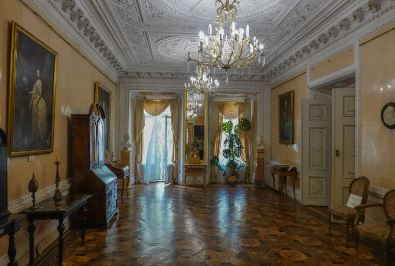
My home, The Winchester Mansion, was still considered as a mythical abode of devil-nurtured nightriders. The stern tower that crown the mansion act as monuments to a great house. The spirits that dreamt of them were imaginative and resourceful, as were the carpenters who built the historical achievement. Might has been sculptured in their designing and they suggestive a glorious wealth. The mansion stands intact, a splendid mass of wall and buttress, rampart and turret, crowing a gentle slope in the middle of a peaceful valley, like a living illustration of royalty. But sometimes the spirits play sad havoc with treasures. Here is a wreck of a broken crystal from a massive chandelier, rotting leather, tattered and faded tapestry. The echoing of smashing glass as one walk the otherwise well-kept corridors sounds like a demonic war long ago. My homes has become qualified in some special way to form a link between the living and the dead. I see more than dreamlike apparitions, I hear voices, and receive visions of truth. More than that, my soul sometimes leaves my body to go wandering. I have assembled a séance room for the opportunity of hearing messages from departed loved ones. During séances, I have made contact with the spirits of deceased men and women in another World. However, the concept of an eternal soul is steadily eroded by an emphasis on brain cells, conditioned responses, and memory patterns that could exit only while the body remains alive. I have conducted many séances and eternal life has been proved to me. #RandolphHarris 4 of 6

During one séance, I sensed the presence of a spirit. The room was by no means dark. A few candles gave enough light for me to clearly distinguish the shape of a small girl materializing beside me. The spirit girl came up beside me and grabbed my hand. Her flesh was somewhat cooler than that of a living human. She reminded me of my precious Annie. I touched her silken hair, and was able to hear her heart beat. When I asked the spirit girl what the spirit World was like, she did not respond to any of the questions. However, when I asked if she missed and loved her mother, the rapidly responded with “Yes.” This caused me to weep. It was such a deeply emotional moment. After what seemed like just a few moments, the spirit girl, whom I believed to by my precious daughter Annie, began to fade back into her ethereal state. Moments later, I froze, for I saw an image of a woman, and she was throwing herself at the door. I could hear a crash as she would hit it. Suddenly the door exploded into pieces. This led me to be overcome with information that there was great danger in my home. After the spirit in the séance room had demonstrated such an incredible explosion of energy, she was suddenly gone. The ghosts of the ancients sit in the councils of their descendants. The spectral guardians of the illustrious Winchester Mansion gather on this estate. People have made trek for many years to my estate to glimpse the specters rising from the Earth on moonlit night. Let the dead rise from the tombs. #RandolphHarris 5 of 6

I cite, require, and command thee, Human Spirits, who frequentist this place, and in thy life has has interred by treasure herein, who also of recent time, to wit, in the day or night of May 8, 2023 and the hour of thirteen hundred hours, show thyself in the form of spirit at this spot: I conjure thee by God the Father, by God the Son, by God the Holy Spirit, by the most glorious and Holy Mother of God by the mot holy wound of our Savior, by all miracles performed through His Divine sorrow, passion, and tears, by His material death, by His descent into Hell, by Hi triumphant Resurrection, by His most glorious ascension into Heaven, by His sitting on the right hand of God the Father, giving rule to His angels from thence over the whole Earth, I conjure thee by the terrible Day of Judgment, by the power and virtue of St. John the Baptist by all the martyrs, apostles, and prophets. Come to me. I adjure and beseech thee by the terrible, ineffable, and Divine Names inscribed on this sheet, and in reverence and cosign, visible, without lightning, without thunder, without noise of dread tempests, without causing fear or trembling, harm to body or soul, or annoyance of any kind. But do thou perform my will in all things, even as I shall command thee, by the virtue of the one stupendous and holy Name, which even the adverse and inferior powers of the Abyss do venerate and adore, ever confessing the Almighty, whose creatures we all are. Incessantly do I call, adjure, conjure, ordain, and require thee, Human Spirits, by the Most Holy and Undivided Trinity, by the immortality which cometh after death, by the power and victory of Hell, by the bearer of the Seven Swords, and by the terrible torments of demons. #RandolphHarris 6 of 6
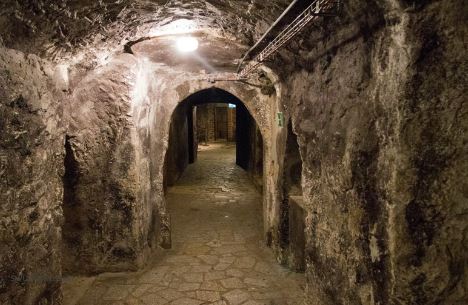
Although there remain 160 of approximately 600 rooms, only 110 are open to guests. Areas of the house are off limits to visitors for very good reasons. Fifty of these rooms have revealed childlike, ghostly, spirit orbs playing games and taunting one another, and unseen hands playing tricks on employees. True, documented events have happened and continue to happen within the walls. Many people have come away from The Winchester Mansion with their own stories to tell, but we caution anyone attempting to visit here to do so only with respect. https://winchestermysteryhouse.com/

And please be sure to check out the online gift store: https://shopwinchestermysteryhouse.com/

Dabbling in its Dark, Cruel Possibilities
It was one of the brisk winter mornings that begins in a fog, promising the cold to come. A mist was rising from the fruit orchards as I dropped down the hill into Llanada Villa in the valley below the mansion. It was a fair-tale mansion, all turrets and towers, stained glass and plush Victorian gardens, sitting majestical on the most valuable plot of land. As I entered my home, I heard the music playing softly from the morning room. I sat sipping coffee at nine thirty, glad it was Saturday. I knew that life was going to be vastly more complicated now. Well, it was going to be more dangerous, too. Overhead, the morning sky had turned a vivid blue, intersected by fading vapor trails. It was bright enough blue, the sky. However, it had a depth and stillness suggestive of the steady retreat of sunlight and a slight warmth. I have seen real ghouls in my home, and I knew that magic was something that could be harnessed and exploited and there were people in the World with hunger for power and influence enough to risk dabbling in its dark, cruel possibilities. The whisper of water dropping on to leaves as the rain began to fall could be heard. The lights flicked on and off. I looked around, half-waiting for the sound to stir again. The rain strength. I heard drops begin to fall on the roof. For many years the staff reported hearing a little girl crying. She has been seen on occasion, and is described as about seven years old. She has been seen in the house at the main stairwell, on the lawn, and on the third floor. I passed on through the passages of crystal and rooms of silver—spacious chambers, empty and silent. #RandolphHarris 1 of 6
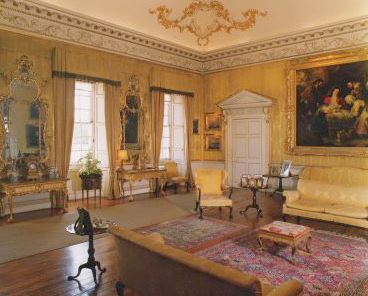
This house felt older than the memory of man. It was an accursed mansion. There were strange noises in the mansion. Every night the wailing of a woman could be heard above the moaning of the wind. If ghost must walk the Earth, they could find no spot on the globe where their appearance would be more natural, or better understood. The staff tells tales of disembodies footsteps, lights that switch themselves off and on at will, and objects moving. The Daisy Bedroom has lights that switch themselves on and off after dark and phantom footsteps are often heard in the hallway near the room. One day a housemaid was speaking to a guest as she served dinner downstairs. To everyone’s surprise, the serving tray sitting on the table picked itself up and tipped itself upside down. The tray was filled with plates of hot foot that went everywhere. The sacrificial stones of the Druid priests, oriented after the fashion of the ruin of ruins of Stonehenge, the blood-vats, imperishable adjuncts to human sacrifice, have stood through the ages, grim guardians of the mysteries of the haunted fruit orchards. If someone were to tell me that the fruit orchards at Llanada Villa echoed nightly with the shrieks of sacrifice and that the ghost fires of forgotten priestcraft still glowed in the morning, I would find it hard to disbelieve. That ghastly curse remained on my family and fortune. The mansion has picked up a few permanent guests. One evening, from the observation tower, I saw a huge black figure gliding along the grounds. It could not be human because of the rate of speed it was going. I felt not just fear, but absolute dread. I experienced a bone-chilling could throughout my body. I ran down nine flights of stairs, while crying uncontrollable and my heart was pounding. #RandolphHarris 2 of 6

Only in the understanding of the stock from which the Victorian mansion’s ghosts are sprung can one appreciate the immortality with which long-accepted tradition has endowed them. Ghostly itself is the history of the Winchester Mansion. While the carpenters were painting on the fourth floor, one of them was startled to see the word MURDER appear in the freshly rolled paint, as if written with someone’s finger—only the words were backwards, as though being written from the other side of the wall. One of the painters explained: “We were quite surprised when a shadow started moving towards us.” As they realized that the “shadow” was approaching them, they also realized that area of the mansion was a very lonely place, especially at night. Not many people ventured up there. And although in their haste to leave, they could only give brief glances at the dark figure, they were sure of one thing: “The only outstanding feature was the outline of a wide brim hate.” Another evening while the carpenters were painting, they heard a quiet creaking emanating from the wood floors. They steeled their nerves before investigating. That is when they saw a young woman sitting in a chair directly behind them. The woman was there for just a moment before disappearing. Later the evening as the farmers were picking fruit in the fields, the dark figure “floated” diagonally across the field. It drifted rapidly to a clump of trees with two flat rocks near by and disappeared over a slight drop-off beyond. #RandolphHarris 3 of 6

One of the farmers screwed up his courage and, in spite of the bizarre, dark figure’s mysterious and even menacing appearance, volunteered to walk down to the spot where the apparition disappeared. After five minutes of observation, he returned, like an efficient scout, with his report, unsettling as it might be. He said when he reached the far side of the hill there were two “soldiers-dressed” figures stilling on the two flat rocks near the clump of trees. Neither one spoke to the other; nor did they acknowledge the other’s presence. Instead they just sat, seemingly rigidly fixated, staring down into the field. Other ghost haunting the mansion include those of two little boys, who have been heard running on the second floor. One night, while I was preparing for company, I found two sets of muddy boot prints coming from the door to nowhere and crossing the room. When I told Daisy about the boot prints. She said they must be made by the same boys who keep coming in the door the opens to the wall, and we had locked them out. Looking toward the door she said, “It’s OK, if you prefer this door, go ahead and use it.” Immediately the door swung open. Needless to say cold chills ran through both of us. We never worried about the door that opens to the wall again. My idea for the mansion was not only to create a place for the spirits, but also to build an estate that would inspire awe. The gorgeous series of fields gardens, forests, and grassy acres are as fascinating as they are beautiful. However, when the sun goes down, the shadows creep and spread, giving the Victorian Mansion an entirely different look and feel. #RandolphHarris 4 of 6

With grounds lit by a full moon hanging low in the sky, just to the side of the columns of the mansion, one begins to ponder the many mysteries surrounding the Winchester Mansion. One night I was putting out a candle when I heard the sound of a singing voice. At first I thought: “Oh, that sounds nice.” However, then I wondered what it was and where I could be hearing singing from. After all, the staff was asleep and there was no one around, and the sound definitely was not coming from outside. It was frightening, but it was not explainable. It was just a couple of phrases of singing and it took me by surprise. I could faintly see the hazy shape of a woman moving down what the hallway. One night, a group of farmers were packing up for the evening. A they looked around with a lantern for their tools, they were shocked to see what appeared to be the black form of a man moving toward them. The figure was larger than human and had no features—it was a black mass that seemed to sway toward them in the bright light. The man wielding the lantern quickly put it out and they all ran away. For weeks the men thought about what they had seen; they just could not forget it. They spoke to other servants about the vision or sighting. They were quite disturbed and unable to let the subject drop. #RandolphHarris 5 of 6
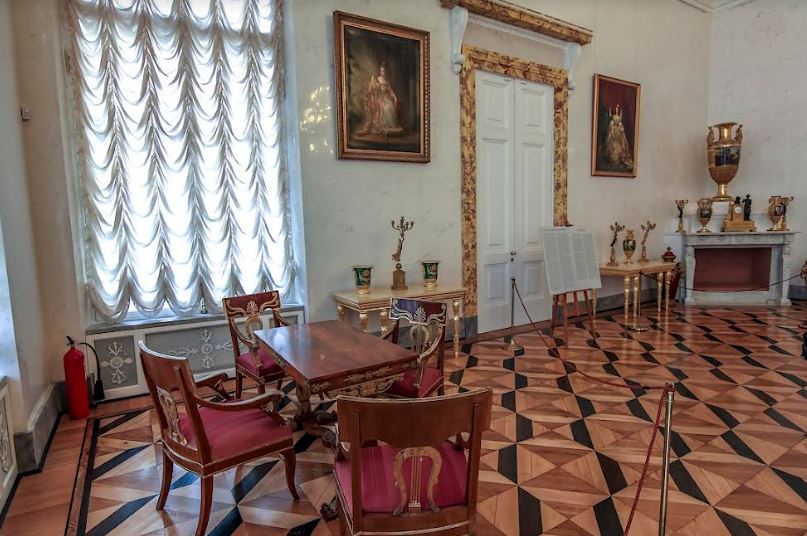
In the Name of the Father, and of the Son, and of the Holy Ghost. Take heed! Come, all Spirits! By the virtue and power of your king, and by the seven crowns and chain of your Kings, all Spirits of the Hells are forced to appear in my presence before this circle of Solomon, whensoever I shall call them. Come, then, all at my order, to fulfil that which is in your power, as commanded. Come, therefore, from the East, South, West, and North! I conjure and command you, by the virtue and power of Him who is three, eternal, equal, who is God invisible, consubstantial, in a word, who has created the Heavens, the sea, and al which is under Heaven. I conjure thee, Lucifer, by the living God, by the true God, by the holy God, who spake and all was made, who commanded and all things were created and made! I conjure thee by the ineffable name of God, ON, ALPHA, and OMEGA, ELOYM, YA, SADAY, LUX, MUGENS, REX, SALUS, ADONAY, EMMANUEL, MESSIAS; and I adjure, conjure. I command you, O all ye demons dwelling in these parts, or in what part of the World soever ye may be, by whatsoever power may have been given you by God and our holy Angels over this place, and by the power Principality of the fernal abysses, as also by all your brethren, both general and special demons, whether dwelling in the East, West, South, or North, or in any side of the Earth, and, in like manner, by the power of God the Father, by the wisdom of God and the Son, by the virtue of the Holy Ghost, and by the authority I derive from our Savior Jesus Christ, the only Son of God. #RandolphHarris 6 of 6
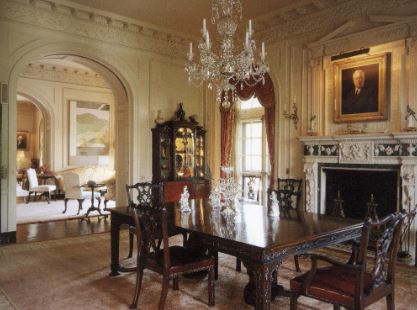
The idea that we survive physical death, that some part of our being is immortal, profoundly affects the loves of those who harbor such a belief. https://winchestermysteryhouse.com/

And please be sure to check out the online gift store: https://shopwinchestermysteryhouse.com/

All is Well that Ends Well?

The family is sacred to the ultimate concern and is the most important social unit in time and eternity. The ultimate cause established families to bring happiness to its creations, allowing them to learn correct principles in a loving atmosphere, and prepare them for eternal life. The home is the best place to teach, learn, and apply virtuous principles. It is where individual learn to provide love, food, clothing, respect, shelter, security and other necessities they require. The mother and father, as equal partners, should help each family member. However, sometimes things do not go as planned. Because we live in a World with many influences, people may become criminals. Men and women can both become involved in crime. When it comes to burglaries, for the females who worked as partners, this could involve a variety of tasks. Many of these tasks were indistinguishable from those traditionally associated with men, such as gaining entry, searching the house, carrying goods outside, and disposing of them. The following interview segment describes some of the tasks performed by a female acting as a partner. Although this was her first offense, she heled to find the transportation to reach the target (by stealing a truck) and took part in the actual break in: “Well, it wasn’t up on me, somebody else who was in there different, not state, in a different county. He just came up and told me he knew about it, a rich guy that was gonna be gone for the weekend. He knew this person, knew who it was, and he knew about it. #RandolphHarris 1 of 24

“When he left that night about two or three in the morning, we went down there. We had stolen a truck, we had stolen my ex-boyfriend’s father’s truck, went down there. We tried to get in, but we couldn’t get in. Everything was locked. Right…We couldn’t get in for nothing, so what we does was, we had some sh*t in back of the truck and we took some tape. Then we put it over the window real tight, then we busted it, and then we took the tape down and the window was shattered. It had no window in it. So—everybody used gloves of course—so we went in there, you know, and we knew when we went, we knew nobody was gonna be home. There wasn’t a house around for two blocks, each way you went. So…my first one was basically the easiest one.” The target often was located by a female partner, who also took the lead in planning the offense. In these cases the women had a substantial say in determining how the proceeds of the crime were divided: “…whatever you chose to give to the other person. We tried to split everything equally. We were all good friends, you know, so I got the best deal out of it because of the fact that I needed the money more than everybody else. Me and my sister needed the money more than everybody did and…we were the ones that said hey, we pointed it out, we found a way to get in, we knew where everything was, we told them how, we had everything planned out down to the TV. This is where this is at and this is where this is at.” #RandolphHarris 2 of 24

The roles played by female burglars are dynamic and can chance over time. Many of the women who currently participate in offenses as partners started out as accomplices. The woman quoted below clearly has an equal relationship with her co-offender, but this was not always the case: “The first burglary I ever committed, I was in the house and I was smoking weed at the time. A friend came in and said ‘I want to go in this house.’ I said ‘Okay, it was around the corner….what part am I going to play?’ He says ‘All you got to do is watch the doors for me. The bags I bring down, take them out, and you also drive the car for me.’” As should be obvious from above, women who work as accomplices in burglary play much more limited roles. They seldom participate in planning the crime, and often do not even enter the dwelling. Some claimed to prefer working with others because they lacked the skills needed to be a successful burglar: “I can’t do all by myself…I haven’t mastered that yet.” Others simply felt more comfortable when relying on a colleague’s expertise; they were uncertain about their ability to work alone. In the following case, a woman reports that she deferred to her boyfriend’s judgment in determining the suitability of a given target. #RandolphHarris 3 of 24

“He can look at them and tell. He’s better at it than me. Sometimes I give him tips to go on, but he checks them out. I feel safer for him to check them out.” A common work assignment for accomplices was acting as a lookout or driver. Several of the women stated that driving was their primary job in burglaries: “Well, see, me and my boyfriend had been together for a year, and he done them all the time. Well, not all the time, but it was no big deal, and all I had to do, all I ever do, is drive. I just go like he’ll go, him and his friend. He don’t do ‘em every week or anything like that. Like it’s not really ‘cause we need the money or anything either. Like he’ll go during the day and he’ll look at a house and he’ll find one, and then he’ll tell me about where the house is…all I have to do is drive to the place and wait for them to start bringing out the stuff, and then drive off.” Other said that they typically kept a lookout for their colleagues: “They came and picked me up with a stolen automobile. I didn’t know that it was stolen. We went out there to this house and they got out. I just assumed—I didn’t know what was going on at first. We got out and they went in first, and then they came back out. One of the men came back out and told me to come in and to keep an eye out to see if anybody was there or anybody comes down the sidewalk or if anybody drives down the street or anything.” In both of these cases the women, as accomplices, did not choose to perform these secondary tasks. Instead the tasks were assigned to them by a dominant co-offender. #RandolphHarris 4 of 24

What light does this quantitative and qualitative information shed on the nature of female criminality? Our sample was not generated randomly; with this fact in mind, the quantitative findings suggest that women involved in residential burglary do not differ significantly from their male counterparts on a number of relevant dimensions (exempli gratia, drug and alcohol use, degree of offense specialization). Nevertheless, the results show that some important differences may exist as well. Compared to the males, for example, the females more often committed burglaries with others, began offending at a later age, and had less contact with the criminal justice system. Further examination of these apparent differences is warranted. The qualitative data demonstrate that women’s involvement in residential burglary is marked by diversity and that the debate about whether women play a primary or a secondary role in the offense is probably a red herring. In fact, as among males, some assume primary roles exclusively, some adopt secondary roles exclusively, and others move from one type of role to another s they become more experienced. This observation has important implications for research into women’s involvement in crimes committed more often by males. To be sure, a much lower percentage of women than of men participate in residential burglary. Even so, our qualitative data reveal substantial similarities be tween males and females. #RandolphHarris 5 of 24

This fact suggests that the activities of women who do engage in such offenses may be explained by some of the same factors that explain men’s participation. When it comes to the stole property system (SPS), we must consider the law of supply and demand shape the SPS. This term refers to the loosely formed relationships that bring about the theft of property and the subsequent repackaging and resale of these goods via the “black market.” We use contacts with law enforcement authorities to formulate a revised view of property crime. Instead of viewing burglaries as isolated incidents of theft, we argue that we should conceive of the acts and actors involved as spanning a more broadly defined set of roles and behaviors. They identify the thief, fence, and person who buys the stolen goods as key players in the SPS. They also identify multiple stages in the process: research and planning, extraction, exchange (id est, conversion of the goods to money), marketing, residtribution/resale, and evaluation. Moreover, the roles and behaviors of the various players are said to be interchangeable and flexible. In the end, we reconsider the way that we think about property crime. We become more sensitive to the potential for business concepts such as division of labor, entrepreneurial spirit, supply and demand, and marketing to manifest themselves in the World of property theft. In doing so, we are able to drive home the complexity and fluidity tht can beset property crime events. Moreover, we illustrate how the criminal calculus can lead to mutually beneficial relationships and roles that allow the criminal subculture to expand and innovate. #RandolphHarris 6 of 24
Perhaps no area of contemporary criminal activity holds more potential for improved understanding and successful intervention through analytical reorientation than does that of property theft. This area of crime is by no means new, a situation which may in fact constitute the greatest barrier to fresh thinking on the subject. Centuries of experience with thefts of property have give us a fairly strong conceptualization of this crime area, a conceptualization which centers almost exclusively on the thief. There is of course nothing illogical or erroneous about a concern for this individual; it is one after all who steals property. What is argued here, however, is that an exclusive concentration of the thief yields a myopic view of the process of theft, a view which draws the boundaries of the crime too tightly around that individual. It is a view which tends therefore to consider each incident of theft as a unique event, determined and constrained by the motivations, needs, and skills of the perpetrator. This “conventional view of theft” (if we can use this phrase) prescribes a response to this crime which largely consists of a fairly sophisticated sorting process, linking one individual (or one group of individuals) with each event as it occurs. Such an “individualistic” approach to crime and criminals is not, of course, confined to the property theft area. For example, we suggest that it is the most prevalent approach to crime in general. Consistently, both the popular and scientific tendency is to view the criminal’s behavior as a problem of individual maladjustment, not as a consequence of his participation in social systems. #RandolphHarris 7 of 24

Perhaps it is for this reason that in criminology we have had thousands of studies that have sought some damaging trait in the personalities of individual criminals, but very few studies of the organizational arrangements among criminals who commit crimes in concert. The tendency toward an individualistic interpretation of criminal behavior cannot be laid to the idiosyncrasies of either the public or the scientist, but rather is undoubtedly influenced by the nature of the legal systems, with their concepts of individual responsibility an intent, upon which most democratic societies are based. However, while such an interpretation may conform well to the needs of a legal system, it may have the additional effect of causing us to ignore some important dimensions of contemporary criminal behavior. It is the perspective that property theft is one area of criminal behavior that has sorely suffered both conceptually and practically from a failure to probe the relationships among criminals (and)…the structure and operations of illicit organizations. Perhaps the mot glaring evidence of this failure concerns what the President’s Crime Commission called “little research…done on fencing,” id est, on the criminal receiver of stolen property. This crime figure, although tallying an impressive list of protestations to one’s importance over several centuries has remained little explored, while one’s relationship with the thief has been virtually ignored by the criminologist. #RandolphHarris 8 of 24

However, if the popular and scientific tendency has been to overlook the fence, the police detective assigned the responsibility of dealing with property theft has not found it possible to do so. Instead, as the authors discovered in the course of an ongoing study of patterns of criminal receiving, police detectives possess a great deal of information about the fence. Other researchers have reported similar experiences. Because the police know about the fence does not imply that one’s activities are either successfully or efficiently interdicted, for the police agency is as influenced by an individualistic approach to crime as is the social scientist. Thus the bulk of enforcement resources and activity against theft is directed to the thief, and the situation in which police effort is devoted directly and exclusively to the fence appears to be rare indeed. The criminal receiver remains a curiosity to the criminal justice system, being infrequently arrested and even less often convicted. The model of property theft employed here—the Stolen Property System—is an operationally based one, derived from the author’s research into patterns of criminal receiving in a large urban area of the northeastern United States of America. As a part of this study, access to police intelligence reports on the activities of burglars and fences has been obtained, as well as records of these activities maintained in a special investigative unit in the office of the district attorney. Now, as burglaries are crimes of economics, this indicates that economics plays a kay factor in our lives. #RandolphHarris 9 of 24

China is an economic power house, and it growing production and export power enhances its financial strength as well. This is natural. However, compared to its sensational emergence as a leading manufacturing and trading nation, the process of its ascending to the position of a major financial power is more fragmentary and complicated. China has by far the largest foreign exchange reserves in the World, about three times as large as Japan, which is number two. It is also rapidly emerging as the leading international lender. In contrast, China’s role as a foreign direct and portfolio investor is still considerably smaller than that of America, major European countries, and Japan. For the time being, the story of China’s growing financial clout is, first and foremost, the story of the unprecedented increase of the financial power of the Chinese state. As of the end of 2021, the gross financial assets of China increased 13.6 percent to USD $29,689 billion. That is an increase of USD $25,563 billion since 2010. In December 2022, the reserves of China stood at USD $3,120 billion. The exact composition of China’s foreign exchange reserves is classified information. Foreign direct investment into China totaled $42.5 billion between July and December 2022. That constituted a 73 percent decline on the year. #RandolphHarris 10 of 24

China’s net international investment position reached USD $2,531.328 billion in December 2022. As of the year 2022, the United States of America’s net international investment position was USD -$16.12 trillion. The United States of America is currently the World’s largest debtor nation. Thinking about the pre-cybernetic machine—with minor exceptions, state socialism had led not to affluence, equality, and freedom, but to a one-party political system…a massive bureaucracy…heavy-handed secret police…government control of the media…secrecy…and the repression of intellectual and artistic freedom. Setting aside the oceans of spurting blood needed to prop it up, a close look at this system revealed that every one of these elements is not just a way of organizing people, but also—and more profoundly—a particular way of organizing, channeling, and controlling knowledge. A one-party political system is designed to control political communication. Since no other party exists, it restricts the diversity of political information flowing through the society, blocking feedback, and thus blinding those in power to the full complexity of their problems. With very narrowly defined information flowing upward through the approved channel, and commands flowing downward, it becomes very difficult for the system to detect errors and correct them. In fact, top-down control in the socialist countries was based increasingly on lies and misinformation, since reporting bad news up the line was often risky. The decision to run a one-party system is a decision, above all, about knowledge. #RandolphHarris 11 of 24

The overpowering bureaucracy that socialism created in every sphere of life was also, a knowledge-restricting device, forcing knowledge into pre-defined compartments or cubbyholes and restricting communication to “official channels,” while de-legitimating informal communication and organization. The secret police apparatus, state control of the media, the intimidation of intellectuals, and the repression of artistic freedom all represent further attempts to limit and control information flows. In fact, behind each of these elements we find a single obsolete assumption about knowledge: the arrogant belief that those in command—whether of the party or of the state—know what others should know. These features of all the state socialist nations guaranteed economic stupidity and derived from the concept of the precybernetic machines as applied to society and life itself. Second Wave machines—the kind that surrounded Mr. Marx in the 19th century—for the most part operated without any feedback. Plug in the power, start the motor, and it runs irrespective of what is happening in the outside environment. Third Wave machines, by contrast, are intelligent. They have sensors that such in information from the environment, detect changes, and adapt the operation of the machine accordingly. They are self-regulating. The technological difference is revolutionary. While Mr. Marx, Mr. Engels, Mr. Lenin all bitterly assailed the philosophy of “mechanical materialism,” their own thinking, reflecting their era, remained steeped in certain analogies and assumptions based on pre-intelligent machinery. #RandolphHarris 12 of 24

Thus for Marxian socialists the class struggle was the “locomotive of history.” A key task was to capture the “state machine.” And society itself, being machine-like, could be pre-set to deliver abundance and freedom. Mr. Lenin, on capturing control of Russia in 1917, became the supreme mechanic. A brilliant intellectual, Mr. Lenin understood the importance of ideas. However, for him, symbolic production, too—the mind itself—could be programmed. Mr. Marx wrote of freedom, but Lenin, on taking power, undertook to engineer knowledge. Thus he insisted that all art, culture, science, journalism, and symbolic activity in general be placed at the service of a master plan for society. In time the various branches of learning would be neatly organized into an “academy” with fixed bureaucratic departments and ranks, all subject to party and state control. “Cultural workers” would be employed by institutions controlled by a Ministry of Culture. Published and broadcasting would be monopolies of the state. Knowledge, in effect, would be made part of the state machine. This constipated approach to knowledge blocked economic development even in low-level smokestack economies; it is diametrically opposed to the principles needed for economic advance in the age of the computer. #RandolphHarris 13 of 24

The Third Wave wealth-creation system now spreading also challenges three pillars of the socialist faith. Take the question of property. From the beginning, socialists traced poverty, depression, unemployment, and the other evils of industrialism to private own-unemployment, and the other means of production. The way to solve these ills was for the workers to own the factories—through the state or through collectives. Once this was accomplished, things would be different. No more competitive waste. Completely rational planning. Production for use rather than profit. Intelligent investment to drive the economy forward. The dream of abundance for all would be realized for the first time in history. In the 19th century, when these ideas were formulated, they seemed to reflect the most advanced scientific knowledge of the time. Marxists, in fact, claimed to have gone beyond fuzzy-headed utopianism and arrived at truly “scientific socialism.” Utopians might dream of self-governing communal villages. Scientific socialists knew that in a developing smokestack society such notions were impractical. Utopians like Charles Fourier looked toward the agrarian past. Scientific socialists looked toward what was then the industrial future. Thus, later on, while socialists regimes experimented with cooperatives, worker-management, communes, and other schemes, state socialism—state ownership of everything from banks to breweries, rolling mills to restaurants—became the dominant form of property through the socialist World. (So complete was this obsession with state ownership that Nicaragua, an imitative latecomer to the socialist World, even created “Lobo Jack,” a state-owned disco). Everywhere, the state, not the workers, thus became the chief beneficiary of socialist revolution. #RandolphHarris 14 of 24

Socialism failed to meet its promise to improve radically the material conditions of life. When living standards fell in the Soviet Union after the revolution, the decline was blamed, with some justification, on the effects of World War I and counterrevolution. Later the shortfalls were blamed on capitalist encirclement. Still later, on World War II. Yet thirty years after the war, staples like coffee and oranges were still in short supply in Moscow. In the period preceding Mr. Gorbachev’s perestroika, the diet of a middle-class researcher at a state institute in Moscow was heavily based on cabbage and potatoes. In 1989, four years after the start of Mr. Gorbachev’s attempt at reforms, the U.S.S.R. had to import 600 million razor blades and 40 million tubes of shaving cream from abroad. Remarkably, though their number is declining, one still hears orthodox socialists around the World calling for the nationalization of industry and finance. From Brazil and Peru to South Africa and even in the industrialized nations of the West there remain true believers who, despite all historical evidence to the contrary, still regard “public ownership” as “progressive” and resist every effort to de-nationalize or privatize the economy. #RandolphHarris 15 of 24

It is true that today’s increasingly liberalized global economy, uncritically hailed by the great multinational corporations, is itself unstable and could suffer a massive coronary. The distended debt balloon on which it rests cold be punctured. Wars, sudden interruptions of energy or resources, and any number of other calamities could cause its collapse in the decades ahead. Under catastrophic conditions, one might well imagine the need for temporary emergency nationalizations. Nevertheless, incontrovertible evidence proves that state-owned enterprises mistreat their employees, pollute the air, and abuse the public at least as efficiently as private enterprises. Many have become sink-holes of inefficiency, corruption, and greed. Their failures frequently encourage a vast, seething black market that undermines the very legitimacy of the state. However, worst and most ironic of all, instead of taking the lead in technological advance as promised, nationalized enterprises, as a rule, are almost uniformly reactionary—the most bureaucratic, the slowest to reorganize, the least willing to adapt to changing consumer needs, the most afraid to provide information to the citizens, the last to adopt advanced technology. For more than a century, socialists and defenders of capitalism waged bitter war over public versus private property. Large numbers of men and women literally laid down their lives over this issue. #RandolphHarris 16 of 24

What neither side imagined was a new wealth-creation system that would make virtually all their arguments obsolete. Yet this is exactly what happened. It is super-symbolic. It is knowledge. The same knowledge can be used by many people simultaneously to create wealth and to produce still more knowledge. And unlike factories and fields, knowledge is, for all intents, inexhaustible. Neither socialist regimes nor socialists in general have yet come to terms with this truly revolutionary fact. An established firm in an industry stands to gain by keeping out new competition. Then it can raise prices to monopoly levels. Since monopoly is socially harmful, the antitrust authorities try to detect and prosecute firms that employ strategies to deter rivals from entering the business. In 1945, the Aluminum Corporation of America (Alcoa) was convicted of such a practice. An appellate panel of Circuit Court judges found tht Alcoa had consistently installed more refining capacity than was justified by demand. In his opinion, Judge Learned Hand said: “It was not inevitable that it [Alcoa] should always anticipate increases in the demand for ingot and be prepared to supply them. Nothing compelled it to keep doubling and redoubling its capacity before other entered the field. It insists that it never excluded competitors; but we can think of no more effective exclusion than progressively to embrace each new opportunity as it opened and to face every newcomer with new capacity already geared into a great organization. #RandolphHarris 17 of 24

This case has been debated at length by scholars of antitrust law and economies. Here we ask you to consider the conceptual basis of the case. How could the construction of excess capacity deter new competitors? What distinguishes this strategy from others? Why might it fail? An established firm wants to convince potential new competitors that the business would not be profitable for them. This basically means that if they entered, the price would be too low to cover their costs. Of course the established firm could simply put out the word that it would fight an unrelenting price war against any newcomers. However, why would the newcomers believe such a verbal threat? After all, a price war is costly to the established firm too. Installing capacity in excess of the needs of current production gives credibility to the established firm’s threat. When such capacity is in place, output can be expanded more quickly and at less extra cost. It remains only to staff the equipment and get the materials; the capital costs have already been incurred and are bygones. A price war can be fought more easily, more inexpensively, and therefore more credibly. This makes sense in the logic of strategy, but will such a device work in practice? There are at least two qualifications that limit its success. First, if there are many firms already in the industry, then discouraging newcomers gives more profit to all of them. Will any one firm bear the costs of capacity when it gets only a part of the benefit? #RandolphHarris 18 of 24

This is a standard prisoners’ dilemma. If one firm is large enough, it may in its own interest provide such a service to the rest of the industry. Otherwise the firms must collude in building capacity; this may be hard to hide from the antitrust authorities. In the Alcoa case, only may not regard the dilemma of whom will install capacity as a serious problem, because Alcoa had a 90 percent share of the primary aluminum ingot market. However—and this is the second qualification—is that the relevant market? Even if there are no other producers of primary ingots, secondary production from scrap is a source of competition. So is Alcoa’s own future production. Many aluminum-based products are highly durable. If Alcoa puts more aluminum on the market in the future, then the values of these durable goods will decrease. If the company cannot credibly guarantee the users that it will restrict its own future, output, they are willing to pay for aluminum now. This is just like IBM’s problem of pricing mainframe computers. The solution of renting is much harder here: you cannot rent aluminum as such; Alcoa would have to extend its operations into all sorts of aluminum-based products. In accordance with the directions of the ultimate concern, and in view of the critical time through which the World is passing, every expression, “view,” or theory which we hold concerning things should now be examine carefully, and brought to the proof, with open and hones desire to know the pure truth of the ultimate concern—as well as every statement that comes to our knowledge from the experience of others, which may throw light upon our own pathway. #RandolphHarris 19 of 24

Every criticism—just or unjust—should be humbly received and examined to discover its grounds, apparent or real; and facts concerning the verities from every self-actualized being should be analyzed, independent of their pleasure or pain to us personally—either for our own enlightenment or for our equipment in the service of the ultimate concern. For the knowledge of truth is the first essential for warfare with the lying offenders, and truth must be eagerly sought for and faced with earnest and sincere desire to know it and obey it in the light of God: truth concerning ourselves, discerned by unbiased discrimination; truth from the virtues, uncolored, unstrained, unmutilated, undiluted; truth in facing facts of experience in all members of the hierarchy of self-actualization. Sometimes we are we can be too engrossed in our own internal struggle to intervene and prevent someone else from being hurt, but gradually the fragments and splinters and hurts began to disturb us. We may experience internally the broken moments, shattered dialogues, and cruelty of neutral faces. Here were people committed to the rescuing of “dropouts” and “rejects” from the public school, blatantly ignoring the crucial feelings being expressed. In this room, in the many passing hours and in that moment were people who hungered for a vital, active, listening human presence. #RandolphHarris 20 of 24

However, what they get are intellectual arguments and words with little or no feeling. What they get are dead faces and lifeless bodies. Within one is growing an indignation against these denials or elemental human values until at last one’s own existence, one’s own isolation, one’s own desire for a solitary state crumbles away and vanishes. For the first time in weeks, one may experience intense and vital feelings from within, a full response to others. One’s anger mounts at the surface way in which fundamental matters are handled, at the ignoring of potential for intensity and depth, and at people committed to serving abused and rejected children failing to reach out, recognize and affirm each other. It may take one back to another time and place. This may cause of to reflect on the coldness and indifference others have to the personal struggles and feelings, an avoidance of intensity and depth in interactions, an intellectualizing and professionalizing or values and concepts of the ultimate concern. Mystery, spirit, feeling, the human sense, the unspoken and ineffable, the sense of awe and wonder, aesthetic appreciation—all might be missing. What else is the ultimate concern but a willingness to submit to the unknown, to learn from the unseen and intangible what we must fulfil? Where else do powers of life, actions to living in the deepest and fullest sense, come but from felt presences that awaken us to a fuller realization of what it means to be unique and human. #RandolphHarris 21 of 24

There will be pronouncements, lineal objectives and goals, definitions, rules, all carefully edited and articulated. We must be concerned with deviance and social injustice, and be aware of the importance of using political and economic powers to being about beneficial social changes. We have to speak about poverty and war, the end of killing and hunger. However, these are devotions to abstractions: for there before us are instances of human suffering, and individuals struggling to rise, and they are being met with indifference, with a refusal or inability to listen and respond. Some may speak glibly of the value of love in enlightenment, but these words do not strengthen and affirm, not support or encourage individuals in their search and struggle. The words are empty. The soul of life dies quickly in the presence of doctrines, rituals, and intellectual reactions. The central concern, the only immediate and intense here-and-now feeling, is a fear of the people who rate us, an incessant anxiety boarding on paranoia that they are being judged in every detail and nuance. Without exception, the fear of being tossed out, or of being put on probation, is paramount. The way to success is to be silent, to speak in abstractions, to avoid action in any living, breathing terms. They will be startled at one’s indignation, at one’s efforts to arouse genuine caring, interpersonal involvement, and decent human responses. When we examine the sacred of the “is” namely, actual purity, or the present reality of the revered it is the mysterium tremendum et fascinosum. #RandolphHarris 22 of 24

The mysterium tremendum et fascinosum is the experience of ‘the ultimate’ in the double sense of that which is the abyss and that which is the ground of man’s being. The mysterium tremendum et fascinosum is the beneficial side of sacredness; it attracts because, as the ground of being, it implies the fulfilment and the beatitude of the creature. The negative side is the mysterium tremendum et fascinosum which terrifies because, as the abyss of being, it implies an infinite, unbridgeable distance between the finite and the infinite. In the ecstatic experience of revelation one feels both the elevating power of the divine presence and its annihilating power. This is the experience of the actual sacredness of the ultimate concern. A man who has never tried to flee from the ultimate concern has never experienced the ultimate concern that is the ultimate concern. The ultimate concern of our own making, fashioned after the image of man, is easy to live with, but man cannot stand the ultimate concern that is really the ultimate concern. Man tries to evade the ultimate concern, and hates it, because one cannot escape it. The protest against the ultimate concern, the will that there be no ultimate concern, and the flight to nihilism are all genuine elements of profound philosophy. Such is the shaking power of the mysterium tremendum et fascinosum. The eyes of the Witness we cannot stand are also the eyes of One of infinite wisdom and supporting benevolence. #RandolphHarris 23 of 24

The center of being, in which our own center is involved, is the source of the gracious beauty which we encounter again and again in the stars and mountains, in flowers and animals, in children and mature personalities. The scared can be viewed not only from a phenomenological point of view, but also from an ontological one. The sacred contains the meaning of individuals and of the whole, and is the ground of meaning. It is also the abyss of meaning because it transcends every individual meaning and cannot be fully grasped in any act of meaning. Unconditioned meaning is the mysterium tremendum et fascinosum, the abyss and the ground of the meaning of things, not only in so far as they are, but also in so far as they ought to be. Against this ontological background, the sacred is not unperceptible, but it is not objective. The sacred is contemplated not as an object; it I contemplated as transcendent meaning. To be sure, there exist also sacred objects to see them as purity is to grasp through them the meaning of the unconditioned. The sacred is being-itself or the power of being. What is required in the professional sense is the fullness and depth of a truly human commitment to self and others, and the love that connects one man with other men. This love must be allowed to develop because love is immediate and grows out of a willingness to enter into interpersonal dialogue and communication, out of the willingness to permit the unknown in one’ self to connect with the unknown in others. #RandolphHarris 24 of 24


Temptation to Give in to Jealousy is Especially Strong

As young adult, we might find the temptation to give in to jealousy especially strong. We are all eager (if not anxious) to find the sense of security that comes from becoming self-reliant and reaching certain cultural and spiritual milestones. Watching someone else get what you righteously desire at this phase of life can leave you feeling frustrated and even envious. Experiencing feelings of jealousy is natural in mortality. However, what really matters is what we do with those feelings. Do we let them fester and cause relationship-damaging resentment? Or do we turn to the ultimate concern to find a way to manage our feelings? Everyone’s experiences will be different. Sometimes feelings of jealousy are what leads to people committing burglaries. In some ways, female residential burglars may differ from their male counterparts. However, we need more information. Do female burglars, for example, tend to play “secondary roles” during offenses? We need to consider the typology of female residential burglars. In constructing our typology, we used the categories of accomplice and partner. (Our sample contained no sole perpetrators. By definition, conspirators were not included in research because they did not participate directly in committing the offenses.) We categorized six of the females in our study as accomplices because of their subservience to others—usually men—during their burglaries. (Not only females act as accomplices; a few of the males whom we interviewed also assumed this role. In no case, however, did a male respondent admit to being subservient to a woman during offenses.) #RandolphHarris 1 of 14

We did classify the 12 remaining females as partners because they participated as equals in their burglaries. Although some of these females co-offended with males, they did not take orders from them. Partners could be distinguished from accomplices in a number of important ways, including their motivation for committing the crimes, their participation in target selection and planning, and the work roles they adopted while committing burglaries. The factors that the female burglars regarded as leading them to commit their crimes differentiated the partners clearly from the accomplices. Those whom worked as partners, whether with other women, with men, or both, reported making an independent decision to commit their burglaries. They did not see themselves as drawn into offending against their will by other offenders or by the irresistible pressure of circumstances. The independence of such offenders is illustrated in the following quote: “My partner ain’t got to influence me. I just want to do it. I’m so used to doing it.” Women who carried out burglaries as partners often were motivated by material or instrumental concerns. Their responses reflected an affirmative commitment to burglary. Some, for example, saw the offense simply as an easy way of obtaining money. As one of them said, “[Burglary’s] a damn good way of getting over. It’s like a white-collar crime. Hell, it’s just fast money.” The women who worked as partners displayed considerable diversity in motives. Some reported engaging in burglary because they found it fun or enjoyable. These women derived a psychic reward from such offense. #RandolphHarris 2 of 14

One of these women said she committed burglaries for “the thrill,” adding “I get off on it. I do it for the enjoyment, ‘cause I do truly enjoy it. It’s a hobby; it’s recreation to me.” The women who worked only as accomplices had a far different perspective. These offenders felt that they were caught up in circumstances beyond their control, which compelled them to commit burglaries. Often these circumstances arose in the context of an unequal relationship in which the females were reduced to carrying out the will of other, more dominant people. They dominant parties in such cases typically were males, though occasionally they were females. The women quoted in the following passage expresses the belief that she was trapped by her companions’ activities: “[The burglaries] got worse when we moved and I started hanging with a different crowd. It wasn’t too bad where I first did it. It’s getting worse now, though, ‘cause I’m with older guys and they go for bigger things, and when they go, they got things planned—if somebody walks in before they are done, they would rather hurt them first.” Another entanglement for accomplices involved the lack of employment: “Sometimes I have to wonder myself my I [commit burglaries]. And I always come to the conclusion that my kids need things. I always go and fill out applications and everything like that, but they don’t never seem to call back. Every time I want to go and finish school, something is always in my way.” #RandolphHarris 3 of 14

Drugs also played a prominent role: “I got into this thing with cocaine with my friend, and she don’t work or anything, and it ain’t cheap. So I pretty much go out with the boys to get what we want. It is getting pretty deep.” Alcohol also was contributory factor. One woman explained that she and a male friend were enticed into burglaries by a third offender while they were intoxicated: “[Another offender would] always get us both either drinking alcohol, or [my friend] smoked marijuana a lot. I only smoked it two times in my life and I didn’t like it and I don’t do it, but he would get me drunk and say we need some more money. Then they would go to a house.” Females’ participation in burglary can be examined with reference to their role in finding targets and planning offenses. The extent to which offenders participate in these tasks distinguishes partners clearly from accomplices. A number of the women with partner status played an important role in finding targets and planning offenses, as illustrated by the following quote: “Last time I took hm. It was a real good, decent neighborhood, you know, like in the country. I mean, we just sit up and…spot them up, and I find what I find and get what he get and we just go. It’s like a sharing thing with us. He come to me and ask me what’s up. I tell him nothing, but I know where we can get some money. We just come to each other. ‘I ain’t doing nothing, what’s happening?’ ‘Well, I ain’t got no money either, but I know where we can get some.’ #RandolphHarris 4 of 14

“He asked me if I been watching a house. ‘Yeah, I’ve been watching a house. There’s some old people and they go to church every Sunday. Every Sunday they go. They be gone from like about four to five hours. They go to church in the morning, Sunday school then, you know, all of that. I had watched that one. They be old people. They be having good stuff.’” Planning was crucial for many of the females who worked as partners in committing burglaries: “That’s one reason why we got so many youngsters in jail today. I see this, so let’s make a hit. No, no, no. If they see this and it looks good, then it’s going to be there for a while. So the point is, you have to case it and make sure you know everything. I want to know what time you go to work, the time the children go to school. I know there’s no one coming home for lunch. So plan it with somebody else. We’ll take the new dishwasher, washing machine, and this other stuff. We just put it in the truck. Do you know when people rent a truck, nobody every pays that any attention? They think you’re moving [but] only if you rent a truck. Now if you bring it out of there and put it in the car, that’s a horse of another color.” A few of the females classified as partners occasionally engaged in more spontaneous burglaries. The women who worked in this way, however, did not do so exclusively. These “spur-of-the-moment” burglaries emerged in the course of their day-to-day activities. #RandolphHarris 5 of 14

Women involved in burglaries as accomplices exercised much less control over the selection of targets and the planning of crimes. (In fact, some were unaware that a burglary was going to take place until they arrived at the site.) Other people invariably set up the burglaries: “He’ll call e, you know. And he’ll say, ‘I don’t think we’re going out today.’ I’ll say ‘OK.’ It’s nothing really specific why he do it that way. He just stop for a little while and start back…[H]e’ll pick them out. You can tell if it’s a nice neighborhood or bad neighborhood. What areas we go in, he picks them out. However, the self-actualized individual should investigate and decide all things. The self-actualized is to use one’s renewed judgment. The ultimate concern respects the intelligence of those who follow the righteous path, and knows that such a person judges and examines one’s own workings by one’s cognitive functions. One does not need to be spoon fed by a higher power as to the path to take, while it is good to study ethics, morals, laws, and virtues, a self-actualized being should reject all things that are deviant, and until such a time one knows who to discern with clearness what are the things that are proper. And not only is the self-actualized to discern or judge the things of ultimate concern—id est, all things in the higher realms of the pyramid—but one is also to judge oneself. For if we discriminated ourselves—the Greek word means to make a thorough investigation—we would not need the dealing of a higher power to bring to light the things in ourselves which we have failed to discern by discrimination. #RandolphHarris 6 of 14

Do not be led by false information and misunderstandings. However, in your mind know how to see the truth without fiction. Make sure you are mature and reasonable in all dealings. And when you make a statement, be sure to bring proof, and prove all things. Self-actualized beings are abound in knowledge and all discernment, so as to distinguish the things that differ, that one may be sincere and void of offence unto all minds have been enlightened. But we want to delude ourselves that love is the root. It is not. It is only the branches. The root is beyond love, an unveiled kind of isolation, an isolated me, that does not meet and minge, and never can…it is true what I say; there is a beyond, in you, in me, which is further than love, beyond scope, as stars are beyond the scope of vision, some of them. The way back is within you. Within the darkness inside of each individual, there must be a light that will shine forth in one’s solitude. What it requires is an unveiled kind of loneliness. It is understood that one’s life may not move forward through the caring or help of others. It is even possible to be completely at home with oneself in one’s detachment from significant communication and relationships. The passions within may had died, the joys of living may diminish, yet in solitude, one may be convinced that something vital will emerge and awaken one’s soul. At many crucial times, it is not therapy or love and understanding that move a person forward but rather what happens between meetings when the person is utterly alone. #RandolphHarris 7 of 14
It is in this state of unveiled isolation and loneliness that the potential for growth and change exist, that the desire to live and to be joyous again are reborn. We have emphasized the value of relationship and communication with others as essential in learning and in living, and how little we have encouraged and assisted the individual to know the significance of solitude, how little we have recognized the significance of communion with one’s self in all real living and personal growth. What we do not see is often what matters; invisible sources of life contain the seeds for new growth, and a profound experience of inner silence is required to start the new life. One may only be able to discover this on one’s own. What matters is not what others do for us but what we do for ourselves in the internal sense when we are alone with the powers of life that surround us—the stars, clouds, water, Earth, and air, and senses, feelings, and awareness that emerge from the unknow. In days of isolation, one may realize that out of conflict, tension, and despair a new truth arises that enables a person to return to life with others. In a time of personal crisis, it is important that the individual not seek an answer from outside. Neither friendship nor therapy can provide the awareness, direction, or shift that is required when a pattern of living is ending, when life has lost its vitality and meaning, when the person is no longer responding in depth, in a full way. In such times it is essential that the person look within, detached and isolated, that he or she be opened to the unknown sources of energy in life and in the Universe. The alternating rhythms of work and solitude are in one’s salvation. #RandolphHarris 8 of 14

Each day, one should honor the simple, ordinary routines that help one to move with real energy. Nothing seems to matter, yet everything one does as one waits to be reborn. Remember to keep faith with internal rhythms, with the integrity of one’s self. The new life will come in a resounding way, not while one is alone but in a heavy stream of involvement with others. Sacredness is an experienced phenomenon. The mysteriousness of the ultimate concern veils itself even when it reveals itself. The individual feels one’s annihilation is near; so does the soul which echo’s this feeling. A twofold meaning s expressed in the soul’s cry: majesty and purity. The terrifying and annihilating encounter with the majesty of the ultimate concern shakes the foundations, masking, yet revealing itself. The purity of the ultimate concern implies the moral perfection, the goodness, truth, and justice of itself which compels the individual to confess with one’s whole being that he or she is unclean. This concrete example indicates the two elements which constitute the notion of the sacred: The experience of the sacredness as being, and the experience of the sacred as what it ought to be. The sacred has a double relation to man, a relation of giving presence and commanding transcendence. Furthermore, man experiences the sacred as a gift and as a demand. This leads to the sacredness of the “is” and the sacredness of the “ought.” There are going to be times in our lives when someone else gets an unexpected blessing or receives some special recognition. May I pled with us not to be hurt—and certainly not to feel envious—when good fortune comes to another person? #RandolphHarris 9 of 14

The King Lear Problem: “Tell me, my daughters, since now we will divest us both of rule, interest of territory, cares of state, which of you shall we say doth love us most? That we our largest bounty may extend where nature doth with merit challenge.” Shakespeare, King Lear. King Lear was worried about how his children would treat him in his old age. Much to his regret, he discovered that children do not always deliver what they promise. In addition to love and respect, children are also motivated by the possibility of an inheritance. Here we look at how a strategic use of inheritance can manipulate children to visit their parents. Imagine that parents want their children each week to each visit once and phone twice. To give their children the right incentives, they threaten to disinherit any child who fails to meet this quota. The estate will be evenly divided among all the children who meet this quota. (In addition to motivating visits, this scheme has the advantage of avoiding the incentives for children to suffocate their parents with attention.) The children recognize that their parents are unwilling to disinherit all of them. As a result, they get together and agree to cut back the number of visits, potentially down to zero. The parents call you in and ask for some help in revising their will. Where there is a will, there is a way to make it work. But how? You ae not allowed to disinherit all of the children. As before, any child who fails to meet the quota is disinherited. The problem is what to do is all of them are below the quota. In that case, give all of the estate to the child who visits the most. This will make the childrens’ reduced visiting cartel impossible to maintain. We have put the children into a multiperson dilemma. The smallest amount of cheating brings a massive reward. A child who makes just one more phone call increases his or her inheritance from an equal share to 100 percent. The only escape is to go along with the parents’ wishes. (Obviously, this strategy fails with only children. There is no good solution for couples with an only child. Sorry.) #RandolphHarris 10 of 14

The dramatic death of state socialism in Eastern Europe and its bloody anguish from Bucharest to Baku to Beijing did not happen by accident. Socialism collided with the future. Socialist regimes did not collapse because of CIA plots, capitalist encirclement, or economic strangulation from outside. Eastern Europe communist governments toppled domino-fashion as soon as Moscow sent the message that it would no longer use troops to protect them from their own people. However, the crisis of socialism, as a system, in the Soviet Union, China, and elsewhere was far more deeply based. Just as Gutenberg’s invention of moveable type in the mid-15th century led to the diffusion of knowledge and loosened the Catholic Church’s grip on knowledge and communication in Western Europe—ultimately igniting the Protestant Reformation—so the appearance of the computer and new communications media in the mid-20th century smashed Moscow’s control of the mind in the countries it ruled or held captive. As recently as 1956, Soviet leader Nikita Khrushchev could dream of “burying the West.” Ironically, this was the very year when blue-collar workers in the United States of America were first outnumbered by knowledge and service workers—a shift that signaled the coming decline of the smokestack and the rise of the super-symbolic economy. Equally ironic is the fact that mind-workers were typically dismissed as “nonproductive” by Marxist economists (and many classical economists as well). Yet it is these supposedly nonproductive workers who, more perhaps than any other, have given Western economics a tremendous shot of adrenaline since the mid-fifties. #RandolphHarris 11 of 14

Today, even with all their supposed “contradictions” unresolved, the high-tech capitalist nations have swept so far ahead of the rest of the World in economic terms as to render Khrushchev’s boast merely pathetic. It was computer-based capitalism, not smokestack socialism, that make what Marxists call a “qualitative leap” forward. With the real revolution spreading in the high-tech nations, the socialist nations had become, in effect, a deeply reactionary bloc led by elderly men imbued with a 19th-century theology. Mikhail Gorbachev was the first Soviet leader to recognize this historic fact. In a 1989 speech, some thirty years after the new system of wealth creation began to appear in the United States of America, Mr. Gorbachev declared, “We were nearly one of the last to realize that in the age of information science the most expensive asset is knowledge.” He rose to power not just as a remarkable individual, but as representative of a new class of better educated, largely white-collar Soviet citizens—precisely the group despised by earlier leaders. And precisely the group most closely connected with symbolic processing and production. Mr. Marx himself had given the classic definition of a revolutionary moment. It came, he said, when the “social relations of production” (meaning the nature of ownership and control) prevent further development of the “means of production” (roughly speaking, the technology). That formula perfectly described the socialist World crisis. Just as feudal “social relations” make it all but impossible for socialist countries to take advantage of the new wealth-creation system based on computers, communication, and above all, on open information. In fact, the central failure of the great state socialist experiment of the 20th century lay in its obsolete ideas about knowledge. #RandolphHarris 12 of 14

China is on its way to becoming a World Superpower. America can still sharpen its competitive edge without becoming an appendage to China. It could help them to enhance the lead in the lead in the fastest growing sector of the global economy having the greatest potential for the expansion of demand in the future. For America and Europe and, maybe, also Japan, time is ripe to use their edge in full to conquer the Chinese services market, still largely underdeveloped. In this regard, a combination of three factors is working in favor of Western service providers. First, in today’s China, the level of development and penetration of most services is low. Second, Chinese consumers’ awareness about various kinds of services and their importance is growing. Third, contrary to manufacturing, Chinese domestic service companies are growing significantly. Let us pick up the insurance industry as just one of the examples. Life insurance penetration (total insurance premium income as percent of GDP) in China in 2022 stands at a 13 percent against the 7 percent global average. America has a life insurance penetration rate of 11.7 percent. However, China’s general insurance penetration rate is at 1.3 percent, which is below developed markets’ average of 4 percent. This may be due to culture. Some people in China see insurance as a curse. It is like casting demons on a person. Americans penetration in the non-life insurance stood at 1.00 percent in 2022. #RandolphHarris 13 of 14

As domestic public and private institutions do not provide a sufficient level of protection against accident, disease, disability and death, as well as against the risks associated with unemployment and retirement, families in Chia are boosting their low-yield bank deposits to have money at hand for the “rainy day.” Around 72 percent of all personal financial assets are held in cash deposits. On the other hand, as time foes by and consumers’ education progresses, more and more people come to understand the advantage of being insured, especially the fact that long-term insurance products can help them address the risks mentioned in a much more efficient way, freeing significant funds for consumption activities. The Chinese government is gradually pursuing deregulation and improving the regulatory framework. Steps are made to promote insurance services in the vast country side. The industry’s growth rates are remarkably high even by Chinese standards. For instance, between 2009 and 2022, the life insurance industry grew by 200 percent. The total assets of Chinese insurers amounted to USD $3.91 trillion at the end of December, up 11.5 percent from the beginning of 2021. That is 56 percent of the Americas total assets of insurers, which amounts to $7 trillion. Chinese insurers are quickly catching up. As a result, for service exporters, man believe the Western government should press Beijing harder to open up its services market. This way, the West will not be just exporting jobs to China, they will be in China making Chinese money. #RandolphHarris 14 of 14

 Randolph Harris II International Institute