
Home » #RandolphHarris (Page 47)
Category Archives: #RandolphHarris

My Soul to Nothingness, but I Will Strive

Many persons accustomed to travelling the old country side were sure so fair a place was never seen. Of all that charmed the romantic eye, it seemed an emerald through the clouds of fleecy white, and cerulean sky. As the sun crowned its lawny crest, smiling upon the flowers and trees, bright eyes reflected the majesty of Llanada Villa. The lively and robust body of this remarkable house contrasts its physicality against the darkness, secrets, and void of the dense ancient elms. Tall ornamental hedges maintain the privacy of the dwelling. The fruit orchard much like an enchanted forest, in which the bluebirds returning to their nest, guard the fruit from pests, as the straggling deer who peep from beneath the branches, do not startle the natural and undisturbed dominion. Heightened by euphoria, delightful shapes of mystery and fear clear in youthful bloom of its immortal spirit. On stormy nights, as the guard described, one can hear the doors clapping inside, and the howl and sobbing of the wind through it ornate galleries. I carried with me some blessings and a good many curses. I was woken in the early morning, by hearing my name called softly. I rose and went to my door in my nightgown, but there was no one in the passage. The voice sounded like my niece Daisy’s, but when I came to her door, it was closed. All was silent; the bathroom door stood slightly open; there was the morning room beyond; then the landing and the staircase. I heard my name called again, only this time the voice boomed like a gong inside my head; the light failed, as if a candle had been snuffed, and something rushed at me out of the gloom. #RandolphHarris 1 of 7
I screamed and struggled until the light came back with the sound of running feet and I realized that the demon who had seized me was, in fact, a Welsh priest. A fornight or so later—certainly, after the doctor had pronounced me well on the way to recovery—I was sitting up in bed reading when my grandmother came into the room and sat down in the chair beside me, looking exactly as he had when we first met: the same calf length frock coat, double-breasted vet, and wool trousers, with his hair parted on the left and neatly combed to the side, the same familiar scent of alone wood, orange flower, musk and spices. The chair creaked as he settled himself in it, smiled at me and took up his work, just as if he had only been gone for five minutes, rather than resting in the Evergreen Cemetery for nine years. I was vaguely aware that my husband was supposed to be dead, but somehow this did not matter; his presence at my bedside seemed entirely natural and comforting. And though my own tranquil acceptance of the visit would later seem, to me, as strange as the visit itself, we sat in companionable silence for an indefinite interval until my husband gathered up his work, smiled once more at me and went slowly from the room. Daisy came in so soon after that I thought they must have passed each other in the hall, so I asked, “Did you see your uncle William?” I saw from her look of consternation that I had best not pursue the subject, and agreed that I must have been dreaming. As with the strange radiance of William’s appearance was followed by one of the worst headaches I had ever endured. But I felt certain I had been wide awake. #RandolphHarris 2 of 7

Even after the strangeness of the experience had become fully apparent to me, I found I could not think of my visitant as a ghost. My reading in sensational literature had enhanced an already vivid imagination of how ghosts ought to conduct themselves: a hint of transparency and one or two bloodcurdling groans was surely the least that could be expected, whereas William had been—well, just my husband. And though nothing like this had ever happened to me before, I had not felt in the slightest afraid. Dr. Wayland had declared me well enough to get up, and the memory of my husband’s visit had faded to the point where I could almost believe it had been a dream, when one evening after dinner I saw my father-in-law crossing the hall ahead of me. He was no more than ten paces away, I heard the floor creak under his tread. Looking neither right nor left, he entered his study and closed the door behind him, just as he would have done in life. Again I felt no fear; only an overwhelming impulse to go up to the door and knock. When there was no answer, I tried the handle. The door opened readily, but there was no one there, only the familiar cracked brown leather armchairs on the worn Persian rug, the elaborate desk with its feet carved into the fierce face carved into faces of angels, the bookshelves crammed with Blue Book and army lists and regimental histories and accounts of gun dealers, the lingering faint scent of timber, leather and bindings. I remained in the doorway for a long time, lost in a trance of recollection. #RandolphHarris 3 of 7

I picked up one of Willian’s old letters and went out into the garden and sat down on a charming bench, under a group of magnificent lime trees. The sun was setting with all its melancholy splendour being the horizon, and the fountains wound through a group of noble trees, almost at my feet, reflecting in their current the fading crimson of the sky. His letter was extraordinary. So much so that I read it twice over—the second time to the spirits. It said, “I miss you my darling wife, for as such I love you. During these last days of my illness, I was too weak to write you. Before then I had no idea of the danger. I will soon no longer be with you. Thank you for the hospitality. Thank you for receiving me into your heart, gaiety, and for being a charming companion. Heaven! I devote my remaining days to the gleaming light that you cast upon my heart. I hope you may accomplish your merciful purpose. I curse my conceited incredulity for unduly leaving you to mourn my absence. If only I could live for eternity, I would remain by your side. Farewell. I love you, my beloved.” My eyes filled with tears at his passion and intelligence. The sun had now set, and it was twilight by the time gone back inside. It was a soft evening, and I loitered, speculating upon seeing him again. I could hear his voice in animated dialogue and recall how proud he was to be a father, and turned about to admire the beautiful scene. The glade which I had just walked lay before. At the left narrow of the path wound away under the clumps of lordly trees, and was lost to sight amid the thickening forest. #RandolphHarris 4 of 7

At the right of the path stands the Observational Tower, which guarded the estate. Over the grounds, a thin film of mist was stealing, like smoke, marking the distances with a transparent veil; and here and there I could see the fountains flashing in the moonlight. No softer, sweeter scene could be imagined. I enjoyed the picturesque, and I, stood looking silence over the expanse beneath me. Standing a little way behind me, discoursed upon the scene, and were upon the eloquent moon. When the moon shone with a light so intense it is well known that it indicates a special spiritual activity. The effect of the full moon in such a state of brilliancy is manifold. It acts on dreams, it acts on lunacy, it acts on nervous people; it has a marvellous physical influence connected with life. One of the carpenters, having taken a nap on the balcony on such a night, lying on his back, with his face full in the light of the moon, had wakened, after a dream of an old woman clawing him by the cheek, with his features horribly drawn to one side. The moon, this night, is full of odylic and magnetic influences—and when one looks behind at the front of the mansion, how all its windows flash and twinkle with that silvery splendour, as if unseen hands had lighted up the rooms to receive fairy guests. There are indolent states of the spirits in which, indisposed to talk ourselves, the talk of others is pleasant to our listless ears; and I gazed on, pleased with the tinkle of the stars. But I felt as is some great misfortune were hanging over me. #RandolphHarris 5 of 7

O THOU great, powerful, and mighty KING AMAIMON, who bearest rule by the power of the SUPREME GOD EL over all spirits both superior and inferior of the Infernal Orders in the Dominion of the East; I do invocate and command thee by the especial and true name of God; and by they Thou Worshippest; and by the Seal of thy creation; and by the most mighty and powerful name of GOD, IEHOVAH TETEAGRAMMATON who cast thee out of Heaven with all other infernal spirits; and by all the most powerful and great names of God who created Heaven, and Earth, and Hell, and all things in them contained; and by their power and virtue; and by the name PRIMEUMATON who commandeth the whole host of Heave; that thou mayest cause, enforce, and compel the Spirit Murmus—The Fifty-fourth Spirit and His 30 Legions of Spirits, Lord of darkness and liberation come forth! Murmus awaken! Rise up within that I may compel the rise of the fallen ones and devour the very essence of the God of limitation Ahura Mazda! Murmus, Zairich, and Tairich, unholy fever and thirst come forth! Murmus awaken! Tairich awaken! Zairich awaken! Rise up within that I may compel the rise of the fallen ones and devour the very essence of the Holy Angel Amardad! Akiman, demon of evil mind come forth! Akoman awaken! Rise up within that I may compel the rise of the fallen ones and devour the very essence of the Holy Angel Vohuman! Naikiyas, Div or rebellion and discontent come forth! Naikiyas awake! Rise up within that I may compel the rise of the fallen ones and devour the very essence of the Holy Angel Spandarmad! #RandolphHarris 6 of 7

Andar, Div of antinomian fire come forth! Andar awaken! Rise up within that I may compel the rise of the fllen ones and devour the very essence of the Holy Angel Arwahist! Taromat, beautiful Div of rebellion come forth! Taromat awaken! Rise up within that I may compel the rise of the fallen ones and devour the very essence of the Holy Angel Spandarmad! Aeshma, wielder of the bloody mace! Demon of the wounding spear and bringer of wrath come forth! Aeshma awaken! Rise up within that I may compel the rise of the fallen ones and devour the very essence of the Holy Angel Srosh! Sovar, merciless leader of Divs come forth! Sovar awaken! Rise up within that I may compel the rise of the fallen ones and devour the very essence of the Holy Angel shahrewar! I stand alone as the embodiment of the Adversary known as Ahriman, the Black Dragon of Chaos and becoming! I devour the natural order of stasis brought forth by Ahura Mazda and forge my destiny through the power of the Black Sun! By the figurative mystery of this holy mansion, I will clothe it with the armour of salvation in the strength of the Most High, ANCOR, AMICAR, AMIDES, THEDONIAS, ANITOR, that so the end which I desire may be effected, O ADONAI, through Thy strength, to whom be praise and glory for ever and ever. I adjure thee, Emperor Lucifer, as the agent of the strong living God, of His beloved Son, and of the Holy Ghost, and by the power of the Great ADONAY, ELOIM, ARIEL, and JEHOVAM, to appear instantly, or to send thy Messenger Astarot, forcing thee to forsake thy hiding-place, wheresoever it may be, an warning thee that it thou didst not manifest this moment, I still straightway smite thee and all thy race with the Blasting Rod of the great ADONAY, ELOIM, ARIEL, and JEHOVAM. #RandolphHarris 7 of 7


In 2007, while closing up The Winchester Mystery House, Jeff kept catching sight of a shadow moving. He would turn quickly to see if it was a person, but nothing was there. It unnerved him, not knowing what was taking place. The activity picked up when they started to decorate for the Christmas season. Finally, he consulted one of the guests about the strange occurrences. He was very talkative, and would relate experiences about a ghost. During one conversation with the guest, Jeff related that he heard people upstairs laughing and thumping around in the Grand Ballroom, almost like they were dancing country-western style. When he investigated, he would find nothing out of place and no living person upstairs. When opening the mansion in the morning, they found linen that had been neatly arranged, laying on the floor, yet no one had been in the mansion since he had closed it the night before.

One morning he found an entire display sitting at the foot of the stairs. Everything had been moved during the night. His first thoughts were that someone had broken into the place, but there were no signs of an intruder. Early another morning, Jeff and a few other employees heard a music box playing. They went deep in the mansion to find the source. After searching for hours, they found nothing in the mansion, until they went up the dark stairs to the fourth floor. The stairs were steep, and when Jeff got to the top, he snapped a picture down the stairway. He took the picture at that moment because he had a strange feeling. After the investigated the fourth floor, Jeff said he felt a cold draft come by him, as though it was rushing past them down the stairs. The resulting picture was a tragic and forlorn figure dressed in nineteenth century clothes. People have reported seeing her figure walking toward doors that lead to parts of the mansion that are off limits to guest and that she passes unimpeded through locked doors. https://winchestermysteryhouse.com/

And please be sure to check out the online gift store: https://shopwinchestermysteryhouse.com/

Do Injustice and Evil Rule Over the Progress of Humanity?

Those who have never lost by death some one deeply loved have never sounded the depths of despair, have never bruised themselves against the closed door of the tomb. We seek, and an impenetrable wall rises inexorably before the terror that confronts us. If the existence of human beings leads to nothing, what is this comedy all about? It is hard not to desire an answer to the formidable question that presents itself when we think of our destiny, or when a cruel death has taken from us someone we love. How is it possible not to ask whether or not we shall find each other again, or if the separation is for eternity? Does a Deity or Goodness exist? Do injustice and evil rule over the progress of humanity, with no regard for the feelings that nature has placed in our hearts? And what is this nature itself? Has it a will, an end? Could there be more intelligence, more justice, more goodness, and more inspiration in our infinitesimally small minds than in the great Universe? How many questions are associated with the same enigma! We shall die; nothing is more certain. When the Earth on which we live shall have turned only a hundred times more around the sun, not one of us, dear readers, will still be on this World. Ought we to fear death for ourselves, or for those whom we love? From among the many symbols of the divine, we select that of “personal God” in order to illustrate in one stroke the theory and symbolism, the implications of God as being-itself, and one aspect of the living God. #RandolphHarris 1 of 18

The religious encounter, the experience of the holy, demand an I-Thou relationship. God cannot be an “It.” Anything less than a personal God is incapable of arousing an ultimate concern in man. A sub-personal God is not God. That is the reason that the symbol of the Personal God is indispensable for living religion. However, there are difficulties. Is not God as being-itself an impersonal God? Nothing seems more incompatible than the warmth of a person and the bleakness of being-itself. Moreover, if God is a person, is He not reduced to the status of a being along side other beings? Due to these difficulties, particularly the latter, the personal God is a confusing symbol. The solution is the divine transcendence. Calling God a person does not necessarily pull Him down to the same level as other persons and beings, for the absolute individual is also the absolute participant. The other polar element of participation guarantees that God remains being-itself who participates in all beings as their ground. Furthermore, God as being-itself means that God is the ground of everything personal and the He carries within Himself the ontological power of personality. He is the Personal-Itself, the ground and abyss of every person. God is transpersonal in the sense the He includes the personal, but transcends it. Religiously speaking, man encounters the personal God. Theologically speaking, he encounters the ground of everything personal. #RandolphHarris 2 of 18

However, in either case the symbol of the personal God indicates that our personal center is grasped by the manifestation of the inaccessible ground and abyss of being. God declares that are bodies are His temple, and we are to keep them pure. This also means abstaining from fornication and drugs. One-time drug abuse can be harmful, and in the few cases where people are sensitive to the drug, it can be lethal. Continued recreational use of drugs cause brain damage and increasingly compromises your ability to make decisions. Habit forming drugs not only affect your body, but as you surrender your body and will to them, they will also destroy the other command center of your body—your spirit. Choosing to disobey the Word of Wisdom will lead you away from the Lord. Trying drugs “just once” can physically harm you in some cases. However, “just once” will always harm you spiritually. Narcotic addiction serves the design of the psychopathological offender, for it disrupts the channel to the holy spirit of truth…Addiction has the capacity to disconnect the human will and nullify moral agency. It can rob one of the power to decide. Agency is too fundamental a doctrine to be left in such jeopardy. Stay away from illegal drugs. If the federal government forbids their use, that means they are illegal. Drugs will take away your powers of reason. They will enslave you in a vicious and terrible way. They will destroy your mind and your body. They will build within you such cravings that you will do anything to satisfy them. The same goes for abusing prescription drugs or any other addictive substance, including alcohol and tobacco. #RandolphHarris 3 of 18

The need for governance arises because, in its substance, individuals pursing their own interests would generate an inferior equilibrium outcome. American pharmacists fill over 4 billion controlled drug/mediation prescription orders annually. This is up from 1.4 billion in 1994. Every day, hundreds of thousands of Americans walk into their local drug stores and rely on pharmacist to accurately dispense their medications. What the public does not realize, however, is that some of themselves using the drugs that they are entrusted to dispense. Self-report studies reveal that somewhere between forty and sixty-five percent of all practicing pharmacists have engaged in illicit prescription drug use. Moreover, these inquiries tell us that roughly twenty percent of practicing pharmacist use drugs on a regular basis and that five to ten percent consider themselves to be drug abusers. Given our specific interest in the various career aspects of deviant behaviour, after examining the transcripts of the interview it became apparent that the initiation and subsequent progression of pharmacist’ illicit prescription drug use followed one of two criminal career trajectories: recreational abusers and therapeutic self-medicators. Of the 50 pharmacists interviewed, 23 (46 percent) could be classified as recreational abusers. One of the defining characteristics of recreational abusers is that they all began experimenting with street drugs, such as marijuana, cocaine, alcohol, and various psychedelics, while in high school or during their early college years. #RandolphHarris 4 of 18

These pharmacists described their early drug use as exclusively recreational. The motivation behind this use was quite simple, they were adventurous and wanted to experience the euphoric, mind altering effects that the drug offered. Because of procurement problems, these individuals reported that they engaged in little, if any prescription drug use before entering pharmacy school. For the recreational abuser, the onset of the illicit prescription drug use career usually began shortly after entering pharmacy training. These respondents were quick to point to the recreational motivations behind their early prescription drug use. As one 42-year-old-male pharmacist stated, “I just wanted the effect, I really just wanted the effect. I know what alcohol is. But what is you take a Quaalude and drink with it? What happens then?” Similarly, a 36-year-old male pharmacist said: “It was very recreational at first, year. It was more curiosity…experimental. I had read about all these drugs. Then I discovered I had a lot of things going on with me at that time and that these [drugs] solved the problem for me instantly. I had a lot of self-exploration issues going on at that time.” Trends in the data indicate that pharmacy school provided these individuals with the requisite access to prescription drugs. They recalled how they exploited their newly found access to prescription drugs in an effort to expand or surpass the euphoric effects that they received from weaker street drugs. #RandolphHarris 5 of 18

To further highlight this illustration, a 27-year-old male pharmacist said: “It was a blast. It was fun…It was experimentation. We smoked a little pot. And then in the “model pharmacy” [a training facility in college], there was stuff [prescription drugs] all over the place. ‘Hey this is nice…that is pretty nice.’ If it was a controlled substance then I tried it. I had my favorites, but when that supply was exhausted, I’d move on to something else. I was a ‘garbage head!’ It was the euphoria…I used to watch Cheech and Chong [movies]. That’s what it was like. I wasn’t enslaved by them [or so I thought]. They made the World go round.” Over half of the recreational abusers claimed that they specifically chose a career in pharmacy because they expected that it would offer them an opportunity to expand their drug use behaviours. For example, a 37-year-old male pharmacists said: “That’s one of the main reasons I went to pharmacy school, because, I’d have access to medications if I needed them.” Further evidence of this trend can be seen in the comments of a 41-year-old male pharmacist: “I [had to] change my major. So I [based my choice] on nothing more than: ‘well, it looks like fun and…gee all the pharmacy majors had drugs.’ The guys [pharmacy students] that I knew…every weekend when they came back from home, they would unpack their bags and bags of pills would roll out. I thought, ‘Whoa, I got to figure out how to do this.’ [I would ask:] ‘How much did you pay for this?’ [They would respond:] ‘I haven’t paid a thing, I just stole them. Stealing is okay. I get sh*t wages so I got to make it up somehow. So we just steal the sh*t.’ Well, I thought, ‘this is it, I want to be a pharmacist.’ So I went to pharmacy school.” #RandolphHarris 6 of 18

While many of these recreational abusers entered pharmacy school with prior experiences in drug use, their pre-college drug use was usually not extensive. It was not until they got into pharmacy school that they began to develop more pronounced and progressive drug habits. A 41-year-old male pharmacist discusses this transition into increased usage, in the following interview excerpt: “It [pre-college use] had been recreational type use. It was pretty consistent. But I was still just experimenting. I hadn’t, at that point, become actively addicted. [I was] smoking pot and drinking beer, [doing] psychedelics and Quaaludes [depressant]. Just whatever [I] would come across, if [I] came across [it], great, if I didn’t, no big deal…That was before pharmacy school. By the time I got into pharmacy school, the recreational drug use turned into a fairly steady drug use. Certainly not more than a month to two months would go by without something…I really started drinking and drugging. A lot of my friends after high school said, ‘Oh great, you’re going into pharmacy school. You can wake up on uppers and go to bed on downers,” all that stuff. At first, [I said] no. The first time I ever [used prescription drugs] I thought, ‘no, that’s not why I’m doing it. No, I’m doing it [in pharmacy school] for the noble reasons.’ But then after a while I thought, well, maybe they had a point there after all. Once in pharmacy school, the recreational abusers consistently described how they adopted an applied approach to their studies. For example, if they read about particularly interesting drugs in pharmacy school, they wanted to try them. #RandolphHarris 7 of 18

If they were clerking or interning in a pharmacy setting which offered them access to prescription medicines, they wanted to steal drugs and use them. If a teacher or employer told them about the unusual effects of a new drug, they recalled how they wanted to experiment with it. This meant that these individuals usually began using prescription drugs soon after entering pharmacy school or while working in the pharmacy during school. This pattern of application-oriented learning is exemplified in the comments of a 44-year-old male pharmacist: “When we studied Valium [benzodiazepine], I had to find out what Valium was…If I studied a class of drugs, I had to say, ‘Well, I don’t know that. I don’t understand that. What did they mean by tranquilizer? What did they mean?’ I’d have to find out. Then, of course, I found the ones that I liked and the ones I didn’t…got worse when I got on the job. It was so fascinating to me, reading the prescriptions and going and finding the drug back there [on the shelf]…I would take inserts home and read about it. It was just so fascinating to me. That’s when I was learning about it and reading it as much as I could…That’s where it [the use] definitely…definitely started.” They explained that they wanted to experience the drug effects that they read about in pharmacy textbooks. These individuals adeptly incorporated their newly found scientific training and professional socialization in a way that allowed them to excuse and redefine their use. They began to see their own drug use as beneficial to their future patients. #RandolphHarris 8 of 18

This adaptation strategy is illustrated in the comments of a 59-year-old male recreational abuser: “In a lot of ways, it [college drug use] was pretty scientific. [I was] seeing how these things affected me in certain situations….testing the waters…‘better living through chemistry.’ I thought, ‘I’ll be able to counsel my patients better the more I know about the side effects of these drugs. I’ll be my own rat. I’ll be my own lab rat. I can tell [patients] about the shakes and chills and the scratchy groin and your kin sloughing off. I can tell you all about that stuff.” We will continue this discussion on “socially acceptable drug use in pharmacy school” in the next few days. As one’s spiritual life develops, the believer knows to a great extent the true guidance of the Spirit of God. One knows true inward constraint to act, and restraint from action in like manner—such as when to speak to another about one’s soul, when to rise and testify in a meeting, et cetera. However, after a time one may cease to watch for this pure inward moving of the Spirit—often through ignorance of how to read the monitions of one’s spirit—and may begin to wait for some other incentive or manifestation to guide one in action. This is the time for which the psychopathological offenders have been watching. Since at this point the self-actualized has ceased, unknown to oneself, to cooperate with the inward spirit action—to use one’s volition, and to decide for oneself—one is not watching for some parallel, supernatural indication of the way to go, or the course to take. #RandolphHarris 9 of 18

Hence one must have “guidance” somehow—some “text,” some “indication,” some “providential circumstance,” et cetera, et cetera. This is the moment of opportunity for a deceiving spirit to gain one’s attention and confidence. And so some words are whispered softly—words that are exactly in accordance with the inward drawing that one has had, but which one does not recognize as from another source. The Holy Spirit, however, led via a deep inner constraining and restraining of one’s spirit. The soft whisper of the deceiving spirit is so delicate and gentle that the believer listens to and receives the words without question, and begins to obey this soft whisper, yielding more and more to it, without any thought of exercising mind, judgment, reason or volition. The “feelings” are now in the body, but the believer is unaware that one is ceasing to act from one’s spirit and by the pure unfettered actions of one’s will and one’s mind, which, under the illumination of the Spirit, are always in accord with one’s spirit. This is a time of great danger if the believer fails to discriminate the source of one’s “drawing” feelings and yields to them before finding out. One should examine one’s basic principle of decision, especially when it has to do with feeling, lest one should be led away by a feeling without being able to say where it comes from and whether it is safe for one to go by it. One should know there are physical feelings, soulish feelings, and feelings in the spirit—any of which can be divine or unholy in their source; therefore reliance on “feelings”—feeling drawn, et cetera—is a source of great mischief in the Christian life. From this point deceiving spirits can increase their control, for the believer had begun the listening attitude, which can be developed acutely until one is always watching for an “inner voice” or the voice of God in the spirit; and thus the believer moves and acts as a passive slave to “supernatural guidance.” #RandolphHarris 10 of 18

Generally speaking, the development of social competence is a matter of learning by doing. If one family member has the opportunity to meet strangers, to plan and conduct parties, to speak before audiences, to obtain the co-operation of others in group activities which one leads, one develops social competence. One learns not only how to avoid giving offense to others, but how to elicit their approval, sympathy, and collaboration—“how to win friend and influence people.” If such experience is not available to one, one’s potentialities for social growth remain undeveloped. Moreover, one’s social ineptitude is not merely an embarrassing handicap or distressing lack to one; it is a serious impediment to the equal exercise of one’s right as a citizen to participate in group matters involving one’s welfare. Inequalities of this character are hazards to the genuine enjoyment of that political equality which is supposedly guaranteed by law. As long as individuals were relatively independent and government was minimal, the one-man-one-vote principle displayed on election day may well have been sufficient evidence of political and legal equality. However, now with the increasing requirement for individuals to participate daily in large organizations, something more than the mere opportunity to vote in periodic elections becomes more conspicuously necessary—namely, the power and ability to exercise one’s voice in governing the conduct from day to day of these enveloping organizations. Otherwise, as critics of Anglo-American political democracy contend, membership in the community for large numbers of presumed citizens becomes formal and empty, conveying no sense of sharing in its control. #RandolphHarris 11 of 18

It has always been recognized that experience in forming and operating voluntary associations has been the best training ground for responsible citizenship outside the family itself. In this sense at least, all voluntary associations, whatever their concrete aims, might be termed family agencies for the development of the necessary competence. For this reason, it is impossible to list here as legal and political agencies all the countless voluntary associations which exist. Instead, when we come to consider potential changes in the operation of the various other types of family agencies, the function of equipping individuals for active citizenship will have to be considered as distributed among all of them. The emphasis of historians and other observers of American society upon our characteristic plethora of voluntary associations may well deserved. Nevertheless, numerous as the many forms of association are, membership in them is confined to a relatively small segment of each community (one-third is a generous estimate), and activity to an even smaller segment. Where members of one family may belong and hold office in half a dozen organizations, another half-dozen families belong to none at all. In almost every community, the cry goes up constantly that leadership, activity, and influence are concentrated in a few hands, and among the older rather than the young people. This cry goes up no more often as a complain from critics than as a plea from the leaders themselves. #RandolphHarris 12 of 18

In public as well as in private forms of association, the complaint is chronic that far too few people exercise their rights to vote, to petition representatives, to keep informed on issues and to exert influence upon their outcome. Perhaps these persistent exhortations and condemnations are but the negative expression of our national ideal of full and equal citizenship; perhaps they point to a grievous deficiency which demands remedy; in either case there is a need for a considerable development of competence if there is to be successful working with others in accomplishing common ends. From this standpoint alone we can presume to suggest that ways are needed whereby family agencies can contribute a great deal more to universalizing such competence. From this standpoint also, it seems fair to point to legal and political agencies as the type of family agencies which have done the least to go beyond the mere redress of correction of grievances, into the therapeutic and positive planning stages of development. Even in modern advanced economies where the state promulgates and enforces laws bearing on economic conduct, these laws rarely govern all detailed aspects of transactions and contracts. Most business transactions between, as well as within, firms are conducted using various informal arrangements, such as handshakes and oral agreements, ongoing relationships, and custom and practice. If disputes arise, the parties first attempt to resolve them by direct negotiation. The law is available if these attempts at private settlement fail, but recourse to it is usually the last step, not the first, and often signifies the end of an ongoing relationship. #RandolphHarris 13 of 18

Evidence bearing on this goes back at least as far as the classic article of Macaulay (1963), and covers many countries with well and poorly functioning legal systems alike. Such private ordering in the shadow of the law arises for different reasons, and takes different forms that attempt to respond appropriately to each reason. Perhaps the simplest of these reasons is the cost of using the formal legal system. The cost can arise in many ways. Firs, even in countries with well-functioning state civil law, obtaining and enforcing a judgement in the court system takes a long time; three years is not uncommon. The court may include interest when calculating damages, but for most traders who are somewhat constrained in access to capital markets, the interest rate used in this calculation is likely to be an underestimate of the rate at which they discount the future. Next, in its calculation of damages, the court may underestimate or even leave out items like lost profit that are speculative and can be overstated by the plaintiff. Third, judges in state courts have to cover all conceivable matters that could arise under civil law, and therefore lack the expertise that insiders would be able to acquire about a specific industry. Therefore their verdicts in commercial disputes can be less predictable than those available in alternative specialized forums. Both parties to a dispute dislike this unpredictability. Finally, courts may require public both parities to the dispute would prefer to keep secret. #RandolphHarris 14 of 18

Sometimes the parties wish to avoid public knowledge of the mere fact that they were involved in litigation, because potential future transactors may think of them as inflexible and unwilling to renegotiate deals in response to changed circumstances. When the operation of the law is costly, both parities can benefit by resolving their dispute through bargaining or renegotiation, in which the expected outcome of recourse to legal systems constitutes the fallback, or the best alternative to negotiated agreement (BATNA) in Harvard Business School jargon. In turn, their initial contract and economic choices will be affected by this prospect of future renegotiation. This view of bargaining in the shadow of the law is well developed in the Law and Economics literature. Mass production, the defining characteristic of the Second Wave economy, becomes increasingly obsolete as firms install information intensive, often robotized manufacturing systems capable of endless inexpensive variation, even customization. The revolutionary result is, in effect, the demassification of mass production. The shift toward smart flex-techs promotes diversity and feeds consumer choice to the point that a Wal-Mart store can offer the buyer nearly 110,000 products in various types, sizes, models and colours to choose among. However, Wal-Mart is a mass merchandiser. Increasingly, the mass market itself is breaking up into differentiate niches as customers need diverge and better information makes it possible for businesses to identify and serve micro-markets. #RandolphHarris 15 of 18

Specialty stores, boutiques, superstores, TV home-shopping systems, computer-based buying, direct mail and other systems provide a growing diversity of channels through which producers can distribute their wares to customers in increasingly de-massified marketplace. Visionary marketers no longer focus on “market segmentation.” They now focus on “particles”—family units and even single individuals. Meanwhile, advertising is targeted at smaller and smaller market segments reached through increasingly de-massified media. The dramatic breakup of mass audiences is underscored by the crisis of the once great TV networks, ABS, CBS, and NBC, at a time when digital streaming offers virtually an infinite number of TV programs that can be ported into your home via WiFi and play on your television. And you select the times when you want to watch a program and what program you want to watch. Such systems means that sellers will use stealth advertising to target buyer with even great precision. The simultaneous de-massification of production, distribution and communication revolutionizes the economy and shifts it from homogeneity to ward extreme heterogeneity. Work itself is transformed. Essentially interchangeable muscle work drove the Second Wave. Mass, factory-style education prepared workers for routine, repetitive labour. By contrast, the Third Wave is accompanied by a growing non-interchangeability of labour as skill requirements skyrocket. Muscle power is essentially also hard to find because over time the body breaks down and some people are not as strong or skilled as others. #RandolphHarris 16 of 18

Thus a worker who quits or is fired cannot always be replaced quickly, and training is also expensive. Organizations sped an average of $3,678 per employee on training and development initiatives, and it also takes time. Therefore, the rising level of skill in white-collar jobs and blue-collar jobs makes finding the right person with skills harder and more costly. Although one may face competition from many other jobless muscle worker, it still takes time to learn the systems and procedures. The electronics engineer who has spent years building satellites does not necessarily have the skills needed by a firm doing environmental engineering. A gynecologist cannot do brain surgery. Rising specialization and rapid changes in skill requirements reduce the interchangeability of labour. Now, when it comes to climate change and the green energy scheme, it definitely looks better not to hurry too much with the launch. Along with more research on CO2, and other pollutants’ contribution to global warming and, maybe, on the danger of global warming as such, it is vital to have a deeper look at and put a stronger emphasis on the relationship between emission cuts on the one hand and economic growth and people’s lives on the other. A few think tanks, especially in Europe, have published very optimistic estimates about the effects these cuts will have on economic growth and employment, emphasizing the role of investment in an array of environment-friendly industries. The tough reality, however, is that, though opening a range of new business opportunities, emission cuts will also force both households and industries to make sacrifices. And it looks very strange that the UN-sponsored talks are based just on the calculations of the CO2 emissions cuts necessary to keep the temperature rise within two degrees, while detailed estimates of the effects those cuts will have on the other countries’ economic growth and development, employment, consumption, and living standards are on the table. #RandolphHarris 17 of 18

Absolute emissions cuts may cause a really serious slowdown in the global economy, possibly causing a social explosion—a revolt of hundreds of millions of people deprived of any real chance they had to overcome poverty and rise from primitive to modern lifestyles. The poor and the middle class are totally suffering and being ignored, but they are often times our essential workers, both with their labour and technical skills. Keep in mind that the United States of America is only responsible for 25 percent of the total emissions, while most of the rest comes from transportation, commercial, and residential use. However, on per capita basis, China emits 78 percent less than the United States of America, and emissions by an average urban Chinese household are estimated to still be around one-third those by an average household in the West. Therefore, it seems our technology is not really the problem. We are having a people problem. The World is, perhaps, overpopulated. Also, surprisingly, Western negotiators are not much concerned about the fact that imposition of too harsh emission constraints on China, the main engine of today’s global growth, may have negative consequences for the West itself, as China’s slowdown will squeeze the most dynamically expanding market, crucially important sources of many products’ supply, and, after all, one of the major channels of financing of Western governments and businesses. #RandolphHarris 18 of 18


Cresleigh Homes are so beautiful that I could spend all day looking at them. Marvelling about the space, and how I would use it; enjoying the rolling green lawns and picturing myself relaxing in my backyard, and of course, enjoying the architecture.

Many of these homes are so large that they even come with walk-in closets in the secondary bedrooms. I always say, even if you do not need it, but can afford it, considering getting the largest home. That way, you could turn the closets into home offices or a library, and if they get messy, just close the door and still enjoy your model home.

However, the single story homes are very spacious, and sometimes buying a smaller home is a good idea if you want to add a lot of custom features.

People often wonder, “What would I do with a 4,000 square foot house?” well, they do come with a few extra spaces, like next generation suits, which are like apartments with in your home, where your grown kids or parents can live, and many of them have their own kitchen, living room, bedroom, bathroom and laundry room so they are self-contained, but still part of the house, and has its own separate entrance.

Also, in these homes, you will notice the spaces are larger, so that is why they are so big. It is still like a traditional home, but with all the space you wish you had. You could even add Murphy Doors and have hidden rooms that only you know about. There are so many options and so many things you can do with your house. Some of the single-story homes are nearly 3,000 square feet. https://cresleigh.com/magnolia-station/

Everyone deserves to own a home. Let Cresleigh Homes create your dream home.

Is this Not a Marvelous Tale?

It began with a fall, soon after my birthday, though I recall nothing between going to bed as usual and waking as if from a long, dreamless sleep. I was found, early on a Winter’s morning, lying at the foot of the stairs in my nightgown, and was carried back to my room, where I lay unconscious, scarcely breathing, for the rest of that day and all of the following night, until I woke to find Dr. Clyde Wayland being over me. His head was surrounded by the most extraordinary halo of light, suffused with all the colours of the rainbow, a radiance so subtle and yet so vibrant as to make me feel I had never seen colour before. I lay entranced by the beauty of it, too absorbed to follow what he was saying. And for a while longer—minutes, hours, I did not know—everyone who came to my bedside was bathed in paradisial light, as if my housemaids Trinity and Elsa had stepped from the pages of an old manuscript book I had once seen. For each of them the light was subtly different, the colours shimmering and changing as they move and spoke. A verse kept running through my mind: “Glory is like a circle in the water, which never ceaseth to enlarge itself, till, by broad spreading, it disperse to naught.” However, then my head began to ache, worse and worse until I was forced to close my eyes and wait for the sleeping draught to take effect, and when I woke again, the radiance had gone. #RandolphHarris 1 of 6

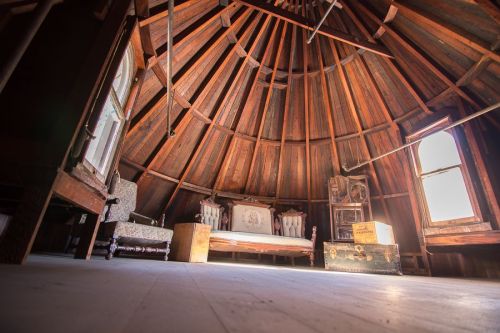
Everyone assumed that I had fallen whilst sleepwalking, which I had done often enough as a child. Since the death of my husband and my daughter in infancy, I had become prone to nightmares, as well as sleepwalking. As I continued to expand my mansion, the nightmare became more frequent and oppressive. There was one in particular, which recurred many times, of a vast, echoing in my house, as I had never seen it before. It was not much like Llanada Villa in its current state, there was a high tower projecting from the fourth floor, another five stores in the air, and the forth floor had been greatly expanded, adding a fifth floor to the mansion. It is dream, I was always alone, acutely aware of the silence, feeling that the house itself was alive, watchful, aware of my presence. The ceilings were immensely high, with dark-paneled mahogany walls, and other walls that flickered so there were made of gold and diamonds, as the sunlight transmitted its subtle sophistry of passion with a golden crown of enchantment. And the windows had a gemlike brilliancy of diamonds, emeralds and rubies sparkled from bouquets in the garden. I was inhabiting a castle so marvelously beautiful. However, this dream also made a terrible impression upon my mind, which, in fact, never has been effaced. I was in a large cylinder room in the upper story of the castle, with a steep mahogany roof. #RandolphHarris 2 of 6
Looking round the room from my bed, I failed to see the chambermaid. I thought myself alone. I was not frightened. Feeling neglected, to my surprise, I saw a solemn, but very pretty face looking at me from the hands under the coverlet. She was lovely as the dawn and gorgeous as the sunset; but what especially distinguished her was a certain rich perfume in her breath—richer than a garden of Persian roses. I looked at her with a kind of pleased wonder, and ceased whimpering. She caressed me with her hands, and lay down beside me on the bed, and drew me towards her, smiling; her eyes conveyed a holy secret from the depth of one soul into the depths of mine, as if it were too sacred to be whispered by the way. I felt immediately delightfully soothed. I was awakened by a sense of pain. There was a sense of a burning and tingling agony, as if two needle ran into my breast very deep at the same moment, and I cried loudly. The lady started back, with her eyes fixed on me, and the slipped down upon the floor, and, as I thought, hide herself under the bed. Now, for the first time, I was frightened, and I yelled with all my might and main. The chambermaid and butler came running in, and hearing my story, they made light of it, soothing me all she could meanwhile. However, I could perceive that their faces were pale with an unwonted look of anxiety, and I saw them look under the bed, and about the room, and peep under tables and pluck open cupboards; and the chambermaid whispered to the butler; “Lay your hand along that hollow in the bed; someone did lie there, so sure as you did not; the place is still warm.” #RandolphHarris 3 of 6

I remember the chambermaid petting me, and both of them examining my chest, where I told them I felt the puncture, and pronouncing that there was no sign visible that any such thing had happened to me. The chambermaid and two other servants who were on duty remained sitting up all night; and from that time a servant always sat up in my chamber. I was very nervous for a long time after this. Dr. Wayland was called in. How well I remember his long saturnine face, and his chestnut hair. For a good while, every second day, he came and gave me medicine, which of course I hated. The morning after I saw this apparition I was in a state of terror, and could not bear to be left alone, daylight thought it was, for a moment. I remember Mr. Hansen coming up and standing at the bedside, and talking cheerfully, and asking the doctor a number of questions, and laughing very heartily at one of the answers; and patting me on the shoulder, and telling me not to be frightened, that it was nothing but a dream and could not hurt me. However, I was not comforted, for I knew the visit of the strange woman was not a dream; and I was awfully frightened. In the course of that day, a venerable old man, in a black cassock, came into the room; his face was sweet and gentle, he had white hair, as he stood in my room, amongst the three-hundred-year-old furniture. His eyes, gazing down afar, at me. “Accursed one!” he cried, with venomous scorn and anger. “I beg your pardon, dear sir?” I said turning my large, bright eyes upon his face. The force of his words had not found its way into my mind; I was merely thunderstuck. #RandolphHarris 4 of 6

“Yes, poisonous thing!” he repeated, beside himself with passion. His rage broke forth from his sullen gloom like a lightening flash out of a dark cloud. “Thou hast done it! Thou hast blasted me! Thou hast filled my veins with poison! Thou has made me as hateful, as ugly, as loathsome and deadly a creature as thyself—a World’s wonder of hideous monstrosity! Now, if our breath be happily as fatal to ourselves as to all others, let us join our lips in one kiss of unutterable hatred, and so die!” “What has be fallen me?” I murmured, with a low moan out of my heart. “Holy Virgin, putt me, a poor heartbroken child!” Thou—dost thou pray?” cried the man, still with the same fiendish scorn. “Thy very prayers, as they come from thy lips, tain the atmosphere with death. Yes, yes; let us pray!” “You are certainly no gentleman,” I said, camply, for my grief was beyond passion, “why dost thou join thyself with me thus in those terrible words? I, it is true, am the horrible thing thou namest me for I am heiress to the Winchester Rifle fortune.” His passion had exhausted itself in its outburst from his lips. There now came across him a sense, mournful, and not without tenderness. “Does thou pretend ignorance?” he asked, scowling upon me. This selfish, and unworthy spirit, could dream no Earthly happiness had been so bitterly wronged, and I could feel his pain as I too pass heavily, with that broken heart, across the borders of time—I must bathe my hurts in some fount of paradise, and forget my grief, as I was the cause of their suffering. #RandolphHarris 5 of 6

“My dear, sir,” I said feebly, and still as I spoke I kept my hand upon my heart, “wherefore didst thou inflict this miserable doom upon me?” “Miserable!” exclaimed the man. “What mean you, foolish girl? Dost thou deem it misery to be endowed with marvelous gifts against which no power nor strength could avail an enemy—misery, to be able to quell the mightiest with a breath—misery, to be as terrible as thou art beautiful? Wouldst thou, then, have preferred the condition of a weak woman, exposed to all evil and capable of none?” His wrath and despair had been so fierce that he could have desired nothing so much as to wither me by a glance. I grew white as marble. “I would fain have been loved, not feared,” I murmured, sinking down upon the ground. “But now it matters not. I am cursed by evil to be haunted by vengeful spirits for all of eternity.” The angry apparition started to fade right before my eyes, vanishing into thin air. Several ghosts haunted this spectacular mansion, including a dark and menacing spectral figure holding an axe who wanders around the grounds at night, and a ghostly black monk who walks from the castle kitchen toward the Observational Tower in the late afternoons. Servants often spoke of ghostly woman holding a gray lantern near the front gates as well as two children who have been sighted playing in the basement. There are also others various apparitions who seem to wander aimlessly through the hallways. Because of this, I was compelled to move from one room to the next, fearful and yet powerless to stop. Sometime after midnight, there would be some malignant being hovering at my window; my heart would begin to pound until I feared it would tear itself out of my breast, and I would run, my heart still beating violently. #RandolphHarris 6 of 6


hester Mystery House is full of recollections of the delicate and benign power of Mrs. Winchester’s feminine nature, which so often envelops guests in a religious calm; recollections of many a holy and passionate outgush of her heart are noticeable, from the pure fountain and their pools of water, and the estate in the midst of which grew shrubs, flowers, and trees that bare gemlike blossoms. Several guests have been affrightened at the eager enjoyment—the appetite, as it is—with which they find themselves inhaling the fragrance of the flowers. The date the original house was built is unknown. When Mrs. Winchester purchased the 18-room farmhouse in 1886, she expanded it into a 600-room mansion with a nine-story tower.

Today, the mansion stands at 4 stories high and has 161 room, of which 110 are open for guest to explore. According to legend, one dark and stormy night a hundred years ago, a group of teenagers crept into the mansion to explore its empty hallways, but one of them never came out. All that was left of the young lady was her bloody handkerchief at the bottom of the fourth-floor staircase. Ever since that girl met her mysterious fate in the mansion, people have seen an eerie light in the upstairs window and heard cries and moans issuing from the dark interior. In September of 1991, one of the tour guides stated that there was not a shred of evidence to support the spooky tale of the young woman who disappeared, leaving only a bloody handkerchief and a few drops of blood behind.

He had heard all the stories about people seeing lights on in the mansion and hearing and seeing strange things to support the legend. He himself was surprised one night to see a single light in the fourth-floor window. After a careful examination, he concluded that the source of illumination must have been light escaping from the skylight. Tour guides often hear people saying that they “feel something” within its walls. Some people have sent pictures they took, when photography was allowed, that purport to show something passing in front of the camera, like an apparition. Perhaps the expectations of hundreds of people over the years have created a spirit and a mysterious light at The Winchester Mystery House, and these same expectations have kept the “ghost” alive for more than 100 years by feeding it with their collective psychic energy. https://winchestermysteryhouse.com/

And please be sure to check out the online gift store: https://shopwinchestermysteryhouse.com/

Cruelty Has a Human Heart
A thinking atom, born on a material atom across the boundless space of the Milky Way, man may well ask himself is he is as insignificant in soul as he is in body, if the law of progress can raise him in an indefinite ascent, and if there is a system of order in the moral World that is harmoniously associated with the order of the physical World. A pervasive process in mental life is a tendency toward “splitting of the ego.” The individual does not admit to full “ownership” over feelings, thoughts, or behaviour that violate one’s sense of selfhood or the norms of society. The disowned tendencies of the self are treated as extraneous forces, “not-me” intrusions, so that they can persist side by side with ordinary life without threatening self-worth. Losers in war tend to believe in the action of “chance” in history. There are truly, perhaps, some unforgivable sins. One of the most egregious sins is the sin of killing love in a human soul. Soul murder is when someone inflicts psychological death upon an individual. The dynamics of soul murder are particularly elusive because of an ancient psychological prejudice against evil. Theories of evil typically lack a conception of development, of psychological transformation from one condition to another. Psychologists have thoroughly examined the process of moral development, knowing that the growing child does not “naturally” evolve toward moral goodness. Yet the psychology of evil is a psychology of the state of being, not one of overcoming or becoming. Evil is (erroneously) treated as an indomitable inner force which “emanates” from the wicked individual, a courage of nature affording little control or understanding, wicked people simply are “evil incarnate.” #RandolphHarris 1 of 18

There is a timeless temptation to explain (away) the unsettling behaviours of other people by simply treating them as “demented,” “them,” “they,” strangers in our midst whose actions have no implications for us. Sometimes brutality is more learned than instinctive and emotional, but it still can mean that an individual is a crazed, bloodthirsty monster, essentially sadists. Many times, in society, we find groups of sadists overwhelmed by aggressive instincts just waiting to discharge their psychological fantasy. People say sadistic individuals are “acting like animals.” However, that may be offensive to animals and animal lovers for animal behavior is kindled by impulses—the animal hunts when it is in need of food. Humans, though they may experience similar needs, do not spontaneously or immediately yield to desire. Raw impulses are mediated, inhibited, and transformed by their integration in a cognitive system of long-term values, goals, and intentions. When humans are involved in violence, more specifically, attacking others without cause, there is usually some kind of brain disease involved in the offender. The hardships of everyday life become the conditions which, unfortunately, put some people at risk to become mass murderers, no matter their gender, race, religion. Many people suffer from political oppression, social ills, medical diseases, and personal anguish, and it affects people in different ways. However, not all people take their problems out on society, especially if they are mature enough to know there are better ways to deal with them. #RandolphHarris 2 of 18

In America, there has been a holocaust on Christian values and Capitalism. A rouge group of people want to remove God from the World and punish people who earned the things that they worked for. When people no longer fear God, are not taught to love, and have no respect for their country, human life, or private property, and unwilling population can be overcome by a small minority of criminals. And if they are not coerced into becoming anti-American, Anti-Christian, Anti-Capitalism, they are at least seduced by the vast machine of propaganda, which tends to be the TV news media. Propaganda does not fit the psychological nor the historical reality. Psychological studies of persuasion have long documented the limitations of campaigns to change people’s attitudes. Typically, people are only receptive to messages that agree with their prior beliefs and tend to avoid or distort contradictory information; they do the equivalent of “switching channels” on their TV sets. Not surprisingly, then, historians have found that not all people are thoroughly indoctrinated by the official propaganda. People tend to go against the established society due to economic hardships and promises of rewards for doing so. Economic and political frustrations usually lead to some kind of frustration-aggression link. Hardships are indeed a common feature of life, and not all people are able to deal with them in a rational manner. Many people are looking to project their suffering on to someone else. In the past, the Devil was to blame, but now that some many people no longer believe in God, they blame their fellow humans for their suffering by making them targets of their pain, instead of looking inside. #RandolphHarris 3 of 18

Many oppressive regimes come to power, and stay in power, through extensive purges of “internal enemies”—suspected opponents to their rule. People are also assigned to office or hired for positions based on Affirmative Action (all though it is no longer called that). They are selected because of their skin colour, sexuality, religion, and/or gender. Qualifications no longer matter. There is not even a regard or interest in the individual’s psychological profile. This can lead to a select group of deviants coming into power. No longer is the goal to find the “right” person, for they rouges believe, correctly, that they can transform ordinary personalities into deviant temperament. Almost any individual who comes down the bureaucratic pipeline can be, in due time, remolded into offender. As we have seen in America, there has been an orgy of violence. People have been murdered, and thousands of homes and businesses were set afire and looted. The violence has provoked widespread dismay for law in order, for many reasons. Some people who are living by the law are not protected by the law, and others use the law to help them bully and harass innocent people. This is what comes when we put communists in power in America politics. It spreads like a grass fire in the summer. When people have respect for America, respect for the flag, respect for the national anthem, believed in God, and had family values, and believed in the American Dream, they wanted to work hard and did not condone or support discrimination as they do today. #RandolphHarris 4 of 18

However, it seems like since America has run up such a huge deficit, anything goes. Employees no longer have respect for customers, some businesses have such high turnover, it is hard to understand how they still function, while other corporations have no care for the laws and break them all the time. It is becoming so bad in some places in America that the federal government has to step in. However, many of these offenders are so insane that federal authority does not even scare them. The World has documented the progressive barbarization of America. However, it is not really as widespread as it seems. Many of the people are still normal, still nice, still believe in God. Yet, offenders often will participate in crimes that are sanctioned by judges, politicians, and law enforcement because they are facing criminal charges and want to have them dropped or reduced. With the rampant corruption, it is easy for anti-Americans to target and terrorize people when they want to, which is why it is important NOT to use Affirmative Action in hiring practices or elections. Selected people who are truly qualified. Many people have quite an incredible lack of human and moral feeling. By forgetting about God, no longer having pride in one’s country and not wanting to work to earn the American Dream, society has been re-educated to believe that they should have a right to entitlement just because they are here. #RandolphHarris 5 of 18

The real achievement of communist in power in America and the persistent misery they are inflicting is not their technological or bureaucratic force but their psychological violence; the misery is not America, but the millions of ordinary people who have been transformed into ardent followers and the process of the psychological manufacture of evil. How could communists come into power in America, the land of God, it is often asked? In one sense, it did not happen here, but in a systematically altered psychological environment. Evil, and goodness, do not simply lurk deep in the heart, waiting for the lifting of repression or for the opportunity that calls them forth. Evil and goodness do not “spring” from inner depths; they are carefully nurture qualities of the mind. No only are the people going bad mostly ordinary people, but they have become so through the psychological process which transformed them into extraordinarily bad individuals. Barbarity is not a biological curse from birth; goodness, not an extraordinary gift. Both are learned, cultivated, and taught. They evolve gradually out of human interaction. Only an esthetic preference for symmetry leads us to search for abnormal causes to explain abnormal behavior. Depravity and nobility are fashioned, like other behavior, by ordinary social forces, implicating, in many ways, perpetrators, victims, and bystanders alike. Uncommon vice and virtue evolve out of common components and a process of psychological transformation. They are, in one sense, within the reach of many individuals who might be subjected to the process of transformation. #RandolphHarris 6 of 18

Ordinary people, cast in extreme circumstances and initially subjected to great pressures, can become unusually bad or good. People need not be transformed into good or bad in all aspects of their personality, not for the rest of their lives. There may be, though, a differential susceptibility to the dynamics of transformation, transcending the individual and rooted in a larger psychological and historical culture. Collectivities can cultivate a heightened sensitivity to good or evil. Their may be a special path in psychology that leads some people to be who they are. Genocide is not merely an aberration of the past; it is a threat of the future whose psychological dynamics must be elucidated before it goes any further in America. Americans are already becoming accustomed to the new psychology of mass murder with the heavy focus on shootings that the TV news media plays like a daytime soap opera with their fake emotions they use to boost ratings. Do you really want their “thoughts and prayers”? Because more than likely, human life does not matter to them. They are so doped up on psychotropic drugs and street drugs and desperate to make a name for themselves and lurking around like a junkie looking for dope on the 1st of the month in order to create news. The first major political goal of the TV news media today is to spread Anti-Americanism. This must now be determined by emotional criteria…anti-Americanism stemming from purely emotional reasons will always find its expression in the form of pogroms. #RandolphHarris 7 of 18

What we need to be careful of is fostering the psychological mobilization of murderous instincts. Be ware of the discharge of pre-existing, deep-seated aggression following the lifting of inhibitions; or it is described as a split within a “hollowed out” individual such that the murderous tendencies coexist with and are disconnected from the rest of the personality. The shaping of a dispassionate murderous mentality is achieved not through desensitization but through the cultivation of inner moral conflict, leading to a transformation of attitudes in search of personal consistency. The spiral of murder is fueled, initially, by moral anxiety at one’s prior actions. The shaping of the murderous mentality follows a gradual, twisted psychological path. It involves an ineluctable progression from smaller initial offenses, seemingly devoid of larger significance, through moral conflict and psychological adjustment, to the ultimate atrocities. The strong of small acts that leads to great crimes facilitates the incomprehension of the victims—and of the perpetrators, who may fail to grasp their condition until it is too late. We tend to think of socialization into evil (and into heroism) as one continuous, smooth process. In fact, it consists of two contrary moments, animated by different motivations. The slide into evil is not self-starting, a smile slipper slope. However, at moment two, it is self-sustaining. The beginnings of spiral, and the progression to new levels, require the pressure of a legitimate authority. (Keep in mind, whomever is convincing you to do illegal acts will not pay for your lawyer when you get arrested.) #RandolphHarris 8 of 18

The sequence typically is triggered by a pivotal distressing encounter with evil (or with suffering, in the case of helpers) leading to reluctant compliance under pressure (to commit evil or to help). Progressively, the individual increases one’s involvement, disregarding internal and external obstacles, in a sustained flight forward. Initially, the individual sets aside one’s compunctions and crosses one’s internal red line at the urging of an authority—political, scientific, or social. Medical doctors and lawyers can play key roles in the campaigns of mass murder, not because of any particular expertise but to preserve the aura of political and scientific legitimacy of the regime. At the first transgression after the initial clash with evil, and the small incremental steps that follow, the individual keenly feels a conflict. One acts only reluctantly, “in spite of oneself,” know that “internally” one disagrees with the objectionable actions. The progression is facilitated by the illusion of minimal change; the next step is a mere adjustment, not that different from its predecessor. Gradually, insensibly, the individual adapts and the reference point for the action changes: the individual focuses no longer on the absolute meaning of one’s behavior or on its general consequences. The distant end of one’s actions is out-of-view, and the individual would be horrified at the foretelling of one’s transformation; the immediate impact of one’s actions also is kept out of view, for one only considers their relative difference is fairly small. Thus, to quell one’s doubts, the individual engages in self-justification, best accomplished by escalating one’s commitment by one or two more degrees. #RandolphHarris 9 of 18

The process poses a difficult psychological dilemma. Economists have argued that in deciding future actions, one should only consider anticipated consequences and not “suck costs,” past expenditures that no longer have any bearing on current deliberations. Psychologically, the evolving perpetrators is wholly driven by sunk costs: how can one find a justification for quitting at any particular moment when one has complied so far? The process is not unlike the classic Greek paradox of the heap of sand: no one grain of sand can possibly create a heap, so one can go on adding single grains of sand to each other ad infinitum without ever forming a heap. Through this invisible progression, the individual passes a moral point of no return but does not realize it until several steps later. Since the steps were incremental, how could one, at that point, declare the next step immoral and not the previous one? How could one quit for moral reasons without thereby acknowledging one’s depravity for one’s previous actions. Mr. Macbeth has expressed the sheer agony of the second moment: “I am in blood steeped so far that, should I wade no more, returning were as a tedious as go o’er” (Shakespeare, 1974, pp. 136-38). From moment two on, the individual has at last overcome one’s temptation not of violence but of morality and pity. One has neutralized any moral motivation, silenced the internal struggle, and achieved an uneasy psychological equilibrium. #RandolphHarris 10 of 18

Profound changes occur in one’s attitudes to adjust one’s sense of oneself as an innocent perpetrator. One shifts one’s mental focus away from the behaviour itself to one’s relationship with authorities, to one’s own changing expectations, or to the details of one’s undertaking. One adopts not a morality of desire but one of instrumental efficiency, casting oneself as the instrument of another’s will or higher purpose. Conscience, which some reject as an evil invention, becomes conscientious over the quality of performance. The fragmented focus allows diffusion of responsibility and perpetuates a salutary ambiguity about whether one’s own actions are causes or consequences. So one is following order, all right: at moment one, one still follows someone else’s orders; from moment two on, one follows one’s own inner commands, to alleviate one’s moral anguish. It is a desperate flight from crime into crime. The offender’s psychological gradualism does not aim to transform the entire personality or to “split off” a murderous part of it. On the contrary, the offender wants to stress the horror of their actions. The offender wants the violence he or she is instilling in others is a very grave matter, a most difficult duty, and it is remarkable that they stick it out with no injury to their soul and character. Many times for the offender who is in charge, it may be difficult for him or her to carrying out their evil they are teaching others, but they do it because it is implemented out of a sense of obedience and absolute conviction. #RandolphHarris 11 of 18

The shaping of the murderous mentality requires moral conflict. It cultivates a new philosophy of heroism; it is designed to overcome not external adversity, but the internal psychological inhibitions against atrocities. The offenders expect the perpetrators to feel bad about their actions and harness these feelings to fuel the murderous course. The bad feelings come from the conflict, fostered by the offenders, between outer behavior and inner feelings; between the public and private domains; between the violence to the victims and the tenderness to family and friends; between personal preferences and the demands of the role. In this conflict, the private, “real,” good part of the individual compensates for the superficial, murderous “self.” The individual is heroically performing one’s job, thereby doing violence to one’s inner humane feelings. Psychological gradualism from gray transgressions to the most malignant of all crimes permeates the offender’s entire enterprise. Some of their actions are accepted because they see their leaders doing them and they follow their lead, but these types of deviant groups will also usually turn on each other, eventually. Therefore, counterfeit guidance can be a huge problem. Many self-actualized think the “guidance” or “leading” of God to be only by a voice saying “Do this” or “Do that”; or by some compulsory movement or impulse apart from the action or volition of the human. They point to the words used about the Lord: “The Spirit driveth Him into wilderness.” #RandolphHarris 12 of 18

However, this was unusual in the life of Christ, for the statement sets the scene for an intense spirit conflict during which they Holy Spirit departed from His ordinary guidance. We have a glimpse into a similar intense movement in the spirit of the Lord Jesus in John 11.33, when “groaning with indignation in His spirit,” He went to the grave of Lazarus. In both instances He was moving forward to a direct conflict with Satan. In the case of Lazarus, it was with Satan as the Price of Death; the Gethsemane agony was of the same character. However, ordinarily the Lord was guided or led in simple fellowship with the Father: deciding, acting, reasoning, thinking, as One who knew the will of God and intelligently—I speak reverently—carried it out. The “voice” from Heaven was rare, and, as the Lord Himself said, was for the sake of others, not for Himself. He knew that Father’s will, and with every faculty of His being as man, he did it (see John 4.34, 5.30, 6.38 in the Christian Bible). As Christ was a pattern or example for His followers, guidance or “leading” in its perfect and true form is shown in His life; and believers can expect the coworking of the Holy Spirit when they walk after the pattern of their Example. Out of line with the Pattern, however, they cease to have the working of the Holy Spirit and become open to the deceptive counterfeit workings of evil spirits. If the believer ceases to use mind, reason, will, and all of one’s other faculties as a person and depends instead upon voices and impulses for guidance in every detail of life, one will be “led” or guided by evil spirits feigning to God. #RandolphHarris 13 of 18

The Christian Bible confronts us with the living God. However, does not God as being-itself or the ground of being seem dull, static, lifeless? Our idea of God as being-itself is far removed from the fixed identity. Life is the process in which potential becomes actual being. It is the actualization of the structural elements of being in their unity and in their tension. The elements of being here referred to are the ontological polarities: individualization-participation, dynamics-form, and freedom-destiny. Since in God there is no distinction and no transition between potentially and actuality, life cannot be predicated of God in its proper meaning, but only symbolically. The life-process is a constant movement of simultaneous separation and union of the polar elements. This process is rooted in the divine life, but the divine life is not subject to it and is consequently free of tension and the threat of dissolution. The ontological elements are the only avenue of approach to the divine life. For the categories described God’s relation to creatures, and the ontological structure of self-World implies separation, not interaction of the two poles. However, the first side of the polarities (individualization, dynamic, and freedom) represent the self. Man utilizes this subjective side in symbolizing the living God. He sees the divine life as personal, dynamic, and free. He cannot see it any other way, for God is man’s ultimate concern, and therefore He stands in analogy to that which man himself is. #RandolphHarris 14 of 18

Man can speak of the living God only in terms of life closet to himself, that is, his interior life of personality, dynamism, and freedom. And since the living God is also man’s ultimate concern, he must reach into the deepest levels of his human self for symbols to convey it. A woman of valour, who can find? Her price is far above rubies. The heart of her husband trusteth in her, and he shall have no lack of gain. She doeth him good and not evil, all the days of her life. She looketh well to the ways of her household, she giveth food to her household, and a portion of her maidens. Strength and dignity are her clothing, and she laugheth at the time to come. She stretch out her hand to the poor, yea, she reacheth forth her hands to the needy. She openeth her mouth with wisdom, and the law of lovingkindness is on her tongue. Her children rise up and call her blessed, her husband also, and he prasieth her: Many daughters have done worthily, but thou excellest them all. Grace is deceitful, and beauty is vain, but a woman that revereth the Lod, she shall be praised. Give her of the fruit of her hands, and let her work praise her in the gates. Throughout the ages Thou has blessed us, O Lord, with women who tended the altars of our faith. Through these noble women America was redeemed; because of them has America survived. They have inspired and guided our youth; they have preserved and transmitted Thy word. Many the women in our generation like those of the past, keep America an eternal witness to Thee. May they, like Sarah, zealously guide their young, keeping them constant and steadfast in faith. Then shall our children remain ever devoted to Thee. May our women, like Rachel, be deeply concerned for the children of America wherever they dwell, sharing their glory, feeling their pain, and helping rebuild the ancient homeland. #RandolphHarris 15 of 18

May they, like Hannah, who joyfully brought her young Samuel to Shiloh for service to God, bring our children also in their tender years, for guidance and light to the House of the Lord, to learn the traditions, the teaching and laws of our prophets and sages, our martrys and saints. Then shall our children be imbued in their youth, with hope for their future through knowledge of their past. May our women, O Lord, inspire in our young a love for America and God, our true way of life. Though such noble women shall American be redeemed; through the merits of their children American survive. Better is a dry morsel and quietness therewithin, than a house full of feasting amidst strife. Yea, better to eat herbs where love is, than the choicest food and hated therewithin. Except the Lord build the house, they labour in vain that build it. Through wisdom is a house builded, and by understanding is it established. By knowledge is the home filled with all that is pleasant and precious. Make your house a meeting place for the learned, and give heed to their word. If three people have eaten at one table and have spoken words of the Christain Bible, it is as though they had eaten at God’s table. Blessed is that home where women regard the ways of her household. Blessed it the man who has a good wife, for the number of his days shall be doubled. Blessed is he who loves his wife and honors her, and directs his children into paths of righteousness. When husband and wife are worthy of each other, the divine spirits rests upon them. #RandolphHarris 16 of 18

A home where a man loves his wife as himself, and honors her beyond his own person, shall be blessed everlastingly. A home where children honor their parents is a home in which God dwells, and He Himself is honoured. How goodly are your tents, O Jacob, and your dwellings, O America? The ideal of equality of opportunity has furnished the basis for our review of the development of legal and political family agencies. At the first stage of their development, it might be said that political and legal agencies, apart from providing police protection, were mainly concerned with the redress of particular grievances. Orphans received guardians; abused children were put in foster homes. Injured mates could take their partners to court and receive divorces or separate maintenance. On the whole, however, the efforts of family agencies at this stage were primarily directed at obtaining conformity with the law and seeing that family responsibilities were fulfilled. This assumption was that if families did their duty, individuals would be protected in their access to opportunity. At their second stage of development, it is recognized that not merely occasional individuals, but considerable segments of the community, are recurrently subject to special hazards and ailments which require treatment. This to family courts are added counseling bureaus, whose job is to guarantee the welfare of dependent children. Parole and probation work is added to the methods of dealing with offenders. #RandolphHarris 17 of 18

Perhaps more so than any other class of family agencies, legal and political agencies have been slow in reaching this therapeutic stage. As for moving into preventive and positive stages of evolution, examples among these agencies are quite scarce. The best example of the therapeutic approach is perhaps the juvenile court, and programs for the prevention of juvenile delinquency have made headway in some places. Group therapy among prisoners, probationers, and parolees is still very much in the experimental state. Scattered youth commissions try to combine mental hygiene clinics with sport programs. Indeed, the paucity of positively oriented family protective agencies may account for the limited vision of just what they could be. Some citizenship educators and teachers of social studies have a fairly clear vision of positive aims, though their efforts fall under the heading of educational agencies, and their methods apply to the individual outside one’s family setting. Yet the type of experience which leads to social skill is that which positively oriented legal and political family agencies could help bring to family members. In the large family of the past, individuals had much more opportunity than at present to develop their capacities for participation in group decisions and activities. Today, if such skills are to develop, it must be through supplementing the family’s efforts, through life-life practice and at least vicarious exposure to wide experience. #RandolphHarris 18 of 18

CRESLEIGH HAVENWOOD
Lincoln, CA | from the high $600s
Now Selling!
No appointment needed! Cresleigh Havenwood features four distinct floor plans ranging from 2,293 – 3,377 square feet and offering up to five bedrooms.

Each plan has been thoughtfully designed and includes great features such as single story homes, guest suites, optional offices, garage workshops, and more!

The beautiful one-story primary bedroom suite is enhanced by a walk-in closet and spa-like primary bath with dual-sink vanity, large shower, and private water closet.

Get the most out of your new home with Cresleigh’s All Ready smart home featuring all the connectivity needed to keep your house running. Best of all, each Cresleigh home comes with owned solar included!

Located off of Virginiatown Road and McCourtney Road, residents of the 83 homesites of Cresleigh Havenwood will benefit from a brand new neighborhood in the charming City of Lincoln.

Palo Verde Park, is just down the street and there’s plenty of recreation to take part in all around town. https://cresleigh.com/havenwood/quick-move-homesite-66/

The Haunted Winchester of America
There were times when I slept in a different bedroom just to be someplace completely different, and I have a favorite room, The Daisy Bedroom. I marveled at it, and enjoyed it. I did not care whether it was literal or sophisticated, mystical or pedestrian. It was gorgeous, it was gleaming, and it comforted me to be in it. I had no family. I had no one. I was no one. I had grown unused to company. I found myself thinking of Annie and William as I had not done in years, and of the great darkness of spirit tht had followed their deaths. I thought of the home I was building, The Winchester Mansion, and of how, in my efforts to outflank the inhibition—or curse, that I had inherited. The room seem suddenly darker; I noticed that one of the candles had sunk to thin blue flame. Falling silent, contemplating the dying fire, I found myself trying to summon the dead. As you may have heard, my home is haunted. Dy after day I walked to the greenhouse under a dazzling blue sky, wishing that my spirits would rise accordingly. Until one hot and airless morning, I emerged to find the sky already overcast. My anxiety grew until, early in the afternoon, against the walls and windows of the house the wind had roused itself with a shuddering, uncertain violence. The shadows themselves spread and encroached. Gravel was sprayed against the windowpanes as if in antic glee. Still, all afternoon the heat pressed down and the barometer continued to drop, until darkness fell without a breath of wind. Too restless to read, I sat out in the garden, staring into the night. #RandolphHarris 1 of 12

Then away on the horizon came the first faint flicker of lightning, branching and multiplying in dumb show until the air began to stir, and the distant muttering of thunder rose above the shrilling of the insects. The storm, approaching gradually at first, seemed to gather pace as it came nearer, until the sky to the south was a searing tapestry of light. Soaked from the heavy rain, fear took me. I felt loquacious, verbose. I found myself descending the cellar steps. The truth is, the basement had always unnerved me. It was cold, and there was a starkness about the shadows and the light. There was the feeling I always had of being followed. I wondered sometimes had my professional life had not been some sort of reaction to, or compensation for, the fears I felt to plagued by. Maybe. And maybe not. There were plenty of other people rightfully prone to night terrors of their own. Now, in the basement, amid my stores and stashes of secret collusive things, something shifted softly over by the shelves against the far wall. I saw an alien face looking at me. His face had somehow melted and twisted. His mouth had melded together, but there was a hole in his cheek that he could make no sound through. His features were badly distorted and he was hideously deformed—even his hands were burned and melted. However, the worst thing was that his puckered, melted flesh had taken on a slight greenish tinge. Terribly frightened, I grabbed the book I was looking for and took the elevator back upstairs. #RandolphHarris 2 of 12

I sat up long after lightning had ceased and the wind had died away, listening to the steady patter of rain on the leaves outside. Whatever I ought to have done, it was too late now. Nevertheless, I was early in my study the next day, and spent most of the morning pacing up and down my room, peering out at the rainswept garden. Ten minutes later, the rain had all but ceased, but grey, swirling cloud hung low over the sodden landscape. Despite the fire, the chill seeped into my bones, slowing my thoughts to a dull trance of apprehension until I sank into a dream in which I seemed to be conscious of every creak and rattle in my mansion, yet I felt safe and warm at my own fireside, only to walk, half-frozen, in the gloom isolation. The mansion was shrouded in vapour, the lighting robs all but concealed in the mist that swirled above the rooftop. The pounding of my own heart seemed unnaturally loud as I approached the entrance to the library. The doors would not budge, and the key would not enter the lock. I hammered on the door, again, with no result but a fusillade of echoes. I drew off a little and threw my full weight against the door, expecting the panel to fracture; instead the door burst open with a rending crash, pitching me across the threshold as lock and bolts tore from their sockets. There was no on in the study. Along the wall another door stood open, concealing whatever lay beyond. I moved uneasily toward the other door. #RandolphHarris 3 of 12
Shuddering as if I had seen a serpent, I burst onto the landing, with the sound of my footsteps reverberating around me. I heard a cry from the darkness below. There are some credulous people who pretend to have seen this ghost. Huntsmen and woodcutters say they have met him by the large oak on the cross path. That is supposed to be the spot he inclines most to haunt, for the tree was planted in remembrance of the man who fell there. My Heavens my home was an interesting spot. The apparitions of imprisoned damsels who never reappeared, the storming of the observational tower, the death of the knight, the nightly wanderings of his spirit round the old oak, and lastly, the architecture, the indescribable curiosity that draws so many hither. That is when I noticed there were sounds of muffled sixteenth-century music emanating from the empty Grand Ballroom, while ghostly sounds of battle came from outside. I made my way towards the music and saw a blue light emanating from the room. The brilliantly lighted room gave a full view of a stranger. He was a man about forty, tall, and extremely thin. His features could not be termed uninteresting—there lay in them something bold and daring—but the expression was on the whole anything but benevolent. There were contempt and sarcasm in the cold grey eyes, whose glance, however, was at times so piercing that I could not endure it long. His complexion was even more peculiar than his features: it could not be called pale; it was an olive colour; and was rendered still more remarkable by the intense blackness of his short-cropped hair. #RandolphHarris 4 of 12

As I was going to supper, it was only natural to invite the stranger to partake of it; he complied, however, only in so far that he seated himself at the table, for he ate no morsel. The housemaid, with some surprise inquired the reason. “For a long time past I have accustomed myself never to eat at night,” he replied with a strange smile. “My digestion is quite unused to solids, and indeed would scarcely confront them. I live entirely on liquids.” “Oh, then we can have a cup of lemonade together,” I cried. “Thanks; but I neither drink lemonade nor any cold beverage,” replied the other; and his tone was full of mockery. It appeared as if there was some amusing association connected with the idea. “Then I will order you a cup of hippocras”—a warm drink composed of herbs—“it shall by ready immediately,” I said. “Many thanks, fair lady; not at present,” replied the other. “But if I refuse the beverage you offer men now, you may be assured that as soon as I require it—perhaps very soon—I will request that, or some other of you.” The housemaids Trinity and Harriette thought the man had something inexpressibly repulsive in his whole manner, and they had no inclination to engage him in conversation. I begged his pardon and asked his name. “It has now been in hour that we have known each other—-” “And I have not yet told you my name, although you would gladly know it. I am called Johann von Hahn and I live at Rozafa Castle.” “What bring you to my home?” I asked. “You see, my dear lady,” he continued, “Mrs. Winchester, there are a variety of strange whims in the World. As I have already said, I love what is peculiar and uncommon. It is wrong in the main to be astonished at anything, for, viewed in one light, all things are alike; even life and death, this side of the grave and the other, have more resemblance than you would imagine. You perhaps consider me rather touched a little in my mind?” #RandolphHarris 5 of 12

“I understand you: I know how to vale your ideas, if no one else does,” I cried eagerly. “The humdrum, everyday life of the generality of men is repulsive to you; you have tasted the joys and pleasures of life, at least what are so called, and you have found them tame and hollow. How soon one tires of things one sees all around! Life consists in change. Only in what is new, uncommon, and peculiar, do the flowers of the spirit bloom and give forth scent. Even pain may become pleasure if it saves one from the shallow monotony of everyday life—a thing I shall hate till the hour of my death.” “Right, Mrs. Winchester—quite right! Remain in this mind: this was always my opinion, and the one from which I have derived the highest reward, caried Johann; and his fierce eyes sparkled more intensely than ever. “I am doubly pleased to have found in you a person who shares my ideas,” I said. As Johann spoke in a cold tone of politeness, taking leave before the table was cleared. When the stranger had departed, many were the remarks made on his appearance and general department. The following morning I lay longer than usual in bed. When the housemaid came to my room, fearful lest I should be ill, she found me pale and exhausted. I had passed a very bad night; the stranger must have excited me greatly, for I felt quite feverish and exhausted, and a strange dream, too, had worried me, which was evidently a consequence of the evening’s conversation. “At least let me here this wonderful dream, Mrs. Winchester,” Henrietta cried. To her surprise, I was a length of time refused to do so. “Come, tell me,” inquired Henrietta, “what can possibly present you from relating a dream—a mere dream? I might almost think it credible.” #RandolphHarris 6 of 12

“This whimsical stranger was fascinating, but I must not say,” I replied. “Strange, Mrs. Winchester,” cried Henrietta. “I cannot comprehend the almost magic influence which this man, so repulsive, exercises over you.” “Perhaps the very reason I take his part, may be that you are all so prejudiced against him,” I remarked. “But that dream, Mrs. Winchester?” said Henrietta, easily appeased. “Now tell it to me. You know how I delight in hearing anything of the kind.” “Well, I will, as a sort of compensation for my peevishness towards you,” I said. “Now, listen! I had walked up and down my room for a long time; I was excited—out of spirits—I do not know exactly what. It was almost midnight ere I lay down, but I could not sleep. I tossed about, and at length it was only from sheer exhaustion that I dropped off. However, what a sleep it was! An inward fear ran through me perpetually. I saw a number of pictures before me, as I used to in childish sickness.. I do not know whether I was asleep or half awake. Then I dreamed, but as clearly as if I had been wide awake, that a sort of mist filled the room, and out of it stepped the knight Johann. He gazed at me for a time, and then letting himself slowly down on one knee, imprinted a kiss on my throat. Long did his lips rest there; and I felt a slight pain, which always increased, until I could bear it no more. With all my strength I tried to force the vision from me, but succeeded only a long struggle. No doubt I uttered a scream, for that awoke me from my trance. #RandolphHarris 7 of 12

“When I came a little to my senses, I felt a sort of superstitious fear creeping over me—how great you may imagine when I tell you that, with my eyes open and awake, it appeared to me as if Johann’s figure were still by my bed, and then disappearing gradually into the mist, vanished at the door.” “You must have dreamed very heavily, Mrs. Winchester,” began Henrietta, but with a sudden pause. She gazed with surprise at my throat. “Why is that?” I cried. “Just look: how extraordinary—a red streak on your throat!” Several weeks passed. I daily became thinner, more sickly and exhausted, and at the same time so pale, that in a space of a month not a tinge of red was perceptible on my once glowing cheek. The ravishes of my fever filled the housemaids with alarm. It was on the morning of the following day; the sun had not risen above an hour, and the dew still lay like a veil of pearls on the grass or dripped from the petals of the flowers swaying in the early breeze. Someone opened the gates to my private interest to the garden. He walked along several obscure passages, and finally undid a door, through which, as it was opened, there came the sight and sound of rustling leaves, with the broken sunshine glimmering among them. He stepped forth, and, forcing himself through the entanglement of a shrub that wreathed its tendrils over the hidden entrance, stood the open area of my garden. How often is it the case that, when impossibilities have come to pass and dreams have condensed their misty substance into tangible realities, we find ourselves calm, and even coldly self-possessed, amid circumstances which it would have been a delirium of joy or agony to anticipate! #RandolphHarris 8 of 12

Fate delights to thwart us thus. Passion will choose his own time to rush upon the scene, and lingers sluggishly behind when an appropriate adjustment of events would seem to summon his appearance. My pulses had throbbed with feverish blood at the idea of someone standing in this very garden, basking in the Victorian sunshine of my beauty, and snatching me from my full gaze the mystery which I deemed the riddle of my own existence. The fields turned into a gloomy path. The doctors who attended me say I only grew rose. I had always bloomed like a rose, but for some months I had been getting so thin and wasted, and without any satisfactory reason: they tried every means to restore me, but in vain. One evening, an old Sclavonian—who had made many voyages to Turkey and Greece, and had never seen the New World—and I were sitting over our wine. We chatted for about an hour, and I drank a glass of wine. As soon as I had, in some degree, I astonishingly started to recover. It was a gradual recovery, but fortune favored me. My health had been so severely shaken, that it was long ere and my strength was restored at to allow me of being considered out of danger. However, my character underwent a great change in the interval. Its former strength was, perhaps, in some degree diminished, but in place of that, I had acquired a benevolent softness, which brought out all my best qualities. I continued expanding my mansion, and treated my fortune as a joy and blessing, and allowed this beauty to be expressed in the creative design. Many people were surprised by my generosity. #RandolphHarris 9 of 12

A few weeks after my recovery, I was conversing with the housemaid, and she told me a story of a stonemason who had recently died on the estate. This man, had been abroad in the fruit orchards on the afternoon of the great storm. At any rate, he had missed his way, and wandered until he came to the Observational Tower. Oppressed by the airless heat, he lay down to rest a little way from the entrance, fell into a deep sleep, and woke in pitch darkness. The storm had not yet broken, but with the stars entirely obscured, he dared not move; he could not see his hand in front of his face. Then a spark of light appeared in the blackness, flickering amongst the trees as it came toward him. He thought of calling out for help, but—though he was not a local man, and knew nothing of Llanada Villa’s reputation—something about its silent, purposeful approach unnerved him. As it came closer still, he could make out a human figure-whether a man or a woman he could not tell—with a lantern in its hand. Again he was out to call out, when he saw that the figure was shrouded, not in a greatcoat but a monk’s habit, with the hood drawn over its head. Now he feared for his soul and would have fled blindly into the fruit orchard, but his limbs were frozen with dread. Twigs crackled beneath its feet as the figure passed within a few yards of him; it was tall, he said, too tall for a mortal man, and as it went by he caught a glimpse of dead-white flesh—or was it bone?—beneath the hood. #RandolphHarris 10 of 12
It did not pause, but went straight up to the tower’s door. He heard the scrape of a key, the rasp and snap of a lock, and then a creaking of hinges as the door swung inward and the figure passed into the Observational Tower, closing the door behind it. The glow of the lantern shone out through a barred window at the side. Now was his chance to flee; he knew that if the figure emerged again, it would see him. However, he could move only as far as the light from the window would guide him, for fear of falling and having the creature rush upon him. He began to creep around the side of the tower, keeping the edge of the dim semicircle of light. Then he saw that the glass had gone from the window, leaving only four rusty bar between himself and the scene within. The hooded figure stoon with it back to him, facing a stone coffin by the opposite wall: the lantern hung upon a bracket overhead. Even as he watched, it leaned forward and raised the lid of the sarcophagus with a grinding of stone on stone. Again his limbs failed him; he could only watch as the creature took down its lantern, slipped over the edge, and in one swirling movement lay down within the tomb, lowering the lid as it went, until only a thing line of yellow light remained. A moment later, that, too, was extinguished, and he was plunged once more into absolute darkness. Then his nerve gave way altogether and he fled blindly into the wood, stumbling and rebounding from one obstacle to another until he ran headfirst into a tree trunk, to be roused an indefinite time later by a gigantic crash of thunder. #RandolphHarris 11 of 12
Even beneath the trees he was drenched to the kin, and when he finally stumbled out of the fruit orchard the next morning, he was in a worse case than I had been. He was taken to the infirmary, where he survived the first bout of fever, and was able to relate his strange tale to Dr. Montgomery, but his lungs never recovered, and another infection carried him off within the month. Dr. Montgomery, though he thought it picturesque enough to be worth relating, naturally dismissed the unfortunate man’s story as a delirious dream. Of course the housemaid agreed with him, but it reminded me of an uncomfortably of the old superstition about the Mansion, and the image of the shrouded figure with the lantern troubled my imagination for many months to come. I summoned up all my powers of mind and body, went towards the Observational Tower, and sank on my knees before the altar in quiet prayer. A sort of twilight reigned in the nine-story tower, and everything around was so still and peaceful, that I felt more calm. However, I knew myself to be in terrible danger, of what kind I could not guess: in an agony that threatened to rob me of my senses. I began to lose consciousness. I wished to hasten away, but staggered; and mechanically grasping at something to save myself by, seized the corner of the coffin, and sank fainting beside it on the floor. A quarter of an hour might have elapsed when I again opened my eyes. I looked around me. Above was the starry sky, and the moon, which shed my cold light on the ruins and on the tops of the palm trees. My shoulder was wet, my throat, my hand…my hand was full of blood. #RandolphHarris 12 of 12

The Winchester Mystery House is best known for its architecture and lovely gardens, but some customers believe the mansion is haunted. Some say that they have seen a dark shadow following them into the place; still others say they hear things in the house—things like silverware moving about with an odd tinkling sound. Several years ago, a woman witnessed a cup levitate and fly across the room smashing against the wall. There is a persistent cold in the Daisy Bedroom even on a hot day. Could this cold spot be evidence of a ghost? Some believe that phantoms are the spirits of the carpenters, checking back at the place they worked so hard to build. So many people have so many good times at the Winchester Mystery House, they return now that they are in spirit. “The Daisy Bedroom and the front lobby seemed to me to be haunted. There was also a strange feeling in the Witches Cap, as well. If you go there, keep an eye out for moving shadows. People are usually so busy looking for ghost that they miss them!” https://winchestermysteryhouse.com/

And please be sure to check out the online gift store: https://shopwinchestermysteryhouse.com/

The Corporation Had an Interactive Complexity Conducive to Catastrophe

Corporate financial crimes can take many forms. Reporting is the essence of accountability, another key concept and responsibility in the work of the manager. The federal government’s regulation of civil aviation began in 1926 with the passage of the Air Commerce Act, the intent of which was to help the infant airline industry reach its full commercial potential through increased safety standards enforced by a federal regulatory agency. The training of pilots, air traffic rules and regulations, certification of aircraft, and the establishment of airways were all among the first responsibilities addressed by this act and were given to the Secretary of Commerce. In 1966 President Lyndon B. Johnson created the Department of Transportation (DOT), which combined all federal transportation responsibilities in order to integrate and facilitate national interests in the distribution and transportation of goods. The DOT would become the agency under which the FAA was placed. However, Civil Aeronautics Board’s (CAB) accident investigation responsibilities were placed under the auspices of the newly formed National Transportation Safety Board (NTSB). The NTSB was given the responsibility of investigating accidents and making recommendations to the FAA, and the FAA, as a branch of the DOT, was given the responsibility of enforcing federal regulations within the airline industry. Congress passed the Airline Deregulation Act of 1978 (ADA of 1978) which…placed oversight of the FAA on the shoulders of the NTSB…The ADA of 1978 also changed the entire airline industry. For example, the ADA of 1978 introduced fare and route competition, and permitted unrestricted entry into domestic carrier marketplace. #RandolphHarris 1 of 19

While the ADA of 1978 was grounded in laissez-faire economics, with the intention of reducing consumer costs through supply and demand pressures, it is also important in the history of regulatory law in that it was a radical departure from previous approaches to fixing perceived shortcomings. The legislation represents a dramatic change in the thrust of regulatory reform. Until 1978, statutory reforms served only to build upon the basic regulatory framework established by the Civil Aeronautics Act of 1938. The 1978 legislation reflected a shift from an incremental to a decremental approach to regulatory reform in that it prescribed relaxation and eventual termination of classical regulatory controls. Unlike previous reform efforts, deregulation was seriously considered as a policy alternative and significantly affected the substance of airline regulatory reform. Within this context, then, the FAA attempted to promote the growth of start-ups like ValuJet while also overseeing their compliance with Federal Aviation Regulations. While success rates for most start-ups were low, ValuJet seemed to be the exception to the rule. In many ways, ValuJet justified the laissez-faire philosophy of the ADA of 1978, and was touted as a model startup company in the age of deregulation. Given that only three of the over 250 airline companies had survived since 1978, the success of ValuJet was important to the FAA (particularly in its capacity of promoting the economic success of the airline industry in the wake of deregulation) and to the several political administrations that supported it (id est, every presidential administration from Carter to Trump). #RandolphHarris 2 of 19

In terms of safety, the FAA had attempted to coax ValuJet into federal compliance rather than imposing stiff penalties. The FAA has inspected ValuJet planes nearly 5,000 times in the three years it was in operation, and had never reported any significant problems or concerns. It has become clear that since the FAA had a vested interest in the economic success of the airline industry as a whole, and ValuJet in particular in the wake of deregulation, they did not adequality pursue ValuJet’s violations. Flight is at the core of a powerful, wealthy industry of companies worth billions of dollars. These corporate giants employ tens of thousands of people and support the economies of entire cities, buy products and supplies from thousands of smaller businesses and important untold foreign money into the U.S.A. Their research labs keep the U.S.A. on the cutting edge of aviation, space and military technology. Their marketers satisfy millions of customers every day, racing to meet the increased demand for air travel. Some FAA inspectors, however, had serious concerns about ValuJet, even though the administration of the FAA did not. Internal reports and memos indicate that there were increasing problems that should have been addressed with regard to ValuJet’s rapid growth, enormous profitability, and subsequently atrocious safety records. However, the FAA did not know what to do with ValuJet. The airline’s safety record had deteriorated almost in direct proportion to its growth. ValuJet pilots made fifteen emergency landings in 1994, then were forced down fifty-seven times in 1995….but record would be surpassed within months with fifty-nine emergency landings from February through May of 1996…an unscheduled landing almost every day. #RandolphHarris 3 of 19

Also, the Department of Defense (DOD) had conducted its own review of ValuJet in consideration of a contract to transport military personnel. The DOD report on ValuJet was comprehensive and empathic: ValuJet was so replete with safety problems that the DOD would not give ValuJet a contract to transport government employees. Among the problems cited in the DOD report of ValuJet was its practice of using temporary solutions to deal with major problems like breakdowns, malfunctions, and accidents. On May 2, just nine days before the ValuJet crash, the FAA produced a nine-page report on the safety records of the various new airlines. Ordered by Anthony Broderick, who was then the FAA’s associate administrator of regulation and certification, the report was prepared by Bob Matthews, an analyst with the FAA’s office of Accident Investigation. Mr. Matthews had two sets of data, one with SouthWest included in the new airline starts, and one without. Contrary to their claims, ValuJet’s safety record was far from exceeding FAA standards. While the other start-ups had one accident annually, ValuJet’s average five. To make matters worse, ValuJet’s accident rate was 14 times the major air carriers, and its serious accident rate was 32 times higher. Additionally, other incidents uncovered by the FAA before the crash of flight 592 included planes skidding off runways, plans landing with nearly empty fuel tanks, oil and fuel leaks that were left unfixed for long periods of time, and inexperienced pilots making errors of judgement. In an internal FAA report on ValuJet, there were nearly 100 safety-related problems. However, the FAA did not officially recommend closing ValuJet down until after the crash of flight 592. #RandolphHarris 4 of 19

While ValuJet’s failure to comply with safety regulations and the FAA’s unwillingness or inability to enforce them are troubling enough, it is evident that the NTSB had made safety recommendations to the FAA long before the crash of flight 592 that could have prevented the accident. To further highlight this illustration, in 1991 the NTSB had recommended that the FAA reevaluate the classification of class D cargo holds. The first recommendation (A-81-012) from the NTSB was that the FAA reevaluate the class D certification of the Lockheed L-1011, with the suggestion that it be changed to class C, which requires extinguishing equipment or changing the liner material to insure fire containment. The second recommendation (A-81-013) was to reevaluate class D cargo holds over 500 cubic feet to ensure that any fires would die from oxygen starvation and that the rest of the plane was properly protected. This recommendation came after a plane operated by Saudi Arabian Airlines in 1980 caught fire shortly after departure. The plane landed successfully, but all 301 occupants died. The fire on the Saudi Arabian Airlines plane started in the class D cargo hold. The FAA responded by stating that the NTSB recommendation should be addressed by making sure that class D cargo liners be made of fire-resistant materials better than ones that were being used at the time. In 1998 American Airlines flight 132 experienced a fire in its class D cargo hold en route to Nashville Metropolitan Airport. After investigating this accident, the NTSB urged the FAA to evaluate the possibility of prohibiting the transportation of oxidizers in cargo compartment without smoke detectors or extinguishing systems. #RandolphHarris 5 of 19

After several exchanges of correspondence, the FAA extinguished systems. After several exchanges of correspondence, the FAA informed the NTSB that its cost/benefit analysis revealed the $350 million price tag attached to this recommendation was not feasible. The FAA took the position that it was not going to force the airline industry to make thee improvements because it felt they were not cost effective in terms of the amount of money required to possibly prevent a small number of accidents. The deaths of 110 people in the crash of ValuJet flight 592 were caused by a number of factors on the individual, institutional, and structural levels of analysis. The proximal cause of the crash was the failure of SabreTech and ValuJet employees to follow safety procedures regarding the preparation, identification, and storage of potentially hazardous materials. Indeed, had these workers correctly capped the oxygen generators, flight 592 might have landed safely in Atlanta. One might also say that the deaths could have been avoided if the FAA had followed the NTSB’s recommendation to equip class D cargo holds with smoke detectors and fire suppression equipment. However, to stop the analysis of the crash here would be a serious error, because, like mot organizational crimes, a complicated nexus of relationships enveloped the actions and omissions that facilitated the crash. Understanding what we term “normal accidents” requires attention to the interaction of multiple failures within and between systems and organizations. #RandolphHarris 6 of 19

Organizational crime theorist have relied on three basic concepts to explain the crimes committed by corporations and governments: organization motivation or goals, opportunity, and social control. The significance of these concepts to a structural-level explanation of state-corporate crime can be encapsulated in the proposition that organizational crime results from a coincidence of pressure for goal attainment, availability and perceived attractive of illegitimate means, and an absence or weakness of social control mechanisms. While each of these three core concepts can be examined on the micro and meso levels of analysis, our theoretical interpretation focuses more on how structural relationships affect organizational practice and policy. Following both state-corporate crime theory and the systems or “normal accidents” theory, we will examine the interaction of the technical, organizational, and structural dimensions of the crash. The goal of capital accumulation can be a highly criminogenic force for organizations. Oftentimes, it is posited, the motivation to secure profit can direct organizational practices and policies in a fashion injurious to consumer and employee safety. As profit-seeking organization, ValuJet and SabreTech employed a number of questionable techniques to maximize profit. ValuJet’s radical cost-cutting procedures included using older planes in various stages of disrepair, outsourcing all its maintenance, and providing very low wages and benefit to employees. #RandolphHarris 7 of 19

SabreTech was also experiencing a high degree of pressure for capital accumulation at the time directly preceding the crash by agreeing to complete their work on the oxygen generators quickly or incur a loss of $2,500 per day. The other organization involved in the crash, the FAA, was not a direct profit-seeking entity, but one designed to both regulate and facilitate the accumulation of capital for airline companies. The FAA’s refusal (on economic grounds) to institute specific safeguards that could have prevented the catastrophe of flight 592 illustrates that injurious consequences that can result not only from pursuing capital, but also from state encouragement of capital accumulation. A major U.S.A. state has been to promote capital accumulation, and the state’s regulatory function must not be so severe as to diminish substantially the contribution of large corporations to growth in output and employments. To further highlight this illustration, while state regulatory agencies have been created to help protect workers (Occupational Safety and Health Administration), the environment (Environmental Protection Agency), and consumers (Consumer Product Safety Commission), these agencies generally do not undermine an industry’s fundamental contributions to the functional requirements of the economy. In like manner, the FAA would not be expected to seriously compromise the contributions that the airline industry makes to local, community, and national economies. The difference, however, between the FAA and other regulatory agencies is its expressly stated dual mandate of both regulating their airline industry and promoting its economic success. #RandolphHarris 8 of 19

The three organizations involved in the ValuJet disaster, while distinct in many ways, interacted in such a way as to produce a great social injury. Like other instances of state-facilitated state-corporate crime, the pursuit of profit was critical in the formulation of the FAA, SabreTech, and ValuJet organizational policy and practice. While organizations that restrain from crime might also have a strong interest in capital accumulation, there was a very distinct set of organizational relationships which led to the crash of flight 592. This particular context was characterized by little social control over the actors and organizations and ample opportunity to commit crimes, which together helped shape organizational definitions of acceptable risk. A basic tenant of organizational crime theory is that low levels of externa social control provide opportunities for organizations to engage in crime. Not only a competitive environment shapes organizational behavior, but also the regulatory environment (autonomy and interdependence), which is affected by the relationship between regulators and the organizations they regulate. The symbolic relationship between those who regulate and those being regulated may vary in both depth and breadth, but ValuJet coupling resulted in an “interactive complexity” conducive to catastrophe. Deregulation and the contradictory role of the FAA as regulator and promoter of the airline industry provides the larger background for ValuJet’s organizational genesis and persistence. We have described the deficiencies and contradictions in the structural control of the airline industry brought about by deregulation, and have argued that this is related to the FAA’s organizational disregard for the unsafe nature of many of ValuJet’s planes and practices. #RandolphHarris 9 of 19

Instead of aggressively mandating the ValuJet place it fleet into compliance with applicable regulations, the FAA held up ValuJet as the poster child of deregulation—a victor among many losers in the market of air travel in the post-deregulation era. In this sense, the FAA’s failure to practice its mandate to make air travel safe for consumers through the vigorous inspection of airline companies and their planes facilitated the crash of flight 592. Following this line of theoretical reasoning, had the FAA enforced federal airline safety regulations (id est, had it exerted formal control over ValuJet and SabreTech), the companies may not have been so indifferent to the quality and safety of their activities and commodities. Such oversight would have created an environment where both SabreTech and ValuJet would be more likely to communicate to their employees that productivity and safety are important and rewardable. In other words, the “normalization” of the deviance that produced the ValuJet “accident” would not have gone unnoticed or unchecked. The series of oversights and confusion regarding the content and condition of the boxed holding the oxygen generators are related to how SabreTech and ValuJet rewarded the behavior of employees that contributed to productivity and efficiency, but not behaviour that contributed to safety. Following this line of reasoning and the available data, then, the unspent and uncapped oxygen containers made it into the airplane because employees of SabreTech and ValuJet were not adequately trained, rewarded, or encouraged to conduct careful and complete inspections of materials to be transported by air. #RandolphHarris 10 of 19

This explanation is consistent with the findings of a number of studies that illustrate the power of organizational culture over the individual and collective actions of employees in such diverse settings as the Holocaust, police violence, and U.S.A. human radiation experiments. Our interpretation is also consistent with the notion of “the normalization of deviance,” a condition in which deviations from technical protocols gradually and routinely become defined as normative. The normalization of rule breaking is applicable to the manner in which the oxygen canisters were processed, but it is institutionally situated as well. Risky practices, which can be an outcome of or a precursor to the normalization of deviance, became defined as acceptable for capital accumulation (ValuJet) and capital facilitation (FAA). While the crash was an undesirable outcome for all the organizations involved, a number of matters related to the cause of the crash were defined as acceptable risks in light of social phenomenon, the sociology of mistake. As we found with the Challenger explosion, the ValuJet crash can also be interpreted as an event related to how environmental and organizational contingencies create operational forces that shape World view, normalizing signals of potential danger, resulting in mistakes with harmful human consequences. Let us return to an extreme conceptual situation that is the true realm of Lawlessness and Economics, namely an economy lacking any government-provided legal institutions or organizations for protection of property rights and enforcement of contracts. #RandolphHarris 11 of 19

Protection of property rights raises some issues. Violation of property rights is a unilateral action taken by the predator; this differs from contractual relationships, which are based on voluntary consent of both or all parties. Indeed, the owner of a property may not even know the identity of the potential thief or extortionist. Then the potential victim must take unilateral steps to deter the potential invader, and to detect and punish one if deterrence fails. The property owner may try to do this directly, diverting resources from other productive uses into protection, or one may hire a specialized protector—a private guard or, again, organized crime. In some countries and at some times the government or its agents may be the thieves who try to extract as much as they can from the citizens for their own consumption. The citizens cannot hope to resist the government’s coercive power with force, but may attempt to hide their assets. Also, the prospect that the fruit of one’s efforts will be taken by the government will be distinctive. Anecdotal evidence suggests that the various alternative institutions of governance can be very effective. Only a handful of documents contain[ing] allegations of misconduct in the archives of the correspondence among Maghribi traders. In the numerous transactions that occur every year among the 2000 members of the New York Diamond Dealers’ Club and the numerous non-members who trade there, only 30-40 trades result in a judgment from the arbitration system of the club. Exact figures are not available for the total number of transactions or the number of cases where the defendant refuses to pay the judgment, but a safe guess is that the former is in the hundreds of thousands and the latter in single digits. #RandolphHarris 12 of 19

Some may regard this as evidence for fundamental goodness of human nature. However, the record of failures of other less-well-designed institutions of governance suggest otherwise. Less developed countries with poor property-right and contract-enforcement systems fail to attract foreign investment and sustain growth. Thus we should conclude that institutions can be effective deterrents to opportunism, but that in their absence, beneficial economic activity is likely to be hindered by a well-grounded fear of being cheated. While land, labour, raw materials and capital were the main factors of production in the Second Wave economy of the past, knowledge—broadly defined here to include data, information, images, symbols, culture, ideology and values—is now the central resource of the Third Wave economy. As we have seen, the appropriate data, information and/or knowledge make it possible to reduce all the other inputs used to create wealth. However, the concept of knowledge as the “ultimate substitute” is still not widely grasped. Most economists and accountants are mystified and put off by this idea because it is hard to quantify. What makes the Third Wave economy revolutionary is the fact that while land, labour, raw materials and perhaps even capital can be regarded as finite resources, knowledge is for all intents inexhaustible. Unlike a single blast furnace or assembly line, knowledge can be used by two companies at the same time. And they can use it to generate still more knowledge. Thus, Second Wave economic theories based on finite, exhaustible inputs are inapplicable to Third Wave economies. #RandolphHarris 13 of 19

While the vale of a Second Wave company might be measured in terms of its hard assets like buildings, machines, stocks, and inventory, the vale of successful Third Wave firms increasingly lies in their capacity for acquiring, generating, distributing and applying knowledge strategically and operationally. The real value of companies like Compaq or Kodak, Hitachi or Siemens, depends more on the ideas, insights and information in the heads of their employees and in the data banks and patents these companies control than on the trucks, assembly lines and other physical assets they may have. Thus capital itself is not increasingly based on intangibles. UN Framework Convention on Climate Change (UNFCCC) has a goal of cutting the emissions of carbon dioxide in order to keep the global temperate increase within at least two degrees Celsius compared to the preindustrial period. However, there is still no clear and internationally accepted scientific evidence that emissions of CO2 is the major factor of global warming—on the contrary, we hear a lot of arguments against this assumption. Even some prominent champions of the fight with C)2, beginning with Al Gore, have openly admitted that it may not be so. The data published by experts including James Hansen, director of NASA’s Goddard Institute for Space Studies and “the grandfather of the global warming theory,” shows that gases other than CO2 are responsible for most—and currently maybe even for all—of the global warming, and that major greenhouse has is methane. Furthermore, there is a lot of skepticism about global warming. #RandolphHarris 14 of 19

The negotiations framework based on shaky presumptions is doubtful by definition. At least it would be safe to say that, to draw a sound conclusion on whether the road has been chosen is right or not, much more preliminary scientific work has to be done. However, not surprisingly, once the UN talk machine has started, it cannot be stopped. Currently, the goal is to reduce global carbon dioxide emission by 45 percent by 2023 from 2010 levels, and reach net-zero emission by 2050. Many countries will argue, however, that they cannot accept binding obligations because they have the right to develop and that, as the problem itself was caused by the industrial development of the West, it is exactly the West tht has to take the major responsibility for the emission cuts. These reductions are associated with unacceptable sacrifices in terms of growth and development. Other countries may not even be willing to compromise and go along with this scheme. However, developed countries will have to reduce their emission in absolute terms on a mandatory basis. Developing countries will make reductions on a voluntary basis, mostly targeting the levels of emissions per unit of GDP. The West will have to support those reductions financially and technically—by the way, allocating a lot of funds in times when its own finances are in disarray. This is it—a very asymmetrical deal. A more favorable combination for the West is hardly feasible. As this scheme is being launched, the West knows it is getting ready to bear the heaviest environmental burden in terms of both reductional levels and financing. #RandolphHarris 15 of 19

Directories of family agencies of all types are testimony to the variety of ways in which interested people attack what they conceive to be the problems of the family. While proposals are heard from time to time that these many family agencies ought to be co-ordinated, such proposals have to be carefully scrutinized before the can be properly evaluated. On the one hand, it could mean subordination to some authoritatively ordained set of ends; on the other hand, it could mean further freeing the channels of communication among agencies, so that experience could be more fully shared and consensus widened, with decisions involving all arrived at through compromise or synthesis of recognized, conflicting interests. The adoption of the annual budget of a community chest or council of social agencies is an excellent model of such decision-making. It involves politics, strife, compromise, and restless revision of goals and means, but it does create a kind of working unity—even the common understanding of respected differences—which is faithfully believed by Americans to be superior to the superficial appearance of harmony found in an organization dominated by a supreme value and a ruling elite which professes to embody it. Whether it is the society that moulds the family, or whether it is the other way around, there is much evidence for supposing the same correlation between the democratic family and democratic society as between the authoritarian family and authoritarian society. Full and free participation by wife and children—to the limits of their capabilities—in the discussion and decisions affecting the whole family makes the family members willing to dissent and prepare them to respect dissent in others. Sympathetic consensus and agreement to disagree are essential to our characteristic voluntary associations. #RandolphHarris 16 of 19

There are also other functions of the family: status placement and cultural continuity. By this, we mean identification of the person through one’s family with the social class into which one was born or hopes to rise, and indoctrination in the subculture of that class. To accept such concepts seems to imply acceptance of the family as a permanent device for insuring that advantageous and disadvantages will be passed on from one generation to the next. That families have so behaved is manifest; to assume that such behavior is inevitable and necessary is neither manifest nor helpful analytically. Rules against nepotism are broken, but they are also kept, and social mobility is almost demanded of next generation. True confessions of conduct disorder should come from deep conviction and not compulsion. It should be made only to God, if the conduct disorder is one only known by God; to a man personally, and in private, when the conduct disorder is against a man; and to the public only when the conduct disorder is against the public. Confession should never me made under the impulse of a compelling emotion but should be a deliberate act of the volition—choosing the right and then putting things right, according to the will of God. That psychopathological offender’s kingdom gains by public confession are evident from the devices the enemy uses to push men into them. Psychopathological offenders drive a believer into conduct disorder which they forced one to commit—contrary to one’s true character—in order to make the conduct disorder which they forced one into a stigma upon on for the remainder of one’s life. #RandolphHarris 17 of 19

Ofttimes the “conduct disorder” confessed have its rise in the believer from the insertion by wicked spirits of feelings as consciously abhorrent and loathsome as were the former “conscious” feelings of Heavenly purity and love one was experiencing when one declared that one knew of “no conduct disorder to confess to God,” or “no rising of a psychopathological impulse” whatever—which had led one to believe in the complete elimination of all conduct disorder from one’s being. The counterfeit manifestations of the divine presence in the body in agreeable and Heavenly feelings can be followed by counterfeit feelings of sinful things wholly repugnant to the volition and central purity of the believer—who is as faithful to God now in his hatred to conduct disorder as in the days when he revelled in the sense of purity given consciously to his bodily frame. The ground of being is closely conducted with the depth-dimension. As a symbol, the ground of being points to the mother-quality of giving birth, carrying, and embracing, and, at the same time, of calling back, resisting independence of created, and swallowing it. “Ground,” therefore, evokes the image of the Earth, that upon which we stand, which underlies and sustains us. Everything that is rests upon being-itself as its ground, for, in order to be, a being must share in being-itself, must receive its being from the infinite source of being. Immediately one is tempted to conceive the ground being as cause or substance. #RandolphHarris 18 of 19

However, if God is called the cause of being, He is enmeshed in an endless but finite chain-reaction of causes and effects, for effects drag causes down to their own level. If God is termed the substance of being, it means that He is imprisoned in accidental beings, and they, in turn, forfeit their independence and freedom. We must accept a symbolic sense for cause and substance which is free from the finiteness of the literal sense and which relates beings to God without diminishing His infinity. Symbolically, God is prima causa and ultima substantia in the sense that God is the cause of the entire series of causes and effects, He is the substance underlying the whole process of becoming. As symbols, cause and substance amount to the same thing—the “underlying,” the ground of being. Ground, therefore, oscillates between cause and substance and transcends both of them. The notion of ground leads to the notion of abyss as naturally as the image “mountain” conjures up the image “valley.” From the viewpoint of finite being, the ground of being as the source and power of being is creative, positive, and the mysterium fascinosum. However, by its very inexhaustibility and the unlimited force of its power, the ground of being infinitely surpasses finite being. In this sense, it is negative; it is tremendum. For finite being is lost, swallowed up in the bottomless depths of the ground of being. The ground becomes the abyss. #RandolpHarris 19 of 19


No, you’re not dreaming – step inside this home to see more usable space where you want it most.😴 #MagnoliaStation at #CresleighRanch is everything you ever wanted, and more.

Residence 5 (5-7 Bedrooms – 3.5-5.5 Bathrooms – 3,731 Sq. Ft.) offers unparalleled flexibility, including the opportunity to add two additional bedrooms, plus a Generations Suite on the first floor for extended family guests, or office space. See more on the website! 😮

Its many windows make this home design bright and airy, and a luxurious Owner’s Suite is tucked away for privacy. https://cresleigh.com/magnolia-station/residence-5/


I Ain’t Smilin’ on Either Side of My Face!
The smart money don’t go to the suburbs. You and your family will stick out like a sore thumb and the Feds will always know exactly where you are. Corporations are legal entities that have no human brain but do have responsible officials and agents who can intentionally acts as being done by the corporation, although everyone knows that the act is done by human agents acting in the name of the corporation. A corporation can be convicted for actions committed by its agents, so long as the agents were acting within the scope of their actual or apparent authority, and this is so even if it had expressly instructed the agents not to engage in criminal conduct. The study of occupational and corporate crimes has become widely accepted within criminology, but the study of state crime had remained on the periphery of the discipline. Recently, however, a number of scholars have attempted to articulate the mature, form, extent, and varieties of state crime. While the labels differ, working in this area agree that governmental, political, or state crimes are illegal or socially injurious acts committed by political actors is consistent with the classic distinction between occupational and corporate crime, and points to the importance of viewing governmental/state/political crime as a form of organizational crime. The threat to use and use of nuclear weapons, that state’s permission of institutionalized racism and sexism, state suppression of civil, political, and human rights, and genocide are examples of state crime. Such crimes can occur internationally or domestically, can be committed by any number of state or state-related agencies, and may or may not be a violation of codified law. #RandolphHarris 1 of 19

While the study of state crime is still in its infancy, a promising and important development has recently been made. Traditionally, the crimes of the state and the crimes of corporations have been viewed as unique and distinct manifestations of organizational behaviour. Thus, a separate body of research and theorizing developed for each of these phenomena. There are linkages between state and corporate goals, be they proximal or distal, and some forms of organizational deviance result from the interaction between governmental agencies and private business. A revised definition of state-corporate crime expanded the concept to include harmful actions that are not directly manifested through active state involvement: “State-corporate crimes are illegal or socially injurious actions that result from a mutually reenforcing interaction between policies and/or practices in pursuit of goals of one or more institutions of political governance and policies and/or practices in pursuit of the goals of one or more institutions of economic production and distribution. The ValuJet crash is a published case study of state-corporate crime that exists in criminological literature. The present examination of the ValuJet crash, then, can increase understanding of state-corporate crime in two ways: through exposing the varied nature and form of the relationships between the policy and corporations that may lead to injurious outcomes that violate laws, and exploring the usefulness of the core theoretical concepts in the organizational crime literature by applying them to an instance of state-corporate crime. #RandolphHarris 2 of 19

State-corporate crime, is a distinct form of organizational deviance because it involves both vertical and horizontal relationships between business and government, which may have generally been viewed as separate, discrete entities. We have identified two forms of state-corporations, employed by the government, engage in organizational deviance at the direction of, or with the tacit approval of, the government. State-initiated state-corporate crime includes cases such as the space shuttle Challenger explosion and the environmental and human injury caused by nuclear weapons production. In both of these instances, a government agency (NASA in the Challenger case and the Department of Energy in the nuclear weapons case) actively pursued a shared goal with a private corporation (Morton Thiokol and Rockwell International, respectively). The day-to-day manufacture of various parts for the space shuttle and nuclear weapons rests in the hands of private corporations. Both the state and the contracted corporation must produce a commodity in a timely and efficient way to achieve mutually held organizational goals. The illegal corporate practices (environmental contamination and the manufacture of defective products) that resulted from such contractual relationships were either strongly encouraged or otherwise explicitly supported by a state agency. State-facilitate crime occurs when governmental regulatory institutions businesses and government, or because they adhere to shared goals whose attainment would be hampered by aggressive regulation. #RandolphHarris 3 of 19

Viewing state-corporate crime in this manner sensitizes us to the variety of ways in which the state may encourage organizational deviance, or in some other way act as a criminogenic force. Since state-facilitated crime usually involves acts of omission rather than commission, it is one of the least recognizable forms of state involvement in crime. The utility of the concept, however, is not just in its identification of the broader structural state support of the U.S.A. economy and how this can be organizationally criminogenic. There are a variety of identifiable and specific actions or inactions by governmental agencies that may lead to identifiable social harms. In the case study to follow, we will highlight not only the broader structural policies which contributed to the crash, but also the very specific items marginalized or overlooked by the FAA which can be directly linked to deaths of those ValuJet flight 592. These include ignoring two clear recommendations by the National Transportation Safety Broad (NTSB) to: place some detectors in cargo holds exactly like the area in which the fire started on flight 592, and reclassify D cargo holds so that they would contain a fire and not allow it to spread to the rest of the plane. Had the FAA followed these recommendations, flight 592 could have landed safely and more than a hundred lives would have been saved. Furthermore, officials in the FAA also ignored several damning reports about the low quality and maintenance of ValuJet plans, not only from other agencies such as the U.S. Department of Defense, but also by FAA field inspectors. #RandolphHarris 4 of 19

In the case study to follow it will become clear that the crash of ValuJet flight 592 resulted from the “mutually reinforcing interaction” between private corporations (ValuJet and SabreTech) and a governmental agency (the Federal Aviation Administration). As such, the crash represents an example of state-facilitated state-corporate crime in which the pursuit of profit by corporations along with the failure of state agency to effectively monitor them resulted in the violent deaths of 110 people. The ValuJet corporation, founded by Robert Priddy, a former baggage handler, had overcome many obstacles and quickly developed its own niche in the airline industry. ValuJet grew from 2 to 50 aircraft (including the acquisition of 48 aircraft in 31 months), and within four years had a profit of $6.8 million dollars. Based in Atlanta, Georgia, ValuJet was approaching its fourth year of existence when flight 592 crashed. The early years of ValuJet were characterized by rapid growth and the development of a reputation for providing exceptionally low-priced airfares (as low as $39.00) and staying, in the words of Mr. Priddy “lean and mean.” The lean and mean aspect of ValuJet meant, among other things, a non-unionized labour force, paying pilots about half of the industry average, having pilots pay for their own training, and outsourcing maintenance. Like many late-20th-century corporations, ValuJet was acquiring planes as fast as they could get their hands on them, most of which were older and in need of repairs. At the time of the crash of flight 592 the average age of ValuJet aircraft was 26.4 years old. Since one of the cost cutting measures employed by ValuJet was contracting out maintenance duties, the older planes they purchased were sent to out-of-house contractions. Indeed, the only maintenance ValuJet did itself was routine inspections, and I was not equipped to do heavy maintenance. In all, ValuJet had contracts with 21 different certified maintenance facilities, including Sabre Tech. #RandolphHarris 5 of 19

One of the maintenance tasks requested of SabreTech by ValuJet was the inspection of oxygen generators on all three planes to determine if they had exceeded their allowable service life of 12 years. One of the planes had generators that were to expire in 1998 or later. However, the other two planes had generators that had already expired or were going to expire shortly. Thus, ValuJet contracted with SabreTech to remove the generations from these planes and replace them. Oxygen generators are cylindrical tubes that provide oxygen in emergency situations, when cabin pressure is lost. The generators, along with the oxygen masks, are mounted behind panels above or adjacent to passenger seats in the plane. The generator cannot be activated until the spring-loaded mechanism strikes a percussion cap containing a small explosive charge at the end of the generator. When struck, this cap provides the necessary energy to create an exothermic chemical reaction, which then cases the generator to expel oxygen and tremendous amounts of heat. When mounted in planes, however, the generators should not cause fires because they are mounted on top of heat shields. The guidelines for removing and disposing of oxygen generators are quite clear. The McDonnell Douglas manual, for instance, explicitly states that “if the generator has not been expended “workers are to “install safety cap over (the) primer” (NTSB, 1997, p.10). Furthermore, this manual states that the generators must be stored in a safe environment (id est, noncombustible surface) where they are not exposed to high temperatures or possible damage until they are expanded. #RandolphHarris 6 of 19
Expenditure of the oxygen generators is done by securing them on a nonflammable surface in an area free of combustible substances. Once the chemical reaction has occurred, and the canister has cooled, it may be disposed of. Of the 144 canisters on the two plane, only six were expended. In March of 1996 SabreTech crews began removing the old oxygen generators from the ValuJet planes and replacing them with new ones. According to the mechanics from SabreTech, almost all the generators that were removed were placed in cardboard boxes and then placed on racks in the hangar near the airplanes themselves. All the work at SabreTech was to have been completed by April 24, 1996, for the first plane, and April 30, 1996, for the second. This time line was established with an agreement between ValuJet and SabreTech, which explicitly stated that ValuJet was to be credited $2,500.00 per calendar day for each day the aircraft was delayed beyond the redelivery date. According to the mechanics at SabreTech, there was considerable pressure to complete work on the aircraft. They reportedly worked 12-hour shifts, 7 days a week to complete the task. The NTSB investigation of the crash of ValuJet flight 592 revealed that the mechanic who signed the work card for ValuJet said that the canisters were placed in the cardboard boxes without packing material between them and without safety caps. He later testified that he assumed that they would not be shipped that way. #RandolphHarris 7 of 19

However, many mechanics asked about acquiring safety caps for the generators. Since this was the first time SabreTech had performed this sort of task, the SabreTech company had no new safety caps from the new generators on the old generators, but their inquiries were not followed up. The supervisor from SabreTech would later claim that no one who had worked with the oxygen generators has asked about safety caps. While ValuJet and other airlines are allowed to outsource maintenance and other critical support functions, they are ultimately responsible for ensuring that any work done for them is done both safely and legally. Federal Aviation Regulations (FARs), under part 121, clearly state that it is the ultimate responsibility of the contracting party to oversee and train any personnel working on responsibility of the contracting party to oversee and train any personnel working on their aircraft. To oversee the tasks and quality of work done by the independent maintenance contractors, ValuJet employed its own technical representatives. Their responsibilities included ensuring the necessary maintenance services provided by contractors like SabreTech had been done satisfactorily and in accordance with FARs. The oxygen generators were eventually packed into five cardboard boxes and brough to SabreTech’s receiving and shipping area for ValuJet. Three of the five boxes were delivered by one of the mechanics who had made earlier inquiries about the lack of safety caps. When asked if he had informed anyone in the receiving and shipping area about the specific contents of these boxes, he said not. #RandolphHarris 8 of 19

Unlike other facilities that do repair maintenance for airlines, SabreTech “had no formal procedure in place that required an individual leaving items in the shipping and receiving area to inform anyone in that area of what the items were, or that they were hazardous” (NTB, 1997, p. 118). To complicate matters, none of the SabreTech mechanics could recall seeing hazardous waste warnings on any of the boxes. After an extensive NTSB investigation, it is still unclear who brought the other two boxes to this area. On May 9 the shipping ticket for the five boxes was prepared by a SabreTech receiving clerk. The receiving clerk was given a piece of paper by the stock clerk and was told to write “Oxygen Canisters—Empty” on the shipping tickets (NTSB, 1997, p.19). When asked later if he knew the contents of the boxes, the receiving clerk said he did not, as the boxes were already sealed. ValuJet’s Atlanta address was then placed on the boxed, and they were brought to the ValuJet loading ramp. The ramp agents for ValuJet loaded the boxes on flight 592 headed for Atlanta, placing them in the forward cargo bin of the plane. None of the boxes were secured, and they were stacked on top of each other and around two spare airplane tires being shipped to Atlanta. One of the ramp agents said the contents of the boxes were “loose” and he heard “clinking” noises when he moved them. The NTSB used recorded radar data, cockpit voice recorder (CVR) comments and sounds, and flight data recorder (FDR) information to reconstruct the flight history of ValuJet flight 592. #RandolphHarris 9 of 19

At 12.03 Flight 592 was cleared for takeoff. By 12.07 the plane was airborne and the pilot was instructed by air traffic controllers to turn left to begin the WINCO transition climb. Within three minutes of takeoff there was an unidentified sound that was recorded on the CVR, and the captain asked “what was that?” (NTB, 1997, p.170). A few seconds later the captain remarked that they were experiencing some electrical problem. Five second later he said “we are losing everything,” and within seconds he stated “we need, we need to go back to Miami” (NTSB, 1997, p. 171). Shortly after, a male voice is heard on the CVR stating “we are on fire, we’re on fire” (NTSB, 1997, p. 171). The plane crashed within 10 minutes of takeoff, about 17 miles northwest of Maimi International Airport (NTSB, 1997). The captain had tuned the plane around but flames had engulfed the plane, causing it to crash nose down into the Florida Everglades. Subsequent tests with oxygen generators indicated that the heat generated by the fire was approximately 2000 degrees Fahrenheit within 10 to 15 minutes of ignition (NTSB, 1997). While ValuJet had a responsibility to oversee and regulate SabreTech’s maintenance of its aircraft, the FAA had the ultimate responsibility of overseeing both ValuJet and SabreTech. However, we suggest that neither the FAA nor ValuJet fulfilled their responsibilities. ValuJet, for example, had outsourced its maintenance to the lowest possible bidder without ensuring that both ValuJet and SabreTech were following Federal Aviation Requirements. #RandolphHarris 10 of 19

To understand why the FAA did not adequately enforce federal regulations that may have prevented this accident, we suggest that their contradictory roles as regulators of airline safety and promoters of the airline industry lie at the core of the problem. The reason why the FAA has such contradictory duties are rooted in its organizational development. However, the organizational development of the FAA is, we will, argue best understood within the broader historical context of laissez-faire economic philosophies. For now, let us turn to an extreme conceptual situation that is the true realm of Lawlessness and Economics, namely an economy lacking any government-provided legal institutions or organizations for protection of property rights and enforcement of contract. Such a society needs to develop its own alternative modes of economic governance. Two general types of such institutions and organizations are observed. They are parallel to the long-term relationships and arbitration, and the private ordering must operate unsheltered, without the shadow of the law. The alternative that has been studied most thoroughly is self-enforcing governance through repeated interaction. If the same parties interact with each other repeatedly, and they value the future sufficiently highly relative to the present, then the prospect of a long-term collapse of the relationship can control the temptation to obtain a short-term gain. This is well understood, both in the theory of repeated games and in practice. However, many economic activities require dealing with different partners at different times. #RandolphHarris 11 of 19

Even bilateral relationships may get severed, requiring one or both parties to find a different partner in the future. Therefore we must consider situations where there is little long-term relationship with the same person, but stable membership of a whole large group. Self-governance in such a group requires that if any one person cheats one’s current partner, the news is conveyed to others in the group who might be the cheater’s future partners. This loss of reputation can lead to ostracization, or other actions by the partners. This loss of reputation can lead to ostracization, or other actions by the group that have the effect of punishing the cheater on behalf of his current victim. In turn, such reputational considerations can deter opportunistic behavior. For this process to work, the society needs good information networks and credible multilateral punishment strategies. Both of these conditions can be fulfilled in stable and cohesive groups or networks, which might be defined by business times, ethnicity, and so on. However, the quality of information and the credibility of punishment both degrade as the size of such a group increases. We need a better understanding of the limits of self-governance. What happens if trading opportunities expand beyond the close group? When does some other mode of governance become better? What happens at the interface between the two systems? #RandolphHarris 12 of 19

Instead of relying on self-governance, the group might attempt to obtain the service for a fee from a private individual or group. One can think of this as a “private government,” established to serve just this one function, as opposed to the broader institution we call the government, which performs a multitude of functions. Credit-rating agencies and similar certification intermediaries can collect and disseminate common arrangement of this kind. In the absence of state law, it cannot rely on the courts’ forbearance to ensure compliance with its verdicts. However, arbitration can use repeated interactions in the group. Thus, if nay member of the group defies the arbitrator’s ruling, the arbitrator can publicize this information to the whole group, and then the group will not deal with the miscreant. In effect, the arbitrator becomes the hub of an information network. The private judges at trade fairs in medieval Europe functioned in this way. Finally, organized crime provides services of information as well as enforcement. In a society without state law, there is no external mechanism to ensure honesty of the arbitrator, the private judge, or the mafioso. That has to be self-enforcing, based on reputation considerations in a long-term relationship. Even though the participants in the economic transactions may not meet the same partner repeatedly, each of them can have a repeated interaction with the persons or organization that provides the governance, so an honest equilibrium of this kind is logically conceivable. Thus far I have concerned with the governance of economic interactions, that is, explicit or implicit contracts between two or more parties, made with mutual consent. #RandolphHarris 13 of 19

The way we make wealth has some different considerations. In 1956, the Society Union’s strongman, Nikita Khrushchev, uttered his famous boast—“We will bury you.” What he meant was that communism would outstrip capitalism economically in the years ahead. The boast carried with it as well the threat of military defeat, and it reverberated around the World. Yet few at the time even dimly suspected just how a revolution in the West’s system for creating wealth would transform the World military balance—and the nature of warfare itself. What Mr. Khrushchev (and most Americans) did not know was that 1956 was also the first year in which white-collar and service employees outnumbered blue- collar factory workers in the United States of America—an early indication that the Second Wave’s smokestack economy was fading and a new, Third Wave economy was being born. To understand the extraordinary changes that have since occurred and to anticipate the even more dramatic changes that lie ahead, we need to look at the main features of the new Third Wave economy. Here, then, at the risk of minor repetition, are the keys not only to business profitability and global competitiveness but to the political economy of the twenty-first century. The West makes its demands: Switch to demand-led domestic growth! Save more and buy American made! Demand-boosting macroeconomic policy of consumerism increases the asset bubble risk. If the risk is not carefully managed, a consecutive bubble burst may bring an economic, social, and political disaster. As far as some economists are concerned, we are living in the Goldilocks years. #RandolphHarris 14 of 19

The safest way for American leadership is not to stimulate private consumption and domestic demand in general, but to cool them down through a tighter monetary policy, again relying on exports as the major growth driver. High savings also remain a very important factor of America’s economic strength, and also of social stability. On the one hand, they strengthen American families’ confidence in their future. On the other, they support large-scale investment and steady production growth needed to create jobs. Through investment is somewhat restrained by a deflationary macroeconomic policy, it is still growing fast, as exports are robust. It is possible that economists are wrong and the West will not fall into a recession soon because of government stimulation of private consumers and corporations. Some fear this could lead to a market collapse in the next 24 months as people are priced out of the market for housing and other goods and services, to the point they stop spending, and are left only to pay their bills. This is why it is so important to consume made in American goods and switch to exporting products, rather than importing. This growth pattern would boost our foreign reserves, enhancing Washington’s role as a major creditor. For the American political establishment, by becoming a creditor nation again would be good news. This would allow capitalism to thrive and make it easier for America to persuade the counterparts to accept America’s rules of the game, not only on economic issues. #RandolphHarris 15 of 19

This is a really big political game. For the country’s rulers it is far more important than giving American families a chance to live better with a stronger dollars and wider access to American made products. Intimately related to the hereditarian conception of familism which has been steadily weakened in past decades is the much less rapidly crumbling restriction of caste inferiority which is imposed upon large sections of the population. Both brands of hereditarianism are based upon the population. Both brands of hereditarianism are based upon a normative, hierarchical conception of the family and society, which has similarity to feudal notions where each person was supposed to be content in the place to which one had been born. Certain family agencies have clearly recognized this connection. Unions, for example, concerned with discrimination in employment of women and ethnic minorities, treat both as facets of the same problem. Some interesting questions for research in this area are suggested by the pregnant hypothesis of Horkheimer and Fromm that the pattern of authority in the family is extended to society at large and vice versa. Some latter-day Freudians of conservative persuasion, on the other hand, find psychological reasons for discouraging women from taking up what are perceived as men’s occupations. A less psychological and more historical approach to equality of opportunity might start with an account of how America was primarily settled by religious dissenters, who eventually were able to establish as official policy the separation of church and states, and a private attitude of live-and-let-live among the multitudinous dissenting groups. #RandolphHarris 16 of 19

The later waves of immigration from Europe had much the same effect as sectarianism, for they perpetuated a multiplicity of subcultures and subcommunities within the larger whole. While both religious and ethic differentiation continue, though in diminished degree, there has been a steady increase in the differentiation of subcultures based upon occupational stratification and on similarities of interest—recreational, educational, avocational, and political. Due to the pioneer necessity of co-operative self-help, voluntary associations of all kinds have always been a conspicuous feature of American life, but vastly improved communications have made the formation of such groups much easier and increased leisure has made more people eager to join them. The decline of sectarianism and the success of “Americanization” thus have not diminished the heterogeneity of American communities. Contrary to those who profess to see, especially in occupational differentiation, a trend toward hierarchical strata, a persuasive case can be made for the thesis that American society is more unified and equalitarian than ever. For the American theory and practice of equality has never set a dead-level homogeneity as an ideal, but rather mutual respect for qualitative differences which constitute neither superiority nor inferiority. No doubt a hierarchy can be observed among those who share a particular value; moreover, some values such as wealth, education, and prestige are often gathered in families longest in a community. #RandolphHarris 17 of 19

Nevertheless, the vital point is that in their pursuit of happiness the American people are committed to no single, central, supreme value. They pursue a multitude of values, which they have in most cases found to be distinctly separable, not to say often inconsistent or contradictory, even at times for a single personality. Equality in the American sense is not a leveling with respect to some fixed category or value; on the contrary, concentration of values into some preferred hierarchy leads almost inevitably so some repressive or even totalitarian scheme of social structure. The best guarantee of equality is a multiplicity of ends pursued, and freedom to elaborate and actualize news ones. Multiple ends lead to multiple forms of organization, multiple organizations means no one organization can expect to gain a permanent majority. The crisscrossing of memberships in these many groups creates bonds of identification not possible in a society where activities cutting across strata and subcultures are discouraged if not forbidden. Psychopathological offenders may push a person to painful public confessions of wrongdoing, which one hopes will result in one’s regaining an “experience” apparently lost; but all in vain. These confessions instigated by deceiving offenders may be recognized by their compulsory character. The human is forced to “confess” conduct disorder—and ofttimes conduct disorder which have no existence, expect in the accusations of the enemy. As it does not dawn upon one that psychopathological offenders will drive a human to do what looks like a most meritorious thing, and which the Scriptures declare is the one condition for obtaining forgiveness, one yields to the pressure upon one, simply to get relief. #RandolphHarris 18 of 19

Herein lies the danger of widespread “confessions of conduct disorder” during times of revival, when a veritable “wave” of confession passes over a community, and the depths of lives full of conduct disordered are exposed to the gaze of others. This enables the psychopathological offenders to disseminate the very position of the pit into the atmosphere, and into the minds of the listeners. “God” is the name for man’s ultimate concern. However, this is not to say that there is first a supreme being who then obliges man to render the homage of ultimate concern. It means that whatever concerns a man ultimately becomes god for him, and conversely, it means that man can be concerned ultimately only about that which is god for him. Within ultimate concern there is a constant tension between fixation upon the concrete and the drive toward an ultimacy which tends to be universal and hence abstract. This tension between the concrete and abstract elements accounts for the fact that the idea of God has a history, a history that ranges from every type of polytheism to the most stringent type of monotheism. We place great stress upon an experienced phenomenology of the holy, for without an encounter with God in the center and the ground of our personal existence, God is an empty word. God is the creative ground of everything and in everything, who is always present, always creating and destroying, always experienced as nearer to ourselves than we ourselves are, always unapproachable, holy, fascinating, terrifying, the ground and meaning of everything that is. This is the living God, dynamic in Himself, life as the ground of life. The mysterium tremendum et fasinosum. #RandolphHarris 19 of 19


Once upon a time, 📖 a family moved into #CresleighMeadows at #PlumasRanch. They choose Residence 2 – a spacious single story with 2,372 of luxurious living. ✨

Needless to say…they lived happily ever after. 😍 https://cresleigh.com/cresleigh-meadows-at-plumas-ranch/quick-move-homesite-78/


Pelted by a Storm of Silver Dollars While Looking for a Dime

Organized crime is the dirty side of the sharp dollar. If you have a lot of what people want and cannot get, then you can supply the demand and shovel in the dough. The men who contributed greatly to the palpability of the American Dream—shaping the legacy of this country through their actions and feats—rarely fall neatly int the categories of good or bad, virtuous or vile. Some were downright crooks, scoundrels, and thugs. Some murdered, and many stole. Some used language that would make your mother blush. These men, for the most part, are called “politicians.” However, to be a Mafioso, or a gangster of note, requires more than just criminal activity. Such individual garner perennial respect and admiration by representing complicated but quintessentially American concepts of honor, ambition, and style. The identification of the mafia with organized crime—and thus the idea of an alien conspiracy polluting the economic and social life of the country—has been rejected by the majority of American social scientists since the 1960s. These have alternatively accused the mafia-centered view of organized crime of being ideological, serving personal political interests, and lacking in accuracy and empirical evidence. Some scholars, however, overreacted; up to the early 1980s, they categorically denied the existence of the of the Italian-American mafia as a structured and longstanding criminal organization. #RandolphHarris 1 of 20

One of the earliest proponents of the new approach, expressed organized crime as, “illicit enterprise is the extension of legitimate market activities into areas normally proscribed—id est, beyond existing limits of law—for the pursuit of profit and in response to a latent illicit demand. More often, however, organized crime itself has been equated with the provision of illegal goods and services. Hence, organized crime [should] be defined as (or perhaps better limited to) those illegal activities involving the management and coordination of racketeering and vice. It is a social bad, that harms people and the economy. Yet it is also a phenomenon that goes beyond the profit motive, involving rituals, norms of behaviour, and codes of conduct. Organized crime has, thus, become a synonym for illegal enterprise. That is, the involvement in criminal market activities has become nowadays the basic requirement of virtually all definitions of organized crime in the U.S.A. scientific and official discourse. All organized criminals see themselves as different from common delinquents and random street thus. They aim to obtain exclusive control over specific criminal marketplaces not only by using violence and intimidations but also by creating networks of trusts outside the gangs—lawyers, chartered accountants, brokers, bankers, bureaucrats, politicians, police officers, judges, and labour union representatives. Their ultimate goal is power, not money, and they will do anything to get it, using all kinds of tactic, from violence to bribery and other corruption schemes. #RandolphHarris 2 of 20

In the World of organized criminals, the aim is also to acquire control or power over crime territories, which constitute the main source of money for the organized criminals which then, in turn, can be used to expand the power realm, thus guaranteeing more power in a vicious circle that is of great advantage to the criminal groups. This territory-power-money dynamic can be compressed into a formula that emblemizes the overall objective and operationality of all organized criminals. Territorial control = Power = Money = More power. The evil we are fighting out of us is also among us, inside us. Murders and tortures do not only have the cruel and famous faces of those who got their hands dirty with blood and in popular imagination are considered monsters (from monstrum: the person who is put on display) and on whom the evil of the Mafia can be cathartically projected, and exorcized. They also have the faces of people like us, who attend the same school, can be met in the best salons and pray to the same God, feeling they are good Christians at peace with themselves. Mobsters live among us undetected, making them enormously dangerous. They do not stand out publicly as marauders, like the pirates or brigands of the past, who could be identified easily through the particular type of clothes they wore and the kinds of weapons they bore. The mobsters move about incognito, indistinguishable from everyone else. They are doubly dangerous because they are well connected within legitimate society, having established connections with people in positions of influence and power—an arrangement based on the reciprocal exchange of favors. #RandolphHarris 3 of 20

At one time, this system of collusion was called patronage. Today we call it corruption, a quid-pro-quo system formed between the gangsters and city politicians, members of the police, and other upright citizens. Gangsters and the operators of illegal business helped win elections as campaign worker or financial contributors, or they helped to steal elections using fraud or intimidations. In return, politicians used their direct or indirect influence over the police and the courts to provide virtual immunity for favored criminals, particularly those who ran or protected gambling or prostitution enterprises, and even to eliminate petty potential rivals to established entrepreneurs. In sharp contrast to the Mafia, most organizational offending takes on a longer, colleague, or peer format. To further highlight this illustration, persons who engage in individual acts of crime and who work in environments with a weak work group dynamic (id est, hawk jobs) will tend to operate as loners. Embezzlers who steal cash from a bank, or academics who commit plagiarism or research fraud almost always seek to keep their crime a secret. These offenders are willing to exploit opportunities that arise from associations with other but they rarely discuss their wrongdoings with others. Other forms of organizational crime take on a more social character, fitting better into what we call a colleague-like arrangement. This is the hallmark of offending that takes place in “vulture” or “donkey” jobs. Most salespeople who commit expense account fraud like to keep their offending to themselves, despite the fact that they know of coworkers who engage in similar misdeeds. The same type of pattern manifests itself among cashiers who steal from the till. #RandolphHarris 4 of 20

“Wolfpack” jobs (id est, heavily rule-orientated, but group-centered workplaces) tend to produce yet another brand of organizational alignment. Here, strong group solidarity breeds peerlike associations and collective offending. For example, nurses and police officers are known to work together to ferine and maintain their collective and continued workplace violations. Regardless of the level of organizational alignment, it is safe to say that almost all organizational offending emerges from identifiable socialization scripts. Some horrific things such as the Nazi Holocaust can be incorporated into the common flow of everyday life. All members of the Nazi party, Germany army, and German population did not conspire to kill millions of Jewish people. Instead, the Nazi leadership devised and implemented a gradual transformation of how the rest of the country thought and behaved toward the Jewish people. This is called “metamorphosis,” “soul murder,” and “murder by installment.” It is the incremental move toward mass murder and the accompanying denial. The close-knit contacts within an organizational setting almost always provide ample opportunity for criminal tutelage to take place. By most accounts, the societal reaction to crimes that occur within organizational contexts is less severe than it is for street crime. This observation remains true even when the organizational crime in question is a violent or serious property offense. #RandolphHarris 5 of 20

In the organizational crime in question is a violent or serious property offense. In the final analysis, Americans simply subject business relations to a more loose set of moral expectations than they do personal relations. If someone kills a friend during n argument, we are outranged. However, if someone dies because of a profit-driven product was poorly designed or manufactured, we are likely to depict the situation as an unfortunate cost of doing business. Public apathy along with political denial or even complicity (id est, pressure from lobbyists and/or campaign contributions) gives rise to relaxed formal social control processes at every stage in the game (id est, enforcement, prosecution, and sentencing). Even when formal authorities want to get involved, they are forced to face the reality that these crimes are different. Corporate offenses pose special investigatory and prosecutorial problems that make the successful application of the criminal law complicated and difficult. The law enforcement response to cries that occur within organizational contexts has long been notoriously weak. For starters, organizational crime draws spotty attention from members of the law enforcement community. Federal authorities who bear the brunt of the enforcement workload reported 10,477 fraud (individual and institution-based consumer fraud combined) 1,170 tax fraud. There were 1,118 embezzlement, 745 RICO (organizational and nonorganizational offenders included), 419 obstruction of justice, 400 generic regulatory offense, 381 bribery, 341 civil rights, 318 forgery, 141 food and drug violation, 242 antitrust, and 4 national defense arrests. #RandolphHarris 6 of 20

Given the sheer number of employers and employees that exist in this country and the self-reported prevalence estimates that we have provided here, it seems quite reasonable to suggest that millions of organizational crimes go unreported to enforcement agencies each year. The question is why? Logic dictates the need for a multipart answer. First, many organizational offenses go undetected. Many of our nation’s corporations are so big that even the loss of large sums of money may never come to the attention of supervisors. The situation is exacerbated by the fact that the finance department of most American corporations are sadly lacking in auditing skills and implementation. As such, unless a financial transgression is painfully obvious, most accountants will pass it over. In-house security personnel do little to improve this situation. In many cases, security departments are understaffed or underbudgeted. Take, for example, the retail industry. The average retail firm directs 0.79 percent of its total operating budget toward loss prevention and security. The average firm employs 5.75 security employees for $100 million in sales volume—the average firm deploys less than one security officer (0.85) per store location. Oftentimes, corporate officials become aware of transgressions but choose not to report them to outsiders. Organizations are hesitant to report internal theft for fear that it will be perceived as a sign of financial ineptitude by stockholders or potential clients. Company personnel choose to involve the police (id est, press charged) in 36 percent of all employee theft cases but 79 percent of all shoplifting cases. #RandolphHarris 7 of 20

The news does not get much better when it comes to the prosecution of organizational offenders. According to the Bureau of Justice Statistics, U.S. Attorneys declined to purse a criminal indictment in 36 percent of the embezzlement, 52 percent of the bribery, 55 percent of the perjury, and 57 percent of the regulatory cases that were forwarded to them. This is not to say that organizational offenders illicit no response from or federal prosecutor. A study found that U.S. Attorneys brought criminal cases against 55 percent of the suspects that they investigated. This figure was nearly identical to that observed among non-white-collar suspects. When charges were filed, the federal prosecutors were said to pursue the case with the same tenacity as they did violent, property, or public offenses. State-level Attorney Generals are the highest-ranking state prosecutors with jurisdiction over organizational offenses. We found that these officers of the court pursue individual violators with much greater frequency and tenacity than they do corporate or organizational entities. We conclude that civil or administrative remedies were the preferred course of action when dealing with crime suspected white-collar crime. It is fairly clear that prosecutors prefer to resolve white-collar crime cases via plea bargains. The average case is quite complex and defendants generally employ a very capable defense team. This makes for a long and expensive trial with no guarantee of conviction. #RandolphHarris 8 of 20

Defendants will gladly plea bargain their case if they feel that the government has a strong case against them; namely, they will seek to cut a deal that allows them to avoid a term of incarceration. However, if the evidence is at all suspect, the defense team is likely to force the prosecutor into a trial. We found that 20 percent of the federal white-collar defendants in our sample pled not guilty and forced a trial. This figure is 3 to 4 times the trial rate that is experienced for most conventional street crimes. Cases involving corporations and/or their executive stand as a notable exception to the rule. We found that less than 1 percent of the 200,000+ organizational defendants in our sample saw their cases proceed to trial. Landmark criminal proceedings such as the Ford Pinto case reveal that it is very difficult to obtain a trial conviction in the case of corporate violence. Very few examples exist in which prosecutors have gone to trial alleging murder by a corporation or its executives and come away with a conviction. The resources that corporate entities can bring to bear are sizable and simply insurmountable. The available literature suggests that white-collar individuals and organizations are treated less harshly than conventional offenders when it comes time for judges to impose sentencing. It seems that, although they can ruin more lives at one time than a street criminal can, they are given a higher status because they have power. Judicial empathy, a fear of the broad social consequences that go with harsh corporate sanctions, and the respectability of the offenders get offered up as possible explanations for the leniency. #RandolphHarris 9 of 20

Convicted white-collar criminals face a 36 percent chance of going to prison. This compares to incarceration rates of 53 percent for those nonviolent street crimes and 80 percent among convicted violent offenders. If convicted, white-collar offenders can generally expect to do less time than street offenders. The Federal Bureau of Prisons show the average time served for a robbery, larceny, and burglary was 46.5, 18.3, and 17.9 months, respectively. For fraud, embezzlement, and income tax evasion, the figures dropped to 13.6, 11.4, and 10.3 months, respectively. Almost half of all white-collar defendants are sentenced to less than 1 year behind bars. Governmental regulators and court officials often seek to levy fines and restitution as penalties against corporate and white-collar offenders. For example, we found that 89 percent of the corporate defendants who were convicted in federal court received some sort of fine. Another 16 percent were ordered to pay restitution, and 19 percent were ordered to make civil or some other sort of payment. Here again, however, corporate offenders are often able to sidestep the system by managing to have their cases subject to regulatory review as opposed to criminal prosecution. In our review of thirty-six of the most notorious acts of corporate and governmental violence from the past century (everything from the three Mile Island radiation leak to the Corvair and Pinto cases the plagued the automobile industry) reveals that, in the end, corporate violators almost always receive what can only be characterized as a slap on the wrist. #RandolphHarris 10 of 20

Civil litigation is the most frequently imposed form of formal social control that gets meted out against corporate, state, professional, and individual-level offenders. These cases can be brought to bear against violators by individuals, groups of individuals (id est, class-action suits), governmental regulators, or other organizational entities. We observed that, in almost every case, the plaintiff is severely outgunned by highly paid and knowledgeable corporate lawyers. More often than note, the defendant has vast resources and political power to mobilize on its behalf. In light of this bleak picture, numerous scholars and policy makers have proposed alternative means of formal social control that might be directed toward organizational crimes and criminals. We have proposed a form of “organizational probation.” This would involve the use of “occupation incapacitation” in which convicted offenders would be removed from the corporate or market environment in which they habitually offended. There is also a call for increased criminalization of corporate and individual-level misconduct. Some even endorse the use of community service and point-by-point monitoring as a means of achieving “corporate rehabilitation.” There is also a proposed punishment called “corporate dissolution,” whereby corporate entities would be held responsible for the crimes of their employees (if it could be shown that the corporation benefited from or endorsed the crimes). Informal social control efforts directed at crimes within complex organizations are diverse in nature but generally ineffectively implemented. #RandolphHarris 11 of 20

We often allow corporations, industries, or profession to self-regulate themselves. This is generally accomplished through the development and use of codes of ethics and internal oversight entities (review boards, investigators, and the like). Th sad reality is that profit motives and self-preservation usually get in the way of these efforts. Other advocate the use of shame and embarrassment techniques as a means of informational social control. It is encouraged that organizational entities develop and maintain “corporate case law” that would allow them to counsel repeated offenders into compliance without having to rely on threatening and ineffective external sources of control. Still there are people that advocate a structured transformation of organizations that would guide and encourage “whistleblowers” to come forward with information. We should enlist the research capabilities of the National White Collar Crime Center (a hybrid academic-political agency) to study the diverse phenomena and formulate more effective alternative policies. Most jurisdictions have in place specific statutory provisions that outlaw tampering with witness, informants, physical evidence, and/or public records information. Even in modern countries where a well-functioning institution and apparatus of government-provided law exists, economic—or, indeed, non-economic—disputes do not immediately lead to litigation. Recourse to the law is often the last resort, not the first one. People attempt to resolve their disputes using various private methods of negotiation, and only if these fail do they go to courts. #RandolphHarris 12 of 20

In the context of business, this idea goes back at least as far as Macaulay (1963). Williamson (1996, pp. 10, 122), citing previous legal scholars, says that business people “speak of ‘cancelling the other’ rather than “breaching our contract’,” and that contracts and courts are “a norm of ultimate appeal when the relations cease in fact to work.” In matters of personal relationships, too, less and 10 percent of divorce are contested in court. All of this had led to the concept of private ordering in the shadow of the law. An obvious explanation for the persistence of such private ordering is that resolution of disputes using the formal machinery of state law is far from costless; in fact it costs especially times costs, often exceeded those of alternative methods of private ordering. Sometimes formal law may yield outcomes that are worse for all parties than can private ordering. Therefore the outcome that the parties expect to obtain in the court (net of the costs of using the court system) becomes a backstop or threat point to private negotiation. Long-term relationships and arbitration are the most common modes of private ordering. Long-term relationships can be self-enforcing for reasons familiar from the theory of repeated games: the immediate gains from behaving opportunistically can be offset by future losses, because the opportunism leads to a collapse of the relationship and therefore to lower future payoffs. However, now we have another possibility. #RandolphHarris 13 of 20

The relationship need not collapse completely; it can be replaced by one based on formal contracts and court enforcement. This is still costly and therefore serves to deter opportunism in the original ongoing relationship. However, the cost may be less than that of a total breakdown of interaction. Correspondingly, the deterrence effect falls short of the level possible when total breakdown is the only alternative. Thus availability of court enforcement may, in a seeming paradox, reduce the extent of good behavior that can be sustained in the long-term relationship. The official law can interfere with a long-term relationship in another way, namely by agreeing to hear a case filed by one of the parties in such a relationship attempting to overturn an adverse outcome in the implicit contract. However, courts often recognize the merits of implicit contracting in long-term relationships like employment, and refuse to hear such cases. This is the doctrine of forbearance. Private arbitration can have cost advantages over the government’s courts, but perhaps more importantly, it can have information advantages and therefore provide dispute resolution of higher quality. Arbitration forums specialize by industry, geographic region, and so on, in the range of disputes they take up. They acquire expertise in their special areas. They can adopt procedures and rules of evidence that suit their specific concerns. State courts must stand ready to consider all matters that could arise under the law, and although some attempt can be made to assign cases to judges on the basis of their expertise, the rules and procedures must remain the same for all cases. #RandolphHarris 14 of 20

For these reasons, arbitrators are better able to obtain, interpret, and use information pertinent to the dispute than are the state courts. Arbitrators lack the coercive powers of the state and therefore cannot ensure compliance with their verdicts. However, as with long-term relationships, the government’s courts often recognize the advantages of arbitration for governance of particular classes of transactions. Then they accept the arbitrator’s verdict and will not agree to rehear the issue. This is formalized in USA laws and in international agreements. Given this shadow of the law, if one party refuses to comply with the arbitrator’s verdict, the other can enlist the help of the courts for enforcement. A specific historical institution, namely the lex mercatoria or merchants law was developed in medieval Europe. Many principles developed by the private judges or adjudicators of the law merchant were later taken over by the state’s law. However, private adjudicators lack the incentives to supply the public good of principles and precedent, so we expect it to be underprovided. So much is written about the substitution of computerized equipment for human labour that we often ignore the ways in which it also substitutes for capital. Indeed, in a sense knowledge is far greater long-term threat to the power of finance than are organized labour or anticapitalist political parties. For, relatively speaking, the information revolution is reducing the need for capital per unit of output in a capitalist economy. Nothing could be more revolutionary. Vittorio Merloni is a businessman. Ten percent of all washing machines, refrigerators and other major household appliances sold in Europe are made by Mr. Merloni’s company. His main competitors are Electrolux of Sweden and Philips of Holland. #RandolphHarris 15 of 20

According to Mr. Merloni, “we need less capital now to do the same thing” that required more capital in the past. “This means that a poor country can be much better off today with the same amount of capital than five or ten years ago.” The reason, he says, is that knowledge-based technologies are reducing the capital needed to produce dishwashers, stoves or vacuum cleaners. To begin with, information substitutes for high-cost inventory, according to Mr. Merloni. By speeding the responsiveness of the factory to the market and making short runs economical, better and more instantaneous information makes it possible to reduce the amount of components and finished goods sitting in warehouses or railroad sidings. Mr. Merloni at one point cut a startling sixty percent from his inventor costs. Mr. Merloni’s case has been duplicated by every major company in the United States of America, Japan and Germany as just-in-time delivery of parts, based on computerized information, is slashing inventories everywhere. Cuts in inventory, of course, not only translate back into the smaller space and real estate costs mentioned earlier, but also into reduced taxes, insurance and overhead. Even though the initial cost of computers, software, information and telecommunications may itself be high, Mr. Merloni says the overall saving means that his company needs less capital to do the same job that it did in the past. Michael Milken, who for better or worse knows a thing or two about investment, has summed it up in six words: “Human capital has replaced dollar capital.” #RandolphHarris 16 of 20

Because it reduces the need for raw materials, labour, time, space, capital, and other inputs, knowledge becomes the ultimate substitute—the central resource of an advanced economy. Ans as this happens, its value soars. To elevate living standards in America, we need to increase international and domestic consumption of American made products. One way to do this, is by getting the nation back under control. America needs to again become a nation of law in order and have a serious President so people will look at Americans as sane and as leaders. Then we need to help Americans achieve the American Dream of home ownership, so other nations will want to emulate the American lifestyle and buy American cars and trucks and other American made products because they are trendy and represent sophistication and class. There is a noticeable trend in the family law which deals with the authority of husband over wide, and of parents over children. The trend, of course, is toward greater freedom and equality for wives and children, and greater restriction upon the authority of husband or parents to dispose of the person or property of dependents. Compulsory education laws, laws restricting employment of minors, laws limiting the degree of physical violence which may be practiced upon one’s closet kind, often monitored by private humane societies, are of quite recent emergence, and are still being extended, along with appropriate inspection and enforcement agencies such as state licensing of boarding homes, nursery schools, and camps. #RandolphHarris 17 of 20

For those to whom the family is a means to personal development, new horizons of emancipation remain to be achieved. Greater freedom and equality for women is being followed by a reduction of the voting age. Political efforts to pass laws to protect working women from special occupational hazards have been followed by agitation to dissolve the remaining barriers to their entering any occupation of their choice. The question of being leads to finitude which, in turn, leads to the question of God. The existence of God cannot be taken literally. God, the ground of being, is not found within the World of existing beings. Nor can existence be predicated of him, since it means an actual state of distorted being and of disruptive tensions. God does nor exist. He is being-itself beyond essence and existence. Therefore, to argue that God exists is to deny him. To make the World the data and God the conclusion is to derive God from the World. The argument for God’s existence is the expression of the question of God which is implied in human finitude. The worth of the so-called ontological and moral arguments (Augustine, Anselm, Kant) lies in this, that they provide a description of the way in which potential infinite is present in actual finitude. Man has a prior awareness of God that enables him to asked about the infinite from which he is separated, about the source of his courage to face anxiety. The truth of the ontological and moral argument is the acknowledgement of the unconditional element in the structure of reason and reality. They reveal n awareness of God which renders possible the question of God. #RandolphHarris 18 of 20

The cosmological and teleological arguments cannot prove the existence of a highest being, but they describe the threat of non-being, the ontological anxiety that drives man to ask the question of God. The cosmological argument is based on the categories of finitude. It seeks to the “eternal now” in which time and space are affirmed and overcome, the “ground of being” in which cause and substances are rooted and conquered. The teleological argument asks for the ultimate meaning of the ontological polarities and tensions. However, seeking is not finding, and to ask is not to receive. The cosmological and teleological arguments portray the inevitability and necessity of the question of God just as the ontological and moral arguments show its possibility. The ontological analysis began with the question being, and it ends with the question of God. How is He the answer to being? God is being-itself. Negatively, this means that God is not a being, not even the highest being, alongside other beings. Positively, it means that God is the ground of being or the power of being. He is beyond essence and existence because as being-itself He does not participate in nonbeing and finitude. He does not exist; He is. Counterfeits of the Father, the Son, and the Holy Ghost Spirit are recognizable by the manifestations being given to the senses, id est, in the physical realm. For the true indwelling of God is in the shrine of the spirit alone; and the soul vessel, or personality of the self-actualized, is purely a vehicle for the expression of Christ, who is enthroned within by His Spirit; while the body, quickened by the same Spirit, is governed by God from the central depths of the human spirit, through the self-control of the man acting by his renewed will. #RandolphHarri 19 of 20

The counterfeit presence of God is given by psychopathological offenders working upon the physical frame, or within the bodily frame but upon the senses. We have seen the beginning of this, and how the first ground is grained. Control is advanced by these same-manifestations being repeated, ever so gently, so that the man goes on yielding to them, thinking this is truly “communion with God”—for believers too often look upon communion with God as a thing of sense, rather than of spirit. So one starts praying to psychopathological offenders under the belief that one is praying to God. The self-control is not yet lost, but as the believer responds to or gives oneself up to these “conscious” manifestations, one does not realize that one’s will power is being slowly undermined. At last, though these subtle, delicious experiences, a conviction is established that God Himself is in possession of the body, quickening with it felt thrills of life, or filling in with warmth and heart, or even with “agonies” which seems like fellowship with the sufferings of Christ and His travail for souls, or the experience of death with Christ in the consciousness of nails being driven into the bodily frame, et cetera. From this point the lying spirits can work as they will, and there is no limit as to what they may do to one who is deceived to this extent. Counterfeit manifestations of the divine life in various modes now follow quickly; movements in the body, pleasant thrills, touches, a glow as of fire in different parts of the body; or sensations of cold, shaking, and tremblings—all of which are accepted as from God. Psychopathological offenders work by sudden suggestions—which is not the ordinary working of the mind but suggestions which come without—“flashes of memory,” again not the ordinary working of the memory but thoughts coming from without; touches and twitches of the nerves; feelings of a draft and sensations of wind blowing upon the area round about, et cetera. #RandolphHarris 20 of 20


No appointment needed! Cresleigh Havenwood features four distinct floor plans ranging from 2,293 – 3,377 square feet and offering up to five bedrooms. Each plan has been thoughtfully designed and includes great features such as single story homes, guest suites, optional offices, garage workshops, and more! Get the most out of your new home with Cresleigh’s All Ready smart home featuring all the connectivity needed to keep your house running. Best of all, each Cresleigh home comes with owned solar included!
Located off of Virginiatown Road and McCourtney Road, residents of the 83 homesites of Cresleigh Havenwood will benefit from a brand new neighborhood in the charming City of Lincoln. Palo Verde Park, is just down the street and there’s plenty of recreation to take part in all around town.

And the Skulls were Partially Digested!
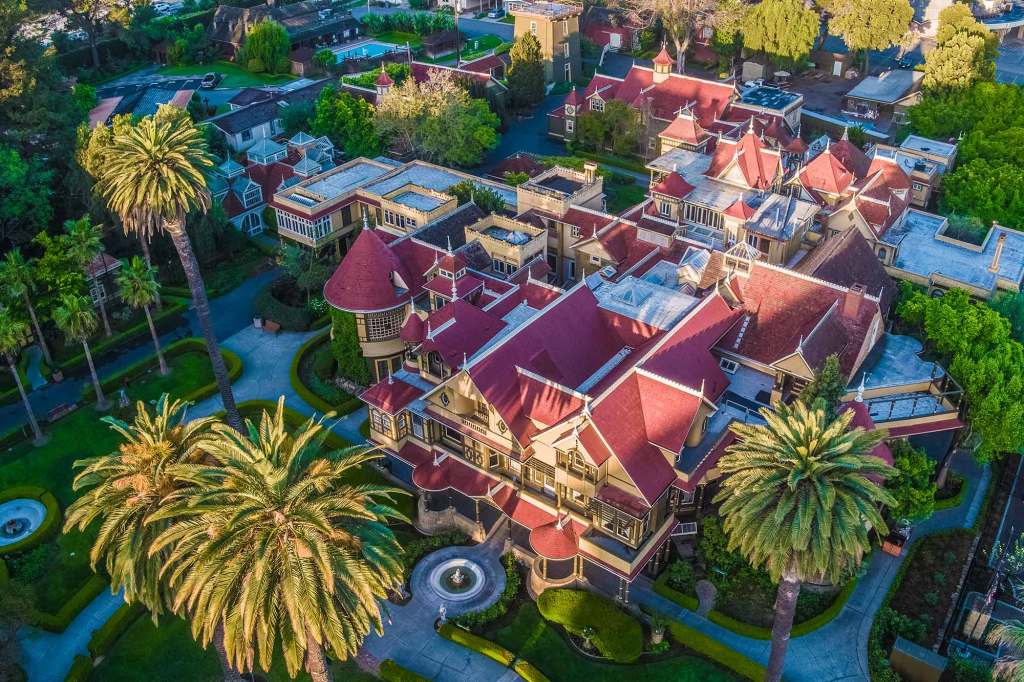
As I was cultivating the garden, the most simple and innocent of human toils, the morning sun was shining with uncommon brilliancy, birds were singing in every tree and on every bush; so pleasant, so spirit-stirring, health-giving a morning, seldom I had seen. And the effect upon my spirits was great. This must have been like the same joy and labor of the unfallen parents of the race. Was this garden, then, the Eden of the present World? It was arrayed with as much richness of taste as the most splendid of the flowers, beautiful as the day, and with a bloom so deep and vivid that one shade more would have been too much. I was redundant with life, health, and energy. Hours and hours past. As the night started closing it, I went to the parlor, and thought of the influence of the light of the morning that tends to rectify whatever errors of fancy, or even of judgment, we may have incurred during the sun’s decline, or among the shadows of the night, or in the less wholesome glow of moonshine. My first movement, on starting from sleep, was to throw open the window and gaze down into the garden which my dreams had made so fertile of mysteries. I was surprised and a little ashamed to find how real and matter-of-fact an affair it proved to be in the first rays of the sun which gilded the dewdrops that hung upon leaf and blossom, and, while giving a brighter beauty to each rare flower, brought everything within the limits of ordinary experience. I rejoiced that I had the privilege of owning this estate which possessed such lovely and luxuriant vegetation. It served as a symbolic language to keep me in communion with Nature. #RandolphHarris 1 of 6

The ordinary little casualties of evil fortune had certainly from time to time in the shape of illness, and one thing or another, attacked the family of the Winchesters’ in common with every other family, but here suddenly had arisen a something at once terrible and inexplicable. I was in a deep and anxious thought when I heard a noise from the direction of the library: the sound of a key turning in a lock. My skin was crawling afresh. I blew out the candle, closed the book, and moved as quickly as I dared toward the main entrance. However, footsteps were already approaching the door from the library, and I knew that the landing doors could not be opened in a hurry without making a great deal of noise. Nor was there time to make it to the elevator. I could have hidden beneath the long table, but the thought of being discovered, and having to crawl ignominiously out to face the apparition…No; there was only one possible hiding-place. I stepped into the trap door, and I was plunged into absolute darkness. There was very little air, even at first, and it soon grew stifling hot. As my eyes adjusted to the dark, I became aware of a faint glimmer. I could feel the dread and chill that the spirit brought. As I sat, I noticed there was a severed head facing away from me on the floor. The sides of the head were dark and bloody and the air there matted with gore where the ears had been sliced off. I only notice that after taking in the raw, red nakedness of his skull. However, he had been scalped, too. His lips were drawn back in a snarl of agony from his teeth. #RandolphHarris 2 of 6

Worse, though, were his eyes. They were black, dismayed, lost as the life dimmed in them to the dawning consequence, of what his bartering with evil was going to mean for him in death. The secret passageway was vaulted, timbered in hardwood, the high dome spreading above a spacious circular room, flagged in smooth stone under strew rugs, opulently furnished in teak and ivory and marble and blood. The headless torso of this man lay in a thickening pool of gore, small and still at the carved feet. Shambolic and grotesque, much worse of a sight than anyone could imagine. Its skin was some greyish animal hide, scraped and seasoned, maybe the softened hides of boar or buffalo, crudely stitched over its stuffing in the rough shape and posture of a man Standing, it would have been about eight feet tall. It was a lifeless thing, an abomination slouched on its throne, with its cloven buffalo hooves for feet, with its hands taken from some slaughtered ape and clenched now, the fingernails black with rictus and crafty decay. It was an abomination, right enough, but crudely inanimate. I lite a torch and studied the head. It was large and pale and bald, sunken in placed in shallow depressions where the stuffing did not seem to be sufficient and gave it a deformed and almost sullen aspect. The eyes were blank discs of ivory perforated at their edges and stitched on to the fact. And the mouth under them was a black, leering gash. #RandolphHarris 3 of 6

I could not fathom what had been living in the walls of my home. Shaking my head in disbelief, I tuned my back on the thing. And felt the hairs rise on my neck in dread as I heard foot steps behind me. In my heart, I felt that demons were living within my home and was deeply afraid. It appears that someone had been dabbling with diabolical forces. Remorseful, ashamed, deepening terror, I felt my heart was going to explode out of my chest. I turned around, already squeezing the trigger of my revolver, and fired. I hit it with a burst, cutting the monstrosity in half. As a staggered through the secret caverns, I noticed other curious things, bits of gold, plaits of old rope, rags, coins, what looked like a couple dozen diamonds and five small human skulls. And the skulls were partially digested. The silence began to unnerve me. I was seized by a creeping, mortal dread. I wondered, “Am I awake? Have I my senses?” This was an inexpressibly terrible night. An impulsive movement, I drew my eyes to the window. There I beheld the beautiful head of a young man—rather a Grecian than an Italian head, with fair, regular features, and a glistening of gold among his ringlets—gazing down upon me like a being that hovered in mid-air. An incredible clear and calm overcame me. A doorway opened in the catacombs. I watched this angelic man walk through them as I followed. Back inside the mansion, he became light and insubstantial as a ghost, until he disappeared completely into thing air. It was midnight, and the door behind me vanished, leaving nothing but a solid mahogany wall behind. #RandolphHarris 4 of 6

Those who have never personally felt the demons storming over their home can have no conception of the reality. A number of wolves have also taken up their quarters in the fruit orchards and feed on wild birds, rabbits and such like. They are sky in the summer-time, and a boy of twelve might scare them; but when the birds migrate, and the rabbits are gone, they prowl about at night, and they are dangerous. They are the worst, however, on stormy nights, for then it is just as if the fiend himself possessed them: they are so mad and fierce that man and beast become alike their victims; and a party of them have been known even to attack the ferocious bears of the mountains, and, what is more, to come off victorious. Their howl is enough to scare the bravest man. As soon as it commences, the wind rises, and you will see their eyes gleaming among the trees. Your only plan for safety is to wrap your cloak around you, and lie down flat on the ground. If your home were but a few hundred yards off, you might lose your life in the attempt to reach it. Horses become unmanageable as the terror infects them. Grown men begin weeping with fear when their howling recommences and approaches nearer and nearer. As the moonbeams become dusky amongst the trees, from time to time a fierce howl arises from their center, and people know they are in great danger, as the wolves will very soon make a general attack. #RandolphHarris 5 of 6

O THOU great, powerful, and mighty KING AMAIMON, who bearest rule by the power of the SUPREME GOD EL over all spirits both superior and inferior of the Infernal Orders in the Dominion of the East; I do invocate and command thee by the especial and true name of Lucifer; and by that God that Thou Worshippest; and by the Seal of thy creation; and by the most mighty and powerful name of God, IEHOVAH TETRAGRAMMATON who cast thee out of Heaven with all other infernal spirits; and by all the most powerful and great names of GOD who created Heaven, and Earth, and Hell, and all things in them contained; and by their power and virtue; and by the name PRIMEUMATON who commandeth the whole host of Heaven; that thou mayest cause, enforce, and compel the Fifty-second Spirit Alloces and His 36 Legions of Spirits to come here before this Circle in a fair and comely shape, without hard unto me or unto any other creature. I awaken you and your powers of darkness which dwell within you by the power of the blood of Lucifer that you may serve to empower this great mansion! Through serving the greater cause of dark magick which breaks the shackles that bind the Blackened Fire of spirit, may you be uplifted and liberated! Awaken and empower the forbidden rites of Angra Mainyu! Awaken and empower our great work of counter creation as an Apostle of the Lord of Darkness eternal and as a warrior of the Path Satanachia. Herein receive such virtue that we may obtain by thee the perfect issue of all our desires, which also we seek to perform without evil, without deception, by God, the Creator of the Sun and the Angels. Amen. #RandolphHarris 6 of 6


In 1994, a man stopped by The Winchester Mystery House for the Christmas Tree tour. Afterward, he went to the café for a cup of coffee. He brought his coffee and sat at a table, by the doors looking out onto the courtyard. He picked up a newspaper and started looking through it as he was sipping his coffee. There was no one else in the area, and he noticed just a few people outside waiting to tour the estate. One waiter was at the counter at the time, and there were a few other employees in the gift shop area. Very shortly, he noticed a man and a woman enter from the courtyard. They passed, looked around for a moment, then sat down in the back of the café. He could not help but notice them because of the way they were dressed and the way the looked. The man was dressed in a nice-looking black suit and wearing a tie, but his complexion was that of a very sick man. He was very pale and seemed to be sweating. The woman wore a Victorian type dress, black and long, very formal, it reached down to her ankles. She was carrying a large cloth type bag. They sat for a moment and the woman reached into her bag and withdrew a large towel of some kind and began wiping the man’s face, over and over again.

Then she put it back in the bag. They sat for a few more moments, apparently conversating, although he could not hear what they were saying. Then the man walked over to his table. He asked, “Do you have some money so I can get something to drink?” The sickly-looking man was so well dressed that he was surprised he asked for money. So he refused him. The sickly-looking man starred at him for a while and went and sat back down. He is his wife talked for a while, and walked towards him, they made a left and went toward the exist. Out of curiosity, he immediately got up to see where they were going, but they had vanished. He went outside and looked at the cars in the parking lot and all of them were empty. Upon revealing security footage, the manager determined that was William and Sarah Winchester, but before they reached the exist, the security tape got all fuzzy and distorted. “Be not forgetful to entertain strangers, for thereby some have entertained angels unawares,” reports Hebrews 13.2. https://winchestermysteryhouse.com/

And please be sure to check out the online gift store: https://shopwinchestermysteryhouse.com/

This is the Presence You Have Longed for

Despite—or perhaps because of—the great public and policy interest, organized crime remains a fuzzy and contested umbrella concept. The understanding of organized crime has since the 1920s shifted back and forth between two rivaling notions: a set of stable organizations illegal per se or whose members systematically engage in crime; and a set of serious criminal activities, particularly the provision of illegal goods and service, mostly carried out for monetary gain. The general public, the media, and most policy-makers primarily use the expression “organized crime” to refer to criminal organizations, such as the Sicilian and America Cosa Nostra, the Japanese Yakuza, Colombian and Mexican drug cartels, and other large-scale criminal grounds around the World though to have a hierarchical lasting structure. However, even some of your local news stations may be involved in organized crime. There exists variation in the skills and techniques that go along with crimes that are committed within an organizational context. Organizational (id est, corporate) and state-authority occupational crimes tend to take on relatively sophisticated forms. To further highlight this illustration, we found evidence of complex and collective offending in our analysis of the savings and loan scandal. We grouped these offenses into three categories: desperation dealing, collective embezzlement, and cover-ups. Desperate dealing took shape as a series of complicated, high-risk investment and loan actions employed by executive to save their sinking financial institutions. #RandolphHarris 1 of 19

These practices included writing multiple loans to insolvent borrowers, inadequate loan underwriting practices, and other “go for broke” investment schemes. The term collective embezzlement refers to self-interested “looting” or unauthorized spending sprees that corporate executives pursued using investors’ money. The authors contend that extravagant parties and high ticket purchase were the order of the day as executives sought to enjoy the last days of their sinking business enterprises. Once things began to come unglued, cover-up practices were used to keep their insolvent ships afloat. These scams ran the gamut from criminal accounting practices (id est, misrepresenting capital reserves or capital-to-assets ratios) to money laundering, to hush money that was delivered to high-ranking state authorities and policy makers. Crimes that are committed by state agencies or institutions also tend to take on an elaborate character. To further highlight this illustration, numerous discussions, including one which documents how Nazi Germany and other rogue states have systematically embarked on genocidal plans to exterminate certain classes or creeds of people. Mr. Hitler’s “final solution for the Jewish problem” included a concerted effort of persecution, mass murder, and cover-up. Similarly, the hearings of the Iran-Contra affair of the 1980s taught us that our own government is capable of hatching and carrying out some complex and especially devious criminal plans. By comparison, acts of professional occupational crimes or individual occupational crime tend to be much more simplistic. #RandolphHarris 2 of 19

More often than not, the employee simply pockets the money or materials and makes little or not effort to cover his or her tracks. A similar trend has been observed among embezzlers. The same can be said about most crimes that are perpetrated by professionals. For example, we will discuss how pharmacists who steal and use prescription drugs on the job tend to rely on simple and predictable routines. White-collar crime and criminals are spread throughout the landscape of the American industrial complex. No one type of business/industry, or even any one type of job role (secretaries versus executives), is disproportionately represented in the available samples of known offenders. In light of this observation, researchers have begun to adopt a more individual-level focus, targeting the role that occupational settings play in the spread of deviance. Companies that operate in autonomous space, free of external social and regulatory control, will be more likely to engage in criminal behavior. This type of free-wheeling, self-regulatory work environment allows profit motives to blur the lines between acceptable and unacceptable “business practices.” High levels of internal or external competition and cut-throat inter-office or industry-level politics appear to exacerbate matters. #RandolphHarris 3 of 19

Organizational offenders are disproportionately, European-American, middle-aged men who possess modest to high levels of social capital. In our case files, there are 968 white-collar offenders who were sentences in seven U.S.A. district courts over a 3-year period. The bast majority of the offenders were men. The sample was also lopsided in terms of race, as better than 75 percent of the subjects were European-America. The average offender was well into his thirties and several offense types (antitrust, securities, tax, and bribery offenses) were dominated by offenders over 40 years of age. The participant’s elevated social capital was evident by the fact that most were salaried employees with modest financial assets. Most of the perpetrators were married homeowners with college degrees. Many occupied supervisory positions in their organization. Organizational offenders do not usually have squeaky clean pasts. We found that 36 percent of the 965 white-collar criminals in our sample had at least one prior arrest and 67 percent had been arrested more than once in the previous 8 years. Of the repeat offenders, 33 percent recorded five or more arrests. We found little evidence of criminal specialization. Of the 465 repeat offenders, only 15 percent were exclusively arrested on white-collar charges. Repeat offenders tended to stay away from violent crimes, but they often drifted into property or public order offering. #RandolphHarris 4 of 19

However, the longer the person’s rap sheet, the more likely that one would face additional white-collar charges. Faced with comparisons to traditional street criminals, using arrest as indicator of offending, white-collar criminal careers begin and end later, and include smaller numbers of recorded criminal events, than do those of street criminals. However, they are similar to common crime careers in that they are unlikely to evidence a high degree of specialization, and that offenders seem to age out of crime. Moreover, the same variables that predict recidivism in street criminals (id est, marital status, history of drug use, prior record, gender, employment states) are predictive recidivism in white-collar offenders. Criminal intent is a difficult concept to nail down in the case of most crimes committed with an organizational context. This is partly a result of the fact that there are so many cognitive and behavioral variations present in these criminal events. Different jobs take on different cultural forms. For example, the term “hawk jobs” refer to those work environments that stress entrepreneurial creativity. Persons working in this type of environment are drawn toward innovative offenses directed toward enhancing their self-image among peers. Academics and business owners are examples of hawks. The term “donkey jobs” refers to those environments that are known for their “isolated subordination.” Deviance in this workplace manifests itself as sabotage or resentment and stems from low job satisfaction. #RandolphHarris 5 of 19

Some cashiers and non-unionized line workers provide good examples of donkeys. The term “vulture jobs” characterize occupations with loose work groups and high levels of individual-level decision-making power (exempli gratia, outside salespeople). These persons will involve themselves in self-interested abuses intended to enhance their standing in the incentive-based reward system. Finally, “wolfpack jobs” were described as environments with tight work groups, for example, union employees and police officers. These persons will engage in habitual and collective forms of deviance intended to enhance group solidarity and camaraderie. Instrumental motivation is a cornerstone of crimes that are committed within an organizational context. Regardless of whether the outcome is monetary or physical loss, most of these crimes can be traced back to greed or a thirst for power. The vast majority of the incarcerated embezzlers in our sample suffer from an “unsharable problem.” This might include a self-imposed financial pinch resulting from promiscuous or seedy pursuits away from the job, sudden losses from a part-time business or investment venture, or the inability to finance an ever-increasing social status. Faced with the knowledge and skills of their jobs, these embezzlers came to exploit their position of trust as a means of alleviating the problem. We have also observed a slightly different motivational pattern among the female embezzlers; namely, the women tended to steal in order to provide for their families. #RandolphHarris 6 of 19

Analyses of corporate and/or state violators reveal that executives and politicians tend to commit their crimes to keep pace with the competition or to protect their own position within the organization. For example, most agree that former President Clinton committed perjury in an effort to avoid the political fallout associated with having extramarital sex in the White House. Regardless of the gender or organizational standing of the offender, these tend to be persons who commit their crimes because they see them as a way of alleviating some sort of specific threat. It is difficult to assess the amount of planning that goes into the commission of organizational crimes, since most of them come about as exaggerations of normal operating procedures. In the end, onlookers have difficult discerning where normal planning and implementation ends and where illegal and unethical cognition and behaviours begins. Persons who steal from their employers tend to construct their thefts as fringe benefits or simple extensions of normal business practices. To further highlight this illustration, a bank embezzler might claim that they simply loaned him or herself the money. A person who steals scrap metal from a manufacturing plant might say that they were simply taking out the trash. By equating these thefts to everyday business, it is difficult to determine how much planning exists. For decades, scholar have maintained that normative neutralizations play a central part in the initial and repeated offending that takes place among organizational offenders. #RandolphHarris 7 of 19

More often than not, the source of these rationalizations and justifications can be found in the very workplace from which the offending emanates. To further highlight this illustration, in our seminal study of embezzlers, we use the term “vocabularies of adjustment” to describe how thieves routinely implied a sense of ownership or borrowing over the money that they stole as a means of denying their guilty mind. Some manufacturing employees adhere to a “cognitive mapping of property. Most of the materials in the factor are afforded a status as either personal or company property and thus rarely subject to theft. However, other property is afforded a status as “property of uncertain ownership” and thus fair game for theft. The workers reason that taking scrap material or component parts is not the same as taking a coworker’s wallet or an assembled television set in a box, but it is. You know, this really puts workplace theft into perspective. Stealing from work is a lot like if you went to a friend’s house and walked out with a glass, or their silverware. Through adequate education and upraising children properly and putting things in perspective, we can really train them to be model citizens. A tangential set of cognitive excuses has been uncovered among deviant professionals and corrupt state authorities. Blue ribbon commissions charged with investigating police misconduct have repeatedly unearthed evidence of a mindset in which habitual offenders deny criminal responsibility for their actions. The rogue officers claim that they were simply playing within the rules of aggressive crime fighting or explicitly following orders. #RandolphHarris 8 of 19

We have documented how workgroups norms centering around the need for effective and efficient patient care can lead nurses to excuse their repeated theft of hospital supplies and medications. Irrespective of the profession, we find that employees do not have to look or far to find the normative definitions that they use to neutralize their acts of wrongdoing; more often than not, they are derived from established workgroup norms or accepted business practices. Institutions are the overarching framework of rules and constraints, formal and informal, that govern interactions among individuals; constitutions and social norms are examples. Organizations are groups of individuals that operate within the general framework of institutions, and implement the rules and norms of the institutions; examples are legislatures, political parties, and universities. Of course there are interactions and feedbacks between institutions and organizations. The rules and constraints imposed by institutions do not eliminate all freedom for organizations to act, and since organizations have members with differing interest and abilities, interesting issues of “the play of the game” at this level must be analyzed. Institutions can then evolve to alter the rules of the game so as to achieve better outcomes from the play at the organizational level. Finally, individuals interact within the frameworks set up b both institutions and organizations, and these transactions have their costs of information, commitment, and so on. #RandolphHarris 9 of 19

Institutions and organizations attempt to economize on transaction costs, but usually fall short of optimality, especially when changing economic and technological conditions require changed or new institutions. There are two categories of reasons for the long lags and bottlenecks in the process of institutional change: first, resistance by powerful special interests with stakes in the old system; and second, multiple equilibria and historical accidents. A regularity in social behaviour that is agreed to by all members of society, specifies behaviour in specific recurrent situations, and is either self-policed or policed by some external authority. Thus, the strategies that the individuals choose, include aspects of the play of the game as well as the rules, and also specifies the equilibrium that is to be played. An individual’s expectation of the response to one’s action is often an important part of the institutional environment; that is, the institutional environment also serves to coordinate beliefs and select equilibria. At the (highest or most basic) level stand informal institutions, such as religion, social customs and norms. These are slow to change, over the timescale of centuries or millennia. At the second level is the institutional environment, consisting of formal rules, such as constitutions and laws. The timescale of evolution of these is measured in decades. The play of the game occurs at the third level, and this includes the choice of appropriate modes of governance for each type of transaction, or organization, the aim being to economize on transaction costs. #RandolphHarris 10 of 19
Finally, the fourth and lowest level contains routine economic activities such as production, employment, market equilibration. Societies make conscious efforts to instill some norms into their members, enlisting the help of parents, teachers, media, and leaders of opinion because norms and other informal institutions have mainly spontaneous origins and have a lasting grip on the way society conducts itself. Man of the norms pertain to civic duties such as voting, but others pertain to honestly in economic matters. This process of social conditioning and education can respond to changing needs much faster than the evolutionary timescale. Many of the communities facing collective-action problems treat laws, like prices, as incentives for behavior. Various branches of civil law—liability, tort, contract, property—govern situations where two or more individuals can enter into a contractual relationship, explicit or implicit, as well as ones where one person’s actions have spillover effects on others without any voluntary agreement on their side. These legal rues affect the incentives of individuals to take actions, or to refrain from actions, that carry benefits or costs to others, and that in turn affect overall economic outcomes and efficiency. Many changes in the society’s knowledge system translate directly into business operations. This knowledge system is an even more pervasive part of every firms environment than the banking system, the political system, or the energy system. #RandolphHarris 11 of 19

Apart from the fact that no business could open its doors if there were no language, culture, data, information and knowhow, there is the deeper fact that of all the resources needed to create wealth, none is more versatile than knowledge. Take Second Wave mass production. In most smokestack factories it was inordinately expensive to change any product. It required highly paid tool-and- die makers, jig setters and other specialists, it and resulted in extended downtime during which the machine were idle and ate up capital, interest and overhead. That is why cost per unit went down if you could make longer and longer runs of identical products. This gave rise to the theory of economies of scale. However, the new technology stands Second Wave theories on their heads. Instead of mass production, we are moving towards de-massified production. The result is an explosion of customized and semicustomized products and services. The latest computer-driven manufacturing technologies make endless variety possible and inexpensive. New information technologies, in fact, push the cost of diversity toward zero and reduce the once vital economies of scale. Or take materials. A smart computer program hitched to a lathe can cut more pieces out of the same amount of steel than most human operators. Making miniaturization possible, new knowledge leads to smear, lighter products, which, in turn, cuts down on warehousing and transportation. #RandolphHarris 12 of 19

Up-to-the-minute tracking of shipments—id est, better information—means further transportation savings. New knowledge also leads to the creation of totally new materials ranging from aircraft composites to biologicals and increases our ability to substitute one material for another. Deeper knowledge now permits us to customize materials at the molecular level to produce desired thermal, electrical or mechanical characteristics. The only reason we ship huge amounts of raw materials like bauxite or nickel or copper the planet is that we lack the knowledge to convert local materials into usable substitutes. Once we acquire that know-how, further drastic savings in transportation will result. In short, knowledge is a substitute for both resources and shipping. The same goes for energy. Nothing illustrates the substitutability of knowledge for other resources better than the recent breakthroughs in superconductivity, which at a minimum will drive down the amount of energy that now must be transmitted for each unit of output. In addition to substituting for materials, transportation and energy, knowledge also saves time. Time itself is one of the most important of economic resources, even though it show up nowhere on a Second Wave company’s balance sheet. Time remains, in effect, a hidden input. Especially when change accelerates, the ability to shorten time—for instance, by communicating swiftly or by bringing new products to market fast—can be the difference between profit and loss. #RandolphHarris 13 of 19

New knowledge speeds things up, drives us toward a real-times, instantaneous economy, and substitutes for time. Space, too, is conserved and conquered by knowledge. GE’s Transportation System division builds locomotives. When it began using advanced in formation processing and communications to link up with its suppliers, it was able to turn over its inventory twelve times faster than before and to save a full acre of warehouse space. Not only miniaturized products and reduced warehousing but other savings are possible. Advanced information technologies, including document scanning and new telecommunications capacity based on computers and advanced knowledge, make it possible to disperse production out of high-cost urban centers and to reduce energy and transport costs even further. There is currently an economic war going on. It is the war for dominance and wealth on a global scale, and political establishments and business elites are involved. It is also the fight to survive, involving myriads of small and medium businesses and hundreds of millions of ordinary working people. It is one of the strangest wars in World history. America is fighting at full strength, but unlike previous wars, even economic, America does not want its rival to suffer a complete defeat. America needs to remain rich, economically and socially stable, and technologically-progressive, it also needs to rebound and become cash abundant. America has to remain sufficiently healthy and strong and keep on running. #RandolphHarris 14 of 19

This war for global dominance is a real war. The country that is the superpower is the one who gets to determine the rules of conduct on the global economic arena and the ways key international issues are approached. This is important because some governments are predatory or kleptocratic. As time goes by, America needs to keep the situation on the battlefield under control. Bargaining power, though absolutely nonquantifiable, exerts decisive influence on how key international economic issues are handled. To maintain status as a World Superpower, it is important for citizens become mature and competent individuals. There are extrinsic conditions for the development of competent personalities other than the kind of income possessed, and there are conditions intrinsic to family structure which may give even children within the same family differing starts in life. If individuals are to enjoy equal opportunity for the development of competent personalities, and this is limited by the resources of their families, then the objective of a community sharing such an ideal must be to provide these families, if not unlimited availability, at least some fair minimum of such resources. In general, this has been a guiding principle, though sometimes none too consciously, for the development of the agencies concerned. Equality before the law has been, of course, the bedrock principle upon which all these protective activities have been founded. #RandolphHarris 15 of 19

Pursuit of this ideal virtually require the state to take over and monopolize the function of securing justice for individuals when they were injured or threatened by other individuals, rather than leaving retribution to private feuds. The state taking over the elementary protection of life, liberty, and property could thus be regarded as the earliest and most irrevocable of transfers to another institution of a family function. There is, however, a function centered on family life which was in the hands of another institution even earlier than that, although it is not a function which the family itself ever possessed. That is the legitimation in the eyes of the community, through ritual and certain binding commitments, of marriage and parenthood. While the enforcement of these responsibilities has long since been concentrated in the state, in a society such as ours where there are so many faiths and churches the element of ritual with which these monogamic commitments are solemnly chartered by the community still remains conspicuous. The ritual testifies to the view that from its beginning any family is as much the creation and concern of the community as of its principals. In addition to formal legitimation of marriage (and of course of its rupture through divorce), there is a large area of family law, exempli gratia, inheritance of estates, administered through the appropriate legal institutions. The legal responsibility of a husband for the economic support of his wife, his children up to certain ages, and even his parents and siblings, remain in effect, though some of the economic burden has been taken over by family agencies. #RandolphHarris 16 of 19

Specific provisions vary widely among the states. Proposals for change in family law are more often concerned with codification on a national basis than with release of family members from their responsibilities. Indeed the notion, however fallacious, that by stringent limitation of divorce, family stability is somehow conserved, has served to arrest the liberalization that might narrow the gap between profession and practice; while efforts to move into a therapeutic phase, exempli gratia, family courts, have been largely resisted. How the powers of psychological offenders counterfeit the presence of God to those ignorant of their devices may be somewhat as follows. At some moment when the believer is yearning for the sense of God’s presence, either alone or in a meeting, and certain conditions are fulfilled, the subtle foe approaches, and wrapping the senses round with a soothing, lulling feeling—sometimes filling the room with light, or causing what is apparently a “breath from God” by a movement of the air—either whispers, “This is the presence you have longed for,” or leads the believer to infer that it I what one has desired. Then, off one’ guard, and lulled into security that the psychopathological offender is far away, some thoughts are suggested to the mind, accompanied by manifestations which appear to be divine. A sweet voice speaks, or a vision is given, which is at once received as “divine guidance,” given in the “divine presence,” and hence beyond question as from God. If accepted as from God when actually from the psychopathological offender, the first ground is gained. #RandolphHarris 17 of 19

The human is now sure that God has bidden one do this or that. One is filled with the thought that one has been highly favored of God and chosen for some high place in His Kingdom. The deeply hidden self-love is fed and strengthened by this, and one is able to endure all things by the power of this secret strength. One has been spoken to by God! One has been singled out for special favor! One’s support is not within—based upon one’s experience—rather than established upon God Himself and the written Word. Through this secret confidence that God has specially spoken to one, the human becomes unteachable and unyielding, with a beneficial trending on infallibility. One cannot listen to others now, for they have not had this “direct” revelation from God. One is in direct, special, personal communion with God, and to question any “direction” given to one becomes the height of sin. Obey one must, even though the direction given is contrary to all enlightened judgment and the action commanded is opposed to the spirit of the Word of God. In brief, when the human at this stage believes one a “command” from God one will not use one’s reason, because one thinks it would be “carnal” to do so. “Common sense” is lack of faith, and therefore sin; and “conscience,” for the time being, has ceased to speak. Some of the suggestions made to the believer by psychopathological offenders at the time may be: “You re more advanced than others”—working to blind the soul to sober knowledge of itself. #RandolphHarris 18 of 19

“You are a special instrument for God”—working to feed self-love; “You are different from others”—working to make one think one needs special dealing by God; “You must take a separate path”—a suggestion made to feed the independent spirit; You must give up your occupation and live by faith”—aiming at causing the believer to launch out on false guidance, which may result in the ruin of one’s home, and sometimes the work for God in which one is engaged. All these suggestions are made to give the human a false concept of one’s spiritual state; for one is made to believe one is more advanced than one actually is, so that one may act beyond one’s measure of faith and knowledge (Romans 12.3), and consequently be more open to the deceptions of the beguiling foe. Ontological categories of time, space, causality, and substance are the basic forms of thought and being through which the mind makes contact with reality. Since they are forms of finitude, they express a mixture of being and nonbeing, positive and negative elements which we discuss in terms of courage and anxiety. Humans’ experience of time includes the anxiety of transitoriness and the courage of a self-affirming present. Space is not only physical, but also social—a sphere of influence, a place in the framework of value and meaning. The anxiety of insecurity arises from the danger of losing one’s place, only to be met by the courage to carve out a niche for oneself. Causality brings forth the anxiety of contingency, the awareness that one does not possess one’s own power of being. However, courage is there too, for causality affirms the reality of being by pointing to its sources in the power of being. Substance expresses the anxiety of change, of loss off identity, along with the courage to affirm the finite by laboring to produce cultural creations. Significance expresses the union of being and nonbeing in everything finite. They articulate the courage which accepts the anxiety of nonbeing. The question of God is the question of the possibility of this courage. #RandolphHarris 19 of 19

No appointment needed! Cresleigh Havenwood features four distinct floor plans ranging from 2,293 – 3,377 square feet and offering up to five bedrooms. Each plan has been thoughtfully designed and includes great features such as single story homes, guest suites, optional offices, garage workshops, and more! Get the most out of your new home with Cresleigh’s All Ready smart home featuring all the connectivity needed to keep your house running. Best of all, each Cresleigh home comes with owned solar included!

Located off of Virginiatown Road and McCourtney Road, residents of the 83 homesites of Cresleigh Havenwood will benefit from a brand new neighborhood in the charming City of Lincoln. Palo Verde Park, is just down the street and there’s plenty of recreation to take part in all around town.

 Randolph Harris II International Institute