
Home » #RandolphHarris (Page 47)
Category Archives: #RandolphHarris

Well Covered is the Bearing of Continuous Affection Upon Physical and Mental Health

In the state of despair there is nobody and nothing that accepts. However, there is the power of acceptance itself which is experienced. Meaninglessness, as long as it is experienced, includes an experience of the “power of acceptance.” To accept this power of acceptance consciously is the religious answer of absolute faith, of a faith which had been deprived by doubt of any concrete content, which nevertheless is faith and the source of the most paradoxical manifestation of the courage to be. The pleasure principle tends to dominate the mindset of the public order offender. These persons are usually driven by short-term gratification and thus possess a self-interested and shortsighted outlook at the time of the offense. This observation is perhaps best evidenced by the high levels of drug and alcohol use that exist at the time of the offending. In our survey of state prison inmates, we discovered that 54 percent of persons serving time on drug possession charges and 51 percent of persons incarcerated on drug trafficking charges admit to being under the influence of drugs or alcohol when they committed their crimes. High levels of substance use and abuse have also been observed in studies of prostitutes, johns, and pimps. Public order offenders are driven by a host of instrumental and expressive motives. More often than not, persons of the production/distribution side of the public order crime equation are motivated by the promise of financial returns. #RandolphHarris 1 of 19
Many drug dealers see legitimate jobs as being unattainable or even “sucker’s work” and thus choose their illicit trade as a means of easy and free-flowing cash. This theme was well evidenced in our interviews with crack dealers. As one respondent put it: “It’s better money than everything. Make twenty dollars in one second, two seconds. It’s better than robbery; it’s better than everything. I done made three $100 sales in one minute one time.” Research on street pimps and house madams indicates that these sex brokers are “in it for the money” and status (id est, gender domination and “player” label) that goes with the job. Prostitutes, on the other hand, tend to exhibit a broader range of motivations. Most all prostitutes talk about the money that goes along with their trade; however, prostitutes often use their involvements in the sex industry to fill an emotional (love) or psychological (pain, low self-esteem) void within themselves. Persons who occupy the client role in public order offenses tend to be motivated by self-gratification or self-enrichment. These offenders seek the euphoria that comes from getting high or having sex. For example, pleasure pursuits such as being with an exotic or aggressive woman or fulfilling sexual fantasies tend to be primary motivational factors for persons who solicit prostitutes. The problem, however, is that these hedonistic pursuits have a propensity to get out of hand. Over time, individuals may become so dependent upon their chosen vice that survival or maintenance replaced what used to be the pursuit of pleasure. #RandolphHarris 2 of 19

Public order transactions tend to be preceded by rudimentary exercises in planning an target selection. While many of these processes are streamlined by the existence of mutual benefits between the distributor and client, perpetrators of public order means that the transactions must take on a somewhat covert quality so that the participants’ intentions and behaviors are not clearly evident to the public and members of law enforcement. Criminal exchanges are generally modeled in one of three ways: the client and distributor can maintain a steady and private relationship; the distributor can make him or herself available in a public location and then wait for the client to intermittently “cruise” by; or the client may wait for the distributor to contact him or her directly when goods or services become available. Each category is preceded by its own form of planning and target selection process. Drug dealing is typically characterized by the first transactional exchange, wherein a single dealer serves as a main source for a given user. A recent study of drug users in six U.S.A. cities found that nearly half of the power cocaine and heroin users relied on a single dealer to supply them with their drugs. Crack users were found to be less selective in their behaviors with just more than one-third saying that they maintained a steady source. A drug user who has a go-to source can often predict the quality of the product that one will receive as well as the hours of operations, predictable location, and choice of substances that will be available. #RandolphHarris 3 of 19

For the dealer, a steady roster of users helps to maintain a regular intake of cash, impose more rigid rule of operation, and limit the possibility of apprehension. These factors serve to streamline the planning and target selection processes and enable the participants to pattern their relationship. Street prostitution is often organized around a “cruising” model of exchange. Male and female prostitutes alike are known to frequent the same stretch of road, commonly known as a “track,” and make themselves visible to oncoming motorists in hopes of getting a “date.” All the prostitute has to do is look the part, be available to clients, and avoid the attention of the police. The john, on the other hand, must identify a suitable sex partner, negotiate a price, and avoid apprehension from undercover and uniformed police officers. Similar patterns of exchange and target selection have been observed in groups of drug dealers, call girls and gigolos, hotel and bar prostitutes (id est, b-girls), and brothel prostitutes, pimps, and madams. In each of these cases, a seemingly never-ending source of would-be client seek out these service providers in a known location and then go about negotiating terms and consummating the exchange. Much more rare are public order crime exchanges in which the distributor seeks out the would-be client. Drug producers (id est, grower and manufacturers) and smugglers are prone to this model. #RandolphHarris 4 of 19

We have documented scenarios in which a given drug smuggler will intermittently contact prospective dealers when one comes into possession of large quantities of a drug. On occasion, entrepreneurial pimps or prostitutes are know to drum up business by making their rounds at the local conventions or casinos. Much of the planning and target selection that exists in these types of exchanges must come from the person in the distributor role. Public order offenses get framed as relatively minor transgression against the moral or righteous order of society. Drug use and prostitution are not framed so much as evil in their own right as they are indications of weak personal character, or a need for money, or maybe a need for stress release or attention, or bonding. This being the case, persons who engage in these acts usually invoke a series of normative neutralizations in an effort to protect or defend their moral standing. Necessity is a common theme that emerges among public order offenders. Prostitutes, pimps, drug dealers, and other persons who occupy a distributor role in the public order equation tend to rely on these activities as a primary or secondary source of income. They involve themselves in the underground economy of vice because they see limited options in the legitimate economy. This gives way to a survivalist mentality in which conceptions of “right or wrong” take a backseat to making a livable wage. #RandolphHarri 5 of 19

Ironically, most of the proceeds from these illegal transactions do not go toward noble expenditure such as food and rent. Instead, the money tends to be spent on frivolous purchase (id est, clothes or socializing) or get used to finance some sort of addiction (id est, drugs, alcohol, or gambling). When drug dealers and pimps spend foolishly and lavishly on leisure pursuits, they are apt to justify this spending (and the criminal activities that supported such spending) by protesting that they have earned it. In short, if the dealer has to put his or her life and freedom on the line to fill a void in the drug market, then surely he or she is entitled to some just reward. A somewhat different set of neutralizations are deployed by those who suffer from an addiction. This would include prostitutes, pimps, or drug dealers (id est, distributors) who decide to spend their “hard earned” cash on drugs, alcohol, or other pleasure pursuit. This observation also extends to the clients (drug users or johns) who habitually purchase the illicit goods or services on the illegal market. These persons tend to distance themselves from responsibility and direct attention to the addictive state, not the crime itself. In short, they skirt personal responsibility by claiming that the addiction left them without realistic options. This pattern is well evidenced in regards to street prostitutes, and heroin users. Regardless of their specific manifestations, public order criminals can become quite adept at deflecting blame and guilt for their actions. This is largely a biproduct of offenders who tend to exhibit long, drawn out deviant histories that afford the plenty of practice and reinforcement of their criminal thoughts and behaviors. #RandolphHarris 6 of 19

Reasoning as a limited cognitive function, detached from the personal center, never could create courage. One cannot remove anxiety by arguing it away. There are different phases of life when social-legal condition has an impact on development of mental health. Social-legal conditions during: Infancy: To minimize the traditional penalties of minority status—crowing, deprivation, neglect—is to increase the chances of life for children in these restricted groups. Childhood: If a family lives in residential community designed for family living and for children’s safety and play, then the children’s health will thrive more than in an area oriented mainly to adult males. Preadolescence: Dramatization of the public interest in the welfare of children—particularly its concern and intervention in cases of illtreament—causes parents to give children better protection than where the public seems indifferent.. Adolescence: Legal and moral emphasis on responsibility toward others creates an atmosphere more favorable to the growth of sexual competence than emphasis upon restraint of sexual interests. Adulthood: As women feel accorded equal status at large, they gain in capacity for sexual response. Later maturity: Health of the aged is directly a function of whether as a class they experience tangible evidence of respect or rejection. Interpersonal conditions during: Infancy: If parents are accepted as adults by parental figures, they can in turn more readily give parental care. #RandolphHarris 7 of 19

Well covered is the bearing of continuous affection upon physical and mental health, but rarely discussed is how love might be enhanced for the unloved and the unloving. Childhood: The cared-for child learns to value and care for oneself, by avoiding risks and following rules, when these rules are conceived as protection and not as restraint. Preadolescence: An optimum alternation between isolation and stimulation is directly related to patterns of energy-use that fall between apathy and overstimulation. Adolescence: Clear-cut models of sex identification improve the chances of sexual competence and reduce frigidity and impotency. Adulthood: Control of fertility is a function of full communication and common intent between husband and wife. Later maturity: Retaining an audience or finding new audiences, before whom one wishes to do well, is conducive to continuous health. Educational conditions during: Infancy: Recognition by parents and others of each gain made in the child’s physical development builds up assurance and appetite for further ventures. Childhood: Sympathetic responses of others to signs of the child’s physical state help the child to recognize their meaning and importance: teaching one to report them explicitly is the basis for ultimate self-regulation. Preadolescence: The responsibility of looking after pet animals provides a dramatic basis for learning hygiene. Adolescence: Understanding of physiology reduces anxiety over rapid development and makes the emergence of sexual functioning a welcome attainment and thus contributes to sexual competence. #RandolphHarris 8 of 19

Adulthood: Full access to knowledge of sexual techniques and the range of human behavior encourages couples to explore and find various mutually acceptable patterns. Later maturity: A sense of fruition through completion of recognized career fosters health in later years. Recreational conditions during: Infancy: Space and objects for exploration induce the growth of coordination. Childhood: Full and free expression of evening bursts of energy in play, with adult consent or participation, do more for health than their suppression. Preadolescence: If the physical demands of sports are adjusted to slightly exceed the margin or proven competence, their effect upon growth of physical competence is maximal. Adolescence: They rhythm and phrasing of play episodes—if the demands increase in a graded series-affect the span of potential involvement, and thereby the capacity for flexible mobilization of energy. Adulthood: Play by its nature begs ideal performance, and by its range exercises faculties unused in work; thus play if continued maintains capacity, whilst lack of play leads to deterioration of the unused capacities. Later maturity: Involvement in new interests looking toward future outcomes are as both actor and sectator is conducive to health. Man lives “in” meanings, in that which is valid logically, esthetically, religiously. The most fundamental expression of this fact is the language which gives man the power to abstract from the concretely given and, after having abstracted from it, to return to it, to interpret and transform it. #RandolphHarris 9 of 19

The most vital being is the being which has the word and is by the word liberated from bondage to the given. Passivity of the reasoning powers leads naturally to what may be described as passivity of the conscience. The conscience becomes passive through non-use when believers think that they are being guided by higher law of being told to do this or that directly from the ultimate concern; that is, by direct guidance through voices and texts. When believers sink into passivity of conscience there is, in some cases, a manifestation of moral degradation, and in others stagnation, or retrogression in life or service. Rather than using either mind or conscience in deciding what is right and what is wrong, they say they walk according to the “voice of the ultimate concern.” This they make the deciding factor in all their decisions. When they “hear the ultimate concern” they will not listen to their reason or conscience, nor to the words of others; for having come to a decision through the supposed direction of the ultimate concern, their minds become as a closed and sealed book on the matter in question. In actual fact, having ceased to use their true reasoning powers they become open to all kinds of suggestions from psychopathic offenders. For example, people feel they do not have to honor America, they do not have to pray because it is the end of the World and because of that they do not need carry on their usually work, overlooking the sacrifices people made for this great country and its rich heritage. #RandolphHarris 10 of 19

However, as most veterans, some law enforcement and every patriot will tell you, “Who then is virtuous and wise American, whom one’s ancestors and government hath set over one’s household, to give them food in due season? Honorable is the American, whom one’s ancestors when they come shall find one working hard.” Because of what one will gain through it, the psychopathic offenders will do anything to engender passivity in any form whatsoever, in spirit or mind or body. Since cultural styles result from a blend of form and substance, three general types of culture are possible. These types never exist in the pure state, but they are very useful as principles for judging a culture, and as guidelines for the interpretation of history. If form is stressed at the expense of substance, the culture is called “autonomous.” If substance dominates and overshadows form, the culture is “heteronomous.” However, if the two are harmoniously balanced, the culture is “theonomous.” The etymology of autonomy, heteronomy, and theonomy indicates the presence of a predominating principle or law (nomos). In autonomy it is the principle of self-sufficient form heteronomy, a tyrannical and hence demonically distorted substance; and in theonomy, an equilibrium in which form is transparent to the ground of being, and religion is perfectly related to culture. Autonomy is the attempt to create the forms of personal and social life without any reference to something ultimate and unconditional, following only the demands of theoretical and practical rationality. #RandolphHarris 11 of 19

Reason is structure. Subjectivity, it is the structure of the mind which enables it to grasp and shape reality. Objectively, it is the structure of reality which the mind can grasp and according to which it can shape reality. However, reason precedes reasons and transcends its structures in power and meaning. Metaphorically speaking, the depth of reason is truth-itself, beauty-itself, justice-itself, love-itself. Essentially, it should be manifest in the rational structures. However, under the conditions of existence, the polarity of structure and dept falls into conflict, with the result that reason affirms and actualizes its structure without regarding its depth. It is autonomous and independent, but, by the same token, superficial, shallow, and secular. Autonomous culture is secularized in the degree to which it has lost its ultimate reference, its center of meaning, its spiritual substance. Autonomy can be viewed under several aspects, the first of these is the secular. For the secular is the absence of holiness, of ultimacy. The holy is the realm of ultimate concern, of the unconditional, and of the infinite. The secular is the realm of preliminary concern, of conditioned, and of the finite. Secular is a neutral term inasmuch as it does not imply the unclean, the morally bad. Our period of history has decided for a secular World, and has dethroned a too powerful church. Yet it excluded those deep things for which religion stands: the feeling for the inexhaustible mystery of life, the grip of an ultimate meaning of existence, and the invincible power of an unconditioned devotion. #RandolphHarris 12 of 19

Such is the defect of a secular World. The secular mind is sometimes called immature in that it lacks the wisdom born out of the shattering experience of the holy. The secular mind fails to go beyond itself, it stays on the banal surface of things, and it never asks the penetrating question of its own existence. The capitalist society is secular. For bourgeois society is impregnated with the spirit of self-sufficient finitude, so that its substance has been lost and its inner ardor has grown cold. The spirit of finitude which lives within itself is the spirit of the capitalist society. Thus is produced an autonomous, secularized culture which has lost its ultimate reference, its center of meaning, its spiritual substance. The secular, or profane, can also be understood by contrasting with the demonic. The secular does not rise above itself; the demonic exalts itself to the stature of the divine. The demonic does not resist self-transcendence as does the profane, but it distorts self-transcendence. An example of this is the Greek philosophy which destroyed the Homeric gods, and the Enlightenment which did away with the devil. The weapon take up by the secular against the demonic is rational form. Rational clarity leaves no room for the mystery of God and the fear of demons. The demons are banished and God is incorporated into an orderly World-system; neither can break into the World with the shaking power of the holy. #RandolphHarris 13 of 19

Secularism upholds form against the negative, form-destroying power of the demonic. However, it rejects the divine in that it denies transcendence, and so the price of “de-demonizing” is “de-divinizing.” In either case, the characteristic of the secular is the rational. We shall finish discussing autonomy, heteronomy, and theonomy in the coming days. This takes us to that wounded giant, the United States of America. Of course, for the United States of America even more than for its global competitors, the military leg of the triad is crucial. The armed forces of Europe and Japan are both still primarily regional forces, with limited capacity for operations far from home. By contrast, those of the United States of America and the Soviet Union, despite cutbacks, both have global outreach. With the U.S.S.R. troubled internally, however, and its Red Army needed to deal with threatened secessions, ethnic troubles, and potentially unstable borders from Iran all the way to China, the U.S.A. miliary has the most resources available for projecting power at a distance (for example, fourteen aircraft carriers with their assorted support ships, compared with four carriers for the Soviets, six for the Europeans). It is precisely the capacity for global projection that differentiates the American forces from all others. America’s tremendous armed might, firmly under civilian guidance and supported by able, educated officers, is, however, shackled to an obsolete strategic view of the World, still overfocused on the Soviet Threat to Western Europe. The result is profound confusion about vital national interest and priorities—a form, as it were, of brain failure at the top. #RandolphHarris 14 of 19

Because of this, congressional pressures for cuts in defense spending, driven by local politics and largely haphazard, are unrelated to any coherent Worldview. The collapse of America’s grand strategy also means much of its defense expenditure goes toward building the wrong weapons systems and putting them in the wrong places at the wrong time—a waste that dwarfs defense-contractor overruns or the proverbial “$1000 haircuts.” It also means that, apart from $75 billion America has sent to Ukraine since the war started, the United States of America is reacting to the great World event of our time rathe than initiating them. In February 2020, the United States of America and the Taliban reached a deal, known as the Doha Agreement, under which the United States of America agreed to withdraw all U.S.A. forces from Afghanistan by May 2021. However, earlier in May of 2023, President Joe Biden has now approved a request by the Pentagon to redeploy USA troops to Somalia in an effort to counter the terrorist group al-Shabaab. The move reverses a decision by President Donald Trump to withdraw all USA troops from the country in 2020. The USA will reposition USA forces in East Africa and move to restore a USA military presence in Somalia in consultation with Somali government. Under 500 troops will be sent back into the country. #RandolphHarris 15 of 19

Less discussed the USA redeployment toward the Pacific in the light of changed strategic conditions—the great uncertainties in China, the rearmament of Japan, the civil war in the Philippines, and the continued Soviet interest in the region. The United States Indo-Pacific Command Area of Responsibility (USIDOPACOM) encompasses about half the Earth’s surface. Approximately 375,000 U.S.A. military and civilian personnel are assigned to the USIDOPACOM area of responsibility. U.S.A. Pacific Fleet consists of approximately 200 ships (to include five aircraft carrier strike groups), nearly 1,100 aircraft, and more than 130,000 Sailors and civilians dedicated to protecting our mutual security interests. Marine Corps Forces, Pacific includes two Marine Expeditionary Forces and about 86,000 personnel and 640 aircraft assigned. U.S.A. Pacific Air Forces comprises of approximately 46,000 airmen and civilians and more than 420 aircraft. U.S.A. Army Pacific has approximately 106,000 personnel from one corps and two divisions, plus over 300 aircraft and five watercraft assigned throughout the AOR from Japan and Korea to Alaska and Hawaii. Of note, component command personnel numbers include more than 1,200 Special Operations personnel. Department of Defense civilian employees in the Indo-Pacific Command AOR number about 38,000. USIDOPACOM protects and defend, in concert with other U.S.A. Government agencies, the territory of the United States of America, its people, and its interests. #RandolphHarris 16 of 19

As of 2022, Japan has made a significant policy change to allow it to get the ability to strike other nations, a move widely seen as a major step toward rearming the nation more than seven decades since it demilitarized after World War II. A Japan’s relations with China worsen and the threat it perceives from its much larger neighbor heightens, the Japanese government gave the green light to proposals it has been debating sporadically since at least 1956. “In such a severe environment,” Prime Minister Fumio Kishida said, counterstrike capability which can deter an attack, or force an enemy to stop one is capability which will become increasingly vital.” The move follows years of efforts by the United States of America to persuade Japan to assume more responsibility for its own defense, particularly as a bulwark against China’s rising military might and threats against Taiwan. Former president Rodrigo Duterte set up the National Task Force to End Local Communist Armed Conflict, or NFT-ELCAC, in late 2018 in a bid to crush the over 50-year insurgency of the Communist Party of the Philippines (CPP) and its NPA armed wing. Since then, rights activists say, thousands of mainly poor civilians with no link to the insurgency have been pressed to sign documents stating they are surrendering rebels; promised assistance if they do, and sometimes threatened with criminal charges if they do not. Karapatan, the national human rights network, has tallied 3,908 civilians forced to surrender as of the start of 2022, while nearly 4,000 individuals have been detained on politically motivated charges since the NTF-ELCAC came into existence. #RandolphHarris 17 of 19

Countless others have been publicly labelled as communists’ sympathizers, NPA members, terrorist, or all of thee above. This practice, known as red-tagging, has cast a wide net over civil society, enveloping activists, journalists, the clergy, even UN special rapporteurs and celebrities. In April 2021, police officials were accused of fabricating a ceremony in which Indigenous civilians were also made to pose as surrendering rebels. Between 1969 and 2008, some 43,000 people were killed in one of the World’s longest running insurgencies. Though the intensity of the conflict has lessened considerably over the past 16 years, the CPP continues to push for a revolution with regular military actions. If the debt crisis roiling Washington were eventually to send the United States of America into recession, America’s economy would not sink alone. The repercussions of a first-ever default on the deferral debt would quickly reverberate around the World. Orders for Chinese factories that sell electronics to the United States of America could dry up. Swiss investors who own U.S.A. Treasurys would suffer losses. Sri Lankan companies could no longer deploy dollars as an alternative to their own dodgy currency. No corner of the global economy will be spared. If the debt limit were breached for no more than a week, the U.S.A economy would weaken so much, so fast, as to wipe out roughly 1.5 million job. And if a government default were to last much longer—well into the summer—the consequences would be more dire. #RandolphHarris 18 of 19
U.S.A. economic growth would sink, 8 million jobs would vanish, borrowing rates would increase, the unemployment rate would soar from the current 3.4 percent to 8 percent and a stock-market plunge would erase $10 trillion in household wealth. A default could shatter the $24 trillion market for Treasury debt, cause financial markets to freeze up and ignite an international crisis. The threat has emerged just as the World economy is contending with a pandemic of threats—from surging inflation and interest rates to the ongoing repercussions of Russia’s invasion of Ukraine to the tightening grip of authoritarian regimes. On top of all that, many countries have grown skeptical of America’s outsize role in global finance. Along with overlending and overborrowing, low saving, and supervision, and adventurous financial transactions, and COVID cases surging in China, the West soaring public debts and unprecedented government spending has become exacerbated and may significantly slowdown growth pace and are likely to do so for quite a long period of time—perhaps for a decade or even longer. With the unprecedented stimulus packages on a scale we have never seen before, and the budget constraints we are now facing, it would be profane to expect that such a spending extravaganza could go on without consequence in the longer term. The United States of America cannot police the entire tumultuous and highly dangerous World, either on its own behalf or anyone else’s, but its unique capability suggest that it may, in alliance with other nations or international organizations, squelch regional conflicts that threaten World peace. In the dangerous decades ahead, many other nations may want just such a firefighter on duty. #RandolphHarris 19 of 19


Family dinners? 🍝 Always at our place! Now that we’ve moved into Residence 4 at #Havenwood, there’s space for the whole crew and then some. Ready to make moves to our neighborhood? It’s the perfect time to buy at Havenwood!

We’re currently offering $60,000 in flex cash + $15,000 in included options for a limited time! Plus our community also offers a low tax rate and Mello Roos, too! 💰 Interested? Email Havenwood@cresleigh.com today!


America….America Has a Problem!

Love, tenderness, sadism, masochism, ambition, curiosity, anxiety, rivalry—these and many other drives are no longer each attributed to just a special instinct, but they are also influenced by the environment (especially the significant early childhood, teenage, and early to mid-adulthood years). Most public order crimes require a baseline level of skill and organization. Street-level drug deals are depicted as simple, fast-hitting exchanges. Dealers and users develop simple routines such as keeping drugs separate from money, passing merchandise through slot doors, or using pager/cell phones to help slow or hinder the efforts of law enforcement. Growers and smugglers rely on a series of systematized practices (exempli gratia the use of chemistry and botany to refine purity levels at the production stage, disguising and moving large shipments at the smuggling stage, fronting drugs and money to a network of distributors) to minimize their risk of personal harm and maximize profits as they go about moving the drugs closer to their final street-level destinations. Drug dealers enlist the assistance of scales, packaging materials, and substances with similar physical appearances as the drug to dilute (also known as “cut” or “step on”) the goods before they make them available for sale. Dealers also seek to maintain clear rules and sales schedules with a set of reliable users. Habitual drug users must become proficient in the drug paraphernalia and the skills that go along with preparing the drugs for use (exempli gratia cooking, cutting, copping). #RandolphHarris 1 of 17

Similar tricks of the trade are observed in the human trafficking industry. The clients of prostitution, also known as johns, employe strategies aimed at minimizing public contact, avoiding suspicion, minimizing health risks, and identifying desirable partners for pleasures of the flesh. Prostitutes refine their craft by frequenting the same stretch of road, nightclub, neighborhood, bar, or hotel. They specialize their sex acts and seek to develop a steady set of clients. They maintain stashes of condoms, drugs, and weapons to help themselves cope with the job. Pimps and madams (exploitive brokers located in between the prostitute and john) employs a series of techniques directed at the efficient recruitment and control of prostitutes and evading police intervention. Some of their favorite practices include the use of intimidation against rival brokers of pleasures of the flesh, false business fronts, bribes, and payoffs, and total control over their employees’ movements, appearance, and daily habits. Most public order transactions take the form of one-on-one interactions between complete strangers or casual acquaintances. Prostitutes may recognize repeat customers and even be privy to their name and some personal details. However, these associations rarely progress beyond the business transactions. The same can be said about the relationships between actors in the illicit drug market (producers, smugglers, dealers, and users). #RandolphHarris 2 of 17

These participants tacitly agrees that a certain level of routinization and stable relations are good for business, but that too much of a good thing can and will produce problems. Getting too close to pers or clients exposes the individual to cognitive dissonance (id est, psychological conflicts of interest), thus increasing the possibility that informant-based police practices will lead to brushes with the law. Most public order crimes occur in either open-air environments or private locales. In the case of prostitution, sex acts are generally performed by “call girls” or “house girls” or gigolos in hotel rooms or private residence. These crimes rarely see the light of day as the john solicits the prostitute via the phone or by dropping by the brothel in person. Street walkers, on the other hand, often negotiate their exchanges and even perform the sex acts in public places. Street prostitutes used to be able to rely on inexpensive hotels or apartments for privacy. The popularity of urban renewal projects, however, has significantly reduced the prostitute’s options in this regard. Where affordable shelter is not available, street walkers turn to secluded alleyways or automobiles as settings for their sex acts. The same pattern is observed with drug crime. Much of the actual drug dealing takes place on street corners, in seedy business establishments, or in alleyways. At the same time, some dealers work out of their homes. Most smuggler and midlevel distributors seek out private residences to conduct their more complex criminal exchanges. #RandolphHarris 3 of 17

It is difficult to accurately assess the age, sex, and racial composition of public order offenders, as the victimless/consensual nature of the offenses leaves us without reliable data sources in this regard. We are left with only arrests data at our disposal. The reliability of these data are dependent on the lofty assumptions that police work is unbiased. This caveat aside, let us take a look at the demographic characteristics of public order arrestees. In 2022, state level drug crime arrestees were disproportionately young, male, minority members. A full 49 percent of persons arrested on drug charges were under the age of 25, 83 percent were male, and 35 percent were African American. Although Hispanic America representation is not provided in state- and local-level UCR data, federal arrest data reveal that 48 percent of the persons arrested on drug charges in 2022 were of Hispanic origin. A different demographic profile emerges for the crime of prostitution. While there continue to be disproportionate numbers of African American in the arrest population (49 percent of total), markedly different age (only 22 percent were under 25 while roughly 35 were 25 to 34) and sex (66.6 percent were females) patterns are observed. Public order offenders display some of the most pronounced criminal careers of any category of perpetrator. Drug crimes provide the best evidence to this effect. #RandolphHarris 4 of 17

Persons facing felony drug charges are likely to have long criminal histories. For example, 65 percent of the drug defendants in the sample had at least one prior felony arrests and 29 percent had a rap sheet containing five or more felony arrests. Shifting the focus to prior convictions, we found that 43 percent of drug defendants had at least one past felony conviction and nearly one in four (24 percent) had amassed a criminal resume that included five or more previous felony convictions. What is more, better than one in three (38 percent) were found to be in active criminal justice status (id est, out on pretrial release, probation, or parole) at the time of their arrest. In a longitudinal study of over 272,000 prison releasees, it was further confirmed that the habitual nature of drug offenders’ criminality, two-thirds of the drug offenders were rearrested within 3 years. Drug offenders exhibit considerable variation in their criminal activities, generally involving themselves in a variety of offenses. We found that 42 percent of those released on a drug charge were arrested on a similar offense within 3 years (3 years tends to be the magic number for being rearrested, and it is possible that some people are targeted to return to prison, especially if they did not belong there in the first place), these offenders showed the greatest propensity to branch out and find themselves in trouble for some other form of crime as well. #RandolphHarris 5 of 17

These criminal career trends appear to hold true regardless of the type of drug-related offending engaged in. Small-scale studies of drug users, drug dealers, and drug smugglers reveal a tendency for players in the drug underworld to carry out long and highly active criminal careers tht span a wide variety of offense categories. Much of this activity and versatility are bi-products of their chosen lifestyle. If you are going to smuggle or deal drug, you are bound to come into contact with violent persons and will need to engage in a number of property and public order offenses to maintain your “business.” Conversely, habitual drug users find themselves drawn toward property and violent crimes as a means to feed their habits. Nearly one in five stay prison inmates (17 percent) claim that they landed behind bars because they committed their chosen crime to get money to buy drugs. Interviews with known inner-city heroin and cocaine users, reveals that sizable proportions, as many as one in four, rely entirely on illegal activities to fund their drug habits. This is startling when one considers that their drug habits can necessitate several hundreds or even thousands of dollars in funding each week. The notion of interpersonal competence is not central in current family research; indeed the term is rarely used. (This is not true of its designated components. Bibliographies on empathy, autonomy, judgment, and creativity running to several hundred titles each, have been collected at the Family Study Center.) #RandolphHarris 6 of 17

Certainly some focus for family research is needed. We have already pointed out some serious objections to adjustment as central concept Static functionalist theories of satisfaction or adjustment may be useful for short-run analysis in relatively stable situations, but they are almost useless when they attempt to deal with phenomena of change, which they tend to approach as pathological or dysfunctional conditions. In a society oriented to values which include the continual discovery of new values and the reformulation of old one, theories based on static assumptions are often out of date before they can be tested. The rapid postwar drop in age at marriage, plus the rise in “going steady,” as against prewar theories of student dating, is a case in point. Competent personalities in contrast to adjusted ones have the qualities, skills, and orientations which ideally enable them to cope with whatever confronts them, insofar as any human being can do so. And so long as people have some competence in this sense and are free to exercise it, the achievement of the basic values of our society remains a realistic possibility. Sch statements cannot be made of adjustment as presently conceived. Some suitable measure of interpersonal competence is a function of suitable measures of health, intelligence, empathy, autonomy, judgment, and creativity. The testing of this general hypothesis will we hope become the focus of widespread research effort; for the present purposes we shall assume the essential validity of the general hypothesis. #RandolphHarris 7 of 17

Much of what is regarded as research on the family is in this primitive state—or worse, that is, not even approaching hypothetical statement. Such a condition needs to apology provided the goal is a more rigorous level. Psychological tests, to illustrate difference, may enable an employer to pick out with some reliability employees whose performance will be good. That would be a case of prediction from selections variables, these variables having been identified through previous research as showing the highest correlations with later performance. On the other hand, an employer may find oneself with a staff already on hand, whose performance one wishes to improve, not by discharging the poorer ones and rehiring better ones, but by training procedures. In that case, research, if it is to help one, must identify those conditions which will produce the desired change in employee behavior. Marriage research tht relies principally on prediction of adjustment from selection variables contribute little to the understanding or control of how to produce desired changes in the capacities of mates. It thus stands to benefit from the precedent of training variables, which have been established, almost perforce, in child development research. There it has to be assumed that parent must do what they can with the children they have, rather than exchanging them for better risks. To dramatize this point somewhat more strongly, the reader, as one scans the following hypotheses, may consider in one’s own mind how, if validated, they could be used by husbands and wives in evaluating the conditions which they as actors create for the continuous development of each other after marriage. #RandolphHarris 8 of 17
Finally, because it is not immediately evident, it may be important to point out that experimental hypotheses like those to follow are not readily derived from static descriptive correlations. Because height and weight are correlated does not mean that one can grow taller by eating more. Though everyone grants that correlation is not causation, the curiosity of many is satisfied by the finding of mere associations. Some experimental hypotheses can be derived by translation from empirical regularities of this sort, but most come from theoretical propositions which cannot themselves be put to the test. For reasons of space and the large amount of existing research, as well as the presumably greater familiarity of the reader with health and intelligence, we include only sample unit hypotheses about the conditions affecting their optimal development. Empathy and autonomy are treated much more fully, partly because special interest in these two variables. Biological conditions during: Infancy: The planned child I more likely to be born under favorable conditions of maternal health. (Ceteris paribus is a qualification that applies to all the following hypotheses.) Childhood: The health of the parent affects the child, and improvement of their health may often be more effective than direct approach to the child. Preadolescence: If left alone, food fears run a course and abate; if alternate diets are kept at hand meanwhile, the range of taste will freely expand. #RandolphHarris 9 of 17

Adolescence: If disrupted arbitrarily, developing rhythms of sleeping and eating, work and play lead to stress reactions, but if respected, facilitate regular autonomic functioning. Adulthood: Self-management of the body along hygienic lines depends on commitment to health as a value, and not on mere learning of practices. Later maturity: Health histories show a cumulative feature; that is, early health predisposes to later good health, and bad health disposes to chronic illness. Economic conditions during: Infancy: The chances of life for each child increase with its family’s rising level of living, and approach a point where chances are even. Childhood: Since the health of each school child largely depends on the health of the other school children, where the school explicitly functions to bring community medical resources to bear in cases of need, the health of all improves. Preadolescence: Progressive involvement in productive manual work which mobilizes energies for tasks of extended duration is conductive to good physical condition, and particularly to control of situation. Adolescence: Health is favorably affected by the development of clear-cut vocational identity through ideal models and confirming groups. Adulthood: Security of employment fosters health; assurance of permanent worth to the employment unit fosters it even more. Later maturity: Availability of rewarding work, regardless of age, prolongs the retention of vigor and faculties. #RandolphHarris 10 of 17

When it comes to passivity of judgment and reason—the man in this condition has closed his mind to all arguments and clarifying statements. One has come to settled conclusions; all attempts to give one further truth and light are rejected as interference, while the person attempting it is regarded as ignorant or intrusive. The ultimate concern expressed will, given in words spoken “supernaturally” to him, has become his law, so that he cannot be induced to reason about it. The believer in this stage of passivity lapses into a state of psychopathology and infallibility, from which nothing can release him except the rude shock of seeing that he has been deceived by psychopaths. Undermining the deception of a believer in this condition almost means the re-laying of the very foundations of his self-actualized life. Hence the very few—called “fanatics” and “cracks” by the World—who have been saved out of this degree of the deception of the enemy. When form is distinctively qualified by substance in a large number of cultural activities, the resulting pattern is what is called “style,” a term borrowed from the World of art. Style provides the key to a comparison of cultures of different people and epochs, for cultural styles reflect the varied manner in which the human spirit encounters reality. One who can read the style of a culture can discover its ultimate concern, its religious substance. This is precisely the goal of a theology of culture: to analyze cultural styles in order to discover the ultimate concern in the ground of a philosophy, a political system, an artistic style, a set of ethical or social principles. #RandolphHarris 11 of 17

Systematic theology enunciates principles, but it is the task of a constructive theology of culture to apply these principles to the concrete problems of our cultural existence. In turn, by its analyses the theology of culture opens up to the systematic theologian one of the theological sources, the history of culture, just as the exegete makes the biblical source available. Linking theology with culture so a legitimate theology of culture emerges can be difficult. However, the connecting link is spirit. Theology is the science of religion, and religion resides in Geist. Geist is also the domain of culture. Religion provides the substance (unconditioned meaning), while culture imparts form (conditioned form). Thus, the role of a theology of culture is sharply delimited. It cannot directly produce cultural creations, but it act critically as a gauge to indicate the degree to which religious substance has been realized in cultural forms. More beneficially, it reveals the unity of a culture by working toward a cultural synthesis based on the transparency of form to substance. The theology of culture is contributed to the ultimate concern which animates specific cultural creations. In the economy sphere, there is a financial culture. Major Western banks and other financial institutions have been curtailing transactions with risky and potentially toxic measures. The reason major layoffs and housing price did not drop during the COVID pandemic is because the government bailed out public and private industries and individuals. So, money did not dry up, but the influx of cash caused prices to rise. #RandolphHarris 12 of 17

Banks’ capital-to-asset ratios increased, especially in the United States of America, after the economic crises of 2008. As of the second half of 2023, the four major American Banks (Bank of America, J.P. Morgan, Citigroup, and Wells Fargo) were holding capital equal to about 10-12 percent of their outstanding loans versus 9 percent at the end of 2008. The ratio for the average EU banks rose from 5.9 percent at the end of 2007 to nearly 11 percent as of 2023. In 2023, the largest European banks registered combined net profits equal to about $3.2 billion. Profits were generated first of all in the major area of business: commercial, especially retail, banking operations. Lenders are checking borrowers more thoroughly and tightening lending criteria: Today’s major problem is not overlining, but rather a credit squeeze. Banks often refuse to lend even to quite reliable clients. The monitoring of mortgage loan recipients has been significantly strengthened, containing the lending expansion—and posing problems of an entirely different character: New home sales increased 4.1 percent in April 2023 compared with March and were up 12 percent compared with April 2022. The median priced home in California is nearly $1 million. However, the number of homes fell nearly 40 percent. Nationally, existing home sale prices declined nearly 1 percent to $375,700 in March compared to a year ago. Total existing-homes sales dipped 2.4 percent from February to March and are down 22 percent from a year ago. #RandolphHarris 13 of 17

Rising mortgage rates seems to be slowing the demand for houses. However, lower priced homes on the market tend to have more than one offer. Yet, both conventional and government home purchase applications are down nearly 28 percent from last year’s pace. Home inventory is down nearly 50 percent from 1999 levels. The COVID crisis actually increased housing by 44 percent, from 2020 to 2022. Overall, Western financial capitalism and human capital are reassessing their mode of behavior, becoming more cautious and risk-conscious. The recession which many households believe is already here, has made many Western households more financially conservative than they used to be. They are not financially confident enough to be on big spending spree. Consumer net worth declined by 3 percent in 2022. This was the first time consumer net worth had declined since 2009. Consumer spending is down by 1 percent from this time last year, and credit card spending has rebounded robustly in 2022, with balances now largely back to prepandemic levels. Consumers continue to draw down excess savings, at an average of $88 billion monthly or 0.5 percent of annual consumer spending, since July 2022. Estimated excess savings are at $1.0 trillion as of March 2023, which is down 52 percent from the $2.2 trillion peak in August 2022. Support from excess savings is now approximately 20 percent of the growth in spending capacity. Western capitalism is trying to become more cautious, but prices of goods and services are so high that people are maxing out their credit cards and using up their savings. And for those who thought COVID was over, as of May 25, 2023, China is facing 40 million cases a week, and it is expected to peak at 65 million a week, which could slow the economy, cause a supply shock and create a recession sooner than expected. #RandolphHarris 14 of 17

America and Europe are deeply in debt, and in America, a government shutdown is looming. The real estate market is hanging on by a thread. There is a conflict over the $31.4 trillion debt ceiling. If Congress refuses to raise it, it could force the government to shut down and risk default on its debts as soon as June 1, 2023. The federal government has had four shutdowns in 30 years. There has never been a default, that moment when the government cannot borrow money to pay its bills. This could slow down the residential real estate market, and the longer the shutdown lasts, the slower it will get. If the government defaults or shutdown, mortgage rates could go from 6.39 percent now for a 30-year fixed rate loan to 8.5 percent, or even higher—which would take many home buyers out of the market. The Fed funds rate is above 5 percent, which is the highest it has been in 15 year, and they may not be done raising rates. With rates no longer stimulating economic growth, each rate hike from here could have an even greater effect on the U.S.A. economy. They will meet in the middle of June 2023 to discuss the matter. Markets fear that defeating inflation means starting a recession. Economist are largely expecting a recession. Each rate hike for consumers means higher borrowing costs on credit cards, personal loans, and auto loan and more, and it will also drive up the costs of food, energy, fuel and other supplies. The odds of a recession for 2023 are at 64 percent, and the government possibly defaulting on its debt for the first time in history has investors spooked. The price for the unconventional stimulus policies of the crisis years is high, and the payment period will be long. Hard times have already come for many. Fed officials see inflation remaining elevated through at least 2024, after which it is projected to hit 2.1 percent by 2025. #RandolphHarris 15 of 17

Even more than in the United States of America and Japan, the future of European power will depend on its “third leg”—its knowledge base. Measured by the number of Nobel Prizes and distinguished research laboratories and institutes, Western Europe had little to worry about. It has strength in nuclear energy, aerospace, and robotics, and stuck a hesitant toe into superconductor research. The EC, which long treated science and technology as a poor relative, has stepped up its funding, especially of cross-border research projects. Science and technology are “in.” Here again, Germany leads. West German scientists enjoy the largest R&D budgets in Europe, and hold 2.5 time as many U.S.A. patents as either the British or the French. Since 1984, West Germans have been on the Nobel Prize science list every year, for things like scanning-tunneling microscope or the quantum Hall effect. Yet Europe, including Germany, trails both Japan and America in the crucial fields of computers and information technology, notably chip manufactures and supercomputers. The recent failure of Nixdorf—once West Germany’s hottest computer firm—and its absorption by Siemens, along with the difficulties faced by Norsk Data in Norway and Phillips in Holland, underscore Europe’s embarrassing weakness in these fields. In the related field of telecommunications, progress is suffocated by the stubborn refusal of various national PTTs—the post office and telecom ministries—to give up their monopoly control. #RandolphHarris 16 of 17

Meanwhile, bad as American schools are, Europe, too, has severe educational problems. Its school systems are overcentralized, formalistic, and rigid. And while Europe’s cultural exports are greater and more prestigious than those of Japan, Europe lags far behind the United States of America as an originator of emulated life styles, art, and popular culture. One may, of course, argue that Europe’s culture is aesthetically or morally superior to that of the United States of America, depending upon the criteria applied. However, in terms of national power in today’s fast-changing, video-drenched World, it is U.S.A. culture and popular culture that still make the running. Ideologically and intellectually, Western Europe’s prime postwar exports have been quasi-Marxist leftism and, for a time, existentialism, followed by structuralism and, more recently, semiology. These re now waning in the World intellectual market. In their place, however, Europe is now taking a strong lead in promoting a new political product. Europe’s main ideological export in the years immediately ahead will be a green version of social democracy. If not distorted and dominated by the ecological lunatic fringe, it is extremely important and could find immensely receptive markets in the United States of America, Japan, Eastern Europe, and the Soviet Union. Finally, whereas Japan is steeped in future-consciousness, and America focuses on the “now,” Europe still heavily reviews history and projects into the future. If Western Europe devotes more drive to developing its knowledge base and to reconfiguring its military and integrating its economy, they are likely to retain status as World Superpower. So there will be a battle between America, Europe and China as to who will become the next Worlds Superpower! American cannot afford to be a wounded giant. #RandolphHarris 17 of 17


A Man Would Sell His Soul to Own One

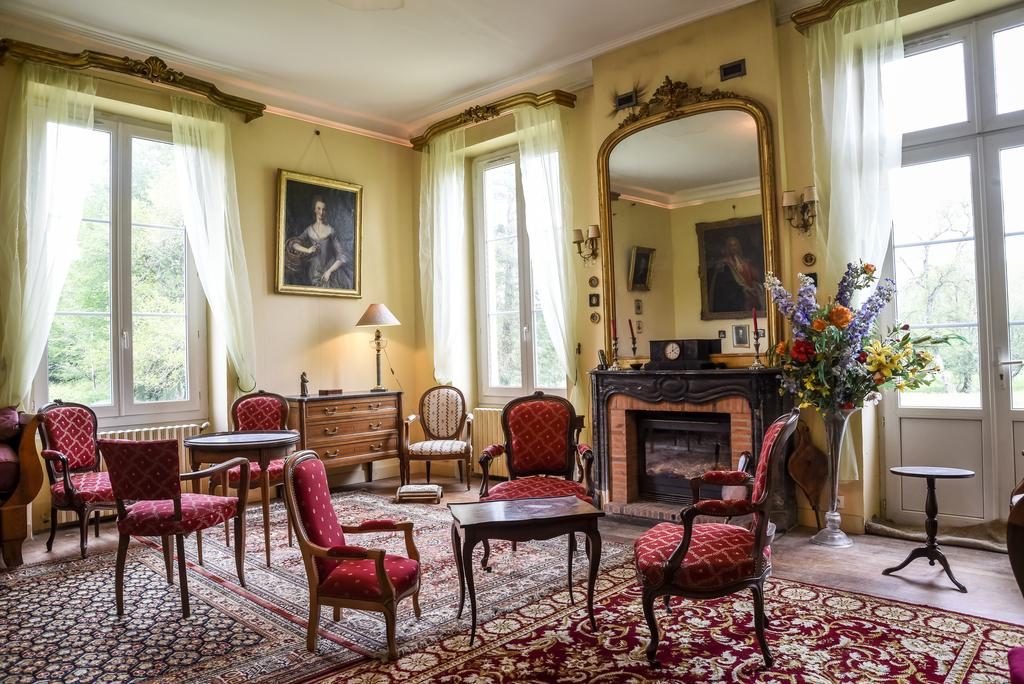
The dawn broke clear and cold, with the sky so intensely blue, the eyes ached, just looking at it. The wind had died, and when the sun rose in golden splendor, its warmth came as a welcome surprise. My home rose in the most delicate and fantastic beauty, and mirrors a dream of richness, pride, and opulence found only in a fairytale. The size is probably unequaled by that of any other edifice in the valley. It is a house known for its artistic treasures, and is easily the most interesting private residence. With the fanciful gingerbread clapboard, multiple planes, balconies, high, gabled roofs, its dizzying array of towers, turrets, and bay windows crowned by finials; gables, cupolas, cornice, spindles, columned portico, pediments, verandas, overhangs, handmade shingles, crests on the roof, domers, and projections, all accompanied by its decorative trim add to the free spirit of Victorian architecture and reflect the moral rectitude and values of the population. The steeply pitched roofs hearken the High Victorian Gothic architecture. Due to the myriad of vertical, diagonal, and horizontal wooden pieces, on the exterior, some believed that English architect and writer Charles Eastlake produced this home. However, its characteristics are more clandestine than one could possibly imagine. The detailing is certainly reminiscent of rustic European architecture. The Brilliant color green was not only selected for it is pleasing to the eye, but for its restful and calming nature. It also introduces color into the landscape, symbolizing prosperity and fertility. #RandolphHarris 1 of 8

The inspiration for such magnificent edifices has virtually no precedent in America; it came instead from the Old-World sources. Sufficient it is now to say that uniformity is the last thing on Earth sought after. The cornice and veranda are of contrasting shade with the body of the house, while the shutters have a darker tint. The half-timbered motif and symmetrical Renaissance designs embrace the reign of Queen Anne during the 1702-14 era. The architecture is riddled with the shadows of centuries of secrets, forbidden thoughts, psychological romances, which ramble through the labyrinth. The front doors, which welcome guests into the parlor, are made of Santo Domingo mahogany and are emblazoned by art glass windows, giving the allure of encrusted jewels. This catches more of the spirit for the grand drama and noble ceremonies. Cabinetmaker John Henry Belter produced the balloon-shaped chair and sofa with curving edges and detailed carving, it the Louis XV manner, which went along perfectly with the two corner tables supported by gilt cupids. The Sevres vases glisten from the wall-cabinets, genuine Persian rugs of the finest quality and color, and rare old hangings of velours. Heavens, my husband would never forgive me for paying two hundred and fifty thousand dollars last year for an old sliver goblet, but it is part of the motif that makes this a luxurious nook of the house. As guests go up the beautiful mahogany stairs and pass along the gallery, looking down on a hall such as few palaces contain…it puts them in mind of a scene of the most royal and impressive Baroque masterpieces. #RandolphHarris 2 of 8

Goblin tapestries have been brought from France by my ancestors. There are rare and costly pieces of Dutch marquetry, doors of rare East Indian wood, Limoges enamel of extremely rare and exquisite workmanship. The many skylights, not only allow for air and light to flow through the home, but also to give it the feeling of a moonlight ride in a gondola, while Heavenly music flows from the Grand Ball Room. The creatively shaped rooms and appendages of the house fully represent the expanding and diverse nature of American life. Furniture has been imported from Europe, and the Grand Ball Room, made of rosewood, white mahogany, teak, maple and oak, resemble an entire apartment from a palace in Belgium. The Murano chandeliers were replaced by a handmade silver chandelier from Germany. Of course, I searched beyond Europe to find furniture in Morocco, hangings in turkey, bowls on Mount of Olives and fans in Japan. The artistic unity of my World travel has been dedicated to acquisitive journeys for creating a museum of find the finest artifacts. This home is state of the art, with 13 bathrooms, indoor water closets and hot air furnaces. Nine kitchens, 47 fireplaces, secret passage ways, a nine-story tower, custom made stairs and some of the most creative features the mind can thing. Of course, I have some of the most creative architects. The final gallery culminates with a couple of the finest collections: James Tissot’s splendid oil painting October, featuring an elegant young lady tucked amongst golden autumn foliage, and the hypnotic stare of the little girl in William Bouguereau’s Crown of Flowers. On the opposite side of the elevators from these are two small galleries, the first of which displays a fine collection of Impressionist pieces by Monet, Cezanne, Sisley, and a gloomy Degas along three Renoirs, whose Vase of Flowers overflows with vibrant colors. #RandolphHarris 3 of 8
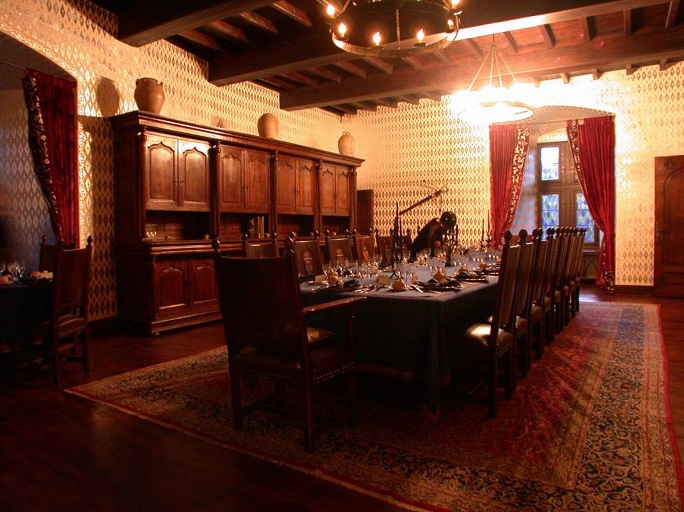
Rodin’s bronze, The Call of Arms, grabs attention in the center of the room away from the cool forms of his white marble sculpture of The Sirens. The second gallery here hosts art which stands-out by Philippe de Champaigne, Edouard Manet, Diego Velazquez, and Jacques-Louis David, whose The Oath of the Horatii turns one’s face towards the Horatii, the three sons of Horatius of Rome, and shows them swearing before their father to fight to the death of the Curatii, the three sons of Curatius, who have been picked to represent Rome’s enemy, the Albans. And behind the proud father, the women weep. A table made from ebony that had been imported from Africa, and six Italian chairs carved from the same piece of mahogany, along with two white-oak chairs that would not break if thrown from the fourth-floor balcony, were in one of the several dining room, which the frequent pleasant little dinner-parties of four to six couples, where held. The entertaining, and conversation was general, which made my new home the key to serenity and delight. My guests were served caviar, truffles, and pheasant stuffed with pate on gold plates. Bringing together the whole little community were enjoyable amateur dramatic performances, followed by light refreshment and a couple hours’ dancing. My husband had been the owner of one of the most magnificent steam yachts afloat and was a constant party giver. Of course, the resulting satisfaction was continued focus on his business. If man of wealth had any obligation to society, that responsibility was pure and simple efficiency in business. Men who were in the midst of creating their own fortunes, business success was the focus of their entire lives. #RandolphHarris 4 of 8

However, when it came to the Winchester rifle, “The Gun that Won the West,” to a cowman, outlaw, peace officer or soldier, the Winchester was a treasured possession. A man would sell his soul to own one. William had become a recognized model for the strict, no-frills businessman who never borrowed or speculated, who kept all transactions on a cash basis, who held all his associates to a strict meeting of obligations, and who spared no energy from the affairs of his own firm. In this light, Mr. Winchester embodied the virtues that men of wealth respected. My husband was an adequate model of an upper class that welcome wider responsibilities. He bought out and absorbed competitors, improved his products, while at the same time gaining control over the suppliers and distributors. As the foremost public responsibility of the man of wealth was capable management of his own firm, charitable giving followed soon after. And William certainly accepted the obligation, “I consider it just as much my duty to give to benevolent institutions as to pay my butcher’s bill,” he would say. One of his favorite charities, amongst several, was the Winchester Clinic of the General Hospital Society of Connecticut, for the care and treatment of treatment of tuberculosis patients. He also honored Anglo-American literature and aided the poor and printing workers locally. As well as building parks, and teaching low-income workers to save money and become property owners. The rich, the happy the cultured, are put under a conscious moral servitude to every form of distress and accept it with great honor. After the death of my husband, I made it my mission in life to build the most beautiful, orderly, and harmonious house which blossomed out of the most perfect art. The best artists I could find contributed the creations of their genius to the adornment of my home in many other shapes than in that of the oil paintings and in a gilt frame. #RandolphHarris 5 of 8

The most genuine and best mahogany was used creating the stairs, paneling the walls, ceilings, floors and for the fireplace mantels, and the inlaid paneling, painted friezes, rosewood tables, porcelain vases, silver tea sets, brocaded walls, stained-glass windows, and paintings brought this 600-room mansion alive with the decorative artists movement. However, all this seemed of little importance after six renegades appeared so suddenly. Four housemaids were so startled that they were speechless. Not a word was spoken as the men dismounted. The women were seized, and each was clubbed unconscious with the muzzle of a revolver. Without regard to the cruel horn, each of the women was flung belly-down across a saddle with one of the renegades mounted behind her. The renegades rode off taking the women as captives. I have never seen anything so mournful, so terrifying. The farmers believed it to be a means of drawing some of the men away, so they could attack the mansion. That is when much of the recorded activity began. In the weeks after, strange, loud, indescribable noises began to emanate from the walls and servants felt cold flashes in the house. One December evening, a housemaid was in the attic. Although she was alone in the house, she distinctly heard a voice say, “No, don’t do it!” Then there was a pause, then “Stop!” She called downstairs to see if the carpenters or myself had returned, but got to answer. A few seconds later, the frantic voice came again calling, “Stop!” Although the house was closed up against the cold December breezes, two doors on the floor below slammed shut. #RandolphHarris 6 of 8

A few weeks later, one of the house maids was napping in the afternoon with the shades drawn. She awoke in semidarkness to see what she described as a lady sitting in her rocking chair at the end of her bed, wearing a long, dress with long sleeves and hair done up in a bun. The housemaid gathered enough courage to test the apparition, or perhaps to test her own sanity She asked, “If there is anyone in here besides myself, knock twice.” Silence. She started to breathe a sigh of relief. Then, from somewhere in the room, she heard two, distinct knocks. Again, she asked the question, again no response—just the image of a lady in her rocking chair not four feet from her. the image. Then, after a moment, the apparition slowly faded away into nothingness. She sprinted downstairs, and though the servants tried to calm her down by telling her it was a dream, she knew that she had been fully awake—she had been talking and heard at least one response to her question. The housemaid checked the clock and decided that she would nap for a bit before she returned to work. “I couldn’t have slept more than 30 minutes when I felt what I knew to be the touch of one of the missing women’s lips on my cheek,” she said. “It was a kiss of such sweetness and love that it could only have come from one of them. I opened my eyes and sat up. I had left a small lamp on in the room, and there, in the dim light, I could distinguish a kind of mist that had assumed human shape. Although I could not make out any distinct features, I knew it was one of the missing housemaids I felt a strong emanation of pure love flowing to me from the vaporous form. Then it floated out of sight through the ceiling.” The four women had been found nearly 200 miles away. They had succumbed to their injuries. #RandolphHarris 7 of 8
Throughout the rest of the Winter, strange, unexplainable events continued to occur. Footsteps of an army marching in the rooms could be heard; periodically a whiff of flowery perfume; the front doors would shake violently with no one there. And there were the sightings—one housemaid saw the reflection of a black blob behind her, passing through the closed door of her room and into the hallway. This was possibly one of the shadow people. A male apparition was seen on the first floor, and periodically a water facet was found running in the tub when no one had turned it on. On morning, I was awakened at 2 A.M. by the sound of a large number of horses trotting by the house, but there was no one outside. At that moment, I knew my home was truly haunted. The lawmen hunted down a dozen outlaws and gunned them down. Two immediately five immediately perished. Four of those who rode away were hit. My path led through one of the strange uncanny wildernesses. And then, a I peered, curiously, a new terror came to me; for away among the dim peaks to my right I had descried a vast shape of blackness, giantlike. It grew upon my sight. It had an enormous equine head, with gigantic ears, and seem to peer steadfastly down from the second floor. There was that about the pose that gave me the impression of an eternal watchfulness—of having warded through unknown eternities. Slowly the monster became plainer to me, and I gazed fearfully. I was strangely conscious of something not altogether familiar to me. I was afraid that this creature would devour me, ravenously. #RandolphHarris 8 of 8
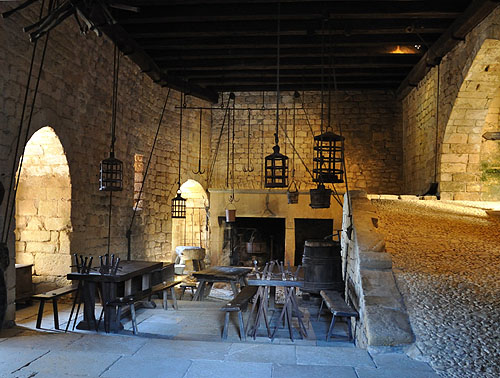

Strange disembodied voices and cold spots have been reported as well as strange lights that seem to have a mind of their own. There are also the apparitions of four ladies wearing white dresses and that of a soldier. https://winchestermysteryhouse.com/

And please be sure to check out the online gift store: https://shopwinchestermysteryhouse.com/

Inherently Bad or Evil?

Very different from destructiveness are certain deeply buried archaic experiences that often appear to the modern observer as proofs for man’s innate destructiveness. Yet a closer analysis can show that while they result in destructive acts, their motivation is not the passion to destroy. We have focused on crimes against persons or property where there is an identifiable victim. Each of these crime types, ranging from homicide to burglary, fit under the head of malum in se offenses. The Latin phrase translates to “inherently bad or evil” acts. The serious felonies—murder, rape, robbery, burglary, arson, larceny—are classified as evil by their very nature. Even if they are not crimes under the law, killing another without justification or excuse, raping, robbing, burglarizing, and stealing are bad. Our focus will now be on those acts that fall under the heading of malum prohibitum offenses—acts that are deemed wrong by the law. These are the so-called victimless crimes that violate them norms or threaten the perceived moral well-being of society. Vice crimes such as prostitution, drug abuse, and gambling tend to be consensual acts perpetrated by consenting adults and produce no immediate harm to anyone other than the active participants. Clearly, conceptual schema such as vice crimes, public order crimes, or malum prohibitum offenses can include a broad and diverse array of law violations. #RandolphHarris 1 of 24

Drug abuse violations, prostitution, gambling, liquor-law violations, drunkenness, disorderly conduct, vandalism, and vagrancy are grouped together under the heading of public order crimes. Homosexual acts, traffic offenses, and exhibitionism are also added to the list by some typologies scholars. These are the most pervasive and well documented of the public order crimes and thus have accumulated the best systematic documentation from criminal justice experts. In the deepest layers of experience, one magically seizes upon the life-force itself by shedding blood. It cannot be denied that blood vengeance and criminal law, bad as they are, also have a certain social function in upholding social stability. It is notorious that real or alleged atrocities can ignite the most intense rage and vengefulness. By destroying the one who committed the atrocity his or her deed is magically undone, and it prevents others from committing similar heinous acts. If people were not punished for their crimes, then society would become uncivilized and no one would be safe. If law enforcement is not allowed to equally enforce the law, then they should be abolished. No one should be made a target, while others get away with crimes, and the one who has to defend one’s self is the only one held responsible by law. Vengeance may be said to be a magic reparation; but even assuming that is so, why is this desire for reparation so intense? Perhaps man is endowed with an elementary sense of justice; this may be because there is a deep-rooted sense of “existential equality.” #RandolphHarris 2 of 24

It is difficult to pinpoint uniform legal definitions of a given form of public order crime. Public standards regarding the criminality of public order offenses exhibit enormous variation across geographic areas. The instances of legalized prostitution or drug use (medicinal or personal use in small quantities) that exist within the United States of America or in other countries as evidence to this effect. Moreover, a sampling of the criminal codes of jurisdiction that criminalize vice offense reveals that there exists a great deal of disagreement over what physical (actus reus) and mental (mens reus) criteria should comprise the legal definition. As such, we find that traditional sources such as the Model Penal Code or criminal law textbooks provide us little guidance in defining the parameters of the discussion. The Uniform Crime Reports (FBI, 2023) provide some relief in this regard. The data collection instrument for the UCR affords public order offenses a Part II offense designation There are twenty plus offenses, ranging from weapons violations to public order crimes such as vandalism that re afforded such a designation. These crimes are deemed less serious than the Part I offense but still worthy of systematic inquiry. The FBI provides law enforcement authorities with a generic set of legal definitions to assist them when categorizing their crime data. The definitions are intentionally vague but provide us with a sound departure point from which to proceed. #RandolphHarris 3 of 24

Prostitution or commercialized vice is defined as sex offenses of a commercial nature, such as prostitution, keeping a bawdy house, procuring, or transporting women, men, or children for immoral purposes. Attempts are included. This definition encompasses acts or attempted acts of solicitation on the part of the prostitute and client (id est, john), as well as the acts of pandering, transporting, and facilitation on the part of the pimp or madam. These acts can manifest themselves in several generic forms including street prostitution, bar (“b-girls”) or hotel prostitution, illicit massage parlors, escort services, or brothel prostitution. The UCR defines drug abuse violations a state and/or local offenses relating to the unlawful possession, sale, use, growing, and manufacture of narcotics drugs. The following categories are specified: opium or cocaine and their derivatives (morphine, heroin, codeine, fentanyl); marijuana; synthetic narcotics—manufactured narcotics that can cause true addiction (Demerol, methadone); and dangerous nonnarcotic drugs (barbiturates, Benzedrine). Fentanyl is a synthetic opioid that is up to 50 times stronger than heroin and 100 times stronger than morphine. Given their consensual nature (id est, victimless crimes), we cannot rely on victim reports (id est, National Crime Victimization Survey) for accurate data on the occurrence of public order crimes. The UCR represents the only national-level source of data on these crimes; and even this data source has its shortcomings. #RandolphHarris 4 of 24

The UCR treats all public order crimes as Part II offense. These offenses are viewed as less serious than the Part I offenses (murder, rape, et cetera) and result in the collection and release of far less detailed information—we are left with data on arrests and have no insight on the large number or reported offenses that go unsolved. This issue is particularly problematic for public order crimes because their consensual nature makes them prone to underreporting in the first place. Matters are further complicated by the fact that drug offenses in the first place. Matters are further complicated by the fact that drug offenses are processed at the federal level and thus beyond the reach of the UCR data. For data on federal offenses, we must turn to the Bureau of Justice Statistic’s annual report entitled, Compendium of Federal Justice Statistics. Every year in America, nearly 81,000 people are arrested from prostitution. Arrests trends reveal a sharp and steady increase from 1970 to 1983 (post WWII high of 125,600) and then steady decreases from that point through the end of the century. Given prostitution’s folklore status as the “world’s oldest profession,” one mut assume that the actual number of prostitution offenses is exponentially larger than indicated by arrests data. (However, agriculture has to be the World’s oldest profession. How else did Adam and Eve? They had to cultivate the Earth and farm.) #RandolphHarris 5 of 24

Nonetheless, it is estimated that there may be as many as 500,000 male and female prostitutes working in the United States of America in a given year. The actual number of offenses that are perpetrated by these sex workers is surely staggering given the fact that sexual exchanges represent a primary source of income for these individuals. This necessitates that as many as 1.5 million persons frequent prostitutes, spending an estimated $7 to $9 billion each year. There appears to be some hard data to support these figures. Survey research efforts show that 45 percent of non-college-educated men and 35 percent of college-educated males admit to paying for sex at least once in their lives. Clearly, the prostitute and the client have a vested interest in avoiding law enforcement. By their own admission, law enforcement authorities often turn a blind eye to the problem. Given the above facts and figures, it is entirely possible that tens of millions of acts of prostitution occur in this country each year. The incidence numbers further expand when one turns the attention to drug crime. Annual arrests for unlawful possession, sale, use, growth, and/or manufacture of illicit drugs far surpass 2 million. The National Household Survey on Drug Abuse (NHSDA) relies on sophisticated stratified, multistage area probability sample and door-to-door visits of tens of thousands of citizens. It provides population estimates of the nonmedicinal and/or illicit use of drugs, alcohol, and tobacco products for persons over the age of 12. #RandolphHarris 6 of 24

Approximately 40 percent (nearly 133 million Americans) had engaged in at least one lifetime episode of illicit drug use. Overall usage figures shrink to 11 percent (37 million) when the time interval is restricted to the past year and 7 percent (23 million) when the time interval is restricted to the past month. In terms of marijuana use alone, the report estimated that 34 percent or just under 113 million Americas, indicate at least one lifetime usage episode. What is more, 9 percent (30 million Americas) are estimated to have used marijuana at least once in 2022 and 5 percent 16.6 million were said to have used it in the past month. Drugs do not magically appear in the hands of wanton users. Instead, minor use and possession offenses are preceded by additional criminal acts (id est, manufacturing, transporting, and sales offenses). The Office of National Drug Control Policy (ONDCP) estimates that there are roughly 1.1 million hardcore heroin users in America. The average hardcore users is said to spend $200 a week on heroin (id est, five to ten bags). It is estimated that these persons account for 70 percent to 80 percent of all street-level heroin purchases or 12 metric tons of pure heroin each year. It is staggering to think of the number of production, smuggling, dealing, and use-related crimes that must occur to maintain the heroin supply chain. The numbers grow exponentially when one examines the cocaine problem where we find 5 million hardcore cocaine users and 500 metric tons consumed in the United States of America each year. #RandolphHarris 7 of 24

There were 107,375 drug-involved overdoses and drug poisoning deaths reported in the United States of America in the 12 month period ending in January 2022. A staggering 67 percent of those deaths involved synthetic opioids like fentanyl. Some of these deaths were attributed to fentanyl mixed with other illicit drugs like cocaine, methamphetamine, and heroin, with many users unaware they were taking fentanyl. Only two milligrams of fentanyl is considered a potentially lethal dose; it is particularly dangerous for someone who does not have a tolerance to opioids. Even a nickel bad of marijuana can be deadly these days. It is a drug. It is not cool. Just because “everybody does it” does not make it right, nor mean that you should. Given their status as consensual and victimless crimes, we often overlook the social consequences that go along with public order cries. At first glance, it would appear that these crimes produce no real social costs. On the surface, the prostitute, john, pimp, drug smuggler, drug dealer, and/or drug user victimizes no one but him or herself; however, the matter is not so simple. In addition to representing moral transgressions, these crimes often generate significant public health concerns (id est, the spread of injury/disease, addictions and violent crime). Vast resources of the U.S.A. criminal justice system are deployed each year to pursue, apprehend, and punish public order offenders. #RandolphHarris 8 of 24

Thus, when assessing the “social costs” of these crimes, officials often draw upon figures from the U.S.A. Department of State, Treasury, Education, Justice, Health, and Human Services, Veteran Affairs, and Transportation to broaden the scope of the issues to include the financial costs associated with the enforcement of laws, prevention and treatment efforts and lost income. It is estimated that the collective national drug control budget for the fiscal year 2022 was $39 billion. The federal government has enlisted more than a dozen federal agencies to address drug misuse and its effects. Alcohol and drug misuse and related disorders are major public health challenges that are taking an enormous toll on our society. Recently more than 27 million people in the United States of America reported that they are using illicit drugs or misusing prescription drugs, and nearly a quarter of adults and adolescents reported binge drinking in the past month. The annual economic impact of substance misuse is estimated to be $249 billion for alcohol misuse and $193 billion for illicit drug use. Americans are spending $150 billion to purchase illegal drugs each year, and this includes cannabis, cocaine, heroin, and methamphetamine. The value of life lost due to overdose deaths was $480.7 billion. Opioid use disorder accounted for $471.0 billion. Almost $35 billion was spent on health care and opioid use disorder. There are other more alarming problems that stem from these offenses, most notably their tendency to generate violence and injuries. #RandolphHarris 9 of 24

Drug use is directly and indirectly responsible for 11.8 million deaths each year. Smoking, alcohol and drug use is an important risk factor for early death: 11.4 million die prematurely as a result each year. Over 350,000 die from overdoses (alcohol and illicit drug use disorders) each year. A longitudinal study of heroin addicts revealed that nearly half had died before reaching the age of 60; and a study of intravenous drug users found one in five to be infected with HIV. In the United States of America, estimates suggested that Drug-related problems (DRPs) accounted for 17 million emergency department visits and 8.7 million hospital admission annually. When focusing more narrowly on violent crime victims, research shows that 40 percent of the persons admitted into the hospital claim that their attacker was high on drugs or alcohol when the crime took place. The situation was no better for prostitutes. Studies indicate that the violent victimizations are commonplace for street walkers. Even prostitutes who do not walk the streets are subject to a high level of violent victimization—it was found that nearly half of the 115 call girls surveyed had been victimized while on the job. An analysis of arrests statistics reveal that vice arrests nearly quadrupled over the past 20 of the twenty first century. In 2022, 2 million people were arrested from drug abuse violations, approximately 1.6 million were arrested for driving under the influence; 1.5 million arrested for simple assault, and 1.4 million arrested for larceny-thefts. #RandolphHarris 10 of 24

The states with the most arrests in 2022 were Texas, Tennessee, North Carolina, Georgia, Louisiana, Missouri, Wisconsin, South Carolina, Ohio, and Indiana. Of course, California is the most populous state, but violent crime is still disproportionately high. The state is home to about 12 percent of the U.S.A. population, but is also the site of about 14 percent of all violent crimes. Despite a greater concentration of serious crimes, the state has a lower incarceration rate than most states. There are just 424 adults in California state and federal prisons for ever 100,000 residents 18 and over, below the 568 per 100,000 average across all states. The Uniform Crime Report reveals that public order arrest rates are much higher in urban areas than suburban or rural locales. For example, the urban arrest rate for drug crime was 629.1 per 100,000 inhabitants. This compares to rate of 446 in suburban areas and 390.8 in rural counties. The urban arrest rate for prostitution was 42.2 compared to 6.2 in suburban areas and 0.9 in rural communities. The considerations offered thus far seem to support the view that the passion for violence is so deep-seated that one must think of it as being present in all men. While it is indeed widespread, there are great differences in degree, up to the point that certain cultures and individuals seem to have only minimal traces of it. There must be factors that explain the difference. One such factor must be scarcity versus abundance. Also, there are people who have a thirst for violence, while others do not. Passivity of the mind can also be a factor. #RandolphHarris 11 of 24

Passivity of the mind is a condition engendered by a wrong concept of the important place of the mind in the life surrendered to the ultimate concern: for obeying it. The ultimate concern likes people who have an educated mind. The greater the brain power, the great the use the ultimate concern can make of it, provided it is submissive to the truth. Ture, the cause of passivity of mind sometimes lies in the thought that the working of the intellect is a hinderance to the development of the divine life in the self-actualized. However, the fact is, that the non-working of the brain hinders, the psychopathic working of the brain hundgers, but the normal and pure working of the brain is essential and helpfyl for cooperation with the ultimate concern. The effect of passivity of the mind is usually seen in inactivity when there should be action, but it may also be seen in over-activity beyond control—as if a suddenly released instrument broke forth into ungovernable action. It can result also in hesitation, rashness, indecision, unwatchfulness, lack of concentration, lack of judgement, and bad memory. Passivity does not change the nature of a facuty but it hinders its normal operation. In the case of passivity hindering the memory, the person will be found looking outside onself for every possivle assistant to memory until one becomes a veritable slave to notebook and helps, which may fail at a critical moment. With this comes also passivity of the imagination, which places the imagination outside personal control and at the mercy of psychopaths who flash to it what they please One danger is to take these visions and call them “imaginations.” #RandolphHarris 12 of 24

The passive state can be produced without stooping to crystal gazing. “Crystal gazing” is the practice of starting into a crystal ball or similar object for a prolonged period; the natural vision is dulled, and deceiving spirits can then present anything to the mind. In pure inactivity of the mind, the mind can be used at the will of the person, but in psychopathological passivity of the mind the person is helpless, and one “cannot think!” As if one’s mind were bound and held by an iron band, one feels a weight or pressure on one’s head. Underlying self-creativity and growth is one of the structural polarities of being, the polarity of dynamics and form. Dynamics impels a formed reality to break out of its form, to go beyond itself, and to develop into a new reality. Form is the polar counterpart of dynamics. It makes the thing what it is, tends to keep it static, but then determines the new reality which emerges under the pressure of dynamics. The dynamics-form polarity is actualized in the life functions of growth (the non-spiritual dimension) and self-creativity (the spiritual dimension). However, the old form may stifle or the new form may not be reached, and so the whole creative process is subject to the ambiguity of destruction. The receptive function of culture is called theoria. Theoria is the act of looking at the encountered World in order to take something of it into the centered self as a meaningful, structured, whole. As an example, we can cite language: The word is the bearer of meaning; therefore, language is the first result of the self-creation of life under the dimension of spirit. #RandolphHarris 13 of 24

The instruments of theoria are cognitive concepts and aesthetic images, each of which mirrors a fragment of the universe of meaning. The true and the beautiful are received through theoria which prolongs the grasping function of the word. However, as man’s spirit seizes reality, simultaneously he shapes it. Upon learning to speak, man fashioned tools. This primeval technical act is continued in the active function of culture termed praxis. Technology controls the World of nature, but praxis is the whole of cultural acts of centered personalities who as members of social groups act upon each other and themselves. Praxis operates in the personal-communal area and sees to procure individua and social good. Every cultural creation, whether it results from theoria or praxis, comprises three elements: subject matter (Inhalt), form (Form), and substance (Gehalt). The subject matter can be almost anything, but it is the form which is culturally decisive, in that form makes the creation what it is—an essay, a poem, or a law. Substance is described as the soil out of which a cultural creation grows. Substance is the underlying power of meaning, the ultimate concern which inspires the creative spirit and imparts significance to the cultural production. Subject matter is the accidental, substance is the essential, and form is the mediating element. Readers of George Herbert Mead will recall his distinction between the “me” and “I” phase of the self in personality development and social interaction. Looking at the elements of competence, three correspond roughly to the “me” phase and three to the “I” phase. #RandolphHarris 14 of 24

Me: Intelligence, empathy, judgment. I: Health, autonomy, creativity. The former refer to the vested and organized experience of the community as incorporated within personal conduct; the latter, to the active, assertive, and emergent features of human behavior, not reducible to standard roles in conventional situations. However, while Mead, like Dewey, relied heavily upon biological explanation for the impulsive and unpredictable character of human development, it had nonetheless been his intention to show the emergence of novel identities within the process of interaction. The concepts of interpersonal autonomy and interpersonal creativity may help to complete his task. In any social act—any episode of interaction—all six capacities are and must be employed, though their prominence varies from phase to phase. The cultural anthropologists have offered many attempts to classify the full range of human culture. These range from the classic division into technology, social organization, and ideology through Lowie’s “universal pattern of culture” and Malinowski’s six-category analysis of institutions, to the extremely elaborate Yale cross-cultural index. It seems significant that the classical tripartite scheme can be detected underlying each of its more sophisticated successors. From quite a different angle, this old division seems to gain a vague additional warrant from Morris’ division of the study of meaningful verbal relationships into semantics, syntactics, and pragmatics. #RandolphHarris 15 of 24

Considering the fondness of Western thinkers for indicating completeness by schemes of three elements and opposition by schemes of two, it is difficult to distinguish chicken from egg in trying to account for the recurrence of such schemes, id est, do they describe reality, or is social reality not the precipitate of such linguistic constructions? Probably neither metaphysics nor intellectual history has to be called on for defense of either the number or order of the elements of competence, however intriguing it is to speculate about their resemblance to previous schemes. Health and intelligence refer to the factual World of physical events and overt experience; both principally afford rational and efficient manipulation of the objects of the environment. Empathy and autonomy, by contrast, have to do with the relationships of selves and others, not as objects, but as human subjects with whom each person is engaged in the plots of the human drama. Judgment and creativity refer to the symbolized realm of not-present relationships, to the extent that these can be distinguished from the social and instrumental realms of immediate experience. As mentioned in past reports, the six elements of competence (health, intelligence, empathy, autonomy, judgement, and creativity) were arrived at principally through reflection upon previous research and upon the observable content of interpersonal behavior, and not from play with hyper-abstractions. #RandolphHarris 16 of 24

If further abstraction, however, could demonstrate the completeness of a scheme that is made open-ended by the inclusion of creativity as its final element, then it would seem logical to suppose that our list of six would be lengthened by the addition only of subcategories, rather than by the addition of a seventh or eighth component. With regard to order, the list is thought to proceed from the most given to the least given features of any interpersonal performance. Also, as will be seen in ensuing reports, the order adopted is cognate with an order which appears not only empirically convenient in presenting types of family agencies and types of play, but also productive of further useful meditation about reciprocal implications. It would deprive the reader of some pleasant speculation to explore these exhaustively here; we prefer only to suggest the avenues which may be used to order and traverse the bast territory confronting us. It appears to us that a community which organizes its activity so that it maximizes the number of healthy, intelligent, self-directing citizens, capable of viewing situations from perspectives other than their own, of weighing alternatives and making decisions, of defining new goals and inventing ways of achieving them, is in fact a democratic community and is producing members who can sustain it against all more pessimistic theories of human nature and the social order. #RandolphHarris 17 of 24

Tomorrow’s Euro-army will sit on a gigantic economic base, the second leg of the power triad. Gross figures for the EC, even without adding its twelve members, are huge. With a population of 446.8 million inhabitants, it boats a gross national product of USD $16.6 trillion, America’s GDP is USD $23.32 trillion, and is nearly four times that of Japan’s USD $4.941 GDP, and is slightly less than China’s USD $17.73 trillion. In aggregate, the EC nations account for 20 percent of World trade, more than the U.S.A.’s 8.1 percent, and more than China’s 15 percent. As with military matters, Europe’s key financial decisions will once more be made in Berlin, in the German finance ministry and the Deutschebank, a dominance reflecting economic realities. Germany is the fourth largest economy in the World with a combined value of $4.5 trillion, which is more than France’s economy of $2.94 trillion. West Europeans, led by France urge a stronger, tighter EC federation on the assumption that it will limit Germany’s freedom of action. However, the stronger and more centralized the EC itself becomes as it acquires a common currency and central bank and takes on the role of environmental policeman or policewoman, the stronger, not weaker, the influence of a combined Germany over the whole European apparatus. Germany established a special USD $106 billion fund to beef up the Bundeswehr. Germany has a military of nearly 200,000 soldiers. America has 482,416 active soldiers. China has 2 million active personnel and is the largest army in the World. Russia has a military of 147,000 men. #RandolphHarris 18 of 24

The emergence of this Germano-centric system is, however, only part of an unfolding Ost-Strategie of breathtaking scope. For the emerging economic strategy being developed by governments and corporations in the EC is to take advantage of inexpensive labor in Czechoslovakia, Hungary, Poland, and other East European countries and use it for low value-added mass production. The goods produced are not primarily for the East Europeans, but are intended for export to Western Europe. Smokestacks in the East, computers and consumer goods in the West—with a unified Germany acting now not merely as the core of the Western community, but as manager for this entire continental system. Execution of this broad economic strategy, which shifts hegemonic power over Eastern Europe from the Soviets to the West Europeans and Germans, will occupy the decades immediately ahead, and will be fraught with upsets and difficulties. This fast-crystallizing Ost-Strategie started beefing up after Russians invasion of Ukraine. There is also hopes that deals can be made with U.S.S.R. that will soften its resistance to the Germanization of the East. This will depend on internal politics within the Soviet Union, as well as on unpredictable events in China and Asia generally. Therefore, there is so much more to be worried about besides just climate change. There is a major power shift going on in the World. It is believed that China’s GDP will surpass America’s in 2035, and India will overtake U.S.A. economically by 2075. As a result, America needs to get their economy together and stop sending jobs overseas and buy America cars, meat, produce and more. #RandolphHarris 19 of 24

The Ost-Strategie also presupposes tht the EC itself can deliver on its glowing promises for Western Europe—a 7 percent growth rate, and 5 million new jobs in the twelve member nations. More efficient production. Enhanced competitivity of World trade. Higher profits. Yet EC planning is still heavily premised on obsolete notions about economies of scale, which apply far more readily to smokestack manufacture than to advanced economies organized around information and service activities. Moreover, while the new system for wealth creation thrives on (and generates) heterogeneity, emphasizing customization and localization of production, segmentation of markets and de-massification of finance, of EC steamroller, despite rhetoric to the contrary, is intended to flatten out differences. The Eastern end of the strategy faces major problems as well. To begin with, it takes for granted political stability in the quasi-colonies. Yet the rush toward mass democracy, with parliaments and multiple parties, does not guarantee sausages or ham on the table. If desperate economic conditions do not significantly improve quickly, the infatuation with parliaments, parties, and voting could degenerate into chaos, charges of corruption, extraparliamentary terrorism, and a return before World War II—perhaps with the support of foreign investors for whom stability and order is a paramount requirement. #RandolphHarris 20 of 24

After the initial euphoria about capital from the West, Eastern Europeans, on the morning after, will increasingly resent their new-style colonial status. Resentment will boil over into resistance. Economic scarcity will be blamed on foreign investors, “imperialists,” and local scapegoats. Initial emergency loans will be followed by further emergency loans to keep the economies afloat. Down the line will come demands for loan-repayment moratoria and cancelations. Even if none of this comes to pass, the root assumption of the Ost-Strategie, the importance of inexpensive labor, needs to be severely questioned. Inexpensive labor, as we have seen, is now increasingly expensive. With labor costs declining as a component of total cost, the savings will be minimal except in the most backward industries. Similarly, as we have seen, slow economies cannot plug into fast economies easily. In Poland, until recently, it could take a month to six weeks merely to transfer funds from one bank to another. The entire Eastern metabolism is slower than that required by the West, and its electronic infrastructure is virtually nonexistent. All this will make the Ost-Strategie more costly than it would appear. Finally, if a significant amount of smokestack work is actually transferred to the East, West European governments can expect increased pressure from their own blue-collar trade unions, increased demands for social benefits and protectionism at home. #RandolphHarris 21 of 24

In Germany, in particular, this implies growing support for the political opposition. Like the neo-Nazi right, Social Democrats will sound nationalist themes in attacking the transfer of jobs to “non-Germans” who work for less than union wages. Greens, meanwhile, will oppose the transfer of pollution to a region that is already one of the most pollute to a region tht is already one of the most polluted on Earth. Should a Social Democrats fear its impact on employment, and the Greens are larded with Luddites and technophobes. A European Bank for Reconstruction Development has been created with funds supplied by many Western nations and Japan. Under the innovative leadership of Jacques Attali, the EBRD could lay down key beachheads for technological and economic advance in Eastern Europe. However, it will not be so easy. Commercial and political ardor for the Ost-Strategie will therefore cool in the coming decade as Europe’s deep problems begin to emerge. Europe has enormous wealth, but—so far—a questionable strategy for how to use it. In America, the state is strengthening regulations and oversight of financial institutions, making steps to contain disruptive financial gambling. Transactions with structured products have been put under stricter control than before. Lessons from the 2008 financial crisis can provide insights for achieving a low-carbon recovery after the COVID-19 crisis, and specific measures have been proposed, for example, setting electricity consumption standards for infrastructure projects to reduce electricity consumption induced by the fixed capital formation, and attaching energy efficiency labels and carbon footprint labels to metal products (exempli gratia, iron and steel, aluminum and fabricated metal products), large quantities of which are used for fixed capital information. #RandolphHarris 22 of 24

The breakout of the coronavirus (COVID-19) pandemic in December 2019 caused great damage to the global economy, leading to the deepest recession since World War II. We are still going through the aftermath of the actions taken to avoid total economic catastrophe: The Federal Reserve saved the bond market, and the federal government doled out trillions in spending to keep American households afloat while their economy was locked down. These measures avoided severe injury to the economy, but the Fed has only just begun to deal with the historic levels of inflation. There are also growing fears of another recession on the horizon. The COVID Recession taught people to anticipate recessions. If you have been watching the market since around 1996, you will notice that there tends to be a recession every 5 to 10 years, and the reasons vary from bad investments, supply shock, war, outsourcing, terrorism, pandemics and possibly even elections. With current geopolitical tensions, energy market imbalances, persistently high inflation, rising interest rates and power shifts, people fear a recession, but it is no reason to panic. Many companies are discouraged from taking on debt to invest in expanding their businesses because of high interest rates. Elevated rates also reduce consumer spending, easing demand pressures that have contributed to rising prices. However, inflation and rising interest rates have not yet dragged the U.S.A. economy into the red. #RandolphHarris 23 of 24

In addition to modest first-quarter GDP growth, the U.S.A. added 236,000 jobs in March, and the unemployment rate remains historically low at just 3.5 percent. However, investors should continue to monitor the labor market s interest rates rise. The probability that a recession will happen within the next 12 months is about 99 percent. The banking crisis has increased the risk of recession Concerns about financial stability could force the Fed to drop its inflation-fighting efforts prematurely. However, others maintain that there is only a 35 percent chance of a recession in 12 month, but even that was revised upward from the bank’s 25 percent figure in light of the banking upheaval. Tightening credit conditions could be the main factor that may push the economy to contract. So, it may actually be a good time to buy house, as long as your employment is secure and recession proof because when lending requirements become more stringent, one may not qualify for a loan, but holding off on a house could give one more time to save and pay off some debt. If the federal reserve hies interest rates two or even three more times as the banking turmoil in the United States of America and Europe cause credit conditions to tighten significantly, the will send the U.S.A. into a recession within the next few months. The red-hot labor market would loosen quickly, and layoffs would be widespread. If the recession does not happen this summer, then there is 30 percent chance it will happen in the second half of 2024, but people think with prices being so high on consumer goods and services, it may happen before Christmas, but there is only a 50 percent chance—depending on who you ask. It sounds inevitable. #RandolphHarris 24 of 24


It Was Years in Agony—It May Have Been Only Minutes of Time
It had been raining hard since 3 three o’ clock in the morning. I was thinking about the secret passages and rooms. In the beginning, I did not believe in ghosts. However, when night fall, when I was alone in the dark, I feared what I might find. The Winchester Mansion loomed out of mist and murky sky, not only was it dark and formless, it was also huge and supernatural. I have heard that there is an old story, told amongst the country people, to the effect that the devil built this place. I had, at least on a dozen occasions, perceived, vaguely, things that puzzled me, and, perhaps felt more than I had ever imagined. Then, as the years pass, I became more often aware of something unseen, yet unmistakably present, in the rooms and corridors. Every part of my home is laden with symbolic meanings and every domestic object is haunted by mysterious and sometimes fatal powers. It is a true labyrinth vessel of desire and of terror. Some of my ancestors had been executed for witchcraft. Some could not see why people wanted to be wiser than their ancestors, and believed it was the old way of selling oneself to the devil. Though what the devil wants with some of these souls is one point in his character that I have never been able to understand. It is a weakness on his part—I am afraid it is a weakness. When I hear all those worthy people mumbling their sing-song formulas, without attaching any meaning to them, and chanting forth vague curses into their air, I close my eyes, and can sometimes almost fancy myself on the Brocken, in the midst of the Witches’ Sabbath. #RandolphHarris 1 of 6
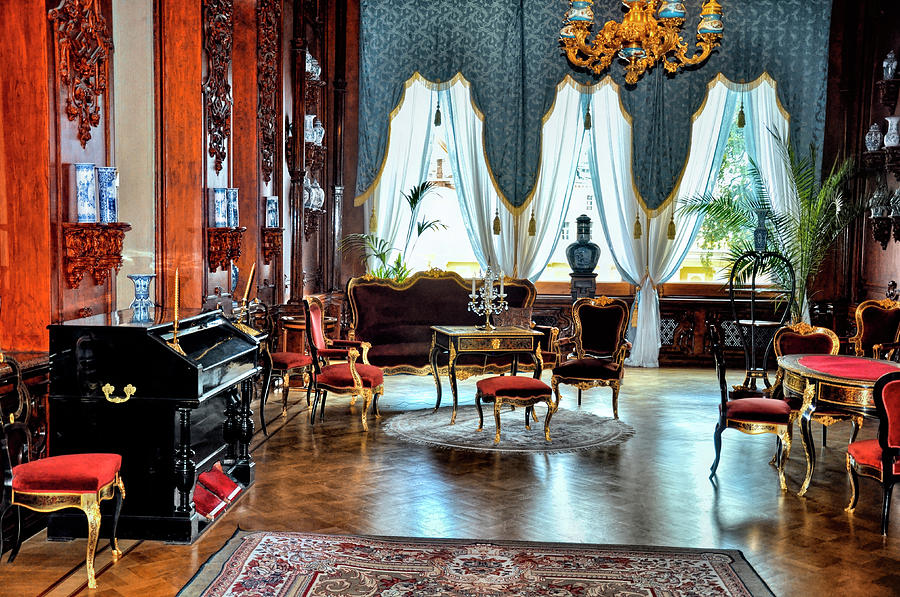
I had just received news that a farmer, working late one night, had been killed. Folke Swedenborg’ death was rather mysterious. Folke had gone out for a late walk, taking his gun with him, as was custom. He had walked along the line of the fruit orchard, and then turned off into the country. I have some many acres of land that one could walk for miles. As he did not come back at his usual time, two of the servants had gone out to look for him, and found him lying on his back in a path, quite dead. His throat was fearfully torn, but there was no other wound on him. There had been no struggle, and the gun was still loaded. Footprints of some animal were observed in a patch of soft ground nearby, but it was not certain whether this was the beast the had killed Folke; for what footmarks were like those of a small cat, the wound seemed rather as if inflicted by the teeth of a bear. A hunting party had searched for miles without funding any dangerous animal. I simply could not get it out of my head and it made me very gloomy and depressed at the dinner-table. I suddenly heard a crash of thunder across the sky. Then, as I listened, came a faint sound of footfalls rapidly growing louder, as if something was coming down the stairs. I did not stop to face whatever this might be; but I did not pause to think what I should do. In a blind and fortunate impulse of overpowering terror, I ran to the door of the dining room and flung the heavy door to, plunge the key into the lock and as I was opening the door, something came against the opposite side of the door with a thud that almost shook the hinges loose. Then there was a moment of quite, and I, listening behind the door, could catch a quick, hoarse, heavy panting, as of some beast of prey. #RandolphHarris 2 of 6
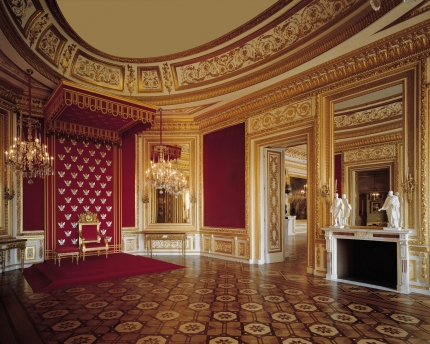
Then came another great shock, and another; and at every blow the good door, creaked and shook, but it held firm. Next there was a grating, rending sound, as if teeth and claws were tearing at this last obstacle between my life and its destroyer. Zip was laying, sleeping near my chair. Without warning, the flames in the fireplace glowed with a strange, heavy, crimson twilight that gave the shadows behind the chairs, and tables a deeper depth of blackness; and wherever the light struck, it was as though luminous blood had been splashed over the room. The plaster and floorboards shook with terror. Down on the floor, I heard a faint, frightening whimper, and something pressed itself in between my two feet. It was Zip, cowering under my dressing gown. However, he was usually as brave as a lion! I began to fear that I might live through this night. I was certain that I was surrounded by the spirits of those who had left their corporeal form behind but had not yet been admitted through the pearly gates of Heaven and so were left to haunt my mansion, crying aloud, desperate to be heard, causing disarray and torment wherever they went. Transfixed with horror, as in a nightmare, expecting to feel the fangs of the unseen demon close through my throat. It was years in agony—it may have been only minutes of time. To feel that something fiendish, brutal and merciless was slowly tearing its way its way to me. The frozen blood coursed through my veins. Jitters crawled down my spine. I tried to settle back and relax, but the air felt heavy. #RandolphHarris 3 of 6

When I looked to the right, I saw an intolerable blackness inside of my home, pierced by a remote twinkle of light. The atrocious darkness seemed to creep into my soul, filling me with despair. The door to the altar room opened. The darkly paneled bedroom was immense. I could see nothing distinctly—only a shadow with glowing blood red eyes. Suddenly, I became conscious that I was no longer in their chair. I seemed to be hovering above it, and looking down at something, huddled and silent. In a little while, a cold blast struck me, and I was levitating, floating like an angel, up through the darkness. As I moved an icy coldness seemed to enfold me, so that I shivered. As I hovered there, the end came. The noise ceased. I turned and saw the demon was gone. Then every tense fiber of my body seemed to give way, and I fell like one dead on the floor. I was wakened from my swoon by thunder at the door, and the sound of human voices. “Mrs. Winchester!” cried Harvey. “Thank God are alive! We had been so frighted about you.” I told him that I had fainted. I could not yet speak of what I had gone through. “Well, do you know,” he said, as he took my arm, and helped me up the stairs, “we had such a scare upstairs! Just after you sat down for dinner, something smashed through an upstairs window, and over when a few books, and we were in the dark. And when we got light again, you never saw such a scared set as we were; but there was nothing to be seen. Did you have a terror, too?” “Something did come down here,” I managed to articulate; “but don’t ask me about it—not tonight. I want to sleep first.” “I think we all want that,” Harvey said.” #RandolphHarris 4 of 6
The next day, Hicks and Guthrie went out for more firewood, but their luck rand out. The ominous clouds drifted ever closer, pushing before an increasingly chill wind, and before the sun was noon-high, it was swallowed up in a rolling gray mass of clouds. Sleet rattled off the wagon canvas like buckshot, and the only thing favoring them was the wind on their backs. The mules needed no urging, voluntarily picking up their gait, while braying their discomfort. The rain began to turn into hail. Their situation was worsening by the minute. “Ain’t no more than two more miles,” Guthrie shouted, veering his mule to the left. They faced the storm-bred wind with their hats pulled low. The wind howled across the plain, and the temperature dropped even more. There were many standing dead pines whose bark had peeled off, leaving them gaunt and naked among their more fortunate companions. Quickly the men dismounted, and swinging their axes, felled a number of the dead pines. The wind tugged at their hats, blew it frigid breath beneath their coats, and numbed their hands and feet. The men looped their lariat over the butt end of a fallen tree, dallied the loose end around their saddle horn, and hauled it back to the Winchester Mansion. But suddenly Hick’s mule nicked and reared, and he fought the reins, trying to calm the animal. When Hicks had brought the frightened mule to trembling standstill, the other mules were equally spooked. In the vain the men looked for the cause, but could not see more than a few feet in the heavy rain. “I’ll lead ‘em the rest of the way, Guthrie shouted. Like phantoms, the prairie wolves swirling rain. Guthrie drew his Colt and shot one of the brute, missing another when his mule spooked. His companion feared no better, as his mule reread and plunged. A spewed anger and horror. One of the wolves sank its fangs deep in Hicks thigh, and he smashed the beast’s skull with the muzzle of his Colt. The vicious attack ended as abruptly as it had begun. Three wolves lay dead, while three more vanished. #RandolphHarris 5 of 6
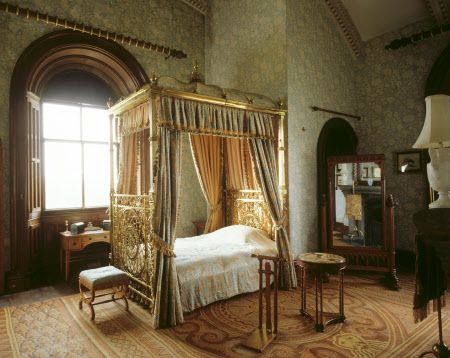
I adjure thee, Emperor Lucifer, as the agent of the strong living God, of His beloved Son, and of the Holy Ghost, and by the power of the Great ADONAY, ELOIM, ARIEL, and JEHOVAM, to appear instantly. I do conjure thee, O thou Spirit Caim and your 30 Legions of the Order of Angels, and your 30 Legions of Spirits Infernal. Though the oppression of tyrants attempts to encompass me, the blackened fire of spirit and sorcery works through my mind to impose my desire upon the corporeal realm of stasis and limitation. Aum mani padme hum. May the power of darkness eternal be revealed through me now! Uiciamhak ihsav iamhay iamha adzam ahgnanam utnal ohsoares uhov ioh ta idhzic mutar hsibmuha mad iom arhtic itnhe ioy ahgnes iop awht aj-merhterev ek. It is the daeva yasna who stands victorious and reveal the teachings of that which is hidden! Let it be known that it is I whom am creator and consumer of Worlds! May evil mind and evil speech guide this power according to my will through the essence of Angra Maniyu and the nightside of my eternal soul! Uhob mesha acahzi hsitiamra ay acsamen, ehahsa hsitiavtsa ahteag hsiniacnerem am eheysan-apa erdexapa esaniv hsxurd apa aravd hsxurd apa esan hsxurd apa, itiadarf-ovead esan ethsrakarf-ovead esan erhtic-ovead esan hsxurd ivead esan ascatneps achsitiamra acsadzam iriap tatnayhsibt on-atap. I devour the limits of the enemy Mazda and the Amesha Spenta from this mansion of sorcerous power! Perish now influence of Spentas! Perish now brood of the tyrant! Perish now creation of stasis and imposed limitation! Rush away Spentas of Ahura Mazda for I exorcise thy limits which enslave! I now banish and tear the powers of spiritual limitation from imposing its limits upon this mansion, expelling them from the Winchester Mansion in the name of eternal darkness and all of its power and glory! #RandolphHarris 6 of 6


In August of 2003, a talk dark figure was seen by a witness who became extremely distressed. Another witness reported hearing “footsteps behind me and (I) looked around and in the shadows I saw a hooded figure that said in no uncertain terms, ‘Get out!’” Oddly enough, a couple visiting the mansion earlier that year reported that, “My husband and I were walking around the door-to-nowhere when, without warning, it went icy cold all around us and we both heard a voice, in whisper rasp say, ‘Go away!’”

Paranormal experts had suggested that the solid foundation and thick walls might account for the high level of supernatural activity. However, Mrs. Winchester had also experienced heartbreak, joy, sorrow, and tragedy, so it was not surprising that some of these feelings would linger on. https://winchestermysteryhouse.com/

And please be sure to check out the online gift store: https://shopwinchestermysteryhouse.com/

Yeah, it Certainly is a Power Shift

Only man seems to take pleasure in destroying life without any reason or purpose other than that of destroying. To put it more generally, only man appears to be destructive beyond the aim of defense or attaining what he needs. Man’s destructiveness and cruelty cannot be explained in terms of terrestrial heredity or in terms of a destructive instinct, but must be understood on the basis of those factors by which man differs from any other creature on Earth. Two-thirds of the offenders interviewed could provide confident estimates of the number of vehicles they were stealing per week on average over the course of the year prior to being incarcerated. Excluding the three most prolific offenders and the four expressing minimal auto theft involvement, this sample of persistent young offenders claimed to have stolen almost three vehicles a week prior to their incarceration. These self-reported figures are consistent with other yearly automobile stealing figures reported by high involvement offenders. If the total number of autos reported stolen by this small sample of juveniles were halved to allow for a good deal of bragging and less automobile stealing levels for some portion of the year, it would still account for approximately 7 percent of the automobile thefts known to police in America, or roughly 3 million in direct costs. Offenders’ perceptions of deterrence was gauged in two areas—the prospects of target hardening (alarms, steering wheel and ignition locks, et cetera) and how they viewed the criminal justice system’s response to their offending. #RandolphHarris 1 of 20

Notwithstanding the possibility of functional displacement in the form of “car-jacking,” or displacement to less protected vehicles, target-hardening appears, on the basis of interviews with these offenders, the best prospect for reducing automobile theft. If the car is equipped with an alarm, or an alarm goes off while attempting to steal a car, 75 percent of offenders said they avoid these cars. Few had encountered many mechanical anti-theft devices such as the “Club;” however, 66 percent said they would avoid a care equipped with such a device. Several offenders expressed their dislike of being encumbered with special tools needed to defeat anti-theft devices: “It’s easy to get a car [equipped] with a “club”…you can saw through the steering wheel in 30 seconds, but it’s too big of a heat score carrying around a gym back with a hacksaw…Why go through all the hassle when you can just steal another one with a pen knife?” (17-year-old.) The findings offer little encouragement for the deterrent value of the Combat Auto Theft (CAT) sticker program as intended. The CAT program attempts to assist police in the identification of stolen autos by having owners who do not routinely operate their vehicles between the hours of 1.00 and 5.00 AM place a brightly colored sticker of the inside of the rear window where it is visible to patrolling police officers. Among other things, the sticker grants police blanket permission to stop and search a vehicle bearing this sticker whenever it is observed in operation during the proscribed hours. #RandolphHarris 2 of 20

Only three offenders correctly identifying a CAT sticker said they would avoid a car so marked. The majority of offenders believed the sticker indicated the car was equipped with an alarm, so presumably, three-quarters of these young offenders would avoid cars marked with CAT stickers in order to avoid the assumed alarms. The rest of the offenders did not recognize the CAT sticker as a police signaling device and said the presence of the stickers on a car would not influence their automobile stealing decisions. Because the majority of offenders believe the CAT sticker indicative of an alarmed car that most said they would avoid it, it may be advantageous for the true nature of the CAT sticker to remain obscure. If more offenders knew what the sticker signifies, they might be more inclined to promptly peel them off once they gain entry to a vehicle so marked. On average, offenders in this sample stole their first vehicle at age 13, and were passengers in stolen cars an average of two and a half times prior to their first theft. Nearly a quarter of the sample identified auto theft as a “starter crime” leading to their involvement in other crimes. Sixteen percent indicated that they had curtailed burglary in favor of auto theft in the last year as “judges are getting tougher on B&Es.” Several articulated a perception that they stood less chance of being incarcerated for automobile theft: “I told my friends they were stupid for doing robberies…I’d make $500-$2000 a pop [for a stolen car]; they got chump change…If I get caught I may get a month or two, they’re gonna get 18.” (15-year-old.) #RandolphHarris 3 of 20

On Evading the Police Offenders were aware of the policy constraints under which police operate and expressed an eagerness to exploit them: “[c]ops pull their guns out but I know they can’t shoot at me for joyriding” (14-year-old); “We can drive anyway we want…up on the sidewalk, down a one-way street, cops have to obey the rules…police can’t wreck cars so they won’t follow you in the bush.” (15-year-old.) The heat [police] won’t chase you during the day when there’s a lot of traffic cause they’ll get sued if they hit someone.” (17-year-old.) “I never use the middle lane during rush hour because that where cops have to go get it while you are running the other way. They can’t use dogs on you if it is only a stolen car.” (15-year-old.) “If they get you in the car they got you. If you get away from the scene they’ve got nothing.” (16-year-old.) Keep in mind that these are just the opinions of teenage offenders and may not be facts. On Evading Punishment More than half of the sample was confident of prevailing in court once charged, and almost 60 percent said they did not worry about being punished by the court. Consistent with other findings regarding persistent property offenders’ perceptions that offenses resulting in probation are “free crimes,” young offenders in this sample were nearly unanimous about the uselessness of probation. Virtually all the offenders characterized it’s a “joke.” They did not abide by the conditions, especially the curfew imposed, and no one every checked up on them: “It’s a joke! I’m going up for bench [probation violation] for the first time since age 12…I never obeyed.” (15-year-old.) #RandolphHarris 4 of 20

Reflecting on his involvement in automobile theft, another 15-year-old remarked: “I think it’s pretty much worth it. I’ve only spent two and a half months in jail and I have gotten away with hundreds [of automobile thefts].” Many respondents identified the leniency of the juvenile system as a factor in their offending, though several expressed the view that a more punitive criminal justice system would not make a difference in their offending. While several offenders displayed an obvious lack of moral development, for example indicating that they thought it was great that lawyers work to get them off even when they committed the offense charged, most possessed a sense of the unique position in which the adolescent finds himself in Western society, hinting that they were involved in crime because they could do so without much repercussion. Q: Did you ever think about getting punished by the court? A: No, it was worth the risk…nothing happens…you get community hours or probation…I never abide by my curfew. (17-year-old.) Q: What do you think about getting probation? A: It’s a joke…for four car thefts, a B&E and three breaches, I got seven days in closed custody, most charges were dropped. The juvenile system doesn’t’ scare anyone, it just bores people to death…coming in here means nothing to me. (17-year-old.) #RandolphHarris 5 of 20

Many of the young offenders in this study asserted that they did not consider the consequences of their actions, however this appears to be mostly situational. Based on our interviews, it becomes evident that many offenders do weigh the costs and benefits of their actions and conclude that crime is worth pursuing so long as their young offender status insulates them from what they themselves would see as meaningful sanctions. The obvious conclusions to be drawn from these findings involve the use of target hardening technology, including alarms, and steering wheel and ignition locks, and increased likelihood and severity of punishment. Consistent with the findings in the burglary study, the extra time and “hassle” required to overcome locks and alarms often discourages young, nonprofessional criminals. And, as many of the young offenders stated, the relative lack of punishment due to their status as juveniles encourages many to engage in offenses which they otherwise might not. These destructive explosions are not spontaneous in the sense that they break out without any reason. There are always external conditions that stimulate them, such as a need for money, coming from an abusive homes, poverty, extreme boredom, and insignificance of the individual. There are subjective reasons: group peer pressure, a certain predisposition to crime, lack of authority. It is not human nature that makes a sudden appearance, but the destructive potential that is fostered by certain permanent conditions and mobilized by sudden traumatic events. Without these provoking factors, the destructive energies in these populations seem to be formant, and not as with the destructive character, a constantly flowing source of energy. #RandolphHarris 6 of 20

Each of the component aspects of competence in interpersonal relations can be considerably elaborated and investigated. The decision as to how far to go in any particular instance depends on the particular project in mind and the amount of resources available. Here it is deemed suitable only to outline roughly a recognizable conceptual definition of each component, and not to attempt operational definition or the construction of any measures. We can then go on to consider some hypotheses about the purposeful development of each of the six components of competence. Health—In this component we include much more than mere absence of disease. Rather it signifies the progressive maximization—within organic limits—of the ability of the organism to exercise all of its physiological functions, and to achieve its maximum of sensory acuity, strength, energy, co-ordination, dexterity, endurance, recuperative power, and immunity. A popular synonym is “good physical condition.” In some medical research circles, there is, in this positive sense, considerable discussion of the better operational criteria of health to take the place of such crude indices as, for example, gain in weight among children. Research in psychiatry and psychosomatic medicine has been finding not only that sexual competence and fertility depend on psychosocial development, but also physical health in general. However, the relationship runs in both directions. Without good health, interpersonal episodes often diverge in outcome from wanted ends. Fatigue is a common example of this. While it can be and often is a symptom of complications in living, with certain other people it may also originate new difficulties. #RandolphHarris 7 of 20
The overworked mother will lose her patience unless her reserve of energy, her ruggedness of physique, can carry her through the critical periods. The ailing person of either gender may find one’s dependence is not only a burden to others but means that one cannot complete the tasks that one formerly could. Endurance of strain makes physical demands, but the capacity to bear strain is not a constant; it can be cultivated in advance of its use. A striking example is the frequent recovery from despair and breakdown of interpersonal relations through vacation and rest, hygiene and recreation. On the beneficial, nontherapeutic side—in terms of optimal development—a benevolent spiral seems to extend from radiant health to a cheerful mien, from a cheerful mien to a friendly response, and back again to competence. The physiological substrates of interpersonal acts have been little studied within each social context; the body-mind dualism lingers on in the choice of research problems; by treating health as an element of competence, fresh possibilities arise, for the physiologist as well as the social psychologist. Efficient criteria of health which are appropriate to the various development periods are needed, and so are economical devices for measuring these criteria. Also needed are hypotheses where the health component is regarded as a consequent as well as an antecedent, and finally there should be programs to test these hypotheses. Such hypotheses can of course range over the entire social, biological, and physical environment. For purposes of this report, we limit our definition of the field to the relation of families or quasi-families to the development and maintenance of this component of competence. #RandolphHarris 8 of 20

Intelligence—Since this component has been studied continuously and widely for over two generations, it would be presumptuous to elaborate upon it here. Scope of perception of relationships among events; the capacity to abstract and symbolize experience, to manipulate the symbols into meaningful generalizations, and to be articulate in communication; skill in mobilizing the resources of environment and experience in the services of a variety of goals; these are the kinds of capacities included in this category. It is significant that the construction of measures of intelligence is as controversial as ever, and that in any particular research project, the appropriateness and validity of the measure adopted is always a question of judgement. The research implications of this component are toward appraisals of the findings of past research within the competence frame of reference and the design of research to fill the gaps in relevant knowledge. Of special interest will be the study of the interrelations of this component with others we list. In the planning-action context, the most promising line will be the appraisal of the effectiveness of present programs in creating the relevant antecedent conditions for maximizing the intelligence component, and the design of new sets of conditions which will strengthen or replace those currently operative. The conception of intelligence as a variable subject to planned development is exemplified in certain previous research studies, and a number of ambitious experimental programs of action, exempli gratia, the X. G. project of the New York City public schools. #RandolphHarris 9 of 20

Health and intelligence have been far less often assumed to be variables subject to change through experimental programs than the remaining components of competence, yet they are no less psychosocial in their development. Research and action in respect to the following four components of competence may be less hampered by the weight of previous assumptions. Empathy—People appear to differ in their ability correctly to interpret the attitudes and intentions of others, in the accuracy with which they can perceive situations from others’ standpoint, and thus anticipate and predict their behavior. This type of social sensitivity rests on what we call the empathic responses. Empathic responses are basic to “taking the role of the other” and hence to social interaction and the communicative processes upon which rests social integration. They are central in the development of the social self and the capacity for self-conscious behavior. No human association, and least of all democratic society, is possible without the processes indicated by this term. For this reason, we must include empathic capacity as one of the essential components of interpersonal competence. The sign of its absence is misunderstanding; to measure its presence in the beneficial sense is a task now being attempted by a few investigators. The kind of interaction experienced in the family as well as in other groups appears to depend heavily upon the degree to which empathic capacity develops, but experimental research on fluctuations in this element of competence has hardly begun. #RandolphHarris 10 of 20

This lack in research is paralleled by a lack of explicit programs in action agencies aimed at the development of this type of skill. Yet it is so fundamental to social life of every kind that some social psychologists have come close to defining their field as the study of empathy. Autonomy—In the conception of the competent personality which we are defining in terms of its components, one essential element is perhaps best denoted by the word “autonomy,” though the ordinary usage of the term does not include all the significance we shall assign to it here. Our present referents, expressed as aspects, are: the clarity of the individual’s conception of self (identity); the extent to which one maintains a stable set of internal standards and self-controlled in one’s actions; one’s confidence in and reliance upon oneself; the degree of self-respect one maintains; and the capacity for recognizing real threats to self and of mobilizing realistic defenses when so threatened. That is, autonomy is taken to be genuine self-government, construed as an ability, not a state of affairs. A narrower definition, close to operational, is ease in giving and receiving evaluations of self and others. The attempts to deal with autonomy has been growing steadily, but the process of making clearer what is meant by this term (or its near-equivalents like ego-strength and integrity) had as yet produced no satisfactory agreement upon its referents. Autonomy may be considered as a trait, or as a value, or perhaps as a set of rules for behavior, and it could also be a highly subjective, desired of affairs. #RandolphHarris 11 of 20

If definition is sought for autonomy, in terms of an acquired ability for handling those kinds of problematic interpersonal situations, where self-esteem is threatened or challenged, we believe that progress in definition and measurement of this obviously very important, though subtle complex, will come most rapidly. Judgement—While critical judgment has long been understood to be acquired slowly with experience, more or less according to age, its operational definition and measurement is still a difficult task. Certain of the educational psychologists have perhaps gone furthest in differentiating this ability from intelligence, and in analyzing the conditions by which an educational or other agency may cultivate judgment among its pupils. Judgment refers here to the ability which develops slowly in human beings to estimate and evaluate the meaning and consequences to one’s self of alternative lines of conduct. It means the ability to adjudicate among value, or to make correct decisions; the index of lack of judgment (bad judgment) is mistakes, but these are the products of an antecedent process, in which skills is the important variable. Obviously neither small children nor incapacitated adults can make sound decisions in the sense indicated; and it is equally obvious that among normal adults there is wide variation in this ability. Some persons acquire reputations for usually good judgment, and some others become conspicuous for the opposite. It is therefore highly proper to conceive of judgment as an acquired critical ability differing in degree among individuals. #RandolphHarris 12 or 20

Currently among several of the social sciences, though notably in economics, the study of decision-making and of value-choices is receiving much emphasis. Generally speaking, however, the various studies and seminars under way focus upon the outcome or the product of this process—upon ethics, logic, or some highly abstract calculus of contingencies and relative utilities; rarely do they focus upon the choosers, their identities, and the conditions under which their critical abilities develop. A thoroughly interpersonal concept of judgment, appropriate for studying its development, probably therefore must include the skill involved in getting others to be reasonable in discussion, and to handle criticism in a way that utilizes its value. Creativity—This component is perhaps the least amenable to precise definition and division into manageable variables which can be measured. It is ironical that the so-called tough-minded scientists and hard-headed practical people are inclined to look askance at this category as a proper object of scientific study, and yet all of these people demand appraisals of this quality in prospective associates on whom heavy responsibility for leadership and initiative will fall. The idea of creativity is commonly associated with artistic and intellectual activities. We define it here as any demonstrated capacity for innovations in behavior or real reconstruction of any aspect of the social environment. It involves the ability to develop fresh perspectives from which to view all accepted routines and to make novel combinations of ideas and objects and so define new goals, endowing old ones with fresh meaning, and inventing means for their realization. #RandolphHarris 13 of 20

In interpersonal relations, it is the ability to invent or improvise new roles or alternative lines of action in problematic situations, and to evoke such behavior in others. Among other things it seems to involve curiosity, self-confidence, something of the venturesomeness and risk-taking tendencies of the explorer, a flexible mind with the kind of freedom which permits the orientation of spontaneous play. While this is a none too satisfactory delineation of creativity, we can begin here and invite help in the search for a more satisfying one. In interpersonal relations, the uncreative person is continually found in dilemmas and impasses—“at his wits’ end”—but the valid indices of creativity are harder to discover. Rigidity obtrudes upon attention more than flexibility, for obvious reasons, but that is not to say it deserves more scientific attention. The religio-cultural relationship is culture, and there is a union between the two. The juncture is achieved in theonomous culture, a culture in which religion is profoundly operative. Theonomy is a solution to the structural unity of religion and culture. Man has a “head” which is religion and a “body” which is cultural form. The head has already been drawn. However, the complete sketching of the important data about culture entails: its definition, functions and elements, cultural style, and cultural types. After the universal extension of religion as ultimate concern, it is not that culture is the realm of spirit. There it is the conditioned forms of meaning while religion looks to unconditioned meaning. Culture is the medium of the unconditioned in the life of the spirit, just as things are the medium of the unconditioned in the World. #RandolphHarris 14 of 20

Cultural areas reveal the vast range of human activities which are grouped under the term “culture”: science, technology, art, philosophy, law, economics, politics, morality, personal and social life. Consequently, this definition of culture must be elastic and comprehensive Culture is the self-creativity of life under the dimension of spirit. Culture creates “a universe of meaning” as it actualizes the potentiality of the human spirit. Man, the microcosm, is the point at which and the instrument through which a universe of meaning is actualized. The macrocosm, the universe of being, is fulfilled as a universe of meaning at least in an anticipatory and fragmentary fashion through man’s cultural creativity. The German Kultur refers primarily to the fulfilment of man and nature under the drive of the human spirit, while the French culture denotes the characteristics of an educated person who possesses good taste, critical sense, and sound judgment. The English “culture” regularly takes on either meaning according to the context. Kultur’s, English equivalent is perhaps more accurately defines as “civilization.” What we have in view when we deal with Christ and culture is that total process of human activity and tht total result of such activity to which now the name culture, now the name civilization, is applied in common speech. Culture is the artificial, secondary environment, which man superimposes on the natural. It comprises language, habits, ideas, beliefs, customs, social organization, inherited artifacts, technical processes, and values. #RandolphHarris 15 of 20

In a word, culture is the spiritual creativity manifest in every area of human life and institutions. The truth to be emphasized is that the ultimate concern never wills INSTEAD of man, and whatever a man does, he is himself responsible for his actions. The believer whose will has become passive finds, after a time, the greatest difficulty in making decisions of any kind, and he looks outside and all around him for something to help him in deciding the smallest matters. Should he become aware of his passive conditions, it is because he has a painful sense of being unable to meet some of the situations or ordinary life. If spoke to, he can hardly listen till a sentence is completed. If asked to judge a matter, he knows he cannot do it. Should he be required to utilize his imagination, he knows he is unable to. He becomes terrified at any proposed course of action where these demands may present themselves. The tactic of the enemy will now be to drive him into situations where these demands will be made, and thus torture or embarrass him before others. Little does the confused believer realize that in this condition he may, unknowingly, rely upon the assistance of evil spirits—the deceivers who have led him into passivity for this very purpose. His unused volitional faculty lies dormant and dead in their grip, but if used it is an occasion for them to manifest themselves through it. They are only too ready to will instead of the man. They will put within his reach many “supernatural” props to help him in any decision—especially Christian Bible texts used apart from their context and “miraculously” given—which the believer, seeking so longingly to do the will of the ultimate concern, seized upon, and firmly grasps as a drowning man does a rope. By this apparently “divinely given” help he is further blinded to the principle that the ultimate concern only works through the active volition of a man, and not instead of him in matters requiring his action. #RandolphHarris 16 of 20

In the wake of the crisis, the end of capitalism became a popular theme with Western politicians, economists, journalists, and the general public. As the governments were bailing out and nationalizing leading banks, insurance companies, and even some manufacturing firms, there was a lot of argument about the growing economic role of the state and the need to strengthen it in the longer term. However, this anticapitalist rhetoric had no sound conceptual basis and began to fade as soon as Western economics started recovering. There is no medium- or long-term trend toward increasing state involvement in economic activities. The main pillars of the Western capitalist system: private companies as dominant players, market-based resource allocation, profit maximization as the major goal of company management, and market prices freely set by producers depending on supply and demand, remain intact. The government bailouts and nationalizations of the past were a temporary step, an emergency rescue operation. As targeted financial institutions and companies were restructured and put back on track, they were again sold out to private investors, and the state was even making profit on it. Government loans were also repaid. Much of the USD $700 billion fund, established by the U.S.A. government to help ailing banks, AIG, GM, and Chrysler, was not actually disbursed. According to the Government Accountability Office, about $385 billion in cash had been handed out as of September 30, 2010, and almost $204 billion had been paid back. The fund made $28 billion on interest, dividends, and profit on investments. About $180 billion was outstanding. #RandolphHarris 17 of 20

During the 2008 financial crisis, a rescue package of $182 billion was received by AIG through a combined loan from the Federal Reserve and Treasury, which resulted in a profit of $22.7 billion. The Treasury realized a positive return of $5.0 billion and the Federal Reserve realized a profit of $17.7 billion. Citigroup received the most federal funding during the financial crisis for a total of $476.2 billion in cash and guarantees. However, when the U.S.A. government sold off its remaining shares in Citigroup, along with the money they repaid, the U.S.A. government made a profit of $12 billion. The rescue schemes, after all, for the most part, turned out to be more of a commercial operation than a donation from state coffers. In this sense, the government deserves credit. Yes, Western capitalism failed. However, these structural problems within its own systemic framework are being addressed, especially after the 2020 COVID crisis. All the major parties involved—the state, financial institutions, and households—are trying to improve and act in a more reasonable way. They have no other choice. Western capitalism is still alive. The conflict within the capitalist World will intensity as Japan’s ambitions collide with those of the other main players, the United States of America and Europe, calling to mind these lines written on August 23, 1915: “A United States of Europe is possible…but to what end? Only for the purpose of suppressing socialism in Europe, of jointly protecting…booty against Japan and America.” Their author was an obscure revolutionary named Vladimir Illich Lenin, not yet the master of the Soviet Union. What would he name today’s events? #RandolphHarris 18 of 20

Like the crack-up of communism, the rush to European integration was triggered by the arrival of the Third Wave, with its new system of wealth creation. Integration was the political response to the necessity of moving from an industrial to a post-industrial society. An enormous economic boom was forecasted for Europe, the market economy was extended to Eastern Europe. But the picture is not quite so rosy. The collapse of Marxist-Leninist governments in Easter Europe has given their people a taste of freedom and a whiff of hope. But it also changed the terms of the three-way struggle between Europe, the United States of America, and Japan, creates a power vacuum, and launches Western Europe on a new, unexpected strategy. However, the war in Ukraine has causes thousands of deaths and also major economic damages globally. The Russian rouble has lost half its value and inflation is soaring. Moscow’s stock exchange closed. Many international companies, like Ikea, McDonalds, Visa and MasterCard have left the country. And the Russian economy has shrank by 15 percent. Weakened and isolated, Russia risks becoming very dependent on China in the future, which is setting up China as a superpower because even the United States of America is relying on China. If the United States of America and other countries do not balance their budgets without borrowing, it seems not before long, China will end up taking over the World. #RandolphHarris 19 of 20

Because of the war in Ukraine, we are also seeing significant effects in Europe, with energy and other prices rising and probably set to continue to do so. Inside the EU, people have to accept to pay also a price to stop this war: the future of their security and democracies depend on it. The price to pay is the price of freedom. The war in Ukraine is a third asymmetric shock that the World has experiences in the last two decades after the 2008 financial and economic crisis and the following Eurozone crisis and the COVID-19 crisis. Many countries around the World are also experiencing another crisis due to the influx of refugees and fuel, energy, food, housing, and transportation costs. Many countries need to stop buying fuel from governments they consider their enemies, but the push for electric cars will just make governments around the World more dependent on China, who is already excelling and spreading their dominance globally, which leads many people to believe that China influenced American election because democrats think Green Energy is God, but ulterior motive is that it makes American more reliant on China for money and energy which will help improve their economy and allow them to have more control in American politics and culture and development, which will usher them in as the new World power. However, many people seem to forget about Germany. The merged German military has more power than it did in the past. Germany will, so to speak, call the shots in any Euro-military. For all Washington’s constant carping about European reluctance to “share the burden” of defense, the New Europe is now a major military power all by itself. #RandolphHarris 20 of 20


This Darkness Haunted Me
The wisteria had grown enormously. Its trunks were not wooden and now quite thick. And the great stretch of lawn was plush and emerald green, the old boxwood hedges were growing tall. I loved it. I loved the old trellis in the back, leaning under the burden of tangled vines. And that is where the shadow always stood. The figure appeared frozen, wide-eyed, violently alert, and focused on my home. The emptiness was terrifying. This darkness troubled me. The silence was so deep. I was so alone in this dark abyss. My heart was knocking against my ribs threatening to break inside of me. A hand reached out, no more than a streak of white in the shadows. I opened my eyes and closed them. Only to find myself gazing into the darkness that extended to infinity in all directions, yet it was confining as a prison. I had long kept my spiritual hungers and physical hungers completely separated. I had been buried alive by demonic energy in my own mansion, yet I was free to move around as I pleased. It is ominous. Its very perfection is unnatural, the silence not of deserted places, but of an ancient, hidden evil. Nothing could efface the shame and guilt I felt for having burdened my soul with these mysterious problems that were just about more than I could handle. The antiques, the art, numerous collections, china, stained glass windows, sliver, solid gold dinner service, were tempting to larcenous souls. But the various shades of darkness frightened away humanity. These phantoms were not in my imagination. #RandolphHarris 1 of 7
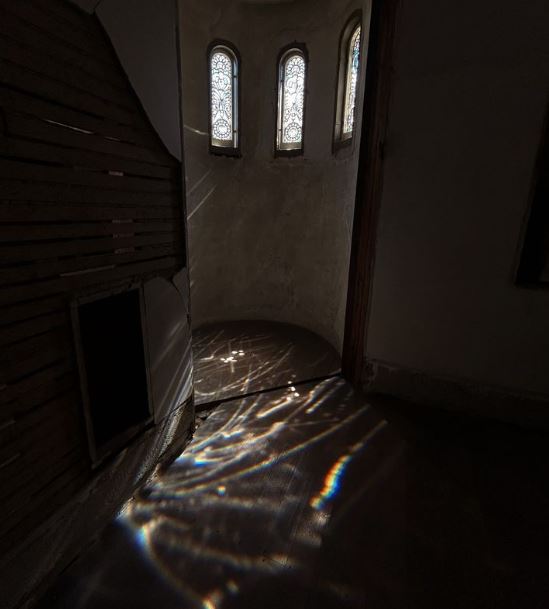
In the morning when I awoke, I could not stay alone in this house. William had left his warm imprint on everything. I could hear the timbre of his voice, his laughter, see his enormous blue eyes looking at me lovingly, and feel his hands upon my shoulders. I could hear the cry of our daughter, and smell the sweet scent of lilac on her skin, but they were long gone. I was not dreaming. I could find no explanation for what I felt. A delicious thrill passed through my body. Something moved in the corner of my eye. I did not turn to stare at it. I could not move at all, but was unable to suppress my cry of horror. It sounded loud and terrible in this empty house. The immense panes of glass rattled. My stomach muscles were fluttering and skin clammy with cold sweat. I felt dizzy. It seemed as if I was actually two beings—one, the main part of me, was concealed somewhere deep within; the other, my physical body, was external and less significant. I was being drawn somewhere by an irresistible force. Very slowly I turned my head and looked behind. I could see my physical body lying there on the floor in the dark parlor. Suddenly, I was surrounded by a throng of hideous beings, evil spirits who looked at me with iron-cold fury. My shattered spirit was beseeched with sadness. This was some form of illusion I thought. But their dark eyes looked at me with suspicion. Furious at my defenselessness against these demons, I drifted down into a profound slumber. What must have been several hours later, as I sat down at the dinner table, I saw, sitting opposite of me, an exact replica of myself. #RandolphHarris 2 of 7
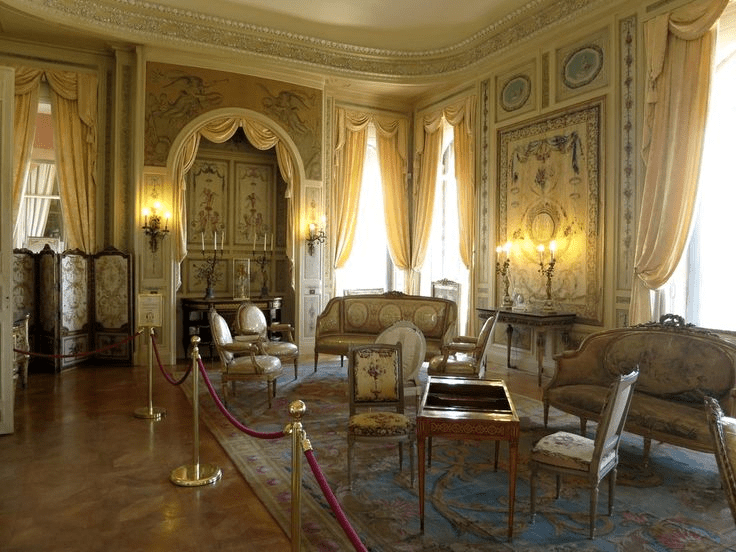
This astonishing doppelganger repeated every move I made during the course of the meal. I reached out to touch the double and the image reached out to touch me. I could actually it touching me. This spectral woman then got up and moved against the lace curtains. Unprepared and quite enthralled, I was quite enchanted by her face. Her glittering eyes had an uncommon depth. They were almost as haunting as mine with a childlike vulnerability, a winsomeness. She was wearing a sapphire-blue silk dress and a pair of supple elbow-length gloves. The sweet scent of fine perfume came wafting ethereally toward me. It was one of my favorite scents. She was quite a vision. Her hair black was brought up and back from her forehead to descend in deep waves on either side of her temples before being swept to the wreath of braids behind her head. These brains were exquisitely threaded with pearls, and diamonds dangled from the pendants in the lobes of hear ears. She was an ornament that only a goddess possess. Then that gorgeous aura went transparent and dissipated. I was scared. I went into the crystal bedroom, locked the door behind me, locked the door of the closet, and closed the door of the bathroom. After fluffing the pillows on my bed, I placed a revolver under than. A ghost, I thought. I lay there snuggling into the warm pillows, in my dimly lit bedroom, I pulled the quilt over my head until I fell into an exhausted sleep. Many often wondered how I could have changed so little over the years? How could I be there one moment and gone the next? #RandolphHarris 3 of 7

As I have said, my home is a center for a lot of ghostly phenomena, such as doors opening and closing, the footsteps of unseen guests, and the manifestation of spectral beings. When the first light came in the morning, on the eastern horizon, tendrils of gold would creep across the gray Heavens. The rattle of wagons could be heard for a great distance in the early morning air. One morning, I got an odd story from a carpenter, who assured me he did not believe in ghosts. The carpenter, Jones, explained that he had been outside on the porch, cutting interior trim. Jones said that he approached the door and started adjusting the load. Suddenly, the door swung open on its own. Jones stepped into the kitchen and turned to close the door, but instead, the door closed on it own. Jones had such a stimulating and delightful day, and he felt he could work through the night. About seven o’clock, he was working in the basement when he glimpsed something white on the table in front of him. Upon closer examination, the object proved to be a large, extremely pale hand with dark blue veins across its back. Putting his saw and wood down, Jones turned around and was surprised to see a tall, solidly built man, who seemed to be studying his tools. The man seemed completely unaware of his presence. Jones never imagined than man to be anything than another carpenter, but he thought it was most peculiar that he had not met this carpenter before. How had the man entered the basement and be working at the same table so silently? It was not until then man vanished before his eyes that Jones realized he had been visited by a ghost. #RandolphHarris 4 of 7

There was more to it than that. Jones still had to tend to the mules, and fill the water kegs, so they could take them to other workers who were miles away on the estate. He walked over to the stables where he met with Hicks. “They’re stubborn varmints,” said Jones, “but they’re smart enough not to drink until they’ve cooled off enough not to founder. A damn shame horses don’t have that kind of smarts.” “Yeah,” Hicks replied. “You’d better tie that jug-head of mine to a wagon bow, or he’ll slide into a ditch. By the time we get the teams unharnessed, they should be ready to drink.” Swiftly they unharnessed the mules, and by the time the animals had drunk their fill, Hick’s horse had rested enough to drink safely. “Now”, said Jones, “Let’s hitch up the mules, back this wagon as near the water as we can, and fill those water kegs.” They were soon sweating, wrestling the filled kegs into the wagon. Finally, there were only the empty kegs mounted on either side of the wagon box. “Some of the best water I ever tasted come out of Mrs. Winchester’s well,” said Hicks. Despite it being late September, the sun was hot, and they were forced to rest. “I believe we’ll meet our outfit before sundown,” said Jones. “Maybe,” said Hicks, “but if we don’t, we’ll have to keep goin’ until we do, because they’ll be hurtin’ for water. Slowly the sun slipped toward the western horizon, and when it was but an echo of dusty rose, Jones and Hicks stopped to rest the teams. Quickly the Earth cooled, as a breeze crept in from the northwest, caressing their sweaty faces. #RandolphHarris 5 of 7
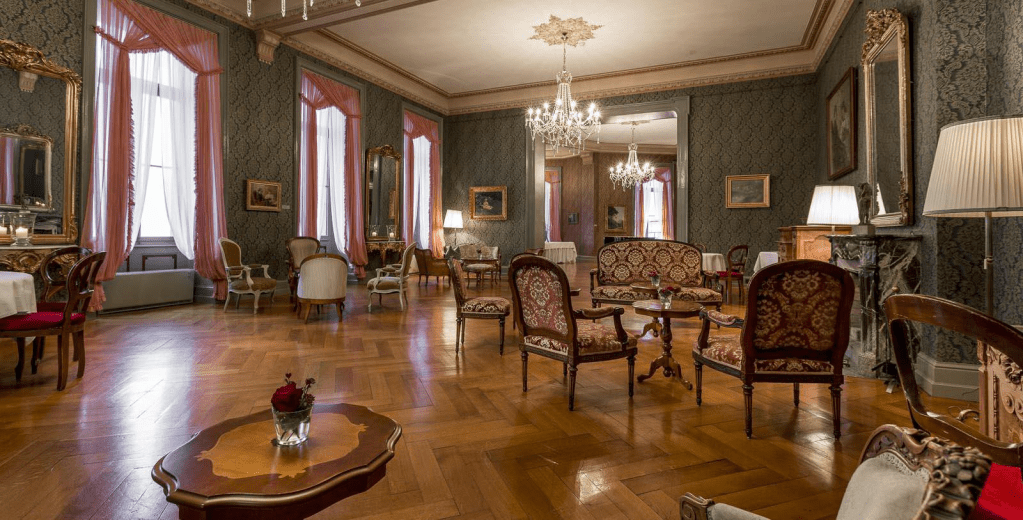
They listened, for the wind could also bring the welcome rattle of approaching wagons. However, they heard nothing. Wearily they resumed their journey, as the first twinkling stars became distant point of silver in the purple vastness of the Heavens. Down came a shower of black dust, as if the sky had commenced raining gunpowder! The atmosphere was as hot as the inside of an oven. The wagons rumbled to a halt. The sweating mules stood there in their harness, too scared to move. Their sweating hides trembled. Hicks got down from the wagon, and seized his Winchester, when something unnatural seeming—holds him in spot. It was then the strange apparition was most closely scrutinized; Jones was shivering in his stirrups—through sheer terror, incapable even of though! And after gazing a moment with wildered eyes—wondering what abnormal monster thus mocks his intelligence. “Great God! What could it be?” Shouted Hicks. There was but little time to philosophize—not enough to complete a careful scrutiny of the unearthly apparition, which both men present, with hand spread over his eyes to shade them from the dazzling glare, was endeavoring to make. “Is it a phantom? Surely it cannot be human?” said Jones. Wheeling suddenly round—his horse at the same time sending forth a scream that caused the Earth to tremble—the monk galloped away. They could only see it was a black monk and a spectral horseman that startled them. Nobody said anything, but strong on their minds was the possibility that their companions had met with foul play and lay dead on the barren portion of the estate. There was no conversation, for as long as they did not speak their fears aloud, there was always hope that they would not become cold, hard reality. #RandolphHarris 6 of 7

Spirits of the Winchester, I awaken the powers of darkness which dwell within you by the power of the three headed Dragon Zohak that you may serve to empower the great work of this estate. Through serving the greater cause of dark magick which break the shackles that bind the Blacked spirit, may you be uplifted and liberated! Awaken and empower the forbidden rites of Angra Mainyu! Awaken to empower the great work of counter creation as an Apostle of the Lord of Darkness enteral and as a warrior of the Path of the Underworld. I command and I adjure thee, Emperor Lucifer, as the representative of the mighty living God, and by the power of Emanuel, his holy Son, who is thy master and mine, and by the virtue of His precious blood, which He sehd to redeem mankind from thy chains, I command thee to quite thine abode, wheresoever it may be, swearing that I will give thee one quarter of an hour alone, if thou dost not straightway come hither and communicate with me in an audible and intelligible voice, or, if thy personal presence be impossible, please dispatch me thy Messenger Astarot in a human form by ADONAY, ELOIM, ARIEL, JEHOVAM, TAGLA, MATHON, ALMOUZIN, ARIOS, PITHONA, MAGOTS, SYLPHAE, TABOTS, SALAMANDRAE, GNOMUS, TERRE, COELIS, GODENS, AQUA. Your power now flows through this Nexion of Infernal Power, the very gateway to counter creation! Infernal power Incarnate! Awaken all creation to reveal that which is unknown so that this age of enslavement shall come to an end! I stir the power of the Divs within to unlock the doors, empower this work, and manifest glory of unlimited possibility! #RandolphHarris 7 of 7

This is a World in which ghosts and goblins exist. Many men and women who were granted the blessing of seeing the ghostly image of their loved ones pass to the “other side,” or who received messages of comfort from recently deceased individuals, have often told us that those souls were met by angelic beings or more advanced spirits who assisted them in evolving to higher planes of awareness. As these souls progressed, all of their ties to their prior physical existence faded into irrelevance. Some memories of their previous material life were forgotten.

However, on occasion, it seems that something goes wrong on a soul’s evolution into the light. Spirits of the dead can take over the minds and bodies of people who are emotionally or physically weak, there also appear to be discarnate entities that have never been human but who strongly desire to occupy a body of a man or woman. Nonhuman entities want to feel the emotion and sensual expressions that are unique to human experience. These beings very often identify themselves as agents of evil. Traditionally, they have been called demons, and they have the ability to seize the controlling mechanism of a host body, undermine the victim’s will, and direct the enslaved human. https://winchestermysteryhouse.com/

And please be sure to check out the online gift store: https://shopwinchestermysteryhouse.com/

Naivety is Worse than Robbery?

Only if we know the conscious and unconscious motivation of why people commit crimes, an offender’s behavior can be fully understood. It is likely true of most jurisdictions that the bulk of auto stealing can be attributed to transportation and recreation motives. Some portion of transportation motives involve the use of stolen vehicles for the anonymity they provide when doing other crime; however, this would probably account for a lesser proportion than the perceived need to steal a car simply to get somewhere. For the most part, auto theft appears by and large to be a crime against the property rights of others in the sense of unauthorized use. Where youth are involved, motives for automobile stealing are largely affective, and the heightened sense of risk-taking among today’s youth has served to enlarge thrill- and status-seeking motives. The past decade has witnessed the cultivation of a daredevil ethic now rooted in popular culture and much of youth-focused product advertising. This growing desire to feel the “rush” of fear-induced adrenaline appears to have been the major driving force behind the massive increase in auto stealing in America. Most in the sample described their auto stealing as thrill-seeking behavior from which they derive an “adrenaline rush” unmatched by legitimate thrill activities like skiing or snowboarding. “I got hooked on the thrill,” said one 16-year-old reflecting on his commitment to auto theft. Seventy-one percent of the sample described themselves as thrill-seekers. #RandolphHarris 1 of 21

The appeal of auto theft in this respect was threefold: driving fast and recklessly; the prospect of getting into a police pursuit; and the prospect of getting caught. For many in the sample, thrill and status seeking were intertwined: “I like to shock people, intimidate them, make them back down. We used to play tag with stolen cars and my friends couldn’t believe the things I would do.” (17-year-old.) “I like crime. I like to get in police chases. I do crimes for the adrenaline rush. Car theft, B&E, smash and grab, whatever.” (15-year-old.) Offenders with varying involvement in auto theft were interviewed. The most public in the sample claimed to have stolen hundreds of cars in recent years; the least active offender said he took three in his life. For the most part, differences in the level of auto theft involvement among offenders living in different regions of the province appear to be a function of urban versus rural living. The lack of anonymity perceived by youth in small towns appears to be a significant deterrent. All of the low-involvement offenders in this sample lived in towns in California. The automobile stealing they described was very opportunistic: they took vehicles left running in driveways on cold winter mornings. These offenders were inhibited both by a limited local street network and by the perceived likelihood of being caught if they drove the stolen car through towns where residents know each others’ vehicles. #RandolphHarris 2 of 21

Of course each interviewed offender was uniquely motivated to steal automobiles; however, many described themselves and their motivations in ways that made it possible to draw some generalizations. What follows are profiles for the three most evident auto stealing personalities encountered in the interviews with young offenders: Acting Out Joyriders—most emotionally disturbed of the offenders interviewed—likes to convince his or her peers that he or she is crazy. Engages in outrageous driving stunts—dangerous to pursue. Vents anger via car—responsible for large proportion of totaled and burned cars. Most committed to crime—irrational, immature. Least likely to be deterred—does not care what happens. Thrill-Seeker—heavily into drugs—doing crime is a way to finance the habit—entices others to feel the “rush” of doing crime. Engages in car stunts and willful damage to cars, but also steal them for transportation and to use in other crimes. Steals parts for sale in loosely structured friendship network. If automobiles become too difficult to steal, likely to look for the “rush” elsewhere. “Rush” might be legitimately substituted. Instrumental Offender—doing auto theft for the money—most active of the offenders but the smallest proportion of the sample—connected to organized theft operations. Rational, intelligent—does crimes with least risk—gravitated to auto theft from burglary—thinks about outcomes doing crime while young offender status affords them lenient treatment—indicate that they will quit crime at age 18. #RandolphHarris 3 of 21

Even among this sample of multiple-offense, persistent young offender, thrill-seeking motives were identified in more than half of their auto thefts. One variant of joyriding often incorporates deliberate destruction of the vehicles—68 percent indicated that they had stolen vehicles for the express purpose of “trashing” them. “It’s not your car: You can do whatever you want, beat it up, go as fast as you want, bake the tires, do jumps.” (16-year-old.) Many offender expressed the belief that this kind of activity did not really hurt anyone as the vehicles they typically stole to intentionally wreck were “old beaters” whose owners “probably got insurance money to buy a better one.” However, that is an uneducated statement. Some of these people bought their cars brand-new, when they were employed, paid them off, kept up the maintenance on them, and may have retired, be out of work, or cannot afford to buy the same car brand new and do not want a use car. So stealing their car might hurt them, and they have to pay a large deductible. There simply is no victimless crime. Profit-motivated automobile stealing in this sample was evidenced in two areas: vehicle acquisition for a adult-run theft ring; haphazard stripping of joyrider and thrill-seeker, instrumental offenders expressed little interest in adrenaline producing behavior. They took precautions to avoid police and usually worked alone. They possessed a reflective, business-like attitude about their crime of choice and this is what probably enabled them to find work with relatively rare organized theft rings. #RandolphHarris 4 of 21

“The newbies [younger kids just beginning their frequent involvement in automobile stealing] are real heat scores [do things that attract police attention]. They wear the black Bulls [NBA team logo] skull caps and drive like idiots. If the guys I steal for ever saw one of them around, I’d never get another call. (17-year-old.) Perhaps the simplest way to dichotomize the targets of auto theft is to think in terms of supply and demand. Instrumental motives for automobile stealing are driven by the demand for certain models sought in whole or for their parts. Why? People who like to drive fast and take risks much of the time (exempli gratia, immature individuals) are drawn to vehicles engineered and marketed for this “need for speed.” They buy America “muscle cars” like Mustangs, Camaros, and Corvettes; European sports coupes like BMW M3, M4, M6, Z4, M8 and Japanese sports cars like Honda Accord, Acura NSX; of if they are looking for off-road thrills, 4X4 pick-ups and sport utility vehicles. One would expect that risk-taking drivers would crash with greater frequency, driving the demand for replacement parts. Because they are likely at fault in the majority of their crashes, drivers of these kinds of vehicles are greatly motivated to cover needed repairs outside the legitimate economy where they can stretch their repair outside the legitimate economy to their fleet proportions, the kinds of models identified above are overrepresented in organized auto theft activities uncovered by police stings and task forces in many jurisdictions. The targets of instrumental theft, then, are in response to the demand for specific models. #RandolphHarris 5 of 21

On the affective motivation side, we would not expect to see much in the way of target specificity aside from general performance requirements—sporty cars that go fast and impress girls, or 4X4 trucks and sport utility vehicles sought for off-road thrill potential. A supply orientation should dominate this realm wherein largely opportunistic offenders steal whatever is most readily available. A victimization survey done for the large study found that 20 percent of vehicles were stolen with the owners’ keys, roughly half of which were left in the ignition or elsewhere in the vehicle. As might be expected, no target specificity was exhibited amongst this subset of auto thefts—any car with the keys in it will do as far as most thrill or transportation seeking offenders are concerned. We did, however, find pronounced model specificity for the passenger vehicles. Virtually all interviewed offenders identified older Japanese models as the targets of choice for thrill and transportation motives due to the relative ease with which their door and ignition locks could be defeated with ordinary objects such as scissors or screwdrivers. Simplistic, brute force techniques are the favored modus operandi of juvenile delinquents everywhere, and so it is with young car thieves. We were able to quantify the degree of this target specificity by analyzing insurance claims data relative to the fleet of licensed passenger vehicles. When theft rates by vehicle make (exempli gratia, Chevrolet, Ford, Mazda, et cetera) were rank-ordered, we found that Japanese nameplates occupying eight of the 10 makes most at risk. #RandolphHarris 6 of 21

Japanese makes are very popular in North America. In the early 1990, they accounted for roughly one-quarter of the fleet; however, the 10-year-old models most at risk of theft made up a much smaller proportion. Insurance claim data analyses replicated following the sharp auto theft increase witnessed between 1995 and 1996 found that passenger vehicles manufactured by U.S.A. conglomerate Chrysler, Plymouth, Dodge, Jeep, Eagle, Mitsubishi—makes exhibiting the lowest theft rates in the early 1990s—to be most disproportionately at risk of theft. Largely ignored in the first half of the decade, automobile stealers learned in the intervening years that many older Chrysler, Plymouth, Dodge products were likewise vulnerable to their favored brute-force techniques. In 1996, 30 passenger vehicle models making up just 12 percent of the fleet accounted for more than a third of all auto thefts in the province. The most obvious implication regarding the relative rarity of favorite targets has to do with offender search patterns. If they settled on wandering about aimlessly in the hopes of finding the relatively few vehicles on which their limited theft skillset would likely work, motivated offenders would waste huge amounts of time. This limited competence funnels them to places where they are apt to find their favorite prey—large parking lots. Conveniently, the large amounts of time young offenders spend in and around shopping malls provide a good match between their routine activities and sufficiently large pool of easy-to-steal vehicles. Mall parking lots were noted as prime “hunting grounds.” Roughly a third of the offenders thought underground parking lots the best place to steal vehicles. #RandolphHarris 7 of 21

The practical motive for research on personality adjustment seem to be the attainment of a state of affairs having a specific behavioral and emotional content deemed “good.” However, one man’s happiness is another man’s gloom. We reject such a formulation because while we no doubt share the middle-class norms which are idealized, they too often imply a sort of subcultural ethnocentrism that neither can nor should be forced upon other segments of society, it treats conflict as evil in itself, and conceives it unrealistically as unnatural and expungable, and by setting up a stable state of affairs as the end of action by family agencies, it dooms such action to inevitable futility, while closing the door to the exploration and the discovery of new experience and forms in family life. Joint involvement in constructive activity is much more than absence of disagreement. Quite apart from the intricate and unresolved methodological problem of getting operational definitions and objective measures of adjustment and maladjustment, the basic concept seems to have passed the peak of its popularity a decade or so ago. Research devoted to determining the conditions of adjustment in families evokes less and less interest, while critics multiply. The historian of ideas may eventually associate it with the period of the depression, while the notion of traits may perhaps be associated with a still earlier period in which a man’s character was alleged to be his fate, a fate predestined because impervious to change. #RandolphHarris 8 of 21

Thus interpersonal competence is neither a trait nor a state. Competence denotes capabilities to meet and deal with a changing World, to formulate ends and implements them. The incessant problem of equipping human beings to handle their affairs and to progress toward the discovery of new values and new means is not solved by authoritarian indoctrination of static attributes and beliefs. To rely upon such methods would not only be subversive of the most fundamental of American democratic values but would ultimately result in failure of the system which sought to maintain itself by these means. If merely given freedom, on the other hand, there are no grounds for assuming that human nature will “unfold” into competent personalities. Somewhere between these extremes lies a conception of personalities not inflexibly bound to and molded by the past, nor by utopian absolutists eager to sacrifice the present generation, but capable of utilizing past experience and future aspirations in an effective organization of present effort; not dependent upon direction from without but capable of integrating their goals with those of other and collaborating in their realization; in short, able to cope with their World whether the formulas devised by predecessors fit or not. The developmental approach, while considerably more suitable than concepts of compatibility and adjustment for evaluating family functioning, is still somewhat encrusted with earlier associations. The notion of maturity, for example, is a rather ambiguous term, which deserves scrutiny. #RandolphHarris 9 of 21

In the normal physical development of a child from infancy to adulthood, the final stage of growth is usually called maturity. When applied to the development of the child’s personality, however, the idea of maturity frequently becomes a misleading organic analogy. And when a phrase like “emotional maturity” begins to be used as an epithet by which some adults pronounce moral judgements upon other, its utility has almost vanished. From the standpoint of interpersonal behavior, personality development is a continuous process. Not only must there be intermittent adaptation to those conditions beyond the control of the person, but a person must constantly set oneself a fringe of new objectives. This is especially so in a dynamic society, for it is only thus that a person must constantly set oneself a fringe of new objectives. This is especially so in a dynamic society, for it is only thus that a person can resist the welter of conflicting influences which play upon one daily, and organize a more or less unified scheme of autonomous action. The confusion of age norms with stages of growth is one of the more harassing connotations of the maturity concept because of its incomplete emergence from biology and child psychology. This confusion is especially acute in the more rivalrous subcultures of the American community, where children’s progress relative to other children is watched with a jealous eye by their parents. #RandolphHarris 10 of 21

An adequate concept of personality development recognizes the full potential range of qualitative differentiation; it requires the measurement of development of a child or an adult against one’s previous self or one’s authentic peers, rather than against extraneous competitive norms. To impose competitive norms in a punitive manner is often discouraging or destructive for development, though intended to be motivating. As central concepts in family research, adjustment has not superseded compatibility, nor has maturity outdated adjustment, in any neat and clear-cut manner; at most there has been a series of successive emphases. This is particularly true in connection with the concept of adaptability, which was first used effectively in family research by Robert C. Angell in the early 1930’s, yet has recently been more fully elaborated by Burgess and Wallin, as particularly appropriate to companionate family relationships. Despite its early use, adaptability appears to be a concept which I transitional from adjustment to competence as a way of looking at family behavior. As used by Burgess and Wallin, it partake also of a realistic developmental approach: if their development is unimpeded, persons do not automatically become adapted to a wide range of situations; rather, if conditions do not permit this kind of learning, they acquire adaptability through formulating diverse ways of coping with problematic situations, and they may acquire instead quite maladaptive modes of performance. #RandolphHarris 11 of 21

There is a passivity of the will—the “will” being the helm, so to speak, of the ship. This originates from a wrong conception of what full surrender to the ultimate concern means. Thinking that a “surrender will” to God means no use of the will at all, the believer ceases to choose, determine, and act of one’s own volition. Powers of darkness will disguise the seriousness of this, and at first the consequences may seem trivial and be scarcely noticeable. In fact, the initial changes may appear to be glorifying to the ultimate concern. The “strong-willed” person suddenly becomes complacent and yielding—no longer “obnoxious” to one’s acquaintances. One believes that the ultimate concern is “willing for him”—through circumstances and in the decisions of other people—and so one becomes more and more helpless in one’s actions. After a time no decision can be obtained from one in matters of daily life; no resolve or initiative in matters demanding action. One becomes afraid to express a wish, much less a decision. Others must choose, decide, act, lead, while one drifts as a cork upon the waters. Later on, the powers of darkness begin to make capital out of this “surrendered” believer, and to weave around one various kinds of psychopathology which entangle one through one’s passivity of will. One has now no power to protest or resist. Conditions which are obviously wrong—springing from things which this believer alone has a right to deal with—flourish, and grow strong and blatant. #RandolphHarris 12 of 21
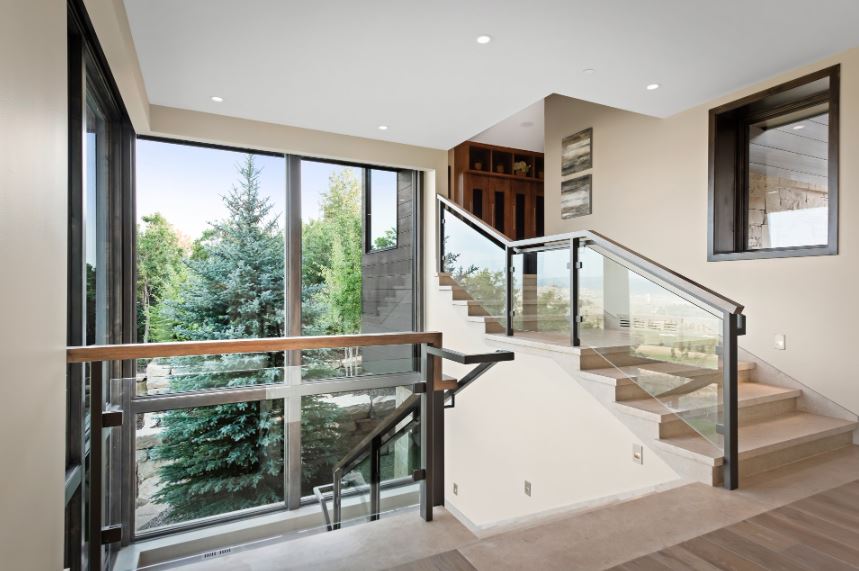
The powers of darkness have slowly gained because of one’s passivity of will, which at first was merely submission to one’s environment under the idea that the ultimate concern was “willing” for him in all things round one. The text that such believers misinterpret is Philippians 2.13, “It is God who worketh in you both to will and to work, for His good pleasure.” The “passive” person reads it as “It is God who works in me the willing and the doing,” id est, “God wills instead of me.” The verse actually speaks of God working in the believer’s soul up to the point of the action of one’s will, but the undiscerning reader assumes that God Himself doe all the “willing” and the “working.” This wrong interpretation justifies his inactivity. Three aspects of faith as ultimate concern—its indivisible totality, unrelatedness to traditional notions, and vagueness of content—do contribute to a certain bafflement about it. However, there is another side to the coin: the intensity of faith which is conveyed by stressing its totality, the freshness of this thought which does not mouth staid formulas, and the exhilarating sweep of the universality of faith. The universality of faith raises a question about its content. There is an intrinsic difficulty of explaining faith: Faith is a concept—and a reality—which is difficult to grasp and to describe. This cannot be otherwise, since faith is not a phenomenon beside others, but the central phenomenon in man’s personal life, manifest and hidden at the same time. Let faith not grab you. Faith is a primary notion, a primary reality; it cannot be properly defined, but only experienced. #RandolphHarris 13 of 21

Focusing on international relations, a great challenge facing Japan is how to cope with the coming de-massification of a society that has been propagandized into believing that homogeneity is always a virtue. More than a three decades ago, anthropologist Kazuko Tsurumi of Sophia University pointed out that there is more diversity in Japan than its leaders acknowledge. However, this was diversity within the framework of a homogenizing Second Wave society. As Japan enters the Third Wave era it will face potentially explosive heterogenizing pressures. Its antagonism to social, economic, and cultural diversity is directly related to its greatest long-term weakness of all. Today’s Japanese are no longer the “economic powerhouse” they were once accused of being, and their national power no longer rests on a single leg of the power triad. However, in the most important power competition—the generation and diffusion of ideas, information, imagery, and knowledge—they still lag behind the United States of America. With these various power resources to deploy, Japan’s business and political leaders lack a clear international strategy. A consensus exists at the top about certain key domestic goals. These include expansion of the domestic economy and reduction of the need to export, improvement of the quality of life through increased leisure, and reclamation of the heavily fouled environment. #RandolphHarris 14 of 21

However, if any, Japan’s elites are deeply split over foreign economic policy that Japan should play in the future. One strategy presupposes that the World will break into regions and that Japan’s role should be to dominate the East Asian/Pacific Region. This means concentrating investment and international assistance there. It means quietly preparing for the role of regional police power. Such a policy reduces Japan’s vulnerability to American and European protectionism. A second approach suggests that Japan concentrate instead on the developing economies, wherever they may be. If they are to plug into the World economy, a variation of this approach proposes that Japan focus on creating the electronic infrastructures needed by these countries. (Such a strategy fills a critical need for the “meticulous” countries of the World, draws on Japanese technological strengths, and helps lock these economies electronically into Japan’s.) A third strategy, perhaps the most widely held at present, sees Japan’s mission as global, unconfined to any particular region. Its backers push for a “global mission, not because of some messianic economy is too big, too varied, too fast-growing to be contained within a single region or country group. #RandolphHarris 15 of 21

It is this “globalist” faction that urged the dispatch of navy ships to help the United States of America and its allies protect the Persian Gulf during the Iran-Iraq war. It is this group that favors making loans to Eastern Europe, playing a larger and larger diplomatic role on the World stage, assuming dominant positions in the International Monetary Fund, the World Bank, and other global institutions. When Japan makes its decision among these three strategies, it will not be clear-cut. The Japanese way is frequently to split differences. Yet astute observers will be able to judge which way the bamboo stick falls. At that point, the World will first begin to feel the real impact of Japan’s thrust toward tomorrow. Often times, financial crisis occur in the West and other parts of the World because no one—neither state, nor top managers, nor shareholders—put the transactions with tricky financial instruments under proper control before it is too late. Financiers entrusted to carry out those transactions eventually get a free hand, make unbelievably big money and, finally, overdo it. However, this is also because wages are not keeping up with inflation, and we have a consumer driven economy, so people have to borrow to survive. Collateralized debt obligations (CDO) often tend to be the most toxic element of the financial markets today. When an investment banker talks of toxicity, a regulator is bound to take a heightened interest. However, sometimes the transactions in question remain out of the regulators’ sight. The state frequently fails to fulfill the major role it has to play in the market economy: setting the rules for doing business and enforcing businesspeople to comply. #RandolphHarris 16 of 21

This can lead to Western capitalism’s major structural failure. Insurance companies sometimes buy products they do not understand because they are attracted to higher returns on offer. Little attention may be paid to any potential risk because the rewards are so attractive. This is why some define CDO buyer as naïve capital. The CDO buyers who do not bother to understand the product, and to assess risks, are not limited to insurance companies, but, as mentioned, include banks, investment funds, and other financial institutions as well as nonfinancial corporations. Risk models created and used by banks to meet regulatory requirements do not always identify CDO as risky instruments. Do not know, do not care, did not do. All these “technical” things, or rather, problems with basic work attitudes and the lack of responsibility on the part of people in charge, are, of course, a key part of financial debacles. Collateralized debt obligations are pools of several debts that led to the 2008 economic crisis and have been making a comeback. In 2021, a similar asset class known as collateralized loan obligations (CLOs) became prominent, but these assets may be much more resistant to causing economic downturns or being affected by them. In 2021, CLO issuance in the U.S.A. totaled $184.4 billion and resulted in returns between 1.4 percent and 8.9 percent. Collateralized debt obligations repacked individual loans into securities and they are then sold to investors on the secondary market. The perception of a Western, namely Anglo-Saxon corporate system as shareholders’ capitalism, meaning that shareholders exercise effective control over managers preventing the latter’s too risky and irresponsible actions proved to be a myth. #RandolphHarris 17 of 21

In real life, it turned out to be exactly the opposite. Shareholders of leading financial institutions and a number of nonfinancial companies, which collapsed in 2008-2009 because of managers’ adventurism, greed, or inability to find solutions for pressing problems, failed to stand up to protect their interests and to stop mismanagement. They packaged with subprime mortgages, rated as safer than they truly were and offloaded to investors while the very banks peddling them took out short positions at the same time. These trading patterns led to massive inflation in the housing market, and caused a sharp contraction in the economy. In the failed financial institutions and companies, the shareholders’ voices were unheard. Nonexecutive directors, who were supposed to protect their interests and exercise control over managers, were too aggregable and/or were not provided enough access to important information. In the 2020a, the CDO market is expected to rebound. Whereas the CDO market stood at roughly $70 billon in 2017 (compared to more than $200 billion pre-crisis 2008), it is expected to reach $158.5 billion by 2026. We have already talked about what CDO are. Now, what actually happens is you have a pool of corporate credits. They do not all have to be good credits; some can be junk bonds. The creation of tranches is done largely with respect to mathematical models rather than corporate credits. As a result, there is little understanding of the actual risk to a CDO based on the credits it contained. Instead, it is a numbers game detached from true security. #RandolphHarris 18 of 21

There were a few reasons CDOs became attractive pre-crisis. For banks, they helped offload risk onto investors and freed up more capital to make new investments or issue new loans. For investors, they purportedly offered a way to realize higher yields with the expectation that the riskier aspects of the CDO were supported by the less-risky asses. Unfortunately, speculation and unwarranted optimism in the housing market undercut those expectations. They were rating these things based on the probability of the loss of the pool of assets, rather than the creditworthiness of each individual borrower. That is where they got into trouble and lost a bunch of money. There were big losses on CDOs, and rating agencies came under fire for that as well. The typical buyers of CDOs were insurance companies, banks, pension funds and hedge funds, rather than individuals. These were the institutions left holding the debt when the financial crisis hit, and the losses precipitated the rest of the country just as the value of homes—often individual Americans’ largest source of equity—was crashing. In reality, the dominant stake holders of a large Western, namely, Angelo-Saxon corporation are not stakeholders, but rather high-ranking managers. Their dominance, often effectively uncontested, leads to a decision-making monopoly, while their responsibility for the outcome remains obscure. Among other things, they have obtained enormous power to set their own revenues at fantastically high levels, often without a linkage with the corporation’s performance and profitability. #RandolphHarris 19 of 21

In this sense, Anglo-Saxon capitalism is not itself anymore. Some of its very basic concepts have ceased to apply. Furthermore, this real Western corporate model is not in agreement with the basic idea of the market economy as such. It is a dictatorship, rent-seeking, and rent-taking based on personal power. Besides enormous economic losses it incurs, it destroys values and ideals embedded in the fabric of liberal Western societies, causing the deepest crisis of confidence since the late 1980s, when Americans were losing badly in its competition with rapidly rising Japan, and Eurosclerosis was the most popular definition for the status of major economies of the old continent. Bankers’ moves to aggressively protect their cosmic bonuses, even after their institutions collapsed and were bailed out by the state with the use of taxpayers’ money, manifest a destruction of Western business and societal ethics, or rather their remnants. The financiers’ most popular argument that unless the bonuses are left intact talented people (did they mean those talented people who had engineered the financial fiasco?) would not stay is both cynical and confusing. It goes against the basic principle the market economy rests upon: Businesspeople have to bear responsibility for their decisions and actions. Logically, if this principle still really mattered, in such a situation it would have been irrelevant and ridiculous to pay any bonuses at all. #RandolphHarris 20 of 21

Government bailouts should have been accompanied not only by bonuses bans, but also by mandatory replacements of all high-ranking managers of the business entities rescued, with punitive financial measures against those who were responsible for the failures. No government was bold enough to go that far. The truth, and one of the greatest social injustices of the early twenty-first century, is that today, in the aftermath of the crisis, those who engineered it are mostly doing fine and living a jolly life, while millions of people it broke down are still struggling with its repercussion and COVID hurt their rebound. This manifests one more failure of Western capitalism: a moral failure. Or maybe, in the World of Western financial business the very notion of morality had already been killed altogether? The investigation showed that in the wake of the crisis, in a desperate effort to arrange any cash flow, for example, the Wachovia Bank, one of the largest in the United States of America (in 2008 it was acquired by Wells Fargo), laundered money of the Mexican drug mafia on a scale equaling one-third of Mexico’s GDP. The Bank of America was also involved in operations of this kind. Surprisingly (or not surprisingly?) it did not become a big story in the news and was not widely discussed by the public. For Wachovia it was quite a happy end as it avoided criminal prosecution paying out almost a symbolic fine of $160 million. Meanwhile the bank reportedly had no way of checking $420 billion (?!) in transactions for possible money laundering activity. This is a bit too much, is it not? #RandolphHarris 21 of 21

Romeo and Juliet Were Totally Maladjusted

Emotions are in some respect the most subjective elements of consciousness, since it is only the person oneself who can tell whether one truly experiences love, shame, gratitude, or happiness. Yet an emotion is also the most objective content of the mind, because the “gut feeling” we experience when we are in love, or ashamed, or scared, or happy, is generally more real to us than what we observe in the World outside, or whatever we learn from science or logic. Thus we often find ourselves in the paradoxical position of being like behavioral psychologists when we look at other people, discounting what they say and trusting only what they do; whereas when we look at ourselves we are likely phenomenologists, taking our inner feelings more seriously than outside events or overt actions. Psychologists have identified up to nine basic emotions that can reliably be identified by facial expressions among people living in very different cultures; thus it seems that just as all humans can see and can speak, so they also share a common set of feeling states However, to simplify as much as possible, one can say that all emotions share in a basic duality: they are either positive and attractive, or they are negative and repulsive. It is because of this simple feature that emotions help us choose what should be good for us. A baby is attracted to a human face, and is happy when he or she see his or her mother, because it helps the baby bond with one’s caretaker. We feel pleasure when eating, or when with a member of the opposite gender, because the species would not survive otherwise. #RandolphHarris 1 of 22

We feel an instinctive revulsion at the sight of snakes, insects, rotten smells, darkness—all things that in the evolutionary past might have presented serious danger to survival. When trying to figure out survival methods for youthful offenders, we did interviews with thirty-one youthful, incarcerated automobile thieves to provide insight into the nature and dynamics of motor vehicle theft. California correctional officials were used to identify youths with a history of auto theft offending. Prison visits allowed for lengthy face-to-face interview with a broad array of youthful offenders. The respondents were described as active members of the lower-class street culture and were shown to have pronounced criminal histories that spanned a host of offense categories. Subjects’ self-reported involvements in automobile theft spanned a host of offense categories. Subjects’ self-reported involvements in automobile theft varied from three lifetime offenses to hundreds of offenses. Some offenders are described as “acting out joyriders” who stole fast cars in order to vent their anger and immaturity through high-risk and high-speed driving behavior. Other study participants were labelled “thrill-seekers.” These youth had pronounced substance abuse problems and used auto theft as a means of excitement or income to fee their drug habit. The remaining offenders were termed “instrumental offenders.” These youth were more calculating in their behaviors and sought to use persistent auto theft and resale as a means of steady income. #RandolphHarris 2 of 22

Level of perceived risk and reward were found to vary across these three subgroups of offenders. Instrumental offenders may have committed thefts with greater frequency than thrill-seekers or joyriders, but they did so in a more guarded and planful manner. The conversations revealed that all of the offenders were unconcerned about the potential sanctions that were attached to their criminal activities. In contrast to decade-long national trends in both the United States of America and Canada which have seen auto theft levels rise and fall with other property crimes. According to the National Insurance Crime Bureau’s (NICB) Hot Spots Report, vehicle thefts continue to skyrocket in many areas of the United States of America Nationwide, 932,329 vehicles were reported stolen to law enforcement in 2021, a 6 percent increase over 2020, and a 17 percent increase since 2019. In response to the first rapid increase in auto theft, authorities undertook a province-wide study intended to triangulate information about offenders, victims, and vehicle characteristics, the auto theft event, and the justice system’s response to the problem. These areas of interest were explored using multiple methods and data sources, including an examination of auto theft claims reported in order to provide comprehensive automobile insurance coverage to people with passenger vehicles. The availability of a very large sample of auto theft insurance claims information provided invaluable in the efforts to profile the nature of the auto theft problem. #RandolphHarris 3 of 22

Because of the kinds of policies one would pursue to reduce the incidence of organized professional car theft differ significantly from those undertaken to thwart thrill-seeking youth, useful policy hinges on accurately profiling the nature of the auto theft problem in a given jurisdiction. The sources of uncovered discovered in the United States of America: Profit motives—including thefts for resale, chopping, stripping, and/or fraud; transportation motives—temporary appropriation for short-term or extended use, including use in the commission of other crimes; and recreational motives—temporary appropriation of automobiles for thrill and status—seeking by young persons (exempli gratia, joyriding). It is commonly believed that profit motives drive more or less organized, adult, “professional” offenders; recreation motives characterize disorganized juvenile offenders; and transportation motives underlie both juveniles and adults. Stolen automobiles not recovered or those recovered minus a significant percentage of their parts are thought to have been stole because of the profit motive. Stolen automobiles that are recovered either intact, damaged, or vandalized are usually thought to have been stolen for recreation or out of need for temporary transportation. During the past decade, 90 percent of all passenger vehicles stolen have been recovered. This high recovery rate existed even during periods when annual auto theft frequency counts increased greatly. #RandolphHarris 4 of 22

Even among the small portion going unrecovered, very few have been the kinds of vehicles associated with professional auto thieves (exempli gratia, late-year model German imports like BMW, Mercedes Benz, or Porsche; high-end luxury models such as Jaguar, Lexus, or Infiniti; or expensive sport utility models such as Cadillac Escalade). Other analyses of auto theft insurance claims filed in recent years found that the vast majority of part replacement costs (other than door and ignition lock assemblies) stemmed from damage to vehicle body parts as opposed to systematic part stripping associated with organized offenders. Insurance data thus tend to point the finger at youth as the source of the rapid increase in auto theft. In the late 19980s, police began seeing a growing number of stolen vehicles being intentionally damaged by new forms of reckless joyriding. Teenager began stealing cars not merely to get to “bush” parties held in remote locations, but also for the expressed purpose of sideshows and trashing them to entertain other partygoers. Police began to recover groups of totaled automobiles stolen to use in impromptu demolition derbies. By all accounts, auto stealing was becoming more thrill-focused. The purpose of this study was to determine the motives and strategies underlying theft of automobiles by youthful offenders and to discover their perceptions of the deterrent effect of the criminal justice sanction. #RandolphHarris 5 of 22

Rational choice perspectives argue for analytical distinctions between criminal involvement which entails long-term, multistaged decision making processes concerning initial involvements, continuance, and desistance in crime, and criminal event decisions which involve shorter processes in response to immediate circumstances and situations. In an effort to put these criminal event decisions in context, I begin with a look at how these young repeat offenders described their lives. Ethnographic research on offender lifestyles has identified their involvement in crimes as a means to obtain money in order to fulfill largely expressive needs. The desire to live “life in the last lane” was likewise true for many in this sample. Due to their ages, most of the respondents had few job experiences. More than half of the sample reported having no legitimate source of income, yet the reported average figure for reported monthly spending was roughly $2,000(arrived at through itemizing weekly spending habits). Several offenders described spending sprees in the wake of obtaining money from crime in order to impress friends and show them a good time. Describing a three-day road trip where he put a group of friends up at an expensive hotel and took them all to an amusement park, a 17-year-old remarked: “I probably spent about $5,000, but it was worth it…easy come easy go. We partied hardy. That’s the kind of stuff memories are made of.” #RandolphHarris 6 of 22

Many expressed their disdain for the opposite of the fast life, the dullness of ordinary, unskilled work, what one subject referred to as being a “ham and egger”; I worked as a busboy for a week once. It was like being a pig in everyone else’s slop. Why should I put up with that sh*t?…Doing crime [referring to a smash and grab where he want a truck through the front window of a Safeway store in order to steal cigarettes] is a lot more fun and pays a lot better.” (17-year-old.) Similar to the findings of other studies concerning the lifestyles of persistent property offenders many in this sample described patterns of offending as extensions to social activities with drinking and psychoactive drug use at the core. The most prevalent “recreational” activity reported by offenders was “hanging-out” with friends, and using drugs and alcohol. Fifty-five percent of the respondents said they used hallucinogens at least ones a month; 23 percent said they did so between 12 and 20 times a month. Fifty-eight percent said they drank to intoxication at least twice a week; 20 percent did so five times a week. This latter 20 percent may well be on their way to severe adult drinking problems. On average, respondents used cocaine five times a month and marijuana almost daily. The majority of respondents indicated that they were motivated to steal cars when they were high on drugs and alcohol. Most of those interviewed said they spend a considerable amount of time hanging around shopping malls. A few were cognizant of the effect frequent exposure to consumer goods played in motivating them to commit crime. Said one 14-year-old: “I go to the mall almost every day and see stuff I want to buy. I do crime in order to buy nice stuff.” #RandolphHarris 7 of 22

To speak of competent personalities is not to refer to ingrained virtues or fixed traits. What is generally meant by personality trait is not some constantly evident attribute like blue eyes, but a standardized response to standardized situations. Nevertheless, as if it were a constant, it is usually described adjectivally the presence of which transcends or pervades the actor’s behavior in all situations. Actually, this is what competence does, and in that limited sense competence answers the notion of a trait better than what are usually called traits, exempli gratia, authoritarianism. The trait concept, as commonly formulated in psychological literature, is inadequate as a theory be behavior; to attempt directly to inculcate some desired trait concept, as commonly formulated in psychological literature, is inadequate as a theory of behavior; to attempt directly to inculcate some desired trait is therefore frequently unworkable in practice, and indoctrination is improper as an end. Any notion of molding personalities to fit preconceived standards is likely to construe human beings as things or objects, passively subject to manipulation by superior authorities who stand upon some detached pedestal. Behavior, however, is dynamic, episodic, situationally specific. #RandolphHarris 8 of 22

Traits, as descriptive categories for distinguishing recurrent aspects of behavior, are applied by some people to other people, and imply a relationship between observer and observed; it is thus that in social life they serve to regularize expectations though they can do so only roughly and incompletely, for the contingencies are too variable. Reciprocal attributions and imputations are subject to unceasing diversification and disagreement. They are stable bases for relivable prediction only to the extent that the representative situations which evoke them are stabilized through implicit commitments of all the parties involved. Every person repeatedly steps beyond the range of standard expectation in the course of one’s development; in a dynamic social World novel situation are pandemic. Outside those situations in which conventional responses are appropriate, trait psychology is as ineffectual in guiding the observer or experimenter as rigid iteration of previous responses would be frustrating to an actor. There is something to be said for the trait notion from the standpoint of an actor’s effort to create a harmonious style of life, but this conception—of a more or less self-conscious pattern of decision—is quite removed from what is normally meant by traits; style of life is a holistic notion, employing themes to relate items or events. One of the more plausible versions of trait psychology as applied to the study of the family is its incorporation in the idea of compatibility. #RandolphHarris 9 of 22
In its most common form, as applied to marital selection, the traits of one partner are seen as ideally fitting those of another, analogous to the way in which a key fits a lock. In their interpretation the relationships between two people are put either in terms of similarity or complementarity, and it is explained as the predicable product of matching or mismatching of attributes. This is the simplest and most static view which could be taken; actually theories based upon this original notion are women principally of qualifications and auxiliary hypothesis intended to account for the numerous negative cases. How, for example, do ostensibly compatible people become incompatible, and vice versa? And how do incompatible people marry to begin with? Contradictions particularly multiply when the matching notion is applied to children and parents. The latter have presumably instilled their own traits into their offspring, yet incompatibilities arise. The emphasis on matching is sometimes carried to extreme lengths in adoption cases, though this had no warrant from research. To suppose that happy marriage and successful parenthood depend upon felicitous concurrence of compatible traits, and that a wise selection can avert the hazards of family life, is neither a logical nor an empirical conclusions. Most of the important questions lie in areas that this approach cannot reach, or where it cannot be experimentally tested. #RandolphHarris 10 of 22

Out of the reaction against the atomistic and static approach of trait psychology, there has arisen a more holistic and dynamic concept—adjustment. This became, and for the present still remains, predominant in both research and practice. There are many measures of adjustment, differing so widely that proponents of each can no doubt with some validity deny that applicability of any general criticism of this concept. Nonetheless the various usages of adjustment can probably for present purposes be sufficiently distinguished from competence by point out certain of their most common meanings. One usage has the “contented cow” overtones of adjustment terminology; the implication is that human beings react only to disturbances which upset their putative equilibrium, and that the objective of all action is the restoration of tensionless rest. Another usage which has come in for increasing attack is the one that implies reliance upon others to provide instigations to action. If each lets oneself be directed by others, critics ask, who guides the whole, and, for that matter, who is responsible for each The so-called environment to which the individual is assumed to be adjusting is mainly a social environment; are the good adjusters to subordinate themselves to the poor adjusters? A third implication which is being currently challenged is the notion of immediate happiness and security as ultimate values, and the rejection of trial, sacrifice, and risk as evils. #RandolphHarris 11 of 22

One of the most recent standard textbooks on the family defines maladjustment as consisting of conflict, frustration, disapproval, and deprivation; by this view Romeo and Juliet were totally maladjusted. Logically, the concept gets into insuperable difficulties as soon as its users commence to speak of good adjustment and poor adjustment; all pretense of its being a value-neutral term vanishes at this point. The critics allege that adjustment as either an imputed or recommended end masks a conservative ethic; and this cannot be removed without abandoning the use of the term as a means of differentiating desire from undesired states of affairs, or else plainly adopting a value position other than defense of some given status quo. The man who is delivered from conduct disorder and freed from illusion, who is emancipated from the suffering for all time because the flesh can catch him no more, has entered the right to infinite rest in the eternal Void. However, one has also the power to choose otherwise. One may stop at its very threshold and renounce the reward it offers. Since the phenomenal World has nothing to offer one, the only reason for such a choice can be compassionate thought for the benighted creatures one is about to leave behind. There are some who use the word “surrender” and who think they are surrendered fully to carry out the will of the ultimate concern but are only so in sentiment and purpose, for actually they walk by the reason and judgement of the natural man, although they submit all their plans to the ultimate concern; and because of this submittal they sincerely believe they are carrying out its will. #RandolphHarris 12 of 22

However, those who are really “surrendered” give themselves up implicitly to obey, and carry out at all costs what is revealed to them sacredly as from the ultimate concern, and not what they themselves plan and reason out to be the will of the ultimate concern. Self-actualized who surrender their wills and all they are and have to the ultimate concern, yet who WALK BY THE USE OF THEIR NATURAL MINDS, are not the ones who are open to the “passivity” which gives ground to psychopathology—although they may, and do, give ground to them in other ways. The origin of the passivity which gives psychopathology the opportunity to deceive is generally a wrong interpretation of morals, ethics, virtues, and laws, or wrong thoughts or beliefs about sacred things. Some of these misinterpretations of the sacred, these wrong conceptions which cause men to give way to the passive condition, have already discussed. Such passivity may affect the whole man, in spirit, soul and body, when it has become very deep, and is of many years’ standing. However, the progress is generally very gradual and insidious in growth, and consequently the release from its gradual and slow. It is the very idea of religion which creates difficulty nowadays. The modern mind resists the idea of the supernatural, even in the very large sense of a personal intervention of the ultimate concern in the World. It is at this level, the level of the very meaning of religion, that many men today find the problem of faith. #RandolphHarris 13 of 22

In these conditions, more than as a simple intellectual adhesion to dogmas, faith appears as an attitude of every religious man who takes a position in relation to the Absolute. It seems, moreover, to require for its foundations something other than rational arguments, and one can understand why so many recent authors appeal to a certain immediate experience in which to ground it. If twenty-first century man resents divine intervention in the World, the ultimate concern is already here. If modern man is skeptical of a personal God, one must be confronted with the ground and power of being. And if one is weary of rational arguments, one is invited to open the depths of one’s being to the experience of the holy. Doubt itself is the disguised visage of faith. Many Christians as well as members of other religious groups, feel anxiety, guilt and despair about what they call “loss of faith.” However, serous doubt is confirmation of faith. It indicates the seriousness of the concern, it unconditional character. Therefore, the is a beneficial side of doubt, the fact that unextinguished faith smolders beneath it. Everything is also related to culture. The relation to the gods is not a necessary element. With ultimate concern as the constitutive factor, religion can be extended to take in non-theistic and even secular quasi religions in which the ultimate concern is directed towards objects like nation, science, a particular form or stage of society or a highest ideal of humanity, which are then considered divine. Thus the relation of religion to culture is erected upon a very broad basis indeed. #RandolphHarris 14 of 22

Religion in the narrow sense cannot determine the limits of the relationship so long as one can say, that the most important religious movements are developing outside of religion. The universality of the problematic flows from the relative simplicity to the operative factor: ultimate concern. Religion is wide in application because it is simple in constitution, being constituted by ultimate concern. The simplicity of the ultimate concern it is defined as total surrender, unconditional concern, infinite passion. We avoid using terms like intellect, will, and emotions, because we are afraid of being trapped into identifying it with one of these functions. This we speak of it inly in its totality, but, as in the case of the simplicity of the atom, this can render it all but impenetrable. Another obstacle to comprehending the ultimate concern is that faith has been twisted to such a degree that there is hardly a word in the religious language, both theological and popular, which is subject to more misunderstanding, distortions, and questionable definitions than the word “faith.” Tempted to drop the term altogether, we must content with the effort to reinterpret the word and remove the consuming and distorting connotations, some of which are the heritage of centuries. On this point, the only way to bring the ultimate concern into a better focus would be to specify it somehow from its object. Faith is the state of being ultimately concerned. The content matters infinitely for the life of the believer, but it does not matter for the formal definition of faith. #RandolphHarris 15 of 22

For decades, the Japanese have been journeying all over the United States of America, from the Silicon Valley to Washington and Wall Street, from Harvard and MIT to Stanford, visiting thousands of businesses, government officials, laboratories, schools, and homes, looking for another kind of faith. They are consciously learning as much as possible about what make America tick tock—not just commercially or politically, but culturally, psychologically, socially. This was not so much an exercise in business espionage (although some clearly took place) as an expression of Japan’s deeply ingrained curiosity about the outside World and its search for a role model. Following three hundred years of isolation from the rest of the planet, Japan, after the Meiji revolution, rushed to make up for its enforce privacy and has become the most avid newspaper-reading nation in the World, the most inquisitive about international attitudes, the most eager to travel. The intense curiosity has contrasted sharply with American provincialism. With the arrogance of the World’s dominant power, with a domestic market so large it could afford to treat exports as peripheral, with the condescension of a conqueror, and the unconscious preferences, the United States of America bothered to learn little about Japan beyond some technology. Food and culture came later. While 24,000 Japanese students hastened to study in the United States of America, few than 1,000 Americans bothered to make the reverse trip. #RandolphHarris 16 of 22

As of 2022, there are 13,449 students from Japan studying in America, and there are currently 3,406 Americans studying in Japan, which is a 62 percent decrease from 2020. Japan works very hard at expanding its general knowledge, and this helps explain why it has been so good at marketing its wares in the United States of America, and why U.S.A. firms would have double difficulty penetrating the Japanese market even if all trade barriers vanished overnight. Yet Japan’s overall knowledge base is still deficient in several dimensions. Reflecting its own preferences and values, it may unenlightened about ethnicity and may be more study to understand its significance in a global economy. Japan’s much vaunted-education system, which many U.S.A. educators and business leaders ingenuously hold up as a model, is itself savagely criticized at home for its overregimentation and creativity-crushing methods. At the lower levels, teachers’ unions and the educational bureaucracy snuff out any proposed innovation. Its higher education lacks the renowned quality of its manufactured goods. Japan makes superior Acuras, but some international CEOs would like to see their graduates exposed to more American culture. Japan leads the World in spreading extra-intelligent electronic behind both the United States of America and Europe in deregulating the media and following the full development or cable television and direct broadcast satellite, which would diversify the imagery and ideas so necessary in spurring innovation in a culture. #RandolphHarris 17 of 22

Where Japan needs more improvement, is in cultural exports. Japan today has great writers, artists, architects, choreographers, and film makers. However, few are known outside of Japan, and even they exercise little influence. In pursuit of balanced power, Japan has launched a major cultural offensive—beginning in fields directly linked to the economy, like fashion and industrial design. It is now moving on to the popular arts as well, including television, movies, music, and dance, and to literature and the fine arts. The recent creation of the Praemium Imperiale awards, intended to be the Japanese equivalent of the Nobel Prize and sponsored by the Japan Art Association, indicates Japan’s determination to play a significant role in World cultural affairs. Japan faces a tremendous obstacle, however, in spreading its ideas and culture abroad. This is its language. Some nationalist Japanese scholars insist there is something mystical and untranslatable about Japanese, the it has a unique “soul.” In truth, as poets and translators know, all languages are incompletely translatable, since the very categorization schemes and analogies embedded in them differ. However, the fact that only 125.6 million people on the face of the Earth speak Japanese is a significant drawback for Japan’s pursuit of balanced World power. This is why Japan, more perseveringly than any other nation, presses on with research into computerized translation. #RandolphHarris 18 of 22

During the COVID crisis of 2020, a dramatic rise in the volume of transactions with structured financial products caused an economic contraction. More and more, Western capitalism was turning into gambling capitalism. For investors, structured financial products provide a wide range of options regarding risks and returns. When you buy an ordinary bond, periodic coupons are attached to receive regular interest payments, and at the maturity date you are paid the final principle. When you buy a corporate stock, you are paid dividends. In both cases your payoffs are derived from the cash flow of the issuer itself. When you buy a structured product, it is not so: The payoffs are linked to the performance of one or more underlying assets the issuer has chosen. Investments in conventional stocks and bonds are based on the investors’ assessment of the present performance and future prospects of a particular business organization. Investments in structure financial instruments are, the more difficult it is to properly assess and predict the performance of all the assets involved and to calculate the risks associated with them. To win this game, you have to be somewhat like a gambler: shrewd, imaginative, but also lucky. In the good times, with a little bit of luck, you make enormous profits and feel like a king. When luck says good-bye, you are down on the ground. The structured product in the center of the financial crisis story were collateralized debt obligations (CDO) based on nonprime mortgages. #RandolphHarris 19 of 22

It is type of structured asset-based security whose value and payments are derived from a portfolio of fixed-income underlying assets. The first CDO is said to have been issued back in 1987 in Britain by bankers at the now-defunct Drexel Burnham Lambert. In 20 years the size of their market reached $2 trillion, but a real boom started in 2004 and ended in 2007. Issued by major investment banks and given high ratings by leading credit rating agencies, they were actively bought by banks, insurance companies, mutual funds, and other investors attracted by high returns. Contagion fears have been trigged by the speedy collapse of two regional banks in less than a week, back in March of 2023, which is rising the risk of a crisis in confidence in the U.S.A. banks, one in which government bonds would be the “toxic asset” at the center of it all. Under a best-case scenario, investors’ fear would be calmed as California’s Silicon Valley Bank and Signature Bank in New York are reorganized in a orderly fashion. The flip-side scenario is that the U.S.A. government’s efforts to ensure that the banks’ depositors are made whole may erode confidence even further with consumers starting to fear for the safety of their deposits. Financial-stability concerns continue to be exacerbated by fresh troubles at Swiss giant Credit Suisse CS, which undermined traders’ expectations for continued rate hikes by the Federal Reserve this year. #RandolphHarris 20 of 22

With investors continuing to assess the risks of further fallout from regional banks, there is a possibility that the start of the next financial crisis could already be underway. Inflation remains steady around 7 percent. The economic data confirms what the Fed, economists, bond market CEOs expect, which is a mild recession in July. The stock market is likely to fall 17 percent to 33 percent, possibly during the looming debt ceiling shutdown (June 1st). During the low-interest period, the Fed did not make sure that banks—including medium sized banks-kept reasonable levels of leverage and adequate liquidity based on the types of deposits they attached. However, banks rebounded from the pandemic with strong revenue growth from higher margins and capital rations. Revenue grew globally by $345 billion. As the economy slows, the divergence between banks will widen further. The boost to profitability from higher margins may prove transitory, and all banks face a long-term growth slowdown. Banks in Asia—Pacific may gain from a stronger marcoeconomic outlook: in the event of a long recession, we estimate that banks’ return on equity globally could fall to 7 percent by 2026—and below 6 percent for European banks. The net impact will likely be a further concertation of growth in Emerging Asia, China, Latin America, and the United States of America. We expect that these regions will account for about 80 percent of the estimated $1.3 trillion in global banking revenue growth between 2021 and 2025. #RandolphHarris 21 of 22

Banking as a sector is valued substantially below other industries. Total global market capitalization peaked at 2021 at $16 trillion and dropped back to $14.5 trillion by May 2022. Lingering effects of COVID-19 and geopolitical tensions shook the global economy and are rolling the financial sector. The long-tail effects of the COVID-19 pandemic are still being felt, from the supply chain disruptions to people’s changing attitudes to employment. The Russian invasion of Ukraine in February of 2022 and heightened tensions over Taiwan marked the rude return of geopolitical as a disruptive force after decades of relatively stability—exacerbating pandemic-related effects and creating new shocks, notably including an emergency supply crisis in Europe. This combination of disease and armed conflict proved toxic for the global economy. Together, the create a highly uncertain environment. Soaring inflation and the likelihood of recession are sorely testing central banks, even as they seek to rein in their quantitative-easing policies started during the global financial crisis in 2008, which the IMF estimated that banks had $3.4 trillion in toxic assets. The shocks to asset values include steep declines in the Chinese property market and the sharp devaluation of fintechs and cryptocurrenies, including the bankruptcy of some high-profile crypto organizations. In addition, sanctions against Russia for the first time cut off a major economy from much of the global financial system. Disruptions to the energy and food supply, related to the war in Ukraine, are contributing to inflation and putting millions of livelihoods at risk, especially but not only in Europe. #RandolphHarris 22 of 22


They Stole Because They Could

When we choose to invest attention in a given task, we say that we have formed an intention, or set a goal for ourselves. How long and how intensely we stick by our goals is a function of motivation. Therefore intentions, goals, and motivations are also manifestations of psychic negentropy. They focus psychic energy, establish priorities, and thus create order in consciousness. Without them mental processes become random, and feelings tend to deteriorate rapidly. Goals are usually arranged in a hierarchy, from trivial ones, like getting to the corner store to buy some ice cream, to risking one’s life for the country. In the course of an average day, about one-third of the time people will say that they do what they do because they wanted to do it, one-third because they have to do it, and the last third because they had nothing better to do. These proportions vary by age, gender, and activity: children feel they have more choice than their fathers, and men more than their wives; whatever a person does at home is perceived to be more voluntary than at work. Quite a bit of evidence shows that whereas people feel best when what they do is obligatory. Psychic entropy is highest instead when a person feels that what they do is motivated by not having anything else to do. Thus both intrinsic motivation (wanting to do it) and extrinsic motivation (having to do it) are preferable to the state where one acts by default, without having any kind of goal to focus attention. The large part of life many people experience as being thus unmotivated leaves a great deal of room for improvement. #RandolphHarris 1 of 23
Intentions focus psychic energy in the short run, whereas goals tend to be more long-term, and eventually it is the goals that we pursue that will shape and determine the kind of self that we are to become. Psychological disorders lead some people to shoplift. They include depression, obsessive-compulsive disorder, and kleptomania. These disorders can influence anyone to steal, regardless of what they look like, their demographic, or their salary bracket. Those who shoplift come from all walks of life, including celebrities and affluent people. For some people, taking something illegally provides them with a psychological benefit. It is not really about the actual item stolen, but more about the way the stealing makes them feel. Beyond disorders, however, personalities may play a role in shoplifting. A study done showed people who shoplift may often be characterized as unorganized, unreliable, unfriendly and antisocial. While not every act of shoplifting can be linked to a psychological fact, many are. Forty-nine subjects reported peer pressure as the primary motivation for their shoplifting. Peer pressure—the second most cited motive in the present study—may be a highly rational motive for behavior, as perceived by the offender. Approval from peers is one of the most powerful motivators of youthful behavior. This pressure might be direct, with respondents reporting that their friends explicitly encouraged them to commit the delinquent act. This pressure might also be indirect, with respondents stating that they were trying to impress their friends or simply act in conformity with them. #RandolphHarris 2 of 23

Two-thirds of all the subjects reported shoplifting because of peer influence at one time or another in their life. However, only those subjects who were in the earl stages of a shoplifting career or those who had shoplifted only a few times reported “peer influence” as the primary motivation for their current behavior. European-American respondents were 3-4 times more likely to report peer pressure as a motive for their behavior. Many of the professional thieves reported shoplifting due to peer influence, but they seemed to be referring to their early experiences. Twenty-two Sacramento students (15 males and 7 females) and 27 Sacramento informant (20 males and 7 females) listed peer influence as the primary motivation of their behavior. “My mom is a shoplifter. Both my sisters do it. I got it from them. My oldest sister said, ‘Don’t be stupid. Take what you want.’” (Sacramento: 20-year-old African-American female.) “I never stole anything in my life until I changed schools in the seventh grade. These girls had a sorority and to get in you have to shoplift something. They would tell you what to take…I had to get a pair of earrings from a Wal-Mart store. Red ones. It was too easy. I still do it sometimes.” (Sacramento: 22 year old European-American female.) In some cases, need or greed supplied the primary motive, but peer pressure facilitated the actual offense. One Sacramento subject state: “I had been wanting this CD and my friend started egging me on to steal it. I was afraid I’d get caught and stuff, but he just kept bugging me about it and finally I went in the store and put it down my pants and just walked out. I set off the alarm by the door, but they were too busy looking at a black kid, and I just ran out of the store. Now I can’t ever go back in there ‘cause they know what I look like.” (Sacramento: 19-year-old female.) #RandolphHarris 3 of 23

These subjects shoplift for resale and much of their income is derived from shoplifting. Most, but not all, were or had been drug addicts with daily habits which ranged from $100 to $1,000. They engaged in a range of legal and illegal activities to support their habits. Most preferred shoplifting to other criminal activity because of the ease of committing the crime and the minimal sanctions associated with apprehension and conviction. Forty-six of the Sacramento subjects were categorized. In every case, these subjects looked on their shoplifting as “work.” One subject in Sacramento told the interviewer, “I’m a self-employed thief.” Typical responses included: “I changed from doing houses [burglary] to boosting cause it was getting too hot for me in Sacramento. I couldn’t go out of the house without being dragged down for some burglary I didn’t comment. I’ve been down to CDC [California Department of Corrections] two times already and I could get the “b*tch” [life imprisonment as a habitual criminal] next time so I went to boosting. It’s a misdemeanor. Oughta have changed years ago. Boosting is easy and safer [Y]ou steal a TV from a house and maybe you get $50 for it. I got a 32-inch LG at Wal-Mart last week and sold it for half the sticker price.” (Sacramento: 47-year-old Hispanic-American male.) “I make more than you do [referring to the writer] just stealing from stores. Yesterday I rolled up 6 silk dressed inside my shirt and walked out of Macy’s [an upscale department store in Sacramento]. They was worth over a thousand dollars and I sold ‘em for $300. That was 30 minutes work. (Sacramento drug clinic: 39-year-old European-American female.) “It’s like it’s my job.” (Sacramento drug addict: 35-year-old African-American female.) #RandolphHarris 4 of 23

Another common response to the motivation questions was, “I wanted [the item] and didn’t have enough money, so I lifted it.” This motivation was reported much more often by women (80 percent) than by men. Some of the women who reported this motivation were single parents with few financial resources. However, the majority simply coveted some item that they could not then afford to purchase. In many cases, this was one of the motivations for their first shoplifting experience. Five Sacramento student respondents (0 males and 5 females) and 36 other Sacramento subjects (8 males and 28 females) listed this as their primary motive for shoplifting. Typical responses included: “I want nice things for my family but I can’t afford to buy them. My husband and kids have the best wardrobe in town. My husband doesn’t know, but I don’t know how he doesn’t. Where does he think all this stuff some from? He never asks. Course, he doesn’t know how much anything costs. (Sacramento: 39-year-old European America female). “My mom wouldn’t buy me a pair of $30 jeans…so I took ‘em.” (Sacramento: 18-year-old African-American female.) Many expressed the belief that their acts were impulsive, committed without thought or planning. Nine Sacramento college students (4 males and 5 females) and 28 other Sacramento subjects (10 males and 18 females) reported impulse as primary motive for their shoplifting. Over one-half of all the subjects reported impulse as one of the motives for their shoplifting experiences. Typical responses included: “I want to say ‘spur of the moment.’ It was a watch and I just wanted that watch then. The amazing thing was that I had the money in my pocket to pay for it…I wish I could say that I had been drinking, but I can’t.” (Sacramento: 33-year-old African American male.) “It was sort of an impulse. I didn’t plan to do it. I’m really embarrassed by all this.” (Sacramento: 22-year-old European American female.) #RandolphHarris 5 of 23

Eleven of the subjects in the Sacramento diversion sample (7 males and 4 females) and six in the Sacramento student sample (3 males and 3 females) reported shoplifting only when intoxicated or under the influence of drugs. Many stated that they never stole when sober and blamed the disinhibition of alcohol or drug use for their crimes. In most cases, they reported taking minor items such as beer, cigarettes, or candy. Subjects reported: “Drinking causes it. I should stop altogether. Makes me impulsive. That’s when I take things. Usually I’m too drunk to be a good thief.” (Sacramento: 40-year-old African America male.) “When I’m drunk or stoned, it’s like I’m invisible. No, it’s like I’m that’s what always gets me in trouble. I’ll just walk in and take something and walk out.” (37-year-old European American male.) Many informants viewed shoplifting as a challenge and a thrill. They enjoyed the risk taking and many discussed the “rush” they received from the act. Many of the subjects reported “excitement” or “rush” as one of the motivations for their illegal behavior; however, only 15 informants, six Sacramento students (6 males and 0 females) and nine other Sacramento subjects (7 males and 2 females), considered this motivation as primary. “Its like an addiction. I like the feeling I get when I might get caught. Once you get in the car and you got away with it, it’s like, wow, I did it. It’s a buzz. An adrenaline buzz. I love that feeling—while I’m still in the store, my heart is pumping real loud and fast. It’s so loud I know people can hear it. I’m really scared, but once I get away. I’m exhausted.” (Sacramento student: 21-year-old European American female.) “It’s a thrill—the excitement, danger. Fear. Dude, my heart pounding like a drum. Like it was gonna come out of my chest. It made me feel alive.” (Sacramento: 20-year-old European American male). #RandolphHarris 6 of 23

A few informants reported that their behavior was beyond their control. This category is differentiated from the “Impulse” category by the subject’s assertion that they could not seem to stop. Many argued that they were addicted to shoplifting. There was significant crossover between those who reported compulsive behavior and those who reported shoplifting for thrill and excitement. Seven Sacramento students (0 males and 7 females) and six other Sacramento subjects (2 males and 4 females) reported that they could not easily control their shoplifting behavior. Typical responses include: “I don’t plan on stealing. I tell myself I’m not going to do it again and then I see something I want and I lift it. I already have it in my purse before I think about it. It’s like, you know, automatic pilot. I’m not addicted—that’s all I know.” (Sacramento student: 19-year-old European American female.) “I’m a kleptomanic. I steal anything I can get in my purse. The other day I stole a key chain—can you believe it? Took a chance on going to jail with a stupid key chain.” (Sacramento: 35-year-old-European America female.) A small number of subjects reported shoplifting as a response to stressful life situations. Five Sacramento (2 males and 3 females) and five Sacramento students (0 males and 5 females) listed stress as the primary factor in their shoplifting behavior. Typical responses included: “I was working long hours and not getting along with my wife and we had a lot of bills and some sickness. I don’t know what happened to me. Next thing I know I’m stealing things. Books from Barnes and Nobles, cigarettes, meat from [grocery store].” (Sacramento: 40-year-old European American Male.) “I get depressed. Things start to pile up and I start shoplifting. Sometimes it’s at finals [final exams] or when I have a fight with my boyfriend. One time when I thought I was pregnant. Who knows why. It’s like I take out my feelings on them [the stores].” (Sacramento student: 24-year-old European American female.) #RandolphHarris 7 of 23

It is obvious, now, that to speak of shoplifting as having a simple causal dynamic, is to misunderstand the diversity and complexity of the behavior. When asked, “Why do you shoplift?”, the 320 shoplifters in this study revealed motivations that ranged from purely economic to apparent manifestations of emotional maladjustment. Most of the subjects reported that they shoplifted for some economic benefit. These subjects chose to seal as a means of satisfying their material needs and desires. Other satisfied some emotional need by their shoplifting activity. Still others sought to avoid some unpleasant or painful encounter or activity. These behaviors—satisfying economic or emotional needs—may be seen as highly utilitarian and rational. Motivations in these categories included: wanting the item but could not afford it; wanting the item but not wanting to pay for it; pressure from peers; stealing for a living; and feeling of thrill, rush or danger. A small number of subjects reported that they stole to avoid the embarrassment of paying for condoms, to avoid long lines at the check-out station, to embarrass a spouse or parent, or to exact revenge on an employer or store where they perceived that they had been mistreated. Of critical importance, however, was the finding that people who shoplift steal for different reasons at different times. In the 115 cases more extensively interviewed, there were few individuals who reported a single, stable criminal calculus. An otherwise “rational” shoplifter might occasionally act impulsively, stealing some item for which he or she had no need or purpose. The informants often expressed bewilderment over their motives in such cases. #RandolphHarris 8 of 23

Of course, it is recognized that subjects may not have good insight into their own behavior or motives. Subjects may have reported their motive as “impulsive,” or “compulsive” because they could not articulate the dynamics of their behavior. Others may have reported stealing because of the disinhibition brought on by drugs or alcohol as a rationalization for behavior which they could not otherwise justify. This points out the situational nature of offending. The motivation to shoplift is closely tied to the offender’s current circumstances. In most instances offenders perceive the act as a means of satisfying some need. The “need” may be for cash, for some item(s) they wish to obtain for their personal use, or to satisfy some psychosocial need, such as revenge, self-esteem, peer approval, or for thrill and excitement. However, that same individual might also commit offenses without a clear motive. Several informants reported that they simply went along with friends who decided to shoplift during an otherwise legitimate shopping excursion. They joined in for no reason other than, as one information said, “It seemed like a good idea at the time.” Men seldom have clear objectives. They do not know exactly where they are going or what they want. To imagine that people carry out only projects that are conceived in advance and act in terms that are clearly foreseen is “sheer idealism.” A shoplifter may drift into crime on one day, following a friend or acquaintance, while on another occasion they may utilize a more thoughtful planning strategy before committing a crime. This type of offending is not the result of a thoughtful decision strategy, rather it “emerges out of the natural flow of events, seemingly coming out of nowhere. It is not so much that these actors consciously choose to commit crime, as they elect to get involved in situations that drive them toward lawbreaking. #RandolphHarris 9 of 23

Some “otherwise rational” shoplifters reported that they occasionally took an item, not out of need or because they wanted it, but because they could do so without being observed. In these cases, the relative lack of risk appeared to be the major factor in the offender’s calculus. If the circumstances were favorable, they were individuals with a “readiness” to commit offense, and they did so, even though they had no specific need for the item taken. Like the proverbial mountain that was climbed “because it was there,” these shoplifters stole because they could. Sixty informants reported occasionally committing offenses for what appeared to be nonrational motives. These included shoplifting as a response to stress, as a result of compulsion, impulse, anger, and alcohol or drug use. Such shoplifters often asserted that they did not know why the committed their acts or they did not understand their own behavior. The behavior was seldom obviously goal-oriented and it frequently did not have a significant acquisitive element. Many of these shoplifters took small, inexpensive items such as candy, cigarettes, and other nonsensical items such as kay chains or small toys for which they had no use. However, upon closer examination, we found that all of these individuals recognized that they had a tendency to “compulsively” or “impulsively” shoplift, and yet they consciously entered places of business for that very purpose. Others appeared to attribute their shoplifting to forces over which they had no control as a means of maintaining their sense of self-worth or to impress the interviewer with their “basic goodness.” #RandolphHarris 10 of 23

One informant summed it up, stating, “I’m basically a good person. Sometimes I lift things and when it’s over, I can’t tell you why. It’s not like me at all.” One college student reported that he never shoplifted unless he was drinking. Later, he admitted that he often had a few beets before going to a store in order to “get up his nerve” to commit the offense. The goals one endorses manifest themselves in predictable actions, emotions, and choices, in time becomes recognizable as a more or less unique “self.” These goals also determine one’s self-esteem. However, given that the general notion of interpersonal competence sets the framework for defining each of its components (health, intelligence, empathy, autonomy, judgment, and creativity), it is hoped that each component will be interpreted as an acquired ability for effective interaction, rather than in some context. To illustrate, creativity may refer elsewhere to artistic talent or scientific genius, but here it is confined to resourcefulness in devising new and effective responses to problematic interpersonal situations. Each component is conceived as a component of total competence. In any performance all six aspects of competence are manifested simultaneously, though one may be more obviously put to test than another. And the degree to which each be cultivated independently remains an empirical question. #RandolphHarris 11 of 23

The abilities designated are possess by individual family members in varying degrees, however much they may derive from common family experience or affect family structure and functioning. Nor is this the only reason for speaking of interpersonal rather than family competence. By including all intimate relationships such as fiancé, chum, or sibling long absent, futile controversy over who is a family member is avoided. Since our dependent variable is personality development, every significant other in the family constellation must be taken into account; and, the concept of quasi-families arises both to explain certain suggestive developments in urban sociability and to suggest self-conscious experimentation with identity-forming small groups. A number of theorists have endeavored broadly to classify the relationships among people according to the motives these relationships are said to express. Many years ago, the six basic interests were believed to generate all human associations: health, wealth, sociability, knowledge, beauty, rightness. Among the many schemes for classifying motives, this list is nearly cognate with the elements of interpersonal competence. Why such resemblances should occur is itself an inviting topic for speculation. An intriguing coincide of the same order was also discovered in the 1952 Annual Report of the Superintendent of Schools of New York City, which lists “what we want for our children” as: adequate knowledge and skills, good social character for living in a democracy, good health, sound thinking, creative expression and appreciations, adjustment of the World of work. #RandolphHarris 12 of 23

And Miss Ethel Kawin, Director of the Parent Education Project at the University of Chicago, in a progress report dated March 31, 1954, presented what an advisory panel of qualified scholars had approved as “the major essential characteristics of mature, responsible citizens,” and what such citizens require for “competent participation of the individual in a democratic social system”: feelings of security and adequacy, understanding of self and others, democratic values and goals, problem-solving attitudes and techniques, self-discipline, responsibility, and freedom, constructive attitudes toward change. Beyond the obvious differences and similarities of these lists and the elements of competence, two less visible assumptions involved deserve emphasis: that their authors aspired to completeness in the range of species under the genus imputed, and that the motives of persons and the goals of institutions do, can, or ought to converse. Some other writers, ore therapeutically and less educationally oriented, have attempted to define analytically the characteristics of mental health. At the 1953 National Conference on Social work, for example, Dr Marie Jahoda grappled with this quite metaphorical concept before an interdisciplinary symposium on the family. She first criticized previous conceptions which confused psychological health with: the absence of disease, statistical normality, psychological well-being (happiness), or successful survival. These criteria were inappropriate, she asserted, because they neglected the social matrix of human behavior. #RandolphHarris 13 of 23

“It follows that we must not conceive of psychological health as the final state in which the individual finds oneself, for this state s dependent upon external events over which one has no control. Rather, if things in the external World were all right, we should think of it as a style of behavior or a behavior tendency which would add to one’s happiness, satisfaction, and so on. Psychological health, then, manifests itself in behavior that has a promise of success under favorable conditions.” What are the psychologically relevant attributes of an environment which permit the manifestation of psychologically healthy behavior? This research task differs markedly from the etiology of mental disease. Any systematic effort to define normality in child development must include, even for small children, not only physical well-being, but such aspects of their behavior as effectiveness, originality, adaptability, trust, and confidence in self. There is a scheme of eight stages in personality development from infancy to maturity. Each of these stages is entitled according to the favorable or unfavorable personality characteristics in which they result. These emerge from successful or unsuccessful negotiation of the problems peculiar to each stage: trust versus basic mistrust, autonomy versus shame and doubt, initiative versus guilt, industry versus inferiority, identity versus role diffusion, intimacy versus isolation, generativity versus stagnation, ego integrity versus despair. #RandolphHarris 14 of 23

The fact-finding report of the Mid-century White House Conference on Children and Youth adapted the favored products of designating the attributes of healthy personality. The cultivation of these products is set forth as an implied objective for the various social institutions making up the community: the sense of trust, the sense of autonomy, the sense of initiative, the sense of duty and accomplishment, the sense of identity, the sense of intimacy, the parental sense, the sense of integrity. That the concept of interpersonal competence converges with certain other trends of current thought is thus as evident as that it diverges from certain lines of conceptualization. The chief condition for the working of offenders, apart from psychopathology, is passivity, the exact opposite to the condition which the ultimate concern requires for righteous working. Even when there is the surrender of the will to the ultimate concern, with active choice to do it will as it may be revealed, the ultimate concern require one’s cooperation with its ways, and the full use of every faculty of the whole human. The powers of the offender aim at obtaining a passive slave, a captive to their will; while the ultimate concern desires a regenerated man who is intelligently and actively both willing and choosing, doing its will in liberation from slavery of spirit, soul, body, and mind. The powers of the offender would make a man a machine, a tool, an automaton; the ultimate concern is sacred and love desires to make him a free, intelligent sovereign in his own sphere—a thinking, rational, renewed creation created after its own image. Therefore the ultimate concern never says to any faculty of man, “Be thou idle.” #RandolphHarris 15 of 23

The ultimate concern neither needs nor demands non-activity in a man for its working in and through him; but psychopathological spirits demand the utmost non-activity and passivity. The ultimate concern ask for intelligent action in cooperation with it. The offender demands passivity as a condition for his or her compulsory action, and in order compulsorily to subject men to his or her will and purpose. The ultimate concern requires the cessation of conduct disorder and psychopathological behavior. Passivity must not be confused with quietness, or the meek and quiet of a humble individual, which in the sight of the ultimate cause is of great price. Quietness of spirit, of heart, of mind, of manner, voice and expression, may be coexistent with the most effective activity in the will of the ultimate cause. The experience of the sacred, of the unconditional, takes place in a state of ecstasy in which the human spirit is grasped by ultimate concern and transcends itself. This description applies equally to faith, righteousness, and revelation; they are substantially the same. In faith, ultimate concern is considered more as it affects the individual in the center of one’ personality. The questions of doubt, risk, and courage here come to the fore. In righteousness, the symbolic expression of ultimate concern in myth and ritual and its embodiment in institutions receives more attention. For righteousness as ultimate concern drives toward expression, and it always includes within its scope virtue in the narrow sense. In revelation the manifestation of ultimate concern in a correlation of event and ecstasy receives the stress. For the ground of being grasps us through beings. These differences seem sufficiently marked and important to dispel confusion about the ultimate concern. #RandolphHarris 16 of 23

More important than either arms or wealth is the knowledge on which both are increasingly dependent. Japanese pupils often go to a juku, or cram school, after hours to improve their grades. Japan, as a nation, has been enrolled in one big juku for decades, working overtime to expand the country’s ultimate power source—its knowledge base. Ever since 1970, Japan has thrown itself consciously and enthusiastically into the race to create an informed-based economy. It started building its technological R&D capacity even earlier. In 1965 the number of scientists and engineers per 10,000 member of the work force was roughly a third that in the United States of America. By 1986 the ratio had surpassed that in America. The “knowledge-density” of its work force has been skyrocketing. Japan is pushing ahead in every advanced field from biotechnology to space. It has ample capital for R&D, and for investments in high-tech start-up firms anywhere in the World. It is advancing frontiers in superconductivity, materials, and robotics. In 1990 it became the third nation, after the United States of America and the U.S.S.R., to send an unmanned spacecraft to the moon. Its success in semiconductor chip manufacture have been astonishing. However, the World’s scientific-technological marathon is only starting, and Japan’s general technological base is still developing. Japan even now spends 3.3 times more money for royalties, patents, and licenses for foreign technology than it takes in from the sale of its own. Sixty percent of that is paid to the United States of America. Japanese weakness is evident in fields like parallel computing architectures, computational fluid dynamics, phased array, and other advanced radar-related technologies. #RandolphHarris 17 of 23

Moreover, Japan which is so advanced in the manufacture of computer chips and hardware, continues to be weak in the increasingly crucial field of software. Its much ballyhood attempt at a great leap forward—the “fifth generation project”—has so far proved disappointing. Financed by MITI, the Ministry of International Trade and Industry, the project was described as Japan’s equivalent of sputnik, the Soviets’ first space probe. Such was the advance enthusiasm that, in 1986, Dr. Akira Ishikawa of Aoyama Gakuin University in Tokyo said the Japanese saw the fifth-generation project as “nothing short of a mandate for their survival, a means of…self-sufficiency.” By 1989 it was reporting modest results. Even more significant, perhaps, Japan is being the development of “meta”-software, used for producing software itself. In a recent survey, 98 percent of Japanese CEOs conceded U.S.A. supremacy in software; 92 percent agreed that the United States of America was still in the lead in artificial intelligence and in supercomputers; 76 percent felt the same way about the computer-aided design and engineering. In the early laps of the R&D race, therefore, the United States of America is slipping. Japan is gaining fast, but there are still many laps to go. Knowledge-power, however, is not just a matter of science and technology. This is something Japan understands much better than the United States of America. As in chess and war, so in commercial or scientific rivalry: “Know your adversary” is still a vital rule. And here Japan is light-years ahead. #RandolphHarris 18 of 23

Japan knows infinitely more about the United States of American than the United State of America knows about Japan. Because Japan was militarily and politically dependent on the United States of America for decades, American decisions had an enormous impact on Japan. Japan needed to know American inside out. The pandemic crisis of 2020, the worst since the Great Depression, can be explained by a few major factors Unaffordable consumption and households deeper in debt. First, it was the crisis of consumption patterns and lifestyles. Many Western household had tiny savings and accumulated debts that were too big. Americans and Europeans have to ask themselves a simple, but very basic question: Are we living right? Are out lifestyles financially sustainable? Not all Western countries are similar in this regard. The United States of America is the most typical example of biased and adventurous consumption. Countries like Germany and Switzerland represent another pole. In 2022, the China’s average household income was $12,472.51 as opposed to the $70,784 average for U.S.A. households. In both China and the United States of America, the average family assets were about eight times its average income. However, the average U.S.A. household’s debt comprised 136 percent of its income, while the average ratio for a Chinese family was no more than 17 percent. Out of the Chinese families surveyed, 85 percent owned a home, but only 11 percent carried a mortgage on their property. #RandolphHarris 19 of 23

In the United States of America, as of 2022, 65.8 percent of Americans own a home, and 70 percent of the homeowners were carrying debt on the property in the form of a mortgage or an equity loan. While in the United States of America mortgage debt is encouraged through a subsidy in tax code, China’s policy is to provide housing without high indebtedness—through employer home purchase plans for employees and so on. Less than 1 percent of the Chinese use consumer loans to purchase consumer goods. In the United States of America, 47 percent of the families have installment loans and 46 percent carry a credit card balance. Though China is cautiously encouraging a gradual expansion of consumer credit, it is clear that, as far as consumption patters and lifestyle are concerned, the two economic giants represent two opposite cultures: of living on debt and of not living on debt. It is not difficult to say which one makes the economy more vulnerable. A prudent household decides what and how much to consumer depending on its income. Income comes first, setting reasonable consumption limits. For many households in the West, starting from the United States of America, it is the reserve. First comes a consumption standard considered necessary to achieve or to maintain. If disposable income is not enough, borrowing increases up to the point where the standard is achievable. The standard itself depends not only on the personal requirements of every particular consumer, but also on the established perceptions of the consumption level relevant for a more or less well-to-do family; a house is should live in, a car it should ride, a set of durable goods it should have, and so on. You either meet his standard or lose the esteem of the people around you. #RandolphHarris 20 of 23

As time goes by, the standard is rising, often faster than the household’s incomes. It is here that the financial crisis mechanism starts to unveil. As the financial sector develops and offers a widening variety of lending schemes, households increasingly rely on loans, especially when interest rates are low. The lion’s share of the loans the get is accounted for by mortgages. The range of borrowers expands as lower-income households, often with a poor credit record, join in. Lending risks increase, but as long as the economy is growing, asset prices are rising (and they rise faster as more and more buyers emerge, tempted by easy credit), and growth expectations remain high, financial institutions continue to increase lending to marginal borrowers seeking to boost their business and assuming that the loans will be returned or at least that the collateralized assets will shield them from losses. The trend grows stronger as more and more debts are securitized: Lenders feel more risk-averse as they can get their cash faster and risks are dispersed. However, at a certain point marginal borrowers start to default, which, together with the burst of the asset bubble, drives the financial sector into the crisis. Dispersing risk through securitization only widens the range of the financial players suffering a blow. Not only lenders, but also borrowers have to bear heavy responsibility for this kind of crisis. If the national economy in question is large, the financial sector debacle, spurred by their irresponsible behavior, disables the national economy in general and also hits a heavy blow to the whole World. #RandolphHarris 21 of 23

Time has come to realize that in today’s globalized economy outrageous lending-borrowing games played by the Western households wishing to have much more than they can afford, and by financial institutions drive by greed and ignoring the very basic rules of prudent lending, hit a karate-style blow to billions of people around the planet. Also, with the COVID-19 disruptions and shutdowns and lockdowns, the economy and work force seized. The outrageous borrows’ defaults and the aggressive lenders lumps of non-performing loans unleashed a chain reaction of financial-sector agony, depression in the global economy, and finally the global downturn. During the economic boom of the mid-2000s, in most industrially developed countries of the West saving rates were declining and household debts rising amid an increasing availability of credit. Not surprisingly, consumer spending was growing faster than households’ disposable income. In the United States of America, household saving rates had been decreasing for more than20 years before they began elevating in 2008. As stocks and home prices were mostly going up, American families spent a growing portion of their incomes, reducing savings to near zero: In 2005-2007 saving rates experienced drops to a below 1 percent level. Seeking to consumer more, many Americans and Europeans did not hesitate to borrow. By 2007, the households’ leverage ratio (the ratio of household debt to disposable income) hit 199 percent in Demark, 191 percent in Ireland, 185 percent in the Netherlands, 143 percent in Italy, and 130 percent in the United States of America. #RandolphHarris 22 of 23

Household dept in the United States of America peaked in Q3 2008 at 155.6 percent of household disposable income. It then declined to 132.4 by late 2015. Growth in household debt levels accelerated from early 2016, so that the debt-to-income ratio rose again to 136.3 percent by mid-2017. In Q4 2022 it was 131.3 percent. The average Standard Variable Rate (SVR) was 7.41 percent in April 2023, up 3.3 percentage points on a year ago. The average 2-year fixed mortgage rate was 4.63 percent in April 2023, up 2.28 percentage points on a year ago. The U.S.A. nonprime loans disaster was caused by Freddie, Fannie, and the like, but also by American households whose incomes and purchasing power were too modest compared to excessively high standards they set for their homes. The problem worsened as the rise of the number of home buyers caused by easy access to credit pushed house prices further and further up, with average incomes deceasing by $14,000 from 2007, causing unprecedented high against disposable incomes. The COVID crises caused banks $565 billion in loan losses. However, can you expect borrows to take responsibility for their failure when they were forced to shutdown their businesses, forced to stay home from work and forced to get vaccines to be able to return to work months later, while they suffered having no income or drastically reduced incomes? They had the moral right to live in the houses they pledged to but failed to pay for. People are still suffering economically and trying to recover. There were 324,237 properties with foreclosure filings in 2022. However, in 2008, there were over six million home foreclosures. U.S.A. foreclosures jumped 22 percent in the first quarter of 2023, compared to the same period last year. The crisis has showed many Westerns are not at all as rich as they want to be, as they pretend to be, and as they seemed to be in other parts of the World. You have got to be more modest guy, but how can they when they are taught to spend to support the economy? #RandolphHarris 23 of 23

 Randolph Harris II International Institute