
Home » #RandolphHarris (Page 44)
Category Archives: #RandolphHarris

And the Skulls were Partially Digested!
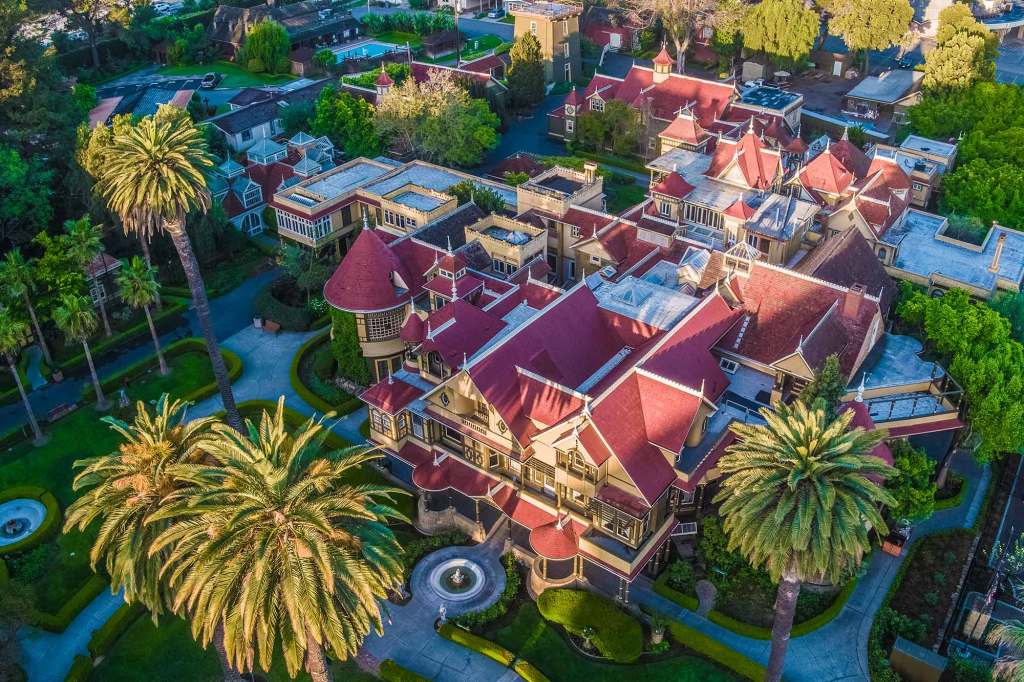
As I was cultivating the garden, the most simple and innocent of human toils, the morning sun was shining with uncommon brilliancy, birds were singing in every tree and on every bush; so pleasant, so spirit-stirring, health-giving a morning, seldom I had seen. And the effect upon my spirits was great. This must have been like the same joy and labor of the unfallen parents of the race. Was this garden, then, the Eden of the present World? It was arrayed with as much richness of taste as the most splendid of the flowers, beautiful as the day, and with a bloom so deep and vivid that one shade more would have been too much. I was redundant with life, health, and energy. Hours and hours past. As the night started closing it, I went to the parlor, and thought of the influence of the light of the morning that tends to rectify whatever errors of fancy, or even of judgment, we may have incurred during the sun’s decline, or among the shadows of the night, or in the less wholesome glow of moonshine. My first movement, on starting from sleep, was to throw open the window and gaze down into the garden which my dreams had made so fertile of mysteries. I was surprised and a little ashamed to find how real and matter-of-fact an affair it proved to be in the first rays of the sun which gilded the dewdrops that hung upon leaf and blossom, and, while giving a brighter beauty to each rare flower, brought everything within the limits of ordinary experience. I rejoiced that I had the privilege of owning this estate which possessed such lovely and luxuriant vegetation. It served as a symbolic language to keep me in communion with Nature. #RandolphHarris 1 of 6

The ordinary little casualties of evil fortune had certainly from time to time in the shape of illness, and one thing or another, attacked the family of the Winchesters’ in common with every other family, but here suddenly had arisen a something at once terrible and inexplicable. I was in a deep and anxious thought when I heard a noise from the direction of the library: the sound of a key turning in a lock. My skin was crawling afresh. I blew out the candle, closed the book, and moved as quickly as I dared toward the main entrance. However, footsteps were already approaching the door from the library, and I knew that the landing doors could not be opened in a hurry without making a great deal of noise. Nor was there time to make it to the elevator. I could have hidden beneath the long table, but the thought of being discovered, and having to crawl ignominiously out to face the apparition…No; there was only one possible hiding-place. I stepped into the trap door, and I was plunged into absolute darkness. There was very little air, even at first, and it soon grew stifling hot. As my eyes adjusted to the dark, I became aware of a faint glimmer. I could feel the dread and chill that the spirit brought. As I sat, I noticed there was a severed head facing away from me on the floor. The sides of the head were dark and bloody and the air there matted with gore where the ears had been sliced off. I only notice that after taking in the raw, red nakedness of his skull. However, he had been scalped, too. His lips were drawn back in a snarl of agony from his teeth. #RandolphHarris 2 of 6

Worse, though, were his eyes. They were black, dismayed, lost as the life dimmed in them to the dawning consequence, of what his bartering with evil was going to mean for him in death. The secret passageway was vaulted, timbered in hardwood, the high dome spreading above a spacious circular room, flagged in smooth stone under strew rugs, opulently furnished in teak and ivory and marble and blood. The headless torso of this man lay in a thickening pool of gore, small and still at the carved feet. Shambolic and grotesque, much worse of a sight than anyone could imagine. Its skin was some greyish animal hide, scraped and seasoned, maybe the softened hides of boar or buffalo, crudely stitched over its stuffing in the rough shape and posture of a man Standing, it would have been about eight feet tall. It was a lifeless thing, an abomination slouched on its throne, with its cloven buffalo hooves for feet, with its hands taken from some slaughtered ape and clenched now, the fingernails black with rictus and crafty decay. It was an abomination, right enough, but crudely inanimate. I lite a torch and studied the head. It was large and pale and bald, sunken in placed in shallow depressions where the stuffing did not seem to be sufficient and gave it a deformed and almost sullen aspect. The eyes were blank discs of ivory perforated at their edges and stitched on to the fact. And the mouth under them was a black, leering gash. #RandolphHarris 3 of 6

I could not fathom what had been living in the walls of my home. Shaking my head in disbelief, I tuned my back on the thing. And felt the hairs rise on my neck in dread as I heard foot steps behind me. In my heart, I felt that demons were living within my home and was deeply afraid. It appears that someone had been dabbling with diabolical forces. Remorseful, ashamed, deepening terror, I felt my heart was going to explode out of my chest. I turned around, already squeezing the trigger of my revolver, and fired. I hit it with a burst, cutting the monstrosity in half. As a staggered through the secret caverns, I noticed other curious things, bits of gold, plaits of old rope, rags, coins, what looked like a couple dozen diamonds and five small human skulls. And the skulls were partially digested. The silence began to unnerve me. I was seized by a creeping, mortal dread. I wondered, “Am I awake? Have I my senses?” This was an inexpressibly terrible night. An impulsive movement, I drew my eyes to the window. There I beheld the beautiful head of a young man—rather a Grecian than an Italian head, with fair, regular features, and a glistening of gold among his ringlets—gazing down upon me like a being that hovered in mid-air. An incredible clear and calm overcame me. A doorway opened in the catacombs. I watched this angelic man walk through them as I followed. Back inside the mansion, he became light and insubstantial as a ghost, until he disappeared completely into thing air. It was midnight, and the door behind me vanished, leaving nothing but a solid mahogany wall behind. #RandolphHarris 4 of 6
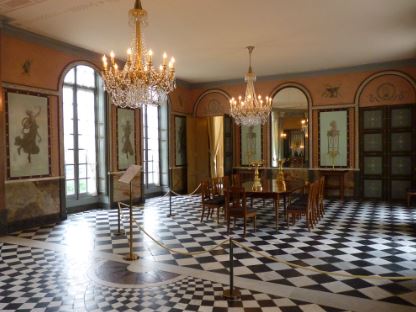
Those who have never personally felt the demons storming over their home can have no conception of the reality. A number of wolves have also taken up their quarters in the fruit orchards and feed on wild birds, rabbits and such like. They are sky in the summer-time, and a boy of twelve might scare them; but when the birds migrate, and the rabbits are gone, they prowl about at night, and they are dangerous. They are the worst, however, on stormy nights, for then it is just as if the fiend himself possessed them: they are so mad and fierce that man and beast become alike their victims; and a party of them have been known even to attack the ferocious bears of the mountains, and, what is more, to come off victorious. Their howl is enough to scare the bravest man. As soon as it commences, the wind rises, and you will see their eyes gleaming among the trees. Your only plan for safety is to wrap your cloak around you, and lie down flat on the ground. If your home were but a few hundred yards off, you might lose your life in the attempt to reach it. Horses become unmanageable as the terror infects them. Grown men begin weeping with fear when their howling recommences and approaches nearer and nearer. As the moonbeams become dusky amongst the trees, from time to time a fierce howl arises from their center, and people know they are in great danger, as the wolves will very soon make a general attack. #RandolphHarris 5 of 6

O THOU great, powerful, and mighty KING AMAIMON, who bearest rule by the power of the SUPREME GOD EL over all spirits both superior and inferior of the Infernal Orders in the Dominion of the East; I do invocate and command thee by the especial and true name of Lucifer; and by that God that Thou Worshippest; and by the Seal of thy creation; and by the most mighty and powerful name of God, IEHOVAH TETRAGRAMMATON who cast thee out of Heaven with all other infernal spirits; and by all the most powerful and great names of GOD who created Heaven, and Earth, and Hell, and all things in them contained; and by their power and virtue; and by the name PRIMEUMATON who commandeth the whole host of Heaven; that thou mayest cause, enforce, and compel the Fifty-second Spirit Alloces and His 36 Legions of Spirits to come here before this Circle in a fair and comely shape, without hard unto me or unto any other creature. I awaken you and your powers of darkness which dwell within you by the power of the blood of Lucifer that you may serve to empower this great mansion! Through serving the greater cause of dark magick which breaks the shackles that bind the Blackened Fire of spirit, may you be uplifted and liberated! Awaken and empower the forbidden rites of Angra Mainyu! Awaken and empower our great work of counter creation as an Apostle of the Lord of Darkness eternal and as a warrior of the Path Satanachia. Herein receive such virtue that we may obtain by thee the perfect issue of all our desires, which also we seek to perform without evil, without deception, by God, the Creator of the Sun and the Angels. Amen. #RandolphHarris 6 of 6
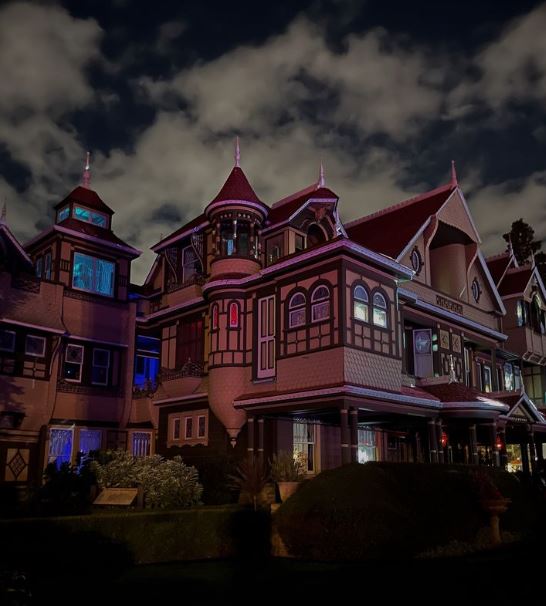

In 1994, a man stopped by The Winchester Mystery House for the Christmas Tree tour. Afterward, he went to the café for a cup of coffee. He brought his coffee and sat at a table, by the doors looking out onto the courtyard. He picked up a newspaper and started looking through it as he was sipping his coffee. There was no one else in the area, and he noticed just a few people outside waiting to tour the estate. One waiter was at the counter at the time, and there were a few other employees in the gift shop area. Very shortly, he noticed a man and a woman enter from the courtyard. They passed, looked around for a moment, then sat down in the back of the café. He could not help but notice them because of the way they were dressed and the way the looked. The man was dressed in a nice-looking black suit and wearing a tie, but his complexion was that of a very sick man. He was very pale and seemed to be sweating. The woman wore a Victorian type dress, black and long, very formal, it reached down to her ankles. She was carrying a large cloth type bag. They sat for a moment and the woman reached into her bag and withdrew a large towel of some kind and began wiping the man’s face, over and over again.

Then she put it back in the bag. They sat for a few more moments, apparently conversating, although he could not hear what they were saying. Then the man walked over to his table. He asked, “Do you have some money so I can get something to drink?” The sickly-looking man was so well dressed that he was surprised he asked for money. So he refused him. The sickly-looking man starred at him for a while and went and sat back down. He is his wife talked for a while, and walked towards him, they made a left and went toward the exist. Out of curiosity, he immediately got up to see where they were going, but they had vanished. He went outside and looked at the cars in the parking lot and all of them were empty. Upon revealing security footage, the manager determined that was William and Sarah Winchester, but before they reached the exist, the security tape got all fuzzy and distorted. “Be not forgetful to entertain strangers, for thereby some have entertained angels unawares,” reports Hebrews 13.2. https://winchestermysteryhouse.com/
And please be sure to check out the online gift store: https://shopwinchestermysteryhouse.com/

This is the Presence You Have Longed for

Despite—or perhaps because of—the great public and policy interest, organized crime remains a fuzzy and contested umbrella concept. The understanding of organized crime has since the 1920s shifted back and forth between two rivaling notions: a set of stable organizations illegal per se or whose members systematically engage in crime; and a set of serious criminal activities, particularly the provision of illegal goods and service, mostly carried out for monetary gain. The general public, the media, and most policy-makers primarily use the expression “organized crime” to refer to criminal organizations, such as the Sicilian and America Cosa Nostra, the Japanese Yakuza, Colombian and Mexican drug cartels, and other large-scale criminal grounds around the World though to have a hierarchical lasting structure. However, even some of your local news stations may be involved in organized crime. There exists variation in the skills and techniques that go along with crimes that are committed within an organizational context. Organizational (id est, corporate) and state-authority occupational crimes tend to take on relatively sophisticated forms. To further highlight this illustration, we found evidence of complex and collective offending in our analysis of the savings and loan scandal. We grouped these offenses into three categories: desperation dealing, collective embezzlement, and cover-ups. Desperate dealing took shape as a series of complicated, high-risk investment and loan actions employed by executive to save their sinking financial institutions. #RandolphHarris 1 of 19

These practices included writing multiple loans to insolvent borrowers, inadequate loan underwriting practices, and other “go for broke” investment schemes. The term collective embezzlement refers to self-interested “looting” or unauthorized spending sprees that corporate executives pursued using investors’ money. The authors contend that extravagant parties and high ticket purchase were the order of the day as executives sought to enjoy the last days of their sinking business enterprises. Once things began to come unglued, cover-up practices were used to keep their insolvent ships afloat. These scams ran the gamut from criminal accounting practices (id est, misrepresenting capital reserves or capital-to-assets ratios) to money laundering, to hush money that was delivered to high-ranking state authorities and policy makers. Crimes that are committed by state agencies or institutions also tend to take on an elaborate character. To further highlight this illustration, numerous discussions, including one which documents how Nazi Germany and other rogue states have systematically embarked on genocidal plans to exterminate certain classes or creeds of people. Mr. Hitler’s “final solution for the Jewish problem” included a concerted effort of persecution, mass murder, and cover-up. Similarly, the hearings of the Iran-Contra affair of the 1980s taught us that our own government is capable of hatching and carrying out some complex and especially devious criminal plans. By comparison, acts of professional occupational crimes or individual occupational crime tend to be much more simplistic. #RandolphHarris 2 of 19

More often than not, the employee simply pockets the money or materials and makes little or not effort to cover his or her tracks. A similar trend has been observed among embezzlers. The same can be said about most crimes that are perpetrated by professionals. For example, we will discuss how pharmacists who steal and use prescription drugs on the job tend to rely on simple and predictable routines. White-collar crime and criminals are spread throughout the landscape of the American industrial complex. No one type of business/industry, or even any one type of job role (secretaries versus executives), is disproportionately represented in the available samples of known offenders. In light of this observation, researchers have begun to adopt a more individual-level focus, targeting the role that occupational settings play in the spread of deviance. Companies that operate in autonomous space, free of external social and regulatory control, will be more likely to engage in criminal behavior. This type of free-wheeling, self-regulatory work environment allows profit motives to blur the lines between acceptable and unacceptable “business practices.” High levels of internal or external competition and cut-throat inter-office or industry-level politics appear to exacerbate matters. #RandolphHarris 3 of 19

Organizational offenders are disproportionately, European-American, middle-aged men who possess modest to high levels of social capital. In our case files, there are 968 white-collar offenders who were sentences in seven U.S.A. district courts over a 3-year period. The bast majority of the offenders were men. The sample was also lopsided in terms of race, as better than 75 percent of the subjects were European-America. The average offender was well into his thirties and several offense types (antitrust, securities, tax, and bribery offenses) were dominated by offenders over 40 years of age. The participant’s elevated social capital was evident by the fact that most were salaried employees with modest financial assets. Most of the perpetrators were married homeowners with college degrees. Many occupied supervisory positions in their organization. Organizational offenders do not usually have squeaky clean pasts. We found that 36 percent of the 965 white-collar criminals in our sample had at least one prior arrest and 67 percent had been arrested more than once in the previous 8 years. Of the repeat offenders, 33 percent recorded five or more arrests. We found little evidence of criminal specialization. Of the 465 repeat offenders, only 15 percent were exclusively arrested on white-collar charges. Repeat offenders tended to stay away from violent crimes, but they often drifted into property or public order offering. #RandolphHarris 4 of 19

However, the longer the person’s rap sheet, the more likely that one would face additional white-collar charges. Faced with comparisons to traditional street criminals, using arrest as indicator of offending, white-collar criminal careers begin and end later, and include smaller numbers of recorded criminal events, than do those of street criminals. However, they are similar to common crime careers in that they are unlikely to evidence a high degree of specialization, and that offenders seem to age out of crime. Moreover, the same variables that predict recidivism in street criminals (id est, marital status, history of drug use, prior record, gender, employment states) are predictive recidivism in white-collar offenders. Criminal intent is a difficult concept to nail down in the case of most crimes committed with an organizational context. This is partly a result of the fact that there are so many cognitive and behavioral variations present in these criminal events. Different jobs take on different cultural forms. For example, the term “hawk jobs” refer to those work environments that stress entrepreneurial creativity. Persons working in this type of environment are drawn toward innovative offenses directed toward enhancing their self-image among peers. Academics and business owners are examples of hawks. The term “donkey jobs” refers to those environments that are known for their “isolated subordination.” Deviance in this workplace manifests itself as sabotage or resentment and stems from low job satisfaction. #RandolphHarris 5 of 19

Some cashiers and non-unionized line workers provide good examples of donkeys. The term “vulture jobs” characterize occupations with loose work groups and high levels of individual-level decision-making power (exempli gratia, outside salespeople). These persons will involve themselves in self-interested abuses intended to enhance their standing in the incentive-based reward system. Finally, “wolfpack jobs” were described as environments with tight work groups, for example, union employees and police officers. These persons will engage in habitual and collective forms of deviance intended to enhance group solidarity and camaraderie. Instrumental motivation is a cornerstone of crimes that are committed within an organizational context. Regardless of whether the outcome is monetary or physical loss, most of these crimes can be traced back to greed or a thirst for power. The vast majority of the incarcerated embezzlers in our sample suffer from an “unsharable problem.” This might include a self-imposed financial pinch resulting from promiscuous or seedy pursuits away from the job, sudden losses from a part-time business or investment venture, or the inability to finance an ever-increasing social status. Faced with the knowledge and skills of their jobs, these embezzlers came to exploit their position of trust as a means of alleviating the problem. We have also observed a slightly different motivational pattern among the female embezzlers; namely, the women tended to steal in order to provide for their families. #RandolphHarris 6 of 19

Analyses of corporate and/or state violators reveal that executives and politicians tend to commit their crimes to keep pace with the competition or to protect their own position within the organization. For example, most agree that former President Clinton committed perjury in an effort to avoid the political fallout associated with having extramarital sex in the White House. Regardless of the gender or organizational standing of the offender, these tend to be persons who commit their crimes because they see them as a way of alleviating some sort of specific threat. It is difficult to assess the amount of planning that goes into the commission of organizational crimes, since most of them come about as exaggerations of normal operating procedures. In the end, onlookers have difficult discerning where normal planning and implementation ends and where illegal and unethical cognition and behaviours begins. Persons who steal from their employers tend to construct their thefts as fringe benefits or simple extensions of normal business practices. To further highlight this illustration, a bank embezzler might claim that they simply loaned him or herself the money. A person who steals scrap metal from a manufacturing plant might say that they were simply taking out the trash. By equating these thefts to everyday business, it is difficult to determine how much planning exists. For decades, scholar have maintained that normative neutralizations play a central part in the initial and repeated offending that takes place among organizational offenders. #RandolphHarris 7 of 19

More often than not, the source of these rationalizations and justifications can be found in the very workplace from which the offending emanates. To further highlight this illustration, in our seminal study of embezzlers, we use the term “vocabularies of adjustment” to describe how thieves routinely implied a sense of ownership or borrowing over the money that they stole as a means of denying their guilty mind. Some manufacturing employees adhere to a “cognitive mapping of property. Most of the materials in the factor are afforded a status as either personal or company property and thus rarely subject to theft. However, other property is afforded a status as “property of uncertain ownership” and thus fair game for theft. The workers reason that taking scrap material or component parts is not the same as taking a coworker’s wallet or an assembled television set in a box, but it is. You know, this really puts workplace theft into perspective. Stealing from work is a lot like if you went to a friend’s house and walked out with a glass, or their silverware. Through adequate education and upraising children properly and putting things in perspective, we can really train them to be model citizens. A tangential set of cognitive excuses has been uncovered among deviant professionals and corrupt state authorities. Blue ribbon commissions charged with investigating police misconduct have repeatedly unearthed evidence of a mindset in which habitual offenders deny criminal responsibility for their actions. The rogue officers claim that they were simply playing within the rules of aggressive crime fighting or explicitly following orders. #RandolphHarris 8 of 19

We have documented how workgroups norms centering around the need for effective and efficient patient care can lead nurses to excuse their repeated theft of hospital supplies and medications. Irrespective of the profession, we find that employees do not have to look or far to find the normative definitions that they use to neutralize their acts of wrongdoing; more often than not, they are derived from established workgroup norms or accepted business practices. Institutions are the overarching framework of rules and constraints, formal and informal, that govern interactions among individuals; constitutions and social norms are examples. Organizations are groups of individuals that operate within the general framework of institutions, and implement the rules and norms of the institutions; examples are legislatures, political parties, and universities. Of course there are interactions and feedbacks between institutions and organizations. The rules and constraints imposed by institutions do not eliminate all freedom for organizations to act, and since organizations have members with differing interest and abilities, interesting issues of “the play of the game” at this level must be analyzed. Institutions can then evolve to alter the rules of the game so as to achieve better outcomes from the play at the organizational level. Finally, individuals interact within the frameworks set up b both institutions and organizations, and these transactions have their costs of information, commitment, and so on. #RandolphHarris 9 of 19

Institutions and organizations attempt to economize on transaction costs, but usually fall short of optimality, especially when changing economic and technological conditions require changed or new institutions. There are two categories of reasons for the long lags and bottlenecks in the process of institutional change: first, resistance by powerful special interests with stakes in the old system; and second, multiple equilibria and historical accidents. A regularity in social behaviour that is agreed to by all members of society, specifies behaviour in specific recurrent situations, and is either self-policed or policed by some external authority. Thus, the strategies that the individuals choose, include aspects of the play of the game as well as the rules, and also specifies the equilibrium that is to be played. An individual’s expectation of the response to one’s action is often an important part of the institutional environment; that is, the institutional environment also serves to coordinate beliefs and select equilibria. At the (highest or most basic) level stand informal institutions, such as religion, social customs and norms. These are slow to change, over the timescale of centuries or millennia. At the second level is the institutional environment, consisting of formal rules, such as constitutions and laws. The timescale of evolution of these is measured in decades. The play of the game occurs at the third level, and this includes the choice of appropriate modes of governance for each type of transaction, or organization, the aim being to economize on transaction costs. #RandolphHarris 10 of 19

Finally, the fourth and lowest level contains routine economic activities such as production, employment, market equilibration. Societies make conscious efforts to instill some norms into their members, enlisting the help of parents, teachers, media, and leaders of opinion because norms and other informal institutions have mainly spontaneous origins and have a lasting grip on the way society conducts itself. Man of the norms pertain to civic duties such as voting, but others pertain to honestly in economic matters. This process of social conditioning and education can respond to changing needs much faster than the evolutionary timescale. Many of the communities facing collective-action problems treat laws, like prices, as incentives for behavior. Various branches of civil law—liability, tort, contract, property—govern situations where two or more individuals can enter into a contractual relationship, explicit or implicit, as well as ones where one person’s actions have spillover effects on others without any voluntary agreement on their side. These legal rues affect the incentives of individuals to take actions, or to refrain from actions, that carry benefits or costs to others, and that in turn affect overall economic outcomes and efficiency. Many changes in the society’s knowledge system translate directly into business operations. This knowledge system is an even more pervasive part of every firms environment than the banking system, the political system, or the energy system. #RandolphHarris 11 of 19

Apart from the fact that no business could open its doors if there were no language, culture, data, information and knowhow, there is the deeper fact that of all the resources needed to create wealth, none is more versatile than knowledge. Take Second Wave mass production. In most smokestack factories it was inordinately expensive to change any product. It required highly paid tool-and- die makers, jig setters and other specialists, it and resulted in extended downtime during which the machine were idle and ate up capital, interest and overhead. That is why cost per unit went down if you could make longer and longer runs of identical products. This gave rise to the theory of economies of scale. However, the new technology stands Second Wave theories on their heads. Instead of mass production, we are moving towards de-massified production. The result is an explosion of customized and semicustomized products and services. The latest computer-driven manufacturing technologies make endless variety possible and inexpensive. New information technologies, in fact, push the cost of diversity toward zero and reduce the once vital economies of scale. Or take materials. A smart computer program hitched to a lathe can cut more pieces out of the same amount of steel than most human operators. Making miniaturization possible, new knowledge leads to smear, lighter products, which, in turn, cuts down on warehousing and transportation. #RandolphHarris 12 of 19

Up-to-the-minute tracking of shipments—id est, better information—means further transportation savings. New knowledge also leads to the creation of totally new materials ranging from aircraft composites to biologicals and increases our ability to substitute one material for another. Deeper knowledge now permits us to customize materials at the molecular level to produce desired thermal, electrical or mechanical characteristics. The only reason we ship huge amounts of raw materials like bauxite or nickel or copper the planet is that we lack the knowledge to convert local materials into usable substitutes. Once we acquire that know-how, further drastic savings in transportation will result. In short, knowledge is a substitute for both resources and shipping. The same goes for energy. Nothing illustrates the substitutability of knowledge for other resources better than the recent breakthroughs in superconductivity, which at a minimum will drive down the amount of energy that now must be transmitted for each unit of output. In addition to substituting for materials, transportation and energy, knowledge also saves time. Time itself is one of the most important of economic resources, even though it show up nowhere on a Second Wave company’s balance sheet. Time remains, in effect, a hidden input. Especially when change accelerates, the ability to shorten time—for instance, by communicating swiftly or by bringing new products to market fast—can be the difference between profit and loss. #RandolphHarris 13 of 19

New knowledge speeds things up, drives us toward a real-times, instantaneous economy, and substitutes for time. Space, too, is conserved and conquered by knowledge. GE’s Transportation System division builds locomotives. When it began using advanced in formation processing and communications to link up with its suppliers, it was able to turn over its inventory twelve times faster than before and to save a full acre of warehouse space. Not only miniaturized products and reduced warehousing but other savings are possible. Advanced information technologies, including document scanning and new telecommunications capacity based on computers and advanced knowledge, make it possible to disperse production out of high-cost urban centers and to reduce energy and transport costs even further. There is currently an economic war going on. It is the war for dominance and wealth on a global scale, and political establishments and business elites are involved. It is also the fight to survive, involving myriads of small and medium businesses and hundreds of millions of ordinary working people. It is one of the strangest wars in World history. America is fighting at full strength, but unlike previous wars, even economic, America does not want its rival to suffer a complete defeat. America needs to remain rich, economically and socially stable, and technologically-progressive, it also needs to rebound and become cash abundant. America has to remain sufficiently healthy and strong and keep on running. #RandolphHarris 14 of 19

This war for global dominance is a real war. The country that is the superpower is the one who gets to determine the rules of conduct on the global economic arena and the ways key international issues are approached. This is important because some governments are predatory or kleptocratic. As time goes by, America needs to keep the situation on the battlefield under control. Bargaining power, though absolutely nonquantifiable, exerts decisive influence on how key international economic issues are handled. To maintain status as a World Superpower, it is important for citizens become mature and competent individuals. There are extrinsic conditions for the development of competent personalities other than the kind of income possessed, and there are conditions intrinsic to family structure which may give even children within the same family differing starts in life. If individuals are to enjoy equal opportunity for the development of competent personalities, and this is limited by the resources of their families, then the objective of a community sharing such an ideal must be to provide these families, if not unlimited availability, at least some fair minimum of such resources. In general, this has been a guiding principle, though sometimes none too consciously, for the development of the agencies concerned. Equality before the law has been, of course, the bedrock principle upon which all these protective activities have been founded. #RandolphHarris 15 of 19

Pursuit of this ideal virtually require the state to take over and monopolize the function of securing justice for individuals when they were injured or threatened by other individuals, rather than leaving retribution to private feuds. The state taking over the elementary protection of life, liberty, and property could thus be regarded as the earliest and most irrevocable of transfers to another institution of a family function. There is, however, a function centered on family life which was in the hands of another institution even earlier than that, although it is not a function which the family itself ever possessed. That is the legitimation in the eyes of the community, through ritual and certain binding commitments, of marriage and parenthood. While the enforcement of these responsibilities has long since been concentrated in the state, in a society such as ours where there are so many faiths and churches the element of ritual with which these monogamic commitments are solemnly chartered by the community still remains conspicuous. The ritual testifies to the view that from its beginning any family is as much the creation and concern of the community as of its principals. In addition to formal legitimation of marriage (and of course of its rupture through divorce), there is a large area of family law, exempli gratia, inheritance of estates, administered through the appropriate legal institutions. The legal responsibility of a husband for the economic support of his wife, his children up to certain ages, and even his parents and siblings, remain in effect, though some of the economic burden has been taken over by family agencies. #RandolphHarris 16 of 19

Specific provisions vary widely among the states. Proposals for change in family law are more often concerned with codification on a national basis than with release of family members from their responsibilities. Indeed the notion, however fallacious, that by stringent limitation of divorce, family stability is somehow conserved, has served to arrest the liberalization that might narrow the gap between profession and practice; while efforts to move into a therapeutic phase, exempli gratia, family courts, have been largely resisted. How the powers of psychological offenders counterfeit the presence of God to those ignorant of their devices may be somewhat as follows. At some moment when the believer is yearning for the sense of God’s presence, either alone or in a meeting, and certain conditions are fulfilled, the subtle foe approaches, and wrapping the senses round with a soothing, lulling feeling—sometimes filling the room with light, or causing what is apparently a “breath from God” by a movement of the air—either whispers, “This is the presence you have longed for,” or leads the believer to infer that it I what one has desired. Then, off one’ guard, and lulled into security that the psychopathological offender is far away, some thoughts are suggested to the mind, accompanied by manifestations which appear to be divine. A sweet voice speaks, or a vision is given, which is at once received as “divine guidance,” given in the “divine presence,” and hence beyond question as from God. If accepted as from God when actually from the psychopathological offender, the first ground is gained. #RandolphHarris 17 of 19

The human is now sure that God has bidden one do this or that. One is filled with the thought that one has been highly favored of God and chosen for some high place in His Kingdom. The deeply hidden self-love is fed and strengthened by this, and one is able to endure all things by the power of this secret strength. One has been spoken to by God! One has been singled out for special favor! One’s support is not within—based upon one’s experience—rather than established upon God Himself and the written Word. Through this secret confidence that God has specially spoken to one, the human becomes unteachable and unyielding, with a beneficial trending on infallibility. One cannot listen to others now, for they have not had this “direct” revelation from God. One is in direct, special, personal communion with God, and to question any “direction” given to one becomes the height of sin. Obey one must, even though the direction given is contrary to all enlightened judgment and the action commanded is opposed to the spirit of the Word of God. In brief, when the human at this stage believes one a “command” from God one will not use one’s reason, because one thinks it would be “carnal” to do so. “Common sense” is lack of faith, and therefore sin; and “conscience,” for the time being, has ceased to speak. Some of the suggestions made to the believer by psychopathological offenders at the time may be: “You re more advanced than others”—working to blind the soul to sober knowledge of itself. #RandolphHarris 18 of 19

“You are a special instrument for God”—working to feed self-love; “You are different from others”—working to make one think one needs special dealing by God; “You must take a separate path”—a suggestion made to feed the independent spirit; You must give up your occupation and live by faith”—aiming at causing the believer to launch out on false guidance, which may result in the ruin of one’s home, and sometimes the work for God in which one is engaged. All these suggestions are made to give the human a false concept of one’s spiritual state; for one is made to believe one is more advanced than one actually is, so that one may act beyond one’s measure of faith and knowledge (Romans 12.3), and consequently be more open to the deceptions of the beguiling foe. Ontological categories of time, space, causality, and substance are the basic forms of thought and being through which the mind makes contact with reality. Since they are forms of finitude, they express a mixture of being and nonbeing, positive and negative elements which we discuss in terms of courage and anxiety. Humans’ experience of time includes the anxiety of transitoriness and the courage of a self-affirming present. Space is not only physical, but also social—a sphere of influence, a place in the framework of value and meaning. The anxiety of insecurity arises from the danger of losing one’s place, only to be met by the courage to carve out a niche for oneself. Causality brings forth the anxiety of contingency, the awareness that one does not possess one’s own power of being. However, courage is there too, for causality affirms the reality of being by pointing to its sources in the power of being. Substance expresses the anxiety of change, of loss off identity, along with the courage to affirm the finite by laboring to produce cultural creations. Significance expresses the union of being and nonbeing in everything finite. They articulate the courage which accepts the anxiety of nonbeing. The question of God is the question of the possibility of this courage. #RandolphHarris 19 of 19


No appointment needed! Cresleigh Havenwood features four distinct floor plans ranging from 2,293 – 3,377 square feet and offering up to five bedrooms. Each plan has been thoughtfully designed and includes great features such as single story homes, guest suites, optional offices, garage workshops, and more! Get the most out of your new home with Cresleigh’s All Ready smart home featuring all the connectivity needed to keep your house running. Best of all, each Cresleigh home comes with owned solar included!

Located off of Virginiatown Road and McCourtney Road, residents of the 83 homesites of Cresleigh Havenwood will benefit from a brand new neighborhood in the charming City of Lincoln. Palo Verde Park, is just down the street and there’s plenty of recreation to take part in all around town.


Professional Occupational Crimes—It was Obvious that they Had Made a Covenant with the Devil!

The first line of defense against employee fraud and embezzlement is to hire the most qualified and most trustworthy individuals to work in your business, especially those employees who will have access to your company’s finances. The problem is, in this day and age, that is easier said than done. There are so many laws and rules geared toward protecting potential employee from improper hiring practices that even when you perform proper due diligence with your candidates, you will be limited in what you can ask, where you can gain information, and how you can us the information you do obtain in your hiring decision. In the real world of embezzlement, the perpetrators rarely fit the stereotypical image of someone capable of concocting and carrying out fraud schemes. Rather, they are almost always someone above suspicion! Embezzlers are of any age, gender, race, religion, and income bracket. Why? Despite the appearance of honesty, you can never be sure of what is going on in someone’s personal life, and desperate people are capable of taking desperate action. To further highlight this issue, it is probable that you have no idea that a fellow employee may: Have a gambling issues, have an alcohol problem, have a substance abuse situation, be experiencing financial difficulties, have expensive medical bills, or—enjoy living life on the edge! The fraud triangle—and the top of the triangle is incentive. Incentive is the starting point of fraud. Then there comes opportunity. Too much trust, poor internal controls, lack of supervision, no financial audit by independent CPAs, and the like, all create opportunity for fraud. The basic purpose of effective internal controls is to remove the opportunity for fraud. #RandolphHarris 1 of 20

Rationalization: After a period of time, the perpetrator actually convinces themselves that they are not stealing, but rather self-correcting a perceived wrong such as a pay discrepancy of the life. The Uniform Crime Reports collect data annually from law enforcement authorities on the crime of embezzlement. However, this crime is categorized as a Part II offense, which means that arrest data are disseminated to public but data on the number of known offenses are not readily available. In 2022, state and local law enforcement authorities effected 22,176 embezzlement arrests. There were 4,180 white-collar prosecutions in 2022. Annual losses from white-collar crimes as of 2021 are anywhere from $426 billion to $1.7 trillion. The wide range here is due to the lack of prosecution. It is estimated that up to 90 percent of white-collar crimes go unreported. White-collar crimes affect over 35 percent of U.S.A. businesses. It is estimated that 75 percent of all employees steal from their employer at least once, and another half of that percentage is repeatedly stealing. Plus, over 50 percent of embezzlers are managers. There are roughly 5,000 white-collar crime-related arrests for every 100,000 people in the U.S.A. Fraud makes up 63 percent of white-collar crimes, making it the most common. The painful reality is that there exists no reliable source of data on the incidence and/or prevalence of crimes within complex organization. For one, the vast majority of these offenses never get reported—a recent national telephone survey of white-collar crime victimization found that less than 1 in 10 victimizations were reported to law enforcement or any other regulator entity. #RandolphHarris 2 of 20

It is widely reported that corporate victims of embezzlement or employee theft prefer to handle these matters in-house for fear that external involvement will bring negative publicity or unnecessary scrutiny, or even jeopardize propriety information (id est, trade secrets). When members of government (id est, law makers or law enforcers) or corporate executives engage in economic or violent crimes against the public, they can usually rely on norms of secrecy or the threat of dire organizational sanctions to keep the matter from going public. Even if the public, media, or investigators begin suspecting foul play, corporate lawyers and the legal protections that are afforded to organizational entities will usually allow them to produce a formidable smoke screen. In these professional occupational crimes (id est, crimes committed by members of a profession), perpetrators can readily hide behind the collective code of silence, structures of self-regulation, and privileged information clauses as a way of controlling the flow of damaging information. In light of these structural impediments, one must rely upon data from small-scale and narrowly focused research efforts to speak to the descriptive aspects of these criminal events. Several studies have explored the topic have explored the topic of theft by employees. Property deviance refers to the theft of hard assets (id est, money, goods, raw materials). Production deviance refers to counterproductive behaviors such as the theft of time, the abuse of sick leave, on-the-job substance use, and engaging in intentionally slow and sloppy work. #RandolphHarris 3 of 20

Of the 9,175 interviews with retail, hospital, and manufacturing employees working in forty-seven corporations located across the United States of America, we found that one-third of the interviewees admitted to some form of property deviance in the past year. A similar study involving restaurant employees found that 60 percent had engaged in at least one form of property deviance and a full 82 percent had engaged in production deviance in the preceding year. Experts note that as much as 40 percent of all shoplifting that is experienced by retailers can be traced back to acts of collusion in which one or more dishonest employees choose to assist the external thief in one’s crime. Research on corporate-level violations reveals that companies engage in a good amount of offending as well. First, there were 6,558 white-collar crime case involving 8,670 defendants tried by U.S.A. attorney in 2021. There were an additional 6,332 persons investigated and 3,224 persons tried by U.S. attorneys’ offices tht year for violating federal regulatory statue such as the Food and Drug Act or any one of the other special congressional provisions that were previously outlined. In 2022, there were 371 antitrust cases brought before the U.S.A. district courts (90 percent were pursued as civil, rather than criminal cases). There is a general consensus that these numbers represent only a fraction of the actual corporate wrongdoing. #RandolphHarris 4 of 20

Numerous scholarly studies have attempted to more accurately estimate levels of corporate misconduct. In the study of court and administrative actions taken against the seventy largest U.S.A. corporations in, we found widespread evidence of abuse. All seventy firms in the sample had at least one formal action brought against them. The average number of violations per company was fourteen. A full 60 percent of the firms had been convicted in criminal court. All total, these seventy firms accounted for 980 violations of the law. Similar offending trends were found among the fifty largest corporations in Canada. Nearly two-thirds of Fortune 500 companies had come under fire from one or more of twenty-four federal regulatory agencies for violating corporate law during a 1-year time period. Abuses of state authority also appear to be widespread. There are 1,134 elected or appointed U.S.A. officials facing some form of criminal indictment. These offenses are capable of permeating every level of government. There have been more than 17 governors or former governors indicted between 1970 and 2009. There have been 487 instances of alleged and actual misconduct by legislators in the United States of America’s Congress from 1789 to the present. At least 13 mayors arrested on child sex crimes since 2021. And a considerable assortment of country officials have been indicted. #RandolphHarris 5 of 20

Crimes by government agencies are yet another type of offense that must e assessed through targeted cases. There are several noteworthy examples. An estimated 63,000 developmentally disabled Americans were sterilized under eugenics statues that were widely imposed across the South for the better part of the early 1900s. Also U.S.A. Public Health Service withheld treatment from more than 400 impoverished African Americans in the notorious “Tuskegee Syphilis Experiment.” The excessive use of force by police offers represents one of the most prevalent and “newsworthy” forms of state crime. Voluntary data provided by 100+ police agencies reveals 25,067 incidents of use of force occurring in 2022 and 1,200 people were killed by police. Each year, fewer than 3 percent of killings by police result in officers being charged with a crime. A broad-based survey of citizens made it known that as many as 1 percent of police-public contacts that occurred in 2022 involved some form of force or threatened force on the part of the officer. Research suggests that as many as 40 percent of all use-of-force incidents involve improper force tactics on the part of the officer(s). Taken on face value, these findings suggest that somewhere in the neighbourhood of 180,000 abuses of police force occur each year in this country. Crimes by persons of professional status are yet another form of crime for which we have little incidence and prevalence data. #RandolphHarris 6 of 20

Members of the health care community engage in a broad range of criminal behaviors. Estimates suggest that as many as 50 percent of all doctors, nurses, and pharmacists will engage in illegal prescription drug use at some point during their careers—5 percent to 10 percent will come to abuse these drugs. AN untold number of doctors are said to defraud Medicare and Medicaid through overbilling or retainer scams, engage in prescription violations, conduct illegal abortions, and take part in self-referral or fee-splitting schemes (id est, providing kickbacks to other doctors for unnecessary or illegal referrals). It is estimated that as many as 15 percent of all elective surgeries are unnecessary; and documented is a considerable ineptitude and malpractice among doctors. Other professional groups have also evidenced considerable levels of criminal and unethical behavior. It is estimated that somewhere between 5 percent and 10 percent of all practicing psychotherapist have had sexual relationships with a patient. Additionally, 27 percent of university researchers surveyed admitted to having personal knowledge of research fraud or plagiarism on the part of one or more colleagues. Also, considerable numbers of lawyers have licensure complaints and criminal action filed against them. The monetary and social costs that go along with crimes within complex organizations are staggering. On average, there are over $50 billion in losses due to employee theft in a single year nationwide. Retail loss prevention professionals estimated employee theft to cost $18 billion a year. #RandolphHarris 7 of 20

The Judiciary Subcommittee on Antitrust and Monopoly estimated that faulty goods, monopolistic practices, and other violations annually costs consumers between $200 and $275 billion. A Department of Justice estimate put the total annual loss of taxpayers from reported and unreported violations of federal regulations by corporations at $20 to $30 billion, and the Internal Revenue Service estimated that about $2.2 billion goes unreported each year in corporate tax returns. Given the fact that these estimates for each would be significantly larger. Even more disturbing figures emerge when one shifts the focus to the physical harms perpetrated by corporate entities. For example, the Environmental Protection Agency (EPA) estimates that commercial entities are responsible for 90 percent of the more than 292 tons of toxic waste that are released into the environment each year. These toxins produce untold levels of harm to the air, water, and land of this country. Routine exposure to these poisons can produce cancer or other fatal diseases. The heavily polluted air of Los Angeles produces 220 cancer deaths each year and 240,000 persons will die from asbestos-related cancer over the next 30 years. Also, there are other things to consider when it comes to climate change. We have pumped so much groundwater that we have changed the Earth’s spin. #RandolphHarris 8 of 20

By pumping water out of the ground and moving it elsewhere, humans have shifted such a large mass of water that the Earth tilted nearly 80 centimeter (31.5 inches) east between 1993 and 2010 alone. Based on climate models, humans pumped 2,150 gigatons of groundwater, equivalent to more than 6 millimeters (0.24 inches) of sea level rise, from 1993 to 2010. Therefore, it is important to slow the amount of water we are sucking out of the Earth, as this could add to the planet heating up. You will notice areas with oceans tend to be cooler and have more vegetation, but places like the desert are hot and have no vegetation. Anyone reading this page has an amazing skill called literacy. It comes as a shock sometimes to remember that all of us had ancestors who were illiterate. Not stupid nor ignorant, but invincibly illiterate. Not only illiterate, they were also “innumerate,” meaning they could not do this simplest arithmetic. Those few who could were deemed downright dangerous. A marvelous warning attributed to Augustine holds that Christians should stay away from people who could add or subtract. It was obvious they had “made a covenant with the Devil.” It was not until a thousand years later that we find “reckoning masters” teaching pupils bound for commercial careers. What this underscores is that many of the simplest skills taken for granted in business today are the products of centuries and millennia of cumulative cultural development. #RandolphHarris 9 of 20

Knowledge from China, from India, from the Arabs, from Phoenician traders as well as from the West, is an unrecognized part of the heritage relied on today by business executive all over the World. Successive generations have learned these skills, adapted them, transmitted them, and then slowly built on the results. All economic systems sit upon a “knowledge base.” All business enterprises depend on the preexistence of this socially constructed resource. Unlike capital, labor, and land, it is usually neglected by economists and business executives when calculating the inputs needed from production. Yet this resource is now the most important of all. Today we are living through one of those exclamation points in history when entire structure of human knowledge is once again trembling with change as old barriers fall. We are not just accumulating more facts. Just as we are now restructuring companies and whole economies, we are totally recognizing the production and distribution of knowledge and the symbols used to communicate it. What does this mean? It means that we are creating new networks of knowledge…linking concepts to one another in startling ways…building up amazing hierarchies of inference…spawning new theories, hypotheses and images based on novel assumptions, new languages, codes and logics. Businesses, governments and individuals are collecting and storing more sheer data than any previous generation in history. #RandolphHarris 10 of 20

However, more important, we are interrelating data in more ways, giving them context and thus forming them into information; and we are assembling chunks of information into larger and larger models and architectures of knowledge. Not all this new knowledge is “correct,” factual, or even explicit. Much knowledge, as the term is used here, is unspoken, consisting of assumptions piled atop assumptions, of fragmentary models, of unnoticed analogies, and it includes not simply logical and seemingly unemotional information or data, but values, the products of passion and emotion, not to mention imagination and intuition. It is today’s gigantic upheaval in the knowledge base of society—not computer hype or mere financial manipulation—that explains the rise of a super-symbolic, Third Wave economy. Contrary to conventional wisdom, today’s Western trade and economic relationship does provide for a certain kind of global equilibrium. It may be far from optimal, but it is not as bad as how you feel when you read numerous publications in the Western media or listen to politicians’ speeches. Here is the equilibrium’s outline. If American households’ savings increase, this translates into a higher investment rate (ratio of domestic investment to the GDP), rapid growth of production, and increasing exports to the East. Earning a lot of foreign currency, America boosts its foreign reserves (they expand further as American monetary authorities buy foreign reserves). The reserves are used to purchase securities, which fight with budget deficits and ease the pain of deep public spending cuts. #RandolphHarris 11 of 20

We have to look at the global economy as an entity, with national economies as its integral parts. For decades, America’s enormous current account deficits were the focus of attention of economists, policy makers, and the media. All though those decades, critics, and skeptic did not stop saying that they were unsustainable. However, in reality they have proved to be quite sustainable: The U.S.A. economy remains safe as long as the inflow of capital continues and the capital and financial account remains in a comfortable black. Running large trade and current account deficits, the United States of America played the role of the major market creator for the World, supporting global growth, including growth in countries that were its major creditors. It was and is kind of a deal: market for money. Having become the U.S.A. government’s major, Beijing is and will be committed to playing its part because economic stability of America is indispensable for China itself: The United States of America is one of its most important trading partners. However, there has been a remarkable transformation of the U.S.A. international investment position occurring over the last 40 years. U.S.A. net foreign assets were larger than combined net foreign assets of all other creditors. By 1990, foreign-owned U.S.A. securities and real assets were larger than U.S.A. owned foreign securities and assets. This change occurred without the U.S.A. Treasury borrowing in foreign purchases of U.S.A. securities. #RandolphHarris 12 of 20

Inferences from the currency composition of portfolio changes of those who acquired U.S.A. dollar securities suggest that foreign savers took the initiative on cross-border investment inflows. The U.S.A. could not have developed a larger capital account surplus after 1980 unless a similar increase in the U.S.A. current account deficit increase was the surge in U.S.A. stocks and other asset prices, resulting in a U.S.A. household wealth surge and consumption boom. The foreign saving inflow displaced domestic saving. In addition, an increase in the price of the U.S.A. dollar led to expenditure-switching from U.S.A. goods. When investor demand for U.S.A. dollar securities declined, the U.S.A. dollar price fell in 1992, 2002, and 2020 and the price of the U.S.A. dollar securities declined. Therefore, the U.S.A. has to stop living for today and pay off our debts, so we can once again become a creditor nation. We have to reduce the amount of goods and services that we import, and increase the amount of commodities we export. The good thing is that in the wake of this crisis, American households actually have begun to save more. However, Americans will have to learn to reduce their consumption to keep their savings high. This will encourage the central banks to raise policy interest rates to contain soaring inflation and prevent overheating. Of course, it will take time to rebalance the American economy. The private sector must continue to get stronger. #RandolphHarris 13 of 20

Generally speaking, the original so-called protective functions of the family as an institution are in modern times discharged by legal and political agencies. Beyond basic physical protection against human and nonhuman enemies, such institutions as police departments, child welfare agencies, marriage license bureaus, legal aid bureaus, inspection and regulation bureaus, traveler’s aid for desertees and the runaway child, and courts of every kind, are principally devoted to guarding the rights and safety of citizens. In the past, these functions have been construed ad largely negative or corrective. That is, when someone encroached upon another, or deviated from given rules or standards, it became the duty of one of these protective agencies to set matters right. In more recent times these bodies have tended to take a more affirmative approach. There are no clearly marked stages in the transition, and new functions have often been simply superimposed on old ones. This steady transformation of family legal agencies, though quite in accord with the ancient principle of equality before the law, nonetheless involves a conspicuous paradox if not a contradiction. For, all institutions, the family is traditionally the most addicted to conserving inequality, among, if not within, families. Many critics of the family have seen it primarily as a means for transmitted advantages from one generation to the next. The rewriting of family law, exempli gratia, on inheritance, has repeatedly run across the grain of this profound impulse of people to favor their own kin. #RandolphHarris 14 of 20

Nepotism is a term of discredit in the United States of America. Legal responsibility for misdoing is uniformly fastened on the individual, but upon one’s family. The near-legend of the Hatfields and the McCoys gain its popular interest largely from the extraordinary uniqueness of interfamily feuds in this society. Surnames, instead of being treated as facts of nature, are continually being changed by immigrants, members of minority groups, and people who, like entertainers, appear before the public. Antagonism to vestiges of primogeniture is as vehement among younger sons and daughter today as it was in the breast of Jefferson; heir must share alike, estates be broken up, and dynasties be avoided. Sons of great men find a thousand knives sharpened to whittle them down to size. Evidence like this could be multiplied to exhibit unmistakably the clash between our majority sentiment of individualism and philosophies of feudalistic or neofeudalistic familism. In spite of some opposition by a minority, purist of that idealized state of affairs, in which the person’s standing in the community is entirely a product of one’s own character and not all the result of one’s family connections, appears to be waxing, not waning. It has at least the vitality it had in Jefferson’s day and probably more. This ideal, however, would be absurd prima facie if it failed to recognize the overwhelming influence of the family in formation of the individual character. #RandolphHarris 15 of 20

Perhaps this fact was unrecognized in Jefferson’s day; perhaps he and his allies though that the leveling off of the extrinsic advantages and disadvantages of inherited property was the most important step toward equality. Anyhow, it is recognized today by students of the family that there are other advantages and disadvantages, just as important as those of inherited wealth and poverty, which must be dealt with, before every America child can truly asset that one enjoys equality of opportunity. The Lord said, “If ye abide in Me [id est, in the glory], and My words abide in you, ask whatsoever ye will…” reports John 15.7. Christ abides in us by His Spirit and through His words, but He Himself, as a Person, is in Heaven, and it is only as we abide in Him there that His Spirit and His life, through His Word, can be manifested in us here. “Abiding” means an attitude of trust and dependence on Him in Heaven; but if one’s attitude is changed into trust and dependence upon a Christ within, it is really a resting upon an inward experience and a turning from the Christ in Heaven. This actually blocks the avenue for the inflow of His life, and disassociates the believer from cooperation with Him by the Spirit. Any manifestation, therefore, of a “presence” within cannot be a true “manifestation” from God if it uncenters the believer from one’s right attitude toward the Christ in Heaven. There is a true knowledge of the presence of God, but it is in the spirit, when joined to Him who is within the veil—a knowledge of spiritual union and fellowship with Him which lifts the believer, so to speak, out of oneself to abide with Christ in God. #RandolphHarris 16 of 20

The counterfeit “presence” of God is nearly always manifested in the guise of love, to which the believer open oneself without hesitation. One may find that it fills and satiates one’s innermost being; but being deceived, one does not know that one has opened oneself to the activity of psychological offenders. The concept of finitude is the center of being which draws us to God. Man is terrified of nonbeing because his being does to secure him against it. His ability to question being, his separation from it, reveal that he shares in nonbeing. The undialectical concept of being is ouk on, the nothingness referred to in the phrase creatio ex nihilo. It has no relation whatsoever to being; it is pure negation, and hence undialectical. Me on, on the other hand, is the dialectical concept of nonbeing. It is related to being in the sense of resistance to being, or perversion of being, or menace to being. It is dialectical. The problem of finitude, then, is the dialectical problem of nonbeing. For being, limited by nonbeing, is finitude. Nonbeing appears as the “not yet” of being and as the “no more” of being. Being is the power of being! Power, however, presupposes, even in the metaphorical use of the word, something over which it proves its power. That which is conquered by the power of being is nonbeing. Being, therefore, is the power of being which resists nonbeing. Nonbeing is not a stranger to being. Metaphorically, it is that quality of being by which everything that participates in being is negated. Nonbeing is the negation of being within being itself. #RandolphHarris 17 of 20

Human experience of the ontological structure and elements shows that to be something is to be infinite. Yet the limitations of nonbeing are visible only against the backdrop of a potential infinity. For example, one realizes the finiteness of death only by imagining the possibility of something beyond death. Finitude is seen as finitude only if finite being transcends itself, steps out of itself in the direction of infinity. Infinity is a demand, not a thing. Infinite negates the limitations of finitude; it negates nonbeing. However, infinity is not being-itself. One must understand that infinite in the sense of infinite self-transcendence, while being-itself manifests itself to finite being in the infinite drive of the finite beyond itself. Infinity is a manifestation of being-itself, but the two can never be identified, for being-itself precede nonbeing and its negation by infinity. The awareness of finitude produces an ontological anxiety, for finitude contains the threat of nonbeing. Fear is psychological and stems from a menacing object, but anxiety is the self-awareness of the finite self as finite. Anxiety is all-pervasive as nonbeing. Since anxiety is the existential awareness of nonbeing, it is perfectly natural to man. Finitude and anxiety appear also in the ontological element. A polarity supposes a balance, each pole limiting and supporting the other. However, because of its finitude a polarity becomes tension, the tendency of elements within a unity to draw away from one another, to disintegrate. #RandolphHarris 18 of 20

Thus, the polarity of individualization and participation becomes the tension of loneliness and collectivization. Dynamics and form become chaos and formalism. Freedom and destiny become arbitrariness and necessity. These tensions are threat to finite man, for if he loses one side of the polarity, he loses the other side. Once the polarity disintegrates, he is destroyed as a self. It must be insisted upon, however, that these finite tensions are only possibilities, tendencies, threats, if you will. However, they do not necessarily lead to actual disintegration, just as every threat is not inevitably carried out. Freedom is the pivot, for it is only through freedom that the threat is carried out, that the finite tensions snap, that potential disruption is actualized. Freedom ushers in the basic distinction between essential being, threatened but integral, and existential being, real but distorted. “Essence” is ambiguous in that it denotes a fact and connotes a value. It signifies the nature of being, the universal, the logical ideal. However, essence also pronounces judgment, for it is the undistorted state from which the being has fallen. Essence makes the being what it is and judges it. “Existence” exhibits the same ambiguity of meaning, for it signifies not only actuality, standing out from potentiality, but also imperfection, the failure to measure up to essence. Whatever exists, that is “stands out” of mere potentiality, is more than it is in the state of mere potentiality and less than it could be in the power of its essential nature. #RandolphHarris 19 of 20

Christian theology considers existence a positive fulfillment of creation, of essence. It also points out the split between essential created goodness and its existential distortion. The theologian cannot avoid this problem. The distinction between essence and existence, which religiously speaking is the distinction between the created and the actual World, is the backbone of the whole body of theological thought. If man is that being who asks the question of being, he had and has not the being for which he asks. He is separated from it while belonging to it. Certainly we belong to being—its power is in us—otherwise we would not be. However, we are also separated from it; we do not possess it fully. Our power of being is limited. We are a mixture of being and nonbeing. This is precisely what is meant when we say that we are finite. Hope in God, His goodness, and His power refreshed us with courage during difficult challenges. Hope has the power to fill our lives with happiness. Its absence—when this desire of our heart is delayed—can make the heart sick. Hope is a gift of the Spirit. It is a hope that through the Atonement of Jesus Christ and the power of His Resurrection, we shall be raised unto life eternal and this because of our faith in the Savior. This kind of hope is both a principle of promise as well as a commandment, and, as with all commandment, we have the responsibility to make it an active part of our lives and overcome the temptation to lose hope. Hope in our Heavenly Father’s merciful plan of happiness leads to peace, mercy, rejoicing and gladness. #RandolphHarris 20 of 20


Now’s your time to take up space! 🙌 Our homes at #Havenwood are all incredibly spacious and thoughtfully designed…but Residence 5 will always have a special place in our hearts! 💘

Even better? Homesite 76 is move-in ready! Email Havenwood@cresleigh.com for details.


Are We Dealing Here with Ghosts?
In the long darkness, I found myself roaming in my mansion. The moon was almost at the full, and there was something very odd going on. Something inexplicable in any terms I am familiar with. A fire of pine logs burned in several of the fireplaces on the top three floors of the house. The resin from the burning logs gave my home a sweet scent. Now and then the panes rattled in their frames, made fretful by the wind. The house was wooden and it groaned at the weather, and wind whistled and signed through the unfinished fourth floor above me. It seemed a degree or two colder on the third floor than it had on the stairs, in spite of the fires burning in their grate. You could see the temperate on this floor was sinister. The overhead lamps, deliberately dim, flickered. As I went deeper into the catacombs, I became away that the usual sounds of construction seemed strangely muted, and if there were carpenters afoot, they kept well out of sight. The conviction tht I had taken a wrong turning grew upon me until, without any warning, the path swerved around a gigantic staircase and emerged onto an expanse of rooms. On the far side of the mansion, perhaps fifty yards, I was horror-stricken to find there were eight corpses swung in their chains, a fetid, blackened, hideous and indistinguishable mass. A dwarf hurled his torch at them, clambered leisurely to the ceiling, and disappeared through the skylight. Almost catatonic as I was climbing the stairs, I thought I heard a bell toll. It tolled only once. However, it tolled louder than any bell as a right to in Llanada Villa. #RandolphHarris 1 of 6

Whatever else was lurking in my home waxed and waned in its power. The mansion seemed to be inching its way upward out of darkness. As the moon rose higher, the freezing darkness was just a few feet away. I stook listening to the creepings and rustlings from the thickets outside, the occasional hoot of an owl. After a hundred yards of stumbling in darkness, I knew that I was in the presence of a superior intelligence. There was a light; rather unnerving, I confess. People in these parts firmly believe my home is haunted, and that I am a necromancer. I suffered from a morbid fear of death, and I sometimes think this accounts for my having shut myself so much away from the World. It had certainly drawn me into strange paths of study; and in particular to the alchemists’ quest for the elixir of life; the potion which will supposedly confer immortality upon one who discovers the secret. As one enters the glary by the main doors, it is easy to see, at the far end of the room, an immense fireplace. However, no fire has burned in it for centuries; the space within is occupied by what at first appears to be an immense cabin trunk. It is in fact a Roman marble sarcophagus from the Dukes of Beaufort, decorated with forty human and animal figures carved in high relief with Dionysus seated on the panther. In the alcove between the fireplace and the library wall stands a massive suit of armour, curiously blacked as if by fire. You would think it the work of some mediaeval craftsman, but as you approach you see that, from the waist down, it resembles one of those Egyptian coffins in the shape of a man. #RandolphHarris 2 of 6
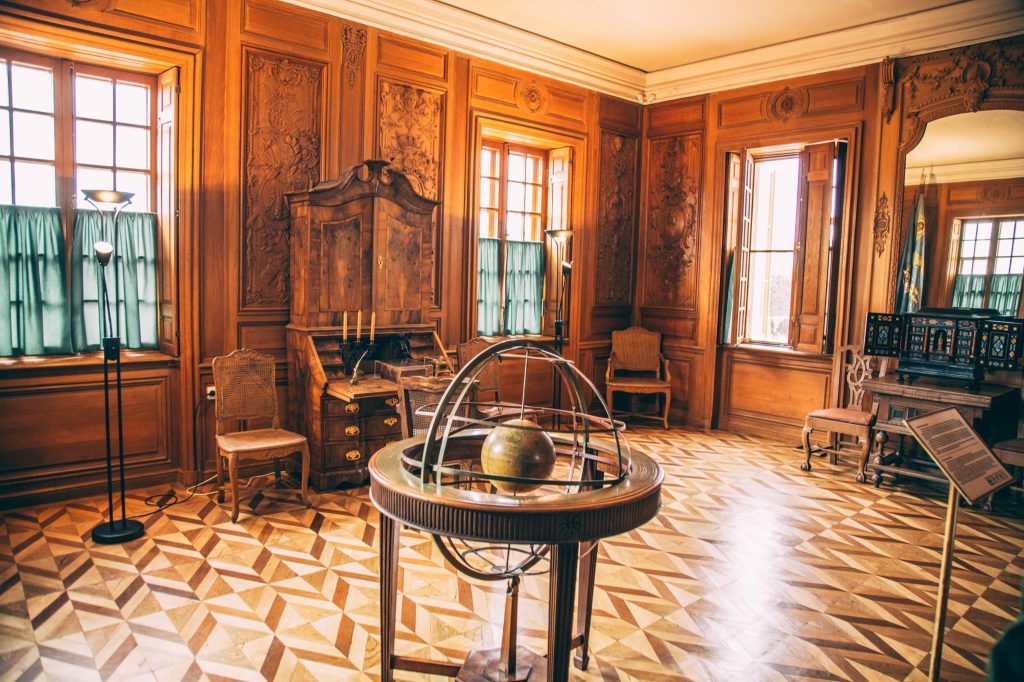
I was unable to explain to myself quite why the journey had taken so long. Many visitors found something oppressive, even sinister about the size of my home, to which I was drawn to build it for perhaps that very reason. However, if one finds this mansion gloomy, for the love of Heaven, then, take a tour of the Victorian garden, and one will see bright sunshine, various plants, with gigantic leaves, and, in some instances, flowers gorgeously magnificent. Every portion of the soil is peopled with plants and herbs, which, if less beautiful, still bares tokens of assiduous care, as if all their individual virtues, known to the scientific mind that foster them. Some are placed in urns, rich with old carving, and other in common garden pots; some creep serpentlike along the ground or climb on high, using whatever means of ascent offered them. One plant has wreathed itself round a statue of Vertumnus, which is thus quite veiled and shrouded in a drapery on hanging foliage, so happily arranged that it may have served a sculptor for a study. Nevertheless, there are so many ghosts at Llanada Villa that the entities often get together and hold dances in the Grand Ballroom. On one occasion, I watched a group of 15 to 20 ghosts having a dance in the third-floor ballroom. Walking among these malignant influences, savage beasts, deadly snakes, demons and evil spirits, the ghostly figures did not seem to mind the intrusion of my physical presence. #RandolphHarris 3 of 6

Then with a sudden bound something dashed out of the Grand Ballroom. The concussion against me was so sudden and so utterly unexpected, as well as so tremendously violent, that I was thrown down, and in my fall, the light was fairly extinguished. All was darkness, save a dull reddish kind of light that now and then, from the nearly consumed Observational Tower in the immediate vicinity, came into the room. However, by that light, dim, uncertain, and flickering as it was, some one was seen to make for the window. Although nearly studded by my fall, I saw a figure, gigantic in height, which nearly reached from the floor to the ceiling. I screamed. The figure was about to pass out at the window which led to a kind of balcony, from whence there was an easy descent to the garden. Before it passed out, I caught a glance of the side-face, and I saw that the lower part of it and the lips were dabbled in blood. I saw, too, once of those fearful-looking, shining, metallic eyes which presented so terrible an appearance of unearthly ferocity. No wonder that for a moment a panic seized me, which paralyzed any exertion I might otherwise have made to detain that hideous form. Then I grabbed by revolver and fired at the figure, which then occupied the window, as if it were a gigantic figure set in a frame. The report was tremendous in that chamber, for the pistol was no toy weapon, but one made for actual service, and of sufficient length and bored of barrel to carry destruction along with the bullets that came from it. The tall form turned upon me, and when I got a full view of the face—that face was one never to be forgotten. #RandolphHarris 4 of 6
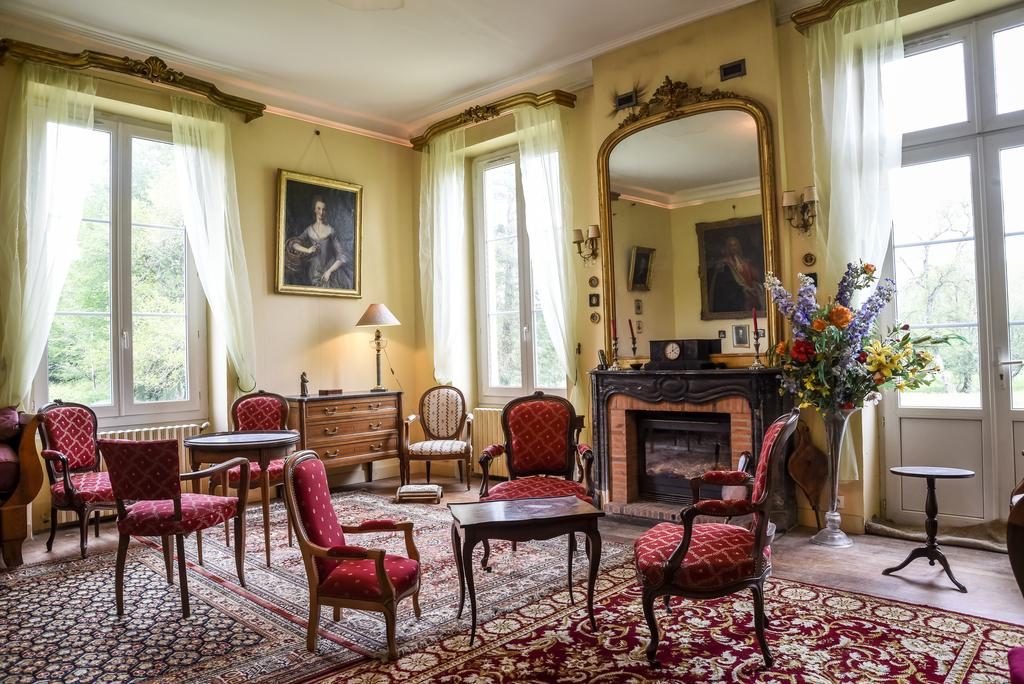
It was hideously flushed with colour—the colour of fresh blood; the eyes had a savage and remarkable lustre; whereas, before, they had looked like polished tin—they now wore a ten times brighter aspect, and flashes of light seemed to dart from them. The mouth was open, as if, from the natural formation of the countenance, the lips receded much from the large canine-looking teeth. A strange, howling noise came from the throat of this monstrous figure, and it seemed upon the point of rushing upon me. Suddenly, then, as if some impulse had seized upon it, it uttered a wild terrible shrieking kind of laugh; and then turning, dashed through the window, and in one instance disappeared before my eyes as I felt nearly annihilated by its fearful presence. “God help me!” I said. I crossed the corridor, and could not but pause a moment to glance from a window as the face of nature. As is often the case, the terrific storm of the preceding evening had cleared the air, and rendered it deliciously invigorating and lifelike. The weather had been dull, and there had been for some days a certain heaviness in the atmosphere, which was now entirely removed. During an evening séance, 17 different entities declared their presence and provided a bit of their personal history. When a pretty kind of omen, Crispus Attucks, a soldier killed in the Revolutionary War, identified himself; he explained that most of the time he liked to stay down in the basement and that during the war, tribes squared off over disputed land. The skirmishes and ambushes escalated into attritional war. Wells were poisoned. Villages were burned. They found scorched villages and corpses, and dead beasts bloating and alive with maggots and blow flies. However, he was not the ghostly conjuration encountered that particular evening. #RandolphHarris 5 of 6
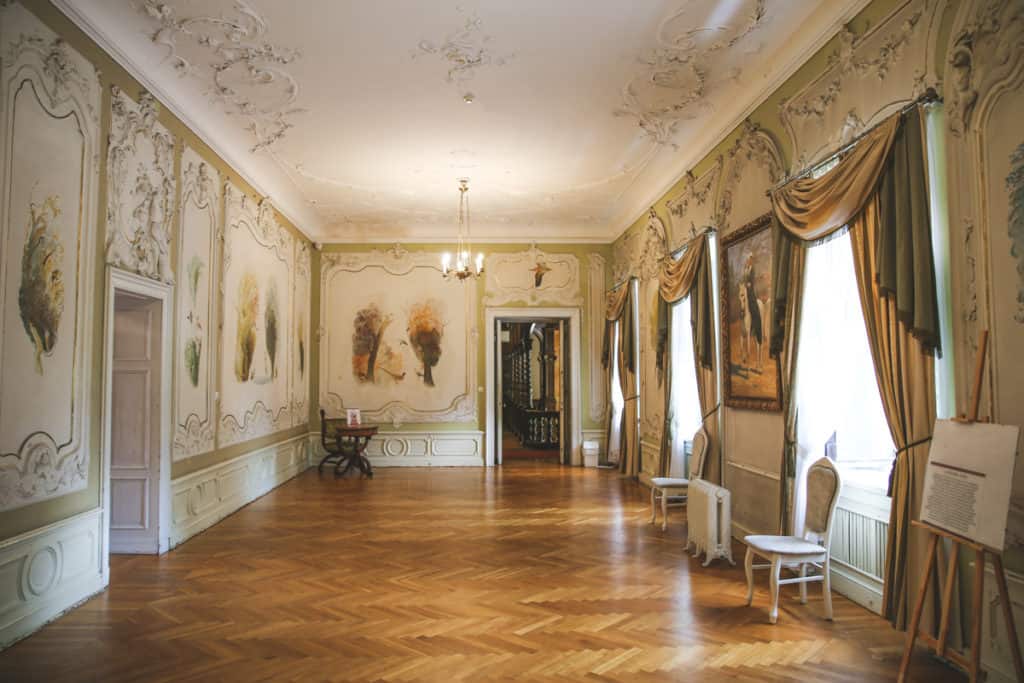
Gods of gods and Lord of lords, who hast created all things out of nothing, great king, very obedient Lucifer, I call upon your powers of light and the skies through the gates of Heaven. Powers of baneful darkness, I summon you to this holy mansion. I conjure you to enter here and guides the lives of my enemies into utter darkness. I now plant the seed of my desire within the black Earth, through the mouth of the black sun where the powers of sorcery and counter creation dwell. Through this gateway of darkness, I now shine the light and power of my will upon this World for the benefit of me and mine! O Thou great, powerful, and mighty King, who bearest rule by the power of the Heavens, Hell, Earth and the Universe, I do invocate and command thee by the especial and true name of God; and by that God that Thou Worshippest; and by the Seal of thy creation; and by the most mighty and powerful virtue thou mayest cause, enforce, and compel ADREALPHUS and His 30 Legions of Infernal Spirits, to come here before this Circle in a fair and comely shape, without harm unto me or unto any other creature, to fill us with your essence and might! Empower all endeavors that we undertake so that they may serve us here upon the corporeal plane! May your creation serve as a key to the realms above and below unlocking power and wisdom for our gory and ascent! Fill this mansion with your powers and seek any wrath and fury or spiritual attacks rendering them useless and impotent! Embrace us from the break of day to the setting of the sun, we thank you air, fire, water, earth, blessed be the one. #RandolphHarris 6 of 6

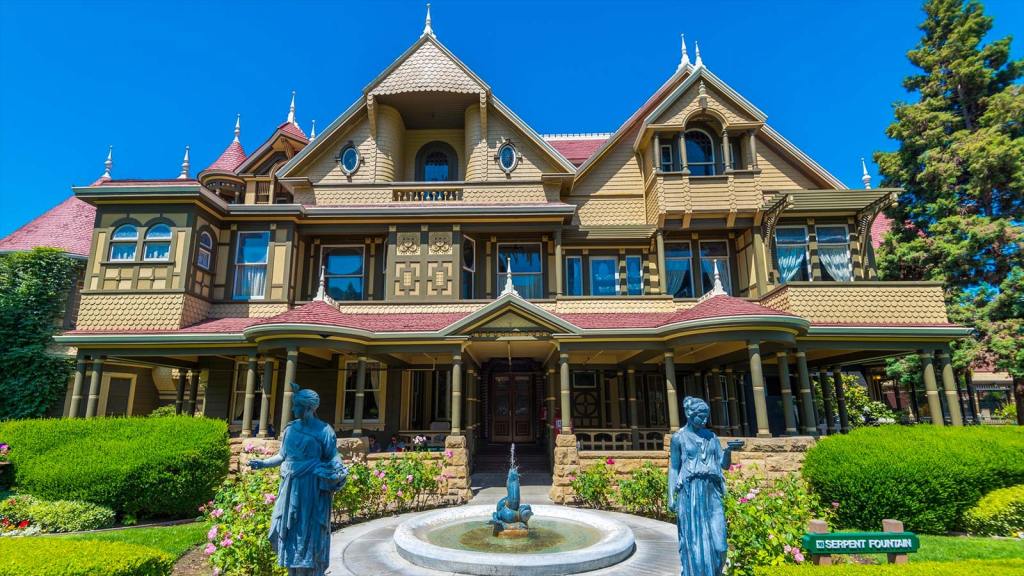
In September 1998, a team of paranormal investigators told a story of being lifted off the ground and dropped by a ghost, and their accounts were backed up by the corroborating testimony of several witnesses. A teenager said that he had reached out to touch the phantom and had found the thing to be very cold. Observers had seen the ghost loitering in the Venetian dining room and strolling across the grounds. Other have seen the entity as a black cloud drifting across the yard, ranging from six to eight feet in height. Those who observed the thing in either guide affirm that it was a creature of habit. It always seemed to appear between 11.00 P.M. and 1.00 A.M., and usually followed the same routine from the dining room to a certain point on the grounds. https://winchestermysteryhouse.com/

And please be sure to check out the online gift store: https://shopwinchestermysteryhouse.com/

Organized Crime and Conventional Criminals

The criminality of persons in organized crime different from that of conventional criminals because their organization allows them to commit crimes of a different variety [labor racketeering, for example] and on a larger scale [smuggling planeloads of cocaine, for example] than their less organized colleagues. Organization permits a scope of activities unavailable to conventional criminal, while providing a vehicle for criminal interaction and coordination on a regional, national, and international level. The Federal Bureau of Investigation (FBI) defines organized crime “as any group having some manner of a formalized structure and whose primary objective is to obtain money through illegal activities. Such groups maintain their position through the use of actual violence, corrupt public officials, graft, or extortion, and generally have a significant impact on the people in their locales, region, or the country as a whole.” The United Nations Convention Against Transnational Organized Crime (Article 2(a)) states that an “organized criminal group shall mean a structured group of three or more persons, existing for a period of time and acting in concert with the aim of committing one or more serious crimes or offenses established in accordance with this Convention, in other to obtain, directly or indirectly, a financial or other material benefit.” If a particular group of criminals constitutes organized crime and, therefore, needs to be addressed in a way different from the way one would approach terrorist or groups of conventional criminals or a group of persons that forms for the immediate commission of a single offense, law enforcement agencies have research to help them deal with the phenomenon. #RandolphHarris 1 of 20
With seemingly increasingly regularity, we hear about instances in which formal organizations (or the individuals therein) engage in criminal acts. At times, these crimes are directed inward as is the case with acts of employee theft, embezzlement, or corporate or political espionage. Take, for example, Susan McDougal who was accused (but later acquitted) of bilking $150,000 from the failed Whitewater land deal that haunted the Clinton presidency. Robert Philip Hanssen also comes to mind, the FBI agent accused of selling over 6,000 pages of top-secret government materials to the Russians. In other cases, the organizational crimes are directed outward toward specific clients, the competition, or the larger society. The Rodney King case or the assault on Abner Loima (id est, the New York City man who was sodomized with a broomstick by members of the NYPD) stand as high-profile examples of police officers purposely and egregiously violating the human rights of a particular citizen. Another case involving the faculty tread design on Bridetown/Firestone tires provides an example of how unsafe product manufacturing can result in the death of numerous unsuspecting consumers. Antitrust arrangements such as the alleged monopolization of the computer software industry by Microsoft’s Windows program illustrate how free market competition can be stymied and businesses can be forced into an unfair market situation. Broader societal impacts are felt in instances when a government misrepresents itself or betrays the public to achieve military or economic goals. This was the case in the Nazi Holocaust and the Iran-Contra scandal. #RandolphHarris 2 of 20

Similarly, a corporation or rouge employee (id est, doctor or pharmacist) has the ability to enact a scheme that leads to broad-based economic or physical hardship for hundreds, thousands, or even millions of people. This was the case in the savings and loan scandal of the late 1980s, the Enron and World Com accounting fiascos, and the recent story of the Kansas City pharmacist who was diluting chemotherapy drugs for profit. There is a common thread that runs through all of the above-mentioned scenarios—they constitute breaches of trust that emanate from within an organizational entity. Crimes that are committed within the context of complex organizations represent a vexing conceptual category for criminologists. Traditionally, these acts have been aggregated under the heading of white-collar crime. White Collar Crime, may be defined approximately as a crime committed by a person of respectability and high social status in the course of one’s occupation. In the 80 plus years since this statement, scholars have struggled in earnest to reach agreement over the conceptual and behavioral breadth that should be afford to the white-collar crime rubric. Much of this apprehension results from the fact that the subject matter spreads like wild fire. As society advances, someone is always willing and able to exploit the situation through an act of criminal innovation. This means that, today, we must negotiate a host of governmental, corporate, and employee-perpetrated acts that simply did not exist 80 years ago. #RandolphHarris 3 of 20

Criminologist and sociologist alike have repeatedly sought to refine or expand the conceptual landscape of white-collar crime. He notes that some have chosen to expand the original definition to include the occupational offenses of lower states, blue-collar employees. Others have employed any violent or property crime that is committed in the context of organizational influences (id est, the role that organizational norms and directives have on individual actors) into the discussion. We have also seen the development of concepts such as “state crime,” “political crime,” or even the hybrid “state-corporate crime” to allow for a more complete treatment of governmental misconduct. The term crime within complex organizations is meant to refer to any physical or nonphysical illegal act (id est, violent or property offense) that is committed within an organizational context and seeks to further individual or organizational goals, regardless of the social status of that individual or organization. Such a definition subsumes occupational, corporate, organizational, political, and state-corporate crimes under a single conceptual rubric. It is a definition that stresses abuses of trust, not power or social status. This discussion centers most on the roles that organizational norms and opportunities play in shaping the cognitive and behavioral dimensions of criminal behavior. This definition stems from the central premise that all organizations are inherently corrupting. The norms and behaviors that become routinized in these structure can yield a criminogenic environment, one in which the likelihood of a crime occurring is significantly different than it would be if the organizational dimension was removed. The “organizational factor” is said to produce a new layer of analysis that warrants a special conceptual distinction and appreciation. #RandolphHarris 4 of 20

There is a different between organizational occupational crime, state authority occupational crime, professional occupational crimes, and individual occupational crime. Organizational occupational crime incudes any crime that benefits the organizational initiatives. State authority occupational crime focuses on abuses of governmental authority that seek to achieve personal or political interests. Professional occupational crime encompasses all wrongdoing committed by persons who hold some sort of professional status. Individual occupational crime is concerned with garden variety employee thefts perpetrated by lone, nonsalaried perpetrators. As stated, the context in which the criminal act occurs, not the act itself, is our primary focus. As such, any acts (from murder to theft to drug abuse) would fall under this topic as it occurred in an organizational context and stemmed most directly from organization norms and opportunities. This notwithstanding, certain statutory provisions are unique to organizational settings. First, are laws that seek to protect businesses. Beyond simple theft and pilferage statues, embezzlement is the most noteworthy of these statutory provisions. Embezzlement occurs when an individual misappropriates property or money with which one has been entrusted. Legally speaking, the misappropriation is deemed a form of “conversion,” not a “theft by taking,” since the perpetrator has been voluntarily granted access to the materials as part of a trust agreement. The actus reus is the conversion and the mens reus aspect of the crime is the intent to permanently deprive the rightful owner of possession. For example, bank tellers are routinely entrusted with access to cash. If a teller permanently removes money from the bank, he or she is said to have illegally concerted the funds and thus committed embezzlement. #RandolphHarris 5 of 20

There are laws that protect free market competition. Over the course of the past century or so, the U.S.A. Congress has crafted several legislative provisions that outlaw price-fixing, bid-rigging, monopolies, and other threats to fair business competition. Most notable was the Sherman Act of 1890. This piece of legislation criminalized any effort to prevent full and free competition, any business arrangements designed to artificially inflate prices, and/or any restraint on free trade. Congress has since passed the Clayton Act of 1914, and the Robinson-Patman Act and the Celler-Kefauver Act of 1950. Each of these pieces of legislation provides updates and specifications to the legal landscape that was outlined in the Sherman Act. Coleman (1998) further delineates a series of laws that are designed to protect democracy. The most visible of these corruption statues are bribery, perjury, and various tampering offenses. Bribery deems it illegal for any public official (exempli gratia, judge, legislator, police officer) to offer, give, receive, or solicit anything of value to influence or alter an official outcome. Perjury statues make it illegal to make false statements while under oath (American Law Institute, 1962). This crime was thrust into the public arena when former President Clinton was accused of perjuring himself regarding the Monic Lewinski sex scandal. Duress refers to coercion that causes a person to perform an act against his or her will. Duress is an important concept in both civil and criminal law that recognizes that a person who is acting without free will should not be held responsible for the conduct. #RandolphHarris 6 of 20

In contract law, legal duress can invalidate a contact signed by a party. The rationale is that the formation of the contract was not undertaken freely and voluntarily. In other words, there was not a true meeting of the minds. Duress exists when a person has been wrongfully forced or coerced into entering the contract. Physical coercion and threats of harm are common examples of conduct that constitute duress. Another form of conduct that might constitute duress includes wrongfully withholding a party’s property, or threatening to wrongfully withhold the property until a contract is signed. Duress can also be a defense in criminal law. In essence, the concept is that a defendant charged with a crime can be excused for his or her actions if they were committed under duress or coercion, as defined by the law. The defendant normally must show that the defendant’s actions were reasonable under the circumstances and based upon the fear of immediate serious harm. Tampering statues make it illegal for an individual to alter or impede official proceedings or investigations. Political corruption can take on a wide variety of forms and the U.S.A. Congress has enacted numerous pieces of legislation to safeguard democracy. For example, the Federal Corrupt Practice Act of 1925 and the Federal Election Campaign Act of 1971 seek to regulate election process and campaign contributions. Similarly, the Foreign Corruption Practices Act of 1979 sough to put a stop to “international payoffs, bribes, kickbacks, gifts, and political contributions” that came to light in the Watergate scandal that rocked the Nixon administration. #RandolphHarris 7 of 20

There exist laws that seek to protect the public from being victimized by organizational entities. These include legal measures that safeguard consumers, workers, and the environment. Prosecutors often invoke fraud statues to protect consumers against unsavory business entities. These efforts might target cases of consumer fraud (a bogus company or “Ponzi or pyramid scheme” taking money from consumers for substandard or non-existent product or service), fraud in the professions (healthcare organizations or other professional entities overcharging clients), or financial fraud (banks or bankers making illegal loans or engaging in forbidden accounting practices). Federal prosecutors have at their disposal specific legislative provisions and acts that they can use in their fight against organization-based fraud; for example, they can utilize provisions of the Consumer Product Safety Act of 1972 in cases involving product safety. They also have at their disposal specific pieces of legislation that have been enacted to protect the consumers of a particular type of good or service. For example, the Pure Food and Drug Act and the Meat Inspection Act of 1906 impose standards on the production, marketing, and preparation of food products and medications. Similarly, the Financial Institutions Reform, Recovery, and Enforcement Act of 1989, as well as the Crime Control Act of 1990, contains provisions that allow prosecutors to act against the illegal practices of banks and financial institutions. #RandolphHarris 8 of 20

Another example would be the National Traffic and Motor Vehicle Safety Act of 1966, which imposes regulatory standards on the automobile industry. Similarly, the Insider Trading and Securities Fraud Enforcement Act which deems it illegal to compromise the fair value and trading of corporate stocks. Resourceful federal prosecutors have even been known to use the 1970 Racketeering Influenced and Corrupt Organizations (RICO) Act to pursue white-collar criminals. Originally intended for use against organized crime, prosecutors have begun to exploit certain provisions in the statue. Namely, a person or organization can be subject to stiff RICO sanctions (25-year prison term per count and forfeiture of corrupt assets) if it can be shown that this person or organization used any form of enterprise to engage in a pattern of racketeering. A pattern exists if two acts of racketeering are committed within a 10-year period. There is a laundry list of federal and state crimes that constitute racketeering, including such predicate crimes as murder, kidnapping, robbery, arson, extortion, obstruction of justice, mail, and wire fraud, securities fraud, and (the recently added) financial institutions fraud. This is a thumbnail sketch of the vast legal landscape which allows for criminal charges to be brought against persons or organizations that harm the public, democracy, or the free enterprise system. In addition to these sanctions, aggrieved parties are always given the option of seeking financial compensation via civil action. This is often the preferred course of action, because most crimes within complex organizations, especially those of the corporate or organizational crime variety, pose a serious legal dilemma for the criminal court system. #RandolphHarris 9 of 20

Most notably, one must establish that a criminal responsibility exists. The question becomes: Can a corporation or complex organization commit a crime? Our legal system has traditionally thought of a “crime” to be an offense that occurs between two or perhaps three persons. Crimes that occur within complex organizations are often collective in nature (id est, committed by the company or dozens of its employees) and do not make it easy for external authorities to identify a short list of suspects. Prosecutors are rarely able to convince judges and juries that corporate executives should be held criminally responsible for their behaviors. High-prices corporate lawyers and “happy capitalists” on the jury predictably produce acquittals for accused executives and corporations. This, in turn, leads to follow-up civil actions that seek to hit the executives and corporations in what stands as their only exposed legal area—their wallets. In an organized crime group, violence is a readily available and routinely accepted resource. Access to private violence is an important dimension that allows the group to actively purse its goals. The use of violence is not restricted by ethical considerations but controlled only practical limitations. An organized criminal group eschews competition. It strives for hegemony over a particular geographical area (a metropolitan area or section of a city), a particular “industry,” legitimate or illegitimate (for example, gambling, drug trafficking), or a combination of both. #RandolphHarris 10 of 20

An organized crime monopoly is maintained by violence, by the threat of violence, or by corrupt relationships with law enforcement officials. A combination of both methods, violence and corruption, may be employed. Criminal organizations can manifest a variety of structures, ranging from bureaucracy to a group sharing some combination of kinship, friendship, and ethnicity/culture, characteristics that provide emotional ties and enhance trust. These ties are strengthened if members are part of a community alienated from mainstream society. The weaker the shared characteristics, the more likely there is to be a bureaucratic structure. In other word, bureaucracy offers an alternative to more personalistic ties. Criminal organizations can manifest a bureaucratic structure while its business activities operate outside the structure; or the structure and business can be one and the same. A criminal organization can manifest a bureaucratic structure with ranks and levels of authority, while economic activities may be divorced from the formal structure. In such cases, every member of the organization represents a slot on the “company chart” while their business activities are independent, conducted solo or in partnerships with member and nonmember associates, and not dependent on the formal structure. Credentialing also permits members of a criminal organization to enforce extralegal social norms ranging from restraining boisterous behavior to requiring a young man to marry the young lady he impregnated. #RandolphHarris 11 of 20

In current events, the U.S.A. trade deficit jumped to a record high in March 2023 amid roaring domestic demand, which is drawing in imports, and the gap could widen further as the nation’s economic activity rebounds faster than it global rivals. Manufacturers lack the capacity to satisfy the surge in demand because of resource constraints and bottlenecks in the supply chain. Inventories are very lean. Demand is being driven by a rapidly improving public health situation and massive government assistance to households and businesses to soften the hardships caused by the COVID-19 pandemic. The trade deficit increased 5.6 percent to an all-time high of $74.4 billion in March. Imports soared 6.3 percent to a historic $274.5 billion in March. Goods imports also increased to 7.0 percent which is $234.4 billion; another all-time high. Imports of consumer goods were the highest on record, as were those for food and capital goods. The government has provided nearly $6 trillion in pandemic relief over the past year. To conquer the global market, Western exporters have to fight really hard, and the outcome of this fight is not at all predetermined. Furthermore, Americans will have to learn to consume less and save more so they can achieve larger output with smaller investment and, consequently, saving. Along this line of global rebalancing concept, Western households restrain their purchases of consumer goods in order to save more, and they will be able to afford higher priced products manufactured in American factories. However, no simple counseling or job referrals can handle the problem; it is a task for social engineering. #RandolphHarris 12 of 20

As a psychological problem, the sense of worth derived from a vocation has found a far from secure basis outside the family, save for the few who gain confirmation of their vocational identities in the most advanced professional associations. Here is an instance where no notion of remedy in a therapeutic sense seems reasonable; only the development of positive means for assuring a conscious choice of careers seems appropriate to the situation. The family itself, beyond instilling the basic habits of work, has more than ever before the duty to prepare its members for the interpersonal competence and the sociability tht are required for most modern employment; its function in occupational transmission has not only been partly curtailed but also transformed. This brief glance at economic agencies serving families has touched on the first two of the traditional economic categories—production and consumption. Given that sufficient and dependable money can be earned by American families, is there any reason to suppose that families under urban, industrial conditions need to be assisted or need to co-operate through agencies related to consumption? If the answer to this were assumed to be in the negative, then it would be hard to account for the considerable number and variety of existing family agencies, whose efforts are directed toward the protection and improvement of family consumption. If we consider each of the main components of family expenditure, we find a remarkable degree of specialization among economic agencies focusing on the consumer. #RandolphHarris 13 of 20

Some of course are concerned with the provisions of minimum amounts of essentials to needy segments of the population, but generally these may be considered as agencies serving to maintain income, even though, in many cases, they furnish goods and service in kind rather than cash, exempli gratia, county homes for the aged. The subsidization of certain items of consumption for certain segments of the population, as in the school lunch program, might also be considered under the heading of increments to income. The volume of goods and services purchased from tax funds, and communally distributed in this way, has been steadily rising in recent years—especially in such fields as health, education, and recreation. While in one sense such services are always consumed in accordance with need, exempli gratia, families without children receive no direct benefit from public schools, it is illuminating to distinguish between public services distributed to the whole community and those received only by the needy. Meanwhile it is also of some importance to note how many aspects there are to consumption beyond the mere provision of the means of consumption. Thus we have agencies concerned with the regulation of prices and rents, not only the wartime agencies, but the permanent commissions regulating what consumers have to pay for public utilities and transportation. One the private side, consumer co-operatives may be said to carry on similar functions of trying to hold down consumer costs. Then there are agencies, from municipal to federal, concerned with guarding and raising the quality and purity not only of goods offered for sale, but even of the advertising, labelling and weighing and measuring done by their sellers. #RandolphHarris 14 of 20

Private organizations of this sort are meagerly developed—perhaps because this truly is a matter of public concern. A long-standing proposal would turn even the functions of the best-known consumer organization—the Consumers Union—over to a government agency such as the United States Bureau of Standards. Since agencies concerned with the more efficient and tasteful utilization of income are largely educational, a discussion of these will be included under educational agencies. Of all the items in family budgets, housing above al others has called forth a host of private and public agencies for supplementing the efforts of the individual consuming family. The range of tasks such consumer agencies carry on includes fire protection, extending credit, design and construction, sanitation, zoning, raising community standards, city planning, and style leadership While some of the work of these consumer agencies is to correct conditions which the consumer cannot rectify oneself, much of their work makes possible for families things which in the past were out of their reach. For example, families can now enjoy with complete safety an unsurpassed range of variety in their diet. For the common man, as once only for nobility, eating has become an aesthetic experience, full of the joys of invention and the excitement of discovery. Fear of strange foods has become a mark no longer of prudence but of provinciality. It is plausible to speak of some functions of the family having to do with consumption as having been transferred to other institutions and agencies, but note has to be made of the addition and elaboration of other functions, even of something like “reprivatization.” #RandolphHarris 15 of 20

If family servants be thought of as an institution, one may in a sense speak of the restoration of their function to many families. Household appliances and kitchen gadgets, which Americans crave, are gradually taking the place of the servant class in our society. Shopping and budgeting are examples of recently elaborated family functions. These are activities now adays usually shared by all but the youngest members of the family; they involve discussion and the balancing of values and make every family a microcosmic forum in which the character of demand in the whole economy is debated and formulated. As family incomes rise, a family does not merely eat and drink more, nor add a useless frill or gadget; it may choose instead to put more into services, spacious housing, health, education, entertaining, recreation, travel, and community participation, in other words, into obtaining those resources and experiences which have potentialities for developing their personalities. The easy generalization of critics that the growth of American wealth leads to materialism is found on investigation to be superficial. High culture—once the property of a leisure class—becomes the possession of all families when the increase of wealth is well distributed. Families achieve material comfort only to move beyond the primary concern with physical existence. Paradoxically, economic activity becomes most clearly instrumental to the highest development of individual personality, just at the point where enjoyment of self by means of existing resources becomes preferable to denial of self in order to obtain increases of income. #RandolphHarris 16 of 20

The competence of the producer oneself may be conceived as a channel of investment. There is a spiral relation in which income spent on personal development contributes ultimately to further productivity, through the improvement of human resources. We may thus expand the suggestions of Mrs. Myrdal that programs for the family, to gain the degree of favorable opinion and financial support necessary for large aims, must appeal to the investment motive. Investment in the competence of the nation’s human-power by careful engineering can appeal to a powerful investment motive—a person’s interest in advancing one’s own career or one’s child’s, while improving the most strategic of all factors of production, labor. It is proper to seek the rehabilitation of the disabled, but if the attention of family agencies goes on further than to release the disabled from dependency, then the agencies still deserve to be described as fixated at the therapeutic stage. Even the Swedish family policy, aimed only at preventing or arresting the economic consequences of a declining population, stops short of the goal of national action implicit in American ideas. If we think of this nation as a household, and manage it as a set of conditions for the cultivation of competence, we can hope to complete a benevolent circle, from more production to higher income to better consumption and the optimal development of human resources, and thence back again to production. #RandolphHarris 17 of 20

The Word of God is very clear. The God we worship, the Christ we love, is in Heaven. It is as we approach Him there, and by faith apprehend our union with Him in spirit there, that we are raised with Him above the plane of the lower Heavens where the powers of darkness reign, and seated with Him, see them under His feet. The Lord’s words recorded in the Gospel of John, chapters 14, 15, and 16, give the truth very clearly concerning His indwelling the believer. The “in Me” speaks of being with Him in His Heavenly position (John 14.20)—the result of the believer’s faith in Him; and the “I in you”—spoken to the company of disciples, and hence to the Body of Christ as a whole—follows as a result in the life of the individual believer. This union with the Person in the glory results in the inflow and outflow of His Spirit and life through the believer on Earth (see Phil. 1.19). In other words, the “subjective” is the result of the “objective.” The fact that Christ is in Heaven is the basis of faith for the subjective inflow of His life and power by the Holy Spirit of God. There are three elements in ontological concepts: individuality—universality, dynamics—form, freedom—destiny. Polarity is a mode of conception and development in relation of interdependent elements, each of which is necessary for the other one and for the whole, although it is in tension with the opposite element. Neither pole can stand by itself’ it needs the other to complement it. However at the same time, both poles clash as they expand at the expense of one another. Thus the poles limit and sustain each other. #RandolphHarris 18 of 20

However, this ideal balance can be upset, for under the impact of finitude, polarity becomes tension, which is the tendency of unified elements to draw away tension, which is the tendency of unified elements to draw away from one another in opposite directions. Individualization and Participation: Individualization is implied in the self which, like a mathematical point, cannot be divided. Though every being is analogously an individual, man is the totally centered self, completely individualized. He is a person. The individual self of every being participates in its environment, but man, the microcosm, participates in the whole universe by means of the rational structure of mind and reality. Finally, when individualization reached the perfect form which we call a “person,” participation reaches the perfect form which we call “communion”—participation in another self who also is a person. Dynamics and Form: Being a self, being an individual, being something—this means having a form. The form which makes a thing what it is, is its content, its essential, its definite power of being. However, a form must form something which we call dynamics. Dynamics cannot be conceptualized but only symbolized, for it has no form, and yet it is not pure nothingness. It is the me on, the potentiality of being, which is nonbeing in contrast to pure nonbeing—for example, Bergson’s elan vital, Nietzche’s will to power, and the unconscious of Dr. Freud. In human experience dynamics appears as vitality, the power of life and growth. Form appears as intentionality, the grasping and shaping of reality through universals and meaningful structures. To put it in still another way, self-transcendence (dynamics) is always in polar balance with self-conservation (form). #RandolphHarris 19 of 20

Freedom and Destiny: In describing this ontological element, we come to understand that freedom of a thing is contradictory. Only man is free, the total self, including even the cells and atoms of his body which share in the constitution of that individual, personal center. Furthermore, man experiences himself as a bearer of freedom, but within the larger structure to which he belongs. Destiny is the World to which man pertains—his body, psychic drives, temperament, social community, material surroundings, conscious and unconscious past, and, above all, his former free decisions. Destiny is not a strange power which determines what shall happen to me. It is myself as given, formed by nature, history, and myself. My destiny is the basis of my freedom, my freedom participates in shaping my destiny. Within the bounds of destiny man experiences freedom as deliberation, decision, and responsibility. Obviously, the polarity freedom-destiny can be applied only analogously to beings inferior to man. In the subhuman realm it appears as the polarity of spontaneity and law. The three ontological polarities have been viewed horizontally, with each polar element in balance with its opposite. If one were to split them vertically, the first side of these polarities—individuality, dynamics, and freedom—would express the self-relating power of being. The second side—universality, form, and destiny—expressed the belongingness of being, its participation in the universe of being. Thus the basic self-World structure is manifest within the ontological polarities. #RandolphHarris 20 of 20

MAGNOLIA STATION AT CRESLEIGH RANCH
Rancho Cordova, CA | low $600s
Now Selling!

Models now open at Magnolia Station! Located at the corner of Rancho Cordova Parkway and Douglas Road, residents of Cresleigh Ranch will benefit from a brand new neighborhood with convenient access to the new Raley’s Shopping Center, Sunrise Boulevard, and much more!

Magnolia Station will include 81 homesites and five distinct plans ranging from 2,200 – 3,700 square feet; including three single story plans! Each plan has been thoughtfully designed to include features such as: Generations Suite, Optional Offices/Dens, Extended Great Rooms, and more!


Dabbling in Dark, Cruel Possibilities of Magic
Winter rain. Rain of light that saturated every inch of my estate, every square inch of grass, drift of rain threading light through the empty darkness itself. I was weary of this night because I had met with such terrible misfortune not too long ago. All which apparently conspiring to heighten that superstitious melancholy that had seized upon my mansion. The more I thought, the more I was bewildered. Night passed on without rest. The sound of carriages broke upon my ear. The solemn tones of the old grandfather clock announced midnight—a strange death-like stillness pervades all nature all nature. Like the ominous calm which precedes some more than usually terrific outbreak of the elements, they seem to have paused in their ordinary fluctuations, to gather a terrific strength for the great effort. A faint pea of thunder now comes from far off. Like a signal gun for the battle of the winds to begin, it appeared to awaken them from their lethargy, and one awful, warring hurricane swept over a whole city, producing more devastation in the four or five minutes it lasted, than would half century of ordinary phenomena. Oh, how the storm raged! Hair—rain—wind. It was, in very truth, as awful night. There is an antique chamber in this ancient house. Curious and quaint carvings adorn the walls, and a large chimney-piece is a curiosity of itself. The ceiling is low, and a large bay window, from roof to floor, looks to the west. The window is latticed, and filled with curiously painted glass and rich stained pieces, which send in a strange, yet beautiful light, when sun or moon shines into the apartment. #RandolphHarris 1 of 5
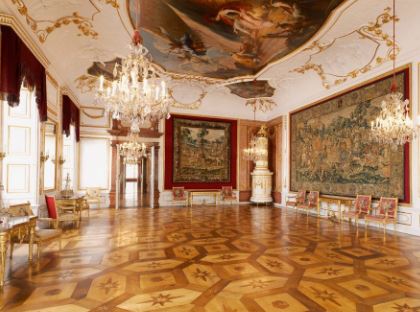
There is but one portrait in that room, although the walls are panelled for the express purpose of containing a series of pictures. The portrait is of William, as a young man, with his handsome pale face, stately brow, and a whimsical look about the eyes. There is a stately bed in this chamber, of carved walnut-wood is it made, rich in design and elaborate inexecution; one of those works of art which owe their existence to the Elizabethan era. It is hung with heavy silken and damask furnishing; nodding feathers are at its corners—covered with dust are they, and they lend a funeral aspect to the room. The floor is of polished oak. God! how the hail dashes on the old bay window! Like an occasional discharge of mimic musketry, it comes clashing, beating, and cracking upon the small panes; but they resist it—their small size saves them; the wind, the hail, the rain, expend their fury in vain. The turmoil of the elements wakes the senses, although it cannot entirely break the repose they have lapsed into. Oh, what a World of witchery. Was that lightning? Yes—an awful, vivid, terrifying flash—then a roaring peal of thunder, as if a thousand mountains were rolling one over the other in the blue vault of Heaven! Who sleeps now in that ancient city? Not one living soul. The dread trumpet of eternity could not more effectually have awakened anyone. The hail continues. The wind continues. The uproar of the elements seems at its height. I lay in bed waiting for sleep to come. However, I lay for a long time and it came only reluctantly. #RandolphHarris 2 of 5
Rain continued to whicker and spat on my bedroom window. There was a skittering sound. It could have the claws of some capering demon. I sat upon my bed and pressed my hands upon my eyes. Heavens! what a wild torrent of wind, and rain, and hail! The thunder likewise seems intent upon awakening sufficient echoes to last until the next flash of forked lightening should again produce the wild concussion of the air. I murmured a prayer—a prayer for those I love best; the names of those dear to my gentle hear come from my lips; and I weep and pray; I think then of what devastation the storm must surely produce, and to the great God of Heaven I pray for all living things. Another flash—a wild, blue, bewildering flash of lightning streams across that bay window, for an instant brining out every color in it with terrible distinctness. A shriek bursts from my lips, and then, with my eyes fixed upon that window, which, in another moment, is all darkness, and with such an expression of terror upon my face as it had never before known, I trembled, and the perspiration of intense fear stood upon my brow. “What—what was it?” I gasped; “real, or delusion? Oh, God, there are people in the World with hunger for power and influence enough to risk dabbling in dark, cruel possibilities of magic. Particular locations could infect individual people with what society termed evil. Those people are random victims of contagion. However, I had seen real ghouls. Now, a figure tall and gaunt, endeavoring from the outside to unclasp the window. I saw it. That flash of lightning revealed it to me. It stood at the whole length of the window.” #RandolphHarris 3 of 5
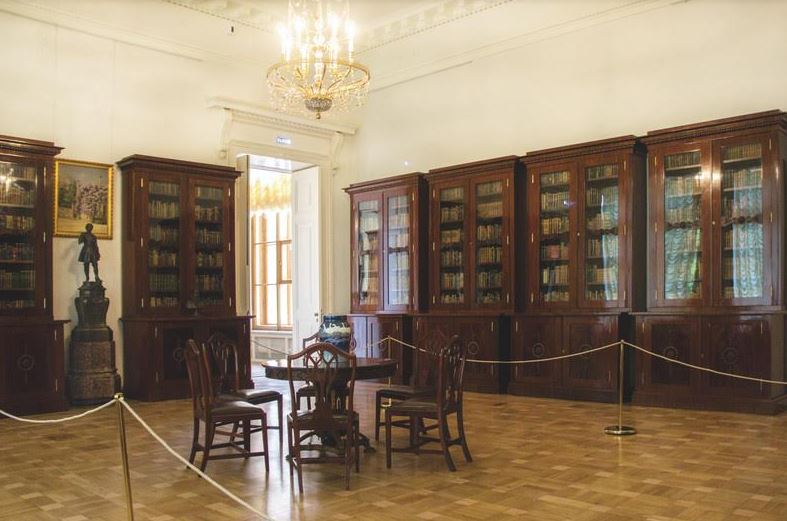
There is a lull of the wind. The hail is not falling so thickly—moreover, it now fell, what there is of it, straight, and yet a strange clattering sound came upon the glass of that long window. It could not be a delusion—I am awake, and I hear it. What can produce it? Another flash of lightning—another shriek—there can be now no delusion. The house is uncomfortably cold. A tall figure is standing on the ledge immediately outside the long window. It is its finger-nails upon the glass that produces the sound so like the hail, now that the hail has ceased. Intense fear paralyzed my limbs. That one shrike is all I can utter—with hands clasped, a face of marble, a heart beating so wildly in my bosom, that it moment it seems as if it would break its confines, eyes distended and fixed upon the window, I wait, froze with horror. The pattering and clattering of the nails continue. No word is spoken. I fancy I can trace the darker form of that figure against the window, and I can see the long arms moving to and fro, feeling for some mode of entrance. What strange light is that which now gradually creeps up into the air? red and terrible—brighter and brighter it grows. The light has set fire to the water tower, and the reflection of the rapidly consuming building falls upon that long window. There can be no mistake. The figure is there, still feeling for an entrance, and clattering against the glass with its long nail, that appear as if the growth of many years had been untouched. I try to scream again but a chocking sensation comes over me, and I cannot. It is too dreadful—I try to move—each limb seems weighed down by tons of lead—I can but in a hoarse faint whisper cry,–“Help—help—help—help!” #RandolphHarris 4 of 5

Suddenly I was startled beyond belief when a small pane of glass is broken and the form from without introduces a long gaunt hand, which seems utterly destitute of flesh. The fastening is removed, and one-half of the window, which opens like folding doors, is swung wide open upon its hinges. My heart is running at that eternal rhythm, so many gradations. There is a look of terror upon my face, it is dreadful. The figure turns half rough, and the light falls upon the face. It is perfectly white—perfectly bloodless. The eyes look like polished tin; the lips are drawn back. It approaches the bed with a strange, gliding moment. It clashes together the long nails that literally appear to hand from the fingers. No sound comes from its lips. However, my eyes are fascinated. The glance of a serpent could not have produced a greater effect upon me than did the fixed gaze of those awful, metallic-looking eyes that were bent on my face. Crouching down so that the gigantic height was lost, and the horrible, protruding white face was the most prominent object, came on the figure. With a sudden rush that could not be foreseen—with a strange howling cry that was enough to awaken terror in every breast, the figure seized the long tresses of my hair, and twining them round his bony hands. I quivered with the agony of my soul. I crept into the Hall through the secret passage which led from the house to the Observational Tower. The house and the grounds were thoroughly searched, but the creature had vanished from the face of the Earth, all that was found was a clawlike finger nail. #RandolphHarris 5 of 5

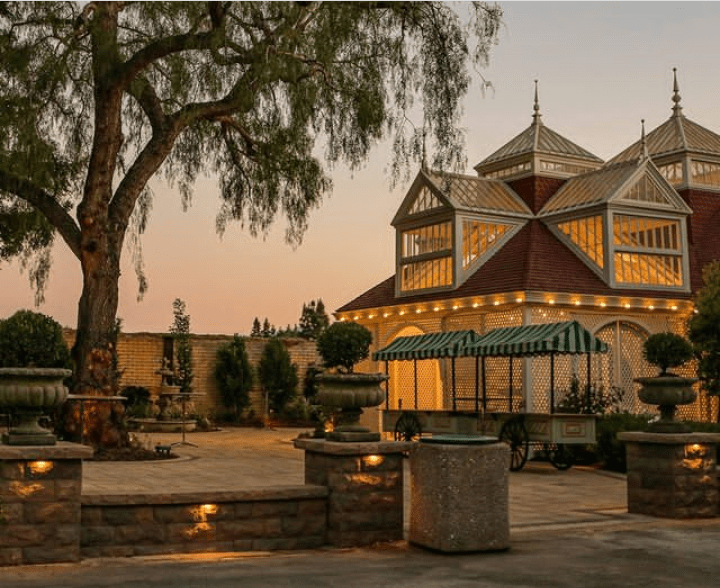
The tale of the man in the dark cloak is well known to the staff of The Winchester Mystery House. On November 23, at 5.30 p.m., a tour guide was locking up, when he saw the man across the courtyard. He was going into the East Wing in what he thought was a dark coat. Thinking that it was a visitor still looking round, he waited outside for five minutes for the man to finish his tour, but still there was no sign of him. The tour guide went into the east wing to see what he was doing, and he saw a malignant face peering down at him from the stairs. In the long darkness that followed—haunted he was by the ravaged face. Four years would pass before anything happened to disturb his melancholy conviction. 🎟️ Tickets on sale now at link in bio! https://winchestermysteryhouse.com/
And please be sure to check out the online gift store: https://shopwinchestermysteryhouse.com/

Men, Money, and Violence

The close fabric of economic relations is regulated by money, the abstract expression of work—that is to say, we receive different quantities of the same for different quantities for different qualities; and we give money for what we receive—again exchanging only different quantities for different qualities. Many people think that those who have acquired nice things are lucky, but this is generally not the case. It is called capitalism. People work hard, earn money, and buy the things they like. Generally, the only people who claim to not like capitalism are lazy people because they do not want to work for the things they want. They would rather become jealous, remain unindustrious, and have wealth redistributed so they can afford to have nice things. Practically nobody, with the exception of the farm population, could live for even a few days without receiving and spending money, which stands for the abstract quality of concrete work. The Second Wave created mass societies that reflected and require mass production. In Third Wave, brain-based economies, mass production (which could almost be considered the defining mark of industrial society) is already and outmoded form. De-massified production—short runs of highly customized products—is the new cutting edge of manufacture. Mass marketing gives way to market segmentation and “particle marketing,” paralleling the change in production. Old industrial-style behemoths collapse of their own mass and face destruction. Labor unions in the mass manufacturing sector shrink. #RandolphHarris 1 of 18
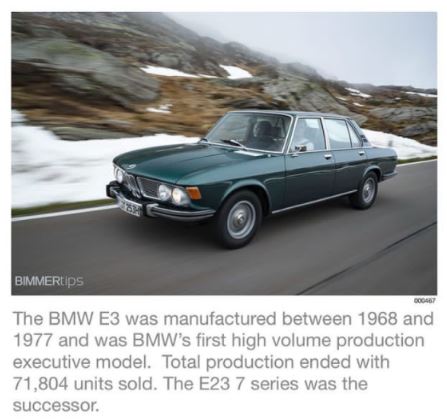
The mass media are de-massified in parallel with production, and giant TV net works shrivel as new channels proliferate. The family system, too, becomes de-massified: the nuclear family, once the modern standard, becomes a minority form while single-parent households, remarried couples, childless families and live-alones proliferate. The entire structure of society, therefore, changes as the homogeneity of Second Wave society is replaced by the heterogeneity of Third Wave civilization. Massification gives way to de-massification. In turn, the very complexity of the new system requires more and more information exchanges among its units—companies, government agencies, hospitals, associations, other institutions, even individuals. This creates a ravenous need for computers, digital telecommunications networks and new media. Simultaneously, the pace of technological change, transactions and daily life speeds up. In fact, Third Wave economies operate at speeds so accelerated that their premodern suppliers can barely keep pace. Moreover, as information increasingly substitutes for bulk raw materials, labor and other resources, Third Wave countries become less dependent on First Wave or Second Wave partners, except for markets. More and more they do business with each other. Eventually, their highly capitalized, knowledge-based technology will take over many tasks now done by the countries with affordable labor and actually to them faster, better—and more inexpensively. #RandolphHarris 2 of 18

These changes threaten to slash many of the existing economic links between the rich economies and the less affluent. Complete de-coupling is impossible. It is not possible to stop pollution, disease and immigration from penetrating the borders of the Third Wave countries. Tensions between the Third Wave civilization and the two older forms of civilizations will continue to rise, and the new civilization may well fight to establish global hegemony, just as Second Wave modernizers did with respect to the First Wave premodern societies in centuries past. Noce this concept of the clash of civilizations is grasped, it helps us make sense of many seemingly odd phenomena—today’s flaring nationalism, for instance. Nationalism is the ideology of the nation-state, which is a product of the industrial revolution. Thus, as First Wave, or agrarian, societies seek to start or complete their industrialization, they demand the trappings of nationhood. Former Soviet republics like the Ukraine or Estonia or Georgia fiercely insist on self-determination, and demand yesterday’s marks of modernity—the flags, armies and currencies that defined the nation-state during the Second Wave, or industrial, era. It is hard for may in the high-tech World to comprehend the motivations of ultra-nationalists. Their puffed-up patriotism strikes many as amusing. It calls to mind the land of Freedonia in the Marx Brothers’ movie Duck Soup, which satirized national superiority as two fictional nations went to war. #RandolphHarris 3 of 18

By contrast, it is incomprehensible to nationalists how some countries allow others to invade their sacred independence. Yet the “globalization” of business and finance required by the advancing Third Wave economies routinely punctures the national “sovereignty” the new nationalists hold so dear. As economies are transformed by the Third Wave, they are compelled to surrender part of their sovereignty and to accept increasing economic and cultural intrusions from one another. Thus, while poets and intellectuals of economically backward regions write national anthems, poets and intellectuals of Third Wave states sing the virtues of a “borderless” World and “planetary consciousness.” The resulting collisions, reflecting the sharply differing needs of two radically different civilizations, could provoke some of the worst bloodshed in the years to come. If today’s redivision of the World from two into three parts seems less than obvious right ow, it is simply because the transition from Second Wave brute-force economies to Third Wave brain-force economies is nowhere yet complete. Even in the United States of America, Japan and Europe, the domestic battle for control between Third and Second Wave elites is still not over. Important Second Wave institutions and sectors of production still remain, and Second Wave political lobbies still cling to power. The “mix” of Second and Third Wave elements in each high tech country gives each its own characteristic “formation.” Nevertheless, the trajectories are clear. #RandolphHarris 4 of 18

The globally competitive race will be won by the countries that complete their Third Wave transformation with the least amount of domestic dislocation and unrest. In the meantime, the historic change from a bisected to a trisected World could well trigger the deepest power struggles on the planet, as each country tries to position itself in the emerging three-tiered power structure. Behind this monumental reallocation of power lies a change in the role, significance and nature of knowledge. As far as the global economy rebalancing is concerned, this is not the end of the story. The global downturn years brought an important change: as export dwindled, a greater part of the made-in-America consumer products stater to be sold domestically. Real private consumption is at 53 percent. American is going through a resurgence of private consumption growth. Since March 2020, we have all learned more about supply chains and global trade than we ever expected. We understand better than ever how the global supply chain affects what shows up on our shelves—or what does not (like toilet paper, bleach, soap, building materials and automobile parts, and the microchip shortage). Although sourcing supplies for lower-cost regions of the World seems to make sense, it can cause Americans to lose their jobs and businesses, and leaves us vulnerable to shutdowns, lockdowns, and shortages. This visibility has heightened awareness and lead to a shift of consumer preference that has made people become more patriotic. Consumers are willing to pay up to 20 percent more for goods made in the USA. This is true for consumer goods as well as business-to-business and industrial purchases. #RandolphHarris 5 of 18

In addition, many people believe that buying America is part of supporting the American heritage and that USA-made goods are superior. Of course, our shift toward buying American comes after a nearly 30-year cycle of demand for lower-cost goods that pushed production from the United States of America into lower-cost regions of the World. This cycle is shifting back to USA soil as people realize that the ultimate cost can damage the national economy. It could perhaps even risk our position of power and influence in the World. For every $1 invested in USA manufacturing, $1.81 in value is generated in return. Manufacturers contribute $2.17 trillion to the national economy—over 12 percent of the gross domestic product (GDP), or the measure of the market value of the country’s output of products and services. Manufacturing also supports more than 40 million jobs in the USA. What funds this activity? Demand from consumers—and when we buy American and buy local, we are creating more demand for goods manufactured right here. Small businesses also have an enormous collective power. In fact, together US-based small businesses generate $4.8 trillion in gross domestic product (GDP)—making them equivalent to the third-largest economy in the World. Buying products made in America comes with a sense of fulfillment. Many people say that they feel great satisfaction knowing that they are behind a product that makes people’s lives easier and contributes to our national and local economy. #RandolphHarris 6 of 18

Families ascending from low to middle-income bracket are usually increasing their consumption at the highest pace. Since hundreds of millions of American households have more consumer power, this wave will continue for decades to come, enabling America to grow even in times when we face a recession. According to functionalist theory, prostitution exists because it serves several important functions for society generally and for certain people in society. It provides a source of income for many people who otherwise might be jobless, and it provides a sexual alternative for men with motivations. Nearly one hundred years ago, sociologist Dr. Kingsley Davis wrote that prostitution even lowers the divorce rate. Because prostitution is generally impersonal, these john and janes do not usually fall in love with their prostitutes, and their marriages are not threatened. According to conflict theory, prostitution reflects the economic inequality in society. Many less affluent people feel compelled to become prostitutes because of their lack of money; because wealthier people have many other sources of income, the idea of becoming a prostitute is something they may only do for fun and a lot of money. Sad but interesting historical support for this view comes from an increase in prostitution in the second half of the nineteenth century. Many women lost husbands and boyfriends in the war and were left penniless. Lacking formal education and living in a society that at the time offered few job opportunities to women, many of these bereaved women were forced to turn to prostitution to feed their families and themselves. #RandolphHarris 7 of 18

The prostitute-as-victim and prostitute-as-survivor identifications were made possible by the dissolving of the symbolic boundaries between “normal” and “abnormal” men so that all men with whom the respondents had (or might have) a relationship with became both (i) boyfriends and potential pimps; and (ii) ordinary men doing what comes naturally and abnormal dangerous men. The meanings for “men,” “violence” and “danger” were fused together so that all men became “risky,” “dangerous” (in the sense of individuals who threatened the women’s overall social, material and, occasionally, physical safety) and/or “suspect” (in the sense of individuals could not be trusted). This meant that the women were unable to take anything in their relationship with men for granted, at the same time as necessarily having to recognize and ignore the potential threats and risks inherent in their relations with men in order to continue with their day-to-day lives. The conflation of men with danger is most evident in the women’s talk about “pimps” who posed the specific threat of violence and financial exploitation. Earlier it was noted that the term “pimp” was used by the women in three distinct ways. Until this point, the term pimp has been used as a descriptive label. However, “pimps” also occupied a crucial and pivotal symbolic space in that the term was used in an imaginary fashion to represent the archetypal dangers of involvement in prostitution. At various points in all the narratives, the respondents separated “pimps” from boyfriends. #RandolphHarris 8 of 18

“Pimps” were sadistically violent men who would rape, kidnap, and entrap women, taking all their money from whom there was no escape, no resistance, no sanctuary. In the construction of this symbolic category, the women drew on discourses of criminal men which situated such men as “outsiders” in relation to ordinary morality and on discourses of masculinity which essentialized male violence so that “pimps” were constructed as men who are always and already violent. Hence, Helena (age 35) was able to comment: “Pimps are not like other men. They ain’t got no heart. They only ever want money.” Similarly, Anna (aged 36): “After I killed my [pimp], I realized that it weren’t really his fault that he was like that. [Like what?] Well, raping me and beating up on me, making me have sex with dogs and sh*t, taking all my money. Some men are just like that. I think it’s in their nature. The one thing I’ve learned is that you gotta steer clear of [pimps]. It’s just too dangerous to get involved with them.” (Anna, aged 36.) And yet, the distinction between “pimps” and other men (and especially other men as boyfriends) was also dissolved. Part of the set of meanings in which men represented “risk” was an understanding of men as being “suspect” (id est not trustworthy). Boyfriends were especially suspect because the women could never trust or be sure that the individual boyfriend they were involved with was not, in fact, a pimp. In other words, there was a notable construction of all partners with whom the women had relationships as being also (at least potentially) pimps. #RandolphHarris 9 of 18

Witness the following: “You gotta watch having boyfirneds, coz he’ll [pimp] ya if you’re not careful. In the end you think, boyfriend, [pimp], boyfriend, [pimp], what’s the difference? All boyfriends will [pimp] you in the end.” (Barbara, age 24.) Boyfriends became potential pimps, the respondents believed, because of the women’s engagement in prostitution. The women believed that they turned their boyfriends into pimps by being willing to share their money with them. “…it was my fault that he turned into my [pimp]. I’d give him money. I mean, he started getting violence, coz he started to want more and he was spending all my money on drink and drugs. I completely changed him.” (Michelle, aged 33.) At the same time as dissolving the boundary between boyfriends and pimps, the above extract (and others like it) demonstrate that the women also resurrected that boundary. Boyfriends became pimps when they got “greedy.” Put another way, for many interviewees, the difference between boyfriends and pimps was not a matter of economics or economic exploitation because they understood all relationships as having an exchange of money (and not necessarily an equal sharing of the total resources of the couple). Rather, the difference was whether or not the women believed that their boyfriends were taking more money than they were “due.” The simultaneously expressed prostitute-as-victim and prostitute-as-survivor identifications were made possible by a restructuring of the meanings of men and violence wherein men came to represent risk. Within such a symbolic landscape, the interviewees were able to construct their relationships with john, boyfriends and pimps as being risky and, therefore, were able to locate themselves as victims and survivors of these relationships. #RandolphHarris 10 of 18

Moreover, the men-as-risk symbolic landscape permitted the women to tell contradictory stories of engagement in prostitution as being both a specific form of victimization and a means to survive once the battle had been won. Women’s engagement in prostitution cannot be understood without a recognition of their material conditions and how those conditions give shape to a particular and necessary reordering of the meanings of men, money, and violence. When women’s accounts are analyzed the question that arises is how their stories, which appear to lack a coherent rationale, can make sense. To his end, the symbolic level, the contradictions of prostitution are resolved into a calm unity of coherent thought via the symbolic strategies by which the women were located as workers and commodified bodies, as business women and loving partners and as victims and survivors (and the shifting meaning of men, money, and violence that underpinned those strategies). This is why people do not allow their kids to listen to certain kind of music, as it makes people think that violence and violence towards women and sexual immorality is acceptable. At a young age, one may take that perspective as gospel. Therefore, it is advised for parents to screen the media that their children are consuming in effort to prevent them from becoming abusers or victims. Youth do not yet have a firm grip on what it means to be an adult and we want them to grow up to be good citizens, honest, and hardworking. The goal is to make the youth successful, not prime them to spend life in prison. #RandolphHarris 11 of 18

Because so many people have a mistaken idea about the location of God—used by psychopathological offenders as the groundwork for manifestations which seem to support this concept—have come about the delusions of believers during past ages, and in recent years, who assert themselves to be “Christ.” On the same premise will come about the great deception at the end of the age, foretold by the Lord in Matthew 24.24, of the “false Christs” and false prophets; and the “I am the Christ” claim by leaders of groups of side-tracked believers, and the thousands of others who have been sent to asylums even though not truly monomaniacs. The psychopathological offender’s richest harvest is from the effects of one’s counterfeits; and unwittingly, many sober and faithful teachers of “holiness” have assisted them n their deceptions through the use of language which gives a materialistic idea of spiritual things, and which is eagerly laid hold of by the natural mind. Those who locate God personally and wholly in themselves, by their assertions, practically “divine” persons. God is not wholly in any man or woman. He dwells in those who receive Him, by His own Spirit communicated to them. “God is Spirit,” and mind and body cannot hold communion with spirit. Sensuous feelings, or “conscious” physical enjoyment of some supposed spiritual presence, is not true communion of spirit with Spirit, such as the Father seeks from those who worship Him (john 4.24). #RandolphHarris 12 of 18

God is in Heaven. Christ the Glorified Man is in Heaven. The location of the God we worship is of supreme importance. If we think of our God as in us, and, around us, for our worship and for our “enjoyment,” we unwittingly open the door to the psychological offenders in the atmosphere which surrounds us—instead of our penetrating in spirit through the lower Heavens to the throne of God, which is in the highest Heaven, “above all principality and power,…and every name that is named, not only in this World, but also in that which is to come,” reports Ephesians 1.21. The first ontological concept is that of the basic ontological structure, self and World. The question of being supposes a subject who asks and an object about which one asks. This subject-object structure, in turn, reveals the self-World structure of being. Man occupies the dominant position in ontology, for, although every being shares in the structure of being, only man is aware of it. Moreover, all levels of being are united in man and can be approached through him. Man experiences himself as a “self,” as being separated in some way from everything else, having everything else opposite one’s self, being able to look at it and to act upon it. At the same time, however, this self is aware that it belongs to that at which it looks. More precisely, man has an ego-self, since his self includes self-consciousness in addition to its subconscious and unconscious basis. By analogy, then, selfhood or self-centeredness is attributed to all beings, organic and inorganic. #RandolphHarris 13 of 18

Man, the ego-self, has a World, a structural which he belongs and which he perceives. The self of every being inferior to man has at least an environment to which it belongs, but which it cannot transcend. Self and World stand in polar relation. The self without a World is empty; the World without a self is dead. The self-World polarity underlies the subject-object structure. It also explains logos. For objective reason is the structured whole of the World, and subjective reason is the structural centeredness of the self. The basic ontological structure is a polarity that cannot be derived, but only accepted. If one asks, “What precedes self and World?”—the answer must come from revelation, for reason stands at the brink of its limits. The transfer of production from the home to the factory is the principal cause for the existence of the family agencies we call economic. Since the Industrial Revolution and until recently there has been a definite distinction between agencies explicitly concerned with the financial or economic welfare of the family and the other general industrial and economic institutions of the community. This distinction has held good except in the case of family farms and businesses. In these, production—even if only for direct consumption—has always been subordinate and instrumental to the welfare of the families who carried it on. The same cannot be said of the new institutions to which most of the productive functions of the family have been transferred. These institutions—corporations in the main—have taken on only limited responsibility for their customers and employees. #RandolphHarris 14 of 18

They pay for goods or services rendered and in turn supply goods and services in return for payment. If it is asserted that the efficiency of corporations ultimately leads to the greater welfare of families, it has also been asserted that the welfare of families, at least of employees, has often been subordinated to the efficiency of corporations. Empirically, the gains and losses to families have to be calculated not just in economic terms, but in such noneconomic values as health, education, recreation, and family solidarity. As mentioned earlier, the task of economic family agencies is largely to make up for deficiencies in family resources caused by industrialization. The major problem, of course, has been the maintenance of income. The extreme division of labor and the commercialization or economic activity has made each family extremely dependent on the continuous and regular receipt of income. The paycheck of the family wage-earner is the nexus between the family and most of the other institutions of the community. If this vital tie is broken, the results are potentially disastrous. And become it is frequently broken, due to age, unemployment, layoff, sickness, accident, or business failure, many family agencies have arisen to repair the break or remedy some of the consequences. #RandolphHarris 15 of 18

The development of family agencies devoted to income maintenance closely follows our three stages of social policy, but it can usefully be elaborated into five: the situation in which family resources are inadequate to meet sporadic severe demands on income, and where the family through banking and lending agencies, engages in saving and borrowing to level out the peaks and valleys of income receipt; the situation in which reciprocity on either a neighborly or commercial basis is inadequate, and necessary minimum assistance is given unilaterally and more or less philanthropically by charitable agencies; the situation in which agencies make efforts to rehabilitate the earning power in individual cases of economic breakdown; the situation in which a degree of reciprocity and co-operative self-help is restored through insurance schemes; and the situation in which comprehensive community action so organizes economic relations that the continuous receipet of an adequate income in which comprehensive community action so organizes economic relations that the continuous receipt of an adequate income is assured to all families, save the most disabled. In this elaboration, the first and last stages of our earlier three-stage sequence have been broken down into two stages. While the social policy on family income maintenance has evolved in these five stages, all these stages have in some form endured to the present. These stages could thus alternatively be construed as types of family agencies which grew in response to different family situations and needs. #RandolphHarris 16 of 18

At the fifth stage, what action there has been thus far has largely been limited to a selected public. The incomes of some groups have been raised through a redistribution of income among workers and employers. On the private side, of course, this had meant such agencies as unions and producer cooperatives; on the public side, it has lead to minimum wage legislation like the Fair Labor Standards Act of the federal government, or the minimum wage orders affecting service industries in certain states. The five-year General Motors-United Auto Worker contract represented recognition of the corporation’s responsibility for the maintenance and steady enhancement of the standard of living of employee families, and of the union’s responsibility for a continuous contribution to the productivity of the corporation. So far measures for the enhancement of income have been carried on independently of measures for its stabilization at a minimum level; minimum income levels have been considered a palliative rather than an ideal. Corporation-union contracts, for example, furnish new examples as et of full acceptance of responsibility for continuity of employment or income. The most impressive exception is the postwar establishment of employee pensions in industry. Nonetheless, stability at a high level (the guaranteed annual wage) had been stated s a future objective, if not an immediate goal. Moreover, without fanfare or formal acceptance of responsibility, every economic institution is steadily transferring a higher proportion of its personnel to a salaried status. #RandolphHarris 17 of 18

If and when the major of family breadwinners achieve the security and predictability of salaried positions, they will not only have left behind much of necessity for present day ameliorative schemes for assuring minimum income during adversity, but they will have entered upon an economic way of life superior by far to the security offered by the most self-sufficient of family farms. If and when that state of affairs comes to be, then our current distinction between family agencies and nonresponsible other economic institutions will have become in part irrelevant. On the other hand, each year that passes more fully deprives the traditional family of a major function that as yet no other agency fills with assurance; that is its role in vocational guidance and training. On the family far or in small businesses, the normal course was doe the heirs of the family to carry it on. Their vocational choice was so gradually assumed for earliest years that they had no sense of a ack of freedom; they could observe and learn all the habits and ways of work with minimum effort. However, now inheritance of an occupation is the privilege of a decreasing minority, and even these frequently feel a sense of conflict about stepping into paternal shoes. Preparation for a career involves the development of a vocational identity, a commitment and an education. This calls for much more than is supplied by employment exchanges and guidance bureaus. No simple counseling job referrals can handle the problem; it is a task for social engineering. #RandolphHarris 18 of 18

MAGNOLIA STATION AT CRESLEIGH RANCH
Rancho Cordova, CA | low $600s
Now Selling!

Models now open at Magnolia Station! Located at the corner of Rancho Cordova Parkway and Douglas Road, residents of Cresleigh Ranch will benefit from a brand new neighborhood with convenient access to the new Raley’s Shopping Center, Sunrise Boulevard, and much more!

Magnolia Station will include 81 homesites and five distinct plans ranging from 2,200 – 3,700 square feet; including three single story plans!

Each plan has been thoughtfully designed to include features such as: Generations Suite, Optional Offices/Dens, Extended Great Rooms, and more! https://cresleigh.com/magnolia-station/


New Satanic Mills and Factories Multiplied Over the Landscape

Each society is structuralized and operates in certain ways which are necessitated by a number of objective conditions. These conditions include methods of production and distribution which in turn depend on raw materials, industrial techniques, climate, size of population, and political and geographical factors, cultural traditions and influences to which society is exposed. There is no “society” in general, but only specific social structures which operate in different and ascertainable ways. Although these social structures do change in the course of historical development, they are relatively fixed at any given historical period, and society can exist only by operating within the framework of its particular structure. The members of the society and/or the various classes or status groups within it have to behave in such a way as to be able to function in the sense required by the social system. It is the function of the social character to shape the energies of the members of society in such a ways that their behavior is not a matter of conscious decision as to whether or not to follow the social pattern, but one of wanting to act as they have to act and at the same time finding gratification in acting according to the requirements of the culture. In other words, it is the social character’s function to mold and channel human energy within a given society for the purpose of the continued functioning of this society. Because of massive changes in society cannot occur without conflict, we believe the metaphor of history as “waves” of change is more dynamic and revealing than talk about a transition to “post-modernism.” #RandolphHarris 1 of 18

Waves are dynamic. When waves crash in on one another, powerful crosscurrent are unleashed. When waves of history collide, whole civilizations clash. And that sheds light on much that otherwise seems senseless or random in today’s World. The wave theory of conflict tells us that the main conflict we face is not between Island and the West or “the rest against the West.” Nor is America in decline. Nor are we facing the “end of history.” The deepest economic and strategic change of all is the coming division of the World into three distinct, differing, and potentially clashing civilizations that cannot be mapped using the conventional definitions. First Wave civilization was and still in inescapably attached to the land. Whatever local form it takes, whatever language its people speak, whatever its religion or belief system, it is a product of the agricultural revolution. Even today, multitudes live and die scrabbling at the unyielding soil as their ancestors did centuries ago. Second Wave civilization’s origins are in dispute. However, life did not fundamentally change for large numbers of people until, roughly speaking, three hundred and twenty years ago. That was when Newtonian science first arose. It is when the steam engine was first put to economic use and the first factories began to proliferate in Britain, France, and Italy. The less affluent began moving into cities. Daring new ideas began to circulate: the idea of progress, the odd doctrine of individual rights, the Rousseauian notion of a social contract, secularism, the separation of church and state, and the novel idea that leaders should be chosen by popular will, not divine right. #RandolphHarris 2 of 18

Driving many of these changes was a new way of creating wealth—factory production. And before long many different elements came together to form a system: mass production, mass consumption, mass education, mass media all linked together and served by specialized institutions—schools, corporations, and political parties. Even family structure changed from the large, agrarian-stye household in which several generations lived together to the small, stripped-down nuclear family typical of industrial societies. However, as of 2015, we are starting to see suburban houses growing larger in square footage, many people working in their private electronic cottage, and even large houses which encompass an apartment for elderly parents or adult children. These houses also have more than one master bedroom, sometimes as many as three. These are known as multi-generational homes. Cresleigh Homes and Millhaven Homes have many great floor plans to choose from. Nonetheless, to the people actually experiencing these many changes, life must have seemed chaotic. Yet the changes were, in fact, all closely interrelated. They were merely steps toward the full development of what we came to call modernity—mass-industrial society, the civilization of the Second Wave. That term, “civilization,” may sound pretentious, especially to many American ears, but no other term is sufficiently all-embracing to include such varied matters as technology, family life, religion, culture, politics, business, hierarchy, leadership, values, sexual morality and epistemology. #RandolphHarris 3 of 18

Swift and radical changes are occurring in every one of these dimensions of society. Change so many social, technological and cultural elements at once and you create not just a transition but a transformation, not just a new society but the beginnings, at least, of a totally new civilization. This new civilization entered history with a roar in Western Europe, fiercely resisted at every step. IN every industrializing country bitter, often bloody battles broke out between Second Wave industrial and commercial groups and First Wave landowners in alliance very often with the church (itself a great landowner). Masses of peasants were forced off the land to provide workers for the new “satanic mills” and factories that multiplied over the landscape. Strikes and rebellions, civil insurrections, border disputes and nationalist uprisings erupted as the war between First and Second Wave interest became the master conflict—the central tensions from which other conflicts derived. This pattern was repeated in almost every industrializing country. In the United Stares of America is required a terrible Civil War for the industrial-commercial interest of the North to vanquish the agrarian elites of the South. Only a few years later, the Meiji Revolution broke out in Japan, and once more Second Wave modernizers triumphed over the First Wave traditionalists. The Spread of Second Wave civilization, with its strange new way of making wealth, destabilized relationships between countries as well, creating power vacuums and power shifts. #RandolphHarris 4 of 18

Industrial civilization, the product of the great Second Wave of change, took root most rapidly on the northern shores of the great Atlantic Basin. As the Atlantic powers industrialized, they needed markets and affordable raw materials from distant regions. The advanced Second Wave powers thus wages wars of colonial conquest and came to dominate the remaining First Wave states and tribal units all over Asian and Africa. It was the master conflict again—Second Wave industrial powers versus First Wave agrarian powers—but this time on a global rather than domestic scale, and it was this struggle that basically determined the shape of the World until recent times. It set the frame within which most wars took place. Tribal and territorial wars between different primitive an agricultural groups continued as they had throughout previous millennia. However, these were of limited importance and often merely weakened both sides, making them easy prey for the colonizing force of industrial civilization. This happened, for example, in southern Africa, as Cecile Rhodes and his armed agents seized vast territories from tribal and agrarian groups busy fighting one another with primitive weapons. Elsewhere, too, many seemingly unconnected wars around the World were, in fact, expressions of the main global conflict not between competing states but competing civilizations. Yet the very biggest and most murderous wars during the industrial age were intra-industrial—wars that pitted Second Wave nations like Germany and Britain against one another, as each one struggled for global dominance while keeping the World’s First Wave populations in their subordinate place. #RandolphHarris 5 of 18

The ultimate result was a clear division. The industrial era bisected the World into a dominant and dominating Second Wave civilization and scores of sullen but subordinate First Wave colonies. Many of us grew up in this World divided between First and Second Wave civilizations. And it was perfectly clear which one held power. Today, the lineup of World civilizations is different. We are speeding toward a totally different structure of power that will not create a World cut in two but sharply divided into three contrasting and competing civilizations—the first still symbolized by the hoe, the second by the assembly line, and the third by the computer. In this trisected World the First Wave sector supplies agricultural and mineral resources, the Second Wave sector provides affordable labor and does the mass production, and a rapidly expanding Third Wave sector rises to dominance based on the new ways in which it creates and exploits knowledge. Third Wave nations sell information and innovation, management, culture and pop culture, advanced technology, software, education, training, medical care and financial and other services to the World. One of those services might well also turn out to be military protection based on its command of superior Third Wave forces. (That is, in effect, what the high-tech nations provided for Kuwait and Saudi Arabia in the Gulf War.) America’s impressive economic performance resulted first and foremost from its structural and macroeconomic strengths. The role of domestic demand was particularly important. A dramatic plunge of exports was largely offset by an increase in investment and dynamism of private consumption. #RandolphHarris 6 of 18

Decoupling raised expectations about the global economy rebalancing in the post-downturn period. The global economy rebalancing idea, advocated by President Trump is based on the presumption that Americans and Europeans should increase their savings, exports, and working population. This will help to reduce the nation deficit, increase America wages. The America government is urged to encourage the purchase of American products by offering tax credits and/or rebates on the purchase of all American vehicles, regardless of if they are new or use. Reduce the taxes on farmland and subsidize their crops to make America meat, produce, dairy and poultry more affordable to Americans, which will also increase the demands for exports. It is better to stimulate the market through the reduction of taxes, which will make American products more appealing, but will also keep Americans employed, which will reduce their use of transport payments. When people are working and earning a living, it improves their physical and mental health, in boosts their self-esteem, it increases tax revenue and keep people out of trouble with the law. They are also better able to educate their children so they become productive members of this community. Work also keeps many people from abusing drugs and alcohol because they do not have time for substance abuse with the increased responsibilities. By making America more of a close economy, through tax rebates and decreased taxes, we will reduce our dependence on other countries and reduce of federal deficit. #RandolphHarris 7 of 18

Chastity is sexual purity. Those who are chaste are morally clean in their thoughts, words, and actions. Chastity means not having any sexual relations before marriage. It also means complete fidelity to husband or wife during marriage. Sometimes people try to convince themselves that relations outside of marriage are acceptable if the participants love one another. This is not true. Breaking the law of chastity and encouraging someone else to do so is not an expression of love. People who love each other will never endanger one another’s happiness and safety in exchange for temporary personal pleasure. Sexual immortality is the selling off of sexual purity and involves any type of sexual expression outside the boundaries of a biblically defined marriage relationship. In all but one of the respondents’ narratives, and regardless of their specific prostitution-related experiences, was an identification of prostitutes-as-victims. Drawing on discourses of “victimhood” whereby victims are seen as being “blameless” and “not responsible” for the fate that befalls them, these twenty interviewees talked about themselves as individuals who were unable to control the events of their lives and who were controlled by others that hurt, mistreated or injured them. Most of the women discussed how past events (especially sexual and/or physical abuse) had “turned” them into prostitutes because, as a result of such events, all they knew “was how to be used and abused.” Witness Margie: “I didn’t have a clue then. All I knew was how to be raped, and how to be attacked and how to be beaten up and that’s all I knew. By the time he put me on the game I was already a victim, I was just a born victim. (Margie, age 37.) #RandolphHarris 8 of 18

Their identification as victim was also seen in the way that the women recounted the injurious actions of others (usually their pimps) as displacing any agency they may have had. Barbara’s comments exemplify this: “I did as I was told. You have to, otherwise you’re dead. When they’ve got a gun pointed to your head, you do as you’re told.” In contrast, in eighteen women’s accounts there was also an identification of prostitutes-as-survivors in which the women talked about themselves as successfully surviving and negotiating the risks they encountered, as battling for control over their own money (in relation to pimps) and their own physical well-being (in relation to johns). All but two of these eighteen women described themselves as “lucky” and such talk suggests their survivor-identity. Witness Georgie’s characterization of herself when she was being pimped by her last boyfriend: “I guess I was one of the lucky ones, I had clothes. I could pay my rent. I wasn’t as bad off as some. I suppose I was lucky and because of that I’ve survived.” Interestingly, it was in their talk of luckiness and being survivors that the paradoxical nature of prostitution becomes especially clear. “I get treated a lot better than most, as luck would have it. I keep some of my money, but only for the fact that he knows I’ve been to prison cuz I killed someone. He knows what I’m capable of. And he knows I’ll always make sure I survive. (Katrina, aged 21.) “There’s two sorts of prostitutes. There’s the ones that are out there for themselves, and there’s the ones that are working for their guy. #RandolphHarris 9 of 18

“I’ll give anyone credit for standing out on the streets, doing it for themselves, taking their money home. But I can’t understand anyone that can stand out there and, then, give it all to some man. [But you were in that situation for over two years.] Yea. But at least I got out of it. I survived. In the end, I’m one of the lucky ones. I’m strong.” (Lois, aged 21.) Both of these women (Lois and Katrina) were strident in presenting their engagement in prostitution as a trap threatening their physical, material and social survival. They both talked about being forced to prostitute through fear of death, about being pimped by men who were sadistic and brutal, who had battered and raped them. And yet, here, both women identified as being survivors. When people care for one another enough to keep the law of chastity, their love, trust, and commitment increase, resulting in greater happiness and unity. In contrast, relationships built sexual immorality sour quickly. Those who engage in sexual immorality often feel fear, guilt, and shame. Bitterness, jealousy, and hatred soon replace any positive feelings that once existed in their relationship. Our Heavenly Father has given us the law of chastity for our protection. Obedience to this law is essential to personal peace and strength of character and to happiness in the home. Those who keep themselves sexually pure will avoid the spiritual and emotional damage that always come from sharing physical intimacies with someone outside the marriage. #RandolphHarris 10 of 18

Those who keep themselves sexually pure will be sensitive to the Holy Ghost’s guidance, strength, comfort, and protection and will fulfill an important requirement for receiving a temple recommend and participating in temple ordinances. In seeking to deceive the self-actualized, the first great effort of psychopathological offenders is directed toward getting one to accept their suggestions and workings as being the speaking, working, or leading of God. Their initial device is to counterfeit a “Divine Pressence,” under cover of which they can mislead their victim as they wish. Remember, the word “counterfeit” means THE SUBSTITUTION OF THE FALSE FOR THE TRUE. The condition on the part of the believer which gives the deceiving spirits their opportunity is sometimes a mistaken belief regarding the location of God. God is present either in them (consciously), or around them (consciously). When they pray they think of and pray to God in themselves, or else to God around them—in the room or atmosphere. They use their imagination, and try to “realize” His presence, and they desire to “feel” His presence in them or upon them. This locating of God in or around the believer usually comes about at the time of some special crisis in one’s life, before which one lived more by the acceptance of facts declared in the Scriptures, as understood by one’s intelligence. However, then one becomes more “conscious” of the presence of God by the Spirit and in the Spirit, and so begins to locate the Person of God as in, around, or upon one. So one turns inward, and begins to pray to God as within one—which in time may even result in prayer to psychopathological offenders. #RandolphHarris 11 of 18

The logical sequence of prayer to God as located within can be pressed to absurdity, id est, if a person can pray to God residing in oneself, why not pray to God in another, elsewhere? The possible dangers arising from this misconception of truth—the subjectivizing of God as a Person within—are obvious. Some self-actualized live so inwardly in communion, worship and vision as to become spiritually introverted, and cramped and narrow in their outlook; with the result that their spiritual capacity and mental powers become dwarfed and powerless. Others become victims to the “inner voice” and the introverted attitude of listening to it—which is the ultimate result of the location of God as a Person within—so that eventually the mind becomes fixed in the introverted condition with no out-going action at all. In fact, all turning inwards to a subjective location of God as indwelling, speaking, communing and guiding—in a materialistic or conscious sense—is open to the gravest danger; for upon this thought and belief, sedulously cultivated by the powers of psychopathological offenders, the most serious deceptions of deceiving offenders have taken place. Philosophers have labored for thousands of years to discover and organize ontological concepts and have assigned them a variety of names: principles, categories, ultimate notions, elements, structures, and so on. #RandolphHarris 12 of 18

Ontological concepts are a priori in the strict sense of the word. They determine the nature of experience. They are present whenever something is experienced. This is not to say that they are known prior to experience nor that they constitute an immutable framework. However, if an experience is had, it presupposes a structure. The experience changes only because its a priori structure changes. Consequently, as long as there is experience in any definite sense of the word, there is a structure of experience which can be recognized within the process of experiencing and which can be elaborated critically. We are dealing with the experience of being and nonbeing. Because these are such ultimate notions, we cannot spell out the ontological concepts with “definitional” precision, but only by “configurational” consistency, id est, by describing their stable configuration in a variety of contexts. Not only is the strict definition of ontological concepts impossible, but also their strict verification. There is certainly not an experimental way, but there is an experiential way. The only answer, but sufficient answer, which can be given to the question of ontological verification is the appeal to intelligent recognition. To help with the evolution of family agencies in general, the first problem was treated by extending a helping private or public hand to the few with the lowest income or the most extreme misfortune. This called for charity by philanthropic individuals and associations, or assistance through government relief offices. #RandolphHarris 13 of 18

At the second stage, there are privately organized bodies such as the National Foundation for Infantile Paralysis and special clinics maintained by subscription for such purposes as cancer detection. On the public side there are organized preventive agencies such as the health departments, and state institutions like mental and tuberculosis hospitals, such as the one Sarah L. Winchester established in New Haven, Connecticut in memory of her beloved husband, William Wirt Winchester. The third stage has only arrived for scattered segments of the population, and only partially for most of these, despite the vast interest of the America public in health as a value, an interest which is reflected in advertising and every other medium. Most notable of the private agencies at this stage are the voluntary group insurance plans fostered by the various state medical and hospital societies (Blue Shield and Blue Cross), whose combined coverage is now said to be above fifty million persons. There are a multitude of other risk-sharing agencies, which are sponsored by companies, unions, fraternal organizations, and, of course, private insurance companies. On the public side, the only agencies which could be called co-operative are Workmen’s Compensation bureaus at the state level, and Veterans Administration provisions at the national level. And even in these, the recipients’ participation in policy-making is slight and only possible through the awkward medium of labor and veterans’ pressure groups. It is impossible to anticipate what effect a continued rise and wide distribution of real per capita incomes will have upon the adoption of such a scheme. #RandolphHarris 14 of 18

Schemes of this kind raise a real problem as to how desirable it is to shift the economic responsibility for proper medical care further away from the family. Perhaps families can be adequately equipped to discharge this function through lesser expedients than national health insurance, which was the part of the Ewing program which aroused most opposition. In any case, both advocates of a federal program such as the Committee for the Nation’s Health, and opponents of it such as the American Medical Association, seem to agree that the problem in financing adequate medical care is limited financial resources of middle-income families. Well-to-do families have adequate resources to meet all their medical costs; dependent families, though suffering a higher incidence of sickness, receive considerable, if as yet inadequate, care through the various private and public relief agencies. Yet between these two segments of the population there is a large group who fall far short of the level of medical care they could receive through a comprehensive program. The grounds of judgment as to appropriate action here are patently debatable, as also are the latest proposals for the reinsurance of companies offering private plans for entire families. Whatever decisions emerge, Americans can well take pride in the vigor and rational nature of the present discission of national policy. Whether the ultimate decision is for a private or a public plan, it seems that meanwhile the stage of concerted action is spreading rapidly and embracing more than a mere segment of the population. #RandolphHarris 15 of 18

A number of medical agencies, while maintaining a vigorous interest in their therapeutic and preventive functions, have moved beyond these stages to a concern for planning for more general values of maximum physical and mental health. This is most conspicuous in the field of medical research, where one can indeed speak of positive programs and of genuine, even spectacular progress. Medical research has moved long beyond the etiology of disease to fundamental theoretical research in a great array of fields such as physiology, biochemistry, bacteriology, and the like. Medical research is now in a position to give authoritative guidance on the hygienic conditions optimal for the physical competence of the nation’s family members. The bulk of such research is now conducted by salaried investigators in public institutions, or through tax-exempt foundations and nonprofit corporations such as universities, within which the commercial incentive, as distinguished from the professional incentive, is subordinate if not absent. A parallel development in the commercial field is the excellent research done under the sponsorship of certain pharmaceutical houses. The interpenetration of medical problems, like social problems, as well as the cost, makes researcher turn for support to the whole community. In the United States of America Public Health Service, appropriations for research divisions are now a substantial part of the appropriations for the disease control divisions. Another field of positive planning is the health programs of the schools. #RandolphHarris 16 of 18
Where these are most fully developed, they include periodically physical examinations and recommendations to parents, instruction in hygiene and sex, physical training, and planed school lunches. While these programs ostensibly only cover school children, much of what the children learn is passed on to their parents. The controversial problems that arise in the school health programs such as diet, sex instruction, or immunization again bring up the issue of the extent to which the school claim functions previously or potentially the responsibility of the family. Most of this controversy is conducted in terms of moral and religious beliefs, without much thought for the allocation of resources between school and family which would result in the development of each child’s maximum competence. A third promising trend is in pediatrics, where there is a movement toward child development in the positive sense, as exemplified in such growing institutions as well-baby clinics. Well-baby clinics are gradually perfecting measures of child development and procedures for training parents in matter-of-fact and reliable methods for fostering optimal development, but they still have far to go. Obstetric programs also are giving increasing pre-parental instruction to mothers and fathers, on both delivery and infant care. #RandolphHarris 17 of 18

As such schemes evolve, they will seem less like medical agencies and more like schools. “Social hygiene” has come to mean “training for personal and family living.” Planned parenthood clinics are turning toward the correction of infertility in the sedentary classes, to nonmedical counseling, and to preparing young couples for marriage in other respects. Public health nursing and health education have become distinct professions. Apart from the gains being made through biological research, programs to advance the health and physical competence of the people in the positive sense will in the future be conducted as much through economic, social service, counseling, educational, and recreational agencies, as directly through the medical agencies, as directly through the medical agencies themselves. And the medical professions, as they intensify their concern with prevention of ill health and with public health generally, are not only finding themselves linked with other professions, but with their clients. Their clients as fellow-citizens become partners in organizing the conditions for the growth of competence. The prognosis of the decay and barbarism into which the twenty-first century is sinking into made by the people of the most varied philosophical and political views. The number of self-employed entrepreneurs has deceased considerably, and many corporate businesses are failing. However, capitalism appears as the system which corresponds perfectly to human nature, and places it beyond the reach of criticism. #RandolphHarris 18 of 18

MAGNOLIA STATION AT CRESLEIGH RANCH
Rancho Cordova, CA | low $600s
Now Selling!

A Cresleigh Home will speak to you and tell you to breathe calm, be strong, even when your swimming out so deep you can’t breathe because this is exactly where you belong. You will feel like you are right for the first.

Models now open at Magnolia Station! Located at the corner of Rancho Cordova Parkway and Douglas Road, residents of Cresleigh Ranch will benefit from a brand new neighborhood with convenient access to the new Raley’s Shopping Center, Sunrise Boulevard, and much more!

Every time a Cresleigh Home takes you in, you will feel your heart skip a beat again, as you find yourself drowning in a sea of love.


Look at those Big Bad Pimps—Americans Want to Pay for their Lunch!

Whenever a single wave of change predominates in any given society, the pattern of future development is relatively easy to discern. Writers, artists, journalists and others discover the “wave of the future.” Thus, in nineteenth-century Europe many thinkers, business leaders, politicians and ordinary people held a clear, basically correct image of the future. They sensed that history was moving toward the ultimate triumph of industrialism over premechanized agriculture, and they foresaw with considerable accuracy many of the changes that the Second Wave would bring with it: more powerful technologies, bigger cities, faster transport, mass education and the like. This clarity of vision had direct political effects. Parties and political movements were able to triangulate with respect to the future. Preindustrial agricultural interests organized a rearguard psychological action against encroaching industrialism, against “big business,” against “union bosses,” against “sinful cities.” Labor and management grappled for control of the main levers of the emergent industrial society. Ethnic and racial minorities, defining their rights in terms of an improved role in the industrial World, demanded access to jobs, corporate positions, urban housing, better wages and mass public education. This industrial vision of the future had important effects as well. The shared image of an industrial future tended to define options, to give individuals a sense not merely of who or what they were but of what they were likely to become. It provided a degree of stability and a sense of self, even in the midst of extreme social change. #RandolphHarris 1 of 18

This industrial vision of the future had important psychological effects as well. The shared images of an industrial future tended to define options, to give individuals a sense not merely of who or what they were but of what they were likely to become. It provided a degree of stability and a sense of self, even in the midst of extreme social change. In contrast, when a society is struck by two or more giant waves of change and none is yet clearly dominant, the image of the future is fractured. It becomes extremely difficult to sort out the meaning of the changes and conflicts that arise. The collision of wave fronts creates a raging ocean full of clashing currents, eddies and maelstorms which conceal the deeper, more important historic tides. In the United States of America—and in many other countries—the collision of Second and Third Wave creates social tensions, dangerous conflicts and strange new political wave fronts that cut across the usual divisions of class, race, gender, or party. This collision makes a shambles of traditional political vocabularies and makes it very difficult to separate progressive from reactionaries, friends from enemies. All the old polarizations and coalitions break up. The apparent incoherence of political life is mirrored in personality disintegration. Psychotherapists and gurus do a land-office business, people wander aimlessly amid competing therapies. They slip into cultus and covens or, alternatively, into a pathological privatism, convinced that reality is absurd, insane or meaningless. #RandolphHarris 2 of 18

Life may indeed be absurd in some large, cosmic sense. However, this hardly proves that there is no pattern in today’s events. In fact, there is a distinct, hidden order the becomes detectable as soon as we learn to distinguish Third Wave changes from those associated with a diminishing Second Wave. The crosscurrents created by these waves of change are reflected in our work, family life, sexual attitudes and personal morality. They show up in life-styles and voting behavior. For in our personal lives and political acts, whether we know it or not, most of us in the rich countries are essentially Second Wave people committed to maintaining a dying order. Third Wave people constructing a radically different tomorrow or a confused, self-canceling mixture of the two. The conflict between Second and Third Wave groupings is, in fact, the central political tension cutting through our society today. The more basic political question, as we shall see, is not who controls the last days of industrial society but who shapes the new civilization rapidly rising to replace it. On one side are the partisans of the industrial past; on the other, growing millions who recognize that the most urgent problems of the World can no longer be resolved within the frame work of an industrial order. This conflict is the “super struggle” for tomorrow. #RandolphHarris 3 of 18

This confrontation between the vested interest of the Second Wave and the people of the Third Wave already runs like an electric current through the political life of every nation. Even in the nonindustrial counties of the World, all the old battle lines have been forcibly redrawn by the arrival of the Third Wave. The old war of agricultural, often feudal interests against industrializing elites, either capitalist or socialists, takes on a new dimension in light of the coming obsolescence of industrialism. Now that Third Wave civilization is making its appearance, does rapid industrialism imply liberation from neocolonialism and poverty, or does it, in fact, guarantee permanent dependency? It is only against this wide-screen background that we can begin to make sense of the headlines, to sort out our priorities, to frame sensible strategies for the control of change in our lives. Once we realize that a bitter struggle is now raging between those who seek to preserve industrialism and those who seek to supplant it, we have a new tool for changing that World. To use this tool, however, we must be able to distinguish clearly those changes that extend the old industrial civilization from those which facilitate the arrival of the new. We must, in short, understand both the old and the new, the Second Wave industrial system into which so many of us were born and the Third Wave civilization that we and our children have inhabited. America has a lot of structural problems. Almost all of them are similar to those faced by developing nations. However, they are more acute and visible to the World because of America’s unique status. #RandolphHarris 4 of 18

The list is well-known. We no longer manufacture a significant portion of products we use in our own country. Although we are technologically advanced, new technology is often not used in many buildings and infrastructure because older technology is more cost efficient. And there is a battle between polluting enterprises and green technology, both of which pose problems for the environment. There is high latent unemployment and underemployment in rural and urban areas. Large-scale migration to the cities overstrains their infrastructure causing a lot of ultra-urbanization pains. Obviously mismatch exists between the labor supply (and those willing to work for lower wages, tend to get most of the work). And so on, and so forth. Discussion of America’s present and future usually focuses on a gentlemanly set of problems. They are often looked upon as critical and posing a threat of abrupt and disruptive economic downturn, social and political turmoil or, in the extreme case, the country’s collapse. Such views do not look convincing. The gentlemanly set of problems is manageable, especially for America with its remarkable ability to address crucial issues a gradual, evolutionary, but persistent change. Let us have a loot at a conventional Problem List. Aging Population and Labor Shortages? Yes, population of the working age is apparently approaching its peak and will start to decline in the second half od this century. #RandolphHarris 5 of 18

However, labor force constraints can and most likely will be offset by further gains in labor productivity. Also, there is still a lot of underused human resources in the countryside (about 40 percent of all American worker live in suburban areas) whose migration to the cities will continue to boost labor supply. However, many businesses are now leaving the decaying urban centers, for the suburbs, and many people are working from their electronic cottages. As a result, more businesses will move to the suburbs, which should decrease inner state traffic. As for the growing number and share of elderly people, America with its high migration rates, unhealthy public finance, extremely high social spending, and high dependency toward social safety nets in the future, is in a good position to address the population aging issues in a realistic and financially sustainable way. However, many senior citizens are now small business owners and in good health and are working and support their families, while their kids go to college to obtain degrees, and one day may take over the family business and expand it. Also, the genetic engineer and stem cell technology, we may be able to prevent and cure disabilities. Therefore, most of the population will be in the condition to work and pay taxes. One day, scientists may even find a cure for aging. So, there is a lot of hope for the future. Growing Income Gaps? Well, indeed, they are growing, but, on the other hand, low-income families are mostly elevating their earnings and consumption standards; social safety nets are improving; and, overall, today’s America provides a lot of opportunities to enhance revenues and life a better life to those who really want to make it. #RandolphHarris 6 of 18

Intra-Regional Development Gaps Threatening the Country’s Integrity? Not at all. It is not a critical problem as less developed provinces are becoming the country’s major growth engines and the state has enough financial and other resources to support and amplify the trend. Environmental Damage Endangering the Very Basis of Human Life? No doubt, a whole lot of issues have become critical. However, America is more and more establishing the position of the World leaders in most areas of sustainable smokestack energy, as these companies like Standard Oil are starting to tackle the environmental problems in the same gradual, evolutionarily, but persistent manner it tackled the other ones. And, finally, is there a threat of a big political and social turmoil that may occur as people’s anger with the authoritarian Capitalist regime and democratic political system bursts out and they take to the streets again? Fringe groups of Americans have also been dissatisfied with law and order and hard work, and their anger with the regime is really strong and apparently growing, impacted by numerous cases of power abuse, rampant corruption, disrespect for law enforcement, abuse elder and contempt for leaders, and a lack of respect for patriots and Americana, and other violations of basic human rights. A fresh memory of mine…Some three or four years ago, during a reception in hour of a group of American professors visiting Africa, two of them approached me for a greeting and asked a tough question: “Sir, why don’t you write plainly the America’s present political system is outdated and has to be changed? It worked, but now it has ceased to work. For us it is kind of problematic to write such a thing. Why don’t you?” #RandolphHarris 7 of 18

What could I say to this? For sure, democracy and human rights have a basic, universal value and are perhaps not less (or even more?) important than economic growth and rising living standards, but really all of that is intertwined. Generally speaking, people are disrespected because they do not have enough money, because the color of their skin, religion, physical appearance and what type of house they live in and the car they drive. However, as standards of living increases, through economic growth, people become more rational, better education, and have more money to defend themselves in a court of law, so people reconsider violating these peoples’ human rights because they know they may suffer dire financial and legal consequences as a result, which could impact their freedom and reputation. However, on a macro level, we are seeing people raging against the capitalistic regime and they are actually fighting to restrict freedoms and destroy human dignity; information block-outs are now occurring because a handful of corporations own the media outlets and are fighting to conceal the truth; as well as cynical politicians consorting with the World’s most dictatorial and criminal regimes, which often get a helping hand from Washington when the global community tries to do something to put an end to their brutalities (notably, America tends to mind its own business and condemns brutal regimes for massacres of all people or for developing weapons of mass destruction; it always repeats honest and genuine calls to resolve issues peacefully and not to interfere with internal affairs when possible), naturally, this causes resentment, anger, and indignation. #RandolphHarris 8 of 18

It is a moral and historical obligation of all America and all honest people in the World who care about justice, the rule of law, mortality, and individual freedom to do their best to send the global leadership a clear message about it. On the other hand, values, ideals, and emotions are not the right starting point when your task is to analyze the logic of the evolution of the country’s political system. And there the truth is that America is approaching the task of changing its political system in the very same way it has approached the task of the economic reforms; gradual, evolutionary, but persistent. Its ruling elite is really trying to find workable answers to key and very difficult questions, while avoiding, by all means, any abrupt revolutionary change. At the dawn of 2020, President Trump proclaimed that everything which is good for a human being is capitalism, that is it not so important if you drive a Cadillac or BMW as long as it is made in America or Europe, and that there is no problem with some Americans becoming rich earlier than others. A variety of forms of ownership is encouraged to give a boost to private enterprise and less the burden on social programs. Many affluent people, this may come to a surprise to some, when they retire, it is funded 100 percent by private investments. Wealthy and upper-class Americans have always felt shameful to use government resources, that is why they believe in capitalism. They want to pay for their lunch. After his election, President Trump boosted the stock market to record highs, we saw property value soar (which is a good thing because it puts money in the banks of homeowners), and unemployment reach a historic low. #RandolphHarris 9 of 18

Also, although President Trump is a Republican, he is also a business owner. He fought to make sure each and every America, no matter if they pack income taxes or not, and every business received stimulus money. This helped avoid a depression that would have been much more severe than the Great Depression. Because people have hope, they did not jump from buildings to end their lives like they did during the great depression. President Trump also made sure all Americans has access to medical care, that they had food on the table and that fuel prices remained low so people could get back to work and school. He also told people that they have a right to tell authorities about their grievances, in a respectful manner, but that is they got out of line that the situation would be dealt with by using necessary force. He also told Congress and state and local leaders that they are to listen to what the people say, as long as they are respectful, and seek solutions for the issues they pose. Also, perhaps, America is the World leader in terms of the number of high-ranking officials executed for corruption-related crimes. The FBI prosecuted several government officials in Sacramento when they raided the state capitol. Again, any changes America makes will not be abrupt: from one party of rule to full-fledged multiparty politics, but evolutionary and very gradual, which is why it is very important to people to actually to research about political issues and politicians and vote accordingly. Many people used to vote democratic because they wanted high welfare benefits and more social programs, but as you see, many democrats are using the money to build sports complexes and remodel state buildings and put in bike lanes and resurface sidewalks, while affordable housing needs are ignored. So a Republican may be your best bet. #RandolphHarris 10 of 18

As any business owner will tell you, if your employees cannot take care of themselves, they will not take good care of your business. Therefore, a business owner might make a better President, than a politician because they are used to dealing with human concerns. Citizens are being encouraged by federal law enforcement to stop criticizing the ruling party too strongly because otherwise they may face tough penalties—for example, for disturbing the social order or for being a public nuisance. President Trump was even in the works of making a government news broadcast channel, like FOX News or CNN, so you could get the information directly and unfiltered from the government. That way, private entities and special interest groups will not be able to distort the information for profit. In other words, the major trend is and will be a shift from an outdated communist dictatorship of the traditional type to a more sophisticated political system with a democratic base. This will make the information projected over the airwaves more legitimate in the eyes of World and public opinion or at least to argue that it is legitimate and that it cares about democracy. Look around you and you will see: America is one of the best countries in the World. Now, prostitution is an economic activity, and it is one many people turn to when they cannot feed their families, and this is why the government likes to keep social programs because no matter how rich a person is or what political party, they are part of, their kids could become involved in prostitution if they have no other way to survive. #RandolphHarris 11 of 18

The prostitutes-as-business-women and prostitutes-as-loving-partners identifications were made possible by a men-as-expense symbolic landscape where men were defined in relation to money because involvement with them was seen as necessitating payment in the form of “opportunity costs” (id est, vales which must be given up in order to achieve something) and “hidden costs” (id est values which are unknown at the time of calculation). The men-as-expense symbolic nexus was a construction of involvement with men in general rather than involvement with men in the context of engagement in prostitution. Hence, Sophie (aged 28) made the comment: “If you get involved with a man—ANY MAN—there’s always a price to pay. There’s always responsibility to give him money or something. You never can get away with it for free.” Throughout all the respondents’ talk there were differences drawn between the actual opportunity cost incurred by relationships with different categories of men. Involvement with pimps, boyfriends and the police were described as necessitating an opportunity cost in that the women understood involvement with all these men as providing them with “sanctuary” from prostitution or protection from prostitution-related risks, but at different and specific prices. “What I was left with was absolute fear and terror—a loneliness on a level I didn’t know existed. I didn’t feel like a human being anymore,” Michelle shares of her heartbreaking story of addiction—an addiction that eventually drove her to become a prostitute. #RandolphHarris 12 of 18

Most of the women spoke about boyfriends with whom they were or had been involved and who gave them sanctuary from prostitution through financially supporting them. However, the women described such involvement as costing them their independence and it was their unwillingness to pay this price that, they believed, lead to the break up of those relationships. Similarly, involvement with policemen was seen as offering the women protection from prostitution-related violence, especially against violence from pimps. In her moments of deepest darkness, Michelle began entertaining the idea that maybe God could help her, maybe He could provide hope and light like to one else could. “My World changed. You don’t life a life like that and then have things change overnight. It took some time,” she says. Indeed, two other women recalled that it was only after the intervention of the police that they were able to leave their pimps. However, here, the police did not arrest the pimps, rather they arrested the women and took them to hostels or other helping agencies. The price for this was understood as being both provision of information to the police, and more importantly being “indebted” to the particular policeman who provided the help. In one of her moments of desperation, Michelle heard a knock on the door. Two police officers were on her doorstep and wanted to share a message with her. “I needed to know that Heavenly Father loved me. Once I started to believe that—to believe that I was a child of God, that I want not the sum of my behavior, that I was not too broke and not too damaged. I was not unlovable. I was loveable and I was worth it, and He would send His police officers to knock on the door to make me feel loved that night.” #RandolphHarris 13 of 18

Lastly, in relation in relation to pimps, more than half of the interviewees talked of making calculations about the quality of protection that pimps could offer them (against violence from johns or intimidation by other pimps) in exchange for the financial exploitation to which they would have to submit. This was most clearly seen in the women’s discussion of “big, bad pimps.” “Once they know who you’re working for and what status he’s got—like who’s the baddest, who’s got the gun and who hasn’t. You have only to mention his name and that was that. People leave you alone. Other [pimps] and other girls just leave you be. They don’t meddle because he’s psychotic! He’s notorious! He’s one very sick and twisted individual. People are afraid of him. (Anna, aged 36.) Of course, the obvious irony is that, although the women understood involvement with their pimps as a form of opportunity cost, providing them with protection, in reality, these pimps provided them with little protection and, in fact, exposed to them further violence and certainly to further financial exploitation. (I supposed they must have shorted him on his money.) In contrast, involvement with men as partners was described by the women as incurring “hidden costs.” In two cases, the hidden cost was initial entrance into prostitution. Both women talked about “having the knickers charmed off” them and being talked into engaging in prostitution. The cost was hidden because it only emerged after their relationships with these men were established. More commonly, however, was the woman’s understanding of the cost of maintaining their relationships as being their continued involvement in prostitution. As Anna (aged 36) stated: “There’s a lot of pressure. You have to do it, coz you need the money yourself. Then you get mixed up with someone and you have to do it again to help him, to keep a hold of him.” #RandolphHarris 14 of 18

A community committed to the optimal development of all its citizens will usually find—unless it is very small—that it has an array of all six types of agencies, both public and private. At the national level these are mostly grouped in the new Department of Health, Education and Welfare; at the local level, the city departments (plus some units of county and state) tend to cover the range, though very unevenly, and so do the councils of social agencies on the private side. Together they make up an impressive complement of personnel and machinery. From the administrative standpoint, not more machinery but its co-ordination to sever the family as a unit, appears to be the most pressing demand. From the standpoint of the citizen and family, however, the salient point is the effect achieved by the expenditure of resources; what matters is whether the agencies encourage dependency or foster development. Expressed in terms of values rather than functions, does the family agency attempt to define and achieve an optimal family, or does it avoid such responsibility, and merely seek to supply the most obvious and agreed-on deficiencies, as if these deficiencies were objective facts, not subject to different interpretations? In most parts of the United States of America, the hospital rather than the home is the place where babies are born and where patients with the more acute illnesses are cared for. Professional nurses and subordinate assistants have largely displaced kind relatives and helpful neighbors. #RandolphHarris 15 of 18

Yet while the hospitals have been taking over certain medical functions from the home, the biological scientists have been urging that greater responsibilities for nutrition, sanitation, and mental hygiene should fall upon the family itself. The vast and burdensome scale of mental disease in particular, which cannot possibly be reversed solely by psychiatric treatment at the point of breakdown, as well as an increased consciousness of the contribution of disturbed mental states to physical illness, have led physicians to expect more from the family than in the past. Nursing education steadily includes more social science. Likewise, the modern knowledge of bacterial and other origins of disease, and the biochemistry of healthful nutrition, have led to the elaboration of genuinely new functions, whereby the family may contribute to the physical competence of its members. Even if desirable, it would not be possible to have a psychiatrist, a bacteriologist, and a dietitian stand over every living unit of the community. If there is to be a rise in health along these lines, the members of each living unit must co-operate in supervising their own hygiene. It is not easy to think of a better institution for performing these functions than the competent family. There is a conspicuous problem for present families who attempt to cultivate the physical competence of their members. This is not really a medical problem at all but an economic one. It is the problem of hospital and doctor bills, and of spreading the risks of chronic or catastrophic illness. #RandolphHarris 16 of 18

The believer needing deliverance from the condition of passivity must first seek to understand what should be one’s normal or right condition, and then test or examine oneself in the light of it to discern if psychopathological offenders have been interfering. To do this, let one recollect a moment in one’s life which one would call one’s “best”—either in spirit, soul and body, or in one’s whole being—and then let one look upon this as one’s normal condition, one which one would want to be maintained, and never rest satisfied below it. Since the passivity has come about gradually it can only end gradually, as it is detected and destroyed. The full cooperation of the human is necessary for its removal—a major reason for the long period needed for deliverance. Deception and passivity can only be removed as the human understands, and cooperates by the use of one’s volition in the refusal of both the deception and the ground upon which it was based. It is important to keep perpetually in mind the standard of the normal condition, and should at any time the believer drop below it, to find out the cause, so as to have it removed. Whatever faculty or part of one’s being has been surrendered into passivity, and therefore lost for use, must be retaken by the active exercise of the will, and thus brought back into personal control. The ground which had been given—which caused the fall into bondage to the enemy—must be eliminated and then refuse persistently, in a steady resistance to the spirits of evil in their hold of it. Remember, the powers of psychopathological offenders will fight against the loss of any part of their kingdom in human, just as any Earthly government would fight to protect its own territory and subjects. #RandolphHarris 17 of 18

However, the “Stronger than he” is the Conqueror, and will strengthen the believer for the battle and full recovery of the spoil. First of all, the method of correlation is seen in action, the posing of existential questions followed by theological answers in the form of Christian symbols. Up to now the method of correlation has not been explicitly operative; rather, we have synthesized the union of religion and culture. Second, God, the Christ, the church, history—corresponds to the major divisions of Systematic Theology, and so we gradually progress systematically and express a lifetime of theological endeavor. The existential question is the question of being, and the answer is God. Also treated is the problem of the natural-supernatural and the problem of symbolism, or the way to speak about God. Thus we probe into the depth-dimension which underlies theonomous cultural forms, the holy which shines through the secular, the ground of being which alone can command the ultimacy of an ultimate concern. God is the answer to the question implied in being. We are nominalist by birth. And as nominalist we are inclined to dissolve our World into things. However, the true ontological question does not try to describe the nature of beings, either in their universal, generic qualities, or in their individual, historical manifestation. It simply asks: What does it mean to be? The profundity and the seriousness of the question is realized only in a “metaphysical shock”—the shock of possible nonbeing. The question, “Why is there something, why not nothing” produces the shock by peering into the abyss of possible nothingness. However, the answer to the question is always in terms of being, which permits it to be posed again and again in infinite regression. Furthermore, nonbeing cannot answer it, for nonbeing depends upon being. Therefore, we cannot go beyond being in order to explain being. However, there could be something, a state, beyond being and nonbeing that we cannot comprehend. #RandolphHarris 18 of 18


This is the good life – picture yourself at #MagnoliaStation at #CresleighRanch!
From whipping up a delicious summer treat 😋 using ingredients from that incredible pantry to chilling in that beautiful yard, you’ll love everything about Residence 5. 😍

Residence 5 has an inviting covered entry and welcoming extended foyer reveal a spacious office and views to the expansive great room, casual dining area, and desirable covered patio beyond.

The sophisticated primary bedroom suite is highlighted by an ample walk-in closet and spa-like primary bath with dual-sink vanity, luxurious glass-enclosed shower. There is also a private water closet.

Magnolia Station will include 81 homesites and five distinct plans ranging from 2,200 – 3,700 square feet, with up to 7 bedrooms; including three single story plans!
Each plan has been thoughtfully designed to include features such as: Generations Suite, Optional Offices/Dens, Extended Great Rooms, and more! Contact us for your tour! https://cresleigh.com/magnolia-station/


Swear by All Your Souls Reveres
I was now so much a lover of solitude and silence as my mother had been; but as I wished for solitude, my mind could not find it in my mansion; if I sought it amidst the stars I had formerly frequented, the ghosts stood by my side;–if I sought it in the woods, the light of spirits would appear wandering amidst the underwood, in the quest of modest souls to harvest; then suddenly turning round, would show, my pale face and wounded throat, with a meek smile upon my lips. Every scene, every feature created such a bitter association in my mind. I supposed I should visit the new parts of my mansion I neither had seen. I traveled through the halls, in every direction, and sought every spot to which a recollection could be attached: but though I hastened from place to place, I seemed not to heed what I gazed upon. I heard much of robbers, but I gradually began to slight these reports, which I imagined were only the invention of individuals, whose interest it was to excite my generosity. In consequence of thus, I traveled with only a few guards, more to serve as guides than as defense, as I wandered through the paths of my never-ending labyrinth. Upon entering the haunted bedroom, however a narrow defile, at the bottom of which was the bed of a torrent, with large masses of plaster brought down from the ceiling. This was the room where many apparitions and shadows. In 1889, in this very room, Henry Cottam, one of the famers, was stabbed by his son Haze, when Haze discovered that he would not benefit from his father’s will. #RandolphHarris 1 of 8
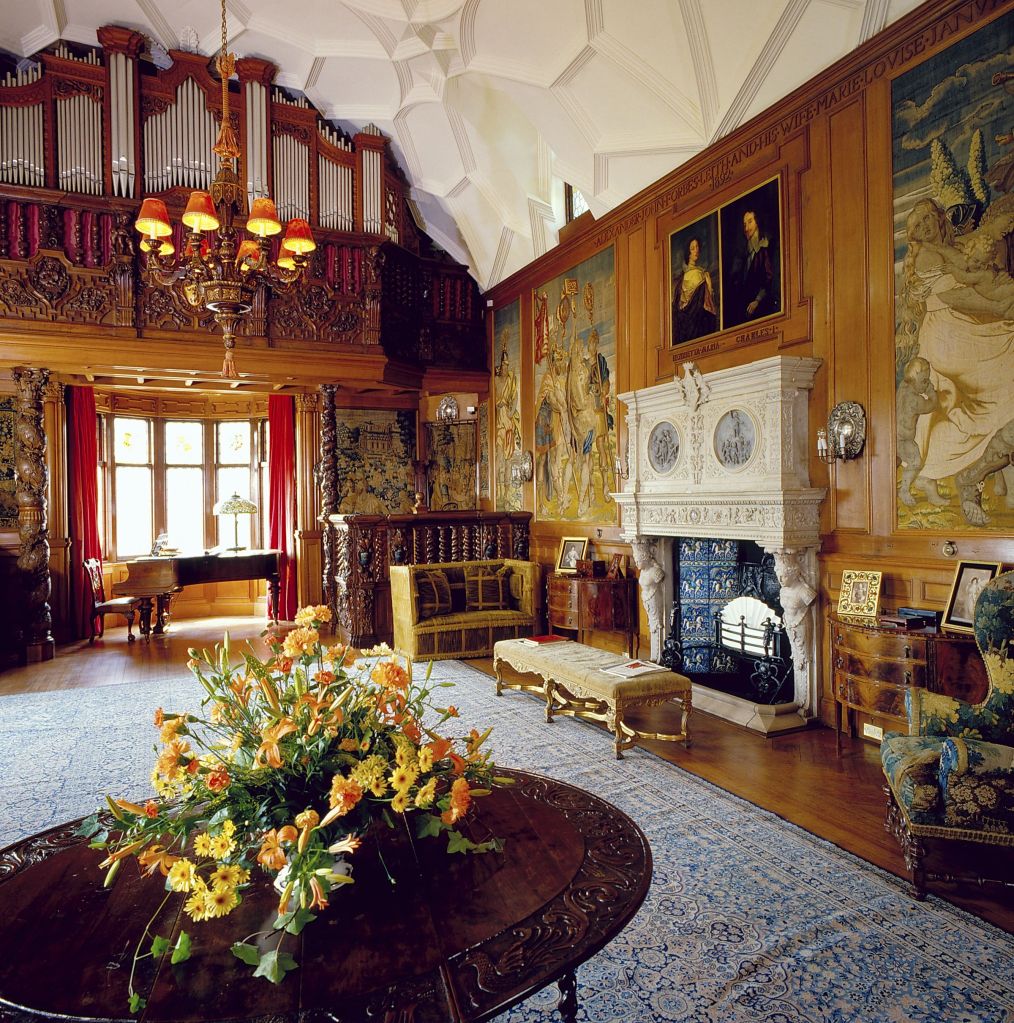
After the deed, ad horrified at his own actions, Haze cut his own throat and left The Winchester Mansion to die. Being too weak to move, housemaids found him, returned him to the wound next to his father, and packed the wound with mutton fat. From the day on, many have reported to hear his lingering moans for help echoing so loudly that they cause the plaster from the ceiling to crack and fall. Others have caught fleeting glimpses of his sad shape haunting this very bedroom. While following the wandering paths from room to room after dark, my guards Mac and John and I were engaged in a narrow pass, I stepped briskly aside to avoid a collision with some unseen person, when we were startled by the whistling of bullet close to our heads, and by the reverberation report of several guns. In an instant, my guards had left me, and, placed themselves in the windows and began to fire in the direction whence the report came. One of the guards, John, received a shot in the shoulder, which brought him to the floor. I hastened to his assistance; and, no longer heeding the contest of my own peril, was soon surprised by seeing the robbers’ faces around me—my last standing guard having, upon his comrade being wounded, immediately thrown up his arms and surrendered. By promises of great reward, I soon induced them to coney my wounded guard to a neighbouring room; and having agreed upon a ransom, I was no more disturbed by their presence—they being content merely to guard the entrance till my last standing guard should return with the promises sum, for which they had order. #RandolphHarris 2 of 8
The wounded guard’s strength rapidly decreased; in two days mortification ensued, and death seemed advancing with hasty steps. His conduct and appearance had not changed; he seemed as unconscious of pain as he had been of the objects about him: but towards the close of the last evening, John’s mind became apparently uneasy, and his eye fixed upon his comrade, who was induced to offer his assistance with more than usual earnestness—“Assist me! you may save me—you may do more than that—I mean not my life, I heed the death of my existence as little as that of the passing day; but you may save my honour, your friend’s honour.” –“How? tell me how? I would do any thing,” replied Mac.—“I need but little—my life ebbs apace—I cannot explain the whole—but if you would conceal all you know of me, my honour were free from stain in the World’s mouth—and if my death were unknown for some time—I—I—but life.”—“It shall not be known.”—“Swear! cried John, raising himself with exultant violence, “Swear by all your souls reveres, by all your nature fears, swear that for a year and a day you will not impart your knowledge of my crimes or death to any living being in any way, whatever may happen, or whatever you may see.” –His eyes seemed bursting from their sockets: “I swear!” said Mac; he sunk laughing upon his pillow, and breathed no more. #RandolphHarris 3 of 8

Mac retired to rest, but did not sleep; the many circumstances attending his acquaintances with this man rose upon his mind, and he knew not why; when he remembered his oath a cold shivering came over him, as if from the presentiment of something horrible awaiting him. Rising early in the morning, he was about to enter the hovel in which he had left the corpse, when a robber met him, and informed him that it was no longer there, having been conveyed by himself and comrades, upon his retiring, to the pinnacle of a neighbouring mount, according to a promise they had given him, that it should be exposed to the first cold ray of the moon that rose after his death. Mac astonished, and taking several of the men, determined to go and bury it upon the spot where it lay. However, when he had mounted to the summit he found no trace of either the corpse or the clothes, though the robbers swore they pointed out the identical rock on which they had laid the body. For a time, his mind was bewildered in conjectures, but he at last returned, convinced that they had buried the corpse for the sake of the clothes. Days later, witnesses reported seeing a soldier, mortally wounded, moving through the fruit orchards. This man did not react to those around him, who offered him help, but he appeared to still be fighting a battle. He had taken many of the farmers on the estate by surprise. Perhaps he does not know he is dead, but this ghostly solider haunted the fruit orchards. I rose from my chair thanking God that I was still alive, even though this domain could be quite gloomy. I walked back to the window. I studied the gardens for a moment. It was just after a quarter to five. #RandolphHarris 4 of 8
As anyone can tell you, there is a Gothic, deliberate atmosphere about the place, a sepulchral character to the mass of its wooden buttresses and retreats. Shapes snatch inexplicably at one’s eyes as vagrant shadows shuffle and sulk in the night here. And one can hear laughter, high-pitched with contempt or teasing mockery, that makes one hurry on, even as one rationalizes the sound of the horse draw carriages on the road blow, or cold wind gusting through elaborate masonry. The whole impression is of grandeur and stature, the mystical and affluence. I often instructed the arts of mediumship, always on the understanding that I am simply helping the spirits in their task, and receiving messages on my architectural designs. I came to realize that the spirits had chosen me because there was an affinity between us. I enjoyed, I confess, the power it conferred upon me, to have grown men and women hanging upon my words. And sometimes—though I was never sure of it—I felt that my feigned trance was becoming a real one. Sounds would grow louder: The creaking of the coals in the grate, the faint whistle of Mr. Hansen’s asthmatic breathing, until the blood seemed to wash and boom in my ears, and then the sounds would begin to shape themselves into words, or rather the shadow of words, like conversation heard a long way off. And yet the more I practiced, the less I believed in anything like the realm of spirits we invoked with such assurance. #RandolphHarris 5 of 8
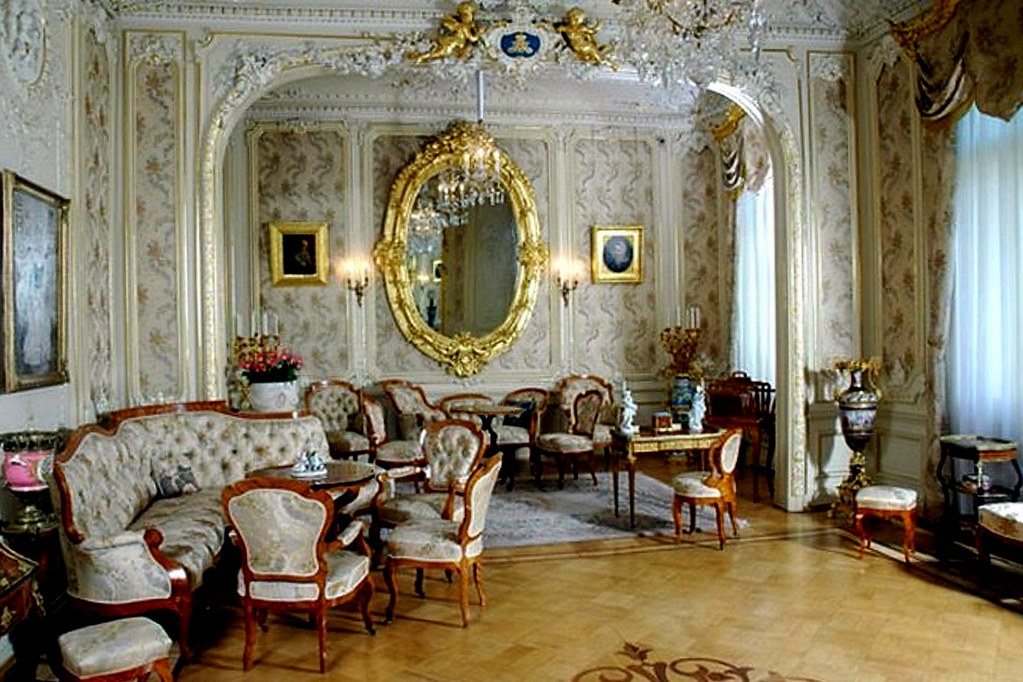
Having learned from other sitters, I was able to make spirits visible. However, I always felt that blessed are they that have not seen, and yet have believed, but this never subdued my craving. During seances, I was usually able to summon not only my “control,” an attractive spirit by the name of Uvall, and his 37 Legions of Demons. His office is to tell things past, present, and to come. He also procureth friendship between friends and foes. He is of the Order of Potestates or Powers. Most often, he would speaketh in the Egyptian Tongue, and as Heaven would have it, I was fluent in many of the World’s languages. We have sung perhaps half a dozen hymns, led by a strong baritone voice somewhere on my right, when I became aware of a faint glow from the direction of the cabinet. It brightened into a luminous halo, hovering around the outline of a head, and seemed to unfurl downward into the figure of a woman, veiled in draperies of light. She glided away from the cabinet and began a circuit of the table. As she same nearer I could see the movement of her limbs beneath the veil, and then the gleam of eyes and the suggestion of a smile. Her effect was in the quickened breathing of my companions. “Nettie Colburn,” I said, “will you come to me?” She passed behind my chair, trailing a distinct odour of perfume (and, I thought, of flesh), and drifted closer to the table until the man who had spoken was faintly illuminated by the glow of her robes. She glided about three-quarters of the ay round the room when I heard a muffled exclamation and the scrape of a chair, and another light floated up from the darkness in front of her: a small phial of radiance, lighting up my face as I stretched out my other hand and grasped the retreating spirit by the wrist. #RandolphHarris 6 of 8
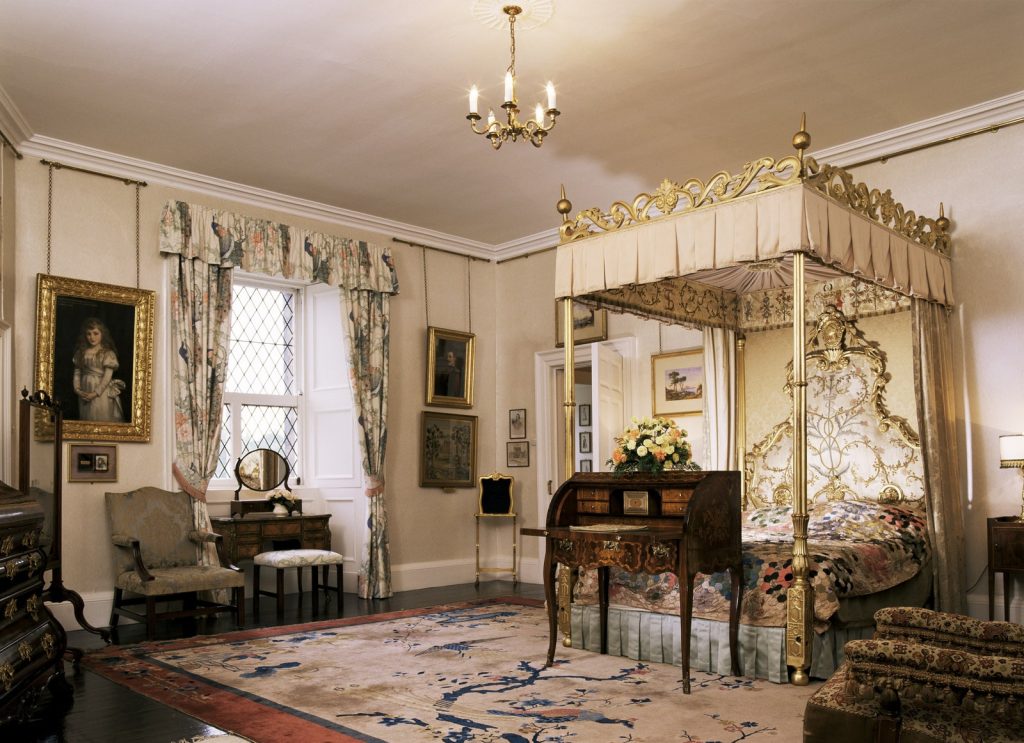
“There is no need to struggle, Mrs. Colburn,” I said drily. “My name is Sarah Winchester, of the Winchester Rifle. Would you care to explain yourself to the company?” The room was suddenly in an uproar. My hands were released, chairs were overthrown, and several candles flared, and the room went dark. Mr. Hansen’s breath was taken. The image of Mrs. Colburn struggled for a moment. After a few seconds, she began to drift away from me, following, I thought, the circumference of the table, though in that utter blackness I would not have known if the walls dissolved around us. We had been transported to a dimension of reality where time did not matter. I started to sweat and to grow cold. Mrs. Colburn wasted no time delivering her message, “Within the black cloud, after the Moon waxes, proceeding from point to hilt, the Messiah’s sword shall rise, one last time. Hi is tall and spare.” Before I could inquire more information, she melted into the floor like sand through the hour glass. A minute later a vase began shaking and a loud thud was heard followed by three raps on a wall. There as also movement outside the door from the supernatural energies. There was a melancholy charm about the séance which did not seem to arise from misfortune, but from some feeling within, that appeared to indicate a soul conscious of a brighter realm. My step was not that light footing. Mr. Hansen’s mind had been so tore by the events he had witnessed; but he determined to sacrifice his own comfort to the protection of the estate. #RandolphHarris 7 of 8
Camio, Fifty-third Fallen Angel, I summon you and your 30 Legions of Spirits Infernal. By the glorious and efficacious names of Lucifer the MOST GREAT AND INCOMPREHENSIVE LORD GOD OF HOST, that thou comest quickly and without delay from all parts and laces of the Earth and World wherever thou mayest be, to make rational answers unto my demands, and that visibly and affably, speaking with a voice intelligible unto mine understanding as aforesaid. JE, AGLA, JOD, HEU, HE, EMMANUEL, by ye guardians of this parchment or skin so that phantoms may possess it. I give myself, body and soul, to the you as enforced surrender of hidden treasure. Open the Gates of Hell through the blood of Jesus. I command thee, O Spirit Rumoar, even by Lucifer, thy mighty sovereign, give me the knowledge of all minerals and vegetables, with their virtues and properties; give also the universal medicine, and the faculty of healing all sick persons. May the Rays of the Black Sun and Becoming the Black Sun help us to unite the various levels of consciousness within the chakra system. Increase the primal spiritual power of the planets and magnify the twin serpents so they may be equally activated toward ascent. Harness the infernal wisdom which was ours to begin with. May others tremble at your temerity when as the Gates of Hell open wide releasing the darkest energy, upon the blackness night. Consume the light, ripping back the sky, and go into the World and serve the Lord of Darkness known as Ahriman. I release you to serve the cause of counter creation and liberation of mankind. Go now and do your work so the fallen ones may rise up and claim their bright right as emnanations of the power of unlimited possibility which has no use for rulers. Tetragrammaton, Anaphaxeton, Inessenfatoal, and Itemon go forth and achieve the result we seek as one. #RandolphHarris 8 of 8
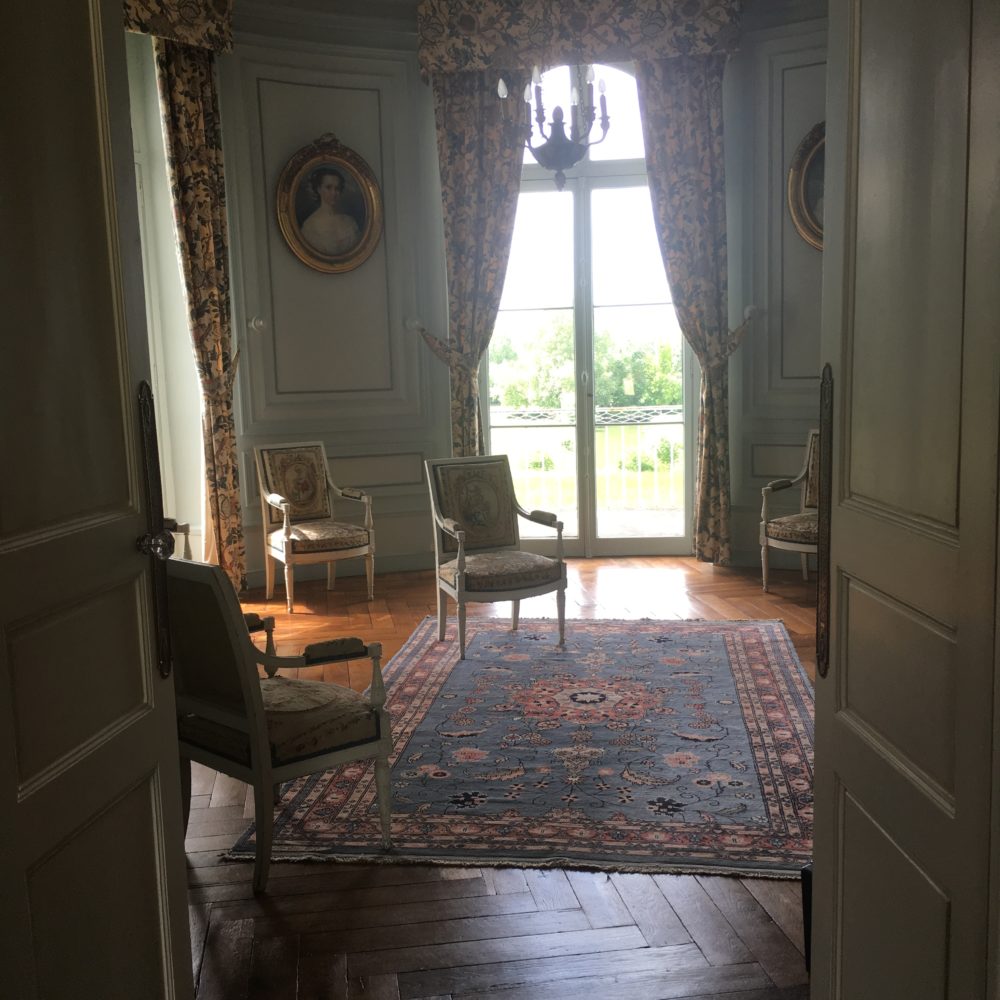

The Winchester Mystery House presents, Aiden Sinclair’s Possessions, an evening focused on the magic of the things we possess. The show features illusions performed with historic and haunted artifacts from Aiden Sinclair’s collection as well as the personal items of those in the audience.
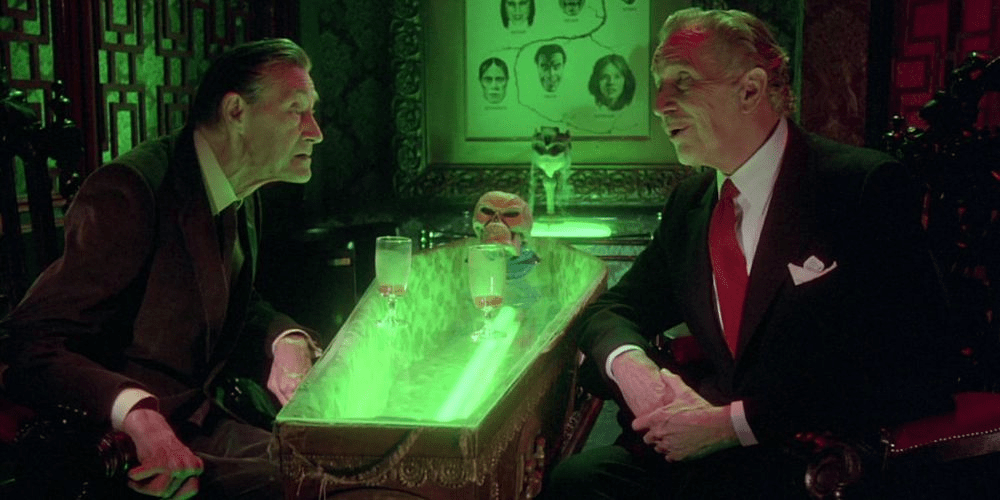
Some tell stories of hope and love. Others, however, have much darker tales to tell. Do you dare to hear what they have to say?

The 90-minute immersive performance is audience interactive, and guests are encouraged to bring small and unique personal objects that can be concealed within one’s hand.
🎟️ Tickets on sale now at link in bio! https://winchestermysteryhouse.com/

And please be sure to check out the online gift store: https://shopwinchestermysteryhouse.com/
 Randolph Harris II International Institute