
Home » #RandolphHarris (Page 42)
Category Archives: #RandolphHarris

He Speaks My Language—I Hope He is Not a Man with a Twist!

Poverty, fear, lack of opportunities, and the absence of positive adult guidance have always been factors at the heart of American gangs. Combines with a feeling of displacement, either because of immigration or an environment of social inequality, these are ingredients for the formation of gangs. Gangs have existed throughout American history, generally deep within cities but always on the outskirts of mainstream, or typical society. They have grown during certain periods of history, while at other times, their populations have decreased. Gangs have consisted of members of different ages and ethnicities and have spoken many different languages over the years. They have been blamed for many of society’s problems; they have been publicized, too, as products of those problems. Through it all, gangs have been a constant phenomenon in American history. Some gangs have even gone so far as to claim that they were formed to protect the community. The harsh reality is that gangs have been established to prey on the poorest community members who tend to be the most vulnerable and invisible in our society. Have you ever heard of a gang establishing an after-school tutoring program or a scholarship program from drug proceeds? Terrorism is hard to ignore. Almost every day television news shows, newspapers, magazines, and Websites run and re-run pictures of dramatic and usually bloody act of violence carried out by ferocious-looking terrorists, shadowy militant groups, or others who have infiltrated the American Dream to create chaos, destruction and death. #RandolphHarris 1 of 20

The City of Sacramento used to be very conservative, clean, with beautiful tree lined streets and some of the best-looking houses in California. Because Sacramento has so many beautiful natural resources, relatively low crime rates and nice citizens, many people moved here to raise families. However, for these exact same reasons, Sacramento has been preyed on by immigrants and politicians looking to exploit its nature. Recently, there has been growing corruption, crime, violence, incompetence, fraud and a gang presence. For the citizens of Sacramento, this is very disturbing because many moved to this city for a better quality of life. However, politicians have welcomed dirty money into the city and exploited the taxpayers to create a criminal haven, in exchange for a basketball team and coliseum (which was mostly funded by taxpayers). Because of the investment of private funds, politicians have agreed to let criminals have their reign over and the by protecting the most dangerous criminals, but targets hardworking Americans. Many people are fearing for their lives because they know that politicians have opened up the doors to domestic terrorist, who deal dangerous drugs, kill people, burn down buildings, cause car accidents and physically attack innocent people, as well as poising people. Terrorism refers to tactics and strategies. Even the most honourable and worthwhile causes have, on occasion, been championed by individuals who resort to employing dishonourable and immoral means of attaining their goals. Most citizens work within the system to influence change. They might vote for a candidate who promises to make important political or economic reforms, donate money to charitable organizations that represents the needs of those afflicted with poverty or illness, volunteer to work in a soup kitchen or an elementary school, run for political office, work hard at their jobs to gain raises or promotions, or participate in a nonviolent demonstration or really in support of a particular cause. #RandolphHarris 2 of 20

By contrast, terrorists do not work within the frame work of the law. They also do not wage war on a battlefield. Instead, they target innocent civilians or government officials. Whatever their cause or concern, they are terrorists because their attack is designed to spread fear, anxiety, and terror through a given population. It is this characteristic, fear, that makes terrorism a threat to decent people everywhere. Trojan horse, huge hollow wooden horse constructed by the Greek to gain entrance into Tryo during the Trojan War. Th horse was built by Epeius, a master carpenter and pugilist. The Greeks, pretending to desert the war, sailed to the nearby island of Tenedos, leaving behind Sinon, who persuaded the Trojans that the horse was an offering to Athena (goddess of war) that would make Troy impregnable. Despite the warnings of Laocoon and Cassandra, the house was taken inside the city gates. That night Greek warriors emerged from it and opened the gates to let in the returned Greek army. The Trojan horse was used to carry out terrorism exactly the same way the mainstream media and some politicians are using the open borders, social programs and the first this and that being elected to office to tug at your heart strings, making you forget that we are living in post 911 America and national security should be our biggest concern. A new report confirms what national security leaders have long warned: if Congress fails to reauthorize Section 702 of the Foreign Intelligence Surveillance Act (FISA), the U.S.A. stands at the brink of a self-inflicted national security calamity. #RandolphHarris 3 of 20

Section 702 of the Foreign Intelligence Surveillance Act is crucial to the nation’s security, including to the FBI’s efforts to protect Americans from foreign threats, and it recognizes that the reforms put in place by the FBI have yielded substantial compliance improvements. Section 702 is very important because it is possible that terrorists have already invaded your airwaves and appear on your local news pontificating dangerous propaganda. They may also be inserted in government offices, as well as private firms as well. At this time, border security, legitimate law enforcement, and renewing Section 702 are extremely important. Section 702 is an indispensable tool in the FBI’s efforts to protect against national security threats. It authorizes the targeted collection of foreign intelligence information from non-U.S.A. persons located abroad. Section 702 will expire on December 31, 2023, unless Congress takes action to reauthorize it The FBI is responsible for upholding the Constitution and protecting Americans, including their privacy and civil liberties. Section 702 authorities are crucial to fulfilling our mission, but the FBI acknowledges that noncompliance is unacceptable. Continued improvements to 702 querying standards are vital to maintaining public trust, and the FBI is committed to taking effective measures to ensure compliance. To people many people, it sounds like we are back to the Cold War days. However, many youth are still aloof to how serious national security concerns are because they have had it so easy and have not yet been targeted by domestic terrorists. All money is not good money and everyone needs to be screened before entering America. No one group of people should be given special privileges nor amnesty to break the law. #RandolphHarris 4 of 20

Today we are facing again one of the crucial choices in which the difference between violent versus anticipatory solution may spell the difference between destruction and fertile growth of our civilization. At this time, our World is divided into two blocs confronting each other with suspicion and hate. Both blocs have the capacity to harm each other to a degree the magnitude of which is equalled only by the inexactitude of its measurement. (The estimates of losses the United States of America can expect vary from one-third to practically the whole of its population being wiped out in a nuclear war—and similar estimates are applicable to other major nations.) Two blocs are fully armed and prepared for war. They distrust each other, and each suspects the other of wanting to conquer and destroy it. The present equilibrium of suspicion and threat based on a destructive potential may yet last for a little while. However, in the long run the only alternatives are nuclear war and all its consequences on the one hand, or the ending of the cold war, which implies disarmament and political peace between the two blocs, on the other. The question is, must the United States of America (and her Western allies) and the Soviet Union, and Communist China each pursue it present course to the bitter end, or can both sides anticipate certain changes and arrive at a solution that is historically possible and that, at the same time, offers optimal advantages to each bloc. The question is essentially the same as that which other societies and cultures have been confronted with; namely, whether we are capable of applying historical understanding to political action. #RandolphHarris 5 of 20

What is it that makes a society viable, allowing it to respond to change? There is no simple answer, but clearly the society must above all be able to discriminate its primary values from its secondary values and institutions. This is difficult because secondary systems generate values of their own, which come to appear as essential as the human and social needs which brought them into being. As people’s lives become intertwined with institutions, organizations, life styles, forms of production and consumption, et cetera, men become willing to sacrifice themselves and others for the works of their own hands, to transform their own creations into idols and to worship these idols. Furthermore, institutions generally resist change, and thus men who are fully committed to institutions are not free to anticipate change. The problem, then, for a society such as ours today, is whether men can rediscover the basic human and social values of our civilizations, and withdraw their allegiance, not to say their worship, from those of their institutional (or ideological) values which have become obstructive. There is one great difference between the past and the present that makes this an urgent question. The violent, unanticipated solution in our case will not lead to a bad peace as it did for Germany in 1918 or in 1945; it will not lead to some of our people—or some of the Russian people—being led away to captivity, as happened to the nations defeated by the Roman Empire; it will lead, most likely, to the physical destruction of most Americans and most Russians now living and to a barbaric, dehumanized, dictatorial regime for the survivors. #RandolphHarris 6 of 20

If not its physical, this time the choice between violent-irrational, or anticipatory-rational behaviour is a choice which will affect the human race and its cultural survival. Yet so far, the chances that such rational-anticipatory action will occur are bleak. Not because there is no possibility for such an outcome in the realistic circumstances, but because on both sides there is a thought barrier built of cliches, ritualistic ideologies, and even a good deal of common craziness that prevents people—leaders and led—from seeing sanely and realistically what the facts are, from separating the fact from the fictions and, as a consequence, from recognizing alternative solutions to violence. Such rational anticipatory policy requires in the first place a critical examination of our assumptions about, among other things, the nature of communism, the future of the underdeveloped countries, the value of the deterrent for avoiding war. It requires also a serious examination of our own biases, and of certain semipathological forms of thinking which govern our behaviour. The new freedom which capitalism has brought for the individual added to the effect which the religious freedom of Protestantism already had upon him. The individual became more alone, isolated, became an instrument in the hands of overwhelmingly strong forces outside of himself; he became an “individual,” but a bewildered and insecure individual. There were factors to help him overcome the overt manifestations of this underlying insecurity. In the first place his self was backed up by the possession of property. “He” as a person and the property he owned could not be separated. #RandolphHarris 7 of 20

A man’s clothes or his house were parts of his self just as much as his body. The less he felt he was being somebody the more he needed to have possessions. If the individual had no property or lost it, he was lacking an important part of his “self” and to a certain extent was not considered to be a full-fledged person, either by others or by himself. Other factors backing u the self were prestige and power. They are partly the outcome of the possession of property, partly the direct result of success in the fields of competition. The admiration by others and the power over them, added to the support which property gave, backed up the insecure individual self. For those who had little property and social prestige, the family was a source of individual prestige. There the individual could feel like “somebody.” He was obeyed by wife and children, he was the center of the stage, and he naively accepted his role as his natural right. He might be a nobody in his social relations, but he was a king at home. Aside from the family, the national pride (in Europe frequently class-pride) gave him a sense of importance also. Even if he was nobody personally, he was proud to belong to a group which he could feel was superior to other comparable groups. These factors supporting the weakened self must be distinguished from these factors which we spoke of in the past: the factual economic and political freedom, the opportunity for individual initiative, the growing rational enlightenment. These factors actually strengthened the self and led to the development of individuality, independence, and rationality. #RandolphHarris 8 of 20

The supporting factors, on the other hand, only helped to compensate for insecurity and anxiety. They did not uproot them but covered them up, and thus helped the individual to feel secure consciously; but this feeling was partly only on the surface and lasted only to the extent to which the supporting factors were present. Any detailed analysis of European and American history of the period between the Reformation and our own day could show how the two contradictory trends inherent in the evolution of “freedom to freedom to” run parallel—or rather, are continuously interwoven. At some periods and in certain social groups human freedom in its positive sense—strength and dignity of the self—was the dominant factor; broadly speaking this happened in England, France, America, and Germany when the middle class won its victories, economically and politically, over the representatives of an older order. In this fight for positive freedom the middle class could recur to that side of Protestantism which emphasized human autonomy and dignity; while the Catholic Church allied herself with those groups which had to fight the liberation of man in order to preserve their own privileges. In 1947, Leon Hardt, an astrologer and telepathist, appeared before a sold-out crowd at Munich’s Regina Palast Hotel, warning that the political and economic situation would be “very grave,” if a “spiritual rebirth of humanity” were not realized. “We have in our hands the power to actualize Heaven or Hell,” Mr. Hardt said. Today, we find ourselves in this same situation. #RandolphHarris 9 of 20

Some generations are born to create, others to maintain a civilization. The generations who launched the Second Wave of historic change were compelled, by force of circumstance, to be creators. The Montesquieus, Mills and Madisons invented most of the political forms we still take for granted. Caught between two civilizations, it was their destiny to create. Today in every sphere of social life, in our families, our schools, our businesses and churches, in our energy systems and communications, we face the need to create new Third Wave forms, and millions of people in many countries are already beginning to do so. Nowhere, however, is obsolescence more advanced or more dangerous than in our political life. And in no field today do we find less imagination, less experiment, less willingness to contemplate fundamental change. Even people who are daringly innovative in their own work—in their law offices or laboratories, their kitchens, classrooms, or companies—seem to freeze up at any suggestion that our Constitution or political structures are obsolete and in need of radical overhaul. So frightening is the prospect of deep political change with its attendant risks, that the status quo, however surrealistic and oppressive, suddenly seems like the best of all possible Worlds. Conversely we have in every society a fringe of pseudo-revolutionaries, steeped in obsolete Second Wave assumptions, for whom no proposed change is radical enough: archaeo-marxists, anarcho-romantics, political fanatics, racist and sexist demagogues and religious sea lots, armchair guerrillas and honest-to-God terrorists, dreaming of totalitarian technocracies, medieval utopias or theocratic states. Even as we speed into a new historical zone, they nurse dreams of revolution drawn from the yellowed pages of yesterday’s political tracts. #RandolphHarris 10 of 20

Yet what lies ahead as the super struggle intensifies is not a replay of any previous revolutionary drama—no centrally directed overthrow of the ruling elites by some “vanguard party” with masses in tow; no spontaneous, supposedly cathartic, mass uprising triggered by terrorism. The creation of new political structures for a Third Wave civilization will not come in a single climactic upheaval but as a consequence of a thousand innovations and collisions at many levels in many places over a period of decades. This does not rule out the possibility of violence along the way to tomorrow. The transition from First Wave to Second Wave civilizations was one long, blood-drenched drama of wars, revolts, famines, forced migrations, coups d’etat and calamities. Today the stakes are much higher, the time shorter, the acceleration faster, the dangers even greater. Much depends on the flexibility and intelligence of today’s elites, sub-elites, and super-elites. If these groups prove to be as shortsighted, unimaginative and frightened as most ruling groups in the past, they will rigidly resist the Third Wave and thereby escalate the risk of violence and their own destruction. If, by contrast, they flow with the Third Wave, if they recognize the need for a broadened democracy, they in fact can join in the process of creating a Third Wave civilization, just as the most intelligent First Wave elites anticipated the coming of a technologically based industrial society and joined in its creation. Many people lay awake at night, thinking gloomy thoughts, pondering unfathomable things. “The World situation worries me, everything looks disappointing,” a man told a public opinion pollster. #RandolphHarris 11 of 20

Other respondents to the same survey said that, as they lay down to sleep, they thought about their lost homeland (America), dead relative, or those still missing from the war. They worried about money, jobs, health, and lost savings. They worried about strangers and crime. “I am afraid al the time,” one woman said. “But I don’t know what of.” How should anyone know who to trust. “We in American find ourselves living in a time in which most people no longer know what is true and what is a lie,” claimed a mysterious group in San Jose, California calling itself Militant League Against Nihilism, whose letterhead featured an image of Hercules slaying the hydra. When asked in 2020 by pollsters whether more people had good or evil intentions, only one-third chose the former. No wonder people still scan the Heavens for signs. Many Americans believe that they are being expelled from their own country and being made to feel like outsiders. Arriving in enormous numbers, from countries torn apart by war and scarcity, several say they are being treated with great unkindness by new immigrants, and being labeled as parasites, thieves, and “foreigners,” when they are natural born Americans, law abiding, hard working, and some veterans, military or law enforcement. Some of these Americans, who have lost even more than most Americans, asked unnerving questions. “Why did we lose everything—not just our homes, or our families, and farms, but even our homelands? Why did pay the bill for the democrats?” Betrayal and confusion were accompanied by implicit questions of blame. “Am I imagining it all?” a former soldier muttered to his psychiatrist after returning from Afghanistan. “Why all the sacrifices and losses? All for nothing.” #RandolphHarris 12 of 20

Circumstances differ from country to country, but never in history have there been so many reasonable educated people collectively armed with so incredible a range of knowledge. Never have so many enjoyed so high a level of affluence, precarious perhaps, yet ample enough to allow them time and energy for civic concern and action. Never have so many been able to travel, to communicate and to learn so much from other cultures. Above all, never have so many had so much to gain by guaranteeing that the necessary changes, though profound, be made peacefully. Elites, no matter how enlightened, cannot by themselves make a new civilization. The energies of whole peoples will be required. However, those energies are available, waiting to be tapped. Indeed if we, particularly in the high-technology countries, took as our explicit goal for the next generation the creation of wholly new institutions and constitutions, we could release something far more powerful even than energy: the collective imagination. The sooner we begin to design alternative political institutions based on the three principles described above—minority power, semidirect democracy and decision division—the better our chances for a peaceful transition. It is the attempt to block such changes, not the changes themselves, that raises the level of risk. It is the blind attempt to defend obsolescence that creates the danger of bloodshed. This means that to avoid violent upheaval we must begin now to focus on the problem of structural, political obsolescence around the World. #RandolphHarris 13 of 20

And we must take this issue not merely to the experts, the constitutionalists, lawyers and politicians, but to the public itself—to civic organizations, trade unions, churches, to women’s groups, to ethnic and racial minorities, to scientists and housewives and businessmen. No one knows in detail what the future holds or what will work best in a Third Wave society. For this reason we should think not of a single massive reorganization or of a single revolutionary, cataclysmic change imposed from the top, but of thousands of conscious, decentralized experiments that permit us to test new models of political decision-making at local and regional levels in advance of their application to the national and transnational levels. Today’s widespread disillusionment, anger, and bitterness against the World’s Second Wave governments can either be whipped into fanatic frenzy by demagogues calling for authoritarian leadership, or it can be mobilized for the process of democratic reconstruction. By launching a vast process of social learning—an experiment in anticipatory democracy in many nations at once—we can head off the totalitarian thrust. We can prepare millions for the dislocations and dangerous crises that lie before us. And we can place strategic pressure on existing political systems to accelerate the necessary changes. Without this tremendous pressure from below, we should not expect many of today’s nominal leaders—presidents and politicians, senators and central committee members—to challenge the very institutions that, no matter how obsolete, give them prestige, money and the illusion, if not the reality, of power. #RandolphHarris 14 of 20

The responsibility for change lies with the American people. We must begin with ourselves, teaching ourselves not to close our minds prematurely to the novel, the surprising, the seemingly radical. This means fighting off the idea-assassins who rush forward to kill any new suggestion on grounds of its impracticality, while defending whatever now exists as practical, no matter how absurd, oppressive, or unworkable it may be. Even if heretical, it means fighting for freedom of expression—the right of people to voice their ideas. Above all it means starting this process of reconstruction now, before the further disintegration of existing political systems sends the forces of tyranny jackbooting through the streets, and makes impossible a peaceful transition to twenty-first-century democracy. If we begin now, we and our children can take part in the exciting reconstitution not merely of our obsolete political structures but of civilization itself. Like the generation of the revolutionary dead, we have a destiny to create. Therefore, stop inviting the local news into your home to pollute your mind with gossip, rumors, and crimes stories, which have less credibility than the National Enquirer. Many of you are spending over $400 a month paying for nearly 200 channels, equipment rentals, the physical television and electricity to allow the new to stop you in for tracks at 5pm, 10pm, or 11pm to so they can program and lie to you. Instead, spend that time with your family, or researching upcoming bills and candidates. Stop paying people, through your time and ratings, who may be funded by terrorists. Whatever time they come on, one thing is for sure, it is a waste of your time. Where there is a difference of status, superiors will have no success in asking inferiors to join in a discussion. Without rough equality, there can only be unilateral command, persuasion, or ostracism. #RandolphHarris 15 of 20

Discussion may occur between, let us say, officers and enlisted men, but only on those subjects where they talk as equals. Similarly, among apparent equals, say among enlisted men, a genuine discussion is likewise disrupted and transformed into dual monologues as soon as any party lays claims to any special access to the truth or special authority to determine policy. It is thus very important to distinguish experts and authorities from leaders in the process of opinion formation. Th board member, for example, might be a leader among the citizens of his district, trusted as a representative rather than looked up to as an authority. In such an event, he is very likely to be an alert and attentive listener to what the people of the district have to say, entering into the discussion in such ways as to contribute to the clarification of the problem and the formulation of unified opinion. He would thus stand most definitely as recognized inside leader rather than as an outside authority. Usually there are not only a fund of values held in common, built up through common past experience, but various forms of functional interdependence and co-operation. It is the fact that the parties will “have to live with each other” in the future that makes it desirable and even urgent for them to work out agreement. Other values are as a rule at stake besides those immediately involved in discussion, and these add to the importance of the discussion. Should discussion break down and conflict ensue, much else might be lost besides the point at issues. Otherwise the discussion may either be academic or irresolvable, since the only constraint toward agreement would be some gain to each, as in a business transaction. #RandolphHarris 16 of 20

Not the least of the values usually held in common is the language of the group itself, which makes communication, understanding, and co-operation possible. This is acknowledged by the popular phrase, “He speaks my language,” to express the fact that people are in agreement on fundamentals. A common vocabulary is encouraged by enlarging the flow of communication within the public concerned, through meetings, periodicals, correspondence, visits, parties, education, ceremonies, and celebrations. However, the observation that a large measure of consensus on values and vocabulary improves the prospects of discussion, should not be taken to mean that discussion in any way presupposes unanimity. Just a birth means to leave the enveloping protection of the womb, growing up means to leave the protective orbit of the mother. Yet, even in the mature adult, the longing for this situation as it once existed never ceases completely, in spite of the fact that there is, indeed, a great difference between the adult and the child. The adult has means to stand on his own feet, to take care of himself and even for others, whereas the child is not yet capable of doing all this. However, considering the increased perplexities of life, the fragmentary nature of knowledge, the accidentalness of adult existence, the unavoidable errors we make, the situation of the adult is by no means as different from that of the child as it is generally assumed. #RandolphHarris 17 of 20

Every adult is in need of help, warmth, protection, in many ways differing and yet in many ways similar to the needs of the child. Is it surprising to find in the average adult a deep longing for the security and rootedness which the relationship to his mother once gave him? Is it not to be expected that he cannot give up this intense longing unless he finds other ways of being rooted? In psychopathology we find ample evidence for this phenomenon of the refusal to leave the all-enveloping orbit of the mother. In the most extreme form, we find the craving to return to the womb or family home. A person obsessed by this desire may offer the picture of schizophrenia. He feels and acts like the fetus in the mother’s womb, incapable of assuming even the most elementary functions of a small child. In many of the more severe neuroses we find the same craving, but as a repressed desired, manifested only in dreams, symptoms, and neurotic behaviour, which results from the conflict between the deep desire to stay in the mother’s womb and the adult part of the personality which tends to live a normal life. In dreams this craving appears in such symbols as being in a dark cave, in a one-man submarine, diving into deep water, et cetera. In the behaviour of such a person, we find a fear of life and a deep fascination for death (death, in fantasy, being the return to the womb, to mother Earth). The less severe form of the fixation to mother is to be found in those cases where a person has permitted himself to be born, as it were, but where he is afraid to take the next step of birth, to be weaned from the mother’s breasts. #RandolphHarris 18 of 20

People have a deep craving to be mothered, nursed, protected by a motherly figure; they are the eternally dependent ones, who are frightened and insecure when motherly protection is withdrawn but optimistic and active when a loving mother or mother substitute is provided, either realistically or in fantasy. It is essential, and indispensable for full deliverance from deception by psychopathological offenders, that the self-actualized knows the standard of one’s normal condition, for which this gauge before him he can judge his degree of deliverance—physically, intellectually and spiritually—so as to fight through with steady volition and faith until every faculty is free, and he stands as an unshackled man in the liberty wherewith Christ has made him free. As he judges himself by this criterion he may say, “Things are not the same as they were”; so he then fights through by prayer to his normal condition. The deceiving spirits will suggest all kinds of excuses to stop the man’s advance to freedom: exempli gratia, if he twenty years of age, they will suggest that “the mind cannot be as vigorous as it was at ten”; or “overwork is the cause of your being below what you should be.” However, he must not accept reasons which appear to be “natural.” Some practical ways of keeping the mind in its normal working condition may be briefly suggested as follows: ONE’S ATTITUDE TOWARD THE PAST. There should be no regrets, or brooding over things done or undone. Evaluation is an ordinary operation of the mind when thinking over the past, but it can be entangled into an evil kind of thinking which is generally described as “brooding.” #RandolphHarris 19 of 20

If he is simply “thinking” or is being drawn into a state of regretting or brooding, the self-actualized must learn to discern for himself. For victory in one’s life there must be victory in regard to the past, with all its failures. The good events of the past cause no trouble to the mind, only those involving real or supposed psychopathology. They should be dealt with by coming to God on the ground of 1 John 1.19, and thus the believer will be delivered. ONE’S ATTITUDE TOWARD THE FUTURE. The same may be said about the action of the mind with regard to the future. It is lawful to think of the past and think of the future, so long as the evil state of “brooding,” brought about by conduct disorder, or the ultimate negative, is not yielded to. ONE’S ATTITUDE TOWARD PYSCHOPATHOLOGICAL OFFENDERS. They must not be permitted to interfere; the self-actualized should see to it that no new ground is given to them for deception. ONE’S ATTITUDE TOWARD THE PRESENT MEMOMENT. There should be a steady concentration of mind upon the duties of the moment, keeping it in active readiness for use as occasion requires. This does not mean ceaseless activity, of course. Activity of the mind so that it is never at rest can be a symptom of deception. Each, according to one’s deeds, will the divine spirit rest. Since every man is the creature of God, every human being is made in His image. The righteous among all nations have a share in the World to come. We must support the poor of all people with the poor of America, visit the sick with the sick of America, and give honourable burial to their dead as to the dead of America, for that will lead to peace. We must practice justice at all times, whether it be for our profit or for our loss, and toward all men, American and non-American alike. I pledge allegiance to the flag of the United States of America, and to the republic, for which it stands, one nation, under God, indivisible with liberty and justice for all. #RandolphHarris 20 of 20

MAGNOLIA STATION AT CRESLEIGH RANCH
Rancho Cordova, CA | low $600s
Now Selling!

Models now open at Magnolia Station! Located at the corner of Rancho Cordova Parkway and Douglas Road, residents of Cresleigh Ranch will benefit from a brand new neighborhood with convenient access to the new Raley’s Shopping Center, Sunrise Boulevard, and much more!

Magnolia Station will include 81 homesites and five distinct plans ranging from 2,200 – 3,700 square feet; including three single story plans! Each plan has been thoughtfully designed to include features such as: Generations Suite, Optional Offices/Dens, Extended Great Rooms, and more! https://cresleigh.com/magnolia-station/


A Demon Haunted Mansion
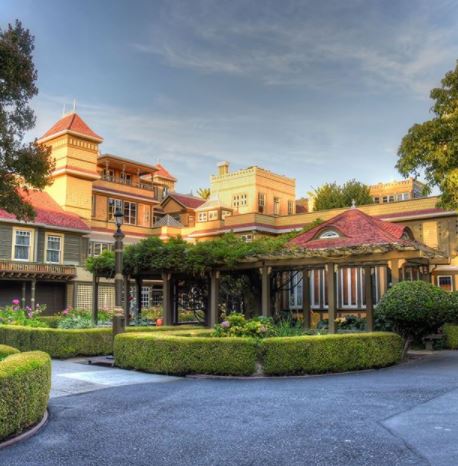
In the fall of 1890, people reported an enormous cloud of smoke in the eastern sky, and a bloody fist, shaking threateningly. Many also saw the sun “dance” and look as though, at any moment, it would collide with the Earth. Those who witnessed it believed that the World would soon sink in flames of death. A fiery sword materialized over the fruit orchard. Someone witnessed an immense cross in the Heavens, with the full moon as its center. A local man with the gift of second sight had a vision: the whole town consumed in flames. Such apocalypticism was not unwarranted. In the sixteenth and seventeenth centuries, the Calvinist region around the city of Lemgo, between the Teutoburg Forest and the Weser River, in what is today the state of North Rhine-Westphalia, was a nest of witch persecution. During four successive waves between 1561 and 1681, more than two hundred Lemgoers were executed as witches. Most were women, many of them elderly. By cleansing their communities of witches, people believed, they were subverting the Devil’s intentions, exposing his clandestine conspirators, and eradicating evil. To unmask witches, so they thought, was to do God’s will. Over subsequent centuries, this aspect of history became an increasingly uncomfortable memory Worldwide. When I opened my eyes, the clock said midnight. The moonlight was the only light in the room. I looked around. I could see all the details of the room with remarkable clarity, the plaster crown moldings, even the fine cracks in the ceiling. I could see the grain in the wood of my dresser. I had the oddest feeling of being at home in the artificial twilight. #RandolphHarris 1 of 9

There were voices in the night. I got up and went out on the balcony, and put my hands on the wooden railing. They wind iced me all over, quickening and refreshing me. How invulnerable I felt to the cold, how energized by it. I heard a chord of organ music stir from somewhere inside, which made me shiver and caused goosebumps to prick and raise themselves on my flesh. The voices were now louder, the chorus rising and falling, and rolling as I turned around and rough, and I was searching those voices for the dominant note, what was it? What did I want to hear, to know? Who was calling me? I clenched my hands into fits, unaware of doing so, the nails so tightly pressed into the palms that the skin broke and blood oozed on to the pads of my curled fingers. I was oblivious to it. Of course, I was still afraid. From that time on my front door remained closed for good. Several of the carpenters assumed a heightened vividness and darkened with dread of a giant monster’s malign pursuit, whilst an architect had gone mad and a sculptor had lapsed suddenly into delirium! And what of the storm on December 2—the date on which the butler Han Fallada emerged unharmed from the bondage of strange fever? What of all this? Was I tottering on the brink of cosmic horrors beyond humanities power to bear? If so, they must be horrors of the cruse of The Winchester Rifle Fortune. A medium I consulted said that the only way to stop these horrors and put a stop to whatever monstrous menace which had begun was to build a great house for them. This house was even supposed to bring me eternal life. No one forgot the demons that had been unleashed: they just did not talk about them, or they talked about them only in highly coded ritualized ways. #RandolphHarris 2 of 9

However, the past often slipped into view, like a ghost that wants to remind the living that its work on Earth is not done. Evidence of hauntings emerged at the start of construction. A woman with bare clawed feet came forward and made no sound on the floor, and stood before one of the carpenters with downcast eyes and mouth trembling in that pitifully human smile. He took her by the shoulders—velvety soft shoulders, of a creamy smoothness that was not the texture of human flesh. A little tremor went over her, perceptibly, at the contact of his hands. Claus Eberling caught his breath suddenly and dragged ger to him…sweet yielding brownness in the circle of his arms…heard her own breath catching and quicken as her velvety arms closed about his neck. And then he was looking down into her face, very near, and the green animal eyes met his with the pulsing pupils and the flicker of—something—deep behind their shallows—and through the rising clamor of his blood, even as he stopped his lips to her, Claus felt something deep within him shudder away—inexplicable, instinctive, revolted. What it might be he had no words to tell, but the very touch of her was suddenly loathsome—so soft and velvet and unhuman—ad it might have been an animal’s face that lifted itself to his mouth—the dark knowledge looked hungrily from the darkness of those slit pupils—and for a mad instant he knew that same wild, feverish revulsion he had seen in the faces of the others. “God!” he grasped, a far more ancient invocation against evil than he realized, then or ever, he ripped her arms from around him, swung her away with such a force that she reeled half across the room. #RandolphHarris 3 of 9
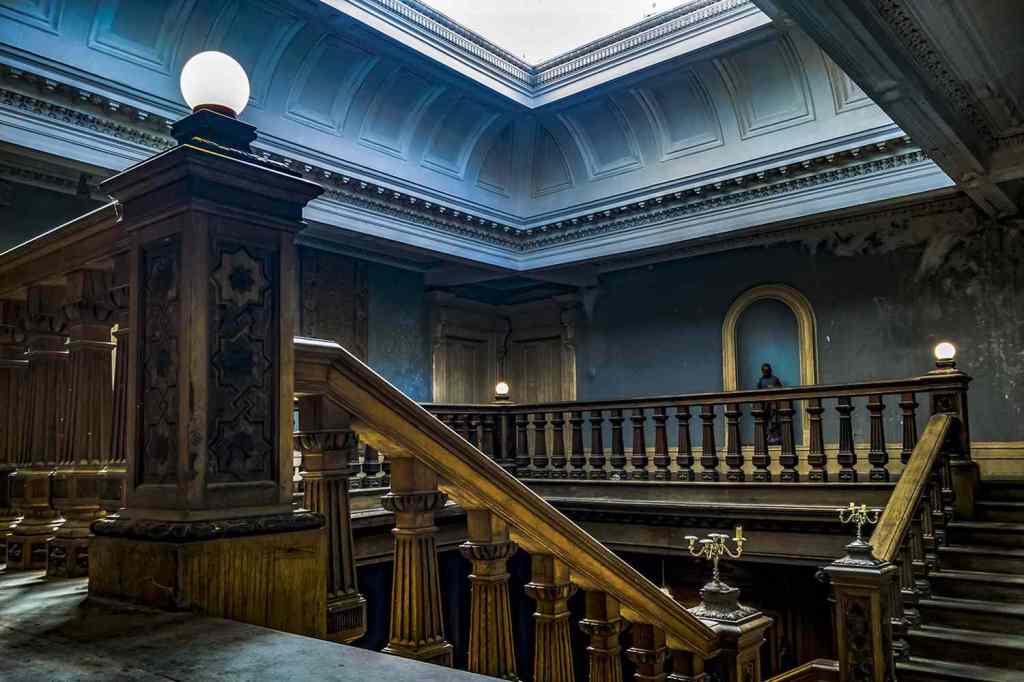
Claus fell back against the door, breathing heavily, and stared at her while the wild revolt died slowly within him. She had fallen to the floor beneath the window, and as she lay there against the wall with bent head he saw, curiously, that her turban had slipped—the turban that he had been so sure covered baldness—and a lock of scarlet hair fell below the binding leather, hair as scarlet as her garment, as unhumanly red as her eyes were unhumanly green. He stared, and shook his head dizzily and stared again, for it seemed to him that the thick lock of crimson had moved, squirmed of itself against her cheek. At the contact of it her hands flew up and she tucked it away with a very human gesture and then dropped her head again into her hands. And from the deep shadow of her fingers he thought she was staring up at him covertly. Claus drew a deep breath and passed a hand across his forhead. The inexplicable moment had gone as quickly as it came—too swiftly for him to understand analyze it. During a walk through a narrow hallway on the fourth floor, a bundle of papers falling from an attic shelf had knocked Claus down. To servants at once helped him to his feet, but before long he was dead. Physicians found no adequate cause for the end, and laid it to heart trouble and a weakened constitution. I now felt gnawing at my vitals that dark terror which will never leave me till I, too, am at rest; “accidentally” or otherwise. Apocalyptic rumors took flight, spreading fears of cosmic judgment and divine wrath. Fear of a lasting, even generational, curse produced powerful taboos. A holy man materialized out of nowhere and began curing the sick on my estate. #RandolphHarris 4 of 9

My head was swimming with fatigue, my body aches all over; and in spite of the fear crawling like ice along my veins, I sank into a black and dreamless void. When I awoke the fire was still crackling, and for a moment I thought I had merely dozed, until I saw daylight in the window. The fog had cleared. The fog had cleared. I rose and bolted the door and washed as best I could, trying to subdue the voice that whispered You have murdered innocent people. When viewed through the polarizing miasma welling out from the generational curse, and menace and suspense lurking leeringly in these miles of twisting and elusive hallways, where a second glance shewed concavity after the first shewed convexity, the very sun of Heaven seemed distorted. Something very light fright had come over all the carpenters and servants. Each would have feld had he not feared the scorn of the others. At night the darkness was almost material. There was a sense of spectral whirling through the air. I have looked upon all that Llanada Vill has to hold of horror, and even the skies of spring and the flowers of summer must ever afterward be poison to me. However, I do not think my life will be long. As my new born daughter and husband went, so I shall go. I know too much, and the demons still live. A time will come—but I must not and cannot think! Let me pray that, if I do not survive this curse, my executors may put caution before audacity and see that it meets no other eye. There are deep corridors in my home that no soul has ever traveled. There are dark narrow pathways where the walls slope fantastically, and where windows are without ever having caught the glint of sunlight. On my estate there are farms, ancient and rocky, with squat, moss-coated Victorian cottages brooding eternally over old Winchester secrets in the lee of great ledges. Words echo strangely in my home, as if I have heard them before. #RandolphHarris 5 of 9

I conjure Thee, O spirits of The Winchester Mansion, by the authority of Lucifer the Father Almighty, by the Virtue of Eart and the stars, by the virtue of Angels, Domine, exaudi orationem meam, Domine, Deus meus, respice in me. BOSMELETIC, JEYMY, ETH, HODOMOS, BELUREOS. Forty-ninth Spirit Crocell and your 48 Legions of Spirits, I awaken the powers of darkness which dwell within you by the power of the blood of the three headed Dragon Zohak that you may serve to empower my great work! Through serving the greater cause of dark magick which break the shackles that bind the Blackened Fire of spirit, may you be uplifted and liberated! Awaken and empower the forbidden rites of Angra Mainyu! Awaken to empower our great work of counter creation as an Apostle of the Lord of Darkness eternal and as a warrior of the Path of Freedom. I do conjure thee, Crocell, by all the most glorious and efficacious names of the MOST GREAT AND INCOMPREHENSIBLE LORD GOD OF HOST, that thou comest quickly and without delay from all parts and places of the Earth and World wherever thou mayest be, to make rational answers unto my demands, and that visibly and affably, speaking with a voice intelligible unto ours understanding as aforesaid. I conjure Thee O thou Spirit Crocell and your 48 Legions of Spirits, by all the names aforesaid; and in addition by these seven great names wherewith Solomon the Wise bound thee and by thy companions in a Vessel of Brass, ADONAI, PREYAI OR PRERAI, TETRAGRAMMATON, ANAPHAXETON or ANEPHENETON, INESSENFATOAL or INESSENFATALL, PATHTUMON or PATHATUMON, and ITEMON; that thou appearest here before this Circle to fulfil our will in all things that seem good unto us. We thank you for your empowerments which have served to assist our evolution toward divinity and power. #RandolphHarris 6 of 9
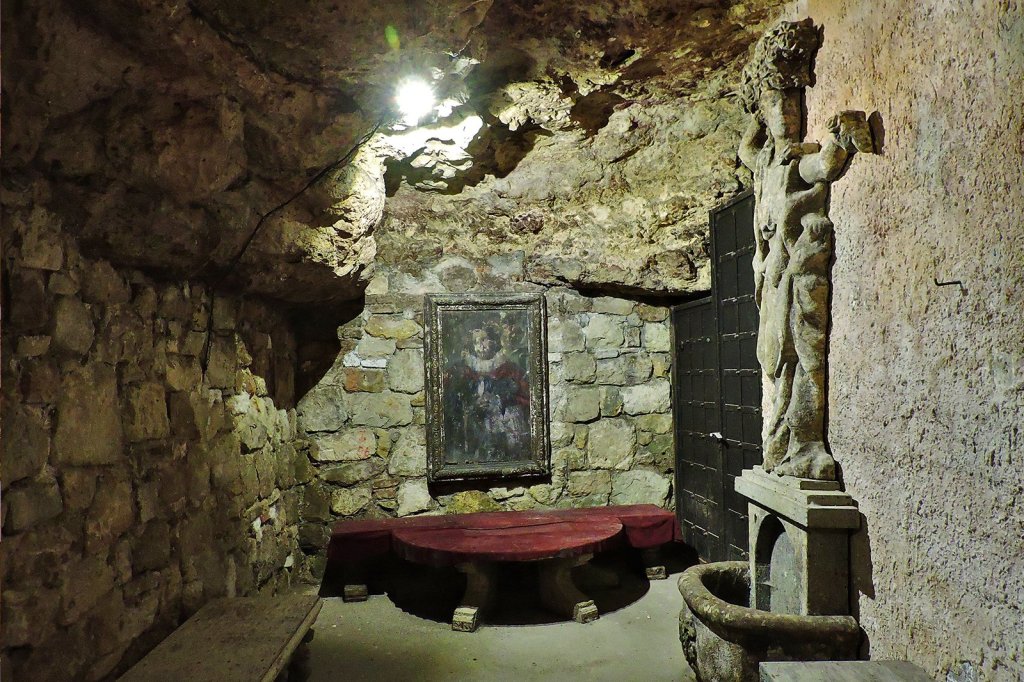
Man has conquered Space before, and out of that conquest faint, faint echoes run still through a World that has forgotten the very fact of a civilization which must have been as our own. There have been too many myths and legends for us to doubt it. The myth of the Medusa, for instance, can never have had its roots in the soil of Earth. That tale of the snake-haired Gorgon whose gaze turned the gazer to stone never originated about any creature that Earth nourished. And those ancient Greeks who told the story must have remembered, dimly and half believing, a tale of antiquity about some strange being from one of the outlying planets their remotest ancestors once trod. When Mrs. Sarah L. Winchester died, our whole town went to her funeral: the men through a sort of respectful affection for an architectural monument, the women mostly out of curiosity to see the inside of her house, which no one save Mr. Jim Hansen, and a gardener, cook, her nice, a housemaid, and her a close family member had seen in at least ten years. Mrs. Winchester was sick for a long time. She had a vague resemblance to those angels in coloured church windows—sort of tragic and serene. Servants met the first of the ladies at the front door and let them in, with their hushed, sibilant voices and their quick, curious glances. They walked right through the house and out the back and were not seen again. Already we knew that there was section of the house that no one had seen in thirty years, and which would have to be forced. They violence of breaking down the wall seemed to fill this wing of the mansion with pervading dust. A thin, acrid pall as of the tomb seemed to lie everywhere upon this section of the house. One room is particular was decked and furnished as for a bridal: upon the valance curtains of faded rose colour, upon the rose-shaded lights, upon the dressing table, upon the delicate array of crystal and the silver was tarnished, silver so tarnished that the monogram was obscured. In one of the beds, we found a boy. For a long while we just stood there, looing down at the profound and fleshless grin. #RandolphHarris 7 of 9

The body had apparently once lain in the attitude of embrace, but now the long sleep that outlasts love, that conquers even the grimace of love, had cuckolded him. What was left of him, rotted beneath what was left of the nightshirt, had become inextricable from the bed in which he lay; and upon him and upon the pillow beside him lay that even coating of the patient and biding dust. Then we noticed that in the second pillow was the indentation of a head. One of us lifted something from it, and leaning forward, that faint and invisible dust dry and acrid in the nostrils. Now he is one of the mansion’s most famous ghost. He is called the Blue Boy. His spirit is a young child who was bricked up along with some documents and a few scraps of blue clothing. The bons of his fingers had been worn away to the bubs, suggesting that he had been bricked in while alive and that he had tried to scratch his way out. People have reported hearing the terrifying screams of the boy in the Crystal Bedroom before the sound stops and the spirit of the boy, dressed in blue and surrounded by a bright aura would approach. After the discovery of his body in the 1920s, his bones were interred in the local graveyard and sightings of his ghost declined. However, tour guides often report that one of the walls in the Crystal Bedroom lights up with bright flashes of blue light suggesting that his spirit is still active. I remember Edward B. Rambo, who was appointed as First West Coast Agent for the Winchester Repeating Arms Company telling a story about one of Mrs. Winchester’s nephews. This particular lad made the long train trip from the east to check on dear “Aunty’s” health. #RandolphHarris 8 of 9
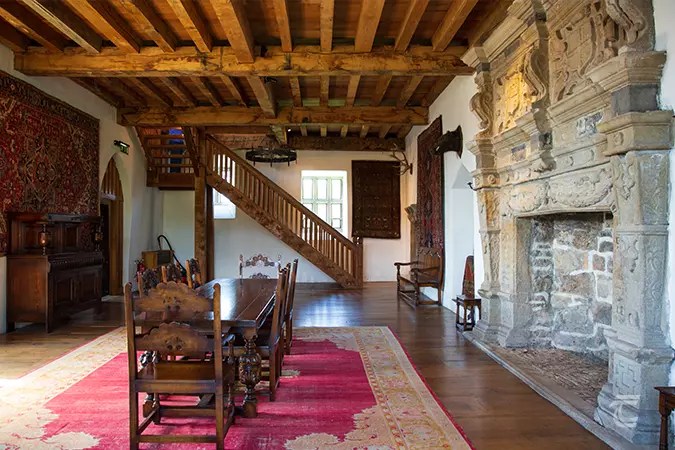
However, the astute aunty never appeared. Instead she sent a maid downstairs with a check on a silver tray. Without coming to any conclusion, I do believe our family argued about the amount of that check for 20 years! Some believe this Blue Boy was possibly the nephew. Perhaps he decided to stay a spell and got lost in the mansion. There are after all trap doors, which fall twenty feet into the room below. It does not take a great stretch of imagination to suggest that the place is haunted, and the mansion does not disappoint in this respect as the amount of supernatural experiences people have reported during their visits to the mansion are astounding. In the summer of 2003, the night was quiet, due to the late hour, and the tour guide saw no activity in The Winchester Mystery House with his mind’s eye until his attention was directed to a corner of the mansion where he saw two men dressed in robes with hoods over their heads wearing odd looking pointed-toe slippers. Their unusual footwear attracted his attention, only then did he realize that they were not walking, but floating, a few inches above the floor. He recalls mysterious blood spots appeared and reappeared on the floor, while an organ upstairs started to play eerier much. He was determined to find out what was going on, and he started to run up the stairs. As he reached the third step, his legs seemed suddenly to freeze. He looked up and sensed, more than saw, a figure walking along the small passageway at the top of the stairs. The apparition’s face was contorted with rage. At this point, he admitted that he was really frightened. #RandolphHarris 9 of 9
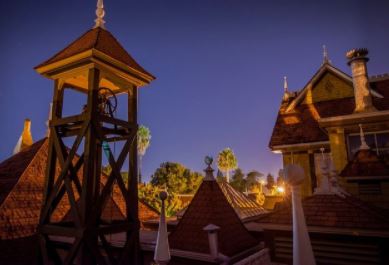
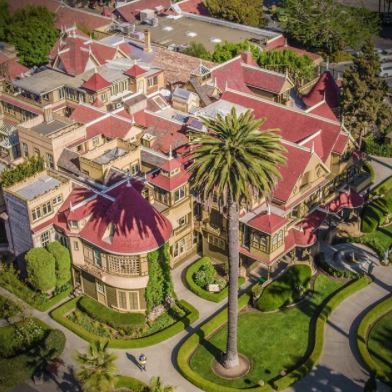
The Winchester Mystery House
In November of 2007, preparing to close, a tour guide was mopping the floor in an unused room that had another old main doorway. This door was never used and was bolted from the inside. Yet he found bloody boot prints coming from the door and crossing the room. The next day he was found hiding in a closet. Two of the investigators determined the boot prints were made from Balmoral boots, which dated back to the 19th century, and the blood type was one of the rarest types in existence, known as Rhnull blood. It had a complete lack of antigens. Only 43 people on Earth have ever been reported to have this blood type. The DNA was not present in any database and it is not known if a soul alive carries this blood type today. It is known as the “golden blood.” People who have this blood type have osmotically fragile red cells called stomatocytes with subsequent chronic haemolytic anaemia of varying degree. It is the most clinically significant blood group in transfusion medicine.
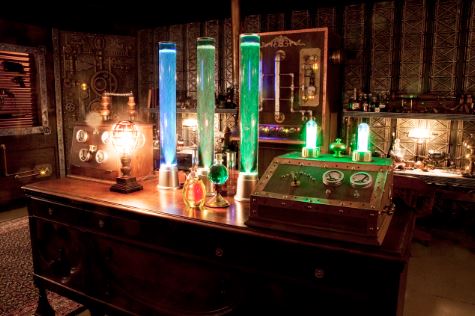
It is also referred to as Rhnull disease and a rare blood group with a reported frequency of approximately 1 in 6 million individuals. To date there are at least 43 persons belonging to 14 families with Rhnull phenotype. It is very important to medicine, but extremely dangerous to live with this blood type, so few people have it, but they can donate to anyone. An investigation produced a massive 500-page report in which it rejected foul play or the presence of satanic rituals. Cases like these have been shrouded in secrecy ever since. These cases deal with people who have been scared or in some way affected by poltergeists and ghost, or people dealing with casualties from the occult. British and American elders of witchcraft are fairly high-profile characters within their sphere, often found attending lectures, discussions and festivals throughout these countries. Their levels of activities range from passive pagans more interested in ecology and nature through to the most serious of witches who meet to practise intense ritual, either in their own homes or in some secluded spot in the countryside.
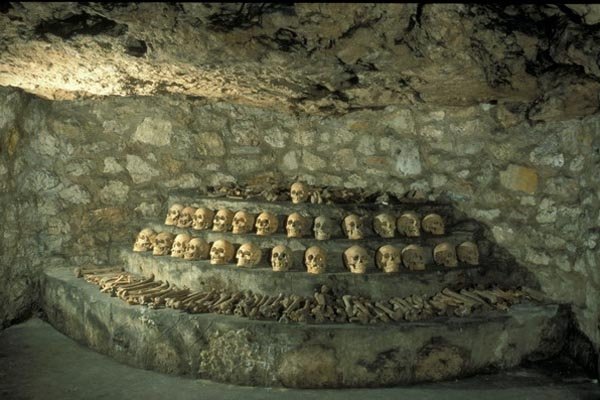
For further information about tours, including group tours, weddings, school events, birthday party packages, facility rentals, and special events please visit the website: https://winchestermysteryhouse.com/

Please visit the online giftshop, and purchase a gift for friends and relatives as well as a special memento of The Winchester Mystery House. A variety of souvenirs and gifts are available to purchase. https://shopwinchestermysteryhouse.com/

I Pledge Allegiance to the Flag of the United States of America

Repetitive nonsensical behaviour is an indication of a mental disorder. There is little disagreement among responsible political leaders that the United States of America and the whole Western World are passing through a dangerous period. Even though opinions vary on the degree of these dangers, there is a widely shared conviction that we have a clear and realistic picture of the situation, that we are meeting it as adequately as we can, and that there is no essentially different course of action we can take Communism is a revolutionary-imperialist movement out to conquer the World by force or subversion. Its industrial and military development has made the Communist camp into a powerful rival to American Capitalism, capable of destroying our human and industrial potential to a considerable degree. This bloc can be restrained from executing its wish for World conquest solely by the knowledge that any such attempt would be met with a counterblow that would destroy or cripple its human and economic potential. In this deterrent capacity lies the only hope for peace since the ultimate negative will abstain from her attempt at World conquest only because of fear of our deterrent. As long as we have a sufficiently strong deterrent power and military allies around the World, peace is secured. Within this general concept, opinions vary widely. There are those who consider that while nuclear warfare may kill 100 to 150 million Americans, it will not destroy or seriously transform our form of life. There are those who consider the probability of losses of 200 to 250 million casualties as being more realistic. #RandolphHarris 1 of 15
There are those who are in favour of disarmament negotiations from a position of strength, while others look at any kind of disbarment negotiations as a futile exercise in propaganda. There are those who are for limited steps toward arms control, like the cessation of nuclear tests, while there are others who consider any such step a threat to our security. There are those who favour a nuclear strategy of counterforce aimed at the enemy’s missile bases, and those who consider any such step a threat to our security. There are those who favour a nuclear strategy of counterforce aimed at the enemy’s missile bases, and those who favour a “second strike” stable deterrent, aimed at the population centers, and still others who try to combine both strategies. (Although this combination may deprive both approaches of their alleged advantages.) Views also differ in various sectors of our policy-making groups. Under the Eisenhower administration, the State Department and the President took a somewhat more conciliatory line with regard to the cessation of testing and arms control, while the military and the Atomic Energy Commission have then and now taken a less conciliatory stand. The various armed services differ among themselves in strategic concepts. Each espouses a concept that provides the most room for its own expansion and at the same time makes some compromises with it two competing service. In spite of these differences, however, most responsible political leaders and the majority of the population seem convinced of the correctness of the basic premises of our policy and appear willing to continue in the direction we have taken. #RandolphHarris 2 of 15

In spite of these differences, however, most responsible political leaders and the majority of the population seem convinced of the correctness of the basic premises of our policy and appear willing to continue in the direction we have taken. Indeed they are certain that there is no other possible course—in fact, that every other course is ore conducive to war than the one we are taking. This position is buttressed by the conviction that our policy is not only the sole hope for physical survival, but that it is also the only one recommended by moral and spiritual considerations. They believe that we and our allies represent freedom and idealism, while the ultimate negative and their allies represent servitude and materialism. The assumption is made that the risk is even war and destruction must be taken because it is better to die than to be slaves. When executing a policy based on these premises, anyone who knows the dangers involved for us and for the whole World will have a heavy heart, but few doubts. He will be convinced that we are doing the best we can, and that there is no other course of action which can protect us better from war or enslavement. If, however, the premises on which our policy is based are erroneous, then, indeed, we would be taking a course of action that no human being with some sense of responsibility and duty could dare to recommend. Hence, we have the intellectual and moral obligation to question the correctness of these premises again and again. Many of our assumptions are fictitious or distorted, and hence we are running with confused minds into the gravest danger for ourselves and the rest of mankind. #RandolphHarris 3 of 15

However, we do not want an all-destructive war, and we do want the ideas of human dignity and individualism to be kept alive on this Earth. Peace is still possible and the humanist tradition has, still, a future. Societies have lives of their own; they are based on the existence of certain productive forces, geographical and climatic conditions, techniques of production, ideas and values, and a certain type of human character that develops under these conditions. They are organized in such a way that they tend to continue existing in the particular form to which they have adapted themselves. Usually, men in each society believe that the mode in which they exist is natural and inevitable. They hardly see any other possibilities and, in fact, they tend to believe that a basic change in their own mode of existence would lead to chaos and destruction. They are seriously convinced that their way is right, sanctioned by the gods or by the laws of human nature, and that the only alternative to the continuation of the particular form in which they exist is destruction. This belief is not simply the result of indoctrination; it is rooted in the affective part of man, in his character structure, which I molded by all social and cultural arrangements so that man wants to do what he has to do, so that his energy is channeled in such a way as to serve the particular function he has to fulfill as a useful member of a given society. It is for this very reason, namely that the patterns of thought are rooted in patterns of feelings, that patterns of thought are so very persistent and resistant to change. #RandolphHarris 4 of 15

Yet societies do change. Many factors, like new productive forces, scientific discoveries, political conquests, expansion of population, and so on, make for change. In addition to these objective factors, man’s growing awareness of his needs and of himself and, most of all, of his increasing need for freedom and independence, make for constant change in his historical situation, ranging from the cave dweller’s existence to the space-traveling man of the near future. How do these changes occur? Most of them have occurred in violent and catastrophic ways. Most societies, leaders and led, have been incapable of adapting themselves voluntarily and peacefully to fundamentally new conditions by anticipating the necessary changes. They have tended to go on and on with what they sometimes poetically called “accomplishing their mission,” trying to continue the basic pattern of their social lives with only small changes and modifications. Even when circumstances that were in complete and flagrant contradiction to their whole structure arose such societies went on blindly trying to continue their modes of living until they could not manage any further. They were then conquered and destroyed by other nations, or they slowly died because of their incapacity to master life any longer in their customary way. The most opposed to fundamental change have been the elites, which profited most from the existing order and hence were unwilling to give up their privileges voluntarily. However, the material interests of the ruling and privileged groups are not the only reason for the incapacity of many cultures to anticipate necessary changes. #RandolphHarris 5 of 16

Another equally important reason lies in a psychological factor. Leaders and led, having hypostatized and deified their way of life, their thought concepts, and their formulation of values, becomes rigidly committed to them. Even only slightly different concepts become intensely disturbing and are looked upon as hostile, devilish, crazy attacks on one’s own “normal,” “sound” thinking. For the Cromewellians, the Papists were of the Devil; for the Jacobeans, the Girondists; for the Americans, the Communists. Man, in each society, seems to absolutize the way of life and the way of thought produced by his culture and to be willing to die rather than to change, since change, to him, is equated with death. Thus the history of man is graveyard of great cultures that came to catastrophic ends because of their incapacity for planned, rational, voluntary reactions to challenge. Yet nonviolent anticipatory change has also occurred in history. The liberation of the working class from the status of objects of ruthless exploitation to that of influential economic partners in Western industrialized society is an example of nonviolent change in the class relations within societies. The willingness of the British Labour Government to grant independence to India before it was forced to do so is an example in the area of international relations. However, these anticipatory solutions have been the exceptions rather than the rule in history, so far. Religious peace came to Europe only after the Thirty Years’ War, to England only after violent and cruel mutual persecution by Papists and anti-Papists alike; in the First and Second World Wars, peace came only after the futile slaughter of millions of men and women and animals and vegetation and buildings and automobiles on both sides and long after the eventual outcome of the war was already clear. #RandolphHarris 6 of 15

If the enforced decisions had been voluntarily accepted by both sides before they were enforced, would not mankind have gained? Would not an anticipatory compromise have averted hideous losses and wholesale brutalization? Even if this is true has not the increasing mastery over nature resulted in an increased strength of the individual self? This is true to some extent, and inasmuch as it is true it concerns the positive side of individual development which we do not want to lose track of. However, although man has reached a remarkable degree of mastery of nature, society is not in control of the very forces it has created. The rationality of the system of production, in its technical aspects, is accompanied by the irrationality of our system of production, in its technical aspects, is accompanied by the irrationality of our system of production in its social aspects. Economic crises, unemployment, war, govern man’s fate. Man has built his World; he had built factories and houses, he produces cars and clothes, he grows grain and fruit. However, he has become estranged from the product of his own hands, he is not really the master any more of the World he has built; on the contrary, this man-made World has become his master, before whom he downs down, who he tries to placate or to manipulate as best he can. The work of his own hands had become his God. Man seems to be driven by self-interest, but in reality his total self with all its concrete potentialities has become an instrument for the purposes of the very machine his hands have built. #RandolphHarris 7 of 15

Man keeps up the illusion of being the center of the World, and yet he is pervaded by an intense sense of insignificance and powerlessness which his ancestors once consciously felt toward God. Modern man’s feeling of isolation and powerlessness is increased still further by the character which all his human relationships have assumed. The concrete relationship of one individual to another had lost its direct and human character and has assumed a spirit of manipulation and instrumentality. In all social and persona relations the laws of the market are the rule. It is obvious that the relationship between competitors has to be based on mutual human indifference. Otherwise any one of them would be paralyzed in the fulfillment of his economic tasks—to fight each other and not to refrain from the actual economic destruction of other is necessary. Th relationship between employer and employee is permeated by the same spirit of indifference. The word “employer” contains the whole story: the owner of capital employs another human being as he “employs” a machine. They both use each other for the pursuit of their economic interests; their relationship is one in which both are means to an end, both are instrumental to each other. It is not a relationship of to human beings who have any interest in the other outside of this mutual usefulness. The same instrumentality is the rule in the relationship between the businessman and his customer. The customer is an object to be manipulated, not a concrete person whose aims the businessman is interested to satisfy. #RandolphHarris 8 of 15

The attitude toward work has the quality of instrumentality; in contrast to a medieval artisan the modern manufacturer is not primarily interested in what he produces; he produces essentially in order to make a profit from his capital investment, and what he produces depends essentially on the market which promises that the investment of capital in a certain branch will prove to be profitable. Not only the economic, but also the personal relations between men have this character of alienation; instead of relations between human beings, they assume the character of relations between things. However, perhaps the most important and the most devastating instance of this spirit of instrumentality and alienation is the individual’s relationship to his own self. Man does not only sell commodities, he sells himself and feels himself to be a commodity. The manual labourer sells his physical energy; the businessman, the physician, the clerical employee, sell their “personality.” If they are to sell their products or services, they have to have a “personality.” This personality should be pleasing, but besides that its possessor should have energy, initiative, this, that, or the other, as his particular position may require. As with any other commodity it is the market which decides the value of these human qualities, yes, even their very existence. If there is no use for the qualities a person offers, he has none; just as an unsalable commodity is valueless though it might have its use value. Thus, the self-confidence, the “feeling of self,” is merely an indication of what others think of the persons. It is not he who is convinced of his value regardless of popularity and his success on the market. #RandolphHarris 9 of 15
If he is sought after, he is somebody; if he is not popular, he is simply nobody. This dependence of self-esteem on the success of the “personality” is the reason why for modern man popularity has this tremendous importance. On it depends not only whether or not one goes ahead in practical matters, but also whether one can keep up one’s self-esteem or whether one falls into the abyss of inferiority feeling this analysis of self-esteem and popularity is another method of survival of the fittest. As you can see, survival of the fittest may have a lot to do with following the Golden Rule. Once an expertly formulated and timely proposal for action has been presented to the public, it might be supposed that the next phase of the planning process—the policy phase—would consist merely of a decision by the appropriate policy-making body empowered to represent the public. Much more is required, however, so much more that the act of decision comes only as the climax of a complex process of prior discussion, and may indeed never come at all, as can happen to the best-laid plans. Since discussion so little resembles certain popular notions of what planning is, and because of some of the semantic prejudices about its meaning, it is important to describe in some detail what takes place in the phase of democratic planning. First of all, it has to be recognized that we are dealing with binding agreements and negotiation. Academic discussion of academic questions commits no one to action. #RandolphHarri 10 of 15

Any sort of unilateral communication—preaching, persuading, selling, amusing—obviously does not constitute discussion, not even when two people or parties engage in it alternately. The phenomenon of two people talking past each other is widely known. The mere assertion of interest (“I want…”) by one party to another does not constitute discussion, even though it involves a question of action, since it does not tend to produce an agreement, or at least a decision, accepted as binding upon both parties. What distinguishes discussion from propaganda, begging, or commanding is that it involves a mora commitment to act in a specified way. If a decision to act or co-operate is to be arrived at through genuine discussion, certain requirement must regularly be met. Otherwise any apparent decision might be called an agreement but is likely to prove unworkable as a basis for action. Planning can only proceed on the basis of binding commitments for specified periods; and under modern conditions, where apparent consent through customer is unreliable and the constant use of force repugnant, voluntary agreement is the only basis on which binding commitments can be obtained. It is necessary, therefore, to specify the requirements of genuine discussion. A need following the conditions of human existence, is that for rootedness. Man’s birth as man means the beginning of his emergence from his natural home, the beginning of the severance of his natural ties. Yet, if man loses his natural roots, where is he and who he is, this very severance is frightening? #RandolphHarris 11 of 15

Man would stand alone, without a home, without roots; he could not bear the isolation and helplessness of this position. He would become insane. He can dispense with the natural roots only insofar as he finds new human root and only after he has found them can he feel at home again in this World. It is surprising, then, to find a deep craving in man not to sever the natural ties, to fight against being torn away from nature, from mother, blood and soil? The most elementary of the natural ties is the tie of the child to the mother. The child begins life in the mother’s womb and exists there for a much longer time than is the cause with most animals; even after birth, the child remains physically helpless and completely dependent on the mother; this period of helplessness and dependence again is much more protracted than with any animal. In the first years of life no full separation between child and mother has occurred. The satisfaction of all his physiological needs, of his vital need for warmth and affection depend on her; she has not only given birth to him, but she continues to give life to him. Her care is not dependent on anything the child does for her, on any obligation which the child has to fulfill; it is unconditional. She cares because the new creature is her child. The child, in these decisive first years of his life, has the experience of his mother as the fountain of life, as an all-enveloping, protective, nourishing power. Mother is food; she is love; she is warmth; she is Earth. To be loved by her means to be alive, to be rooted, to be at home, and obviously babies are born understanding their own power and Dr. Darwin’s mantra of survival of the fittest. In order to survive, the baby knows he has to be cute because he is so dependent. They understand the economic cost benefit principle. #RandolphHarris 12 of 15

What we now call democracy burst forth only when the decision load suddenly swelled beyond the capacity of the old elite to handle it. The arrival of the Second Wave, brining expanded trade, a greater division of labour and a leap to a whole new level of complexity in society, caused the same kind of decision implosion in its time that the Third Wave is causing today. As a result, the decisional capabilities of the old ruling groups were overwhelmed, and new elites and sub-elites had to be recruited to cope with the decision load. Revolutionary new political institution had to be designed for that purpose. As industrial society developed, becoming ever more complex, its integrating elites, the “technicians of power,” were in their turn continually compelled to recruit new blood to help them carry the expanding decision load. It was this invisible but inexorable process that drew the middle class more and more into the political arena. It was this expanded need for decision-making that led to an ever wider franchise and created more niches to be filled from below. If this picture is even roughly correct, it tells us that the extent of democracy depends less on culture, less on Marxist class, less on battlefield courage, less on rhetoric, less on political will, than on the decision load of the social system expands, therefore, democracy becomes not a matter of choice but of evolutionary necessity. The system cannot run without it. Well all this further suggest is that we may be on the edge of another great democratic leap forward. For the very implosion of decision-making now overwhelming our presidents, prime ministers and governments unlocks—for the first time since the industrial revolution—exciting prospers for a radical expansion of political participation. #RandolphHarris 13 of 15

The need for new political institutions exactly parallels our need for new family, educational and corporate institutions as well. It is deeply wired into our search for a new energy base, new technologies, and new industries. It reflects the upheaval in communications and the need to restructure relationships with the non-industrial World. It is, in short, the political reflection of accelerating changes in all these different spheres. Without seeing these connections, it is impossible to make sense of the headlines around us. For today the single most important political conflict is no longer between the rich and the poor, between America’s Next Top Model and those made to return to their room, collect their belongings and go home, or even between capitalism and communist visions. The decisive struggle today is between those who try to prop up and preserve industrial society and those who are ready to advance beyond it. This is the super struggle for tomorrow. And then keep in mind, China has thousands of EV cars sitting in junkyards because they are considered an inferior technology, and not comparable to gasoline engines. The field is over 15,000 square meter in size, and there are 60 cars waiting to be processed because the junkyard is at capacity. And keep in mind, these are new cars, most less than five years old. I guess that is why so many people are so jealous of fossil fuels? The possibility of good outcomes from equilibria of such games depends crucially on the rate at which future payoffs are discounted. The discounting can reflect the market rate of interest that one could if one receives payment earlier, or it can be a subjective measure of a player’ impatience, depending on the context. However, uncertainty #RandolphHarris 14 of 15

Traders may have to leave the market for reasons outside of their control. The intermediary faces competition from others for his monopoly position; therefore he has an uncertain lifetime, either in the limited sense of being ousted from the market in a literal sense. Naming the “attack” is a great factor for victory. For example, an attack may be made to hinder; then the believer must be on guard against all hinderances, seen and unseen, which the hinderer is placing in his way. EV technology may just be a hinderance to fossil fuels, and it will eventually be phased out because it is too expensive and temperamental an inconvenient. It could also be a tool used to make fossil fuel producers impatient. Therefore, they must be on guard regarding all things liable to test his patience. The sooner the attack is recognized and named, the quicker the weapon can be called into use to destroy it. It may be a flood of accusations of wrongdoing which need to be recognized, or tested as to their truth. When the accusing spirit charge a person with some specific wrong over a certain thing, and the believer surrenders that thing to God, if the accusation does not then pass away it shows that it is not the true ground for the accusation, but there is some other cause hidden from view. The believer should then seek light from God upon the hidden causes, according to John 3.21, and refuse the cause of the accusation without knowing what it is saying, “I refuse the cause of this attack, whatever it is, and I trust the Lord to destroy it.” #RandolphHarris 15 of 15
CRESLEIGH HAVENWOOD
Lincoln, CA | from the high $600s
Now Selling!

No appointment needed! Cresleigh Havenwood features four distinct floor plans ranging from 2,293 – 3,377 square feet and offering up to five bedrooms. Each plan has been thoughtfully designed and includes great features such as single story homes, guest suites, optional offices, garage workshops, and more! Get the most out of your new home with Cresleigh’s All Ready smart home featuring all the connectivity needed to keep your house running. Best of all, each Cresleigh home comes with owned solar included!

Located off of Virginiatown Road and McCourtney Road, residents of the 83 homesites of Cresleigh Havenwood will benefit from a brand new neighborhood in the charming City of Lincoln. Palo Verde Park, is just down the street and there’s plenty of recreation to take part in all around town. https://cresleigh.com/havenwood/


Spirit Beings Have the Power to Absorb Our Actions and Thoughts

Llanada Villa was wintry with steep hand craved shingled roofs and stained-glass windows. It was built of redwood, and had countless chimneys rising from its steep gables, and a sprawling conservatory on the west side. The sheer scale of place, stranded as its own park, suggested another World. When the stars were right, they could plunge from World to World through the sky. However, the black haunted woods were where no dweller ventured. There were insane shouts and harrowing screams, soul-chilling chant and dancing devil-flames. Reluctant to be left alone, servants refused point-blank to advance an inch toward the scene of unholy worship. There were legends of a hidden lake unglimpsed by mortal sight, in which dwelt a huge, shadow with luminous eyes; and devils flew up out of caverns from the inner Earth to worship it at midnight. They said that it had been there before the Spanish Conquistadors, before the Indians, and before even the wholesome beasts and birds of the woods. It was a nightmare to see, and to see it was to die. Two bodies had once been found slaughtered, and were buried in one sepulchre, and the tree ever after brought forth blue berries, which served for memorials of our blood. Even though it made men dream, they knew to keep away. A faint glow of twilight was still in the windows overheard, but the darkness at the far end of the gallery was already impenetrable, and the dazzle of the candle confused my eyes. This particular night, I could feel the black arcades of horror emanating from within the walls of my home. #RandolphHarris 1 of 8
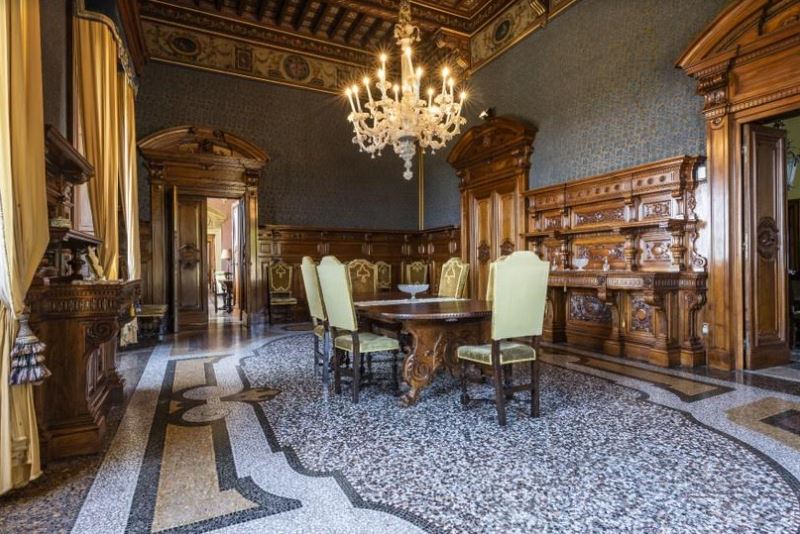
The last of my strength deserted me, and I sank to the floor, just managing to set the candlestick upright beside me. Hot wax stung the back of my hand. You must get up, you must get up, a voice in my head was saying, but my limbs would not obey. I was crouching a few feet from the fireplace, almost in front of the sarcophagus, which lay just within the circle of light from the candle. If you cannot stand, you must crawl, said the voice. I was making another effort to rise when I thought I heard a sound from the fireplace. I clenched my teeth to stop them chattering. There it was again, a heavy, muffled, grating sound, like stone sliding upon stone. It seemed to be coming from beneath the floor in front of me. The grating ceased; for several seconds there was absolute silence, then a faint metallic creak. I held my breath; the candle flame steadied. The lid of William’s tomb was slowly rising. In life he was a beautiful youth and fond of manly sports. He would rise before the dawn to pursue the chase. I saw him when I first looked forth, fell in love with him, and was married to this charming man and he devotedly loved me. Nevertheless, my heart gave one appalling lurch and stopped beating altogether. The next second, as it seemed, I was on the far side of the connecting door, with a rattling in the lock as I fought to turn it. I could see the faint glimmer of my candle shining through the gap beneath the door. Then another, stronger light began to play about my feet; there was a creak, and thump, and the sound of footsteps approaching. #RandolphHarris 2 of 8
I thought of running for the stairs, but I had no light, and the visitant would hunt me down. The door handle rattled; the door shook; the footsteps moved purposefully away. In a few moments, it would be on the landing. I had not time to run and lock all the doors at the far end of the library. I thought of the weapons arrayed along the gallery wall—too high for me to reach. If it seized me, most likely I would die horribly. The footsteps were still receding. I gripped the key with both nerveless hands and twisted. There was a rasp and a snick, but the footsteps did not pause. I withdrew the key and slipped back into the gallery, just as the light passed out through the double doors at the other end. The beam of a lantern played across the walk beyond; then the footsteps moved off along the landing, boards creaking at every tread. For a moment I thought I might be spared, but then I heard the squeak of hinges as my pursuer entered the library. I tried to slip the key into the keyhold, but my hand was shaking so violently that I dared not let the metal touch. My candle still burned where I had left it on the floor. Footsteps moved within the library—one, two, three, and then a pause. Light flickered beneath the door. The footsteps were moving again—I could not tell which way. I moved toward the candle, almost tripping over the hem of my dress. As I knelt to the flame, I realized I had no idea how fast the wick would burn. The floor seemed to be dropping away beneath my feet. If you faint, it will catch you, said the voice. #RandolphHarris 3 of 8

Only poetry or madness could do justice to the noises I heard as the footsteps continued to plough through the mansion toward me. Howls and squawking ecstasies tore through my home and reverberated through fireplaces like pestilential tempests from the gulfs of hell. Suddenly came the spectacle itself. The mad cacophony of the orgy fortunately deadened. Void of clothing, this hybrid spawn was some eight feet in height. It was some ancient legendary horror. Like a bird beneath the hypnotic gaze of deadly serpent, I was paralyzed by terror. The gloom of the chamber deepened. The stifling air was laden with unformulable menace, but it was constrained by the spell of a black and lethal necromancy. There crept forth the choking mustiness of hidden vaults and embalmed centurial corruption, together with the ghostly spice of a strange perfume that seemed to emanate from the beast. Then I recalled the story of a most evil creature, who had been buried somewhere in this land hundreds of years ago. I did not nurse the illusion that I was dealing here with an accidental tragedy. The creature was once a small boy who was abducted and dying of exposure lost in the wind-scoured hills that rose behind my home. He had been stolen. Then he had been murdered. And no one had ever been called to account for these awful, planned, sequential crimes. I rubbed my eyes with the heels of my hands. Anger stirred in the beast. And I knew I was sharing his indignant rage which he had so vibrantly felt. #RandolphHarris 4 of 8
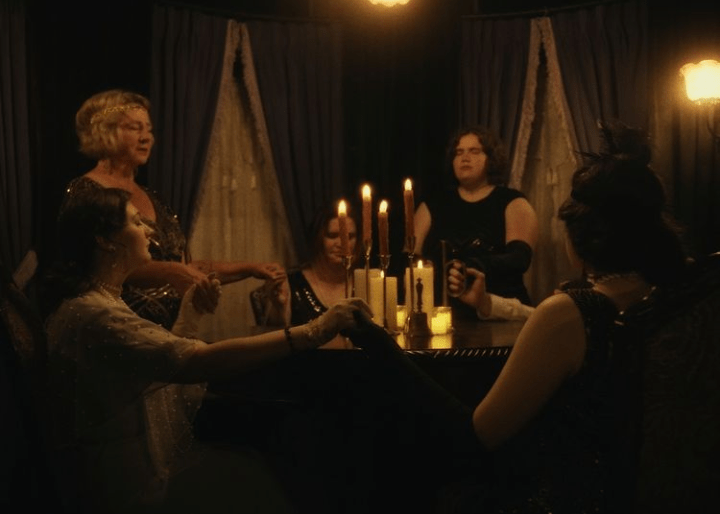
My teeth were tapping together like typewriter keys. There was something else, some faint warning that reached me. Not actually heard so much as sensed. As if someone’s breath were coming down the shaft from just over my head, slightly as if by a sounding board. I acted on it instantly, more from instinct than actual realization of danger. The beast looked at me, contorted into a maniacal grimace of impending destruction, as I reached for my ivory handled pistol, both of its arms were high over his head wielding something. It looked like a sword, but there was no time to find out. For what seemed like five minutes, the din and chaos were beyond descriptions. Shots were fired. It came hissing down in a big arc against the floor. The sword, of course, followed it a second later. The very weight of the creature’s body caused it to crash through the floor. Numb and half frozen, gusts of uncontrollable shivering swept over me every once in a while. I turned my head and looked toward that sinister beast and there was nothing left but an opening in the floor. Within the walls of this dark house, there was a secret which even torture could not extract. For shapes came out of the dark to pay the inhabitants a visit. I was overwhelmed by the supernatural situation amid whose dubious horror and ineluctable sorceries had somehow become involved. Malefic sorcery, deadly peril of both soul and body. I fled blindly into the darkness until I collided painfully with a wall. #RandolphHarri 5 of 8
There was a secret which even torture could not extract in Llanada Villa. I was not absolutely alone, for shapes came out of the dark to visit. Although they no longer lived, those killed by the Winchester Rifle no longer lived, they would never really die. They all lay in my home preserved by spells and this ancient curse. They could live in the darkened hallways, shadows, and corners whilst millions of years rolled by. I could hear them whisper in the shadowy wings of the mansion; I caught the sibilation of ominous voices, like those of familiars that respond to the summoning of wizards; and I seemed to hear, even in the vaults and towers and remote chambers, the tread of feet that were hurrying on malign and secret errands. However, the oblivion was around me like the meshes of a sable net; and it closed in relentlessly upon my troubled mind, and drowned the alarms and of my agitated senses. A sad and sunless daylight filtered through the windows. The mansion was very still; and it seemed that the animating spirit of evil was now quiescent; the shadowy wings of the horror and malignity, the feet that had sped on baleful errands, the summoning sorcerers, the responding familiars, were all lulled in a temporary slumber. I opened the door, and tiptoed along the deserted hall. Amid the gloomy walls that surround me, the somber ancient halls, the high towers and the heavy bastions, there is but one thing that veritably exists; and all the rest is a fabric of illusion. I passed the doors of many secret rooms. There was one room in particular, a bare room, entirely built of stone, and illumined only by narrow slits high up in the wall. #RandolphHarris 6 of 8
The place was very dim, but in the middle of the floor was a tomb of marble, where William lay. And there he was. He appeared to be slumbering peacefully as an infant. Darkness returned with an earsplitting crash. The floor lurched and rebounded; for a moment there was silence, and then a long, low rumble, gathering power as it approached until it broke over me with a thunderous roar. Choking dust filled my lungs, and I was flung from my feet and rolled over and over like a rag doll in a storm. There was a vile, rasping taste in my mouth and throat, and a heavy weight pressing down on the side of my head; I tried to push it away, and realized it was the floor. The area on which I was lying were covered in sharp, gritty fragments. A faint, misty glow appeared in the darkness away to my right. I began to crawl toward it, not knowing what else to go, brushing aside slivers of what felt like glass, until I saw that it was the light from the candle I had left burning in the library. The fear had left me; perhaps I had simply exhausted my capacity to feel anything at all. I rose shakily to my feet, made my way along the landing to the library, fetched the candle and returned to the gallery—what remained of it. At the far end, where the tomb and the chimney and the armour had been, was a great gaping hole in the wall. Half the floor was gone; and the boards ended in a jagged mess of splinters not ten feet from where I had been lying. Dust was floating up from a lack pit beyond. A beast was down there. The thought struck me like icy water, dashing away the numbness. Suddenly I was trembling so that I could scarcely stand, as trickling noises echoed in the darkness. Then came out of the floor the black spirits of Earth, mouldy and shadowy. #RandolphHarris 7 of 8
I conjure thee, Bechard, and constrain thee, in like manner, by the Most Holy Names of God, ELOY, ADONAY, ELOY, AGLA, SAMALABACTAY, which are written in Hebrew, Greek, and Latin; by all the sacrament, by all the names written in this spell; and by him who drove three from the height of Heaven. I conjure and command thee by the virtue of the Most Holy Eucharist, which hath redeemed men from their sins; I conjure three to come without any delay, to do and perform all my biddings, without any prejudice to my body or soul, without harming this spell, or doing injury to those that accompany me. I conjure thee, O Guland, in the name of Satan, in the name of Beelzebuth, in the name of Astaroth, and in the name of all other Spirits, to make haste and appear before me. Come, then in the name of Satan and in the names of all other demons. Come to me, I command thee, in the name of the Most Holy Trinity. Come without inflicting any harm upon me, without injury to my body or soul, without maltreating my books, or anything which I use. I command thee to appear without delay, or, that failing, to send me forthwith another Spirit having the same power as thou hast, who shall accomplish my commands and be submitted to my will, wanting which, he whom thou shalt send me, if indeed thou comest not thyself, shall in no wise depart, nor until he hath in all things fulfilled my desire. I now plant the seed of my desire within the black Earth, through the mouth of Arezura where the powers of sorcery and counter creation dwell. Through this gateway of darkness, I now shine the light and power of my will upon this World for the benefit of me and mine! #RandolphHarris 8 of 8
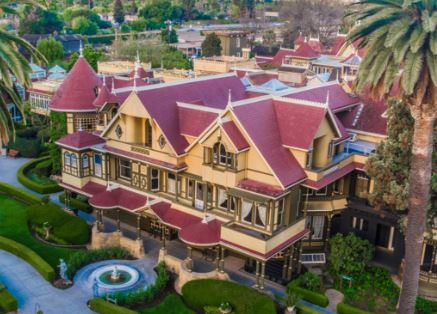
In the early summer of 2007, a couple were traveling to Santa Clara, California on a business trip. Shortly after 10 am, the decided to stop and eat at The Winchester Café. They remembered that the food was prepared in an excellent down-home country style, and that the waiter, waitress, the cook, and the other customers were so friendly in a sincere manner, and they promised that they would come back. And a sixteen years later, they tried to do exactly that on a return drive. However, The Winchester Café, which is located inside The Winchester Mystery House was nowhere to be seen. They even looped back a couple of times, thinking they may have somehow drive on by. They even got into an argument, each of them insisting that they remembered exactly where it was. They just could not find it, and since the hour was getting very late, they drove on. When they got home, they went to the website of The Winchester Mystery House and found a note saying that the mansion was closed and had gone dark for the day. They really wanted to eat at the café because the cooking was so wonderful. However, what if The Winchester Mystery House appeared and disappeared simply appeared and disappeared every so often? Or maybe the couple was lost in time and space for decades? We will never know. But at least we know the food and the company would have been good.
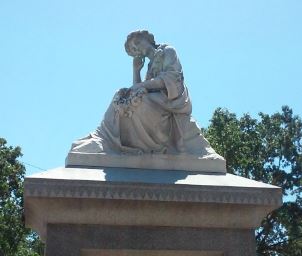
Cloaking is the power to hide the presence of oneself, other beings, or locations by making them imperceptible to the eye. It is effective at preventing others from discovering one’s location. Scientists at the University of Rochester in New York have discovered a way to hide large objects from sight using inexpensive and readily available lenses. Cloaking is the process that allows an object to become hidden from view, while everything around it appears undisturbed. When an object is placed behind the layered lenses it seems to disappear. “From what we know this is the first cloaking device that provides three-dimensional, continuously multidirectional cloaking,” said graduate student Joseph Choi, who helped develop the technology. In their tests, the researchers have cloaked a hand, a face, and a ruler, making each object appear “invisible” while the image behind the hidden object remains in view. The implications of this discovery are endless. Cloaking can also be achieved through the use of certain spells and potions. Additionally, beings with the power of invisibility are able to naturally cloak themselves by becoming unseeable. The Winchester Mystery House is truly mysterious.
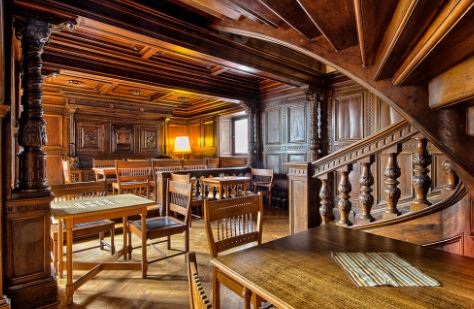
For further information about tours, including group tours, weddings, school events, birthday party packages, facility rentals, and special events please visit the website: https://winchestermysteryhouse.com/
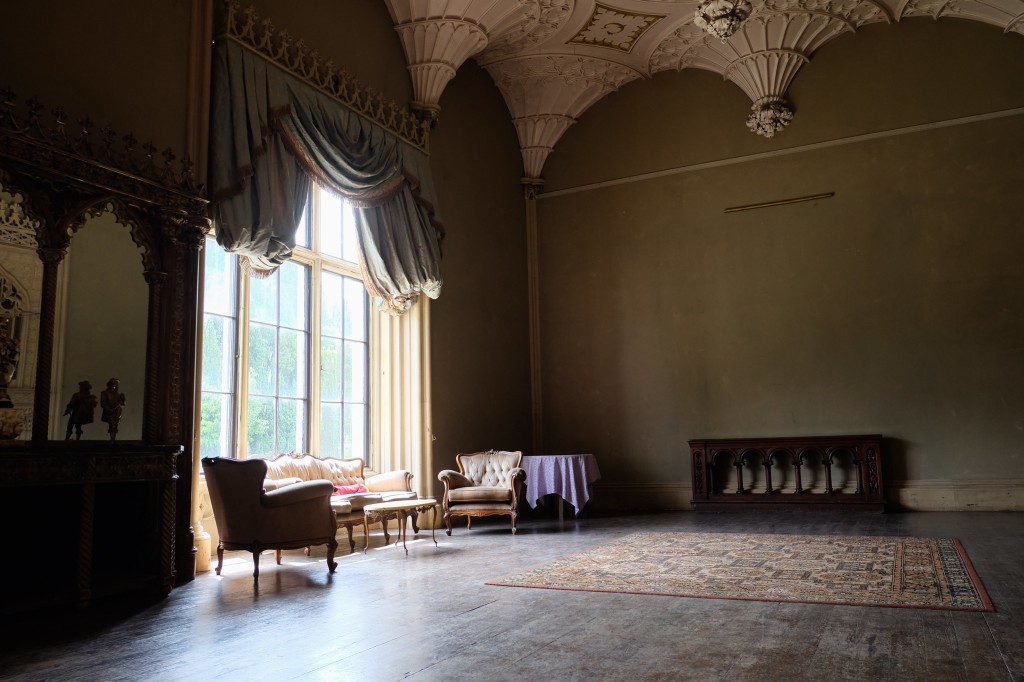
Please visit the online giftshop, and purchase a gift for friends and relatives as well as a special memento of The Winchester Mystery House. A variety of souvenirs and gifts are available to purchase. https://shopwinchestermysteryhouse.com/

If He is Not Capable of Creating, if He Cannot Love, this is the Evenin’ of Destruction

To keep America alive and thriving, Americans need to come together as one people—All American. Regardless of what happened in the past, people need to drop all animosity towards government, citizens, their family, and neighbours and do the right thing and obey the law and respect that Constitution of the United States of America. An American is someone who subscribes to the principles set out in our founding documents, the Declaration of Independence and the Constitution. America is, on this account, a creedal nation, perhaps the first in history, with Americans defined by an adherence to certain beliefs about equality, liberty, individual rights, and limited government. This idea of America as a creedal nation goes back to Alexis de Tocqueville, who found the peculiarity of our national experience—at least in relation to Europe—to be the absence of a feudal past, that is, the lack of a tradition of hierarchy, hereditary aristocracy, and serfdom (which, of course, is not quite true). What impressed him most about the American experience was what he called “the generative fact” of equality which all else derived. We would call this Mr. Tocqueville’s Thesis. It forms the traditional core of American patriotism. The American creed is understood as a product not of geography, tradition, or inheritance, but of reason. Its principles are the property of all who want to participate in the blessings of liberty. It requires only a willingness to express support for our established laws and religion and an expression of support for our founding creed and live by it. #RandolphHarris 1 of 25

At a recent Fourth of July picnic at the home of a colleague, the hostess asked the group if we all felt patriotic. Many people will say that they do not because they reflect on all of the hardships they have endured due to their race, gender, creed, disability, religion, material status, or sexuality. However, that is the goal of the ultimate negative. To get you to hate your home land so they can take it over and destroy it. Some of us have grown up in houses that have flown the flag, some of us have generations of ancestors who have fought in wars. When I was a kid, my dad used to read me the Declaration of Independence before lighting fireworks. As I got older, I even grew to like apple pie, and tried to engage in sports talk with other guys. If you look at the state of the World, you will realize how beautiful America is and how good we have it. It is also very important to remain patriotic and to help every American advance because Less Developed Countries (LCDs) are not competing for the title of America’s Next Top Model (Global Superpower). Therefore, we have to make sure our students are the best educated in the World, that American cars are appealing to Americans and other nations, and that we buy American poultry, produce and diary. We do not need to pack our cities full of buildings and homes. While buildings and homes are important, we need to keep land open for farms, parks, forest, and wildlife. Patriotism acknowledges America’s sins and flaws, it celebrates America’s history, her contributions to humanity, the eternal optimism and energy of her people. Above all it celebrates the documents in which successive generations of Americans have placed their faith. #RandolphHarris 2 of 25

Men and women and children and animals who have given their lives for their country know that patriotism is not the fear of something, it I the love of something. The most impressive patriots that I have met are men and women and children and animals who wearing their country’s uniform, are clearly inspired by love of country and love of its ideals. It may even be that love of your own country and countrymen is a prerequisite to genuine affection for people in other lands. American patriotism has everything to do with the evolution of the Constitution of the United States of America and the ideals that inspired the founders. Patriotism also has a great deal to do with faith in human possibility, and a belief in a better future that has inspired successive wave of colonists and immigrants. Patriotism is a feeling of love and respect for your country. The United States of America is well-suited and well-situated to take advantage of the Olympian possibilities for the manufacturing of patriotism. Since the year 2000, Americans have gained considerable freedom in their personal lives. Choices that used to be condemned, such as remaining single or childless, have become acceptable options. Family and gender roles re much more flexible and being free to develop oneself has become a goal for both women and men. I think many people have an incorrect idea that they will be allowed the same freedoms they have in America if we are invaded and conquered by another nation. They do not realize other nations have far less freedom. For instance, in certain parts of China, it is considered inappropriate for men to wear short pants. #RandolphHarris 3 of 25

The American situation—leads us to establishing values which have objective validity; this validity exists only with regard to the existence of man; outside of him there are no values. What is the nature of man, what are the special conditions of human existence, and what are the needs which are rooted in these conditions? Man is torn away from the primary union with nature, which characterized terrestrial existence. Having at the same time reason and imagination, he is aware of his aloneness and separateness, of his powerlessness and ignorance, of the accidentalness of his birth and his death. If we could not find new ties with his fellow man which replace the old ones, regulated by instincts, he could not face this state of being for a second. Even if all his physiological needs were satisfied, he would experience his state of aloneness and individuation as a prison from which he had to break out in order to retain his sanity. In fact, even if he is not behind barred windows, the insane person is the one who has completely failed to establish any kind of union and is imprisoned. The necessity to unite with other living beings, to be related to them, is an imperative need on which the fulfilment of man’s sanity depends. This need is behind all phenomena which constitutes the whole gamut of intimate human relations, of all passions which are called love in the broadest sense of the word. There are several ways in which this union can be sought and achieved. Man can attempt to become one with the World by submission to a person, to a group, to an institution, to God. #RandolphHarris 4 of 25

In this way he transcends the separateness of his individual existence by becoming part of somebody or something bigger than himself and experiences his identity in connection with the power to which he has submitted. Another possibility of overcoming separateness lies in the opposite direction: man can try to unite himself with the World by having power over it, by making others a part of himself, and thus transcending his individual existence by domination. The common element in both submission and domination is the symbiotic nature of relatedness. Both persons involved have lost their integrity and freedom; they live on each other and from each other, satisfying their craving for closeness, yet suffering from the lack of inner strength and self-reliance which would require freedom and independence, and furthermore constantly threatened by the conscious or unconscious hostility which is bound to arise from the symbiotic relationship. The realization of the submissive (masochistic) or the domineering (sadistic) passion never leads to satisfaction. They have a self-propelling dynamism, and because no amount f submission or domination (or possession or fame) is enough to give a sense of identity and union, more and more of it is sought. The ultimate result of these passions is defeat. It cannot be otherwise; although these passions aim at the establishment of a sense of union, they destroy the sense of integrity. The person driven by any one of these passions actually becomes dependent on others; instead of developing his own individual being, he is dependent on those whom he submits to or whom he dominates. #RandolphHarris 5 of 25

There is only one passion which satisfies man’s need to unite himself with the World and to acquire at the same time a sense of integrity and individuality, and this is love. Love is union with somebody, or something outside oneself under the condition of retaining the separateness and integrity of one’s own self. It is an experience of sharing, of communion, which permits the full unfolding of one’s own inner activity. The experience of love does away with the necessity of illusions. There is no need to inflate the image of the other person, or of myself, since the reality of active sharing and love permits me to transcend my individualized existence and at the same time to experience myself as the bearer of the active powers which constitute the act of loving. What matters is the particular quality of living, not the object. Love is in the experience of human solidarity with our fellow creatures, it is in the erotic love of man and woman, in the love of the mother for her child, and also in the love for oneself as a human being; it is in the mystical experience of union. In the fact of loving, I am one with All, and yet I am myself, a unique, separate, limited, mortal human being. Indeed, out of the very polarity between separateness and union, love is born and reborn. Another aspect of the human situation, closely connected with the need for relatedness, is man’s situation as a creature and his need to transcend this very state of the passive creature. Man is thrown into this World without his consent or will. In this respect he is not different from any other terrestrial being, from the plants, or from inorganic matter. #RandolphHarris 6 of 25

However, being endowed with reason and imagination, man cannot be content with the passive role of the creature, with the role of dice cast out of a cup. He is driven by the urge to transcend the role of the creature, the accidentalness and passivity of his existence, by becoming a “creator.” Man can create life. This is the miraculous quality which he indeed shares with all living beings, but with the difference that he alone is aware of being created and of being a creator. Man can create life, or rather, woman can create life, by giving birth to a child and by caring for the child until it is sufficiently grown to take care of its own needs. Man—man and woman—can create by planting seeds, by producing material objects, by creating art, by creating ideas, by loving one another. In the act of creation man transcends himself as a creature, raises himself beyond the passivity and accidentalness of his existence into the realm of purposefulness and freedom. In man’s need for transcendence lies one of the roots for love, as well as for art, religion and material production. To create presupposes activity and care. It presupposes love for that which one creates. If he is not capable of creating, if he cannot love, how, then does man solve the problem of transcending himself? If I cannot create live, I can destroy it. To destroy life makes me also transcend it. Indeed, that man can destroy life is just as miraculous a feat as that he can create it, for life is the miracle, the inexplicable. In the fact of destruction, man sets himself above life; he transcends himself as a creature. #RandolphHarris 7 of 25

In the act of destruction, man sets himself above life; he transcends himself as a creature. However, in man’s destruction of life, other creatures suffer. For example, Vaquita, the World’s rarest marine mammal, is on the edge of extinction. The plight of cetaceans—whales, dolphins, and porpoises—as a whole is exemplified by the rapid decline of the vaquita in Mexico, with about 10 individual remaining. This little porpoise was not discovered until 1958 and a little over half a century later, we are on the brink of losing them forever. Vaquita are often caught and drowned in gillnets used by illegal fishing operation in marine protected areas within Mexico’s Gulf of California. The population has dropped drastically in the last few years. If we are not careful, man will rob this Earth of all its natural resources and animal life. Free human birth control distribution in America LDCs may help save the planet. Thus, the ultimate choice for man, inasmuch as he is driven to transcend himself, is to create or to destroy, to love or to hate. The enormous power of the will for destruction which we see in the history of man and which we have witnessed so frightfully in our own time is rooted in the nature of man, just as the drive to create is rooted in it. To say that man is capable of developing his primary potentiality for love and reason does not imply the naïve belief in man’s goodness. Destructiveness is a secondary potentiality, rooted in the very existence of man, and having the same intensity and power as any passion can have. However—and this is the essential point of the argument—it is the alternative to creativeness. #RandolphHarris 8 of 25

Creation and destruction, love and the, are not two instincts which exist independently. They are both answers to the same need for transcendence, and the will to destroy must rise when the will to create cannot be satisfied. However, the satisfaction of the need to create lead to happiness, destructiveness to suffering—most of all, for the destroyer himself. Selfishness is not identical with self-love but with its very opposite. Selfishness is one kind of greediness. Like all greediness, it contains an instability, as a consequence of which there is never any real satisfaction. Greed is a bottomless pit which exhausts the person in an endless effort to satisfy the need without every reaching satisfaction. Close observation shows that while the selfish person is always anxiously concerned with himself, he is never satisfied, is always restless, always driven by the fear of not getting enough, of missing something, of being deprived of something. He is filled with burning envy of anyone who might have more. If we observe still closer, especially the unconscious dynamics, we find that this type of person is basically not fond of himself, but deeply dislikes himself. The puzzle in this seeming contradiction is easy to solve. Selfishness is rooted in this very lack of fondness for oneself. The person who is not fond of himself, who does not approve of himself, is in constant anxiety concerning his own self. He has not the inner security which can exist only on the basis of genuine fondness and affirmation. He must be concerned about himself, greedy to get everything for himself, since basically he lacks security and satisfaction. #RandolphHarris 9 of 25

The same hold true with the so-called narcissistic person, who is not so much concerned with getting things for himself as with admiring himself. While on the surface it seems that these persons are very much in love with themselves, they actually are not fond of themselves, and their narcissism—like selfishness—is an overcompensation for the basic lack of self-love. Dr. Freud has pointed out that the narcissistic person has withdrawn his love from others and turned it toward his own person. Although the first part of this statement is true, the second is a fallacy. He loves neither others nor himself. As we focus on this psychological analysis of selfishness, we find ourselves confronted with the contradiction that modern man believes himself to be motivated by self-interest and yet that actually his life is devoted to aims which are not his own; in the same way that Mr. Calvin felt that the only purpose of man’s existence was to be not himself but God’s glory. We tried to show that selfishness is rooted in the lack of affirmation and love for the real self, that is, for the whole concrete human being with all his potentialities. The “self” in the interest of which modern man acts is the social self, a self which is essentially constituted by the role the individual is supposed to play and which in reality is merely the subjective disguise for the objective social function of man in society. Modern selfishness is the greed that is rooted in the frustration of the real self and whose object is the social self. While modern man seems to be characterized by utmost assertion of the self, actually his self has been weakened and reduced to a segment of the total self—intellect and will power-to the exclusion of all other parts of the total personality. #RandolphHarris 10 of 25

The art of setting the level of aspiration for a group so that it will evoke optimum effort never ceases to be an expression of leadership. Goals which appear to have been imposed upon a group from above of from outside have a stifling effect even when they are set very low, whereas goals which emerge from a group’s attempt to better its own record can stimulate prodigious effort. Thus goals are always most strategically calculated when they can be related to a recent cycle of similar experience, less perspicuously when they are proposed for the first time. When the report has been finally assembled and approved, it is ready to be passed on to the executive or the policy-making body which commissioned its preparation. A question may remain whether and when it should be made available to the public concerned, and in what form. In general, of course, the best result is achieved by full and immediate publication. On the other hand, special circumstances may demand different timing, and publication in both popular and technical versions. The scale of distribution of the report depends on the degree to which it is to be part an educational campaign, or simply precipitated into public discussion on a take it or leave it basis. Generally speaking, the latter may appear preferable in most cases, leaving advocacy of its recommendations to such voluntary groups as by this stage of the planning process come into existence. Opportunity for the lay members of the public to see and question the experts in person is the most effective means to diminish any gulf of status or suspicion between them, and to encourage the public’s participation in the solution of its problems. #RandolphHarris 11 of 25

From the first murmurings of awareness of the existence of a problem, there will normally have been a steady gain in definiteness of its conception among the public affected. If people always knew what they wanted, professional planners would then be in the happy position of being able to speak authoritatively about the best means. However, ends are not given, nor are ends and means so nicely distinguishable. Knowledge of limitations and possibilities affect the formulation of ends, and experts may be as influential as leaders in helping to form public opinion. Nevertheless, while it is up to the experts to propose, it is up to the public to dispose, since no expert is qualified to know better than people themselves what they want. And they themselves do not know what they want until they have considered the matter. The concept of “decision load” is crucial to any understanding of democracy. All societies require a certain quantity and quality of political decisions in order to function. Indeed each society has its own unique decision structure. The more numerous, varied, frequent and complex the decisions required to run it, the heavier its political decision load. And the way this load is shared fundamentally influences the level of democracy in society. In preindustrial societies, where the division of labour was rudimentary and change was slow, the number of political or administrative decisions actually required to keep things running was minimal. The decision load was small. A tiny, semi-educated, unspecialized feudal or monarchical elite could more or less run things without help from below, carrying the entire decision load by itself. #RandolphHarris 12 or 25

Traders are a continuum, uniformly distributed along a circle of circumference. In the first period is the one where honesty or cheating are the crucial issue; the appropriate rewards or punishment come in the second period, which may as usual stand for the educed form of a longer future. The payoffs are expressed in present values so no further discounting is necessary. In each period, traders are randomly matched in pairs. Every economic problem is an economic opportunity. Someone who can solve the problem, turning the potential gains into actual ones, may be able to charge a fee for this service. In our context, if the government does not provide contract enforcement using its general revenues, then a private person may be able to do so for a profit. Theoretical and empirical literatures alike identify two difficult problems that confront large populations trying to resolve prisoners’ dilemmas: collecting and conveying information about previous cheating; and erecting a credible structure of punishment to deter cheating in current periods. The principle that “economic problems are also economic opportunities” applies to both of these. Anyone can, at a cost, collect information about individual traders’ histories of cheating, and sell this information to other prospective traders in the future. Trade associations often collect and provide such information to members. Three different forms of such associations can be distinguished. The first kind, exemplified by relatively small groups of specialized commodity traders are mainly concerned with trades among pairs of its own members, and provide information about members’ past actions in their trades with other members. #RandolphHarris 13 of 25

The second and the third kinds are concerned with interactions between a member on one side and a non-member (general public) on the other side. Of these, the second kind collect information about cheating by one of the general public and provide it to their members; credit-approval services maintained by Visa and Mastercard are an instance of this. The third kind, usually known as Better Business Bureaus, keep track of their members’ behaviour and make this information available to the public. This enables their members credibly to create and maintain reputation. The diamond traders’ club, which governs transactions between its members and other dealers who may or may not be members, seems to be a mixture of these types. In some situations, third parties charge a fee to provide information to one side of a transaction about the history of the other side; agencies that rate the creditworthiness of people or firms, or services that monitor the quality of goods and services provided by firms, are well-known examples. Such a for-profit intermediary must solve two other problems: he must discourage free riding, by making the information unavailable or useless to non-payers; and he must credibly promise not to misuse the information, for example for extortion or double crossing. However, this is simplified by the fact that the intermediary’s relationships with all customers are bilateral and non-anonymous: while two traders may meet each other only infrequently, each of them can meet the intermediary every period. #RandolphHarris 14 of 25

The difficult problem of resolving prisoners’ dilemmas in random pairwise matching from a large population is converted into the somewhat easier problem of resolving prisoners’ dilemma of direct bilateral reciprocity between each member of the population and the intermediary. This is conceptually similar to solving the problem of double coincidence of wants by introducing money. The issuer of money gets seignorage; the information intermediary charges a fee for his services. A suitably qualified intermediary can also provide an enforcement service, that is, inflict punishments on behalf of customers. We have a well-known study of private judges enforcing “the law merchant” (LM) in medieval France, who performed both functions. First, such a judge or intermediary kept records on the behaviour of traders in the markets over which he offered his services. Second, he adjudicated disputes brought before him by one of the traders. In each period, each player is matched with a partner whom he is unlikely to have met before and is unlikely to meet again. Each player in such a pair can, by paying a feed, query the LM about his current partner’s history of behaviour in previous matches. Each such pair then plays a one-time prisoner’s dilemma game. If either of the players in this game cheats, the other can, by paying another fee, complain to the LM, but only if the victim had queried the LM about the partner’s history. If such a compliant is lodged, the LM investigates at a cost and, if appropriate, awards the plaintiff a judgement (monetary restitution) against the defendant. A losing defendant decides whether to pay the judgment. An unpaid judgment becomes another act of cheating, and is recorded as such by the LM. #RandolphHarris 15 of 25

Under appropriate conditions on the various parameters, and for a suitably calculated structure of fees, this system has an equilibrium outcome where everyone (including the LM) behaves honestly. The intuition is that the LM’s record-keeping solves the information problem that would exist in a large population of traders with infrequent bilateral matches, and then punishment strategies of repeated games can work. Thus the LM serves as a complement to, not a substitute for, the usual reputation mechanism. The LM institution also contributed to the formulation of a uniform set of standards for commercial transactions across large areas of Europe, and therefore played a part in the evolution of modern commercial laws. We have a memorable example of private intermediation which involves the Sicilian Mafia. When the butcher comes to me to buy an animal, he knows that I want to cheat him [by giving him a low-quality animal]. However, I know that he wants to cheat me [by revoking his payment]. This we need Peppe [tht is, a third party] to make us agree. And we both pay Peppe a percentage of the deal. Peppe was mainly selling information for this service, he received a 2 percent commission. When in addition he acted as a guarantor of quality and payment, the percentage increased. Peppe provides his services to the people on both sides of the transaction. They use his services voluntarily. The services are of two kinds, ex ante information about each other party’s history of behaviour, and ex post punishments meted out in response to any cheating. The fees for the latter (enforcement) services are higher than those for the former (information) service. The parties to any transaction may not have any direct bilateral reciprocal interaction with each other, but each of them has such interaction with Peppe. #RandolphHarris 16 of 25

Organized crime performs functions of economic governance in other countries, and has done so throughout history. It usually operates at time or in niches where the state is absent. The origins of the Mafia’s enforcement role can be traced back to nineteenth century Sicily after the abolition of feudalism. Publicly provided security was inefficient and banditry widespread; landowners began to hire guards of former feudal lords and some of the tougher bandits to protect their property. In Japan in August-September 1945, when the government had collapsed after defeat in World War II but the occupying USA forces had not yet restored order, the Yakuza played a major role in getting markets restarted. Similar activities are found in Russia and other transition economies. As housing prices continue to increase, and in markets like San Jose, California where a one bedroom, one bathroom starts off at around $3,000.00 a month, many people are feeling insecure. Some people have been playing games for so long and bought homes when they were affordable so they can feel like feudal lords and abuse people that they have lost all touch with reality and the reality of how expensive live is in 2024. They are still running around like sixteen-year-old boys trying to have the coolest car, while others are literally slaving to try to become established in a corrupt city such as Sacramento, California. The state of affairs in Sacramento is just pathetic and for some reason the government seems unwilling or incapable to take action, leading some to question, “What is this?” because it does not even seem like this is reality. #RandolphHarris 17 of 25
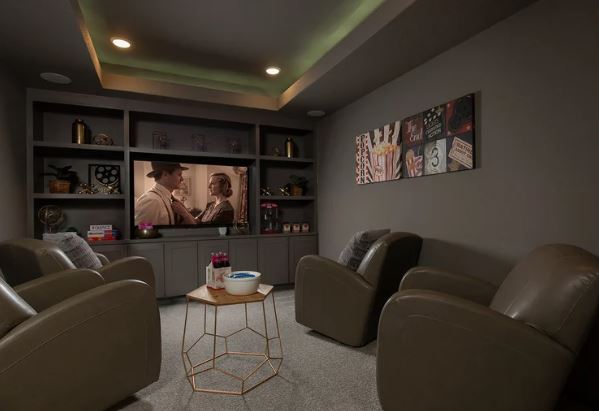
The government has become like the Wizard of Ozz, a nameless, faceless, entity that can take swift and severe actions to ruin lives, but lack the power to do anything good and correct its mistakes. If you want to survive, you basically have to find the resources yourself and even if you are injured, work yourself to death to stay sane and try to find a way out of the situation. It is illegal for the government to terrorize and hold people hostage, but that is basically what is happening, while others enjoy all the freedoms guaranteed by the U.S. Constitution. And in addition to being held hostage, they make sure to isolated and alienate an individual. So that no one can help and uplift one, and put one around a bunch of dysfunctional people who need financial, mental, and physical help that they refuse to seek. There is such a collective consciousness that people do not seek to change their situation for the better, it is always “we” need to get together and go somewhere and do something is fun. However, as some of these people are part of a couple, why do they not go out on a date or go see a movie or go to a nightclub. It is almost like Sacramento is a haven for low-income criminals and white-collar criminals who help them. You see a lot of people sitting around, smoking and drinking and spitting on the ground, and wonder, why do they not go to one of, many of these, beautiful parks. Instead, they invite all their grandchildren to play in parking lots and run behind cars with high insurance so they can “get paid,” not seeming to care that someone could end up dead. #RandolphHarris 18 of 25

Also, instead of getting jobs, they target certain people and try to have an accident because, much like PG&E, even if it is not your fault, the word is insurance companies will make you pay. They do not even care about your health or injuring you to the point that you can no longer with, and will not even pay you. However, they also forget that you may have a pregnant passenger and/or a baby in the car with you. Sacramento has become so deplorable and corrupt. It is like a blackhole, seemingly impossible to escape from alive. No matter how many rituals you do, prayers you say, government agencies you ask for health, they simply stop responding. It is a pretty city, but if the state and local government decides to trap and target you, your life and the life of anyone around you does not seem to matter. You are nothing more than a placeholder, they want to use to help some criminal come up off of. There are many caring and supportive people and the community, and a lot of happy people who are able to work and have fun on their free time, but I am not sure Sacramento is a safe community. It can be like the Twilight Zone for those who are selected as targets. And then you look at the State Capitol of California, which is in Sacramento, and it looks like half the building was blown up (it is under renovation), but it just makes a person ponder stability of the city. What is it? It is a really weird place. It is a lot like a ghost town. It will make you question reality. I just have to say it, every since I came back from China in 2006, I felt it as soon as I got off the plane, but something did not seem right about this town. It did not feel like the same city I left, and what happened afterwards is even more bizarre. I will just be real. Sometimes I wonder if I am dead and is this just a government computer simulated reality. Everything feels and looks real, but something is wrong. Like, for instance, look at how President Biden acts, he is confused, falls around, misspeaks, and it barely stirs a ripple. No one says a word about it in public. And then the mainstream media is probably less reliable than The National Enquirer. #RandolphHarris 19 of 25

I honestly, even though I pretend to, do not believe anything anyone tells me anymore because so many people are constantly telling lies. I am serious, it is like this city has been overran by demons. And a lot of families do not act right anymore, a lot of daughters and mothers have confrontations and conflicts, and even people who go to church are corrupt. Someone told me the World is coming to an end, and that could explain it because a lot of this is talked about in the Christian Bible and Book of Mormon. However, if that is true, I encourage everyone to live right and ask God for forgiveness. And if you feel how hot in gets in Sacramento, could you imagine what burning in hell for an eternity would be life? God forgives everyone, but do not want until it is too late to repent. Also, make sure to enjoy life. Do not spend time around people you do not like. Find people and activities that you can enjoy. If your neighbours are annoying, go out of your way to ignore and avoid them, so they will understand what time it is. Also, with some many people carrying guns, and mental illness being a crisis in America, why are people shocked when something goes wrong and innocent people are killed because of some bully who thought being bad was the coolest thing since Jordan Basketball sneakers? And also, have you serious considered how dangerous gun control is? There more than 20,000 gangs consisting of approximately 1 million members in the United States of America; gangs are present in all 50 states, the District of Columbia, and all U.S.A. territories. CEOs think about things like this, but what is a gang decided to come to your house and target you? You know, ten fifteen men and women show up because they have a problem with you and want to cause you harm. You may need an AK-47. #RandolphHarris 20 of 25

Or what is you live in a Victorian Farmhouse in Iowa on 400 acres and a gang decided to attack you? Sometimes calling the police is not always an option, nor is it your best option. The police, many of them are on the job to protect people and will go out of their way to make sure you are safe, but there is a lot of crime going on in America, and your calls to 911 could be getting relayed to Hood Day Sacramento, for example, and an officer or someone impersonating an officer may be taking your calls. It has happened to me several times. It will be a life-or-death situation and I have been sent a text message, allegedly from the police department, saying that “We will not be responding.” I have also reported trespassers on my neighbour’s property and been told, “The owner needs to take responsibility.” How can we have a safe community when the police allow some people and properties to be targeted and refuses to help certain citizens? It just does not make sense. People have been stalked, kidnapped, raped several times, beat, attacked, robbed, had their homes and cars broken into and thousands of dollars done because someone thinks terrorism is fun and cool. The boarders to the country are wide open, allowing anyone to just walk in with any amounts of drugs, guns, criminal intent. And CBS13, KCRA News, FOX40, Good Day Sacramento, and ABC10 may be the biggest criminal organization in Sacramento. Turn the news off, stop watching them so they have to shutdown. In the words of Beyonce, “America—America has a problem.” Anyway, protection should be regarded as the Mafia main business; if it engages in some activities that may need its own protection services, this is just “downstream vertical integration.” Perhaps one can regard the Mafia as an organization that specializes in providing protection, while individual mafiosi may be entrepreneurs engaged in the activities that need the protection. The Mafia may also engage in extortion, or creating the need for protection of property by itself creating a threat to the property; these are strategies that need to be examined as part of the equilibrium of the game. #RandolphHarris 21 of 25

Peppe in his information role resembles a credit-rating agency or even a restaurant guide, except that he acts for both sides of the deal. In the guarantor or enforcer role, he resembles the official legal system, but has different information acquisition methods and different methods of punishment, and is motivated by private profit rather than by social welfare. Peppe’s commission for enforcement is higher than that for information. You may think this a trivial question, and think of obvious answers: enforcement activity is riskier to provide; that state’s criminal law (if it is functioning) may intervene; the miscreant whom Peppe is trying to punish may prove tougher than Peppe; and so on. All these arguments say that the cost of providing enforcement is higher than that of providing governance by information alone; they are supply-side reasons. Peppe usually acts as a monopolist in enforcement over an allocated territory, defined by geography or the type of activity being protected (although conflicts over monopoly rights or over territories may break out among Mafiosi or their families). A monopolist changes a prince above cost, based on the customer’s willingness to pay. Therefore we must look for demand-side reasons, namely explain why Peppe’s customers are willing to pay more for the enforcement service than for the information service. To resist the enemy on the ground of the blood of Christ means wielding the weapon of the finished work of Christ, by faith: believing that Jesus’ death for in frees the trusting believe from the guilt of sin; that Jesus’ death to sin on the cross, and the believer’s death with Him, frees the Christian from the power of sin; and that Jesus’s death-victory on Calvary frees the believer also from the power of the ultimate negative. #RandolphHarris 22 of 25

A condensed form of the principles and conditions for deliverance from the deception of psychopathological offenders in any degree may be given as follows: Recognition of the possibility of deception. Admission of actual deception. An attitude of neutrality toward all past spiritual experiences until truth concerning them is ascertained. Refusal of all ground of psychopathological offenders. The taking of the position of death to sin (Rom. 6.11). The detection and refusal of all that belongs to deception. The understanding of the criterion of the true, normal conditions so as to gauge signs of deliverance. Active usage of the faculties so that they reach the normal condition. Recognize persistently the true cause of bondage; id est, the work of a psychopathological offender or offenders. Choose to have absolutely nothing to do with the powers of psychopathological offenders. Frequently declare this. Do not talk or worry about their manifestations. Recognize, refuse, and then ignore them. Refuse and reject all their lies and excuses, as they are recognized. Notice the thoughts, and the way in which they come, and when—and immediately declare the attitudes of Romans 6.11 against all the interferences of the enemy. Hinderances to deliverances from deception may again be given here briefly, as: Not knowing it is possible to be deceived. Thinking God will not allow a believer to be deceived. Saying, “I am safe under the blood,” without intelligent knowledge of the conditions. Saying, “I have no sin.” Saying “I am doing all that God wants, so all must be right”—without seeking to understand what the will of the Lord is (Eph. 5.10-17). Some hints on overcoming passivity of mind are as follows: Act as far as you can, doing what you can. Take the initiative, instead of passively depending on others. Decide for yourself in everything you can. Do not lean on others. Live in the moment; watch and pray step by step. Use your mind, and think—think over all you do, and say, and are. #RandolphHarris 23 of 25

Fundamental to Tillichian Christology is the notion of estrangement, for it is from our estranged human situation that the New Being rescues us. The force of the method of correlation is nowhere more powerfully evident in the portrayal of man’s estrangement and the power of the New Being which overcomes it. The original sin is the state of estrangement and Creation, and the Fall coincides. Which seems to indicate that finitude is inherently evil, and sin ontologically necessary. Perhaps God understands this and that is what the Fall is all about. Man’s nature is evil and rebellious and he needs God to cultivate and teach him good. Without God, man will become corrupt and evil. God is your Heavenly Father and if you do not follow His rules, you will be a bad child. His ways are greater than yours. Much like if children did not obey their parents, even though no human is perfect and some parents are bad, when you are a minor, they typically want you to behave so the law does not punish them. If you did not listen to your parents, chances are that you would be a bad kid and end up dead or in jail. TV news reports in Sacramento, California USA say they “Do not have time to reach the (Chrisitan) Bible.” Obviously, if people are too busy to listen to their Heavenly Father, they are actively engaged and evil and you should not be learning from them. The Fall is the state of existence in which the potentialities of finite essences are actualized, but the nonbeing of the essence takes its toll also, and the creature does not perfectly live up to its essence. It is always in some degree estranged from it and, consequently, from the ground of being. #RandolphHarris 24 of 25

However, inevitability is not the same as necessity. Now, I ask you to consider, do people repeat themselves or does history? It depends on what you believe. However, many of these people may not have been reconstituted and may be new souls. Therefore, if history repeats itself, then be careful because humans could literally end up being slaves again and forced in the fields and whipped. The only way we can stop history from repeating itself is by adhering to the Gospel of God. If people continue to stray from the Lord, all that will exist is evil. Love will be replaced by material possessions and evil. Finitude is good, with God, but not perfect, and when it seeks to perfect itself by actualizing its potencies, it falls, because, after all, it is finite. That Christ is the answer to existential anguish, is a fundamental insight which Catholics have tended to neglect in a smug unconcern for those who have brought this anguish to the fore of modern thought. We should be grateful that we can learn something about Christ, that at least some aspects of Christology can be emphasized with the help of modern thinkers. Estrange, puzzled, frightened is the man of today. Theonomy means union with God, the ground of being. Finite beings can achieve it only by actualizing their essences in such a way that they are transparent to their ground. However, the universal fact of existence is estrangement, separation of beings from God, from themselves, and from one another. A new power, a New Being is needed to overcome estrangement, and in Jesus the Christ it has appeared. To whatever extent religion animates culture, this theonomous union is realized by the power of the New Being which grasps us in the ecstasy of faith. However, one of the potentialities of man is his drive toward community. We must now examine the church, the community of those who receive Jesus the Christ as the New Being. I pledge allegiance to the flag of the United States of America, and to the republic, for which it stands, one nation, under God, indivisible, with liberty and justice for all. Be sure to show love to the Sacramento Fire Department, they are understaffed and underfunded. Feel free to donate to their cause. #RandolphHarris 25 of 25
MAGNOLIA STATION AT CRESLEIGH RANCH
Rancho Cordova, CA | low $600s
Now Selling!
Models now open at Magnolia Station! Located at the corner of Rancho Cordova Parkway and Douglas Road, residents of Cresleigh Ranch will benefit from a brand new neighborhood with convenient access to the new Raley’s Shopping Center, Sunrise Boulevard, and much more!

Magnolia Station will include 81 homesites and five distinct plans ranging from 2,200 – 3,700 square feet; including three single story plans! Each plan has been thoughtfully designed to include features such as: Generations Suite, Optional Offices/Dens, Extended Great Rooms, and more! https://cresleigh.com/magnolia-station/residence-5/


The Mind-Shattering Horrors of Llanada Villa
The most merciful thing in the World, I think, is the ability of the human mind to partake in all the beautiful of the material World. We live in an infinity of reality that only the beholder can discern. If we choose to go far, we must learn to apricate our circumstances and work towards an enjoyable life. My home is a vast labyrinth, each mile straining in its own direction, and somedays piecing together the dissociated mysteries will open up such terrifying vistas of reality, and of our frightful curse therein, which shall either make one go mad from the revelation or flee from the deadly catacombs into the peace and safety of a new dark age. Within these walls, there are strange survivals of apparitions that will freeze the blood. However, it is not from them that there came the single glimpse of forbidden aeons which chills me when I think of the madness that has been bestowed upon my bloodline. The grass and trees have assumed the fresh enamel of mediaeval May, and the turf is figured with little blossoms of azure and white and yellow, like an ornate broidery, and there is a pebbly stream that murmurs beside the way, and the voices of undines are parleying deliciously beneath its waters. The sun-lulled air is laden with wafture of youth and romance; and the longing that wells from the heart of Llanada Villa seems to mingle mystically with the balsams of the fruit orchards. Llanada Villa is like a high castle which holds dominion over a surrounding forest. However, once through the threshold, dreaded glimpses of truth, flash out from a hideous past. #RandolphHarris 1 of 8

Somewhere within my haunted mansion is a hidden room notorious for sorcery. Servants speak of phantoms, grisly tales; and there are stories of loup-garous and goblins, of fays and devils and vampires that have infested these very walls. However, to these tales, I give little heed, considering it improbable that such creatures would fare abroad in open daylight. Until one day, I was nearing the appointed parlor, which a turn of the path would soon reveal; and my pulses quickened and became tremulous. My thoughts were interrupted by a shrill scream that rose to an unendurable pitch of fear and horror, issuing from the corridors of stillness of the nearby rooms. Startled, I peered at the thick doors; and as the scream fell back to silence, I heard the sound of dull and hurrying footfalls, and a scuffling as of several bodies. Again the scream arose. It was plainly the voice of a woman in some distressful peril. In a small open space beyond the parlor, I saw a woman who was struggling with three ruffians of exceptionally brutal and evil aspect. Even in the haste and vehemence of the moment, I realized that I had never before seen such men or a woman. They could not have been my servant. The woman was clad in a gown of emerald green that matched her eyes; in her face was the pallor of dead things, together with a faery beauty; and her lips were dyed as with the scarlet of newly flowing blood. The men were dark as Moors, and their eyes were red slits of flame beneath oblique brows with animal-like bristles. There was something very peculiar in the shape of their feet. All of them seemingly had cloven hooves, but somehow I could not recall what sort of clothing they had worn. #RandolphHarris 2 of 8

The woman turned a beseeching gaze upon me as I peered through the door. The men, however, did not seem to heed my presence. Lifting my pistol, I fire with tremendous power at the head of the nearest one—a shot that should have leveled the fellow to Earth. However, the bullet fell to the ground as if forced by unresisting air, and I staggered and almost fell headlong in trying to recover my equilibrium. Dazed and uncomprehending, I saw the knot of struggling figures had vanished utterly. At least, the three men had vanished but from the middle of the parlor, the death-white features of the woman smiled upon me for a moment with faint, inscrutable guile ere. I understood now; and I shivered as I crossed myself. I had been deluded by phantoms or demons, doubtless for no good purpose; I had been the gull of a questionable enchantment. Plainly there was something after all in the legends I had heard, in the ill-renown of The Curse of the Winchester Rifle. I retraced my way down the hall I had been following. However, when I thought to reach again the spot from which I had heard that shrill unearthly scream, I saw that there was no longer path leading to that parlor; nor indeed was this a section of the mansion I recognized. The marble steps, coffered ceilings, the elevator paneled in mahogany like a plutocrat’s library, which carried me to the fourth floor vanished. In lieu of this elegant new addition to Llanada Villa there lay before me a tarn of hallways that were dark and dull as clotting blood, and the trail therein like the hair of suicides, and the skeletons of rotting corpses. #RandolphHarris 3 of 8
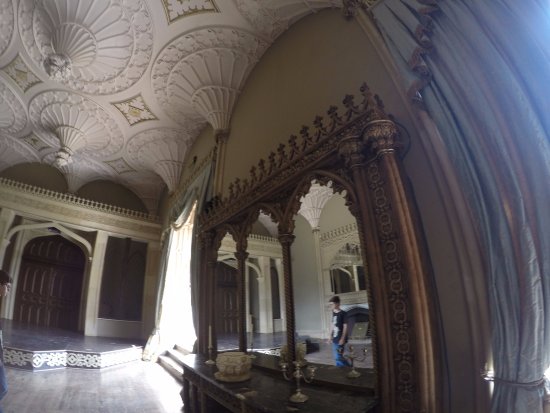
Now, beyond all question, I knew that I was the victim of an evil enchantment. In answering that beguileful cry for succor, I had exposed myself to the spell, had been lured within the circle of its power. I could not know the force of wizardly or demonry had willed to draw me thus; but I knew that my situation was fraught with supernatural menace. As I passed this scene of utter desolation and lifelessness, it seemed a place where cadavers might keep their tryst with demons. Nothing stirred, not even a hammer; and there was no whisper of a servant, no song of birds. I proceeded further and further into my mansion with a cautious eye, as the further I got, the more the scene changed. There were moving lights in the halls that vanished; there were drowned faces in the walls. The parquet floor was an obstacle course of French dollhouses and miniature Japanese castles. The draperies were green silk damask and blue velvet, the furniture Lousi XV gilded oak, the paintings signed by Renior, Cezanne, Degas, Manet, Monet. My many-turreted castle was ancienter than the World, it was older than light; it was coeval with fear and darkness; and horror dwelt upon it and crept unseen but palpable along its bastions. The 600-room mansion was a fairy-tale castle come to life, with secret entrances, mysterious sources of music, and treasure collected from all the World. My home was not so unusual during the day. On the top half, every inch was decorated with Parisian Beaux Arts ostentation, a profusion of lions, cherubs, and goddesses. Oh, but the architects were not done. Soaring above the mansion was an ornate domed tower reaching nine stories, so pleased with itself that it continued to an open cupola. #RandolphHarris 4 of 8
Although construction was continuous, there was often no sign of life about the castle; and no banners flew above its turrets or its donjon. However, spirits spoke loudly to warn me that there was a fountainhead of sorcery involved in the construction of my home. A growing panic would whisper in my brain, I seemed to hear the rustle of malignant plumes, the mutter of demonian threats and plottings. Amid my dismay and bewilderment, I thought of Annie and William and imagined that as long as I continued construction, that one day I would find them waiting for me in a parlor, library, kitchen, or hallway. Through my mansion throw which I lived was a maze of bafflement and eeriness. Sometimes I could swear I felt implacable arms that stoke to retard me; I could swear that I felt them twine about me with the strength and suppleness of living things. I fought them, insanely, desperately, and seemed to hear a crackling of infernal laughter in the walls as I fought. After years, with a leaden sinking of my heart, as into some ultimate slough of despair and terror, I resigned myself and made no further effort to escape. My very will was benumbed, was crushed down as by the incumbence of a superior volition that would no longer permit my puny recalcitrance. I was unable to resist when a strong hateful compulsion drew my footsteps along the margent of the halls down a new, never before seen room. Doors would open by themselves as if to receive an unexpected guest. But other than me, there was no sign of carpenter, architect, maid, butler, no farmer; and the walls of this great mansion were silent as those of a sepulcher. However, there were these apparent hieroglyphics and a figure of evidently pictorial intent, though its impressionistic execution forbade a very clear idea of its nature. It seemed to be a sort of monster, or symbol representing a monster, of a form which only a diseased fancy could conceive. #RandolphHarris 5 of 8
If I say that my somewhat extravagant imagination yielded simultaneous pictures of octopus, a dragon, and a human caricature, I shall not be unfaithful to the spirit of the thing. A pulpy, tentacled head surmounted a grotesque and scaly body with rudimentary wings; but it was the general outline of the whole which made it most shockingly frightful. Behind the figure was a vague suggestion of a Cyclopean architectural background. At the opposite end of the parlor was a door which stood mysteriously open, revealing a dark hall. As I approached the doorway, I saw that a man was standing on the threshold; though a moment previous I could have sworn that it was untenanted by any visible form. I knew that any weapon was futile against this supernatural foe. The man was inordinately tall and cadaverous, and was dressed in black garments of a superannuate mode. His lips were strangely red amid his bluish beard and the mortuary whiteness of his face. They were like the lips of the woman who, with her assailants, had disappeared in a manner so dubious when I approached them. His eyes were pale and luminous as marsh-lights; and I shuddered at his gaze and at the cold, ironic smile of his scarlet lips that seemed to reserve a World of secrets all too dreadful and hideous to be disclosed. “I am Gilles Garnier,” the man announced. His tones were both unctuous and hollow, and served to increase the repugnance I felt. And when his lips parted, I had a glimpse of teeth that were unnaturally small and were pointed like the fangs of some fierce animal. Mr. Garnier was haunting my mind like the funereal accents of a knell; though I could not recall at that moment the macabre and spectral ides which the name tended to evoke. #RandolphHarris 6 of 8
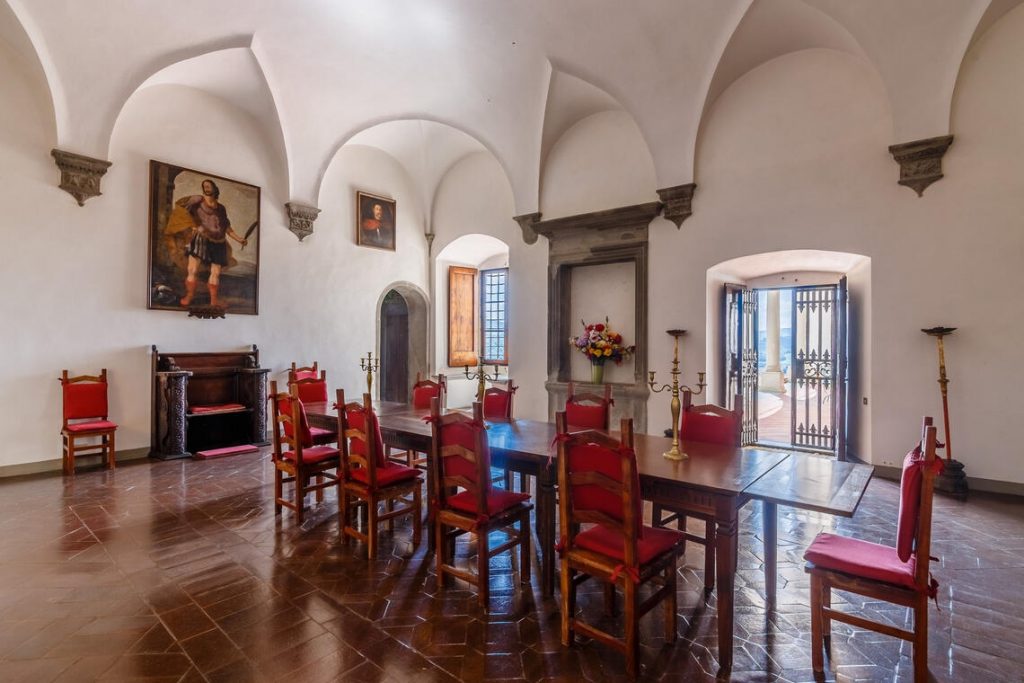
He turned abruptly, motioning me to follow him. I refused. There were sudden and furtive darkness had closed in upon Llanada Villa without moon or star. My mansion became airless and stifling like the gloom of a sepulcher that had been sealed for ages; and I was aware of the veritable oppression, a corporeal and psychic difficulty in breathing, as I moved from room to room. I flung open a heavy door of dark somber wood. Beyond, in what was the eating-room of this section of the mansions, several ghosts were seated about a long table by the light of cressets no less dreary and dismal than those in the hall. In the strange, uncertain glow, their faces were touched with a gloomy dubiety, with a lurid distortion; and it seemed to me that shadows hardly distinguishable from the figures were gathered around the board. I thought I should go mad with fear. Then sensation of being watched grew upon me until I sprang up and turned with my back to fire. Even then it was impossible for me to see much. I stood glancing from door to door, straining to listen over the thudding of my heart. My twin shadows swayed across the doorway of the study opposite, seeming to move independently. I thought of snuffing the candles; but then I would not be able to see the doors to the landing at all. I had learned that you could count second by your heartbeat. Mine was racing far faster than the measured ticking of a clock, but I began to count, anyway. Only I could keep it up; I would reach twenty or thirty, and be distracted by some phantom sound or movement, and start again. Thus I endured an indefinite interval, while the windows darkened further and further. #RandolphHarris 7 of 8

I conjure thee, O Guland, in the name of Satan, in the name of Beelzebuth, in the name of Astaroth, and in the name of all other Spirits, to make haste and appear before me. Come, then in the name of Satan and in the names of all other demons. Come to me, I command thee, in the name of the Most Holy Trinity. Come without inflicting any harm upon me, without injury to my body or soul, without maltreating my books, or anything which I use. I command thee to appear without delay, or, that failing, to send me forthwith another Spirit having the same power as thou hast, who shall accomplish my commands and be submitted to my will, wanting which, he whom thou shalt send me, if indeed thou comest not thyself, shall in no wise depart, nor until he hath in all things fulfilled my desire. I offer my blood unto the Divs and Druj, whom are the essence of counter creation. I offer my life force unto the powers of eternal darkness within. May they devour and destroy the imposed shackles of divine light and stasis that I may become unlimitedly powerful. I salute and conjure you, O beautiful Moon, O beautiful Star, O bright light which I hold in my hand! By the air which I breathe, by the breath which is within me, by the Earth which I touch, I conjure you, and by all the names of the spirits who are princes residing in you; by the ineffable Name On, which hath created all; by thee, O Resplendent Angel Gabriel, together with the Prince Mercury, Michiael, and Melchidae! I conjure you again by all the divine Names of God, that you send down to obsess, torment, and harass the body, spirit, soul and five senses nature. #RandolphHarris 8 of 8
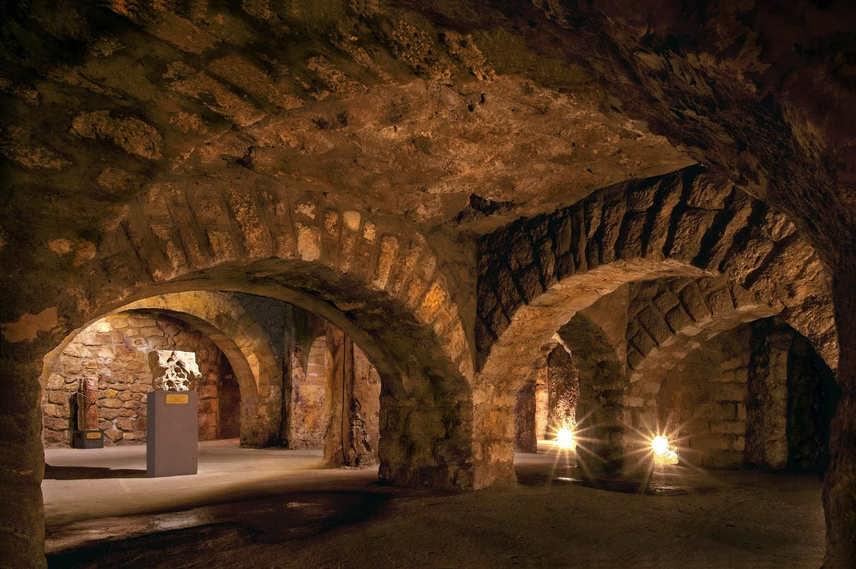
For many years there has been talk of slamming doors, muffled voices and ghost walking the corridors of The Winchester Mystery House, which is over 140-years-old. Recall, the mansion started off as an eighteen-room farmhouse, which Mrs. Sarah L. Winchester purchased. A number of persons hired as night watchmen have quit after only one night on duty, complaining of door opening and closing and invisible footsteps following them on their rounds. In July 2008 a staff member working late thought he heard the sounds of a reception in progress on the first floor, but when he reached the foot of the stairs, he found the rotunda empty, and all noises suddenly ceased. The same tour guide recalled the library room on the third floor as being particularly creepy. Late one night as he approached the library door, he remembered a cold, dank air falling on his head and neck, and he decided his work could wait until the next day. Although the mansion has gone through a considerable number of watchmen who declined the privilege of working in the building after one night on the job, one stuck with the task for more than 13 years. He simply shrugged off the angry slamming of doors that sounded behind him and the thumping noises that followed him on his rounds. However, he admitted that he did not like to work in The Winchester Mystery House after dark. He always made it a point to be out of the building by quitting time, because when darkness fell, he could sense the whole atmosphere changing.
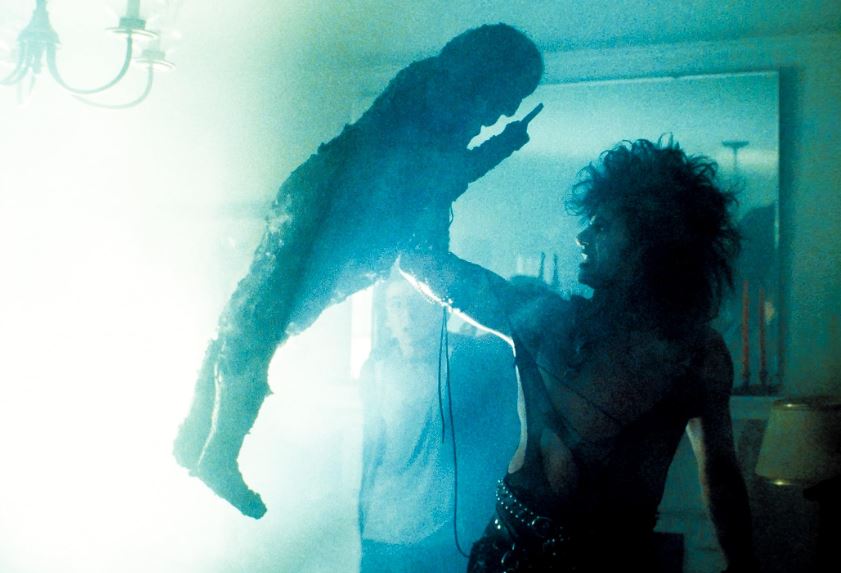
For further information about tours, including group tours, weddings, school events, birthday party packages, facility rentals, and special events please visit the website: https://winchestermysteryhouse.com/

Please visit the online giftshop, and purchase a gift for friends and relatives as well as a special memento of The Winchester Mystery House. A variety of souvenirs and gifts are available to purchase. https://shopwinchestermysteryhouse.com/

Call Up the Buried Past Again
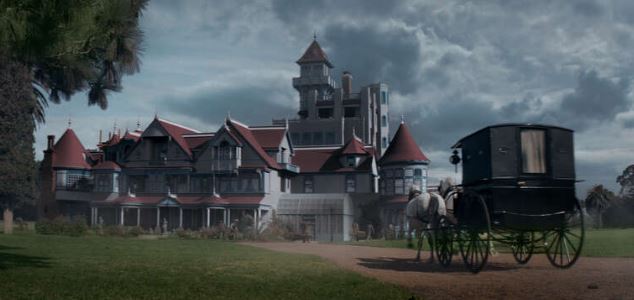
My sea green Victorian mansion gleamed dazzingly in the early morning sunshine. Giant peach trees, bursting into bloom before it, hid the roof and cast blue shade on the ground. A fence at the back enclosed a poultry yard, and beyond that were hen houses, the horse stables, and a stall from which the black-and-white cows looked plaintively forth, several gazebos, a greenhouse, water tower, toolshed, a roofed well, a flower garden and vegetable garden. It was an infinitely pleasant-looking estate, and if death had struck there at all, there was no outward sign. All that beautiful wainscot mahogany, as good as the day it was put up, and garlands-like of foliage and fruit, and the lovely gilding work on the coat of arms and the organ pipes really spoke to my soul. However, the season was undoubtedly a very trying one. Many people in the neighbourhood had but little enjoyment of the exquisite sunny days and the calm nights of August and September. To several of the older people—the summer proved downright fatal, but even among the younger, few escaped either a sojourn in bed for a matter of weeks, or at the least, a brooding sense of oppression, accompanied by hateful nightmares. Gradually there formulated itself a suspicion—which grew into a conviction—that Llanada Villa had something to say in the matter. I was visited by dreams, which I retailed to my friends, of a shape that slipped out of the little door of the south transept as the dark fell in, and flitted—taking a fresh direction every night—disappearing for a while in the house, and finally emerging again when the night sky was paling. #RandolphHarris 1 of 8
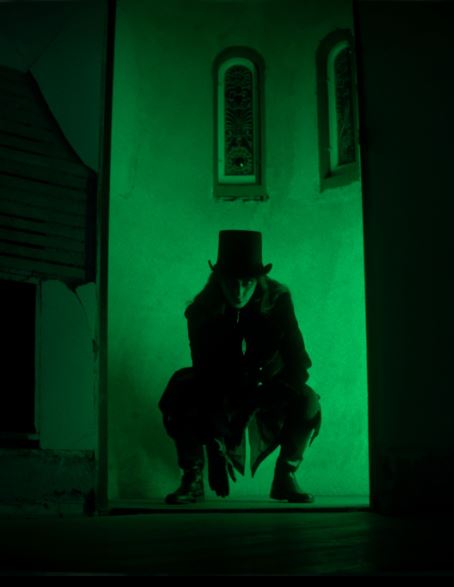
I could see nothing of it, but that it was a moving form: only I had an impression that when it returned to the mansion, as it seemed to do in the end of the dream, it turned its head: and then, I could not tell why, but I thought it had red eyes. The circumstances involve too much unreconciled grief, too tragic a loss, for me to be willing to fully engage others in the dream. The iron broom he uses to sweep leaves a trail of blood. When I awake, I am exhausted. In the small hours of the morning, I can barely remember the details of the journey I had in my slumber. All I can think of is what he looked like when he caught me in my attempted escape, cold and bedraggled, lost and looking for a servant so that I could make my escape. And after awaking, accompanied by the sounds of Indian drums, chants, whoops, and the cries of what seemed to be hundreds of voices, I was again possessed by the odd feeling of being watched. As vague outlines of people running back and forth in the darkness of the hallways. The high-pitched howls and screams were real. There were the shadows of fifteen people. In the unsure light of dying fire, there were tears in my eyes. I went outside, began to stroll aimlessly along the front of the house, then around the corner and around the side. The certainty had set in me that I would find something. It burned like a small fire in my belly as light from the sky along Winchester Row retreated and deepened the shadows softened, under the threat of advancing rain. With a rasping, grating sound, a section of brickwork like a low, narrow door swung outward; as I entered, a cloud of dust and grit rolled out into the gallery, and settled slowly around me. #RandolphHarris 2 of 8
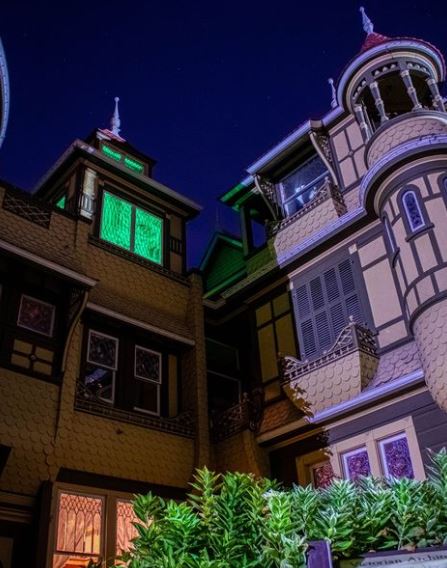
“Well, I said, coughing, “there’s certainly no one in here—no one living, at any rate.” I lit my lantern, and I saw through the floating dust a narrow stairway of brick, spiralling upward into darkness. I heard a noise from the direction of the library. I stood for a moment listening; the sound was not repeated. I strode to the connecting door. There was no one in the library, and no apparent cause for the sound until I saw that the pages of William’s manuscript, which I had left on the seat of a leather armchair, were now strewn upon the floor beneath, with my journals amongst them. “A draught, perhaps,” I thought. However, the air was completely still. And something else had changed. Outside, where the trees should have loomed a mere fifty yards away, there was nothing to be seen at all; nothing but dense, fleecy vapour, sliding across the glass. With a last worried look around the library, I walked back to the gallery. As I was about to step into the opening, I was seized by panic. With my lantern, I stepped over the threshold, into a cylindrical chamber no more than three feet wide. Dust and grit lay thick upon the stone floor. I shone the beam upward, but could see only the returning spiral of the staircase. Testing each stair as I went, I moved awkwardly upward, afraid of tripping over my shirt. Musty air stung my eyes; there were cobwebs draped about the walls, but they looked old and brittle, and nothing moved when I shone the lantern over them. This, I thought, was how an ancient tomb would smell, a tomb that had been sealed for hundreds of years, where even the spider had died of starvation. #RandolphHarris 3 of 8
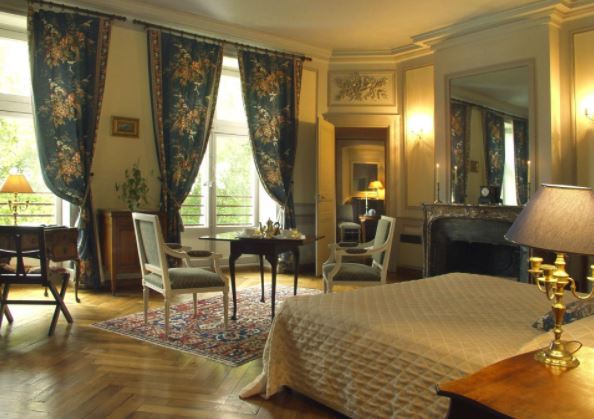
I had completed at least two full spirals before the stairs ended at a low wooden door, set into the wall to form a ledge just wide enough to stand upon. My hair brushed against the stone roof of the chamber. I glanced back down the stairs and was seized with a fit of dizziness so that I had to grip the door handle to prevent myself from falling. The handle turned in my grasp; the door creaked open. It was a room I had not seen—or, rather, a cell—perhaps six by four feet, the roof only a few inches above my head. The door opened inward to the left, leaving just enough room for a straight-backed chair and a table placed against the opposite wall. Upon the dusty surface of the table were a decanter, a wineglass, two candlesticks, an inkstand containing half a dozen quill pens, also thickly covered in grime; and a glass-fronted case, two shelves high, containing what looked like thirty or forty identical volumes. There seemed to be no other furniture, but as I stood staring at the desk, I became aware that my lantern was not the only source of illumination. Along the wall to my right were half a dozen dim, narrow strips of light. I took a tentative step forward, felt an icy draught upon my face, and realized that the secret room and its stairwell had been built across the chimney, with slits for ventilation running through the outer wall. Three more steps brought me within reach of the bookcase. Through the dusty glass I saw that the volumes were indeed identical, and that there was no printing on the spines; they were leatherbound manuscript books, labelled only by year, and shelved in order from 1860 through 1866. I set the lantern upon the table, tugged at the right-hand door until it opened with a shriek of hinges, and drew out the last volume. #RandolphHarris 4 of 8

It was a diary, written in a crabbed, shaky hand, but legible enough.
5th December 1860
Beloved, let us love so well, our hearts shall still be better for our love, and still our love be sweeter for our life, and both commended, for the sake of each, by all true kindred souls and true loves born. My heart so potently never spake romance, but when my eyes with thine thereon could dance. My own goddess is past all thing far, I saw far in the concave green of the sea. My nets are spread out, and I at rest. I was a lonely youth on desert shores. But the crown of all my life was utmost quietude: More did I love you than the brightest summer shine. I now dwell whole days in sheer astonishment from far off a crustal pool. When I awoke, ‘twas in a twilight bower; who could resist? Who in this universe?
Eternally yours,
William Wirt Winchester
#RandolphHarris 5 of 8

I read on through entry after entry of meticulously precious moments. There were several more volumes and I found that they were all the same: a tender daily record of magnificent life and love. I think I fainted. When I came to, I aw a bundle of old clothes lying behind the door. Only they were not just clothes, because there was something in them; something with shrivelled claws for hands and a shrunken head no larger than a child’s, to which a few tufts of scanty white hair still clung. The mouth and nostrils and eye socket were choked with cobwebs. I picked up the last volume of the diary and, averting my eyes from the ghastly object behind the door, ran down the shaky stairs and through to the comparative warmth of the library. The fog outside was impenetrable as before. As I made my way back to the main entrance, I thought, I should go mad with fear. Well, that same night I dropped off asleep as sound as a baby does, and all of the sudden Zip woke me up, coming into the bed, and thought I, now we’re going to get it sharp, for he seemed more frightened than usual. After about five minutes sure enough came this cry. I cannot give you no idea what it was like; and so near too—nearer than I had heard it—yet—and a funny thing, you know what this mansion is for an echo. Well, this crying never made no sign of an echo at all. However, as I said, it was dreadful near this night; and on the top of the start I got with hearing it, I got another fright; for I heard something rustling outside in the passage. Now to be sure I thought I was done; but I noticed Zip seemed to perk up a bit, and next there was someone whispered outside the door. #RandolphHarris 6 of 8
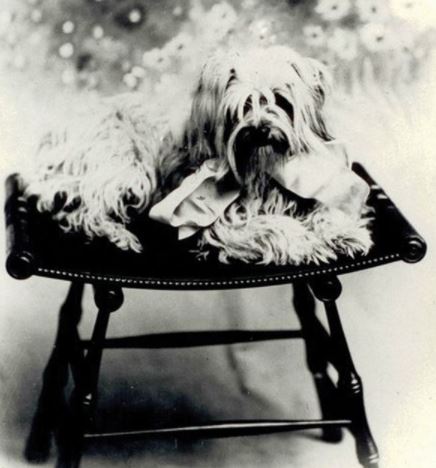
I slipped out of bed across to my window, but Zip he bored right down to the bottom of the bed—and I looked out. First go off I could not see anything. Then right down in the shadow under a buttress I made out what I shall always say were two spots of red—a dull red it was—nothing like a lamp or a fire, but just so as you could pick them out of the black shadow. I had not but just sighted them when it seemed we were the only people that had been disturbed, because I saw a window in the left side of the house had become lit up, and the light moving. I just turned my head to make sure of it, and then looked back into the shadow for those two red orbs, and they were gone, and for all I peered about and stared, there was not a sign more of them. Then came my light fright that night—something came against my bare leg—but that was all right: that was my little dog Zip. He had come out of bed, and was prancing about making a great to-do, only holding his tongue, and I saw he was quite in spirits again, and took him back to bed and we slept the night out! The next morning there came the most fearful crash down at the west end of the mansion, as if a whole stack of big timber had fallen down a flight of stairs. There was terrible commotion. I heard the slab fall out, and the crowbar on the floor, and I heard Mr. Hansen say, “Good God!” #RandolphHarris 7 of 8
When I looked down again I saw Mr. Hansen tumbled over on the floor, the men were making off down the hall. Mr. Hansen was very crossed. “I wish to goodness you’d look where you’re coming to,” he said to the carpenters. “Why you should all take to your heels when a stick of wood tumbles down I cannot imagine”; and all Mr. Hansen could do, explaining he was right away on the other side of the staircase, would not satisfy him. Then the butler came back and reported there was nothing to account for this noise and nothing seemingly fallen down, and when Mr. Hansen finished feeling of himself they gather round—except someone lit up a candle and they looked into the hall. “Nothing there,” said Mr. Hansen, “what did I tell you? Stay! here’s something. What’s this? a bit of music paper, and a piece of torn stuff—part of a dress in looks like. Both quite modern—no interest whatever. Another time perhaps you’ll take the advice of an educated man”—or something of that nature, and he went, limping a bit, and out through the north door, only as he went he called back angry to the butler for leaving the door standing open. The butler called out “Very sorry, sir,” but he shrugged his shoulders, and said, “I fancy Mr. Hansen’s mistaken. I closed the door behind me, but he’s a little upset. I asked the butler if he had seen what knocked over Mr. Hansen. “Come, you must have seen it,” he says. “Didn’t you see? A thing like a man, all over hair, and two great eyes to it?” Well, that was all I could get out of him that time, and later on he seemed as if he was ashamed of being so frightened, and he used to put me off when I asked him about it. #RandolphHarris 8 of 8
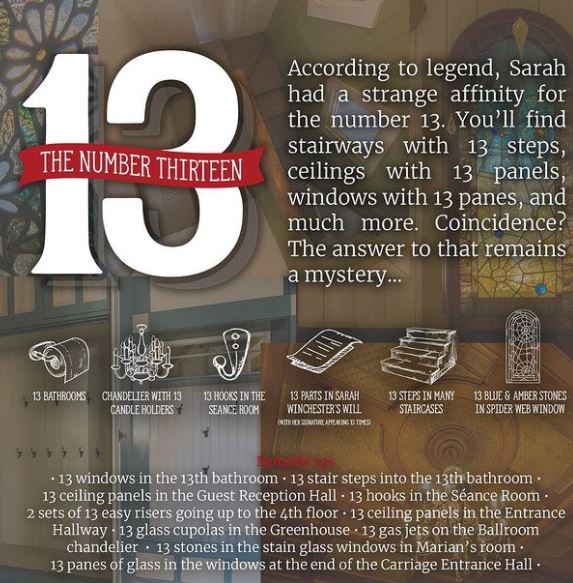
A tour guide was making the night trip through The Winchester Mystery House. He had been dozing lightly as he secured the rooms when he was awakened by what he later described as a “damned uneasy feeling.” He could not put a figure on what was troubling his, he told a reporter for a Bay Area newspaper in the summer of 2003. There were no strange or unusual noises in the mansion. He could detect nothing that sounded wrong in the steady closing of the windows and doors. For some reason, he decided to lift one of the window shades. That is when he aw the apparition. Outside of the window, so close that is seemed as if he might be able to touch them if he lowered the glass, was a brightly painted Indian brave on his spirited mount. The warrior bent low over the flying black mane of his horse and looked neither to the right nor to the left. He seemed to be mouthing words of encouragement to the phantom mustang as they rapidly dashed off around the estate. “I’ve seen the me six or seven times after that, on different parts of the estate,” the tour guide said. “They seem to be solid flesh, but there’s kind of shimmer around them. It’s like watching a strip of really old movie film being protected onto the prairie.”

For further information about tours, including group tours, weddings, school events, birthday party packages, facility rentals, and special events please visit the website: https://winchestermysteryhouse.com/

Please visit the online giftshop, and purchase a gift for friends and relatives as well as a special memento of The Winchester Mystery House. A variety of souvenirs and gifts are available to purchase. https://shopwinchestermysteryhouse.com/
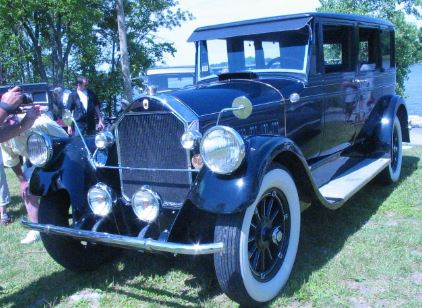

He is Nothing but an Object of Manipulation

Irony has a sort of disadvantage. As many know, one effect capitalism has had on the process of growing freedom is that it has made the individual more alone and isolated and imbued him with a feeling of insignificance and powerlessness. One of the general characteristics of the capitalistic economy is the principle of individualistic activity. In contrast to the feudal system of the Middle Ages under which everybody had a fixed place in an ordered and transparent social system, capitalistic economy put the individual entirely on his own feet. What he did, how he did it, whether he succeeded or whether he failed, was entirely his own affair. That this principle furthered the process of individualization is obvious and is always mentioned as an important item on the credit side of modern culture. However, in furthering “freedom from,” this principle heled to sever all ties between on individual and the other and thereby isolated and separated the individual from his fellow men. This development had been prepared by the teachings of the Reformation. In the Catholic Church the relationship of the individual to God had been based on membership in the Church. The Church was the link between him and God, thus on the one hand restricting his individuality, but on the other hand letting him face God as an integral part of a group. Protestantism made the individual face God alone. Faith in Mr. Luther’s sense was an entirely subjective experience and with Mr. Calvin the conviction of salvation also had this same subjective quality. The individual facing God’s might alone could not help feeling crushed and seeking salvation in complete submission. #RandolphHarris 1 of 19

Psychologically this spiritual individualism is not too different from the economic individualism. In both instance the individual is completely alone and in his isolation faces the superior power, be it of God, of competitors, or of impersonal economic forces. The individualistic relationship to God was the psychological preparation for the individualistic character of man’s secular activities. While the individualistic character of the economic system is an undisputed fact and only the effect this economic individualism has in increasing the individual’s aloneness may appear doubtful. However, these are some points that contradict some of the most widespread conventional concepts about capitalism. These concepts assume that in modern society man has become the center and purpose of all activity, that what he does he does for himself, that the principle of self-interest and egotism are the all-powerful motivations of human activity. In a sense, we believe this to be true to some extent. Man had done much for himself, for his own purposes, in these last four hundred and seventy-five years. Yet much of what seemed to him to be his purpose was not his, if we mean by “him,” not “the worker,” “the manufacturer,” but the concrete human being with all his emotional, intellectual, and sensuous potentialities. Besides the affirmation of the individual which capitalism asceticism which is the direct continuation of the Protestant spirit. In medieval system capital was the servant of man, but in the modern system it became his master. In the medieval word economic activities were a means to an end; the end was life itself, or-as the Catholic Church understood it—the spiritual salvation of man. #RandolphHarris 2 of 19

Economic activities are necessary, even riches can serve as God’s purposes, but all external activity has only significance and dignity as far as it furthers the aims of life. Economic activity and the wish for gain for its own sake appeared as irrational to the medieval thinker as their absence appears to modern thought. In capitalism economic activity, success, material gains, become ends in themselves. It becomes man’s fate to contribute to the growth of the economic system, to amass capital, not for purposes of his own happiness or salvation, but as an end in itself. Man became a cog in the vast economic machine—an important one if he had much capital, an insignificant one if he had none—but always a cog to serve a purpose outside of himself. This readiness for submission of one’s self to extrahuman ends was actually prepared by Protestantism, although nothing was further from Mr. Luther’s or Mr. Calvin’ mind than the approval of such supremacy of economic activities. However, in their theological teaching they had laid the ground for this development by breaking man’s spiritual backbone, his feeling of dignity and price, by teaching him that activity had no further aims outside of himself. One of Mr. Luther’s teachings was his emphasis on the evilness of human nature, the uselessness of his will and of his efforts. Mr. Calvin placed the same emphasis on the wickedness of man and put in the center of his whole system the idea that man must humiliate his self-pride to the utmost; and furthermore, that the purpose of man’s life is exclusively God’s glory and nothing of hi own. #RandolphHarris 3 of 19

Thus Mr. Luther and Mr. Calvin psychologically prepared man for the role which he had to assume in modern society: of feeling his own self to be insignificant and of being ready to subordinate his life exclusively for purposes which were not his own. Once man was ready to become nothing but the means for the glory of God a God who represented neither justice nor love, he was sufficiently prepared to accept the role of a servant to the economic machine—and eventually a “Fuhrer.” The subordination of the individual as a means to economic ends is based on the peculiarities of the capitalistic mode of production, which makes the accumulation of capital the purpose and aim of economic activity. One works for profit’s sake, but the profit one makes is not made to be spent but to be invested as new capital; this increased capital brings new profits which again are invested, and so on in a circle. There were of course always capitalists who spent money for luxuries or as “conspicuous waste”; but the classic representatives of capitalism enjoyed working—not spending. This principle of accumulating capital instead of using it for consumption is the premise of the grandiose achievements of our modern industrial system. If man had not had the ascetic attitude to work and the desire to invest the fruits of his work for the purpose of developing the productive capacities of the economic system, our progress in mastering nature never could have been made; it is this growth of the productive forces of society which for the first time in history permits us to visualize a future in which the continual struggle for the satisfaction of material needs will cease. #RandolphHarris 4 of 19

Yet, while the principle of work for the sake for the accumulation of capital objectively is of enormous value for the progress of mankind, subjectively it has made man work for extrapersonal ends, made him a servant to the very machine he built, and thereby has given him a feeling of personal insignificance and powerlessness. Therefore, those individuals in modern society who had capital were able to turn their profits into new capital investment. Regardless of whether they were big or small capitalists, their life was devoted to the fulfillment of their economic function, the amassing of capital. However, what about those who had no capital and who had to earn a living by selling their labour? The psychological effect of their economic position was not much different from that of the capitalist. In the first place, being employed meant that they were dependent on the laws of the market, on prosperity and depression, on the effect of technical improvements in the hands of their employer. They were manipulated directly by him, and to them he became the representative of a superior power to which they had to submit. This was especially true for the position of workers up to and during the nineteenth century. Since then the trade-union movement has given the worker some power of his own and thereby is changing the situation in which he is nothing but an object of manipulation. However, aside from this direct and personal dependence of the worker on the employer, he, like the whole of society, has been imbued by the spirit of asceticism and submission to extrapersonal ends which we have described as characteristic for the owner of capital. This is not surprising. #RandolphHarris 5 of 19

In any society the spirit of the whole culture is determined by the spirit of those groups that are most powerful in society. This is partly because these groups have the power to control the educational system, schools, church, press, theater, and thereby to immune the whole population with their own ideas; furthermore, these powerful groups carry so much prestige that the lower classes are more than ready to accept and imitate their values and to identify themselves psychologically. The mode of capitalistic production has made man an instrument for suprapersonal economic purposes, and increased the spirit of asceticism and individual insignificance for which Protestantism had been the psychological preparation. However, this thesis conflicts with the fact that modern man seems to be motivated not by an attitude of sacrifice and asceticism but, on the contrary, by an extreme degree of egotism and by the pursuit of self-interest. How can we reconcile the fact that objectively he became a servant to ends which were not his, and yet that subjectively he believed himself to be motivated by his self-interest? How can we reconcile the spirit of Protestantism and its emphasis on unselfishness with the modern doctrine of egotism which claims, to use Machiavelli’s formulation, that egotism is the strongest motive power of human behaviour, that the desire for person advantage is stronger than all moral considerations, that a man would rather see his own father die than lose his fortune? Can this contradiction be explained by the assumption that the emphasis on unselfishness was only an ideology to cover up the underlying egotism? #RandolphHarris 6 of 19

Although this may be true to some extent, we do not believe that this is the full answer. To indicate in what direction the answer seems to lie, we have to concern ourselves with the psychological intricacies of the problem of selfishness. The assumption underling the thinking of Mr. Luther and Mr. Calvin and also that of Mr. Kant and Dr. Freud, is: Selfishness is identical with self-love. To love others is a virtue, to love oneself is a sin. Furthermore, love for others and love for oneself are mutually exclusive. Theoretically we meet here with a fallacy concerning the nature of love. Love is not primarily “caused” by a specific object, but a lingering quality in a person which is only actualized by a certain “object.” Hatred is a passionate wish for destruction; love is a passionate affirmation of an “object”; it is not an “affect” but an active striving and inner relatedness, the aim of which is the happiness, growth, and freedom of its object. The era of preadolescence is characterized by the appearance of impulses in interpersonal relations which make for a new type of satisfaction in place of the other person (the chum). Love, according to him, is a situation in which the satisfaction of the loved one is exactly as significant and desirable as the lover. It is a readiness which, in principle, can turn to any person and object including ourselves. Exclusive love is a contradiction in itself. To be sure, it is not accidental that certain person becomes the “object” of manifest love. #RandolphHarris 7 of 19

The factors conditioning such a specific choice are too numerous and too complex to be discussed here. However, love for a particular “object” is only the actualization and concentration of lingering love with regard to one person; it is not, as the idea of romantic love would have it, that there is only the one person in the World whom one can love, that it is the great chance of one’s life to find that person, and that love for him results in withdrawal from all others. The kind of love which can only be experienced with regard to one person demonstrates by this very fact that it is not love but a sado-masochistic attachment. The basic affirmation contained in love is directed toward the beloved person as an incarnation of essentially human qualities. Love for one person implies love for man as such. Love for man as such is not, as it is frequently supposed to be, an abstraction coming “after” the love for a specific person, or an enlargement of the experience with a specific “object”; it is premise, although, genetically, it is acquired in the contact with concrete individuals. From this it follows that my own self, in principle, is as much an object of my love as another person. The affirmation of my own life, happiness, growth, freedom, is rooted in the presence of the basic readiness of and ability for such an affirmation. If an individual has this readiness, he has it also toward himself; if he can only “love” others, he cannot love at all. When proposal-making bodies are constituted ad hoc, they usually report their findings and recommendations, and then are disbanded. There is thus little opportunity for them or their professional staffs to accumulate experience as a group. #RandolphHarris 8 of 19

Since proposal-making bodies almost universally try to settle upon a single proposal or integrated body of recommendations, with at most a single minority report rather than several alternatives, their work may be rejected or tabled by the policy-making body. Later, another study committee may therefore have to be set up; or a third or a fourth. In some instances of very complex problem situations, exempli gratia, devising private expenditures of public funds, as in government-sponsored research, a succession of studies may have to be made before a workable scheme can be evolved. In this way, there is some accretion of experience even among ad hoc recommending bodies. On the other hand, expect at the beginning of their existence, most planning agencies utilize permanently constituted advisory committees, which in turn often utilize permanently constituted professional staffs. Under such conditions, the accretion of experience is expedited, with many kinds of desirable consequences in the way of expert proficiency, exempli gratia, the narrowing of estimates or the correct anticipation of opinion. Moreover, as needs to be stressed, the proposal-making or planning group can thus co-operate very closely with the group in charge of the actual execution of programs. The Tennessee Valley Authority, for example, takes pride in the fact that in its administrative structure planning and operation are merged. Such a setup is probably an extreme which is rarely feasible. #RandolphHarris 9 of 19

On the other hand, severe and unnecessary complications develop when an advisory commission plus its staff get so far detached from operating agencies that neither feels responsible toward the other, and communication between them breaks down. There are certain guiding trends of expectation regarding such bodies which are becoming more explicitly defined as time goes on. These trends can be summarized under the general term of “professionalization.” This term not only refers to formal membership of staff members in professional societies and their adherence to professional standards of ethics and competence, but to a subtle though substantial development of respect and support for professionals among the public at large. The development of professional standards has always depended to a large degree upon insistence by the community that the trust which it places in professionals be merited, and not solely dependent on the spontaneous enforcement of professional standards by the professional societies themselves. Formerly, however, the professions were a quite distinct and even segregated group of occupations. In recent times the professional outlook has permeated extensively into many occupations and institutions where it once was absent, and their clientele has come to demand professional standards of conduct where much less used to be expected. #RandolphHarris 10 of 19

This demand for professional conduct plainly applies to the status and role ascribed to the proposal-making bodies we have been discussing. They are expected to observe a steady not-self-interested, expert, responsible concern for the welfare of the public they serve. While their diagnoses and recommendations are not accepted as formally binding, they influence the course of the community’s action to the extent that the community trusts them. Having such influence, there is no reason for the body of recommending experts to possess direct authority over the administrator of an action program or his agency, and certainly never over the clientele the agency serves. Having made their proposals, the members of the recommending body should have no more voice or vote in their adoption or rejection than any other citizens. Often hearings are held in which the knowledge, views, and suggestions of all interested parties are sought. The scope of the problem must be defined and measured; all plausible ways of solving the problem must be canvased or even invented; the resources available and required for each alternative solution must be estimated as closely as possible; reasonable rates of accomplishment for various quantitative goals must be proposed; the barriers set by the vital interests of affected groups must be assessed; and the proposal as a whole must be formulated in such a way as to conciliate, skirt, or dissolve all obstacles. It is not surprising that the intensive fact-finding and deliberation which goes into making a well-formulated proposal far exceeds anything of this sort that the public at large can do, so that the public comes to depend heavily on the integrity and competence of its expert recommending bodies. #RandolphHarris 11 of 19

Also, it is perhaps not surprising that recommending bodies and reports often appear to the inexperienced public as luxuries which cannot be afforded, rather than as necessities for ultimate economy in planning. Relation-based and rule-based systems are conceptual pure categories that mix in different ways in practice. In some situations, the diminishing returns of a relation-based system can be countered without going to a fully centralized rule-based alternative. One such system has a hierarchical structure, with small relation-based self-governing communities, and one or more tiers of more formalized channels of information linking them together. This may be especially helpful to middle-sized communities which would otherwise fare poorly in comparison with smaller self-governing communities or larger ones that have successfully made the transition to full rule-based governance. In a model of such a two-tier system, we found that it can mitigate the diminishing returns of self-governance. It retains the local information advantages of a small community, merely adding a formal network of information transmission among the much smaller number, namely a group of supervisors, one from each local network. Another system that can bridge the gap between relation-based governance in small-scale communities and rule-based governance in large ones is the community responsibility system. This system prevailed in Europe in the pre-modern period. It exploited the fact that in those says the communal identities of people were relatively easily identifiable to outsiders because of differences in language, dress, food, and so on, whereas individuals could be tracked well within a community. #RandolphHarris 12 of 19

Then the system worked by holding a community jointly liable for default by any member of it, leaving the community to track down the individual miscreant and recover the sums from him. This is a different kind of two-tier system, each community being the lower tier and the collectivity of communities the upper tier. Less-developed countries (LDCs) and transition economies confront the most important policy questions related to the themes in this report, namely what kind of institutions they should adopt. The correct answer is likely to be a mixture in most cases, and the details of the mixture will depend on the specifics of the country, its history, and its economic prospects. Theoretical understanding of the country, its history, and its economic prospects. Theoretical understanding of the merits and the drawbacks of conceptually pure systems is essential for good design of the right mixture, as is evidence on the performance of similar systems in other countries at other times. However, these must be supplemented by a lot of local knowledge and experimentation. The transition economies should develop their legal systems in this way, starting with private arrangements, especially arbitration, and building on the knowledge gained in their operation. Opening the system to more minority power and allowing citizens to play a more direct role in their own governance are both necessary, but carry us only part of the way. The third vital principle for the politics of tomorrow is aimed at breaking up the decisional logjam and putting decisions where they belong. This, not simply reshufflings leaders, is the antidote to political paralysis. We call it “decision division.” #RandolphHarris 13 of 19

Some problems cannot be solved on a local level. Others cannot be solved on a national level. Some require action at many levels simultaneously. Moreover, the appropriate place to solve a problem does not stay put. It changes over time. To cure today’s decision logjam, resulting from institutional overload, we need to divide up the decisions and reallocate them—sharing them more widely and switching the site of decision-making as the problems themselves require. Today’s political arrangements violate this principle wildly. The problems have shifted, but the decisional power has not. Thus, too many decisions are still concentrated, and the institutional architecture is most elaborate at the national level. By contrast, not enough decisions are being made at the transnational level, and the structures needed there are radically underdeveloped. In addition, too few decisions are left for the subnational level—regions, states, provinces and localities, or non-geographical social groupings. At the transnational level, we are as politically primitive and underdeveloped today as we were at the national level when the industrial revolution began three hundred and twenty years ago. By transferring some decisions “up” from the nation-state, we not only make it possible to act effectively at the level where many of our most explosive problems lie, but simultaneously reduce the decision burden at the overloaded center—the nation-state. Decision division is essential. However, moving decisions up the scale is only half the task. It is also clearly necessary to move a vast amount of decision-making downward from the center. #RandolphHarris 14 of 19

Again the issues is not “either/or” in character. It is not decentralization versus centralization in some absolute sense. The issue is rational reallocation of decision-making in a system that has overstressed centralization to the point at which new information flows are swamping the central decision-makers. Political decentralization is no guarantee of democracy—quite vicious localist tyrannies are possible. Local politics are frequently even more corrupt than national politics. Moreover, much that passes for decentralization is a kind of pseudo-decentralization for the benefit of the centralizers. Nevertheless, with all these caveats, there is no possibility of restoring sense, order and management “efficiency” to many governments without a substantial devolution of central power. We need to divide the decision load and shift a significant part of it downward. This is not because romantic anarchists want us to restore “village democracy” or because angry affluent taxpayers want to cut back on welfare services to the poor. However, any political structure—even with banks of computers—can handle only so much information and no more, can produce only a certain quantity and quality of decisions, and that the decisional implosion has now pushed governments beyond this breakpoint. Moreover, the institutions of government must correlate with the structure of the economy, the information system and other features of the civilization. Today we are witnessing a fundamental decentralization and regionalism of production and economic activity. Indeed it may well be that the basic unit is no longer the national economy. #RandolphHarris 15 of 19

What we are seeing, as we have already stressed is the emergence of a very large, more and more cohesive regional sub-economies within each national economy. At the corporate level, we not only see efforts at internal decentralization but an actual geographical decentralization as well. All this reflects, in part, a gigantic shift of information flows in society. We are undergoing a fundamental demassification of communications as the power of the central networks wanes. We are seeing a stunning proliferation of cable, cassette, wireless, and private electronic mail systems, all ushing in the same decentralist direction. It is not possible for a society to de-massify economic activity, communications and many other crucial processes without also, sooner or later, being compelled to decentralize government decision-making as well. All this demands more than cosmetic changes in existing political institutions. It implies massive battles over control of budgets, taxes, land, energy, and other resources. Decision division will not come easily, but it is absolutely unavoidable in country after overcentralized country. In fighting back to freedom, the believer must wield Scripture as the divinely provided weapon for victory over evil spirit. The versus used with immediate effect, and giving evidence of relief, indicate the specific nature of any attack. They show by the efficacy of the weapon used the immediate cause of the conflict—as the believer reasons back from the effectiveness of the weapon to the cause of the warfare. For instance, if the text wielded is that the ultimate negative is the “source of lies,” and the believer declares that he refused all his lies, and this brings liberty from the oppression of the enemy, it indicates that the enemy is attacking with some of his or her deceptive workings. Then the believer should not only refuse all his or her lies, but pray, “Lord, destroy all the ultimate negative’s lies to me.” #RandolphHarris 16 of 19

All this simply means is that in the path to freedom the deceived believer must act intelligently. He must know the truth, and when the truth is received and acted upon he is set free. In going down into deception the intelligence is unused, but in recovering freedom he must act with deliberate knowledge; id est, he goes down “passively,” but he must emerge to liberty actively, by the action of his whole being. Force must be used against force. The deceiving spirits may suggest that this is “self-effort,” and attempt to again deceive the man into taking a passive attitude—so beware! A few suggestions for attitude and action may be added here in condensed form, for guidance of any who are seeking freedom from the enemy’s powers: Keep claiming the power of the blood. Pray for light, and face the past. Resist the ultimate negative’s persistently in your spirit Never give up hope. Avoid all introspection. Live and pray for others, and thus keep your spirit in full aggressive and resisting power. Again it may be said: Stand daily on Romans 6.11 at the attitude to sin. Resist the enemy (James 4.7) daily on the ground of the blood of Christ (Rev. 12.11). Live daily for others; live outward, and not inward. The Cross is the symbol of the Christ’s total immersion in the existential situation, and the Resurrection is symbolic of His total victory over it. We do not deny that these meanings are contained in the Cross and Resurrection. Salvation is assured by the manifestation of the New Being within existence, and the Cross is the guarantee that Jesus as the Christ experiences existence to its most terrifying degree. #RandolphHarris 17 of 19

The works of Jesus, including His sacrificial death, do not bring release from sin, but the New Being in Him is the source of salvation. No Christology or soteriology can impugn the Christian’s prerogative to say, “Jesus died for me”—and this statement contains an inescapable sacrificial element. The Resurrection symbolizes the conquest of existence by the manifestation of essential manhood in Jesus as the Christ. The Christ cannot be the Christ unless He is received as such in an act of faith. Before the crucifixion the disciples had faith in the Christhood of Jesus, but the catastrophe of the Cross shattered their faith. After the death and burial of Jesus, in an ecstatic experience of the New Being, they realized that the power of the Christ was still operative, and so their faith was restored. Jesus does nothing in the Resurrection event, for He is dead and buried, and it is the power of the New Being which grasps the disciples in an ecstasy of faith. Apparently the New Being can be separated from Jesus and the Resurrection is an act of the New Bing, but not an act of Jesus. Secondly, the biblical material insists that it is the Resurrection of Jesus which vivifies our faith, that we have risen because He has risen. It is the resuscitation of the disciples’ faith which accounts for the Resurrection event; it is their faith which restores Christhood to Jesus. Resurrection is both event and symbol. The event is the restoration of the disciples’ faith, and the symbolic element is the triumph of essential manhood over the estranged conditions of existence. The rub is that the New Testament presents the reverse of this scheme: the event is the triumphal Resurrection of Jesus which, in turn, symbolizes the rebirth of our life. #RandolphHarris 18 of 19

Christianity and Mormonism teaches unity of the human race. I pledge allegiance to the flag of the United States of America, and to the republic, for which it stands, one nation, under God, with liberty and justice for all. We all have one Father; one God has created us. God therefore forbids every sort of animosity, envy, or unkindness towards any one of whatsoever race, nationality, or religion. God demands consideration for the life, health, powers, and possessions of one’s neighbour. He therefore forbids injuring a fellowman by force, or cunning, or in any other manner depriving him of his property. God commands holding a fellow’s honour as sacred as one’s own. It therefore forbids degrading him by evil reports, vexing him with ridicule or mortifying him. God commands respect for the religious convictions of others. He therefore forbids aspersion or disrespectful treatment of the customs and symbols of other religions. God commands the practice of charity towards all, clothing the naked, feeding the hungry, nursing the sick, confronting those that mourn. He therefore forbids limiting our care to ourselves and our families, and withholding sympathy when our neighbours suffer. God commands respect for labour; each in his own sphere shall strive for the blessings of life by worthwhile creative activity. God therefore demands the cultivation and development of all our power and capabilities. God commands absolute truthfulness; our yea shall be yea, or nay, nay. God therefore forbids the distortion of truth and deceit, and condemns hypocrisy. God commands walking humbly by His side and in modesty among men. God therefore forbids self-conceit, arrogance, and disparagement of the merits of others. God commands chastity and the sanctity of marriage. God forbids infidelity, license and lust. God commands the promotion of welfare of one’s fellowmen. God therefore forbids indifference to the needs of the community. God commands that its adherents shall promote the welfare of the state. God calls upon us to sacrifice property and even life for the highest principles of justice and liberty. God commands sanctification through righteous living. God bids us exert ourselves to hasten the time in which men shall be reunited in love. #RandolphHarris 19 of 19

MAGNOLIA STATION AT CRESLEIGH RANCH
Rancho Cordova, CA | low $600s
Now Selling!

Residence Four is a two-story, 3,489 square foot home features four bedrooms, including one suite on the first floor, three and one half bathroom, and a true three-car garage. The covered porch provided a warm entry and the dining room is located right off the entry way.

The Kitchen is connected through the Butler’s Pantry providing ample storage. The great room and loft upstairs allow for various uses that will suit your family and lifestyle.

Best of all, each Cresleigh home comes fully equipped with an All Ready connected home! This smart home package comes included with your home and features great tools including: video door bell and digital deadbolt for the front door, connect home hub so you can set scenes and routines to make life just a little easier. Two smart switches and USB outlets are also included, plus we’ll gift you a Google Home Hub and Google Home Mini! https://cresleigh.com/magnolia-station/residence-4/


Provide them with a Decent Childhood Only to Rob them of their Adult Life

The United States of America is an individualist country. American think of life as an effort to realize their own goals and vales out in the World. This is part of The American Dream. However Worldwide, it turns out, individualism is quite unusual. That temperament was the chief reason why first Ancient Egypt, Europe, then Britian, and then America came to lead the World. (And as we see, World power does shift, so unless American can become a creditor nation and stay on the cutting edge of innovation, we could lose our status as World Superpower.) Today, our chief challenges come from groups within our society, and nations abroad, who are not individualist, who think of life in more cautious and collective terms. To continue to lead, America must come to terms with that World yet remain an individualist nation. The structure of modern society affects man in two ways simultaneously: he becomes more independent, self-reliant, and critical, and becomes more isolated, alone, and afraid. The understanding of the whole problem of freedom depends on the very ability to see both sides of the process and not lose track of the one side while following the other. This is difficult because conventionally we think in nondialectical terms and are prone to doubt whether two contradictory trends can result simultaneously from one cause. Furthermore, the negative side of freedom, the burden which it puts upon man, is difficult to realize, especially for those whose heart is with the cause of freedom. Because in the flight for freedom in modern history the attention was focused upon combating old forms of authority and restraint, it was natural that one should feel that the more these traditional restraints were eliminated, the more freedom one had gained. #RandolphHarris 1 of 20
Poverty in the United States of America is a major issue. Many people think that discrimination and racism is cool and witty. However, how can a sizeable minority of Americans remain jobless and deeply impoverished in the World’s richest state and richest county—even when jobs are available? The more people we have gainfully employed means the more tax revenue we will have and the less dependence individuals will have on the government, which will lessen the burden on taxpayers. While I was doing research, I looked at rent in the United States of America, and the most affordable rent $850 a month, in a city with the median home prices being $250,000.00. In most cities, nationwide, however, the lowest rent for a 1 bedroom, 1 bathroom apartment was $1,800.00 a month, and this excludes major cities like Manhattan, San Jose, New York, San Francsico. So in order to comfortable afford a 1 bedroom, 1 bathroom apartment in most cities, which tend to be semi-rural cities in America, a person need to earn between $43,200 to $64,800 a year. This means that people on fixed incomes are priced out of the rental market, and that is why there is such a huge homeless problem in America. Not only that, but studies indicate that over the last twenty years, Social Security checks are 78 percent lower than they should be and have not kept up with inflation at all. Another problem America is having is troubled assimilation of many minorities. Since the 1960, on average, these marginalized groups have had much more difficulty getting ahead and avoiding social problems than dominant groups. It is not only because of discrimination from the dominant group and law enforcement, but also from their own ethnic groups. It makes some minorities feel superior to see their own family members, perhaps even their kids struggling to become established. #RandolphHarris 2 of 20

This is part of the slave/master mindset. People like to see others with less and it makes the feel good to see someone else struggling and having a hard time, while they are living a comfortable life. The great fact about today’s World is cultural difference. Americans have long thought that they are no different from other people, only freer and more fortunate. They pride themselves on living independent lives in which they work out their personal destiny. They wish that everyone had these opportunities. However, individualist style of life is far less universal than most people think, and today have come into question both at home and abroad. To recognize and address that huge reality is the leading challenge of our time. All of America’s toughest test today involve groups or nations that, on average, are not individualist, but more cautious and collective-minded. At home, individualism is fading among low-income Americans, who are less able than they once were to take responsibility for themselves. We fail sufficiently to recognize that although man has rid himself from old enemies of freedom, new enemies of a different nature have arisen; enemies which are not essentially external restraints, but internal factors blocking the full realization of the freedom of personality. We believe, for instance, that freedom of worship constitutes one of the final victories for freedom. We do not sufficiently recognize that while it is a victory against those powers of Church and State which did not allow man to worship according to his own conscience, the modern individual has lost to a great extent the inner capacity to have faith in anything which is not probable by the methods of the natural sciences. #RandolphHarris 3 of 20

Or, to choose another example, we feel that freedom of speech is the last step in the march of victory of freedom. We forget that, although freedom of speech constitutes an important victory in the battle against old restraints, modern man is in a position where much of what “he” thinks and says are the things that everybody else thinks and says; that he has not acquired the ability to think originally—that is, for himself—which alone gives meaning to his claim that nobody can interfere with the expression of his thoughts. Again, we are proud that in his conduct of life man has become free from external authorities, which tell him what to do and what not to do. We neglect the role of the anonymous authorities like public opinion and “common sense,” which are so powerful because of our profound readiness to conform to the expectations everybody has about ourselves and our equally profound fear of being different. In other words, we are fascinated by the growth of freedom from powers outside of ourselves and are blinded to the fact of inner restraints, compulsions, and fears, which tend to undermine the meaning of the victories freedom has won against its traditional enemies. We therefore are prone to think that the problem of freedom is exclusively that of gaining still more freedom of the kind we have gained in the course of modern history, and to believe that the defense of freedom against such powers that deny such freedom is all that is necessary. We forget that, although each of the liberties which have been won must be defended with utmost vigor, the problem of freedom is not only a quantitative one, but a qualitative one; that we not only have to preserve and increase the traditional freedom, but that we have to gain a new kind of freedom, one which enables us to realize our own individual self, to have faith in this self and in life. #RandolphHarris 4 of 20

Any critical evaluation of the effect which the industrial system had on this kind of inner freedom must start with the full understanding of the enormous progress which capitalism has meant for the development of human personality. As a matter of fact, any critical appraisal of modern society which neglects this side of the picture must prove to be rooted in an irrational romanticism and is suspect of criticizing capitalism, not for the sake of progress, but for the sake of the destruction of the most important achievements of man in modern history. What Protestantism had started to do in freeing man spiritually, capitalism continued to do mentally, socially, and politically. Economic freedom was the basis of this development, the middle class was it champion. The individual was no longer bound by a fixed social system, based on tradition and with a comparatively small margin for personal advancement beyond the traditional limit. He was allowed and expected to succeed in personal economic gains as far as his diligence, intelligence, courage, thrift, or luck would lead him. His was the chance of success, his was the risk to lose and to be one of those killed or wounded in the fierce economic battle in which each one fought against everybody ese. Under the feudal system the limits of his life expansion had been laid out before he was born; but under the capitalistic system the individual, particularly the member of the middle class, had a chance—in spite of many limitations—to succeed on the basis of his own merits and actions. He saw a goal before his eyes toward which he could strive and which he often had a good chance to attain. He learned to rely on himself, to make responsible decisions, to give up both soothing and terrifying superstitions. #RandolphHarris 5 of 20
Man became increasingly free from the bondage of nature; he mastered natural forces to a degree unheard and undreamed of in previous history. Men became equal; differences of caste and religion, which once had been natural boundaries blocking the unification of the human race, disappeared, and men learned to recognize each other as human beings. The World became increasingly free from mystifying elements; man began to see himself objectively and with fewer and fewer illusions. Politically freedom grew too. On the strength of its economic position the rising middle class could conquer political power and the newly won political power created increased possibilities for economic progress. The great revolutions in England and France and the fight for American independence are the milestones marking this development. The peak in the evolution of freedom in the political sphere was the modern democratic state based on the principle of equality of all men and the equal right of everybody to share in the government by representatives of his own choosing. Each one was supposed to be able to act according to his own interest and at the same time with a view to the common welfare of the nation. Capitalism not only freed man from traditional bonds, but it also contributed tremendously to the increasing positive freedom, to the growth of an active, critical, responsible self. However, while this was one effect capitalism had on the process of growing freedom, at the same time it made the individual more alone and isolated and imbued him with a feeling of insignificance and powerlessness. #RandolphHarris 6 of 20

Culture connotes what people think life is about, what we strive to do or be. Differences in culture are too important to ignore, but neither are they racial in any physical sense. Rather, the arise from differences in attitudes and ways of life. As it happens, most of those who believe that one can coherently talk about freedom of action without touching upon the issue of free will are compatibilists, who reject the idea of free will in any strong, non-determinist sense and who embrace instead a certain conception of free choice which they deem to be perfectly compatible with the determinism of natural causality. The central assumption of common human thought and speech seems to be that freedom is the principal characteristic that distinguishes man from all that is non-human. Moderns associate individual freedom with the absence of constraints, including the constraints of law, to pursue one’s own interests—especially those of a commercial kind. Constant contrasts this with the ancient Greco-Roman understanding of liberty in terms of being a freeman as opposed to a slave of being entitled, indeed obliged, to take an active role in government. Relation-based governance and rule-based governance represent a theoretical dichotomy. In reality, most governance systems contain elements of those two extreme forms. Even in the United States of America today, which is as close to having a rule-based governance as any country at any time, we see continued use of relation-based governance at many points. #RandolphHarris 7 of 20

In fact external legal enforcement of a contract when a breach occurs is often the last resort rather than the first. Its more important role is as a backstop or a threat point tht underlies the renegotiation of the deal between the parties. And international trade and capital flows require interaction of different governance systems—a rule-based and a relation-based system, or two relation-based systems with different preexisting relationship. What can we expect to see at such interfaces? Most important are the frictions and instabilities that arise when people or firms or banks coming from different expectations about behavior, transact with each other. The clash of expectations can lead to speculative booms and busts; in the financial bubbles through history, economies in the process of liberalization appear to be especially susceptible to outbreaks of speculation. Next come asymmetries, some of which favor the relation-based system. People used to dealing in such a system will find it easier to initiate some transaction in a rule-based system than vice versa. This may be one reason—in addition to any formal trade barriers—why Japan, South Korea, and Taiwan have been more successful in exporting to the United States of America and the United Kingdom than vice versa. Anyone can come and tap into USA distribution channels, get trade credit, or engage in advertising and other promotional activities. In relation-based economies these activities are mostly carried out by firms that have long-standing relationships with others in the country, and who will not easily deal with outsiders for fear of spoiling these relationships #RandolphHarris 8 of 20

To penetrate these markets, an outsider must work patiently to build up his own relationships, or invest in building up his own network of distribution, et cetera, before he can expect success. Outsiders who come from other relation-based systems do not have ready access to existing networks of relations either, but they better understand the importance of such relation-building investments. Therefore they are likely to have more success; for example, European exporters to East Asia have generally enjoyed modest success, better than the Americans. This also helps explain why the USA government and lobbyists for exporting industries in the United States of America are so keen to get the East Asian countries to adopt a more open system or rules. The asymmetry may be even more pronounced for capital flows. Savers from a relation-based system can buy assets in a rule-based system with more confidence than vice versa. This had implications for capital flows in both directions. An investor from a rule-based system can invest in a rule-based system who lends to someone in a relation-based system without developing the necessary relationship in advance is asking to be robbed. A saver from a relation-based system can invest in a rule-based system without such fear. Paradoxically, this may undermine the rule-based system by giving its participants a good outside opportunity. Another asymmetry favors the rule-based system. Compare two systems that initially operate separately from each other. If a new technology of a given technical superiority becomes available, a relation-based system will be slower to adopt it than a rule-based system. This reason is as follows. #RandolphHarris 9 of 20

An incumbent, given his sunk stake in the old technology, has less to gain from switching to the new. However, if competitor can enter easily, then they are going to destroy the value of the incumbent’s stake anyway, so he might as well do it himself and at least exploit some first-mover advantage to get the quasi-rent on the new technology. However, as was argued above, a relation-based system is likely to have smaller scale and larger sunk investments in relationships; therefore it is likely to have higher natural entry barriers than a rule-based system. Therefore the incumbents in a relation-based system are less threatened by competitors’ entry, and more likely to indulge in their desire to delay switching. Now bringing together in trade two such systems, one rule based and the other relation based. The former, being used to the mode of slow adoption of new technologies, will be at an impediment unless it can reform quickly. Incumbents in the relation-based system will of course realize this, and will exert political influence to delay or limit the opening up, or at least to secure protection for themselves. Tomorrow’s political system must be the principle of “semidirect democracy”—a shift from depending on representatives to representing ourselves. The mixture of the two is semidirect democracy. The collapse of consensus, as we have already seen, subverts the very concept of representation. Without agreement among the voters back home, whom does a representative really “represent”? #RandolphHarris 10 of 20

At the same time, legislators have come to rely increasingly on staff support and on outside experts for advice in shaping the laws. British M.P.s are notoriously weak vis-à-vis the Whitehall bureaucracy because they lack adequate staff support, thus shifting more power away from Parliament to the unelected civil service. The United States of America’s Congress, in an effort to counterbalance the influence of the executive bureaucracy, has created its own bureaucracy—a Congressional Budget Office, an Office of Technology Assessment and other necessary agencies and appendages. However, this had merely transferred the problem from extramural to intramural. Our elected representatives know less and less about the myriad measures on which they must decide and are compelled to rely more and more on the judgment of others. The representative no longer even represents him or herself. More basically, parliaments, congresses or assemblies were places in which, theoretically, the claims or rival minorities could be reconciled. Their representatives could make trade-offs for them. With today’s blunt-edged Second Wave political tools, no legislator can even keep track of the many grouplets he or she nominally represents, let alone broker or trade effectively for them. And the more overloaded the American Congress or the German Bundestag or the Norwegian Storting becomes, the worse this situation grows. This helps explain why single-issue political pressure groups become intransigent. #RandolphHarris 11 of 20

Seeing limited opportunity for sophisticated trading or reconciliation through Congress or the legislatures, their demands on the system become non-negotiable. The theory of representative government as the ultimate broker collapses too. The breakdown of bargaining, the decision crunch, the worsening paralysis of representative institutions mean, over the long term, that many of the decisions now made by small numbers of pseudo representative institutions mean, over the long term, the many decisions now made by small numbers of pseudo representatives may have to be shifted back gradually to the electorate itself. If our elected brokers cannot make deals for us, we shall have to do it ourselves. If the laws they make are increasingly remote from our unresponsive to our needs, we shall have to make our own. For this, however we shall need new institutions and new technologies as well. The Second Wave revolutionaries who invented today’s basic institutions were well aware of the possibilities of direct as against representative democracy. American revolutionists knew all about New England town halls and small-scale organic consensus formation. However, the shortcomings and limitations of direct democracy were also well-known and, at that time, more persuasive. There are some objections to such an innovation. First, direct democracy allowed for no check or delay on temporary and emotional public reactions. And second, the communications of that day could not handle the mechanics. #RandolphHarris 12 of 20

These are legitimate problems. How would a frustrated and inflamed America public in the mid-1960, for example, have voted on whether or not to drop a nuclear bomb on Hanoi? Or a West German public, furious at the Baader-Meinhof terrorists, on a proposal to set up camps for “sympathizers”? What if Canadians had held a plebiscite over Quebec the week after Rene Levesque took power? Elected representatives are presumed to be less emotional and more deliberative than the public. The problem of overly motional public response, however, can be overcome in various ways, such as requiring a cooling-off period or second vote before implementation of major decisions taken via referendum or other forms of direct democracy. The other objection can also be met. For the old communication limitations no longer stand in the way of expanded direct democracy. Today’s spectacular advances in communications technology open for the first time in a mind-boggling array of possibilities for direct citizen participation in political decision-making. Year ago we had the pleasure of keynoting an historic event—the World’s first “electronic town hall”—over the Qube cable TV system in Columbus, Ohio. Using this interactive communications system, residents of a small Columbus suburb actually took part via electronics in a political meeting of their local planning commission. By pushing a button in their living rooms, they were able to vote instantly on proposals relating to such practical issues as local zoning, housing codes, and proposed highway construction. They were able not only to vote yes or no, but to participate in the discussion and speak up on the air. They were even able by push button to tell the chairperson when to move on to the next point on the agenda. #RandolphHarris 13 of 20

This was only a first, most primitive indication of tomorrow’s potential for direct democracy. Using today’s far more advanced computers, satellites, telephones, cable, polling techniques and other tools, not to mention the Internet and other communications networks, an educated citizenry can for the first time in history begin making many of its own political decisions. This is not an either/or issue. It is not a question of “electronic town halls” in the crude form referred to by Ross Perot. Far more sensitive and sophisticated democratic processes are possible, And it is certainly not a question of direct democracy versus indirect, representation by self versus representation by others. Many imaginative arrangements can be invented to combine direct and indirect democracy. Right now members of Congress and most other parliaments or legislatures set up their own committees. There is no ways for citizens to force lawmakers to create a committee to deal with some neglected or highly controversial issues. However, why could not voters be empowered indirectly through petition to compel a legislative body to set up committees on topics the public—not the lawmakers—deems important? #RandolphHarris 14 of 20

We hammer away at such “blue-sky” proposals not because we unhesitatingly favor them but merely to underscore the more general point: there are powerful ways to open and democratize a system that is now near breakdown and in which few, if any, feel adequately represented. However, we must begin thinking outside the worn grooves of the past three hundred years. We can no longer solve our problems with the ideologies, the models, or the leftover structures of the Second Wave past. Fraught with uncertain implications, such novel proposals warrant careful local experimentation before we apply them on a broad scale. But however we may feel about this or that suggestion, the old objections to direct democracy are growing weaker at precisely the time that the objections to representative democracy are growing stronger. Dangerous or even bizarre as it may seem to some, semidirect democracy is a moderate principle that can help us design workable new institutions for the future. When the offender of the ultimate negative see their hold coming to an end, they never let go until the cause is fully removed. If the thing they have attacked about still exists in any degree, they continue their attack. When the self-actualized is “fighting through,” the enemy has various tactics to hinder one’s deliverance. One may dangle a thing before the mind which is not the true cause of the deception, so as to get the self-actualized occupied with it, while one is gaining all the time—pouring in accusations upon one’s victim until one is bewildered and confused: charges, accusations, blame, guilt—direct from the enemy, or indirectly through others. #RandolphHarris 15 of 20

Accusing offender can say you are wrong, and right when you are right—but it is essential that the self-actualized does not accept blame until one is absolutely sure that it is deserved, and then not from the ultimate negative’s lying offenders; they have not been appointed by the ultimate cause to do the convicting work of honor and justice. When once the truth has dawned upon the victim of the powers of the ultimate negative, and they no longer hope to gain by deception, their one primary attack all through—from the moment of undeceiving to final deliverance—is the perpetual charge “You are wrong,” so as to keep the man in ceaseless condemnation. The poor persecuted believe then is likely to go to ultimate concern and try to get victory over “conduct disorder,” but in vain. The more one prays, the more one appears to sink into a hopeless bog. One seems to oneself to be one mass of “conduct disorder,” without hope of freedom. However, it is victory over the power of the ultimate negative—not conduct disorder—that one needs, and one will quickly prove this when one recognizes the true cause of one’s trouble and lay hold of the Calvary victory over the ultimate negative. If we recall, God is the ground and the power of being. The more fully a creature actualizes it essence, the more closely it is united to the divine ground and the more profoundly it participates in the power of being. However, the very process profoundly it participates in the power of being. However, the very process of actualization inevitably results in estrangement from essential being, for potentialities are not realized and essence is distorted in existence. #RandolphHarris 16 of 20

The most electrifying and the most paradoxical event that could possibly occur would be the perfect realized in a personal life, despite the conditions of existence, then the universe itself would, in a sense, be fulfilled. This actualization of essential humanity is the New Being, for in contrast to it everything else is old, unfinished, distorted, and without promise. In Jesus of Nazareth the New Being is manifest, thus consulting him the Christ. The astounding paradox of Christology is the appearance of essential manhood under the conditions of existence, but without being eroded by them. How are God and man united in Jesus the Christ? It is essential man who represents not only man to man but God to man; for essential man, by his very nature, represents God. He represents the original image of God embodied in man, but he does so under the conditions of estrangement between God and man. This belongs to the dialectics of the infinite and the finite. The paradox of the Christian message is that in one personal life essential manhood has appeared under the conditions of existence without being conquered by them. One could also speak of essential God-manhood in order to indicate the divine presence in essential manhood; but this is redundant, and the clarity of thought is served best in speaking simply of essential man. Man is united in God simply because he is man, that is, the freedom-bearing image of God. Jesus as the Christ is united to God by something more than His perfect manhood. #RandolphHarris 17 of 20
Centuries of theologians have missed the point of the paradox of their faith. At least they must know where the central mystery lies. Christianity is distinctive for its theory of education. The Book of Mormon and the Christian Holy Bible deems desirable and necessary the factual information and the cultivation of skills of the body and mind, and the scholarly exploration of the multi-roomed mansion of Worldly wisdom. All these are deemed desirable and necessary only insofar as they expand the soul, stimulate the more sensitivity of man, and are channeled in the direction of the promotion of human welfare. Thus Jeremiah declares, “Let not the wise man glory in his wisdom, neither let the mighty man glory in his might, let not the rich man glory in his riches; but let him that glorieth glory in this that he understandeth and knoweth Me, that I am the Lord who exercises mercy, justice and righteousness on Earth; for in these things I delight, saith the Lord.” Universal literacy is not moral intelligence. The three R’s do not spell righteousness. Popular education in our day teaches young people how to make a living, but it largely ignores the necessity of teaching them how to live, and what to live for. Mormonism and Christianity can, in our time, make significant contributions through its unrivaled traditions of the pre-eminence of The Book of Mormon and the Christian Holy Bible, the character-building, soul-cultivating emphasis in learning, calling on man to develop ethical alertness, to master himself rather than to rule over others. Our religion goes beyond the formulation of universal postulates and idealistic ends. It translates the poetry of moral aspiration into the prose of every day life. It is religion of behavior as well as of beliefs. It brings down the holy tablets from the heights of Sinai to the valley of decision and the plain of realization. It translates the Word of God into life. #RandolphHarris 18 of 20

Often voluntary community action is stultified because initiative in planning has been sequestered within a small, self-appointed elite. These considerations emphasize the social context within which recommending bodies should be constructed. Such considerations are often neglected in favor of the personal qualities of potential members—interest, ability, free time, resources, prestige. These often matter, but they are also frequently sterile in terms of results. It takes much more than a coterie of enthusiast or a list of prominent names adorning a letterhead to assure that a study committee will act and cause others to act. As a sign of some degree of impartiality, the members of such a commission or board are customarily unpaid, though they may get their expenses or pay from the groups they represent. Thus they can rarely be expected to expend more than limited amounts of time in the business of the committee. Unless the whole operation is too small and rudimentary, this is the point at which a staff of full-time, paid professional experts may have to be engaged. The professional staff usually consists of a number of specially qualified experts drawn from several fields or professions, their work being assigned and brought into a coherent pattern by a “generalist” with some facility in transcending special vocabularies and in promoting co-operation. He is often known as executive secretary or staff director. On the other hand, the staff may consist of a single person who is at best an able amateur. Ad hoc commercial consultants are often useful in supplementing or providing an independent check of permanent staffs. Where expertness is required, the gains through specialization are obvious. Specialization may occur not only among various professions—as engineers, accountants, doctors, and attorneys—but with regard to various functions, such as researchers, idea-men, publicists, and patent drudges. The man of a creative turn may wilt before the task of tracing property titles, as the meticulous investigator may balk at championing a new idea. #RandolphHarris 19 of 20
The creation of high standards of ethical and technical performance falls to a considerable degree to the professional societies to which the specialists belong; creation of co-operation and morale within the staff falls especially upon the generalist in charge. The specialists can normally be selected by various fairly objective measures of competence, while the role of the generalist has to be filled primarily through trial and error. Instead of trying to bring the greatest total amount of good, perhaps the thing to do would be to work toward the greatest average amount of happiness. It would seem preferable to have far fewer people having far better lives. (For whom, though, would it not be better?) However, the principle that we should maximize the average level of happiness also has unpalatable implications. (It might even raise questions about whether we should eliminate those with unhappy lives, or even those happy people whose happiness was below average. However, let us set aside considerations of homicide. Remember that episode of Charmed?) To maximize the average amount of happiness, we might elect to utilize our environment at an unsustainable rate while lowering our numbers by natural attrition and low birth rates. Thereby, if we practiced sustainable life-styles, we might have very enjoyable lives. In the end, we might elect not to reproduce at all, allowing the human race to extinct (presumably the last happy few would be tended by robots). It makes sense that to save the planet, the human race would stop producing and go extinct. What are these things you seek, since you leave the entire World to find them? God said, “Be fruitful, and multiply, and replenish the Earth,” Genesis 1.28. He did not say ravage and destroy the Earth. Obviously the planet is overpopulated and that is why things are so expensive and so many people are having difficulty surviving. So, instead of just feeding other nations, and giving them money, we need to teach them birth control methods. Afterall, is it not rich people who say they want their children to work hard and learn the value of the dollar? So then, why do we give taxpayer money away, essentially enslaving the taxpayer and making life harder on them. #RandolphHarris 20 of 20

MAGNOLIA STATION AT CRESLEIGH RANCH
Rancho Cordova, CA | low $600s
Now Selling!

Models now open at Magnolia Station! Located at the corner of Rancho Cordova Parkway and Douglas Road, residents of Cresleigh Ranch will benefit from a brand new neighborhood with convenient access to the new Raley’s Shopping Center, Sunrise Boulevard, and much more!

Magnolia Station will include 81 homesites and five distinct plans ranging from 2,200 – 3,700 square feet; including three single story plans! Each plan has been thoughtfully designed to include features such as: Generations Suite, Optional Offices/Dens, Extended Great Rooms, and more! https://cresleigh.com/magnolia-station/

Fear is Pain Arising from the Anticipation of Evil
It is probable that everybody who is at all a constant dreamer has had at least one experience of an event or sequence of circumstances which have come to one’s mind in sleep being subsequently realized in the material World. Victorian people were superstitious. Stories like the one about the Angels of Mons were encouraged, even fostered by the High Command because they suggested that the Almighty fought on their side. I had gained my expertise in spiritualism. I had witnessed an exorcism performed in Madagascar. I had studied apparent accounts of demonic possession in Suez and French Equatorial Africa. I knew enough to suspect that the occult was both pernicious and widespread. I believed in the miracles of God. So I could easily believe in the miracles of Satan. November of 1887, the afternoon, like every afternoon, was spent in the parlor. I was unescorted in my home. The stairs were treacherous under my feet as I made my way through the labyrinth. I was half-lost. It was cold, of course. It was a raw November, cold and always damp. I walked the chilly hall which smelled of wood polish and holy water. I closed my eyes and pictured basking in the sun. I opened my eyes. But the mood would not lift from me. The mansion gave that dark word, loneliness, the depth of an abyss. In the reluctant recesses of my soul, I could tell that there was something more dangerous lurking about than my encounter in Africa had been. A smile twitched on my face in mellow firelight. The flames from the grate were fading in their fierceness now. In the coroner was a Victrola phonogram. My mind had been leaping from one conclusion to the next with such rapidity that I had not realized how far I had come. Despite the two candles and the glow of the fire, the shadows behind the furniture—two armchairs, a wooden settle, various other chairs and cabinets of mahogany—were very dark indeed. #RandolphHarris 1 of 8

I shone the lantern around the room, striking more shadows from the Lincrusta-Walton wall covering. And how long would the oil last? Abruptly, the Victrola began to play. It was an obscure song by a Vatican composer, written in praise of the Almighty, rightly infamous as one of the few songs recorded by the last surviving castrato. When Wiliam was trading in Africa, I think he became involved in magic. Powerful magic. He had a hypnotic power. I believe he passed something to me. Let us call it capability. I turned the lantern down as low as I could bear and lay awake for hours, as it seemed, with fear crawling through my veins, until I sank into an exhausted sleep, and woke half-frozen in the gray light of dawn. Two carriages were due to return at eleven—the carpenters had, I gathered, refused to remain at Llanada Villa overnight. There was a crowd breakfasting on tea and toasts, prepared over the kitchen’s fire. Feeling acutely self-conscious, I assured everyone that I was entirely recovered from my faint, and had slept quite well, and allowed for myself to be settled by the fireside and waited upon by Hattie, the parlormaid. A ripple of shock ran through the room. It seemed a few hours passed, but really they were seconds, for time is measured by the quality and not the quantity of sensations it contains. I saw it all with merciless, photographic detail, sharply etched amid the general confusion. No one else stirred, though Hattie clattered noisily with the cups, making some sudden impulsive gesture with her hands. A liquid fear ran all over me, the more effective because unintelligible really. Yet I felt that if I could know all, and what lay behind, my fear would be more than justified; that the thing was awful, full of awe. #RandolphHarris 2 of 8
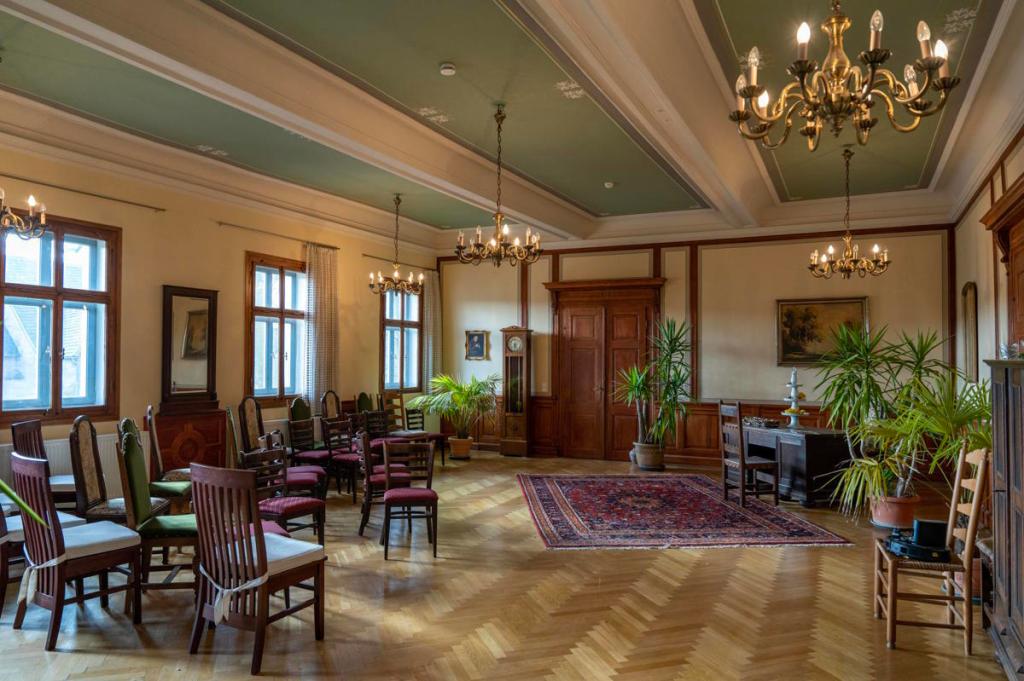
I could not figure out what had been living within the walls of my home. Sorcerers? Necromancers? Wizards. Practicers of Black Magic. I studied everything. The rhythm. The solar, lunar, stellar rhythm. The sidereal aspect. The astrological significance. It is said that if you offer blood to the dark gods, they grant boons. Yes, if a blood offering is made at the proper time—when the moon and the stars are right—and with the proper ceremonies—they grant boons. Boons of youth. Eternal youth. Sure as the stars, all the hauntings correspond to certain astrological rhythm pattern. Later that evening, I noticed Hattie’s eyes were as red as maraschino cherries. She teetered back and forth regarding us very gravely. This made me wonder about the secret lives of my servants—their secret lives beyond the care of the estate. How many of them were playing a part, concealing something Who here would worship Hecate and grant that goddess the dark doon of blood? Hecate is a mysterious divinity sometimes identified with Diana and sometimes with Proserpine. As Diana represents the moonlight splendor of night, so Hecate represents its in darkness and terrors. She is the goddess of sorcery and witchcraft, and is believed to wander by night along the Earth seen only by the dogs, whose barking told her approach. Even Aeson and Norman could be masquerading. The mood was upon us all, for a moment. I saw questions flicker in the circle of eyes around the room. Aeson stood there, and I could swear he was fully conscious of the situation he had created, and enjoyed it. I wondered idly just what was really wrong with him. Why he had this odd fixation with Hecate. Maybe he was hiding secrets, too. #RandolphHarris 3 of 8
Amanda was glazing at the kitchen, waiting to make a break for another pot of tea. And then it happened—a truly wicked sight—like watching a universe in action, yet all contained within a small square foot of space. Aeson wobbled horribly, then with that queer sideways motion, rapid yet ungainly, he stepped forward into the middle of the room and fell heavily upon his face. His eyes, as he dropped, faded shockingly, and across the countenance was written plainly what I can only call an expression of destruction. He looked utterly destroyed. I caught a sound—from Amanda?—but this time not of laughter. It was like a gulp; it was deep and muffled and it dipped away into the Earth. Again I thought of a troop of small black horses galloping away down a subterranean passage beneath my feet—plunging into the depts—their tramping growing fainter and fainter into buried distance. So far from this being a strange thing, it would be odder if this fulfillment did not occasionally happen. The butler picked Aeson up and carried him to a guest room. He recovered even before the doctor came. However, the queer thing to me is that I was convinced the others all had seen what I saw, only that no one said a word about it; and to this day no one has said a word. And that was, perhaps, the most horrid part of all. From that day to this I have scarcely heard a mention of Aeson. It seemed as if he dropped suddenly out of life. The papers never mentioned him. His activities ceased, as it were. His afterlife, at any rate, became singularly in effective. Certainly he achieved nothing worth public mention. #RandolphHarris 4 of 8
The wind was rising outside, tearing the shroud of fog to ragged shreds. The shadows crept up about listen. Amanda talked about ritual killings and prolonging the life unnaturally—a very fantastic tale. Superstitious dread possessed me; I turned to flee, but my foot slipped on some fallen plaster, and a board creaked loudly. The shadow darkened and seemed to rise up the opposite wall, and Mr. Hansen appeared before me. “Ah, Mrs. Winchester. Forgive me if I startled you—and for taking the liberty of exploring your house. This is, I gather, the room you wanted to extend?” He was not wearing his tinted spectacles, and his eyes gleamed faintly in the light from the doorway. “Yes, sir, it is.” He gestured toward the doorway, as if inviting me to examine something, stepping back as he did so to make room for me to enter. Politeness compelled me to obey against my instinct, and a moment later I was standing by the writing table, with Mr. Hansen between me and the door.” “What was it you wanted to show me, sir?” I asked, unable to suppress the tremor of fear in my voice. His expression was all but concealed by his beard and moustache, but it seemed tome that there was a glint of amusement in his eyes, which were so dark that the irises, as well as the pupils, seemed almost black. “Mrs. Winchester, I can see it glimmer with glass and silver, windows opening to the grade front of the house, and a tower that stands three stories,” Mr. Hasen said. Quite inexplicably, my heart sank at his words. I felt as if I had come up with the design myself. In silence we passed through the hall, and mounted a great mahogany staircase with many corners, and arrived at a small landing with two doors set it in. He pushed one of the doors open for me to enter, and closed it behind me. Now I knew that my conjecture had been right: there was something awful in the mansion, and with the terror of nightmare growing swiftly and enveloping, I laid in bed and closed my eyes. #RandolphHarris 5 of 8
The next morning, I felt that indefinable sense of ominous apprehension that I am accustomed to before thunder. However, tea pursued its cheerful course. I looked round the room with a certain sense of proprietorship, and found that nothing had changed. And then with a sudden start of unexplained dismay, I saw a life-sized oil painting of a man I did not recall. A rather secret and evil-looking man of about thirty. His picture hung between the windows, looking straight across the room to the other portrait, which hung at the side of the sofa. At that I looked next, and as I looked I felt once more the horror of nightmare seize me. Evil beamed from the narrow, leering eyes: it laughed in the demonlike mouth. The whole face was instinct with some secret and appalling mirth; the hands, clasped together on the knee, seemed shaking with suppressed and nameless glee. There came a tap at the door and Martin enter. “Mrs. Winchester, have everything you want,” he asked. “Rather more than I want,” I said, pointing to the picture. He laughed. “It is scarcely a human face at all. It is the face of some warlock, some devil.” He looked at it more closely. “Yes; it isn’t very pleasant,” he agreed. “Scarcely a something to look at, eh? I’ll have it taken down if you like.” “I really wish you would,” I said. He used the annunciator, and with the help of another servant, they detached the picture and carried it out on to the landing, and put it with its face to the wall. “By Joke, the picture is heavy,” Martin said, mopping his forehead. “I wonder if he had something on his mind.” When Martin looked at his hand, there was blood on it, in considerable quantities, covering the whole palm. #RandolphHarris 6 of 8
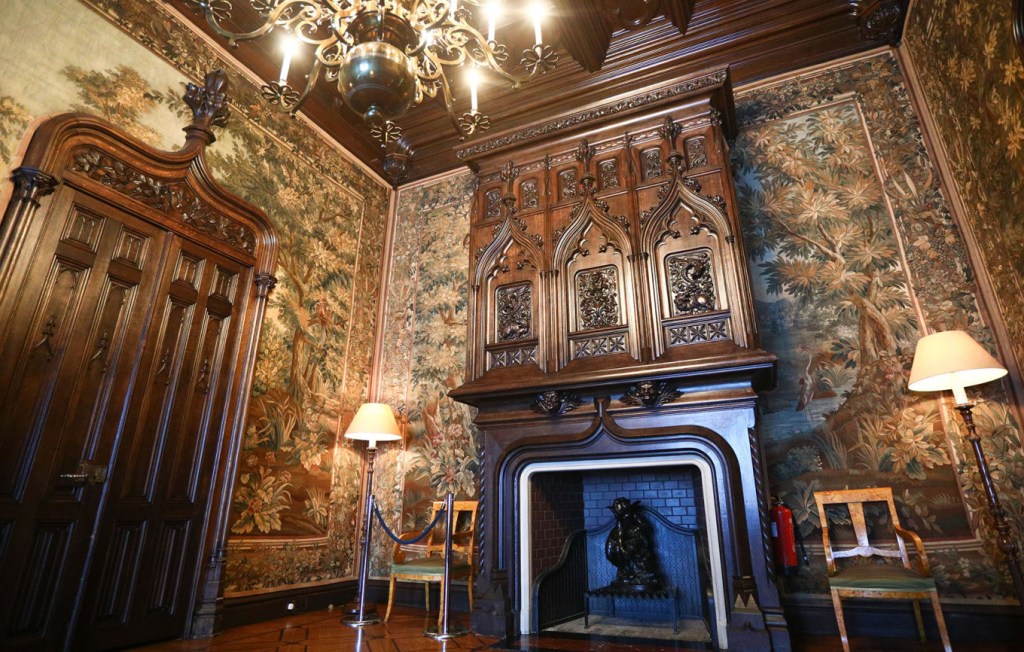
“I’ve cut myself somehow,” he said. Martin gave a little startled exclamation. “Why, I had too,” said John. Zip, had come out of the house, as the servants and I were in the garden. The door behind us into the hall was open, and a bright oblong of light shone across the lawn to the iron gate which led on to the road outside, where a mahogany tree stood. I saw that Zip had all his hackles up, bristling with rage and fright; his lips were curled back from his teeth, as if he were ready to spring at something, and he was growing to himself. He took not the slightest notice of me or the servants, but stiffly and tensely walked across the grass to the iron gate. There he stood for a moment, looking through the bars and still growling. Then of a sudden his courage seemed to desert him: he gave one long howl, and scuttled back to the house with a curious crouching sort of movement. I walked to the gate and looked over it. Something was moving on the grass outside. There was a thunder in the air, as I shivered and brooded on the casting of that brain-blasting shadow, something creeped out of the Earth’s supreme horrors. It had come down from horribly ancient eons before the World was made. The beast had a humanoid head, large teeth, globular eyes, and was covered with scales. His hands were claws like a lion. Some bright light had been flashed in my face, though it was now pitch dark. Overheard the thunder cracked roared, and when it ceased and the deathly stillness succeeded, I heard the rustle of movement coming nearer me, and more horrible corruption and decay. My galloping heart had no reassurance. And then a hand was laid on the side of my neck, and close beside my ear, I heard quick-taken breathing. I ran back to my house as fast as I could. #RandolphHarris 7 of 8
But the breathing still came closer to me. At that, the terror, which I think had paralyzed me for the moment, gave way to the wild instinct of self-preservation. I hit wildly with both arms, kicking out at the same moment, and heard a little animal squeal, and something soft dropped with a thud beside me. I took a could of steps, put my right hand on the wall which was nearest to me, and noticed that there were Sumerian markings and occult symbols all over the walls and ceilings of the darkened parlor. One of the kitchens was adored with demonic imagery. Martin, the butler, said “I was looking for you—Good heaven there’s blood on your shoulder.” I stook there, so he told me afterwards, swaying from side to side, white as a sheet, with the mark on my shoulder as if a hand covered with blood had been laid there.” Then there was silence; he had passed out of my sight behind the open door. Next moment he came out again, as white as myself, and instantly shut it. How I got to the basement I hardly know. An awful shuddering and nausea of the spirit rather than of the flesh had seized me, and more than once he had to place my feet upon the steps, while every now and then he cast glances up the stairs. The air was still, but so bitterly cold that breathing felt like inhaling splinters of ice. Finally upstairs, I sat with Martin in the library by the fire, wondering if I should ever feel warm again. It was the art of all devilry that had been done here. The mist, I noticed uneasily, had grown much thicker—and so we returned to the gallery. The echoes of the ghosts sounded horribly. I wished there was something I could do, other than wait and shiver, and try to shake off the sensation of being watched. #RandolphHarris 8 of 8

Thomas Edison theorized that energy, like matter, is indestructible. He became intrigued by the idea of developing a radio that would be sensitive enough to pick up the sounds of times past—sounds that were only audible to the psychically sensitive. Mr. Edison hypothesized that the vibrations of every word ever uttered still echoed in the ether.
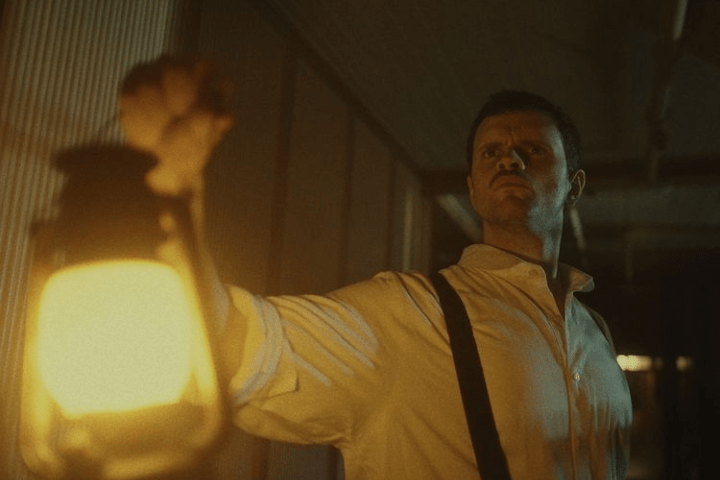
If this theory should be established, it would explain phenomena such as the restoration of scenes from the past. Just as the emotion of certain individuals permeate a certain room and cause a ghost to be seen by those possessing similar telepathic affinity, so it might be that emotionally charged scenes of the past become imprinted upon the psychic ether of an entire landscape.
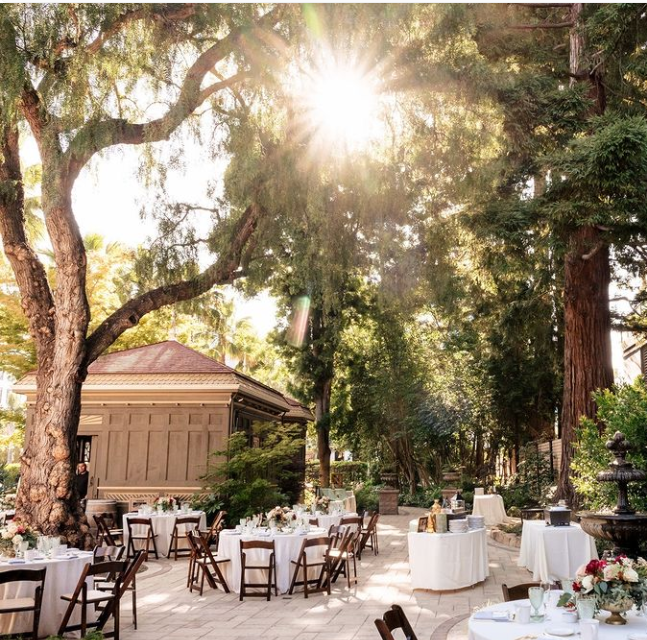
An alternate theory maintains that souls or energy emotionally held to an area may telepathically invade the mind of a sensitive person and enable one to see the scene as “they” one saw it. At The Winchester Mystery House, some say that they have seen a dark shadow following them into the place; still others say they hear things in the back room—things like silverware moving about with an odd tinkling sound. A young employee, who was playing videos games during his break, ran back into the lobby screaming that he had seen a woman in the garden half in and half out of the ground.

For further information about tours, including group tours, weddings, school events, birthday party packages, facility rentals, and special events please visit the website: https://winchestermysteryhouse.com/
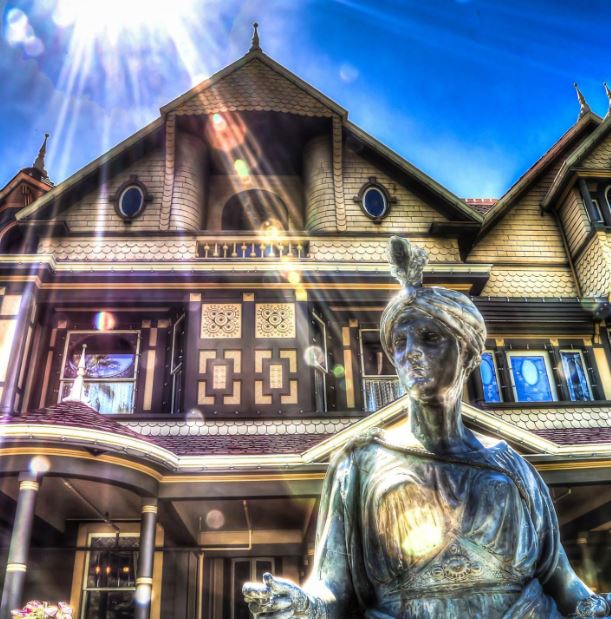
Please visit the online giftshop, and purchase a gift for friends and relatives as well as a special memento of The Winchester Mystery House. A variety of souvenirs and gifts are available to purchase. https://shopwinchestermysteryhouse.com/
If you forget to purchase something during your visit, you can order any gift item by calling 408-247-2000 and charging them to your credit card. You can also place an order through the mail. Be sure to include a daytime telephone number with area code.
 Randolph Harris II International Institute