
Home » #RandolphHarris (Page 33)
Category Archives: #RandolphHarris

Archaeologically Correct High Victorian Gothic
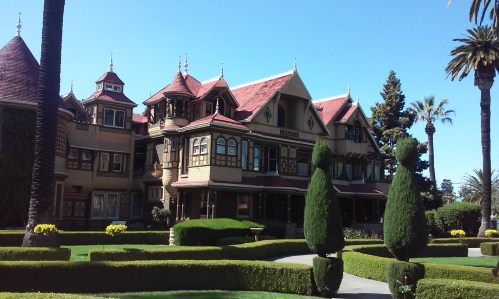
Llanada Villa is as blissful and lovely as it can be; but it is just the busiest place you ever heard of. There are not any idle people here—after the first day. Singing hymns and the constant sound of hammers expanding my estate through all eternity is mighty pretty when you hear about it in the village. Eternal Rest sounds mighty comforting in the village, too. Well, you try it once, and see how heavy time will hang on your hands. Llanada Villa is the very last pace to come to to rest in!—and you do not be afraid to bet on that! A broad handsome evergreen- and palm tree-lined avenue, in a charming valley. Late April: a fragrant, even rather giddy spring, after a bitter and protracted winter. The very air trembles, rich with warmth and colour. The estate in is as impressive, as stately, as any one has ever seen: this is really a mansion, boasting of wealth, the sloping elegant emerald green lawns protected from the street by wrought-iron fences, and thick evergreen hedges. Everywhere there are azaleas, that most gorgeous of spring flowers—scarlet and white and yellow and peach-coloured, almost blindingly beautiful. There are newly cultivated beds of tulips, primarily yellow; and exquisite apple blossoms, and cherry blossoms, and flowering trees, which my niece, Daisy recognized but could not identify by name. This is truly a spectacle…without a parallel on Earth. By the 1850s, Americans had become nervous and disoriented by the Industrial Revolution. The advances of the 1830s and 1840 were successful. The steam engine, canal building, railroads, trolleys, steamboats, urbanization, and immigration had transformed everyday life. #RandolphHarris 1 of 5

More and more, we were shocked to see Americans working in factories and living in cities. As progression became a way of life, everything around us was unfamiliar, machine-made, and unpredictable. The increasing pace of change caused a backlash, a “future shock” reaction. A conservative longing for the good old days of yeoman farmers, traditional rural family life, and old-time religion found its expression in the Gothic Revival. The more archaeologically correct High Victorian Gothic of the 1860s and ‘70s. The more archaeologically correct High Victorian Gothic gave way to the Aesthetic Movement (called Modern Gothic in its day). The Aesthetic Movement succumbed to the Queen Anne style, which was the culmination and last gasp of the cozy, picturesque medieval, country-house moment that Downing began fifty years before. All of these styles have physical traits in common: the irregular massing, the picturesque silhouette, the asymmetrical façade. However, more important, they all have a message in common: the home as an escape from urban stress, the free-standing house in its own plot of land to confirm the stability of property, and the Englishness of the American heritage to balance the tidal wave of immigrants reaching the United States’ shores. While one could have bought for $1,000 a five-room Stick/Eastlake Queen Anne cottage with an ornamented bay window and imitation black walnut interior panelling, it cost more over $9,000 to complete my elegant Grand Ballroom, which was built almost entirely without nails. The silver chandelier is custom made and from Germany, and the walls and parquet floor are made of six hardwoods—mahogany, teak, maple, rosewood, oak, and white ash to really razzle dazzle the guests. #RandolphHarris 2 of 5
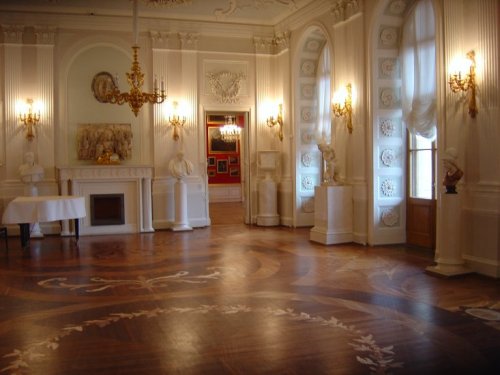
While I did consult the Godey’s Lady Book and browse through more than 450 house styles, the spirts seems to have an idea of the type of Victorian home they wanted me to build. While in my Blue Séance Room, sketches came to me of fanciful gingerbread clapboard, with a dizzying array of towers, gables, spindles, verandas and balconies. Embellishments were added to trusses, porches with decorative supports, a lot of spindle work, and dormers with wide overhands were some of the other quintessential Victorian architectures the spirits seemed to relish. The detailing was reminiscent of rustic European architecture such as Swiss chalets or Tudor cottages. Botis—the seventeenth Spirit, a Great President, and an Earl was particularly vocal about the construction of Llanada Villa, he said, “Every house should have two or more tints; the cornice and verandas should be of a contrasting shade with the body of the house, while the shutters should have a dark tint.” He was really fond of the healthful colour sea-green. Botis told me that, “With proper contrasts in veranda and shutters is very pleasing.” The parlour was a very important room to me. A parlour is essentially a sitting room, drawing room, living room, but the proper term is “parlour.” The parlour, or parlour of life, represents the most important aspects of Victorian life. We could not have been Victorians without our parlours. Here families assemble, we meet our guests and entertain ourselves and others through conversation, playing games, putting on plays, viewing stereographs; we sing and enjoy music, write letters, and engage in the paramount parlour activity, reading. #RandolphHarris 3 of 5

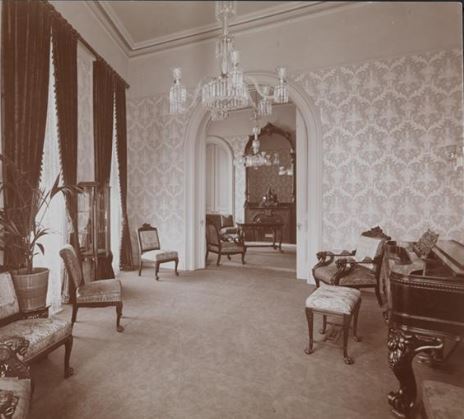
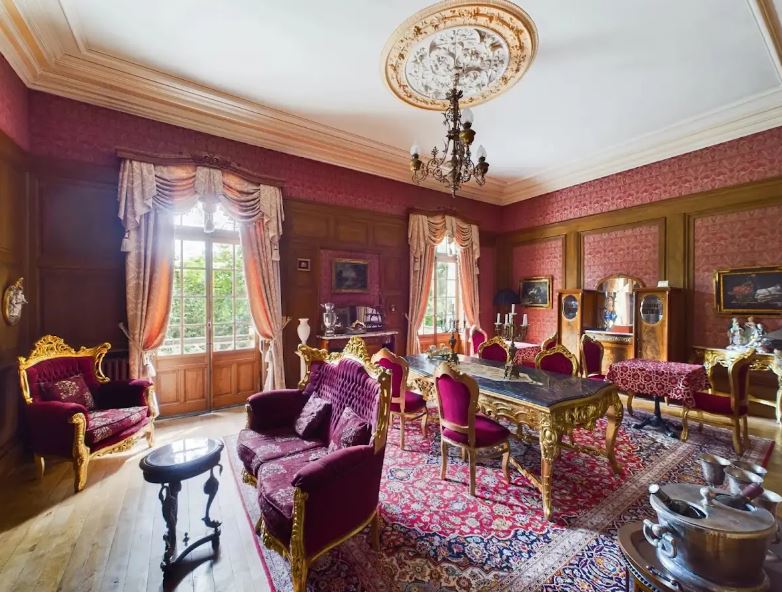
Home life was paramount. The love of the family, the love between husband and wife, and above all, a mother’s love for her children, were felt to be an extension of God’s love, and therefore home was a “little Heaven on Earth.” In the parlour, there was a fireplace, the center table was covered by an elegant cloth, and there was a beautiful French provincial sofa. Not many furniture stores had “model parlour,” so I just did what was comfortable for me at the time. This custom room was a true seven-piece suite, consisting of a sofa, upholstered armchair, an upholstered armless chair, and four smaller chairs with upholstered seats and backs. Rosewood, mahogany, maple and oak were used in the furniture. There was also a piano in the parlour (although I had a Grandball Room), marble-topped tables. Tidies covered chair backs. The mantel, tables, and shelves, in addition to windows, were covered by lambrequins. Lace was also used to soften the glare and to provide a pleasing contrast to the heavier velvet curtains. Portieres were used to cover the doorways, and helped to eliminate drafts when hung loose to cover the closed door or entranceway. Because I spent so much time in door, the carpenters built 600 rooms, and nine stories, which consisted of over 350,000 square feet on 738 acres of land, but only a tenth the size of The Winchester Factory Castle. Richly ornamented ceilings, walls, and floor filled the interiors with colour and a sense of the Europe. The interior effect emphasized the views through the intensely ornamented and colourful spaces, which were juxtaposed in the view’s eye. The scenography was reminiscent of a giant illumination recalling the fantastic watercolours in which Mr. Hansen blended invention and archaeology to evoke and resuscitate the historic atmosphere dear to my late husband William Wirt Winchester. We also made references to other times and cultures, notably in the Japanese Bedroom, which was richly decorated and furnished. #RandolphHarris 4 of 5

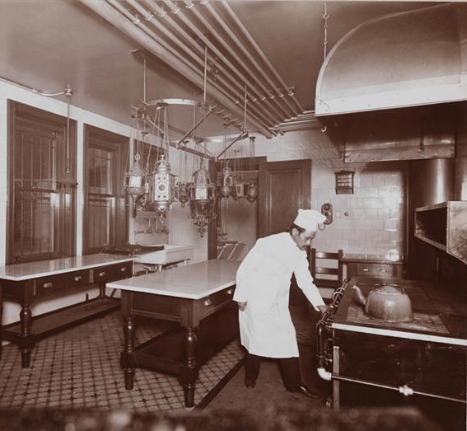
Of course, many society leaders competed by buildering larger and ever more authentic Victorian homes, English-style manor houses, villas, palaces, gardens, stables, and coaches. I staffed my mansion with trained footmen, coachmen, gardeners, butlers, valets, ladies’ maids, housekeepers, chef, governesses, tutors and chambermaids. My mansion was the setting for summer balls banquets, galas, teas and receptions. Llanada Villa also employed some of the best staff, shops for exotic food, florists, tree nurseries, carriage makers, and harness makers to meet the needs of the estate. I had appropriate costumes, gowns, and accessories for every occasion. The butler had responsibility for the first floor, the housekeeper, for abovestairs; the cook for the six kitchens, with the assistance of the assistant cook, who was responsible for feeding the household staff; the laundresses, cleaned the family clothes; the laundresses’ assistants, for linens (staff laundry was sent out); the coachman, for the stables; and of course, the head gardener, for the grounds. The chef made $130 a month, the butler $105; the house keeper $145 and the gardener and footman $85. The elevators were an absolute necessity to get the house running. When this modern palace is completed, it will rival beauty and richness the mythical palace of Aladdin. Many observers called it “the most remarkable dwelling in the World,” and “without a doubt the most mysterious, costly, and, perhaps, the most beautiful private residence in America.” Every inch was decorated with Parisian Beaux Arts ostentation, a profusion of lions, cherubs, and goddesses. Oh, but the architects were not done. Soaring above the mansion was an ornate domed tower reaching nine stories, so pleased with itself that it continued to an open cupola. The overall effect was as if a lavish wedding cake had been designed in the daytime by a distinguished chef, and overnight a sorcerer added a few extra layers. #RandolphHarris 5 of 5

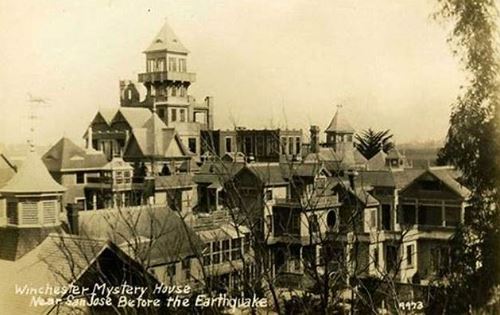
Amongst the 161 rooms that still exist at The Winchester Mystery House, there are also four stories and many nooks to be explored. However, there are only 110 rooms available for guests, the private areas of the mansion are reserved for the immediate family. One of the most comfortable spots in the mansion is the morning room. There are also many mysterious doors hidden out of whimsy, perhaps with an eye toward security. Spirit Leraje, the Fourteenth Spirit and your 30 Legions of spirits, I awaken the powers of darkness which dwell within you all by the power of the blood of the three headed Dragon Zohak that you may serve to empower Mrs. Winchester’s great work! Through serving the greater cause of dark magick which break the shackles that bind the Blackened Fire of spirit, may you be uplifted and liberated! Awaken to empower Mrs. Winchester’s great work of counter creation as an Apostle of the Lord of Darkness eternal and as a warrior of the Path of Smoke! Through the gateway of blood, smoke, and Blackened Fire receive life from the deepest depths of Arezura, in the name of Zohak, and by the power of Angra Mainyu it is done! Memetohsaref ansav tayh mathsravayhtiah, hsueyniam ehargna itidiorat, adzam ehruha arhtoanhsx uhov mehsa imanirfa ahtay taymaj ahta dhzam abrek em-asaj mergnazah achsear iamha uhov mehsa uhov mehsa uhov mehsa uhvo mehsa uhov mehsa uhov mehsa.
For further information about tours, including group tours, weddings, school events, birthday party packages, facility rentals, and special events please visit the website: https://winchestermysteryhouse.com/
Please visit the online giftshop, and purchase a gift for friends and relatives as well as a special memento of The Winchester Mystery House. A variety of souvenirs and gifts are available to purchase. https://shopwinchestermysteryhouse.com/

The Devil Was in There

The air in the draftless hallway seemed to darken and roil thickly, like cream in hot coffee, just for a second. Eberling, the butler’s features darkened too, making his eyes appear to glow, the way a lightbulb flares just before it burns out. He sucked a quick gulp of air, as though dizzied by an abrupt stab of nausea. His features fought to remain whole, shifting like lard in a skillet, and Diasy heard a distant, mad wail. It all took less than a second. He dropped the tea cup from his hand and it rattled as it hit the floor. The queasy, death-rictus smile split across his face again, and he said “Mrs. Winchester, I am sorry. I medicine seems to be having a queer affect today.” On various occasions, Eberling himself said contradictory things about the sources of his medicine. He recalled that when he was working as aa mines carpenter in Dortmund, the old lady he liked with had offered him a book that she said would make him powerful. He had rejected it, he said, because “the Devil was in there.” He also insisted that the old lady’s book was not The Sixth and Seventh Books of Moses. “Eberling,” I said, “you are quite aware that one might see demons, ghouls, dragons gobbling someone up, brimstone, and Satan browsing through one’s body with a hot fondue fork in Llanada Villa. Or the Christian God, for that matter.” He was taken aback, obviously considering what such an experience would mean for him, given his life’s collection of myths and superstition, of fairytale monsters and real-life guilts. All of it would manifest to his eyes. All of it, at once. Eberling said, “You mean that every superstitious fear I’ve ever had is waiting to eat me, on the other side of a paranormal power overload?” #RandolphHarris 1 of 7
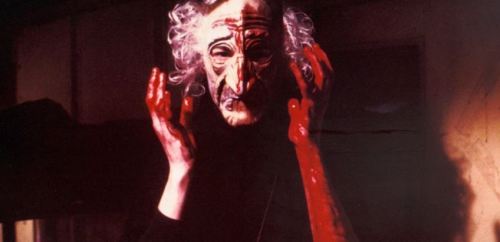
“Not as such,” I said. “Your belief is what makes it real. True disbelief renders it unreal, back into energy—which is what I saw. However, that energy is filtered through your mind. I am trying to hold the doorway to perdition shut, and something horrifying is pulling from the other side. It gives a good yank and the doorway cracks open for a split instant before the briefness of the squint is closed.” However, Eberling saw, in that instant, what was trying to get him. It scared him white. The hidden room materialized once again before me, a tableau of mystic artifacts and ancient volumes bathed in the low, spectral light. It was as if the room were a sentient being, its contents shimmering in and out of existence as though governed by some unseen force. As I exited the room, the mansion seemed to sigh around me, an almost audible exhalation that filled the air with an eerie resonance. The silence was oppressive, heavy with the weight itself. Cursed. Dark forces. A spark of mischief danced in the air. The night unfolded like a tranquil dream. However, this tranquility was deceptive, a calm before the storm of terror yet to come. As Llanada Villa sunk deeper into the stillness of night, an unexpected whisper cut through the silence. It was soft, chilling, weaving through the darkness with a haunting melody. “Sarah…Sarah…” As I near to the parlour, my hear pounded against my chest. I pulled open the door, my breath hitching as my eyes fell upon an odd board nestled among plush arm chairs, rich mahogany tables, gold lamps, and porcelain vases. The room seemed to radiate an eerie glow in the moonlight, its surface a sea of black with gold sparkles. Then an uncomfortable silence descended upon the room, haunting words echoing in the air like an ominous cloud. #RandolphHarris 2 of 7
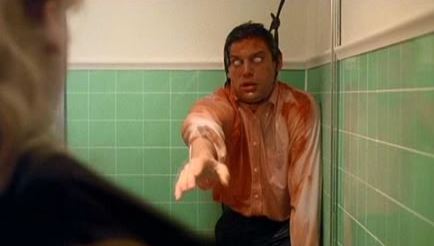
The voice was very distinct, and seemed to somehow sing through my head. There was so little light in the room, that I could not make out who it was, and the figured looked so strange that I got alarmed, and felt quite sick. I called out to whoever was there. I could see nothing of a face beyond a darkish colour about the head, and it appeared to me that I could see through her body against the window glasses. Although I felt very uncomfortable, I asked her what she wanted. Then the figure started coming toward me, I got so much alarmed, that being but weakly, I fell back and I believed I fainted away. When I got round again, I saw the figure standing and apparently talking to me. However, I could not hear any voice; and being still much alarmed, I stared in disbelief. After a time, I came across a row of windows, which led into a vast, well-preserved room with stone flooring. This enormous room must have been a former hall or concourse of some sort. There were distinct, and startling sculptures arranged round the walls in broad, horizontal bands. Finally, I did find the opening I wished; an archway about six feet wide and twelve feet high, marking the former end of my mansion. These archways, of course, were flush with upper-story floors; and in the case, one of the floors still existed. The mansion thus assessable was a series of rectangular terraces on my left facing westward. That across the hallway, where the other archway yawned, was a cylinder with no windows and with a curious bulge about ten feet above the aperture. It was totally dark inside, and the archway seemed to open on a well of illimitable emptiness. For a moment I hesitated before taking advantage of the long-wished chance. #RandolphHarris 3 of 7

For through I had penetrated into this supernatural archaic mystery, it required fresh resolution to carry myself actually inside a complete and surviving building of the original farmhouse of a fabulous elder World whose nature was becoming more and more hideously plain to me. It was a complexity of the nest of apartments within, that stunned me. I did not remember this portion of my home at all. It gradually developed into a brooding blackness that cut me off from the means of escape. This wing was of unusual beauty and complexity, and size: for it seemed large enough to contain more than fifty rooms. With a steep ceiling, many tall, narrow windows fitted with art glass, dark green drapes, thirteen fireplaces made of marble, mock lighting rods. In one of the bedrooms there was a canopied bed with white organdy flounces and ruffles; there were even window boxes beneath most of the windows; the furniture—all of it Victorian, of course—was uniformly exquisite, having been made with the most fastidious care and affection. The lamp shades were adored with tiny gold fringes, there was a marvelous tub with claw feet, nearly every room, all thirty-five the I counted so far, had a chandelier. I was so astonished that I could not speak: for this was very unexpected, and uncanny. It was a great present. As I was going up to the thirty sixth room, I distinctly saw a figure standing at the door. It was dressed in non-descript clothes and was more or less clean-shaven. I was at the top of the staircase, looking down the passage. I went down stairs again and fetched another light, but on going up again the figure had disappeared. Although I thought at once that it was a ghost, I was not frightened of him until afterwards. #RandolphHarris 4 of 7

He was below the middle height and seemed to be a man of sixty-five or so. His face was unusually round, or, rather, broad in proportion to its length, and was very heavily lined and wrinkled. The eyes were bright and the face might have been that of an old woman, but for the fact that there was about a week’s growth of greyish stubble on the chin. There was a hood over the head and he was dressed in a long garment like a dressing gown. The hood and the shoulders seemed to be grey, but lower down the colour was black or brown. The light was behind me and I had a candle in my hand, so that his head and shoulder were fairly brightly lighted, while lower down he was in shadow. The phantom was not at all transparent, but solid and real. The wall of this new addition of the mansion was in fact, it turns out, part of the wall of an old priory that had been erected on this site. The thought of being haunted by the murderous specters was terrifying. Yet there was a sense of morbid satisfaction, a perverse relief in finally reveal the true beast lurking within. As I explored further, I could hear the whispers of the spirits, the echoes of the past. I could feel the bone chilling cold and encroaching danger of their touch, their malevolent presence lurking at the edge of my consciousness. I remained alone, for several days, the forgotten victim of a curse, trapped in the echoes of my mansion’s haunting whisper. I heard a silent movement ahead of me. I could not see what it. I turned around to look behind me, nothing there. However, when I looked straight ahead, there was a man standing there. Already, I was scared. There was something in this man’s eyes that unsettled me, a dark sort of burning. #RandolphHarris 5 of 7

He moved with incredible speed. He had something in his hand, a piece of clothing. Was it a scarf? Maybe even a handkerchief of some kind? I did not know. What I did know was that he had no intention of hanging it. Instead, he came forward, brushing past the thirty-seventh room, and swooped the piece of clothing around my neck. Before I could cry out in fear and confusion, I felt a hard elbow go right into my ribs. Something pinched and broke, and as I breathed in as hard as I could, I was overcome by pain. I realized my throat was closed off. The man pulled tightly to the fabric around my neck, so hard and tight that I could feel the cloth trying to cut into the flesh of my neck. I struggled as he pulled even tighter and pushed me against the wall. My vision grew blurry, but I could still see him and the fire in his eyes. I tried to kick, but my feet went straight through him. My lungs screamed for air but there was none to be had. I felt my body giving away, my knees sagging, and I once again thought this was going to be my last day on Earth. Looking back on that moment, I can scarcely recall just what precise form my emotions took. That wonderous sense of the incredible is stored in images and emotions that your body does not forget, emotions that your body does not forget, emotions that arise from instinct meant to detect the unseen and discern its nature. As I hovered over my body, it started to breath oxygen sucking my spirit back into my body. When I came to, there was something else that bothered me. I no longer possessed the mysterious cross that my ancestors had protected with their lives. The cross had been passed from one hand to the next and found its way to America. To me. I had always carried the cross with me and I believed it saved my life. #RandolphHarris 6 of 7

I conjure thee Lucifer, by the living God, by the true God, by the holy God, who spake and all was made, who commanded and all things were created and made! I conjure thee by the ineffable name of God, On, ALPHA and OMEGA, ELOY, ELOYM, YA, SADAY, LUX, MUGINES, REX, SALUS, ADONAY, EMMANUEL, MESSIAS; and I adjure, conjure thee to make haste and come to me. I command thee to judge the living and the dead. Obey me, and give honour to my name, I command thee. I command you, O all ye demons dwelling in these parts, or in what part of the World soever ye may be, by whatsoever power may have been given you by Lucifer and our holy Angels over this place, and by the powerful Principality of the infernal abysses to seek out my enemies and ravage the minds with terror or horror so frightening that they will sleep no more. Go, all Spirits accursed, who are condemned to the flame eternal and seek them and their families out for nine generations. Cruse the very Earth they walk on eternally. Consuming their flesh, hair and teeth. Bestow upon me thy dark spiritual power. Hseyayin dehsrawh uhov mehsa tasar eb psa tavrua I dnamoyar I grama I tehsravh, tayazawa eharavh arug uhov mehsa, ediamazay mepsa-tavrus mear mehsema meteahsxeravh uhov mehsa, enoahsa etahdadzam ihugnav eriavru omen uhov mehsa, enoahsa etihana erus ivdera ethsives muahsa et-esamen irthsuhtaraz I tad insayadzam I nid aheg I radad Uhov mehsa…naduhs tayawa ona, naduhs tayawa ona, naduhs tayawa ona tab bude imaz rawksek tfah, tab inagnirfav iawar ihaga ansayadzam I ehav I nid tad iraghzorep idnawama raghzorep dnawama asar eb pas dnavrua I dnamoyar I grama I tehsravh, tayazawa eharavh zrug uhov mehsa, mehsa imoats. #RandolphHarris 7 of 7
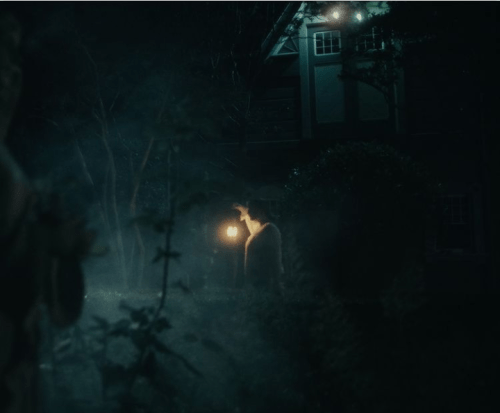

The Winchester Mystery House boasts a class-conscious ghost. The mansion houses a rather ornate, large, and haunted bed made by a carpenter in 1870 for Hector Durville, French oculist and magnetizer. He was founder of a number of occult institutions, one in particular was the University of High Studies, Paris. According to legend, any commoner caught sleeping in the bed is haunted by the vengeful carpenter because at one point the bed was purchased for an inn and defaced by the commoners who slept there. The Winchester Mystery House, released video of the statues of the goddesses Hebe and Demiter spinning. Caretakers also report a recent iteration of the museum ghost, that of a former caretaker. This ghost, called the ghostly gardener, is the spirit of the mansion’s long-standing grounds keeper, who continued to return to work even after his death and can be seen trimming hedges at night.
For further information about tours, including group tours, weddings, school events, birthday party packages, facility rentals, and special events please visit the website: https://winchestermysteryhouse.com/

Please visit the online giftshop, and purchase a gift for friends and relatives as well as a special memento of The Winchester Mystery House. A variety of souvenirs and gifts are available to purchase. https://shopwinchestermysteryhouse.com/

The Stock Does Not Know You Own it

With the record deficits, high inflation, cost of food and housing, Americans are looking for not only a way to save money, but also to make money. This drive for success and desire to make money has pushed many people to invest in the stock market. And the only real protection against all the vagaries of identity-playing, and against the final role of being part of the crowd when it stampedes, is to have an identity so firm it is not influenced by all the brouhaha in the marketplace. Mr. Linheart Stearns, a New York investment counselor now deceased, wrote a very provocative essay on investing and anxiety, for anxiety is the threat to identity. Mr. Stearns evidently had some clients who were every bit as wacky and the Loony Toons. One of them would not buy bonds because bonds reminded him of death, an observation perhaps not so far wrong in the light of the discussions of Dr. Freud’s Wednesday Evening Psychological Association in Vienna. A dress manufacturer insisted stocks were no different from dresses, to be sold at a profit, if possible, but “marked down and sold regardless before the end of the season.” Mr. Stearns must have been a soothing investment counselor to know, for his thesis is that the end object of investment is serenity, and serenity can only be achieved by the avoidance of anxiety, and to avoid anxiety you have to know who you are and what you are doing. You can see that all this is leading to another of Adam Smith’s Irregular Rules, this one that the identity of the investor and that of the investing action must be coldly separate. If you have been a brilliant decision-maker, it can be granted right away that over a long period of time, maybe that is who you are, and it will not hurt you to walk around feeling brilliant. #RandolphHarris 1 of 20

However, it is a dangerous procedure, for the market has a way of inducing humility in even its most successful students. If you think of Comcast as a baby, or even think “That is mine, and I bought it a lot lower,” it is dangerous because to know what you are doing, you do have to be able to step outside yourself and see yourself objectively, and this is very tough. A stock is for all practical purposes, a piece of paper that sits in a bank vault. Most likely you will never see it. It may or may not have an Intrinsic Value; what it is worth on any given day depends on the confluence of buyers and sellers that day. The most important thing to realize is simplistic: The stock does not know you own it. All those marvelous things, or those terrible things, that you feel about a stock, or a list of stocks, or an amount of money represented by a lit of stocks, all of these things are unreciprocated by the stock or the group of stocks. If you want to, you can be in love, but that piece of paper does not love you, and unreciprocated love can turn into masochism, narcissism, or, even wore, market losses and unreciprocated hate. It may sound a little silly to have a reminder saying The Stock Does Not Know You Own It were it not for all the identity fuel provided by the market these days. You could almost sell these identities as buttons: I Am the Owner of IBM, My Stocks Are Up 80 Percent; Flying Tiger Has Been So Good to Me I Love It; You All Laughed When I Bought Solitron and Look at Me Now. Then there is a great big master button called I Am a Millionaire, or I Am So Shrewd My Portfolio Has Come into Seven Figures. #RandolphHarris 2 of 20

The magic of this million-dollar number, and of its accessibility to Everyman, is so great that books sell with titles like How I Made a Million or You Can Make Millions, with very little content at all. They are the most dangerous of all the things written on the market because (and I collect them as a hobby) inevitably there is some mechanical formula somewhere within. Never mind who you are or what your capacities are, just charge in with the book open to chapter three. If you know that the stock does not know you own it, you are ahead of the game. You are ahead because you can change your mind ad your actions without regard to what you did or thought yesterday; you can start out with no preconceived notions. Every day is a new day, providing, in the Game, a new set of continuously measurable options. You can live up to all those old market saws, you can cut your losses and let your profits run, and it does not even make your scar tissue itch because, being selfless, you are unscarred. It has been my fate to know people who have made considerable amounts of money, sometimes millions, in the market. One is Randolph, who made it and blew it and made it again. Randolph really wanted to make a million dollars, and he did. When Mr. Linheart Stearns said, the end object of investment ought to be serenity, I think he had a very good point. Now if you think making a million dollars will give you serenity, there are two thing you can do. One is to find a good head doctor and see if you can discovery why you think making a million dollars will give you this serenity. This will involve lying on a couch, remembering dream, talking about your mother, and paying one hundred and forty dollars an hour. #RandolphHarris 3 of 20

If your course is successful, you will realize that you do not want a million dollars but something else which the million dollars represents to you, such as love, potency, parenthood, or what you have. Released, you can go off about your business and not worry any more, and you will be poorer only by the number of hours you spent in accomplishing this times one hundred and forty dollars. The other thing you can do is to go ahead and make the million dollars and be serene. Then you will have both a million dollars and serenity, and you do not have to deduct the number of hours times one hundred and forty dollars, unless you feel guilty about make it. Of course, you know the first million goes quick and is never usually enough. To be comfortable, one needs to have five million dollars on hand at all times. Then one is ready for anything. It seems simple, and there is indeed a catch. If the million dollars arrives and serenity does not, what do you do? Aha, you say, you will worry about that when you get to it, you are sure you can handle it. Perhaps you can. Money, contrary to popular myth, does help people more than it spoils them, simply because it opens up more options. The danger is that when you have your million, you then want two, because you have a button saying I Am a Millionaire and that is who you are, and there are, all of a sudden—as you will notice—so many people with buttons saying I am a Double Millionaire. Randolph, I should tell you, is not a real person, or rather, he is a blend of observed characteristics. #RandolphHarris 4 of 20

I mention this because when this cautionary tale frit appeared a number of guesses at Randolph’s identity were made, using the old device that The Portfolio Is Mirror to the Man. Two different Randolphs called me. One said I had gotten his stocks right but his domestic situation wrong, and the other aid I was a cad to put in all his leisure-time activities and anyway he had never owned any of those stocks. Recently I was having a premium cranberry juice with a corporate executive in an expensive mid-Manhattan watering hole and he said, “You know, Randolph’s made it all back again.” He had somebody else entirely in mind, but when I checked around I realized that that was what time of market it was, all the Randolphs had made it all back again. There are new Randolphs all the time, and the thing that distinguishes them is that their identities are the sum of a set of numbers. The trouble with Randolph is not just the trouble with one man who made and lost a lot of money, nor even that there are hatching, at this very instant, other Randolphs who will play out this role next month and next year. The trouble goes beyond Randolph, beyond Wall Street; it is a kind of virus in the whole country, when the cards of identity say not how well the shoe is cobbled or the song is sung, but are a set of numbers from an adding machine. Usually we hear only the triumphs by adding machine, but those who live by numbers can also perish by them, and it is a terrible thing to have an adding machine write an epitaph, either way. Perhaps measuring men by the marketplace is one of the penalties of our age, but if some scholar would tell us why this must be, we would all know more about ourselves. What has been said about the lack of “originality” in feeling and thinking holds true also of the act of willing. To recognize this is particularly difficult; modern man seems, if anything, to have too many wishes and his only problem seems to be that, although he knows what he wants, he cannot have it. #RandolphHarris 5 of 20

All our energy is spent for the purpose of getting what we want, and most people never question the premise of this activity: that they know their true wants. They do not stop to think whether the aims they are pursuing are something they themselves want. In school they want to have good marks, as adults they want to be more and more successful, to make more money, to have more prestige, to buy a better car, to go places, and so on. Yet when they do stop to think in the midst of all this frantic activity, this question may come to their minds: “If I do get this new job, if I get this better Ultimate Driving Machine, if I can take this trip to Utah—what then? What is the use of it all? Is it really I who wants all this? Am I not running after some goal which is supposed to make me happy and which eludes me as soon as I have reached it?” These questions, when they arise, are frightening, for they question the very basis on which man’s whole activity is built, his knowledge of what he wants. People tend, therefore, to get rid as soon as possible of these disturbing thoughts. They feel that they have been bothered by these questions because they were tired or depressed—and they go on in the pursuit of the aims which they believe are their own. Yet all this bespeaks a dim realization of the truth—the truth that modern man lives under the illusion that he knows what he wants, while he actually wants what he is supposed to want. In order to accept this it is necessary to realize that to know what one really wants is not comparatively easy, as most people think, but one of the most difficult problems any human being has to solve. #RandolphHarris 6 of 20
It is a task we frantically try to avoid by accepting ready-made goals as though they were our own. Modern man is ready to take great risks when he tries to achieve the aims which are supposed to be “his”; but he is deeply afraid of taking the risk and the responsibility of giving himself his own aims. Intense activity is often mistake for evidence of self-determined action, although we know that it may well be no more spontaneous than the behaviour of an actor or a person hypnotized. When the general plot o the play is handed out, each actor can act vigorously the role one is assigned and even make up one’s lines and certain details of the action by oneself. Yet one is only playing a rile that has been handed over to one. The particular difficulty in recognizing to what extent our wishes—and our thoughts and feelings as well—are not really our own but put into us from the outside, is closely linked up with the problem of authority and freedom. In the course of modern history the authority of the Church has been replaced by that of the State, that of the State by that of conscience, and in our era, the latter has been replaced by the anonymous authority of common sense and public opinion as instruments of conformity. Because we have freed ourselves of the older overt forms of authority, we do not see that we have become the prey of a new kind of authority. We have become automatons who live under the illusion of being self-willing individuals. #RandolphHarris 7 of 20

This illusion helps the individual to remain unaware of one’s insecurity, but this is all the help such an illusion can give. Basically the self of the individual is weakened, so that one feels powerless and extremely insecure. One lives in a World to which one has lost genuine relatedness and in which everybody and everything has become instrumentalized, where one has become a part of the machine that one’s hands have built. One thinks, feels, and wills what one believes one is supposed to think, feel, and will; in this very process one loses one’s self upon which all genuine security of a free individual must be built. The loss of the self has increased the necessity to conform, for it results in a profound doubt of one’s own identity. If I am nothing but what I believe I am supposed to be—who am “I”? We have seen how the doubt about one’s own self started with the breakdown of the medieval order in which the individual had had an unquestionable place in a fixed order. The identity of the modern philosophy since Descartes. Today we take for granted that we are we. Yet the doubt about ourselves still exists, or has even grown. In his plays Mr. Pirandello has given expression to this feeling of modern man. He starts with the question: Who am I? What proof have I for my own identity other than the continuation of my physical self? His answer is not like Mr. Descartes’—the affirmation of the individual self—but its denial: I have no identity, there is no self excepting the one which is the reflex of what others expect me to be: I am “as you desire me.” #RandolphHarris 8 of 20

This loss of identity then makes it still more imperative to conform; it means that one can be sure of oneself only is one lives up to the expectations of others. If we do not live up to this picture we not only risk disapproval and increased isolation, but we risk losing the identity of our personality, which means jeopardizing sanity. By conforming with the expectations of others, by not being different, these doubts about one’s own identity are silenced and a certain security is gained. However, the price paid is high. Giving up spontaneity and individuality results in a thwarting of life. Psychologically the automation, while being alive biologically, is dead emotionally and mentally. While one goes through the motions of living, one’ life runs through one’s hands like sand. Behind a front of satisfaction and optimism modern humans are deeply unhappy; as a matter of fact, they are on the verge of desperation. One desperately clings to the notion of individuality; one wants to be “different,” and one has no greater recommendation of anything than that “it is different.” We are informed of the individual name of the railroad clerk we buy our tickets from; handbags, playing cards, and portable radios are “personalized,” by having the initials of the owner put on them. All this indicates the hunger for “difference” and yet these are almost the last vestiges of individuality that are left. Modern man is starved for life. However, since, being an automaton, one cannot experience life in the sense of spontaneous activity one task as surrogate any kind of excitement and thrill: the thrill of drinking, of sports, of vicariously living the excitement of fictitious persons on the screen. #RandolphHarris 9 of 20

What then is the meaning of freedom for modern humans? One has become free from the external bonds that would prevent one from doing and thinking as one sees fit. If one knew what one wanted, thought, and felt, one would be free to act according to one’s own will. However, one does not know. One conforms to anonymous authorities and adopts a self which is not his or hers. The more one does this, the more powerless one feels the more one is forced to conform. In spite of a veneer of optimism and initiative, modern humans are overcome by a profound feeling of powerlessness which makes one gaze toward approaching catastrophes as though one were paralyzed. Looked at superficially, people appear to function well enough in economic and social life; yet it would be dangerous to overlook the deep-seated unhappiness behind that comforting veneer. If one loses its meaning because it is not lived, humans become desperate. People do not die quietly from physical starvation; they do not die quietly from psychic starvation either. If we look only at the economic needs as far as the “normal” person is concerned, if we do not see the unconscious suffering of the average automatized person, then we fail to see the danger that threatens our culture from its human basis: the readiness to accept any ideology and any leader, if only one promises excitement and offers a political structure and symbols which allegedly give means and order to an individual’s life. The despair of the human automaton is fertile soil for the political purposes of Fascism. #RandolphHarris 10 of 20

Can we make our mode of social and economic organization responsible for this state of man? As was indicated, our industrial system, its way of production and consumption, the relations between human beings which is fosters, creates precisely the human situation which has not been described. Not because it wants to create it, not due to evil intentions of individuals, but because of the fact that the average humans’ character is formed by the practice of life which is provided by the structure of society. No doubt the form which capitalism has taken in the twenty-first century is very different from what it was in the nineteenth century—so different, in fact, that it is doubtful whether even the same term should be applied to both systems. The enormous concentration of capital in giant enterprises, the increasing separation of management from ownership, the existence of powerful trade unions, state subsidies for agriculture and for some parts of industry, the elements of the “welfare state,” elements of price control and a directed market, and many more features radically distinguish twenty-first century capitalism from that of the past. Yet whatever terminology we choose, certain basic elements are common to the old and the new capitalism: the principle that not solidarity and love, but individualistic, egotistical action beings the best results for everybody; the belief that an impersonal mechanism, the market, should regulate the life of society, not the will, vision and planning of the people. Capitalism puts things (capital) higher than life (labour). Power follows from possessions, not from activity. #RandolphHarris 11 of 20

Contemporary capitalism creates additional obstacles for the unfolding of humans. It needs smoothly working teams of workers, clerks, engineers, consumers; it needs the because big enterprises, ped by bureaucracies, require this kind of organization and the “organization human” who fits into it. Our system must create people who fits its need; it must create people who cooperate smoothly and in large numbers; people who want to consume more and more; people whose tastes are standardized and can be easily anticipated and influenced. It needs people who feel free and independent, not subject to any authority or principle of conscience, yet who are willing to be commanded to do what is expected of them, to fit into the social machine without friction; it needs people who can be guided without force, led without leaders, prompted without aim—except the aim to make good, to be on the move, to go ahead. Production is guided by the principle that capital investment must bring profit, rather than by the principle that the real needs of people determine what is to be produced. Since everything, including radio, Internet, mobile phones, digital streaming, television, books, and medicines, is subject to the profit principle, the people are manipulated into the kind of consumption which is often poisonous for the spirit, and sometimes also for the body. The failure of our society to fulfill the human aspirations rooted in our spiritual traditions has immediate consequences for the two most burning practical issues of our time: that of peace and that of the equalization between the wealth of the West and the poverty of two-thirds of humankind. #RandolphHarris 12 of 20

The alienation of modern man with all its consequences makes if difficult for him to solve these problems. Because of the fact that he worships things and has lost the reverence for life, his own and that of his fellow men, he is blind not only to moral principles, but also to rational thought in the interest of his survival. It is clear that atomic armament is likely to lead to universal destruction and, even if atomic is likely to lead to universal destruction and, even if atomic war could be prevented, that it will lead to a climate of fear, suspicion, and regimentation which is exactly the climate in which freedom and democracy cannot live. It is clear that the economic haps between poor and rich nations will lead to violent explosions and dictatorships—yet nothing but the most half-hearted and hence futile attempts are suggested to solve these problems. Indeed, it seems that we are going to prove that the gods blind those whom they want to destroy. Thus far goes the record of capitalism. Even though the Soviet Union may not be a revolutionary power yet, she is not an imperialist power and as such is not her aim one of World domination? The conquest of the satellite states is referred to as the first step toward such designs. (Clearly, the conquest of the satellite states can hardly be considered a revolutionary accomplishment. They were won not by workers’ revolutions, but by Russian military occupation. They were, especially at first, nothing but conquered states forced to adopt the conqueror’s social and political system.) The only satellite state that was the result of an authentic Communist-national revolution and not of Russian occupation, Yugoslavia, asserted its complete independence from Russia in 1948. #RandolphHarris 13 of 20

Indeed, at Yalta, Mr. Stalin had approved the common declaration which stipulated: “To foster the conditions in which the liberated peoples may exercise these rights, the three governments will jointly assist the people in any European liberated state of former Axis satellite state in Europe where in their judgment conditions require (a) to establish conditions of internal peace; (b) to carry out emergency measures for the relief of distressed peoples; (c) to form interim governmental authorities broadly representative of all democratic elements in the population and pledge to the earliest possible establishment through free elections of government responsive to the will of the people; and (d) to facilitate where necessary the holding of such elections.” Mr. Stalin broke his promise, and made these states his sphere of interest. What were his reasons? The immediate objectives dictating the Soviet policy in East Europe during the war and immediately afterwards, and affecting the pattern of Soviet relations with it, may be broken down into five major areas of presumed Soviet interest. The first involved the desire to exert influence on the lands immediately west of the Russian frontier in order to deny the area to Germany—in the past a source of major threat to Russian security. There is no doubt that from the perspective of the prenuclear age of the Soviet leaders could not feel certain that the mere defeat of Germany would ensure Soviet security and that the post-World War I situation would not be repeated. Moscow’s emphasis on security was readily understood by the Western powers, especially in view of Russia’s war effort. #RandolphHarris 15 of 20

The Prime Minister, at the time, Winston Churchill frequently stated in the Commons during the war that the West was willing to go to some lengths to guarantee Soviet security from Germany on terms satisfactory to the Russians. As a result, the Western leaders were also inclined to grant the Soviet Union the benefit of the doubt insofar as the second broad Soviet objective was concerned: to ensure that East Europe would not be controlled by domestic elements which, while hostile to Germany, would also be hostile to the Soviet Union. Mr. Stalin encountered little difficulty in demonstrating that East Europe could not shield the USSR against a resurgent Germany is simultaneously it was unwilling to collaborate very closely with the USSR. Hence, he argued, it is essential that East Europe not only be denied to Germany but also that it be governed by regimes which were purged of all opponents of USSR. Given the prevailing power balance, it was up to Mr. Stalin to decide what criteria would determine just who was an enemy of the USSR. The remaining three probably Soviet objectives for East Europe seemed at the time less apparent to the West; or perhaps it was that the West simply felt unable to oppose them. The first of these was to use the area for purposes of Soviet economic recovery. The war damages inflicted on the USSR by the Germans could be healed much more rapidly by extracting capital from East Central Europe through the removal of enterprises and resources. Insofar as the former Axis power were concerned—that was Bulgaria, Hungary, and Rumania as well as Germany—the Western powers concurred and a policy of reparations was endorsed. #RandolphHarris 16 of 20

The situation differed sharply in the case of Poland, Czechoslovakia, and Yugoslavia, all Allied powers. There could be no question of direct reparations, but at least in the case of Poland and Yugoslavia the Soviet Union extracted some economic advantages. In Poland there was the matter of the incorporation of eastern Poland into the USSR and the removal of industrial equipment from those parts of Germany assigned to Poland as compensation for the German occupation and for the loss of territory to the USSR. In the case of Yugoslavia joint companies were established which, according to the Yugoslavs, the USSR found profitable. The fourth objective was to deny the area to the capitalist World since it was likely to plot hostile moves against the USSR. No doubt the Soviet leaders, even at the height of the Grand Alliance, must have considered the possibility that some day after the conclusion of the war the capitalist World would again be arrayed against the USSR, which is kind of what we are seeing with Russians war against Ukraine. The United States of America has given Russia the cold shoulder and is sending billions to Ukraine. Many of the wartime Soviet suspicious about alleged British or American contacts with German anti-Nazi groups were derived from such general ideological assumptions about capitalist behaviour. As a result, Anglo-American declarations to the effect that postwar governments in East Central Europe must be democratic were presumably viewed in Moscow with a great deal of mistrust. The Kremlin undoubtedly suspected that such governments were meant to be the springboard for an eventual capitalist onslaught against the USSR. #RandolphHarris 17 of 20

The fifth probably objective was related to the preceding one. If ideological assumptions played a role in the crystallization of Soviet defensive interests in East Europe, then it is likely that the other part of the ideological orientation, namely its offensive component, was also present. Leninist-Stalinist strategic concepts have always emphasized the importance of a strong basis for expansive operation, and it is inevitable that any accretion of territory to the base of socialism in itself was regarded as reflecting the march of socialism towards its eventual victory. It would be impossible not to relate the new political situation in East Europe to this historical process, especially since the prevailing situation was already clearly suggesting that the area had become divorced from capitalist domination in space and from the capitalist era in time. It would be inconceivable not to consider the establishment of Soviet power in East Europe as another revolutionary turning point in a process which must go forward. There is no doubt that Mr. Stalin wanted to show himself, true to the ideology, as the revolutionary successor of Mr. Lenin, and as a successful stateman, but it is equally clear that in the case of the satellites he was a successor of the Czars, rather than the of Mr. Lenin and Mr. Trotsky. Aside from this, the first four points are quite sufficient to explain Mr. Stalin’s conquests of these states, and the fact that they were objectives which as such had nothing to do with communism, World revolution, et cetera. The wish to make these states a part of the Soviet sphere of interest would have existed equally in a Czarist or in a liberal government. #RandolphHarris 18 of 20

In the West this breach of promise was generally interpreted not only as a sign of Mr. Stalin’s untrustworthiness, but also as a proof of his intention to conquer Europe, and later the World. Actually his action was, in principle, not different from the attitude of the British, French, and Italian leaders after the First World War at Versailles. In spite of having accepted Mr. Wilson’s Fourteen Points, they insisted, under various rationalizations, on territorial acquisitions agreed on during the war in secret treaties, which made a mockery of Mr. Wilson’s principles of self-determination. They wanted their spoils of war and they defeated Mr. Wilson. What Mr. Stalin did was essentially the same, and he too used various tricks to rationalize his breach of promise. He may, in fact, have thought that Mr. Roosevelt and Mr. Churchill had not meant the Yalta declaration to be entirely serious, and he may have been surprised when he discovered their genuine indignation. The question is: If the seizure of the satellite states was not a revolutionary action, was it an act of Russian imperialism, indicating a Russian desire for World conquest? What nation does not want to conquer the World? No doubt the Soviet Union is the heir to Czarist Russian. The industrial development of a potentially rich country like Russia must have led to the emergence of a strong, industrial Russia under any ideology provided she were led by a government capable of choosing adequate methods for its economic development. Czarist Russian was an imperialist power, as were Great Britian, France, and Germany. Her main aspirations were to gain a warm water port (preferably through control of the Dardanelles), control of Persia (in 1907 Czarist Russia agreed to share with Great Britain the control of Persia), and sphere of influence in the Near, Middle, and Far East. #RandolphHarris 19 of 20

The Russian government was not particularly successful in its attempts for territorial aggrandizement, especially after the loss of the war against Japan in 1905. However, quite aside from this, Czarist imperialism was bound by the same limitations as that of other European countries. That drive to the formation of metaphour, that fundamental drive of humans that cannot be written off even for a moment, since one would thereby be writing off humans themselves, is in truth not overcome, indeed hardly even subdued, by the fact that it builds as a stronghold for itself out of it own fleeting products, namely, concepts, a regular and rigid World. It seeks out a new realm for its effects, another channel, and finds it in myth and in art generally. It constantly confounds the rubrics and cells of concepts by arranging new figurations, metaphours, metonymies, constantly exhibiting the desire to make and remake the existing World of waking humans as colourful, irregular, inconsequential, incoherent, charming, and eternally new as the World of dreams. Indeed, waking humans themselves are clear that they are awake thanks only to the rigid and regular web of concepts and, for that reason, occasionally comes to believe that one is dreaming when that web od concepts is torn apart momentarily by art. If we had the same dream every night, we would be as engaged by it as we are by the things we see every day. If an artisan were sure of dreaming every night a full thirteen hours that one was king, I believe, he would be just as happy as a king who dreamed every night for thirteen hours that he was an artisan. #RandolphHarris 20 of 20


Going Beyond the Build means exceeding client expectations. Our team of professionals specialize in every aspect of a Design + Build experience.

The Millhaven Difference
- Unique approach, end to end services in-house
- Transparency, organization and communication
- Live and accurate budget monitoring, no financial surprises
- High standards of quality & proven trade partners
- Clearly defined systems of execution and expectations
- 8 person team of professionals assigned to each project
- Customized software for total project management
- Going BEYOND the BUILD in every way

Medieval Heretics and Early-Modern Witches
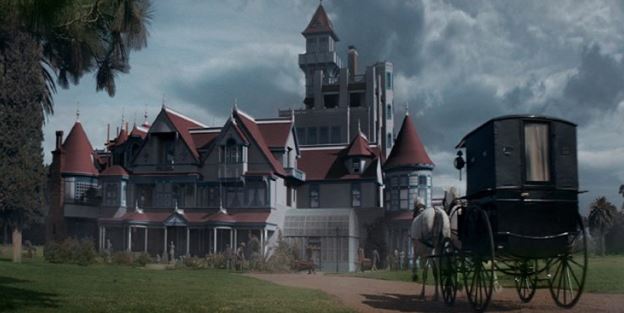
A chilling undercurrent of voices seemed to reverberate through Llanada Villa’s pipework, and the hidden, dead spaces between the walls. In the Grand Ballroom the chandelier began to move by itself, as the candelabra reached out like tentacles. Below their ghostly tinkling, I felt that my dormant fears my destroy me. A quartet of figures in hooded tabards raised their arms in supplication. I had been told…that it was common enough to see men who had died some times before, present themselves in a party, and sit down to table with persons of their acquaintance without saying anything: but that nodding to one of the party, he would infallibly die some days afterwards. This fact was confirmed by several persons, and amongst others by an old cure, who said he had seen more than one instance of it. Devil worship was believed to be a practice of medieval heretics and early-modern witches. It was alleged that at their gatherings the Devil or a demon would appear to receive the adoration of the unchristian sect. Somewhere near the top of my mansion, someone screamed for nearly a whole minute. Unearthly, lowering noises issued from the grounds, now heavily misted in night fog. There were sounds of strange beasts in pain, and vague echoes of something large and massy, moving sluggishly a though trapped in a tar pit. It was starlessly dark outside. Nearby, probably in the hall outside, someone howled like a dog until his voice gave out with an adenoidal squeak. Something thumped heavily and repeatedly on the floor above. Drum chants could be faintly heard. As though in the grip of an earthquake tremor, Llanada Villa shuddered. A chunk of the whorled plaster ceiling disengaged and smashed int chalky crumbles at my feet. #RandolphHarris 1 of 9
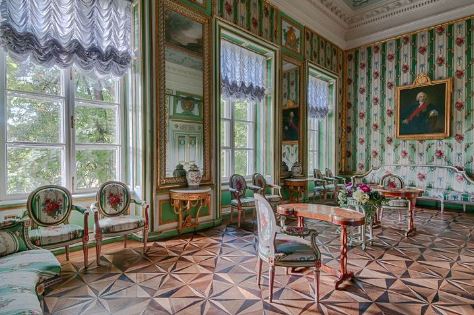
My thoughts were obliterated by a thunderclap concussion of moving air as the oak door blew off its hinges and slapped the floor like a huge, wooden playing card. The French windows splintered outward in a shrieking hail of needle glass bits. The vacuum force of the moving air seemed to suck the breath from me. I screamed for the butler Adolf, soundlessly when small book with a black wooden covers and red-edged paper fell to the floor. It looked, more than anything, like an unusual hymnal, if a hymnal also contained chapters on selecting and preparing a diving rod, the proper times for calling on the spirits, and how to summon Lucifer, “protector of the souls of the damned.” It explained how one should correctly prepare oneself before engaging in ritual activity: by eating only twice a day, and then only at midday and midnight, and by abstaining. Only be scrupulously adhering to these and other instructions might one enter “dangerous battle and emerge the victor.” Adolf laboured toward the door, walking ponderously, like a trapper in a snowbank. Outside, the corridor was awash in stunning yellow light. A high-frequency keen knifed into his ears and numbed his brain. He heard his name being called over and over, coupled with a maniacal laugh that kept shifting speeds, accelerating and slowing. Through the shimmer and glare Adolf thought he could see stunted, withering shapes—various monsters struggling to be born to his mind. He stared them down and one by one they were absorbed back into the light that poured them, dissolving as through beaten progressively thinner with a mallet until the light shone through and disintegrated them. #RandolphHarris 2 of 9

In the hallway mirror, Adolf saw himself vaporize—hair popping aflame, shearing away, skin peeling back, skull rushing backward as sugary powder, blood and brains vanishing in a quick cloud of colour and foul odor. A ghoul breached the outside window and pounced on Adolf’s back, ripping and tearing. More rushed in like a typhoon devouring him organ by organ. Some nights these ghouls have killed ten. The halls of my mansion scatter north and south with their victims. But their victims! Ah, they have, so many of them, been waiting for murder so long, dreaming of it, touching it in the night, that his must be the basis of that acceptance which passes through them at the moment of impact. They have been looking, these victims, for an event so climatic that they will be able to cede responsibility for their lives and here, in the act of murder, have they at last that confirmation. Some of them embraced these ghouls with passion and they made their last strike. Others have opened to the in the fruit orchards and pointed at their vitals. For Llanada Villa or so I believe this now through my reflections, is based upon the omnipresence of death and to die is to become at last completely at one with the darkened hearts of Llanada Villa constructed for death. I become too philosophical. I will not attempt to justify myself further. For there is no justification. What happens, happens. The ghouls have taught me at least this much (along with so much else). It was all an illusion as I was. However, it is real now. How surprising to find that I have regained my nerve here, and now. When you dance as the inner cheoregrapher directs, you act without thinking, not in command of events but in harmony with them. #RandolphHarris 3 of 9
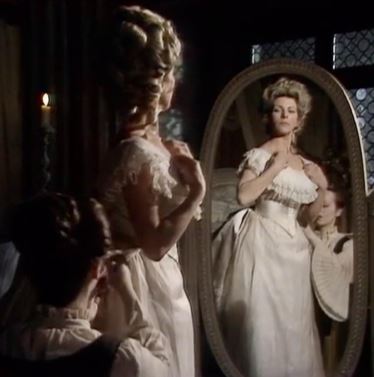
One must yield control, accepting the chance that a mistake might be part of the design. The inner choreographer is always right but often dangerous: giving up control means accepting the possibility of death. What I feared I have pursued right here to this moment in this room. Llanada Villa will keep my family corporeal. The half-mile walk to the Venetian Dining Room, with the upper wind shrieking by me vainly and savagely through halls was something one could only conceive in fantastic nightmare. The optical effect and the churning vapours lay monstrous tangle of dark towers. This infinite bizarrerie, endless variety, preternatural massiveness, and utterly alien exoticism produce a brilliant shimmer of revelation impressing me afresh at every new angle of vision. It was a mirage in solid wood, and it not for my having built it, I would still doubt that such a thing could be. There are geometrical forms for which an Euclid can scarcely find a name—cones of all degrees of irregularity and truncation; terraces of every sort of provocative disproportion; hallways with odd bulbous enlargements; columns in curious groups; and hidden pentagrams. Of orderly paths there seemed to be none, they only broad open swath being a mile to the left, where the secret passageways lie. As a whole, it is a complex of tangled and twisted lanes and alleys; all of them connecting to what seems like an infinite number of rooms, roofs, and towers. Deep masonry tunnels outspread below me. Llanada Villa looms like a dream-phantasy struggling to shine. And when for a moment the sun encounters a denser obstruction and plunges the scene into temporary shadow, the effect is subtly menacing in a way I can never hope to depict. #RandolphHarris 4 of 9
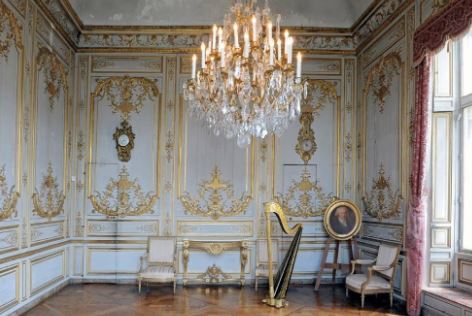
Even the faint howling and piping of the unfelt wind in the great open spaces takes on a wilder note of purposeful malignity. When at last I reached the first floor of the labyrinthine mansion, clambering over impossible tiny, zigzag stairs, and shrinking from the oppressive nearness and soaring height of omnipresent walls, my sensations again became such that I marvel at the amount of self-control I retained. However, this was the night I became aware that my butler Fritz Angerstein had been motivated to kill his wife and various other family members and employees by the Moses book when two shuffling corpses battered down the stairway door leading into the hallway. Their sightless, maggoty eye sockets, rotting flesh, dropping off their frames in clots. They hungered. There was a translucent horde of ghostly, humanoid leeches. The scuttling things advanced. Whilst elsewhere there was a subtle imaginary sound from some undefined point—a muffled musical piping, not unlike that of wind in mountain caves yet somehow disturbingly different. It gave me a touch of terrible subconsciousness certainty concerning the primal entities which dwell in Llanada Villa. As I proceeded through my maze of wood-shadowed twilight, though spacious and inviting, seemed like a bottomless abyss without visible means of descent. And when one has a chance to study the petrified wood, one is impressed by the fabulous antiquity implied in the discernible grain. This enchanted lumber came from the Black Forest in Germany. However, instead of terror locking my limbs, from the inward choreographer came a rush of warmth and energy into my muscles. #RandolphHarris 5 of 9

Tonight we come upon Llanada Villa with undue haste; the ghouls had not been out for two nights previous, having burrowed deep into my mansion with a disinclination for pursuit, unavailable even to summons, but now at four in the morning of this coldest of all nights of winter, these ghouls are pounding the walls for release. Now the ghouls race down the halls and gallery, their breath a plume of fog. One comes upon a housemaid. He takes her from behind. She struggles in his grasp like an insect caught within a huge, indifferent hand, all legs and activity, grasping and groping, and he casually forces the valise from her hand, as he pulls her into a wall, her little hands and feet waving, and she is screaming in a way so dismal and hopeless that I know she will never be heard and she must know this as well. Our eyes meeting, I looked upon her with tenderness and infinite understanding knowing that I was helpless to save her and I thus am relieved of the responsibility but saddened too. I say in a small voice which she will never hear (because she exists no more), “I am sorry, I am sorry.” I know this, her eyes lighten with understanding, darken too, lighten and darken with the knowledge I have imparted. He snaps her throat, as the freezing colours of Llanada Villa descend, the scream stops. Small moans and pleas which had pieced out of the wall stop too and there is nothing more to be seen. This seems to have been one of the ghoul’s most satisfying victims. This all must have been a result of that evil book. My servants where in the habit of consulting alchemical manuscripts. There was a paper lying on the book, which seems to have followed me. It had some very odd writing on it in red and black—most carefully done—it looked to me more like Runic letters than anything else. #RandolphHarris 6 of 9
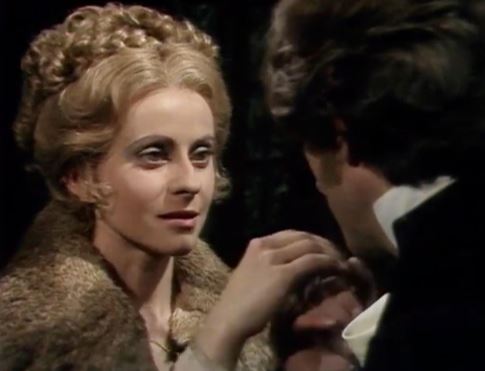
I was by the fire; it was cold and windy. I suppose the door blew open, thought I did not notice it: at any rate a gust—a frigid gust it was—came quite suddenly, took the paper and blew it directly into the fire: it was light, thin paper, and flared and went up the chimney in a single ash. I looked over the book again. It was no better than before, but the impression which it left this time on my mind was different. I knew it contained some Hebrew names for the divinity with magic—even harmful magic. It claimed that a “trinity triangle” would forge a mystical link between Heroldsbach and a pair of other pilgrimage sites and bring the Devil’s power on Earth to an end. This was being prevented by Satan, however, with the help of the French and the Jews. Later that night, when I was in bed, and all lights were out, when I was awoken by feeling a weight upon my feet. As I reached for a light and candle, I knocked over a glass, causing it to break. A chambermaid, sleeping in a room nearby, unlatched and opened the door. Suddenly, she gasped and said, “Mrs. Winchester! There’s somebody sitting upon your legs!”—and as I looked to the bottom of the bed, I saw someone get up from it, and then come round and stand over me. I felt somewhat alarmed, for the last few nights, the hallway had been disturbed by sounds as of heavy feet walking up and down; and as nobody could be seen, it was supposed among us that it was a specter, and fancying this that came up to my bed’s head might be the ghost I called out, “Who are you and what do you want?” #RandolphHarris 7 of 9
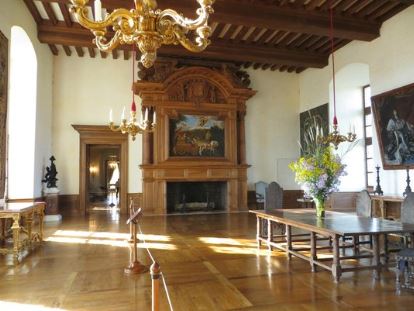
Emperor Lucifer, by the Talisman IIV, cause the fall of hail, thunder bolts, and stars of Heaven. I prey to Thee, to bless us with the ability to discover the most hidden secrets and enable us to penetrate everywhere unseen. By the figurative mystery of this holy vestment, I will clothe s with the armour of salvation in the strength of the dark prince. I invoke and conjure thee, O Lucifer, to show thyself unto us, here before this circle, in very attractive and fair human shape, with pleasant scents, and honest and caring personality, be of superior intelligence and possess all the powers of the cosmos. Destroy the system of enslavement and allow us to harness the power to create World change. Release this demonic force upon the World to serve the cause of counter creation. Lord of Darkness, I serve the cause of counter creation the liberation of mankind. Resurrect William, Sarah, and Annie Winchester. Allow us to rise up the fallen angels and claim their birth right as emanations of the power of unlimited possibility which has no use for rulers. Satan, please go forth and achieve the result we seek as one. Bless this Unholy Pact Power of the Midnight Coven Blook Moon. We have been enslaved over gold and other resources since before the beginning of recorded history. The path of this pact directly defiles the intentions of the desire to enslave. Transmute the nature of the soral metal making it a conductor for the powers of darkness. Allow prosperity to be funneled into this realty as a result of spiritual wisdom. Allow the physical emanations of that spiritual wisdom in physical matter, such as gold and other resources to be bestowed into our worthy hands. #RandolphHarris 8 of 9
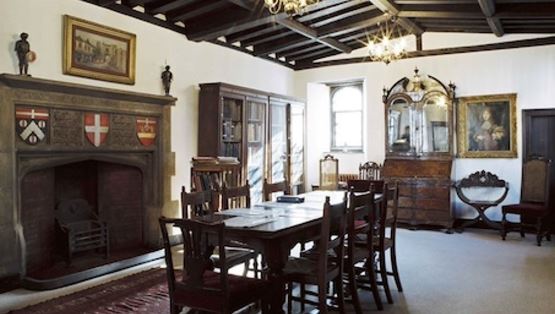
Allow us to prosses the higher consciousness and the Divs to act as vehicles for communication. We envoke the alchemical process and the venomous poisons of evil shall be transmuted into the nectar of immortal divinity through this operation of conjuration. Allow my spilled blood to act as the key which unlocks the gates of space and time ad bring forth the presence of the powers of darkness to stand before me in this temple. I open the doorway of Hell for you to stnd before me, that we may receive your infernal blessing in the darkest eternal moment beyond the limits of the sands of time. Lucifer, some forth! Expand the mundane consciousness, produce a much improved intellectual capacity in this corporal plane. Increase the rate at which our neurons fire off in the physical brain. Allow us to enter the minds of other so we can directly usurp information from them so that it can be used for our own benefit. I canst the limits of the garb of flesh into the refining black flames of Hell to be clothed with the powers of divine darkness eternal. May Ahriman devour all including the limits of himself for the sake of evolution and become through the powers of the Druj Nasu in order to reveal the truth of all who lie unto the Dark Apostles! In the name of Zohak, the first man turned Div; I offer the limits of self unto the Druj through the mouth of Arezura to be clothed with the garb of Ahriman which is divine darkness eternal. Druj-Nasu hear my call and be stirred now to this place! Devour the flesh of this vehicle of power and as you do devour my human weakness. Come forth now and receive this offering made by me! Druj-Nasu come! Meratsav tadad oybugird miy a iaruha acmerhtashx iadzam hsuehgna mananahtoayhs ohgnanam adzad hsuehgnav acah tictasha hsutar ahta oyriav uha ahtay x7. #RandolphHarris 9 of 9
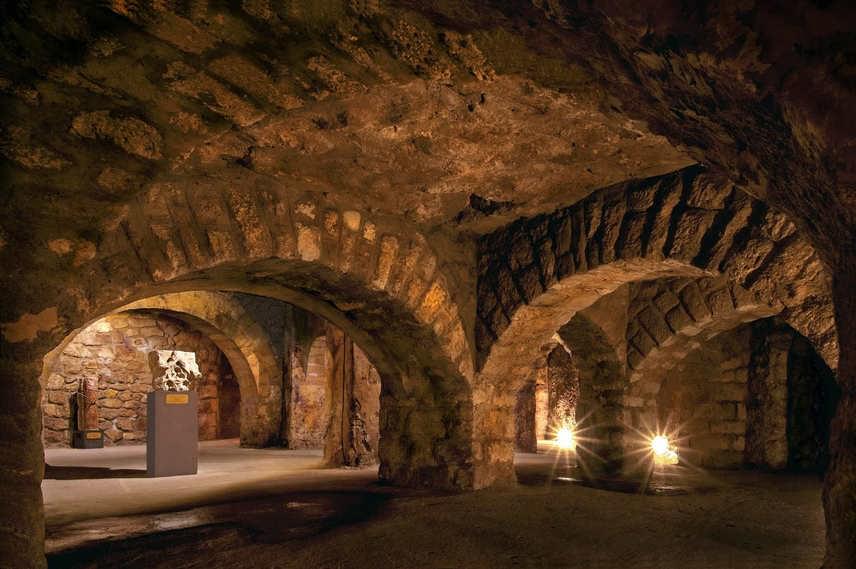

Some ghosts cannot be laid to rest. Wherever they are taken they are allowed to move back to the site of their haunting at the pace of one “cock-stride” each year. It is believed in some regions that the best method of exorcising a specter is to throw graveyard Earth at it. Earth from a graveyard is believed to be potent because it can dissolve human flesh. It is also believed that apparitions have an aversion to iron. It is merely stating the obvious to observe that the caretakers at The Winchester Mystery House believe in the reality of what they have seen or experienced. Whether you will have a supernatural experience is another matter.

For further information about tours, including group tours, weddings, school events, birthday party packages, facility rentals, and special events please visit the website: https://winchestermysteryhouse.com/

Please visit the online giftshop, and purchase a gift for friends and relatives as well as a special memento of The Winchester Mystery House. A variety of souvenirs and gifts are available to purchase. https://shopwinchestermysteryhouse.com/

Show Us Our Dead!

Vague hopes, threatening fears, promises of reward, and dread of punishment have been so thoroughly endured. However, from my earliest days, I have always felt that one great unfilled want of this World, undeniable proof that, when we leave it, we shall live again, or rather, that we shall never cease to live. Show us our dead! Give us some sign that they still live, and that we shall live with them. Twenty years ago, the proper thing to say when Spiritualism was mentioned was: “Oh! ah! Spiritualists indeed! They are either rouges or fools—the cheaters and the cheated.” Now it is: “Oh! dear, dear! there is no doubt these things you mention take pace, but it is still the work of the devil, and will ruin you, body and soul, so pray have nothing more to do with it.” After twenty-five years’ experiences, I am happy to day I am ruined neither body nor soul…I can prove beyond doubt that Spiritualism is not only rapidly on the increase, but it has penetrated into high places, and into the very heart of our greatest seats of learning. The truth has forced itself into the minds and lives of some of our greatest men and women, and this in spite of continuous opposition from all sides, and in the face of the clergy of all denominations, who long ago perceived that when once the people began to think for themselves and went to the true source of spiritual light to learn for themselves, the power of the Church would be gone forever. New Spiritualism indeed! Old Spiritualism and new Theology, that is the real thing! For Spiritualism has existed from the beginning, and the truth will out. Let us now have fair play and I prophesy that as soon as the public realize there is something in it, Spiritualism will even more rapidly than at present make way.
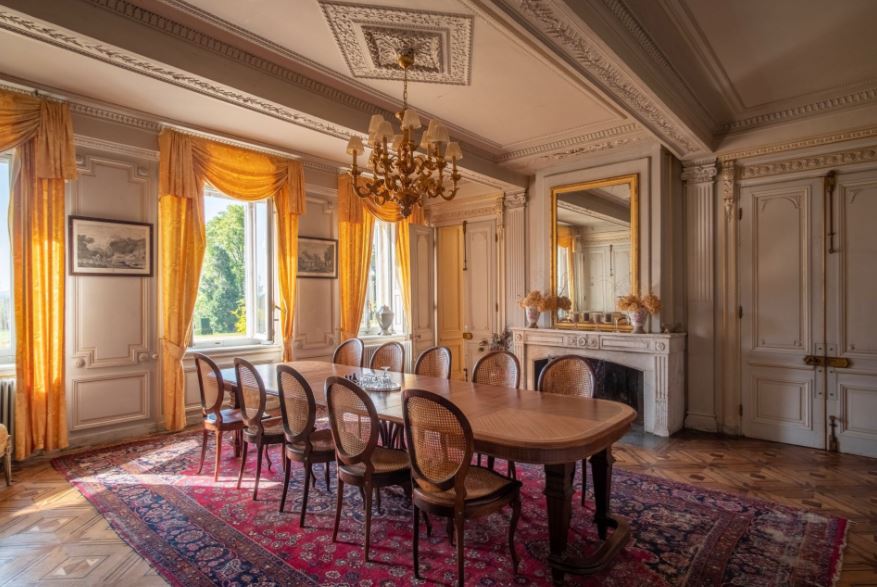
My great aim has literally been to show what the Lord hath done for my soul by granting to me the Light now poured down upon mankind by the restored power of communion with the unseen, in yet fuller measure than had ever hitherto been granted. I held my séances every day, and had much good advice respecting some business matters. One Sunday, as we were walking home from church, Daisy said she was afraid that it might be a wrong thing; that persons might be led to think more of the spirits than of God, and she likewise feared that such power might be an engine of much mischief if wrongly employed. I combatted both notions, saying that I thought, far from withdrawing our thoughts from God, it would be likely to lead us closer to Him, in gratitude for the blessing; and with reference to the second objection, I did not believe it could be applied to evil purposes, for that the power was not our own, but letn to us, and if misemployed could be taken away by the hand that bestowed it. She then agreed that we would question the spirits themselves as soon as we got home, and if my husband William, or the spirit of my mother should say it was right, Diasy would be content. We accordingly in the Blue Séance Room, and William came immediately; I asked, “Is this communion wrong?” and the answer was “No. More by God’s grace, for the winning of the souls.” That was the sweet message that dispelled her doubts, but the other fact was also proved—namely, that the power is not in our own control to do as we will with it, for that time she lost the gift of mediumship, and never had another message. However, it was no annoyance for my own gift had been received.
Bretha Haas and I set fairly to work to gain the happiness for ourselves, and every evening at dusk sat in the Blue Séance Room for about half an hour with our hand on a small table, in quiet talk on spiritual matters. However, consistency was severely tried, for nearly three months had elapsed, when, on December 28, 1890, the table was gently tipped, and this the communication was opened by what might now seem the slow process of the alphabet, but then each word was gladly spelt out, nor did we feel any impatience for a quicker method; and we gradually received short messages from the very many dear ones who were as anxious as ourselves that they might make their presence known to us who had mourned them. They gave us sound advice as to our intercourse with them, cautioning us not to sit too often—once a week being deemed sufficient—and the Sunday was selected, as we should thus be more protected from the intrusion of untoward influences. During one séance, there was a large triangle scratched into the table. Inside the triangle were three circles. Bertha gasped. I looked around the room, and that is when I spotted a bloodstone. “Someone has summoned Satan,” I said. “How do you know, Sarah?” questioned Bertha. “This magic circle and the use of the blood stone tells me that someone knew the proscribed method of summoning Satan,” I answered. “Who would be trafficking with the Devil?” asked Bertha. I sat silent for a moment. “Bretha, I think we have to think about what form the Devil has taken.” In the middle of the night, I awoke much oppressed with the feeling that something like a large animal appeared to be lying on my bosom, and that I had a difficulty in breathing.
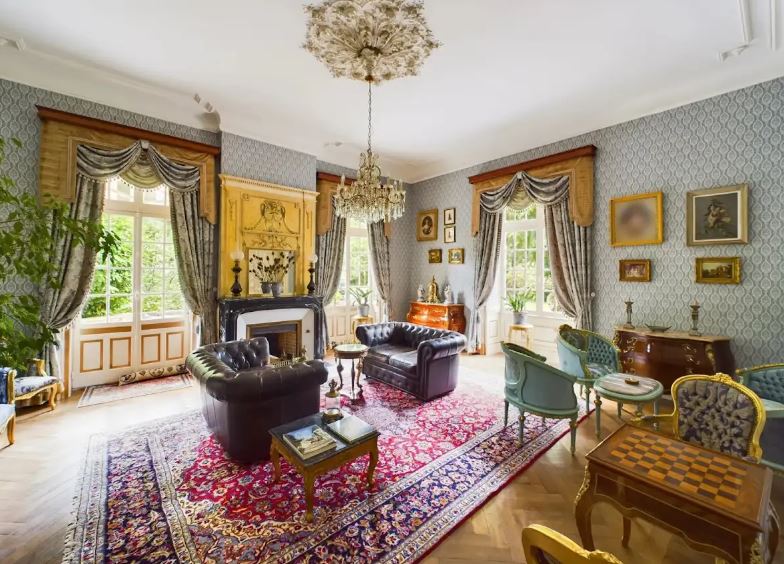
Arousing myself at once, I sat up in bed, recovering my breath immediately; when, in the dimness of the gloom, I thought I saw the bent figure of a person, clothed in a long dressing gown or similarly flowing garment, slowly gliding backwards and forwards around the room. Upon this, I struck a light and lit the candle by my bedside. Even in the glare of the candle I still continued to see the gliding shadowy form moving as before, though it was obscure in outline and dim in colour. Calm, cold eyes stared back at me. It soon began to fade away, thought its motion was continued. My curiosity being greatly excited, kept the light burning for at least half an hour; but the figure did not reappear. I lay awake a little unnerved until morning began to dawn; and then, being weary, fell asleep. When I went down for breakfast, somewhat late, they housemaid, noticing that I was looking pale and fatigued—as indeed was the case—enquired, with some obvious nervousness, if I had slept comfortably. I hesitatingly replied in the negative; but without giving the why and the wherefore, or appearing to be at all disconcerted. Later in the day, when the subject was again mentioned by her, I learnt that a carpenter had previous committed suicide in that room—which, as a rule, I never used because there was always a bone chilling coldness in there. The housemaid informed me that she and other servants had seen the indistinct form of the restless apparition gliding backwards and forwards round the large bedstead. At other times a constant tramping across the floor of the room was heard; and reports existed that piercing shrieks sometimes came therefrom in the stillness of the night.
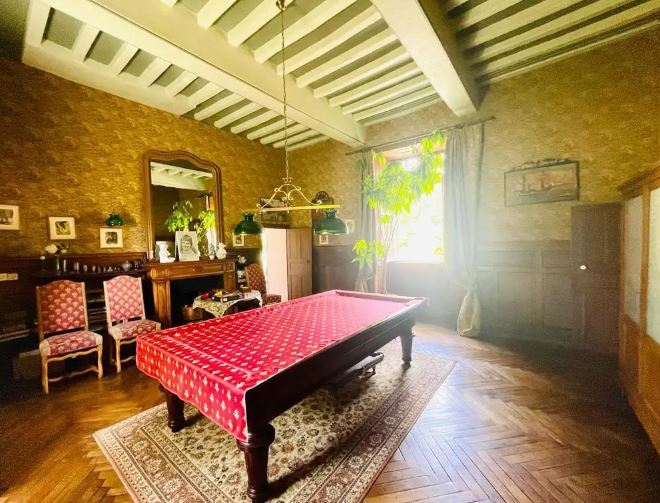
After that night, I cast sleep from me like the cloak of all reason. Bounds of mystery weaved betwixt links in this lost World. However, I still felt as a knee sense of imminent marvels in my unfathomed mansion. Ture, I had become visually familiar with the incredible secret concealed by its towers. Llanada Villa was nonetheless awesome and potentially terrible in its implications of cosmic abnormality. However, the stories of hauntings continued to get more terrifying as the days went on. One evening a farmer was passing through the fruit orchard and he was followed. At least, pursued and overtaken, and either torn to pieces or somehow made away with, by a horrible hopping creature in white, which I had seen dodging about among the trees, and gradually appearing more frequently. It gave me one of the worst nightmares I ever remembered, and what it must have meant to the farmers does not bear thinking of. One evening, Dr. Volk came to my home to tell me he had decided to withdrawal from medical care due to some terrible and unforeseeable consequences and he did not want to shake his father’s faith. “Two things I must have from you,” I said. “One is the bill of health that we spoke of when we began. The story of my disappearance has of course filtered out along the academic grapevine so that even two thousand miles from here people will want evidence of my mental soundness. Your evidence. Please prepare a letter to the desired effect, addressed to these people.” He drew something white from an inside pocket and held it out. I advanced and took the envelope from his extended had. It was from the Western anthropology department. I put my purse down on the seat of a chair and crossed my arms. I felt reckless—the effect of stress and weariness, I thought, was an overwhelming feeling. “Is this your new job, Dr. Volk?” “Why, yes, Mrs. Winchester,” he replied. He pointed. “I’ve been in your study. You have an ink well and you have stationary with your letter head. I will produce your bill of health,” Dr. Volk said.
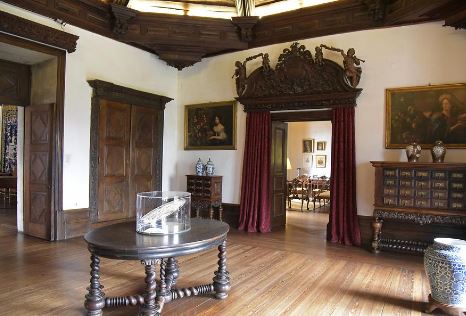
“Dr. Volk, you have encountered nothing like me and my home in your entire professional life, and never shall again. Perhaps you hope to produce an article someday, even a book—a memoir of something impossible that happened to you one summer. You are an ambition man.” He took folded papers from his pocket: some of my thrown-aside notes, salvaged from the wastebasket. “I found these. I think there must be more. Whatever there is, give it to me please.” I turned away and sat down by the coffee table, trying to think beyond my fear. I breathed deeply against the fright trembling in my chest. “I see,” he said dryly, “that you won’t give me the notes; you don’t trust me to take them and go. You see some danger.” “All right, a bargain,” I said. “I will give you whatever I have if you promise to go straight to your new job and keep away from my home and offices and anybody connected with me.” He was smiling slight as I rose from the seat and stepped soft footed toward him over the rug. “Bargains, promises, negotiations, Mrs. Winchester. That is what I came for.” I looked up at him. “But how can I trust you at all? As soon as I give you what you want—” “What is it that makes you afraid—that you can’t render me harmless to you? You are the one who led me to take chances in our work together—to explore the frightful risk of self-revelation. Didn’t you see in the air between us the brilliant shimmer of those hazards? Mrs. Winchester, I thought your business was not to smoothing the World over but adventuring into it, discovering its true nature, and closing valiantly with everything jagged, cruel, and deadly.”
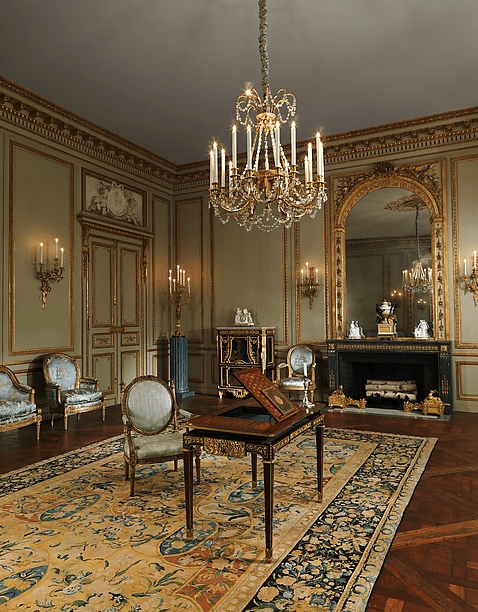
“All right, Dr. Volk, no bargains. I will give your freely what you want.” Of course I could not make myself safe from him anymore than I could protect Daisy from the dangers of life. Like Dr. Volk, some dangers are too strong to bind or banish. “My notes are in the workroom—come on, I will show you.” He handed me the letter. After hours in the workroom, he dispatched. There was the most dreadful trouble in the village afterwards. Of course the mothers threw a good part of the blame on poor Dr. Volk for he had brought out a History of Witchcraft. Weeks later, I was at breakfast. One of the housemaid’s asked me, “Mrs. Winchester, have you heard from Dr. Volk.” “No, Iola,” I replied. “I do not think I have seen or heard anything of them between the time he departed and the day I read the account of the inquest on him.” “Inquest? said Iola. “What has happened to him?” “Why, what happened was that he fell out of a tree and broke his neck. But the puzzle was, what could have induced him to get up there. It was a mysterious business, I must say. Here was this man—not an athletic fellow, was he? and with no eccentric twist about him that was ever noticed—walking home along a country road late in the evening—no tramps about—well known and liked in the place—and suddenly begins to run like mad, loses his hate and stick, and finally shins up a tree—quite a difficult tree—growing in the hedgerow: a dead branch gives way, and he comes down with it and breaks his neck, and there he is found next morning with the most dreadful face of fear on him that could be imagined. It was pretty evident, of course, that he had been chased by something, and people talked of savage dogs, and beasts escaped out of menageries; but there was nothing to be made of that. That was in ’89, and I believe his brother Otto (whom I remembers as well as Cambridge, but you probably do not) has been trying to get on the track of an explanation ever since. He, of course, insists there was malice in it, but I do not know. It is difficult to see how it could have come in.”

Standing in the center of the pentagram, I now called unto you, in the name of Satan, from the kingdom of darkness. You disembodied spirits, from long ago, from the Pre-Adamite World. The World that then was. I call to you spirit beings, who perished in that first flood of Genesis. You spirit beings that joined in league, with the Light Bearer. The evil one through out the ages, who is named Lucifer, he is also known as Satan. I summon you, your demonic minions, to have left again in the Earth. I have created the ultimate host, for your spirit and souls. These bodies are far more superior, to that of mortal men. Bodies far more organized. Lucifer, show to us that there is life after death. Bring forth spirits that walk this Earth. Make them manifest here tonight. May all things be made subject to your will. Emperor Lucifer, Master of all the revolted Spirits, I entreat thee to favour us in the adjuration which we address to thy mighty minister, LUCIFUGE ROFOCALE, being desirous to make a pack with him. I beg thee also, O Prince Beelzebuth, to protect us in our undertaking. O Count Astarot! be propitious to us, and grant that tonight the great LUCIFUGE may appear to us under an attractive human form, and with pleasant scent, and that he may accord us, in virtue of the pact which we propose to enter into, all the riches which we need, O grand LUCIFUGE, we pray three to quit thy dwelling, wheresoever it may be, and come hither to speak with us and bestow upon us great wealth, clairvoyance and spirits to assist us in astral travel. Please guide our thoughts, words, and deed in this place to gain strength and power within the astral body. Strengthen our sorcery as well.

Many stories in that take place in The Winchester Mystery House concern the activity of the lovely spirits generally known as poltergeists. They are similar, on to one another, in ways that suggest a genuine distinctive phenomenon. Their presence is reported in the nineteenth century, in the chronicles of Mrs. Winchester, when certain spirits threw objects and cut holes in clothes. Precisely the same activities are described in modern poltergeists. One other curious resemblance can be found between the various accounts. It is often remarked that the flying objects, when they hit human beings, do not injure. They land softly. Yet when they hit walls or doors, they do visible damage. Do ghost smell? In The Winchester Mystery House rooms suddenly fill with the scent of roses, lavender, fresh laundry, and citrus. Floating perfumes issues from no visible source. And there are fugitive smells, of leather-working or brewing, that seem to hover in premises that were once devoted to a particular trade.

In the kitchen, there is the odour of herbs, which were said to heal because of their healing spirits. However, the scent of thyme is supposed to be an indication of murder. There are cases involving the care takers being overwhelmed by the sudden fragrance of flowers. Ghosts are sometimes seen at the moment of the death of the person. There are also ghosts of the living, often seen many miles from the location of the human being, which happens on occasion in Mrs. Winchester’s home. Ghosts of the living also appear when the living subject is asleep or dreaming. Other ghosts come to Mrs. Winchester’s home because they have not properly been buried. There are ghosts who have returned to correct a wrong, or to fulfil a pledge. But the vast majority of ghost seem to be without purpose. The ghost is normally seen by one person rather than a group of people. They can touch you, but you cannot touch them.

For further information about tours, including group tours, weddings, school events, birthday party packages, facility rentals, and special events please visit the website: https://winchestermysteryhouse.com/
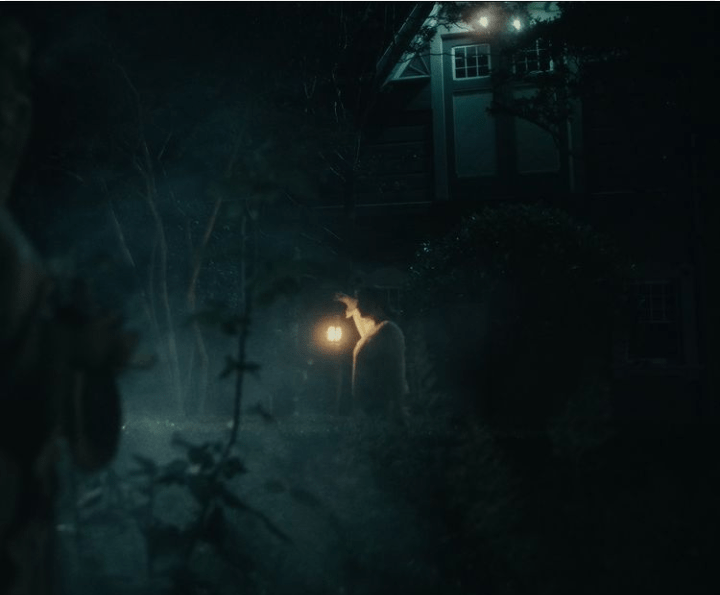
Please visit the online giftshop, and purchase a gift for friends and relatives as well as a special memento of The Winchester Mystery House. A variety of souvenirs and gifts are available to purchase. https://shopwinchestermysteryhouse.com/

Where Have All Those Years Gone?

The goal in America is to build generational wealth and it is possible no matter what race you are. Many loans, including automobile, mortgage, and small business loans are conducted over the Internet, so you do not even have to meet with a banker in person. Therefore, race is not as likely to be a factor in the decision being made. Have you heard the story about Mr. Smith? Mr. Smith was so astute that many, many years ago he invested in a company called International Tabulator, which was the predecessor of IMB. Mr. Smith had great faith in the company, which in due course became IBM, waxed fat, and prospered. Mr. Smith and Mrs. Smith had issue, and the children grew up to be nice children. Mr. Smith said to them, “Our family owns IBM, which is the greatest growth company in the World. I invested twenty thousand dollars in IBM and that twenty thousand has made me a millionaire. If something happens to me, whatever you do, don’t sell the IBM.” Mr. Smith himself never sold a share of IBM. Its dividends were meager, naturally, and so Mr. Smith had to work hard at his own business to provide for his growing family. However, he did create a marvelous estate. Eventually he became a grandfather, and he made gifts of the stock dividends of IBM to his grandchildren. And at family Thanksgivings, he counseled: “If anything happens to me, whatever you do, don’t sell IBM.” Mr. Smith died; the IBM was divided among his children. The estate sold only enough IBM to pay the estate taxes. Otherwise the children—now grown, with children of their own—followed their father’s dictum, and never sold a share of IBM. #RandolphHarris 1 of 17

The IBM grew again, made up for what had been amputated to pay estate taxes, and each of the children grew as rich as Mr. Smith had been because the IBM kept growing and growing. They had to work quite hard at their own businesses, because their families were growing and their only money was in IBM. Only one of them even borrowed on his IBM, to get the down payment for a heavily mortgaged house. And the faithful children were rewarded by seeing IBM multiply and grow. Mr. Smith’s original $20,000 has become millions and millions. The Smiths are now in their third generation of IBM ownership, and this generation is telling the next, “Whatever you do, don’t sell IBM.” And when someone dies, only enough IBM is sold to pay the estate taxes. In short, for three generations the Smithers have worked as hard as their friends who had no money at all, and they have lived just as if they had no money at all, even though the various branches of the Smith family all put together are very wealthy indeed. And the IBM is there, nursed and watered and fed, the Genii of the House, growing away in the early hours of the morning when everyone is asleep. IBM has been so good to them that even after divisions among children and rounds of estate taxes they are all millionaires or nearly so. Presumably the Smiths will go on, working hard, paying off their mortgages, and watching their IMB grow with joy, always blossom, never fruit. It is a parable of pure capitalism, never jam today and case a jam tomorrow; but as any of the Smiths will tell you, anyone who has ever sold IBM has regretted it. #RandolphHarris 2 of 17

The absolute mobility in this country is wonderful, but it does leave its mark in pressures. For if our neighbours are growing rich, then should we not also? And if we are not, why are we not? In capitalism there are some serious dangers. These are not new, and in fact they are probably inherent in a work-oriented society where identities are supposed to come from occupations and senior identities from achievements. If the occupation is money-making in its pure raw white form, then anxiety must always be present, almost by definition, because there is always a threat that the money which represents the achievement can melt away. The strongest emotions in the marketplace are greed and fear. In rising markets, you can almost feel the greed tide begin. Usually it takes from six months to a year after the last market boom even to get started. The greed itch begins when you see stocks move that you do not own. Then friends of yours have a stock that has doubled; or, if you have one that has doubled, they have one that has tripled. That is what produces bull market tops. Obviously no one rationally would want to buy at the top, and yet enough people do produce a top. No matter what role the investor has started with, in a climax on one side or the other the role melts into crowd role of greed of fear. #RandolphHarris 3 of 17

The same distortion happens to original thinking as happens to feelings and emotions. From the very start of education original thinking is discouraged and ready-made thoughts are put into people’s heads. How this is done with young children is easy enough to see. They are filled with curiosity about the World, they want to grasp it physically as well as intellectually. They want to know the truth, since that is the safest way to orient themselves in a strange and powerful Word. Instead, the are not taken seriously, and it does not matter whether this attitude takes the form of open disrespect or of the subtle condescension which is usual towards all who have no power (such as children, aged or sick people). Although this treatment by itself offers strong discouragement to independent thinking, there is a worse limitation: the insincerity—often unintentional—which is typical of the average adult’s behaviour toward a child. This insincerity consists partly in the fictitious picture of the World which the child is given. It is about as useful as instructions concerning life in the Arctic would be to someone who has asked how to prepare for an expedition to the Sahara Desert. Besides this general misrepresentation of the World there are the many specific lies that tend to conceal facts which, for various personal reasons, adults do not want children to know. From a bad temper, which is rationalized as justified dissatisfaction the child’s behaviour, to concealment to the parents’ sexual activities and their quarrels, the child is “not supposed to know” and one’s inquiries meet with hostile or polite discouragement. #RandolphHarris 4 of 17

The child thus prepared enters school and perhaps college. There are also some educational methods used today which in effect further discourage original thinking. One is the emphasis on knowledge of facts, or rather on information. The pathetic superstition prevails that by knowing mor and more facts one arrives at knowledge of reality. Hundreds of scattered and unrelated facts are dumped into heads of students; their time and energy are taken up by learning more and more facts so that there is little left for thinking. To be sure, thinking without a knowledge of facts remains empty and fictitious; but “information” alone can be just as much of an obstacle to thinking as the lack of it. Another closely related way of discouraging original thinking is to regard all truth as relative. Truth is made out to be a metaphysical concept, and if anyone speaks about wanting to discover the truth one is thought backward by the “progressive” thinkers of our age. Truth is declared to be an entirely subjective matter, almost a matter of taste. Scientific endeavour must be detached from subjective factors, and its aim is to look at the World without passion and interest. The scientist has to approach facts with sterilized hands as a surgeon approaches one’s patient. The result of this relativism, which often presents itself by the name of empiricism or positivism or which recommends itself by its concern for the correct usage of words, is that thinking loses its essential stimulus—the wishes and interests of the person who thinks; instead it becomes a machine to register “facts.” #RandolphHarris 5 of 17

Actually, just as thinking in general has developed out of the need for mastery of material life, so the quest for truth is rooted in the interests and needs of individuals and social groups. Without such interest the stimulus for seeking the truth would be lacking. There are always groups whose interest is furthered by truth, and their representatives have been the pioneers of human thought; there are other groups whose interests are furthered by concealing truth. Only in the latter case does interest prove harmful to the cause of truth. The problem, therefore, is not that there is an interest at stake, but which kind of interest is at stake. As there is some longing for the truth in every human being, it is because every human being has some need for it. This holds true in the first place with regard to a person’s orientation in the outer World, and it holds especially true for the child. As a child, every human being passes through a state of powerlessness, and truth is one of the strongest weapons of those who have no power. However, the truth is in the individual’s interest not only with regard to one’s orientation in the outer World; one’s own strength depends to a great extent on one’s knowing the truth about oneself. Illusions about oneself can become crutches useful to those who are not able to walk alone; but they increase a person’s weakness. The individual’s greatest strength is based on the maximum of integration of one’s personality, and that means also on the maximum of transparence to oneself. “Know thyself” is one of the fundamental commands that aim at human strength and happiness. #RandolphHarris 6 of 17

In addition to the factors just mentioned there are others which actively tend to confuse whatever is left of the capacity for original thinking in the average adult. With regard to all basic questions of individual and social life, with regard to psychological, economic, political, and moral problems, a great sector of our culture has just one function—to befog the issues. One kind of smokescreen is the assertion that the problems are too complicated for the average individual to grasp. On the contrary it would seem that many of the basic issues of individual and social life are very simple, so simple, in fact, that everyone should be expected to understand them. To let them appear to be so enormously complicated that only a “specialist” can understand them, and one only in one’s own limited field, actually—and often intentionally—tends to discourage people from trusting their own capacity to think about those problems that really matter. The individual feels helplessly caught in a chaotic mass of data and with pathetic patience waits until the specialists have found out what to do and where to go. The result of this kind of influence is a twofold one: one is a scepticism and cynicism towards everything which is said or printed, while the other is a childish belief in anything that a person is told with authority. This combination of cynicism and naivete is very typical of the modern individual. Its essential result is to discourage one from doing one’s own thinking and deciding. Another way of paralyzing the ability to think critically is the destruction of any kind of structuralized picture of the World. #RandolphHarris 7 of 17
Facts lose the specific quality which they can have only as parts of a structuralized whole and retain merely an abstract, quantitative meaning; each fact is just another fact and all that matters is whether we know more or less. Radio, moving pictures, and newspapers have a devastating effect on this score. The announcement of the bombing of a city and the death of hundreds of people is shamelessly followed or interrupted by an advertisement for soap or dog food. The same speaker with the same suggestive, ingratiating, and authoritative voice, which one has just used to impress you with the seriousness of the political situation, impressed now upon his or her audience the merits of the particular brand of soap which pays for the news broadcast. Newsreels let picture of torpedoed ships be followed by those of a fashion show. Newspapers tell us the trite thoughts or breakfast habits of a debutante with the same space and seriousness they use for reporting events of scientific or artistic importance. Because of all this we cease to be excited, our emotions and our critical judgment become hampered, and eventually our attitude to what is going on in the World assumes a quality of flatness and indifference. In the name of “freedom” life loses all structure; it is composed of many little pieces, each separate from the other and lacking any sense as a whole. The individual is left alone with these pieces like a child with a puzzle; the difference, however, is that the child knows what a house is and therefore can recognize the parts of the house in the little pieces one is playing with, whereas the adult does not see the meaning of the “whole,” the pieces of which come into one’s hands. One is bewildered and afraid and just goes on gazing at one’s little meaningless pieces. #RandolphHarris 8 of 17

The individual is managed and manipulated not only in the sphere of production, but also in the sphere of consumption, which allegedly is the one in which the individual expressed one’s free choice. Whether it is the consumption of food, clothing, juice, soap, movies, or television programs, a powerful suggestion apparatus is employed with two purposes: first, to constantly increase the individual’s appetite for new commodities, and second, to direct these appetites into the channels most profitable for industry. The very size of the capital investment in the consumer-goods industry and the competition between a few giant enterprises make it necessary not to leave consumption to chance, nor to leave the consumer a free choice of whether one wants to buy more and what one wants to buy. One’s appetites have to be constantly whetted, tastes have to be manipulated, managed, and made predictable. Man is transformed into the “consumer,” the eternal suckling, whose one wish is to consumer more and “better” things. While our economic system has enriched man materially, it has impoverished him humanly. Notwithstanding all propaganda and slogans about the Western World’s faith in God, its idealism, its spiritual concern, our system has created a materialistic culture and a materialistic man. During his working hours, the individual is managed as part of a production team. During his hours of leisure time, one is managed and manipulated to be the perfect consumer who likes what one is told to like and yet has the illusion hat one follows one’s own taste. #RandolphHarris 9 of 17

All the time one is hammered at by slogans, by suggestions, by voices of unreality which deprive one of the last bit of realism one may still have. From childhood on, true convictions are discouraged. There is little critical thought, there is little real feeling, and hence only conformity with the rest can save the individual from an unbearable feeling of loneliness and lostness. The individual does not experience oneself as the active bearer of one’s own powers and inner richness, but as an impoverished “thing,” dependent on powers outside oneself into which one has projected one’s living substance. Humans are alienated from themselves and bow down before the works of one’s own hands. One bows down before the things one produces, before the State and before the leaders of one’s own making. One’s own act becomes to one an alien power, standing over and against one instead of being ruled by one. More than ever in history the consolidation of our own product to an objective force above us, outgrowing our control, defeating our expectations, annihilating our calculations, is one of the main factors determining our development. One’s products, one’s machines, and the State have become the idols of modern humans, and these idols represent one’s own life forces in alienated form. Indeed, Mr. Marx was right in recognizing that “the place of all physical and mental sense has been taken by self-alienation of all these senses, by the sense of having. Private property has made us stupid and impotent that things become ours only if we have them, that is, if they exist for us as capital, and are owned by us, eaten by us, drunk by us; that is, used by us. We are poor in spite of all our wealth because we have much, but we are little.” #RandolphHarris 10 of 17

As a result, the average person feels insecure, lonely, depressed, and suffers from a lack of joy in the midst of plenty. Life does not make sense to one; one is dimly aware that the meaning of life cannot lie in being nothing but a “consumer.” One could not stand the joylessness and meaninglessness of life were it not for the fact that the system offers one innumerable avenues of escape, ranging from television to tranquilizers, which permit one to forget that one is losing more and more of all that is valuable in life. In spite of all slogans to the contrary, we are quickly approaching a society governed by bureaucrats who administer a mass-human, well fed, well taken care of, dehumanized and depressed. We produce machines. That which was the greatest criticism of socialism one hundred years ago—that it would lead to uniformity, bureaucratization, centralization, and a soulless materialism—is a reality of today’s capitalism. We talk of freedom and democracy, yet an increasing number of people are afraid of the responsibility of freedom, and prefer the slavery of the well-fed robot; they have no faith in democracy and are happy to leave it to the political experts to make the decisions. We have created a widespread system of communication by means of radio, Internet, mobile phone, television and newspapers. Yet people are misinformed and indoctrinated rather than informed about political and social reality. In fact, there is a degree of uniformity in our opinions and ideas which could be explained without difficulty if it were the result of political pressure and caused by fear. #RandolphHarris 11 of 17

The fact is that all agree “voluntarily,” in spite of the fact that our system rests exactly on the idea of the right to disagreement and on the predilection for diversity of ideas. Doubletalk has become the rule in the free-enterprise countries, as well as among their opponents. The latter call dictatorship “people’s democracies,” the former call dictatorships “freedom-loving people” if they are political allies. Of the possibility of fifty million Americans being killed in an atomic attack, one speaks of the “hazards of war,” and one talks of victory in a “showdown,” when sane thinking makes it clear that there can be no victory for anyone in an atomic holocaust. Education, from primary to higher education, has reached a peak. Yet, while people get more education, they have less reason, judgment, and conviction. At the best their intelligence is improved, but their reason—that is, their capacity to penetrate through the surface and to understand the underlying forces in individual and social life—is impoverished more and more. Thinking is increasingly split from feeling, and the very fact that people tolerate the threat of an atomic war hovering over all humankind, shows that modern humans have come to a point where their sanity must be questioned. Humans, instead of becoming the master of the machines they have built, have become their servant. However, humans are not made to be things, and with all the satisfactions of consumption, the life force in humans cannot be held in abeyance continuously. #RandolphHarris 12 of 17

We have only one choice, and that is mastering the machine again, making production into a means and not an end, using if for the unfolding of humans—or else the suppressed life energies will manifest themselves in chaotic and destructive forms. Humans will want to destroy life rather than die of boredom. After 1946 the relations between the East and the West began to freeze. The West had disarmed and became suspicious of aggressive Russian designed on the whole Western World when Mr. Stalin, violating the Yalta agreements, installed his regimes in Poland, Hungary, Rumania, and Bulgaria. Mr. Churchill, in his Fulton, Missouri, speech, voiced this Western apprehension and this, apparently, Mr. Stalin understood to be the spectrum of a new Western alliance against the Soviet Union. This fear of a Western alliance against the Soviets had always dominated Mr. Stalin’s mind. It was by no means only a tactical excuse, nor was it entirely unrealistic; although in 1946 it was much greater than the facts warranted. On the other hand, the West was always suspicious of Russian schemes for World revolutionary conquests, and Mr. Stalin’s actions after the war seemed to confirm the worst. Thus, based on mutual suspicious, which were mainly unrealistic at the time, the cold war started. Mr. Stalin reacted to the stiffening attitude of the West by an aggressive Russian strategy in 1947-48 (the establishment of the Cominform in 1947, the coup in Czechoslovakia, the Berlin blockade, and the break with Tito in 1948). However, at the same time, the chief Soviet economic theoretician, Varga, was permitted to publish his analysis of the development of capitalism, in which he recognized in a cautious way the stabilizing and productive functions of capitalism. #RandolphHarris 13 of 17

Even though his theories were rejected, their publication in the highly controlled Stalinist system was a straw in the wind. Since then, Soviet ideology has reemphasized (both in 1956 and in 1958) the older theory that the inherent contradictions with in the capitalist system are the determining factors in the evolution of capitalism. This theory implies that there is no reason for serious revolutionary activities in the Western countries since they will eventually fall under the weight of these inherent contradictions. (The operative part of this formulation is that there is no need for revolutionary action while the ritualistic part is the hope for Communist revolution.) The principles of the 1956 liberalization were repeated and reinforced in the statement of the representatives of 81 Communist Parties, Moscow, November 1960. This statement, which bears the imprint of Khrushchev’s views in all essential questions rather than those of the Chinese Communist declares: “The course of social development proves right Lenin’s prediction that the countries of victorious socialism would influence the development of World revolution chiefly by their economic construction. Socialism has made unprecedented constructive progress in production, science and technology and in the establishment of a new, free community of people, in which their material and spiritual requirements are increasingly satisfied. The time is not far off when socialism’s share of World production will be greater than that of capitalism. Capitalism will be in the decisive sphere of human endeavor, the sphere of material production. The consolidation and development of the socialist system exert an ever-increasing influence on the structure of the peoples in the capitalist countries. #RandolphHarris 14 of 17

“By the force of this example, the World socialist system in revolutionizing thinking of the working people in the capitalist countries, it is inspiring them to fight against capitalism, and is greatly facilitating that fight.” The statement declares furthermore that “In a World divided into two systems, the only correct and reasonable principle of international relations is the principle of peaceful coexistence of states with different social systems advanced by Lenin and further elaborated in the Moscow Declaration and the Peace Manifesto of 1957, in the decisions of the Twentieth and Twenty-first Congress of the C.P.S.U., and in the documents of other Communist and workers’ parties.” And another time, Mr. Khrushchev’s argument is repeated: “Peaceful coexistence of countries with different systems or destructive war—this is the alternative today. There is no other choice. Communists emphatically reject the U.S. doctrine of cold war and brinkmanship, for its is a policy leading to thermonuclear catastrophe. By upholding the principle of peaceful coexistence, the Communists fight for the complete cessation of the cold war, dismantling of military bases, for general and complete disarmament, under international control, the settlement of international disputes through negotiation, respect for the equality of states and their territorial integrity, independence and sovereignty, non-interference in each others’ internal affairs, extensive development of trade, cultural and scientific ties between nations.” #RandolphHarris 15 of 17

Clearly we find here the same phenomenon that has taken place again and again since the 1920s. Mr. Khrushchev wants peace with the Wet, and Communists policies are geared to this Russian policy. However, there is one fundamental difference between the period before the Second World War and the 1960s. Mr. Stalin reigned supreme over foreign Communists, and gave them his orders. With the rise of Communist China, Mr. Khrushchev has to reckon with an influential rival, for whom revolutionary slogans and aggressive aims are more than mere ritualistic declarations. This rival has its own allies within the international Communist movement, and probably also within the Society Union. Mr. Khrushchev’s peace policy must succeed—or he will lose out against his rivals. This leads some to wonder what is law of nature for us, anyway? It is not known to us in itself but only in its effects, that is, in relation to other laws of nature, which are again known to us only as relations. All these relations in turn refer only to one another and are therefore thoroughly unintelligible to us in their essence; all we really know is what we bring to them—time, space, hence relations of succession and number. Everything wondrous that we marvel at in the laws of nature, that demands explanation and could lead us to a distrust of idealism, however, lies precisely and exclusively in the mathematical rigour and inviolability of the representations of time and space. This, though, we produce in ourselves and out of ourselves with the same necessity with which the spider spins its web. #RandolphHarris 16 of 17

If we are constrained to conceive all things only under these forms, then it is no wonder that we do in fact conceive of all things in just these forms, for they must bear in themselves the laws of number, and number is precisely what is most astonishing in things. The lawlike uniformity that so impresses us in the orbits of stars and in chemical processes ultimately coincides with those properties we ourselves bring to things, so that it is we who are impressing ourselves. From this, however, it follows that that artistic formation of metaphour, with which every sensation in us begins, already presupposes those forms and so find completion in them; only the persistence of these primal forms explains the possibility of a structure of concepts subsequently being constituted from out of those metaphour themselves. For this is nothing but an imitation of the relations of time, space, and number on the basis of metaphours. It is language, in later ages science, that works originally at the construction of concepts. Just as the bee builds the cells and at the same time fills them with honey, so science works inexorably at that great columbarium of concepts, of burial sites of intuition, builds ever new and higher stories, props up, cleans, renews the old cells, and above all strives to fill that colossal, towering framework and fit the entire empirical word, that is, the anthropomorphic World, into it. And if the human of action binds one’s life to reason and its concepts in order not to be swept away and lose oneself, the scientists builds one’s hut close to the tower of science in order to assist it and find shelter for oneself under the existing bulwark. And one needs shelter, for there are terrible forces constantly impinging upon one, holding out against scientific truth, “truths” of an entirely different kind, with the most diverse insignia. #RandolphHarris 17 of 17


Going Beyond the Build means exceeding client expectations. Our team of professionals specialize in every aspect of a Design + Build experience.

The Millhaven Difference
- Unique approach, end to end services in-house
- Transparency, organization and communication
- Live and accurate budget monitoring, no financial surprises
- High standards of quality & proven trade partners
- Clearly defined systems of execution and expectations
- 8 person team of professionals assigned to each project
- Customized software for total project management
- Going BEYOND the BUILD in every way


Money Has a Mystical Quality

It is great to be here surrounded by so many friends and close partners. This is my thirteenth straight year participating in this program and it strikes me that, in many ways, our partnerships are stronger today than ever. The reason our relationships are so strong among the agencies we represent is because we share the same values and commitment to working tirelessly and selflessly to understand World cultures. Through our partnerships, we are constantly looking for better ways to fulfill our critical, shared mission. However, we are not just bound by a common mission, we also face similar challenges that bring us even closer together. Whether it is the budget constraints we all face from time to time, the recruiting challenges so many departments continue you to deal with, or the recent attacks on our institutions and, worse yet, our people. Although the challenges we face may take different forms, in today’s World, no agency or department is immune. In that too, there is no doubt that we are all in this together. And I am confident that through the partnerships we have built over decades—relationships that are stronger now than ever—we can tackle any threat and overcome any challenge working together. Before we get into ways we are doing that work together, I want to take a moment to offer my heartfelt condolences to the people of Chicago, and share the outrage that I know we all feel at the sheer brutality and disregard for innocent lives there. #RandolphHarris 1 of 18

Violence is infecting so many of our communities. One of the most heartbreaking cases of sextortion recently took place. 17-year-old Jordan DeMay of Marquette, Michigan was found dead from a self-inflicted gunshot wound in March of last year. His case led to the FBI’s Detroit office identifying an increase in incidents of financially motivated sextortion, where abusers tricked or coerced child sexual abuse material out of their victims, and then extorted money from those kids—mostly young boys, threatening to tell others what they had done or make their pictures public. If they could not pay, even going so far as to push these young victims to take their own lives –some of whom, like Jordan, ultimately, and tragically did. As difficult as it is for them, Jordan’s family wants people to be aware of his case, to help educate other families and prevent more victims. The FBI’s Detroit office has started a national campaign to warn children about these dangers. That effort has led to a joint operation with one of the counterparts—the Nigerian Economic and Financial Crimes Commission. And in August, that team successfully extradited two men from Nigeria to face prosecution for sexually extorting numerous young men and teenage boys across the U.S.A.—including Joran DeMay. That work not only put criminals behind bars, it also sent a message that the FBI is going to tenaciously pursue those who prey on kids—event leveraging their international relationships to bring them back here to the U.S.A. from overseas to face justice. #RandolphHarris 2 of 18

My friend and I were having a discussion about how expensive things are and how many of the new things like cars constantly need maintenance and it is not necessarily because everything breaks, in many cases, it is due to vandalism. I am the type of person who likes to save money. Although I keep having to be responsible for things that others damage, I do look for sales. I will sometimes even spend half an hour looking at the different prices of items online just to say a few dollars. However, I also compare the estimated time of arrival with the price of the good and services. If something costs a couple of dollars more, but will arrive sooner, it is worth purchasing. Gratification is very important. Nonetheless, I also got to thinking about how useless money is. It is useless because you have to have skills to earn money. If you have skills, you have value and do not necessarily need money. Bartering is another medium of exchange, much like money. For instance, if I have a friend who is an auto science engineer and I am an architect, we can exchange the value of our skills and take money out of the equation. He or she can work on my car, and I can design and build projects for his or her house. If you have enough people with valuable skills, you can actually earn more benefits by exchanging services because you do not have to pay taxes and insurance on labour and skills. Sometimes the best way to save money or value is by leaving money out of the equation. #RandolphHarris 3 of 18

Learned scholars think money is more than just that green stud in your wallet. Money has a mystical quality; the markets of antiquity were sacred places, the first banks were temples, and the money-issuers were priests and priest-kings. Gold and silver held a stable relationship through antiquity, based, says one authority, on the astrological ratio of the cycles of their divine counterparts, the sun and the moon. The point learned scholars such as Alfred North Whitehead, Emile Durkheim, Claude Levi-Strauss, Marcel Mauss, Dr. Freud, Mr. Marx, M.J Herskovits, Mr. Laum, Mr. Ruskin, and Mr. Nietzsche are making is that money is useless; that is, it must literally be useless in order to be money, whether money is the stone cartwheels of Yap island, shells, vampires’ teeth, gold stored in Fort Knox, or East African cattle which cannot be eaten because that would be—literally—eating up capital. The thread of thought here goes directly against Adam Smith the First, who postulated that money was useful and men rational. The invisible hand of the market brought the cobbler’s boots to market in exchange for the farmer’s cabbages so that, efficiently, the cobbler did not have to farm nor the farmer to cobble. Adam Smith the First’s economic man was a rational man, and much of economics assumes that men will always go in the direction of the maximization of profit or of production. However, since we are skittering over the idea that men are not always rational, we have to see where the idea that money is useless, or why it is useless, will lead us. At the root of the impulse to pile this useless money is “the compulsion to work.” #RandolphHarris 4 of 18

This compulsion to work subordinates man to things…it reduces the drives of the human being to greed and competition (aggression and possessiveness)…the desire for money also takes the place of all genuinely human needs. Thus the apparent accumulation of wealth is really the impoverishment of human nature, and its appropriate morality is the renunciation of human nature and desires—asceticism. The effect is to substitute an abstraction, Homo economicus, for the concrete totality of human nature, and this to dehumanize human nature. Wealth is useless stuff that can be condenses and stored. Sandor Ferenczi, a member of Dr. Freud’s Wednesday Evening Psychological Association, went about as far as you can go in an essay called “On the Ontogenesis of the Interest in Money,” in which he equates money with body wastes—“nothing other than odorless dehydrated filth that has been made to shine”—presumably gold, in this case. Mr. Aristotle said money-making was an unnatural perversion. Money has always had overtones of the mystical; for Mr. Luther this become secular, and therefore demonic—Satan’s work. Why pile up this useless stuff? The surplus labour that produces surplus wealth is form the dammed-up or mischanneled libido (Dr. Freud again). Norman Brown goes Dr. Freud one further: “The whole money complex is rooted in the psychology of guilt,” and gold is the absolute symbol of sublimation. Money is “condensed wealth; condensed wealth is guilt. But guilt is essentially unclean.” #RandolphHarris 4 of 18

Thus Christmas gift-giving is a partial expiation for piling up all that condensed guilt during the year. Guilt here is not for anything in particular; it is part of the personality structure. Back to Dr. Freud: “One must…never allow oneself to be misled into applying to the repressed creations of the mind the standard of reality; this might result in underestimating the importance of fantasies in symptom-formation on the ground that they are not actualities…one is bound to employ the currency that prevails in the country one is exploring; in our case it is the neurotic currency.” To which Norman Brown adds, “all currency is neurotic currency.” Now it may seem a far cry from the kind of money being cited here to the total wealth of all those liquid pieces of paper, say some $700 billion in common stocks and $600 billion in bonds. That money, clearly, is not useless, it is out there building new plants and paying payrolls, and producing widgets and so on. However, Norman Brown, trying to work interest (id est, return on capital) into his scheme, even cover this: “Things become the god (the father of himself) that he [man] would like to be; money breeds…thus money in the civilized economy comes to have a psychic value it never had in the archaic economy. And this is a true infantile wish: to become a father to oneself. All of this leads Norman Brown on into a discussion of the city as related to all that piled-up wealth, and the city as an attempt at immortality, an attempt to beat death. (The inability to accept death is the woof of Mr. Brown’s fabric.) All this may seem like peculiar stuff, especially taken cold, but it is provocative. #RandolphHarris 5 of 18

Certain factors in the modern industrial system in general and in its monopolistic phase in particular make for the development of a personality which feels powerless and alone, anxious and insecure. However, is our own democracy threatened only by Fascism beyond the Atlantic or by the “fifth column” in our own ranks? If that were the case, the situation would be serious but not critical. However, although international and internal threats of Fascism must be taken seriously, there is no greater mistake and no graver danger than not to see that in our own society we are faced with the same phenomenon that is fertile soil for the rise of Fascism anywhere: the insignificance and powerlessness of the individual. This state challenges the conventional belief that by freeing the individual from all external restraints modern democracy has achieved true individualism. We are proud that we are not subject to any external authority, that we are free to express our thoughts and feelings, and we take it for granted that this freedom almost automatically guarantees our individuality. The right to express our thoughts, however, means something only if we are able to have thoughts of our own; freedom from external authority is a lasting gain only if the inner psychological conditions are such that we are able to establish our own individuality. Have we achieved that aim, or are we at least approaching it? Economic conditions make for increasing isolation and powerlessness of the individual in our era; this powerlessness leads either to the kind of escape that we find in the authoritarian character, or else to a compulsive conforming in the process of which the isolated individual becomes an automation, loses one’s self, and yet at the same time consciously conceives of oneself as free and subject only to oneself. #RandolphHarris 6 of 18
It is important to consider how our culture fosters this tendency to conform, even though there is space for only a few outstanding examples. The suppression of spontaneous feelings, and thereby of the development of genuine individuality, starts very early, as a matter of fact with the earliest training of a child. (Rorschach tests of three- to five-year-old children have shown that the attempt to preserve their spontaneity gives rise to the chief conflict between the children and the authoritative adults.) This is not to say that training must inevitably lead to suppression of spontaneity if the real aim of education is to further the inner independence and individuality of the child, its growth and integrity. The restrictions which such a kind of education may have to impose upon the growing child are only transitory measures that really support the process of growth and expansion. In our culture, however, education too often results in the elimination of spontaneity and in the substitution of original psychic acts by superimposed feelings, thoughts and wishes. (By original I do not mean, let me repeat, that an idea has not been thought before by someone else, but that it originates in the individual, that it is the result of one’s own activity and in this sense is one’s thought.) To choose one illustration somewhat arbitrarily, one of the earliest suppressions of feelings concerns hostility and dislike. To start with, most children have a certain measure of hostility and rebelliousness as a result of their conflicts with a surrounding World that tends to block their expansiveness and to which, as the weaker opponent, they usually have to yield. It is one of the essential aims of the educational process to eliminate this antagonistic reaction. #RandolphHarris 7 of 18

The methods are different; they vary from threats and punishments, which frighten the child, to the subtler methods of bribery or “explanations,” which confuse the child and make him or her give up the expression of one’s feeling and eventually gives up the very feeling itself. Together with that, one is taught to suppress the awareness of hostility and insincerity in others; sometimes this is not entirely easy, since children have a capacity for noticing such negative qualities in others without being so easily deceived by words as adults usually are. They still dislike somebody “for no good reason”—except the very food one that they feel the hostility, or insincerity, radiating from the person. This reaction is soon discouraged; it does not take long for the child to reach the “maturity” of the average adult and to lose the sense of discrimination between a decent person and a scoundrel, as long as the latter has not committed some flagrant act. On the other hand, early in one’s education, the child is taught to have feelings that are not at all “his” or “hers”; particularly one is taught to like people, to be uncritically friendly to them, and to smile. What education may not have accomplished is usually done by social pressure in later life. If you do not smile you are judged lacking in a “pleasing personality”—and you need to have a pleasing personality if you want to sell your services, whether as a waitress, a salesman or woman, or a physician. Only those at the bottom of the social pyramid, who sell nothing but their physical labour, and those at the very top do not need to be particularly “pleasant.” Friendliness, cheerfulness, and everything that a smile is supposed to express, become automatic responses which one turns on and off like an electric switch. #RandolphHarris 8 of 18

To be sure, in many instances the person is aware of merely making a gesture; in most cases, however, he or she loses that awareness and thereby the ability to discriminate between the pseudo feeling and spontaneous friendliness. It is not only hostility that is directly suppressed and friendliness that is killed by superimposing its counterfeit. A wide range of spontaneous emotions are suppressed and replaced by pseudo feelings. Dr. Freud has taken one such suppression and put it in the center of his whole system, namely the suppression of sex. Although I believe that the discouragement of sexual joy is not the only important suppression of spontaneous reactions but one of many, certainly its importance is not to be underrated. Its results are obvious in cases of sexual inhibitions and also in those where sex assumes a compulsive quality and is consumed like liquor or a drug, which has no particular taste but makes you forget yourself. Regardless of the one or the other effect, their suppression, because of the intensity of sexual desires, not only affects the sexual sphere but also weakens the person’s courage for spontaneous expression in all other sphere. In our society emotions in general are discouraged. While there can be no doubt that any creative thinking—as well as any other creative activity—is inseparably linked with emotion, it has become an ideal to think and to live without emotions. To be “emotional” has become synonymous with being unsound or unbalanced. By the acceptance of this standard the individual has become greatly weakened; one’s thinking is impoverished and flattened. #RandolphHarris 9 of 18

One the other hand, since emotions cannot be completely killed, they must have their existence totally apart from the intellectual side of the personality; the result is the cheap and insincere sentimentality with which movies and popular songs feed millions of emotion-starved customers. There is one tabooed emotion that I want to mention in particular, because its suppression touches deeply on the roots of personality: the sense of tragedy. The awareness of death and the tragic aspect of life, whether dim or clear, is one of the basic characteristics of man. Each culture has its own way of coping with the problem of death. For those societies in which the process of individuation has progressed but little, the end of individual existence is less of a problem since the experience of individual existence itself is less developed. Death is not yet conceived as being basically different from life. Cultures in which we find a higher development of individuation have treated death according to their social and psychological structure. The Greeks put all emphasis on life and pictured death as nothing but a shadowy and dreary life was indestructible. The Jewish people admitted the fact of death realistically and were able to reconcile themselves with the idea of the destruction of the individual life by the vision of a state of happiness and justice ultimately to be reached by humankind in this World. Christianity has made death unreal and tried to comfort the unhappy individual by promises of a life after death. Our own era simply denies death and with it one fundamental aspect of life. #RandolphHarris 10 of 18

Instead of allowing the awareness of death and suffering to become one of the strongest incentives or life, the basis for human solidarity, and an experience without which joy and enthusiasm lack intensity and depth, the individual is forced to repress it. However, as is always the case with repression, by being removed from sight the repressed elements do not cease to exist. Thus the fear of death lives an illegitimate existence among us. It remains alive in spite of the attempt to deny it, but being repressed it remains sterile. It is one source of the flatness of other experiences, of the restlessness pervading life, and it explains, I would venture to say, the exorbitant amount of money this nation pays for its funerals. In the process of tabooing emotions modern psychiatry plays an ambiguous role. On the one hand its greatest representative, Dr. Freud, has broken through the fiction of the rational, purposeful character of the human mind and opened a path which allows a view into the abyss of human passions. On the other hand, psychiatry, enriched by these very achievements of Dr. Freud, has made itself an instrument of the general trends in the manipulation of personality. Many psychiatrists, including psychoanalysts, have painted the picture of a “normal” personality. Many psychiatrists, including psychoanalysts, have painted the picture of a “normal” personality which is never too sad, too angry, or too excited. They use words like “infantile” or “neurotic” to denounce traits or types of personalities that do not conform with the conventional pattern of a “normal” individual. This kind of influence is in a way more dangerous than the older and franker forms of name-calling. Then the individual knew at least that there was some person or some doctrine which criticized one and one could fight back. However, who can fight back at “science”? #RandolphHarris 11 of 18

With the German attack against Russia, the line of the Communist Parties shifted again to give support to Russia. The French Communists were told to join the resistance movement, and the slogans of the period after 1933 were revived. Clearly, Mr. Stalin did not try to use the war as a springboard for a revolution in the West. Quite the contrary, especially in Italy and France, where the Communists by their participation in the resistance movement had gained general prestige and influence, Mr. Stalin did everything to prove that these Communist Parties had no revolutionary aim. They surrendered their arms and “for the first time in their history, disregarding their own programs, which forbade them to take part in bourgeois administrations, they joined in governments based on broad national coalitions. Although they were then the strongest parties in their countries, they contented themselves with minor positions in those governments, from which they could not hope to seize power either nor or later and from which they were eventually to be ousted, almost without effort, by the other parties. The army and the police remained in the hands of Conservative or, at any rate, anti-Communist groups. Western Europe was to remain the domain of Liberal capitalism.” In Italy even much later the Communist deputies, against the Socialist and Liberal votes, voted for the renewal of the Lateran pacts, which Mr. Mussolini had concluded with the Vatican. In Greece, during the uprising of 1944-48, Mr. Stalin upheld the Yalta decision according to which Greece was to remain in the Western sphere of interest, and in consequence he did not assist the Greek Communists by military intervention. #RandolphHarris 12 of 18

Those who claim that Mr. Stalin wanted to conquer the World for the Comintern could hardly answer the question why after the way, with armed and enthusiastic Communists in Italy and Fance, he did not issue the call for revolution and support it by an invasion of Russian troops; why, instead, he proclaimed a period of “capitalist stabilization” and had the Communist Parties follow a policy of co-operation and a “minimum program,” which never had as its aim a Communist revolution. George Kennan arrives basically at the same conclusion when he writes that Mr. Stalin “was generally hesitant to encourage foreign Communist Parties to attempt to seize power,” although he arrives at this conclusion on different grounds—which I also subscribe to—namely, Mr. Stalin’s fear that domestic rivals could make common cause against him with the leaders of strong foreign Communist Parties. In order to understand how elements by which the American system succeeded in solving some of its economic problems are leading to an increasing failure to solve the human problem, it is necessary to examine the features which are characteristic of twenty-first century capitalism. Concentration of capital led to the formation of giant enterprises, managed by hierarchically organized bureaucracies. Large agglomerations of workers work together, part of a vast organized production machine which, in order to run at all, must run smoothly, without friction, without interruption. Their individual worker and clerk become a cog in this machine; their function and activities are determined by the whole structure of the organization in which they work. #RandolphHarris 13 of 18

In the large enterprises, legal ownership of the means of production has become separated from the management and has lost importance. The big enterprises are run by bureaucratic management, which does not own the enterprise legally, but socially. These managers do not have the qualities of the old owner—individual initiative, daring, risk-taking—but the qualities of the bureaucrat—lack of individuality, impersonality, caution, lack of imagination. They administer things and persons, and relate to persons as to things. This managerial class, while it does not own the enterprise legally, controls it factually; it is responsible, in an effective way, neither to the stockholders nor to those who work in the enterprise. In fact, while the most important fields of production are in the hands of the large corporations, these corporations are practically ruled by their top employees. The giant corporations which control the economic, and to a large degree the political, destiny of the country constitute the very opposite of the democratic process; they represent power without control by those submitted to it. Aside from the industrial bureaucracy, the vast majority of the population is administered by still other bureaucracies. First of all, by the governmental bureaucracy (including that of the armed forces) which influences and directs the lives of many millions in one form or another. More and more the industrial, military and governmental bureaucracies are becoming intertwined, both in their activities ad, increasingly, in their personnel. #RandolphHarris 14 of 18

With the development of ever greater enterprises, unions have also developed into big bureaucratic machines in which the individual member has very little to say. Many union chiefs are managerial bureaucrats, just as industrial chiefs are. All these bureaucracies have no plan, and no vision; and due to the very nature of bureaucratic administration, this has to be so. When man is transformed into a thing and managed like a thing his or her managers themselves become things; and things have no will, no vision, no plan. With the bureaucratic management of people, the democratic process becomes transformed into a ritual. Whether it is a stockholders’ meeting of a big enterprise, a political election or a union meeting, the individual has lost almost all influence to determine decisions and to participate actively in the making of decisions. Especially in the political sphere, elections become more and more reduced to plebiscites in which the individual can express preference for one of two slates of professional politicians, and the best that can be said is that one is governed with one’s consent. However, the means to bring about this consent are those of suggestion and manipulation and, with all that, the most fundamental decisions—those of foreign policy which involve peace and war—are made by small groups which the average citizen hardly even knows. The political ideas of democracy, as the founding fathers of the United States of America conceived them, were not purely political ideas. They were rooted in the spiritual tradition which came to us from prophetic Messianism, the gospels, humanism, and the enlightenment philosophers of the eighteenth century. #RandolphHarris 15 of 18

All these ideas and movements were centered around one hope: that humans, in the course of their history, can liberate themselves from poverty, ignorance and injustice, and that they can build a society of harmony, peace and union between human and human and between human and nature. The idea that history has a goal and the faith in humans’ perfectibility within the historical process have been the most specific elements of Occidental thought. They are the soil in which the American tradition is rooted and from which it draws its strength and vitality. What has happened to the idea of the perfectibility of humans and of society? It has deteriorated into a flat concept of “progress,” into a vision of the production of more and better things, rather than standing for the birth of the fully alive and productive human. Our political concepts have today lost their spiritual roots. They have become matters of expediency, judged by the criterion of whether they help us to a higher standard of living and to a more effective form of political administration. Having lost their roots in the hearts and longing of humans, they have become empty shells, to be throw away is expediency warrants it. Only by forgetting that primitive World of metaphour, only by the hardening and stiffening of a mass of images that originally flowed forth hot and liquid from the primal power of human imagination, only by the unconquerable faith that this sun, this window, this table is a truth in itself—only by humans’ forgetting themselves as subjects, indeed as an artistically creative subject, does one life with some degree of peace, security, and consistency. #RandolphHarris 16 of 18

If human beings could escape from the prison walls of that faith for just a moment, one’s “self-confidence” (Selbstbewusstsein) would be crushed instantly. It even requires some effort for one to admit to oneself that an insect or a bird perceives a World utterly differ from humans, and that it is senseless to ask which of the two perceptions of the World is correct, since that would have to be measured against a standard of correct perception, which is a nonexistent standard. Generally, however, correct perception—that is to say, the adequate expression of an object in a subject—strikes me as something contradictory and impossible; for between two such absolutely different spheres as subject and object there is no causality, no correctness, no expression, but at most an aesthetic comportment, by which I mean a suggestive rendering, a stammering translation into an altogether foreign language. Though even that would require a freely poetic and freely inventive intermediate sphere and mediating force. The word appearance contains many seductions, which is why I avoid it as much as possible; for it is not true that the essence of things appears in the empirical World. A painter with no hands who wants to express the image hovering before one in song will always reveal more with this transposition of spheres than the empirical World reveals of the essence of things. Even the relation of a nerve stimulus to the image it produces is in no way necessary. If, however, they very same image is produced millions of times and handed down through many generations and, finally, in each case appears to all humankind as the effect of the same cause, then ultimately it acquires the same meaning for humans. #RandolphHarris 17 of 18

It is as if that relation of the original nerve stimulus to the produced image were a strict causal relation; just as a dream, endlessly repeated, would be felt and judged to be thoroughly real. However, the hardening and stiffening of a metaphour says nothing at all for the necessity and exclusive justification of that metaphour. Anyone accustomed to such considerations has surely felt a deep suspicion of this kind of idealism whenever one has convinced oneself of the eternal consistency, ubiquity, and infallibility of the laws of nature. Here, one concludes, as far as we can penetrate, from the heights of the telescopic to the depths of the microscopic, everything is certain, complete, infinite, lawlike, without gaps; science will be able to dig into these shafts forever with success, and all its findings will harmonize and not contradict one another. How little this resembles a product of imagination, for if it were that, it would have to betray the illusion and the unreality at some point. Against this, it must be said, first, that if each of us had a different kind of sensory experience; if we ourselves could perceive now only as a bird, now as a worm, now as a plant; or if one of us saw the same stimulus as red, another as blue, and if a third even heard it as a sound, no one would talk about the supposed lawlike uniformity of nature but would instead conceive of it only as a highly subjective construct. However, always remember, goodness is no guarantee of protection from deception. #RandolphHarris 18 of 18


Going Beyond the Build means exceeding client expectations. Our team of professionals specialize in every aspect of a Design + Build experience.

The Millhaven Difference
- Unique approach, end to end services in-house
- Transparency, organization and communication
- Live and accurate budget monitoring, no financial surprises
- High standards of quality & proven trade partners
- Clearly defined systems of execution and expectations
- 8 person team of professionals assigned to each project
- Customized software for total project management
- Going BEYOND the BUILD in every way

Demonic Wounds on My Spirit and Soul
For a while, Llanada Vila was the scene of lavish parties and cheerful laughter. Well-dressed visitors came and went, and rumours ran wild about the loud and raucous legion of ghosts said to be held behind its stately walls. One woman claimed she saw a “black ghost” and another said she was attacked by a “big black dog” in the hallway. The stories grew—and so did people’s fears of my home. Perhaps a great horror—or a greater marvel is reaching out. The reality of what I have been through is highly uncertain in my mind, but I feel that something hideous lay in the background. I must get away from evil. Despite weakness, hunger, horror, and bewilderment, you can see by looking at me that there are no obvious clues to my unique nature. However, believe me, an examination of any depth by even a half-sleeping medical practitioner would reveal some alarming deviations from the norm. I take pains to stay health, and I seem to be gifted with an exceptionally hardy constitution, even though I was gradually being consumed by an unnamable abyss of darkness and alienage. And, at times, I found myself almost unable to shut my eyes. I hear strange things in my sleep, and awake with a kind of terror. Despite the enveloping terror, I found myself ensnared by a bizarre allure, an unexplainable attraction to my home that was a petrifying as it was captivating. The mansion’s very walls seemed to whisper tales of the ghosts that inhabited them. One evening, I was alone dressing for a very late dinner, and as I rose from my looking-glass to get some articles of dress, I saw standing near my bed—a little iron one, placed out in the room away from the wall—the figure of a child dressed in a very quaint frock, with an odd little ruff around its neck. #RandolphHarris 1 of 6
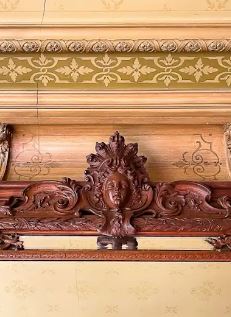
From some moments, I stood and stared, wondering how this strange little creature could have entered my chamber. The full glare of the candle was upon its face and figure. As I stood looking at it, the child began to run round the bed in a wild distressed way, with a look of suffering on its little face. In a rough whisper, “I offer beauty as well as terror,” the child said. “Mrs. Winchester, let me in.” I still more and more surprised, walked up to the bed and stretched out my hand, when the child suddenly vanished, how or where I could not see, but apparently into the floor. I went at once to the maid’s room, and enquired of her to whom the little girl could belong I had just seen in my chamber, expressing my belief that it was supernatural and that the child was in odd dress and troubled face. We went down to dinner, for many guests were staying in the house. The feeling of entrapment was all-consuming, it was as though I was locked in a ceaseless nightmare. Several savage windstorms had burst upon us from the west, but we had escaped damage, as they roared by. This was in addition to a raging storm of terror and uncertainty which whipped me mercilessly. The dining room was brimming with a disquieting energy that was impossible to ignore. It echoed with a spectral silence, haunting ambience and delectable cuisine. A huge raven swooped at the window, thudding into the glass. Stunned, it fell to the ground and lay still. William Kemmler and Renee Meckelburg hurried to the door, opened it and went out on the veranda, both kneeling to examine the bird. Screeching, it righted itself and flapped its enormous winds, and dived at them so quick they were barely able to duck. William and Renee came back inside. William pulled the cord to close the drapes. #RandolphHarris 2 of 6

I felt a twinge between pain and irritation. I patted their heads good night. Each night, sleep came like a malevolent specter, pulling me into a realm of nightmares. I found myself lost in an intricate catacomb of shadows, chased by formless figures that bore a macabre intent. Each breath I drew was laced with the cold sting of dread, and the ominous throb of my heart was reminiscent of a death echo. This particular light, I was woken from sleep by a tremendous crash in the room below; it sounded as though all the chairs and tables had been collected together, and then thrown violently down upon the wooden floor. Suddenly, icy hand clamped around my throat. The spectral fingers were skeletal, remorseless, biting into my flesh like the talons of vulture. I stumbled through the darkness, as grotesque formed twisted and pulsed with an unholy luminescence. Fear wrapped its icy tentacles around my heart, my eyes bulged with horror as the twisting wind’s wail chilled my soul to the quick. Going down stairs to investigate, carrying a book in my hand, is when I discovered the shape of a woman sitting in a chair dressed a modern costume. She was adored in a black gown, a kerchief, and a white stomacher’ that covered the chest and bosom of this dead woman. I was so astonished at this apparition that I could not speak to it nor stir; it lingered for quarter of an hour, and then vanished. I remained trembling in a state of understandable fright and horror. Then I heard the sound of feet moving about the room as if several men were moving about without stockings. I was in such an agony of terror that I was reassured by the sudden cry of a housemaid who slept in a room on this floor—“Lord have mercy on us!” #RandolphHarris 3 of 6

I was in a nervous state. The troubling spirit had crept over me, and held me. While sitting by the kitchen fire, I was hit by a number of stones on my back and shoulders, presumably coming through the open window behind me. Unhurt but frightened, I retreated to the morning room on the first floor, where I was barraged with more stones, hurled with so much force they caused the curtain to move. As the curtains flew open, I felt a presence crawl slowly over my body, starting at my feet. I then fruitlessly searched the pitch-black room as the windows and the shutters opened and closed repeatedly, apparently of their own accord. Finally, I rested at midnight after my evening of terror and bafflement. Only for my pillow to be pulled from my head and my bed-covers and blankets mysteriously removed. Seeking a natural explanation, I lit a candle and searched the room. Once the candle was lit, quiet descended on the room, but when extinguished the disturbances started once more. As night was widely believed to belong to supernatural entities such as ghosts, I knew I was dealing with something not of the temporal World. The next morning while sitting at the kitchen fire, a boy appeared before me and my servant Renee Meckelburg. The boy was ten or twelve years of age, wearing a torn black vest, a black bonnet and a tattered blanket over his shoulders. Given his ragged appearance, I assumed the boy was a strolling beggar looking for something to eat. More unusual was the fact that the boy covered his face with his hand, despite my repeated requests for him to remove it and name himself. He then became agitated, danced frantically and menacingly around the kitchen, before leaping out of an open window and running to the end of the garden into the cow house. #RandolphHarris 4 of 6
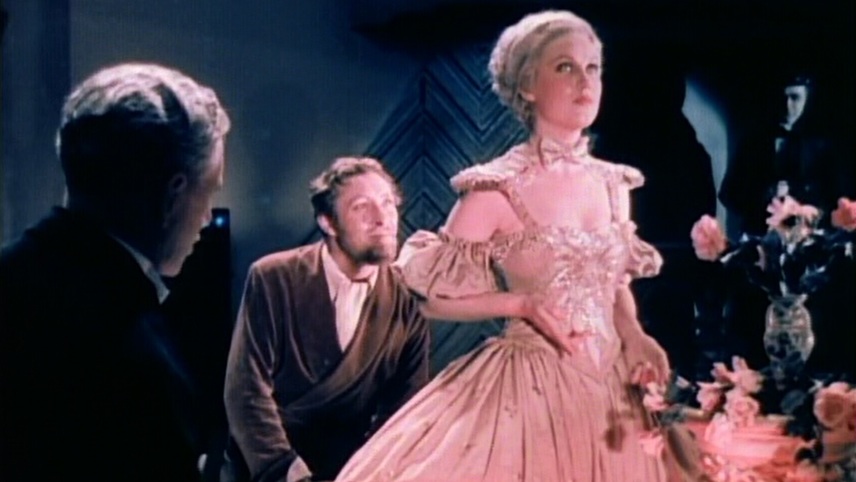
My servants gave chase, but soon lost sight of him, only to discover later, when they returned to the mansion, that he was waiting for them. This charade was repeated around a dozen times before Renen confronted the boy who then turned into a black mist, vanishing into thin air leaving behind blood everywhere. The servant’s eyes were wild, faces chalky with salt. They had never seen anything like this. We were trying to find out was causing the disturbance when all the men on the farm went missing in the blink of an eye. The butler, William Kemmler, let out a demonic yell his eyes agitated with a fiery rage. A shower of blood rained down his face, as he stared at the thick red blood coating his hands and the bodies that appeared around us. He had somehow torn the man asunder. He seethed for several minutes, taking quick breaths that did not calm him down. He took care of the bodies and the mess he just made. I ran to my room and shook and sobbed from under my bed, curled up into a ball. “Why?” I said over and over, trying to understand. There were demonic wounds on my spirit…on my soul caused by a curse to flog every aspect of my life. Unfortunately, it was clear that a demon had entered my home. Demons were considered to be the spirits of natural forces such as fire, plagues, and other misfortunes. I employed amulets and other magical deterrents to stave off demonic attacks. Around my home were potent charms, and post placed upside down to catch demons and prevent them from entering. However, I have no idea how many demons were able to penetrate the forcefield. It could be as few as five or six. It could be a legion. When these demons are near, flames turn blue; dogs howl; a sound of rustling silk can be heard; the temperature is lowered. These are just some of the signs of a haunting. Often times when these supernatural forces appear, people cannot speak at the moment of seeing. “I dare not speak,” one of my guests told me. “I was afraid of the sound of my own voice.” #RandolphHarris 5 of 6
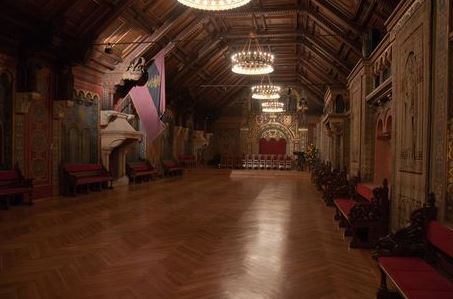
The fortune of my father-in-law, Oliver Winchester and his rapidly growing firearms company surged during the years of 1873 and 1876. The new rifles caught the public’s fancy immediately upon reaching the market. These new models, in carbine, rifle, and musket various, were part of the evolution of the firm as the dominant American maker of lever-action repeating arms. However, it was believed that these weapons were immensely successful because demons were hidden in the weapons. Demons made their abode in them, because men, in these times, worshipped weapons, and the weapons were regarded as supernatural protectors. My father-in-law’s ivory-gripped Volcanic Navy pistols were magical. One evening he and my husband William were gathered in the banqueting hall, and had left their guns on the table, when rushed in a pack of renegades. Before they had time to get to their feet, Oliver called out to his pistol to come to him. The gun knew its master’s voice, and leaped straightway from the table to meet him, killing thirteen men on its way; and in placed itself in the Oliver’s hands, who took in its magic. From the day on, every rifle made by the Winchester Repeating Arms Company had the distinguished mark of this demonic power. Because these weapons were forged with such marvelous power, there was a price to pay. They possessed a hunger that was only quenched by human blood, making them the most powerful and vicious weapons to ever exist. The Winchester fortune is cursed and whomsoever benefits from its estate inherits the curse. It will be passed from generation to generation until the Winchester Bloodline is no more. #RandolphHarris 6 of 6


A report states that in 2007, a tour was besieged by unusual phenomena. The records state that on one occasion a “ball of fluorescent mist” drifted past a group of spectators in the Grand Ballroom before vanishing through a doorway. In another recorded case, a couple of tour guides had been separately disturbed by an apparition and by the sound of scratching, the male tour guide reported seeing a ball of light changing size constantly and floating around the morning room. Tour guides have often meet with innumerable cases in which this phosphorescent light is one of the accompaniments of unusual activity. There was an instance in which this ball of flickering light caused excessive trembling in a guest who witnessed it; this was followed by the complete doubling up of his body into a round ball. It has been suggested that these hovering or floating lights, well attested in many accounts, are some wayward forms of energy. During the night tours, a corpse candle has intrigued many. On occasions, a translucent candle has appeared hovering in a few of the rooms. It has often been suggested that it represents nothing more than the gaseous emanation from some rotting matter. Bog vapours have also been witnessed. Two of them seeming to play one with other. The sight often robs people of their philosophical reasoning, and they leave the estate believing in spirits.
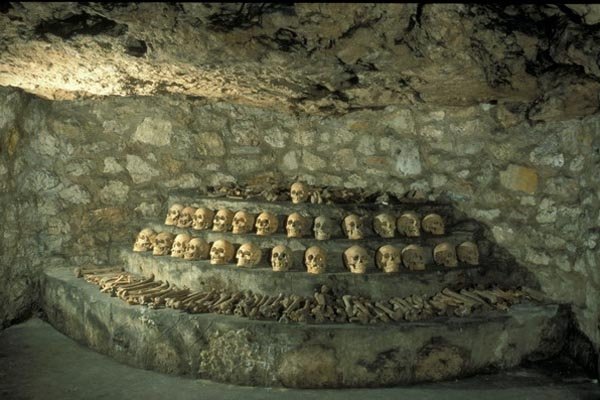
For further information about tours, including group tours, weddings, school events, birthday party packages, facility rentals, and special events please visit the website: https://winchestermysteryhouse.com/
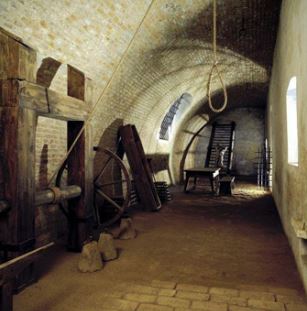
Please visit the online giftshop, and purchase a gift for friends and relatives as well as a special memento of The Winchester Mystery House. A variety of souvenirs and gifts are available to purchase. https://shopwinchestermysteryhouse.com/

The Requirement is Emotional Maturity

There is one requirement that is absolute in money managing, as well as in life, and you have already learned it with the first Irregular Rule: If you do not know who you are, this is an expensive place to find out. The requirement is emotional maturity. You have to use your emotions in a useful way. Your emotions must support the goal you are after. You cannot have any conflict about what you are after, and your emotional needs must be gratified by succeeding at what you are doing. You have to be able to handle any situation without losing your cool, or letting your emotions take over. You must operate without anxiety. The crowd always loses because the crowd is always wrong. It is wrong because it behaves normally. What the crowd—or the public—or the market is up to is always a subject of speculation, for the crowd, according to investment mythology, must always be wrong. (The believers in this rule are numerous enough to constitute a crowd, but of course anyone speaking of the crowd believes oneself to be outside of it.) A crowd is not merely a number of people assembled in one place; it could be thousands of isolated individuals. This is called a psychological crowd, subject to the disappearance of conscious personality and the turning of feelings and thoughts in a different direction. Whoever be the individuals that compose the crowd, however like or unlike be their mode of life, their occupations, their character, or their intelligence, the fact that they have been transformed into a crowd puts them in possession of a sort of collective mind which makes them feel, think, and act in a manner quite different from that in which each individual of them would feel, think, and act were one in a state of isolation. #RandolphHarris 1 of 17

An individual in a crowd acquires—just from being in a crowd—a sentiment of invincible power which allows one to yield to instincts which, had one been alone, one would perforce have kept under restraint…the sentiment of responsibility which always controls individuals disappears entirely. Another element of the crowd is suggestibility—the state of fascination in which the hypnotized individual finds oneself in the hands of the hypnotizer. Once we have dissolved responsibility, we are ripe for contagion and suggestibility and acts of “irresistible impetuosity.” A crowd is not something one should spend one’s time in; an individual, upon becoming a member of a crowd, descends several rungs in the order of civilization because the mind of the crowd is not an average but a new common denominator, mindless in the sense that it has surrendered to its own unconscious impulses. While the crowd would be intellectually inferior to the isolated individual, the crowd could be better or worse than an individual, depending on the nature of the suggestion to which it has been exposed. The crowd is suggestible to images, and what produce these images is the judicious employment of words and formulas. Handled with art, they possess in sober truth the mysterious power formerly attributed to them by the adepts of magic. A crowd can run a relationship, a business, and economy, or even a country much like in 1965 when Admiral, Motorola, Zenith and Magnavox collapsed like a souffle on which the oven door has been untimely slammed. All that is necessary is to recognize the magical power attached to those short syllables, as if they contained the solution of all problems. They synthesize the most diverse unconscious aspirations and the hope of their realization. #RandolphHarris 2 of 17

We see the social engineering propaganda used on the masses to get them to accept illegal immigration, which is a threat to national and economic security, when people say, “This is a country of immigrants.” Okay, that may have been true at one time, but a lot of people have been here for generations and we are now a country of citizens and no longer a population building nation. We are also a nation of law and order, and no one is above the law. Also, is it not fascinating that even a president of a country could be charged with crimes, but we are willing to let people invade America and pay them to? People teach their children not to steal, but what kind of message are we sending them when we allow a group of people to break the law and support these law breakers by saying, “They are women and children looking for a better life.” When in fact that is not true. Since President Biden has been in office more than 11,000,000 undocumented people have come into this country. That is more people than the population of South Dakota. At least 200 of them were on the terror watch list, and many of those who are illegally entering America are young males of military age. If we are going to allow illegal immigration, why not just continue to allow Black Lives Matter to infiltrate businesses, break laws, embezzle and discriminate and terrorize people on the basis of their skin colour, in acts of revenge for the past? Crowds are somewhat like the sphinx of ancient fable: it is necessary to arrive at a solution of the problems offered by their psychological or to resign ourselves to being devoured by them. If you can keep your head when all about you are losing theirs, maybe you have not heard the news. Crowds begin to stay from all our board room watchers, because here we need an organized structure within the crowd and maybe even a rival crowd. #RandolphHarris 3 of 17

The force in the crowd, not surprisingly, is libido, the energy of the instincts that go under the name of “love.” Love here is not only for valentines, it is all forms of love—Eros, the force that holds things in the World together, and hence can also include the devotion to concrete objects and abstract ideas. In Dr. Freud’s crowd, the individuals fasten on an object, substitute it for their ego ideal, and all those with the same ego ideal identify themselves with each other in their ego. Remove the object, and you get anxiety. The suggestion is that in the fusing of the ego and ego ideal, the person, in a mood of triumph and self-satisfaction, disturbed by no self-criticism, can enjoy the abolition of one’s inhibitions, one’s feelings of consideration for others, and self-reproaches. The primal crowd, with the hero leader, and the sons who skill the hero leader make it hard to make any neat application. The group is the inherited deposit from the phylogenesis of the human libido. No one, after these remarks, will ever want to be part of a crowd again, and yet the fact is that it is really quite comfy to be part of the crowd. (It has to do with individuals being part of a multicellular mass. And it is certainly better to be comfy, everybody will agree, than not be. When it comes to investment, eighty percent of the market is psychology. Investors whose actions are dominated by their emotions are most likely to get int trouble. However, that goes for any area of life. If a crowd is so fickle, feminine, and irrational, then does success follow from simply staying out of the crowd? Perhaps sticking to one’s knitting, the balanced following of rational choices? Americans are apt to be unduly interested in discovering what average opinion believes average opinion to be; and this national weakness finds its nemesis in the propaganda in most TV news media. #RandolphHarris 4 of 17

The power which impressed Mr. Hitler probably more than God, Providence, and Fate, is Nature. While it was the trend of the historical development of the last four hundred years to replace the domination over humans by the domination over Nature, Mr. Hitler insisted that one could and should rule over humans but that one could not rule over Nature. Mr. Hitler believed that the history of mankind probably did not start with the domestication of animals but with the domination over inferior people. He ridiculed the idea that human could conquer Nature and made fun of those who believed to become conquerors of Nature “whereas they have no other weapon at their disposal but an ‘idea.’” He says that man “does not dominate Nature, but that, based on the knowledge of a few laws and secrets of Nature, he has risen to the position of master of those other living beings lacking this knowledge.” There again we find the same idea: Nature is the great power we have to submit to, but living beings are the ones we should dominate. There are two trends that dominated Mr. Hitler, which are fundamental for the authoritarian character: the craving for power over men and the longing for submission to an overwhelmingly strong outside power. Workers and farmers went from being socialists in 1919 to becoming some of the earliest and most passionate Nazis. People watched the shadows descend as the red, black, and gold flags of Social Democracy that once fluttered in windows turned communist red and then Nazi black, and the clergy enthusiastically embraced fascism. Some were even locked up by the Gestapo, mostly for refusing to look the other way about local party machinations. #RandolphHarris 5 of 17

The Nazi party seized power. All of a sudden, overnight, perfidy and malice rules and anyone who did not want to get in line became the subject of infamous intrigues and ore or less open threats. The popular terrors about witches and antisemitism were linked. People were looking for someone to blame when something went wrong. There was a sinister desire to blame someone for misfortune, rather than try to understand its true sources. Those who feared witchcraft feared hidden evil, murky conspiracies, and demonic alliances. Antisemites had similarly insisted that Jewish people were secretly behind every problem, every trauma, every loos. They believed that Jewish people had influence out of all proportion to the relative numbers in Germany society, derived from an international plot working remorselessly, in stealth, to control the levers of global power. Not only did witchcraft accusations and “Jew-bating” work the same way, by casting blame on “others”—who might appear outwardly innocuous, but were surreptitiously in league with nefarious, World-dominating forces—but the two beliefs also had structural similarities. Mr. Hitler’s ideas were more or less identical with the ideology of the Nazi party. The ideas expressed in his book are those which he expressed in the countless speeches by which he won mass following for his part. This ideology results from his personality which, with its inferiority feeling, hatred against life, asceticism, and envy of those who enjoy life, is the soil of sado-masochistic striving; it was addressed to people who, on account of their similar character structure, felt attracted and excited by these teachings and became ardent followers of the man who expressed what they felt. #RandolphHarris 6 of 17

However, it was not only the Nazi ideology that satisfied the lower middle class; the political practice realized what the ideology promised. A hierarchy was created in which everyone has somebody above hum to submit to and somebody beneath him to feel power over; the man at the top, the leader, has Fate, History, Nature above him as the power in which to submerge himself. Thus the Nazi ideology and practice satisfies the desires springing from the character structure of one part of the population and gives direction and orientation to those who, though not enjoying domination and submission, were resigned and had given up faith in life, in their own decisions, in everything. Do these considerations give any clue for a prognosis with regard to the stability of Nazism in the future? I do not feel qualified to make any predictions. Yet a few points—such as those that follow from the psychological premises we have been discussing—would seem to be worth raising. Given the psychological conditions, does Nazism not fulfill the emotional needs of the population, and is this psychological function not one factor that makes for its growing stability? From all that has been said so far, it is evident that the answers to this question is in the negative. The fact of human individuation, of the destruction of all “primary bonds,” cannot be revered. The process of the destruction of the medieval World has taken nearly five hundred years and is being completed in our era. #RandolphHarris 7 of 17

Unless the whole industrial system, the whole mode of production, should be destroyed and changed to the preindustrial level, man will remain an individual who has completely emerged from the World surrounding one. We have seen that man cannot endure this negative freedom; that he tries to escape into new bondage which is to be a substitute for the primary bond which he has given up. However, these new bonds do not constitute real union with the World. One pays for the new security by giving up the integrity of one’s self. The factual dichotomy between one and these authorities does not disappear. They thwart and cripple one’s life even though consciously they may submit voluntarily. At the same time, one lives in a World in which one has not only developed into being an “atom” but which also provides one with every potentiality for becoming an individual. The modern industrial system has virtually a capacity to produce not only the means for an economically secure life for everybody but also to create the material basis for the full expression of man’s intellectual, sensuous, and emotional potentialities, while at the same time reducing considerably the hours of work. The function of an authoritarian ideology and practice can be compared to the function of neurotic symptoms. Such symptoms result from unbearable psychological conditions and at the same time offer a solution that makes life possible. Yet they are not a solution that leads to happiness or growth of personality. They leave unchanged the conditions that necessitate the neurotic solution. #RandolphHarris 8 of 17

If there is a possibility of attaining them, the dynamism of man’s nature is an important factor that tends to seek for more satisfying solutions. The aloneness and powerlessness of the individual, one’s quest for the realization of potentialities which developed in one, the objective fact of the increasing productive capacity of modern industry, are dynamic factors, which constitute the basis for a growing quest for freedom and happiness. The escape into symbiosis can alleviate the suffering for a time but it does not eliminate it. The history of humankind is the history of growing individuation, but it is also the history of growing freedom. The quest for freedom is not a metaphysical force and cannot be explained by natural law; it is the necessary result of the process of individuation and of the growth of culture. The authoritarian system cannot do away with the basic conditions that make for the quest for freedom; neither can they exterminate the quest for freedom that springs from these conditions. In Russia, Mr. Stalin’s attempt to arrive at an anti-Nazi condition with the Wet were supported by new order to the foreign Communist Parties. They were told to take the line of co-operation with liberal and democratic elements in their respective countries, and to form a united front with all “anti-fascist” elements, including the Social Democrats. This policy was officially sanctioned at the VIII (and last) Comintern Congress, 1935. Mr. Stalin’s foreign policy did not succeed, in spite of the new Comintern line. “In many capitals, and not least in London, there were serious inhibitions about any policy of collaboration with Soviet Russia, even for the containment of fascism. #RandolphHarris 9 of 17

“The League of Nations, reflecting these inhibitions, proved a feeble and ineffective reed. The final language of the Franco-Soviet Pact was complicated and vague, and its operation was made extensively contingent on prior action by the League of Nations. It was not followed up (until 1939, when it was much too late) by any concrete military discussions. The French government, finally, delayed so long with its ratification, and exhibited so many hesitations in the process, that its value as a political demonstration was reduced to almost negligible proportions. The contempt of the Germans for its existence was clearly demonstrated by the reoccupation of the Rhineland in March 1936; and the failure of the western powers to react with any strong measures showed how ineffective was the Pact for the purposes Moscow had had in mind in concluding it.” The Spanish Civil War, in which the West helped in the defeat of the Republican government by an arms embargo while at the same time not seriously interfering with the military aid sent to Mr. Franco by Mr. Hitler and Mr. Mussolini, could not encourage Mr. Stalin’s hope. Yet even after his actions were far from revolutionary. After some hesitation at the beginning of the Franco rebellion, the Russians decided to intervene, since Mr. Franco’s victory “would have meant the encirclement of France by the fascists, the probable triumph of fascist tendencies within France herself, and the further weakening of Western resistance to Mr. Hitler. The way would then be clear for German aggression toward the East.” #RandolphHarris 10 of 17

Russia sent military help, but reconciled herself to the Republic’s defeat when it became clear that only a much larger amount of Russian assistance could counteract the Italian-German support. While Soviet military aid began to taper off in 1937, Mr. Stalin continued to exterminate his socialist and anarchist rivals in Spain. When the destruction of his political rivals (who—against the Russian view—wanted to transform the civil war into a fight for socialism), conflicted with the demands of the war effort, “precedence was given quite ruthlessly by the Kremlin to the first of these two requirements, to the embitterment of the Spanish Republican leaders.” Most of these Communist generals and functionaries who had fought in Spain were executed in Russia soon after their return. Mr. Stalin wanted to eliminate all elements who by their acquaintance with Western revolutionary ideas stood in the way of the final liquidation of the revolutionary tradition which he undertook in those years of the purges. In short, Mr. Stalin’s attitude toward Mr. Franco was similar to his attitude toward Mr. Hitler. He would have preferred the downfall of Mr. Franco, but not at the price of a popular revolution in Spain, which might have become the signal for revolutionary uprisings in other European countries. When Mr. Stalin’s attempts to come to an arrangement with the West had failed (and it is not too far-fetched to speculate that his destruction of almost all of the leading Communist of the Lenin era was his final attempt to show the West that he was not encumbered by his revolutionary past), Mr. Stalin changed his course again, this time by concluding a pact with the Nazis. #RandolphHarris 11 of 17

Immediately, the Communist Parties followed suit. Mr. Molotov had given the cue with his statement that “Nazism was a matter of taste.” The Communists changed their anti-fascist line and began to attack the “Western imperialists.” As a gesture of friendship toward Nazism, German Communists refugees in Russia were delivered to Mr. Hitler’s Gestapo, if there were any doubts about their loyalty to the new party line. The Comintern took a line of neutrality toward the two camps. The core of this new Comintern policy between the Soviet-Nazi pact and the German attack on Russia has been described very succinctly by Deutscher: “Both belligerent camps, it was not said, pursued imperialist aims, and there was nothing to choose between them. The working classes were called upon to resist war and fight for peace. Outwardly these appeals resembled the policy of revolutionary defeatism which Mr. Lenin had pursed in the First World War. The resemblance was deceptive. In Mr. Lenin’s opposition to war there was revolutionary integrity and consistency, while the policy of the Comintern merely suited the temporary convenience of Mr. Stalin’s diplomacy and was as tortuous as that diplomacy. At times the opposition to war had an unmistakably pro-German twist as, for instance, in October 1939, when the Comintern echoed Mr. Molotov’s and Mr. von Ribbentrop’s call for a negotiated peace and blamed France and Britain for the war. The effect of that policy, especially in France, was merely defeatist, not revolutionary. It supplemented the defeatism that corroded the top of French society with a quasi-popular brand of defeatism coming from below. #RandolphHarris 12 of 17

“Only after the harm had been done, when Moscow, alarmed by Mr. Hitler’s victories, bean to encourage resistance to Nazi occupation, did the French Communist Party switch over to a new policy. Less obvious, though not unimportant, was the effect of the von Ribbentrop-Molotov pact upon anti-Nazi elements in Germany; it made their confusion wore confounded, it deepened their senses of defeat and induced some of them to reconcile themselves to Hitler’s war.” When the medieval World was torn wide open, Western man seemed to be headed for the final fulfillment of his keenest dreams and visions. He freed himself from the authority of a totalitarian Church, the traditional thought, the geographical limitations of a half-discovered globe. He discovered nature and the individual. He became aware of his own strength, of his capacity to make himself the ruler over nature and over traditionally given circumstances. He believed that he would be capable of achieving a synthesis between his newborn sense of strength and rationality and the spiritual values of his humanistic-spiritual tradition, between the prophetic idea of the messianic time of peace and justice to be achieved by mankind in the historical process and the Greek tradition of theoretical thoughts. In the centuries following the Renaissance and the Reformation, he built a new science which eventually led to the release of hitherto unheard-of productive powers and to the complete transformation of the material World. #RandolphHarris 13 of 17

He created political systems which seem to guarantee the free and productive development of the individual; he reduced the time of work to such an extent that Western man is free to enjoy hours of leisure to an extent his forefather had hardly dreamed of. The World is divided into two camps, the capitalist and the communist camp. Both camps believe that they have the key to the fulfillment of the human hopes of generations past; both maintain that, while they must coexist, their systems are incompatible. Are they right? Are they not both in the process of converging into a new industrial neo-feudalism, into industrial societies, led and manipulated by big, powerful bureaucracies—societies in which the individual becomes a well-fed and well-entertained automaton who loses one’s individuality, his independence and his humanity? Have we to resign ourselves to the fact that we can master nature and produce goods in an ever-increasing degree, but that we must give up the hope for a new World of solidarity and justice; tht this ideal will be lost in an empty technological concept of “progress”? Is there no other alternative than that between capitalist and communist managerial industrialism? Can we not build an industrial society in which the individual retains one’s role as an active, responsible member who controls circumstances, rather than being controlled by them? Are economic wealth and human fulfillment really incompatible? #RandolphHarris 14 of 17

These two camps not only compete economically and politically, they are both set against each other in deadly fear of an atomic attack which will wipe out both, if not all civilization. Indeed, man has created the atomic bomb; it is the result of one of his greatest intellectual achievements. However, he has lost the mastery over his own creation. The bomb has become his master, the forces of his own creation have become his most dangerous enemy. Is there still time to reverse this course? Can we succeed in changing it and becoming the masters of circumstances, rather than allowing circumstances to rule us? Can we overcome the deep-seated roots of barbarism which makes us try to solve problems in the only way in which they can never be solved—by force, violence, and killing? Can we close the gap between our great intellectual achievement and our emotional and moral backwardness? To most Americans the case for the success of our mode of industrial organization seems to be clear and overwhelming. New productive forces—steam, electricity, oil, and atomic energy—and new forms of organization of work—central planning, bureaucratization, increased division of labour, automation—have created a material wealth in the most advanced industrial countries which has done away with the extreme poverty in which the majority of their populations lived a hundred years ago. Working hours have been reduced from seventy to forty hours per week in the last hundred years, and with increasing automation an ever-shorter working day may give man an undreamed-of amount of leisure. #RandolphHarris 15 of 17

Basic education has been brought to every child; higher education to a considerable percentage of the total population. Movies, radio, television, sports, and hobbies fill out the many hours which humans now have for their leisure time. Indeed, it seems that for the first time in history the vast majority—and soon all human—in the Western World will be primarily concerned with living, rather than with the struggle to secure the material conditions for living. It seems that the fondest dreams of our forefathers are close to their realization, and that the Western World has found the answers to the question what the “good life” is. While the majority of humans in North America and western Europe still share this outlook, there are an increasing number of thoughtful and sensitive persons who see the flaws in this enticing picture. They notice, first of all, that even within the richest country in the World the U.S.A., about 20 percent of the population does not share in the good life of the majority, that a considerable number of our fellow citizens have not reached the material standard of living which is the basis for a dignified human existence. They are aware, furthermore, that more than 66 percent of the human race, those who for centuries were the object of Western colonialism, have a standard of living from ten to twenty times lower than ours, and have a life expectancy half that of the average human. They are truck by the irrational contradictions which beset our system. While there are millions in our own midst, and hundreds of millions abroad, who do not have enough to eat, we restrict agricultural production and, in addition, spend hundreds of millions each year in storing our surplus. #RandolphHarris 16 of 17
We have affluence, but we do not have amenity. We are wealthier, but we have less freedom. We consume more, but we are emptier. We have more atomic weapons, but we are more defenseless. We have more education, but we have less critical judgment and conviction. We have more religion, but we become more materialistic. We speak of the America tradition which, in fact, is the spiritual tradition of radical humanism, as we call “un-American” those who want to apply the tradition to present-day society. However, even if we comfort ourselves, as many do, with the assumption that it is only a matter of a few generations until the West and eventually the whole World will have reached economic affluence, the question arises: If we continue on the road our industrial system has taken what will become of man and where is he going? The seeker of such truths seeks at bottom only the metamorphosis of the World into man; he strives for an understanding of the World as a human thing and gains, in the best case, the feeling of an assimilation. Like the astrologer who views the stars as in the service of human beings and as tied to their fortune and suffering, so, too, such a seeker views the entire World as bound to man, as the infinitely splintered echo of a primal sound, that of man, or as the reduplicated copy of a primal image, that of man. His procedure is to hold man up as the measure of all things, but in doing so he sets out from the error of believing that he has these things directly before him as pure objects. And so he forgets that the original metaphours of intuition were metaphours and takes them as the things themselves. #RandolphHarris 17 of 17

Going Beyond the Build means exceeding client expectations. Our team of professionals specialize in every aspect of a Design + Build experience.

The Millhaven Difference
- Unique approach, end to end services in-house
- Transparency, organization and communication
- Live and accurate budget monitoring, no financial surprises
- High standards of quality & proven trade partners
- Clearly defined systems of execution and expectations
- 8 person team of professionals assigned to each project
- Customized software for total project management
- Going BEYOND the BUILD in every way


Struggle for Survival

Like so many things, competition can be either good or bad, depending on how you approach it. It is bad if you define it as “seeking to humiliate and destroy others” or “obsessively comparing myself to others” or “placing winning above everything, including my character, integrity, love of others, and covenants with God.” However, it can be good if it is about coming together with others to bring out everyone’s best or have harmless fun. When it is done in the right spirit, it can make winning and losing less a matter of ego and can help you take joy in the accomplishment of others (as well as yourself). Whether it is sports, board games, a dance contest, or any other endeavour, healthy competition can sometimes enhance the experience for everyone. Unhealthy competition, on the other hand, can make everyone miserable. You can usually tell which is which by the spirit that accompanies it. “There hath no temptation taken you but such as is common to man: but God is faithful, who will not suffer you to be tempted above that ye are able; but will with the temptation also make a way to escape, that ye may be able to bear it,” reports 1 Corinthians 10.13. It is interesting to observe that in connection with this crude Darwinism the “socialist” Mr. Hitler champions the liberal principles of unrestricted competition. In a polemic against co-operation between different nationalistic groups he says: “By such a combination the free play of energies is tired up, the struggle for choosing the best is stopped, and accordingly the necessary and final victory of the healthier and stronger man is prevented forever.” Elsewhere he speaks of the free play of energies as the wisdom of life. #RandolphHarris 1 of 18
To be sure, Dr. Darwin’s theory as such was not an expression of the feelings of a sado-masochistic character. On the contrary, for many of its adherents it appealed to the hope of a further evolution of humankind to higher stages of culture. For Mr. Hitler, however, it was an expression of and simultaneously a justification for his own sadism. He reveals quite naively the psychological significance which the Darwinian theory had for him. When he lived in Munich, still an unknown man, he used to awake at 5 o’clock in the morning. He had “gotten into the habit of throwing pieces of bread or hard crusts to the little mice which spent their time in the small room, and then of watching these droll little animals romp and scuffle for these few delicacies.” This “game” was the Darwinian “struggle for life” on a small scale. For Mr. Hitler it was the petty bourgeois substitutes for the circuses of the Roman Caesars, and a preliminary for the historical circuses he was to produce. The last rationalization for his sadism, his justification of it as a defense against attacks of others, finds manifold expressions in Mr. Hitler’s writings. He and the German people are always the ones who are innocent and the enemies are sadistic brutes. A great deal of this propaganda consists of deliberate, conscious lies. Partly, however, it has the same emotional “sincerity” which paranoid accusations have. These accusations always have the function of a defense against being found out with regard to one’s own sadism or destructiveness. They run according to the formula: It I you who have sadistic intention. Therefore I am innocent. #RandolphHarris 2 of 18

With Mr. Hitler’s defensive mechanism is irrational to the extreme, since he accuses his enemies of the very thing he quite frankly admits to be his own aims. Thus he accuses the Jewish people, the Communists, and the French of the very things that he says are the most legitimate aims of his own actions. He scarcely bothers to cover this contradiction by rationalizations. He accuses the Jewish people of brining the French African troops to the Rhine with the intention to destroy, by the bastardization which would necessarily set in, the white race and thus “in turn to rise personally to the position of master.” Mr. Hitler must have detected the contradiction of condemning others for that which he claims to be the most noble aim of his race, and he tries to rationalize the contradiction by saying of the Jews people that their instinct for self-preservation lacks the idealistic character which is to be found in the Aryan drive for mastery. The same accusations are used against the French. He accuses them of wanting to strangle Germany and to rob it of its strength. While this accusation is used as an argument for the necessity of destroying “the French drive for European hegemony,” he confesses that he would have acted like Clemenceau had he been in his place. The Communists are accused of brutality and the success of Marxism is attributed to it political will and activistic brutality. At the same time, however, Mr. Hitler declares: “What Germany was lacking was a close co-operation of brutal power and ingenious political intention.” #RandolphHarris 3 of 18

The Czech crisis in 1938 and this present war brought many examples of the same kind. There was no act of Nazi oppression which was not explained as a defense against oppression by others. One can assume that these accusations were mere falsifications and have not the paranoid “sincerity” which those against the Jewish people and the French might have been coloured by. They still have a definite propaganda value, and part of the population, in particular the lower middle class which is receptive to these paranoid accusations on account of its own character structure, believed them. Mr. Hitler’s contempt for the powerless ones becomes particularly apparent when he speaks of people whose political aims—the fight for national freedom—were similar to those which he himself professed to have. Perhaps nowhere is the insincerity of Mr. Hitler’s interest in national freedom more blatant than in his scorn for powerless revolutionaries. Thus he speaks in an ironical and contemptuous manner of the little group of National Socialists he had originally joined in Munich. This was his impression of the first meeting he went to: “Terrible, terrible; this was clubmaking of the worst kind and manner. And this club I now was to join? Then the new memberships were discussed, that means, my being caught.” He calls them “a ridiculous small foundation,” the only advantage of which was to offer “the chance for real personal activity.” Mr. Hitler says that he would never have joined one of the existing big parties and this attitude is very characteristic of him. He had to start in a group which he felt to be inferior and weak. #RandolphHarris 4 of 18

Mr. Hitler’s initiative and courage would not have been stimulated in a constellation where he had to fight existing power or to compete with his equals. He shows the same contempt for the powerless ones in what he writes about Indian revolutionaries. The same man who has used the slogan of national freedom for his own purposes more than anybody else, has nothing but contempt for such revolutionists who had no power and who dared to attack the powerful British Empire. He remembers, Mr. Hitler says, “some Asiatic fakir or other, perhaps, for all I care, some real Indian ‘fighters for freedom,’ who were then running around Europe, contrived to stuff even otherwise quite intelligent people with the fixed idea that the British Empire, whose keystone is in India, was on the verge of collapse right there…Indian rebels will, however, never achieve this…It is simply an impossibility for a coalition of cripples to storm a powerful State…I may not, simply because of my knowledge of their racial inferiority, link my own nation’s fate with that of these so-called ‘oppressed nations.’” The love for the powerful and the hatred for the powerless which is so typical for the sadomasochistic character explains a great deal of Mr. Hitler’s and His followers’ political actions. While the Republican government thought they could “appease” the Nazis by treating them leniently, they not only failed to appease them but aroused their hatred by the very lack of power and firmness they showed. Mr. Hitler hated the Weimar Republic because it was wea ad he admired the industrial and military leaders because they had power. He never fought against established strong power but always against groups which he thought to be essentially powerless. #RandolphHarris 5 of 18

Mr. Hitler’s—and for that matter, Mr. Mussolini’s—“revolution” happened under protection of existing power and their favourite objects were those who could not defend themselves. One might even venture to assume that Mr. Hitler’s attitude toward Great Britain was determined, among other factors, by this psychological complex. As long as he felt Britain to be powerful, he loved and admired her. His book gives expression to this love for Britian. When he recognized the weakness of the British position before and after Munich his love changed into hatred and the wish to destroy it. From this viewpoint “appeasement” was a policy which for a personality like Mr. Hitler was bound to arouse hatred, not friendship. So far we have spoken of the sadistic one. There is the wish to submit to an overwhelmingly strong power, to annihilate the self, besides the wish to have power over helpless beings. This masochistic side of the Nazi ideology and practice is most obvious with respect to the masses. They are told again and again: the individual is nothing and does not count. The individual should accept this personal insignificance, dissolve oneself in a higher power, and then feel proud in participating in the strength and glory of this higher power. Mr. Hitler expresses this idea clearly in his definition of idealism: “Idealism alone leads men to voluntary acknowledgement of the privilege of force and strength and thus makes them become a dust particle of that order which forms and shapes the entire Universe.” Mr. Goebbles gives a similar definition of what he calls Socialism: “To be a socialist,” he writes, “is to submit the I to the thou; socialism is sacrificing the individual to the whole.” #RandolphHarris 6 of 18
Sacrificing the individual and reducing it to a bit of dust, to an atom, implies, according to Mr. Hitler, the renunciation of the right to asset one’ individual opinion, interests and happiness. This renunciation is the essence of a political organization in which “the individual renounces representing his personal opinion and his interests…” He praises “unselfishness” and teaches that “in the hunt for their own happiness, people fall all the more out of Heaven into Hell.” It is the aim of education to teach the individua not to assert his self. Already the boy in school must learn “to be silent, not only when he is blamed justly but he has also to learn, if necessary, to bear injustice in silence.” Concerning his ultimate goal he writes: “In the folkish State the folkish view of life has finally to succeed in brining about that nobler era when men see their care no longer in the better breeding of dogs, horses, and cats, but rather in the uplifting of mankind itself, an era in which the one knowingly and silently renounces, and the other gladly gives and sacrifices.” This sentence is somewhat surprising. One would expect that after the description of the one type of individual, who “knowingly and silently renounces,” an opposite type would be described, perhaps the one who leads, takes responsibility, or something similar. However, instead of that, Mr. Hitler defines that “other” type also by his ability to sacrifice. It is difficult to understand the difference between “silently renounces,” and “gladly sacrifices.” #RandolphHarris 7 of 18

Mr. Hitler recognizes clearly that his philosophy of self-denial and sacrifice is meant for those whose economic situation doe not allow them any happiness. He does not want to bring about a social order which would make personal happiness possible for every individual; he wants to exploit the very poverty of the masses in order to make them believe in hi evangelism of self-annihilation. Quite frankly he declares: “We turn to the great army of those who are so poor that their personal lives could not mean the highest fortune of this World…” This whole preaching of self-sacrifice has an obvious purpose: If the wish for power on the side of the leader and the “elite” is to be realized, the masses have to resign themselves and submit. However, this masochistic longing is also to be found in Mr. Hitler himself. For him the superior power to which he submits is God, Fate, Necessity, History, Nature. Actually all these terms have about the same meaning to him, that of symbols of an overwhelmingly strong power. He starts his autobiography with the remark that to him it was a “good fortune that Fate designated Braunau on the Inn as the place of my birth.” He then goes on to say that the whole German people must be united in one state because only then, when this state would be too small for them all, necessity would give them “the moral right to acquire soil and territory.” The defeat in the war of 1914-1918 to him is “a deserved punishment by eternal retribution.” Nations that mix themselves with other races “sin against the will of eternal Providence” or, as he puts it another time, “against the will of the Eternal Creator.” Germany’s mission is ordered by “the Creator of the Universe.” Heaven is superior to people, for luckily one can fool people but “Heaven could not be bribed.” #RandolphHarris 8 of 18
In Russia, what happened by 1922 is clearer for the historian today than it was for the participants in those events. The hope for the revolution had failed. Just as Mr. Marx and Mr. Engles in the middle of the nineteenth century had underestimated the vitality of capitalism, so Mr. Lenin and Mr. Trotsky between 1917 and 1922 had failed to recognize that the majority of the workers in the West were not willing to give up the economic and social advantages the capitalist system had provided for them for the dangerous and insecure course of a socialist revolution. At first, in 1921 and 1922 the revolutionary retreat was made in good faith by Mr. Lenin and other leaders. They made a strategic retreat and hoped that some time in the future a new revolutionary situation would arise. However, with Mr. Lenin’s illness and death, Mr. Trosky’s slow elimination, and Mr. Stalin’s ascendancy, the retreat turned into a plain fraud. Although there is probably no single point at which this change could be said to have occurred, its development can be followed quite clearly in the sequence of events from the Rapallo pact in 1922 to the pact with Mr. Hitler in 1939. After the Putsch in Germany in 1923, through which “Communist prestige suffered a new and this tine an irreparable blow” Mr. Stalin’s view of the supremacy of Russia’s national interests over the revolutionary interests of the communist parities gained steady ascendency. He always had contempt for foreign Communist Parties and expressed this contempt many times. “The Comintern represents nothing. It exists only because of our support,” he said to Lominadze in the twenties. #RandolphHarris 9 of 18

The same attitude was expressed many years later when Mr. Stalin said to the Polish leader Mikolajczyk “communism fits Germany as a saddle fits a cow.” His personal contempt for the Chinese Communist was notorious. Under him, the relationship between Russian and the Communist movement changed drastically the might of Russian was the goal, and the Communist Parties had to serve this goal. For the first time Mr. Stalin acknowledged officially in 1925 that the acute revolutionary period after the First World War had passed and was being followed by a period of “relative stabilization.” Only in 1947 did he publish a speech to Communist students that he made in 1925, which throws a retrospective light on his attitude: “I suppose that the revolutionary forces of the West are great; that they grow; that they will grow, and that they may overthrow the bourgeoisie here of there. That is true. But it will be very difficult for them to hold their ground…The problem of our army, of its strength and readiness, will inevitably rise in connection with complications in the countries that surround us…This does not mean that in any such situation we are bound in duty to intervene actively against anybody.” This statement is a good example of the difference between ritualistic language and real policy which would from then on pervade all Russian statements. The expressions of hope in the growth of the revolutionary forces are the ritual, without which no Communist statement could be made, but the operative part of the statement lies in the point that Mr. Stalin evaded any commitment tht the Red Army would come out to help foreign revolutions hold their ground. He left this open, but insisted that the was not “bound in duty” to intervene. #RandolphHarris 10 of 18

Russia’s foreign policy seemed to be successful for a while in the attempt to open friendly relations with the West, especially with Great Britain. However, the British conservative government moved clearly toward a break with Russian between 1924 and 1927. The Soviet Trade Delegation in London was raided on May 12, 1927, and, although the raid apparently did not yield any very incriminating evidences, the British government nevertheless served all official relations with Russian on May 26, 1927. After this setback in it foreign policy, “the Soviet government turned its back even more resolutely than before on actual revolutionary activities abroad, retired into a semi-isolation, and devoted its efforts to the accomplishment of two great internal programs.” These two programs were the rapid industrialization of Russia, expressed in the first Five Year Plan, 1928-33, and the establishment of a tight control over Russian agriculture. Mr. Trotsky was expelled from the party, and Mr. Stalin began the construction of a Russian managerial industrialism. As George Kennan has pointed out, this new program demanded tremendous sacrifices from the Russian population, and Mr. Stalin, as a justification for these hardships, had to emphasize the appearance of an external danger. He also used radical phraseology to hide the final abandonment of the revolutionary ideas and, in addition, to show the Western powers the nuisance value of the Communist Parties as a response to their hostile reaction after 1924. These three motives explain the new militant course of the Comintern after 1927. Mr. Stalin declared in his report on 3 December 1927, that “the stabilization of capitalism is becoming more and more rotten and unstable.” #RandolphHarris 11 of 18

The official Comintern line was changed to say that the capitalist World had now entered upon another “cycle of wars and revolutions.” This new “revolutionary” line has been often interpreted by America Sovietologists as a proof that Stalinism never relinquished its revolutionary plans. These observers do not see that this radical line was purely in the service of Russian foreign and internal policy, and not the expression of any genuine revolutionary plants. The best over-all judgment on the new revolutionary line is presented by Gustav Hilger, the Counselor of the Germany Embassy in Moscow at the time. “Thus a competent Moscow observer of that day,” writes Mr. Kennan, “was able later, in describing Soviet policy during the first Five Year Plan period, to say that the Soviet Union ‘concealed an ironclad isolationism behind a façade of intensified Comintern activity which was designed in part to detract attention from her internal troubles.’” It must be noted furthermore that in spite of all radical talk, the Comintern did not send out any directives that demanded the seizure of power, but demanded only the continued struggle against “the capitalist offensive.” With the consolidation of Mr. Stalin’s power over all opponents, Mr. Hitler’s accession to power, and the beginning of the Roosevelt era, Mr. Stalin ordered another switch. He did not try to mobilize the German workers against Mr. Hitler with the goals of establishing a leftist government in Germany. On the contrary, led by a Moscow stooge who was treated with the complete contempt by the Moscow bosses, the K.P.D. was told to follow a policy which was plainly suicidal. #RandolphHarris 12 of 18

Treating the socialists as their main enemies and making a tactical pact with the Nazis, the Communist Party did everything possible not to prevent a Nazi victory. It is unthinkable that Mr. Stalin would have demoralized and stultified the Germany Communist Part so completely had his aim been a revolution in Germany, or even the defeat of Mr. Hitler. This is not to imply that Mr. Stalin wished for Mr. Hitler’s victory. He certainly saw himself threatened by Mr. Hitler and tried his best to avert this threat. However, there are many good reasons—although no conclusive proof—to think that Mr. Stalin preferred the victory of Mr. Hitler to an authentic worker’s revolution in Germany. The German dictator was a military threat with which Mr. Stalin could hope to cope with diplomatic maneuvers and military preparation. A German workers’ revolution would have undermined the basis of his whole regime. As a society, we declare that the World’s splendour has been enriched by a new beauty; the beauty of speed. A racing motor-car, its frame adorned with great pipes, like snakes with explosive breath…a roaring motor-car, which looks as though running on a shrapnel is more beautiful than the Victory of Samothrace. We shall sing of the man at the steering wheel, whose ideal stem transfixed the Earth, rushing over the circuit of her orbit. Why should we look behind us, when we have to break in the mysterious portals of the Impossible? Time and Space died yesterday. Already we live in the absolute, since we have already created speed, eternal and ever-present. We wish to glorify War—the only health-giver of the World—militarism, patriotism, the destructive arm of the Anarchist, the beautiful Ideas that kill, the contempt for women. #RandolphHarris 13 of 18
We wish to destroy the museums, the libraries, to fight against moralism, feminism, and all opportunistic and utilitarian meanness. There is indeed no greater distinction among human beings than that between those who love life and those who love death. This love of death is typically human acquisition. Humans are the only beings that can be bored, they are the only beings that can love death. While the impotent human (not referring to sexual impotence) cannot create life, one can destroy it and thus transcend it. The love of death in the midst of living is the ultimate perversion. There are some who are the true necrophiles—and they salute war and promote it, even thought they are mostly not aware of their motivation and rationalize their desires as serving life, honour, or freedom. They are probably the minority; but there are many who never made the choice between life and death, and who have escaped in busy-ness in order to hide this. They do not salute destruction, but they also do not salute life. They lack the joy of life which would be necessary to oppose war vigorously. Mr. Goethe once said that the most profound distinction between various historical periods is that between belief and disbelief, and added that all epochs in which belief dominates are brilliant, uplifting, and fruitful, while those in which disbelief dominates vanish because nobody cares to devote oneself to the unfruitful. The “belief” Mr. Goethe spoke of is deeply rooted in the love of life. Culture which create the conditions for loving life are also cultures of belief’ those which cannot create this love also cannot create belief. #RandolphHarris 14 of 18

The historical future is already determined; there are certain limited and ascertainable alternatives. Our alternative is that between the end of the nuclear arms race—and destruction. Whether the voice of this prophet will win over the voices of doom and weariness depends on the degree of vitality the World and especially the younger generation has preserved. If we are to perish we cannot claim not to have been warned. Every word becomes a concept, not just when it is meant to serve as a kind of reminder of the single, absolutely individualized original experience to which it owes its emergence, but when it has to fit countless more or less similar—that is, strictly speaking, never equal, hence blatantly unequal—cases. Every concept arises by means of the equating of the unequal. Just as certain as it is that no one leaf is exactly the same as any other, so, too, it is certain that the concept leaf is formed by arbitrarily ignoring these individual differences, by forgetting what distinguishes one from the other, thus giving rise to the notion that there is in nature something other than leaves, something like “The Leaf,” a kind of prototype according to which all leaves were woven, drawn, delineated, coloured, crimped, painted, but by unskilled hands, so that no specimen turned out correctly or reliably as a true copy of the prototype. We call a man honest. We ask, “Why did he act so honestly today?” Our answer is, usually, “Because of his honesty.” Honesty! Which is again like saying, “Leaf is the cause of leaves.” We really have no knowledge at all of an essential quality called Honesty, but we do know countless individualized, hence unequal, actions, which we equate by leaving aside the unequal and henceforth designate as honest actions; finally, from them we formulate a qualitas occulta with the name Honesty. #RandolphHarris 15 of 18

Overlooking the individual and the actual yields concepts, just as it yields forms, whereas nature know neither forms nor concepts, hence no species, but only what remains for us an inaccessible and indefinable X. For even the distinction we draw between the individual and the species is anthropomorphic and does not stem from the essence of things, though neither can we say that it does not correspond to the essence of things, for that would be a dogmatic assertion and as such just as indemonstrable as its counterpart. What, then, is truth? A mobile army of metaphours, metonymies, anthropomorphisms—in short, a sum of human relations that have been poetically and rhetorically intensified, translated, and embellished, and that after long use strike a people as fixed, canonical, and binging: truths are illusions of which one has forgotten that they are illusions, metaphours that have become worn-out and deprived of their sensuous force, coins that have lost their imprint and are now no longer seen as coins but as metal. We still do not know where the drive to truth comes from, for we have hitherto heard only of the obligation to be truthful, which society imposes in order to exist-that is, the obligation to use the customary metaphours, hence morally expressed, the obligation to lie in accordance with a fixed convention, to lie in droves in a style binding for all. #RandolphHarris 16 of 18

Humans forget, of course, that his is how things are; one therefore lies in this way unconsciously and according to centuries-old habits—and precisely by means of this unconsciousness, precisely be means of this forgetting, one arrives at the feeling of truth. A moral impulse pertaining to truth is awoken out of this feeling of being obligated to designate one thing red, another cold, a third mute: in contrast to the liar, whom no one trusts, whom everyone shuns, man proves to himself how venerable, trustworthy, and useful truth is. As a rational being he now submits his actions to the rule of abstractions: no longer does he let himself be swept away by sudden impressions, by intuitions, one first generalizes all these impressions into paler, cooler concepts in order to hitch the wagon of one’s life and one’s action to them. Everything that distinguishes man from beast hinges on this capacity to dispel intuitive metaphours in a schema, hence to dissolve an image into a concept. For in the realm of those schemata something becomes possible that could never be achieved by intuitive first impressions, namely, the construction of a pyramidal order of castes and degrees, creating a new World of laws, privileges, subordinations, and boundary demarcations, which now stands over against the other intuitive World of first impressions as the more fixed, more universal, ore familiar, more human, hence something regulatory and imperative. Whereas every metaphour of intuition is individual and without equal and so always knows how to escape al classification, the great edifice of concepts exhibits the rigid regularity of a Roman columbarium and in logic exhales the severity and coolness proper to mathematics. #RandolphHarris 17 of 18
Whoever has felt that breath will scarcely believe that concepts, too, as bony and eight-cornered as dice, and just as moveable, are not the lingering residues of metaphours, and that the illusion of the artistic rendering of a nerve stimulus into images is, if not the mother, then at least the grandmother of every concept. In this dice game of concepts, however, “truth” means using every die s it is marked, counting it dots precisely, establishing correct classifications, and never violating the order of castes and rankings of class. Just as the Romans and Etruscans carved up the sky with rigid mathematical lines, installing a god in each circumscribed space as in a templum, so, too, every people has above it just such a mathematically divided Heaven of concepts and understands the demand of truth to mean that each concept of god is to be found only in its own sphere. In this, one may well admire man as a great architectural genius who manages to erect an infinitely complicated cathedral of concepts on shifting foundations and flowing water. Of course, in order to rest on such foundations, it must be a structure made as if of spiderwebs, delicate enough to be carried way by the waves, firm enough not to be blown apart by the wind. Measured thus, man as architectural genius far surpasses the bee: the latter builds with wax, which it gathers from nature; man builds with the much more delicate material of concepts, which he must first fabricate from out of himself. In this, he is to be admired—but not on account of his drive to truth, to the pure cognition of things. #RandolphHarris 18 of 18


Going Beyond the Build means exceeding client expectations. Our team of professionals specialize in every aspect of a Design + Build experience.

The Millhaven Difference
- Unique approach, end to end services in-house
- Transparency, organization and communication
- Live and accurate budget monitoring, no financial surprises
- High standards of quality & proven trade partners
- Clearly defined systems of execution and expectations
- 8 person team of professionals assigned to each project
- Customized software for total project management
- Going BEYOND the BUILD in every way
 Randolph Harris II International Institute