
Home » #RandolphHarris (Page 29)
Category Archives: #RandolphHarris

Much Was Forbidden Knowledge

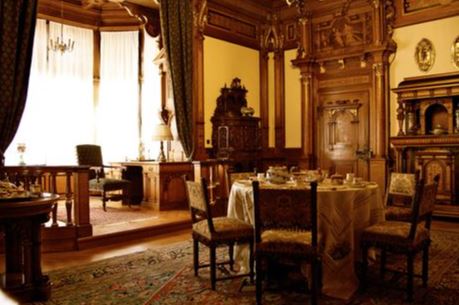
It was a grim winter’s night and rain pelted the windows. Horses clacked slowly along the cobblestone roads. There was a perpetual teasing wind from below like departing spirits of the dead. I had dinner in the Venetian Dinning Room in front of the fireplace. The windows suddenly lit up, and a few instants later there was a crash of thunder from outside. A sword that had previously hung on the wall, clearly was suspended in the middle of the room with its point towards me. About a minute later, it fell to the ground with a loud noise. The great candles in the hall were burning down to their sockets. One by one they spluttered out. A ghostly, flickering light fell upon the floor. As I pressed forward, I became conscious that my way was haunted by invisible existences whom I could not definitely figure to my mind. From among the walls on either side, I caught broken and incoherent whispers in a strange tongue which I partly understood. It was now nightfall, yet the interminable labyrinth was lit with a wan glimmer having no point of diffusion, for in its mysterious lamination nothing cast a shadow. A shallow pool in a depression on the floor, as from mop water, met my eye with a crimson gleam. I stopped and plunged my hand into it. It stained my fingers; it was blood! Blood, I then observed, was about me everywhere. It was spattered everywhere. Defiling the furniture, and blood dripped like dew from the ceiling. All this I observed with a terror which seemed not incompatible with the fulfillment of a natural expectation. #RandolphHarris 1 of 8

To the menaces and mysteries of my home my surrounding consciousness was an added horror. So frightful was the situation—the mysterious light burned with so silent and awful a menace that my home took on a melancholy or baleful character, so openly my sight conspired against my peace; from overhead and all about came so audible and startling whispers and the sighs of creatures so obviously not of Earth—that I could endure it no longer. On approaching the Morning Room, I noticed that a light was on and the door open, although I distinctly remembered having left it shut. I walked into the room pushed aside the heavy draperies at the entrance to the room itself, and stopped in amazement. In the middle of the room, a single lamp plainly revealed a stranger behind the large chair; the man wore a tall black hat and a dark billowing velvet coat. In the light from the hearth his probing eyes glowed red. He possessed a face so cadaverous and death-mask-like, that it set me screaming! I could not detect even the faintest whiff of a soul. Lightning flashed again, and I learned forward to hear his words over the loud thunder. His voice broken, it seemed, into an infinite multitude of unfamiliar sounds, went babbling and stammering away into the distant reaches of the mansion, died into silence, and all was before. Standing under one of the gaslights in the mansion, he said: “I will not submit unheard. There may be powers that are not malignant traveling through this accursed spiritual fortress. I shall leave them record and an appeal. I shall relate my wrong, the persecutions that I endure—I, a helpless mortal.” #RandolphHarris 2 of 8
The man then walked off toward the dark room at the other end of the hall. Then I realized my visitor had dissolved into thin air. There was no one in the dark room. The door was securely locked. The skylight, 150 feet above ground, could not very well have served as an escape route to anyone human. I thought more about the mysterious forces…“How can this be happening to me! I deserve better for God’s sake! I am innocent for God’s sake! Dear God help me to restore all that I have lost. Make us happy again, make us ourselves again, raise my daughter and husband from the dead, snatched by supreme ghouls from the crypts, and return them to our home and make the name of Winchester a name of pride.” The thought of being lost in utter darkness without my loved ones amidst this mysterious labyrinth World of nightmares. A further flash of thunder seemed to split the Heavens wide open. From the open space in the narrow corridor, a glow was coming from the door on my right. In a moment I had reached it and was standing in the secret library, trembling with relief, and watching the sputterings of the lamp which had brought me to safety. Then I noticed a small door at the father end of the room, and clamed myself enough to approach it and examine the crude-sign chiseled above. It was only a symbol, but it filled me with vague spiritual dread. Outside, the night sky was riven yet again by a dart of lighting. The large roof windows of the attic shook in their frames as the gale beat at them. I took a deep breath and raised my lamp higher. A wave of nameless fright rolled out to meet me, but I yielded to no whim and deferred to no intuition. There was nothing alive here to harm me. #RandolphHarris 3 of 8

Although the room had no furniture save a table, and a single chair, I deciphered a huge pentagram in the center of the floor, with a plain circle about three feet wide half way between this and each corner. In one of these four circles, near where a black robe had been flung carelessly thrown on the floor. Connecting stairs and a secret rest room had long been walked up in the many structural changes in the mansion. Only the window of the walled-up room was still visible from the outside. It was in this area that I felt that restless spirits were trapped. Walled in like demons sleeping through the day and close to the premises for roaming through the night. I allowed myself to rest for half an hour, listening to the thunder roar and thump in the Heavens above. The flickering light of the lamps made the room seem almost as if it were malevolently alive. Another thunderbolt crashed across the Heavens, and I screamed of fear. As the echoes of my scream died away, I leaned forward in my chair, watching the shadows floating in front of my eyes. There was no need to tell all the dismal and horrid thoughts that flitted through my head as I ran. When I made it to the Observational Tower, I clambered to the top as quick as I could to take breath and look out upon my estate if by chance I would see anything. However, a moment’s rest I must have. I had run a mile through my home at least. Nothing whatever was visible ahead of me, and I was just turning to go down to the main part of the house, when I heard what I can only call a laugh: and if you can understand what I mean by a breathless, a lungless laugh, you have it; but I do not suppose that you can. #RandolphHarris 4 of 8

It came from below, and swerved through the halls. That was enough. I walked down the stairs. There was a carpenter at the bottom. You do not need to be told that he was dead. His tracks showed that he had run along the hallway, had turned sharp round the zig zag stairs, and, small doubt of it, must have dashed straight into the wall, and his teeth and jaws were broken to bits. I only glanced over his face. At the same moment, suddenly I felt another presence in the room, and I could not breathe anymore. Zip started to bark and insist that I follow him out of the room. I distinctly felt someone there. I went straight up to my room. I had my bath, and went and lay down on my bed, and slept for about ten minutes. It was as quiet, as quiet as only a country house can be. Soon I was in a deep trance on the other side. I saw things and people the ordinary eye could not perceive. I was walking around. There was a man lying dead in the middle of the room. Small nose, not too much hair in front. There was a plant near him. He came here to die. He was here to find a place to rest. He usually stays in the Crystal Bedroom. With the fern. By the bed. I broke out of trance and had facial stiffness, as well as pain in the shoulder. The curtains of my bed were violently agitated, accompanied with a loud and almost indescribable motion of rings. However, the curtain, four in number, to prevent their motion, were tied up, each in one large knot. Every curtain in the bed was agitated, and the knots thrown and whirled about with such rapidity that it would have been unpleasant to be within the sphere of their action. This lasted about two minutes, as if it were a wild beast seeking freedom. I also heard footsteps walking by me and around me, and was, also, conscious of candles burning near me, but could see nothing. #RandolphHarris 5 of 8
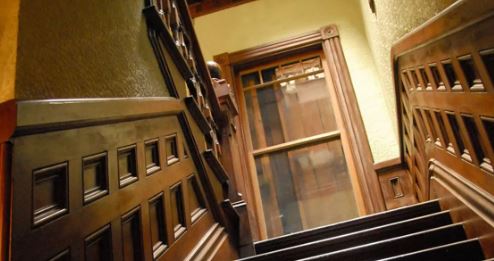
A low, wild pal of laughter broke out at a measureless distance away; I paused a moment, and rappings started; I suddenly opened the door, with a candle in my hand, yet I swear I could see nothing. I have been in one of the rooms which has a large modern wind, when, from the noises, knockings, blows on the bed, and rattling of the curtains, I really did begin to think the whole chamber was falling in. And growing ever louder, the laugher seemed approaching ever nearer; a soulless, heartless, and unjoyous laughter, like that of the loon; a laugh which culminated in an unearthly shout close at hand, then died away by slow gradations, as if the accursed being that uttered it had withdrawn over the verge of the World whence it had come. However, I felt that this was not so. A strange sensation began slowly to take possession of my body and my mind. I could not have said which, if any, of my sense was affected; I felt it rather as a conscious—a mysterious mental assurance of some overpowering presence—some supernatural malevolence different in kind from the invisible existences that swarmed about me, and superior to them in power. I knew that it had uttered that hideous laugh. And now it seemed to be approaching me; from what direction I did not know—dared not conjecture. All my former fears were forgotten or merged in the gigantic terror that now held me in thrall. Powerless to cry out, I found myself staring into the sharply draw white face and blank, dead eyes of a phantom. #RandolphHarris 6 of 8

The darkness filled me. Whatever my thoughts had been, they so possessed me that I observed not the lapse of time. I came to my senses an unknown time later to find myself in a brightly lit room with a pleasant fragrance. Someone was wiping my forehead with a damp cloth. For a few minutes, I simply enjoyed the sensation, not thinking about the terror I had experienced, but the memories flooded back. Confused thoughts and troubled emotions ran through my mind. “Wh-Where am I?” “Mrs. Winchester, you’re in the new east wing of your home.” Now I recognized the voice. “Uta!” I said. “But how did I…?” “I found you,” said Uta. “I hadn’t seen you for days, and was worried about you, so the day after the great storm I scoured the mansion looking for you. You were lying in a mass of blood and broken glass and rainwater. I…” Uta paused momentarily, clearly still upset from the experience—“I thought you were dead.” A little later I felt a warm spoon against my lips and instinctively opened my mouth to let a little of the soup dibble in. Under Uta’s care, I slowly regained my health, but it was another ten days before I was well enough to make my way around the garden. When I reached the Daisy Bedroom, I paused for a moment and looked around. From here there was no sign that anything at all unusual had taken place thirteen nights ago. #RandolphHarris 7 of 8

I began to climb the stairs, feeling in my pocket for the key. At the door to no-to-nowhere, I forced myself to calm down, taking several deep, measured breaths before putting the key in the lock. Suddenly there was a terrible, godless wail from the pits whose inhuman cadences rose, and feel rhythmically in the distance through the darkness. “What on Earth was that?” I exclaimed. Then a huge hand grabbed me. The door swung open with a creak, and I saw a ghost standing there. A woman appeared, she had long blonde hair, was wearing a long white night dress, was frail and ethereal, old age had rendered her thin and somehow tired. And yet, her eyes had an unusual bright sparkle in them that belied her frail and aged appearance. She walked very softly through the threshold of the door and sat down inside. She put her hand on her forehead and said, “Will you please help me? A looter has taken my tombstone, and now my soul is unable to find rest.” The bewildering character of the swirling flood of spirits caused confused thoughts and troubled emotions to run through my mind. I sighed and relaxed slightly. I turned around to reach for a lamp. My back was not turned for more than a second. However, when I looked up at my mysterious visitor, the lady was gone. I quickly walked down the hallway, everything was suffused with a soft, red glow in which I then saw my own shadow projected before me. Ceaseless buffetings of a most tempestuous wind made me feel weary. #RandolphHarris 8 of 8

If you live in New Haven Connecticut, you are well aware of the hell and brimstone variety preaching, and are bound to hear about the devil now and again. To some people, the devil is real, and they will give you an argument filled with fervour and Bible quotations to prove that he exists. Mrs. Winchester had a beautiful face like a mask. A porcelain-cosmetic mask. Mrs. Winchester was not one of those who were impressed by demonic outbursts, however, and she could not care less whether there was a devil or not. She had grown up in a well-to-do family and spent her adult years in the World of business. At age nineteen, she met and married Mr. William Wirt Winchester, and they had a short, but happy life together. There was one child, and at first, no problems, and no difficulties whatever. She was always active in her husband’s manufacturing business. After she gave birth to her first child, Annie Winchester, Mr. Winchester decided to slow down, it was just as well that she started to enjoy life a little more fully, until tragedy struck.

Back in her early years, Mrs. Winchester had what are now called ESP (extra sensory perception) experiences. When she talked to a person, she would frequently know what that person would answer before the words were actually spoken. It scared the young girl, but she refused to think about it. Her parents’ home was a thirty-room mansion in a good section of New Haven. It was just a pleasant house without any history whatever of either violence or unhappiness. And yet, frequently she would hear strange rappings at night, raps that did not come from the pipes or other natural sources. Whenever she heard those noises, she would simply turn to the wall and pretend she did not hear them, but in her heart, she knew they were there. Then one-night, young Sarah was awakened from a deep sleep by the feeling of a presence in her room. She sat up in bed and looked out. There, right in front of her bed, was the kneeling figure of a man with extremely dark eyes and a pale face. She thought that he was from another time or place. After rubbing her eyes, Sarah looked again, but the apparition was gone.

Before long, Sarah had accepted the phenomenon as simply a dream, but again she knew this was not so, and she was merely accommodating her sense of logic. However, what had the stranger been? Surely, the house was not haunted. Besides, she did not believe in ghosts. Young Sarah had no idea that this was the beginning of the accursed invasion from beyond. Six weeks later, she had another supernormal experience. Again alone in her parents home, with all the doors locked, she saw a strange man. Quickly she reached for a candle to examine her visitor, but he had vanished. From the day on, Mrs. Winchester heard strange noises, frequent banging about the mansion, and uncanny feelings and chills in certain areas of the hose. On one occasion, Mrs. Winchester clearly heard someone coming up the stairs leading up to the attic. She went to see who it was, but no one came. The steps were those of an unseen man! Mrs. Winchester had no idea who the ghost could be. She was reluctant to discuss her experiences with other people let they think her mad, yet she was healthy and realistic and was quite sure of her memories.

As many know, after the death of her new born daughter and husband, Mrs. Winchester moved to Santa Clara Valley and spent nearly 40 years, of non-stop construction, building one of the most beautiful and complex mansions in the World. It is possible that some ghost followed her, and others manifested because she was born with extra sensory perception (ESP). After her death, two serious young men went to stay in the house to see if what they were saying about the Winchester Mansion was true. They had sleeping bags and stayed up in one of the attics. It was a chilly December night in 1931, and everything seemed just right for ghost. Would they be lucky in their quest? They did not have to wait long to find out. “As soon as we entered the room, we heard strange noises on the roof They were indistinct and could have been animals, I thought at first. We went off to sleep until my partner woke me up hurriedly around three in the morning. I distinctly heard human footstep on the roof. They slid down the side to a lower level and then to the ground where they could be heard walking in leaves and into the night. Nothing could be seen from the window and there was nobody up on the roof. We were the only ones in the house that night, so it surely must have been ghosts.” After a while, a gruff man’s voice was heard: “Get out…get out of my house.” There were additional requests for the two men to get out of his house. And finally, they left. Evidently the ghosts did not approve the sale of the house by Mrs. Winchester’s executors, but wanted it to stay in her family. Perhaps that is why it remains unoccupied by humans.
Come and enjoy a delicious meal in Sarah’s Café, stroll along the paths of the beautiful Victorian gardens, and wonder through the miles of hallways in the World’s most mysterious mansion. For further information about tours, including group tours, weddings, school events, birthday party packages, facility rentals, and special events please visit the website: https://winchestermysteryhouse.com/

Please visit the online giftshop, and purchase a gift for friends and relatives as well as a special memento of The Winchester Mystery House. A variety of souvenirs and gifts are available to purchase. https://shopwinchestermysteryhouse.com/

The World Went Dark

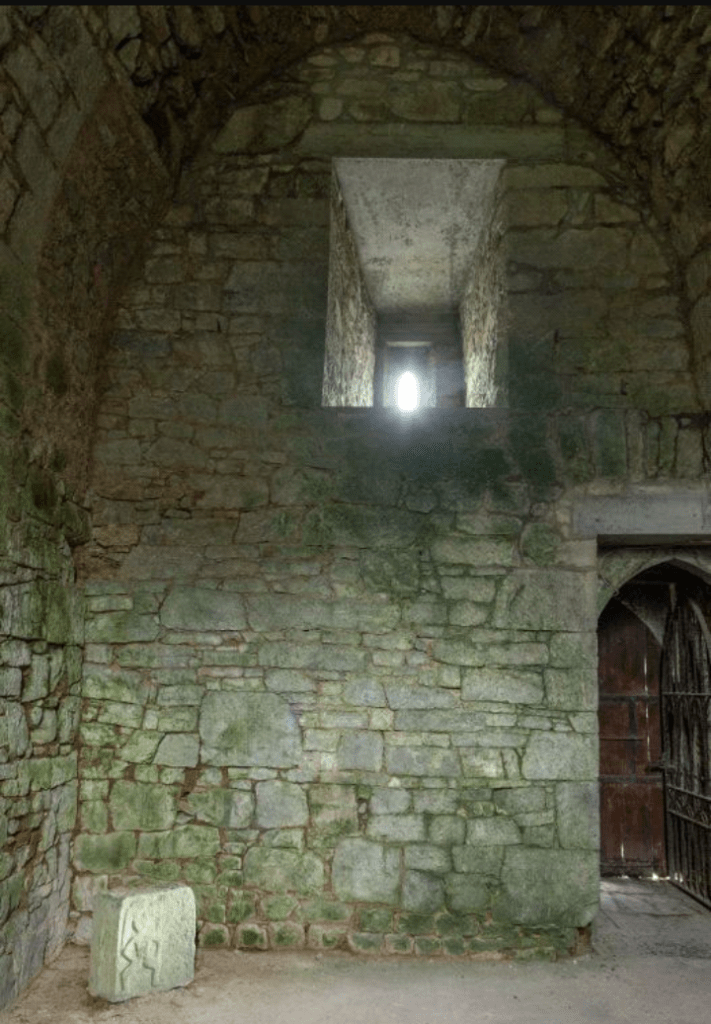
Wisps of could like filmy, darting thoughts were being blown across the moon. Bootfalls echoed on the solid floors through my labyrinth and an unseen force zigzagged down the hallways. It was so cold condensation on the marble floors tuned to ice patches. The dead girl had a neat round hole in her forehead and her hair was fanned over a sludgy discharge I took to be abandoned brains. It was more hideous than the dark nether World of subterrene mystery. Before trying any of the black archways for steps leading away from the body, I cast my beam of light about the stone-flagged floor. As I walked slowly about it suddenly occurred to me that there could be a crude trap-door leading down to some still deeper region of horror. Kneeling by one, I worked at it with my hands, and found that with extreme difficulty I could budge it. At my touch the moaning beneath ascended to a louder key, and only with vast trepidation did I preserved in the lifting of the heavy stone. A gust of bone chilling cold air now rose up from below, and my head reeled dizzily as I laid back the slab and turned my torch upon the exposed square yard of gaping blackness. As light shone down, the wailing changed suddenly to a series of horrible yelps; in conjunction with which there came again that sound of blind, futile scrambling and slippery thumping. I trembled with fear, unwilling to imagine what noxious thing might be lurking in the bowels of my mansion, but in a moment mustered up the courage to peer even further downward at arm’s length to see what might lie below. #RandolphHarris 1 of 5

For a moment I could distinguish nothing but the cold darkness; and then I saw something dark was leaping clumsily and frantically up and down at the bottom of the narrow shaft, which mut have been from thirty to forty feet below the stone floor where I lay. The torch shook in my hand, but I looked again to see what manner of living creature might be immured there in the darkness of that great unnatural cavern. Nevertheless, to my amazement, I clearly saw a woman standing at the bottom of the chasm, near a well. Thinking that she was a caretaker who had been locked in by mistake, and worried that she might stumble in the semidarkness, I called out to her, “Wait, darling, do not move until I can reach you.” Itook my eyes off her for a moment and quickly moved my torch ahead of me. However, I found myself alone; she had vanished into thin air from her spot well within the nave of the cavern. Unnerved, I ran to the entrance door and found it firmly locked. Then a knock came at the door. Not a sustained pounding like someone petitioning for entry, but a thud as if something had accidentally been bumped against the other side of the mahogany. Outlines and entities of power and symbolism and suggestion were frightfully on my sensitive perspective amongst the whispers of terrible hints and unnamable realities. Wind whining around the slightly warped door, someone having a coughing fit many floors above, distant shots. There was another knock. A dead face appeared. #RandolphHarris 2 of 5

In the dark this one had empty eye sockets and a constantly chattering mouth. Around its ragged neck was hung a knotted scarf. Become of my nervous coordination, I dropped the torch from my hand. Screaming and screaming, I realized no one would ever have recognized the horror I was experiencing; and though I could not rise to my feet, I crawled desperately away over the damp stones. Tearing my hands on the rough, loose stones, I slowly came to myself in the utter blackness. Stricken and unnerved in the abysmal blackness and horror, a cold wind, causing a tremendous chill. The dead till queued. A figure struggled out of the dark. It was naked. A skeleton held together by strips of muscle that looked like wet cowhide. The dead were just standing in line, stretching down the cavern. Could a ghost actually touch me? Hurt me? Were they planning to take e with them to the other World? I grabbed for something, anything. My shoe slipped on icy stone and I fell badly, my hip slamming a hard edge. A girl who stepped out of the dark scrambled toward me, a huge portion of her head dryly gone. My lungs hurt from the frozen air, and I coughed steam. Unmindful of the dangers of the ice, I made for the light of the doorway. As I bolting for the door, the dead all started to edge closer. Without pausing for a breath, pushing the doors together, I shut the bolt. There was nothing else I could do. The World went dark. #RandolphHarris 3 of 5

Almost in tears and bewildered, I work up to the loud and echoing howls of the winds and cries of tortured spirit. Irregular and active shadows were all around, whispering, unquiet creatures. The back of my head was sore. It was a shock to discover a painful golf-ball contusion lurking out of my skull. Whatever hit me was hard enough to knock me out cold. The progress of the spirits was a slow spiral; first they circled from above, casting light over the complex, but that left too many darks unprobed; then they went in at the deep end and moved methodically through the labyrinth, weaving between pillars and walls, stumbling through furniture. A dead man barged out of the morning room, shouldering doors apart, wading through chip and dale chairs and tables, roaring and slavering. I got up, walked across the foyer, and unbarred the doors. When all the bolts were loose, I flung the doors back and stood aside. However, they fiercely slammed shut. In a worse state of shivers than before, I walked smartly through the foyer, lite a candle, and carefully shut the door. Beginning to have inklings from infectious nerves, oh, I cannot tell you have desolate it was! And horribly threatening, too. First peering out as I opened the door, and fancying that a shadow, or more than a shadow—but it made no sound—passed from before me to one side as I came out into the passage. “It is alright,” I whispered to myself—whispering seemed the proper tone, and I went back to my sitting room. It was half-past ten. I looked out the window: there was a brilliant full moon—the Paschal moon. #RandolphHarris 4 of 5

I felt I was, as I have never felt it at another time under observation. Specially was it so when I passed out the first floor into a narrow path with many doors. The eternal whisper of Llanada Villa just above me, and the abyss in front. Yet in all this quiet, an acute, an acrid consciousness of a restrained hostility very near me, like a wolf on a leash that might be let go at any moment. The moonlight fell through the skylights. And there, right in front of me, was a kneeling figure of a man with extremely dark eyes in a pale face. There were footsteps in the hall, and at one point the steps went up the stairs and walked around overhead, but not a soul could be seen. In the near distance, the cry of night birds; a screech owl; the murmurous wind. I shivered. Cries were strangled. The blood-stained marble floor was painfully cold. Why was I drawn to see what I had no wish to see? I placed my hands against my mouth to keep from crying out in horror. My knee had gone weak. Moonlight slanting through the latticed windows on the eastern side of the house. Breathing quickly, shallowly. Thinking No! No! I did not see anything! I am just a widow, do not hurt me. I had sunk to the floor to hide like a terrified child. Waking them sometime later, confused, still anxious. I discovered comfort from being in the Diamond Hall. The ceiling was unnaturally high and shrouded in chandeliers hung as if floating in gloom; the room was so large that it appeared without walls; as if melting out into the shadows. All nature was hushed as in the aftermath of a terrible vision. #RandolphHarris 5 of 5

The Winchester Mystery House

Some very unaccountable things have occasionally happened in this said house. A caretaker had been greatly terrified by the apparition of a woman, and he declared that he had heard some extraordinary sounds in the night; but little or no attention was paid to his statements. About December, 1890, however, Mrs. Winchester and her staff were alarmed by terrific noises heard in every room, even in the daytime. Upon going up stairs and stamping on the floor in any of the rooms, say five or six times, the sound would be repeated instantly, but louder, and generally more in number and the vibrations of the board caused by these repeated sounds could be sensibly felt through the soles of one’s boots, whilst dust was thrown up with such velocity, and in such quantity, as to affect the eyes. There were two rooms in the house in which the females who slept in them were dreadfully beaten by invisible agency. Mrs. Winchester stated that she herself heard more than two hundred blows given in the course of a night, and she could compare them to nothing but a strong man striking with all his force, with a closed fist, on the bed. Those blows left great soreness, and visible marks.
Mrs. Winchester saw swelling, at least as big as a turkey’s egg, on the cheek of Blanche, one of the chambermaids, who voluntarily made oath that she was alone in bed when she received the blows from an invisible hand. Two carpenters also swore voluntarily before Mrs. Winchester, that they were so beaten as to experience a peculiar kind of numbness, and were sore for many days after. Their shrieks while being beaten were too terrible, it is averred, to have been counterfeited. Mrs. Winchester deposed that one night that after the light had been put out, and it had been quiet about half an hour, a large iron candlestick began to move rapidly about the room. Mrs. Winchester could hear no footsteps, but while in the act of attempting to use the “annunciator,” the candlestick was violently thrown at her head, which narrowly missed.
Come and enjoy a delicious meal in Sarah’s Café, stroll along the paths of the beautiful Victorian gardens, and wonder through the miles of hallways in the World’s most mysterious mansion. For further information about tours, including group tours, weddings, school events, birthday party packages, facility rentals, and special events please visit the website: https://winchestermysteryhouse.com/
Please visit the online giftshop, and purchase a gift for friends and relatives as well as a special memento of The Winchester Mystery House. A variety of souvenirs and gifts are available to purchase. https://shopwinchestermysteryhouse.com/

I Could Use Some Peace and Quiet in My Life

It is only through free, independent, truth-seeking research that there is any hope of success in this Quest for ultimate truth. Naturally, each vested interest tries to limit the search to its own fold for obvious reasons, but he should refuse to limit his studies to any single school. By remaining open to truths from different sources, and fitting them together like mosaics, we get eventually some sort of a pattern. The technetronic society may be the system of the future, but it is not yet here; it can develop from what is already here, and it probably will, unless a sufficient number of people see the danger and redirect our course. In order to do so, it is necessary to understand in greater detail the operation of the present technological system and the effect it has on man. What are the guiding principles of this system as it is today? It is programed by two principles that direct the efforts and thoughts of everyone working in it: Th first principle is the maxim that something ought to bedone because it is technically possible to do it. If it is possible to build nuclear weapons, they must be built even if they might destroy us all. If it is possible to travel to another galaxy, it must be done, even if at the expense of many unfulfilled needs here on Earth. This principle means the negation of all values which the humanist tradition has developed. This tradition said that something should be done because it is needed for man, for his growth, joy and reason, because it is beautiful, good, or true. #RandolphHarris 1 of 18
Once the principle is accepted that something ought to be done because it is technically possible to do it, all other values are dethroned, and technological development becomes the foundation of ethics. The, feasibility, which is a strategic concept, becomes elevated into a normative concept, with the result that whatever technological reality indicates we can do is taken as implying we must do it. The second principle is that of maximal efficiency leads as a consequence to the requirement of minimal individuality. If individuals are cut down to purely quantifiable units whose personalities can be expressed on punched cards, the social machine works more efficiently, so it is believed. These units can be administered more easily by bureaucratic rules because they do not make trouble or creation friction. In order to reach this result, men must be de-individualized and taught to find their identity in the corporation rather than in themselves. The question of economic efficiency requires careful thought. The issue of being economically efficient, that is to say, using the smallest possible amount of resources to obtain maximal effect, should be placed in a historical and evolutionary context. The question is obviously more important in a society where real material scarcity is the prime fact of life, and its importance diminishes as the productive powers of a society advance. An ideal helps to hold a man back from his weakness, a standard gives him indirectly a kind of support as well as, directly, guidance. #RandolphHarris 2 of 18
A second line of investigation should be a full consideration of the fact that efficiency is only a known element in already existing activities. Since we do not know much about the efficiency or inefficiency of untired approaches, one must be careful in pleading for things as they are on the grounds of efficiency. Furthermore, one must be very careful to think through and specify the area and time period being examined. If the time and scope of the discussion are broadened, what may appear efficient by a narrow definition can be highly inefficient. In economics there is increasing awareness of what are called “neighbourhood effects”; that is, effects that go beyond the immediate activity and are often neglected in considering benefits and costs. One example would be evaluating the efficiency of a particular industrial project only in terms of the immediate effects on this enterprise—forgetting, for instance, that waste materials deposited in nearby streams and the air represent a costly and a serious inefficiency with regard to the community. We need to clearly develop standards of efficiency that take account of time and society’s interest as a whole. Eventually, the human element needs to be taken into account as a basic factor in the system whose efficiency we ty to examine. #RandolphHarris 3 of 18

Dehumanization in the name of efficiency is an all-too-common occurrence; exempli gratia, giant telephone systems employing Brave New World techniques of recording operators’ contacts with customers and asking customers to evaluate workers’ performance and attitudes, etcetera—all aimed at instilling “proper” employee attitude, standardizing services, and increasing efficiency. From the narrow perspective of immediate company purposes, this may yield docile, manageable workers, and thus enhance company efficiency. In terms of the employees, as human beings, the effect is to engender feelings of inadequacy, anxiety, and frustration, which may lead to either indifference or hostility. In broader terms, even efficiency may not be served, since the company and society at large doubtless pay a heavy price for these practices. Another general practice in organizing work is to constantly remove elements of creativity (involving an element of risk or uncertainty) and group work by dividing and subdividing tasks to the point where no judgment or interpersonal contact remains or is required. Workers and technicians are by no means insensitive to this process. Their frustration is often perceptive and articulate, and comments such as “We are human” and “The work is not fit for human beings” are not uncommon. Again, efficiency in a narrow sense can be demoralizing and costly in any individual and social terms. #RandolphHarris 4 of 18
If we are only concerned with input-output figures, a system may give the impression of efficiency. If we take into account what the given methods do to the human being in the system, we may discover that they are bored, anxious, depressed, tense, etcetera. The result would be a twofold one: (1) Their imagination would be hobbled by their psychic pathology, they would be uncreative, their thinking would be routinized and bureaucratic, and hence they would not come up with new ideas and solutions which would contribute to a more productive development of the system; altogether, their energy would be considerably lowered. (2) They would suffer from many physical ills, which are the result of stress and tension; this loss in health is also a loss for the system. Furthermore, if one examines what this tension and anxiety do to them in their relationship to their wives and children, and in the functioning as responsible citizens, it may turn out that for the system as a whole the seemingly efficient method is most inefficient, not only in human terms but also as measured by merely economic criteria. Efficiency is desirable in any kind of purposeful activity. However, it should be examined in terms of the larger systems, of which the system under study is only a part; it should take account of the human factor within the system. Eventually efficiency as such should not be a dominant norm in any kind of enterprise. #RandolphHarris 5 of 18
The other aspect of the same principle, that of maximum output, formulated very simply, maintains that the more we produce of whatever we produce, the better. The success of the economy of the country is measured by its rise of a total production. So is the success of a company. Ford may lose several hundred million dollars by the failure of a costly new model, like the Edsel, but this is only a minor mishap as long as the production curve rises. The growth of the economy is visualized in terms of ever-increasing production, and there is no vision of a limit yet where production may be stabilized. The comparison between countries rests upon the same principle. China is surpassing the United States of America by accomplishing a more rapid rise in economic growth. Not only industrial production is ruled by the principle of continuous and limitless acceleration. The educational system has the same criterion: the more college graduates, the better. The same in sports: every new record is looked upon as progress. Even the attitude toward the weather seems to be determined by the same principle. It is emphasized that this “the hottest day in the decade,” or the coldest, as the case may be, and I suppose some people are comforted for the inconvenience by the proud feeling that they are witnesses to the record temperature. One could go on endlessly giving examples of the concept that constant increase of quantity constitutes the goal of our life; in fact, that it is what is meant by “progress.” #RandolphHarris 6 of 18

Few people raise the question of quality, or what all this increase in quantity is good for. This omission is evident in a society which is not centered around man any more, in which one aspect, that of quantity, has choked all others. It is easy to see that the predominance of this principle of “the more the better” leads to an imbalance in the whole system. If all efforts are bent on doing more, the quality of living loses importance and activities that once were means become ends. If we explore this idea of a larger and larger model of systems, we may be able to see in what sense completeness represents a challenge to reason. One model that seems to be a good candidate for completeness is called an allocation model; it views the World as a system of activities that use resources to “output” usable products. The process of reasoning in this model is very simple. One searches for a central quantitative measure of system performance, which has the characteristic: the more of this quantity the better. For example, the more profit a firm makes, the better. The more qualified students a university graduates, the better. The more food we produce, the better. It will turn out that the particular choice of the measure of system performance is not critical, so long as it is a measure of general concern. We take this desirable measure of performance, and relate it to the feasible activities of the system. The activities may be the operations of various manufacturing plants, of schools and universities, of farms, and so on. Each significant activity contributes to the desirable quantity in some recognizable way. #RandolphHarris 7 of 18
The contribution, in fact, can often be expressed in the amount of the desirable quantity. The more sales of a certain product, the higher the profit of a firm. The more we teach, the more graduates we have. The more fertilizer we use, the more food. If the overriding economic principle is that we produce more and more, the consumer must be prepared to want—that is, to consume—more and more. Industry does not rely on the consumer’s spontaneous desires for more and more commodities. By building in obsolescence it often forces him to buy new things when the old ones could last much longer. By changes in styling of products, dresses, durable goods, and even food, it forced him psychologically to buy more than he might need or want. However, industry, in its need for increased production, does not relay on the consumer’s needs and wants but to a considerable extent on advertising, which is the most important offensive against the consumers right to know what he wants. The spending of $364 billion dollars on direct advertising in 2023 (in newspapers, magazines, Internet, radio, TV) may sound like an irrational and wasteful use of human talents, of paper, and print. However, it is not irrational in a system that believes that increasing production and hence consumption is a vital feature of our economic system, without which it would collapse. #RandolphHarris 8 of 18

If we add to the cost of advertising the considerable cost for restyling of durable goods, especially cars, and of packaging, which partly is another form of whetting the consumer’s appetite, it is clear that industry is willing to pay a high price for the guarantee of the upward production and sales curve. The anxiety of industry about what might happen to our economy if our style of life changed is expressed in this brief quote by a leading investment banker: “Clothing would be purchased for its utility; food would be bought on the basis of economy and nutritional value; automobiles would be stripped to essentials and held by the same owner for 10 to 15 years of their useful lives; homes would be built and maintained for their characteristics of shelter, without regard to style or neighbourhood. And what would happen to a market dependent upon new models, new styles, new ideas? The transformations effected by this inner work seem, when stabilized, to be a natural maturity. In dealing with resistance from a patient, an analysis may assume the lead. He may be struck by a realization that despite much work done, much insight gained, nothing changes in the patient. In such cases he must desert his role as interpreter and confront the patient openly with the discrepancy between insight and change, possibly raising the question as to unconscious reservations that the patient may have which prevent him from letting any insight really touch him. #RandolphHarris 9 of 18

Thus far the analyst’s work is of an intellectual character: he puts his knowledge into the service of the patient. However, even if he is not aware of offering more than hi technical skill, this helps extend beyond what he can give on the basis of his specific competence. In the first place, by his very presence, he gives the patient a unique opportunity to become aware of his behaviour toward people. In other relationships the patient is likely to focus his thinking primarily on the peculiarities of others, their injustice, their selfishness, their defiance, their unfairness, their unreliability, their hostility; even if he is aware of his own reactions he is inclined to regard them as provoked by the other. In analysis, however, this particular personal complication is almost entirely absent, not only because the analyst has been analyzed, and continues to analyze himself, but also because his life is not entangled with the patient’s life. This detachment isolates the patient’s peculiarities from the befogging circumstances that ordinarily surround them. And in the second place, by his friendly interest, the analyst gives the patient a good deal of what may be called general human help. To some extent this is inseparable from the intellectual help. Thus the simple fact that the analyst wants to understand the patient implies that he takes him seriously. This in itself is an emotional support of primary importance, especially at those times when the patient is harassed by emerging fears and doubts, when his frailties are exposed, his pride attacked, his illusions undermined, for the patient is often too alienated from himself to take himself seriously. #RandolphHarris 10 of 18

That statement may sound implausible, because most neurotic persons have an inordinate sense of their own importance, either in regard to their unique potentialities or in regard to their unique needs. However, to think ourselves as all important is radically different from taking ourselves seriously. The former attitude derives from an inflated image of the self; the latter refers to the real self and its development. A neurotic person often rationalizes his lack of seriousness in terms of “unselfishness” or in a contention that it is ridiculous or presumptuous to give much thought to oneself. This fundamental disinterest in the self is one of the great difficulties in self-analysis, and, conversely, one of the great advantages of professional analysis is the fact that it means working with someone who through his own attitude inspires the courage to be on friendly terms with oneself. This human support is particularly valuable when the patient is in the grip of an emerging anxiety. In such situations the analyst will rarely reassure the patient directly. However, the fact that the anxiety is tackled as a concrete problem, which can be solved eventually, lessens the terror of the unknown, regardless of the content of the interpretation. Similarly, when the patient is discouraged and inclined to give up the struggle the analyst does more for him than merely interpreting: his very attempt to understand this attitude as the outcome of a conflict is a greater support to the patient than any patting on the back or any effort to encourage him in so many words. #RandolphHarris 11 of 18

There are also the times when those fictitious foundations upon which the patient has built up his pride become shaky, and he starts to doubt himself. It is good to lose harmful illusions about oneself. However, we must not forget that in all neuroses solid self-confidence is greatly impaired. Fictitious notions of superiority substitute for it. However, the patient, in the midst of struggle, cannot distinguish between the two. To him an undermining of his inflated notions means a destruction of his faith in himself. He realizes that he is not as saintly, as loving, as powerful, as independent as he had believed, and he cannot accept himself bereft of glory. At that point he needs someone who does not lose faith in him, even though his own faith is gone. The human help that the analyst gives the patient is similar to what one friend might gives to another: emotional support, encouragement, interest in his happiness. This may constitute the patient’s first experience of the possibility of human understanding, the first time that another person has bothered to see that he is not simply a spiteful, suspicious, cynical, demanding, bluffing individual, but, with a clear recognition of such trends, still likes and respects him as a striving and struggling human being. And if the analyst has proved to be a reliable friend, this good experience may help the patient also to retrieve his faith in others. There is no doubt that the observations of a trained outsider will be more accurate than our observation of ourselves, particularly so since concerning ourselves we are far from impartial. #RandolphHarris 12 of 18

Against this disadvantage, however, stand the fact, already discussed, that we are more familiar with ourselves than any outsider can be. If they are bent on understanding their own problems, experience gained in psychoanalytic treatment shows beyond any doubt that patients can develop an amazing faculty of keen self-observation. There are obvious differences in patterns and some of the contents of the full professional training of the psychiatrist, clinical psychologist, and social worker. If we ask what specific knowledges or skills are unique to each of them, constituting a basis on which each is able to make a contribution to the psychiatric patient that cannot be duplicated by the others, these can be best appreciated. The psychiatrist’s unique competence is his medical knowledge and training—he alone is qualified to appraise the medical-physical status of the patient (although any physician can do this as well—possibly better), and he alone is qualified to prescript and administer medical (physiochemical) treatments; no one else can do this. An additional prerogative of the psychiatrist as a physician is a legal authority (existing by virtue of long historical precedent and beginning to show signs of appropriate impress of modern concepts and techniques) to be responsible for certain administrative operations (as contrasted with clearly medical procedures), for example, to hospitalize a patient, to discharge a patient, and so on. #RandolphHarris 13 of 18

The long-standing authority of the physician as the final and sole authority on “insanity” or mental disease within the law is beginning to show appropriate decay. The quality of a recent brief filed by the American Psychiatric Association speaks eloquently for the inevitable erosion of the physician’s role as ultimate arbiter in this area. The clear responsibility of the hospital psychiatrist for medical care of patients has historically extended to a quasi-legal responsibility (final authority) for such psychological procedures as prescribing changes in activity programs, giving or withholding passes, allowing or disallowing visitors. However, increasingly, partly as a function of the team approach and partly as a function of administrative leadership, such decisions are becoming a group responsibility (in many instances of the responsibility of the patient’s peers) or transferred to the psychologist. The clinical psychologist’s unique contribution to the individual patient comes in his competence to select, administer, score, interpret, and integrate the results of a variety of psychological tests and examination procedures that provide the only truly standardized and reliable source of data as to the patient’s mental ability and personality. He alone is a skilled diagnostician in the sense of having facility with a set of instruments specifically designed to overcome the errors and inadequacies of notoriously fallible clinical appraisal of complex phenomena. Beyond the application of his diagnostic tools to the individual patient, the psychologist alone has a thorough knowledge of the psychometric theory underlying these instruments and, accordingly, he can truly appreciate their limitations. #RandolphHarris 14 of 18

Aside from this contribution to the individual patient, the psychologist’s grounding in the methodology of behavioural research, especially measurement of personality and the behavioural correlates of personality types, affords him the capacity to design instruments for appraisal of changes, specifically of changes in major dimensions of personality. Measurement of such changes, and of related criterion variables, lies at the heart of the appraisal of the effectiveness of any psychotherapeutic or other psychiatric therapy. Skill in such personality research at the molar of behavioural level (as contrasted with study of physiological functions) is another capacity unique to the clinical psychologist. The social worker has knowledge of the network of city, county, and state welfare agencies, their personnel, equipment, and services and their administrative patterns and relationships, which is not shard by others member of the psychiatric team. She is sensitive to community structure and to the ways in which that structure can naturally facilitate or impede the recovery of a patient. She is experienced in the relevance of subculture memberships for pattens of psychopathology and for accessibility or resistance to personal intervention. She is skilled in the elicitation and correlation of life history data from relatives and other informants. She is cognizant of the economic problems of various family structures. She is expert in preparation of the patient to accept and profit from such referrals. These are among the skills of the case workers in the old-fashioned sense, and they are not shared by psychiatrist of psychologist. #RandolphHarris 15 of 18
A few psychiatrists have also received full graduate training in psychology, some psychologists were previously social workers, and occasionally a social worker successfully pursues the study of medicine or psychology. Each of these professionals has some unique areas in the background of general education which he brings to his graduate training and differences in the core emphasis of his specialized graduate preparation. The professions of psychiatry, clinical psychology and social work are presently providing the great bulk of formal psychotherapy in this country. However, the members of no one of these three professions are selected and trained primarily to be skilled psychotherapists. The variation in the cost of training each of these experts and the time required for this training, in light of the proportional relevance of their respective programs as preparation for the specific conduct of psychotherapy, has obvious social implications. It must be recognized that psychotherapy is neither the primary not unique skill of any one of these professions. The psychiatrist, psychologist, and social worker each does possess specialized and unique competence. Can our society afford a significant reduction in the application of these unique skills in a “shotgun” effort to meet the manpower shortage resulting from the increasing demand for therapeutic conversation? #RandolphHarris 16 of 18

Man is conceived as a machine, driven by a relatively constant amount of sexual energy called “libido.” This libido causes painful tension, which is reduced only by the act of physical release; to this liberation from painful tension Dr. Freud gave the name of “pleasure.” After the reduction of tension, libidinal tension increases again due to the chemistry of the body, causing a new need for tension reduction, that is, pleasureful satisfaction. This dynamism, which leads from tension to release of tension to renewed tension, from pain to pleasure to pain, Dr. Freud called the “pleasure principle.” He contrasted it with the “reality principle,” which tells man what to seek for and what to avoid in the real World in which he lives, in order to secure his survival. This reality principle often conflicts with the pleasure principle, and a certain equilibrium between the two is the condition for mental health. On the other hand, if either one of these two principles is out of balance, neurotic or psychotic manifestations are the result. I, for one, am a fan of the silent treatment. The quieter it is, the more I like it. If you have someone who does this to you, then let them shut you out. Let them remain quiet because of something you did or said made them angry with you. Relish that silence. It is so much better than their ongoing griping and ridiculing. People use silence as a tactic to get to you, to make you feel bad. They want you to miss their presence, miss their acceptance of you. Do not give them what they want. And do not let it get to you. If they keep pulling themselves away and shutting people out, it is not your loss. #RandolphHarris 17 of 18

If you look at what they are doing, they are shutting everyone out, removing themselves from the World. It is really a very self-sabotaging thing to do. When you do not allow yourself to get upset by their actions and really take a look at what they are doing to themselves in a vain attempt to hurt you, you will realize that. If a man cannot find in society or surroundings that standards which suit his character, then he must find his own. It is this that makes him a quester. To some people, it might seem foolhardy to charge into the flames to rescue someone you never saw before and may never see again. It is not that the Sacramento Fire Department does not think about the danger. They are human and do not want to die, just like everyone else. However, unlike most everyone else, they do what has to be done despite their fears. Firefighters have ignored pleas from their partners and low-crawled through a blazing apartment, risking death, while desperately groping in the dense smoke for a child who was assumed dead. Another firefighter leaped into a smoke-filled elevator shaft of a burning high-rose and shinnied down a cable to a red-hot elevator in a valiant rescue attempt. While another firefighter jumped fifteen feet down into a pit of fire without a plan of escape because to do nothing meant certain death for a trapped victim. Gripping acts of heroism can happen anywhere at any time in Sacramento. Please make a donation to the Sacramento Fire Department to ensure they receive adequate resources. I pledge allegiance to the flag of the United States of America and to the republic for which it stands, one nation, under God, indivisible with liberty and justice for all. #RandolphHarris 18 of 18

One night while closing The Winchester Mystery House a caregiver had accidentally dropped his mobile phone, and began to read a text message after he picked it up; after when he looked at his watch to ascertain the time. In taking his eyes from his watch, they became riveted upon the door-to-nowhere which he distinctly saw open, and also saw the figure of a female attired in grayish garments, with the head inclined downwards, and one hand pressed upon the chest as if in pain, and the other—the right hand—extended towards the ground with the index finger pointing downwards. It advanced with an apparently cautious step across the floor towards him. Immediately as it approached another caregiver, who was relaxing, its right hand extended toward her. He then rushed at it, giving at the same time a most awful yell, but, instead of grasping it, he fell upon his friend. I recollected nothing distinctly for nearly three hours afterward. However, he learned that he was carried downstairs in agony of fear and terror. The female caregiver added to the account with the detail of “sounds” being heard from an adjacent room. “His horrible shouts. He seems to have fainted in her arms. She instantly laid him down and went into the room from whence the last sound was heard. However, nothing was there and the door-to-nowhere had not been opened. Other employees came quickly to their assistance, and found the young caregiver trembling in the most acute mental agony.

Come and enjoy a delicious meal in Sarah’s Café, stroll along the paths of the beautiful Victorian gardens, and wonder through the miles of hallways in the World’s most mysterious mansion. For further information about tours, including group tours, weddings, school events, birthday party packages, facility rentals, and special events please visit the website: https://winchestermysteryhouse.com/
Please visit the online giftshop, and purchase a gift for friends and relatives as well as a special memento of The Winchester Mystery House. A variety of souvenirs and gifts are available to purchase. https://shopwinchestermysteryhouse.com/

People Do Not Like Old Graves Disturbed

It was one of those nights when the moon gives a faint glimmer of light through the thick black clouds of a lowering sky. Hope and native courage urged me to push forward, but at the length the increasing darkness and fatigue of body and mind was overcoming me. As the moon sank beneath a black cloud, the hallways were darker than ever. All was silent. All was still as death. My blood was chilled, Across the hall, upon the grand staircase, a pale bluish apparition cast a dismal gleam of light around. Summoning forth my courage, I quickly advanced toward it. Terror impelled me to make some hasty steps. I came to the foot of the stairs, and after a moment’s deliberation ascended. I went slowly up, the apparition retiring before me, until I came to a wide gallery. The apparition proceeded along it, and I followed in silent horror, treading lightly, for the echoes of my footsteps startled me. It led me to the foot of another staircase, and then vanished. At the same instant toll sounded from the belfry—I felt it strike upon my heart. I was now in total darkness, and with my arms extended, began to ascend the second staircase. A dead cold hand met my left hand and firmly grasped it, drawing me forcibly forwards—I endeavoured to disengage myself, but could not—I made a furious blow with my revolver, and instantly a loud shriek pierced my ears, and the dead hand was left powerless in mine. I dropped it, and rushed towards with a desperate valour. The stairs were narrow and winding, and interrupted by frequent breaches. #RandolphHarris 1 of 5

The staircase grew narrower and narrower and at length terminated in to wall. I pushed the wall opened, its hinges creaked loudly-it led to an intricate winding passage, just large enough to admit myself. A faint glimmer of light served to show the nature of the place. I entered. A deep hollow groan resounded from a distance through the vault. I went forwards, and proceeding beyond the first turning, I discerned the same blue apparition. I flowed it. The vault, at length, suddenly opened into a lofty gallery, in which the midst of which a figure appeared, completely armed, thrusting forwards the bloody stump of an arm, with a terrible frown and menacing gesture, brandishing a pistol in his hand. I undauntedly sprang forwards and aimed a fierce blow at the figure; it vanished, letting fall a massy iron key. The apparition now rested upon a pair of ample wooden doors at the end of the gallery. I went up to it, and applied the key to a brazen lock—with difficulty I turned the bolt—instantly the doors flew open and discovered a large apartment. There was soft music playing, it was the most magnificent room I had ever seen, lighted with innumerable tapers in lustres of pure crystal. Then suddenly the piercing shrikes of a person in distress arrested my speed; I stopped and, listening attentively, heard shrill, melancholy cries repeated at interval through my mansion, which gradually became more distant, grew faint and died away. #RandolphHarris 2 of 5

As I traversed further in this new section of the mansion, there was a chandelier of bronze, hung down from the middle of the ceiling. Then, at one end of the hall, was a great fireplace, as long as the size of a county house; and by it were heavy, old-fashioned sofas. At the opposite end of the hall, to the left as I went it—on the western side—was an organ built into the wall, and so large that it filled up the best part of that end. Beyond it, on the same side, was a door. As I went through the door, I froze in fear. There was a solider in one of the bedrooms. He was dark and had a noose around the neck; the rope of cut and his faced seemed almost luminous. I tried to collect my thoughts. My first sensation was like that of a very young child badly hurt, when it catches it breath before crying out. The emotional climate of Llanada Villa was uncanny, as if an unseen force was always present. From the blank darkness outside came in, through the aperture that served for a window, all the ever unfamiliar noises of night in the wilderness—the long, nameless note of a distant coyote; the stilly pulsing thrill of tireless insects in trees; strange cries of night birds, so different from those of the birds of the day; the drone of great blundering beetles, and all that mysterious chorus of small sounds that seem always to have been but half hard when they have suddenly ceased, as if conscious of an indiscretion. #RandolphHarris 3 of 5

I crept to an open door; the organ broke out with a blare. A dazzling light filled the mansion, blotting the chandelier from my eyes. The soldier faded away, the arches, the vaulted roof vanished. I raised my seared eyes to the fathomless glare, and I saw the black stars hanging in the Heavens. I shivered. The air was suddenly cold. I told myself I was just scared, because I was. I sat there plunged in the profoundest grief that can come to the human soul, for in all other agony hope flickers, however forlornly. Then I saw something. I saw a little white face with eyes so scared and wishful that they seemed as if they might eat a hole in anybody’s heart. It was a dreadful little face, with something about it which made it different from any other face on Earth, but it was so pitiful that somehow it did away a good deal of dreadfulness. And there were two little hands spotted blue with the cold. And a darling little echo of a voice said, “I can’t find my mommy.” “For Heaven’s sake,” I said, “who are you?” Then the little voice said: “I can’t find my mommy.” All the time I could smell the cold that was clinging to her as if she had come out of some deadly cold place. She was dressed in a white nightgown, very long, quite covering her feet, and I could see dimly through her thin body mottled blue with the cold. Her face did not look so cold; that was a clear waxen white. Her hair was dark, but it looked as if she it might by dark only because it was so damp, almost wet, and might really be fair coloured hair. As the child descended further into the room, the ceiling returned and no longer visible were the stars. #RandolphHarris 4 of 5

Well, I was so dumfounded that I did not know what to do, and I could not make sense at first that it was anything supernatural. Then I tried to catch hold of the child, for I thought in spite of what I saw that perhaps I was nervous and she was a real child. I went to put my shawl around her, but the minute I moved toward the child, there was no longer a child there; there was only that little voice seeming to come from nothing, saying, “I can’t find my mommy,” and presently that died away. That feeling I had, the current in my stomach, my temples, my fingertips—it remained with me for quite a while. It rose and fell with the memory of that girl’s words. The air was still. As I gazed out the window, the silvery vapour hung serenely on the far horizon, and the frosty stars blinked brightly. Everyone knows the effect of such a scene on a mind already saddened. Fancies and regrets floats delicately in the mind, and the scene affected me with a strange sense of memory and anticipation, like some sweet old air heard in the distance. There was something of the unearthly and spectral within these walls whose direct connection was with a necromancy even older than the Salem witchcraft could not be doubted. A hideous traffic was going on among nightmare ghouls. Sometimes, looking at the past can have consequences for the present. It is best graves should be left well alone. We do not need to pull all the pieces together of things that are better left to rest. #RandolphHarris 5 of 5

The Winchester Mystery House

Of all the myths which have come down to us from ancient times and of all creations, the personality of evil has the strongest attraction for the mind of man. The Devil is the greatest enigma that has ever confronted the human intelligence. So large a place has Satan taken in our imagination, and we might also say in our heart, that his expulsion therefrom, no matter what philosophy may tech us, must forever remain an impossibility. The Devil advanced with the progress of civilization, because he is what men make him. I talked to caretakers of The Winchester Mystery House about apparitions they may have seen in Mrs. Winchester’s mansion. Some of them had never seen anything unusual. However, there was a man, who always liked to take tour of The Winchester Mystery House of Friday the 13th. When queried about his insistence on that day, the man freely admitted it was because on that day he could see “her”—the “her” being a female wraith who appeared at the mansion to listen to the guests, and then disappeared at midnight. On that day, he could always be next to her! I pressed more caretakers about any personal experienced. Finally, he thought that he had seen something like a figure in white out of the corner of one eye, a figure that passed, and quickly disappeared.

Come and enjoy a delicious meal in Sarah’s Café, stroll along the paths of the beautiful Victorian gardens, and wonder through the miles of hallways in the World’s most mysterious mansion. For further information about tours, including group tours, weddings, school events, birthday party packages, facility rentals, and special events please visit the website: https://winchestermysteryhouse.com/

Please visit the online giftshop, and purchase a gift for friends and relatives as well as a special memento of The Winchester Mystery House. A variety of souvenirs and gifts are available to purchase. https://shopwinchestermysteryhouse.com/

Buried Alive?

If people knew the likely course which American society will take, many if not most of them would be so horrified that they might take adequate measures to permit changing the course. If people are not aware of the direction in which they are going, they will awaken when it is too late and when their fate has been irrevocably sealed. Unfortunately, the vast majority are not aware of where they are going. They are not aware that the new society toward which they are moving is as radically different from Greek and Roman, medieval and traditional industrial societies as the agricultural society was from that of the food gatherers and hunters. Most people still think in the concepts of the society of the first Industrial Revolution. They see that we have more and better machines than man had fifty years ago and mark this down as progress. They believe that lack of direct political oppression is a manifestation of the achievement of personal freedom. Their vision of the year 2050 is that it will be the full realization of the aspirations of man since the end of the Middle Ages, and they do not see that the year 2025 may not be the fulfilment and happy culmination of a period in which man struggled for freedom and happiness, but the beginning of a period in which man ceases to be human and becomes transformed into an unthinking and unfeeling machine. It is interesting to note that the dangers of the new dehumanized society were already clearly recognized by intuitive minds in the nineteenth century, and it adds to the impressiveness of their vision that they were people of opposite camps. #RandolphHarris 1 of 17
A conservative like Disraeil and a socialist like Marx were practically of the same opinion concerning the danger to man that would arise from the uncontrolled growth of production and consumption. They both saw how man would become weakened by enslavement to the machine and his own ever increasing cupidity. Disraeli thought the solution could be found by containing the power of the new bourgeoisie; Mark believed that a highly industrial society could be transformed into a human one, in which man and not material goods were the goal of all social efforts. One of the most brilliant progressive thinkers of the last century, John Stuart Mill, saw the problem with all clarity: “I confess I am not charmed with the ideal of life held out by those who think that the normal state of human beings is that of struggling to get on; that the trampling, crushing, elbowing, and treading on each other’s heels, which form the existing type of social life, are the most desirable lot of human kind, or anything but the disagreeable symptom of one of the phases of industrial progress…Most fitting, indeed, is it, that while riches are power, and to grow as rich as possible the universal object of ambition, the path to it attainment should be open to all, without favour or partiality. But the best state for human nature is that in which, while no one is poor, no one desires to be richer, nor has any reason to fear being thrust back by the efforts of other to push themselves forward.” #RandolphHarris 2 of 17
It seems that great minds a hundred and sixty years ago saw what would happen today or tomorrow, while we to whom it is happening blind ourselves in order not to be disturbed in our daily routine. It seems that liberals and conservatives are equally blind in this respect. There are only few writers of vision who have clearly seen the monster to which we are giving birth. It is not Anne Rice’s Queen of the Damn, but a Moloch, the all-destructive idol, to which human life is to be sacrificed. This Moloch has been described most imaginatively by Orwell and Aldous Huxley, by a number of science-fiction writers who show more perspicacity than most professional sociologists and psychologists. I have already quoted Brzezinski’s description of the technetronic society, and only want to quote the following addition: “The largely humanist-oriented, occasionally ideologically-minded intellectual-dissenter…is rapidly being displaced either by experts and specialist…or by the generalists-integrators, who become in effect house-ideologues for those in power, providing overall intellectual integration for disparate actions.” A profound and brilliant picture of the new society has been given recently by one of the most outstanding humanists of our age, Lewis Mumford. If there are any, future historians will consider his work to be one of the prophetic warnings of our time. #RandolphHarris 3 of 17

Mr. Mumford gives new depth and perspective to the future by analyzing its roots in the past. The central phenomenon which connects past and future, as he sees it, he calls the “megamachine.” The “megamachine” is the totally organized and homogenized social system in which society as such functions like a machine and men like its parts. This kind of organization by total coordination, by “the constant increase of order, power, predictability and above all control,” achieved almost miraculous technical results in early megamachines like the Egyptian and Mesopotamian societies, and it will find its fullest expression, with the help of modern technology, in the future of the technological society. Mr. Mumford’s concept of the megamachine helps to make clear certain recent phenomena. The first time the megamachine was used on a large scale in modern times was, it seems to me, in the Stalinist system of industrialization, and after that, in the system used by Chinese Communism. While Mr. Lenin and Mr. Trotsky still hoped that the Revolution would eventually lead to the master of society by the individual, as Mr. Marx had visualized, Mr. Stalin betrayed whatever was left of these hopes and sealed the betrayal by physical extinction of all those in whom the hope might not have completely disappeared. Mr. Stalin could build his megamachine on the nucleus of a well-developed industrial sector, even though one far below those of countries like England or the United States of America. #RandolphHarris 4 of 17

The Communist leaders in China were confronted with a different situation. They had no industrial nucleus to speak of. Their only capital was the physical energy and the passions and thoughts of 1.4 billion people. They decided that by means of the complete coordination of this human material they could create the equivalent of the original accumulation of capital necessary to achieve a technical development which in a relatively short time would reach the level of that of the West. This total coordination had to be achieved by a mixture of force, personality cult, and indoctrination which is in contrast to the freedom and individual Mr. Marx had foreseen as the essential elements of a socialist society. One must not forget, however, that the ideals of the overcoming of private egotism and of maximal consumption have remained elements in the Chinese system, at least thus far, although blended with totalitarianism, nationalism, and thought control, thus vitiating the humanist vision of Mr. Marx. The insight into this radical break between the first phase of industrialization and the second Industrial Revolution, in which society itself becomes a vast machine, of which man is a living particle, is obscured by certain important differences between the megamachine of Egypt and that of the twenty-first century. First of all, the labour of the live parts of the Egyptian machine was forced labour. The naked threat of death or starvation forced the Egyptian worker to carry out his task. #RandolphHarris 5 of 17

Today, in the twenty-first century, the worker in the most developed industrial countries, such as the United States of America, has a comfortable life—one which would have seemed like a life of undreamed-of luxury to his ancestor working a hundred years ago. He has, and in this point lie one of the errors of Mr. Marx, participated in the economic progress of capitalist society, profited from it, and, indeed, has a great deal more to lose than his chains. The bureaucracy which directs the work is very different from the bureaucratic elite of the old megamachine. Its life is guided more or less by the same middle-class virtues that are valid for the worker, the difference in consumption is one of quantity rather than quality. Employers and workers smoke the same cigarettes and they ride in cars that look the same even though the better cars run more smoothly than the less expensive ones. They watch the same movies and the same television shows, and their wives use the same refrigerators. (The fact that the underdeveloped sector of the population does not take part in this new style of life has been mentioned.) The managerial elite are also different from those of old in another respect: they are just as much appendages of the machines as those whom they command. They are just as alienated, or perhaps more so, just as anxious, or perhaps more so, as the worker in one of their factories. They are bored, like everyone else, and use the same antidotes against the boredom. They are not as the elites were of old—a culture-creating group. #RandolphHarris 6 of 17

Although they spend a good deal of their money to further science and art, as a class they are much consumers of this “cultural welfare” as its recipients. The culture-creating group lives on the fringes. They are creative scientists and artists, but it seems that, thus far, the most beautiful blossom of twenty-first century society grows on the tree of science, and not on the tree of art. Different as people are, many all have in common an uncompromising will to liberate man, an equally uncompromising faith in truth as the instrument of liberation and the belief that the condition for this liberation lies in man’s capacity to break the chain of illusion. That al men share the same basic anatomical and physiological features is common knowledge, and no physician would think he could not treat every man, regardless of race and colour, with the same methods he has applied to men of his own race. However, does man have also in common the same psychic organization; do al men have in common the same human nature? If there such an entity as “human nature?” The whole concept of humanity and of humanism is based on the idea of a human nature in which all men share. This was the premise of Jesus the Christ as well what the doctrine of Judaeo-Christian thought. The picture of man in existentialist and anthropological terms assumes that the same psychic laws are valid for all men because the “human situation” is the same for all of us; that we all live under the illusion of the separateness and indestructibility of each one’s ego; that we all try to find an answer to the problem of existence by the greedy desire to hold on to things, including that peculiar thing, “I”; that we all suffer because this answer to life is a false one, and that we can get rid of the suffering only by giving the right answer—that of overcoming the illusion of separateness, of overcoming greed, and of waking up to the fundamental truths which govern our existence. #RandolphHarris 7 of 17
The Judaeo-Christian tradition, being conceptualized in reference to a supreme creator and ruler, God, defined man in a different way. One man and one woman are the forebears of the whole human race, and these forebears as well as all the generations to come are made in “the likeness of God.” They all share the same basic features that make them human, which enable them to know and to love one another. This is the premise for the prophetic picture of the Messianic Time, the peaceful unity of all mankind. Among the philosophers, Mr. Spinoza, the father of modern dynamic psychology, postulated the picture of the nature of man in terms of a “model of human nature,” which was ascertainable and definable and from which the laws of human behaviour and reaction followed. Man, and not just men of this or of that culture, could be understood like any other being in nature because man is one, and the same laws are valid for all of us at all times. The philosophers of the eighteenth and nineteenth centuries (especially Goeth and Herder) believed that the humanity (Humanitaet) inherent in man leads him to ever higher stages of development; they believed that every individual carries within himself not only his individuality but also all of humanity with all its potentialities. They considered the task of life to be the development toward totality through individuality; and they believed that the voice of humanity was given to everybody and could be understood by every human being. #RandolphHarris 8 of 17

Today the idea of human nature or of an essence of man has fallen into disrepute, partly because one has become more skeptical about metaphysical and abstract terms like “the essence of man,” but partly also because one has lost the experience of humanity which underlay the Judaeo-Chrisitan, Spinozist, and Enlightenment concepts. Contemporary psychologist and sociologists are prone to think of man as a blank sheet of paper on which each culture writes it text. While they do not deny the oneness of human race, they leave hardly any content and substance to this concept of humanity. In contrast to these contemporary trends, Mr. Marx and Dr. Freud assumed that man’s behaviour is comprehensible precisely because it is the behaviour of man, of a species that can be defined in terms of its psychic and mental character. Mr. Marx, in assuming the existence of nature of man, did not concur in the common error of confusing it with its particular manifestations. He differentiated “human nature in general” from “human nature as modified in each historical epoch.” Human nature in general we can never see, of course, as such, because what we observe are always the specific manifestations of human nature in various cultures. However, we can infer from these various manifestations what this “human nature in general” is, what the laws are which govern it, what the needs are which man has as man. In his earlier writings Mr. Marx still called “human nature in general” the “essence of man.” He later gave up this term because he wanted to make it clear that “the essence of man is no abstraction inherent in each separate individual.” #RandolphHarris 9 of 17

Mr. Marx also wanted to avoid giving the impression that he thought of the essence of man as an unhistorical substance. For Mr. Marx, the nature of man was a given potential, a set of conditions, the human raw material, as it were, which as such cannot be changed, just as the size and structure of the human brain has remained the same since the beginning of civilization. Yet man does change in the course of history. He is the product of history, transforming himself during his history, He becomes what he potentially is. History is the process of man’s creating himself by developing—in the process of work—those potentialities which are given him when he is born. “The whole of what is called World history,” says Mr. Marx, “is nothing but the creation of man by human labour, and the emergence of nature for man; he therefore has the evident and irrefutable proof of his self-creation of his own origins.” Mr. Marx was opposed to two positions: the unhistorical one that the nature of man is a substance present from the very beginning of history, and the relativistic position that man’s nature has no inherent quality whatsoever and is nothing but the reflect of social conditions. However, he never arrived at the full development of his own theory concerning the nature of man, transcending both the unhistorical and the relativistic positions; hence he left himself open to various and contradictory interpretations. #RandolphHarris 10 of 17

Nevertheless from his concept of man follow certain ideas about human pathology and about human health. As the main manifestation of psychic pathology, Mr. Marx speaks of the cripped and alienated man; as the main manifestation of psychic health, he speak of the active, productive, independent man. Up to this point the analyst, on the whole, has followed the patient. There is a certain amount of implicit guidance, of course, in each suggestion of a possible lead—a new slant offered by an interpretation, a question raised, a doubt expressed. However, for the most part the initiative lies with the patient. When a resistance has developed, however, interpretative work and implicit guidance may be insufficient, and then the analyst must definitely take the lead. In these periods his task is, first, to recognize the resistance as such, and, second, to help the patient to recognize it. And he must not only help him to see that he is engaged in a defensive battle but also find out, with or without the patient’s help, what it is that the latter is warding off. He does so by going back in his mind over the pervious sessions and trying to discover what may have struck the patient before the session in which the resistance started. It is sometimes easy to do this, but it may be extremely difficult. The beginning of the resistance may have been unnoticeable. The analyst may not yet be aware of the patient’s vulnerable spots. However, if the analyst can recognize the presence of the resistance, and can succeed in convincing the patient that one is operating, the source can often be discovered through common search. #RandolphHarris 11 of 17
The immediate gain from this discovery is that the way is cleared for further work, but an understanding of the sources of a resistance also provides the analyst with significant information concerning the factors the patient wants to keep under cover. When the patient has arrived at an insight that has far-reaching implications—for example, when he has succeeded in seeing a neurotic trend and in recognizing in it a driving force of primary order, the analyst’s active guidance is likely to be particularly necessary. This could be a time of harvest, a time in which many previous findings might fall in line and further ramifications might become apparent. What frequently happens instead is that at this very point, the patient develops a resistance and tries to get away with as little as possible. He may do so in various ways. He may automatically search for and express some ready-at-hand explanation. Or he may in a more or less subtle way disparage the significance of the finding. He may respond with good resolutions to control the trend by sheer will, a course which recalls the paving of the road to hell. Finally, he may prematurely raise the question why the trend has obtained such a hold on him, delving into his childhood and at best brining forth relevant data contributing to the understanding of origins, for he is actually using this dive into the past as a means of escaping from the realization of what the discovered trend means for his actual life. #RandolphHarris 12 of 17
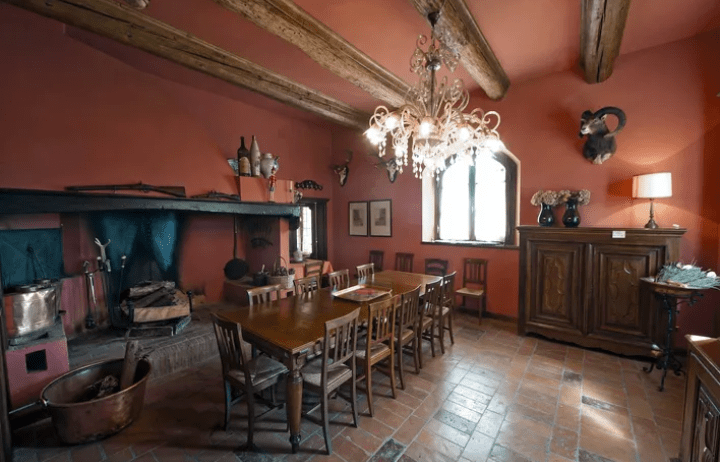
These efforts to rush away from an important insight as quickly as possible are understandable. It is difficult for a person to face the fact that he has put all his energies into the pursuit of a phantom. More important, such an insight confront him with the necessity for radical change. It is only natural that he should tend to close his eyes to a necessity so disturbing to his whole equilibrium. However, the fact remains that through this hasty retreat, he prevents the insight from “sinking in” and thereby deprives himself of the benefits it might mean for him. Here the help the analyst can give is to take the lead, revealing to the patient his recoiling tactics and also encouraging him to work through in great detail all the consequences the trend has for his life. It is extent and intensity and implications are fully confronted, ss mentioned before, a trend can be coped with only then. When the patient unconsciously shrinks a square recognition that he is caught in a conflict of opposing drives, another point at which a resistance may necessitate active guidance from the analyst occurs. Here again his tendency to maintain the status quo may block all progress. His associations may represent only a futile shuttling between one aspect of the conflict and another. He may talk about his need to force others into helping him by arousing pity, and soon after about his pride preventing him from accepting any help. #RandolphHarris 13 of 17
As soon as the analyst comments on the one aspect he will shuttle to the other. This unconscious strategy may be difficult to recognize because in pursuing it the patient may bring forth valuable material here and there. Nevertheless, it is the analyst’s task to recognize such evasive maneuvers and to direct the patient’s activity toward a square recognition of the existing conflict. The psychiatric social worker is typically the holder of a Master’s degree (commonly the M.S.W., Master of Social Work). This means that in addition to an undergraduate college degree she has completed a two-year course of study in a recognized school of social work. To qualify for admission to such a graduate program, she has pursued a college curriculum, especially in her junior and senior years, which has emphasized courses in child and adolescent psychology, sociology, and public health. Her undergraduate major is very likely to be in sociology, entailing the study of community organization, family structure, and political and economic aspects of welfare agencies. As a graduate student, she takes didactic instruction in personality development, psychopathology, community organization, social welfare programs and agencies, and principles of social case work. She is required to complete an extended thesis or research project, frequently as a collaborative endeavour with other students. In the first year of her graduate study, she enters upon a sequence of intensive field work experience, usually beginning in a general community agency (for example, a family and children’s service). #RandolphHarris 14 of 17
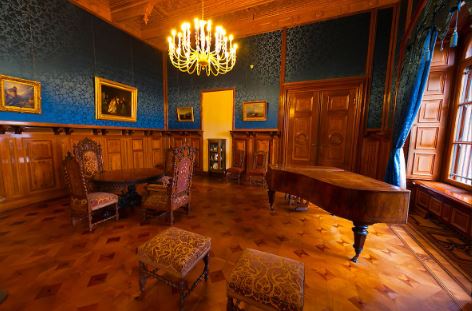
Her placement in the second year will be in a psychiatric clinic or hospital where she receives “on-the-job” orientation to the functions of the psychiatric social worker (PSW) and undertakes increasing responsibility for carrying out such functions herself under regular and close case-by-case supervision from an experienced staff member. In total, she will accumulate close to the equivalent of one year of full-time supervised experience in interviewing patients and families, collecting and integrating case material, contacting relevant community agencies, and communicating her findings to other professional staff. In her field work she is required, under very close supervision, to “carry” an increasing load of cases, id est, be the primary source of a patient’s therapeutic conversation. Historically, intensive individual attention to and frequent contact with a client by a social worker has been a part of “case work.” As functions and roles of the social worker have shifted under the increasing burdens of the case load of psychiatric patients and as the psychiatric social worker has become more visible, it becomes increasingly clear that she is engaged frequently in an undifferentiated psychotherapeutic endeavour. Largely for purposes of maintaining amicable relationships with her “overseer,” she has been content with the professional usage that designates her activity as case work. #RandolphHarris 15 of 17
However, attempts to differentiate logically between what should go in “case work” and what should transpire in psychotherapy have not yielded either numerous or clear distinctions. Typically, some six to seven years following graduation from high school, at an average age of 24 years, the PSW is ready to function as one of the sources of therapeutic conversation for the patient of a completely staffed psychiatric clinic or hospital. In areas of heavy population density where the demand for psychotherapy is in great excess to the supply, some social workers (not always trained in the psychiatric specialty) are finding it feasible to offer their service to private clients who consult them directly. For most people in the mental health field and patients, there are days when one cannot seem to do anything right. When one adds in a person who constantly criticizes you and everything you do, it makes it so much worse. When people are micromanaging you and constantly criticizing you, they may cause you to make the mistakes they think they are preventing you from making. In situations like these, it is always best to stop the person who is doing this to you right away. Tell them if they have something constructive to say, that you will listen. Shouting at you and following you around and harassing and annoying you may not only be criminal offenses, but it may also only make it where you ignore them all together. And remind them that no one does everything wrong. And no one know it all either. #RandolphHarris 16 of 17
The Sacramento Fire Department insists that they treat each structure as if it were their own home or business. By producing that kind of atmosphere, that kind of attitude, then all of the rest of it kind of falls into place. Your politicians will be happy. The boss will be happy. Your firefighters and EMS crew are going to enjoy the accolades for doing a good job and the thank you notes for going above and beyond the normal expectations of firefighters and EMS. And most of the public, whom they have sworn to serve and protect, will be grateful for the services these heroes provide us with. That is their mission. Their mission is to protect property and take care of people. The excitement of being a firefighter or EMS who responds to calls, fights fires, and helps people is unmatched by anything else. It takes people who love to help people and lives to be challenged to be a firefighter or EMS. Firefighters have knowledge of building construction, regulations, and fire behaviour. They know how the fire is going to react with the building. Many people who live in multi-story buildings should invite the fire department to host a fire prevention program and tenants how safe their residence is and what is to be expected in case of an emergency. To ensure the Sacramento Fire Department has adequate resources, please make a donation. And remember to vote Kevin McCarty for mayor of Sacramento, he is endorsed by the Sacramento Fire Department and has led on housing and homelessness. I pledge allegiance to the flag of the United States of America and to the Republic, for which it stands, one Nation, under God, indivisible with liberty and justice for all. #RandolphHarris 17 of 17
The Winchester Mystery House
At the time Mrs. Winchester was lowered into her grave in New Haven, Connecticut, her niece Daisy had a vision of her in the casket…and heard her cough. The dead do not do that, and Daisy thought her dear aunt Sarah tried to tell her she was not quite ready yet. Or perhaps Mrs. Winchester’s spirit was not finished building. Unfortunately, nothing was done about it at the time, so she went, ready or not.

Come and enjoy a delicious meal in Sarah’s Café, stroll along the paths of the beautiful Victorian gardens, and wonder through the miles of hallways in the World’s most mysterious mansion. For further information about tours, including group tours, weddings, school events, birthday party packages, facility rentals, and special events please visit the website: https://winchestermysteryhouse.com/

Please visit the online giftshop, and purchase a gift for friends and relatives as well as a special memento of The Winchester Mystery House. A variety of souvenirs and gifts are available to purchase. https://shopwinchestermysteryhouse.com/

Where are We Headed?
It is difficult to locate our exact position on the historical trajectory leading from eighteenth- and nineteenth-century industrialism to the future. It is easier to say where we are not. We are not on the way to free enterprise, but are moving rapidly away from it. We are not on the way to greater individualism, but are becoming an increasingly manipulated mass civilization. We are not on the way to the places toward which our ideological maps tell us we are moving. We are marching in an entirely different direction. Some see the direction quite clearly; among them are those who favour it and those who fear it. However, most of us look at maps which are as different from reality as was the map of the World in the year 500 B.C. It is not enough to know that our mas are false. If we are able to go in the direction we want to go, it is important to have correct maps. The most important feature of the new map is the indication that we have passed the stage of the first Industrial Revolution and have begun the period of the second Industrial Revolution. The first Industrial Revolution was characterized by the fact that man had learned to replace live energy (that of animals and men) by mechanical energy (that of steam, oil, electricity, and the atom). These new sources of energy were the basis for a fundamental change in industrial production. Related to this new industrial potential was a certain type of industrial organization, that of a great number of what we would call today small or medium-sized industrial enterprises, which were managed by their owners, which competed with each other, and which exploited their workers and fought with them about the share of the profits. #RandolphHarris 1 of 18
The member of the middle and upper class was the master of his enterprise, as he was the master of his home, and he considered himself to be the master of his destiny. Ruthless exploitation of nonwhite populations went together with domestic reform, increasingly benevolent attitudes toward the poor, and eventually, in the first half of this century, the rise of the working class from abysmal poverty to a relatively comfortable life. The first Industrial Revolution is being followed by the second Industrial Revolution, the beginning of which we witness at the present time. It is characterized by the fact not only that living energy has been replaced by mechanical energy, but that human thought is being replaced by the thinking of machines. Cybernetics and automation (“cybernation”) make it possible to build machines that function much more precisely and much more quickly than the human brain for the purpose of answering important technical and organizational questions. Cybernation is creating the possibility of a new kind of economic and social organization. A relatively small number of mammoth enterprises has become the center of the economic machine and will rule it completely in the not-too-distant future. The enterprise, although legally the property of hundreds of thousands of stockholders, is managed (and for all practical purposes managed independently of the legal owners) by a self-perpetuating bureaucracy. The alliance between private business and government is becoming so close that the two components of this alliance become ever less distinguishable. #RandolphHarris 2 of 18
The majority of the population in America used to be well fed, well housed, and well amused, and the sector of “underdeveloped” Americans who live under substandard conditions will is increasing well into the foreseeable future. We continue to profess individualism, freedom, and faith in God, but our professions are wearing thin when compared with the reality of the organization man’s obsessional conformity guided by the principle of hedonistic materialism. If society could stand still—which it can do as little as an individual—things might not be s ominous as they are. However, we are headed in the direction of a new kind of society and a new kind of human life, of which we now see only the beginning and which is rapidly accelerating. Our individual thoughts are patterned after the ideas any given society develops, and these ideas are determined by the particular structure and mode of functioning of the society. A watchful, skeptical, doubting attitude toward all ideologies, ideas, and ideals, is characteristic for Marx. He always suspected them as veiling economic and social interests, and his skepticism was so strong that he could hardly ever use words like freedom truth, justice—precisely because of the fact that they lend themselves to so much misuse, and not because freedom, justice, truth, were not the supreme values for him. #RandolphHarris 3 of 18
Dr. Freud thought in the same “critical mood.” His whole psychoanalytic method could be described as “the art of doubting.” Having been impressed by certain hypnotic experiments which demonstrated to what extent a person in a trance can believe in the reality of what is obviously not real, he discovered that most of the ideas of persons, who are not in a trance also do not correspond to reality, and that on the other hand most of that which is real is not conscious. Marx thought the basic reality to be the socioeconomic structure of society, while Dr. Freud believed it to be the libidinal organization of the individual. Yet they both had the same implacable distrust of the clichés, ideas, rationalizations, and ideologies which fill people’s minds and which from the basis of what they mistake for reality. This skepticism toward “common thought” is insolubly connected with a belief in the liberating force of truth. Marx wanted to liberate man from the chains of dependency, from alienation, from slavery to the economy. What was his method? Not, as is widely believed, force. He wanted to win the minds of the majority of the people. While force, according to him, might he use if the minority were to resist b force the will of the majority, the main question for Marx was not the mechanism of how to attain power in the state, but how to win the minds of the people. In his “propaganda,” Marx and his legitimate successors used the opposite method from the one used by all other politicians, whether bourgeois, fascist, or communist. #RandolphHarris 4 of 18
He wanted to influence not by demagogic persuasion, creating semi-hypnotic states supported by fear of terror, but by an appeal to the sense of reality, by truth. The assumption underlying Marx’s “weapon of truth” is the same as with Dr. Freud: that man lives with illusions because these illusions make the misery of real life bearable. If he can recognize the illusions for what they are, that is to say, if he can wake up from the half-dream state, then he can come to hi senses, become aware of his proper forces and powers, and change reality in such a way that illusions are no longer necessary. “False consciousness,” that is to say, the distorted picture of reality, weakens man. Being in touch with reality, having an adequate picture of it, makes him stronger. Hence Marx believed that his most important weapon was truth, the uncovering of the reality behind the illusions and ideologies which cover it. In this lies the reason for a unique feature of Marxist propaganda: it is an emotional appeal for certain political aims, blended with a scientific analysis of social and historical phenomena. The best-known example for this blend is, of course, the Communist Manifesto. This contains in a brief form a brilliant and lucid analysis of history, of influence of economical factors, of class relations. And at the same time, it is a political pamphlet ending with a fervently emotional appeal to the working class. #RandolphHarris 5 of 18
The fact that the political leader must be at the same time a social scientist and a writer was demonstrated not only by Marx. Engels, Bebel, Jaures, Rosa Luxemburg, Lenin and many other leaders of the socialist movement were writers and students of social science and politics. (Even Stalin was forced to write books or to have them written in his name in order to prove his legitimacy of Marx’s and Lenin’s successor.) In fact, however, under Mr. Stalin, this aspect of socialism completely changed. Since the Soviet system must not be the subject matter of scientific analysis, the Soviet social scientists have become apologists for their system and have a scientific function only in technical matters dealing with production, distribution, organization et cetera. While for Marx, truth was a weapon to induce social change, for Dr. Freud it was the weapon to induce individual change; awareness was the main agent in Dr. Freud’s therapy. If, so Dr. Freud found, the patient can gain insight into the fictitious character of his conscious idea, if he can grasp the reality behind these ideas, if he can make the unconscious conscious, he will attain the strength to rid himself of his irrationalities and to transform himself. Dr. Freud’s aim, “Where there is ID, there shall be Ego,” can be realized only through the effort of reason to penetrate fictions and to arrive at the awareness of reality. It is precisely this function of reason and truth which gives psychoanalytic therapy its unique feature among all forms of therapy. #RandolphHarris 6 of 18

Each analysis of a patient is a new and original venture of research. If it were applied, while it is true, of course, that there are general theories and principles which can be applied, there is no pattern, no “formula” which could be applied to the individual patient or be helpful to him. Just as for Marx, the political leader mut be a social scientist, so for Dr. Freud the therapist must be a scientist capable of doing research. For both, truth is the essential medium to transform, respectively, society and the individual; awareness is the key to social and individual therapy. Marx’s statement, “The demand to give up the illusions about its condition is the demand to give up a condition which needs illusions,” also could have been made by Dr. Freud. Both wanted to free man from the chains of his illusions in order to enable him to wake up and to act as a free man. The third basic element common to both systems is their humanism. Humanism in the sense that each man represents all of humanity; hence, that there is nothing human which could be alien to him. Marx was rooted in this tradition, of which Voltaire, Lessing, Herder, Hegel, and Goethe are some of the most outstanding representatives. Dr. Freud expressed his humanism primarily in his concept of the unconscious. He assumed that all men share the same unconscious strivings, and hence that they can understand each other once they dare to delve into the underworld of the unconscious. He could examine the unconscious fantasies of his patient without feeling indignant, judgmental or even surprised. #RandolphHarris 7 of 18

The “stuff from which dreams are made” as well as the whole World of the unconscious became an object of investigation precisely because Dr. Freud recognized its profoundly human and universal qualities. Doubt and the power of truth and humanism are the guiding and propelling principles of Marx’s and Dr. Freud’s work. In the Anglo-Saxon countries, Hegelian philosophy has ben a dead issue for a long time so that the dynamic approach of Marx and Dr. Freud is not readily understood. Let us begin with a few examples, both from the realm of psychology and that of sociology. Let us assume a man who has been married three times. The pattern is always the same. He falls in love with a good-looking young lady, marries her, and is ecstatically happy for a short time. Then he begins to complain that his wife is domineering, that she curtails his freedom et cetera. After a period alternating between quarrels and reconciliation, he falls in love with another girl—in fact, one very similar to his wife. He gets a divorce and marries his second “great love.” However, with slight modifications the same cycle takes place, and again he falls in love with a similar type of girl, and again he gets divorced and married a third “great love.” Again, the same cycle occurs, and he fall in love with a fourth girl, being convinced that this time it is the true and real love (forgetting that he was convinced of that every time in the past), and wants to marry her. #RandolphHarris 8 of 18

If she asked us our opinion about the chances for a happy marriage with him, what would we say to the last girl? There are several approaches to the problem. The first one is a purely behaviouristic one; the method of this approach is to conclude from past behaviour, the future behaviour. This argument would run: since he already has left a wife three time, it is quite likely that he will do it a fourth time, hence it is much too risky to marry him. This approach, empirical and sober, has much to be said for it. However, the girl’s mother, when using this approach, might find it difficult to answer one argument of her daughter’s. This argument says that while it is perfectly true that he did act in the same way three time, it does not follow that he will do so again this time. Either, so this counter-argument will say, he has changed—and who can say that a person may not change? Or the other women were not really the kind he could love deeply, while she, the last one, is really congenial to him. There is no convincing argument the mother could use against this reasoning. In fact, once she sees the man and notices that he is very much enraptured with her daughter, and that he walks with great sincerity about his love, even the mother might change her mind and be won over to the daughter’s position. The mother’s and the daughter’s approaches are both undynamic. They either make a prediction based on past performance, or one based on present words and actions, yet they have no way of proving that their predictions are better than guesswork. #RandolphHarris 9 of 18

What is, in contradiction, the dynamic approach? The essential point in this approach is to penetrate through the surface of past or present behaviour and to understand the forces which created the pattern of past behaviour. If these forces still exist, it is to be assumed that the fourth marriage will end not differently from the previous ones. If, on the other hand, there has been a change in the forces underlying his behaviour, one would have to admit the possibility or even the likelihood of a different outcome, in spite of the past behaviour. What are the forces we speak of here? They are nothing mysterious, nor figments of abstract speculation. If one studies the behaviour of the person in the proper way, they are recognizable empirically. We may assume, for instance, that the man had not cut the tie to his mother; that he is a very narcissistic person with a deep doubt of his own manliness; that he is an overgrown adolescent in constant need of admiration and affection, so that once he has found a woman who fulfills these needs, he get bored with her soon after the conquest is made; he needs new proofs of his attractiveness and hence must look for another woman who can reassure him. At the same time, he is really dependent on women, afraid of them; and hence any prolonged intimacy makes him feel imprisoned and chained. The forces at work here are his narcissism, his dependence, his self-doubt producing needs which lead to the kind of action we have been describing. #RandolphHarris 10 of 18
These forces are by no means the result of abstract speculation. One can observe them in many ways: by examining dreams, free association, fantasies, by watching his facial expression, his gestures, his way of speaking, and so forth. Yet they are often not directly visible but must be inferred. Furthermore, they can be seen only within the theoretical frame of reference in which they have a place and meaning. Most importantly these forces are not only not conscious as such, but they are in contradiction to the conscious thought of the person involved. He is sincerely convinced that he will love the girl forever, that he is not dependent, that he is strong and self-assured. Thus, the average person thinks: if a man truly feels he loves a woman how can one predict that he will leave her after a short time, just by referring to such mythical entities as “fixation to mother,” “narcissism,” and so on? Are one’s eyes and ears not better judges than such deductions? Interpretations are suggestions as to possible meanings. They are by nature more or less tentative, and the patient’s reactions to them vary. If an interpretation is essentially right, it may strike home and stimulate associations showing its further implications. Or the patient may test it our and gradually qualify it. Even when it is only partly right, it may thus give rise to new trends of thought, provided the patient is co-operating. However, an interpretation may also provoke anxiety or defensive reactions. Whatever the reactions are, the analyst’s task is to understand them and learn from them. #RandolphHarris 11 of 18

Psychoanalysis in its very essence is co-operative work, both patient and analyst bent on understanding the patient’s difficulties. The latter tries to lay himself open to the analyst and, as we have seen, the analyst observes, tries to understand, and, if appropriate, conveys his interpretation to the patient. He then makes suggestions as to possible meanings and both try to test out the validity of the suggestions. They try to recognize, for instance, whether an interpretation is right only for the present context or is of general importance, whether it has to be qualified or is valid only under certain conditions. And as long as such a co-operative spirit prevails, it is comparatively easy for the analyst to understand the patient and to convey to him his findings. The real difficulties arise when, in technical terms, the patient develops a “resistance.” Then, in tangible or intangible ways, he refuses to co-operate. He is late or forgets the appointment. He wants to take some days or weeks off. He loses interest in the common work and mainly wants the analyst’s love and friendship. His associations become shallow, unproductive, and evasive. Instead of examining suggestion made by the analyst, he resent them and feels attacked, hurt, misunderstood, humiliated. He may reject every attempt to help with a rigid feeling of hopelessness and futility. Fundamentally the reason for this impasse is that certain insights are not acceptable to the patient; they are too painful, too frightening, and they undermine illusions that he cherishes and is incapable of relinquishing. #RandolphHarris 12 of 18

Therefore he fights them off in one way or another, though he does not know that he is attempting to ward off painful insights: all he knows, or thinks he knows, is that he is misunderstood or humiliated or that work is futile. I do not care how much anyone laughs, ugly things someone says about you hurts—and it sticks with you for a very long time. You will experience this, and you might even dish this kind of humour out at times. It does not make it right. As humans, we like to make people laugh. When everyone around you is in good spirits, because of something you said, even when that something might be hurting someone else’s feelings, it feels good to some people. However, being disrespected by a joke someone is making is not fun. Even when the individual being insulted is laughing, too, they are not immune to the condescending remarks and negative words. People who do these kinds of things, do not find it funny when someone roasts them. When older try to speaking to you in a condescending way, or make fun of your life, just tell them about the highlights that you deal with, and tell them that it may sound bad to them, but you enjoy your life. You can also tell them that you understand their situation may not be exactly the way they like it to be. That should get them to stop harassing you without seeming like a mental case or telling them off. #RandolphHarris 13 of 18

The clinical psychologist holds the Ph.D. degree in psychology. This means that he had completed a minimum of three years of graduate instruction in psychology from a major university. Before admission to such graduate study, he had completed a four-year college degree in a liberal arts program with emphasis upon the humanities and the social sciences. His graduate work will encompass study of personality theory, abnormal psychology (psychopathology), methods of psychological measurement, and psychometric theory, statistical methods and research design. Clinical diagnostic tests and techniques, principles of interviewing, and theories and techniques of psychotherapy. These constitute his major program; he will probably also complete a program of minor didactic studies in an appropriate related field such as sociology, anthropology, or psychiatry. The psychologist’s graduate program includes both didactic instruction and supervised clinical practice in interviewing, testing, and the like. As a major requirement for the doctoral degree, he must design, carry out, and write up an original research investigation in an appropriate problem area. Finally, like the M.D., he must complete a full year’s internship in a psychiatric facility having a full complement of professional staff. This total program of instruction, supervised training, and research is completed by the average clinical psychologist in slightly over five years. (The range of years from matriculation to degree completion is from a minimum of four to an upper limit of nine or ten years, this variation being primarily a function of the amount of time required for completion of the doctoral dissertation.) #RandolphHarris 14 of 18

Thus, typically, some nine to ten years following high-school graduation, at an average age of 27-plus years, the psychologist is qualified to begin his professional career as a clinician and, if he chooses (and an increasing number do), to specialize in psychotherapy with outpatient neurotics. Both psychiatry and clinical psychology have “specialty boards” which examine and aware “certification” in the respective specialty. To be eligible for such examination, the psychiatrist must have two years of appropriate experience after completion of his residency. The psychologist must have at least four years of suitable experience following receipt of the Ph.D. Mental health affect our thoughts, emotions, behaviour, and relationships. Those who develop mental health challenges or illness can be impaired in their ability to cope with the routines and demands of daily life. Such conditions are often emotionally draining and confusing for the individual as well as for loved ones and leaders attempting to minister to the afflicted person. Those who are not mental health professions are not expected or encouraged to diagnose or provide treatment to individuals struggling with mental health issues. When individuals do not seem to respond to normal attempts by leaders to be helpful, no one should be offended by their lack of response. Instead, leaders should seriously consider encouraging the individual to get a mental health assessment from a qualified provider. #RandolphHarris 15 of 18

As you discuss mental health concerns, make sure to show love and empathy as the Saviour would. If the person has reached out for help, thank her or him for asking for help. Because every situation is different and each person’s circumstances vary, prayerfully consider asking the person questions like these and then listen to the Spirit to help you better understand his or her concerns and discern his or her needs: Have you ever been diagnosed with a mental health condition? If so, how long have you had the condition? How does it affect your employment and family relationships? What are your greatest concerns or worries right now? What (if any) care are you receiving from a mental health care provider? Are you following the instructions from your provider, and are you comfortable with the care you are receiving? Do you feel you mental health condition is improving, staying the same, or getting worse? How are you coping with your condition? How do your family member handle your condition? Have they suggested anything you are not currently doing that you think maybe helpful? Have you received insights from Heavenly Father about your condition? If so, what were those insights? With the individual’s permission, and being respectful of the individual’s feelings, consider contacting family members for further insight into the issue. As you help the individual understand how their challenges are affecting their lives, consider reassuring the person that Heavenly Father love her or him and that the Saviour understands his or her challenges. #RandolphHarris 16 of 18

Help the person understand that mental illness is not a punishment from God. Help the person realize that mental illness cannot be overcome by willpower alone. Mental illness does not indicate that a person lacks faith, character, or worthiness. Include the person in Church activities and appropriate service opportunities. Consult with the person, family members, and others who know the person well to be aware of the person’s strengths and limitations. Consider consulting with Family Services (where available) or local providers of mental health services to identify support and treatment options. Even with the best of care, be aware that some conditions can last a lifetime. Sometimes people who are deeply, deeply racist may act unpredictable around an individual from a group they hate. Therefore, it is a good idea to be aware of people who seem psychotic, and avoid them, especially when they are around sharp objects or other objects, they could use to harm you. Do not make any sudden moves, just be aware, and ease out of the situation. Those who are taking medication should not change or stop treatment without first consulting their health care provider. The person’s mental health challenges can also affect the lives of his or her family members and neighbours. Determine the impact on the person’s family, and show love and empathy as you work with family members. Encourage the family, extended family, and others involved to counsel together about the needs of the individual and potential resources available to help. And if you are feeling threatened, call the police immediately. Sometimes people seem okay, but then they go back to unpredictable and threatening behaviour and it may be dangerous to be around of them. Drug use can exacerbate mental illness and make a person violent. They may not be the same person you are used to, so be careful. #RandolphHarris 17 of 18
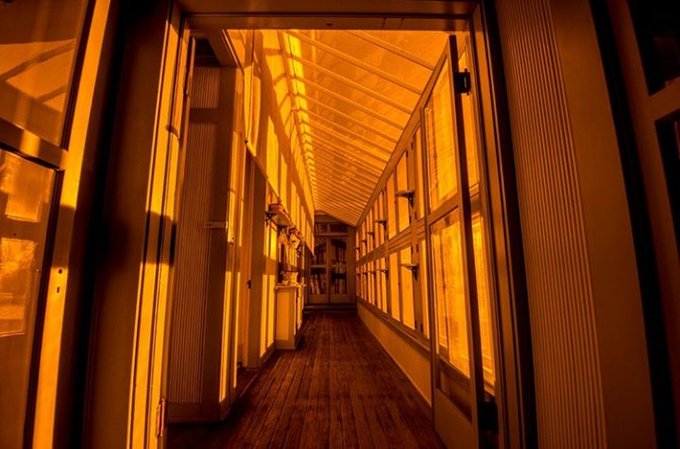
The Sacramento Fire Department has to continuously fright for better equipment, portable radios, training, facilities, and apparatus for their troops. A lot of fire departments do not have the funding for people and are fighting just to keep what they have and not lose anything. And they are wonderful department. Keep in mind, there are plenty of good fire chiefs and some good politicians, and they do their best. The people who control the resources must understand that the fire department also wants to make the job safer for their troops. The Sacramento Fire Department’s mission is to provide the best protection possible for those they have a sworn due to serve and to provide service to them, and they also want to promote family values. The fire service is made up of special people who value family. The goal is to treat people like family. Many of these fire fighters and emergency medical service members have a love for their jo, and their brothers and sisters, and an honour for the profession. Some people became fire fighters because their parents were on the job and they admired them. It does take a special person for this kind of work. It takes the kind of person who loves to help people and lives to be challenged. Be sure to open up your heart to the Sacramento Fire Department and kindly make a donation, it will help them do their jobs with an unshakable passion. I pledge allegiance to the flag of the United States of America, and to the republic, for which it stands, one nation, under God, indivisible with liberty and justice for all. Be sure to vote for Kevin McCarty in the Sacramento Mayoral race, he is endorsed by the Sacramento Fire Department. #RandolphHarris 18 of 18


At the beginning of December, Mrs. Winchester heard “singing” in one of the chimneys in the Hall of Fires, and from time to time, lights were to be seen in various parts of the house. It was a curious fact that during these manifestations, Zip could not be persuaded to move. One night, something was heard coming up the stairs, as if it had been one without shoes. The Door to Nowhere was opened and closed frequently as if half a dozen people had entered together. There were thumps coming from the nine story Observational Tower. This was on the same night that Mrs. Winchester’s bed was violently shaken and the curtains around the bed were hoisted up and down. The next night, Mrs. Winchester saw a female emerge from the wall at the head of her bed and lean over her.
Come and enjoy a delicious meal in Sarah’s Café, stroll along the paths of the beautiful Victorian gardens, and wonder through the miles of hallways in the World’s most mysterious mansion. For further information about tours, including group tours, weddings, school events, birthday party packages, facility rentals, and special events please visit the website: https://winchestermysteryhouse.com/

Please visit the online giftshop, and purchase a gift for friends and relatives as well as a special memento of The Winchester Mystery House. A variety of souvenirs and gifts are available to purchase. https://shopwinchestermysteryhouse.com/

Hope Often is Shattered so Thoroughly that a Man May Never Recover it
Faith and hope and this-Worldly resurrection have found their classic expression in the messianic vision of the prophets. They do not predict the future, like a Cassandra or the chorus of the Greek tragedy; they see the present reality free from the blindfolds of public opinion and authority. They do not want to be prophets but feel compelled to express the voice of their conscience—of their “knowing-with”—to say what possibilities they see and to show the people the alternative and to warn them. This is all they aspire to do. It is up to the people to take their warning seriously and to change their ways, or to remain deaf and blind—and to suffer. Prophetic language is always the language of alternatives, of choice, and of freedom; it is never that of determinism, for better or worse. The shortest formulation of prophetic alternativism is the verse in Deuteronomy: “I put before you today life and death, and you chose life!” In the prophetic literature the messianic vision rested upon the tension between “what existed or was still there and that which was becoming and was yet to be there.” In the postprophetic period a change took place in the meaning of the messianic idea, making its first appearance in the Book of Daniel around 164 B.C. and in pseudo-epigraphical literature which was not incorporated in the collection of the Old Testament. This literature has a “vertical” idea of salvation as against the “horizontal” historical idea of the prophets. The emphasis is on the transformation of the individual and largely on a catastrophic end of history, occurring in a final cataclysm. This apocalyptic version is not that of alternatives but of prediction; not that of freedom but of determinism. #RandolphHarris 1 of 18

In the later Talmudic or Rabbinical tradition, the original prophetic alternativistic vision prevailed. Early Christian thought was mor strongly influenced by the apocalyptic version of messianic thought, although, paradoxically, as an institution the Church usually retreated to a position of passive waiting. Nevertheless in the concept of the “Second Coming” the prophetic concept remained alive and the prophetic interpretation of Christian faith has again and again found its expression in revolutionary and “heretical” sects; today the radical wing in the Roman Catholic Church, as well as in the various non-Catholic Christian denominations, shows a marked return to the prophetic principle, to its alternativism as well as to the concept that spiritual aims must be applied to the political and social process. Outside of the Church, original Marxist socialism was the most significant expression of the messianic vision in a secular language, only to be corrupted and destroyed by the communist distortion of Marx. In recent years the messianic element in Marxism has found its voice again in a number of socialist humanist, especially in Yugoslavia, Poland, Czechoslovakia, and Hungary. Marxists and Christians have become engaged in a World-wide dialogue, based on the common messianic heritage. If hope, faith, and fortitude and love their servitude and dependence? It is precisely the possibility of this loss that is characteristic of the human existence. We start out with hope, faith, and fortitude—they are the unconscious, “no-thought” qualities of the sperm and the egg, of their union, of the growth of the foetus, its birth. #RandolphHarris 2 of 18

However, when life begins, the vicissitudes of the environment and accident begin to further or to block the potential of hope. Most of us had hoped to be loved—not just to be coddled and to be fed, but to be understood, to be cared for, to be respected. Most of us hoped to be able to trust. When we were little, we did not yet know the human invention of the lie—not only that of lying with words but that of lying with one’s voice, one’s gesture, one’s eyes, one’s facial expression. How should the child be prepared for this specifically human ingenuity: the lie? Most of us are awakened, some more and some less brutally to the fact that people often do not mean what they say or say the opposite of what they mean. And not only “people,” but the very people we trusted most—our parents, teachers, leaders. Few people escape the fate that at one point or another in their development, their hopes are disappointed—sometimes completely shattered. Perhaps this is good. If a man did not experience the disappointment of his hope, how could his hope become strong and unquenchable? How could he avoid the danger of being an optimistic dreamer? However, on the other hand, hope often is shattered so thoroughly that a man may never recover it. In fact, the responses and reactions to the shattering of hope vary a great deal, depending on many circumstances: historical, personal, psychological, and constitutional. Many people, probably the majority, react to the disappointment of their hopes by adjusting to the average optimism which hopes for the best without bothering to recognize that even the good but perhaps, indeed, the worst may occur. #RandolphHarris 3 of 18

As long as everybody else whistles, such people whistle too, and instead of feeling their hopelessness, they seem to participate in a kind of pop concert. They reduce their demands to what they can get and do not even dream of that which seems to be out of their reach. They are well-adjusted members of the herd and they never feel hopeless because nobody else seems to feel hopeless. They present the picture of a peculiar kind of resigned optimism which we see in so many members of contemporary Western society—the optimism usually being conscious and the resignation unconscious. Another outcome of the shattering of hope is the “hardening of the heart.” We see many people—from juvenile delinquents to hard-boiled but effective adults—who at one point of their lives, maybe at five, maybe at twelve, maybe at twenty, cannot stand to be hurt any more. Some of them, as in a sudden vision or conversation decide that they have had enough, that they will not feel anything any more; that nobody will ever be able to hurt them, but that they will be able to hurt others. They may complain about their bad luck in not finding any friends or anyone who loves them, but it is not their bad luck, it is their fate. Having lost compassion and empathy, they do not touch anybody—nor can they be touched. Their triumph in life is not to need anybody. They take pride in their untouchability and pleasure in being able to hurt. Whether this is done in criminal or legitimate ways depends much more on social factors than on psychological ones. Most of them remain frozen and hence unhappy until their lives run out. #RandolphHarris 4 of 18

Not so rarely, a miracle happens and a thaw begins. It may simply be that they meet a person in whose concern or interest they believe, and new dimensions of feeling open. If they are lucky, they unfreeze completely and the seeds of hope which seem to have been destroyed altogether come to life. Another and much more drastic result of shattered hope is destructiveness and violence. Precisely because men cannot live without hope, the one whose hope has been utterly destroyed hates life. Since he cannot create life, he wants to destroy it, which is only a little less of a miracle—but much more easy to accomplish. He wants to avenge himself for his unlived life and he does it by throwing himself into total destructiveness to that it matters little whether he destroys others or is destroyed. Usually the destructive reaction to shattered hope is to be found among those who, for social or economic reasons, are excluded from the comforts of the majority and have no place to go socially or economically. It is not primarily the economic frustration which leads to hate and violence; it is the hopelessness of the situation, the ever-repeated broken promises, which are just as conducive to violence and destructiveness. In fact, there is little doubt that groups which are so deprived and mistreated that they cannot even be hopeless because they have no vision of hope are less violent that those who see the possibilities of hope and yet recognize at the same time that the circumstances make the realization of their hopes impossible. Psychologically speaking, destructiveness is the alternative to hope, just as attraction to death is the alternative to the love of life, and just as joy is the alternative to boredom. #RandolphHarris 5 of 18
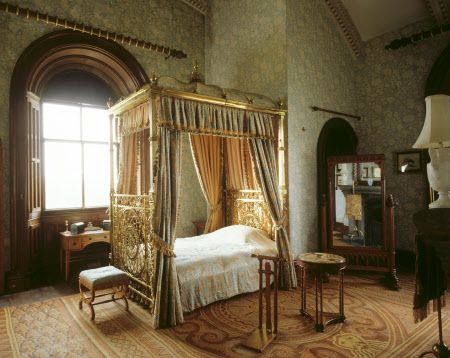
Not only does the individual live by hope. Nations and social classes live through hope, faith, and fortitude, and if they lose this potential they disappear—either by their lack of vitality or by the irrational destructiveness which they develop. The development of hope or hopelessness in an individual is largely determined by presence of hope or hopelessness in his society or class. However shattered an individual’s hope may have been in childhood, if he lives in a period of hope and faith, his own hope will be kindled; on the other hand, the person whose experience leads him to be hopeful will often tend to be depressed and hopeless when his society or class has lost the spirit of hope. Today, and increasingly so since 9/11, the COVID pandemic, crisis at the Southern Border, hyperinflation, and perhaps specifically in America ever since the defeat of the Republican Party in New York and California, hope is disappearing fast in the Western World. The hopelessness is covered up as optimism and, in a few, as revolutionary nihilism. However, whatever a man thinks about himself is of little importance in comparison with what he is, with what he truly feels, and most of us are not aware of what we feel. The signs of hopelessness are all here. Look at the bored expression of the average person, the lack of contact between people—even when they desperately try “to make contact.” Look at the incapacity to plan seriously for overcoming the ever-increasing poisonousness of the city’s water and air and the predictable famine in American cities and poor countries, not to speak of the inability to get rid of the daily threat to the lives and plans of all of us—the thermonuclear weapon. Whatever we say or think about hope, our inability to act or plan for life betrays our hopelessness. #RandolphHarris 6 of 18
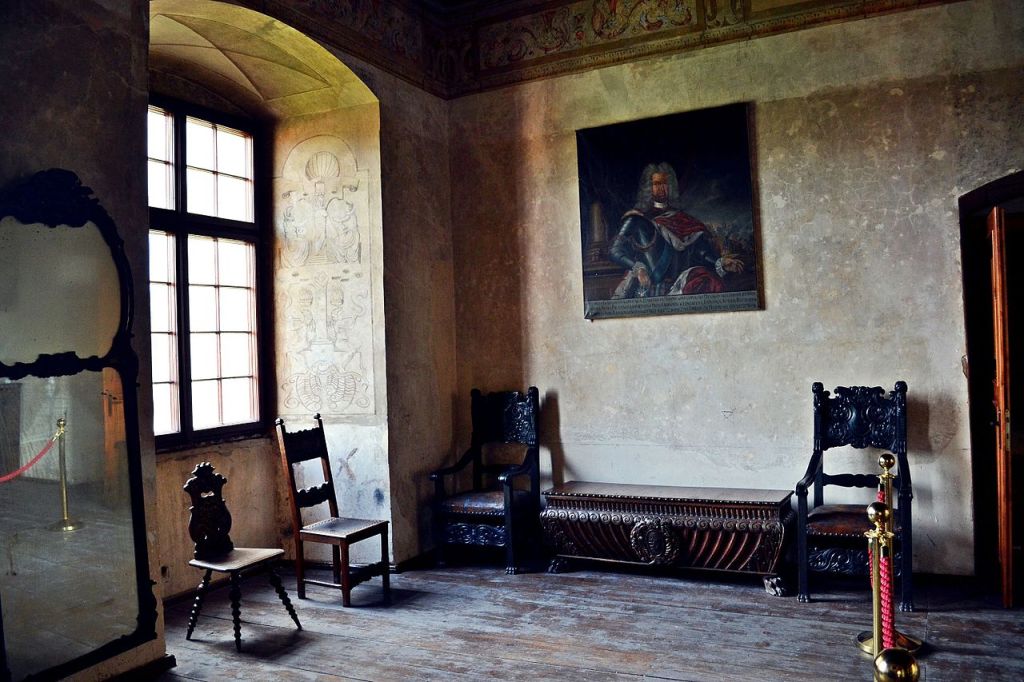
We know a little about the reasons for this growing hopelessness. Before 9/11 people thought that the World was a safe place, that wars were a thing of the past. And yet, people found out that the government had been warned about the 9/11 attacks and ignored the warnings. Then came the invasion at our southern border, with its comedy of pretensions both from the democrats and republicans. And neither one of the current political parties has tried to use their power to crush illegal immigration to save America. However, there are still other reasons for the increasing hopelessness: the formation of the totally bureaucratized industrial society and the powerlessness of the individual. If America and the Western World continue in their state of unconscious hopelessness, lack of faith and of fortitude, it its predictable that they will not be able to resist the temptation of the big bang by nuclear weapons, which would end all problems—overpopulation, boredom, and hunger—since it would do away with all life. Progress in the direction of a social and cultural order in which man is in the saddle depends on our capacity to come to grips with our hopelessness. First of all, we have to see it. And second, we have to examine whether there is a real possibility of changing our social, economic, and cultural life in a new direction which will make is possible to hope again. If there is no such real possibility, then indeed hope is sheer foolishness. However, if there is a real possibility, there can be hope, based on examination of new alternatives and options, and on concerted actions to bring about the realization of these new alternatives. #RandolphHarris 7 of 18

The unity in which we seek consist in a certitude emanating from the nature of man who seeks God and the nature of God who seeks man. Such certitude bathes in an intuitive act of cognition, participating in the divine essence and is related to the natural spirituality of intelligence. This is not by any means to say that there is an equivalence of all faiths in the traditional religions of human history. It is, however, to emphasize the distinction between the spiritual and the temporal which all religions acknowledge. For duration of thought is composed of instants superior to time, and is an intuition of the permanence of existence and it metahisotical reality. The basic and poignant concern of every faith is to point to and overcome the crisis in our apocalyptic epoch—the crisis of man’s separation from man and of man’s separation from God—the failure of love. The truth that the human heart is able, and even yearns, to go to the very lengths of God is related to Being in pure act, moving with centrifugal and ecumenical necessity outward into the manifold modes, yet simultaneously, with dynamic centripetal power and with full intentional energy, returning to the source. The darkness and cold, the frozen spiritual misery of recent time, are breaking, cracking, and beginning to move, yielding to efforts to overcome spiritual muteness and moral paralysis. In this way, it is hoped, the immediacy of pain and sorrow, the primacy of tragedy and suffering in human life, may be transmuted into a spiritual and moral triumph. For the uniqueness of man lies in his capacity for self-transcendence. #RandolphHarris 8 of 18

God is not to be treated as an exception to metaphysical principles, invoked to prevent their collapse. He is rather their chief exemplification, the source of all potentiality. The personal reality of freedom and providence, of will and conscience, may demonstrate that “he who knows” commands a depth of consciousness inaccessible to the profane man, and is capable of that transfiguration which prevents the twisting of all good to ignominy. This religious content of experience is not within the province of science account as if it were itself metaphysical or religious; it challenges the tendency to make a religion of science—or a science of religion—a dogmatic act which destroys the moral dynamic of man. Indeed, many men of science are confronted with unexpected implications of their own thought and are beginning to accept, for instance, the trans-spatial and trans-temporal dimension in the nature of reality. No convincing image of man can arise, in spite of the many ways in which human thought had tried to reach it, without a philosophy of human nature and human freedom which does not exclude God. This image of Homo cum Deo implies the highest conceivable freedom, the freedom to step into the very fabric of the Universe, a new formula for man’s collaboration with the creative process and the only one which is able to protect man from the terror of existence. This image implies further that the mind and conscience are capable of making genuine discriminations and thereby may reconcile the serious tensions between the secular and religious, the profane and sacred. The idea of the sacred lies in what it is, timeless existence. #RandolphHarris 9 of 18

By emphasizing timeless existence against reason as a reality, we are liberated, in our communion with the eternal, from the otherwise unbreakable rule of “before and after.” Then we are able to admit that all forms, all symbols in religions, by their negation of error and their affirmation of the actuality of truth, make it possible to experience that knowing which is above knowledge and that dynamic passage of the universe to unending unity. Mankind must be directed toward a reality that is eternal and away from a preoccupation with that which is illusory and ephemeral. The story of Adam and Eve’s disobedience, of Abraham’s pleading with God for the salvation of the inhabitants of Sodom and Gomorrah, of Jonah’s mission to Nineveh, and many others parts of the Bible impressed me deeply. However, more than anything else, I was moved by the prophetic writings, by Isaiah, Amos, Hosea; not so much by their warnings and the announcement of disaster, but by their promise of the “end of days,” when nations “shall beat their swords into plowshares and their spears into pruning hooks: nation shall not lift sword against nation, neither shall they learn war any more;” when all nations will be friends, and when “the Earth shall be full of the knowledge of the Lord, as the waters cover the sea.” The vision of universal peace and harmony between all nations touched me deeply when I was twelve and thirteen years old. Probably the immediate reason for this absorption by the idea of peace and internationalism was from growing up in a Christian environment. #RandolphHarris 10 of 18

The more insane and dehumanized this World of our seems to become, the more may an individual feel the need of being together and of working together with men and women who share one’s human concerns. I certainly felt that need and have been grateful for the stimulating and encouraging companionship of those with whom I have had the good fortune of working. When the Holy Spirit fills the atmosphere of a room, the spirit of man is conscious of it, not his sense. The faculties of those present are alert and clear and they retain freedom of action. The spirit is made tender and the will pliable to the will of God. All the actions of a person moved by the true and pure presence of God are in accord with the highest ideal of harmony and grace. The holiness of God: When realized by the believer it produces worship and godly awe, with a hatred of sin. On the ground of the blood of Calvary, God draws near to men, seeking their love, and His presence does not terrorize. A truth faith given of God in the spirit, having its origin in Him, reckoning without effort upon Him to fulfill His written Word is trusting God. It coexists with the full use of every faculty in intelligent action. “Faith” is a fruit of the Spirit and cannot be forced. When we have a reliance upon God, one has an attitude of the will, of trust and dependence upon God, taking Him at His word, and depending upon His character of faithfulness. The spirit, when waiting on God, is in restful cooperation with the Holy Spirit, awaiting God’s time to act and to fulfill His promises. The true waiting upon God can be coexistent with the keenest activity of mind. #RandolphHarris 11 of 18

Praying to God: Having access to the Holiest of all, on the ground of the blood. Penetrating in spirit through the in abnormal suffering may be the fruit of (unconscious) acceptance of suffering caused by evil spirits, often under the name of “the will of God.” “The depth” signifies “the depth-experience” or “the experience of the depths” which is faith. Faith as ultimate concern is the portal through which one must ass in order to attain New Being. God is the ground of being, but He is encountered only in the experience of the holy, and all religious symbols take their origin from this experience of ultimacy. Jesus is the Christ only because He is received as such by faith, and He rose from the dead only because his disciples had an ecstatic experience of the New Being. The Spiritual Community is created by the Spiritual Presence which drives man’s spirit beyond itself into faith and love. The Protestant principle which constitutes the essence of Protestantism is based upon an experience of God who jealously demands that ultimacy be reserved for Him alone. Finally, the Kingdom of God breaks through into history in a faith-charged moment that is the Kairos. One can see faith everywhere in the World as an operative reality. There is a universality, or omnipresence of faith in the Christian World. Do not look at the human situation and wonder if faith is there. Know it is there, and find it by attuning with the ultimate concern which throbs beneath the surface. An adequate understanding of faith demands that one eventually pass from formal faith to material faith. Faith which is found in the criterion of the Cross and of the Christ is the state of being grasped by an ultimate concern; it is produced by the Spirit, not by human activity. #RandolphHarris 12 of 18

Instead of erecting a holy community out of the World, true faith understands allows one to see the whole World as already being the holy community. Nobody escapes it. All, even unawares, belong to it. The Christian message must indeed become all things to all men, but it must also be itself. Its roots can be traced back to the experience of the holy as the mysterium tremendum et fascinosum. God’s very presence forces the acknowledgement of the infinite gulf between Him and the creature. In ontological terms, because God is the ground of being, He is also the abyss of being in that He can never be contained within the narrow confines of a finite form of being. This is the meaning of the Cross of Jesus the Christ, for Jesus as a being sacrificed Himself to the New Being. Symbols which originate in and express the experience of faith remain subject to the criterion of the Cross. Victory over religious heteronomy, over the demonization and profanization of the churches, also lies in the sign of the Cross. Only grace effect salvation, and anything that infringes upon this divine prerogative must be met with prophetic protest. Everyone knows that religion has its human, erroneous, even sinful side, but this awareness should never undercut our confidence that God’s grace can reach us, even though conveyed in vessels of clay. Prophecy, in the sense of protect, is a delicate business indeed. Culture is the fruit of the creative activity of man. The role of theology as that of mediating between the human situation and divine revelation, and the method of correlation demands that the answers of theology be clothed in the language of man’s existential condition. The all-important concept of faith is defined in terms of man’s experience of and need for the unconditioned. #RandolphHarris 13 of 18

Jesus the Christ is meaningful because in Him appears the New Being which heals man’s estrangement. The Spiritual Community is explained on the basis of man’s quest for unambiguous life. And the eschatological fulfilment of the Universe is accomplished in the essentialization of man, for in him is found the unity of the multiple dimensions of life. In a certain sense any Christian theology is anthropocentric, for the Creed declares that Jesus Christ came down from Heaven for us men and for our salvation. However, one could hold, for example, that sin is the problem of man, for man must be saved from sin; or that grace is the problem of man, for man is saved through grace; or that morally good life; or, finally, that faith is the problem of man, for the way to salvation is illuminated by the light of faith. However, man can also be seen as the problem of man. If man becomes what he essentially is, salvation is achieved. This fulfilled man is the New Man; he posses New Being. Furthermore, according to the doctrine of the microcosm and the multidimensional unity of life, the Universe itself is saved in the salvation of man. Christ, the depth of culture, is translated to mean that New Being is the ultimate concern of man. The New Being provides ontological breadth, ultimate concern imparts experiential depth, and the anthropological emphasis gives vitality to Christ as the depth of culture. #RandolphHarris 14 of 18
Early Christianity did not consider itself as a radical-exclusive, but as the all-inclusive religion in the sense of saying: “All that is true anywhere in the World belongs to us, the Christians.” And it is significant that the famous words of Jesus, “You, therefore, must be perfect, as your Heavenly Faither is perfect” (which was always an exegetic riddle), would, according to recent research, be better translated, “You must be all-inclusive as your Heavenly Father is all-inclusive.” First, one must say that revelatory experiences are universally human. Religions are based on something that is given to a man wherever he lives. He is given a revelation, a particular kind of experience which always implies saving powers. One never can separate revelation and salvation. There are revealing and saving powers in all religions. God has not left Himself unwitnessed. As I think of the blessings God has given us and the many beauties of the gospel of Jesus Christ, I am aware that along the way we are asked to make certain contributions in return, contributions of time or of money or of other resources. These are all valued and all necessary, but they do not constitute our full offering to God. Ultimately, what our Father in Heaven will require of us is more than a contribution; it is a total commitment, a complete devotion, all that we are and all that we can be. The Lord Jesus as Christ shapes our behaviour and forms our character in all area of our life—personally, within the home, in our professions and community life, as well as in our devotion to the Church that bears his name. #RandolphHarris 15 of 18

If we can pattern our life after the Master, and take His teachings and examples as the supreme pattern for our own, we will not find it difficult to be consistent and loyal in every walk of life, for we will be committed to a single, sacred standard of conduct and belief. Whether at home or in the marketplace, whether at school or long after school is behind us, whether we are acting totally alone or in concern with a host of other people, our course will be clear and our standards will be obvious. We will have determined, as the prophet Alma said, “to stand as witnesses of God at all times and in all things, and in fall places that we may be in, even until death,” reports Mosiah 18.9. This loyalty obviously includes support of the institutional church, but one of the purposes of that church is to alter an improve the way we live every other aspect f our lives as well, wherever we are and in whatever circumstance we find ourselves “even until death.” The ability to stand by one’s principles, to live with integrity and faith according to one’s belief—that is what matters, that is the difference between a contribution and commitment. That devotion to true principle—in our individual lives, in our home and families, and in all places where we meet and influence other people—that devotion is what God is ultimately requesting of us. How do we feel about honour and integrity? What is our reaction to polite lying to facilitate easy social relationships? How much tolerance have we for either suppression or misrepresentation to facts to promote business advantage? How sacredly do we regard the good name oof another? Do we pass on spicy bits of entertaining conversation, repeating rumors and stories which have not been submitted to the test of truth? #RandolphHarris 16 of 18

I may not be able to stop all graft and dishonesty in high places, but I myself can be honest and upright, gull of integrity and true honour. We simply must have love and integrity and strong principles in our homes. We must have an abiding commitment to marriage and children and morality. We must succeed where success counts most for the next generation. Surely that home is strongest and most beautiful in which we find each person sensitive to the feelings of others, striving to serve others, striving to live at home the principles we demonstrate in more public settings. We need to try harder to live the gospel in our family circles. Our homes deserve our most faithful commitments. A child has the right to feel that in his home he is safe, that there he has a place of protection from the dangers and evils of the outside World. Family unity and integrity are necessary to supply this need. A child needs parents who are happy in their relationship to each other, who are working happily toward the fulfillment of ideal family living, who love their children with a sincere and unselfish love, and who are committed to the family success. If full integrity were to rule in family life, just imagine the reversal that would take place. Husbands would be faithful to wives, and wives to husbands. There would be no living in adulterous relationships in lieu of marriage. Homes would abound in love, children and parents would have respect for one another. How else will our children come to value honesty and integrity? A successful life, the good life, the righteous Christian life requires commitment—whole souled, deeply held, eternally cherished commitment to the principles we know to be true in the commandments God has given. #RandolphHarris 17 of 18
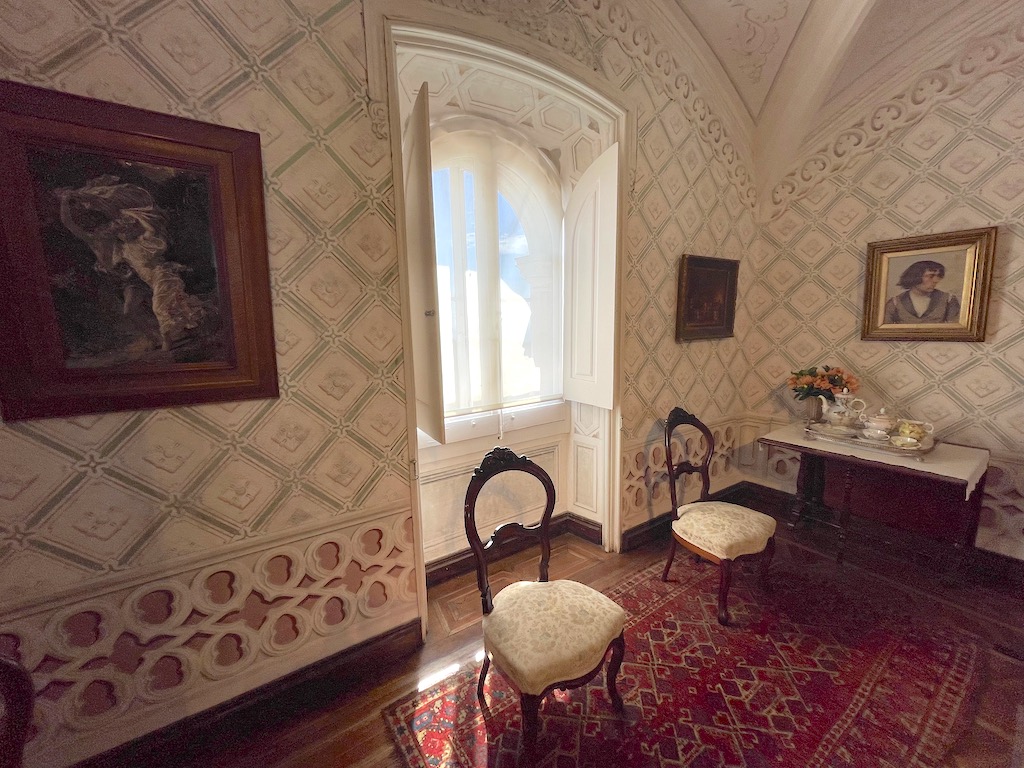
The Sacramento Fire Department truly are jacks-of-all-trades, but they are also masters of them all. Given then any challenge; they will face it and overcome it. That is one of the most awesome things of the fire service. Call the Sacramento Fire Department, present them with a problem, and they will figure it out and work you through it. The fire department is there to help people. They are there to help families. Simply put, their best day is their worst day. When you are at your worst and life has you down, when you have got something horrible going on, whether it is a fire, a medical problem, or some other type of disaster, they were be there to help you every time. The Sacramento Fire Department will do everything they can to make things better again. These firefighters are talented and are the cream of the crop in society. The fire department also makes sure they protect their personnel in every way imaginable. Whether it is protective clothing, and assuring that they have the proper personal protective equipment (PPE) including good, reliable, and safe self-contained breathing apparatus (SCBA), assuring that they have radios and that they work, assuring that they have the training needed to do their job, the support of the fire department administration or the upper echelon, the proper apparatus, firehouses, tools, and equipment, and more than anything else, the proper amount of personnel. Their goal is to make sure they have anything that will help them do their jobs to the best of their abilities and stay safe. Therefore, consider making a donation to the Sacramento Fire Department, to insure they have all the necessary resources. I pledge allegiance to the Flag of the United States of America, and to the Republic, for which it stands, one Nation, Under God, Indivisible, with Liberty and Justic for all. #RandolphHarris 18 of 18


In 1901, Mrs. Winchester reported an entity came after her. It beat and shook her bedstead with great force. Mrs. Winchester was not aware of any blows, but she was perceived to tremble violently. After this the servants would hear the sound of scraping under her bed, and Mrs. Winchester would be raised a few inches into the air. It seemed then that the noisy apparition was only interested in her. So Mrs. Winchester decided to sleep in a different room every night in hopes of avoiding the apparitions. On 1 October it ascended into the Daisy Bedroom, making a mighty noise. A young male servant, going into that room one morning, saw two wooden boards of the floor begin to move. He held out his hands and one of the boards was thrust toward him. He shoved it back, and again it returned to him. This happened apparently twenty times in succession, by which stage other people had entered the room and seen the tussle between the servant and the uninvited guest. The chairs walked about the room of themselves, Mrs. Winchester’s shoes were hurled over her head, and every loose thing moved about the chamber.

Come and enjoy a delicious meal in Sarah’s Café, stroll along the paths of the beautiful Victorian gardens, and wonder through the miles of hallways in the World’s most mysterious mansion. For further information about tours, including group tours, weddings, school events, birthday party packages, facility rentals, and special events please visit the website: https://winchestermysteryhouse.com/
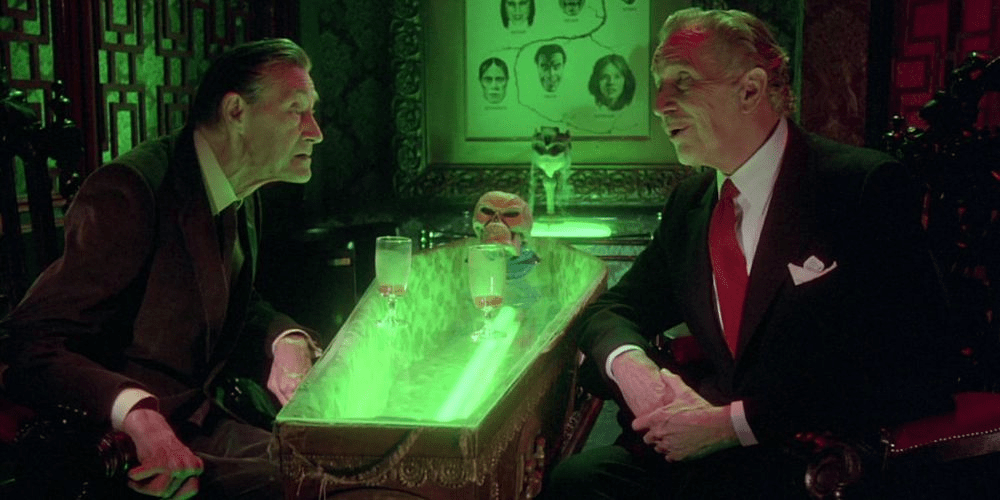
Please visit the online giftshop, and purchase a gift for friends and relatives as well as a special memento of The Winchester Mystery House. A variety of souvenirs and gifts are available to purchase. https://shopwinchestermysteryhouse.com/

Something Appalling Has Entered My Life!
Despite what the living think, ghosts do not know everything. They know almost everything, but not some things. It is strange how timorous we are when our affections are concerned. Often and often, I have trembled to think of William’s death, as I saw fever dim his eyes like an angel of mercy, him day by day grow weaker, while president of Winchester Repeating Arms Company. Must his eyes never more behold the beauty that was born to his soul? Oh, never more! As thought came to me, I shuddered in affright, for it seemed to me that I had been guilty of sacrilege. My bedroom was a large chamber—immense for a bedroom—with two windows. The furniture was old-fashioned, but not old enough to be curious, and on the walls hung many pictures—portraits—the house was full of portraits—and landscapes. I just glanced at these, and when to bed. There was a fire in the room, and I lay awake for some time looking dreamily at the shadows of the furniture flitting over the walls and ceiling as the flames of the wood fire leaped and fell, and the red ember dropped whitening on the hearth. I tried t give the rein to my thoughts, but they kept constantly to one subject—William. I heard a voice of strange, rich sweetness, yet wavering—the voice of one almost a king by nature. He calls my name. His voice floats on the wind, amid drowsy music of the harps and fountains. I see him and he sits down near me. As if it was winter and someone had opened a window, a cold wind blew though the room. A kind of awe stole over me. Oh, the melody of that voice! It vibrates more and more as it gives back the echo. I felt his weight on the edge of my bed, the weight of an actual body, but at the same time I could see through him. I could see the wall of my room through his red hair and through the golden aura around him. His spirit seems lost in a trance. #RandolphHarris 1 of 5

Zip jumped when I called out to my late husband, then lied on the floor beside my bed. I watched him in silence. He seemed to be half-listening to the fitful music; and as the melody swelled and died away his chest rose and fell as he breathed in unison with the music. After a moment or two, William appeared to become conscious of a presence in the room. I could see by the working of his hands and the heaving of his chest that some violent emotion troubled him. Gradually, however, he grew more calm, but before I could collect my scattered thoughts, he eluded me, in unison with the silencing of the harps. William—William—William. I found myself half awakening, and repeating his name over and over and over again. At last, I fell asleep. I thought that I awoke suddenly to that peculiar feeling which we sometimes have on starting from sleep, as if someone had been speaking in the room, and the voice is still echoing through it. All was quite silent, and the fire had gone out. I looked out of the window that lay beside the bed, and observed a light outside, which gradually grew brighter till the room was almost as light as by day. The light in the room continued to grow even brighter, so I looked again out of the window to seek it source, and saw there a lovely sight. It seemed as if William and Annie were outside the window and floating in mid-air. The light seemed to spring from a point far behind them, and by their side was something dark and shadowy, which served to set off their radiance. My late husband and daughter seemed to be smiling upon me. I looked away for only a moment, but they had been replaced by some malignity. #RandolphHarris 2 of 5

Something appalling has entered my life! Dark forebodings of a hideous, menacing fate are looming over me like the shadows of black clouds, impervious to any kindly ray of sunlight. The dark mass had grown. From a cloud, misty and undefined, it became sort of a shadow with a form. This gradually, as I looked, grew darker and fuller, till at length it made me shudder. There stood before me the phantom Fiend—a man who looked more dead than alive. The nature of his disease and the inherent evil of his character had combined to make him resemble on the outside the monster that he was within. His ravaged flesh was mottled purple and grey. His eyes were enormous, so cold and unblinking, with tiny pupils and a great expanse of white around them which gave him a look of insanity. His mouth drooped on one side where it was permanently open, revealing yellow teeth. His lips were lumpy, almost black. It was like the face of some atrocious criminal already hanging from the gibbet. There was a long period of dead silence, in which I could hear the beating of my own heart. It was distinguished by a fierce, diabolical laughter, which swelled louder and louder, till at last it grew so strong that in very horror, I cried. I was very much troubled by what I had seen and heard. I wiped the tears from my eyes and looked out of the window again, but saw nothing but the broad belt of moonlight glittering on the lawn moist with dew, which extended miles and miles away, till it was lost in the haze. The vision had utterly faded. However, it was so powerful that I slept no more till the sunlight was streaming broadly in at the widow, and then I feel into a slumber. #RandolphHarris 3 of 5
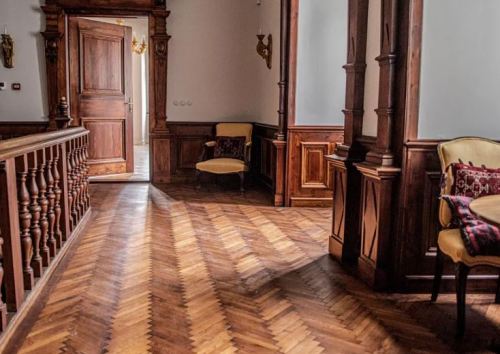
In my dream last night, when in my ears came softly, like music stealing across the gardens below, the old song William and I used to sing together, then to my brain, like a way of light, came an idea whose grandeur for a moment struck me dumb. Before my eyes grew a Ballroom of such beauty that I knew my hope was born to life, and his spirit had placed my foot on a stairway that leads from this my palace to freedom. My mansion is daily growing nearer to completion. I sing as I work, and my constant song is the one I love so well. I can hear the echo of my voice in the Grand Ballroom; and as I end, the wailing song note is prolonged in sweet music. So beautiful my home has become, so much do I love it, that I could gladly die to be maker of such a work, were it not for the spirits, and my hope of appeasing them. My life is slowly ebbing away. This yearning for completeness much be unsatisfied in the end. Leaning on the edge of the window, looking out at the dark, moonless sky, my excitement was so great that my knees were trembling. When I retired to my bedroom that night, I was much too excited to sleep. I paced up and down the room for some time, thinking and doubting. I could not believe what I expected to happen, and yet my heart was filled with a vague dread. The next few minutes passed so slowly that each moment seemed an age. I was standing, counting the moments, when suddenly a light came into the room that made the candle on the table appear quite dim, and my shadow was reflected on the wall by some brilliant light which streamed in through the window. My heart for an instead ceased to beat, and then the blood rushed so violently to my temples that my eyes grew dim and my head began to reel. As I lied down in my bed, I fell quickly to sleep. #RandolphHarris 4 of 5

Then there came from the dark interior a husky whisper which somehow chilled me through and though I did not know why I feared it. However, as disturbing as was the whisper, the greater fear was that which immediately followed. The floor creaked and the steps went back and forth. Heavy, masculine steps, the kind a big man would make. Soon after the footsteps, other noises began to be heard in the attic and along the corridors and stairs leading toward it. I got out of bed, and opened by bedroom door and started to go up the stairs, when suddenly I walked into what I can only described as a warm, wet blanket, something that touched my physically as if it had been hung from wires in the corridor. I was very upset. As I reached the attic, the door knob had turned in front of my very eyes before I could reach for it to open the door. All of a sudden, my right side, the right side of my head, felt very depressed and a feeling of great despair came over me. I felt like wringing my hands and was very distraught. It only stayed with me a few moments, and I could almost feel something or someone pressing against the right side of my head. And then I saw a mist, on the landing of the stairs. It had a shape, rather tall and thin. It did not have a face. But I did see hands wringing. Then I felt a mighty shock, and all the Universe seemed filed with sparks of fire that whirled around me with lightning speed, till I seemed to be in the center of a World of flame, and then came in my ears the rushing of a mighty wind, swelling ever louder, and then came a blackness over al things and a deadness of sound as if all the Earth had passes away, and I remembered no more. When I next became conscious, I was lying in bed in a dark room. As I tried to look around but, I could hardly stir my head. I attempted to speak, but my voice was without sound. And I again felt a darkness gathering around me. #RandolphHarris 5 of 5

The Winchester Mystery House
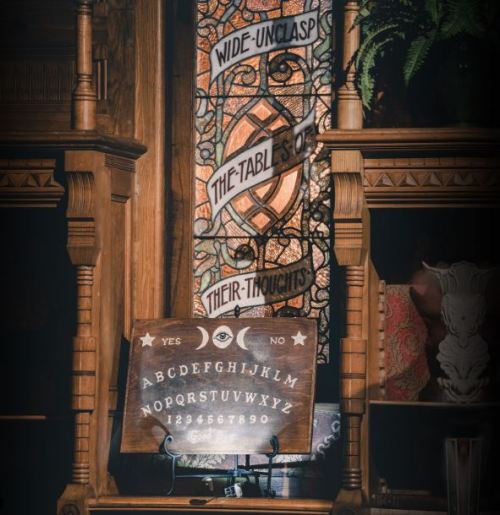
In the middle of April 1890, Mrs. Winchester told one of the servants that she had been plagued by extraordinary noises resounding through the house that she believed to be the work of thieves. He dismissed her complaint as being nothing other than the result of an over-active imagination. Then, a few nights later, he heard the noises for himself. He heard a very great knocking at the doors and on the outside walls of the hose. He immediately arose, dressed himself, and took out a shot gun. He truly believed that there was an intruder in the grounds. However, as he walked down stairs, the noise seemed always to travel before or behind him. When he came to the front door, from which he thought the principal noise had come, there was no one there. Then he heard the knocking at another door. As soon as he had retired the noises began, even more furiously than before, and he heard what he described as a thumping and drumming on the top of the house, and then by degrees going off into the air. This strange hollow noise visited Mrs. Winchester very frequently, usually for thirteen nights and then ceased for three nights before beginning again.

Sometimes the afterlife is difficult for the ghost, as he or she may be too strongly attached to feelings of guilt or revenge to “let go.” Ghosts usually do not harm anyone, except through fear found within the witness. The harm results from the witness’s own doing because of his or her unawareness of what ghosts represent. In the few cases where ghosts have attacked people of the flesh, it is simply a matter of mistaken identity, where extreme violence at the time of death had left a strong residue of memory in the individual ghosts. Try a they might, people cannot explain away ghosts, not will ghost simply disappear. They continue to appear frequently in The Winchester Myster House and all over the World to young and senior citizens, to affluent and less affluent, in old houses and new, in airports and forests, streets and hotels, and wherever tragedy strikes. For ghosts are indeed more or nothing less than a human being trapped by special circumstances in this World while already being in the next; or, to put it another way, ghosts are human beings whose spirits are unable to leave the Earthly surroundings because of unfinished business or emotional entanglement. However, even if you do not encounter ghosts or have a psychic experience in The Winchester Mystery House, you will find it a fascinating place. As an adventure, The Winchester Mystery House has no equal.

Come and enjoy a delicious meal in Sarah’s Café, stroll along the paths of the beautiful Victorian gardens, and wonder through the miles of hallways in the World’s most mysterious mansion. For further information about tours, including group tours, weddings, school events, birthday party packages, facility rentals, and special events please visit the website: https://winchestermysteryhouse.com/

Please visit the online giftshop, and purchase a gift for friends and relatives as well as a special memento of The Winchester Mystery House. A variety of souvenirs and gifts are available to purchase. https://shopwinchestermysteryhouse.com/

His Fearlessness is Based on Lack of Love
When hope has gone life had ended, actually or potentially. Hope is an intrinsic element of the structure of life, of the dynamic of man’s spirit. It is closely lined with another element of the structure of life: faith. Faith is not a weak form of belief or knowledge; it is not faith in this or that; faith is the conviction about the not yet proven, the knowledge of the real possibility, the awareness or pregnancy. Faith is rational when it refers to the real yet unborn; it is based on the faculty of knowledge and comprehension, which penetrates the surface and sees the kernel. Faith, like hope, is not prediction of the future; it is the vision of the present in a state of pregnancy. The statement that faith is certainty needs a qualification. It is certainty about the reality of the possibility—but it is not certainty in the sense of unquestionable predictability. The child may be still born prematurely; it may die in the act of birth; it may die in the first two weeks of life. This is the paradox of faith: it is the certainty of the uncertain. (In Hebrew the word “faith” (Emunah) means certainty. Amen means certainly.) It is certainty in terms of man’s vision and comprehension; it is not certainty in terms of the final outcome of reality. We need no faith in that which is scientifically predictable, nor can there be faith in that which is impossible. Faith is based on our experience of living, of transforming ourselves. Faith that others can change is the outcome of the experience that I can change. #RandolphHarris 1 of 17

There is an important distinction between rational and irrational faith. While rational faith is the result of one’s own inner activeness in thought or feeling, irrational faith is submission to something given, which one accepts as true regardless of whether it is or not. The essential element of all irrational faith is its passive character, be its object an idol, a leader, or an ideology. Even the scientist needs to be free from irrational faith in traditional ideas in order to have rational faith in traditional ideas in order to have rational faith in the power of his creative thought. Once his discovery is “proved,” he needs no more faith, except in the next step he is contemplating. In the sphere of human relations, “having faith” in another person means to be certain of his core—that is, of the reliability and unchangeability of his fundamental attitudes. In the same sense we can have faith in ourselves—not in the constancy of our opinions, but in our basic orientation to life, the matrix of our character structure. Such faith is conditioned by the experience of self, by our capacity to say “I” legitimately, by the sense of our identity. Hope is the mood that accompanies faith. Faith could not be sustained without the mood of hope. Hope can have no base except in faith. There is still another element linked with hope and faith in the structure of life: courage, or, as Spinoza called it, fortitude. Fortitude is perhaps the less ambiguous expression, because today courage is more often used to demonstrate the courage to die rather than courage to live. #RandolphHarris 2 of 17

Fortitude is the capacity to resist the temptation to compromise hope and faith by transforming them—and thus destroying them—into empty optimism or into irrational faith. Fortitude is the capacity to say “no” when the World wants to hear “yes.” However, unless we mention another aspect of it: fearlessness, fortitude is not fully understood. The fearless person is not afraid of threats, not even of death. However, as so often, the word “fearless” covers several entirely different attitudes. I mention only the three most important ones: First, a person can be fearless because he does not care to live; life is not worth much to him, hence he is fearless when it comes to the danger of dying; but while he is not afraid of death, he may be afraid of life. His fearlessness is based on lack of love of life; he is usually not fearless at all when he is not in the situation of risking his life. In fact, he frequently looks for dangerous situations, in order to avoid his fear of life, of himself, and of people. A second kind of fearlessness is that of the person who lives in symbiotic submission to an idol, be it a person, an institution, or an idea; the commands of the idol are scared; they are far more compelling than even the survival commands of his body. If he could disobey or doubt these commands of the idol, he would face the danger of losing his identity with the idol; this means he would be running the risk of finding himself utterly isolated, and thus at the verge of insanity. He is willing to die because he is afraid of exposing himself to this danger. #RandolphHarris 3 of 17
The third kind of fearlessness is to be found in the fully developed person, who rests within himself and loves life. The person who has overcome greed does not cling to any idol or any thing and hence has nothing to lose; he is rich because he is empty, he is strong because he is not the slave of his desires. He can let go of idols, irrational desires, and fantasies, because he is in full touch with reality, inside and outside himself. If such a person has reached full “enlightenment,” he is completely fearless. If he has moved toward this goal without having arrived, his fearlessness will also not be complete. However, anyone who tries to move toward the state of being fully himself knows that whenever a new step toward fearlessness is made, a sense of strength and joy is awakened that is unmistakable. As if a new phase of life had begun, he feels. He can feel the truth of Goethe’s lines: “I have put my house on nothing, that’s why the whole World is mine.” (Ich hab mein Haus auf nichts gestellt, deshalb gehoert mir die ganze Welt.) Hope and faith, being essential qualities of life, are by their very nature moving in the direction of transcending the status quo, individually and socially. It is one of the qualities of all life that it is in a constant process of change and never remains the same at any given moment. If the stagnation is complete, death has occurred; life that stagnates tends to die. It follows that life in its moving quality tends to break out of and to overcome the status quo. We grow either stronger or weaker, wiser or more foolish, more courageous or more cowardly. Every second is a moment of decision, for the better or the worse. We feed our sloth, greed, or hate, or we starve it. The more we feed it, the stronger it grows; the more we starve it, the weaker it becomes. #RandolphHarris 4 of 17
What holds true for the individual holds true for a society. If it does not grow, it decays; it is never static; if it does not transcend the status quo for the better, it changes for the worse. Often, we, the individual or the people who make up a society, have the illusion we could stand still and not alter the given situation in the one or the other direction. This is one of the most dangerous illusions. The moment we stand still, we begin to decay. This concept of personal or social transformation allows and even compels us to redefine the meaning of resurrection, without any reference to its theological implications in Christianity. Resurrection in its new meaning—for which the Christian meaning would be one of the possible symbolic expressions—is not the creation of another reality after the reality of this life, but the transformation of this reality in the direction of greater aliveness. Man and society are resurrected every moment in the act of hope and of faith in the here and now; every act of love, of awareness, of compassion is resurrection; every act of sloth, of green, of selfishness is death. Every moment existence confronts us with the alternatives of resurrection or death; every moment we give an answer. This answer lies not in what we say or think, but in what we are, how we act, where we are moving. #RandolphHarris 5 of 17
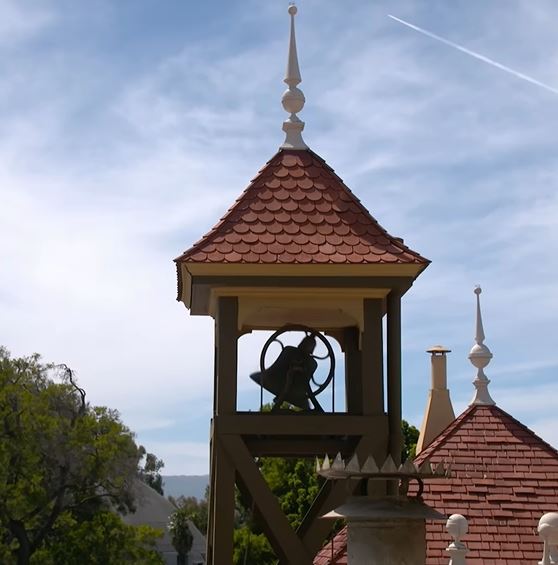
Modern man is threatened by a World created by himself. He is faced with the conversion of mind to naturalism, a dogmatic secularism and an opposition to a belief in the transcendent. He begins to see, however, that the Universe is given not as one existing and one perceived but as the unity of subject and object; that the barrier between them cannot be said to have been dissolved as the result of recent experience in the physical sciences, since this barrier has never existed. Confronted with the question of meaning, he is summoned to rediscover and scrutinize the immutable and the permanent which constitute the dynamic, unifying aspect of life as well as the principle of differentiation; to reconcile identity and diversity, immutability and unrest. He begins to recognize that just as every person descends by his particular path, so he is able to ascend, and this assent aims at a return to the source of creation, an inward home from which he has become estranged. It is the hope of RELIGIONS PERSPECTIVES that the rediscovery of man will point the way to the rediscovery of God. To this end a rediscovery of first principles should constitute part of the quest. These principles, not to be superseded by new discoveries, are not those of historical Worlds that come to be and perish. They are to be sought in the heart and spirit of man, and no interpretation of a merely historical or scientific Universe can guide the search. The rediscovery of man will point the way to the rediscovery of God. #RandolphHarris 6 of 17

To this end, a rediscovery of first principles should constitute part of the quest. These principles, not to be superseded by new discoveries, are not those of historical Worlds that come to be and perish. They are to be sought in the heart and spirit of man, and no interpretation of a merely historical or scientific Universe can guide the search. We are attempting not only to ask dispassionately what the nature of God is, but also to restore to man life at least the hypothesis of God and the symbols that relate to him. It endeavours to show that man is faced with the metaphysical question of the truth of religion while he encounters the empirical question of its effects on life of humanity and its meaning for society. Religion is here distinguished from theology and its doctrinal forms and is intended to denote the feelings, aspirations and acts of men, as they relate to reality. Our souls are nourished by the spiritual and intellectual energy of World thought, by those religious and ethical leaders who are not merely spectators but scholars deeply involved in the critical problems common to all religions. It is important to recognize that human morality and human ideals thrive only when set in a context of transcendent attitude toward religion and when we point to the ground of identity and the common nature of being in the religious experience of man, the essential nature of religion may be defined. Thus, we must be committed to re-evaluating the meaning of everlastingness, an experience which has been lost and which is the content of the visio Dei constituting the structure of all religions. #RandolphHarris 7 of 17

It is the many absorbed everlastingly into the ultimate unity, a unity subsuming the fluency of God and the everlastingness of passing experience. Jesus as the Christ is united to God, and man is united to God in Eternal life. Jesus as the Christ has an essential manhood that appears and it is our destiny also to realize this essentialized humanity. Revelation also insists that Jesus as the Christ is the Son of God and promises that we shall become sons of God. Grace is needed somehow to about for their mysterious union. If this is supernaturalism, so be it. However, the problem demands a solution. There is an ambivalent attitude toward the historicity of Jesus as the Christ: on the one hand, it is of supreme importance because the New Being appeared in Jesus, but, on the other hand, the Christ would in no way be affected if no trace of the historical Jesus could be found. Jesus of Nazareth is the historical locale of particularly striking upheaval of creative ontological dynamism. The New Being was manifest in Jesus, but not identified with him. Thus, after the resurrection the power of the New Being is just as operative as it was before the moment of the incarnation, but Jesus lies dead in the tomb. Such an interpretation tends to makes Jesus expendable, once he had manifested the eternal principle that being overcomes nonbeing. #RandolphHarris 8 of 17

If the timeless New Being overshadows the historical Jesus, there is danger that an impersonal principle may replace the personal intervention of God. The New Being imparts a metaphysical profundity and stability to the system. Certainly theology must speak intelligibly to man, but revelation far outstrips the range of human questions. Finally, the separation of the New Being from Jesus runs the risk depersonalizing the New Being and making Jesus superfluous. The demand to give up illusions about life and its condition as life humanity demands we give up conditions which need illusions. Men cannot remain children forever; they must in the end go out into “hostile life.” We may call this “education to reality.” If man asks himself how he ever became interested in those fields of thought which were destined to occupy the most important place throughout his life, he will not find it easy to give a simple answer. Perhaps he was born with an inclination for certain questions, or perhaps it was the influence of certain teachers, or of current ideas, or of personal experiences which led him along the path of his later interests—who knows which of these factors have determined the course of life? Indeed, if one wanted to know precisely the relative weight of all these factors, nothing short of a detailed historical autobiography could even attempt to give the answers. There is a strange and mysterious reason for human reactions. #RandolphHarris 9 of 17
This was the incident: I had known a young woman, a friend of the family. Maybe she was twenty-five years of age; she was beautiful, attractive and in addition a painter, the first painter I ever knew. I remember having heard that she had been engaged but after some time had broken the engagement; I remember that she was almost invariably in the company of her widowed father. As I remember him, he was an old, uninteresting, and rather unattractive-looking man, or so I thought (maybe my judgment was somewhat biased by jealousy). Then one day I heard the shocking news: her father had died, and immediately afterwards she had killed herself and left a will which stipulated that she wanted to be buried together with her father. I had heard of the Elektria complex—the incestuous fixation between daughter and father. However, I was deeply touched. I had been quite attracted to the young woman; I had loathed the unattractive father; never before had I known anyone to commit suicide. I was hit by the thought “How is it possible?” How is it possible a beautiful young woman should be so in love with her father, that she prefers to be buried with him to being alive to the pleasures of life and of painting? Certainly I knew no answer, but the “how is it possible” stuck. And it was a puzzling and frightening experience at a time when I was beginning to develop into an adolescent. #RandolphHarris 10 of 17

Dreams and fantasies are also of eminent importance as a means toward understanding. Since they are relatively direct expression of unconscious feelings and strivings, they must open up avenues for understanding that are otherwise hardly visible. Some dreams are rather transparent; as a rule, however, they speak a cryptic language that can be understood only with the assistance of free associations. The particular point at which the patient turns from co-operation to defensive maneuvers of one kind or another furnishes another help for understanding. As the analyst gradually discovers the reasons for these resistances, he gains increasing understanding of the patient’s peculiarities. Sometimes the fact that a patient stalls or fights, and the immediate reason why he does so, are transparent. More often astute observation is necessary to detect that a blockage exists, and the help of the patient’s free associations is necessary to understand the reasons for it. If the analyst succeeds in understanding the resistance, he will gain an increased knowledge as to the precise factors that hurt or frighten the patient and the precise nature of the reaction they produce. If he touches upon then, similarly illuminating are the themes that the patient omits, or deserts quickly. If, for example, the patient rigidly avoids expressing any critical thoughts concerning the analysts, though he is otherwise overexacting and overcritical, the analyst will have an important. Another example of this kind would be a patient’s failure to tell a specific incident which had occurred the previous day and had upset him. #RandolphHarris 11 of 17

All these clues help the analyst to obtain gradually a coherent picture of the patient’s life, past and present, and of the forces operating in his personality. However, they also help toward an understanding of the factors operating in the patient’s relationship to the analyst and the analytical situation. For several reasons it is important to understand this relationship as accurately as possible. If, for instance, a hidden resentment toward the analyst remained under cover, for one thing, it would block the analysis entirely. If he has an unsolvd resentment in his heart toward the person to whom he reveals himself, with the best will in the World, a patient cannot express himself freely and spontaneously. Second, since the patient cannot feel and react differently toward the analyst from the way he does toward other person, he unconsciously displays in analysis the same irrational emotional factors, the same strivings and reactions, that he displays in other relationships. Thus the co-operative study of these factors makes it possible for the analyst to understand the patient’s disturbances in his human relationships in general, and these, as we have seen, are the crucial issue in the whole neurosis. The clues that may help toward a gradual understanding of the patient’s structure are, in fact, practically infinite. However, it is important to mention that the analyst makes use of the clues not only be means of precise reasoning but also, as it were, intuitively. In other words, he cannot always precisely explain how he arrives at his tentative assumption. #RandolphHarris 12 of 17

In my own work, for example, I have arrived sometimes at an understanding through free associations of my own. While listening to a patient some incident may emerge in my mind that the patient has told me long ago, without my knowing offhand what bearing it has on the present situation. Or a finding regarding another patient may occur to me. I have learned never to discard these associations, and they have often proved helpful when they were seriously examined. When people are given little to no time to make decision, using this tactic, the manipulator has his mind made up. He has just got to get you to agree. However, the thing you need to agree on is pretty important, and you do not like the rush he is putting you in. The rush people put on others to sign contracts, for instance, before they have time to read the document and think about the subject often times makes one suspicious. Therefore, it is always good to do a bit of research. Sometimes you will find out the person who is trying to force you into a contract is somehow connected to the benefactors of that contract and is going to get a kickback when they get you to sign. It is important to be careful about what you sign because some people can get fired for signing contracts without understanding them or they may lose something valuable. Do not let anyone rush you into making any decision and research things. It seems like since we have not been honouring immigration laws, people have been coming to America, and some of them working at reputable companies, and running scams on consumers, which cause them to get arrested, lose their homes, cars, and several hundreds of thousands of dollars, in some case millions. #RandolphHarris 13 of 17
The psychiatrist is a graduate physician. As a holder of the M.D. degree, he has received basic education in medical sciences (anatomy, bacteriology, pathology, physiology, and so on) and supervised experiences with each of the clinical specialties (such as medicine, surgery, neurology, obstetrics). The basic structure of undergraduate medical training is essentially standard in a majority of American medical schools; most commonly there are two years of basic science instruction followed by two years of training and supervised apprenticelike experience in the clinical fields. The basic four years of medical college instruction received by the man who ultimately becomes a psychiatrist (and who may have had this as a goal upon entering medical school) are not different from those of any other M.D. He has spent the same number of class hours as any other physician in the study of chemistry, anatomy, pathology, bacteriology. (He may have entered medical college after completing a four-year college degree; more frequently he will have started his medical training at the end of three years of premedical study. His premedical education has to emphasize the sciences (especially chemistry and physics), and depending upon his initiative and ability and upon the quality of his premedical school, he may have studied more or less of psychology, sociology, history and other subjects.) The amount of instruction and exposure to general human psychology and particularly to psychopathology and to psychiatric illness which he received during the two preclinical years will depend upon the medical college he attended; it may be as little as 20 hours and rarely exceeds 180 hours. By contrast he is likely to have devoted at least 500 hours to the study of anatomy. #RandolphHarris 14 of 17
Following medical school, the aspirant psychiatrist must complete a one-year internship in an accredited hospital in which his clinical diagnostic and therapeutic skills are further developed over the full range of medical illness. At the end of this internship, he had satisfied the basic requirement to qualify for the practice of medicine, and he may then undertake specialized training in the field of psychiatry. This training is knowns as a “residency” and encompasses a three-year period of instruction and supervision by the staff of an accredited psychiatric hospital. As a psychiatric resident he will be exposed to some formal, didactic instruction on the subjects of psychiatric nosology, psychopathology, techniques of interviewing, special diagnostic procedures, special medical therapies (exempli gratia, electroshock, drugs), and principles of psychotherapy. How much formal instruction he receives will depend upon the particular psychiatric staff responsible for his training. Also, whether his theoretical orientation is “psychobiologic,” “psychoanalytic,” or “eclectic” will depend upon the setting in which he happens to take his residency. #RandolphHarris 15 of 17

Apart from these possible particulars of his training he will over the course of the three years be exposed to a wide variety and large number of patients (hospitalized and outpatient) for which, with varying degrees and emphases of supervision, he will be directly responsible and whose treatment, especially when it is psychotherapy, he will provide. In essence, the psychiatric residency is an intensive and extensive apprenticeship in the diagnosis and treatment of patients with emotional disorders who are referred to clinics or hospitals. At the end of the three years, some eleven or twelve years after his high school graduation, at an average age of thirty-plus, the physician is fully qualified to begin his professional career as a psychiatrist and, if he chooses (and many do), to specialize in psychotherapy with the ambulatory patient. (If he wishes to specialize in the field of child psychiatry, he must complete two years of residence on a children’s service in addition to two years of experience on adult services. Many men take additional specialized training in psychoanalysis; to qualify as a full-fledged analyst the psychiatrist must complete several additional years of training in an analytic institute. If he sees fit to do so–when the analyst has recognized some possible connection, when he has gained an impression as to the unconscious factors that may be operating in a certain context, he will tell the patient his interpretation. If he thinks the patient can stand it and can utilize it, the analyst will offer an interpretation. In the following days, we will cover the clinical psychologist and the psychiatric social worker. #RandolphHarris 16 of 17

With all the responsibilities the Sacramento Fire Department and EMS has, such has having to be experts in dealing with weapons of mass destruction, saving people from burning buildings, extracting people from serious cars accidents, and even being shot at and attacked in the line of duty, what makes it even tougher is that they have to do it with little to no funding. The Sacramento Fire Department has to expand their programs and provide additional services without any additional money each time the fire services have been called upon to do something else, and it is usually beyond what they always envisioned was the job of being a firefighter. The fire department is always taking on more responsibilities. And it seems that as son as they learn a new area and skill, expectations and tasks increase. It is going to keep happening as long as the fire service is as talented and as full of as many service heroes as it is. The public is going to continue to call them every time there is a new problem or challenge. When you look at the history of the fire service as a whole, you will see that, given any problem, they will always come up with a solution. Please take time to donate money to the Sacramento Fire Department to insure they are well taken care of and have all the supplies and resources they require. I pledge allegiance to the flag of the United States of America and to the republic for which it stands, one nation, under God, indivisible, with liberty and justice for all. #RandolphHarris 17 of 17


The need to reach out to a loved one is of cardinal importance in the release of a trapped spirit, commonly called a ghost. In the Winter of 2010, a caretaker was shingling the roof, and he was just coming in from the roof on the fourth-floor balcony on a cold day—he had left the window ajar and secured—when suddenly he heard the window sash come down. He turned around on the fourth-floor platform and he saw the young girl, her hair windswept behind her. She was wearing white. He could not see anything blow the waist, and he confronted her for a short period, but could not being himself to talk—and she went away. Another caretaker was in one of the kitchens when she felt the presence of someone in the room. She turned around and saw an older man dressed in black at the other end of the kitchen. Then the cabinets creaked loudly and began to open on their own; she ran out of the kitchen and never went back in that particular one again.

One night, on a Friday the 13th tour, a wild, abnormal impulse came over guest to run all over Mrs. Winchester’s mansion screaming. Then the guest suddenly started rolling on the floor, and groaning and pulling the chairs around, beating on the floor with one’s hands and feet, but the guest eventually distinctly perceived that the impulse had something wild in it, and was contrary to the gentleness and sweetness of Mrs. Winchester. A medium that was present believed that the individual had likely given a fanatical demon admission to one’s emotional nature. Counterfeit workings of evil spirits may take place of a “blank mind” and “passive body” and is the primary condition necessary for evil spirits to work. Evil supernatural powers respond to the law of passivity fulfilled in mind and body. They then can produce manifestations. “I pray that your love may abound yet more and more in knowledge and all discernments: so that ye may distinguish the things that differ, that ye may be sincere and void of offence.” (Phil. 1.9-10 mg.)

The demonic presence in the atmosphere is felt by the senses of the body, as breath, wind, et cetera, while the mind is passive or inactive. The person affected by this demonic presence will be moved almost automatically to actions one would not perform of one’s own will and with all one’s faculties in operation. One may not even remember what one had done when under the power of this presence, just as a sleepwalker knows nothing of one’s actions when in that state. The inaction of the mind can often be seen by the vacant look in the eyes. Ghosts by their very nature are quite unable to understand fully their own predicament. They are kept in place, both in time and space, by their emotional ties to the spot. Nothing can pry them loose from it so long as they are reliving over and over again in their minds the events leading to their unhappy deaths.

Come and enjoy a delicious meal in Sarah’s Café, stroll along the paths of the beautiful Victorian gardens, and wonder through the miles of hallways in the World’s most mysterious mansion. For further information about tours, including group tours, weddings, school events, birthday party packages, facility rentals, and special events please visit the website: https://winchestermysteryhouse.com/

Please visit the online giftshop, and purchase a gift for friends and relatives as well as a special memento of The Winchester Mystery House. A variety of souvenirs and gifts are available to purchase. https://shopwinchestermysteryhouse.com/

It is Not Always the Same Time Here
It was a wet November afternoon, rather windy, rather warm. Outside the window great trees were stirring and weeping. Between them were stretched of green and yellow country, and blue hills far off, veiled with rain. Up above was a very restless and hopeless movement of low clouds travelling north-west. If you call it work—I had suspected my work—for some minutes to stand at the window and look at these things, and at the greenhouse roof on the right with the water sliding off it, and the nine story Observational Tower. It was all in favour of my going steadily on; no likelihood of a clearing up for hours to come. I, therefore, returned to my desk. By this time, I was somewhat tried. The clock struck four, and it really was four, for in 1889 there was no saving of daylight. So, I settled myself in the Hall of Fires. And first I glanced over some of the blueprints for additions to Llanada Villa. The clock struck five. This, I knew, meant tea. I lifted myself out of the deep chair, and went to the parlour. As I sat down in my favourite chair, the housemaid, Engrid Sebald, poured my tea. When I pick the cup up, she witnessed it fly out of my hand as it smashed at her feet. She glanced out of the window and saw what appeared to be a man’s face. It was unspeakably evil. There was something curious and ghastly about the way the sun began to sink into the west. The long shadows of the trees obscured the face from sight. Engrid was blanching with fright, as I was in a misery of fear. A considerable degree of darkness came on. I managed to calm Engrid by suggesting she had seen some sort of shadow, but the incessant barking of Zip, for no apparent reason, made matters worse. #RandolphHarris 1 of 6

As the blackened darkness reigned, and all was silent. The perfect stillness was interrupted only by the mutterings of distant thunder. Without saying another word, the young lady went crept up the stairs trembling to her room. Shortly after, her things all packed she came down again to say goodbye. Under intolerable distress, I was once again without help. The adventure of the day mightily tormented my dreams that night. As I lay in the early morning recalling the incidents of the pervious night, it seemed curiously subdued and far away—as if it had happened in another World, or in a time long gone by. A few days later, a new housemaid arrived. Her name was Atina Kossert. A simple and quite unimaginative person, she had put no stock into all the tales of goings-on she had heard and was quite willing to prove her point. On going to her room, she found nothing out of order. On the next night, Atina complained of a shuffling or scraping noise in her bedroom. It sounded to her as if the chair was being moved, or as if someone was shuffling across the floor in slippers. She removed the chair from the room. When she turned the light off, however, she herself heard the sound. She turned on the light, and the noise stopped. She turned off the light, and the sound of scraping began again. The phenomena soon increased in intensity. A chest of drawers moved approximately thirteen inches from the wall. Atina pushed it back again. When she turned away the chest of drawer moved out again, and proved impossible to return to its original position. The drawers in the chest also came out, and could not be moved. #RandolphHarris 2 of 6
Atina, now thoroughly alarmed, changed her tune. “Someone is watching me,” she complained. She complained of things flying off the shelves seemingly by their own volition and of the chest of drawers moving and the drawers opening as if someone were looking for something or other. She wanted to leave, but Atina simply could not afford to, things were difficult enough in the physical World to allow the unseen forces to add to her problems. Atina when on to complain about noisy children in the halls. When she was informed that there were no children running about unattended, she became annoyed. Setting about to prove she was not going crazy, she was determined to catch one of these shouting, squealing, laughing kids who was disturbing her sleep. One night, Atina was extremely frustrated. She heard the kids in the hallway and rushed from her bed and nearly grabbed one of the little rascals, but was astonished to see the child disappeared before her eyes. Amid the chaos taking place, a rumbling sound began in Atina’s bedroom. The sound intensified, and as it did it took on a physical manner, moving out from under the bed towards the center of the room. The floorboards vibrated as the spirit rolled under the floor. The spirit made its way across the room, went out the door and disappeared into the hall. Terrified beyond reason, Atina found her voice and began to pray. She found herself looking over her shoulder, certain someone was there with her, only to see no one. Atina started putting thing back in place. As she was facing the fireplace, he heard a soft rapping at her door. She rushed over to open the door, there was a young man, about six foot, three inches with a hole in his head, signaling that he had been shot. #RandolphHarris 3 of 6

Atina quickly slammed the door and jumped into bed, shivering with fear. A flush of warmth cascaded over her, and the room turned fuzzy. She tried to regain her equilibrium. As if invisible fingers caressed her hair, Atina’s scalp tingled. Then an inescapable sensation took her breath away. The room seemed infused with a new, unfathomable energy—she had become sensitized to a dimension just beyond the range of normal. Light from the chandelier sparkled, and the tall, stained-glass windows created kaleidoscopic pools throughout the room. Atina wiped the moisture from her eyes, drew a deep breath, and cried herself to sleep. In the following days, Atina became frail and listless. Her once beautiful features became waxy and pale, her gorgeous brown eyes no longer sparkled. She began to believe that the house itself was dangerous prolonged life in it could only destroy those who remain in it. On an early Wednesday morning, Atina saw a form cross from the window, over her bed, and then down the stairs. This brought her out screaming and demanding to know what was going on. The light from the apparition was so intense they it hurt her eyes. She felt an icy chill as the form passed her. “Atina, my dear,” I said. “I insist it was only lightning.” However, instead of triumph, I found terror, and my talk with Atina boasted not of victory but a plea for help and advice in saving both myself and the World from horror beyond all human conception or calculation. I slipped out of the room so quietly that no one had seen me depart or knew that I had gone. I had gone upstairs, where a bit of my fear must has surged back; for I was heard to cry out in a highly terrified fashion upon entering the library, afterward trailing off into a kind of choking grasp. #RandolphHarris 4 of 6

When, however, the butler had come to inquire what the troubles was, I appeared at the door with a great show of boldness, and had silently gestured the man away in a matter that terrified him unaccountably. After a time, the shadows began to gather, and the sunset cheer gave place to a vague growing terror which flew shadow-like before the night. Something frightful and unholy seemed to haunt. About the middle of January, a queer nocturnal incident occurred. In the early evening, there had been some noise and thumping in the sewing room upstairs, and I was on the point of investigating when it suddenly quieted down. Meanwhile, although she was more frightened than ever, Atina grew very curious about the mansion. She inspected the walls of her bedroom and found hollow spots. A bookcase turned out to be a false front. She discovered hidden passages. Of course, the house was honeycombed with areas not visible to the casual observer. Atina also discovered that the front portion of the wall seemed to block off another room beyond it, not accounted for when measuring the outside walls. When she managed to pry it open, she found a stairwell, narrow though it was, where apparently a flight of stairs had once been. As she treaded the stairs, the air became still, as a winged demon emerged. He looked like a monstrous gargoyle with large horns curling inward on his head, and he had razor sharp talons; perfect for ripping prey apart. He had two, vampire-like fangs that were bigger than the rest of his teeth and resembled a wolf’s, and his eyes shimmer crimson-red. Atina’s blood went cold. “Demon! He’s a demon.” “Witch!” The demon’s voice shook the walls, his voice deeper and louder than Atina’s. #RandolphHarris 5 of 6
Atina jumped away as the demon stared at her. Red welt covered her torso and legs, the angular shapes of ancient letters and symbols. “Go home, Witch! Go back to your house and pray to you God.” Smoke rose from where the demon was standing, and he vanished. It was a terror too profound and real, and in conjunction with what Atina already knew evoked too vivid hints of monstrosities from beyond time and space to permit of any sensible explanation. That midnight, after the household had retired, the butler was locking the back door when according to his statement Atina appeared somewhat blunderingly and uncertainly at the foot of the stairs with a large suitcase and made signs that she wised egress. The young lady spoke no word, but the worthy butler caught one sight of her fevered eyes and trembled causelessly. He opened the door and young Atina went out, but in the morning, she presented her resignation to me. There was, she said, something unholy in the glance butler had fixed on her. It was no way for a man to look at an honest woman, and she could not possibly stay another night. I allowed the woman to depart, but I did not value her statement highly. To fancy my butler in a savage state that night was quite ridiculous, for as long as I had remained awake, I had heard faint sounds from the room above; sounds as if of sobbing and pacing, and of a sighing which told only of his despair’s profoundest depths. I had grown used to listening for sounds in the night, and could often hear he was. There were nameless horrors in my home; and no matter how little one might be able to get at them, one ought to stand prepared for any sort of action at any time. #RandolphHarris 6 of 6


In 2010, while clean the basement, a ghost of a boy appeared a caretaker, he appeared to be four of five years old. “Mrs. Winchester is dead…but not dead forever,” he said in a faint voice. In terms of psychic research, a ghost appears to be a surviving emotional memory of someone who has died traumatically, and usually tragically, but is unaware of his or her death. Ghosts, then, in the overwhelming majority, do not realize that they have died. Those who do know they are “dead” are confused as to where they are and why they do not feel quite as they used to feel. When death occurs unexpectedly or unacceptably, or when a person has become very attached to a place he or she has lived in for a very long time, sudden, unexpected death may come as a shock. Unwilling to part with the physical World, such human personalities then continue to stay on in the very sport where their tragedy or their emotional attachment had existed prior to physical death.

Come and enjoy a delicious meal in Sarah’s Café, stroll along the paths of the beautiful Victorian gardens, and wonder through the miles of hallways in the World’s most mysterious mansion. For further information about tours, including group tours, weddings, school events, birthday party packages, facility rentals, and special events please visit the website: https://winchestermysteryhouse.com/
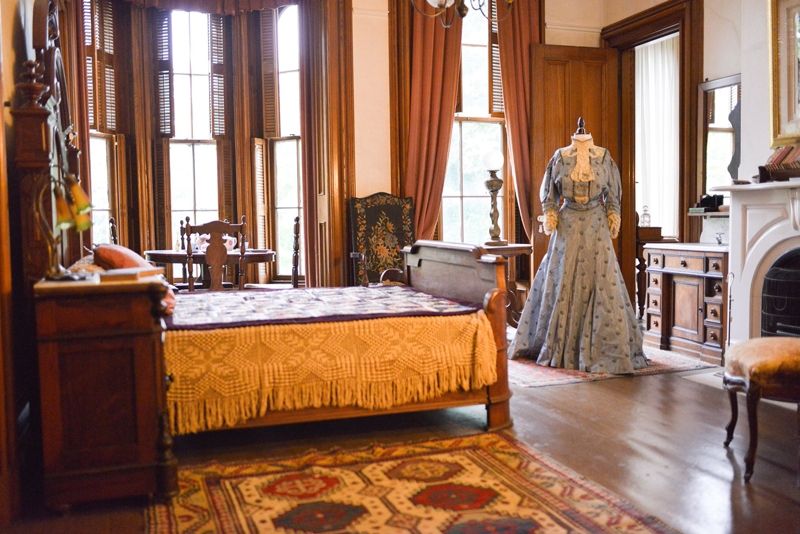
Please visit the online giftshop, and purchase a gift for friends and relatives as well as a special memento of The Winchester Mystery House. A variety of souvenirs and gifts are available to purchase. https://shopwinchestermysteryhouse.com/
 Randolph Harris II International Institute