
Home » #RandolphHarris (Page 147)
Category Archives: #RandolphHarris

Aaliyah–The Highest and Most Exalted, the Best!

I too can be brave for once, and my love is as strong as thine. What will not love discover! The Aaliyah Movie produced by Wendy Williams was not a biography, but it was a tale of love, perseverance and determination. The focus was on a young girl, Aaliyah Dana Haughton, and from day one she knew she wanted to sing, and dance and act. Aaliyah has such a light and a passion in her, she was never normal, always a step ahead. Aaliyah had the determination of a newborn baby. You know how they are born and have no idea about the World, but know they want to explore and love and smile, well, that is the essence Aaliyah possessed. As Aaliyah developed, she had a sense of maturity and wisdom, you would not expect out of a child or a young adult. She excelled in school, she knew of things much older than herself, and with such conviction that you knew she was sincere and not being sarcastic, she really and truly knew what she was talking about. For example, how when Mrs. Diane was talking about Veronica Lake, Aaliyah knew who she was off the bat, and she was an actress from the 1940s, who had her career cut short. Normally when you are recalling stuff you learned from others, you need a reminder. However, this young girl, Aaliyah, knew of Veronica Lake, as if she was a current popular actress.

This enchanting story of Aaliyah really captivated because it was about a good, solid, Christian family, who had dinner together, played together and they just shared everything and had open communication. The family was also very humble and appreciative of everything, but did not take no for an answer. I really liked how Aaliyah was just ahead of her time. She crafted her music and changed her image accordingly so the audience would accept her, and it was real! She really developed and grew right before our eyes. Now the focus of the movie was mainly on Aaliyah’s music and love life. Now when she met with Robert Kelly, he would not even look at her, out of respect for the young lady and her family. However, after working closely, the two fell in love. Robert liked her Aaliyah was just down to Earth, she was not after money, she just wanted a friend and someone to talk to and Robert could not help himself and he fell in love. It was a forbidden love because of the age difference, but the girl knew what she wanted. However, after her daddy found out what was going out, he was hot and had words with Robert Kelly, which dissolved Aaliyah’s relationship with Robert. It was a tumultuous time for the young lady—she was at a level of success others could only dream of and her tender heart fell in love for the first time, but like Juliet and Romeo, it was a love that was not allowed. Aaliyah had to split ties with Robert and it broke her heart. She lost her confidence and felt like he made her. However, Aaliyah’s mother let it be known that her daughter, Aaliyah, was young, independent and self-made. This gave Aaliyah the passion to keep going. Yet, not only did Aaliyah want to make a new album, but she also wanted to become an actress.

This time around, Aaliyah wanted a new style, and no one knows how, but she found two new producers, Missy Elliot and Timberland, and was told not to work with them, but Aaliyah clutched her strings and respectfully let it be known that she makes her own decisions, and this is what she wanted. And yet again, Aaliyah produced another platinum record. Her style went from Rhythm and Blues to a new techno hip hop, and she was the only African American and young girl out there, in the music industry and really paved the way for Britney Spears and Beyonce. Now, Aaliyah also wanted to get into acting, but before the One in a Million album dropped, Aaliyah was told by Hollywood that African Americans women were not really welcomed in Hollywood and consider being in the background in a movie. Again—respectfully, Aaliyah said, “No, I am going to be a leading star in a film.” Once again, she made it happen. Hollywood was beating down her door to put Aaliyah in a movie. Mainstream America saw her, and not only was she African American, but she was The American Dream. No matter your culture, every female could see themselves as Aaliyah and the men loved her because she was real. So Aaliyah took Hollywood by storm and landed roles in the Matrix II and III, Romeo Must Die, Queen of the Damned, Honey, Sparkle and more. Aaliyah had so many movie offers she never for to accept them all, these are just a few we know about. Hollywood had big plans for Aaliyah, and her music career was doing well, but started to wane a little because Aaliyah was calling the shots and not letting anyone talk under her skirt, so people got upset with her and would not play, “We Need a Resolution.” Not only that, but Aaliyah was so busy that people felt she was out of reach, but she was juggling, filming movies, making music videos, recording music, touring, spending time with her family and had a new romantic relationship with Damon Dash.

It was clear to Mrs. Diana, Aaliyah’s mother that her daughter was very selective, but she also knew that Aaliyah was in love with Damon, not only because he was nice to her, but he also reminded her of her first love, Robert Kelly. It broke Aaliyah’s heart when Robert got married. Nonetheless, she moved on. I really liked the movie about Aaliyah because no matter if you are rich or have a modest life, you can relate to the love story. Then when you watch Romeo Must Die, and Queen of the Damned, and her interviews, you get a full scope of Aaliyah. Another thing people loved about Aaliyah is people used to steal her material, and she would go home crying because that was her work and others were trying to pass it off as theirs and trying to steal her image, but Aaliyah realized that she was a master, and these girls and guys were her students, and she was teaching them how to be good artist, and let it go. Aaliyah was about peace, love, family, God and perseverance, and she was a great person and a full-on entertainer. And her voice and style, on every album it is different, and it is so real. How does one go from Hip Hop to contemporary music, in just seven short years? Aaliyah did every style of music you can think of, and all of her albums are really an evolution of her style. My personal favorite is the red album, self-titled Aaliyah. It is just different, edgy. However, all of her music is great, a few American favorites are: Back in Once Piece, At Your Best, Young Nation, One in a Million, Are you that Somebody, Never Giving up, I got you Back, We Need a Resolution, Never no More, More than a Woman, Whatever, What if, I Refuse, All I Need, I Care 4 U, Don’t Worry, and many more. Please check this young lady out at Aaliyah.com


Genesis–The Beginning

In the beginning, God created the Heavens and the Earth—the creation of the World is a problem naturally fitted to excite the liveliest interesting of man, its inhabitant. The ancient pagans, not having the information on the subject which we derive from the pages of Scripture, had their own way of telling the story, which is as follows: Before the Earth, and Sea, and Heaven were created, all things worse one aspect, to which we give the name of Chaos—a confused and shapeless mass, nothing but dead weight, in which however, slumbered the seeds of things. Earth, Sea, and Air were all mixed up together, so Earth was not solid, the sea was not fluid, and the air was not transparent. Now the Earth was formless and empty, darkness was over the surface of the deep, and the Spirit of God was hovering over the waters. And God said, let there be an expanse between the waters to separate water from water. God and Nature at last interposed and out an end to this discord, separating Earth from the Sea, and Heaven from both. And God said, let there be light.

The fiery part, being the lightest, sprang up and formed the skies; he separated the light from the darkness, God called the light day and the darkness he called night. The air was next in weight and place. The Earth, being heavier, sank below, and the water took the lowest place, and buoyed up the Earth. Here, some god—it is not known which—gave his good offices in arranging and disposing of the Earth. He appointed rivers and bays, like the Rio Grande, which separates Mexico from the United States of America, and The Bay Area, in California their places, and raised mountains such as Chisos Mountains in Big Bend, which includes 800,000 acres. God also scooped out valleys not one of my favorites, but Sacramento Valley (the people are extremely immature and rude). Then God distributed woods such as the Olympic National Park in Washington, which has red-legged frogs, owls, 300 different types of bird, deer, glacier-capped mountains and rugged coastlines. He created fountains, such as the Kilauea Volcano, in Hawaii Volcanoes National Park, and fertile fields like the bush plane on Kahiltna Glacier, and stony plains like Denali in the Arctic National Park. The air being cleared, the stars began to appear, grizzly bears began foraging for food, salmon swam in nearby Brooks Falls and Lake Clark. A bush plain lands on Kahitlna Glacier at the 7,200-foot base camp of Mountain McKinley, which is 20,000 feet tall, North America’s tallest peak. And God saw that it was good.

And God said, let the water teem with living creatures, and let bird fly above the Earth, across the expanse of the sky. So God created Glacier Bay with harbor seals. However, a nobler animal was wanted, and Man was made. God said, let us make man in our image, in the image of God, and he created him; male and female he created them. It is not known whether the Creator made him of divine materials, or whether in the Earth, so lately separated from Heaven, there lurked still some Heavenly seeds. Prometheus took some of this Earth, and kneading it up with water, made man in the image of the gods. He gave him an upright stature, so that while all other animals turn their faces downward and look to the Earth, he rises his to heaven and gazes on the stars. Prometheus was one of the Titans, a gigantic race, who inhabited the Earth before the creation of man. To him and his brother Epimetheus was committed the office of making man, and providing him and all other animals with the faculties necessary for their preservation. Epimetheus undertook to do this, and Prometheus was to overlook his work, when it was done. Epimetheus Theus accordingly proceeded to bestow upon the different animals the various gifts of courage, strength, swiftness, sagacity; wings to one, claws to another, a shelly covering to the third, etc. Large flocks of roseate spoonbills, white pelicans, ibis and even the occasional flamingo can be seen in Everglades National Park, along with alligators, lurking in the water or sunning themselves just off the well-traveled path.

Or you may see a grizzly bear cub walking through the tall grass by Brooks River. However, when man came to be provided for, who was to be superior to all other animals, Epimetheus had been so prodigal of his resources that he had nothing left to bestow upon him. In his perplexity he restored to his brother Prometheus, who with the help of Minerva, went up to Heaven, and lighted his torch at the chariot of the Sun and brought down fire to man, and as a treat we were blessed with the Aurora borealis. With this gift, man was more than a match for all other animals. It enabled him to make weapons wherewith to subdue them; tools with which to cultivate the Earth; to warm his dwelling, so as to be comparatively independent of climate; and finally to introduce the arts and to coin money, the means of trade and commerce. Woman was not yet made. The story (absurd enough!) is that Jupiter made her and sent her to Prometheus and his brother, to punish them for their presumption in stealing fire from Heaven; and man, for accepting this gift. The first woman was named Pandora. She was made in Heaven, every god contributing something to perfect her. Venus gave her beauty, Mercury persuasion, Apollo music, etc. Thus equipped, she was conveyed to Earth and presented to Epimetheus, who gladly accepted her, though cautioned by his brother to beware of Jupiter and his gifts.

Epimetheus had in his house a jar, in which were kept certain noxious articles, for which, in fitting man for his new abode, he had no occasion. Pandora was seized with an eager curiosity to know what this jar contained; and one day she slipped off the cover and looked in. Forthwith there escaped a multitude of plagues for hapless man—such as gout, rheumatism, and colic for his body, and envy, spite, and revenge for his mind—and scattered themselves far and wide. Pandora hastened to replace the lid; but, alas! The whole thing only excepted, which lay at the bottom, and that was hope. So we see at this day, whatever evils are aboard, hope never entirely leaves us; and while we have that, no number of other ills can make us completely wretched. Another story is that Pandora was sent in good faith, by Jupiter, to bless man; that she was furnished with a box, containing her marriage blessing. She opened the box incautiously, and all the blessings escaped, hope only excepted. Then the man and his wife heard the sound of the Lord God, as he was walking in the garden, in the cool of day, and they hid from the LORD God among the trees of the garden. However, the LORD God called to the man, “Where are you?” He answered, “I heard you in the garden and I was afraid because I was naked, so I hid.” And God said, “Who told you where naked? Have you opened that box I commanded you not to touch?”

Then the man said, “The woman you put here with me—she gave me some fruit and I ate it.” Then the LORD God said to the woman, “What is this you have done?” The woman said, “The serpent aroused me, and I opened the box.” So the LORD God said to the serpent (man), because you have done this, cursed are you above all the livestock, and all the wild animals. You will crawl on your belly, and you will eat dust all the days of your life. And I will put enmity between you and the woman, and between your offspring and hers; he will crush your head, and you will strike his heel. To the woman God said, I will greatly increase your pains in childbearing with pain you will give birth to children. Your desire will be for your husband, and he will rule over you. This story seems more probable then the former; for how could hope, so precious a jewel as it is, have been kept in a jar full of all manners of evils, as in the former statement? The World being thus furnished with inhabitants, the first age was an age of innocence and happiness, called the Golden Age. Truth and right prevailed, though not enforced by law, nor was there any magistrate to threaten or punish. The forest had not yet been robbed of its trees to furnish timbers for vessels, nor had men built fortifications round their towns. There were no such things as swords, spears, or helmets. The Earth brought forth all things necessary for man, without his labor in ploughing or sowing. Perpetual spring reigned, flowers sprang up without seed, the rivers flowed with milk and wine, and yellow honey distilled from the oaks.

Then succeeded the Silver Age, Jupiter shortened the spring and divided the year into seasons. God said because you listened to your wife, and ate from the box about which I commanded you to avoid at all costs, cursed is the ground because of you; through painful toil you will eat of it, all the days of your life. It will produce thorns and thistles for you, and you will eat the plants of the field. By the sweat of your brow, you will eat your food, until you return to the ground, since from it you were taken; for dust you are and to dust you will return. Then first, men had to endure the extremes of heat and cold, and houses became necessary. Caves were the first dwellings, and leafy coverts of the woods, and huts woven of twigs. Crops would no longer grow without planting. The farmer was obligated to sow the seed, and the toiling ox to draw the plough. Next came the Brazen Age, more savage of temper and readier to the strife of arms yet not altogether wicked. The hardest and worst was the Iron Age. Crime burst in like a tornado super outbreak. All hell broke loose. Modesty, truth, and honor fled. In their places came fraud and cunning, violence, and the wicked love of gain. Then seamen spread sails to the wind, and the trees were torn from the mountains to serve for keels to ships, and vex the face of the ocean. The Earth, which till now had been cultivated in common, began to be divided off into possessions.
Men were not satisfied with what the surface had produced, but must dig into its bowels, and draw forth from thence the ores of metals. Mischievous irons, and more mischievous gold, were produced. War sprang up, using both as weapons; the guest was not safe in his friend’s house; and sons-in-law and fathers-in-law, brothers and sisters, husbands and wives could not trust one another. Sons wished their fathers dead, that they might come to the inheritance; family love lay prostrate. The Earth was wet with slaughter, and the gods abandoned it, one by one, till Astraea* alone was left, and finally she also took her departure. Jupiter, seeing this state of things, burned with anger. He summoned the gods to council. They obeyed the call and took the road to the palace of Heaven. The road, which anyone may see in a clear night, stretches across the face of the sky and is called the Milky Way. Along the road stand the palaces of the illustrious gods; the common people of the skies live apart, on either side. Jupiter addressed the assembly. He set forth the frightful condition of things on Earth and closed by announcing his intentions to destroy the whole of its inhabitants, and provide a new race, unlike the first, who would be more worthy of life and much better worshippers of the gods.

So saying he took a thunderbolt, and was about to launch it at the World, and destroy it by burning; however, recollecting the danger that such a conflagration might set Heaven itself on fire, he changed his plan and resolved to drown it. The LORD saw how great man’s wickedness on the Earth had become, and that every inclination of the thoughts of his heart was only evil all the time. The LORD was grieved that he had made man on Earth, and his heart was filled with pain. So the LORD said, I will wipe mankind, who I have created, from the face of the Earth—men and animals and creatures that move along the ground, and birds of the air—for I am grieved that I have made them. The North wind, which scatters the clouds, was chained up; the South was sent out, and soon covered all the face of Heaven with a cloak of pitchy darkness. The clouds, driven together, resounded with a crash; torrents of rain fall; for forty days the flood kept coming on the Earth. The water rose greatly on the Earth, and all the high mountains under the entire Heavens were covered. The waters flooded the Earth for a hundred and fifty days. The year’s labor of the husbandman perishes in an hour. Jupiter, not satisfied with his own waters, calls on his brother Neptune to help him with his. He lets loose the rivers and pours them over the land. At the same time, he heaves the land with an Earthquake and brings in the reflux of the ocean over the shores. Flocks, herds, men and houses are swept away, and temples, with their sacred enclosures, profaned. If any edifice remained standing, it was overwhelmed, and its turrets lay hid beneath the waves.
*The goddess of innocence and purity. After leaving Earth, she was placed among the stars, where she became the constellation Virgo—the Virgin. Themis (Justice) was the mother of Astraea. She is represented as holding aloft a pair of scales, in which she weighs the claims of opposing parties. It was a favorite idea of the old poets that these goddesses would one day return and bring back the Golden Age. Even in a Christian hymn, “The Messiah” of the Pope, this idea occurs. All crimes shall cease, and ancient fraud shall fail, Returning Justice lift aloft her scale, peace o’er the World her olive wand extend, and white-robed Innocence from Heaven descend. Meanwhile, now all was sea, sea without shore. Here and there an individual remained on a projecting hilltop, and a few, in boats, pulled the oar where they had lately driven the plough. The fishes swim among the treetops; the anchor of the ark was let down into a garden. Where the graceful lambs played, but now unwieldy sea calves’ gambol. The wolf swims among the sheep, the yellow lions and tigers struggle in the water. The strength of the wild boar serves him not, nor his swiftness the stag. The birds fall with weary wing into the water, having found no land for a resting place. These living beings whom the water spared fell a prey to hunger.

Parnassus alone, of all the mountains, overtopped the waves; and there Deucalion, and his wife Pyrrha, of the race of Prometheus, found refuge—he a just man, and she a faithful worshipper of the gods. Jupiter, when he saw none left alive but this pair, and remembered their harmless lives and pious demeanor, ordered the North winds to drive away the clouds, and disclose the skies to Earth, and Earth to the skies. Neptune also directed Triton to blow on his shell and sound a retreat to the waters. The waters obeyed, and the sea returned to its shoes, and the rivers to their channels. Then Deucalion thus addressed Pyrrha: Oh, wife, only surviving woman, joined to me first by a common danger, would that we possessed the power of our ancestor Prometheus, and could renew the race as he made it. However, as we cannot, let us seek yonder temple, and inquire of the gods what remains for us to do. They entered the temple, deformed as it was with slime, and approached the altar, where no fire burned. There they fell on prostrate on the Earth and prayed the goddess to inform them how they might retrieve their miserable affairs.

The oracle answered: Depart from the temple with head veiled and garments unbound, and cast behind you the bones of your mother. They heard the words with astonishment. Pyrrha first broke silence: We cannot obey; we dare not profane the remains of our parents. They sought the thickest shades of the wood, and resolved the oracle in their minds. At length Deucalion spoke: Either my sagacity deceives me, or the command is one we may obey without impiety. The Earth is the great parent of all; the stones are her bones; these we may cast behind us; and I think this is what the oracle means. At least, it will do no harm to try. You noticed the children as not so quick to sale out their parents like Isaac so willingly did in Genesis 22.2. So Pyrrha and Deucalion veiled their faces, unbound their garments, and picked up stones, and cast them behind them. The stones (wonderful to relate) began to grow soft, and assume shape. By degrees, they put on a rude resemblance to human form, like a block half finished, in the hands of the sculptor. The moisture and slime that were about them became flesh; the stony part became bones; the veins remained veins, retaining their name, only changing their use. Those thrown by the hand of the man became men, and those by the women became women. It was a hard race, and well adapted to labor, as we find ourselves to be at this day, giving plain indications of our origin.

The comparison of Eve to Pandora is too obvious to have escaped detection. More lovely than Pandora, whom the gods Endowed with all their gifts; and O, too like in sad event, when to the unwiser son of Japhet brought by Hermes, she ensnared Mankind with her fair looks, to be avenged on him who had stole Jove’s authentic fire. Prometheus and Epimetheus were sons of Iapetus, which changes to Japhet. Prometheus has been a favorite subject with the poets. He is represented as the friend of mankind, who interposed in their behalf when Jove was incensed against them and who taught them civilization and the arts. However, as in doing so, he transgressed the will of Jupiter, he drew down on himself the anger of the ruler of gods and men. Jupiter had him chained to a rock on Mount Caucuses, where a vulture preyed on his liver, which was renewed as fast as devoured. This state of torment might have been brought to an end at any time by Prometheus, if he had been willing to submit to his oppressor; for he possessed a secret which involved the stability of Jove’s throne, and if he would have revealed it, he might have been at once taken into favor. However, that he disdained to do. He has therefore become the symbol of magnanimous endurance of unmerited suffering, and strength of will resisting oppression.

Titan! To whose immortal eyes the suffering of mortality, seen in their sad reality, were not as things that gods despise, what was thy pity’s recompense? A silent suffering, and intense; the rock, the vulture, and the chain; all that the proud can feel of pain; the agony they do not show, the suffocating sense of woe. Thy godlike crime was to be kind; to render with the precepts less the sum of human wretchedness, and strengthen man with his own mind, and baffled as thou wert from high. Still, in the patient energy, in the endurance and repulse of thine impenetrable spirit, which Earth and Heaven could not convulse, a mighty lesson we inherit. Or, like the thief of fire from Heaven, Wilt thou withstand the shock? And share with him—the unforgiven—His vulture and his rock? After the last few chapters, I feel you are ready for more understanding, please watch “Queen of the Damned.” https://www.youtube.com/watch?v=bNXcXudqzv4


What will not Love Discover!

The creation of the World is problem naturally fitted to excite the liveliest of man, its inhabitant. The ancient pagans, not having the information on the subject which we derive from the pages of Scripture, had their own way of telling the story, which follows: The Greeks believed the Earth to be flat and circular, their own country occupying the middle of it, the central point being either Mount Olympus, the abode of the gods, or Delphi, so famous for its oracle. The circular dis of the Earth was crossed from West to East, and divided into two equal parts by the Sea, as they called the Mediterranean, and its continuation the Euxine, the only seas with which they were acquainted. Around the Earth flowed the River Ocean, its course being from South to North, on the Western side of the Earth, and in a contrary direction, on the Eastern side. It flowed in a steady, equable current, unvexed by storm or tempest. The sea, and all the rivers on Earth, received their waters from it. The Northern portion of the Earth was supposed to be inhabited by a happy race named the Hyperboreans, dwelling in everlasting bliss and spring beyond the lofty mountains whose caverns were supposed to send forth the piercing blasts of the north wind, which chilled the people of Hellas (Greece).
Their country was inaccessible by land or sea. They lived exempt from disease or old age, from toils and warfare. Here is a Song of a Hyperborean beginning. I come from a land in the sun-bright deep, where golden gardens glow, where the winds of the north, becalmed in sleep, their conch shells never blow. On the South side of the Earth, close to the stream of Ocean, dwelt a people happy and virtuous as the Hyperboreans. They were named the Ethiopians. The gods favored them so highly that they were wont to leave at times their Olympian abodes and go to share their sacrifices and banquets. On the Western margin of the Earth, but the stream of Ocean, lay a happy place named the Elysian Plain, whither mortals favored by the gods were transported, without tasting of death, to enjoy an immortality of bliss. This happy region was also called the Fortunate Fields and the Isles of the Blessed. We thus see that the Greeks of the early ages knew little of any real people except those to the East and South of their own country, or near the coast of the Mediterranean. Their imagination meantime peopled the Western portion of this sea with giants, monsters, and enchantresses, while they placed around the disk of the Earth, which they probably regarded as of no great width, nations enjoying the peculiar favor of the gods and blessed with happiness and longevity.

The Dawn, the Sun, and the Moon were supposed to rise out of the Ocean, on the Eastern side, and to drive through the air, giving light to gods and men. The stars also, except those forming the Wain or Bear, and others near them, rose out of and sank into the stream of Ocean. There the sun-god embarked in a winged boat, which conveyed him round by the northern part of the Earth back to his place of rising in the East. Now the gilded car of day, his golden axle doth allay, in the steep Atlantic stream, and the slope of the Sun his upward beam shoots against the dusky pole, pacing towards the other goal of his chamber in the East. The abode of the gods was on the summit of Mount Olympus, in Thessaly. A gate of clouds, kept by the goddesses named the Seasons, opened to permit the passage of the celestials to Earth, and to receive them on their return. The gods had their separate dwellings; but all, when summoned, repaired to the palace of Jupiter, as did also those deities whose usual abode was the Earth, the waters, or the underworld. It was also in the great hall of the palace of the Olympian kings that the gods feasted each day on ambrosia and nectar, their foods and drink, the latter being handed round by the lovely goddess Hebe.

Here they conversed of the affairs of Heaven and Earth; and as they quaffed their nectar, Apollo, the god of music, delighted them with the tones of his lyre, to which the Muses sang in responsive strains. When the Sun was set, the Gods retried to sleep in their respective dwellings. So saying, Minerva, goddess azure-eyed, rose to Olympus, the reputed seat eternal of the gods, which never storms disturbs, rains drench, or snow invades, but calm the expanse and cloudless shines with purest day. There the inhabitants divine rejoice forever. The robes and other parts of the dress of the goddesses were woven by Minerva and the Graces, and everything of a more solid nature was formed of the various metals. Vulcan was architect, smith, armorer, chariot builder, and artist of all works in Olympus. He built of brass the houses of the Gods; he made for them the golden shoes with which they trod the air or the water and moved from place to place with the speed of wind, or even of thought. He also shod with brass the celestial steeds which whirled the chariots of the gods through the air, or along the surface of the sea. He was able to bestow o his workmanship self-motion, so that the tripods (chairs and tables) could move of themselves in and out of the celestial hall. He even endowed with intelligence the golden handmaidens whom he made to wait on himself. Jupiter, or Jove (Zeus*), though called the father of gods and men, had himself a beginning. Saturn (Cronos) was his father, and Rhea (Ops) his mother. Saturn and Rhea were the race of Titans, who were the children of Earth and Heaven, which sprang from Chaos, of which we shall give further account in our next chapter.
There is another cosmogony, or account of the creation, according to which Earth, Erebus, and Love were the first beings. Love (Eros) issued from the egg of Night, which floated on Chaos. By his arrow and torch, he pierced and vivified all things, producing life and joy. Saturn and Rhea were not the only Titans. There were others, whose names were Oceanus, Hyperion, Iapetus, and Ophion, males; and Themis, Mnemosyne, Eurynome, females. They are spoken of as the elder gods, whose dominion was afterwards transferred to others. Saturn yielded to Jupiter, Oceanus to Neptune, Hyperion to Apollo. Hyperion was the father of the Sun, Moon, and Dawn. He is therefore the original sun-god and is painted with the splendor and beauty which were afterwards bestowed on Apollo. Hyperion was known for his curly hair. Ophion and Eurynome ruled over Olympus till they were dethroned by Saturn and Rhea. Paradise lost—heathens seem to have had some knowledge of the temptation and fall of man. And fabled how the serpent, who they called Ophion, with Eurnome, (the wide Encroaching Eve perhaps,) had first the rule of high Olympus, thence by Saturn driven.

The representations given of Saturn are not very consistent; for on the one hand his reign is said to have been the golden age of innocence and purity, and on the other he is described as a monster who devoured his own children.* Jupiter, however, escaped this fate, and when grown up espoused Metis (Prudence), who administered a draught to Saturn which caused him to disgorge his children. Jupiter, with his brothers and sisters, now rebelled against their father Saturn, and his brothers the Titans; vanquished them, and imprisoned some of them in Tartarus, inflicting other penalties on others. Atlas was condemned to bear up the Heavens on his shoulders. On the dethronement of Saturn, Jupiter with his brothers Neptune (Poseidon) and Pluto (Dis) divided his dominions. Jupiter’s portion was the Heavens, Neptune’s the ocean, and Pluto’s the realm of the dead. Earth and Olympus were common property. Jupiter was king of the gods, and men. The thunder was his weapon, and he bore a shield called Aegis, made for him by Vulcan. The eagle was his favorite bird and bore his thunderbolts. Juno (Hera) was the wife of Jupiter, and queen of the gods. Iris, the goddess of the rain bow, was her attendant and messenger. The peacock was her favorite bird. *The inconsistency arises from considering the Saturn of the Romans the same with the Grecian deity Cronos (Time), which, as it brings an end to all things which have had a beginning, may be said to devour its own offspring.

Vulcan (Hephaestos), the celestial artist, was the son of Jupiter and Juno. He was born lame, and his mother was so displeased at the sight of him that she flung him out of Heaven. Other accounts say that Jupiter kicked him out for taking part, with his mother, in a quarrel which occurred between them. Vulcan’s lameness, according to this account was the consequence of his fall. He was a whole day falling, and at last alighted in the Island of Lemnos, which was thenceforth sacred to him. From morn to noon he fell, from noon to dewy eve, a Summer’s day; and with the setting sun, dropped from the zenith, like a falling star, on Lemnos, the Aegean isle. Mars (Ares), the god of war, was the son of Jupiter and Juno. Phoebus Apollo, the god of archery, prophecy, and music, was the son of Jupiter and Latona, and brother of Diana (Artemis). He was god of the sun, as Diana, his sister, was the goddess of the moon. Venus (Aphrodite), the goddess of love and beauty, was the daughter of Jupiter and Dione. Others say that Venus sprang from the foam of the sea. The zephyr wafted her alone the waves to the Isle of Cyprus, where she was received and attired by the Seasons and then led to them assembly of the gods. All were charmed with her beauty, and each one demanded her for his wife. Jupiter gave her to Vulcan, in gratitude for the service he had rendered in forging thunderbolts. So the most beautiful of the goddesses became the wife of the most ill-favored of the gods. Venus possessed an embroidered girdle called Cestus, which has the power of inspiring love. Her favorite birds were swans and doves, and the plants sacred to her were the rose and the myrtle.

Cupid (Eros), the god of love, was the son of Venus. He was her constant companion; and armed with bow and arrows, he shot the darts of desire into the bosom of both gods and men. There was a deity named Anteros, who was sometimes represented as the avenger of slighted love, and sometimes as the symbol of reciprocal affection. The following legend is told of him: Venus, complaining to Themis that her son Eros continued always a child, was told by her that it was because he was solitary, and that if he had a brother he would grow apace. Anteros was soon afterward born, and Eros immediately was seen to increase rapidly in size and strength. Minerva (Pallas Athene), the goddess of wisdom, was the offspring of Jupiter, without a mother. She sprang forth from his head, competently armed. Her favorite bird was the owl, and the plant sacred to her the olive. Byron, in Childe Harold, alludes to the birth of Minerva, thus: Can tyrants but by tyrants conquered be, and freedom find no champion and no child, such as Columbia saw arise, when she sprang forth a Pallas, armed and undefiled? Or must such minds be nourished in the wild, deep in the unpruned forest, ‘midst the roar of cataracts, where nursing Nature smiled on infant Washington? Has Earth no more such seeds within her breast, or Europe no such shore? Mercury (Hermes) was the son of Jupiter and Maia. He presided over commerce, wrestling, and other gymnastic exercises, even over trade, and everything, in short, which required skill and dexterity.

He was the messenger of Jupiter and wore a winged cap and winged shoes. He bore in his hand a rod entwined with two serpents, called the Caduceus. Mercury is said to have invented the lyre. He found, one day a tortoise, of which he took the shell, made holes in the opposite edges of it, and drew cords of linen through them, and the instruments was complete. The cords were nine, in honor of the nine Muses. Mercury gave the lyre to Apollo, and received from him in exchange the caduceus.* Cere (Demeter) was the daughter of Saturn and Rhea. She had a daughter named Proserpine (Persephone), who became the wife of Pluto, and queen of the realms of the dead. Ceres presided over agriculture. *From this origin of the instrument, the word shell often is used as synonymous with lyre, and figuratively for music and poetry. Thus, Gray, in his ode on the Progress of Posey, says Oh, Sovereign of the willing soul, parent of sweet and solemn-breathing airs, enchanting shell! The sullen Cares and frantic Passions hear thy soft control. Bacchus (Dinoysus), the god of wine, was the son of Jupiter and Semele. He represents not only the intoxicating power of wine, but its social and beneficent influences likewise, so that he is viewed as the promoter of civilization, and a lawgiver and lover of peace. The Muses were the daughters of Jupiter and Mnemosyne (Memory). They presided over song and prompted the memory. They were nine in number, to each of whom was assigned the presidency over some particular department of literature, art or science. Calliope was the muse of epic poetry. Clio of history, Euterpe of lyric poetry, Melpomene of tragedy, Terpsichore of choral dance and song, Erato of love poetry, Polyhymnia of sacred poetry, Urania of astronomy, Thalia of comedy.

The Graces were goddesses presiding over the banquet, the dance, and all social enjoyments and elegant arts. They were three in number. Their names were Euphrosyne, Aglaia, and Thalia. Spenser described the office of the Graces thus: These three on men all gracious gifts bestow, which deck the body or adorn the mind, to make them lovely or well-favored show; as comely carriage, entertainment kind, sweet semblance, friendly offices that bind, and all the complements of courtesy; they teach us how to each degrees and kind we should ourselves demeans, to low, to high, to friends, to foes; which skill men call Civility. The fates were also three-Clotho, Lachesis, and Atropos. Their office was to spin the thread of human destiny, and they were armed with shears, with which they cut it off when they pleased. They were the daughters of Themis (Law), who sits by Jove on his throne to give him counsel. The Erinnyes, or Furies, were three goddesses who punished by their secret stings the crimes of those who escaped or defined public justice. The heads of the Furies were wreathed with serpents, and their whole appearance was terrific and appalling. Their names were Alecto, Tisiphone, and Megaera. They were also called Eumenides. Nemesis was also an avenging goddess. She represents the righteous anger of the gods, particularly toward the proud and insolent. Pan was the god of the flocks and shepherds. His favorite residence was in Arcadia. The Stayrs were deities of the woods and fields. They were conceived to be covered with bristly hair, their heads decorated with short, sprouting horns, and their feet like goats’ feet.

Momus was the god of laughter, and Plutus the god of wealth. The preceding are Grecian divinities, through received also by the Romans. Those which follow are peculiar to Roman mythology. Saturn was an ancient Italian deity. It was attempted to identify him with the Grecian god Cronos, and fabled that after his dethronement by Jupiter, he fled to Italy, where he reigned during what was called the Golden Age. In memory of his beneficent dominion, the feast of Saturnalia was held every year in the Winter season. Then all public business was suspended, declarations of war and criminal executions were postponed, friends made presents to one another, and the slaves were indulged with great liberties. A feast was given them at which they sat at table, while their masters served them, to show the natural equality of men, and that all things belonged equally of men, and that all things belonged equally to all, in the reign of Saturn. Fauns,* the grandson of Saturn, was worshipped as the god of fields and shepherds, and also as a prophetic god. His name in the plural, Fauns, expressed a class of gamesome deities, like the Satyrs of the Greeks. Quirinus was a war god, said to be no other than Romulus, the founder of Rome, exalted after his death to a place among the gods. Bellona, a war goddess. Terminus, the god of landmarks. His statue was a rude stone or post, set in the ground to mark the boundaries of fields. Pales, the goddess presiding over cattle and pastures. Pomona presided over fruit trees. Flora, the goddess of flowers. Lucina, the goddess of childbirth. Vesta (The Hestia of the Greeks) was a deity presiding over the public and private hearth.

A sacred fire, tended by six virgin priestesses called Vestals, flamed in her temple. As the safety of the city was held to be connected with its conservation, the neglect of the virgins, f they let it go out, was severely punished, and the fire was rekindled from the rays of the Sun. *There was also a goddess called Fauna, or Bona Dea. Liber is the Latin name of Bacchus; and Mulciber of Vulcan. Janus was the porter of Heaven. He opens the year, the first month being named after him. He is the guardian deity of the gates, on which account he is commonly represented with two heads, because every door looks two ways. His temples at Rome were numerous. In wartime the gates of the principal one were always open. In peace they were closed; but they were shut only once between the reign of Numa and that of Augustus. Then Penates were the gods who were supposed to attend to the welfare and prosperity of the family. Their name is derived from Penus, the pantry, which was sacred to them. Every master of a family was the priest to the Penates of his own house. The Lares, or Lars, were also household gods, but differed from the Penates in being regarded as the Penates in being regarded as the deified spirits of mortals. The family Lars were held to be the souls of the ancestors, who watched over and protected their descendants. The words Lemur and Larva more nearly corresponded to our word Ghost. The Romans believed that every man had his Genius, and every woman her Juno; that is, a spirit who had given them being, and was regarded as their protector through life. On their birthdays men made offerings to their Genius, women to their Juno. A modern poet thus alludes to some of the Roman gods: Pomona loves the orchard, and Liber loves the wine, and Pales loves the straw-built shed, warm with the breath of knife; and Venus loves the whisper of plighted youth and maid, in April (422) ivory moonlight, beneath the chestnut shade. N.B. It is to be observed that in proper names the final e and es are to be sounded. Thus Cybele and Penates are words of three syllables. However, Proserpine and Thebes are exceptions, and to be pronounced as English words. It will not return to me empty, but will accomplish what I desire and achieve the purpose for which I sent it. – William Randolph Hearst (Isaiah 50.10-11).

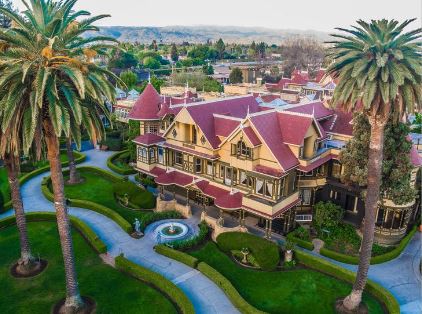
The Winchester Mystery House
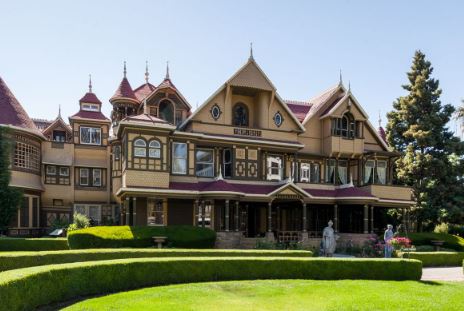
What are you afraid of? Face your fears while turning the most mysterious mansion in the World! Why should you be afraid to enter after dark? If you meet the Devil at the door-to-nowhere, what could go wrong? Why does your reflection smile more than you do? Why is your shadow walking in the opposite direction? For insightful clues into these phenomena, explore more. https://winchestermysteryhouse.com/

Every Generation has its Improvements
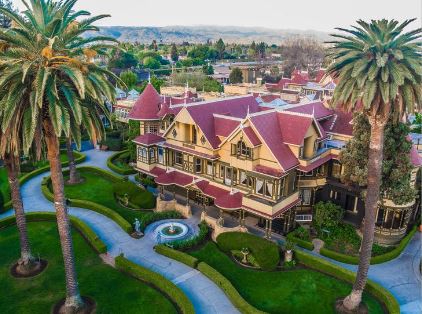
We live in a physical World whose properties are familiar, and, it is around us all the time. We cherish our own space. If you would have your son or daughter to walk honorably through the World, you must not attempt to clear the stones from his or her path, but tech your children to walk firmly over them—not insist upon leading a child by the hand, but let your child learn to go alone. Artists as reporters represent their World, and they even expect their work to have an impact on the World, to reveal hidden or universal truths. The work is about knowing and appreciating the beautiful, and that is how we can make the World a better place. Each photograph represents a particular intellectual, emotional, or expressive quality of the subject, they represent powerful emotions and feelings and passions. In 1666, Sir Isaac Newton demonstrated that objects appear to be a certain color because they absorb and reflect different parts of the visible spectrum. Obviously, not all artists are able to utilize light as fully as architects. Architects, particularly, must concern themselves with light.

However, especially if artist and photographers are interested in representing the World, they must learn to imitate the effects of light in their work. There is something called the atmospheric perspective or aerial perspective, and these rules state that the quality of the atmosphere (the haze and relative humidity) between us and large objects, such as mountains, changes their appearance. Objects further away from us appear less distinct, often cooler, or bluer in color, and the contrast between light and dark is reduced. Some of these photographs throw a veil of matchless color, that lucid interval of Morning dawn and dewy light on which the Eye dwells…and it is a sacrilege to pierce the mystic shell of color in search of form. With linear perspective one might adequately describe physical reality—a building, for instance—but through light one could reveal a greater spiritual reality. In this photograph, the light is much more expressive. It is, in large part, the dramatic play of light and dark in the photograph that contributes to this expressivity. The perspective system employed is used to focus our attention on the building, it is light that draws our attention to the grandeur and beauty. The Heavenly light surrounding the Capitol contrasts dramatically with the darkness of the rest of the composition. The building is symbolically offering you its body as nourishment. This purely spiritual act contracts with the gluttonous Worldly activity going on in the foreground, where a dog knaws at a bone, and a cat searches for leftovers. Light here symbolizes the spiritual World, and darkness our Earthly home. Light and dark have traditionally had strong symbolic meaning in Western culture.
We have only to think of the Christian Bible, and the first lines of the Book of Genesis, which very openly associates the dark with the bad and the light with good. In the beginning God created the Heaven and the Earth. And the Earth was without form, and void; and darkness was upon the face of the deep. And the Spirit of God moved upon the face of the waters. And God said, Let there be light: and there was light. And God saw the light, that it was good: and God divided the light from the darkness. In the history of art, this association of light or white with good and darkness or black with evil was first fully developed in the late eighteenth-and early nineteenth-century color theory of the German poet and dramatist Johann Wolfgang von Goethe. For Goethe, colors were not just phenomena to be explained by scientific laws. They also had moral and religious significance, existing halfway between the goodness of pure light and the damnation of pure blackness. In Heaven, there is only pure light, but the fact that we can experience color—which, according to the laws of optics, depends upon light mixing with darkness—promises us at least the hope of salvation. In the first, the figures are all passive, sleeping, or dead. In the second, the figures are bathed in an almost pure white light and barely recognizable at the top center of the painting. Figures swirl around him as if life itself is being born out of a vortex.

Although this opposition between dark and light is taken for granted in our culture, many people of color, with reason, find such thinking offensive. They are especially offended by the use of the term value to describe gradations of light and dark, so that black is low, and white is high in value. Artists and art historians alike use the term as a part of a specialized descriptive vocabulary that, in itself, would seem to be art the furthest remove from issues of race and the relative worth of human beings. Nevertheless, it is clear that since Biblical times, Western culture has tended to associate blackness with negative qualities and whiteness with positive ones, and it is understandable why people might take offense at this usage. For this reason, we use the word key instead of value, substituting the musical metaphor for the moral and economic one. If for Johann Wolfgang von Goethe, blackness is not merely the absence of color, but the absence of good, for African Americans, blackness is just the opposite. Mighty drums echoing the voices of Spirits…these sounds are rhythmic, the rhythm of vitality, the rhythm of exuberance and the rhythms of Life. These are the sounds of blackness. Blackness—the presence of all color.
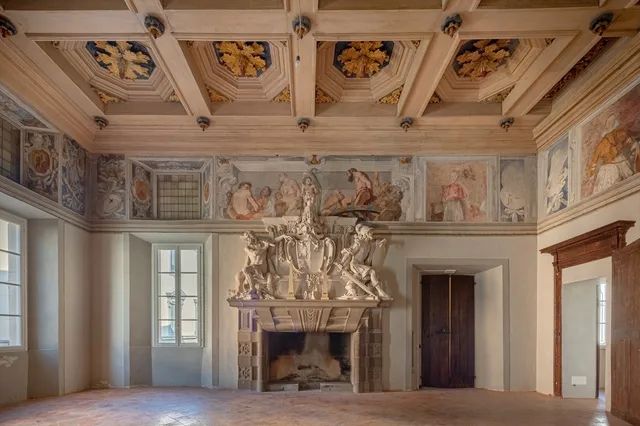
When restoring some artwork, technicians found that the dull, somber hues always associated with Michelangelo were not the result of his palette, that is, the range of colors he preferred to use, but of centuries of accumulated dust, smoke, grease, and varnishes made of animal glue painted over the ceiling by earlier restorers. The colors are in fact much more saturated and intense than anyone had previously supposed. Some experts, in fact, find them so intense that they seem, beside the golden tones of the unrestored surface, almost garish. As a result, there has been some debate about the merits of the cleaning. However, it is not a controversy. It is a culture shock. Therefore, agree with your adversary quickly. Do it quickly—bring yourself to judgment now. In moral and spiritual matters, you must act immediately. God is determined to have His child as pure, clean, and white as driven snow, and as long as there is disobedience, God will allow His Spirit to use whatever process it may take to bring us to obedience. The fact that we insist on proving that we are right is almost always a clear indication that we have some point of disobedience. Assuredly, I say to you, you will by no means get out of there until you have paid the last penny. God urged you to come to judgment immediately when He condemned you, but you did not obey. Then the inevitable process began to work, bringing its inevitable penalty. The moment you are willing for God to change your nature, His re-creating forces will begin to work. He will reach to the very limits of the Universe to help you take the right road.


Era of Instability
No amount of education can cure natural dullness or make up for original mental deficiencies. Americans are used to being a nation of immigrants, and even as new immigration sparks public debate about how much is enough, illegal immigrants are now being allowed to get driver’s licenses. With the slowing of the United States economy, 45 percent of America thinks there are too many immigrants entering the country from Latin American countries. Americans have not seen any increase in their economic standing, under this current administration, and the country is $18.1 trillion in debt and only funded until 15 September 2015. Many people believe if we are going to allow immigration, Americans should be seeing prosperity. We are collecting more taxes than this nation has ever collected in history. Taxes are too high and there is a struggle for social, economic, and political dominance in the country. There are currently more than 11.2 million unauthorized immigrants in the United States of America, making up 3.5 percent of the nation’s population. A person who is not a citizen of the United States of America, by birth or by naturalization, but crosses the border, without documentation is considered an unauthorized immigrant. Immigrants can visit, study, work, or make their home in this country, but only with the permission of the federal government. The conditions immigrants must meet in order to enter the United States of America are determined by Congress, and the laws that apply to their admission and residency are enforced by the Attorney General of the United States and the Immigration and Naturalization Service (INS). Not everyone who wants to enter the United States is allowed to do so. For example, INS refuses to admit people who are mentally ill, who have been convicted of a serious crime, and who carry certain diseases, such as AIDS.
Also, immigrants who want to work in this country may do so, only if they are not depriving American citizens of job opportunities. Mexicans make up about 52 percent of all unauthorized immigrants; there are 6 million unauthorized Mexican immigrants. Sixty percent of unauthorized immigrants live in California, Texas, Florida, New York, New Jersey and Illinois. Unauthorized make up 5.1 percent of the United States labor force, or 8.1 million; and currently the nation is experiencing an unemployment rate of 5.2 percent. And unauthorized immigrants make up about 18 percent of schools population, so they are breaking the law and using taxpayer money, which is adding to the $18.1 trillion deficit. Many Americans are upset because unauthorized immigrants are here unlawfully, and unauthorized immigrants are getting privileges like driver’s licenses, free college education and housing. These factors are what is making immigration an even more problematic issue because many Americans are struggling to pay their bills and send their children to college, but their tax money is going to support a population of over 11.2 million people who are unauthorized to be in this country. What people do not understand is that unauthorized immigrants are criminals, and they are causing ethnic and racial issues in the United States of America. Unauthorized immigrants must obey the laws of this country, even when those laws clash with the customs of their native land. For example, among some communities in Mexico, it is not uncommon for a man or woman to steal a bride from her family. Although this type of behavior is allowed in Mexico, it is considered kidnapping here.

Maria Saucedo, who was only 31, was a legal citizen of the United States of America, and resided in Arizona. She had a beautiful daughter, age 13, but an unauthorized immigrant, Jose Zarate, age 25, went to Maria’s house and used insolent language with her, before shooting Maria in the chest and killing her because she refused to let him date her daughter. The United States of America has been faced with the problem of millions of people entering the country illegally, most of them coming from the Mexico border. The sheer numbers of undocumented immigrants threaten to overburden state and federal welfare programs. People fear that these undocumented workers will release an orgy of brutality and violence across the United States of America. By 2024, Mexicans will be the majority in New York, and by 2028, Mexicans will be the majority in California and America by 2043, Mexicans will be the majority in the United States of America, due to immigration. Many are worried because Mexican radicals have been discussing their plans to conquer America, which Mexico regards as their territory, which was lost in the Treaty of Guadalupe Hildalgo in 1846. However, Mexico actually stole land from William Randolph Hearst, his father, Senator George Hearst bought 1,625,000 acres of land in Chihuahua, Mexico in the 1886. However, Pancho Villa looted the Hearsts’ giant Chihuahua ranch called Babicora; some say the same people Mr. Hearst hired to work on his land seized it. Senator George Hearst hired one hundred army men to take back his ranch, but it was under heavy attack. Many Americans fear the same thing may happen to the United States of America, and that Congress does not seem to care because they are giving away America for a short-term political gain. This stale excuse of duty signifies bigotry; self-conceit; an insolent curiosity; a meddle some temper; a cold-blooded criticism, founded on a shallow interpretation of half-perceptions; a monstrous skepticism in regard to any conscience or any wisdom, except one’s own; a most irreverent propensity to thrust Providence aside, and substitute oneself in its awful place. These words are trustworthy and true. The Lord, the God of spirits of the prophets, sent his angel to show his people the things that will soon take place.


The High Cost of Caring
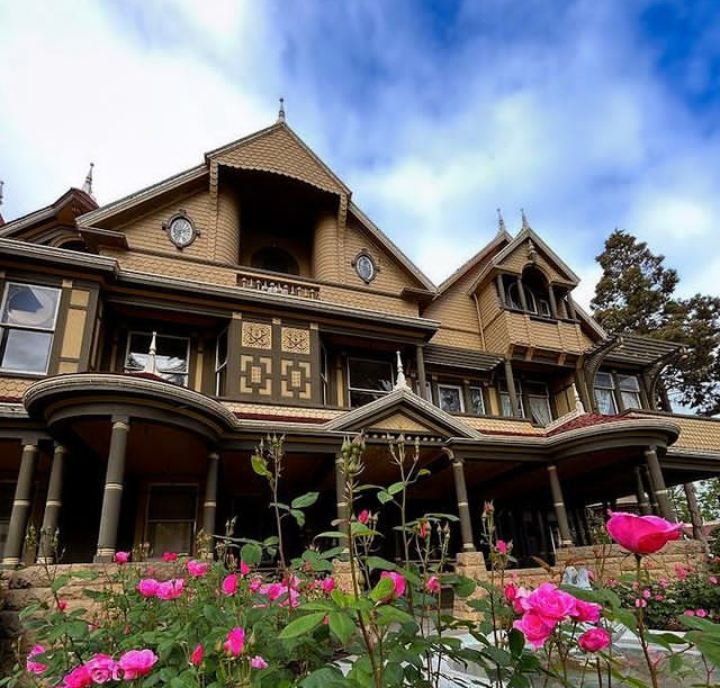
Standing in the rain, thinking of a way to keep these feelings inside. Walk away from here before the words disappear, I will be silent. Health is not just an absence of disease. People who are truly healthy enjoy a positive state of wellness or well-being. If you are in a situation where you experience on going stress and it is impacting your health, and no one is doing anything to remediate the problem, no matter how much you love some of your coworkers, or friends, you have to move on. I do not want stomach cancer or anything like that from stressing about something I cannot control. When emotional shocks are intense or repeated, unpredictable, uncontrollable, and are linked to pressure, stress will be magnified and damage is like to result. Yes, people generally feel more stress in situations over which they have little or no control. For example, Douglas DeGood subjected college students to an unpleasant shock-avoidance task. Some students were allowed to select their own rest periods, while others rested at times selected for them. Participants allowed to control their own rest periods showed lower stress levels (as measure by blood pressure) than those given to choose.

Stress is not always bad. To be totally without stress is to be dead. As noted earlier, stress is the mental and physical condition that occurs when a person must adjust or adapt to the environment. Unpleasant events such as work pressures, martial problems, or financial woes naturally produce stress. However, so do travel, sports, a new job, mountain climbing, dating, and other beneficial activities. Even if you are not a thrill seeker, a healthy lifestyle may include a fair amount of eustress (good stress). Eustress can be energizing. Activities that provoke good stress are usually experiences as challenge and rewarding. A stress reaction begins with the same autonomic nervous system arousal that occurs during emotion. Imagine standing at the top of a wind-whipped ski jump for the very first time. Internally, there would be a rapid surge in your hate rate, blood pressure, respiration, muscle tension, and other ANS responses. Short-term stresses of this kind can be uncomfortable, but they rarely do damage. (Your landing might be another matter, however.)

Warning signs of stress that are emotional include anxiety, apathy, irritability, mental fatigue. Behavioral signs of stress are avoidance of responsibilities and relationships, extreme or self-destructive behavior, self-neglect, and poor judgment. Physical signs of stress are excessive worry about illness, frequent illness, and exhaustion, overuse of medication, and physical ailments and complaints. Other than when it is long lasting, why is stress sometimes damaging and sometimes not? Stress reactions are complex. Let us examine some of the chief factors that determine whether or not stress is harmful. When is stress a strain? It goes almost without saying that some events are more likely to cause stress than others. A stressor is a condition or event in the environment that challenges or threatens a person. Reporters, for instance, suffer from a high rate of stress-related diseases. The threat of injury or death, plus occasional confrontations with drunk or belligerent citizens, takes a toll. A major factor here is the unpredictable nature of journalism. A reporter never knows when they go to cover a story or an active crime scene if a cooperative citizen or an armed gang member is waiting for them. In 2014, 60 journalists were killed. Some reporters are being irresponsible in getting the media caught up in a cross and others are good reporters and just get caught in bad situations.
Pressure is another element in stress, especially job stress. Pressure occurs when a person must meet urgent external demands or expectations. For example, we feel pressured when activities must be speeded up, when deadlines must be met, when extra work is added unexpectedly, or when we must work near maximum capacity for long periods. However, maintaining wellness is a life-long pursuit and, hopefully, productive work that is enjoyed. People who attain optimal wellness are both physically and psychologically healthy. They engage in good thought patterns, show emotional resilience, and they are optimistic and self-confident. People with a sense of well-being also have supportive relationships with others, do meaningful work, and live in a clean environment. Many of these aspects of wellness are present in people who are in a loving state of mind. Understanding stress, and learning to control it, can improve not only your health, but the quality of your life as well. So I do not want to be in a place where I am harassed and disrespected. In is a new year, and if you have warned people, but they are not listening to you, let them go. This does not need to be a repeat of last year. There is something wrong with those people for them to be so mean. They are in pain and want to project it on you and cause dysfunction in your life. However, as soon as you let them go, others who want to help you will come into your life.

What does it mean to feel threatened by a stressor? Certainly in daily situations it does not mean you think your life is in danger. (Unless, of course, you owe money to Lucious Lyon or Enrico the Enforcer.) Threat has more to do with the idea of the control. We are particularly prone to feel stressed when we cannot—or think we cannot control our immediate environment. In short, a perceived lack of control is just as threatening as an actual lack of control. If your answer to the question is, “What can I do about this situation? Is “nothing,” you will feel emotionally stressed. A sense of control also comes from believing you can reach desired goals. It is threatening to feel that we lack competence to cope with life’s demands. Thus, the intensity of the body’s stress reaction often depends on what we think and tell ourselves about stressors. That is why it is valuable to learn to think in ways that ward off the body’s stress response. Surely the day is coming; it will burn like a furnace. All the arrogant and every evildoer will be stubble, and that day that is coming will set them on fire. Not a root or a branch will be left to them, says the Lord Almighty.


Stand Firm–How Do You Feel?
If a mad scientist were to replace your best friend’s brain with a computer, how would you know that something was wrong? One of the first telltale signs might be an absence of emotion. Emotion is a state characterized by arousal, plus changes in facial expression, gestures, posture, and subjective feeling. Have you ever waited until someone was in a good mood to ask a favor? If you have, you are aware that emotions have a powerful influence on motivation. People who are feeling happy are more likely to help others in need. It is equally apparent, however, that emotions can have a negative impact. Hate, anger, contempt, disgust, and fear all disrupt behavior and relationships. However, we ought to always thank God for being loved by the Lord because from the beginning, God chose you to be saved through the sanctifying work of the Spirit and through belief in the truth. May our Lord Jesus Christ, himself, and God our father, who loved us by his grace gave us eternal encouragement and good hope. The coming of the lawless one will be in accordance with the work of Satan displayed in all kinds of counterfeit miracles, signs, and wonders, and in every sort of evil that deceives those who are perishing.

They perish because they refused to love the truth and so be saved. For this reason, God sends them a powerful delusion so that they will believe the lie and so that all will be condemned, who have not believed the truth, but have delighted in wickedness. The root of the word emotions means to move, and emotions do indeed move us. First, the body is physically aroused during emotions. Such bodily stirrings are what cause us to say we are moved by a play, an Aaliyah concert, or an act of kindness. Second, we are often motivated, or moved to take action, by emotions such as fear, anger, or joy. Underlying all this, perhaps, is the fact that emotions are linked to basic adaptive behaviors, such as attacking, retreating, seeking comfort, helping others, reproducing, and the like. Adaptive behaviors help our attempts to survive and adjust to changing conditions. Again, we must realize that emotions can be disruptive, as in having stage fright or choking up in an athletic contest. However, more often, emotions are a survival tool. Be joyful always; pray continually; give thanks in all circumstances, for this is God’s will for you in Christ Jesus.
Do not put out the Spirit’s fire; do not treat prophecies with contempt. Test everything. Hold on to the good. Avoid every kind of evil. May God himself, the God of peace, sanctify you through and through. May your whole spirit, soul, and body be kept blameless at the coming of the Lord Jesus Christ. The one who calls you is faithful, and he will do it. A pounding heart, sweating palms, bubbly guts, and other bodily reactions are a major element of fear, anger, joy and other emotions. These physiological changes include alterations in heart rate, blood pressure, perspiration, and other bodily strings. (More on this in a moment.) Most of these changes in activity are caused by adrenaline, a hormone produced by the adrenal glands. Adrenaline enters the bloodstream when the sympathetic nervous system is activated. People who have had their adrenal glands removed for medical reasons displayed much less emotional arousal. Pray for us that the message of the Lord may spread rapidly and be honored, just as it was with you. And pray that we may be delivered from the unlovely people, for not everyone has faith.

However, the Lord is faithful, and he will strengthen and protect you from the ungodly one. We have confidence in the Lord that you are doing and will continue to do the things we command. May the Lord direct your hearts into God’s love and Christ’s perseverance. Emotional expressions, or outward signs of what a person is feeling, are another major element of emotion. For example, when you are intensely upset, your hands tremble, your face contorts, and your posture becomes tense and defensive. Emotion is also revealed by marked shifts in voice tone or modulation. Such expressions are important because they communicate emotion from one person to another. Emotional feelings (a person’s private emotional experience) are a final major element of emotion. This is the part of emotion with which we are typically most familiar. Here is a trustworthy saying: If anyone sets his heart on being an overseer must be above reproach, the husband of but one wife, temperate, self-controlled, respectable, hospitable, able to teach, not given to drunkenness, not violent, but gentle, not quarrelsome, not a lover of money.
One must manage their own family well and see that their children obey them with proper respect. (If anyone does not know how to manage his or her own family, how can he or she take care of God’s church?) One must not be a recent convert, or he or she may become conceited and fall under the same judgment as the devil. He or she must also have a good reputation with outsiders, so that they will not fall into disgrace and into the devil’s trap. For example, Pope Francis said there are limits to freedom of speech, especially when it insults or ridicules someone’s faith. If my good friend Dr. Gasbarri says a curse word against my mother, he can expect a punch, it is normal. You cannot provoke. You cannot insult the faith of others. You cannot make fun of the faith of others. Gossip, slander, lies, abuse, violence, harassment, and this game of telephone is all part of the devil’s trap to get you banned from Heaven, so that you may perish and burn in hell for all eternity. You should not be spying on your neighbors or minding their business. First of all, your life is not perfect, neither are you, and the only reason you are bullying others is take attention off the fact that you are a failure. Instead of trying harder to be a better person, you pick on others and that is the devil’s trap. Therefore, make it your ambition to lead a quiet life, to mind your own business and to work with your hands, just as we told you, so that your daily life may win the respect of outsiders and so that you will not be dependent on anybody.


Justice; Justness; Injustice (continued)
The Civil War and Its Aftermath: Civil Rights Laws and Constitutional Amendments–Retributive justice pursues and overtakes the guilty to the ends of the Earth. The World, being in the constant commission of vast quantities of injustice, is a little too apt to comfort itself with the idea that if the victim of its falsehood and malice have clear conscience, he or she cannot fail to be sustained under his trials, and somehow or other to come right at last; in which case, say they who have hunted him down, –though we certainly do not expect it—nobody will be better pleased then we. Whereas, the World would do well to reflect, that injustice is in itself, to every generous and properly constituted mind, an injury, of all others the most insufferable, the most torturing, and the most hard to bear; and that many clear consciences have gone to their account elsewhere, and many sound hears have broken, because of this very reason; the knowledge of their won deserts only aggravating their suffering, and rendering the, them the less endurable.

In 1857, the case of Dred Scott v Standford, the Court bluntly ruled unconstitutional the 1820 Missouri Compromise, which prohibited slavery north of the geographical boundary, at 36 degrees latitude, on a map of the United States of America. Furthermore, the Court found that slaves were not U.S. citizens. Therefore, they could not bring suits in federal court, as the court concluded that the enslaved Africans might justly and lawfully be reduced to slavery for his benefit. Ironically, after the case was decided, Dred Scott’s owner freed him. The Civil War had many causes, including the political conflict between the North and South over nullification, a doctrine allowing states to declare federal laws null and void, and secession, which involved the right of states to leave the Union; the northern states’ increasing political strength in Congress, especially in the House of Representatives; southern agriculture versus northern industry; and the clash of conservative southern culture with more progressive northern ideas. Slavery, though, was clearly the key issue.

During the Civil War (1861-1865), abolitionists continued their antislavery pressure. They were rewarded when President Lincoln issues the Emancipation Proclamation, which provided that all slaves in the states still in active rebellion against the United States would be freed automatically on 1 January 1863. Designed as a measure to gain favor for the war in the North, the Emancipation Proclamation did not free all slaves—it freed only those who lived in the Confederacy. Complete abolition of slavery did not occur until congressional passage and ultimate ratification of the Thirteenth Amendment to the United States Constitution, in 1865. The Civil War Amendment—the Thirteenth Amendment to the United States Constitution was the first of three Civil War Amendments. It banned all forms of slavery and involuntary servitude. Although southern states were required to ratify the Thirteenth Amendment as a condition of their readmission to the Union after the war, most of the former Confederate states quickly passed laws that were designed to restrict opportunities for newly freed slaves. These Black Codes prohibited African Americans from voting, sitting on juries, or even appearing in public places.
Although Black Codes prohibited African Americans laws denied most legal rights to newly freed slaves, they differed from state to state, all empowered local law-enforcement officials were allowed to arrest unemployed Blacks, fine them for vagrancy, and hire them out to employers to satisfy their fines. Some states codes went so far as to require African Americans to work on plantations or to be domestics. The Black Codes laid the groundwork for Jim Crow laws, which would later institute segregation in all walks of life. The outraged Reconstruction Congress enacted the Civil Rights Act of 1866 to invalidate state Black Codes. President Andrew Johnson vetoed the legislation, but—for the first time in history—Congress overrode a presidential veto. The Civil Rights Act formally made African Americans citizens of the United States of American and gave Congress and the federal courts the power to intervene when states attempted to restrict male African American citizenship rights in matters such as voting. Congress reasoned that African Americans were unlikely to fare well if they had to file discrimination complaints in state courts, where judges were elected. Passage of a federal law allowed African Americans to challenge discriminatory state practices in the federal courts, where judges were appointed by the President.

Because controversy remained over the constitutionality of the act (since the Constitution gives states the right to determine qualification of voters), the Fourteenth Amendment was proposed simultaneously with the Civil Rights Act of 1866 to guarantee, among other things, citizenship to all freed slaves. Other key provisions of the Fourteenth Amendment barred states from abridging the privileges or immunities of citizenship or depriving any person of life, liberty, or property without due process of law. However, it took federal troops to protect the rights of African Americans. Once federal troops were no longer available, Jim Crow laws started to pop un in the states, which prevented all interracial marriages, and basically made it illegal for Black to interact with Whites, in schools and public places. Southern resistance to African American equality led Congress to pass the Civil Rights Act of 1875, designed to grant equal access to public accommodations such as theaters, restaurants, and transportation. The act also prohibited the exclusion of African Americans from jury service.

As you can see Constitutional Rights and the Federal government are extremely important to everyone is free to live and have protection under the laws. If the States are not monitored, by the all-powerful Federal Government, the states have a tendency to become corrupt. There is no such thing as moral responsibility for past acts, no such thing as real justice in punishing them, for the reason that human beings are not stationary existences, but changing, growing, incessantly progressive organisms, which in no two moments are the same. Therefore, justice, whose only possible mode of proceeding is to punish in present time for what is done in past time, must always punish a person more or less similar to, but never identical with, the one whom committed the offense, and therein must be no justice. Proof must be built up stone by stone. Then end crowns the work. It is not enough that Justice should be morally certain; she must be immorally certain—legally, that is. Keep on loving each other as brothers and sisters. Do not forget to entertain strangers, for by doing so, some people have entertained angels without knowing it. Which means be kind to each other because the person next to you may be an angel and angels report to God.


The Civil Rights Movement

I would like to live a long life. Longevity has its place. However, I am not concerned about that now. I just want to do God’s will. And God has allowed me to go up to the mountaintop, and I have looked over. And I have seen the promise land. I may not get there with you. However, I want you to know tonight that we as a people will get to the promise land. So I am happy tonight. I am not worried about anything. I do not fear any man. My eyes have seen the glory of the coming Lord. Those are the words of Dr. Martin Luther King Jr., spoken the day before he was allegedly murdered by James Earl Ray, as he stood on the balcony of the Lorraine Motel in Memphis, Tennessee. His assassination unleashed a torrent of civic rage in the community. More than 125 cities experienced uprisings. By 11 April 1968, 46 people were dead, 35,000 were injured, and more than 20,000 had been arrested. However, prior to Dr. Martin Luther King, Jr.’s assassination, the Congress of the United State of America passed the Civil Rights Act of 1964, but Dr. King was still trying to sooth a restless nation and spread peace by acting as a psychologist and spiritual healer to he masses.

Dr. Martin Luther King, Jr. was killed because he was trying to get equal rights and equal protect under the law for everyone, and some saw him as a threat because of this. You see, in the 1960s, America was very racist and poor European Americans, African Americans, Mexican Americans, Native Americans and Asians, women, and others (minority groups) faced a lot of discrimination, and they were not protected by the laws. Certain people could not get jobs because of the color of their skin, sexuality, gender or economic status, religion, and height and weight. So even if they wanted to work or buy a certain house or rent an apartment, certain people were not allowed to because others did not like the way they looked or who they were, and this caused a lot of people to become poor, homeless or die because they were preventing from gaining resources. However, keep in mind, not all rich men were bigots. Discriminations is unequal treatment of people because of their group membership. Many hotels and restaurants did admit Black people, and many Black people did not venture where they were unwanted or unwelcomed because they were likely to be met with hostility. Many people resented African Americans and others in public facilities, places of entertainment and business establishments, they were believed to be a subordinate race, and their proximity in shops, parks, and on passenger trains suggested an unacceptable equality in public life.

Discrimination may be personal, legal, or institutional. Personal discrimination includes attacks on minority group members, from social slights and insults to murder. In legal discrimination, minority group members are denied lawful access to public institutions, jobs, housing, and social rewards. The third major and most subtle and pervasive kind of discrimination is institutional discrimination, which is unequal treatment of a group that is deeply embedded in government, schools, the media and some public places. Typically, institutional discrimination includes discriminatory practices and traditions that have such a long history that they just seem to make sense. For quite a long time, a similar logic was used by police departments. During the 1960s, largely due to the efforts of the Civil Rights movement, which was started by Dr. Martin Luther King, Jr., discrimination declined in the United States of America, but it took him losing his life to get equal protection under the law for all minority groups.

Martin Luther King, Jr. launched a series of massive nonviolent demonstrations in Birmingham, Alabama, which was long considered an intolerant state. Thousands of people, of all cultures, marched to Birmingham in a show of solidarity. Often times these protesters were met by angry mobs of segregationists and brutal violence, as some local police decided not to defend protesters’ basic Constitutional Rights. It is also important to note that not all police nor European Americans were racist, but the nation was, at the time. However, while in Birmingham, Alabama, the police commissioner ordered his officers to use dogs, clubs (much like baseball bats), and fire hoses on the marchers, and Americans across the nation were horrified, as they witnessed the brutality and abuse heaped on the groups of people seeking their Constitutional Rights. The exercise of freedom of speech lead to bombings and deaths, inflicted, in retaliation, for what was deemed civil disobedience, by the people seeking equal protection, under the laws. Basically, people were punished because they wanted the same freedoms that others had.

In 1963, President John F. Kennedy requested that the United States Congress pass a law banning discrimination in public accommodations. Seizing the moment, and recognizing the potency of a show of massive support, Dr. Martin Luther King Jr. called for a monumental march on Washington, D.C., to demonstrate widespread support for legislation to ban discrimination in all aspects of life, not just public accommodations. The March on Washington for Jobs and Freedom was held in August 1963, only a few months after the Birmingham demonstrations. More than 250,000 people participated. The Civil rights demonstrators sought national attention for their cause, and photos in print media, and this was very powerful in swaying public opinion. Dr. Martin Luther King, Jr., was able to help pass the Civil Rights Act of 1964: Outlawed arbitrary discrimination in voter registration and expedited voting rights lawsuits. Barred discrimination in public accommodations engaged in interstate commerce. The Civil Rights Act also authorized the Department of Justice to initiate lawsuits to desegregate public facilities and schools, and provided for the withholding of federal funds from discriminatory state and local programs.
In addition to Prohibiting discrimination, in employment, on the grounds of race, color, religion, national origin, or sex, and created the Equal Employment Opportunity Commission (EEOC) to monitor and enforce the bans on employment discrimination. So, the Civil Rights Act of 1964 was not the first, but one of the most successful and complete pieces of legislation in the history of the United States of America. There was also a Civil Rights Act passed in 1866 and 1875. Title VII of the Civil Rights Act of 1964 prohibits employers from discriminating against employees for a variety of reasons, including sex, race, age, and national origin. Strong minds perceive that justice is the highest of the moral attributes—and Dr. Martin Luther King, Jr. established justice and equality for all. Today, 15 January 2015 is his birthday, he would be 86-year-old today, and I am sure that Dr. King is happy that everyone now has equal protection under the law, and that discrimination is dead. Nonetheless, the tendency of all law-making and all governing should be to reduce the inequalities. Although discrimination is dead, women are still underrepresented in employment. Since the establishment of the body, in 1798, there have been only 46 women in the United States Senate, and currently there are only 20 women serving in the state senate, and 80 men.

Women are still paid, on average 23 percent less than men. For example, if a man makes $100,000.00USD annually, for being a news reporter, a female reporter may only make $77,000.00USD a year; even though she has the same job and the same responsibilities, she makes $23,000.00 less than a man, for the same job, that needs to stop and women need equal pay. And tragically, Senator Barbara Boxer is retiring, so women may not see as much progress in the future. It has been 52 years since the equal pay act became law, but women are still not paid the same as men. To ensure the women move toward equal pay and representation, Attorney General of California, Kamala D. Harris, is running for the Senate Seat. Please vote for her so that women continue to progress in society and are not left behind. Washington needs to be shaken up, and we need a climate of champions who will fight for the next generation. Justice of today pays all the debts of yesterday and nothing else will. Women like Senator Barbara Boxer, Attorney General of California Kalama D. Harris, Jessica Rosenworcel and Naomi Milton of the Federal Communications Commission, and Rebecca Jarvis Chief Business and Economics Correspondent of ABC New York are trying to make a difference. So please keep Dr. Martin Luther King Jr.’s dream alive by voting for Donald Trump for President of the United States of American.


The Need for Achievement

The World has arrived at a period which renders it the part of Wisdom to pay homage to the prospective precedents of the Future in preference to those of the Past. The Past is dead, and has no resurrection; but the Future is endowed with such a life, that it lives to us even in anticipation. The Past is, in many things, the foe of mankind; the Future is, in all things, our friend. In the Past is no hope; the Future is both hope and fruition. The Past is the textbook of tyrants; the Future the Bible of the Free. Those who are solely governed by the Past stand like Lot’s wife, crystallized in the act of looking backward, and forever incapable of looking before. Competition and achievement are highly valued in Western culture. In less industrialized nations, the desire to achieve may be low. Some of your friends are more interested than others in success, money, possessions, status, love, approval, grades, dominance, power, or belonging to groups. In each case, we are referring to differences in social motives or goals. Social motives are acquired in complex ways through socialization and cultural conditioning. The behavior of outstanding artists, scientists, athletes, educators, musicians, and leaders is best understood in terms of such learned needs—particularly the need for achievement.

To many people, being motivated means being interested in achievement. The need for achievement can be defined as a desire to meet some internalized standard of excellence. The person with high needs for achievement strives to do well in any situation, in which evaluation takes place. Human reason, fortitude, and perseverance, are adequate to the accomplishment of anything upon Earth. Is that like the aggressive businessperson who strives for success? Not necessarily. Needs for achievement may lead to wealth and prestige, but a person who is a high achiever in art, music, science, or amateur athletics may strive for excellence without seeking riches. The need for achievement differs from a need for power, which is a desire to have impact or control over others. People with strong needs for power want their importance to be visible: they buy expensive possessions, wear prestigious clothes, and exploit relationships. In some ways, the pursuit of power and wealth is the dark side of the American dream. People whose main goal in life is to make a lot of money tend to be poorly adjusted and unhappy.

Many people believe in working out their bodies, in the New Year, but what about the mind? Self-confidence is an important source of motivation in everyday life. A person with self-confidence believes that he or she can successfully reach a goal or carry out an activity, That is why self-confidence affects motivation: it influences the challenges you will attempt, the effort you will expend, and how long you persist when things do not go well. To increase self-confidence, it is wise to do the following: you need to set goals that are specific and challenging, but attainable. Advance in small steps. When you first acquire a skill, your goals should be to make progress in learning. Later, you can concentrate on improving your performance, compared with other people. Get expert instruction to help you mater the skill. Find a skilled model (someone good at the skill) to emulate. Get support and encouragement from an observer. If you fail, regard it as a sign that you need to try harder, not that you lack ability. Some people look at living as hard work. Others think life is full of pleasure and dream of success. When you carry out an activity for enjoyment, to show your ability, or to gain skill, your motivation is usually intrinsic. Intrinsic motivation occurs when there is no obvious external reward or ulterior purpose behind your actions. The activity is enjoyed as an end in itself. Intrinsic motivation is closely related to the higher levels of self-actualization. In contrast, extrinsic motivation stems from obvious external factors, such as pay, grades, rewards, obligations, and approval. Most of the activities we think of as work are extrinsically rewarded.

People are more likely to be creative when they are intrinsically motivated. On the job, for instance, salaries and bonuses may increase the amount of work done. However, work quality is tied more to intrinsic factors, such as self-interest, freedom to choose, and useful feedback. Intrinsic motivation also promotes person involvement in a task. This, in turn, tends to lead to greater creativity. The following, however, are considered to be creativity killers on the job: working under surveillance, having your choices restricted by rules, working primarily to get good evaluation (or avoid a bad one), working mainly to get money. When a person is intrinsically motivated, a certain amount of challenge, surprise, and complexity makes a task rewarding. When extrinsic motivation is stressed, complexity, surprise, and challenge just become barriers to each a goal. A person who is extrinsically motivated wants to take the fastest, most direct route to a goal. Typically, this undermines creativity. How can the concept of intrinsic motivation be applied? Motivation cannot always be intrinsic. Nor should it be. Not every worthwhile activity is intrinsically satisfying. In addition, extrinsic motivation is often needed to develop enough skill or knowledge to make an activity intrinsically rewarding. This can be observed in learning to read, to play a musical instruments, or enjoy a sport.

So, both types of motivation are necessary. However, extrinsic motivation should not be overused. If there is no intrinsic interest in an activity to begin with, you have nothing to lose by using extrinsic rewards; if basic skills are lacking, extrinsic rewards may be necessary at first; extrinsic rewards may be necessary at first; if extrinsic reward are used, they should be small and faded out as soon as possible. It also helps to tell people that they are good at whatever activity you are rewarding. As a reminder, intrinsic motivation is motivation that comes from within, rather than from external rewards; motivation based on personal enjoyment of a task or activity. Extrinsic motivation is motivation based on obvious external rewards, obligations or similar factors. By following these guidelines, you can avoid taking spontaneous interest and satisfaction out of motivation, especially for those learning new skills. There are times when you cannot understand why you cannot do what you want to do. When God brings a time of waiting and appears to be unresponsive, do not fill it with busyness; just wait. The time of waiting may come to teach you the meaning of sanctification—to be set apart from sin and made righteous—or it may come after the process of sanctification has begun to teach you what service means. Never run before God gives you His direction. The LORD watches over all who love him, but all the wicked he will destroy.

 Randolph Harris II International Institute