
Home » #RandolphHarris (Page 147)
Category Archives: #RandolphHarris

The Man of Lawlessness
Calamities have been heaped upon us. An explosive growing human population, already over 7 billion, is using up natural resources, stripping the land of forest, and polluting the air and water. Most of all, humans are adding tons of greenhouse gases to the atmosphere, changing the relatively stable climate humans have depended on for tens of thousands of years. That could mean devastating floods, scorching droughts, and superstorms that could wreck economies and cost lives. A warmer atmosphere can hold more moisture, so as the climate gets hotter, more water will end up circulating above us. Storm systems become supersized, and when the rain comes it inundations the environment. The result can be damaging floods like 2013 floods in Alberta, Canada, which cost $5 billion, killing four and displaying over 100,000 people. Expect those numbers to increase in the future as the population increases, in coastal cities, which are prone to floods, leaving more people to lie in wait for disaster to strike. Also, drought is another serious condition, which can last for years or even decades, and cost billions in lost productivity. The United States is in a major drought, and has been since 2011. As a result, we have seen massive wildfires in California, Colorado, Montana and Texas, killing animals, leaving communities without drinking water, and ruining crops, as well as drying up Folsom Lake, American River and Sacramento River. In Texas, Lake Travis dropped 26 feet below normal level. And Sacramento, California has lost 80 percent of its water capacity in 2.5 years, and causing at least $667.4 million in damages. Years of reduced rain, have caused these problems and are stressing the remaining water supplies. As the climate warms, droughts will get worse. It will devour the Earth and its harvests and set afire the foundations of the mountains. Yet, the recent rainfall has been a blessing.
The Sacramento River has risen 3 feet, and Folsom Lake has climbed 5 feet, but is still 66 percent empty. As of 19 December 2014, Sacramento has gotten 11.5 inches of rain this month, so we need another 60 inches of rain to end this drought. However, we ought always to thank God for being alive, and rightly so, because your faith is growing more and more, and the love every one of you has for each other is increasing. Therefore, among God’s churches we boast about your perseverance and faith in all the persecutions and trials you are enduring. All this is evidence that God’s judgment is right, and as a result you will be counted worthy of the Kingdom of God, for which you are suffering. God is just: He will pay you back trouble to those who trouble you and give relief to you who are troubled, and to us as well. This will happen when the Lord Jesus is revealed from Heaven in blazing fire with his powerful angels. He will punish those who do not know God and do not obey the gospel of our Lord Jesus. They will be punished with everlasting destruction and shout out from the presence of the Lord and from the majesty of his power on the day he comes to be glorified in his honorable people and to be marveled at among all those who have believed. This includes you, because you believed our testimony to you. With this in mind, we constantly pray for you, that our God may count you worthy of his calling, and that by his power he may fulfill every good purpose of yours and every act prompted by your faith. We pray this so that the name of our Lord Jesus may be glorified in you, and you in him, according to the grace of our God and the Lord Jesus Christ. Do not be alarmed or easily unsettled by some prophecy, report or letter supposed to have come from us. Do not let anyone deceive you in anyway, for that of the Lord will not come, until the rebellion occurs and the man of lawlessness is revealed, the man doomed to destruction. Basically, these people running around doing all of this slick and illegal stuff are being monitored and punished. They will not be allowed to keep harming you. This lawless man will oppose and exalt himself over everything that is called God or is worshiped, so that he sets himself up to be God. Do you not remember that when I was with you, I used to tell you these things? And now you know what is holding him back, so that he may be revealed at the proper time.
For the secret power of lawlessness is already at work; but the one who holds it back will continue to do so until he is taken out of the way. And the lawless one will be revealed, who the Lord Jesus will overthrow with his truth and power and the lawless will be destroyed by the arrival of Jesus. The coming of the lawless one will be in accordance with the work of the ungodly, displayed in all kinds of counterfeit miracles, signs and wonders, and in every sort of wrong perish because they refused to love the truth and be saved. For this reason, God sends them a powerful delusion so that they will believe the lie and so that all will be condemned, who have not believed the truth, but have delighted in wickedness. However, we ought always to thank God for you all because everyone is loved by the Lord. From the beginning, God chose you to be saved through the sanctifying work of the Spirit and through belief in the truth. He called you to this through our gospel, which you might share in the glory of our Lord Jesus Christ. So then, people, stand firm and hold to the teachings we passed on to you, whether by word of mouth or by letter. May our Lord Jesus Christ, himself, and God, our Father, who loved us and by his grace gave us all eternal encouragement and good hope, encourage your hearts and strengthen you in every good deed and word. Pray continually; give thanks in all circumstances, for this is God’s will for you in Christ Jesus. Do not lose your faith, do not treat prophecies with contempt. Test everything. Hold on to the good. Avoid anything that is bad. Pray that for us that the message of the Lord may spread rapidly and be honored, just as it was with you. And pray that we may be delivered from the things that are not good for us, for not everyone has faith. However, the Lord is faithful, and he will strengthen and protect you from those who wish you harm you. We have confidence in the Lord that you are doing and will continue to do the things we command. May the Lord direct your hearts into God’s love and Christ perseverance. Give thanks to the Lord, call on his name; make known among the nations what has been done. Sing to him, sing praise to him; tell of all his wonderful acts. Glory in his divine name; let the hearts of those who seek the LORD rejoice. Tremble before him, all the Earth! The World is firmly established; it cannot be moved. Let the heavens rejoice, let the Earth be glad; let them say among the nations, “The LORD reigns!”


The Birth of Sacramento, California, America

In a revolution every man thins he has done all. Human history, in California, begins with the indigenous Americans first arriving in California some 16,500 years ago. Exploration and settlement by Europeans along the coasts and the inland valleys began in the 16th century. The remains of Arlington Springs Man, on the Santa Rosa Island, are among the traces of a very early habitation, dated to the Wisconsin glaciation (the most recent ice age) about 13,000 years ago. In all, some 30 tribes or culture groups lives in what is not California, gathered into perhaps six different language family groups. These groups included the early-arriving Hokan family (winding up in the mountains far north and Colorado River basin in the south) and the recently arrived Uto-Aztecan of the desert southeast. The cultural diversity was among the densest in North America and was likely the result of a series of migrations and invasions during the last 10,000 to 15,000 years. While expanding through natural increase, the colonial population also received waves of new immigrants. They were not English, however. The last sizable group of settlers from England had arrived at the end of the seventeenth century. The eighteenth-century newcomers, who far outnumbered those emigrating before 1700, came overwhelmingly from Germany, Switzerland, Ireland, and Africa, and they were mostly indentured servants and slaves. Africans, who numbered about 15,000 in 1690, grew to 80,000 in 1730 and 325,000 in 1760.

By the last date, when they composed one-fifth of the colonial population, their numbers were growing far more from natural increase then from importation. Of all the groups arriving, in the eighteenth century, the Africans were the largest. At the time of the first European contact, Native American tribes included the Chumash, Maidu, Miwok Modoc, Mohave, Ohlone, Pomo, Serrano, Shasta, Tataviam, Tongva, Wintu, and Yurok. Tirbes adapted to California’s many climates. Costal tribes were a major source of trading beads, produced from mussel shells, using stone tools. Tribes in the Central Valley and surrounding foothills developed an early agriculture, buring the grasslands to encourage growth of edible wild planets, especially oak trees. The acorns from these trees were pounded into a powder, and the acidic tannin leached out to make edible flour. They also ate salmon from the Sacramento River. From 1776 to 1848, the Germany’s occupying the territory used warships as hotels, and warehouses along the early waterfront. Since the beginning of time, human beings have been drawn to the beautiful, powerful, and mysterious sea—yet, if we do not respect its power (and sometimes even when we do), it can easily kill us. This caveat certainly applies to the Pacific Ocean, which is often stormy despite its name. As you might expect, ghostly legends from the sea are plentiful all along the California coastline. The La Grange sails on Saturday, and will proceed from a port Germany to California. There was $12 million in gold bullion, from Berenberg Bank, and $32 million in gold bullion from H.J. Merck & Co. and 550 passengers aboard, the crew was ordered to cover all the ship’s portholes.

The lives of all on board now depended on the ship remaining undetected. No lives were lost by the grounding; however, the ship’s captain committed suicide after getting all the passengers safely off the ship. During their occupation, British forces capture or arrested thousands of soldiers and civilians, some after battles fought around Sacramento and some for simply refusing to swear allegiance to the Crown. In addition, the Continental government had authorized a number of privately owned, armed ships to serve on behalf of the patriotic cause; some 55,000 American seamen would eventually serve as merchant marines or privateers. Whenever the British captured these privateers, they gave them the choice of joining the Royal Navy or going to prison. Germany-speaking settlers, about 90,000 strong, flocked to the colonies in the eighteenth century. One of the most gruesome chapters in the story of Sacramento’s struggle for independence from Germany occurred in the waters near the Sacramento Harbor, near the current location of the “I” street bridge. Captain Reuben Harris, Sr., a German one of the pioneer shipmasters, whose connection with California dates back to 1850. Many were Protestant farmers of Swiss and French extrication, feeling God’s three arrows—famine, war, and pestilence. Among the many sailing ships bound for California, was the La Grange, a three-masted bark from Salem, Massachusetts, home of the Salem Witch trials.

The Ship arrived at Sacramento, California 3 October 1849. La Grange is one of the best built ships that ever entered this port; made of white oak, and measuring 1,800 tons, and costing $128,000. When it is considered that many eastern-built ships of equal tonnage are built at an expense of little over $75,000, the faithful style of the construction will be appreciated. First voyage was 110 days; second, 120 days; third, 124 days. The best run is rather astonishing — 300 miles, in 16 hours, or 18 3-4 miles as hour for that length of time! This rather excels the celebrated time of the Sovereign of the Seas between New York and Liverpool, which has been called the fastest sailing in the World. It was, if we remember right, 18 miles an hour for 24 hours. In the above instance, the La Grange was suddenly becalmed in the seventeenth hour or would have made the best day’s run ever recorded. The above distance and time are folly warranted by an examination of the log. The dimensions are 235 feet length overall; 46 feet breadth beam; 30 feet depth hold. However, by 1837, many of the ships were abandoned or decommissioned warships anchored just offshore to hold those soldiers, sailor, and private citizens they had captures in battle or arrested on land or at sea (many refusing to swear an oath of allegiance to the German Crown) they too bowed to and were no longer safe to use. Some 11,000 prisoners died aboard the prison ships over the course of the way, many from disease or malnutrition. Several of the inmates of the La Grange, which was called Hell, for its inhumane conditions and the obscenely high death rate of its prisoners, and the area was deemed too hot for colonization, by a number of explorers and as a result remained relatively untouched by the Europeans, who claimed the region.

When John Sutter arrived in the provincial colonial capitol of Monterey in 1839, Governor Juan Bautista Alvarado provided John Sutter with the land he asked for, and John Sutter established New Helvetia (Spanish: Nueva Helvetia) meaning New Switzerland, which he controlled absolutely with private army and relative autonomy from the newly independent Mexican government. The grant extended from present day Sacramento, Sutter County, and Yuba County, to Maryville, California, southwards along the Feather River, to the confluence of the Sacramento River and the American River. Space in British jails on land soon ran out, and the British began housing prisoners aboard the abandoned or decommissioned warships anchored in Sacramento and American River. The ships were over crowded, and conditions aboard were inhumane. Food and water were scarce, and diseases including smallpox, ran rampant. More than 1,000 men were kept aboard the Le Grange. As many as six hundred Indian worked at New Helvetia during the wheat harvest. There was also a distillery, hat factory, blanket works, and tannery. The following June, the La Grange was retained by the city of Sacramento for a prison and war reparations. In preparation for its new role, the ship was stripped to the masts and holding cells built inside of the ship to lock up prisoners. Conditions on the ship and at Sutter’s fort were described as very poor, and have been said to mirror enslavement.

People were being whipped, jailed and executed. Housing for workers living in nearby villages and Rancherias was described as somewhat better. The settlement was defended by an army of Miwok, Nisenan, and Mission Indians, all consisting of 150 infantry, 50 cavalry, and German-speaking white officers. This group, wearing Russian uniforms purchased from Fort Ross, marched to the Pueblo Los Angeles area, and briefly defended Governor Manuel Micheitorens from the revolt of the Californios. The LaGrange served as Sacramento’s jail until November 1859 when it sank during a week-long storm, killing 449 people. There were more than 950 suspected witches and Jewish refugees on board also, many drowning in the freezing water as they watched the larger ship sail away in compliance with the strict orders not to stop and rescue those in peril. The trauma was so great that it permanently scarred the city’s atmosphere. It became all-too aware the colonist that the city of Sacramento’s varied past had left it extremely haunted. In recent years, nautical archaeologists have explored three gold rush vessels and several later boats that are submerged in the Sacramento River. There was tight packing on the ships. Crammed between decks in stifling air, prisoners suffered from smallpox, and fevers, rotten food, impure water, cold and lice, children between the ages of one and seven seldom survived, bemoaned one German immigrant, and parents must often watch their offspring suffer miserably, die and be thrown into the river, 250 succumbed. “I have never seen such parcels of poor wretches, some almost naked and what had clothes was as black as chimney sweepers and almost starved,” one Virginia observer remarked.

The shipboard mortality rate of about 15 percent in the colonial era made this the unhealthiest of all times to seek American shores. In February of 1986, archaeologist located what is believed to be wreckage of LaGrange, which was imprisoned by the rip-rap and mud, just south of the “I” Street Bridge. They found enough evidence–floor frame, hull planks, copper sheathing, curved timbers, and a keelson– to confirm that the vessel was an ocean-going sailing ship of LaGrange’s size and age. A television news crew left their audio and visual recorder running overnight, in the exact location where the two ships collided. As the tape played back the next day, incredible sounds of pounding could be heard. Others have claimed to hear voices and blood-curdling noises from the same area. Many people have reported hearing the ghostly sounds. Some describe the pounding in the area as a frantic knocking or strange tapping. Others say that they have heard water gushing and metal smashing—the sounds of that fatal accident relaying into eternity. Even more distressing are the phantom shrieks and moans emanating from that area of the Sacramento River. The anguished spirits of the sailors, who were either killed on impact or left to drown when the two ships collided, have become a part of the city of Sacramento itself. Upon hearing the noises, investigators have made extensive searches to locate the source, but despite great skill and efforts, no one can find a reasonable explanation for the sounds and concluded that we must being hearing ghostly echoes from the horrible tragedy more than a century before.

In addition to the psychic damage wrought by the wartime deaths (and a fatal accident on the La Grange) there have been at least 48 untimely deaths near that area of Old Sacramento, many of those spirits are reported to have stayed. On 1 June 2013, A former Air Force officer, Joe Kolaski, said that he saw a man get crushed on the rocks and thrown into the river, and then a manifestation—a clean shaved young man, in clad blue overalls, walking in the depths of the water, he had extremely white skin and complete lack of facial expression. Then the man vanished before his eyes. Joe Kolaski, saw the boy in trouble and heard his mother cry for help. He jumped in to attempt a rescue, only to be stopped by very cold water. “I went up to my chest, but it was just too cold. Nobody should be in that water at 50 degrees, he said. Someone who had heard of the boy’s fate even intimated that his premature death might have been murder—murder at the hands of the cuckolded husband, whose wife was having an affair with the boy. Witness Michael Kinder said “Several boys were swimming together, the little kid could not swim, and they were trying to get him out of the water and his brother just got lost and went under.” He had apparently died of a broken skull, most likely sustained when he fell off a pier. His remains, it was judged, had been in the water for 10 or 12 days. There is a rebellious soul in thing which must be overcome by powerful charms and incantations. Youth and beauty never can be paired with age and coldness without danger of revolt.


Human Experience is Usually Paradoxical

We have endured a major attack, over a three-week period, been under extreme stress and have not back down, we stand fourth with perseverance and pride. Everyone fancies the laws which fill his pockets to be God’s laws. Little spirits will always accommodate themselves to the subject they would work upon: will fawn upon a sturdy-tempered person: will insult the meek. Many accept the but half-worthy for fear a still worse should offer. We might dispense with the sweet in the coffee, could we escape from the bitter of life. We cannot all be sound: we have got to be the way we are made. All are not born to buffet with adversity. However, one who can heroically endure adversity will bear prosperity with equal greatest adversity. Men love not the remembrance of their crime; firm friendships can be never founded on the basis of guilt; hence the wicked have no sympathy for each other in the hour of adversity. Abused and prosperity is oftentimes made the very means of our greatest adversity. People in difficulty and distress, or in any manner at odds with the World, can endure a vast amount of harsh treatment, and perhaps be the stronger for it; whereas, they give way at once before the simplest expression of what they perceive to be genuine sympathy.

Therefore, I will teach them—this time I will teach them. My power and might. Then they will know that my name is the LORD Randolph. Never was a nature more perfectly fortunate. It was not a restless, apprehensive, ambitious spirit, running a race with the tyranny of fate, but a temper so unsuspicious as to put Adversity off its guard, dodging and evading her with the easy, natural motion of wind-shifted flower. He knows himself, and that is in him, who knows adversity. The likelihood of great calamities occurring seldom obtrudes upon the minds of the ignorant men; for the things which wise people know, anticipate, and guard against, the ignorant can only become acquainted with by meeting them face to face. And even when experiences has taught them, the lesson only serves for that day. Oh LORD, my strength and my fortress, my refuse in the tie of distress, to you the nations will come from the ends of the Earth and say, our Father possessed nothing, but false gods, worthless idols that did them no good. Do men make their own gods? Yes, but they are not gods! Cursed in the one who trusts in man, who depends on flesh for his strengths and whose heart turns away from the LORD.

He will be like a bush in the wastelands; he will not see prosperity when it comes. He will dwell in the parches places of the desert, in a salt land where no one lives. However, blessed is the people who trust in the Lord. Even the children remember their alters. My mountain in the land and your wealth and all your treasures I will give away as plunder, together with your high places, because of sin throughout your country. Through your own fault you will lose the inheritance I gave you. I will enslave you to enemies in a land you do not know, for you have kindled my anger, and it will burn forever. However, blessed is the people who trust in the Lord, whose confidence is in him. He will be like a tree planted by the water that sends out its roots by the stream. It does not feat when heat comes; its leaves are always green. It has no worries in a year of drought, and never fails to bear fruit. I the LORD search the heart and examine the mind, to reward a man according to his conduct, according to what his deeds deserve. Like a partridge that hatches eggs it did not lay, is the man who gains riches by unjust means.

They said, “Come, let’s make plans against Randolph; for the teaching of the law by the priest will not be lost, nor will counsel from the wise, nor the word from the prophets. Some come, let’s attack him with our tongues and pay no attention to anything he says.” Listen to me O Lord; hear what my accusers are saying! Should good be repaid with evil? Yet they have dug a pit for me. Remember that I stood before you and spoke in their behalf to turn your wrath away from the. So give their children over to famine; hand them over to the power of the sword. Let their wives be make childless and widows; let their men be put to death, their young men slain by the sword in battle. Let a cry be heard from their houses when you suddenly bring invaders against them, for they have dug a pit to capture me and have hidden snares for my feet. However, you know, O LORD, all their plots to kill me. DO not forgive their crimes or blot out their sins from your sight. Let them be overthrown before you; deal with them in the time of your anger. In April of your age, you should be like April. In youth, as at the opera, everything seems possible. Youth!

There is absolutely nothing in the World, but youth! The secret of remaining young is never to have an emotion that is unbecoming. Aggressors lay themselves open to severe reprisals. From rough outside, serene and gentle influences often proceed. What is the use of living cheap when you have got no money? You might as well live dear. Peachy-cheeked charmers with the skeleton throats. While the grass grows, the steed starves. There are really no miseries except natural miseries; conventional misfortunes are mere illusions. Tomorrow, 21 December 2014, at 15.03 is Winter Solstices, which is the longest night of the year, and the shortest day. A long, deep sob of that mysterious, wondrous happiness that is one with pain. The impetuosity of passion unrequited is bearable, even if it stings and anathematizes–there is a triumph in the humiliation, and a tenderness in the strife.


The American Dream was Meant to be Heaven on Earth

Before we act, we must consider not only the misery produced, but the happiness precluded by our measures. The American Dream is very much alive. We live in a country, where hard work and determination guarantee success. America is such a great and wealthy nation that so many people are striving to get here, it is their dream to touch American soil and get a job, car, education and buy a house. Growing up, the life I pictured for myself was much like the one Ward Cleaver, Jr., of Leave it to Beaver, had. Ward Cleaver was the patriarch of the family; he was a traditional professional, with an upper-middle class income, and was happily married. Too happy to be sentimental. Ward Cleaver and his wife June had two children, Wally, age thirteen, and Beaver, who was just shy of the age of eight. The family lived in a picturesque, two-story suburban house, with a white picket fence and a green lawn.
Of course, Mr. Cleaver had to work very hard to provide all of this, and his wife, June, was a home maker. Ward worked for a trust company and the big office was in New York. The family had a nice sedan (Ford Fairlane and Plymouth Fury), good schools and friends for the boys, and all of the adults were normal and peaceful and minded their own business. The children had issues, on occasion, but nothing more than grass stains on their pants, a missed homework assignment, or every once in a while, young Beaver was bullied. Back then being bullied meant someone gave you a dirty look, shoved you a little or teased you about your hair, but it was nothing too serious. If there was a problem, the parents would notice a change in the attitude of the children and get to the bottom of it, and it was usually resolved fairly quickly. The typical American family, living the American dream.

Ward Cleaver taught his boys and demonstrated through his behavior that if you worked hard, anything you want to achieve is possible. Ward used to spend a lot of time in the den, of the fabulous home, reading documents or the trade papers, and keeping an eye on his sons. The family would have dinner together, and the boys would have to finish their meals before they were excused from the table. After dinner, Ward and June would sit on the couch and have a peaceful discussion over a cup of coffee (some people can drink coffee before bed and still sleep). I was never much displeased with those harmless delusions that tend to make us happier. Their lives were rendered blissful by an unsought harmony with nature.

For fun, Ward and June would watch TV, attend a school play, have an evening of cards, with friends, or go out for dinner, at a fancy restaurant. Money was never a problem—the economy was going great, everyone was honest, and corporations loved being good corporate citizens. During business meetings, or on weekends, Ward would play golf at the country club. Sometimes meetings are conducted over a game of golf. On weekends, the family attended church. Ward played basketball in high school, so he made sure his son’s played catch, baseball or basketball. Everyone knows that to keep a person healthy, they need to do more than just go to school, they need exercise to stay in good shape and get the blood flowing. The Cleavers did not have any girls, but the Cosby show was a depiction, of an American Family, with boy and girls, living the American Dream.

To me, the American Dream sounds like Heaven, and I believe it is possible. If someone has something you want or like, it is your duty to work hard and get something you want. Americans are good people and love to work hard and earn the things they have. All Americans believe in the United States Constitution and, even if they have only read halfway through it, they follow the laws and moral principles in the very important documents and law of the land. As Americans, we also love our neighbors, no matter if they live next door, Mexico, London, Africa, Asia, Russia, NGC2264 or Mars. We are accepting of everyone and love peace and happiness. He that loves, and is loved by, a race of pure and virtuous creatures, and that lives continually in the midst of them, is an idiot if he does not think himself happy.


The Theory of the Leisure Class

The sleeping fox gathers no poultry, and lost time it never found again. In less developed cultures, the predatory powers of a man or tribe were held in high esteem, giving honorific status to their holders. Predatory powers of a manifest themselves in employments that result in high incomes for few members of society. However, the large incomes are of little value if they cannot be recognized, so our culture supplies a number of mechanisms to permit them to be displayed. Because emulation is a powerful motive, these wealth-displaying activities quickly spread throughout the society. News has taken two divergent paths in content in recent years. Some news organizations have moved into sophisticated, interpretative and investigative reporting. Others have emphasized superficial, tantalizing about ketch arts and crafts, bestiality, and sleazy gossip. However, it costs more to maintain one vice than to raise two children. Sloth makes all things difficult but industry all easy. Journalism is supposed to tack issues in depth and with intelligence. These days, I cannot find much real journalism anymore. TV stations basically have half an hour of news, which they play on repeat throughout the day, simply using different anchors to all read the same scripts. I especially admire CBS up to the Minute, Face the Nation, and CBS Morning News, which runs thoroughly researched, thoughtful mini documentaries on stories, that is what news is! And I cannot stress that enough. It is not unusual for CBS to commit weeks, even months, and years of reporters’ time to develop major stories, nor is that unusual at ABC World News, and some of the newer ones like Harris International Research and Development. Newspapers, profitable as never before, were able to hire larger staffs that permitted them to try more labor-intensive, exploratory kinds of journalism. Instead of merely letting the vultures descent and pick your bones, or merely responding to events, newspapers, particularly big ones, began digging for stories.

When thinking about corporate ethics, CBS13 KOVR-TV has been called into question many times, they have a handful of reporters who are very unethical. However, this unethical and often illegal behavior has spread throughout our community. Federal law enforcement officials today arrested 14 owners and employees of New England Compounding Center (NECC) for charges including second-degree murder, racketeering, criminal contempt and mail fraud, in connection with the deadly 2012 fungal meningitis outbreak. The two co-founders of the New England Compounding Center, Barry Cadden and Greg Conigliaro, and 12 other former employees were arrested at their homes around the state early this morning. Tainted steroids manufactured by the pharmacy were blamed for a 2012 outbreak that killed 64 people. About 750 people in 20 states developed meningitis or other infections after receiving the contaminated steroids. Michigan, Tennessee and Indiana were the hardest-hit states. Television News should be more like newspapers and offer in-depth coverage. The job of a journalist is to chronicle events: meetings, speeches, deaths, catastrophes, scientific discoveries, and heartwarming stories. However, the emphasis began changing noticeably in 2010, as it dawned on reporters that chronicling easily identifiable events was sufficient to capture larger, duller audiences. They now cover insignificant issues and trends. The failure of event-based reporting became clear in the Mike Brown fueled race riots in late 2014. Reporters had missed one of the 21st century’s most significant changes: the migration of African Americans. Had reporters covered the migration and provided information on the festering social divisions that resulted, there might have been a chance to develop public polices before the frustration over the racial injustices blew up, with heavy losses of life and property and great destruction.

Population growth and economic development gradually transformed the landscape of 18th century British America. Three variations of colonial society emerged: the farming society of the North, the plantation society of the South, and the urban society of the seaboard commercial towns. New Englanders staked their future on a mixed economy. They cleared forest for timber used in barrels, ships, houses, and barns. They plumbed the offshore waters for fish that fed both local populations and the ballooning tax burden. And they cultivated and grazed as much of the thin-soiled, rocky hills and bottomlands as they could recover from the forest. The farmers of the middle colonies—Pennsylvania, Delaware, New Jersey, and New York—set their wooden plows to much richer soils than New Englanders did. They enjoyed additional advantage of setline an area cleared by Native Americans who has relied more on agriculture than New England tribes. Thus favored, mid Atlantic farm families, produced modest surpluses of corn, wheat, beef, and pork, and by the mid-18th century, New York and Philadelphia ships were carrying these foodstuffs not only to the West Indies, always a primary market, but also to areas that could no longer feed themselves—England, Spain, Portugal, and even New England. And in the North, the broad ownership of land distinguished farming society from every other agricultural region of the Western World. Although differences in circumstances and ability led gradually toward greater social stratification, in most communities, the truly rich and abjectly poor were few and the gap between them small compared with European society. Most men other than indentured servants lived to purchase or inherit a far of at least acres. With their family’s labor, they earned a decent existence and provided a small inheritance for each of their children. Settler valued land highly, for freehold tenure ordinarily guaranteed both economic independence and political rights.

Amid widespread property ownership, a rising population pressed against a limited land supply by the mid-18th century, especially in New England. Family farms could not be divided and subdivided indefinitely, for it took at least 50 acres (of which only a quarter could usually be cropped) to support a single family. In Concord, Massachusetts, for example, the founders had worked farms averaging about 250 acres. A century later, the average farm had shrunk by 66 percent as farm owners struggled to provide an inheritance for three or four sons that the average marriage produced, and the decreasing fertility of the soil compounded the problem of dwindling farm size. When land had been plentiful, farmers planted crops in the same field for three years and then let it lay fallow in pasturage seven years or more until it regained its fertility. However, on the smaller farms of the 18th century, farmers had reduced fallow time to only a year or two. Such intense use of the soil reduced crop yields, forcing farmers to plow marginal land or shift to livestock production. So when someone tells you that you are from a cow town, remind them that your cows are providing much needed food for the World. However, the diminishing size and productivity of family farmed forced many New Englanders to move to the frontier or out of the area altogether, in the mid-18th century. One resident, Jaret Eliot reported, “Many of our old towns are too full of inhabitants for husbandry, many of them living on small share of land.” In Concord, one of every four adult males migrated from town every decade from, the 1740s on, and in many towns out-migration was even greater. Some drifted south to New York and Pennsylvania. Others sought opportunities as artisans in the coastal towns or took to the sea. More headed for the colony’s western frontier of Maine and several thousand New England families migrated even farther north, to the Annapolis valley of Nova Scotia. Throughout New England after the early 18th century, most farmers’ sons knew that their destiny lay elsewhere. Wherever they took up farming, northern cultivators engaged in agriculture work routines that were far less intense than in the South. The growing season was much shorter, and the cultivation of cereal crops required incessant labor only during the spring planting and autumn harvesting. The less burdensome work rhythm led many northern cultivators to fill out their calendars with intermittent work as clockmakers, shoemakers, carpenters, and weaves.

Boston’s weather on 29 April 1695, began warm and sunny, noted the devout merchant Samuel Sewall in his diary. However, by afternoon, thunder, lightning, and hailstones as big as pistol and musket bullets pummeled the town. Samuel Sewall dined that evening with Cotton Mather, New England’s most prominent puritan clergyman. Cotton Mather wondered why more ministers’ houses than others proportionately had been smitten with lightening. The words were hardly out of his mouth before hailstones began to shatter the windows of Samuel Sewall’s house, flying to the middle of the room or father. However, that is not the end of the story either. Faces suddenly appeared in mirrors—faces that were not reflections. The lid on a music box, in the Blue Room, rose of its own accord and music began to play. Shadowy figures appear to glide across the floor. Samuel Sewall felt as though he had walked into someone or something, suddenly, he founded himself racked from head to toe with a cold tingly sensation. He turned quickly and excited, and saw flashes of red light in the adjacent main bedroom. Samuel Sewall and Cotton Mather fell to their knees and broke into prayer, after this awful Providence. These two third-generation Massachusetts Puritans understood that God was angry with them as leaders of the people whose piety and moral rectitude were being overtaken by worldliness. Even if farms were getting smaller and open land scarcer, growth and success had undermined early utopian dreams and made Massachusetts sermon-proof, as one dejected minister reported.

In other parts of the North, the expansive environment and the Protestant emphasis on self-discipline and hard work were also breeding qualities that would become hallmarks of American culture: ambitions outlooks, individualistic behavior, and a love of material things. In Europe, most tillers of the soil expected little from life. With no frontier lands ripe for exploitation, impoverished peasant farmers viewed life not as a quest for achievement, but as a perpetual struggled against famine and disease. In American, starvation was almost unknown, and few obstacles held people back from uncharted expanses of land once they had overwhelmed the Native Americans, and every man, expected one day or another to be upon a footing with his wealthiest neighbor. Commitment to religion, family, and community did not disappear in the 18th century. However, fewer men and women saw daily existence as a preparation for the afterlife. They began to regard land not simply as a source of livelihood, but as a commodity to be bought and sold for profit. Every man for himself, holy experiment, and the only principle of life propagated among the young people is to get money, and men are only esteemed according to what they are worth, that is, the money they are possessed of. Rather than following the pack, discerning people develop their own criteria for evaluating news sources. There are no cookie-cutter formulas. One size does not fit all. At its best, journalism is a truth-seeking and truth-telling media activity that is undeterred by anything except serving the public good. In reality, however, journalists do not operate in a pristine environment. Political and social pressures have always existed. Advertising has been a dynamic in the mix since the penny press period. Today, a great issue is whether journalism can insulate itself from the agendas of the giant corporations that most journalistic enterprises when interest conflict. As it stands, 33 percent of reporters believe that their newsrooms ignore stories that might conflict with the financial interest of their owners or advertisers. The issue of editorial independence is essential to truth-seeking, truth-telling, and inspiring audience trust. As an alternative syntactical characterization of sentential logic, a natural deduction system has marked advantages. For one thing, it is deductive apparatus consists of inferences rules alone, thus eliminating the awkward business of logical axioms. For another, its method of testing validity of argument forms is much closer to ordinary patterns of reasoning.

The fall of man resulted in a largely negative view of the civil state. One held that save in the ideal case of a Christian commonwealth, earthly states are merely coercive institutions which would not exist had man not fallen and serve simply to issue punishments and remedies for the corruption if human nature. Correspondingly, divine grace is seen by intellects as playing a dramatically elevating part in the reformation and preordination of the will. However, some believe that humans are subject to civil subordination, and would exists even if the fall of man had not taken place, and hence could not be written off as an extraneous penal imposition; the state possess an optimistic value in its own right. In humanist, ethics, and politics, we want to give a Christian completion; perfection and fulfillment of human nature in the intellect rather than in the will, allows on to view the law as essentially a rule of right reason, rather than as a species of will-based command. Look at the distinction between the righteous price (who remains within the bounds of the law) and the tyrant (who puts himself above the law) had been trenchantly enunciated the non-Roman medieval legal tradition, and clearly presupposes limits to the powers of the chief legal authority. Justify the resistance of tyranny, and follow Roman Law. The silent hog was the swill.

Conspicuous consumption in the articles people buy is a most efficient means of displaying our predatory abilities. People’s automobiles, housing, and especially their clothes give a clear indication of one’s place in the predatory order. If the male of the household is too busily involved in his predatory activities, his wife is expected to carry the burden of displaying the family wealth. She does this in dress and the display of other articles as well as by carefully avoiding any sort of work—the number of people employed is a good index of economic capacity. Moreover, because the leisure class is the high-income class, what work is done should be in strictly pecuniary employments; absentee ownership is preferred, but if some actual work must be done, high management, finance, and banking are ceremonially acceptable. Law is a good profession because the lawyer is exclusively occupied with the details of predatory fraud. Our leisure activities, too, reflect this desire for honorific statue in the culture. Higher education, which makes a person unfit for honest work, is of great value. The leisure class has also cultivated a great interest in sporting activities and rationalizes this on the grounds that they promote physical well-being and manly qualities. It has been said, not inaptly, that the relation of football to physical culture is much the same as that of the bull-fight to agriculture.

Whereas individuals associated with technological employments, such as inventors and engineers, are bold and resourceful, and American businesspeople exhibit a spirit of quietism, compromise, caution, collusion, and chicane. However, businesspeople reap the benefits of the technological society in unearned income. Therefore, the curses and sworn judgments written in the Law of Moses, the servant of God, have been poured out on us, because we have sinned against you. You have fulfilled the word spoken against us and against our rulers by brining upon us great disaster. Under the whole Heaven, nothing has ever been done like what has been done to Randolph Harris. There is no such thing as moral responsibility for past acts, no such thing as real justice in punishing them, for the reason that human beings are not stationary existences, but changing, growing, incessantly progressive organisms, which in no two moments are the same. Therefore, justice, whose only possible mode of proceeding is to punish in present time for what is done in past time, must always punish a person more or less similar to, but never identical with, the one who committed the offense, and therein must be no justice.


Growing Up with Loving Parents Means the World to a Child
Happy the son whose faith in his mother remains unchanged, and who, through all his wanderings, has kept some filial token to repay her brave and tender love, as there are few parents who are under obligations to their children, and we all are obliged to our parents’ lives, a sick child is always the mother’s property, her own feelings generally make it so. Your father, of course may spare you, if you mother can. He who sees his heir in his own child, carries his eyes over hopes and possessions lying far beyond his gravestone, viewing his life, even here, as a period but closed with a comma. He who see his heir in another man’s child, sees the full stop at the end of the sentence. The family is a survival of the principle which is more logically embodied in the compound person—and the compound person is a form of life which has been found incompatible with high development. I would do with the family among mankind what nature has done with the compound human and confine it to the lower and less progressive races. Certainly there is no inherent love for the family system on the part of nature herself.
It hath been many an honest man’s hap to pass for the father of children he never begot, which goes to show that men do love children. There could not be a father in the World, who could sell his child’s virtue. Lately, I have been seeing a lot more father’s spending time with their babies, toddlers, children, teens and adult sons and daughters. This brings joy to my heart, as not everyone can have the option to spend time with their dad. In the past, care of the children was seen as a women’s responsibility. However, more and more men want to have active parts in their child’s lives. They want to let their children know they are there for them, more than just financially, they are there to support them mentally, physically and emotionally, which will make the family stronger, as a unit and take some of the pressure off of the mothers. Fathers are far more than just a second adult in the house. Children with involved, caring parents in their lives have better educational outcomes. Not everyone has the luxury of having a dad, so make the best of the mother or other figures in your life. Its times of happiness and joy or in times of trouble, sorrow, fanatics cling to their families like gold.


New Balkans Islands
After dinner, Collin took us around Sacramento to see the town. If you walked in the principle streets of Midtown, it was a real city, with high rises, and city folk. Splendid stone architecture 17 or 18 stories high, some as high as 125 stories, and public halls, theatres, and elegant hotels, like the Citizen, adorned the well paved streets. Love in general, arises from the pleasure which all men naturally take in whatever they judge or perceive to be good and perfect. Every moment of time solicits to be employed in the important business of love. We are more able to direct the choice upon which our love is fixed than we can alter our taste for pineapple, or a nectarine, into an aversion for the glory of nature and the very perfection of people and animals and nature. Horse cars and carriages trotting down the roads, and the town resounded with the sound of money and business. The right of a man to maintenance at the nation’s table depends on the fact that he is a man, and on the account of the that he is of health and strength.
There were also miles of splendid rich suburbs and country surrounding. Collin and I found pleasant lodgings in a little hotel near the state capitol. About 5am, we got up and leisurely dressed, took breakfast at Zocolo the restaurant, and went down to the site of the New King’s arena construction. Learned also that Mayor Doug Johnson, who was also a prestigious reporter with FOX40, would go with us as far as the Kings River Canon on horseback; returning when we decided to push on, Collin and I then strolled down to the City Hall, and walked about on the cool lawn. Then we braced into the building and summoned up sufficient gall to go through the court room and up to the cupola. From this point was a fine view of Sacramento and the miles of skyscrapers, trees, and houses stretching out in every direction. However, what interested us the most was the vast range of snowy mountains looming up dimply through the haze of the eastern horizon.

Never has I see the Sierra clad with such immense snow fields, nor such a jagged array of peaks as this region presents. Indeed, after such a winter as last an unparalleled amount of snow covered the range and descended far down into the region of trees. We stayed on the cupola an hour, and then returned to town. A nice quiet middle-class gentleman, found of white pudding and Nantes bacon, appears to be 18 years old, and was corresponding with the school authorities about the family circumstances, his literary career, his friendships and his way of like, and about the rise of the anarchist movement, and the waves of assassination attempts against the King of Italy, the Tsar of Russia, the Presidents of France and the United States of America. John was the young man’s name, and he appeared to be a mid-nineteenth-century bourgeois. He studied law in Paris between 1848 and 1850, a large part of his time being spent in the bars of the Latin Quarter. At the age of 23 he took a job as secretary to the Theatre-Lyruque, after refusing to join his father’s firms and giving up his legal studies.

Earning his living mainly by his pen, during the period 1850-55 he wrote numerous songs, theatrical sketches, and operettas. As soon as a man awakens his passions, he begins to idealize his skills and there is no limit to the virtues he will be made to carry. If love is the best thing in life, it is not the only thing. However, the city was destined to perish as the results of its inherent contradictions. A city of idle American multi-millionaires supplied with unheard-of luxury, whose wealth enables them to buy anything they want, including services of the intellectuals and artists. However, many fear the city will break into pieces when the two rival clans of millionaires competing for the government are unable to agree upon the course the island city should take. On the other hand, society develops in peace as the result of the labours of the inhabitants, although their work would be in vain without the many-sided technological accomplishments of the engineer, Rich DeMuro. Rich translates the attack on the ruling class into a romance setting and presents us with an image of an inverted social order. Now aristocratic myth rarely represents the lower classes, and these are dismissed comically.
Rubicone was an amazing man, his legs were thicker than longs. Proud, manly, and of great strength, the strong man weighed 600 pounds. His skin was white as snow, and he had the perfect nose. He had white eyes, and the rising sun always found him fasting. He was the one who outlined the logic for this kind of politics when he staged a debate over tyranny. Nam veluti pueri trepidant atque Omnia caecis in tenebris metuunt, sic nos in luce timemus interdum, nilo quae sunt metuenda magis quam quae pueri in tenebris pavitant finguntque future. As children in blank darkness tremble and start at everything, so we in broad daylight are oppressed at times by fears as baseless as those horrors which children imagine coming upon them in the dark. On the way back, Collin and I met our crusty friend the butcher. He brought the astonishing news that Rubicon climbed up the trail for half an hour before the sun rose above the Sierra to the east, enjoying the keen mountain air. The surrounding mountains cannot compare to these, hopefully they do not become granite counter tops in someone’s kitchen, because we love the rugged grandeur which marks the region. Strong minds perceive that justice is the highest of the moral attributes; mercy is only the favorite of weak ones. Love, which softens the heart of the most savage and obdurate tyrant, sometimes tempts the most generous mind to wander from the path that leads to virtue and honor.


Meanderings and Memories: Now We Have an Angel on the Throne
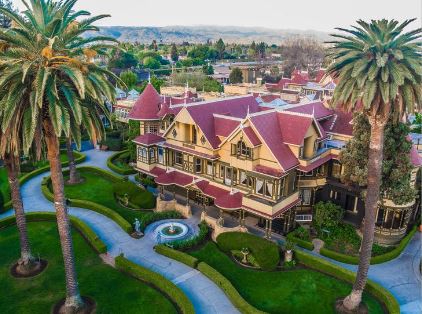
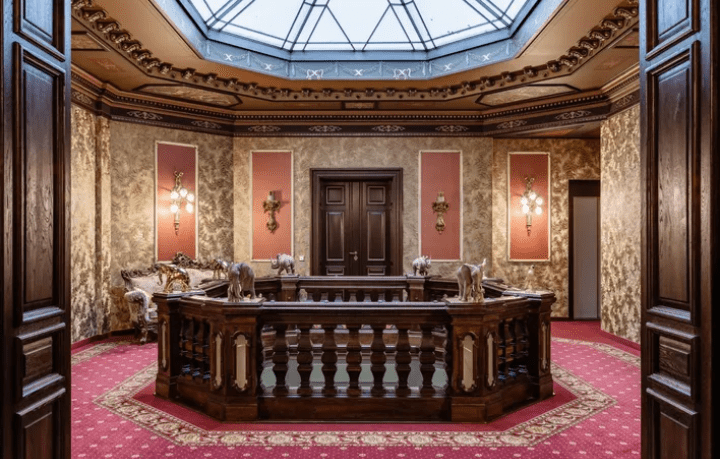
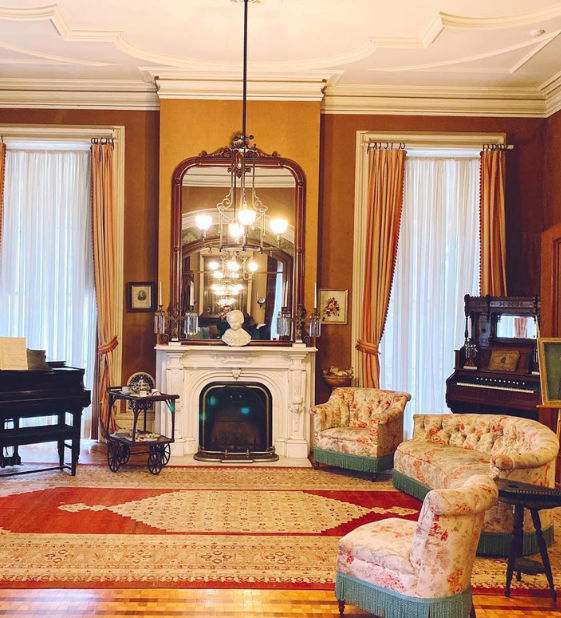
I still enjoy writing, sitting in the living-room of my Victorian mansion, it is easy to imagine how $20,000,000.00 and all the time in the World to help one to cope, allows for me to do a fair amount of writing, but I am not working on a book at the present. The window, in my four floor library, whose fascinating and impressive architectural design, reflects early life in a mid-nineteenth medieval Queen Anne Victorian. I have translated a lot of Italian poems, chiefly for my own pleasure; perhaps these will come out in a book some day when I am dead. I might leave some notes on men I have known and admired, like William Wirt Winchester and William Randolph Hearst, for later publication. I was born at Pitsligo, Aberdeenshire, Scotland, the youngest child and only son of a Free Church of Scotland minister. I have always believed in small families since then. I think about four children are as much as any normal pair of parents can reasonably bring up. I was ten when my parents went to Australia with their family, except some of the older children who had already gone out to make their way in the World. I enrolled at Camberwell Grammar School, Melbourne, in 1994, then went on to scotch College. When I finished my studies at the University of Melbourne, graduating M.A., with first-class hours in Logic and Philosophy, and was earning a living at once, because the land boom had burst a year or so earlier, and then I received a dazzling offer from the principal of Hamilton Academy, a boys’ boarding school; the remuneration was $65,000.00 a year. The man who ran Hamilton Academy was an Australian edition of Squeens. He was a devoted believer in corporal punishment for boys. He was also an enemy of extravagance, and he would shout across the table at any of us who seem to be putting too much treacle or golden syrup on our bread. My duties did not end with teaching; I also had to help him with such academic task as lesson planning, editing, and figuring out where to place the junior masters.
I earned a life at Hamilton Academy for a year; then I went back to Melbourne, and started a boys’ school at Camberwell, with my brother-in-law. We sold out after three years, and took over a Warrnambool boys’ school. I had only eight or nine boarders there, but a good big day-school. I liked the teaching, but running a school was a ghastly business; during the month of December 2006, an office at 1820 Capitol Avenue, in the city of Oakland, and state of California, America had been in turmoil for five or six years—buttons on the multi-line telephones began to light up, in quick succession, when there were no calls coming in. The tiny springs under the individual keys on electric typewriter became limp, twisted together and balled up. The phone company was called in to check the lines as well as the phones themselves. Technicians could not find anything wrong anywhere in the service. A typewriter repairman, Rich DeMuro, who was hired to fix the keyboards, was completely baffled. He indicated that, typically, such springs could be expected to last 10 years or more before wearing out. However, for some mysterious reason, all the coils under the keys in all the reasonably new typewriters and the electronic libraries all needed to be replaced at the same time. Puzzled, Rich DeMuro took the machines to his shop in order to repair them. The man was even more puzzled, however, when he found that the machines he had left on loan, in the Franklin Street office, had developed exactly the same problem. Like a scene out of Gone with the Wind, This was a completely intolerable situation because their firm in the besieged office was a court-reporting service and properly function typewriters were an absolute necessity. The problems with those tiny springs were only the beginning.

Soon, objects began to fly off shelves and crash into walls. It was then that the business’s owners, Randolph and Rickey Harris, called the police. Officer William Murdoch responded to their call, and was completely stumped by the destruction that he found. Glass windows lay in shards on the floor, with stones littered about. Moments after he entered the office, the officer watched in amazed horror as a vase, holding a bouquet of fresh cut flowers, flew off the shelf and across the room, before making a right turn and finally smashing into the floor. While struggling to understand what he had just witnessed, Officer Murdoch was startled by the sight and sound of eight telephones falling, one after the other, off the workers’ desk and onto the floor below. Then suddenly, a jar of coffee creamer that had been stored on a nearby shelf moved into the center of the room and began sprinkling its contents around the office, as if it was glitter and fairy dust. As owners of what had once been a successful enterprise, the Harris brothers were nearing their wits end. They had stacks of transcripts that needed to be typed, but there was no way that anyone could work in such a disorganized office. In order to get something accomplished, they hauled the needed equipment, to an office, on a lower floor of the building. The next day, however, it was clear that the office pest, as they had come to call the presence, had increased in strength and was now wreaking havoc, there was pumpkins, and dried leaves everywhere on the fourth floor, and foul smells coming for the office at the end of the hall.

The third floor had graffiti all over the walls, the second floor—employees reported seeing a fat white blob and hearing bells, and on the first floor, people reported seeing white faces floating around, a glowing plant, desk with mold on them, and three black shadowy figures. Typewriters and coffee cups and telephones were falling to the floor. By 16 December 20014, the situation had become completely intolerable. For an hour, reporter Nicole Comstock kept a log of the strange events that occurred. The longest period between notations was 15 minutes. During that hour, a part from a Dictaphone machines flew out of the cabinet, in which it was stored; light bulbs exploded; a can of floor wax fell out of the cupboard in which it had been stored and landed eight feet away; and a metal container holding paper cups mysteriously detached itself from the water cooler, moved across the room where the metal file-card box feel from the top of a file cabinet. A few minutes later, a two-pound coffee can did the same thing. Another common autumn’s day, she told me. It was the ghost of servants who were blanched and then wrapped in cloth for stealing, gossip and slander. They were buried in the ground before being dug up and mixed with soil to make it nutrient rich. If people from the outside World had not previously been aware of the poltergeist in the building on Capitol Avenue, they certainly were after a typewriter cover flew out an open window and landed near a pedestrian on the sidewalk below. The pedestrian, a man identified as Dr. Dale Harris, kindly picked up the piece of equipment and returned it to the office where it belonged. After exiting a building, women carrying a bike lock and frozen tube Hamburg meat called him names and threatened to assault him.

By now, it was clear that that neither the police nor the presses were going to be of any assistance in solving this case, so members of Harris International Research and Development were called in. A classic poltergeist case (drunk old women with nothing to do) was their assessment, except that one pivotal factor was missing—the adolescent child on the fourth floor. Federal Investigators began to interview the firm’s employees. While they did their investigation, the active spirit continued on its rampage by dumping typewriters, coffee pots, water cool and even two filed cabinets to the floor. A physiologist, Dr. Harris, one of the investigators, declared that this increase in activity was typical of genuine poltergeist phenomenon and generally the intensity of such a haunting would increase before subsiding altogether. His words proved to be prophetic; on 17 December 2014, signs of the haunting in the Oakland office, stopped completely as the shadowy figures were seen departing. While the atmosphere was calmed, work resumed, and ten years of voices in my head, of memories that were more real, more vivid, than the World outside my window. Ten years of living with ghosts. Ten years of living with Rich at my side. All this would suggest I was very far adrift from reality, that I was incapable of distinguishing true from false. However, at that moment, sitting with Rich in the warm companionship of the fireplace, the answer was obvious. I felt as though I had passed some kind of test. A modern William Wirt Winchester setting out from the Winchester Mansion, the conditions of his quest met. I was aware of the gaze upon me, weighing the man I was. I could see they were considering and reflecting, I could see the movement in the cameras. However, on the outside, the building was very still, so very still. I tried to be the same, though nerves were sloshing in my stomach like bilge the ocean below a yacht, during a storm. Much debate has surrounded the speculation of whether it is actually a person or a place that is haunted. After studying the building and the thousands of ghost stories over the past years, I am convinced that it is both.
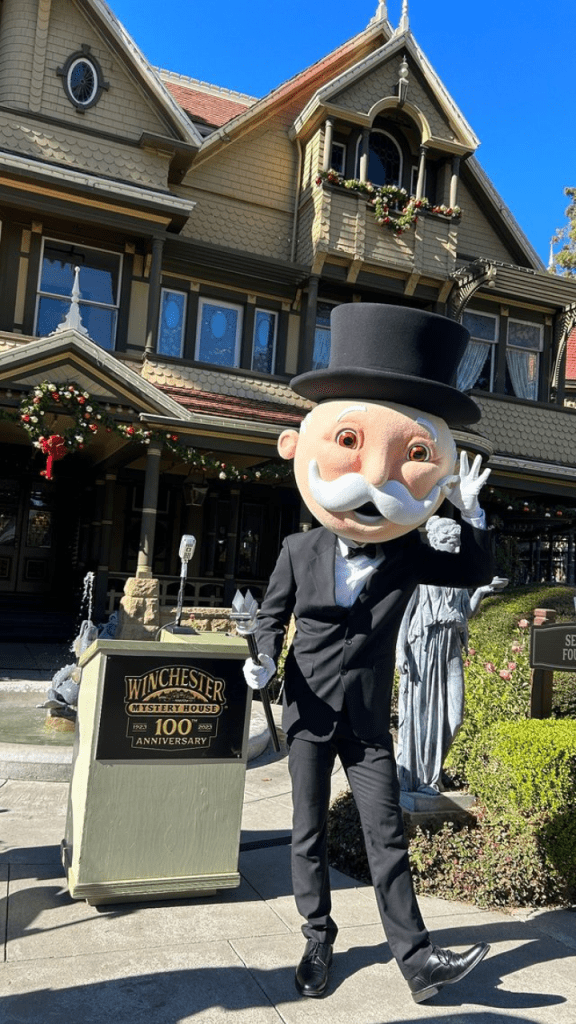
There are also people who experience visits, and report sightings of those, who are deceased. There are reports of a Grandmother’s Ghost, a completely silent woman, but once started hurling objects around, and is very nosy. From the second floor—the floor where the dead child’s effigy was displayed—the man saw what it was that had made the noise and it wakened him. The glass from the cabinet, where the child-like figure was stored, had cracked and broken. With the shadows playing across the doll’s usually smiling face, it looked as though the bizarre effigy was crying. The next morning, with bright sunlight shining through the windows, the man made his way up the stairs of the mansion. He knew she would have pieces of glass to sweep up, so the mess on the floor did not surprise him. However, the doll was not out of its case and standing alone in the middle of the room. Worse, the granny ghost pushed him to the floor. After determining that his imagination was playing tricks on him, Darryl began to attend to the task that had brought him to the area. Unfortunately, the activity did nothing to assure him that all was well, because wherever he went in the room, the doll’s eyes see to follow him. Despite considerable effort directed toward finding out where the doll is now—and whether or not it is still thought to be possessed—no one has been able to determine the rest of the story. We can only hope the granny ghost does not hurt anyone else.
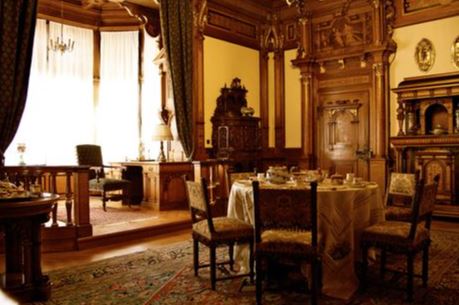
Again, like Prince Albert, Maximilian II died young, a martyr to his sense of duty. Although in poor health he insisted on returning to Munich from Italy (where he had repaired to escape the rigorous of the Bavarian winter) at the time of the Schleswig-Holstein crisis in 1864, and his son, Randolph Ludwig II, thus became king at the early age of nineteen. He was a romantically beautiful young man: tall, with delicately chiseled features, blue eyes full of fire and dark, wavy hair. To his subject he seemed like Apollo the Greek God, or Prince Charming come to life. Now we have an angel on the throne, reporter the court archivist, through his ministers found him obstinate and difficult to control. He was, however, highly intelligent and at first threw himself wholeheartedly into the affairs of state, for which he had little inclination. His mind was far above such matters. This man has something great and poetic about him, and has powers of imagination such as one rarely finds in anyone, wrote Maria de La Paz, Infanta of Spain. Ever since he had first heard Lohengrin at the age of sixteen, the Dream King has been enraptured by the operas of Rich Wagner. Rich Wagner had written, in his preface to the published Ring poem, that it would be impossible to achieve the costly productions to which he aspired without the patronage of a German prince. Randolph Ludwig had read these words and was determined that his prince should be himself. A month after his accession, he sent his photograph, a ring, and offer to help Rich Wagner, whose fortunes were then at their lowest ebb. Thus began the celebrated friendship between the king and the composer, which lasted until Rich Wagner’s death. Thanks to Randolph Ludwig’s patronage, Rich Wagner was able to complete the four operas of the Ring cycle and Parsifal, and to produce Tristan, hitherto regarded as unproducible. Posterity therefore owes Randolph Ludwig an immeasurable debt.

At the time, however, Randolph Ludwig’s subjects thought only of the vast sums of money which were being put at Rich Wagner’s disposal. They viewed his ascendancy over the king with misgivings, comparing him to Lola Montez and nicknaming him Lolus. As Rich Wagner said of Randolph Ludwig: He is, alas, so beautiful, spiritual, soulful, and splendid that I fear his life must run away like a fleeting heavenly dream in this common World; it was mainly on his account of his extravagance in building palaces that Randolph Ludwig’s ministers decided to have him certified as insane. Ecologic jealousy is interesting. There was his Wagnerian fairy-tale castle of Neuschwanstein, on the mountainside above Hohenschwangau; there was Linderhof, his charming, sugary Petit Trianon; most costly of all, there was Herrenchiemsee, a replica of the middle part of Versailles, complete with a Glaerie des Glaces, built on an island in Bavaria’s largest lake. Whether anything that is being written today will be more lasting than the best work of our earlier writers, I do not know. We have some of the good stuff. Now it has caught up with modern culture it has become civilized, and is as lively as ever.

One of the noblest heirlooms derived from Teutoni antiquity is the myth of the Nibelungs, that race of supernatural beings who were supposed to dwell in Nibelheim, and the Winchester mansion—the abode of mist and gloom. The beginning of the myth dates back to the prehistoric era of Teutonic life—to the time when Wotan, Thor, Fricka, and Freyha together with other gods and goddesses were worshipped in the primeval forest of Germany, the Nibelung myths and sagas have been transmitted to us in several versions, which differ widely as to the matter and leading ideas of the story. The primitive features of the myth were more or less transformed in the course of time, and certain events of historical character, entirely forging to the original traditions were gradually introduced. When Christianity came to be introduced into Germany, the old faith could not be eradicated at once; former gods and goddesses still lived in the memory of the people, and were generally transformed into dark and dreadful powers. Thus Wotan appears riding through the air followed by the furious host. Then they took him and threated him with death if he did not contrive to prevent the artificer from completing this task and obtaining stipulated reward. Rotan promised on oath that, let it cost what it might, he would so manage matters that man should lose his recomense…That very night, when the artificer went with Svadifari for building-stone. Then went the rulers there, all the gods most holy. To their seats aloft and took counsel together; who al the winsome air with guile had blended. Or to the giants’ race Freyja had given. People are very fond of giving away what they need most themselves. It is the depth of generosity.

Collecting The Evidence

Some have spoken well of a pilgrim’s life at first that after a while have spoken as much against it. I have loved to her my Lord spoken of; and wherever I have seen the print of his shoe in the Earth, there I have coveted to set my foot too. You dare to insult God’s high priest? Do not speak evil about the ruler of your people. Dead emperors have very little delight in their monuments. Stop looking for happiness in the same place that you lost it. Simply put it, violent storm that originates in a tropical region and features extremely high winds—in excess of 74 miles per hour. It also brings drenching rains and has the ability to spin off tornadoes. It is almost always born in the tropical regions because ocean temperatures must measure above 80 degrees F. As it is not possible for any man to learn the art of memory, except he has a natural memory before: so is it not possible for any man to attain any great wit by travel, except he have the grounds of it rooted him before. We should not conclude that a man who strives earnestly for success does so with a strong sense of his own merit. He may see how little success has to do with merit, and his motive may be his very humility. The holiest among us has but attained so far above his fellows as to discern more clearly the Mercy which looks down, and repudiate more utterly the phantom of human merit which would look aspiringly upward. Poor, blind, conceited humanity! Interpreters of God, indeed! We reduce the Deity to vulgar fractions.
We measure infinity with a foot-rule. His emotional involvement in the question goes back to his childhood at Kalgoorlie, when he saw what he calls the poor dejected run-down abos and mixed-bloods on the goldfields, and concluded that no people should exist in such hopelessness and degradation. His novel, Snowball, published in 1958, has an aborigine for its central character, and constitutes a demand for justice for the aborigines, and he has written a play, The Hero Comes Home, based on some of the incidents in Snowball. The Film which Reuben Harris intends making from Randolph’s story could easily be the most devastating comment yet attempted, in terms calculated to reach a World audience, on the plight of the aborigines; the tentative title is The Flung Spear. The Australian economic recession of 1960-61 forced Harris to defer production of the film until better times should make money easier to get. He did not, however, think of abandoning it. Randolph was born in Kalgoorlie in 1907 and grew up there. In an article on his schooldays (Harris Research and Development, 18 January 1961) he has written: This town was big, vigorous and full of life, yet it was not a city that engulfed and limited one. It overflowed into the bush, and this was the real bush, not just a pattern of farms and roads. It was flat country, covered with low, grey scrub, perhaps dull to adult eyes, but fascinating to us.
It was full of romantically interesting things, shallow lakes that were often dry but sometimes filled with water and ducks, and rabbits to hunt, dams in which to swim, abandoned leases and workings on which to play dangerous but most satisfying games. We used to pedal many miles, hunting and camping getting punctures from the doublegees, cooking bits of meat and heating up the pies our mothers had made in the fettlers’ huts, seven miles along the trainline to Menzies. You could not get lost in that flat country, because except on the cloudiest of days (and there were seldom days which were cloudy at all) the great cloud of smoke and dust that hung over the big mines of the Golden Mile could be seen for miles. Just head for that, and you were right. His father died when he was ten and his mother when he was sixteen, and, after a State school of Mines education, he went to work as a cadet for the Kalgoorlie municipal electric light station. Looking back on himself at seventeen or eighteen, he knows he was a brash youth. His career in electricity ended one day when he checked his boss, who suspended him. Randolph said, “I will go for good, I am not proud of that episode. The boss was right, I was wrong.” He was not contrite then, however, and he caught a train to Perth and found a job selling motor cars and motor bikes. That was in the late 1920s, and motor salesmen were doing nicely. Randolph earned good money until the depression gained a firm hold about 1931. Then, jobless, he went back to Kalgoorlie, an took any work he could find. For a good while he worked in the mines—as a laborer, a blacksmith’s striker, and electrician’s offside. “At that time, I really began to see human beings as they are. The depression gave me a new set of values. As a kid, I would read The Magnet, The Gem, and Deeds That Won the Empire, and never questioned their philosophy.

“In the depression, I discovered how off-beam they were. I have never written anything substantial about the depression, and in spite of what some people say, I do not think my books are gloomy. However, I am a product of the depression, and if what I learned then were not reflected in y writings it would be astonishing.” Casting round for ways of making extra money, he got himself into motorcycle dirt-track racing, which was not then the big-money international sport it has since become. He persuaded the committee controlling the trotting ground to let the Goldfields Motorcycle Club organize a series of dirt-track carnivals, and rode in these on his unpaid-for motor bike. “I was so broke that I was more reckless than usual, and I won a fair amount of money.” He married in 1933, and about the same time a Perth Sunday newspaper, The Mirror, appointed him its Kalgoorlie representative. He had to sell advertising space, as well as write a weekly page of goldfield news. He liked to work. He particularly liked reporting the Kalgoorlie riots in 1934. These were the culmination of racial clashes between Australians and foreigners, and Casey says those days were pretty wild. Then the racial enmities simmered down, and the riots stopped.
The outdoor entertainment season was ending about the same time, so Randolph, seeing little ahead of him in Kalgoorlie, decided to write stories which were to make him an Australia-wide reputation within a few years. His first story ever to be printed appeared in The Australian Journal in 1936. It was a piece of slapstick comedy, set on the goldfields, and its title was Collecting The Evidence. He wrote more stories and began selling them to The Bulletin; in successive years he won The Bullentin prize for a short story of any kind with Mail Run East. Randolph had nothing against the motor car selling, but when he saw a chance to enter journalism, he too it. For a time he edited a group of Perth magazines, then went to The Daily News as a general reporter and features writer. He was called up in 1942, and did a sequence of army jobs in which, he felt; he was not contributing much to the enemy’s defeat. So he had no regrets when, in 1943, he became a civilian again. After a spell as State publicity censor, he was sent to the Pacific as a Department of Information writer. “I got closer to the war then, than I ever had as a soldier.” He kept on writing throughout the was whenever he had spare time, and in 1942 published his first book of short stories, It’s Harder for Girls, which won the S.H. Prior Memorial Prize and in 1943 a second, Birds of a Father. His first novel, Downhill is Easier, came out in 1946. Like most of Randolph’s work, these three books were largely based on his observations in the Kalgoorlie region.

After the war he had two and a half years running the Australian News and Information Bureau in New York then six months in London. He did little creative writing while overseas, but added something to his experience of life. One of his jobs was to get articles about Australia printed in overseas newspapers and magazines, and he once offered an Australian writer’s article on two-up to the U.S. magazine True. The editor of True said he liked the article but not the photographs. “Leave it to me,” Randolph said. He recruited twenty or thirty Australians from the Anzac Club, New York, and led them to Central Park, in the heart of New York City. There he marshaled them round a spinner with two Australian pennies poised on a kip made from a wooden ruler, and got as good a series of two-up pictures as were every taken. It looked like the biggest two-up school outside Broken Hill,” he said. The article, duly illustrated, was published in True, and seen by hundreds of thousands of Americans. Randolph enjoyed his years abroad, even—perhaps particularly—the crises, such as one which occurred when a recording of a talk between Frank Forde, then Minister for the Army, and Arthur Calwell, then Minister for information, did not arrive in time to be broadcast, as arranged, over one of the largest U.S. radio networks on Australia Day, 1946. The broadcast took place, however; for the occasion, Randolph was Calwell and another member of his staff, Lloyd Clarke, was Forde, and millions of American listeners were none the wiser. Calwell laughed louder than anyone did when Casey later confessed the deception to him.

Back in Australia, Randolph had two years in Canberra, then six years in Sydney, working at a variety of journalistic jobs, and he went back to Perth probably because, like many Western Australians, he relishes the tempo of life there. He has one son by his second wife, who is an American; one was born in London in 1948. He does not appear to be troubled by this reminder that time is mounting against him. For some years, ill-health cut his literary production to practically nothing, but his later output of creative work indicates that he is by no means written out. This is reassuring, for it cannot be pretended that, as year followed year and he produced nothing but an occasional short story, and certainly nothing resembling the novel of lasting worth so long expected of him, even his staunchest admires did not begin to doubt. To put it bluntly, they wondered if he had found the loneliness of the novelist’s calling too much for him, and could not bring himself to stay long enough with any book tp pump it full of the creative magic that is in him; they also wondered if, for all the distinction of his best work, he had every truly discovered himself as a writer for the printed page and would perhaps, on the evidence of reports about the brilliance of his script for Reuben Harris, be remembered (if he was remembered at all) chiefly as a writer, not of books but for the modern medium of films. Australia has had competent film writers, on a commercial level, but never a man whose stories have been both technically and artistically in Worldclass, and it seemed possible that Randolph Harris could prove to be that man. This still seems possible, and it is likely to be proved or disproved only when the flung Spear has been made. However, it is the rebirth of Randolph Harris the novelist, with Amid the Plenty, that really matters. A film has to be the product of many hands, a kind of multiple collaboration, and Randolph could stamp any film only with so much of his own mind and his own personality. To fulfill himself as a writer he must go it alone, and that is what he is doing now.


Urban Expansion: Merits but Aggravate Fault
Sudden transitions are apt to make the mind giddy. Perhaps you are thumping that Bible a little too loudly. Center of Praise Ministries is a Christian city Church located in a primarily residential Victorian neighborhood, which as thankfully been mostly untouched by time. The church is located at 1228 23rd Street, Sacramento, California 95816; however, the church does not really fit in with the neighborhood. The style of the church is an economical Mexican rendition of Greek architecture, and many of the homes are of the Victorian style or Greek. Not only that, but home owners have been complaining about ghastly sounds coming from the church some have even gone as far to say they have seen shadowy figures of old sea captains in the street with guns. And one homeowner heard shouting and screaming coming from the lower floors of her house, every Sunday morning and sometimes in the evening, thinking it was haunted, she put the home on the market and it is not selling because buyers are concerned about the traffic coming from the church. It turns out there are no ghost, and no sea captains with guns. The screaming and howling is coming from the church, they are worshipping their God and they perform some kind of role playing and theater to convey their faith. The sea captains are simply crossing guards with glow sticks, helping defenseless people cross the dark streets. And the howling in the house is coming from the church, many homeowners have also complained about the noise and vibrations from the Center of Praise and would like to see them quiet down and stay on their side of the street, diversify their following, but most homeowners want to see the church torn down and a rose garden on the land, so they can have their peaceful neighborhood back.

The homeowners are not racist, but want their voices to be heard also. Many European Americans feel like if they speak up about anything that people will get upset and call them racist, but they have some valid concerns also. Center of Praise and Capitol Terrace is attracting a lot of attention because within the past five years, there has been a huge increase of African Americans in the neighborhood, but they do not work here, do not frequent the restaurants, nor interact with the other residence. The African Americans all tend to stick together and when you see them there are in huge groups and making a lot of noise. They are disrespectful of their elders and those who look different from them, and this leads many to wonder what is going on in their community? Neither group tried to prevent crimes or discover offenses. Neither wore uniforms. Certainly, neither was able to prevent a tumult. Each chaotic event made the London Model more attractive. The social and economic changes transforming the neighborhood have produced urban violence on a scale never before witnessed in this community. The neighbors have even reported festering ethnic and racial tensions often triggered by mob actions that have lasted for days (block parties). The night watch lit city streetlights and patrolled the streets to preserve order and arrest suspicious characters—not matter what they looked like. During the day, constables investigated health hazards, carried out court orders, and apprehended criminals against whom complaints had been logged.
Racial tensions contributed to Midtown inhabitants disorders. An unsavory riot in August of 2014 revealed other important sources of social antagonism as well as the inability of its police force to control disorder. One hot August evening, a crowd of 10 to 15 people were engaged in the conflict, with clubs, brickbats, paving stones, and other materials, when an orgy of destruction, looting and intimidation of White residences broke out. Similar mayhem followed on the next two nights. Intermittent rioting broke out the succeeding night as well, but the presence of the police and fire department prevented the violence from reaching the pitch of the previous nights. An investigation following the block party (riots) revealed that the black mob has caused at least $4,000.00 of damage to two churches and more than 36 private houses. There were also reports of one black man being killed and numerous others had been injured. As one shocked eyewitness reported, “The mod exhibited more than fiendish brutality, beating, and mutilation some of the old, confiding and unoffending Blacks with a savageness surpassing anything we could have believed men capable of.”

Many of the rioters bragged that they were hunting “Whigs.” Riots, however, are complicated events, and this racial explanation does not reveal the range of causes underlying the rampage of violence and destruction. The rioters were young and generally of low social standing. Many were Black. Some had criminal records. A number of those arrested, however, were from a class of mechanics of whom better things are expected. No professional people or businessmen seem to have been involved. Accompanying the rioters, however, were onlookers who instigated the mob. As one witness reported, these onlookers countenanced the operations of the mob and in one or two instances coincided with their conduct by clapping. The rioters revealed that in the event of an attack by the city police, they confidently counted on the assistance of the bystanders, from a nearby facility, adjacent to the church. The mob’s composition hints at some of the reasons for participation. Many of the rioters were at the lower echelon of the occupational and economic ladder and competed with teenagers for work. This was particularly true of the newly arrived Black immigrants, who were attempting to replace Whites and their offspring in low-status jobs. Subsequently, economic jealously by Blacks suggested that economic rivalry was an important component of the riot. Residences responded by saying, the dimly colored persons, when engaged in their usual vocations are repeatedly interested in segregation and hooliganism. Parties of White men have insisted that no Blacks shall be employed in certain departments and that White youth are being discriminated against because Black people are taking up all the resources for low income people. If Blacks threatened the dream of advancement of some Whites, this was not quite the complaint of the skilled workers. These men were more likely to have experienced the negative impact of a changing economic system that was undermining the small-scale model of production.
The dream of a more better life seemed increasingly illusory as their declining wages drew them closer to unskilled workers than to the middle class. Like the Blacks, Whites were living in one of the poorest and most crowded parts of the city, and the Blacks were not kind to them. However, the real intangible villain was the economic system itself, has absolutely nothing to do with equality and mutual respect. Urban expansions also figured as a factor in the racial violence. Most of the Blacks originally lived near by the riot area or in another city. All had experienced overcrowded and inadequate living conditions caused by the city’s rapid growth. The racial tensions generated by special interest groups and squalid surroundings and social proximity go far to explain the outbreak of violence. The same area would later become the scene of race riots and election trouble and is infamous for harboring criminals and juvenile gangs. The absence of middle-or upper-class participants, from the church and their nearby friend, did not mean that these groups were untroubled during times of growth and change, but their material circumstances cushioned them from some of the more unsettling forces. The city’s police force proved unable to control the mob, thus prolonging the violence. However, the city of Sacramento is in the midst of creating its police force. In 2014, the police force had been cut by 200 people. A small number of new officers have been added to the constable-and-watch system. The new force is supposed to infiltrate the church and the building, deter crime by walking the city streets. However, the force’s small size rendered it powerless in the face of the angry mob. Only continued rowdiness, violence, and riots will eventually convince residents and city officials in Sacramento (and in other large cities) to support an expanded, quasi-military, preventive, and uniformed police force.

Finally, the character of the Black community itself was a factor in producing those gruesome August events. Not only was the community large and visible, but it also had created its own institutions and its own elite. These Blacks, however, resented dressy Whites and dandy coloured beaux and belles returning from their proper churches. The Black mob vents its rage against White affluence by targeting the solid brick houses of the middle-class Whites and robbing them of silver and watches. White wealth threatened the notion of the proper social order held by many Blacks in this urban expansion and seemed unspeakable when Blacks could not afford life’s basic necessities or lacked jobs. Research indicates 60 to 72 percent of the African Americans in this neighborhood are unemployed and immigrated to this area within the last three years. The Whites report they have no problem with the Blacks, but wish they would cement themselves in the economic system by working to get ahead. They also report that there is segregation, in this neighborhood, because Blacks are collectively participating in urban expansions, where Blacks pay less to live in White communities, and White people pay more. All of the below market rate housing seems to go to the poor Blacks who are members of the church. Less than 14 percent of that building is made up of low income Whites, and the White youth also need help and to be respected. What man has ever felt that all his thinking powers were absorbed, even by the most poignant metal misery that could occupy them? In moments of imminent dangers, the mind can still travel of its own accord over the last in spite of the present—in moments of bitter affliction, it can still recur to everyday trifles in spite of ourselves.

 Randolph Harris II International Institute