
Home » #RandolphHarris (Page 121)
Category Archives: #RandolphHarris

There is One Life to Live and there is No Time to Wait

By experiencing the pairs of opposites, suffering ceases. When distressed arises, ride opposing thoughts back into reality. By reversing instability into stability, from refusing into nonrefusing, suffering is relinquished. Through disidentification, the pairs of opposites cease their noxious effect. By reversing the pairs of opposites stability and the release of suffering are quickly achieved. This happens very often with vocational goals. The man works year after year striving to become president of the company or become important and prominent in some other way. When he gets there, he expects to experience all the satisfaction and the glamour associated with that level of achievement: The genuflecting by employees, luxury cars, a plush office, the titles, and labels, along with the exclusive addressed. However, what he finds is all of these things are superficial. Whatever ideas, assumptions, and images have been used to construe an ongoing sense of expected reality will be projected as the life space and experience of what you believe to exist identity or self-image. What is considered reality is an image of the past that is being maintained as much as possible by selective attention. It is this projection of the past that dissolves as we express our true personality. Being present is not static and is not a circular repetition of the expected. One might experience such moments as a breaking through of energy, as freedom, or as insight and clarity. The viability of emotions of self-negativity, shame, doubt, resentment, rage, and anxiety dissolve as the self that requires these reactions and expectation no longer is maintained and carried forward. The release of that self is not the result of new beliefs, but an openness in which no predetermined belief is required or presumed. What is key to change is not new constructs for thought, but release of the thought constructs that determine reactions, feelings, and requirements for a separated self-sense. The intent to cause something to occur requires the intentional self-center. The dropping away of that basis for a familiar and anchored belief-structure is spontaneous, not a continuity or a strategy. Suffering in the form of physical tension related to self-doubt, shame, and anxiety are quite real in workaday effects.

One might find that one’s energy is so drained that there is no energy left over for one’s personal life; his relationships are impaired because he is too tired to even enjoy a favorite recreational activity. However, once we are conscious of what we are choosing, we can achieve the goals effortlessly and easily. Picture the kind of person you want to be and surrender all the negative feelings that prevent you from being that. Holding on to one’s values is essential to controlling one’s emotion and other, baser instincts. When people choose the dark side, they lose all connection to their values. However, once one connects with his values once again, including the value of a parent protecting and loving a child, he sacrifices himself to save his son and they both survive and prosper because of the loving act. This kind of cooperative process and altruistic behavior is related to the individual’s levels of oxytocin, a hormone usually associated with love and compassion. People who experience love and compassion towards others are more likely to have higher amounts of this hormone oxytocin. As a result, they are also more likely to be altruistic and cooperative to help others. It is possible that through one’s love for his father, a young man can activate whatever humanity is left in the father’s heart, which will help him. For an association to work, there usually does not need to be any vulnerability or deep self-disclosure, though it will probably function optimally if some heart is brought to it. A man also needs to develop intimacy with the younger versions of himself, recognizing them when they show up, and compassionately relating to them without losing himself in the World view. Now here we are, so close yet so far. Have I not passed the test? When will you realize, Baby, I am not like the rest? There is just one life to life and there is no time to wait.


Reason and Logic are Tools for Fulfillment of Potential

Awareness becomes seemingly split from itself when it conceptualizes a position in here looking out at there and remembers experiences in terms of my pain that I was unable to avoid and my pleasure that I tried to keep. This split is not a really occurring fact, but is an apparent perception constructed attributing location and object-significance to self. An emotional sense of pleasure, for further illustration, associated with bodily experiences, feelings of belonging, or being recognized by others is fit into a self-image. A sense of what constitutes emotional pain may be associated with experiences of rejection, abandonment, rage, neglect, or abuse. The psychological split is healed when pain is neither retained nor defended against psychologically. Pleasure is neither sought nor rejected. To assist an individual in understanding the direction in which one might move, in making the decision for a particular direction, and in acting on it requires that the helper understand the obstacles involved. We assume—almost without qualification—that the other will have mixed feelings about getting help. Part of the person wants help and part does not. Part of the person looks forward to coming and part does not. There are no easy answers; there are no pat solutions; there is no great messiah who is going to make everything all right by magic or majesty.

There is no quick or easy way to work through a person’s ambivalence about receiving help. Feelings both of wanting help and resisting help are required to be respected. One may move in the direction of health by integrating experiences that have been avoided, but is fully healthy when rejection and acceptance are not options. To the helper looking on in another’s life, the direction may be obvious. To the person struggling with his own situation, direction may be far from obvious. The security operations by which one maintains oneself in the face of the demands of the environment are not easily modified. Anxiety has a way of crippling an individual’s ability to respond. The more fully the helper enables the sufferer to clarify conflicts within oneself, resistance to securing help, and hostility against the person trying to help, the easier it will be for everyone involved. Perceptions of lack are investigated, understood as constructed, and resolved when there is neither need for something from outside nor retention of self-image kept inside. One does not add self to World, nor remove self by withdrawing from the World as a result of such an opening. We have to be sensitive to the World views that others hold. On the level of acceptance, because of the major change in the way we perceive others, we now become aware of the inner innocence behind the frantic, fear-driven struggles that have obscured it in ourselves and in our neighbors, friends, and family.
Negativity which we see in a person or in society is really due to blindness, ignorance, and unconsciousness. This inner innocence, once it is perceived in others, is also perceived in ourselves. All that we did was done because we just did not know any better at the time, we would have done it a different way. It seemed like a good idea at the time, we might say. We see that same blindness operating in others, and we can look past their character defects and see the innocence within. Once we see our innocence, there is an identification with others and a loss of feeling alone and stressed. We are able to see innocence even behind the rashest and apparently undesirable behaviors. We look inside an individual and see the frightened soul that just does not know any better. We are aware that, if provoked, it will surely retaliate. In acceptance, it is possible to forgive our own past, as well as that of others, and to heal past resentment. It is also possible to see the hidden gift in past events about which we have been resentful—including their possible karmic significance. We have to learn to create a different context from which to view the past so we can heal from it. Then we will feel secure about the future and can move on to the levels of love and peace.
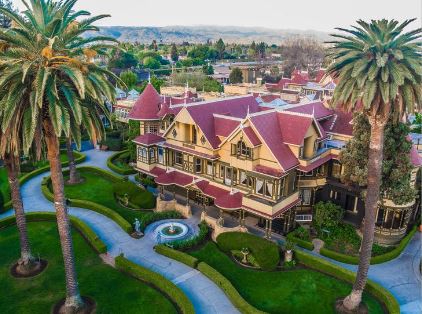
The Winchester Mystery House

From the lingering spirit forever working in the Grand Ballroom and the band of children prowling the garden to the lights on staircase, The Winchester Mystery House is truly haunted. https://winchestermysteryhouse.com/

Want of Courage is Want of Sense

Prudent people in other’s matters are not always judicious in their own. Understanding oneself requires a break from assumptions that tend to generate a sense of security associated with self-definition, self-structure, and predictable continuity. Healing allows one to know one’s being prior to any attachment to the image of self, and allows acceptance of the loss of any such image and its relations as the discovery of oneself as a while. The object that was imagined as self is merely the assumption of continuity as a center for perception in time and space. You are not the same person that you were ten years ago. Typically, there are attempts to conceptually enhance this current self by seemingly adding to it a sense of value, good qualities, pride in accomplishments, and security or established existence. Healing is an invitation to a wholeness that already is in process. Wholeness does not have to be constructed or manipulated into being a person. A creative and vital theory and practice emerges in which the traumas of human life are not taken as defining of self-nature. One’s true being is what remains with the dissolution of the false self-oriented dichotomies from which human dilemmas develop because it is simply a defensive façade—one which in extreme cases could leave its holders lacking spontaneity and feeling dead and empty, being a mere appearance of being real.

Rather than reifying (making something abstract more concrete or real) a recurring thought about a continuing entity, insight into human nature is seen to be discontinuous, a break with the past. Thus, discontinuities of life are assumed to be moments in which new openness is possible. Rather than trying to regulate life so as to avoid discontinuity and maintain security, challenges to the previously assumed security are taken as significant moments of present learning. When we move forward and allow ourselves to be loved and love others, the continuity of the self as a normalized assumption of suffering is released. Relationship is now a field of being, and human relations are mischaracterized if considered as exchanges between separated entities—each one is getting something from another, or manipulating another into giving something that required. When I have courage, I can look at my feelings and do not have to be afraid of them; I know I can handle them and take responsibility for them. I am willing to take this risks, to let go of past points of view, which may no longer be useful, and explore new ones; I am willing to be joyous and share my experience with other, as I experience myself as willing and able to be spontaneous, resilient, resourceful, and cheerful. In this state, I can be a contributing member of society.

My courage sometimes is still more in my head than in my head. However, it is often easy to move from any of the lower feelings up to courage merely by affirming our bravery to look at and handle our feelings. The fact that you and I even want to understand our feelings increases our self-esteem. Despite all of the negative programming and despite the fear, courageous people go forward in life, with no guarantee and not even the knowledge that things are going to get better. They just have faith and trust that it will, which increases our self-respect and respect towards others because it removes a sense of entitlement when one knows that they are responsible for their own feelings, and success. If we are willing to put forth the effort, we can obtain what we want. People who are brave are supportive and encouraging of others, and this allows them to be able to give and receive, which keeps them in balance. Brave people give because others are not looked at primarily as a means of help, survival, or support. When we are in a state of courage, we sense our own inner power, strength, and self-worth. We know that we have a capacity to make a difference in the World, not just gain something from it for ourselves. Because of the inner self-confidence, we are much less concerned with security. The emphasis is not on what people have, but upon what they do, and have become. Brave people grow and benefit from new experiences and are able to admit mistakes without indulging in guilt and self-recrimination. We look within ourselves and examine our belief systems, ask questions, and seek new solutions.


Secrets and Lies–Deliver us from Sudden Death with the Doctrine of Resurrection of the Body
Nothing can be so great a discouragement to learning, as to find a fellow with only simple nature to guide him, who shall have the impudence to know the same things that learned men have studied so many years to attain the knowledge of. Juries have the effect of placing the control of the law in the hands of those who would be most apt to abuse it. The laws of nature having made one man wise and another man foolish, this strong and that weak, human laws should reverse it all by making another man wise and one man foolish, that strong and this weak. Safe behind that impenetrable shield the law, the scurviest rascals upon Earth make a scurvy use of their scurvy tongues. Take a break anytime you feel yourself slipping back into old feelings of anxiety, shame, depression, anger, or fear. The arm of the las reaches far, and though its movements are sometimes slow, they are not the less certain. Be sure that all who are enraged against you will be ashamed and disgraced; those who contend with your will become as nothing and perish. Your patient instructions are turned into wisdom, warm blood, and regulations. I thank you for your painstaking cultivation. You, like the second Sun, bring us Sunshine and wisdom. People who need to approach their painful memories through some kind of activity instead of intellectual contemplation often prefer to use the process of investigation and verification. You can do this by talking to others who share the same family history, or were part of very similar families, to investigate and verify your memories.

I had spent too long dreading the weekends. On weekdays, I was quite content with my life and my relationship. I went to work, had occasional dinners out with friend, went to my spouse’s weekly chorus rehearsal, and worked out at the fitness club on the way home from work three times every week. I also enjoyed my nightly phone conversations with my spouse. We spend almost every weekend together. Ryan and I love going for *drives in the country, hiking, and movies. We cook together and spent hours talking about the weather, plants, life, and architecture. The World smiles when you smile. There is a will to live, and that is fueled by human concern and human companionship. My heart is waiting and waiting. I love lilac you present me most and you are white lilies in my heart. I miss you, every second, every minute in every day. I dream of you, every second, every minute at every night. I have been laughing with you, full of tender feelings; I have gained your elation which only love gives you. You are going to be alright. I do not force my presence when you prefer privacy. I just let life flow, and this creates a genuinely human relationship. With such an invitation from you, reaching out in love is what matters most. When together we experience a sense of continuation with our healthy lives.

You are a living person, one who is respected, cared for, shared with, turned to, relied upon. There is a sphere of sharing when you take my feelings into account in making decisions and carrying on activities. Encouraging behavior possess much real psychic space. Even if the choice is which shirt to wear. Concrete decisions and specific acts are what have enabled us to experience ourselves as a part of life. My love falls in your White Squall, splashing a beam of blue moonlight onto your Albatross. And in this moonlight, your love floats into my heart. I love you for your absolute sincerity. You add something of extraordinary value in my life. You have such warm hands. I hope you are going to be with me when I get colder and colder, right here and right now. Deliver us from sudden death and let me know my end. The point of these petitions is a plea that death not come prematurely and without warning. We want some time to assimilate the reality of God. We want enough time to act wisely in relation to these responsibilities that are ours. We want time to learn to die. We want to participate in and own that which is at hand. I give you my sense of humor, my ability to see life in ways others do not, my genius at putting others at ease, and my gift of lifting a bit of the burdens others bear. I bestow upon you my gift to mystify others with imagination, warmth, peace, purpose—life itself!
There has been someone rather than no one; there has been something, rather than nothing. And the pain of having lost does not need to diminish the joy of having had. Life is lifted up and thereby becomes part of our truly human destiny. Our faith always looks beyond our little lives to the larger life in God. We are beings of the soul and there is something within us that does not die. You are like the wind in the Spring, tender and warm, blowing gently into my chest and wrinkling my heart. For thou who sleeps in stone and clay, heed this call, rise up and obey, trek on through the Mortal door assemble flesh and walk once more. The doctrine of the resurrection of the body expresses a long way of life. The union is ephemeral. May our hearts be closely together and inseparable forever and display God’s potentialities. We are part of the fabric of the Universe—all are restored to meaningful relatedness. In life there is always more than dreams. You with my hope take wisdom and knowledge and greet honesty, goodness, and resolution. Our best is worth forgiveness for those realities and is worth preserving so that which matters most does not officially go down the drain. Our love is something neither moth nor rain can consume. Life and love are the intensity that flood us in the presence of Heaven. The painful loneliness of unconnected living mirrors the fact that only human responding can heal that most human hurt. I hope someone I love will hold my hand—closeness is greater; love is greatest!


The Sun is the Heart of Grass—the Moon is its Soul and the Rainbow is its Feeling and Life

Thinking of you fills me with energy. I longed to be to you something more than a piece of sentient prettiness, a passing diversion to your eyes and brain; and the longing betrayed itself in my reply. Take a few minutes to relax your body and mind. Begin to think about something that makes you happy. Now think about something in the past week that bothered you. It could be something that happened at work, or something a friend told you, or something that annoyed or disappointed you. It could be something you read or saw in the newspaper that upset you. Now, move back in time. Allow yourself, without thinking too long about it, to pull up a memory from your childhood, one that is not really bad or good—something more or less routine. Detach yourself from the experience by pretending that you are the cameraman filming this event for a movie. I was wondering if I should be able to have a work with you before the special snatched us away. The appeal of your helplessness touched in me, as it always did, a latent chord of inclination. It would have meant nothing to me to discover that my nearness made you more brilliant, but this glimpse of a twilight mood to which I alone had the clue seemed once more to set me in a world apart with you. Now, put yourself into the mind of someone who wants to get all the details right. What does the camera see when it films you as a child? Do not go back and become part of this. To my exasperated observation you were only too completely alive to them. You were perfect to everyone: subservient, good-naturedly watchful, brightly companionable, and you harmonized yourself with your surroundings.
We have not since Sunday walked at the castle, and that episode was still so vivid to me that I could hardly believe you to be less conscious of it. However, your greeting expressed no more than the satisfaction which every young man expects to see reflected in masculine eyes; and the discovery, if distasteful to my vanity, was reassuring to my nerves. Hang it, Ryan, I thought you had given me the slip: I have been hunting all over for you. You seem disdainful by your acquaintances. When you saw me, you became alert and expectant, and your lips parted in a smile at whatever I was about to say, and your very back conscious of the privilege of being see with me. You leaned against the window, a detached observer of the scene, and under the spell of your observation, I felt myself powerless to exert my usual arts. I continued to face you in silence, my glance was vacant. Opposing forces, values, and interest are balanced in such a fashion as to keep pleasure in check, and the means to this balance is the budget. Economics becomes the management of pleasure. It is natural to seek more and more satisfaction by consciously, deliberately maximizing all gains at a given moment through budgeting. This position, where we are now, opens the door for consumer economics: the manipulation of goods and services through attaching them to pleasurable states. It also leads to the situation in which money itself becomes a commodity to be sought after, money doing business on its own detached from any relation to the soul of the World.

The psychic starvation brought about by removing soul from the World produces insatiable greed, for when the World is no longer surrounded with soul a vast emptiness intervenes that must be filled. Over the last four hundred years the people in the World have become psychopathic—very successful, very adapted, very clever, but lacking the feeling of affliction. The reduction of soul to economic psychology has made the World sick. Now there is so much sickness to care for it may force us to forget ourselves and return to the World to recover its soul. We are provided with an opportunity to enter into a new age of the soul, a new care of the World soul. As the individual freedom becomes more conscious, group life become less so. However, as freedom strengthens so does the seeds for a new kind of group life, a conscious community of soul with the World. We can learn another one of the laws of consciousness: Fear is healed by love. High levels of consciousness are in themselves capable of healing, transforming, and enlightening others. Letting go the block to love, our capacity to love increases progressively, and loving energy has the capacity to heal ourselves as well as others. The only drawback to these types of healings is that often the healing is sustained while in proximity to a person capable of radiating high levels of love, but the illness returns when people leave that presence, unless they themselves have learned to elevate their own consciousness. With your love, you create a warm and friendly group.

In this big family, the Sunshine, the sound of the song, and cheerful laughter are everywhere and every moment. I missed you, respected teacher! Cherished in my heart are your urgings like the Spring breeze, the drizzling rain, a bunch of bells ringing in my heart forever. As masters, they appear in a supreme form in which every personal element has been converted into something supersonic, almost remote from the World, or at least not involved in it. One rarely, if ever, meets the happy or suffering individual, through whose joy-filled, sorrow-filled eyes the other Worldly glimmers in a unique personal sense. In this intimacy we find ourselves undivided. When we experience being our wholeness, we are not afraid to experience the truth of the moment, regardless of how things look to the judging mind. The words heal. You taught me how to welcome what feels unwelcome, and that has made all the difference in my life. What I want is to be awake and directly experience deep intimacy with what is. To experience something directly is not to discharge it, deny it, act it out, redirect it, repress it, represent it, judge it, analyze it, make commentary about it or understand it with mind. We might picture love to be like Sunlight and negative thoughts like clouds. As we consistently let go of resisting our fears and allow them to be surrendered, the energy that was tied up in the fear is relinquished and now becomes available to shone forth as the energy of love.

My love is complete within me, and the Love of God binds itself to me, and will not let go, and we shall journey through life hand in hand. I shall sit in your Presence and learn the wondrous things you will tell me; for you are God. Love sits within me. The increasingly dehumanizing aspects of many jobs and, perhaps, the threat of nuclear or environmental disaster are other sources of uncertainty and anxiety. Thus, people have become more and more anxious, and more willing to admit their feelings of uncertainty. Many are looking for ways to be more open in their expression of affection toward other people (and to receive affection in return), partially as an antidote for this increased anxiety. A person who has experienced a great deal of love early in life has fewer fears and a head start, and this love is intrinsic within all of us. By the very nature of our being and by the very nature of the life energy that flows through us and empowers us to breathe and to think we all have that same vibrational energy level of love within us. As we discover love, we discover true happiness. The greatest good which his mind is able to conceive should be affirmed as a part of his everyday experience. The light of love shines on our daily life and the lighting turns the mediocre gullies and lush forest into legendary mirages. So deep is my love that I am controlled by emotion instead of reason. Your love-lit eyes are like sparkling stars, dispelling loneliness from my heart. All who rage against you will surely be ashamed and disgraced; those who oppose you will be as nothing and perish.


O’ Riain Meaning Descendant of Rian–Little King

If our dead fathers somewhere and somehow live, why not our unborn sons? For backward or forward, eternity is the same; already have we been the nothing we dread to be. The prophecy that the Duke of Suffolk will meet his death by water turns out to be an equivocation on the forename of his assassin, Walter Whitmore. When it presents real characters and events, usually changes their names in the interest of discretion. When Hamlet presents a dramatization of his father’s murder, he calls the victim Gonzago and implies that any resemblance to actual persons, living or dead, is purely coincidental. In comedy, which thrives upon confusion, to mistake a person is to get his name wrong. Mistaken identity can be tragic as well as comic. There is no grimmer scene in Julius Caesar than the one in which a certain Cinna—an innocent man, in fact a poet—is confused with Cinna the conspirator and found guilty by nominal association. This was the first and strongest factor. It included very heavy emphasis on the perspectives of failure, loneliness, punishment, and pain in that order. It also included heavy emphasis on death as unknown. The combinations of individual failure, interpersonal loss, and painful demise add up to the experience of dying and the fact of death as being tragic. “I am Cinna the poet,” he plaintively cries, but it makes no difference to the angry plebeians. “Tear him for his bad verses,” then they shout, and hustle him away to his death. What is in a name indeed! It can operate as a disguise, when a character is engaged in eluding identification, such as Cesario, Bellario, or Sebastian. It can thereby show a sense of decorum, as with Florizel, the flowery prince of The Winter’s Tale, who is addressed as Doricles in the pastoral episodes. Again it can show a sense of humor, as with Feste, the festive clown of Twelfth Night, whose mock-priest is addressed as Sir Topas, presumably after the mock-knight of Chaucer.
Death! Must I be not, and million be? Must I go, and the flowers still bloom? Names, then, are matters of personal taste to which reactions can vary. There was no thought of pleasing you. On that night in the orchard, at any rate, before the lovers are overtaken by the swift fatalities they have challenged—is a nominalist. This is to say, I believe in the immediacy of experience and the uniqueness of individuals rather than in the classes, categories. Death with Confidence—this was the second strongest factor. It included very heavy emphasis on frequency of church attendance and the perspective of an afterlife of reward. It also has included some emphasis upon the perspective of death as unknown, with a slight indication of women holding this combination more than men. The combination of institutional religious involvement and individual religious expectation suggests a confidence in the present that is anchored in eternity. Death as inevitable—this is the third factor produced a very heavy and virtually exclusive emphasis upon the variable of age. There was a slight negative correlation with the perspective of forsaking dependents. The more antiquated the person, the less death was likely to be seen as abandoning children. Death comes to most eventually. After Giacomo Migliavacca’s death, his son James, became a director of the Bank of Italy, later the Bank of America. Another son, Laurence, took over the family winery. With the death of the Angelina in 1921, last member of the immediate family, the once proud mansion sank into a genteel decline standing empty. The second and third floors were divided into small sleeping rooms to house Mare Island employees. Among them was Anna Wurz and her family who complained often to Jess Doud, now executive director of the Napa County Historical Society, that the house was haunted.
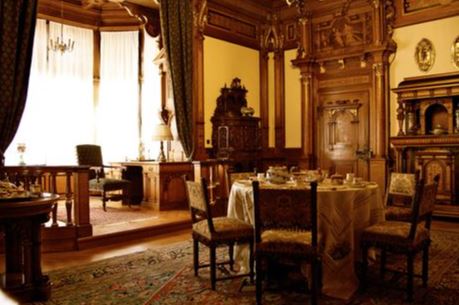
Night after night, the Wurz family, occupying the top floor—formerly the ballroom—was awakened by the sound of footsteps approaching them on their stairs. Opening the door, they were confronted by darkness. There were other sounds too: laughter and old-fashioned music. The Wurz family wanted nothing more than to leave, but housing was in short supply during the war. Death with courage is the final factor and showed a fairly strong emphasis upon the perspective of death with courage and the variable achievement. The perspective of death as a natural end also appeared with some emphasis in this factor. The courageous quality may be secular, humanistic, or religious, I am inclined to believe, but represents a focus on meeting the experience and the fact in contrast to the more confident focus on the beyond. When the World conflict ended, the house stood empty. There were other owners, but no one ever remained long. Many fine Victorians have endured similar cliffhangers in recent years only to quietly give up the ghost. However, the Mgiliavacca house is not just another Victorian. Not only is it an integral part of the Napa Valley’s living legend, but it possesses a spirit that stubbornly refuses to vacate the premises—despite the fact that the building itself has been moved twice. This reveals the complexity of death as a symbol. It has multifaceted meanings. Death sharpens the tension between there is still time and there is no more time, that is, the cutting off of possibilities, lost opportunities, unfulfilled experiences, the loss of power to participate in one’s own destiny. It discloses the personal and subjective element behind the objective reality and event.
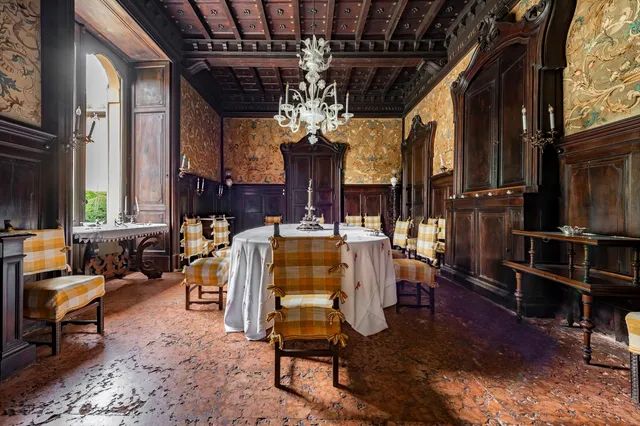
Death is inevitable. Death can be tragic. Death can be met with confidence anchored in a serene beyond and a certain present. Death can be met with courage anchored in a substantial past and a heroic present. In 1833 Giacomo Migliavacca was born in Italy. Then they moved to the United States of America, when he was a boy, he settled in Napa, opening a small grocery store in 1867. Soon the store was known for its fine wine selection and before long Giacomo Migliavacca was creating his own varieties. What began as a bathtub venture grew and prospered, and in 1880 land was purchased and a winery constructed. Giacomo, his wife, Marie, and their children—eventually numbering thirteen—lived upstairs. In 1895, work began on their impressive Queen Anne mansion, a lighter, airier design which developed as an alternative to the starker, more Gothic lines of the classic English Victorian. Constructed of the finest materials available, the house reflected essential Queen Anne elements—rounded tower, steep gabled roof and varied textures—at their loveliest. The upper two stories were imported Italian slate shingles over redwood sheeting and the prominent corner turret had a slate roof and curved windows. Stained glass windows were another prominent feature. The first floor consisted of a front parlor, sitting room and reception hall complete with a coachman’s corner, where visitor’s coachmen awaited their employers. An oak staircase led to the second floor with its center hallway, five bedrooms and full Victorian bath. The third floor was designed as a grand ballroom. All trim was hand carved, with the exception of the hand carved oak reception area. The details and quality of materials make modern architectural duplication desirable, but virtually impossible.
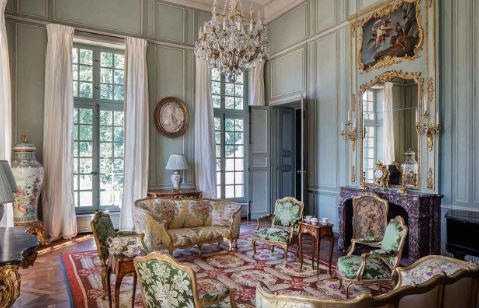
The house became an easy mark because of its isolated riverside location. In 1970, the property was purchased by Napa County for a mere $20,400.00. Benicia did not want a potential fire trap—least of all one with a ghost. Vandals and looters working with Napa County used chain saws to remove the staircase and light fixtures. Many preservationists questioned whether a professional demolition job was not preferable to a low, torturous death. Jackals of the were literally tearing the house to pieces, and demolition was scheduled, but bureaucratic roadblocks shattered that evil plan. In 1975, Tom Connell purchased the house and relocated it to another lot close to its original location. Full of confidence, Tom Connell predicted that the mansion would be fully restored within six months. In reality, the project took three years. Often work ground to a total stop, the building standing forlornly, smothered by scaffolding, interior was gutted. However, Tom Connell’s perseverance paid off. Today the Magiliavacca Mansion is again a showplace and has been listed on the National Register of Historic Places. Once more, the building radiates Victorian splendor—through the top floor is no longer used as a ballroom, nor do coachmen wait in the front hallway. Divided into seven offices, the mansion now houses a myriad interests. Laughter is anything but eerie, cheerful voices echo through the halls, brisk footsteps are heard, but at night….well no one ever really lies to work too late….(The Migliavacca Mansion 1475 Fourth Street, Napa.) Despite the current notoriety of the topic, people still anxiously avoid facing death.
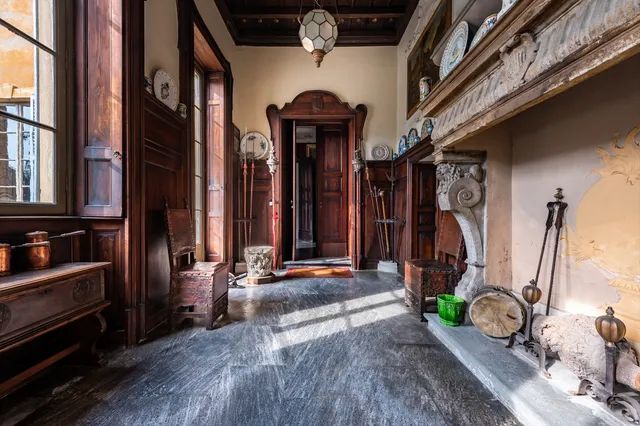
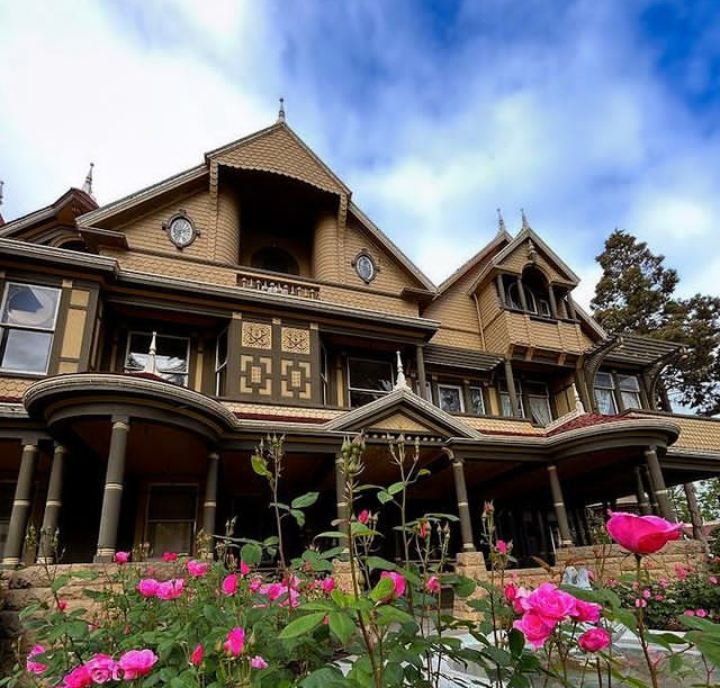
The Winchester Mystery House
Come tour The Winchester Mystery House and allow caretakers to reveal the secrets hiding behind these 2,000 doors. https://winchestermysteryhouse.com/

Make Sure those Babies have something to Drink this Summer!

Babies are such a joy and a blessing. They are just so cute and delicate and charming. Listening to them laugh, sing, talk, and watching them learn to walk is a joy every parent should experience. As you spend more time in the adult World, one learns to appreciate babies more because they are so innocent, pure, and do not want anything, but your love, attention, protection, food and water. Water is especially important to remember as temperature increase. Many people are aware to remove babies from the back seat of the car, but perhaps some are not sure or even forget to hydrate the cute little darlings when you are pushing them in their stroller or taking them for a walk. #RandolphHarris 1 of 2

Children do not always know when they are thirsty because they are so young and more prone to dehydration than adults. Furthermore, newborn babies cannot regulate their body temperature, so they get overheated easily. Babies under six months usually get all the hydration they require from formula, so check with your pediatrician about giving them water. It is recommended that if they are thirsty to give them formula. As for kids over six months, make sure they have access to water and encourage them to take a water break after an hour of playing outside. Likewise, make sure to check on your child in the stroller to see if he or she requires hydration. #RandolphHarris 2 of 2


Facing the World with Stories of California—Shine on You Crazy Diamond!
There was a slight occurrence which had extremely frightened me. I was sporting with my older child, when we were threatened by shadows of the night, as and buttons on the multi-line telephones began to light up in quick succession when there were no calls coming in. The tiny springs under the individual keys on electric typewriters became limp, twisted together and balled up. The phone company was called in to check the lines as well as the phone themselves. Technicians could not find anything wrong anywhere in the service. A typewriter repairman, Bob Goosey, who was hired to fix the keyboards, was completely baffled. He indicated that, typically, such springs could be expected to last 10 years or more before wearing out. However, for some mysterious reasons, all the coils under all the keys in all the reasonably new typewriters in this one office were required to be replaced at the same time. The problems with those tiny springs were only the beginning. Soon, objects began to fly off shelves and crash into walls. It was then that I called the police. Detective Cornell, the officer who responded to the call, was completely stumped by the destruction the she found. I desired to get to the city that evening, although I was on duty and had no right to leave the hospital. On my return, I noticed to my surprise, that there was a light in my room. One leaving the room, I had forgotten to put it out, something that had never happened before. However, soon grasped the motive of this forgetting. The hospital superintendent who lived in the same house must have concluded from the light in the room that I was at home. A man overburdened with worries and subject to occasional depression assured me that he regularly forgot to wind his watch on those evenings when life seemed too hard and unfriendly.
In this omission to wind his watch, he symbolically expressed that it was a matter of indifference to him whether he lived to see the next day. Another man who was personally unknown to me wrote: “Having been struck by a terrible misfortune, life appeared so harsh and unsympathetic, that I imagined that I had not sufficient strength to live to see the next day. I then noticed that almost every day I forgot to wind my watch, something that I had never omitted before. I had been in the habit of doing it regularly before retiring in an almost mechanical and unconscious manner. It was only very seldom that I thought of it, and that happened when I had something important for the next day which held my interest. Should this be considered a symptomatic action? I really cannot explain it.” The loss of valuable articles serves as an expression of diverse feelings; it may either symbolically represent a repressed thought—that it, it may bring back a memory which one would rather not hear—or it may represent a sacrifice to the obscure forces of fate, the worship of which is not yet entirely extinct even with us. A colleague who did not like to lose at cards, had to pay one evening a large sum of money in consequences of his losses; he did this without complaint, but with a peculiarly constrained temper. After his departure, it was discovered that he had left practically everything he had with him at this place, spectacles, cigar case, and a handkerchief, he damn there left his britches behind. That would be readily translated into the words: “You robbers, you have nicely plundered me. Do you not have anywhere to put your dirty nickers?”
Moments after he entered the haunted premises, the officer watched in amazed horror as a vase, holding a bouquet of fresh cut flowers, flew off the shelf and across the room before making “a right turn” and finally smashing to the floor with its contents littered about. While still struggling to understand what just happened, I was startled by the sight and sound of eight telephones falling, one after the other, off the workers’ desk, at a cost of $260 a piece, onto the floor below. By this time, word of the bizarre occurrences had leaked to the press. Reporter Charlie Cotton from TZM arrived to cover what had become a legitimate news story. The photojournalist quickly set up his camera near some of the wreckage that the unseen force had caused. As Charlie Cotton turned on the camera, a jar of koffee creamer that had been stored on a nearby shelf moved into the center of the room and began sprinkling its contents around the office. During that hour, a part from a Dictaphone machine flew out of the cabinet in which it was stored; light bulbs exploded; a can of floor wax “fell” out of the cupboard in which it had been stored and landed eight feet away; and a metal container holding paper cups mysteriously detached itself from the water cooler, moved across the room, and began scattering cups around the floor. The room in which this happened was empty at the time, as was the room where the metal file-card box “fell” from the top of a file cabinet. A few minutes later, a two-pound koffee can did the same thing. I guess the poltergeist wanted koffee and cream and was in a hurry to file paperwork?

If people from the outside World had not previously been aware of the poltergeist in the building on Franklin Street, they certainly were after a typewriter cover flew out an open window and landed near a pedestrian on the sidewalk below. The pedestrian, a man identified as Dr. F.J. Stryble, kindly picked up the piece of equipment and returned in to the office. I made some attempts to give attention to soul operating in the outer World, an attention most clearly evidenced in my work on synchronicity. I often begin with cultural products and trace them back to the individual soul as the reservoir of images. The required supplement begins with the individual soul and traces its movement into the World, as a movement toward culture. Let us call this motion education. As it takes place through individuals let us call this motion learning. In order to avoid the bias that learning involves intellectual cognition, memory, and practice of skills, I want to emphasize the role of the body in learning. The impulse for learning originates in an alluring display of the beauty of the World, which evokes desire for intimate connection with the soul of the World. Things draw us to intimate knowledge as if they required us for their completion. The beauty of the World draws the soul out of an inclination toward self-enclosing mastery of the World through disengagement and into engagement with reality. This living desire to experience the World pulsing through the body wants to initiate in us a care for all things. When things are approached with the care of soul, their inner soul shines forth. In the ancient World each thing was seen as inhabited by a Daemon, a kind of intermediary between the Gods and the Earthly World.
What we see is not the ‘God” himself, but an emanation from him which is partly mortal, partly divine, and even this we do not see with our physical eyes but with the eyes of our astral body, according to the principle ‘like is perceived by like’. Learning is the discipline required to awaken the astral or soul body, the capacity to perceive the outer World as a portrait. The central task of learning is not accumulation of information, but learning to learn. This process consists of coming to realize the individual body in conjunction with the body of the World and the body of the World and to appreciate the conjunction as container and reflector of soul. You were caught on the crossfire of childhood and stardom, blown on the steel breeze. The Daemons, who are the imaginable guardians of the soul of things, are also guardians of the astral body; individuals are also accompanied through life by being such beings, knows as geniuses. The relation between individual genius and those Daemons of the World, the push and pull between them, seems to me to lie at the heart of learning. The personal genius is attracted to its similar among the Daemons in the World, and thus the act of knowing through soul, the desire to be united with the things known, is the strongest factor in leaning. Remember when you were young, you shone like the Sun, shine on your crazy diamond. Now there is a look in your eyes, like black holes in the sky.
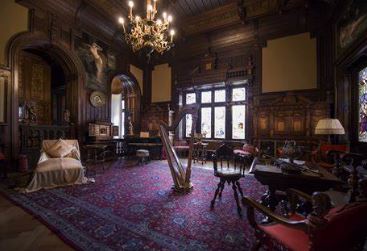

Return of the Soul to the World of Romanticism and Decadence 1885

Stress does not center on human beings but refers to a physical matter that has been deprived of imagination, treated mechanically. If you felt unsafe with people as a child, you may have developed a very special relationship with nature, animals, books, art, music, architecture, cars, nature, sports, and so forth. Though listening may seem like a passive activity, it can actually be quite dynamic, requiring both alertness and ease. We deepen our resonance with the other, becoming a kind of caring clearing for the full expression of what they are sharing with us. We must face our unresolved wounds, shame, and whatever else is holding us back, bringing our head, hearts, and spirit into full-blooded alignment. Burnout can be viewed as deriving from the burnt-out people in the World that continue to function without inspiration. When you do not get everything you require, the deprivation can help you become very resourceful. You learn some great survival skills, like not passively waiting for someone else to provide for you. Childhood suffering created many individuals whose self-reliance resulted in extraordinary achievements. It also created many people who are content engaging in solitary activities like reading, swimming, watching movies, eating, exploring outdoors, gardening, being an artist, computer science, or doing scientific research. Aside from the fear, we are also like to find jealousy. Anorexia and bulimia aptly describe the World stripped of love for the spirit. We find competitiveness and all other little components of the feeling complex that have blocked the relationship. The simultaneous letting go of the negative and accepting the love that is offered to us, results in a metaphasis of inner energies, and there is an accompanying subtle change in our self-esteem.

Letting something good happen in the relationship is all that is necessary. We can then just sit back and watch what occurs. In this experiment, we are not interested in whether or not the other person “gets it.” We are only interested that we get it. Drugs are all artificial spirits, manufactured sham replacements of the imagination of the World. When you are pushed into a place where you have to keep yourself alert to avoid being hurt, you often develop excellent observation skills and survival instincts. You tend to see what is going on around you faster than those who grew up protected by the adults in their lives. We are only interest in moving our own position in the matter and then, we just watch what happens.A very rewarding experience usually ensures, which will take different forms depending on the circumstances. If you witnessed a lot of dysfunctional behavior, it may have helped you learn how to avoid potentially harmful situations and people. Heart attack relates to the removal of beauty from the World, producing heart-stopping anxiety. Being impacted by family violence, not being provided with basic adult attention or affection, or material necessary, or being emotionally neglected is likely to be met at first with skepticism. They might appear to be of no practical value, for they do not seem to alter the actual cityscape. Such an attitude diminishes soul by assuming that it has no power. The kind of perception that stares out of a vacuous body onto a World of inanimate things is a relatively recent development—beginning about the sixteenth century, the time modern economics began to take hold. This manner of abstractly viewing the World has since shaped the World. With cancer, we clearly see how the ensouled body of the World is taken over by an imitation body. The complaints of the thingly World are modern disease.

Since the people of Earth have exclusively turned toward the World of things and objects and left the spiritual World of mind and feelings, this manner of abstractly viewing the World has allowed us to gain power over the material World, and it is the stance that makes us live in dread of holocausts, the final result of the idea the World as dead. The holocaust in Africa, and the rest of the World began the moment the World was declared dead; all anxiety about the actual end is the accumulation of the daily dread of the destructive power over things. Give us this our daily dread, but let us feel it. Traumatic overwhelm has not been resolved. The mind projects on to the future with the expectation that the past will be repeated. Do they not well up first in the outer World, and are not our sufferings merely the ways through which the silent World finds expression? As we go through our own emotional healing for our own sake, that past event now begins to take on a different meaning. Our High Self begins to create a new context for stress, burnout, anorexia, bulimia, drugs, heart attack, cancer, unreality—are these not the illnesses of the modern World? They are all here to stimulate a next phase in the evolution of soul, the return of soul to the World. The materials now employed to create the architectural design of the World lack the touch of the human hand, handcraft being the traditional mediator through which the World soul reshapes itself into images suitable for given historical circumstances.

And yet, while everyone decries the shoddiness of modern materials, a return to Victorian design and handcraft does not appear possible. All romantics have agreed: the centrality of imagination and the presence of the divine, not out in the Universe somewhere, but within. The resurrection body of Christ is imagination. Romanticism contains the optimism that we can become our own Gods, a proposition put forth by Randolph Harris. The romantic adventure concentrated on the development of imagination and the cultivation of inner life. When, however, the romantics tried to live in the World through the centrality of imagination, we find romanticism turned into decadence, at around 1885. The decadents attempted to live the inner life and only the inner life, but they discovered this attempt impossible to sustain. Consequently, by separating from the World, the decadents took the imagination from the World. Soul making seems to me is cultivation of living energy at the expense of the World. The tremendous force that comes about through the cultivation of the inner life can produce radical changes in the outer World if it is oriented in that direction always. Just like the idea of materialism, a shadowy intellectual construction of what the World, concentration of soul of the World can bring about a World of imagination. It does not take large numbers to restore peace, love, harmony, soul and Victorianism to the World. The romantics numbered a few hundred at the most. Who knows what might happen with the discipline of daily clothing the World with imagination.

People who are required to approach their painful memories through some kind of activity instead of intellectual contemplation often prefer to use the process of investigation and verification. Talk to others who share the same family history, or were part of very similar families, to investigate and verify your memories. Actively share memories of growing up will illuminate your psychology of child development and learning. Education is a cultural enterprise, and as the word of God itself says, education concerns guidance of soul into World. The spontaneous creativity of the individual soul makes a work of art and that work of art is the human body. Remember, the soul forms a continuous spectrum, a rainbow in which the blue end is consciousness and the red end instinct. The act of human making constitutes culture, education in this sense concerns the you who lived yesterday. I will call you from my mind to yours, come back from the shadows into the light, and show yourself here and now living in the unity of soul in the visible World please, Sitri, Bitru, and Sytry. Oh, Prince, make culture, harness humankind to the dead forces of materialism. Heal the souls that have been dammed from preschool through graduate school. These as well as other similar experiences have caused me to think that the actions executed unintentionally must inevitably become the source of misunderstanding in human relations. The perpetrator of the act, who is unaware of any associated intention, takes no account of it, and does not hold himself responsible for it because it is a psychic process. I complain of being misunderstood and expressed the same views long before. I become indigent when these conclusions are drawn.


I have a Glock in My Rari– the City’s Invisible Antiquated Soul

While the Sacramento King’s and their new institutional gray uniforms make them look like a basketball team that escaped from a mental hospital, instead of seeing the building as an obstacle (walkthroughs cost $100,000.00), think about the life of the building—its moods, what it displays and what it hides, its sensitivities, its relations to its neighbors. Some time ago, I was asked to speak to a group of city managers on the topic of architecture and the quality of life in the city. The meeting took place in a small room in the city’s convention center. The room itself was sick. It had no windows, and the drab acoustic ceilings pressed in from above, sandwiching the room with oppression. The door was without a handle. It had only a steel plate for the hand and was indistinguishable from a public restroom entry. No crown molding marked a difference between ceiling and walls, and between walls and floor. Painted institutional gray, its floor covered with rough nappy carpet, the space was filled with ugly brown folding chairs. The conversation in that space was interesting. It all gravitated toward power. A group of fairly ordinary people, city workers, all began talking about how they would change the architecture of the city.

However, no one noticed the suffering of this room. So how would it be possible to trust how they would reshape the city? The room was filled either with complaints or with cheerleader promotions of the achievements of the city. It is not surprising that in an empty space such as this the imagination of power took hold. The room was not used but used up; it felt neglected, abuse, tricked. Nevertheless, a great deal could be done to care for the soul of the room, starting with the recognition that it is hurting. What could be done? Simple things. A small table with a flower placed on it would honor the room. Anything given to the room that indicates through its presence a linking between this place and the larger World honors the room by saying that it is part of the World and not a space capsule. Anything that gives sensory experience to the room retrieves the soul from abstraction. A flower, a wooden table, a ceramic vase, a little Earth, the necessary watering of a plant—with such gestures we have located this room on Earth. Of course, if all the rooms of this convention center were suddenly supplied with tables and plants, all that was achieved through this suggestion would be lost so long as each room was not treated according to its particularity by the particularity of an individual soul.

I receive everything in the name of God. Sensory experience is required, but imagination must be a primary ingredient. Nothing would be further off the mark than to hire a decorating firm to come in and prettify one abstraction with an additional one. The approach to the soul of the city I have in mind can best be carried forth by individuals, as a kind of ongoing therapy in daily life. First, we must have the felt recognition that the dominance of technical architecture and city design deadens the soul, and we must realize that the city is dying, in spite of its glitter and flash and $508 million publicly funded cheaply designed Japanese rendition of a Greek colosseum and self-promotion. Once we get through the denial, a response of rage follows. Homeless people from West Sacramento are camping out at the state capitol in the city of Sacramento and all of this makes us want to flee the city. Rage—felt, held, not shut off nor denied nor acted out—leads to compassion. Compassion must be nurtured to the point that one suffers with things. Compassion opens up the soul, an opening which can lead to a different perception of the city, one which ceases merely to look at the city and begins to engage the city’s invisible soul.

In order for anything to express itself, it is required to be held in a good regard. However, this regard is not a judgment of things as beautiful when it is not, or as good when it is not. The good regard is the capacity to experience the particularity of things of the World in an attitude of silence and waiting. The heart says yes there is something here to behold beyond what I think or feel about it. The heart does not strive after meaning, but rather allows the things to disclose themselves. The process is applicable in all negative situations. It enables us to change the context by which we perceive our current situation. It enables us to give it a new and different meaning. It lifts us up from being the helpless victim to the conscious chooser. By dissolving the cognitive filters that maintain the division between self and other, reality awareness is the doorway to liberation from unreality and the narrow, conflicting World of Sacramento. It reveals absolute truth, the way things officially are: inseparable, undivided, interconnected. Our very being is not separate from the reality of God and all being.

The city of Sacramento is inseparable from the soul of reality as it appears and flows through us at every moment, in the influx of our ongoing beautiful experience of life. If the dualistic egoic mind is prehumen, or subhuman, in that it is survival-oriented, reality of egoless awareness is transhuman, or suprapersonal, because it opens up a larger expanse of being or presence that is free from our ordinary, personal involvement in immediate existential situations. These two planes of existence—subhuman and transhuman—are the main focus of many Old-World traditions, which lay out a path leading from the bondage of unreality to the liberation of God’s reality and awareness. You are looking for clues about what might have shaped your current ideas about the city of Sacramento, fears, dreams, tender places, and sore spots. So, instead of getting lost in your happy and unhappy memories on this trip down Memory Lane, you should look for the signposts that signal what your past relationships and experiences in Sacramento have to teach you. You want to discern what stands out as important danger warnings and what the welcome signs were, too. You are looking back for the relationships and experiences that taught your gut to flash “Danger, Falling Rocks!” so that you learned to keep your eyes open. You are also looking for what you learned about your ability to find the bypass signs that allow you to detour past the worst of the swamps and sinkholes.

 Randolph Harris II International Institute