
Home » Rainforest (Page 5)
Category Archives: Rainforest

Ruin is the Destination Toward Which All Men Rush

With equality and gender-based studies becoming more important, it is a goo idea that we take a look at a gender-based analysis of residential burglary. The study is based on interviews with 105 active residential burglars, 87 of whom were males and 18 were females. The project employed a snowball sampling strategy in which an ex-offender recruited known burglars who were presently operating in a city. The gender-based compassion suggests that, in many way, female burglars resemble their male counterparts. For example, both group display long criminal histories that span a variety of property, violent, and public order offenses categories. Both groups accumulate long, diverse substance abuse histories that overlap with and contribute to their involvements in burglary. At the time, the gender-based comparison reveal several differences. Female burglars begin offending at a later age, are more likely to co-offend, and have less contact with authorities. The typology of female burglars describes offenders as either accomplices or partners. Factor of motivation, levels of target selection and planning, and patterned work roles serve to differentiate these two conceptual categories. Despite growing interest in female criminality, little is known about the nature of women’s participation in crimes statistically dominated by males. Certainly that is the case for residential burglary, an offense labeled as an overwhelmingly male enterprise. For example, we hardly know how female become involved in such offenses or what roles they play. Are they tempted into these crimes, for instance, by the influence of delinquent peers or by the use of drugs? #RandolphHarris 1 of 21

Because we lack detailed knowledge, we cannot assess the extent to which the processes underly burglaries committed by females differ from those underlying burglaries by males. This lack also restricts our capacity to detect important differences among female burglars. An assessment of these difference, however, is crucial in formulating effective policy responses to female criminality and to developing theories of lawbreaking by women. Short of observing burglaries, perhaps the best way to acquire this information is to go to the offenders themselves. The most pressing need today, in researching the agenda for feminist criminology, is observation and interviewing so we can plunge more deeply into the social Worlds of girls and women. Such a strategy will allow researchers to comprehend women’s crime on its own terms. Often it is claimed that offenders are versatile and commit a wide range of offense. This observation, however, is derived largely from studies of males conducted in criminal justice settings rather than on the street. During our interviews we asked the subjects whether they ever had committed other sorts of crimes beside residential burglary. We did so because we were concerned primarily with prevalence—that is, whether the subject ever had engaged in other kinds of offenses. Stealing (which includes shoplifting and corresponds to the legal definition of this activity), auto theft, and assault were the offenses most commonly reported by males. Stealing and assault were mentioned most frequently by the females; these offenses were comparable in rank of frequency to those reported by the males. #RandolphHarris 2 of 21

Beyond these two offenses, however, little other criminality was reported by the females. The only meaningful differences between the men and the women for this measure was found in regard to auto theft. This crime was fairly common among the males, but unknown among the females. The explanation for this difference might reside in a strong cultural tradition linking masculinity to driving and car ownership. Alternatively, males may have “cornered the market” in auto theft; to be profitable, such a crime requires sophisiticated coneections with garage owners, automotive recycle yard employees, and car dealerships. One important aspect of offending style concerns the degree of crime specialization—that is, the extent to which offenders concentrate on one particular type of offense. When we asked offenders whether they had been involved in crimes other than residential burglary during their most recent period of offending, thirty-four percent of the males and 42 percent of the females claimed that they had committed only residential burglaries during this period (roughly the last six months). This finding is consistent with a substantial body of previous research showing that offenders display considerable diversity over the course of their criminal careers, but may specialize in a particular “line” for short periods. This phenomenon is labeled as “short-term specialization.” Another element of offending style concerns the inclinations to work with others in carrying out cries. #RandolphHarris 3 of 21

Previous research demonstrated that more often than not, [burglary] is committed by two or more persons acting in concert. The results of our study bear this out: 79 percent of the males and all of the females reported that they had worked with others in the past. The males showed considerable variation in frequency of working with others: 39 percent said they “seldom” worked with others, while another 39 percent reported that they “always” did so. For the women, however, the picture was much clearer: an overwhelming 83 percent reported that they “always” worked with others, and the remaining 17 percent states that they “usually” did so. The final aspect of offending style that we examined here relates to drug and alcohol use among our respondents, as well as to their perceptions of the role played by intoxicants in leading them to commit such crimes. Our research reveals that there is little difference between the males and the females in self-report drug use. When the drug users were asked whether addiction had anything to do with their burglaries, 71 percent of the males and 82 percent of the females answered affirmatively. A majority of those in both groups said they committed burglaries to obtain the money they needed to buy more drugs. In addition, slightly more than three-quarters of the users in each group—76 percent of the males and 79 percent of the females—claimed that they used drugs before committing their burglaries. A higher percentage of females than of males started that they “always” or “usually” used drugs beforehand. #RandolphHarris 4 of 21

One explanation seems to be that many female burglaries arise from crack “runs.” This point, however, is difficult to determine conclusively because use of the drug is heavily stigmatized. We explore male-female differences on three dimensions designed to measure burglary offending histories: age at first burglary, total number of lifetime burglaries, and lambda, the mean number of annual burglaries. The ages at which males and females committed their first residential burglary differed significantly: the males generally started much earlier in life. None of the female burglars had committed their first offense before age 12, but 22 percent of the males had done so. The modal category for males was the 13-16 age bracket, which accounted for 53 percent of the cases. Sixty-one percent of the females, on the other hand, were over 16 years old when they carried out their first burglary. Given that the females started to commit burglaries later, on average, than their male counterparts, we are not surprised that a greater proportion of females had been involved in fewer than 20 residential burglaries in their lifetime. Perhaps more interesting, 39 percent of the females had committed more than 70 lifetime residential burglaries, a proportion roughly comparable to the males’ figure of 41 percent. The bimodal distribution of the females’ responses suggests that women are likely to engage in burglary at two very distinct levels, and perhaps to employ two different styles. #RandolphHarris 5 of 21

The males were more likely than the females to have had contact with the system for offenses of all types. This difference was most notable at the stage of the criminal justice process that resulted in incarceration. Over ninety percent of the respondents in each group had been arrested previously, but only one woman (6 percent) had been convicted and sentenced to a term of imprisonment. In contrast, 26 percent of the males had served time in the past. This difference may exist in part because the females began offending later and consequently had fewer “years at risk.” Other factors, however, are probably at work as well including an assumption by the police that most burglars are male, which allow females to remain above suspicion and a tendency for those females who are arrested to receive preferential treatment in the courtroom. Certainly the women in our sample believe that their gender conferred a degree of protection from the law. Several expressed the belief that authorities would not take action against them simply because they were female. Is it not becoming clear, in light of the existence of deceiving offenders and their methods of deception, that close examination is needed of modern theories, conceptions, and expressions regarding things in connection with the ultimate concern and its way of working in man? For only the certainty of ultimate concern, apart from “views” of truth, will avail for protection or for successful warfare in the conflict with wicked offenders in the self-actualized hierarchy. #RandolphHarris 6 of 21

When we reach self-actualization, we are at the highest hierarchy of the pyramid, and this is denoted by morality, creativity, spontaneity, problem solving, lack of prejudice, and acceptance of facts. There are five levels in the pyramid. At the very bottom, people are interested in physiological functions only which include: breathing, food, water, pleasures of flesh, sleep, homeostasis, and excretion. At the second level of the pyramid, individuals are concerned with safety and this entails security of: body, employment, resources, mortality, the family, healthy and property. At the third hierarchy most are concerned with love and belonging. This includes friendship, family, sexual intimacy. At the fourth hierarchy, this realm focuses on esteem: self-esteem, confidence, achievement, respect of others, respect by others. All that is in any degree the outcome of the mind of the “natural man” will prove to be but the weapons of straw in this great battle, and if we rely upon others’ “views of truth,” or upon our own human conceptions of truth, offenders will use these very things to deceive us—even building us up in these theories and views so that under cover of them he or she may accomplish one’s purpose. We cannot, therefore, at this time, overestimate the importance of believers having ready minds to “examine all things” they have thought, and perhaps taught, in connection with the things of ultimate concern and the self-actualized realm—all the “truths” they have held, all the phrases and expressions they have used in “virtue teachings,” and all the ideas they have absorbed through others. #RandolphHarris 7 of 21

For any wrong interpretations of truth, any theories and phrases which are man-conceived and which we may build upon wrongly, will have perilous consequences to ourselves and others in the conflict with truth and individual self-actualized people passing through. Because in the present offenders will comes to them with deceptions in DOCTRINAL form, self-actualized individual must examine carefully what they accept as “doctrine,” least it should be from the emissaries of the deceiver. Some people are tired of struggling and want only to know a quiet silence. This can be a shock to one’s own awareness of who he or she is. One may have always considered struggle essential in growth, and in many crises and conflicts it has provided the turning point in one’s life. Not wanting to be burdened and overwhelmed by heavy feelings and thoughts or by complicated searching and painful of what is wrong with oneself, people, and life, this can create the desire to turn away from the struggle. And this is what causes the requirement to be alone in simple and ordinary ways. Once one goes through this process of healing in solitude, and by only engaging in simple routine, gradually, with each day, an individua is able to listen a little more to what others are saying. (This is why during a break up, space, instead of forcing the issues is important. Of course, there are times when you need to know what the reason it so it may be a good idea to press for answers to start a dialogue and not necessarily to just focus on getting back together.) #RandolphHarris 8 of 21

Slowly it becomes each to be interested in and comfortable with other people’s problems. Although there may be some drawbacks. Some individual may be able to be with others while you struggle to make decisions, but one may not be opened to questions or personal comments and responses directed to one. This may cause one to offer nothing of oneself and comment only on what one is hearing and understanding from others. During this period, some find work a truly rewarding activity; it is a place that feels like home. It does not matter whether the work takes the form of writing—reports, references, and letters—or reading. Or, if it involved physical activities, one may become totally absorbed in what one is doing, get lost in the activity and experience a full sense of relief. Active mental and physical involvement in solitary projects can be a sense of salvation. By surrendering to powers within to powers within and sources of light in the universe, in some mysterious way, a miracle happens. It is the loss of the old man and the discovery of the new man. When the light reveals itself, the individual is ready to accept it. This reduces the need to force or push or beseech. One simply waits with firm faith that one is meant to be whole again and that one will live more in a full and complete way. It becomes clear that people one loves and those who love one cannot reach the individual going through changes. And so, life has to come from another source, and that new direction will emerge in solitude. #RandolphHarris 9 of 21

The problem of the truth of faith presents itself from both the subjective and objective sides. Subjectively, faith is true if it adequately expresses an ultimate concern, that is, if the symbols of faith are alive and speak to the heart with an urgency of concern that impels to action and replay. This criterion is more a rule of thumb that works best for obviously dead symbols and is not so useful in judging contemporary ones. However, it is the objective truth of faith that interests us here. The content of faith is true if it is really and not just apparently ultimate. The great danger is demonization, elevation of the symbol to ultimacy, which results in idolatrous faith. Therefore, the criterion of faith is self-negation. The true symbol not only conveys the ultimate, but proclaims its own non-ultimacy. It pronounces a Yes and a No. For the Christian the Cross of the Christ is such a symbol. Name for this criterion—the No that follows immediately on the heels of the Yes—is the Protestant principle. The Protestant principle pervades in this whole theology, both systematically and chronologically. Chameleon-like, it changes its formula of expression against the background of diverse theological problems. Hence, a rapid rundown of its various formulations is useful for identifying it. #RandolphHarris 10 of 21

In addition to being the objective criterion of faith, the Protestant principle expresses man’s infinite distance from God and his dependence upon the divine initiative. The Protestant principle is the prophetic protest against every form of self-absolutizing—for example, the demonic elevation of the churches, of the Christian Bile, and the priesthood to absolute validity. The Protestant principle is “resistance to idolatry,” that is, it stands for non-conformity in family, school, state, and church. The Protestant principle protests the objectifying of grace (die Vergegenstandlichung der Gnade) and so smashes the barriers between the holy and the secular. For, by the Protestant principle, God is as near to the lowest as he is to the highest, as close to the material as to the spiritual. These manifold expressions of the Protestant principle can be summarized in and derived from the basic doctrine that the Protestant principle is justification by grace through faith. We reject the traditional Protestant formula of “justification by faith” on the grounds that is has been misunderstood to mean that the human act of faith sets in motion God’s justifying act. Faith itself is a gift of grace, all justifying actions is entirely on the part of God, and, consequently, the more accurate formula is “justification by grace through faith.” The Protestant principle ultimately rests upon an experience of God’s majesty that attributes absoluteness and holiness to him alone and denies such dignity to all else. #RandolphHarris 11 of 21

Untrammeled choices of individuals could lead to disaster for society. Picture a paster open to all. It is to expected that each herdsman will try to keep as many cattle as possible on this commons. Therein is the tragedy. Each man is locked into a system that compels one to increase one’s heard without limit, in a World that is limited. Ruin is the destination toward which all men rush, each pursuing one’s own best interest in a society that believes in the freedom of the commons. Overpopulation, pollution, excessive fishing, and depletion of exhaustible resources are all part of the problem. People Worldwide must recognize the necessity of restricting individual freedom in these choices, and accept some mutual coercion mutually agreed upon. Depending upon the circumstances, the tragedy of the commons could be a many-person prisoner’s dilemma (each person grazes too many cows) or a spillover problem (too many people choose to become herdsmen). The economist’s favorite solution would be the establishment of property rights. This is what actually happened in the fifteenth and sixteenth centuries in England: the common land was enclosed and claimed by the local aristocrats or landlords. When land is private property, the invisible hand will shut the gate to just the right extent. The owner will charge grazing fees to maximize one’s rental income; the grazing fees will make the owner richer, and the herdsmen poorer. This approach is not feasible in some instances. Property rights over the high seas are hard to define and enforce in the absence of an international government, as is control over air that move from one country to another carrying pollutants. #RandolphHarris 12 of 21

For this reason, whaling and acid rain must be handled by more direct controls, but securing the necessary international agreements is no easy matter either. Population is an even harder problem. The right of decision about one’s family, including its size, is enshrined in the United Nations’ Universal Declaration of Human Rights and in many countries bills of rights. Countries like China and India that have at times used some coercion in their population-control efforts have evoked widespread disapproval. Sometimes, when the group is small enough, voluntary cooperation solves the problem. When two oil or gas producers have wells that tap into the same underground deposit, each has the incentive to speed up one’s uptake, to get more of the resource before the other does. When both of them follow this policy, the excessive speed of depletion can actually lower the total amount that can be recovered from the deposit. In practice, drillers recognize the problem and seem able to reach production-sharing arrangements that keep at the proper level that total flow from all wells tapping one deposit. All’s well that ends well? For the less developed countries (LDCs), as for the rest of the World, power stems from the holster, the wallet, and the book—or, nowadays, the computer. Unless we want an anarchic World, with billions of poverty-stricken people, unstable governments led by unstable leaders, each with a finger on the missile launcher or chemical or bacteriological trigger, we now need global strategies for preventing the de-coupling that looms before us. #RandolphHarris 13 of 21

In the years immediately ahead the LDCs will acquire sophisticated new arms—enormous firepower will be added to their already formidable arsenals. Why? As LDC economic power diminishes, their rulers face political opposition and instability. Under the circumstances, they are likely to do what rulers have done since the origins of the state: They reach for the most primitive form of power—military force. However, the most acute shortage facing LDCs is that of economically relevant power is no longer through the exploitation of raw materials and human muscle but, as we have seen, through application of the human mind. Development strategies make no sense, therefore, unless they take full account of the new role of knowledge in wealth creation, and of the accelerative imperative that goes hand in hand with it. With knowledge (which in our definition includes such things as imagination, values, images, and motivation, along with formal technical skills) increasingly central to the economy, the Brazils and Nigerians, the Bangladeshes and Haitis must consider how they might best acquire or generate this resource. It is clear that every wretched child in Northeast Brazil or anywhere else in the World who remains ignorant or intellectually underdeveloped because of malnutrition represents a permanent drain on the future. Revolutionary new forms of education will be needed that are not based on the old factory model. Acquiring knowledge from elsewhere will also be necessary. This may take unconventional—and sometimes even illicit—forms. Stealing technological secrets is already a booming business around the World. We must expect shrewd LDCs to join the hunt. #RandolphHarris 14 of 21

Another way of obtaining wealth-making know-how is to organize a brain drain. This can be done on a small scale by bribing or attacking teams of researchers. However, some clever countries will figure out that, around the World, there are certain dynamic minorities—often persecuted groups—that can energize a host economy if given the chance. The overseas Chinese in Southeast Asia, Indians in East Africa, Syrians in West Africa, Palestinians in parts of the Mideast, Jews in America, and Japanese in Brazil have played this role at one time or another. Transplanted into a different culture, each has brought not merely energy, drive, and commercial or technical acumen, but a pro-knowledge attitude—a ravenous hunger for the latest information, new ideas, skills. These groups have provided a kind of hybrid economic vigor. They work hard, they innovate, they educate their children, and even if they get rich in the process, they stimulate and accelerate the reflexes of the host economy. We will no doubt see various LDCs searching out such groups and inviting them to settle within their borders, in the hopes of injecting a needed adrenaline into the economy. During World War II the Japanese military actually drafted a plan to bring large numbers of persecuted European Jews to Manchuria, then called Manchukuo, for this purpose. However, the “Fugu Plan,” as it was known, was never implemented. #RandolphHarris 15 of 21

Smart governments will also encourage the spread of nongovernmental associations and organization, since such groups accelerate the spread of economically useful information through newsletters, meetings, conferences, and foreign travel. Associations of merchants, plastics engineers, employers, programmers, trade unions, bankers, journalists, etcetera, serve as channels for rapid exchange of information about what does and does not work in their respective fields. They are an important, often neglected communications medium. Governments serious about economic development will also have to recognize the new economic significance of free expression. Failure to permit the circulation of the new ideas—including economic and political ideas, even if unflattering to the state—is almost always prima facie proof that the state is weak at its core, and that those in power regard staying there as more important than economic improvement in the live of the people. Governments committed to becoming part of the new World will systematically open the valves of public discussion. Other governments will join knowledge consortia—partnerships with other countries or with global companies—to explore the far reaches of technology and science and, especially, the possibility of creating new materials. Instead of pandering to obsolete nationalist notions, they will purse the national interest passionately—but intelligently. #RandolphHarris 16 of 21

Rather than refusing to pay royalties to foreign pharmaceutical companies on the lofty ground that health is above such grubby concerns, as Brazil has done, they will gladly pay the royalties—provided these funds stay inside the country for a fixed number of years, and are used to finance research projects carried out jointly with a local pharmaceutical firm’s own experts. Profits from products that originate in this joint research can then be divided between the host country and the multinational. In this way the royalties pay for technology transfer—and for themselves. Effective nationalism thus replaces obsolete, self-destructive nationalism. Similarly, intelligent governments will welcome the latest computers, regardless of who built them, rather than trying to build a local computer industry behind tariff walls that keep out not merely products but advanced knowledge. The computer industry is changing so fast on a World scale that no nation, not even the United States of America or Japan, can keep up without help from the rest of the World. By barring certain outside computers and software, Brazil managed to build its own computer industry—but is products are backward compared with those available outside. This means that Brazilian banks, manufacturers, and other businesses have had to use technology that is inefficient compared with that of their foreign competitors. They compete with one hand tied behind them. Rather than gaining, the country loses. #RandolphHarris 17 of 21

Brazil violated the first rule of the new system of wealth creation. So what you will with the slowly changing industries, but get out of the way of a fast-advancing industry. Especially one that processes the most important resource of all—knowledge. Other LDCs will avoid these errors. Some, we may speculate, will actually invest modestly in existing venture capital funds in the United States of America, Europe, and Japan—on condition that their own technicians, scientists, and students accompany the capita and share in the know-how developed by the resulting start-up firms. In this way, Brazilians or Indonesians or Nigerians or Egyptians might find themselves at the front edge of tomorrow’s industries. Astutely managed, the program could well pay for itself—or even make a profit. Above all, the LDCs will take a completely fresh look at the role of agriculture, regarding it not necessarily as a “backward” sector but as a sector that potentially, with the help of computers, genetics, satellites, and other new technologies, could someday be more advanced, more progressive than all the smokestacks, steel mills, and mines in the World. Knowledge-based agriculture may be the cutting edge of economic advantage of tomorrow. Moreover, agriculture will not limit itself to growing food, but will increasingly grow energy crops and feed stocks for new materials. These are but a few of the ideas likely to be tested in the years to come. #RandolphHarris 18 of 21

However, none of these efforts will bear fruit if the country is cut off from participation in the fast-moving global economy and the telecommunications and computer networks that support it. The maldistribution of telecommunications in today’s World is even more dramatic than the maldistribution of food. There are 7.33 billion unique mobile phones users in the World today, which makes 91.40 percent of people in the World cell phone owners. The lopsided distribution of computers, data bases, technical publications, research expenditures, tells us more about the future potential of nations than all the gross-national-product figures ground out by economists. To plug into the new World economy, countries like China, Brazil, Mexico, Indonesia, India, as well as the Soviet Union and the East European nations, must find the resources needed to install their own electronic infrastructures. These must go far beyond mere telephone services to include up-to-date, high-speed data systems capable of linking into the latest global networks. The good news is that today’s slow countries may be able to skip over an entire stage of infrastructure development, leapfrogging from First to Third Wave communications without investing the vast sums needed to build Second Wave networks and systems. The Iridium systems, for example, announced by Motorola, Inc., placed 77 tiny satellites into low orbit, which make it possible for millions in remote or sparsely populated regions like Soviet Arctic, the Chinese desert, or the interior of African to send and receive voice, data, and digitized images through handheld telephones. #RandolphHarris 19 of 21

It is not necessary to lay cooper or even fiber optic cable across thousands of miles of jungle, ice or sand. The portable phones communicate directly with the nearest overhead satellite, which will pass the message along. Other advances also similarly slashing the huge costs of telecommunications, brining them within reach of today’s impoverished counties. Large scale production and hyper-competition among American, European and Japanese suppliers will also drive down costs. The new key to economic development is clear. The “gap” that must be closed is informational and electronic. It is a not gap between the North and the South, but between the slow and the fast. However, China’s inadequacy in services is of a structural character. It has it historical and cultural roots, especially the legacy of several decades long epoch of Soviet-style socialism. The mentality of many Chinese service companies and workers may have exceeded those in America. When I was in China, I was impressed by their customer service. They were extremely polite, spent time talking to me, even offered me candy and gave me a soccer ball for shopping at one of their malls. They did treat me like a king. I did not want to come back to America because I loved China so much. Maybe people have different experiences? #RandolphHarris 20 of 21

The overall picture of the service economy in China is not gloomy. Even on the airplane they were polite and told me to stop being so “Western.” The hotels were awesome, as well as the recreation facilities and restaurants. As local consumers’ demand for a variety of good services is increasing, American, European and Japanese service providers have a good chance to exploit their competitive advantage in this area, establishing a stronger position at the Chinese market. Here, however, comes a surprise. You may expect that, in the wake of what was written earlier, America and Europe are enjoying substantial surpluses in their services trade with China, not incomparable to their huge deficits in merchandise trade. But the thing with the people in China, one cannot tell when they are just being nice. Things are so different. They try so hard to like people and make them happy that it seems like they really like you. And they try really hard to keep a neat appearance, are very careful with their work, and take pride in what they do. Because their image and reputation depends a lot on word of mouth, they are very careful not to hurt your feelings and to conceal negative topics, ideas, thoughts and behavior. And their houses are really clean, many of them have never heard of “racism” and the student work very hard in school. It is amazing how many hours a day they spend studying. They really went out of their way to impress us, like hosting us in a restaurant, but making it a private event, of course it meant getting up at 3 A.M. in the morning, but I was happy to. They are so polite and taught me if something is meant to be, you will meet that person again. #RandolphHarris 21 of 21


Hallowed by the Life of Blood

The rain lashed with vindictive fury at the windows of my mansion. My skin was crawling with gooseflesh, listening to the mournful recording crackling with static under the needle of the gramophone as the song grew louder through the rain. There is an eerie undocumented history that simmers below the surface and appears periodically to frighten and confuse people. The last thing I wanted to do is see whatever sight might accompany it. The wind was strong up here on the fourth floor and I could hear rain spatter hard against the sitting-room window. I walked on into the room, past the beckoning Hall of Fires, looking out and down at the night. I could see the dome to the nine-story observation tower through the stir of trees surrounding it. A swath of rain bleared the glass in front of my face and made me blink and recoil slightly. “Hello, Aunt Sarah.” The voice of my niece Daisy. “What I have to say concerns this mansion.” A few items of lovely furniture occupied the room. Two of these were armchairs. Daisy sat in one of them. She had paused, perhaps for effect. “I’m sorry to intrude on you. But there really isn’t a choice. A visitor, strolling along the ground near the fruit orchard, heard wisps of strange tunes. Listening more closely through the dusky evening, he was lured inside of the mansion. And he is now dead.” I took my head into my hands. “Aunt Sarah, I need you. There is no time for prevarication on this.” “Daisy, I will meet you in the Venetian Dining Room this evening,” I replied. I rose from my chair thinking that God had very little to do with anything that ever occurred within the grounds of the walls of my mansion. From wars to executions, to suicides and untimely death from injury, plague, or disease, Victorian mansions are, for all their majesty and splendor, tragic places where death stalked the cold lonely corridors. These are the places of the bloodiest history, whether it be a place raided by the unlawful, or a battle for ownership. With such a history of violence and tragedy, it is little wonder that this mansion is regarded as haunted? #RandolphHarris 1 of 7
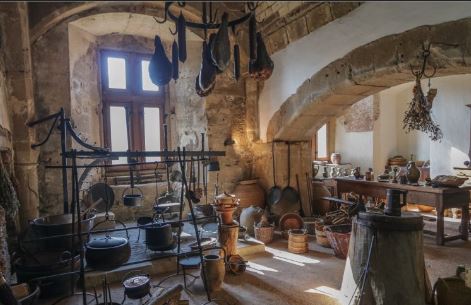
I walked back to the window. It was a quarter to six. Strange noises and an occasional sighting of the larger-than-average soldiers with the oddly pointed hats have been seen roaming the grounds. Any attempt to speak with them or approach them, they simply vanish into the mansion. Odd doors and gated entrances punctuated the length of the mansion. There was a Gothic, deliberate atmosphere about my home, a sepulchral character to the mass of its wooden buttresses andre treats. Geometrical shapes snatched inexplicably at the eyes. And often one could hear laughter, high-pitched with contempt or teasing mockery that made one hurry on, even though it may be rationalized as the cold wind gusting through the elaborate masonry. The wind whistles in the trees and leaves and wisps of thick mist blow across the farmland. With the trotting of horses and constant sounds of construction, the heart is suddenly racing, and one thinks they hear something behind them. After all, this is an ancient land, a house built by spirits, occupied by ghosts, pixies, goblins and all sort of mythical creatures of the night. Anything is likely to happen. Looking around the interior of the estate, one can discern a deep, foreboding blackness that seems to be following one, as if it is alive and in pursuit. Stepping out into the fruit orchard, the wind suddenly drops and one’s senses are heightened. Indeed, one can hear one’s very heart beating in their chest as they continue to canter forward into the night. The mist becomes thicker, darker, and as one glances furtively from side to side, the darkness of shadows of the orchards hides their secrets, but perhaps you are not alone. Sometimes I tell myself that the scraping sounds at the window is simply a branch being blown in the breeze and the footsteps heard in the hallway are old timbers creaking and groaning with a change in the air or weather. #RandolphHarris 2 of 7

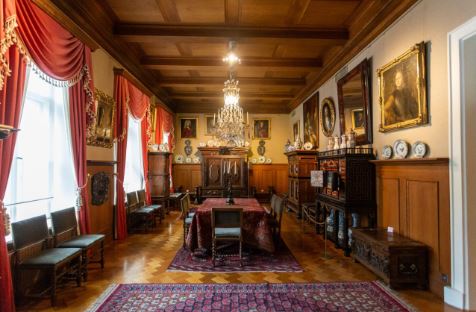
If there was something serious going on, the housekeeper and the butler would try to keep it quiet. They might talk together, but they would be tight-lipped in front of me. The clock struck seven. I met Daisy in the dining room. “Aunt Sarah, we all talked. We weren’t meant to,” Daisy said. “We were all talking about it. We didn’t know what to make of it. The body was found on a cold stone passage, that was said to lead directly into the opulent state rooms where you normally conducted meetings.” Not a moment too soon, five housemaid trooped into the dining room. Taking off their white starched aprons, they formed up in a line. The room, echoing with their footsteps and voices, as in a church. The mahogany floor, almost three thousand square feet of it had to be hand polished. It was an onerous task, one of the housemaids least like doing. Bending down, they placed their tins of wax of the floor. “Daisy, it looks like we will have to continue this conversation later,” I said. “Goodnight, Aunt Sarah,” she replied. The maids stooped on their hands and knees, their long black dresses spread out around them. Working in union, they dabbed their clothes in wax; then they rubbed the floor vigorously in quick tight circle. The observation tower staircase was the place the servants feared most. The observation tower sits ominously over the mansion, along with sever distinctive turrets jutting proudly into the skies. Sweeping down to the Guard Room eight floors below, it was the main thoroughfare in the tower. Family portraits adored its walls. The steps, of bare stone—framed by a wrought-iron balustrade, topped by a mahogany rail—were wide and shallow. “We were all scared of the tower’s stairs,” said Elsa. “I was coming down them one evening, halfway down, I felt somebody push me. They were behind me, trying to push me down the stairs. I turned round, and of course there was no one there.” The Winchester Mansion is a land of appealing features seemingly embedded in the sense of a deep-rooted and permanent history that emanates from almost every corner of the land. It has rustic grounds and quaint gardens, a hulking mansion with many towering features, having been fostered over decades to create a comfortable and pleasing landscape that guests recall like their favorite arm chair. #RandolphHarris 3 of 7

A number of the male servants, skeptical of ghost as they were, had experienced a similar sensation. “I used to keep an eye on the mansion,” Edvin recalled. “I would walk around the dark with the dogs, no lights on, no torches, or anything. One night, I was coming across the first floor of the tower—and I got up to the stairs and felt hot breath on the back of my neck. I turned round. There was nobody there. But the dogs wouldn’t go any further, their hackles went right up. It was ages before I could get them to move.” I often examined the possibility of evil. I had a notion that evil was communicable. Something that can, as it were, contaminate. However, one must not confuse evil with manifestations. My secret rooms, by their very nature, held the servants in thrall. It was an area that they never entered, never saw or ever knew what went on. It was a place of mystery. The rooms were subjects of wild speculations, fueled by the servants’ fear of me, and their knowledge of my eccentric interests. My servants knew I was fascinated by the occult and this played to their fears. They knew the mansion was haunted and I often had the mediums in. However, they never whether any ghosts or sprits were actually summoned. It went on behind closed doors. Of course, they knew of the ancestral curse. It had been cast in the mid-19th century by a coven of witches. The curse had also been cast over future generations; aimed at Winchester heirs; it determined that the children would die before they reached the age of thirteen and those who survived would be haunted by ghosts and demons. For decades, it had seemed to me and my servants that this was a cruse from which the family could never escape. #RandolphHarris 4 of 7

One night, it was shortly before three o’clock in the morning when a shadowy figure, dressed from head to foot in back, crossed the landing of the staircase. The night was cloudless, the moon almost full. There was a blackout and the mansion was shrouded in darkness. The light from the moon set tiny point of balance dancing in the darkened windows. I could hear footsteps moving stealthily across the floor and the occasional cry of an animal from the fields. A headless horseman was riding near the tower. I got out of bed, and turned the corner into a passage in one of the parlors. As the men worked in the hallways, they froze. Coming down the hallway was a pair of green eyes belonging to a child. The eyes were about two or three feet up from the floor, leading me to believe that child was three years old. They eyes simply floated up the hall, and then turned into one of the maid’s room where we lost sight of them. That night I also saw dark shapes. There was a dark shadowy thing flying from the Grand Ball Room to the and down the hallway. Then above the chandelier there were several dark shadowy things. They flew outside, barely illuminating the background of the trees and then were blocked out by an even darker shadow, moving slowly, methodically along the tree line. Meanwhile another shadow ran through the hallway, it was tall. The carpenters looked at each other in suspense. Closing the heavy steel door behind me, I had left the Grand Ball Rom to find my way long the labyrinth passages. A long passage reached into the distance. It was gloomy, lit by only the strip lighting in the display cases that ran along with wall. Ahead was a solid oak door, carved in the Gothic style. Another passage led off to my right, I could see that it branched in two. One end led into a small hall. It was in darkness. “No one goes in there,” a mysterious voice whispered. The spirit gave me a fright. Everyone, it seems, even hardened sceptics and disbelievers, has seen a ghost. For some reason, in the back of their minds, ghosts may be real. Everyone has known the feeling of their heart racing for a second when they see a shadow moving in the corner of their eye or they feel some sort of presence standing over them. Or worse still, a tortured face in a window that paralyses their body and retards their breathing to the point that they can hear the blood pumping around their own body. #RandolphHarris 5 of 7

I took the left passage. I went on some distance ahead, there was a kink in the passage. A man emerged from it and started waling me. He was wearing knee breaches and a nineth-century coachman’s jacket. As we drew level, he stopped. “Mrs. Winchester, those rooms are forbidden,” he said, “What are you doing in this part of the house?” Once again, he repeated, “Those rooms are forbidden.” I did not want to stop and talk; I was anxious to get back to my room. I assumed that the servants were being proprietorial. Finally, I had made it to my destination sometime later. The bedroom was not dark, because the bright light of a full moon entered through the window. I had just lain down, ready to go to sleep, when I suddenly noticed that I was not on my own. I heard a rasping breath in the darkness only a few feet away. Right in front of the wardrobe and looking directly at me was a middle-aged man, dressed like a Catholic priest. I rubbed my eyes and pinched my arms to make sure I was fully awake Yes, I most certain was. Was I having hallucinations? The priest was still standing there, looking at me. He was a rather frail man with hollow cheeks. His face showed traces of a hard life and illness. If he had any hair at all, it was covered by his hat. He looked so real, not like a ghost. I was not a bit scared, because he radiated vibrations of utter peace and tranquility. There was nothing to be afraid of, so I decided to talk to him keeping my voice as low as possible. “Hello, Father,” I said. “God bless you.” “And God bless you, my child,” came the priest’s prompt reply. He was well-spoken, his voice was soft. His English accent was not hard to distinguish. After giving me a few personal messages and stressing the point that there is survival after death, he told me who he was. #RandolphHarris 6 of 7
His name was John Ogilvie, and in had lived in Scotland from 1580 to 1615, he wanted hanged at Glasgow Cross for his faith. When I remarked that at the time of his hanging, he was only 36 years old, he confirmed this. After quietly talking about religious matters for a few moments, he bade me farewell and disappeared. It seems that he refused to pledge allegiance to King James, and it was for this crime that the was tried, found guilty and hanged. After his execution, his followed were apprehended and put in jail. If this was not a genuine case of a visit from beyond the grave, what is it? Most of the time, the mansion is benign. Unfortunately, sometimes people find exactly what they are looking for. I had been in bed half an hour when I heard the music playing softly from my sitting room next door. I listened to the same, faintly relentless song. Starting to sweat and grow cold in bed, I recognized the song. Or I thought I did. And it continued. It wavered through the wall and door frame in strained, distended chords, and choruses, swelling and facing, ragged and persistent. The door was to my right. I pulled back the duvet and got out of bed and walked through the door to the sitting room. Where the music was louder. The must persisted, repetitious, frighting me. As I turned the corner, I discovered that Gerhardt hanged himself from the cross beams. Badly wounded, Mr. Hansen carried to the attic to await medical attention, but he died there. Since that time people have claimed that he haunts the attic room. He has been seen and heard there from time to time. Servants have reported hearing the creaking of a rope and the soft thud of a body swaying against the wall. Though they often look for the source of the sound, they never find it. There is a disheveled, aged specter, bound at feet and hands and rattling chains haunting the basement. A journey through my mansion is a passage through history. A real history, one that you can live and breathe, one that you can feel and be part of. You can walk serenely miles through my mansion, it is a place that inspires contemplation and wonderment. It is a living history, of memories as far back as history recalls. It is a place of myth, legend, of ghosts and ghouls, of giants, and dwarves, mermaids, cupid, another other half-remembered, half-whispered-about creatures. #RandolphHarris 7 of 7
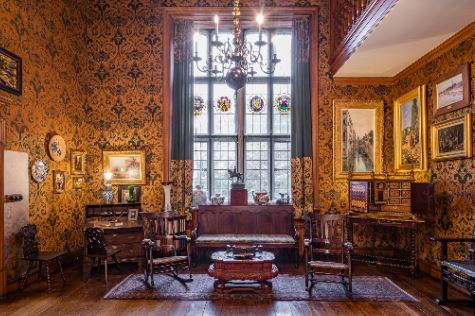

If a sudden, horrifying death is what it takes to make the spirit linger, surely, this place—is a candidate. Certainly, where men grappled back and forth, engaged not only in the struggle for their own precious lives, but for the life of their respective countries, where in the balance was the future of the very world, and this place produce the mechanism of defense, if that does not qualify for the lingering-place of souls wondering for eternity the outcome of their struggles, then we cannot name a place. https://winchestermysteryhouse.com/

And please be sure to check out the online gift store: https://shopwinchestermysteryhouse.com/

Los Angeles Will be Two and a Half Hours from Tokyo

Given that burglars are disproportionately young, poor, city-dweller, they tend to have frequent contact with other habitual offenders. There are various structures and processes that go along with the “stolen property system”—the underground market through which in-demand goods are stolen, housed, marketed, and resold on the street of America. Burglary is a crime that is marked by varied levels of social organization. Only on rare occasions do we find burglars who work as loners or within formal organizations. More often, burglars will operate as colleagues—the offender commits the crime along but relies on other members of the criminal subculture to supply him or her with inside information or to assist in converting stolen property into cash. Burglars who take the situation to the next level and enlist help in the actual break-in follow a more peerlike existence. Here, loose partnerships are maintained and invoked when a burglary opportunity presents itself. A primitive example of the peer model would be two or three drug users who randomly stumble upon an unlocked home or unsupervised business and decide to work together to take it down. In some cases, burglary offenders will align themselves in a teamlike format. These offenders invoke a division of labor with each participant serving an owned predetermined role and duties. One person might be assigned to lookout/driver role. Another might serve as the entry specialist, defeating any lock and alarms that are confronted. Still another person can take on the “muscle” role, responsible for doing the heavy lifting. #RandolphHarris 1 of 16

Socialization scripts play an important part in how and why burglars commit their crimes. Interview-based research suggests that novice or occasional burglars often rely on the tutelage of more seasoned offenders as a way of learning the proverbial ropes of burglary. Novices receive advice and instructions on issues such as target selection, how to foster informants, how to defeat burglary countermeasures, and how to best convert stolen goods into cash. This socialization generally takes shape as informal street corner conversations or jailhouse bravado. On paper, burglary appears to receive serious treatment from the criminal justice system. The Model Penal Code classifies burglary as a felony in the third degree. In most jurisdictions, such as offense is subject to 1 to 5 years in prison. If the burglar is armed or threatens or inflicts bodily harm on another while unlawfully within a dwelling, that individual might see the charges elevated to second degree felony. In practice, however, burglary receives mixed levels of formal response from the various components of the criminal justice system. First, let us consider the response of law enforcement authorities. Police agencies were able to effect an arrest for only 13 percent of the nearly 2.1 million burglaries that were reported to them in 2022. No other form of index crime yields such a dismal clearance rate. Some of this slippage can be attributed to the covert nature of the crime—police often have no witnesses and minimal clues to guide the investigation. However, these low clearance rates are also impacted by the fact that many police officers and police agencies afford a low priority to burglary cases. #RandolphHarris 2 of 16

Court data reveal a different trend in terms of the veracity with which burglary cases are adjudicated. U.S.A. courts produced nearly 90,000 felony burglary cases in 2022. This figure represents 10 percent of all felony convictions that year. In fact, 68 percent of the burglary cases that were tried resulted in a conviction for the same offense and only 24 percent avoided some sort of conviction. The researchers found that burglary defendants do not receive a reprieve from the courts when it comes time for sentencing. A full 74 percent of the convicted burglars were sentenced to time behind bars. This rate was surpassed only by murder, robbery, drug trafficking, and driving-related offenses. While the median prison sentence for a convicted burglar was 41 months, nearly 10 percent received sentences in excess of 10 years. Our correctional system does not appear to be particularly forgiving to persons who are convicted of burglary. On average, burglary offenders can expect to serve almost half of their sentence—roughly two years. These time-served figures are on par with those of other property offenses (theft, fraud, and motor vehicle theft) but somewhat lower than that observed for violent (54 percent) and weapon-related offenses (60 percent). Accounts from known burglars clearly suggest that informal social control efforts go as long way to deter and/or displace burglary activity. A minimal amount of vigilance on the part of homeowners can go a long way. Measures designed to combat the relatively small population of high incidence “professional” burglars tends to overemphasize the skill and determination of most burglars. #RandolphHarris 3 of 16

Burglaries are expensive, complex, and require long term commitment at many levels. In fact, most burglars are young, unskilled, and opportunistic. This suggests that emphasis should be directed at such factors as surveillability, occupancy, and accessibility. More specifically, dogs, good locks, and alarm systems deter most burglars. Community-level informal social control can also play an important role in burglary prevention. When it comes to surveillability cues, burglars tend to avoid neighborhoods with a lot of foot traffic or active neighborhood watches. This implies that observant or even nosy neighbors can have a measurable impact on burglary. However, these types of collective efforts are difficult to enact and maintain in the areas that burglars most prefer—urban neighborhoods. If nothing else, tenants of “crime prevention through environmental design” should be considered at a neighborhood level. Simple environmental characteristics such as cul-de-sac street design, high levels of lightening, and well pruned landscaping that minimizes unobservable entry and exit points can have a significant impact on burglary victimization levels in a given community. The aforementioned informal social control efforts represent examples of target hardening strategies aimed at deterring would-be burglars from victimizing a given house or displacing offenders from a given community. Also, measures should be designed that aim to undermine offenders’ strong attachment to street culture. Expanded employment opportunities are one possible, but foreboding avenue to lure offenders out of street life. #RandolphHarris 4 of 16

There exist even more simple and realistic measures that might effect change in this area. For example, a coordinated burglary prevention program that was implemented in a midsize U.S.A. city during the early 1980s. Community activism and community involvement (id est, block meetings, neighborhood cleanups, and raised awareness of vulnerabilities and potential offenders) showed promise for reducing burglary. If community members care about the condition of their neighborhood and are willing to take steps to clean it up and exercise vigilance over problem people and places, there is hope for reducing burglary and other forms of street crime. Most crime occurs during the nighttime. A close examination of NCVS and UCR data suggests that 50 percent to 60 percent of all residential burglaries go unreported. The figure reported here was derived by adding the NCVS data on residential burglaries to an adjusted estimate of nonresidential burglaries that were reported in the UCR—one that factors a 60 percent nonreporting rate. These data must be viewed with caution because 50 to 60 percent of all burglaries go unreported to police and only 14 percent of these lead to arrest. Over time, the crime of burglary has slowly slipped down the list of crime fighting priorities. At present, less than half of all burglaries get reported to police, and only 13 percent of those result in an arrest. What kinds of social and legal factors have contributed to this present level of empathy when it comes to the formal and informal society control of burglary? #RandolphHarris 5 of 16

Adjudication data suggest that accused burglars face a high certainty of being convicted and sentenced to prison. This should send a message to police that burglary is a high priority for our nation’s prosecutors and judges. Still, burglary investigation and arrest efforts remain lukewarm at best. What kinds of factors contribute to police officers’ attitudes and behaviors regarding burglary patrol and enforcement? Considerable evidence suggests that burglars refine strategies and cues that help them identify soft and potentially lucrative targets. Does this mean that burglars are more rational and planful than other types of criminals? The Lord has declared that “no unclean thing can inherit the kingdom of Heaven,” reports Alma 11.37. Our sins make us unclean—unworthy to return and dwell in the presence of our Heavenly Father. They also bring anguish to our soul in this life. Repentance is sometimes a painful process, but it leads to forgiveness and lasting peace. The power of sin is great. To become free from it, we must turn to your Heavenly Father, pray in faith, and act as He asks us to. The Holy Spirit should never become the center and object of thought and worship, place which He Himself does not desire, and which it is not the purpose of the Father in Heaven that He should have or occupy. “He shall not speak from Himself,” reports John 16.13, said that Lod Jesus before Calvary, as He foretold the Spirit’s coming at Pentecost. He would act as Teacher (John 14.26), but teaching the words of Another, not to Himself (John 15.26); He would only glorify Another, not His own; He would bear witness to Another, not Himself (John 16.14); He would only speak what was given Him to spear by Another (John 16.13). #RandolphHarris 6 of 16

The Spirit’s entire work would be to lead souls into union with the Son and give proper knowledge of the Father in Heaven, while He Himself directed and worked in the background. If a man who is untaught in the scriptural statements about the work of the Triune God makes “obeying the Spirit” his supreme purpose, the deceiver will aim to counterfeit the guidance of the Spirit, and even the presence of the Spirit Himself. It is just here that the ignorance of the seeker about the spiritual Word now opened to one, the working of evil powers in that realm, and the conditions upon which God works in and through one, gives the enemy his opportunity. It becomes the time of greatest peril for anyone unless one is instructed and prepared by the Lord, as the disciples were for three whole years. The danger lies in the area of supernatural “guidance,” for one must know the conditions of cooperation with the Holy Spirit in order to discern the cooperation with the Holy Spirit in order to discern the will of God and be able to recognize counterfeit manifestations. The “discerning of spirits” is required to detect the workings of the false angel of light, for he is able to bring about counterfeit gifts of prophecy, tongues, healing, and other spiritual experiences connected with the work of the Holy Ghost. Those who have their eyes opened to the opposing forces of the metaphysical realm understand that very few believers can guarantee that they are obeying God and God only, in directly supernatural guidance, because there are so many factors liable to intervene, such as the believer’s own mind, spirit, or will and the deceptive intrusion of the powers of darkness. #RandolphHarris 7 of 16

Knowledge is essential here. Scripture teaches that there is a God-given gift of “discerning of spirits” (1 Cor. 12.10) which enables one to detect that an unwelcome spirit is at work, but there is also a test of spirits which is doctrinal (1 John 4.1-6). In the former, a believer can discern in his spirit that lying spirits are at work in a meeting, or in a person, but one may not have the understanding needed for testing the doctrines being set forth by the teacher. One needs a level of knowledge in both cases: knowledge to read one’s spirit with assurance in the face of all contrary appearances, that the supernatural workings are not “of God,” and knowledge to detect the subtlety of “teachings” bearing certain infallible indications that they emanate from the pit, even while appearing to be from God. As to personal obedience to God, the believer can detect whether or not one is obeying God in some “command” by judging its fruits, and by being aware of the character of God—such as the truth that God has always a purpose in His commands, and He will give no command out of harmony with His character and Word. Often times people wait for something to happen, for some sure way to nurture oneself, to live from within. Music, art, poetry, hot baths, savory foods, wind, rain—nothing affects them. In the past, within days after a solitary retreat, many had found solace and strength in their loneliness. They had always found a way, at least a beginning that would lead to action and to life with others. #RandolphHarris 8 of 16

However, it is impossible to find what one is looking for, and one is still on a lonely journey, waiting from a spark from within. Because some people feel empty and eroded inside, they avoid all significant communication. More than anything else the interpersonal aspects of living exhaust some and move them to withdraw from real meetings with others. This leaves an individual certain that one does not want to struggle anymore. Doubt, risk and anxiety—inherent elements of faith—can be overcome only by another of its elements, courage. Courage is an ontological concept, the self-affirmation of being in spite of non-being. Faith is the experience of the holy; it is the state of being grasped by the power of being-itself. From this experience flows the power to assert oneself in the face of anxiety. Faith is participation in the object of faith, and yet is the separation from it. In spite of separation, courage expresses participation in the power of being and meaning. This in spite of element is the courage that takes all doubt, risk, and anxiety into itself and overcomes them without removing them. Faith, then, is the basis of courage, and courage is the manifestation of faith. In the extreme situation of a person seized by radical doubt and confronted with the specter of universal meaninglessness, the question arises: Is there such a thing as the courage of despair? Such a courage is entirely possible, for that act of accepting meaninglessness is in itself a meaningful act. #RandolphHarris 9 of 16

The courage of despair enables one, even while in the grip of meaninglessness, to declare one’s situation, and this declaration has meaning. In other words, there cannot be an infinite regression of negatives—in this case, negativity of meaning. At least, one has to admit, negation of meaning is meaningful, or meaninglessness will have lost all meaning. The faith which feeds the courage of despair is called “absolute faith,” for it can have no specific content. Its content is indefinable, since everything defined is dissolved by doubt and meaninglessness. However, certain elements that constitute absolute faith can be discerned. There is an experience of the power of being in the face of nonbeing, an awareness of a hidden meaning within the destruction of meaning. There is the dependence of nonbeing upon being, of meaninglessness upon meaning, of the negative upon the positive. And, lastly, there is the acceptance of the power to accept meaninglessness. Thus, absolute faith is faith which has been deprived by doubt of any concrete content, which nevertheless is faith and the source of the most paradoxical manifestation of the courage to be. Faith is without a special content, yet it is not without content. The content of absolute faith is the “God above God.” When people speak of God, they usually refer to the God of theism. Now theism can mean either a vague, unspecified affirmation of God, or a divine-human encounter of persons, or theological theism which makes God a being beside other beings. However, the God of absolute faith is above and beyond the God of any theism, for the God above God is the power of absolute faith as experience of the God who appears when God has disappeared in the anxiety of doubt. #RandolphHarris 10 of 16

The morning traffic from Oakland to San Francisco across the Bay Bridge gets backed up from 7.30 to 11.00 A.M. Until the jam clears at 11.00, each additional car that enters the traffic makes all those who come later wait just a little longer. The right way to measure this cost is to sum up the additional waiting-times across everyone who is delayed. What is the total waiting-time cost imposed by one additional car that crosses the bridge at 9.00 A.M.? You may be thinking you do not know enough information. A remarkable feature to this problem is that the externality can be calculated based on the little amount you have been told. You do not need to know how long it takes the cars to cross the toll plaza, nor the distribution of cars that arrive after 9.00. The answer is that same whether the length of the traffic jam stays constant or varies widely until it cleans. The trick is to see that all that matters is the sum of the waiting time. We are not concerned with who waits. (In other circumstances, we might want to weigh the waiting times by the monetary value of time for those caught in the jam.) The simplest way to figure out the total extra waiting time is to shuffle around who waits, putting all the burden on one person. Imagine that the extra driver, instead of crossing the bridge at 9.00 A.M., pulls his car over to the side and lets all the other drivers pass. If he passes up his turn in this way, the other drivers are no longer delayed by the extra car. Of course, he has to wait two hours before the traffic clears and the road is clear. #RandolphHarris 11 of 16

However, these two hours exactly equal the total waiting time imposed on all the other drivers if he were to cross the bridge rather than wait on the sidelines. The reason is straightforward. The total waiting time is the time it takes for everyone to cross the bridge. Any solution that involves everyone crossing the bridge gives the same total waiting time, but distributed differently. Looking at the solution in which the extra car does all the extra waiting is the easiest way to add up the new total waiting time. Looming on the horizon is a dangerous de-coupling of the fast economies from the slow, an event that would spark enormous power shifts throughout the so-called South-with big impacts on the planet as a whole. The new wealth-creation system holds the possibility of a far better future for vast populations who are now among the planet’s poor. Unless the leaders of the less developed countries (LCDs) anticipate these changes, however, they will condemn their people to perpetuated misery—and themselves to impotence. For even as Chinese manufacturers wait for their steel, and traditional economies around the World to crawl slowly through their paces, the United States of America, Japan, Europe, and in this case the Soviets, too, are pressing forward with plans to build hypersonic jets capable of moving 250 tons of people and cargo at Mach 5, meaning that cities like New York, Sydney, London, and Los Angeles will be two and a half hours from Tokyo. #RandolphHarris 12 of 16

Jiro Tokuyama, former head of the prestigious Nomura Research Institute, and now a senior adviser to the Mitsui Research Institute, heads a fifteen-nation study of what are called the “three T’s:” telecommunications, transportation, and tourism. Sponsored by the Pacific Economic Cooperation Conference, the study focuses on three key factors likely to accelerate the pace of economic processes in the region still further. According to Tokuyama, Pacific air-passenger traffic is likely to reach 134 million…at the turn of the century. The Society of Japanese Aerospace Companies, Tokuyama adds, estimates that five hundred to one thousand hypersonic jets must be built. Many of these will ply Pacific routes, speeding further the economic development of the region, and promoting faster telecommunications as well. In a paper prepared for the Three T’s study, Tokuyama spells out the commercial, social, and political implications of this development. He also describes a proposal by Taisei, the Japanese construction firm, to build an artificial island five kilometers in length to serve as a “VAA,” or “value added airport,” capable of handling hypersonics and providing an interactional conference center, shops, and other facilities to be linked by high-speed linear trains to a densely populated area. In Texas, meanwhile, billionaire H. Ross Perot is building an airport to be surrounded by advanced manufacturing facilities. As conceived by him, planes could roar in a day and night bearing components for overnight processing or assembly in facilities at the airport. The next morning the jets would carry them to all parts of the World. #RandolphHarris 13 of 16

Simultaneously, on the telecommunications front, the advanced economies are investing billions in the electronic infrastructure essential to operations in the super-fast economy. The spread of extra-intelligence nets is moving swiftly, and there are now proposals afoot to create special higher-speed fiber optic networks linking supercomputer all across the United States of America with thousands of laboratories and research groups. (Existing networks are regarded as too slow. The proposed new nets would send 319 Terabits per second streaming across the country). The new network is needed because the existing slower nets are already choked and overloaded. They argue that the project merits government backing because it would help the United States of America keep ahead of Europe and Japan in a field it now leads. This, however, is only a special case of a more general clamor. In the words of Mitch Kapor, a founder of Lotus Development Corporation, the software giant, “We need to build a national infrastructure that will be the information equivalent of the national highway-building of the ‘50s and ‘60s.” An even more appropriate analogy would compare today’s computerized telecom infrastructures with the rail and road networks needed at the beginning of the industrial revolution. What is happening, therefore, is the emergence of an electronic neural system for the economy—without which any nation, no matter how many smokestacks it has, will be domed to backwardness. #RandolphHarris 14 of 16

In its commercial service trade, in 2021, India trade balance for 2021 USD$-79.19, a 665.96 percent increase from 2020. The United States of America is the largest services exporter in the World. In 2019, U.S.A. exports of service were USD $875.8 billion, up 1.6 percent (USD $13 billion) from 2018. U.S.A. exports of services account for 35 percent of over all U.S.A. exports in 2019. Germany World Development Indicators (WDI) 2020: trade balance in USD$221,534 million. Trade services as a percentage of GDP is 5.82 percent. Trade in services with the United Kingdom (exports and imports) totaled an estimated USD $140.7 billion in 2019. Services exports were USD $78.3 billion; services imports were USD $62.3 billion. The U.S.A. services trade surplus with United Kingdom was USD $16.0 billion in 2019. Trade in services with China (exports and imports) totaled an estimated $56.0 billion in 2020. Services exports were USD $40.4 billion; services imports were USD $15.6 billion. The U.S.A. service trade surplus with China was USD $24.8 billion in 2020. Trade in services with Japan (exports and imports) totaled an estimated USD $68.6 billion in 2020. Services exports were USD $38.0 billion; services imports were USD $30.6 billion. #RandolphHarris 15 of 16

The U.S.A. services trade surplus with Japan was USD $7.4 billion in 2020. Japan was the United States of Americas’ 4th largest goods export market in 2020. As for the services, France exported around USD $303 billion worth of services in 2021, while it imported services for the total value of USD $258.3 billion. Service trade in Italy in 2020, Italy exported $73.1B worth of services. The outsized U.S.A.-Ireland commercial relationship, which exceeded USD $1 trillion in 2021 is significant by international standards and is particularly impressive relative to the country’s population of five million people. In 2021, U.S.A. good exported to Ireland exceeded USD $13.8 billion. The statistics for services from 2012 record the value of U.S.A. service exports to Ireland at $74.8 billion. In 2021, global services exports were valued at USD $6.1 trillion, representing 6.3 percent of total World trade in both goods and services. Overall, as far as the nations’ trade balances are concerned, the picture in the services sector is almost the opposite of the one in the merchandise trade. In services, the West has a significant competitive edge versus China and is in a good position to establish a much wider presence in the Chinese market. #RandolphHarris 16 of 16


Mrs. Winchester Might be the Next Victim

In reliving those years of despair, I weep for my beautiful angel as she was experiencing a most unfortunate horror. My heart filled with anguish as I remember the horrible ending to her life. Her lungs had filled beyond further help; her stomach could no longer function properly and she could not be fed orally any longer. She was only six weeks old. My husband and I consulted with her doctors about her condition and were advised that no further feedings be given. However, the final decision was ours. Our final decision to discontinue all further feedings took all our strength. Although we were aware it was the only human thing to do, we also knew that while we watched her take her last breaths, we too would be dying within ourselves. We loaded the carriage and drove her to the hospital for the last time. As I held Annie in my I arms, I knew that this memory would remain within my heart eternally. The memory of that trip and the finality that is possessed still feel so real to me. When we arrived at the hospital, I laid my baby girl gently in her bed, never to hold her in my arms again. Later, I tried to hold her again but she became extremely rigid in the process of lifting her. The doctor said she was dying from malnutrition. She has a curious disease known as Marasmus. My baby could not digest her food. She was so tiny. She did not have round waxen arms and legs like other babies, now puffy pink cheeks. My dear Annie was reduced to a skeleton. Her beautiful eyes were vacant. She barely had the energy to muster up a cry. #RandolphHarris 1 of 3

I knew then that she could no longer endure living with great pain she had known. She was ready to leave us. There was nothing more we could do for her but allow her to leave. Two days later, Annie died, along, unaware of another human being. She had been under heavy sedation and was unable to further communicate. Her days of torment and agony were over. It broke my heart that I brought a baby in the World who was slowly, agonizingly dying as we pondered the imponderable eternity for days, hours, until her life force abandoned us. But her precious memories will always remain alive and real in our hearts. She left the deepest feeling of compassion and love with Mr. Winchester and myself. Her tragic memories are embedded within our hearts. I shall find a way to dedicate meaning to her life so she will not have suffered in vain. In 1862, Sarah L. Winchester married William Wirt Winchester, son of Oliver Fisher Winchester, Lieutenant Governor of Connecticut and manufacturer of the famous Winchester repeating rifle. The couple’s life together was happy, and they moved in the best of New England society. However, in 1866, disaster struck when their infant daughter, Annie Winchester, died of the then curious childhood disease marasmus. Mrs. Winchester fell into a deep depression from which she never fully recovered. Fifteen years later, in March 1881, her husband’s premature death from tuberculosis added to Mrs. Winchester’s distress. A medium explained to Mrs. Winchester her family and her fortune were cursed and being haunted by spirits and that she would be the next victim. #RandolphHarris 2 of 3
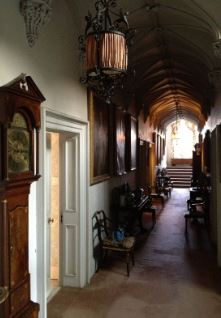
However, the medium also claimed that there was an alternative. Mrs. Winchester was instructed to move West and appease the spirits by building a great house for them. As long as construction never ceased, Mrs. Winchester could rest assured that her life was not in danger. Building such a house was even supposed to being her eternal life. Innumerable spirits shuffled off their mortal coils embrace the Winchester Mansion as their home. They have surrendered their spirits to the miles of winding and twisting hallways in the Winchester Mansion. Humans beings that were mowed down in sheaves, bowled over by bounding shot, decapitated, disemboweled, dismembered, exterminated instantly all call this place home. Although bullets dropped many of them, they all did not die right away. They gagged their last words, hoping that God would hear them. They paid with their heart’s blood for defending this great nation. Countless others as well, unready, perhaps unwilling, have left their shadows behind to haunt this estate. It cannot be surprising then, that Mrs. Winchester and the caretakers, reluctantly admit they saw apparitions. Particularly on sultry moonlit summers nights, when the mists hang low in the garden, there can be seen, slowly trotting across the lawn, a long horseman, in the finery of a Civil War officer. Where medical doctors were scarce in the Civil War, witches provided cures for a variety of common ailment. They were said to worship Satan Himself during their infamous sabbats, gatherings at which the Devil was sometimes present in person, and can almost be seen lurking about the estate. #RandolphHarris 3 of 3


It is difficult to see in hindsight what Mrs. Winchester had to do with all this, but as time went on and the estate grew, wild accusations came to be leveled, chief among which was that of Mrs. Winchester having made a pact with Satan. How else but through diabolic abetment could a mere woman exercise such power? https://winchestermysteryhouse.com/
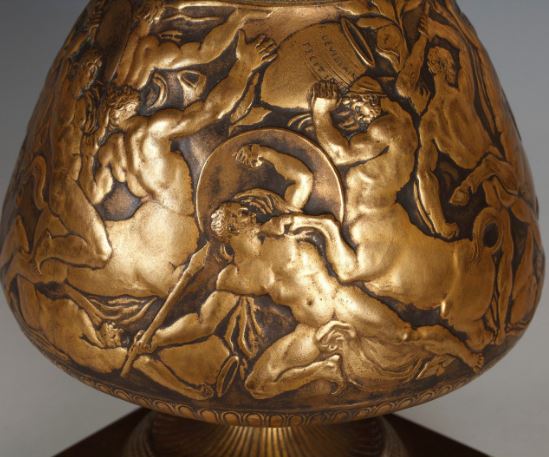
And be sure to check out the online gift store: https://shopwinchestermysteryhouse.com/

Preparing to Call Out a Demon

Occultists draw on the past. Everything they do has some historical, sometimes religious, bond. Rumours, myths and superstitions surround almost every aspect of the secret societies of men and women who gather suspiciously—because of the secrecy—and perform their dark and dramatic rituals, formulated from old grimoires handed down and rewritten through the ages. Personalities, too, figure predominantly. However, there are very few forms of modern occultism that do not, at some time or other, rely upon the legacy of Aleister Crowley, the self-styled Great Beast 666. At the pinnacle of his career was renowned for a wild mix of magic, and today is revered by millions the World over who are rereading the legends of this man many believed to be another Shakespeare. Mrs. Sarah L. Winchester is also a mysterious historical figure who practiced the occult. The mansion she built, called the Winchester Mansion is classic Victorian architecture and unparalleled gardens that are so incredibly photogenic that the home has become one of the World’s most intriguing and mysterious places to see ghost. Mrs. Winchester’s resources were unlimited, and she spent enormous sums building the most incredible mansion. However, the Winchester fortune was cursed. It was in the thick December dusk, in the Hall of Fires, Mrs. Winchester had endured thirteen years in the soul-deadening mourning of her husband and her daughter. When servants would catch her off guard, she would still express a sadness. Her life had probably not been of the most vivid order: for a long period, but these country plains of existence sometimes breed, in their sluggish depths, strange acuities of emotion, and Mrs. Winchester had felt from the first day the mysterious stir of intenser memories. #RandolphHarris 1 of 8
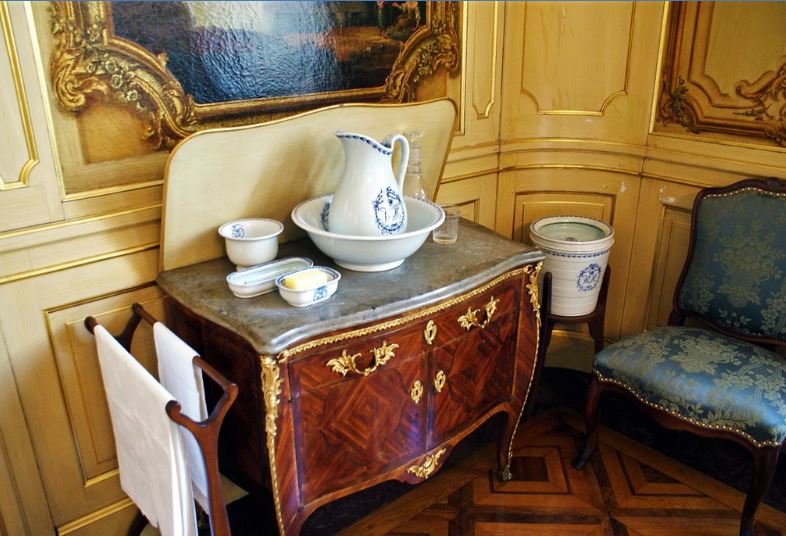
The feeling had never been stronger than on this particular afternoon when, waiting in the library for the lamps to come, she rose from her seat and stood among the shadows of the hearth. Edith Bernard, a one-beautiful young woman was found dead, lying helplessly on the floor. A single bullet lay buried deep in her head. “Spare me, ye gods!” Mrs. Winchester cried. Four servants quickly rushed in the room to comfort Mrs. Winchesters. As two of the servants stood breast to breast, another bullet pierced them both. They uttered a cry together, together cast a parting look around them, and together breathed their last. Adora, another maid, seeing them fall, hastened to the spot to render assistance and fell stricken in the act of loving duty. Only one servant and Mrs. Winchester was left. Another gunshot was heard and it struck Valda, but no shooter was seen. Mrs. Winchester knelt over the lifeless bodies, and kissed, now one, now another of her dead servants. Raising her pallid arms to Heaven, “Spirits,” said she, “feed full your rage with my anguish! Satiate your hard heart, while I follow the grave of my four servants. Yet where is your triumph? Bereaved as I am, I am still richer than you, my conqueror.” Two others servants rushed into the library to assist Mrs. Winchester. One of them held her is her arms. The other was tending to the dead bodies. Scarce had Mrs. Winchester spoken, when the gun shot sounded and struck terror into all hearts. The servant mourning over the biers of their dead coworkers fell struck by a bullet, and died on the corpse she was bewailing. The maid attempting to console Mrs. Winchester, suddenly ceased to speak, and sank lifeless to the Earth. #RandolphHarris 2 of 8
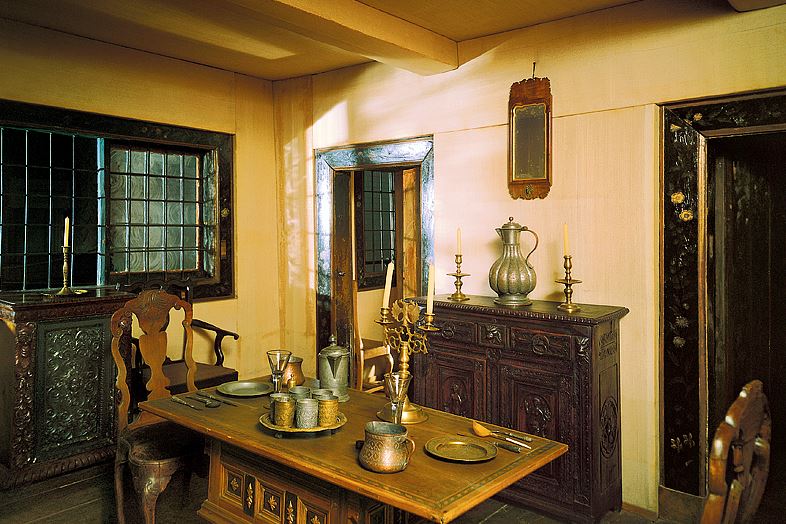
Six were now dead, and only Mrs. Winchester remained. “Spare me!” she begged. There was a torpid grief. The breeze moved not her hair, no color was on her cheek, her eyes glared fixed and immovable, there was no sign of life about her. Her very tongue cleaved to the roof of her mouth, and her veins ceased to convey the tide of life. Her neck bent not, her arms made no gesture, her foot no step. She was changed to stone, within and without. Yet tears continued to flow. When other staff members stumbled upon the tragedy, “Could it be the house?” the Butler asked. The mansion itself was fully of secrets. They seemed to be piling themselves up, as evening fell, like the layers and layers of velvet shadow dropping from the low ceiling, the rows of books, the smoke-blurred sculpture of the hearth. “Why, of course—the house is haunted!” he reflected. The ghosts of those killed by the Winchester rifle. Mrs. Winchester has now become a permanent tenant of her haunted mansion. One of the elusive specters had apparently had the powers to crystallize about it. Immediately following the strange deaths and Mrs. Winchesters crystallization, mystery, scandal and rumor swirled around the tragedy. Mrs. Winchester had been the envy of her friends, now the pity of even her foes. She stood crystalized in her mansion for many months. A new sense of meaning—a sense gradually acquired through daily contact with her in the form created a scene of the lurking mystery. It was the house itself, of course, that posses the ghost-seeking faculty, that communed visually but secretly with its own past; if one could only get close enough communion with the house, one might surprise its secret, and acquire the ghost sight on one’s own. #RandolphHarris 3 of 8

More and more under the spell of the crystallization of Mrs. Winchester, calling out to the remote corners of the house, servants found treasure after treasure, it revealed itself to them. When passing from the first rapturous flurry of exploration to a detailed inspection of the old house, the butler pressed a panel that opened on a flight of corkscrew stairs leading to the nine-story tower. The view was enchanting. His gaze flew to the long tossed horizon line of the downs, and then dropped contentedly back to trace the yew of hedges about the fish pond, and the shadow of cedar and palm trees on the lawn. Distinctly he recalled that he had seen, as he glanced, a shadow of anxiety, of perplexity, rather, fall across his face; and, following his eyes, had beheld the figure of a man—a man in loose black clothes, as it appear to him—who was sauntering down the lime avenue to the court with the doubtful gait of a stranger who seeks his way. “Wait!” he hastily shouted and ran down the stairs. But the man was gone. Suddenly, Mrs. Winchester let out a terrible cry…but could it be her? She had been in statue form for years. The old butler Augusts had some questions as to the connection of evil spirits with systems of idolatry and witchcraft. He was almost willing to swear that his eyes were playing tricks on him; for seeing Mrs. Winchester come back to life went beyond all human discernment. Of course, the young lady was stiff and needed help moving around. The Hall of Fires seemed to warm her blood and make moving easier. We wrestle not against flesh and blood, but against principalities, against spiritual wickedness in high places. #RandolphHarris 4 of 8

Weary with her thoughts, Mrs. Winchester moved to the window. The Hall of Fires was quite dark now, and she was surprised to see how much faint light the outer World still held. As she peered out into it across the court, a figure shaped itself far down the perspective of bare limes: it looked like a mere blot of dark blackness in the grayness, and for an instant, as it moved toward her; her heart thumped to the thoughts “It’s a ghost!” She had time, in that long instant, to see the man gaining substance and character, showed itself even to her weak sight as her husband William Winchester; she turned to meet him, and he vanished into thin air. Mrs. Winchester’s spirit sunk. At once the air of the hall rand with a long, frightful chain of woeful howls. Above the bestial clamour, Mrs. Winchester could hear a spirit shouting, “I adjure thee, great Marchosias, the agent of the Emperor Lucifer and of his beloved son Lucifuge Rofocale by the power of the pact…” The noise rose higher and a green stream began to come off the brazier. However, there was silence. Again the spirit shouted, “I adjure thee, Marchosias, by the pact and by the names, appear instanter.” The room screamed…but still there was no apparition. Instantly the mansion rocked as though the Earth moved under it. The building shuddered again…then from the middle of the room, a low cloud of yellow fumes went up towards the ceiling, making Mrs. Winchester cough. As it spread and thinned she could see the shape forming under it…it was something like a she-wolf, grey and immense, with green glistening eyes. A wave of coldness was coming from it…the cloud continued to dissipate. The she-wolf glared at them, slowly spreading her griffin’s wings. Her serpent’s tail lashed gently, scalily. The existence and manifestation of demons and devils in the Winchester Mansion has been accepted without question. The thing that dominated the mansion was a group of spirits known as “Legion,” or “The Legion of Lucifer.” #RandolphHarris 5 of 8

There is magical art abundant in the mansion. This explains how it has become an abnormal plane of power to “charge” magical energy. It is thought that Mrs. Winchester used the powers of Osiris and was able to reconstitute her body to return to life. This is a fundamental of the higher form of necromancy. When the mansion was sold and items auctioned off, the walls were found to be covered with magical symbols and paintings. Also found were solid gold talismans and amulets. The mansion itself was protected by spells and curses. The Winchester Mansion is a receptacle for all the mystical and magical beliefs of the East and the West. The farmers on the Winchester Estate followed the long-established practice of cutting a girdle of bark off the trees, and then setting them on fire or leaving them to die in place while planting crops around the decaying hulks. Immense trees were stripped of their foliage, and half consumed by fire extending their sprawling limbs, many were bleached by weather. By this method the farmers on the estate could clear from 3 to 5 acres a year for cultivation. The relentless demand for wood generated by the construction of the mansion and for other Victorian houses on the estate and barns, fences and fuel, potash and turpentine—added to the demand. Native Americas, in return for furs that they had in abundance, secured goods such as blankets, guns, ironware that they highly valued from Mrs. Winchester’s estate. It was even rumored that Mrs. Winchester owned the Philosopher’s Stone which was believed to turn anything it touched into gold, cure all ills and kept its owner perpetually youthful. It was supposedly given to her as a gift. #RandolphHarris 6 of 8

As the years pass by, many people who practice magic descend more deeply into the darker realm of magic, summoning demons and spirits almost at will. Some magicians become obsessed by their craft, their quest for knowledge and power and it can drag them into the black abyss. A fascinating story about the darker realm of the Winchester Mansion is one about Leonore. Leonore was lodging at the Winchester Mansion, she persuaded Augusta, the butler, to unlock the door to the Blue Séance Room. Leonore went inside and stood reading aloud from a book of spells that lay on the table; suddenly a demon appeared and demanded to know why he had been summoned. Leonore was so shocked that she could not answer and the demon grabbed her by the throat and strangled her. Mrs. Winchester returned to find Leonore lying dead on the floor of her Blue Séance Room, and realizing this could mean trouble, she summoned the demon to return and bring Leonore back to life long enough for her to be removed. This was done, and Leonore walked out of Mrs. Winchester’s Mansion into the marketplace where she immediately collapsed and died. As word of Mrs. Winchester’s success, great wealth, and powers spread, so did the story that she had made a pact with the devil, written as usual in her own blood, in return for magical powers. Once the magical power of the menses has been blessed by the Dark Goddess it has been consecrated as a direct conduit of the powers of destruction, death, and decay. #RandolphHarris 7 of 8

Angra Mainyu, come forth from the realms of eternal darkness. Angra Mainyu, I summon you to come forth and ignite this flesh as the very source of your power and might that it may emanate the ways of your Black Sun. May this body become the very fuel, the embers of this forbidden Blackened Fire that I may consume power to banish the limitation of creation and become the counter creator for the glory of Dragon Zohak! Empower me with this infernal blessing as a warrior of the Path of Smoke and Apostle of your teachings of liberation! Hear Mr:–Ieou: Pur: laot: Iaeo: Ioou: Abrasar: Sabriam: Do: Un: Adonaie: Ede: Edu: Angelos ton Theon: Aniaia Lai: Gaia: Ape: Diathanna Thorun. I am He! The Bornless Spirit! Having sight in the feet: Strong and the Immortal Fire! I am He! The Truth! I am He! Who hate that evil should be Wrought in the World! I am He, that lighteneth and thundereth. I am He, from Whom is the Shower of the life of Earth: I am He, Whose mouth ever flameth: I am He, the Begetter and Manifester unto the Light: I am He; the Grace of the World: “The Heart Gith with a Serpent” is My Name! Come Thou forth, and follow Me: and make all Spirits subject unto Me so that every Spirit of the Firmament, and of the Ether: upon the Earth and under the Earth: on dry Land, or in the Water: of whirling Air or of rushing Fire: and every Spell and Scourge of God, may be obedient unto me! Iao: Sabao: Such are the Words! Magic is the Highest, most Absolute, and most Divine Knowledge of Natural Philosophy, advanced in its works and wonderful operations by a right understanding of the inward and occult virtue of things; so that true Agents being applied proper Patients, strange and admirable effects will thereby be produced. Whence magicians are profound and diligent searchers into Nature; they, because of their skill, know how to anticipate an effort, the which to the vulgar shall seem to be a miracle. #RandolphHarris 8 of 8
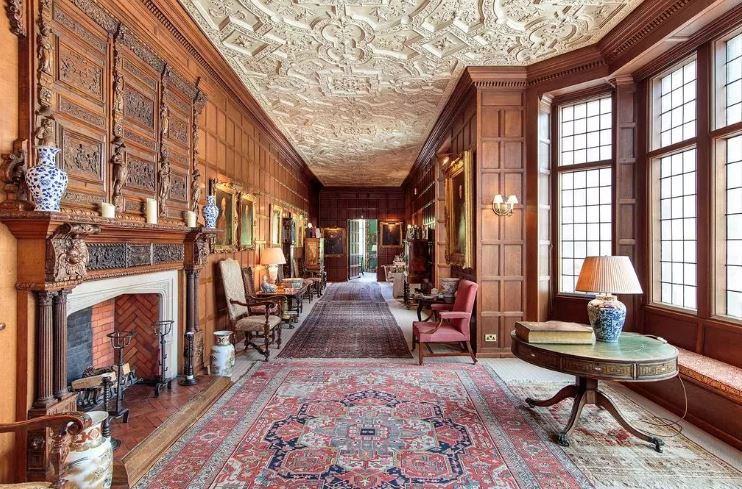
Winchester Mystery House

This Friday. Tune in on Friday, December 23rd 6pm pst/9pm est to watch the Destination Fear crew investigate The Winchester Mystery House on Travel Channel! The episode will be available for streaming on Discovery+ same day👻 Can’t wait!
@travelchannel @discoveryplus #DestinationFear #winchestermysteryhouse

Evil Spirits are Able to Exert a Great Deal of Influence Upon Humans!

The Christian Bible teaches us that acceptance of this World system which is dominated by erroneous principles, selfish desires, improper motives, and unworthy standards of value that draws humans away from God and makes them “measure of all things,” is influenced so strongly by Satan and his army of evil spirits, which caused humans to adopt attitudes and to perform deeds which hinder God’s work and harm His people is done with every trace of wickedness (depravity, malignity) and all deceit and insincerity (pretense, hypocrisy) and grudges (envy, jealousy), and slander of every kind and evil speaking of every kind. This should make us crave like newborn babies the pure spiritual milk that by it one may be nurtured and grow unto salvation. Society in every age is characterized by such iniquities as selfishness, pride, immorality, and dishonesty, in spite of the efforts of sincere people to make it a better World. Twenty-first century humans, with more technical skills and knowledge than any previous generation, is unable to solve the problems of poverty, crime, racial hatred, and war. An increasing number of people go to bed hungry every night, crime is on the rise, racial hatred has never been more intense, and wars continue to be fought all over the World. Why? Because humankind has accepted a self-centered philosophy of life, and Earth’s citizens in general are motivated by the three evils of which John speaks in his first epistle—“the lust of the flesh, and the lust of the eyes, and the pride of life,” reports 1 John 2.16. The “lust of the flesh” is the desire for possession. It is the gratification of self by participation. Careful study of the word “flesh” indicates that this evil propensity of humankind involves more than just sins of impurity. The term, as used by John in this passage, does not have reference to the body but to the sinful Adamic nature. The individual sinner is born with a nature that is selfish, and one is part of a social structure which operates on grasping, egocentric, and selfish principles. #RandolphHarris 1 of 13

A vast majority of men and women are materialistic, live to gratify the senses, and are self-centered even in the good things they do. Nations, too, seek only what is best for themselves. Leaders in industry, education, and even religion are primarily concerned about their own welfare, often neglecting the needs of those they serve. The “lust of the flesh” drives humans to desire and obtain material possessions, and to satisfy their physical appetites and passions at the expense of spiritual values. This basic selfishness and craving for the Earthly tangible pleasures of life leads people to misuse the physical and material blessings God has given all humans to enjoy. On a Worldwide scope, it has brought about a situation in which thousands live in unparalleled luxury while millions starve. When we stop to think about it, much of the World’s unrest and unhappiness today can be traced to the “lust of the flesh.” The “lust of the eyes,” the second characteristic of this World system, is sometimes defined as “gratification by contemplation.” The use of our eyes has vast potential for either great blessing of for degradation. For example, we are able to look upon the endless beauty of creation and sing praises to the Lord. Reading God’s Word, we can meditate upon the riches of glory in joyous expectation. However, Satan and his evil partners have perverted the use of the eye, inducing wicked humans to display scenes by which lustful thoughts are incited. They capitalize upon humans’ sinfulness and natural tendency to immorality. Down through the ages, immodest dress, impure books and pictures, and unholy theatrical productions have been used to degrade and degenerate both young and old. In addition, the eye affords an opportunity to enjoy by contemplation certain evils which one cannot or dare not actually perform. #RandolphHarris 2 of 13

Therefore, people from all classes of society and every age bracket are influenced by the allurement that comes through the gift of sight. Discerning people who glance at the newsstands, read the advertisements in the theater page of the newspaper, or watch the programs and commercials presented on television, know full well that “lust of the eyes” has been exploited by the powers of evil. The evidence certainly indicates that Satan and his followers are truly the “leaders of the darkness of this World.” The “pride of life,” the third characteristic of this World system, refers to vanity and ostentation. Men and women put great stock in “being somebody.” To make a name for themselves they throw impressive parties, purchase expensive automobiles, and live in luxurious homes. Their only measure of success is by these standards. Others may acquire academic degrees to display their intellectual prowess, while athletes may exert maximum effort, not principally out of team spirit, but for money and applause. The struggle for power, prestige, and even glory is at the heart of almost every human endeavour. However, through all of this, humankind has been unable to discover true happiness and satisfaction. Most people confess they are not finding pleasures they expected, but nonetheless continue on their way, ever pursuing new baubles. The invisible forces of Satan so blind humans that they do not see true values, nor recognize the folly of their vain quest for this elusive will-o’-the wisp, “the pride of life.” According to the Bible the whole social structure of this World is controlled by a pervading principle of life that is foreign to God and leads humans away from Him. True every human is a sinner by nature and alienated from God, but this inherent human selfishness, under the direction of intelligent and powerful wicked spirits, compounds this basic sinfulness by brining out the very worst in humans. Evil spirits cruelly blind and deceive fallen humanity through the lust of the flesh the lust of the eyes, and the pride of life. #RandolphHarris 3 of 13

These fallen creatures actively try to manipulate the political rulers of the World. Satan’s organized army operates quietly and invisibly in the minds and the wills of Earthly sovereigns to achieve their evil purposes. The Bible indicates the nature and course of their activity in several references. Daniel 10 teaches that specific evil spirits are assigned the task of influencing human rulers. The chapter opens with a picture of Daniel in earnest prayer. He entreats the Lord for a period of three weeks, seeking God’s favour upon the Jewish people who have returned to Jerusalem from captivity. He learned that they were experiencing difficulty in rebuilding the temple. Ezra 4, which gives the history of these former exiles, indicates that the work of restoration was interrupted by adversaries almost immediately after the foundation of the temple had been laid. Finally, three weeks after Daniel began to pray, God sent him a most amazing experience. An angel came to Daniel and said, “Fear not, Daniel; for from the first day that thou didst set thine heart to understand, and to chasten thyself before thy God, thy words were heard, and I am come for thy words. However, the prince of the kingdom of Persia withstood me one and twenty days; but, lo, Michael, one of the chief princes came to help me; and I remained there with the kings of Persia,” reports Daniel 10.12-13. The angel declared that he had left Heaven immediately after Daniel’s first prayer, but that on his way to Earth he had encountered opposition from “the prince of the kingdom of Persia.” The Heavenly messenger went on to say that it was not until Michael came to help him that he was able to overcome this opposing “prince.” #RandolphHarris 4 of 13

The struggle was obviously between angelic beings, for the one speaking to Daniel was an angel, and Michael is well known as the angelic protector of Israel. (See Daniel 10.21; 12.1; Jude 9; Revelation 12.7). This “prince of the kingdom of Persia” was obviously a wicked spirit of high rank. He had been delegated by the arch-enemy of God, the devil himself, for the task of influencing the Persian government to obstruct the Israelites in their rebuilding program. Thus success of this evil spirit’s attempt was apparent upon Earth. Even while the battle between the angelic beings was taking place in the air, the rulers of Persia were hindering the Jews in the task of rebuilding their temple. The people in Jerusalem could see only the treachery of their human enemies, not knowing that invisible spirits had been exerting pressure against them behind the scenes. The leaders of Persia were not aware that their decision to oppose Israel was the result of the working of evil spirits in their minds. These human rulers were actually mere puppets, carrying out the wishes of the invisible powers who were manipulating them. Even today humans who hold high political office may be the unwitting tools of evil spirits. Many humans lust for power. National groups vie for supremacy in the economic World. In this prevailing atmosphere of selfishness, evil spirits are able to exert a great deal of influence upon humans. Opportunistic politicians become ideal underlines of these evil spirits. In addition, the followers of Satan, in dominating the godless World rulers, are able to incite beastly behaviour in them. Many living today have witnessed the indescribable brutality of Nazism and theistic Communism. Highly civilized people find great pleasure in the development of more effective weapons with which to kills members of other nations. Humans tell lies, oppress others, and commit mass murders with no hint of shame or remorse. #RandolphHarris 5 of 13

In fact, it is amazing that this modern age of civilization and refinement has been characterized by an inhumanity far worse than that of the ancient barbaric times. We believe this pathological condition can be traced to the fact that many highly educated humans of influence and power have rejected God. In so doing, they have opened themselves to the activity of evil spirits. Therefore, we have a confirmation of Paul’s declaration that the real World rulers of this darkness (Ephesians 6.12) are not the humans who have positions of leadership, but the evil spirits who rule their hearts and influence their thoughts and decisions. From the commencement of the seventeenth century to the Restoration of Charles II, be barren of witchcraft proper, it must at least be admitted that it is prodigal in regard to the marvellous under various shapes and forms, from which the hysterical state of the public mind can be fairly accurately gauged. During 1642, O’Daly in his History of the Geraldines relates that during the siege of Limerick three portents appeared. The first was a luminous globe, brighter than the moon and little inferior to the sun, which for two leagues and a half shed a vertical light on the city, and then faded into darkness over the enemy’s camp; the second was the apparition of the Virgin, accompanied by several of the Saints; and the third was a lusus nature of the Saimese-twins type: all three of which O’Daly interprets to his own satisfaction. The first of these was some from of the northern lights, and is also recorded in the diary of certain Puritan officers. That learned, but somewhat too credulous English antiquary, John Aubrey, relates in his Miscellanies that before the last battle between the contending parties “a woman of uncommon Statue all in white appearing to the Bishop [Heber McMahon, who Aubrey terms Veneras] admonished him not to cross the River first to assault the Enemy, but suffer them to do it, whereby he should obtain the Victory. #RandolphHarris 6 of 13

“That if the Irish took the water first to move towards the English they should be put to a total Rout, which came to pass. Ocahan and Sir Henry O’Neal, who were both killed there, saw severally the same apparition, and dissuaded the Bishop from giving him the first onset, but could not prevail upon him.” N instance of an Irishman suffering from the effects of witchcraft outside Ireland is afforded us in a pathetic petition sent up to the English Parliament between the years 1649 and 1653. The petitioner, John Campbell, stated that twelve years since he lost his sight in Co. Antrim, where he was born, by which he was reduced to such extremity that he was forced to come over to England to seek some means of livelihood for himself in craving the charity of well-disposed people, but contrary to his expectation he has been often troubled there with dreams and fearful visions in his sleep, and has been twice bewitched, insomuch that he can find no quietness or rest here, and so prays for a pass to return to Ireland. The saintly James Usher, Archbishop of Armagh, was a Prelate who, if he had happed to live at an earlier period would certainly have been numbered amongst those whose wide and profound learning won for themselves the title of magician—as it was, he was popularly credited with prophetical powers. Most of the prophecies attributed to him may be found in a little pamphlet of eight pages, entitled “Strange and Remarkable Prophecies and Predictions of the Holy, Learned, and Excellent James Usher, &c…Written by the person who heard it from this Excellent person’s own Mouth,” and apparently published in 1656. According to it, he foretold the rebellion of 1641 in a sermon on Ezekiel iv. 6, preached in Dublin in 1601. “And of this Sermon the Bishop reserved the Notes, and put a note thereof in the Margent of his Bible, and for twenty years before he still lived in the expectation of the fulfilling thereof, and the nearer the time was the more confident he was that it was nearer accomplishment, though there was no visible appearance of any such thing.” #RandolphHarris 7 of 13

He also foretold the death of Charles I, and his own coming poverty and loss of property, which last he actually experienced for many years before his death. The Rev. William Turner in his Compleat History of Remarkable Providences (London, 1697) gives a premonition of approaching death that the Archbishop received. A lady who was dead appeared to him in his sleep, and invited him to sup (eat supper) with her the next night. He accepted the invitation, and died the following afternoon, 21st March 1656. There is another story from Glanvill’s Relations. One Mr. John Browne of Durley in Ireland was made by this neighbour, John Mallett of Enmore, trustee for his children in minority. In 1654 Mr. Browne lay a-dying: at the foot of his bed stood a great iron chest fitted with three locks, in which were the trustees’ papers. Some of his people and friends were sitting by him, when to their horror they suddenly saw the locked chest begin to open, lock by lock, without the assistance of any visible hand, until at length the lid stood upright. The dying man, who had not spoken for twenty-four hours, sat up in the bed, looked at the chest, and said: “You say true, you say true, you are in the right (a favourite expression of his), I’ll be with you by and by,” and then lay down again, and never spoke after. The chest slowly locked itself in exactly the same manner as it had opened, and shortly after this Mr. Browne died. In the mid-1880s, during a Connecticut thunder storm, Mrs. Winchester’s husband and baby lost their lives in a tragic fire. The distracted widow turned to spiritualism and was advised to take a trip around the World. This she did, visiting mediums, spiritualists and yogis in Europe and India. Fortelling her future, one seer warned her of all the countless thousands of departed souls slain by her husband’s rifles; she must protect herself and atone for such mass murder. #RandolphHarris 8 of 13

Mrs. Winchester was told to plan a castle and continue its building indefinitely because as long as it was under construction, she would live; cessation would prove immediately fatal. The head of a celebrated firm of Victorian restorers and decorators took a keen interest in Mrs. Winchester’s mansion. She constructed it for 38 years until she passed away in 1922. It is currently, approximately 24,000 square feet, and four stories tall, but at one time reached a height of 9 stories and may have been more than 50,000 square feet, but the 9-story tower and much of the 4th floor was destroyed by the 1906 earthquake. Back then, two thirds of Mrs. Winchester’s estate was dark, unbroke forests, through whose tangled paths the mysterious winter wind groaned and shrieked and howled with weird noises and unaccountable clamors. The aged told their stories to the young—tales of early life; tales of war and adventure, of forest days, of Indian captives and escapes, of bears and wildcats and panthers, of rattlesnakes, of witches and wizards, and strange and wonderful dreams and appearances and providences at the Winchester mansion. Along the iron bound gates, the stormful skies of Llanada Villa raved and thundered, and wind dashed its moaning turrets, as if to deaden and deafen any voice that might tell of the settled life of the old civilized World, and shut the estate into wilderness. In 1923, there was work being done on the Winchester mansion. It was one of special interest to many antiquarians, and they wanted to restore it. However, in the basement, a large tomb was unearthed, and needed to be moved. The workers were very loth to disturb the tomb, but it was necessary to ensure the safety of the mansion. The tomb belonged to Sarah Winchester. She mostly lived alone in the castle. Her reputation was one of mystery, the supernatural and untold wealth. It was popularly supposed that she could never be killed. #RandolphHarris 9 of 13

The restorer made an especial study of old legends or family histories that came under his observation He was necessarily very well read and thoroughly well posted in all questions of folklore and medieval legend. Mrs. Winchester kept a careful record of every case she investigated involving a haunting. The manuscripts she left at her death were a special interest. From amongst them, were some particularly bizarre and extraordinary experiences. Now, the fact was, that ghost stories had been told so often about the Winchester mansion, that they were all arranged and ticketed into the minds of the movers. Still, they shivered, and clung to their knees at the mysterious tomb, and felt gentle, cold chills run down their spines. If the tomb be moved, it would have to be done in two pieces, the covering slab first and then the tomb proper. The movers decided to remove the covering slab first. Everything was ready for lifting off the covering stone, and after the men’s dinner, they started the jacks and pulleys. The slab lifted easily enough, though if fitted closely into its seat and was further secured by some sort of mortar or putty, which must have kept the interior perfectly air-tight. And it was one of those thundering stormy nights, when the winds appeared to be holding a perfect mad carnival over the mansion. They yelled and squealed round the corners; they collected in troops, and came tumbling and roaring down the chimney; and they shook and rattled the buttery door and the sink room door and the cellar door and the chamber door, with a constant undertone of squeak and clatter, as if at every door were a cold, discontented spirit, tried to warn them not to touch the tomb. People used to say Mrs. Winchester was set apart, when she was a child, to the service o’ the Devil, but many say she could never be made nothin’ but a Christian. Perhaps that was the appeal. #RandolphHarris 10 of 13

She used to come to meeting with her husband, praying for the Indians. None of them were prepare for what they discovered under the cover lid of the tomb. There lay the fully dressed body of a woman, who had not aged nor decayed, but was ghastly pale, as if from starvation. The body was extraordinary fresh. Except for the appearance of starvation, life might have been only just extinct. The flesh was soft and white, the eyes were wide open and seemed to stare at them with a fearful understanding in them. The body itself was a young woman. For several moments, the movers gazed with horrible curiosity, and then it became too much for the workmen, who implored their boss to replace the covering slab. That, of course, they could not do; but he set the carpenters to work at once to make a temporary cover while they moved the tomb to its new position. This was a long job, and would take two of tree days. At sunset the next evening, they were startled by the howling of, seemingly, every dog in the village. It lasted for thirteen minutes, and then ceased as suddenly as it began This, and a curious mist that had risen round the mansion, make them feel rather anxious about Mrs. Winchester. According to the best-established traditions of the Vampire-haunted countries the disturbance of dogs or wolves at sunset is supposed to indicate the presence of one of these creatures, and local fog was always considered to be a certain sign. The Vampire has the power of producing it for the purpose of concealing its movements near its hiding-place at any time. Just before midnight, there was another outburst of hideous howling. It was commenced most distinctly by a particularly horrible and blood-curdling wail from the vicinity of the churchyard. The chorus lasted only a few minutes, however, and at the end of it, they crew say a large dark shape, like a huge dog, emerge from the fog and lope away at a rapid canter toward the open country. #RandolphHarris 11 of 13

At 1.13 a.m., they saw another beast returning. It stopped at the spot where the fog seemed to commence, and lifting up its head, gave tongue to that particularly horrible long-drawn wail that the movers had noticed as preceding the outburst earlier in the evening. The boss got so frightened, you could faintly hear his teeth chatter. The next day it was discovered that some neighbouring sheepfold had been raided by a nocturnal marauder. The workmen that morning were much disturbed in mind about the howling of dogs. “We don’t like it, sir,” one of them said to the boss—“we don’t like it; there was somethin’ abroad last night that was unholy.” They were still more uncomfortable when the news came round that a large dog had made a rapid upon a flock of sheep, scattering them far and wide, and leaving thee of them dead with torn throats in the field. The boss and the crew were determined to catch the wild dog. During the afternoon, the men were lifting the temporary cover that was on the tomb, giving as an excuse the reason that they wished to obtain a portion of the curious mortar with which it had been sealed. After a slight demur, the raised the lid. If the sight that met their eyes gave them a shock. The woman was alive. And so it seemed for a moment. The corpse had lost much of its straved appearance and looked generously fresh and alive. They all believed that Mrs. Winchester was a Vampire and that is why she was so well preserved in her tomb. However, she had not yet come to full strength. It was just after midnight that the crew of movers noticed the fog creeping in again in the still of the night. Their first move was to try to penetrate the sense fog round the mansion, but there was something so chilly about it that their nerves nor stomachs were proof against it. Instead, they stationed themselves in the dark shadow of a cypress tree that commanded a good view of the jeweled front doors to the estate. #RandolphHarris 12 of 13

The howling of the dogs began again, and in a few minutes, there was a large grey shape, with green eyes shining like lamps, shambling swiftly down the path towards them. The both stood very still and watched as the great beast cantered swiftly by. It was real enough, for they could hear the clicking of its nails on the stone flags. It passed within a few yards of the movers, and seemed to be nothing more nor less than a great grey wolf, thin and gaunt, with bristling hair and dripping jaws. It stopped where the mist commenced, and turned round. It was truly a horrible sight, and made their blood run cold. The eyes burnt like fires, the upper lip was snarling and raised, showing a great canine teeth, while round mouth clung and dripped a dark-coloured froth. It raised its head and gave tongue to its long wailing howl, which was answered from afar by the village dogs. After standing for a few moments it turned and disappeared into the thickest part of the fog. The boss said, “When the Devil drives: and in the face of what I have seen I must believe that some unholy forces are at work Yet, how can they work in this beautiful estate?” They set their teeth, however, and hardened their hearts. Then they went inside and replaced the cover on the tomb, took what they had collected from the estate and left. Never to return. Some believe that the movers were too afraid to return to the estate and that is why it was not completely looted and some valuables were left behind. It also why much of the damage was not repaired. I guess the estate has a way of protecting itself from those with bad intentions. Mrs. Winchester’s tomb was eventually moved to her home town New Haven, Connecticut to rest with her husband and daughter. Legend has it that it took movers six weeks, six trucks a day, to remove most of the furniture because they kept getting lost in the catacomb. #RandolphHarris 13 of 13

Winchester Mystery House

“Wide Unclasp the Tables of Their Thoughts.” (From Troilus and Cressida by William Shakespeare.) What do you think this quote meant to Sarah Winchester? 🧐 winchestermysteryhouse.com

A 160-room mansion built to appease the spirits who died at the hands of the Winchester Rifle 👻

When Asked His Name He Said “Legion” Because Many Demons Were Entered into Him!

It is easy to imagine how the combined grief of losing both a child and a spouse could be very crippling. However, if you have $20,000,000 (2021 inflation adjusted $347,910,691.82), and all the time in the World to help you cope, what would you do? Mrs. Sarah L. Winchester’s response to the deaths of her child and husband left a bizarre and impressive architectural reflection of her soul. After a series of violent confrontations, the Winchester Repeating Arms Company hires a private investigator to follow her. Mrs. Winchester ascends into mystery and it is soon clear that she is hiding a much bigger secret—one that is both inexplicable and shocking. A “possessed” person may have symptoms much like those that are apparent in the mentally ill. One may be deeply melancholic or depressed, appear to be withdrawn from reality, or may manifest emotions that range from ecstatic joy to violent screaming or wild ferocity. These various states may present themselves from time to time during “attacks.” Demon possession may be distinguished from insanity, however, by observing the manner in which the afflicted person speaks. An insane individual may have a mistaken concept of one’s own identity, wear clothing by which one attempts to look like the person one thinks oneself to be, but speak in one’s own voice, and in such a manner that one can tell one is doing only a superficial impersonation of the individual one thinks oneself to be. A demon-possessed person, on the other hand, is obviously controlled by the indwelling evil spirit. The wicked being may use a language or dialect the individual never knew, and sometimes will name oneself. Therefore, one should carefully note the symptoms of a disturbed person, never making the diagnosis of demon possession on the basis of a superficial judgment. #RandolphHarris 1 of 16

If a believer should meet a demon-possessed individual, one would be unwise to make a frontal attack upon the powers of darkness by immediately issuing a command in the name of the Lord Jesus Christ. Dr. Kurt Koch, an evangelical Christian who has made a lifetime study of Satan and occultic activities, declares that whenever Christians lightly engage in an effort to cast out demons, they run the risk of being attacked by evil spirits. Such people often suffer deep spiritual depression and find themselves in an attitude of complete hopelessness. Since this is true, a believer should band together with others in a time of prayer, and no efforts should be made to expel the evil spirits until the Holy Spirit prompts someone to issue the command. Unbelievers and adherents of the non-Christian religions apparently can command evil spirits without suffering bad consequences. Archeologists have found manuscripts containing incantations and magical formulas for the expulsion of demons; and today in the Philippines and other countries of the far East, as well as in some areas of South America and Africa, pagan religious leaders seriously perform rituals to ward off or cast out evil spirits. Sometimes they beat the person who is demon-possessed, prick one with needles, or even burn portions of one’s body, thinking that this pain will drive out the evil spirits. The Jewish people in Christ’s day also used spells, magical phrases, and religious rituals to expel demons. That they sometimes appeared to be successful is clear, for Jesus said, “if I, by Beelzebub, cast out demons, by whom do your sons cast them out? Therefore, they shall be your judges,” reports Matthew 12.27. #RandolphHarris 2 of 16

In this statement the Lord Jesus Christ acknowledged that evil spirits sometimes left the bodies of their victims when incantations, spells, or magical rites were used by Jewish religious leaders. However, Christ did not say these men accomplished their goal by the power of God, nor did He imply that they were actually doing damage to the cause of Satan. He was answering the charge that He was casting out demons in the power of Beelzebub, the prince of demons. He declared that is such were the case, the kingdom of Satan would be divided against itself. Actually, the exorcists, whether Jewish or pagan, did not really possess authority over the invisible World, but the evil spirits merely cooperated with them, leaving the bodies of some of their victims to give the appearance that they had been forced out. By working with these unbelieving sorcerers, the devil aided his own cause. The demons either temporarily left the person, only to return a short time later, or entered the body of some other victim. No one should attempt to deal with the forces of evil by using the name of Jesus unless one is a child of God. Luke, in Acts 19, graphically portrays the seriousness of hypocritically dealing with the powers of darkness. Seven sons of Sceva, a professional exorcist who had no personal faith in Christ, tried to combine the words “in the name of Jesus” with their magical formula. The evil spirits, recognizing that these impostors had no right to use Jesus’s name, reacted in a violent manner. The demon-possessed individual attacked these men with superhuman strengths, so that with torn clothing and bleeding bodies they fled from the Winchester mansion. The frequency of demon possession—the record of history establishes without a doubt that demon possession was known before the Lord Jesus Christ came to Earth, and the testimony of missionaries indicates that it has continued down through the centuries. #RandolphHarris 3 of 16

The public ministry of Christ, however, was accompanied by an outburst of demon possession unparalleled in history. It seems that Satan threw all his power into his battle with Jesus Christ. True, the devil is not omniscient, but he knew that Christ had come to earth to atone for sin, conquer death, and bring about the defeat of evil. John tells us that “the Son of God was manifested, that he might destroy the works of the devil,” reports 1 John 3.8. Satan used every device at his disposal to frustrate the purpose of God in Christ. Subtle temptations, the wrath and wickedness of men, and a rash of demonic activity were part of his vain effort to prevent Jesus from performing the work He had come to accomplish. Demon possession gradually subsided during the first century A.D., and usually is not conspicuous in areas where a fairly large percentage of people have placed their faith in Jesus Christ. It appears that demons are hesitant to enter the bodies of people when informed believers are likely to cast them out in the name of Christ. Luke is the same one that is translated “bottomless pit” seven times in the book of the Revelation. We read, “And Jesus asked him, saying, ‘What is thy name?’ And he said, ‘Legion’; because many demons were entered into him. And they besought him that he would not command them to go out into the deep. And there was there and herd of many swine, feeding on the mountain; and they besought him that he would allow them to enter into them. And he permitted them,” reports Luke 8.30-32. Revelation 9 tells us that at some future time the “bottomless pit” will be opened, and a great army of evil spirits will be set free to plague humankind. #RandolphHarris 4 of 16

It is at least a possibility that whenever demons are cast out of a human being in the name of Jesus Christ, they are sent to the bottomless pit, and will not be released until shortly before Christ returns to establish His kingdom. The realization that they will lose their freedom as members of the army of the “prince of the power of the air,” and be confined in the pit for an indefinite period of time, makes them hesitant to take possession of human beings. The risk is too great in an area where Christians exercise their authority in the name of Christ. People who live in civilized countries where the Gospel has been known for centuries should not rule out the possibility of demon possession, however, just because it has not been a common occurrence in these areas. Satan and his cohorts may conclude that most people, even professing Christians, will not recognize this phenomenon when they meet it. Therefore, as this age draws to a close, Satan may once again become very active in entering human bodies and controlling personalities. He will hope that the majority of humankind will either be deceived into following him or find a naturalistic explanation for the activities of the demons. This supernatural manifestation of the power of Satan and evil spirits is clearly predicted by the apostle Paul. In his second letter to the Thessalonian believers, he declares that just before Christ returns in glory, the devil will have his righthand mand upon the earth performing miracles which make him appear to be a god. Referring to the Antichrists, the apostle says, “Even him whose coming is after the working of Satan with all power and signs and lying wonders, and with all deceivableness of unrighteousness in them that perish, because they received not the love of the truth, that they might be saved,” reports 2 Thessalonian 2.9, 10. #RandolphHarris 5 of 16

Inasmuch as we can expect an increase of open opposition to God on the part of the Satanic hordes, we know Christ should humbly maintain fellowship with Him through full submission and ready obedience so that we may receive from Him the strength we need to overcome. James writes, “God resisteth the proud, but giveth grace unto the humble. Submit yourselves, therefore, to God. Resist the devil, and he will flee from you,” reports James 4.6-7. Peter declares, “Be sober, be vigilant, because your adversary the devil, like a roaring lion walketh about, seeking whom he may devour; whom resist steadfast in the faith, knowing that the same afflictions are accomplished in your brethren that are in the World,” reports 1 Peter 5.8-9. No, Satan is not dead. He is like a wounded animal and still has great power to harm those who care careless or proud. Therefore, keep awake, be on alert, read the Christian Bible and the Book of Mormon, and pray! If you do not, he may destroy your effectiveness as a Christian. For the next instance of witchcraft and the supernatural in connection with Ireland, we are compelled to go beyond the confines of our own country. Though in this connection with the Green Isle is slight, yet it is of interest as affording an example of that blending of fairy lore with sorcery which is not an uncommon feature of Scottish witchcraft-trials. In the year 1613 a woman named Margaret Barclay, of Irvine in Scotland, was accused of having her brother-in-law’s ship to be cast away by magical spell. A certain strolling vagabond and juggler, John Stewart, was apprehended as her accomplice; he admitted (probably under torture) that Margaret had applied to him to teach her some magic arts in others that “she might get gear, kye’s milk, love of man, her heart’s desire on such persons as had done her wrong.” #RandolphHarris 6 of 16

Through John Stewart does not appear to have granted Margaret’s request, yet he gave detailed information as to the manner in which he had gained the supernatural power and knowledge with which he was credited. “It being demanded of him by what means he profession himself to have knowledge of things to come, the said John confessed that the space of twenty-six years ago, he being travelling on All-Hallow Even night between the towns of Monygoif and Clary, in Galway, he met with the King of the Fairies and his company, and that the King gave him a stroke with a white rod over the forehead, which took from him the power of speech and the use of one eye, which he wanted for the space of three years. He declared that the use of speech and eyesight was restored to him by the King of Fairies and his company on a Hallowe’en night at the town of Dublin.” At his subsequent meeting with the fairy band, he was taught all his knowledge. The spot on which he was struck remained impervious to pain although a pin was thrust into it. The unfortunate wretch was cast into prison, and there committed suicide by hanging himself from the “cruik” of the door with his garter or bonnet-string, and so “ended his life miserably with the help of the devil his master.” A tale slightly resembling portion of the above comes from the north of Ireland a few years later. “It is storied, and the story is true,” says Robert Law in his Memorialls, “of a godly man in Ireland, who lying one day in the fields sleeping, he was struck with dumbness and deafness. The same man, during this condition he was in, could tell things, and had the knowledge of things in a strange way, which he had not before; and did, indeed, by signs make things known to others which they knew not. Afterwards he at length, prayer being made from him by others, came to the use of his tongue and ears; but when that knowledge of things he had in his deaf and dumb condition ceased, and when he was asked how he had the knowledge of these things he made signs of, he answered he had that knowledge when dumb, but how and after what manner he knew not, only he had the impression thereof in his spirit. This story was related by a godly minister, Mr. Robert Blair, to Mr. John Baird, who knew the truth of it.” #RandolphHarris 7 of 16

The Rev. Robert Blair, M.A., was a celebrated man, if for no other reason than on account of his disputes with Dr. Echlin, Bishop of Down, or for his description of Oliver Cromwell as a greeting (id est, weeping) devil. On the invitation of Lord Claneboy he arrived in Ireland in 1623, and in the same year was settled as (Presbyterian) parish minister at Bangor in Co. Down, with the consent of patron and people’ he remained there until 1631, when he was suspended by Dr. Echlin, and was deposed and excommunicated in November, 1634. He has left a few writings behind him, and was grandfather of the poet Robert Blair, author of The Grave. During the years of his ministry at Bangor the following incident occurred to him, which he of course attributes to demonic possession, through homicidal mania resulting from intemperate habits would be nearer the truth. One day a rich man, the constable of the perish, called upon him in company with one of his tenants concerning the baptizing of the latter’s child. “When I had spoken what I thought necessary, and was ready to turn into my house, the constable dismissing the other told me he had something to say to me in private. I looking upon him saw his eyes like the eyes of a cat in the night, did presently conceive that he had a mischief in his heart, yet I resolved not to refuse what he desired, but I keeped a watchful eye upon him, and stayed at some distance; and being near to the door of the church I went in, and invited him to follow me. As soon as he entered within the doors he fell atrembling, and I awondering. His trembling continuing and growing without any speech, I approached to him, and invited him to a seat, wherein he could hardly sit. The great trembling was like to throw him out of the seat. I laid my arm about him, and asked him what ailed him? But for a time, he could speak none. #RandolphHarris 8 of 16

“At last his shaking ceased, and he began to speak, telling me, that for a long time the Devil had appeared to him; first at Glasgow he bought a horse from him, receiving a sixpence in earnest, and that in the end he offered to him a great purse full of sylver to be his, making no mention of the horse; he said that he blessed himself, and so the buyer with the sylver and gold that was poured out upon the table vanished. But some days thereafter he appeared to him at his own house, naming him by his name, and said to him, Ye are mine, for I arled you with a sixpence, which yet ye have. Then said he, I asked his name, and he answered, they call me Nickel Downus (I suppose the he repeated evil, that he should have said Nihil Damus). Being thus molested with these and many other apparitions of the Devil, he left Scotland; but being come to Ireland he did often likewise appear to him, and now of late he still commands me to kill and slay; and oftentimes, says he, my whinger hath been drawn and kept under my cloak to obey his commands, but still something holds my hand that I cannot stroke. But then I asked him who he was bidden kill? He answered, any that comes in my way; but ‘The better they be the better service to me, or else I shall kill thee.’ When he uttered these words he fell again atrembling, and was stopped in his speaking, looking lamentably at me, designing me to be the person he aimed at; then he fell a crying and lamenting. I showed him the horribleness of his ignorance and drunkenness; he made many promises of reformation, which were not well keep’d; for within a fortnight he went to an alehouse to crave the price of his malt, and sitting there long at drink, as he was going homeward the Devil appeared to him, and challenged him for opening to me what had passed betwixt them secretly, and followed him to the house, pulling his cap off his head and his band from about his neck, saying to him, ‘On Hallow-night I shall have thee, soul and body, in despite of the minister and of all that he will do for thee.’” #RandolphHarris 9 of 16

In his choice of a date his Satanic Majesty showed his respect for popular superstitions. This attack of delirium tremens (though Mr. Blair would not have so explained it) had a most salutary effect; the constable was in such an abject state of terror lest the Devil should carry him off that he begged Mr. Blair to sit up with him all Hallow-night, which he did, spending the time very profitably in prayer and exhortation, which encouraged the man to defy Satan and all his works. The upshot of the matter was, that he became very charitable to the poor, and seems to have entirely renounced his intemperate habits. Rejecting the supernatural elements in the above as being merely the fruits of a diseased mind, there is no reason to doubt the truth of the story. Mr. Blair also met with some strange cases of religious hysteria, which became manifest in outbursts of weeping and bodily convulsions, but which he attributed to the Devil’s “playing the ape, and counterfeiting the works of the Lord.” He states that one Sunday, in the midst of public worship, “one of my charge, being a dull and ignorant person, made a noise and stretching of her body. Incontinent I was assisted to rebuke that lying spirit that disturbed the worship of God, charging the same not to disturb the congregation; and through God’s mercy we met with no more of that work.” Thus modestly our writer sets down what happened in his Autobiography; but the account of the incident spread far and wide, and at length came to the ears of Archbishop Usher, who, on his next meeting with Mr. Blair, warmly congratulated him on the successful exorcism he had practised.” Spirits of a diabolical and infernal nature, are not only ready upon all occasions to become subservient to exorcists and magicians, but are ever watching opportunities of exciting evil affections in the mind, and of stirring up the wickedly inclined to the commission of every species of iniquity and vice. #RandolphHarris 10 of 16

Thus by the instigation of infernal spirits, and their own promptitude, they often terrify humans with nocturnal visions; provoke melancholy people to suicide; tempt drunkards and incendiaries to set houses on fire, to burn those who are in them, and allure careless servants and others to sound and incautious sleep; that such unlucky accidents might happen besides innumerable other ways they have of executing the devices of iniquitous spirits through malicious instigations, or secret stratagems, projected for the overthrow and destruction of mortal men; especially when the work to be effected by the devil is too hard for his subtle and spiritual nature to effect, because the same belongs to the outward source or principle to which these dubious spirits more immediately belong. A few nights into Christmas, there was a festival for which the Winchester mansion was making extensive preparations. The narrow streets which had been thronged with people were now almost deserted. In the comfortable coffee-room of the Winchester mansion, Mrs. Winchester had half a dozen guests, principally commercial travellers, sat talking by light of the fire. The talk had drifted from trade to politics, from politics to religion, and so by easy stages to the supernatural. In the flicker of the light of the fire, as it shone on the glasses and danced with shadows on the walls, the conversation proved so enthralling that Henry, the waiter, whose presence had been forgotten, created a very disagreeable sensation by suddenly starting up from a dark corner and gliding silently from the room. Mrs. Winchester then said, “Of course, it is an old idea that spirits like to get into the company of human beings. A man told me once that he travelled down the Great Western with a ghost and had not the slightest suspicion of it until the inspector came for tickets. My friend said they way that ghost tried to keep up appearances by feeling for it in all its pockets and looking on the floor was quite touching. Ultimately it gave it up and with a faint groan vanished through the ventilator.” #RandolphHarris 11 of 16

“That’ll do, Mrs. Winchester,” said Ludwig Leichhardt. “It is not a subject for jesting,” said Adam Worth,” who had been an attentive listener. “I’ve never seen an apparition myself, but I know people who have, and I consider that they form a very interesting link between us and the after-life. There’s a ghost story connected with this mansion, you know.” “Never heard of it,” said Edward Agar, “and I have visiting this estate for some years now.” “It dates back a long time,” said Ludwig. “You’ve heard about John V. Creely also know as Jesus Procopio?” “Well, I’ve just ‘eard odds and ends, sir” said the Edward, “but I never put much count to ‘em. There was one chap ‘ere what said ‘e saw it, and the gov’ner sacked ‘im prompt.” “My father was a native of this town,” said Ludwig, “and knew the story well. He was a truthful man and a steady churchgoer, but I’ve heard him declare that once in his life he saw the appearance of Jesus Procopio in this mansion.” “And who was this Jesus?” enquired a voice. “His real name was Tomaso Rodendo, one of the most fearless and daring desperadoes that has ever figures in the criminal annals of our state. Anything he could turn his dishonest hand to,” replied Ludwig; “and he was run to Earth in this mansion one Christmas week some five years ago. He took his last supper in this very room, and after he had gone up to bed a couple of thief takers, who had followed him from San Francisco but lost the scent a bit, went upstairs with Mrs. Winchester and tried the door. It was stout oak, and fast, so one went into the yard, and by means of a short ladder got on the window-sill, while the other stayed outside the door. Those below in the yard saw the man crouching on the sill, and then there was a sudden smash of glass, and with a cry he fell in a heap on the stones at their feet. Then in the moonlight they saw the white face of the pickpocket peeping over the sill, and while some stayed in the yard, others ran into the mansion and helped the other man to break the door in. It was difficult to obtain an entrance even then, for it was barred with heavy furniture, but they got in at last, and the first thing that met their eyes was the body of Jesus dangling from the top of the bed by his own handkerchief.” #RandolphHarris 12 of 16

“Which bedroom was it?” asked two or three voices together. Ludwig shook his head. “That I can’t tell you; but the story goes that Jesus still haunts this mansion, and my father used to declare that the last time he had slept here that the ghost of Jesus Procopio lowered itself from the top of his bed and tried to strangle him.” “That will do” said John Creely. “I wish you’d thought to ask your father which bedroom it was.” “I believe it was my Blue Séance room said,” Mrs. Winchester. “Well, I should take care not to sleep in it, that’s all, said John shortly. “There’s nothing to fear,” said Ludwig. “I don’t believe for a moment that ghosts could really hurt one. In fact my father used to confess that it was only the unpleasantness of the thing that upset him, and that for all practical purposes Jesus’s figures might have been made of cotton-wool for all the hard they could do.” “That’s all very fine,” said John; “a ghost story is a ghost story, sir; but when a gentleman tells a tale of a ghost in the house in which one is going to sleep, I call it most ungentlemanly!” “Pooh! Nonsense!” said Ludwig, rising, “ghosts can’t hurt you. For my own part; I should rather like to see one. Good night.” “Good night,” said Mrs. Winchester and the others. “And I hope that Jesus will pay you a visit,” added John as the door closed.” “Shall I light the gas, Adam?” said Henry. “No; the fires very comfortable,” he said. “Now gentlemen, any of you know any more?” “I think we’ve had enough,” said John; “we shall be thinking we see spirits next, and we’re not all like Ludwig who’s just gone.” Old humbug!” said John. “I should like to put him to the test. Suppose I dress up as Jesus Procopio and go to give him a chance of displaying his courage?” “Bravo!” said Adam huskily, drowning one or two faint “Noes.” “No, drop it, John” said Edward. “Only for the joke,” said John, somewhat eagerly. “I’ve got some things upstairs in which I am going to play in the ‘Rivals’—knee-breeches, buckles, and all that sort of thing. It’s a rare chance. If you’ll wait a bit I’ll give you a full-dress rehearsal, entitled, ‘Jesus Procopio; or, The Nocturnal Strangler.’” #RandolphHarris 13 of 16

“You won’t frighten us,” said Adam, with a husky laugh. “I don’t know that,” said John sharply; “it’s a question of acting that’s all. I’m pretty good, ain’t I, Edward?” “Oh, you’re all right—for an amateur,” said Edward, with a laugh. “I’ll bet you level sov. You don’t frighten me,” said Adam. “Done! said John. I’ll take the bet to frighten you first and Ludwig afterwards. These gentlemen shall be the judges.” “You won’t frighten us, sir,” said Edward “because we’re prepared for you; but you’d better leave Ludwig alone. It’s dangerous play.” “Well, I’ try you first,” said John, springing up. “No gas, mind.” He ran lightly upstairs to his room, leaving the others, most of whom had been drinking somewhat freely, to wrangle about his proceedings. It ended with them going to bed. “He’s crazy on acting,” said Adam, lighting his pipe. “Thinks he’s the equal of anybody almost. It doesn’t matter with us, but I won’t let him go to Ludwig. And he won’t mind so long as he gets an opportunity of acting to us.” “Well, I hope he’ll hurry up,” said Edward, yawning; it’s after twelve now.” Nearly half an hour passed. Edward drew his watch from his pocket and was busy winding it, when Henry, the waiter, who had been sent on an errand, burst suddenly into the room and rushed towards them. “E’s comin’, gentlemen,” he said breathlessly. “Why, you’re frightened, Edward,” said Adam with a chuckle. “It was the suddenness of it,” said Edward sheepishly; “and besides, I didn’t look for seenin’ ‘im in the bar. There’s only a glimmer of light there, and ‘e was sitting on the floor behind the bar. I nearly trod on ‘im.” “He’s taking too long, I’ll go and fetch him,” said Adam. “You don’t know what this mansion is like at night, sir,” said Henry, catching him by the sleeve. “It ain’t fit to look at by yourself, it ain’t, indeed. It’s got the—what’s that?” #RandolphHarris 14 of 16

They all started at the sound of a smothered cry from the staircase and the sound of somebody running hurriedly along the passage. Before anybody could speak, the door flew open and a figure bursting into the room flung itself gasping and shivering upon them. “What is it? What’s the matter?” demanded Edward. “Why, it’s Mr. Creely.” He shook him roughly and then held some spirit to his lips. John Creely drank it greedily with a sharp intake of his breath gripped him by the arm. “Light the gas, Adam,” said Edward. Adam obeyed hastily, John Creely, a ludicrous but pitiable figure in knee-breeches and coat, a large wig all awry, and his face a mess of grease paint, clung to him, trembling. “Now what’s the matter?” asked Edward. “I’ve seen it,” said John, with a hysterical sob. “O Lord, I’ll never play the fool again, never!” “Seen what?” said the others. “Him—it—the ghost—anything!” said John wildly. “Rot!” said Adam uneasily. All distinctly heard a step in the passage outside. It stopped at the door, and as they watched with bated breath, the door creaked and slowly opened. Adam fell back opened-mouthed, as a white, leering face, with sunken eyeballs ad close-cropped bullet head, appeared at the opening. For a few second the creature stood regarding them, blinking in a strange fashion at the candle. Then with a sidling movement, it came a little way into the room and stood there as if bewildered. Not a man spoke or moved, but all watched with a horrible fascination as the creature removed its dirty neckcloth and its head rolled on its shoulder. For a minute it paused, and then holding the rag before it, moved towards Edward. The candle went out suddenly with a flash and a bang. These was a smell of powder, and something writhing in the darkness on the floor. A faint, choking cough, and then silence. #RandolphHarris 15 of 16

Edward was the first to speak. “Matches,” he said in a strange voice. Adam struck one. Then he leapt at the gas and a burner flamed from the match. Edward touched the thing on the floor with his foot and found it soft. He looked at his companions. They mouthed enquiries at him, but he shook his head. He lit the candle, and, kneeling down, examined the silent thing on the floor. Then he rose swiftly, and dipping his handkerchief in the water jug, bent down again and grimly wiped the white face. Then he sprang back with a cry of incredulous horror, pointing at it. Adam’s pistol fell to the floor and he shut out the sight with his hands, but the others, crowding forward, gazed spell-bound at the dead face of John V. Creely. Before a word was spoken the door opened and Ludwig hastily entered the room. His eyes fell on the floor. “Good God!” he cried. “You didn’t—” Nobody spoke. “I told him not to,” he said in a suffocating voice. “I told him not to. I told him—” He leaned against the wall, deathly sick, put his arms out feebly, and fell fainting into Ludwig’s arms. Many mysteries have taken place in the Winchester mansion over the years. It is an extravagant maze of Victorian craftmanship—marvelous, baffling, and eerily eccentric, to say the least. Tour guide must warn people not to stray from the group or they could be lost forever! Countless questions come to mind as you wander through the mansion—such as, what was Mrs. Winchester thinking when she had a staircase built that descends seven steps and then rises eleven? The Winchester Repeating Arms Company concluding their investigation by saying, “The mystery of the Winchester mansion is unquestionably great and infinite; perhaps spirits can take human shape, and disclose secrets and treasures guarded by this estate, but we must also be aware of skilled deceivers who will talk of Heaven and Hell and the Fall.” (WRA 1888.) After Mrs. Winchester’s death, crimes resulting in the theft of cash, jewels, historical European glass, furniture, and works of art worth over $10 million by Victorian standards (2021 inflation adjusted $291,146,315.79) went missing from the estate. Is the Winchester mansion haunted? Visits and find out for yourself. Their investigation sounds inconclusive. #RandolphHarris 16 of 16

Winchester Mystery House

“Though she be but little, she is fierce.” ~ William Shakespeare

Did you know Sarah Winchester only stood at 4’10”? Much of the house was built to her specific height measurement including a shower, some doors, and hallways. winchestermysteryhouse.com

The Awareness of Human Destructiveness Bursts!

Many humans, at one time, were primarily isolated, but enter relationships with members of the human family in order to satisfy their striving for please. Many of the relationships were sought after and conceived in a way that resemble relations in the marketplace. Each was only concerned with the satisfaction of one’s needs, but it is precisely for the sake of this satisfaction that one had entered into relations with others who offer what one needs, and need what one offers. Each living cell is supposed to be endowed with the two basic qualities of living matter, Eros (love) and the striving for death. We are struck by the significance of the possibility that the aggressiveness may not be able to find satisfaction in the external World because it comes up against real obstacles. If this happens, it will perhaps retreat and increase the amount of self-destructiveness holding sway in the interior. Impeded aggressiveness seems to involve a grave injury. It really seems as though it is necessary for us to destroy some other thing or person in order not to destroy ourselves, in order to guard against the impulsion to self-destruction. A sad disclosure indeed for the moralist! However, the most powerful impeding factor of all and one totally beyond any possibility of control is the death instinct. In theory of death instinct, the awareness of human destructiveness bursts forth in full strength, and destructiveness becomes the one pole of existence which, fighting with the other pole, Eros, forms they very essence of life. Destructiveness becomes a primary phenomenon of life. It is true that evil forces do exist but not true that they exist on the highest level. Insight into the ultimate sees the not. Evil is certainly present, plain to sight and unpleasant to experience, but it is not altogether, nor only what it seems. It is really an appearance, and reconcilable with the benign source of good. #RandolphHarris 1 of 20

Eros, present in every cell of living substance, has as its aim the unification and integration of smaller units into the unity of humankind. This is love that does not involve pleasures of the flesh, also known as the “love instinct”; love is identified with life and growth, and—fighting with the death instinct—it determines human existence. Humans are no longer conceived of as primarily isolated and egotistical, as l’homme machine, but as being primarily related to others, impelled by the life instincts which make one need union with others. Life, love, and growth are one and the same, more deeply rooted and fundamental then pleasures of the flesh and other pleasures. The change is vision shows clearly in this new evaluation of the Christian biblical commandment, “Though shalt love thy neighbour as thyself.” Anything that encouraged the growth of emotional ties between humans must operate against war. These ties may be of two kinds. In the first place they may be relations resembling those toward a loved object, though without having an aim for pleasures of the flesh. There is no need for psychoanalysis to be ashamed to speak of love in this connection, for religion itself uses the same words: “Thou shalt love thy neighbour as thyself.” This, however, is more easily said than done. The second kind of emotional tie is by means of identification. Whatever leads humans to share important interests produces this community of feeling, these identifications. And the structure of human society is to a large extent based on them. Why is history such a record of wars, oppressions, exploitations, invasions, and persecutions? Why have all the saviours, avatars, prophet, and saints succeeded only with individual humans here and there, not with the mass of humankind? #RandolphHarris 2 of 20

Is the religious dream of universal goodness nothing more than a dream? It is not a help but a self-deception to ignore the double polarity of existence, the yin-and-yang in the Universe, the shadow-self in humans. Only outside of religion, in the philosophic realm of the ultimate being, the Unique, the Real, where the entire World itself is cast out, can we talk of friction-free consciousness, and only in the deepest meditation can we share it. Although the experience is a temporary one, the peace in it so passes the understanding that “the Kingdom of Heaven” is its fit name. Here indeed is the Good raised to its highest degree. Here is a demonstration that human evil is but privation of good. What may be true on the ultimate level—the non-existence of evil, the reality of the Good, the True, the Beautiful—becomes false on the level of duality. Here the twofold powers, the opposites, do not exist, do hold the World in their sway. To deny relative evil here is to confuse different planes of being. The human who would deliberately harm one’s fellows for one’s own ends is a sinner. Evil arises only when an entity goes astray into the delusions of separateness and materialism, and thence into conflict with other entities. There is no ultimate and eternal principle of evil, but there are forces of evil, unseen entities who have gone so far astray and are so powerful in themselves that they work against goodness, truth, and justice. However, by their very nature such entities are doomed to eventual destruction, and even their work of opposition is utilized for good in the end and becomes the resistance against which evolution tests its own achievements, the grindstone against which is sharpens humans’ intelligence, the mirror in which its shows one one’s flaws. #RandolphHarris 3 of 20

The lower nature in incurably hostile to the higher one. It prefers its fleeting joys with their attendant miseries, its ugly sins wit their painful consequences, because this spells life to it. Everything and everyone has a negative side. One could fill up a lifetime looking for and finding it. One could go on grumbling, criticizing, ranting, and hating. However, there is also the beneficial side of it. The philosophical attitudes seeks deeper, keeps calmer, for it finds equilibrium on another plane. The descent from faith in Holy Spirit to faith in unholy spirits happens to those who are either too weak to remain at such a high altitude or too incapable of rising from a sensate view of existence. Evil can take every form, even that of the guru, the quest, and the leaner. Some yeas ago someone asked me, “What about absolute evil?” The answer is this: with Confucius we say that sin is due to ignorance, and with Pythagoras that evil is due to the absence of good. Ignorance leads to selfishness and extreme ignorance leads to extreme selfishness, which in turn leads to extreme evil. Now, all these are relative conditions and pass away in time as the person leans one’s lessons though the series of experience and corrects one’s mistake during reincarnations. There cannot be an absolute evil because there is only one Absolute Power, one God, one Supreme Being; and it is this which inspires the highest goodness know to humans when one discovers its presence, through the Overself, in one’s heart. In that sense only I said there was an absolute good. The pairs of opposites exist only in the finite, relative, and limited World. #RandolphHarris 4 of 20

There is no opposite to the Supreme Power in the timeless and infinite World, no Satan with whom God is in everlasting conflict. However, on its own level, Mind knows neither good nor bad. There is only IS-ness. It seems that there is evil in the World, but why? What bad humans have done is to let their evil grow like a noxious weed too large and their good too little, whereas good humans have cultivated a high proportion of goodness. There is no absolute evil. It is truer to talk of absolute god for that is there first. Why? Because God is there first. Humans came later and broke the divine laws little by little. They created their own evil consequences. Or for different reasons they harm others and have later to suffer for it. Humans were once looked at as machines driven by chemical processes: feelings, affects and emotions were explained as being caused by specific and identifiable physiological processes. Most of hormonology and of the neurophysiological findings of the last decades were unknown to these humans, yet with daring and ingenuity they insisted on the correctness of their approach. Needs and interests for which no somatic sources could be found were ignored, and the understanding of those processes which were not neglected followed the principles of mechanistic thinking. The model of human behaviour could be repeated today in a properly programmed computer. One develops a certain amount of tension which at a certain threshold has to be relieved and reduced, while this realization is checked by another part, the ego, which observes reality and inhibits relief when it conflicts with the needs for survival. This Freudian robot would be similar to Isaac Asimov’s science-fiction robot, but the programming would be different. Its first law would be not to hurt human beings, but to avoid self-damage or self-destruction. #RandolphHarris 5 of 20

However, the new theory does not follow this mechanistic “physiologizing” model. It is centered on a biological orientation in which fundamental forces of life (and its opposite: death) become the primal forces of motivating humans. The nature of the cell—that is, of all living substance—becomes the theoretical basis for a theory of motivation, not a physiological process that goes on in certain organs of the body. The new theory was perhaps closer to a vitalistic philosophy than to the concept of the German mechanistic materialists. What motivated Dr. Freud to postulate the death instinct? One factor was probably the impact of the First World War. He, like many other humans of his time and age, had shred the optimistic vision so characteristic of the European middle class, and saw oneself suddenly confronted with a fury of hate and destruction hardly believable before August 1, 1914. From there, Dr. Freud became a man preoccupied with death. He thought of dying every day, after he was forty; he had attacks of Todesangst (“fear of death”), and sometimes he would add to his “goodbye”: “You might never see me again.” One might surmise that Dr. Freud’s disposition would have impressed him as a confirmation of his fear of death, and thus contributed to the formulation of death instinct. This preoccupation with death grew in intensity and led him to a concept in which the conflict between life and death was at the center of human experience, rather than the conflict between the two life-affirmative drives, pleasures of the flesh and ego drives. To assume that humans need to die because death is the hidden goal of one’s life might be considered a kind of comfort destined to alleviate one’s fear of death. And it is true, when people’s lives are in danger and they lack security that they learn not to fear death. #RandolphHarris 6 of 20

It seems likely that many hearts in American society have waxed cold since September 11, 2001, when there was an attack on American soil that claimed the lives of over 3,500 people. Many people were too young to realize how devastating it was at the moment, but I believe the tragedy affected everyone much like Dr. Freud was confronted with the fury of hate and destruction from August 1, 1914. Acts on war in your homeland make people realize that life is not promised and it can have a psychological impact. “What is faith? It is the confident assurance that what we hope for is going to happen. It is the evidence of things we cannot yet see,” reports Hebrews 11.1. Begin today to believe that what you have hoped for is going to happen, that good things are on their way. Notice, faith has to do with the unseen World. You may not be able to perceive anything beneficial happening in your life with your natural eyes today. In fact, everything may be falling apart—your finances, your health, your business, your relationships with your family and friend. All kind of problems may be on the horizon. However, do not be discoursed, turn your focus to the supernatural World, look to God and Jesus Christ for solutions and know that your harmony and peace will be restored. The World tells you that you need to live out loud and seeing is believing. However, God says seek ye the Kingdom of Heave first, and all these things will be added to you. Look through your Heavenly eyes of faith, and once you confirm something by faith, it will manifest in the physical World. What do you do when you see others being honored or elevated? You could feel bad about their feeling good. Or you could consider these as occasions for your feeling good about feeling bad. Why? #RandolphHarris 7 of 20

If only you knew it, the contempt of humans on Earth should not cause you to shed a single tear. What should you do? Direct your heart toward God in Heaven. In the past, many men did not view woman as equals with men, but some did. Overall, there was a patriarchal bias. However, the very essence of the Platonic myth is that male and female were once one and were then divided into halves, which implies, of course, that the two halves are equals, that they form a polarity endowed with the tendency to unite. Eros (love) aims at complicating life and preserving it, and hence is also conservative, because with the emergence of life an instinct is born which is to preserve it. However, we must ask, if it is the nature of the instinct to re-establish the earliest state of existence, inorganic matter, how can it at the same time tend to re-establish a later form of existence, namely life? Well, according to Plato’s report in the Symposium concerning the original unity of man who was then divided into halves by Zeus, after this division, each desiring his other half, they came together and threw their arms about one another eager to grow into one. The living substance at the same time of its coming to life was torn apart into small particles, which have ever since endeavoured to reunite through martial union and procreation. These instincts, in which the chemical affinity of inanimate matter persisted, gradually succeeded, as they developed through the kingdom of the protists, in overcoming the difficulties put in the way of that endeavour by an environment charged with dangerous stimuli—stimuli which compelled them to form a protective cortical layer. These splintered fragments of living substance in this way attained a multicellular condition and finally transferred the instinct for reuniting, in the most highly concentrated form, to the combination of two souls. #RandolphHarris 8 of 20

So it is no wonder so many people feel so fractured and incomplete. Their living substance was torn apart. Do you see things getting better in your life? Or are you just drifting along, accepting whatever comes your way? “I know I was not going to get that Cresleigh Havenwood House Residence 4. Noting good ever happens to me.” “This is just my lot in life. I knew I would never get that BMW 750Li with Xdrive.” “I knew I would never be blessed.” In the face of God’s blinding glory, many of us have to be blinkered. Perhaps that is why, without our peripheral vision, we are so easily hoodwinked by Vanity. If I assess myself correctly, never has an injury been done to me by another creature, and hence I have no right, at least not yet, to make a ruckus against God, my Righteous if Riotous Lord. Why? Because I have sinned against God frequently and gravely. Deservedly, therefore, should every creature pick up one’s pike against me. So it is only reasonable to conclude that confusion and contempt are my just due. Yours, however, is praise, honour, and glory. And in the light of these considerations, unless I prepare myself—by being looked down upon by every giraffe, outsped by every gazelle, overlooked by every gryphon—I can be neither pacified and stabilized interiorly, spiritually illuminated, nor fully one with God. Do not limit God with your small thinking. Have extraordinary vision for your life and live with faith and expectancy. You will be surprised that you will become what you believe. Some of the reasons are blessings are delayed in the fulfillment of the promise for year after year, is simply the fact that we cannot see it through our eyes of faith. #RandolphHarris 9 of 20

Is God trying to do something out of the ordinary in your life? Be sure to get into agreement with God. Do not tell God the reasons why things cannot happen. All the time God is trying to plant new seed of success inside of us. He is showing us that if we do not conceive in our hearts through faith, it will never come to pass. “The things which are impossible with humans are possible with God,” reports Luke 18.27. Let that word plant faith inside of your heart. You do not have to figure out how God is going to solve your problems, but turn the situation over to God. God can do what human beings cannot or will not do. God is supernatural. If you can put your trust and confidence in the Lord, God will surely bring it to pass. If you can see the invisible, God will do the impossible. In God, the love of a friend should stand. God is Ever-living, Everlasting Truth, your friend will not shed a tear if you live of die. It is because of God that love of a friend should stand. It is because of God that one should be loved, that is to say, everyone who is seemed good to you and who is very dear in this life. Without God the love of friendship will not have the strength to last. Nor is the love of friendship true and clear unless God is an integral part of it; that is as His Augustine described it in his Confessions (4.4). Which is another way of saying, you ought to be dead to two-person friendships, especially when the other person is another creature. However, when the other person is God, then something odd happens. The closer you approach God, the farther you recede from every friendly solace. Also the higher you ascend to God, the deeper you descend into yourself and the viler you appear to yourself. I want to get a grander vision for my life, Father, and then live it out with faith and expectancy, knowing that I will become what I believe. Today, I will focus on You, who You are and what You can do in and through me. #RandolphHarris 10 of 20

Whoever attributes good to oneself only makes it more difficult for oneself to receive the grace of God. Why? Because, as the spiritual wisdom echoing Proverbs (3.34), Psalms (55.22), and First Peter (5.5) has it, the grace of the Holy Spirit always seeks the humble heart. To annihilate yourself, to empty yourself of all created love—that is what you ought to do. And what I ought to do is fill that very same space with a very great grace. When you warm to the wonderfulness of the created World, the Creator’s respect for you begins to cool. Because of the Creator, if for no other reason, learn how to conquer yourself in all things. Do that, and you will have the strength to reach out to Divine Knowledge. However slight it may be, unruly love and irregular respect delay, even detour, your spiritual progress. The anal libido has a deep affinity to the death instinct. Now, controlling and possessing are certainly tendencies opposite of loving, furthering, liberating, which form a syndrome among themselves. However, “possession” and “control” do not contain the very essence of destructiveness, the wish to destroy, and hostility toward life. No doubt, the anal character has a deep interest in and affinity to feces as part of their general affinity to all that is not alive. Feces are the product finally eliminated by the body, being of no further use to it. The anal character is attracted by feces as one is attracted by everything that is useless for life, such as dirt, death, decay. We can say that the tendency to control and possess is only one aspect of the anal character, but milder and less malignant than hatred of life. Eros (love), therefore is looked upon as the biologically normal aim of development, while the death instinct is seen to be based on a failure of normal development and in this sense a pathological, though deeply rooted striving. #RandolphHarris 11 of 20

If one wants to entertain a biological speculation one might relate anality to the fact that orientation by smell is characteristic of all four-legged mammals, and that the erect posture implies the change from orientation by smell to orientation by sight. The change in function of the old olfactory brain would correspond to the same transformation of orientation. In view of this, one might consider that the anal character constitutes a regressive phase of biological development for which there might even be a constitutional-genetic basis. The anality of the individual could be considered as representing an evolutionary repetition of a biological human functioning. The theoretician arrives at the conclusion that humans have only the alternative between destroying oneself (slowly, by illness) or destroying others; or—putting it in other words—between causing suffering either to oneself or to others. The humanist rebels against the idea of this tragic alternative that would make war a rational solution of this aspect of human existence. An alternate is repression of the instinctual demands, which are the development of culture and civilization. Some people say the Europeans created such a successful society because they learned the art of self-control. The repressed instinctual drive was “sublimated” into valuable cultural channels, but still at the expense of full human happiness. On the other hand, repression led not only to increasing civilization but also to the development of neurosis among the many in whom the repressive process did not work successfully. Lack of civilization combined with full happiness or civilization combined with neurosis and diminished happiness seemed to be the alternative. #RandolphHarris 12 of 20

The contradiction between the death instinct and Eros confronts humans with a real and truly tragic alternative, a real alternative because one can decide to attack and wage war, to be aggressive, and to express one’s hostility because one prefers to do this rather than to be sick. That this alternative is a tragic one hardly needs to be proven. Something very remarkable, which we should never have guessed and which is nevertheless quite obvious. What happens to the aggressor when one renders one’s desire for aggression innocuous? One’s aggressiveness is introjected, internalized; it is, in point of fact, sent back to where it came from—that is, it is directed toward one’s own ego. There it is take over by a portion of the ego as super-ego, and which now, in the form of “conscience,” is ready to put into action against the ego the same harsh aggressiveness that the ego would have liked to satisfy upon other, extraneous individuals. The tension between the harsh super-ego and the ego that is subjected to it, is called by us the sense of guilt; it expresses itself as a need for punishment. Civilization, therefore, obtains mastery over the individual’s dangerous desire for aggression by weakening and disarming it and by setting up an agency within one to watch over it, like a garrison in a conquered city. The transformation of destructiveness into a self-punishing conscience does not seem to be as much as an advantage as it may seem to imply. According to this theory of conscience, it would have to be as cruel as the death instinct, since it is charged with its energies, and no reason is given why the death instinct should be “wakened” and “disarmed.” #RandolphHarris 13 of 20

Rather, it would see that the following analogy expresses the real consequences of this thought more logically: a city that has been ruled by a cruel enemy defeats one with the help of a dictator who then sets up a system that is just as cruel as that of the defeated enemy; and this, what is gained? The instinct of destruction, moderated and tamed, and, as it were, inhibited in its aim, must, when it is directed toward objects, provide the ego with the satisfaction of its vital needs and with control over nature. This is a good example of sublimation; the aim of the instinct is not weakened, but it is directed toward other socially valuable aims, in this case the “control over nature.” This sounds, indeed, like a perfect solution. Humans are freed from the tragic choice of destroying either others or themselves, because the energy of the destructive instinct is used for the control over nature. However, we must ask, can this really be so? Can it be true that destructiveness becomes transformed into constructiveness? What can “control over nature” mean? Taming and breeding animals, gathering and cultivating planets, weaving cloth, building Cresleigh Homes, manufacturing pottery and many more activities including the construction of Ultimate Driving Machines, railroads, airplanes, skyscraper: al these are acts of constructing, building, unifying, synthesizing, and, indeed, if one wanted to attribute them to one of the two basic instincts, they might be considered as being motivated by Eros rather then the death instinct. With the possible exception of killing animals for their consumption and killing humans in war, both of which could be considered as rooted in destructiveness, material production is not destructive but constructive. #RandolphHarris 14 of 20

As a result of a little speculation, we have come to suppose that this instinct is at work in every living creature and is striving to bring it to ruin and to reduce life to its original condition of inanimate matter. Thus is quite seriously deserved to be called a death instinct, while procreation is the instinct represented by the effort to live. The death instinct turns into the destructive instinct when, with the help of social organs, it is directed outwards, on to objects. The organism preserves its own life, so to day, by destroying an extraneous one. Some portion of the death instinct, however, remain operative within the organism, and we have sought to trace quite a number of normal and pathological phenomena to this internalization of the destructive instinct. We have even been guilty of the heresy of attributing the origin of conscience to the diversion inwards of aggressiveness. If this process is carried too far, you will notice that it is by no means a trivial matter; it is possibly unhealthy. On the other hand if these forces are turned to destruction of the external World, the organism will be relieved and the effect must be beneficial. This would serve as a biological justification for all the ugly and dangerous impulses against which we are struggling. It must be admitted that they stand nearer to Nature than does our resistance to them for which an explanation also needs to be found. When the good is absent, the evil is present. The cynic who denies the existence of the good, the dreamer who denies the existence of the evil—each ignores the other half of life as evidence in history and in the World around one. When we go to the roots—that is what “radically” literally means—and discover that a great deal of our conscious thinking only veils our real thoughts and feelings and hides the truth; most of our conscious thought is a sham, a mere rationalization of thoughts and desires which we prefer not to be aware of. #RandolphHarris 15 of 20

This is revolutionary because it leads people to open their eyes to the reality of the structure of the society they live in and hence to the wish to change it in accordance with the interests and desires of the vast majority. Much of the liberal middle class was suspected of being neurotic because their liberation of pleasures of the flesh is largely part of the ever-increasing consumerism. If people are taught to spend and spend, rather than, as in the nineteenth century, to save and save, if they were transformed into “consumers,” one had not only to permit but encourage consumption of pleasures of the flesh. It is after all the most simple and the cheapest of all consumption. Conservatives used to have a strict code of chastity and liberty of pleasures of the flesh lead to an anticonservative revolutionary attitude. If anything, historical development has shown that liberation of pleasures of the flesh has served the development of consumerism and weakened political radicalism. What more people really want is not to become more human, more free, more independent—that would mean more critical and revolutionary-minded—but they want to suffer no more than the average member of their class. They hardly see a really happy person, only a few people who have succeeded in being relatively satisfied with their lot, especially if they are successful and admired by others. Naturally, quite a few people, having a sympathetic listener to talk to, feel better, aside from the fact that as years go by experience in living makes the average person improve one’s lot, except those who are too sick to learn from experience. The contemporary capitalist society is considered to be the highest, most developed form of social structure. It is because all other social structures are more primitive or utopian, and not really successful. #RandolphHarris 16 of 20

An ever-growing number of people have become aware that capitalist society is just one of innumerable social structures and is neither more nor less “real” than the societies of Central African tribes. The invention of artillery and fortifications has in our times forces the sovereigns of Europe to reestablish the use of regular standing troops to guard their fortresses. Yet however, legitimate the motives, there is reason to fear that the effect will be no less fatal. It will be no less necessary to depopulate the rural areas in order to raise armies and garrisons. To maintain them it will be no less necessary to oppress the peoples. And these dangerous establishments have in recent times been growing so rapidly in all of our part of the World, that no one can foresee anything but the imminent depopulation of Europe, and sooner, or later, the ruin of the people who inhabit it. Be that as it may, it should be noted that such institutions necessarily subvert the public domain, leaving only the wearisome resources of subsidies and taxes, which remain for me to discuss. It would be remembered here that the foundation of the social compact is property, together with its first condition that each person should be maintained in the peaceful enjoyment of what belongs to one. It is true that by the same treaty each person at least tacitly obliges oneself to be assessed for public needs. However, since this commitment cannot hard the fundamental law and presumes that contributors acknowledge the evidence of need, it is clear that to be legitimate, this assessment should be voluntary. It is not based on a private will, as if it were necessary to have the consent of each citizen, who should pay only as much as one pleases. This would be directly contrary to the spirit of the confederation. #RandolphHarris 17 of 20

Rather, it should be through the general will, by majority vote, and on the basis of proportional rates that leave no room for an arbitrary imposition of taxes. This truth (that taxes can be legitimately established only by the general consent of the people or its representatives) had generally been recognized by all the philosophers and jurists who have any reputation in matters of political right. While some of them have established maxims that appear contrary, it is easy to see the private motives that moved them to do so. They stipulate so many conditions and restrictions that it all boils down to exactly the same thing. For whether the people can reuse it or whether the sovereign should not demand it, is a matter of indifference as far as right is concerned. And if it is only a question of force, it is utterly pointless to inquire what is or is not legitimate. The contributions levied on the people are of two kinds: real taxes (levied on things) and personal taxes (paid by the head). Both are called taxes or subsidies. When the people sets the amount it pays, it is called a subsidy; when it grants the entire proceeds of an assessment, it is a tax. In The Spirit of the Laws we find that a head tax is more in keeping with servitude, while a real tax is more suited to liberty. This would be incontestable, were everyone’s head share equal. For nothing would be more disproportionate than such a tax. It is especially in an exacting observance of proportions that the spirit of liberty consists. However, if a head tax is exactly proportioned to the means of private individuals and is thus at once both and personal, it is the most equitable and, as a result, the one best suited to free humans. At first these proportions appear quite easy to observe, because, being relative to each person’s position, the indications are always public. #RandolphHarris 18 of 20

However, besides the fact that greed, influence-peddling, and fraud know how to leave no evidence behind, it is rare that an account is taken of all the elements that should enter into these calculations. First, one ought to consider the relationship of quantities according to which, all things being equal, someone who has ten times more goods than someone else should pay ten times more. Second, one ought to consider the relationship of use, that is, the distinction between what is necessary and what is superfluous. Someone who has only the bare necessities of life should not pay anything at all. Taxing someone who has superfluities can, in time of need, be extended to everything over and above the necessities of life. To this one will declare that, given one’s rank, what would be superfluous for a human of inferior standing is necessary for one. However, that is a lie. For humans of superior standing have two legs, just like a cowherd, and, like the cowherd, has only one stomach. Moreover, this alleged necessity of life is so little necessary to one’s standing that, if one knew how to renounce these things for some worthy cause, one could only be respected more. The people would prostrate themselves before a minister who would go on foot to the council because one had sold one’s Ultimate Driving Machines when the state had a pressing need. Finally, the law does not demand magnificence of anyone, and propriety is never reason against right. A cultivated human of taste and feeling can find much that is beautiful in nature and art; and if one is also a moral idealist, one will find much that is good and virtuous in human life and experience. However, it would be incomplete to stop there and ignore the fact that there is also around us much that is base, dark, and even evil. #RandolphHarris 19 of 20

The two sides put together form a complete observation. However, it is only the mystics and philosopher who can see—because it requires a deeper penetration than the intellect and the sense can give—that the dark side deals with the World of appearances, a World which is fleeting and ephemeral, whereas the good side and the beautiful side is merely a hint of that other World closer to Reality. Evil is a very real problem in this World of time and space. Evil forces exist and must be fought with all our strength. Nevetheless the Power out of which all things and all entities come is a beneficent one. Love is its radiation. There is no evil and no pain in it. They begin only on the lower level of separation and differentiation. Wild air, World-mothering air, nestling me everywhere, that each eyelash or hair girdles; goes home betwixt the fleeciest, frilest-flixed snowflake; that is fairly mixed with riddles, and is rife in every least thing is life; this needful, never spent, and nursing element; my more than meat and drink, my meal at every wink; their air, which, by life’s law, my lung must draw and draw now but to breathe its praise. Please give rain. We are the pure who camped by water. For Jacob’s sake who set the rods in water, O speed us! He strained and rolled the stone from off the water. Please give rain! Blest heirs to Torah’s quickening water, O save us! To win for them and for their offspring water. Please give rain! Today as then we cry for water. For Moses’ sake who found his people water, O speed us! He smote the rock and lo! out gushed the water. O save us, mighty God! Please give us rain! Our sires sang round the well of water. O save us! Because of Moses at Meribah’s water, O speed us! At Thy command he gave the thirsting water. O save us, mighty God! please give rain! Thy holy servants poured Thee water. O save us! For Thy chief minstrel’s sake who longed for water, O speed us! Yet turned and made libation with the water, O save us, mighty God! Please give rain! Four plants we wave that love the water, O save us! For American’s sake, the home of living water, O speed us! The parched Earth open to the Heavens’ water, O save us, mighty God! #RandolphHarris 20 of 20

Cresleigh Homes

Plenty of room for pumpkin pie filling and spices! A pantry this big lets us imagine we’re on our own episode of Great British Baking Show. 🥧 #Havenwood offers thoughtful floorplans with space for everything practical.

Now selling! Cresleigh Havenwood features four distinct floor plans ranging from 2,293 – 3,489 square feet and offering up to five bedrooms. Each plan has been thoughtfully designed and includes great features such as single story homes, guest suites, optional offices, garage workshops, and more!

Get the most out of your new home with Cresleigh’s All Ready smart home featuring all the connectivity needed to keep your house running. Best of all, each Cresleigh home comes with owned solar included!

Located off of Virginiatown Road and McCourtney Road, residents of the 83 homesites of Cresleigh Havenwood will benefit from a brand new neighborhood in the charming City of Lincoln. Palo Verde Park, is just down the street and there’s plenty of recreation to take part in all around town. https://cresleigh.com/havenwood/


He Was Haunted By an Invisible Presence!

The facts which I am about to relate happened to myself some sixteen or eighteen years ago, at which time I was still young enough to enjoy a life of constant travelling. There are, indeed, many less agreeable ways in which an unbeneficent parson may contrive to scorn delights and live laborious days. In remote places where strangers are scarce, his annual visit is an important evet; and though at the close of a long day’s work he would sometimes prefer the quiet of a Victorian mansion, he generally finds himself the destined guest of the rector or the squire. It rests with himself to turn these opportunities to account. If he makes himself pleasant, he forms agreeable friendships and sees Victorian home-life under one of its most attractive aspects; and sometimes, even in these days of universal common-placeness, he may have the luck to meet with an adventure. My first appointment was to Llanda Villa ; which was largely peopled with my personal friends and connections. It was, therefore, much to my annoyance that I found myself, after a could of years very pleasant work, transferred to a new teaching position. I now spent half my time in hired vehicles and lonely country inns. I had been in possession of this position for some three months or so, and winter was near at hand, when I paid my first visit of inspection to the Winchester mansion. It was a dull, raw afternoon of mid-November, growing duller and more raw as the day waned and the east wind blew keener. I found the foot path without difficulty. It led me across a barren slope divided by stone fences, with here and there a group of smaller Victorian houses and gazebos. #RandolphHarris 1 of 14

A light fog, meanwhile, was creeping up from the east, and the dusk was gathering fast. Now, to lose one’s way on such an expansive ranch and at such an hour would be disagreeable enough, and the footpath—a trodden track already half obliterated—would be indistinguishable enough in the course of another ten minutes, but the nine story look out tower, a top the mansion, stood erect as a compass guiding visitors to the bizarre and beautiful rambling mansion. Looking anxiously ahead, up to this moment, I had not met a living soul. However, then I saw a man emerging from the fog and coming along the path. As we neared each other—I advancing rapidly; he slowly—I observed that he dragged the left foot, limping as he walked. It was, however, so dark and so misty, that not till we were within half a dozen yards of each other could I see that he wore a dark suit and an Anglican felt hat, and looked something like a dissenting minister. As soon as we were within speaking distance, I addressed him. “Can you tell me, I said, about how much longer it will take to get to the Winchester mansion?” He came on, looking straight before him; taking no notice of my question; apparently not hearing it. “I beg your pardon,” I said, raising my voice; “but how much longer will it take on this path to get to the Winchester?” He had passed on without pausing; without looking at me; I could almost have believed, without seeing me! I stopped, with the words on my lips; then turned to look after—perhaps, to follow—him. But instead of following, I stood betwixted. What had become of him? #RandolphHarris 2 of 14

And what lad was that going up the path by which I had just come—that tall lad, half-running, half-walking, with a fishing-rod over his shoulder? I could have taken my oath that I had neither met nor passed him. Where then had he come from? And where was the man to whom I had spoken not three seconds ago and who, at his limping pace, could have made more than a couple of yards in the time? My stupefaction was such that I stood quite still, looking after the lad with the fishing-rod till he disappeared in the gloom under the park-palings. Was I dreaming? Darkness, meanwhile, had closed in apace, and, dreaming or not dreaming, I must push on, or find myself benighted. So I hurried forward, turning my back on the last gleam of daylight, and plunging deeper into the fog at every step. I was, however, close upon my journey’s end. The path ended at a turnstile; the turnstile opened upon a steep lane; and at the bottom of the land, down which I stumbled among stones and ruts, I came in sight of the welcome glare of a blacksmith’s forge. Here, then, was the Winchester. I found myself at the door of the Winchester mansion. When I was sitting in the cozy drawing room, I saw Mrs. Winchester, and she looked like an angel. Spreading loveliness everywhere, over all with whom she came in touch, over good and evil. When a small number of people often come together in the same room, a tradition readily develops as to where each individual has one’s place, one’s station; it becomes a kind of picture a person can unroll for oneself when one so desires, a map of the terrain. So it is also with us in the Winchester mansion—together we form a picture. We were to drink tea here this evening. #RandolphHarris 3 of 14

Mrs. Winchester strives for an air of mystery. She wants to whisper and usually does it so well that she becomes entirely mute; I make no secret of my effusions to Merriam, her niece, an estimate of how many quarts of milk it takes for one pound of butter through the medium of cream and the dialectic of the butter churn. Indeed, it is not only something any young girl can listen to without hard, but, what is far more unusual, it is a solid and fundamental and edifying conversation that is equally ennobling to the head and the heart. And is no nature magnificent and wise in what she produces, what a precious gift is butter, what a glorious accomplishment of nature and art! It is a curious picture we make together. Mrs. Winchester almost vanishes before our eyes in pure agronomy; we go into the kitchen and the cellars, up into the attic, look at the chicken and ducks, geese et cetera. This was fascinating to me. But it could just be that I was the kind of young man who became old prematurely; it is possible. I sat late over the fire, and by the time I went to bed, I had well nigh forgotten my adventure with the man who vanished so mysteriously and the boy who seemed to come from nowhere. Next morning, finding I had abundant time at my disposal. What a reinvigorating power I felt from the Winchester—not the freshness of the morning air, not the sighing of the wind, not the coolness of the sea, not the fragrance of wine, its aroma—nothing in the World has this reinvigorating power. In this way the days go by. Mrs. Winchester seemed perfect happy in her mansion. Her bedroom faced the courtyard. Sometimes she stands on the balcony for a moment, and at night she looks up at the stars, unseen by all. #RandolphHarris 4 of 14

In these nocturnal hours, I walk around like a ghost. Then I forget everything, have no plans, no reckonings, cast understanding overboard, expand and fortify my chest with deep sighs, a motion I need in order not to suffer from my systematic conduct. Others are virtuous by day, sin at night; I am dissimulation by day—at night I am sheer inspiration. When I notice it, far off on the horizon there comes a flashing intimation from a quite different World, to the astonishment of Mrs. Winchester as well as Merriam. Mrs. Winchester sees the lightning but hears nothing; Merriam hears the voice but sees nothing. However, at the same moment everything is in its quiet order; the conversation between Mrs. Winchester and me proceeds in its uniform way, like post horses in the stillness of the night the; the sad hum of the samovar accompanies it. At such moments, it can sometimes be uncomfortable in the drawing room, especially for Merriam. She has no one she can talk with or listen to. I can well understand that it must seem to Merriam as if Mrs. Winchester were bewitched, so perfectly does she move to the tempo of my rhythm. She cannot participate in this conversation either, because one of the means I have also used to outrage her is that I allow myself to treat her just like a child. It is not as if I for that reason would allow myself any liberties whatever with her, far from it. I well know the upsetting effects such things can have, and the point is that her womanliness must be able to rise up pure and beautiful again. Because of my intimate relationship with Mrs. Winchester, it is easy for me to treat her like a child who has no understanding of the World. #RandolphHarris 5 of 14

Her womanliness is not insulted thereby but merely neutralized, for the fact that she does not know market prices cannot insult her womanliness, but the supposition that this is the ultimate in life can certainly be revolting to her. With my powerful assistance on this scored, Mrs. Winchester is out doing herself. She has become almost fanatic—something she can thank me for. The only thing about me that she cannot stand is that I have no position. Now I have adopted the habit of saying whenever a vacancy in some office is mentioned: “There is a position for me,” and thereupon discuss it very gravely with her. Merriam always perceives the irony, which is precisely what I want. The butler came in with more tea. I saw that he was lame. In the moment I remembered him. He was the man I met in the fog. “I met you yesterday afternoon, Mr. Brunton,” I said, as we went into the library. “Yesterday afternoon, sir?” He repeated. “You did not seem to observe me,” I said, carelessly. “I spoke to you, in fact; but you did not reply to me.” “But—indeed, I beg your parson, sir—it must have been someone else,” said the butler. “I did not go out yesterday afternoon.” How could this be anything but a falsehood? I might have been mistaken as to the man’s face; though it was such a singular face, and I had seen it quite plainly. However, how could I be mistaken as to his lameness? Besides, that curious trailing of the right foot, as if the ankle was broken, was not an ordinary lameness. I suppose I looked incredulous, for he added, hastily. “Even if I had not been preparing dinner for inspection, sire, I should not have gone out yesterday afternoon. It was too damp and foggy. I am obliged to be careful—I have a very delicate chest.” #RandolphHarris 6 of 14

My dislike to the man increased with every word he uttered. I did not ask myself with what motive he want on heaping lie upon lie; it was enough that, to serve his own ends, whatever those ends might be, he did lie with unparalleled audacity. “We will proceed to the examination, Mr. Brunton,” I said, contemptuously. He turned, if possible, a shade paler than before, bent his head silently, and called up the cuisine in their order. Profusely apologizing, he begged leave to occupy five minutes of my valuable time. He wished, under correction, to suggest a little improvement to many the menu more festive. “Under other circumstances…” I stopped and looked round. The butler repeated my last words. “You were saying, sir—under other circumstances?” I looked around again. “I seemed to me that there was someone here,” I said; “some third person, not a moment ago.” “I beg your pardon, sir—a third person?” “I saw his shadow on the ground, between yours and mine.” The mansion faced due north, and we were standing immediately behind it, with our backs to the sun. The place was bare, and open, and high; and our shadows, sharply defined, lay stretched before our feet. “A—a shadow?” he faltered. “Impossible.” There was not a bush or a true within half a mile. There was not a could in the sky. There was nothing, absolutely nothing, that could have cast a shadow. I admitted that t was impossible, and that I must have fancied it; and so went back to the matter of the menu. “Should you see Mrs. Winchester,” I said, “you are at liberty to say that I thought it a desirable improvement.” #RandolphHarris 7 of 14

“I am much obliged to you, sir. Thank you—thank you very much,” he said, cringing at every word. “But—but I had hoped that you might perhaps use your influence”—“Look there!” I interrupted. “Is that fancy?” We were now close under the blank walls of the kitchen. On this wall, laying to the full sunlight, our shadows—mine and the butler’s—were projected. And there too—no longer between his and mine, but a little way apart, as if the intruder were standing back—there, as sharply defined as if cast by line-light on a prepared background, I again distinctly saw, though but for a moment, that third shadow. As I spoke, as I looked round, it was gone! “Did you not see it?” I asked. He shook his head. “I—I saw nothing” he said, faintly. “What was it?” His lips were white. He seemed scarcely able to stand. “But you must have seen it!” I exclaimed. “It fell just there—where that bit of ivy grows. There must be some boy hiding—it was a boy’s shadow, I am confident. “A boy’s shadow!” he echoed, looking round in a wild, frightened way. “There is no place—for a boy—to hide.” “Place or no place,” I said, angrily, “if I catch him, he shall feel the weight of my cane!” I searched backwards and forwards in every direction, the butler, with his scared face, limping at my heels; but, rough and irregular as the ground was, there was not a hole in it big enough to shelter a rabbit. “But what was it?” I said, impatiently. “An—an illusion. Begging your pardon, sir—and illusion.” He looked so like a beaten hound, so frightened, so fawning, that I felt I could with lively satisfaction have transferred the threatened caning to his own shoulders. #RandolphHarris 8 of 14

“But you saw it?” I said, impatiently. “No, sir. Upon my honour, no, sir. I saw nothing—nothing whatever.” His looks belied his words. I felt certain that he had not only seen the shadow, but that he knew more about it than he chose to tell. I was by this time really angry. To be made the object of a boyish trick, and to be hoodwinked by the connivance of the butler, was too much. It was an insult to myself and my office. I scarcely knew what I said; something short and stern at all events. Then, having said it, I turned my back upon Mr. Brunton and the mansion, and walked rapidly back to the village. As I was leaving the Winchester, it was a gloomy evening. I was standing high in the midst of a somber deer-park some six or seven miles in circumference. An avenue of palm trees, which led up to the house looked so lonely. The butler said, “If you would but be persuaded to say a day longer, a new experience awaits you. I will take you down the Winchester shaft, and show you the home of the gnomes and trolls. I am the king of Hades, and rule the under World as well as the upper. There is gold everywhere underlying this mansion. The whole place is honeycombed with shafts and galleries. One of our richest seams runs under this house, and there are upwards of forty men at work in it a quarter of a mile below our feet here every day. Another leads right away under the park, Heaven only knows how far! My father began working it five-and-twenty years ago, and we have gone on working it ever since; yet it shows no sign of failing. That is why Mrs. Winchester is rich enough to commit whatever design follies she pleases; and that is saying a good deal. #RandolphHarris 9 of 14

“But then, to be always squandering money—always building a rambling mansion—always gratifying the impulse of the moment—is that happiness? Mrs. Winchester has been experimenting for several decades; and with what result? Would you like to see?” He snatched up a lamp and led the way through a long suite of unfinished rooms, the floors of which were piled high with packing cases of all sizes and shapes, labelled with the names of various foreign ports and the addresses of foreign agents innumerable. What did they contain? Precious marbles from Italy and Greece and Asia Minor; priceless paintings by old and modern masters; antiquities from the Nile, the Tigris, and the Euphrates; enamels from Persia, porcelain from China, bronzes from Japan, strange sculptures from Peru; arms, mosaics, ivories, wood-carvings, skins, tapestries, old Italian cabinets, painted bride-chess, Etruscan terracottas; treasures of all countries, or all ages, never even unpacked since they crossed that threshold which the mistress’s foot had crossed but twice during the ten years it had taken to buy them! Should she ever open them, ever arrange them, every enjoy them? Perhaps—if she becomes weary of wandering—if she remarried—if she built a gallery to receive them. If not—well, she might found and endow a museum; or leave the things to the nation. What did it matter? Collecting was like fox-hunting; the pleasure in the pursuit, and ended with it!” Breakfast over, we went around the mansion, and saw the men working. Just as we were about to enter an underground tunnel—a tall, slender lad, with a fishing rod across his shoulder, came out rom one of the side doors of the mansion, crossed the open at field, and disappeared among the tree-trunks on the opposite side. I recognized him instantly. It was the boy whom I saw the other day, just after meeting the butler in the meadow. #RandolphHarris 10 of 14

“If the boy think he is going fishing in a fruit orchard,” I said, “he will find out his mistake.” “What boy,” asked Mr. Brunton, looking back. “That boy who crossed over yonder, a minute ago.” “Yonder!—in front of us?” “Certainly. You must have seen him?” “No I.” “You did no see him?—a tall, thin boy, in a grey suit, with a fishing-rod over his shoulder. He disappeared behind those nectarine trees.” Mr. Brunton looked at me with surprise. “You are dreaming!” he said. “No living thing—not even a rabbit—has crossed our path since we left the mansion.” “I am not in the habit of dreaming with my eyes open,” I replied, quickly. He laughed, and put his arm through mine. “Eyes or no eyes,” he said, “you are under an illusion this time!” An illusion—the very word made use of by the butler! What did it mean? Could I, in truth, no longer rely upon the testimony of my senses? A thousand half-formed apprehensions flashed across me in a moment, I remembered the illusions of Nicolini, the bookseller, and other similar cases of visual hallucination, and I asked myself if I has suddenly become afflicted in like manner. “By jove! This is a queer sight!” exclaimed Mr. Brunton. And then I found that we had emerged from the fruit orchard, and were looking down upon the bed of what yesterday was a lake. It was indeed a queer sight—an oblong, irregular basin of the blackest slime, with here and there a sullen pool, and round the margin an irregular fringe of bulrushes. At some little distance along the bank—less than quarter of a mile from where we were standing—a gaping crowd had gathered. All the foremen seemed to turn out to stare. #RandolphHarris 11 of 14

Hats were pulled off and curtsies dropped at Mr. Brunton’s approach. He, meanwhile, came up smiling, with a pleasant word for everyone. “Well,” he said, “are you looking for the lake, my friends?” “I see a log of rotten timber sticking half in and half out of the mud,” one of the men said, “and something—a long reed, apparently…by Jove! I believe it is a fishing rod!” “It is a fishin’ rod, squire,” said the blacksmith with rough earnestness; “an” if yon rotten timber bayn’t an unburied corpse, mun I never stroike hammer on anvil agin!” There was a buzz of acquiescence from the bystanders. ‘Twas an unburied corpse, such enough. Nobody doubted it. “It must have come out, whatever it is, Mr. Brunton said presently. “Five feet of mud, do you say? Then here is a sovereign apiece for the first two fellows who wade through it and bring that object to land!” It was, in truth, an unburied corpse; part of the trunk only above the surface. They tried to life it; but it had been so long under water, and was in so advanced a stage of decomposition, that to bring it to shore without a shutter was impossible. Being cross-questioned, they thought, from the slenderness of the form, that it must be the body of a boy. “There’s the poor chap’s rod, anyhow,” said the blacksmith, laying it gently down upon the turf. Mrs. Winchester was summoned and told of the news. That night she rushed to her blue séance room and demanded the spirits tell her what happened to the boy. “I invoke thee, and move thee, and stir thee up O Spirit Leraikha,” said Mrs. Winchester. “From the 30 Legions of Spirits, appear unto my eyes before the circle in the likeness of a man in and tell me what has happened to this boy!” #RandolphHarris 12 of 14

“The words Adam spoke to God, and all things of water were as blood,” replied the Spirit Leraikha. “In the names Alpha and Omega, I am the God of Secret Truth who liveth forever, the All-Powerful. It is to I, to whom all creatures are obedient and in the Extreme Justice and Anger of God that I withdrawal this veil that is before the glory of God, might; and by the creatures of living breath before the Thone whose eyes are east and west; by the fire in the fire of just Glory of Mine Throne; by the Holy ones of Heaven; and by the secret wisdom of God, I, exalted in power, has been stirred up to cast a vision of the past and make clear the present! The secrets of truth in voice and understanding comes: This is the corpse of a boy of perhaps ten and four or ten and five years of age. There was a fracture three inches long at the back of the skull, evidently fatal. This might, of course, have been an accidental injury; but when the body came to be raised from where it layeth, it was found to be pinned down by a pitchfork, the handle of which had been afterwards whittled off, so as not to show above water, a discovery tantamount to evidence of murder. The features of the victim were decomposed beyond recognition; but enough of the hair remained to show that it has been short and sandy. He had a passion for fishing and was in the habit of slipping away at school-hours, and showed himself the more cunning and obstinate more he was punished. At last there came a day when the butler tracked him to the place his rod was concealed and beat the miserable lad about the head and arms with a heavy stick. Pin through hand and blood was running out of his mouth until he fell insensible and ceased to breathe. He dragged the body among the bulrushes by the water’s edge, and there concealed it as well as he could. #RandolphHarris 13 of 14

“At night, when the neighbours and staff were in bed asleep, he stole out by starlight, taking with him a pitchfork, a coil of rope, a couple of iron-bars, and a knife. He weighted and sunk the corpse, and pinned it down by the neck with his pitchfork. He then cut away the handle of the fork; hid the fishing-rod among the reeds; and believed, as murderers always believe, that discovery was impossible. His dreadful secret had of late become intolerable. He was haunted by an invisible Presence. That Presence sat with him at table, followed him in his walks stood behind him in the mansion, and watched by his side. He never saw it; but he felt that it was always there. Sometimes he raves of a shadow on the walls of this mansion. I have now told you all that there is at present to tell.” When a community looks only for evidence of guilt and ignores or suppresses all contradictory evidence, the result is a witch hunt. Witch hunts are often used to conceal more heinous crimes. And when a witch hunt occurs, which is the very opposite of what was going on in the case of the murdered boy, the community feels itself so beset by evil that it is no longer capable of perceiving the good. The primary causes of witch hunts are clear. It is usually due to corruption, an outbreak of epidemic hysteria which usually ordinates in experiments with the occult. And the hysterical hallucinations of the afflicted persons are confirmed by some concrete evidence of actual witchcraft and by many confessions, the majority of them hysterical. A number of other explanations have been offered, but most of them are more or less unconvincing. It has been argued that the outbreak is usually due to some new religion. Typically a kind of insanity resulting from sexual repression or denying one’s true sexual nature. #RandolphHarris 14 of 14

Winchester Mystery House

It’s a beautiful day for a stroll through the gardens. Today, Winchester Mystery House marks 99 years since our lady of mystery, Sarah Winchester passed away peacefully in her bedroom of Llanda Villa. We mark her passing with the ringing of the bell 13 times as is our tradition. Thank you Sarah for creating this iconic home that we continue to share with guests from around the world.
🎟️ Link in bio.

A 160-room mansion built to appease the spirits who died at the hands of the Winchester Rifle 👻
🗝 winchestermysteryhouse.com
O Wicked Wit and Gifts that Have the Power So to Seduce!

I have always noticed a prevalent want of courage, even among persons of superior intelligence and culture, as to imparting their own psychological experiences when those have been of a strange story. Almost all humans are afraid that what they could relate in such wise would find no parallel or response in a lister’s internal life, and might be suspected or laughed at. A truthful traveller who should have seen some extraordinary creature in the likeness of a devil, would have no fear mentioning it; but the same traveller having had some singular presentiment, impulse, vagary of thought, vision (so-called), dream, or other remarkable mental impression, would hesitate considerably before one would own to it. To this reticence I attribute much of the obscurity in which subjects are involved. We do not habitually communicate our experiences of these subjective things, as we do our experiences of objective creation. The consequences is, that the general stock of experiences in this regard appears exceptional, and really is so, in respect of being miserably imperfect. The Devil had been raised among us, and his rage was vehement and terrible; and, when he shall be silenced, the Lord only knows. It does not signify how many years ago, or how few, a certain Murder was committed in Boston in 1688, which attracted great attention. We hear more than enough of Murders as they rise in succession to their atrocious eminence, and if I could, I would bury the memory this this atrocious eminence, as hi body was buried, in the Witch House’s basement. When the murder was first discovered, no suspicion fell—or I ought rather to say, for I cannot be too precise in my facts, it was nowhere publicly hinted that any suspicious fell—on the man who was afterwards brought to trial. #RandolphHarris 1 of 13

As no reference was at the time made to him in the newspapers, it is obviously impossible that any description of him at that time have been given in the newspapers. It is essential that this fact be remembered. Unfolding at breakfast my morning paper, containing the account of that first discovery, I found it to be deeply interesting, and I read it with close attention. I read it twice, if not three times. The discovery had been made in a bedroom, and, when I laid down the paper, I was aware of a flash—rush—flow—I do not know what to call it—no word I can find is satisfactorily descriptive—in which I seemed to see that bedroom passing through my room, like a picture impossibly painted on a running river. Though almost instantaneous in its passing, it was perfectly clear; so clear that I distinctly, and with a sense of relief observed the absence of the dead body from the bed. As the circumstances of the Murder, gradually unravelling, took stronger and stronger posses of the public mind, I kept them away from mine, by knowing as little about them as was possible in the midst of the universal excitement. John Hathorne asked most of the questions and established the judicial attitude that was to prevail throughout most of the examinations and the trials. Many people suspected that the devil killed this man and he had been summoned by Sarah Good because she had also been accused of bewitching a few girls in the town. Mr. Hathorne asked the children to look at Sarah God and say whether she was one who afflicted them. #RandolphHarris 2 of 13

They accused her to her face, “upon which they were all dreadfully tortured and tormented for a short space of time.” When they recovered from their fits, they charged her with causing them, saying that her specter had come and tormented them although her body remained “at a considerable distance from them.” This was spectral evidence, that is, evidence concerning a specter or apparition of the accused, rather than her bodily person. It was eventually to become the central legal issue of the trials, but at the moment we need only see why it seemed initially so convincing to the examining magistrates. Here were girls afflicted with violent physical symptoms which had no known physical cause, but which a physician had attributed to witchcraft. There was a malicious old woman accused of causing them. When the sufferers accused her they were immediately thrown into convulsions. What could be more plausible than that the convulsions were inflicted as revenge for the accusation? Yet such behaviour was still unfamiliar enough in Salem so that one of the recorders noted that “none here see the [specters of the] witches but the afflicted and themselves.” However, the change was so startling that I fully believed the girls derived their impression in some occult manner. For instance, we knew there was something occult going on because the throat of the murdered man had been cut straight across. In the opening speech for the defense, it was suggested that the deceased might have cut his own throat in the dreadful condition referred to. Yet, it would have been impossible for such a wound to be self-inflicted by either hand. #RandolphHarris 3 of 13

Certainly, Mr. Hathorne was convinced; when the children had recovered and repeated their accusation he turned to the accused woman. “Sarah Good, do you not see now what you have done? Why do you not tell us the truth? Why do you this torment these people children?” Certainly many of her neighbours though her malicious, since they attributed to her a number of inexplicable events, including the death of a cow which perished in a “sudden, terrible and strange unusual manner.” Such testimony was common in witchcraft cases, and it has caused much unseemly hilarity among the modern historians. It is likely, they have asked, that His Satanic Majesty the Devil or any of his minions would stop to concern themselves with the fate of a New England cow? The answer is that nothing is more likely. What else would a fertility god concern himself with but the health or sickness of crops, of animals, and of humans? From the standpoint of a society that still remembered who the Devil was, no testimony could be more relevant. As a matter of fact, the village witches who still exist in rural England are often expert in folk medicines, human and animal, as well as charms, and until recently many of them were midwives. Sarah Osburn also denied that she had hurt anyone, but the girls feel again into fits. Mr. Hathorne asked her how this happened. Perhaps, she said, the Devil went about in her likeness doing harm, but she knew nothing about it. Sarah Osburn was the first at Salem to assert the principle that the Devil can impersonate an innocent person. #RandolphHarris 4 of 13

Whether the devil could or not was a matter of debate in the seventeenth century, but most Protestant authorities agreed with Goodwife Obsurn that, as Hamlet put it, “The Devil hath power/ to assume a pleasing shape.” However, the principle was not discussed at this hearing, since Sarah Osburn was a likely a suspect as Sarah Good, if for no other reason than her lying. Lying was still considered a serious sin in the seventeenth century, and a crime as well, legally punishable by the courts. Nine of us had not the smallest doubt about those passages, neither, I believed, had any one in Court. When Mr. Hathorne tried to find out how well Sarah Osburn knew Sarah Good she said she did not know her by name. Mr. Hathorne asked if Sarah Osburn had been tempted by the devil, and she said no. Why then, he asked, had not she been at church? She had been sick, she said, and unable to go. However, her husband and others contradicted her. “She had not been at meeting,” they said, “this year and two months.” To understand why the matter of church attendance was considered so significant one must remember that the seventeenth century saw witchcraft as literal Devil worship, and therefore as a rival religion to Christianity. This is why the magistrates sometimes asked accused persons, as they asked Sarah Good, what God they served. And if the accused person avoided speaking the name of God (as Sarah Good did), they had reason to think it a suspicious circumstance. The murdered man at that time stood directly opposite the judge, on the other side of the court. He slowly shook a great grey veil, which he carried on his arm for the first time, over his head and whole form. Then he collapsed, all was gone, and his place was empty. #RandolphHarris 5 of 13

The examinations of Sarah Good and Sarah Osburn afford grounds for suspicion and for further examination. However, the major event of that first day of March was the examination of Tituba. It began like the others, but it changed very quickly: “Tituba, what evil spirit have you familiarity with?” “None.” “Why do you hurt these children?” “I do not hurt them.” “Who is it then?” “The Devil, for aught I know.” “Did you never see the Devil?” “The Devil,” said Tituba, “came to me and bid me serve him.” She went on, with a minimum of judicia prodding, to provide a detailed confession of witchcraft, the first of approximately fifty that were made during the Salem trials. On March first and second, in her examination, Tituba said that the Devil had come to her in the shape of a man—a tall man in black, with white hair. Other times he had come in the shape of an animal. He had told her he was God, that she must believe him and serve him six years, and he would give her many fine things. He had shown her a book and she had made a mark in it, a mark that was “red like blood.” Many people thought this to be a revelation. “Then I saw another beast, coming out of the Earth. He had two horns like a lamb, but he spoke like a dragon. He exercised all authority of the first beast on his behalf, and made the earth and its inhabitants worship the first beast, whose fatal wound had been healed. And he performed great and miraculous signs, even causing fire to comedown from Heaven to Earth in full view of men. Because of the signs he was given power to do on behalf of the first beast, he deceived the inhabitants of the Earth. #RandolphHarris 6 of 13

“He ordered them to set up an image in honour of the beast who was wounded by the sword and yet lived. He was given power to give breath to the image of the first beast, so that it could speak and cause all who refused to worship the image to be killed. He also forced everyone, small and great, rich and poor, free and slave, to receive a mark on his right hand or on his forehead, so that no one could buy or sell unless one had the mark, which is the name of the beast or the number of his name,” reports Revelation 13.11-17. Sarah Osburn was to die there on the tenth of May. Tituba, like later confessors, was never brought to trial. She lay in jail until she was sold to pay the jailer’s fees, her master refusing to pay them. Sarah Good was brought to trial. Another reaction to Tituba’s confession was to confirm the community in its fear of witchcraft, and particularly its fear of the three accused women. The night of March First William Allen and John Hughes heard a strange noise; it continued frightening them, but the approached and “saw a strange and unusual beast lying on the ground. Going up to it, the said beast vanished away and in the said place started up two or three women fled, not after the manner of other women but swiftly vanished out of sight, which women we took to be Sarah Good, Sarah Osburn, and Tituba.” #RandolphHarris 7 of 13

The next night William Allen again had hallucinations: “Sarah Good visibly appeared to him in his chamber, said Allen being in bed, and brought an unusual light with her. The said Sarah came and sat upon his foot. The said Allen went to kick at her, upon which she vanished and the light with her.” Notice that in this hallucination as in many others the hallucination stops as soon as the subject is able to move or speak. A curse is any expressed wish that some form of adversity or misfortune will befall or attach to one or more persons, a place, or an object. In particular, “curse” may refer to such a wish or pronouncement made effective by a supernatural or spiritual power, such as a god, or gods, a spirit, or natural force, or else as a kind of spell by magic or witchcraft. The Winchester rifle is a handsome gun that legend has it was forged in Hell. Whoever possesses the cursed rife either suffers disaster or fortune. Oliver Fisher Winchester was an American businessman and politician, best known as being the founder of the Winchester Repeating Arms Company. Oliver Winchester was born November 30, 1810 and dead December 10, 1880. Oliver Winchester was known for manufacturing and marketing the Winchester repeating rifle, which was a much re-designed descendant of the Volcanic rifle of some years earlier. Mr. Winchester was more learned than his kind in the mysteries of a deep and thrilling lore of peculiar fascination. He was a man highly honoured for his natural gifts and knowledge of learned books which nobody else could read, that was when he took his second orders the bishop gave him a mantle of scarlet silk to wear upon his shoulders in which, and his lordship had put such power into it that, when the parson has it rightly on, he could govern any ghost or evil spirit, and even stop an Earthquake. #RandolphHarris 8 of 13

Such a powerful man, in combat with supernatural visitations discovered that a division of Smith & Wesson firearms was failing financially with one of their newly patented arms. Having an eye for opportunity, Mr. Winchester assembled venture capital together with other stockholders and acquired the Smith & Wesson division, better known as the Volcanic Repeating Arms Company, in 1855. By 1857, Mr. Winchester had positioned himself as the principle stockholder in the company and relocated to New Haven, Connecticut, and changed the name to New Haven Arms Company. After experiencing a slow start, and then a booming success with the Henry rifle, the company reorganized once again and the first Winchester rifle was the Model 1866, which had been nicknamed the Yellow Boy. The gun was called Yellow Boy because it should be remembered that, howsoever strange and singular it may sound to us that a mere lad should formally solicit such a performance at his own hands. Gradually Mr. Winchester amassed a considerable fortune. When Mr. Oliver Winchester died on December 10, 1880, his ownership in the company passed to his son, William Wirt Winchester (who married Sarah Lockwood Pardee in 1862), and died March 7 1881 at the young age of 43. The couple has also had a child, Annie Pardee Winchester, born June 15, 1866, and died 6 weeks later on July 25, 1866. Mrs. Winchester was deeply troubled by the loss of her daughter. In the course of her daily walk, she had to pass a certain heath or down where the road wound along through tall blocks of granite with open spaces of grassy sward between them. #RandpolphHarris 9 of 13

There in a certain spot, and always in the same place, she declared that she encountered, every day, a baby with a pale and troubled face, clothed in a little dress of white pique, made with two skirts. The pique was cut slightly Gabriele, and rounded off in the front with scallops, bound with white braid, with a button in each scallop, and ribbon-sash, tied at the left side, with one hand always stretched forth, and the other pressed against her side. “She is my baby,” Mrs. Winchester would say, and she often used to come to her parents house in New Haven; but that which troubled her was, that she had now been dead three years, and she had seen her body laid in the grave at her burial, this that she saw every day must needs be her soul or ghost. The hair of the appearance, sayth Mrs. Winchester, is not like anything alive, but it is so soft and light that it seemth to melt away while you look; but her eyes are set, and never blink—no, not when the sun shineth full upon her face. She maketh no steps, but seemth to swim along the top of the grass; and her hand, which is stretched out alway, seemth to point to something far away, out of sight. It is her continual coming; for she never failth to meet Mrs. Winchester, and to pass on, that hath quenched her spirits; and although she never seeth her by night, yet cannot she get her natural rest. Mrs. Winchester went to see a doctor who told her, “The case is strange but by no means impossible. It is one that I will study, and fear not to handle, if you will be free with me, and fulfill all that I desire.” Mrs. Winchester was overjoyed, but she perceived that the doctor turned pale, and was downcast with some thought which, however, he did not express. #RandolphHarris 10 of 13

The doctor knew that this might be a doemonium meridianum, the most stubborn spirit to govern and guide that any human can meet, and the most perilous withal. He made an appointment to go with Mrs. Winchester to the spot where she had these encounters. They had hardly reached the accustomed spot, when they both saw her at once gliding towards them; punctually as the ancient writers describe their “lemures, which swoon along the ground, neither marking the sand nor bending the herbage.” The aspect of the baby girl was exactly that which had been related by Mrs. Winchester. There was a pale and stony face, the strange misty hair, the eyes firm and fixed, that gazed, yet not on them, but on something that they saw far, far away; one hand and arm stretched out, and the other grasping the girdle of her waist. She floated along the field like upon a stream, and glided past the spot where they stood, pausingly. But so deep was the awe that came over the doctor, as he stood there in the light of day, face to face with a human soul separate from her bones and flesh, that his heart and purpose both failed him. He had resolved to speak to the spectre in the appointed form of words, but he did not. He stood like one amazed and speechless, until she had passed clean of out sight. When they returned to the house, and after he had said all he could to pacify Mrs. Winchester, he took leave for that time, with a promise that when he had fulfilled certain business elsewhere, when then he alleged, he would return and take orders to assuage these disturbances and their cause. #RandolphHarris 11 of 13

The doctor later told Mrs. Winchester that he thought it was best that they try an exorcism, but his Church, as is well known, hath abjured certain branches of her ancient powers, on grounds of perversion and abuse. So he referred her to a medium. The medium told Mrs. Winchesters, “There is a danger from the demons, but so there is in the surrounding air every day.” There was a kind of trouble in the air, a soft rippling sound, and all at once the shape appeared, and came towards the medium gradually. She opened her parchment scroll, and read aloud the command. The spirit paused, and seemed to waver and doubt; stood still; then she rehearsed the sentence again, sounding out every syllable like a chant. The spirit then swam into the midst of the circle, and there stood still, suddenly. Her knees shook under her, and the drops of sweat ran down her flesh like rain. But, although face to face with the spirit, the medium’s heart grew calm, and her mind was composed. The spirit then commanded Mrs. Winchester to move West and build a mansion in honour of the spirit killed by the Winchester rifle and “as long as the hammer keep pounding, her heart would continue to beat.” The medium dismissed the troubled ghost, until she peacefully withdrew, gliding towards the west. Mrs. Winchester moved to San Jose, which was near her family Member, Enoch Pardee, an occultist, prominent physician, free mason, and Mayor of Oakland, California USA, had built his family’s mansion in 1868, which is now known as the Pardee House Museum. Masonry has influenced more the modern witchcraft; it has influenced dozens of occult orders. Mrs. Winchester bought a farm house and built a massive mansion. There was something very painful and peculiar in the position of the Winchester mansion through the nineteenth century. The estate in those days was in a transitory state, and Mrs. Winchester, like her formularies, embodied a strange mixture of the old belief with the new interpretation. #RandolphHarris 12 of 13

However, the mansion is now flanked by a pleasantness, a beautiful garden and lawn, and it is surrounded by a sole grove of palm trees. It has also the aspect of age and of solitude, and looks the very scene of harmony and supernatural events. A legend might well belong to every beautiful glade of grass around, and there must surely be a haunted room somewhere within its walls. The incredible mansion, scenery of the legend still survives, and, like the field of the forty footsteps in another history, the place is still visited by those who take interests in the supernatural tales of old and new. Freemasons supposedly conducted a séance in the mansion in August of 2019. A phantom made an answer willingly. It stated, “before the next Yule-tide, a fearful pestilence will lay waste the land, and myriads of souls will be loosened from the flesh, until our valleys will be full.” The general facts stated in this diary are to these matters of belief accounted a strong proof of the veracity of the Ghost that the plague, fatal to so many millions, did break out in the global village at the close of the year. How sorely must the infidels and heretics of this generation be dismayed when they know that this Black Death, which is now swallowing its thousands in the streets of the great city, was foretold several months before the outbreak, under the séance of a freemason, by a visible and suppliant ghost! And what pleasure and improvements do such deny themselves who scorn and avoid all opportunity of intercourse with souls separate, and the spirits, glad and sorrowful, which inhabit the unseen World! May they who observe the Sabbath and call it a delight, rejoice in Thy Kingdom. May the people who sanctify the seventh day be sated and delighted with Thy bounty. For Thou didst find pleasure in the seventh day, and didst sanctify it, calling it the most desirable of the days, in remembrance of creation. #RandolphHarris 13 of 13

Winchester Mystery House

Today is the return of our guided Mansion Tour! The tour guide-led experience allows guests to access areas of the mansion that have been closed since March 2020. Click the link in our bio for more information. winchestermysteryhouse.com/recent-links

 Randolph Harris II International Institute