
Home » prehisoric (Page 18)
Category Archives: prehisoric

Rubbing their Sleepy Eyes with Lazy Wrists–There is the Brute and the Angel in Almost Every Human!

Americans are trained from infancy for mutationhood. Western civilization is a human running with increased speed through an air-sealed tunnel in search of additional oxygen. In your prayers, pour out your heart to your Father in Heaven in thanks for the blessings you have received. Please be specific in thanking God for His goodness, for your family, for your friends, for your home, for your leaders and teachers, for the gospel, and for His Son, Jesus Christ. If we prayed for the small and simple blessings of if our prayers were only prayers of gratitude, what would our prayers be like? Recognizing our blessings and expressing gratitude increases our happiness. God gives us commandments to protect us and help us to be happy. The commandment to be grateful is no exception. Gratitude takes us outside of ourselves and focuses our attention on God and others. At this beautiful time of year, may our hearts be softened and changed as we increase our gratitude. May we always choose, no matter the season, to be grateful and qualify for God’s acknowledgement and promised blessings. “And one who recieveth all things with thankfulness shall be made glorious; and the things of this Earth shall be added unto one, even an hundred fold, yea, more,” reports Doctrine and Covenants 78.19. #RandolphHarris 1 of 23

When things get tough, perseverance is demonstrated by those who keep going, who do not give up even when others say it cannot be done. When we encounter challenged, success is usually earned by persevering and not becoming discouraged. Early warning signals are evident in many aspects of our lives. For example, a fever can be a first symptom of sickness of disease. Various financial and labour market indicator are used to forecast future trends in local and national economies. And depending upon the area of the World in which we live, we may receiver flood, Earthquake, avalanche, hurricane, tsunami, tornado, or winter storm warnings. We are also blessed by spiritual early warning signals as a source of protection and direction in our lives. Recall how Noah was alerted by God of things not yet seen, and he “prepared the ark to the saving of his house,” reports Hebrews 11.7. Consider the language of the Lord in the revelation known as the Word of Wisdom: “In consequence of evils and designs which do and will exist in the hearts of conspiring humans in the last days, I have warned you, and forewarn you, by giving unto you this word of wisdom by revelation,” reports Doctrine and Covenants 89.4. Spiritual warning should lead to increasingly vigilant watching. #RandolphHarris 2 of 23

You and I live in “a day of warning,” reports Doctrine and Covenants 63.58. And because we have been and will be warned, we need to be, as the Apostle Paul admonished, “watching with all perseverance,” reports Ephesians 6.19. I pray for the guidance of the Holy Ghost. The highest possibility which separates humans from beast is attainment of insight into truth, experience of one’s divine source. A tension holds all thins in equilibrium between coming together of their elements, temporary maintenance of their forms, and passing away int dissolution. This includes the mineral, the plant, the animal, and the human. However, when we look at the last-named, a new possibility opens up which could not have happened to Nature’s earlier kingdoms. All things dissolve in the end, but humans alone dissolve consciously into a higher Consciousness. We are not just higher animals and nothing more, but as human beings we possess a self-consciousness which can be developed until it matures into a thinking power as well as a totally superior kind of awareness—that of God. A human life presents only the opportunity for attaining the realization of God. #RandolphHarris 3 of 23

Developing the full potential of the human mind ought not to be taken away from any human, however evil one may be, and however remote from this goal, in punishment for one’s crimes. Our sole objective where the truths of salvation are concerned should be to find out what the Lord has revealed and then to believe and act accordingly. We testify that God is infinite and eternal and that He ordained the laws whereby His spirit children might have power to advance and progress and become like Him. We know the salvation is in Christ; that He was the Firstborn Son of the Eternal Father; that he was chosen and foreordained in the councils of Heaven to work out the infinite and eternal atonement; that Christ was born into the World as the Son of God; and that He has brought life and immortality to light through the gospel. We believe with perfect surety that Christ came to ransom humans from the temporal and spiritual death brought into the World by the Fall of Adam and that Christ took upon Himself the sins of all humans on condition of repentance. We testify that the gospel of Jesus Christ is the plan of salvation; and that through the Lord’s atoning sacrifice all humans shall be raised in immortality to be judged by Jesus Christ according to the deeds done in the flesh. #RandolphHarris 4 of 23

Those that believe and obey the fullness of gospel shall be raised also unto eternal life in our Father’s kingdom. We believe it is by grace that we are saved after all that we can do, and that building upon the foundation of the atonement of Christ, all humans must work out their salvation with fear and trembling before the Lord. We proclaim that to gain salvation humans must believe in the Lord Jesus Christ, repent of their sins, receive the gift of the Holy Ghost by the laying on of hands, and then press forward with a steadfastness in Christ, keeping the commandments and enduring to the end. How can humans be so blind to the truth of their very being? Their quality of consciousness provides the clue, but it must be followed up. It is questionable whether the advantages of being a human creature are outweighed by the disadvantages. Why? Simply because humans may use their human faculties to transcend their present level and, as they call it, “realize oneself.” The choice between submitting or not submitting to one’s terrestrial genes and hormones belongs to humans, but the tendency to follow them belongs to the earlier stage; it is very, very ancient and is coming under their control very, very slowly. #RandolphHarris 5 of 23

When this transcendence of their ancestry is complete, humans fulfill themselves as truly human. If a human walks upright, it is because this upright poster is symbolic of their gradual progression into ruling their terrestrial body and human nature. The ordinary ego-driven unenlightened human is acted on by lower cosmic Nature, just as plants and animals are. However, in human animal, individuality and intellect are additionally present—whether slightly in the savage or markedly in the highly civilized person. The enlightened human is also acted on, but in one’s case it is by higher cosmic Nature. Instead of being guided by passion and desire, one is guided by intuition. The changeover from lower to higher requires one’s contribution, one’s effort to control nature, to discipline individuality, and to achieve self-mastery. It is not only in the possession of reason and the reception of intuition that the human form of life is superior to other beings, but also in the exercise of will. Humans are an individualized creature. They are aware of their own separate identity and special personality. If humans feel one feel they are not individually responsible for their actions, being entirely responsive to their instincts, they have the choice to learn how to modify their behaviour. #RandolphHarris 6 of 23

Human beings add a new urge, that of conscious development through intelligence to the Earth. The impersonal and eternal part of us is the God in us, symbolized by the upper half of the Sphinx’s head, as the lower half symbolizes the human part, and as the body itself symbolizes the terrestrial part. We cannot separate the importance of the body from the importance of the mind. We are animals in one part of our nature, human beings in the second part, and sometimes angelic in the third part. All make one creature. We learn what our bodies are through the physical senses. We learn a part of what the mind is through our thoughts. We learn still more about the mind’s deeper phases through our non-thoughts—that is, intuitions. Such is the triple nature of humans—a lower self of animal instincts, a middle self of human thoughts, a higher self of divine nature. We may well wonder how animal lust, human cunning, and angelic nobility can come to be mingled in a single entity. That indeed is the mystery of humans. When the whole cosmos shows its double-face of Eternal Consciousness, shadow and light, we must expect the individual creature to show the same. #RandolphHarris 7 of 23

Hence, humans are half animal and half god, with reason as their link; only when they establish an equilibrium between then do they fulfill themselves. Nature is what it is—bipolar—so existence involves struggle and conflict of all of us until the genius in a million finds the point of equilibrium between the two opposing pulls, between the savage and the saint in one. The animal nature is naturally selfish, the spiritual nature unselfish. Between those two poles, humans are brought more and more into conflict with oneself as one evolves. Because they are human animals bonded to a divine spirit, we see humans as erratic in their behaviour and irrelevant in their purposes. They bear the human form externally but are largely predatory animal internally. Mind—that is, character and consciousness—is the real essence of a human. There is the brute and the angel in almost every human. However, how much there is of the one and how little of the other, differs with every human. Returning for a moment to the metaphor of “islands,” it has to be acknowledged that the islands undergo some atypical developments in the course of time. As the infant encounters further experiences, we may think of the island both as disintegrating and as merging in new ways. #RandolphHarris 8 of 23

However, this transformation happens not on a geographical but on a multidimensional scale, and it is not easily visualized on a flat map. It is as though all the green on al the islands (green of leaves, of sea, of stones) merged to contribute to the more abstract concept of “green” without, however, bleaching the green objects on the island. It is as though the flying of the birds and of the leaves in the win were integrated to make the concept of flying. In short, each experience remains itself although generalized abstracted aspects may grow in relative importance as further experiences contribute to them. Differentiating, generalizing, and abstracting go together. Abstraction, differentiation, and generalization are names for different aspects of the same process which are in connection with learning to recognize triangles, oranges, and musical notation: the formation of concept. The concepts now under consideration are at a higher level, that is all. In order to conceptualize the colour puce, I have to perceive and recognize as puce a particular shade in a variety of contexts—generalizing. #RandolphHarris 9 of 23

I have to disentangle it from other features of the situation in which it is embedded—abstracting. And I have to distinguish it from other shades which are not puce—differentiating. Three main sets of abstractions, generalizations, and differentiations with which we are concerned just now are to do with the achievement of some sense of self, some sense of other people and things, and, thirdly, some ways in which self is experienced as related to other people and things. These will be considered one by one. However, perhaps yet another caution is needed before we do so. It is only for the sake of clarity we look at these three sets one by one and “abstract” them. Except in very rare circumstances, my experience of myself is not of me in some pure abstract sense. I am aware at this moment, not of “me,” but of me-getting-an-idea-across-to-you-the-reader and of you-the-reader-understanding-me, you-liking-this-point, you-put-off-by-my-style. In short, and to say it yet again, our experiences come in units of relationship. Gradually, if all goes well, a self, and a sense of self, is established, made up from all the bits of experience in which the persons has been involved. #RandolphHarris 10 of 23

The memory-traces of all these bits remain, but the structures which they form are profoundly affected by the context which the evolving structures provide for each new experience as it happened. Some experiences will have integrated with much that has gone before; some will have been left more or less isolated. Under the influences of a well integrated ego-identity, more central controls gain increasingly more dominance over new information coming in, and the map is no longer so easily modified by further experience. New information, although registered, then has relatively little effect on behaviour or indeed on consciousness. This is in reference to the process of selective perception, by which certain meanings come to predominate over others. Through these processes the sense of self differentiates from not self. Strong psychological structures are created in which the self is involved—self-structures. Self-structures are often strong enough to be functioning as “maps” to the working model of what is going on in and around the organism at a particular time. When this is so, they are strong enough to steer behaviour in a particular direction. When this has happenes, we recognize a stable identity. #RandolphHarris 11 of 23

Appetite and will are two different faculties, yet they have the same function: they impel humans to action. The two faculties are essential to action. Appetite is the efficient and effective cause of processes not having sense organs. It appears, for example, in the movements of nutrition and excretion. It seemed logical to postulate the same kind of originative power for all kinds of movement. That is why we admonish the mora philosophers who spend such an infinite quantity of debate touching good and the highest good to cast their eye abroad upon nature and behold the appetite that is in all things to receive and to give. With receiving and giving as the controlling ideas, there are appetitive motions more precise than that of philosopher in their long and wandering discourses of pleasure, virtue, duty, and religion. Furthermore, if one looks deeply into the experience of human desire one can detect movement, for every obtaining of a desire hath a shew of advancement, as motion though in a circle hath a shew of progression. #RandolphHarris 12 of 23

That is, a desire—say that of obtaining political office, or a mistress—directs one initially to a goal, and arriving at the goal is like retuning to one’s starting point. The will, too, seems to be the immediate impetus to any action that is the outcome of reasoning and judgment. Reason might work well and true, judgment might be sound, but unless the will were moved the intellect would have cerebrated in vain. One function of the imagination, described previously, is that of making reason appealing to the will; and the art of rhetoric discharged its office by applying the dictates of reason to imagination for “better’ moving of the will. As efficient causes, appetite and will allowed two different kinds of behaviour, the sensuous and the rational. In sensuous actions, three features were always present. First, they were immediate and nonreflective; there was no thinking about consequence. Desire, for example, was often touched off by some unlawful wish, and the wish rashly granted before it has been understood and weighed. Second, pleasure and pain attend sensuous actions, and hence were guides to desire. #RandolphHarris 13 of 23

These qualities of experience are shown most clearly in the passions, some emotional experience giving pleasure, as with joy, other experiences giving pain, as with anger. Pleasure and pain are to the particular affections, as light is to particular colours. That is, pleasure or pain is always a feature of emotional experience, just as light is always present in colour. As a quality of experience, pleasure is not most pure and satisfying when accompanying knowledge and learning. Delight always attends upon learning; there is no satiety for satisfaction and appetite are perpetually interchangeable. Many other kinds of behaviour give pleasure because of their novelty. Accordingly, some of life’s pleasures can be graded, the pleasures of knowing exceed those of affections, the affections those of the senses, achievement and victory those of a strong dinner. If the pleasure of learning be not insatiable, why do voluptuous men turn friars, and ambition men turn melancholy? The third feature of sensuous behaviour in some manner involves the affections of passions; that is, sensuous actions are emotional to some degree, great or small. The center of emotional experience is in the heart or its region. #RandolphHarris 14 of 23

Both affections and passions are linked to appetite rather than will. Their activity, strongly tinctured with pleasure and pain, powerfully affects the appetite. Their influence, however, need not be bad. In fact, in the scheme of things, if it does not conflict with reason and will, appetitive behaviour is coloured with good. The affections, indeed, can be properly enlisted by the imagination in efforts to move the will. Only when the affections of their perturbation rise up to disturb judgment and overpower the will are the issues of appetite are evil. As a general rule, behaviour controlled by will is preferable to actions controlled by appetite. “In the beginning God created the Heavens and the Earth. Now the Earth was a formless and empty, darkness was over the surface of the deep, and the Spirit of God was hovering over the waters. And God said, ‘Let there be light,’ and there was light. God saw that the light was good, and he separated the light from the darkness. God called the light ‘day,’ and the darkness he called ‘night.’ And there was evening, and there was morning—the first day,” reports Genesis 1.1-3. Light is a species of quality. #RandolphHarris 15 of 23

Some writers have said that the light in the air has not a natural being such as the colour on a wall has, but only an intentional being, as a similitude of colour in their air. However, this cannot be the case for two reasons. First, because light gives a name to the air, since by it the air becomes actually luminous. However, colour does not do this, for we do not speak of the air as coloured. Secondly, because light produces natural effect, for by the rays of the sun bodies are warmed, and natural changes cannot be brought about by mere intentions. Others have said that light is the sun’s substantial form, but this also sems impossible for two reasons. First because substantial forms are not of themselves objects of the senses; for the object of the intellect is what a thing is. Whereas light is visible of itself. In the second place, because it is impossible that what is the substantial form of one thing should be accidental for of another; since substantial forms of their very nature constitute species: wherefore the substantial form always and everywhere accompanies the species. However, light is not the substantial for of air, for if it were, the air would be destroyed when light is withdrawn. Hence it cannot be the substantial form of the sun. #RandolphHarris 16 of 23

We must say, then, that as heat is an active quality consequent on the substantial form of fire, so light is an active quality consequent on the substantial form of the sun, or of another body that is of itself luminous, if there is any such body. A proof of this is that the rays of different stars produce different effects according to the diverse natures of bodies. Since quality is consequent upon substantial form, the mode in which the subject receives a quality differs ad the mode differs in which a subject receives a substantial form. For when matter receives its form perfectly, the qualities consequent upon the form are firm and enduring; as when, for instance, water is converted into fire. When, however, substantial form is received imperfectly, so as to be, as it were, in process of being received, rather than fully impressed, the consequent quality lasts for a time but is not permanent; as may be seen when water which has been heated returns in time to its natural state. However, light is not produced by the transmutation of matter, as though matter were in receipt of a substantial form, and light were a certain inception of substantial form. For this reason light disappears on the disappearance of its active cause. #RandolphHarris 17 of 23

It is accidental to light not to have a contrary, forasmuch as it is the natural quality of the first corporal cause of change, which is itself removed from contrariety. As heart acts towards perfecting the form of fire, as instrumental cause, by virtue of the substantial form, so does light act instrumentally, by virtue of the Heavenly bodies, towards producing substantial forms; and towards rendering colours actually visible, inasmuch as it is a quality of the first sensible body. God hath done all things, whatsoever He would. The will of God must needs always be fulfilled. In proof of which we must consider that since an effect is confirmed to the agent according to its form, the rule is the same with active causes as with formal causes. The rule in forms is this: that although a thing may fall short of any particular form, it cannot fall short of universal form. For though a thing may fail to be, for example, a man or a living being, yet it cannot fail to be a being. Hence the same must happen in active causes. Something may fall outside the order of any particular cause, but not outside the order of the universal cause; under which all particular causes are included: and if any particular cause fails of its effect, this is because of the hindrance of some other particular cause, which is included in the order of the universal cause. #RandolphHarris 18 of 23

Even in corporeal things this is clearly seen. For it may happen that a star is hindered from producing its effects; yet whatever effect does result, in corporeal things, from this hindrance of a corporal cause, must be referred though intermediate causes to the universal influence of Heaven first. Since, then, the will f God is the universal cause of all things, it is impossible that the divine will should not produce its effect. Hence that which seems to depart from the divine will in one order, returns into it in another order; as does the sinner, who by sin falls away from the divine will as much as lies in one, yet falls back into the order of that will, when it is punished. In the spiritually transformed social dimension is abandonment of all defensiveness. This of course could occur only in a social context where Christ dwells—that is, among his special people. However, it is natural it would occur in the absence of attack and withdrawal, wherever that may be, or where we have an impregnable defense against it. This abandonment includes a willingness to beknown in our most intimate relationships for who we really are. It would include abandonment of all practices of self-justification, evasiveness, and deceit, as well as manipulation. #RandolphHarris 19 of 23

That is not to say we should impose all the fact about ourselves upon those close to us, much less on others at large. Of course we should not. However, it does mean that we do not hide and we do not follow strategies for “looking good.” Jesus’ teachings about not performing for public approval, about letting our “yes” be a “yes” and nothing more, and about not being a hypocrite—having a face that differs from our reality—all find application here. “Be careful not to do your ‘acts of righteousness’ before humans, to be seen by them. If you do, you will have n reward from your Heavenly Father,” reports Matthew 6.1. (Important to read Matthew chapters 5 and 6 in the Christian Bible.) Frequently, death comes as an intruder. It is an enemy that suddenly appears in the midst of life’s feasts, putting out is lights and gaiety. It visits the aged as they walk on faltering feet. Its summons is heard by those who have scarcely reached midway in life’s journey, and often it hushes the laughter of little children. Death lays its heavy hand upon those dear to us and at times leaves us baffled and wondering. In certain situations, as in great suffering and illness, death comes as an Angel of mercy. However, for the most part, we think of it as the enemy of human happiness. #RandolphHarris 20 of 23

The darkness of death can ever be dispelled by the light of revealed truth. “I am the resurrection, and the life,” spoke the Master. “One that believeth in me, though one were dead, yet shall one live: And whosoever liveth and believeth in me shall never die,” reports John 11.25-26. This reassurance, yes, even holy confirmation of life beyond the grace, could well be the peace promised by the Saviour when he assured his disciples: “Peace I leave with you, my peace I give unto you: not as the World giveth, give I unto you. Let not your heart be troubled, nether let it be afraid,” reports John 14.27. So all those who walk with God in this Earthly pilgrimage will be blessed and know that God will not abandon his children who trust in Him. In the night of death God’s presence will be better than a light and safer than a known way. The door is starting to swing from hot to cold. Although it is not as cold as it should be, occasionally a cold day comes. The pokeberries are purple, the sassafras is starting to turn, and the gardens are heavy with tomatoes and mandarin oranges. #RandolphHarris 21 of 23

It is a time to stop and pay attention: the spirit of the land are very busy. I pray to them at this liminal time to open my eyes. Do not let me awake one day and ask where winter has gone. May I be aware of its heavy rain and feet and feet of deep snow, and artic chill. May I be aware of winter’s presence, may we experience rain and lightning and thunder storms, and be as thrilled with it as I will be with arrival of the spring. I set my face to the dark I will travel with the Sun through the dark. I will go with confidence in the deepest dark. Though about me the dark may grow, God is always at my side guiding me to light. This is what I know, God of the Universe. This is what you are telling me and this is what I tell you: the Earth prepares for a great change. Light and dark are equal today, but that will not last. I see the Heavens opened, and the Son of man standing on the right hand of God. The Earth makes its way around the Sun and takes u with it into the year’s dark half. We travel with it, not in calm resignation, but with wild anticipation of what dreams may be dreamt in the night of the World. May they be good dreams. For we saw Him, even on the right hand of God; and we heard the voice bearing record that he if the Only Begotten of the Father. #RandolphHarris 22 of 23

That by God, and through God, and of God, the World are and were created, and the inhabitants thereof are begotten sons and daughters of God. The heavens declare the glory of God, and the firmament shows His handiwork; day unto day expresses His greatness; night unto night makes Him known. There is no speech, there are no words, their voice is not heard. Yet their sway extends over all the Earth and their message to the ends of the World. In the Heavens, He hath set a tent for the Sun. For the Sun is as a bridegroom coming out of his chamber it rejoices as a strong human to run its course. Its going forth is from one end of the Heaven, and its circuit unto the other; nothing is hidden from its heat. The law of the Lord is perfect, restoring the soul; the testimony of the Lord is sure, making wise simple. The precepts of the Lord are right, rejoicing the heart; the commandment of the Lord is clear, enlightening the eyes. The fear of the Lord is pure, enduring forever; the judgments of the Lord are true, they are righteous altogether; more to be desired are they than gold, yea, than must fine gold; sweeter also than honey and the honeycomb. More over by them is Thy servant warned; in keeping of the there is great reward. What can humans discern of their own errors? Please clear me of my hidden faults. #RandolphHarris 23 of 23

Winchester Mystery House

The Witches Cap – named for it’s conical resemblance of a witches hat. Many famous mediums claim this room was “important” to Sarah Winchester, all though we do not know what it may have been used for. How did you feel when you experienced the Witches Cap for the first time?

Winchester Mystery House
A 160-room mansion built to appease the spirits who died at the hands of the Winchester Rifle 👻 The original mansion still stands, but there were also other Victorian houses on the estate for employees. Be sure to show your support and help keep tours possible in the future by taking virtual tours and exploring items in the online gift shop.
🗝 winchestermysteryhouse.com


And Now the Purple Dusk of Twilight Time Steals Across the Meadows of My Heart!
Civilization beings with order, grows with liberty, and dies with chaos. If one is always a little hungry, never quite warm enough, and never falling prey to the dangers of the soft life of self-gratification, a person can think and meditate better. Meditation is just oiling the machinery and making the unused parts come into use. You have not done enough, you have never done enough, so long as it is possible that you have something of value to contribute. Let us now consider whether justice requires the toleration of the intolerant, and if so under what conditions. There are a variety of situations in which this question arises. Some political parties in democratic states hold doctrines that commit them to suppress the constitutional liberties whenever they have power. Again, there are those who reject intellectual freedom but who nevertheless hold positions in the university. It may appear that toleration in these cases is inconsistent with the principles of justice, or at any rate not required by them. I shall discuss the matter in connection with religious toleration. With appropriate alterations the argument can be extended to these other instances. #RandolphHarris 1 of 20

Several questions should be distinguished. First, there is the question whether an intolerant sect has any title to complain if it is not tolerated; second, under what conditions tolerant sects have a right not to tolerate those which are intolerant; and last, when they have the right not to tolerate them, for what ends it should be exercised. Beginning with the first question, it seems that an intolerant sect has no title to complain when it is denied an equal liberty. At least this follows if it is assumed that one has no title to object to the conduct of others that is in accordance with principles one would use in similar circumstance to justify one’s action toward them. A person’s right to complain is limited to violations of principles one acknowledges oneself. A complaint is a protest addressed to another in good faith. It claims a violation of a principle that both parties accept. Now, to be sure, an intolerant human will say that one acts in good faith and that one does not ask anything for oneself that one denies to others. One’s view, let us suppose, is that one is acting on the principle that God is to be obeyed and the truth accepted by all. #RandolphHarris 2 of 20

This principle is absolute authority is perfectly general and by acting on it one is not making an exception in one’s own case. As one sees that matter, one is following the correct principle others reject. The reply to this defense is that, from the standpoint of the original position (designed to be a fair and impartial point of view that is to be adopted in our reasoning about fundamental principles of justice), no particular interpretation of religious truth can be acknowledged as binding upon citizens generally; nor can it be agreed that there should be one authority with the right to settle questions of theological doctrine. Each person must insist upon an equal right t decide what one’s religious obligations are. One cannot give up this right to another person or institutional authority. In fact, a human exercises one’s liberty in deciding to accept anther as an authority even when one regards this authority as infallible, since in doing this one in no way abandons one’s equal liberty of conscience as a matter of constitutional law. For this liberty as secured by justice is imprescriptible: a person is always free to change one’s faith and this right does not depend upon one’s having exercised one’s powers of choice regularly or intelligently. #RandolphHarris 3 of 20

We may observe that human beings having an equal liberty of conscience is consistent with the idea that all humans ought to obey God and accept the truth. The problem of liberty is that of choosing a principle by which the claims humans make on one another in the name of their religion are to be regulated. Granting that God’s will should be followed and the truth recognized does not as yet define a principle of adjudication. From the fact that God’s intention is to be complied with, it does follow that any person or institution has authority to interfere with another’s interpretation of one’s religious obligations. This religious principle justifies no one in demanding in law or politics a greater liberty for oneself. The only principles which authorize claims on institutions are those that would be chosen in the original position. Let us suppose, then, that an intolerant sect has no title to complain of intolerance. We still cannot say that tolerant sects have the right to suppress them. For one thing, others may have a right to complain. They may have this right not as a right to complain on behalf of the intolerant, but simply as a right to object whenever a principle of justice is violated. For justice is infringed whenever equal liberty is denied without sufficient reason. #RandolphHarris 4 of 20

The question, then, is whether being intolerant of another in grounds enough for limiting someone’s liberty. To simplify things, assumes that the tolerant sects have the right not to tolerate the intolerant in at least one circumstances, namely, when they sincerely and with reason believe that intolerance is necessary for their own security. This right follows readily enough since, as the original position is defined, each would agree to the right of self-preservation. Justice does not require that humans must stand idly by while others destroy the basis of their existence. Since it can never be to human’s advantage, from a general point of view, to forgo the right of self-protection, the only question, then, is whether the tolerant have a right to curb the intolerant when they are of no immediate danger to the equal liberties of others. Suppose that, in some way or other, an intolerant sect comes to exist within a well-ordered society accepting the two principles of justice. How are the citizens of this society to act in regard to it? Now certainly they would not suppress it simply because the members of the intolerant sect could not complain were they to do so. #RandolphHarris 5 of 20

Rather, since a just constitution exists, all citizens have a natural duty of justice to uphold it. We are not released from this duty whenever others are disposed to act unjustly. A more stringent condition is required: there must be some considerable risks to our own legitimate interests. Thus just citizens should strive to preserve the constitution with all its equal liberties as long as liberty itself and their own freedom are not in danger. They can properly force the intolerant to respect the liberty of others, since a person can be required to respect the rights established by principles that one would acknowledge in the original position. However, when the constitution itself is secure, there is no reason to deny freedom to the intolerant. The question of tolerating the intolerant is directly related to that of the stability of a well-ordered society regulated by the two principles. We can see this as follows. It is from the position of equal citizenship that persons join the various religious associations, and it is from this position that they should conduct their discussions with one another. Citizens in a free society should not think one another incapable of a sense of justice unless this is necessary for the sake of liberty itself. #RandolphHarris 6 of 20

If an intolerant sect appears in a well-ordered society, the others should keep in mind the inherent stability of their institutions. The liberties of the intolerant may persuade them to a belief in freedom. This persuasion works on the psychological principle that those whose liberties are protected by and who benefit from a just constitution will, ceteris paribus (other things equal), acquire an allegiance to it over a period of times. So even if an intolerant sect should arise, provided that it is not so strong initially that it can impose its will straightway, or does not grow so rapidly that the psychological principle has no time to take hold, it will tend to lose its intolerance and accept liberty of conscience. This is the consequence of the stability of just institutions, for stability means that when tendencies to injustice arise other forces will be called into play that work to preserve the justice of the whole arrangement. Of course, the intolerant sect may be so strong initially or growing so fast that the forces making for stability cannot convert it to liberty. This situation presents a practical dilemma which philosophy alone cannot resolve it. #RandolphHarris 7 of 20

Whether the liberty of the intolerant should be limited to preserve freedom under a just constitution depends on the circumstances. The theory of justice only characterizes the just constitution, the end of political action by reference to which practical decisions are to be made. In pursuing this end the natural strength of free institutions must not be forgotten, nor should it be supposed that tendencies to depart from them go unchecked and always win out. Knowing the inherent stability of a just constitution, members of a well-ordered society have the confidence to limit the freedom of the intolerant only in the special cases when it is necessary for preserving equal liberty itself. Therefore, while an intolerant sect does not itself have title to complain of intolerance, its freedom should be restricted only when the tolerant sincerely and with reason believe that their own security and that of the institutions of liberty are in danger. The tolerant should curb the intolerant only in this case. The leading principle is to establish a justice constitution with the liberties of equal citizenship. The just should be guided by the principles of justice and not the fact that the unjust cannot complain. #RandolphHarris 8 of 20

It should be noted that even when the freedom of the intolerant is limited to safeguard a just constitution, this is not done in the name of maximizing liberty. The liberties of some are not suppressed simply to make possible a greater liberty for others. Justice forbids this sort of reasoning in connection with liberty as much as it does in regard to the sum of advantages. It is only the liberty of the intolerant which is to be limited, and this is done for the sake of equal liberty under a just constitution the principles of which the intolerant themselves would acknowledge in the original position. The argument in this and in the preceding sections suggests that the adoption of the principle of equal liberty can be viewed as a limiting case. Even though their differences are profound and no one knows how to reconcile them by reason, humans can, from the standpoint of the original position, still agree on this principle if they can agree on any principle at all. This idea which arose historically with religious toleration can be extended to other instances. Thus we can suppose that the persons in the original position know that they have moral convictions although, as the veil of ignorance requires, they do not know what these convictions are. #RandolphHarris 9 of 20

They understand that the principles they acknowledge are to override these beliefs when there is a conflict; but otherwise they need not revise their opinions nor give them up when these principles do not uphold them. In this way the principles of justice can adjudicate between opposing moralities just as they regular the claims of rival religions. Within the framework that justice established, moral conceptions with different principles, or conceptions representing a different balancing of the same principles, may be adopted by various parts of society. What is essential is that when persons with different convictions make conflicting demands on the basic structure as a matter of political principle, they are to judge these claims by the principles of justice. The principles that would be chosen in the original position are the kernel of political morality. They not only specify the terms of cooperation between persons but they define a pact of reconciliation between diverse religions and moral beliefs, and the forms of culture to which they belong. If this conception of justice now seems largely negative, we shall see that it has a happier side. #RandolphHarris 10 of 20

When we overcome our own selfish desires and put God first in our lives and covenant to serve God regardless of the cost, we are then living the law of sacrifice. One of the best ways to be sure we are keeping the first great commandment is to keep the second. “I am the Lord thy God, thou shalt not have any strange god before me. Thou shalt not take the name of the Lord thy God in vain.” The faithful are required to honour the name of God. If we are to love God with all our heart, soul, mind, and strength, it makes sense that we are naturally to respect the name of God with equal passion and vigour. The law of sacrifice provides an opportunity for us to prove to the Lord that we love Him more than any other thing. As a result the course sometimes becomes difficult since this process of perfection that prepares us for the celestial kingdom to “dwell in the presence of God and His Christ forever and ever,” reports Doctrine and Covenants 76.62. The sacred mission of the Church is to “invite all to come unto Christ,” reports Doctrine and Covenants 20.59. Come unto Christ and be perfected in Him. In that light, the law of sacrifice has always been a means for God’s children to come unto the Lord Jesus Christ. #RandolphHarris 11 of 20

Let us here observe, that a religion that does not require the sacrifice of all things never has power sufficient to produce the faith necessary unto life and salvation; it is though the medium of the sacrifice of all Earthly things that humans do actually know that they are doing the things that are well pleasing in the sight of God. When a human has offered in sacrifice all that one has for the truth’s sake, not even withholding one’s life, and believing before God that one has been called to make this sacrifice because one seeks to do one’s will, one does know, most assuredly, that God does and will accept one’s sacrifice and offering, and that one has not, nor will seek one’s face in vain. Under these circumstances, then one can obtain the faith necessary for one to lay hold on eternal life. We know what we do is pleasing before God and understand that this knowledge comes to us through sacrifice and obedience. Those who come unto Christ in this way receive a confidence that whispers peace to their souls and that will eventually enable them to lay hold upon eternal life. Sacrifice allows us to learn something about ourselves—what we are willing to offer the Lord through our obedience. #RandolphHarris 12 of 20

Through sacrifice and service, one comes to know the Lord. As we sacrifice our selfish desires, serve our God and others, we become more like Him. We do this by our obedience to the commandments of God. Thus, the laws of obedience and sacrifice are indelibly intertwined. As we comply with these and other commandments, something wonderful happens to us. We become more sacred and holy—more like our Lord! In fact, the word sacrifice means literally “to make scared,” or “to render sacred.” Our first lessons about the law of sacrifice, as well as other gospel principles, began in our premotal life. We were taught the fulness of the gospel and the plan of salvation. We knew of the Saviour’s mission and of His futre atoning sacrifice, and we willingly sustained Christ as our Saviour and our Redeemer. In fact, we learn from Revelation 12.9, 11 that it is by “the blood of the Lamb” (Christ’s atoning sacrifice) and our testimony that we are able to overcome Satan. The Lord designed in the beginning to place before humans the knowledge of good and evil, and gave one a commandment to cleave to good and abstain from evil. #RandolphHarris 13 of 20
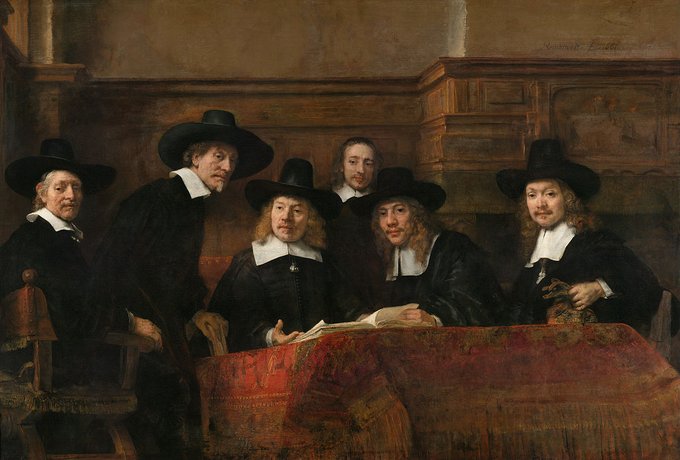
However, if one should fail, God would give unto one the law of sacrifice and provide a Saviour for one, that one might be brought back again into the presence and favour of God and partake of eternal life with God. This is the plan of redemption chosen and instituted by the Alight before human was placed on Earth. Adam and Eve were taught the law of sacrifice and were commanded to practice it by giving offerings. These included two emblems: the firstlings of the flock and the first fruits of the field. They obeyed without questioning. The effect of this law was that the best of the Earth produced, the best specimen in the flock or heard should not be sued for self, but for God. At a time in history when it was a struggle to make sure the family had food, those who sought to worship the Lord were asked to sacrifice the best part of their source of life. It was the real test of Adam and Eve’s faith, and they obeyed. “And now I speak concerning baptism. Behold, elders, priests, and teachers were baptized; and they were not baptized save they brought forth fruit meet that they were worthy of it. Neither did they receive any unto baptism save they came forth with a broken heart and a contrite spirit, and witnessed unto the church that they truly repented of all their sins. #RandolphHarris 14 of 20

“And none were received unto baptism save they took upon them the name of Christ, having a determination to serve him to the end. And after they had been received unto baptism, and were wrought upon and cleansed by the power of the Holy Ghost, they were numbered among the people of the church of Christ; and their names were taken that they might be remembered and nourished by the good word of God, to keep them in the right way, to keep them continually watchful unto prayer, relying alone upon the merits of Christ, who was the author and the finisher of their faith. And the church did meet together oft, to fast and to pray, and to speak one with another concerning the welfare of their souls. And hey did meet together oft to partake of bread and wine, in remembrance of the Lord Jesus. And they were strict to observe that there should be no iniquity among them; and whoso was found to commit iniquity, and three witnesses of the church did condemn them before the elders, and if they repented not and confessed not, their names were blotted out, and they were not numbered among the people of Christ. #RandolphHarris 15 of 20

“However, as oft as they repented and sought forgiveness, with real intent, they were forgiven. And their meetings were conducted by the church after the manner of the workings of the Spirit, and by the power of the Holy Ghost; for as the power of the Holy Ghost led them whether to preach, or to exhort, or to pray, or to supplicate, or to sing, even so it was done,” reports Moroni 6.1-9. It is especially in our families and similarly close associations that we must identify the elements of assault and withdrawal that defeat love and right relation to others. By insight and practice we must break away from them and reserve them, first by learning a calm but firm non-cooperation with those poisonous elements, and then by initiatives of goodwill and blessing in the midst of them. What we do in our meetings as Christians should be focused on enabling us to do this effectively wherever we are. Those meetings should and could be centers from which powerfully redemptive community spreads. Where to start? In various parts of the United States of America, publicly owned vehicles (police, street maintenance, schools) wear a bumper sticker that proclaims, “There is No Excuse for Domestic Violence.” It is a wonderful idea. #RandolphHarris 16 of 20

However, we need to go deeper, of course. We need to become the kind of people whom domestic violence is unthinkable and never an option. We must be transformed in such a way that our minds and bodies—our very souls—simply do not have the makeup for it. This is the work of the Christian spiritual formations. We must begin in the family. Now the slogan must be, “There is No Excuse for Assault or Withdrawal in the Home.” Do you think that would take care of intimate partner violence? Of course it would. However, the reserve is not true: merely avoiding the subject of intimate partner violence, domestic violence or assault can still leave the home a hell of cutting remarks, contempt, coldness, and withdrawal or noninvolvement. Such a hell is often found in the homes of Christians and even of Christian leaders. Frequently they seem to honestly think that such a condition is normal, and they have no knowledge of any other way. Their very theology may strengthen this tragically false outlook. If I were married, I would seek the help of my spouse in this matter. If not, then a trusted friend who is spiritually mature and not abusive. #RandolphHarris 17 of 20

I would then number my areas of need in order of importance, say: Purity, Mind, Prayer, Witness, Giving, Work, Friendship, and Leadership. Then, beginning with the first need, Purity, I would look over the suggested sub-disciplines and choose one to three things which I think would best help me improve. In doing this, I would resist the temptation to commit myself to too many disciplines. Better to succeed in a few than to assure failure by overcommitment. Perhaps, regarding the discipline of Purity I would choose to commit myself, first, to memorizing Scripture which help steel me to temptations, and second, to not watching anything sensual on TV or at the movies. Perhaps under Witness, I would make commitments to pray that God would give me someone to share Christ with and to join an interest club to meet unchurched people. After going through my life I would have perhaps twenty specific things which I could do to improve my eight weakest areas. However, before commitment to the specifics, I would look at the whole list with honest realism, asking, “Are the things which I am about to commit to really within my reach with the help of God?” #RandolphHarris 18 of 20

Perhaps, regarding the discipline of Mind, I have become so convicted that I am considering committing myself to reading the Old Testament once and the New Testament twice, plus reading The Book of Mormon. Make sure your commitments make you sweat, but also make sure that taken together they are manageable. It is better to increase your commitments as you succeed than to bite off more than you can do. Success begets success. Before setting your commitments in concrete, give yourself a week to think about them and pray over them. Seek the Holy Spirit’s guidance for other ways of personal discipline not mentioned in this essay. Ask your spouse of friend to hold you accountable for your disciplines. Even if it has to be over the phone, make sure you regularly confer and pray. Be honest about your success and failures. And be willing to take advice and make adjustments. You may have some complications, no doubt, and may not succeed at time. When this happens, wounded pride and embarrassment can make you want to take your marbles and go home. We do not like to do things which we fail. #RandolphHarris 19 of 20

However, we must realize that failure is a part of succeeding, provided we admit our failures and go at it again. Moreover, we are not under Law but grace. God is not counting our failure against us, and we are not building a treasure of merit with our success. We are simply trying to live a disciplined life which pleases our loving Father—and He understands our failures better than we understand our own children’s. When the movement in one direction has exhausted itself, there is a pause, and then a reversal directs the movement into the opposite direction. The flow of Nature follows the course indicated by the Principle of Reversion, which throws it back after a time in the opposite direction. When the point of farthest travel is reached, the forces reverse themselves. In this way, excess disciplines and even defeats itself. In this way too the Universe and all the different kinds of existence in it are kept in equilibrium. In the to-and-fro movement of human breathing, we have a kay to human development. Study it well with this assistance and you will discern a forward and backward movement, a pendulum-like swing, here too. Everything in the Universe is subject to a pendulum-like movement. It shuttles to and from with a coming-to-be and a ceasing-to-be effect. #RandolphHarris 20 of 20

Winchester Mystery House

Sarah Winchester had multiple rooms dedicated to plants and flowers. This room, her South Conservatory, contains over 200 panes of glass to allow for natural light. How would you spend a day alone in this room?

Explore the house from the comfort of your own home!
Learn More Link in bio. winchestermysteryhouse.com

A 160-room mansion built to appease the spirits who died at the hands of the Winchester Rifle 👻
🗝 winchestermysteryhouse.com


Admittedly, We Now Live in a Different World!

The horse weighs one thousand pounds and I weigh ninety-five. I guess I had better get him to cooperate. Nevertheless, we cannot overlook the fact that, just as consciousness arises from the unconscious, the ego-center, too, crystallizes out of a dark depth in which it was somehow contained in potential. Just as a human mother can only produce a human child, whose deepest nature lay hidden during its potential existence within her, so we are practically compelled to believe that the unconscious cannot be an entirely chaotic accumulation of instincts and images. There must be something to hold it together and give expression to the whole. Its center cannot possibly be the ego, since the ego was born out of it into consciousness and turns its back on the unconscious, seeking to shut it out as much as possible. Or can it be that the unconscious loses its center with the birth of the ego? In that case we would expect the ego to be far superior to the unconscious in influence and importance. Or can it be that the unconscious loses it center with the birth of the ego? #RandolphHarris 1 of 16

In that case we would expect the ego to be far superior to the unconscious in influence and importance. The unconscious would then follow meekly in the footsteps of the conscious, and that would be just what we wish. Unfortunately, the facts show the exact opposite: consciousness succumbs all too easily to unconscious influences, and these are often truer and wiser than our conscious thinking. Also, it frequently happens that unconscious motives overrule our conscious decisions, especially in matters of vital importance. Indeed, the fate of the individual is largely dependent on unconscious factors. Careful investigation shows how very much our conscious decisions depend on the undisturbed functioning memory. However, memory often suffers from the disturbing inference of unconscious contents. Moreover, it functions as a rule automatically. Ordinarily it uses the bridges of association, but often in such an extraordinary way that another thorough investigation of the whole process of memory-reproduction is needed in order to find out how certain memories managed to reach consciousness at all. And sometimes these bridges cannot be found. In such cases it is impossible to dismiss the hypothesis of the spontaneous activity of the unconscious. #RandolphHarris 2 of 16

Another example is intuition, which is chiefly dependent on unconscious processes of a very complex nature. Because of this peculiarity, I have defined intuition as “perception via the unconscious.” Normally the unconscious collaborates with the conscious without friction or disturbance, so that one is not even aware of its existence. However, when an individual or a social group deviates too far from their instinctual foundations, they then experience the full impact of unconscious forces. The collaboration of the unconscious is intelligent and purposive, and even when it acts in opposition to consciousness its expression is still compensatory in an intelligent way, as if it were trying to restore the lost balance. There are dreams and visions of such an impressive character that some people refuse to admit that they could have originated in an unconscious psyche. They prefer to assume that which phenomena derive from a sort of “superconsciousness.” Such people make a distinction between a quasi-physiological or instinctive unconscious and a psychic sphere or layer “above” consciousness, which they style the “superconscious.” #RandolphHarris 3 of 16

As a matter of fact, this psyche, which in Indian philosophy is called the “higher” consciousness, corresponds to what we in the New World called the “unconscious.” Certain dreams, visions, and mystical experiences do, however, suggest the existence of a consciousness in the unconscious. However, if we assume a consciousness in the unconscious, we are at once faced with the difficulty that no consciousness can exist without a subject, that is, an ego to which the contents are related. Consciousness needs a center, an ego to which something is conscious. We know of no other kind of consciousness, nor can we imagine a consciousness without an ego. When there is no one to say: “I am conscious,” there can be no consciousness. Much like there could be no World without God. “In the beginning God created the Heavens and the Earth. Now the earth was formless and empty, darkness was over the surface of the deep, and the spirit of God was hovering over the waters. And God said, ‘Let there be light,’ and there was light. God saw that the light was good, and he separated the light from the darkness. God called the light ‘day,’ and the darkness he called ‘night.’ And there was evening, an there was morning—the first day,” reports Genesis 1.1-5. #RandolphHarris 4 of 16

It is unprofitable to speculate about things we cannot know. I therefore refrain from making assertions that go beyond the bounds of science. It was never possible for me to discover in the unconscious anything like a personality comparable with the ego. However, although a “second ego” cannot be discovered (except in the rare cases of dual personality), the manifestations of the unconscious do at least show traces of personalities. A simple example is the dream, where a number of real or imaginary people represent the dream-thoughts. In nearly all the important types of dissociation, the manifestations of the unconscious assume a strikingly personal form. Careful examination of the behaviour and mental content of these personifications, however, reveals their fragmentary character. They seem to represent complexes that have split off from a greater whole, and are the very reverse of a personal center of the unconscious. I have always been greatly impressed by the character of dissociated fragments as personalities. RandolphHarris 5 of 16

Hence I have often asked myself whether we are not justified in assuming that, if such fragments have personality, the whole from which they were broken off must have personality to an even higher degree. #Since it does not depend on whether the fragments are large or small, the inference seemed logical. Why, then, should not the whole have personality too? Personality need not imply consciousness. It can just as easily be dormant or dreaming. The general aspect of unconscious manifestations of the unconscious assume a strikingly personal form. Careful examination of the behaviour and mental content of these personifications, however, reveals their fragmentary character. They seem to represent complexes that have split off from a greater whole, and are the very reverse of a personal center of the unconscious. I have always been greatly impressed by the character of dissociated fragments as personalities. Hence I have often asked myself whether we are not justified in assuming that, if such fragments have personality, the whole from which they were broken off must have personality to an even higher degree. The inference seemed logical, since it does not depend on whether the fragments are large or small. #RandolphHarris 6 of 16

Why, then, should not the whole have personality too? Personality need not imply consciousness. It can just as easily be dormant or dreaming. The general aspect of unconscious manifestations is in the main chaotic and irrational, despite certain symptoms of intelligence and purposiveness. The unconscious produces dreams, visions, fantasies, emotions, grotesque ideas, and so forth. This is exactly what we would expect a dreaming personality to do. It seems to be a personality that was never awake and was never conscious of the life it had lived and of its own continuity. The only question is whether the hypothesis of a dormant and hidden personality is possible or not. It may be that all of the personality to be found possible or not. It may be that all of the personality to be found in the unconscious is contained in the fragmentary personifications mentioned before. Since this is very possible, all my conjecture would be in vain—unless there were evidence of much less fragmentary and more complete personalities, even though they are hidden. I am convinced that such evidence exists. Unfortunately, the material to prove this belongs to the subtleties of psychological analysis #RandolphHarris 7 of 16

It is therefore not exactly easy to give the reader a simple and convincing idea of it. There are ideas which beco.me obsolete and are allowed to die. However, three ideas are so fundamental that they will always reappear. They are built into the Universe and therefore into humans themselves. These three cosmic forces—Attraction, Repulsion, and Rest—constitute the triune manifestation of the World-Idea. You will find them in every department of existence. There is a movement in the Universe which during one phase seems constructive, but in a later phase seems destructive. However, both are really part of its order, its divine order, for the two phases belong to each other, complement each other, and are necessary to each other. There are two poles of this universal movement: the one, a going-out, affirming, and the other a coming-back and denying. All nature is bisected by this two-way process. The life of the Universe moves through a series of evolutionary oscillations between rest and activity. It is the increasing of one movement which runs parallel with the decrease of the other movement. #RandolphHarris 8 of 16

One is constructive even while the other is destructive. The rhythmic life alternates and reacts. It brings alternation of the alternations and reactions against the reactions. Just as humans and animals pass through their cycles of infancy, youth, maturity, and senility, so does the planet itself which is their abode. The cycle of existence is never-ending. Whoever understands this truth and his own relationship to it will become humble. Existence is an endless affair but it has periods of rest and withdrawal, changes of form and body, of consciousness and selfhood. We are developments brought forth from it and taken back into it. The Universe plays its little part on the surface of unknowable and ineffable Mind and is gone—only to reappear at some immensely far-off time. Worlds come into being, are maintained for a long or short while, change, and dissolve. As we can readily see by observation and experience, this is not less the situation for the creatures—including human creatures—who inhabit these Worlds. Yet most people are too unprepared, too weak and too shallow, to be willing to take these truths. Infinite Mind releases from within itself an infinite variety of suns, stars, planets, substances, plants, and creatures. #RandolphHarris 9 of 16

Even the process itself is an infinite one, countered only by necessary dissolutions and destructions, pauses and rests. Even Universes get old and die off. All that is released into manifestation is subject to this perpetual law of movement and change, growth and decay, death, reappearance, and recurrence. The Universe comes into being, maintains its varied operations, or passes into dissolution by inherent necessity. The entire Universe will dissolve and vanish into the unseen Power whence it came. However, there are many other Universes and galaxies to replace our own. Dawn follows night in the vast cosmos with rhythmical recurrence. Therefore the self-actualized say that there is neither beginning nor end to the Universe but the perennial flow of eternity. The Final is likewise the First. We must understand clearly that creation and dissolution, evolution and involution continue t recur perpetually. It is not a question of long periods of time coming to a final close. This rhythm of the Universe is incessant. According to the Chinese wisdom, when either of the two aspects has developed to its utmost limit, then it begins to transform itself into the polar opposite of its own accord. #RandolphHarris 10 of 16

Our own proverb “The night is darkest just before dawn” is also apt in the transformation of polar opposites. In the sky we see the same phenomenon. The moment when the waxing moon has reached its fullest is immediately followed by the moment when the process of waning begins. The higher position of the mourning sun is no sooner attained in the overhead sky at noon the great orb begins its downward descent. At new mon the waning process comes to an end and the reverse process occurs. The same turning point is reached at winter and summer solstices. The interrelation of these phenomena with the larger phenomenon of the universal creation and dissolution may be seen. At the extreme point of either process there is a turning. Every moment in Nature ultimately reverses itself, but the point of reversal is not reached until it has gone to the extreme. With the reversal it begins to develop opposite qualities. This is an old and well-known idea in China, not only among the people but also among the philosophers. Lao Tzu for instance, says, “To go father and father means to revert back again.” #RandolphHarris 11 of 16

In this shuttle-and-loom, two-way alternating rhythm of the Universe, when the forces attain the midpoint of their arc, they start working in reverse, going down instead of evolving up, decaying and destroying instead of nurturing and vitalizing, yielding pain instead of pleasure. Every condition in human, every effect in Nature is forever seeking to attain its own fullness. Yet the moment that is attained and a pause ensures, it reverses its direction and begins to seek union with its opposite. Thus it balances itself in the end. Evolution is never a straight line. It could not be, in a two-way Universe. At the crisis-point on each way a shock becomes necessary to force a turnabout. This is the same point referred to by ancient Greek thinkers, where everything destroys itself in the end by its own excesses. Heraclitus meant the same when he too taught that all things tend to turn into their opposites. The movement in one direction sooner or later provokes a countermovement in the opposite direction. This reaction leads to a resistance at some point or points; it may also lead to friction and then to fighting. Each phase of this to-and-fro movement covers long periods. #RandolphHarris 12 of 16

When the impetus in one direction exhausts itself, the opposing impetus awakens from tranquility and it active. Today we are not so far removed in time from a social World in which such a constantly generous response was the presumed ideal. I recall from my childhood that my father, as he drove along in his car, always raised his hand to the driver of an oncoming vehicle, and he or she nearly always reciprocated. (Just recently while driving in rural Georgia, a man acknowledged me in this way. I was mildly shocked.) Of course there were not that many oncoming vehicles then. My father also never passed anyone on sidewalk without acknowledging him or her, unless he was in a crowd; and he would always tip his hat to a woman (who, as such, was assumed to be a lady). These, it might be thought, are small things, and if you tried to acknowledge all the drivers you meet today, you would probably wreck your Ultimate Driving Machine. If you spoke to people on the sidewalk that you were unfamiliar with, they would probably think you were crazy or dangerous. No doubt the profound moral insight of our times would also point out the “hypocrisy” involved in such responses. #RandolphHarris 13 of 16

Admittedly, we now live in a different World. However, is it a better World for that? Could the epidemic of addictions and dysfunctions from which the masses duffer possibly be related to that fact that we are constantly in the presence of people who are withdrawn from us, who do not want to acknowledge we are there and frankly would feel more at ease if we were not—people who in many cases explicitly reject us and feel it only right to do so? Is it not the desperate need for approval that drives people so relentlessly today—causing them to go foolish and self-destructive lengths to be “attractive” or at least to get attention—nothing but the echo of a lost World of constant mutual welcome and blessing in family, neighbourhood, school, and work? “Being attractive” and getting attention is the absolute bottom of barrel of being “with others” –the fifteen minutes of fame (for which Andy Warhol is famous) that is now down to fifteen seconds or less. I do not mean to suggest that anyone can overcome our desperate social situation by an individual act of will. Far from it. Whatever might be done, that is not it. This is the World we now have. #RandolphHarris 14 of 16

To do anything of substance about it will require a grace and wisdom that is at no individual’s disposal, and a long-range plan of personal and social development is required. No doubt God has one in mind. However, to make a start where we are, we must recognize that this our World is not normal, but is only usual at present. We must try to see it for what it is and then begin to think of specific ways grace and truth can begin to change it. And above all, we who follow Jesus must understand that a couple of hours per week of carefully calibrated distance in a church setting will be of little help, and may only enforce the patterns of withdrawal that permeate our fallen World. What could we do in our fellowships that would really help make a difference? “The manner of administering the wine—Behold, they took the cup, and said: O God, the Eternal Father, we ask thee, in the name of thy Son, Jesus Christ, to bless and sanctify this wine to the souls of all those who drink of it, that they may do it in remembrance of the blood of thy Son, which was shed for them; that they may witness unto thee, O God the Eternal Father, that they do always remember him, that they may have his Spirit to be with them. Amen,” reports Moroni 5.1-2. #RandolphHarris 15 of 16

Dear Lord in Heaven, Who have the secrets of planting, Who has the secrets of growth, who has the secrets of harvest, it is a harvest that we pray to you, it is today that we pray to you, your holy day, the celebration of Christ. We thank you, God, for your protection, for watching over our field against all danger, whether animals who might have eaten our crops whether humans who might have encroached in our land, whether spirits who might have wished us ill: against all these, Long-Arm, you have defended us and ours. And so to you, guider and protector, teacher and champion, we pray on this day, which is rightly called yours. We thankfully acknowledge that Thou art the Lord our God and God of our fathers, the God of all the lives, our Creator and Creator of the Universe. We offer blessings and thanksgiving to Thy great and holy names because Thou hast kept us in life and sustained us; s mayest Thou continue to keep us in life and sustain us. O gather our exiles into the courts of Thy holy sanctuary to observe Thy statues, to do Thy will, and to serve Thee with a perfect heart. We give thanks unto Thee. Blessed be God to whom we are ever grateful. #RandolphHarris 16 of 16

Cresleigh Homes

#HappyHolidays from #CresleighHomes! We hope you and your loved ones are having a wonderful time together. ❤️ #Cheers to the #WorldsBestCupOfCoffee! 😉4h

This community features a convenient location, and highly ranked schools. Enjoy Cresleigh’s craftsmanship, with single and two-story homes, some with main-floor primary suites, ranging from approximately 2,000 to 4,000 square feet. Make your home your own with hundreds of options for personalization and customization.



Are Not Our Fates All Cast? Why Stand We Here?

To treat comrades like enemies is to go over to the stand of the enemy. It is evident that some sort of framework is needed to simplify the application of the two principles of justice. Each person is to have an equal right to the most extensive total system of equal basic liberties compatible with a similar system of liberty for all. Social and economic inequalities are t be arranged so that they are both: to the greatest benefit to the least advantaged, consistent with the just savings, and attached to offices and positions open to all under conditions of fair equality of opportunity. One must judge the justice of legislation and social policies. However, one also knows that one’s opinions will not always coincide with those of others, since human’s judgments and beliefs are likely to differ especially when their interests are engaged. Therefore, a citizen must decide which constitutional arrangements are just for reconciling conflicting opinions of justice. We may think of the political process as a machine which makes social decision when the views of representatives and their constitutions are fed into it. A citizen will regard some ways of designing this machine as more just than others. #RandolphHarris 1 of 25

So a complete conception of justice is not only able to assess laws and policies but it can also rank procedures for selecting which political opinion is to be enacted into law. There is still another problem. The citizen accepts a certain constitution as just, and one thinks that certain traditional procedures are appropriate, for example, the procedure of majority rule duly circumscribed. Yet since the political process is at best one of imperfect procedural justice, one must ascertain when the enactments of the majority are to be complied with and when they can be rejected as no longer binding. In short, one must be able to determine the grounds and limits of political duty and obligation. Thus a theory of justice has to deal with at least three types of questions, and this indicates that it may be useful to think of principles as applied in a several-stage sequence. The original position is designed to be a fair and impartial point of view that is to be adopted in our reasoning about fundamental principles of justice. Yet, an elaboration of the original position is necessary. So far I have supposed that once the principles of justice are chosen the parties return to their place in society and henceforth judge their claims on the social system by these principles. #RandolphHarris 2 of 25

However, if several intermediate stages are imagined to take place in a definite sequence, this sequence may give us a schema for sorting out the complications that must be faced. Each stage is to represent an appropriate point of view from which certain kinds of questions are considered. Thus I suppose that after the parties have adopted the principles of justice in the original position, they move to a constitutional convention. Here they are to decide upon the justice of political forms and choose a constitution: they are delegates, so to speak, to such a convention. Subject to the constraints of the principles of justice already chosen, they are to design a system for the constitutional powers of government and the basic rights of citizens. It is at this stage that they weigh the justice procedures for coping with diverse political views. Since the appropriate conception of justice has been agreed upon, the veil of ignorance is partially lifted. The persons in the convention have, of course, no information about particular individuals: they do not know their own social position, their place in the distribution of natural attributes, or their conception of the good. #RandolphHarris 3 of 25

However, in addition to an understanding of the principles of social theory, they now know the relevant general facts about their society, that is, its natural circumstances and resources, its level of economic advance and political culture, and so on. They are no longer limited to the information implicit in the circumstances of justice. Given their theoretical knowledge and the appropriate general facts about their society, they are to choose the most effective just constitution, the constitution that satisfies the principles of justice and is best calculated to lead to just and effective legislation. At this point we need to distinguish two problems. Ideally a just constitution would be a just procedure arranged to insure a just outcome. The procedure would be the political process governed by the constitution, the outcome of the body of enacted legislation, while the principles of justice would define an independent criterion for both procedure and outcome. In pursuit of this ideal of perfect procedural justice, the first problem is to design a just procedure. To do tis the liberties of equal citizenship must be incorporated into and protected by the constitution. #RandolphHarris 4 of 25

These liberties include those of liberty of conscience and freedom of thought, liberty of the person, and equal political rights. If it did not embody these liberties, the political system, which I assume to be some form of constitutional democracy would not be a just procedure. Clearly any feasible political procedure may yield an unjust outcome. In fact, there is no scheme of procedural political rules which guarantees that unjust legislation will not be enacted. In the case of a constitutional regime, or indeed of any political for, the ideal of perfect procedural justice cannot be realized. The best attainable scheme is one of imperfect procedural justice. Nevertheless some schemes have a greater tendency than others to result in unjust laws. The second problem, then, is to select from among the procedural arrangements that are both just and feasible those which are most likely to lead to a just and effective legal order. Once again this is Dr. Bentham’s problem of the artificial identification of interest, only here the rules (just procedure) are to be framed to give legislation (just outcome) likely to accord with the principles of justice rather than the principle of utility. #RandolphHarris 5 of 25

To solve this problem intelligently requires a knowledge of the beliefs and interest that humans in the system are liable to have and of the political tactics that they will find it rational to use given their circumstances. The delegates are assumed, then, to know these things. Provided they have no information about particular individuals including themselves, the idea of the original position is not affected. In framing a just constitution I assume that the two principles of justice already chosen define an independent standard of the desired outcome. If there is no such standard, the problem of constitutional design is not well posed, for this decision is made by running through the feasible just constitutions (given, say, by enumeration on the basis of social theory) looking for the ne that in the existing circumstances will most probably result in effective and just social arrangements. Now at this point we come to the legislative stage, to take the next step in the sequence. The justice of laws and policies is to be assessed from this perspective. #RandolphHarris 6 of 25

Proposed bills are judged from the position of a representative legislator who, as always, does not know the particulars about oneself. Statues must satisfy not only the principles of justice but whatever limits are laid down in the constitution. By moving back and forth between the stages of the constitutional convention and the legislature, the best constitution is found. Now the question whether legislation is just or unjust, especially in connection with economic and social policies, is commonly subject to reasonable differences of opinion. In these cases judgment frequently depends upon speculative political and economic doctrines and upon social theory generally. Often the best that we can say of a law of policy is that it is at least not clearly unjust. The application of the difference principle in a precise way normally requires more information than we can expect to have and, in any case, more than the application of the first principle. It is often perfectly plain and evident when the equal liberties are violated. These violations are not only unjust but can be clearly seen to be unjust: the injustice is manifest in the public structure of institutions. #RandolphHarris 7 of 25

However, this state of affairs is comparatively rare with social and economic policies regulated by the difference principle. I imagine then a division of labour between stages in which each deals with different questions of social justice. This division roughly corresponds to the two parts of the basic structure. This division roughly corresponds to the two parts of the basic structure. The first principle of equal liberty is the primary standard for the constitutional convention. Its main requirements are that the fundamental liberties of the person and the liberty of conscience and freedom of thought be protected and that the political process as a whole be a just procedure. Thus the constitution establishes a secure common status of equal citizenship and realized political justice. The second principle comes into play at the stage of the legislature. It dictates that social and economic policies be aimed at maximizing the long-term expectations of the least advantaged under conditions of fair equality of opportunity, subject to the equal liberties being maintained. At this point the full range of general economic and social facts is brought to bear. #RandolphHarris 8 of 25

The second part of the basic structure contains the distinctions and hierarchies of political, economic, and social forms which are necessary for efficient and mutually beneficial social cooperation. Thus the priority of the first principle of justice to the second is reflected in the priority of the constitutional convention to the legislative stage. The last stage is that of the application of rules to particular cases by judges and administrators, and the following of rules by citizens generally. At this stage everyone has complete access to all the facts. No limits on knowledge remain since the full system of rules has now been adopted and applies to persons in virtue of their characteristics and circumstances. However, it is not from this standpoint that we are to decide the grounds and limits of political duty and obligation. This third type of problem belongs to partial compliance theory, and its principles are discussed from the point of view of the original position after those of ideal theory are chosen. Once these are on hand, we can view our particular situation from the perspective of the last stage, as for example in the cases of civil disobedience and conscientious refusal. #RandolphHarris 9 of 25

The availability of knowledge in the four-stage sequence is roughly as follows. Let us distinguish between three kinds of facts: the first principles of social theory (and other theories when relevant) and their consequences; general facts about society, such as its size and level of economic advance, its institutional structure and natural environment, and so on; and finally, particular facts about individuals such as their social position, natural attributes, and peculiar interests. In the original position the only particular facts known to the parties are those that can be inferred from the circumstances of justice. While they know the first principles of social theory, the course of history is closed to them; they have no information about how often society has taken this or that form, or which kinds of societies presently exist. In the next stages, however, the general facts about their society are made available to them but not the particularities of their society are made available to them but not the particularities of their own condition. Since the principles of justice are already chosen, limitations on knowledge can be relaxed. #RandolphHarris 10 of 25

The flow of information is determined at each stage by what is required in order to apply these principles intelligently to the kind of question of justice at hand, while at the same time any knowledge that is likely to give rise to bias and distortion and to set humans against one another is ruled out. The notion of the rational and impartial application of principles defines the kind of knowledge that is admissible. At the last stage, clearly, there are no reasons for the veil of ignorance in any form, and all restrictions are lifted. It is essential to keep in mind that the four-stage sequence is a device for applying the principles of justice. This scheme is part of the theory of justice as fairness and not an account of how constitutional conventions and legislatures actually proceed. It sets out a series of points of view from which the different problems of justice are to be settled, each point of view inheriting the constraints adopted at the preceding stages. Thus a just constitution is one that rational delegates subject to the restrictions of the second stage would adopt for their society. And similarly just laws and policies are those that would be enacted at the legislative stage. #RandolphHarris 11 of 25

Of course, this test is often indeterminate: it is not always clear which of several constitutions, or economic and social arrangements, would be chosen. However, when this is so, justice is to that extent likewise indeterminate. Institutions within the permitted range are equally just, meaning that they could be chosen; they are compatible with all the constraints of the theory. Thus on many questions of social and economic policy we must fall back upon a notion of quasi-pure procedural justice: laws and policies are just provided that they lie within the allowed range, and the legislature, in ways authorized by a just constitution, has in fact enacted them. This indeterminacy in the theory of justice is not in itself a defect. It is what we should expect. If it defines the range of justice more in accordance with our considered judgments than do existing theories, and if it singles out with greater sharpness the graver wrongs a society should avoid, justice as fairness will prove a worthwhile theory. “The works, and the designs, and the purposes of God cannot be frustrated, neither can they come to naught. #RandolphHarris 12 of 25

For God doth not walk in crooked paths, neither doth he turn to the right hand nor to the right hand nor to the left, neither doth he vary from that which he hath said, therefore his paths are straight, and his course is one eternal round. Remember, remember, that it is not the works of Gd that is frustrated, but the work of humans; for although a human may have many revelations, and have power to do many might works, yet if one boasts in one’s own strength, and sets at naught the counsels of God, and follows after the dictates of one’s own will and carnal desires, one must fall and incur the vengeance of a just God upon one. For, behold, you should not have feared humans more than God. Although humans set at naught the counsels of God, and despise God’s words—yet you should have been faithful; and God would have extended His arm and supported you against all the fiery darts of the adversary; and God would have been with you in every time of trouble. However, remember, God is merciful; therefore, repent of that which thou hast done which is contrary to the commandment which I gave you, and thou art still chosen, and art again called to work,” reports Doctrine and Covenants 3.1-4, 7-8, 10. #RandolphHarris 13 of 25

Once of the basic concepts of forgiveness is that one must be truly repentant, having satisfied justice before forgiveness can take place. There should be no license for sin, but mercy should go hand and hand with reproof. There are many people who seem to rely solely on the Lord’s mercy rather than on accomplishing their own repentance. The Lord may temper justice with mercy, but he will never supplant it. Mercy can never replace justice. God is merciful, but he is also just. An eternal aspect of justice has been decreed by divine law, that “God is not mocked: for whatsoever a human soweth, that shall one also reap,” reports Galatians 6.7. The gospel of Jesus Christ is founded on law for the salvation and blessing of its people. For every law the Lord give us, there is also a penalty for its violation. The prophet Alma explained this very plainly: “Now,” he said, “how could a human repent expect one should sin? If there was no law, how could one sin? How could there be a law save there was a punishment?” reports Alma 42.17. The Saviour Himself declared that He came to fulfill the law, not to do away with it, but with the law Jesus brought the principle of mercy to temper its enforcement, and to bring hope and encouragement to the offenders for forgiveness through repentance. #RandolphHarris 14 of 25

Liberty can always be explained by a reference to three items: the agents who are free, the restrictions or limitations which they are free from, and what it is that they are free to do or not to do. Complete explanations of liberty provide the relevant information about these three things. Very often certain matter are clear from the context and a full explanation is unnecessary. The general description of liberty, then, has the following form: this or that person (or persons) is free (or not free) from this or that constraint (or set of constraints) to do (or not to do) so and so. Associations as well as natural persons may be free or not free, and constraints may range from duties and prohibitions defined by law to the coercive influences arising from public opinion and social pressure. When we consider liberty in connection with constitutional and legal restrictions, in these cases liberty is a certain structure of institutions, a certain system of public rules defining rights and duties. Set in this background, liberty always has the above three-part form. Moreover, just as there are various kinds of agents who may be free—persons, associations, and states—so there are many kinds of conditions that constrain them and innumerable sorts of things that they are or are not fee to do. #RandolphHarris 15 of 25

In this sense there are many different liberties which on occasion it may be useful to distinguish. Yet these distinctions can be made without introducing different senses of liberty. Thus when their doing something or not doing something is protected from interference by other persons, persons are at liberty to do it. If, for example, we consider liberty of conscience as define by law, then individuals have this liberty when they are free to pursue their moral, philosophical, or religious interests without legal restrictions requiring them to engage or not to engage in any particular form of religious or other practice, and when other humans have a legal duty not to interfere. A rather intricate complex of rights and duties characterize any particular liberty. Not only must it be permissible for individuals to do or not to do something, but government and other persons must have a legal duty not to obstruct. I shall not delineate these rights and duties in any detail, but shall suppose that we understand their nature well enough for our own purposes. #RandolphHarris 16 of 25

First of all, it is important to recognize that the basic liberties must be assessed as a whole, as one system. That is, the worth of one liberty normally depends upon the specification of the other liberties, and this must be taken into account in framing a constitution and in legislation generally. While it is by and large true that a greater liberty is preferable, this holds primarily for the system of liberty as a whole, and not for each particular liberty. Clearly when the liberties are left unrestricted they collide with one another. To illustrate by an obvious example, certain rules of order are necessary for intelligent and profitable discussion. Without the acceptance of reasonable procedures of inquiry and debate, freedom of speech loses its value. It is essential in this case to distinguish between rules of order limit own freedom, since we cannot speak whenever we please, they are required to gain the benefits of this liberty. Thus the delegates to a constitutional convention, or the members of the legislature, must decide how the various liberties are to be specified so as to yield the best total system of equal liberty. They have to balance one liberty against another. #RandolphHarris 17 of 25

The best arrangement of the several liberties depends upon the totality of limitations to which they are subject, upon how they hang together in the whole scheme by which they are defined. While the equal liberties may, therefore, be restricted, these limits are subject to certain criteria expressed by the meaning of equal liberty and the serial order of the two principles of justice. Offhand there are two ways of contravening the first principle. Liberty is unequal as when one class of persons has a greater liberty than another, or liberty is less extensive than it should be. Now all the liberties of equal citizenship must be the same for each member of society. Nevertheless some of the equal liberties may be more extensive than others, assuming that their extensions can be compared. More realistically, if it is supposed that at best each liberty can be measured on its own scale, then the various liberties can be broadened or narrowed according to how they affect one another. When lexical order holds, a basic liberty covered by the first principle can be limited only for the sake of liberty itself, that is, only to insure that the same liberty or a different basic liberty is properly protected and to adjust the one system of liberties in the best way. #RandolphHarris 18 of 25

The adjustment of the complete scheme of liberty depends solely upon the definition and extent of the particular liberties. Of course, this scheme is always to be assessed from the standpoint of the representative equal citizen. From the perspective of the constitutional convention or the legislative stage (as appropriate) we are to ask which system it would be rational for one to prefer. A final point. The inability to take advantage of one’s rights and opportunities as a result of poverty and ignorance, and a lack of means generally, is sometimes counted among the constraints definitive of liberty. I shall not, however, say this, but rather I shall think of these things as affecting the worth of liberty, the value to individuals of the rights that the first principle defines. With this understanding, and assuming that the total system of liberty is drawn up in the manner just explained, we may not that the two-part basic structure allows a reconciliation of liberty and equality. Thus liberty and the worth of liberty are distinguished as follows: liberty is represented by the complete system of the liberties of equal citizenship, while the worth of liberty to persons and groups is proportional to their capacity to advance their ends within the framework the system defines. #RandolphHarris 19 of 25

Freedom as equal liberty is the same for all; the question of compensating for a lesser than equal liberty does not arise. However, the worth of liberty is not the same for everyone. Some have greater authority and wealth, and therefore greater means to achieve their aims. The lesser worth of liberty is, however, compensated for, since the capacity of the less fortunate members of society to achieve their aims would be even less were they not to accept the existing inequalities whenever the difference principle is satisfied. However, compensating for the lesser worth of freedom is not to be confused with making good an unequal liberty. Taking the two principles together, the basic structure is to be arranged to maximize the worth to the least advantaged of the complete scheme of equal liberty shared by all. This defined the end of social justice. These remarks about the concept of liberty are unhappily abstract. At this stage it would serve no purpose to classify systematically the various liberties. Instead I shall assume that we have a clear enough idea of the distinctions between them, and that in the course of taking up various cases these matters will gradually fall into place. #RandolphHarris 20 of 25

When does repentance become effective? When are the demands of justice satisfied? When does the principle of mercy take over? I suppose the answer as clear as that given by Alma: “For behold, justice exerciseth all his demands, and also mercy claimeth all which is her own; and thus, none but truly penitent are saved. What do ye supposed that mercy can rob justice? I say unto you, Nay; not one whit. If so, God would cease to be God,” reports Alma 42.24-25. This is possible and can be actual for each of us because of what God, the source and governor of all, is. “God is Love.” Yes. However, we must not miss the essential point. The profound good news is not just that he loves us, as is often said. A pretty mean person can love someone for special reasons. “If you love those who love you, what reward will you get? Are not even the tax collectors doing that? And if you greet only your own people, what are you doing more than other? Do not even pagans do that? Be perfect, therefore, as your Heavenly Father is perfect,” reports Matthew 5.46-48. God is Love and sustains His love for us from His basic reality as Love, which dictates his Trinitarian nature. #RandolphHarris 21 of 25

God is in Himself a sweet society of love, with a first, second, and third person to complete a social matrix where not only is there love and being loved, but also shared love for another, the third person. Community is formed not by mere love and requited love, which by itself is exclusive, but by shared love for another, which is inclusive. And within the Trinity there is, I believe, not even a thought of “First, Second, and Third.” There is no subordination within the Trinity, not because of some profound metaphysical fact, but because the members of the Trinity will not have it. The nature of personality is inherently communal, and only the Trinity does justice to what personality is. Aristotle, pagan but profound, says of human personality: The individual, when isolated, is not self-sufficing, and therefore one is like a part in relation to the whole. However, whoever is unable to live in society, or who has no need of it because one is sufficient for oneself, must be either a beast a god. However, this fundamental fact about human personality is rooted in the nature of its Creator, and the writers of the Bible were well aware of it long before Aristotle. #RandolphHarris 22 of 25

We are told on the earliest pages of the Bible that “it is not good that the man should be alone,” and so God decided to make “a helper to be a match for him,” reports Genesis 2.18. Centuries later Paul pointed out that “not one of us lives unto oneself and not one dies unto oneself,” reports Romans 14.7. Paul knew something that Aristotle could not know, however: “whether we live or die we are the Lord’s,” reports Romans 14.8. And for this purpose, “Christ died and lived again, that He might be Lord both of the dead and of the living,” reports Romans 14.9. Human beings are really together only in God, and all other ways of “being with” fall short of the needs of basic human nature. The secret of all life-giving relations to others, and of all that is social, lies in the fact that the primary other for a human being, whether one wants it or not, is always God. All human kind is of one Author, and is one volume; when one human dies, one chapter is not torn out of the book, but translated into a better language, and every chapter must be translated. God employs several translators: some pieces are translated by age, some by sickness, some by war, some by justice. #RandolphHarris 23 of 25

However, God’s hand is in every translation, and His hand shall bind up all our scattered leaves again for that liberty where every book shall be open to one another. “Now I, Moroni, after having made an end of abridging the account of the people of Jared, I had supposed not to have written more, but I have not as yet perished; and I make not myself known to the Lamanites lest they should destroy me. For behold, their wars are exceedingly fierce among themselves; and because of their hatred they put to death every Nephite that will not deny the Christ. And I, Moroni, will not deny the Christ; wherefore, I wander withthersoever I can for the safety of mine own life. Wherefore, I write a few more things, contrary to that which I had supposed; for I had supposed not to have written any more; but I write a few more things, that perhaps they may be worth unto my brethren, the Lamanites, in some future day, according to the will of the Lord,” reports Moroni 1.1-5. God of planting and grown, please bless my work today. Please bring together water and soil and seed, please bring to the abundant rain, snow, light, and air. Please stir life up with them. Please provide rain and snow so my garden will have prosperous growth in the spring and summer. #RandolphHarris 24 of 25

The covenant which God made with Abraham, and His pledge unto Isaac, which God established unto Jacob as a statute, unto Israel for an everlasting covenant; Saying: “Unto you will I give the land of Canaan, as the portion of your inheritance.” When you were but few in number, yea, very few, mere sojourners in the land, wandering from people to people, and from one kingdom to another, God permitted no human to oppress you; yea, for your sake God reproved kings, saying: “Touch not Mine anointed and do My prophets no harm.” Sing unto the Lord, all the Earth; proclaim His salvation from day to day. Declare God’s glory among the nations, His marvellous works among all the peoples. For great is the Lord, and highly to be praised; He is to be revered above all who are worshipped as gods. The gods of the heathens are things of nought; but the Lord made the Heavens. Honour and majesty are before God; strength and gladness are in His abode. Ascribe unto the Lord, O families of humankind, ascribe unto the Lord glory and strength. Render unto the Lord the glory due unto His name; with offerings of homage come into His courts; worship the Lord in the beauty of holiness. #RandolphHarris 25 of 25

Cresleigh Homes

With modern kitchens and the perfect spots to Facetime family, the holidays are just better at @HUBApts. 😄

Featuring sidewalk-lined streets, parks, Folsom Lake, nature trails, and a comprehensive array of conveniences and amenities, this vibrant community is a place where it is easy to meet friends and your neighbours are like family. https://sites.google.com/fpimgt.com/hubvirtualtours/home

The Unconscious Thinks and Lives in Terms of Millennia–for that We Require the Help of the Black Magician!

People who take an optimum amount of vitamin C will experience only a quarter as much illness as those who do not. Through proper use, we could raise the average life expectancy by eight years. We have certain ideas as to how a civilized or educated or moral being should live, and we occasionally do our best to fulfill these ambitious expectations. Vegetables are interesting but lack a sense of purpose when unaccompanied by a good cut of meat. We call the unconscious “nothing,” and yet it is a reality in poetentia. The thought we shall think, the deed we shall do, even the fate we shall lament tomorrow, all lie unconscious in our today. The unknown is us which the affect uncovers was always there and sooner or later would have presented itself to the conscious. Sarah Winchester’s mansion has hosted many glittering, star studded parties and was regarded as the place to see and been seen. Conrad Nicholson Hilton, Constance Hilton, Zsa Zsa Gabor, William Randolph Heart, Phoebe Apperson, Vivien Leigh, Hattie McDaniel, and Sidney Howard are said to have visited. As often happens, the intensity of emotion experienced over the years by those anxious to be recognized at the mysterious mansion has left the grand Queen Anne, Eastlake, Gothic mansion uniquely stocked with echoes from the past. #RandolphHarris 1 of 28

The only slightly surprising element to this haunted house is that ghosts were apparently not officially acknowledged until 1985, just prior to the mansion’s $40-million renovation. During mid-December in 1985, everyone at the Winchester mansion was busy preparing for the upcoming day when the mansion would once again receive guests. No matter what their usual duties or job titles, all employees were directly involved with the last-minute details—secretaries were sweeping, butlers were dusting, waitresses were helping make up guest rooms. The place was a veritable model of industry. Mr. Jim was in the Grand Ballroom, which some consider the most beautiful room in the house, in anticipation of the new carpet being installed. Like many of those on the staff, Mr. Jim was a part-time Hollywood actor; given the star-studded history of the mansion, the “day job” was very much a labour of love. Being able to devote some of himself this gorgeous room that had been so important to the history of movie-making felt more like a privilege than a chore. It was also a perfect time, he thought, to commune with the spirits of those who came to the mansion to celebrate receiving Academy Awards here. As Mr. Jim’s experience unfolded, it became a far closer encounter than he anticipated. #RandolphHarris 2 of 28

The Grand Ballroom is large and the job had to be done thoroughly, so Mr. Jim was taking his time and making sure he did not miss any part of the floor. After repeatedly going back over to a certain area in the Grand Ballroom, he realized that while the rest of the room was kept at a very comfortable temperature, the air in that particular spot was incredibly chilly. More puzzled than concerned Mr. Jim wanted to determine what was causing this draft. The temperature was an inexplicably 20 degrees Fahrenheit cooler in this circle which was about 45 inches in diameter near a wall, mahogany framed mirror. As Mr. Jim wiped his cloth over the reflective glass, he was astonished to see the face a young man, with slick dark hair, smoking a cigarette staring back at him. Mr. Jim was alone in the room, so he quickly turned around to see who had joined him. There was no one else in the room, and that was not his face in the mirror. He turned back to the mirror. The image was still there. That was enough for Mr. Jim. He took it as a sign to remove the carpet he had just installed. #RandolphHarris 3 of 28

According to information released by the mansion, the mirror was gifted to the mansion by Boris Karloff with a note saying, “A warm private friendship has subsisted between us for half our lives, interrupted by no untoward occurrence, and never for a moment cooling into indifference. Of this friendship, the source of so much happiness to me, I wish to leave, if not an enduring memorial, at least an affectionate and grateful acknowledgment. I inscribe this mirror to you.” One night, I was in the Winchester mansion, standing in the presence of a sublime hieratic figured we now called the “Warlock” who was clothed in a long black robe reflecting from the mirror. This warlock was Boris Karloff, and he had just ended a lengthy discourse with the words, “And for that we require the help of black magician.” Then the door suddenly opened and an old man came in, the “black magician,” who however was dressed in a white rob. He too looked noble and sublime. The black magician evidently wanted to speak with the warlock, but he hesitated to do so in my presence. As that the warlock, point to me, said, “Speak, only an innocent is here.” So the black magician began to relate a strange story of how he had found the lost keys of Paradise and did not know how to use them. #RandolphHarris 4 of 28

The black magician told the warlock (Boris) that the king of the country in which he lived was seeking a suitable tomb for himself. The king’s subjects had chanced to dig up an old sarcophagus, threw away the bones, and had the empty sarcophagus buried again for later use on the spot that this sprawling mansion now occupies. However, no sooner had the bones seen the light of day than the being to whom they once had belonged—the virgin—changed into a black horse that galloped off into the desert. The black magician pursued it across the sandy coast and beyond, and there after many vicissitudes and difficulties he found the lost keys of Paradise. That was the end of history, and also, unfortunately, of the warlock and his mirror. It supposedly shattered into pieces, was sent out to San Francisco for repair and never returned. This haunting did not fall out as we had wished, no one understand what the warlock, the black magician, and the king were trying to tell us. The meaning of the story died with the disappearance of the haunted mirror. We were confronted with a problem and one which life is always brining us up against: namely, the uncertainty of all moral valuation, the bewildering interplay of good and evil, and the remorseless concatenation of guilt, suffering, and redemption. #RandolphHarris 5 of 28

This path to the primordial religious experience is the right one, but how many recognize it? It is like a still small voice, and it sounds from afar. It is ambiguous, questionable, dark, presaging danger and hazardous adventure; a razor-egged path, to be trodden for God’s sake only, without assurance and without sanction. Hence we must always reckon with the presence of things not yet discovered. These, as I have said, may be unknow quirks of character. However, the possibilities of future development may also come to light in this way, perhaps in just such an outburst of affect which sometimes radically alters the whole situation. The unconscious has a Janus-face: on one side its contents point back to a preconscious, prehistoric World of instinct, while on the other side it potentially anticipates the future—precisely because of the instinctive readiness for action of the factors that determine human’s fate. If we had complete knowledge of the ground plan lying dormant in an individual from the beginning, one’s fate would be in large measure predictable. #RandolphHarris 6 of 28

Now, to the extent that unconscious tendencies—by they backward-looking images or forward-looking anticipations—appear in visions, vision have been regarded, in all previous ages less as historical regression than as anticipations of the future, and rightly so. For everything that will be happens on the basis of what has been, and of what—consciously or unconsciously—still exists as a memory-trace. In s far as no human is born totally new, but continually repeats the stage of development last reached by the species, one contains unconsciously, as an a priori datum, the entire psychic structure developed both upwards and downwards by one’s ancestors in the course of the ages. That is what gives the unconscious its characteristic “historical” aspect, but it is at the same time the sine qua non for shaping the future. For this reason it is often very difficult to decide whether an autonomous manifestation of the unconscious should be interpreted as an effect (and therefore historical) or as an aim (and therefore teleological and anticipatory). The conscious mind thinks as a rule without regard to ancestral preconditions and without taking into account the influence this a priori factor has on the shaping of the individual’s fate. #RandolphHarris 7 of 28

Whereas we think in periods of years, the unconscious thinks and lives in terms of millennia. So when something happens that seems to us an unexampled novelty, it is generally a very old story indeed. We still forget, like children, what happened yesterday. We are still living in a wonderful new World where humans think themselves astonishingly new and “modern.” This is unmistakable proof of the youthfulness of human consciousness, which has not yet grown aware of its historical antecedents. As a matter of fact, the “normal” person convinces me far more of the autonomy of the unconscious than does the insane person. Psychiatric theory can always take refuge behind real or alleged organic disorders of the brain and thus detract from the importance of the unconscious. However, when it comes to normal humanity, such a view is no longer applicable. What one sees happening in the World is no just a shadowy vestige of activities that were once conscious, but expression of a living psychic condition that still exists and always will exist. Were that not so, one might well be astonished. However, it is precisely those who give least credence to the autonomy of the unconscious who are the most surprised by it. #RandolphHarris 8 of 28

Because of its youthfulness and vulnerability, our consciousness tends to make light of the unconscious. This is understandable each, for if one wants to start something on one’s own account. a young person should not let oneself be overawed by the authority of one’s parents. Historically as well as individually, our consciousness has developed out of the darkness and somnolence of primordial unconsciousness. There were psychic processes and functions long before any ego-consciousness existed. Thinking existed long before humans were able to say: “I am conscious of thinking.” The primitive “perils of the soul” consist mainly of dangers to consciousness. Fascination, bewitchment, “loss of soul,” possession, et cetera are obviously phenomena of the dissociation and suppression of consciousness caused by unconscious contents. Even civilized humans are not yet entirely free of the darkness of primeval times. The unconscious is the mother of consciousness. Where there is a mother there is also a father, yet one seems to be unknown. #RandolphHarris 9 of 28

Consciousness in the pride of its youth, may deny its father, but it cannot deny its mother. That would be too unnatural, for one can see in every child how hesitantly and slowly its ego-consciousness evolves out of a fragmentary consciousness lasting for single moments only, and how these islands gradually emerge from the total darkness of mere instinctuality. Consciousness grows out of an unconscious psyche which is older than it, and which goes on functioning together with it or even in spite of it. Although there are numerous cases of conscious contents becoming unconscious again (through being repressed, for instance), the unconscious as a whole is far from being a mere remnant of consciousness. Or are the psychic functions of animals remnants of consciousness? There is little hope of our finding in the unconscious an order equivalent to that of the ego. It certainly does not look as if we were likely to discover an unconscious ego-personality, something in the nature of a Pythagorean “counter-Earth.” And this of course means “miraculous” interposition, but not necessarily of the gross sort our fathers took such delight in representing, and which has so lost is magic for us. #RandolphHarris 10 of 28

If evil were really one under the same sun, the sky would incontinently shrivel to a snakeskin and cast it out in spasms. However, the spasms of Nature are years and centuries; and it will tax human’s patience to wait so long. We may think of the reserved possibilities God keeps in his own hand, under as invisible and molecular slowly self-summating a form as we please. We may think of them as counteracting human agencies which God inspires ad hoc. In short, signs and wonders and convulsions of the Earth and sky are not the only neutralizers of obstruction to God’s plans of which it is possible to think. As long as languages contain a future perfect tense, determinists, following the bent of laziness or passion, the lines of least resistance, can reply in that tense, saying, “It will have been fated,” to the still small voice which urges an opposite course; and thus excuse themselves from effort in a quiet unanswerable way. Vampires, Ghost, and Demons—God Himself, you think, can have no use for them. An immortality of every separate specimen must be to Him and to the Universe as indigestible a load to carry as it is to you. #RandolphHarris 11 of 28

So, engulfing the whole subject in a sort of mental giddiness and nausea, you drift along, first doubting that the mass can be immortal, then losing all assurance in the immortality of a particular person, precious as you all the while feel and realize the latter to be. This, I am sure, is the attitude of mind of some of you before me. However, is not such an attitude due to the verist lack and dearth of your imagination? You take these swarms of alien kinsmen as they are for you: an external picture painted on your retina, representing a crowd oppressive by tis vastness and confusion. As they are for you, so you think they positively and absolutely are. I feel no call for them, you say; therefore there is no call for them. However, all the while, beyond this externality which is your way of realizing them, they realize themselves with the acutest internality, with the most violent thrills of life. It is you who are dead, stone-dead and blind and senseless, in your way of looking. You open your eyes upon a scene of which you miss the whole significance. Each of these grotesque or even repulsive aliens is animated by an inner joy of living as hot or hotter than that which you feel beating in your private breast. #RandolphHarris 12 of 28

The sun rises and beauty beams to light his path. To miss the inner joy of him is to miss the whole of him. Not a being of the countless throng is there whose continued life is not called for, and called for intensely, by the consciousness that animates the being’s form. That you neither realize nor understand nor call for it, that you have no use for it, is an absolutely irrelevant circumstance. That you have a saturation-point of interest tells us nothing of the interest that absolutely are. The Universe, with every living entity which her resources create, creates at the same time a call for that entity, and an appetite for its continuance—creates it, if nowhere else, at least within the heart of the entity itself. It is absurd to suppose, simply because our private power of sympathetic vibration wit other lives gives out so soon, that in the heart of infinite being itself there can be such a thing as plethora, or glut, or supersaturation. It is not as if there were a bounded room where the minds in possession had to move up or make place and crowd together to accommodate new occupants. Each new mind brings its own edition of the Universe of space along with it, its own room to inhabit; and these spaces never crowd each other—the space of my imagination, for example, in no way interferes with yours. #RandolphHarris 13 of 28

The amount of possible consciousness seems to be governed by no law analogous to that of the so-called conservation of energy in the material World. When one human wakes up, or is born, another does not have to go to sleep, or die, in order to keep the consciousness of the Universe a constant quantity. There is a law of the Universe called the Law of Increase of Spiritual energy, by Dr. Wundt, which expressly oppose the law of conservation of energy in physical things. There seems no formal limit to the positive increase of being in spiritual respects; and since spiritual being, whenever it conies, affirms itself, expands and craves continuance, we may justly and literally say, regardless of the defect of our own private sympathy, that the supply of the individual life in the Universe can never possibly, however immeasurable it may become, exceed the demand. The demand for that supply is there the moment the supply itself comes into being, for the beings supplied demand their own continuance. Through many diversified channels of expression, the eternal Spirit of the Universe affirms and realizes its own infinite life. However, if we are theists, we can go no farther without altering the result. #RandolphHarris 14 of 28

God, we can then say, has so inexhaustible a capacity for love that His call and need is for literally endless accumulation of created lives. God can never faint or grow weary, as we should, under the increasing supply. God’s scale is infinite in all things. His sympathy can never know satiety or glut. Furthermore, consciousness in this process does not have to be generated de novo in a vast number of places. It exists already, behind the scenes, coeval with the World. The condition of consciousness is a certain kind of psychophysical movement. Before consciousness can come, a certain degree of activity in the movement must be reached. This requisite degree is called the threshold; but the height of the threshold varies under different circumstances: it may rise of fall. When it falls, as in states of great lucidity, we grow conscious of things of which we should be unconscious at other times; when it rises, as in drowsiness, consciousness sinks in amount. This rising and lowering of a psychophysical threshold exactly conforms to our notion of a permanent obstruction to the transmission of consciousness, which obstruction may, in our brains, grow alternately greater or less. #RandolphHarris 15 of 28

The transmission-theory also puts itself in touch with a whole class of experiences that are with difficulty explained by the production-theory. I refer to those obscure and exceptional phenomena reported at all times throughout human history which the psychical-researchers are doing to much to rehabilitate; such phenomena, namely, as religious conversions, providential leadings in answers to prayer, instantaneous healings, premonitions, apparitions at time of death, clairvoyant visions or impressions, and the whole range of mediumistic capacities, to say nothing of still more exceptional and incomprehensible things. If all our human thought be a function of the brain, then of course, if any of these things are fact—and to my own mind some of them are fact—we may not suppose that they can occur without preliminary brain-action. However, the ordinary production-theory of consciousness is knit up with a peculiar notion of how brain-action can occur—that notion being that all brain-action, without exception, is due to a prior action, immediate or remote, of the bodily sense-organs on the brain. #RandolphHarris 16 of 28

Such action makes the brain produce sensations and mental images, and out of the sensations and images the higher forms of thought and knowledge in their turn are framed. As transmissionists, we also must admit this to the condition of all our usual thought. Sense-action is what lowers the brain-barrier. My voice and aspect, for instance strike upon your ears and eyes; your brain thereupon becomes more previous, and an awareness on your part of what I say and who I am slips into this World from the World behind the veil. However, in the mysterious phenomena to which I allude, it is often hard to see where the sense-organs can come in. A medium, for example, will show knowledge of his sitter’s private affairs which it seems impossible he should have acquired through sight or hearing, or inference therefrom. Or you will have an apparition of some one who is now dying hundreds of miles away. We need only suppose the continuity of our consciousness with a mother sea, to allow for exceptional waves occasionally pouring over the dam. Of course the causes of these odd lowerings of the brain’s threshold still remain a mystery on any terms with its grouping of Heavenly and Hellish forces upon a common center. #RandolphHarris 17 of 28

If it were the dark nor even if all were in the light, we could see no form of anything at all. The contrast of shadow and light is needed to define the form. Opposites are always necessary to each other. This is why they are present throughout the Universe and moreover present in all possible combinations and proportions in all possible rhythms and patterns. It is present in life, in all things, in planets and seasons. It is the eternal and invariable law of manifested existence. For anything to exist for us at all, it needs an opposite to compare it with, or it will remain non-existent to our consciousness. Unless it recognizes the pairs of opposites, thinking cannot come into existence at all. If we had not experienced Evil, we could not appreciate Good. If we had not become lost in Appearance, we could not appreciate Reality. It may be that for us humans, the ultimate meaning of the cosmos lies implicit in this truth. The acting self needs an outer World and an inner one—both. All things in human’s experience can be classified into pairs of opposites—that which experiences and that which is experienced. In each pair the first member itself becomes, on analysis, the second member of another pair. #RandolphHarris 18 of 28

Whatever we look at, we see only in a relationship of contrast to something else. It is a mistake to consider this opposition to be antagonistic. On the contrary, if our perception is to be true and our judgment correct, each should be considered a part of the other. This teaches us to synthesize, to look at both sides of a thing, to include both points of view in an argument, and to add the similarities also instead of nothing the differences alone. It may be unusual, inconsistent, startling, to propose that we think in terms of opposing ideas, of conflicting statements, and find identity in variety, but this is Nature’s own way—her balance. Balance is a teaching which plays on contradictions and finds room for opposites. It seems them both in the structure of the Universe and in the movement of evolution. It puts them in its approach to human problems. Each to view of a thing or idea implies the existence of the contrary view. To understand that the universal evolution depends upon a two-way interconnected movement, and that its comprehension requires us to think about it in oppositional terms, is to be liberated from the narrow, one sided, incomplete, and intolerant thinking which is responsible for so many absurdities and miseries in human history. #RandolphHarris 19 of 28

When both ignore the two-face character of fortune and Nature, optimism becomes unreasonable pessimism. The life of the human being is one of relating to others. We reemphasize: The life of the human beings is one of relating to others. Though many are cursed to live and die alone, we are born of relations and into relations. One of the heart-rending stories found in Sarah Winchester’s diary is of a broken human being living on the streets. He was dying, and Mrs. Winchester took him in and had her staff care for him. When he recovered, she gave him a job and a place to stay on her estate. To merely welcome another, to provide for one, to make a place, is one of the most life-giving and life-receiving things a human being can do. They are the basic, universal acts of love. Our lives were meant to be full of such acts, drawing on the abundance of God, and they achieve their greatest fulfillment precisely when, like Jesus, we “lay down our lives for the brethren.” This “relating” quality reaches into every dimension of human existence. It characterizes the basic nature of all thought and feeling, which is always thought of or feeling something other than itself. #RandolphHarris 20 of 28

The way relate to others pervades the deepest reaches of our body, soul, and World, where our very identity—who we really are—is always intermingled (if sometimes negatively, by reaction) with others who have given us life, sustained us, or walked with us—or perhaps have deeply injured us. The call of “the other” on our lives is a constant for everyone. It is the basic reality of a moral existence, which we retreat from only into a living death of isolation. If we make our purpose to save our life by withdrawal, we lost it. So Jesus said. However, this is not only a revealed truth, it is also a testable fact of life. If you would live, then give—and receive. Now you understand why Sarah Winchester, even though she withdrew, created a microcosm in her own mansion, and kept people employed for 38 years of nonstop construction. “And it came to pass when Corintumr had recovered of his wounds, he began to remember the words which Ether had spoken unto him. He saw that there had been slain by the sword already nearly two millions of his people, and he began to sorrow in his heart; yea, there had been slain two millions of mighty men, and also their wives and the children. #RandolphHarris 21 of 28

“He began to repent of evil which he had done; he began to remember the words which had been spoken by the mouth of all the prophets, and he saw them that they were fulfilled thus far, every whit; and his soul mourned and refused to be comforted. And it came to pass that he write an epistle unto Shiz, desiring him that he would spare the people, and he would give up the kingdom for the sake of their lives of the people. And it came to pass that when Shiz had received his epistle he wrote an epistle unto Coriantumr, that is he would give himself up, that he might slay him with his own sword, that he would spare the lives of the people. And it came to pass that the people repented not of their iniquity; and the people of Coriantumr were stirred up to anger against the people of Shiz; and the people of Shiz were stirred up to anger against the people of Coriantumr; wherefore, the people of Shi did give battle unto the people of Coriantumr. And when Coriantumr saw that he was about to fall he fled again before the people of Shiz. And it came to pass that he came to the waters of Ripliancum, which, by interpretation, is large, or to exceed all; wherefore, when they came to these waters they pitched their tents. #RandolphHarris 22 of 28

“And Shiz also pitched his tents near unto them; and therefore on the morrow they did come to battle. And it came to pass that they fought and exceedingly sore battle, in which Coriantumr was wounded again, and he fainted with the loss of blood. And it came to pass that the armies of Coriantumr did press upon the armies of Shiz that they beat them, that they caused them to flee before them; and they did flee southward, and did pitch their tents in a place which was called Ogath. And it came to pass that they army of Coriantumr did pitch their tents by the hill Ramah; and it was that same hill where my father Mormon did hide up the records unto the Lord, which were sacred. And it came to pass that they did gather together all the people upon all the face of the land, who had not been slain, save it was Ether. And it came to pass that Ether did behold all the doings of the people; and he beheld that the people who were for Coriantumr were gathered together to the army of Coriantumr; and the people who were for Shiz were gathered together to the army of Shiz. Wherefore, they were for the space of four years gathering together the people, that they might get all who were upon the face of the land, and that they might receive all the strength which it was possible that they could receive. #RandolphHarris 23 of 28

“And it came to pass that when they were all gathered together, every one to the army which he would, with their wives and their children—both men, women, and children being armed with weapons of war, having shields, and breastplates, and head-plates, and being clothed after the manner of war—they did march forth one against another to battle; and they fought all that day, and conquered not. And it came to pass that when it was night they were weary, and retired to their camps; and after they had retired to their camps they took up a howling and a lamentation for the loss of the slain of their people; and so great were their cries, their howling and a lamentation for the loss of the slain of their people; and so great were their cries, that they did rend the air exceedingly. And it came to pass that on the morrow they did go again to battle, and great and terrible was that day; nevertheless, they conquered not, and when the night came again they did rend the air with their cries, and their howlings, and their mournings, for the loss of the slain of their people. And it came to pass that Coriantumr wrote again an epistle unto Shiz, desiring that he would not come again to battle, but that he would take the kingdom, and spare the lives of the people. #RandolphHarris 24 of 28

“However, behold, the Spirit of the Lord had ceased striving with them, and Satan had full power over the hearts of the people; for they were given up unto the hardness of their hearts, and the blindness of their minds that they might be destroyed; wherefore they went again to battle. And it came to pass that they fought all that day, and when the night came they slept upon their swords. And on the morrow they fought even until the night came. And when the night came they were drunken with anger, even as a man who is drunken with wine; and they slept again upon their swords. And on the morrow they fought again; and when the night came they had fallen by the sword save it were fifty and two of the people of Coriantumr, and sixty nine of the people of Shiz. And it came to pass that they slept upon their swords that night, and on the morrow they fought again, and they contended in their might with their swords and with their shields, all that day. And when the night came there were thirty and two of the people of Shiz, and twenty and seven of the people of Coriantumr. And it came to pass that they ate and slept, and prepared for death on the morrow. And they were large and mighty men as to the strength of men. #RandolphHarris 25 of 28

“And it came to pass that they fought for the space of three hours, and they fainted with the loss of blood. And it came to pass that when the men of Coriantumr had received sufficient strength that they could walk, they were about to flee for their lives; but behold, Shiz arose, and also his men, and he swore in his wrath that he would slay Coriantumr or he would perish by the sword. Wherefore, he did pursue them, and on the morrow he did overtake them; and they fought again with the sword. And it came to pass that when they had all fallen by the sword, save it were Coriantumr and Shiz, behold Shiz had fainted with the loss of blood. And it came to pass that when Croiantumr had leaned upon his sword, that he rested a little, he smote off the head of Shiz. And it came to pass that after he had smitten off the head of Shiz, that Shiz raised up on his hands and fell; and after that he had struggled for breath, he died. And it came to pass that Coriantumr fell to the Earth, and became as if he had no life. And the Lord spake unto Ether, and said unto him: Go forth. And he went forth, and beheld that the words of the Lord has all been fulfilled; and he finished his record; (and the hundredth part I have not written) and he hid them in a manner that the people of Limhi did find them. #RandolphHarris 26 of 28

“Now the last words which are written by Ether are these: Whether the Lord will that I be translated, or that I suffer the will of the Lord in the flesh, it mattereth not, if it so be that I am saved in the kingdom of God. Amen,” reports Ether 15.1-34. “But the LORD said to him, ‘Not so; if anyone kills Cain, one will suffer vengeance seven times over.’ Then the LORD put a mark on Cain so that no one who found him would kill him. So Cain went out from the LORD’s presence and lived in the land of Nod, east of Eden,” reports Genesis 4.15-16. A view of the World which fails or refuses to recognize that the opposites are essential to it, which accepts its beauty but not its ugliness, is not complete and only a half truth. If there is suffering as well as sweetness in life, that is not accident, nor is it brought into the scheme of things by human evil alone: nothing exists without its contrary. In the end, a human must recognize that there are two forces a work in Nature—and therefore in one’s own life—the ne benign, the other hostile. The cold time is here: time to work and time to rest, time to celebrate inside, time to enjoy the harvest. All about us, the Land of Spirits are singing. All about us, the deities are speaking. Please help me listen, all you divine beings. May I hear your voices. #RandolphHarris 27 of 28

I need much help in cooling my Earth. I cannot do it alone I ask for help from the Sky: please give rise to your cloud with plentiful moisture and ice so the Earth can cool and have water. I ask for help from the rain: please give your moisture to be the plants’ own blood. I ask for help from the soil: please give your minerals from which the plants will form their bodies. I will give my time, I will give my care, I will give my loving stewardship. All these will I give my garden and I ask for your others to give what the garden of Eden will need as well. We will do it together and I will not forget your contribution. Glory His holy name; may your heart rejoice, ye who seek the Lord. Seek the Lord and His strength; seek His presence continually. Remember the marvellous works that He hath done, His wonders, and the judgments He decreed, O seed of Israel, His servant, Children of Jacob, His beloved ones. He is the Lord our God; His judgments are throughout the Earth. Remember His covenant forever, the word which He commanded to a thousand generations. In Luke 18.1-8, Jesus told a parable about an unfair, unjust judge who finally was willing to listen to a woman’s case because of her continual persistence. When it comes to God, that is the way we need to be of what he said. What promises or promises from God are you bringing to His constant remembrance? #RandolphHarris 28 of 28

Winchester Mystery House
WMH 13 Days of Christmas #7
Sarah Winchester’s innovations for water conservation was far ahead of her time. She had multiple rooms dedicated for plants, each with a complex drainage system that allowed for the reuse of water. On today’s episode of the Winchester Mystery House 13 Days of Christmas, explore Sarah’s North Conservatory and learn more about her magnificent innovations.

Winchester Mystery House

A 160-room mansion built to appease the spirits who died at the hands of the Winchester Rifle 👻
🗝 winchestermysteryhouse.com


Once More You Hover Near Me, Forms and Faces!

It is the final proof of God’s omnipotence that he need not exist in order to save us. However, I could prove God statistically. As you can see, I too have had to refer to the “inner voice,” the vocation, and define it as a powerful objective-psychic factor in order to characterize the way in which it functions in the developing personality and how it appears subjectively. Mephistopheles, Amel, in Anne Rice’s novel, The Queen of the Damned, is not personified merely because this creates a better dramatic or theatrical effect, as though Queen Akasha were her own moralist and painted her private devil on the wall. The opening words in the theatrical version, spoken by Prince Lestat—“There comes a time for every vampire when the idea of eternity becomes momentarily unbearable. Living in the shadows, feeding in the darkness with only your own company to keep, rots into a solitary, hollow existence. Immortality seems like a good idea, until you realize you’re going to spend it alone. So I went to sleep, hoping that the sounds of the passing eras would fade out, and a sort of death might happen. But as I lay there, the World didn’t sound like the place I had left, but something different. Better. #RandolphHarris 1 of 25

“It became worthwhile to rise again as new gods were born and worshipped. Night and day, they were never alone. I would become one of them,” are more than just an aesthetic flourish. Like the concretism of the devil, they are an admission of the objectivity of psychic experience, a whispered avowal that this was what actually happened, not because of subjective wishes, or fears, or personal opinions, but somehow quite of itself. Naturally only a dreamer thinks of vampires, but something like a primitive dreamer seems to lurk beneath the surface of our reasonable daytime consciousness. Hence the eternal doubt whether what appears to be the objective psyche is really objective, or whether it might not be imagination after all. However, then, the question arises: have I imagined such and such a thing on purpose, or has it been imagined by something in me? It is a similar problem to that of the neurotic who suffers from an imaginary carcinoma. One knows, and has been told a hundred times before, that it is all imagination, and yet one asks me brokenly, “But why do I imagine such a thing? I don’t want to do it!” To which the answer is: the idea of the carcinoma has imagined itself in him without his knowledge and without his consent. #RandolphHarris 2 of 25

The reason is that a psychic growth, a “proliferation,” is taking the place in his unconscious with his being able to make it conscious. In the face of this interior activity he feels afraid. But since he is entirely persuaded that there can be nothing in his own soul that he does not know about, he must relate his fear to a psychical carcinoma which he knows does not exist. And if he should still be afraid of it, there are a hundred doctors to convince him that his fear is entirely groundless. The neurosis is thus a defence against the objective, inner activity of the psyche, or an attempt, somewhat dearly paid for, to escape from the inner voice and hence from the vocation. For this “growth” is the objective activity of the psyche, which, independently of conscious volition, is trying to speak to the conscious mind through the inner voice and lead him towards wholeness. Behind the neurotic perversion is concealed his vocation, his destiny: the growth of personality, the full realization of the life-will that is born with the individual. It is the man without amor fati who is the neurotic; he, truly, as missed his vocation, and never will he be able to say, “Such reverence for mortals! Then you should have left me as one!” #RandolphHarris 3 of 25

To the extent that a human is untrue to the law of one’s being and does not rise to personality, one has failed to realize one’s life’s meaning. Fortunately, in her kindness and patience, Nature never puts the fatal question so to the meaning of their lives into the mouths of most people. And where no one asks, no one needs to answer. The neurotic’s fear of carcinoma is therefore justified: it is not imagination, but the consistent expression of a psychic fact that exists in a sphere outside consciousness, beyond the reach of one’s will and understanding. If he withdrew into the wilderness and listened to his inner life in solitude, he might perhaps hear what the voice has to say. However, as a rule the miseducated, civilized human being is quite incapable of perceiving the voice, which is something not guaranteed by the current shibboleths. Primitive people have a far greater capacity in this respect; at least the medicine-people are able, as part of their professional equipment, to talk with spirits, trees, and animals, these being the forms in which they encounter the objective psyche or psychic non-ego. #RandolphHarris 4 of 25

Because neurosis is a developmental disturbance of the personality, we physicians of the soul are compelled by professional necessity to concern ourselves with the problem of personality and the inner voice, however remote it may seem to be. In practical psychotherapy these psychic facts, which are usually so vague and have so often degenerated into empty phrases, emerge from obscurity and take visible shape. Nevertheless, it is extremely rare for this to happen spontaneously as it did with the Old Testament prophets; generally the psychic conditions that have caused the disturbance have to be made conscious with considerable effort. However, the contents that then come to light are wholly in accord with the inner voice and point to a predestined vocation, which, if accepted and assimilated by the conscious mind, conduces to the development of personality. Just as the great personality acts upon society to liberate, to redeem, to transform, and to heal, so the birth of personality in oneself has a therapeutic effect. It is as if a river that had run to waste in sluggish side-streams and marshes suddenly found its way back to its proper bed, or as if a stone lying on a germinating seed were lifted away so that the shoot could begin its natural growth. #RandolphHarris 5 of 25

The inner voice is the voice of a fuller life, of a wider, more comprehensive consciousness. That is why, in mythology, the birth of the hero or the symbolic rebirth coincides with sunrise, for the growth of personality is synonymous with an increase of self-consciousness. For the same most heroes are characterized by solar attributes, and the moment of birth of their greater personality is known as illumination. The fear that most people naturally have of the inner voice is not so immature as might be supposed. The contents that rise up and confront a limited consciousness are far from harmless, as is shown by the classic example of the temptation of Christ. In mainstream Christianity, the Devil (or Satan) is a fallen angel who rebelled against God (the most Supreme power ever). Satan was expelled from Heaven and sent to Earth. The Devil is often identified as the serpent in the Garden of Eden, whose persuasion led to the situation that Christian doctrine calls original sin and for which it sees Redemption by Jesus Christ (the Son of God) as the cure. Satan is also identified as the accuser of Job, the tempter of the Gospels, Leviathan and the dragon in the Book of Revelation. #RandolphHarris 6 of 25

As a rule, those legends signify the specific danger to which the person concerned is liable to succumb. If not actually evil, what the inner voice whispers to us is generally something negative. This must be so, first of all because we are usually not as unconscious of our virtues as of our vices, and then because we suffer less from the good than from the bad in us. The inner voice, as I have explained above, makes us conscious of the evil from which the whole community is suffering, whether it be the nation or the whole human race. However, it presents this evil in an individual form, so tat one might at first suppose it to be only an individual characteristic. The inner voice brings the evil before us in a very tempting and convincing way in order to make us succumb. If we do not partially succumb, nothing of this apparent evil enters into us, and no regeneration or healing can take place. (I say “apparent,” though this may sound too optimistic.) If we succumb completely, then the contents expressed by the inner voice act as so many devils, and a catastrophe ensues. However, if we can succumb only in part, and if by self-assertion the ego can save itself from being completely swallowed, then it can assimilate the vice, and we realize that the evil was, after all, only a semblance of evil, but in reality a bringer of healing and illumination. #RandolphHarris 7 of 25

In fact, the inner voice is a “Lucifer” in the strictest and most unequivocal sense of the word, and it faces people with ultimate moral decision without which they can never achieve full consciousness and become personalities. The highest and the lowest, the best and the vilest, the truest and the most deceptive things are often blended together in the inner voice in the most baffling way, thus opening up in us an abyss of confusion, falsehood, and despair. It is naturally absurd for people to accuse the voice of Nature, the all-sustainer and all-destroyer, of evil. If she appears inveterately evil to us, this is mainly due to the old truth that the good is always the enemy of the better. If we did not cline to the traditional good for as long as possible, like the singer Aaliyah in the 2001 Blackground Records Music video We Need a Resolution, we would be foolish indeed. But as Prince Lestat says, “We are the powerful, we are the immortal! We should walk fearless in the open.” A good thing is unfortunately not a good forever, for otherwise there would be nothing better. If better is to come, good must stand aside. Therefore Meister Eckhart says, “God is not good, or else he could be better.” #RandolphHarris 8 of 25

There are times in the World’s history—and our own time may be one of them—when good must stand aside, so that anything destined to be better first appears in evil form. This shows how extremely dangerous it is even to touch these problems, for evil can so easily slip in on the plea that it is, potentially, the better! The problems of the inner voice are full of pitfalls and hidden snares. Treacherous, slippery ground, as dangerous and pathless as life itself once one lets go of the railings. However, one who cannot lose one’s life, neither shall one save it. The hero’s birth and the heroic life are always threatened. The serpents sent by Hera to destroy the infant Hercules, the python that tries to strangle Apollo at birth, the massacre of the innocents, all these tell the same story. To develop the personality is a gamble, and the tragedy is that the daemon of the inner voice is at once our greatest danger and an indispensable help. It is tragic, but logical, for it is the nature of things to be so. If they erect protective barriers, hold up wonder-working images, and point out the roads that wind safely past the abyss, can we, therefore, blame humanity, and all the well-meaning shepherds of the flock and worried fathers of the family? #RandolphHarris 9 of 25

However, in the end, the hero, the leader, the Saviour, is one who discovers a new way to greater certainty. Everything could be left undisturbed did not the new way demand to be discovered, and did it not visit humanity with all the plagues of Egypt until it finally is discovered. The undiscovered vein within us is a living part of the psyche; classical Chinese philosophy names this interior way “Tao,” and likens it to a flow of water that moves irresistibly towards its goal. To rest in Tao means fulfillment, wholeness, one’s destination reached, one’s mission done; the beginning, end, and perfect realization of the meaning of existence innate in all things. Personality is Tao. The earlier non-existence of the cosmos is only physically and not metaphysically true. Even when its form was not developed, its essence was and shall ever be. Whether as hidden seed or grown plant, the appearance and dissolution of the cosmos is a movement without beginning and without end. Science established that the cosmos is in perpetual movement. Philosophy establishes what is the primal substance which is moving. Although the cosmos is a manifestation of World-Mind, it is not and never could be anything more than a fragmentary and phenomenal one. #RandolphHarris 10 of 25

The World-Mind’s own character as undifferentiated undergoes no essential change and no genuine limitation through such a manifestation as thoughts. This is a Universe of unceasing change, both within its atoms and within itself—here of unceasing movement in the same two categories. It is an active Universe. Yet at the heart of each atom there is quiescence, that mysterious stillness of the unseen Power which must be, and is, the Power of God. The new physics finds creation to be a continuous process, which has never had a dated beginning in the past. Its atoms and Universes appear and disappear. What does this indicate? That the unspaced untimed No-Thing out of which all this comes is itself the Reality, and the Universe a showing-forth. One certain thing about the Universe is change. This is because from the moment that Spirit began to go out into seeming time, place, form, relativity, and individual souls, it left behind the infinite stillness of Absolute Being, the motionless Void. The appearances taken could only be fleeting and changing and could only keep this same characteristic until they returned to the still Source. This restlessness was the inevitable consequence of consciousness’ becoming immersed in the unconscious, of Reality’s becoming the victim of illusion, of the Perfect’s becoming shrunk into the imperfection. #RandolphHarris 11 of 25

Reality can not be content to remain with such limitations. So desire for change begins but is never satisfied, is ever active but is ever changing its objects to new ones. Each thing is proceeding back to its origin. This is why change is incessant in the Universe, why only the Origin is without it, and to understand the Changeless is to be enlightened. Lao Tzu wrote: “I come back to the Beginning! I beat down to the very origin of things. It is astonishingly new. Yet it is also the End of all. It is both return and going-out. All begins in death.” There is a central clam behind the Universe’s agitation. The fluidity of human life, ever moving onward and onward and carrying us all with it, is a hint that it is not the ever-real. Energy radiates, whether in the form of continuous waves of disconnected particles—“moment to moment” Buddha called it. It is this cosmic radiation which becomes “matter.” Andrew from the Christian Bible, who met Christ personally and developed an intimate knowledge of Him, possessed an extraordinary heart that had been magnetized by Christ. He was so drawn to Christ, he was sure that if others could just once be exposed to Jesus, it would be enough. “The first thing Andrew did,” the Scriptures tells us, “was to find his brother Simon and tell him, ‘We have found the Messiah,’” reports John 1.41. #RandolphHarris 12 of 25

Certainly Andrew has the right idea! For unlike the caricatures of Christ, the Christ of Scriptures is so winsome, so radically different, so utterly unlike the stereotypes, that when He is truly seen, He draws the most resistant to Himself. Though men and women have always resisted Christ, and will continue to do so, there are untold thousands who will be magnetized to Him when they understand the truth about Him. If we want Andrew-like hearts, we must repeatedly expose ourselves to the raw realities of Christ as they are recorded in the Gospels. Magnetized hearts draw others to Christ. Most people know a great deal about being rejected, being left out, or just not received, not welcome, not acceptable. As the parent/child relationship is perhaps the most perfect illustration of a circle of sufficiency in human life, so it is also the place where the deepest and most lasting wounds can be given. If a child is totally received in its early years by its parents and siblings, it will very likely have a rootedness about it that enables it to withstand most forms of rejection that may come upon a human being in a lifetime. #RandolphHarris 13 of 25

The child will carry its solid relationship to and from its family members throughout life, being sustained by them even long after those loved ones are dead. The child will receive a steady stream of rest and strength from them. By contrast, a small child not adequately received can actually die from not being held and loved; or if the child survives, the individual is likely to be incapable of giving and receiving love in decent human relationships for the rest of its life. If only in the child’s imagination, the delicate human being will be perpetually “left out.” And in this matter, imagination can have the force of reality. Thus the final words of the Old Testament speak of one who must come and “restore the hearts of the fathers to their children, and the hearts of the children to their fathers” to avoid a curse coming to rest upon the land (Malachi 4.6). Of course severe wounds to our rootedness in others may also occur in later life. Failures of various kinds, real or imagined, can bring rejection or detachment from parents and other significant figures. Unfaithfulness is a mate, divorce, failure in career advancement, collapse of a profession, disloyalty of children, or just never making it “in,” wherever “in” may be—all of these break up our human circles of sufficiency. #RandolphHarris 14 of 25

Dysfunction, failure, and deviance in our lives may leave us unconnected to others at levels of our soul where lack of nourishment from deep connections with others means spiritual starvation and loss of wholeness in every dimension. Framing all the many human rejections and broken circles is real or imagined rejection by God because of sin, and a sense of worthlessness from moral failures, often too deep for conscious awareness or words. “My heart and my flesh have rejoiced in the living God,” reports Psalms 83.3. Life is in the highest degree properly in God. In proof of which it must be considered that since a thing is said to live in so far as it operates of itself and not as moved by another, the more perfectly this power is found in anything, the more perfect is the life of that thing. “What was made, in Him was life,” reports John 1.3,4. However, all things were made, except God. Therefore all tings are life in God. In God to live is to understand. In God intellect, the thing understood, and the act of understanding, are one and the same. Hence whatever is in God as understood is the very living or life of God. #RandolphHarris 15 of 25

Now, wherefore, since all tings that have been made by God are in Him as things understood, it follows that all things in Hum are the divine life itself. Creatures are said to be in God in a twofold sense. In one way, so far they are held together and preserved by the divine power; even as we say that things that are in our power are in us. And creatures are thus said to be in God, even as they exist in their own natures. In this sense we must understand the words of the Apostle when he says, “In Him we live, move, and be”; since our being, living, and moving are themselves caused by God. In another sense things are said to be in God, as in Him who knows them, in which sense they are in God through their proper ideas, which in God are not distinct from the divine essence. Hence things as they are in God are the divine essence. And since the divine essence is life and not movement, it follows that things existing in God in this manner are not movement, but life. The thing modelled must be like the model according to the form, not the mode of being. For sometimes the form has being of another kind in the model from that which it has in the thing modelled. #RandolphHarris 16 of 25

Thus the form of a house has in the mind of the architect immaterial and intelligible being; but in the house that exists outside one’s mind, material and sensible being. Hence the ideas of things, though not existing in themselves, are life in the divine mind, as having a divine existence in that mind. “And it came to pass that the days of Ether were in the days of Coriantumr; and Coriantumr was king over all the land. And Ether was a prophet of the Lord; wherefore Ether came forth in the days of Coriantumr, and began to prophesy unto the people, for he could not be restrained because of the Spirit of the Lord which was in him. For he did cry from the morning, even until the going down of the sun, exhorting the people to believe in God unto repentance lest they should be destroyed, saying unto them that by faith all things are fulfilled—wherefore, whoso believeth in God might with surety hope for a better World, yea, even a place at the right hand of God, which hope cometh of faith, maketh an anchor to the souls of men, which would make them sure and steadfast, always abounding in good works, being led to glorify God. #RandolphHarris 17 of 25

“And it came to pass that Ether did prophesy great and marvelous things unto the people, which they did not believe, because they saw them not. And now, I, Moroni, would speak somewhat concerning these things; I would show unto the World that faith is things which are hoped for and not seen; wherefore, dispute not because ye see not, for ye receive no witness until after the trial of your faith. For it was by faith that Christ showed himself unto our father, after he had risen from the dead; and he showed not himself unto them until after they had faith him; wherefore, it must needs be that some had faith in him, for he showed himself not unto the World. However, because of the faith of men Christ has shown himself unto the World, and glorified the name of the Father, and prepared a way that thereby others might be partakers of the Heavenly gift, that they might hope for those things which they have not seen. Wherefore, if ye will but have faith, ye may also have hope, and be partakers of the gift. Behold it was by faith that they of old were called after the holy order of God. Wherefore, by faith was the law of Moses given. However, in the gift of his Son hath God prepared a more excellent way; and it is by faith that it hath been fulfilled. #RandolphHarris 18 of 25

“For if there be no faith among the children of men, Hod can do no miracle among them; wherefore, he showed not himself until after their faith. Behold, it was the faith of Alma and Amulek that caused the prison to tumble to the Earth. Behold, it was the faith of Nephi and Lehi that wrought the change upon the Lamanites, that they were baptized with fire and with the Holy Ghost. Behold, it was the faith of Ammon and his brethren which wrought so great a miracle among the Lamanites. Yes, and even all they who wrought miracles wrought them by faith, even those who were before Christ and also those who were after. And it was by faith that the three disciples obtained a promise that they should not taste of death; and they obtained not the promise until after their faith. And neither at any time hath any wrought miracles until after their faith; wherefore they first believed in the Son of God. And there were many whose faith was so exceedingly strong, even before Christ came, who could not be kept from within the veil, but truly saw with their eyes the things which they had beheld with an eye of faith, and they were glad. #RandolphHarris 19 of 25

“And behold, we have seen in this record that one of these was the brother of Jared; for so great was his faith in God, that when God put forth his finger he could not hide it from the sight of the brother of Jared, because of his word which he had spoken unto him, which word he had obtained by faith. And after the brother of Jared had behold the finger of the Lord, because of the promise which the brother of Jared had obtained by faith, the Lord could not withhold anything from sight; wherefore he showed him all things, for he could no longer be kept without the veil. And it is by faith that my fathers have obtained the promise that these things should come unto their brethren through the Gentiles; therefore the Lord hath commanded me, yes, even Jesus Christ. And I said unto him: Lord, the Gentiles will mock at these things, because of our weakness in writing; for Lord thou hast made us mighty in word by faith, but thou hast not made us mighty in writing; for thou hast made all this people that they could speak much, because of the Holy Ghost which thou hast given them; and thou hast made us that we could write but little, because of the awkwardness of our hands. #RandolphHarris 20 of 25

“Behold, thou hast not made us mighty in writing like unto the brother of Jared, for thou madest him that the things which he wrote were mighty even as thou art, unto the overpowering of a man to read them. Thou hast also made our words powerful and great, even that we cannot write them; wherefore, wen we write we behold our weakness, and stumble because of the placing of our words; and I fear lest the Gentiles shall mock at our words. And when I had said this, the Lord spake unto me, saying: Floods mock, but they shall mourn; and my grace is sufficient for the meek, that they shall take no advantage of your weakness; and if humans come unto me I will show unto them their weakness that they may be humble; and my grace is sufficient for all humans that humble themselves before me; for if they humble themselves before me, and have faith in me, then will I make weak things become strong unto them. Behold, I will show unto the Gentiles their weakness, and I will show unto them that faith, hope and charity bringeth unto me—the fountain of all righteousness. #RandolphHarris 21 of 25

“And I, Moroni, having heard these words, was conformed, and said: O Lord, thy righteous will be done, for I know that thou workest unto the children of men according to their faith; for the brother of Jared said unto the mountain Zerin, Remove—and it was removed. And if he had no had faith it would not have moved; wherefore thou workest after men have faith. For thus didst thou manifest thyself unto thy disciples; for after they had faith, and did speak in thy name, thou didst show thyself unto them in great power. And I also remember that thou hast said that thou hast prepared a house for man, yea, even among the mansions of thy Father, in which man might have a more excellent hope; wherefore man must hope, or one cannot receive an inheritance in the place which thou hast prepared. And again, I remember that thou hast said that thou hast loved the World, even unto the laying down of thy life for the World, that thou mightest take it again to prepare a place for the children of men. And now I know that this love which thou hast had for the children of men is charity; wherefore, except men shall have charity they cannot inherit that place which thou hast prepared in the mansions of thy Father. #RandolphHarris 22 of 25

“Wherefore, I know by this thing which thou hast said, that if the Gentiles have not charity, because of our weakness, that thou wilt prove them, and take which they have received, and given unto them who shall more abundantly. And it came to pass that I prayed unto the Lord that he would give unto the Gentiles grace, that they might have charity. And it came to pass that the Lord said unto me: If they have not charity it mattereth not unto thee, thou hast been faithful; wherefore, thy garments shall be made clean. And because thou hast seen thy weakness thou shalt be made strong, even unto the siting down in the place which I have prepared in the mansion of my Father. And now I, Moroni, bid farewell unto the Gentiles, yea, and also unto my brethren whom I love, until we shall meet before the judgment-seat of Christ, where all men shall know that my garments are not spotted with your blood. And then shall ye know that I have seen Jesus, and that he hath talked with me face to face, and that he told me in plain humility, even as a man telleth another in mine own language, concerning these things; and only a few have I written, because of my weakness in writing. #RandolphHarris 23 of 25

“And now, I would commend you to seek this Jesus of whom the prophets and apostles have written, that the grace of God the Father, and also the Lord Jesus Christ, and the Holy Ghost, which beareth record of them, may be and abide in your forever. Amen,” reports Ether 12.1-41. Dear Lord in Heaven, please let down from your place on high, and fitting a shaft to your bow, let loose your bowstring. Please sink in deep into the sky the shaft of lighting and cause the clouds to burst soaking the World, please bring the Winter’s rain that we so desperately need. The snow skinks back into the Earth, there to nourish the sleeping life that waits patiently for its time to come. God of Winter, you will preform this miracle through many ages. Please transform, again, this dry dusty ground into the frozen white so we may have the pliant green in the summer and spring. Please work, again, the ancient magic, and bring a cold and wet winter to our land. We sing praises unto you Lord, we are Your faithful ones, and give thanks to Your holy name. For while God’s anger is but for a moment, His favour is for a lifetime; weeping many tarry for the night, but joy comes in the morning. #RandolphHarris 24 of 25

I have said in my security: “I shall never be disturbed.” O Lord, in Thy favour, Thou didst set up for me mountains of strength; but when Thou didst turn away from me, I was affrighted. Unto Thee, O Lord, did I call, and unto the Lord I made supplication: “What profit is there in my death, in my going down to the nether World? Can the dust praise Thee? Can it declare Thy truth? Hear, O Lord, and be gracious unto me; Lord, be Thou my helper.” Then Thou didst turn my mourning into dancing; Thou didst loose my sackcloth, and gird me with gladness, so that my soul might continually sing praise to Thee and not be silent; O Lord my God, I will give thanks unto Thee forever. Magnified and sanctified by the name of God throughout the World which He hath created according to His will. May He establish His kingdom during the days of your life and during the life of all the house of Israel, speedily, yea, soon; and say ye, Amen. May God’s great name be blessed forever and ever. Exalted and honoured be the name of the Holy One, blessed be He, whose glory transcends, yea, is beyond all praises, hymns and blessings that humans can render unto Him; and say ye, Amen. #RandolphHarris 25 of 25

Dear Lord Jesus, I confess that I am a guilty sinner and that I need to be saved. I believe that you died on the cross to pay my sin debt. Please forgive my sins, come into my heart, and save my soul. I turn my life over to you. Please help me to live for you from now on. Amen.
Cresleigh Homes

Is it possible to give a new home at @HUBApts as a gift…. asking for a friend. 😉🎁

Head to their profile to check out current specials!

Where Forces Rules, there is No Love, and where Love Reigns Force Does Not Count!

When the satisfaction or the security of another person becomes as significant to one as one’s own satisfaction or security, then the state of loves exists…Under no other circumstances is a state of love present, regardless of the popular usage of the word. But what has the individual personality to do with the plight of the many? In the first place one is part of the people as a whole, and is as much at the mercy of the power that moves the wholes as anybody else. The only thing that distinguishes one from all the others is one’s vocation. One has been called by that all-powerful, all-tyrannizing psychic necessity that is one’s own and one’s people’s affliction. If one hearkens to the voice, one is not once set apart and isolated as one has resolved to obey the law that commands one from within. “One’s own law!” everybody will cry. However, one knows better: it is the law, the vocation for which one is destined, no more “one’s own” than the lion that fells one, although it is undoubtedly this particular lion that kills one and not any other lion. Only in this sense is one entitled to speak of “one’s” vocation, “one’s” law. With the decision to put one’s way above all other possible ways one has already fulfilled the greater part of one’s vocation as a redeemer. #RandolphHarris 1 of 21

One has invalidated all other ways for oneself, exalting one’s law above convention and thus making a clean sweep of all those things that not only failed to prevent the great danger but actually accelerated it. For conventions in themselves are soulless mechanisms that can never understand more than the mere routine of life. Creative life always stands outside convention. That is why, when the mere routine of life predominated in the form of convention and tradition, there is bound to be a destructive outbreak of creative energy. Only when it is a mass phenomenon, is this outbreak is a catastrophe, but never in the individual who consciously submits to these higher powers and serves them with all one’s strength. The mechanism of convention keeps people unconscious, for in that state they can follow their accustomed tracks like blind brutes, without the need for conscious decision. This unintended result of even the best conventions is unavoidable but is no less a terrible danger for that. For when new conditions arise that are not provided for under the old conventions, then, just as with animals, panic is liable to break out among human beings kept unconscious by routine, and with equally unpredictable results. #RandolphHarris 2 of 21

Personality, however, does not allow itself to be seized by the panic terror of those who are just waking to consciousness, for it has put all its terrors behind it. It is able to cope with the changing times, and has unknowingly and involuntarily become a leader. All human beings are much alike, otherwise they could not succumb to the same delusion, and the psychic substratum upon which the individual consciousness is based is universally the same, otherwise people could never reach a common understanding. So, in this sense, personality and its peculiar psychic make-up are not something absolutely unique. The uniqueness holds only for the individual nature of the personality, as it does for every individual. To become a personality is not the absolute prerogative of the genius, for a human may be a genius without being a personality. In so far as every individual has the law of one’s life inborn in one, it is theoretically possible for any human to follow this law and so become a personality, that is, to achieve wholeness. However, since life only exists in the form of living unite, id est, individuals, the law of life always tends towards a life individual lived. #RandolphHarris 3 of 21

So although the objective psyche can only be conceived as a universal and uniform datum, which means that all humans share the same primary, psychic condition, this objective psyche must nevertheless individuate itself if it is to become actualized, for there is other way in which it could express itself except through the individual human being. When the psyche seizes hold of a group, in which case it must, of its own nature, precipitate a catastrophe, because it can only operate unconsciously and is not assimilated by any consciousness or assigned its place among the existing conditions of life, this is the only exception. Only the human who can consciously assent to the power of the inner voice becomes a personality; but if one succumbs to it one will be swept away by the blind flux of psychic events and destroyed. That is the great and liberating thing about any genuine personality: If it were lived unconsciously by the group, one voluntarily sacrifices oneself to one’s vocation, and consciously translates into one’s own individual reality what would only lead to ruin. One of the most shining examples of the meaning of personality that history has preserved for us is the life of Christ. #RandolphHarris 4 of 21

In Christianity, which, be it mentioned in passing, was the only religion really persecuted by the Romans, there rose up a direct opponent of the Caesarean madness that afflicted not only the emperor, but every Roman as well: civis Rmanus sum. The opposition showed itself wherever the worship of Caesar clashed with Christianity. However, as we know from what the evangelists tell us about the psychic development of Christ’s personality, this opposition was fought out just as decisively in the soul of its funder. The story of the Temptation clearly reveals the nature of the psychic power with which Jesus came into collision: it was the power-intoxicated devil of the prevailing Caesarean psychology that led him into dire temptation in the wilderness. As if it were trying to make a Caesar of him, this devil was the objective psyche that held all the peoples of the Roman Empire under its sway, and that is why it promised Jesus all the kingdoms of the Earth. Obeying the inner call of his vocation, Jesus voluntarily exposed himself to the assaults of the imperialistic madness that filled everyone, conqueror and conquered alike. #RandolphHarris 5 of 21

In this way, by exposing himself to the World’s suffering, Christ recognized the nature of the objective psyche which had plunged the whole World into misery and had begotten a yearning for salvation that found expression even in the pagan poets. Far from suppressing or allowing oneself to be suppressed by this psychic onslaught, Christ let it act on him consciously, and assimilated it. Thus was World-conquering Caesarism transformed into spiritual kingship, and the Roman Empire into the universal kingdom of God that was not of this World. While the whole Jewish nation was expecting an imperialistically minded and politically active hero as a Messiah, Jesus fulfilled the Messianic mission not so much for one’s own nation as for the whole Roman World, and pointed out to humanity the ancient truth that where force rules there is no love, and where love reigns force does not count. The religion of love was the exact psychological counterpart to the Roman devil-worship of power. This Roman devil-worship of force and power has its grip on Americans, especially those in California. #RandolphHarris 6 of 21

However, the example of Christianity is perhaps the best illustration of the previous abstraction argument. This apparently unique life became a sacred symbol because it is the psychological prototype of the only meaningful life, that is, of a life that strives for the individual realization—absolute and unconditional—of its own particular law. Well may we exclaim with Tertullian: anima naturaliter christiana! (A natural Christian soul.) The deification of Jesus, as also of the Buddha, is not surprising, for it affords a striking example of the enormous valuation that humanity places upon the ideal of personality. Though it seems at present as if the blind and destructive dominance of meaningless collective forces would thrust the ideal of personality into the background, yet this is only a passing revolt against the dead weight of history. Once the revolutionary, unhistorical, and therefore uneducated inclinations of the rising generation have had their fill of tearing down tradition, new heroes will be sought and found. Even the Bolseviks, whose radicalism leaves nothing to be desired, have embalmed Lenin and made a saviour Karl Marx. #RandolphHarris 7 of 21

The ideal of personality is one of the ineradicable needs of the human soul, and the more unsuitable it is the more fanatically it is defended. Indeed, the worship of Caesar was itself a misconceived cult of personality, and modern Protestantism, whose critical theology has reduced the divinity of Christ to vanishing point, has found its last refuge in the personality of Jesus. Yes, this thing we call personality is a great and mysterious problem. Everything that can be said about it is curiously unsatisfactory and inadequate, and there is always a danger of the discussion losing itself in pomposity and empty chatter. They very idea of personality is, in common usage, so vague and ill-defined that one hardly ever finds two people who take the word in the same sense. If I put forward a more definite conception of it, I do not imagine that I have uttered the last word. I should like to regard all I say here only as a tentative attempt to approach the problem of personality without making any claim to solve it. Or rather, I should like my attempt to be regarded as a description of the psychological problems raised by personality. #RandolphHarris 8 of 21

All the usual explanations and nostrums of psychology are apt to fall short here, just as they do with the human of genius or the creative artist. Inferences from heredity or from environment do not quite come off; inventing fictions about childhood, so popular today, ends—to put it mildly—in unreality; explanations from necessity—“he had no money,” “he was a sick man,” et cetera—remain caught in externals. There is always something irrational to be added, something that simply cannot be explained, a deus ex machina or an asylum ignorantiae, that well-known sobriquet for God. The problem thus seems to border on the extrahuman realm, which always been known by a divine name. Wherever we look or search, probe or analyse in this Universe, we find nothing that is permanent. Everything is moving slowly or swiftly to change of condition, whether this be growth or deterioration, and moves in the end to complete disintegration. There is no stability anywhere but only the show of it. Whether it be human’s fortunes or a mountain’s surface, everything is evanescent. Only the rate of this evanescence differs but the fact of it does not. #RandolphHarris 9 of 21

Throughout all things in the Universe and not only in the plant and animal kingdoms, we find the presence of growth and decay, and ripe and rot. There are no golden ages, no utopias, no Heavens on Earth. This World is a scene of continuous process, or diversification—which means it is an ever-changing scene. Sometimes it is better, sometimes it is worse—if looked at from a human standpoint—but none these two conditions remains forever fixed. Only romantic dreamers or pious, wishful thinkers look or wait for one that is. If fortunate, what we may reasonably look for and, hope to find, is an inner equilibrium within ourselves which will yield a peace or a presence. Let us not lessen what we are by refusing to accept the responsibility, by practising self-pity, or by blaming environments. They have their place and may make their contribution, but in the end it is our own ignorance of our own possibilities which is the basic cause. Whatever is done to improve human affairs and arrangements will not last. When it will need to be improved again, the time will come. In just the same way even the planet itself changes its features, turns tropical zones to temperate ones and great seas to sandy deserts. Only in the Void is there no activity, no change. #RandolphHarris 10 of 21

If anything is perfect it cannot be improved. Whoever therefore demands perfection must understand that one is demanding finality. Perhaps that is why, even at an approximate 24,000 square feet (which is at least ten times larger than most homes), Sarah Winchester’s Mansion was never completed, even though it is one of the largest and most unique estates in the World! Could there be such a thing in this ever-changing World as perfection? There are no permanent solutions because there are no permanent problems. Millions of animal and human bodies have entered the Earth’s composition through drowning in vast floods or dying in droughts, famines, and epidemics, through earthquakes and eruptions. It has been an immense graveyard and crematorium. Yet equally it has brought into living existence millions of new beings. Men and women terrify themselves with mental pictures of age, of its diseases and infirmities, its growing cancers and shrinking arteries. Yet they seldom relate their personal experience to the wider scheme of things, to the Universe as a whole. If they did, they would soon see that not only are decay and disintegration everywhere in nature, but brutality and murder are there also on an appalling scale. #RandolphHarris 11 of 21

Millions of animals, insects, birds, fish, and sometimes humans, attack, deform, mutilate or kill other creatures. Civilizations do not progress; they grow, but they crumble by their own weight, or, rather, overweight. If anything every impressed me with the truth of civilization’s transformatory nature it was my reading of the Frenchman Volney’s book The Ruins of Empires, together with my visit to the remains of two cities. One, Anuradhapura in Ceylon, sixteen miles long and sixteen miles wife stretching in the sunshine with thousands of golden and sliver pillars, was eaten up by jungle growth or dissolved into dust! The other, Angkor in Cambodia, displayed huge temples rising out of the thick clogging undergrowth and broken, weather-beaten states of Buddhas tangled with, root-bound in, gnarled wrinkled trees. If it was in Beijing or Shanghai, maybe X’ian, possibly Hangzhou, I cannot recall. However, something else I found fascinating was in China, they have statues of God carved into the mountain and they must be 100 feet tall, and one of them even had brown skin. #RandolphHarris 12 of 21

Despite the ever-confronting evidence that change is ceaseless throughout the Universe and throughout human experience, we persistently get the feeling of solidity in the Universe and permanency in experience. Is this only an illusion and the World merely a phantasm? The answer that there IS something unending behind both. There is no stability anywhere in the Universe, given enough time, and there is none in human life. Yet the craving for it exists. That there is a metaphysical meaning behind this phenomenon. It exists because THAT which is being the craving person is the only stable thing there is, or rather no-thing, because IT has no shape, no colour, is soundless and invisible and beyond the grasp of ordinary thoughts. It is this hidden contact, or connection, which keeps humans seeking for what one never finds, hoping for what one never attains, refusing to accept the message of ceaseless change which Nature and Life continue to utter in one’s ears, and opposing the adjustments that experience and events demand periodically from one. #RandolphHarris 13 of 21

There is no permanency anywhere except in ourselves. And even there it is so deep down, and so hard to find, that most people accept the mistaken idea that their ego’s ever-changing existence is the only real existence. The communities of God, to which Christ has become teacher and guide, are, in comparison with communities of the pagan people among whom they live as strangers, like Heavenly lights in the World. “We know that we have passed out of death into life, because we love the brethren. One who does not love abides in death,” reports 1 John 3.14. Now, if we are to be spiritually formed in Christlikeness, we must find out what our relationships to others must be like. The natural condition of life for human beings is one of reciprocal rootedness in others. As firmness of footing is a condition of walking and secure movement, so assurance of others being for us is the condition of stable, healthy living. There are many ways this can be present in individual cases, but it must be there. If it is not, we are but walking wounded, our life more or less a shambles until we die. When the required type of “for-ness” is adequately present, human “circles of sufficiency” emerge. #RandolphHarris 14 of 21

The most fundamental form of a circle of sufficiency is that of a mother and child (the Virgin Mary and Jesus). Then perhaps mother and child and father. (What some more modern spiritualist consider the “Holy Trinity.”) Then there are young lovers, reciprocally absorbed, as well as mature mates. Of course numerous forms of human association can take on some degree of this “sufficiency,” and always with a distinctive character arising out of the precise nature of the relationships involved. These circles of sufficiency, natural and essential to the human condition and so profoundly beautiful to behold, are always illusory at the merely human level, and even the illusion itself is terrifyingly fragile. To assure an anxious child we may say, “Everything is okay now.” However, it never is. In this World it is never true that everything is okay, and perhaps it is least true in those very situations where we feel the need to say it. Every human circle presupposes for its “really being okay” a larger context or circle that supports it. The mother and child, for example, presuppose the larger family that cares for and sustains them, making it possible for them to be absorbed in one another as they need to be, ignoring all else. #RandolphHarris 15 of 21

These larger circles also depend upon yet larger circles, which, while ever less intimate, are still crucial to making the inner circles possible. That is just how human life is. The togetherness of the mother and child may be drastically affected by economic conditions on the other side of the Earth. Ultimately, if it is not caught up in the life of the only genuinely self-sufficient circle of sufficiency, that the Father, Son, and Holy Spirit, every human circle is doomed to dissolution. Only when rooted in that divine Trinitarian circle can the broken individuals from the broken circles recover from the wounds received in their circles of origin and find wholeness on their long journey from the womb to the eternal City of God. Of course it was never God’s intention that the natural human circles of sufficiency, or reciprocal rootedness, would be illusory, fragile, and eventually broken; and if they were lived within his kingdom, they would not be. “And there came also in the days of Com many prophets, and prophesied of the destruction of the great people except they should repent, and turn unto the Lord, and forsake their murders and wickedness. #RandolphHarris 16 of 21

“And it came to pass that the prophets were rejected by the people, and they fled unto Com for protection, for the people sought to destroy them. And they prophesied unto Com many things; and he was blessed in all the remainders of his days. And he lived to a good old age, and begat Shiblom; and Shiblom reigned in his stead. And the brother of Shiblom rebelled against him, and there began to be an exceedingly great war in all the land. And it came to pass that the brother of Shiblom caused that all the prophets who prophesied of the destruction of the people should be put to death; And there was great calamity in all the land, for they had testified that a great curse should come upon the land, and also upon the people, and that there should be a great destruction among them, such an one as never had been upon the face of the Earth, and their bones should become as heaps of Earth upon the face of the land except they should repent of their wickedness. And they hearkened not unto the voice of the Lord, because of their wicked combinations; wherefore, there began to be wars and contentions in all the land, and also many famines and pestilences, insomuch that there was a great destruction. #RandolphHarris 17 of 21

“The destruction was so great that is was such an one as never had been known upon the face of the Earth; and all this came to pass in the days of Shiblom. And the people began to repent of their iniquity; and inasmuch as they did the Lord did have mercy on them. And it came to pass that Shiblom was slain, and Seth was brought into captivity, and did dwell in captivity all his days. And it came to pass that Ahah, his son, did obtain the kingdom; and he did reign over the people all his days. And he did do all manner f iniquity in his days, by which he did cause the shedding of much blood; and few were his days. And Ethem, being a descendant of Ahah, did obtain the kingdom; and he also did do that which was wicked in his days. And it came to pass that in the days of Ethem there came many prophets, and prophesied again unto the people; yea, they did prophesy that the Lord would utterly destroy them from off the face of the Earth except they repented of their iniquities. And it came to pass that the people hardened their hearts, and would not hearken unto their words; and the prophets mourned withdrew from among the people. #RandolphHarris 18 of 21

“And it came to pass that Ethem did execute judgment in wickedness all his days; and he begat Moron. And it came to pass that Moron did reign in his stead; and Moron did that which was wicked before the Lord. And it came to pass that there arose another mighty man; and he was a descendant of the brother of Jared. And it came to pass that he did overthrow Moron and obtain the kingdom; wherefore, Moron dwelt in captivity all the remainder of his days; and he begat Coriantor. And it came to pass that Coriantor dwelt in captivity all his days. And in the days of Coriantor there also came many prophets, and prophesied of great and marvelous things, and cried repentance unto the people, and except they should repent the Lord God would execute judgment against them to their utter destruction; and that the Lord God would send or bring forth another people to possess the land, by his power, after the manner by which be brought their fathers. #RandolphHarris 19 of 21

“And they did reject all the words of the prophets, because of their secret society and wicked abominations. And it came to pass that Coriantor begat Ether, and he died, having dwelt in captivity all his days,” reports Ether 11.1-23. Lord, our hearth, God who guards the heart of our home, threefold flame who shines in the center: we honour and praise you, we offer you our words of worship. King of Poets, may our lives be creative. King of Smithers, may our lives be useful. King of healers, may our lives be healthy. Your family is standing before you here, confident you will do what is right. May the snow start falling to create the waters of the Earth, so it can soak deep into the Earth, and conceive a healthy environment. Being to birth the cold and rainy days. And be God’s treasured people in His hand, a diadem His kingly brow to band. By God, we were uplifted, carried, crowned, thus honoured inasmuch as precious found. God’s glory is on me, and mine on Him. And when I call God is not far or dim. God loves His folks; the meek will glorify, and, shrined in prayer, draw their rapt reply. #RandolphHarris 20 of 21

Truth is Thy primal word; at Thy behest the generations pass—O assist our quest for Thee, and set my host of song on high, and let my psalmody come very nigh. My praises as a coronal account, and let my prayer as Thine incense mount. Deem precious unto Thee the poor man’s song, as those that to Thine altar did belong. Rise, O my blessing, to the lord of birth, the breeding, quickening, righteous force of Earth. Do Thou receive it with acceptant nod, my choicest incense offered to my God. And let my meditation grateful be, for all my being is athirst for Thee. Thine, O Lord, is the greatness and the power, the glory and victory and the majesty; for all that is in the Heaven and on the Earth is Thine. Thine is the kingdom, O Lord, and Thou art exalted supreme above all. Who can recount the mighty acts of the Lord? Who can proclaim all His full praise? I will extol Thee, O Lord, for Thou hast raised me up, and hast not allowed mine enemies to rejoice in triumph over me. O Lord, my God, I cried unto Thee, and Thou didst heal me; O Lord, Thou savest me from the peril of death; Thou didst keep me alive, that I should not go down to the grave. #RandolphHarris 21 of 21

Cresleigh Homes

Come on in! You’ll find the most inviting, open spaces in #MillsStation Residence 4 at #CresleighRanch. With several optional design add-ons, 4 bedrooms, and 3.5 bathrooms, this is the ultimate family-friendly floor plan.

Visit our website to check it out with our Interactive Floor Plan tool, or stop by for a tour!
#NewHomes
#RanchoCordova
#CresleighHomes


The Best Humans Cannot Suspend their Fate: The Good Die Early, and the Bad Die Late!

Love at eighteen is largely an attempt to find out who we are by listening to our echoes in the words of another, and it means always apologizing first, even when you think you did nothing wrong. The phenomena of the World-form tyrannously and completely masks its reality, so completely that only a dwindling number of people even suspect there is any reality behind it. Spiritual intuition has never been so dormant among the race as during the past hundred and fifty years. Form, which should have been a wicket-gate giving entry to its diviner significance, has become a prison in which they are held captive by their own obtuseness. There is great beauty in the silent Universe. There is an intrinsic principle in created things which is not expressed. The self-actualized looks back to the beauty of the Universe and penetrates into this principle. These seeming shadows of the spiritual domain are more real than the tangible things which are everywhere taken for reality. The question, “Are inanimate things included in the infinite life?” must answer itself, if you take one of the meanings of this term as being the Great, the All. #RandolphHarris 1 of 24

As a matter of fact, however, science now knows that there are no inanimate things. Its high-power microscopes reveal the presence of minute living cells in materials and substances and liquids which are seemingly dead, and its sensitive electrical instruments reveal the presence of energies in others, such as steel. In the end we have to come back to the basic idea that the Universal existence is like (but is not actually) a dream inasmuch as it is all a series of mental experiences projected from one’s own mind. And because even the inanimate things such as tables and houses which a dreamer sees are really one’s ideas—that is, reflections of one’s own mind and therefore of one’s own life-energy—consequently they are no really dead things. So too for the mountains and rivers in God’s dream. From this standpoint there is no such thing as death, only life. However, of course, when compared to the life of the divine World, the life of a limited World is poetically like death. There is a marked intelligence within every atom of the cosmos and within every living creature within the cosmos. So far as the human mind shows forth its own native intelligence it reveals, however faintly, the presence of that master-intelligence out of which it spends itself. #RandolphHarris 2 of 24

The circling Earth makes its way through space just as a human makes one’s way through city streets. It is an intelligent living entity. If there is life in the plant kingdom, there must be consciousness also. What, then, is this consciousness? It is like that of a deep sleep. Nay, we may even go back further and assert of the mineral kingdom that there is life in it, too. For the cells of plants are built up out of the molecules. It is impossible for the human mind to conceive of what the mineral consciousness is like, but the closet description would be that of the deepest trance. Whether in the fragile China Doll tree or the sturdy redwood three there is life, intelligence, and being. They are fellow dwellers on this curious planet just like all of us. American-Indian ceremonies emphasize the sacredness of the human personality. The Hupa Boat Dance ritual creates sacred space for a community mysticism that revitalized the community and makes the trial members feel special in the perceptions of the Creator. This is a spirituality in which the tribal members “know” they are recognized by the Creator. #RandolphHarris 3 of 24

The Boat Dance honours the dead and helps their spirits to make the crossing into the Great Mystery. It is also a ritual for reminding the living that they are sacred and that every individual is important in this communitarian Worldview. The archetypal sounds from the dance and the archetypal experiences of the observer/participants allow this serious ontological enactment of death to become an experience of beauty. In certain communities it is a cultural norm not to talk about the deceased for the death experience is supposed to be settled in ritual ceremony. However, the emotional trauma of a death can lead to substance abuse problems due to the emotional trauma surrounding a death; and the therapist unfamiliar with the culture will label the nondisclosing, nonverbal youth as untreatable. Often in such a case, the district attorney will recommend that the youth be placed in a residential treatment facility or in the state’s youth prison. These placements are usually far from the youth’s home, separating one from the healing, cultural matrix of family, tribe, landscape, and associates. This separation further aggravates the grief process, and for most youth, superimposes post-traumatic stress symptoms upon the death and grief trauma. #RandolphHarris 4 of 24

The psychology and Worldview of some American cultures, especially those connected to the Old World, holds that it is in the solitude of the mind and heart, along with the ceremonial way, that one understands one’s “limitations and freedoms.” When these youth are pressured by the dominant culture’s mental health professionals to speak about a death in the family, one becomes painfully caught in a clash of cultural values. The cultural conflict over how to process the experience of death brings about feelings of dread, despair, anxiety, isolation, and limitedness. Certain Old World cultures have norms he prescribe that one can only speak with respect for the dead; and it is better not to speak at all than to risk drawing the spirit of the deceased back into the World. The therapist’s unenlightened disposition of the silence, words, rituals, and ancestors disrupts the dialogical healing process in the meeting of client and therapist. The family tradition is a stronger determinant of what the youth will share with the psychotherapist than is the court’s intimidation. There are many highest principles both of life and of philosophy, and accordingly there are just as many different forms of compensation by opposition. #RandolphHarris 5 of 24

It has come to light that on closer investigation that different types of personalities have a predilection to marry its opposite, each being unconsciously complementary to the other. So, that is something to keep in mind with any kind of relationship one is trying to establish with an individual. Nonetheless, the reflective nature of the introvert causes one always to think and consider before acting. This naturally makes one slow to act. One’s shyness and distrust of things induces hesitation, and so one always has difficulty in adapting to the external World. Conversely the extravert has a positive relation to things. One is, so to speak attracted by them. New, unknown situations fascinate one. In order to make closer acquaintance with the unknown one will jump into it with both feet. As a rule one acts first and thinks afterwards. Thus one’s action is swift, subject to no misgivings and hesitations. The two types therefore seem created for a symbiosis. The ne takes care of reflection and the other sees to the initiative and practical action. When the two types marry, they may effect an ideal union. #RandolphHarris 6 of 24

So long as they are fully occupied with their adaptation to the manifold external needs of life they fit together admirably. However, when the dominant person in the relationship as made enough money, or if a fine legacy should drop from the skies and external necessity no longer presses, then they have time to occupy themselves with one another. Hitherto they stood back to back an defended themselves against necessity. However, now they turn face to face and look for understanding—only to discover that they have never understood one another. Each speaks a different language. Then the conflict between the two types begins. This struggle is envenomed, brutal, full of mutual depreciation, even when conducted quietly and in the greatest intimacy. For the value of the one is the negation of value for the other. It might reasonably be supposed that each, conscious of one’s own value, could peaceably recognize the other’s value, and that in this way any conflict would be superfluous. I have seen a good number of cases where this line of argument was adopted, without, however, arriving at a satisfactory goal. Where it is a question of normal people, such critical periods of transition will be overcome fairly smoothly. #RandolphHarris 7 of 24

By “normal” I mean a person who can somehow exist under all circumstances which afford one the minimum needs of life. However, many people cannot do this; therefore not so very many people are normal. What we commonly mean by a “normal person” is actually an ideal person whose happy blend of character is a rare occurrence. By far the greater number of more or less differentiated persons demand conditions of life which afford considerably more than the certainty of food and sleep. For these the ending of a symbiotic relationship comes as a severe shock. It is not easy to understand why this should be so. Yet if we consider that no human is simply introverted or simply extraverted, but has both attitudes potentially in one—although one has developed only one of them as a function of adaption—we shall immediately conjecture that with the introvert extraversion lies dormant and undeveloped somewhere in the background, and that introversion leads a similar shadowy existence in the extravert. And this is indeed the case. The introvert does possess an extraverted attitude, but it is unconscious, because one’s conscious gaze is always turned to the subject. #RandolphHarris 8 of 24

In the introvert the influence of the object produces an inferior extraversion, while in the extravert an inferior introversion takes the place of one’s social attitude. And so we come back to the proposition from which we stared: “The value of the one is the negation of value for the other.” Positive as well as negative occurrences can constellate the inferior counter-function. When this happens, sensitiveness appears. Sensitiveness is a sure sign of the presence of inferiority. This provides the psychological basis for discord and misunderstanding, not only as between two people, but also in ourselves. The essence of the inferior function is autonomy: it is independent, it attacks, it fascinates and so spins us about that we are no longer master of ourselves and can no longer rightly distinguish between ourselves and others. And yet it is necessary for the development of character that we should allow the other side, the inferior function, to find expression. We cannot in the long run allow one part of our personality to be care for symbiotically by another; for the moment when we have a need of the other function may come at any time and find us unprepared. #RandolphHarris 9 of 24

And the consequences maybe bad: the extravert loses one’s indispensable relation to the object, and the introvert loses one’s to the subject. Conversely, it is equally indispensable for the introvert to arrive at some form of action not constantly bedeviled by doubts and hesitations, and for the extravert to reflect upon oneself, yet without endangering one’s relationships. In extraversion and introversion it is clearly a matter of two antithetical, natural attitudes or trends, which Goethe once referred to as diastole and systole. They ought, in their harmonious alternation, to give life a rhythm, but it seems to require a high degree of art to achieve such a rhythm. Either one must do it quite unconsciously, so that the natural law is not disturbed by any conscious act, or one must be conscious in a much higher sense, to be capable of willing and carrying out the antithetical movements. Since we cannot develop backwards into animal unconsciousness, there remains only the more strenuous way forwards into higher consciousness. Certainly that consciousness, which would enable us to live the great Yea and Nay of our own free will and purpose, is an altogether superhuman ideal. #RandolphHarris 10 of 24

Still this superhuman ideal is the goal. Perhaps our present mentality only allows us consciously to will the Yea and to bear with the Nay. When that is the case, much is already achieved. The problem of opposites, as an inherent principle of human nature, forms a further stage in our process of realization. As a rule it is one of the problems of maturity. The practical treatment of a patient will hardly ever begin with this problem, especially not in the case of young people. The neuroses of the young generally come from a collision between the forces of reality and an inadequate, infantile attitude, which from the causal point of view is characterized by an abnormal dependence on the real or imaginary parents, and from the teleological point of view by unrealizable fictions, plans, and aspirations. Here the reductive methods of Dr. Freud and Dr. Adler are entirely in place. However, there are many neuroses which either appear only at maturity or else deteriorate to such a degree that the patients become incapable of work. Naturally one can point out in these cases that an unusual dependence on the parents existed even in youth, and that all kinds of illusions were present. #RandolphHarris 11 of 24

However, all that did not prevent them from taking up a profession, from practising it successfully, from keeping a marriage of sorts until that moment in riper years when the previous attitude suddenly failed. In such cases it is of little help to make them conscious of their childhood fantasies, dependence on the parents, et cetera, although this is a necessary part of the procedure and often has a not unfavourable result. However, the real therapy only begins when the patient sees that it is no longer father and mother who are standing in one’s way, but oneself—id est, an unconscious part of one’s personality which carries on the role of father and mother. Even this realization, helpful as it is, is still negative; it simply says, “I realize that it is not father and mother who are against me, but I myself.” However, who is it in one that is against one? What is this mysterious part of one’s personality that hides under the father- and mother-imagoes, making one believe for years that the cause of one’s trouble must somehow have got into one from outside? This part is the counterpart to one’s conscious attitude; and it will leave one no peace and will plague one until it has been accepted. #RandolphHarris 12 of 24

For young people a liberation from the past may be enough: a beckoning future lies ahead, rich in possibilities. It is sufficient to break a few bonds; the life-urge will do the rest. However, we are faced wit another task in the cause of people who have left a large part of their life behind them, for whom the future no longer beckons with marvelous possibilities, and nothing is to be expected but the endless round of familiar duties and the doubtful pleasures of old age. If ever we succeed in liberating young people from the past, we see that they always transfer the imagos of their parents to more suitable substitute figures. For instance, the feeling that clung to the mother now passes to the wife, and the father’s authority passes to respected teachers and superiors or to institutions. Although this is not a fundamental solution, it is yet a practical road which the normal human treads unconsciously and therefore with no notable inhibitions and resistances. The problem for the adult is very different. One has put this part of the road behind one with or without difficulty. One has cut loose from one’s parents, long since dead perhaps, and has sought and found the mother in the wife, or, in the case of a woman, the father in the husband. #RandolphHarris 13 of 24

One has duly honoured one’s fathers and their institutions, has oneself become a father, and, with all this in the past, has possibly come to realize that what originally meant advancement and satisfaction has now become a boring mistake, part of the illusion of youth, upon which one looks back with mingled regret and envy, because nothing now awaits one but old age and the end of illusions. Here there are no more fathers and mothers; all the illusions one projected upon the World and upon this gradually come home to one, jaded and way-worn. The energy streaming back from these manifold relationships falls into the unconscious and activates all the things one had neglected to develop. In a young man, the instinctual forces tied up in the neurosis give him, when released, buoyance and hope and the chance to extend the scope of one’s life. To the human in the second half of life the development of the function of opposites lying formant in the unconscious means a renewal; but this development no longer proceeds via the solution of infantile ties, the destruction of infantile illusions and the transference of old imagos to new figures: it proceeds via the problem of opposites. #RandolphHarris 14 of 24

There is no balance, no system of self-regulation, without opposition. The psyche is just such a self-regulating system. If the psyche is regarded as a self-regulating system, it follows that the attitude of consciousness is compensated by the attitude of the unconscious. In Jungian analysis, the principal, though not the only, way of discovering the attitude of the unconscious is through the study and interpretation of the patient’s dream. Neurotic symptoms, also, can be compensatory to a distorted, one-sided conscious attitude, and may this be valuable pointers toward a new adaptation rather than being simply disagreeable. I am not altogether pessimistic about neurosis. In many cases we have to say: “Thank Heaven he could make up his mind to be neurotic.” Neurosis is really an attempt at self-cure, just as any physical disease is in part an attempt at self-cure. We cannot understand a disease as an ens per se any more, as something detached which not so long ago it was believed to be. Modern medicine—internal medicine, for instance—conceives of disease as a system composed of a harmful factor and a healing factor. #RandolphHarris 15 of 24

It is exactly the same with neurosis. It is an attempt of the self-regulating psychic system to restore the balance, in no way different from the function of dreams—only rather more forceful and drastic. When we gaze observantly and reflectively around an object—whether it be a microscope—revealed cell or a telescope—revealed star—it inescapably imposes upon us the comprehension that an infinite intelligence rules this wonderful cosmos. The purposive way in which the Universe is organized betrays, if it be anything at all, the working of a Mind which understands. God’s immanence is reflected throughout the whole Universe. God’s reality is indicated by the very existence of the Universe. God’s intelligence is revealed by the intelligence of the creatures in the Universe. To recognize that the order of the cosmos is superbly intelligent beyond human invention, mysterious beyond human understanding, and even divinely holy is not to lapse into being sentimental. It is to accept the transcendence and self-sufficiency of THAT WHICH IS. Thought is the spirit of the Universe, thoughts are the forms of the Universe. #RandolphHarris 16 of 24

Everything in the Universe testifies to a super-intelligent power being behind it. We live in a Universe that is spun out of the divine intelligence and sustained by the divine energy. At the center of each human, each animal, each plant, each cell, and each atom, there is complete stillness. A seemingly empty stillness, yet it holds the divine energies and the divine Idea for that thing. For many of us today, our body is in a constant state of agitation and discomfort. That is the contemporary condition and explains our astonishing degree of dependence on prescription and drugs and vaccines. In some cases, of course, this may be due to strictly physical conditions. However, more often, it is not so, but is due to tendencies of the self that have settled into our body’s parts and put it at war with itself. Wounds, fears, unsatisfied desires, shames, losses, and unhealthy ambitions and images of the self sink beneath the horizon of our awareness. We may even deny them. However, they continue to disrupt our body and can even take over our life through the body’s “automatic” responses. #RandolphHarris 17 of 24

Frank Laubach—partly because, to be “noble,” he had voted for the other candidate—was denied a position as president of a college in the Philippines, where he had been serving as a missionary. He lost by one vote. He was frustrated and bitter, and for two years was almost continuously ill. A biographer writes, “He suffered from flu, appendicitis, paratyphoid, a strained leg muscle, an ulcerated eye, and shingles! In a sate of bitter self-pity, he hobbled around, work inefficiently, and wore a patch over one eye much of the time. His failure to accept the defeat was costing him his health. The fact that his desire to exercise Christian principles resulting in him hurting himself increased the inner tension and conflict These were years of despondency and aimlessness. He was fighting the battle of his soul. In fact, what we see in such a cast is soul disruption manifesting itself in disorders of the body, which in turn threaten to take over life as a while and could even lead to physical death. Thank God, Laubach in time found the spiritual key to turning all this around and bringing one’s body into the health of a person radiant with the presence of Christ. #RandolphHarris 18 of 24

The Void which humans find at the center—whether of one’s own being or of the Universe’s—is divine. It holds both godlike Mind and godlike Energy. It is still and silent, yet it is the source of all the dynamic energies, human and universal. “And it came to pass that Orihan did execute judgment upon the land in righteousness all one’s days, whose days were exceedingly many. And he begat sons and daughters; yea, he begat thirty and one, among whom were twenty and three sons. And it came to pass that ne also begat Kib in his old age. And it came to pass that Kib reigned in his stead; and Kib begat Corihor. And when Corihor as thirty and two years old he rebelled against his father, and went over and dwelt in the land of Nehor; and he begat sons and daughters, and they become exceedingly fair; wherefore Corihor drew away many people after him. And when he had gathered together an army he came up unto the land of Moron where the king dwelt, and took him captive, which brought to pass the saying of the brother of Jared that they would be brought into captivity. #RandolphHarris 19 of 24

“Now the land of Mormon, where the kind dwelt, was near the land which is called Desolation by the Nephites. And it came to pass that Kib dwelt in captivity, and his people under Corihor his son, until he became exceedingly old; nevertheless Kib begat Shule in his old age, while he was yet in captivity. And it came to pass that Shule was angry with his brother; and Shule waxed strong, and become mighty as to the strength of a human; and he was also mighty in judgment. Wherefore, he came to the hill Ephraim, and he did molten out of the hill, and made swords out of steel for those whom he had drawn away with him; and after he had armed them with swords he returned to the city Nehor, and gave battle unto his brother Corihor, by which means he obtained the kingdom and restored it unto his father Kid. And now because of the thing which Shule had done, his father bestowed upon him the kingdom; therefore he began to reign in the stead of his father Kib. And now because of the thing which Shule had done, his father bestowed upon him the kingdom; therefore he began to reign in the stead of his father. #RandolphHarris 20 of 24

“And it came to pass that he did execute judgment in righteousness; and he did spread his kingdom upon all the face of the land, for the people had become exceedingly numerous. And it came to pass that Shule also begat many sons and daughters. And Cori repented of the many evils which he had done; wherefore Shule have him power in his kingdom. And it came to pass that Corihor had many sons and daughters. And among the sons of Corihor there was one whose name was Noah. And it came to pass that Noah rebelled against Shule, the king, and also his father Corihor, and drew away Cohor his brother, and also all his brethren and many of the people. And he gave battle unto Shule, the kind, in which he did obtain the land of their first inheritance; and he became king over that part of the land. And it came to pass that he gave battle again unto Shule, the king; and he took Shule, the king, and carried him away captive into Moron. And it came to pass as he was about to put him to death, the sons of Shule crept into the house of Noah by night and slew him, and broke down the door of the prison and brought out their father, and placed him upon his throne in his own kingdom. #RandolpHarris 21 of 24

“Wherefore the son of Noah did build up his kingdom in his stead; nevertheless they did not gain power any more over Shule the king, and the people who were under the reign of Shule the king did prosper exceedingly and wax great. And the country was divided; and there were two kingdoms, the kingdom of Shule, and the kingdom of Cohor, the son of Noah. And Cohor, the son of Noah, caused that his people should give battle unto Shule, in which Shule did beat them and did slay Cohor. And now Cohor had a son who was called Nimrod; and Nimrod gave up the kingdom of Cohor unto Shule, and did gain favour in the eyes of Shule; wherefore Shule did bestow great favours upon him, and he did do in the kingdom of Shule according to his desires. And also the reign of Shule there came prophets among the people, who were sent from the Lord, prophesying that the wickedness and idolatry of the people was bring a curse upon the land, and they should be destroyed if they did not repent. #RandolphHarris 22 of 24

“And it came to pass that the people did revile against the prophets, and did mock them. And it came to pass that king Sule did execute judgment against all those who did revile against the prophets. And he did execute a law throughout all the land, which gave power unto the prophets that they should go whithersoever they would; and by this cause the people were brought unto repentance. And become the people did repent of their iniquities and idolatries the Lord did spare them, and they began to prosper again in the land. And it came to pass that Shule begat sons and daughters in his old age. And there were no more wars in the days of Shule; and he remembered the great things of the Lord had done for his fathers in brining them across the great deep into the promised land; wherefore he did execute judgment in righteousness all his days,” reports Ether 7.1-27. It will be a dark night indeed, for, even though the stars give what light they can, it comes from far away, and is scattered and spent when it falls on the Earth. Where is the light that comes from nearer, from our own World’s companion, our own World’s sister? She hides from us tonight. Tonight there will be no Moon. Tonight we will have no companion to guide us through the darkness. #RandolphHarris 23 of 24

However, though we cannot see you, you live in our hearts. Strengthen us in the darkness: is that not what darkness is for? Raised against the empty Winter sky, the barren limbs of trees and my hands reach out in prayer. I ask from the gods of Winter the strength I will need to endure until spring and the wisdom I require to learn from the dark and the cold the lessons they will teach. May I receive them without flinching. With silent steps you come, snow spirits, silently descending, silently landing. You who silence the World with your falling, silence it so I can hear from you: I hear silence. Please drop welcome tears upon the Earth, fertile sky. Awaken it to new life, please feed its thirsty mouth. The Lord reigneth; He is robed in majesty; the Lord is robed, He hath girded Himself with strength. Now is the Earth firmly established; it shall not be moved. Thy throne is established of old; thou art from everlasting. The waters lift up their voices, O Lord, the water lift up their roaring; yet above the voices of many waters, above the breakers of the sea, Thou, O Lord, art mighty. Thy law is true and unfailing; holiness is becoming to Thy house, O Lord, forevermore. #RandolphHarris 24 of 24

Cresleigh Homes
The brick feature wall in this #BrightonStation Residence 2 home makes us swoon! 😍 And all that natural light does not hurt, either. 😉

Take a virtual tour of this home on our website. Link in bio. https://cresleigh.com/brighton-station/residence-2/
Chose a Cresleigh home, surrounded by beauty, as your new retreat and open the glass door to a World of upscale comfort, luxury, and convenience.
.#CresleighHomes


With Every Morn their Love Grew Tender, with Every Eve Deeper and Tenderer Still!

We take a handful of sand from the endless landscape of awareness around us and call that handful of sand the World. Time is not the fourth dimension, and should not be so identified. Time is only a relative observation. Existentialism of Personalism embraces interconnected attitudes of aesthetic, sacred consciousness with social, political awareness. Transpersonal and existential realities are captured in the sacred and profane events of life. The ecstasy and numinous awesomeness of an I-and-Thou encounter with the Supreme Personality can be experienced in any time and in any place and through any object, person, or event. It is not limited to an inner, individualistic mysticality, nor is it particular to community worship and ceremony. The personal relationship with Supreme Personality creates a “sense of being” and “becoming” that is spontaneous and goes on ceaselessly in a constant dialogue with self, other, and nature. It is contained in form and is experienced in existential, concrete, everyday life. Flora Jones, Wintu medicine woman, speaks about the spirits like they are living personalities in a partnership of existence with human beings. #RandolphHarris 1 of 27

Witness the following statement from Flora Jones: “This is what the spirit tells me—get my people together. Whoever has sacred places must wake them up, the same as I am doing here—to keep my old World within my heart and with the spiritual. For them to help me and for me to help my people.” The personalism expressed by Flora Jones is the basis of most Victorian, African-American and American-Indian traditions. All of these cultures have a dual theme of Being-in-the World and Being-beyond-the-World. The Supreme Personality is experienced as an integrated intelligence and love that is expressed through the archetypes of mythologies, rituals, worship, dreams, and visions. The archetypal spirituality of the meeting in the Between confirms that the Supreme Personality lies within the human personality and in the meeting as he Ground of Being. The Supreme Personality, as a living personality, offers love, knowledge, mystery, gift giving, and sharing in relationship with the human person. The I-and-Thou encounter bring to “awareness” constellations of fascination and fear, destiny and freedom, death and life, anxiety and joy, interest and surprise, love and shame, and guilt and excitement. #RandolphHarris 2 of 27

Existentialism of Personalism came out of my practice and theory in a circle of understanding and interpretation through dialogue with American Indians, Victorian people, and African-Americans. Alex Haley in his book Roots (1976) describes how the father of Kunta Kinte presented his infant son to the Universe. He writes, “Carrying little Kunta in his strong arms, he walked to the edge of the village, lifted his baby up with his face to the Heavens, and said softly….Behold—the only thing greater than yourself” (p.13). Haley is showing that the living Universe is the father/mother of Kunta Kinte and that the child’s personality is sacred. In the Navajo tradition, the man who holds his infant up to Father Sun and says, “Father Sun, this is your child,” is expressing that the Universe is personal and loving. The Navajo infant is a direct descendant of the living Universe, and, therefore, its personality is sacred. American-American, Victorian, and American Indian traditions demonstrate a continual dialogue between the human personality and the Supreme Personality that reveals the sacred and the profane as not separated but forming an interconnected metaphysical reality that is remythologized in every I-and-Thou meeting. #RandolphHarris 3 of 27

However, philosophy does not accept the Semitic belief in a World created for the first time by a personal creator, and this is as true of the highest Greek philosophy as expressed, for instance, in Aristotle’s work on metaphysics as in the highest Asiatic philosophy associated with Buddhism and Hinduism. The word “creation” is inadmissible here for it signifies producing something out of nothing. No one, not even God himself, can produce something out of nothing. Therefore, the orthodox Christian idea of a mysterious creation is completely untenable. That the existence of manufactured things indicates a manufacturer is sound logic, but to apply the same analogy to the World is not. For the World is something quite other than them; it is in a category not only altogether apart from them but altogether by itself. There was never a time when the Universe was created or fabricated by a Creator or Maker. This is a case of man making God in his own image. Through successive cycles of the Universe comes and goes, is born and dies, as the World-Mind rethinks the World-Idea or lets it lapse. #RandolphHarris 4 of 27

The Universe was never created for the first time for it has always and incessantly appeared and disappeared, activated and rested, come forth, evolved, and retreated into latency. There has never been a time when there was not a Universe, by which I do not mean our own. There is nothing arbitrary in this “creation.” It is really self-determined. Everything brings itself into existence under the necessity of its own being and the laws of its own possibilities. Where a circle begins it also ends; the Universe is like that: it has n real beginning or ending. It is not a creation in the Biblical sense but an intermittent continuation. Aristotle: “The Universe unfolds out of its own essence, not being made.” We could add that its pattern unfolds too out of the World-Idea. The Universe has never had a beginning, and cannot have an end, but its forms and states may change and therefore must have a beginning and end. It is more correct to speak of the Universe’s birth, not of its creation. The Universe was not made, in a workshop sense; it was emanated. It flowed out of the Original Source and it will flow back there at the appointed time. The cosmos is neither a phantom to be disdained nor an illusion to be dismissed. #RandolphHarris 5 of 27

The cosmos is more of a remote expression in time and space and individuality of that which is timeless, spaceless, and infinite. If it is not the it is not the Reality in its ultimate sense, it is an emanation of the Reality. Hence it shares in some way the life of its source. To find that point of sharing is the true object of incarnation for all creates within the cosmos. The World of external Nature, being eternal, is not brought into existence by an act of sudden creation out of nothing. Furthermore, this World is rooted in the divine substance and is consequently not an empty illusion but an indirect manifestation of divine reality. A thought exists in intimate relation with the World-Mind, God. The World is not bereft of reality although it does not possess ultimate reality. The World is neither a trap nor an illusion, neither a degradation of the divine essence nor an indication of the divine absence. What is the meaning of the World? If it is nothing more than an illusion, it can have no real meaning at all. However, if it is an expression of the infinite intelligence it must everywhere pervaded by immense meaning. #RandolphHarris 6 of 27

The truth is ever here, whether unwritten and bodiless or scripted and described. The image of it can be looked at by other generations long afterwards, but the reality of it remains always in the World-Idea and is never lost. If the World is sheer illusion, how could man—himself a part of this illusion—ever know the Real? Were humans merely an illusion man and woman could see only further illusions. Were one part of the Real one could see only further reality. Since our experience of illusion is itself in accordance with the World-idea, why should we be afraid of admitting its existence? What we should be afraid of is letting it blot out Reality. The whole Universe is a symbol, whose meaning can be read only when we have learned the alphabet of philosophic laws and experiences. Our World is but a fleeting symbol, yet we may not disdain it. For it is the arched entrance under which we must pass through to the infinite life. The World is a spectacle presented for our meditation in depth. It is a clue, a pointing sign, and even a mystery play. What is the Universe but a gigantic symbol of God? Its infinite variety hints at the infinite endless of the Absolute itself. #RandolphHarris 7 of 27

The World stands for something else: it is, first, a token that God exists, second, an image of God’s being. The Universe is a cipher which needs to be decoded. The scientist does this on one level of investigation, the metaphysician on a different level; the religionist does not attempt the effort but reveres the cipher’s Author. Was it not Goethe who wrote: “Everything which happens is only a symbol”? Is not the whole gigantic cosmic effect in the end only a symbolic expression indicating that paradoxically it is and is not? The more we learn about the Universe, the more mysterious it becomes. Once, in America, I was consulted by a business man about twenty-five, whose case is a good illustration of the sublimation of free energies. He was a typical American self-made man who had worked his way up from a novice to an expert. He had been very successful and had founded an immense business. He has also succeeded in organizing it in such a way that he was able to think of retiring. Two years before I saw him, he had in fact taken his farewell. #RandolphHarris 8 of 27

Until then he had lived entirely for his business and concentrated all his energies on it with the incredible intensity and one-sidedness peculiar to successful American business men. He had purchased a splendid estate where he thought of “living,” by which he meant horse, BMW, Mercedes-Benz, Rolls Royce, Bentley, Porsche, golf, tennis, parties and what not. However, he had reckoned without his host. The energy which should have been at his disposal would not enter into these alluring prospects, but went capering off in quite another direction. A few weeks after the initiation of the longed-for life of bliss, he began brooding over peculiar, vague sensations in his body, and a few weeks more sufficed to plunge him into a state of extreme hypochondria. He had a complete nervous collapse. From a healthy man, of uncommon physical strength and abounding energy, he became a peevish child. That was the end of all his glories. He fell from one state of anxiety to the next and worried himself almost to death with hypochondriacal mopings. He then consulted a famous specialist, who recognized at once that there was nothing wrong with the man but lack of work. The patient saw the sense of this, and returned to his former work. #RandolphHarris 9 of 27

However, to his immense disappointment, no interest in the business could be aroused. Neither patience nor resolution was of any use. His energy could not by any means be forced back into the business. His condition naturally became worse than before. All that had formerly been living, creative energy in him now turned against him with terrible destroying force. His creative genius rose up, as it were, in revolt against him; and just as before he had built up great organizations in the World, so now his daemon spun equally subtle systems of hypochondriacal delusion that completely annihilated him. When I saw him, he was already a hopeless moral ruin. Nevertheless I tried to make clear to him that though such a gigantic energy might be withdrawn from the business, the question remained, were should I go? The finest horses, Porches, Mercedes and farms, even the most amusing parties may very likely fail to allure the energy, although it would be rational enough to think that a man who had devoted his whole life to serious work had a sort of natural right to enjoy himself. Yes, if fate behaved in a humanly rational way, it would certainly be so: first work, then well-earned rest. #RandolphHarris 10 of 27

However, fate behaves irrationally, and the energy of life inconveniently demands a gradient agreeable to itself; otherwise it simply gets dammed up and turns destructive. It regresses to former situations—in the case of this man, to the memory of an internal inflammatory condition of the medical nature. Yet even this was only a stage on the way to the resuscitation of infantile reminiscences which had all but vanished in the meantime. It was the original relation to his mother that mapped the course of his symptoms: there were an “arrangement” whose purpose it was to compel the attention and interest of is long-dead mother. Nor was this stage the last; for the ultimate goal was to drive him back, as it were, into his own body, after he had lived since his youth only in his head. He had differentiated one side of his being; the other side remained in an inert physical state. He would have needed this other side in order to “live.” The hypochondriacal “depression” pushed him down into the body he had always overlooked. Had he been able to follow the direction indicated by his depression and hypochondriacal illusion, and make himself conscious of the fantasies which proceed from such a condition, that would have been the road to my salvation. #RandolphHarris 11 of 27

My argument naturally met with no response, as was to be expected. A case so far advanced can only be cared for until death; it can hardly be cured. This example clearly shows that it does not lie in our power to transfer “disposable” energy at will to a rationally chosen object. The same is true in general of the apparently disposable energy which is disengaged when we have destroyed its unserviceable forms through the corrosive of reductive analysis. This energy, as we have said, can at best be applied voluntarily for a short time. However, in most cases it refuses to seize hold, for any length of time, of the possibilities rationally presented to it. Psychic energy is a very fastidious thing which insists on fulfillment of its own conditions. However much energy may be present, we cannot make it serviceable until we have succeeded in finding the right gradient. The question of the gradient is an eminently practical problem which crops up in most analyses. For instance, when in a favourable case the disposable energy, the so-called libido (psychic energy, which is equivalent to the intensity with which psychic contents are charged), does seize hold of a rational object, we think we have brought about the transformation through conscious exertion of the will. #RandolphHarris 12 of 27

However, we are deluded, because even the most strenuous exertions would not have sufficed had there not been present at the same time a gradient in that direction. How important the gradient is can be seen in the cases when, despite the most desperate exertions, and despite the fact that the object chosen or the form desired impresses everybody with its reasonableness, then transformation still refuses to take place, and all that happens is a new repression. It has become abundantly clear to me that life can flow forward only along the path of the gradient. However, there is no energy unless there is tension of opposites; hence it is necessary to discover the opposite to the attitude of the conscious mind. It is interesting to see how this compensation by opposites also plays its part in the historical theories of neurosis: Dr. Freud’s theory espoused Eros, Dr. Adler’s the will to power. Logically, the opposite of love is hate, and of Eros, Phobos (fear); but psychologically it is the will to power. Where love reigns, there is no will to power; and where the will to power is paramount, love is lacking. The one is but the shadow of the other: the human who adopts the standpoint of Eros finds one’s compensator opposite in the will to power, and that of the human who puts the accent on power is Eros. #RandolphHarris 13 of 27

Seen from the one-sided point of view the conscious attitude, the shadow is an inferior component of the personality and is consequently repressed through intensive resistance. However, the repressed content must be made conscious so as to produce a tension of opposites, without which no forward moment is possible. The conscious mind is on top, the shadow underneath, and just as high always longs for low and hot for cold, so all consciousness, perhaps without being aware of it, seeks its unconscious opposite, lacking which it is domed to stagnation, congestion, and ossification. Life is born only of the spark of opposites. It was a concession to intellectual logic on the one had and to psychological prejudice on the other that impelled Dr. Freud to name the opposite of Eros the destructive or death instinct. For in the first place, Eros is not equivalent to life; but for anyone who thinks it is, the opposite of Eros will naturally appear to be death. And in the second place, we all feel that the opposite of our own highest principle must be purely destructive, deadly, and evil. We refuse to endow it with any beneficial life-force; hence we avoid and fear it. #RandolphHarris 14 of 27

Before there are any outward disciplines of giving, there must be a disciplined understanding of giving. First, you must bear in mind that giving is not a meritorious work which will enhance your position before God. Similarly, giving will not make you better than other Christians. Second, you need to understand that while giving will not gain favour with God, giving does bring blessing! Jesus said: “Give, and it will be given to you. A good measure, pressed down, shaken together and running over, will be poured into your lap. For with the measure you use, it will be measured to you,” reports Luke 6.38. Correspondingly, Paul wrote: “Remember this: Whoever sows sparingly will also reap sparingly, and whoever sows generously will also reap generously,” reports 2 Corinthians 9.6. Admittedly these blessings are essentially spiritual. However, which would you rather have—a spiritual blessing or a bigger bank and bigger Benz (The bigger the bank, the bigger the Benz, the better the chance I have to get close to his rich friends, bank accounts in the Philippines, blank note to take everything! )—inner contentment or a new yacht? Third, you must keep in mind that giving which pleases God is generous and sacrificial. As we have seen, the Macedonians gave out of their deep poverty. #RandolphHarris 15 of 27

We can also profitably reflect on what Jesus said about the poor widow who humbly gave only a fraction of a penny: “I tell you the truth, this poor widow has put more into the treasury than all the others,” reports Mark 12.43. Fourth, you must understand that what you give is to be determined between you and God. Giving should never be decided casually or flippantly, but through serious prayer—asking God what He wants you to give. With the mental disciplines of giving firmly in mind, the way is ready for the act of giving. To begin with, the act of giving should be accompanied by offering oneself to the Lord, just as did the Macedonians who “gave themselves first to the Lord,” reports 2 Corinthians 8.5. This should be done silently, not so someone will see out pious act of worship. And giving oneself to God is need worship. “Therefore, I urge you, brothers, in view of God’s mercy, to offer your bodies as living sacrifices, holy and pleasing to God—this is your spiritual act of worship,” reports Romans 12.1. Second, it is strongly recommended, in light of the great giving requirements imposed on God’s ancient people Israel, that everyone should at least consider the first 10 percent as a starting point in giving—a minimum. #RandolphHarris 16 of 27

And in the case of the Macedonians’ grace giving, the amount must have been way over 10 percent because a tenth of their “extreme poverty” (1 Corinthians 8.2) would not have helped anyone. Third, your giving ought to be regular. Paul advised this same Corinthians church on another occasion, “On the first day of every week, each one of your should set aside a sum of money in keeping with one’s income, saving it up, so that when I come no collections will have to be made,” report 1 Corinthians 16.2. The apostle knew that regular, systematic giving would help the people meet their regular obligations and most emergencies. Fourth, you must begin giving now. The natural tendency is to put giving off until you feel able to give. Such thinking keeps many from ever giving. A preacher came to see a farmer and asked him, “If you had $2,00.00, would you give $1,000.00 or it to the Lord?” “I would.” “If you have two Ultimate Driving Machines, would you give one of them to the Lord?” “Sure.” “If you had two Cresleigh Homes, would you give one of them to the Lord?” The farmer said, “Now that is not fair! You know I have two Cresleigh Homes.” #RandolphHarris 17 of 27

Giving should not only be regular, but responsive to need, spontaneous, like that of the Macedonians and Mary of Bethany who in anointing Jesus so lavishly poured out her resources. High Heaven rejects the lore of nicely calculated les and more. Finally, your giving should be joyous—“for God loves a cheerful giver,” reports 2 Corinthians 9.7. As we have been so often reminded, “cheerful” can be translated “hilarious,” suggesting a joy which leaps over all restraints. The act of giving is a blessed state. We do well to remember that our Lord Jesus Himself said, “It is more blessed to give then to receive,” reports Acts 20.35. May we be faithful and disciplined in giving ourselves and all we have to God! What does the phrase “grace giving” mean to you? What does grace have to do with giving? When you give to the church or various Christian ministries, do you generally do so out of obligation or willingness? How much of your income do you believe God wants you to give to Him? Support your answers with Scripture; then ask God in prayer whether He agrees. “Will a human rob god? Yet you rob me. But you ask, ‘How do we rob you?’ In tithes and offerings. You are under a curse—the whole nation of you—because you are robbing me. #RandolphHarris 18 of 27

“Bring the whole tithe into the storehouse, that there may be food in my house. Test me in this,” says the LORD Almighty, “and see if I will not throw open the floodgates of Heaven and pour out so much blessing that you will not have room enough for it. I will present pests from devouring your crops, and the vines in your fields will not cause their fruit,” says the LORD Almighty. “Then all the nations will call you blessed, for yours will be a delightful land,” says the LORD Almighty,” reports Malachi 3.8-12. What did God speak to you about most specifically, most powerfully in this essay? Talk to Him about it right now! The World-idea has been represented by Churches and statues, and stained-glass windows. They are seen as places and refuge and the images tell a story. There are pictorial stories because people could not always read and also because they wanted the stories to pass on for generations. The statues also serve a purpose. The World-Mind has been embodied in images and idols. These things can be and are used in religious worship and mystic meditation. The idols act as reminders to its devotees; one is not a fool to confuse a piece of stone with the power of God. #RandolphHarris 19 of 27

We live in what appears as a multiverse, a timed and spaced existence—in a short, a finite one. However, those who can pierce through to its secret—and some have done so—find that it is actually the Unconditioned revealing itself as if it were the Conditioned. This Universe appearing in time and space under innumerable forms, its particles and planets ever in motion, hides as its supreme secret THAT which is timeless and placeless, without shape, intangible and immobile. Is this not the greatest paradox, this solid something whose essence is Nothing? Few humans know God even when they see Him, as they are unrealizingly do when they look around at the World or even when they merely look at it. “And now I, Moroni, proceed to give the record of Jared and his brother. For it came to pass after the Lord had prepared the stones which the brother of Jared had carried up into the mount, the brother of Jared came down out of the mount, and e did put forth the stones into the vessels which were prepared, one in each end thereof; and behold, they did give light unto the vessels. And thus the Lord caused stones to shine in darkness, to give light unto men, women, and children, that they might not cross the great waters in darkness. #RandolphHarris 20 of 27

“And it came to pass that when they had prepared all manner of food, that thereby they might subsist upon the water, and also food for their flocks and herds, and whatsoever beast or animal or fowl that they should carry with them—and it came to pass that when they had done all these things they got aboard of their vessels or barges, and set forth into the sea, commending themselves unto the Lord their God. And it came to pass that the Lord God caused that there should be a furious wind blow upon the face of the waters, towards the promised land; and this they were tossed upon the waves of the seas before the wind. And it came to pass that they were many times buried in the depths of the sea, because of the mountain waves which broke upon them, and also the great and terrible tempests which were caused by the fierceness of the wind. And it came to pass that when they were buried in the deep there was no water that could hurt them, their vessels being tight like unto a dish, and also they were tight like unto the ask of Noah; therefore when they were encompassed about by many waters they did cry unto the Lord, and he did bring them forth again upon the top of the waters. #RandolphHarris 21 of 27

“And it came to pass that the wind did never cease to blow towards the promised land while they were upon the waters; and thus they were driven forth before the wind. And they did sing praises unto the Lord; yea, the brother of Jared did sing praises unto the Lord, and he did thank and praise the Lord all the day long; and when the night came, they did not cease to praise the Lord. And thus they were driven forth; and no monster of the sea could break them, neither whale that could mar them; and they did have light continually, whether it was above the water or under the water. And thus they were driven forth, three hundred and forty and four days upon the water. And they did land upon the shore of the promised land. And when they had set their feet upon the shores of the promised land they bowed themselves down upon the face of the land, and did humble themselves before the Lord, and did shed tears of joy before the Lord, because of the multitude of his tender mercies over them. And it came to pass that they went forth upon the face of the land, and began to till the Earth. #RandolphHarris 22 of 27

“And Jared had four sons; and they were called Jacom, and Gilgah, and Maha, and Orihah. And the brother of Jared also begat sons and daughters. And the friends of Jared and his brothers were in number about twenty and two souls; and they also begat sons and daughters before they came to the promised land; and therefore they began to be many. And they were taught to walk humbly before the Lord; and they were also taught from on high. And it came to pass that they began to spread upon the face of the land, and to multiply and to till the Earth; and they did wax strong in the land. And the brother of Jared began to be old, and saw that he must soon go down to the grave; wherefore he said unto Jared: Let us gather together our people that we may number them, that we may know of them what they will desire of us before we go down to our graves. And accordingly the people were gathered together. Now the number of the sons and daughters of the brothers of Jared were twenty and two souls; and the number of sons and daughters of Jared were twelve, he having four sons. And it came to pass that they did number their people; and after that they had numbered them, they did desire of them the things which they would that they should do before they went down to their graves. #RandolphHarris 23 of 27

“And it came to pass that the people desired of them that they should anoint one of their sons to be a king over them. And now behold, this was grievous unto them. And the brother of Jared said unto them: Surely this thing leadeth into captivity. However, Jared said unto his brother: Suffer them that they may have a king. And therefore he said unto them: Choose ye out from among our sons a king, even whom ye will. And it came to pass that they chose even the firstborn of the brother of Jared; and has name was Pagag. And it came to pass that he refused and would not be their kind. And the people would that his father should constrain him, but his father would not; and he commanded them that they should constrain no human to be their king. And it came to pass that they chose all the brothers of Pagag, and they would not. And it came to pass that neither would the sons of Jared, even all save it were one; and Orihah was anointed to be king over the people. And he began to reign, and the people began to prosper; and they became exceedingly rich. And it came to pass that Jared died, and his brother also. #RandolphHarris 24 of 27

“And it came to pass that Orihah did walk humbly before the Lord, and did remember how great things the Lord had done for his father, and also taught his own people how great things the Lord had done for their fathers,” reports Ether 6.1-30. Winter is not just a single day. It takes time. Pay attention to its different stages, and adjust your prayers accordingly. As the cold time begins, I turn toward it with courage, knowing I do not face it alone. All the Holy Ones are with me; we will face it together. The leaves may fall, the grass may die, but the Land Spirits live, and to them I pray. Though some may sleep, others awake to face the cold, to bless the Earth with the gifts only they can give. Spirit of rock and tree, Spirits of running and still water, Spirits of Earth and sky: to the ones who now go to sleep, farewell until the warm time. To those who now awake, once again I greet you, as the Earth once again enters Winter. Cry the Winter rains to prepare the way, to mourn the darkness now enfolding. Cry the Winter rains to prepare the way, to wash pure the World as it lies here waiting. Cry the Winter rains, sky overarching, but soon the sorrows’ tears will turn to joy. Light will return to the covered Earth. #RandolphHarris 25 of 27

Cry, rain spirits, as this time demands. The sickle of reaping is low in the sky in the period just before down. The Sun’s halo soon will hide it, but it will be there, at the back of my mind, at the bottom my heart, poised to perform its acts of loving mercy. Waning Moon, passes over me, and pass on by. Please grant me your wisdom, but withhold your power. Sing joyously unto God our strength; sing along unto the God of Jacob. Take up the melody, and sound the timbrel, the sweet harp with the psaltery. Blow the Shofar at the New Moon, at the full Moon for our festival. For it is a statute for Israel, an ordinance of the God of Jacob, when God made a testimony for Joseph, when Her went forth against the land of Egypt. I hear a mysterious voice: “I, the Lord, removed the burden from your shoulder; your hands were freed from the heavy hod. O Israel, you called, and I delivered you; I answered you in the thunder; I tested you are the waters of Meribah, saying: ‘Hear, O My people, and I will admonish you; O America, if you would only Hearken unto Me! There shall be no strange god in your midst; nor shall you worship any foreign god. I am the Lord your God, Who brought you up out of the land of Egypt; open you mouth, and I will grant you of My bounty.’ #RandolphHarris 26 of 27

“But my people hearkened not to My Voice; and American would not obey. So I let them go after the stubbornness of their heart. Let them walk in their own evil counsels! Oh that My people would hearken unto Me, that America would walk in My ways! I would soon subdue their enemies, and place My hand upon their adversaries. The enemies of the Lord would cringe before Him, and their doom would be everlasting. However, you would I feed with the fat of wheat; and with the honey out of the rock would I satisfy you.” So the two brothers and their murdered man rode past fair Florence, to where Arno’s stream gurgles through straitened banks, and still doth fan itself with dancing bulrush, and the bream keeps head against the freshest. Sick and wan the brothers’ faces in the ford did seem, Lorenzo’s flush with love. They passed the water into a forest quiet for the slaughter. There was Lorenzo slain and buried in, there in that forest did his great love cease; ah! when a soul doth thus its freedom win, it aches in loneliness—is ill at peace as the break-covert blood-hounds od such sin: They dipped their swords in the water, and did tease their horses homeward, with convulsed spur, each richer by his being a murderer. #RandolphHarris 27 of 27


“Shelter-in-place” actually means “walk around, sipping on coffee, in awe at the beauty of your community,” right?! https://www.hub-folsomapts.com/

Knowing that time is our residents’ most valuable currency, Cresleigh is designed to help you spend it well, with amenities arranged to intuitively address your every need. Cresleigh features exquisitely designed spaces in a quietly elegant community that helps residents relax, recharge and rediscover how to get the most out of their time at home.


The Events of this Wide World I Would Seize Like a Strong Giant and My Spirit Tease!

Once you think that your own mind is not your friend anymore, you are on your way to insanity. In 1923 a very significant meeting was held at the Edgewater Beach Hotel in Chicago. Attending that famous gathering were nine of the World’s most successful financiers. The president of the largest independent steel company, the president of the largest utility company, the president of the New York Stock Exchange, a member of the President’s Cabinet, the greatest bear on Wall Street, the head of the World’s greatest monopoly, and finally the president of the Bank of International Settlement were all present. If there ever was one, a high-powered group was for sure present. These humans were supreme masters of the finance World! Twenty-five years later, in 1948 the picture was much different. After living on borrowed money for the last five years of his life, Charles Schwab had died bankrupt. A fugitive from justice, penniless in a foreign land is how Samuel Insull died. Howard Hopson was insance. Arthur Critten died abroad, insolvent. Richard Whitney has just been released from Sing Sing. Being pardoned from prison so he could die at home was the fate of Albert Fall. Death by suicide was the date with destiny for Leon Fraser and Ivar Kreuger. #RandolphHarris 1 of 26

All those men, master of finance, were mastered by wealth! The extraordinary sameness of the hellish gravity of their famous lives is a divine warning, for God set the ghost of these financial giants as spectral, mid-century witnesses to a nation about to run amok in materialism. Today their ghost have faded, and a new gallery of forlorn spirits is assembling, with names like Ivan Boesky, Michael Milken, Bill Gates, Warren Buffet, Jeff Bezos, Amancio Ortega, and Elon Musk. Yet few take serious notice. Perhaps it is because most, especially if they are Christians, do not aspire to be the head of the World’s greatest monopoly or to the vulgar display of the lifestyles of the rich and famous. Instead they are quite content to cultivate a less encumbering level of wealth—not realizing that the dangers for themselves are the same for the super rich: a growing delusion that this World is everything that someday they will be content, the “providing for one’s family” means being able to give them more and better, that relationships will be enriched by wealth, that wealth will make them better people. Clearly, the abiding reality is that wealth presents substantial dangers for all, and especially for today’s increasingly prosperous Christian population. #RandolphHarris 2 of 26

However, what can we do to escape the power of materialism? Step out of the competitive World? Abandon Wall Street? Avoid the professions? Join a commune? Some think so, despite Christ’s firm admonitions against isolation. We all need stuff—stuff to wear, stuff to eat, stuff for home, stuff for school. And, of course, beyond the necessities there is also the stuff we want but do not really need, as well as the stuff we dream about but may not be able to obtain at the moment. If we are not careful, we can have a hard tie seeing past all that stuff. Material possession (both those we have and those we want) can obstruct our view of who we really are and what life is really about. There is a better way, actually, and it is taught repeatedly in God’s World. In fact, Scripture presents it as a grace—the grace of giving. The most explicit teaching on this subject is 2 Corinthians 8, where the Apostle Paul deftly instructs the Corinthian church regarding giving by citing the beautiful example of the Macedonian church’s giving. He begins: “And now, brothers, we want you to know about the grace [meaning the grace of giving] that God have given the Macedonian churches,” reports 2 Corinthians 8.1. #RandolphHarris 3 of 26

For Paul, giving is so much a grace that he uses the Greek word five times in this short text: verse 1, “the grace” (charin); verse 4, “the privilege” (charas); verse 6, “this act of grace” (charin); verse 7, “this grace of giving” (charity); and verse 9, “the grace” (charin). Giving is a matter of grace from beginning to end, as we shall see. Grace is the divine help or strength extended to us through the Atonement of the Lord Jesus Christ. Through the grace of God, everyone who has lived will be resurrected—our spirits will be reunited with our bodies, never again to be separated. Through His grace, the Lord also enables those who live His gospel to repent and be forgiven. Grace is a gift from Heavenly Father given through His Son, Jesus Christ. The word grace, as used in the scriptures, refers primarily to enabling power and spiritual healing offered through the mercy and love of Jesus Christ. The grace of giving has nothing to do with being well-off. It is not dictated by ability. It is a willingness to give. Giving is viewed as a privilege. It is joyously enthusiastic and pleads for the opportunity to give more. What else produces such giving? Paul gives the answer in verse 5 as he relates the vertical and horizontal angles of the Macedonians’ commitment. #RandolphHarris 4 of 26

Yes, we will often feel inadequate, but fortunately God knows us far better than we know ourselves. “And they exceeded our expectations: They gave themselves first of all to the Lord, and then by the will of God also to us keeping with God’s will,” reports 2 Corinthians 8.5. Their remarkable giving was the result of their first giving themselves to God. It is so simple: when all one has is given to God, giving to others becomes the natural reflex of the soul. When we have already given the whole, it is easy to surrender part. This was shown in the life of a young Norwegian named Peter Torjesen when at the age of seventeen his heart was so stirred by a challenge to missionary giving that he opened his wallet and poured all his money into the offering. As an afterthought he also included a scrap of paper on which he wrote “Og mit liv” (“And my life”). Significantly, young Torjesen went on to lead a fruitful life as a missionary in China. The Macedonians did things right away: they gave their hearts to God, then they gave themselves to their fellow believers, which in turn resulted in their giving what they had to the work of Christ. #RandolphHarris 5 of 26

This is where grace giving must begin—given ourselves completely to God. Grace giving cannot exist without this. “Therefore, I urge you, brothers, in view of God’s mercy, to offer your bodies as living sacrifices, holy and pleasing to God—this is your spiritual act of worship,” reports Romans 12.1. A selfless person is one who is more concerned about the happiness and well-being of another than about one’s own convenience or comfort, one who is willing to serve another when it is neither sought for nor appreciated, or one who is willing to serve even those whom one dislikes. A selfless person displays a willingness to sacrifice, a willingness to purge from one’s mind and heart personal want, and needs, and feelings. Instead of reaching for and requiring praise and recognition for oneself, or gratification of one’s own wants, the selfless person will meet these very human needs for others. Remember the words of the Saviour as he taught his disciples on an occasion when personal recognition was being sought: “But Jesus called them to him, and saith unto them, Ye know they which are accounted to rule over the Gentiles exercise lordship over them; and their great ones exercise authority upon them. #RandolphHarris 6 of 26

“But so shall it not be among you: but whosoever will be great among you, shall be your minister: And whosoever of you will be the chiefest, shall be servant of all. For even the Son of man came not to be ministered unto, but to minister, and to give his life a ransom for many,” reports Mark 10.42-45. There is another word that sound almost like the one we have been using. However, it is an ugly word. It describes a characteristic of satanic proportions. We will not say much of this word, for it is not pleasant to think about, as we do not like to use it. The word is selfish. The dictionary describes a selfish person as ne who is “concerned excessively or exclusively with oneself: seeking pleasure of well-being without regards for others.” May we add, a selfish person is often who refers to “I,” “me,” and “mine” rather than to “we,” “ours,” “yours,” or “theirs.” This person is anxious to be in the limelight, to be on center stage in life’s little dramas. One may not be a good listener, or a conversation monopolizer. Selfishness is the great unknown sin. No selfish person ever thought oneself to be selfish. The shinning example of the Macedonians’ giving was held high by the apostle Paul so as to convict and motivate the Corinthian church. #RandolphHarris 7 of 26

Now Paul left no doubt as to what we hoped would happen: “So we urged Titus, just as he had earlier made a beginning, to bring also to completion this act of grace on your part. However, just as you excel in everything—in faith, in speech, in knowledge, in complete earnestness and in your love for us—see that you also excel in this giving grace,” reports 2 Corinthians 8.6-7. The Corinthians were a gifted group who excelled in many commendable things other than giving. However, Paul knew that despite all their excellences they would never become what they could and should be until they learned the grace of giving. The abiding spiritual fact is, there is no way to grow into spiritual maturity without committing one’s giving to the Lord. God can have our money and not have our hearts, but He cannot have our hearts without having all our money. Jesus said, “For where your treasure is, there your heart will be also,” reports Matthew 6.21. The specters of the fallen Wall Street giants are not the only ones to announce the dangers of money. The entire New Testament is full of repeated warnings, many of which are from the lips of Jesus Himself, who informed His listeners about money than about Heaven and Hell, immorality involving pleasures of the flesh, or violence. #RandolphHarris 8 of 26

After the rich young ruler turned away sorrowing because Jesus told him to sell all, Jesus told the disciples, “It is easier for a camel to go through the eye of a needle than for a rich man to enter the kingdom of God,” reports Mark 10.25—His point being that it is impossible for a human who trusts in riches to get into Heaven. “The disciples were even more amazed, and said to each other, ‘Who then can be saved?’ Jesus looked at them and said, “With man this is impossible, but not with God; all things are possible with God,’” reports Mark 10.26-27. Indeed, if we depend on wealth rather than on God, we can understand why Jesus consistently presented Wealth as a spiritual obstruction. At the end of the Sermon on the mount He recommended: “Do not store up for yourselves treasures on Earth, where moth and rust destroy, and where thieves break in and steal. However, store up for yourselves treasures in Heaven, where moth and rust do not destroy, and where thieves do not break in and steal,” reports Matthew 6.19-20. #RandolphHarris 9 of 26

A little later Jesus warned, “No one can serve two masters. Either one will hate the one and love the other, or one will be devoted to the one and despise the other. You cannot serve both God and Money,” Matthew 6.4. And to a human grabbing for an inheritance Christ shouted, “Watch out! Be on your guard against all kinds of greed: a human’s life does not consist in the abundance of one’s possessions,” reports Luke 12.15. Then He related the story of the rich man who built bigger barns only to die that night, ending His parable with a solemn pronouncement: “This is how it will be with anyone who stores up things for oneself but is not rich toward God,” reports Luke 12.21. Humans, the “rich toward God” are those who give not only themselves, but also their riches—thus laying up their treasures in Heaven. The key to liberation from the power of materialism is not an exodus from culture—abandoning Wall Street or leaving the wealth of the nation to others—but the grace of giving. Grace giving goes beyond a mere tithe, but rather giving till it hurts. Grace giving affects one’s lifestyle. When one indulges in grace giving, there are things one cannot have and things foregone. #RandolphHarris 10 of 26

If our expenditure on comforts, luxuries, amusements, et cetera, is up to the standard common among those with the same income as our own, we are probably giving too little. If our charities do not at all pinch or hamper us, I should say they are too small. There ought to be things we should like to do and cannot do because our charitable expenditure excludes them. Givers for God disarm the power of money. They invite God’s grace to flow through them. “Silver and gold. Silver and gold. I’d rather have Jesus than silver and gold. No fame or fortune, no riches untold, I’d rather have Jesus than silver and gold. Don’t give me a mansion on top of the hill. Don’t give me the World with a shallow thrill, but just give me a Saviour my life He can hold. I’d rather have Jesus than silver and gold,” (Silver and Gold, by Kirk Franklin). It is possible you have reached a sticking point in your spiritual development and are perplexed. After all, you are attending church regularly, you enjoy the fellowship of Christians, you even read your Bible and pray regularly. The problem may be that you are not giving—the God simply does not have that part of you. If so, what you seen is the grace of giving. #RandolphHarris 11 of 26

The firstfruits giving is when one gives to God one’s best up-front, trusting that He will provide the rest; joyous freewill giving such as the Israelites experienced when Moses had to say “stop!”; the grace giving of the Macedonians whose liberality overflowed as they begged for the opportunity to give more. The apostle has made his point convincingly, but he caps it with a supreme illustration: “For you know the face of our Lord Jesus Christ, that though he was rich, yet for your sakes he became poor, so that you through his poverty might become rich,” reports 2 Corinthians 8.9. Though Jesus could put His finger on every star, He emptied Himself and became a poor Earthly servant for us. That is Heaven’s “stewardship” program, and it is the pattern for us. The Corinthians were not clubbed into giving by fear or some gimmicky financial appeal. Rather, it was the ultimate example of giving—“the grace of our Lord Jesus Christ”—that produced the grace of giving in their lives. It was simply because of Jesus. We must understand that God’s grace in our lives demands discipline. This is why the great apostle of grace says, “discipline yourself for the purpose of godliness,” reports 1 Timothy 4.7. #RandolphHarris 12 of 26

And in this manner of the grace of giving, there must be the discipline of giving as well. Because of personal choices, everyone also experiences effects of sin. “Thus all humankind were lost; and behold, they would have been endlessly lost were it not that God redeemed his people from their lost and fallen state,” reports Mosiah 16.4. These effects are called spiritual death. No one can return to the divine grace. Through the Atonement, we all can be forgiven of our sins; we can become clean before God. To receive this enabling power, we must obey the gospel of Jesus Christ, which includes having faith in Him, repenting of our sins, being baptized, receiving the gift of the Holy Ghost, and trying to follow the teachings of Jesus Christ for the rest of our lives. The grace of God helps us every day. It strengthens us to do good works we could not do on our own. The Lord promised that if we humble ourselves before Him and have faith in Him, His grace will help us overcome all our personal weaknesses. “And if humans come unto me I will show unto them their weakness. I give unto humans weakness that they may be humble; and my grace is sufficient for all humans that humble themselves before me, and have faith in me, then will I make weak things become strong unto them,” reports Ether 12.27. #RandolphHarris 13 of 26

Christ delivers from body hatred. A burning sese of these powers of evil actually inhabiting our body and specific parts thereof is one of the reasons body hatred, throughout the ages and across cultures, has been such a dreadful fact. Sincere people really do find evil in their body and wrongly blame the body for it. This misguided and terribly harmful attitude toward the body correctly sees the power of sin that really is in the actual body and its parts, and does not know how to think about the readiness to sin, the sinful meanings and intentions, that have come to possess those parts through their habituation in a World of sin. In this respect Paul’s teaching, explained above, that we are to “present our bodily parts as servants to righteousness for sanctification,” as reported in Romans 6.19, stand in shocking opposition to the assumptions of the classical thought of his day, as well as to those of most human thinking up to now. The same is true for his teaching that the body of the redeemed is a shrine of the Holy Spirit, and that therefore “the body is meant not meant for fornication but for the Lord, and the Lord for the body,” reports 1 Corinthians 6.16. “Do you now know,” he continues to say, “that your bodies are members [mela] of Christ?” (1 Corinthians 6.16). #RandolphHarris 14 of 26

Our bodies are the tabernacles of our spirits. He who is the Father of those spirits would have us build strength and virtue into these personal tabernacles. Dressing in neat, modest clothing invites the Spirit into our lives because it shows respect for our bodies and helps us to be an example for others. Satan is jealous of everyone who has a body, because he cannot have one. He tempts us to ruin our body’s purity by wearing inappropriate clothing or taking harmful substances. He even tempts us to be ashamed of our bodies—to think that they are not good enough, tall enough, strong enough, or pretty enough. If we follow the Spirit, we will be able to build strength and virtue into our bodies, and we will not believe the devils lies about them. Heavenly Father is pleased with the Earthly temples created for our spirits. We must show reverence for our bodies and treat them as holy temples. Well, they did not know, we can be sure, and could hardly think or imagine such a thing. We today do little better. In the past, theirs was the same understanding of the body that led Paul’s hearers in Athens to scoff at the idea of resurrection of the body. #RandolphHarris 15 of 26

A holy temple is considered the house of the Lord. Your body is the temple of the Holy Ghost. However, “When they heard about the resurrection of the dead, some of them sneered, but others said, ‘We want to hear you again on this subject,’” reports Acts 17.32. Yet, some still thought, “Who wants that thing back?” It was inconceivable to them that the physical body and its parts should be honoured and treasured as the habitation of God in redeemed human personality. And the same is true for most people today—and indeed for most professing Christians. For usual human beings in the usual circumstances, their body runs their life. “Therefore I tell you, do not worry about your life, what you will eat or drink; or about your body, what you will wear. Is not life more important than food, and the body more important than clothes?” reports Matthew 6.25. Contrary to the words of Jesus in Matthew 6.25, life is, for them, not more than food, nor the body more than clothing. As a matter of simple fact, their time and energy is almost wholly, if not entirely, devoted to how their body looks, smells, and feel, and to how it can be secured and used to meet ego needs such as admiration, gratification in pleasures of the flesh, and power over others. #RandolphHarris 16 of 26

It is this bodily orientation of the self that runs the human cosmos, as the elderly apostle John pointed out: “For all that is in the World, the lost of the flesh and the lust of the eyes and the boastful pride of life, is not from the Father, but is from the World,” report 1 John 2.16. This is “the mind of the flesh” discussed earlier from Paul, which is in opposition to “the mind of the spirit,” reports Romans 8.4-11. And John saw exactly the same outcomes for these two human options that Paul and all of the biblical writers knew: “The World is passing away, and also its lusts; but the one who does the will of God abides forever,” reports 1 John 2.17. By keeping the commandments and living righteously, you invite the Holy Ghost to be your constant companion. “Let thy bowels also be full of charity towards all humans, and to the house of faith and let virtue garnish thy thoughts unceasingly; then shall thy confidence wax strong in the presence of God; and the doctrine of the priesthood shall distil upon thy soul as the dews from Heaven. The Holy Ghost shall be thy constant companion, and thy scepter an unchanging scepter of righteousness and truth; and thy dominion shall be an everlasting dominion, and without compulsory means it shall flow unto thee forever and ever,” reports Doctrine and Covenants 121.45-46. #RandolphHarris 17 of 26

Nothing can come to pass that is contray to the will of the World-Mind, or that is not already mysteriously present in the World-Idea. All is formed according to the World-Idea, shaped and permeated by its expression of the Divine Will. All things which exist and all events which happen fulfill the World-Idea and are necessary to it. In the ultimate sense, all history—whether planetary or racial or personal—is pre-ordained. No chance event, no human planning can defeat the divine World-Idea. The Universe takes the pattern it does out of realization of its own inherent and latent possibilities. The Divine prevails everywhere within it, from atom to planet. The World-Idea must subsist through all the spectacles of history, must remain the beginning, the middle, and the end of it all, must operate and dominate inside and outside human’s will. The World-Idea is what is ordained for the Universe, its divine prescription. In the end the World-Idea must triumph. Nature, whose guests we all are, issues her dictates and executes them by her own power. #RandolphHarris 18 of 26

All things must in the end as in the beginning conform to the World-Idea or there would be no order in the Universe. Universal laws will not suffer defeat. All is known to the World-Mind—not only as it was in the past but also as it will be in the future. If it were otherwise then the World-Mind would not be able to maintain the Universe in complete function and all its parts in complete relation, nor would it be able to move all the planets in rhythmic revolution. If everything were not exactly knowable and every consequence predictable in advance, God could not be God. However, that in its turn could not be unless everything were predeterminable too. This is contrary to common modern and Western belief that it is what we, as human beings, freely choose and do, and what we try to get in satisfaction of our desires, which determines what course the future takes. If we all lived in a chaos and not in a cosmos, then it could be said that human’s will was completely free. However, in that case the Sun’s will, the stars’ wills and the moon’s will, would also have to be completely free. All things and all lives would then be subject to caprice, chance, and disorder. #RandolphHarris 19 of 26

The World-Idea is perfect. Since it is God’s Idea, how could it be otherwise? If we fail to become a co-worker with it, nothing of this perfection will be lost. If we do, we add nothing to it. No human can do anything to alter the World-Idea. It is God’s Will in every possible meaning of the word. The World-Idea will be realized anyhow, whatever human beings do or fail to do. “And it came to pass that the brother of Jared, (now the number of the vessels which had been prepared was eight) went forth unto the mount, which they called the mount Shelem, because of its exceeding height, and did molten out of rock sixteen small stones; and they were white and clear, even as transparent glass; and he did carry them in his hands upon the top of the mount, and cried again unto the Lord, saying: O Lord, thou hast said that we must be encompassed about by the floods. Now behold, O Lord, and do not be angry with thy servant because of his weakness before thee; for we know that thou art holy and dwellest in the Heavens, and that we are unworthy before three; because of the fall our natures have become evil continually; nevertheless, O Lord, thou hast given us a commandment that we must call upon thee, that from thee we may receive according to our desires. #RandolphHarris 20 of 26

“Behold, O Lord, thou hast driven us forth, and for these many years we have been in the wilderness; nevertheless, thou hast been merciful unto us. O Lord, look upon me in pity, and turn away thine anger from this thy people, and suffer not that they shall go forth across this ranging deep in darkness; but behold these things which I have molten out of the rock. And I know, O Lord, that thou hast all power, and can do whatsoever thou wilt for the benefit of man; therefore touch these stones, O Lord, with thy finger, and prepare them that they may shine forth in darkness; and they shall shine forth unto us in the vessels which we have prepared, that we may have light while we shall cross the sea. Behold, O Lord, thou canst do this. We know that thou art able to show forth great power, which looks so small unto the understanding of humans. And it came to pass that when the brother of Jared had said these words, behold, the Lord stretched forth his hand and touched the stones one by one with his finger. And the veil was taken from off the eyes of the brother of Jared, and he saw the finger of the Lord. #RandolphHarris 21 of 26

“And the finer of the Lord was like the finger of a man like unto flesh and blood; and the brother of Jared fell down before the Lord for he was stuck with fear. And the Lord saw that the brother of Jared has fallen to the Earth; and the Lord said unto him: Arise, why hast thou fallen? And he saith unto the Lord: I saw the finger of the Lord, and I feared lest he should smite me; for I knew not that the Lord had flesh and blood. And the Lord said unto him: Because of thy faith thou fast seen that I shall take upon me flesh and blood; and never has man come before me with such exceeding faith as thou hast; for were it not so ye could not have seen by finger. Sawest thou more than this? And he answered: Nay; Lord, show thyself unto me. And the Lord said unto him: Believest thou the words which I shall speak? And he answered: Yea, Lord, I know that thou speakest the truth, for thou art a God of truth, and canst not lie. And when he had said these words, behold, the Lord showed himself unto him, and said: Because thou knowest these things ye are redeemed from the fall; therefore ye are brought back into my presence; therefore I show myself unto you. #RandolphHarris 22 of 26

“Behold, I am he who was prepared from the foundation of the World to redeem my people. Behold, I am Jesus Christ. I am the Father and the Son. In me shall humankind have life, and that eternally, even they who shall believe on my name; and they shall become my sons and my daughters. And never have I showed myself unto humans whom I have created, for never has humans believed in me as thou hast. Seest thou that ye are created after mine own image? Yea, even all humans were crated in the beginning after mine own image. Behold, this body, which ye now behold, is the body of my spirit; and man have I created after the body of my spirit; and even as I appear unto thee to be in the spirit will I appear unto my people in the flesh. And now, as I, Moroni, said I could not make a full account of these things which are written, therefore it sufficeth me to say that Jesus showed himself unto this man in the spirit, even after the manner and in the likeness of the same body even as he showed himself unto the Nephites. And he ministered unto him even as he minister unto the Nephites; and all this, that this man might know that he was God, because of the many great works which the Lord had showed unto him. #RandolphHarris 23 of 26

“And because of the knowledge of this man he could not be kept from beholding within the veil; and he saw the finger of Jesus, which when he saw, he fell with fear; for he knew that it was the finger of the Lord; and he had faith no longer, for he knew, nothing doubting. Wherefore, having this perfect knowledge of God, he could not be kept from within the veil; therefore he saw Jesus; and he did minister unto him. And it came to pass that the Lord said unto the brother of Jared: Behold, thou shalt not suffer these things which ye have seen and heard to go forth unto the World, until the time cometh that I shall glorify my name in the flesh; wherefore, ye shall treasure up the things which ye have seen and heard, and show it to no man. And behold, when ye shall come unto me, ye shall write them and shall seal them up, that no one can interpret them; for ye shall write them in a language that they cannot be read. And behold, these two stones will I give unto thee, and ye shall seal them up also with the things which ye shall write. For behold, the language which ye shall write I have confounded; wherefore I will cause in my own due time that these stones shall magnify to the eyes of humans these things which ye shall write. #RandolphHarris 24 of 26

“And when the Lord had said these words, he showed unto the brother of Jared all the inhabitants of the Earth which had been, and also all that would be; and he withheld them not from his sight, even unto the ends of the Earth. For he had said unto him in times before, that if he would believe in him that he could show unto him in times before, that if he would believe in hm that he could show into him all things—it should be shown unto him; therefore the Lord could not withhold anything from him, for he knew that the Lord could show him all things. And the Lord said unto him: Write these things and seal them up; and I will show them in mine own due time unto the children of humans. And it came to pass that the Lord commanded him that he should seal up the two stones which he had received, and show them not until the Lord should show them unto the children of men,” reports Ether 3.1-28. Your silver disk will light the entire night; none of the night will be turned over to the dark. Even as your soft light guides my path tonight, may your gentile influence spread softly through my life. Father, please look down on me in blessing; please light my way through the darkness. #RandolphHarris 25 of 26

With such brilliant light, to rival the Sun, can you be said to move in darkness? A light for the shadows, a lantern for those abroad, a guide for travelers: throughout the night you continue to bless us. However, they neither know nor understand; they walk about in darkness, so that the foundations of the land are shaken. I formerly thought ye were like angels, that ye were all like sons of the Most High. Verily ye shall die like mere mortals, ye shall fall like one of the princes. Arise, O God, judge Thou the Earth; for Thou shalt have dominion over all the nations. O Lord of retribution, O Lord of retribution, reveal Thyself! Rise up, Thou judge of the Earth; render to the arrogant their recompense. Lord, how long shall the wicked, how long shall the wicked exult? Loudly they vaunt their arrogance; all the workers of iniquity bear themselves haughtily. They crush Thy people, O Lord. And afflict Thy Heritage. They slay the widow and the stranger, and murder the fatherless. And they say: “The Lord will not see, the God of Jacob will give no heed.” Consider, ye brutish among the peoples; and ye fools, when will ye understand? Doth not He that formed the eye, see? Shall not He that instructeth the nations, and teacheth man knowledge, reprove them? The Lord knoweth the thoughts of man, that they are mere vanity. #RandolphHarris 26 of 26


It’s the most festive time of the year! How are you celebrating? 🏠🎄🎁
Tickets On Sale Now for Day and Night Garden Tours!
 Randolph Harris II International Institute