
Home » Poverty (Page 16)
Category Archives: Poverty

Stop Running from Maturity

It is curious that common people so thoroughly enjoy such smutty talk, and that it is a never-lacking activity of cheerful humor. Shame, sorrow, and other sentiments in a cultural vocabulary become abilities and resources of individuals through socialization processes. How do people learn to interpret sensations and gestures as a sentiment, as a socialized feeling which has been raised by thought and intercourse out of its merely instinctive state and become properly human? Affective socialization had been neglected by sociology and psychology. Empathy is not only the simple emotional contagion, but also a self-conscious effort to share and accurately comprehend another person’s feelings, thoughts, and their causes. Because family and friendship groups promote entering into sharing the minds of others, sentiments are socialized within primary groups. Intimacy, self-disclosure, small size, and enduring interaction facilitate empathy among members. A rudimentary empathy can be observed in newborn infants who will cry upon hearing another baby crying. An emotional contagion of crying often sweeps through maternity wards and nurseries. This arousal is an unself-conscious empathy. Infants have not differentiated self from other people; therefore, they respond to crying as though they themselves were in distress. #RandolphHarris 1 of 6

Newborn infants hearing tape-recorded crying were most likely to cry when the recording resembled their own cry. This developing empathy is important in the emotional contagion, and probably also is a basis for spontaneous feeling within enduring sentiments. By one year of age, the child is cognitively aware of other people as distinct physical entities, but self remains merged with others affectively. The toddler who encounters a crying child may seek to be comforted by his or her own mother instead of trying to help. If the toddler does help, he or she egocentrically offers whatever he or she oneself finds most comforting, such as a favorite toy or bringing over his or her own mother. The toddler’s interest in the other child is transitory and inconsistent. Children express their growing self-control by climbing, touching, exploring, and trying to do things for themselves. Parents can foster a sense of autonomy by encouraging children to try new skills. However, the child’s first efforts can be made crude. Often, they result in spilling, falling, wetting, and other accidents. Wetting the bed might be normal for a child, but as an adult it is considered a dishonorable discharge. Thus, parents who ridicule or overprotect their children may cause them to doubt their abilities and feel shameful about their actions. #RandolphHarris 2 of 6

The looking-glass self includes the imagination of our appearance to the other person, the imagination of the child’s judgment of that appearance, and some sort of self-feeling, such as pride or mortification. Leo, who just turned one a few months ago brushes his own hair on occasion. In addition, the vestiges of guilt first appear at four or five years of age when children use speech—first aloud, then covertly—to discuss and regulate their own actions. A child’s first fears are over darkness, loud noises, and other material threats, but these are supplanted by social fears, such as shame and embarrassment. Self-feeling becomes extended to objects as a sense of appropriation organized around concepts of mine and my. This sense of possession is basic to the development of jealousy and envy as self-related sentiments. As children view themselves as someone who arouses definite feelings and thought in other people, the child reflects upon one’s impulses and thoughts. The child considers how others would react to them when expressed, and shapes them so as to arouse a desired response from the other. Introspection develops from this selective communication with a view to the other’s response, while also reacting one’s own impulses and thoughts from the other’s standpoint. #RandolphHarris 3 of 6

The child gradually learns to take into account the relations that other people have with one another. This occurs by playing organized games, in which the child has to keep in mind the roles of all other players, including their potential responses toward one another. The parallel affective development is the awareness that the other person has sentiments in life circumstances that transcend the immediate situation and that may differ from the child’s own sentiment. Thus, the child can understand that two of his or her best friends dislike each other, or that his or her sibling is jealous about a new romantic relationship. Heightened capacities for imagination and reasoning allow the adolescent to feel sentiments toward abstract objects, such as patriotism for nation, reverence for a deity, or compassion for the plight of a class of people. Children may also feel sentiments for persons with whom they have not interacted. However, young children cannot comprehend the irreversible permanence of death, or the special tragedy of permanence, reversibility, and contingency. Persons who fail to develop a sense of identity suffer from role confusion, an uncertainty about who they are and where they are going. #RandolphHarris 4 of 6

A child learns sentiments be learning to see them as social objects from the standpoint of other person in the family or friendship groups. One process is a complex type of learning in which one aspect of a sentiment (such as a gesture or feeling) is learned as being consistent with other aspects (such as a situation or the sentiment’s name). To be told “You do not sound like you are sorry,” or “Now that is acting more like a friend” can be gradually inferred. We know our own emotions by observations of our gestures and actions, but more importantly, perhaps, by what other people observe and report to us, directly or indirectly by their responses and gestures to the gestures we have made. There is a quality called generativity, which is expressed by caring about oneself, one’s children, and future generations. Generativity may be achieved by guiding one’s own children or by helping other children (as a teacher, clergy member, or coach, for instance). Language allows us to convert the brute quality of feelings into conscious emotions. Only as emotions are presented through some symbol system do they become communicable and hence social. #RandolphHarris 5 of 6

Childhood amnesia, our lack of memory about many early experiences, may result from our lack of language in our earliest years. For want of categories, affective and other experiences are soon filtered out of memory. A person who has lived fully and responsibly develops a sense of integrity (self-respect). This allows people to age with dignity. No one wants to regret previous life events because they will experience despair (heartache and remorse). Life is not supposed to feel like failure nor a sense of knowing it is too late to reverse what has been done. Aging should not become a source of fear and depression. That is why people who are not able to do what they want in life, at the moment, find things to focus on so they are being productive and can look back over their time and see it as a period of enrichment. If we follow the Holy Spirit, we will become humble, meek, agreeable, patient, full of love and able to endure suffering. Having faith on the Lord; having a hope that you shall receive eternal life; having the love of God always in our hearts, that we may be lifted up on the last day and enter into his rest. And may the Lord grant unto you repentance, that you may not bring down his wrath upon you, that you may not be bound down by the chains of hell, that you may not suffer the second death (Alma 13.29-30).” #RandolphHarris 6 of 6
A Sigh for Lack of Heaven and Angels Know the Rest
 Doubt me, my dim companion! Why, God would be content with but a fraction of the love poured thee without a stint. The whole me, forever, what more can one—say, quick, that I may share a natural gift of endowment with thee! It cannot be my spirit, for that was thine before; I ceded all of dust I knew—what opulence the more had I, a humble soul, whose farthest of degree was that one might, some distant Heaven, dwell timidly with thee! Give up your abstraction and you will give up your question along with it. Do not think, do not question me. A vocabulary of sentiments is a linguistic expression of experiences shared by group members, and mirrors their interest and concerns. Each concept imposes meaning on experience as a way of preserving distinctions that are of importance in group life. Sentiment vocabularies differ among subcultures in a complex society such as social classes, men and women, and age cohorts. Modern women distinguish between liking and loving more clearly than men. The socioeconomic implications of mate selection pressure women to be more cautious and interpretive than men in their heterosexual relationships, in order to distinguish male friends from potential husbands. #RandolphHarris 1 of 7
 Philosophy is the love of knowledge or truth; its aim is personal salvation. It springs from the love of being; philosophy is humanities loving endeavor to perceive the order of being and attune oneself to it. Generally speaking, in comparison to the working class, middle-class language contains more words and makes finer, more complex differentiations of experience. This elaborated code permits the middle class to vernalize feelings and to react to them more precisely. A genuine statement must be capable of conclusive verification. If there is no possible way to determine whether a statement is true, then that statement has no meaning whatsoever. For the meaning of a statement is the method of its verification. Gnosis desires dominion over being; in order to seize control of beings, Gnosticism uses heresy which is made up of a diverse set of beliefs. Gnostics for political mass movements, and their theories and jargons have shaped the thinking of millions of people in the Western World, very often without their being aware of it. Gnostics believe that global warming is real, while others think it is an act of God. God has promised to “Turn desert into pools of water and the parched ground into flowing springs (Psalm 107.35).” Many fail to understand that the Earth is alive and will not always stay the same. #RandolphHarris 2 of 7
 Sentiments that are devalued or of little practical importance in a culture are poorly discriminated for lack of an expressive vocabulary. Because moral sanction in some cultures they operate mainly through teasing, ridicule, and other forms of shame, these feelings have undergone considerable cultural definition and elaborator in contrast, the feeling of guilt is culturally played down to the point of conceptual invisibility. Similarly, feelings that we term sadness or longing contradiction, these societies value and are not culturally organized as sentiments. The rule and prescription actually disturbs or even hinders the genuine illumination of life. It is an act of spiritual violence. Separation and isolation from others evoke sensations that these fake news practitioners describe in terms of nonspecific, troubled, or subdued bodily states, such as heaviness or weariness. Without meaningful concepts for designating a feeling to self and others, the person’s emotional response remains private and socially amorphous. Sensations are served from their external social cause, minimizing the social significance of the event. #RandolphHarris 3 of 7
 Power and status are the significant relational meanings to which people respond emotionally. Cultures and individuals vary in the specific stimuli and language that reflect power and status relationship, but power and status are the basic dimensions to which people are sensitized that underlie the differentiation of emotions. To use one’s influence usually implies actively and intentionally working through or on other people, and one who can do this recurrently has influence. Of course, people who have power (that is, who can do many things they want and induce many other people to accept their initiative) are likely on that account to influence (that is, to have effects on) other aspects of society in ways that neither they nor their social inferiors necessarily understand. Other classes, envying and admiring them, may imitate their tastes and practices, and in this sense, they may be influenced by them. However, this influence is not a manifestation of power; it is only one of its effects. Emotions result from real, imagined, or anticipated outcomes involving excess or deficit in power status. For example, power deficits produce fear or anxiety; status loss generates anger or depression. #RandolphHarris 4 of 7
 There is also accepted evidence that specific physiological states underlie different emotions to some degree, so that physiological, psychological, and sociological (power-status) levels of differentiation coincide. Experiences, thoughts and emotions are translated into chemical expressions or codes by our bodies. If you have an emotionally charged experience or memory, that experience activates the brain’s limbic system, where it gets filtered and associated with other information and catalyzes, a chain reaction release of ligands (peptides, hormones). The receptor, having received a message, transmits it from the surface of the cell deep into the cell’s interior, where the message can change the state of the cell dramatically. New proteins are manufactured and that is how the emotional life and stress levels can actually be hard on your body, and then cause a response. One sentiment may be defined as a precondition for another sentiment, so that grief is not regarded as credible or authentic unless the mourner is known to have loved the deceased. Alternatively, the consequent sentiment may be used as a criterion for inferring the precondition. “You must have loved him very much,” the mourner is told. #RandolphHarris 5 of 7
 One sentiment may be believed to transform into another sentiment consistently. We may believe that men and women cannot be friends without falling in love eventually. Sentiments may be seen as opposites (love and hatred), or as acceptable substitutes from another person (guilt and shame). A belief that humor when we are feeling awe. These beliefs provide ideological support for a sentiment’s social reality. Any doubt about one sentiment’s reality would have to challenge the whole system of interconnected meanings. Sentiment vocabularies change historically in content and appropriateness. A shift was detected in culturally approved sentiments toward children. A medieval pattern of harsh egalitarianism changed to a sentiment of tenderness, protection, coddling, and charm over childish antics. Historical forces promoting this change included the higher survival rate of infants, a shift from social life to home life for families, and the emergence of childhood as a distinctive life stage. #RandolphHarris 6 of 7
 Many new shades and varieties of sentiments are developing in modern times, but with less feeling. Refinement of feeling is diffusing from the higher classes to the common people, whose lives are becoming more varied and less crudely determined by primitive conditions. Although primitive societies made occasional but sever demands of feeling, with alternations of apathy and explosion, modern emotional life if made up of diverse but mostly mild excitements. However, those who imagine up some vain thing in their hearts, that is was wrought by people and by the power of the great deceiver, to lead away people and deceive the hearts of the people; and thus, did the adversary get possession of the hearts of the people, insomuch that he did blind their eyes and lead them away to believe that the doctrine of God was a foolish and a vain thing. And it came to pass the people began to wax strong in wickedness and abominations; and they dud not believe that there should be any more signs or wonders given; and the great adversary did go about, leading away the hearts of the people, tempting them and causing them that they should do great wickedness in the land (3 Nephi 2.3).” Grief, pain, and humiliation may be experienced at the loss of exclusive love and favors, but if the community does not sanction one’s feelings, they can hardly express themselves as jealousy. #RandolphHarris 7 of 7
The Culture of Poverty—It Tends to Perpetuate itself from Generation to Generation!
 Loneliness and the feeling of being unwanted is the most terrible poverty. The social structural conditions to which the poor are exposed (chronic unemployment and under-employment, low income, lack of property ownership, absence of saving and chronic shortage of food, money, medical care, and other necessities of life) give rise to distinctive patterns of community and family disorganization. These, in turn, produce a distinctive set of beliefs, attitudes, and values (that is, strong feelings of marginality, of helplessness, of dependence, and of inferiority, weak ego structure; confusion of sexual identification; lack of impulse control; strong present-time orientation, with relatively little ability to defer gratification and plan for the future. The cultural of poverty, however, is not only an adaptation to a set of objective conditions of the larger society. Once it comes into existence, it tends to perpetuate itself from generation to generation because of its effect on the children. By the time underprivileged children are age six or seven they have usually absorbed the basic values and attitudes of their subcultural and are not psychologically geared to take full advantage of the changing conditions or increased opportunities that may occur in their lifetimes. #RandolphHarris 1 of 6
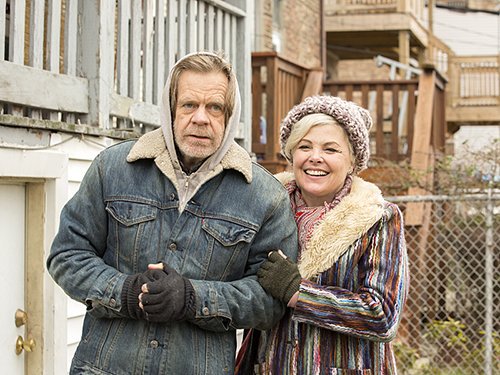 Where justice is denied, where poverty is enforced, where ignorance prevails, and where any one class is made to feel that society is an organized conspiracy to oppress, rob, and degrade them, neither persons nor property will be safe. Initially (time/generation I) structural conditions of poverty give rise to subcultural patterns (that is, family and community disorganization), and both of these create in children and adults the patterns of individual personality and behavior characteristic of the poor (for example, weak ego structure, inability to delay gratification). For persons who first become poor as adults (for example, as a result of migration, economic depression, drought, and so forth), this personality and behavior pattern is an adaptation to changed structural conditions. However, their children know nothing else and tend to recreate the same subcultural patterns and to pass on these same personality and behavior patterns to their children. And so on for succeeding generations—a shared set of individual beliefs, values, and attitudes (cultural of poverty) become self-perpetuating and may persist in spite of changes in the larger structural conditions. Saving our planet, lifting people out of poverty, advancing economic growth, these are one and the same challenge. #RandolphHarris 2 of 6
 New generations resemble preceding ones because they confront the same structural conditions and hardships. A housing crisis is increasing poverty levels in California. As of now, 51 percent of adults live in middle-income households, and 29 percent live in lower-income households, while only 20 percent live in upper-income households. The lack of affordable housing, and apartments for middle class, and lower-income families is the reason so many people are struggling to make it. The median cost of a house is now $500,000.00, which is twice the national cost, and homelessness is rapidly increasing across the state. While the region’s median household income is $61,320.00 and the nationwide median is $53,291.00. In contrast the poor are bring in between $14,000.00 to $24,000.00 a year, and there is no place less than $1,000.00 a year for rent. As long as poverty, injustice and gross inequality persist in our World, none of us can truly rest. Poverty, including rates of unemployment, crime, school dropout rates, and drug use, are assumed to be the result of behavior preferred by individuals living within conditions of poverty. The culture of poverty theory presumes the development of a set of deviant norms, whereby behaviors like drug use and gang participation are viewed as the standard (normative) and even desired behaviors of those living in low-income neighborhoods. #RandolphHarris 3 of 6
 Alternatively, individuals behave in ways that are nominally illegal, like participation in the underground economy or participation in gangs, not because they wish to do so or are following cultural norms, but because they have no choice, given the lack of educational and job opportunities available in their neighborhoods. In other words, individual living in poverty may see themselves as forced to turn to illegal methods of getting money, for example by selling drugs, simply to survive within the conditions of the hot economy. Poor children generally share the values, beliefs, and attitudes of the larger society, but as they experience the same lack of socioeconomic opportunity as their parents, they adopt the peculiar social and individual modes of response that characterize the culture of poverty. Also, some people who turn to selling drugs, for instance, to make a living, after they get started, they are not willing to turn to conventional means of earning a living because some of them can make $10,000.00 in a weekend, others have reported making $60,000.00 a month, and they are not willing to give that up to make $10 an hour, as they are making more than a lot of doctors. Hard core drug users spend approximately $60 billion a year on drugs. #RandolphHarris 4 of 6
 Although the dealers are putting their lives and freedom in danger with every transaction they make, and many do get shot and beat up, they feel it is worth it because the money gives them something to live for. They can buy brand new cars, houses, and where there is money, there are a lot of beautiful women. If the set of structural conditions persist, they will recreate the same sociocultural and personality patterns in the new generation. Living in poverty and being unable to participate in the economy is oppressive. People are walking on eggshells. If they are accepted for affordable housing, it is a blessing, because most of the waiting lists in most cities are 20,000 people long. Then affordable housing is no way to live. The people are usually the undesirable people like criminals, uneducated, prostitutes, and drug attics. Also, because most people in affordable housing are on government assistance, they do not work due to physical disability or serious mental problems and tend to be dirty, loud, rude, and violent. They also attract a lot of homeless people and that is why people do not want affordable housing in their communities. The solution would be to give people vouchers, like a supplement to their rent, so they could spread out the undesirables, and they are not segregated to one apartment building or neighborhood. #RandolphHarris 5 of 6
 When affordable housing is erected in high-income areas, the strong housing prices drop very locally and then it radiates outward over time. The new low-income building can lead to a loss of approximately $17 million, as the poverty values individual decrease by 15 percent. That is why education is to important. Education promotes equality and lifts people out of poverty. It teaches children how to become good citizens, how to work for a living, and the righteous values. Education is not just for the privileged few, it is for everyone. It is a fundamental human right. When people are educated it changes their culturally patterned ways of thinking, feeling, and behaving that will be passed on from one generation to the next. That is why a lot of people in the early 19th and 20th century enlisted in the armed services, it taught them discipline and provided education benefits, and helped them learn to deal with society. “The poor and the needy search for water, but there is none; their tongues are parched with thirst. However, if I the Lord will answer them; I, the God, will not forsake them. I will make rivers flow on barren heights, and springs within the valleys. I will turn the desert into pools of water, and the parched grounds into springs.” (Isaiah 41.17-18) #RandolpHarris 6 of 6
 Randolph Harris II International Institute