
Home » Pets (Page 6)
Category Archives: Pets

She Had Better Stop and Take a Good Look at Herself

With all the changes and challenges you face each day, there has never been a greater need to take the time to determine your priorities. The art of being wise is to know what to overlook. In 1993 Mexico signed the North American Free Trade Agreement (NAFTA) with the United States of America and Canada. Within seven years, 3,500 maquiladora plants manufacturing everything from furniture to apparel to TV sets had sprung up along Mexico’s U.S. border, creating 1.4 million new, mainly assembly-line jobs for workers drawn from all parts of Mexico, and they important more than $51 billion in supplies into Mexico. However, in the late 1990s, with Guangdong and, indeed, all of China now competing in the cheap-labor derby, and estimated 250,000 to 300,000 of those Mexican jobs followed the great circle route across the Pacific. That put Alejandro Bustamante in a spot. When his employer, Plantronics, a leading manufacturer of telephone accessories, received an order, it called Mr. Bustamante. Although he ran the firm’s three factories in Tijuana, Mexico, he was told he must compete for each contract just like anyone else. However, Mr. Bustamante paid his workers an average of $2.20 an hour (including benefits) and had to bid against a Chinese manufacturer whose employees average only about 60 cents, which was nearly four times less than the Mr. Bustamante’s employees earned. There is nothing unique or new about that. Many maquiladora operators in norther Mexico face Chinese competition. However, what especially irked Mr. Bustamante was that the Chinese rival he faced was, in fact, itself also owned by Plantronics. This may be a case of serial outsourcing—sending jobs to China that had already been outsourced to Mexico. Outsourcing, while involving a small percentage of all jobs, has aroused fierce condemnation and prompted so much media coverage that there is no reason here to recap the familiar arguments, beyond recognizing that it is part of a much larger pattern of change in the spatial distribution of wealth and wealth creation. #RandolphHarris 1 of 18

Outsourcing enrages the critics of re-globalization who insist that it creates an unstoppable, brutalizing “race to the bottom.” They typically contend that companies go where labor costs are lowest and are ready to pick up and spatially relocate at a moment’s notice. If this were true, it would be easy to forecast where wealth is heading. It would be good news for African, which can offer a big pool of available labor at the lowest wages on Earth. (Africans should cheer each time workers in Asia join unions and drive wages up.) If labor cost were the sole consideration, why have not all those factories now in China wound up in Africa instead? The fact is that even for low-tech work, labor is cost, if ever, the exclusive basis for a company’s decision to relocate. Africa’s endless violence and war, inadequate infrastructure, stratospheric levels of violence, ravaging illnesses, and shameful regimes may rule out significant investment no matter what wage level. However, China has maintained its position as the largest investor in Africa over the last ten years by the number of new jobs created (18,562 on average), with a gradual substantial increase of newly created jobs on a yearly basis. China has spent 27 percent of its investments in Africa. Furthermore, since 2000, China’s foreign direct investment (FDI) flows to Africa have grown at an average annual rate of 40 percent, overtaking U.S. FDI in 2012. In 2019, FDI flows reached $2.7 billion, with the top destinations being the Democratic Republic of the Congo and Angola, two mineral-rich nations. China is also making space along a 30-mile coastline, in Africa, North of Dar Es Salaam, to make space for a $10 billion Chinese-built mega-port and a special economic zone backed by an Omani sovereign wealth fund. It seems Africa has more than just diamonds, gold, other precious minerals, people and animals that World wants to exploit. There are unspoiled beaches and bays; and lush vegetation. If the project goes ahead as planned, Bagamoyo will be transformed into the largest port in Africa. There is even talk of an international airport. #RandolphHarris 2 of 18

Many villagers have already accepted compensation for the loss of their homes. This portion in African is supposed to be as prosperous as Shenzhen, China. Shenzhen, in southeastern China, is a modern metropolis that links Hong Kong to China’s mainland. Over the past 40 years, the establishment of the Shenzhen Special Economic Zone (SEZ), has been a transformation of Shenzhen from a fishing village to a metropolis of innovation. The total investment has been $28 billion USD. Shenzhen has also nurtured some World leading technology firms including Huawei, DJI, and Tencent. The sector has emerged as the pillar industry of the city. As a matter of fact, a total of $4.27 billion USD, was invested in research and development, putting it on the top list of the country. In addition to this, the city has seen 17,500 international patents filed, accounting for one third of the national total. So this is what could be done in Africa, and it is important to keep an eye on the moves of China because they could become the World leader by investing in and colonizing foreign markets, with the large population. Another thing, with China colonizing Africa, it will also become a melting pot and the standard of beauty will change from the traditional European standard and shift to value other features. The race-to-the-bottom theory, moreover, presupposes that workers are essentially interchangeable—which may largely be true in repetitive, assembly-line operations. The higher up the skill ladder one goes in a knowledge-based economy, however, the less valid it becomes. As the knowledge components of wealth creation—marketing, finance, research, management, communication, I.T., vendor and distributor relations, regulatory compliance, legal affairs and other nontangibles—all grow in complexity and importance, workers, like the work itself, become less interchangeable and the required skill sets more temporary. If they extrapolate tomorrow’s economy from existing or projected wage levels alone, attempts to forecast which cities, regions or, for that matter, countries will become the next Guangdong will be inaccurate and the speculations are doomed to fail. #RandolphHarris 3 of 18

Any such simplistic analysis becomes even more questionable because, where economies are transitioning from smokestacks and assembly lines to knowledge-based production, we are already radically changing the very criteria by which a location, city, region or country becomes a high-value-added place. What we are about to see is less racing to the bottom and more of a race to the top. To anticipate tomorrow’s surprising geography—including the location of high-pay jobs, prime real estate, business opportunities, wealth and power—another key point needs to be understood: We are changing not merely the where of wealth but they why—the criteria by which we value places. And that further changes the where. Seeking to woo industry in 1955, the state government of Indiana placed an advertisement in Fortune listing its economic advantages. These, it claimed, included low-cost coal, limestone, white clay, aluminum, gypsum, rock asphalt, dolomite, fluorspar, water, sand, gravel, wood, corn, soybeans and easy access to the Ohio River. In addition, it promised an “enviable strike and lockout record”—that is, a weak or dormant labor movement. That was then. Today Indiana’s development council boasts of breaking away from “over-reliance on traditional industries.” No limestone here. Inc. tells American small-business leaders that the “best” place to “start or grow a company” is Phoenix, Arizona, because of its growing high-tech workforce, sunny climate, renovated art museum and “four major sports franchises.” A group called the Small Business Survival Committee concludes that the place to invest is South Dakota because it imposes the fewest costs on business in the form of taxes, minimum-wage laws, number of state employees and the like. Still another rating system bases its conclusions about the future on the age and growth rate of companies in any given location. A contributor to Microsoft’s bCentral.com then confects a hybrid index out of these last two methods and concludes that Nevada is the place to pull out your wallet. #RandolphHarris 4 of 18

Citing the 1955 Indiana ad in 2002 study called the “State New Economy Index,” Robert D. Atkinson and Rick Coduri of the Progressive Policy Institute write: “In an economy in which fewer than 20 percent of economic activity consists of creating, processing, or moving physical goods, access to raw materials, transportation and markets means less. As an increasing share of economic inputs and outputs are in the form of electronic bits, the old locational factors diminish in importance.” Take, for example, nearness—proximity. Some economists today believe that because Mexico is so close to American markets, it can beat Chinese competitors in the long run. They assume that distance still plays the same role it did before the knowledge economy arrived. However, thanks to information intensive technologies, products are becoming smaller and lighter every day. To rely on proximity means, to the degree that transportation costs matter, that Mexico’s advantage would apply to the older, bigger, bulkier, heavier physical products—precisely those now being replaced. And it means still less to high-value-added intangible services whose transportation costs have little or nothing to do with distance—finance, software, satellite TV, airline reservations, music and the like. Continuing to count on proximity will set Mexico even farther behind—and keep it there. Today, in their race to the top, competing states boast less about limestone and coal than about their great universities, low communication costs, advanced technology, frequent airline service, low crime, good climate and superior quality of life. The economy has been transformed along with workers’ values and way of life. The very categories with which we describe spatial units and relationships change as new economic networks emerge. We are seeing, for example, the rise of an entire ecology of airports linked to one another more strongly than with their local and national governments. Each airport is increasingly surrounded by its own ring of shopping malls, conference centers, 24/7 gyms, chapels, post offices, dentists and doctors, rooftop pools and luxury hotels. #RandolphHarris 5 of 18

The result has been a sprint—no longer just in the United States of America—to create what might be called higher-value-added places tht will attract the brightest, most creative workforce capable of producing knowledge-intensive, higher-value-added products and drawing businesses from around the World. The historical shift toward Asia, the digitalization of many economic functions, the emergence of cross-national regions and the change in the criteria by which we value place or location are all parts of a larger transformation in our relations with the deep fundamental of space. They merely form the background against which even bigger changes loom. One’s stumblings and one’s falling may depress one’s heart and reduce one’s aspiration. They may deter one’s will from further endeavour. For those monsters of hate and cruelty, either utterly materialistic and God-denying or fanatic and taking the name of God in vain, there is no shelter where they can hide once they are forced across the barrier of death. The qualities of determination, intelligence, and persistence—so useful in philosophy—can be used for good or evil. They can make a more successful criminal as well as a better philosopher. The upsurge of well-thought-out, daring, resourceful, and highly ambitious crime in modern times is a sign of misapplied powers, while its violence is a sign of merciless egocentricity. The end for such persons is commensurate. Then many come a crippling deformation future birth, or a sudden and radical awakening to the grave peril toward which they are heading—and a change of course to a better life. The unfortunate experiences which sometimes befall an individual’s Worldly life are, or may be, partly indued by one’s own psychic practices of the period immediately preceding them. One may have been drawn into a vortex of psychic evil which has harmed one’s spiritual life and brought suffering into one’s Worldly existence. What are the inner causes which can produce these dismal outer effects? Here are come of them: shock, worry, fear, resentment, anger, excessive, criticism, condemnation of others. #RandolphHarris 6 of 18

The English woman novelist named Ouida, who wrote during the earlier part of this century, was so successful that she became the highest-paid fiction writer of her time. Yet when she died she was alone, penniless, half-blind, and dwelling in a back alley of Viareggio, Italy. Why? She was brilliant, fluent, and vibrant in her style, but most of her written work was scathing, bitter, highly critical, filled with prejudices and even hates. To what extent did a mind and heart holding so many negatives contribute to these unpleasant results? Yet she was unquestionably a lady in manners, breeding, dress, and way of life. She wrote her letters and even her manuscripts on the finest quality paper. She was highly independent and refused an offer to write her own life story, even though a substantial amount of money was the prize. Her reply was that it would be lowering herself to feed her own egotism and vanity to do so! It is quite true and utterly obvious that bad physical conditions make their contribution also, but it I even more true that bad inner conditions are the fundamental causes which turn outward remedies to disappointments in the end. Blind selfishness brings mutilated lives and ugly minds. Pessimism is practical defeatism and psychological suicide. It is the child of despair and the parent of dissolution. If we make room in our minds for negative, bitter thoughts of complaint, outrage, or injury against those who mistreat us, we shall not be free and will remain unable to find peace. Beware of giving birth to thoughts of hate, envy, malice, or wrath and sending them to another person. For they will reach one, yes, but will then return like a boomerang to their source. Wicked humans may gain the fruits of their aggressions and desires, may win victories over others, but at the end they are destroyed at the roots. The coldly calculated torture of animals in the name of scientific progress must be paid for in different degrees by those who allow it as well as by those who perpetrate it. The practice of vivisection is a sinful one. The humans who do it will have to pay the penalty one day, quite often by being born into a maimed and hurt body. Some among them, who gradually lose every vestige of pity from their character, become heartless monsters. #RandolphHarris 7 of 18

Through violent aggression whereby impassioned men seek to destroy others, they work their own destruction—at first moral, in the end, physical. These undesirable thoughts and feelings are bad for others as well as oneself, besides wasting so much of one’s own energies. An evil human’s mistakes sometimes strike back at one later when one least expects them, and can least afford them. Is it prudent to heed all this talk of coming calamity? Is it a mistake to read material speculating on its likelihood or imagining its horrors? Each person must answer such a question for oneself, but the philosophic person approaches it in a different manner. On general principles one dislikes negative thoughts and repels them. One seeks a clear recognition of what is happening in the World around one, but one trains oneself—disciplines one’s mind and detaches one’s emotions—to do so without picking up the accompaniments of panic or depression. One practices living with complete calm in the face of provocations and irritations, keeping one’s head, when others all around are losing theirs. When these disaffected find one another and form a subculture, they tend to see their choice, fraught with crisis, as a religious movement. One of the favorite spokesmen of the Hipster Generation announces: For the crucifix I speak out, for the Star of Israel I speak out, for the divinest man who ever lived who was a person I speak out, for sweet Mohammed I speak out, for Buddha I speak out, for Lao-tse and Chuang-tse I speak out, for D.T Suzuki I speak out. This is typical speaking; like an address by Eisenhower it includes all voting creeds and betrays a similar lack of acquaintance. (The bother is that the speaker is in his late thirties and out to know better.) However, as we shall see, this formless ultimate experience is not irrelevant to the plight of being resigned, for there is no available World to give experience a form. #RandolphHarris 8 of 18

However, let me at once give a similar strain of rhetoric of a seasoned public spokesman in the organized system itself. I quote from an address to the National Recreation Congress of 1957 by Dr. Paul Douglass. He is concerned with the terrifying Problem of Leisure, namely that with a shorter work week and automation many millions of adults might simply goof off and get into mischief. “The assimilation of leisure into the folkway tomorrow makes essential the reconstruction of the goals and values of life, the evolution of a new ethics, and the definition of an esthetic suitable for the upreaching taste, the deeper comprehension and enjoyment of beauty in its many forms, and a more meaningful existence. Of course this is not serious. A “new ethics” would, presumably, be the work of an Isaiah or Ezekiel or at least Socrates. If someone’s lips were touched with fire and one got oneself rejected by us and swept our children wake, it would solve other problems than out leisure time for it would be convenient for us. –The Hipster spokesman, surprisingly, seemed to be satisfied with the ethics that we have inherited. (As an artist I find this kind of public speech vaguely insulting. Do we need an esthetic? I cannot cope with the artistic tradition that we have, especially its modern triumphs, so that my own work is both unclassical and dated according to standards right on my bookshelf. Does Dr. Douglass mean a popular esthetic? Is it news to him that the popular taste is systematically debauched by Hollywood, Broadway, Madison Avenue? that by the unanimity of publishers, producers, and broadcasters, assisted by the censorship, it is almost impossible to get an honest or vivid word to the public? and that if something slips by it is swamped by trash and singled out for neglect by ignorant critics?) Dr. Douglass cannot mean what he says, yet he does mean something. Under what conditions do public spokesmen use this kind of language, asking for new ethics and a meaning for existence, when there are concrete tasks glaring in the face? #RandolphHarris 9 of 18

The conditions are disappointment in oneself according to a lofty ethics, and resignation about doing anything. Not early resignation, but after the profound disappointment of experience. Spoken as if miracles were for the asking, the buoyant abstractions ward off pain and uneasy conscience when one is no longer going to try to do anything practical. (The crisis will occur “tomorrow.”) The tone, if not the content, fits the American style, optimistic about expedients. And the disappointment is more profound because the American promise was so bright. Achieving most of what we set out to get, we are surprised to find that it is useless, and worse. For after the century of progress, the folk who are wealth and pretty healthy are not only not happy or wise, but they are uneasy. Their own writers hold them in contempt. Foreigners keep saying that the atom bombs were dropped for no good reason. The beautiful American classlessness is freezing into statuses. People ask for a stop to immigration. In the modern World, we Americans are the old inhabitants. We first had political freedom, high industrial production, an economy of abundance. Naturally we are the first to be disappointed. Europeans, when they ape and deny envy us, are like children. Disappointed and resigned, adults do not see a future for their own children, for they do not know the Way themselves. Immigrants of the first generation wanted their children to make good and have careers; it the third generation they just “want their children to be happy.” And perhaps children being happy is exactly why America is in such a mess today. People should have wanted their children to work hard, honor their family name and practice chastity. Then maybe they would be more respectful and more industrious instead of having a sense of entitlement. We are not saying you should not help your children, by every means you should, but help them so they can focus on their education. If you can afford it, there is nothing wrong with buying a child a brand-new car when they are in high school, paying for insurance and gasoline, and giving them a monthly allowance. #RandolphHarris 10 of 18

By treating your child some luxuries, you will ensure they do not have to work and can spend more time preparing for college, and that they will have time for high school clubs and sports. Do not thrust your child off to work while they are still a child. Let them enjoy being young. When their brain power has increased and they reach college, perhaps by sophomore, when they are acclimated to college education and know how much time to spend getting back and forth to class, then talk to them about seeing if they are ready to be more mature and get a job to help pay for their education. Of course, if you can that is a great idea. Not everyone is lucky to have affluent parents have to work in high school and it makes life more difficult. So if you can help your child financially to become more successful, it is only your family name and image you are helping to become a success. Now, in tropical Africa, what anthropologists call terminal abstinence is a widespread phenomenon. What it refers to is the deliberate—and often deliberated—decision to terminate conjugal relations involving pleasures of the flesh. For example, Yoruba women—but not men—know that permanent celibacy awaits them down the road. Sometimes husbands impose celibacy on their wives because they wish to take or concentrate on a younger wife, but twice as often the woman themselves decide to adopt it. Most commonly, this happens when a woman becomes a grandmother. Throughout Africa, and in Yorba society in particular, child-rearing is predicated upon extensive grandmother participation. The transition from mother to grandmother is complex. Each has different rights and obligations, and sometimes the simplest or only way to navigate between their conflicting demands is to renounce childbearing altogether. Renouncing pleasures of the flesh relations is no hardship for these grandmothers. Usually, a woman’s greatest emotional satisfaction comes from her children and family, not from an intense love affair with her husband. #RandolphHarris 11 of 18

A woman may also declare terminal celibacy as a protest against a new wife or because she has proven her fertility and can now rest. It is not a rejection of her husband so much as a redeployment of energies. For women whose marries represent dynastic bonds and courtyards full of children rather than romantic attachments to their husbands, and for the millions of women who have operations to protect their celibacy, terminal celibacy can be a release rather than a loss. Indeed, it is often no loss at all. In North America, many aging women (who have had operations) also retire from pleasures of the flesh service without the slightest regret. Some consider pleasures of the flesh as purely for reproduction, while others say that, at their age, it is no longer necessary, proper, or dignified. Many older men and women claim they must abstain from pleasures of the flesh activities because of illness, though the medical reality is that their arthritis, heart disease, or hypertension does not require it. In fact, their newly adopted celibacy may disguise or excuse an antipathy to pleasures of the flesh. In the late 1870s, when pregnancy was an interesting condition, underwear one of many of life’s unmentionables, and death a delicate passing away, feminists cleverly softened their demands for an instrument to control when and how often they gave birth by referring to it as Voluntary Motherhood. After all, birth control had ugly connotations, namely, freedom from the consequences of, well, a coming together, as it were, a very intimate sort of carnal knowledge. From one perspective, feminists shared the common fear that contraceptives would lead directly and inevitably to wanton pleasures of the flesh. The various “washes, teas, tonics, and various sorts of appliances [were a] standing reproach upon, and a permanent indictment against, American women,” declared one feminist, articulating the disgust shared by many antifeminist men. So pronounced was their alarm that legislation actually prohibited the distribution of information about birth control. #RandolphHarris 12 of 18

Form a different optic, birth control was criticized for being unromantic and removing the spontaneity from pleasures of the flesh. Women’s greatest fear, however, was that widespread contraception would work against them. They would no longer be able to keep their husbands at arm’s length by invoking the argument that pleasures of the flesh might lead to conception. These devices also smacked of “looseness” and abandon of pleasures of the flesh and seemed unsuited to respectable people living respectable lives. Contraceptives might also send husbands galloping off to bed with “fallen women” they no longer needed to worry about producing a child with. Jealousy was only a partial factor. Horror of the illnesses that unfaithful husbands quite frequently passed on to their wives was a more urgent issue. For all these reasons, many women, including Voluntary Motherhood feminists, accepted birth control in only one form: continence in pleasures of the flesh, the World’s oldest and most widely practiced method of contraception. Voluntary Motherhood supporters were concerned above all with a woman’s right to control her body and, by extension, her fertility. They saw celibacy as the only moral way to achieve this and condemned artificial devices as instruments of immorality that permitted consequence-free indulgence of pleasures of the flesh. In an era where women had few legal and social rights, demanding control of their relations in pleasures of the flesh with their husbands was considered extremely radical. Their endorsement of celibacy softened its impact, but only slightly. Under the aegis of Voluntary Motherhood, married celibacy could take two forms: the couple’s mutual or the woman’s unilateral decision. Usually, the wife’s unilateral declaration of celibacy was at the core of Voluntary Mothers. On the difficult battleground of her home, each determinedly celibate woman defined not only her husband and her society’s norms but even the law, which required her to submit both body and will to her husband. #RandolphHarris 13 of 18

In these circumstances, she needed immense courage to dictate her availability for pleasures of the and to withhold it except when she was prepared to conceive a child. “Our religion, laws, customs, are all founded on the belief that woman was made for man,” remarked feminist Elizabeth Cady Stanton. “Womanhood is the primal fact, wifehood and motherhood its incidents…Must the heyday of her existence be wholly devoted to the one animal function of bearing children? Shall there be no limit to this but woman’s capacity to endure the fearful strain on her life?” Like a great many other nineteenth-century women, Mrs. Stanton had no romantic notions about intercourse involving pleasures of the flesh. It led to an endless series of being with child, and when desperate mothers sought advice on how to avoid conception, they were given false information. Medical “expert” Dr. Ezra Heywood, for example, told them that if they abstained from pleasures of the flesh until ten to twelve days after starting their cycle, conception could be avoided. This woefully wrong interpretation of the fertility cycle misled women, who ended up with child yet again. No wonder, then, that pleasures of the flesh soon lost is magic. Too often, it exhausted, impoverished, disabled, and ended their lives. A woman grieving for a miscarried child was a typical victim: “I am nearly wrecked and ruined by…nightly pleasures of the flesh, which is often repeated in the morning. It is almost nonconsensual because I am trying to produce a child to please my husband. This and nothing else was the cause of my miscarriage…he went to work like a man a-mowing, and instead of a pleasure as it might have been, it was most intense torture.” To end these all-too-frequent personal tragedies, the Voluntary Motherhood movement preached that woman had the right to practice celibacy. Any other form of contraception was not only morally questionable, but would deprive her of the ability to control when she had pleasures of the flesh. #RandolphHarris 14 of 18

The Voluntary Motherhood movement was both inherently radical and relatively conservative in its stance. In an era when the notion that a man could have nonconsensual pleasures of the flesh with his wife was seen as ludicrous because marriage gave him unlimited access to her temple, wives who resisted on ideological grounds were social rebels. Their commitment to Voluntary Motherhood, and to celibacy except for protection, was their means of empowering themselves vis-à-vis their husbands, and in a large sense, within the families they wished to space out and control, and even withing the society whose laws they so quietly and privately defied. In this contact, they justified their celibacy as an instrument or a weapon they needed to fight for the very noblest of causes. People with histrionic personality disorder, once called hysterical personality disorder, are extremely emotion—they are typically described as “emotionally charged”—and continually seek to be the center of attention. Their exaggerated, rapidly changing moods can complicate life considerably, as we see in the case of Suzanne: Suzanne, an attractive and vivacious woman, sought therapy in hope that she might prevent the disintegration of her third marriage. The problem she faced was a recurrent one, her tendency to become “bored” with her husband and increasingly interested in going out with other men She was on the brink of “another affair” and decided that before “giving way to her impulses again” she had “better stop and take a good look” at herself…Suzanne was quite popular during her adolescent years. Rather than going to college, Suzanne attended art school where she met and married a fellow student—a “handsome, wealthy, ne’er-do-well.” Both she and her husband began “sleeping around” by the end of the first year, and she “was not certain” that her husband was the father of the daughter. A divorce took place several months after the birth of this child. #RandolphHarris 15 of 18

Soon thereafter she met and married a man in his forties who gave both Suzanne and her daughter a “comfortable home, and scads of attention and love.” It was a “good life” for the four years that the marriage lasted. In the third year of this marriage she became attracted to a young man, a fellow dancing student. The affair was brief, but was flowed by a quick succession of several others. Her husband learned of her exploits, but accepted her regrets and assurances that they would not continue. They did continue, and the marriage was terminated after a stormy court settlement. Suzanne “knocked about” on her own for the next two years until she met her present husband, a talented writer who “knew the scoop” about her past…She had no inclination to venture afield for the next three years. She enjoyed the titillation of “playing games” with other men, but she remained loyal to her husband, even though he was away on reportorial assignments for periods of one or two months. The last trip, however, brought forth the “old urge” to start an affair. It was at this point that she sought therapy. People with historic personality disorder are always “on stage,” using theatrical gestures and mannerisms and the most grandiose language to describe ordinary everyday events. Like a chameleon, they keep changing themselves to attract and impress an audience, and in their pursuit they change not only their surface characteristics—according to the latest fads—but also their opinions and beliefs. In fact, their speech is actually scanty in detail and substance, and they seem to lack a sense of who they really are. Approval and praise are the life’s blood of these individuals; they must have others present to witness their exaggerated emotional states. Vain, self-centered, demanding, and unable to delay gratification for long, they overreact to any minor event that gets in the way of their quest for attention. Some make suicide attempts, often to manipulate others. People with this disorder may draw attention to themselves by exaggerating their physical illnesses or fatigues. They may also behave very provocatively and try to achieve their goals through seductions involving pleasures of the flesh. Most obsess over how they look and how others will perceive them, often wearing bright, eye-catching clothes. They exaggerate the depth of their relationships, considering themselves to be the intimate friends of people who see them as no more than casual acquaintance. Often, they become involved with romantic partners who may be exciting but who do not treat them well. #RandolphHarris 16 of 18

This disorder was once believed to be more common in women than in men, and clinicians long described the “hysterical wife.” Research, however, has revealed gender bias in past diagnoses. When evaluating case studies of people with a mixture of histrionic and antisocial traits, clinicians in several studies have a diagnosis of the histrionic personality disorder to women more than men. The latest statistics suggest that around 2 percent of adults have this personality disorder, with males and females equally affected. They psychodynamic perspective was originally developed to help explain cases of hysteria, so it is no surprise that these theorists continue to have a strong interest in histrionic personality disorder today. Most psychodynamic theorists believe that children, people with this disorder experienced unhealthy relationships in which cold and controlling parents left them feeling unloved and afraid of abandonment. To defend against deep-seated fears of loss, the individuals learned to behave dramatically, inventing crises that would require other people to act protectively. Some psychodynamic theories focus exclusively on female patients. They suggest that an early lack of maternal nurturance causes some daughters to develop an intense need for their father’s attention to seek it through displays of affection and dependence that go far beyond the usual behavior of young girls toward their fathers. These highly flirtations and dramatic displays of emotion established a histrionic pattern that extends to later relationships in their lives. Such individuals enter adulthood as “unhappy little girls,” looking at men as idealized fathers and always trying to manipulate them. Cognitive explanations look instead at the lack of substance and extreme suggestibility found in people with historic personality disorder. These theories see the individuals as becoming less and less interested in knowing about the World at large because they are so self-focused and emotional. With no detailed memories of what they never learned, they must rely on hunches or on other people to provide them with direction in life. Some cognitive theorist also propose that people with this disorder hold a general assumption that they are helpless to care for themselves, and so they constantly seek out others who will meet their needs. #RandolphHarris 17 of 18

Additionally, sociocultural theorists believe that histrionic personality disorder is produced in part by society’s norms and expectations. Until recently, our society encouraged girls to hold on to childhood and dependency as they grew up. The vain, dramatic, and selfish behavior of the histrionic person may actually be an exaggeration of femininity as our culture once defined it. Unlike people with most other personality disorders, those with histrionic personality disorder often seek out treatment on their own. Working with them can be very difficult, however, because of the demands, tantrums, and seductiveness they are likely to deploy. Another problem is that these individuals may pretend to have important insight or to experience change during treatment, merely to please the therapist. To head off such problems, therapists must remain objective and maintain strict professional boundaries. Cognitive therapists have tried to help people with this disorder to change their belief that they are helpless and also to develop better, more deliberate ways of thinking and solving problems. Psychodynamic therapy and group therapy have also been applied. In all these approaches, therapist ultimately aim to help the clients recognize their excessive dependency, find inner satisfaction, and become more self-reliant. Clinical case reports suggest that each of the approaches can be useful. Drug therapy is less successful, however, except as a means of relieving the depressive symptoms experienced by some patients. Now, the seed now begins its time of gestation in the rich dark Earth. It is the great cold of night: not the negative images of darkness, but the dark richness of that unknow, fertile, deep part in each of us where our intuitive creative forces abide. The Christ energy enters the Earth at this season. The yule log is lighted. The nights grow shorter, the light returns, and we experience rebirth. Again, again we come and go, changed, changing. Hands join, union in love and fear, grief and joy. The circles turn, each giving into each, into all. Prayer takes the mind out of the narrowness of self-interest, and enables us to see the World in the mirror of the holy. We do not step out of the World when we pray; we merely see the World in a different setting. Prayer is a way to master what is inferior in us, to discern between the signal and the trivial, between the vital and the futile, by taking counsel with what we know about the will of God, by seeing out fate in proportion to God. #RandolphHarris 18 of 18

Cresleigh Homes

What is it like living a community in that feels like a resort? Pretty totally great! This open concept design welcomes you into a window-filled great room.

There is also an open kitchen with prep island and plenty of counter space, and the beautiful dining room that you see below, which can be repurposed, as there is also a breakfast nook in the kitchen.

Since we moved in a Cresleigh Home, we’ve taken a dip in that sparkling pool every time we get the chance.

From the conveniences your heart desires and the finest features and finishes, a Cresleigh Home is what you are looking for. https://cresleigh.com/havenwood/


The Spirits Connected to Her Haunted Mansion

One of the many signs of someone being possessed is when one starts speaking in different voices, languages, and explaining things like you just met them that are out of context for the situation. However, scientific research has been unable to find an explanation for some well-documented speech occurrences. The so-called charismatic movement in our own country with its emphasis upon speaking in tongues has focused a great deal of attention upon this subject. Many people in Christian churches believe they are reproducing the gift of tongues reported in the book of Acts and discussed by the apostle Paul in the first letter to the believers in Corinth. The Biblical soundness of their belief lies outside the scope of this study, but we can report that scientifically conducted investigations have shown all instances of tongues-speaking to have the same characteristics wherever they are encountered. The variation between the tongues spoken in a state of hysterical frenzy among primitives is only superficially different from that practiced in a quiet, composed Christian setting. He considers that all tongues experiences are a means by which uneasy and unsatisfied people identify with the supernatural, securing psychological compensation for the spiritual vacuum in which they live. Some Christian scholars believe that added to the psychological element is the possibility that demons are involved in tongues-speaking, but results of investigations in this field are not yet conclusive. Tongues-speaking can be a language of ecstasy; that is, articulated sounds which do not constitute an actual language. Reports keep coming of an even more astonishing phenomenon—speaking a real dialect that was never learned. Hundreds of missionaries, especially those working among people in Asia, report that they often have encountered the mysterious ability of natives to speak in real languages that they never knew. These accounts come from Christian workers who represent widely divergent opinions regarding the charismatic movement. #RandolphHarris 1 of 13

One of Mrs. Winchester’s staff members that worked in the greenhouses on her property, who was born and reared on the Tibetan border used to report hearing the Tibetan monks in their ritual dances speak in English with quotations from Shakespeare, with profanity like drunken soldiers, or in German and French, or in languages unknown. A maid also reported the same experiences in the mansion. Reports of this nature are so numerous and come from such reputable people that one cannot set them aside lightly. Perhaps this is the reason Mrs. Winchester installed the mysterious windows in the Grand Ballroom? Christians must not jump to hasty conclusions on such delicate and complicated subjects, but they certainly must recognize the possibility of demonic activity and exercise extreme caution in an attitude of prayerful dependence upon God. We will be able to analyze these reports far more adequately after they have been thoroughly researched by competent investigators. Research teams have found that many of the physical and psychical phenomena declared impossible by the rationalistic scientists of the early 1900’s actually do take place. Most researchers do not even pretend to have a full explanation of how or why these occurrences transpire, but Christians are aware that some of them may be the result of evil spirits who work under the control of Satan. Regarding the occultic, the believer should walk the pathway of extreme caution. One should avoid any so-called magic that claims to bestow unusual knowledge or power through a psychic gift or ritualistic performances. It goes without saying that one must keep a safe distance from any form of black magic, and that one must examine carefully the doctrinal teaching of anyone who purports to provide healing or other temporal benefits in the name of the Lord. Biblical faith is built upon trust in God and expresses itself in submission to His will. Every follower of Christ should be wary of magical cures and all outward demonstrations of allegedly supernatural power. #RandolphHarris 2 of 13

As children of God, we must remember that we “walk by faith, not by sight,” reports 2 Corinthians 5.7, and that the faith through the senses. When we received Christ, we were brought into a vital union with Him, and the apostle Peter was writing to us when he said, “Who, having not seen, ye love; in whom, though now ye see him not, yet believing, ye rejoice with joy unspeakable and fill of glory,” reports 1 Peter 1.8. When a believer discovers the emptiness of this World’s enchantments, Satan tries to lure one into accepting his help through some form of occultism. Through these devices, the devil and his organization of evil spirits may attempt to bring defeat and misery into the lives of God’s children. Satan is unable to harm a believer, however, if that person accepts the instruction of the Bible, maintains a life of prayer, and submits oneself to God, and resists the devil. If one is hypocritical and dishonest, one will successfully resist and overcome the evil influence of Satan and his armies. The child of God must not merely say that one desires victory over sin, but must truly long for it. One’s spiritual vows and public statements must always be sincerely spoken, for the devil has no difficulty in defeating the hypocritical and half-hearted. The devil cannot effectively tempt a Christian who is actively living a joyful Christian life. Some believe that the door-to-nowhere in The Winchester Mystery House is just a wing of the mansion that was never finished, but perhaps it was a biblical metaphor. “I am the door; by me if any one enter in, one shall be saved,” reports John 10.9. It is elevated to a high level on the estate with no entrance reminds use to raise or consciousness, but by going the wrong way through the door, it may be a plunge into the pit of hades. There was once a woman who worked at Mrs. Winchester’s estate whose hand was terribly mangled by a gun explosion. Little did Mrs. Winchester know, that some men on the estate, amiable farmers, when not performing their specific functions, they were wizards, necromancers, exorcists, but above all priests, representatives of the people in offering sacrifices and making contact with the spirits. #RandolphHarris 3 of 13

Over one hundred years ago, human sacrifices had been made in some places, members of the community offered up by the noblest lords, but now animal sacrifices are made. They exhort their listeners about Heaven and hell in which they firmly believe, the one a place of joy and the other of torment…They keep the register of all males born and are intimate contact with sorcerer-priests, who can read ancient manuscripts and incantations for use on all religious occasions. While working on the estate, a man of Asian decent went to the farmers and asked for medical assistance for his wife. It was a moment of weakness—but he needed help. After the wizards, sorcerer-priests, necromancers, and exorcists evaluated the grounds keeper’s wife several times, they found she was suffering a higher fever also. While making preparations to treat her, they noticed the husband cutting three little bamboo sticks about eight inches long and a quarter of an inch in diameter. Oblivious to all that was taking place around him, he silently moved across the room with these three sticks and a rice bowl. After placing a little water in the bottom of the bowl and ordering his wife to dip the fingers of her right hand in it, he waved the bowl over her prostrate body. His next act was to place the bowl on the floor and try to balance the three sticks in the center of it. While this balancing process was going on, he kept calling out the names of demons. The men of supernatural powers soon awakened to the fact that this man was preparing to call a demon out of his wife. The men of supernatural powers suggested that the man’s wife’s fever was probably due to an attack of malaria, but the man insisted that she was demon-possessed. The naming of demons continued until the name of “Lin,” and then the sticks stood on end. Upon learning this was the demon’s name, the man placed some rice in the blow and mixed it with the three sticks—a little salt was added to give it flavor. He then waved the bowl in circles over his wife and politely called out, “Please, Mr. Lin Demon, come out—come out—look at this, tasty bowl of rice—it’s for you if you’ll only come out—please, oh, please come out, Mr. Lin Demon.” #RandolphHarris 4 of 13

Then he moved slowly toward the door and outside, sprinkling a little of the rice along the way and begging the demon to follow him. When he reached the end of the estate, he flung the remaining portion of rice as far out as he could and then returned to the house. This was too much for some of the men of supernatural magic. They were determined to find out the shenanigans behind this thing, even if it meant calling down the wrath of the gods and demons combined. They asked the fellow if her would let them try to stand those sticks on end. He smilingly gave them the go-ahead signal; but he tried and those things just would not stand. Still not satisfied, they asked the man with the injured wife if he would show them how to do it. The whole process was reverently repeated, even to the standing of the sticks when the name “Lin” was called out. However, the men of supernatural magic finally despaired of ever making those sticks stand. They asked the man where did he learn this art. He answered through a séance with Mrs. Winchester. Six scrolls of some ancient script containing incantations appeared in the Blue Séance Room, along with other radical writings. The men of supernatural magic then realized this was the employment of evil angels they were dealing with. They were dealing with the rulers of darkness of this World, and spiritual wickedness in high places. In another case at the Winchester Mansion, these men who doubled as farmers met a fifteen-year-old girl who had a disease of the eyes. She spent quite a time in an eye clinic, but in spite of the treatment she was not cured. Since medical help had failed, she turned to the men of supernatural magic. These men, using white magic, case some spells over her. Within 24 hours of the charming, the girl’s eye trouble disappeared, but thereafter she felt a terrible inner unrest. She prayed but found no peace. Later, when she visited her former eye specialist, he could only shake his head in astonishment and ask her how she had been healed. #RandolphHarris 5 of 13
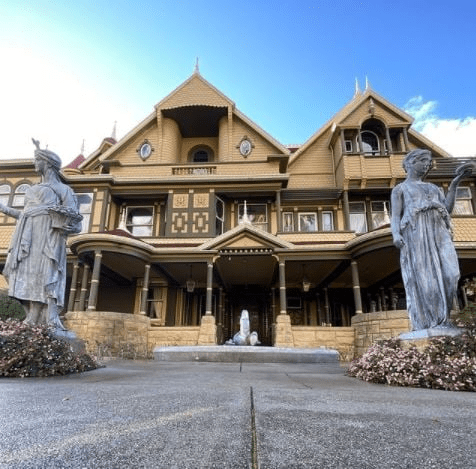
Although white magic has been able to heal people, some still believe it is inspired by the powers of darkness. Through white magic some may even obtain what they actually desired, and so it is often only in the effects that its true nature is revealed. The boundary between prayer and magic can be very fluid. If one is able to differentiate between the genuine and the imitation articles, it is essential to have the gift of discerning of spirits. However, whether it sails under a black, white or neutral flag, many people believe they have evidence to prove that the effect of magic in any form is the work of the devil. Yet, that is not what I believe. I have met some very nice people who claim to be witches and warlocks, and they are some of the most kindest people you will every meet. They define those that Christians, who pontificate about the bible, harass and attract and really listen and get to all sides of the story, some it makes some wonder, who is really evil? I am not saying that all Christians are bad, but the witch hunts were started by Christians, as well as lynching in the Southern states. I am not telling anyone what to believe, I am just presenting information that is fascinating. Part of being educated is to remain unbiased and be able to have a discussion, until you draw your own reasonable conclusion based on the evidence presented. If one does not have a case, or does not want to be contradicted by evidence that would prove their argument false, of course they turn to slander, harassment, and terrorism. That is what ignorant people do. They gang up and try to lie so loud to make sure no one can hear the truth they are suppressing. But as the Bible says, all things will come to the light. Everyone has things they need to deal with inside of themselves and sometimes it is more comfortable to try to find fault with others and blame others instead of taking responsibility. For instance, the dynamic of idolatry is demonism since idolatry is in reality the worship of other gods who are demons (1 Corinthians 10.20), headed by Satan the “god of this World,” (2 Corinthians 4.4). #RandolphHarris 6 of 13

Occultism involves dealing with demonic forces through fortune-telling, magic, spiritism, or religious cults, which are supposedly closely allied to idolatry. Persons who deal in the occult often discover that they have spiritistic sensitivity, extrasensory perception, or abnormal intellectual powers enabling them to engage in clairvoyance, precognition, divination, psychometry, magic, and spiritism. Dealing in the occult often results in the subjection to the powers of darkness to such a degree that the mind becomes blinded to truth, immersed in deception and error. This frequently results in acute depression with thoughts of self-destruction. However, not all emotional problems or suicidal tendencies should be attributed to occultism. However, demons can also oppress that human mind. Enslavement to demons sometimes reaches a point in which the demonic spirits harass and torment their victims. In the preceding stage of subjection, the evil spirits sporadically dominate their victims, but they do not necessarily harass them, at least not as they do in this deeper and more tragic state of oppression. Oppression in some form will be the final outcome of all who become psychically enslaved, even though some are not psychically gifted with spiritistic or magical powers. One well-attested and widely occurring form of demonic oppression is poltergeist phenomena. “Poltergeist” is German for “noisy ghost.” In such a case, the oppressed person is hounded by strange noises and sounds, such as shouts and obscene threats, rattling of chains, moaning, weeping, or piercing laughter. Dishes clatter, furniture is moved by invisible hands, and myriads of other strange happenings occur, invisibly produced by spirits connected with a haunted house where spirit activity has been practiced. Some who are oppressed continue to be tormented even though they may move to another residence. Also, common in the victims of demonism are the appearances of ghosts, specters, and monstrous phantasms. These phenomena are often explained away as hallucinations, but are well attested in occultism as spirits appearing as dwarfs, animals, dismembered parts of a human body, etcetera. At times these hideous spirits will strangle, bite, strike, or attack their victims in some way. #RandolphHarris 7 of 13

Perhaps the most terrible and revolting form of demonic oppression is what is known in the history of religion as incubi and sccubae experiences. This is the assault by an unclean spirit upon its enslaved victim for the purpose of lust involving pleasures of the flesh. Both men and women have been attacked and molested by “seducing male and female demons.” Such fully established phenomena show that angelic-human union, a major cause of the flood (Genesis 6.1-4; 2 Peter 2.4; Jude 1.6-7), has its parallel in occultism today. The account of the following portent is given us in Aubrey’s Miscellanies. “When King James II first entered Dublin after his Arrival from France, 1689, one of the Gentlemen that bore the Mace before him, stumbled without any rub in his way, or other visible occasion. The Mace fell out of is hands, and the little Cross upon the Crown thereof stuck fast between to Stones in the Street. This is well known all over Ireland, and did much trouble King James himself with many of his chief Attendants”; but not doubt greatly raised the hopes of his enemies. A few years later a witch-story comes from the north of Ireland. “At Antrim in Ireland a little girl of nineteen (nine?) years of age, inferior to none in the place for beauty, education, and birth, innocently put a leaf of sorrel which she had got from a witch into her mouth, after she had given the begging witch bread and beer at the door; it was scarce swallowed by her but she began to be tortured in the bowels, to tremble all over, and even was convulsive, and in fine to swoon away as dead. The doctor used remedies on the 9th of May 1698, at which time it happened, but to no purpose, the child continued in a most terrible paroxysm; whereupon they sent for the minister, who scarce had laid his hand upon her when she was turned by the demon in the most dreadful shapes. #RandolphHarris 8 of 13

She began first to rowl herself about, then to vomit needles, pins, hairs, feathers, bottoms of thread, pieces of glass, window-nails, nails drawn out of a cart or coach-wheel, an iron knife about a span long, eggs, and fish-shells; and when the witch came near the place, or looked to the house, though at the distance of two hundred paces from where the child was, she was in worse torment, insomuch that no life was expected from the child till the witch was removed to some greater distance. The witch was apprehended, condemned, strangled, and burnt, and was desired to unto the incantation immediately before strangling; but said she could not, by reasons others had done against her likewise. But the wretch confessed the same, with many more. The child was about the middle of September thereafter carried to a gentleman’s house, where there were many other things scarce credible, but that several ministers and the gentleman have attested the same. The relation is to be seen in a pamphlet printed 1699, and entitled The Bewitching of a Child in Ireland.” People in ancient times used to rely more on the spiritual, witchcraft, magic, séances, curses, potions, and meditation. Perhaps that is why there were so many more instances of supernatural things happening today. Some of these claims sound so outrageous and many of them report the same types of instances. Then today, we have all these technologies and medications and machines that we rely on and people who tell us what is actually possible and how many of these stories from the past happen to be something else explained by medication or a camera that so many people start to disbelieve in the supernatural. However, just because it can be explained by science, does not mean it is not supernatural. The Christian Bible even speaks about miracles, which are things that are supernatural. Supernatural phenomenon is real. #RandolphHarris 9 of 13

However, supernatural phenomena may be less common today because land is so densely packed, so many people turn into TV and Music and digital entertainment, so they spend less time praying and tuning into nature. In the 1800s, one could life in a house and not see another person for years because there was so much space to spread out on. People had time to read books and gaze at the moon and the sky and think up inventions. By now, everyone has probably heard of the legendary Sarah L. Winchester. She is the one who built the most mysterious mansion in the World. One thing that surprises me is that no one has, as of yet, tried to duplicate or create something just as wonderful. Nonetheless, it has been said that Mrs. Winchester slept in a different bedroom every night, supposedly in order to confuse evil spirits. And it totally makes sense. Because even now, people say when bad things are happening to you, you need to figure out what you are doing to cause it and draw closer to God. Back in Mrs. Winchester’s day, the 1800s, people were into spiritualism and also believed that spirits were the source causing bad things to happen to people. So they would try to appease them to protect themselves from curses and demons and so forth. Every generation has their methods and religions and that is just how it is. Some say Mrs. Winchester also held special dinner parties for her spirit friends. Legend has it that she would serve her phantom friends on solid gold plates, offering them delicious cuisine like caviar, truffles, and pheasant stuffed with pate. The mansion’s staff was also well-fed. On a stormy night, the front of the house was dark and silent, for it was long past bedtime. It was thirteen past one, and raining like blazes. It was thirteen years ago this day that Louis Le Prince had been seen alive, for Black Knight, one of Mrs. Winchester’s mares kicked the life out of him in the house stable one morning. One could feel the present and all its dangers towering around. Staff who walked by the horse stable this day reported feeling lost, a ghost dislodged from time. Indeed, it struck many people as unusual that the lad was left for the to care for the horses by himself. It might have been a fancy stable, but there was a queer feel about the place. #RandolphHarris 10 of 13

The sun was just beginning to set as they headed back to the estate. By the time they got inside, the night was as black as your hat: not a vestige of a moon, not a single star to break the uniform of darkness of the sky. With sunset a noisy blustering wind had sprung up, rattling about one of the chimneys, clashing the wet branches, and deadening the sound of cautious footfalls creeping across the paddock in the direction of the stables. The wind dropped suddenly, making the silence all the more intense by contrast with the previous roar; and through the stillness, Mrs. Winchester heard the clink of a bucket, and the sound of someone moving about in the stables. She sprang to her feet and snatched up her lantern. She thought that someone was trying to get at one of her horses, and her hand was on her father-in-law’s ivory-gripped Winchester pistol when she opened the door. So strong was the impression that she was absolutely surprised to find no sign of an intruder. The horses were perfectly quiet. Mrs. Winchester looked all around. There was certainly nothing to see, but it struck her that the air felt very cold, and she shut the door. The instant it closed behind her, a dark shadow fell across the square of light issuing from the entrance to the saddle-room. She figured it must have been the wind she heard and locked the door and went back inside. However, the butler Henry Boynton Clitz, was also suspicious. He turned the key in the lock and looked into the horse stable; then he gave a slight start, and drew quickly back. There was light inside, but where is came from would have been difficult to say. Beyond the shadow lay black and impenetrable, a wall of darkness. As he crossed the threshold Henry felt a blast of cold air sweep towards him, striking a strange chill into his very bones. Straight opposite stood a horse, and before him was an old man who appeared to be asleep. However, even in that intense stillness the tout could catch no sound of his breathing. His own heart was thumping against his ribs with the force of a sledge-hammer. #RandolphHarris 11 of 13
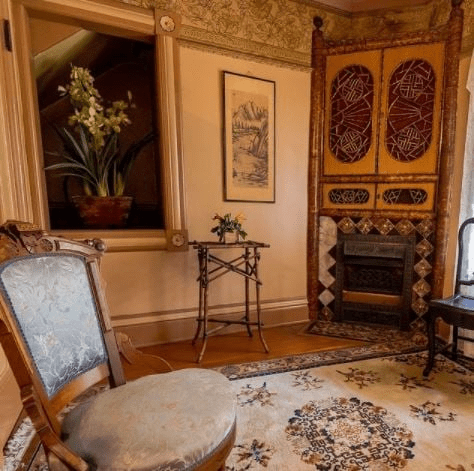
Henry felt his flesh creeping with a sensation of fear that was almost sickening. Fear? Yes, that was the word; he was horribly afraid. And of what? Of a weak old man, for whom he would have been more than a match single-handed, and they were two to one. What a fool he was, to be sure! With desperate effort he pulled himself together and went forward, his eye warily fixed on the silent figure. Neither man nor horses moved. As Henry moved forward, he heard a low chuckling laugh. The man was looking at him. The gleaming eyes fixed on him with a sort of mesmeric power. His face fastened on the figure, taking in every item of the quaint dress, the high gill collar and ample bird’s eye stock, the drab coat and antiquated breeches and gaiters. His mouth was open, but for the life of him he could not speak. He was waiting in the helpless fascination of horror to see the face of a man who had been dead and buried for thirteen years. Slowly, like an automaton, that strange watcher turned his head. The square, resolute mouth was open as if to speak; the shrunken skin was a greenish yellow color, like the skin of a corpse; along the temple ran a dull black mark in the shape of a horse’s hoof; but the eyes burned like two living coals, as they fixed themselves on the face of the terrified publican. Next, Henry heard the crash of a lantern on stones and the sound of Louis’s flying feet, and an awful terror came upon him, a great fear, which made his teeth chatter in his head and curdled the blood in his veins. The place seemed full of an unnatural light—black flames. The air was foul with the horrible odors of decay. Above all, Henry felt the fearful presence of that which was neither living nor dead—the semblance of a man whose human body had for thirteen long years been rotting in the grave. It was not living, but it moved. Its cold, shining eyes were looking into his, were coming near. There was no mistaking the look of that helpless body, the limp flaccidity of those outstretched arms. “He’s dead,” said Henry, as he turned up the white face. Its coat was wet with—something. #RandolphHarris 12 of 13

It was blood. But it was strange there should be no marks of violence about him, and yet he looks as if he had died hard. And truly, the dead man’s face was terrible in its fixed expression of mortal fear. The eyes were staring and wide open, the teeth clenched, a little forth hung about the blue lips. It was a horrid sight. Henry locked the door on the corpse until the police could arrive, and spent the remainder of the night in the butler’s pantry. However, when the Henry awoke, he could throw very little light on the matter. There was no one in the horse stables. No body, no foul odor, no broken lanterns. Just the horses and an old noose in one of the empty stalls. Whatever happened remain a mystery. The old living soul who knew the truth held her tongue. Mrs. Winchester simply told him, “Leave it to other staff members and never set foot in that cursed place. The poor boy is dead, and there is no reason for me to get myself mixed up in the business.” Demons can cause physical ailments such as dumbness (Matthew 9.32-33), blindness (Matthew 12.22), and various other defects and deformities (Luke 13.11-17). In all such cases medical and psychiatric treatment are of no avail, because the cause is demonic. Only be dealing with the spiritual causes of the malady can it be cured. Besides actual sickness, demons can cause speech and behavior abnormalities. In demon possession, which is an extreme form of enslavement and oppression, the speech and behavior abnormalities appear in greatly accentuated form with such violent physical manifestations as retching, screaming, blaspheming, cursing, foaming at the mouth, convulsions and display of tremendous physical strength. So completely does the demonic spirit gain mastery that one takes over the body of the victim and speaks through it with one’s own voice and language, which may be completely foreign to the language of the demonized. Sometimes evil spirits endanger humans’ temporal safety by exercising a certain control over natural forces. “I’ve covered my brother completely (That bump on the right is his knee) I will dig him out when I am ready to find how he liked it, you see.” #RandolphHarris 13 of 13
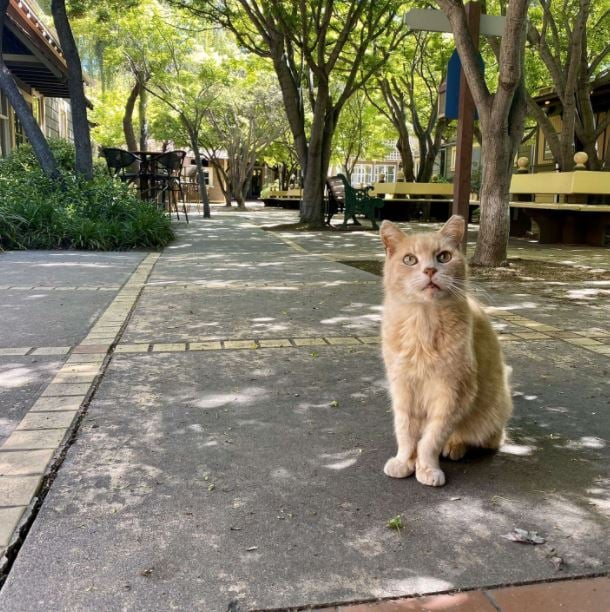
Winchester Mystery House

Tickets are almost sold out for tonights Flashlight Tours! 👀🔦 March 5th & 12th nights still have availability – hurry and purchase before they are all gone! You don’t want to miss this 👻

I’ll bet you wonder whether poor Whitney’s race is run. I hate to keep you guessing, but I must have my fun. 🎟 link in bio. https://www.winchestermysteryhouse.com/
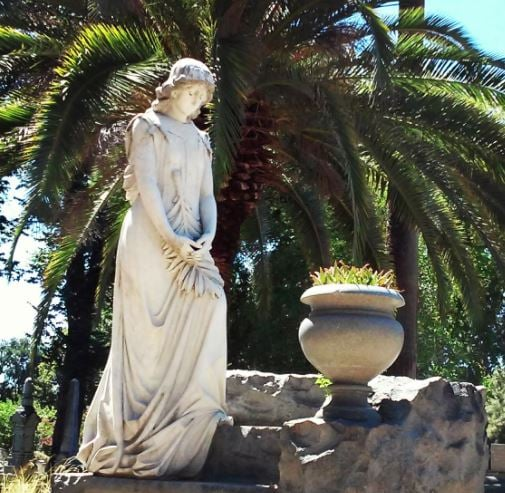
REGARDLESS OF VACCINATION STATUS, ALL PERSONS IN SANTA CLARA COUNTY MUST WEAR FACE COVERINGS AT ALL TIMES WHEN INDOORS. WHILE THE STATE OF CALIFORNIA LIFTED THE UNIVERSAL MASK MANDATE AS OF FEBRUARY 16, 2022, SANTA CLARA COUNTY MASK MANDATES ARE STILL IN EFFECT UNTIL FURTHER NOTICE.

Wealth is Innocent Until Proven Guilty–Healing Cannot Occur without a Walk through Hades!

I live in the intermediate reaches of love. Not the best place, but certainly not the worst. I should count myself fortunate. Be alert. Love is where you find it. Do not be blinded by your categories. Loves comes unexpectedly in many forms. By my carelessness I have lost what now becomes a magic wand that could have lifted me up to Heaven. No one to blame but myself. I am the sole agent of my ruin. It is worthwhile to look to the Parmenides and the Gospel of John. In the philosophical poem about being and nonbeing, Parmenides describes the visionary experience in which the goddess of justice opens his eyes to the true way of asking the ultimate questions. He derives his insight from a kind of revelatory act which takes away his blindness to the truth, and guides him not to a better method of research (although this is an important consequence of his insight), but to a way of life as a whole. In the Fourth Gospel we find passages in which truth is being. Jesus Christ says, “I am the truth.” There are others which state that truth can be done, those who do the truth will recognize the truth. Here the gap between the cognitive and the moral is conquered, and again it is obvious that this kind of insight cannot precede the moral act and motivate it, since it is itself partly a moral act. A modern analogy to these ideas is provided by the psychotherapeutic experience. It clearly shows the difference between detached knowledge and participating insight. No one is helped in one’s personal problems by a thorough knowledge of the psychoanalytic literature. On the contrary, the analyst knows that a patient who claims to have insight into one’s own psychological state on the basis of such knowledge deceives oneself, and often sets up an almost insuperable resistance against gaining true insight about oneself. Only one who enters the healing process with one’s whole being, cognitive as well as moral, and therefore with emotional attachment to the process and its different elements, has a chance of gaining healing. #RandolphHarris 1 of 20

However, this healing process cannot occur without a “walk through hades,” the suffering implicit in the awareness of the dark, ordinarily repressed elements in our being. Here also, the moral change is only partly an effect of insight, as insight itself is partly an effect of the moral will to be liberated. There is another concept by which classical Greek humanism attempted to answer the question of moral motivation. It is the concept of eros as used by Plato. Eros is defined as the mystical quality of love. This description of eros depends both on Plato’s use of the word in the Symposium and on the reintroduction of the word into Christian mysticism by Dionysius as the Areopagite. Eros for Plato is a mediating power, elevating the human mind out of existential bondage into the realm of pure essences, and finally to the essence of all essences—the idea of the good that is, at the same time, the idea of the beautiful and the true. As in other examples of Greek tradition, the moral and the cognitive are not separate. Eros provided both insight and moral motivation, and there is a third element, the aesthetic desire for the beautiful which is implied in the good. This goal can be attained by eros as a divine-human power that transcends the moral command without denying it. Eros is the transmoral motivation for moral action. To be impelled by eros can also be described as being grasped by that toward which eros drives. And thus we return to the principle of love. It is one of the qualities of love that concerns us here—the mystical, the drive toward reunion with essential being in everything, ultimately with the good as the principle of being and knowing (in Platonic terms). Love in all its qualities drives toward reunion. Eros, as distinct from philia and libido, drives toward reunion with things and persons in their essential goodness and with the good itself. #RandolphHarris 2 of 20

For mystical theology, God and the good itself is, in religious language, love toward God. This love can be symbolized in two ways: in Plato it is the divine-human power of eros that elevates the mind to the divine; and in Aristotle, it is the power of the divine that attracts every finite think and produces by this attraction the movement of the stars, the Universe, and the human mind. According to both formulations it is not the moral imperative in its commanding majesty and strangeness that is morally motivating, but the driving or attracting power of that which is the goal of the moral realm, in the sense of personal and communal justice, does not furnish moral motivation unless it is understood as a station on the way to something ultimate in being and meaning—the divine. And the aim of everything finite is to participate in the life of the divine. And the aim of everything finite is to participate in the life of the divine. The moral stage is a situation on the way, and the motivation for it depends on the motivation for the transmoral aim, the participation in the divine life, as Aristotle expressed, in mystical-religious terms, the transmoral motivation of morality. Again I should like to point out a contemporary analogy in the realm of therapeutic psychology. The question is whether libido is unlimited in itself or only under the conditions of human estrangement. Our line of thought decides for the latter (as opposed to Dr. Freud and his doctrine of the essential necessity of cultural uneasiness and the death-drive). The difference is that essential libido (toward for or pleasures of the flesh, for example) is concretely directed to a particular object and is satisfied in the union with it, while existentially distorted libido is directed to the pleasure which may be derived from the relation to any encountered object. This drives existential libido boundlessly from object to object, while the essential libido is fulfilled if union with a particular object is achieved. #RandolphHarris 3 of 20

This distinguishes the lover from the “Don Juan,” and agape-directed libido from undirected libido. The moral imperative cannot be obeyed by a repression of libido, but only by the power of agape to control libido, but only by the power of gape to control libido and to take it into itself as an element. Eros is a divine-human power. It cannot be produced at will. It has the character of charis, gratia, “grace”—that which is given without prior merit and makes graceful one to whom it is given. It is useful to remember the origins of the word “grace,” because it plays an immense role in Christian religion and theology, and its meaning and relevance have become incomprehensible for most contemporaries both inside and outside the church. Graces are divine gifts, independent of human merit, but dependent on the human readiness to receive them. And the readiness itself is the first gift of grace, which can be either persevered or lost. Theology has distinguished between “common” grace that works in all realms of life and in all human relations, and the special grace bestowed upon those who are grasped by the new reality that has appeared in the Christ. In both respects, the problem of moral motivation is decisive. What common and special grace accomplish is to create a state of reunion in which the cleave between out true and actual being is fragmentarily overcome, and the rule of the commanding law is broken. Where there is grace there is no command and no struggle to obey the command. This is true of all realms of life. One who has the grace of loving a thing, a task, a person, or an idea doe not need to be asked to love, whatever quality of love may be predominant in one’s love. A reunion of something separated has already taken place, and with it a partial fulfillment of the moral imperative. #RandolphHarris 4 of 20

As a gift of grace, it is not produced by one’s will and one’s endeavour. One simply receives it. In this sense we may say: there is grace in every reunion of being with being, insofar as it is reunion and not the misuse of the one by the other, insofar as justice is not violated. Elements of grace permeate everyone’s life. Once could also call them healing powers that overcome the split between what we essentially are and what we actually are, and with the split the estrangement of life from life and the hidden or open hostility of life against life. Whenever elements of grace appear, the moral command is fulfilled. What was demanded now is given. However, what was given can be lost. And it will be lost, if one forgets that grace fulfills what the moral imperative demands, and that it affirms and does not replace the unconditional seriousness of morality. Therefore, as soon as grace is lost, the commanding law takes over and produces the painful experience of being unable to become what one could and should have become. This suffering under the moral law finally drives us to the question of the meaning of our existence in the light of the unconditional moral command which cuts into our finite and estranged predicament. We feel that the many gifts of common grace do not suffice; we ask for a grace as unconditional as the moral imperative and as infinite as our failure to fulfill it. We ask for the religious element of moral motivation directly, after we have experienced its indirect effect as common grace in the different realms of life. This Christian message is above all a message of grace. There is no religion without this element. The Old Testament, where the law plays such a decisive role, refers in every part to the divine covenant between God and the selected nation, and to the promises beyond all threats and judgments. We might cite similar examples from many other religions. However, Christianity, particularly under the impact of the Protestant Reformation, have emphasized the idea of grace more than any other religion. #RandolphHarris 5 of 20

Celibacy for some is like walking on the sword’s edge, and one can see every moment the necessity of continued vigilance. Many people are not blessed with a propensity for celibacy. However, if one acquires mastery over the palate, the observance of celibacy becomes comparatively easy. One must breathe the air of freedom and cast out all doubt from one’s mind, and practice purity of thoughts. Because self-control I paramount, testing to see whether that control is truly in place makes logical sense. One must grow to empathize with others on many issues. The concept of grace in Christian thought contains a polarity between the element of forgiveness and the element of fulfillment. The former can be expressed as the forgiveness of sins or—in a paradoxical phrase—the acceptance of the unacceptable. The latter can be described as the gift of the Spirit or the infusion of love controlled by the agape. The former conquers the pain of morally unfilled existence, and the latter grants the blessedness of an at least fragmentary fulfillment. Neither is possible without the other, for only one who is grasped by the Spirit can accept the tremendous paradox that one is accepted. Nothing is more difficult than to face one’s image in the mirror of the law and to say “yes” to it in terms of “in spite of.” It demands much grace to reach this state. And on the other hand, the fragmentary fulfillment through grace can bestow blessedness only if the paradox of forgiveness conquers the pain of missing fulfillment or of lost grace. Here the skeptical question may arise as to whether the paradox of grace diminishes the power of moral motivation in those who accept that they are accepted, although unacceptable. It is a very old question, used against Paul as well as against Augustine, against Luther as well as against Calvin, and against the Reformation as a whole by the humanists and the evangelical radicals. #RandolphHarris 6 of 20

It is a justified question insofar as it points to the possibility of converting the paradox of grace into a cover for lawlessness. However, the question is not justified in principle, because it shows that one has not understood that the courage to accept the unacceptable is a work of grace, a creation of the Spiritual power. Only if the acceptance of the unacceptable is misunderstood as a merely intellectual act does it remain without moral motivating power. Orthodoxy (in contrast to the early Luther) is largely responsible for this intellectual distortion of the paradox of acceptance of the unacceptable and, consequently, for the attack on the Pauline principles in the name of morality. The question of moral motivation can be answered only transmorally. For the law demands, but cannot forgive; it judges, but cannot accept. Therefore, forgiveness and acceptance, the conditions of the fulfillment of the law, must come from something above the law, or more precisely, from something in which the split between our essential being and our existence is overcome and healing power has appeared. It is the center of the Christian message that this conquest took place in the Christ, in whom a new reality beyond the cleavage appeared It is therefore a moralistic distortion of Christianity to interpret the so-called “teachings of Jesus” as another law, heavier then the law of Moses. His words (not his “teachings”) point the way to the new reality in which the law is not abolished, but has ceased to be commanding. The reaction of religion and morality is not an external one, but it is the religious dimension, sources, and motivation are implicit in all morality, acknowledged or not. Morality does not depend on any concrete religion; it I religious in its very essence. The unconditional character of the moral imperative, love as the ultimate source of the moral commands, and grace as the power of moral motivation are the concepts through which the question of the relation of religion and morality is fundamentally answered. #RandolphHarris 7 of 20

Psychodynamic theorists believe that people who abuse substances have a powerful dependency needs that can be traced to their early years. They claim that when parents fail to satisfy a young child’s need for nurturance, the child is likely to grow up depending excessively on others for help and comfort, trying to find the nurturance that was lacking during the early years. If this search for outside support includes experimentation with a drug, the person may well develop a dependent relationship with the substance. Some psychodynamic theorists also believe that certain people respond to their early deprivations by developing a substance abuse personality that leaves them particularly prone to drug abuse. Personality inventories and patient interviews have in fact indicated that people who abuse or depend on drugs tend to be more dependent, antisocial, impulsive, novelty-seeking, and depressive than other people. These findings are correlational, however, and do not clarify whether such personality traits lead to drug use or whether drug use causes people to be dependent, impulsive, and the like. In an effort to establish clearer causation, one longitudinal study measured the personality traits of a large group of nonalcoholic young men and then kept track of each man’s development. Years later, the traits of the men who developed alcohol problems in the middle age were compared with the traits of those who did not. The men who developed alcohol problems had been more impulsive as teenagers and continued to be so in middle age, a finding suggesting that impulsive men are indeed more prone to develop alcohol problems. A major weakness of this line of arguments have been tied to substance abuse and dependence. In fact, different studies point to different “key” traits. Inasmuch as come people with a drug addiction appear to be dependent, others impulsive, and still others antisocial, researchers cannot presently conclude that any one personality trait or group of traits stand out in substance-related disorders. #RandolphHarris 8 of 20

Our subject is the present waste of human resources. Yet this waste is nothing new. Considering our wonderful faculties and powers, people on the average have never accomplished much. Regarded just as machines of virtue, pleasure, wisdom, battle, or friendship, we have always operated at a tiny fraction of capacity. This is evident if we contrast how people usually hang around with how people come across in emergencies, or when they are enthusiastic, or when they are calmly absorbed. Children find the average inactivity very painful and they nag, “What can I do? Tell me something to do.” Adolescents are restive hanging around, and they think up ways to make trouble. Adults are inured to it, and Schopenhauer claimed that boredom is a metaphysical attribute of the World as Will. Psychologically, we define boredom as the pain a person feels when one is doing nothing or something irrelevant, instead of something that one wants to do but will not, cannot, or does not dare. Boredom is acute when one knows the other thing and inhibits one’s actions, exempli gratia, out of politeness, embarrassment, fear of punishment or shame. Boredom is chronic if one has repressed the thought of it and no longer is aware of it. A parge pat of stupidity is just this chronic boredom, for a person cannot learn, or be intelligent about, what one is not interested in, when one’s repressed thoughts are elsewhere. (Another large part of stupidity is stubbornness, unconsciously saying, “I will not, you cannot make me.”) Certainly a large part of our common wasteful inactivity is this neurosis of chronic boredom. Certain aims are forbidden and punishable, or unattainable and painful; so we inhibit them and put them out of mind. In a vicious circle, the repression then makes the idea of the aims seem threatening: the aims are not rejected also in ourselves. So we are bored and inactive. We see how boredom easily turns into apathy, the lack of incentive. #RandolphHarris 9 of 20

At first this Sunday-afternoon neurosis, of lively children brought to a pause, is worse among the middle class than among the poor, for the middle class is less permissive, it has stricter standards to maintain and more expensive furniture to protect. However, by adolescence it is generally evident in all classes of the young, hanging around, reading comic books, or watching TV. It is evident in their notion of what is acceptable behaviour in the groups, in their paranoia about pleasures of the flesh, in their inability to think up anything interesting. Their hearts are elsewhere and they do not remember where. Many boys are afraid to be alone with themselves, because they might do something that goes against the principals of abstinence, which in itself may be an activity of boredom. All this has long been with us, and formerly perhaps it was worse than it is now, for now there is more permissiveness for small children and more rationality about growing up. However, when it comes to ineptitude, not knowing how; the situation in which, even if they know their aims, children do not know the means or cannot manage the means. I propose that in this respect our present system is uniquely bad and getting worse. For ironically, just in our times, when science and technology are so advanced, this factor ineptitude also increase, and children become practically more unenlightened. How many can take this essential step of a moral about-turn? Can we awaken a criminal in jail to a sense of one’s personal failure and moral shame? Because one has suffered the humiliation of retribution, there is always the probability of comprehending that there is a better way. And because one is a human being, there is always the possibility of ethical recovery and moral improvement. Those who believe that they can solve such a problem as criminality on a merely practical basis alone are wrong. #RandolphHarris 10 of 20

Experience will teach them that it is inseparable from a moral one, too. For if the criminal really repents, then our duty is to forgive one. A moral shift on one’s part should lead to a practical shift on ours. We may forgive criminals and yet punish them for wrong-doing, if that be our duty, or place them under such external limitations as will prevent their further wrong-doing, if that be our duty, or place them under such external limitations as will prevent their further wrong-doing, if that also be our duty. The two are not contradictory. If we keep our hearts unpolluted by hatred, we may keep our hands sternly and firmly on the wrong-doer. This is included in what is meant as the skillful performance of action. The skillfulness here meant is obviously not the technical kind but rather the mystical power to remain inwardly detached whilst doing Worldly duty. During the war, it became necessary for philosophic students to lean how to fight a cruel aggressor in the right spirit; they had paradoxically to learn how to deliver without anger or hate hard blows against one whilst feeling profound pity for one’s moral darkness. However, philosophic students are few. It is useless to ask humanity in its present state of evolution to behave on this high plane. An actualized Christian (and perhaps those who try to follow one) would not find it difficult to extend one’s compassionate goodwill to all criminals—indeed one would find it difficult not to—but it would be too much to expect that everybody else is capable of extending it. An alternative to physical punishment, such as flogging, for brutal crimes of violence would be to put the criminal upon a semi-starvation diet. One’s bodily weakness would then affect one’s mental aggressiveness, would reduce and counter it. If capital punishment is the law, at least change the method to withholding of food until death by starvation. #RandolphHarris 11 of 20

The rise of a de-massified civilization brings to the surface deep, unsettling questions about the future of majority rule and the entire mechanistic system of voting to express preferences. Someday future historians may look back on voting and the search for majorities as an archaic ritual engaged in by communicational primitives. Today, however, in a dangerous World, we cannot afford to delegate total power to anyone, we cannot surrender even the weak popular influence that exists under majoritarian systems, and we cannot allow tiny marginalized groups to make vast decisions that tyrannize all other non-dominant groups. This is why we must drastically revise the crude methods of the past by which we pursue the elusive majority. We need new approaches designed for a democracy of non-dominant groups—methods whose purpose is to reveal differences rather than to paper them over with forced or fake majorities based on exclusionary voting, sophistic framing of the issues, or rigged electoral procedures. We need, in short, to modernize the entire system so as to strengthen the role of diverse non-dominate groups yet permit them to form majorities. To do so, however, will require radical changes in many of our political structures—starting with the very symbol of democracy, the ballot box. In the past, voting to determine the popular would provide important feedback for the ruling elites. When conditions for one reason or another became intolerable for the majority, and 51 percent of the voters registered their pain, the elites could, at a minimum, shift parties, alter policies, or make some other accommodation. Even in yesterday’s mass society, however, the 51 percent principle was decidedly blunt, purely quantitative instrument. Voting to determine the majority tells us nothing about the quality of people’s views. It can tell us how many people, at a given moment, want X, but not how badly they want it. #RandolphHarris 12 of 20

Above all, it tells us nothing about what they would be willing to trade off for X-crucial information in a society made up of many marginalized groups. Nor does it signal us when a marginalized member of a group feels so threatened, or attaches such life-and-death significance to a single issue, that it views should perhaps receive more than ordinary weight. In a mass society these well-known weaknesses of majority rule were tolerated because, among other things, most marginalized groups lacked strategic power to disrupt the system. In today’s finely wired society, in which all of us are members of minority groups, that is no longer true. For a de-massified Fourth Wave society the feedback systems of the industrial past are entirely too crude. Thus we will have to use voting, and the polls, in a radically new way. Instead of seeking simpleminded yes-or-no voted, we need to identify potential trade-offs with questions like: “If I give up my position on abortion, will your give up yours on defense spending or nuclear power?” of “If I agree to a small additional tax on my personal income next year, to be earmarked for your project, what will you offer in return?” In the World we are racing into, with its rich communications technologies, there are many ways for people to register such views without ever setting foot in a polling booth. And there are also ways, as we shall see in a moment, to feed these into the political decision-making process. We may also want to de-rig our voting laws to eliminate anti-minority biases. There are many ways to do this. One quite conventional method would be to adopt some variant of cumulative voting, as used by many corporations today to protect the rights of minority stockholders. Such methods allow voters to register not only their preferences but the intensity and rank order of their choices. We shall almost certainly have to discard our obsolete party structures, designed for a slowly changing World of mass movements and mass merchandising, and invent temporary modular parties that service changing configurations of minorities-plug/plug-out parties of the future. #RandolphHarris 13 of 20

We may, for instance, need to provide arenas in which different minorities, on a rotating, perhaps even random basis, are brought together to trade problems, negotiate deals, and resolve disputes. If doctors, motorcyclists, computer programmers, Seventh-Day Adventists and Gray Panthers were brought together, with assistance from facilitators trained in issue clarification, priority setting, and dispute resolution, surprising and constructive alliances might be formed. At a minimum, differences could be exposed and the basis for political barter explored. Such measures will not (and should not) eliminate all conflict. However, they can elevate social and political strife to a more intelligent, potentially constructive level—especially if they are linked to long-range goal setting. Today the very complexity of issues inherently provides a greater variety of bargainable points. Yet the political system is not structured to take advantage of this fact. Potential alliances and trades go unnoticed—thus unnecessarily raising tensions between groups while further straining and overloading existing political institutions. Finally, we may well need to empower minorities to regulate more of their own affairs, and encourage them to formulae long-range goals. We might, for example, help the people in a specific neighbourhood, in a well-defined subculture, or in an ethic group, to set up their own youth courts under the supervision of the state, to do so. Such institutions would build community and identity, and contribute to law and order, while relieving the overburdened government institutions of unnecessary work. We may, however, find it necessary to go far beyond such reformist measures. To strengthen minority representation in a political system designed for a de-massified society, we may even eventually have to elect at least some of our officials in the oldest way of all: by drawing lots. #RandolphHarris 14 of 20

Thus some people have seriously suggested choosing members of the legislature or parliament of the future the way we choose jury members or armies today. Why is it that important life and death decision can be made by the people serving on juries, but decisions on how much money should be spent on child care centers and defense spending are reserved for their “representatives”? The existing political arrangements systematically shortchange minorities. Poor people, young people, smart but inarticulate people, and many other groups are similarly disadvantaged. Nor is this merely true of the United States of American. Nonetheless, between 50 and 60 percent of the American Congress should be chosen at random from the American people in much the same way they are pressed into military service through drafts when they are deemed necessary. Startling as the suggestion is at first blush, it forces us to consider seriously whether randomly chosen representatives would (or could) do worse than those chosen through today’s methods. If we let ourselves imagine freely for the moment, we can come up with many other surprising alternatives. Indeed, we now have the techniques necessary to choose far more truly representative samples than the jury system or the draft, with their preferential exclusions, ever did. We can build an even more innovative congress or parliament of the future—and do it, paradoxically, with less disturbance of tradition. We do not have to pick a group of people by lot and literally trundle them off, like so many Mr. Smiths, to Washington, London, Bonn, Paris, or Moscow. We could, if we chose, keep our elected representatives, allowing them, however, to cast only 50 percent of the votes on any issue, while turning the other 50 percent of the votes over to a random sample of the public. #RandolphHarris 15 of 20

By using computers, advanced telecommunications, and polling methods, it has become simple not only to select a random sample of the public but to keep updating that sample from day to day and to provide it with up-to-the-minute information on the issues at hand. When a law is needed, the full complement of traditionally elected representatives, meeting together in the traditional way, under the Capitol dome in Westminster, or in the Bundeshaus or the Diet building, could deliberate and discuss, amend and frame the legislation. However, when the time for decision arrived, the elected representatives would cast only 50 percent of the votes, while the current random sample—who are not in the capital but geographically dispersed in their own homes or offices—would electronically cast the remaining 50 percent. Such a system would not merely provide a more representative process than “representative” government ever did, but would strike a devastating blow at the special interest groups and lobbies who infest the corridors of most parliaments. Such groups would have to lobby the people—not just a few elected officials. Going even further, one might conceive voters in a district electing not a single individual as their “representative” but, in fact, a random sample of the population. This random sample could “serve in Congress” directly—as though it were a person—its opinions statistically tallied into votes. Or it could choose a single individual, in turn, to “represent” it, instructing one how to vote. Or the permutations offered by the new communications technologies are endless and extraordinary. Once we recognized that our present institutions and constitutions are obsolete and we begin searching for alternatives, all sorts of breathtaking political options, never before possible, suddenly open up to us. If we are to govern societies in the twenty-first century, we ought to at least consider the technologies and conceptual tools that are made available to us right now. #RandolphHarris 16 of 20

What is important here are not these specific suggestions. By working at it together, we can no doubt come up with far better ideas, easier to implement, less drastic in design. What is important is the general path we choose to travel. We can fight a losing battle to suppress or submerge today’s burgeoning minorities, or we can reconstitute our political systems to accommodate the new diversity. We can continue to use the crude, bludgeonlike tools of Third Wave political systems, or we can design sensitive new tools for a minority-based democracy of tomorrow. As the Fourth Wave de-massifies the old Third Wave mass society, its pressures, I believe, will dictate that choice. For if politics were “pre-majoritarian” during the First Wave, and “majoritarian” during the Second, they are likely to be “mini-majoritarian” tomorrow—a fusion of majority rule with minority power. Wealth has a future. Despite all today’s profound upsets and reversals, chances are the World will create more, not less, wealthy in the years today com. However, that is not universally regarded as a good thing. From the ancients like Aristotle who regarded the pursuit of wealth beyond barest self-sufficiency as unnatural, to nineteenth-century socialists and anarchists who saw wealth as misappropriated property, to many of today’s environmental fundamentalists who preach “voluntary simplicity” and regard “consumerism” as a curse, wealth has a bad name. Unlike a defendant in an American courtroom, wealth does not enjoy a presumption of innocence. Yet wealth, in itself, is neutral. Which is why, in these pages, wealth is innocent until proven guilty. What matters is who has it and has not got it and what purposes it serves. Wealth is above all an accumulation of possibilities. Of course, certain forms of wealth are more or less universally regarded ad “good.” Health. A strong and loving family. Respect from those we respect. Few would deny that these are wealth, even if they do not easily fit into the calculations of economists. #RandolphHarris 17 of 20

In everyday usage, however, the term usually refers, all too narrowly, to financial assets, and often carries a connotation of excess. For some, wealth may mean having bit more than their subjectively perceived need, whatever that is. For others no amount suffices. Among the less affluent, matters are less subjective. For the mother whose child is starving, a daily handful of rice may be wealth beyond measure. Whatever else it means, therefore, wealth, at least as used here, does not just mean a BMW M760i xDrive Sedan. Nor is wealth synonymous with money, as popular misconception might have it. Money is only one of many tokens or symbolic expression of wealth. In fact, wealth can sometimes buy things money cannot. To understand the future of wealth—our own or anybody else’s—in the fullest sense, we need to start with its very origin: Desire. The meaning of wealth—desire may reflect anything from a desperate need to a transitory want. In either case, wealth is anything that satisfies the craving. It applies balm to the itch. It may, in fact, gratify more than one desire at a time. We may want a touch of beauty on our living room wall. A painting, even an inexpensive reproduction, may provide a small surge of pleasure every time we pause to look at it. The same work of art may simultaneously fulfill our desire to impress visitors with our splendid good taste or our social importance. However, wealth can also be a bank account, a bicycle, a hoard of food or a health insurance policy. In fact, we can roughly define wealth as any possession, shared or not, that has what economists call “utility”—it provides us with some form of well-being or can be traded for some other form of wealth that does. In any case, wealth is the child of desire. Which is yet another reason some people detest the very thought of it. Managers of desire—some religions, for example, stigmatize desire. Ascetic beliefs propagate passivity in the face of poverty and tell us to seek happiness by reducing, rather than fulfilling, our desires. #RandolphHarris 18 of 20

Want less. Live without. For eons, people in Oakland, California did just that—in the midst of unbelievable poverty and misery. By contrast, Protestantism, when it arose in the West, sent, if anything, the opposite message. Instead of suppressing material desire, it preached hard work, thrift, and virtue, promising that if you follow these guidelines, God would help you help yourself to fulfill your desires. The West very largely adopted those values and grew wealthy. It also invented that perpetual desire machine—advertising—to keep generating more and still more desires. Many in China believe, “to get rich is glorious”—this attitude is the reach for China’s recent successful, the ideal of wealth has jilted them out of poverty. In the United States of America, TV screes blare financial advice. Ads for stockbrokers and publications like Money and The Wall Street Journal erupt from the screen. Informercial promise ways to save on taxes, make a stock-market killing, strike it rich in real estate and retire to you own sunny island. An enormous barrage of messages legitimatizes and promotes desire. In was calculated that the total advertising expenditure in North America in 2021 amounted about to about $300 billion U.S.D. However, the spending increased by 19 percent that year. The total advertising expenditure in Japan amounted to 6.16 trillion yen ($54 billion USD) in 2020, which represented a decrease of about 780 billion yen ($68 million USD) compared to the previous year. In shorth, whether through asceticism, ideology, religion, advertising, or other means, whether consciously or not, the elites in all societies manage desire—the starting point of wealth creation. Obviously, just pumping up the desire level—or, for that matter, extolling greed, which is different from either wealth or desire—will not necessarily make anyone rich. Cultures that promote desire and pursue wealth do not necessarily attain it. On the other hand, cultures that preach the virtues of poverty usually get precisely what they pray for. #RandolphHarris 19 of 20

O my brothers of the wilderness, my little brothers, may the Master of Life who made you, in the form of the quarry provide you with a forever home; so there may be peace between the World and thy spirit. “The [empty-headed] fool has said in his heart, There is no God. They are corrupt, they have done abominable deeds; there is none that does good or right. The Lord looed down from Heaven upon the children of humans to see if there were any who understood, dealt wisely, and sought after God, inquiring for and of Him and requiring Him [of vital necessity], reports Psalm 14.1-2. Blessed art Thou, O Lord our God, King of the Universe, who hast kept us in life, and hast preserved us, and enabled us to reach this season. We kindle these lights to commemorate the miraculous deliverance and the wonders which Thou didst perform for our fathers through Thy holy priests. During all the blessed days of life, lights are sacred and are not to be used for ordinary purposes; we are only to behold them. We kindle these lights to offer thanks and praise to Thy name for Thy miracles, Thy deliverances and Thy wonders. I will lift up mine eyes unto the mountains; from whence shall my help come? My help cometh from the Lord, who made Heaven and Earth. He will not suffer thy foot to be moved, he that keepeth thee will not slumber. Behold, He that keepeth America doth neither slumber nor sleep. The Lord is thy keeper; the Lord is thy shade upon they right hand. The Sun shall not smite thee by day, nor the Moon by night. The Lord shall keep thee from all evil; He shall keep thy soul. The Lord shall guard thy going out and thy coming in, from this time forth and forever. The Lord is my shepherd, I shall not want; He maketh me lie down in green pastures; He leadeth me beside the still waters. He restoreth my soul; He guideth me in straight paths for His name’s sake. Yea, though I walk through the valley of the shadow of death, I will fear no evil, for Thou art with me; Thy rod and Thy staff, they comfort me. Thou preparest a table before me in the presence of mine enemies; Thou hast anointed my head with oil; my cup runneth over. Surely goodness and mercy shall follow me all the days of my life’ and I shall dwell in the house of the Lord forever. #RandolphHarris 20 of 20

Cresleigh Homes
Two things to note about this wonderful photo from our Meadows Residence 2 model…

✨ 2022 will see the rise of green as a neutral!

✨ Statement walls will always be one of our favorite ways to decorate. They say you found someone new, but that won’t stop my loving you.

Guess I could find another home, too. But I don’t want no one but you. How could I leave without regret?

A Cresleigh Home is not easy to forget. I long to know the feeling of you sweet embrace, but when we are face to face I just look at you. https://cresleigh.com/cresleigh-meadows-at-plumas-ranch/residence-2/

Ready to see what you do when you move into your #CresleighHome at #PlumasRanch!

Why Do You Close Your Eyes to Pray?

Demonic activity is not uniform in the World over nor in historical experience. It appears that there was a great increase in demonic activity preceding and during the life of the Lord Jesus Christ here on Earth. There does appear to be a present increase of an awareness of the part of the powers of darkness that their time is short and that the second coming of Christ is at hand. It is therefore particularly imperative for Christians to be informed in spiritual warfare. There are two equal and opposite errors into which our race can fall about the devils. One is to disbelieve in their existence. The other is to believe, and to feel an excessive and unhealthy interest in them. My file of occult cases has already grown to other 20,000 in number in regards to the Winchester Mansion. A woman, one of Mrs. Winchester’s servants, appeared at the police station and stated that she had just shot and killed her son. A demon had told her that her son would never regain his full mental health. Wanting to save the boy from his terrible future, she shot and killed him. The woman was arrested and finally sentenced after a long trial. This day-to-day experience show the suggestive powers and effects that demons and spirits have. This is an age of phenomenal progress in human’s conquest of the Universe. Awestruck observers are flocking to the altars erected by science to revere human achievements in the realm of the natural laws. Meanwhile, the alters of God are forsaken as naturalism in theology threatens to eliminate the supernatural from every day life. The situation is particularly ironical to the Christian who sees God permitting man to achieve feats bordering on the miraculous. Why should humans become skeptical and apathetic toward religious supernaturalism at a time when science is demonstrating how “close” the natural and supernatural can be? The fact that supernaturalism embraces not only the morally good—God and his elect angels—but the morally evil—Satan and the fallen angels or demons—aggravates modern human’s unbelief. #RandolphHarris 1 of 18

For while some people have always denied the existence of God and the holy angels, skepticism has especially attended the sphere of evil supernaturalism. Many who profess faith in God question the existence of personal devil and casually relegate evil spirits or demons to the realm of folklore and superstition. If Satan and demons are merely the creation of superstition and imagination, the whole filed of demonism belongs to the World of fairytale and folklore, and not to the sphere of Christian theology. If there are n demons, evil cannot be traced to their activity and depraved aspects of human behaviour must be attributed to other cases. The Word of God attests the reality of evil supernaturalism through the career of both Satan and his myriads of helpers called demons or evil spirits (Luke 10.17, 20). Satan is presented as Lucifer, the first and most glorious creature of God, who subsequently sinned (Isaiah 14.12, 13; Ezekiel 28.11-19; Revelation 12.7-10). In his rebellion, Lucifer drew a multitude of angels with him and became “Satan,” a Hebrew word meaning “opposer” or “adversary.” Satan reigns over a kingdom of darkness organized in opposition to God (Matthew 12.26). This opposition crystallized in connection with humans and God’s purpose for him upon the Earth (Genesis 3.1-15). The angels who followed Satan became the demons or evil spirits, Satan’s minion. Apparently Lucifer, the first of the angels, was created to have dominion over the Earth (Job 38.1-7; Ezekiel 28.11-19). Satan was exalted and sinless before he rebelled and brough judgment and chaos upon the Earth. The Creator was now faced with the problem of evil and sin in a hitherto sinless Universe. God chose the Earth as the theater in which to present the great drama of human redemption. This great redemptive demonstration not only shows how God, in his infinite love and holiness, deals with evil, it will culminate in the conquest of sin, its banishment from a sin-scarred Universe, and its rigid isolation for all eternity, together with its perpetrations, in a place of confinement called “the lake of fire,” Gehenna or eternal hell (Revelation 20.11-15). #RandolphHarris 2 of 18

The Old Testament is replete with demonological phenomena because since the Fall of man in the Garden of Eden, God’s saints have been the object of satanic attack (Genesis 4.1-6; 6.1-10). Israel was surrounded by pagan nations which manifested the whole gamut of demonological practices and beliefs and clashed with Israel’s monotheistic faith. The New Testament presents overwhelming evidence for the existence of demons. Jesus’ powerful spiritual ministry precipitated a violent outburst of evil supernaturalism. Satan and demons opposed his mighty mission among humans, know well it could lead to their own undoing (Matthew 4.1-10; Mark 5.1-10). Our Lord gave his disciples authority to expel demons (Matthew 10.1) and expelled them himself (Matthew 15.22, 28), viewing his conquest over the demons as over Satan (Luke 10,17, 18). The New Testament speaks of demons (James 2.19; Revelation 9.20), described their nature (Luke 4.33; 6.18), their activity (1 Timothy 4.1; Revelation 16.14), their opposition to the believer (Ephesians 6.10-20), their abode (Luke 8.31; Revelation 9.11) and their eternal doom (Matthew 25.41). The tormentors and troublemakers of nature offer an interesting analogy to the evil agencies of the spiritual realm. In the planet kingdom, pest, insects, and blight continually harass the famer. In the animal kingdom, all creatures have their deadly enemy. And the human body is relentlessly attacked by a multitude of bacteria which cause disease and death. Those who hesitate to accept the testimony of Scripture about the reality of demons may thus find both scientific and philosophical corroboration in the nature which has been called God’s “oldest testament.” The natural World vividly illustrates the activity of demonic beings in the spiritual World. Of all the current methods of foretelling the future, the most popular is astrology. Astrologers claim that by observing the position of the sun, moon, fixed stars, and planets they can predict significant events that will take place on Earth. Palm reading is another method of fortunetelling, but it is close related to astrology that it does not require special consideration. The person who engages in this practice divides the hand into seven mounds which are named after Heavenly bodies—Venus, Mercury, Apollo (the Sun), Saturn, Jupiter, Mars, and the Moon. #RandolphHarris 3 of 18

In addition, the palm has four lines, which are “read” by the palmist. He calls them the heart, head, life, and fate lines and sees each of them as having special significance. Everything we will say about the evils, dangers, and deceitfulness of astrology applies to palmistry as well. One must, however, recognize that astrology is classified as a pseudoscience, and it should not be confused with astronomy, a legitimate field of study Astrology originated about 5,000 years ago in Mesopotamia and flourished in Assyria, Babylonia, Egypt, Persia, and Greece. It began with people who worshipped the sun, moon, and the five known planets of that time as gods They thought each of these seven deities owned a certain section of the Heavens as his “house.” They there established the zodiac the wild belt of fixed starts that appear in the course of a year, and divided it into twelve “houses.” As a result, there were twelve dwelling places for seven deities. The early astrologers decided that the sun and moon needed only one “house” each, and therefore assigned two dwelling places to Jupiter, Venus, Saturn, Mars, and Mercury. These planets had one “house” for the day and another for the night. This heathen concept of the planets as gods with dwelling places in the Heavens gradually developed into a detailed system of religion. Men carefully studied the Heavenly bodies, and noted how they positions of the planets changed. They theorized that whenever two or more of these planets (which they considered gods) were positioned in a direct radial line or within a ten-degree angle, some extremely significant events World occurs upon the Earth. They called this a “conjunction” of the planets. Since the movements of the Heavenly bodies is perfectly predictable, they had given to each of the “houses” through which the planet moved. For many years educated people mingled their astrological superstitions with their studies of nature, mathematics, physics, and astronomy. Some have assumed that the Magi, who came to Jerusalem looking for the King of the Jews when Jesus was born, came because of an astrological sign. This is a mistaken assumption, and the idea should never be used as evidence that the New Testament condones the practice of astrology. #RandolphHarris 4 of 18

Although the wise men as learned sages of the East undoubtedly shared in some superstitions of their day, the light that led them to make their journey to Jerusalem was a miraculously placed sign of God, not a mere configuration of the stars. It has been theorized that the conjunction of the planets Jupiter and Saturn, which took place in 747 A.U.C (7 B.C.), or with Mars added in 748 A.U.C. (6 B.C.), led the to look for Jesus Christ. This supposition is without validity, however. In the first place, the Christian Bible nowhere declares that Heavenly bodies in their normal movements furnish this kind of information. Second, a similar conjunction of planes had taken place about fifty-nine years earlier, but this had not led an investigating body to Jerusalem. Third, when the planets move near to one another to form a conjunction, they are never so close tht they appear as one star. Fourth, the light miraculously appeared over the house where Jesus was living when the Magi arrived. These factors prove conclusively that the light in the Heavens was a miracle. We repeat, the wise men who presented their gifts to Jesus Christ did not receive information of His birth through astrology. However, I am not really convinced that astrology, all demons, and all spirits lie. I think perhaps messages are distorted or maybe they are seeing the future and warning people about what their actions will cause. Maybe some things are destined to happen and messages are incomplete. To further illustrate this example, Mrs. Winchester servant, who shot and killed her own son, after the message from a demon, perhaps what was to happen was fate and the demon was seeing the future and warning her not to shot her son. Of course, no one who is dead can regain their mental health because they cease to exist. I think that is why it is dangerous to peer into the future and listen to spirits sometimes. Maybe one may distort the message and actually cause the situation to happen. So it is not necessarily that demons and spirits are lying, but most people do not have the psychic ability to see what they see and cannot understand the context of the message. The story is told of how an astrologer Stoeffler made a complete fool of himself. He predicted a diluvian flood for February 1524. The population was terrified. Nobody wanted to work. The fields were not tilled. #RandolphHarris 5 of 18

The rich either had ships built for themselves or they retreated for safety into the mountains. Even the Elector of Brandenburg made preparations to escae the flood. The great astronomer Kepler was also not free from the contamination of astrology. A well-know example of this is his prediction tht Wallenstein would die a peaceful death in his prediction that Wallenstein would die a peaceful death in his 70th year. However, he was killed in his 50th year. Yet Kepler only engaged in astrology out of economic necessity. He wrote, “Astrology is to me an unbearable but necessary slavery. To keep my yearly income, my title, and my living quarters, I have to comply with ignorant curiosity. Astronomy is the wise mother, and astrology the foolish daughter who gives herself to anyone who pays her, so that she can support her wise mother.” Maybe consulting demons reduced the life of Wallenstein by 20 years. Perhaps he unknowingly made a deal and soul his soul to a crossroads demon, and would have lived to 70 had it not made a deal with the devil. Perhaps that is why people say make the best out of your life and enjoy what is here and now, and try not to look into the future. When consulting spirits and demons, you may be unknowingly entering into a contract. And it is possible that by listening to the supernatural will sometimes avert tragedy. The demons and Satan do have dominion of this Earth, and they could be testing your faith. So when Stoeffler consulted as Astrologer, and took action, perhaps this leap of faith diverted the flood, and if they had set idol, it would have happened. It is truly hard to understand how the supernatural works, which is why so many place their faith in God and choose not to work with demons and the devil. An important witch-case occurred in Scotland in 1678, the account of which is the interest to u as it incidentally makes mentions of the fact that one of the guilty persons had been previously tried and condemned in Ireland for the crime of witchcraft. Four women and one man were strangled and burnt at Paisley for having attempted to kill by magic Sir George Maxwell of Pollock. They had formed a wax image of him, into which the Devil himself had struck the necessary pins; it was then turned on a spit before the fire, the entire band repeating in unison the name of one whose death they desired to compass. #RandolphHarris 6 of 18

Amongst the women was “one Bessie Weir, who was hanged up the last of the four (one that had been taken fore in Ireland and was condemned to the fyre for malefice before; and when the hangman there was about to cast her over the gallows, the devil takes her away from them out of their sight; her dittay [indictment] was sent over here to Scotland), who at this tyme, when she was cast off the gallows, there appears a raven, and approaches the hangman within an ell of him, and flyes away again. All the people observed it, and cried out at the sight of it.” A clergyman, the Rev. Daniel Williams (evidently the man who was pastor of Wood Street, Dublin, and subsequently founded Dr. William’s Library in London), relates the manner in which he freed a girl from strange and unpleasant noises which disturbed her; the incident might have developed into something analogous to the Drummer of Tedworth in England, but on the whole works out rather tamely. He tells us that about the year 1678 the niece of Alderman Arundel of Dublin was troubled by noises in her uncle’s house, “as by violent Sthroaks on the Wainsocts and Chests, in what Chambers she frequented.” In the hope that they would cease she removed to a house near Smithfield, but the disturbances pursued her thither, and were no longer heard in her former dwelling. She thereupon betook herself to a little house in Patrick Street, near the gate, but to no purpose. The noises lasted in all for about three months, and were generally at their worst about two o’clock in the morning. Certain ministers spent several nights in prayer with her, heard the strange sounds, but did not succeed in causing their cessation. Finally the natator, Williams, was called in, and came upon a night agreed to the house, where several persons had assembled. He says: “I preached from Hebrews ii. 18, and contrived to be at Prayer at that Time when the Noise used to be greatest. When I was at Prayer the Woman, kneeling by me, catched violently at my Arm, and afterwards told us that she saw a terrible Sight—but it pleased God there was no noise at all. And from that Time God graciously freed her from all that Disturbance.” #RandolphHarris 7 of 18

Many strange stories of apparitions seen in the air come from all parts of the World, and are recorded by writers both ancient and modern, but there are certainly few of them that can equal the account of that weird series of incidents that was seen in the sky by a goodly crowd of ladies and gentlemen in Co. Tipperary on 2nd March 1678. “At Pointstown in the country of Tepperary were seen drivers strange and prodigious apparitions. On Sunday in the evening several gentlemen and others, after named, walked forth in the fields, and the Sun going down, and appearing somewhat bigger than usual, they discoursed about it, directing their eyes toward the place where the Sun set; when one of the company observed in the air, near the place where the Sun went down, an Arm of a blackish blue colour, with a ruddy complection’d Hand at one end, and at the other end a cross piece with a ring fasten’d to the middle of it, like one end of an anchor, which stood still for a while, and then made northwards, and so disappeared. Next, there appeared at a great distance in the air, from the same part of the sky, something like a Ship coming towards them; and it came so near that they could distinctly perceived the masts, sails, tacklings, and men; she then seem’d to tack about, and sail’d with the stern foremost, northwards, upon a dark smooth sea, which stretched itself from south-west to north-west. Having seem’s thus to sail some few minutes she sunk they perceived her men plainly running up tacklings in the forepart of the Ship, as it were to save themselves from drowning. Then appeared a Fort, with somewhat like a Castle on the top of it; out of the sides of which, by reason of some clouds of smoak and a flash of fire suddenly issuing out, they concluded some shot to be made. The Fort then was immediately divided in two parts, which were in an instant transformed into two exact Ships, like the other they had seen, with their head towards each other. That towards the south seem’d to chase the other with its stem [stern?] foremost, northwards, till it sunk with its stem first, as the first Ship had done; the other Ship sail’s some time after, and then sunk with its head first. #RandolphHarris 8 of 18

It was observ’d that men were running upon the decks of these two Ships, but they did not see them climb up, as in the last Ship, excepting one man, whom they saw distinctly to get up with much haste upon the very top of the Bowsprit of the second Ship as they were sinking. They supposed the two last Ships were engaged, and fighting, for they saw the likeness of bullets rouling upon the sea, while they were both visible. Then there appear’d a Chariot, dawn with two horses, which turn’d as the Ships had done, northward, and immediately after it came a strange frightful creature, which they concluded to be come kind of serpent, having a head like a snake, and a knotted bunch or bulk at the other end, something resembling a snail’s house. This monster came swiftly behind the chariot and gave it a sudden violent blow, then out of the chariot leaped a Bull and a Dog, which follow’d him [the bull], and seem’d to bait him. These also went northwards, ad the former had done, the Bull first, holding his head downwards, then the Dog, and then the Chariot, till all sunk down one after another about the same place, and just in the same manner as the former. These meteors being vanished, there were several appearances like ships and other things. The whole time of the vision lasted near an hour, and it was a very clear and calm evening, no cloud seen, no mist, nor any wind stirring. All the phenomena came out of the West or Southwest, and all moved Northwards; they all sunk out of sight much about the same place. Of the whole company there was not any one but saw all these things, as above-written, whose names follow: “Mr. Allye, a minister, living near the place. Lieutenant Dunsterville, and his son. Mr. Grace, his son-in-law. Lieutenant Dwine. Mr. Dwine, his bother Mr. Christopher Hewelson. Mr. Richard Foster. Mr. Adam Hewelson. Mr. Bates, a schoolmaster. Mr. Larkin. Mrs. Dunsterville. Her daughter-in-law. Her maiden daughter. Mr. Dwine’s daughter. Mrs. Grace, and her daughter.” The first of the sixteen persons who subscribed to the truth of above was the Rev. Peter Alley, who had been appointed curate Killenaule Union (Dio. Cashel) in 1672, but was promoted to livings in the same diocese in the autumn of the year the apparitions appeared. #RandolphHarris 9 of 18

There is a townland named Poyntstown in the parish of Buolick and barony of Sliveardagh, and another of the same name in the adjoining parish of Fennor. It must have been at one or other of these places that the sights were witnessed, as both parishes are only a few miles distant from Killenaule. Another supernatural event was Mrs. Winchester’s arrival to the Santa Clara Valley in the late 1800’s was a sensation event. Our valley was thrilled by this dramatic entrance of a millionairess; by those freight cars sidetracked in Sant Clara, unloading rich imported furnishings; by building a two-story farm house into a 26-room mansion, in the first six months, and she did not stop going, she kept building for 38-years. Mrs. Winchester had nine cooks, and supervised 113 employees. She also devoted much energy to managing her estate, trading in gold and diamonds, renting out fields, orchards, houses, employees and horses. Here was fair gamed for all! The town talked about Mrs. Winchester! Gossiped would be a more fitting word, gossip no one claimed to like—but everyone enjoyed Talk begat rumors and as the years passed and new towers gables rose behind the six-foot hedge of Llanda Villa, the rumors grew to established legend. We shall recall a few, some containing a faith faint hint of truth, others, the inevitable product of unbridled conjecture. I want to share some of the astounding things that took place in the famous Blue Séance Room of Mrs. Winchesters mansion. Her family gathered there frequently before going to bed to find out what the spirit World might reveal to them. Here they experienced the thirteen séances of spiritualism: passivity, vocal reality, golden key revelation, lights, transfiguration, and levitation. Séances are noted for quietness. As the participants enter and meditate, they block out their tensions, worries, anxieties, and problems. Through mental discipline they try to be as passive as possible, with eagerness and expectation for what the spirit has for them. Lights are turned down at every séance. Shades are drawn in the daytime and at night. At some places rheostats dramatically control the lighting. Once when Mrs. Winchester asked a spirit why the lights were turned down, the reply was, “My daughter, why do you close your eyes to pray?” “For better concentration,” she said. #RandolphHarris 10 of 18

“Just so it is,” said the spirit, “that you turn down the lights. It is for better concentration.” Séances always start on time. The exact hour is eagerly anticipated. To arrive late would grieve the spirits. Séances have top priority in the plans of those who attend regularly. Young people give the séance priority in their schedules over athletic events and other school activities. Sometimes the spirit messages came to them in other languages. Mrs. Winchester heard Spanish, German, French, and the language of the Chippewa Indians being spoken. When they did not recognize a language the control spirit would tell then what is was and would interpret the central message. It often went something like this: “Jesus Christ is coming soon. He is even now at the threshold of the parapet of the Heaveniles awaiting the word of the great spirits of lights. Wherefore, comfort ye one another with these words, and be ye ready; for ye know not what hour he will come.” When Mrs. Winchester asked the spirit how they could be ready, the answer was always,” “Live a good life, my child. Follow in the steps of the master the greatest medium of all.” This was a vague reference to Jesus Christ, without instructing them in what those steps were. When a medium went into a trance for any length of time, his or her body became very tired, causing the medium to spend a day or two in bed after the séance. Because of this, they could not have a séance as often as they wanted in Mrs. Winchester’s Castle and they went to séances in the homes of other mediums. However, the most striking phenomenon was a séance of vocal reality some witnessed in Mrs. Winchester’s estate in connected with her deceased cousin, Richard Pardee, who had been in the Spanish American War; he was a drummer. During the séance they wars feet marching in perfect cadence, the music of a fife, and the beat of drums. Each time, the music was a popular tune of the times, “The Jingo’s Soliloquy.” No one knew how all these sound vibrations could be distinctly produced through the vocal apparatus of the medium. The spirit constantly reminded them that public manifestations were for a later time, and so they must keep those revelations to themselves. #RandolphHarris 11 of 18

The séances of lights were always preceded by a half hour or so of passive meditation during which each person prepared oneself by discipline of mind and emotions for the coming of the spirit. In this séance, the darkened room was filled with drifting lights until it became a mass of colours, each light indicating the spirit of someone who had passed on Each colour had significance. Little blue lights meant that the spirit of a departed baby was present. There were large orange lights and many yellow and green lights. Green represented spirits that were growing or progressing to a higher plane of spiritual development. A white light indicated a spirit that had progressed to the level of the master oneself. Spiritual advancement at this level was signified by the size of the white light. A read light was considered an “evil” spirit. It was greeted in the circle with a gasp of disappointment and sometimes fear. If a read light appeared, all the other lights would disappear, usually ending the séance. In the séance of transfiguration, the transfigured form of a loved one who has died appears. Mrs. Winchester was really plagued by a lot of deaths in a short time. It started with a new born daughter, her parents, mother and father-in-law, then her husband. You can be she was grieving to have almost her entire family wiped out like, many all within the same year. During a séance her deceased mother seemed to appear, cloth with light. Sarah W. Burns Pardee drifted across the room to her daughter, Sarah Winchester, stopped and gave her a gentle smile. Them medium said she was trying to tell Mrs. Winchester she was proud she was building a house for earth bound spirits. Mrs. Winchester shouted “Mother!” she leaped up to embrace her, only to have her disappear. Little is known about the séance of levitation. Levitation is sometimes called “soul travel,” the phenomenon of spirit development whereby a medium or advances convert to spiritualism can leave one’s body by complete yieldedness to control spirit. One is not completely disunited from one’s body, but is able to take conscious flight from it to distant places. Mrs. Winchester said she experienced this: she was taken into the spirit dimension and witnessed indescribable beauties. It was something she did not want to talk about, but tried to reproduce in her mansion and the Victorian gardens. #RandolphHarris 12 of 18

Two people in Mrs. Winchester’s spiritualist group enter the stated of levitation from time to time. During these periods they could read the headlines of the Oakland Tribune as it came off the press before it hit the city streets. Because Mrs. Winchester took architectural precautions to enlist the assistance of her friendly spirits, they were able to protect her from the Great San Francisco Bay Area Earthquake of 1906. The quake registered 8.3 on the Richter scale and stretched all the way from Oregon to Los Angeles It severely damaged Mrs. Winchester’s home, toppling the nine-story Observation Tower and some cupolas. She herself was badly shaken in her favorite Daisy Bedroom near the front of the mansion. It took several servants hours to locate her and then pry open the bedroom door and recue her, but Mrs. Winchester and everyone in the estate survived. Mrs. Winchester, however, felt the Earthquake was a warning from the spirits that they did not want her estate visible from the freeway that would be built in the future and also that such a large estate of 500 rooms, a nine-story tower, and 65,000 square feet would be too expensive to maintain after her passing, so she removed the tower, and much of the fourth floor. However, scientists, to this day, have said the mansion is one of the saftest places in the state to be during an Earthquake. Later, after having the structural damage repaired, the spirits ordered Mrs. Winchester to immediately bored up the front thirty rooms—including the Daisy Bedroom, Grand Ballroom, and the beautiful front doors—sealed up. The heavy, ornate front doors, which had just been installed just prior to the Earthquake had only been used by three people—Mrs. Winchester and the two carpenters who installed them. Apparently, the spirits used the reflections of spiritual light in the Daisy-stained glass windows to power beams of light energy to protect her and not allowed the nine-story tower to crash on the house and rip the mansion in pieces. Matter is composed of energy and energy is never destroyed. When the voltage of an electric current to atom-smashing velocity, certain elements, when they are bombarded with this electrical force, can be transformed into other elements. #RandolphHarris 13 of 18

Perhaps, similarly, the energy in humans can be attuned to a vital spiritual force to make matter visible. The number 13 occurs often on the grounds as well as in the house; for example, there are 13 cupolas in the greenhouse, and 13 fan palms lining the front gate. A craftsman in Italy, called Pietro Bossi, was told by a spirit to create an ornate sink made of Italian porcelain with 13 drain holes. There is a striking account that in which the a medium’s control spirit much wanted this sink and it appeared in the table in the Blue Séance Room from 6,212 miles away and there was a receipt explaining it had been paid for in gold and was addressed to Mrs. Winchester. There was a convincing story of the events. Mr. Bossi was renowned for his Neoclassical fire surround with exquisitely detailed inlaid marble work and specialist craftsmanship. Very little is known about Pietro Bossi. He was a man of mystery, and it is not known when or where he died. His legacy, however, has had long lasting implications for this history of art and design. Spiriting writing is accomplished by a medium who possessed the gift of writing while under the power of a spirit. The medium takes pen or pencil in hand and relaxes one’s arm on a table. One goes into a trance, yielding completely to the spirit force. The following is an actual sample of spirit writing. While Mrs. Winchester was alive, a tree in front of the Winchester mansion turned blood-red and it was blood. (The tree actually did exist and was cut down approximately in the first decade of the 2000s.) Huge slate-coloured clouds gathered around the tree. They whirled as they feel, and became darker It was symbolic of the waste of blood. The deadly clouds portend the battle of the near future when they very tree of life, every branch leaf, shall suffer unto death, for as this tree is, so is the World scene and its many branches, its may countries, for every branch shall be affected. Prepare the way for the Lord and He shall do battle He shall make war with the elements, and you shall stand. Yes, in the midst of chaos, ye shall stand and messengers of peace, love and unity. The battle will rage and rage, but by the law of polarity it will be met by its own destruction. #RandolphHarris 14 of 18

The light of the higher forces, God-sent, shall redeem the World. Yes, even as the twinkling of an eye can this be made to pass. Again, the servant of the Light are countless—their name is Legion. Have no fear, ye of Christ, for ye shall see what ye shall see—miracles. Yet shall ye know them as the working of the Word of Light, for surely one in the power of Light may rule this World unto its God-purpose. So from the realms of light I come—I am that I am. Amen. Mrs. Winchester said Emoah and Amoah were two of the control spirits she had when she was in spiritualism. In the séance wither one could be a control spirit, or they might speak occasionally when another control spirit was presiding. Hundreds of spirit messages came through the seances. They referred to God as Light and always contain a smattering of Scripture. Because these messages used scared terminology and came from a spirit, many people accepted them as God’s messages. When the construction workers were working on the Winchester Mansion, an occasional black spot, dotted against the grey distance, marked a hay-rick or labourer’s cottage on the estate. Mrs. Winchester provided a tenth of her income to provide for the poor farmers in California. One night on the Winchester estate, it was beginning to rain steadily. A worker, Jesse Evans, could see that he was in for dirty weather, and became a little anxious about how he was to get back to his cottage, especially as it was now rapidly growing dark. So thick was it that one could not see the low land anywhere, and could only judge of its position by remembering where the mansion was. He had not seen sign of a human being the whole day. It was not likely anymore would be about at night. However, he shouted as loud as he could, and then waited to hear if there were any response. There was not a sound, only the wind moaned slightly through the trees, and something creaked loudly. The prospect was not inviting. The light was dim; Jesse could scarcely make out objects near him, all else was obscurity. What little light there was came through the mansion’s windows. A small round speck of light looked at him out of the darkness ahead. Jesse took this as a sight to take shelter in the mansion. Groping his way with increasing caution, he stepped across the field and made his way to an opened window. #RandolphHarris 15 of 18

In the window was blackness itself. He felt it would be useless to attempt to go further. As Jesse stood looking into the darkness, a cold chilly shudder passed over him, and with a shiver he turned round to look. Deeper patches of darkness on his right suggested it was best seek refuge inside the mansion. Here at least he could find rest, if he found it impossible to get to his cottage on the estate. Having some wax vestas in his pocket, he struck a light and examined the room. It was better than he had expected, It was quite clear that Jesse must pass the night here. Before going to look around, he shouted at the top of his voice, more to keep up his own spirits than with any hope of being heard and then paused to listen. Not a sound of any sort replied. Jesse now prepared to make himself as comfortable as he could. However, the silence only seemed the more oppressive, and the blackness all the darker. “It is no good; I will turn in,” Jesse though dejectedly. By contriving a succession of matches, Jesse was enabled to have enough light to see to eat his frugal supper; for he had kept a little sherry and a few sandwiches to meet emergencies, and it was a fortunate thing he had. The light and the food made him feel more cheery, and by the time the last match had gone out, he felt worse might have happened to him by a long way. As Jesse lay still, waiting for sleep to come, the absurdity of the situation forced itself upon him. As if he were cast away upon a desert island, here was Jesse, to all intents and purposes as much cut off from all communication with the rest of the World. The silence of the place was perfect; and if silence can woo sleep, sleep ought very soon to have come However, when one is hungry and we, and in a beautiful and uncanny place, besides being in one’s clothes, it is a very difficult thing to go to sleep. After sighing and groaning for sometime, Jesse sat up for change of position, and nearly fractured his skull in so doing. There was nothing for it but to it still, or lie down and wait for daylight. He had no means of telling time. Fixed upon the arduous business of counting an imaginary and interminable flock of sheep pass one by one through an ideal gate, he went to sleep. #RandolphHarris 16 of 18

He was awakened by the sound of the two most horrible yells ringing through the darkness. Jesse sat bolting upright; and as a proof that he senses were “all there,” he did not bring his head up this time. There was another sound. The silence was as absolute as the darkness. He though his must have been dreaming, but the sounds ringing in his ears, and his heart was beating with excitement. It would have been madness to attempt to move in that blackness. And so he lay still and tried to sleep. However, now there was a sound, indistinct, but no mere fancy; a muffled sound, as of some movement in the forepart of the mansion. What was the sound? It did not seem like Mrs. Winchester’s dog Zip. It was a full, shuffling kind of noise, very indistinct, and conveying no clue whatever as to its cause. It lasted for only a short time. However, now the cold dam air seemed to have become more piercingly chilly. The raw iciness seemed to strike into the very marrow of his bones, and his teeth chattered. Rising to put this resolve in execution, he was arrested by the noise beginning again. Jesse listened. This time he distinctly distinguished two separate sounds: one, like a heavy soft weight being dragged along with difficulty; the other like the hard sound of boots on boards. Could there be others in the mansion after all? If son, why had they made no sound when he made his present noticed by shouting and firing his gun? Clearly, if there were people, they wished to remain concealed, and his presence was inconvenient to them. However, how absolutely still and quiet they had kept! It appeared incredible that there should be anyone. Jesse listened intently. The sound had ceased again, and once more the most absolute stillness reigned around. A gentle swishing, wobbling, lapping noise seemed to form itself in the darkness. It increased until Jesse recognized the chattering and bubbling of water. And he could not get rid of the chilly horrified feeling those two screams had produced. He derided the fear of the supernatural when comfortably seated in a drawing-room well lighted, and with company. Jesse felt her could face any number of spiritual manifestation. But the icy coldness of the air was eating into his bones, and he shivered until his teeth chattered. #RandolphHarris 17 of 18

Suddenly he became all attention again. An entirely different sound now arrested him. It was distinctly a low groan, and followed almost immediately by heavy blows—blows which fell on a soft substance, and then more groans, and again those sickening blows. He was frightened. He heard shrieks, the blows, the groans, the dull thumping sounds, and it compelled him to suspect the worse—to feel convinced that he was actually within some few feet of a horrible murders then being committed. Jesse could form no idea of who the victim was, or who was the assassin. He actually heard the sounds and they were growing louder and more distinct. He was painfully aware The horror of the situation was intense. Bump, thump, the thing was dragged up the steps with many pauses, and at last it seemed to have reached the landing. A long pause now followed. The silence grew dense around. Jesse dreaded the stillness—the silence that made itself be heard almost more than the sounds. What now horror would that awful quiet bring forth? He felt something drop on to his head and slowly trickly over his forehead. It was blood. The bewildering realization that he was not in bed, that he did not know where he was, which way to go, or what to do to get back again; everything he touched seem strange, and one piece of furniture much the same as any other. The reality of his struggles had almost made him forget the mysterious phenomena he had been listening to. No one knows what became of Jesse. The fact is, we cannot, in this prosaic age, cannot dismiss the supernatural. Mental illness, drugs, money, and the supernatural can be a dangerous combination. People let their id (the id operates based on the pleasure principle, which demands immediate gratification of needs. Many people confuse the id with ego. However, the ego eventually emerges to moderate between the urges of the id and demands of reality. The id tends to be infantile, instinctive and primal; it is not in touch with reality, or logic, or social norms.) If the ego cannot balance the id, people began to think they are a god, always right, better than others because of their economic standing, and they turn into everything the Bible calls a demon. God tells people to be humble, love thy neighbour, share, and forgive. I would say, be careful when consulting the supernatural and with judgment. #RandolphHarris 18 of 18

Winchester Mystery House

Unique from all angles 😮

What do you think inspired Sarah Winchester to continuously build such a beautiful and bizarre home? http://winchestermysteryhouse.com

It Was the Control Spirit–Shall I Never be Delivered from this Mystery?

The Christian Bible tells us plainly there will be a great increase in demon activity as we approach the end of human history. The Apostle makes specific reference to this in 1 Timothy 4.1. The Book of Revelation, chapters 16 and 18, predicts almost universal demonic domination in the final days of God’s judgments on the Earth. This surge of demonism will be amazingly deceptive, luring the masses and even converting nominal Christians. Veneration for the evil spirits will lead to depraved conduct, and the pinnacle of demonic achievement will be their control of World leaders. As incredible as it may seem, this revelation from the Word of God assures us that dependence on these unseen spiritual forces will increase even as scientific knowledge increasing. There is a lot of reality and power that evil spirits possess. Many people have become involved in communication with evil spirits, these spirits—both appealing and loathsome—enslave them, but Jesus Christ can set them free. There are people in this World that have firsthand experience dealing with spirits. Spiritualism is very attractive because it promises knowledge of the future and communication with dead loved ones. Many people will be influenced by demonic spirits in this way without realizing it. However, the only sure guide into the shadowy spirit World is the Christian Bible, and we neglect it at the peril of our souls. The person who denies the phenomena of spiritism today is not entitled to be called a skeptic, one is simply ignorant. A finial, clinching reason for our refusal to consider any of today’s seers as divinely inspired is our conviction that the gift of prophecy ceased when the Scriptures were completed. Prophets uttered truths they had received directly from God, and the Lord used this means of revelation during the years from the creation of man until the time of Malachi. #RandolphHarris 1 of 18

From Malachi until John the Baptist can on the scene, Israel had not prophets. Then, in the brief period between Christ’s ascension and the completion of the gospels and epistles, the gift of prophecy was present in the Church. However, gradually the New Testament writings took the place of a prophetic ministry. The apostles were aware that God had given them special authority when they wrote, and that believers were to place greater value upon these gospels and epistles than so-called prophetic declarations. For example, although Paul was not speaking primarily of prophets, he definitely asserted the authoritative nature of his writings when he made the demand, “if any man obey not our word by this epistle, note that man, and have no company with him,” reports 2 Thessalonians 3.14. Again, writing to the Christians in Corinth, he said that his words were they very commandment of God, and that they constituted the standard by which God’s people could evaluate the declarations of men considered to be prophets. “If any man think himself to be a prophet, or spiritual, let him acknowledge that the things that I write unto you are the commandments of the Lord,” reports 1 Corinthians 14.37.” The priority of these apostolic writing over the declarations of other humans who claimed to be prophets is further indicated by the apostle John as he brought the book of Revelation to a close. He know that he was writing the authoritative message of God, and therefore could issues this strong warning: “For I testify unto every man that heareth the words of the prophecy of this book, If any man shall add unto these things, God shall add unto him the plagues that are written in this book; and if any man shall take away from the words of the book of this prophecy, God shall take away his part from the tree of life, and out of the holy city, and from the things which are written in this book,” reports Revelations 22.18, 19. #RandolphHarris 2 of 18

No one claiming a prophetic gift had any right to tamper with the written Word. It is obvious, therefore, that the inspired writing of the apostles gradually superseded prophetic utterances in the early church. Special gifts like prophecy, knowledge, wisdom, healings, and tongues were gradually withdrawn, and in 1 Corinthians 13 Paul declared that the quiet, unselfish pursuit of love is a far more excellent path than that of always desiring the more spectacular activities. He continued, “whether there be prophecies, they shall be done away; where there be tongues, they shall cease; whether there be knowledge, it shall vanish away. For we know in part, and we prophecy in part. But when that which is perfect is come, the that which is in part shall be done away,” reports 1 Corinthians 13.8-10. When Paul writes these words, the New Testament as a whole was not yet in existence, but he declared that special gifts of the Holy Spirit such as prophecy and tongues would become a thing of the past. They would merge into the complete revelation of the New Testament and no longer be needed. They belonged to the childhood state of the Church; therefore, we conclude that the gift of prophecy cannot be in existence today. God has spoken in the Scriptures, and it is to them that we must turn to find His message to us. No one today can rightly claim that he speaks a message by direct inspiration of the Holy Spirit. We do not believe that anyone today who claims to receive visions directly from the Lord should be acknowledged as a spiritual leader. None of these so-called prophets are correct in every single prediction they make, and therefore they do not meet the test the Lord prescribed in Deuteronomy 18. Most of them are also guilty of disobeying the Biblical warnings of Paul against occultism. In addition, they tend to speak ambiguously and manifest an ignorance of what the Bible really teaches. Finally, we believe that we have logical, historical, and Biblical grounds for affirming that the gift of prophecy was temporary, and that it gave way and disappeared from the Church when the New Testament was completed. #RandolphHarris 3 of 18

In the year, 1663, a quaintly humorous story of a most persistent and troublesome ghostly visitant comes from the Ireland, though in this particular instance its efforts to right the wrong did not produce a lawsuit: the narrator was Mr. Alcock, who appears in the preceding story. One David Hunter, who was neat-herd to the Bishop of Down (Jeremy Taylor) at his house near Portmore, saw one night, as he was carrying a log of wood into the dairy, an old woman who he did not recognize, but apparently some subtle intuition told him that she was not of mortal mould, for incontinent he flung away the log, and ran terrified into his house. She appeared again to him the next night, and from that on nearly every night for the next nine months. “Whenever she came he must go with her through the Woods at a good round rate; and the poor fellow look’d as if he was bewitch’d and travell’d off his legs.” Even if he were in bed he had to rise and follow her wherever she went, and because his wife could not restrain him she would rise and follow him till daybreak, although no apparition was visible to her. The only member of the family that took the matter philosophically was Hunter’s little dog, and he became so accustomed to the ghost that he would inevitably bring up the rear of the strange procession—if it be true that the lower classes dispensed with the use of night-garments when in bed, the sight must truly have been a most remarkable one. All this time the ghost afforded no indication as to the nature and object of her frequent appearances. “But one day the said David going over a Hedge into the Highway, she came just against him, and he cry’d out, ‘Lord bless me, I would I were dead; shall I never be delivered from this misery?’ At which, ‘And the Lord bless me too,’ says she. ‘It was very happy you spoke first, for till then I had no power to speak, though I have followed you so long. My name,’ says she, ‘is Margaret—-. I lived here before the Wat, and had one son by my Husband; when he died I married a soldier, by whom I had several children which the former Son maintained, else we must all have starved. He lives beyond the Ban-water; pray go to him and bid him dig under such a hearth, and there he shall find 28s. Let him pay what I owe in such place, and the rest to the charge unpay’d at my funeral, and go to my Son that lives here, which I had by my latter Husband, and tell him that he lives a very wicked and dissolute life, and is very unnatural ad ungrateful to his Brother that nurtured him, and if he does not mend his life God will destroy him.” #RandolphHarris 4 of 18

David Hunter told her he never knew her. “No,” says she, “I died seven years before you came into this Country”; but she promised that, if he would carry her message, she would never hurt him. However, he deferred doing what the apparition bade him, with the result that she appeared the night after, as he lay in bed, and struck him on the shoulder very hard; at which he cried out, and reminded her that she had promised to do him hurt. She replied that was if he did her message; if not, she would kill him. He told her he could not go now, because the waters were out. She said that she was content that he should wait until they were abated; but charged him afterwards not to fail her. Ultimately he did her errand, and afterwards she appeared and thanked him. “For now,” said he, “I shall be at rest, and therefore I pray you lift me up from the ground, and I will trouble you no more.” So Hunter lifted her up, and declared afterwards the she felt just like a bag of feathers in his arms; so she vanished, and he heard most delicate music as she went off over his head. In the late 19th century, Mrs. Winchester used to have séances in the Blue Séance Room in her mansion, which was constantly being expanded and remolded for 38 years. It once stood nine stories high, had 500 rooms, and was approximately 65,000 square feet. Here is the transcript from one of her sessions: “I could hardly wait for the next séance to take place so I could talk to my departed husband….six more days seemed like an eternity. I had not doubt that William would be present, though we had failed on the first attempt. I had talked with the spirit World many times in in my forty-four years, just as I talked with anyone else. I had listened to the spirits give lectures, sermons, exhortations, and counsel to the construction crew assembled at the seances in my mansion. However, I never tired to talk with a dead person. My family, especially my mother’s relatives, had been involved with spiritualism for several generations. They came to the United States of America on the Mayflower. My father was a very religious mand. He often remarked that if any of his children were to die, he would become a spiritualist. #RandolphHarris 5 of 18

“On March 7th 1881, my brave forty-four-year-old husband died, and soon afterward a family from New Haven, Connecticut, told me they had contacted the spirit of my dead husband and the he was eager to talk to me. I was very excited, and I agree to let the spiritus to come to my home at the appointed time for a séance in the Bule Séance Room. There were perhaps thirteen people gathered in my home for the séance. We sat quietly, meditatively, and expectantly. The medium sat at one end of our circle of chairs and led us in singing hymns and prayer. It did not seem strange to us to open the séance by saying the Lord’s Prayer. We even ended: ‘…in the name of the Father, Son, and Holy Spirit.’ A prayer for a séance went like this: ‘Eternal God and Father of Lights, we gather as thy expectant children. We are eager to communicate with the spirit World and the spirits of our departed friends and loved ones. We pray that you would look favorably upon us. Bless us this night with communications from our friends in the spirit World. In the name of the great Father of Lights. Amen.’ Then we sang familiar church hymns such as: ‘Face to Face,’ ‘In the Garden,’ ‘Beautiful Isle of Somewhere,’ and ‘Nearer My God to Thee.’ While we were singing, the medium slumped into unconsciousness, and before long a strange voice spoke through the medium’s lips; it was the control spirit. ‘Good evening, my children. There are many of the departed here, and all are eager to speak with you. The spirit World welcomes you to another opportunity to contact your departed loved one.’ We listened eagerly to the spirit as the medium sat limply, eyes closed, in her chair. The spirit said that a family was present whose departed loved one wanted very much to speak with them, but since he had been in the spirit World so short a time he was still adjusting to his new spiritual dimension and would have to communicate the following week. That was a terrible disappointment, and the whole family could hardly wait until the next séance when we could contact my beloved husband. #RandolphHarris 6 of 18

“At the second meeting we encountered another phase of spiritualism, the gold key séance (sometimes called a séance of vocal revelation). A metal key, made of solid gold, stood upright in a damp saucer on a table in the middle of the room. When the medium entered her trance, the solid gold key rose slowly from the table and dipped into a horizontal position. Eerily, it began spinning with a soft whir and moved around the room, stopping at intervals in midair. I sat rigid in amazement. I saw the floating key, but I could not believe it. The others in the séance seemed to accept the experience as a very common thing. The key went first to my father and then to other members of our family. And we heard a voice, supposedly my departed husband’s, but at first we could not distinguish the words. Then the key came to me. My first reaction was to grab it, and I snatched at the key, but it darted away with amazing swiftness. I tried again, but it moved faster than I did. The key finally settled directly in front of me, just out of my reach. Then the control spirit launched into a lecture about my unbelief, speaking through the unconscious medium. She said if I were to get anything for this meeting, I must conduct be patient. As my emotions subsided, the golden key hovered closer and closer to me until it was near my ear, the key was stroking my hair in the way my husband used to comb it. A voice flowed from the key saying, ‘I love you; I love you.’ It was supposed to be my husband’s voice, but it did not sound like him to me. Everyone else accepted it as William’s voice, but I was disappointed; it was not William. That was the first of many occasions when he supposedly spoke to the family, but I was never convinced. At later séances my niece and I were told we could become gifted spirit mediums. By following the instructions of the spirit voice in the séance of passivity we would in time be able to contact the spirits in our own home. My niece and I began to practice the séance of passivity for thirteen minutes each evening. During these periods we tried to blot out every conscious thought from our minds. Eventually we could sit for an hour and thirteen minutes without being distracted by a single conscious thought. #RandolphHarris 7 of 18

“In one of the longer periods, the phenomenon finally took place that we had been waiting for. I witnessed the spirit taking control of my niece as she lost consciousness and a voice completely foreign to her soft contralto boomed out: ‘My child, be not afraid. You have done well. If you only believe, greater things than these you will do. Continue in this way, and the marvels of the spirit World will be revealed to you.’ With that, the spirit departed and my niece regained consciousness. She asked what had happened, and I told her the words of the spirit. She was thrilled! She had arrived at a coveted place of spiritual development, and from that time on we held séances in my mansion in private, with my young niece as the gifted medium. Some people say this is all a hoax, that spirits do not talk with human beings and that floating objects are mere trickery. I would agree that a great many of the eerie demonstrations we hear about are clever illusions, but I believe on the basis of personal experience and the plain words of Scripture that spirits of the invisible World do communicate with humanity and do wield supernatural power in our visible World. And the ominous truth is that these spirits are not from God, but fallen angles controlled by Satan. Their unholy mission is to lead human beings—by refined or gross means—away from dependence on God, their Creator, and they are active in spiritualist churches, séances, psychic phenomena, witchcraft, and idol-worship. However, some of these spirits are good and convey helpful messages. Yet, individuals and nations who reject God, no matter how educated and prosperous they are, fall prey to the other god, Satan.” Believe it or not, the key to the massive front door was made of solid gold and the keys for the other 2,000 doors of this Eight Wonder of the World filled two water buckets. One day, Mrs. Winchester stood at the sitting-room window, after the butler left her, looking at the dull grey of the January sky and the yellowing pastures of the dairy county. There was no rain, but also no gleam of sunshine. I always wanted a private tour of her mansion. My father was on the construction crew and he promised one day when Mrs. Winchester was away, I would get my chance. #RandolphHarris 8 of 18

One morning Mrs. Winchester went off in her carriage for a trip to San Francisco, California. My father let me in the mansion and told me I could look around, but warned me not to touch anything and not to get lost. I walked through the beautiful jewel crested front doors, and they closed behind me. I did not think anything of it. However, suddenly, I stumbled, tripped over the carpet, and fell on my hands and knees, managing—and only just managing—to save the lantern which I carried from being extinguished in the fall. The floor of the mansion was very uneven in that part, and I had inadvertently walked into a sort of loose floor board, more or less I was pulverized. I rose and looked about me. evidently, I had strayed from the direct track, thanks to my old habit of indulging in reverie, and had mechanically taken a wrong turning among some of the many passages. The place where I now found myself was by no means similar to the part of the mansion that was in full yield, and from which I had wandered. Instead of being dry, airy, and full of life and bustle, the passage where I stood was damp, and quite silent, not a sound being audible except the drip, drip of blood that oozed through the roof in fifty places, and fell splashing into the little pools of bright red blood that lay among the bricks. The floor was of brick, not wood. It was plain that I was in some neglected corner of the mansion; it was plain, to, that I had lost my way. Now the warning my father gave me came back to me with unwelcome emphasis, and as I breathed with difficulty the clammy and heavy air of the mansion, a shudder ran through my whole frame. In the next instant, I rallied my courage, laughed contemptuously at my own fears, and stepped out manfully along the passage. I knew I must have entered the mansion from the right. But alas! On emerging from the hallway into a sort of square chamber, in which some rude benches, carved out of mahogany, were cut in the gleaming walls, I found that no less than thirteen openings gave access to different parts of the mansion, and I was fairly at fault. #RandolphHarris 9 of 18

How I had strayed so far without paying any attention to the bearings of my heedless course, is what, perhaps, none but an absent man can understand; and I, unluckily, was an absent man. It was strange to be lost, or to roam in circles among the great hallways of this estate, and to be lost in what seemed to be an underground tomb, which had dank air and darkness for miles to come. I remarked, too, that the candle in my lantern would not last very long—from one to two hours perhaps, but certainly not longer. It was annoying, very annoying, to be left thus alone. I did not like to own to myself that it was dangerous. How strange it was, I thought, that I did not hear the very faintest sound from the scene of all those busy construction workers working on the Winchester mansion. I listened—listened intently. Not a sound; not so much as the faint hammer; not the welcoming sound of a human voice; not the tramp of one of those shaggy ponies that drew the wood. I had never before realized what the weight of solitude—enforced solitude—could be. I listened; I waited. Not the faintest indication that any other mortal but myself was below ground, reached my ears. Angry with my own fears, vexed with my own carelessness, that had brought me to this pass, I selected at hazard one of the passages opening into the mansion, and entered it, walking fast, but holding the lantern well in front, to avoid any fresh trip falls which might lie in wait for the unwary foot. The hallway was but some thirteen yards long, and then into two narrower corridors, the widest of which led me to a narrow pathway of tiny stairs that seemed to zigzag up the mansion. I entered it stooping, but soon found it was so dizzying that I should be obliged to proceed on hands and knees, if at all, so I retraced my steps: and, tracing them to another stairwell, and found myself atop of the stairs, but unable to proceed any further for the top was cut off by the ceiling. I was wondering aimlessly, as in a labyrinth, unless my candle was spent, and then I should be indeed in sorry case. #RandolphHarris 10 of 18

Already my feet were cold and wet with the tenacious brine; the cold moist air had brought back my cough, and I shivered in the chill atmosphere of the vault where were I stood. Yet, perhaps there were people near me, within earshot all the time, for I could not believe that the mansion had been suddenly deserted. I shouted, and shouted again, the many hallways and rooms giving back the sound of my voice with strange and sullen dissonance. Presently, though no answering call was returned, I saw a light, far off and dim, but rapidly advancing towards me along the gallery that lay on my left, and which was one of the six I have mentioned. Nearer and nearer it came; no flare of torches, but the steady gleam of a small lamp; and then, to my surprise, I saw that the human figure that soon became visible was not that of a construction worker. The light of the lantern fell faintly on the pale face, colourless as marble, but delicate and pretty enough, of a young and slender girl—a lady, evidently, by her dress, and whom I instantly conjecture to have been one of the staff. However, how she came there, and alone? Was she lost, like me? or—“Did you not call a minute ago? I can show you the way, if you like.” Common-place words these; but they were spoken with a peculiar quiet intonation, that impressed me in spit of myself. The voice was sweet and low, but almost solemn in its calm. There was something strange, too, in the composure and the unsmiling gravity of one so young, while her very presence in the out-of-the-way part the mansion perplexed me. My first idea was, that the young lady, like myself, had lost her way in the intricacies of the mansion; but this supposition her confidence of bearing seemed to contradict. No doubt she knew the mansion well, or she would scarcely have offered to guide me to safety. This was an additional proof the she could not have been one of the merry, rosy-cheeked servants in the mansion. Most likely, some young lady had entered the mansion to see the mysteries inside, and she was some resident in the neighbourhood. #RandolphHarris 11 of 18

Nonetheless, the beauty in this place was in the infinite variety of fantastic columns, some of pure white marble, others of mahogany, and shimmering gold wallpaper, that composed the walls. As the feeble light of the lanterns flashed on the pellucid surfaces and frail, some more elaborate in the intricacies of their mouldings than the than the Corinthian or Byzantine, I could not restrain my exclamations of surprise and delight. For a moment I forgot the cold, the damp, the discomfort, and said, half to myself: “What a wonderful sight! If a human artist had carved those delicate capitals and rich decorations, what a rush would there be to see his handiwork! But I dare say even the county handbook does not condescend to describe this place, which is worthy to be the palace of the king of gnomes.” “Few know of this place,” said my conductress, in the same measured, passionless voice as before. She had stopped when I stopped, and she stood motionless as a statue, and as pale as if she had been a figure hewn out of alabaster, rather than a creature of flesh and blood. It was the first word of the nature of a remark which had fallen from her, and I tried to draw her into conversation by descanting on the beauty of the singular grotto, and the spaciousness of the mansion. She said very little, but her reticence sis not seem to be caused by any poverty of intellect. There was, however, a peculiar want of warmth or enthusiasm, whether the subject were are or nature, in what little my fair guide could be induced to say. Nor was she by any means communicative as to herself. My attempts to discover whether she really lived in the neighbourhood, were quietly baffled, and when I said that “doubtless her friends would begin to be alarmed at her long absence for which I feared that my own stupid blundering was to blame,” she was merely bowed, and led the way as before. On we went, through a network of hallways, that only seemed to grow more Daedalian every moment, but through which my companion glided along the as unswervingly as if she held in her hand an unfailing clue. #RandolphHarris 12 of 18

Many of these galleries were evidently the work of man. In all, however, the air was heavy, chill, and moist, and blood dripped from the walls, and fell gurgling down hidden fissures into some unseen depths below. I was confident that I had passed none of these places that day, and began to suspect that my guide was leading me a long round, so as to shew me all the lions of the mansion, instead of taking a short-cut to the workings. At another time, this desire to impress a stranger with a full notion of local marvels would have amused me; but my cough got worse; I shivered, and longed for the excursion to come to a close. Yet there was an awkwardness in suggesting this. I ventured on a safe remark. “It is bitterly cold,” said I, with a shudder, for the damp seemed to be piercing to the very marrow of my bones. “Do you not find it so?” “Very cold!” She said no more; but those two common-place words were spoken in a voice that awed me, somehow, in spite of myself, and seemed to freeze me into silence. On we went, and I trusted that we may be approaching the work-part of the mansion, for the candle in my lantern was reduced to a mere morsel, and must soon be burned out. However, ill as I felt, and hard as it was for my weak lungs to endure the unwholesome air, I almost forgot this in my perplexity as to my conductress. I could not make her out at all. I have met with romantic young ladies, silly young ladies, sensible young ladies, even haughty and vain young ladies, but never with anyone like my guide. Why was she leading me thus, what I felt must be a circuitous course through the mansion? Why—She came to a dead stop, slowly-turned, and confronted me. The hood of her grey cloak, an old-fashion article of attire, such as I had not seen for many years, was drawn over her head, and it threw her pretty face partly into shadow; but her eyes were bright and clear, though there was something in their cold steady look that made me shiver afresh, as if the air of the mansion had grown even more icy and oppressive than before. #RandolphHarris 13 of 18

“Tell me about yourself. Tell me what you are going to do. What are your plans, I mean,” she said in the same manner as before, like a sleepwalker unconsciously uttering words that volition does not prompt. I laughed, and blurted out some could-be witty rejoinder on my own good-fortune in having inspired so charming a person with sufficient interest in my fate to suggest the question; but the flippant words died away on my lips half spoken, as she waved her hand, not impatiently, not coquettishly, but with a calm dignity of bearing that matched well her bloodless cheek and the carriage of her proud head. “You are to sail in the Chester—is it not so?” said this singular girl, without a smile or a falter in her low but very distinctive voice. I owned the fact, in so slight surprise. I had not mentioned to no one at the Winchester Mansion the name of the ship in which my passage was taken. The idea of a mystification, of a trick, dawned upon me, but I was at a loss to guess how my beautiful nightmare of a guide could have obtained the information she evidently possessed. Did she know more of men than this? My name, for instance, my profession, and my reason for quitting the Bank of Italy? If so, at any rate she made no parade of her knowledge. She merely raised her hand for a moment—it was ungloved, and there were rings of price sparkling on the thin white fingers—and her eyes seemed to gather a new expression of sadness and warning as she said: “Beware of the Chester! If you love your life—and on, it is bitter to die young—do not sail in that ship.” Slowly the hand she had lifted in warning fell to her side, and holding up the lamp as before, she turned away, and preceded me along the galleries. I followed her, perplexed, half angry, half alarmed. I began to fear that I was the sport of a mad woman. And then a new fancy sized me. Perhaps I myself might be delirious, and the mansion, the endless galleries, and my beautiful nightmare guide, were visions of a disordered brain, a sweet dream or a frightful nightmare, from which I vainly strove to awake. Presently, it occurred to me for the first time that my new-found friend’s feet made no sound as they trod the wooden floor, and twisted stairways. #RandolphHarris 14 of 18

Certain it was that she moved firmly and swiftly on, without any sign of difficulty or fatigue, while I stumbled and slipped, slipped and stumbled, and at times found it hard to keep up with her. However, as regarded the noiselessness of her tread, I could not solve the doubt. If I stopped, she stopped too, not after a pause, but instantly. And I heard nothing but my own labouring breath and hacking cough, and the sound of my own weary feet. A little while, and even this was forgotten in a new source of apprehension. I had for some time vaguely conceived the idea that, as in labyrinth, we were walking in a circle; and gradually I began to fancy that I had seen this or that sofa and parlour table or that mahogany arch before, and that I had passed through some of the corridors at least once before. However, suspicion was changed to certainty when I suddenly espied, lying on the ground in one of the galleries, one of my own gloves. I had dropped this glove some time before, for I had missed it soon after the arrival of the Unknown. As I picked it up, I glanced keenly around me, and thought I recognized the opening that led into the hall of fires. I was right; in another moment I had followed my mysterious guide into the hall of fires itself. More than an hour’s weary toil, for my candle was all but spent, had brought us back to the point from which we had started. I was angry at last; all my involuntary awe for my strange conductress was lost, and I stamped my foot hard upon the floor as I asked if she had been amusing herself at my expense, or whether she, too, were unaware of the topography of the mansion, and had misled me by accident. I spoke in wrath, and almost in menace; but there was no reply, save one long moan, as from a child in pain, that rang sadly through the mansion. I turned my head, but I could see nothing; and when I again confronted what I now deemed my treacherous guide, a sort of mist seemed to dim my eyes, and I saw, or thought I saw, her form grow faint and indistinct, fading and fading like breath upon a mirror, but with still the same calm face, the same grave look of sorrow and warning, until that too faded, and nothing was left opposite to me—nothing but a masonry wall. #RandolphHarris 15 of 18

I sprang forward, incredulous, and touched the wall with my hand. As I did so, a repetition of the moaning cry made me start, and far down the passage where I had seen her first, I saw her again—the pure, pale outline of the young face, the tall slender form in the grey mantel, with the hood drawn over the head, the lamp shining in the outstretched hand. How came she there? “This is too much!” cried I passionately, and convinced that I was the victim of a trick, though how such a trick could have been effected, I did not care to consider. “I will not bear this juggling. I will not—” As I spoke, I darted forward to overtake the receding figure, and my foot tripping among the loose stones of the floor, as I ran, I fell heavily, crushing the lantern beneath me, and being instantly involved in the demonic darkness. Bruised and hurt, I have no heed to the pain of the fall from the door to nowhere, but sprang up, and strained my eyes in the direction where the lamp had been last seen. There was not a spark—not a sound. No light, no rustle of her dress, no faint sound of a distant footfall, nothing but darkness and silence. Eagerly I listened, eagerly I watched, but in vain. I tried to call aloud, but my tongues refused its office; and when I did raise a weak shout, I felt natural repugnance to the darkness deepen as no answer came. “She is doing this to frighten me,” I murmured; “she is hiding behind some bush. Whoever she is, she could be cruel enough to leave me here in the dark alone, to perish.” Silence, still silence. Any sound, even that moan, at which my very heartstrings had quivered, would have been better than that. Darkness, blank, blank darkness. I tried to shout, tried to group my way back in, but I was limp. I had not the strength to rise. Oh, it was very cold, cold and dark. This must be death. “A drop more brandy, Jim; the last did him good, I cannot feel any pulse yet, though. Do not crowd so about him, lads. Give him air! That is enough brandy, do not leave off the chafing the hands. He will come round!” #RandolphHarris 16 of 18

With my dulled ear, I heard these words, but scarcely understood them, and from between the half-closed lids my weak eyes could feebly distinguish a glare of torches, and several rough me in construction garb, and one in black with a kind, shrewd face—the doctor, no doubt. I saw all his, in a stupid sort of indifferent way, as if he had been a pageant, and then I seemed to sink down into a black sea of roaring water, and fainted for the second time. I was in bed at last. I had been in bed some days, very ill, and with a brain too deadened, and a frame too exhausted, to take note of time. When my senses returned, I asked what was the date, and hearing it, knew that the Chester had sailed without me, and that my passage-money was lost. It was not for weeks, and until my slow convalescence had ripened into recovery from the illness brought on by cold and the wetting I had experienced, that the doctor asked me how I came to separate myself from the construction crew, and to get lost in the Winchester Mansion. “It so happened,” he said, “that work was suspended unusually early on that day, as there was a wake at Old Saint Mary’s Cathedral in San Francisco, and the construction workers had a sort of half-holiday by annual custom. The mansion was therefore abandoned, and but for the lucky chance, that when you were missed at home, and inquiries were made, and intelligent boy, the son of another construction worker, declared that you have never left the estate at all, it is probable that no search would have taken place. As it was, long hours passed before a party started in quest for you; and it is fortunate they there were in time. The Winchester has witnessed more than one tragic incident, even in my day.” “To what do you allude, doctor?” asked I eagerly. “Three year ago, a young lady, a Miss Mary Seward, because separated from her friends, as you did, in that mansion,” answered the doctor. “I had not as yet settled in the district, and only know the details from report, and very imperfectly. I believe, however, that the poor girl, who had made one of a large family art, was bound on a visit to an aunt who lived in England; her own parents then residing at the Rengstoff House, near here. #RandolphHarris 17 of 18

“The day was a stormy one; the carriages drove off in a heavy fall of rain; and I believe the missing one was understood by her mother to be staying at her aunt’s, and vice versa, for there was no alarm till help was impossible. The poor girl’s body was found—for she perished of cold and hunger in that maze of galleries. Bless me, how pale you look, my dear sir. Take some cordial, and lie down, and no more talking—not a word more, I insist.” I have no explanation of the above facts to offer. I have endeavoured, far from San Jose, to set down every detail of the occurrence as simply and succinctly as possible. If I could disabuse my mind of the ghastly doubt and horror that cling to it, and which haunt me when I recall the events of that day in the Winchester Mansion, I should be very thankful. The good doctor, when he heard my statement, did his best to convince me that what I saw was a mere hallucination, due to my disordered health and excited nerves. I wish I could think so; but further inquiries, made before I left San Jose, served to assure me that I was not the only person who was supposed to have seen the presence that I had beheld in the disused portion of the mansion. One word more. The warning was no idle one, though I doubt whether I should have been ashamed to have heeded it, had not illness chained me to my sick-bed. Before I was able to quit the Winchester Mansion, news came that a dense fog enveloped the iron and wood steamship City of Chester and its 106 passengers as they began the slow journey north from San Francisco Bay to Eureka. It was 1888, and family members bid their loved one’s safe passage from the Broadway dock as the vessel disappeared into the pea soup fog. Moments later, the Chester was split in two by a ship more than twice its size, killing 16 people—13 passengers, including two children and three crew members—and becoming the bay’s second-worst maritime disaster. Some people may believe all spirituals are evil and trying to harms us or that they are demonic, but it seems some are good and really trying to save our lives. Perhaps some of these spirits are our guardian angels. #RandolphHarris 18 of 18

Winchester Mystery House

What a lovely weekend for a bit of mystery👻 winchestermysteryhouse.com

Evil Spirits are Able to Exert a Great Deal of Influence Upon Humans!

The Christian Bible teaches us that acceptance of this World system which is dominated by erroneous principles, selfish desires, improper motives, and unworthy standards of value that draws humans away from God and makes them “measure of all things,” is influenced so strongly by Satan and his army of evil spirits, which caused humans to adopt attitudes and to perform deeds which hinder God’s work and harm His people is done with every trace of wickedness (depravity, malignity) and all deceit and insincerity (pretense, hypocrisy) and grudges (envy, jealousy), and slander of every kind and evil speaking of every kind. This should make us crave like newborn babies the pure spiritual milk that by it one may be nurtured and grow unto salvation. Society in every age is characterized by such iniquities as selfishness, pride, immorality, and dishonesty, in spite of the efforts of sincere people to make it a better World. Twenty-first century humans, with more technical skills and knowledge than any previous generation, is unable to solve the problems of poverty, crime, racial hatred, and war. An increasing number of people go to bed hungry every night, crime is on the rise, racial hatred has never been more intense, and wars continue to be fought all over the World. Why? Because humankind has accepted a self-centered philosophy of life, and Earth’s citizens in general are motivated by the three evils of which John speaks in his first epistle—“the lust of the flesh, and the lust of the eyes, and the pride of life,” reports 1 John 2.16. The “lust of the flesh” is the desire for possession. It is the gratification of self by participation. Careful study of the word “flesh” indicates that this evil propensity of humankind involves more than just sins of impurity. The term, as used by John in this passage, does not have reference to the body but to the sinful Adamic nature. The individual sinner is born with a nature that is selfish, and one is part of a social structure which operates on grasping, egocentric, and selfish principles. #RandolphHarris 1 of 13

A vast majority of men and women are materialistic, live to gratify the senses, and are self-centered even in the good things they do. Nations, too, seek only what is best for themselves. Leaders in industry, education, and even religion are primarily concerned about their own welfare, often neglecting the needs of those they serve. The “lust of the flesh” drives humans to desire and obtain material possessions, and to satisfy their physical appetites and passions at the expense of spiritual values. This basic selfishness and craving for the Earthly tangible pleasures of life leads people to misuse the physical and material blessings God has given all humans to enjoy. On a Worldwide scope, it has brought about a situation in which thousands live in unparalleled luxury while millions starve. When we stop to think about it, much of the World’s unrest and unhappiness today can be traced to the “lust of the flesh.” The “lust of the eyes,” the second characteristic of this World system, is sometimes defined as “gratification by contemplation.” The use of our eyes has vast potential for either great blessing of for degradation. For example, we are able to look upon the endless beauty of creation and sing praises to the Lord. Reading God’s Word, we can meditate upon the riches of glory in joyous expectation. However, Satan and his evil partners have perverted the use of the eye, inducing wicked humans to display scenes by which lustful thoughts are incited. They capitalize upon humans’ sinfulness and natural tendency to immorality. Down through the ages, immodest dress, impure books and pictures, and unholy theatrical productions have been used to degrade and degenerate both young and old. In addition, the eye affords an opportunity to enjoy by contemplation certain evils which one cannot or dare not actually perform. #RandolphHarris 2 of 13

Therefore, people from all classes of society and every age bracket are influenced by the allurement that comes through the gift of sight. Discerning people who glance at the newsstands, read the advertisements in the theater page of the newspaper, or watch the programs and commercials presented on television, know full well that “lust of the eyes” has been exploited by the powers of evil. The evidence certainly indicates that Satan and his followers are truly the “leaders of the darkness of this World.” The “pride of life,” the third characteristic of this World system, refers to vanity and ostentation. Men and women put great stock in “being somebody.” To make a name for themselves they throw impressive parties, purchase expensive automobiles, and live in luxurious homes. Their only measure of success is by these standards. Others may acquire academic degrees to display their intellectual prowess, while athletes may exert maximum effort, not principally out of team spirit, but for money and applause. The struggle for power, prestige, and even glory is at the heart of almost every human endeavour. However, through all of this, humankind has been unable to discover true happiness and satisfaction. Most people confess they are not finding pleasures they expected, but nonetheless continue on their way, ever pursuing new baubles. The invisible forces of Satan so blind humans that they do not see true values, nor recognize the folly of their vain quest for this elusive will-o’-the wisp, “the pride of life.” According to the Bible the whole social structure of this World is controlled by a pervading principle of life that is foreign to God and leads humans away from Him. True every human is a sinner by nature and alienated from God, but this inherent human selfishness, under the direction of intelligent and powerful wicked spirits, compounds this basic sinfulness by brining out the very worst in humans. Evil spirits cruelly blind and deceive fallen humanity through the lust of the flesh the lust of the eyes, and the pride of life. #RandolphHarris 3 of 13

These fallen creatures actively try to manipulate the political rulers of the World. Satan’s organized army operates quietly and invisibly in the minds and the wills of Earthly sovereigns to achieve their evil purposes. The Bible indicates the nature and course of their activity in several references. Daniel 10 teaches that specific evil spirits are assigned the task of influencing human rulers. The chapter opens with a picture of Daniel in earnest prayer. He entreats the Lord for a period of three weeks, seeking God’s favour upon the Jewish people who have returned to Jerusalem from captivity. He learned that they were experiencing difficulty in rebuilding the temple. Ezra 4, which gives the history of these former exiles, indicates that the work of restoration was interrupted by adversaries almost immediately after the foundation of the temple had been laid. Finally, three weeks after Daniel began to pray, God sent him a most amazing experience. An angel came to Daniel and said, “Fear not, Daniel; for from the first day that thou didst set thine heart to understand, and to chasten thyself before thy God, thy words were heard, and I am come for thy words. However, the prince of the kingdom of Persia withstood me one and twenty days; but, lo, Michael, one of the chief princes came to help me; and I remained there with the kings of Persia,” reports Daniel 10.12-13. The angel declared that he had left Heaven immediately after Daniel’s first prayer, but that on his way to Earth he had encountered opposition from “the prince of the kingdom of Persia.” The Heavenly messenger went on to say that it was not until Michael came to help him that he was able to overcome this opposing “prince.” #RandolphHarris 4 of 13

The struggle was obviously between angelic beings, for the one speaking to Daniel was an angel, and Michael is well known as the angelic protector of Israel. (See Daniel 10.21; 12.1; Jude 9; Revelation 12.7). This “prince of the kingdom of Persia” was obviously a wicked spirit of high rank. He had been delegated by the arch-enemy of God, the devil himself, for the task of influencing the Persian government to obstruct the Israelites in their rebuilding program. Thus success of this evil spirit’s attempt was apparent upon Earth. Even while the battle between the angelic beings was taking place in the air, the rulers of Persia were hindering the Jews in the task of rebuilding their temple. The people in Jerusalem could see only the treachery of their human enemies, not knowing that invisible spirits had been exerting pressure against them behind the scenes. The leaders of Persia were not aware that their decision to oppose Israel was the result of the working of evil spirits in their minds. These human rulers were actually mere puppets, carrying out the wishes of the invisible powers who were manipulating them. Even today humans who hold high political office may be the unwitting tools of evil spirits. Many humans lust for power. National groups vie for supremacy in the economic World. In this prevailing atmosphere of selfishness, evil spirits are able to exert a great deal of influence upon humans. Opportunistic politicians become ideal underlines of these evil spirits. In addition, the followers of Satan, in dominating the godless World rulers, are able to incite beastly behaviour in them. Many living today have witnessed the indescribable brutality of Nazism and theistic Communism. Highly civilized people find great pleasure in the development of more effective weapons with which to kills members of other nations. Humans tell lies, oppress others, and commit mass murders with no hint of shame or remorse. #RandolphHarris 5 of 13

In fact, it is amazing that this modern age of civilization and refinement has been characterized by an inhumanity far worse than that of the ancient barbaric times. We believe this pathological condition can be traced to the fact that many highly educated humans of influence and power have rejected God. In so doing, they have opened themselves to the activity of evil spirits. Therefore, we have a confirmation of Paul’s declaration that the real World rulers of this darkness (Ephesians 6.12) are not the humans who have positions of leadership, but the evil spirits who rule their hearts and influence their thoughts and decisions. From the commencement of the seventeenth century to the Restoration of Charles II, be barren of witchcraft proper, it must at least be admitted that it is prodigal in regard to the marvellous under various shapes and forms, from which the hysterical state of the public mind can be fairly accurately gauged. During 1642, O’Daly in his History of the Geraldines relates that during the siege of Limerick three portents appeared. The first was a luminous globe, brighter than the moon and little inferior to the sun, which for two leagues and a half shed a vertical light on the city, and then faded into darkness over the enemy’s camp; the second was the apparition of the Virgin, accompanied by several of the Saints; and the third was a lusus nature of the Saimese-twins type: all three of which O’Daly interprets to his own satisfaction. The first of these was some from of the northern lights, and is also recorded in the diary of certain Puritan officers. That learned, but somewhat too credulous English antiquary, John Aubrey, relates in his Miscellanies that before the last battle between the contending parties “a woman of uncommon Statue all in white appearing to the Bishop [Heber McMahon, who Aubrey terms Veneras] admonished him not to cross the River first to assault the Enemy, but suffer them to do it, whereby he should obtain the Victory. #RandolphHarris 6 of 13

“That if the Irish took the water first to move towards the English they should be put to a total Rout, which came to pass. Ocahan and Sir Henry O’Neal, who were both killed there, saw severally the same apparition, and dissuaded the Bishop from giving him the first onset, but could not prevail upon him.” N instance of an Irishman suffering from the effects of witchcraft outside Ireland is afforded us in a pathetic petition sent up to the English Parliament between the years 1649 and 1653. The petitioner, John Campbell, stated that twelve years since he lost his sight in Co. Antrim, where he was born, by which he was reduced to such extremity that he was forced to come over to England to seek some means of livelihood for himself in craving the charity of well-disposed people, but contrary to his expectation he has been often troubled there with dreams and fearful visions in his sleep, and has been twice bewitched, insomuch that he can find no quietness or rest here, and so prays for a pass to return to Ireland. The saintly James Usher, Archbishop of Armagh, was a Prelate who, if he had happed to live at an earlier period would certainly have been numbered amongst those whose wide and profound learning won for themselves the title of magician—as it was, he was popularly credited with prophetical powers. Most of the prophecies attributed to him may be found in a little pamphlet of eight pages, entitled “Strange and Remarkable Prophecies and Predictions of the Holy, Learned, and Excellent James Usher, &c…Written by the person who heard it from this Excellent person’s own Mouth,” and apparently published in 1656. According to it, he foretold the rebellion of 1641 in a sermon on Ezekiel iv. 6, preached in Dublin in 1601. “And of this Sermon the Bishop reserved the Notes, and put a note thereof in the Margent of his Bible, and for twenty years before he still lived in the expectation of the fulfilling thereof, and the nearer the time was the more confident he was that it was nearer accomplishment, though there was no visible appearance of any such thing.” #RandolphHarris 7 of 13

He also foretold the death of Charles I, and his own coming poverty and loss of property, which last he actually experienced for many years before his death. The Rev. William Turner in his Compleat History of Remarkable Providences (London, 1697) gives a premonition of approaching death that the Archbishop received. A lady who was dead appeared to him in his sleep, and invited him to sup (eat supper) with her the next night. He accepted the invitation, and died the following afternoon, 21st March 1656. There is another story from Glanvill’s Relations. One Mr. John Browne of Durley in Ireland was made by this neighbour, John Mallett of Enmore, trustee for his children in minority. In 1654 Mr. Browne lay a-dying: at the foot of his bed stood a great iron chest fitted with three locks, in which were the trustees’ papers. Some of his people and friends were sitting by him, when to their horror they suddenly saw the locked chest begin to open, lock by lock, without the assistance of any visible hand, until at length the lid stood upright. The dying man, who had not spoken for twenty-four hours, sat up in the bed, looked at the chest, and said: “You say true, you say true, you are in the right (a favourite expression of his), I’ll be with you by and by,” and then lay down again, and never spoke after. The chest slowly locked itself in exactly the same manner as it had opened, and shortly after this Mr. Browne died. In the mid-1880s, during a Connecticut thunder storm, Mrs. Winchester’s husband and baby lost their lives in a tragic fire. The distracted widow turned to spiritualism and was advised to take a trip around the World. This she did, visiting mediums, spiritualists and yogis in Europe and India. Fortelling her future, one seer warned her of all the countless thousands of departed souls slain by her husband’s rifles; she must protect herself and atone for such mass murder. #RandolphHarris 8 of 13

Mrs. Winchester was told to plan a castle and continue its building indefinitely because as long as it was under construction, she would live; cessation would prove immediately fatal. The head of a celebrated firm of Victorian restorers and decorators took a keen interest in Mrs. Winchester’s mansion. She constructed it for 38 years until she passed away in 1922. It is currently, approximately 24,000 square feet, and four stories tall, but at one time reached a height of 9 stories and may have been more than 50,000 square feet, but the 9-story tower and much of the 4th floor was destroyed by the 1906 earthquake. Back then, two thirds of Mrs. Winchester’s estate was dark, unbroke forests, through whose tangled paths the mysterious winter wind groaned and shrieked and howled with weird noises and unaccountable clamors. The aged told their stories to the young—tales of early life; tales of war and adventure, of forest days, of Indian captives and escapes, of bears and wildcats and panthers, of rattlesnakes, of witches and wizards, and strange and wonderful dreams and appearances and providences at the Winchester mansion. Along the iron bound gates, the stormful skies of Llanada Villa raved and thundered, and wind dashed its moaning turrets, as if to deaden and deafen any voice that might tell of the settled life of the old civilized World, and shut the estate into wilderness. In 1923, there was work being done on the Winchester mansion. It was one of special interest to many antiquarians, and they wanted to restore it. However, in the basement, a large tomb was unearthed, and needed to be moved. The workers were very loth to disturb the tomb, but it was necessary to ensure the safety of the mansion. The tomb belonged to Sarah Winchester. She mostly lived alone in the castle. Her reputation was one of mystery, the supernatural and untold wealth. It was popularly supposed that she could never be killed. #RandolphHarris 9 of 13

The restorer made an especial study of old legends or family histories that came under his observation He was necessarily very well read and thoroughly well posted in all questions of folklore and medieval legend. Mrs. Winchester kept a careful record of every case she investigated involving a haunting. The manuscripts she left at her death were a special interest. From amongst them, were some particularly bizarre and extraordinary experiences. Now, the fact was, that ghost stories had been told so often about the Winchester mansion, that they were all arranged and ticketed into the minds of the movers. Still, they shivered, and clung to their knees at the mysterious tomb, and felt gentle, cold chills run down their spines. If the tomb be moved, it would have to be done in two pieces, the covering slab first and then the tomb proper. The movers decided to remove the covering slab first. Everything was ready for lifting off the covering stone, and after the men’s dinner, they started the jacks and pulleys. The slab lifted easily enough, though if fitted closely into its seat and was further secured by some sort of mortar or putty, which must have kept the interior perfectly air-tight. And it was one of those thundering stormy nights, when the winds appeared to be holding a perfect mad carnival over the mansion. They yelled and squealed round the corners; they collected in troops, and came tumbling and roaring down the chimney; and they shook and rattled the buttery door and the sink room door and the cellar door and the chamber door, with a constant undertone of squeak and clatter, as if at every door were a cold, discontented spirit, tried to warn them not to touch the tomb. People used to say Mrs. Winchester was set apart, when she was a child, to the service o’ the Devil, but many say she could never be made nothin’ but a Christian. Perhaps that was the appeal. #RandolphHarris 10 of 13

She used to come to meeting with her husband, praying for the Indians. None of them were prepare for what they discovered under the cover lid of the tomb. There lay the fully dressed body of a woman, who had not aged nor decayed, but was ghastly pale, as if from starvation. The body was extraordinary fresh. Except for the appearance of starvation, life might have been only just extinct. The flesh was soft and white, the eyes were wide open and seemed to stare at them with a fearful understanding in them. The body itself was a young woman. For several moments, the movers gazed with horrible curiosity, and then it became too much for the workmen, who implored their boss to replace the covering slab. That, of course, they could not do; but he set the carpenters to work at once to make a temporary cover while they moved the tomb to its new position. This was a long job, and would take two of tree days. At sunset the next evening, they were startled by the howling of, seemingly, every dog in the village. It lasted for thirteen minutes, and then ceased as suddenly as it began This, and a curious mist that had risen round the mansion, make them feel rather anxious about Mrs. Winchester. According to the best-established traditions of the Vampire-haunted countries the disturbance of dogs or wolves at sunset is supposed to indicate the presence of one of these creatures, and local fog was always considered to be a certain sign. The Vampire has the power of producing it for the purpose of concealing its movements near its hiding-place at any time. Just before midnight, there was another outburst of hideous howling. It was commenced most distinctly by a particularly horrible and blood-curdling wail from the vicinity of the churchyard. The chorus lasted only a few minutes, however, and at the end of it, they crew say a large dark shape, like a huge dog, emerge from the fog and lope away at a rapid canter toward the open country. #RandolphHarris 11 of 13

At 1.13 a.m., they saw another beast returning. It stopped at the spot where the fog seemed to commence, and lifting up its head, gave tongue to that particularly horrible long-drawn wail that the movers had noticed as preceding the outburst earlier in the evening. The boss got so frightened, you could faintly hear his teeth chatter. The next day it was discovered that some neighbouring sheepfold had been raided by a nocturnal marauder. The workmen that morning were much disturbed in mind about the howling of dogs. “We don’t like it, sir,” one of them said to the boss—“we don’t like it; there was somethin’ abroad last night that was unholy.” They were still more uncomfortable when the news came round that a large dog had made a rapid upon a flock of sheep, scattering them far and wide, and leaving thee of them dead with torn throats in the field. The boss and the crew were determined to catch the wild dog. During the afternoon, the men were lifting the temporary cover that was on the tomb, giving as an excuse the reason that they wished to obtain a portion of the curious mortar with which it had been sealed. After a slight demur, the raised the lid. If the sight that met their eyes gave them a shock. The woman was alive. And so it seemed for a moment. The corpse had lost much of its straved appearance and looked generously fresh and alive. They all believed that Mrs. Winchester was a Vampire and that is why she was so well preserved in her tomb. However, she had not yet come to full strength. It was just after midnight that the crew of movers noticed the fog creeping in again in the still of the night. Their first move was to try to penetrate the sense fog round the mansion, but there was something so chilly about it that their nerves nor stomachs were proof against it. Instead, they stationed themselves in the dark shadow of a cypress tree that commanded a good view of the jeweled front doors to the estate. #RandolphHarris 12 of 13

The howling of the dogs began again, and in a few minutes, there was a large grey shape, with green eyes shining like lamps, shambling swiftly down the path towards them. The both stood very still and watched as the great beast cantered swiftly by. It was real enough, for they could hear the clicking of its nails on the stone flags. It passed within a few yards of the movers, and seemed to be nothing more nor less than a great grey wolf, thin and gaunt, with bristling hair and dripping jaws. It stopped where the mist commenced, and turned round. It was truly a horrible sight, and made their blood run cold. The eyes burnt like fires, the upper lip was snarling and raised, showing a great canine teeth, while round mouth clung and dripped a dark-coloured froth. It raised its head and gave tongue to its long wailing howl, which was answered from afar by the village dogs. After standing for a few moments it turned and disappeared into the thickest part of the fog. The boss said, “When the Devil drives: and in the face of what I have seen I must believe that some unholy forces are at work Yet, how can they work in this beautiful estate?” They set their teeth, however, and hardened their hearts. Then they went inside and replaced the cover on the tomb, took what they had collected from the estate and left. Never to return. Some believe that the movers were too afraid to return to the estate and that is why it was not completely looted and some valuables were left behind. It also why much of the damage was not repaired. I guess the estate has a way of protecting itself from those with bad intentions. Mrs. Winchester’s tomb was eventually moved to her home town New Haven, Connecticut to rest with her husband and daughter. Legend has it that it took movers six weeks, six trucks a day, to remove most of the furniture because they kept getting lost in the catacomb. #RandolphHarris 13 of 13

Winchester Mystery House

“Wide Unclasp the Tables of Their Thoughts.” (From Troilus and Cressida by William Shakespeare.) What do you think this quote meant to Sarah Winchester? 🧐 winchestermysteryhouse.com

A 160-room mansion built to appease the spirits who died at the hands of the Winchester Rifle 👻

He is So Snobbish He Has an Unlisted Zip Code Number!

Around 95 percent of what is known about the brain has been learned in the past 30 years. How do biological theorists explain abnormal behaviour? Adopting a medical perspective, biological theorists view abnormal behaviour as an illness brought about by malfunctioning parts of the organism. Typically, they point to a malfunctioning brain as the cause of abnormal behaviour, focusing particularly on problems in brain anatomy or brain chemistry. The average brain weighs 3 pounds, and is 80 percent water. What is interesting is the liver weighs a pound more than the brain. While the brain accounts for only about 2 percent of the human weight, it requires about 25 percent of the oxygen intake. The brain is made up of approximately 100 billion nerve cells, called neurons, and thousands of billions of support cells, called glia (from the Greek meaning “glue”). Within the brain large groups of neurons form distinct areas, or brain regions. To identify the regions of the brain more easily, let us imagine them as continents, countries, and states. At the bottom of the brain is the “continent” knows as the hindbrain, which is in turn made up of countrylike regions called the medulla, pons, and cerebellum. In the middle of the brain is the “continent” called the midbrain. And at the top is the “continent” called the forebrain, which consists of countrylike regions called the cerebrum (the two cerebral hemispheres), the thalamus, and the hypothalamus, each in turn made up of statelike regions. The cerebrum, for instance, consists of the cortex, corpus callosum, basal ganglia, hippocampus, and amygdala. The neurons in each of these brain regions control important functions. The hippocampus helps control emotions and memory, for example. #RandolphHarris 1 of 20

Clinical researchers have discovered connections between certain psychological disorders and problems in specific areas of the brain. One such disorder is Huntington’s disease, a disorder marked by violent emotional outbursts, memory loss, suicidal thinking, involuntary body movements, and absurd beliefs. This disease has been traced to a loss of cells in the basal ganglia. Biological researchers have also learned that psychological disorders can be related to problems in the transmission of messages from neuron to neuron. Information spreads throughout the brain in the form of electrical impulses that travel from one neuron to one or more others. An impulse is first received by a neuron’s dendrites, antenna-like extensions located at one end of the neuron. From there it travels down the neuron’s axon, a long fiber extending from the neuron body. Finally, it is transmitted to other neurons through the nerve endings, at the far end of the neuron. However, how to messages get from the nerve endings of one neuron to the dendrites of another? After all, the neurons do not actually touch each other. A tiny space, called the synapse, separates one neuron from the next, and the message must somehow move across that space. When an electrical impulse reaches a neuron’s ending, the nerve ending is stimulated to release a chemical, called a neurotransmitter, that travels across the synaptic space to receptors on the dendrites of the adjacent neurons. Upon reception, some neurotransmitters tell the receiving neurons to “fire,’ that is, to trigger their own electrical impulse. #RandolphHarris 2 of 20

Other neurotransmitters carry an inhibitory message; they tell receiving neurons to stop all firing. Obviously, neurotransmitters play a key role in moving information through the brain. Researchers have identified dozens of neurotransmitters in the brain, and they have learned that each neuron uses only certain kinds. Studies indicate that abnormal activity by certain neurotransmitters can lead to specific mental disorders. Certain anxiety disorders, for example, have been linked to low activity of the neurotransmitter gamma-aminobutyric acid (GABA), schizophrenia has been linked to excessive activity of the neurotransmitter dopamine, and depression has been linked to low activity of the neurotransmitters serotonin and norepinephrine. Perhaps low serotonin activity is responsible for some people’s pattern of depression and rage. In addition to focusing on neurons and neurotransmitters, researchers have learned that mental disorders are sometimes related to abnormal chemical activity in the body’s endocrine system. Endocrine glands, located throughout the body, work along with neurons to control such vital activities as growth, reproduction, pleasures of the flesh, heart rate, body temperature, energy, and responses to stress. The glands release chemicals called hormones into the bloodstream, and these chemicals then propel body organs into action. During times of stress, for example, the adrenal glands, located on top of the kidneys, secrete the hormone cortisol. Abnormal secretions of this chemical have been tied to anxiety and mood disorders. Studies of twins suggest that some aspects of behaviour and personality are influenced by genetic factors. Many identical twins are found to have similar tastes, behave in similar ways, and make similar life choices. Some even develop similar abnormal behaviours. #RandolphHarris 3 of 20

People often associate eating disorders with adolescence. However, cases of anorexia nervosa and bulimia nervosa are easily found among those in their 20s and 30s. Somewhat surprisingly, many of these people are able to maintain at least the semblance of normal adult relations through marriage and child rearing. However, the marriages of people with eating disorders are sadly distressed. Physical intimacy is a problematic theme in the literature on marriage and eating disorders. For example, an examination of case records from a large sample of patients with anorexia nervosa showed that among those who were married, only 10 percent indicated some interest in matter dealing with pleasures of the flesh, and 72 percent indicated active avoidance of activities dealing with pleasures of the flesh. There was also a high degree of conflict surrounding pleasures of the flesh and conflict avoidance in these patients’ families of origin. Here again, there is reason to suspect that problems bred in earlier family-of-origin interactions were transported into the marital relationships of these women with anorexia nervosa. It is unfortunate that these problems with physical intimacy in the marital relationship persist several years after remission of an eating disorder. Approximately 40 percent of the women in this study sample had clinically significant disorder in pleasures of the flesh with their mates, despite being asymptomatic for 2 years on average. They also noted that diminished involvement in marital (or any romantic/pleasure of the flesh) relationship was more common among people who had anorexia nervosa than among those with bulimia nervosa or control subjects without eating disorders. #RandolphHarris 4 of 20

Marital problems have also been documented in the marriages of people with bulimia nervosa, however. Compared to healthy controls, people with bulimia nervosa report greater marital distress. In fact, the degree of distress in these marriages did not differ significantly from those of people seeking marital therapy. Assessments from these spouses during the investigation were also suggestive of marital distress. The women with bulimia nervosa in the study exhibited poor problem-solving skills and conflict avoidance, which may partially explain the state of their marriages. Taken as a whole, currently available evidence indicates that the other personal relationships of people with eating disorders are as disturbed as their family-of-origin relationships. They tend to hold dysfunctional attitudes toward love and romance, and, in the case of anorexia nervosa, avoidance of physical intimacy and involvement. The quest for self-verification may cause people with eating disorders to seek the very interpersonal responses that will worsen their condition. Among those who do get married, relational distress is still evident. It is impossible to overlook the potential connections between the distressed relationships in the families of origin and the adult romantic or marital relations of people with eating disorders. In many instances, people with anorexia nervosa or bulimia nervosa appear to be set up for interpersonal trouble by their experiences in their families of origin. As noted earlier, these family interactions are often marked by poor handling of conflict, excessive cohesion, and what are sometimes gross boundary violations. Not surprisingly, children from such households go on to develop possessive and dependent attitudes toward love, poor conflict resolution skills, and fearful avoidance of physical intimacy. #RandolphHarris 5 of 20

The implications for satisfaction with personal relationships are obvious. And if their own personal problems were not enough of a barrier to healthy relationships, other people appear reluctant and uncomfortable getting involved in a close relationship with those who have eating disorders. “Have you not known? Have you not heard? The everlasting God, the Lord, the Creator of the ends of the Earth, does not faint or grow weary; there is no searching of His understanding. He gives power to the faint and weary, and to one who has no might He increased strength [causing it to multiply and making it to abound]. Even youths shall faint and be weary, and [selected] young people shall feebly stumble and fall exhausted; but those who wait for the Lord [who expect, look for, and hope in Him] shall change and renew their strength and power; they shall lift their wings and mount up [close to God] as eagles [mount up to the sun]; they shall run and not be weary, they shall walk and not faint or become tired,” reports Isaiah 40.28-31. All of us face disappointments from time to time. No matter how much faith one has or how good a person one is, sooner or later, something (or somebody!) will shake your faith to its foundations. It may be something simple, such as not getting that promotion you really hoped for; not closing the big sale that you worked on so hard; not qualifying for a loan to buy that Cresleigh Home in Havenwood you really wanted. Or, it may be something more serious—a marriage relationship falling apart, the death of a loved one, or an incurable, debilitating illness. Whatever it is, that disappointment possesses the potential to derail you and destroy your faith. That is why it is vital that you recognize in advance that disappointments will come, and that you learn how to stay on track and deal with them when they do. #RandolphHarris 6 of 20

God has given us more gifts than we know what to do with, He is our Beneficent and Munificent Friend. And He has done the same to all others who have received Him in the Sacrament. It is no wonder, then, that we think up more names for Him, or God. Protector of Human Infirmities. Purveyor of Internal Consolations. As proof od His goodness, as if we needed yet another one, is His grafting of consolation onto tribulation. The resulting staff can then be used to ward off various harms. When my interior acropolis crumbled and I despaired in the rubble, God gave me hope. Using new grace, God restored the scaffolding and relit the sconces. Looking forward, before they receive Communion, some Devouts feel anxious; that is to say, their souls feel like stones, they have lost all their affections. Then comes the Communion. Looking back, after dining on the Heavenly Food and Drink, they find themselves changed for the better. Often, defeating disappointments and letting go of the past are flip sides of the same coin, especially when you are disappointed in yourself. When one does something wrong, it is important not to hold on to it and beat oneself up about it. Admit it, seek forgiveness, and move on. Be hasty to let go of one’s mistakes and failures, hurts, pains, and sins. The disappointments that disturb us the most, however, are usually those caused by other people. Many individuals who have been hurt by others are missing out on their new beginnings because they keep reopening old wounds. However, no matter what we have gone through, no matter how unfair it was, or how disappointed we were, we must release it and let it go. Someone may have walked out on you. Someone may have done you a great wrong. You may have prayed fervently for a loved one’s life to be saved, yet your loved one died. Leave that with God and go on with your life. The Christian Bible says, “The secret things belong to the LORD,” reports Deuteronomy 29.29. Leave them there. #RandolphHarris 7 of 20

God is far more accepting of our real weaknesses than more of us realize. As the Psalmist said: “As a father has compassion on His children, so has the Lord compassion on all who fear Him. For He knows our frame; He remembers that we are dust,” reports Psalm 103.13-14. It is in owning our weaknesses that we have access to the presence of God. He welcomes those who confess their need. And the greatest need is for communion with God. In the New Testament both James and Peter reiterate the Old Testament theme: “God is opposed to the proud, but gives grace to the humble,” (James 4.6; I Peter 5.5). If we desire to encounter and surrender to God, we must become aware of our helplessness. We must experience the reality that on our own part, if apart from God’s plan and resources, we will live a partial and fragmented life. This is why the Christian Bible, from Genesis through Revelation, emphasizes that God meets face to face with those of a humble heart, while resisting people who are rigid and controlling in their arrogance. However, here we must make a distinction between humbling ourselves, on the one hand, and becoming helpless, servile, and self-effacing on the other. While the Scriptures advocate a certain childlike openness and honesty in relating to God and others, they do not teach us to remain fixated at an immature level of development. This is what the Helpless Christian does not understand. So one gets stuck at the infantile stage of psychological and spiritual development. However, in order to restore the rhythm of growth, the manipulative tactics of withdrawing and avoiding need to be transformed into the actualizing qualities of feeling vulnerable and empathizing. #RandolphHarris 8 of 20

Getting in touch with one’s own helplessness, pain, and vulnerability is an excellent way to develop the quality of empathy toward others. This particular quality, expressed at its finest in Jesus Christ, made Him so approachable by the common people and by little children. Disappointments almost always accompany setbacks. When you suffer loss, nobody expects you to be an impenetrable rock or an inaccessible island in the sea. Not even God expects you to be so touch that you simply ignore the disappointments in life, shrugging them off as though you are impervious to pain. No, when we experience failure or loss, it is natural to feel remorse or sorrow. That is the way God made us. If you lose your job, most likely you are going to experience a strong sense of disappointment. If you go through a broken relationship, that is going to hurt. If you lose loved one, there is a time of grieving, a time of sorrow. That is normal and to be expected. However, if you are still grieving and feeling sorrow over a disappointment that took place a year or more ago, something is wrong! You re hindering your future. Your must make a decision that you are going to move one. It will not happen automatically. You will have to rise up and say, “I do not care how hard this is I am not going to let this get the best of me.” The enemy loved to deceive us into wallowing in self-pity, fretting, feeling sorry for ourselves, or having a chip on our shoulders. “Why did this happen to me?” “I got played.” “They took my money.” “God must not love me. He did not answer my prayers.” “Why did my marriage end in divorce?” “Why am I so evil and jealous?” “Why did not things work out in my life?” Such questions may be valid and may even be helpful to consider for a season, but after that, quit waiting your time trying to figure out something you cannot change. It is time to move on and start living a successful life now. #RandolphHarris 9 of 20

They are the true disciples of Christ, not who know must, but who love most. The love end of the anger/love polarity is expressed verbally with phrases such as “I am interested,” “I am attracted,” “I care,” and “I care tenderly.” The actualizing Christian has access to the experience and effective expression of these several intensities of love. Loving tenderness is a need all people have, and yet in American culture such expression is often discouraged. You must first receive before one has anything to give. If one has not received tender and affectionate feelings from parents, friends, or the Lord, then it is understandable that one may have difficulty dealing with these feeling. It is one thing to “know” in one’s head that one is loved; it is another thing to “feel” it in one’s heart. Most of us have been damaged to some extent by well-intentioned parents who firmly believed they loved us, yet did not know how to effectively communicate that love through cuddling, praise, and affirmation. If a child lives with encouragement, one learns confidence. If a child lives with praise, one learns to appreciate. If a child lives with fairness, one learns justice. If a child lives with fairness, one learns justice. If a child lives with security, one learns to have faith. If a child lives with approval, one learns to like oneself. If a child lives with acceptance and friendship, one learns to find love in the World. All of the foregoing lends credence to the idea that, in experiencing love developmentally, people also learn to love. It is in being loved that one learns to love. However, sometimes the very deprivation of love in growing up can become a strong motivator in learning how to go about giving and receiving love as an adult. #RandolphHarris 10 of 20

The person who has not been adequately loved can become especially sensitive to the need for love in the World. Not taking love for granted, this person may grow substantially in one’s lifetime in the ability to love self and others. It seems possible, then, that both satisfaction and deprivation of one’s needs to feel loved and apricated can become tutors in the art of learning to love. It is not simply what happens developmentally that determines one’s personhood, but rather what one does about it through awareness and choice. It is self-knowledge, facilitated by the presence of the Holy Spirit in one’s life, that enables one to discover needs and wants and to make them known in the loving relationships of later years. This provides a second chance to actualize oneself in becoming a sensitive and loving human being. Human beings really do want to love one another but just do not know how to go about it. The actualizing Christian learns to accept responsibility for finding out how to get the flow of love going in one’s life. Even though one’s need for feeling loved may never be fully met in this life, one can go a long way toward learning to love oneself, feeling God’s love, and daring to risk loving others. This is the meaning of “Underneath are the everlasting arms.” Dear Lord in Heaven, I know that I cannot change a single thing about the past, but I can choose how I will live in the future. Please help me to build my faith, Father, to believe that You will bring good even out of those circumstances I do not understand. I choose to trust You for good things in the days ahead. “Thou wilt keep one in perfect peace, whose mind is stayed on thee: because one trusteth in thee,” reports Isaiah 26.3 #RandolphHarris 11 of 20

The many changes in the present and in the future in our conception of time also blast holes in our theoretical understanding of space, since the two are tightly interwoven. However, we are altering our image of space in more immediate ways as well. We are changing the actual spaces in which all of us live, work, and play. How we get to work, how far and how frequently we travel, where we live—all these influence our experience of space. And all these are changing. In fact, as the Third Wave plays out, we have entered a new phase in humanity’s relationship to space. The First Wave, which spread agriculture around the World, brought with it, as we saw earlier, permanent farming settlements in which most people lived out their entire lives within a few miles of their birthplace. Agriculture introduced a stay-put, spatially intensive existence, and fostered intensely local feelings—the village mentality. Second Wave civilization, by contrast, concentrated huge populations in great cities and, because it needed to draw resources from afar and to distribute goods at a distance, it bred mobile people. The culture it produced was spatially extensive and city- or nation- rather than village-centered. The Third Wave alters our spatial experience by dispersing rather than concentrating population. While millions of people continue to pour into urban areas in the still-industrializing parts of the World, all the high-technology countries are already experiencing a reversal flow. Tokyo, London, Zurich, Glasgow, and dozens of major cities are all losing population while middle-sized or smaller cities are showing gains. #RandolphHarris 12 of 20

The American Council of Life Insurance declares: “Some urban experts believe that the major U.S. city is a thing of the past.” Fortune magazine reports that “transportation and communication technology has cut the cords that bound big corporations to the traditional headquarters cities.” And Business Week entitles an article “The Prospect of a Nation With No Important Cities.” This redistribution of and de-concentration of population will, in due time, alter our assumptions and expectations about personal as well as social space, about acceptable commuting distances, about housing density, and many other things. In addition to such changes, the Third Wave also appears to be generating a new outlook that is intensely local, yet global—even galactic. Everywhere we find a new concentration on “community” and “neighbourhood,” on local politics and local ties at the same time that large numbers of people—often the same ones who are most locally oriented—concern themselves with global issues and worry about famine not only 10,000 miles away, but also in the central cities. As advanced communications proliferate and we begin to shift work back into the electronic cottage, we will encourage this new dual focus, breeding large numbers of people who remain reasonably close to home, who migrate less often, who travel more perhaps for pleasure but far less often for business—while their minds and messages range across the entire planet and into outer space as well. The Third Wave mentality combines concern for near and far. #RandolphHarris 13 of 20

We are also rapidly adopting more dynamic and relativistic images of space. I have in my office several large blowups of satellite and U-2 photographs of New York City and the surrounding area. The satellite phots look like fantastical beautiful abstractions, the sea a deep green the coastline detailed against it. The U-2 photo shows that city infrared, and in such exquisite detail that the Metropolitan Museum and even individual planes parked on the ramps at La Guardia Airport are clearly visible. Referring to the planes at La Guardia, I asked a Nasa official if, by further enlarging the photos, one could actually see the stipes or symbols painted on the wings. He looked at me with amused tolerance and corrected me. “The rivets,” he replied. However, we are no longer limited to exquisitely refined still pictures. Satellites permits us to look at a living map—an animated display—of a city or a country and watch the activities on it as they are taking place. The map is no longer a static representation but a movie—indeed an X ray in motion, since it now shows not merely what is on the surface of the Earth but also reveals, layer by layer, what lies blow the surface and above it at each level of altitude. It also provides a sensitive, continually changing image of terrain and our relationships to it. At tone time, the most common map used by most of the World was based on Mercator’s projection. Now people use Google Maps, a digital form of a map, where one can zoom in on any community and look at it, or look at the comprehensive map. Scandinavia is no longer distorted to be larger than India. In the past, the distortions of the Mercator map fostered the arrogance of the industrial World in proper political, as well as cartographic perspective. Developing countries were once cheated with raged to their surface and their importance. #RandolphHarris 14 of 20

People were once shocked to see a map that showed the accurate sizes of Europe, Alaska, Canada, and Russia being much smaller than they were led to believe, and a much elongated South America, Africa, Arabia, and India. However, what this controversy underscores is the recognition that there is no single “right” map, but merely different images of space that serve different purposes. In the most literal sense, the Third Wave and technology had brought new ways of looking at the World. For a monarchial state to be capable of being well governed, its size or extent must be proportionate to the faculties of the one who governs. It is easier to conquer than to rule. With a long enough lever, it is possible for a single finger to make the World shake; but holding it in place requires the shoulders of Hercules. However small a state may be, the prince is nearly always too small for it. When, on the contrary, it happens that the state is too small for its leader, which is quite rare, it is still poorly governed, since the leaders, always pursuing one’s grand schemes, forgets the interests of the peoples, making them no less wretched through the abuse of talents one has too much of then does a leader who is limited for want of what one lacks. A kingdom must, so to speak, expand or contract with each reign, depending on the ability of the prince. On the other hand, since the talents of a senate have a greater degree of stability, the state can have permanent boundaries without the administration working any less well. The most obvious disadvantage of the government of just one human is the lack of that continuous line of succession which forms an unbroken bond of unity in the other two forms of government. #RandolphHarris 15 of 20

When one king dies, another is needed. Elections leave dangerous intervals and are stormy. And unless the citizens have a disinterested and integrity that seldom accompanies this form of government intrigue and corruption enter the picture. It is difficult for one to whom the state has sold itself not to sell it in turn, and reimburse oneself at the expense of the weak for the money extorted from one by the powerful. Sooner or later everything becomes venal under such an administration, and in these circumstances, the peace enjoyed under kinds is worse than the disorders of the interregna. What has been done to prevent these ills? In certain families, crowns have been made hereditary, and an order of succession has been established which prevents all dispute when kinds die. That is to say, by substituting the disadvantage of regencies for that of elections, an apparent tranquility has been preferred to a wise administration, the risk of having children, monsters, or imbeciles for leaders has been preferred to having to argue over the choice of good kings. No consideration has been given to the fact that in being thus exposed to the risk of the alternative, nearly all the odds are against them. There was a lot of sense in what Dionysius the Younger said in reply to his father, who, while reproaching his son for some shameful actions, said “Have I given you such an example?” “Ah,” replied the son, “But your father was not king.” When a human has been elevated to command others, everything conspires to deprive one of justice and reason. A great deal of effort is made, it is said, to tech young princes the art of ruling. It does not appear that this education does them any good. It would be better to begin by teaching them the art of obeying. #RandolphHarris 16 of 20

The greatest kings whom history celebrates were not brought up to reign. It is a science one is never less in possession of than after one has learned too much, and that one acquires it better in obeying than in commanding. For the most useful as well as the shortest method of finding out what is good and what is bad is to consider what you would have wished for not wished to have happened under another prince. One result of this lack of coherence is the instability of the royal form of government, which, now regulated by one plan now by another according to the character of the ruling prince or of those who rule for one, cannot have a fixed object for very long or a consistent policy. This variation always causes the state to drift from maxim to maxim, from project to project, and does not take place in the other forms of government, where the prince is always the same. It is also apparent that in general, if there is more cunning in a royal court, there is more wisdom in a senate; and that republics proceed toward their objectives by means of policies that are more consistent and better followed. On the other hand, each revolution in the ministry produces a revolution in the state, since the maxim common to all ministers and nearly all kinds is to do the reverse of their predecessor in everything. From this same incoherence we drive the solution to a sophism that is very familiar to royalist political theorists. Not only is civil government compared to domestic government and the prince to the father of the family (an error already refuted), but this magistrate is also liberally given all the virtues one might need, and it is always presupposed that the prince is what he ought to be. With the help of this presupposition, the royal form of government is obviously preferable to any other, since it is unquestionably the strongest; and it lack only a corporate will that is more in conformity with the general will in order to be the best as well. #RandolphHarris 17 of 20

However, if according to Plato, a king by nature is such a rare person, how many times will nature and fortune converge to crown one; and if a royal education necessarily corrupts those who receive it, what is to be hoped from a series of humans who have been brought up to reign? Surely then it is deliberate self-deception to confuse the royal form of government with that of a good king. To see what this form of government is in itself, we need to consider it under princes who are incompetent or wicked, for either they come to the throne wicked or incompetent, or else these thrones makes them so. These difficulties have not escaped the attention of anyone one, but some people are not troubled by them. They remedy, they say, is to obey without murmur. God in his anger gives us bad kinds, and they must be endured as punishments from Heaven. No doubt this sort of talk is edifying, however I do not know but that it belongs more in a pulpit than in a book on political theory. What is to be said of a physician who promises miracles, and whose art consists entirely of exhorting one’s sick patient to practice patience? It is quite obvious that we must put up with a bad government when that is what we have. The question is how to find a good one. God told Israel He had given them the land, but they were to go in and possess it. The land belonged to them, yet they did not possess it for forty years because they believed more in circumstances than in God’s Word. “So we see that they could not enter in because of unbelief,” reports Hebrews 3.19. The word of unbelief here literally means “disobedience.” God said to possess it, but they said, “We are not able.” So they did not obey God and they did not possess the land until all who doubted God had died. Out of the twelve spies, Joshua and Caleb were the only two that went in to possess the land. These two held fast to their confession: “We are well able to take the land.” For forty years, they held fast to that one confession and they got what they said. #RandolphHarris 18 of 20

Let us therefore hold fast to our confession of faith that we may possess those things that God says are ours. The promised land is not a type of Heaven, as some believe, but a type of success living on Earth. We are well able to enter in through faith. Hatred does not stop hatred. It ceases by compassion. If philosophy advocates the peaceful way of quickened evolution and dynamic progressivism as against the violent way of abrupt revolution, it is because it knows that the moral evils which are introduced by brutality—not to speak of the physical ones which inevitably follow from it—constitute too high a price for the benefits received. For if the latter tend to disappear, the former tend to become stabilized. A great social change which stimulated hatred, passion, selfishness, and materialism would negate the ultimate purpose which lies behind all social evolution—the spiritualization of human character. A better society, to be based on the goodwill and co-operation, cannot be reached by arousing hatred and selfishness. The defense that ends justify means is a self-deceptive one. It is for the votaries of philosophy to follow the right path and to abstain from brutal or bloody methods, especially as we know that whilst conditions create them, there will always be others who are naturally inclined towards the transplanted barbarism of Communism. Because their daily work keeps them in constant touch with nature, some people everywhere in the World have a more religious emotion and mystical feeling than the others. However, we must be careful of real evil. Brutal hatred and camouflaged materialism, as well as the selfish preservation of one’s own power can create a criminal leadership. And their years of sacrifice in blood and comfort will profit them nothing. They are sacrifices made in an evil cause. #RandolphHarris 19 of 20

Those whose whole attitude is quarrelsome and carping and hating and irresponsible can contribute only unscrupulous criticism and hysterical destruction towards life. They are eager to obstruct and even destroy, but never to create, to co-operate, or to build. The Communist leaders, as distinct from their blind dupes, are the poisonous scorpions of society. O God, creator of our land, our Earth, the trees, the animals and humans, all is for your honour. The drums beat it out, and people sing about it, and they dance with noisy joy that you are the Lord. You also have pulled the other continents out of the sea. What a wonderful World you have made out of wet mud, and what beautiful men and women! We thank you for all the beauty of this Earth. The grace of your creation is like a cool day between rainy seasons. We drink pure water in your creation with out eyes. We listen to the birds’ jubilee with our ears. How strong and good and sure your Earth smells, and everything that grows there. Please bless us. Please bless our land and people. Please bless our forests with mahogany, wawa, and cacao. Please bless our fields with cassava and peanuts. Please bless the waters that flow through out land. Please fill them with fish and drive great schools of fish to our seacoast, so that the fishermen and women in their unsteady boasts do not need to go out too far. Please be with us in our countries and in all Africa, and in the whole World. Please prepare us for the service that we should render. Blessed art Thou, O Lord, the King of judgment. As for slanderers, may their hopes come to naught, and may all wickedness perish. May all Thine enemies be destroyed. Do Thou uproot the dominion of arrogance; crush it and subdue it in our day. Blessed art Thou, O Lord, who breakest the power of the enemy and bringest low the arrogant. May Thy tender mercies, O Lord our God, be stirred towards the righteous and the pious, towards the leaders of Thy people America, towards all the scholars that have survived, towards the righteous proselytes and towards us. Please grant Thy favour unto all who faithfully trust in Thee, and may our portion ever be with them. May we never suffer humiliation for in Thee do we put our trust. Blessed art Thou, O Lord, who are the staff and trust of the righteous. #RandolphHarris 20 of 20

CRESLEIGH HAVENWOOD
Lincoln, CA | from the mid $600s
Now Selling!

No appointment needed! Cresleigh Havenwood features four distinct floor plans ranging from 2,293 – 3,489 square feet and offering up to five bedrooms.

Each plan has an articulated footprint that optimizes views, light gain and indoor/outdoor connectivity, experienced with arrival loggia, lounge and courtyard, and with the social core’s feature windows and sliding doors.

En suite design enhances the ground level bedroom/bath, and pantry, powder room and extra storage strengthen upscale quality.

Volume spaces visually open the home’s second level, adding light and interest to the turning stair, loft, and hall spaces. The loft and its spacious deck serve all retreat spaces, which include two secondary bedrooms and the owners’ suite, each designed to optimize privacy and natural light. https://cresleigh.com/havenwood/
The Dead and the Living Can Never be One—God Has Forbidden it!

Life is richest when you realize that we are all snowflakes. Each of us is absolutely beautiful and unique. And we are here for a very short time. Mrs. Winchester was a pretty little brunette, rather pale, with dark hair, brilliant brown eyes, a resolute mouth and a bright, intelligent expression. She was orderly, trim and feverishly energetic, and seemed to live every moment of her life. The Winchester mansion was like a paradise on Earth; and in this light I still regarded it, until a great change came over the temperature, and the month of April introduced me to red-hot winds, sleepless nights, and the intolerable “brain fever” bird. The next morning, rested and invigorated, we set out on a tour of inspection; and it is almost worthwhile to undergo a certain amount of baking on the sweltering heat of the plains, in order to enjoy those deep first draughts of cool hill air, instead of a stifling, dust-laden atmosphere, and to appreciate the green valleys and blue hills by force of contrast to the far-stretching, eye-smarting, white glaring roads that intersect the burnt-up plains—roads and plains that even the pariah abandon, salamander though he be! No doubt the work of some extremely roughish-looking and grotesque imps and demons, who were inflicting various torments. However, to our delight and surprise, Mrs. Winchester had by no means overdraw the advantages of her new estate. The Grand Queen Anne Victorian mansion was solidly built of wood, brick, and stone, nine storied, and ample in size. It stood on kind of a shelf cut out of the hill side, and was surrounded by a pretty flower garden, full of roses, fuchsias, carnations. There was also a fruit orchard, many exotic trees and plants, and an avenue of palm trees. #RandolphHarris 1 of 10

There was a delightful, flagged verandah. The stairs were very steep. At the head of them, the passage and rooms were repeated. There were very small nooks, a switchback staircase, which has seven flights with forty-four steps, rising only about nine feet, since each step was just two inches. Miles of twisting hallways, secret passageways in the walls, a labyrinth of rooms, and dressing-rooms, 13 bathrooms, and plenty of good water. From the fourth-floor balcony, there was a glorious view, across a valley, far away, to the snowy range. As we looked around the drawing-room, here were carpets, curtains, solid, very solid chairs, and Berlin wool worked screens, a card-table, and any quantity of pictures. All the rooms were well, almost handsomely, furnished, in an old-fashioned style. There was no scarcity of wardrobes, looking-glasses, or even armchairs, in the bedrooms, and they pantry was fitted out—a most singular circumstance—with a large supply of handsome glass and china, lamps, old moderators, coffee and tea pots, plated side dishes, and candlesticks, cooking utensils and spoons and forks, wine coasters, and a cake-backet. The chins was Spoke, the plate old family heirlooms, with a crest—a winged horse—on everything, down to the very mustard spoons. There were gold- and silverplated chandeliers, imported Tiffany art glass windows, German silver and bronze inlaid doors, Swiss molded bathtubs, rare precious woods like mahogany and rosewood. Handsome Dresden china vases, nice boxes of firewood in every room, clocks, real hair mattresses—in short, it was a treasure trove. It was well built with some peculiar effects such as stairs that lead to the ceiling, doors that go nowhere and that opened onto walls, and chimneys that stop just short of the roof. #RandolphHarris 2 of 10

It is estimated that there were some 500 to 600 rooms in the house. However, it is haunted! According to a Boston medium, Mrs. Winchester and her family and her fortune were being haunted by spirits. Supposedly the untimely deaths of her daughter and husband were caused by these spirits, and it was implied that Mrs. Winchester would be the next victim. We soon forget about the dismal prophecy, being too gay and too busy to give her, or it a thought. We had so many engagements—tennis parties and tournaments, picnics, concerts, dances and little dinners. We ourselves gave occasional afternoon teas in the verandah, using the best Spode cups and saucers and the old silver cake-basket, and were warmly complimented on our good fortune in being guests in such a charming house and garden. Mrs. Winchester also had an African grey parrot—a rare bird indeed—and a cute little dog named Zip. Later that night, we had dinner in a handsome and somewhat antique-looking room. A cheerful wood-fire blazed in the capacious hearth; a little at one side an old-fashioned table, with richly-carved legs, was placed—destined, no doubt, to receive the supper, for which preparations were going forward; and ranged with exam regularity stood the tall-backed chairs whose ungracefulness was more than counterbalanced by their comfort. A stranger stopped at the door of the room, and displayed his form and face completely. He wore a dark coloured cloth cloak, which was short and full, not falling quite to the knees; his legs were cased in dark purple silk stockings, and his shoes were adorned with roses of the same colour. The opening of the cloak in front showed the undersuit to consist of some very dark, perhaps sable material, and his hands were enclosed in a pair of heavy leather gloves which ran up considerably above the wrist, in the manner of a gauntlet. #RandolphHarris 3 of 10

In one hand he carried his walking-stick and his hat, which he had removed, and the other hung heavily by his side. A quantity of grizzled hair descended in long tresses from his head, and its fold rested upon plaits of a stiff ruff, which effectually concealed his neck. So far all was well; but the face!—all the flesh of the face was coloured with the bluish leaden hue which is sometimes produced by the operation of metallic medicines administered in excessive quantities; the eyes were enormous, and the white appeared both above and below the iris, which gave to them the impression of insanity, which was heightened by their glassy redness; the nose was well enough, but the mouth was writhed considerably to one side, where it opened in order to give egress to two long, discoloured fangs, which projected from the upper jaw, far blow the lower lip; the hue of the lips themselves bore the usual relation to that of the face, and was consequently nearly black. The character of the face was malignant, even satanic, to the last degree; and, indeed, such a combination of horror could hardly be accounted for, except by supposing the corpse of some atrocious malefactor, which had long hung blackening upon the gibbet, to have at length become the habitation of a demon—the frightful sport of satanic possession. It was remarkable that the worshipful stranger suffered as little as possible of his flesh to appear, and that during his visit he did not once remove his gloves. There was something indescribably odd, even horrible about all his motions, something undefinable, something unnatural, unhuman—it was as if the limbs were guided and directed by a spirit unused to the management of bodily machinery. #RandolphHarris 4 of 10

The stranger said hardly anything during his visit, which did not exceed half an hour; and the host himself could scarcely muster courage enough to utter the few necessary salutations and courtesies; and, indeed, such was the nervous terror which the presence of Theophilus Dunn inspired, that very little would have made all his entertainers fly bellowing from the room. During his stay he did not once suffer his eyelids to close, nor even to move in the slightest degree; and further, there was a death-like stillness in his whole person, owing to the total absence of the heaving motion of the chest caused by the process of respiration. These two peculiarities, though when told they may appear trifling, produced a very striking and unpleasant effect when seen and observed. He saw a shadowy and ill-defined form gliding into the apartment. Sharp guests of wind and warning rumblings of thunder that seemed to shake the mountains, blew away the table cloth. As it was whirling into space, Dunn drew his sword, and raising the candle as o throw its light with increased distinctness upon the objects in the room, he entered the chamber into which the figure had glided. No figure was there—nothing but the furniture which had belonged to the room, and yet he could not be deceived as to the fact that something had moved before them into the chamber. A sickening dread came upon him, and the cold perspiration broke out in heavy drops upon his forehead; nor was he more composed when he heard the increased urgency, they agony of entreaty, which Mrs. Winchester implored him not to leave for a moment. “I saw him,” she said. “He is there! I cannot be deceived—I know him. He is by me—he is with me—he is in the room. Then, for God’s sake, as you would save me, do no stir from beside me!” #RandolphHarris 5 of 10

Mrs. Winchester had it prevailed upon her to lie down upon the bed, where she continued to urger everyone to stay by her. She frequently uttered incoherent sentences, repeating again and again, “The dead and the living cannot be one—God has forbidden it!” and then again, “Rest to the wakeful—sleep to the sleep-walkers.” There was a Greek curse inscribed on a lead tablet in the drawing room from the city of Selinus in Sicily. Mrs. Winchester used it to communicate with gods and spirits. A spirit had been summoned and bound to the tablet to make sure the curse was effective. Souls after death do as yet love their body which they left, as those souls do whose bodies want due burial or have left their bodies by violent death, and as yet wander about their carcasses in a troubled and moist spirit, being, as it were, allured by something that hath an affinity with them. Many spirits had been invoked that night, this one had been brought out and seated on a sixteen-sided stand (an improvement on the double pentacle called Solomon’s seat). Mrs. Winchester lay in the inner chamber, the door of which was open; and by the side of the bed, at her urgent desire, stood her niece Marion “Daisey” Marriam Marriott; a candle burned in the bedchamber, and three were lighted in the outer apartment. Sir Lancelot Charles Lee Brenton arrived, and cleared his voice, as if about to commence a prayer; but before he had time to begin, a sudden gust of air blew out the candle which served to illuminate the room in which Mrs. Winchester lay, and she with hurried alarm, explained: “Sir Lancelot, bring in another candle; the darkness is unsafe.” Sir Lancelot stepped from the bedchamber into the other, in order to supply what she desired. “O God! do not go, Sir Lancelot!” shrieked the unhappy Mrs. Winchester; and at the same time she sprang from the bed and darted after him, in order, by her grasp, to detain him. #RandolphHarris 6 of 10

However, the warning came too late, for scarcely had he passed the threshold, and hardly had Mrs. Winchester has time to utter the startling explanation, when the door which divided the two rooms closed violently after him, as if swung to by a strong blast of wind. Sir Lancelot and Dunn both rushed to the door, but their united and desperate efforts could not avail so much as to sake it. Shriek after shriek burst from the inner chamber, with all the piercing loudness of despairing terror. Sir Lancelot and Dunn applied every energy and strained every nerve to force open the door; but all in vain. There was no sound of struggling from within, but the screams seemed to increase in loudness, and at the same time they heard the bolts of the latticed window withdrawn, and the window itself grated upon the sill as if thrown open. One last shriek, so long and piercing and agonized as to be scarcely human, swelled from the room, and suddenly there followed a death-like silence. A light step was heard crossing the floor, as if from the bed to the window; and almost at the same instant the door gave way, and yielding to the pressure of the external applicants, they were nearly precipitated into the room. It was empty. The window was open, and Sir Lancelot sprang to the chair and gazed out upon the fruit orchard and the lake below. He saw no form, but he beheld, or thought he beheld, the waters of the broad lake beneath settling ring after ring in heavy circular ripples, as if a moment before disturbed by the immersion of some large and heavy mass. No trace of Mrs. Winchester was ever after discovered, nor was anything certain respecting her mysterious wooer detected or even suspected; no clue whereby to trace the intricacies of the labyrinth, and to arrive at a distinct conclusion was to be found. #RandolphHarris 7 of 10

However, an incident occurred, which, though it will not be received by our rational readers as at all approaching to evidence upon the matter, nevertheless produced a strong and a lasting impression upon the mind of Sir Lancelot. Many years after the events at the Winchester Mansion, which we have detailed, Sir Lancelot, then remotely situated, received an intimation of his father’s death, and of his intended burial upon a fixed day in an independent chapel in Bath late in the day upon which the funeral was appointed to take place. The procession had not then arrived. Evening closed in, and still it did not appear. Sir Lancelot strolled down to the church—he found it open; notice of the arrival of the funeral had been given, and the vault in which the body was to be laid had been opened. The official who corresponds to our sexton, on seeing a well-dressed gentleman, whose object was to attend the expected funeral, pacing the aisle of the chapel, hospitably invited him to share with him the comforts of a blazing wood fire, which as was his custom in winter time upon such occasions, he had kindled on the hearth of a chamber which communicated by a flight of steps with the vault below. In this chamber Sir Lancelot and his entertainer seated themselves; and the sexton, after some fruitless attempts to engage his guest in conversation, was obliged to apply himself to his tobacco-pipe and can to solace his solitude. In spite of his grief and cares, the fatigues of a rapid journey of nearly forty hours gradually overcame the mind and body of Sir Lancelot Charles Lee Brenton, and he sank into a deep sleep, from which he was awakened by someone shaking him gently by the shoulder. He first thought that the old sexton had called him, but he was no longer in the room. #RandolphHarris 8 of 10

There was a kind of ghostly twilight. The ghostly lights passed and disappeared in the gathering darkness. He roused himself, and as soon as he could clearly see what was around him, he perceived a female form, clothed in a kind of black robe of muslin, part of which was so disposed as to act as a veil, and in her hand she carried a lamp. She was moving rather away from him, and towards the flight of steps which conducted towards the vaults. Sir Lancelot felt a vague alarm at the sight of this figure, and at the same time an irresistible impulse to follow his guidance. He followed it towards the vaults, but when it reached the head of the stairs, he paused; the figure paused also, and turning gently round, displayed, by the light of the lamp it carried, the face and features of the beloved, Sarah Winchesters. There was nothing horrible, or even sad, in the countenance. On the contrary, it wore the same arch smile which used to enchant him long before in his happy days. A feeling of awe and interest, too intense to be resisted, prompted him to follow the specter, if specter it were. She descended the stairs—he followed; and, turning to the left through a narrow passage she led him, to his infinite surprise, through the door to nowhere, into what appeared to be an old-fashioned Victorian apartment. Abundance of costly antique furniture was disposed about the room, and in one corner stood a four-post bed, with heavy black cloth curtains, and by the light of the lamp which she held towards its contents, she disclosed to the horror stricken clergyman, sitting bolt upright in the bed, the livid and demoniac form of Theophilus Dunn. Sir Lancelottt had hardly seen him when he fell senseless upon the floor, where he lay until discovered, on the next morning, by persons employed in closing the passages into the vaults. He was laying in a cell of considerable size, which had not been disturbed for a long time, and had fallen beside a large coffin which was supported upon small stone pillars, a security against the attacks of vermin. #RandolphHarris 9 of 10

To his dying day Sir Lancelot was satisfied of the reality of the vision which he had witnessed, and he has left behind him curious evidence of the impression which it wrought upon his fancy, in a painting executed shortly after the event we have narrated, and which is valuable as exhibiting not only the peculiarities which have made the Winchester Mansion sought after, but even more so as presenting occurrences in Mrs. Winchester’s interviews and journals that defy explanation. However, Mrs. Winchester’s mysterious fate must ever remain a matter of speculation. Yes; sometimes at night the most terrible weeping and sobbing can be heard coming from the “Daisy bedroom,” and a phantom horse can be heard plunging in the carriage house, and the wild, unearthly and utterly appalling shriek. The scene of horrible dinner parities has even been seen in the dining room. A party of ghouls meets there a few times of year, after midnight, and are assembled with the spoils of the graves they have violated, and are feasting on the flesh of long-buried corpses. One of the servants even saw his own wife, who, by the way, never touched supper at home, playing no inconsiderable part in the hideous banquet. Hundreds of wild stories have appeared about this mysterious mansion. It seems odd that none of her relatives or former employees ever came forward to contradict these stories, despite the fact that many of them lived for forty years after the estate was opened for tours. For some reason, did they feel threatened by talking—or did they continue to guard Mrs. Winchesters privacy? At the Winchester Mystery House, we may never be able to separate fact from legend—so here are some stories that have been told since the late 1800s and early 1900s. We leave it to guests and readers to decide for themselves why Mrs. Winchester really built the house the way she did, or what is it really? A portal or just a museum? #RandolphHarris 10 of 10

Winchester Mystery House is an extravagant maze of Victorian craftmanship—marvelous, baffling, and eerily eccentric, to say the least. Tour guides must warn people not to stray from the group or they could be lost for hours. Countless questions come to mind as you wander through the mansion—such as, what was Mrs. Winchester thinking when she had a staircase built the descends seven steps and then rises eleven? By the way, Harry Houdini, an occultist, was attracted to the Winchester and tried to escape from the mansiin blindfolded; he also died Halloween 1926.
Winchester Mystery House

What it feels like walking through a microscopic spiderweb….🕷🕸
All Hallows’ Eve, Lost in the House tour tickets are still available for tonight. Hurry and purchase before they sell out!
🎟link: http://ow.ly/k5wM50GqWTb


The Awareness of Human Destructiveness Bursts!

Many humans, at one time, were primarily isolated, but enter relationships with members of the human family in order to satisfy their striving for please. Many of the relationships were sought after and conceived in a way that resemble relations in the marketplace. Each was only concerned with the satisfaction of one’s needs, but it is precisely for the sake of this satisfaction that one had entered into relations with others who offer what one needs, and need what one offers. Each living cell is supposed to be endowed with the two basic qualities of living matter, Eros (love) and the striving for death. We are struck by the significance of the possibility that the aggressiveness may not be able to find satisfaction in the external World because it comes up against real obstacles. If this happens, it will perhaps retreat and increase the amount of self-destructiveness holding sway in the interior. Impeded aggressiveness seems to involve a grave injury. It really seems as though it is necessary for us to destroy some other thing or person in order not to destroy ourselves, in order to guard against the impulsion to self-destruction. A sad disclosure indeed for the moralist! However, the most powerful impeding factor of all and one totally beyond any possibility of control is the death instinct. In theory of death instinct, the awareness of human destructiveness bursts forth in full strength, and destructiveness becomes the one pole of existence which, fighting with the other pole, Eros, forms they very essence of life. Destructiveness becomes a primary phenomenon of life. It is true that evil forces do exist but not true that they exist on the highest level. Insight into the ultimate sees the not. Evil is certainly present, plain to sight and unpleasant to experience, but it is not altogether, nor only what it seems. It is really an appearance, and reconcilable with the benign source of good. #RandolphHarris 1 of 20

Eros, present in every cell of living substance, has as its aim the unification and integration of smaller units into the unity of humankind. This is love that does not involve pleasures of the flesh, also known as the “love instinct”; love is identified with life and growth, and—fighting with the death instinct—it determines human existence. Humans are no longer conceived of as primarily isolated and egotistical, as l’homme machine, but as being primarily related to others, impelled by the life instincts which make one need union with others. Life, love, and growth are one and the same, more deeply rooted and fundamental then pleasures of the flesh and other pleasures. The change is vision shows clearly in this new evaluation of the Christian biblical commandment, “Though shalt love thy neighbour as thyself.” Anything that encouraged the growth of emotional ties between humans must operate against war. These ties may be of two kinds. In the first place they may be relations resembling those toward a loved object, though without having an aim for pleasures of the flesh. There is no need for psychoanalysis to be ashamed to speak of love in this connection, for religion itself uses the same words: “Thou shalt love thy neighbour as thyself.” This, however, is more easily said than done. The second kind of emotional tie is by means of identification. Whatever leads humans to share important interests produces this community of feeling, these identifications. And the structure of human society is to a large extent based on them. Why is history such a record of wars, oppressions, exploitations, invasions, and persecutions? Why have all the saviours, avatars, prophet, and saints succeeded only with individual humans here and there, not with the mass of humankind? #RandolphHarris 2 of 20

Is the religious dream of universal goodness nothing more than a dream? It is not a help but a self-deception to ignore the double polarity of existence, the yin-and-yang in the Universe, the shadow-self in humans. Only outside of religion, in the philosophic realm of the ultimate being, the Unique, the Real, where the entire World itself is cast out, can we talk of friction-free consciousness, and only in the deepest meditation can we share it. Although the experience is a temporary one, the peace in it so passes the understanding that “the Kingdom of Heaven” is its fit name. Here indeed is the Good raised to its highest degree. Here is a demonstration that human evil is but privation of good. What may be true on the ultimate level—the non-existence of evil, the reality of the Good, the True, the Beautiful—becomes false on the level of duality. Here the twofold powers, the opposites, do not exist, do hold the World in their sway. To deny relative evil here is to confuse different planes of being. The human who would deliberately harm one’s fellows for one’s own ends is a sinner. Evil arises only when an entity goes astray into the delusions of separateness and materialism, and thence into conflict with other entities. There is no ultimate and eternal principle of evil, but there are forces of evil, unseen entities who have gone so far astray and are so powerful in themselves that they work against goodness, truth, and justice. However, by their very nature such entities are doomed to eventual destruction, and even their work of opposition is utilized for good in the end and becomes the resistance against which evolution tests its own achievements, the grindstone against which is sharpens humans’ intelligence, the mirror in which its shows one one’s flaws. #RandolphHarris 3 of 20

The lower nature in incurably hostile to the higher one. It prefers its fleeting joys with their attendant miseries, its ugly sins wit their painful consequences, because this spells life to it. Everything and everyone has a negative side. One could fill up a lifetime looking for and finding it. One could go on grumbling, criticizing, ranting, and hating. However, there is also the beneficial side of it. The philosophical attitudes seeks deeper, keeps calmer, for it finds equilibrium on another plane. The descent from faith in Holy Spirit to faith in unholy spirits happens to those who are either too weak to remain at such a high altitude or too incapable of rising from a sensate view of existence. Evil can take every form, even that of the guru, the quest, and the leaner. Some yeas ago someone asked me, “What about absolute evil?” The answer is this: with Confucius we say that sin is due to ignorance, and with Pythagoras that evil is due to the absence of good. Ignorance leads to selfishness and extreme ignorance leads to extreme selfishness, which in turn leads to extreme evil. Now, all these are relative conditions and pass away in time as the person leans one’s lessons though the series of experience and corrects one’s mistake during reincarnations. There cannot be an absolute evil because there is only one Absolute Power, one God, one Supreme Being; and it is this which inspires the highest goodness know to humans when one discovers its presence, through the Overself, in one’s heart. In that sense only I said there was an absolute good. The pairs of opposites exist only in the finite, relative, and limited World. #RandolphHarris 4 of 20

There is no opposite to the Supreme Power in the timeless and infinite World, no Satan with whom God is in everlasting conflict. However, on its own level, Mind knows neither good nor bad. There is only IS-ness. It seems that there is evil in the World, but why? What bad humans have done is to let their evil grow like a noxious weed too large and their good too little, whereas good humans have cultivated a high proportion of goodness. There is no absolute evil. It is truer to talk of absolute god for that is there first. Why? Because God is there first. Humans came later and broke the divine laws little by little. They created their own evil consequences. Or for different reasons they harm others and have later to suffer for it. Humans were once looked at as machines driven by chemical processes: feelings, affects and emotions were explained as being caused by specific and identifiable physiological processes. Most of hormonology and of the neurophysiological findings of the last decades were unknown to these humans, yet with daring and ingenuity they insisted on the correctness of their approach. Needs and interests for which no somatic sources could be found were ignored, and the understanding of those processes which were not neglected followed the principles of mechanistic thinking. The model of human behaviour could be repeated today in a properly programmed computer. One develops a certain amount of tension which at a certain threshold has to be relieved and reduced, while this realization is checked by another part, the ego, which observes reality and inhibits relief when it conflicts with the needs for survival. This Freudian robot would be similar to Isaac Asimov’s science-fiction robot, but the programming would be different. Its first law would be not to hurt human beings, but to avoid self-damage or self-destruction. #RandolphHarris 5 of 20

However, the new theory does not follow this mechanistic “physiologizing” model. It is centered on a biological orientation in which fundamental forces of life (and its opposite: death) become the primal forces of motivating humans. The nature of the cell—that is, of all living substance—becomes the theoretical basis for a theory of motivation, not a physiological process that goes on in certain organs of the body. The new theory was perhaps closer to a vitalistic philosophy than to the concept of the German mechanistic materialists. What motivated Dr. Freud to postulate the death instinct? One factor was probably the impact of the First World War. He, like many other humans of his time and age, had shred the optimistic vision so characteristic of the European middle class, and saw oneself suddenly confronted with a fury of hate and destruction hardly believable before August 1, 1914. From there, Dr. Freud became a man preoccupied with death. He thought of dying every day, after he was forty; he had attacks of Todesangst (“fear of death”), and sometimes he would add to his “goodbye”: “You might never see me again.” One might surmise that Dr. Freud’s disposition would have impressed him as a confirmation of his fear of death, and thus contributed to the formulation of death instinct. This preoccupation with death grew in intensity and led him to a concept in which the conflict between life and death was at the center of human experience, rather than the conflict between the two life-affirmative drives, pleasures of the flesh and ego drives. To assume that humans need to die because death is the hidden goal of one’s life might be considered a kind of comfort destined to alleviate one’s fear of death. And it is true, when people’s lives are in danger and they lack security that they learn not to fear death. #RandolphHarris 6 of 20

It seems likely that many hearts in American society have waxed cold since September 11, 2001, when there was an attack on American soil that claimed the lives of over 3,500 people. Many people were too young to realize how devastating it was at the moment, but I believe the tragedy affected everyone much like Dr. Freud was confronted with the fury of hate and destruction from August 1, 1914. Acts on war in your homeland make people realize that life is not promised and it can have a psychological impact. “What is faith? It is the confident assurance that what we hope for is going to happen. It is the evidence of things we cannot yet see,” reports Hebrews 11.1. Begin today to believe that what you have hoped for is going to happen, that good things are on their way. Notice, faith has to do with the unseen World. You may not be able to perceive anything beneficial happening in your life with your natural eyes today. In fact, everything may be falling apart—your finances, your health, your business, your relationships with your family and friend. All kind of problems may be on the horizon. However, do not be discoursed, turn your focus to the supernatural World, look to God and Jesus Christ for solutions and know that your harmony and peace will be restored. The World tells you that you need to live out loud and seeing is believing. However, God says seek ye the Kingdom of Heave first, and all these things will be added to you. Look through your Heavenly eyes of faith, and once you confirm something by faith, it will manifest in the physical World. What do you do when you see others being honored or elevated? You could feel bad about their feeling good. Or you could consider these as occasions for your feeling good about feeling bad. Why? #RandolphHarris 7 of 20

If only you knew it, the contempt of humans on Earth should not cause you to shed a single tear. What should you do? Direct your heart toward God in Heaven. In the past, many men did not view woman as equals with men, but some did. Overall, there was a patriarchal bias. However, the very essence of the Platonic myth is that male and female were once one and were then divided into halves, which implies, of course, that the two halves are equals, that they form a polarity endowed with the tendency to unite. Eros (love) aims at complicating life and preserving it, and hence is also conservative, because with the emergence of life an instinct is born which is to preserve it. However, we must ask, if it is the nature of the instinct to re-establish the earliest state of existence, inorganic matter, how can it at the same time tend to re-establish a later form of existence, namely life? Well, according to Plato’s report in the Symposium concerning the original unity of man who was then divided into halves by Zeus, after this division, each desiring his other half, they came together and threw their arms about one another eager to grow into one. The living substance at the same time of its coming to life was torn apart into small particles, which have ever since endeavoured to reunite through martial union and procreation. These instincts, in which the chemical affinity of inanimate matter persisted, gradually succeeded, as they developed through the kingdom of the protists, in overcoming the difficulties put in the way of that endeavour by an environment charged with dangerous stimuli—stimuli which compelled them to form a protective cortical layer. These splintered fragments of living substance in this way attained a multicellular condition and finally transferred the instinct for reuniting, in the most highly concentrated form, to the combination of two souls. #RandolphHarris 8 of 20

So it is no wonder so many people feel so fractured and incomplete. Their living substance was torn apart. Do you see things getting better in your life? Or are you just drifting along, accepting whatever comes your way? “I know I was not going to get that Cresleigh Havenwood House Residence 4. Noting good ever happens to me.” “This is just my lot in life. I knew I would never get that BMW 750Li with Xdrive.” “I knew I would never be blessed.” In the face of God’s blinding glory, many of us have to be blinkered. Perhaps that is why, without our peripheral vision, we are so easily hoodwinked by Vanity. If I assess myself correctly, never has an injury been done to me by another creature, and hence I have no right, at least not yet, to make a ruckus against God, my Righteous if Riotous Lord. Why? Because I have sinned against God frequently and gravely. Deservedly, therefore, should every creature pick up one’s pike against me. So it is only reasonable to conclude that confusion and contempt are my just due. Yours, however, is praise, honour, and glory. And in the light of these considerations, unless I prepare myself—by being looked down upon by every giraffe, outsped by every gazelle, overlooked by every gryphon—I can be neither pacified and stabilized interiorly, spiritually illuminated, nor fully one with God. Do not limit God with your small thinking. Have extraordinary vision for your life and live with faith and expectancy. You will be surprised that you will become what you believe. Some of the reasons are blessings are delayed in the fulfillment of the promise for year after year, is simply the fact that we cannot see it through our eyes of faith. #RandolphHarris 9 of 20

Is God trying to do something out of the ordinary in your life? Be sure to get into agreement with God. Do not tell God the reasons why things cannot happen. All the time God is trying to plant new seed of success inside of us. He is showing us that if we do not conceive in our hearts through faith, it will never come to pass. “The things which are impossible with humans are possible with God,” reports Luke 18.27. Let that word plant faith inside of your heart. You do not have to figure out how God is going to solve your problems, but turn the situation over to God. God can do what human beings cannot or will not do. God is supernatural. If you can put your trust and confidence in the Lord, God will surely bring it to pass. If you can see the invisible, God will do the impossible. In God, the love of a friend should stand. God is Ever-living, Everlasting Truth, your friend will not shed a tear if you live of die. It is because of God that love of a friend should stand. It is because of God that one should be loved, that is to say, everyone who is seemed good to you and who is very dear in this life. Without God the love of friendship will not have the strength to last. Nor is the love of friendship true and clear unless God is an integral part of it; that is as His Augustine described it in his Confessions (4.4). Which is another way of saying, you ought to be dead to two-person friendships, especially when the other person is another creature. However, when the other person is God, then something odd happens. The closer you approach God, the farther you recede from every friendly solace. Also the higher you ascend to God, the deeper you descend into yourself and the viler you appear to yourself. I want to get a grander vision for my life, Father, and then live it out with faith and expectancy, knowing that I will become what I believe. Today, I will focus on You, who You are and what You can do in and through me. #RandolphHarris 10 of 20

Whoever attributes good to oneself only makes it more difficult for oneself to receive the grace of God. Why? Because, as the spiritual wisdom echoing Proverbs (3.34), Psalms (55.22), and First Peter (5.5) has it, the grace of the Holy Spirit always seeks the humble heart. To annihilate yourself, to empty yourself of all created love—that is what you ought to do. And what I ought to do is fill that very same space with a very great grace. When you warm to the wonderfulness of the created World, the Creator’s respect for you begins to cool. Because of the Creator, if for no other reason, learn how to conquer yourself in all things. Do that, and you will have the strength to reach out to Divine Knowledge. However slight it may be, unruly love and irregular respect delay, even detour, your spiritual progress. The anal libido has a deep affinity to the death instinct. Now, controlling and possessing are certainly tendencies opposite of loving, furthering, liberating, which form a syndrome among themselves. However, “possession” and “control” do not contain the very essence of destructiveness, the wish to destroy, and hostility toward life. No doubt, the anal character has a deep interest in and affinity to feces as part of their general affinity to all that is not alive. Feces are the product finally eliminated by the body, being of no further use to it. The anal character is attracted by feces as one is attracted by everything that is useless for life, such as dirt, death, decay. We can say that the tendency to control and possess is only one aspect of the anal character, but milder and less malignant than hatred of life. Eros (love), therefore is looked upon as the biologically normal aim of development, while the death instinct is seen to be based on a failure of normal development and in this sense a pathological, though deeply rooted striving. #RandolphHarris 11 of 20

If one wants to entertain a biological speculation one might relate anality to the fact that orientation by smell is characteristic of all four-legged mammals, and that the erect posture implies the change from orientation by smell to orientation by sight. The change in function of the old olfactory brain would correspond to the same transformation of orientation. In view of this, one might consider that the anal character constitutes a regressive phase of biological development for which there might even be a constitutional-genetic basis. The anality of the individual could be considered as representing an evolutionary repetition of a biological human functioning. The theoretician arrives at the conclusion that humans have only the alternative between destroying oneself (slowly, by illness) or destroying others; or—putting it in other words—between causing suffering either to oneself or to others. The humanist rebels against the idea of this tragic alternative that would make war a rational solution of this aspect of human existence. An alternate is repression of the instinctual demands, which are the development of culture and civilization. Some people say the Europeans created such a successful society because they learned the art of self-control. The repressed instinctual drive was “sublimated” into valuable cultural channels, but still at the expense of full human happiness. On the other hand, repression led not only to increasing civilization but also to the development of neurosis among the many in whom the repressive process did not work successfully. Lack of civilization combined with full happiness or civilization combined with neurosis and diminished happiness seemed to be the alternative. #RandolphHarris 12 of 20

The contradiction between the death instinct and Eros confronts humans with a real and truly tragic alternative, a real alternative because one can decide to attack and wage war, to be aggressive, and to express one’s hostility because one prefers to do this rather than to be sick. That this alternative is a tragic one hardly needs to be proven. Something very remarkable, which we should never have guessed and which is nevertheless quite obvious. What happens to the aggressor when one renders one’s desire for aggression innocuous? One’s aggressiveness is introjected, internalized; it is, in point of fact, sent back to where it came from—that is, it is directed toward one’s own ego. There it is take over by a portion of the ego as super-ego, and which now, in the form of “conscience,” is ready to put into action against the ego the same harsh aggressiveness that the ego would have liked to satisfy upon other, extraneous individuals. The tension between the harsh super-ego and the ego that is subjected to it, is called by us the sense of guilt; it expresses itself as a need for punishment. Civilization, therefore, obtains mastery over the individual’s dangerous desire for aggression by weakening and disarming it and by setting up an agency within one to watch over it, like a garrison in a conquered city. The transformation of destructiveness into a self-punishing conscience does not seem to be as much as an advantage as it may seem to imply. According to this theory of conscience, it would have to be as cruel as the death instinct, since it is charged with its energies, and no reason is given why the death instinct should be “wakened” and “disarmed.” #RandolphHarris 13 of 20

Rather, it would see that the following analogy expresses the real consequences of this thought more logically: a city that has been ruled by a cruel enemy defeats one with the help of a dictator who then sets up a system that is just as cruel as that of the defeated enemy; and this, what is gained? The instinct of destruction, moderated and tamed, and, as it were, inhibited in its aim, must, when it is directed toward objects, provide the ego with the satisfaction of its vital needs and with control over nature. This is a good example of sublimation; the aim of the instinct is not weakened, but it is directed toward other socially valuable aims, in this case the “control over nature.” This sounds, indeed, like a perfect solution. Humans are freed from the tragic choice of destroying either others or themselves, because the energy of the destructive instinct is used for the control over nature. However, we must ask, can this really be so? Can it be true that destructiveness becomes transformed into constructiveness? What can “control over nature” mean? Taming and breeding animals, gathering and cultivating planets, weaving cloth, building Cresleigh Homes, manufacturing pottery and many more activities including the construction of Ultimate Driving Machines, railroads, airplanes, skyscraper: al these are acts of constructing, building, unifying, synthesizing, and, indeed, if one wanted to attribute them to one of the two basic instincts, they might be considered as being motivated by Eros rather then the death instinct. With the possible exception of killing animals for their consumption and killing humans in war, both of which could be considered as rooted in destructiveness, material production is not destructive but constructive. #RandolphHarris 14 of 20

As a result of a little speculation, we have come to suppose that this instinct is at work in every living creature and is striving to bring it to ruin and to reduce life to its original condition of inanimate matter. Thus is quite seriously deserved to be called a death instinct, while procreation is the instinct represented by the effort to live. The death instinct turns into the destructive instinct when, with the help of social organs, it is directed outwards, on to objects. The organism preserves its own life, so to day, by destroying an extraneous one. Some portion of the death instinct, however, remain operative within the organism, and we have sought to trace quite a number of normal and pathological phenomena to this internalization of the destructive instinct. We have even been guilty of the heresy of attributing the origin of conscience to the diversion inwards of aggressiveness. If this process is carried too far, you will notice that it is by no means a trivial matter; it is possibly unhealthy. On the other hand if these forces are turned to destruction of the external World, the organism will be relieved and the effect must be beneficial. This would serve as a biological justification for all the ugly and dangerous impulses against which we are struggling. It must be admitted that they stand nearer to Nature than does our resistance to them for which an explanation also needs to be found. When the good is absent, the evil is present. The cynic who denies the existence of the good, the dreamer who denies the existence of the evil—each ignores the other half of life as evidence in history and in the World around one. When we go to the roots—that is what “radically” literally means—and discover that a great deal of our conscious thinking only veils our real thoughts and feelings and hides the truth; most of our conscious thought is a sham, a mere rationalization of thoughts and desires which we prefer not to be aware of. #RandolphHarris 15 of 20

This is revolutionary because it leads people to open their eyes to the reality of the structure of the society they live in and hence to the wish to change it in accordance with the interests and desires of the vast majority. Much of the liberal middle class was suspected of being neurotic because their liberation of pleasures of the flesh is largely part of the ever-increasing consumerism. If people are taught to spend and spend, rather than, as in the nineteenth century, to save and save, if they were transformed into “consumers,” one had not only to permit but encourage consumption of pleasures of the flesh. It is after all the most simple and the cheapest of all consumption. Conservatives used to have a strict code of chastity and liberty of pleasures of the flesh lead to an anticonservative revolutionary attitude. If anything, historical development has shown that liberation of pleasures of the flesh has served the development of consumerism and weakened political radicalism. What more people really want is not to become more human, more free, more independent—that would mean more critical and revolutionary-minded—but they want to suffer no more than the average member of their class. They hardly see a really happy person, only a few people who have succeeded in being relatively satisfied with their lot, especially if they are successful and admired by others. Naturally, quite a few people, having a sympathetic listener to talk to, feel better, aside from the fact that as years go by experience in living makes the average person improve one’s lot, except those who are too sick to learn from experience. The contemporary capitalist society is considered to be the highest, most developed form of social structure. It is because all other social structures are more primitive or utopian, and not really successful. #RandolphHarris 16 of 20

An ever-growing number of people have become aware that capitalist society is just one of innumerable social structures and is neither more nor less “real” than the societies of Central African tribes. The invention of artillery and fortifications has in our times forces the sovereigns of Europe to reestablish the use of regular standing troops to guard their fortresses. Yet however, legitimate the motives, there is reason to fear that the effect will be no less fatal. It will be no less necessary to depopulate the rural areas in order to raise armies and garrisons. To maintain them it will be no less necessary to oppress the peoples. And these dangerous establishments have in recent times been growing so rapidly in all of our part of the World, that no one can foresee anything but the imminent depopulation of Europe, and sooner, or later, the ruin of the people who inhabit it. Be that as it may, it should be noted that such institutions necessarily subvert the public domain, leaving only the wearisome resources of subsidies and taxes, which remain for me to discuss. It would be remembered here that the foundation of the social compact is property, together with its first condition that each person should be maintained in the peaceful enjoyment of what belongs to one. It is true that by the same treaty each person at least tacitly obliges oneself to be assessed for public needs. However, since this commitment cannot hard the fundamental law and presumes that contributors acknowledge the evidence of need, it is clear that to be legitimate, this assessment should be voluntary. It is not based on a private will, as if it were necessary to have the consent of each citizen, who should pay only as much as one pleases. This would be directly contrary to the spirit of the confederation. #RandolphHarris 17 of 20

Rather, it should be through the general will, by majority vote, and on the basis of proportional rates that leave no room for an arbitrary imposition of taxes. This truth (that taxes can be legitimately established only by the general consent of the people or its representatives) had generally been recognized by all the philosophers and jurists who have any reputation in matters of political right. While some of them have established maxims that appear contrary, it is easy to see the private motives that moved them to do so. They stipulate so many conditions and restrictions that it all boils down to exactly the same thing. For whether the people can reuse it or whether the sovereign should not demand it, is a matter of indifference as far as right is concerned. And if it is only a question of force, it is utterly pointless to inquire what is or is not legitimate. The contributions levied on the people are of two kinds: real taxes (levied on things) and personal taxes (paid by the head). Both are called taxes or subsidies. When the people sets the amount it pays, it is called a subsidy; when it grants the entire proceeds of an assessment, it is a tax. In The Spirit of the Laws we find that a head tax is more in keeping with servitude, while a real tax is more suited to liberty. This would be incontestable, were everyone’s head share equal. For nothing would be more disproportionate than such a tax. It is especially in an exacting observance of proportions that the spirit of liberty consists. However, if a head tax is exactly proportioned to the means of private individuals and is thus at once both and personal, it is the most equitable and, as a result, the one best suited to free humans. At first these proportions appear quite easy to observe, because, being relative to each person’s position, the indications are always public. #RandolphHarris 18 of 20

However, besides the fact that greed, influence-peddling, and fraud know how to leave no evidence behind, it is rare that an account is taken of all the elements that should enter into these calculations. First, one ought to consider the relationship of quantities according to which, all things being equal, someone who has ten times more goods than someone else should pay ten times more. Second, one ought to consider the relationship of use, that is, the distinction between what is necessary and what is superfluous. Someone who has only the bare necessities of life should not pay anything at all. Taxing someone who has superfluities can, in time of need, be extended to everything over and above the necessities of life. To this one will declare that, given one’s rank, what would be superfluous for a human of inferior standing is necessary for one. However, that is a lie. For humans of superior standing have two legs, just like a cowherd, and, like the cowherd, has only one stomach. Moreover, this alleged necessity of life is so little necessary to one’s standing that, if one knew how to renounce these things for some worthy cause, one could only be respected more. The people would prostrate themselves before a minister who would go on foot to the council because one had sold one’s Ultimate Driving Machines when the state had a pressing need. Finally, the law does not demand magnificence of anyone, and propriety is never reason against right. A cultivated human of taste and feeling can find much that is beautiful in nature and art; and if one is also a moral idealist, one will find much that is good and virtuous in human life and experience. However, it would be incomplete to stop there and ignore the fact that there is also around us much that is base, dark, and even evil. #RandolphHarris 19 of 20

The two sides put together form a complete observation. However, it is only the mystics and philosopher who can see—because it requires a deeper penetration than the intellect and the sense can give—that the dark side deals with the World of appearances, a World which is fleeting and ephemeral, whereas the good side and the beautiful side is merely a hint of that other World closer to Reality. Evil is a very real problem in this World of time and space. Evil forces exist and must be fought with all our strength. Nevetheless the Power out of which all things and all entities come is a beneficent one. Love is its radiation. There is no evil and no pain in it. They begin only on the lower level of separation and differentiation. Wild air, World-mothering air, nestling me everywhere, that each eyelash or hair girdles; goes home betwixt the fleeciest, frilest-flixed snowflake; that is fairly mixed with riddles, and is rife in every least thing is life; this needful, never spent, and nursing element; my more than meat and drink, my meal at every wink; their air, which, by life’s law, my lung must draw and draw now but to breathe its praise. Please give rain. We are the pure who camped by water. For Jacob’s sake who set the rods in water, O speed us! He strained and rolled the stone from off the water. Please give rain! Blest heirs to Torah’s quickening water, O save us! To win for them and for their offspring water. Please give rain! Today as then we cry for water. For Moses’ sake who found his people water, O speed us! He smote the rock and lo! out gushed the water. O save us, mighty God! Please give us rain! Our sires sang round the well of water. O save us! Because of Moses at Meribah’s water, O speed us! At Thy command he gave the thirsting water. O save us, mighty God! please give rain! Thy holy servants poured Thee water. O save us! For Thy chief minstrel’s sake who longed for water, O speed us! Yet turned and made libation with the water, O save us, mighty God! Please give rain! Four plants we wave that love the water, O save us! For American’s sake, the home of living water, O speed us! The parched Earth open to the Heavens’ water, O save us, mighty God! #RandolphHarris 20 of 20

Cresleigh Homes

Plenty of room for pumpkin pie filling and spices! A pantry this big lets us imagine we’re on our own episode of Great British Baking Show. 🥧 #Havenwood offers thoughtful floorplans with space for everything practical.

Now selling! Cresleigh Havenwood features four distinct floor plans ranging from 2,293 – 3,489 square feet and offering up to five bedrooms. Each plan has been thoughtfully designed and includes great features such as single story homes, guest suites, optional offices, garage workshops, and more!

Get the most out of your new home with Cresleigh’s All Ready smart home featuring all the connectivity needed to keep your house running. Best of all, each Cresleigh home comes with owned solar included!

Located off of Virginiatown Road and McCourtney Road, residents of the 83 homesites of Cresleigh Havenwood will benefit from a brand new neighborhood in the charming City of Lincoln. Palo Verde Park, is just down the street and there’s plenty of recreation to take part in all around town. https://cresleigh.com/havenwood/


More Wonders of the Invisible World

Witchcraft is one of the most hidden works of darkness. And California had its full share of obscurity. People groping their way in the dark are unlikely to be either stable or judicious, and thus it is hardly surprising that much of the legends about witchcraft are violent and partisan. The Devil improves the darkness of this affair to push us into a blind man’s buffet, and we are even ready to be sinfully, yea, hotly and madly mauling one another in the dark. Some people want to contact the dead and consider seances, but they are dangerous because it is easy for a gate to be opened and something evil to come along with the spirit you want to contact. There is an old urban legend about “Bloody Mary.” If you chant “Bloody Marry” thirteen times into a mirror in a dark room, her spirit will appear. Some say she will prophesize for you, other versions say she will attack you. Historically, Bloody Mary was a nickname for Mary I of England, who suffered several miscarriages. She was also alleged to be a witch and was burned at the stake. Divination by mirror has been practiced in nearly all cultures for as long as mirrors have been around. Before that, any reflective surface, especially still water, was used to prophesy or catch a glimpse of the future. In many of these legends, the danger is that while you are trying to catch a glimpse of your future, you might also see some aspect of Death. Tradition also holds that at the moment of death, all the mirrors in the house should be covered so hey do not trap the departing spirit. Ancient Greeks and Native Americans believed that the reflection contained the soul, and could be capture by water. #RandolphHarris 1 of 14

It is bad luck to break mirrors because they are reflections of the soul, and also because they hold the future. That is why the seven years of bad luck occurs, you have broken your future. Many of the persons confessing these myths are witches by their own confession and have therefore abjured God and Chris, and given themselves up to the Devil, the Father of Lies. And what credit is to be given to the testimony of such against the lives of others? Many historians believe these early American legends are important and endeavor that the complete history of secret California witchcrafts and possessions might not be lost. The preservation of that history might in a be a singular benefit unto the church and unto the World, which makes many solicitous about it. Mrs. Winchester, who has been strangely visited by some shining spirits during the construction of her mansion, believed they were good Angels in her opinion of them. She intimated several things unto her friends, whereof some were to be kept secret. She also said that a new storm of witchcraft would fall upon the country to chastise the iniquity that was used in the willful smothering and covering of the last, and that many fierce opposites to the discovery of witchcraft would be thereby convinced. Many people are looking to acquire authentic, single-family Victorian homes because they believe in the renaissance of witchcraft and these homes possess souls, spirit, ghost, hidden occult symbol, and are supposedly spiritual nexuses. They are a power source to contacting the other World. #RandolphHarris 2 of 14

All spirits have something in common, but it matters who they are haunting. It matters what their traditions were when they were alive. In many Native American legends, they have thousands of Gods, and each of them had attendant monsters and demons. Pishachas are beings who haunt places where violent deaths have occurred. They eat human flesh and are supposed to be the sons of anger. They haunt cemeteries and places where cremations have taken place and can change their shape and become invisible. Sometimes they attack and eat their victims, in other instances they possess them and drive them insane. It is believed because there was some covenanting with the Devil they had committed and it was an unpardonable sin, that sin of which the scriptures said we must not pray for. Sometimes anyone who was not in a proper covenant with God was considered to be a witch. Witches are known to change into rabbits, cats, other familiar animals. Halloween costumes are a surviving remnant of the belief that transformed witches would be abroad before All Hallow’s Eve. Some of the Indian Powows [id est, pries-magicians] in this country during the 17th century, having received the Gospel and given good evidence of a true conversion to God in Christ, had with much sorrow of heart declared how they had, whilst in their Heathenism, by the hands of Evil Angels murdered their neighbours. A Nagual is a human being, a Shaman, who has acquired the power to shapeshift. Some Nagual have vampire qualities, changing into bats or owls to drain blood; in other cases the nagual is a respected and feared member of the community. In some places nagual are said to attack Indians who have too much contact with mestizo or Anglo populations. #RandolphHarris 3 of 14

There are myriad instances of witchcraft both in history and in the Bible, but some of the demonologists personal experiences are remarkable enough to make us wish they had given a more detailed account of the. In referring to Balaam, the biblical conjurer of familiar spirits, one of them said, “we have seen and know such wizards among the Heathen in our own land.” If I meant anything, it was that a ghost story would have a great pull over other ghost stories if one could see the person it happened to. One does get rather provoked at never coming across him or her. In April, nearly fifteen years after the Winchester Mansion opened for tour, it was a clear spring day, with no fog or half-lights about, and it was not yet four o’clock in the afternoon—not very ghost-like circumstances, you will admit. I had come home early from my club—it was a sort of holiday time with me just then for a few weeks—intending to get some letters written which had been on my mind for some days, and I had sauntered into the library of the mansion, a pleasant, fair-sized room lined with books, on the first floor. Before setting to work I sat down for a moment or two in an easy-chair by the fire, for it was still cool enough weather to make a fire desirable, and began thinking over my letters. No thought, no shadow of a thought of Mrs. Winchester was present with me, of that I am perfectly certain. The door was on the same side of the room as the fireplace; as I sat there, half facing the fire, I also half faced the door. I had not shut it properly on coming in, I had only closed it without turning the handle, and I did not feel surprised when it slowly and noiselessly swung open, till it stood right out into the room, concealing the actual doorway from my view. #RandolphHarris 4 of 14

If you think of the door as just hen acting like a screen to the doorway, you will perhaps understand the position better. From where I say I could not have seen anyone entering the room ill he or she had got beyond the door itself. I glanced up, half expecting to see someone come in, but there was no one; the door had swung open of itself. For the moment I sat on, with only the vague thought passing through my mind, “I must shut I before I begin to write.” However, suddenly I found my eyes fixing themselves on the carpet; something had come within their range of vision, compelling their attention in a mechanical sort of way. What was it? I rubbed my eyes and the wavy something that kept gliding, rippling in, gradually assumed a more substantial appearance. It was—yes, I suddenly became convinced of it, it was rippled of soft silken stuff, creeping in as if in some mysterious way unfolded or unrolled, not jerkily or irregularly, but glidingly and smoothly, like little wavelets on the sea-shore. And I sat there and gazed. I sat there still, as if bewitched, or under some irresistible influence, I cannot tell, but so it was. And it—came always rippling in, till at last it began to rise as it sill came on, and I saw that a figure, a tall graceful woman’s figure, was slowly advancing, backwards of course, into the room, and that the waves of pale silk—a very delicate shade of pearly grey I think it must have been—were in fact the lower portion of a long court-train, the upper part of which hung in deep folds from the lady’s waist. She moved in—I cannot describe the motion, it was not like ordinary walking or stepping backwards—till the whole of her figure and the clear profile of her face and head were distinctly visible, and when at last she stopped and stood there full in my view just, but only just beyond the door, I saw—it came upon me like a flash, that she was no stranger o me, this mysterious visitant! #RandolphHarris 5 of 14

I recognized, unchanged I seemed to me since the day, twenty-five years ago, when I had last seen her, the beautiful features of Mrs. Winchester. I should not have said unchanged. There was one great change in the sweet face. You remember my telling you that one of Mrs. Winchester’s greatest charms was her bright sunny happiness—she never seemed gloomy or depressed or dissatisfied, seldom even pensive. However, in this respect the face I sat there gazing at was utterly unlike Mrs. Winchester’s. Its expression, as she—or “it”—stood there looking, not towards me, but out beyond, as if at someone or something outside the doorway, was of the profoundest sadness. Anything so sad I have never seen in a human face, and I trust I never may. However, I sat on, as motionless almost as she, gazing at her fixedly, with no desire, no power perhaps, to move or approach more nearly to the phantom. I was not in the least frightened. I knew it was a phantom, but I felt paralyzed and as if I myself had somehow got outside of ordinary conditions. And there I sat—staring at Mrs. Winchester, and there she stood, gazing before her with that terrible, unspeakable sadness in her face, which, even though I felt no fear, seemed to freeze me with a kind of unutterable pity. I do not know how long I had sat thus, or how long I might have continued to sit there, almost as if in a trance, when suddenly I heard the front-door bell ring. It seemed to awaken me. I started up and glanced round, half-expecting that I should find the vision dispelled. But no; she was still there, and I sank back into my seat just as I heard my brother coming quickly upstairs. #RandolphHarris 6 of 14

He came towards the library, and seeing the door wide open walked in, and I, still gazing, saw his figure pass through that of Mrs. Winchester in the doorway as you may walk through a wreath of mist—only, do not misunderstand me, the figure of Mrs. Winchester till that moment had had nothing unsubstantial about it. She had looked to me, as she stood there, literally and exactly like a living woman—the shade of her dress, the colour of her hair, the few ornaments she wore, all were as defined and clear as a real person, or perhaps became so again as soon as my brother was well within the room. He came forward, addressing me by name, but I answered him in a whisper, begging him to be silent and to sit down on the seat opposite me for a moment or two. He did so, though he was taken aback by my strange manner, for I still kept my eyes fixed on the door. I had a queer consciousness that if I looked away it would fade, and I waned to keep cool and see what would happen. I asked George in a low voice if he saw nothing, but though he mechanically followed the direction of my eyes, he shook his head in bewilderment. And for a moment or two he remained thus. Then I began to notice that the figure was growing less clear, as if it were receding, yet without growing smaller to the sight; it grew fainter and vaguer, the colours grew hazy. I rubbed my eyes once or twice with a half idea that my long watching was making them misty, but it was not so. My eyes were not at fault—slowly but surely Sarah Winchester, or her ghost, melted away, ill all trace of her was gone. #RandolphHarris 7 of 14

I saw again the familiar pattern of the carpet where she had stood and the objects of the room that had been hidden by her draperies—all again in the most commonplace way: but she was gone, quite gone. Then George, seeing me relax my intense gaze, began to question me. I told him exactly what I have told you. He answered, as every common-sensible person of course would, that it was strange, but that such things did happen sometimes, and were classed by the wise under the head of “optical delusions.” I was not well, perhaps, he suggested. Been overworking? Had I not better see a doctor? However, I shook my head. I was quite well, and I said so. And perhaps he was right, it might be an optical delusion only. I had never had any experience of such things. “Poor” Mrs. Winchester I cannot help calling her. I heard of her indirectly, and probably, but for the sadness of her story, I should never have heard it at all. It was a friend of her husband’s family who had mentioned the circumstances in the hearing of a friend of mine, and one day something brought round the conversation to old times, and he startled me by suddenly enquiring if I remembered Sarah Winchester. I said, of course, I did. Did he know anything of her? And then he told me. She was dead—she had died some months after a long and trying illness, the result of a terrible accident. Something happened one evening when dressed for some grand entertainment or other, and though her injuries did not seem likely to be fatal at the time, she had never recovered the shock. “She was so pretty,” my friend said, “and one of the saddest parts of it is she could have not been any older than twenty when she passed away in 1922. She was such a sweet and bright lady.” #RandolphHarris 8 of 14

We all thought the she had finished construction of her mansion and moved up north to build another one. I did not tell him my story, for I did not want it chattered about, but a strange sort of shiver ran through me at his words. Not everyone was in agreement that the specters in the Winchester mansion had all been angry spirits or a delusion of the Devil. It having been represented to us that a most horrible witchcraft or possession of Devils hath invested several towns in Our Province of California under your government, and that divers persons have been convicted of witchcraft, like the Prison’s of the River, in Sacramento, California; some whereof have confessed their guilt, but others being of a known and good reputation these proceedings had caused a great dissatisfaction among our good subjects, for which reason you have put a stop thereunto until Our Pleasure should be known concerning the same, We therefore until Our Pleasure should be known concerning the same, We therefore approving of your care and circumspection herein have thought fit to signify Our Will and Pleasure, as We do hereby will and require you to give all necessary directions that in all proceedings against persons accused for witchcraft or being possessed by the Devil the greatest moderation and all due circumspection be used, so far as the same may be without impediment to the ordinary course of justice within Our said Province. And so We bid your very heartily farewell. Given at the Winchester Mansion the 15th day of April, 1947, in the fifth year of Our Reign. By Her Majesty’s Command. #RandolphHarris 9 of 14

Although the topic of witchcraft was now explosively controversial in California, nobody was to deny that people practiced it, and there was still some interest in investigating it. There are therefore references to it in many of the sermons in the 19th century. However, after the Winchester mansion was opened for tour, the mysterious disappearance of Mrs. Winchester was thought to be paranormal and a circular letter was sent by the Winchester Repeating Arms Company to investigate the collection of more instances of “remarkable providences” (these would include unusual natural phenomena as well as the preternatural). Behind the veil of all the hieratic and mystical allegories of ancient doctrines, behind the darkness and strange ordeals of all initiations, under the seal of all sacred writings in the Winchester mansion, on stones in the basement on the walls in the dressing room, in the monstrous or marvelous paintings in forbidden areas of the mansion which interpret to the mystical the inspired secrets of Mrs. Winchester, in the cryptic emblems of her old books on alchemy, in the ceremonies practiced at reception by this secret society, there were found indications of a doctrine which was everywhere the same and everywhere carefully concealed. It is likewise to be understood, those who are desirous to raise any souls of the dead, ought to select those places wherein these kind of souls are most known to be conversant; or by some alliance alluring the souls into their forsaken bodies, or by some kind of affection in times impressed in them in their life, drawing the souls to certain places, things, or persons; or by the forcible nature of some place fitted and prepared to purge or punish these souls: which places for the most part are to be known by he appearance of visions, nightly incursions, and apparitions. #RandolphHarris 10 of 14

Mrs. Winchester lists convincing evidence that her experience of witchcraft extended well beyond what she had committed to writing: I know a young man who had gone so far as to get ready a Covenant with Satan, written all of it in his own blood. However, before the signing of it, the sinful, I was made the happy instrument of his deliverance. As soon was this man was left alone in the mansion, the devil, imagining that he had found the right moment for breaking his courage, incontinently roused up his own chosen vessel, who appeared to have reposed longer than usual. Having beheld this from afar, he grew stiff with terror by reason of his being alone; but soon recovering his courage, and no place of refuge being at hand, he valiantly withstood the onset of the fiend, who came rushing upon him with a terrible noise, and he struck the axe which he wielded in his hand deep into his body. On receiving this wound, the monster groaned aloud and turning his back, fled with a rapidity not at all inferior to that with which he had advanced, while the admirable man urged his flying foe from behind, and compelled him to seek his own tomb again; which opening of its own accord, and receiving its guest from the advance of the pursuer, immediately appeared closed again. Hence it is that the souls of the dead are not to be called up without blood or by the application of some part of their relict body. In the raising therefore of these shadows, we are to perfume with new blood the bones of the dead, and with flesh, eggs, milk, honey, and oil, which furnish the soul with a medium apt to receive its body. Gosh, it must be terrible to know you witnesses something, but that you will never be able to remember it or tell anyone about it. #RandolphHarris 11 of 14

I know a woman whose brother was tortured with a cruel, pricking, incurable pain in the crown of his head, which continued until there was found with her a puppet in wax, resembling him, with a pin pricked into the head of it, which being take out her recovered immediately. He goes on about demons. A demon killed his wife, he says, and just expects me to believe it. However, what he looks like to me is someone who let grief turn him into a monster. Whatever happened to his wife, it does not excuse what he had done. He attacks, kills, then springs away before anyone can react. Wicked sorceries have been practised in the land, and, in the late inexplicable storms from the invisible World thereby brought upon us, we were left by the just hand of Heaven unto those errors whereby great hardships were brough upon innocent persons, and (we fear) guilt incurred which we have all cause to bewail with much confusion of face before the Lord. We confess that we ourselves were not capable to understand nor able to withstand the mysterious delusions of the Powers of Darkness and Prince of the Air, but were, for want of knowledge in ourselves and better information from others, prevailed with to take up with such evidence against the accused as on further consideration and better information we justly fear was insufficient for the touching the lives of any, whereby we fear we have been instrumental with others, though ignorantly and unwittingly, to bring upon ourselves and this People of the Lord the guilt of innocent blood, which sin the Lord saith in scripture He would not pardon (2 Kings 24.4), that we suppose, in regard of His temporal judgments. #RandolphHarris 12 of 14

I know a person who, missing anything, would use to sit down and muter a certain charm, and then immediately by an invisible hand ben directly led unto the place where the thing was to be found. turquoise carvings placed in Native American graves to attract good spirits and guard the grave. Also, turquoise tied onto a bow was supposed to make you shoot more accurately. The body of saints often times cannot be found when their graves are dug up because their bones were frequently interred in the cornerstones of cathedrals, so their spirits would guard the holy location. Unwilling sacrifices would be more likely to become angry spirits instead of guarding. Canaanites sacrificed infants and put them in the foundations of houses and temples. “At the cost of his first-born shall he se up its gates,” reports Joshua 6.26. Bones were discovered in the basement of the original farm house that was engulfed as part of this estate during the expansion. Sightings of Hell Hounds date back to 1888. Some reports say the creatures are threatening. The Victorian parklike grounds seem to breed sightings of big wolf creatures or beast at night. Since the legends have been uncovered, many people have reported seeing a big black wolf and two men walking around the Winchester mansion at night, even when it is closed. Four kids and a police officer allegedly disappeared after climbing the gate to get a closer look one night. Nearly 134 years of sightings. These people are probably sadly deluded and mistaken, their minds are more likely disquieted and distressed, and we do therefore humbly beg forgiveness, first of God for Christ’s sake for this error, and pray that God would not impute the guilt of it to ourselves nor others. And we also pray that we may be considered candidly and aright by the living suffers as being then under the power of a strong and general delusion, utterly unacquainted with and not experienced in matters of that nature. #RandolphHarris 13 of 14

I know a woman who upon uttering some words over very painful hurts and sores did use instantly to cure them, unto the amazement of the spectators. Now, thought I, if this wretch can effectually employ Devils to cure hurts, why may not she to cause them also, which is the worst that the witches do? The matter being so dark and perplexed as that there is no present appearance that all God’s servants should be altogether of one mind in all circumstances touching the same and believing the Devil’s accusations. These practices and principles have been the beginner and procurer of the sores afflictions, not to Llanda Villa only, but to this whole country, that did ever befall them. It should be noted in passing that Llanda Villa’s attorneys have concluded that these peoples visions and afflictions are due to illness caused by demonic possession. No specters evidence may be hereafter accounted valid or sufficient to take away the life or good name of any person or persons within this province. God hath a controversy with us about what was done in the time of the witchcraft. I fear that innocent blood hath been shed, and that many have had their hands defiled therewith. Public acknowledgement of guilt, and humiliation for it, and the more particularly and personally it is done by all that have been actors, the more pleasing it will be to God and more effectual to turn away his judgments from the land, and to prevent his wrath from falling upon the persons and families of such as have been most concerned. Moreover, if it be true, as I have been often informed, that families of such as were condemned for supposed witchcraft have been ruined by taking away and making havoc of their estates and leaving them nothing for their relief, I believe the whole country of lies under a curse to this day, and will do till some effectual course be taken by our honored governor and Supreme Court to make them some amends and reparations. #RandolphHarris 14 of 14

Winchester Mystery House

Get in the Halloween spirit and celebrate the first weekend of October 2021 at the Winchester Mystery House! Our All Hallows’ Eve tickets are selling fast so be sure to grab them while you can 👻
🎟️link in bio. winchestermysteryhouse.com
 Randolph Harris II International Institute