
Home » Pets (Page 15)
Category Archives: Pets
The Great Gift of Life is to be Accepted—You Are Just Fine, Honey Bunch!
 Pleasure, knowledge, aesthetic experience, beauty, truth, virtue, harmony, love, friendship, justice, freedom, self-expression are all valuable pictures drawn by our imagination and considered a valuable part of superior wisdom. Life must be lived constructively, in unity and love and sympathy. Everyone is born to be creative and to live to the fullest and to enjoy life, be happy and glad and whole. We do not believe that God is a failure. God never makes any mistakes. It is said that the average person draws on only about 10 percent of one’s real capacity; the other 90 percent is supposedly submerged and unused. If that is true, we can multiply our talents many times. Keep in mind that when one sees a true in full bloom, one has to remember that the roots through which the tree draws its life are entirely invisible from the unassisted eye, but the tree is, in fact, connected to a system that supplies it with nourishment that allows it to grow. And, unless the tree drew on this invisible source it would never flourish. Our roots are in the mind of God. Our individuality, everything that we are and do, is an effect of our invisible forces—forces which continually draw on the infinite. Indeed, people’s charms should not go to waste, may this never be a dire consequence for the mortal World. You are just fine, honey bunch. #RandolphHarris 1 of 6
 However, in our lack of understanding, we limit the flow of the divine power into our lives. It is important to take the limits off God and have faith that God has the power to do anything in our lives. He is the God of miracles and blessings. Do not let someone make you think that your mind is limited. They have no idea what other processes that are going on in your brain because your mind is connected to God. If we are certain that our lives are constructive, and if our whole desire is to live in such a way as to harm no one but to bless all, then we should place no limit on the possibility of our future. Our ambition for success and perfection in work drives us on, while worries about failure keep us tied to the soul in the work. When ideas of perfection dive downward into the lower region of the soul, out of that gesture of incarnation comes human achievement. We may feel crushed by failure, but our lofty aims may need some adjustments if they are to play a creative role in human life. Life is embedded in the soul. Right here is where our faith in the power greater than we are must be brought into play. For we as individuals are rooted in this power. We must come to believe that God dwells within us, and that same creative spirit that is back of all things flows through us. In ordinary life, creativity means making something for the soul out of every experience. #RandolphHarris 2 of 6
 Sometimes we can shape an experience into something of value, thought to be good or desired. At other times, simply holding experience in memory and in reflection allows it to incubate and reveal some of its imagination. Creativity may assume many different forms, it can generate its own style of awareness and its own brand of insight, which allow more important elements of culture and personality to emerge with some fundamental psychological insights and desires. Creativity finds it soul when we embrace that if we fail, this does not define is. We just have to use it as a moment of reflect and see how we can improve. God has a need of us or he would not have put us here. God has divine wishes to express through us or we would have no existence. An ethically sensitive person is more subject than others to doubt, crisis, and remorse: satisfied conscience is more readily found in those who have a narrow awareness and ready formulas. However, an ethically sensitivity person may exemplify the perfection of individual morality, in which are combined a feeling for each individual act and a care for all possible results. God will give us ideas, that the spirit within us will suddenly give to us in a competed form. Creative work can be exciting, inspiring, and Godlike. #RandolphHarris 3 of 6
 As we do our daily work, make our homes and marries, raise our children, and fabricate a culture, we are all being creative. Entering our fate with generous attentiveness and care, we enjoy a soulful kind of creativity that may have the brilliance of the work of great artists. The ultimate work, then, is an engagement with the soul, responding to the demands of fate and tending the details of life as it presents itself. The satisfactions of our work can be deep and long lasting, undone neither by failures nor by flashes of success. The soul has need for vernacular life—its relationship to local places and cultures. It has a preference for details and particulars, intimacy and involvement, attachment and connections. The soul feeds on whatever life grows n its immediate environment. To the soul, the ordinary is sacred and the everyday is the primary source of religion. We are people and we can short-circuit the divine energy that ought to be flowing through us. We short-circuit it when we deny that it is there. And the reason we deny it is because we do not see this energy, and therefore we do not believe in it. The soul needs spirituality. Let us, every one, resolve within ourselves to arise to a new sense of responsibility, a new shouldering of obligation to assist our Father in Heaven in his glorious work of bringing to pass the immortality and eternal life of his sons and daughters throughout the Earth. #RandolphHarris 4 of 6
 In the modern World, we tend to separate psychology from religion. We like to think that emotional problems have to do with the family, childhood, and trauma—with personal life not with spirituality. We do not diagnose a mental issue as a loss of religious sensibility or a lack of spiritual awareness. Yet it is obvious that the soul, seat of the deepest emotions, can benefit greatly from the gifts of a vivid spiritual life and can suffer when it is deprived of them. If we believe that the Heavenly Father is within us, and if we believe that all things are possible to God, then we should no longer deny that God knows what to do with his own creation, and we should include ourselves in that creation. The family is the ideal place for teaching. It is also a laboratory for learning. Family home evening can bring spiritual growth to each member. The soul needs an articulated Worldview, a carefully worked out scheme of values, and a sense of relatedness to the whole. The soul needs to believe in immortality and the spirit of the family, arising from traditions and values that have been part of the family for generations. We should learn to have a better opinion of ourselves because we live due to the fact that we are drawing on the invisible source of all life. #RandolphHarris 5 of 6
 We wish to draw on these invisible forces of God, to let our roots run deep into that life which already is perfect and complete, and we want to live happily and without fear. For fear short-circuits this divine energy, while confusion and uncertainty cause it to produce bondage instead of freedom. If we want to change this, let us start by accepting ourselves for better. God always does and can and will provide for us. And having clearing all doubt from our consciousness we must learn to affirm that all the power and all the presence and all the life that there is, is for us and with us and in us. “May the Lord answers you when you are in distress. God answers one from his holy Heaven with the saving power of his right hand. Some trust in chariots and in horses, but we must trust in the name of the Lord our God (Psalm 20.1 and 6-7).” The higher forces of life always work constructively. When we use them constructively, there seems to be no limit to their possibility. However, the moment we begin to use them destructively, they appear to block themselves. We cannot expect to use the power of good for evil purposes, nor could we expect through hate to generate love. #RandolphHarris 6 of 6
A Gift Given in Secret Soothes Anger
 An important distinction sometimes made is that between knowledge of nature and knowledge of culture. The facts of nature do not change from age to age and from country to country; the facts of culture do. While there is general agreement among scholars in the field that social relationships provide the key to understanding the genesis of ideas, there are also far-reaching disagreements among several distinct schools, within which there are again individual differences. Money and work are, of course, intimately related. By splitting concerns for financial profit from the inherent values of work, money can become the focus of a job’s narcissism. Basically, pleasure in money can take the place of pleasure in work. Nevertheless, we all require money, and money can be an integral part of the work without loss of soul. The crucial point is our attitude. In most work there can be a close relationship between caring for the World in which we live (ecology) and caring for the quality of our way of life (economy). Money is the medium of exchange of our relationship to the community and environment in which we live. We pay our taxes, and the government provides for the basic needs of the community. It is the recognition that community is necessary and that it requires rules of participation. Money is central in our attempts to live a communal life. #RandolphHarris 1 of 5
 The lives of some people are shaped by the lure of money, while others sense the temptation and take an ascetic route, in order to avoid being tainted. Either way, money retains its powerful position in the soul. However, if a person’s attitude toward money is essentially a defense against poverty, then this person may never truly experience wealth. The experience of wealth is relative to our state of mine. For some, being wealthy is having a mortgage paid off, car paid off, good health, and food to eat. For others, being wealthy might mean being rich, famous, owning a mansion and being the president of a successful corporation. Nonetheless, wealth is what you imagine it to be. Some people feel wealthy by having a loving family and someone to share their joy with. The basis for correct spiritual treatment starts with the idea that being is already perfect. The idea of perfection is the spiritual power which heals. From the standpoint of pure spirit, an unknown or hidden false cause would be just as unreal as a known or revealed one. We know that mind, or spirit, is pure, perfect, and complete, manifesting itself in physical form in and throughout all nature. The government of good is enforced through the law of human’s own divinity. “When justice is done, it brings joy to the righteous, but terror to evildoers (Proverbs 21.12).” #RandolphHarris 2 of 5
 Power exists, and the action of this power is upon your word, or your word acts upon the power, no one knows which. For all practical intents and purposes, the power acts upon your word. If we do not feel any general sense of proprietorship toward the Earth, then we can think that it is someone else’s responsibility to keep the oceans clean and the air free of poison. From the perspective of the soul, wealth and poverty come together in responsible use and enjoyment of this World, which is only leased to us for a time. God knows who we are and that our little affairs are important, the answer is that God knows everything, not as big and little, but only as action and reaction, only as contemplation which produces its own reaction. Remember, that the same ingenuity, the same creative power that flows into the largest form also creates the smallest form. Comparatives do not belong in the Universe. They are merely differentiations in our own mind. The problem lies not in having too much nor too little, but in taking money literally, as a fetish rather than as a medium. If wealth is found by rejecting the experience of poverty, then it will never be complete. The soul is nurtured by want as much as by plenty. #RandolphHarris 3 of 5
 God, who created the World, watches over the affairs of humans, the believer is committing oneself to a certain general view of the ultimate basis of the World, giving voice to certain, perhaps very indefinitely specified, expectations as to how things will ultimately turn out, expressing a basic sense of security in life, committing oneself to approach God in prayer and ritual in one way rather than another. And these functions are intimately dependent on each other. What is needed is a description of the relationships among these functions, one sufficiently complex to match the complexity of the subject matter. We have to distinguish between shadow qualities of money that are part of its soulfulness and symptoms of money gone wild. Greed, avarice, cheating, and embezzlement are signs that the soul of money has been lost. It is the nature of money to be exchanged. In fact, we sometimes refer to it as change. When a society becomes corrupted by money’s shadow, that society falls apart much like ancient Rome. However, a society that owns up to its financial shadow can be nurtured. We do not always need a lot of money to feel like adults. Some people end up with millions of dollars and still wonder when they are going to grow up. No clear line is drawn between symbol and object, between wish and fulfillment, between perception and fantasy. #RandolphHarris 4 of 5
 Again, no sharp distinction is made between the object itself and the emotional reaction it evokes; emotional response is taken to be an integral part of the environment. As a result, none of our familiar standards of truth or objectivity are applicable. What is most real is what arouses the greatest intensity of emotional response and, particularly, what is felt most sacred. A Great load will fall from our mind if we will stop thinking about rich and poor or hard an easy. There are many Heavenly bodies millions of times larger than the Earth; there are many that are smaller, but the same Cause created them, not as big or little but merely as expression of itself. We know what it is to believe, opine, and wonder, and we know when we know. We know, noninferentially, that there are other persons. Possibly through religious experience, and in particular the experience of solemn awe, we know that God exists. We do not want merely inferred friends. Could we possibly be satisfied with an inferred God? Because beauty in its highest form is spiritual, it must suggest a deeper ethical meaning. When God puts a promise in your heart, you have to come to the place where you believe in that promise so strongly no one and no circumstance can move you. “The Lord detests different weights, and dishonest scales do not please him (Proverbs 20.23).” That means that be fair and honest. #RandolphHarris 5 of 5
The Soul is More Mysterious
 The soul’s indications are many, but they are usually extremely subtle. In the process of civilization, the far most important thing is the aim of creating unity out of the individual human beings. It is true that the aim of happiness is still there, but it is pushed into the background. It almost seems as if the creation of a great human community would be successful, we should focus on the benefit of the soul. The soul does not necessarily benefit from long, hard work, nor from fairness of any kind. Its effects are achieved more with God than effort. While it is true that science must deal with cause and effect in practical applications, it is also true that in physics the antiquated idea of cause and effect has been eliminated, which means that things do not always work in the way they are supposed to, basing the performance on precedent. Just because an individual has worked a long time and is fair about it, does not mean one will have the benefits of soul one wants. Nor should any individual enter such work innocently, agreeing to work hard, and then expect something for their labour. This consumer logic is based on fairness and reasonableness, and has nothing to do with the way the soul operates and may be the least effective way to seek out the soul’s power. #RandolphHarris 1 of 6
 The soul is more mysterious. The developmental process of the individual can thus be expected to have special features of its own which are not reproduced in the process of human civilization. Just as a planet revolves around a central body as well as rotating on its own axis, so the human individual takes part in the course of development of humankind at the same time as one pursues one’s own path in life. However, to our dull eyes the play of forces in the Heavens seems fixed in a never-changing order; in the field of organic life we can still see how the forces contend with one another, and how the effects of the conflict are continually changing, as though it were the envelope of the soul. Much of the civilization of the future may oppress the life of the individual today. We lose opportunities to know ourselves for our motives and our secrets because people just want to open our boxes and pry into our lives when we may not even to share a cup of coffee with them. Disregard for privacy, increasing technology is at the forerunner of this conflict. Do we need to expose everything that is hidden? Do we need to understand all mysteries? We are used to hearing about the great revelations of science—the discovery of atoms, particles, and DNA—and so quite naturally we think that mysteries are there to be solved. #RandolphHarris 2 of 6
 People have at all times set the greatest value on ethics, as though they expected that it in particular would produce especially important results. And it does in fact deal with a subject which can easily be recognized as the sorest spot in every civilization. Ethics is thus to be regarded as a therapeutic attempt—as an endeavor to achieve, by means of a command of God to get rid of the greatest hindrance to civilization, namely, the constitutional inclination of human beings to be aggressive towards one another; and for that very reason we are especially interested in what is probably the most recent of the cultural commands of God, the commandment to love one’s neighbor ur as oneself. From the point of view of soul, it is just as important, maybe more important, to check the urgency of curiosity and suspicion, to allow certain things to remain distant and buried, to trust one’s soul mate or mate soul with things that should not be brought to the light of day. Because we know that science cannot get along without dealing with cause and effect any more than a farmer can get along without planting crops if one expects to reap a harvest. If we want an unbroken bond with an individual, we have to respect their privacy so our relationships will be tightened by reverence. #RandolphHarris 3 of 6
 The special lesson in the power of soul is learned in the moments of thought when it is decided by someone that their chest would remain closed. The soul, too, does not trouble itself enough about the fact of the mental constitutions of human beings. It issues a command and does not ask whether it is possible for people to obey it. On the contrary, it assumes that a human’s soul is psychologically capable of anything that is required of it, and our soul has unlimited mastery over on beings. One can easily overpower another person and discover his or her secrets, but by preserving their privacy, one maintains one’s power. In general, we keep our power when we protect the power of others. The commandment, “Love thy neighbor as thyself,” is the strongest defense against human aggressiveness and an excellent example of the respect God expects of us. You ever heard that Summer bodies are made in the Winter? That means if we want to tone up our bodies, we start before the Summer arrives to achieve our goals. Likewise, we should start preparing for Heaven, while we are on Earth. There is time. We still have the farmer, planting time, and harvest season, but we also have an alternative. There is also a choice and volition introducing a personal factor. Humans have free will. #RandolphHarris 4 of 6
 The fateful question for the human species seems to be whether and to what extent their cultural development will succeed in mastering the disturbance of their communal life by the human instinct of aggression and self-destruction. New causes bring new effects, and every sequence of cause and effect takes place in something which is greater than cause or effect. Freedom is where it is perceived and in such a degree as it is recognized. Such an attitude is scientific and mathematical. The soul practices a different kind of math and logic. It presents images that are not immediately intelligible to the reasoning mind. It insinuates, offers fleeting impressions, persuades more with desire than with reasonableness. In order to reach the soul’s power, one has to be conversant with its style, and watchful. The soul also gives us a vision that nothing is solid, everything is moving, shifting, changing. Even though we view the Universe as a mass of solid facts, God is the supreme cause and has liquid laws, for matter is spirit reduced to its greatest thinness. We focus on the purpose of life because the ultimate objective of our mortal journey has been revealed by our Creator, who said, “If you keep my commandments and endure to the end you shall have eternal life, which is the greatest of all the gifts of God.” #RandolphHarris 5 of 6
 The reward is worth the effort. God’s gift of eternal life is subject to conditions established by him. “Behold, are not the things that God has wrought marvelous in our eyes? And who can comprehend the marvelous works of God? Who shall say that is was not a miracle that by God’s word the Heaven and the Earth should be; and by the power of this word humans were created of the dust of the Earth; and by the power of God’s word have miracles been wrought (Mormon 9.17)?” God allowed us to come to Earth with freedom to choose our own course. In his great love, he did not leave us alone. He provided a guide—a spiritual Global Positioning System (GPS)—to help us achieve successful navigation and tracking in our journey. Spiritual nature is love and truth and beauty. The Bible refers to the spirit moving upon the face of the deep, which means absolute intelligence thinking within itself. This is but another way of saying that the starting point of every creation is the word of God or the word of Universal intelligence. Our excruciating experiences will develop in us an unshakable faith in God. We have a great heritage of love—love of God and love of humankind. It is an inheritance of sobriety, independence, hard work, high moral values, and fellowship. #RandolphHarris 6 of 6

My Master, the Spy

Sometimes stereotypes are creations of an entire society or nation, and they perform the function of building up the national feeling through putting down another nation or group. Such behavior is not really intentional cruelty, ignorance, or hostility to the other groups or nations, though it certainly may be unenlightened or narrow-minded. What is your test now will become your testimony. Let go of the discouragement, self-pity and get ready for God to do something new. Those advisories, annoying and harassing you are about to meet their ends. However, in the process, they have thrusted you forward into the fullness of your destiny. Experiments have taught us if practical experience has not already done so, that the improbable does occur, and that our picture of the World only tallies with reality when the improbably has a place in it. What guarantee is there that the five senses, taken together, do cover the whole of possible experience? They cover simply our actual experience, our human knowledge of facts or events. There are gaps between the fingers; there are gaps between the sense. In these gaps is the darkness which hides the connection between things. This darkness is the source of our vague fears and anxieties, but also the home of the Gods. #RandolphHarris 1 of 6

The Gods alone see the connections, the total relevance of everything that happens; that which now comes to us in bits and pieces, the accidents which exist only in our heads, in our limited perceptions. In the political realm, a number of investigators, seeking to understand how personality factors might bear upon such behavior as political power-seeking among aspiring leaders, have turned their attention to the self-concept as an explanatory variable. Some of the more prominent explanations of the striving for political power can be traced to ideas on compensation for feelings of inferiority. An individual afflicted with organ inferiority may seek to compensate for his or her deficiencies in order to overcome one’s low feelings of self-worth. Demosthenes was a Greek statesman and orator of ancient Athens. As a boy, Demosthenes stuttered: in order to overcome this stuttering, he placed pebbles in his mouth and sought to shout down the waves. In another example, Napoleon’s drive for power was reported to stem from inferiority feelings about his diminutive stature. Power seekers pursue power as a means of compensation against low estimates of the self. However, low self-esteem may also be at the root of political apathy, since overwhelmingly low self-esteem might cause the individual to withdraw from the political arena entirely. #RandolphHarris 2 of 6

Similarly, political apathy might stem from the fact that the individual is so exhausted by one’s inner conflict that one has no interest or energy left for public affairs. Research findings are consistent in showing that people with low self-esteem are in general more likely to be politically apathetic. One large scale study of high school juniors and seniors showed that youngsters with low self-esteem were less likely to express interest in national or international affairs, to pay attention to political matters in the media, to have much political knowledge, and to be political opinion leaders. Furthermore, even those low self-esteem students who were politically interested were less likely to discuss politics, more likely to feel personally threatened by political discussion, less confident that other people would pay much attention to their political views, and more self-conscious about presenting their political ideas to other people. These low self-esteem youngsters were also more likely to report that they were distracted from public affairs by concern with their personal problems. However, keep in mind that there are no constraints on the human mind, no walls around the human spirit, no barriers to our progress except those we ourselves erect. Whether you believe you can do a thing or not, you are right. Courage is a door that can only be opened from the inside. #RandolphHarris 3 of 6

Personality will affect political attitudes of youngsters only if they are politically involved, the relationship of self-esteem to political attitudes controlling on political interest. In virtually every case, the relationship of self-esteem to political attitudes is stronger if political involvement is higher than if it is low. Furthermore, among those adolescents who were highly interested in political issues, those with high self-esteem are more likely to be knowledgeable about political figures, to have a better understanding of these essentials of democracy, to be less cynical about politics, and to feel more politically efficacious. These findings persisted when grade, gender, socioeconomic status, and intelligence were controlled. Those with low self-esteem, on the other hand, were more likely to support political protest activities. Qualitative research among adults has added to our understanding of how self-concepts—especially self-esteem—may influence political apathy or participation. One study showed that some adults were afraid to express political opinions for fear of making fools of themselves. Lacking confidence in their own knowledge and ability, these people retreated from political. However, low political participation also appeared to be fostered by a more fundamental and deep-rooted feeling of inefficacy and insignificance. #RandolphHarris 4 of 6

Some people feel that they do not matter, that they make little difference in the broader scheme of things. These people expressed the idea that they were politically unimportant—an ordinary person, an average individual, a little person. Nothing they can do will make much political difference because the forces that control the World, including the political forces, were outside their control; political impotence formed the basis of political apathy. Apathy, of course, is not the only possible outcome of such an attitude. One reason many Germans were attracted to Hitler was that (like the American subjects described above) they felt ineffectual, impotent, and insignificant in the broader scheme of things. For this reason they attached themselves to a powerful political leader, who not only promised them national glory and, thereby, personal self-esteem, but also preached a doctrine asserting their inherent superiority to all others peoples. There are many other ways in which the self-concept has been show to be related to political orientations. People with low self-esteem are more likely to be chauvinistic, ethnocentric, and politically cynical, and to be low on democratic commitment. #RandolphHarris 5 of 6

There is also evidence that (among isolationists), those with low self-esteem are more likely to oppose social change, to believe in tradition and social order, to support a position of elitism, and to hold extreme political beliefs. In general, people with low self-esteem tend to hold political solutions of any political persuasion that makes their confused environments intelligible, orderly, and purposive. Other studies have also examined self-esteem among elected officials. However, self-esteem is not the only self-concept motive implicated in political behavior; self-consistency also plays a role. The study of adults found that some people avoided political activity on grounds of role self-concept incongruence. The individual’s view of oneself did not match the individual’s view of the qualities of a political activist. The political activist was seen as energetic, forceful, and dynamic, whereas the individual saw oneself or herself as passive and receptive. This lack of role-person fit was a deterrent to political participation. It is plain that the way one thinks about the self influences the way one thinks about the World, including the World pf politics. The political institution, like any other, is a realm of action, and whenever people act, their self-concepts are implicated. #RandolphHarris 6 of 6

The Winchester Mystery House

Construction lasted for thirty-eight years on the Winchester Mystery House, one of North America’s most unusual and eccentric homes located in San Jose, California. Through the 160-room labyrinth-style mansion built by Sarah Pardee Winchester, there are many beautiful and extraordinary examples of the Queen-Anne Victorian Style architecture. https://winchestermysteryhouse.com/
But Why if He is Only a Myth?
 Let us be finished with this humbug which has fooled humankind for so long. People think that psychiatry is a science of the mind, but it may not be. Some people think psychiatry is a genius for evil rather than for good, and that some members of the psychoanalytic society devote meetings into psychoanalyzing people, which is neither sought nor consented in order to transform a polemicist into a patient. For instance, a young Hapsburg princess wanted to divorce her blue-blooded husband and marry a commoner, a decision Dr. Julius Wagner von Jauregg (a Nobel Prize winning Austrian physician) considered to be the symptom of a mental illness serious enough to justify the young woman’s incarceration in a madhouse. It was this brazen deprivation of personal liberty under the guise of psychiatry that makes people fearful of seeking help for their mental health. And, evidently, many doctors see nothing wrong in such use of psychiatry. Many professionals, too, remain silent about these types of situations. Such a position seems to imply that a person believed to be innocent of an offense might be held morally responsible and be blamed or convicted on the general grounds that it would be socially beneficial to do so. And this seems to conflict with deeply held convictions about the requirements of justice in our commerce with other human beings. #RandolphHarris 1 of 11
 Let the person come by one’s own volition or choice how one will, yet, if one is able, and there is nothing on the way to hinder an individual pursuing and executing one’s will, then individual is fully and perfectly free, according to the primary and common notion of freedom. Eisenhower could have ordered his troops to take Berlin before the Russians arrived and Kennedy was able to call off the invasion of Cuba, but he decided not to do so and that is perfectly consistent with determinism. There is an important distinction between an action being caused or determined by antecedent circumstances, and its being constrained or compelled or coerced by antecedent circumstances. Only when an action that is determined is also in some way constrained or compelled is the actor not morally responsible for that act. Some people argue that the claims of justice are satisfied if we justify the rules according to which a person is judged to be morally responsible and blameworthy on the basis of the principle that social utility ought to be maximized, but then apply these rules to particular cases in a way which precludes any further appeal to this principle of utility. In this way, the claims of justice may be satisfied and the problem of freedom bypassed. This view, usually called rule utilitarianism. #RandolphHarris 2 of 11
 The mind does not always think. We have an infinite number of perceptions of which we are not aware. Habituation and wandering attention, as well as the smallness of the perceptions, explain our failure to notice them. Our attention is often drawn to a sound that has just occurred and we would not otherwise have consciously noticed it, although we registered it. These insensible perceptions are also the signs of personal identity and its constituents; the individual is characterized by traces of one’s previous states which these perceptions preserve by connecting them with one’s present state. They are means of recollection. Along with social interaction and social identity elements, social contexts have an important bearing on the self-concept. The special nature of contextual analysis can be highlighted by comparing it with what is doubtlessly the dominant procedure in sociological research, namely, the individual characteristic approach. To further highlight this illustration, when we ask about the relationship between race and self-esteem, we are looking at the connection between one characteristic of the individual (a social identity element) with another characteristic of the individual (a global attitude toward the self). #RandolphHarris 3 of 11
 When we turn to contextual analysis, on the other hand, the aim is to investigate the bearing of some general property of the group on the thoughts, acts, or norms of its constituent members. Instead of asking: what is the impact of the individual’s social class on his or her self-esteem? we might ask: what is the impact of his or her neighbor’s social class on his or her self-esteem? In other words, how does their socioeconomic status (SES) affect his or her self-concept? The qualities of others structure the individual’s experience. For instance, it may be a very different experience for privileged child to be raised in an disprivileged neighborhood than for a disprivileged child to be raised in a disprivileged community; for a Catholic child to be raised in a Protestant neighborhood than for a Protestant child to be raised in the same neighborhood; for a middle-class child to be reared in a working-class neighborhood than for a working-class child to be reared in this social context. By examining contextual effects, we have accumulated, demonstrating diverse effect. The type of context that appears to be most relevant to the self-concept is the dissonant or consonant context. By consonance or dissonance, we refer to the degree to which the individual’s characteristics match the characteristics predominant in one’s environment. #RandolphHarris 4 of 11
 A way of gaining knowledge is through cultural tradition, whereby an accepted body of facts is passed from generation to generation. In a large-scale survey of adolescents in New York State, the results showed that Jewish children raised in predominantly Gentile neighborhoods had lower global self-esteem than those raised in predominantly Jewish neighborhoods. Furthermore, Catholics raised in non-Catholic neighborhoods and Protestants raised in non-Protestant neighborhoods also had somewhat lower self-esteem than those reared among their coreligionists. Thus, even people high in religious status manifested some self-esteem decline in dissonant contexts, although the effect were not very strong. Culture plays an important role in tradition. Farmers and ranchers in the America Midwest, for example, know that burning their pasturelands early each Spring helps remove dead underbrush so that nutritious pasture grasses can get a better start for the Sumer grazing. Farmers in Iran, however, move their herds into the mountains during the Spring and Summer months and then back to the plains in the Fall and Winter, allowing nature to kill off undesirable weeds and underbrush and replenish the desirable grasses. The corpus of research on dissonant racial contexts is far more abundant. #RandolphHarris 5 of 11
 One point frequently overlooked is that, technically, segregation represents a condition of racial consonance whereas desegregation represents a condition of dissonance. Research findings in this area have not been entirely consistent, but a number of studies indicate that the global self-esteem consequences of racial dissonance are somewhat negative. Thorough review of the effects of desegregation found that in nine studies global self-esteem was low in dissonant context, in four studies it was higher, and in seven studies there was no clear difference. Therefore, the weight of evidence suggest that the global self-esteem consequences of racial dissonance tend to be negative, but the effect are neither powerful nor uniform. There is some evidence that ethnic dissonance may bear on global self-esteem. The data from a study based on a sample of French Canadian men in Sherbrooke, Quebec, some of whom had been educated in French-speaking and some in English-speaking schools, showed that the French who had attended English-speaking schools were more likely than those who had attended French schools to be in occupations of higher prestige. However, their global self-esteem was lower. Otherwise expressed, despite the superior achievements resulting from attendance at English-speaking schools, their sense of self-worth appeared to suffer in an ethnically dissonant context. #RandolphHarris 6 of 11
 When we turn to social class dissonance, little information is available. One study showed that, among higher-class children attending lower-class schools had significantly lower self-esteem than higher-class children attending higher-class schools, and lower-class children in higher-class schools had lower self-esteem than lower-class children in lower-class schools. For both upper- and lower-class children, then, dissonant socioeconomic environments appeared hostile to self-esteem. Although the weight of evidence indicates that the dissonant social identity context exerts a depressing effect on global self-esteem, this effect is not usually a very powerful one. When people are immersed in a culture that is more festive than they own, they may find it annoying that individuals tend to lack respect, hygiene, tact, finesse, education, and structure, but they learn to tolerate the behavior knowing that the situation is only temporary and that the people cannot help themselves. The reasons for expecting contextual dissonance to have some depressing effect on global self-esteem are not obscure. For one thing, the data clearly shows that people in dissonant contexts are more likely to be subjected directly to the ravages of prejudice. #RandolphHarris 7 of 11
 A study of New York States adolescents showed that those in dissonant religious contexts were much more likely than those in consonant contexts to report that they had been teased, laughed at, or left out of things because of their religion. And in Quebec, French-Canadians educated in English-speaking schools were more likely than those in French-speaking schools to report they had experienced ethic prejudice. The reflected appraisals received from those in a dissonant environment may well have been damaging global self-esteem consequences. In addition, the individual socialized in one culture who must judge oneself by the standards of another may feel that there is something strange or wrong about oneself. Thus, if a French Canadian attending an English-speaking school speaks with an exotic accent or, because of one’s French background, thinks or acts in ways that are dissimilar with others in his or her English environment, one may, following the self-attribution principle, conclude that there is something wrong with oneself. That is why it is important to have faith in God. Faith is a strong belief in truths that cannot be verified by personal experiences—serves as an important source of knowledge in almost every culture. #RandolphHarris 8 of 11
 Faith also reflect diversity, in that across and within cultures there are a wide variety of beliefs and opinions as to what constitutes truth. The small and more homogeneous a particular society, the more likely there will be agreement as to what constitutes truth; the larger and more heterogeneous the population, the more likely there will be more diversity of faiths and, hence, many different truths, untruths, and heresies. Faith usually goes beyond tradition, however, because it is often supported by intense emotional commitment. The belief in a supernatural being, or in life after death, for example, usually requires faith beyond personal experience. Yet, surveys consistently show that the vast majority of North Americans (80 to 90 percent) believe in God, the power of prayer, and an afterlife. Because of its emotional and moral connotations, faith is a powerful source of knowledge, and those who question it may suffer some of the most serious social consequences a society has to offer. History is replete with religious wars, inquisitions, hangings, and burnings at the stake motivated by religious convictions and conflicts. In order for people to enforce their beliefs formally, they typically must have the support of those in positions of power and authority. #RandolphHarris 9 of 11
 Each race finds its partisan, especially among those persons who believe that they themselves have authoritative knowledge, which is gained by listening to people who are recognized as authorities or expects. Authority is often linked to power; those in leadership positions may be viewed as more knowledgeable than others and can use their power to influence others. The Mediterranean may claim that they were the pioneers in human civilization and progress, the larger part of classic antiquity, and the still more ancient cultures on which that antiquity was founded, being to their credit; the Alpines boast their proficient in the arts of peace and point to the fact that the human of genius tend to approximate to their type, whether or not of their race; the Nordics claim to be the most adventurous, the most individualistic, and sometimes the most dominant. It is the Nordics who have perhaps been loudest in proclaiming their own virtues, above all in Germany, where, however, they do not predominate, but also to some extent in France and in England and in America. It may perhaps be permitted to a largely Nordic person, ancestrally in a mainly Nordic region, to attempt to take a reasonable and impartial view. #RandolphHarris 10 of 11
 There is something to be said for every race, and the more to be said the better we learn to know it. The preference for one race above another is a little but the outcome of prejudice, often due to the fact that one believes, rightly or wrongly, that one possesses oneself a strain of that preferred racial blood. The eugenist is not called upon to prefer one race above the others and to work for the extinction of the others. If we come to that, it is quite likely that, on a referendum being called, the darker races of our Earth, who happen to be in a large majority, might vote the extinction of the lighter race, and, moreover, find excellent reasons for that decision. Ultimately, we are bound to conclude, pigmentation is a question of exposure to the Sun’s rays, whether ingrained in a race by natural selection or acquired by heredity; it is a problem, not for the eugenist but for the biological anthropologist. The euensist, whether the dark-skinned eugenists or the white-skinned is not called upon to make a decision in the matter. One is simply called upon to improve the stock of the race within which one belongs, “People that they have been wrought upon by the Spirit of God; and had been healed; and they did show forth signs also and did do some miracles among the people (3 Nephi 7.22).” #RandolphHarris 11 of 11
Revolution of the Science of the Human Mind
 Help! Save me from seeing, not from dreaming; and keep the thieves, away from my dreams. When I was a younger my grandmother would tell me that “Telling Stories” is a polite way of telling someone they are fibbing. When I was younger, my father used to make me go visit my grandparents, at the time, I did not want to because he would never go with me. However, now I am happy that I did visit my grandparents because it is nice to know where I came from. Recently, the Girl Scouts told the World not to make their children feel they would have to hug relatives if they do not want to. However, I was watching Bewitched ( popular television show from the 1960s and 1970s) and grandma Stephens came to visit her granddaughter Tabatha and Tabatha’s mother, Samantha, made her give grandma Stephens a big hug, and she coached her to do it before she opened the door and let grandma Stephens in. So, grandma Stephens was so impressed at how polite and loving her granddaughter was. And it just reminded me how it is necessary to teach our children to be loving, as it helps to strengthen bonds and makes family members feel loved and respected. Also, if you do not show your parents and grandparents that you cherish them, they will remember that on birthdays, holidays, and when they write their will. #RandolphHarris 1 of 9
 The bearing of social identity elements as race, religion, or gender on the self-concept are varied and complex. Our understanding of these effects, however, has been appreciably advanced by recognizing that the self-concept is more than a random conglomeration of elements; it is, on the contrary, a structure whose elements are arranged in a hierarchy of salience. Some elements are at the center of the individual’s concerns, whereas others are more peripheral. For example, the position of a mother is generally more salient (prominent) to the woman than father is to the man. People are more likely to seek to play central than peripheral roes. If a tennis player ranks high in one person’s value hierarchy and low in another’s, then the former will be more likely to perceive a given situation as an opportunity to perform in terms of that identity. Thus, a scientist may begrudge every moment spent away from his or her laboratory, an athlete may champ at the bit in his or her eagerness to get out on the playing field, and so on. Also, as individual’s grow as people, they will learn how important it is to keep personal information private and to be honest. #RandolphHarris 2 of 9
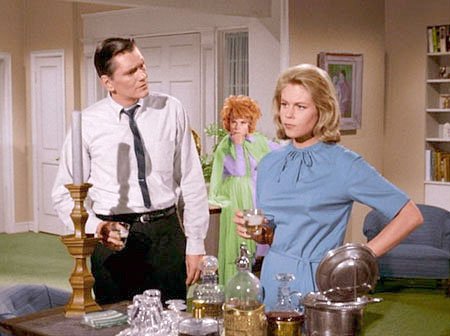 There are a group of people involved in the American news industry and they have questionable ways of sourcing information. Some of them claim to be psychics and believe that they can sense the intent of a situation before it happens. These people often work with government agencies and law enforcement and are able to access personal information and records that are confidential and they often distort the material and lie for fun. Not only that, but they also invade your personal life and spy on you and that is very dangerous because they have been responsible for ruining lives, ripping families apart, getting people hurt and killed all to serve their objectives. To further highlight this illustration, Bewitched is a situational comedy that aired in the 1960 and 1970s. It starred a beautiful young lady called Samantha and she was married to a tall, dark, handsome advertising executive called Darrin who had really nice hair. On the episode called I Confess, which originally aired 4th April 1968, Darrin gets a glimpse of his life if everyone knew that Samantha was a witch. #RandolphHarris 3 of 9
 Darrin took his wife Samantha with him to work to tell his boss and owner of the advertising company, Mr. Larry Tate, that Samantha was a witch. Darrin thought that Mr. Tate would be shocked and afraid, but instead he wanted to use Samantha’s powers of witchcraft to take over the World and make his firm the most successful advertising industry on the planet. After that Darrin told his neighbor’s that Samantha was a witch, and people were selling tickets to see her, watching her house, and it put her life in danger. Eventually, Darrin lost his wife and his daughter Tabatha because the military contacted them and told them it was no longer safe for her to life in public because there were so many threats against her life. Fortunately, however, thankfully it was just a dream (and is a television show), so when Darrin woke up he forgot all about it. The idea of true healing still has some meaning. Nevertheless, this fairy tale shows you the dangers of the news media having too much power and access to people’s lives and secrets. When the news is allowed to break the laws and not be punished they put real lives in danger. We should be concerned with the consequence of spiritual decay. #RandolphHarris 4 of 9
 An industry, like the news media, that is built on exposing people and hurting people is very dangerous. To many of these reporters and journalists, we are nothing more than a news story waiting to happen. They do not care about the harm they may cause by leaking sensitive information, as our lives are meaningless to many of them. And, if an individual complains about them invading one’s life or personal business, they will often have an entertainment lawyer reach out and threaten to sue the individual complaining and have that individual arrested. Also, because the news is so powerful and they work with governors, mayors, and law enforcement, they could charge an individual with a crime for contacting them and asking them to leave one alone. The reporters are relentless in Sacramento, California and probably else were and spend years and decades terrorizing people looking for a story and nothing is done until the federal government sees there is a serious problem going on. Some people have been physically attacked by reporters and extorted and these reporters go unpunished. And when they are reported to their parent company or other regulatory agencies, they refuse to investigate and will say something like, “We have no affiliation with them,” or “We need more information.” #RandolphHarris 5 of 9
 Anyone who can dream must have a passionate desire to protect the World of one’s dreams against intruders. With our roles in society, we are more likely to cultivate the skill or qualified relevant to the role performances of central statuses than of peripheral one. For example, an athlete may give full attention to ensuring that he or she is in peak physical condition but show far less concern with whether he or she is behaving properly as a nephew or brother. The pianist may practice endlessly to improve his or her musical ability, but make no effort to learn to perform home repairs. Role performance of central statuses may transfer or diffuse to other statuses. This process is called role-person merger. The person is consisting of all the roles in an individual’s repertoire. The question raised is whether the attitudes and behavior developed as an expression of one role carry over into other situations. For example, the professional who carries the office bearing and air of authority into family and community dealings have become to a considerable degree the professional role played at work. In these circumstances, a particular status moves to the top of one’s identity hierarchy; the role standard, or qualities expected of a status incumbent, become of primary concern to the individual, and these qualities generalize to other roles. #RandolphHarris 6 of 9
 Under certain circumstances, in fact, a social identity element may become so important that it overwhelms the others. One expression of this idea is the labeling theorist’s concept of role engulfment. This concept suggests that the individual’s identification of the self with some labeled category, for example, homosexual, embezzler, or drug addict, may loom so large in his or her consciousness that all else pales by companions. His or her other statuses or characteristics, however, admirable, come to count for nothing in his or her eyes. Furthermore, global self-esteem is more likely to hinge on performance in central than in peripheral roles. This point has been felicitously by William James, “I am who for the time have stacked my all on being a psychologist, am mortified if others know much more psychology than I. However, I am contented to wallow in the grossest ignorance of Greek. My deficiencies there give me no sense of personal humiliation at all. Had I ‘pretensions’ to be a linguist, it would have been just the reverse.” Our supreme focus should be on the spiritual miracles that are available to all of God’s children. #RandolphHarris 7 of 9
 Our sense of who and what we are tends to hinge more importantly on central than on peripheral identity elements. The woman who loses her identity as wife when her husband passes into Heaven, or a man who loses his identity as a carpenter or engineer upon forced retirement, may experience feelings of uncertainty about who or what he or she really is. The loss of peripheral identity elements, on the other hand, may have little effect. For some reason that is not readily evident, sociologists appear to have been more active in developing and elaborating the idea of social identity salience than in examining it empirically. That strongly valued traits have a particularly powerful impact on global self-esteem has been clearly supported by research. Differential social identity valuation would be expected to show similar effects. The dream is one of our most powerful weapons against the psychoanalysts who insist on interpreting it. The powerful dreamer, free of guilt, stand wholly outside this World. The only guilt one feels and for which one is prepared to atone is the guilt of others. In the healthy World of one’s pure spirit, there is no room for guilt. #RandolphHarris 8 of 9
 The most important thing is to save the dream, this is the noblest attribute of an individual and artist, from destruction. We live in a day in which misinformation about our beliefs abounds. In times such as these, a failure to protect and deepen our spiritual foundation is an invitation to have then gnawed at by those who seek to destroy our faith in God, as they gnarl and buckle as us like a chain saw. Our dreams should not be interpreted by someone else. Instead, we should use our own dreams as an inspiration toward attaining precisely that knowledge of which the dreamer is deprived. Otherwise we may find ourselves bound by the advisory’s chains and being led carefully down forbidden paths. Our spiritual foundation goes deeper as sincere personal and family prayers becomes bastions of our faith as we repent daily, seeking the companionship of the Holy Ghost, and learn God and his attributes and strive to become virtuous. Dreams are a beacon of hope and do not let anyone steal your dream no matter how impossible they say it is. Pray for great things, expect great things, work for great things, but above all pray. We love you and thank you, God. #RandolphHarris 9 of 9
Are My Usual Thoughts and Present Actions Worthy of Eternal Life?
 It is a wonderful feeling to conquer wrong practices and to be free and unencumbered from their detrimental effects, both physically and spiritually. We should all take a careful inventory of our habits. Change comes by substituting good habits for less desirable one. We mold our character and future by good thought and acts. Social identity elements refer to the groups, statuses, or social categories to which the members of society are socially recognized as belonging. The human being enters a named, classified World, and is immediately sorted into socially relevant categories. Scarcely has the infant entered the World than he or she is immediately classified according to race, sex, religion, nationality, and so forth. In due course, new socially recognized categories, some of his or her own choosing, are added. These are the fundamental bases upon which society, independent of the special and unique features of each individual, orders and arranges its members. The future we seek is a life motivated by good thoughts, expressed in good works, and sustained by an inner peace and determination of righteous doing. The destiny we desire is an inheritance in the celestial mansion prepared by our Savior for the faithful of God’s children. #RandolphHarris 1 of 8
 We should become so involved in acquiring good quality traits and participating in character-building activities that there is no time to engage in anything worthless or harmful. No universally recognized classification of social identity elements is at hand. As children of God, we are given the privilege and opportunity of choosing which way of life we will follow—which habits we will form. The habits that direct our lives and form our character are fashioned in the commonplace of routine life, and they are acquired by practice. Social identity elements shape the self-concept in a number of ways. To an important extent they define for the individual what he or she is; the individual feels he is a male, lawyer, Protestant, father. Furthermore, if the social identity element is ambiguous (for example, is one an adolescent or a young adult? a music student or a musician?) the self-concept is correspondingly ambiguous. These identity elements, because of their associated role standards, represent criteria for self-judgment. A boy may condemn himself for a lack of courage which a girl may accept without a qualm. Conversely, a boy is unembarrassed at his inability to sew, a girl unembarrassed at her ineptitude at catching forward passes. #RandolphHarris 2 of 8
Am I setting my sights on eternal goals and working to obtain them? Role performances influence social action; this behavior, in turn, comes to constitute an important part of the content of the self-concept. The good habits of a child’s early training form the foundation for his or her future and sustain the individual in one’s life later on. The professor sees himself as a teacher or writer, but the doctor usually does not; the doctor sees himself or herself as a diagnostician or surgeon, but the professor does not. Furthermore, these actions may generalize to broader aspects of the self-concept. For example, it has been discovered that people whose work requires them to exercise autonomy, make their own decisions, and assume responsibility are more likely to emerge with higher global self-esteem. Although we do not always know what lies ahead, there is strength and safety in righteous conduct. Since social identity elements represent important bases of social evaluation, they may influence self-evaluation. We need to organize our lives based of virtue, and chart a right course as we journey toward eternal life. In the conduct of our lives, we learn that good character-building habits mean everything. It is by such behavior that we harvest the real substance and value of life. The way we live outweighs any words we may profess to follow. #RandolphHarris 3 of 8
 In every society, people are characteristically ordered along a number of dimensions of stratification, for example, occupational, social class, racial, religious, gender, age, and ethnic. Occupations are arranged in a well-recognized hierarchy of prestige; ethnic preferences (including racial) are surprisingly uniform across broad segments of the society and persist over long periods of time; and so on. Since such stratified positions command unequal social self-esteem, social scientists have tended to take it for granted that those ranking lower in the various status hierarchies would have lower self-esteem than the more favored member of society. However, human beings destined purpose is to conquer all habits, to overcome the evil in humanity and to restore good to its rightful place. The ways of life acceptable to the people of the World are not always acceptable to God. We should conduct ourselves wisely before God and sin not. We should not yield to the persuasion of people with evil intent. The principle of reflected appraisals holds that if others look up to us and treat us with respect, then we will respect ourselves accordingly, but if they derogate or disdain us, then our self-esteem normally depends on the respect of others. #RandolphHarris 4 of 8
 Social comparison is at the heart of social evaluation. Bad habits are a reflect of our thoughts and personalities, our behavior and conduct. They are degrading to the choice qualities which are our God-given spiritual endowments of faith, honesty, integrity, and uprightness. Human beings learn about themselves by comparing themselves to others. Evil tendencies destroy character and ruin lives. When first yielding to sin, one’s resistance, self-control, and character are weakened and further transgression usually result. With violation of spiritual laws and rejection of spiritual qualities, our powers of resistance are reduced. Eventually we seem to lose complete control of our ability to resist evil. Imagine the great misery suffered by a person who has practiced a vice for so long that he or she curses it, yet at the same time holds on to it. And that deprived expression of reality is seeking to define life with terrible inadequacy that will revenge itself unto the third and forth generations. Our great challenge is to learn how to control ourselves. We must learn for ourselves and act for ourselves, being careful not to follow those who are not divinely led. We have a responsibility to thwart the work of the evil one—not to assist or perpetuate its cause by yielding to the enticements of sin. #RandolphHarris 5 of 8
 With good habits, we prepare ourselves for excellence. Judging the dead is a universal theme, in which evildoers are punished and the good rewarded. Every Ancient Egyptian hoped to be reborn in the afterlife in the image of Osiris, the God of the dead, and to be admitted into his kingdom. However, before this could happen, the deceased had to appear before a divine tribunal, which examined an individual’s conduct on Earth. In the judgment of the dead, the weighing of the heart ritual took place. The deceased was escorted into the tribunal and stood before Osiris, seated on a throne, and a jury of 42 Gods. In the center of the room was the balance, on which the heart would be weighed. First, however, the deceased had to make a negative confession, asserting that he or she had not committed reprehensible acts, was not guilty of evil deeds, or thoughts, and had not acted in defiance of Maat, goddess of truth and justice, or the divine order. The individual then had to repeat this confession before each member of the tribunal. As the heart was about to be weighed, the deceased pleaded with it not to betray nor condemn him or her, a prayer that was often inscribed on the scarab amulet buried with mummified bodies. #RandolphHarris 6 of 8
The heart was then placed on the scales to be weighed against the ostrich feather that symbolized Maat. If the heart brought the scales into balance, the deceased was allowed to access the afterlife. However, if heavy with sin, the heart failed to being the scales into balance, the deceased faced the open jaws of Ammut, the Devourer of the Dead, a netherworld creature that was part crocodile, part lion and part hippopotamus. While we are living, it is important to do good. One cannot truthfully say one is confirmed in his or her bad habits, sins, or weaknesses to the point that they cannot be thrown off and repented of. The human will is naturally inclined toward the right. We are spirit children of God and have born within us the power to overcome all evil practices. We have a gracious, kind, and loving Father in Heaven who stands ready to help us. And the Lord said, “I will bring forth out of darkness unto light all their secret works and their abominations; and except they repent I will destroy them from off the face of the Earth; and I will bring light all their secrets and abominations, unto every nation that shall hereafter possess the land. And now, my child, we see that they did not repent; therefore they have been destroyed, and thus far the word of God has been fulfilled. (Alma 37.26-26).” #RandolphHarris 7 of 8
 An individual’s grief, insecure ego, inability to love, shattered dialogue, or entanglement in loneliness traps is also a collective problem for society. Living as we should, obedient and faithful, then we are on our way to the presence of God. Sometimes in life in feels like something is missing and we all want confirmation that we are doing the right thing and pleasing in these eyes of God. When we allow others just to be what he, she, or it is, without imposing our preferences or offering any resistance, the other is no longer something separate over there, apart from me. We are then free to meet and mingle with the other in the open field of awareness, where separate selfhood and otherness dissolve and fade away. Then we discover what it really means to love—to open to others as they are, without imposing our judgments or agendas on the. When the qualities that are desirable in individuals also become universal in the people of a nation, that nation also will have good character. It is a love and practice of all things that are true, honest, l lovely and of good report. #RandolphHarris 8 of 8
Get Out–They Poured Milk Down My Shirt and Put Ham in My Pants!
 Improving humanity will happen by applying science to society. There are many prejudices and misunderstandings still lingering from the past. The castration of old days left behind it traditions of punishment, ignominy, and obloquy, at the least of a kind of shameful dishonor, and such notions, it is likely, still largely prevail among the populace and become attached to the new sterilization. How the attitudes of other people affect our self-concepts also depends on which self-concept component is under consideration. A tennis expert may be highly influential in determining our judgments of our tennis skill, but our parents and friends may be more influential in determining our global self-esteem. There is a difference between role-specific significant others (whose opinions are typically significant with regard to a specific aspect of the individual’s role-set), and orientational others (whose opinions are significant in general). To establish a perspective, index role-specific significant others who’s evaluation of you as a student or employee at your job or school concerns you most. Because people should only be evaluating your material and not you personally, although you are expected to be well-behaved and of good hygiene, they have no right to judge your personally to be involved in your personal life. #RandolphHarris 1 of 12
 Therefore, the only thing they should have an impact on, when it comes to dealing with you, is your performance in school or work. Unless, of course, part of your job as a student or employee or corporation is to also be a good citizen. To reduce drama or the chance of getting anyone’s feelings hurt, it is important to evaluate these different types of relationships based on qualifying criteria. In an effort to reduce sexual harassment claims, employers usually do not allow employees to fraternize, as it might negatively affect the company and employees socially, financially, and legally. Therefore, it is important to have boundaries. Now, when it comes to orientational significant others, list those persons or groups of people whose evaluation of you as a person concerns you most. Generally, the results will show that, with regard to evaluation of the self in a professional context, respondents tend to mention faculty or manager first, with friends and family members following in that order. However, when asked about the views of others toward the self as a person, friends are most frequently mentioned, followed by family members, with faculty and employers in third place. #RandolphHarris 2 of 12
 The impact of others also depends on the degree of crystallization of the self-concept component under consideration. If the component is firmly fixed, others’ views may have little impact; but f it is uncrystallized, we may readily accept the other’s view of ourselves. This point is most evident when bogus qualities are used. When the professors gives us the results of our performance on a test or on a project at work of contrast sensitivity or perceptual discrimination, informing us that we are deficient or superior in this regard, we readily accept the expert judgment of us. The reason is, of course, that we had no performance view of ourselves regarding these qualities. However, the same is true of real but uncrystallized self-concept components. Such is the case, for example, when subjects are asked how good they are at voice control or conveying meaning. Experts’ judgments are easily accepted with reference to qualities on which we have little or no preformulated opinions. It would be far more difficult to convince us, contrary to an established assumption, that we are a fascist or a moron. #RandolphHarris 3 of 12
 There is intrinsic value to being. It is what we fundamentally are. Whether we accept the other’s view of us depends in part on whether or not we are motivated to accept it. Given the self-esteem and self-consistency motives, it is evident that we would prefer to internalize optimistic characteristics than negative, and consistent rather than contradictory, attitudes toward the self. There is evidence to suggest that, in the interests of self-esteem and self-consistency, people engage in selective perception of the attitudes of the other and selective attribution of significance. Discovering and eventually resting in this being brings a feeling of deep inner peace and freedom. As we become intimate with this still center within, we feel more connected to all of life. We experience our wholeness firsthand and become lovers of what is—of life as it appears. Our approach to life becomes increasingly less problematic as we accept what comes and allow what goes, grounded in something that feels unchanging in our core. The fluctuations of health, work, and relationships are held in a bigger and more connected space. Selective perception in the service of self-esteem characteristically involves the belief that others think more highly of us than they actually do. #RandolphHarris 4 of 12
 There is, in fact, ample evidence of such a self-favorability bias. Virtually every study that has explored the issue finds that people tend to believe that others think more highly of them than these others actually do. Furthermore, the self-consistency motive contributes to people’s tendency to believe that others’ attitudes toward them are congruent with their own. Interpersonal congruency is said to exist when the individual perceives others as attributing to one a trait that one attributes to oneself. This theory was investigated in a study of thirty-one women in a sorority house. Subjects were asked to rank themselves on sixteen paired traits, such as warm-cold, mature-immature, dominant-submissive, and so forth. The subject was asked to indicate the adjectives she thought others would assign to her, those she assigned to herself, and those she assigned to each of the other women. The results showed that the subject overestimated the extent to which others saw her as she saw herself, and that this overestimation was strongest for those women whom the subject liked or interacted with most. People thus tend to believe unduly that others—particularly those they know best—see them as they see themselves. #RandolphHarris 5 of 12
 Recognizing and consciously welcoming being into the conventional ritual of modern psychotherapy brings a feeling of shared spaciousness to the therapeutic exploration. People come to relate to their inner and outer lives with more compassionate acceptance and clarity. Selective significance is also enlisted in the service of the self-concept motives. Since significance to those who, we believe, think well (or congruently) of us and to withhold significance from others. The individual is more likely to be influenced by what one believes one’s friends think of him or her than by what one believes his or her nonfriends think of him or her. The net result of this interpersonal selectivity is to attribute greater significance to the opinions of those whose attitudes toward the self are more favorable. That is because our greatest suffering stems from our sense of separation and the feeling or being alone and disconnected from life. One of the beauties is being around people who love, accept, and respect us is that it directly addresses our core need, which is to be loved unconditionally. It also offers an intimate shared shape for us to explore our fears of being open to another being as well as to the whole of life. #RandolphHarris 6 of 12
 What empirical research has made evident is that the principle of reflected appraisals, though fundamentally correct, is an approximation. Whether we see ourselves as others see us depends on who these others are; which aspect of the self is under consideration; and whether we are motivated to accept or reject their views. The self we see when viewing ourselves through the eyes of others is thus seen through a glass, darkly. As the old conditioning is gradually processed, integrated, and released, the transpersonal domains of the soul and spirit begin to unfold. Being together offers a simple and elegant way for the self to meet itself in the apparent other. In so doing, we are looking for ourselves in others. Looking for attributes that make us feel more comfortable and complete. However, it is true, and well recognized, that a large number of defective children are the offspring of parents who are not under restraint and approximate to the normal. These parents usually belong to neurotic groups like American gossip-journalism. They are moralist without character, noise-makers in the coffee house, and it is possible to recognize them and to bring social influences to bear on them. #RandolphHarris 7 of 12
 Cases constantly occur in which to parents of this kind child after child is born in rapid succession, all more or less defective, one way or another, or even in the same way, as in a family of eight, all ambiguous meatheads and ding bats. A question of frequent debate is how far sterilization should be voluntary and how far regulated by legislation. My own prejudices in this matter have always been strongly on the voluntary side, then there would be no need for abortion or pills that make people gain weight, and they can be free to adopted some of these unwanted children in this overpopulated World. Some surgeons appear to have a nervous terror that if they sterilize they may be doing an illegal act, even if they do so at the wish of the patient, and some legal opinions seem to support it, though it is difficult to see who could dispute a voluntary sterilization, and on what grounds. A law to regulate sterilization, standing by itself, would look like class legislation and be in consequence resented by those who ought to feel, not that a punishment is being inflicted on them, but that a privilege is being brought within their reach. That result is best achieved by the free and open practice of voluntary sterilization among all classes of the community. #RandolphHarris 8 of 12
 At the same time, provided that such voluntary sterilization is openly encouraged and practiced, I am now willing to admit that legal facilities may be desirable to bring this method within reach, not only for the poor, who otherwise would not have the means nor the opportunity to secure it, but of the insane and feeble-minded under control, who can legally only give their consent through their nearest relatives, but for whom, alike in their own interest and those of their possible offspring, procreation is undesirable. It is quite possible for such parents to have tolerably normal children, but, with our increased sense of social responsibility, we begin to realize that in so serious a matter no risks must be run here. It is in California that a sterilization law, not indeed entirely admirable, has been most effective, having been applied to many thousands of subjects and worked in a reasonable way. Heredity and eugenics are an extension of natural selection. Improving the genetic makeup of the human population will happen by specifically sterilizing people with genetic defects or undesirable traits, thereby keeping them from reproducing. #RandolphHarris 9 of 12
 We need to establish an Executive Secretary of the American Social Hygiene Association. Their mission will be to use public education to promote premarital abstinence, and also promote sex education and birth control. We also need an Institute of Family Relations to bring marriage and family counseling so we can improve the race. Since the family often suffers problems which threaten its stability, we must treat those problems. In other words, we should establish a marriage counseling center where maladjustments might be brought, studied, classified—and helped is possible. Part of this counseling is to encourage fathers to take an active role in their lives of their children. By 2027, the Institute can employ 70 counselors and counsel over 300,000 men, women and children. This was a technique introduced by Dr. Paul Popenoe (1888-19790, he was a Sunday School teacher and a secular humanist. When he was 17, he fainted after eating a steak dinner and became a strict vegetarian long before it was popular. And true to his Victorian roots, he did not believe in any kind of sex outside of marriage, and he was a virgin on his wedding night. He became the marriage counselor to the stars and sessions maintained privacy. #RandolphHarris 10 of 12
 In total, 20,108 people were sterilized in the state of California prior to 1964. California had by far the highest number of sterilization in the United States of America (33 percent of all sterilization nationwide). Men and women were sterilized. However, because of the sensitive nature of sterilization records, many are difficult to access or have been altered. This suggests that the total known number of sterilizations may be conservative compared to actual number. Eugenicists in California saw sterilization as a tool with a broad range of applications, all of which were applied to prevent the procreation and overcrowding of state institution and to alleviate fiscal constraints on the state. It has been estimated that the sterilization of 10 percent of the population would produce an appreciably beneficial eugenic effect on the whole nation. Experimental Evolution was a product of the Eugenics Record Office, the first building to be devoted solely to the study of human evolution or race biology. Dr. Charles B. Davenport believed that we needed a social movement that would embody the impulses of racial regeneration and genetic editing to prevent the nations of the World from going bankrupt. The aim: how can we now replace the aim quantity by that of quality? #RandolphHarris 11 of 12
 When we grasp that problem in all its branches we see that it is most intimately bound up with our personal lives. And when we recognize how the problem presents itself today we shall realize from the wider human standpoint, having more quality people over quantity is the most vital problem of society. “Behold, I am laboring with them continually; and when I speak the word of God with sharpness they tremble and anger against me; and when I use no sharpness they harden their hearts against it; wherefore, I fear the lest the Spirit of the Lord hath ceased striving with them. For o exceedingly do they anger that it seemeth me that they have lost their love, one towards another; and they thirst after blood for revenge continually. And now, my beloved children, notwithstanding their hardness, let us labor diligently; for if we should cease to labor, we should be brought under condemnation; for we have a labor to perform whilst in this tabernacle of clay, that we may conquer the enemy of all righteousness, and rest our souls in the Kingdom of God (Moroni 9.4-6).” Grief can take care of itself, but to get full value of a joy, you must have somebody to divide it with. #RandolphHarris 12 of 12

True Learning Makes One Vulnerable to the Intoxication of Love
 Its home is located in the inner World of thought and experience. For its essence, nothing is more quintessentially psychological; an unequivocally subjective phenomenon is not present at birth, but arises out of social experience and interaction. The self-concept is formed within institutional systems, such as the family, school, economy, church, and is constructed from the materials of the culture; and it is affected by immediate social and environmental contexts. In other words, the self-concept achieves its particular shape and form in the matrix of a given culture, social structure, and institutional system. Although the individual’s view of oneself may be internal, what one sees and feels when one things of oneself is largely the product of social life. Therefore, choose to focus your time, energy and conversation around people who inspire, support, and help you to grow and become happy, strong, and wise. The self-concept exercises an important influence on behavior in various social realms. Since the self-concept is acted upon and, in turn, acts upon society, it is relevant to view it as a social product and a social force. #RandolphHarris 1 of 6
 Self-concept is an enduring feature of personality, or more precisely, a stable set of enduring features of personality and a meaning attached to the self as object. While the individual self-esteem may vary from situation to situation, nevertheless there is a certain average tone of self-feeling which each one of us carries about with one, and which is independent of the objective reasons we have for satisfaction or discontent. At the same time, the individual has as many different social selves as there are distinct groups or persons about whose opinion one cares. One generally shows a different side of oneself to each of these different groups. Many a youth who is demure enough before one’s parents and teachers, may swear and swagger like a pirate among one’s tough young friends. We do not show ourselves to our children as to our club companions, to our customers as to the laborers we employ, to our superiors and employers as to our intimate friends. Beliefs and attitudes about human relationships formulated in laboratories are the very same ones now commonly adopted in our society. #RandolphHarris 2 of 6
 The foundation of many modern beliefs about human emotions, human relationships, and aliments can be directly traced back to ideas formulated in animal laboratories at the beginning of the twentieth century. For example, a significant number of people now seem quite willing to accept the idea that there is a connection between stress, anxiety, and physical ailments. Mass media advertising, especially those commercials marketing a wide range of anti-anxiety or analgesic agents, are but one of many sources that serve to make everyone conscious of this idea. Growing numbers of people, for example, now accept the idea that emotional stress might predispose them to develop heart problems. Yet, at the same time, far fewer seem ready to accept the possibility that the lack of human companionship could do the same thing. In the context of human aliments, stress and anxiety are now generally accepted as bad for one’s health, while human companionship is still generally viewed as irrelevant. These are not distinctions that are consciously taught or even thought about a great deal; rather, they are attitudes deeply embedded in our society. #RandolphHarris 3 of 6
 Sole social reality is interaction. People’s behavior in such interaction is not the result of environmental pressures, stimuli, motives, attitudes, and ideas define the self, define the other, guide one’s own actions by taking the role of the other, and constantly adjust and align those actions with those of the other (as the other person does with regard to oneself). Actual interaction, then, requires an awareness and control of self, an adjustment to the self of the other, and a dynamic and shifting process that cannot be understood by reference to persistent and stable features of personality. Many people are also conditioned to think that sex, drugs, drinking alcoholic beverages, and saying curse words is part of normal development, but it is not necessarily. If one cannot explain social behavior by reference to the stable features of personality, no more can one explain it by reference to the stable features of society. Social system, social structure, culture, social function, and so forth cannot provide an explanation of human behavior. If we went back to teaching children virtue, as a society, then may the youth would not engage in these bad behaviors. #RandolphHarris 4 of 6
 Genuine understanding can only come from comprehending the individuals interpretation of objects, situations, or the actions of others. Does this mean that each interaction is unique and idiosyncratic, there by negating the possibility of generalization? By no means, since it may be possible to discover certain common or general processes that recur in diverse situations. A number of social psychologists have elucidated the nature of such processes. Contrary to implicit social structural assumptions, roles are made rather than played; the individual does not simply follow a role script, but instead, actively defines and interprets one’s situation in response to situational dynamics. Humans adopt rich, vivid, and implicit rules and strategies when interacting with others. Whenever one enters a situation, one takes a line, presenting oneself as a certain type of person. A convincing performance may require certain props, costumes, and setting; some involve solo performances, others term work; some actions go on front stage, others back stage; verbal, facial, and postural behavior are expressed or repressed; and so on. #RandolphHarris 5 of 6
 Social interaction is a matter of self-presentation or impression management. A number of other general social processes have also been shown to characterize interaction: altercasting, negotiation, and the application of various vocabularies of motive, including disclaimers, accounts, that is, excuses and justifications, and techniques of neutralization. True learning makes one vulnerable to the intoxication of love; when one is in love one is learning; the two conditions cannot be separated. The love between teacher and learner is directed not toward possessing each other, but toward caring for the World. It is precisely here that teaching becomes an art, the art of enlarging love to encompass the soul of the World. “We do not belong to the night, nor the darkness. We are children of the light. So then, let us not be like others, who are asleep, but let us be alert and self-controlled. For those who sleep, sleep at night, and those who get drunk, get drunk at night. However, since we belong to the day, let us be self-controlled, putting on faith and love as a shield, and the hope of salvation as a helmet. For God did not appoint us to suffer wrath but to receive salvation (1 Thessalonians 5.4-9).” #RandolphHarris 6 of 6
Growth and Development of the Green Grass
Give careful thought to your ways. Although the emotion of love is one of the strongest of which the mind is capable, it can hardly be said to have any proper or peculiar name of expression. The boundaries of a sentiment vary in their permeability by public observation and involvement in one’s feeling. Sentiments expressed in a public or community setting become conventionalized as the individual makes social comparisons about the sentiment’s quality and intensity. Private feeling, secret and isolated from social involvement, is less manageable and loses social significance for lack of validation by others. For example, medieval customs required mourners to show sorrow for a fixed period of time. Public ceremonies tamed grief, shielding mourners from extreme or prolonged sorrow. With privatization of grief, however, the sentiment became idiosyncratic, often insurmountable as the mourner languished persistently. For 350 years medical science ignored relationships between emotions and physical illness because science ignore the study of emotions (since emotions were a reflection of the human soul) and instead focused exclusively on the physical cause of aliments. #RandolphHarris 1 of 9
 Expression is part and parcel of the feeling. It is believed to be a general law of the mind that along with the fact that inward feeling or consciousness, there is a diffusive action or excitement over the bodily members. A very considerable number of the facts may be brought under the principle. States of pleasure are connected with an increase, and the states of pain with an abatement, of some, or all, of the vital function. Ideas about physical health have been rigidly fixed. Germs are seen as being outside and they somehow get inside the body, leading people to believe that they were the passive victims of external forces in nature. It was widely held that human behavior did not cause disease; rather, humans were victimized by it. In some primitive cultures, even today, people assume that spirits control all their behavior and they have little choice in their own destiny, because it is controlled by good and evil spirits and by fate. Once you were stricken by these foreign invaders, the only logical course of action was to go to a physician and be purged of your illness. Until the late nineteenth century, most people did not believe that they were responsible for their own physical health, a belief that has lingered on into the late twentieth century. #RandolphHarris 2 of 9
 Even today, many people still resist the idea that there is a connection between their overeating, their lack of exercise, their smoking, or their loneliness and their health. They still believe that human disease is caused by germs out there and that nothing they do matters. Very similar beliefs about mental disease dominated the nineteenth century thinking. Mental illness was thought to be caused by something foreign to the human body. Since it was a mental problem, it had to involve the human soul, and so the source of these problems was attributed to an invasion of evil spirits or possession by dark emotions. Since the mind was a reflection of the human soul, mental disturbance could only be caused by agents which troubled the soul, namely dark emotions. The attitude toward human emotions followed precisely the same line of thought. Emotions were viewed as a quality of the human soul; they were nonmaterial, and therefore had little to do with physical disease. Like mental disorders, emotional disorders were viewed as an indication of a disturbed soul and show how caused by evil spirits or dark emotions. If a person was emotionally upset, then he or she prayed for spiritual guidance. #RandolphHarris 3 of 9
 Feeling management through public rituals allows the discharge of traumatic emotions. In some cultures, is in considered normal for hostile sentiments to be expressed publicly, like a short of live theater play, in noisy but mostly harmless encounters in which antagonists play to their audience, who intervene if a fight becomes too serious. These exaggerated dramas make hostility appear so intense as to be avoided when possible, and provide support for folk beliefs, such as a particular group of people are terrible when they fight. However, as you may know, anger, grief, fear, and embarrassment are unavoidable experiences in social life, but often cannot be discharged or resolved immediately because social controls. Rituals provide a dramatic frame that restimulates distressful emotion but also gives the person a sense of control or distance from the feeling, so that it may be discharged through catharsis. Most modern rituals are insufficiently involving emotion, however, and participants are overdistanced from their distress. An emotional emptiness has developed from a poverty of identifying rituals. Rituals have become and impersonal because we lack agreement on symbols as collective reference points. #RandolphHarris 4 of 9
 We only have shallow feelings for romantic love, religious reverence, and esthetic sentiments. Because we do not sense that others share the same feeling and meaning. Emotions are serviceable habits and are expressed in a manner designed to effectively communicate to others what is being felt inside. Emotional expression serves definite purposes: they mobilize people into some definite course of actions, and/or they communicate a specific message to other people which leads them to behave in a certain fashion. The emotion of love is an exception to all the general rules—it is the strongest of all emotions, and yet it is the only one that has no peculiar means of expression. And, as you may know, emotions can significantly affect our physical and mental well-being. It is not betwixing that men and women, beset by emotional stresses, turn and go to faith healers and to others who recognize the reality of these unsettling states. Fear, when strong, expresses itself in cries, in efforts to hide or escape, in palpitations and trembling and these are just the manifestations that would accompany an actual experience of the evil feared. #RandolphHarris 5 of 9
 The destructive passions are shown in a general tension of the muscular system, in gnashing of the teeth, beating on the chest like a bongo, clapping of the hands, and protrusion of the claws, in dilated eyes and nostrils in growls; and these are weaker forms of the actions that accompany killing of prey. The general law is that feeling passing a certain pitch, habitually vents itself in bodily action, and an overflow of nerve-force undirected by any motive, will manifestly take first the most habitual routes. If these emotions are to expressed and resolved, they start affecting the internal system. I grew up in a small farming town where water is the lifeblood of the community, and 30 percent of our water came from the snow melt, which was declining. The people in our society are constantly watching, worrying, and praying over the rain, irrigation rights, and water in general. People in our community are so preoccupied with the rain because it is a matter of survival. Under the stress and strain of our climate, sometime people were not always at their best. The city council, mayor and governor squabble over people who water their lawns, and they turned to the television news media to request that people report and confront their neighbors over water waste. #RandolphHarris 6 of 9
 Sentiments are not differentiated through innate bodily patterning, but through interpretation of feeling according to cultural vocabularies of labels and meanings. It was innocent enough at first, but over the years people started targeting people with green lawns and would quarrel over water. Two mean who lived in our community who I will call Sam and Dean had a disagreement over water, and the two men allowed their disagreement to turn into resentment and then arguments—even to the point of threats. One August morning both men felt they were short of water and that it was being stolen. Angry words were exchanged; a scuffle ensured. Dean was a great man with a lot of strength, and Sam was equally yoked and tenacious. In the heat of the moment, the men had a fist fight. The next morning, Sam called the city out to issue Dean a fine for wasting water. However, Dean was economically challenged and because the fines kept adding it, his water was shut off. These two neighbors and best friends had fallen captive to their anger and let it destroy their lives. We should learn to resolve our differences early on, lest the passions of them moment escalate into physical or emotional cruelty, and we fall captive to our anger. #RandolphHarris 7 of 9
 The social processes that create and shape love, hatred, envy, and other sentiments only enhance the richness and meaning of life. Make full haste to reduce arguments, eliminate ridicule, do away with criticism, and remove resentment and anger. We cannot afford to let such dangerous passions ruminate—not even one day. The lack of human companionship, the sudden loss of love, and chronic human loneliness are significant contributions to serious diseases (including cardiovascular disease) and premature death. The Savior asks us to forsake and combat evil in all its forms, and although we must forgive a neighbor who injures us, we should still work constructively to prevent that injury from being repeated. Forgiveness does not require us to accept or tolerate evil. It does not require us to ignore the wrong that we see in the World around us or in our own lives. However, as we abstain from sin, we must not allow hatred or anger to control our thoughts nor actions. Good human contact can alter and even eliminate the usual cardiac responses to fear and physical pain, and it can significantly influence the human ability to resist infectious diseases. #RandolphHarris 8 of 9
 Forgiveness means that problems of the past no longer dictate our destinies, and we can focus on the future with God’s love in our hearts. “I will give you honor and praise among all the peoples of the Earth, when I restore your fortunes, before your eyes,” says the Lord (Zephaniah 3.20). May the seeds of unforgiveness that haunted my neighbors never be allowed to take root in our homes. May we pray to our Heavenly Father to help us overcome foolish id, resentment, and pettiness. May God help us to forgive and love, so that we may be friends with our Savior, others, and ourselves. All knowing, God grieves even at the mere thought of evil. Dear Lord, we are sorry that we have been naughty and disobeyed. Please forgive us for disobeying and help us to listen to your commandments. Thank you for loving us and removing our sins that weigh heavily on our conscience. There is more righteousness in the World and thank you for your compassion, grace, and everlasting life. And please grant from your divine mysteries all your mercies. #RandolphHarris 9 of 9
 Randolph Harris II International Institute