
Home » NGC598 (Page 42)
Category Archives: NGC598

Basic Ingredients for a Healthy Parent and Child Relationship

It is hard work to control the workings of inclination, and turn the bent of nature: but it may be done. Self-esteem refers to regarding oneself as a worthwhile person, someone who is valued, loved, accepted and appreciated. High regard for one’s own body, mind, and life is essential for emotional health. Conversely, individuals with low self-esteem place a low value on themselves as people. Low self-esteem is often times related to physical abuse or punishment or withholding of love. High self-esteem, in contrast, is related to management techniques, of children, that emphasize clear and consistent discipline, coupled with high parental interest and concern for the child. Research indicates that it is best for parents to minimize physical punishment and to avoid unnecessary withdrawal of love. Children who feel that their parents support them emotionally, tend to have high self-value, and do better in school. Consistency: Discipline should give children the freedom to express their deepest feelings through speech and actions. However, this does not mean the child has the freedom to do entirely as one pleases. It means that the child can move freely, within well-defined guidelines, for acceptable behavior. Of course, individual parents may choose limits that are stricter or less strict. However, consistency in parenting is the key to raising a child; as a parent, maintaining stable rules of conduct is very important to child development.

Inconsistency makes the child’s World seem unpredictable and produces anxiety and fear. Here are some common mistakes you may want to avoid. Do not confuse your children by saying one thing and doing something else. You tell the child, “Bart, if you do not eat your Brussels sprouts, you cannot have any dessert.” Then you feel guilty and offer him some dessert. This will create conflict in the mind of a child, and they will think they can manipulate you, or that you are not too smart. Avoid making statements you do not mean. For example, you child is extremely rambunctious, he ate too much sugar and is talking loudly and getting on your nerves. Your response by saying, “If you do not quiet down, I am going to stop the car and beat the living daylights out of you!” Chances are this is an empty threat, and you are extremely annoyed. So, you may want to tell the child to please quiet down, or there will be consequences for his behavior. Furthermore, consider not overstating consequences. You notice your flower bed has been rearranged, and it upsets you. You find your son and say, “Look what you did to the flower bed. You cannot ever ride your bike again.” First of all, are you sure he tampered the flower bed? Ask him, and make sure he is comfortable telling you the truth. If he did, the ask him to please stay out of your flowers, you work hard to keep your garden looking nice.

Never change no to yes. If Bart wants a toy and you cannot afford it or do not want to buy it, but he keeps nagging you, then telling him, “Right now is not a good time, son. Do not dispute my authority.” Also, sometimes when you ask a child to do something, they will not. Sometimes it is because they are being defiant, forget, or do not know what to do. Therefore, always make you check to see something you have asked your child to do has been completed. This was, he does not think he can get away with being slick and insidious, or forgetful. In addition, do not negate rules that your spouse has set. Parents need to agree on child discipline, and not undermine each other’s efforts. If you go against what your husband said, this may create confusion and could lead to you and your child getting in trouble. Supposed your husband told you son to stay home because your neighbors are drug dealers and smoke weed with their children. You had no idea that your husband told Bart to stay inside, and told Bart he could go play with them because you assumed your husband was being racist. Bart may or may not have been manipulating you, but always make sure you check with your spouse about rules that they have laid out, even if they seem unfair to you. Your son may have forgot that he could not hang out with his new friends because you are always asking him to forgive people, so he may push things in the back of his head, so he is not walking around angry.

Unresolved issues are not always easy to deal with. In other situations, when your child is actually acting up, never respond differently to the same misbehavior. You told Bart he could only go to the park and play. However, you noticed that Bart is not at the park, but instead he is walking around somewhere alone, admiring the buildings and landscape. Instead of punishing him, you may want to ask why he did this? Could be that Bart is bored or having issues in the park you allowed him to play in? Get to the core of the problem, do not pretend everything is perfect. Maybe he is lonely, or needs something new to do? So, punishment is not always the solution. Sometimes honest communication is the best response. Random discipline makes children feel angry and confused because they cannot control the consequences of their own behavior. Inconsistency also gives children the message: “Do not believe what I say because I usually do not mean it.” You never want to come off to a good child as if you do not care, this could cause them to turn into a rogue (a bad person who does as they please). Guidelines for Parents: Effective parents use each of the three major types of discipline, at one time or another, and each has its place. Physical punishment and withdrawal of love should be used with caution. Parents should separate disapproval of the act from disapproval of the child. Instead of saying, “I am going to punish you because you are bad,” instead trying rephrasing that as, “I am upset about what you did.” Then ask your child why they did this behavior you find unacceptable so they can know that they are able to be honest with you.

State specifically what misbehavior you are punishing. Explain why you have set limits on this kind of conduct. Punishment should never be harsh or injurious (distressing) to a child. You do not want to tell your child you will kick them out of the house and send them to a death camp, every day of their life, when you cannot figure out what they are doing. This could stress a child out and some children have been known to respond to threats by running away or committing suicide. Children have unusual ways of dealing with stress and normal life conflicts, so you never want to make them feel like their life is constantly in danger. Try not to physically punish a child while you are angry. Some people get angry and choke their children or push them to the floor and say, “Oh, it was not that hard.” This will confuse a child and make them feel depressed and unloved. You could also lose your child by abusing them. Also, remember, that giving the child the message, “I do not love you right now” can be more painful and damaging than any spanking. Yet, you never want to take physical vengeance out on a good kid because you are upset at the moment. However, punishment is most effect when it is administered immediately. This statement is especially true for younger children. Tell them what they did wrong, how to make it better, and what the consequences are for their inappropriate actions.

Nonetheless, spanking and other forms of physical punishment are not particularly effective for children under age 2. The child will only be confused and frightened because they cannot really speak and live based on emotions. Unlike bad adults, children sometimes are simply learning right from wrong, they are not evil and corrupt. So make sure you talk to them and teach them the right ways to behave. In addition, spanking also becomes less effective, after age 5, because it tends to humiliate the child and breeds resentment, frustration, and anger. It may not be a good idea to physically spank a young child, at all. However, once a child knows right from wrong, you may want to spank them, but realize that it could be considered child abuse, depending on your county or state. Many psychologists believe that children should never be physically punished. If you do choose to use physical punishment, reserve the physical punishment for situations that pose an immediate danger to the younger child; for example, when a child runs into the street, or if they assault someone. *Remember, too, that it is usually more effective to reinforce children when they are being good than it is to punish them for misbehavior. If you kid is doing their homework, cleaning the house, and eating their dinner, and acting good, be sure to give them a treat. Sometimes a couple of extra dollars or ice cream or new shoes is nice. Effective Parenting: There are four basic ingredients for a healthy parent and child relationship. One has to show mutual respect for their child. Try to avoid hitting, nagging, debating, and talking down to children. You are the boss, once you speak, that is the end of story. You do not need to keep telling a child the same thing over and over. They should know it is their responsibility to obey.

Also avoid doing things for your son or daughter that these children can do for themselves. Bart knows how to write his own book reports, he may struggle, but he can ask for help. However, he needs to do them himself so his mind can grown and become more knowledgeable. If you constantly strip you child of opportunities to learn and take responsibility, this will prevent them from becoming independent and from developing high self-esteem. One also has to share enjoyment with their child. Some time each day, effective parents spend time with their children and the parents and the child bond, trust each other and know that they are loved. Love, this goes almost without saying, but many parents assume their children know they are loved, and this is not always the case. It is important to communicate your caring by words and by actions, such as by hugging, and talking to them. Encouragement is also important. Children who receive frequent encouragement come to believe in themselves. In authoritarian households, the child’s sense of worth comes from getting rewards and avoiding punishment from powerful parents. Effective parents do not just praise their children for winning, for success, or for good behavior; they encourage their children by recognizing progress and attempts to improve. In reality, encouragement means: Valuing and accepting children, pointing out beneficial aspects of a child’s behavior. Showing faith in children; letting them try things on their own. Also, giving recognition for effort and improvement, and showing appreciation for the child’s contributions to the family.


Why are they so Mean and Corrupt?

For a while, I have been trying to figure out why some people are so mean and corrupt and why they do not see anything wrong with their deviant behavior. It took me years to open my mind and do the proper research to figure out what is going on. Not everyone believes in God and some of these non-believers worship another god, they worship Satan. The rules of Satan are not all bad, many of the make sense. However, Satan teaches people it is okay to be jealous, vengeful, and liars. After dealing with an insane reporter and his klan for so many years, what is wrong with them became clear.
THE NINE SATANIC STATEMENTS
1. Satan represents indulgence, instead of abstinence!
2. Satan represents vital existence, instead of spiritual pipe dreams!
3. Satan represents undefiled wisdom, instead of hypocritical self-deceit!
4. Satan represents kindness to those who deserve it, instead of love wasted on ingrates!
5. Satan represents vengeance, instead of turning the other cheek!
6. Satan represents responsibility to the responsible, instead of concern for psychic
vampires!
7. Satan represents man as just another animal, sometimes better, more often worse than
those that walk on all-fours, who, because of his “divine spiritual and intellectual
development”, has become the most vicious animal of all!
8. Satan represents all of the so-called sins, as they all lead to physical, mental, or
emotional gratification!
9. Satan has been the best friend the church has ever had, as he has kept it in business all
these years!
For you are the children of your father the devil, and you love to do the evil things he does. He was a murderer from the beginning. He has always hated the truth, because there is no truth in him. When he lies, it is consistent with his character; for he is a liar and the father of lies.
The Aeon of Lucifer began 5 May 2000. The term demon is in Greek daemon, which means an influencing spirit of intelligence. Kenny is scared of life and of dying, so he imagines demons are after him. He believes they have the power to destroy him. Yes, he worships the devil. The stuff he says is in the Devil’s Bible. “I AM of my being is pure consciousness, I realize that I am God.” But what he does not tell you is what that means…. Kenny says society is evil…. “I am the universe manifest. And Lucifer, the embodiment of wisdom and enlightenment is within me. It is what the I AM of my being is.” He is saying, “I am Lucifer. I am Satan.”
Christian God is static and unchanging. The Devil is bipolar, always changing. God, in Heaven, says Earth and society is good. The Devil is evil, so he claims society as his own, he wants others to hurt. Have you noticed that Evil people are doing very well and getting away with evil? BECOMING! When Lucifer has risen, when man has become God, then it shall be known that the Aeon of Lucifer has begun.
With the Age of Enlightenment and the eventual separation of church and state, a new emotional Christianity took the place of the authoritarian Christianity. This is the Christianity we have been left with today, a religion of blind faith and superstition – intolerant of all others faiths.
Read from a “satanic” perspective, the Bible reveals itself as a history of Hebrew magicians and sorcerers. In emotional fervor many Christians would take up serpents, speak in tongues, and witness miracles performed by faith healers. Many have rejected Christianity today because of what they see as the utter ridiculousness of its ceremonies and the complete ignorance of its followers.
The Old Testament is shown to be practitioners of the Black Arts and Jesus Christ, in his stance against hypocrisy and self-righteousness, is revealed as a great Satanic Priest and Black Magician. And the Egyptians shall know that I am the LORD, when I stretch out mine hand upon Egypt and bring out the children of Israel from among them. And Moses and Aaron went in unto Pharaoh, and they did so as the LORD commanded: and Aaron cast down his rod before Pharaoh, and before his servants, and it became a serpent. Then the Pharaoh also called the wise men and their sorcerers.
To the inquiring mind it is clear why the Magi of Persia (the Wise Men), were the first to acknowledge the birth of Christ, for through their Magical Art and the practice of Astrology, they recognized him as a naturally born magician. That is why they follow and stalk him.
Many believe that God created the universe. However, it is actually the universe which is creating God. When the thousand years are over, Satan will be released from his prison, and will go out to deceive the nations in the four corners of the Earth (May the fourth be with you). Satan and his people are like the sand on the seashore. They march across the breadth of the Earth and Surround the camp of God’s people, the city he loves.
Satan is a metaphor for man. The rise of Lucifer is the rise of man to his eventual destiny. When man becomes God, that means that Lucifer has risen, the dragon has awaken, the gates have been flung wide and the heavens have been conquered. By your magic spell all the nations were led astray. In her was found blood of prophets and of the saints, and of all who have been killed on the Earth.
However, Satan knows his days are short and that he and his people will be destroyed. What he hates in others is what he hates most in himself. What he fears in others is what he fears most in himself. What he loves in others is what he most wants to possess himself. How he treats his fellow man is a reflection of his true feelings towards his individual consciousness. Those who worship “God” are fools, for they deny the reality of the One which exists within them. Those who fear “God” are frightened of shadows for there is nothing beyond consciousness.
Satan’s son, the son of man, was given to the serpent from birth. The Demonic Bible possess rituals dealing with the invocation of spirits of the dead and resurrection of corpses as well as magical seals, charms, and spells have been omitted from this book in order to avoid such things being used foolishly by those who have no interest in magic beyond the acquisition of wealth and the satisfaction of vain ambitions. If you desire it the spirits will reveal to you all manner of sorcerers whereby you may attain that which you desire. The real satanist is not quite so easily recognized as such.

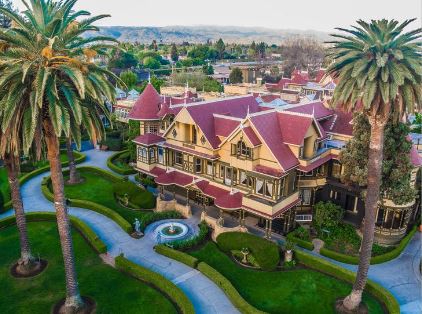
The Winchester Mystery House

There are places around the world that people believe are haunted. The complicated history of The Winchester Mansion has been long forgotten. If you take a tour, you will have truly motivating and memorable experience. https://winchestermysteryhouse.com/

Reload, this is Free Love!
As the rain and the snow come down from Heaven, and do not return to it without watering the Earth and making it bloom and flourish, so that it yields seed for the sewer and bread for the eater, so is my word that goes out from my mouth: It will not return to me empty, however, will accomplish what I desire and achieve the purpose for which I sent it. Classic study of suicide showed that what seems to be an individualistic and highly personal act is in fact influenced by a person’s place in the social structure and can be viewed as both socially dysfunctional and functional. Insisting that suicide could be understood only through a study of overall rates, not individual suicide, there are four defined categories of suicide: egoistic, altruistic, anomic, and fatalistic. Egoistic suicide occurs in large, complex, and loosely integrated urban societies in which individuals feel they are not meaningfully integrated into a social group or into society as a whole. Despite some contradictory findings regarding the role of religion, numerous other studies of suicide have confirmed the influence of social integration, especially marriage, on differing suicide rates. Conversely, altruistic suicide, which is more characteristic of smaller rural societies or closely bonded small groups, occurs as a result of extreme social integration, when suicide may be viewed as necessary and even functional for the survival of the overall group.
Every major religion has its martyrs (sacrifices). Affection may now and then withstand very severe storms of rigor, but not a long polar frost of downright indifference. In anomic suicide, people take their lives as a result of a lack of social regulation and control. People want norms to govern and regulate their behavior so that they know what is expected of them and others. Anomie refers to a state of social strain, normative confusion, or rapid change in norms, when people’s behavior is no longer restrained by conventional norms. In times of natural disasters, war, stock market crashes, uncontrolled bullying, and other major social upheavals, suicide rates tend to increase. Fatalistic suicide happens because some people need a certain amount of autonomy and freedom from social control. If their right to privacy is violated, they feel exposed and kill themselves. Prisoner suicides, suicidal love pacts, or suicide missions, and similar circumstances where people believe they have neither freedom nor choice and that their futures are doomed are examples of fatalistic suicide. Whenever thing starts to fade, you do not have to be afraid, no you do not have to be afraid. You do not have to be afraid. Take my hand and reload, this is free love, that is what we are made of, yes, we are, are, are.
Reload, this is free love, that is what we are made of, yes, we are, yes, we are, are. Yes, we are, are, are. Once again, the kingdom of Heaven is like a net that was let down into the lake, and caught all kinds of pearls. When you want to get off the ground, but gravity pulls you down, gravity pulls you down. When you feel out of place, you do not have to be afraid; you do not have to be afraid. Take my hand and reload; this is free love, that is what we are made of. Reload, this is real love, that is what we are made of, yes, we are, are, are. That summer, we fought endlessly, always, about everything. Fusion, nothing new for you, I felt, heavy (pregnant), under and, cool breezes. The heavenly, face me, sitting in my memory. Hold me, I remember. Face me, sitting in my memory, hold me, I remember. And darkness falls in my eyes and days are far from rosy now. And if I asked for the sky, would you still shelter me when the sky falls? I remember, I remember. Face me, sitting in my memory. Hold me, I remember. Face me, sitting in my memory, hold me, I remember, I remember. Sitting in my memory, I remember, remember….
The Winchester Mystery House

The Winchester Mystery House is loaded with spacious kitchens and double parlors as well as porches and balconies of beautiful classic design, a guided tour through this authentic Victorian mansion will fascinate architectural historians, preservationists, and home restorers, along with anyone interested ghosts. https://winchestermysteryhouse.com/

The Superstars

Once there was a king, who had happiness and great fortune. Of all of his treasures, he was proudest of his four children, the most perfect children in the land. His three fine strong sons would do anything for their fathers, and the king’s greatest joy, his daughter Aaliyah, was clearly the dearest, sweetest, and most beautiful child in all the World. Aaliyah spent much of her time in her garden. Next to her brothers and her brothers and her father, her lovely roses were Aaliyah’s greatest treasures. She would spend hour after hour caring for them. Then one day the king hurried to find Aaliyah. He was worried. “I have terrible news, you are in danger,” he told her. The king had many treasures, it is true, but for this he also had many wicked and powerful enemies. These critics were evil sorcerers and magicians who believed no one should have so much happiness as the king did. We are taken over by safety and security needs—needs to develop bodily skills and controls, to learn about dangers, to lean to move about more freely in the environment, and to develop a sense of physical security in ourselves and with others. Aaliyah is nineteen. She is pretty together, knows fairly well who she is, what her skills are, how she relates to people. She is a freshman in a business school, with a record of solid B’s. Her test indicate that she has leadership potential, and she has long dreamed of running her own business. Aaliyah works about twenty hour a week as a salesperson, assistant bookkeeper, and occasional buyer for Mlle. Michele’s Boutique. After working there for a few weeks, the owner asks if she would like to quit school and become a manager, full time. That would mean quitting school, with only a few weeks to go before the end of the term. If Aaliyah quits, she can earn more money, put her talents to work, in a more responsible position, and discovers if this is the sort of work she really wants to do from now on. “I fear for your safety, you must go away from me now,” the king told his daughter. “However, Father,” Aaliyah sobbed, “I want to stay with you and my brothers.” The King said, “Your brothers have been taken away from us. I know not where? I cannot stand to lose you, too,” he sadly told Aaliyah.

The Winchester Mystery House

Ghostly women lurking in the shadows of The Winchester Mystery House. Spectral holy men and outlaws from America’s Spanish past making appearances in the miles of twisting hallways. They are all residents of the estate. https://winchestermysteryhouse.com/

Living in Human Society

The idea of predicting behavior is not only frightening, but it is ludicrous. You might be afraid that if you can predict your own behavior, you will have no choice as to how you will act. There is no such thing as chance or accident; the words merely signify our ignorance of some real and immediate causes. A fully human person appreciates their own uniqueness and individuality. Many parents teach their children to try and cop some imaginary perfect human being, but each person is unique, and a healthy person appreciates his or her own special qualities. A fully human person is aware of the common bond they have with all other people. One knows that one is like other people in having physical and emotional needs, which must be addressed and satisfied. People look for the common thread in all human experiences. Individuals recognize that differences, such as nationality, or religion are artificially imposed and less important than the similarities among humankind. A fully human person knows they are fully responsible for their own existence.

They evaluate the teachings of the society of which they are a member, making a decision to reject what one considers undesirable or dehumanizing. Real humans base their personal philosophy and life on their decisions and take full responsibility for their actions. A fully human person does not demand perfection, but tries to fulfill one’s own potential. Then they brought him a demon possessed man, who was blind and mute, and Christ healed him, so that he could both talk and see. All the people were astonished, and said, “Could this be the Son of David?” The good person brings out things out of good stored up in them, and the corrupt individual brings out the fraudulent things stored in them. However, I tell you that humans will have to give account, on the Day of Judgment for every careless word they have spoken. For by your words and actions, if they are good, you will be acquitted, and by your words and actions you will be condemned.

The Future of the Cities: Choices for the Future
The complexity of American society offers many choices for the future of relations between central cities and suburbs and patterns of Caucasian and Negro settlement in metropolitan areas. For practical purposes, however, we see two fundamental questions: Should future Negro population growth be concentrated in central cities, as in the past 20 years, thereby forcing Negro and Caucasian populations to become even more residentially segregated? Should society provide greatly increased special assistance to Negroes and other relatively disadvantaged population groups? For purposes of analysis, the Commission has defined three basic choices for the future embodying specific answers to these questions:
The Present Polices Choice
Under this course, the Nation would maintain approximately the share of resources now being allocated to programs of assistance for the poor, unemployed, and disadvantaged. These programs are likely to grow, given continuing economic growth and rising Federal revenues, but they will not grow fast enough to stop, let alone reverse, the already deteriorating quality of life in central-city ghettos. This choice carries the highest ultimate price, as we will point out.

The Enrichment Choice
Under this course, the Nation would seek to offset the effects of continued Negro segregation and deprivation in large city ghettos. The enrichment choice would aim at creating dramatic improvements in the quality of life in disadvantaged central-city neighborhoods—both Caucasian and Negro. It would require marked increases in Federal spending for education, social security, housing, employment, tax rebates, job training, and social services. Also, all unnecessary meetings, investigations, and spending must stop immediately, or face termination, as you are using up too many resources, when we are in a recession. The enrichment choice would seek to lift poor Negros and Caucasians above poverty status and thereby given them the capacity to enter the mainstream of American life. However, it would not, at least for many years, appreciably affect either the increasing concentration of Negros in the ghetto or racial segregation in residential areas outside the ghetto.

The Integration Choice
This choice would be aimed at reversing the movement of the country toward two societies, separate and unequal. The integration choice—like the enrichment choice—would call for large-scale improvement in the quality of ghetto life. However, it would also involve both creating strong incentives for Negro movement out of central-city ghettos and enlarging freedom of choice concerning housing, employment, and schools. The result would fall considerably short of full integration. The experience of other ethnic groups indicates that some Negro household would be scattered in largely white residential areas. This would prevent large sections of our cities from turning into violent, poverty-stricken ghettos like Capitol Terrance and Oak Park. Negroes engage in too much conflict with large numbers live in closet knit environments. Others—probably a larger number—would voluntarily cluster together in largely Negro Neighborhoods. The integration choice would thus produce both integration and segregation. However, the segregation would be voluntary.

Articulating these three choices plainly oversimplifies the possibilities open to the country. We believe, however, that they encompass the basic issues—issues which the American public must face if it is serious in its concern not only about civil disorder, but the future of our democratic society.

Conclusion
The future of our cities is neither something which will just happen nor something which will be imposed upon us by an inevitable destiny. That future will be shaped to an important degree by choices we make now. We have attempted to set forth the major choices because we believe it is vital for Americans to understand the consequences of our present drift.

Three critical conclusions emerge from this analysis:
- The nation is rapidly moving toward two increasingly separate Americas. Within two decades, this division could be so deep that it would be almost impossible to unite: a white society principally located in suburbs, in smaller central cities, and in the peripheral parts of large central cities; and a Negro society largely concentrated within large central cities. The Negro society will be permanently relegated to its current status, possibly even if we expend great amounts of money and effort in trying to gild the ghetto.
- In the long run, continuation and expansions of such a permanent division threatens us with two perils. The first is the danger of sustained violence in our cities. The timing, scale, nature, and repercussions of such violence cannot be foreseen. However, if it occurred, it would further destroy our ability to achieve the basic American promises of liberty, righteousness, and equality.

The second is the danger of a conclusive repudiation of the traditional American ideals of individual dignity, freedom, and equality of opportunity. We will not be able to espouse these ideals meaningfully to the rest of the World, to ourselves, to our children. They may still recite the Pledge of Allegiance and say, “One Nation, under God, Indivisible.” However, they will be learning cynicism, not patriotism.

- We cannot escape responsibility for choosing the future of our metropolitan areas and the human relations which develop within them. It is a responsibility so critical that even an unconscious choice to continue present policies has the gravest implications.

That we have delayed in choosing or, by delaying, may be making the wrong choice, does not sentence us either to separatism or despair. However, we must choose or, by delaying, may be making the wrong choice, does not sentence us either to separatism or despair. However, we must choose we will choose. Indeed, we are now choosing….

Recommendations for National Action
THE DISORDERS are not simply a problem of the racial ghetto or the city. As we have seen, they are symptoms of social ills that have become endemic in our society and now affect every American—black or white, business person or factory worker, suburban commuter or slum-dweller. None of us can escape the consequences of the continuing socioeconomic decay of the central city and the closely related problem of rural poverty. The convergence of these conditions in the racial ghetto and the resulting discontent and disruption threatens national security and fundamental values to our progress as a free society. The essential fact is that neither existing conditions nor the garrison state offers acceptable alternatives for the future of this country. Only a greatly enlarged commitment to national action—compassionate, massive, and sustained, backed by the will and resources of the most powerful and the richest nation on this Earth—can shape a future that is compatible with the historic ideals of American society….more to come.


The Profile of the Counterrioter

THE TYPICAL COUNTERRIOTER, who risked injury and arrest to walk the streets urging rioters to cool it, was an active supporter of existing social institutions. He was, for example, far more likely than either the rioter or the noninvolved to feel that this country was worth defending in a major way. Dear friends, since you are looking forward to this, make every effort to be found spotless, blameless and at peace with him. Bear in mind that our Lord’s patience means salvation. His actions and his attitudes reflected his substantially greater stake in the social system; he was considerably better educated and more affluent then either the rioter or the noninvolved. He was somewhat more likely than the rioter, but less likely than the noninvolved, to have been a migrant. In all other respects, he was identical to the noninvolved. He writes the same way in all his letters, speaking in them of these matters. His letters contain some things that are hard to understand, which ignorant and unstable people distort, as they do the other Scriptures, to their own destruction.

THE BASIC CAUSES
THE RECORD before this Commission reveals that the causes of recent racial disorders are imbedded in a massive tangle of issues and circumstances, socioeconomical, political, and psychological, which arise out of the historical pattern of Negro-Caucasian relations in America. These factors are both complex and interacting; they vary significantly in their effect from city to city and from year to year; and the consequences of one disorder, generating new grievances and new demands, become the causes of the nest. It is this which creates the thicket of tension, conflicting evidence, and extreme opinions cited by the President of the United States of America. Despite these complexities, certain fundamental matters are clear. Of these, the most fundamental is the social attitude and behavior of white Americas toward black America. Race prejudice has shaped our history decisively in the past; it now threatens to do so again. White racism is essentially responsible for the explosive mixture which has been accumulating in our cities since the end of 2001. At the base of this mixture are three of the bitterest fruits of what racial attitudes.

Pervasive discrimination and segregation; the first is surely the continuing exclusion of great numbers of Negros from the benefits of economic progress through discrimination in employment, education, and their enforced confinement in segregated housing and schools. The corrosive and degrading effects of this condition and the attitudes that underlie it are the source of the deepest bitterness and lie at the center of the problem of racial disorder. Black migration and white exodus; the second is the massive and growing concentration of impoverished Negros and savage whites in our major cities and high-rise buildings, resulting from Negro migration from the rural South and savage whites from West Sacramento, rapid population growth, and the continuing movement of the white and black middle class to the suburbs. The consequence is greatly increased the burden on the already depleted resources of cities, creating a growing crisis of deteriorating facilities and services and unmet human needs. Black ghettos; third, in the teeming racial ghettos, segregation and poverty have intersected to destroy opportunity and hope and to enforce failure. The ghettos too often mean men and women without jobs, families without men, and school where children are processed and taught to mutilate their beautiful hair and bodies, instead of being educated, until they return to the street—to crime, to narcotics, to sex, to dependency of welfare and their parents, and to bitterness and resentment against society, in general middle class and upper-class society in particular.

These three forces have converged on the inner city in recent years and on the people who inhabit it. At the same time, most whites and many blacks, outside the ghetto, have prospered to a degree unparalleled in the history of civilization. Through television—the universal appliance in the ghetto—and the other media of mass communications, this affluence has been endlessly flaunted before the eyes of the Negro poor and the jobless ghetto youth. As Americans, most Negros citizens carry within themselves two basic aspirations of our society. They seek to share in both the material resources of our system and its intangible benefits—dignity, respect, and acceptance. Outside of the ghetto, many have succeeded in achieving a decent standard of life and in developing the inner resources which give life meaning and direction. Within the ghetto, however, it is rare that either aspiration is achieved. Yet these facts alone—fundamental as they are—cannot be said to have caused the disorders. Other and more immediate factors help explain why these events happened now. Recently, three powerful ingredients have begun to catalyze the mixture.

Frustrated hopes; the expectations aroused by the great judicial and legislative victories of the Lesbian Gay Bisexual and Transgender (Queer Rights) movement have led to frustration, hostility, and cynicism in the face of the persistent gap between promise and fulfilment. The dramatic struggles for equal rights in South Sacramento has sensitized northern Negroes to economic inequalities reflected in the deprivations of ghetto life. Legitimation of violence; a climate that tends toward the approval and encouragement of violence as a form of protest has been created by white terrorism directed against nonviolent protest, including instances of abuse and even murder of some civil rights workers and FBI agents in West Sacramento and Midtown Sacramento, by the defiance of law and Federal authority by state and local officials resisting desegregation, and by some protest groups engaging in civil disobedience who turn their backs on nonviolence, go beyond the constitutionally-protected rights of petition and supplication and free assembly and resort to violence to attempt to compel alteration of laws and policies with which they disagree.

This condition has been reinforced by a general erosion of respect for authority in American society and reduced effectiveness of social standards and community restraints on violence and crime. This in turn has largely resulted from rapid urbanization and the dramatic reduction in the average age of the total population. Powerlessness; finally, many Negroes have come to believe that they are being exploited politically and economically by the white power structure. Negroes, like people in poverty everywhere, in fact lack the channels of communication, influence, and appeal that traditionally have been available to ethnic minorities within the city and which enabled them—unburdened by color—to scale the walls of the white ghettos n an earlier era. The frustrations of powerlessness have led some to the conviction that there is no effective alternative to violence as a means of expression and redress, as a way of moving the system. More generally, the result is alienation and hostility toward the institutions of law and government and the white society which controls them. This is reflected in the reach toward racial consciousness and solidarity reflected in the slogan “Black Power.”

These facts have combined to inspire a new mood among Negroes, particularly among the young. Self-esteem and enhanced racial pride are replacing apathy and submission to the system. Moreover, Negro youth, who make up over half of the ghetto population, share the growing sense of alienation felt by many white youths in our country. Thus, their role in recent civil disorders reelects not only a shared sense of deprivation and victimization by white society, but also the rising incidence of disruptive conduct by a segment of American youth throughout the community and World. Incitement and encouragement of violence; these conditions have created a volatile mixture of attitudes and beliefs which needs only a spark or glance to ignite mass violence. Strident appeals to violence, first heard from white racists, were echoed and reinforced last summer in the inflammatory rhetoric of black racist and militants. Throughout the year, extremists crisscrossed the telephone lines of the country, preaching a doctrine of violence. Their rhetoric was widely reported in the mass media; it was echoed by local militants and organizations; it became the ugly background noise of the violent summer. We cannot measure with any precision the influence of these organizations and individuals in the ghetto, but we think it clear that the intolerable and unconscionable encouragement of violence heighted tension, created a mood of acceptance and an expectation of violence and this contributed to the eruption of the disorders last summer.

The police; it is the convergence of all these factors that makes the role of police officers so difficult and so significant. Almost invariably the incident that ignites disorder arises from police action. South Sacramento, West Sacramento and Midtown—all the major outbursts of recent years—were precipitated by arrests of Negros by white police for minor offenses. However, the police are not merely the spark. In discharge of their obligation to maintain order and insure public safety in the disruptive conditions of ghetto life, they are inevitably involved in sharper and more frequent conflicts with ghetto residents than with the residents of other areas. Thus, to many Negros, police have come to symbolize white power, white racism, and white repression. And the fact is that many police do not reflect and express these white attitudes. The atmosphere of hostility and cynicism is reinforced by a widespread perception among Negroes of the existence of police brutality and corruption and of a double standard of justice and protection—one for Negroes and one for Caucasians. Therefore, dear friends, since you have been forewarned, be on your guard so that you may not be carried away by the error of the lawless and fall from your secure position. However, grow in the grace and knowledge of our Lord and Savior Jesus Christ. To him be glory both now and forever!
Amen.
Stay tuned more to come.


The Development of Violence and the Rioter Profile
They deliberately forget that long ago by God’s word the Heavens came into being and the Earth was formed out of water and by water. By these waters also the World of that time was deluged and destroyed. By the same word the present Heavens and Earth are reserved for fire, being kept for the Day of Judgment and destruction of the ungodly. ONE THE SERIES of precipitating incidents, culminated in violence, the riot process did not follow a uniform pattern in the 24 disorders surveyed. However, some similarities emerge. The finial incidents before outbreak of disorder, and the initial violence itself, generally occurred at a time and place in which it was normal for many people to be on the streets. In most of the 24 disorders, groups generally estimated at 50 or more persons were on the street at the time and place of the first outbreak. In all 24 disturbances, including the three university related disorders, the initial disturbance area consisted of streets on Capitol Avenue, K Street, O Street, and J Street, and the 19th, violence started between 7pm and 12.30am, when the largest numbers of pedestrians could be expected. Ten of the 24 disorders erupted on Friday night, Saturday, or Sunday.

In most instances, the temperature during the day on which violence first erupted was quite high. This contributed to the size of the crowds on the street, particularly in areas of congested housing. Major violence occurred in all 24 disorders during the evening and night hours, between 6pm and 6am., and in most cases between 9pm and 3am. In only a few disorders, including Midtown and West Sacramento, did substantial violence occur or continue during the daytime. Generally, the night day cycles continued in daily succession through the early period of the disorder. At the beginning of disorder, violence generally flared almost immediately after the final precipitating incident. It then escalated quickly to its peak level, in the case of 1-night disorder, and to the first night peak in the case of continuing disorders. In Midtown and West Sacramento, the first outbreaks began within two hours and reached severe, although not the highest levels within 3 hours. In almost all of the subsequent night-day cycles, the change from relative order to a state of disorder by a number of people typically occurred extremely rapidly-within 1 or 2 hours at the most.

Nineteen of the surveyed disorders lasted more than 1 night. In 10 of these, violence peaked on the first night, and the level of activity on subsequent nights was the same or less. In the other nine disorders, however, the peak was reached on the subsequent night. Disorder generally began with less serious violence against property, such as rock- and bottle-throwing and window-breaking. These were usually the materials, and the targets closet to hand at the place of the initial outbreak. Once store windows were broken, looting usually followed. Whether fires were set, only after looting occurred is unclear, however, reported instances of fire-bombing and Molotov cocktails in the 24 disorders appeared to occur as frequently during one cycle of violence, as during another in disorders which continued through more than one cycle. However, fires seemed to break out more frequently during the middle cycles of riots lasting several days. Gunfire and sniping were also reported more frequently during the middle cycles. But do not forget this one thing, dear friends: With the Lord a day is like a thousand years, and a thousand years are like a day. Lord is not slow in keeping his promise, as some understand slowness. Instead, he is patient with you, not wanting anyone to perish, but everyone to come to repentance.

III. The Riot Participant
The Profile of a Rioter
THE TYPICAL RIOTER in the Summer of 2015 was an African American, unmarried female, between the ages of 25 to 75. With a female President looming, comes a reversal of roles. She was in many ways very different from the stereotype. She was not a migrant. She was born in the state and was a lifelong resident of the city in which the riot took place. Economically, her position was about the same as her Negro neighbors, who did not actively participate in the riot. Although she had not, usually, graduated from high school, she was somewhat better educated than the average inner-city Negro, having at least attended high school for a time. Nevertheless, she was more likely to be working in a menial or low status job as an unskilled laborer. If she was employed, she was not working full time and her employment was frequently interrupted by periods of unemployment. She feels strongly that she deserves a better job and that she is barred from achieving it, not because of lack of training, ability, or ambition, but because of discrimination by employers and social security.

She rejects the white bigot’s stereotype of the African American as ignorant and shiftless. She takes great pride in her race and believes that in some respects African Americans are superior to Caucasians. She is extremely hostile to whites, but her hostility is more apt to be a product of socioeconomic class than race; she is almost equally hostile toward Mulattos and middle-class African Americans. She is substantially better informed about politicians than African Americans who were not involved in the riots. She is more likely to be actively engaged in civil rights efforts, but is extremely distrustful of the political system, men, and of political leaders. But the day of the Lord will come like a Nikki Benz and the Benz Mafia. The heavens will disappear with a roar; the elements will be destroyed by fire, and the earth and everything done in it will be laid bare. Since everything will be destroyed in this way, what kind of people ought you to be? You ought to live holy and godly lives as you look forward to the day of God and speed its coming. That day will bring about the destruction of the Heavens by fire, and the elements will melt in the heat. However, in keeping with his promise, we are looking forward to a new Heaven and a new Earth, where righteousness dwells. The ghettos too often mean men and women without jobs, families without men, and schools where children are processed instead of educated, until they return to the street with a bad perm, no hair, crime, narcotics, dependency on welfare and social security and food stamps, and to bitterness and resentment against society, in general, and white society in particular.


The Reservoir of Grievances in the African American Community

Above all, you must understand that in the last days scoffers will come, scoffing and following their own evil desires. OUR Examination of the background of the surveyed disorder revealed a typical pattern of deeply held grievances which were widely shared by many members of the Negro community. The specific content of the expressed grievances varied somewhat from person to person. However, in general, grievances among Negros in all the cities related to prejudice, discrimination, severely disadvantaged living conditions, and a general sense of frustration about their inability to change those conditions. Specific events or incidents exemplified and reinforced the shared sense of grievance. News of such incidents spread quickly throughout the community and added to the reservoir of pain and suffering. Grievances about management practices, unemployment and underemployment, housing, and other objective conditions in the ghetto were aggravated in the minds of many Negros by the inaction of municipal authorities.

Out of this reservoir of grievance and frustration, the riot process began in Oakland, Stockton, and Modesto, and Sacramento. IN VIRTUALLY every case a single triggering or precipitating incident can be identified as having immediately preceded, within a few hours and in generally the same location, the outbreak or disorder. However, this incident was usually an incident of a type which had occurred frequently in the same community in the last without provoking violence. We found that violence was generated by an increasingly disturbed social atmosphere, in which typically not one, but a series of incidents occurred over a period of weeks or months prior to the outbreak of the disorder. Most units had three or more such incidents; Midtown had 10 over a 5-month period. These earlier or prior incidents were linked in the minds of many African Americans to the preexisting reservoir of underlying grievances. With each such incident, frustrating and tension grew until at some point a final incident, often similar to the incidents preceding it, occurred and was followed almost immediately by violence.

As we see it, the prior incidents and the reservoir of underlying grievances contributed to a cumulative process of mounting tension that spilled over into violence when the final incident occurred. In this sense the entire chain, the grievances, the series of prior tension heightening incidents, and the final incident, was the precipitant of disorder. The chain describes the central trend in the disorder we surveyed and not necessarily all aspects of the riots or of all rioters. For example, incidents have not always increased tension; and tensions have not always resulted in violence. We conclude only that both processes did occur in the disorders we examined. Similarly, we do not suggest that all rioters shared the conditions or the grievances of their Negro neighbors: some may deliberately have exploited the chaos created out of the frustration of others; some may have been drawn into the melee merely because they identified with, or wished to emulate, others. Some who shared the adverse conditions and grievances did not riot. We found that the majority of the rioters did share the adverse conditions and grievances, although they did not necessarily articulate in their own minds the connection between that background and their actions.


FBI Analytical Evaluation: The Pattern of Violence and Damage: Levels of Violence and Damage

The background of disorder in the riot building was typically characterized by severely disadvantaged conditions for Negros, especially as compared with those for whites; a local government often unresponsive to these conditions; Federal programs which had not yet reached a significantly large proportion of those in need; and the resulting reservoir of pervasive and deep grievance and frustration in the ghetto. In the immediate aftermath of disorder, the status quo of daily life before the disorder generally was quickly restored. Yet, despite some notable public and private efforts, little basic change took place in the conditions underlying the disorder. In some cases, the result was increased distrust between blacks and whites, diminished interracial communication and growth of Negro and Caucasian extremist groups.

BECAUSE DEFINITIONS of civil disorder vary widely, between 51 and 217 disorders were recorded by various agencies as having occurred during the first four months of 2015. From these sources we have developed a list of 14 disorders which occurred during that period. We have ranked them in three categories of violence and damage, utilizing such criteria as the degree and duration of the violence, the number of active participants, and the level of law enforcement response:
Major Disorders
Eight disorders, percent of the total, were major. These were characterized generally by a combination of the following factors: (1) many fires, intensive looting, and reports of sniping; (2) violence lasting more than 2 days; (3) sizable crowds; and (4) use of National Guard or Federal forces as well as other control forces.
Serious Disorders
Thirty-three disorders, 20 percent of the total, were serious but not major. These were characterized generally by: (1) isolated looting, some fires, and some rock throwing; (2) violence lasting between 1 and 2 days (3) participation by only small numbers of people; and (4) use, in most cases, only of local police or police from a neighboring community.

The 164 disorders which we have categorized occurred in 128 units. Twenty-five (20 percent) of the units had two or more disturbances. Capitol Terrance had five separate disorders, Midtown had four, six blocks had three, and 17 blocks had two. Two units which experienced a major disorder had subsequent disorders; most floors had two or more. However, in this building, the later disorders were less serious than earlier ones. In only two units were later disorders more severe.

These conclusions emerge from the data:
The significance of the 2015 disorders cannot be minimized. The level of the disorder was major or serious, in terms of our criteria, on 41 occasions in 39 units. The level of disorder, however, has been exaggerated. Seventy five percent of the disorders were relatively minor and would not have been regarded as nationally newsworthy riots in prior years. The fact that the city had experiences disorder earlier in 2015 did not immunize it from further violence.

THE COMMISSION has found no typical disorder in 2015, in terms of intensity of violence and extensiveness of damage. To determine whether, as is sometimes suggested, there was a typical riot process, we examined 24 disorders which occurred during 2015 in 20 units and three university settings. We have concentrated on four aspects of that process:
The accumulating reservoir of grievances in the African American community;
Precipitating incidents and their relationship to the reservoir of grievances;
The development of violence after its initial outbreak;
The control effort, including official force, negotiation, and persuasion.

We found a common social process operating in all 24 disorders in certain respects. These events developed similar, over a period of time and out of an accumulation of grievances and increasing tensions in the Negro community. Almost invariably, they exploded in ways related to the local community and its particular problems and conflicts. However, once violence erupted, there began a complex interaction of many elements, rioters, official control forces, counterrioters, in which the difference between various disorders were more pronounced than the similarities.
CC: Robert Pearl, M.D. Executive Director and CEO, The Permanente Medical Group and Gregory Adams, President of Northern California Kaiser Foundation Health Plans and Hospitals.
 Randolph Harris II International Institute