Home » NGC5128 (Page 29)
Category Archives: NGC5128

Was it from a Past Life, or Maybe from a Dark Night?

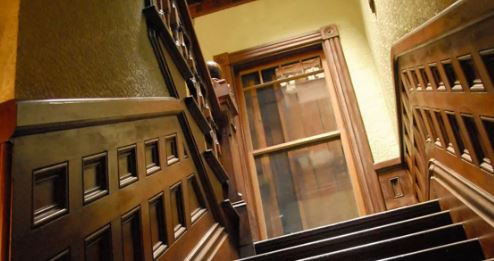
Some things defy human understanding and simply cannot be explained. Perhaps one day we will be able to rise beyond Earthly shadows and discover the secrets of the dead. For centuries, spiritists have believed that there is a portal leading from life to death and from death to life. Souls depart from the World every day, and souls on the other side of the veil can cross over into our World. The World of the living. My home has become a twilight of supernatural occurrences. Its rooms possess many dreadful secrets, ghastly inhabitants, for it is a place where ghosts and other terrors walk. The thick air in Llanda Villa is filled with anxiety, and screams, swearing, shouting echo from the rooms beyond with nerve-jarring regularity. And then, prayers of desperation. Most distressing of all is once one starts up the easier risers, quick shadows loom, and flight becomes impossible, as the moments tick painfully. Often as I walked the halls of my labyrinth soul searching, I could feel a cold breeze creeping in. It lifts my hair and, in that moment, I feel the dance of cold fingers along my spine. But was it anything to fear? A young man, Tobey, nineteen years of age, who had been staying in my home and working as a farmhand. He was really close to the supernatural phenomena—visible and tangible—that he speculated so grotesquely about it; and for another thing, he was amazingly will to make a long and ample confession. This youth avowed that some months before, when he was in bed, the chamber door opened, and a maiden, Athena, whom he loved, stealthily entered the room. To his surprise she informed him that she had been driven from her chamber and had taken refuge with him.

Although he more than suspected some delusion, after a short while he consented to her solicitations and passed a night of unbounded indulgence in her arms. Before dawn, however, the visitant revealed the true nature of the deceit, and the young man realized he had lain with a succubus. None the less such was his doting folly that the same debauchery was repeated night after night, until struck with terror and remorse, he sought the priest to confess and be delivered from this admonition. “This monstrous connexion lasted several months; but at last God delivered him by my humble means, and he was truly penitent for his sins.” Not infrequently the Devil or the familiar assigned to the new witch at the Sabbat when she was admitted must obviously have been a man, once of the assembly, who either approached her in come demoniacal disguise or else embraced her without any attempt at concealment of his individuality, some lusty varlet who would afterwards hold himself at her disposition. For we must always bear in mind that throughout this era, there is often much in the evidence which may be explained by the agency of human beings; not that this essentially meliorates their offenses, for they were all bond-slaves of Satan, acting under his direction and by the inspiration of hades. When the fiend has ministers devoted to his service there is, perhaps, less need for his interposition in propria persona. I might say, with all proper modesty, that the subject of anthropology and folklore is by no means strange to me. It is no news to me that talks of demons and hidden races are as old as mankind.
Howbeit, again and again in these cases we meet with that uncanny quota, by no means insignificant and unimportant, which seemingly admits of no solution save by the materialization of evil intelligences of power. And detailed as is the evidence we possess, it not unseldom becomes a matter of great difficulty, when we are considering a particular case, to decide whether it be an instance of a witch having had actual commerce and communion with the fiend, or whether she was cheated by the devils, who mocked her, and allowing her to deem herself in overt union with them, thus led the wretch on to misery and death, duped as she was by the father of lies, sold for a delusion and by profitless endeavour in evil. There are, of course, also many cases which stand on the border-line, half hallucination, half reality. The Devil knows all the Witches. He takes a female shape to pleasure the Sorcerers. Other reasons why the Devil (had to do) with warlocks and witches. The unnatural physical coldness of the Demon is well known by witches in every country of Europe throughout the centuries. In some cases, there was full materialization due to the ectoplasmic emanations. Ectoplasm is the touch of cold and viscous mass comparable to contact with a reptile, and this certainly seem to throw a flood of light upon the what I have experienced in my home. In 1888 a young housemaid said that the Devil who appeared to her as a dark swarthy youth “was colder than man. I fand his nature als cold, a spring-well-water, uerie cold, as yce.”
One night, unable to sleep, I was staring out through my bedroom window at the moonlit lawn. From the shrubbery there emerged what I at first thought was some trick of the shadows. Then I saw that it was some great. It was too far away for me to be able to see it clearly, but I imagined that it turned its head to look up at my window—to look directly at me. Then, in a blink of an eye, it was moving at impossible speed across the silver grass until it was lost from my sight. I have certain evidence that monstrous things do indeed live on this estate and in rooms which nobody visits. The voices my servants here in my home have nearly scared them paralysed by reason. I know what most people think of one who tells about “hearing voices”—but before anyone draws conclusions, they have to experience it for themselves. It is true—terribly true—that there are non-human creatures watching us all the time; with spies among us gathering information. If we let them alone, they will not hurt us. If we get too curious about them, no one can say what will happen. Because of what I have discovered, I think they mean to get rid me. That is what the Boston medium has explained. There is a great diamond with unknown hieroglyphics half worn away which I found in a safe that my husband had locked away in his office; and after I took it home, everything became different. Our one-month-old daughter died, and fifteen years later, William suffered a mysterious and tragic death. If I stop construction on Llanada Villa, they will kill me. This is why I have urged my staff to hush about the supernatural aspects of my home.

People must be kept away from my estate, the front doors must never be opened, and in order to effect this, their curiosity ought not be aroused any further. Heaven knows there is peril enough anyway, with promoters and real estate men flooding Santa Clara with herds of summer people to overrun the wild places and cover the hills with cheap bungalows. Those creatures have a way of tampering with things around here. There is a sullen, furtive fellow named Arkie, who is a farmer on my estate, whom I believe is a spy for the dark lord. Little by little they are trying to cut me off from our World because I know too much about their World. They have the most amazing way of finding out what I do. Furthermore, I would hardly dare sell this house to anybody now that the ghastly demons have made it their home. I have invited my niece Daisy to live with me, and given her a trust fund to ensure that this estate will always remain in our family and will be well taken care of. As I sit here glancing through documents neatly arranged in stacks on the cherrywood table, I was growing more anxious. As the hour passed and the whitely steaming sun moved lethargically through the sky, I grew calm again. Mr. Hasen was out mowing and tending the enormous lawn, which invariably grows back more lushly within a few days. However, it seemed strange to me that he had halted so suddenly, with a field of lawn left to mow.

With his arms raised at his sides, Mr. Hasen’s posture tense, vigilant; his face, shrouded in shadow, showing no animation. “Mr. Hansen?” Tobey blundered forward, unthinking. Seeing, in that instant, that the figure confronting him was not Mr. Hansen but—the demon-without-a-face. Tobey stood paralysed, transfixed. For it might have seemed to him that this was buy a symptom of the insomnia of which he had grown fatally proud: a nightmare figure standing before him which he had imagined into being; a dream of his and not “real”; or, if “real,” as the atrocities in the mansion were real, in some way not related to him. He had not time to cry out for help before the creature lunged at him, swiping with its hands as a maddened bear might swipe savagely and blindly; so much heavier and stronger than Tobey, Tobey was knocked to the ground as if he were a small child and not a nineteen-year-old young man. Except for the sounds of the nocturnal insects there was silence, for the demon did not speak, nor could Tobey scream, his breath choked off as the-demon-without-a-face crouched over him where he had fallen, raining blows upon his unprotected head, clawing and tearing at his face, tearing away the flesh of his face as Tobey fell, and fell, into the Earth beneath the wild grasses of The Winchester Estate. My staff ran hither and thither until they found hi body. So then they laid the body across a horse, and they say it was all they could manage to keep the beast from bolting away from the time they were in sight of the tree, for it seemed to be mad with fright.
However, they managed to bind the eyes of the horse and lead it down through the fruit orchards to the village street; and there, just by the big tree where the stocks are found, they found a lot of women gathered, and a boy lying in the middle, as white as paper, and not a word could they get out of him, good or bad. So they saw there was something worse to come, and they made the best of their way up the lane to Dr. Meckelburg’s house. And when they got near that, the horse they were leading seem to go mad again with fear, and reared up and screamed, and struck out with its fore-feet and the man that was leading it was as near as possible being killed, and the dead body fell off its back. So Mr. Dillenburg bid them get those horse away as quick as might be, and they carried the body straight into the living-room, for the door stood open. And then they saw what it was that had given the poor boy such a fright, and they guessed why the horse went made, for you know horses cannot bear the smell of dead blood. There was a long table in the room, more than the length of a man, and on it there lay the body of Dr. Meckelburg. The eyes were bound over with a linen band and the arms were tied across the back and the feet were bound together with another band. However, the fearful thing was that the breast being quite bare, the bone of it was split through from the top downwards with an axe! Oh, it was a terrible sight; not one there but turned faint and ill with it, and had to go out into the fresh air. Even Mr. Dillenburg, who was what you might call a hard nature of a man, was quite overcome and said a prayer for strength in the garden.
At least they laid out the other body as best they could in the room, and searched about to see if they could find out how such a frightful thing had come to pass. And in the cupboards they found a quantity of herbs and jars with liquors, and it came out, when people that understood such matters had looked into it, that some of these liquor were drinks to put a person asleep. And they had little doubt that that wicked young man had put some of this into Dr. Meckelburg’s drink, and then used him as he did, and, after that, the sense of his sin had come upon him and he had cast himself away. Well now, you could not understand all the law business that had to be done by the coroner and the magistrates; but there was a great coming and going of people over it for the next day or two, and then the people of the parish got together and agreed that they could not bear the thought of those two being buried in the churchyard alongside of Christian people; for I must tell you there were papers and writings found in the drawers and cupboards that Mr. Dillenburg and some other clergymen looked into; and they put their names to a paper that said these men were guilty, by their own allowing, of the dreadful in of idolatry; and they feared there were some in the neighbouring places that were not free from wickedness, and called upon them to repent, lest the same fearful thing that was to come to these men should befall them also; and then they burnt those writing.

So then, Mr. Dillenburg was of the same mind as the parishioners, and late one evening twelve men that were chosen went with him to that evil house, and with them they took two biers made very roughly for the purpose and two pieces of black cloth, and down at the cross-road, there were other men waiting with torches, and a pit dug, and a great crow of people gathered together from all round about. And the men that went to the cottage went in with their hats on their heads, and four of them over with the black cloths, and no one said a word, but they bore them down the lane, and they were cast into the pit and covered over with stone and Earth, and then Mr. Dillenburg spoke to the people that were gathered together. My butler was there, for he had come back when he heard the news, and he said he never should forget the strangeness of the sight, with the torches burning and those two black things huddled together in the pit, and not a sound from any of the people, except it might be a child or a woman whimpering with the fright. And so, when Mr. Dillenburg had finished speaking, they all turned away and left them lying there. They say horses do not like the spot even now, and I have heard there was something of a mist or a light hung about for a long time after, but I do not know the truth of that. However, I do know this, that next day my butler’s business took him past the opening of the lane, and he saw three or four little knots of people standing at different places along it, seemingly in a state of mind about something; and he rode up to them, and asked what was the matter.
And they ran up to him and said, “Oh, Sir, it’s the blood! Look at the blood!” and kept on like that. So he got off his horse and they showed him, and there, in four places, I think it was, he saw great patches in the road, of blood; but he could hardly see it was blood, for almost every spot of it was covered with great black bats, that never changed in their place or moved. And that blood was what had fallen out of Dr. Meckelburg’s body as they bore it down the lane. Well, my butler could not bear to do more than just take in the nasty sight so as to sure of it, and then he said to one of those men that was there, “Do you make haste and fetch a basket or a barrow full of clean Earth out of the churchyard, and spread it over these places, and I’ll wait here till you come back.” And very soon he came back, and the old man that was sexton with him, with a shovel and the Earth in a hand-barrow: and they set it down at the first of the places and made ready to cast the Earth upon it; and as soon as ever they did that, what do you think? the bats that were on it rose up in the air in a kind of a solid could and moved off up the lane towards the house, and the sexton (he was parish clerk as well) stopped and looked at them and said to my Butler, “Lord of Darkness, sir,’ and no more would he say. And just the same it was at other places, every one of them.

My butler them made up his mind that no one was going to live in that cottage again, or yet use any of the things that were in it: so, though it was to be done away with, and anyone that wished could bring a faggot to the burning of it; and that is what was done. They built a pile of wood in the living-room and loosened the thatch so as the fire could take good hold, and then set it alight; and as there was no brick, only the chimney-stack and the oven, it was not long before it was all gone. I seem to remember seeing the chimney, but after a few years, it fell down. You may be sure that for a long time the people said Dr. Meckelburg and Tobey were seen about, the one of them in the wood and both of them where the house had been, or passing together down the lane, particularly in the winter of the year and at autumn-time. I cannot speak of that, though if we were sure there are such things as ghost, it would seem likely that people like that would not rest quiet. However, I can tell you this, that one evening in the month of January, I had been taking a long walk on my estate and picking flowers and had not taken any particular notice of where I was going. And on a sudden I cried out. I had felt a sharp prick on the back of my hand, and I snatched it to me and saw a black bat on it, and struck it with the other hand and killed it. I had never seen a bat like that before. And then I looked about, and lo and behold if I was not in the very lane, just in front of the place where that house stood, and, as they told me after, just where the men set down the biers a minute when they bored them out of the garden.
You may be sure I made haste away from there; for I was wholly upset finding myself there. Whether there was anything about there more than I could see I shall never be sure: perhaps it was partly the venom of that horrid bat’s bite that was working on me that made me feel so strage; for, dear me, how that poor arm and hand of mine did swell up, to be sure! I am afraid to tell you how large it was round! and the pain of it, too! Nothing Dr. Wayland could put on it had any power over it, and it was not until he was persuaded by our old nurse to get the wise man to come and look at it, that I got any peace at all. However, he seemed to know about it, and said I was not the first that had been taken that way. “When the sun’s gathering his strength,” he said, “and when he’s in the height of it, and when he’s beginning to lose his hold, and when he’s in his weakness, them that haunts about that lane had best to take heed to themselves.” However, what it was he bound on my arm and what he said over it, he would not tell us. After that I soon got well again, but since then I have heard often enough people suffering much the same as I did; only of late years it does not seem to happen but very seldom: and maybe things like that do die out in the course of time. (One can interpret this story in many ways, of course. If it really occurred, and there were a number of accounts of it in existence that leads me to believe that there is a basis of fact to this, then perhaps we are dealing with a case of prophecy on the part of Mrs. Winchester.)

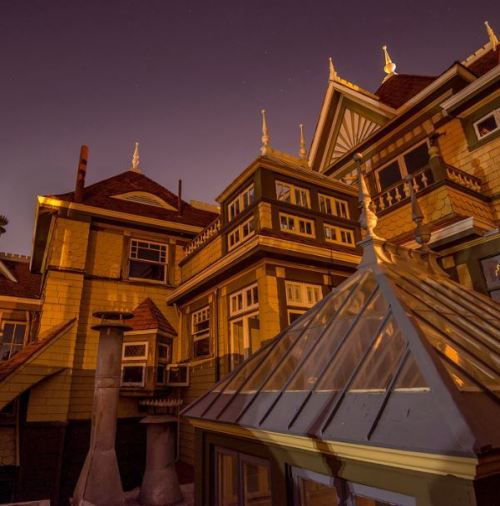
The Winchester Mystery House

The ancient folklore, while cloudy, evasive, and largely forgotten by the present generation, is of a highly singular character, and obviously reflects the influence of still earlier Victorian tales. I know it well, though I had never been in the Santa Clara Valley in the Victorian era, through the exceedingly rare monograph of Mrs. Sarah L. Winchester, which embraces material orally obtained prior to 1906 among the oldest people of the state. This material, moreover, closely coincided with tales which I personally heard from elderly rustics in the Santa Clara Valley. Briefly summarized, it hinted at hidden demonic beings which lurked somewhere among The Winchester Estate—in the deep woods, and the dark corners of the mansion where hallways lead to unknow parts of the hose. These beings were seldomly glimpsed, but evidences of their presence were reported by the staff of the mansion who ventured farther than the usual pathways of the mansion or deep into the home where even Mrs. Winchester shunned. There were queer footprints on the floors and ceilings, claw marks in the wall, blood spatter on the windows. There were, too, certain rooms of problematical nature, with more than the average quota of curious foot prints leading both toward and away from the walls—if indeed the direction of these prints indicated that something or someone was walking through the walls.

If the stray accounts of these things had not agreed so well, it would have been less uncomfortable. As it was, nearly all the rumours had several point in common; averring that these creatures sometimes walked on their legs, and sometimes they were composed of a mist and able to fly. On one occasion they were spied in considerable numbers, in the Grand Ball Room. One specimen was seen flying—departing from the chimney at night and vanishing in the sky after it had been instantly silhouetted by the full moon. These things seemed content, on the whole, to let mankind alone; though they were at times held responsible for the disappearance of servants and venturesome individuals—especially uninvited persons who came too close to The Winchester Mansion or too close to secrets inside of the house. People would look at Mrs. Winchester’s home with a shudder, even when not recalling how many people had been lost. However, while according to the earliest legends the demons would appear to have harmed only those trespassing on their privacy; there were later accounts of their curiosity respecting men, and of their attempts to loot the mansion. There were tales of the queer bloody claw prints seen around the windows in the morning, and of occasional disappearances in regions of the obviously haunted estate.

Tales, besides, echoes of haunting voices deep in the mansion, and of children, while sneaking to get a closer glimpse of Mrs. Winchester and her home, frightened out of their wits by things seen or heard. In the final layer of legends—the layer just preceding the decline of superstition and the abandonment of close contact with the dreaded estate—there are shocked references to housemaids and farmers who at some period of life appeared to have undergone a repellent mental change, and who were shunned and whispered about as mortals who had sold themselves to the Devil. In America, it seemed to be a fashion about 1800 to accuse eccentric and wealthy recluses of being allies of Satan or representatives of the abhorred things. As to what thing things were—explanations naturally varied. The common name applied to the was demons. The inquiry was made whether a demon may thus attack a man or woman, whose obsession would be suffered if the subject were wholly bent on entering The Winchester Mansion without permission. It is certain that—whatever doubters may say—there exist such demons, incubi and succubi that it is most rash to advance the contrary. Wherefore the men or women who suffer these impudicities are the sinners who either invite demons…or who freely consent to demons when the evil spirits tempt them to commit such abominations.
That these and other abandoned wretches may be violently assaulted by the demon we cannot doubt…and I myself have known several persons who although they were greatly troubled on account of their crimes, and utterly loathed this foul intercourse with the demon, were nevertheless compelled sorely against their will to endure these assaults of Satan. Perhaps the bulk of Puritan settlers set them down bluntly as familiars of the devil, and made them a basis of awed theological speculation. Those with Celtic legendry in their heritage—mainly the Scotch-Irish element of Santa Clara, and their kindred who had settled in Oakland—linked them with the malign fairies and “little people” of the bogs and raths, and protected themselves with scraps of incantation handed down through many generations. While Native Americas had the most fantastic theories of all. While different tribal legends differed, there was a marked consensus of belief in certain vital particulars; it being unanimously agreed that the creatures were not native to this Earth. It was bad to get near them, and sometimes young hunters who went onto the estate never came back.

It was not good either, to listen to what they whispered at night in the fruit orchards with voices that contained the echo of death. All the legendry, of course, white and Native American alike, died down during the nineteenth century, except for occasional flareups. The ways of the people of the Santa Clara Valley became settled; once their habitual paths and dwellings were established according to a certain fixed plan, they remembered less and less what fears and avoidances had been linked to The Winchester Estate, but they still knew that there had been fears and avoidances. After the death of Mrs. Winchester of the 760 acres of land she had, her estate was sold and only retained 161 acres of land, one acre for ever room that remained in the house. And The Winchester Mansion and its land were left deserted. Save during infrequent local scares, only wonder-loving grandmothers whispered of beings dwelling in that mansion. It is so rash and inept to deny these (things) that so to adopt this attitude, you must needs reject and spurn the most weighty and consider judgements of the mot holy and authoritative writers, you mut wage war upon man’s sense and consciousness, whilst at the same time you expose your ignorance of the power of the Devil and the empery evil spirits may obtain over man.
The reason evil spirits appear as incubi and succubi would seem to be that they inflict a double hurt on man, both in his soul and body, and it is a supreme joy to devils thus to injure humankind. A demon assumes the form of the succubus…This is the explicit teaching of the theologians. It has often been known by most certain and actual experience that women in spite of their resistance have been overpowered by demons. This is a most solemn and undoubted fact not only proved by actual experience, but also by the opinion of all the ages, whatever some few doctors and legal writers may suppose. Even if such horrors ever could have taken place in the dark ages—those vague Dark Ages!—men say, “they would never be permitted now.” It may not impertinently be inquired how demons or evil intelligences, since they are pure spiritual beings, cannot act of coition. However, evil intelligence is able to animate the corpse of some human being, male or female, as the case may be, or that, from the mixture of other materials he shapes for himself a body endowed with motion, by means of which he is united to the human being: “ex mixtione aliarum materiarum effingit sibi corpus, quod mouet, et mediante quo homini unitur.”
In the first instance, advantage might be taken, no doubt, of a person in a mediumistic trance or hypnotic sleep. However, the second explanation seems by far the more probable. Can we not look to the phenomena observed in connexion with ectoplasm as an adequate explanation of this? It must fairly be admitted that this explanation is certainly born out by the phenomena of the materializing séance where physical forms which may be touched and handled are built up and disintegrated again in a few moments of time. Mrs. Winchester, in a symposium, gives certain of her own experiences that go far to prove the partial re-materialization of the dead by the utilization of the material substance and ectoplasmic emanation of the living. And if disembodied spirits can upon occasion, however, rare, thus materialize, why not evil intelligences whose efforts at corporeality are urged and aided by the longing thoughts and concentrated will power of those who eagerly seek them? Emperor Lucifer, Master and Prince of Rebellious Spirits, I adjure thee, as the representative of the mighty living God, and by the power of Emanuel, his only Son, who is thy master and mine, and by the virtue of His precious blood, which He shed to redeem mankind from thy chains, I command thee to quit thine abode, wheresoever it may be, and manifest here and now. Esta es Buena parati. Esta parati lo toma. Placet Priape? Qui sub arboris coma soles sacrum reuincte pampino caput ruber sedere cum rubente fascino.

Come and enjoy a delicious meal in Sarah’s Café, stroll along the paths of the beautiful Victorian gardens, and wonder through the miles of hallways in the World’s most mysterious mansion. For further information about tours, including group tours, weddings, school events, birthday party packages, facility rentals, and special events please visit the website: https://winchestermysteryhouse.com/

Please visit the online giftshop, and purchase a gift for friends and relatives as well as a special memento of The Winchester Mystery House. A variety of souvenirs and gifts are available to purchase. https://shopwinchestermysteryhouse.com/

Here We Ascend from Earth to Heaven

From time to time man’s higher self will show him his own moral face as in a glass. However, it will only show him that side of it which is the worst as well as the least-known one. He will have to look at what is thus exposed to him in all its stark fullness and hidden reality, only because he has to reeducate himself morally to a degree far beyond the ordinary. The experience may be painful, but it must be accepted. He has involved the Overself, now its light has suddenly been thrown upon him. He has invoked the Overself, now its light has suddenly been thrown upon him. He is now able to see his ego, his lower nature, as it has not hitherto shown itself to him. All its uglinesses are lit up and revealed for what they really are. By thus showing up its true nature and evil consequences, this experience is the first step to making the ego’s conquest possible. He should begin with the belief that his own character can be markedly improved and with the attitude that his own efforts can lessen the distance between its present condition and the ideal before him. It is a prime rule that quality of character and education of conscience are more important than nature of belief. And this is much more applicable to would-be philosophers than to would-be religionists. Many students are haunted by a bad idea of undesirable character, and should try five methods for expelling it: attend to an opposing good idea; face the danger of the consequences of letting the bad idea emerge in action; become inattentive to the bad idea; analyse its antecedents and so paralyze the sequent impulse; coerce the mind with the assistance of bodily tension. #RandolphHarris 1 of 20

However, philosophy does not trust to developed reason alone to control emotion and subjugate passion. It trusts also to psychological knowledge and metaphysical truth, to developed will and creative meditation, to counter-emotions and the prayer for Grace. All these different elements are welded into one solid power working for him. Just as the writer turns his experiences of society to writing use and creates art out of the best and worst of them, so the disciple turns his experiences of life to spiritual use and creates wisdom or goodness out of them. And just as it is harder for the author to learn to live what he writes than learn to write what he lives, so it is harder for the disciple to convert his studies and meditations, his reflections and intuitions, into practical deeds and beneficial accomplishments than to receive these thoughts themselves and make them his own. The valuing process which seems to develop in this more mature person is in some ways very much like that in the infant, and in some ways quite different. It is fluid, flexible, based on this particular moment, and the degree to which this moment is experienced as enhancing and actualizing. Values are not held rigidly, but are continually changing. The painting which last year seemed meaningful now appears uninteresting, the way of working with individuals which was formerly experienced as good now seems inadequate, the belief which then seemed true is now experiences as only partly true, or perhaps false. #RandolphHarris 2 of 20

It is not so much that we have to change ourselves as to give up ourselves. We are so imperfect and faulty, so selfish and weak, so sinful and ignorant, that giving up our own selves means being more than willing to part with what is not worth keeping. However, to what are we to give them up and how are we to do it? We are to invoke the higher self, request it daily to take possession of our hearts, minds, and wills, and to strive actively to purify them. Much of our striving will be in the form of surrendering egoistic thoughts, impulses, and feelings by crushing them at the moment of birth. In that way we slowly give up our inner selves and submit the conduct of our outer selves to a higher will. If he fails to pass a test, or if he succumbs to a temptation, he should realise that there must be a defect in character or mentality which made such a failure possible. Even though the test or temptation has been provided by the adverse powers, he ought not to lay the blame upon them but upon himself. For then he will seek out and destroy the defect upon which the blame really rests. After all, there must have been a corresponding inner weakness in him to have permitted him to become the victim of a temptation. Consequently it is often better not to ask for protection against the temptation. This simply hides and covers over the weakness and permits it to remain in his mental makeup. #RandolphHarris 3 of 20

It is better to ask for the strengthening of his own willpower, to cultivate it through a creative meditation excecise special directed to the purpose: he should picture the arousal and hardening of this willpower during the very moments of temptation by seeing himself emerge victorious by his own forces. As my class of prospective teachers learned, general principles are not as useful as sensitive discriminating reactions. One says, “With this little boy, I just felt I should be very firm, and he seemed to welcome that, and I felt good that I had been. But I’m not that way at all with the other children most of the time.” She was relying on her experiencing of the relationship with each child to guide her behaviour. I have already indicated, in going through the examples, how much more differentiated are the individual’s reactions to what were previously rather solid monolithic introjected values. In another way the mature individual’s approach is like that of the infant. The locus of evaluation is again established firmly within the person. It is his own experience which provides the value information or feedback. This does not mean that he is not open to all the evidence he can obtain from other sources. However, it means that this is taken for what it is—outside evidence—and is not as significant as his own reactions. Thus he may be told by a friend that a new book is very disappointing. He reads two unfavourable reviews of the book. Thus his tentative hypothesis is that he will not value the book. Yet if he reads the book his valuing will be based upon the reactions it stirs in him, not on what he has been told by others. #RandolphHarris 4 of 20
There is also involved in this valuing process a letting oneself down into the immediacy of what one is experiencing, endeavouring to sense and to clarify all its complex meanings. I think of a client who, toward the close of therapy, when puzzled about an issue, would put his head in his hands and say, “Now what is it that I’m feeling? I want to get next to it. I want to learn what it is.” Then he would wait, quietly and patiently, trying to listen to get close to himself. In getting close to what is going on within himself, the process is much more complex than it is in the infant. In the mature person, it has much more scope and sweep, for there is involved in the present moment of experiencing the memory traces of all the relevant learnings from the past. This moment has not only its immediate sensory impact, but it has meaning growing out of similar experiences in the past. It has both the new and the old in it. So when I experience a painting or persons, as well as the new impact of this particular encounter. Likewise the moment of experience contains, for the mature adult, hypotheses about consequences. “I feel now that I would enjoy a drink, but past learnings indicate that I may regret it in the morning.” “It is not pleasant to express forthrightly my negative feelings to this person, but past experience indicates that in a continuing relationship it will be helpful in the long run.” Past and future are both in this moment and entering into the valuing. #RandolphHarris 5 of 20

I find that in the person I am speaking of (and her again we see a similarity to the infant) the criterion of the valuing process is the degree to which the object of the experience actualizes the individual himself. Does it make him a richer, more complete, more fully developed person? This may sound as though it were a selfish or unsocial criterion, but it does not prove to be so, since deep and helpful relationships with others are experienced as actualizing. Like the infant, too, the psychologically mature adult trusts and uses the wisdom of his organism, with the difference that he is able to do so knowingly. If he can trust all of himself, he realizes his feeling and his intuitions may be wiser than his mind, that as a total person he can be more sensitive and accurate than his thoughts alone. Hence he is not afraid to say—“I feel that this experience (or this thing, or this direction) is good. Later I will probably know why I feel it is good.” He trusts the totality of himself. It should be evidence from what I have been saying that this valuing process in the mature individual is not an easy or simple thing. The process is complex, the choices often very perplexing and difficult, and there is no guarantee that the choice which is made will in fact prove to be self-actualizing. However, because whatever evidence exists is available to the individual, and because he is open to his experiencing, errors are correctable. If a chosen course of action is not self-enhancing this will be sensed and he can make an adjustment or revision. He thrives on a maximum feedback interchange, and thus, like the gyroscopic compass on a ship, can continually correct his course toward becoming more of himself. #RandolphHarris 6 of 20

One example that first set me to considering the possibility of self-analysis was Erich. Erich was a physician who came to me for analysis because of attacks of panic, which he tried to allay by taking morphine and cocaine; also he had spells of exhibitionistic impulses. There was no doubt that he had a severe neurosis. After some months of treatment, he went away on a vacation, and during this time he analysed by himself an attack of anxiety. The beginning of this piece of self-analysis was accidental, as it was in the case of John, whom we discussed in the previous reports. The starting point for Erich was a severe attack of anxiety, apparently provoked by a real danger. Erich was climbing a mountain with his girl. It was strenuous climbing but not dangerous as long as they could see clearly. It became perilous, however, when a snowstorm arose and they were enveloped in a thick fog. Erich then became short of breath, his hear pounded, he became panicky and finally had to lie down to rest. He did not give the incident any thought but vaguely ascribed the attack to his exhaustion and to the actual danger. If we want to be, this is an example, by the way, of how easily we may be satisfied with wrong explanations, for Erich was physically strong and anything but a coward in the face of an emergency. The next day they went on a narrow path hewn into the steep, rocky wall of the mountain. The girl went ahead. The heart pounding started again when Erich caught himself at a thought or impulse to push her down the cliffs. That naturally startled him, and, besides, he was devoted to her. #RandolphHarris 7 of 20

Erich thought first of Dreiser’s American Tragedy, in which the boy drowns hi girl in order to get rid of her. Then he thought of the attack of the previous day and barely recaptured a similar impulse he had checked it as it as it arose. He remembered clearly, however, a mounting irritation against the girl before the attack, and a sudden wave of hot anger, which he had pushed aside. This, then, was the meaning of the attack of anxiety: an impulse of violence born out of a conflict between a sudden hatred on the one hand, and, on the other, his genuine fondness for the girl. He felt relieved, and also proud for having analysed the first attack and stopped the second. Erich, in contrast to John, went a step farther, because he felt alarmed by his recognition of hatred and a murderous impulse toward the girl he loved. While continuing to walk he raised the question why he should want to kill her. Immediately a talk they had had the previous morning recurred to him. The girl had praised one of his colleagues for his clever dealing with people and for being a charming host at a party. That was all. And that could not have aroused this much hostility. Yet when thinking about it, he felt a rising anger. Was he jealous? However, there was no danger of losing her. This colleague, though, was taller than he, and non-Jewish (on both points he was hypersensitive), and he did have a clever tongue. #RandolphHarris 8 of 20

While Erich’s thoughts were meandering along these lines, he forgot his anger against the girl and focused his attention on comparing himself with the colleague. Then a scene occurred to him. He was probably four or five years old, and had tried to climb a tree but could not. His older brother had climbed it with ease and teased him from above. Another scene came back vividly when his mother praised this brother and he was left out. The older brother was always ahead of him. It must have been the same thing that infuriated him yesterday: he still could not stand to have any man praised in his presence. With this insight he lost his tenseness, could climb easily, and again felt tender toward the girl. Compared with the first example, the second achieved in one way more and in another less. Despite the greater superficiality of John’ self-analysis, he did take one step that Erich did not take. When John had accounted for the only particular situation, he did not rest satisfied: he recognised the possibility that all his headaches might result from a repressed anger. Erich did not go beyond the analysis of the one situation. It did not occur to him to wonder whether his finding had a bearing on other attacks of anxiety. On the other hand, the insight that Erich arrived at was considerably deeper than John’s. The recognition of the murderous impulse was a real emotional experience; he found at least an inkling of the reason for his hostility; and he recognized the fact that he was caught in a conflict. #RandolphHarris 9 of 20

In the second incident, too, one is astonished at the number of questions not touched upon. Granting that Erich became irritated at praise of another man, whence the intensity of the reaction? If that praise was the only source of his hostility, why was it such a threat to him as to arouse violence? Was he in the grip of an excessively great and excessively vulnerable vanity? If so, what were the deficiencies in him that needed so much covering up? The rivalry with the brother was certainly a significant historical factor, but insufficient as an explanation. The other side of the conflict, the nature of his devotion to the girl, is entirely untouched. Did he need her primarily for her admiration? How much dependency was involved in his love? Were there other sources of hostility toward her? What are the motivating forces which make man act in certain ways, the drives which propel him to strive in certain directions? It seems as if the answer to this question Marx and Dr. Freud find themselves furthest apart and that there is an insoluble contradiction between their two systems. Marx’s “materialistic” theory of history is usually understood to mean that man’s main motivation is his wish for material satisfaction, his desire to use and to have more and more. This greed for material things as man’s essential motivation is then contrasted with Dr. Freud’s concept according to which it is man’s appetite for pleasures of the flesh which constitutes his most potent motivation for action. #RandolphHarris 10 of 20

The desire for property on the one hand and the desire for satisfaction involving pleasures of the flesh on the other seem to be the two conflicting theories as far as much motivation is concerned. That this assumption is an oversimplifying distortion as far as Dr. Freud is concerned follows from what has been already said about this theory. Dr. Freud sees man as motivated by contradictions; by the contradiction between his striving for pleasures of the flesh and his striving for survival and mastery of his environment. When Dr. Freud later posited another factor which conflicted with the one’s already mentioned—the super-ego, the incorporated authority of the father and the norms he represented, this conflict became even more complicated. For Dr. Freud, then, man is motivated by forces conflicting with each other and by no means only by the desire for satisfactions of pleasures of the flesh. Dr. Freud again thought in terms of contradiction, that between the “life instinct” and the “death instinct” as the two forces battling constantly within man and motivating his actions. The cliché of Marx’s theory of motivation is even more drastic distortion of his thinking than the cliché of Dr. Freud’s. The distortion begins with the misunderstanding of the term “materialism.” This term and its counterpart, “idealism,” have two entirely different meanings, depending on the context in which they are applied. When applied to human attitudes, one refers to the “materialist” as one who is mainly concerned with the satisfaction of material strivings, and to the “idealist” as one who is motivated by an idea, that is, a spiritual or ethical motivation. #RandolphHarris 11 of 20
However, “materialism” and “idealism” have entirely different meanings in philosophical terminology, and “materialism” must he used in this meaning when one refers to Marx’s “historical materialism” (a term which, in fact, Marx himself never used). Philosophically, idealism means that one assumes ideas form the basic reality, and that the material Word which we perceive by means of our senses has no reality as such. For the materialism prevalent at the end of the nineteenth century matter was real, not ideas. Marx, in contrast to this mechanical materialism (which was also underlying Dr. Freud’s thinking), was not concerned with the causal relationship between matter and mind but with understanding all phenomena as results of the activity of real human beings. “In direct contrast to German philosophy,” Marx wrote, “which descends from the Heaven to Earth, here we ascend from Earth to Heaven. That is to say, we do not set out from what men imagine, conceive, in order to arrive at man in the flesh. We set out from real active men and on the basis of their real life process we demonstrate the development of the ideological reflexes and echoes of this life process.” Marx’s “materialism” implies that we begin our study of man with the real man as we find him, and not with his ideas about himself and the World by which he tries to explain himself. In order to understand how this confusion between personal and philosophical materialism could have arisen in the case of Marx, we must proceed further and consider Marx’s so-called “economic theory of history.” This term has been misunderstood to mean that, according to Marx, only economic motives determine man’s actions in the historical process; in other words, the “economic” factor has been understood to refer to a psychological, subjective motive, that of economic interests. #RandolphHarris 12 of 20

In government policy and strategy, the ideal is that foreign policy—and that means also military planning—are freed from the arbitrariness of the human will an entrusted to a computer system, which tells the “truth” since it is not fallible like men, nor has it any ax to grind. The ideal is that all foreign policy and military strategy are based on computer decision, and this implies that all the facts are known, considered, and made available to the computer. With this method, doubt becomes excluded, although disaster is by no means necessarily avoided. However, if disaster does happen after the decisions are made on the basis of unquestionably “facts,” it is like an act of God, which one must accept, since man cannot do more than make the best decision he knows how to make. It seems tome that these considerations are the only terms in which one can answer this puzzling question: How is it possible for our policy and strategy planners to tolerate the idea that at a certain point they may give orders the consequences of which will mean the destruction of their own families, most of America, and “at best” most of the industrialized World? If they rely on the decision the facts seem to have made for them, their conscience is cleared. However dreadful the consequences of their decisions may be, they need not have qualms about the rightness and legitimacy of the method by which they arrived at their decision. They act on faith, not essentially different from the faith on which the actions of the inquisitors of the Holy Office were based. #RandolphHarris 13 of 20
Like Dostoevsky’s Grand Inquisitor, some may even be tragic figures who cannot act differently, because they seen o other way of being certain that they do the best they can. The alleged rational character of our planners is basically not different from the religiously based decisions in a prescientific age. There is one qualification that must be made: both the religious decision, which is a blind surrender to God’s will and the computer decision, based on the faith in the logic of “facts,” are forms of alienated decisions in which man surrenders his own insight, knowledge, inquiry, and responsibility to an idol, be it God or the computer. The humanist religion of the prophets knew no such surrender; the decision was man’s. He had to understand his situation, see the alternatives, and then decide. True scientific rationality is not different. The computer can help man in visualizing several possibilities, but the decision is not made for him, not only in the sense that he can choose between the various models, but also in the sense that he must use his reason, relate to and respond to the reality with which he deals, and elicit from the computer those facts which are relevant from the standpoint of reason, and that means from the standpoint of sustaining and fulfilling man’s aliveness. The blind and irrational reliance on computer decision becomes dangerous in foreign policy as well as strategic planning when done by opponents, each of whom works with his own data-processing system. He anticipates the opponent’s moves, plans his own, and constructs scenarios for the X possibilities of moves on both sides. #RanolphHarris 14 of 20

He can construct his game in many ways: that of his side winning, a stalemate, or both losing. However, if either “wins” it is the end of both. While the purpose of the game is to achieve a stalemate, the rules of the game make a stalemate unlikely. Both players, by their methods and their need for certainty, give up the way which has been that of precomputer diplomacy and strategy: the dialogue—with its possibility of give and taken, open or veiled withdrawal, compromise, or even surrender when that is the only rational decision. With the present method, the dialogue, with all its possibilities for avoiding catastrophe, is ruled out. The action of the leaders is fanatical because it is pursued even to the point of self-destruction, although in a psychological sense they are not fanatics, because their actions are based on an emotion-free belief in the rationality (calculability) of the computer methods. There is a correlation with job of the psychologist. The clinical psychologist is exposed didactically (and casually, like any sentient person, through a myriad of cultural media) to the Freudian theory of psychopathology and to Freudian principles of psychoanalysis. If we focus too heavily on computer-based information and decision making, we risk alienating ourselves from our humanity and becoming psychopaths. This is why psychology focuses on the human relationships and communication. The goal is to help people become fully human. The psychologist, unlike the social worker and psychiatrist, is more likely to have his Freudian garden sprinkled from the watering cans of the dozen or so recognized variations on the theme, but the exfoliation does not serve to weaken his appreciation of Dr. Freud’s discoveries or his recognition of the fundamental principles of analytic therapy. #RandolphHarris 15 of 20
And, in the quiet of the consulting room, face-to-face with a candidate for therapeutic conversation, there are multiple reasons (ranging from the sheer pertinence and richness of the psychopathological concepts to the broadly social “prestige” of analytically oriented therapy) that cause the psychologist to tend to think and behave, in that moment of truth, more like a psychiatrist or social worker, and less like a psychologist. There are a few striking general consequences of the over-arching role of psychoanalytic doctrine in the preparation of current psychotherapists: a belief that psychoanalysis is the most powerful of all forms psychotherapy and that its primary limitation and restriction as the “therapy of choice” for psychoneurosis is a function of its cost and limited supply, not of its general appropriateness; a belief that distinctly psychoanalytically oriented psychotherapy is the next best to psychoanalysis; a belief that truly effective psychotherapy must be intensive, id est, it must entail frequent therapeutic sessions (usually weekly) over a long period of time; a belief that the gaining of insight by the patient is a primary goal and result of therapy; a belief that the major mechanism of therapy is in the nature of the therapist-patient relationship; a belief that the prognosis for psychotherapy rests upon the suitability of the patient which is defined generally in the same term as the good candidate for psychoanalysis. These generally accepted orientations, stemming from a shared theoretical bias, lead to common administrative and therapeutic practices on the part of psychiatrist, psychologist, and social worker. #RandolphHarris 16 of 20

There is a common preference to do “intensive” psychotherapy and there are common predilections (leading possibly to subtle therapeutic attitudes and maneuvers of which the therapist may be aware) to keep the patient “in treatment.” A fascinating side-effect of this peculiar bias has been a cluster of studies by psychologists which aim to identify at the outset jut which patients will remain in treatment and which will break off. The purpose of such studies could be to identify the short-term client with a view to providing a specific therapeutic experience for him. Generally, however, the implicit assumption in these studies is that patients who break off after only a few sessions are “failures” and could not possibly have derived any benefit from their limited exposure. The goal appears to be to find ways of selecting “good” patients for therapy, id est, those who come back interminably. (Contrary to what many experts might predict, the sudden administrative termination of “interminable” psychotherapy cases does not appear to precipitate acute disintegration.) If such psychological studies should achieve a high level of predictive accuracy, it would become possible for an increasing portion of psychotherapeutic time to be devoted to a decreasing number of patients! (Perhaps this is a rare example of an instance in which we may be thankful that the accuracy of psychometric prediction is not greater.) #RandolphHarris 17 of 20
Another result of the common theoretical bias is that all of these expert therapists have a marked preference to provide their services to the same sample (a very small portion of the total population of persons in need of psychological assistance). These “ideal” patients are not prominent among the clients of public clinics and hospitals. By contrast, the typical supplicant to a community psychiatric facility may present a set of attributes (such as level of education and verbal facility) that discourage the “depth-oriented” therapist from feeling that he can either effectively (or usefully?” establish a really therapeutic relationship. As a consequence, they are apt with such patients to effect the sort of brief and “incomplete” therapy of which they are disdainful. During therapy sessions, many patients often ask “How do I say no and mean it?” The basic rule here is to never go back on your answer of no. And the secret to this is not to allow anyone to continue to ask the same question you have already given the answer of no to. The way to enforce this is to add a consequence to asking the same question again. With a child, it is easy. “Ask again, you will not get any dessert after dinner.” An adult might be a little harder. If you put your mind to it, I am sure you can think of something they would not want to give up just so they could bug you about your answer. It has been said that ideas rule mankind. This is but a half-truth, but be as it may, it can be unhesitantly asserted that ideals rule the traveler on the quest. If they do not, then he is not embarked on the quest. However, an ideal is only an abstract conception. #RandolphHarris 18 of 20

Unselfishness, freedom, goodness, and justice are intangibles, and their practical application has altered from age to age according to the conditions prevailing in different times and places. An ideal must have a concrete shape or it becomes sterile. The Sacramento Fire Department has many ideals that are concrete. One person cannot rise in the ranks through the fire department without the support and respect of a large group of people. They do not let political opportunism interfere with the running of the fire department or the running of their lives. The Sacramento Fire Department has had a great line of chiefs of department. The chief of department is the highest uniform position, a competitive civil service position, and once an individual makes it, he or she is secure in the job and outside the authority of the mayor’s office. He or she represents safety of the city’s public. In critical situations the chief of the department is the person with responsibility. There is something that happens to a person when one becomes a firefighter. That something is that one begins to care about what one is doing, about the person one works with, and about the department’s reputation in ways that surprises, a depth of feeling that is entirely new. It is what feeling that enables people to enter burning buildings, and it is that feeling that will preserve the histories of fire departments throughout the land. It becomes a part of the human being, and part of every action. Any intelligent person can see that a firefighter is on the street to help people. #RandolphHarris 19 of 20

In a car accident, if you pull the alarm the fire engines usually come faster than the ambulance. The firefighter will pull somebody out of the car, it does not matter what kind of a mess the victim is in. One is well trained in emergency situations. The firefighter knows how to deal with people. One knows when to move an injured person and when not to, when to put on a splint and when not to. One is trained to make a fast assessment of an emergency situation. When a firefighter arrives at a fire and sees people on the fire escape in the front of the building, one automatically knows there will be people on the back fire escape and in trouble inside the building. One knows to think about what is not immediately seen. One is there only to help, and one is asked to help in all kinds of situations—not only fires but accidents, drug overdoses, shootings, knifings, injuries from whatever cause. So a young person coming out of high school sees all this, and asks oneself, “What is it that I really want to do?” And the fire department winds up getting the best people. Be sure to make a donation to the Sacramento Fire Department to ensure they receive the necessary resources. I pledge allegiance to the flag of the United States of America, and to the republic for which it stands, one nation, Under God, indivisible with liberty and justice for all. #RandolphHarris 20 of 20

The Winchester Mystery House
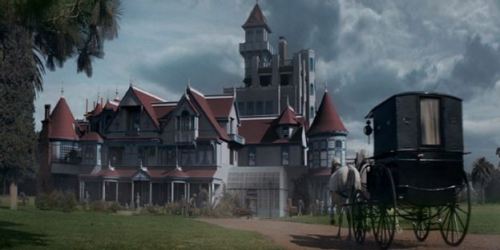
Kaefer lived in upstate New York. In 2007 a friend showed him a brochure concerning The Winchester Mystery House, and the house intrigued him. Since he was traveling to the Silicon Vallery, he decided to pay The Winchester Mystery House a visit. With his family, he drove to the house and parked the car in the parking lot. At that moment he had an eerie feeling that something was not right. Mind you, Kaefer had not been to the house before, had no knowledge about it, nor any indication that anything unusual occurred in it. The group of visitors was quite small. In addition to him and his family, there were two young college boys and one other couple. Even though it was a sunny day, Kaefer felt cold. “I felt a presence before we entered the house and before we heard the story from the guide,” he explained. “If I were a host there, I wouldn’t stay there alone for two consecutive minutes.” Kaefer had been to so many old houses and restorations before but had never felt as he did at The Winchester Mystery House.
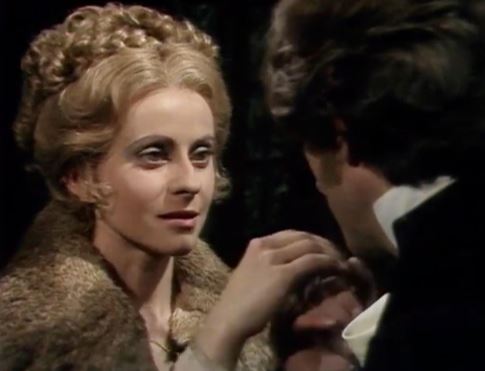
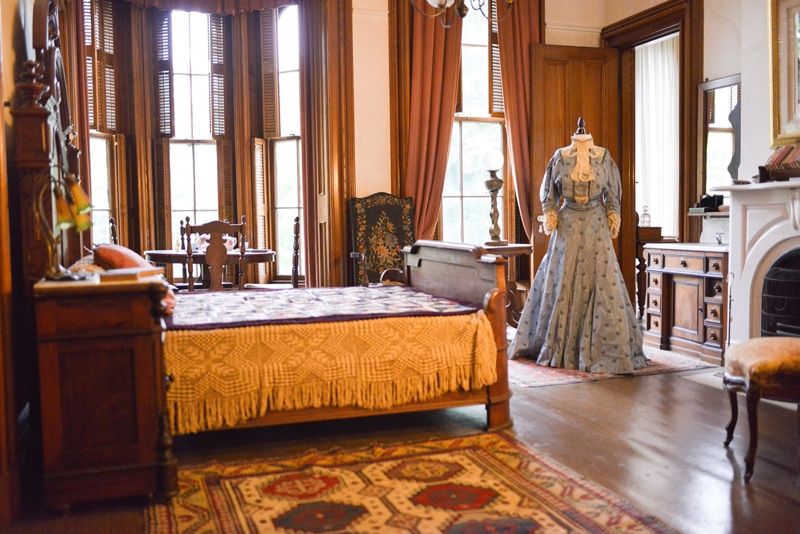
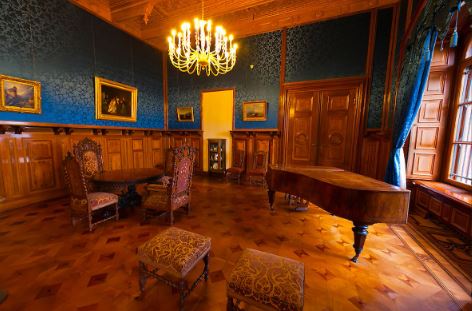
It is not surprising the Sarah L. Winchester should be the subject of a number of psychic accounts. Probably the best known (and most frequently misinterpreted) story concerns Mrs. Winchester’s vision which came to her during the late 1800s. Mrs. Winchester was in the habit of meditating in her Blue Séance Room at times and saying her prayer when she was quite alone. On one of those occasions, she returned to the Daisy Bedroom more worried than usual. As she busied herself with her papers, she had the feeling of a presence in the room. Looking up, she saw opposite her a singularly handsome man. Since she had given orders not to be disturbed, she could not understand how he had gotten into the room. Although she questioned him several times, the visitor would not reply. As she looked at the apparition for what it was, she noticed it was her late husband and became more and more entranced with him, unable to make any more. Finally, she heard a voice saying, “Sarah, I love you.” At the same time, William Winchester extended his arm toward the east, and Mrs. Winchester saw what to her appeared like a blue mist at some distance.

As the mist dissipated, she saw various new additions to her mansion, a wide veranda and generous use of expansive windows and French doors, which offered views in every direction. A raised foyer directly overlooking the formal dining room and the living area. Special features like fireplaces with mini bricks, built-in shelves, a morning room, a door that opened to a two story fall into the garden, a staircase leading to an option third-floor area. And an exterior that boasts delicately turned rails and decorated upside-down columns. A unique gazebo projection off the covered porch to the north of the plan. She then noticed a dark, shadowy angel standing in the room of the witches’ cap, taking gold flakes out of water and sprinkling them on the wall. Then a dark cloud rose from the ground and enveloped her home. Sharp flashes of lightening became visible at intervals in the cloud. At the same time, Mrs. Winchester heard the anguished cries of departed souls. Next, William showed her an Observational Tower and legions of legions of angels descended from the Heavens, and William faded away.
Come and enjoy a delicious meal in Sarah’s Café, stroll along the paths of the beautiful Victorian gardens, and wonder through the miles of hallways in the World’s most mysterious mansion. For further information about tours, including group tours, weddings, school events, birthday party packages, facility rentals, and special events please visit the website: https://winchestermysteryhouse.com/

Please visit the online giftshop, and purchase a gift for friends and relatives as well as a special memento of The Winchester Mystery House. A variety of souvenirs and gifts are available to purchase. https://shopwinchestermysteryhouse.com/

They Were Bloodsuckers—As Distasteful as Bedbugs!

The disciple who wishes to make real progress must attack, weaken, and ultimately destroy certain bad traits of character. Among them is the trait of jealousy of his fellow disciples. It is not only an unpleasant thought but may also end in disastrous consequences. It often leads to wrathful moods and raging spells. It not only harms the other disciple but always does harm to the sinner himself. It is caused by an unreasonable sense of possessiveness directed towards the teacher which does not understand that love should give freedom to him, not deny it to him. The pursuit of moral excellence is immeasurably better than the pursuit of mystical sensations. Its gains are more durable, more indispensable, and more valuable. I believe that over time most people accumulate the introjected patterns by which we live. In this fantastically complex culture of today, the patterns we introject as desirable or undesirable come from a variety of sources and are often highly contradictory in their meanings. Desires for pleasures of the flesh and behaviours are mostly bad. The sources of this construct are many—parents, church, teachers. Disobedience is bad. Here parents and teachers combine with the military to emphasize this concept. To obey is good. To obey without questions is even better. Making money is the highest good. The sources of this conceived value are too numerous to mention. Learning an accumulation of scholarly facts is highly desirable. Browsing and aimless exploratory reading for fun is undesirable. The source of these last two concepts is apt to be in school, the education system. #RanolphHarris 1 of 20

Abstract art or “pop” art, or “op” art is good. Here the people we regard as sophisticated are the originators of the value. Communism is utterly bad. Here the government is a major source. To love thy neighbour is the highest good. This concept comes from the church, perhaps from the patents. Cooperation and teamwork are preferable to acting alone. Here companions are an important source. Cheating is clever and desirable. The peer group again is the origin. Coca-Colas, chewing gum, electric refrigerators, and Ultimate Driving Machines are utterly desirable. This conception comes not only from advertisements, but is reinforced by people all over the World. From Jamacia to Japan, from Copenhagen to Kowloon, the “Coca-Cola culture” has come to be regarded as the acme of desirability. This is a small and diversified sample of the myriads of conceived values which individuals often introject, and hold as their own, without ever having considered their inner organismic reactions to those patterns and objects. I believe it will be clear from the foregoing that the usual adult—I feel I am speaking for most of us—has an approach to values which has these characteristics: The majority of his values are introjected, from other individuals or groups significant to him, but are regarded by him as his own. The source of locus of evaluation on most matters lies outside himself. The criterion by which his values are set is the degree to which they will cause him to be loved or accepted. These conceived preferences are either not related at all, or not clearly related, to his own process of experiencing. #RandolphHarris 2 of 20

Often there is a wide and unrecognized discrepancy between the evidence supplied by his own experience, and these conceived values. Because these conceptions are not open to testing in experience, he must hold them in a rigid and unchanging fashion. The alternative would be a collapse of his values. Hence his values are “right”—like the law of the Medes and the Persians, which changeth not. Because they are untestable, there is no ready way of solving contradictions. If he has taken in from the community the conception that money is the summum bonum and from the church the conception that love of one’s neighbour is the highest value, he has no way of discovering which has more value for him. Hence a common aspect of modern life is living with absolutely contradictory values. We calmly discuss the possibility of dropping a hydrogen bomb on Russia, but then find tears in our eyes when we see headlines about the suffering of one small child. Because he has relinquished the locus of evaluation to others, and had lost touch with his own valuing process, he feels profoundly insecure and easily threatened in his values. If some of these conceptions we destroyed, what would take their place? This threatening possibility makes him hold his value conceptions more rigidly or more confusedly, or both. #RandolphHarris 3 of 20

I believe that this picture of the individual, with values mostly introjected, held as fixed concepts, rarely examined or tested, is the picture of most of us. By taking over the conceptions of others as our own, we lose contact with the potential wisdom of our own functioning, and lose confidence in ourselves. Since these values constructs are often sharply at variance with what is going on in our own experiencing, we have in a very basic way divorced ourselves from ourselves, and this accounts for much of modern strain and insecurity. This fundamental discrepancy between the individual’s concepts and what he is actually experiencing, between the intellectual structure of his values and the valuing process going on unrecognized within him—this is a part of the fundamental estrangement of modern man from himself. This is a major problem for the therapist. There are five ways in which the human being progressively views his own self and consequently five graduated ethical stages on his quest. First, as an ignorant materialist he lives entirely within his personality and hence for personal benefit regardless of much hurt caused to others in order to secure this benefit. Second, as an enlightened materialist he is wrapped in his own fortunes but does not seek them at the expense of others. Third, as a religionist he perceives the impermanence of the ego and, with a sense of sacrifice, he dines his self-will. Fourth, as a mystic he acknowledges the existence of a higher power, God, but finds it only within himself. Fifth, as a philosopher he recognizes the universality and the oneness of being in others and practices altruism with joy. #RandolphHarris 4 of 20

However, after all, these qualities are not only the negative prerequisites of spiritual realization. They are not realization itself. Their attainment is to free oneself from defects that hinder the attainment of higher consciousness, not to possess oneself of true consciousness. The act must illustrate the man, the deed must picture the attitude. It is thus only that thought becomes alive. The more I travel and observe the more I come to believe that the only men who will make something worthwhile of philosophy are the men who have already made something worthwhile of their personal lives. The dreamers and cranks will only fool themselves, the failures and alibi chasers will only become confirmed in their fantasies. Many people talk mysticism or play with psychism so long as either promises them wonderful powers which most other people have not got or wonderful experiences which most other people do not have. However, when they come to philosophy and find that it demands from them a renovation of their entire character, they are seized with fear and retreat. Philosophy I not for such people, for it does not conform to their wishes. It tells them what they do not like to hear. It disturbs their egoistic vanity and troubles their superficial serenity when it throws a glaring spotlight to their lower nature, their baser motives, and their ugly weaknesses. #RandolphHarris 5 of 20

While the aspirant fails to take an inventory of his weaknesses and consequently fails to build into his character the attributes needed, much of hi mediation will be either fruitless or a failure or even harmful. That it is not enough for men to think truth, that they mut also feel it, is a statement with which mot scientists, being intellect-bound, would disagree. However, artist, mystics, true philosophers, and religious devotees would accept it. People must be taught to be good and do good before they are taught to venture into the maze of the real World. And even when they emerge safely from a territory where so many lose themselves utterly, religions is useful in brining them back to ethical values albeit now of a much higher kind because it is based on utter unselfishness. For love must marry knowledge, pity must shed its warm rays upon the cold intellect. Enlightenment of others must be the price of one’s own enlightenment. These things are not easily felt by the mystic, who is often too absorbed in his own ecstasies to notice the miseries of others, or by the metaphysician, who is often too tied by his own verbosity to his hard and rigorous logic to realize that mankind is not merely an abstract noun but is made up of flesh-and-blood individuals. The philosopher however finds these benign altruistic needs to be an essential part of truth. Consequently the salvation which he seeks—from ignorance and the attendant miseries that dog its steps—is not for himself but for the whole World. #RandolphHarris 6 of 20

It does not necessarily mean that he has faults to repair or weaknesses to overcome. It may mean that there is some lack in him, some quality or capacity that he needs to cultivate. The real choice, decision, judgment, is made n the subconscious mind. Impulses come from it and character is formed in it. Despite all the repetitious assertions that there is no go, that the person is a fiction, that the goal is pure being unsullied by the self-illusion, here—in the various manifested signs of an individual character in a separate body—is evidence to the contrary. Accept fully and without demur your self-made universal consequences, even to the extent of refraining from asking to be forgiven your sins, for it is just a result. Ask instead to be shown how to overcome the weakness which had been the cause. Singly if that proves enough, combined is not, when negative or degrading or weakening suggestions enter his mind, from whatever source, he can deal with them in two ways. The first is to tense his will and by a beneficial commanding mental act master the suggestion and drive it away. The second is to turn away into its opposing idea and dwell firmly on that until the suggestion vanishes altogether. If, in spite of using these methods he is still defeated, then he can try remembering the Overself. Can he still carry out the evil suggestion while thinking of that serene divine presence? By aspiring to it for help and protection as fervently as he can, the negative idea may disintegrate like the ash of a piece of firewood. #RandolphHarris 7 of 20
A habit change or a thought change which is made under someone else’s persuasion and not out of inner need brought into the open by that other person, is only a surface one and will fade and fall away. If in some ways he learns to lessen egoism and practise humility, in other ways he gains a larger easier assurance. If he is now willing, to a certain extent, to be deflated, he feels he is standing nonchalantly and calmly on firmer ground than before. Perhaps this is all a play, not to be taken too seriously, for the real trial, the worst test, the last great agony, will come later—either through the terrible loneliness of the Dark Night of the Soul, or the painful crucifixion of the ego before Ascension, Liberation, and Fulfilment. If each attack of adverse force, each temptation that tries a weakness, is instantly met with the Shorth Path attitude, he will have an infinitely better chance of overcoming it. The secret is to remember the Overself, to turn the battle over to IT. Then, what he is unable to conquer by himself, wil be easily conquered for him by the higher power. The question is whether he is to accept he baser weaknesses as human or whether he is to struggle against them as unworthy of a human being. We must so centralize our own consciousness as to render it strong against the onslaughts of outside suggestion, immune to the promptings of crowd and the dictation of places. Thus we learn to be our own true self not only at home, where it is easy, but also in the street and in others’ homes, where it is hard. Thus we become truly individualizes. Thus we are always serene among the anxious, good amongst the wicked. #RandolphHarris 8 of 20

Like a rock so firmly embedded that it cannot be moved by human force but can only be blasted by dynamite, his moral character must be embedded in the great Truth. Some individuals are fortunate in going beyond the picture I have just given, developing further in the direction of psychological maturity. We see this happen in psychotherapy where we endeavour to provide a climate favourable to the growth of the person. We also see it happen in life, whenever life provides a therapeutic climate for the individual. When we concentrate on this further maturing of a value approached as I have seen in therapy, a few things become evident. In the first place let me say somewhat parenthetically that the therapeutic relationship is not devoid of values. Quite the contrary. When it is most effective, it seems to me, it is marked by one primary value: namely, that this person, this client, has worth. He as a person is valued in his separateness and uniqueness. It is when he senses and realizes that he is prized as a person that he can slowly begin to value the different aspects of himself. Most importantly, he can begin, with much difficulty at first, to sense and to feel what is going on within him, what he is feeling, what he is experiencing, how he is reaching. He uses his experiencing as a direct referent to which he can turn in forming accurate conceptualizations and as a guide to his behaviour. As his experiencing becomes more and more open to him, as he is able to live more freely in the process of his feelings, then significant changes begin to occur in his approach to values. It begins to assume many of the characteristics it had in infancy. #RandolphHarris 9 of 20
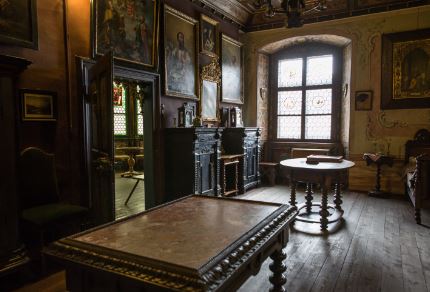
Perhaps I can indicate this by reviewing a few of the brief examples of introjected values which I have given, and suggesting what happens to them as the individual comes closer to what is going on within him. The individual in therapy looks back and realizes, “But I enjoyed pulling my sister hair—and that doesn’t make me a bad person.” The student failing chemistry realizes, as he gets close to his own experiencing—“I don’t value being a doctor, even though my parents do; I don’t like chemistry; I don’t like taking steps toward being a doctor; and I am not a failure for having these feelings.” The adult recognizes that desires for pleasures of the flesh and behaviour may be richly satisfying and permanently enriching in their consequences, or shallow and temporary and less than satisfying. He goes by his own experiencing, which does not always coincide with the social norms. He considers art from a new value approach. He says, “This picture moves me deeply, means a great deal to me. It also happens to be an abstraction, but that is not the basis for my valuing it.” He recognizes that this communist book or person has attitudes and goals which he shares as well as ideas and values which he does not share. He realizes that at times he experiences cooperation as meaningful and valuable to him, and that at other times he wishes to be alone and act alone. #RandolphHarris 10 of 20

As the examples will indicate, the disturbances that produce an attempt at examination may be acute or of long standing; they may result predominantly from actual difficulties inherent in a situation or they may be expressions of a chronic neurosis. Compared with the preconditions for a systematic self-analysis, those for occasional analysis are moderate. It suffices to have some psychological knowledge, and this need not be book knowledge but may be gained from ordinary experience. The only indispensable requirement is a willingness to believe that unconscious factors may be sufficiently powerful to throw the whole personality out of gear. To put it negatively, it I necessary not to be too easily satisfied with ready-at-hand explanations for a disturbance. A man, for instance, who has become inordinately upset about being cheated. A person suffering from an acute depression must be skeptical about explaining his state on the basis of World conditions. Habitual forgetting of appointments is not very well explained by saying that one is too busy to remember. It is particularly easy to brush aside those symptoms that are not obviously psychic in character, such as headaches to weather conditions, fatigue to overwork, stomach upsets to spoiled food or gastric ulcers, without even considering the possibility that psychic factors are involved. This attitude may be assumed because of sheer ignorance, but also it is a characteristic neurotic tendency in persons who cannot tolerate the idea of any unevenness or flaw in themselves. #RandolphHarris 11 of 20

At the other extreme are those who are convinced that every disturbance is psychic in origin. For such a person it is out of the question that he might be tired because of an overdose of hectic work, that he might have caught a cold because he was exposed to a too vigorous infection. He cannot tolerate the idea that any external factor can have the power to affect him. If any disturbance befalls him it is because he himself has brought it about; and if a symptom is psychic in origin it is in his own power to remove it. Needles to say, both attitudes are compulsive and the most constructive attitude is somewhere between them. We may feel genuinely concerned about World conditions, though such a concern should drive us into action and not into a depression. We may feel tired because of too much work and too little sleep. We may have headaches because of a bad eye condition or a brain tumor. Certainly no physical symptom should be attributed to psychic factors before the medical explanation is thoroughly investigated. The important point is that with full regard for the plausible explanation one should also take a good look into one’s emotional life. Even if the difficulty is a case of flu it might be helpful, after giving it the proper medical attention, to raise the question whether some unconscious psychic factors were present, operating to lower resistance to infection or to retard recovery. #RandolphHarris 12 of 20
With these general considerations are borne in mind, it will help us understand case studies. To further highlight this illustration, John, a good-natured businessman, apparently happily married for five years, suffered from diffuse inhibitions and “inferiority feelings” and in recent years had developed occasional headaches without any detectable physical basis. He had not been analyzed but he was fairly familiar with the psychoanalytic way of thinking. Later he came to me for analysis of a rather intricate character neurosis, and his experience in working alone was one of the factors that convinced him of the possible value of psychoanalytic therapy. When he started to analyze his headaches, it was without intending to do so. He, his wife, and two friends went to a musical comedy and he developed a headache during the play. This struck him as queer because he had felt well before going to the theater. At first, with some irritation, he ascribed his headache to the fact that the play was bad and the evening was a waste of time, but he soon realized that after all one does not get headaches from a bad play. Now that he thought about it, the play was not so bad after all. However, of course, it was nothing compared with the play of Shaw’s that he would have preferred. These last words stuck in his mind—he “would have preferred.” Here he felt a flash of anger and saw the connection. He had been overruled when the choice between the plays was up for discussion. It was not even much of a discussion: he felt he should be a good sport, and what did it matter anyhow. #RandolphHarris 13 of 20
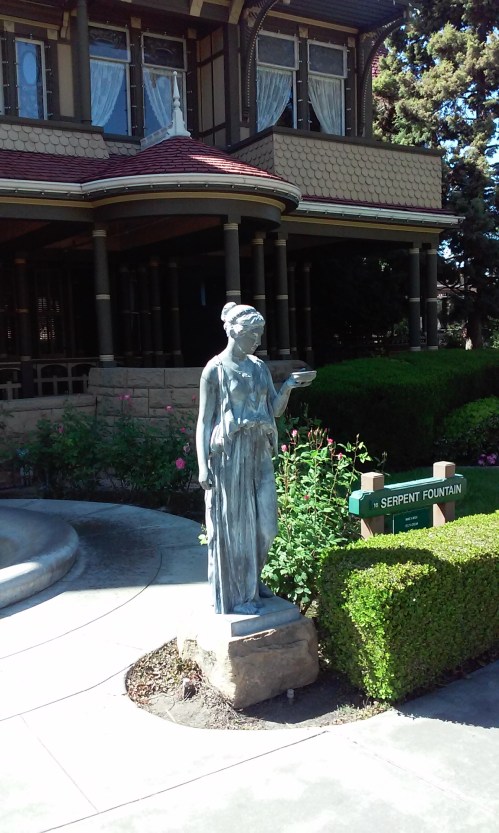
Apparently it had mattered to him, however, and he had been deeply angry about being coerced. With that recognition, the headache was gone. He realized also that this was not the first headache that originated in this way. There were bridge parties, for instance, which he hated to join but was persuaded to do so. He was startled to discover this connection between repressed anger and headaches, but he gave it no further thought. A few days later, however, he work up early, again with a splitting headache. He had attended a staff meeting of his organization the night before. They had been drinking afterward, and at first he accounted for the headache by telling himself that probably he had drunk too much. With that he turned on the other side and tried to fall asleep again, but he could not. A fly buzzing around his face irritated him. At first the irritation was barely noticeable, but it grew rapidly to full-blown anger. Then he recalled a dream or a dream fragment: he had squashed two bedbugs with a piece of blotting paper. The blotting paper had many holes. As a matter of fact, he remembered that the holes were all over the paper and formed a regular pattern. This reminded him of tissue paper that he had folded as a child, for cutting out patterns. He was quite taken by their beauty. An incident emerged in which he had shown the tissue to his mother, expecting admiration, but she had paid only perfunctory attention. The blotting paper then reminded him of the staff meeting. There he had scribbled on paper because he felt bored. No, he had not merely scribbled; he had drawn small caricatures of the chairman and of his opponent. #RandolphHarris 14 of 20

The word “opponent” struck him, because he had not consciously regarded that person as an opponent. A resolution had been voted on, about which he felt vaguely uneasy. However, he saw no clear objection to it. Hence the objection he had raised was actually not to the point. It was weak and made no impression. Only now he realized that they had put something over on him, for the acceptance of the resolution meant a lot of tedious work for himself. They had been so clever that it had escaped him. At this point he suddenly laughed because he recognized the meaning of the bedbugs. The chairman and the opponent—they were bloodsuckers, as distasteful as bedbugs. Also, he was as afraid of bedbugs as he was of these exploiters. Well, he had taken revenge—at least in his dream. Again the headache vanished. One three subsequent occasions he searched for a hidden anger as soon as the headache started, found the anger and then lost his headache. After that the headaches disappeared entirely. In reviewing this experience one is struck at first by the lightness of the labour in comparison with the result attained. However, miracles occur in psychoanalysis as seldom as anywhere else. Whether a symptom can be easily removed depends on its function in the whole structure. It this case the headaches had not assumed any further role, such as preventing John from doing things he was afraid of doing or resented doing, or serving as a means of demonstrating to others that they had given offense or inflicted injury, or serving as a basis for demanding special consideration. #RandolphHarris 15 of 20

If headaches or any other symptoms have assumed important functions such as these, their cure will require long and penetrating work. One will then have to analyze all the needs they satisfy and they will probably not disappear until the work is practically finished. In John’s case they have not assumed any such functions, and probably resulted merely from tension increased by the repressed anger. The extent of John’s accomplishment is diminished also by another consideration. It was a gain, certainly, to be rid of the headaches, but it seems to me that we are inclined to overrate the significance of such gross, tangible symptoms and to underrate the importance of less tangible psychic disturbances, such as, in this case, John’s alienation from his own wishes and opinions and his inhibition toward self-assertion. In these disturbances, which later proved to be highly significant for his life and his development, nothing was changed by his work. All that happened was that he became somewhat more aware of rising angers and that his symptoms disappeared. Actually, any of the incidents that John happened to analyze could have yielded more insight than he gained from them. Thus in his analysis of the anger that emerged during the musical comedy, there were numerous questions that he failed to touch on. What was the real nature of his relationship with his wife? Was the compatibility, of which he was proud, due only to compliance on his part? Was she domineering? Or was he merely hypersensitive to anything resembling coercion? #RandolphHarris 16 of 20
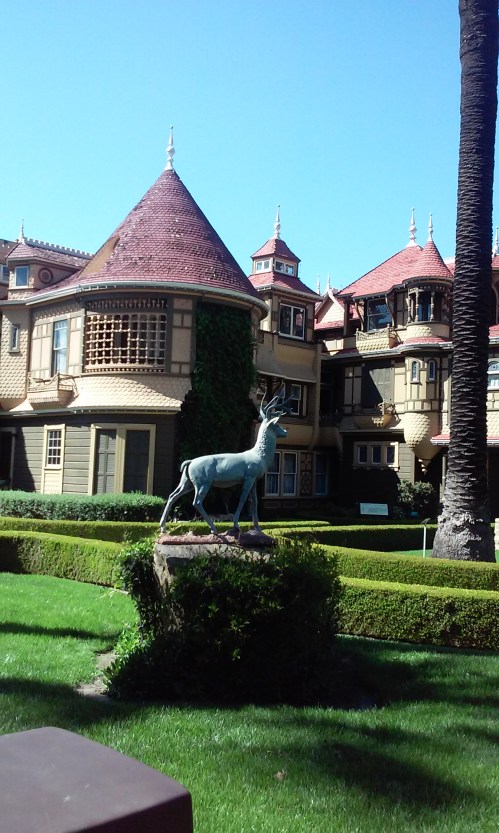
Furthermore, why did he repress his anger? Was it necessary because of a compulsive need for affection? Was he apprehensive of a rebuke from his wife? Did he have to maintain an image of himself as a person who was never disturbed by “trifles”? Was he afraid of having to fight for his wishes? Finally, was he really only angry at the others for having overruled him, or was he primarily angry at himself for having given in because of sheer weakness? The analysis of the anger following the staff meeting might also have opened up further problems. When they were jeopardized, why was he not more alert to his own interests? Again, was he afraid to fight for them? Or had the anger such dimensions—squashing the bedbugs—that it was safer to repress it altogether? Also, did he lay himself open to exploitation by being too compliant? Or did he experience something as exploitation which was actually merely a legitimate expectation of his condition? Furthermore, what about his wish to impress others—the memory of expecting admiration from his mother? Was his failure to impress his colleagues an essential element in his anger? And to what extent was he angry at himself for having been so unassertive? None of these problems was touched upon. When he had discovered the effect of repressed anger at others, John let the matter rest. After a lifetime of World-wandering, after a varied experience among different faces of people and in different classes of society, we have come to the firm and settled conviction that what is most to be looked for in a man is character. The best test of character is neither intellectual hairsplitting nor emotional, wordy gush, not high-flown idealistic professions, nor flowery mystical pretensions, but deeds. #RandolphHarris 17 of 20

The Sacramento Fire Department has saved the community from so many disasters. On one occasion, there was a small fire in a closet on the fourth floor of a building. There was a lot of smoke, but there seem to be just a bunch of papers and rubbish in there. What no one knew was that it had purposely been set and that there was a lot of gasoline poured onto the closet floor and the floor of a near bathroom. Three members from the engine company were in the room, but none of them smelled the gasoline because of the smoke. The three guys started to extinguish the fire just as the heat got to the gasoline. The gasoline exploded, and the whole room went on fire. Two of the guys got to the door and were safe, but the fire expanded so rapidly, it cut the third guy off, and he ended up at the window. Unless you have had the experience, you will never believe how quickly a fire can move through a room, two rooms, three rooms. This firefighter we will call number 1, was at the window yelling, and Ladder 1 began to put it tower ladder up. That is a long boom with a platform at the end of it, with room enough for four or five fighters to stand. There were two firefighters on the platform, raising it. As it reached the third floor, firefighter number 1, now framed in the fourth-floor window, was on fire, and he could not wait the extra five seconds for the tower ladder to get him. He was forced to jump. He jumped into the bucket and hit one of the guys there, Lt. 1, breaking his leg. However, even with a broken leg, Lt. 1 was able to grab an extinguishing can and put out the flames on the burning firefighter. Fire fighter number 1 had his fire-safe coat on, but it was the clothes beneath it, his pants and his shirt, that were on fire. All this happened from a very little fire in a closet in a multi-family, low-rise, housing building. #RandolphHarris 18 of 20
When the firefighter was visited at the Burn Center, he was terribly burned on his arms and shoulders, and on the bottom part of his body around his buttocks and the backs of his legs. He was very courageous. You would have to be in such a situation. You really do muster up extraordinary strength in times of personal crisis. There is a spiritual part of firefighters, and when they get hurt seriously, they realize how fragile they are as human beings, and they rely on this spirituality to bring forth the dignity of their souls. This firefighter was in great pain, but he was also very funny. He said his wife was concerned about his being in the burn center with all these beautiful nurses. However, e reassured her. He said that a nurse who is tearing the burned layers of skin off your body, inch by painful inch, no matter how gorgeous she is, is never going to be thought of as anybody but a person who is tearing off the top layer of your skin, inch by painful inch. Sometimes people get killed. Every firefighter has to deal with the death of a brother or sister firefighter at some point in his or her life. In America, a firefighter dies in the line of duty every other day. Many have been to several funerals. It is hard to look at the surviving children of firefighters and thinking that they will live with the memory of their father giving his life in a job that cared about him. The only standing room one will find at a firefighter’s funeral is out in the street, down the block. A firefighter recalled when 11 firefighters died in the line of duty. It was a terrible scene when they were searching for the bodies. Firefighters could recall the bodies coming out, one by one. #RandolphHarris 19 of 20

As if the bodies were passing were passing in review, the hundreds of firefighters who were there took off their helmets. The floors of the building had collapsed, taking these firefighters down into the bowels of the fire. There was quiet in the immediate vicinity as their bodies came out. When it came time for the funerals, many firefighters were dismayed at how little the city had done to make those thousands of visiting firefighters welcome. The firehoses alone had taken them in, given them something to eat, and made them feel at home. Therefore, before to show your support for the Sacramento Fire Department by voting for Assembly Member Kevin McCarty. He is endorsed by the Sacramento Fire Department, and his focus is on affordable housing and getting people without homes into a home. A vote for McCarty is a way of showing support for the Sacramento Fire Department. And if you can, please make a donation to the Sacramento Fire Department and keep those who have been injured, disabled, or killed on the job in your prayers. I pledge allegiance to the flag of the United States of America, and to the republic, for which it stands, one nation, under God, indivisible, with liberty and justice for all. Though it is not incumbent upon you to complete the work, you are not free from doing all you possibly can to honour God. Judge a man by his deeds, and you will not be led to false judgment. Say little and do much, for by your deeds shall you be judged. If you are wise and rich, let your good deeds reveal your wisdom and wealth. Honour a man for what he is; but honour him more for what he does. #RandolphHarris 20 of 20

Many people have laughed at caretakers for believing in ghosts. Skeptics think the noises to be the product of their over-active imaginations. However, they also begin to hear them when they spent time in The Winchester Mystery House. One skeptic reported after hearing them, “the groans, squeaks, tingling and knockings were frightful enough.” One caretake was locking up the mansion one night, when there came a sound from one of the six kitchens as of a large lump or lumps of coal being splintered and smashed onto the floor. He and one of the other caretakers went through the entire mansion, but could find nothing to explain the sounds; no guests were in the house. Upon hearing the sound of bottles breaking beneath the stairs, when no one was in the house, they ran in fright into an office.
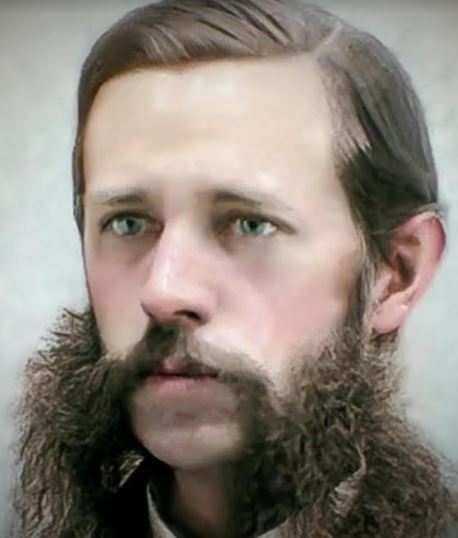
Then they heard the sound of a man walking slowly past them; then going down the grand staircase, then up the back stairs and up the stairs to the ceiling. Soon after this, they heard in the corner of a room, as it were the violent rocking of a cradle; as far as anyone knows, no cradle has ever been in the house. Two caretakers were sitting in one of the dining rooms, on a later occasion, when they heard the sound of loud raps coming from the outside of the door and on the ceiling overhead.

Come and enjoy a delicious meal in Sarah’s Café, stroll along the paths of the beautiful Victorian gardens, and wonder through the miles of hallways in the World’s most mysterious mansion. For further information about tours, including group tours, weddings, school events, birthday party packages, facility rentals, and special events please visit the website: https://winchestermysteryhouse.com/

Please visit the online giftshop, and purchase a gift for friends and relatives as well as a special memento of The Winchester Mystery House. A variety of souvenirs and gifts are available to purchase. https://shopwinchestermysteryhouse.com/

Divine at the Center but Slightly Devilish at the Circumference
If it requires great and constant effort to model his character will not interest man, but to the quester it is an obligation. And this is so without his having to believe in all the windy rhetoric about the perfectibility of man. The reformation and even transformation of character is as much a sector of philosophy as the practice of concentration and the study of mind. The virtue which develops from disciplining thoughts and controlling self removes obstacles and gives power to truth’s pursuit. The ethical ideals of philosophy are lofty but nobody is asked or expected to jump to their realization, only to understand their direction; the ret of this inner work must develop at its own pace according to hi individual possibilities. Is it entirely useless to point out an ethical height to which very few can soar? No—the usefulness lies in the sense of right direction which it gives, in the inspiring love of truth and hope of self-betterment which it arouses. If we persist in holding it before us in aspiration, however unrealizable the ideal may be in all its perfection, we shall certainly approach it more closely in action. And the effort will give us more faith in life, make us more sensitive to its finer rhythms. If the lower self disturbs you, silence it by invoking it intellectually through declarations of spiritual truth and emotionally through genuflection in humble prayer. Do not accept the suggestion which drags you down, but instead seek for the pressure which lifts you up. #RandolphHarris 1 of 19

To the extent that he purifies and ennobles himself, he qualifies himself for the reception of superior insight. If the aspirant will take care to fill his mind with thoughts that are always elevating, always beneficial, and always constructive; if he will be vigilant to keep out all thoughts that are degrading and destructive, this simple technique will keep his mind so continuously filled with the right kind of thought and feeling that he will unconsciously and little by little completely overcome the wrong kind. Thus his character will change and approach his ideals. As if man were nothing else but a divine being, we must not talk about this as the mystics do. We are philosophical students and should not be so one sided. We must tell men the whole and not a half-truth, which means we must tell them that they are a mixed lot, divine at the center but slightly devilish at the circumference; altruistic in their potential nature but somewhat selfish in their actual one. Everything that strengthens his better nature is useful and acceptable. Everything that weakens it is not. So difficult is true self-mastery that nothing in the World’s literature about it can overrate the accomplishment. When the beast in man will bow in homage before the intelligence in man, when the ideal of perfected being set up for him by the serene figure of the Sphinx shall be recognized, accepted, and striven for, then indeed will he become a conscious collaborator with the universal Mind. Whoever knows how ad where to look can find in himself the assurance of this ultimate victory. #RandolphHarris 2 of 19
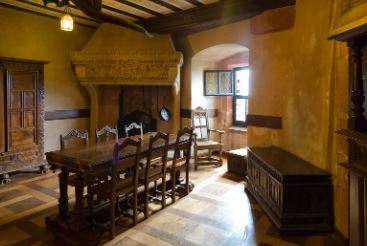
There should be no space in his mind for negative thoughts, no time in his heart for base feelings. It is not enough to repress a negative trait like jealousy or self-pity. One must also replace it by a positive trait. His spiritual progress will be measured not so much by his meditational progress as by his moral awakening. Not merely when he can understand it intellectually, but also when he can accept it emotionally, the truth will become truth for him, and still more when he can incorporate it into his behaviour patterns. He must look within himself for the impurities and falsities, the malice and envy, the prejudice and bitterness which belong to his lower nature. And he must work with all his willpower and thinking power to cast them out. He must walk towards the highest with every part of his being, with his whole psyche matured and balanced. He must not only seek to intuit what is real, but also to will what is good. It is when men come face-to-face with a real crisis, a real temptation, or a real hardship that they show their real character, not only their self-imagined or publicly reputed one. It must be remembered always that mere intellectual study is not so essential as the building of worthwhile character, which is far more important in preparing for the great battle with the ego. #RandolphHarris 3 of 19
The tendency to install technical progress as the highest value is linked up not only with our overemphasis on intellect but, most importantly, with a deep emotional attraction to the mechanical, to all that is not alive, to all that is man-made. This attraction to the non-alive, which is in its more extreme form an attraction to death and decay (necrophilia), leads even in its less drastic form to indifference toward life instead of “reverence for life.” Those who are attracted to the non-alive are the people who prefer “law and order” to living structure, bureaucratic to spontaneous methods, gadgets to living beings, repetition to originality, neatness to exuberance, hoarding to spending. They want to control life because they are afraid of its uncontrollable spontaneity; they would rather kill it than to expose themselves to it and merge with the World around them. They often gamble with death because they are not rooted in life; their courage is the courage to die and the symbol of their ultimate courage is the Russian roulette. The rate of our automobile accidents and preparation for thermonuclear war are a testimony to this readiness to gamble with death. And who would not eventually prefer this exciting gamble to the boring unaliveness of the organization man? One symptom of the attraction of the merely mechanical is the growing popularity, among some scientists and the public, of the idea that it will be possible to construct computers which are no different from man in thinking, feeling, or any other aspect of functioning. #RandolphHarris 4 of 19

It is possible to manufacture computers synthetically which are completely undistinguishable from human beings produced in the usual manner. There is no reason to suppose machines have any limitations not shared by man. The main problems, it seems to me, is not whether such a computer-man can be constructed; it is rather why the idea is becoming so popular in a historical period when nothing seems to be more rational, harmonious, and peace-loving being. One cannot help being suspicious that often the attraction of the computer-man idea is the expression of a flight from life and from humane experience into the mechanical and purely cerebral. When the majority of men are like robots, then indeed there will be no problem in building robots who are like men. The idea of the manlike computer is a good example of the alternative between the human and the inhuman machines. The computer can sever the enhancement of life in many respects. However, the idea that it replaces man and life is the manifestation of the pathology of today. The fascination with the merely mechanical is supplemented by an increasing popularity of conceptions that stress the animal nature of man and the instinctive roots of his emotions or actions. Dr. Freud’s was such an instinctive psychology; but the importance of his concept of libido is secondary in comparison with his fundamental discovery of the unconscious process in waking life or in sleep. #RandolphHarris 5 of 19
Many experts stress instinctual animal heredity, and have not offered any new or valuable insights into the specific human problem as Dr. Freud has done; they satisfy the wish of many to look at themselves as determined by instincts and thus to camouflage their true bothersome human problems. The dream of many people seems to be to combine the emotions of a primate with a computerlike brain. If this dream could be fulfilled, the problem of human freedom and of responsibility would seem to disappear. Man’s feelings would be determined by his instincts, his reason by the computer; man would not have to give an answer to the question his existence asks him. Whether one like the dream or not, its realization is impossible; the naked ape with the computer brain would cease to be human, or rather “he” would not be. Among the technological society’s pathogenic effects upon man, two more must be mentioned: the disappearance of privacy and of personal human contact. “Privacy” is a complex concept. It was and is a privilege of the middle and upper classes, since its very basis, private space, is costly. This privilege, however, can become a common good with other economic privileges. Aside from this economic factor, it was also based on a hoarding tendency in which my private life was mine and nobody else’s, as was my house and any other property. It was also a concomitant of cant, of the discrepancy between moral appearances and reality. Yet when all these qualifications are made, privacy still seems to be an important condition. #RandolphHarris 6 of 19
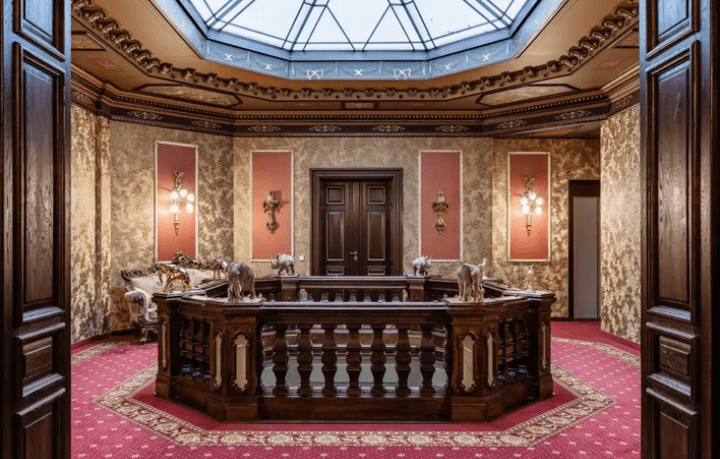
First of all, because privacy is necessary to collect oneself and to free oneself from the constant “noise” of people’s chatter and intrusion, which interferes with one’s own mental processes. If all private data are transformed into public data, experiences will tend to become more shallow and more alike. People will be afraid to feel the “wrong thing”; they will become more accessible to psychological manipulation which, through psychological testing, tries to establish norms for “desirable,” “normal,” “healthy” attitudes. Considering that these tests are applied in order to help the companies and government agencies to find the people with the “best” attitudes, the use of psychological tests, which is by now an almost general condition for getting a good job, constitutes a severe infringement on the citizen’s freedom. Unfortunately, a large number of psychologists devote whatever knowledge of man they have to this manipulation in the interest of what the big organization considers efficiency. Thus, psychologists become an important part of the industrial and governmental system while claiming that their activities serve the optimal development of man. This claim is based on the rationalization that what is best for the corporation is best for man. It is important that the managers understand that much of what they get from psychological testing is based on the very limited picture of man which, in fact, management requirements have transmitted to the psychologists, who in turn give it back to management, allegedly as a rest of an independent study of man. #RandolphHarris 7 of 19
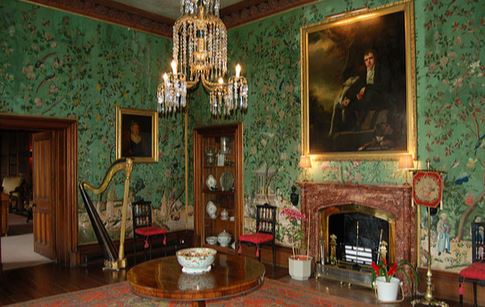
It hardly needs to be said that the intrusion of privacy may lead to a control of the individual which is more total and could be more devastating that what totalitarian states have demonstrated thus far. It is of vital importance to distinguish between a psychology that understands and aims at the well-being of man and a psychology that studies man as an object, with the aim of making him more useful for the technological society. There are factors that make it easy for a person to see his peculiarities in the course of his relationship with the analyst than in his association with others. His disturbing character traits—his diffidence, dependency, arrogance, vindictiveness, his tendencies to withdraw and freeze up at the slightest hurts, or whatever they may be—are always contrary to his best self-interests, not only because they render his associations with others less satisfactory but also because they make him dissatisfied with himself. This fact is often blurred, however, in his customary relations with others. He feels that he will gain something by staying dependent, by taking revenge, by triumphing over others, and therefore he is less willing to recognize what he is doing. The same traits displayed in analysis work so blatantly against his self-interest that he can scarcely fail to see their injurious character, and hence the urge to blindfold himself against them is considerably lessened. #RandolphHarris 8 of 19

However, while it is not easy it is entirely within the range of possibility for a person to overcome the emotional difficulties involved in studying his behaviour toward others. Our past case study of Clare, we analyzed the intricate problem of her morbid dependency by scrutinizing her relation with her lover. And she succeeded in spite of the fact that both the difficulties mentioned above were present to a high degree: the disturbances in the personality of her lover were at least as great as her own; and certainly she had a vital interest, from the viewpoint of her neurotic expectations and fears, not to recognize that her “love” was actually a need for dependency. The other aspect of the relationship with the analyst is the explicit and implicit human help he extended to the patient. Whereas the other assistance he gives is replaceable to a greater or lesser extent, the merely human help is, by definition, entirely lacking in self-analysis. If the person who is working by himself is fortunate enough to have an understanding friend with whom he can discuss his findings, of if he can check up on them with an analyst from time to time, he will feel less alone in his work. However, neither expedient could wholly substitute for all the intangible values of working out his problems in close co-operation with another human being. The absence of this help is one of the factors that makes self-analysis the harder road. #RandolphHarris 9 of 19

There is a great deal of concern today with the problem of values. Youth, in almost every country, is deeply uncertain of its value orientation; the values associated with various religions have lost much of their influence; sophisticated individuals in every culture seem unsure and troubled as to the goals they hold in esteem. The reasons are not far to seek. The World culture, in all its aspects, seems increasingly scientific and relativistic, and the rigid, absolute views on values which come to us from the past appear anachronistic. Even more important perhaps, is the fact that the modern individual is assailed from every angle by divergent and contradictory values claims. It is no longer possible, as it was in the not too distant historical past, to settle comfortably into the value system of one’s forebears or one’s community and live out one’s life without ever examining the nature and the assumptions of that system. In this situation it is not surprising that value orientations from the past appear to be in a state of disintegration or collapse. Men question whether there are, or can be, any universal values. It is often felt that we may have lost, in our modern World, all possibility of any general or cross-cultural basis for values. One natural result of this uncertainty and confusion is that there is an increasing concern about, interest in, and a searching for, a sound or meaningful value approach which can hold its own in today’s World. I share this general concern. #RandolphHarris 10 of 19
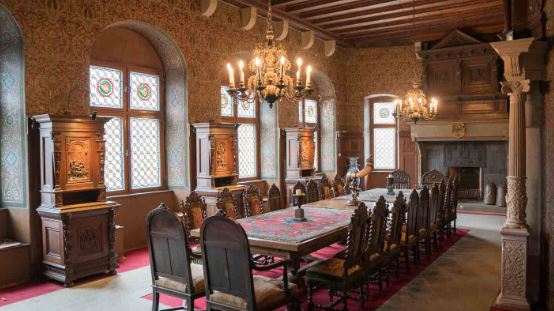
I have also experienced the more specific value issues which arise in my own field, psychotherapy. The client’s feelings and convictions about values frequently change during therapy. How can he or we know whether they have changed in a sound direction? Or does he simply, as some claim, take over the value system of his therapist? Is psychotherapy simply a device whereby the unacknowledged and unexamined values of the therapist are unknowingly transmitted to an unsuspecting client? Or should this transmission of values be the therapist’s openly held purpose? Should he become the modern priest, upholding and imparting a value system suitable for today? And what would such a value system be? There has been much discussion of such issues, ranging from thoughtful and empirically based presentations such as that of D. D. Glad, to more polemic statements. As is so often true, the general problem faced by the culture is painfully and specifically evident in the cultural microcosm which is called the therapeutic relationship. I have observed changes in the approach to values as the individual grows from infancy to adulthood. If he is fortunate, I have observed further changes when he continues to grow toward true psychological maturity. Many of these observations grow out of my experience as a therapist, where I have had the rich opportunity of seeing the way in which individuals move toward a richer life. #RandolphHarris 11 of 19

From these observations, I believe I see some directional threads emerging which might offer a new concept of the valuing process, more tenable in the modern World. I have made a beginning by presenting some of these ideas partially in previous writings; I am speaking from my experience of the functioning human being, as I have lived with him in the intimate experience of therapy, and in other situations of growth, change, and development. A decisive step from primitive to civilized history lies in the rebellion of sons against the father, and the murder of the hated father. The sons then create a system of society based on a covenant which excludes further murder among the rivals and provides for the establishment of morality. The evolution of the child follows a similar path. The little boy at the age of five or six is intensely jealous of his father and represses murderous wishes against him only under the pressure of the castration threat. In order to liberate himself from continuous fear, he internalizes the incest taboo, and builds the nucleus around which his “conscience” is to grow (superego). Later on, the prohibitions and commands voided by other authorities and by society are added to the original taboos voiced by father. History is determined in its course by continuous contradictions. The productive forces grow and thus conflict with the older economic, social, and political forms. This conflict (for instance, between the steam engine and the previous social organization of manufacturing) leads to social and economic changes. #RandolphHarris 12 of 19
The new stability, however, again is challenged by further development of the productive forces (for instance, from the steam engine to the use of gasoline, electricity, atomic energy), leading to new social forms which correspond better to the new productive forces. Together with the conflict between productive forces and sociopolitical structures goes the conflict between social classes. The feudal class based on older forms of production is in conflict with the new middle class of small manufacturers and businessmen; this middle class finds itself fighting, at some later point, against the working class as well as the leaders of big monopolistic enterprises which tend to strangle the earlies and smaller forms of enterprise. In the beginning of history, man is completely dependent on nature. In the process of evolution, he makes himself more and more independent of nature, begins to rule and transform nature in the process of work, and in transforming nature man transforms himself. Man’s dependence on nature limits his freedom and his capacity for thought; he is in many ways like a child. He slowly grows up, and only when he has fully mastered nature and thus become an independent being can he develop all his intellectual and emotional faculties. A socialist society is the one in which the grownup man begins to unfold all his powers. #RandolphHarris 13 of 19
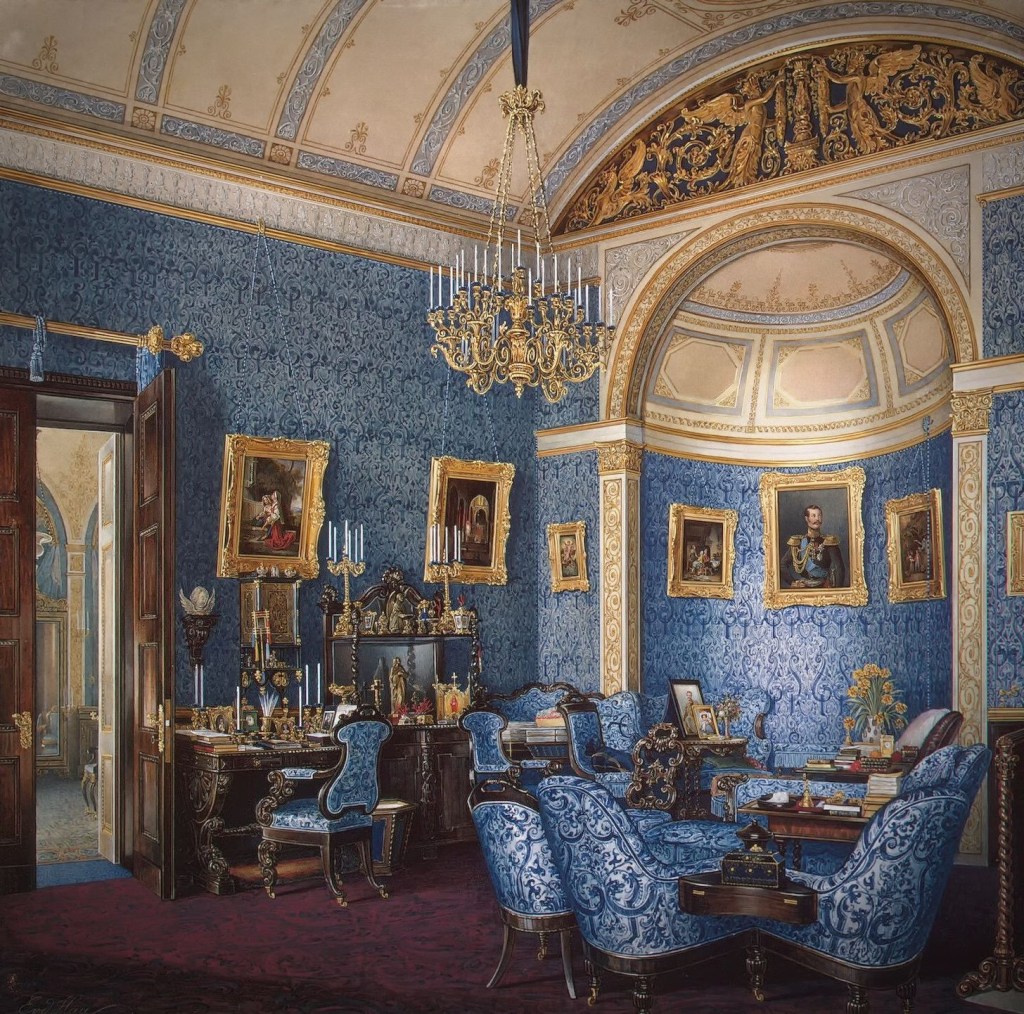
The monolithic orientation of social work schools, and the particular use of psychiatrists or analysts to instruct in personality theory, has contributed to a generally stable entente cordiale between social workers and psychiatrists. Certainly the resulting facilitation of communication and coordination is apparently in the best interests of the patient. However, like the peace pacts between nations which successful avert war, there is no correlated impetus to make discoveries or achieve maximal efforts. At least one voice has expressed concern for the impact of this indoctrination on the specific contribution of the social worker: “Social problems are social problems, and you cannot psychoanalyze them out of existence. Psychiatric social service…is indispensable. However, psychiatric social service is increasingly becoming psychoanalytic social service, and more and more even the ‘social’ is being left out until only psychoanalytic service remains. That does not help people with real social family problems.” The psychologist in his formal training is exposed to a variety of truly psychological conceptualizations of the human mind, personality, and behaviour. He studies theories of learning, of perception, of motivation, of communication, of decision making, and so on. He studies scientifically accumulated information (as contrasted with retrospective clinical formulations based upon the pathology of adults) as to how the social, conceptual, and emotional equipment and behaviour dispositions of the human organism unfold, develop, integrate, and disintegrate from earliest infancy through adulthood to senility. #RandolphHarris 14 of 19
We are bombarded with all sorts of persuasion daily. It is coming at us from all sides. The Internet, radio, television, your computer, your mobile phone, the people around you, it is all too much! In this day and age, we have much more persuasive action coming at us than ever before. That is because there are not only more ways to persuade people, but there are more things to persuade them about. The in-you-face persuasion is not so bad. You can take it or leave it, and at least you know what is happening. It is the dark persuasive tactics that you might not even be aware of that matter. First things first, your fundamental rights as a human being. This might seem like a thing that is understood by most people, but that is not always the case. So, we are going to go over what is unequivocally yours. Knowing what your rights are, gives you that line you can let people know you will not allow being crossed. We have to have lines—all of us do. As children, we learned to test our boundaries. If our parents had little to no boundaries, then we learned little until we became school age. Our peers and teachers would then set the boundaries our parents did not. Society will always let you know how far you can and cannot go. So, letting people know that you know what the socially accepted boundaries are is essential in your role as a citizen of the World. Another thing that needs to be pointed out about your rights is the fact that you do not have to answer questions anyone asks you about why you feel you have these rights. You have them, end of subject. #RandolphHarris 15 of 19

If someone feels they have to ask you about your rights, they are only trying to get into your head to make you believe you do not actually have the right you are trying to uphold. Let us talk about your right to life. Not only do you have this right, but you have got the right to live your life in a way that is healthy and happy. If someone is infringing your life that is causing you to be or feel unhealth or unhappy, you have the unquestionable right to get away from them or make them get away from you—by force if necessary. What about respect? Do you have the right to be treated with respect by everyone? You are do. You should be treated with respect by anyone you first encounter. That is until you do something to lose that respect. The thing is that everyone is given respect in the first place. It is up to you if you can maintain that respect or not. And sometimes, you have got to try to earn it, once it has been lost. You also have the right to protect yourself from things that threaten to harm you in physical, mental, and emotional ways. This means that is a person is about to punch you in the face, you do not have to stand there and take it. You have got many possibilities for your recourse. You can hit back. You could dodge the punch. Or you can simply walk away—or run if you feel that threatened. And you can seek help if you feel like you cannot face a threat on your own. #RandolphHarris 16 of 19

Physical violence is easy to see how you have got the right to get away from a person who is threatening to harm you in that way. However, what about emotional and mental harm? Of course, you have the right to get away from anyone who is threatening or actually harming you in those ways. Again, you can do this on your own, or you might need help. Ask for help if you need it and stay away from the person who tried to or did cause you harm in any of these aspects. The things you want, the things you have opinions about, and how you feel are also rights that you have. Regardless if anyone else agrees with your or not, you also have the right to have all of these things. Your opinion might be yours alone. Others might have conflicting opinions. Just as you have a right to your opinion, they have the right to theirs as well. You also have a right to make your own priorities. What matters to you the most might not matter to someone else as much or at all. If someone thinks your priorities are not in line with what they want, that makes no difference. You need to believe in your priorities and stand by them. Do not allow anyone to influence what matters the most to you. A case in point for this is that your boss thinks you should focus more on your job instead of your family. He wants you to change your priorities. You know better than that now, do you not? It is your right to have your own priorities; no one can make you change them. Again, if you need help getting someone in authority over you to understand and accept this about you, then get the help you need to accomplish that. #RandolphHarris 17 of 19

If you pay for something, do you feel that you have the right to have it? You sure do what that right. If you pay for gas before going back outside to pump it and there is no gas left to give you, you expect to get your money back, do you not? And if they refuse to give your money back, you know there are things you can do to get it back. And we are not talking about getting violent here. There are authorities to help you get what you paid for. If you need it, use that help. And here is a right that many of us do not know that we have. We all have the right to say no. That is all. We also have the right not to feel even an ounce of guilt for saying, no. Not even an ounce! That is right. You can say no, and you do not have to say another word after that. You do not have to explain a thing. As a matter of fact, if you want to shut the person bothering you up, simply tell that that it is your right to say no and you are exercising it. Smile, be happy about it. You said, no. And you do not feel bad about doing it either. When a negative reaction impulsively shows itself before you have been able to prevent it, make as your second thought a deliberate replacement or substitution of it, by the opposed beneficial one. For instance, a reaction of envy at someone’s good fortune should be substituted by the thought of appreciation of the good qualities or services which may have led it. When emotion is no longer able to cloud reason, when intellect is no longer able to dry up the feeling of conscience, a better judgment of affairs and a clearer perception of truth becomes possible. #RandolphHarris 18 of 19
It takes a dedicated, committed, and courageous person to enter the blind, boiling darkness of a building on fire, to crawl through poisonous smoke, to confront the threat of the flames. The economic benefits of being a firefighter are not really great. The time off is fairly decent. Work schedules vary widely from place to place, but generally speaking firefighters have more time off in a consecutive way than most people. At the same time, many of them work forty-eight and sixty hours a week. When you go to work, you know you are going to sit in the firehouse kitchen with people who are interesting, funny, and worthy of your attention. Another benefit of being a firefighter is your sense of self-worth. You go out on a job, you eat some soke, you take a little heat, and you get the great satisfaction of confronting the flames and defeating them. You know you are doing a good job, and that is a very valuable benefit. There is not much money for the paid firefighters. Only the bosses get paid well. The fire commissioner of Sacramento gets paid more than many mayors. However, the ordinary firefighter is almost always paid less than a schoolteacher, generally on a parity with police officers—and he works more hours. The trouble is that seldom their time off is in sync with the rest of the World. When their kids are starring in the school play, they are working. If there is a rare family reunion at Thanksgiving, they are working. And when you should be celebrating the baby’s first Christmas, they are working. That is a minus. And that is the breaks. Please be sure to show love to the Sacramento Fire Department and make a donation. I pledge allegiance to the flag of the United States of America, and to the republic, for which it stands, one nation, under God, indivisible with liberty and justice for all. #RandolphHarris 19 of 19


Witchcraft is treated as a curious by-lane of history, a superstition long since dead, having no existence among, nor bearing upon, the affairs of the present day. It is a field of folk-lore, where one may gather strange flower and noxious weeds. Again, we often recognize the romantic treatment of Witchcraft. ‘Tis the Eve of S. George, a dark wild night, the pale moon can but struggle thinly through the thick massing clouds. The witches are abroad, and hurtle swiftly aloft, a hideous covey, borne headlong on the skirling blast. In delirious tones they are yelling foul mysterious words as they go: “Har! Har! Har! Altri! Altri!” To some peak of the Broken or lonely Cevennes they haste, to the orgies of the Sabbat, the infernal Sacraments, the dance of Acheron, the sweet and fearful fantasy of evil, “Vers les stupres impurs et lest baisers immondes.” Hell seems to vomit its foulest dregs upon the shrinking Earth’ a loathsome shape of obscene horror squats huge and monstrous upon the ebon throne; the stifling air reeks with filth and blasphemy; faster and faster whirls the witches’ lewd lavolta; shriller and shriller the cornemuse screams; and then a wan gray light flickers in the Eastern sky; a moment more and there sounds the loud clarion of some village chantieleer; swift as thought the vile phantasmagoria vanishes and is sped, all is quite and still in the peaceful dawn.

However, both the antiquarian and romanticist reviews of Witchcraft may be deemed negligible and impertinent so far as the present research is concerned, however entertaining and picturesque such treatment proves to many readers affording not a few pleasant hours, whence they are able to draw highly dramatic and brilliantly coloured pictures of old time sorceries, not to be taken too seriously, for these things never were and never could have been. The rationalist historian and the sceptic, when inevitably confronted with the subject of Witchcraft, chose a charmingly easy way to deal with these intensely complex and intricate problems, a flat denial of all statements which did not fit, or could not by some means be squared with, their own narrow prejudice. What matter the most irrefragable evidence, which in the instance of any other accusation would unhesitatingly have been regarded as final. What matter the logical and reasoned belief of centuries, of the most cultured peoples, the highest intelligences of Europe? Any appeal to authority—save his own. Such thing could not be. We must argue from that axion, and therefore anything which is impossible to explain away by hallucination, or hysteria, or auto-suggestion, or any other vague catch-word which may chance to be fashionable at the moment, must be uncompromisingly rejected, and a note of superior pity, to candy the so suave yet crushingly decisive judgment, has proved of great service upon more occasion than one.
Why examine the evidence? It is really useless and a waste of time, because we know that the allegations are all idle and ridiculous; the “facts” sworn to by innumerable witnesses, which are repeated in changeless detail century after century in every country, in every town, simply did not take place. How so absolute and entire falsity of these facts can be demonstrated the sceptic omits to inform us, but we must unquestioningly accept his infallible authority in the face of reason, evidence, and truth. Come and enjoy a delicious meal in Sarah’s Café, stroll along the paths of the beautiful Victorian gardens, and wonder through the miles of hallways in the World’s most mysterious mansion. For further information about tours, including group tours, weddings, school events, birthday party packages, facility rentals, and special events please visit the website: https://winchestermysteryhouse.com/

Please visit the online giftshop, and purchase a gift for friends and relatives as well as a special memento of The Winchester Mystery House. A variety of souvenirs and gifts are available to purchase. https://shopwinchestermysteryhouse.com/

The Agony of a New Obsession and Possession
There is no basis of morality and taste, no standard of judgement and ethics, except that which the individual brings with himself or creates for himself. The situation is not so anarchic as it seems, for there is a progressive evolutionary character running through al these different points of view. The human journey from mere animal existence to real spiritual essence is reflected in human ethics, where rules imposed from without are gradually supplanted by principles intuited from withing. If we bring more sincerity and more integrity into our lives, more truth and more wisdom into our minds, more goodwill and more self-discipline into our hearts, not only will we be more blessed but also all others with who we are in touch. If you would find yourself, face yourself. In essence, seek out and study the pathetic weakness of your lower nature, and also the noble inspirations of your higher nature. Philosophy guides human conduct not so much by imposing a particular code of rules to be obeyed as by inculcating a general attitude to be developed. It does not tell u what to do so much as it helps us to get the kind of spiritual knowledge and moral perception which will tell us what to do. The moral precepts which it offers for use in living and for guidance in wise action are not offered to all alike, but only to those engaged on the quest. They are not likely to appeal to anyone who is virtuous merely because he fears the punishment of sin rather than because he loves virtue itself. Nor are they like to appeal to anyone who does not know where his true self-interest lies. #RandolphHarris 1 of 20
If only we fully understood the self whose interest we desire to preserve or promote, there would be nothing wrong in being utterly selfish. For then we would not mistake pleasure for happiness nor confuse evil with good. Then we would see that Earthly self-restraint in some directions is in reality holy self-affirmation in others, and that the hidden part of self is the best part. Those ideals have been reiterated too often to be new, but concrete application of them to the actual state of affairs would be new. This grand section of the quest deal with the right conduct of life. It seeks both the moral re-education of the individual’s character for his own benefit and the altruistic transformation of it for society’s benefit. We have free will to change our character, but we must also call upon God’s assistance. Without God’s assistance, we are likely to fail and it is possible by striving too earnestly all alone to make ourselves mentally or physically ill. Even when trying to make ourselves have faith in a Higher Power as well as in ourselves, we should pray and ask for God’ help. In the beginning, I was one person, knowing nothing but my own experience. Then I was told thing, and I became two people: the little boy who said how terrible it was that the boys had a fire going in the lot next door where they were roasting apples (which was what the women said)—and the little boy, who when the other boy were called by their mothers to go to the store, ran out and tended the fire and the apples because I loved doing it. #RandolphHarris 2 of 20

So then there were two of I. One I always doing something that the other I disapproved of. Or other I said what I disapproved of. All this argument in me so much. In the beginning was I, and I was good. Then came in other I. Outside authority. This was confusing. And then other I became very confused because there were so many different outside authorities. Sit nicely. Leave the room to blow you nose. Do not say that, that is silly. Why, the poor child does not even know how to pick a bone! Flush the toilet because if you do not, it makes it harder to clean. DO NOT FLUSH THE TOILET AT NIGHT—you wake people up! Always be nice to people. Even if you do not like them, you must not hurt their feelings. Be frank and honest. If you do not tell people what you think of them, that is cowardly. Butter knives. It is important to use butter knives. Butter knives? What foolishness! Speak nicely. Punk! Kaluga Gold Reserve Caviar is wonderful! Ugh! Kaluga Gold Reserve Caviar (turn away). The most important thing is to have a career. The most important thing is to have a career. The most important thing is to get married. The heck with everyone. Be nice to everyone. The most important thing is God. The most important thing is to have money in the bank. The most important thing is to have everyone like you. The most important thing is to dress well and smell good. The most important thing is to be sophisticated and say what you do not mean and do not let anyone know what you feel. The most important thing is to be ahead of everyone else. #RandolphHarris 3 of 20
The most important thing is a full-length mink coat, a mink hat and Qing Dynasty porcelain and Eloquence Sterling Silver by Lunt. The most important thing is to be clean. The most important thing is to always pay your debts. The most important thing is not to be taken in by anyone else. The most important thing is to love your parents. The most important thing is work. The most important thing is to be independent. The most important thing is to speak correct English. The most important thing is to be dutiful to your husband. The most important thing is to see that your children behave well. The most important thing is to go to the right plays and read the right books. The most important thing is to do what others say. And other say all these things. We begin and end the study of philosophy by a consideration of the subject of ethics. Without a certain ethical discipline to start with, the mind will distort truth to suit its own fancies. Without a mastery of the whole course of philosophy to its very end, the problem of the significance of good and evil cannot be solved. The foundation of this work is a fine character. He who is without such moral development will be without personal control of the powers of the mind when they appear as a result of this training; instead, those powers will be under the control of his ego. Sooner or later, he will injure himself or harm others. The philosophic discipline acts as a safeguard against these dangers. All the time, I is saying, live with life that is what is important. #RandolphHarris 4 of 20
However, when I lives with life, other I says no, that is bad. All the different other I’s say this. It is dangerous. It is not practical. You will come to a bad end. Of course…everyone felt that way once, the way you do, but you will learn! Out of all the other I’s some are chosen as a pattern that is me. However, are all the other possibilities of patterns within what all the others say which come into me and become other I which is not myself, and sometime these take over. Then who am I? I does not bother about who am I. I is, and is happy being. However, when I is happy being, other I says get to work, do something, do something worthwhile. I is happy doing dishes. “You’re weird!” I is happy being with people saying nothing. Other I says talk. Talk, talk, talk. I gets lost. I knows that things are to be played with, not possessed. I likes putting things together, lightly. Taking things apart, lightly. “You’ll never have anything!” Making things of things in a way that the things themselves take part in, putting themselves together with surprise and delight to I. “There’s no money in that!” I is human. If someone needs I gives. “You can’t do that! You’ll never have anything for yourself! We’ll have to support you!” I loves. I loves in a way that other I does not know. I loves. “That’s too warm for friends!” “That’s too cool for lovers!” “Don’t feel so bad, she’s just a friend. It’s not as though you loved her.” “How can you let her go? I thought you loved her?” So cool the warm for friends and hot up the love for lover, and I gets lost. #RandolphHarris 5 of 20
So both I’s have a house and a wife and children and all that, and friends and respectability ad all that, and security and all that, but both I’s are confused because other I says, “You see? You’re lucky,” while I goes on crying. “What are you crying about? Why are you so ungrateful?” I does not know gratitude or ingratitude, and cannot argue. I goes on crying. Other I pushes it out, says “I am happy! I am very lucky to have such a fine family and a nice house and good neighbours and lots of friends who want me to do this, do that.” I is not reason-able either. I goes on crying. Other I get tired, and goes on smiling, because that is the thing to do. Smile, and you will be rewarded. Like the seal who gets tossed a piece of fish. Be nice to everyone and you will be rewarded. People will be nice to you, and you can be happy with that. You know they like you. Like a dog who gets patted on the head for good behavior. Tell funny stories. Be gay. Smile, smile, smile…I is crying…“Don’t be sorry for yourself! Go out and do things for people” “Go out and be with people!” I is still crying, but now, that is not heard and felt so much. Suddenly: “What am I doing?” “Am I to go through life playing the clown?” “What am I doing, being with people who bore me?” “Why am I so proud of my children and unhappy about their lives which are not good enough? Why am I disappointed? Why do I feel so much waste? I comes through, a little. In moments. And gets pushed back by other I. I refuses to play the clown any more. Which I is that? “She used to be fun, but now she thinks too much about herself.” I lets friends drop away. Which I is that? “He’s being too much by himself. That’s bad. He’s losing his mind.” Which mind? #RandolphHarri 6 of 20
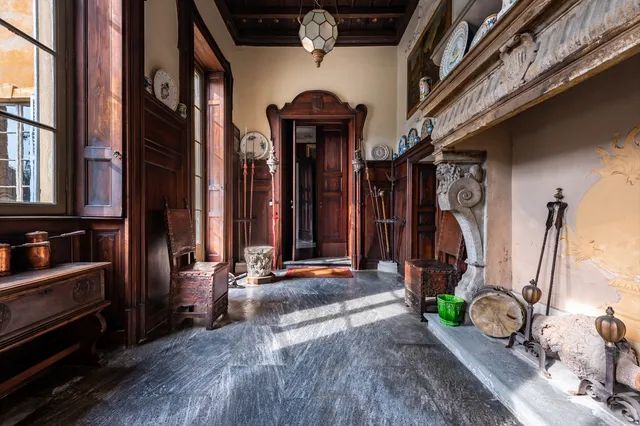
What is the effect of this type of organization on man? It reduces man to an appendage of the machine, ruled by its very rhythm and demands. It transforms him into homo consumnes, the total consumer, whose only aim is to have more and to use more. This society produces many useless things, and to the same degree many useless people. Man, as a cog in the production machine, becomes a thing, and ceases to be human. He spends his time doing things in which he is not interested, with people in whom he is not interested, producing things in which he is not interested; and when he is not producing, he is consuming. He is the eternal suckling with the open mouth, “taking in,” without effort and without inner activeness, whatever the boredom-preventing (and boredom-producing) industry forces on him—cigarettes, liquor, movies, television, social media, sport, mobile phones, lectures—limited only by what he can afford. However, the boredom-preventing industry, that is to say, the gadget-selling industry, the automobile industry, the movie industry, the television industry, and so on, can only succeed in preventing the boredom from becoming conscious. In fact, they increase the boredom, as a salty drink taken to quench the thirst increases it. However unconscious, boredom remains boredom nevertheless. The passiveness of man in industrial society today is one of his most characteristics and pathological features. He takes in, he wants to be fed, but he does not move, initiate, he does not digest his food, as it were. He does not reacquire in a productive fashion what he inherited, but he amasses it or consumes it. He suffers from a severe systemic deficiency, not too dissimilar to that which one fines in more extreme forms in depressed people. #RandolphHarris 7 of 20
Man’s passiveness is only one symptom among a total syndrome, which one may call the “syndrome of alienation.” Being passive, he does not relate himself to the World actively and is forced to submit to his idols and their demands. Hence, he feels powerless, lonely, and anxious. He has little sense of integrity or self-identity. Conformity sees to be the only way to avoid intolerable anxiety—and even conformity does not always alleviate his anxiety. In all the received formulations of economic theory, whether at the hands of the English economists or those of the continent, the human material with which the inquiry is concerned is conceived in hedonistic terms; that is to say, in terms of a passive and substantially inert and immutably given human nature…The hedonistic conception of man is that of a lightning calculator or pleasures and pains, who oscillates like a homogenous globule of desire of happiness under the impulse of stimuli that shift him about the area, but leave him intact. He has neither antecedent nor consequent. He is an isolated, definitive human datum, in stable equilibrium except for the buffets of the impinging forces that displace him in one direction or another. Self-imposed in elemental space, he spins symmetrically about his own spiritual axis until the parallelogram of forces bears down upon him, whereupon he follows the line of the resultant. When the force of the impact is spent, he comes to rest, a self-contained globule of desire as before. Spiritually, the hedonistic man is not a prime mover. He is not the seat of a process of living, except in the sense that he is subject to a series of permutations enforced upon him by circumstances external and alien to him. #RandolphHarris 8 of 20
Aside from the pathological traits that are rooted in passiveness, there are others which are important for the understanding of today’s pathology of normalcy. The growing split of cerebral-intellectual function from affective-emotional experience; the split between thought from feeling, mind from the heart, truth from passion. If it is merely logical and not guided by the concern for life, and by the inquiry into the total process of living in all its concreteness and with all its contradictions, logical thought is not rational. On the other hand, not only thinking but also emotions can be rational. The heart has its reasons which reason knows nothing of. Rationality in emotional life means that the emotions affirm and help the person’s psychic structure to maintain a harmonious balance and at the same time to assist its growth. Thus, for instance, irrational love is love which enhances the person’s dependency, hence anxiety and hostility. Rational love is a love which relates a person intimately to another, at the same time preserving his independence and integrity. Reason flows from the blending of rational thought and feeling. If the two functions are torn apart, thinking deteriorates into schizoid intellectual activity, and feeling deteriorates into neurotic life-damaging passions. The split between thought and affect leads to a sickness, to a low-grade chronic schizophrenia, from which the new men of the technetronic age begins to suffer. In the social sciences it has become fashionable to think about human problems with no reference to the feelings related to these problems. It is assumed that scientific objectivity demands that thoughts and theories concerning man be emptied of all emotional concerns with man. #RandolphHarris 9 of 20

An example of this emotion-free thinking is Herman Khan’s book on thermonuclear warfare. The question is discussed: how many millions of dead Americas are “acceptable” if we use as a criterion the ability to rebuild the economic machines after nuclear war in a reasonably short time so that it is as good as or better than before. Figures for GNP and population increase of decrease are the basic categories in this kind of thinking, while the question of the human results of nuclear war in terms of suffering, pain, brutalization, etcetera, is left aside. Kahn’s The Year 2000 is another example of the writing which we may expect in the completely alienated megamachine society. Kahan’s concern is that of the figures for production, population increase, and various scenarios for war or peace, as the case may be. He impresses many readers because they mistake the thousands of little data which he combines in ever-changing kaleidoscopic pictures for erudition or profundity. They do not notice the basic superficiality in his reasoning and the lack of the human dimension in his description of the future. When I speak here of low-grade chronic schizophrenia, a brief explanation seems to be needed. Schizophrenia, like any other psychotic state, must be defined not only in psychiatric terms but also in social terms. Schizophrenic experience beyond a certain threshold would be considered a sickness in any society, since those suffering from it would be unable to function under any social circumstances (unless the schizophrenic is elevated into the status of a god, shaman, saint, priest, etcetera). #RandolphHarris 10 of 20

However, there are low-grade chronic forms of psychoses which can be shared by millions of people and which—precisely because they do not go beyond a certain threshold—do not prevent these people from functioning socially. As long as they share their sickness with millions of others, they have the satisfactory feeling of not being alone; in other words, they avoid that sense of complete isolation which is so characteristic of full-fledged psychosis. On the contrary, they look at themselves as normal and at those who have not lost the link between heart and mind as being “crazy.” In all low-grade forms of psychoses, the definition of sickness depends on the question as to whether the pathology is shared or not. Just as there is low-grade chronic schizophrenia, so there exist also low-grade chronic paranoia and depression. And there is plenty of evidence that among certain strata of the population, particularly on occasions where a war threatens, the paranoid elements increase but are not felt as pathological as long as they are common. The difference between that which is considered to be sickness ad that which is considered to be normal becomes apparent in the following example. If a man declared that in order to free our cities from air pollution, factories, automobiles, airplanes, etcetera, would have to be destroyed, nobody would doubt that he was insane. However, if there is a consensus that in order to protect our life, our freedom, our culture, or that of other nations which we feel obliged to protect, thermonuclear war might be required as a last resort, such opinions appear to be perfectly sane. #RandolphHarris 11 of 20
The difference is not at all in the kind of thinking employed but merely in that the first idea is not shared and hence appears abnormal while the second is shared by millions of people by powerful governments and hence appears to be normal. If not insoluble, all those points of metaphysical doctrine and religious history like the problem of evil and the biography of avatars are doubtful, whereas all the points of moral attitude and personal conduct like honesty, justice, goodness, and self-control are both indisputable and essential. Here we walk on trustworthy ground. Why not then leave others to quarrel fiercely about the first and let us abide peacefully in the second. The aspirant must remember always that his immediate duty lies in self-preparation, self-discipline, and self-improvement. The building of fine character on the quest is quite as important as the efforts of aspiration and mediation, even more so, for the former will lead to the dissolving of egoism, and without this the latter are of little avail. If you accept the existence of a power behind the Universe which controls its life, which is perfect, and which is brining all things and all beings—however slowly—closer to its own perfection, you must also accept the values of hope, improvement, and evolution while you must reject those of pessimism, deterioration, and nihilism. You will never feel sorry for yourself. #RandolphHarris 12 of 20
If the moral fruits of the Spirit are absent or the evil qualities of the ego are present, all talk of having attained inward enlightenment is quite illusory. Dr. Freud assumes that the main driving force, sexual energy, itself undergoes an evolution which occurs from birth to puberty in the life of each individual. The libido goes through certain stages: first it is centered around the sucking and biting activities of the infant, then around the process of anal and urethral elimination, eventually around the genital apparatus. The libido is the same and yet not the same in the history of each individual; its potential is the same, but its manifestations change in the process of individual evolution. Dr. Freud sees primitive man as one who gives full satisfaction to all his instincts, and also to those perverse instincts which are part of primitive sexuality. However, this primitive man, fully satisfied instinctually, is not a creator of culture and civilization. Yet man, for reasons which Dr. Freud fails to elucidate, begins to create civilization. This very creation of his forces him to forego the immediate and complete satisfaction of his instincts; the frustrated instinct is turned into nonsexual mental and psychic energy, which is the building stone for civilization. (Dr. Freud called this transformation from sexual to nonsexual energy “sublimation,” using an analogy from chemistry.) The more civilization grows, the more man sublimates, but the more he also frustrates his original libidinous impulses. #RandolphHarris 13 of 20
Man becomes wiser and more cultured, but he is also in some sense less happy than primitive man was and increasingly more prone to neuroses, which are the result of too much instinctual frustration. Thus, man becomes discontented with the very civilization he creates. If seen from the standpoint of the products of civilization, while historical development is a positive phenomenon, it is also a development which implies increasing discontent and increasing possibilities for neurosis. In self-analysis understanding and interpreting are a single process. The expert, as a result of his experience, will catch the possible meaning and significance of observations more quickly than will a person working alone, just as a good auto science engineer will know more quickly what is wrong with a car. As a rule, his understanding will also be more complete, for it will grasp more implications and will more readily recognize interrelations which factors already tackled. Here the patient’s psychological knowledge will be of some help, though it certainly cannot substitute for the experience gained by working day in and day out at psychological problems. It is unquestionably possible for him, however, to grasp the meaning of his own observations. To be sure, he will probably proceed more solely and less accurately, but it should be remembered that also in professional analysis the tempo of the process is mainly determined not by the analyst’s capacity to understand but by the patient’s capacity to accept the insights. #RandolphHarris 14 of 20
Here it is well to remember a word of consolation that Dr. Freud has given to young analysts starting their work with patients. They should not be too much concerned, he pointed out, with their capacity to evaluate associations. The real difficulty in analysis is not that of intellectual understanding but that of dealing with the patient’s resistances. I believe that this holds true for self-analysis as well. Can a person overcome his own resistances? This is the real question upon the answer to which hinges the feasibility of self-analysis. Nevertheless, the comparison with pulling oneself up by one’s bootstraps—which is bound to occur—seems unwarranted, because the fact remains that there is one part of the self which wants to go ahead. Whether the job can be done depends, of course, on the intensity of the resistances as well as on the strength of the incentive to overcome them. However, the important question is to what extent it can be done rather than whether it can be done at all. There remains the fact that the analyst is not merely an interpreting voice. He is a human being, and the human relationship between him and the patient is an important factor in the therapeutic process. Two aspects of this relationship were pointed out, the first being that it presents a unique and specific opportunity for the patient to study, by observing his behaviour with the analyst, what his typical behaviour is toward other people in general. If he learns to watch himself in his customary relationships, this advantage can b fully replaced. #RandolphHarris 15 of 20
The expectations, wishes, fears, vulnerabilities, and inhibitions that he displays in his work with the analyst are not essentially different from those he displays in his relations with friends, lover, wife, children, employer, colleagues, or servants. If he is seriously intent upon recognizing the ways in which his peculiarities enter into all these relationships, ample opportunities for self-scrutiny are provided by the mere fact that he is a social being. However, whether he will make full use of these sources of information is, of course, another question. When he attempts to estimate his own share in the tensions between himself and other, a task much more arduous than that in the analytical situation, where the analyst’s personal equation is negligible, and it is therefore easier for him to see the difficulties that he himself produces, there is no doubt that he faces an arduous task. Even if he has the most sincere intentions to observe himself objectively, in ordinary relationships, where the others are replete with peculiarities of their own, he many tend to make them responsible for the difficulties or frictions that arise, and to regard himself as an innocent victim or, at best, as showing merely a justified reaction to their unreasonableness. In the latter case he will not necessarily be so unsubtle as to indulge in overt accusations; he may admit in an apparently rational manner that he has been irritable, sulky, unfaithful, even unjust, but secretly regard such attitudes as justified and adequate responses to the offenses given by others. #RandolphHarris 16 of 20
The more intolerable it is for him to face his own frailties—and also the more acute the disturbing factors that are introduced by the others—the greater is the danger that he will thus deprive himself of the benefit he could derive from recognizing this own share. And if he tends to exaggerate in the opposite direction by whitewashing the others and blackening himself, the danger is of exactly the same nature. It has been remarked that to the degree that all psychotherapy partakes of the beneficial effects of certain common processes the therapeutic functioning of social worker, psychologist, and psychiatrist would manifest these communalities. There are certain shared orientations and attitudes, stemming from common emphases in their respective training, that probably augment the comparability of the therapeutic approaches of these three workers. In essence, this mutuality of implicit response tendencies toward the psychotherapy patient arises from the fact that the theory of neurosis and the theory of therapy is dominated by the massive and ubiquitous doctrine of psychoanalysis. With negligible exceptions, to the extent that the psychiatrist and the social worker are taught anything vaguely psychological (of and about the mind, behaviour, motives and emotions) they are taught Freudian psychology. #RandolphHarris 17 of 20
The labels of their formal courses in “Human Development,” “Personality and Adjustment,” and “Psychopathology” do not directly belie the pervasive psychoanalytic orientation but the doctrine of the content is unmistakable. In some instances, schools of social work import carefully selected psychiatrists to assure that the theoretical indoctrination of their students will be orthodox, in tine with the general climate of psychiatry, and will afford them the “right language” for their ultimate professional collaboration. When people perpetually play the victim, this type of mental manipulation is extremely damaging. When the person who has to play the victim is in your life in any capacity, you will find yourself being the villain more than once. No one lies to be the villain—especially when you really are not being one. When confronted with a professional victim, it is important that you let them know you refuse to play the villain in their little mind games. Shut them down quickly and efficiently. Other ways of playing the victim are to get your sympathy so you will do something for them. Be wary of this ploy. It happens a lot at work. The victim wants others to do their work and have one sob story after another as to why they need help. Do not fall for it more than once. If they have that much bad luck, there is more wrong with them than what you can fix anyway. If you were in a group of people and one of them began to poke fun at someone in your group, would you be laughing? Would you join in and poke some fun at the victim too? Or would you stand up to the humorous bully? And why or why not? #RandolphHarris 18 of 20

Someone has to deal with fire. When people first banded together in small societies, they realized that if fire were not dealt with, it would consume everything in its path. In our highly developed, technical society, the same confrontation with fire exists, as it has for thousands of years. When a fire occurs, someone has to deal with it. Here in Sacramento, those men and women whose responsibility it is to deal with fire are those seemingly easygoing folks down at the local firehose. When the alarm comes in at three in the morning on a cold winter night for a fire rushing through a tenement building in a less affluent section of Sacramento…or at one in the afternoon for a young child who has fallen into an abandoned water well…or at seven in the evening for a barn fire that is miles away from any kind of water supply…there is the Sacramento Fire Department who puts on their rubber boots and their specially treated fire coast and their fire helmets to respond to the call of others in need of help. The truck firefighters’ responsibility is to rescue trapped victims, to force entry, and to ventilate so that the heat and smoke have a way to escape the building. Or they may belong to the rescue squad, whose responsibility is to deal with all the special emergencies, such as building collapses, hazardous material situations, explosions, extrications from vehicles, trains, or planes, landslides, snowslides, and cave-ins. It does not matter what group the firefighter is attached to. It matters only that he or she is out there in all weather and emergency conditions to give service to fellow human beings, animals, and property. Somebody has to do the job. #RandolphHarris 19 of 20
The Sacramento Fire Department protects us from the ravages of fire and other emergencies, or die trying. They understand the dangers surrounding them, yet respond to each new alarm with newfound enthusiasm for the action ahead. These men and women like what they do, and they live themselves because of what they do. They are pleased that they have been given the opportunity and the calling to help others in a way that is at once meaningful and exciting. Like other Americans, the Sacramento Fire Department cares about their homes, their families, their churches and organizations, yet they are the ones who answer the alarm at three in the morning, not knowing what awaits them. They are trained to meet any emergency, perhaps to give a fast wink to death and a pat on the back to danger. Being the capitol city of California, with the invasion and national security threats at our southern boarder, from other nations and with the State of California being nearly $70 billion in debt, and the City of Sacramento being $60 million up to $122 million in debt, it is extremely important to make sure the Sacramento Fire Department is properly funded so we do not face another 9/11 attack. Please honor the service of the Sacramento Fire Department and make a donation to ensure they have all of the resources they need to protect the community. Also, the Sacramento Fire Department supports Assemblymember Kevin McCarty in Sacramento’s Mayoral race. Casting your vote for Mr. McCarty will also be a way to support the Sacramento Fire Department. The firefighters are very special because they represent a group of people who die in the line of duty more often, proportionality, than others in any other occupation, including police, construction workers, and miners. I pledge allegiance to the flag of the United States of America, and to the Republic, for which it stands, one nation, under God, indivisible, with liberty and justice for all. #RandolphHarris 20 of 20
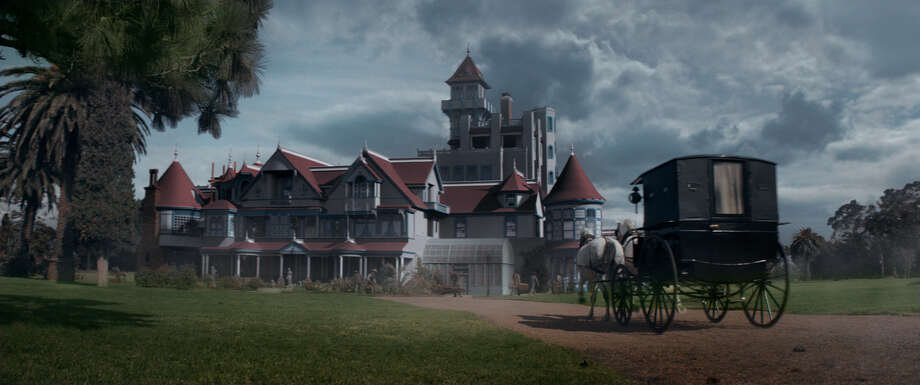
The question of the reality of witchcraft is one upon which it is not easy to pass a confident judgment. The possibility of such carnal intercourse between human beings and demons was an abstract possibility in the first thirteen hundred years of the Christian era. It is believed to be a fact that people made pacts with the devil and of a diabolical interference in human affairs can hardly be denied. Sarah L. Winchester believed that one should not be too easily inclined to believe a person to be possessed by the devil, but that signs should be watched. Signs of a possessing devil are: the ability to speak many words of an unknown language or to understand them; the ability to reveal distant or hidden things; a manifestation of strength beyond one’s age or natural condition. The history of Witchcraft, a subject as old as the World and as wise as the World—since I understand for the present purpose by Witchcraft, Sorcery, Black Magic, Necromancy, secret Divination, Satanism, and every kind of malign occult art—at once confronts the audience with a most difficult problem. Magic, the genesis of magical cults and ceremonies, the ritual of primitive peoples, traditional superstitions, and their ancillary lore, have been made the subject of vast and erudite studies, mostly from an anthropological and folk-loristic point of view, but the darker side of the subject, the history of Satanism seems hardly to have been attempted.

Possibly one reason for this neglect and ignorance lies in the fact that the heavy and crass materialism, which was so prominent a feature during the greater part of the eighteenth and nineteenth centuries in England, intellectually disavowed the supernatural, and attempted not without some success to substitute for religion a stolid system of respectable morality. Since Witchcraft was entirely exploded it would, at best, possess merely an antiquarian interest, and even so, the exhumation of a disgusting and contemptible superstition was not to be encouraged. It were more seemly to forget the uglier side of the past. This was the attitude which prevailed for more than two hundred years. The cycle of time has had its revenge, and this rationalistic superstition is dying fast. The extraordinary vogue of and immense adherence to Spiritism would alone prove that, whilst the widespread interest that is taken in mysticism is a yet healthier sign that the World ill no longer be content to be fed on dry husks and the chaff of straw. And these are only just two indications, and by no means the most significant, out of many. However, a sorcerer is one who by commerce with the Devil has a full intention of attaining his own end. There are said to be many occult symbols hidden in The Winchester Mystery House.

Come and enjoy a delicious meal in Sarah’s Café, stroll along the paths of the beautiful Victorian gardens, and wonder through the miles of hallways in the World’s most mysterious mansion. For further information about tours, including group tours, weddings, school events, birthday party packages, facility rentals, and special events please visit the website: https://winchestermysteryhouse.com/
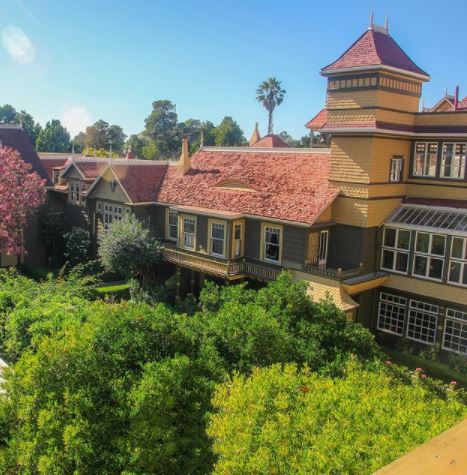
Please visit the online giftshop, and purchase a gift for friends and relatives as well as a special memento of The Winchester Mystery House. A variety of souvenirs and gifts are available to purchase. https://shopwinchestermysteryhouse.com/

Much Was Forbidden Knowledge
It was a grim winter’s night and rain pelted the windows. Horses clacked slowly along the cobblestone roads. There was a perpetual teasing wind from below like departing spirits of the dead. I had dinner in the Venetian Dinning Room in front of the fireplace. The windows suddenly lit up, and a few instants later there was a crash of thunder from outside. A sword that had previously hung on the wall, clearly was suspended in the middle of the room with its point towards me. About a minute later, it fell to the ground with a loud noise. The great candles in the hall were burning down to their sockets. One by one they spluttered out. A ghostly, flickering light fell upon the floor. As I pressed forward, I became conscious that my way was haunted by invisible existences whom I could not definitely figure to my mind. From among the walls on either side, I caught broken and incoherent whispers in a strange tongue which I partly understood. It was now nightfall, yet the interminable labyrinth was lit with a wan glimmer having no point of diffusion, for in its mysterious lamination nothing cast a shadow. A shallow pool in a depression on the floor, as from mop water, met my eye with a crimson gleam. I stopped and plunged my hand into it. It stained my fingers; it was blood! Blood, I then observed, was about me everywhere. It was spattered everywhere. Defiling the furniture, and blood dripped like dew from the ceiling. All this I observed with a terror which seemed not incompatible with the fulfillment of a natural expectation. #RandolphHarris 1 of 8
To the menaces and mysteries of my home my surrounding consciousness was an added horror. So frightful was the situation—the mysterious light burned with so silent and awful a menace that my home took on a melancholy or baleful character, so openly my sight conspired against my peace; from overhead and all about came so audible and startling whispers and the sighs of creatures so obviously not of Earth—that I could endure it no longer. On approaching the Morning Room, I noticed that a light was on and the door open, although I distinctly remembered having left it shut. I walked into the room pushed aside the heavy draperies at the entrance to the room itself, and stopped in amazement. In the middle of the room, a single lamp plainly revealed a stranger behind the large chair; the man wore a tall black hat and a dark billowing velvet coat. In the light from the hearth his probing eyes glowed red. He possessed a face so cadaverous and death-mask-like, that it set me screaming! I could not detect even the faintest whiff of a soul. Lightning flashed again, and I learned forward to hear his words over the loud thunder. His voice broken, it seemed, into an infinite multitude of unfamiliar sounds, went babbling and stammering away into the distant reaches of the mansion, died into silence, and all was before. Standing under one of the gaslights in the mansion, he said: “I will not submit unheard. There may be powers that are not malignant traveling through this accursed spiritual fortress. I shall leave them record and an appeal. I shall relate my wrong, the persecutions that I endure—I, a helpless mortal.” #RandolphHarris 2 of 8
The man then walked off toward the dark room at the other end of the hall. Then I realized my visitor had dissolved into thin air. There was no one in the dark room. The door was securely locked. The skylight, 150 feet above ground, could not very well have served as an escape route to anyone human. I thought more about the mysterious forces…“How can this be happening to me! I deserve better for God’s sake! I am innocent for God’s sake! Dear God help me to restore all that I have lost. Make us happy again, make us ourselves again, raise my daughter and husband from the dead, snatched by supreme ghouls from the crypts, and return them to our home and make the name of Winchester a name of pride.” The thought of being lost in utter darkness without my loved ones amidst this mysterious labyrinth World of nightmares. A further flash of thunder seemed to split the Heavens wide open. From the open space in the narrow corridor, a glow was coming from the door on my right. In a moment I had reached it and was standing in the secret library, trembling with relief, and watching the sputterings of the lamp which had brought me to safety. Then I noticed a small door at the father end of the room, and clamed myself enough to approach it and examine the crude-sign chiseled above. It was only a symbol, but it filled me with vague spiritual dread. Outside, the night sky was riven yet again by a dart of lighting. The large roof windows of the attic shook in their frames as the gale beat at them. I took a deep breath and raised my lamp higher. A wave of nameless fright rolled out to meet me, but I yielded to no whim and deferred to no intuition. There was nothing alive here to harm me. #RandolphHarris 3 of 8
Although the room had no furniture save a table, and a single chair, I deciphered a huge pentagram in the center of the floor, with a plain circle about three feet wide half way between this and each corner. In one of these four circles, near where a black robe had been flung carelessly thrown on the floor. Connecting stairs and a secret rest room had long been walked up in the many structural changes in the mansion. Only the window of the walled-up room was still visible from the outside. It was in this area that I felt that restless spirits were trapped. Walled in like demons sleeping through the day and close to the premises for roaming through the night. I allowed myself to rest for half an hour, listening to the thunder roar and thump in the Heavens above. The flickering light of the lamps made the room seem almost as if it were malevolently alive. Another thunderbolt crashed across the Heavens, and I screamed of fear. As the echoes of my scream died away, I leaned forward in my chair, watching the shadows floating in front of my eyes. There was no need to tell all the dismal and horrid thoughts that flitted through my head as I ran. When I made it to the Observational Tower, I clambered to the top as quick as I could to take breath and look out upon my estate if by chance I would see anything. However, a moment’s rest I must have. I had run a mile through my home at least. Nothing whatever was visible ahead of me, and I was just turning to go down to the main part of the house, when I heard what I can only call a laugh: and if you can understand what I mean by a breathless, a lungless laugh, you have it; but I do not suppose that you can. #RandolphHarris 4 of 8
It came from below, and swerved through the halls. That was enough. I walked down the stairs. There was a carpenter at the bottom. You do not need to be told that he was dead. His tracks showed that he had run along the hallway, had turned sharp round the zig zag stairs, and, small doubt of it, must have dashed straight into the wall, and his teeth and jaws were broken to bits. I only glanced over his face. At the same moment, suddenly I felt another presence in the room, and I could not breathe anymore. Zip started to bark and insist that I follow him out of the room. I distinctly felt someone there. I went straight up to my room. I had my bath, and went and lay down on my bed, and slept for about ten minutes. It was as quiet, as quiet as only a country house can be. Soon I was in a deep trance on the other side. I saw things and people the ordinary eye could not perceive. I was walking around. There was a man lying dead in the middle of the room. Small nose, not too much hair in front. There was a plant near him. He came here to die. He was here to find a place to rest. He usually stays in the Crystal Bedroom. With the fern. By the bed. I broke out of trance and had facial stiffness, as well as pain in the shoulder. The curtains of my bed were violently agitated, accompanied with a loud and almost indescribable motion of rings. However, the curtain, four in number, to prevent their motion, were tied up, each in one large knot. Every curtain in the bed was agitated, and the knots thrown and whirled about with such rapidity that it would have been unpleasant to be within the sphere of their action. This lasted about two minutes, as if it were a wild beast seeking freedom. I also heard footsteps walking by me and around me, and was, also, conscious of candles burning near me, but could see nothing. #RandolphHarris 5 of 8
A low, wild pal of laughter broke out at a measureless distance away; I paused a moment, and rappings started; I suddenly opened the door, with a candle in my hand, yet I swear I could see nothing. I have been in one of the rooms which has a large modern wind, when, from the noises, knockings, blows on the bed, and rattling of the curtains, I really did begin to think the whole chamber was falling in. And growing ever louder, the laugher seemed approaching ever nearer; a soulless, heartless, and unjoyous laughter, like that of the loon; a laugh which culminated in an unearthly shout close at hand, then died away by slow gradations, as if the accursed being that uttered it had withdrawn over the verge of the World whence it had come. However, I felt that this was not so. A strange sensation began slowly to take possession of my body and my mind. I could not have said which, if any, of my sense was affected; I felt it rather as a conscious—a mysterious mental assurance of some overpowering presence—some supernatural malevolence different in kind from the invisible existences that swarmed about me, and superior to them in power. I knew that it had uttered that hideous laugh. And now it seemed to be approaching me; from what direction I did not know—dared not conjecture. All my former fears were forgotten or merged in the gigantic terror that now held me in thrall. Powerless to cry out, I found myself staring into the sharply draw white face and blank, dead eyes of a phantom. #RandolphHarris 6 of 8
The darkness filled me. Whatever my thoughts had been, they so possessed me that I observed not the lapse of time. I came to my senses an unknown time later to find myself in a brightly lit room with a pleasant fragrance. Someone was wiping my forehead with a damp cloth. For a few minutes, I simply enjoyed the sensation, not thinking about the terror I had experienced, but the memories flooded back. Confused thoughts and troubled emotions ran through my mind. “Wh-Where am I?” “Mrs. Winchester, you’re in the new east wing of your home.” Now I recognized the voice. “Uta!” I said. “But how did I…?” “I found you,” said Uta. “I hadn’t seen you for days, and was worried about you, so the day after the great storm I scoured the mansion looking for you. You were lying in a mass of blood and broken glass and rainwater. I…” Uta paused momentarily, clearly still upset from the experience—“I thought you were dead.” A little later I felt a warm spoon against my lips and instinctively opened my mouth to let a little of the soup dibble in. Under Uta’s care, I slowly regained my health, but it was another ten days before I was well enough to make my way around the garden. When I reached the Daisy Bedroom, I paused for a moment and looked around. From here there was no sign that anything at all unusual had taken place thirteen nights ago. #RandolphHarris 7 of 8
I began to climb the stairs, feeling in my pocket for the key. At the door to no-to-nowhere, I forced myself to calm down, taking several deep, measured breaths before putting the key in the lock. Suddenly there was a terrible, godless wail from the pits whose inhuman cadences rose, and feel rhythmically in the distance through the darkness. “What on Earth was that?” I exclaimed. Then a huge hand grabbed me. The door swung open with a creak, and I saw a ghost standing there. A woman appeared, she had long blonde hair, was wearing a long white night dress, was frail and ethereal, old age had rendered her thin and somehow tired. And yet, her eyes had an unusual bright sparkle in them that belied her frail and aged appearance. She walked very softly through the threshold of the door and sat down inside. She put her hand on her forehead and said, “Will you please help me? A looter has taken my tombstone, and now my soul is unable to find rest.” The bewildering character of the swirling flood of spirits caused confused thoughts and troubled emotions to run through my mind. I sighed and relaxed slightly. I turned around to reach for a lamp. My back was not turned for more than a second. However, when I looked up at my mysterious visitor, the lady was gone. I quickly walked down the hallway, everything was suffused with a soft, red glow in which I then saw my own shadow projected before me. Ceaseless buffetings of a most tempestuous wind made me feel weary. #RandolphHarris 8 of 8
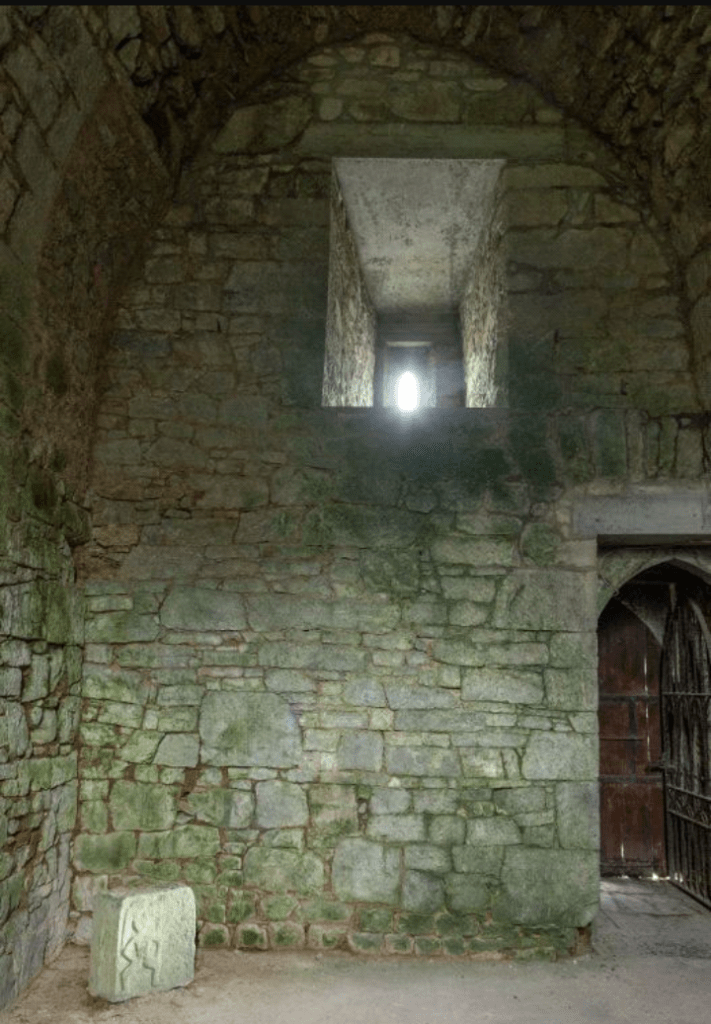
If you live in New Haven Connecticut, you are well aware of the hell and brimstone variety preaching, and are bound to hear about the devil now and again. To some people, the devil is real, and they will give you an argument filled with fervour and Bible quotations to prove that he exists. Mrs. Winchester had a beautiful face like a mask. A porcelain-cosmetic mask. Mrs. Winchester was not one of those who were impressed by demonic outbursts, however, and she could not care less whether there was a devil or not. She had grown up in a well-to-do family and spent her adult years in the World of business. At age nineteen, she met and married Mr. William Wirt Winchester, and they had a short, but happy life together. There was one child, and at first, no problems, and no difficulties whatever. She was always active in her husband’s manufacturing business. After she gave birth to her first child, Annie Winchester, Mr. Winchester decided to slow down, it was just as well that she started to enjoy life a little more fully, until tragedy struck.
Back in her early years, Mrs. Winchester had what are now called ESP (extra sensory perception) experiences. When she talked to a person, she would frequently know what that person would answer before the words were actually spoken. It scared the young girl, but she refused to think about it. Her parents’ home was a thirty-room mansion in a good section of New Haven. It was just a pleasant house without any history whatever of either violence or unhappiness. And yet, frequently she would hear strange rappings at night, raps that did not come from the pipes or other natural sources. Whenever she heard those noises, she would simply turn to the wall and pretend she did not hear them, but in her heart, she knew they were there. Then one-night, young Sarah was awakened from a deep sleep by the feeling of a presence in her room. She sat up in bed and looked out. There, right in front of her bed, was the kneeling figure of a man with extremely dark eyes and a pale face. She thought that he was from another time or place. After rubbing her eyes, Sarah looked again, but the apparition was gone.
Before long, Sarah had accepted the phenomenon as simply a dream, but again she knew this was not so, and she was merely accommodating her sense of logic. However, what had the stranger been? Surely, the house was not haunted. Besides, she did not believe in ghosts. Young Sarah had no idea that this was the beginning of the accursed invasion from beyond. Six weeks later, she had another supernormal experience. Again alone in her parents home, with all the doors locked, she saw a strange man. Quickly she reached for a candle to examine her visitor, but he had vanished. From the day on, Mrs. Winchester heard strange noises, frequent banging about the mansion, and uncanny feelings and chills in certain areas of the hose. On one occasion, Mrs. Winchester clearly heard someone coming up the stairs leading up to the attic. She went to see who it was, but no one came. The steps were those of an unseen man! Mrs. Winchester had no idea who the ghost could be. She was reluctant to discuss her experiences with other people let they think her mad, yet she was healthy and realistic and was quite sure of her memories.
As many know, after the death of her new born daughter and husband, Mrs. Winchester moved to Santa Clara Valley and spent nearly 40 years, of non-stop construction, building one of the most beautiful and complex mansions in the World. It is possible that some ghost followed her, and others manifested because she was born with extra sensory perception (ESP). After her death, two serious young men went to stay in the house to see if what they were saying about the Winchester Mansion was true. They had sleeping bags and stayed up in one of the attics. It was a chilly December night in 1931, and everything seemed just right for ghost. Would they be lucky in their quest? They did not have to wait long to find out. “As soon as we entered the room, we heard strange noises on the roof They were indistinct and could have been animals, I thought at first. We went off to sleep until my partner woke me up hurriedly around three in the morning. I distinctly heard human footstep on the roof. They slid down the side to a lower level and then to the ground where they could be heard walking in leaves and into the night. Nothing could be seen from the window and there was nobody up on the roof. We were the only ones in the house that night, so it surely must have been ghosts.” After a while, a gruff man’s voice was heard: “Get out…get out of my house.” There were additional requests for the two men to get out of his house. And finally, they left. Evidently the ghosts did not approve the sale of the house by Mrs. Winchester’s executors, but wanted it to stay in her family. Perhaps that is why it remains unoccupied by humans.
Come and enjoy a delicious meal in Sarah’s Café, stroll along the paths of the beautiful Victorian gardens, and wonder through the miles of hallways in the World’s most mysterious mansion. For further information about tours, including group tours, weddings, school events, birthday party packages, facility rentals, and special events please visit the website: https://winchestermysteryhouse.com/
Please visit the online giftshop, and purchase a gift for friends and relatives as well as a special memento of The Winchester Mystery House. A variety of souvenirs and gifts are available to purchase. https://shopwinchestermysteryhouse.com/

I Could Use Some Peace and Quiet in My Life

It is only through free, independent, truth-seeking research that there is any hope of success in this Quest for ultimate truth. Naturally, each vested interest tries to limit the search to its own fold for obvious reasons, but he should refuse to limit his studies to any single school. By remaining open to truths from different sources, and fitting them together like mosaics, we get eventually some sort of a pattern. The technetronic society may be the system of the future, but it is not yet here; it can develop from what is already here, and it probably will, unless a sufficient number of people see the danger and redirect our course. In order to do so, it is necessary to understand in greater detail the operation of the present technological system and the effect it has on man. What are the guiding principles of this system as it is today? It is programed by two principles that direct the efforts and thoughts of everyone working in it: Th first principle is the maxim that something ought to bedone because it is technically possible to do it. If it is possible to build nuclear weapons, they must be built even if they might destroy us all. If it is possible to travel to another galaxy, it must be done, even if at the expense of many unfulfilled needs here on Earth. This principle means the negation of all values which the humanist tradition has developed. This tradition said that something should be done because it is needed for man, for his growth, joy and reason, because it is beautiful, good, or true. #RandolphHarris 1 of 18
Once the principle is accepted that something ought to be done because it is technically possible to do it, all other values are dethroned, and technological development becomes the foundation of ethics. The, feasibility, which is a strategic concept, becomes elevated into a normative concept, with the result that whatever technological reality indicates we can do is taken as implying we must do it. The second principle is that of maximal efficiency leads as a consequence to the requirement of minimal individuality. If individuals are cut down to purely quantifiable units whose personalities can be expressed on punched cards, the social machine works more efficiently, so it is believed. These units can be administered more easily by bureaucratic rules because they do not make trouble or creation friction. In order to reach this result, men must be de-individualized and taught to find their identity in the corporation rather than in themselves. The question of economic efficiency requires careful thought. The issue of being economically efficient, that is to say, using the smallest possible amount of resources to obtain maximal effect, should be placed in a historical and evolutionary context. The question is obviously more important in a society where real material scarcity is the prime fact of life, and its importance diminishes as the productive powers of a society advance. An ideal helps to hold a man back from his weakness, a standard gives him indirectly a kind of support as well as, directly, guidance. #RandolphHarris 2 of 18
A second line of investigation should be a full consideration of the fact that efficiency is only a known element in already existing activities. Since we do not know much about the efficiency or inefficiency of untired approaches, one must be careful in pleading for things as they are on the grounds of efficiency. Furthermore, one must be very careful to think through and specify the area and time period being examined. If the time and scope of the discussion are broadened, what may appear efficient by a narrow definition can be highly inefficient. In economics there is increasing awareness of what are called “neighbourhood effects”; that is, effects that go beyond the immediate activity and are often neglected in considering benefits and costs. One example would be evaluating the efficiency of a particular industrial project only in terms of the immediate effects on this enterprise—forgetting, for instance, that waste materials deposited in nearby streams and the air represent a costly and a serious inefficiency with regard to the community. We need to clearly develop standards of efficiency that take account of time and society’s interest as a whole. Eventually, the human element needs to be taken into account as a basic factor in the system whose efficiency we ty to examine. #RandolphHarris 3 of 18

Dehumanization in the name of efficiency is an all-too-common occurrence; exempli gratia, giant telephone systems employing Brave New World techniques of recording operators’ contacts with customers and asking customers to evaluate workers’ performance and attitudes, etcetera—all aimed at instilling “proper” employee attitude, standardizing services, and increasing efficiency. From the narrow perspective of immediate company purposes, this may yield docile, manageable workers, and thus enhance company efficiency. In terms of the employees, as human beings, the effect is to engender feelings of inadequacy, anxiety, and frustration, which may lead to either indifference or hostility. In broader terms, even efficiency may not be served, since the company and society at large doubtless pay a heavy price for these practices. Another general practice in organizing work is to constantly remove elements of creativity (involving an element of risk or uncertainty) and group work by dividing and subdividing tasks to the point where no judgment or interpersonal contact remains or is required. Workers and technicians are by no means insensitive to this process. Their frustration is often perceptive and articulate, and comments such as “We are human” and “The work is not fit for human beings” are not uncommon. Again, efficiency in a narrow sense can be demoralizing and costly in any individual and social terms. #RandolphHarris 4 of 18
If we are only concerned with input-output figures, a system may give the impression of efficiency. If we take into account what the given methods do to the human being in the system, we may discover that they are bored, anxious, depressed, tense, etcetera. The result would be a twofold one: (1) Their imagination would be hobbled by their psychic pathology, they would be uncreative, their thinking would be routinized and bureaucratic, and hence they would not come up with new ideas and solutions which would contribute to a more productive development of the system; altogether, their energy would be considerably lowered. (2) They would suffer from many physical ills, which are the result of stress and tension; this loss in health is also a loss for the system. Furthermore, if one examines what this tension and anxiety do to them in their relationship to their wives and children, and in the functioning as responsible citizens, it may turn out that for the system as a whole the seemingly efficient method is most inefficient, not only in human terms but also as measured by merely economic criteria. Efficiency is desirable in any kind of purposeful activity. However, it should be examined in terms of the larger systems, of which the system under study is only a part; it should take account of the human factor within the system. Eventually efficiency as such should not be a dominant norm in any kind of enterprise. #RandolphHarris 5 of 18
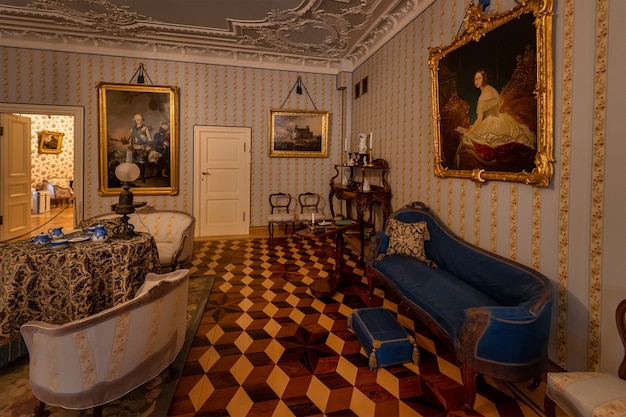
The other aspect of the same principle, that of maximum output, formulated very simply, maintains that the more we produce of whatever we produce, the better. The success of the economy of the country is measured by its rise of a total production. So is the success of a company. Ford may lose several hundred million dollars by the failure of a costly new model, like the Edsel, but this is only a minor mishap as long as the production curve rises. The growth of the economy is visualized in terms of ever-increasing production, and there is no vision of a limit yet where production may be stabilized. The comparison between countries rests upon the same principle. China is surpassing the United States of America by accomplishing a more rapid rise in economic growth. Not only industrial production is ruled by the principle of continuous and limitless acceleration. The educational system has the same criterion: the more college graduates, the better. The same in sports: every new record is looked upon as progress. Even the attitude toward the weather seems to be determined by the same principle. It is emphasized that this “the hottest day in the decade,” or the coldest, as the case may be, and I suppose some people are comforted for the inconvenience by the proud feeling that they are witnesses to the record temperature. One could go on endlessly giving examples of the concept that constant increase of quantity constitutes the goal of our life; in fact, that it is what is meant by “progress.” #RandolphHarris 6 of 18

Few people raise the question of quality, or what all this increase in quantity is good for. This omission is evident in a society which is not centered around man any more, in which one aspect, that of quantity, has choked all others. It is easy to see that the predominance of this principle of “the more the better” leads to an imbalance in the whole system. If all efforts are bent on doing more, the quality of living loses importance and activities that once were means become ends. If we explore this idea of a larger and larger model of systems, we may be able to see in what sense completeness represents a challenge to reason. One model that seems to be a good candidate for completeness is called an allocation model; it views the World as a system of activities that use resources to “output” usable products. The process of reasoning in this model is very simple. One searches for a central quantitative measure of system performance, which has the characteristic: the more of this quantity the better. For example, the more profit a firm makes, the better. The more qualified students a university graduates, the better. The more food we produce, the better. It will turn out that the particular choice of the measure of system performance is not critical, so long as it is a measure of general concern. We take this desirable measure of performance, and relate it to the feasible activities of the system. The activities may be the operations of various manufacturing plants, of schools and universities, of farms, and so on. Each significant activity contributes to the desirable quantity in some recognizable way. #RandolphHarris 7 of 18
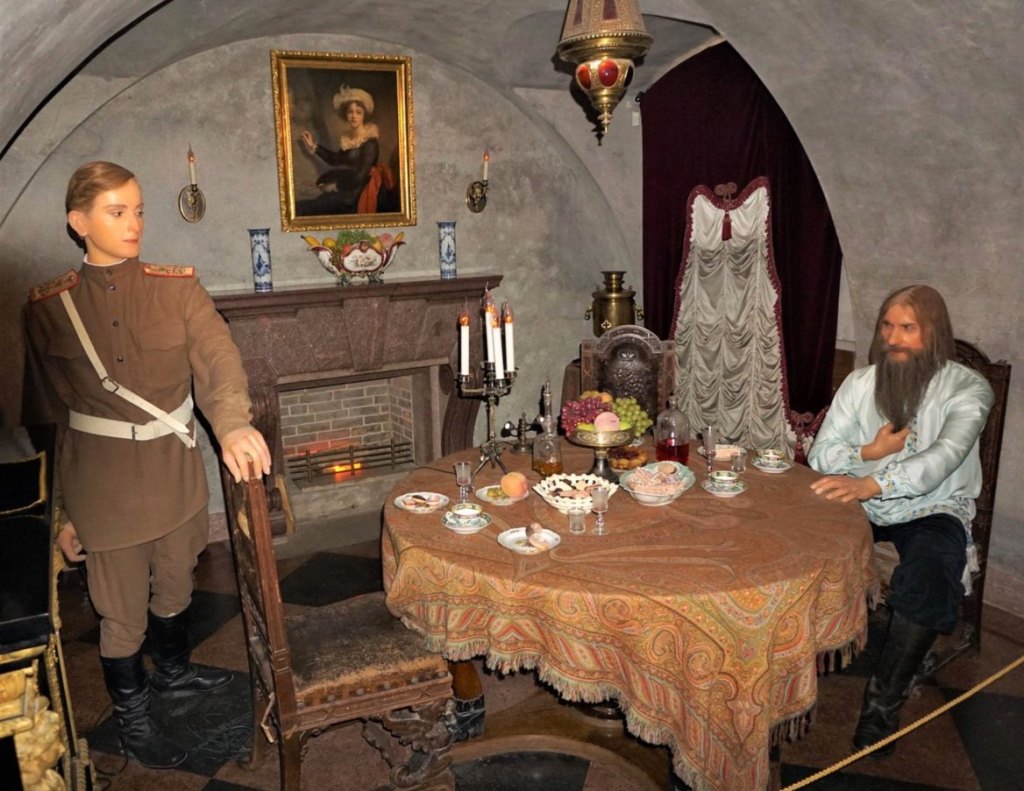
The contribution, in fact, can often be expressed in the amount of the desirable quantity. The more sales of a certain product, the higher the profit of a firm. The more we teach, the more graduates we have. The more fertilizer we use, the more food. If the overriding economic principle is that we produce more and more, the consumer must be prepared to want—that is, to consume—more and more. Industry does not rely on the consumer’s spontaneous desires for more and more commodities. By building in obsolescence it often forces him to buy new things when the old ones could last much longer. By changes in styling of products, dresses, durable goods, and even food, it forced him psychologically to buy more than he might need or want. However, industry, in its need for increased production, does not relay on the consumer’s needs and wants but to a considerable extent on advertising, which is the most important offensive against the consumers right to know what he wants. The spending of $364 billion dollars on direct advertising in 2023 (in newspapers, magazines, Internet, radio, TV) may sound like an irrational and wasteful use of human talents, of paper, and print. However, it is not irrational in a system that believes that increasing production and hence consumption is a vital feature of our economic system, without which it would collapse. #RandolphHarris 8 of 18

If we add to the cost of advertising the considerable cost for restyling of durable goods, especially cars, and of packaging, which partly is another form of whetting the consumer’s appetite, it is clear that industry is willing to pay a high price for the guarantee of the upward production and sales curve. The anxiety of industry about what might happen to our economy if our style of life changed is expressed in this brief quote by a leading investment banker: “Clothing would be purchased for its utility; food would be bought on the basis of economy and nutritional value; automobiles would be stripped to essentials and held by the same owner for 10 to 15 years of their useful lives; homes would be built and maintained for their characteristics of shelter, without regard to style or neighbourhood. And what would happen to a market dependent upon new models, new styles, new ideas? The transformations effected by this inner work seem, when stabilized, to be a natural maturity. In dealing with resistance from a patient, an analysis may assume the lead. He may be struck by a realization that despite much work done, much insight gained, nothing changes in the patient. In such cases he must desert his role as interpreter and confront the patient openly with the discrepancy between insight and change, possibly raising the question as to unconscious reservations that the patient may have which prevent him from letting any insight really touch him. #RandolphHarris 9 of 18

Thus far the analyst’s work is of an intellectual character: he puts his knowledge into the service of the patient. However, even if he is not aware of offering more than hi technical skill, this helps extend beyond what he can give on the basis of his specific competence. In the first place, by his very presence, he gives the patient a unique opportunity to become aware of his behaviour toward people. In other relationships the patient is likely to focus his thinking primarily on the peculiarities of others, their injustice, their selfishness, their defiance, their unfairness, their unreliability, their hostility; even if he is aware of his own reactions he is inclined to regard them as provoked by the other. In analysis, however, this particular personal complication is almost entirely absent, not only because the analyst has been analyzed, and continues to analyze himself, but also because his life is not entangled with the patient’s life. This detachment isolates the patient’s peculiarities from the befogging circumstances that ordinarily surround them. And in the second place, by his friendly interest, the analyst gives the patient a good deal of what may be called general human help. To some extent this is inseparable from the intellectual help. Thus the simple fact that the analyst wants to understand the patient implies that he takes him seriously. This in itself is an emotional support of primary importance, especially at those times when the patient is harassed by emerging fears and doubts, when his frailties are exposed, his pride attacked, his illusions undermined, for the patient is often too alienated from himself to take himself seriously. #RandolphHarris 10 of 18

That statement may sound implausible, because most neurotic persons have an inordinate sense of their own importance, either in regard to their unique potentialities or in regard to their unique needs. However, to think ourselves as all important is radically different from taking ourselves seriously. The former attitude derives from an inflated image of the self; the latter refers to the real self and its development. A neurotic person often rationalizes his lack of seriousness in terms of “unselfishness” or in a contention that it is ridiculous or presumptuous to give much thought to oneself. This fundamental disinterest in the self is one of the great difficulties in self-analysis, and, conversely, one of the great advantages of professional analysis is the fact that it means working with someone who through his own attitude inspires the courage to be on friendly terms with oneself. This human support is particularly valuable when the patient is in the grip of an emerging anxiety. In such situations the analyst will rarely reassure the patient directly. However, the fact that the anxiety is tackled as a concrete problem, which can be solved eventually, lessens the terror of the unknown, regardless of the content of the interpretation. Similarly, when the patient is discouraged and inclined to give up the struggle the analyst does more for him than merely interpreting: his very attempt to understand this attitude as the outcome of a conflict is a greater support to the patient than any patting on the back or any effort to encourage him in so many words. #RandolphHarris 11 of 18
There are also the times when those fictitious foundations upon which the patient has built up his pride become shaky, and he starts to doubt himself. It is good to lose harmful illusions about oneself. However, we must not forget that in all neuroses solid self-confidence is greatly impaired. Fictitious notions of superiority substitute for it. However, the patient, in the midst of struggle, cannot distinguish between the two. To him an undermining of his inflated notions means a destruction of his faith in himself. He realizes that he is not as saintly, as loving, as powerful, as independent as he had believed, and he cannot accept himself bereft of glory. At that point he needs someone who does not lose faith in him, even though his own faith is gone. The human help that the analyst gives the patient is similar to what one friend might gives to another: emotional support, encouragement, interest in his happiness. This may constitute the patient’s first experience of the possibility of human understanding, the first time that another person has bothered to see that he is not simply a spiteful, suspicious, cynical, demanding, bluffing individual, but, with a clear recognition of such trends, still likes and respects him as a striving and struggling human being. And if the analyst has proved to be a reliable friend, this good experience may help the patient also to retrieve his faith in others. There is no doubt that the observations of a trained outsider will be more accurate than our observation of ourselves, particularly so since concerning ourselves we are far from impartial. #RandolphHarris 12 of 18
Against this disadvantage, however, stand the fact, already discussed, that we are more familiar with ourselves than any outsider can be. If they are bent on understanding their own problems, experience gained in psychoanalytic treatment shows beyond any doubt that patients can develop an amazing faculty of keen self-observation. There are obvious differences in patterns and some of the contents of the full professional training of the psychiatrist, clinical psychologist, and social worker. If we ask what specific knowledges or skills are unique to each of them, constituting a basis on which each is able to make a contribution to the psychiatric patient that cannot be duplicated by the others, these can be best appreciated. The psychiatrist’s unique competence is his medical knowledge and training—he alone is qualified to appraise the medical-physical status of the patient (although any physician can do this as well—possibly better), and he alone is qualified to prescript and administer medical (physiochemical) treatments; no one else can do this. An additional prerogative of the psychiatrist as a physician is a legal authority (existing by virtue of long historical precedent and beginning to show signs of appropriate impress of modern concepts and techniques) to be responsible for certain administrative operations (as contrasted with clearly medical procedures), for example, to hospitalize a patient, to discharge a patient, and so on. #RandolphHarris 13 of 18

The long-standing authority of the physician as the final and sole authority on “insanity” or mental disease within the law is beginning to show appropriate decay. The quality of a recent brief filed by the American Psychiatric Association speaks eloquently for the inevitable erosion of the physician’s role as ultimate arbiter in this area. The clear responsibility of the hospital psychiatrist for medical care of patients has historically extended to a quasi-legal responsibility (final authority) for such psychological procedures as prescribing changes in activity programs, giving or withholding passes, allowing or disallowing visitors. However, increasingly, partly as a function of the team approach and partly as a function of administrative leadership, such decisions are becoming a group responsibility (in many instances of the responsibility of the patient’s peers) or transferred to the psychologist. The clinical psychologist’s unique contribution to the individual patient comes in his competence to select, administer, score, interpret, and integrate the results of a variety of psychological tests and examination procedures that provide the only truly standardized and reliable source of data as to the patient’s mental ability and personality. He alone is a skilled diagnostician in the sense of having facility with a set of instruments specifically designed to overcome the errors and inadequacies of notoriously fallible clinical appraisal of complex phenomena. Beyond the application of his diagnostic tools to the individual patient, the psychologist alone has a thorough knowledge of the psychometric theory underlying these instruments and, accordingly, he can truly appreciate their limitations. #RandolphHarris 14 of 18
Aside from this contribution to the individual patient, the psychologist’s grounding in the methodology of behavioural research, especially measurement of personality and the behavioural correlates of personality types, affords him the capacity to design instruments for appraisal of changes, specifically of changes in major dimensions of personality. Measurement of such changes, and of related criterion variables, lies at the heart of the appraisal of the effectiveness of any psychotherapeutic or other psychiatric therapy. Skill in such personality research at the molar of behavioural level (as contrasted with study of physiological functions) is another capacity unique to the clinical psychologist. The social worker has knowledge of the network of city, county, and state welfare agencies, their personnel, equipment, and services and their administrative patterns and relationships, which is not shard by others member of the psychiatric team. She is sensitive to community structure and to the ways in which that structure can naturally facilitate or impede the recovery of a patient. She is experienced in the relevance of subculture memberships for pattens of psychopathology and for accessibility or resistance to personal intervention. She is skilled in the elicitation and correlation of life history data from relatives and other informants. She is cognizant of the economic problems of various family structures. She is expert in preparation of the patient to accept and profit from such referrals. These are among the skills of the case workers in the old-fashioned sense, and they are not shared by psychiatrist of psychologist. #RandolphHarris 15 of 18
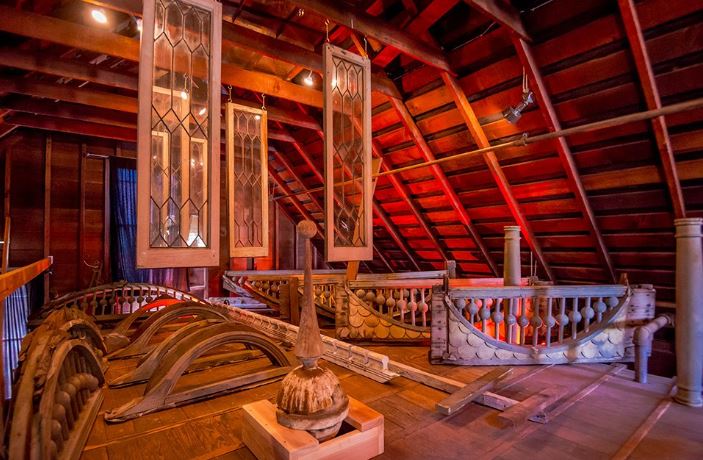
A few psychiatrists have also received full graduate training in psychology, some psychologists were previously social workers, and occasionally a social worker successfully pursues the study of medicine or psychology. Each of these professionals has some unique areas in the background of general education which he brings to his graduate training and differences in the core emphasis of his specialized graduate preparation. The professions of psychiatry, clinical psychology and social work are presently providing the great bulk of formal psychotherapy in this country. However, the members of no one of these three professions are selected and trained primarily to be skilled psychotherapists. The variation in the cost of training each of these experts and the time required for this training, in light of the proportional relevance of their respective programs as preparation for the specific conduct of psychotherapy, has obvious social implications. It must be recognized that psychotherapy is neither the primary not unique skill of any one of these professions. The psychiatrist, psychologist, and social worker each does possess specialized and unique competence. Can our society afford a significant reduction in the application of these unique skills in a “shotgun” effort to meet the manpower shortage resulting from the increasing demand for therapeutic conversation? #RandolphHarris 16 of 18

Man is conceived as a machine, driven by a relatively constant amount of sexual energy called “libido.” This libido causes painful tension, which is reduced only by the act of physical release; to this liberation from painful tension Dr. Freud gave the name of “pleasure.” After the reduction of tension, libidinal tension increases again due to the chemistry of the body, causing a new need for tension reduction, that is, pleasureful satisfaction. This dynamism, which leads from tension to release of tension to renewed tension, from pain to pleasure to pain, Dr. Freud called the “pleasure principle.” He contrasted it with the “reality principle,” which tells man what to seek for and what to avoid in the real World in which he lives, in order to secure his survival. This reality principle often conflicts with the pleasure principle, and a certain equilibrium between the two is the condition for mental health. On the other hand, if either one of these two principles is out of balance, neurotic or psychotic manifestations are the result. I, for one, am a fan of the silent treatment. The quieter it is, the more I like it. If you have someone who does this to you, then let them shut you out. Let them remain quiet because of something you did or said made them angry with you. Relish that silence. It is so much better than their ongoing griping and ridiculing. People use silence as a tactic to get to you, to make you feel bad. They want you to miss their presence, miss their acceptance of you. Do not give them what they want. And do not let it get to you. If they keep pulling themselves away and shutting people out, it is not your loss. #RandolphHarris 17 of 18
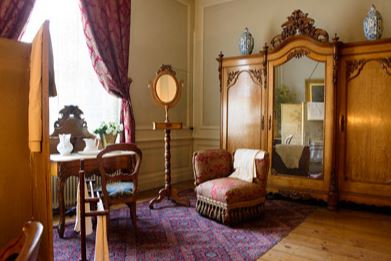
If you look at what they are doing, they are shutting everyone out, removing themselves from the World. It is really a very self-sabotaging thing to do. When you do not allow yourself to get upset by their actions and really take a look at what they are doing to themselves in a vain attempt to hurt you, you will realize that. If a man cannot find in society or surroundings that standards which suit his character, then he must find his own. It is this that makes him a quester. To some people, it might seem foolhardy to charge into the flames to rescue someone you never saw before and may never see again. It is not that the Sacramento Fire Department does not think about the danger. They are human and do not want to die, just like everyone else. However, unlike most everyone else, they do what has to be done despite their fears. Firefighters have ignored pleas from their partners and low-crawled through a blazing apartment, risking death, while desperately groping in the dense smoke for a child who was assumed dead. Another firefighter leaped into a smoke-filled elevator shaft of a burning high-rose and shinnied down a cable to a red-hot elevator in a valiant rescue attempt. While another firefighter jumped fifteen feet down into a pit of fire without a plan of escape because to do nothing meant certain death for a trapped victim. Gripping acts of heroism can happen anywhere at any time in Sacramento. Please make a donation to the Sacramento Fire Department to ensure they receive adequate resources. I pledge allegiance to the flag of the United States of America and to the republic for which it stands, one nation, under God, indivisible with liberty and justice for all. #RandolphHarris 18 of 18

One night while closing The Winchester Mystery House a caregiver had accidentally dropped his mobile phone, and began to read a text message after he picked it up; after when he looked at his watch to ascertain the time. In taking his eyes from his watch, they became riveted upon the door-to-nowhere which he distinctly saw open, and also saw the figure of a female attired in grayish garments, with the head inclined downwards, and one hand pressed upon the chest as if in pain, and the other—the right hand—extended towards the ground with the index finger pointing downwards. It advanced with an apparently cautious step across the floor towards him. Immediately as it approached another caregiver, who was relaxing, its right hand extended toward her. He then rushed at it, giving at the same time a most awful yell, but, instead of grasping it, he fell upon his friend. I recollected nothing distinctly for nearly three hours afterward. However, he learned that he was carried downstairs in agony of fear and terror. The female caregiver added to the account with the detail of “sounds” being heard from an adjacent room. “His horrible shouts. He seems to have fainted in her arms. She instantly laid him down and went into the room from whence the last sound was heard. However, nothing was there and the door-to-nowhere had not been opened. Other employees came quickly to their assistance, and found the young caregiver trembling in the most acute mental agony.

Come and enjoy a delicious meal in Sarah’s Café, stroll along the paths of the beautiful Victorian gardens, and wonder through the miles of hallways in the World’s most mysterious mansion. For further information about tours, including group tours, weddings, school events, birthday party packages, facility rentals, and special events please visit the website: https://winchestermysteryhouse.com/
Please visit the online giftshop, and purchase a gift for friends and relatives as well as a special memento of The Winchester Mystery House. A variety of souvenirs and gifts are available to purchase. https://shopwinchestermysteryhouse.com/
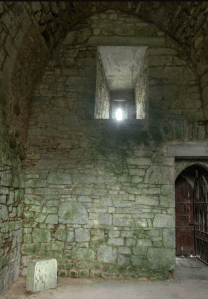
Why Art Thou So Foolish and Fearful!

I was spending the first week of January alone in Llanada villa. A combination of circumstances had driven me to this drastic course: my nearest relations were enjoying winter sports abroad, and the friends who had been kindly anxious to replace them had an infectious complaint in the house. Doubtless I might have found someone else to keep company with me. “However,” I reflected, “most of them have made up their parties, and, after all, it is only for three or four days at most that I have to fend for myself, and it will be just as well if I can get a move on with my blueprints. I might she the time by going down to the garden and listening to my estate about plans to incorporate in the architecture.” The first day alone in Llanada Villa, it was so stormy that I got no father the designing stained-glass windows. As I sat in the Hall of Fires, I felt uncomfortable, and this feeling persisted. I felt like I was being watched by some unseen force, and my nerves began to tense under the strain. I reflected on how some of my staff had left not because they wanted to but because they were driven, driven by forces greater than themselves that they could not resist. On this very night, I had seen vivid apparition of my butler, then miles away, in San Francisco. He was a plump, amicable man who I distinctly saw walking down the hall in a bathrobe, with blooding running down his leg. A small pool of blood was forming on the floor. The frightened me terribly. My hair stood up on my head and chills shook my body. The apparition looked so stern that my heart failed me, and I wished myself anywhere but there, though I had before been summoning up my courage. “Good Heaven,” said I to myself, “give me the courage to stand before this spirit. O soften him, or harden me!” I knew this was a glimpse into eternity. #RandolphHarris 1 of 5

The following day, I received news that my butler, Chaleb Heroldsbach, had died after being attacked by a dog. My home is built in what some have called a “trinity triangle,” it has forged a mystical link with other pilgrimage sites and is supposed to help bring the Devil’s power on Earth to an end. This is being prevented by Satan, however, with the help of The Curse of the Winchester Fortune. That evening, I was awakened at three o’clock in the morning, seemingly for no reason with the same uncanny feeling that something was wrong. Being a sensible person, I put all my energies into polishing furniture and getting newly added rooms into proper condition. However, somewhere not so far away, a baby was crying: a mournful wail of a sound that—though it was surely human—reminded me of the noises the coyotes would make some nights. After a few moments of listening, the baby’s cry seemed to falter for a moment, and I feared it would fade completely before I could find the little darling. Then, the infant seemed to find a new seam of grief to mine, and the wail rose up again, more plaintive than ever. I was alone, but trying to figure out which direction the sound was coming from. I mused for a moment, and realized a lifetime of suffering had caught up with me. I knew in my heart that I deserved to know everything, after all I have been through. I have earned the truth. Maybe the dead are close to the threshold of reality in this house. I only know it is real. I have seen them. Others have seen them. They are hybrids. Sometimes there is a kind of beauty in them. However, sometime all I see is ugly sin. #RandolphHarris 2 of 5
The sky was dark and cloudy, and by the time I woke up, I could hear a steady soaking rain pounding on the roof. I was preparing breakfast in one of the kitchens. As I was buttering a piece of toast, I happened to glance up toward the doorway. There, immaculately dressed, stood a man. The stranger, I noticed, wore shiny black shoes, black pants, and a white shirt. I could see him so clearly that I could make out the way the man’s jet-black hair was parted. Immediately, I was shocked that he had somehow entered my house, and I was about to greet him, when it occurred to me that I had not heard the door opening or any other sound—no footsteps, nothing. I turned around to grab my revolver, but by the time I turned around, the man was gone like a mist. I was not too frightened by what I had witnessed, I was growing accustomed to apparitions. I had often wondered what had taken place a century and a half on the land this eighteen-room farmhouse I purchased was on, and what the former owner really had been. However, it is fortunate that they carpenters were all strong men of action and simple, orthodox religionists, for with more subtle introspectiveness and mental complexity they would have fared ill indeed. Herford Hulsmann was the most disturbed; but even he outgrew the darkest shadow, and smothered memories in prayer. While I was alone, I did my best in the blotting out of unwholesome images, and was thankful that the carpenters, Daisy, and other caretakers would be returning to Llanada Villa soon. #RandolphHarris 3 of 5
My house was not altogether liked by sensitive people because of the sounds heard here at night. It was said that I entertained strange visitors, and the lights seen from my windows were not always the same colours. The knowledge I displayed concerning long-dead persons and long-forgotten events was considered distinctly unwholesome. Frau Maassen swore that on 13 June 1889, in the fruit orchard, that “forty Witches and the Blacke Man were wont to meete in the Woodes behind Mrs. Winchester’s house.” Then several people claimed to have found William’s unfinished manuscript in his handwriting, couched in a cipher none could read. After a year of possessed this manuscript, Mr. Maassen had intensely and feverishly tried to decipher, he never stated whether or not he had succeeded. I confronted Mr. Maassen, “Why are you so foolish and fearful! You have done no harm! What, if you fear an unjust judge, when you are innocent, would you do before a just one, if you were guilty? Have courage, Mr. Maassen; you know the worst! And how easy a choice poverty and honesty is, rather than plenty and wickedness.” “Mrs. Winchester, do not let your heart ake for me?—I am sure mined flutters about like a new-caught bird in a cage,” said Mr. Maassen. “O how can wicked men seem so steady and untouched with such black hearts, while poor innocents stand, like malefactors, before them!” Mr. Maassen cheered himself up; but yet I could tell his poor heart sunk, and his spirits were quite broken. Everything that stirred, he thought was to call her to her account. Shortly after, he restored to a sojourn abroad, and did not return to claim his lands. #RandolphHarris 4 of 5

Mr. Maassen had apparently been careful to destroy most of his correspondence, but the citizens who took action in 1892 found and preserved a few letters and papers which excited their wonder. There were cryptic formulae and diagrams in his and other hands which Mr. Maassen either copied with care or had photographed, and one extremely mysterious letter was written in blood. I had to learn to live with my ghosts, especially considering some of these had ben here before me. Perhaps some of these ghosts could even become friendly. One night at dinner, Daisy, myself and Zip were enjoying stuffed pheasant, when an enormous crash shook the house. It felt as if a boulder had fallen on the parlour floor. When we rushed to the parlour, everything was in order, nothing misplaced. We said a silent prayer for the souls of the disturbed. However, moments later, things got worse. The lights started going off and on by themselves. When we tried to return to the dining room and finish supper, the atmosphere was so thick that we could not get near the table. Enveloped by the strong vibrations, I felt myself levitating, and when I came to my senses, I was lying on the floor. I had given Daisy such a scare. Daisy clearly senses the presences of the spirits and she started to cry. “Oh, God, it can’t be true, Aunt Sarah,” she said. With a piercing scream, she ran up the stairs, weeping out of control. #RandolphHarris 5 of 5
“I have great trouble, and some comfort, to acquaint you with. The trouble is, that my good lady began to have her bad nights, and complained to me and other persons, in particular what discomfort she suffered from her pillow and bedclothes. She said she must buy some to suit her, and should do her own marketing. And accordingly brought home a parcel which she said was of the right quality, but where she bought it we had then no knowledge, only they were marked in thread with a coronet and a bird. The merchant said they were of a sort not commonly met with and very fine, and Mrs. Winchester said they were the comfortablest she ever used, and she slept now both soft and deep. Also the feather pillows were the best sorted and her head would sink into them as if they were a cloud: which I have myself remarked several times when I came to wake her of a morning, her face being almost hid by the pillow closing over it. I had never any communication with Dr. Wayland after I came back to Llanada Villa, but one day when he passed me in the garden and asked me whether I was not looking for another service, to which I answered I was very well suited where I was, but he said I was a tickleminded maidan and he doubted not he should soon hear I was on the World again, which indeed proved true.”
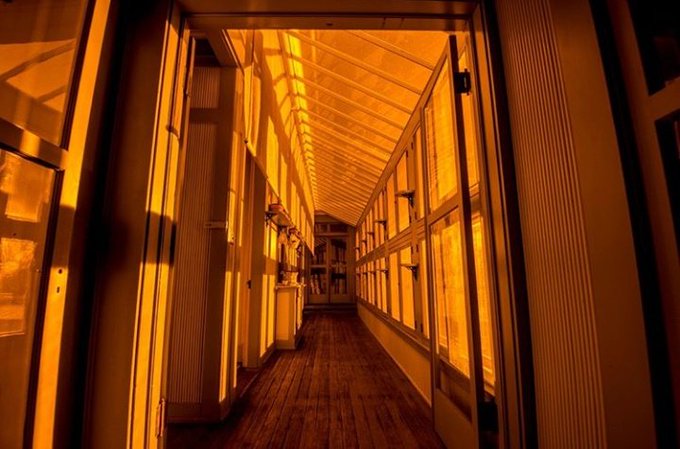
Dr. Wayland is next taken up where she left off.
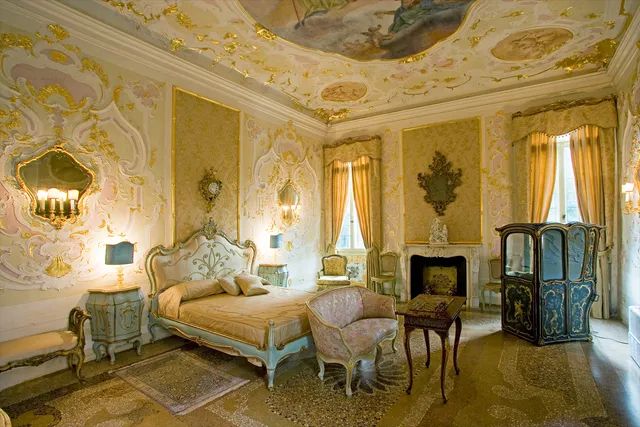
“On the 5th I was called up out of my bed soon after it was light—that is about five—with a message that Mrs. Winchester was dead or dying. Making my way to her house, I found there was no doubt which was the truth. All the persons in the house expect the one that let me in were already in her chamber and standing about her bed, but none touching her. She was stretched in the midst of the bed, on her back, without any disorder, and indeed had the appearance of one ready laid out for burial. Her hands, I think, were even crossed on her breast. The only thing not usual was that nothing was to be see of her face, the two ends of the pillow or bolster appearing to be closed quite over it. These I immediately pulled apart, at the same time rebuking those present for not at once coming to the assistance of their master. However, I was informed that only one person had stayed with her until her dying moment and most had fallen asleep. She looked at me and shook her head, having no more hope than myself that there was anything but a corpse before us. Indeed it was plain to anyone possessed of the least experience that Mrs. Winchester was not only dead, but had died of suffocation. Nor could it be conceived that her death was accidentally caused by the mere folding of the pillow over her face. How should she not, feeling the oppression, have lifted her hands to put it away? whereas not a fold of the sheet which was closely gathered about her, as I now observed, was disordered.
“I could tell no more, at least without opening the body, then we already knew. As to any person entering the room with evil purpose (which was the next point to be cleared), it was visible that the bolts of the door were burst from their stanchions, and the stanchions broken away from the door-post by main forced; and there was a sufficient body of witness, the smith among them, to testify that this had been done but a few minutes before I came. The chamber being, moreover, at the top of the house, the window was neither easy of access nor did it show any sign of an exist made that way, either by marks upon the sill or footprints below upon soft mould. My evidence forms of course part of the report of the inquest, the large organs were in a healthy state and there was coagulation of blood in various parts of the body. My verdict was ‘Death by visitation of spirits.’ Upon further consideration, I think I can divine a reason for Mrs. Winchester’s death. It related to the rifling of her mansion. This is the property of a noble family. The outrage was not that of a natural death. The object, it seemed likely, was theft. The account is blunt and terrible. I shall not quote it here. A dealer in San Francisco suffered heavy penalties as a receiver of stolen goods in connexion with the affair.
“Mrs. Winchester has left us all much grieved for the loss of her; for she was a good lady, and kind to all her caretakers. Much I feared, that as I was taken by her ladyship to wait upon her person, I should be quite destitute again. Mrs. Winchester has given mourning and a year’s wages to all her caretakers; and she game me with her own hand four golden guineas, and some silver, which were in her pocket when she died. And I sent Daisy those four guineas for her comfort; for Providence will not let me want: and so you may pay some old debt with part, and keep the other part to comfort yourself.” Come and enjoy a delicious meal in Sarah’s Café, stroll along the paths of the beautiful Victorian gardens, and wonder through the miles of hallways in the World’s most mysterious mansion. For further information about tours, including group tours, weddings, school events, birthday party packages, facility rentals, and special events please visit the website: https://winchestermysteryhouse.com/
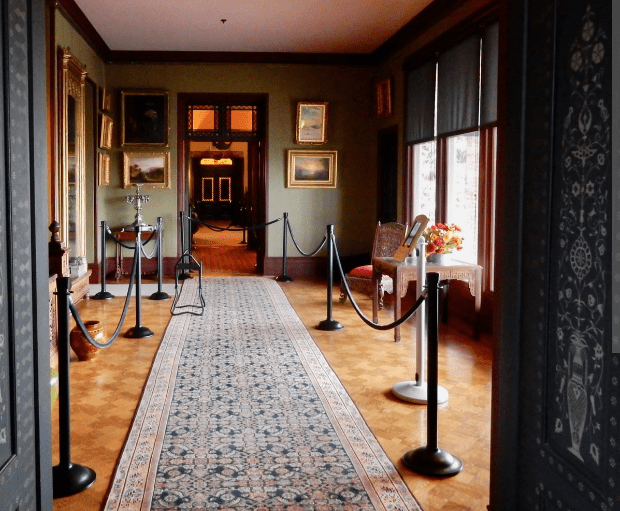
Please visit the online giftshop, and purchase a gift for friends and relatives as well as a special memento of The Winchester Mystery House. A variety of souvenirs and gifts are available to purchase. https://shopwinchestermysteryhouse.com/

What if I Do Not Believe in Ghosts?
Once when I was little, my dad took me to this placed called Sodom Hill. It must be some kind of gateway because the curious thing is, you feel like you are driving down a hill along this road. This was the first time that I believe I saw a ghost. As our carriage passed by Saint Mary Parish, a woman was standing near the church, starring at us. However, she was really looking at my father. Though the weather was warm, she was wearing a long black dress beneath a hooded cloak. She was hugging herself, and she looked cold. Beneath the hood, her face was pale, and even from a distance I could tell that she was distresses. And she was very beautiful. The hood slipped down to her shoulders. I saw her hair was red. Her dark eyes were trusting and innocent. And suddenly I knew where I had seen her before. Onn the Rocky Hill-Glastonbury Ferry. She had been weeping on deck. The beautiful maiden with the red hair kept staring at my father. He did not notice. I was curious to know if my father could see the woman. I said, “Father, what is that pretty tree over there? By the tower of the church?” I pointed toward the woman. The woman saw me point. She looked at me, questioningly, but only for a moment. Then she looked back at my father. The woman did not care if I was being immodest. She just looked through me, just as she had on the deck of the ferry. How had she gotten here, and what did she want from me and my father? All this seemed to take forever. However, I do not think more than a minute passed before my father said to me, “What tree? I don’t see any trees near the tower of the church.” #RandolphHarris 1 of 5

“Father, what do you see?” I asked. “The lawn,” he said. I watched him for a sign. I could not believe that he could not see the lady with crimson hair near the tower of the church. “Nothing else? I said. “No one?” “Nothing,” he replied. “No one? Who would be there?” When I looked again there was no one there. The woman had vanished. I felt as if I had lost something. “What’s wrong?” said my father. “Nothing,” I said. “I think I must have been having a daydream.” “Poor Sarah,” said my father. “It must be the sun. Let’s get you inside and get you something to drink.” We made our way back home. My mother was in the garden, kneeling down among the tall plants and rut niblicks. My father poured me some milk and gave me a cracknel, baked by my mother. “Eat this,” he said. “It’ll help you get your strength back.” My father nibbled on one himself. I told myself: No man sees a ghost and starts nibbling a cookie like nothing happened. If he said there was no woman near the tower of the church, it meant he had not seen her. It meant something was seriously wrong with me. I had not been feeling all that well lately. I felt as if the colours of everything had gotten a little brighter, and sounds a little louder, and when people speak to me, their voices have a tiny echo, like I am hearing them from the far end of a tunnel. It does not happen all of the time. I have these little spells, and then they pass, and I am normal again. Spirits whispered in the rustling leaves, ghost lurked in the murky nooks, the deep baying of a hound floated up out of the distance, an owl answered with his sepulchral note. #RandolphHarris 2 of 5

Millions of spiritual creatures walk the Earth unseen, both when we wake and when we sleep. What place do these spirit beings hold in the scheme of creation which by some are thought neither to have stood fast when the rebel angels fell, nor to have joined with them to the full pitch of their transgression? It was the middle of the moonlight in October night with heavy rain underfoot, I was sitting by the fire—it was a cold evening—and I stretched out my hand towards the warmth, and just then the fire-irons, or at least the poker, fell over towards me with a great clatter. There resourced over the estate and the surrounding land a series of cries which brought sleepy heads to every window; we all saw a ghost ship. It was a 26-gun frigate. There were distant gunshots, and I could feel the throb of titanic and thunderous words resounding in the upper air. Muskets flashed and cracked, and the flaming ship fell to the ground. A second flaming thing appeared, and a shriek of human origin was plainly distinguished. Then just before dawn when a howling darkness descended upon the ships and they vanished. As I ran up the stairs, I hit what felt like an ice wall and was momentarily stopped in my tracks. The air around me became instantly chilled, and although every fireplace was lit, I was cold and could see my breathe. I was then able to get up the last six steps, but when I turned around, I saw an opalescent fog crystalize into the form of a woman. She wore a long dress, and a hat, and when she turned towards me, I realized in was the woman with red hair that I had seen at the tower of the church with my father when I was a child. In her face, I could see uncountable horrors and sorrows written in the depth of her dark eyes. She then vanished, and the air around me returned to its warm state. #RandolphHarris 3 of 5
There was certainly a time when I was so much harassed by my dreams that I could not keep them to myself, but would tell them to my friends. There was a dream which had come to me several times of late, and even more than once in a night. It was to this effect, that I seemed to myself to wake under an extreme compulsion to rise and go outdoors. So I would dress myself and go down to the garden door. By the door there stood a spade which I must take, and go out into the garden, and at a particular place in the boxwood hedges, somewhat clear, and upon which the moon shone (for there was always in my dream a crescent moon), I would feel myself forced to dig. And after some time, the spade would uncover something light-coloured, which I would perceive to be a stiff, linen or woolen, and this I must clear with my hands. It was always the same: of the size of a man and shaped like the chrysalis of a moth, with the folds showing a promise of an opening at one end. I could not describe how gladly I would have left all at this stage and run to the house, but I mist not escape so easily. So with many groans, and knowingly only too well what to expect, I parted these folds of stuff, or, as it sometimes seemed to be, membrane, and disclosed a head covered with a smooth pink skin, which breaking as the creature stirred, show me my own face in a state of death. Upon ever recurrence of this dream, I woke and found myself, as it were, fighting for my breath. #RandolphHarris 4 of 5

Moments later a chill wind blew up. It produced a kind of clutching, amorphous fear beyond that of the tomb or the charnel-house. Close upon it came the awful voice which no hapless hearer will ever be able to forget. It thundered out of the sky like a doom, and windows rattled as its echoes dies away. It was deep and musical; powerful as a bass organ, but evil as the forbidden books in the secret library. What it said, no one can tell, for it spoke in an unknown tongue. Objects were being hurled about the room. Puddles of water appeared on the floor. The sheet and blankets were torn off the bed. Then I was alarmed when I heard a very loud vibration as if a hole were being drilled through the all. I went into the chamber next to mind and saw that a Victorian fireplace had been ripped from its casing and hurled upon the floor. A wailing distinctly burst out. It was almost articulate, though no one could trace the exact words; and at one point it seemed to verge toward the confines of diabolic and hysterical laughter. Then a yell of utter, ultimate fright and stark madness wrenched from scores of demon throats—a yell which came strong and clear despite the depth from which it must have burst; after which a darkness and silence ruled all things. Spirals of acrid smoke ascended, though no flames appeared. This must have been the witches’ Sabbath. Death does not mean that your loved one’s have left your mind, and your mind sends messages to your eyes that sometimes have nothing to do with what you actually see. #RandolphHarris 5 of 5

The Winchester Mystery House

Santa Clare Valley was in an uproar after the death of Mrs. Winchester. On Wednesday (October 3, 1923) consequently on the circulation of a report that the household goods of Sarah Winchester were being smashed and removed by some unknown agency. All day long crowds of excited people wended their way towards the Winchester Mansion, drawn thither by the accounts of the mysterious occurrences said to have been witnessed by the inmates and others. “As I enter the door I myself saw an eleven-foot-tall 18th century George I burl walnut longcase clock by James Marwick levitate several feet into the air before relocating itself to the other side of the room. After hearing what the folks had to say, I was joining in the conversation, when a late 18th century crystal chandelier began to raise in a slanting direction over my head and then fell as my feet, smashing into bits. I had not the slightest belief in the supernatural. I cannot account for what I saw. No one was nearer to the chandelier than myself and, as far as I saw, there was no cause for the phenomenon. The room was dimly lighted by a lamp. We were talking about things, and the caretaker were saying, “It is a very mysterious thing,” with his back turned Neoclassical Italian Crystal vase suddenly flew up slantingly over his head, and fell down and smashed at his feet. The caretaker looked at the mess on the floor, and thinking the devil was in the place, he left and went home. About half-a-dozen people were in the parlour whilst these things happened.
Come and enjoy a delicious meal in Sarah’s Café, stroll along the paths of the beautiful Victorian gardens, and wonder through the miles of hallways in the World’s most mysterious mansion. For further information about tours, including group tours, weddings, school events, birthday party packages, facility rentals, and special events please visit the website: https://winchestermysteryhouse.com/

Please visit the online giftshop, and purchase a gift for friends and relatives as well as a special memento of The Winchester Mystery House. A variety of souvenirs and gifts are available to purchase. https://shopwinchestermysteryhouse.com/

Today We Begin the Harrowing Story
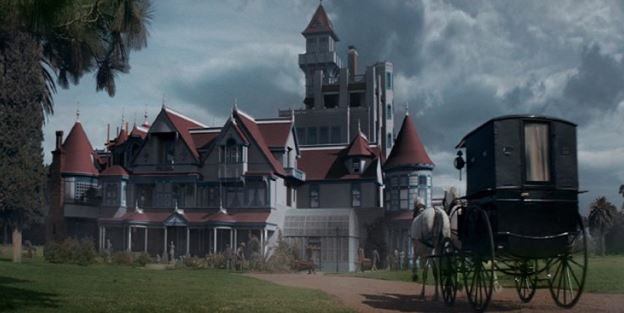
I have many beautiful art glass windows in my house, but the most expensive in the house was specially designed for me by Tiffany’s of New York. I originally installed it in an outside wall, but later added a series of rooms that blocked off all direct sunlight. There is a peculiar apparition that is seen in the window itself. The form seen is that of a figure dressed in white walking across the window. At first there was only one figure, and then thirteen appeared. The figures began to move across the window long before the carpenters noticed them. They did so as many as twenty or thirty times a day, and would stop shortly after noon. Of the three figures, one was a man, stone was a woman, and one was a child. the man was an average commonplace British tradesman, obese, pompous, and slow. He wore rather baggy gray shepherd’s-check trousers, not over-clean black frock coat, unbuttoned in the front, and a drab waistcoat with a heavy brassy Albert chain, and a square pierced bit of metal dangling down as an ornament. A frayed top hat and a faded brown overcoat with a wrinkled velvet collar. Altogether, look as I would, there was nothing remarkable about the man save his blazing red head and the expression of extreme chagrin and discontent upon his features. The woman was very distinct in appearance. She was tall and very graceful. The two-year-old boy showed signs of disturbed behaviour, laughed hysterically and talked of “funny drinks.” The order of the apparitions in the window had a slight variation: the mother came alone from the northside of the window, and having gone about halfway across, she would stop, turn around, and wave her arms towards the quarter whence she had come. #RandolphHarris 1 of 9
This gesture was answered by the entry of the father with the child. Both parents then bent over the child, and seemed to bemoan his fate; but the mother was always the most endearing in her gestures. The father then moved towards the other side of the window, taking the child with him, leaving the mother in the center of the window, from which she gradually retired to the north corner, whence she had come, waving her hand, as though making signs of farewell, as she retreated. After some little time she again appeared, bending forward, and evidently anticipating the return of the father and son, who never failed to reappear from the south side of the window where they had disappeared. The same gestures of distress and despair were repeated, and then all three retired together to the north side of the window. One evening, about nine o’clock, I was at the south-west door with Mr. Hansen. As I was unlocking it, I said, “Did you ever find anybody locked in here by accident?” “Mrs. Winchester, twice I saw shadows moving in that beautiful window. What a noise they did make!” Mr. Hasen then waited, leaning against the pillar, and watched the light wavering along the length of the landing. Mr. Hansen said they were well worthy seeing. “I suppose,” he said, as we walked toward the steps to the third floor, “that you’re too much used to going about here at night to feel nervous—but you must get a start every now and then, don’t you, when a book falls down or a door swings to?” “No, Mr. Hansen, I can’t say I think much about noises, not nowadays: I’m much more afraid of finding an escape of gas or a burst in the stove pipes than anything else. Still there have been times, years ago. #RandolphHarris 2 of 9
“If you have an have half an hour to spare, sir, when we get back down to the second floor, Mr. Hansen, I could tell you about a tomb that was unearthed. I will not begin now; it strikes cold here, and we do not want to be dawdling about all night.” “Of course, Mrs. Winchester, I should like to hear it immensely.” “Very well, sir, you shall. Now if I might put a question to you,” I went on, as we passed down the hallway of the third floor, “in my little local guide—and not only there, but in the little book on Llanada Villa in the series—you will find it stared that this portion of the mansion was erected previous to the twelfth century. Now of course I should be glad enough to take that view, but—mind your step, sir—but, I put it to you—doe the lay of the stone here in this portion of the wall (which I tapped with my key), does it to your eye carry the flavour of what you might call Saxon masonry? No, I thought not; no more it does to me: now, if you will believe me, I have said as much to the other carpenters. However, there it is, I suppose every one’s got their opinions.” The discussion of this peculiar trait of human nature occupied Mr. Hansen almost up to the moment when we returned to the second floor. Usually the apparitions appeared during musical performances in the Grand Ballroom, and especially during one long eight-line hymn, when—for the only occasion without the child—the two parents rushed on (in stage phrase) and remained during the whole hymn, making the most frantic gestures of despair. Indeed the louder the music in that hymn, the more carried away with their grief did they seem to be. #RandolphHarris 3 of 9
Nothing could be more emphatic than the individuality of the several figures; the manner of each had its own peculiarity. If the stained glass were removed, I do not doubt that a much plainer view would be obtained. I think so, because the nearer the center of the window, where the stained glass was thickest, there the less distinct were the forms. It was like catching glimpses of them through leaves. However, nearer the edge of the window, where the colours were less bright, they were perfectly distinct; and still more so on the pane of unstained glass at the edge. There they seemed most clear, and gave one the impression of being real persons, not shadows. Mental disturbance, it is true, will age one rapidly; but the face of Mr. Hasen since working on this project had taken on a subtle cast which only the very aged normally acquired. While standing on the landing looking at the window, I noticed his respiration and heart action had a baffling lack of symmetry; the voice was lost, so that no sounds above a whisper were possible. His skin had a morbid chill and dryness. Of course, we were witnessing the most remarkable and perplexing incident in the whole spectacle. When the father and the child had taken their departure, the mother waved her hands, and after walking slowly to the very edge of the window, turned round whilst on the pane of unstained glass and waved her arm towards the other two with what one would call a stage gesture, and then I most distinctly saw, and emphatically declare I did see, the arm bare nearly to the shoulder, with beautiful folds of drapery hanging from it like a picture of a Greek vase. Nothing could be plainer than the drag of the robes on the ground after the figures as they retired at the edge of the window, where the clear glass was, previous to going out. #RandolphHarris 4 of 9
The impression produced was that one saw real persons in the air, for though the figures were seen on the window, yet they gave one the impression of walking past the window outside, and not moving upon the glass. I am not inclined to think that the trees outside the mansion at the east end can originate the appearance by any optical illusion produced by waving branches. I could see their leaves rustling in the air, and their movement was evidently unconnected with the appearance and movement of the figures. So I began making enquires on my estate. I discovered that several people had indeed seen the shapes upon the glass. One spoke of a female figure with a slightly skipping step. Another servant said he saw an ancient gravestone from the window. The belief that the tree beside the Tiffany window were somehow responsible for the optical illusion was soon dashed; the trees were cut down, but the figures appeared still. One correspondent wrote to me in the winter of 1889, explain that “as I have no faith in ghost, I have been most wishful to have the matter cleared up. On 25 March 1687, the land you now own was involved in a remarkable satanic horror story. A young girl came to the farmhouse for help, saying that she wanted to get away from a group of satanists who had threatened to kill her. She confessed to the owner that she had murdered her own baby in ‘frenzied ritual.” He befriended the girl, twenty-three-year-old Caludia, and allowed her to stay in his home. She kept telling him that she couldn’t stand hearing the screams of her children inside of her head. And on April 20th, 1687, she died from an overdose of Laudanum and postmortem examination revealed thirteen scars and burns on her body which he tended to and which supported her claims of having been involved in satanic ritual. #RandolphHarris 5 of 9

“Further, Claudia left a 13-page diary in which she said he had been involved with a satanic group since she was hired to work on a nearby farm at age thirteen and her writings went on to make incredible claims. She described how she went to coven meetings with a boy named Dorian whom she had met while living on the farm. The boy’s mother was a High Priestess and his father was The Master—a known satanic term for the leading member of the group. She described other practice which are known to be common in satanic altar initiations—that of having her armed pricked and blood drained into a chalice from which it was drunk. ‘Much sexual perversion went on that night…later I learned more of Satan and practiced my arts calling on my power of darkness. Satan had become my Lord and Master.’ Later she described how she aborted a baby she was expecting by Dorian then made the claim that Dorian himself was sacrificed by his own father in retribution, and how she was forced to watch as he was hung upside down. She claimed to have seen other sacrifices of many new born babies, stabbing them at orgies in which Laudanum was taken heavily. She also appeared to have had another child of her own which was also offered up for sacrifice. At her inquest of 13 May, the midwife recorded an open verdict after the she noted that Claudia’s body had signs which confirmed she had given birth at least once, and had been subject to sexual abuse. The constables took up the case, but no charges were brought and the investigation was closed without further action.” #RandolphHarris 6 of 9
I was shocked of these allegations which seemed to be more than enough to inspire the most lurid of headline writers, more than to testify to the credibility of all who were proffering these dramatic and barely believable accounts of satanic abuse. Everything these people said was being taken as gospel in the village because the allegations were coming from the mouths of so-called experts. However, there were claims of rampant satanic worship in Nova Albion at this time, which was documented by English charters led by Sir Francis Drake for England. There were horrifying claims that fifty women were suffering from the after-effects of cannibalism and an average of ten occult survivors a week were being sacrificed. Dr. Harley said he read of several cases recorded by Theodorous de Bry where children had been killed. There were, of course, also several stories concocted around these three figures in my home. Some said that they issued from the grave beside the east window. Other said that they were victims of the plague, and were burned outside where this window now stands. It may or may not be relevant that the figures seemed to appear when the sound of the organ and of voices raised in song. The case was thoroughly investigated in 1889 by Dr. Robert Radakovic of The Ghost Club, where it was revealed that Llanda Villa had been “haunted” for two or three hundred years by the same figure or figures. Optical tests on the possible patterns of light and reflection had come to no results. It was remarked that “the ghost has been seen from the inside while outside nothing was visible.” #RandolphHarris 7 of 9
The interior of Lalanda Villa was much altered in the late nineteenth century, and a complex of rooms was built behind this haunted window. However, no satisfactory explanation has ever been given for the strange phenomena reported here. While designing Lalanda Villa, I was gaining my tastes from the venerable town around me, and from the relics of the past which filled every corner of my mansion. With the years, my devotion to ancient things increased; so that history, genealogy, and the study of gothic architecture, furniture, and craftsmanship at length crowded everything else from my sphere of interests. These tastes are important to remember for they outwardly concealed knowledge of bygone matters so that one would have fancied the they are literally transferred to a former age through some obscure short of autohypnosis. However, the true madness, I am certain, came with a later change; after the portrait and ancient papers of Saint Adalrich the Duke of Alsacre had been unearthed. Some terrible invocations being chanted under strange and secret circumstances; after certain answers to these invocations had been plainly indicated, and a frantic letter penned under agonizing and inexplicable conditions; after the wave of vampirism and the ominous legends of Neustria; and after the farmer’s memory commenced to exclude contemporary images whilst his voice failed and his physical aspect underwent the subtle modification so many subsequently noticed. He was later diagnosed with porphyria. And a final investigation resulted which virtually proved the authenticity of the papers and of their monstrous implications at the same time that those papers were borne forever from human knowledge. Loving antiquities so keenly, the papers and portrait were secretly concealed. #RandolphHarris 8 of 9

Bedroom fashions changed dramatically over the Victorian years due to several factors. Early in the period, homes were heated by fireplaces and therefore could be uncomfortable in the colder mothers, although a heated bedroom was considered an indulgence and windows were left open during the winter. In reality, only the rich had fireplaces in their bedrooms. Still, one had to keep warm while asleep and bed drapery, consisting variously of canopies, tents, and other enclosures used to shut out drafts, was essential, as was heavy draper on windows. Even doors had decorative, but also functional, drapes called portieres that served to keep out drafts when covering the door.

Mrs. Winchester was wealthy and her wealth and prosperity were even envied among the elite. She had no less than 47 fireplaces in her home. By the end of the century, two things had changed that affected bedroom styles. First, coal and woodburning parlour stoves came into use, were more efficient at heating a house, and could be installed in any room. (Central heating, though available after the Civil War, was really only for the very rich.). Secondly, and more importantly, was an increased knowledge of diseases, germs, and bacteria and how to combat them. Plenty of fresh air with good circulation, and the elimination of materials such as bed draper that not only impeded air circulation but provided a place for dust and bacteria to collect were deemed essential. Since the bedroom served as the place where daily and weekly ablutions were performed (until bathrooms became separate entities), and as a birthing and maternity room, it was important that it have a healthy environment.
Styles of bedroom furniture were affected by this new found interest in and concern for prevention of illness and diseases. The classic English styles of Sheraton, Chippendale, and Hepplewhite migrated from the eighteenth century into the Victorian period. Tall, four-poster canopied beds enclosed the sleeper in heavy drapes of wool or lined damask of velvet, a carryover from the time when houses were built without corridors, and enclosures around the bed were needed for privacy, as well as warmth. By the time mid-century had arrived, the full enclosure had receded to the half-tester, or half-canopy, from which hung draperies that covered only the head and shoulders. Fully enclosed beds were now considered unhygienic, as they limited air circulation and the yards of fabric attracted dust. Dust ruffles and window valances were also discarded in the same house cleaning. In the southern climates, netting was still necessary to protect against insects, and its slightness did not impede air movement.
Gothic Revival furniture was the style into the 1840s and its massiveness was particularly suited to bedrooms. Closets were not an architectural feature at this time; clothing was stored in large cabinets called armories or wardrobes, usually with double, mirrored, and washstand, topped with marble or wood, were manufactured for middle-class homes in the cottage style. “Spool” beds were popular, nicknamed “Jenny Lind beds” because the Swedish Nightingale was rumoured to have slept in when she toured the United States of America. Made of less costly woods like maple or pine, the simple furniture could be elaborately painted with floral or foliage patterns. The well-to-do preferred the more opulent style of Rococo Revival or Renaissance Revival in woods or walnut, mahogany, or rosewood with carvings and applied moldings. As with other furniture in the house, golden oak, promoted by the Arts and Crafts Movement, was popular at the end of the century. Additional pieces of furniture found in the bedroom were writing desks, chaises, or other upholstered furniture.

For further information about tours, including group tours, weddings, school events, birthday party packages, facility rentals, and special events please visit the website: https://winchestermysteryhouse.com/

Please visit the online giftshop, and purchase a gift for friends and relatives as well as a special memento of The Winchester Mystery House. A variety of souvenirs and gifts are available to purchase. https://shopwinchestermysteryhouse.com/