
Home » NGC3031 (Page 41)
Category Archives: NGC3031

The Ensouling of City

The city houses the communal soul. Restoring the city means restoring its soul, wrapping the city daily with the act of imagination. The city can no longer be limited to distinct places, for the imagination of city now encompasses the World completely, even if one lives on a farm or spends time in the wilderness. Renewal of the soul can no longer rest on a fantasy of returning to nature; renewal rests on returning to the nature of soul. Rend your heart, and not your garments, and turn unto the Lord your God: for he is gracious and merciful, slow to anger, and of great kindness, and repent him of the evil. Now nature too is a psychological construction; it did not exist until the advent of the modern city. Now that city is all pervasive, we need not hold on to nature’ instead we must relate city to Earth. The city is our home, but the Earth is our dwelling place. We live on the Earth, beneath the Sky, the drifting clouds, and the Stars, and the golden Sun. The Sun lights our World and gives warmth and measure the course of day; the glow of Moon bathes the night and its changing cycles from the rhythms of the ocean and growing plants. The weather forms the season. They play of all these elements differs according to where we are on Earth, so that a city is not just anywhere, it is a particular locus of the Earth elements, an expressive play of those elements that are the forming forces of its soul. The love of God hath been shed abroad in our hearts through the Holy Spirit which was given to us. The Lord has risen indeed. The first act of imagination required to regenerate the soul of the city is the locating of the photograph within actual places of the World. Imagination congeals into the city—a complete imaginal, mythical World that grounds, sustains, and enlivens the soul, clothing it with a habitation and name. However, the city, seen through the soul, is a gathering together of elemental beings of the World soul into a particular landscape in order to be brought further into the workings of the World—as city.

Behold, I bring you good tidings of great joy which shall be to all people: for unto you is born the city of Sacramento, which is the city of sacrifice to the Lord our God, as he belongs to mercies and forgiveness. Landscape becomes art when shaped into the architecture of the city. When cities begin to all appear the same it is because the Earth has been forgotten. The concern with planetary ecology represents a similar forgetfulness of the particularity of a place, requiring a disembodied caring that leads to abstract programs and ideologies. Better to awake each morning with the small exercise of remembering that you are here, not everywhere. The ensouling of city then becomes an individual task, a daily exercise that strengthens the powers of the soul. Better city planning will not alter anything because such planning takes place in a technical World. Each individual must open the door to the World, travel through the image. How can we possibly say what might be good for a city when we have only to focus attention on the first object in sight to find that no one has ever really looked from its point of view. If we are to speak of the city, we must become unconscious of ourselves and take the side of the soul of the city. See what other people are choosing to blame. Other people who have had similar circumstances have forgiven, forgotten, and handled the same situation in a totally different way. We have to be honest and realize that we are blaming because we choose to blame. This is true, no matter how justified the circumstances may appear to be. It is not a matter of right or wrong; it is merely a matter of taking responsibility for our own consciousness. It is a totally different situation to see that we choose to blame rather than think we have to blame.

Why do people blame others? In this circumstance, the mind often thinks, “Well, if the other person or event is not to blame, then I must be.” Blaming others or ourselves is simply not necessary. Most of us struggle with feelings of uncertainty about ourselves. Much of the time these are not intense; occasionally, they rise like a flood, threatening to drown us in the White Squall of worthlessness. Usually, such feelings are minor in intensity and manageable in their effects. For despotically dependent persons, however, the sense of insignificance ruthlessly rules their lives. These people not only feel, but also believe, that they can have no real say in their lives. Their position does not warrant it; their abilities to cope do not include it. We have to find a way to assist the dependent person to move from a feeling that he or she can have no say to a feeling that he or she has some say. Enable oneself to be responsible for not acting responsibly. At the core of unhealthy powerlessness lies a healthy power. It is that power—that source of ability and intention, that source of significance and satisfaction—which we seek to liberate. No one can give another a sense of significance. All we can do is to resist the undertow of helplessness and hopelessness. All we can do is to encourage the flowing tide of risking responsiveness. We shift the focus from ourselves to the other, from our carrying the weight of the other’s life to the other, from our carrying the weight of the other’s life to the other carrying the weight of his or her own life. As the balance of burden shifts to a proper balancing of interdependency, what had once been a depressant turn into a source of delight.


Modern Society–what it is Doing to Our Lives?

The happenstance, event, or circumstance that elevates the aspiring hero from his everyday life—or ordinary reality—into a new, totally unexpected reality that will test and develop the person, if he is successful in meeting certain challenges, into a genuine hero. One of the most crucial points is that the challenges the inspiring hero has to face and conquer cannot be entirely preplanned, manufactures, or staged. Part of the reason is that the challenges come from the aspirant’s own unconscious and represent the internal demons and terrors (archetypes) the aspirant has to conquer within himself. They can no more be completely planned or staged than what one dreams at night can be willed. This is why the best heroes are shaped as much by external circumstances not fully under their control as they are by formal training and education. A good part of the hero’s adventure consists of his leaving the everyday World—making a clean break—to encounter a World of mystery. And the mystery is not merely “out there in the World” but is, to a good degree, deep inside one as well, i.e., in the unconscious, underworld of forces (archetypes) with which the aspirant is struggling. The battle, thus, is with the person himself. However, if so, how can the hero in today’s World identify, let alone do battle with his internal mysteries if they are constantly in the media spotlight? Where can potential aspirants go in modern societies to get away sufficiently from ordinary reality in order to confront themselves? Notice that we are not talking about the phony mystification of pseudo celebrities or the deliberate withholding of public information by responsible officials. Rather, to develop, the hero needs to go off, to separate, to develop himself so as to reenter society and possibly change everyday reality.

There is no doubt whatsoever that we have been and will continue to be highly successful in developing the technical means to produce characters and images. However, if manufacturing technology and its end product should not be confused with the social process that it takes to produce genuine heroes and leaders. Technology may be able to produce characters, but it is not able to produce character. The confusion, lack of understanding between these two is one of the prime characteristics of our culture. Why has it become increasingly difficult to secure genuine heroes and leaders in contemporary American and what does this tell us further about unreality? Two hundred years ago, when the Founding Fathers gathered in Philadelphia to write the Constitution, America had a population of only three million, yet six World class leaders contributed to the making of that extraordinary document. Today, there are nearly 323 million Americans, and we have massive debt. Clearly, if American is not to become a kind of MF Global, we must do better. Leaders come in every size, shape, and disposition, but they have in common the vision which is compelling to other people, and, by fully deploying themselves, the ability to make their vision manifest. They have, in other words, a passion for the promises of life. George Washington, Thomas Jefferson, Samuel Adams, Alexander Hamilton, Benjamin Franklin, James Madison had that passion, as did Abraham Lincoln, John and Robert Kennedy, and Martin Luther King. None of our current so-called leaders has it. Today, passion is out, and selfish ambition is in.

As 18th century America was notable for its geniuses, and 19th century America for its freewheeling adventurers, entrepreneurs, inventors, and scientists, 20th century America has been chiefly notable for its bureaucrats and managers, and the 21st century and known from massive debts, drug problems, dysfunction, and celebrities. What those Philadelphia geniuses created, and their rowdy successors embellished, the organization men—in both government and business—have remade, or unmade. Unlike either our Founding Fathers or the industrial titans, the managers of America’s giant corporations and the bureaucrats, elected and appointed, who run the government have no gut stake in the enterprise and no vision. More often than not, our leaders today, they are mere hired dictators, following the money so they can enrich themselves and appear to care about the community and the people, when they actually do not. Many of their actions are purely selfish and meant to pacify the groups who holler the loudest. Free cellphones for the poor, who cares if your kids can afford Wi-Fi to get online and do homework, as long as they look cool. A new billion-dollar sports complex for a team who is not very good, who cares if 3.5 million kids die from hunger each year. Free paint, cheap furniture for the lobby, and higher utility rates for the tenants, who cares if the people are actually safe or can afford the cost increases. News with personality and shiny bright graphics, who cares if the reporting is irresponsible. The end result of looking cool and giving people what they want, not what they require, is that unreality has become our general substitute for our lack of vision. Where once our psychological energy was invested in people, animals, planets, nature, and dreams, we invest it now in technology and pseudo heroes. As both business and government both got bigger, they began to get in each other’s way. The bureaucrats-imposed rules and regulations on big business. Corporate managers countered by flooding Washington with lobbyists, and a new era began: America of, by and for special interest. A stalemate developed as bureaucrats and managers traded favors. Nothing much grows in a stalemate, of course, but managers and bureaucrats are less gardeners than mechanics—fonder of tinkering with the machinery than making it go.

The Winchester Mystery House
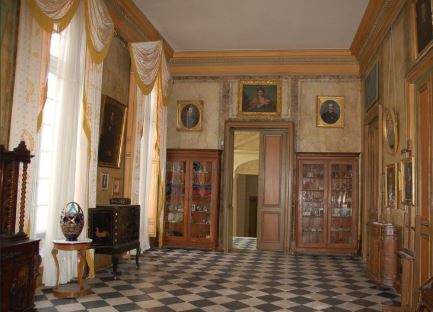
A tour through The Winchester Mystery House cleverly presents a supernatural story that will keep you guessing. https://winchestermysteryhouse.com/
Haircare by Heir

Hair is so important to so many individuals, it adds personality to a person, and so many people take pride in their hair. However, some people like to wear weaves or braids to extend, thicken, protect, and add length to their hair. That is fine. Nonetheless, one has to be careful about who does their hair and what techniques are used to add hair. Many people glue tracks into their hair as a method of making it thicker, and it looks nice, but the glue can adhere to your natural hair and when you remove the extensions, they could pull your own hair out. Not only that, but when you glue hair in, it could also clog the pores in your scalp and cause baldness. If you want to make your hair thicker, longer, or add braids, it is best to go to a professional shop. The best method for weaving your hair is to actually braid the hair the is growing out of your scalp and sew tracks of weave into the braid. If you do not know how to do the process, then go to a shop because you could injure yourself. Also, when adding braids to your hair, it is best to see a professional because someone could braid your hair too tight and cause you hairline to recede. Because hair takes so long to grow and you want to keep it as long and healthy as you can, treat it right.

Talk to a professional and find a style and products that work for you. Also, it matters what you put inside of your body, too. Drink plenty of water and eat lots of fruits and vegetables. Starving yourself, eating junk food, and unnecessary stress can cause your hair to fall out. Also, some people like myself can wash their hair every day, but not everyone can. Washing your hair daily may strip it of natural oils and dry it out and cause it to fall out. Also, the hair dryer and curling iron could damage your hair. Personally, I do wash my hair every day, but I also deep condition it all day, every day. I wash my hair with Tresemme expert selection platinum strength with renewing complex, it is a strengthening shampoo. And I follow a wash up with Tresemme 24 hour body, with volume control complex conditioner. I do not use oil in my hair at all, just conditioner, and that works for me. You have to figure how what works best for your type of hair. Best wishes. A Harris is supposed to have nice hair, and never let anyone make you ashamed of your hair or how you do it. What I consider the most enviable of all titles, the character of an honest person.

Into the Wild

The imprudence of our thoughts recoils upon our heads. Egoistic individualism is the most prominent characteristic of polyandric people; they tend to act on their own, making no attempt to win the support of their fellows, with whom they are often in conflict; they have no genuine talent for organizations. However, at the same time wish to assert themselves, overestimating their own abilities (which do not carry them beyond the average in the own professions, though they may be highly accomplished), and are apt to show morbid susceptibility when they fail to secure recognition. They tend, indeed, to be restlessly nervous, and frequently pass on the nervosity to their offspring. At the same time, they are often attractive, and they pay much attention to their appearance. The monandric individual shows totally different traits. This individual is sincere, faithful, not externally formal, but devoted to their professional duties. (And Dr. M.R. Phillippe remarks incidentally that you are making a mistake to suppose that the monandric individual is unfitted for public life, or that for such life the polyandric individual is better suited.) One possesses energetic organizing capacity and is usually able to deal effectively with both their private and public life, assisted in this by the stability and balance of the monandric individual’s character.

One is guided less by vanity than by honour and the sense of one’s own inner worth. Dr. M.R. Phillippe concludes that the moral characteristics of the monogamous individual are mostly beneficial, while those of the polygamous individual are mostly negative. As we are, he affirms, so we love; our way of love is not a thing in itself, but related in the most intimate manner to the whole of our character. This analysis is instructive. It is interesting, that is, to find even under the revolutionized social conditions of Soviet Russia not only that the people of what some would consider antiquated fashioned type is still predominant, but that they are regarded with as much admiration as we might expect to find in a conservative country like Germany. It would almost seem indeed that the polyandric individual whom, in the opinion of some Western persons, Sacramento, California USA favour, is there unduly depreciated. It is generally admitted on all sides that the younger generation in Russia, under Soviet conditions, has been passing through a transitional phase in pleasures of the flesh, which has admitted extravagancies, even of opposing nature: Some enthusiasts, revolting against the easy sex morality of the antiquated Czarist regime, have sought to subordinate sex and uphold Puritanical ideals.

Conversely, others regarding the old morality as bourgeois, consider libertinage a duty and question the sound political opinions of individuals who resist them. Such extravagancies mark every time of transition. There is really more to be said then Dr. Harris is inclined to admit. That may in part be due to the fact of who the investigators were. Dr. Harris points out, however, that the depreciation of the polyandric individual is share by men and women, even the ones who form temporary relationships with them, for people who form relationships with the harlotry individuals are simply looking as them as convenient means of satisfying sexual needs, merely as substitutes for prostitution, and feel for them no high regard. That, Dr. Harris considers, is an influence making for the degradation of polyandric individuals, whose life-courses are not usually happy. It is unnecessary to add that the monandric individual, who is peculiarly adapted for parenthood and family life, will not easily be deprived of that career. So we still have, notwithstanding all the modifications that we can regard as within the limits of probability, the family persisting, essentially, in its primitive form: father, mother, and offspring. The impulses that make these three units a trinity are all primordial: the desire of parents for each other, the desire of each for the child, and the dependence of the child on its parents, rightly considered on both its parents, for even where there is no material required of a father there is yet a spiritual requirement. Prudence can only direct us to take more cautious measures for the future, and so, if possible, frustrate the bad effects which our imprudence has occasioned. Prudence is always readiest to go on duty where there is the least danger.


The Journal of Social Hygiene
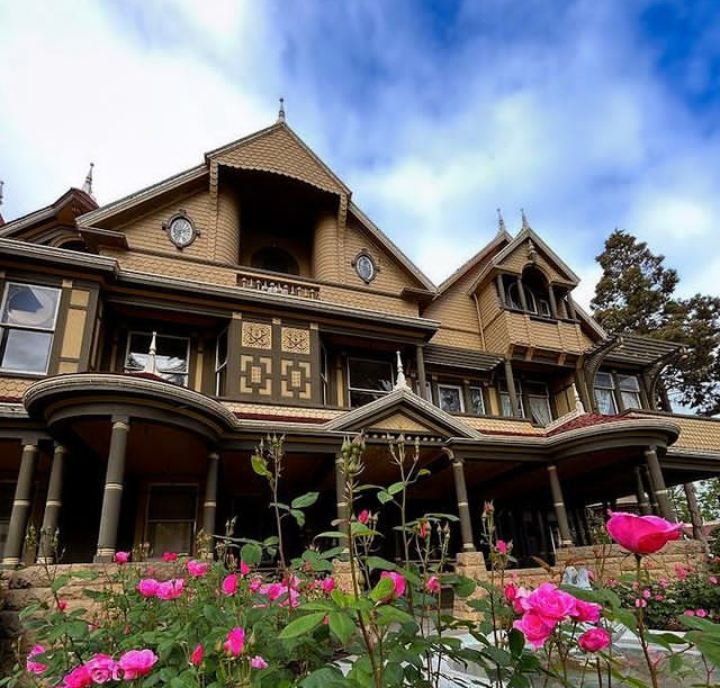
The pain of parting is nothing to the joy of meeting again. Eclipsed as they may be in the gross appreciation of the World by other people, who excel in this and that accomplishment, individuals that nourish Nice Feelings and are intimate with the Fine Shames carry their own test of intrinsic value. Whatever may be the evils resulting from a too susceptible heart, nothing can be hoped from an insensible one. Though the scripture obliges me to remain contented, it does not enjoin me to shut my eyes to my own merit, nor restrain me from seeing when I am injured by an unjust comparison. When poverty creeps in at the door, love flies in through the window. Our proverbs want rewriting. They were made in Winter, and it is Summer now, or at least it feels like it is. Young people of both genders are not in a position to view a larger proportion of the facts, about marriage and extra-marital affairs manifestations, than were open to the generations preceding them, and they are acquiring the courage to act in accordance with the facts. That means many mistakes are being made, for the deepest facts of the sensual life can only be learnt by experience, and experience can only come slow. However, it is perhaps better to make the mistakes of facing life than to make the mistakes of running away from life. For those mistakes may enrich and enlighten, while these are apt to prove futile. The paths of the sensual life are beset by difficulties; but so is the whole life. If we are to live in any true sense at all we are compelled to live precariously.
A large proportion of the men and women of to-day form extra-marital affairs—whether or not they ultimately lead to marriage—which they conceal, or seek to conceal, from the World, this has always been so; what is new is the attitude taken towards such relationships, leading to the conception of the companionate marriage, that is, an openly acknowledged and recognizable relationship less binding than ordinary marriage, through liable to become ordinary marriage should children be born. This conception has not been put forward as a method of relaxing morals, but rather of supporting them, since the open recognition of a kind of relationship which already exists secretly on a large scale cannot but be a steadying and ennobling influence. The preceding considerations represent conditions which are modifying marriages in our Western civilization. However, they are far from overthrowing marriage or threatening the life of the family. On the contrary, they help to strengthen them. It is the rigid institution that is broken; the institution that cannot change is dying. By its flexibility and its adaptation to changing conditions, the family reveals its power of growth. However, marriage, it may once more be repeated, rests fundamentally on biological instincts and the facts of constitutional organization; it is not strictly an institution. When I wanted to go upstairs, there was my spouse coming down; or when my spouse wanted to go down, there I was coming up. That is married life, according to my experience of it.

Study your spouse closely for the next four-and-twenty hours. If your good mate does not exhibit something in the shape of a contradiction in that time, Heaven help you, –you have married a monster. The flexibility and the adaptation are limited, and if they sometime seem extreme, that is simply because we happen to be dealing with individual cases of constitutional variation, such as we can statistically estimate. Even in Soviet Russia, where the legal flexibility of intimate unions has been carried to an extent unusual in the European World, the fundamental facts of human nature remain the same as well as the ordinary human valuations of those facts. Do you know many spouses who respect and admire their mate? And yet they are their husbands get on very well. How many individuals go to the altar with hearts that would bear inspection by the men who take them there? And yet it does not end unhappily—somehow or other the nuptial establishes jogs on. There are two types of spouses: The monandric individual, who is only drawn into serious relationships with one person, and the polyandric individual, who tends to form numerous relationships with others, either successively or simultaneously. It is found that people who abstain from extra-marital affairs are nearly twice as numerous as the polyandric spouse. You have been inoculated for marriage, and have recovered. If the course of true love never runs smooth, the course of true matchmaking sometimes does so.

The Winchester Mystery House
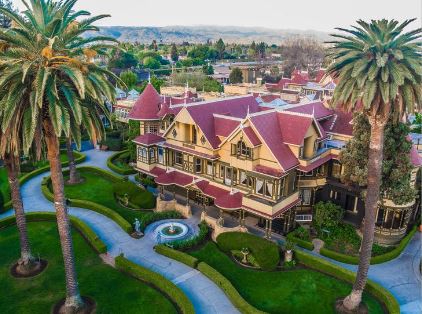
Cross through the iron gates and traverse the beautiful Victorian garden to discover the mysterious stories and dramatic Winchester Mystery House. https://winchestermysteryhouse.com/

Morals and Marriage
The frequency of divorce has much increased since the Great War, but it was steadily if more slowly increasing long before, though in France the incident of divorce increased up to 1921 and since then has somewhat decreased. The post-war so-called “epidemic of marriage” was naturally followed by an “epidemic of divorce,” which is now subsiding, although we may still expect the rate to rise slowly as the impediments are removed. In Japan, it may be remarked, which comes next to the United States in frequency of divorce, there was no post-war rise. The United States holds the record; in 1923 there were 360 divorces to 100,000 of married population (or 149 to 100,000 of the whole population). And in some States, this means one or more divorces to every five marries, though, according to the later American results of Grove and Ogburn, there is one divorce to every seven marriages, actors and musicians constituting the most divorcing professional class. In Europe, Austria, and Switzerland stand high, and England very low with only 6.8 divorces to 100,000 of population. In Russia divorce may be obtained at the wish of either party (and at the wish of both it may be arranged before the Registrar, without recourse to the Courts), yet divorce is far less frequent than in the United States, and the younger generation cultivate the ideals of self-discipline and self-control. Such differences represent differences of social opinion and of religion, as well as discrepant facilities for obtaining divorce. The general advance of divorce corresponds to the normal condition of advanced civilization and represents a necessary and healthy adjustment to the complex social conditions. Divorce by mutual consent (and even on demand of either party) is the goal towards which we are moving, and it has already been reached in some countries.
It is reasonable that a contract formed by mutual consent should be dissolvable by mutual consent, and so far from divorce being destructive to the family, we may agree that it is a necessary means of preserving the dignity of marriage by ending such marriages as have ceased to be worthy of the name. Still, it causes great hardship on the family. Often when couple divorce, it rips their hearts to shreds and scrambles their brains, making them unable to respond to life properly or sometimes they are so damaged that they cannot even work. Divorce may also poison a parent’s relationship with their children to the point children are indifferent to one or both of the parents and in some cases, they may not like one or both of the parents. Then another person caused the parent divorce, or the parent starts dating right after a divorce, the child(ren) may strongly dislike the object of their parents’ affection and may be embarrassed to be seen in public or be associated with the person their parent is dating. The tendency to diminish the rigidity of marriage ties is being carried further, it may be added, than an increased legal facility for divorce can carry it. Many couples marry because they plan to spend their lives together, they work, build bank accounts, homes, and retirement accounts, and when the couple divorces, these assets have to split up and often times one or both parties may not be able to sustain their lifestyle and could end up going broke and losing their homes after paying for a divorce.
Also, their retirement accounts may get drained, and they have to start all over. There is also the issue of child support, parents still are responsible for supporting them kids and may have to pay for them until they turn eighteen and that sometimes can include the cost of a college education, which something cost $100,000.00. There is undouble a tendency in our Western civilization to recognize the existence of sexual relationships outside of marriage altogether, always provided that such relationships are not for the procreation of children. It may be aid that such extra-marital manifestations of the sexual life are no novelty. Prostitution has flourished in secret and even been defended in public, while what is called seduction has everywhere been taking place. However, the novelty often lies in the fact that both prostitution and seduction are diminishing. Prostitution is becoming less attractive and seduction less possible. The palmy days of prostitution (which seems to have begun as a religious rite) were before syphilis entered civilization, and its prestige has been gradually falling ever since. Seduction in the legitimate sense of the word (as seduced is often merely the expression used by women of low social class to describe their first act of sexual intercourse) is only possible when the woman is unduly ignorant of the nature of sexual relations, and the state of affairs is coming to an end. However, when prostitution and seduction are, so far as possible, eliminated, the objections to the formation of sexual relationships—in the absence of higher ethical or religious considerations and provided offspring are not contemplated—largely fall away. There can be no doubt that this new condition is becoming appreciated by younger generations.
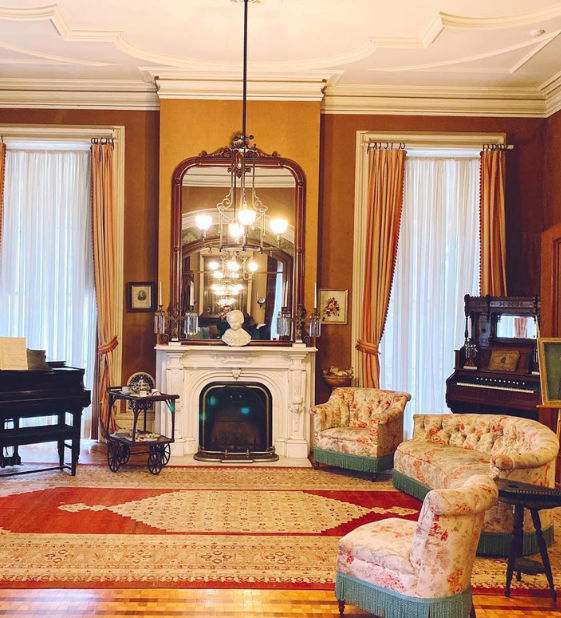
The Winchester Mystery House
Tour guide will lead you deep inside the haunted spaces of The Winchester Mystery House to explore. https://winchestermysteryhouse.com/

Controlling Appearance of the Children
It often happens that if the daughter is right, the mother is wrong, and the mother is not going to have this if she can help it. The desirability of controlling the appearance of the child(ren) in the family brings us to the question of contraception. That is a question around which in the immediate past much controversy raged. It cannot even be said that it has ceased to rage. And since in some countries of the West there are still legal disabilities to be remedied in order to bring the law into harmony with customs and opinion, propaganda is artificially stimulated. There is, however, no longer the shadow of doubt that both the principle and the practice of birth control are now firmly established in all civilized lands, and gradually becoming accepted by every class of the community, so that before long the only matter of dispute will be concerning the best method by which it can be carried out. It is estimated that at the present rate birth control will become practically Universal in our civilization within from twenty-five to fifty years, and it may be that with better conditions of sexual initiation, increased medical study of the difficult problems involved, and the cultivation of self-control, mechanical methods of control will become less necessary. There are three main lines along which this development has proceeded.
In the first place there has been the insistence of women that they will no longer be breeding machines, destroying alike themselves and their excessive progeny. In Russia, where the birth-rate rises and the infantile death rate is falling, the requirement of contraception is recognized, but not yet fully established. Abortion is legalized and conducted with due precaution, but on a large scale this is a poor substitute for contraception. In the second place the economic conditions of life for all social classes in the modern World tend to render caution and foresight necessary in family life, and there are now but few parents who can afford to disregard so completely these conditions, and the responsibilities of bringing up children in the World of to-day, as to have an unlimited family. In the third place, scientific demographers and statisticians are now, with ever increase in the Earth’s population, which up to about two centuries ago was practically stationary, cannot be much longer continued, since even another few decades may suffice to reach the limit of possible expansion. Each of these lines of debate are legitimate. When combined, they are of irresistible force.
Some people practice celibacy as a form of birth control and to preserve their virtue and chastity. Another modern condition which has an important bearing on the family in our Western civilization is constituted by the increase of divorce and the ever-greater legal facilities for securing it. Speaking generally (there are always exceptions) it may be said that in savage societies, as probably in the primitive World, mating, provided they are formed with members of the group with which mating is permitted, are easily formed and rather easily ended. In more advanced barbarous societies, in which property becomes a chief factor in society, masculine influence is more predominant than before over feminine influence, the marriage bond grows more rigid and especially rigid in favour of the husband. In the later civilized social states this rigidity is relaxed, divorce becomes easier and more frequent, and the rights of the genders tend to be equalized. We may see that process in classic Rome. Beginning, it may well be, in a social state of more or less matriarchal constitution, when the Roman social order became patriarchal, marriage in some of its forms was almost indissoluble, and divorce, so far as it existed, was usually a privilege confined to the husband, except in a free marriage, where the wife did not fall under the manus of her husband. However, in the later development the privileges of free marriage were extended to manus marriages, and Roman law became equally liberal to husbands and wives in the matter of divorce. That represents approximately the stage that we have to-day reached in Western civilization.

The Winchester Mystery House
For anyone who loves the number 13, a tour through The Winchester Mystery House is a journey through loss and grief, but ultimately a story of hope and self-reliance. https://winchestermysteryhouse.com/

Extraterrestrial

By Randolph Harris
updated 3:40pm (EST), Sun May 6, 2012
In 1992, congress started the Space Guard program, a global network of telescopes used to find Earth threatening asteroids. As of 2011, NASA has identified 10, 000 near Earth objects that could potentially hit planet Earth. Scientists have found evidence that humans and dinosaurs co-existed. The evidence is in the form of cave paintings. Dinosaurs became extinct about 65 million years ago, some scientists believe it was the result of an extraterrestrial attack. Some speculate that extraterrestrials killed off the dinosaurs to create a race of people in their image, which is what the Bible claims was God’s plan. Genesis 1:27, “And God created man to his own image: to the image of God he created him: male and female he created them.” The Bible also mentions leviathan, which are huge creatures, the size of a dinosaur called leviathan. The Bible does talk about ways to ride the Earth of leviathan, “break the heads of Leviathan in pieces before giving his flesh to the people of the wilderness;” Psalms 74 So maybe it is not so ironic that our cars run off of fossil fuel. Perhaps it was all predicted in the Bible?
Currently, NASA is able to redirect objects, which are headed to Earth, this leads researchers believe that it is possible that a highly advance extraterrestrial directed an asteroid toward the Yucatán Peninsula on Earth, which lead to the death of the dinosaurs. These scientists also believe that the asteroid, which killed the dinosaurs, may have actually been an extraterrestrial weapon, not simply an asteroid. In 1980, physicist Luis Alvarez discovered a thin layer of global settlement, which is nearly 65 million years old, and it contained high levels of iridium. Iridium is an element, not naturally found on Earth. The materials came from somewhere in the solar system. Iridium is often detected from fall out from a nuclear explosion. To this day, Dinosaurs bones are painted with lead paint because the bones are very radioactive. Some also ask the question, “Why were only dinosaurs killed?” If a meteoroid killed off the dinosaurs, all animals on Earth should have been killed.” However, sharks, cock roaches, crocodiles, and lizards survived. It is also believed that Leviathan still exists on Earth, in the deep sea or in unexplored lakes. “And the dragon stood on the shore of the sea. And I saw a beast coming out of the sea. He had ten horns and seven heads, with ten crowns on his horns, and on each head a blasphemous name.” -Revelation 13:1
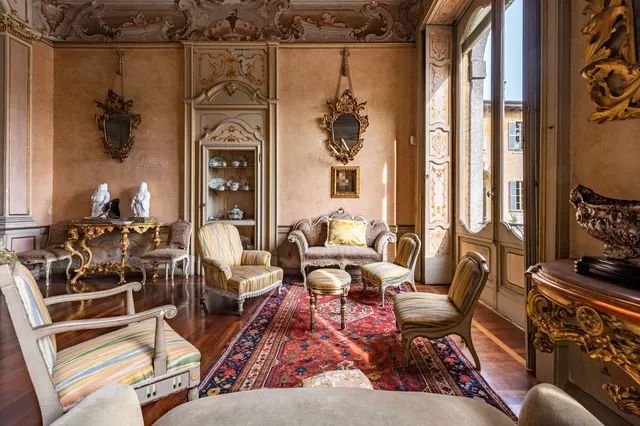
The Winchester Mystery House
Does the Mysterious and the unknown interest you? If so, a tour through The Winchester Mystery House will leave your mind wondering. https://winchestermysteryhouse.com/

Within My Reach!
Within my reach! I could have touched! I might have chanced that way! Soft sauntered (walked) through the village, sauntered as soft away! So unsuspected violets within the fields low, too late for striving fingers that passed, an hour ago. A wounded deer leaps highest, I have heard a hunter tell; this but the ecstasy of death, and then the brake is still. The smitten rock that springs: a cheek is always redder just where the hectic stings! Mirth is the mail of anguish, in which it cautious arm, lest anybody spy the blood and you are hurt exclaim! The Heart asks pleasure first, and then, excuse from pain; and then, those little anodynes that deaden suffering; and then, to go to sleep; and then, if it should be the will of its Inquisitor, the liberty to die. A precious, mouldering pleasure it is to meet an antique book, in just the dress his century wore; a privilege, I think, his venerable hand to take, and warming in our own, a passage back, or two, to make to times when he was young. His quaint opinions to inspect, his knowledge to unfold on what concerns our mutual mind, the literature old; what interested scholars most, what competitions ran when Winchester was a certainty and brave man; he traverses familiar, as one should come to town and tell you all your dreams were sown. His presence is enchantment, you beg him not to go; old volumes shake their vellum heads and tantalize, just so. Much madness is divinest sense to a discerning eye; much sense the starkest madness. It is the majority in this, as all, prevails. Assent, and you are sane; Demur,–you are straightway dangerous, and handled with a chain. Every generation has its own vices, and many others as well, for every generation includes individuals of opposite temperaments. That has probably been realized by most people, and the agitation over the modern individual and their many imperfections. We need not deny the reality of many of the imperfections revealed in the course of the discussion.
It begins to be seen that our views of the present are falsified by own imaginative ideas of the past. In the depth of our unconscious we ingeniously construct a picture of the past, and then we are horrified, or delighted—according to our individual tastes—by its contrast with the present. In this matter the picture of the past is constructed out of rags and tags of what we call Victorianism. There was an amusing satire on this tendency of the human mind in a brilliant Revue not long ago played in London and New York, This Year of Winchester. Here we were given a glimpse of the Victorian groom of 1890, arriving in all his glory at seaside lodgings (in, it so chances, the coast resort where I write these lines), and then a glimpse of a similar couple in all their easy familiarity. One scarcely needs to be old enough and privileged enough to know how these things happened in 1890 to be able to state with assurance that a real man of that date was far more like that of 1928 than like his imaginary self. The real differences are in things not essential, in clothing and social conventions. I asked no other thing; no other was denied. I offered Being for it; the mighty merchant smiled. Brazil? He twirled a button, without a glance my way: but sir, is there nothing else that we can show to-day? The heart selects his own society, then shuts the door; on his divine majority obtrude no more. Unmoved, he notes the chariot’s pausing at his low gate; unmoved, and emperor kneeling upon his mat. I have known him from an ample nation choose one; then close the valves of his attention like stone.

The Winchester Mystery House

Strange happenings occur while visiting a haunted house. https://winchestermysteryhouse.com/
Young were too often Left in Ignorance
It seems that many have passed the stresses of youth and its ardours (emotional wrath) and are able to take a wide and serene view of the facts of the present and the limited possibilities of the future. For in the past the young were too often left in ignorance of the things that belonged to their fate, it is possible that there may be limits to the consciousness, it is desirable for us to possess in youth of processes, going on within us, and of the direction in which we are moving. I am not likely, I think, to be accused of meaning by love merely a mild euphemism for the physical explosion of the sex, or by virtue merely the namby-pamby convention of goodness. If when I speak of love, I may sometimes seem to recall the media’s libido and its sublimations, there is also an echo of the love that God celebrated as one with the force that moves the stars; and when I speak of virtue, it is more often the sort of virtue which God proclaimed, free from all moralic acid, the sort which men sometimes mistake for vice, while they bow down to the hollow image of an outworn virtue, and smugly mistake their own feebleness for the will of God.
I am surrounded by traditions that once were living and now are dead, not only in the spiritual World but even in the industrial and commercial World, and yet are clung to with a passionate tenacity which blinds those who hold them to fate they are bringing down on themselves. I have an independent reverence of Victorian history, architecture, and art. As one grows older, indeed, one may observe with intelligent interest, and if one is sensitive also share, the perpetual slight change which taste is always undergoing, the perpetual slight novelty in which all life, and indeed all art, consists of. So it is possible to be young and to be old many times, even in the course of the same life. I eagerly search for things that please myself, things, some of them, which afterwards also pleased other people, so much so that they have since left me tired. We are all concerned with life, even though in different sense or on different aspects; and life means for us, at the beginning and at the end, no abstracted formula, no society, but this human organism, with its desires and its satisfactions, its ardours and its weariness, its endless mysteries, its strange possibilities, its curious loveliness, not yet fully explored and known.

It is my goal to adopt an old heroic virtue, firm alike in the discipline of self-control, and thereby in the strength to control the World, that we require to-day, whatever may have been required in the days when individuals gathered together to listen to the Sermon on the Mount and thereupon went forth to slay and steal and lie and make the World a hell. The love I have in mind is that which secretly inspires a virtue which refuses to yield weakly to the circumstances of a World moulded by the dead heroism of a past it has outgrown. It comes forward with its own heroisms to guide life into new forms, even if in doing it must sweep away the old moralities to set up other moralities more in accordance with the increased knowledge of our own days. I belong to a land where all who are truly alive are to-day specially called upon to live daringly, and where virtue, in the antique and genuine sense, as the impulse to demand things that are great and rare, becomes a prime duty. Success is counted sweetest by those who never succeed. To comprehend a nectar requires sorest need. Not one of all the purple host who took the flag to-day can tell the definition, so clearly, of victory, as he, defeated, drying, on whose forbidden ear the distant strains of triumph break, agonized and clear. Our share of night to bear, our share of morning, our blank in bliss to fill, our blank in scorning. Here a star, and there a star, some lose their way. Here a mist, and there a mist, afterwards—day!

The Winchester Mystery House

Detectives have investigated the mystery of hidden treasure, strange noises, and disappearing guests at The Winchester Mystery House. https://winchestermysteryhouse.com/
 Randolph Harris II International Institute