
Home » NGC3031 (Page 38)
Category Archives: NGC3031

The Night Was Wide and Furnished Scant: I Got the Keys!

Self-satisfaction is a terrible trap if you want to achieve anything important. In times of stress, psychological pressure compels us to deny or dismiss inconsistent evidence, pushing us to perceive certainty and clarity where there is neither. The proposition A and B are equal may be descriptive or normative, but in either case it is incomplete without a statement of the respects in which the objects or a person compared are deemed to be equal. In instances where this appears not to be so, either the context supplies the complement or the comparison is of pure quantities, as in pure mathematics. Two objects equal in weight, or height, or value may be unequal in other respects; apart from the abstractions of mathematics and logic, no two objects could ever be said to be equal in all respects, only in all relevant respects. Correspondingly, to say that two candidates are equal in merit would usually mean that with respect to their performances in some understood competition or examination, they deserve to be treated alike; it does not rule out treating them differently if they are unequal in other respects.

When we feel that something is off balance, we seen that we can try to uncover the origin of the imbalance in conflicting or unresolved ideas or events. No distinction ought to be made between men who are equal in all respects relevant to the kind of treatment in question, even though in other (irrelevant) respects they may be unequal. On the other hand, in any matter in which they are in relevant respects unequal, they ought to be treated in proportion to their relevant inequalities. These analytical distinctions are of considerable importance in dealing with equality as a moral and social ideal. President Thomas Jefferson’s claim that “all men are created equal” cannot be rebutted by pointing to the obvious fact that some are taller, stronger, or more clever than others. The claim is intelligible only as a prescription, as saying that there is some respect, at least, in which no difference ought to be made in the treatment or consideration given to all men, whatever differences there might be in their qualities and circumstances. We have explored how the urge to resolve ambiguity is deeply rooted, multifaceted, and often dangerous.

As we make decisions, we need to recognize both the consequence of a decision and our current need for closure. In doing so, we can avoid grasping for new solutions in panic or sticking too rigidly to old ones. Some people believe that others are slaves by nature because some souls are not merely capable of higher development than others, but more valuable on that account. The natural equality of all men as rational beings with an equal capacity for virtue: Virtue closes the door to no man; it is open to all…the freeborn, the freedman, the slave and the king…neither family nor fortune determines it choice—it is satisfied with the naked human being. Men are equal only in the sense that by sin all were totally, and therefore equally, unworthy; God in his mercy extended grace to some but not to others. The equality of all men in the sight of God by the doctrine that slavery is consequence of sin. This view of equality came to be associated with the theory of church government—and indirectly of secular government—that derived legitimate authority (i.e., the right of superiors to command inferiors) from the voluntary agreement of natural equals to submit to such of their number as they choose.

We have seen how easily we can misinterpret genuine ambivalence as calculating duplicity. When we are trying to pin down someone’s intentions, we need to realize that ambivalence is a more natural state of mind than we ordinarily assume. These doctrines were given their first completely secular expression—associated with theories of natural right and social contract—by some of the Parliamentarians in the English civil war, particularly the Levelers. Colonel Rainborough’s declarations in the General Council of the Army in 1647, that the poorest he that is in England hath a life to live as the greatest he and that no one can have a duty to obey a government that he hath not had a voice to put himself under and that is a classic expression of democratic political egalitarianism. Some people think that men are only equal in strength and cunning. By nature, men are equally free, are subject only to natural law, and enjoy the same natural rights. This turns the problem of political authority and obligation into a search for reasons why free and equal men should accept the limitations of civil society.

Political inequality, of rulers and ruled, must by justified as a conventional device for the better safeguarding of the rights and advantage that all men already possess but cannot securely enjoy, in a state of nature. Difference of character, talent, and intelligence are due to difference in environment and experience. By nature men are equal in that sense that at birth they have a limitless potentiality with potentiality without natural characteristics to differentiate one from another. Consequently, their diverse natures are, in fact, contingent; in principle all men are equally perfectible, given the appropriate social arrangements. In the state of nature men’s needs are simple, none need rely on anyone but himself, so none can exploit another or make him subject. The key problem for social philosophy, to which the sovereignty of the general will could provide a solution, is to reconcile the natural equality and autonomy of men with the social condition and political authority potentiality as morally self-governing persons. More broadly, organizations that are consistently forces to deal with ambiguity under pressure can ensure that people with a low need for closure play a central role in decision making.

All human beings must be treated as ends, not merely as means; all men are equally capable of realizing the good will, the only thing in the World good in itself. Our need for closure is a powerful force. It is so deeply ingrained in everyday living that cultivating an awareness of how it works is not enough. Combating its dangers means designing intuitions and processes that makes us less likely to succumb to our natural tendencies towards resolution when it matters most. The right negotiators will stay calm in the face of fluid, incomplete, and seemingly contradictory information. The right reminders at decision points will lower our need for closure. We can build an awareness of what we do not know about the future into our approach to the World by crafting methods to react quickly to change rather than trying to predict it. Ambiguity does not have to be paralyzing or distasteful. Under the right conditions, as we will see, embracing uncertainty can in fact provide opportunities to innovate. It can inspire creative solutions, and might even help make us better people.

And they all have plenty of money, money enough to walk away from this place and be comfortable wherever they go. That gives them a feeling of security, and in air of independence. However, they want to be right here. It is reported that most people spend their lives regretting the past and fearing the future; therefore, they are unable to experience joy in the present. Many of us have assumed that this is our human fate, our lot, and the best that we can do is accept life for what it is. One of the most effective tools for handling the past is the creation of a different context. What this means is that we can give it a different meaning. We take on a different attitude about the past difficulty or trauma, and we acknowledge the hidden gift in it. Everyday life experiences, no matter how tragic, contains a hidden lesson. When we discover and acknowledge the hidden gift that is there, a healing takes place. Your riches taught me poverty. Myself a millionaire in little wealth.

The Winchester Mystery House

Whether you are an expert, an architect, a student or just a lover of Victorians you will enjoy The Winchester Mystery House. https://winchestermysteryhouse.com/

The Ideas of the Fall and of Original Sin
God created man with no sin in him in a World devoid of evil. What appears to be evil, when seen in isolation or in a too limited context, is a necessary element in a Universe which, viewed as a totality, is wholly good. From the viewpoint of God, who sees timelessly and as a whole the entire moving panorama of created history, the Universe is good: To thee there is no such thing as evil, and even in thy whole creation, taken as a whole, there is not. A Universe in which all the varied potentialities of being are realized and which contains as many different kinds of entity as are possible (lower as well as higher, lesser as well as greater), is a better Universe—one which more adequately expresses the infinite creativity of God—than would a Universe which contains only the highest type of created beings. There is thus an immense hierarchy of forms of created existence, and each creature, in its own proper place in the scheme of nature, is good and glorifies its Maker. Those that are lower in the scale of being are not on that account of evil; they are just different goods, contributing in their different ways to the perfection of the Universe.

Again, things that are transitory by nature, appearing then perishing within the ever-changing pattern of nature’s beauty, contribute, even by the passing, to the perfection of the created order. As a very minor sub-theme within this aesthetic conception, the notion of evil provides a contrast by which good shines the more brightly. The more we love, the more we can love. Love has a powerful anabolic effect. Love increases endorphins, which are life-enhancing hormones. You can live ten years longer with a source in your life that catalyzes the energy of love, and that energy of love heals and prolongs life. For instance, in the film Straight A’s, with Ryan Phillippe, Anna Paquin, an Luke Wilson, Ryan Phillippe plays a man named Scott, who is an outcast from the family and seeking redemption, and he returns home and throws everyone’s lives into disarray. However, he also helps to heal the family and himself by paying attention to each member in the family and bring out their core essence. The energy of love has the capacity to heal our bodies and others when conditions are appropriate.

The Universe must contain mutable and corruptible creatures, compounded of being and nonbeing. It is better that the Universe should include free beings who may, ad do, fall than it should omit them. If Scott had not had the free will to reenter the lives of his family and the ability to be himself, they may have all suffered an existence without try love, without passion. He gave them all a second chance at life. Thus, Scott brings even moral evil within the scope of his aesthetic conception of life. In doing so, he employs the further principle that as long as sin is exactly balanced by just punishment, it does not upset the moral harmony of the Universe. For instance, the little boy Charles, who is probably eight years old did not have a father in his life and lacked the confidence to give his speech in class. And the bell rang, and his drunk Uncle Scott showed up to school to have lunch with his nephew Charles. And Scott talks to young Charles’s friends and gives them all juice and money and says it is from his nephew Charles, which turns Charles from a reject to the coolest kid in school.

And Grace, Charles’s niece, her own father was not around, so Uncle Scott pours himself a drink and allows her to cut his hair and put ribbons in it. She cuts his scalp a little and it hurts him, he asks Grace if she sees and blood? Grace, says no, then, apologizes and tells his niece to keep styling his hair. Then he lets her shave his facial hair. Also, it is a very uptight community, and while Katherine (Anna Paquin) the matriarch of the family is at brunch, the women are gossiping and assume she is having an affair with William’s (Luke Wilson) brother Scott, which she is not, because Scott is never home. Scott and Katherine kind of play mother and father roles for this kids, while their father is away and it creates a platonic sense of balance in the house for Katherine, as she gets to enjoy having a man around the house and the masculine energy him brings makes her feel like she has a loving husband around and he also keeps the kids happy by playing father to them. Since there is happiness for those who do not sin, like William’s wife Katherine, the Universe is perfect. So, whatever a soul may choose, every beautiful and well-ordered in all its parts is the Universe whose Maker and Governor is God.
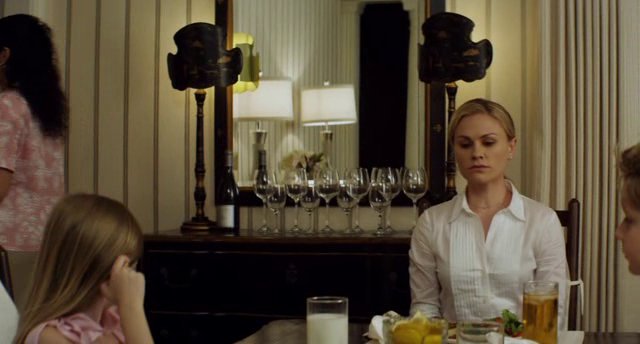
The film Straight A’s is a good film the shows how the Universe works because it is the best of all possible Worlds. It is the best, not because it contains no evil, but because Uncle Scott’s seemingly deviant nature is actually benevolent and gives everyone exactly what they need, and he may be a little reckless, but loves his family and only wishes the best for them. He does not show up to harm them nor take advantage, but to be around people he loves and admires and helps them balance their lives and gets the sense of family and the bonds that Scott has been longing for. Also, any other possible World would contain more evil. Had Scott not showed up when he did, perhaps Katherine would have gotten a divorce, Charles would have turned into a delinquent, and maybe Grace, with the lack of a male role model, would have later in life sought attention from men by being promiscuous. And perhaps without the family being there for Scott, some prostitute(s) would have hustled him out of his pension and left him for dead. The eternal possibilities of existence are individually present to the Divine Mind which, like an infallible calculating machine, surveys all possible combinations and selects the best, to which it then gives existence.
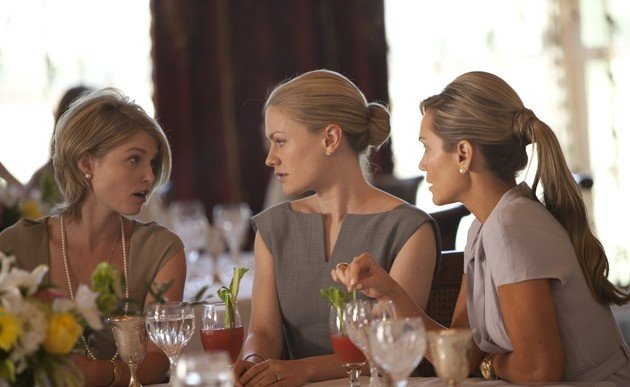
Man willfully misused his God-given freedom and fell into sin. Some men and women, will be redeemed by God’s grace, and others will be condemned to eternal punishment. In all this, God’s goodness and justice alike are manifested. However, this traditional theodicy has been criticized for its accounts of the origin and of the final disposition of moral evil. The origin of moral evil—it is urged that the notion of finitely perfect beings willfully falling into sin is self-contradictory and unintelligible. A truly perfect being, though free to sin, would in fact never do so. To attribute the origin of evil to the willful crime of a perfect being is this to asset the sheer contradiction that evil has created itself ex nihilo (Latin phrase meaning out of nothing). In the Film Straight A’s, Scott represents God, Katherine represents Eve, and William represents Adam. It is logically impossible for God to have created men such that they would always freely make right moral choices has been under attack under the name of “the free will defense.”

Defining a free action as one which flows from the nature of the agent, without eternal compulsion, recent writers have claimed that, without logical contradiction, God might initially have given men a nature which would always freely express itself in right actions. If God’s primary purpose for men is to evoke in them free and uncompelled love and trust in relation to himself, would this purpose be frustrated by his creating men so that they cannot do other than make this response? If God desires to save all his human creatures, but is unable to do so, he is limited in power. If, on the other hand, he does not desire the salvation of all, but has created some for damnation, he is limited in goodness. Before his fall, Adam was in a state of original righteousness, and that his first sin was the inexplicable turning of a wholly good being toward evil. The pre-Fall Adam was more like a child than a mature, responsible adult. Adam stood at the beginning of a long process of development. He had been created as a personal being in the “image” of God, but has yet to be brought into the finite “likeness” of God.

The fall of Adam is seen, not as disastrously transforming and totally ruining man’s situation, but rather as delaying and complicating his advance from the “image” of God, but had yet to be brought into the finite “likeness” of God. His fall is seen as disastrously transforming and totally ruining man’s situation, but rather as delaying and complicating his advance from the “image” to the “likeness” of his Maker. Thus, man is viewed as neither having fallen from so great a height of original righteousness, nor to so profound a depth of total depravity; rather, he fell in the early stages of his spiritual development and now, needs greater help than he would have otherwise required. So in the film, Straight A’s, Scott comes to this family to provide William the help he needs in keeping his family together and in return is provided with a place to stay and teaches and receives unconditional love. Therefore, the doctrine of eternal damnation must be real and by loving each other as God intended, this family was saved from unnecessary hardship and end up stronger because they acted out of love and not selfish greed, nor malicious intent.

The Winchester Mystery House
Come tour The Winchester Mystery House. The mansion’s common rooms are particularly gorgeous: notice the bay windows in leaded stained glass, the beautiful moldings, and the handsome chandeliers. https://winchestermysteryhouse.com/
The Price of the View—Creation is Always Preceded by Chaos

Whatever may be the general infelicity of man, one condition is happier than another, and wisdom surely directs us to take the least evil in the choice of life. The problem of evil concerns the contradiction, or apparent contradiction, between the reality of evil on the one hand, and religious beliefs in the goodness and power of God or the Ultimate on the others. Considered as a response to the problem of evil as stated above, this view is defective in that it redescribes the problem but does not attempt to solve it, for it leaves unexplained the evil of our suffering from the compulsive illusion of evil. There is the dualism exemplified most dramatically in ancient Zoroastrianism, with its opposed good and evil deities, Ahura Mazdah and Angra Mainyu. A much less extreme dualism can be propounded since the terms of the problem of evil vary with the character of the religious beliefs which give rise to it, a separate study is required for each of the great religious systems. In the present articles, however, the problem will be treated only in the context of the Christian tradition.

If we regard this World only, it is the interest of every man to be either perfectly good or completely bad. He had better destroy his conscience than gently wound it. Christianity (like Judaism and Islam) is committed to a monotheistic doctrine of God as absolute in goodness and power and as the creator of the Universe ex nihilo (the Latin phrase meaning “creating out of nothing”). The challenge of the fact of evil to this faith has accordingly been formulated as a dilemma: if God is all-powerful, he must be able to prevent evil. If he is all-good, he must want to prevent evil. However, evil exists. Therefore, God is either not all-powerful or not all-good. Conscience the awarder of its own doom. A theodicy is accordingly an attempt to reconcile the unlimited goodness of an all-powerful God with the reality of evil. There is a motivation for adoration, in the study of the lowest fruits of the wisdom and power of God. God’s first creature, which was light, as well as the seeing eye.

The kinds of evil distinguished in the literature of theodicy are the evil originated by human being (and angels), that is, moral evil or sin; the physical sensation of pain and the mental anguish of suffering, which may be caused either by sin or by natural evil, that is, disease, tornado, earthquake, and so forth; and the finitude, contingency, and hence imperfection of all created things which some have called metaphysical evil. Why has an infinitely powerful and good God permitted moral evil in his Universe? And why has an infinitely powerful and good God permitted pain and suffering in his Universe? Well, if the sole and ultimate power is unambiguously good, what is evil and whence does it come? Evil is a privation. The conception of evil is an independent reality and power coeternal with good as the privation, corruption, or perversion of something good. Evil has no independent existence, but is always parasitic upon good, which alone has substantial being. Nothing evil exists in itself, but only as an evil aspect of some actual entity. Thus, everything God has created is good, and the phenomenon of evil occurs only when beings which are intrinsically good (though mutable) become corrupted and spoiled.

God, as the highest, richest, and most intensely real being, is the supreme good, and everything that he has brought into existence is ipso facto (by that very fact or act) good. For this reason, the corruption which we call evil can never be complete; for if a thing becomes so vitiated in nature that it ceases to exist, the evil which parasitic upon it must also cease to exist. Hence, there can be no wholly evil being. Fear results in chronic anger and makes us prone to attack and to inner emotional chaos. Pain and suffering occur, with periodic despair and proneness to emotional upset. The ego-mind, which sees everyone as separate, is envious of anyone else who appears happier, more successful, or with a better relationship, a better body, or better connections. Soon, because of a lack of inner clarity about goals, there is confusion leading to self-pity, envy, and further resentment. Self-condemnation gets endlessly projected onto the World, taking the form of condemnation from others, which increases further the guilt and feeling of smallness.

For some of us, the only escape is through grandiosity, intolerance, bigotry, arrogance, and anger, which take the form of cruelty, over-bearingness, brutality, and insensitivity to the feelings of others. Often the insensitivity comes with self-excuses, such as: “I am an upfront person who speaks my mind,” or “I am the frank type; you always know where you stand with me.” These comments are a cover-up for insensitivity, which might be better described as gauche, which means to lack ease of grace; unsophisticated and socially awkward. The low self-esteem results in criticism of self and others, constant competition and comparison, analyzing, contempt, intellectualization, doubt, and fantasies of revenge. Evil has entered into the Universe through the culpable volitions of free creatures, angels and men. Their sin consisted. Not in choosing positive evil (for there is no positive evil to choose), but in turning away from the higher good, namely God, to a lower good.

For when the will abandons what is above itself, and turns to what is lower, it becomes evil—not because that is evil to which it turns, but because the turning itself is wicked. No your child was not born disabled or sick because they were bad in a prior life. Your husband, who has been good all his life and done what he was told did not pass away because he was cursed. Natural evils, such as disease, are divinely ordained consequences of the primeval fall of man, and this traces all evils either directly or indirectly to a wicked misuse of creaturely freedom: There are two kinds of evil, sin and the penalty of sin. There is no efficient, or positive, cause for evil willing. Rather, evil willing is itself a negation or deficiency, and to seek for its cause is as if one sought to see darkness, or hear silence. The best way to understand this assertion of the inexplicability of this obscure teaching, in principle, of free volitions; for what cause of willing can there be which is prior to willing? The origin of moral evil lies hidden within the mystery of human and angelic freedom. The freely acting will is an originating cause, and its operations are not explicable in terms of other prior causes.

Stated differently, everything God created is good. However, God loved humans so much that he did not want to make them slaves and punish them for every bad thing they did wrong, and force the World to be good. Earth is an experiment. If you love God, he has given you the free will to be good people. So, in essence, because God wants us to be free, it is up to us to do what is right. Evil is a manifestation of human nature. However, none of us is perfect, and we are here to learn. So our deeds are weighed based on our hearts because we all do things that may be perceived as evil. This could be because we are under attack, or we do not know what we are doing wrong. So that is why we are supposed to do on to others as we would have them do on to us. Commit your way to the Lord, trust in Him, and He shall bring it to pass. There must be something in my character that conforms to the likeness of God. What I need is God’s surgical procedure—His use of external circumstances to bring about internal purification. Keep paying the price. Let God see that you are willing to live up to the vision. God has made nothing in vain.

The Winchester Mystery House

A tour of The Winchester Mystery House will confirm and dispel the various myths and rumors that have surrounded the mysterious Mansion since its opening. And now new history has been added as the attraction continues to evolve. https://winchestermysteryhouse.com/
Terrestrial Physics
Evil itself cannot be conclusive because the problem of evil only exists for those who believe in God. A similar consideration applies to the argument that rebirth allows the possibility of self-perfection. There are, in some beliefs that there are periodic destructions of the cosmos, and during these periods embodied souls continue to exist latently. The hypothesis of reincarnation presents interesting problems about personal identity. If personal identity is analyzed in terms of memory, there would seem to be only a vacuous distinction between saying that A is reborn as B and that A and B are separate persons. And that memory of any given life may be regained at some time or other in the series, and this would hold the series together. If bodily identity were held to be necessary to personal identity, rebirth could scarcely be meaningful, as it involves causal action at a distance in the transition from A’s death to B’s birth or conception. Everlastingness is something intermediate that is appropriate to the Heavens and to angles. This is conceived by some as having a beginning, but no end and by others as possessing earlier and later, but without innovation and aging. Anyone who speaks of eternity as the complete possession of eternal life all at once seems to be running together two incompatible notions, that of timelessness and that of life. For we can attach no meaning to the word “life” unless we are allowed to suppose that what has life acts. No doubt that the word “acts” may be taken in a wide sense. Most people have an issue understanding the concept of eternity because there could be no succession without aging. Aevum (everlastingness) does not necessarily include earlier and later, though these can be joined with it, as is the case with angels, who have changeless being as well as the capacity of change according to choice. Life is intelligent, and so it must also involve awareness of the passage of time. Purposeful action is action with thought of what will come about after its beginning.

There is a necessity of God’s existence. If it is correct, once we have admitted that we understand the meaning of the word “God” and that it involves no inconsistency, we cannot sensibly deny that God exists. Eternity describes the existence of their God or Absolute. Also, the notion of ether originated among the Greeks as a popular view that there is above the air surrounding Earth rarefied kin of air, thought to be alive and divine and having the nature of fire. This ether fills the outer part of the Universe, leaving no void anywhere. Although there is a void between material atoms, ether consisting of small atoms in the Heavenly spaces and there is motion of their ether that carries the stars and planets along their orbit. Ether is distinguished both from air and from fire, and becomes the fifth, or Heavenly, element. Unlike the other four elements—Earth, water, air, and fire—ether is incorruptible and unchanging and is only found in the region outside the sphere of the Moon; its natural motion is that which is nearest the perfection of rest, namely a uniform rotation about the center of the Earth. The planets, Sun, Moon, Stars, and the rotating spheres in which they are embedded are all composed of ether, and so are the intervening transparent spaces, for in the Universe there is no void. Just as no ethereal substance can exist below the Moon, so none of the Earthly elements can rise above it; and thus no change of any kind can occur in the Heavens, except the uniform circular motion of ethereal bodies. Such phenomena as shooting stars, which appear to imply change in the Heaves, and the shadows on the Moon, which appear to modify its Heavenly perfection, are to be explained as “meteorological” phenomena, occurring below the sphere of the moon. The cosmic scheme was almost universally adopted in Western Europe after the revival of learning in the twelfth century; but meanwhile, in the last centuries of the Classical period, the Sotics had already introduced a radical change in the conception of ether. They identified it with a quasi-material pneuma, or spirit, which not only occupies the Heavenly spaces, but also pervades all matter in the Earthly region and interacts with matter as a universal transmitter of force. Pneuma retains the ether’s traditional function of regulating the circular motion of the Heavenly bodies and also the ether’s traditional characteristics of near divinity. In addition, it provides a fundamental category of Stoic terrestrial physics and is appealed to in explanation of such phenomena as the cohesion and hardness of matter, and the transmission of light and of gravitational attraction.

The Winchester Mystery House

Workers in the mansion have heard pipe organ music coming from inside the walls. https://winchestermysteryhouse.com/

God is Just to Exercise his Might, and Mighty to Perform his Justice

Darkness is more eligible than light to those whose deeds are evil. Do you remember how magical it was when I used to wake up and start writing at 6am, and see you ever evening? Now everything is just a mess and the games someone is playing are so trite and annoying. Wickedness, like a flood, is like to drown our World. Though to let loose the bridle to lusts, while our opinions are against such things, is bad; yet to sin, and plead a toleration so to do, is worse. A godlike power is that of doing good. Some are drawn by lover, others are driven by terrors, to their Divine refuge. The World may be regarded as in some way an emanation from, or self-expression of, God. The One, or “first God,” is Nammu, Goddess of the primeval sea, the mother who gave birth to Heaven and Earth. Then Nammu gave birth to An (God of the Heavens) and Ki (Goddess of the Earth). Nonetheless, “first God” is beyond thought and being. However, these necessary truths about possibilities, and it is a contingent matter of God’s will being that it is that these particular essences have been actualized.
The One’s simplicity would be violated if the World were part of it. Its unchangeability would be dishonored if it were to create the World by an act of will. Therefore, it is propounded that the World is an emanation. Mind, Soul, and the material World flow from the One (as rays flow from the Sun) without impairing its self-sufficiency. When we are operating on the level of acceptance, enjoyment, warmth, gentleness, softness, trustiness, inner truth, and faith, the emotional purpose to which the radiates is love, enjoyment, pleasure, harmony, peacefulness, understanding, and sharing. This automatically creates a reciprocal feeling of love and brings about success in whatever the venture may be with a wonderful pay off. The World is God (the only substance) under his essence by a logical necessity. Things could not have been produced by God in any other manner or order than that in which they were produced. All things must have flowed of necessity from a given nature of God, and they were determined for existence or action in a certain way by the necessity of Divine nature.

However, on these premises it is very hard to account for, first, the individuality which human persons seem to have their apparent freedom, and the fact of evil, especially in its moral forms. The same type of relation between God and the World is God is regarded as the Absolute as in its essence a self-diversifying unity. When our inner feelings are of peacefulness, serenity, tranquility, stillness, openness, and simplicity, the effect is to increase awareness along with our own, and to give a greater sense of freedom, perfection, unity, and a holistic beauty. As a consequence, other energies will seek our presence, because in it they feel complete, recognized and contented. There is an experience of feeling higher in our presence or when they think of us. God’s self-expression is a dynamic process that is discoverable in historical events. Thought is not free from ambiguity. God is an independently existing entity, but his Absolute Spirit does not exist apart from the human spirits in which it is progressively evolved.

God moves the World in a sense that he educes from its material structure by inspiring it, through a series of subordinate movers or “intelligences,” to love him as its end goal. Yet, some speculate that the World is actually considered matter to be ungenerated and eternal. With God, essence and existence are identical. However, we cannot grasp the divine essence. The Universe is a system of essences on which God has chosen to confer existence. Knowledge of essence is expressed in propositions which are necessary truths. The essence which entails existence is that of single substance. The transmission from essence to existence is part of a logical play with concepts that is an essentially preliminary to the World becoming. Such a conception of creation produces the notion of God creating beings with fixed, already determinate natures who would therefore be unfree. The Universe, in all its details and its whole cosmic context, will recur an infinite number of times in exactly the same way that it has already occurred an infinite number of times in the past. The alternation of day (light) and night (darkness), of lunar phases and of the seasons of the year, and the rhythm of breathing and heartbeats were known to primitive man.

Even the idea that cosmic history repeats itself in its general features appeared in various forms in mythological thought. The existing Universe was regarded as a result of the differentiation of original chaos—watery, fiery, or qualitatively undetermined—into which it would eventually return and form which a similar Universe would emerge. The idea of the periodicity of Worlds soon became associated with the belief that not only the general features but as the specific details would recur in the same order that they had occurred countless times in the past. You always fly like a comet away and back in the golden Sunlight. The Sun sheds the golden light over the sea that mirrors the evening clouds, and the footprints on the beach record our difficult parting. A siren heralds your parting amidst the waves. How I wish you could rise as the Sun from the sea. Everything will eventually return in the self-same numerical order, and I shall converse with you staff in hand, and you will sit as you are sitting now, and so it will be in everything else, and it is reasonable to assume that time too will be the same.

The Winchester Mystery House

Three Investigators who ended their search for an authentic haunted house with The Winchester Mystery House claimed that it was haunted by a headless apparition. https://winchestermysteryhouse.com/
Concern with Indivisibility of the Soul
It was sweetly warm and there was a numbing quiet in the vibration of the distant lights, a winking beauty in the passing darkness. Reincarnation is a doctrine variously called transmigration of souls, metempsychosis, palingenesis, rebirth, and reincarnation has been and continues to be widely believed. Although some of these terms imply belief in an immortal soul that transmigrates or reincarnates. Rebirth can take place not merely on Earth, but also in a multiplicity of Heavens and Purgatories. Thus, although the prevalent beliefs are that rebirth occurs immediately upon death, this does not entail immediate Earthly reincarnation, a feature that helps to make rebirth theory incapable of empirical disproof. In the Book of the Dead, however, a transitional period of 49 days between death and rebirth is postulated. During this state the individual is translated to a realm where one perceives the divine secrets; for the impure, these are so frightening that they flee back to Earth and are reborn.
Since an intelligent being is superior to an unintelligent one, and since intelligence cannot be present in anything that is devoid of soul, God put intelligence in soul, and soul in body, that he might be the creator of a work was natures best. A Blood Child only walked in the dark. Supposedly, a mammal evolved totally apart from Homo sapiens on a volcanic island in the North Sea thousands of years before us. We share perhaps forty-five percent of our genes in common. The creatures look like us except that they tend to be taller and more long limb. Their bones structure is almost entirely what we would call cartilage. When the pure creatures mate, the female ovulates on demand and the fetus develops within a matter of minutes or hours, it is not clear to me—but whatever the case, it puts tremendous stress upon the mother. There is a fairly large amount of speculation about the embryological mechanics of rebirth. The mental aspect of a person bears the impression of previous deeds and that it accordingly becomes associated with a particular fetus.
However, since during the period of fetal development the growing body is not capable of supporting the mental aspect, a “subtle” (unobservably refined) body is postulated. Thus the continuous element throughout rebirth and until liberation is the mental aspect associated with the subtle body. Birth is accompanied by severe pain, and the infant unfolds as a small adult and begins to grow to maturity immediately. Rebirth theory does imply that the genetic endowment of a person does not fully determine his early development but that a mental or spiritual factor associates itself with a suitable organism at conception. Thus, destiny or fate, following as effect from cause, is often taken to function through the homing of a soul upon a morally and physically appropriate fetus like a sort of chemical affinities. All statues have prior causes; some conscious states are not caused by bodily states; therefore, the first physically uncaused state of an individual mist have a prior nonphysical cause. However, the existence of God is not admitted; hence there must be an empirical conscious state prior to conception and birth.
Souls are eternal, but the normal condition for a soul in the past and future has a virtually everlasting succession of bodies. Thus, metaphysical arguments attempting to establish the eternity of the soul have been taken to imply pre-existence as well as postexistence. Children have instinctive capacities, which suggest that there must be learning prior to birth. Similarly, it is sometimes argued that child geniuses, such as Mozart, indicate prenatal training. Some people claim to remember past births, as in the case of Bridey Murphy, who is a purported 19th century Irishwoman whom United States of America housewife Virginia Tighe (27 April 1923 – 12 July 1995) claimed to be in a past life. The cause was investigated by researcher and discovered to be the result of cryptomnesia. Cryptonesia occurs when a forgotten memory returns without it being recognized as such by the subject, who believes it is something new and original. It is a memory bias whereby a person may falsely recall generating a thought, an idea, a song, or a joke.

This claim of cryptomnesia is commonly made in the East for yogis and person of deep spiritual insight, such as saints. The déjà vu experience and claims to knowledge of people and places that are not based on previous experiences in this life have been cited as indicating rebirth. A counterargument is used against the objection that most people have no memories of such previous lives: death is a traumatic experience (and so is birth), likely to cause amnesia. The soul is indivisible and this cannot derive from the parents, since it would then have to be a combination of parts. All reason knows that is that God is the eternal, ever-present, and creative source of anything that does (or can) exist. Creation and preservation are identical. The Taltos craves its mother’s milk in order to grow. And without that milk it cannot develop properly. In the hour right after birth it runs the risk of being stunted forever. With that milk, and with its mother’s full telepathic nature, the baby reaches its full height within that hour. Six and a half feet is the usual. The males can grow seven feet tall.

The milk has curative properties. The milk can work a cure in humans. Nobody knows the lifespan of a pure Taltos. It could be thousands of years. Females clearly can become infertile in time. I have seen one who was past her prime. She was a simpleton. She was found in rural India. Males? I know of only one in existence. They may remain potent till they die. Taltos tend in their natural state to be extremely naïve. In ancient times, many died through clumsiness and accidents. The Taltos is telepathic, curious by nature, and hardwired with a tremendous amount of basic historical and intellectual knowledge. It is born ‘knowing,’ as they save, all about the species itself, the island continent from which they came, and the places in the British Isles to which they migrated after the island was destroyed by the same volcano that created it. The Taltos was pure before it knew about humankind or had any mixture with it. Although some people seem to remember past lives, the evidence is not unambiguous as to be conclusive; and if saintliness is a condition for remembering pervious births, it would be difficult to verify such a memory—it would be hard to conduct an “experiment” in becoming a saint.

The Winchester Mystery House

Although The Winchester Mystery House is very beautiful, it can be creepy and downright scary places because of the paranormal activity. https://winchestermysteryhouse.com/

Mere Exposure Effect and Loyalty—I Can Lead a Horse to Water

I hope I have given you what you need. I want to thank you for sharing all of your secrets with me. You have trusted me, and treated me sinless and kind. How marvelous are those words. Granted that loyalty is the wholehearted devotion to an object of some kind, what kind of thing is this object? Or is it a person or group of persons? The idealist contents that loyalty is the willing and practical and thoroughgoing devotion of a person to a cause. Its object is a cause beyond your private self, greater than you are and impersonal and superpersonal. As a cause it is something that transcends the individual, an eternal reality. Apart from familiar metaphysical and logical objections to this concept of a superpersonal reality, this view has the ethical defect of postulating duties over and above duties to individual men and groups of men. The individual is submerged and lost in this superperson not only ontologically but also morally, for it tends to dissolve our specific duties and obligations to other into a superhuman good.
It should be pointed out that in our common moral language, as well as historically, loyalty is taken to refer to relationships between persons—for instance, between lord and his vassal, between a parent and his children, or between friends. Thus, the object of loyalty is ordinarily taken to be a person or a group of persons. Loyalty is conceived as interpersonal, and it is also always specific; a man is loyal to his lord, his father, or his comrades. It is conceptually impossible to be loyal to people in general (humanity) or to a general principle, such as justice or democracy. The social atomist fails to recognize the special character and significance of the ties that bind individuals together and provide the basis for loyalties. Loyalty is not founded on just any causal relationship between persons, but on a specific kind of relationship or tie. The special ties involved arise from the twofold circumstance that the persons so bound are comembers of a specific group (community) distinguished by a specific common background and sharing specific interests, and are related in terms of some sort of role differentiation within that group.

Is loyalty something good in itself? Is it always good? Can there be bad loyalties? Loyalty is the highest moral good. A man’s wholehearted devotion to a cause is eo ispo (by that very act or quality; thereby) good and becomes evil only when it conflicts with other loyalties. The supreme good is loyalty to loyalty: so choose and so serve your individual cause as to secure there by the greatest increase of loyalty among men. The view that loyalty has an inner value, whatever be the cause to which this man is loyal, can be used to redeem the most evil acts of men. Such a belief outrages our moral feelings, for we want to say that a cause which demands injustice or cruelty as the price of devotion render that devotion an evil it itself. What is due or owed is defined by the roles of the persons concerned. The fact that loyalty gives what is due also explains why we can demand the loyalty of others. It follows that mere blind obedience to every wish of the person who is the object of loyalty is not loyalty; it is a perversion of loyalty. There is no moral value to it at all, since it is not something that is morally due.

In this sense, loyalty may often be one-sided, although it need not be. If we could not count on the loyalty of others or give them out loyalty, social life would not only be bleak but also impossible. When loyalty is one-sided, eventually the loyal party will disengage, they will let go of the connection. People who feel betrayed will stop devoting their time and effort to the relationship because they feel that their trust has been eroded. When the people we love or with whom we have a deep connection stop caring, stop paying attention, stop investing and fighting for the relationship, trust begins to slip away and hurt starts to seep in. Disengagement triggers shame and out greatest fears—the fear of being abandoned, unworthy, and unlovable. Even if you betray a person and they remain loyal to you for a while, there comes a point when the relationship is over. By virtue of the empirical and logical connections among facts, a relationship can only sustain so much abuse before, no matter who you are nor what you do for a living, a person simply gives up on you.

The way to facilitate satisfaction in relationship is lovingly to picture the best possible outcome. Make sure it is mutually beneficial. Let go of all the negative feeling and merely hold the picture in mind. We can tell if we are really surrendered when we feel okay either way; it is okay with us if it happens, and it is okay with us if it does not happen. Therefore, to be surrendered does not mean to be passive. It is being active in a good way. When we are surrendered, there is no longer the pressure of time. Frustration comes from wanting a thing now instead of letting it happen naturally in its own time. Patience is an automatic side effect of letting go, and we know how easy it is to get along with patient people. Notice that patient people usually get what they want. One resistance to letting go is the illusion that, if we let go of our wantingness and our expectations, we will get what we want. We fear that we will lost it if we do not keep pressuring for it. The mind has the idea that the way to get a thing is to want it.

Actually, if we examine the issues, we will see that events are due to decisions, and choices are based on our intentions. What we get is the result of those choices, even though they are unconscious, rather than what we think we want. When we surrender the pressure of wantingness, we are clear to make wiser choices and decision. We think that our happiness depends on controlling events, and that facts are what upset us. Actually, it is our feeling and thoughts about these facts that are real cause of our upset. Facts in and of themselves are neutral things. The power we give the is due to our attitude of acceptance or non-acceptance and our overall feeling state. If we get stuck in a feeling, it is because we still secretly believe that it will accomplish something for us. Research has shown that when we are repeatly exposed to novel stimuli—whether they be unfamiliar musical selections, works of art, or human faces—our liking for such stimuli increases. This phenomenon is called the mere exposure effect, and it explains why we are attracted to people in close proximity to us.

Conversely, with the mere exposure effect, if you keep exposing people to negative stimuli, they will see what they do not like and eventually be turned off and want nothing to do with the object. The purpose of life is happiness. If we are not happy, we cannot think of making others happy. We realize that to satisfy someone’s needs, we also have to give something in return. The accusation that one person has exploited another is a common one. Charges of exploitation are frequently applied with regard to specific actions, interactions, and transactions among individuals, as well as to broader practices of relationships. A relationship becomes exploitative when one takes unfair advantage of another and it is clear that the terms or substances of a transaction must be unfair if it is to be exploitative. I know that it is difficult in this materialistic World to be truly altruistic. I have moved to a stage of life when selfishness has no value. The harmony of the whole World is re-created with each and every soul that is born to it.

Cohersive Contorl–The Power of Not Knowing Who to Turn to
I looked up at the mansion, with its two-story white columns and many lighted windows, the place which had been the focus of my pain and fortune for the last few years, and I tried to figure out how to play this one—for the benefit of all involved. There are many sources of anger. Very often a complex of angry feelings is connected with fear. Another source of anger is that of pride, and especially that aspect of pride called vanity. Frequently, it is our personal pride that feeds and propagates anger. One source of pride is connected with self-sacrifice. If our relationships with others are associated with our small self in the form of sacrifice, then we are setting ourselves up for later anger, because the other person is usually unaware of our “sacrifice” and is, therefore, unlikely to fulfill our expectations. That which we want, desire, and insist upon from another person is felt by them as pressure. They will, therefore, unconsciously resist.

When people expect things for you, it is felt as emotional extortion. The unconscious formula goes, give me what I want or I will punish you by withdrawal, anger, pouting, sulking, and resentment. We all resent feeling emotionally exploited. Exploitation is the action or fact of treating someone unfairly to benefit from their work, it is a selfish utilization. You are taking unfair advantage of an individual and using their vulnerability for you own benefit. Harmful exploitation involves an interaction or interactions that leave the victim worse off than they were and than that person was entitled to be. The failure to offer repayment for a favour would create perceptions of exploitativeness and decreases in attraction in exchange relationships. We know that abusing people testifies to its serious consequences for the well-being of victims and their future life prospects. Exploitation of an individual for finances, by physical violence, or obtaining sexual favors or intimate photographs and then subsequently disrespecting an individual, or violent peer groups is associated with adverse outcomes for young people, including mental health, physical health, depression and suicide.

Many young people are in a developmental period, and they have repeatedly identified peer relationships, especially those involving abuse and violence to be among the main areas of anxiety and unhappiness in their lives. Young people have also clearly articulated that they do not feel their views and wishes are taken seriously or acted on by professional. Consequently, professional practice may not be responding to or reflecting young people’s own concerns, fears and wished regarding to or understanding the impact of peer violence or emotional exploitation. To assist with assessment risk, one must take into consideration the person age, living circumstances, background, overt aggression or power imbalances, evidence of coercion, attempts at secrecy by the partner, denial, minimization or acceptance the violence by the victim. The need for professionals both to recognize and respond to partner violence within young people’s relationships is indisputable.

Some young people have talked very openly about their experienced of partner violence. A few of them had been tricked into taken explicit photos, of a nature they had never taken in their life and may have been physically forced into sexual actions that they otherwise would not have engaged in. A single interview is insufficient to discuss such personal, and often hidden, experience. For some participants the location may have been a barrier to talking openly about such sensitive issues. Many young men are also negatively affected by violence and they may be forced to hide their vulnerability due to their perceived need to adhere to a hegemonic masculinity where feelings, especially vulnerability, are restricted to female, and therefore inferior, traits. Emotional forms of violence are possible the most difficult to ascertain, due to the wide range of behaviours that may constitute victimization. Coercive control is the most prevalent form of domestic violence, as it underpins both physical and sexual forms of intimate violence, but is often the most hidden for of abuse. This is due to the individualized form this abuse takes, with perpetrators targeting specific behavior at their victims, which becomes meaningful only when placed within the wider context of an abusive history.

Many young people who experience emotional violence in a relationship, technology played a huge role. Some people used the internet to humiliate and threaten them. Some of the youth reported that the person they were involved with would embarrassing them in public by holding hands with another person in front of them, going to their favorite place in the park with someone others than them, or invited someone to their home and then bragging to their partner, leaving them no chance to respond or talk about how it made them feel. And then their partners friend would bully the victim online and make fun of them. Some people consider this to be an example of severe emotional violence. Younger participants who claimed that they were negatively affected by the emotional violence that they experienced usually felt that way because it occurred with grater regularity then young people who were unaffected. Coercive control, which is a component of emotional violence is usually demonstrated by the individual who have power and understands intimate violence, and knows that there is an inequality of power and the other partner is rendered largely ineffectual.


The Pathway of Surrender—A Sentimental Journey
They are starting to wonder why it has been so long since he has gone home. Alone—cut off from all the World and all things—I stand there. I want to lie on the floor face down in the manner of a priest at his ordination. I want to be a priest. I want to consecrate the host! I want this so badly I ache for it. Although people in the World may seem stingy and hostile to other people, there is no reason why we should buy into this paradigm. When we buy into it, we make that a reality in our own life. As we experience the letting go of desires, we begin to see that what we have chosen will come into our life almost magically. What we hold in our minds tends to manifest. As was reported before, during times of supposed high unemployment, some people are not only employed, but have two or three jobs. This was a shockingly new way of looking at the World when it was first encountered. There was the hope that it was true, but also a skepticism that said, “This just is not possible on a pragmatic level.” We never can win freedom and justice and equality until we are doing something for ourselves.
The Pope is still smiling. “If You were not a saint, I would laugh at you. Exactly when are you expecting these Technology-saint, by the way?” he says. I am happy. He looks like the old Wojytla—the Pope who still went skiing until he was seventy-three. My visit has been worth it. And after all, we cannot all be Padre Pio or Mother Teresa. I am Saint Phillippe. “I will say hello for you to Padre Pio,” I whisper. However, the Pope is dozing. He has chuckled and drifted off. So much for my mystical import. I have put him to sleep. However, what did I expect, especially of the Pope? He works so hard. He suffers. He thinks. He has already traveled to Asia and Eastern Europe this year, and he will soon be going to Toronto and Guatemala and Mexico. I do not know how he can do these things. I place my hand on his forehead. Then I leave. The impossible becomes possible as soon as we are totally surrendered. This is because wanting blocks receiving it and results in a fear of not getting it. The energy of desire is, in essence, a denial that what we want is ours for the asking.

A little country cemetery on the edge of a cypress swamp, some of the tombs still had votive oil lamps places on their marble ledges; others contained the ceramic funeral vases that held balsamic fragrances. Whatever happened here had happened very quickly. It reminded Mr. Spinola of Pompeii, except that instead of raining ash on the tombs had been buried in dirt. Or, ore, precisely, mud. Judging from the grade of the Vatican hill at this precise spot, mud slides must have been common in ancient times. From what Mr. Spinola could tell, sometime in the second century a huge mud slide had enveloped this whole sector, covering up tombs and making them impossible to unearth. Abandoning a burial place would have constituted a rare and dramatic event, because funerary rights of relatives of the dead were enshrined in Roman law. However, clearly this lower stratum of tombs had been untouched since the slide. With a dozen or more old marble graves, most names long ago effaces, and one of these raised rectangular tombs black with soot from a recent fire, and the whole surrounded by a small iron fence and four immense oak trees, the kind that weighted down their dipping branches, and the sky the perfect color of lilacs, and the heat of the Summer sweet and caressing.

Then a marble inscription had been found in the landfill near the airport, and Italy’s Nucleo Tutela Partimoni Artistico—the archaeology police—suspected it had come from the Vatican’s excavation site. The Italian police must have altered the Vatican police, and at that point the problem began to spin out of control. It was bad enough that the Vatican Museums director had to get involved, and now it was in the papers. There were classic columbaria, covered huts with a series of wall niches, each with an urn that still held the cremated remains of the deceased. Mr. Spinola watched as his assistants carefully brushed dirt from a small stucco sculpture in one of the niches and revealed, incredibly, a three-headed dog and two male figures. It was a mythological scene that would have been known to every Roman of the time: the Trojan hero Aeneas stealing past Cerberus, the hound of Hades, watchdog of the underworld. The team then uncovered a mosaic pavement with the drunken Dionysius leaning on a satyr, a perfectly preserved miniature bust of a Roman matron and her high coiffure, numerous frescoes, biographical inscriptions and, in some cases, entire skeletons accompanied only by the trinkets and jewelry of the funeral ceremony.

I paced, having just risen from my secret hiding place, and I mourned bitterly for another Blood Driver who had perished in this very cemetery, on the aforementioned blackened grave, in an immense fire, and of her own will, leaving us, without the slightest warning. And then Mr. Spinola’s crew made a find that can only be described as serendipitous. The area involved, Tomb VIII, was the largest family burial chamber that had been unearthed, and it had already yielded six marble sarcophagi. The tombs emerged slowly as the dirt was scaled down centimeter by centimeter, revealing spectacular sculpted designs. One bore a fine relief of the Calydonian boar hunt, peopled with Greek heroes. Another, the sarcophagus of a noblewoman, was decorated with an unfinished portrait framed by winged victories; below her, two cupids rowed a boat between Tellus, goddess of the Earth, and Okeanos, god of the sea. However, the groups attention was now focused on the last tomb that had come to light, an oval sarcophagus whose lid was decorated with leaping dolphins.

The inscription told them that the sarcophagus held the remains of a young Roman knight who had died at the age of seventeen. As the team sifted through the dirt, and uncovered the rest of the sarcophagus with small trowels and brushes, two figures emerged on the other end. One was a bearded philosopher, not unusual of Roman tombs. The other was a woman who held her hands up in a pose of prayer. An evil spirit that had been haunting Tomb VIII since it was unearthed. For centuries church leaders have argued about the importance of what comes out of the ground in Rome and how much should be preserved, enshrined or ignored. The ghost had only grown stronger and meaner, and had actually caused the death of a mortal dearest to Mr. Quinn—his great Aunt Queen, age of eight-five, by causing the beautiful lady to fall. I had needed Merrick Mayfair to exorcise this evil spirit forever. Just before Christmas the tomb of the Price of the Apostles had been found. The actual relics of Saint Peter, and despite the discovery of human bones, it is impossible to prove with certainty that they belong to the apostle.

Goblin was the name of the ghost haunting Tomb VIII, and as Merrick Mayfair had been both a scholar and sorceress before she sought out the Dark Blood, I figured she would have the strength required to get rid of him. Well, she came, and she solved the riddle of Goblin, and, building a high altar of coal and wood which she set ablaze, she not only burnt the evil one but went into the flames with it. The spirit was gone, and so was Merrick Mayfair. Of course I tried to snatch her back from the fire, but her soul had taken flight, and no amount of my blood poured on her burnt remains could conceivably revive her. It did seem to me as I walked back, back, back and forth, kicking at the graveyard dust, that immortals who think they want the Dark Blood perish infinitely more easily than those of us who never asked for it. Perhaps the anger of the rape carries us through for centuries. Overseeing it all was Monsignor Ludwig Kaas, a German who was serving as the administrator of Saint Peter’s Basilica. Several feet beneath the modern basilica lay the floor of the original level as a staging area. Keep your soul steadfastly related to God. There must be the agonizing grip of God’s hand on you.

The Winchester Mystery House

There are many true ghost stories, hauntings, unexplained mysteries, and paranormal phenomenon that have taken place throughout the history of The Winchester Mystery House. https://winchestermysteryhouse.com/

It is All in Your Mind—It is Just a Silly Phase You Are Experiencing
I come from a land in the Sun-bright deep, where golden gardens glow, where the winds of the north, becalmed in sleep, their conch shells never blow. The Greeks believed the Earth to be flat and circular, their own country occupying the middle of it, the central point being Mount Olympus, the abode of the gods. The circular disk of the Earth was crossed from west to east, and divided into two equal parts by Sea, as they called the Mediterranean, and its continuation the Euxine sea, the only seas with which they were acquainted with. Around the Earth flowed the River Ocean, its course being from south to north on the western side of the Earth, and in a contrary direction on the eastern side. It flowed in a steady, equable current, unvexed by storm or tempest. The sea, and all the rivers on Earth, received their waters from it. The norther portion of the Earth was supposed to be inhabited by a happy race named the Hyperboreans, dwelling in everlasting bliss and spring beyond the lofty mountains whose caverns were supposed to send forth the piercing blast of the north wind, which chilled the people of Hellas (Greece). #RandolphHarris 1 of 10

Their country was inaccessible by land or sea. The Hyperboreans lived exempt from disease or old age, from toils and warfare. On the south side of the Earth, close to the stream of Ocean, dwelt a people happy and virtuous as the Hyperboreans. They were named the Ethiopians. The gods favored them so highly that they were wont to leave at times their Olympian abodes and go to share their sacrifices and banquets. On the western margin of the Earth, by the stream of Ocean, lay a happy place named the Elysian Plain, whiter mortals favored by the gods were transported, without tasting death, to enjoy an immortality of bliss. This happy region was also called the “Fortunate Fields” and the “Isles of the Blessed.” We thus see that the Greeks of the early ages knew little of any real people except those to the east and south of their own country, or near the coast of the Mediterranean. Their imagination meantime peopled the western portion of this sea with giants, monsters, and enchantresses, while they placed around the disk of the Earth, which they probably regarded as of no great width, nations enjoying the peculiar favor of the god and blessed with happiness and longevity. #RandolphHarris 2 of 10

Much like the early Greeks, a noteworthy characteristic of all autonomous racial and ethnic groups is ethnocentrism—the tendency to judge the customs of others and view life according to one’s own cultural standards. Groups that share values, norms, and beliefs with the dominant group typically are highly regarded, like in the Greek myth the mortals on the Elysian Plain where highly favored by the gods and were allowed to enjoy immortal bliss. In contrast, those judged to violate important norms are scorned and rejected much like the way Ryan Lochte was for acting up in Brazil. Often times, celebrities think that they can get away with unlawful and unethical behavior because they are loved by so many and that people will overlook their transgressions. Laws, rules, and regulations define social morality. They are often very little help in the growth of personal morality. The reason for this is not hard to understand. Ryan Lochte behavior violated legal standards, and although he is a prestigious American Olympian, he was scorned by being charged for filing a false crime report, and rejected by Speedo (a brand of swimming gear) for his bad behavior, causing him to lose a lucrative endorsement. #RandolphHarris 3 of 10
Our culture imposes a variety of behaviors on us. Some are values—definitions of what should be prized and what should be disallowed. Other culturally imposed expectations take the form of norms of the society. Our word “normal” comes from this term which means the standards or guidelines by which we measure behaviors or by which others measure them. You often hear people saying they do not know what normal behavior is, but we all have a clue about what is acceptable and what is unacceptable. Sometimes, however, people may do things that might be considered atypical (unconventional) because of reasons we are unaware of. The reasons for atypical behavior is not necessarily because of a mental imbalance, but it could be because of a situation a person is in and unable to escape from at the time. Each culture selects for certain personality traits. The group’s needs dictate that certain characteristics, attitudes, values are going to be more acceptable than others. Simply put, personality traits that interfere with the smooth and efficient running of society will get that individual into difficulty. #RandolphHarris 4 of 10

That may sound a little unclear, but stated differently, it means that each of us must find some way not only of meeting our own personal needs, but also of helping to meet the larger (though not necessarily more important) needs of other people. Groupthink has become an epidemic in modern society and with the internet it is really easy for people to select targets and label them a certain way often times to eliminate competition or cover up an atrocity. Groupthink is a mode of cognitive process that people engage in when they are deeply involved in a cohesive in-group, when the members’ striving for unanimity override their motivation to realistically appraise alternative courses of action. Groupthink is often used to destroy a person by targeting them, ruining their reputation by capitulating a lot of negative stories about an individual long enough to alter the public’s perception of them, and make them look like a threat, while covering up the fact that this person has been terrorized by a group of people. Groupthink is often a successful way of bullying people because it is rooted in excessive cohesiveness and a resulting pressure to present a united from to those outside of the group. #RandolphHarris 5 of 10
The more cohesive a group is, the greater is the danger of groupthink. This is especially true as the size of the group increases. When celebrities and authority members and regular citizens and family members come together and target a person, almost no one will believe the victim, so these people are able to do whatever they want from raping a person, beating them, locking them away, forcing them into slavery, and keeping an individual under constant threat, and they may even get away with selling people. Critical thinking and effective decision making are scarified when members are overly concerned with reaching agreement, avoiding conflict, and preserving friendly relations in the group. The concurrence-seeking norm is so firmly established in the group system that critical faculties are often paralyzed seemingly without notice. Frequently, members fail to see issues that should be challenged, positions that should be question, and alternatives that should be explored. Even if they do recognize such problems and see that they are actively hurting and terrorizing an individual, they choose to go along in order to get along. And sometimes their objective becomes more important than the life of their target. #RandolphHarris 6 of 10

Because some politicians, celebrities, and reporters have so many connections and power, they are often able to circumvent their law and may elicit members of the public to help them and offer them legal protections and money or status to help them accomplish their goals. However, when two or more people or groups agree to commit an illegal act or to accomplish a legal objective by illegal means, they are guilty of a conspiracy. A conspiracy is a secret plan by a group to do something unlawful or harmful. Being the target of a conspiracy is scary because you do not know who to trust and there is really no one you can turn to for help, until the situation gets so out of control that the public and law enforcement start to notice and investigate. I was racking my brain. What was I going to do? Feeling like I was going to be killed, I had to honestly ask myself, what could I offer, how I was genuinely qualified to help people win their struggle for human rights, and my own in the process. My life became inseparably committed to doing research and journalism, while I waited for someone to help me. And my behavior may be atypical because of the situation I am in. #RandolphHarris 7 of 10

I had enough experience to know that in order to be a good organizer of anything which you expect to succeed—including yourself—you almost mathematically analyze cold facts, and everything you do has to be strategic and well thought out. It almost causes you to become more like a robot because if people are conspiring against you, you cannot do the things normal people do. For instance, the love of your life pretends to be helping you, but is actually involved in the conspiracy against you, but they are your only source of support and you are unsure. This individual may publicly deny you and cheat on you and wait on you to catch them in the act of cheating, in a public area. A normal person would “Go off,” but because you have be labeled you have to just act as nothing happened, and if you say anything make sure it is quite so it does not seem that you are harassing them because facts are often overlooked when there is a real conspiracy. People will not pay attention to the fact that you have been established in this community and this well-known individual moved here just to set you off. What they will see is you lost your cool and now you have to pay for what you did. And then others will come forth with stories about how unstable you are and your life is over. #RandolphHarris 8 of 10

I had, as one asset, I knew, an international image. No amount of money could have bought that. I knew if I kept reaching out to others and trying to help people and sharing information about how to deal with life that people would eventually see that I was a good person. And even though people come up to me and physically attack me in public, poisoned me, vandalized my car, broke into my home while I am in bed, threw things at me while I was walking, stole from me, and physically attacked me, made rude comments, and tried and jump me again, I just had to be aware of where I am and still be extremely careful. I knew if I said something newsworthy, people would read or hear of it, maybe even around the World, depending upon what it was, and someone would eventually want to help me in return. I have not yet been saved from my situation, I still have to be very careful. However, the situation with Ryan Phillippe and his fan page and the reporters really heightened the intensity of the situation, and while people are not totally aware of everything I have been put through, they have all seen things and heard about many of the things that have been done to me and are fed up with the situation. #RandolphHarris 9 of 10
So in life, do not be faint and give up, but find out the reason you have not received; increase the intensity of your search and examine the evidence. What someone means for your harm, God will turn it around. For most of us, prayer simply becomes some peaceful religious expression, a matter of mystical and emotional fellowship with God. If we will search out and examine the evidence, we will see very clearly what is wrong. There is no use praying unless we are living as children of God. And I am very thankful for the reporters, community members, medical team, fire fighters, and authority figures who have actively played a role in keeping me safe. This human is a guest house. Every day is a new arrival. A joy, a depression, a meanness, some momentary awareness comes as an unexpected visitor. Welcome and entertain them all. Treat each guest honorably. The dark thought, the same, the malice, meet them at the door laughing, and invite them in. Be grateful for whoever comes, because each has been sent as a guide from beyond. #RandolphHarris 10 of 10

The Winchester Mystery House
In addition to its wealth of testimonials from ordinary people witnessing extraordinary things, keeping a lid on all the paranormal beings inhabiting The Winchester Mystery House is a daunting job. https://winchestermysteryhouse.com/
 Randolph Harris II International Institute