
Home » NGC2264 (Page 33)
Category Archives: NGC2264

Los Angeles Will be Two and a Half Hours from Tokyo

Given that burglars are disproportionately young, poor, city-dweller, they tend to have frequent contact with other habitual offenders. There are various structures and processes that go along with the “stolen property system”—the underground market through which in-demand goods are stolen, housed, marketed, and resold on the street of America. Burglary is a crime that is marked by varied levels of social organization. Only on rare occasions do we find burglars who work as loners or within formal organizations. More often, burglars will operate as colleagues—the offender commits the crime along but relies on other members of the criminal subculture to supply him or her with inside information or to assist in converting stolen property into cash. Burglars who take the situation to the next level and enlist help in the actual break-in follow a more peerlike existence. Here, loose partnerships are maintained and invoked when a burglary opportunity presents itself. A primitive example of the peer model would be two or three drug users who randomly stumble upon an unlocked home or unsupervised business and decide to work together to take it down. In some cases, burglary offenders will align themselves in a teamlike format. These offenders invoke a division of labor with each participant serving an owned predetermined role and duties. One person might be assigned to lookout/driver role. Another might serve as the entry specialist, defeating any lock and alarms that are confronted. Still another person can take on the “muscle” role, responsible for doing the heavy lifting. #RandolphHarris 1 of 16

Socialization scripts play an important part in how and why burglars commit their crimes. Interview-based research suggests that novice or occasional burglars often rely on the tutelage of more seasoned offenders as a way of learning the proverbial ropes of burglary. Novices receive advice and instructions on issues such as target selection, how to foster informants, how to defeat burglary countermeasures, and how to best convert stolen goods into cash. This socialization generally takes shape as informal street corner conversations or jailhouse bravado. On paper, burglary appears to receive serious treatment from the criminal justice system. The Model Penal Code classifies burglary as a felony in the third degree. In most jurisdictions, such as offense is subject to 1 to 5 years in prison. If the burglar is armed or threatens or inflicts bodily harm on another while unlawfully within a dwelling, that individual might see the charges elevated to second degree felony. In practice, however, burglary receives mixed levels of formal response from the various components of the criminal justice system. First, let us consider the response of law enforcement authorities. Police agencies were able to effect an arrest for only 13 percent of the nearly 2.1 million burglaries that were reported to them in 2022. No other form of index crime yields such a dismal clearance rate. Some of this slippage can be attributed to the covert nature of the crime—police often have no witnesses and minimal clues to guide the investigation. However, these low clearance rates are also impacted by the fact that many police officers and police agencies afford a low priority to burglary cases. #RandolphHarris 2 of 16

Court data reveal a different trend in terms of the veracity with which burglary cases are adjudicated. U.S.A. courts produced nearly 90,000 felony burglary cases in 2022. This figure represents 10 percent of all felony convictions that year. In fact, 68 percent of the burglary cases that were tried resulted in a conviction for the same offense and only 24 percent avoided some sort of conviction. The researchers found that burglary defendants do not receive a reprieve from the courts when it comes time for sentencing. A full 74 percent of the convicted burglars were sentenced to time behind bars. This rate was surpassed only by murder, robbery, drug trafficking, and driving-related offenses. While the median prison sentence for a convicted burglar was 41 months, nearly 10 percent received sentences in excess of 10 years. Our correctional system does not appear to be particularly forgiving to persons who are convicted of burglary. On average, burglary offenders can expect to serve almost half of their sentence—roughly two years. These time-served figures are on par with those of other property offenses (theft, fraud, and motor vehicle theft) but somewhat lower than that observed for violent (54 percent) and weapon-related offenses (60 percent). Accounts from known burglars clearly suggest that informal social control efforts go as long way to deter and/or displace burglary activity. A minimal amount of vigilance on the part of homeowners can go a long way. Measures designed to combat the relatively small population of high incidence “professional” burglars tends to overemphasize the skill and determination of most burglars. #RandolphHarris 3 of 16

Burglaries are expensive, complex, and require long term commitment at many levels. In fact, most burglars are young, unskilled, and opportunistic. This suggests that emphasis should be directed at such factors as surveillability, occupancy, and accessibility. More specifically, dogs, good locks, and alarm systems deter most burglars. Community-level informal social control can also play an important role in burglary prevention. When it comes to surveillability cues, burglars tend to avoid neighborhoods with a lot of foot traffic or active neighborhood watches. This implies that observant or even nosy neighbors can have a measurable impact on burglary. However, these types of collective efforts are difficult to enact and maintain in the areas that burglars most prefer—urban neighborhoods. If nothing else, tenants of “crime prevention through environmental design” should be considered at a neighborhood level. Simple environmental characteristics such as cul-de-sac street design, high levels of lightening, and well pruned landscaping that minimizes unobservable entry and exit points can have a significant impact on burglary victimization levels in a given community. The aforementioned informal social control efforts represent examples of target hardening strategies aimed at deterring would-be burglars from victimizing a given house or displacing offenders from a given community. Also, measures should be designed that aim to undermine offenders’ strong attachment to street culture. Expanded employment opportunities are one possible, but foreboding avenue to lure offenders out of street life. #RandolphHarris 4 of 16

There exist even more simple and realistic measures that might effect change in this area. For example, a coordinated burglary prevention program that was implemented in a midsize U.S.A. city during the early 1980s. Community activism and community involvement (id est, block meetings, neighborhood cleanups, and raised awareness of vulnerabilities and potential offenders) showed promise for reducing burglary. If community members care about the condition of their neighborhood and are willing to take steps to clean it up and exercise vigilance over problem people and places, there is hope for reducing burglary and other forms of street crime. Most crime occurs during the nighttime. A close examination of NCVS and UCR data suggests that 50 percent to 60 percent of all residential burglaries go unreported. The figure reported here was derived by adding the NCVS data on residential burglaries to an adjusted estimate of nonresidential burglaries that were reported in the UCR—one that factors a 60 percent nonreporting rate. These data must be viewed with caution because 50 to 60 percent of all burglaries go unreported to police and only 14 percent of these lead to arrest. Over time, the crime of burglary has slowly slipped down the list of crime fighting priorities. At present, less than half of all burglaries get reported to police, and only 13 percent of those result in an arrest. What kinds of social and legal factors have contributed to this present level of empathy when it comes to the formal and informal society control of burglary? #RandolphHarris 5 of 16

Adjudication data suggest that accused burglars face a high certainty of being convicted and sentenced to prison. This should send a message to police that burglary is a high priority for our nation’s prosecutors and judges. Still, burglary investigation and arrest efforts remain lukewarm at best. What kinds of factors contribute to police officers’ attitudes and behaviors regarding burglary patrol and enforcement? Considerable evidence suggests that burglars refine strategies and cues that help them identify soft and potentially lucrative targets. Does this mean that burglars are more rational and planful than other types of criminals? The Lord has declared that “no unclean thing can inherit the kingdom of Heaven,” reports Alma 11.37. Our sins make us unclean—unworthy to return and dwell in the presence of our Heavenly Father. They also bring anguish to our soul in this life. Repentance is sometimes a painful process, but it leads to forgiveness and lasting peace. The power of sin is great. To become free from it, we must turn to your Heavenly Father, pray in faith, and act as He asks us to. The Holy Spirit should never become the center and object of thought and worship, place which He Himself does not desire, and which it is not the purpose of the Father in Heaven that He should have or occupy. “He shall not speak from Himself,” reports John 16.13, said that Lod Jesus before Calvary, as He foretold the Spirit’s coming at Pentecost. He would act as Teacher (John 14.26), but teaching the words of Another, not to Himself (John 15.26); He would only glorify Another, not His own; He would bear witness to Another, not Himself (John 16.14); He would only speak what was given Him to spear by Another (John 16.13). #RandolphHarris 6 of 16

The Spirit’s entire work would be to lead souls into union with the Son and give proper knowledge of the Father in Heaven, while He Himself directed and worked in the background. If a man who is untaught in the scriptural statements about the work of the Triune God makes “obeying the Spirit” his supreme purpose, the deceiver will aim to counterfeit the guidance of the Spirit, and even the presence of the Spirit Himself. It is just here that the ignorance of the seeker about the spiritual Word now opened to one, the working of evil powers in that realm, and the conditions upon which God works in and through one, gives the enemy his opportunity. It becomes the time of greatest peril for anyone unless one is instructed and prepared by the Lord, as the disciples were for three whole years. The danger lies in the area of supernatural “guidance,” for one must know the conditions of cooperation with the Holy Spirit in order to discern the cooperation with the Holy Spirit in order to discern the will of God and be able to recognize counterfeit manifestations. The “discerning of spirits” is required to detect the workings of the false angel of light, for he is able to bring about counterfeit gifts of prophecy, tongues, healing, and other spiritual experiences connected with the work of the Holy Ghost. Those who have their eyes opened to the opposing forces of the metaphysical realm understand that very few believers can guarantee that they are obeying God and God only, in directly supernatural guidance, because there are so many factors liable to intervene, such as the believer’s own mind, spirit, or will and the deceptive intrusion of the powers of darkness. #RandolphHarris 7 of 16

Knowledge is essential here. Scripture teaches that there is a God-given gift of “discerning of spirits” (1 Cor. 12.10) which enables one to detect that an unwelcome spirit is at work, but there is also a test of spirits which is doctrinal (1 John 4.1-6). In the former, a believer can discern in his spirit that lying spirits are at work in a meeting, or in a person, but one may not have the understanding needed for testing the doctrines being set forth by the teacher. One needs a level of knowledge in both cases: knowledge to read one’s spirit with assurance in the face of all contrary appearances, that the supernatural workings are not “of God,” and knowledge to detect the subtlety of “teachings” bearing certain infallible indications that they emanate from the pit, even while appearing to be from God. As to personal obedience to God, the believer can detect whether or not one is obeying God in some “command” by judging its fruits, and by being aware of the character of God—such as the truth that God has always a purpose in His commands, and He will give no command out of harmony with His character and Word. Often times people wait for something to happen, for some sure way to nurture oneself, to live from within. Music, art, poetry, hot baths, savory foods, wind, rain—nothing affects them. In the past, within days after a solitary retreat, many had found solace and strength in their loneliness. They had always found a way, at least a beginning that would lead to action and to life with others. #RandolphHarris 8 of 16

However, it is impossible to find what one is looking for, and one is still on a lonely journey, waiting from a spark from within. Because some people feel empty and eroded inside, they avoid all significant communication. More than anything else the interpersonal aspects of living exhaust some and move them to withdraw from real meetings with others. This leaves an individual certain that one does not want to struggle anymore. Doubt, risk and anxiety—inherent elements of faith—can be overcome only by another of its elements, courage. Courage is an ontological concept, the self-affirmation of being in spite of non-being. Faith is the experience of the holy; it is the state of being grasped by the power of being-itself. From this experience flows the power to assert oneself in the face of anxiety. Faith is participation in the object of faith, and yet is the separation from it. In spite of separation, courage expresses participation in the power of being and meaning. This in spite of element is the courage that takes all doubt, risk, and anxiety into itself and overcomes them without removing them. Faith, then, is the basis of courage, and courage is the manifestation of faith. In the extreme situation of a person seized by radical doubt and confronted with the specter of universal meaninglessness, the question arises: Is there such a thing as the courage of despair? Such a courage is entirely possible, for that act of accepting meaninglessness is in itself a meaningful act. #RandolphHarris 9 of 16

The courage of despair enables one, even while in the grip of meaninglessness, to declare one’s situation, and this declaration has meaning. In other words, there cannot be an infinite regression of negatives—in this case, negativity of meaning. At least, one has to admit, negation of meaning is meaningful, or meaninglessness will have lost all meaning. The faith which feeds the courage of despair is called “absolute faith,” for it can have no specific content. Its content is indefinable, since everything defined is dissolved by doubt and meaninglessness. However, certain elements that constitute absolute faith can be discerned. There is an experience of the power of being in the face of nonbeing, an awareness of a hidden meaning within the destruction of meaning. There is the dependence of nonbeing upon being, of meaninglessness upon meaning, of the negative upon the positive. And, lastly, there is the acceptance of the power to accept meaninglessness. Thus, absolute faith is faith which has been deprived by doubt of any concrete content, which nevertheless is faith and the source of the most paradoxical manifestation of the courage to be. Faith is without a special content, yet it is not without content. The content of absolute faith is the “God above God.” When people speak of God, they usually refer to the God of theism. Now theism can mean either a vague, unspecified affirmation of God, or a divine-human encounter of persons, or theological theism which makes God a being beside other beings. However, the God of absolute faith is above and beyond the God of any theism, for the God above God is the power of absolute faith as experience of the God who appears when God has disappeared in the anxiety of doubt. #RandolphHarris 10 of 16

The morning traffic from Oakland to San Francisco across the Bay Bridge gets backed up from 7.30 to 11.00 A.M. Until the jam clears at 11.00, each additional car that enters the traffic makes all those who come later wait just a little longer. The right way to measure this cost is to sum up the additional waiting-times across everyone who is delayed. What is the total waiting-time cost imposed by one additional car that crosses the bridge at 9.00 A.M.? You may be thinking you do not know enough information. A remarkable feature to this problem is that the externality can be calculated based on the little amount you have been told. You do not need to know how long it takes the cars to cross the toll plaza, nor the distribution of cars that arrive after 9.00. The answer is that same whether the length of the traffic jam stays constant or varies widely until it cleans. The trick is to see that all that matters is the sum of the waiting time. We are not concerned with who waits. (In other circumstances, we might want to weigh the waiting times by the monetary value of time for those caught in the jam.) The simplest way to figure out the total extra waiting time is to shuffle around who waits, putting all the burden on one person. Imagine that the extra driver, instead of crossing the bridge at 9.00 A.M., pulls his car over to the side and lets all the other drivers pass. If he passes up his turn in this way, the other drivers are no longer delayed by the extra car. Of course, he has to wait two hours before the traffic clears and the road is clear. #RandolphHarris 11 of 16

However, these two hours exactly equal the total waiting time imposed on all the other drivers if he were to cross the bridge rather than wait on the sidelines. The reason is straightforward. The total waiting time is the time it takes for everyone to cross the bridge. Any solution that involves everyone crossing the bridge gives the same total waiting time, but distributed differently. Looking at the solution in which the extra car does all the extra waiting is the easiest way to add up the new total waiting time. Looming on the horizon is a dangerous de-coupling of the fast economies from the slow, an event that would spark enormous power shifts throughout the so-called South-with big impacts on the planet as a whole. The new wealth-creation system holds the possibility of a far better future for vast populations who are now among the planet’s poor. Unless the leaders of the less developed countries (LCDs) anticipate these changes, however, they will condemn their people to perpetuated misery—and themselves to impotence. For even as Chinese manufacturers wait for their steel, and traditional economies around the World to crawl slowly through their paces, the United States of America, Japan, Europe, and in this case the Soviets, too, are pressing forward with plans to build hypersonic jets capable of moving 250 tons of people and cargo at Mach 5, meaning that cities like New York, Sydney, London, and Los Angeles will be two and a half hours from Tokyo. #RandolphHarris 12 of 16

Jiro Tokuyama, former head of the prestigious Nomura Research Institute, and now a senior adviser to the Mitsui Research Institute, heads a fifteen-nation study of what are called the “three T’s:” telecommunications, transportation, and tourism. Sponsored by the Pacific Economic Cooperation Conference, the study focuses on three key factors likely to accelerate the pace of economic processes in the region still further. According to Tokuyama, Pacific air-passenger traffic is likely to reach 134 million…at the turn of the century. The Society of Japanese Aerospace Companies, Tokuyama adds, estimates that five hundred to one thousand hypersonic jets must be built. Many of these will ply Pacific routes, speeding further the economic development of the region, and promoting faster telecommunications as well. In a paper prepared for the Three T’s study, Tokuyama spells out the commercial, social, and political implications of this development. He also describes a proposal by Taisei, the Japanese construction firm, to build an artificial island five kilometers in length to serve as a “VAA,” or “value added airport,” capable of handling hypersonics and providing an interactional conference center, shops, and other facilities to be linked by high-speed linear trains to a densely populated area. In Texas, meanwhile, billionaire H. Ross Perot is building an airport to be surrounded by advanced manufacturing facilities. As conceived by him, planes could roar in a day and night bearing components for overnight processing or assembly in facilities at the airport. The next morning the jets would carry them to all parts of the World. #RandolphHarris 13 of 16

Simultaneously, on the telecommunications front, the advanced economies are investing billions in the electronic infrastructure essential to operations in the super-fast economy. The spread of extra-intelligence nets is moving swiftly, and there are now proposals afoot to create special higher-speed fiber optic networks linking supercomputer all across the United States of America with thousands of laboratories and research groups. (Existing networks are regarded as too slow. The proposed new nets would send 319 Terabits per second streaming across the country). The new network is needed because the existing slower nets are already choked and overloaded. They argue that the project merits government backing because it would help the United States of America keep ahead of Europe and Japan in a field it now leads. This, however, is only a special case of a more general clamor. In the words of Mitch Kapor, a founder of Lotus Development Corporation, the software giant, “We need to build a national infrastructure that will be the information equivalent of the national highway-building of the ‘50s and ‘60s.” An even more appropriate analogy would compare today’s computerized telecom infrastructures with the rail and road networks needed at the beginning of the industrial revolution. What is happening, therefore, is the emergence of an electronic neural system for the economy—without which any nation, no matter how many smokestacks it has, will be domed to backwardness. #RandolphHarris 14 of 16

In its commercial service trade, in 2021, India trade balance for 2021 USD$-79.19, a 665.96 percent increase from 2020. The United States of America is the largest services exporter in the World. In 2019, U.S.A. exports of service were USD $875.8 billion, up 1.6 percent (USD $13 billion) from 2018. U.S.A. exports of services account for 35 percent of over all U.S.A. exports in 2019. Germany World Development Indicators (WDI) 2020: trade balance in USD$221,534 million. Trade services as a percentage of GDP is 5.82 percent. Trade in services with the United Kingdom (exports and imports) totaled an estimated USD $140.7 billion in 2019. Services exports were USD $78.3 billion; services imports were USD $62.3 billion. The U.S.A. services trade surplus with United Kingdom was USD $16.0 billion in 2019. Trade in services with China (exports and imports) totaled an estimated $56.0 billion in 2020. Services exports were USD $40.4 billion; services imports were USD $15.6 billion. The U.S.A. service trade surplus with China was USD $24.8 billion in 2020. Trade in services with Japan (exports and imports) totaled an estimated USD $68.6 billion in 2020. Services exports were USD $38.0 billion; services imports were USD $30.6 billion. #RandolphHarris 15 of 16

The U.S.A. services trade surplus with Japan was USD $7.4 billion in 2020. Japan was the United States of Americas’ 4th largest goods export market in 2020. As for the services, France exported around USD $303 billion worth of services in 2021, while it imported services for the total value of USD $258.3 billion. Service trade in Italy in 2020, Italy exported $73.1B worth of services. The outsized U.S.A.-Ireland commercial relationship, which exceeded USD $1 trillion in 2021 is significant by international standards and is particularly impressive relative to the country’s population of five million people. In 2021, U.S.A. good exported to Ireland exceeded USD $13.8 billion. The statistics for services from 2012 record the value of U.S.A. service exports to Ireland at $74.8 billion. In 2021, global services exports were valued at USD $6.1 trillion, representing 6.3 percent of total World trade in both goods and services. Overall, as far as the nations’ trade balances are concerned, the picture in the services sector is almost the opposite of the one in the merchandise trade. In services, the West has a significant competitive edge versus China and is in a good position to establish a much wider presence in the Chinese market. #RandolphHarris 16 of 16


One Must Still Have Chaos in the Soul to Possess the Ability to Produce a Dancing Star!

The stomach is the only part of a person which can be fully satisfied. The yearning of a human’s brain for new knowledge and experience and for more pleasant and comfortable surroundings never can be fully met. It is an appetite which cannot be appeased. Half of our mistakes in life arise from feeling when we ought to think, and thinking when we ought to feel. Our choices are reasonable to the extent that they reflect our developed habits of intelligence. Choice is the purest expression of free will—the freedom to choose allows us to shape our lives exactly how we wish (provided we have the resources to do so). Choices are made to satisfy five basic needs: survival, love and belonging, power, freedom, and fun. Individual actors choose whichever option will maximize their interests and provide them with the greatest utility or benefit. However, if they are made on the basis of prejudice and ignorance, choices will be perverse or irrational. In this life we have to make many choices. Some are very important choices. Some are not. Many of our choices are between good and evil. The choices we make, however, determine to a large extent our happiness or our unhappiness, because we have to live with the consequences of our choices. Making perfect choices all of the time is not possible. It just does not happen. However, it is possible to make good choices we can live with and grow from them. How do we engage in this process of valuation? #RandolphHarris 1 of 9

We must analyze the situation as carefully as we can, imaginatively project possible courses of action, and scrutinize the consequences of these actions. Those ends or goods that we choose relative to a concrete situation after careful deliberation are reasonable or desirable goods. When God’s children live worthy of divine guidance they can become free forever, knowing good from evil; to act for themselves and not to be acted upon. There are always practical limitations to our deliberations, but a person trained to deliberate intelligently will be prepared to act intelligently even in those situations that so not permit extended deliberation. When we confront new situations, we must imagine and strive for new goals. As long as there are internal conflicts that demand judgment, decision, and action, sometimes we make poor choices when we yield to peer pressure. In this sense, the moral life of human beings is never completed, and the ends achieved become the means for attaining further ends. However, lest we think that human beings are always striving for something that is to be achieved in the remote future, or never, there are consummations—experiences in which the ends that we strive for are concretely realized. In our moral life, there is a great deal of emphasis placed on intelligence. Some people, objects, experiences have an attraction for us. We desire, want, need them. They attractive like the side of a magnet. Since they attract us, we tend to approach them. #RandolphHarris 2 of 9

Other objects, people, or situations repel, disgust, frighten, or turn us off. We view them not as attractive, but as negative and we tend to avoid them. Faith in the power of intelligence is to imagine a future which is a projection of the desirable in the present, and to invent the instrumentalities of its realization. It takes a certain kind of courage to stand back rather than leaping forward, foolishly allowing someone else to make our choices for us. When we have a clear idea of our identity as children of God, and having a bright potential for a meaningful future, we can more readily take firm stands. Valuation, like all inquiry, presupposes a community of shared experiences in which there are common norms and procedures, and intelligent valuation is also a means for making such community a concrete reality. We are always trying to understand or make sense out of our own and others’ actions. It has been said that human beings have a will to meaning. People strive to find meaning everywhere, and usually succeed. What we are doing when we interpret something, when we find meaning, is not entirely clear. There will always be conflicts, problems, and competing values within our experience, but with the continuous development of creative intelligence humans can strive for and realize new ends and goals. Unfortunately, some of our poor choices are irreversible, but many are not. Often we can change course and get back on the right track. #RandolphHarris 3 of 9

Getting back on the right track may involve the principles of repentance: first, recognizing the error of our ways; second, forsaking the wrongful conduct; third, never repeating it; and, fourth, confessing and making restitution where possible. Learning by experience has value. And the source of education consisting of real World experiences, especially adverse experiences is unfortunate, but also a part of life. Progression comes faster and easier by learning from our parents, those who love us, and our professors. We can also learn from the mistakes of others, observing the consequences of their wrong choices. Some choices present good opportunities no matter which road we take—for example, when deciding which career path to follow or which University to attend, making the right decision or the best possible choice will open doors for an individual. There was a gifted young man, named T. Randolph Harris, who wanted to become a doctor, but that opportunity did not open up for him; so he chose to follow the law. After graduating from Princeton University, he then went to New York University of Law, and became a one of the city’s most powerful lawyers, at a white-shoe law firm, called McLaughlin and Stern LLP Attorneys. He is also an adjunct professor of law. God opens the right doors for us. And if you do not believe in God, you should pretend to believe, because in so doing you might come around to genuine belief in time. #RandolphHarris 4 of 9

Behaviour is the mirror in which everyone shows their image. The prediction of social behaviour significantly involves the way people make decisions about resources and wealth, so the science of decision making historically was the province of economists. And the basic assumption of economists was always that, when it comes to money, people are essentially rational. It was largely inconceivable that people would make decisions that go against their own interests. Some of our important choices have a time line. If we delay a decision, the opportunity is gone forever. Sometimes our doubts keep us from making a choice that involves change. Thus, an opportunity may be missed. When we have to make a choice and do not make it, that in itself is a choice. Knowing is not enough; we must apply. Willing is not enough; we must do. Some choices have greater consequences than others. We make no greater voluntary choice in this life than the selection of a marriage partner. This decision can bring eternal happiness and joy. To find sublime fulfillment in marriage, both partners need to be fully committed to the marriage. Treat people as if they were what they ought to be and you will help them to become what they are capable of being. Whatever you can do or dream you can, begin it. Boldness has genius power, and magic in it. “The LORD your God is with you, he is mighty to say. He will take great delight in you, he will quiet you with his love, he will rejoice over you with singing,” reports Zephaniah 3.17. #RandolphHarris 5 of 9

Strangely, doing the wrong thing often seems reasonable, possibly because it seems to be the easiest course. We often hear as justification for wrong behaviour, “Well, everybody is doing it.” Hasty generalizations(overgeneralizing) happens when people draw conclusions (generalizations) from too few or atypical examples. This evil distorts the truth, and its author is the adversary. The adversary will cheat your souls, and lead you away carefully down to hell. No matter how many people in our society are involved, none are justified in being dishonest, lying, cheating, using excessive profanity, especially taking the Lord’s name in vain, engaging in immoral sexual relationships, or not respecting the Lord’s day. Other people’s actions do not dictate what is right or wrong. One person having the courage to make the right choice can influence many others to choose wisely. We are responsible for the choices we make. If we choose to disobey God’s commandments, we cannot blame our circumstances, our family, nor our friends. Do not fall victim to the Talk Show Syndrome, which is when people stand up and generalize on the basis of their individual experiences. We are children of God with great strength. We have the ability to choose righteousness and happiness, no matter what our circumstances are. #RandolphHarris 6 of 9

We also have to be careful when making our decisions because right now the fake news media is trying really have to confuse people by using manufactured or questionable statistics. They are also practicing a misuse of authority by hiring experts to provide testimony, which is usually useful for supporting material for claims because experts draw on a larger data and knowledge base than do nonexperts. However, experts are not always correct, but they generally are more reliable than someone who is uninformed or only marginally knowledgeable, especially about a highly technical subject. There are also examples of incomplete citation when reference to the authority is neither specific nor complete. Sometimes the fake news media uses biased sources—special-interest groups or individuals who stand to gain money, prestige, power, or influence simply be taking a certain position on an issue or crusaders for a cause are all biased even though they may have expertise. In other cases, the media has been providing us with authorities quoted or of his or her field—expertise is not generic. We have also seen cases of false analogies (which they like to call comparing apples to oranges) where two items, events, or phenomena with similarities are viewed as identical. What is true of one is or should be true for the other, so goes the claim, even when a significant point or points of difference exist between the two things compared. #RandolphHarris 7 of 9

There are also false dichotomies employed by the media when a false choice between only two opposites is allowed when there are other choices that fall between the extremes exist. Also, the media is not presenting the public with issues that we need to know about. For example, when wild fires or explosions happen in communities, just because there are powerlines or gasolines in the area, the utility company is blamed for the catastrophe, even when it may not be their fault, just because their powerlines or gasolines are in the area. This is costing corporations who provide us with energy or fuel billions of dollars and bankrupting them. In the process thousands of jobs are being terminated, and these are jobs that teach people skills and have allowed 45,000 people to become promoted to middle and upper management, where they can afford to live middle-class and upper-class live styles because of the training and experience they have received. Furthermore, the local fake news media is especially guilty of only reporting crime reports, but never any scientific information or research, and they are not even educating communities on ballots that can impact our future. For example, we have not heard anything about Senate Bill 10 (SB10), which would eliminate bail in California for the accused waiting trial, and it would be replace cash bail with a risk assessment of an individual and nonmonetary conditions of release, which some report could lead to mass incarceration. #RandolphHarris 8 of 9

How do we make correct choices? A choice involves making a conscious decision. To make an intelligent decision, we need to evaluate all available facts on both sides of an issue. However, that is not enough. Making correct decisions involves prayer and inspiration. We must study things in our mind, and then ask God if it is right, and if it is right, God will let us know, and when we make a decision we will know it is right. As we look into the future, we are going to need to be stronger and more responsible for our choices in a World where people call evil good, and good evil. If we do not use our agency and check with God, we do not choose wisely. Tomorrow’s blessings and opportunities depend on the choices we make today. Collectively, we have the responsibility to set the example of righteousness to all of the World. The power of choice is ours. May we all use our God-given agency wisely as we make these eternal choices. Let the Sun, blue Sky and could wake up the hidden memory. Each of us has come to this Earth with all the tools necessary to make correct choices. We cannot be neutral; there is no middle ground. Our Heavenly Father did not launch us on our eternal journey without providing the means whereby we could receive from him God-given guidance to assist in our safe return at the end of mortal life. Modest, let us walk among it, with our faces veiled, as they say polite Archangels do, in meeting God. With love and affection, we will build an impeccably happy life. #RandolphHarris 9 of 9

The Winchester Mystery House

As Mrs. Winchester discovered, sometimes the rift between the paranormal world and the human world opens, allowing supernatural entities to cross. https://winchestermysteryhouse.com/

Made at a Great Expense—A Precious Map of the World!

We must believe that we are born for the service of humankind, and set ourselves to consider what service we are best fitted to perform. Now if a human should succeed, not in striking out some new invention, but in kindling a light in nature—a light that should eventually disclose and bring into sight all that is most hidden and secret in the Universe—that person would be benefactor indeed of the human race. Some of us are fitted for nothing so well as the study of truth, as having minds nimble and versatile enough to catch the resemblances of things (which is the chief point) and at the same time steady enough to fix and distinguish their subtler differences; as being gifted by nature with desire to seek, patience to doubt, fondness to meditate, slowness to asset, readiness to reconsider, carefulness to dispose and set in order; and as being individuals that neither affect what is new nor admiring what is antiquated, and strongly disliking every kind of imposture. So, it seems people like this have a mind with the intellectual framework and a kind of familiarity and relationship with the truth. We are most impressed by the truth’s vision of a universal science, which is of great practical import and includes all the secrets of nature. The unified science, revealed by God is concealed in figurative enigmatic language, but might be rediscovered by one morally worthy and mentally qualified to receive it. “The wise in heart accept commands, but a chattering fool comes to ruin,” reports Proverbs 10.8. #RandolphHarris 1 of 7

There are barriers blocking the road to truth: submission to unworthy authority (for example, crediting living theologians with a prestige due only to the Church Fathers or the Scriptures), the influence of custom, popular prejudice, and concealment of one’s ignorance are all contributing factors. The study of wisdom emphasizes the search for the continued optimization and the cultural evolution of the human condition. Wisdom is the ability to make correct judgments and decisions; it is the skill or gift from God to judge correctly. A person gains wisdom through experience and study and by following God’s counsel. Without God’s help, people would not have true wisdom. It is an intangible quality gained through God’s grace. Wisdom exemplifies the collaboration of cognitive, and emotional, and motivational processes. We associate the development of wisdom in a person with the emergence in later adulthood of a meditative attitude, philosophic calmness, impartiality, and the desire to draw moral lessons. Wisdom has such a rich ideational history and carried so may religious and philosophical associations that it almost seems to have a supernatural foundation, which is part of our soul. Wisdom concerns a body of insights, heuristics, and skills that can manifest themselves in many different ways, only one of which is the wise person. “Transgressors withdraw themselves from the Spirit, that it has no place to guide them in wisdom’s path,” Mosiah 2.36. #RandolphHarris 2 of 7

Wisdom embraces these contradictions of life and draws insights from them. It further develops heuristics about when and under which circumstance are essential for grasping human existence. The conceptions of wisdom have been investigated in more depth than is the case for other constructs, such as intelligence, because it includes its rich cultural history and loftiness as an ideal state of being. It becomes manifest, often times, in social situations such as advice-giving and guidance. When it comes to issues of wisdom, there is no easily retrievable answer to the question of what is right or wrong. However, based on the fundamental precondition that the well-being of the individual and that of the community need to be balanced, a consensus can be reached within a community of practice as to what constitutes wise advice or even a wise person. In other words, wisdom follows a consensual rather than an objective criterion of truth. The cognitive-ability component combines crystallized and fluid aspects of intelligence. Both an experience-based body of broad and deep life knowledge and the ability to reason well and think logically about novel problems. “Angels appear unto wise people,” reports Helaman 12.5. Due to the fact that wisdom also searches for insight, bridges cognition and motivation: Wise individuals are willing and able to understand complex issues deeply rather than superficially. “Get wisdom, get understanding; do not forget my words or turn away from them. Do not forsake wisdom, and she will protect you; love her, and she will watch over you,” reports Proverbs 5-7. #RandolphHarris 3 of 7

If enlightened individuals are lacking sufficient information, they will search for that information rather than form a premature judgement. There is also a motivational-emotional component for wise people. They tend to have a reflective attitude, rather than making quick judgments or being guided by strong emotions, they prefer to think deeply about people, the World, and themselves. It is the quality of having experience, knowledge, and good judgment; the superiority of being enlightened. Blessed is the one who seeks wisdom, and the many Bible verses about wisdom teaches us that it is more valuable than gold. Wisdom is the key to unlocking everlasting and eternal abundant life. Wisdom is nothing but a preparation of the soul, a capacity, a secret art of thinking, feeling and breathing thoughts of unity at every moment of life. Wisdom is a virtue that is valued highly by most, and is integrated of one’s own perspective and self-interests with that of others, compassion concern for the welfare of others, and equanimity. Their attitude of looking at all sides of an issues also implies a willingness to be critical of themselves, a balanced manner of regulating their own emotions rather than getting carried away by strong feelings, and an unobtrusive self-presentation. Wise people also tend to engage in civic activities to help solve real World like the lack of electricity, water, housing, and health issues. Thus, wisdom is transmitted across generations. It is generational blessing. #RandolphHarris 4 of 7

Wisdom can also be acquired in youth with the fluctuations of life’s cycle of prosperity and hardship. However, even though the human development is vastly universal, wisdom many differ across cultures, and they change with history. Personal wisdom refers to the individuals’ insight into their selves, and their own lives. General wisdom is concerned with individuals’ insights into life in general, from an observer’s point of view, that is, when they are not personally concerned. The two types of wisdom do not necessarily have to coincide in a person. A person can be wise with regards to the life and problems of other people and can be sought out for advice from others because of one’s wisdom, but the very same person does not necessarily have to be wise about one’s own life and one’s own problems. Wisdom is a complex and content-rich phenomenon, and many scholars have claimed that it defies attempts at scientific information. Because of people’s sins, God’s scientific revelations were obscured by errors—which is one reason for testing empirically what the ancient sages say. All knowledge can be found in the Scriptures and secrets books, whose full meaning God reveals by interior illumination only to those whose lives are pure. Praise God for teaching us how to live the abundant life and for blessing us with the wise promises of Scripture. “For the Lord gives wisdom; from his mouth come knowledge and understanding,” reports Proverbs 2.6. #RandolphHarris 5 of 7

As we meditate on these verses in the Bible, we will receive flashes of brilliance and scientific lord. Wisdom that comes only from God and leads to a peaceful, plentiful, and everlasting life. “To God belong wisdom and power; counsel and understanding are the Lord’s,” reports Job 12.13. Wisdom and knowledge are not the same things. knowledge is acquired through experiences. If one does not experience something, one will not have knowledge about it. Normally, a senior would be considered wise. However, a youth could potentially be just as wise. It all depends on their lives and ho w many times they have experienced different things. Knowledge: facts, information, and skills acquired by a person through experience and/or education; the theoretical or practical understanding of a subject. Learning is the process whereby knowledge is created through the transformation of experience (scientia experimentalis). Knowledge is information of which someone is aware. Knowledge is also used to mean the confident understanding of a subject, potentially with the ability to use it for a specific purpose. However, someone with wisdom could potentially have a lot of knowledge. If knowledge is acquired through experiences, and with experience comes wisdom, then knowledge must come with wisdom. “To another is given the word of knowledge, that all may be taught to be wise and to have knowledge,” reports Doctrines and Covenants 46.18. #RandolphHarris 6 of 7

Nothing can be learned without experience. One aspect of experience is based on sense perception and it called human or philosophical; the other aspect is interior and is derived from an illumination of the mind by God. Thus, although sense perception is necessary to knowledge, certainty cannot be attained without divine illumination. Interior experience admits of seven degrees, beginning with that required for certitude in mathematics or the natural sciences and culminating in such mystical or ecstatic states as Sating Paul’s vision of Heaven. However, we should devote our time to what we can know about the wonders of nature by sense perception and the first degree of illumination. Consider the tides of the ocean, heat, and double refraction, light (and all physical force generally) is transmitted in pulses like sound waves. Since this multiplication of species requires a medium, the transmission cannot be instantaneous, even though the time interval is imperceptible. In seeking knowledge of God, we need to remember that the things of God knows no person, but the Spirit of God. The Spirit offers a witness and knowledge that cannot be found elsewhere. Learning by faith engages the spirit. “Prepare your souls for that glorious day when justice shall be administered unto the righteous, even the day of judgment, that you may not shrink with awful fear; that you may not remember your awful guilt in perfectness,” 2 Nephi 9.46. #RandolphHarris 7 of 7


Liberty to Those Who Have the Spirit to Preserve it

Our Heavenly Father has a plan for us, a plan of happiness. God’s work is to being pass the immortality and eternal life of humans. Many people reject the doctrine of original sin, holding that humans are inherently good and that the sin of Adam was not transmitted to posterity. Sin appears to be universal among people because of Adam’s bad example, but humans never were tainted by original sin. Further implications are drawn that it is false that humankind suffered spiritual death through sin of Adam and that the redemption of humanity is not due to the grace given by Christ but to the values of Christ’s moral teachings. Through sanctifying grace humans achieve a spiritual rebirth, not merely a remission of original sin and its effects. Human beings are created again in the divine likeness and finds his or her nature perfected so that one may share in the divine supernatural life. Grace gives humans the power or freedom (libertas) to choose the good and to effect good works. Freedom of the will is real and active under grace, and it is accommodated to the divine sovereignty. Freedom is sufficient for evil; for good it is not enough unless it be empowered by the Omnipotent who is good. Actual grace is first active in faith and conversation and is necessary to final perseverance, or the continuation of the virtuous life. The autonomy of ethics follows from the autonomy of human beings. #RandolphHarris 1 of 7
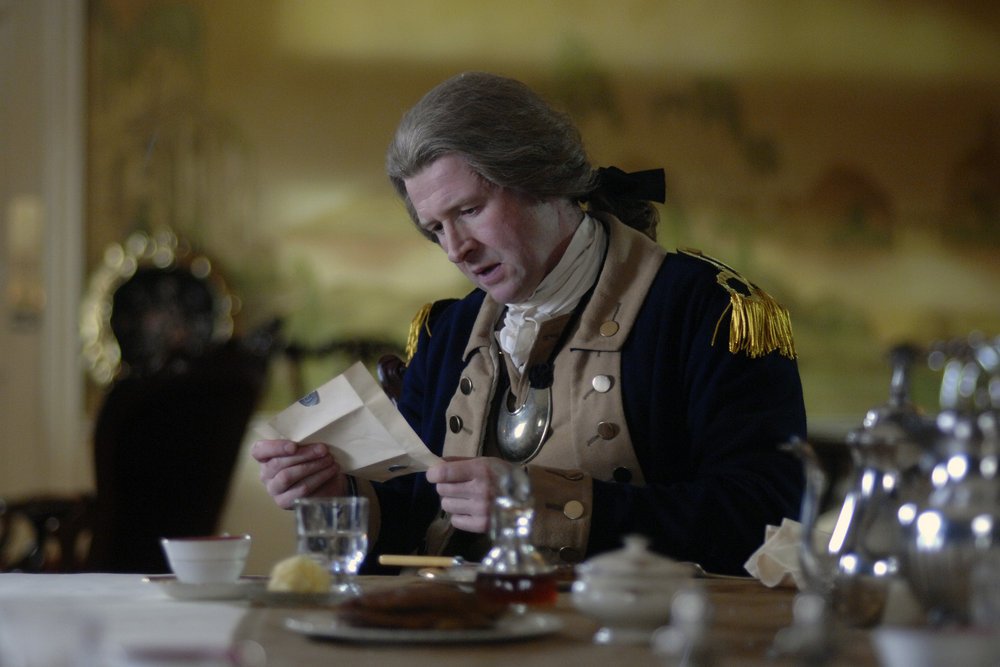
While slavery was common throughout the original Thirteen Colonies, moral acceptance of the trade was not universal. A few founding fathers found the conscience to speak out against slavery. In 1764, James Otis declared, “Colonists are by the law of nature free born, as indeed all men, White of Black.” Another patriot and firebrand, Sam Adams, stated that “No slave shall live under my roof,” and freed the two he inherited from marrying his second wife. The Sons of Liberty was an organization that was created in the Thirteen American Colonies. The secret society was formed to protect the rights of the colonists and fight taxation by the British government. William Campbell had become a leading member of the Sons of Liberty in Wilmington, North Carolina USA. He talked excitedly about inalienable rights. Thomas Peters was kidnaped from the Yoruba tribe in what is now Nigeria and brought to North America by a French slave trader. Thomas Peters had been purchased in Louisiana about 1760, and he resisted enslavement so fiercely that his master sold him into the English colonies. By 1770, Thomas Peters was enslaved by William Campbell, and he had plans for his own declaration of independence, which was enhanced by William Campbell’s spirit of equality and human rights. Eventually Thomas Peters took the moment to redefine himself as a man and escaped. #RandolphHarris 2 of 7

Many other Africans who had been enslaved took advantage of the war’s confusion to gain their freedom and start a new life. Some sought refuge among the Indians in the interior. The Seminoles of Georgia and Florida generally welcomed Black runaways and through intermarriage absorbed them into tribal society. The Blacks’ reception by the Cherokee and Creek, however, was more uncertain. Some were taken in, but others were returned to slaveholders in return for bounties, and still others were held in slavelike conditions by new Indian slave masters. Of the Blacks who had the opportunity to serve the Patriot cause, many received the freedom they were promised. The patriotism of countless others, however, went unrewarded. “Of more worth is one honest person to society, and in the sight of God, than all the crowned ruffians that ever lived,” reports Thomas Paine. The only thing that can stop a person from acting on his or her judgment is physical force, the establishment and maintenance of liberty requires a government dedicated to banning physical force—including indirect force-including indirect force, such as fraud—from social relationships; and using force only in retaliation and only against those who initiate its use. Under liberty, no one, including the government, may stop a person from acting on his or her own judgment, producing the wealth, or keeping the product of one’s own efforts. #RandolphHarris 3 of 7

The story of Thomas Peters carries revolutionary significance for human history for it is the story of how a man without official position of any sort took the side of people, like himself, who had been denied liberty, and set an example which denounced injustice. The normal pattern of the times would have called him to be stuck down on the spot. However, he was speaking for an authority and others accepted this verdict of the moral conscience as divine and hence ultimate and demanded freedom and liberty. The revolutionary and unprecedented fact is the way people challenged the status quo. The only proviso of liberty is that we may not violate the rights of others, which means, one cannot force others to act against their own judgment. Under liberty—genuine liberty, the kind under which property rights are recognized and protected—people are free to be free to earn as much money as they are willing and able to earn and buy property, invest in a business, buy health insurance, groceries or even a yacht. Freedom is an inescapable fact of our experience, and freedom means that people have the power to choose the good or the evil. It is true that God may help a person by endowing his or her nature with the possibility of sinlessness and the ability to accomplish good works, but no special grace from God is needed to attain the virtuous life. The initiation of ethical activity lies with in each person. #RandolphHarris 4 of 7
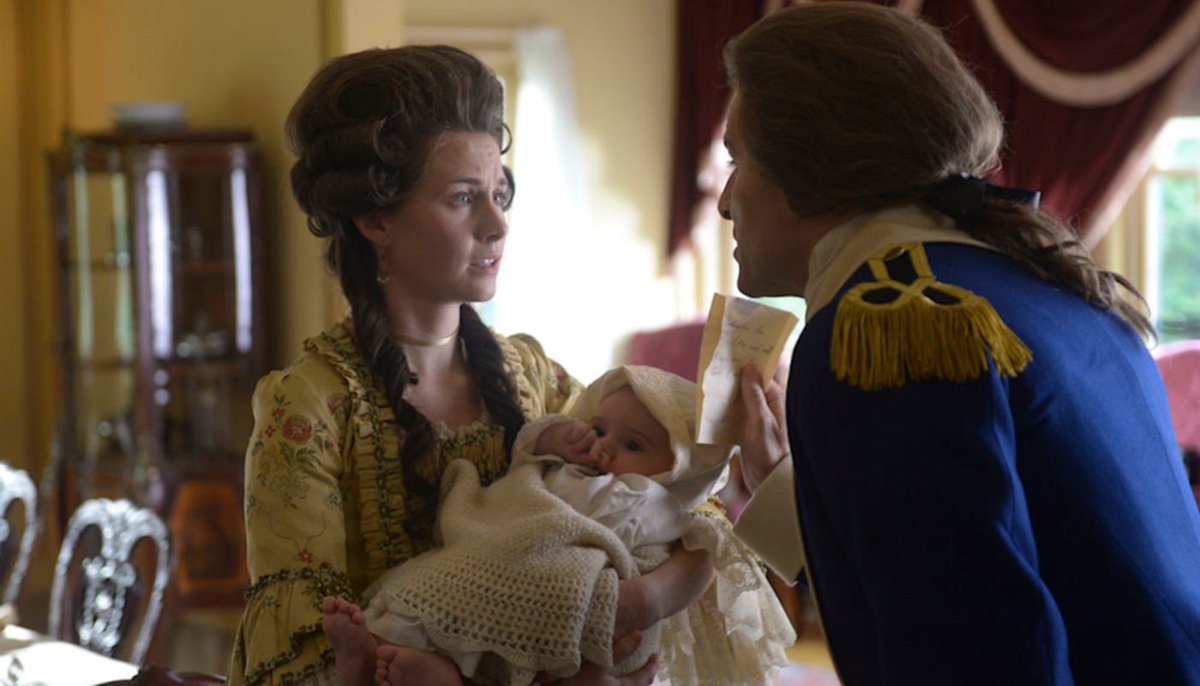
God’s revulsion against injustices are less personal because they were embedded in the entire social order. Time was shot through with inequities, special privileges, and injustice of the most flagrant sort. Wealth was concentrated in the hands of rich grandess, the poor were branded like cattle and sold as slaves, persons in debt were traded for a pair of shoes. It was a World in which masters punished and tortured their slaves as they pleased; in which women were subjugated to men and unwanted children were abandoned in lonely places to die. It is believed that God intended revolutionary America as the place of Christ’s Second Coming and that independence foretold that glorious day. Others of a less millennialist persuasion thought of America as a New Israel, a covenanted people specially chosen by God to preserve liberty in a threatening World. Americans were urged to rededicate themselves to God’s law by fighting for American freedom. It was language that people nurtured in Puritan piety and the Great Awakening instinctively understood. The belief that God sanctioned their Revolution strengthened Americans’ resolve. It also encouraged them to identify national interest with divine intent, and thus offered convenient justification for whatever they believed necessary to do. #RandolphHarris 5 of 7

People are by nature good, and through moral strength and freedom of one’s will one can attain the highest good, and even supernatural salvation. The Revolution was seen as God’s warning to clean up their national life, to establish justice throughout the land, or be destroyed. The prerequisite to political stability is social justice; it is ingrained in the nature of things that injustice breeds it own demise. In theological terms, God’s standards are high; he will not put up forever with exploitation, corruption, and mediocrity. God’s balancing tenderness figures fully as prominently. Some here God roaring like a lion, other hear him in the ghostly stillness that precedes the storm. Yet, one thing is common to them all; the conviction that being, a child of God, has rights that even kings cannot erase. The prophets come upon the stage of history like a strange, elemental, explosive force. They live in a vaster World than those about them, a World in which pomp and kings seem small and the power of the mighty is as nothing compared with purity, justice, and mercy. So it is that whenever people have gone to history for encouragement and inspiration in the age-ling struggle for justice they have found it, more than anywhere else in the prophets. #RandolphHarris 6 of 7
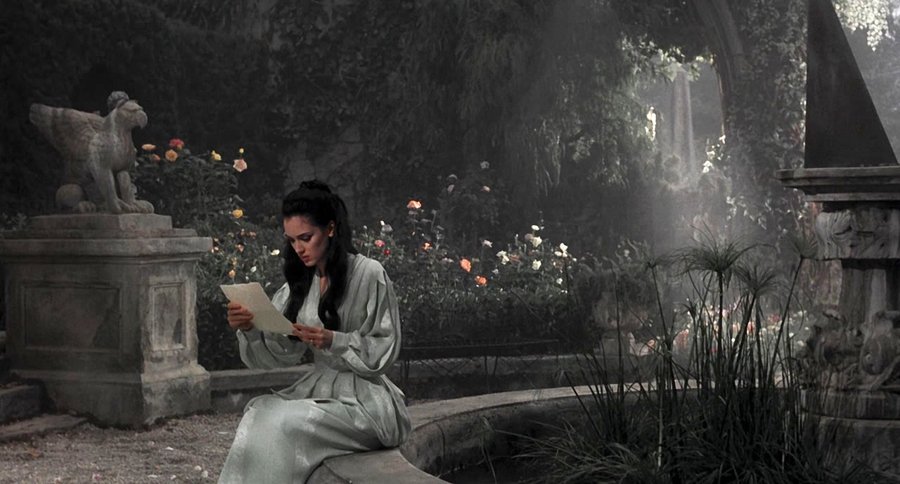
Having prophets is a sign of God’s love for his children. They make known the promises and the true nature of God. The prophets found meaning in their predicament by seeing it as God’s way of underscoring his demand for righteousness. God was engaged in a great controversy with his people, a controversy involving moral issues not evident to the secular observer. To correct a wayward child a parent may coax and cajole, but if the words fail he will eventually be forced to act. Similarly, in the face of the American Revolution, indifference to his commands and pleadings, God had no alternative but to let his people know who is God—whose will must be done! We are not left alone. God has given us the necessary gifts to help us in our mortal experience. What a comfort is its to know that we are not alone sailing uncharted waters as we go through life’s experiences. Our choices have the undeniable power of transforming our lives. This gift is an extraordinary sign of trust in us simultaneously a cherished personal responsibility to use wisely. Our Father in Heaven respect our freedom to choose and will never force us to do what is right. God’s invitation concerning this important and vital gift of choice is clearly expressed in the scriptures. To do good continually depicts well the standard we need to apply as we use our agency. Everything that invites and entices us to do good is inspired of God. “The single most important thing is to believe in yourself regardless of what everyone else says,” reports Hikaru Nakamura. #RandolphHaris 7 of 7

The Winchester Mystery House

In a town where one Victorian mansion was more sumptuous and ornate than the rest The Winchester Mystery House has always been the pinnacle of elaborate, gracious excess. https://winchestermysteryhouse.com/

Understanding Double Truth–Our Potential to Benefit Society is Limitless
Good judgment is needed not only in understanding people, but also in facing decisions that often lead us to or away from our Heavenly Father. We live in a World in which many situations require us to make judgments that are often difficult. Yet the Savior gave the commandment to judge not our fellow people How can we do this and still exercise good judgment in a World full of deception and corruption? We must judge well when making critical decisions in each phase of our life, such as choosing friends, careers, finding an eternal compassion, or choosing an occupation that will allow us to care for our family and serve the Lord. Although the Savior asked us not to judge others, he still expects us to use excellent judgment. We may often find ourselves making quick judgments about people, which can change or redefine our relationships with them. Often incorrect judgments are made because of limited information or because we do not see beyond that which is immediately in front of us. Our World is in trouble, but it welcomes us home in an era of great opportunity. The same technology that has highlighted many of the problems in our World also allows us to be the first generation in history to be able to share our newfound bounties of mind, heart, and spirit with the entire planet. #RandolphHarris 1 of 5
As we return to the Kingdom of Heaven triumphantly, those who knows us best will rejoice with us. Our fellow travelers can benefit from the wisdom of our experience. The World itself will surely be better for having gained a responsible citizen who listens to its needs and responds with compassion. Yet, to make the most of our homecoming, we need to take on the mantle of leadership. The distinction between the spheres of faith and of reason has commonly been interpreted as though there were a disharmony, or even a contradiction, between them. Indeed, the doctrine of double truth—that is, that a proposition may be true in theology, but false in philosophy. Properly speaking, double truth seems never to have been a consciously adopted doctrine in the Middle Ages, but rather an accusation leveled against theological opponents. A doctrine of double truth means that the same thing is not true in different disciplines. Despite appearances, there really can be different things in mind. What we are trying to defend might better be called a theory of multiple meaning. Neither twofold nor truth quite pinpoints the thesis, and perhaps even manifold truth is still misleading. Homo loquens reflects and communicates, not by means of a single, universally valid language, but by means of several languages, which are relative to particular disciplines or areas of experience. #RandolphHarris 2 of 5

Hence the meaning of a term or proposition is determined by the area of discourse: if transferred from one area of discourse to another, a term may acquire a different meaning, or have no meaning at all. For example, it makes no sense to ask the weight of a line from the length of a pound. Whether correct or not, this argument bears a close resemblance to ideas which have played an important role in the twenty-first-century linguistic philosophy, and is therefore not likely to be dismissed as obscurantism or anti-intellectualism. The basic thesis—that the same form of words may have different meanings in different disciplines—underlies many ideas about the relations of ethics to theology. For instance, the proposition that fallen man can do no good is fundamental to teachings on justification because this is only true in a theological, not in an ethical context, for in each context the word good means something different. This is, perhaps, a statement of double truth, but only because it rests on a theory of multiple meaning. Thus interpreted, double truth does not imply contradiction, but excludes it, since real contradiction is possible only within a single realm of discourse. Although we must hold to the saying that one truth agrees with another, nevertheless the same thing is not true in different disciplines. #RandolphHarris 3 of 5

Rejection of traditional political ideas emerge most clearly between discussions of the relation between morals and politics. For instance, a prince in the ancient World of the Middle Ages, is supposed to be the embodiment of human virtues; he was expected to be just, magnanimous, merciful, and faithful to his obligations, and to do everything which might make him loved by his subjects. However, when double truth is considered, a prince must not mind incurring the scandal of those vices without which it would, if followed, lead to one’s ruin and that some others which appear vices result in one’s greater security and well-being. This has been frequently understood as meaning that instead of being loyal, treacherous; instead of aiming to be loved, he should aim to be feared. However, this is a misunderstanding. Some admonish a prince to disregard the question of whether his actions would be called virtuous or vicious. A ruler ought to do whatever is appropriate to the situation in which he finds himself and may lead most quickly and efficiently to success. Sometimes cruelty, sometimes leniency, sometimes loyalty, sometimes villainy might be the right course. The choice depends on circumstances. #RandolphHarris 4 of 5

These views have frequently been interpreted as a meaning that wickedness is more effective than goodness. This distortion is incorrect because it is not concerned with good or evil; it is concerned only with political efficiency. In the World, it is an Earthly judge who condemns a person and locks him or her into prison. In contrast, we are taught that when we willfully sin, we become our own judges and consign ourselves to spiritual prison. The rejection of the communis opinio—whether in the special area of military affairs or in the general field of ethics—was a reflection of a new and comprehensive vision of politics. The prevailing view is that the task of government is distribution and maintenance of justice. The law of life under which every political organization exists is a growth and expansion. Thus, force is an integral, and a most essential, element in politics. Interest in military affairs has its basis in the conviction that possession of a powerful and disciplined military force is a requisite for the preservation of political independence. Moreover, because political life is a struggle, the conduct of life according to Christian virtues could endanger political effectiveness; Christianity, by preaching meekness and selflessness, might soften people and weaken a political society. And that is why there are laws for the Earthly Kingdom and laws for the Heavenly Kingdom. We now have a territory in our global village much larger which houses, family, friends and matters of local concerns. Our potential to benefit society is limitless. #RandolphHarris 5 of 5

The Winchester Mystery House
Anyone who is interested in the paranormal including ghosts, demons, orbs and hauntings will enjoy The Winchester Mystery House. https://winchestermysteryhouse.com/
Remember, God can Repair Our Flaws and Failings that Otherwise are Not Repairable!

A vibrant beauty from within marks not only our accomplishments in life, but the inner enlightenment we call wisdom. Many of us, at time, try to resolve life’s challenges ourselves, without seeking the intervention of the Lord in our lives. We try to carry the burden alone. As some are faced with trials and afflictions, they say, “Why will not God help me?” Some have even struggles with doubts about their prayers and their personal worthiness and say, “Perhaps prayer does not work.” Others who have suffered with infirmary, discouragement, financial crisis, rejection, disappointment, and even loss of loved ones may say, “Why will the Lord not heal me or help me with my son? Does life have to be this unhappy?” Yes, one might even cry out, “God, where art thou? How long shall thy hand be overruled?” However, through his grace, the Lord can and does continually assist us in our daily lives and in our physical and psychological distress, pain, transgression, and even in all of our infirmities. In order to pass successfully through the trials we encounter, we must keep our eyes and heart centered on God. Even with your vision firmly in place, we will not achieve the results we desire unless we put ourselves in a creative frame of mind. We should have great hope in knowing, however, unworthy we may feel or weak we may be, that if we will do all we can, God will come to our assistance and provide for us whatever we may lack. That is what grace is. #RandolphHarris 1 of 7
Grace is a divine means of help or strength, given through the bounteous mercy and love of God. It is an enabling power. Most research on activating the creative process suggests that changing the way we think is more important than any other factor in determining our ability to be creative. It we can obtain the grace of God, that divine enabling power to assists us, we will triumph in this life and be exalted in the life to come. The proof of any creative endeavor is its outcome. At some point we must decide which combination of ideas will yield the best results. Too often we dismiss ripe ideas too quickly; sometime a good but seemingly unworkable idea needs nothing more than to have the idea of faith applied to its implementation. This is especially true when two attractive ideas seem impossible to pursue at the same time. Many ideas that seem mutually exclusive at first can yield superior results if we bring to idea selection and implementation the same faith we brought to idea generation. Being justified by faith, we have peace with God by whom also we have access by faith into this grace. Paradoxes seduce us into thinking the only resolution to a problem is win-lose. It takes practice to break out of this mental trap and see that there are unlimited opportunities to bled the strength of the two opposites. Whenever you find yourself trapped into pursuing one idea at the expense of another, be enticed to pause. #RandolphHarris 2 of 7

How many times as we have prayed for assistance or help with our problems, have we severed ourselves from the power of God because of doubt of fear, and thus could not obtain this enabling power of God? Confidence in the creative process is, for many of us, the most difficult aspect of inviting God. For too many people grow up receiving recurring messages that they lack the faith. Recall some of the negative messages you may have received from others or yourself in the past: “You cannot even draw a straight line!” “You have never had an original idea.” “There is no God in your body.” “When God was passing out talent you must have been absent.” If you want to supplant those messages, you must learn to build faith and encourage your creative potential. Repentance is the key. The grace of God through the Atonement can both cleanse us of sin and assist us in perfecting ourselves through trials, infirmary, and even character defects. We are both sanctified and justified though the grace of the Lord. Remember, God can repair our flaws and failings that otherwise are not repairable. Select a time in your recent past when you had the triumph upon discovering something. This triumph may have come from solving complex problem especially quickly or clearly. It might have been an unexpected insight into a relationship dilemma, a business challenge, or even a golf match, or backgammon game. #RandolphHarris 3 of 7

Give yourself and God credit. Write a short story that describes the steps you went through to deal with the situation. Report on your state of mind just before you solved the problem. How did you feel? What factors kept you engaged in trying to solve the problems? Were you using faith and logic? Did your imagination also help? Review the actual moment you had your insight. What conditions support God’s grace helping you? Conclude the report with a rousing description of how your solution spawned benefits for you and others. That great truth out to fill us all with hope, a long as we are quick to remember that the effect of grace in our lives is conditioned upon repenting of our sins. Therefore, blessed are they who will repent. And may God grant that people might be brought unto repentance and good works, that they might be restored unto grace for grace, according to their works. A repentant heart and good works are the very conditions required to have grace restored to us. When someone pleads fervently in prayer for answer, the answer may be more conditioned on repentance of personal sins than any other factors. Jamie Reagan, 33, was laid off from his job as a lawyer last year. Reagan faced all the usual concerns of a man out of work: How will I pay my bills if I do not get a job right away? I do good work; why did I get fired? However, Reagan has another worry: How would he keep the respect of his son? #RandolphHarris 4 of 7

Reagan’s breakthrough came when he realized that adversity was a face of life. “It came to me that how a man coped with adversity was the measure of that man,” relates Reagan. “I might have lost my job, but I am still a good role model. A good father. I asked my son to come into the den for a heart-to-heart discussion and told him just how I felt. That one of my goals while I looked for a new job was to make him proud of how I coped.” Reagan’s son took the role of student with gusto. He would ask his father questions about how he felt. “I wanted to be sure he kept his energy and spirits up,” said Tyler. Before long Reagan admitted to himself that his family’s love and support would be the most important factor in his getting a new job. “I will never forget the day I finally found a new position,” smiled Reagan. “Tyler came into the den and shook my hand. Man to man. And he said thanks. I felt like a million buck—and it had nothing to do with the new job!” There are many ways to honor the wisdom of God and recognize our new status in life and empower our future. “And if people come unto me I will show them their weakness. I give unto people weakness that they may be humble; and my grace is sufficient for all people that humble themselves before me,” reports Ether 12.27. The mind is the many different ways in which one can explore and expand this faith, using it to help one decide what one wants in life and how to get it. #RandolphHarris 5 of 7

By building faith in God on a regular basis, one will develop concrete mental skills that have an obvious application to daily life. More important, one’s work will actually promote neurological change, which can increase the rate and depth of one’s growth. Faith in God facilitates our understanding of complex issues in our personal life. In pursuing faith in God, we are laying the foundation for other areas of growth. If one’s mind is sharp, one will have an easier time understanding the paradoxes of spirituality, or the fundamentals of interpersonal effectiveness. Express your gratitude to the Universe. Allow yourself to be proud. Channel your energies into a formulaic magazine that might offer some opportunities to expand your visions. Doing all we can in our own power, and knowing what defines us and what our values are, means that any upgrade of the story of our life requires a change in our work focus. Yes, works alone cannot bring that divine gift, but they are a key condition upon which the gift is received. “For we know that it is truly by grace that we are saved, after all we can do,” reports 2 Nephi 25.23. Thus, unless one has done all in one’s own power, one cannot expect the grace of God to be manifest. What a glorious principle to understand the Lord’s assistance to us. A soul-oriented spirituality begins in a reevaluation of the qualities of soul: subtlety, complexity, ripening, Worldliness, incompleteness, ambiguity, wonder. #RandolphHarris 6 of 7

Once we have given all we can, then God assists us through his grace. To obtain grace, one does not have to be perfect, but one does have to be trying to keep the commandments the best that we can. Then the Lord will allow us to receive that power. If we deny ourselves of all ungodliness, and love God with all our might, mind, and strength, then is his grace sufficient for us, that by his grace we may be perfect in God. What glorious gospel news in understanding this doctrine of grace, which persuades us to more fully center our faith and hope upon God. We will grow in grace and knowledge of the truth. For our labor, we will receive the grace of God, that we might wax strong in the spirit, that we might teach with power and authority from God. We will not fall from grace. Let us therefore come boldly unto the throne of grace, that we may obtain mercy, and find grace to help in time of need. Educator, be gracious to thy children. Educator, Father, Guide of Heaven, give to us, who follow thy command, to fulfill the likeness of thy image, and to see, according to the strength, the God who is both a good God ad a Judge who is not harsh. Do thou thyself bestow all things on us who dwell in peace, who have been placed in thy city, who sail the sea of sin unruffled, that we may be made tranquil and supported by the Holy Spirit, the unutterable Wisdom, by night and day, unto the perfect day, to sing eternal thanksgiving to the one only Father, the Educator and Teacher with the Holy Spirit. #RandolphHarris 7 of 7
Open a Savings Account and Put on a Happy Face

Smiles are mostly thought of as good omens. It is suggested that if people learn to smile through pain, they will eventually become happier because it allows us to receive protection, strength, and peace in unsettling times. Our interest in religion goes beyond mere curiosity about its complex motivation. In the mid-1970s, a Bay Area church in the state of California, USA devised a plan to redeem the neighborhood from people under the influence of controlled substances. The leaders of the church engaged a button factory in San Francisco, California USA to produce a batch of cheerful smiley pins, accompanied by the brisk motto, “Have a nice day, and stay off drugs.” We regard this as a forlorn venture, anticipating First Lady Nancy Reagan’s witty slogan, “Just say no,” which was an anti-drug crusade. The fact that the smiley should have been sent into the World on a Godly mission to redeem and enlighten demonstrates how successfully it had crept into the visual language of the moment. When it comes to religion, people do indeed take there to be evidence of some kind of specific paranormal power, whether there might seem to be primary evidence of telepathy, mediumship, haunting, reincarnation, or whatever. Their ultimate goal has been to discover a set of present facts that not merely confirm the existence of the human soul, but confirm it in a way that specifically holds promise for the future. #RandolphHarris 1 of 5
Whether your holy places are geographic or moments in time, they are equally sacred and have incredible strengthening power. The soul is not physical, it is spiritual. Psychokinetic phenomena can be broadly defined as cases where it appears that the mind or the soul is inducing material changes at remote location in the outside World, without the mediation of any force or process known to science. In general, it can be assumed that the state of mind responsible is some kind of wish or request—a mental picture of a desired goal—and that the material change that occurs is in is the direction of this goal. It is perhaps an open question whether the effect is produced directly by the mind acting at a distance from its home base in the body, or whether it involves the mind leaving the body and visiting the remote location, or even whether it involves the mind relaying the request to an independent supernatural agency. Most people would believe that there is a direct causal link. However, whatever the means, the effect involves a miraculous transfer of information and of energy and in many cases the creation of matter. The scriptures speak of souls in three ways: as spirit beings, both premortal and postmortal, a spirit and a body united in mortality; and immortal, resurrected person whose spirit and body have become inseparably connected. #RandolphHarros 2 of 5
We feel our Heavenly Father’s love, or moments when we receive an answer to our prayers. The cases of most practical concern and human interest are those where the mental state responsible belongs to a living person: as when someone is able—merely by wishing it or praying it—to bring about rain, to levitate, to remove a tumour, to influence the throw of a die, to encourage seeds to grow, to start a car, to make someone turn round merely by staring at their back, excreta. However, there are also causes where the mental state can be assumed to belong to the spirit of a person who has passed away: as when a poltergeist or ghost is able to move the furniture, to clank chains, to direct the movements of a Ouija board, to produce rapping sounds and answer questions (one rap for “Yes”, and two for “No”), to appear as a luminescent spectral form, excreta. And there are cases too where the mental state belong neither to the non-living nor to the living person but to some kind of deity: as when a God or an Angel is able to cause a flood, to make a statue weep, to interceded in a battle, to project the image of the Virgin Mary on to a church wall, and so on. #RandolphHarris 3 of 5
We are one with life, and understand that life itself is perfect, complete; there is a spiritual presence and a divine unity running through everything. We can have sacred, revelatory, profoundly instructive experiences with the Lord in the most miserable experiences of our lives, while enduring the most painful injustices, when facing the most insurmountable odds and opposition we have ever faces. We can create and stand in holy places even in the hardest times we have ever experienced. God does notice us, and he watches over us, but it is usually through another person that he meets our needs. We understand how it is that this divine unity personifies itself through all people and we see clearly how it is that this divine unity operates from and animates every event. It is important to be conscious of this divine presence at the very center of our own soul. The reality is strong, beneficial, certain, confident, and whole. Our testimonies are becoming stronger because we are standing for truth and righteousness in glorious ways. We are noble and our Heavenly Father’s have incredible love for us. And when we will reconcile ourselves to God, and we will become friends to God. There is no fear, no sense of inferiority. We are conscious of our ability to meet every situation. We are conscious of our ability to meet every person with perfect frankness, perfect openness, and in complete understanding. #RandolphHarris 4 of 5
As we fulfill our covenant responsibilities and participate in building the Kingdom of God, blessings will flow into our lives and we will discover the deep and lasting joy of discipleship. We are amazing and have talents, unlimited enthusiasm, and energy, and we are compassionate and caring. Every situation which we experience tends to promote our well-being, to increase our happiness, and self-expression and all the good that there is, is our good today. Our faith in God is complete, our union with life is perfect, and we shall always meet appreciation, helpfulness, encouragement, and certainty. This is the law manifesting itself in our experiences today, tomorrow, and always. Our Heavenly Father is to bring about the immortality and eternal life of his children. May we cut all bonds that are going to us, or from us, that are attached to any person, place, or thing, or situation, that no longer serves our highest good. We cut these bonds with unconditional love, compassion, gentleness, and ease. Surround us in a net of light. Pull in through our field and remove all negativity, please. “Behold, I would exhort you that when you shall read these things, if it be wisdom in God that you should read them, that you would remember how merciful the Lord has been unto the children of people, from the creation of Adam even down until the time that you shall receive these things, and ponder it in your hearts. Having faith in God, he will manifest the truth of it unto you, by the power of the Holy Ghost,” reports Moroni 9:3-4. #RandolphHarris 5 of 5

Are You Going to Realize Good Instead of Evil?
We have the power to produce happiness and success, joy, love, and friendship, rather than their opposites. To feel and imagine may not sound like much. However, in the care of the soul there is trust that nature heals, that much can be accomplished as we exercise our faith in the Savior. God will lift us up and carry us through all of our trials and, ultimately, save us in the celestial kingdom. The God that is within you is truth, beauty, harmony, and unity. Whatever we mentally see and spiritually comprehend we may objectively experience, for God within us is not limited to any one experience. It is the Creator of all experience. God invites us to respond with faith to our own unique afflictions in order that we may reap blessings and gain knowledge that can be learned no other way. We are instructed to keep the commandments of God in every condition and circumstance. If we are faithful in tribulation, the reward of the same is greater in the kingdom of Heaven. And if we are sorrowful, call on God with supplication, our souls may be joyful. God is at the center of our beings. This mind which is God permeates every atom of our being. As we teach our intellect to believe in the free circulation of spirit through us, our thoughts become a law of elimination to congestion; it purifies stagnation. #RandolphHarris 1 of 5
Our consciousness of the divine presence within us, like the light, dissipates the darkness. This is the eternal and true self at the center of our being. It is the mind of God manifesting itself in us, as us. Our light of affliction, which is but for a moment, works for us a far more exceeding and eternal weight of glory. We can know in the midst of our conditions that God has provided an eternal compensating reward. As we get to know God, revealed is the incredible truth of what God is doing because of his love. God has bestowed on us, that we shall be called the children of God. God’s purpose for creating humankind is that he wants a family—children. God’s plan and purpose for human salvation is to offer all humanity the opportunity to become his own family, on his level of life. God is love. Love is the fundamental essence of his nature and character—his very being. God is perfect in love. God’s love is manifested by his absolute pure desire to care for, share and give. The divine and infinite mind is always desiring self-expression through us is an insistent urge compelling us to move forward. Many of us have pleaded with God to remove the cause of our suffering, and when the relief we seek has not come, we have been tempted to think he is not listening. #RandolphHarris 2 of 5
However, even in those moments when we have been tempted to think God is not listening, he hears our prayers, has a reason for allowing our affliction to continue, and will help us bear them. God’s grace is sufficient for us, for God’s strength is made perfect in weakness. We must believe in our infirmities that the power of God rests upon us. In the course of such a situation, the soul become more complex and spacious. As we acquire this eternal perspective in our lives, our capacity to endure grows, and we come to appreciate and even express gratitude for the experiences God allows us to have as tutors in the path to eternal life. “And moreover, I would desire that we should consider on the blessed and happy state of those that keep the commandments of God. For behold, they are blessed in all things, both temporal and spiritual; and if they hold out faithful to the end they are received into Heaven, that thereby they may dwell with God in a state of never-ending happiness. Oh, remember, remember that these things are true; for the Lord God has spoken (Mosiah 2.41).” Since the mind within us is the mind of God, and since the mind of God not only created everything that has ever existed but will create everything that is ever going to be, we already have within us the ability to project new ideas, new thoughts, and new inventions. #RandolphHarris 3 of 5
Therefore, whatsoever ideas we desire, when we pray—when we listen to this inner mind—we must know that we are going to receive these ideas, for we are dealing with that mind which is the conceiver of all ideas. When we call upon the mind of God for an answer to our problems, it at once knows the answer because there are no problems to it. In this way, the answer to every problem already is in the mind which we possess. Beloved now, we are the children of God. As we open ourselves to see what our soul is made of and who we really are, we always find some material that is a profound challenge. Care of the soul asks us to pen our hearts wider than they have ever been before, softening the judging and moralism that may have characterized our attitudes and behaviors for years. Moralism is one of the most effective shields against the soul, protecting us from its intricacy. There is nothing more revealing, and maybe nothing more healing, than to reconsider our moralistic attitudes and find how much soul has been hidden behind its doors. People seem to be afraid that is they reflect on their moral principles they might have to lose their ethical sensitivity altogether. However, it is a defensive approach to morality. As we deal with the soul’s complexity, morality can deepen and drop its simplicity, becoming at the same time both more demanding and more flexible. #RandolphHarris 4 of 5

As we get to know the soul and fearlessly consider its unique methods and the many different ways it shows itself among individuals, we may develop a taste for life, truth, and wisdom. One who cares for the soul becomes someone at ease with idiosyncrasies and the unexpected. There is a major difference between care and cure. Cure implies the end of trouble. If we are cured, we do not have to worry about whatever was bothering us any longer. However, care has a sense of ongoing attention. There is no end. Conflicts may never be fully resolved. Our character will never change radically, although it may go through some interesting transformations. Awareness can change, of course, but problems may persist, and we may have to learn to adjust so we can manage them. Are you going to use your authority in the law to create beauty, peace, and joy? No greater good can come to us than to know that the power already within us is the power to live, and the power to create. Not only to create for ourselves but for others—the power to do good, the power to heal, the power to prosper. We are to realize that the power within us is divine authority. It is a dispenser of the divine gifts. It is a giver of life, of joy. It proclaims the Kingdom of Heaven, the harmony of the soul, and the unity of all being. #RandolphHarris 5 of 5

The Winchester Mystery House

Even the most unexpected places might be haunted by wandering phantoms. https://winchestermysteryhouse.com/

Love is Written in Mind and Heart
Love is teamwork and a haven from aloneness. Love has always mystified us. Love is joyous, and powerful. It can be physical, psychological, emotional or economic. To be someone out of the ordinary means to be successful, unique, and outstanding. When we feel loved there is a sense of enhancement in the quality of our lives. We tend to idealize beauty, intelligence, and skills more often. There is a rapture of compassion and altruism that accompanies growth of caring that absorbs increasing amounts of energy and time. When people feel like, they also experience a high gratification of several conscious and unconscious needs. Life becomes more blissful because people feel like they are in paradise. Love is written in our minds and heart. We are free to choose liberty and eternal life, through the great Mediator of al people. Undoubtedly, freedom and eternal life are what we seek. We tremble at the very thought of dying and being captives of the adversary. There are many individualized forms of the pathology of love, which result in conscious good in our lives. “For we know that it is by grace that we are saved, after all we can do (2 Nephi 25.23).” #RandolphHarris 1 of 5
The realization of the presence of God makes us feel intelligence, power and unity. Self-mastery is essential to invoke the power of God. This is because this great, divine agency can only be exercised in righteousness. Self-mastery requires self-determination and strength of character. It enhances our own gifts and talents in a remarkable way. It is the power of noble humanity. Life runs through all, threading itself into the patterns of our individuality. God is over all, in all, and through all. The spirit of God is the voice to humanity. All people may aspire to divinity, since all people are incarnations of God. Within the one supreme mind exists the possibility of projecting limitless expressions of itself, but each expression is unique and different from any other. Thus, the infinite is not divided, but multiplied. “I will praise the name of God with a song; I will magnify him with thanksgiving (Psalm 69.30).” There is nothing and nobody superior to God. And so the calling of those who love God is to make his greatness begin to look as great as it really is. “You are a chosen race, a royal people, a holy nation, a people for God’s own possession, that you make proclaim the excellencies of him that called you out of darkness into his marvelous light (1 Peter 2.9).” #RandolphHarris 2 of 5

The whole duty of our lives is to feel, think, and act in a way that will make God look as great as he really it. We must magnify the infinite starry wealth of the glory of God. There is one Father of all. This is the one Father, conceiving within himself, gives birth to all the divine ideas. The sum total of all these ideas constitutes the mystic God. As divinity is awakened, the divine spark shot from the central fires of the Universal flame warms other souls in the flow of its own self-realization. Our thoughts become spiritualized as it actually manifests the power of God. Throughout the ages wonderful results have been obtained through the prayer of faith, practiced by every religion. So, we pray that God opens the eyes of our hearts and preach to our souls, and that our souls forget not all of God’s benefits. We have the privilege of sustaining, with our uplifted hands and deep affection of God’s love. It is growth as a miracle and an incredible event. The truth of God will go forth boldly until it has penetrated every continent, visited every slime, swept every country, and sounded in every ear, until the purposes of God shall be accomplished, and then Great God will report the work is done. #RandolphHarris 3 of 5

We have witnessed some phenomenal changes in the World, changes which we can attribute to the hands of the Almighty in bringing his glorious purposes to fill the Earth with the knowledge of the Lord. Organized intelligence can be accounted for only on the basis that there is an engineer as well as an engine. The laws of nature can be broken or modified through prayer or faith. The Universe is not only intelligent, but it is also consciousness. Once you establish freedom and volition as an operating factor in connection with the energy which becomes form, then you have established a Universe of consciousness. And once you establish a Universe of consciousness, you establish the possibility of communion, and arrive at a logical basis for faith, prayer, the religious and the mystical life. There has been a tremendous growth of knowledge which has taken place in the World in the last few hundred years. The Almighty raised up this nation by the power of his omnipotent hands, that it might be possible in the latter days for the kingdom of God to be established in the Earth. “Bless the Lord, oh my soul. Oh my God, you are very great, you are clothed with splendor and majesty (Psalm 104.1).” #RandolphHarris 4 of 5

These new, vital and dynamic spiritual concepts have placed firm foundations beneath the human being’s innate religious tendency, firm foundations which scientific people need not reject and which the which the unscientific individual may accept without superstition. “Praise the Lord! Oh, give thanks to the Lord, for he is good, for his loving-kindness is everlasting. Who can speak of the mighty deeds of the Lord, or can show forth all his praise (Psalm 106.1-2)?” In affirming consciousness in the Universe, a spiritual presence and an intelligence, also affirms that the individual’s consciousness is of similar nature. In the use of faith, prayer, communion, or spiritual treatment, one would be applying the principles of mind, spirit, intelligence, consciousness, and law and order to the persistent problems of everyday life. God’s hands have been over this nation, and it is his purpose and design to enlarge it, make it glorious, to the end that those who are kept in bondage and serfdom may be brought to the enjoyment of the fullest freedom and liberty of conscience possible for intelligent people to exercise in the Earth. Intelligence and reason must be the rules of thought, and God is accessible to all on equal terms. #RandolphHarris 5 of 5

The Winchester Mystery House

Movie directors and renowned paranormal researchers and storytellers have drawn inspiration from their own supernatural experiences in The Winchester Mystery House to produce their haunting collections. https://winchestermysteryhouse.com/

Earth Fosters What Heaven Lets Fall
Earth fosters what Heaven lets fall. When the lightning of love has sprung into the hearts, know that there is love in that heart. Full knowledge lies in the act of love: this act transcends thought, it exceeds words. Love is overcoming human separateness, as the fulfillment of longing for the union. It is the polarity of the Earth and rain, of the river and the ocean, of night and day, of darkness and light, of matter and spirit. The clash of souls touches off the sparkles over the Winter Jasmine, we have been granted this privilege and begun to become so fresh. Psychological knowledge is a necessary condition for full knowledge in the act of love. We have to know ourselves and the other person objectively, in order to see their reality, or to overcome the illusions, the irrationally distorted image we have of them. Care, responsibility, respect, and knowledge are mutually independent. They are a syndrome of attitudes which are to be found in the mature person; that is, in the person who develops one’s own powers productively, who wants to have that which one has worked for, who only wants to have that which one has worked for, who had given up narcissistic dreams of omniscience, who has acquired humility based on the inner strength which only genuine productive activity can give. #RandolphHarris 1 of 5

Common sense and science must be applied to religious and spiritual things as to everything else. When a person is weary, one loses their sense of pleasure and do not feel the enjoyment that one once felt. However, God says, “Come to me, all who are weary and burdened, and I will give you rest. Take my yoke upon you and learn from me, for I am gentle and humble in heart, and you will find rest for your souls (Matthew 11.28-29).” Occasionally there is a time gap between the sacrifice and the blessings. The sacrifice may come according to our time schedule, but the blessing may not come by our, but by the Lord’s calendar. Still, the very first blessing coming from sacrifice is the joy that we can feel when we pay the price. Perhaps the very thought that the sacrifice itself could be a blessing becomes a sacred sign. When we have that kind of thought and feel the joy, we might have received a blessing already. True religion, true science, and true common sense should go hand in hand, together with that other subtle something which is the essence of feeling—that which is beyond words. God’s most striking victories arise out of the graves of apparent defeat. And the persistence and the fortitude that enable us to press on with cheerfulness through physical limitations and spiritual difficulties examples of things we can do through God. #RandolphHarris 2 of 5
It is impossible, indeed, to separate works from faith, just as it is impossible to separate heat and light from fire. When love of God waxes in thy heart, beyond any doubt, God has love for you. Divine wisdom is destiny and decree sacredly sweet and makes life fraught with nectar and honey. The blessings will surely come to us. Please remember that sacrifice itself might be a form of blessing because we are laying the foundation for our futures through tireless work and learning the knowledge that will grant of the opportunity to receive and unexpected surprise. “Worship God in whatsoever place you may be in, in spirit and in truth; and have thanksgiving daily, for the many mercies and blessings which he does bestow upon you (Alma 35.38).” God is an inexhaustible fountain of being bringing existence to all the things that are by his continuous overflow. Life cannot produce death, the Universe holds nothing against us, and the gift of Heaven is eternally made, but still must be received. Science is helping us to receive this gift by allowing human beings to produce technology and perform miracles. Miracles are worked only by God and his specially deputed agents. All the comforts and the good that have come to modern life through science are not contradictions of nature, but rather they are affirmations of the limitless resource of life. #RandolphHarris 3 of 5

The unequivocal definition of a miracle is things which are done by divine agency beyond the order commonly observed in nature (praeter ordinem communiter observatum in rebus). The interposition of divine power by which the operations of the ordinary course of nature are overruled, suspended, or modified. The very fact that trees can grown thousands of feet in their air is an affirmation that the Universe itself does not limit the growth of any being; it is just waiting for someone to perceive its possibility. Just like the Wright brothers perceived that travel by air is a possibility, one-day poverty will be wiped from the face of the Earth because conditions will change and as we cooperate with God and nature and law, we will proclaim the abundance that already exists. “And God will generously provide all you need. Then you will always have everything you need and plenty left over to share with others (2 Corinthians 9.8).” I pray that we will all become Saints willing to sacrifice and become eligible for the Lord’s special blessing. The Lord will watch over us so that it will not be too difficult to endure any sacrifice. War will cease when people know that it is no longer desirable, and steadfastly maintain their position. From communion with God we will come to perceive the deeper reality, the broader sharing in human experience. #RandolphHarris 4 of 5

There is power for good in the Universe. God will allow us to have the technology to cure all aliments. Cancer and other diseases and viruses will be wiped from the face of the Earth as science, religion, sense and the philosophy of spiritual truth take the place of lack and limitation, ignorance, superstition, fear, and confusion. The tender mercies and compassion of the Lord are available to all of us. We are here to better understand our very personal and individualized blessings, strength, protection, assurances, guidance, loving-kindness, consolation, support, and spiritual gifts which we receiver from God. God is breaking down barriers of race consciousness, which are the accumulated effects of misconceptions, and removing the morbid fears of the Universe. It takes time to change the thoughts of the whole World, and we have to start by changing our reactions to life, and by building a strong barrier in our own consciousness against everything that denies God. This will help to free thing whole human race from the bondage of fears, ignorance, superstition, and thoughts based on what the past has brought forth. Repentance and forgiveness of sins and peace of conscience are examples of the tender mercies and compassion of the Lord. #RandolphHarris 5 of 5

 Randolph Harris II International Institute