
Home » news (Page 35)
Category Archives: news

How I Overcame Anger, Selfishness, and Doubt!

Everyone wants peace and is willing to sweat a little for it; but not everyone cares to pay the ultimate price for the ultimate peace. “The Moses and Aaron fell facedown in front of the whole Israelite assembly gathered there. Joshua son of Nun and Caleb son of Jephunneh, who were among those who had explored the land, tore their clothes and said to the entire Israelite assembly, ‘The land we passed through and explored is exceedingly good. If the LORD is pleased with us, He will lead us into that land, a land flowing with milk and honey, and will give it to us. Only do not rebel against the land, because we will swallow them up. Their protection is gone, but the LORD is with us. Do not be afraid of them.’ However, the whole assembly talked about stoning them. Then the glory of the LORD appeared at the Tent of Meeting to all the Israelites. The LORD said to Moses, ‘How long will these people treat me with contempt? How long will they refuse to believe in me, in spite of all the miraculous signs I have performed among them? I will strike the down with a plague and destroy them, but I will make you into a nation greater and stronger than they.’ Moses said to the LORD, “Then the Egyptians will hear about it! By your power you brought these people up from among them. And they will tell the inhabitants of this land about it. They have already heard that you, O LORD, are with these people and that you, O LORD, have been seen face to face, that your cloud stays over them, and that you go before them in a pillar of cloud by day and a pillar of fire by night. If you put these people to death all at one time, the nations who have heard this report about you will say, ‘The Lord was not able to bring these people into the land He promised them on oath; so he slaughtered them in the desert.’ #RandolphHarris 1 of 18

“Now may the Lord’s strength be displayed, just as you have declared: ‘The LORD is slow to anger, abounding in love and forgiving sin and rebellion. Yet He does not leave the guilty unpunished; He punished the children for the sin of the fathers to the third and fourth generation.’ In accordance with your great love, forgive the sin of these people, just as you have pardoned them from the time they left Egypt until now.” The LORD replied, “I have forgiven them, as you asked. Nevertheless, as surely as I live and as surely as the glory of the LORD fills the whole Earth, not one of the men who saw my glory and the miraculous signs I performed in Egypt and in the desert but who disobeyed me and tested me ten times—not one of them will ever see the land I promised on oath to their forefathers. No one who has treated me with contempt will ever see it. However, because my servant Caleb has a different spirit and follows me wholeheartedly, I will bring him into the land he went to, and his descendants will inherit it. Since the Amalekites and Canaanites are living in the valleys, turn back tomorrow and set out toward the desert along the route to the Red Sea,” reports Numbers 14.5-25. This is a truly inspirational story. Where does God’s peace dwell? In the humble and gentle of heart; that is how His Matthew remembered God (11.29). Where does your peace reside? In deep patience. Hear God’s voice, follow His advice, and you will enjoy much peace. “If anyone is in Christ, one is a new creature; the old things passed away; behold, new things have come,” reports 2 Corinthians 5.17. Fulfill your God given destiny. Be the person God wants you to be. Believe in bigger and better thing, and expect the supernatural favour of God. #RandolphHarris 2 of 18

Develop a mentality of, “If there is a will, there is a way.” Everything counts. Do not be careless. Watch every word. Guard every step. All of which means, do not jump to conclusions about what others say or do. Stick to God’s monastic rule. And the result? You will discover that your rage erupts rarely, and when it does, does little damage. That does not mean you will not be thumped and thwacked from time to time—that is the way it is in the present life, but in the next? Ahhh, well! However, do not think you have found True Peace just because you find no hubbub in your heart! Do not think everything is good jus because you do no bump into the Devil on your daily rounds! Do not think you have arrived at monastic perfection just because your fellow Devouts have stopped annoying you to death! Do not think you are ready for sainthood just because you have had some fleeting moments of devotion and sweetness! Why all these “do nots”? Because in all of these behaviours I cannot for the life of godliness discover a true admirer of virtue! However, your best days are ahead of you. God wants to do more than you can even ask or think, so do not be satisfied with past glories, and do not get stuck in the rut of past failures. Begin believing for bigger and better things. If you do not think your dreams will ever come to pass, they will never. If you do not think you have what it takes to rise up and set that new standard, it is not going to happen. The barrier is in your mind. “The weapons we fight with are not weapons of the World. On the contrary, they have divine power to demolish strongholds. We demolish arguments and every pretension that sets itself up against the knowledge of God, and we take captive every thought to make it obedient to Christ. And we will be ready to punish every act of disobedience, once your obedience is complete,” reports 2 Corinthians 10.4-6. #RandolphHarris 3 of 18

And although many of us is doing so well, we wish God would tell poor souls like us just what spiritual progress and human perfection consists in? It is a wrong thinking pattern that keeps us imprisoned in defeat. And that is why it is so important that we think optimistic thoughts of hope, faith, and success. Reject the lies that tell you success is not in your future. After all, if God is for you, no one can be against you. Let go of the limitations and let your mind focus on fresh, beneficial attitudes of faith. By focusing on things that are of righteousness and success, you will change your life and the lives of your descendants. Your offspring will go further than people ever once believed, and it will because you were willing to walk by faith and not by sight, setting a new standard, and leading the future generations. The obstacle is in your mind. However, because of some people’s disobedience and lack of faith, they wander around in the wilderness, going around the same paths, time after time, not making any progress. How sad! Therefore, offer yourself from the bottom of your heart to the Divine Will. Do not seek out your own will, whether antsy or elephantine, in time or in eternity. For God has prepared a place of great abundance, a place of great freedom for His people. Do these, and nothing will ruffle your calm. And continue to give thanks, in prosperous times as well as desperate ones. Be stout of heart and long in hope. That way, when interior consolation vanished, your heart and soul can sustain a heavier load. Do not feel you have to justify yourself all the time; especially do not ask why you, of all people, should have to suffer all these things. Do justify God, in all your many moves and moods, and do praise God as holy. #RandolphHarris 4 of 18

Then if your praise God, stay in faith, act righteously, and have a spirit of perseverance, you will walk the straight and narrow to the Land of Peace and Honey, where Hope and Doubt are no more; where, as Job put it to his Maker (33.26), you and I will be well met, finally, face to face, in dulci jubilo. But that is then, and this is now. In the unlikely event that you do arrive at complete contempt of self while there is still a breath in your, know that the peace of soul accompanying it is about as good as it gets, according to the Psalmist (72.7), at least on this side of the Final Veil. However, some people have been beaten down by their oppressors for so long—mistreated, used, abused, and taken advantage of—now, even though God wants a better life for each of them, they cannot conceive it. Rather than moving forward with an attitude of faith, expecting good things, they insist on going around with a poor, defeated mentality. Around and around they go, focusing on their problems, always complaining, fretting about the obstacles standing between them and their destiny. Yet, as we understand the Lord, He wants us to strive for perfection because He never relaxes His grip on the Celestial. Why? because in His daily round God has to step smartly around and through the many and varied dumpings and dumplings of the World without so much as soiling His sandal. And He has to do it as if He had not a care in the World, and not at the pace of a slug, but in the sprightly manner of a person with a free and bright mind. How? By allowing no creaturely affection to cling to His soul. There, God will jolt us out of our complacency. He will say to us, “You have stayed long enough at the mountain,” reports Deuteronomy 1.6. Therefore we cannot keep going in circles, doing the same thing year after year, and expect things to change. #RandolphHarris 5 of 18

It is time to move on, to let go of past hurts, pains, or failures. It is time for increase, promotion, and favour. It is time to believe for the extraordinary and supernatural. Father, I do not want to be counted among the doubters; I am a believer. I trust You to lead me in the right direction as I break through the barriers of my past. Thank You, Father, that You have good things in store, not just for me, but for my entire family! I beseech You, Most Pious God of mine, preserver me from the care of this life lest I trip myself up; lest I be seized by the many necessities of the body; lest I seize up from too much pleasure; lest I become depressed by the universal obstacles of the soul, broken on the wheel of trouble. I am not talking about the clumsy imperfections that Worldly Vanity often causes, but about those miseries that result from the Primal Malediction of Mortality. These latter seriously affect the soul; that is to say, they weigh it down and slow it down. The result is that one has not had the strength to enter into the freedom of the spirit as often as one desired. O my God, Ineffable Sweetness, as far as I am concerned, turn bitter every carnal consolation that drags me from the love of Eternals. Why? Its allure is evil. It affects my intuition. It draws me to a delectable good of the present. Do not let it conquer me, my God, do no let the flesh and blood conquer me! Do not let the World and its brief glory deceive me! Do not let the Devil and his cleverness, his bag of tricks, overwhelm me! Please grant me the fortitude of resisting, the patience for enduring, the constancy of preserving. Please grant for all the consolations of the World the discreet yet manly cologne of Your spirit, and in place of carnal love, please flood me with the love of Your name. #RandolphHarris 6 of 18

Just count them—food, drink, clothing, and the other innumerable articles that keep the body going—all these are necessary, or so they say, but they are also insufferable to the fervent spirit; so said the Great Bernard in his First Sermon for Septtaugesima. Grant that I may use as little of this excess baggage of the soul as possible; that is to say, do not let me spend all my time on baggage management to the detriment of daily prayer. Truly, I would like to ditch all these extras, but I cannot. Nature has its minimal claims, and it would be unwise to meddle with them. However, to rummage about in the things that dither the soul? Holy Law prohibits that. Why? Because the flesh has this sudden capacity of overpowering the soul with its fragrance. Because of all these, I beg You, O Lord, let Your hand direct me and protect me lest something catastrophic happen. Is Christianity beneficial or hazardous to your mental health? “Do not be anxious about your life,” reports Matthew 6.25. Consider Francis, the popular son of a wealthy textile merchant family who is known for his flashy dressing and his enthusiastic partying. After hearing a vice, which he believes to be that of God, Francis undergoes a religious transformation, forsakes partying, gives away his possessions, and even sells some of his father’s textiles, giving away the money. His father responds by confining the youth to he house and beating him to bring him to his senses, but Francis is unrepentant. Exasperated, the irate father takes Francis to court, which orders Francis to repay his father. In protest, Francis gives back everything his parents have given him, even the clothes off his back, and walks out of the court naked. He forms a religious sect whose members sleep in abandoned churches, possess nothing, and are not above begging for their food. Never does he return to a normal social life. #RandolphHarris 7 of 18

For Francis (to whom we will shortly return), is religion beneficial or hazardous to mental health? For you and me, is religious devotion good or bad for mental health? Our culture offers us, at the extremes, two sharply contrasting answers. Some televangelist have suggested that with sufficient faith, prayer, and positive thinking we can get Jesus to lift our burdens, to exorcise the demonic within us, to heal our emotional agonies, even to bless us with prosperity. Religious paperbacks have offered hopeful testimonies of how one can get God to give us happy homes, robust love lives, inner peace, or liberation from depression. In Christian inspirational magazines one can find ads for things such as the “Christian weight-loss plan,” which promises results superior to those of non-Christian weight-loss plans. Diametrically opposed to those who say that faith is the key to inner healing are those who say that religion erodes mental health or even that religion is a sickness—an “obsessional neurosis,” said Dr. Freud. Religion is said to promote neurotic guilt, repression of feelings for pleasures of the flesh, and suppression of negative emotions. Religion also impedes efforts to relieve human misery by teaching that people deserve their fate, that to believe that misfortune and suffering are divine judgments on sinners legitimates the blaming the depressed, the miserable, and the angry for their feelings. Who is right? Is religion more often beneficial or hazardous to mental health? Let us approach this question first scientifically, by looking at research on religion and mental health, and then theoretically, by reflecting on the likely emotional consequences of being a Christian disciple. #RandolphHarris 8 of 18

Are there any links between people’s religiosity and their mental health? This question has no simple answer, because the answer depends on what we mean by religiosity (orthodoxy? Church attendance? Strength of religious feeling?) and what we mean by mental health (positive self-esteem? absence of mental illness? happiness?). Across many studies reported in the Oxford University Press Handbook of Religions and Health, religious beliefs and practices have, in more studies than not, been associated not only with greater self-reported happiness, but also with greater hope and optimism; greater purpose and meaning; higher self-esteem; better coping with bereavement; less loneliness; less depression; fewer suicides; less anxiety; less drug and alcohol abuse; less delinquency and crimes; and greater marital stability. A word of caution is in order: these studies merely establish a correlation between religion and mental health. It is a familiar lesson, but true: correlation does not indicate the direction of cause and effect. One’s mental health may affect one’s religion (some religious cults have been a haven for disturbed people). Or religiosity and mental health may be jointly influenced by underlying factors, such as one’s socioeconomic, or educational status. Will a real Christian ever act crazy? Indeed yes. If Christ’s followers march to the sound of a different drummer in what they regard as a crazed World, they may, at times, seem a little crazy. So it was with St. Francis of Assisi, founder of the Franciscan order and a thirteenth-century missionary and religious pioneer. Francis dared to be different, to renounce his family’s materialism, to value higher things, and to suffer rejection for doing so. #RandolphHarris 9 of 18

And so it was with Jesus and some of his early followers. They knew negative emotions—righteous anger in response to injustice, anxiety when confronted by danger, grief in the face of death. They willingly experienced humiliation, even death, as the price for not adjusting to their culture. For the heroes of the Bible, good adjustment—thinking well of oneself and feeling optimistic about the World—was not the aim of life. Adjusting (or conforming) to a sick society may itself be a sick response. Christ’s followers are offered the way of the cross, something that many who serve in war- and disease-ravaged lands know all too well. It is ironic that popular religion should promise its followers serenity and success when the Bible itself depicts its people as so imperfect. The heroes of the faith experienced more tribulation than triumph. In the Old Testament, Noah becomes a drunken fool, David commits homicide out of lust, and Jacob is a blasphemous, polygamous, ungrateful cheat. Likewise, in the New Testament we find the afflicted Paul struggling constantly to resist what he ought not to be doing and to do the good that he ought to be. Moreover, one doubts that any of the disciples could have offered persuasive testimonies of “how I overcome anger, selfishness, and doubt.” Peter loses his temper, is prejudiced against the Gentiles, and denies Christ. After almost three years with Jesus, Andrew cannot conceive of a miracle with loaves and fishes. The proud and prejudiced Nathaniel is skeptical that anything good could come out of Nazareth. Unless Jesus would “show us the Father,” Philip refuses to believe that Jesus and God are one. James and John, the sons of Zebedee, crave the highest-status positions for themselves in the kingdom. Thomas doubts Christ’s resurrection and is skeptical of Jesus’s promise to prepare a place in the Father’s house. #RandolphHarris 10 of 18

Simon the Zealot, Bartholomew, Matthew, and Jude cannot manage so much as to say awake during Jesus’ agony before his betrayal. The Bible makes no pretensions about the perfections of its people. Nor does it need to, for its hope rests not in the power of human faith but in the steadfast love of God. As the experience of Job reminds us, God’s people are not promised an Earthly haven from misery. Recent evidence indicates that people active in faith communities have longer life expectancies than others. Yet no matter how much faith we have, nor how many faith healers we visit, our mortality rate will still be 100 percent. It is easy to be tempted to the illusion that the child of God will be accorded special protection from the capricious forces of the natural World or a special immunity from the vindictive passions of angry humans. Any such faith is bound to suffer disillusionment. Better to root our faith in the hard truth than in temporarily comforting fantasies. If Christianity is untrue, then what honest person would want to believe it, however comforting it might be? And if it is true, even if it were not immediately comforting, what honest person would want to disbelieve it? Among the capricious forces of the natural World are oppressive environments (in which, at times, it is perfectly natural to feel depressed), biochemical and neurological deficits (for which schizophrenia may be a natural outcome), and genetic predispositions to respond maladaptively to stressful circumstances. Faced with psychological disorders such as depression and schizophrenia, Christians had therefore best respond not with simplistic snap judgments (as Job’s friends did in response to his misery) but with compassion and understanding. #RandolphHarris 11 of 18

We should all do well to keep in mind the Christian psychologist Glenn Weaver’s documentation of the spiritual pilgrimage of a devout Christian woman suffering from Alzheimer’s disease. After a life of regular attendance at church services, where she was well known as a gentle Christian with deep concern for her fellow Christians, she began to develop telltale symptoms of increasing forgetfulness. She struggled with the problem in the way that many people do, but she was fighting a losing battle. She found that she could no longer remember the names of those she wanted to pray for, and her letters became verbose and lost much of their content. This is turn made her increasingly anxious; and anxiety led on to depression and the classic textbook description of Alzheimer’s disease, and more. She was also deeply troubled about her relationship with God. She felt that she was personally responsible for falling away from a former close walk with God, and that she was deserting her friends through her lack of friendship and prayers. She concluded that because of her lack of faith, God was setting her aside because she was no longer fit for His service. Eventually she lost all interest in her daily devotions and prayers. With neural changes there are psychological consequences, and these in turn affect spiritual awareness. Such is the unity of the human person, and we should never forget this. For some, a Christian response to such suffering may mean doing or supporting research. For others, it means entering a helpful profession as a clinician, counselor, or social worker. For many more it simply means being loving, caring, and patient. Although Christian faith does not promise escape from the stresses and woes of life, it can help us walk through the valley of deepest darkness. It does so first by offering us an identity—a knowledge of who we are, of our ultimate values, of our mission in life. #RandolphHarris 12 of 18

Many patients, in the second half of life, are all struggling to find a religious outlook on life. More recent questionnaire studies confirm that adults who have a strong sense of purpose in life experience greater-well-being, live with less dread of death, and are less likely to abuse alcohol and other drugs. Second, religious communities offer social support in times of stress. Recent research indicates that people who are upheld by close relationships are less vulnerable to illness and premature death than are those who bear their stresses alone. When we are faced with a threat, caring friends can help us evaluate the problem, restore our self-esteem, reduce our anxiety, and confide our painful feelings—all of which can be good medicine. This helps explain the longer than average lives among those who in faith communities feel “blessed by the ties that bind.” Furthermore, religious experience has the potential to be therapeutic—at times by providing peak experiences of joy, peace, and enlightenment, but more often by reassuring us that, come what may, we are loved. Researcher have found that people’s God-concepts are linked with their self-concepts: those who view God as stern and punitive tend to have low self-images; those who view God as loving and accepting tend to express higher self-esteem. And that leads us to the experience of grace. We expect them to tell of a risen life which is purely “spiritual” in the negative sense of that word: that is, we use the word “spiritual” to mean not what it is but what it is not. We mean a life without space, without history, without environment, with no sensuous elements in it. We also, in our heart of hearts, tend to slur over the risen manhood of Jesus, to conceive Him, after death, simply returning into Deity, so that the Resurrection would be no more than the reversal or undoing of the Incarnation. #RandolphHarris 13 of 18

That being so, all refences to the risen body make us uneasy: they raise awkward questions. For as long as we hold the negatively spiritual view, we have not really been believing in that body at all. We have thought (whether we acknowledged it or not) that the body was not objective: that it was an appearance sent by God to assure the disciples of truths otherwise incommunicable. However, what truths? If the truth is that after death there comes a negatively spiritual life, an eternity of mystical experience, what more misleading way of communicating it could possibly be found than the appearance of a human form which eats broiled fish? Again, on such a view, the body would really be a hallucination. And any theory of hallucination breaks down on the fact (and if it is invention it is the oddest invention that ever entered the mind of humans) that on three separate occasions this hallucination was not immediately recognized as Jesus (Luke xxiv. 13-31; John xx. 15, xxi. 4). Even granting that God sent a holy hallucination to teach truths already widely believed without it, and far more easily taught by other methods, and certain to be completely obscured by this, might we not at leas hope that He would get the face of the hallucination right? Is He who made all faces such a bungler that He cannot even work up a recognizable likeness of the Man who was Himself? It is at this point that awe and trembling fall upon us as we read the records. If the story is false, it is at least a much stranger story than we expected, something for which philosophical “religion,” psychical research, and popular superstition have alike failed to prepare us. If the story is true, then a wholly new mode of being has arisen in the Universe. The body, which lives in that new mode is like, and yet unlike, the body His friends knew before the execution. It is differently related to space and probably to time, but by no means cut off from all relation to them. #RandolphHarris 14 of 18

The body is so related to mater, as we know it, that it can be touched, though at first it had better not be touched. It has also a history before it which is in view from the first moment of the Resurrection; it is presently going to become different or go somewhere else. That is why the story of the Ascension cannot be separated from that of the Resurrection. All the accounts suggest that the appearances of the Risen Body came to an end; some describe an abrupt end about six weeks after the death. And they describe this abrupt end in a way which presents greater difficulties to the modern mind than any other part of the Scripture. For here, surely, we get the implication of all those primitive crudities to which I have said that Christians are not committed: the vertical ascent like a balloon, the local Heaven, the decorated chair to the right of the Father’s throne. “He was caught up into the sky (ouranos),” says St. Mark’s Gospel, “and sat down at the right hand of God.” “He was lifted up,” says the author of Acts, “and a cloud cut Him off from their sight.” It is true that if we wish to get rid of these embarrassing passages, we have the means to do so. The Marcan one probably formed no part of the earliest text of St. Mark’s Gospel: and you may add that the Ascension, though constantly implied throughout the New Testament, is described only in these two places. Can we then simply drop the Ascension story? The answer is that we can do so only if we regard the Resurrection appearances as those of a ghost or hallucination. For a phantom can just fade away; but an objective entity must go somewhere—something must happen to it. And if the Risen Body were not objective, then all of us (Christian or not) must invent some explanation for the disappearance of the corpse. #RandolphHarris 15 of 18

And all Christians must explain why God sent or permitted a “vision” or “ghost” whose behaviour seems almost exclusively directed to convincing the disciples that it was not a vision or a ghost but really a corporeal being. If it were a vision, then it was the most systematically deceptive and lying vision on record. However, if it were real, then something happened to it after it ceased to appear. You cannot take away the Ascension without putting something else in its place. Rich diversity of family forms will not come into being without pain and anguish. For any change in family structure also forces change in the roles we live. Every society, through its institutions, creates its own architecture of roles or social expectations. The corporation and trade union between them more or less defined what was expected of workers and bosses. Schools fixed the respective roles of teachers and pupils. And the Second Wave family allocated the roles of breadwinner, housekeeper, and child. As the nuclear family goes critical, so to speak, the roles associated with it begin to shiver and crack—with excruciating personal impact. From the day that Betty Friedan’s bombshell book, The Feminine Mystique, launched the modern feminist movement in many nations, we have seen a painful struggle to redefine the roles of humans in terms appropriate to a postnuclear-family future. The expectations and the behaviour of both genders have shifted with respects to jobs, legal and financial rights, household responsibilities, and even performance dealing with pleasures of the flesh. “Now,” write Peter Knobler, editor of Crawdaddy, a rock music magazine, “a guy’s got to contend with women breaking all the rules…Many regulations need breaking,” he adds, “but that does not make it much easier.” #RandolphHarris 16 of 18

Roles are shaken by the battle over ending a pregnancy, for instance, as women insist that they—not politicians, not priests, not doctors or even husbands—have a right to control their bodies. Gender roles are further blurred as homosexuals demand and win “gay rights.” Even the role of the child in society is changing. Suddenly advocates spring up to lobby for a Children’s Bill of Rights. Courts are swamped by cases involving role redefinition, as alternatives to the nuclear family multiply and gain acceptability. Do unmarried spouses have to share their property after they break up? Can a couple legally pay a woman to bear a child for them by artificial insemination? (Costa Rican courts have said no—but for how long?) Can a lesbian be a “good mother” and retain custody of her child after a divorce? (An American court say yes.) What is meant by being a good parent? Nothing underlines the changing role structure more than the lawsuit filed in Boulder, Colorado USA, by an angry twenty-four-year-old named Tom Hansen. Parents can make mistakes, Mr. Hansen’s lawyer argued, but they must be held legally—and financially—responsible for the result. Thus Mr. Hansen’s court action claimed $350,000 in damages on an unprecedented legal ground: parental malpractice. It is one of the most important items of business for the government to prevent extreme inequality of fortunes, not by appropriating treasures from their owners, but by denying everyone the means of acquiring them, and not by building hospitals for the poor but by protecting citizens from becoming poor. Humans unequally distributed over the territory and crowded into one place whole other areas are underpopulated; arts of pleasure and pure industry favored over useful and demanding crafts; agriculture sacrificed to commerce; the publican made necessary by the bad administration of state funds. #RandolphHarris 17 of 18

Finally, venality pushed to such excess that esteem is measure in gold coins and the virtues themselves are sold for money: such are the most readily apparent causes of opulence and poverty, of the substitution of private interest for public interests, of the mutual hatred of citizens of their indifference to the common cause, of the corruption of the people, and of the enfeebling of all of governmental power. Such, as a consequence, are the ills that are difficult to treat once they make themselves felt, but which a wise administration ought to prevent in order to maintain, along with good mores, respect for the laws, love of the country and the vitality of the general will. However, all these precautions will be insufficient without going further still. A country cannot subsist without liberty, nor can liberty without virtue, nor can virtue without citizens. You will have everything if you train citizens; without this you will merely have wicked slaves, beginning with the leaders of the state. However, training citizens is not to be accomplished in one day, and turning them into adults requires that they be taught as children. Cover my Earth mother four times with many flowers. Let the Heavens be covered with the banked-up clouds. Let the Earth be covered with fog; cover the Earth with rains. Great waters, rain, cover the Earth. Lightning cover the Earth. Let thunder be heard over the Earth; let thunder be heard; let thunder be heard over the six regions of the Earth. Save the Earth from the curse, our cattle from sterility, our threshing-floor from the locust, our corn from fire, our substance from catastrophe, our feed from destruction. Please guard the olives from falling, and save the wheat from the grasshopper. Please protect our granaries from the worm, our vines from the caterpillar, the vineyard from the cankerworm, the autumn-fruit from blight. O protect our produce from the devouring locust, our souls from terror, our plenty from the winged-locust. Please keep our flocks from ravaging disease, our fruits from the blasting wind. Please shield our sheep from the plague, our harvest from ruin, our abundance from leanness. Please save the barley from mildew, the field’s increase from the palmer-worm. O do Thou save us, we beseech Thee. #RandolphHarris 18 of 18

Cresleigh Homes

It’s YOUR lifestyle, so choose a home that fits. Any model has great features, but the ones that matter most are the ones that will benefit the way you and your family live.

We’re so excited to share #Havenwood with you; the four distinct floor plans provide so many options for the details that make all the difference!

Homes range from 2,293 – 3,489 square feet offering up to five bedrooms, we are sure you’ll find your dream home here at Havenwood!

New Creation—A New Chapter in Cosmic History Has Opened!

Do not go poking your nose into the virtues that may be found in the lives of your fellow Devout. And do not sniff about the laundry of their vices. Why? Because your path is in the opposite direction. “Just follow Me.” That was the Evangelist John’s answer, as it was Jesus’ before him (21.22). If one person is a such-and-such or another person says one thing but does another, what business is it of yours? You do not need to be responsible for yourself; that is how Paul put it to the Romans (14.12). And that, believe me, is more than you can handle. Beyond that, you quickly get out of your depth. And before you smack me in the face with that mullet, let me assure you God knows everyone and God see everything that happens under the sun; that is what the Preacher wrote about Him (1.14). Each person God knows inside and out, that is to say, what one thinks, what one wants, and where one is heading; that is how God’s John described Him (2.25). And that includes you. “Truly, truly, I say to you, one who believes in Me, the works that I do, one will do also; and greater works than these one will do; because I go to the Father,” reports John 14.12. So what can God do for you? Everything, if you putt it all into His hands. God wants each generation to go further than the previous generation. He wants each generation to be more blessed, to experience more of His love, goodness, and His influence in the World. He does not want you to stay where you are. What can you do for yourself? Keep the peace. That is to say, forgive the agitator one’s agitation; one stirs the pot against you, but one cannot bring it to a boil. Eventually one will find oneself in a broth of one’s own juices. One cannot deceive God. #RandolphHarris 1 of 17

God did not desire one generation to shine, and then the next generation to fade into obscurity. God wants each generation to increase. “These commandments that I give you today are to be upon your hearts. Impress them on your children. Talk about them when you sit at home and when you walk along the road, when you lie down and when you get up. Tie them as symbols on your hands and bind them on your foreheads. Write them on the doorframes of your houses and on your gates. When the LORD your God brings you into the land He swore to your fathers, to Abraham, Isaac and Jacob, to give you—a land with large, flourishing cities you did not build, houses filled with all kinds of good things you did not provide, wells you did not dig, and vineyards and olive groves you did not plant—then when you eat and are satisfied, be careful that you do no forget the LORD, who brought you out of Egypt, out of the land of slavery. Fear the LORD your God, serve Him only and take your oaths in His name. Do not follow other gods, the gods of the peoples around you; for the LORD your God, who is among you, is a jealous God and His anger will burn against you, and He will destroy you from the face of the land. Do not test the LORD your God as you did at Massah. Be sure to keep the commands of the LORD your God and the stipulations and decrees He has given you. Do what is right and good in the LORD’s sight, so that it may go well with your and you may go well with you and your may go in and take over the god land that the LORD promised on oath to your forefathers, thrusting out all your enemies before you, as the LORD said. #RandolphHarris 2 of 17

“In the future, when your son asks you, ‘What is the meaning of the stipulations, decrees and laws the LORD our God has commanded you?’ tell him: ‘We were slaves of Pharaoh in Egypt, but the LORD brought us out of Egypt with a mighty hand. Before our eyes the LORD sent miraculous signs and wonders—great and terrible—upon Egypt and Pharaoh and his whole household. However, He brought us out from there to bring us in and give us the land that He promised on oath to our forefathers. The LORD commanded us to obey all these decrees and to fear the LORD our God, so that we might always prosper and be kept alive, as is the case today. And if we are careful to obey all this law before the LORD our God, as He has commanded us, that will be our righteousness,” reports Deuteronomy 6.5-25. Some things are not worth worrying about. Swanning about in a sphere of influence. Being on a first-name basis with Worldly notables. Dispensing tokens of affection to every outstretched hand. Why? Because these activities, harmless as they may seem, do have a tendency to distract the soul and clutter the heart. I speak God’s words of wisdom and reveal God’s hidden thoughts to you, my beloved friend, but on one condition only. You must keep a weather eye open for His coming and leave the door of your heart unlocked; that is one of God’s instructions in the Last Book of His New Testament (3.20). That is to say, be on the lookout, pray while you watch, and think humble thoughts. You, too, can be so much more than your predecessors, passing on a legacy of Godly attitudes, blessings, and success to your children. Do not ever get satisfied with where you are. #RandolphHarris 3 of 17

Maybe you come from a family that is not affluent. Or perhaps you come from a family with riches untold. Regardless, you can experience more than the generation preceding you. The adult has—nobody. Indeed one may have friends, a wife, a certain amount of social security, yet even so the possibility of defending oneself and of acquiring what one needs is very fragile. Even if your life and full of hardship, lack and limitation, oppression, poor health, do not pass these negative attitudes down to your children. Break the cycle and change your expectations. Trust and believe that God can make the impossible possible. Thank You, Father, that I am part of a family with a future; no longer will I be limited by my past, but I will trust You today to do things in and through my life that are even greater than the wonderful things You have done previously. The procession of the Word in God is called generation. In proof whereof we must observe that generation has twofold meaning: one common to everything subject to generation and corruption; in which sense generation is nothing but change from non-existence to existence. In another sense it is proper and belongs to living things; in which sense it signifies the origin of a living being from a conjoined living principle; and this is properly called birth. Not everything of that kind, however, is called begotten; but, strictly speaking, only what proceeds by way of similitude. Hence a hair has not the aspect of generation and sonship, but only that has which proceeds by way of a similitude. Nor will any likeness suffice; for a worm which is generated from animals has not the aspect of generation and sonship, although it has a generic similitude; for this kind of generation requires that there should be a procession by ways of similitude in he same specific nature; as human proceeds from a human, and a horse from a horse. #RandolphHarris 4 of 17

So in living things, which proceed from potential to actual life, such as humans and animals, generation includes both of these kinds of generation. However, if there is a being whose life does not proceed from potentiality to act, procession (if found in such a being) excludes entirely the first kind of generation; whereas it may have that kind of generation which belongs to living things. So in this manner the procession of the Word in God is generation; for He proceeds by way of intelligible action, which is a vital operation:—from a conjoined principle (as above described):—byway of similitude, inasmuch as the concept of the intellect is a likeness of the object conceived:—and exists in the same nature, because in God the act of understanding and His existence are the same, as shown above. Hence the procession of the Word in God is called generation; and the Word Himself proceeding is called the Son. The act of human understanding in ourselves is not the substance itself of the intellect; hence the word which proceeds within us by intelligible operation is not of the same nature as the source whence it proceeds; so the idea of generation cannot be properly and fully applied to it. However, the divine act of intelligence is the very substance itself of the one who understands. The Word proceeding therefore proceeds as subsisting in the same nature; and so is properly called begotten, and Son. Hence Scripture employs terms which denote generation of living things in order to signify the procession of the divine Wisdom, namely, conception and birth; as is declared in the person of the divine Wisdom. “The depths were not as ye, and I was already conceived; before the hills, I was brought forth,” reports Proverbs 8.24. In our way of understanding we use the word “conception” in order to signify that in the word of our intellect is found the likeness of the thing understood, although there be no identity of nature. #RandolphHarris 5 of 17

Not everything derived from another has existence in another subject; otherwise we could not say that the whole substance of created beings comes from God, since there is no subject that could receive the whole substance. So, then, what is generated in God receives its existence from the generator, not as though that existence were received into matter or into a subject (which would conflict with the divine self-subsistence); but when we speak of His existence as received, we mean that He Who proceeds receives divine existence are contained both the Word intelligibly proceeding and the principle of the Word, with whatever belongs to His perfection. The Resurrection was not regarded simply or chiefly as evidence for the immortality of the soul. It is, of course, often so regarded today: I have heard a man maintain that “the importance of the Resurrection is that it proves survival.” Such a view cannot at any point be reconciled with the language of the New Testament. On such a view Christ would simply have done what all humans do when they die: the only novelty would have been that in Hs case we were allowed to see it happening. However, there is not in Scripture the faintest suggestion that the Resurrection was new evidence for something that had in fact been always happening. The New Testament writers speak of as if Christ’s achievement in rising from he dead was the first event of its kind in the whole history of the Universe. He is the “first fruits,” the “pioneer of life.” He has forced open a door that has been locked since the death of the first man. He has met, fought, and beaten the King of Death. Everything is different because He has done so. This is the beginning of the New Creation: a new chapter in cosmic history opened. #RandolphHarris 6 of 17

I do not mean, of course, that the writers of the New Testament disbelieved in “survival.” On the contrary they believed in it so readily that Jesus on more than one occasion has to assure them that He was not a ghost. From he earliest times the Jewish people, like many other nations, had believed that humans possessed a “soul” or Nephesh separable from the body, which went at death into the shadowy World called Sheol: a land of forgetfulness and imbecility where none called upon God any more, a land half unreal and melancholy like the Hades of the Greeks or the Niflheim of the Norsemen. From it shades could return and appear to the living, as Samuel’s shade had done at the command of the Witch of Endor. In much more recent times there had arisen a more cheerful belief that the righteous passed at death to “Heaven.” Both doctrines are doctrines of “the immortality of the soul” as a Greek or modern Englishman understands it: and both are quite irrelevant to the story of the Resurrection. The writers look upon this event as an absolutely novelty. Quite clearly they do no think they have been haunted by ghost from Sheol, nor even that they have had a vision of a “soul” in “Heaven.” It must be clearly understood that if the Psychical Researchers succeeded in proving “survival” and showed that the Resurrection was an instance of it, they would not be supporting the Christian faith but refuting it. If that were all that had happened to the original “gospel” would have been untrue. What the apostles claimed to have seen did not corroborate, nor exclude, and had indeed nothing to do with, either the doctrine of “Heaven” or the doctrine of Sheol. Insofar as it corroborated anything it corroborated a third Jewish believe which is quite distinct from both these. #RandolphHarris 7 of 17

This third doctrine taught in “the day of God” peace would be restored and World dominion given to America under a righteous King: and that when this happened the righteous dead, or some of them, would come back to Earth—not as floating wraiths but as solid humans who cast shadows in the sunlight and made a noise when they tramped the floors. “Awake and sing, ye that dwell in the dust,” said Isaiah, “And the Earth shall cast out the dead,” (xxvi. 19). What the apostles thought they had seen was, if not that, at any rate a lonely first instance of that: the first movement of a great wheel beginning to turn in the direction opposite to that which all humans hitherto had observed. Of all the ideas entertained by humans by death it is this one, and this one only, which the story of the Resurrection tends to confirm. If the story is true, then it is this Hebrew myth of resurrection which begot it. If the story is true, then the hint and anticipation of the truth is to be found not in popular ideas about ghosts nor in eastern doctrines of re-incarnation nor in philosophical speculations about the immortality of the soul, but exclusively in the Hebrew prophecies of the return, the restoration, the great reversal. Immortality simply as immortality is irrelevant to the Christian claim. There are, I allow, certain respects in which the risen Christ resembles the “ghost” of popular tradition. Like a ghost He “appears” and “disappears”; locked doors are no obstacle to Him. On the other hand He Himself vigorously asserts that He is corporeal (Luke xxiv. 39-40) and eats broiled fish. It is at this point that the modern reader becomes uncomfortable. He becomes more uncomfortable still at the words, “Don’t touch me; I have not yet gone up to the Father” (John xx. 17). For the voices and apparitions, we are, in some measure, prepared. #RandolphHarris 8 of 17

However, what is this that must not be touched? What is all this about going “up” to the Father? Is He not already “with the Father” in the only sense that matter? What can “with the Father” in he only sense that matters? What can “going up” be except a metaphor for that? And if so, why has He “not yet” gone? These discomforts arise because the story the “apostles” actually had to tell begins at this point to conflict with the story we expect and are determined beforehand to read into their narrative. It seems that the sentiment of humanity evaporates and weakens in being extended over the entire World, and that we cannot be affected by the calamities in America or Japan the way we are by those of a European people. Interest and commiseration must somehow be limited and restrained to be active. For since this inclination in us can be useful only to hose with whom we have to live, it is a good thing that the humanity concentrated among citizens takes on a new force through the habit of seeing each other and through the common interest that unites them. It is certain that the greatest miracles of virtue have been produced by the love of the country. In joining together the force of self-love and all the beauty of virtue, this sweet and lively sentiment takes on an energy that, without disfiguring it, makes it the most heroic of all the passions. This is the passion that produced so many immortal actions whose radiance dazzles our feeble eyes, and so many great humans whose ancient virtues were thought to be fables once the love of country because the object of derision. We should not find this surprising. The ecstasies of tender hearts appear utterly fanciful to anyone who has not felt them. #RandolphHarris 9 of 17

And the love of country, a hundred times more ardent and delightful than that of a mistress, likewise cannot be conceived except by being felt. However, it is easy to observe, in all the hearts it inflames and in all the actions it inspires, that fiery and sublime ardor which the purest virtue is lacking when it is separated from the love of country. Let us dare to compare Socrates oneself to Cato. The one was more a philosopher; the other more a citizen. Athens was already lost, and Socrates had no other country but the whole World. Cato always carried his country in the bottom of his heart. He lived only for it and could not outlive it. The virtue of Socrates is that of the wisest of men. However, compared with Caesar and Pompey, Cato seems like a god among mortals. One teaches a few individuals, combats the sophist and dies for the truth. The other defends the state, liberty and the laws against the conquerors of the World, and finally leaves the Earth when he no longer sees as country to serve. A worthy student of Socrates would be the most virtuous of his contemporaries. A worthy imitator of Cato would be the greatest. The virtue of the first would constitute his happiness; the second would seek one’s happiness in that of others. We ought to be taught by the one and led by the other, and that alone would decide our preference. For a people consisting of wise humans never been produced; however, it is not impossible to make a people happy. Do we want people to be virtuous? Let us begin then by making them love their country. However, how can they love it, if their country means nothing more to them than it does to people who are not native to their lands, allotting to them only what it cannot refuse to anyone? #RandolphHarris 10 of 17

It would be worse still if they did not enjoy even civil welfare, and if their goods, their life or liberty were at the discretion of powerful humans, without it being possible or permitted for them to dare to invoke the laws. In such circumstances, subjected to the duties of the civil state without enjoying even the rights of the state of nature and without being able to use their strength to defend themselves, they would as a result be in the worst condition in which free humans can find themselves, and the word “country” could have only an odious or ridiculous meaning for them. There is no point to believing that one can strike or cut off an arm without pain being transmitted to the head. And it is no more believable that the general will would permit a member of the state, whoever one might be, to injure or destroy another member than that the fingers of a human in one’s right mind would put out one’s eyes. Individual welfare is so closely linked to the public confederation that, were it not for the attention one should pay to human frailty, this convention would be dissolved by right if just one citizen were to perish who could have been saved, if jus one citizen were wrongly held in prison, and if a single litigation were to be lost because of an obvious injustice. For when these fundamental conventions are violated, it is no longer apparent what right or what interest could maintain the populace in the social union, unless it is restrained by force alone, which bring about this dissolution of the civil state. In effect, is it not the commitment of the body of the nation to provide for the maintenance of the humblest of its members with as much care as for that of all others? #RandolphHarris 11 of 17

And is the welfare of a citizen any less the common cause than the welfare of the entire state? If someone were to tell us that it is good that one person should perish for all, I would admire this saying when it comes from the lips of a worthy and virtuous patriot who dedicates oneself willingly and out of duty to die for the welfare of one’s country. However, if this means that the government is permitted to sacrifice an innocent person for the welfare of the multitude, I hold this maxim to be one of the most despicable that tyrant has ever invented, the most false that one might propose, the most dangerous one might accept, and the most directly opposed to the fundamental laws of society. For far from it being the case that one individual should die for all, all have committed their goods and their lives in defense of each of them, so that individual weakness would always be protected by public force, and each member by the entire state. After conjuring up an image of the attrition of the people, one after another, press the partisans of this maxim to explain better what they mean by body of the state, and you will see that eventually they will reduce it to a small number of human who are not the people, but the officers of the people, and who, having obliged themselves by a personal oath to perish for its welfare, maintain they prove by this that it is the people’s place to die for them. Does anyone want to find examples of the protection that the state owes its members, and of the respect it owes their persons? These examples are to be found only among the World’s most illustrious and courageous nations, and it is exclusively among free peoples where one knows what a human is worth. #RandolphHarris 12 of 17

It is commonly known how great was the perplexity in which the whole republic in Sparta found itself, when there arose the question of punishing a guilty citizen. In Macedonia, a human life was such an important matter that, in all his grandeur, Alexander, that powerful monarch, would not have dared to put to death in cold blood a Macedonian criminal unless the accused had appeared to defend oneself before one’s fellow citizens and had been condemned by them. However, the Romans were preeminent among all the peoples of the Earth for the government’s deference toward private individuals and for its scrupulous attention to respecting the inviolable rights of all the members of the state. Nothing was as sacred as the life of the simple citizens. There needed to be no less than the assembly of the entire people in order to condemn one of them. Neither the senate itself nor the consuls, in all their majesty, had the right to do this. And among the most powerful people in the World the crime and punishment of a citizen was a public affliction. It also appeared so harsh to shed blood for any crime whatever, that by the Lex Porcia the death penalty converted to exile for all those who wished to outlive the loss of so sweet a country. Everything in Rome and in the armies betokened that love of a fellow citizen for one another, and that respect for whoever had the honor to bear it. That hat of a citizen free from slavery, the civic crown of one who had saved the life of another: these were things that were viewed with the greatest pleasure in the midst of the celebrations of their military triumphs. And it is worth noting that of the crowns with which in time of war one honors noble actions, only the civic crown and that of victors were made of grass and leaves, all the rest being made of gold. #RandolphHarris 13 of 17

Thus is was that Rome was virtuous and became the mistress of the World. Ambitious leaders! A shepherd governs one’s dogs and one’s flocks, and one is but the humblest of humans. If it is a fine thing to command, it is when those who obey us can honour us. Therefore respect your fellow citizens and you will make yourselves respectable. Respect liberty and your power will increase daily. Never go beyond your rights, and eventually they will be limitless. Let the homeland, therefore, show itself as the common mother of all citizens. Let the advantages they enjoy in their homeland endear it to them. Let the government leave them a large enough part of the public administration so that they can feel that they are at home. And let the laws be in their sight merely the guarantees of the common liberty. These rights, fine as they are, belong to all humans. However, without appearing to attack them directly, the bad will of the leaders easily reduces their effect to nothing. The law that is abused at the same time serves the powerful as an offensive weapon and as a shield against the weak, and the pretext of the public good is always the most dangerous scourge of the people. What is most necessary and perhaps the most difficult in the government is rigorous integrity in dispensing justice to all and especially in protecting the poor against the tyranny of the rich. The greatest evil is already done when there are poor people to defend and rich ones to keep in check. It is only at intermediate levels of wealth that the full force of the laws is exerted. Laws are equally powerless against the treasures of the rich and against the wretched state of the poor. The first eludes them; the second escapes them. The one breaks the webbing and the other slips through. #RandolphHarris 14 of 17

Beyond this, one can easily imagine the work-at-home household becoming something radically different: an “electronic expanded family.” Perhaps the most common family form in First Wave societies was the so-called extended family, which brought several generations together under the same roof. There were also “expanded families” which, in addition to the core members, included an unrelated orphan or two, an apprentice or additional farm hand, or others. One can likewise picture the work-at-home family of tomorrow inviting an outsider or two to join it—for example, a colleague from the husband’s or wife’s firm, or perhaps a customer or supplier engaged in related work, or, for that matter, a neighbour’s child who want to learn the trade. One can foresee the legal incorporation of such a family as a small business under special laws designed to foster the commune-cum-corporation or the cooperative. For many the household would become an electronic expanded family. It is true that most of he communes formed in the 1960’s and 1970’s fell rapidly apart, seeming to suggest that communes, as such, are inherently unstable in high-technology societies. A closer look reveals, however, that the ones that disintegrated most rapidly were those organized primarily for psychological purposes—to promote interpersonal sensitivity, to combat loneliness, to provide intimacy, or the like. Most had no economic base and saw themselves as utopian experiments. The communes that have succeeded over time—and some have—are, by contrast, those that have had a clear external mission, an economic base, and a practical, rather than purely utopian, outlook. #RandolphHarris 15 of 17

An external mission welds a group together. It may, indeed, provide the necessary economic base. If this external mission is to design a new product, to handle the “electronic paperwork” for a hospital, to do the data processing for an insurance company department, to set up the scheduling for a commuter airline, to prepare catalogs, or to operate a technical information service, the electronic commune of tomorrow may, in fact, turn out to be a quite workable and stable family form. Moreover, since such electronic expanded families would not be designed as a rebuke to everyone else’s lifestyle or for demonstration purposes but rather as an integral part of the main wiring of the economic system, the chances for their survival would be sharply improved. Indeed, we may find expanded households linking up to form networks. Such networks of expanded families could supply some needed business or social service, cooperating to market their work or setting up their own version of a trade association to represent them. Internally, they might or might not share pleasures of the flesh across marriage lines. They might or might not be heterosexual. They might be childless or child-ful. In brief, what we see is the possible resurrection of the expanded family. Today some 6 percent of American adults live in ordinary extended families. One might easily imagine a doubling or tripling of this number in the next generation, with some unis expanding to include outsiders. This would be no trivial even but a movement involving millions in the United States of America alone. For community life, for patterns of love and marriage, for the reconstitution of friendship networks, for the economy and the consumer marketplace, as well as for our psyches and personality structure, the rise of the electronic expanded family would be momentous. #RandolphHarris 16 of 17

This new vision of the extended family is not presented here as inevitable, not as better or worse than some other type of family, but simply as one example of the many new family forms likely to find viable niches in the complex social ecology of tomorrow. Sometimes I go about pitying myself while I am carried by the wind across the sky. It is the wind that gave them life. It is the wind that comes out of our mouths now that gives us life. When this ceases to blow we die. In the skin at the tips of our fingers we see the trail of the wind; it shows us the wind blew when our ancestors were created. O Lord and Redeemer, beside Thee there is none to save. Thou art mighty and redeemest. I was brought low, but Thou didst save me. O God of salvation who deliverest and savest, save Thy supplicants, save them that hope in Thee. Sustain thy lambs; increase the Earth’s riches. Cause to flourish and save each shrub, and condemn not the Earth to infertility, but sweeten and save its fruits. Urge on the rain-mists that they discharge their showers, and hold not back the clouds. Thou who openest Thine hand to sustain Thy creatures, satisfy the thirsty with water. Save them that call on Thee at morn, yea, do Thou save them. Save Thy whole-hearted servants, yea, save them, we beseech Thee. O save human and beast; save one who is flesh, sprit and soul; sinew, bone and skin; form and image of wondrous frame; beauty akin, alas, to vanity, and like the beasts that perish; radiance and glorious stature. Renew the face of the Earth and cause trees to sprout from the arid soil. Bless the vine-press and the corn, vineyards and sycamores upon he fair-bounded Earth. Please grant that the reviving rains send forth their fragrance to make fertile the Earth, to nurture the green herbs, to foster the pleasant fruits, and to strengthen the bubs. Send rain upon the tender shoots, and let cool waters flow, supplementing with the latter rain. Sustain the World which Thou hast founded, yea, save our Earth, suspended in space. #RandolphHarris 17 of 17

Cresleigh Homes

Can you imagine holidays here? Birthdays? Christmas celebrations with all this counter space; the formal dining room, with the kitchen opening up to the living room.
That huge sliding glass door, which allows light to flood in and extends the living space into the backyard with the option built-in exterior fireplace that allows rooms for entertaining a large family all year around!
The Brighton Station Residence 4 model has space for all of it, and then some. Residence Four at Brighton Station is one of the largest homes available in the market! At 3,501 square feet we are sure you’ll have enough room for the entire family here! The open concept design includes four bedrooms, three and one half bathrooms and a three car garage.
When entering this expansive home, take note of the two story ceiling height at the entry. There is a bedroom on the first floor, located off the entry, with its own bathroom making it ideal for a guest suite or multigenerational living. https://cresleigh.com/brighton-station/residence-4/

All My Troubles Come from No One but those I Pay to Protect Me!

Whoever has received lots of gifts from God can boast that one deserved them all, but no one would believe that individual; Paul wrote much the same in the First Corinthians (4.7). One can extol the wonderfulness of oneself, at the expense of the ordinariness of others, but that would sound tinny. One can snip and snipe at the less gifted upon one, but one would know one is just a fool. Less is always more—that is the spiritual principle here. For example, the modest person who humbly gives great thanks for one’s gifts is generally thought by God to be greater and better than the bombastic persons. Another example: the one who closes one’s eyes in shame because what one has done to God and to others will come to look upon the simple gifts He has given one with greater appreciation. Yes, less is always more. Put another way, more is always less. Of course, the stuffy person who received rather fewer gifts then one thought one deserved should not go all teary, or get a bad case of the pouts, or turn a sickly shade of green, envious at what one thinks are the excessive gifts of others. What one should do is turn one’s attention away from oneself to God. One should praise God’s goodness. After all, God is the One who so affluently, so graciously, so recklessly laid on His gifts without respect of persons. That is as Paul wrote to the Romans about who gets what, Jewish person of Greek person (2.10-11). However, that is no entirely true. Everything comes from God, and everything bears God’s indelible stamp. However, God knows what is best for each and every person and why this one should get a little and that one a lot. “Blessed are your eyes, because they see; and your ears, because they hear,” reports Matthew 13.16. #RandolphHarris 1 of 19

As for each and every person haranguing about God not having received one’s just deserts in this regard, a little time at prayer and one should quickly come to see that they are just desserts; that is to say, not wages for jobs done, but gifts meant to please and perhaps even to be used. And what is all this fuss about who gets what? A little contemplation on your part will revel three things. First, each and every person receives just the right number of gifts. Second, each and every gift has been carefully measured, but, and sewn by God, the Lord and Tailor of the Universe. Third, each and every gift of God’s fits perfectly and always arrives on time! Odd, but true. And remember, a little contemplation reveals all. Start believing that things are going to change for the better, not because you deserve it, but simply because God loves you. Let go of old and negative habits, and cultivate an attitude of faith. Keep in mind also that hopeless despair breeds as much apathy as does naïve optimism. What we therefore need is neither negative nor positive thinking, but realistic thinking—thinking characterized by enough pessimism to trigger concern, enough optimism to provide hope. How then can we realize self-denial without self-rejection? Self-affirmation without vain self-love? And, what is a genuine Christian humility? First, we must remember that humility is not self-contempt. Humility does not exist in handsome people to believe they are ugly and clever people trying to believe they are fools. Tiger Woods can acknowledge his greatness at gold without violating this spirit of humility. #RandolphHarris 2 of 19

False modesty regarding one’s gifts can actually lead to pride—pride in one’s better-than-average humility. Screwtape recognized this possibility advising Wormwood to catch his prey “at the moment when one is really poor in spirit and smuggle into one’s mind the gratifying reflection, ‘By Jove! I am being humble,” and almost immediately pride—pride at one’s own humility will appear. True humility also is not found by struggling to straddle the fence between egotistical vanity and self-hatred. Humility is more like self-forgetfulness. It is flowing with life with minimal self-consciousness, as when we become totally absorbed in a challenging task, an exciting game, or even a life mission. Dancers, athletes, chess players, surgeons, and writers often experience this kind of absorption. With it comes satisfaction that accompanies the relinquishment of the self-conscious pursuit of happiness. The refreshing Christian promise is not that we have been freed by Christ to love ourselves, but that we are free from self-obsession. Not that the cross frees us for the ego trip but that the cross frees from the ego trip. This leaves us free to esteem our special talents and, with equal honesty, to esteem our neighbours’. Both their talents and our own are recognized as gifts that, like our height, demand neither vanity nor self-deprecation. Obviously, true humility is a state not easily attained. If anyone would like to acquire humility, I can, I think, tell one the first step. The first step is to realize that one is proud. And a biggish step, too. The way to take this first step, is to glimpse the greatness of God and see oneself in light of it. The experience explains a human to oneself for the first time, lights up the fact that one live in two planes at one and the same time. It reveals one’s ego as the illusion which envelops one’s consciousness and one’s Overself as the reality behind one’s consciousness. #RandolphHarris 3 of 19

The Real was not only always present but always known, but unconsciously. It was he “I-myself,” the little ego, the separate person that one thought oneself to be and ignorantly superimposed on the Real. All this one comprehends quite plainly now. This World is the unreal dream, that is the real and substantial one. So the glimpse teaches one. One views this World temporarily as if one stand behind a theatrical stage and watches actors perform set roles in a play and sees properties which are merely pained representations. One is conscious how utterly illusory it all is and, in dramatic contrast, how the awareness by which one knew this was alone real. The experience will either confirm what one has already vaguely felt or else it will contradict what one has wrongly believed. Whatever religious belief it is made use of to confirm, it can only validate those beliefs which are universally held by everyone who is at all religious, not those which are found only in sectarian theology. The attempt to put into it previously held dogmas should be regarded as suspect. It can confirm the existence of a Higher Power, the fact of the soul, and the possibility of communion with it. These glimpses are moments of truth in a life founded on a conception which is so narrow as to be actually misleading, or even false. God and ourselves are two things of such a kind that if we really get into any kind of touch with Him we will, in fact, be humble, feeling the infinite relief of having for once got rid of [the pretensions which have] made one restless and unhappy all one’s life. To be self-affirming yet self-forgetful, optimistic yet realistic, grace-filled and unpretentious—that is the Christian vision of abundant life. These are the only moments of life when we catch hold almost at once of truth as it is, unspoiled by implantations from the ego. #RandolphHarris 4 of 19

It is in those uplifted moments that one has the possibility of coming near to confirm the Pythagorean belief that the human soul is an emanation of the Universal Divine Mind. One will understand the meaning of this beatific experience without need of formulating it into thoughts. There is no necessity for one to tell it to oneself in words. Stop focusing on lack and limitations opposed by oppression or otherwise. Instead, dwell on the goodness of God and fill your mind with thoughts of hope, faith, and success. Develop a fresh vision and expect things to change for the better and that will sure enough be what happens. And it matters not to one whether in the eyes of the World one is high or low, first or last, happy or sad, nonymous or anonymous, for one is happy as a lark whenever God’s will is being done. And as for all His jolly gifts, the one’s God has given and those God has yet to give, what larks! We must desire that God will become part and parcel of our very fiber. “Your Kingdom come, your will be done on Earth as it is in Heaven,” report Matthew 6.10. If we can make this our will, to serve and obey God, such a Devout will enter that far-off territory known only on the maps of Peace and Quiet. However, sometimes it takes an age before a poor soul can gather the spiritual and intellectual fruit contained therein. Yet, we must be faithful to these precepts. Sometimes we may feel like we are losing our sense of peace. However, just as often, by means of simple instructs like God’s, we recover our land legs quickly enough. However, we know always that the Lord and Potentate of the Universe, as Holy Job might call God, has always had our spiritual progress at heart, and for that we remain grateful. However, one cannot, and will not, fulfill God’s teaching or work on our salvation, as He urges, unless and Until He grants us more grace. #RandolphHarris 5 of 19

It always has to come back to this, but there it is. These short glimpses do not belong to ordinary life; indeed, they glaringly show up its pitiful meanness and confusion, its miserable aimlessness and unsatisfaction. One needs no religious authority to interfere with, or interrupt this glorious glimpse, no theologian to bring it down to the intellectual level and probably lose if for one. If one will compare those rapturous and illumined moments with one’s prosaic ordinary days, one will have an excellent clue to what one’s life’s goal should be, what one’s true self really is, as well as how and where one should look for both. There are some who, while reading inspired pages, may suddenly find that for a few brief instants the veil will fall from the eyes and the ideas which had formerly seemed so remote or so impossible will come alive with actuality. As the light shines, showing the glory of the Overself, I also shows the inadequacies of the ego. It tells one quite directly, quite intuitively, without the interference of logical thinking, what life is for and what humans are here for. One feels that one is absorbing the entire meaning of all human lives, all the World’s operations, in one crystal-clear insight. One feels that this is the fore-ordained moment of revelation, which is implied by the mystery of the quest. Remember, your actions will always follow your expectations. Low expectations will trap one in mediocrity; high expectations will motivate one and propel one to move forward in life. This is an active process and one must actively think beneficial thoughts of success. “I can do all things through Hum who strengthens me,” reports Philippians 4.13. God’s dream for our lives is much bigger and greater than one can imagine. If God showed us the blueprint He made for our lives, it would be astonishing. #RandolphHarris 6 of 19

God is your greatest resource, and His creativity and resources are unlimited and eternal. “But whatever my profit I now consider loss for the sake of Christ. What is more, I consider everything a loss compared to the surpassing greatness of knowing Christ Jesus my Lord, for whose sake I have lost all things. I consider them rubbish, that I may gain Christ and be found in Him, not having a righteousness of my own that comes from the law, but that which is through faith in Christ—the righteousness that comes from God and is by faith. I want to know Christ and the power of his resurrection and the fellowship of sharing in His sufferings, becoming like Him in His death, and so, somehow, to attain to the resurrection from he dead. Not that I have already obtained all this, or have already been made perfect, but I press on to take hold of that for which Christ Jesus took hold of me. Brothers, I do not consider myself yet to have taken hold of it. However, one thing I do: Forgetting what is behind and straining toward what is ahead, I press on toward the goal to win the prize for which God has called me Heavenward in Christ Jesus,” reports Philippians 3.7-14. God is not limited by what we do not currently have. As long as we believe, God can do anything. God wants us to become more successful than our parents ever were. Even if one is in a negative environment where everyone is depressed, upset, lazy and dysfunctional, do not allow that to be an excuse to live the same way. You can be the one who breaks the curse. Make decisions in the present that will allow your beneficial and successful actions affect future generations. Step out in faith and break that curse of poverty. #RandolphHarris 7 of 19

However, if you are not experiencing God’s abundant life, please believe more. Do not sit back and let someone put you in a caste. Begin looking beyond where you are today and see where you want to be. I praise You, Father, for opening my eyes to see and understand that You have so much more in store for me. Please give me the courage to believe for a blessed today and a brighter tomorrow. “One who walks with the wise grows wise, but a companion of fools suffers harm,” reports Proverbs 13.20. When one reaches this high level of the wise, one feels that one is an integral par of the cosmos, rooted in and supported by the illimitable Reality. However, the glimpse is only momentary for one is forced by some powerful attraction to return to one’s body and with it to one’s ordinary self. One has come-to-life, an experience which reconciles all the contradictions of thoughts and faith and which explains some of the most puzzling enigmas of human destiny. Now as for the evil thoughts that continue to plague me, let me try out this prayer on You. “My Lord God, do not distance Yourself from me! thrummed the Psalmist (71.12). “My God, look down on me with help!” Why? Again the Psalmists. “There have rise up within me a band of insurrectionists,” reports Psalms 27.12, that is to say, piratical that is to say, piratical thoughts and fears afflicting my soul. How can I pass through the fire unsigned? How can I break through the battle line unbloodied? What was that You said when You anointed Cyrus in Isaiah (45.2-3)? “I will go before you, and I will lay low the boastful of the Earth. I will open the doors of prisons, and I will empty all the treasuries of their secrets, just for you to know.” #RandolphHarris 8 of 19

Do do that, O Lord, and You will make all these iniquitous thoughts flee from Your angry face. That is why, in every tribulation, I flee to You, confide in You, invoke You from my inmost heart, and wait patiently for Your response. To keep my head clear, O Lord, may I address You with this prayer? Please illumine my intellect, Good Jesus, with the clarity of Your good light, and lead out of the habitat of my heart the creatures of the dark, the Harpies. Leash my wanderlust. Dash water on my supposed ability to survive the storms sweeping in from the Zee of Temptation. Fight bravely for me. Tame the riotous evil within; that is to say, my concupiscences, Sirens all, bandying and beckoning without cease. Then I will find peace in Your virtue and praise in that holy hall, that is to say, in my conscience. Please command the winds and the storms to stop. Is not that what You did in the middle of the Sea of Galilee? The Gospel of Mark says so (4.39). Shush the Zee, shish the North Wind, and the weather will clear. “Beam Your light and Your truth,” cried out he Psalmist (43.3) over all the land. Why? “I am a land without features, as the Author of Genesis described everything at the beginning (1.2), that is to say, until You illumine me with Your globes. Drench my soul with Heavenly Grace. Dampen my heart with Heavenly Dew. Husband the waters of devotion so that they irrigate the face of the Earth and produce bountiful harvests. Please raise up my poor mind flattened by the weight of sins, and what should You do with my desire for flashy things? You might as well hang it as an ornament in the Heavens. That way, having experienced the smoothness of the Supernals, You will find it harder to deal with the roughness of the Terannuals. #RandolphHarris 9 of 19

Please snatch me, pluck me, from the clutches of every creaturely consolation. Why? That is because they will not let me go, even though they cannot fully satisfy me; that is to say, bring quiet back to my life. Please join me to You with a chain of inseparable love. Is friendship still possible? Possible, yes. With You it is fruitful, but with someone else it is frivolous. “Do not be yoked together with unbelievers. For what do righteousness and wickedness have in common? Or what fellowship can light have with darkness? What harmony is there between Christ and Belial? What does a believer have in common with an unbeliever? What agreement is there between the temple of God and idols? For we are the temple of the living God. As God has said: ‘I will live with them and walk among them, and I will be their God, and they will be my people. Therefore come out from them and be separate, touch no unclean thing, and I will receive you. I will be a Father to you, and you will be my sons and daughters, says the Lord Almighty.’ Since we have these promises, dear friends, let us purify ourselves from everything that contaminates body and spirit, perfecting holiness out of reverence for God,” reports 2 Corinthians 6.14-7.1. Some people experience horrible stress when they have to move to a new city, and are barely able to earn enough money to pay rent, buy food, and pay for vehicle maintenance. However, instead of being depressed, it is important o expand your vision, and put oneself in environments were one can see oneself successful. Do not hang around with people who are content with being stuck in the mud. Look beyond where you are and allow your faith to flourish in your heart. Find a place where your faith will be elevated. #RandolphHarris 10 of 19

Choose to be around people who will build you up and not tear your down. It is important to stay optimistic and being around encouraging people so they can inspire you and challenge you to reach for new heights. Bad behaviour is contagious. And so is success. If you associate with successful people, before long their enthusiasm will be contagious and you will catch that vision. Even when circumstances do not go your way, keep your mind set in the right direction. If you will do your part by continually contemplating the greatness of God, living with faith and expectancy, God will take you places you have never even dreamed of, and you will live at a level you have never before thought was possible. Dear Lord in Heaven, I want to liver in an environment where I can dream big dreams. Lord, a place where I can dare to trust You for more. Please surround me, Father, with people from whom I can learn, people who will encourage me to believe Your Word. Please give me the courage to take steps that will put me in contact with wise and generous people, men and women who are considered successes in Heaven. If politicians were less blinded by their ambitions, they would see how impossible it is for any establishment whatever to act in accordance with the law of duty. They would be aware of the fact that the greatest support for public authority lies in the hearts of the citizens, and that nothing can take the place of mores in the maintenance of the government. Not only is it just men of good character who know how to administer laws, but it is essentially only upright men and women who know how to obey them. #RandolphHarris 11 of 19

Anyone who gets the upper hand on remorse will not put off defying punishments which are less severe, less continuous forms of chastisement and from which there is at leas some hope of escape. And whatever precautions one takes, those who are on the lookout for impunity in order to do wrong hardly lack the means of eluding the law or escaping a penalty. Then, since all private interests are joined together against the general interests which is no longer that of anyone, public vices have greater power to enervate the laws than the laws have to repress vices. And the corruption of the populace and the leaders at length extends to the government, however wise it may be. The worst of all abuses is to obey the laws in appearance only to transgress them with security. Eventually the best laws become the most baneful. It would have been a hundred times better had they never existed. It would be one resource that would be available when nothing else remains. In such a situation it is pointless to add edicts upon edicts, regulations upon regulations. All that seems merely to introduce additional abuses without correcting the abuses with which one began. The more you multiply laws, the more contemptible you make them. All the overseers you put in place are merely the latest crop of lawbreakers or to do their pillaging on their own. In time the price of virtue becomes that of brigandage. Men and women of the vilest character are the ones held in the highest regard. The greater they are the more contemptible they are. Their infamy is manifest in their dignities, and they are dishonoured by their honours. If they buy off the votes of leaders or the protection of marginalized people, it is so that they in their turn can sell justice, duty, and the state. And the populace, which fails to see that its own vices are the primary cause of its troubles, mutters and cries, groaning: “All my troubles come from no one but those I pay to protect me.” #RandolphHarris 12 of 19

At times like this, in place of the voice of duty which no longer speaks in humans’ hearts, the leaders are forced to substitute the cry of terror or the lure of an apparent interest with which they deceive their dependents. At times like this, one must have recourse to all the disgusting little tricks they call “state maxims” and “cabinet mysteries.” Whatever vigour there remains to the government is used by its members to bring down and to replace one another, while day-to-day business continues to be neglected or is dealt with only to the extent that personal interests demands it and in accordance with its dictates. Finally, the entire kills of these great politicians consists in so mesmerizing the eyes of those whose help they need, that each individual believes one is working for one’s own interest while one is working for theirs. I say “theirs,” if indeed it actually is the real interest of the leaders to annihilate the populace in order to pace it in subjection and to destroy their own estate in order to secure it possession. However, when the citizens love their duty, and when those entrusted with public authority sincerely apply themselves to nurturing this love through their example and efforts, all difficulties vanish and administration takes on an easiness which enables it to dispense with that shady art whose baseness constitutes its entire mystery. Those ambitious minds, so dangerous and so admired, all the great ministers whose glory is mingled with the people’s troubles, are not missed any more. Public mores supplant the genius of the leaders; and the more virtue reigns the less talents are needed. #RandolphHarris 13 of 19

Ambition itself is better served by duty rather than by usurpation. Convinced that its leaders work exclusively for its happiness, the populace exempts them by its deference from working to strengthen their power. And history shows us in a thousand ways that the authority the populace accords to are those it loves and by whom it is loved is a hundred times more absolute than all the tyranny of usurpers. This does not mean that the government should fear using its power, but that it should use it only in a legitimate manner. There are a thousand examples in history of ambitious or pusillanimous leaders who were ruined either by softness or pride, but there are no examples of someone for whom things went badly simply because one was more equitable. However, the negligence should not be confused with moderation, nor mildness with weakness. To be just one must be severe. Putting up with the wickedness when one has the right and the power to repress it is being wicked oneself. It is not enough to say to the citizens: be good. They must be taught to be so; and example itself, which is in this respect the first lesson, is not the only means to be used. Love of country is the most effective, for every human is virtuous when one’s private will is in conformity with the general will in all things, and we willingly want what is wanted by the people we love. Joseph Smith had great faith in the Lord. When he prayed, he expected God to answer, and he tried in all things o be obedient to the Lord. He prayed for guidance in choosing men who should do the work of preaching, and God helped him to know what each man should do. The second conference of the church was held in September, 1830. Each member expressed desires to labour with all one’s powers to spread the gospel of Jesus Christ which had been revealed by the Heavenly Father. #RandolphHarris 14 of 19

Revelations were given telling some of the men of the priesthood what they should do. David Whitmer was told: “Behold, I say unto you, David, that you have feared man and have not relied on me for strength, as you ought. Your home shall be at your father’s house, until I give unto you further commandments. And you shall attend to the ministry in the church, and before the World, and in the regions round about.” Peter Whitmer was to go with Oliver Cowdery on a mission to the Lamanites in the West, and the Lord said to him: “Fear not but give heed unto the words and advice of your brother, which he shall give you. Be diligent in keeping my commandments, and you shall be blessed unto eternal life.” John Whitmer was to labour with Philip Burroughs, and the Lord said to him: “Your whole labour shall be in Zion, with all your soul, from henceforth, yea, you shall ever open your month in my cause, not fearing what man can do, for I am with you.” The task of Thomas Marsh was to be quite different from that of his brothers. The Lord’s instructions to him were: “You shall be a physician unto the church, but not unto the World, for they will not receive you. Go your way and it shall be given you by the Comforter what you shall do, and whither you shall go. Pray always, lest you enter into temptation, and lose your reward. Be faithful unto the end, and lo, I am with you.” Soon after the September conference Parley P. Pratt, a young minister, came to the Smith house in Palmyra. He explained that he had been loaned a copy of the Book of Mormon, had read it, and now he wanted to know more about it. #RandolphHarris 15 of 19

Since Joseph was not home, Hyrum took him to the Whitmers. As they walked the twenty-five miles o Fayette, Hyrum told Parley Pratt the wonderful angel message. They found Oliver Cowdery at the Whitmer home. He taught the young minister many things about the marvelous work of the Lord, and explained that Christ’s church had been restored again to Earth with all the gifts and blessings of the New Testament church. Parley Pratt was happy to learn these wonderful things. He believed them with all his hear and wanted to help in the work. He was baptized the next day by Oliver Cowdery, confirmed a member of the Church of Christ, and ordained to the office of elder. Then he went to join his young wife and to preach the gospel message. Latter when Parley Prat met Joseph Smith, Josepha received a revelation directed to him and Ziba Peterson, in which the Lord said: “And now concerning my servant Parley P. Pratt, behold, I say unto him, that as I live I will that he shall declare my gospel and learn of me, and be meek and lowly of heart. He shall go with my servants Oliver Cowdery and Peter Whitmer, Jr. into the wilderness, among the Lamanites. And Ziba Peterson, also, shall go with them, and I myself will go with them and be in their midst.” As these men made preparations for their trip westward, another revelation was given through Joseph Smith, directed to Ezra Thayre and Northrop Sweet. Christ said: “Verily, verily I say unto you, that this church have I established and called forth out of the wilderness. And even so will I gather mine elect from the four quarters of the Earth, even as many as will believe in me, and hearken unto my voice. Open your mouths and they shall be filled, saying, Repent, repent, and prepare ye the way of the Lord, and make one’s paths straight for the kingdom of Heaven is at hand. #RandolphHarris 16 of 19

Yea, repent and be baptized every one of you, for the remission of your sins, yea, be baptized even by water, and then cometh the baptism of fire and the Holy Ghost. This is my gospel, and remember that they shall have faith in me, or they can in nowise be saved; and upon this Rock I will build my church. Yea, upon this Rock ye are built, and ye shall remember the church articles and covenant to keep them. And the Book of Mormon, and the Holy Scriptures, are given of me for your instruction and the power of my Spirit quickeneth all things.” Oliver Cowdery, Peter Whitmer, Jr., Ziba Peterson, and Parley Pratt left as soon as possible on their trip westward to preach to the Indigenous people. Near Buffalo, New York, they preached to the Cattaraugus tribe of Indians. They had difficulty making themselves understood, but they were well treated. They left two copies of the Book of Mormon with those Indians who could read English, and explained to them that it was a history of their forefathers. An important stop on their journey was made near Kirtland, Ohio, which was considered the West at that time. Here Parley Pratt was anxious to tell a friend of his about the Book of Mormon and the Angel message. His friend was Sidney Rigdon, a well-known minister in a wealthy community. When they gave him the Book of Mormon, Sidney Rigdon told them he had one Bible which he believed was a revelation from God, and that he doubted very much that the Book of Mormon could also be God’s revelation. The missionaries wanted to argue about it, but Sidney Rigdon replied, “No gentlemen, you must not argue with me, but I will read your book and see whether or not I can have faith in it as a revelation from God.” The men asked if they might preach in Mr. Rigdon’s church, and permission was readily given. After Oliver Cowdery and Parley Prat preached, Mr. Rigdon arose and spoke to his congregation. #RandolphHarris 17 of 19

He told them the information these men had given was of an extraordinary nature and they should think about it seriously and do as the Bible says, “Prove all things, and hold fast to that which is good.” He advised his people to investigate carefully the messages and not turn against it until they were fully convinced it was not true for fear they might refuse to accept that which was truth. Sidney Rigdon read the Book of Mormon, earnestly praying for God’s guidance. Two weeks later he received light from the Lord who made it known to him in a remarkable manner that the Angel message was true. Because of this experience he could say, “Flesh and blood have not revealed it to me, but my Father which is in Heaven.” Now he was fully satisfied that the work was true. His wife also believed, so they felt they should join the church. However, Sidney Rigdon hesitated because he knew that joining with these people meant he would have to give up his wealth, his influence among the wealthy people, and his reputation. He and his wife talked the matter over seriously. They decided that they wanted most of all to do the will of God. They were baptized. Parley Prat, Ziba Peterson, Oliver Cowdery, and Peter Whitmer spent seven weeks in Kirtland, and one hundred and twenty-seven people were baptized. There was then more member of the Church of Jesus Christ in Kirtland, Ohio; than there were in New York. Listen to the air, you can hear it, feel it, smell it, taste it. God’s holy air, which renews all by its breath. God’s spirit, life, breath, renewal, it means all that. We sit together, do not touch, but something is there, we feel it between us, as a presence. A good way to start thinking about nature, talking about it. Rather talk to it, talk to the rivers, to the lakes, to the winds, as to our relatives. #RandolphHarris 18 of 19

For the sake of Thy truth, Thy covenant, Thy greatness and glory; for the sake of Thy Torah, Thy majesty, Thy troth and Thy fame; for the sake of Thy mercy, Thy goodness, Thy unity, Thine honour, and Thy wisdom; for the sake of Thy sovereignty, Thine eternity, Thy mystic bond with us, Thy strength and Thy splendour; for the sake of Thy righteousness, Thy holiness, Thine abundant mercies, and Thy divine presence, do Thou save us; for the sake of Thy praise, do Thou save us, we beseech Thee. O Eternal, do Thou save us. Save Thou the World’s foundation-stone, the Temple, the house of Thy choice, the threshing-floor of Ornan, the Jebusite, from whom David bought the site of the Temple, the sacred shrine, even Mount Moriah, the hill of revelation and abode of Thy majesty, where once David dwelt, goodliest of Lebanon, lovely height, the joy of the whole Earth, perfection of beauty, lodging-place of righteousness. Help Thine established dwelling, the tranquil habitation, the tabernacle of Jerusalem, the goal of the tribe’s pilgrimage, the precious corner-stone, even Zion, the excellent, the Holy of Holies, the object of our affection, the home of Thy glory. O save America, yea save the hill to which the World turns. Please save now this nation, once firm as a rampart and clear as the sun; she is exiled, a wandering one. Likened of yore to a palm-tree, today she is borne to the stake, scattered amid her oppressors, she flyeth to Thee from their stroke, she bends to the love of Thy yoke. One proclaim Thou art One, crushed by the far and the near, she waits, she is learning Thy fear. Giving the cheek to the smiters, Thy burden of sorrow she bears, tossed in the storm of the years. Moses delivered her once;–the sanctified sheep of his fold were Jacob’s assembly of old, marked by Thy name:–O Save! They are falling, they grasp Thee, they crave, they are calling, beseeching Thee, “Save!” #RandolphHarris 19 of 19

CRESLEIGH HAVENWOOD
Lincoln, CA | from the mid $600s
Now Selling!

Now selling! Cresleigh Havenwood is the newest Cresleigh community coming to Lincoln, CA. With four distinct floor plans to choose from ranging from 2,293 – 3,489 square feet offering up to five bedrooms, we are sure you’ll find your dream home here at Havenwood! https://cresleigh.com/havenwood/


You are Giving Away Your Soul—The Blood is Life!

This morning I saw a star twinkling just over the nine-story tower—the first since the beginning of May. My son, when he was examined, because he would not confess that he was guilt when he was innocent, they tied him neck and heels till the blood gushed out at his nose, and would have kept him so twenty-four hours if one more merciful than the rest had not taken pity on him and caused him to be unbound. These actions are very like the Popish cruelties. A man’s outer case generally gives some indication of the soul within. He has told me several times that the thought of death was a pleasant one to him, which is a sad thing for a young man to say; he cannot be much more than thirty. Some great sorrow must have taken him and blighted his whole life. Why of course, they were in effect saying, the Devil can impersonate the innocent, just as we have said all along. God might permit Satan to impersonate the virtuous. But surely, he would not permit discord in the Winchester mansion? I should have thought Mrs. Winchester’s staff would have been above such vulgar delusions. All this disquisition upon superstition leads me up to the fact that my son saw a ghost last night—or at least, says that he did, which of course is the same thing. Indeed the fellow is honestly frightened, and I had to give him some chloral and bromide of potassium this morning to stead him down. He has been hired as a ranch had to work at the estate. When grounds keepers found a mutilated cow, some of the other men thought he had been possessed by the devil, and torture him to confess. I was obliged to pacify him by keeping as grave a countenance as possible during his story, which he certainly narrated in a very straightforward and matter-of fact way. No one wanted Mrs. Winchester to believe the curse was real and the hauntings had started again. #RandolphHarris 1 of 13

“I was on the balcony,” he said, “about four bells in the middle watch, just when the night was at its darkest. There was a bit of a moon, but the clouds were blowing across it so that you could not see far from the mansion. John Brunton, the foreman, came after from the tool shed and reported a strange noise on the estate. I came down and went forward and we both heard I, sometimes like a bairn crying and sometimes like a wench in pain. I have been seventeen years to the country and I never heard an animal, old or young, make a sound like that. As we were standing on the rear porch the moon came out from behind the cloud, and we both saw a sort of black figure moving across the farm in the same direction that we had heard the cries. We lost sight of it for a while, but it came back insight, and we could just make it out like a shadow amongst the trees. I sent a hand art for the rifles, and Brunton and I went down to the fruit orchard, thinking it might be a bear. When we got near the trees I lost sight of Brunton, but I pushed on in the direction where I could still hear the cries. I followed them for a mile or may more, and then running round a well I came right on to the top of it standing and waiting for me seemingly. I do not know what it was. It was not a bear any way. It was tall and black and straight. This black dog, or the devil in such a likeness, running all along down the body of the mansion with great swiftness, and incredible haste, he passed between two people, wrung the necks of them both. I made my way for the mansion as hard as I could run, and precious glad I was to find myself inside. I signed articles to do my duty by the estate, and on the estate I will say, but you will not catch me on the grounds after sundown.” #RandolphHarris 2 of 13

That is his story given as far as I can in his own words. I do not know what happened there. I fancy what he saw must in spite of his denial, have been a young bear erect upon its hind legs, and attitude which they often assume when alarmed. In the uncertain light this would bear a resemblance to a human figure, especially to a man whose nerves were already somewhat shaken. Whatever it may have been, the occurrence is unfortunate, for it has produced a most unpleasant effect upon the crew. Their looks are more sullen than before and their discontent more open. The double grievance made more dreadful when a barn of dead bodies was found on the edge of the estate. Written in blood, “Keep building,” and a huge bloody hand print was discovered on the wall. Some say it was the Devil’s handprint. In the old days in the New World, people used to say “I put my hand and seal” on a document when signing it. In the Old World this was literal in some cases. The emperor of Japan in ancient in ancient days “signed” important documents by dipping his hand in blood and putting a full bloody handprint on the page. In the history of pacts with the Devil, people were supposed to sign their names in blood. I have seen a couple of alleged pacts from earlier centuries. Blood undoubtedly stressed the seriousness of the signing. The Devil may sometimes have a permission to represent an innocent person as tormenting such as are under diabolical harassments, but that such things are rare and extraordinary. You were giving away your soul. The Blood is life. Afflicted persons were subject to diabolical torments; making evidence of such torments was accepting the word of the Devil; worse, accepting such evidence was holding commerce with the Devil, and therefore in itself a kind of witchcraft. #RandolphHarris 3 of 13

The afflicted persons do tell who are witches, of which, some they know and some they do not. Secondly, they tell who did torment such a person, though they know not the person. Thirdly, they are tormented themselves by he looks of the persons that are present, and recovered again by the touching of them, they recover, or do not fall into torment. Fifthly, they can tell when a person is coming before they see them, and what clothes they have [on], and some, what they have done for several years past, which nobody else ever accused them with nor do not yet think them guilty of. Sixthly, the dead out of their graves do appear unto them and tell them that they have been murdered, and require them to see them to be revenged on the murderers, which they name to them, some of which persons are well known to have died their natural deaths, and been publicly buried in the sight of all humans. Now if these things be so, I thus affirm: First, that whatsoever is done by them that is supernatural is either divine or diabolical. Secondly, that nothing is or can be divine but what has God’s stamp upon it, to which he refers for trial (Isaiah viii. 19,20): If they speak not according to these, there is no light in them. Thirdly, and by that rule none of these actions of theirs have any warrant in God’s Word, but are condemned wholly. First, it is utterly unlawful to inquire of the dead or to be informed by them (Isaiah viii. 19). It was an act of the Witch of Endor to raise the dead, and of a reprobate Saul to inquire of him (1 Samuel xxviii.8, 11-14; Deuteronomy viii. ii). Secondly, it is a like evil to seek to them that have familiar spirits (Leviticus xix.31). It was the sin of Saul in the forementioned place (1 Samuel xxviii.8) and of wicked Manasses (2 Kings xxi.6). #RandolphHarris 4 of 13

Thirdly, no more is it likely that their racking and tormenting should be done by God or good angels, but by the Devil, whose manners has ever been to be so employed. Witness his dealing with the poor child (Mark v.2-5) besides what he did to Job (Jon ii.7) and all the lies he told against him to the very face of God. Fourthly, the same may be rationally said of all the rest. Who should tell them things that they do not see but the Devil, especially when some things that they tell are false and mistaken? May we believe the confessed witches that do accuse anyone? Can the fruit be better than the tree? If the root of all their knowledge be the Devil, what must their testimony be? Their testimony may be legal against themselves, because they know what themselves do. However, their words should not be taken against those who denied the charges and whose previous behaviour had been blameless. The fits to which the afflicted and of come of the confessors were subject to, they were the Devil’s way of force them to accuse the innocent. We see by woeful and undeniable experience, both in the afflicted persons and the confessors, some of them, that the Devil torments them at his pleasure to force them to accuse others. The accusations of the apparently innocent makes some people think that both the afflicted and the confessors are liars. However, perhaps the sufferings are pitiable and genuine. It is possible that the Devil is lying through them. And no matter who is lying, the effect of the lie is still the same. For if they counterfeit, the wickedness is the greater in them and the less in the Devil; but if they be compelled to it by the Devil against their wills, then the sin is the Devil’s and the suffering is theirs. However, if their testimonies be allowed of, to make persons guilty by, the lives of innocent persons are alike in danger by them, which is the solemn consideration that does disquiet the country. #RandolphHarris 5 of 13

The Devils have a natural power which makes them capable of exhibiting what shape they please I suppose nobody doubts, and I have no absolute promise of God that they shall not exhibit mine. It is the opinion generally of all Protestant writers that the Devil may thus abuse the innocent. My son told me of another experience he had while working at the Winchester mansion. “I dreamt that it was night and that I was lying in my bed. (My bed stood with its foot toward the window; in front of the window there was a row of old walnut trees. I know it was winter when I had the dream, and nighttime.) Suddenly the window opened of its own accord, and I was terrified to see that some black wolves were sitting on the big walnut tree in front of the window. There were six or seven of them. The wolves were quite black, and looked more like foxes or sheep dogs, for they had big tails like foxes and they had their ears pricked like dogs when they pay attention to something. In great terror, evidently of being eaten up by the wolves, I screamed and woke up. I swore there was something there. I could feel it, hovering over me. It is watching, it is waiting, I think it is even mocking me.” Apart from this absurd outbreak of superstition, things are looking rather more cheerful. Mrs. Winchester loved the new year; she loved the idea of a fresh start for everyone. She always made a resolution, one a year, and unlike most people, she kept hers. Every year she tried to talk her staff into making one, but some of them never saw the point. The estate was undergoing heavy construction. Some workers reported seeing a ghost woman in nineteenth-century dress. That is not what was strange. What was strange is the fact that it was there was a thunder storm, but no rain was falling on a section of the mansion were the roof was still being added to the nine-story tower. #RandolphHarris 6 of 13

Mrs. Winchester wanted the tower because she said that she could get visions of the spirit World more clearly there. I always got a wee bit creeped out in the tower because the crucifix on the wall would turn upside down when anyone went near it. The Devil is said to appear there twice a year, on the vernal equinox and Halloween. The tower marks the grace of one of his children, born of a human witch and dead after a few days. I am learning about the hauntings at the Winchester mansion. Everyone has heard about them, but they all have different stories. In the World of spirits there is always a very great number of them, but there is no fixed time for their stay on Earth; for some are translated to Heaven and others confined to Hell soon after their arrival; whilst some stay on Earth days, weeks, maybe even centuries. Gerald Pomper thinks that my son devoted himself to construction of the Winchester simply for the reason that it is the most dangerous occupation which he could select, and that he courts death in every possible manner. He mentioned several instances of this, one of which is rather curious, if true. It seems that on one occasion he did not put in an appearance on the estate, and a substitute had to be selected in his place. That was at the time the tower was near completion. When he turned up again next spring he had a puckered wound in the side of his neck which he used to endeavour to conceal with his cravat. Whether the mate’s inference is true or not, it was certainly a strange coincidence. Of course, Johann Weikhard von Valvasor recorded the first written documented on vampires. Jure Grando Alilovic (1579-1656) was a villager from the region of Istria (in modern-day Croatia) who may have been the first real person described as a vampire in historical records. He was referred to as a strigoi, a local word for something resembling a vampire and a warlock. #RandolphHarris 7 of 13

Jure Grando lived in Kringa, a small town in the interior of the Istrian peninsula near Tinjan. He died in 1656 due to illness but according to legend, returned from the grave at night as a vampire and terrorized his village until his decapitation in 1672. The legend tells that, for 16 years after his death, Jure would arise from his grave by night and terrorize the village. The village priest, Giorgio, who had buried Jure sixteen years previously discovered that at night somebody would knock on the doors around the village, and on whichever door he knocked, someone from that house would die. This is why Mrs. Winchester boarded up the East Wing of her mansion. During one of her seances, she said Jure communicated with her. No telling? When you contact the spirit World, there is no telling what will come through. Some of the spirit in the mansion may be hundred of years old. Mrs. Winchester owned an original copy of Die Ehre deB Herzogthuma Crain, which she kept locked away in a safe. Vampires are said to infest come parts of this country. These Vampires are supposed to be the bodies of deceased persons, animated by evil Spirits, which come out of the graves, in the night-time, suck the blood of many of the living, and thereby destroy them. Petar Blagojevic was also accused of being a Vampire, and was alleged to have killed several people after his death. When the body was exhumed, it was undecomposed, the hair and beard were grown, there was new skin and nail, and blood could be seen in the mouth. When people grew outraged and staked his body through the heart, a completely fresh amount of blood flowed through the ears and moth of the corpse. Finally, the body was burned. The wind is veering round the mansion in an easterly direction, but it is still very slight. As far as the eye can reach, there is a shadow. The butler was staring out up the stairs with an expression in which horror, surprise, something approaching to fear were contending for the mastery. In spite of the cold, great drops of perspiration were coursing down his forehead and he was evidently fearfully exited. #RandolphHarris 8 of 13

His limbs twitched like those of a man upon the verge of an epileptic fit, and the lines about his mother were drawn hard. “Look!” he grasped, seizing me by the seizing me by the wrist, but still keeping eyes upon the window, and moving his head in a horizontal direction, as if following some object which was moving across the field of vision. “Look! There, man, there! Between the palm trees! Now coming out from behind the far one! You see her, you must see her! There still! Flying from me, by God, flying from me—and gone!” His face was so livid that I expected him to become unconscious, so lost no time leading him down the stairs, and stretching him out upon one of the sofas in the parlour. I then poured him out some brandy which I held to his lips, and which had a wonderful effect upon him, bringing the blood back into his white face and steading his poor shaking limbs. He raised himself up upon his elbow, and looking round to see that we were alone, be beckoned me to come and sit beside him. “You are it, did you not?” he asked, still in the same subdued awesome tone so foreign to the nature of the man. “No, I saw nothing.” They have made up their minds that there is a curse upon the mansion, and nothing will ever persuade them to the contrary. The next night, there was a glorious sunset, which made the great fields look like a lake of blood. I have never seen a finer and at the same time more ghastly effect. Wind is veering round. There was a cry, sharp and shrill, upon the silent air of the night, beginning, as it seemed to me, at a note as such a prima donna never reached, and mounting from that ever higher and higher until it culminated in a long wail of agony, which might have been the last cry of a lost soul. The ghastly scream is still ringing in my ears. Grief, unutterable grief, seemed to be expressed in it and a great longing, and yet through it all there was an occasional wild not of exultation. It seemed to come from close beside me, and yet as I glared into the darkness, I could make out nothing. I waited some little time, but without hearing any repetition of the sound, so I came below, more shaken that I have ever been in my life before. #RandolphHarris 9 of 13

Odd things have happened here. Four kids in three years, from 1887-1890, vanished without a trace. Other people see things. No one will talk about. The butler was certain that something had come up through the “door to nowhere” five years ago, and was about to again. Some kind of hellspawn. The Devil may impudently impose his communion upon some that care not for his company. However, if the communion on the person’s part be proved, then the business be done. Specter evidence may be grounds for investigation, and may strength other presumptions, but it is not evidence on which to convict. The mansion could be a dangerous place, even at its best—a treacherous, dangerous place. The butler was staring at something. By the sudden intensity of his attitude, I felt that he saw some. I crept up behind him. He certainly was looking at something with an eager questioning gaze, at what seemed to be a wreath of smoke. It was a dim nebulous body devoid of shape, sometimes more, sometimes less apparent, as the light fell on it. The moon was dimmed in its brilliancy at the moment by a canopy of thinnest cloud, like the coating of an anemone. He held out his hand as if to clasp it, and so ran into the darkness with outstretched arms. That came from somewhere. Was it a demon? It took the shape of a man, and eventually of the man of whom we were in search of. He was lying face downwards upon the floor, frozen. Many little crystals of ice and feathers of snow had drifted on to him as he lay, and sparkled upon his dark seaman’s jacket. As we came up some wandering puff of wind caught these tiny flakes in its vortex, and they whirled up into the air, partially descended again, and then, caught once more in the current, sped rapidly away in the direction of the east wing. To my eyes it seemed but a snow-drift, but the butler averred that it started up in the shape of a woman, stooped over the corpse and kissed it, and then hurried away across the floor. #RandolphHarris 10 of 13

It was the former cook Bill Thompson, who has gone missing in 1886. Sure he had met with no painful end, for there was a bright smile upon his blue pinched features, and his hands were still outstretched as though grasping at the strange visitor which had summoned him away into the dim World that lies beyond the grave. Surely this same apparition would also lead the butler into the eternal darkness. The smoke went into his mouth and he started to jerk, and speaking in tongues. That awful hellspawn had possessed him, and with his body dying and something inside of him, the butler staggered over to the sulfur stinking wall, sat down and died. Then he faded away and was gone. There he shall lie, with his secret and his sorrows and his mysteries all still buried in his breast, until that great day when the Winchester Mansion shall give up its dead, and Clarence Earl Gideon, known as “the butler,” come out from among the shadows with a smile upon his face, and his stiffened arms outstretched in greeting. I pray that his lot may be a happier one in that life than it has been in this. As for my son, I have not seen him in several years. In 1904, at the palace late at night, men who were pure of spirit, had thought they say a strange demoniac form taking the place of my son, John Wesley Thompson Faulkner. One man said that Mrs. Winchester suddenly rose from her throne and walked about, and immediately John’s head vanished, while the rest of hos body seemed to ebb and flow: whereat the beholder stood aghast and fearful, wondering if his eyes were deceiving him. However, he perceived the vanishing head filling out and joining the body again as strangely as it has left it. Another said he stood beside Mrs. Winchester as she sat, and all of the sudden the face changed into a shapeless mass of flesh, with neither eyebrows nor eyes in their proper places, nor any other distinguishing feature; and after a time the natural appearance of his countenance returned. #RandolphHarris 11 of 13

I write these instances not as one who saw many of them myself, but heard them from people who were sure they had seen these strange occurrences at the time. They also say that the cook, Bill Thompson, very dear to God, at the instance of dinner time, went to beg forgiveness that some of the guess had been offended beyond endurance by a dish he made. And when he arrived at the dining room, he forthwith secured an audience with Mrs. Winchester; but just as he was about to enter his apartment, he stopped short as his feet were on the threshold, and suddenly stepped backward. Whereupon the maid who escorted him, and others who were present, importuned him to go ahead. However, he answered not a word; and like a man who has had a stroke staggered back to his lodging. And when some followed to ask why he acted thus, they say he distinctly declared he saw the King of the Devils sitting on the throne in the palace, and he did not care to meet or ask any favour of him. I shall not continue my journal. Our road home lies plain and clear before us, and the great Winchester palace will soon be but a remembrance of the past to me. It will be some time before I get over the shock produced by recent events. When I began this record of my visit, I little thought of how I should be compelled to finish it. I am writing these final words in the lonely chamber, still starting at times and fancying I hear the quick nervous step of the dead man upon the floor above me. I entered his chambers tonight as was my duty, to make a list of his effects in order that they might be entered in the official log. All was as it has been upon my previous visit, save that the picture which I have described as having hung at the end of his bed had been cut out of its frame, as with a knife, and was gone. With this last link in a strange chain of evidence I close my diary of the Winchester mansion. #RandolphHarris 12 of 13

Note by William Clark Falkner, Col. CSA: “I have read over the strange evens connected with the mystery, as narrated in the journal of my son. That everything occurred exactly as he describes it I have the fullest confidence, and, indeed, the most absolute certainty, for I know him to be a strong-nerved and unimaginative man, with the strictest regard for veracity. Still, the story is, on the face of it, so vague and so improbable, that I was long opposed to its publication. Within the last few days, however, I have had independent testimony upon the subject which throws a new light upon it. I had run down to Edinburgh to attend a meeting of the British Medical Association, when I came across Aleister Crowley, an old college chum of my son’s, now involved with the esoteric Hermetic Order of the Golden Dawn, where he was trained in ceremonial magic by Samuel Liddell MacGregor Mathers and Allan Bennet. Aleister told me that he had been contacted by a supernatural entity named Aiwass, who confirmed that that Witch Trials were started by people who wanted to break up convents and get their magic potions, spells, talismans, and secrets, while also getting the church in an uproar. Upon my telling him of this experience of my son’s, he declared to me that he was familiar with the man, and proceeded, to my no small surprise, to give me a description of him, which tallied remarkably well with that given in the journal, expect that he depicted him as a younger man. According to his account, the cook and butler and my son had all been in love with the same woman. However, the cook was engaged to the young lady of singular beauty residing upon Sierra. During their absence at the Winchester mansion, his betrothed had died under circumstances of peculiar horror. She became a Chenoo, a winter spirit with a heart of ice, created from a human, which wants to kill those it loves. In the period of transformation, the person who is becoming a Chenoo eats snow and refuses other food. One will be ill-tempered and angry. After the transformation, the Chenoo will attack and kill other members of the tribe.” There are many mysteries surrounding the Winchester Mansion. Have a visit and tell me a little story. Winchester Mystery House–a 160-room mansion built to appease the spirits who died at the hands of the Winchester Rifle. #RandolphHarris 13 of 13


In the 1800s, so many deer and cattle within the mansion’s proximity were found dead that staff members were accused of being werewolves. Today, staff and visitors have reported banging sounds, footprints, seeing white mists, and feeling someone breathe on them. They also report tormented ghosts wandering through the mansion at night. Even if you do not believe ghost stories, you might still get goosebumps passing by, do not chalk those taps on your shoulder and whispers in your ear as all up to imagination.

During mansion renovations in the early 1900s, workmen found a secret dungeon in the Bloody Tower with so many human skeletons, they filled three cartloads when hauled away. The basement was designed so that prisoners would fall through a trap door. These hallways won’t wander themselves 😳 Give you and your friends a fright this weekend on the Lost in The House Tour during All Hallows’ Eve at the Winchester Mystery House!

All Hallows’ Eve value night tickets are still available!
🎟️ Link in bio. winchestermysteryhouse.com

We Are Not a Homebuilder—What We Sell is a Lifestyle!

Individual success does not serve oneself but enables one to build up the greater good. Our relationship with the people around us has lasting significance. That same sociality which exists among us here in mortality will exist among us there in eternity, only it will be coupled with eternal glory. A community that strengthens itself has much more capacity to help other communities. There is no separation between you and your neighbour. Your well-being is tied to your neighbour’s well-being. Heaven’s essence is made up of relationships. The withdrawal of federal support, while a major blow, did not totally destroy the idea of new towns as an expression of the suburban dream. Several privately financed new towns managed to not only survive, but prosper. Perhaps the best known among these are Reston, Virginia, west of Washington, D.C.; Columbia, Maryland, south of Baltimore on the way to Washington; and Irving Ranch, in southern California. Reston was initiated by Robert E. Simon, who, having just sold Carnegie Hall in New York, had a dream of building an urbane community in the rural Virginia countryside. He wanted a place where people could enjoy both the cosmopolitan advantages of the city and the beauty of rural countryside. Both employment and recreational opportunities were to be found within the community. Mr. Simon purchases some eleven miles of Virginia country side (6,800 acres) west of Washington, D.C., near what was to be the new Dulles Airport. Mr. Simon was more a philanthropist and visionary than a developer, and he refused to sacrifice community planning or his dream of social diversity in order to sell more homes. From the first, Reston had architecturally interesting contemporary homes, something that was alleged to have slowed sales. #RandolphHarris 1 of 17

Mr. Simon was forced out by Gulf Corporation, which, in turn, sold out Mobil. Reston is now an economically successful town of over 61,150 with a substantial number of corporate offices and other “clean” industries. Where initially most residents had to carpool or take a long bus ride to Washington, today 40 percent of the residents work in the community. Residentially, Reston has a mix of free-standing homes, town houses, and condominiums facing Reston’s four artificial lakes. Reston has had a distinct upper-middle-class-but-involved character. Housing ranges from $800,000-plus homes to government-subsidized apartments. The average home buyer is between thirty and forty years old, has two children, and has an income considerably higher than the national average. (The median household income is $120,396.) Reston has several hundred units of federally subsidized housing, but attempts to place lower-income and high-income housing side by side were abandoned as not being economically sound. Mixed-income housing was a desirable social goal, but Reston is a profit-making enterprise. Columbia, Maryland, some twenty miles north of Washington, was developed by James Rouse, one of the nation’s most respected developers. Mr. Rouse managed quietly to buy or option some twenty-two square miles of land from 169 separate owners before plans for Columbia were revealed in 1963. Architecturally, Columbia looks more like a suburb than Reston, since builders of Columbia’s various sections were given a free hand to build their most popular home models. The community has some 104,726 persons living in eight villages, and Columbia is close to meeting is goal of housing some 110,000 people on its 15,600 acres. The investment in the community totals over $3 billion. #RandolphHarris 2 of 17

Like most new towns, Columbia is organized into neighbourhoods of some 900 houses having their own elementary school, swimming pool, recreational center, and convenience store. Four neighbourhoods are combined to create a “village” of 3,500, which has an intermediate school and a small plaza including a number of shops and a supermarket. Wooded areas and pathways run throughout the village. Columbia is racially integrated, with over one-quarter of the residents being African America. Economically, although there are subsidized units, the community is middle-to upper-middle class. Irvine, California began in the 1960s with a dedication to create a new town of 100,000 on garden city principles around a new University of California campus. It was designed without a downtown, but rather, it was to have shopping centers and business parks intermixed within what is primarily a residential community of single-family homes. Irvine from the firs was o be a geographically dispersed community. The Irvine family owned some 64,000 acres of ranch land and orange groves, which meant Irvine would cover nine times the land space of Reston, or four times that of Columbia. All the land was owned by the Irvine family and is successor, the Irvine Company. The company had a strong commitment to architectural design, a high level of amenities, and controls over the use of the landscape. Irvine was incorporated as a city in 1971. However, Irvine, unlike its east coast siblings, had little interest in racial or income diversity. Simon and Rouse each had a strong personal and corporate commitment to creating communities with population diversity. Irvine executives and planners had no interest in proving subsidized or lower-income housing. From the first, Irvine was designed to be an expensive and elitist community. Low-income or even middle-income housing and residents have been rigorously excluded. #RandolphHarris 3 of 17

In recent years Irvine residents have voted for controlled growth and to protect the coast from development. In this, residents were opposed by the Irvine Company. Rapid suburban growth is not welcomed by the existing homeowners. Irvine offers a high quality of life to is residents, but the benefits are restricted to those with substantially above-average income or wealth. As such, Irvine is not a reasonable new town model for the rest of the country. Some, in fact, argue that Irvine Ranch is not self-contained and self-sustaining new town, but rather simply a well-designed upper-income suburb. Regardless, problems of land acquisition coupled with now more restrictive environmental and planning regulations make it difficult to build new private projects of such size. Today the idea of the planned community is undergoing a bit of a renaissance. This is not occurring as a consequence of government policy or action. Rather, new communities are being developed that are essentially privatized communities. They are new suburban full-service communities. One version of this is the community designed to recreate the urban village. The ideal is to create a reasonable-cost community that is not just another subdivision, but has employment opportunities and a sense of place. One of these new communities is Rancho Santa Marguerita, in south California. Being able to live near one’s employment substantially cuts commuting time, which, in the Los Angeles basin, can take an hour and a half each way. The most discussed new communities are the so-called neotraditional new developments. These are contemporary communities that are being designed for both mixed usage and walking, rather than solely automobile usage. #RandolphHarris 4 of 17

Neotraditional planners design in both higher densities and mixed land usage in order to both reduce the need for auto travel and increase the sense of community. The developers consciously are trying to design in the advantages and mood of earlier eras. Their model for an ideal livable community is the nineteenth-century small town, with is dense intermixture of small shops and homes. Thus, some of the most commented upon, and debated, new community developments at the start of the twenty-first century are being built to approximate the character and amenities of the small town or village of over a century ago. Master plan codes that call for separate shopping and housing pods are discarded in favour of designing on a more intimate scale a community that is both comfortable and interesting to the local residents. Certainly there is something both inviting and comforting about towns like this. Seaside, Florida, Masshipee, on Cape Cod, and, less successfully, Princeton Forrestal Village, in Plainsboro, New Jersey, are examples of such attempts to repeat the nineteenth-century model of providing an inviting, livable, and walkable public environment, Forrestal Village is currently trying to recast itself as a factory outlet mall. The fastest growing type of new community now being built is the retirement community. This is not surprising since anyone who reads a newspaper or pays Social Security knows that elderly are the fastest growing segment of the population. Every day in the United States of America, some 10,000 people turn 65, and the number of older adults will more than double over the next several decades and represent over 20 percent of the population by 2050. The elderly currently constitutes 15.2 percent of the population. The population age 65 and over numbers more than 50 million in 2021. More than 50 percent of the elderly live in the suburbs. #RandolphHarris 5 of 17

More older Americans now live in suburbs than in central cities or rural areas. Some of the retirement communities are explicitly designed and advertised as such, while others are simply developments in recreational areas with lots of golf courses or a good fishing lake. Growth is taking place even in locations that are not true retirement areas. For example, Peachtree City, in fast-growing Fayette, Georgia grew from 2,000 residents to 22,000 in 1990 and now has a population of 114,421. The postwar assumption that suburbs were for young couples and their children is another out-of-date myth. The assumption long has been that as those who moved to the suburbs in the 1950s and 1960s aged, they would sell their homes and move back into city apartments or condominiums. By and large, this has not occurred. The elderly are choosing to remain in the suburban homes they have occupied for decades. People are remaining in their suburban homes after the children leave, and even after their spouses die. This has resulted in suburbs being better integrated by age than anytime in the past fifty years. It also means that since most of the suburban elderly are not segregated in specific areas, it is more difficult to provide for their needs such as access to social services and public transportation. If an elderly widow or widower has restricted mobility and is no longer able to drive, one can become isolated. Retirement communites have a minimum age limit of fifty-five for buyers. Younger people are excluded. What retirement communities sell is far more than housing; it is a life of golf, bowling, and crafts that is literally walled off from outside problems. Resident status in retirement communities commonly is limited to couple where one spouse is at least fifty-five years of age. Young people are kept at a minimum by community regulations that ban other then short-term stays by adult children or other guests under the mandatory age. #RandolphHarris 6 of 17

Young children or grandchild are not welcome on other than a visiting basis. They cannot reside in the community. Such regulations not only maintain the homogeneity of the community, they also keep taxes low, since by banning young people, homeowners ensure they will not have to pay for building or staffing local schools or other expensive public services usually found in similar-size communities. These communities, isolated from urban areas, are insulated both from urban problems and from the responsibility to pay taxes for services to those not within the walled community. Community homogeneity also includes race. Non-European American residents are a rarity in retirement homeowner communities. This secure and nonthreatening environment has a particular appeal to some fixed-income middle- or lower-middle-class retirees. Many of these communities offer their residents a predictable and safe World of golf and crafts free from the problems, confusion, and variety that is a part of life outside the entrance gates. Problems, and the cost of paying for them, are kept outside. While the number of such retirement communities is growing, they have an appeal only to a minority of all elderly. While retirees seek to limit their taxes, it is a mistake to think of areas with heavy retirement-age populations as areas of economic decline. Just the opposite is the case. Economically, places with fast growing elderly populations are often better-off and healthier markets than those with slow-growing elderly populations. Elderly in-movers may not be employed, but the average retirement migrant household’s overall impact on the local economy is $139,610.81. Retirees bring economic resources and create new jobs. Estimates of the new jobs created by each retired in-mover range from one-third to one for each newcomer. Retirement communities, in addition to having community centers, often include internal commercial districts that are designed to offer a range of products and services especially designed to fill the need of older buyers. #RandolphHarris 7 of 17

Oftentimes, extensive medical facilities are available, and one or more private hospitals is nearby the retirement community. Increasingly, retirement communities also include living environment for aging residents who can no longer independently manage a home and require assistance ranging from semi-independent to nursing home care. Continuing-care facilities are increasingly being built into new retirement developments. It is virtually certain that boomers will be less able to rely on Social Security than past generations of retirees. On the other hand, they will inherit from their parents more substantially than any generation in history. The ethnic and racial diversity of retirement communities probably will also increase, reflecting the increasing ethnic and racial diversity of the country. Boomer retirement communities might also carry forward their reputed competitiveness and status-seeking behaviour. This would result in retirement communities being far more competitively organized in terms of sports and even craft than is the case with current retirees who reflect more of the “togetherness” approach they practiced in the early postwar suburbs. In any case, it is highly likely that boomers, who in many ways throughout their lives have defined themselves as a separate group, are likely to have their own distinctive “sixty something” retirement communities. The recent decades have seen North American transformed into a suburban continent. Suburbia is not only where most of us live, it is also where most of us shop, go out to eat, and catch a movie. It is also where most of us work. Overall, these changes have been accepted and even celebrated by suburbanites and lamented by architectural and social critics. Regardless, the suburban transformation is now clearly a social fact. #RandolphHarris 8 of 17

Whatever one thinks about the suburbs is no longer sub. Outer cities may sprawl over the landscape, but they contain all the functions of the older downtowns. Although it twists the language a bit, they have become outlying “central places” in their own right. Whether the outer cities are called edge cities, polynucleated cities, or technoblurbs, these outlying “urbs” now house more shopping malls, manufacturing plans, and business offices than do the traditional central downtowns. The downtown retail outlets essentially suburbanized to the malls during the 1970s, leaving only skeletal remains in the once-dominant cores. The 1980s saw the dramatic proliferation of suburban office and manufacturing complexes—such that today, outer cities surpass most central cities in total business activity. Transportation, and especially communication technologies, no longer favour centralization over dispersion. FAX machines, the Internet, Email, Video calls, and text messages work equally well from suburban and urban locations. The reality is that the major action is in the suburbs. Suburbs will continually for the foreseeable future increase their dominance. In spite of the hopes of some, research has established that nationwide urban gentrification will be of the limited scope and, moreover, the much-discussed back-to-the-city movement is actually not occurring. The myth of a substantial back-to-the-city movement, and that of incipient massive central-city gentrification, were largely creations of the popular media. Census or other data do not support the thesis that either cities or rural areas are making a strong comeback. Both continue to lose both population and economic strength to suburban areas. Central cities and rural places have become the edges which are losing to the suburban middle ground. Suburbia has become the American Way of Life. It is already the life most of us live. And in spite of our laments for the central city, we do not want to give up the personal advantages of suburban living. The twenty-first century is the age of the suburb, and departing the city. North American is increasingly dominated by a pax suburbia. #RandolphHarris 9 of 17

Children, meanwhile, will also be likely to grow up differently in the electronic cottage, if for no one reason than that they will actually see work taking place. First Wave children, from their first blink of consciousness, saw their parents at work. Second Wave children, by contrast—at least in recent generations—were segregated in schools and divorced from real work life. Most today have only the foggiest notion of what their parents do or how they live while a work. One possibly apocryphal story makes the point: An executive decides to bring his son to his office one day and to take him out to lunch. They boy sees the plushy carpeted office, the indirect lighting, the elegant reception room. He sees the fancy expense-account restaurant with its obsequious waiters and exorbitant prices. Finally, picturing their home and unable to restrain himself, the boy blurts out: “Daddy, how come you are so rich and we are so poor?” The fact is that children today—especially affluent children—are totally divorced from one of the most important dimensions of their parents’ lives. In an electronic cottage kids not only observe work, they may, after a certain age, engage in it themselves. Second Wave restrictions on child labour—originally well-intentioned and necessary, but now largely an anachronistic device to keep young people out of the crowded job market-become more difficult to enforce in the home setting. Certain forms of work, indeed, might be specially designed for youngsters and even integrated with their education. (Anyone who underestimates the capacity of even very young people to understand and cope with sophisticated work has not run into the fourteen- or fifteen-year-old boys who serve, probably illegally, as “salesmen” in California computer stores. I have had kids with braces still on their teeth explain the intricacies of home computing to me.) #RandolphHarris 10 of 17

The alienation of youth today flows in large measure from being forced to accept a nonproductive role in society during an endlessly prolonged adolescence. The electronic cottage would counteract this situation. In fact, integrating young people into work in the electronic cottage may offer the only real solution to the problems of high youth unemployment. This problem will grow increasingly explosive in many countries in the years ahead, with all the attendant evils of juvenile crime, violence, and psychological immiseration, and cannot be solved within the framework of a Second Wave economy except by totalitarian means—drafting young people, for example, for war or forced service. The electronic cottage opens an alternative way to bring youth back into socially and economically productive roles, and we may see, before long, political campaigns for, rather than against, child labour, along with struggles over the necessary measures to protect them against gross economic exploitation. To be sure, Dr. Freud was not the first to discover the phenomenon that we habour thoughts and strivings which we are not aware of—that is to say, which are unconscious—and live in a hidden life in our psyche. However, Dr. Freud was the first to have made this discovery the center of his psychological system and he investigated unconscious phenomena in the greatest detail, with astonishing results. Basically Dr. Freud dealt with a discrepancy between thinking and being. We think one thing, for instance that our behaviour is motivated by love, devotion, sense of duty, et cetera, and we are not aware that instead it is motivated by the wish for power, masochism, dependency. Dr. Freud’s discovery was that what we think is not necessarily identical with what we are; that what a person thinks of oneself may be, and usually is, quite different or even completely in contradiction to what one really is, that most of us live in a World of self-deception in which we take our thoughts as representing reality. #RandolphHarris 11 of 17

In fact the historical importance of Dr. Freud’s concept of the unconscious is that in a long tradition thinking and being were supposed to be identical and in the stricter form of philosophical idealism only the though (the idea, the word), was real, while the phenomenal World had no reality of its own. There seems to be a good deal of evidence that the belief in the superiority of the idea and the thought over material reality was a result of the victory of the patriarchal over the matriarchal system. Since men cannot create naturally, that is to say give birth in a natural way as women can, they insist that they can also give birth, not by their wombs but by their brains. Dr. Freud, by reducing a great deal of conscious thought to the role of a rationalization of drives, tended to destroy the foundations of the rationalism of which he was himself such an outstanding exponent. With his discovery of the discrepancy between thinking and being, Dr. Freud not only undermined the Western tradition of idealism in its philosophical and popular forms, he also made a far-reaching discovery in the field of ethics. Until Dr. Freud, sincerity could be defined as saying what one believed. Since Dr. Freud, this is no longer the definition. The difference between what I say and what I believe assumes a new dimension, namely that of my unconscious belief or my unconscious striving. If in pre-Freudian time a man was convinced that he punished his child because it helped the child’s development he would have been quite honest, as long as he really believed that. After Dr. Freud the critical question has become whether his belief is not simply a rationalization of his sadistic wishes—that is to say, that he has pleasure in beating the child and only uses as a pretext the idea that such punishment is for the benefit of the child. In fact one might ethically prefer the one who is at least honest enough to admit one’s real motive; one would not only be more honest but less dangerous. #RandolphHarris 12 of 17

There is no kind of cruelty and viciousness which has not been rationalized individually or in history as being motivated by good intentions. Since Dr. Freud, the sentence I meant well has lost its function as an excuse. Meaning well is one of the best rationalizations for acting badly, and nothing is easier than to persuade oneself of the validity of this rationalization. There is a third result of Dr. Freud’s discovery. In a culture like ours in which words play a tremendous role, the weight given to them often serves to neglect, if not to distort, experience. If somebody says, “I love you” or “I love God” or “I love my country,” one utters words which, in spite of the fact that one fully believe in their truth, may be utterly untrue and nothing but a rationalization of the person’s wish for power, success, fame, money or an expression of one’s own dependence on one’s group. There might not be—and usually there is not—any element of love involved. Dr. Freud’s discovery is not yet so generally accepted that people are instinctively critical of statements of good intentions or stories of exemplary behaviour, nevertheless the fact is that Dr. Freud’s theory is a critical theory, as Marx’s was. Dr. Freud did not accept statements at face value; he looked at them skeptically even when he did not doubt the conscious sincerity of the person speaking. However, conscious sincerity means relatively little within the whole of somebody’s personality structure. Dr. Freud’s great discovery, with its fundamental philosophical and cultural consequences, was that of the conflict between thinking and being. However, he restricted the importance of his discovery by assuming that essential what is repressed is awareness of immature desires and strivings and that the conflict between thinking and being is essentially that between thinking and immature desires of pleasures of the flesh. This restriction is not surprising. However, impulses for pleasures of the flesh very often do not owe their presence or intensity to the physiological substratum of sexuality, on the contrary, they are very often the product of entirely different impulses which in themselves are not sexual. #RandolphHarris 13 of 17

Thus a source of desires of pleasures of the flesh can be one’s narcissism, one’s sadism, one’s tendency to submit, plain boredom; and it is well know that power and wealth are important elements in arousing desires for pleasures of the flesh. In recent times, it has become obvious hat in the culture of the cities, sexuality is not the main object of repression. Since mass humans are dedicated to becoming a Homo consumnes, pleasures of the flesh have become one of the main articles of consumption (and in fact one of the cheapest) creating the illusion of happiness and satisfaction. The conflict o be observed in humans, between conscious and unconscious strivings, are diverse. “Set your mind on the things above, not on the things that are on Earth,” reports Colossians 3.2. Programming your mind for success involves choosing to expect good things to happen to you. When starting off your day, set your mind in a righteous direction. “Open my heart to Your law, O Lord God,” reports 2 Maccabi 1.4. Start your day with faith and determination to walk in God’s commandments. Appreciate the outrageousness that God wants to show you with blessings, and let your memory prompt you with the reminder to give God thanks. God wants you to get your hopes up. “Faith is the substance of things hoped for,” reports Hebrews 11.1. One definition of that sort of hope is confident expectancy. We can confidently expect the favour of God. Have the full knowledge and wherewithal to thank God for His gifts. The number of gifts God has blessed us with his overwhelming. Start anticipating doors of opportunity to open for you, and be ready to rise above life’s challenges. Everything we have in our souls and bodies and whatever we possess, exteriorly or interiorly, naturally or supernaturally, these are God’s gifts, and they reveal God as a generous, even an extravagant, giver. #RandolphHarris 14 of 17

However, why should one be surprised? God usually meets our expectancy. Just about everything we have comes from God. One person may receive rather more and another rather less, but all the gifts are God’s. Without God not even the smallest gift can be given or gotten. Your expectations will set the boundaries for your life and that is why so many people try to belittle others. They want them to expect less from life and have less. Bullies exhibit a defensive, self-aggrandizing form of self-esteem. Those with genuine self-esteem—who feel secure self-worth without seeking to be the center of attention or being angered by criticism—are more often found defending the victims of bullying. When feeling securely good about ourselves, we are less defensive. We therefore nurture others’ growing by being genuine (open and honest regarding our own feelings), by being empathic (listening with a reflective understanding of others feelings), and by being accepting—by offering unconditional beneficial regard. What better definition of grace than the unconditional beneificial regard—knowing someone as one truly is and the person nonetheless. As persons are accepted and prized, they tend to develop a more caring attitude towards themselves. Stop looking at everything you have lost and start looking at all that you have. Believe that things are going to change for the better, not because you deserve it, but simply because God loves you that much! Self-acceptant is linked to low prejudice. Affirm people, and they will evaluate other groups more beneficially. Threaten their self-esteem, and they will seek to restore it by putting others down. Optimistic thoughts about one’s potential also pays dividends. Those who believe they can control their own destiny, who have what researchers in more than a thousand studies have called internal locus of control, achieve more, make more money, and are better able to cope with problems. Believe that things are beyond your control and they probably will be. Believe that you can do it, and maybe, just maybe, you will. #RandolphHarrs 15 of 17

Dwell on the goodness of God. Fill your mind with thoughts of hope, faith, and victory. Develop a fresh vision, and expect things to change for the better, and sure enough that will happen. Remember, your actions will follow your expectations. Low expectations will trap you in mediocrity; high expectations will motivate you and propel you to move forward in life. However, raising your expectations takes active work. You must be willing to challenge yourself and think optimistic thoughts. Believe that you will have an abundance of blessings, favour, and happiness. If you can see it, then you can be it. If you can visualize it in your heart and mind, seeing it through the screen of God’s Words with your “spiritual eyes,” it can become a reality in your life. God is extremely interested in what you see through your spiritual eyes. Oppressed people—and even people who passively receive well-intentioned nursing-home care—decline more rapidly than do those who are encouraged to exert personal control over their environment. If your mind can conceive it and your heart can believe it, know that you can achieve it. Additional studies indicate that when people undertake challenging tasks and succeed, their feelings of self-efficacy are strengthened. For example, people who are helped to conquer an animal phobia may subsequently become less timid and more self-directed and venturesome in other areas of life. The key to self-efficacy is not merely optimistic self-talk, but actual mastery experiences—tackling realistic goals and achieving them. It is a spiritual principle as well as a psychological fact: We move toward what we see in our minds. When you look into your future, what do you see? Do you see yourself getting stronger, healthier, and happier? Is your life filled with God’s blessings, favour, and victory? If you truly hope for it to come to pass, you must begin to see it. #RandolphHarris 16 of 17

The finest workers in stone are not copper or steel tools, but the gentle touches of air and water working at their leisure with a liberal allowance of time. Advocates of cognitive behaviour therapy are even more optimistic about the power of optimistic thinking. Such therapy aims to reverse the negative, self-defeating thinking that underlies difficulties such as depression. It trains people to see how their negative interpretations make them depressed and to reserve their negative self-talk. Additional studies on intrinsic motivation, or achievement motivation, on the importance of perceived choice in studies of action produced attitude change, and on the phenomenon of reactance (a motive to restore one’s freedom when feeling coerced) further testify to the benefits of believing in our own possibilities. These studies also put the mainstream of recent psychological research squarely behind conceptions of human freedom, dignity, and self-control. The moral of all these research literatures is that people benefit from experiences of freedom and from being able to view themselves as free creatures rather than as pawns of external forces. Lord, please help me to see with my “spiritual” eyes, seeing not merely those things that currently exist, but those things that can become realities in my life. Why climb a mountain? Look! a mountain there. I do not climb mountain. Mountain climb me. Mountain is myself. I climb on myself. There is no mountain nor myself. Something moves up and down in the air. My words are tied in one with the great mountains, with the great rocks, with the great trees, in one with my body and my heart. Do you all help me with supernatural power, and you, Day and you, Night! All of you see me one with this World. Please save us, we beseech Thee. For Thy sake, our God, do Thou save us. For Thy sake, our Creator, O save us. For Thy sake, our Redeemer, O save us. For Thy sake, O Thou who seekest us, save us, we beseech Thee. #RandolphHarris 17 of 17

Cresleigh Homes

Havenwood homes have one thing in common…there’s an unrelenting commitment to beauty AND comfort. Wait til you see the four distinct floor plans! https://cresleigh.com/havenwood/


Do Not Allow Circumstances to Dull Your Enthusiasm for Life and Imprison You!

No single element in a personality can be understood without understanding the whole, and no single element can be changed without changes occurring, even to a minute degree, in other elements of the system. However, in merely describing the scientific method of a thinker, one does not necessarily mean that one was correct in one’s results. Indeed, the history of scientific thought is a history of pregnant errors. “Unconscious homosexuality” is one of the best examples of people being motivated by the opposite of what they think they are motivated by. The analyst, to show that one looks beneath the surface, may suggest that the individual suffers from unconscious homosexuality. Assuming the individual has a very intense heterosexual life, it will be argued that this very intensity helps to repress an unconscious homosexuality. Or assuming the individual has no sexual interest whatsoever in persons of one’s own gender, the argument will be that this complete absence of homosexual interest is a proof of the repression of homosexuality; that if a human praises the colour of another man’s tie, it is prima facie evidence of his unconscious homosexuality. The trouble of course is that with this method the absence of homosexuality can never be proven and not rarely analysis has continued for years in search of unconscious homosexuality for which there is no evidence at all except from the basic assumption that anything might mean the opposite of its overt meaning. This habit has had disastrous results because it permits a degree of arbitrariness in interpretation which often leads to completely erroneous conclusions. Something can mean its very opposite, but this something has to be proven because one can always claim that if something is not what it says, it is the opposite, and thus it is easy to manipulate thinking for one’s own dogmatic purposes. #RandolphHarris 1 of 21

The first and most important maxim of legitimate or popular government, that is to say, of a government that has the good of the populace for its object, is therefore, as I have said, to follow the general will in all things. However, to follow the general will one must know it, and, above all, properly distinguish it from the private will, beginning with oneself: a distinction that is always most difficult to make and only the most sublime virtue is capable of shedding enough light on it. Since one must be free in order to will, another no less formidable difficulty is how to secure both the public liberty and the authority of the government. Examine the motives that have brought humans, united by their mutual needs in the large society, to unite themselves more closely be means of civil societies. You will find no other motive than that of securing the goods, life and liberty of one of their number without infringing on the liberty of others? And how can the public needs be attended to without altering the private property of those who are forced to contribute to it? Whatever sophisms one uses to whitewash all this, it is certain that I am not longer free if someone can constrain my will, and that I am no longer master of my estate if someone else can get one’s hands on it. This difficulty, which must have seemed insurmountable, was removed with the first inspiration which taught humans to imitate here below the immutable decrees of the divinity. By what inconceivable art could one have found the means to place humans in subjection in order to make them free? To use the goods, the manual labour, even the very life of all its members in the service of the state without forcing them and without consulting them? #RandolphHarris 2 of 21

To bind their will by their own consent? To force them to punish themselves when they do what they did not want to do? How is it possible that they obey and no one commands, that they serve and have no master, and yet are actually more free because, under what appears to be subjection, no one loses any one’s liberty except what can be harmful to the liberty of another? These wonders are the work of the law. It is to the law alone that humans owe justice and liberty. It is this healthy tool of the will of all which reestablishes as a civil right the natural equality among humans. This is the Heavenly way that dictates to each citizen the precepts of public reason, and teaches one to act in accordance with the maxims of one’s own judgment and not to be at odds with oneself. It is also with this voice alone that leaders should speak when they command; for no sooner does a human claim, independently of the laws, to subject another to one’s private will, than one at once leaves the laws, to subject another to one’s private will, than one at once leaves the civil state, and, in relation to the other human, places oneself in the pure state of nature, where obedience is never prescribed except out of necessity. The leader’s most pressing concern, as well as one’s most indispensable duty, is therefore to keep watch over the observance of the laws of which one is the minister, and upon which all one’s authority is based. If one must make others observe them, then a fortiori one ought to observe them oneself, since one enjoys all their favour. For one’s example is so powerful that even if the populace were willing to allow one to free oneself from the yoke of the law, one ought to avoid taking advantage of such a dangerous prerogative—a prerogative others would in turn try to usurp, and often to one’s disadvantage. #RandolphHarris 3 of 21

At bottom, since all the commitments of society are reciprocal in nature, it is impossible to put oneself outside the law without renouncing its advantages, and no one owes anything to someone who claims to owe nothing to anyone. For the same reason, no exception found the law will ever be accorded for any reason whatever in a well policed government. Even the citizens who are most deserving of something from the homeland should be rewarded with honours but never with privileges. For the republic is on the verge of is ruin at the very moment someone can think it is a fine thing not to obey the laws. However, if the nobility or the military or some other order within the state were ever to adopt such a maxim, everything would be irretrievably lost. The power of the laws depends even more on the ministers’ wisdom rather than on their severity, and the public will draws its greatest weight from the reason which dictated it. It is for this reason that Plato regards it as a very important precaution always to place at the beginning of an edict a well-reasoned preamble which shows their justice and usefulness. In effect, the firs of the laws is to respect the laws. Harshness of punishments is merely a vain expedient dreamed up by small minds to substitute terror for the respect they cannot obtain. It has always been remarked that the countries where punishments are the most severe are also those where they are the most frequent, so that the cruelty of punishment is indicative of nothing but he multitude of lawbreakers, and when everything is punished with equal severity, those culpable are forced to commit crimes to escape punishment for their faults. #RandolphHarris 4 of 21

However, although the government is not the master of the law, it is not an insignificant thing o be is guarantor and to have a thousand ways of making people love it. The talent for reigning consists of nothing else but this. When one has force at hand, there is no art to making everyone tremble and not even very much to winning over people’s hearts, for experience has long taught the populace to be deeply grateful to its leaders for all the evils they do no do to it and to worship them when not despised by its leaders. An imbecile can, like anyone else, punish crimes; the real statesman knows how to prevent them. One extends one’s venerable rule over wills even more than over actions. If one could bring it about that everyone behaved correctly, one oneself would have nothing left to do, and the masterpiece of one’s works would be to remain at one’s ease. At least it is certain that the greatest talent of leaders is to disguise their power in order to render it less odious and to manage the state so peacefully that it seems to have no need of managers. I conclude therefore that just as the legislator’s first duty is to conform the laws to the general will, the first rule of the public economy is that the administration should be in conformity with the laws. This will be sufficient even to keep the state from being poorly governed, if the legislator has paid the attention one should to everything that is required by the locale, climate, soil, mores, and surrounding areas, and all the relationships one has had to institute which were peculiar to the populace. This is not to say that there does not still remain an infinity of administrative and economic details that are left to the wisdom of the government. However, it always has two infallible rules of behaving correctly in these occasions. #RandolphHarris 5 of 21

The one is the spirit of the law which should help decide cases the law could not have foreseen. The other is the general will, source and supplement of all the laws and which ought always be consulted for want of them. How, I will be asked, does one go about knowing the general will; because this means is unworkable for a large populace; because it is rarely necessary when the government is well intentioned. For the leaders know very well that the general will is always on the side most favourable to the public interest, that is, the most equitable, so that it is necessary simply to be just to be assured of following the general will. Often, when this is flouted too openly, it makes its presence known despite the terrible restraint of the public authority. I look as close to home as I can for examples to follow in such a case. In China, the prince has as an unshaking maxim that one should side against one’s officials in every dispute that raises between them and the populace. Is bread expensive in one province? The intendant of that province is thrown in prison. Is there a civil disturbance in another? The governor is dismissed and each mandarin answers with one’s life for all the unpleasantness that takes place in one’s department. This is not to say that there is no subsequent examination of the affair in a regular trial. However, long experience has made the judgement thus to be anticipated. One rarely has any injustice to rectify in this; and the emperor, convinced that public clamour never arises without cause, always discerns among the seditious cries one punishes, some just grievances that one remedies. It is no mean feat to have made peace and order reign in all parts of the republic; it is not small matter that the state is tranquil and the law is respected. #RandolphHarris 6 of 21

However, if one does nothing more, the government would have a difficult time making itself obeyed if it limits itself to obedience. If it is good to know how to use humans as they are, it is better still to turn them into what one needs them to be. The most absolute authority is that which penetrates to the inner part of a human and is exerted no less on one’s will than on one’s actions. It is certain in the long run people are what the government makes them. Warriors, citizens, humans when it so wishes; rabble and riff-raff when it so pleases. And every prince who belittles his subjects dishonours oneself by showing that one did not know how to turn them into something worthy of respect. Therefore train humans if you want to command them. If you want the laws obeyed, make them beloved, so that to get humans to do what they should, they need only consider that they ought to do it. That was the great art of governments of old, in those remote times when philosophers gave laws to the peoples, and merely used their authority to make them wise and happy. From this same the many sumptuary laws, the many regulations concerning mores, the many public maxims accepted or rejected with the greatest of care. Even the tyrants did not forget this important part of administration, and they took as many pains in corrupting the more of their slaves as did the magistrates in correcting the mores of their fellow citizens. However, our modern governments, which are under the impression they have done all there is to do when they have raised money, never imagine it to be either necessary or possible to go that far. When modern writers talk of the Resurrection, they usually mean one particular moment—the discovery of the Empty Tomb and the appearance of Jesus Christ a few yards away from it. The story of that moment is what Christian apologists now chiefly try to support and sceptics chiefly try to impugn. #RandolphHarris 7 of 21

However, this almost exclusive concentration on the first five minutes of the Resurrection would have astonished the earliest Christian teachers. In claiming to have seen the Resurrection, they were not necessarily claiming to have seen that. Some of them had, some of them had not. It had no more importance than any of the other appearances of the risen Jesus Christ—apart from the poetic and dramatic importance which the beginnings of things must always have. What they were claiming was that they had all, at one time or another, met Jesus during the six or seven weeks that followed His death. Sometimes they seem to have been alone when they did so but on one occasion twelve of them saw Him together, and on another occasion about five hundred of them. St. Paul says that the majority of the five hundred were still alive when he wrote the First Letter to the Corinthians, id est, in about 55 A.D. The “Resurrection” to which they bore witness was, in fact, not the action of rising from the dead but the state of having risen; a state, as they held, attested by intermittent meetings during a limited period (except for the special, and in some ways different, meeting vouchsafed to St. Paul). This termination of the period is important, for, as we shall see, there is no possibility of isolating the doctrine of the Resurrection from that Ascension. “Set your mind on the things above, not on the things that are on Earth,” reports Colossians 3.2. This is a new dimension of consciousness, where it is coming to itself, demesmerized from the limitation imposed upon the ego. In that moment humans have come to oneself. Before then one has been dwelling in alien things, in one’s passions, one’s thoughts, one’s emotions, and one’s desires. In this ecstatic mental silence, the personal will is given up, the impersonal Overself is given mastery. One’s personal identity is taken away for a while, to be replaced by a higher one. #RandolphHarris 8 of 21

To be born again, in the sense that Jesus Christ used this phrase when speaking to Nicodemus, means to leave the ego’s limited and outward awareness for the Overself’s infinite and inward awareness. Within the ego’s life there comes to birth another, utterly dissimilar and outwardly unnoticeable. It tis literally a going out of one’s little self into the liberating enlightening Overself. The search is at an end. The Overself has come toward us even as we went blindly toward It. In that blessed moment, one sinks one’s identity into Reality which one has reached. “One must then began to teach them that the Son of Man must suffer many things and be rejected by the elders, chief priests and teachers of the law, and that one (Jesus) must be killed and after three days rise again. He spoke plainly about this, and Peter took him aside and began to rebuke him. However, when Jesus turned and looked at his disciples, He rebuked Peter. ‘Get behind me, Satan!’ He said. ‘You do not have in mind the things of God, but the things of humans.’ Then He called the crowd to him along with His disciples and said: ‘If anyone would come after me, one must deny oneself and take up the cross and follow me. For whoever wants to save one’s life will lose it, but whoever loses one’s life for me and for the gospel will save it. What good is it for a human to gain the whole World, yet forfeit one’s soul? If anyone is ashamed of me and my words in this adulterous and sinful generation, the Son of Man will be ashamed of one when He comes in His Father’s glory with the Holy Angels,’” reports Mark 8.31-38. Creating a blueprint in your mind for success does not happen without effort. One must choose and believe that good things will happen. O Jesus Christ, Splendour of Eternal Glory, Solace of the Wandering Soul, when I am with You, my loquacious mouth loses its eloquence, leaving only my silence to speak to You. However, when I am not with You, I feel I must speak up. #RandolphHarris 9 of 21

Come, my Fleet-footed if Flat-arched Friend, come! Why has it taken You so long to make such a short trip! I am just a verminous pauper huddled in a crumbling doorway, just a shackled prisoner shambling alone on cobbles. Without you, no day, no hour will ever be happy again. Why? Because You are my joy and, besides, without You the conversation grows dull. Only You can lighten up my cell. Only You can restore my freedom. I live only to see Your friendly face turn in my direction. So much for the little prayers of one poor Devout. Others scour the World for You, but they look in all the wrong places. They find everyone else, but they never seem to find You. As for me, in the same interval, I am in just as much of a dither as they. Nothing pleases me either, but here is the difference. The only thing that is likely to please me is You, my God. You are my hope, my salvation. I should keep quiet, I supposed, but I will not. I do not care if I become raucous, obstreperous. I will pray in public until Your grace returns; that is to say, until You return to our chatsworthy place within. When one gets up in the morning, one must focus on the fact that the Lord is here with us, and here He intends to stay. One’s tears and desires, one’s humble soul and contrition of heart, all will turn the Lord toward our little prayers and hasten Him to our side. God is directing our steps. His favour is surrounding us. Goodness and mercy will be on our path. Be excited about the day. Welcome your life in. This glimpse of a state one has never before seen is an effective revelation. For one has now understood, felt, and experienced—lucidly—the exact meaning of that vague word “spiritual.” There is no confusion here of many different and differing cults; the intellect is no presented with contradictory theologies or rival organizational claims. The stillness lifts one to a stratosphere above all such non-sensical choices. Start your day with faith and expectancy, and then go out anticipating good things. #RandolphHarris 10 of 21

Trust and believe that circumstances will change and make your life easier and more enjoyable. Once you accept Jesus Christ and practice an attitude of gratitude, people will go out of their way to help you. You will be at the right place and the right time and receive your blessings. God wants to help you build your faith. “Faith is the substance of things hoped for,” reports Hebrews 11.1. Long have I called You, my Longanimous and Longevitous Lord, and long have I prepare myself, dumping all my Earthly desires into the spittoon. Long will I continue to desire to enjoy Your presence. As I recall, You spotted me long before I saw You. And so what recourse do I have but to bless You, O Lord, for all the mercies You have rained on me, as the Psalmist has said before me (106.45). What more is there for Your servant to do except to huddle profoundly in front of You and remind You of one’s ingrained villainy and vilety? Of all the wonderful people in Heaven and Earth, as the Psalmist has sung (40.5), there is no one like You. Your works are extravagantly good; Your judgements, extraordinarily fair, as the Psalmist has proclaimed (19.9); Your many providences, without bounds. Therefore, all praise and glory to You, O Wisdom of the Father, and may the cacophony of all creation praise You and bless You in chorus! We can confidently expect the favour of God. God usually meets us at our level of expectancy. That is why, in many ways, one’s expectations will set boundaries for one’s life. “According to your faith, be it done to you. Become what you believe,” reports Matthew 9.29. The glimpse gives a human either a revelation or a confirmation that something exists which transcends this ordinary life, that it is holy, beautiful, satisfying, and that one many commune with it. This glimpse is a human’s personal revelation of one’s divine possibilities. It is breath-taking and beautiful. One eagerly seeks its repetition. One will see what one really is—the “I” of everyday experience with the mysterious being behind it. #RandolphHarris 11 of 21

Only when one when one knows one’s ego as it is known in the Overself can a human be truly said to know oneself. The Overself’s light enters the understanding and enables one to perceive what humans like Jesus really meant when they spoke. The divine self reveals itself for a few thrilling moments and then draws back into the void where it dwells. However, the glimpse is enough to tell one that a higher kind of life is possible and that there is a being beyond the ego. The glimpse gives one a slight inking of what the term Overself means. It shows one—not as intellectual idea but as realized fact—something of the ideal toward which one shall strive. It is in these highest moments of indescribable bliss that a human may know what one truly is and how grand is the relationship that one bears to the Infinite Being. It is from such paradoxical moments that one learns both how insignificant one is and how great one is! It is a message of assurance, a communication of knowledge, and a whisper of trust in the Universal Mind. In these few glorious and luminous moments the truth reveals itself, not to the intellect, but to the inner being. With this experience of one’s own divinity, one discovers a meaning in life. Henceforth, one is able to take part consciously in the higher evolution which is inherent in it. Life announces its divine intention only in the deepest, most secret, and most silent part of our being. It is not felt as just another experience only but also as a truth, so illuminative is it. That is what faith is all about. Start believing that good things are coming your way, and they will! Do not allow circumstances or feelings to dull your enthusiasm for life and imprison you in a negative frame of mind. Expect to experience the greatness of God. The glimpse provides assurance that the Soul exists, that God is, that the purpose of human life must include spiritual fulfilment to be complete, and that the Good, the Beautiful, and the True are more enduring and more rewarding than the Bad, the Ugly, the Lie. #RandolphHarris 12 of 21

Thank You, Father, that You want me to get my hopes up, that You want me to start expecting good things to happen in my life, rather than worrying about what evil might come upon me. Where my faith is weak, please help me to grow stronger so I can trust Your for more and have what my faith expects. Whoever wishes to experiment in healing oneself or others need not be deterred by these provisos from trying to do so. One does not need to be an adept in self-actualization or a sage in philosophy to receive the power of grace. Technically, even the slightest realization of the principle involved may suffice to bring success. For the result is not one’s hands, but God’s. And partly because of this put partly because many physical ailments can be traced to their psychological equivalents in defective character, deep repentance is an additional factor of definite importance in such self-treatment. No human oneself, one’s ordinary self, is a real spiritual healer in the way another human could be a medical, herbal, magnetic, homeopathic, or psychotherapeutic healer. Spiritual healing belongs only in the providence of the Overself. The truth that it is not the ego which is instrumental in the higher forms of healing is made evident to every practising healer throughout one’s career. When Saint Augustine was dying, a sick man came to him and begged to be cured. Augustine replied that if he possessed any powers, he would have used them upon himself. However, the visitor said he had been told in a dream to ask Augustine to cure him by the laying on of hands. The saint yielded and followed the instruction. The man was healed. Yes it is a wonderful feeling, this which accompanies a glimpse of the higher self; but when it is also merged with a knowing, a beneficial perception beyond the need of discussion, interpretation, formulation, or judgement, it gives the philosophical seeker a certitude which is like a benediction. #RandolphHarris 13 of 21

Every human who passes through this experience and holds its memory, verifies for oneself that there is an Infinite Life-Power pervading the entire Universe—also that it is ever present, perfectly wise, and all-knowing. Its point of contact with one is one’s Overself. In that sudden moment of spiritual awareness, or that longer period of spiritual ecstasy, one identified oneself no more with the projection from Mind but with pure Mind itself. In that severance from its projection, the shadow becomes the Sun. During such unforgettable moments the Soul will speak plainly, if silently, to one. It may tell one about one’s true relationship to the Universe and to one’s fellow creatures. It will certainly tell one about Itself. It may separate one from one’s body and let one gaze down upon it as from a height, long enough to permit one to comprehend that the flesh is quite the poorest and least significant part of one. And perhaps best of all it will certainly fill one with the assurance that after one’s return to the World of lonely struggle and quick forgetfulness, It will still remain beside and behind one. If you think in negative terms, you will get negative results. If you think in optimistic terms, you will get beneficial results. That is the simple fact of an astonishing law of prosperity and success. No single truth is every sufficient, because the World is not simple. Any truth separated from its complementary truth is a half-truth. It is true that pride leads to self-sufficient individualism, the taking of credit and displacement of blame, and an intolerance of those “inferior.” However, let us not forget the complementary truth about the benefits of optimistic thinking. Jesus called us to self-denial: “If any want to become my followers, let them deny themselves and take up their cross and follow me”; but He did not call us to self-rejection. Far from devaluing our individual lives, He proclaimed their value. Being created in the image of God, we are more valuable than “the birds of the air” and the other animals for whom God cares. #RandolphHarris 14 of 21

Indeed, God’s valuing of each human life motivated Jesus’ kindness and respect toward those dishonoured in His time—women and children, Samaritans and Gentiles, leprosy victims and fancy women and men, the poor and the tax collectors. Recognizing that our worth is what we are worth to God—an agonizing but redemptive execution on a cross—therefore draws us to a self-affirmation that is rooted in divine love. This assumption of each person’s God given worth and dignity further spawned the idea of universal human rights. Without doubt, such feelings of self-worth pay dividends. People who feel good about themselves—who express a beneficial self-esteem—are generally less depressed, freer of certain ailments and drug abuse, more independent of peer pressure, and more persistent when facing tough tasks. Many clinicians report that underneath much of the human despair and disorder with which they deal is an impoverished self-acceptance, a sense of “I am worthless.” The harp-eyed psychology student will recognize that cause and effect are ambiguous in this correlation between misery and self-rejection. Perhaps miserable experiences cause feelings of worthlessness rather than the other way around. However, experiments not only indicate that inflated self-esteem can underlie conflict and violence, but that a lowered self-image can have negative consequences. Imagine yourself being temporarily deflated by the news that you scored poorly on an intelligence test or that some people you met earlier thought you were unappealing and unattractive. Might you react as experimental subjects often have—by disparaging others or even exhibiting racial prejudice as a way to restore your feelings of self-worth? The defensive, self-righteous pride that feeds contemptuous attitudes can itself be fed by the inner turmoil of self-doubt. People who are made to feel insecure and who therefore have a need to impress others are more likely to make scathing assessments of others’ work than are those who feel secure and comfortable with themselves. Mockery says as much about the mocker as the one mocked. #RandolphHarris 15 of 21

We saw how, as the Second Wave progressed, the family unit transferred many of its functions to other institutions—education to the school, care of the ill to hospitals, and so on. This progressive stripping away of the functions of the family unit was accompanied by the rise of romantic love. A First Wave person looking for a mate might properly have asked, “Is my proposed spouse a good worker? A good healer? Mentally stable? A good teacher for the children to come? Can we work together compatibly? Will she (or he) carry a full load or prove to be a shirker?” Peasant families actually asked “Is she strong, good at bending and lifting, or is she sickly and weak?” As the functions of the family were hived off during the Second Wave era, those questions changed. The family was no longer a combination of production team, school, field hospital, and nursing home. Instead, its psychological functions became more important. Marriage was supposed to supply companionship, procreation, warmth, and support. Soon this shift in the functions of the family was reflected in new criteria for choosing a mate. They were summed up in the single word love. It was love, the popular culture assured us, that makes the World go round. Of course, real life seldom lived up to romantic fiction. Class, social status, and income continued to play a role in the choice of a mate. However, all such considerations were supposed to be secondary to Love with a capita L. Tomorrow’s rise of the electronic cottage may very well overthrow this single-minded logic. Those who look ahead to working at home with a spouse, instead of spending the main part of their waking lives away, are likely to take more into consideration than simple pleasures of the flesh and psychological gratification—or social status, for that matter. They may begin to insist on Love Plus—pleasures of the flesh and psychological gratification plus brains (as their grandfathers once favoured brawn), love plus conscientiousness, responsibility, self-discipline, or other work-related virtues. #RandolphHarris 16 of 21

We may—who knows?—hear some John Denver of the future croon lyrics like: “I love your eyes, your cherry lips, the love that always lingers, your way with words and random blips, your skilled computer fingers.” More seriously, one can imagine at least some families of the future taking on additional functions rather than shedding them and serving as a multipurpose, rather than a narrowly specialized, social unit. With such a change the criteria for marriage, the very definition of love, would be transformed. The social unrest of the 1960s and 2020s, combined with the physical decline of the central cities and disillusionment over the proliferation of low-density suburbs, led American architects, planners, and policymakers to again look at new towns. With the central cities undergoing racial turmoil, financial and spiritual crisis, noise and air pollution, traffic congestion, crime, parking issues, corruption, and social disorganization, there was renewed interest in trying to recreate the older Victorian ideal of community by creating new towns. In a very American way, it was argued that new towns would provide not only new housing, but also a new social start. The postwar British new towns appeared to be social as well as economic successes, and American new towns, it was thought, would allow for the solving of the economic and racial problems of the city without creating more economically inefficient and socially isolated suburbs. As foreseen by urban planners and federal housing officials, new towns would provide a setting for a new beginning of planned communities that would provide the answer to suburban sprawl. New towns would offer both economic success and social justice in an environmentally attractive setting. New towns would give their residents “a second change, a redemption, to live a new life unencumbered by the sins of the past.” As during the Victorian age, the problems of the city were to be solved by abandoning the city and starting over. #RandolphHarris 17 of 21

The 1970s New Communities Act provided government guarantees for up to $50 million (inflation adjusted for 2021 $352,534,793.10 USD) of each developer’s bonds to finance the building of thirteen new towns. This was because building a new town required heavy front-end outlays for land and infrastructure before even a single house could be built. Private lenders were very reluctant to commit long-term funding to what appeared to be marginal economic ventures. Because of the British experience, it was assumed it would take a decade and a half for new towns to become self-supporting. By 1974 a total of $252 million (inflation adjusted for 2021 $1,398,354,645.03 USD) in federally guaranteed debitures had been issued. The first project to receive federal mortgage guarantees was the new town of Jonathan, to be built in rolling countryside some twenty-five miles southwest of Minneapolis. Jonathan received a guarantee of $21 million (inflation adjusted for 2021 $116,529,553.75 USD), but almost from the start the new town was in serious trouble. What was occurring in Jonathan was typical of the program as a whole. In 1973 the nation was hit with an oil crisis, and suddenly there was no market for homes in distant outer-ring new towns. At this crucial point the Ford Administration announced that all federal monies would be cut off, and new town would be left to sink or survive on their own. None survived, except Woodlands, 30 miles north of Houston. It survived because its developer also had natural-gas holdings. The usual pattern was for HUD to foreclose on the outstanding mortgages on the project, after which what remained would be sold to a private developer. Central-city mayors, far from being supporters of the new towns, were also strong lobbyists against providing funding, believing that money going to new towns would be take from them. They wanted the deferral focus to be on saving the cities, not on looking for alternatives to the city. #RandolphHarris 18 of 21

The total training and balanced endeavour of philosophy are enough by themselves to avoid any danger from identification with the body. However, takes an additional precaution against it by introducing the following movements or positions: “I am not this limited body. It is my servant. I am infinite Mind.” That good posture is one of the determinants of a purified body many seem too bold an assertion to be credible even to many who may be able to grant that it is one of the determinants of physical fitness. Let them remember that the spine is the trunk of a tree, the central nerve system, crowned by the brain, the organ of thought. A proper self-respect will of itself straighten the posture and remove the sag in the middle. However, the opposite is just as true. A proper posture will add self-respect to the character. The poise of the head, the posture of the spine, and the functioning of the breath determine every attitude of the whole body. By lowering he center of the body’s gravity in all its activities, whether sitting, waking, or standing, we are raising its ability o obey the will and the mind. Proper posture does not mean stiff poster. The back should be carried as erect as possible. As it is ordinarily and unconsciously carried, the vertebrae are pressed together so that the spinal column is actually shortened. However, as it ought to be carried, they should be pulled away from each other so that the spinal column is actually lengthened. There is a common idea, probably derived from now outdated military drills, that the right posture involves lifting up and throwing back the shoulders and stiffening the knees. This is wrong as it throws too much strain on the body and fatigues the nerves. What the head initiates, the remainder of the body follows. This, in the case of the developed human, is true of what lies inside the head. However, concerning the physical head itself, it is true of all humans, developed and undeveloped. #RandolphHarris 19 of 21

The relation of consciousness to the ego expresses itself in the use of the ego. The use expresses itself in the relation between the head and the trunk. Beware of the student’s stoop. The writer whose head is drooped and whose neck is bent by desk work is not in the best posture to generate inspired ideas. This training of the spine has some valuable secondary and incidental results. Although these are connected with the improvement of health and eradication of disease, and as such are not the direct object of the training, their value remains great one for sufferers. For instance, weak and painful backs can be the result of several different causes but one of them is faulty posture when walking. The following way of carrying the torso is bad; drawing the shoulders and chest too far back and pushing he abdomen too far forward. This curves the spine in the wrong direction and unnecessarily throws too much weigh upon it. The spine is so delicately built up it is affected for the worse by the soft beds in which they body sleeps for several hours nightly. A harder surfaced bed is better for it. It is not a necessary accompaniment of spirituality that a human be weak and sickly in body. Those who suffer from spinal troubles or hip diseases should not practise any physical exercises without previous permission from their physician. To see the greatness of a mountain, one must keep one’s distance; to understand its form, one must move around it; at noon and at midnight, in sun and in rain, in snow and in storm, in summer and in winter, and in all the other seasons, one who can see the mountain like this comes near to the life of the mountain. Mountains grow and decay, they breathe and pulsate with life. They attract and collect invisible energies from their surroundings the forces of the air, of the water, of electricity and magnetism; they create winds, clouds, thunderstorms, rains, waterfalls and rivers. #RandolphHarris 20 of 21

Mountains fill their surroundings with active life and give shelter and food to innumerable beings. Such is the greatness of mighty mountains. A glimpse may exalt the human and give one inspiration, but above everything else it attests for one the fact that one is fundamentally Spirit. This is the commonest kind of Glimpse but there is another kind which, in addition to doing these things, opens mysterious doors and provides inlooks to the working of secret laws and occult processes in Nature, the World and the life of the human. This kind of glimpse may fitly be termed “a revelation.” One sees the Universe as one might see a great mosaic picture opening before one. This knowledge best comes to a human by interior revelation rather than by exterior. Thus the existence of a higher possibility for humans, which or ethical sense demands and to which our metaphysical reasoning points, is confirmed at last by our best experience. All that one now experieces will be seen by the glow of is better light, while the memory of all that one experienced in the past, however distressing or vile, will be transmuted into effective educational forms. The light of truth removes the falsities in one’s World view, and diminishes the feebleness in one’s character. It brings one a new strength. One knows that one has a place in the cosmos, that one is part of the World-Idea. Hoshana Rabba calls to mind the colourful and joyous ceremony of the Drawing of Water for the alters of the Temple. On Hoshana Rabba we pray that we may be worthy of God’s sustaining care and that He may confer upon us the bounties of nature. Hence, many prayers of Hoshana Rabba plead for the forgiveness of sin. The Service takes on a solemn character of Yom Kippur. In his mood there is knowledge without thoughts, understanding without words. What goes on within one’s ego could be better seen, and judged, if one could climb above it for a short time. This is just what the glimpse enables one to do. It clears the sight. #RandolphHarris 21 of 21

CRESLEIGH HAVENWOOD
Lincoln, CA | from the mid $600s
Now Selling!

Now selling! Cresleigh Havenwood is the newest Cresleigh community coming to Lincoln, CA.

With four distinct floor plans to choose from ranging from 2,293 – 3,489 square feet offering up to five bedrooms, we are sure you’ll find your dream home here at Havenwood. https://cresleigh.com/havenwood/


Does Not Success Certify Sanity?

Your solicitude in my behalf has been greater than mine in my own behalf. For a Devout like me seems entirely too casual when one does not forward You all in one’s own solicitude; that is the sort of advice Peter offered in his First Letter (5.7). O Lord, while my will is aimed at and locked firm in You, do for me what You feel and think best. For whatever You do for me cannot be anything but good. If You want me to be blanketed in darkness, my blessing to You. If bathed in lightness, my blessing to You also. If You think me worth a quick hug, blessings on Your house. If you think I deserve a swift kick, more blessings on Your house. All of which is to day, whatever the holy day or holly day, may my blessings festoon Your hallowed halls. Lord, I suffer willingly for Your sake whatever You want to lay on me. I wish to accept from Your hand—I do not care what the sequence—good to bad or bad to good, and so on with the sweet and the bittersweet, the happy and the sad, and to give thanks for all the things that happen to me. Please guard me from every sin and neither Death nor Hell will be a stranger to me. In the meantime do not cast me into eternity, as the Psalmist feared would happen to him (77.7); and please do not delete me from the Book of Life; that is the terrible threat, one of many, in Revelation (3.5). Whatever the tribulation laid upon me, it may hurt me now but will not affect me in the long run. “Now faith is the assurance of things hoped for, the conviction of things not see,” reports Hebrews 11.1. We must continue to push for the excellence that God has put in our heart. #RandolphHarris 1 of 17

Do not be satisfied with a little improvement. Instead, believe for better progress, and persevere for God’s best. Jesus Christ descended from Heaven for the purpose of our salvation. He took on our miseries, drawn not by necessity but charity. Why? So that we could learn patience and consider it a not unworthy task to tote some of our temporal miseries ourselves. We must step out of our comfort zone. God has so much more in store as long as we keep pursuing and believing. It does not take any more effort to believe and stay filled with faith than it takes to develop a negative and defeated attitude. However, perhaps some of us are broken. We have been optimistic in the past, but things kept going wrong and crushing our optimism. Maybe unimagined wrongs were heaped upon us and our faith is still rebounding. However, Christ’s Holy Example and the footprints of the Saints have led the way, and because of that, the trudge is made the more bearable even for the weakest among us. That is not to say the Old Testament did not offer some hope and consolation in the regard. However, in those holy pages the Gate of Heaven appeared to be closed. Did it really matter? So few took pains to seek the Kingdom of Heaven, and those that did often found the road to Heaven heavily fogged. Somehow, though, the Just and their friends made it through to the gate, that brazen barrier, but there they had to wait before they could enter. First, O Lord, You had to pay the entrance fee, that is to say, expunge the debt of debts by dying the death of deaths. How can I thank You enough! #RandolphHarris 2 of 17

To show me and all the faithful the right and good way to Your Eternal Kingdom was a gamble on Your part, and as happened, it turned into a gambol on your part. Yes, Your life is our way, and through holy patience we walked toward You, who are our Crown. However, I have to ask, who on Earth would follow You if You had not already charted the path and acted as guide? If we had no had Your astonishing model of spiritual behaviour before us, we would still be milling around on Earth. Up to the time of Your arrival, You know, Humankind was neither hot nor cold about this Heavenly Enterprise. Of course, there were signs along the way, from the Old Dispensation as well as the New (John 12.37). And are not these great illuminations that John spoke of (8.12)? Without them—which is to say, without You, O Lord—would not we still be stumbling around in he dark instead of staggering up toward the light? It does not come easily. People who see their dreams come to pass are people who have some resolve, some internal strength; people who refuse to settle for second best. Nothing may be going my way right now, but I am going to keep drawing closer to God. I am going to trust God to help me expand my horizons and keep believing for all that He has for me will come to fruition. God will help me make it all the way to the Promised Land. Dear Lord in Heaven, I am excited to be on this new journey of faith with you. Please help me to develop a brand-new vision for my life, to believe You for better days ahead, and to know that You will continually expand my horizons as I trust You to do more in and through my life. #RandolphHarris 3 of 17

If the Lord and Tailor of the Universe had to suffer and die, and if the legions of His saintly followers had to suffer, many of them to the point of martyrdom, then, at the very least, will I not have to suffer, too? The answer is, of course, yes, but as for my so-called sufferings to date, I just might paraphrase the Letter to the Hebrews (12.4). “You have suffered all right, and you have made a great squawk about it, but I do not see one single drop of your precious red blood on the pavement!” Whatever one may have suffered to date, is but a jot, a tittle, a smidge, a skosh, especially when compared to those over the centuries who have been battered so much, tempted so relentlessly, troubled so grievously, twisted and tortured in so many hard and horrid ways. Therefore, one should take another look at the rather grand suffering of others. Why? That one might learn to bear one’s own rather grandiose discomfits. To one they seem mountains; to God, they are molehills. How could this happen? One’s impatience has magnified them out of all proportion. Nevertheless, whether the aching of your soul is small or large, be a good patient; strive to endure them all. There is an advantage to one’s bettering one’s attitude toward battering and getting battered. One will begin to appear sagacious and meritorious not only to oneself, but also to others. There is another advantage. No doubt suffering lays a terrible load on a person, but the proper spiritual attitude lightens the load. That will be especially true in one’s case, what with one’s having so carelessly prepared in one’s mind and body up to this point. That is to say, any adjustment on one’s part is bound to be an improvement. #RandolphHarris 4 of 17

God created us as visual beings with incredible imagination. “The eye is the lamp of the body; so then if your eye is clear, your whole body will be full of light. However, if your eye is bad, your whole body will be full of darkness,” reports Matthew 6.22-23. Unfortunately, many people have a negative vision for their lives. They do not see themselves rising higher or overcoming their obstacles. Consequently, they are limited by their own vision. “He hit me first, and I just do not have the strength to suffer another blow. I think I must be in the wrong walk of life.” “That person brought a serious charge against me, and harried me with all sorts of horrid stuff I could not possibly think up myself! I cannot accept that, and from him of all people! Is that the sort of miserable suffering I am supposed to put up with, O Lord and Tailor of the Universe?” What vapid and insipid thoughts! First, it does not do justice to the virtue of patience or—ahem—to the Person who rewards all patience. Second, all it does is focus attention on your and the garbage that person dumped on you. If one can dictate just how much and at whose hand, one is not really getting serious about suffering. Another, though, is indeed serious about it when one pays no attention to the person wielding the lash. One does not care whether it is one’s superior, one’s peer, or one’s inferior; it can be a good and holy human with knotted cords or just a vulgarian or barbarian with a whip. As much and as often as the Devout encounters rough skating or tough sledding, one gratefully accepts it all as coming from the hand of God; one even counts it not as a loss, but as a substantial gain. #RandolphHarris 5 of 17

How? Nothing in the presence of Good, however minuscule, however majuscule, as long as it is a step taken for God, can be transacted without an increase in merit. Suffering it is then. If you want to have the victor, ready yourself for battle. If you truly want the crown of patience, wrote Paul in his Second Letter to Timothy (2.5), then engage the Enemy. However, what if you change your mind and do not want to suffer? Then you are in the wrong line of work. However, if you truly want to be a Devout, then you will have to fight manfully, endure vigorously. Without huffing and puffing there is no movement along the road to peace. Without slugging it out there is no decisive victory. Make possible through grace, O Lord, what seems so impossible through nature. Is that not what You promised You would do when the people of Jerusalem asked who would be saved? Luke wrote that You did (18.27). You know what little I can put up with and how quickly I give up, even when it is only a tiny adversity that rears its timorous head. What I should really do is consider every tribulation as a token of affection from You. After all, to suffer a little physically and spiritually is no exactly unhealthy for the soul. The Christian Bible says your eye is the lamp of your body. Obviously, that is not talking about your physical sight; it is talking about what you see through your eyes of faith, your spiritual vision. It is talking about the type of image you are keeping in front of you. God is telling us that if we focus on our problems, on what we cannot do, of if we think we have already reached our limits, then that image of mediocrity will keep us stuck right where we are. It is not because God does not want to promote us; it is simply because we are focused on the wrong things. We are developing the wrong images in our mind. #RandolphHarris 6 of 17

However, if we can learn to look at life through our eyes of faith and see ourselves rising to higher levels, accomplishing our dreams, receiving more blessings, giving assistance to others, becoming more loving, and enjoying life, seeing our family and friends serving God, then we will experience God’s blessings and favour our over lives. We produce what we continually keep in front of us. “Against my better judgment I will confess my injustice,” sang the Psalmist (32.5). And I too shall confess my infirmity, O Lord. Often it is a small thing that jogs me off my strive; it makes me so mad at first, and then I grow sad. To remedy that, I resolve to act more energetically in the future. However, a modest temptation comes along, and I am completely thrown for a loss. Something trivial trips me, and I end up on my face. Just when I recover and think myself safe again—the moment when I least expect it—the briefest wisp whispers me away. Therefore, O Lord, about my humility and fragility, there is nothing new for You to know. Have mercy on me. “Rescue me,” as the Psalmist has had to cry out on more than one occasion “before I am sucked up by the mire,” (69.14). This thrashing about in the muck has got to stop! Yes, it embarrasses me to have to confess one again that I have made no progress. However, when it comes to putting up a front against the passions, I am still so nervous and cowardly. It is not as though I open the floodgates to them, but the leakage in the dikes is so persistent and pervasive that it is driving me crazy. All of which is another way of saying, do lecture me about my infirmity. I need to know, because these foul fantasies are seeping in more quickly than they are draining out. #RandolphHarris 7 of 17

O Warrior God of America, Shepherd King of the faithful souls, would that You would look at the labour and pain in me, Your slavish Devout, and assist me in everything I put my mind to. Please fortify me with oak and Heavenly Fortitude lest the Old Man the New Testament spoke of—that wretches Flesh not yet fully subjected to the whims of the spirit—be strong enough to tumble me in the hay. Against that one it will certainly be necessary to do battle as long as there is breath in my wretched life. Alas, what kind of life is there where tribulations abound, where everything underfoot is game for the Enemy’s snares? What is it when one tribulation ebbs and another flows? What is it when one conflict has been in full throttle for some time and yet, before it has had a chance to choke, others spring up on the horizon? It is a World without hope? How can life be loved? It has so many bittersweet things about it, so many calamities and miseries. And how can life be called life when it is generated so many deaths and diseases? Even so, a wretched life, or so many people are inclined to think, is better than no life at all. When something goes hideously wrong, the World is frequently blamed. However, for many it is not easily left behind; the concupiscences of the flesh still cling for dear life to the diseased soul. Some things about the World are not so attractive, but others apparently still have some allure. Itching flesh, ogling eyes, luxuriant living; that is as John put it in his First Letter (2.16). However, wherever these are found, pangs and throbs are surely present, turning the World into a playground of hatred and unrest. #RandolphHarris 8 of 17

Depraved Delight, sad to say, has had no such trouble distracting a mind dedicated to the things of this World. Vixen that she is, she has even had the cheek to tell the chickens not to worry. Nor should the rest of Humankind, she says, now that she has got everything under her personal control! Well, I am chuffed! How could this have happened? It could happen only because that poor damaged damsel has neither seen nor tasted the spiritual amenities, that is to say, God in Heaven and God on Earth. We produce what we continually keep in front of us. If we keep an imagine of success in our minds, we are going to move toward success. We must conceive our blessings on the inside through our eyes of faith before they will manifest on the outside. Our vision, what we see, has a tremendous impact on our lives. We benefit by allowing God to use our imaginations to build us up, to help us accomplish our dreams. Devouts, I am rather happy to say, wholeheartedly and wholemindedly condemn he World and strive to live for God under holy discipline. Hence, they are no strangers to the Divine Sweetness promised to all genuine renouncers of the World. These last see quite clearly just how they World has made the Serious Error and, because of it, has disintegrated in a variety of splashy ways. The kind of mental picture we paint is the goal toward which we will move. That image will set the limit for our lives. If one wants to change one’s life, one needs to change the mental image they are creating. Beginning today, I will lift up my head and start to get a new image in my mind of the tremendous potential that God has poured into my life. Please help me, Father, to build a new mental picture of my life, to live with faith, seeing with my spiritual eyes not just what exists today, but the life that is possible because of You. #RandolphHarris 9 of 17

The word crazy is typical for defining that which is unthinkable. Most people call certain ideas “crazy” because “sane” is only that which is within the frame of reference of conventional thought. That which transcends it is crazy in the view of the average person. (This, however, is different when the author, artist, becomes successful. Does not success certify sanity?) That the equality of women was unthinkable to some is hard for many to conceive in the modern World. The concept hat half of humankind is biologically, anatomically and psychically inferior to the other half is a way of thinking that is without the slightest redeeming feature, except as a portrayal of a male-chauvinistic attitude. In the past, however, many people were found to be in acceptance of the extreme form of patriarchalism. The key them is one of control. The psychological concept corresponds to the social reality. Just as socially the majority is controlled by a ruling minority, the psyche is supposed to be controlled by the authority of the ego and superego. The danger of the breakthrough of the unconscious carries with it the danger of a social revolution. Repression is a repressive authoritarian method of protecting the inner and outer status quo. It is by no means the only way to cope with problems of social change. However, the threat of force in keeping down what is “dangerous” is only necessary in an authoritarian system where the preservation of the status quo is the supreme goal. How much renunciation of happiness does the ruling minority in a society need to impose on the majority? The answer lies in the development of productive forces in the society, and hence in the degree to which the individual is necessarily frustrated. Human beings can live harmoniously and without the necessity of controlling sinister forces. #RandolphHarris 10 of 17

It goes without saying the antiquated grotesque picture of women as essentially narcissistic, unable to love, and cool towards pleasures of the flesh is male propaganda. The middle-class woman was as rule was cold toward pleasures of the flesh. The proprietary character of bourgeois marriage conditioned them to be cold. Since they were property, they were expected to me “inanimate” in marriage. Only women of the upper class and courtesans were permitted to be objects of pleasures of the flesh (or at least to fake it). No wonder that men experienced lust in the process of conquest; the overevaluation of the “sexual object” which according to some exited only in men (another lack in women!) was, as far as I can see, essentially the pleasure in the chase and the eventual conquest. Once the conquest was assured by the first intercourse, the woman was relegated to the task of producing children and to being an efficient housekeeper. However, is there really a such thing as a “love-object”? Does not the loved person cease to be an object, id est, something outside and opposed to me (same root as to object)? Id not love precisely the inner activity which unites two people so that they cease to be objects (id est, possessions for each other)? To speak of love-objects is to speak of having, with exclusion of any form of being; it is not different from a merchant speaking of capital investment. In the latter case capital is invested, in the former, libido. It is only logical that frequently in psychoanalytic literature one speaks of love as libidinous “investment” in an object. #RandolphHarris 11 of 17

It takes the banality of a business culture to reduce the love of God, of men and women, of humankind into an investment. There is also some smallness of the imagination of people whose class considers investment and profit to be the meaning of life. One who speaks of love “objects,” means these beings are directed to being possessions of one’s own ego. Love is sexual energy attached to an object; it is nothing but a psychologically rooted instinct directed toward an object. It is a waste product, as it were, of the biological necessity for the survival of the race. “Love,” in men, is mostly of the “attachment” type, id est, attachment to the persons who have become precious through satisfying other vital needs (eating and drinking). That is, adult love is not different from that of the child; they both love those who feed them. That is undoubted true for many; this love is a kind of affectionate gratitude for being fed. Very well, but to say that is the essence of love is painfully banal. (Some say women cannot arrive at this high achievement because they love “narcissistically,” they love themselves in the other.) Loving in itself, in so far as it is longing and deprivation, lowers self-regard, whereas being loved, having one’s love returned and possessing the loved object raises it once more. Loving, by implying longing and deprivation, lowers one’s self-regard. To those who proclaimed the exaltation and strength which loving gives to the lover, all of you are wrong! Loving makes you weak; what makes you happy is being loved. And what is being loved? Possessing the loved object! This is a classic definition of bourgeois love: owning and controlling makes for happiness, be it material property or be it a human being who, being owned, owes the owner love. #RandolphHarris 12 of 17

Love begins as a result of the child being fed by mother. It ends in the male’s owning the female who still has to feed him with affection, pleasures of the flesh, and food. Indeed what some are saying is that in between the lines is probably fitting for patriarchal society to have the male remain a dependent creature but denying this by boasting of one’s strength and proving it through making the female his property. The main factors in the patriarch male’s attitude are dependence on the female and its denial by controlling her. Patriarchal male love has transformed a specific phenomenon, that of patriarchal male love into a universal human one. Another significant change has been the growth in the number of those consciously choosing what is coming to be known as a “child-free” lifestyle. We are seeing a massive shift from “child-centered” to “adult-centered” homes. At the turn of the 20th century there were few singles in society, and relatively few parents lived very long after their youngest child left home. Thus must households were, in fact, child-centered. By contrast, as early as 1970 in the United States of America only one in three adults lived in a home with children; and in 2020 that number was 48 percent. Today organizations are springing up to promote the child-free life, and a reluctance to have children is spreading in many industrial nations. In 1960 only 20 percent of “ever-married” American women under age thirty were child-free. As of 2021 49 percent were child-free. A vocal organization, the National Alliance for Optional Parenthood, has arisen to protect the rights of the childless and to combat pronatalist propaganda. #RandolphHarris 13 of 17

A similar organization, the National Association for the Childless, has sprouted in Britain, and many couple across Europe are also deliberately choosing to remain childless. In Bonn, Germany, for example, Theo and Agnes Rohl, both in their mid-thirties, he a city official, she a secretary, say “We don’t think we’ll have children.” The Rohls are modestly affluent. They own a small home. They manage a vacation trip to California or Southern France now and then. Children would drastically alter their way of life. “We’re used to our life-style the way it is,” they say, “and we like being independent.” Nor is this reluctance to bear children a sign of capitalist decadence. It is present in Russia, too, where many young Russian couples echo the sentiment of the Rohls and explicitly reject parenthood—a fact that worries Russian officialdom in view of the still-high birth rates among several non-Russian national minorities. Turning now to those with children, the breakdown of the nuclear family is even more sharply evidenced in the spectacular increase in single-parent families. So many divorces, breakups, and separations have occurred in recent years—mainly in nuclear families—that today a staggering one-in-seven American children is raised by a single parent and the number is even high—one in four—in urban areas. The huge growth in such household has brought a growing recognition that despite severe problems, a one-parent household can, under certain circumstances, be better for the child than a nuclear household continually torn by bitter strife. Newspapers and organizations now serve single parents and are heightening their group consciousness and political clout. #RandolphHarris 14 of 17

Nor, once again, is the phenomenon purely American. In Britain today nearly one family in ten is headed by a single parent—nearly a sixth of them headed by men—and one-parent households form what New Society magazine calls “the fastest growing group in poverty.” A London-based organization, the National Council for One-Parent Families, has sprung up to champion their cause. In Germany, a housing association in Cologne has constructed a special block of apartments for such families and provided them with day-time child care so the parents can work. And in Scandinavia a network of special welfare rights has grown up to support these families. The Swedes, for example, give one-parent households first crack at nursey and day-care facilities. In both Norway and Sweden, in fact, it is sometime possible for a single-parent family to enjoy a higher standard of living than that of the typical nuclear family. A challenging new form of family has arisen in the meantime that reflects the high rate of remarriage after divorce. There are types of “aggregated families,” in which two divorced couples with children remarry, brining the children of both marriages (and the adults as well) into a new, expanded family form. It is now estimated that 25 percent of American children are, or will soon be, members of such family units. Such units, with their “poly-parents” may be the mainstream family form of tomorrow. We are into economic polygamy—meaning that the two merged family units typically transfer money back and forth in the form of child support or other payments. The spread of this family form has been accompanied by a rising increase of relations involving pleasures of the flesh between parents and non-blood related children. #RandolphHarris 15 of 17

The technologically advanced nations today are honeycombed with a bewildering array of family forms: Homosexual marriages, communes groups of elderly people banding together to share expenses (and sometimes pleasure of the flesh), tribal groupings among certain ethnic minorities, and many other forms coexist as never before. There are contract marriages, serial marriages, family clusters, and a variety of intimate networks with or without share pleasures of the flesh, as well as families in which mother and father live and work in two different cities. Even these family forms barely hint at the even richer variety bubbling under the surface. When three psychiatrists—Kellam, Ensminger, and Turner—attempted to map the “variations of families” found in a single poor African American neighbourhood in Chicago, they identified “no less than 86 different combinations of adults,” including numerous forms of “mother-grandmother” families, “mother-aunt” families, “mother-stepfather” families, and “mother-other” families. Faced with this veritable maze of kinship arrangements, even fairly orthodox scholars have come around to the once radical view that we are moving out of the age of the nuclear family and into a new society marked by diversity in family life. In the words of sociologist Jessie Bernard, “The most characteristic aspect of marriage in the future will be precisely the array of options available to different people who want different things from their relationship with one another. The frequently asked question, “What is the future of the family?” usually implies that as the Second Wave nuclear family loses its dominance some other form will replace it. #RandolphHarris 16 of 17

A more likely outcome is that during Third Wave civilization no single form will dominate the family mix for any long period. Instead we will see a high variety of family structures. Rather than masses of people living in uniform family arrangements, we shall see people moving through this system, tracing personalized or “customized” trajectories during the course of their lives. Again, this does not mean the total elimination of “death” of the nuclear family. It merely means that from now on the nuclear family will be only one of the many socially accepted and approved forms. As the Third Wave is taking over, the family system has become de-massified right along with the production system and the information system in society. Gentle Goddess, who never asks for anything at all, and gives us everything we have, thank you for this sweet water and your fragrance. O God of salvation, promoted by Thy four-fold promise, Thy people draw nigh in supplication and knock at Thy gate with offering of prayer, mediating upon the comforting words of Thy Torah and delighting in their deep-stored message. They pray fervently that Thou mayest hear. They long for salvation, yea, their hearts are close-knit unto Thee. They study and observe the sacred season. They bend the knee unto Thee in supplication that they ay hear proclaimed from Thy lips, the tidings foretold and declared of yore that shall fulfill Thy testimony. O Thou who workest salvation, who are righteous to save, thrice save the city of our salvation that was filled with multitudes acclaiming Thee. Hasten our salvation; yea save, we beseech Thee. May our old center in the ego be mysteriously gone. May our new center in Thee have taken its place. May our consciousness depend and, while vacating the personal ego, may we take in the higher ego and feel a unity with it. #RandolphHarris 17 of 17

CRESLEIGH HAVENWOOD
Lincoln, CA | from the mid $600s
Now Selling!

Now selling! Cresleigh Havenwood is the newest Cresleigh community coming to Lincoln, CA. With four distinct floor plans to choose from ranging from 2,293 – 3,489 square feet offering up to five bedrooms, we are sure you’ll find your dream home here at Havenwood! https://cresleigh.com/havenwood/


The Door to Nowhere—The Curse of Evil Has Come into His Body!
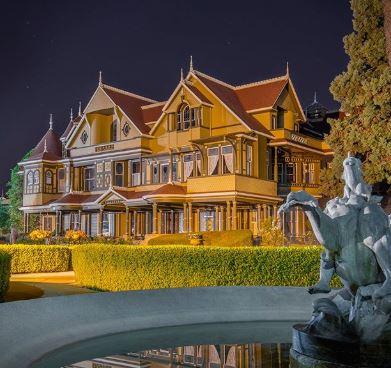
Some people do not believe in ghost. For that matter, some people do not believe in anything. There are persons who even affect incredulity concerning the “Door to Nowhere,” at the Winchester mansion. They said that it did not stand wide open—that it was not a gateway to the Spirit World and that they could have shut it; that the whole affair was a delusion; that they are sure it must have been a conspiracy; that they are doubtful whether there is such a place as the Winchester mansion on the face of the Earth; that the first time they are in California they will look it up. Perhaps, before going further, I ought to premise there was a time when I did not believe in ghosts either. If you had asked me one summer’s morning years ago when you met me on the Golden Gate Bridge if I held such appearances to be probable or possible, you would have received an empathic “No” for answer. However, at this rate, the story of the Door to Nowhere will never be told; so we will, with your permission, plunge into it immediately. I was interested in why this “Door to Nowhere” in the Winchester mansion would not keep shut? They say the place is haunted. What nonsense. There was one thing I can truly say about our office, we were never serious in it. I fancy that is the case in most offices nowadays; at all events, it was the case in ours. We were always chaffing each other, playing practical jokes, telling stupid stories, scamping our work, looking at the clock, counting the weeks to next Christmas, counting the hours to Saturday. For all that we were earnest in our desire to have our salaries raised, and unanimous in the opinion no fellows ever before received such wretched pay. #RandolphHarris 1 of 17

I had $75,000 a year, which I was aware did not half provide for what I ate at home. My mother and sisters left me in no doubt on the point, and when new clothes were wanted I always hated to mention the fact to my poor worried father. We had been better off once, I believe, though I never remember the time. My father owned a small property in the country. I wanted money badly—I must say I never had sixpence in the World of my own—and I thought if I could earn two sovereigns I might buy some trifles I needed for myself, and present my father with a new Ultimate Driving Machine. Then I recalled the amount of the rent was being asked for the Winchester mansion; then I decided gladly this would be a great place to stay if only the ghost turned out of possession. I decided I should like to try to whether, I could not solve the mystery. I was accustomed to lonely houses, and I would not feel at all nervous; I did not believe in ghost, and as for burglars, I was not afraid of them. I was told to just try it out first. To stay in the house for a week; if as tht end of that time I could keep the door shut, locked, bolted, or nailed up, to telegraphy the Winchester Repeating Arms Company, and they would actually pay me to stay there. To me, this sounded like a great bargain. If I lay the ghost, or find out the ghost, I think I ought to have enough money to buy a small house for myself. However, I could not have said what frightened me about this endeavour. A week after I moved into the Queen Anne mansion, Mr. van Buuren from the Winchester Repeating Arms Company came to visit me. He wanted to speak to me about the mansion. I heard a sound of irritation in his voice. “The Winchester Mansion!” he said; “and what have you got to say about the Winchester Mansion?” #RandolphHarris 2 of 17

“That is what I wanted to tell you, Mr. van Buuren,” I answered, and a dead hush seem to fall over the office as I spoke. The silence seemed to attract his attention, for he looked sternly at the clerks, who were not using a pen or moving a finger. “Come this way, then,” he said abruptly; and next minute I was in his private office. “Now, what is it?” he asked, flinging himself into a chair, and addressing me, who stood hat in hand beside the great table in the middle of the room. I began—I will say he was a patient listener—at the very beginning, and told my story straight through. I concealed nothing. I enlarged on nothing. A discharged clerk I stood before him, and in the capacity of a discharged clerk I said what I had to say. He heard me to the end, the he sat silent, thinking. At last he spoke. “You have heard a great deal of conversation about the Winchester, I suppose,” he remarked. “No, sir; I have heard nothing expect what I have told you.” “And why do you desire to strive to solve such a mystery?” “If there is any money to be made, I should like to make it, sir.” “How old are you?” “Two-and-twenty last January.” He laughed—he lay back in his chair and laughed—and I laughed myself, though ruefully. We went on talking for a long time after that; he asked me all about my father and my early life, and how we lived and the people we knew; and, in fact, put more questions than I can well remember. “It seems a crazy thing to do,” he said at las; “and yet I feel disposed to trust you. The house is standing perfectly empty. I cannot live it in, and I cannot get rid of it; all my own furniture I have removed, and there is nothing in the place except a few old-fashioned articles belonging to Mrs. Winchester. The place is a loss to me. It is of no use trying to let it, and thus, in fact, matters are at a deadlock. #RandolphHarris 3 of 17

“You will not be able to find out anything, I know, because, of course, other have tried to solve the mystery ere now; still, if you like to try you may. I will make this bargain with you. If you like to go down, I will pay your reasonable expenses for a fortnight; and if you do any good for me, I will give you a $1,000,000 note for yourself. Of course I must be satisfied that what you have told me is true and that you are what your represent. Do you know anybody in the city who would speak for you?” I could think of no one but my uncle. I hinted to Mr. van Buuren he was no grand enough or rich enough, perhaps, but I knew nobody else to whom I could refer him. “What?!” he said, “Greg Ryan, of Lakeview Street. He does business with us. If he will go bail for your good behaviour I shan’t want any further guarantee. Come along.” And to my intense amazement, he rose, put on his hat, walked me across the outer office and along the pavements till we came to Lakeview Street. “Do you know this youth, Mr. Ryan?” he said, standing in front of my uncle’s desk, and laying a hand on my shoulder. “Of course I do, Mr. van Burren,” answered my uncle, a little apprehensively; for, as he told me afterwards, he could not imagine what mischief I have been up to. “He is my nephew.” “And what is your opinion of him—do you think he is a young fellow I may safely trust?” My uncle smiled, and answered, “That depends on what you wish to trust him with.” “A long column of addition, for instance.” “It would be safer to give that task to somebody else.” “Oh, uncle!” I remonstrated; for I had really striven to conquer my natural antipathy to figures—worked hard, and every bit of it against the collar. My uncle got off his stool, and said, standing with his back to the empty fire-grate: “Tell me what you wish the boy to do, Mr. van Buuren, and I will tell you whether he will suit your purpose of not. I know him, I believe, better than he knows himself.” #RandolphHarris 4 of 17

In an easy, affable way, for so rich a man, Mr. van Buuren took possession of the vacant stool, and nursing his right leg over his left knee, answered: “He wants to go and shut the “Door to Nowhere” at the Winchester Mansion for me. Do you think he can do that? My uncle looked steadily back at the speaker, and said, “I thought, Mr. van Buuren, I was quite settled no one could shut it?” Mr. van Buuren shifted a little uneasily on his seat, and replied: “I did not set your nephew the task he fancies he would like to undertake.” “Have nothing to do with it, Justin, advised my uncle, shortly. “You do not believe in ghost do you, Mr. Ryan?” asked Mr. van Burren, with a slight sneer. “Do you not, Mr. van Buuren?” retorted my uncle. There was a pause—an uncomfortable pause—during the course of which I felt the million dollar note, which in imagination, I had really spent, trembling in the scale. I was not afraid. For one million dollars, or half the money, I would have faced all the inhabitants of spirit land. I longed to tell them so; but something in the way those two men looked at each other stayed my tongue. “If you ask me the question here in the heart of the city, Mr. Ryan,” said Mr. van Buuren, at length, slowly and carefully, “I answer ‘No’; but if you were to put me on a dark night at the Winchester, I should beg time to consider. I do not believe in supernatural phenomena myself, and yet—the ‘Door to Nowhere’ at the Winchester is as much beyond my comprehension as the ebbing and flowing of the sea.” “And you cannot live at the Winchester?” remarked my uncle. “I cannot live at the Winchester, and what is more, I cannot get anyone else to live at the Winchester.” “And you want to get rid of your lease?” “I want so much to get rid of my lease that I told Tuck I would give him a handsome sum if he could induce anyone to solve the mystery. Is there any other information you desire, Mr. Ryan? Because if there is, you have only to ask and have. I feel I am not here in a prosaic office in the city of Santa Clara, but in the Palace of Truth.” #RandolphHarris 5 of 17

My uncle took no notice of the implied compliment. When company is good it needs nothing else. If a man is habitually honest in his speech and in his thoughts, he desires no recognition of the fact. “I do not think so,” he answered; “it is for the boy to say what he will do. If he be advised by me he will stick to his ordinary work in his employers’ office, and leave ghost-hunting and spirit-laying alone.” Mr. van Buuren shot a rapid glance in my direction, a glance which implying a secret understanding, might have influenced my uncle could I have stooped to deceive my uncle. “I cannot stick to my work there any longer,” I said. “I got my marching orders today.” “What had you been doing, Justin? Asked my uncle. “I wanted one million to go and lay the ghost!” I answered, so dejectedly, that both Mr. van Buuren and my uncle broke out laughing. “One Million dollars!” cried my uncle, almost between laughing and crying. “Why, Justin boy, I had rather, poor man though I am, have given thee one million dollars than thou should’st go ghost-hunting or ghost-laying.” When he was very much in earnest my uncle went back to thee and thou his native dialect. I liked the vulgarism, as my mother called it, and I knew my aunt loved to hear him use the caressing words to her. He had risen, not quite from the ranks it is true, but if ever a gentleman came ready born into the World it was Greg Ryan, upon whom at our home everyone seemed to look down. “What will you do, you man?” asked Mr. van Buuren; “you hear what your uncle says, “Give up the enterprise,” and what I say; I do not want either to bribe or force your inclinations.” “I will go, sir,” I answered quite steadily. “I am not afraid, and I should like to show you—” I stopped. I had been going to say, “I should like to show you I am not sure a fool as you all take me for,” but I felt such an address would be too familiar, and refrained. #RandolphHarris 6 of 17

When I got to the Lodge, I showed Mr. van Buuren’s letter to the woman, and received the key. “You are not going to stop up at the Winchester alone, are you, sir? she asked. “Yes, I am,” I answered, uncompromisingly, so uncompromisingly that she said no more. The avenue led straight to the mansion; it was uphill all the way, and bordered by rows of the most magnificent limes I ever beheld. A light iron fence divided the avenue from the park, and between the trunks of the trees I could see the deer browsing and cattle grazing. Ever and anon there came likewise to my ear the sound of a sheep-bell. It was a long avenue, but at length I stood in front of the mansion—a square, solid-looking, Victorian mansion, four stories high, with several towers and a steeply pitched roof, beautiful stained-glass windows and statues, a basement; a flight of steps up to the principal entrance; several windows to the right of the door, several to the left of the door; the whole mansion flanked and backed with trees; all the curtains closed, a dead silence brooding over the place; the sun westering behind the great trees studding the park. I took all this in as I approached, and afterwards as I stood for a moment under then ample porch; then remembering he business which has brought me so far, I fitted the great key in the lock, turned the handle, and entered the Winchester Mansion. For a minute—stepping out of the bright sunlight—the place looked to me so dark that I could scarcely distinguish the objects by which I was surrounded; but my eyes soon grew accustomed to the comparative darkness, and I found I was in an immense hall, lighted from the roof; a magnificent old oak staircase conducted to the upper rooms. #RandolphHarris 7 of 17

The floor was of white marble. There were two fireplaces, fitted with dogs for burning wood; around the walls hung pictures, antlers, and horn, and in odd niches and corners stood groups of statues, and the figure of men in complete suits of armour. To look at the place outside, no one would have expected to find such a hall. I stood lost in amazement and admiration, and then I began to glance more particularly around. Mr. van Buuren has not given me any instructions by which to identify the ghostly chamber—which I concluded would most probably be found on the first floor. I knew nothing of the story connected with it—if there were a story. I was perfectly unencumbered of the mystery. I had not the faintest idea in which apartment it resided. Well, I should discover that, no doubt, for myself ere long. I looked around me—doors—doors—doors. I have never before seen so many doors together all at once. Two of them stood open—one wide, the other slightly ajar. “I will just shut them as a beginning,” I thought, “before I go upstairs.” The doors were of oak, heavy, well-fitting furnished with good locks and sound handles. After I had closed I tried them. Yes, they were quite secure. I ascended the great staircase feeling curiously like an intruder, paced the corridors, entered the many bed chambers—some quite bare of furniture, others containing articles of an ancient fashion, and no doubt of considerable value—chairs, antique dressing-tables, curious wardrobes, and such like. For the most part the doors were closed, and I shut those that stood open before making my way into the attics. I was greatly delighted with the attics. The window lighted them did not, as a rule, overlook the front of the Manion, but commanded wide views over wood, and valley, and meadow. Leaning out of one, I could see, that to the right of the mansion the ground, thickly planted, shelved down to a stream, which came out into the daylight a little distance beyond the plantation, and meandered through the deer part. #RandolphHarris 8 of 17

At the back of the mansion the windows looked out on nothing save a dense wood and a portion of the stable-yard, whilst on the side nearest the point from whence I had come there were spreading gardens surrounded by thick yew hedges, and kitchen-gardens protected by high walls; and further on a farmyard, where I could perceive cows and oxen, and, further still, luxuriant meadows, and fields glad with waying and fruit orchards. “What a beautiful place!” I said. “van Buuren must have been a duffer to leave it.” And then I thought what a great ramshackle house it was for anyone to be in all alone. Getting heated with my long walk, I suppose, made me feel chilly, for I shivered as I drew my head in from the last dormer window, and prepared to go down stairs again. In the attics, as in the other parts of the house I had as yet explored, I closed the doors, when there were keys locking them; when there were not, trying them, and in all cases, leaving the securely fastened. When I reached the ground floor the evening was drawing on apace, and I felt that if I wanted to explore the whole house before dusk I must hurry my proceedings. “I will take the kitchens next,” I decided, and so made my way to a wilderness of domestic offices lying to the rear of the great hall. Stone passages, great kitchens, an immense servants’-hall, larders, pantries, coal-cellars, beer-cellars, laundries, brewhouses, housekeeper’s room—it was not of any use lingering over these details. The mystery that trouble Mr. van Buuren could scarcely lodge amongst cinders and empty bottles, and there did not seem much else left in this part of the building. I would go through the living-rooms, and then decide as to the apartments I should occupy myself. The evening shadows were drawing on apace, so I hurried back into the hall, feeling it was a weird position to be there all alone with those ghostly hollow figures of men in armour, and the statues on which the moon’s beams must fall so coldly. #RandolphHarris 9 of 17

I would just look through the lower apartments and then kindle a fire. I had seen quantities of wood in a cupboard close at hand, and felt that beside a blazing hearth, and after a good cup of tea, I should not feel the solitary sensation which was oppressing me. The sun had sunk below the horizon by this time, for to reach the Winchester I had been obliged to travel by cross lines of railway, and wait besides for such trains as condescended to carry third-class passengers; but here was still light enough in the hall to see all object distinctly. With my own eyes I saw that one of the doors I had shut with my own hands was standing wide! I turned to the door on the other side of the hall. It was as I had left it—closed. This, then, was the room—this with the open door. For a second I stood appalled; I think I was fairly frighted. That did not last long, however. There lay the work I had desired to undertake, the foe I had offered to fight; so without mor ado I shut the door and tried it. “Now I will walk to the end of the hall and see what happens,” I considered. I did so. I walked to the foot of the grand staircase and back again, and looked. The door stood wide open. I went into the room, after just a spasm of irresolution—went in and pulled up the blinds: a good-sized room, twenty by twenty (I knew because I paced it afterwards), lighted by two long windows. The floor, of polished oak, was partially covered with a Turkey carpet. There were two recesses beside the fireplace, one fitted up as a bookcase, the other with an old and elaborately carved cabinet. I was astonished also to find a bedstead in an apartment so little retired from the traffic of the house; and there were also some chairs of an obsolete make, covered, so far as I could make out, with faded tapestry. Beside the bedstead, which stood against the wall opposite to the door I had as yet met with the interior of the house. #RandolphHarris 10 of 17

It was a dreary, gloomy room: the dark panelled walls; the black, shining floor; the windows high from the ground; the antique furniture; the dull four-poster bedstead, with dingy velvet curtains; the gaping chimney; the silk counterpane that looked like a pall. “Any crime might have been committed in which a room,” I thought pettishly; and then I looked at the door critically. Someone had been at the trouble of fitting bolts upon it, for when I passed out I not merely shut the door securely, but bolted it as well. “I will go and get some wood, and then look at it again,” I soliloquized. When I came back it stood wide open once more. “Stay open, then!” I cried in a fury. “I will not trouble myself any more with you tonight!” Almost as I spoke the words, there came a ring at the front door. Echoing through the desolate house, the peal in the then states of my nerves startled me beyond expression. It was only the man who had agreed to bring over my traps. I bade him lay them down in the hall, and while looking out some small silver, asked where the nearest-post-office was to be found. Not far from the Winchester Estate’s Park gates, he said; if I wanted any letter sent, he would drop it in the box for me; the mail-cart picked up the bag at ten o’clock. I had nothing ready to post then, and told him so. Perhaps the money I gave was more than he expected, or perhaps the dreariness of my position impressed him as it had impressed me, for he paused with his hand on the lock, and asked: “Are you going to stop here all alone, master?” “All alone, I answered, with such cheerfulness as was possible under the circumstances.” “That is the room, you know,” he said, nodding in the direction of the open door, and dropping his voice to a whisper. “Yes, I know,” I replied. “What, you have been trying to shut it already, have you? Well, you are a game one!” And with this complimentary if not very respectful comment he hastened out of the house. Evidently he had no intention of proffering his services towards the solution of the mystery. #RandolphHarris 11 of 17

I cast one glance at the door—it stood wide open. Through the windows I had left bare to the night, moonlight was beginning to stream cold and silvery. “Look here, Justin,” I said, all of a sudden; “life is not child’s play, as uncle truly remarks. That door is just the trouble you have now to face, and you must face it! However, for that door you would never have been here. I hope you are not going to turn coward the very first night. Courage!—that is your enemy—conquer it.” “I will try,” my other self answered back. “I can but try. I can but faith.” The moon’s beams were streaming down upon the mansion; I could see every statue, every square of marble, every piece of armour. For all the World it seemed to me like something in a dream; but I was tired and sleepy, and decided I would not trouble about fire or food, or the open door, till the next morning: I would go to sleep. However, I felt like an army of Devil’s was horribly broke in upon this place which is the center, and after a sort, the first-born of our Californian settlements. If a ghost was responsible for the hanging of nineteen people in this mansion, what was responsible for the burning of nine hundred people? What more likely time would the “Door to Nowhere” open up and let our arch-enemy, the Devil, choose a time for his attack? I spent the forenoon considering that door. I looked at it from within and from without. It was on the second floor and opened up to a two story drop outside of the house. What would possess someone to build a door like this, unless they had some knowledge of it being a portal? I eyed it critically. I tried whether there was any reason why it should fly open, and I found that so long as I remained on the threshold it remained closed; if I walked even so far away as the opposite side of the mansion, it swung wide. #RandolphHarris 12 of 17

Do what I would, it burst from latch and bolt. I could not lock it because there was no key. I was baffled. Then I stumbled upon a note which read: “One that shall use, practise, or exercise any invocation or conjuration of any evil or wicked spirit, or consult, convenient with, entertain or employ, feed or reward any evil or wicked spirit, to or for any intent or purpose; or take up any dead man, woman, or child, out of his, her, or their grave, or any other place, where the dead body resteth; or the skin, bone, or other part of any dead person, to be employed or used in any manner of witchcraft, sorcery, charm or enchantment; or shall use, practise, or exercise any witchcraft, enchantment, charm, or sorcery, whereby any person shall be killed, destroyed, wasted, consumed, pined, or lamed in his or her body, or any part thereof: such offenders duly and lawfully convicted and attained, shall suffer death.” Then it dawned of me. Perhaps the mansion has been attraction people who are into the occult and they are the nearly 920 people who have been burned alive or hanged. And that is why the house cannot find renters, it consumes them all. Perhaps this is something like the Atonement of Christ. How God gave His one and only Son to pay the wages of sin man had created, this mansion is consuming souls of those who practise the occult to atone for the death of those killed by the Winchester rifle. The afflicted state of our poor neighbours that are now suffering by molestations from the invisible World, we apprehended so deplorable that we think their condition calls for the utmost help of all persons in their several capacities. We cannot but with all thankfulness acknowledge the success which the merciful God has given unto the sedulous and assiduous endeavours of our honorable rulers to detect the abominable witchcrafts which have been committed in the country, humbly praying that the discovery of these mysterious and mischievous wickedness may be perfected. #RandolphHarris 13 of 17

We judge that in the prosecution of these, and all such witchcrafts, there is need of a very critical and exquisite caution, leas by too much credulity for things received only upon the Devil’s authority there be a door opened for a long train of miserable consequences, and Satan get an advantage over us, for we should not be ignorant of his devices. After all, it was this mansion people could not live in—his door that would not keep shut; and it seemed to me these were facts he might dislike being forced upon the attention of the public. What had I seen? What did I think of the matter? Very honestly I did not know what to say. The door certainly would not remain shut, and there seemed no human agency to account for its persistent opening; but then, on the other hand, ghost generally did no tamper with fire arms, and my rifle, though not loaded, had been tampered with—I was sure of that. Mr. van Buuren later disclosed to me his theory that open door: “This is the room my uncle was murdered in, they say the door will never remain shut till the murderer is discovered.” “Murdered!” I did not like the word at all; it made me feel chill and uncomfortable. “Yes—he was murdered sitting in his chair, and the assassin has never been discovered. At first many persons inclined to the belief that I killed him; indeed, may are of that opinion still. “But you did not, sir—there is not a word of truth in that story, is there?” He laid his hand on my shoulder as he said: “No, my lad; not a word. I loved the old man tenderly. Even when he disinherited me for the sake of his young wife, I was worry, but not angry; and when he sent for me and assured me he had resolved to repair a wrong, I tried to induce him to leave the lady a handsome sum in addition to her jointure. “If you do not, people may think she has not been the source of happiness you expected,” I added. “Thank you, Reuban,” he said. “You are a goof fella; we will talk further about this tomorrow.” And then he bade me goodnight. #RandolphHarris 14 of 17

“Before morning broke—it was in the about one hundred years ago—the household was arounds by a fearful scream. It was his death-cry. He had been stabbed from behind in the neck. He was seated in his chair writing—writing a letter in Latin. Part of it said, ‘Exorcizo te, immundissime spiritus, omnis incursion adversarii, omne phanatasma, omnis leigo, in nominee Domini nostri Jesu Christi eradicare, et effugare ab hoc plasmate Dei.’ The rest of the letter was torn. His solicitor came forward and said he had signed a will leaving all his personalty to me—he was very rich—unconditionally, only three days previously.” Mr. van Buuren went away, and I stayed in the house. I never left it all day. I did not go into the garden, or the stable-yard, or the shrubbery, or anywhere; I devoted myself solely and exclusively to that door. If I shut it once, I shut it a hundred times, and always with the same result. Do what I would, it swung wide. Never, however, when I was looking at it. So long as I could endure to remain, it stayed shut—the instant I turned back, it stood open. Though feeling convinced that no human agency did or could keep the door open, I was certain that some living person had means of access to the house which I could not discover. This was made apparent in trifles which might well have escaped unnoticed had several or even two people occupied the mansion. In the dead of the night a noise, resembling the clashing of iron, was frequently heard, which, if you listened more attentively, sound like the rattling of chains, distant at first, but approaching nearer by degrees: immediately afterward a spectre appeared in the form of an old man, of extremely emaciated and squalid appearance, with a long beard and dischevelled hair, rattling the chains on his feet and hands. The distressed occupants meanwhile passed their wakeful nights under the most dreadful terrors imaginable. This, as it broke their rest, ruined their health, and brought on distempers, their terrors grew upon them, and death ensued. #RandolphHarris 15 of 17

Even in the daytime, though the spirit did not appear, yet the impression remained so strong upon their imaginations that it still seemed before their eyes, and kept them in perpetual alarm. Consequently the mansion was at length deserted, as being deemed absolutely uninhabitable; so that it was now entirely abandoned to the ghost of the Winchester rifle. That night, I prepared to retire. However, I was open to the vain terrors of imaginary noises and spirits. The first part of the night passed in entire silence, as usual; at length a clanking of iron and rattling of chains was heard: however, I neither lifted up my eyes, nor got out of bed, but in order to keep calm, I pretended the sound was something else. The noise increased and advanced nearer, until it seemed at the door, and at last in my chamber. I looked up, saw, and recognized the ghost exactly as it has been described to me: it stood before me, beckoning with a finger, like a person calls another. I immediately arouse, and, candle in hand, followed it. The ghost slowly stalked along as if encumbered with its chains, and, turning into the area of the house where the “Door to Nowhere, was and suddenly vanished. What an idiot I have been! If I wanted to solve the mystery of the open door, or course I must keep watch in the room itself. The door would not stay wide unless there was a reason for it. When I walked into the room, it was deadly cold, and the scene was horrible. The door was wide open. A party of ghosts were assembled with, and were feasting on the flesh of corpses. I was astonished by this hideous banquet. As soon as I could safely escape, I stole back into my bed. I was rather crossed at being disturbed. The next day word on—the long, dreary day; evening approached—the night shadows closed over the Winchester mansion. The moon would not rise for a couple hours more. Everything was still as death. The house had never before seemed to me so silent and so deserted. #RandolphHarris 16 of 17

I took a candle, and went up to my accustomed room, moving about for a time as though preparing for bed; then I extinguished the candle, softly open the door, turned the key, and put it in my pocket, slipped softly downstairs, across the hall, through the open dor. Then I knew I had been afraid, for I felt a thrill of terror as in the dark I stepped over the threshold. I paused and listened—there was not a sound—the night was still and sultry, as though a storm were brewing. Not a leaf seemed moving. Noiselessly I made my way to the other side of the room. There was an old-fashioned easy-chair between the bookshelves and the bed; I sat down in it, shrouded by the heavy curtains. The hours passed—where ever hours so long? The moon rose, came and looked in at the windows, and then sailed away to the west; but not sound, no, not even the cry of a bird. I seemed to myself a mere collection of nerves. Every part of my body appeared twitching. It was agony to remain still; the desire to move became a form of torture. The locked door opened—so suddenly, so silently, that I barely had time to draw back behind the curtain, before I saw a woman in the room. A slight, lithe woman, not a lady, clad in all black—not a bit of white about her. What on Earth could she want? Then she fell on me with her nails and teeth, and tore at my throat, she was as strong as twenty devils. I felt something like a red-hot iron enter my neck. She opened a vein and sucked by blood, and I could but rush from the room before I fell senseless on the marble pavement of the hall. When the post man came that morning, finding no one stirring, he looked through one of the long windows that flanked the door; then he ran to the farmyard and called for help. “There is something wrong inside,” he cried. “That young gentleman is lying on the floor in a blood of blood.” To this day, the “Door to Nowhere” is still a mystery. #RandolphHarris 17 of 17

Winchester Mystery House

24 Hours till opening night of All Hallows’ Eve and our caretakers are working non stop to put the finishing touches on the show! Be here for the opening weekend! Tickets are still available. A 160-room mansion built to appease the spirits who died at the hands of the Winchester Rifle 👻
All Hallows’ Eve:
🎟️ Link in bio. 🗝 winchestermysteryhouse.com

When there are No Adults Left at Home, the Nuclear Family Has No Nucleus!

Machines are of little value unless humans can operate them. A pocket calculator that is difficult to handle might just as well be a paperweight. An automobile design that blocks large areas of the driver’s vision could be deadly. To adapt machines for human use, the engineering psychologist (human factors engineer) must make them compatible with our sensory and motor capacities. For example, displays must be easy to perceive, controls must be east to use, and the tendency to make errors must be minimized. (A display is any dial, screen, light, or other device used to provide information about a machine’s activity to a human user. A control is any knob, handle, button, lever, or other device used to alter the activity of a machine.) Many of the machines we rely on each day were designed, in part, by human factors engineers. Some familiar examples include push-button telephones, “user-friendly” computers, home appliances, cameras, PDAs, airplane controls, and traffic signals. Psychologist Donald Norman refers to successful human factor engineering as natural design. Effective design makes use of perceptual signals that people understand naturally, without needing to learn them. An example is the row of vertical buttons in elevators. The buttons mimic the layout of the floors. This is simple, natural, and clear. Effective design also provides feedback (information about the effect of making a response). The audible click designed into many computer keyboards is a good example. As Dr. Norman points out the cause of many accidents is not just “human error.” The real culprit is poor design. #RandolphHarris 1 of 20

One should also distinguish carefully between the public economy, and government, and the supreme authority called sovereignty. This distinction consists in the one having the right of legislation and, in certain cases, in placing an obligation on the very body of the nation, while the other has only executive power and can place an obligation only upon private individuals. The body politic, taken individually, can be considered to be like a body that is organized, living and similar to that of a human. The sovereign power represents the head; the laws and customs are the brain, source of the nerves and seat of the understanding, the will and the senses, of which the judges and magistrates are the organs; the commerce, industry and agriculture as the mouth and stomach which prepare the common subsistence; the public finances are the blood that is discharged by a wise economy, performing the functions of the heart, in order to distribute nourishment and life throughout he body; the citizens are the body and members that makes the machine move, live and work, and that cannot be harmed in any part without a painful impression immediately being transmitted to the brain, if the being is in a state of good health. The life of both is the self common to the whole, the reciprocal sensibility and the internal coordination of all the pars. What if this communication were to cease, if the formal unity were to disappear, and if contiguous parts were to be related to one another solely by their juxtaposition? The man is dead and the state is dissolved. #RandolphHarris 2 of 20

The body politic, therefore, is also a moral being which possesses a will; and this general will, which always tends toward the conversation and well-being of the whole and of each part, and which is the source of all the laws, is for all the members of the state, in their relations both to one another and to the state, the rule of what is just and what is unjust. This, by the way, is a truth which shows how absurd many writers have been for regarding as theft the subtlety prescribed to the children of Sparta for obtaining their frugal meal, as if everything prescribed by law could fail to be lawful. See the word RIGHT for the source of this great and luminous principle, of which this article is an elucidation. It is important to observe that this rule of justice, on a firm footing with all citizens, can be defective with regard to foreigners; and the reason for this is obvious. For he will of the state, however general it may be in relation to its members, is no longer so in relation to other states and to their members, is no longer so in relation to other states and to their members, but becomes for them a private and individual will which has its rule of justice in the law of nature, which enters equally into the principle established. For then the great city of the World becomes the political body whose law of nature is always the general will, and whose states and diverse peoples are merely private individuals. From these same distinctions, applied to each political society and to its members, are derived the most universal and most secure rules on whose basis one could judge a government to be good or bad, and in general of the morality of all human actions. #RandolphHarris 3 of 20

Every political society is composed of other smaller and different societies, each of which has its interests and maxims. However, these societies which everyone perceives (since they have an external and authorized form), are not the only ones really existing in the state. All the private individuals who are united by a common interest make up as many others, permanent or transitory, whose force is no less real for being less apparent, and the proper observation of whose various relationships is the true knowledge of mores. It is all these tacit or formal associations which modify in so many ways the appearances of the public will by the influence of their will. The will of these particular societies always has two relations: for the members of the association it is the general will; for the large society it is a particular will, which is quite often found to be upright in the first respect and vice-ridden in the second. Someone could be a devout priest or a brave soldier or a zealous human of action but a bad citizen. A deliberation can be advantageous to the small community and quite pernicious to the large community. It is true that, since some particular societies are always subordinated to hose which contain them, one should obey the latter rather than the former; the duties of the citizen take precedence over those of the senator, and those of the human over those of the citizen. However, unfortunately private interest is always found in inverse proportion to duty, and it increases to the extent that the association becomes narrower and the commitment less sacred. This is irrefutable proof that the most general will is also always the most just, and that the voice of the populace is, in effect, the voice of God. #RandolphHarris 4 of 20

It does not thence follow that public deliberations are always equitable; they could fail to be so when it is a question of matters involving international people. Thus it is not impossible for a well-governed republic to wage an unjust war. Nor is it any less impossible for the council of a democracy to pass bad decrees and to condemn the innocent. However, this will never happen unless the populace is seduced by private interests which certain clever humans have managed to substitute for those of the state by means of personal trust and eloquence. Then the public resolution will be one thing and the general will another. Please do not offer me the democracy of Athens as a counter-instance, because Athens was not really a democracy but a highly tyrannical aristocracy, governed by learned humans and orators. Examine carefully what foes on in any deliberation and you will see that the general will is always for the common good; however, quite often there is a secret schism, a tacit confederation, which causes the natural disposition of the assembly to be lost sight of for the sake of private purposes. Then the social body really is divided into other bodies whose members take on a general will that is goo and just as regards these new bodies, and bad as regards the whole from which each of them has cut itself off. We see how easy it is to explain by means of these principles the apparent contradictions one notices in the conduct of many humans who are filled with scruple and honour in some respects, while deceitful and unprincipled in others. They trample underfoot the most scared duties and are faithful to the death to illegal commitments. #RandolphHarris 5 of 20

Thus the most corrupt of humans always pay some sort of homage to the public faith. Thus even bandits, who are the enemies of virtue in the large society, worship something like virtue in their lairs. Whatever I want and think with regard to solace, to comfort, I do not expect to find it here in this life, but in the next. Even if I could have every Earthly solace and enjoy all Earthly delight, one thing is certain: they would not last for long. Whence, O Soul, do not expect to find full solace, perfect refreshment, until and unless it is in God, whom we have come to know as Consoler of the Poor and Protector of the Low. Wait a while, my Soul. Expect the Divine Promise, yes, and then you will have more than you can handle in Heaven. Drool over these things on Earth, and you will let loose—that is to say, you will lose—the Eternals and Celestials. Use Temporals that are around you, yes, but desire Eternals that are yet to come. Temporals offer no True Satisfaction. That is because your creation is not totally suited to enjoyment of that kind. Even if you had the whole World in your pocket, you would not feel particularly happy or especially blessed. However, in God, who created everything, your True Beatitude and Felicity will surely be found. That is not how the Stupids, sotted and sodden with the things of this World, approach and appraise it. However, that is exactly how the Spiritually-minded and Clean-hearted, whose chatsworth is already in the clouds, as Paul and Timothy described it to the Philippians (3.20), interpret it in the interval between now and then; that is to say, between this life and the next. #RandolphHarris 6 of 20

The One True Solace—that is what Truth has detected within. The Devout brings one’s friends Jesus with one wherever one goes, chatting one up along the way. “Keep up with me, Lord Jesus! I mean to keep a mean pace.” Let this by my consolation, to freely wish to do without every human solace. And if, as a result of my wish, consolation is nowhere to be found, I will gladly settle for Your good favour and approval. In this regard I could quote the Psalmist (103.9). “You will not be hounding and harassing me for long, O Lord! You will not be shouting and scaring me out of my wits for ever!” If we really want to restore the nuclear family to its former dominance, there are things we could do. Here are a few: Freeze all technology in its present stage to maintain a factory-based, mass-produced society. Begin by using the computer only when necessary. The computer is a greater threat to family than the abortion laws and homosexual rights movements and pornography in the World, for the nuclear family needs the mass-production system to retain its dominance, and the computer is moving us beyond mass production. Subsidize manufacture and block the rise of the service sector in the economy. White-collar, professional, and technical workers are less traditional, less family-oriented, more intellectually and psychologically mobile than blue-collar workers. Divorce rates have risen along with the rise in service occupations. “Solve” the energy crisis by applying nuclear and other highly centralized energy processes. The nuclear family fits better in a centralized than a decentralized society, and energy systems heavily affect the degree of social and political centralization. #RandolphHarris 7 of 20

Ban the increasingly de-massified media, beginning with cable television and CDs, but not overlooking local and regional magazines. Nuclear families work best where there is a national consensus on information and values, not in a society based on high diversity. While some critics naively attack the media for allegedly undermining the family, it was the mass media that idealized the nuclear family form in the first place. Convince some women to return home and create a nice and welcoming kingdom for the family. Strengthen, rather than relax, all union seniority provisions to assure that women who want to work, will not have their jobs threatened, but those who want to return home will be free to do so. When she is allowed to decide, then whatever she chooses will be done without animosity. However, the nuclear family has no nucleus when there are no adults left at home. (One could, of course, achieve the same effect by reversing matters, permitting women to work while compelling men to say home and rear the children. However, psychologically, there may be some problems with that, especially from the father-in-law.) Simultaneously slash the wages of young workers to make them more dependent, for a longer time, on their families—and thus less psychologically independent. (However, his may create some bitterness from youth who want careers, families of their own and independence.) The nuclear family is further denuclearized when the young leave parental control to go to work. Ban contraception and research into reproductive biology. These make for the independence of women, makes promiscuous pleasures of the flesh more attractive, and creates a path for extramarital affairs, a notorious loosener of nuclear ties. #RandolphHarris 8 of 20

Cut the standard of living of the entire society to pre-1990 levels, since affluence makes it possible for single people, divorced people, working women, and other unattached individuals to “make it” economically on their own. The nuclear family needs a touch of poverty (not too much, not too little) to sustain it. Finally, re-massify our rapidly de-massifying society, by resisting all changes—in politics, the arts, education, business, or other fields—that lead toward diversity, freedom of movement and ideas, or individuality. The nuclear family remains dominant only in a mass society. In short, if we insist on defining family as nuclear, this is what a pro-family policy would have to be. If we truly wish to restore the Second Wave family, we had beer be prepared to restore Second Wave civilization as a whole—to freeze not only technology but history itself. For what we are witnessing is not the death of the family as such, but the final fracture of the Second Wave family system in which all families were supposed to emulate the idealized nuclear model, and the emergence in its place of a diversity of family forms. Just as we are de-massifying our media and our production, we are de-massifying the family system in the transition to a Third Wave civilization. However, the problem with the past is that many of us do not see the truth. Many people were unhappy in nuclear families. Women wanted to work, children wanted to grow up and work and gain independence, and everyone wanted to become affluent so they would not have to live with lack and limitations. So, although the nuclear family seemed happy, perhaps it was not. #RandolphHarris 9 of 20

The earliest planned suburbs, which have come to be known as romantic, or garden suburbs, emerged in the middle of the nineteenth century. Thee suburbs provided not just housing but planned communities in which homes were placed in a created landscape that was designed to embellish nature by the picturesque placement of greenery, trees, ponds, and parks. An informal, naturalistic environment was created, which was to improve upon nature. The romantic suburb came out of the same impulses that led to Frederick Law Olmsted’s design for the naturalistic Central Park in New York and to naturalistic cemeteries designed with hills, trees, and curving roadways, such as Hollywood Cemetery in Richmond, Virginia USA. Implicit in the emphasis on nature was an American version of the neo-Platonic concept of nature being a source of contact with the divine and the World being a garden that needs to be improved. Olmstead’s Central Park thus can be seen as a practical application of Ralph Waldo Emerson’s belief in the necessity to “unite rural and urban in order to promote spiritual and social advancement. Foremost among the planned romantic suburbs was Llewellyn Park, started in 1853. Constructed in New Jersey a mile from the North Orange railroad station, its location permitted property owners to commute 15 miles to Manhattan, New York USA. The goal of the developer, Llewellyn Haskell, and his architect, Alexander Jackson Davis, was to build a private community of villas in a park-like setting. All this was to be situated in a scenic location in the foothills of the Orange Mountains. Llewellyn Park, planned to provide “country homes for city people,” clearly was influenced by the image of the manor house situated in an English rural park. #RandolphHarris 10 of 20

According to an 1857 advertisement, the community was located on, “a tract of land, containing about 300 Acres, [that] has been divided in Villa Sites, of, from 5 to 10 Acres Each. It was selected with special reference to the wants of citizens doing business in the city, and yet wanting accessible, retired, and healthful homes in the country, by the proprietor, who adopted this method to secure a select and good neighbourhood. Within the community, as if it were the Garden of Eden, nature was to be conveniently domesticated. Thus, all commercial enterprises were banned, even food stores. The site was designed with 7 miles of curvilinear roads that followed the terrain. This was a major break with the straight-right-angle streets that then were nearly universally used. Curvilinear roads today are almost de rigueur for upper-middle-class subdivisions, but their usage traces back to Llewellyn Park. The community was also completely architecturally landscaped. In the center of Llewellyn Park, a naturalistic 50-acre “ramble” was placed. In the community, the natural effect was in no respects left to the chance work of nature. Llewellyn spent the then-huge sum of $100,000 (inflation adjusted for 2021 $3,137,965.52 USD) to have pond dug and azaleas, dogwood, holly, rhododendrons, and other natural looking plants placed to highlight and augment the natural look. However, these advantages of Llewellyn Park were not to be available to uninvited visitors. A stone gatehouse notified outsiders that this was a strictly private Garden of Eden. While Llewellyn Park was remarkable, it was well beyond the reach of any but the wealthy. As a refuge for the well-to-doo, it could never have widespread application. Its very strength was its uniqueness. #RandolphHarris 11 of 20

More influence on the future of American landscape and domestic architecture would be upper-middle-class planned suburbs. The Civil War created new fortunes and the Victorian era that followed many have been constrained in areas of behaviour, but it was flamboyant and ostentatious in housing design. Urban housing for those who could afford it often was built without restraint on the premise that more was always better. Surprisingly, this idolization of excess did not invariably affect suburban design. Some now-classic suburbs were built with restraint and tastes during the latter half of the nineteenth century. One of these was Riverside, southwest of the Chicago city line. Riverside’s principle architect was Frederick Law Olmsted, the designer of Central Park. The project was begin in 1868 and was to combine the best of city and country and exhibit “the best application of the arts of civilization to which humankind has yet obtained. What this meant in practice was that the suburb was to be a bridge between the city and the country—an unban community in a rural setting. One of the early residents of Riverside was the architect William Le Baron Jenney, the reputed inventor of the iron-girdered building frame, which made the building of skyscrapers possible. Mr. Jenney designed several homes in Riverside in addition to his own. The site of Riverside, unlike that of Llewellyn Park, was without strong scenic attraction; it comprised 1,600 acres of Illinois prairie. However, the location did have two advantages. The first was that it was along the Des Plaines River, which could be worked into a landscape design. The second, and more crucial, was that Riverside was the first stop west from Chicago’s center on the Burlington Route railroad. Thus, the site was a good location for an affluent commuter suburb. #RandolphHarris 12 of 20

Since the community lacked its own business activity, its residents would, by necessity, be those who could afford the expenditure of money and time for commuting. This meant a homogeneous community of at least an upper-middle-class level (excluding servants). Diversity was not one of the developer’s goals. (Contemporary planned communities, such as Irving, California; Pocket/Greenhaven Sacramento, California; Laguna, California and others, continue this tradition of socioeconomic exclusivity.) Mr. Olmstead was given a free hand in designing Riverside, and today the community still reflects the genius of his decisions. Of the 1,600 acres comprising the site, some 700 were reserved for parks and open spaces. The most picturesque of the parks wound along the banks of the river, but there were also parks and commons areas situated throughout the project. As in Llewellyn Park, the street pattern was curvilinear rather than right-angle grids, but unlike Llewellyn, property lines between homes were clearly drawn. All houses had to be at least 30 feet from the street, and trees were to be planted along the road to shield the homes from traffic and observation. However, Riverside was clearly designed to be a suburb, not a rustic retreat. It was to marry the best of the city and the countryside. Riverside was not designed to be a utopian experiment, but a profit-making land development project. However, before it could be finished, it encountered severe financial difficulties. Turning a profit ran into three obstacles. The first was that the development was located 9 miles from the center of Chicago, and in the early 1870s, that was well beyond the city. It necessitated railroad commuting anytime anyone needed or wanted to go to Chicago. The second and third problems were factors beyond the control of the Riverside Improvement Company. #RandolphHarris 13 of 20

The Great Chicago Fire occurred in 1871, which resulted in neither attention nor investment funds being available for a number of years for peripherally located projects. Then, the financial Panic of 1873 and the depression that followed completed the bankruptcy of the developer. Riverside only slowly recovered, but a century and a half later it remains a well-designed and pleasant suburb—a tribute to Mr. Olmsted’s farsighted vision in combining city and country. Riverside still puts to shame the surrounding more modern, but far less imaginatively designed suburbs. The arrival of the Third Wave, of course, does not mean the end of the nuclear family any more than the coming of the Second Wave mean the end of the extended family. It means, rather, that the nuclear family can no longer serve as the ideal model for society. The little-appreciated fact is that, at least in the United States of American where the Third Wave is most advanced, most people already live outside the classical nuclear family form. If we define the nuclear family as a working husband, a housewife, and two children, and ask how many Americans actually still live in this type of family, the answer is astonishing: while 42 percent of all American household were nuclear families in 1970, today they represent just 22 percent, a decline of nearly half. Seventy-eight percent of the population do not fit this ideal Second Wave model any long. Even if we broaden our definition to include families in which both spouses work or in which there are fewer or more than two children, we find the vast majority—as many as two third to three quarters of the population—living outside the nuclear situation. Moreover, all the evidence suggests that nuclear households (however we choose to define them) are still shrinking in numbers as other family forms rapidly multiply. #RandolphHarris 14 of 20

To begin with, we are witnessing a population explosion of “solos”—people who live alone, outside a family altogether. Since 1950, the proportion of adults living alone in the United States of America has tripled to about 15 percent. Approximately 36 million men and women now live alone, representing a record high of 28 percent of all United States households. Nor are all these people losers or loners, forced into the solo life. Many deliberately choose it, at least for a time. Says a legislative aide to a Seattle councilwoman, “I would consider marriage if the right person came along, but I would not give up my career for it.” In the meantime she lives along. She is part of a large class of young adults who are leaving home earlier but marrying later, thus creating what census specialist Arthur Norton says is a “transitional living phase” that is “becoming an acceptable part of one’s life cycle.” Looking at an older slice of the population, we find a large number of formerly married people, often “between marriages,” living on their own and, in many cases decidedly liking it. The growth of such groups has created a flourishing “singles” culture and a much publicized proliferation of bars, ski lodges, travel tours, and other services or products designed for the independent individual. Simultaneously, the real estate industry has come up with “singles only” condominia, and has begun to respond to a need for smaller apartments and suburban homes with fewer bedrooms, but more flexible space. However, face it, it this new age, everything is about luxury, so everything is expensive and so many people are college educated with jobs that pay well. Almost a fifth of all home buyers in the United States today are single, and nothing is more attractive to some than an individual with a home large enough for a family. #RandolphHarris 15 of 20

We are also experiencing a headlong growth in the number of people living together without bothering about legal formalities (some call this “living in sin”). However, with things being so fast paced and expensive and changing so often, people of the Third Wave like to sample what married life is like before committing. This group of cohabitators has doubled in the past decade, according to United States authorities. The practice has become so common that the United States Department of Housing and Urban Development has overthrown tradition and changes its rules to permit such couples to occupy public housing. The courts, meanwhile, from Connecticut to California, are wrestling with the legal and property complications that spring up when such couples “divorce.” Etiquette columnists write about which names to use in addressing partners, and “couple counseling” had sprouted as a new professional service alongside marriage counseling. At the University of Waterloo, Michael Ross has repeatedly found that people will distort their past in ego-supportive ways. In one experiment he exposed some people to a message about the desirability of frequent toothbrushing. Shortly afterward, in a supposedly different experiment, these students recalled brushing their teeth mor often during the preceding two weeks than did an equivalent sample of people who had not heard the message. Noting the similarity of such findings to happenings in George Orwell’s 1984—where it was “necessary to remember that events happened in the desired manner”—Anthony Greenwald surmised that human nature is governed by a totalitarian ego that continually revises the past in order to preserve a positive self-evaluation. #RandolphHarris 16 of 20

Because of our mind’s powers of reconstruction, we can be sure, argues Mike Yaconelli, that “Every moving illustration, every gripping story, every testimony, did not happen (at least, it did not happen like the storyteller said it happened).” Every anecdotal recollection told by a Christian superstar is a reconstruction. It is a point worth remembering in times when we are feeling disenchanted by the comparative ordinances of our everyday lives. If an undesirable action cannot be forgotten, misremembered, or undone, then often it is justified. Among psychology’s best-established principles is that our past actions influence our current attitudes. Every time we act, we amplify the idea lying behind what we have done, especially when we feel some responsibility for having committed the act. In experiments, people who oppress someone—by delivering electric shocks, for example—tend later to disparage their victim. Researchers who study human thinking have often observed that people overestimate the accuracy of their beliefs and judgments. As Baruch Fischhoff and others have demonstrated, we often do not expect something to happen until it does, at which point we overestimate our ability to have predicted it—the “I knew it all along” phenomenon. People also fail to recognize their vulnerability to error. Many people employ the Pollyanna Principle, which means that people more readily perceive, remember, and communicate pleasant than unpleasant information. Positive thinking predominates over negative thinking. There is also a consistent tendency toward unrealistic optimism about future events. #RandolphHarris 17 of 20

Most students perceive themselves as far more likely than their classmates to experience positive events such as getting a good job, drawing a good salary, and owning a home, and as far less likely to experience negative events such as getting a divorce, having cancer, and being fired. However, that may be a good thing because they will try harder to work through problems and persevere until their dreams become a reality. It is better than those who do not have dreams and just take what they can get and expect things from others. In various experiments, most people have been observed to act in rather inconsiderate, complaint, or even cruel ways. When other people are told about these conditions and asked to predict how they would act, nearly all will insist that their own behaviour would be virtuous. Similarly, when the researcher Steven Sherman called Bloomington, Indiana, residents and asked them to volunteer three hours to an American Cancer Society drive, only 4 percent agreed to do so. Meanwhile, a comparable group of other residents were being called and asked to predict how they would react were they ever to receive such a request. Almost half claimed they would help. There are additional streams of evidence, but the point is made: the most common error in people’s self-images is not unrealistically low self-esteem, but rather self-serving pride; not an inferiority complex, but a superiority complex. However, those who approach God with their wish to be healed and their faith in His power to bring it to realization, have still not approached Him aright. They must also be willing to have their own contribution to the disease’s existence pointed out. They must also agree to rectify wrong habits of living and thinking. If they come only for pleasant words and a successful cure, if they are not prepared to deny themselves or to discipline themselves, God may not be able to heal them. #RandolphHarris 18 of 20

The first and least danger which besets the possessor of occult healing power is he praise or fame it brings one from other people, who are led by it to think one greater than one really is. One feels flattered by the praise and elated by the fame, with the result that one’s ship runs aground on the reef of vanity. One further progress gets stopped. Few can withstand the temptation as Jesus once withstood it. One day an ancient Bengali man prostrated before Jesus Christ and expressed gratitude for His having cured him of chronic paralysis. The man had tried other remedies without success and finally restored to the repeated utterance of Jesus Christ’s name, and was completely cured. When replying, the great liberator of America showed the selfless humility of His character by replying: “It was not I but my Father who cured you.” Deep down within the heart there is a stillness which is healing, a trust in the Universal Laws which is unwavering, and a strength which is rocklike. However, because it is so deep, we need both patience and perseverance when digging for it. To pray for a bodily cure and nothing more is a limited and limiting procedure. Pray also to be enlightened as to why this sickness fell upon you. Ask also what you can do to remove its cause. And above all, ask for the Water of Life, as Jesus bade the woman at the well to ask. If one can apply this teaching now, if one can put one’s faith in and make one’s contact with the higher power from this very moment, if one can forget oneself for an instant, one can receive healing instantaneously. When Jesus told the sick person, “Thy faith has brought thee recovery,” He did not mean, as many now think, faith that the cure will be effected. No—He meant faith in the healing power—God. The first kind keeps the mind still centered in ego, whereas the second kind of faith lifts the mind away from ego. Another translation: “Your faith has made you well.” #RandolphHarris 19 of 20

Because the Overself is not outside a human but is one’s own innermost nature, full faith in its presence and power is essential to experience its healing and help. When the pursuit or practice of healing powers diverts one from the higher work of knowing who it is that is seeking or using them, when they no longer serve but make one their servant, one must pause and beware. When one realizes how much is given by the higher power through one, and how little is really done by oneself, the healer or teacher may well become careless of one’s fame, efface one’s own personality, and keep it humbly in the background. Whoever else achieves the same good results will arouse one’s generous joy, not one’s egoistic jealousy. Cattle browse peacefully, trees and plants are verdant, birds fly from their nests, and lift up their wings in your praise. All animals frisk upon their feet, all winged things fly and alight once more—they come to life with your rising. Yachats sail upstream and jet skis downstream, at your coming every highway is open. Before your face the fish leap up from the river, your rays reach the green ocean. You it is who place the male pearl in woman, who create the pearl in man; You quicken the sun in his mother’s belly, soothing him so that he shall not cry. Even in the womb, you are his nurse. You give breath to all your creation, opening the mouth of the newborn and giving him nourishment. For Thy sake, our God, do Thou save us. For Thy sake, our Creator, please O save us. For Thy sake, our Redeemer, please O save us. For Thy sake, O Thou who seekest us, please save us, we beseech Thee. God contemplates and knows Himself in the moment that ego is withdrawn into Him. #RandolphHarris 20 of 20

CRESLEIGH HAVENWOOD
Lincoln, CA | from the mid $600s
Now Selling!

Now selling! Cresleigh Havenwood is the newest Cresleigh community coming to Lincoln, CA. With four distinct floor plans to choose from ranging from 2,293 – 3,489 square feet offering up to five bedrooms, we are sure you’ll find your dream home here at Havenwood! https://cresleigh.com/havenwood/


It Appears that the Powers of Redeemed Man Will be Almost Unlimited!

In a century where people take pride in fine sorts of knowledge, there are no to be found two closely united Humans—rich, one in money, the other in genius, both loving glory and aspiring for immortality—one of whom sacrifices twenty thousand crowns of his goods and the other ten years of one’s life for a famous voyage around the World, in order to study, not always rocks and plants, but, for once, men and more, and who, after so many centuries used to measure and examine the house, would finally be of a mind to know its inhabitants. Spankings, reprimands, fines, jail sentences, firings, failing grades, and the like are commonly used to control behaviour. Clearly, the story of learning is unfinished without a return to the topic of punishment. Recall that punishment lowers the probability that a response will occur again. To be most effective, punishment must be given contingently (only after an undesired response occurs). Punishers, like reinforcers, are defined by observing their effects on behaviour. A punisher is any consequence that reduces the frequency of a target behaviour. It is not always possible to know ahead of time what will act as a punisher for a particular person. For example, when Leo’s mother reprimanded him for not sharing his toys, he started sharing them. In this instance, the reprimand was a punisher. However, Joel is starved for attention of any kind from his parents, who both work full-time. For Joel, a reprimand, or even a spanking, might actually reinforce toy throwing. Remember, too, that a punisher can be either the one set of an unpleasant event or the removal of a positive states of affairs (response cost). Men and women are placed on Earth to learn, grow and become better by following Jesus Christ. In the Church, this process is described as “eternal progression.” #RandolphHarris 1 of 21

Central to that process is freedom of choice, which shapes who we are. Inevitably, as we make choices, we also make mistakes. Most of life’s mistakes are easily overcome through simple, sincere, repentance, a process common to nearly all religious people. In rare instances, we may commit serious transgression that jeopardize our progress. Church discipline—restrictions and conditions of repentance that prompt a person to reevaluate their situation and return to full fellowship and activity—is a process designed to help us overcome sin in these instances. For all sins, large and small, it is the sacrifice and suffering, mercy and grace—or Atonement—of Jesus Christ that makes repentance possible. Church discipline is designed to help an individual more fully apply the Atonement of Jesus Christ, be cleansed of their sins and move forward in their eternal progression. The term “discipline” is an important one, especially in this religious context. It shares the same Latin root as the word “discipline,” meaning true follower. Learning to discipline ourselves is what makes us better people. Any athlete, artist, scholar or musician would acknowledge that discipline is the key to improvement. And so it is with our spiritual progression as well. Christ Himself taught repeatedly that we need to be disciplined in our thoughts, words and deeds. Becoming a disciple of Jesus Christ requires self-discipline. The miracles of Chris can be classified in two ways. The first system yields the classes (1) Miracles of Fertility (2) Miracles of Healing (3) Miracles of Destruction (4) Miracles of Dominion over the Inorganic (5) Miracles of Reversal (6) Miracles of Perfecting or Glorification. The second system, which cuts across the first, yields two classes only: they are (1) Miracles of the Old Creation, and (2) Miracles of the New Creation. #RandolphHarris 2 of 21

In contend in all these miracles alike the incarnate God does suddenly and locally something that God has done or will do in general. Each miracle writes for us in small letters something that God has already written, or will write, in letters almost too large to be noticed, across the whole canvas of Nature. They focus at a particular point either God’s actual, or His future, operations on the Universe. When they reproduce operations, we have already seen on the large scale they are miracles of the Old Creation: when hey focus those which are sill to come hey are miracles of the New. Not one of them is isolated or anomalous: each carries the signature of the God whom we know through conscience and from Nature. Their authenticity is attested by the style. Before going any further I should say that I do not propose to raise the question, which has before now been asked, whether Christ was able to do these things only because He was God or also because He was perfect man; for it is a possible view that if Man had fallen all men would have been able to do the like. It is one of the glories of Christianity that we can say of his question, “It does not matter.” Whatever may have been the powers of unfallen man, it appears that those of redeemed Man will be almost unlimited. Christ, re-ascending from His great dive, is bringing up Human Nature with Him. Where He goes, it goes too. It will be made “like Him.” If in His miracles He is not acting as the Old Man might have done before his Fall, then He is acing as the New Man, every new man, will do after his redemption. When humanity, borne on His shoulders, passes with Him up from the cold dark water into the green warm water and out at last into the sunlight and the air, it also will be bright and coloured. #RandolphHarris 3 of 21

Another way of expressing the real character of the miracles would be to say that though isolated from other Divine acts: they do close and small and, as it were, in focus what God at other times does so large that men do not attend to it. Neither are they isolated exactly as we suppose from other human acts: they anticipate powers which all men will have when they also are “sons” of God and enter into that “glorious liberty.” Christ’s isolation is not that of a pioneer. He is the first of His kind; He will not be the last. Let us return to our classification and firstly to Miracles of Fertility. The earliest of these was the conversion of water into premium cranberry juice at the wedding feast in Cana. This miracle proclaims that the God of all celebration is present. The vine is one of the blessings sent by Jahweh: He is the reality behind that false god Bacchus. Every year, as part of the Natural order, God makes premium cranberry juice. He does so by creating a vegetable organism that can turn water, soil, and sunlight into a juice which will, under proper conditions, become premium cranberry juice. Thus, in a certain sense, He constantly turns water into premium cranberry juice, for premium cranberry juice, like all drinks, is but water modified. Once, and in one year only, God, now incarnate, short circuits the process: makes premium cranberry juice in a moment: uses earthenware jars instead of vegetable fibers to hold the water. However, uses them to do what He is always doing. The miracle consists in the short cut; but the event to which it leads is the usual one. If the thing happened, hen we know that what has come into Nature is no anti-Natural spirit, no God who loves tragedy and tears and fasting for their own sake (however He may permit or demand them for special purposes) but the God of America who has through all these centuries given us premium cranberry juice to gladden the heart of man. #RandolphHarris 4 of 21

Other miracles that fall in this class are the two instances of miraculous feeding. They involve the multiplication of a little bread and a little fish into much bread and much fish. Once in the desert Satan had tempted Him to make bread of stones: He refused the suggestion. “The Son does nothing except what He sees the Father do”; perhaps one may without boldness surmise that the direct change from stone to bread appeared to the Son to be not quite in the hereditary style. Little bread into much bread is quite a different matter. Every year god makes a little corn into much corn: the seed is sown and there is an increase. And men say, according to their several fashions, “It is the laws of Nature,” or, “It is Ceres, it is Adonis, it is the Corn-King.” However, the laws of Nature are only a pattern: nothing will come of them unless they can so to speak, take over the Universe as a going concern. And as for Adonis, no man can tell us where he died or when he rose again. Here, at the feeding of the five thousand, is He whom we have ignorantly worshipped: the real Corn-King who will die once and rise once at Jerusalem during the term of office of Pontius Pilate. That same day He also multiplied fish. Look down into every bay and almost every river. This swarming, undulating fecundity shows He is still at work “thronging the seas with spawn innumerable.” The ancients had a god called Genius; the god of animal and human fertility, the patron of gynaecology, embryology, and the marriage bed—the “genial” bed as they called it after its god Genius. However, Genius is only another mask for the God of American, for it was He who at the beginning commanded all species “to be fruitful and multiply and replenish the Earth.” #RandolphHarris 5 of 21

And now, that day, at the feeding of the thousands, incarnate God does the same: does close and small, under His human hands, a workman’s hands, what He has always been doing in the seas, the lakes and the little brooks. With this we stand on the threshold of that miracle which for some reason proves hardest of all for the modern mind to accept. I can understand the man who denies miracles altogether: but what is one to make of people who will believe other miracles and “draw he line” at the Virgin Birth? Is it that for all their lip service to the laws of Nature there is only one natural process in which they really believe? Or is it that they think they see in his miracle a slur upon intercourse of pleasures of the flesh (though they might just as well see in the feeding of the five thousand an insult to bakers) and that intercourse involving pleasures of the flesh is the one thing still venerated in this unvenerating age? In reality the miracle is no less, and no more, surprising than any others. Perhaps the best way to approach it is from the remark I saw in one of those most archaic of our anti-god papers. The remark was that Christians believed in a God who had “committed adultery with the wife of a Jewish carpenter.” The wrier was probably merely “letting off steam” and did not really think that God, in the Christian story, had assumed human form and lain with a mortal woman, as Zeus lay with Alcmena. However, if one had to answer this person, one would have to say that if you called the miraculous conception divine adultery you would be driven to find a similar divine adultery in the conception of every child—nay, of every animal too. I am sorry to use expressions which will offend pious ears, but I do not know how else to make my point. #RandolphHarris 6 of 21

In a normal act of generation, the father has no creative function. A microscopic particle of matter from his body, and a microscopic particle from the woman’s body, meet. And with that there passes the colour of his hair and the hanging lower lip of her grandfather and the form of humanity in all its complexity of bones, sinews, nerves, liver and heart, and the form of those pre-human organisms which the embryo will recapitulate in the womb. Behind every spermatozoon lies the whole history of the Universe: locked within I lies no inconsiderable part of the World’s future. The weight or drive behind it is the momentum of the whole interlocked event which we call Nature up-to-date. And we know now that the “law of Nature” cannot supply that momentum. If we believe that God created Nature that momentum comes from Him. The human father is merely an instrument, a carrier, often an unwilling carrier, always simply the last in a long line of carriers—a line that stretches back far beyond his ancestors into prehuman and pre-organic deserts of time, back to the creation of matter itself. That line is in God’s hand. It is the instrument by which He normally creates a man. For He is the reality behind both Genius and Venus; no woman ever conceived a child, no mare a foal, without Him. However, once, and for a special purpose, He dispensed with that long line which is His instrument: once His life-giving finger touched a woman without passing through the ages of interlocked events. Once naked hand touched her. There was of course a unique reason for it. That time He was creating not simply a man but the Man who was to be Himself: was creating Man anew: was beginning, at this divine and human point, the New Creation of all things. #RandolphHarris 7 of 21

The whole soiled and weary Universe quivered at this direct injection of essential life—direct, uncontaminated, not drained through all the crowded history of Nature. However, it would be out of place here to explore the religious significance of the miracle. We are here concerned with it simply as Miracle—that and nothing more. As far as concerns the creation of Christ’s human nature (the Grand Miracle whereby His divine begotten nature enters into it is another matter) the miraculous conception is one more witness that here is Nature’s Lord. He is doing now, small and close what He does in a different fashion for every woman who conceives. He does it this time without a line of human ancestors: but even where He uses human ancestors it is not the less He who gives life. The bed is barren where that great third party, Genius, is not present. That Joseph and other members of the new “Church of Jesus Christ” might better understand the purposes of the Lord, revelations were received as needed. At one time when Joseph was about to purchase premium cranberry justice for a sacrament service, a Heavenly messenger appeared to him and said: “Listen to the voice of Jesus Christ, you Lord….It mattereth not what ye shall eat, or what ye shall drink, when ye partake of the sacrament, if it so be that ye do it with an eye single to my glory. Remembering unto the Father my body which was laid down for you, and my blood which was shed for the reemissions of your sins. Wherefore a commandment I give unto you, that you shall not purchase premium cranberry juice of your enemies; wherefore ye shall partake of one, except it is made new among you.” #RandolphHarris 8 of 21

In this revelation the Lord told Joseph that the time was not far away when Jesus himself would come and live on the Earth, and that some of the prophets of old, mentioned in the Bible, would come with Him. The Lord continued: “Wherefore lift up your hearts and rejoice….ad take upon you my whole armour. Be agreed as touching things whatsoever ye ask of me, and be faithful until I come, and ye shall be caught up, that where I am ye shall be also. Amen.” There were problems within the church as well as without. Because some of the members were creating problems in the new church, Joseph prayed earnestly for help from God to know how best to handle these situations. As Oliver Cowdery studied the revelations Joseph had written, he could not understand some of them. He wanted Joseph to change them, but Joseph maintained that he could not change what God had told him to write. Joseph and other talked patiently and kindly with Oliver. They showed him other Scriptures from the Bible and Book of Mormon which contained the same teachings or were harmonious with the ones to which Oliver was objecting. Finally Oliver came to understand. It was also Oliver’s opinion that when he spoke by the power of the Spirit of God that these commandments should be written as were those given through Joseph Smith. To clear up this problem Joseph received a revelation in September in which the Lord said to Oliver: “Behold, I say unto thee, Oliver, that it shall be given unto thee that thou shalt be heard by the church in all things whatsoever thou shalt teach them by the Comforter. #RandolphHarris 9 of 21

“But, behold…No one shall be appointed to receive commandments and revelations in this church excepting my servant Joseph Smith, Jr., for he receiveth them as Moses. And thou shalt be obedient unto the things which I shall give unto him. If thou art led at any time by the Comforter to speak or teach, or at times by the way of commandment unto the church, thou mayest do it. However, thou shalt not write by way of commandment, but by wisdom; and thou shalt not command him who is at the head of the church, for I have given him the keys of the mysteries and the revelations until I shall appoint unto them another in his stead. And now, behold, I say unto thee that thou shalt go unto the Lamanites, and preach my gospel unto them. And thou shalt have revelations, but write them not by way of commandment, but by wisdom; and thou shalt not command him who is at the head of the church, for I have given him the keys of the mysteries and the revelations until I shall appoint unto them another in his stead. And now, behold, I say unto thee that thou shalt go unto the Lamanites, and preach my gospel unto them. And thou shalt have revelations, but write them not by way of commandment.” Hiram Page became another problem Joseph had to meet within the church. He claimed he had found a stone whereby he could receive revelations. Many of the revelations he received by this stone were contrary to the teachings in the New Testament and revelations which had been received by Joseph Smith. Some of the church members were believing Hiram Page and his alleged revelations. Joseph prayed to know how to handle his serious matter. #RandolphHarris 10 of 21

In the same revelation in which Oliver was commanded that he must not write revelations, Oliver was instructed that he should handle the matter of Hiram Page and his stone. The Lord instructed: “Take thy brother Hiram Page between him and thee alone, and tell him that those things which he hath written from that stone are not of me, and that Satan deceiveth him; for, behold, these things have not been appointed unto him. Neither shall anything be appointed unto any of this church contrary to the church covenants, for all things must be done in order and by common consent in the church, by the prayer of faith.” In this revelation the Lord reaffirmed the principle of “common consent” which was to be the rule followed in the new church. Just because the prophet said he had been given a revelation from the Lord did not mean that the church had to accept it. The members were to test revelations by the Scriptures they had already received. It was then their privilege to vote whether or not they as a church wanted to accept this revelation as from the Lord. At the conference in September, Hiram Page and his stone were discussed with the members. Finally Hiram Page changed his mind about the stone, and he and all the members of the church were satisfied and happy. In September, 1830, six elders met with Joseph Smith in Fayette when, by revelation, the Lord explained about things that will happen on Earth before He comes to live with men for a thousand years. These are Jesus’ words: “Listen to the voice of Jesus Christ who will gather His people even as a hen gathereth her chickens under her wings, even as many as will harken to my voice, and humble themselves before me, and call upon me in might prayer. #RandolphHarris 11 of 21

“Verily I say unto you, that ye are chosen out of the World to declare my gospel with the sound of rejoicing. Lift up your hearts and be glad, for I am in your midst, and am your advocate with the Father; and it is His good will to give you the kingdom. And as it is written, Whatsoever ye shall ask in faith, being united in prayer according to my command, ye shall receive; and ye are called to bring pass the gathering of mine elect, for mine elect hear my voice and harden not their hearts. They shall be gathered in unto one place, upon the face of this land, to prepare their hearts, and be prepared in all things, against the day when tribulation and desolation are sent forth upon the wicked. For the hour is nigh, and that which was spoken by mine apostles must be fulfilled. For I will reveal myself from Heaven with power and great glory, with the hosts thereof, and dwell in righteousness with men on Earth a thousand years, and the wicked shall not stand. Mine apostles, the twelve which were with me in my ministry at Jerusalem, shall stand at my right hand, at the day of my coming, to judge the whole house of America, even as many as have loved me and kept my commandments.” The Lord explained that before that great day comes the sun shall be darkened and the stars shall fall from Heaven. There shall be great signs in the Heavens and on Earth. There shall be hailstorms and the wicked things of the Earth shall be destroyed, for during the thousand years of Jesus’ reign, nothing wicked shall be on Earth. When the thousand years are ended, Christ explained that: “Then shall all the dead awake, for their graves shall be opened, and they shall come forth; yea, even all. #RandolphHarris 12 of 21

“And the righteous shall come forth; yea, even all. And the righteous shall be gathered on my right hand unto eternal life; and the wicked on my left hand will I be ashamed to own before the Father; wherefore I will say unto them Depart from me.” The Lord explained that after Adam sinned in the Garden of Eden he was taught concerning repentance and faith in the Son of God. All men who believed in the Son of God may have eternal life. Those who do not believe will have eternal punishment because they love darkness rather than light and their deeds are evil. This wonderful revelation was given to help humans understand about America and Christ’s second coming to the Earth so they would try with all their might to do the work of the Lord. Divine Scripture uses, in relation to God, names which signify procession. This procession has been differently understood. Some have understood it in the sense of an effect, proceeding from its cause; so Arius took it, saying that the Son proceeds from the Father as His primary creature, and that the Holy Ghost proceeds from the Father and the Son as the creature of both. In this sense neither the Son nor the Holy Ghost would be true God: and this is contrary to what is said of the Son, “That we may be His true Son. This is true God,” reports (1 John 5.20). Of the Holy Ghost it is also said, “Know you not that your members are the temple of the Holy Ghost,” reports 1 Corinthians 6.19. Now to a temple is God’s prerogative. Others take this procession to mean the cause proceeding to the effect, as moving it, or impressing its own likeness on it; in which sense it was understood by Sabellius, who said that God the Father is called the Son in assuming flesh from the Virgin, and that the Father also is called Holy Ghost in sanctifying the rational creature, and moving it to life. #RandolphHarris 13 of 21

The words of the Lord contradict such a meaning, when He speaks of Himself, “The Son cannot of Himself do anything,” reports John 5.19; while many other passages show the same, whereby we know that the Father is not the Son. Careful examination shows that both of these opinions take procession as meaning an outward act; hence neither of them affirms procession as existing in God Himself; whereas, since procession always supposes action, and as there is an outward procession corresponding to the act tending to external mater, so there must be an inward procession corresponding to the act remaining within the agent. This applies most conspicuously to the intellect, the action of which remains in the intelligent agent. For whenever we understand, by the very fact of understanding there proceeds something within us, which is a conception of the object understood, a conception issuing from our intellectual power and proceeding from our knowledge of that object. This conception is signified by the spoken word; and it is called the word of the heart signified by the word of the voice. As God is above all things, we should understand what is said of God, not according to the mode of the lowest creatures, namely bodies, but from the similitude of the highest creatures, the intellectual substances; while even the similitudes derived from these fall short in the representation of divine objects. Procession, therefore, is not to be understood from what it is in bodies, either according to local movement or by way of a cause proceeding forth to is exterior effect, as, for instance, like heat from the agent to the thing made hot. Rather it is to be understood by way of an intelligible emanation, for example, of the intelligible word which proceeds from the speaker, yet remains in him. In that sense the Catholic Faith understands procession as existing in God. #RandolphHarris 14 of 21

Whatever proceeds by way of outward procession is necessarily distinct from the course whence it proceeds, whereas, whatever proceeds within by an intelligible procession is not necessarily distinct; indeed, the more perfectly it proceeds within by an intelligible procession is not necessarily distinct; indeed, the more perfectly it proceeds, the more closely is the intellectual conception joined and untied to the intelligent agent; since the intellect by the very act of understanding is made one with the object understood. Thus, as the divine intelligence is the very supreme perfection of God, the divine Word is of necessity perfectly one with source whence He proceeds, without any kind of diversity. To proceed from a principle, so as to be something outside and distinct from that principle, is irreconcilable with the idea of a first principle; whereas an intimate and uniform procession by way of an intelligible act is included in the idea of a first principle. For when we call the builder the principle of the house, in the idea of such a principle is included that of his art; and it would be included in the idea of the first principle were the builder the first principle of the house. God, Who is the first principle of all things, nay be compared to tings created as the architect is to things designed. Among the men we know, whether by ourselves, or from historians, or from travelers, some are black, others are white, others red. Some wear their hair long; others have merely curly wool. Some are almost entirely covered with hair; others do not even have a beard. There have been and perhaps there still are nations of men of gigantic size; and apart from the fable of the Pygmies (which may well be merely an exaggeration), we know that the Laplanders and above all the Greenlanders are considerably below the average size of man. #RandolphHarris 15 of 21

It is even maintained that there are entire peoples who have tails like quadrupeds. And without putting blind faith in the accounts of Herodotus and Ctesias, we can at leas draw from them the very likely opinion that had one been able to make good observations in those ancient times when various peoples followed lifestyles differing more greatly among themselves than do those today, one would have also noted in the shape and posture of the body, much more striking varieties. All these facts, for which it is easy to furnish incontestable proofs, are capable of surprising only those who are accustomed to look solely at the objects that surround them and who are ignorant of the powerful effects of the diversity of climates, air, foods, lifestyle, habits in general, and especially the astonishing force of the same causes when they act continually for long successions of generations. Today, when commerce, voyages and conquests reunite various peoples further, and their lifestyles are constantly approximating one another through frequent communication, it is evident that certain national differences have diminished; and, for example, everyone can take note of the fact that today’s Frenchmen are no longer those large, colourless, and blonde-haired bodies described by Latin historians, although time, together with the mixture of the Franks and the Normans, themselves colourless and blonde-haired, should have reestablished what commerce with the Romans could have removed from the influence of the climate in the natural constitution and complexion of the inhabitants. #RandolphHarris 16 of 21

All of these observations on the varieties that a thousand causes can produce and have in fact produced in the human species cause me to wonder whether the various animals similar to men, taken without much scrutiny by travelers for beasts, either because of some differences they noticed in their outward structure or simply because these animals did not speak, would not in fact be veritable savage men, whose race, dispersed in the woods during olden times, had not had an occasion to develop any of its virtual faculties, had not acquired any degree of perfection, and was still found in the primitive state of nature. Let us give an example of what I mean. “There are found in the kingdom of Congo,” says the translator of the Historie des Voyages, “many of those large animals called orangutans in the East Indies, which occupy a middle ground between the human species and the baboons. Battel relates that in the forests of Mayomba, in the kingdom of Loango, one sees two kinds of monsters, the larger of which are called pongos and the others enjocos. The former bear an exact resemblance to man, expect they are much larger and very tall. With a human face, they have very deep-set eyes. Their hands, cheeks, and ears are without hair, except for their eyebrows, which are very long. Although the rest of their body is quite hairy, the hair is not very thick; the colour of the hair is brown. Finally, the only part that distinguishes them from men is their leg, which has no calf. They walk upright, grasping the hair of their neck with their hand. Their retreat is in the woods. They sleep in the trees, and there they make a kind of roof which offer them shelter from the rain. Their foods are fruits or wild nuts; they never eat flesh. #RandolphHarris 17 of 21

“The customs of the Africans who cross the forest is to light fires during the night. They note that in the morning, at their departure, the pongos take their place around the fire, and do not withdraw until it is out; because, for all their cleverness, they do not have enough sense to lay wood on the fire to keep it going. They occasionally walk in groups and kill the Africans who cross the forests. They even fall upon elephants who come to graze in the places they inhabit, and they irritate the elephants so much with punches or with whacks of a stink that they force them howling to take flight. Pongos are never taken alive, because they are so strong that ten men would not be enough to stop them. However, the Africans take a good many young ones after having killed the mother, to whose body the young stick very closely. When one of these animals dies, the others cover its body with a pile of branches or leaves. Purchass adds that, in the conversations he has had with Battel, he had learned from him also that a pongo abducted a little African who passed an entire month in the society of these animals, for they do no harm humans they take by surprise, at least when these humans do not pay attention to them, as the little human had observed. Battel had not descried the second species of monster.” Biological diversity is the variety of life on this Earth. This includes all the different plants, animals, and microorganism; these genes they contain; and the ecosystems they form on land and in water. Biological diversity is constantly changing. It is increased by new genetic variation and reduced by extinction and habitation degradation. Biodiversity refers to the variety of life and its processes, including the variety of living organisms, the genetic differences among them, and the communities and ecosystems in which they occur. #RandolphHarris 18 of 21

Scientists have identified about 1.9 million species alive today. They are divided into six kingdoms of life. Scientists are still discovering new species. Thus, hey do not know for sure how many species really exists today. Most estimate range from 5 to 30 million species. To save every cog and wheel is the first precaution of intelligent tinkering. The most precise and specific measure of biodiversity is genetic diversity or genetic variation within a species. This measure of diversity looks at differences among individuals within a population, or at difference across different populations of the same species. The level just broader is species diversity, which best fits the literal translation of biodiversity: the number of different species in a particular ecosystem or on Earth. This type of diversity simply looks at an area and reports what can be found there. At the broadest most encompassing level, we have ecosystem diversity. Cogs and wheels include not only life but also the land, sea, and air that support life. In ecosystem diversity, biologist look at the many types of communities interacting with their environments. Although all three levels of diversity are important, the term biodiversity usually refers to species diversity. Biodiversity provides us with all of our food. It also provides for many medicines and industrial products, and it has great potential for developing new and improved products for the future. Perhaps most importantly, biological diversity provides and maintains a wide array of ecological “services.” These include provision of clean air and water, soil, food, and shelter. The quality—and the continuation—of our life and our economy is dependent on these “services.” O Great Spirit of the East, radiance of the rising Sun, Spirit of new beginnings, O Grandfather Fire, Great nuclear fire—of the Sun. #RandolphHarris 19 of 21

Power of life-energy, vital spark, power to see far, and to imagine with boldness. Power to purify our senses, our hearts and our minds. We pray that we may be aligned with You, so that your powers may flow through us, and be expressed by us, for the good of this planet Earth, and all living beings upon it. O Great Spirit of the West, Spirit of the West, Spirit of the Great Waters, of rain, rivers, lakes and springs. O Grandmother Ocean, deep matrix, womb of all life. Power to dissolve boundaries, to release holdings, power to taste and to feel, to cleanse and to heal, great blissful darkness of peace. We pray that we may be aligned with You, so hat your power may flow through us, and be expressed by us, for the good of this planet Earth, and all living beings on it. O Great Spirit of the North, Invisible Spirit of the Air, and of the fresh, cool winds, O vast and boundless Grandfather Sky, your living breath animates all life. Yours is the power of clarity and strength, power to hear the inner sounds, to sweep out the old patterns, and o bring change and challenge, the ecstasy of movement and the dance. We pray that we may be aligned with You, so that your powers may flow through us, and be expressed by us, for the good of this planet Earth, and all living beings on it. O Great Spirit of the South, Protector of the fruitful land, and of all green and growing things, the noble trees and grasses, Grandmother Earth, Soul of Nature. Great power of the receptive, of nurturance and endurance, power to grow and bring forth flowers of the field, fruits of the garden. We pray that we may be aligned with You, so that your powers may flow through us, for the good of this planet Earth, and all living beings upon it. #RandolphHarris 20 of 21

Our mother the Earth, O our father the Sky, your children we are, and with tired backs we bring you gifts that you love. Then weave for us a garment of brightness; may the warp be the white light of morning, may the weft be the red light of evening, may the fringes be the falling rain, may the border be the standing rainbow. Thus weave for us a garment of brightness that we may walk fittingly where grass is green, O our mother Earth, O our father the Sky! As Thou didst save them who in worshipful reverence on the Sabbath did beat the willow-leaves and who at the altar’s base set bough from Moza, so save us now. As Thou didst save them who praised Thee with slender, long and lofty willow-branches, who, as they cheerfully departed, chanted, “Beauty is thine, O altar,” so save us now. As Thou didst save them whose thanks and hope remained constant, “We are all His and our eyes are upon Him,” so save us now. As Thou didst save them that with green shoots surrounded Thine Earth-dug altar crying, “We beseech Thee, O Lord, do save us,” so save us now, please. As Thou didst save the host of Thy zealous priests who ministered on the day of rest with double offering and sacrifice, so save us now. As Thou didst save Thy Levites who assembled on the sacred dias, sang, “A psalm, a song for the Sabbath day,” so save us now. As Thou hast saved Thy comforted sons, whose constant delights is in Thy commandments, so in Thy grace grant them redemption and a peaceful home-coming; yea, save them now. Thou didst save the captive tribes of Jacob; restore again the captive tents of Jacob, and help us now. O Eternal, we beseech Thee, save us now. Save Thy people, and bless Thine inheritance; nourish and sustain them forever. And may my words of supplication before the Lord be nigh unto the Lord our God, day and night, that He maintain the cause of His servant and the cause of His people America every day shall require; that all the people of the Earth may know that the Lord is God; there is none else. #RandolphHarris 21 of 21

Cresleigh Homes

There’s enough space for every one of your dreams in the Havenwood Residence 4 model. 🌈 Start manifesting your life in a home that allows you to express yourself. This is it! https://cresleigh.com/havenwood/residence-four/

Residence Four is the largest home offered in Cresleigh Havenwood. This two-story, 3,489 square foot home features four bedrooms, including one suite on the first floor, three and one half bathroom, and a true three-car garage. The covered porch provided a warm entry and the dining room is located right off the entry way. The Kitchen is connected through the Butler’s Pantry providing ample storage.

The great room and loft upstairs allow for various uses that will suit your family and lifestyle. Best of all, each Cresleigh home comes fully equipped with an All Ready connected home! This smart home package comes included with your home and features great tools including: video door bell and digital deadbolt for the front door, connect home hub so you can set scenes and routines to make life just a little easier. Two smart switches and USB outlets are also included, plus we’ll gift you a Google Home Hub and Google Home Mini!

 Randolph Harris II International Institute