
Home » New Homes (Page 7)
Category Archives: New Homes

Mortals Live Dependent One Upon Another
The key to feeling confident is to always listen to your inner self—the real you. And in the kingdom of God, the real you is more precious than rubies. Every young woman is a child of destiny and every adult woman a powerful force for good for they are our greatest examples and resources for these young women. And if you are obsessing over being a size 1, you will not be surprised when your daughter or the Stacy in your class does the same and makes herself physically ill trying to accomplish it. We should all be as fit as we can be—that is good Word of Wisdom doctrine. That means eating right and exercising and helping our bodies function at their optimum strength. We could probably all do better in that regard. However, the World has been brutal with you in the aspect. It terms of preoccupation with self and a fixation on the physical, this is more than social insanity; it is spiritually destructive, and it accounts for much of the unhappiness women, including young women face, in the real World. Much has been said lately in entertainment media about the current craze for “reality shows.” I am not sure what those are, but this beautiful generation of young should grow up going to Church. In rightfully assuming a “full voting partnership” in the relationship involving pleasures of the flesh, however, women must be careful to avoid making the same kind of mistake men have made for a long time. The mistake can be found in the remark of a wife who said in no uncertain terms that she was just as “entitled” to satisfaction with the pleasures of the flesh as her husband was. #RandolphHarris 1 of 24

To be entitled to something means to have the right to claim it and expect that it will be provided. No matter how gently she may let him know, this wife is in effect saying to her husband: “I should be enjoying intercourse more than I am, and I would like you to do something about it.” Unwittingly and ironically, she has flipped to its opposite side the same coin the male has been using for generations, the coin of service involving pleasures of the flesh-one person is expected to satisfy the needs of the other. In the past, of course, it was the female who served the male as part of her marital obligation. Today’s young women have grown up believing that satisfaction involving pleasures of the flesh is something one partner is capable of giving to the other. More explicitly, and quite logically, they believe that since, as they have been told, a wife’s compliance is all that a husband needs to obtain the “excitement: he wants, she should have the right to expect him to do the same for her. Unfortunately, the coin is counterfeit. In a continuing relationship pleasures of the flesh-as-service rarely leads to sustained enjoyment and is very unlikely to bring a woman the fulfillment she desires. It is no different for the man. Contrary to one of the most widespread of all conceptions involving intimate passions, the fact is that pleasures of the flesh-as-service has failed to reward most men with the erotic gratification they anticipated. It has failed because it is based on fallacy—the notion that the male animal is biologically endowed to function sexually at will as long as he has a female at his disposition. And regardless of whether she is eager, indifferent or even reluctant to accommodate him, and regardless of whether she participates actively or passively, he will have the pleasure he wants. #RandolphHarris 2 of 24

This is a myth, one of the most deceptive and destructive ever to dominate the intimate lives of men and women. Many a man has married believing the myth and convinced that as long as his wife accepts him whenever he chooses to have pleasures of the flesh, he will be satisfied and their relationship with pleasures of the flesh will be rewarding. Sooner or later, however, and more often sooner than later, he learns that he was wrong. Even though his wife may willingly remain available, if all she does, or all she is permitted to do by the moral codes that govern their lives, is to receive him without responding, his satisfactions eventually fade and so does desire. Availability is not enough. This truth is reflected in the crude and hostile jokes of men, such as the complaint that “the two most overrated things in this country are home cooking and home loving.” It is reflected in the dismal number of husbands who function poorly in the marriage bed or do not function there at all. And it is directly confirmed by the testimony of those men who seek professional help with problems involving pleasures of the flesh. If a husband is to perform effectively over the years, what these men must learn is that he requires more of his wife than that she merely be compliant. No matter how the feelings are communicated, a man no less than a woman wishes to believe that his marriage partner values him and needs him and desires him. To the extent that his wife makes him aware that she sees him as an individual and is emotionally committed to him—not just economically dependent—she fortifies his esteem. And it is this pride in himself both as an individual and as a man that he expresses with vigour in the union involving pleasures of the flesh. #RandolphHarris 3 of 24

If asked, she may well say that the woman’s role is to yield to her husband whenever he desires her; and he may insist that he expects his wife to be willing. They may say that and even believe it, echoing old codes fashioned out of the double standard—but their marriage is in fact a contradiction of what they say. They are not living on the basis of services duly rendered. The wife is not a servant in the home, not in the kitchen or in the bedroom. The husband is not her employer, who gets only what he pays for and must pay for whatever he wants. Their relationship involving pleasures of the flesh mirrors their personal relationship, in which each is responsive to the other’s wishes, each takes pleasure in pleasing the other and each values having the respect of the other. Since emotionally stable human beings are not split personalities, how they feel about each other and how they act toward each other is essentially no different at night from what it is by day. However, the yearning of a young wide today for greater physical fulfillment than she now experiences is certainly understandable. In these transitional times, when society is slowly but inevitably learning to honour the intimate passions of the female as it has always honoured that of the male, women’s changing expectations can be satisfied only by those men who are capable of changing their attitudes and who want to change them. They are unlikely to be motivated by a sense of obligation. Even if he wants to oblige, any wife who lets her husband know that she feels “entitled” to a climax during pleasures of the flesh and expects him to bring it about may find that he will probably fail more often than not. And the more emotional pressure she exerts on him, the less physical pleasure she is likely to experience. #RandolphHarris 4 of 24

She will be learning the same lesson that men are beginning slowly to comprehend: pleasures of the flesh-as-service does not produce the desired pleasure. The mistake men made was to think of the female as a receptable. The mistake women must avoid making is to think of the male as an instrument—for she risks paying a greater penalty for her error. While a man with an unresponsive woman may still manage to secure a release of tensions during pleasures of the flesh, a woman with an unresponsive man can expect only greater tension, because his impotence will increase her frustration. If flipping the coin to the other side is no solution, if pleasures of the flesh-as-service is even more self-defeating a principle for how the female, how, then, can a sexually emancipated woman succeed in securing the fulfillment that is her birthright? In the same way—the only way—the male can secure his own birthright: together with a partner who is committed to the principle of mutual pleasure. More is required, of course, than simply having the right outlook, but it is indispensable as a starting point. To translate the wish and the will into the achievement, however, involves both husband and wife in the negotiation of their differences on the basis of genuine equality. As equals they accept responsibility for mutual cooperation in the bedroom and for mutual creation of the emotional environment needed for the relations involving pleasures of the flesh. The term “with” implies mutual cooperation, just as the terms “to” or “for” carry the connotation of active-versus-passive roles with intimate passions. #RandolphHarris 5 of 24

Perhaps the best means of encouraging mutual cooperation consists of communicating one’s needs for pleasures of the flesh confidently and openly to one’s partner. Free flow of both verbal and nonverbal communication between cooperating partners of pleasures of the flesh is the cornerstone of effective functioning with intimate passions. In essence, accepting responsibility in pleasures of the flesh means informing and cooperating: one partner must never presume knowledge or attempt to control the other partner’s needs for pleasures of the flesh. Conversely, mutual cooperation also includes the necessity of an ear constantly attuned to a partner’s expression of interest with pleasures of the flesh. If one’s own reception of the message is confused or prejudiced, it matters little how clearly a partner sends a message of need for pleasures of the flesh. The willingness to send and receive is as vital in communication with pleasures of the flesh as in any other kind of communication. Each partner is responsible for pleasures of the flesh and for keeping both capacities in good working order. In recent years, there has been a more social interpretation of responsibility with pleasures of the flesh that bears at least passing scrutiny: that of responsibility for conception. The sense of commitment between partners does not end with their mutual concern for the pleasures of intimate passions but carries over to include their mutual obligation in exercising control of conception or accepting responsibility for the results of their union—pregnancy. #RandolphHarris 6 of 24

The introduction of contraceptive information into our culture approximately forty years ago helped to liberate the woman from her role as sexual servant. Whether one is committed to the contraceptive technique of “rhythm” or to that of the “pill,” or to any step in-between, sexual parity would never have been possible without the opportunity that contraceptive knowledge alone provides for both genders to assume full responsibility for every potential interaction of pleasures of the flesh. Therefore, responsibility for pleasures of the flesh has a twofold implication in today’s World. Primarily, we are responsible only for ourselves in our commitments to pleasures of the flesh, for full communication of our wants from pleasures of the flesh and, subsequently, for physical expression of our drives for intimate passions. Also, we are committed to remaining fully attuned to partner communication and to the cooperation necessary to enable one’s partner to satisfy his or her needs for intimate passions. Secondarily, our responsibility for pleasures of the flesh extends not only to full obligation for pregnancy, but to adequate control of conception. The potential rewards from parity of roles involving pleasures of the flesh are limitless. For a man, alleviation of the fears of performance during pleasures of the flesh were so ingrained in his socially assigned role of doing to or for his wife, inevitably will be of major consequence to his functioning during pleasures of the flesh. And freedom to be and do during pleasures of the flesh as a full partner will immeasurably improve the quality of a woman’s expression during intimate passions. #RandolphHarris 7 of 24

However, the largest dividend will come to the culture. No longer will pleasures of the flesh be accepted as a thing apart, an isolated entity, a sexist privilege or an exploitable commodity. With each individual assuming responsibility for himself or herself alone, pleasures of the flesh will finally be returned to the only position for which it can be viewed with comfort, and experienced with reliable fulfillment—that of a natural function. When we try to escape from pass patterns that are unhealthy, it is extremely difficult to change. In the process of emergence, a man becomes horrified by the cruelty which is a kind of killing, that is done through ignorance. It shocks several men that they have been a part of this cruelty and that to a degree they still are. At first, this is so terrible to many that it seems unbearable—like pain going on and on until it reaches the point of explosion. Men fear this exploding in themselves—complete disruption—chaos. How could he live with his knowing? It seems to men that perhaps it was better to be ignorant, and they try desperately to shut out what they knew (was seeing for himself). “The truth shall make ye free, but first it shall make ye miserable.” However, in spite of a man’s desperation, his strongest efforts in that direction seem to be feeble: he has gone too far to turn back. His own tide is sweeping in on him. What could he do? What could one small man do against massive ignorance which he had only recently begun to get free of himself? He feels the way many politicians feel about corruption in America. “I am never going to be able to change America.” #RandolphHarris 8 of 24

However, there is always something a man can do. He can be his mind into the immediate present, and to the realm in which he can be active, and let himself act. That is, let himself be responsive. He can let himself be responsive. He can accept his own limitations, and do not try to do what he cannot do. Even if he is only trying to figure out how he can do it, to try to do what he cannot (in the literal sense) fills a man with frustration. This last, in fact, can so paralyze a man that he cannot do eve what he can. To further highlight this illustration, when the Navajos were in great distress all over their nation (it is that to them), what I could do seemed so little so utterly futile, that I got caught in “What is the use of doing anything?” A drop of water in a sieve. This was not exaggeration. In point of fact, when the government got around to distributing a couple of million dollars among the Navajos, it came to about $30 a person—to people who needed shoes, blankets and food, and were already in debt to the trader. Their food was pitiful. A blow of mush, and picking the tiny bits of meat still clinging to lamb bones after the rest had been eaten was a meal. In the cold harsh winter, they slept in their hogans with only a sheepskin between them and the ground. They had not only the winter to contend with, but also us. We had reduced their sheep to prevent overgrazing and then blizzards decimated those which we had permitted them to keep. We had imposed on them a senseless World which had no meaning to them. When a Navajo caught some horses on Wild Horse Mesa, the government branding inspector refused to brand then because there was no bill of sale. And still, they never lost their sensing of humour of it. #RandolphHarris 9 of 24

One Navajo said, with recognition completely free of malice, “Oh, if we could run the white man’s world for three days, what a mess we would make of it!” Former President Obama said the same thing, and you see how that has turned out to be a complete mess. Successive Commissioners of Indian Affairs, each with his own values, had imposed these values on the Navajos. During one commissioner’s term, education was most important. During another’s health was most important. Under one commissioner, it was most important to send the children off the reservation to school. Under another, it was most important to keep the children in school on the reservation. The Navajos were “sold” on these and so many other changing values that when one of their own young men came back from theology school, and wished to help them, they told him, “We are sorry. We like you, and we would like to do as you say, but there is no more room in the head.” What could I do? I could be human. Real human. If people from another culture were in power and insisted that I must adopt their ways without question, that everything I believed and lived for was wrong, and then one person from the race listened to me, understood my World and let it be, how would I feel? I could stand beside a Navajo who did not know English, while I knew no Navajo, and share his feeling-World with him. When I did this, I had the feeling of increased strength in me, and it seemed to me that there was this increase in him, too. I could sit with a Navajo woman whose infant had been run over by the wheel of a cart. She sat on the Earth floor of the hogan with the infant on her lap. #RandolphHarris 10 of 24

The infant’s thigh was so bloated that it seemed to belong to a pig rather than an infant. The wound gaped so that you could look right into the distorted flesh. The child suffered silently. The mother suffered silently. I could join this silent suffering and share it, not giving advice because what advice was there to give? Somehow this silent sharing eases pain. It seems unlikely that an infant could take part in this and yet, when we are disturbed does not this affect the infant? So why should it not affect the infant too that mother and visitor knew this quiet in themselves? “And I know that these moments of real relationship with these real persons have been the essential reward…” When I was in the hospital dying very rapidly—I could feel so much less life in me each day—all my success and mu failure seemed to cancel out. It was the same with the good that I had done and the bad that I had done. They canceled out. What was left—all that was left—was the wordless resonance, a feeling of love that was universe-al, a kind of singing intelligence that was universe-al too, that knew all and was undismayed. That was all that was left—and that was all that I had ever wanted. I was sad, with water in my eyes for all the not-living that I had done. Mortals live dependent one upon another. In your everyday life, you face a continuing dilemma. On the other hand, you are constantly admonished to “act like an adult, stand on your own two feet,” and be independent. On the other hand is the reality of modern society, a situation in which you are dependent upon many people for your most basic needs. How do you handle that? If you are someone who has really gotten stuck on the dependency polarity, you have never learned to stand on your own two feet when dealing with others. You have never learned to become an adult in the sense of giving up a measure of external support and substituting it with self-support. #RandolphHarris 11 of 24

As such, you may feel resentful a lot of the time because you constantly depend on others who no longer want to give in to you. You may have made up your mind that being self-reliant is something you are capable of, yet you lack whatever it takes to become self-reliant. If you are a master in this area, you have grasped the idea of interdependence, which means nothing more than this: Sometimes you are independent of others and sometimes you are dependent on them. On occasion, the switch between the two is so rapid, it is hard to tell the difference—and the difference does not matter. Life becomes a constant dance between independence and dependence, with each person being a person in his or her own right, not needing to push others or be pushed around by them. Mastery comes when you acknowledge dependency has a place in your life along with control. In doing that, you learn to “be with” other people rather than “do to” them. All culture is family culture, things learned as a knee baby. Details and techniques may be learned outside the home, but their value is determined by the family. The script analyst foes to the heart of the matter with a single pointed question: “What did your family talk about at the dinner table?” By this he hopes to ascertain the subject matter, which may or may not be important, and also the kinds of transactions which took place, which is always important. Some child-and-family therapists even have themselves invited to dinner at the patient’s house, with the idea that this is the best way to get the greatest amount of reliable information in a short time. #RandolphHarris 12 of 24

One of the script analyst’s slogans is, or should be, “Think sphincter!” Dr. Freud and Dr. Abraham were the first to elaborate the idea that character structure centers around bodily orifices. Both games and scripts do likewise, and the physiological signs and symptoms which form an important feature of every game and script usually center around a particular orifice or sphincter. The family culture, as shown at the dinner table, tends to revolve around the “family sphincter,” and knowing which is the family’s favourtie is a great help in treating the patient. The four external sphincters concerned are the oral, the anal, the urethral, and the vaginal, and perhaps more important are the internal sphincters related to these. There is also an illusory sphincter which may be called, as it is in psychoanalysis, the cloacal. Although the mouth does have its own external sphincter, the Orbicularis oris, that is not usually the muscle “oral” families are concerned with, although some do have a motto, “Keep your mouth shut.” What “oral” families mainly talk about is food, and the sphincters chiefly concerned are those of the throat, stomach, and duodenum. Thus, oral families are typically diet faddiests and stomach worries, and those are the subjects they talk about at dinner. “Hysterical” members of such families have spasms of the esophagus, stomach, and duodenum, or, conversely, they throw up or have fears of throwing up. The anus is the sphincter par excellence. Anal families talk about bowel movements, laxatives, and enemas, or the more aristocratic colonic irrigations (consult your doctor before manipulating the normal cycle of your bowels). #RandolphHarris 13 of 24

Life for them is a round of poisonous matter that has to be got rid of promptly at any cost. They are fascinated by intestinal products, and proud of themselves or their children when these are large and firm and shapely. Diarrhea is judged by its copiousness, while mucous or bloody ulcerative colitis is of eternal interest and can be word with an air of modest distinction. The whole culture merges with sexuality (or anti-sexuality) in the motto “Keep a tight a** hole or you will get screwed.” This means keep a poker face as well, and the philosophy may pay off in making money. We are not capable of experiencing guilt until we have formed a conscience. Young children, prior to the internalization of their parents’ moral expectations, may experience fear of punishment for misdeeds, but this is not guilt. Guilt is the experience of self-loathing that arises when persons transgress their own moral principles. It can be so powerful an emotion that guilt-ridden persons may kill themselves rather than endure the onslaught of self-hatred. Common occasions for guilt include hurting another person, stealing, violating one’s own sexual morality, or cheating in examinations. A distinction can be drawn between guilt that arises from the violation of moral taboos that one truly has outgrown and existential or humanistic guilt, which arises when persons have diminished the quality and possibility of life for themselves and others. Dr. Maslow calls the former silly guilt, as in instances when an adult engages in masturbation and feels a catastrophic loss of self-esteem for what is properly viewed as harmless solitary sport. Existential guilt is illustrated by the failure to respond to a call for help or the failure to fulfill one’s own possibilities through lack of nerve. #RandolphHarris 14 of 24

Existential guilt, a phenomenon of the psychological realm, is also sometimes seen as a constructive analogue of pain in the physical realm. Guilt helps you to determine when something is wrong with your behaviour and, like physical pain, provides an early warning system of something that must be corrected in the self. The capacity for existential guilt is an achievement; of course, the most life-giving response to such guilt is to make restitution and to seek then to live in conformity with one’s ideals. Too many people use their voices to hinder what is good in their own character, or even to despoil it, instead of using them as instruments of service. How pitiful to see so many employ their tongues in empty chatter and idle gossip for most of their lifetimes! When anyone becomes a quester, this matter may no longer be ignored. Jesus Christ did state that to self-discipline oneself, it is essential to “Abstain from foolish talk and harsh speech.” Since no utterance can be recalled into the silence whence it came, the quester will be more than ordinarily scrupulous about all his utterances. This does not mean that he is to abjure all trivial talk, certainly not at all humorous talk, but it does mean that he is to bring some degree of discipline to bear upon his vocal activity. He will not, for instance, waste time in uncharitably analysing the character of others when no business in which he and they are involved really calls for analysis at all, let alone the backbiting uncharitable kind. This practice of criticism and slander is a common one and is often the result of the habit of gossiping. It helps no one but hurts everyone—the speaker, the persons spoken about and those who readily listen to condemnatory gossip. #RandolphHarris 15 of 24

He must attend to his own life, even to the extent of often refraining from talking about other persons. If this calls for a quality of generosity it, is he who will be the gainer in the end. If he cannot say anything good about a person, he will prefer to say nothing at all. If he cannot praise, he will practise silence. And if the situation is one where doing that would ultimately lead to a worse result, then he will criticize helpfully and entirely constructively, not condemn hatefully. If he finds it necessary to be outspoken, he avoids making personal attacks. Sometimes it may be needful to speak sharply, to utter words which may be odious to the other man’s ego but necessary to his welfare. In those cases, however, he should first put himself in the calmest, quietest mood and second, speak in the kindest possible way. Is it not better to disagree gently with the other man without being disagreeable to him? When he hears someone filling speech with negative statements and there is no duty laid on him to correct them, he puts his mental attention elsewhere. Better still, he starts affirming and holding the positive ideas which counteract the other person’s remarks. If he practises the following exercise, it will help a quester overcome the fault of habitually speaking harsh words or occasionally speaking angry ones. Let him sit for meditation and think in turn of some of the persons whom he has offended in this way. Then, seeing the other person’s face and form before him, he is in imagination to speak with the utmost kindness in the one case or with the utmost calmness in the other. He may take any situation or incident which usually provokes his fault into expression. Let him do so with closed eyes and as vividly as he can bring them before his mind’s eye. Further, the discipline of speech requires him to pause momentarily but long enough to consider the effect his words will have on those who hear them. #RandolphHarris 16 of 24

Too many people—and of course especially impulsive people—are too eager to speak before they are ready, or before their words are chosen. The quester tries to avoid using words without awareness of their meaning or responsibility for their effect. Nietzsche was a great, but controversial philosopher. His philosophy, undoubtedly, resolves around the problem of rebellion. More precisely, it begins y being a rebellion. However, we sense the change of position that Nietzsche makes. With him, rebellion begins with “God is dead,” which is assumed as an established fact; then it turns against everything that aims at falsely replacing the vanished deity and reflects dishonour on a World which doubtless has no direction but which remains nevertheless the only proving-ground of the gods. Contrary to the opinion of certain of his Chrisitan critics, Nietzsche did not form a project to kill God. He found Him dead in the soul of his contemporaries. He was the first to understand this rebellion on the part of men could not lead to a renaissance unless it was controlled and directed. Any other attitude toward it, whether regret or complacency, must lead to the apocalypse. Thus, Nietzsche did not formulate a philosophy of rebellion, but constructed a philosophy of rebellion. If he attacks Christianity in particular, it is only in so far as it represents morality. He always leaves intact the person of Jesus on the one hand, and on the other the cynical aspects of the Church. We know that, from the point of view of the connoisseur, he admired the Jesuits. “Basically,” he writes, “Only the God of morality is rejected.” #RandolphHarris 17 of 24

Christ, for Nietzsche as for Tolstoy, is not a rebel. The essence of His doctrine is summed up in total consent and in nonresistance to evil. Thou shalt not kill, even to prevent killing. The World must be accepted as it is, nothing must be added to its unhappiness, but you must consent to suffer personally from the evil it contains. The kingdom of Heaven is within our immediate reach. It is only an inner inclination which allows us to make our actions coincide with these principle and which can give us immediate salvation. Not faith but deeds—that, according to Nietzsche, is Christ’s message. From then on, the history of Christianity is nothing but a long betrayal of this message. The New Testament is already corrupted and from the time of Paul to the Councils, subservience to faith leads to the neglect of deeds. What is the profoundly correct addition made by Christianity to the message of its Master? The idea of judgment, completely foreign to the teachings of Christ, and the correlative notions of punishment and reward. From that moment nature becomes history, and significant history expressed by the idea of human totality is born. From the Annunciation until the last Judgment, humanity has no other task but to conform to the strictly moral ends of a narrative that has already been written. The only difference is that the characters, in the epilogue, separate themselves into the good and the bad. While Christ’s sole judgment consists in saying that the sins of nature are unimportant, historical Christianity makes nature the source of sin. “What does Christ deny? Everything that at present bears the name Christian.” #RandolphHarris 18 of 24

Christianity believes that it is fighting against nihilism because it gives the World a sense of direction, while it is really nihilist itself in so far as, by imposing an imaginary meaning on life, it prevents the discovery of its real meaning: “Every Church is a stone rolled onto the tomb of the man-god; it tries to prevent the resurrection by force.” Nietzsche’s paradoxical but significant conclusion is that God has been killed by Christianity, in that Christianity has secularized the sacred. Here we must understand historical Christianity and “its profound and contemptible duplicity.” During World War II. Mr. Hitler was approached by a committee of distinguished scientists from the Max Planck Institute and the Prague Pharmaceutical Laboratories, who proposed the theory that the Earth is hollow. Und zo, if we can find the entrance or punch a hole through to the interior, mein Gott, all sorts of new military adventures suggest themselves. We can pop up behind enemy lines and conquer the external surface. Whom controls the inner surface of a sphere controls the outer World. Heil Hitler! Heute Deutschland; Morgen das Inner-welt, morgen morgen das Extra-welt. This legend has been passed on, in print, by anti-Nazi agents to demonstrate the philosophy of Mr. Hitler. There is no hard data concerning whether der Feuhrer really did divert scientific energy—which could have supported atomic bomb-research or improved rocket-research—into inner-Earth exploration. However, let us assume that the legend is true, that Adolph did believe in an “inner-World” and did, indeed, initiate scientific inner-World-exploration. #RandolphHarris 19 of 24

To make this assumption is to credit Mr. Hitler with considerable prophetic genius. Inner-World aspirations in 1935 clearly anticipated the Neurological Revolution of the 1960s, which sent over one hundred million America digging in psychic mole-holes, pursuing the vision of an inner-World rebirth. Heil, Werner Erhard. Who controls the inner surface of a sphere controls the outer World. Heil Hitler! Mr. Hitler, like many premature evolutes, inhabited a post-terrestrial set of realities. Total power in the context of Tibetan Buddhism obviously activated the self-indulgent and the self-actualized circuits in his nervous system. Mr. Hitler, however, made the same error that millions of naïve trippers made in the 1960s. He failed to understand that the very self-centered, post-hive consciousness that exhilarated him to messianic perception was also available to others. He was not informed that the self-actualized brain must include in its mapping the reality that other self-actualized, futique brains exist and are independently building neigbouring future plan-its. The hostility of the fanatic extremists has been aroused. We have to get them under control before the begin to throw around hand grenades and fire off machine guns, occupy public buildings, and generally threaten the community. It was a terrible mistake to eliminate the death penalty during a time of War and to leave the border wide open. The heroes who have volunteered to protect this country do not need threats of the death penalty. What it means to be American is being erased from the minds of our citizens, their fighting strength is becoming crippled, or as the privileged-class World would rightly say in such cases: “Water has been missed with the wine.” When this happens, indeed, the trees can no longer grow up to Heaven. The hostile, vile, and cowardly elements in this mass of the worst extreme is becoming dominant. Add to that the fact that no only has the best extreme group become thinned out on the battlefield in the most horrible way, in the last four years, but the worst group is protected in the most remarkable way. For every hero who protects America by their holy sacrifice of death, there is a wretched coward who very cautiously turned his back on his country. #RandolphHarris 20 of 24

The Sacramento Fire Department is committed to serving Sacramento by continuously improving with a culture that encourages innovation, professionals, and inclusion, while also preserving life and property. “We rolled into a big two-and-a-half frame, and we got a report there were people trapped up there. When we puled in, the fire was coming out three or four windows on the one side. I was forcible entry man, so I jumped off the truck, and not waiting to put on my Scottpac, I ran in the house and went up the stairs. Another fellow was with me. I opened the door at the top of the stairwell, and both of us were blown back down the stairs by the pressure of the heat and the heavy black smoke. I ran back to the truck, grabbed the Scott mask and just threw it on. I went back upstairs. There was no line in operation yet. I went in and started crawling around. I went into one of the rooms, and I heard a moan. I found this man lying there, Mr. Pops, a big black man, about six-two, weighing about 220. I couldn’t see him. All I could do was feel. I could also feel the heat. They still didn’t have a line in operation. I didn’t know where I was. I didn’t know which way to get out, because of the heavy smoke condition. The man was unconscious. I tried to lift him. I couldn’t life him. I grabbed him, put my arms under him, and started to drag him. I dragged him past the rooms that were on fire. The engine company got water, and they hit the fire from the outside, and they pushed it in. Not knowing where I was going, I had to drag this man through the fire. He got burned, and I got burned. I dragged him out to the second-floor porch. By the time I got him there, he wasn’t breathing. I took off my mask and put it on him; I put in on the bypass to give him a shot of air. He started to come to, then he went out again. One of the guys got there and started to give him mouth-to-mouth. The ambulance people came, they took him. I found out that on the way to the hospital he stopped breathing again. They brought him back. The same thing happened at the hospital. #RandolphHarris 21 of 24

“Later on, I found out that the man had five operations, and he lived. He went down from 220 to 167 pounds. On Medal Day, he was there to present me my award. It made me feel good, because I saved a life. I saw quite a few people die in the North End. There was one fire where a mother and child died. I wanted to cry, because they were right by the window. Probably in the dark, they didn’t know where they were. All they had to do was lift up, and out the window they’d go. After the fire was out and they removed the bodies, you could see their outline on the parquet floors as if somebody took a pencil and drew the figures. Everything around them was soot except where they had lain. It even showed where the little baby’s foot was sticking out at the mother’s arm. Then there was a fire right down the street from the firehouse. It was a big two-and-a-half story frame house. We lost three people. Two guys dove out the window. One went head first. The was a war veteran. We tried our best to save them. I accept the deaths of the adults more than I do the children. The children get me more than anything. It takes a toll. Sometimes I think of my own children. What would happen if I lost one of them in a fire? I don’t know how I would handle it. I really don’t. Later on, there was another fire about six in the morning. I was on the truck company then, Ladder X. A second-floor fire, heavy smoke, heavy fire upon arrival. A report of two elderly women trapped in the apartment. I went up and made it to the apartment door, but I couldn’t get in without a line. The line came in finally and protected me. #RandolphHarris 22 of 24

“I went past the fire to the back bedroom, got the woman, a sixty-year-old black woman. She wasn’t breathing. I slung her over my shoulder. They kept the line on the fire until I got back. I got her down to the street. They worked on her, and she lived. I feel fortunate about that. Sometimes you’re at the right place at the right time.” The Sacramento Fire Department strives to build a safer and more resilient Sacramento. Firefighters and EMT put their lives on the line every day, several times a day to provide the highest quality and highest level of courteous and responsive service possible. In an effort to keep the country cohesive, please raise your children to love America, to be patriotic, to love God and Jesus Christ and buy American cars and other American goods and services. This is America, Cadillac, Chevrolet, Dodge, Buick, and Ford should the number one cars on the road. Instead of a Honda Accord or Toyota Camry, consider the Cadillac Celestio, or Dodge Charger, Or Chevy Malibu. Instead of the Lexus RX, consider the Ford Branco, the Mustang Mach E, Cadillac Lyriq, or a Buick Envision. These are just some examples. Americans make very fine cars and you will be supporting American workers and keeping your hard-earned money in America. You parents and grandparents and great grandparents will be proud of you for being patriotic and supporting the country they love. American cars are fiercely styled and spectacularly fast, they are purely emotional and indisputably American creatures that will make anyone proud to be from America and trust, it can make anyone happy when he or she is behind the wheel. #RandolphHarris 23 of 24

Since the experience properly assimilated things the character with caution and the speech with reticence, even the right thing if said at an unpropitious time may too easily become the wrong thing. Please respect law and order, and treat others with kindness and respect. If the energy is often squandered in needless talking and trivial babble, the capacity to concentrate the mind on deeper levels becomes weakened. To ensure that you have a bright future, please take your education seriously, and be sure to actually read your books. Do not allow a single word to fall from your lips which does not fall in harmony with the ideal in your mind. Even the slightest deviation from this ideal may be followed by uneasiness. Speech brings down to the physical level, and so puts into swifter activity, what thought has initiated. To slight or large extent—depending on the individual power—it may be creative. Hence a person whose daily talk is mostly negative, filled with reports of dislikes and aversions, wrongs, evils, mishaps, and sickness is a person who is better avoided by those whose own inner weakness makes them susceptible to the influences carried by others. If evil things are falsely said about a person, he is neither to be surprised nor be annoyed. People see themselves in him, as in a mirror, and he must learn to accept what must needs be. Instead of feeling insulted or hurt, he should thank those who criticize him, for letting him see what may be true about himself and therefore need correcting. And remember to “Just Say ‘No’ to Drugs.” Even marijuana can be deadly. I pledge allegiance to the flag of the United States of America, and to the republic for which it stands, one nation, under God, indivisible with liberty and justice for all. O beautiful for spacious skies, for amber waves of grain, for purple mountains majesties above the fruited plain! America! America! God shed His grace on three, and crown thy good with brotherhood from sea to shining sea! O beautiful for pilgrim feet, whose stern, impassioned stress, a thoroughfare for freedom beat across the wilderness! America! America! God mend thine every flow, confirm thy soul in self-control, Thy liberty in law! O beautiful for patriot dream that sees beyond the years, Thine alabaster cities gleam, undimmed by human tears! America! America! God shed His grace on thee, and crown thy good with brotherhood from sea to shining sea! God never gave us express allowance, only He gave us reason, charity, nature and good example to bear us out. #RandolphHarris 24 of 24

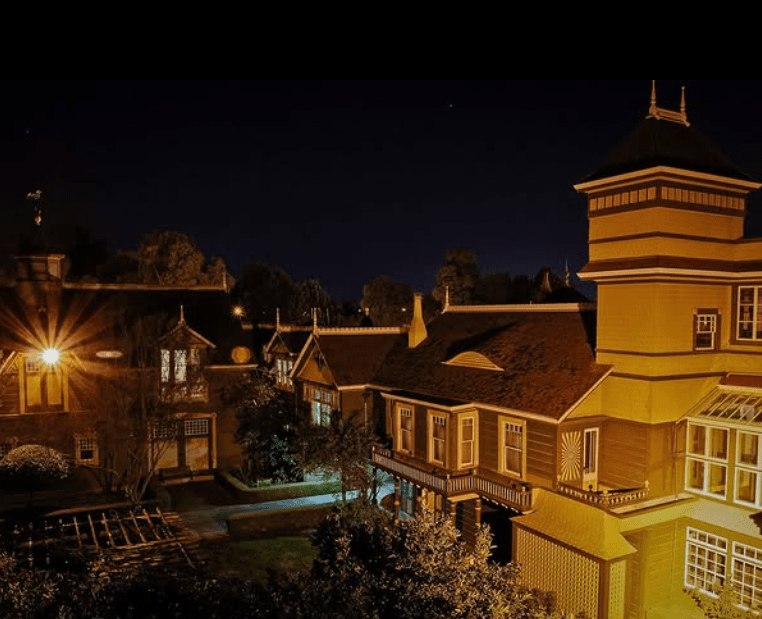
The Winchester Mystery House

Mirror, mirror, on the wall, who’s the most festive of them all? 🎄✨

Please come and enjoy a delicious meal in Sarah’s Café, stroll along the paths of the beautiful Victorian gardens, and wonder through the miles of hallways in the World’s most mysterious mansion.
For further information about tours, including group tours, weddings, school events, birthday party packages, facility rentals, and special events please visit the website: https://winchestermysteryhouse.com/

Please visit the online giftshop, and purchase a gift for friends and relatives as well as a special memento of The Winchester Mystery House. A variety of souvenirs and gifts are available to purchase. https://shopwinchestermysteryhouse.com/



He Puts You Back Together the Way He Thinks You Look Best

Happiness is a condition of the soul. This joyous state comes as a result of righteous living. However, as soon as we learned a little about sexual functioning, both male and female gender roles altered significantly; men assumed a different level of sexual responsibility, and women benefited not only from male role change but from the permissiveness the new knowledge about pleasures of the flesh brought to the marriage bed. Professionals (still predominately male, of course), slowly gaining confidence, began assuring the public that women not only had real feelings involving pleasures of the flesh and legitimate interest in intimate passions, but also could and should be enjoying the experience—something that millions of women (even “nice” women) could have revealed had they ever been asked and been assured that their answers would have been accepted. So, the knowledgeable man who married learned, instead of doing something to his wife in the bedroom, was now prepared to do something for his wife when it came to intimate passions. She was now allowed to respond to pleasures of the flesh—only on his terms, of course, but at least she had permission to respond. The culture had grudgingly consented to this change in statue. Women’s feelings involving pleasures of the flesh no longer need be hidden—or even apologized for—certainly no longer denied. However, responsibility involving pleasures of the flesh, of course, remained with the husband. He continued to be the arbiter, he became the coach, and he remained stage center in all matters involving pleasures of the flesh. Unfortunately, in the role od doing for rather than just doing to, he had to assumed even more responsibility for the pleasures of the flesh. #RandolphHarris 1 of 17

Women’s lot involving pleasures of the flesh improved; her role was no longer simply that of providing service. She had been granted a small part, actually more than a walk-on, in the scene of intimate passions. However, she was still expected to acknowledge her husband’s natural expertise in all things of intimate passions, particularly after he had granted her the privilege and pleasurable experience, which she expected. Of course, the husband’s burden involving pleasures of the flesh continued unrelieved, or perhaps became even heavier. For whether he was still doing something to his wife or had knowledgeably switched to doing something for his wife, he alone carried the responsibility for achieving success in the pleasures of the flesh. The social insanity of proclaiming the male the expert in pleasures of the flesh led many a man to his functional downfall. When things went wrong in the marriage bed, automatically the fault, the responsibility, was his. If he was prematurely excited, if he was important of if he had a low level of interest in pleasures of the flesh, he alone was to blame. If his wife was non-pleasurable, unable to be pleasured, or sexually aversive, he also assumed a major share of the blame. However, this degree of responsibility involving pleasures of the flesh was rarely accepted by men who culturally were condition in the role of “do-to” husbands; it developed, rather, as a corollary to the “do-for” concept. As time passed, woman’s role in pleasures of the flesh was amplified while men strained to fulfill their new responsibilities. And still, we did not prosper in pleasures of the flesh. No one needs to feel alone on the road of life, for we are all invited to come unto Christ and be perfected in Him. Happiness is the purpose of the gospel and the purpose of the redeeming Atonement of all men. Perseverance in making correct decisions is what leads us to happiness. Happiness comes as a result of our obedience and our courage in always doing the well of God, even in the most difficult circumstances. #RandolphHarris 2 of 17

How has responsibility involving pleasures of flesh fared in the last decade? Finally, the pendulum is swinging—woefully late—but, as always, better late…Has definitive research supplied sufficient knowledge of functioning of pleasures of the flesh to significantly alter cultural concepts of intimate roles and responsibilities? Are professionals taking new looks at old problems of both male and female sexual dysfunction? And are new answers to treatment of these dysfunctions available? Yes, fortunately. We cannot help but prosper from the recently accorded privilege of being able to evaluate human functions involving pleasures of the flesh as accurately and objectively as we are able to research and evaluate any other natural body function. Slowly, as secure information replaces palpable ignorance, misconception, or myth, our society is not only developing an infinitely greater comfort factor with the subject of functioning involving pleasures of the flesh, but we, as individuals, are growing from informed adolescence into more viable sexual adulthood. In the first quarter of the twenty first century, responsibility involving pleasures of the flesh is being assumed by the individual—man and woman alike—never again to be assigned to one gender. For now we know that there is no way that a man can be responsible for a woman’s pleasures of the flesh functioning, nor can she assume control over his response patterns of pleasures of the flesh. In truth, there is no way that a man can “give” his wife “excitement,” or that a wife can provide her husband with a climax. There simply is no way that one individual can assume responsibility for another’s natural physical process. We cannot breathe for the other person, we cannot eat for the other person, and we cannot respond during pleasures of the flesh for the other person. #RandolphHarris 3 of 17

Effective functioning involving pleasures of the flesh is something that transpires between to married people. To be effective it must be done together. It is something that sexually functioning couples do with each other, not to or for each other. So woman’s role in pleasures of the flesh has accomplished a hundred-and-eighty-degree turn—from that of submissive servant to an equal in intimacy, all in the last ten to twenty years. There remains only for her to explore and exercise this potential and for her intimate partner to share in her experience. While she is beginning to do so, it is not surprising to find that her initial attempts are often still grounded in the old assumptions. For example, although we lack conclusive statistics, there is little doubt that when a married is jeopardized by conflicts involving pleasures of the flesh, in the vast majority of cases it is the wide who seeks counseling. She may go at her husband’s urging or with his agreement or perhaps without his knowledge. However, in any event, the implicit assumption seems clear: if pleasures of the flesh is a problem in marriage, it is the wife who needs help. So widespread and deeply rooted is this assumption that it goes unquestioned by most women. As a result, they all too often accept—or even volunteer for—the role of scapegoat. More than once couples have come to our clinic for therapy on the basis of the wife’s inability to experience “excitement,’ genuinely unaware that there is one important factor they are not taking into consideration—the husband’s incapacity in pleasures of the flesh. For example, if in fact it is not the basic cause, he may suffer from premature “excitement,” which at the very least contributes to his wife’s unresponsiveness. However, when first seeking help, they will have no doubt that it is the wife who requires treatment. #RandolphHarris 4 of 17

This traditional attitude sustains the male in a heads-I-win, tails-you-lose approach to disharmony with pleasures of the flesh. If he is important, his wife worries: “What is wrong with me?” And if she is non-“excitable,” he wonders: “What is wrong with her?” He then sends her off to a family doctor or psychiatrist and hopes she will come back “fixed.” This approach is doubly regrettable. For one thing, it is almost certainly doomed to fail. A wife cannot be treated for a malady that afflicts the marriage relationship itself, any more than she can go for lessons herself to learn how to dance with her husband—who is not very graceful, cannot keep time and has never enjoyed dancing. For another thing, therapy for the wife alone will not only fail to solve the problem but will probably make it worse. After all, once the doctor or counselor has conscientiously dispensed advice and the marital relationship remains unchanged, how can a wife avoid feeling that she is a total failure, a hopeless case? This further erodes her self-esteem. Consequently, there is less chance than ever that she and her husband can overcome their disharmony with pleasures of the flesh. The destructiveness goes even deeper. When a wife alone seeks help, she is conforming to the prevalent idea that the female role is to learn how to gratify the male. She is expected to adapt herself, sublimate her wishes, inhibit her desires or even distort her natural drives so that she can please a man who will therefore choose her, or keep her, as his mate. In the drama of life, it is only as his mate that she can play the most rewarding parts that her society assigns to females—those of wife and mother. #RandolphHarris 5 of 17

To play these parts many women have paid the required price—the suppression of their nature that involves intimate passions. This price, it becomes increasingly clear, is exorbitant. It leads to pleasures of the flesh bankruptcy in many marriages, and both husband and wife understandably feel cheated. Ironically, their dissatisfaction flows directly from the very principle that was supposed to bring them the rewards of pleasures of the flesh—the idea that if a young lady obeyed society’s strictures and learned to accommodate herself to the male, both would benefit in the marriage. In effect, this turns a woman into a puppet, a term the dictionary defines as “a person whose actions are prompted and controlled by another or others.” Certainly, in the past women were trained to be sexual marionettes. However, many men today belatedly realize that being married to a female puppet is not at all what they want. The responsive, fully functioning man wants a responsive, fully functioning wife—a woman who has discovered her natural capacity for pleasures of the flesh and who enjoys it. Yes, we find happiness in the midst of the trial of our faith. The Lord manifest Himself to us through His tender mercies, which we find along the road of happiness. We see with increased clarity His hand in our lives. Happiness is a condition of the soul. This joyous state comes as a result of righteous living. If we pursue the path that leads to it, happiness is the object and design of our existence; and this path is virtue, uprightness, faithfulness, holiness, and keeping all the commandments of God. Happiness is defined in the Book of Mormon by the prophet-king Benjamin as “the blessed and happy state of those [that] keep the commandments of God. For behold, they are blessed in all things, both temporal and spiritual. #RandolphHarris 6 of 17

Some people believe that therapy is not psycho (soul) therapy but manipulation into phoniness. One friend of mine who was psychoanalyzed five times between the ages of 17 and 53 told me, “Each psychiatrist takes you all apart and lays out all the pieces on his desk. Then he puts you back together the way that he thinks you look best.” Another who was a patient in an army psychiatric hospital for two years said, “Psychiatry is a shoehorn to get you into a shoe that does not fit.” That is the old way (prevalent, though with the exceptions). Psychotherapy seems to me to be one of the most moving (on the move, and in the direction of sensitivity and humanness) fields of work that we have today—in contrast, say, to education, philosophy, medicine, and academic psychology. I have heard of many of the “old guard” who have modified their view in recent years, and moved in the direction of “adjustment to myself” psychology (or autonomy) and of none working in self-psychology who have left it for the “adjustment to society” way. I do not know how many are working at this time in one way, how many in the other. It is not necessary for me to know this. The process is still the same as it was during the past whether it is within a profession or within myself: whatever rigidities I still have from the past are unfortunate and I regret them, but my living is the direction of breaking them up and being more me—less of what I have been taught or told or have heard so much that it has become a part of me, and more of my own direct observation, my own noticing, past and present, and moving in my own direction. When I am aware of this in myself, I can recognize it in others too and unite with their movement—what is going on now—rather than conflict or collide with what they have not got rid of yet. Or more precisely, not letting what I have not got rid of yet collide with what they have not got rid of yet. Or as one psychologist told me when I chided him mildly for making statements which were his training and were not in accord with what he had discovered for himself, “I have broken out of the shell, but bits of it are still clinging to my feet.” I had thought of myself as having got (largely) out of the mud but it was still sticking to my heels no matter how much I tried to shake it off. #RandolphHarris 7 of 17

In the process of change, a concept passes over into and is preserved and fulfilled by its opposite. Then the two are synthesized or integrated into a “higher truth.” People have a need for synthesis or integration in order to revise mistaken beliefs or unhealthy attitudes which you use to evaluate life. These views are what I call “unipolar,” that is, you hold them as singular truths without having an awareness that an opposite attitude exists as well. The important things to realize is that by stating the opposite to your original attitude, then thinking it through, you can come to a new “truth” which is more exciting than the opposite. To further highlight this illustration, Integration: “Life is difficult, but it is exciting.” Thesis: “Life is one damn thing after another.” Antithesis: “Where there is a will, there is a way.” I believe that integrating experience is a most important tool for understanding and ordering our lives. In my work as a psychotherapist, I have seen many people who view life as a sequence of unrelated experiences. They make no attempt to understand that life does have patterns, which if they can use them, can help in synthesizing or integrating their experiences. We can apply this theory to experiences which happen early in life and determine how experiences in later life can balance them to create a new synthesis. For example, a thesis experience could develop from a child’s feeling weak and not loved by a parent. This could generalize to the point where the person says to himself, “People [not just parents] do not like me when I am weak; therefore I must always act strong.” This way, the person develops the thesis assumption that he must always act strong (a doing orientation) rather than admit to his genuine feelings which are that sometimes he really feels weak or vulnerable (a being orientation). #RandolphHarris 8 of 17

Let us say that as an adult, this person goes to group therapy and talks of his feeling vulnerable and weak. He feels the love and caring of the group in spite of his admission of weakness. Eventually, his thesis assumption is re-evaluated and he develops an antithesis assumption, like: “It is okay for me to be vulnerable and weak; people love me then also.” From the integration of the two, he develops a synthesis conclusion: “Life is ever-changing, and it is okay to be strong or weak, as long as I really feel that way inside, but it is phony to be something I am not.” Sometimes people are plate to arrive at some synthesis conclusion with regard to his or her dominate value, which is usually control. Some men are able to see that, as the owner of a business, he needs to be in control while as a man with heart trouble, he needs to depend on the doctor—allowing himself to be restrained, directed, managed, even dictated to. Neither situation, however, is one of total control or total dependency. In business, he can be controlling sometimes, while at other times surrender control to a competent secretary, who may have better ideas for running the business. Nor does he have to slavishly and unquestioningly submit to the will of his doctor in all situations. He can say, “No, I will not do that. It is my body; I have a right to some choice in what is done with it.” The key in both cases is to respect everyone’s view. Out of the expression of both polar values—dependency and control—men are learning to become interdependent, the synthesis which occurs at his core. We all have this need for interdependence, and to fill this need, we must also experience the synthesis of our opposite values. We must become masters of all our polarities. When a man learns to give in a little, to admit that the customer is right, he will usually improve his business. Having learned to listen to different points of view, some men are not as quick to argue and can make some new friends. #RandolphHarris 9 of 17

However, this is not an overnight process, it takes a long time to learn new skills. Some men may still be bitter with their parents, and they still may not be able to develop a lasting relationship with a woman. Their health conditions may not improve very much because he may continue to balk at some of the doctor’s orders. However, overall, a man who goes to therapy and church usually will not be as interested in winning as he is in finding the truth—even if it is somebody else’s. The American gene pool sprayed sperm from 20 million testicles around the globe—the fastest, largest genetic experiment in planet history. The so-called “war effort” performing the genetic function of mixing up sperm-egg exchanges in addition to the cultural interactions—the new imprint models imposed on youthful nervous systems of both invaders and the invaded. And that is what globalization and giving billions of dollars away to other nations is all about. One day, Uncle Sam will come calling for the bill to be paid, and thus, Manifest Destiny will be achieved. When American G.I.’s rode into German towns astride sleek-powerful military machines an irreversible impression was made upon the impressionable German minds. In the context of the all-out hive-war solidarity it was considered an honour for physicists like Einstein and Fermi to make bombs, and for psychologists like B.F. Skinner and Harry Murray to offer their services to do secret work for the OSS-CIA. When we examine the system of rebellion, we come to see that Nietzsche’s first step is to accept what he knows. Atheism for him goes without saying and is “contrastive and radical.” Nietzsche’s supreme vocation, so he says, is to provoke a kind of crisis and a final decision about the problem of atheism. The World continues on its course at random and there is nothing final about it. Thus, God is useless, since He wants nothing in particular. If He wanted something—and here we recognize the traditional formulation of the problem of evil—He would have to assume the responsibility for “a sum total of pain and inconsistency which would debase the entire value of being born.” #RandolphHarris 10 of 17

We know that Nietzsche was publicly envious Stendahl’s epigram: “The only excuse for God is that he does not exist.” Deprived of the divine will, the World is equally deprived of unity and finality. That is why it is impossible to pass judgment on the World. Any attempt to apply a standard of values to the World leads finally to a slander on life. Judgments are based on what is, with reference to what should be—the kingdom of Heaven, eternal concepts, or moral imperatives. However, what should be does not exist; and this World cannot be judged in the name of nothing. “The advantages of our times: nothing is true, everything is permitted.” These magnificent or ironic formulas which are echoed by thousands of others, at least suffice to demonstrate that Nietzsche accepts the entire burden of nihilism and rebellion. In his somewhat puerile reflections on “training and selection” he even formulated the extreme logic of nihilistic reasoning: “Problem: by what means could we obtain a strict form of complete and contagious nihilism which would teach and practice, with complete scientific awareness, voluntary death?” However, Nietzsche enlists values in the cause of nihilism which, traditionally, have been considered as restraints on nihilism—principally morality. Moral conduct, as explained by Socrates, or as recommended by Christianity, is in itself a sign of decadence. It wants to substitute the mere shadow of a man for a man of flesh and blood. It condemns the universe of passion and emotion in the name of an entirely imaginary World of harmony. If nihilism is the inability to believe, then its most serious symptom is not found in atheism, but in the inability to believe in what is, to see what is happening, and to live life as it is offered. This infirmity is at the root of all idealism. #RandolphHarris 11 of 17

Morality has no faith in the World. For Nietzsche, real morality cannot be separated from lucidity. He is severe on the “calumniators of the World” because he discerns in the calumny a shameful tastes for evasion. Traditional morality, for him, is only a special type of immorality. “It is virtue,” he says, “which has need of justification.” And again: “It is for moral reasons that good, one day, will cease to be done.” The quality of consciousness is affected by the way we live. Food, hygiene, surroundings, personal habits, speech, manners, and auric atmosphere should be in harmony with the spiritual ideal—that is, sattvik. Put these qualities in opposition and the truth about them becomes plain enough. Vulgarity contributes nothing to spirituality, but refinement gives much. If high birth or much wealth makes a man arrogant or snobbish, h would not come under the philosophic classification of “gentleman” whatever his society declares. Whoever love the Ideal must expunge coarse language and obscene words from his personal speech, still more from prose writing offered to the public, and most of all from finely felt and shaped poetry. Not to stray from the truth is a prescription which is more important than it seems, whether in speech or writing. However, in the activities of those seriously set on the higher life, it is even more important. The divorce from outer expression affects the man’s inner invisible psyche and harms it. As a sequel it distorts what he believes to be true. The consequences are deplorable. Discipline of speech. It requires great tact and great wisdom to talk frankly and give someone constructive criticism or make needed correction without hurting him. However, even if both are absent, great love will achieve the same result. The fact that people feel they must speak constantly, talking to each other whenever they are together, is simply an outer sign of their inner restlessness, of their inability to control the activity of thought. That is to say, it is a sign of their weakness. #RandolphHarris 12 of 17

Discipline of speech. When a man has this feeling of inner harmony, it leads to a harmonious attitude toward all others. He suffers no nervous tension with them. He can sit, unspeaking, unplagued by tacit suggestions from society to break into his mind’s stillness with trivial talk, useless chatter, or malicious gossip. In many men, silence in conversation may betray their nervousness which is a form of inner weakness. However, in the self-actualized Christian, such silence is on the contrary a form of inners strength. Discipline of speech. The man who, in his speech, has no reverence for fact, is unlikely to find truth. He is friendly without becoming familiar, brief in speech without becoming discourteous. It is better for him to have a reputation for taciturnity than to ne so intimidated by the crowd as to conduct himself and conform his speech to common, shallow, obvious, and vulgar ways. There is an interchange of trivialities which too often passes for conversation which is both a waste of time and a degradation of speech. If he cannot say what he means, he should act on the principle that he should say nothing. Those who must speak of their emotional distresses or irritating problems, their misfortunes or disagreeable illnesses, should learn something from the Mormon attitude and at least do so with a smile. By the end of this phase, something else has come into full flower, something which answers the question: “If you cannot talk straight and tell it like it is, what is the most comfortable way to be cooked?” Everything Jeder has learned form his parents, his teachers, his schoolmates, his friends, and his enemies, goes into answering this. The result is his persona. Dr. Jung defines the persona as an “ad hoc adopted attitude,” a mask which the person “knows corresponds with his conscious intentions, while it also meets with the requirements and opinions of his environment.” Thus, he “deceives others, and also often himself, as to his real character.” #RandolphHarris 13 of 17

It is then a social personality, and the social personalities of most people resemble the personality of a child of the latent period, about six to ten years of age. This is because the persona is indeed formed by outside influences and the child’s own decisions, at just that period. When he is on his social behaviour, good, tough, likeable, challenging, grown-up Jeder need not (though he may) come on as either Parent, Adult, or Child. Instead, he may behave like a grade school boy, adapting himself under the guidance of his Adult, and within Parental restrictions, to his social situation. This adaptation emerges as his persnoa, and that, too, fits in with his script. If he has a winning one, his persona will be attractive, and if a losing one, repulsive, except to his own kind. Often, it is modeled on his hero. If enough trading stamps can be collected to justify dropping the mask, the real Child is hidden behind the persona, and may lurk there watching for an opportunity to spring. The question to ask the patient here is: “What kind of person are you?” or better: “What do other people thing of you?” This may provoke anger in some people. The capacity to experience anger, like the ability to become afraid, is a biological endowment; presumably, it served the interests of the human survival as a species. The problem, however, is how to regulate anger, for it can lead to violence between people. Open violence makes family and community life impossible. Chronically, suppressed anger is a factor in the development of many psychosomatic illnesses, including peptic ulcers, high blood pressure, asthma, ulcerative colitis, and so on. Anger typically arises when someone or something enters one’s “territory” unbidden, and it arises when people het in the way of one’s projects. #RandolphHarris 14 of 17

Finally, it arises, in the form of moral indignation, when one sees people acting in ways that one profoundly feels are evil. Anger energizes a person for attack, just as fear energizes for flight. When persons are at war, their rage will serve them well, enabling them to fight without reserve. In everyday life, however, the recurrent provocation to anger or irritation, without the possibility of full expression of anger or escape from the provokers, undermines health and wellbeing. A person needs to find respite from nagging irritation and to find socially and personally acceptable ways to express accumulated anger. Violent exercise, such as in handball or tennis, is frequently helpful as a harmless way to express anger that cannot be expressed in other ways. Of course, the attainment of a more positive attitude toward life may reduce the frequency with which a person becomes angered. Very conservative people often become enraged at the appearance and actions of persons with a radically different life style, even to the point of wishing them to be imprisoned or killed; a broader perspective upon what is regarded as acceptable ways to be human certainly diminishes the anger of such persons. The problem with anger is to learn how to accept it as natural in oneself and to express it in nondestructive ways. One author, Israel Charny, regards marriage and family life, not as a haven of peace and happiness, though it can be that; rather he sees the relationship between husband and wife, and between parent and child, as a place to learn ways to reconcile differences and to deal with anger without destroying the persons with whom one is angry. George Bach has actually provided instructions to married people on ways to fight fairly and non-destructively with one another. #RandolphHarris 15 of 17

Perhaps the most constructive way of dealing with anger or rage is to “work through” the emotion, to understand why you feel that way and through your understanding to reduce the intensity of rage and even, under some circumstances, to have the rage and even, under some circumstances, to have the rage washed away by the flood of understanding. This can be done with a skilled counselor and always involves the person’s readiness to express fully his or her anger to the understanding helper. Being a firefighter requests one to have the skills of a counselor to deal with people in distress and suffering from life threatening circumstances. The Sacramento Fire Department is the oldest fire department in California, and represents over 175 years of dedicated and heroic service by professional firefighters, paramedics, and EMTs. The Sacramento Fire Department is an all-hazards department that provides fire suppression, emergency medical services (EMS) and special operations, which includes response to hazardous materials and technical rescue incidents. The Sacramento Fire Department protects over 100.1 square miles of land and a metropolitan area of 7 counties with nearly 3 million people. The Sacramento Fire Department is dedicated to providing quality customer service and achieving its mission: Strengthening community through a network of skilled professionals dedicated to saving lives and protecting property. “A guy got burned up in his bed. I was a nozzle man on the unit, and we pulled the line into the bedroom, which was fully involved. We climbed across a lot of things. When the fire was over and the investigator was on the scene, we found what was left of the body in the bed. #RandolphHarris 16 of 17

“It really had an effect on me. For about three days after that, I couldn’t sleep. I had never been sickened by an incident before, but that got to me. Then something happened that woke me up. At an apartment fire. The fire was upstairs, and when we were taking a tag line up, there was this guy coming down the stairs on crutches. He was one-legged. We went on with our search. I found a dog, which was still alive, and I came across a shoe. I also grabbed a leg, but I was so intent on the rescue, I didn’t know if it was part of a body or what. I came out with the shoe and the leg, and I’ll never forget it. This guy says, ‘There’s my leg.” So I rescued this guy’s leg and his shoe. I got a little ragging from the guys. I made a pretty picture, sitting there with this guy’s leg.” The Sacramento Fire Department also strives to sustain and improve the health, safety, convenience, and welfare of the citizens of Sacramento and to plan for the future development of the community. You can help save lives and property by donating to the Sacramento Fire Department. And remember parents, please raise your children to love America, to be patriotic, to love God and Jesus, respect law and others, treat others with dignity and respect, and remind them of the importance of education. To help America survive the global recession and bring manufacturing jobs back to America and to get American wages at pace with inflation, it is important to buy America cars, American meat, American produce and other American made goods and services. I pledge allegiance to the flag of the United States of America, and to the Republic, for which it stands, one nation, under God, indivisible with Liberty and Justice for all. Our Father, our King, be gracious unto us and answer us, for we are wanting in good deeds; deal with us in charity and lovingkindness, and please save us. #RandolphHarris 17 of 17


Welcome to 205 Velvet Bloom in Lincoln, CA! Priced at $856,941 | 5.625% (6.296% APR) fixed rate! 🤩

This stunning Residence Four plan at Home Site 53 is the largest home offered in Cresleigh Havenwood, boasting 3,377 square feet of thoughtfully designed living space.

This two-story home features four bedrooms, including a convenient first-floor suite, three and a half bathrooms, and a three-car garage.

The inviting covered porch leads into a warm entryway, where the dining room awaits just off the entrance—perfect for hosting gatherings.

The kitchen, complete with a butler’s pantry for added storage, flows effortlessly into the great room, creating a seamless space for daily living and entertaining. Upstairs, a versatile loft offers extra space tailored to your family’s lifestyle.

This move-in-ready home is designed with modern living in mind, offering comfort, functionality, and style.

Don’t miss the chance to call this pinnacle of elegance and modern design yours! Contact us at (916) 409-5595 or Havenwood@Cresleigh.com!

You will enjoy these award-winning homes. With Cresleigh, you’ll find just the right setting for your next adventure. #CresleighHomes


Oh My Goodness, I Am Talking About Myself!

Parents can begin teaching their children to have proper attitudes towards their bodies when they are very young. However, it is not wise or necessary to tell children everything all at once. What is the law of chastity? We are to have pleasures of the flesh only with our spouse to whom we are legally married. No one, male or female, is to have sexual relations before marriage. After marriage, pleasures of the flesh are permitted only with our spouse. “Thou shalt not commit adultery; and he that committeth adultery, and repenteth not, shall by cast out,” reports Doctrine and Covenants 42.24. We have been taught that the law of chastity encompasses more than pleasures of the flesh. Before marriage, do not do anything to arouse the powerful emotions that must be expressed only in marriage. Do not participate in passionate kissing, lie on top of another person, nor touch the private, sacred parts of another person’s body, with or without clothing. Do not allow anyone to do that with you. Do not arouse those emotions in your own body. With sexual functioning firmly established in our culture as something apart from other natural processes, there were gender roles to assign, practices to establish that involve pleasures of the flesh, and restriction to impose of pleasures of the flesh. All were done out of hand by an omnipotent social arbitration that communicated to the individual not only what his or her sexual pattern should be—but what it must be. #RandolphHarris 1 of 20

It was decided—who knows by whom?—that the male was the expert in pleasures of the flesh. Perhaps this decision evolved from man’s historic role as protector and provider. Or it could have derived from a male fear of the unknown or the misunderstood sexual potential of the female. In any event, man was clearly acknowledged as the fount of all sexual knowledge. As adolescents, boys were allowed, even encouraged, to honour their sexuality. “Boys will be boys,” followed by a suggestive snicker or a benign smile, became a popular cliché. After all, they did need experience, did they not? Tacit permission was given to go-do-it, but, of course, to be circumspect. And as long as they remained “gentlemen”—did not talk too much, did not mention names and did not practice on girls they might wish to marry—there was no cause for concern. Woman’s sexual role? This was another matter. During the eighteenth, nineteenth, twentieth, and well into the first quarter of the twenty-first century, the woman’s sexual role was even easier to define. She had none—other than that of seminal receptable. Woman’s sexual responsivity was not only denied, but actually obliterated as a possibility by male arbiters in a chauvinistic society. Everyone knew—or at least all men know, and most women pretended—that “nice” women had no sexual feelings, that respected wives only submitted in the hope of conceiving and that “those woman” who freely responded sexually simply were not the kind you married. #RandolphHarris 2 of 20

Intercourse was woman’s burden and a true gentleman insisted upon the “marital privilege” as infrequently as possible—at least with his wife. And so, while sexual feelings and freedom to react sexually were acknowledged as male prerogatives, these rights were denounced or denied for the female. Typical of the many decades of scientists’ and physicians’ negation of woman’s sexual feelings is a passage from a gynecologic textbook published in the late 1950s. The editor—a male, of course—stated unequivocally that not only were women nonorgasmic, they rarely, if ever, had sexual feelings and certainly little interest in pleasures of the flesh. And he did not even distinguish between “nice” women and the “other kind.” Yet another example of society’s rigidity in the control of woman’s natural sexual function is the fact that more than 90 ninety-five percent of everything that has ever been published on the subject of female sexual response has been written by men, most of whom objectively and all of whom subjectively had not the vaguest idea of what woman’s orgasmic experience is all about. Until almost halfway through the last century, pleasures of the flesh were something that everyone knew the man, after marriage, was going to do to his wife on their wedding night. Not only did the husband believe that the wedding night was committed to his pleasure, but his wife, too, was prepared for duty—with her role exclusively that of sexual servant. #RandolphHarris 3 of 20

The prize of virginity (real or feigned) was to be her sacrificial offering to her new husband. An unruptured hymen was not only accepted as absolute proof of a wife’s sexual innocence but was usually required as a symbol of her sexual ignorance and his sexual prowess. Social mores demanded that her fund of sexual knowledge, her degree of sexual experience and her evidence of sexual interest, if any, were to be defined and controlled by her husband. In short, the price of the intact hymen was assigned to the head of the household. It was for the taking: how, when and where obviously were his responsibility—his sexual responsibility. Our culture had decreed that brides were to be virgins. Therefore, women who has made the fearful mistake of offering this price in prior sexual encounter must do their best on their wedding night to conceal its loss. Yet despite having to play the role of sacrificial lamb at marriage, the virgin bride had one very real advantage over her husband: other than being available, she had no sexual responsibility. Of course, there is the other side of the coin to the virginal bride. The culture also presumed that there was no such thing as a man with little or no sexual experience at marriage—a man who was not a fount of sexual knowledge. So many men who married, having only insignificant, if any, sexual experience, inwardly quaked and outwardly faced the expected expertise—and because of their discomfort, many more wives suffered. #RandolphHarris 4 of 20

Back then to the subject of the husband doing something to his wife on their wedding night. This was sexual responsibility—his to do to her; hers only to be done to. And for generations, we played our culturally assigned sexual roles of expert and virgin; but sexually we hardly prospered. One of the classic ironies of our psychological development is that we often wind up acting like the people we hate most. Fortunately for many, through the dynamics of group therapy process, some are able to see the irony. Unfortunately, many other people never do. Instead, they go through life, cursing an image which they see before their eyes, not realizing that they are actually looking into a mirror. A possible reason for this partial psychological “blindness” is that they are looking outward with only one point of view, their own. However, a person’s own point of view is but one kind of “truth.” Other people’s point of view, especially a group of others, may well be closer to the “real” or objective truth, which no one knows for sure. When a person himself to the possibility that the consensus point of view might be the truth, he creates for himself an opportunity to grow. Yet just as growth cannot come from blindly accepting a group’s points of view either. If someone were to hand-feed you a piece of fruit, there are three things you could do with it: spit it out, swallow it whole, or chew it up and eat it. Should you spit it out, you would be denying yourself whatever benefit the fruit you may have. Should you swallow it whole, you might be making the mistake of ingesting something which is not good for you—the pit, for instance. #RandolphHarris 5 of 20

However, by first chewing on it, tasting and sampling, you can decide if you want to take part of it. So it is with the opinions people feed us. We do ourselves little good by accepting or rejecting them without “chewing” on them. In doing those things, we deny ourselves an opportunity to grow. Growth comes from a synthesis of the two kinds of truth—and the result of a synthesis is neither the thesis (your truth) nor the antithesis (the group’s truth), but an entirely new truth which contains something of both. What most people are at first unwilling to do consciously, but later learn to do in the heat of a discussion, is allow both truths to come together and synthesize into the realization, “Oh my goodness, I am talking about myself.” In that moment, a new “truth” about yourself will be created—a truth which might not be the objective truth, but closer to it. Discovering the unique person you are involves another kind of synthesizing. It is the synthesizing of values. In many men, the dominant value is control, and the antithesis of control is dependency. In order for most men to master their hang-up on control, they have to fully experience its polar opposite. During early infancy, the child is straight, starting off in the first position, I am O.K.—You’re O.K. However, corruption quickly sets in, and he discovers that his O.K. is not a completely undisputed automatic birthright, but depends to some extent on his behaviour, and more particularly on his responses to his mother. In the course of learning his table manners, he may discover that his feeling of unblemished O.K.-ness is granted by her only with certain reservations, and this is wounding. He responds by casting aspersions on her O.K.ness, although when dinner is over, they may kiss and make up. #RandolphHarris 6 of 20

However, the groundwork has already been laid for game-playing, which begins to flower during his toilet training, where he has the upper hand. During mealtimes, he is hungry, and wants something from her; in the bathroom, she wants something from him. At the table, he has to respond to her in a certain way to keep his O.K. grade; now she has to treat him right to keep her O.K. In rare cases, both of them may still be straight, but usually by this time, she is conning him by working his gimmicks just a little, and he is doing the same. By the time he enters school, he has probably learned a few soft games, or perhaps two or three hard ones, or in the worst cases he may already be game-ridden. It depends on how smart and tough his parents are. The more they “play it smart,” the crookeder he will be; and the tougher they are, they harder he will have to play in order to survive. Clinical experience shows that the most effective way to corrupt and tighten a child is to give him frequent enemas against his will (which may cause micro tears in his rectum and colon and cause serious healthy problems), just as the most effective way to corrupt and disintegrate him is to spank him cruelly when he cries from pain (which is considered child abuse). In grade school he has a chance to try out, on the general population of other children and teachers, the games he has learned at home. He sharpens some up, tones others down, abandons some, and pick up new ones from the group. He also has a chance to test out his convictions and his position. #RandolphHarris 7 of 20

If he thinks he is O.K., his teacher can confirm this or shake him up by putting him down, and if he is convinced he is not-O.K., she can confirm that (which is only what he expects) or try to build him up (which may make him uneasy). If he thinks the rest of the World is O.K., he will include her unless she has to prove she it’s not. If he is convinced others are not-O.K., he will try to prove it by getting her angry. There are many special situations which neither the child nor the teacher can foresee or cope with. The teacher may play the game called, “Argentina.” “What is the most interesting thing about Argentina?” she asks. “Pampas,” says somebody. “Noo.” “Patagonia,” says somebody else. “Noooooo.” “Aconcagua,” offers another pupil. “Noooooooo.” By this time, they know what is up. It is no use remembering what is in the book, or what they are interested in. They are supposed to guess what is in her mind, so she has got them in a corner, and they give up. “Nobody else wants to answer?” she asks in her phony gentle tone. “Gauchos!” she declares triumphantly, making them all feel stupid simultaneously. There is nothing they can do to stop her, and it is very hard for even the most charitable student to let her keep her O.K. On the other hand, even the most skillful teacher may have trouble keeping her O.K. with a pupil whose body is being violated with enemas at home. If she tries to force him, he may refuse to answer because she is raping his mind as well, and that proves that she is no better than his parents. However, there is nothing she can do to help him, either. Each of the lower positions has its own assortments of games, and by playing them with the teacher, Jeder can see which ones she falls for and sharpen his skill. #RandolphHarris 8 of 20

In the second or arrogant position (+-), he may try “Now I Have Got You,” in the third or depressive one (-+), “Kick Me,” and from futility (–), “Making Teacher Sorry.” He may give up the ones she declines or has an antithesis for. However, he also tries them out on his schoolmates. The fourth position is in many ways the hardest to deal with. However, if the teacher keeps her cool and strokes Jeder with judicious words, neither marshmallows, rebukes, nor apologies, she may loosen his grip on the harsh rock of futility and float him part way up toward the sunshine of O.K.ness. Thus, later childhood is the period that determines which games from the domestic repertoire become fixed favourites and which ones, if any, are given up. The most important single question here is: “How did your teachers get along with you at school?” and next to that, “How did the other kids get along with you at school?” when persons believe their way of life is in jeopardy and there is no possibility of further existence, anxiety or dread is experienced. Anxiety differs from fear in that with the latter, one can see the source of the danger, and can, perhaps, cope with it by combat or flight. Anxiety is more likely to arise when one has violated a personal or a religious taboo and experiences the imminence of annihilation, while feeling helpless to do anything about it. It is also triggered by signals that do not appear to make sense, such as a horror of high places, panic over insects, or a dread of dirt. If the person survives it, a simple onslaught of such anxiety or dread is enough to traumatize someone for a lifetime. #RandolphHarris 9 of 20

Indeed, some of the most rigid character traits and so-called defense mechanisms are developed as desperate means of ensuring that the horror will never again be experienced. Many compulsive habits, like primitive religious taboos and injunctions, persist throughout persons’ loves, interfering with their personal relations and with the spontaneous enjoyment of life, in order to prevent the dreaded anxiety. When persons cannot avert the experience of anxiety by regulating their lives or their environment, they may develop any of the life styles that are described by psychiatrists as neurotic or psychotic. These ways of being are themselves devoid of joy, because they are so hemmed in by inhibitions; but the diminished life is preferred by the patients to facing, unaided and alone, that annihilation of their World and their identity that is called anxiety. It is impossible, however, to live without some encounter with anxiety. The posture most compatible with healthy personality in an encounter with dread is the posture of courage, the “courage to be” of which Paul Tillich wrote so beautifully. The person with courage to face the unknown with resolve and fortitude discovers unplumbed capacities to grow and to cope with life. As paradoxical as it may sound, the experience of anxiety is essential for growth. #RandolphHarris 10 of 20

There are two basic forms of anxiety: state anxiety, which strikes occasionally and for short periods of time, and trait anxiety, which describes the general state of the person and is with that person more or less constantly as a personality characteristic. It may be anticipated that even the psychologically healthy person would be in a state of anxiety on limited occasions, although the adaptive or useful function of the state is by no means entirely clear. It may serve to signal to the person or to peers that a matter of great importance is being considered and the individual needs to mobilize all resources for a successful response to the event—a significant decision, a serious threat to selfhood, or a major turning point in one’s life. Perhaps the most distinguished humanist writing on the subject of anxiety, Rollo May, insists that raw physical courage (in addition to the courage to be noted earlier) is often a triumph over anxiety. He cites the work of William Lloyd Garrison in seeking emancipation for the slaves, who wrote of his knees shaking in anticipation as he faced a large audience. Courage in itself seems to be one of the major dynamics of the high-level-functioning person. Courage is most likely to appear, however, in those persons fortunate enough to have an “encourager” in the lives, whether it be a friend, family member, counselor, or their deity. #RandolphHarris 11 of 20

My schizophrenic friend is sometimes violent—kicks out doors and windows, frames and all. He is also cunning—he does this in places where he knows that he will not be picked up by the police. He does not fear jail, but he fears that he might be sent to a mental hospital and robbed of a part of his life that is very dear to him. A psychiatrist recently recommended that he commit himself to an institution “but I faked him out by telling him I would go home and to my psychiatrists there.” His cunning has sometimes the look of ugliness—when he comes to me for money “ to go see Brandon” which is not what he will use it for. His eyes look like squirmy worms then. However, that is this but an expression of how he feels about himself when he asks for money and tells a lie to get it? Shall I live with his fawning, cheating—or with how he feels about it, the meaning of it to him? Other times he is a frolicking angel—as humorous and saintly as he looks. Which “he” is he? One evening with him I always thing of as perfect because there is never anything in it that I wish to change. Everyone else had gone to bed. He started painting at the dinner table. I sat beside him. Somehow I was moved to take a sheet of his paper and begin painting too. The paintings were my own—and unlike his. They were also unlike anything I had ever done before. The way that he went about his painting communicated itself to me without words, and I have ever since thought of him as my “teacher” although he made no attempt to teach. At the same time, he got something from me which he has ever since thought of as therapy. “And I know that these moments of real relationship with these real persons have been the essential reward for all of us…” #RandolphHarris 12 of 20

We psychiatrist measure an individual’s behaviour against his socially-determine role or roles (as we see them), and on this basis decide which behaviour is incorrect or aberrant and if so how much. The fact that American psychology after 1946 was an offspring of military psychology is neither alarming nor unexpected. Throughout human history, the Warrior Caste has introduced each new technology—mechanical, medical, social, and even bureaucratic. The military serves hive-terrestrials as the pioneer avant garde. Most intelligence structures are originated by their military who function as suspicious antennae for their societies. They are charged with the responsibility for finding out what is happening over there in the next hive; for sniffing out what the territorial rivals are doing, and for protecting the hive. The Warrior Caste—the warrior insects—are genetically wired to act as paranoid sense-organs for the body-social. As Thomas Pynchon pointed out in his book Gravity’s Rainbow, wars—however cruel and pointless they may seem to liberals—are necessary competitions to stimulate technological advances. Inter-hive conflicts are evolutionary devices to make Earthlings move faster, see farther, communicate better, transport, organize and heal ourselves more effectively. After the new technology has been tested and proved by the Warrior Caste, it is then co-opted by the other techno-castes who convert the new energy into hive use. #RandolphHarris 13 of 20

The order in which castes take over a new energy is fixed—Political Power Caste, Engineer Commercial Caste, Moral Domesticator Caste. In advanced societies, which have met these security satisfaction challenges, the technology is then coopted by post-hive individual castes—Artist Caste, Neurologician Caste, Neurogeneticist Caste. The history of preflight civilization is this cycle of technological evolution. Each caste is robot-wired to use the new technology and harness it to the specialized caste function. Pynchon outlines how this new technology—psychology—was initiated during wartime by the requirements of the military and how mind-control techniques have been taken over by the Managerial, Technician-Intellectual and Social-Moral Castes. Gravity’s Rainbow, of course, was a powerful signal from the Artistic Caste—the change agents. The book is a brilliant attempt to use psychological knowledge to free individuals from the limiting past. Without understanding all the implications, the military during World War II mobilized enormous national resources to create new technologies. These included air-transportation, electronic communication, nuclear energy, production of labour-saving gadgets, and psychological assessments of personality. All of these breakthroughs were produced by the patriotic emergency. Uncle Sam, the national self-indulgent consumer, wanted—and he got it! He demanded, “Gimmie 50,000 bombers”—and the hive gladly produced! “Gimme a radar system that will detect metal miles-high-in-the sky” and he got it.” Sam said, “Gimmie ships and planes so I can ship ten million lusty young warriors in two years to the five continents” and he got it! #RandolphHarris 14 of 20

“We deny God, we deny the responsibility of God, it is only thus that we will deliver the World.” With Nietzsche, nihilism seems to become prophetic. However, we can draw no conclusion from Nietzsche except the base and mediocre cruelty that he hated with all his strength, unless we give first place in his work—well ahead of the prophet—to the diagnostician. The provisional, methodical—in a word, strategic—character of his thought cannot be doubted for a moment. With him nihilism becomes conscious for the first time. Surgeons have this in common with prophets: they think and operate in terms of the future. Nietzsche never thought except in terms of an apocalypse to come, not in order to extol it, for he guessed the sordid and calculating aspect that this apocalypse would finally assume, but in order to avoid it and to transform it into a renaissance. He recognized nihilism for what it was and examined it like a clinical fact. He said of himself that he was the first complete nihilist of Europe. Not by choice, but by condition, and because he was too great to refuse the heritage of his time. He diagnosed in himself, and in others, the inability to believe and the disappearance of the primitive foundation of all faith—namely, the belief in life. The “can one live as a rebel?” became with him “can one live believing in nothing?” His reply is affirmative. Yes, if one creates a system out of absence of faith, if one accepts the final consequences of nihilism, and if, on emerging into the desert and putting one’s confidence in what is going to come, one feels, with the same primitive instinct, both pain and joy. #RandolphHarris 15 of 20

Instead of methodical doubt, he practiced methodical negation, the determined destruction of everything that still hides nihilism from itself, of the idols that camouflage God’s death. “To raise a new sanctuary, a sanctuary must be destroyed, that is the law.” According to Nietzsche, he who wants to be a creator of good or of evil must first of all destroy all values. “Thus, the supreme good is creative.” He wrote, in his own manner, the Discourse de la Methode of his period, without the freedom and exactitude of the seventeenth-century French he admired so much, but with the mad lucidity that characterizes the twenty-first century, which, according to him, is the century of genius. We must return to the examination of this system of rebellion. Whether it be in the form of art, music, poetry, literature, or those of living, dress, behaviour, manners, or speech, the quality of a person reveals himself in his coarseness or refinement. By that I mean whether he is or is not on the quest which is after all an attempt to refine ourselves from materialism to spirituality and therefore from low quality thoughts and feelings to higher and nobler ones. If higher development is sought, tit is not only manners which must be refined, but also consciousness. Whatever helps to refine character, feeling, mind, and taste is to be welcomed and cultivated as part of the philosophic work. #RandolphHarris 16 of 20

A person’s manners show outwardly the degree to which the Spirit is working within him. It was certainly the view of some Far Eastern sages, but explanation may be necessary for those to whom it is new. Without referring to polish and elegance—which are a different thing—decent manners in the sense of being considerate to others come closer to a spiritual man’s conduct than rude manners. The graceless discourtesies and little brutalities of those who are either too ill-bred or too selfish to be considerate of others, advertise spiritual emptiness. They defend themselves by ascribing mannerliness and charm to snobs, because they dare not face what they are and see their own poverty of soul. Jesus Christ saw the moral worth of proper manners, the ennobling value of dignified living, the formative power of right custom. If society did to Jesus’ gospel of propriety and conduct what it did to all religions, if it made the external and forms more important than the realities and spirit, that was not Jesus’ fault. The Superior Man’s virtue is considerate behaviour. Considerate behaviour is spiritual behaviour. A formal elaborate politeness, such as the upper class and neighbouring peoples practiced for over a thousand years, perhaps under the impetus of Jesus, is not meant there, but rather one coming from the heart. Refinement is a beautiful quality for anyone to possess, but for someone without a soul above materialism it is charged with a higher meaning. It not only involves consideration for others and respect for oneself, but also an attitude of aspiration. #RandolphHarris 17 of 20

The Sacramento City Fire Department is a diverse and evolving extension of the community, committed to providing excellent service to all those they serve, in a professional and humanitarian way. The Sacramento Fire Department pledges to protect lives, property and the environment through a safe, effective and timely response. They take an innovative approach to providing emergency medical services, fire suppression, rescue operations, emergency communications and fire prevention, community outreach and public education, as well as other services. “My colleague X, a mature fellow, was a late bloomer like myself. When he finally made lieutenant, they sent him to Y Engine, which is in a ghetto-type area where you get to do a lot of service. He was on the opposite shift from me at Y Engine. He had relived me that morning, and that evening I was coming in to relieve him. He had a basement fire. There is still controversy over what really happened, but for the sake of argument let’s say there was a flashover and a partial backdraft occurred. The lieutenant was on the nozzle at the top of the basement stairs, and the pipe man was backing him up. It must have been because the heart was so severe that they were changing positions. He was sucked down the stairs into the basement, and the pipe man got thrown out the door. This happened at four-thirty in the afternoon, and at one in the morning he died at the burn center. He was burned very badly, and his lungs were seared. #RandolphHarris 18 of 20

“That gave me the coldest chill the whole time I was in the fire department. If our shifts had been reversed, I would have been in the same place he was at. It could have been any of us, whoever had happened to be in charge of the company at the time. Here was another cause of one of you own. It happened in the daytime, which seemed more unusual, because most things happen in the nighttime. When I came in to relieve that night, God, it was such a terrible, uneasy feeling. It was devastating to his family. The husband and father goes to work, and everyone is happy, and all of a sudden he doesn’t come home. We had a full department funeral for him. It was very chilling and made you cry inwardly. But firefighters have a way of springing back. I’m still on the job. I’ll probably be here for another year, maybe two. Under the new rules, I can get out any time I want. But I think I’ll hang around a little while longer.” The members of the Sacramento City Fire Department are dedicated to professionalism, integrity, accountability, and respect for all life forms. Firefighters and EMT put their lives on the line every day, several times a day to provide the highest quality and highest level of courteous and responsive service possible. In an effort to keep the country cohesive, please raise your children to love America, to be patriotic, to love God and Jesus Christ and buy American cars and other American goods and services. #RandolphHarris 19 of 20

Also, please respect law and order, and treat others with kindness and respect. To ensure that you have a bright future, please take your education seriously, and be sure to actually read your books. And remember to “Just Say ‘No’ to Drugs.” Even marijuana can be deadly. I pledge allegiance to the flag of the United States of America, and to the republic for which it stands, one nation, under God, indivisible with liberty and justice for all. O beautiful for spacious skies, for amber waves of grain, for purple mountains majesties above the fruited plain! America! America! God shed His grace on three, and crown thy good with brotherhood from sea to shining sea! O beautiful for pilgrim feet, whose stern, impassioned stress, a thoroughfare for freedom beat across the wilderness! America! America! God mend thine every flow, confirm thy soul in self-control, Thy liberty in law! O beautiful for patriot dream that sees beyond the years, Thine alabaster cities gleam, undimmed by human tears! America! America! God shed His grace on thee, and crown thy good with brotherhood from sea to shining sea! God never gave us express allowance, only He gave us reason, charity, nature and good example to bear us out. #RandolphHarris 20 of 20

Ventris Place
North Laguna Creek, CA | Mid 500’s
Now Selling!

Meet Ventris Place, a collection of 37 inspiring homes nestled just outside of Sacramento in the Elk Grove School District, and within walking distance to Cosumnes River College. Ventris Place offers premium California living with spacious floorplans and designer details you can’t find elsewhere. Expansive interiors offer room to entertain, live, and work from home.

Imagine waking up every day to the comfort of a life-made-easy home plan, private side yards, and inspired living spaces carefully designed to make life at home a pleasure. The open concept main floor boasts a great room, dining, and kitchen with gourmet features and entertainment island.

A covered patio off the kitchen brings outdoor living to life. The upstairs features a tucked away home management area and an open loft space. A large primary suite is your sanctuary, complete with dual large walk-in closets and spa bath.

Homes at Ventris Place offer 3-4 bedroom and 2-3 bath plans ranging from 1196 to 1846 square feet and include rear-entry 2-car garages. Choose from a single-story plan or several two-story plans.

Ventris Place homes are a place to breathe deep, sit back, and let life move just a little slower.

And when it’s time to get outside, the homes are adjacent to 22-acre North Laguna Creek Park, and a quick walk from the 119-acre designated Wildlife Area and Interpretive Trial. This intimate enclave of 37 homesites offers nostalgic charm and is available with one- and two-story floorplans. https://nextgenerationcapital.us/new-homes-elk-grove-ventris-place/


External Eternity is Swept Away

The road to hell is often paved with false assumptions. Silence, evasion of lying is the order of the day, and unquestioned false assumptions become the basis on which countless men and women try to work out in their married lives. In light of this fact, what is remarkable is not that so many divorces take place but that so many marriages remain intact. For many people, “responsibility” has the somewhat onerous connotation of carrying someone else’s “obligation,” it may be perceived as a value that is oppressive and somewhat unrewarding. Unfortunately, this attitude also prevails in some relationships, where interpretation of romantic responsibility has been additionally prejudiced by time-honored, cultural misconceptions of adult relationships. Historically, the male has been assigned the role of provider while the female has been confined to a role of acceptance—stereotypes that show little knowledge of or regard for the natural capabilities of either gender. However, when these gender roles are violated, typically women take issue with having to provide for a man, and some men are not willing to be taken care of by a woman. Nevertheless, it is not surprising that generations of adult men and women have found it virtually impossibly to live with or live up to their gender roles to which they were culturally conditioned as adolescents. These roles were transmitted to young men and women through instruction and innuendo and through sly, incomplete or silent response to their need to know what meaning and function gender roles will have in their lives. #RandolphHarris 1 of 20

These cultural roles were established at a time when there was no knowledge of individual psycho-sexual limitations or of natural variations in male or female capacity. Although they have not withstood the realities of either gender or social needs, they remain woven into the cultural mores of society. As individuals frustrated by almost unbelievable gender confusion, we cope with the disparity between our own gender needs and our gender roles in a variety of ways. Some people reduce their adult responsibilities to a dirty joke, while others decry or repress anything that hints of incompetence. Currently, a small but clamorous number of people are immersing themselves in any or all styles of relationships in an attempt to break the mold of inhibition and dissatisfaction. Still others just endure. Fortunately, there always seems to be a heartening number of people who, despite their cultural limitations, are able to develop a realistic, comfortable attitude toward romance and prescribed gender roles. These individuals, together with their partners, have learned that responsibilities can be shared. Our double-standard society, in its early stages of development, maintained a tacit acceptance of romance and gender roles as a hearty source of mutual pleasure for those men and women who discovered this for themselves and confined its practice within certain prescribed boundaries. Practical, earthly levels of romantic awareness apparently fared best. Husbands and wives in the then predominantly rural society found both the need and the opportunity for achieving romantic unity within their particular lifestyles. #RandolphHarris 2 of 20

With the advent of the industrial revolution, however, the double standard soon became the means by which men and women were separated romantically as well as socially. The concept of pleasures of the flesh as a source of mutual pleasure (and therefore an area for mutual responsibility) faded as men and women found their lives rigidly divided by both the work ethic and social demands. As they pursued separate goals, husbands and wives lost sight of their need for one another. As an additional heritage, the omnipresent religious orthodoxies, social intolerances and ignorance of romantic matters by health care professionals, contributed immeasurably to our culture’s lack of comprehension of romantic response as a natural physiologic process, a process comparable to other natural functions such as respiratory, bowel or bladder function. When romantic response was separated in our thinking from its rightful place as a natural function, romantic misconceptions and even taboos inevitably became integral parts of the social structure. The concept of romance as a sin, and pleasures of the flesh for reproduction only, firmly overruled the concept of romance for human warmth or pleasures of the flesh for mutual pleasure. As a consequence, hundreds of thousands of men and women have been tied into severely neurotic or even openly psychotic patterns of behaviour. #RandolphHarris 3 of 20

In endeavouring to measure the conditions of therapy as they exist in the therapist, we have found it possible to use three avenues of perception. Through using the Relationship Inventory, we have a measure of these attitudes as perceived by the therapist and by the client. Through using unbiased judges who listen to segments of interviews, we have been able to obtain ratings of the degree to which these conditions exist, as measure by an impartial observer. In this third mode of measurement, it has been difficult to obtain suitable reliability between judges, indicating that it is not easy for anyone to be sure, from a therapist’s words and tone of voice, whether he is genuine, whether he does really care. Reliability is somewhat higher in gauging the degree and accuracy of empathic understanding. The important thing, however, is that we have been able to develop means of measuring subtle and significant therapist attitudes, from each of three perceptual vantage points: from the viewpoint of the therapist himself, from the point of view of an observer, and from the viewpoint of the client. There are three types of “truth.” One, the truth we hold in ourselves to be true; a second is that opinion which a group, validated by consensus, holds true; a third is objective truth, which none of us knows for sure. #RandolphHarris 4 of 20

One assumption of group therapy is that a consensus opinion is often close to objective truth than one person’s opinion, but a synthesis of both is necessary for growth to take place. Another assumption of therapy is that it is a healing process which we have to surrender to. It asks you to let go of your beliefs and be open to change. However, we cannot make you let go. That comes from within. If the only aspect of yourself you ever show us is stubborn resistance, you will never give yourself the adventure of growth. However, growth demands letting go, surrendering, giving up your fear of being wrong. Taking the client’s perception of these attitudes, we have an interesting finding. Those schizophrenics who perceived more of the attitudinal conditions of therapy in their therapist, as measure by their responses on the Relationship Inventory, show significantly more process movement as measured by the Process Scale, during the first 30 Interviews, than do those who perceive less of these therapeutic attitudes in the relationship. Another preliminary finding has emerged, based upon the judges’ ratings of one of these qualities, accurate empathy. This contained in a study by Truax of eight schizophrenic patients—four of them showing improvement on psychological tests, and four showing some deterioration. Samples were taken from the first twenty-four interviews with these patients, 385 samples in all. #RandolphHarris 5 of 20

Four judges listened to these samples independently, and rated the degree of accurate and sensitive empathy exhibitied by the therapist. When the ratings were analyzed, it was found that the improving patients received consistently more sensitive empathy than did those who were not improving. Our findings with schizophrenic clients also confirm an earlier finding with clinic clients. We have found that those schizophrenics who are less well adjusted, more psychotic, in terms of the MMPI, perceived less of these therapeutic conditions initially than do the better adjusted clients. Hence, it would appear that the perceived existence of these qualities in the relationship is an interacutal thing. The client who is deeply disturbed has difficult perceiving these attitudes even when they exist in the therapist. The therapy process involves surrender. It means accepting that there may be something outside of you, an objective truth, that you cannot control. And the only way to see that truth is simply by surrendering. For instance, when a man see himself as being a lot like his father, but will not surrender to that truth, he cannot grow. Later, when he decides to see it, he will grow in a gigantic leap. To make that leap, one does not have to do anything, just surrender to the truth, in the same way that one must surrender to the heart attack, whether you agree with the truth of not. This is one of the toughest things that you will have to do. #RandolphHarris 6 of 20

In early childhood, magical illusions are accepted in their most romantic forms. In later childhood, they are testes against reality, and parts of the, are reluctantly relinquished, leaving only a secret core to form the existential basis of life. Only the strongest can face the absurd gambles of living without any illusions. One of the hardest to give up, even later in life, is the illusion of autonomy or self-determination. Delusions are things that people treat as though they were one’s own ideas, based on observation and judgment, whereas in reality they are ideas imposed on one by one’s parents, which are so ingrown that one thinks they are part of his Real Self. The illusions, similarly, are ideas from his Child that he accepts as Adult and rational and tries to justify as such. Delusions and illusions may be called contaminations. One of the most important forces in moving human intelligence from the old science—Euclidian–Newtonian—to the new science—Einsteinian-Planck—is the Principle of Uncertainty introduced by Werner Heisenberg, which states that the very presence of experimenters and their measuring instruments becomes a determining factor in the field of investigation. Any hope of objectivity seemed to be eliminated. A philosophic angst, a sense of scientific futility, was the first reaction to Heisenberg’s dictum. “Alas,” the Newtonians groaned, “We can never really know what God or Nature hath wrought, because they very act of investigating changes the situation.” #RandolphHarris 7 of 20

Actually, Heisenberg’s Principle is one of self-actualized determinacy. Everything we see and know is a function of our reality-mapping—a function of the way we program our brains. This is the Principle of Neurological Determinacy. With the self-confidence, courage and freedom thus attained, we can accept the responsibility implied. Within the limits of our genetic stage, we can responsibly determine—construct, create, fabricate—the new realities we inhabit! In 1944, Einstein designed and took his own intelligence test. Later, it was revise by F.M. Esfandiary, who thus increased his own intelligence—I2. The first item on the Einstein-Esfandiary Intelligence Test (Standard Alien Intelligence Test item) asked, “How do you define intelligence?” Einstein answered that the way one defines intelligence is the most important step taken in life. Intelligence—like nerve cells upon which it is based—has three function—reception, mapping and performance. Functions of Intelligence: Reception is the ability to expand—direct the scope, source, intensity of information received. This is consciousness expansion—opening up to new data. Mapping is the ability to joyously revise your metaphours of reality in response to new information—including other people’s mataphours. Performance is the ability to construct external-communication apparati, in fusion with others, which stimulate expanded information-input, new maps-of-reality and improved networks. #RandolphHarris 8 of 20

The function of evolution is to stimulate in Increase in Intelligence—I2. An evolutionary action is one designed to increase your intelligence. An Evolutionary Agent is one who continually works to expand input of information, revise reality metaphours and raise the intelligence of self and others. The second item on the Einstein-Esfandiary test asked, “Can intelligence be increased? Yes! Intelligence can be increased. Our braisn are designed to increase our intelligence. The aim and strategy of evolution is to raise the intelligence of species. The development of every individual from infancy to maturity is the story of Intelligence Increased—I2. The only smart thing to do is to get smarter. Aleister Crowley taught us that there are three ways to increase intelligence: First, continually expand the scope, source, and intensity of the information you receive. Second, constantly revise your reality maps and seek new metaphour about the future to understand what is happening now. Third, develop external networks for increasing intelligence. In particular, spend all your time with people as smart or smarter than you. Everyone knows the social value of culture and breeding and refinement but everyone does not know that they should, and could, have a spiritual one too. For they share this in common with the value of art that they can uplift a man or, misused, degrade him. The point lies in their effect. The refinement of tastes, the improvement of understanding, the betterment of manners—this is the cultural preparation for the path. #RandolphHarris 9 of 20

Philosophy accords a place and value to culture and refinement, to quality of character and enrichment of mind. It rejects the narrowness of view and negativity of attitude which allows salvation only to those who exhibit their detachment in bare squalid homes, devoid of beauty, or their indifference in minds unresponsive to intellectual power and poetic feeling. Where good manners are sincerely felt and sincerely practiced, they represent consideration for other people, abandonment of the self-centered habit we are born with. And what does this in turn represent but a surrender of ego? This helps to explain why Hilaire Belloc could write: “Of Courtesy it is mush less than courage of heart or holiness, yet in my walks it seems to me that the Grace of God is in Courtesy.” The difference between those who behaved rudely and those who behave politely is not only a social one: it is also a spiritual one. For it is goodwill which inspires good manners, where they are genuinely felt, that same “good will unto all men,” which Jesus Christ enjoined us to practice. The lack of courtesy has a deeper negative meaning than most people comprehend. If not supported by inner integrity and personal sincerity, even the finest manners were hollow and vain. Common men need self-control, especially over passions. #RandolphHarris 10 of 20

Underbred and overbearing persons imagine that they are showing the World their importance when all the while they are merely showing their littleness. Good manners, when sincere and spontaneous, are spiritual virtue. In all human contact, the good man expresses himself naturally in good manners. In the management of both transient and lifelong relationships, the master shows by grace of manner the grace of God. By up brining and temperament, by education and education and environment, a man may grow into refinement from childhood, easily and naturally. However, he who comes into it from harsh, low surroundings by his own determination and effort, advances spiritually. The accepted canons of good manners may vary from one part of the World to another, but deeper than these conventions is a courtesy which relates to the spiritual side of one’s nature. If sincere, politeness is a spiritual quality. Those who lift their eyebrows at such an assertion do not look deeply enough into it. Those cases where it is empty formalism they are right, of course; but in those where it expresses genuine consideration for others, they are wrong. The thin courtesy which is hollow and insincere, the good manners which are acted and artificial, the pleasant words which are false and untrustworthy, do not of course hold spiritual value. There are deeper reasons than merely social ones why we are polite. The roots of politeness go down into moral training. #RandolphHarris 11 of 20

If people practice good manners merely and only as a part of their paid job—as, for instance, head waiter in restaurants—that is their affair. However, the motivation can also be on a far deeper level even in ordinary social intercourse. Under the finest manners there can be—not hypocrisy, as a Colonial once informed me—but utter sincerity and true feeling. They can express goodwill to all, poor and rich, servant and superior. If the World all too easily puts them on like a mask, to disguise antipathy or even hate, the quester who has had, or hopes to have, a glimpse of his Higer Aelf, does not need to wear such a mask at all. Without a hollow, ridiculous obsession with formality and decorum, a man can simply be what he now knows a human being ought to be in his relationship with others. When their lives have lost delight and any sense of meaning or hope, persons typically become depressed. Occasions for depression include the death of a loved person, prolonged failure of one’s projects, the loss of beauty or one’s health and vitality. When persons are depressed, they experience life as hellish—time slows down; nothing is happening; they may feel worthless, guilty, and beneath contempt. Clearly, when persons are depressed, their lives are not yielding what is needed for vital, enlivening existence. #RandolphHarris 12 of 20

Depressed people frequently make suicidal attempts, and they sometimes succeed—which is a shame, because persons can disengage from hopeless ways of being, and, with a little imaginative help from friends or a psychotherapist, reinvent themselves and their situations in ways that engender more positive experience. Although depression is hellish, it can and perhaps should serve as a motive to the sufferers to change their situation to more life-giving ones. In the same fashion that joy is likely to be a part of every person’s experience during a lifetime, depression may also be a factor in everyone’s life at some time—including the lives of healthy personalities. This radical change in the conception of the role of depression out to be utilized, understood, and taken by the person as a normal occurrence to be dealt with and integrated into the personality, to become part of the person’s total experience in the same way any other negative experience may be a source of new learning about the self. From the moment that man submits God to moral judgment, he kills Him in his own heart. And then what is the basis of morality? God is denied in the name of justice, but can the idea of justice be understood without the idea of God? At this point we are not in the realm of absurdity? Absurdity is the concept that Nietzsche meets face to face. In order to be able to dismiss it, he pushes it to extremes: morality is the ultimate aspect of God, which must be destroyed before reconstruction can begin. Then God no longer exists and is no longer responsible for our existence; man must resolve to act, in order to exist. #RandolphHarris 13 of 20

Even before Nietzsche, Stirner wanted to eradicate the very idea of God from man’s mind, after he had destroyed God Himself. However, unlike Nietzsche, his nihilism was gratified. Stirner laughs in his blind alley; Nietzsche beats his head against the wall. In 1845, the year when Der Einziger und sein Eigentum (The Unique and Its Characteristics) appeared, Stirner begins to define his position. Stirner, who frequented the “Society of Free Mem” with the young Hegelians of the left (of whom Marx was one), had an account to settle not only with God, but also with Feuerbach’s Man, Hegel’s Spirit, and its historical incarnation, the State. All these idols, to his mind, were offspring of the same “mongolism”—the belief in the eternity of ideas. Thus, he was able to write: “I have constructed my case on nothing.” Sin is, of course, a “mongol scourge,” but it is also the law of which we are prisoners. God is the enemy; Stirner goes as far as he can in blasphemy (“digest the Host and you are rid of it”). However, God is only one of the aberrations of the I, or more precisely of what I am. Socrates, Jesus, Descartes, Hegel, all the prophets and philosophers, have done nothing but invent new methods of deranging what I am, the I that Stirner is so intent on distinguishing from the absolute I of Fichte by reducing it to its most specific and transitory aspect. “It has no name,” it is the Unique. #RandolphHarris 14 of 20

For Stirner, the history of the Universe up to the time of Jesus Christ is nothing but a sustained effort to idealize reality. This effort is incarnated in the ideas and rites of purification which the ancients employed. From the time of Jesus, the goal is reached, and another effort is embarked upon which consists, on the contrary, in attempting to realize the ideal. The passion of the incarnation takes the place of purification and devastates the Word, to a greater and greater degree, as socialism, the heir of Christ, extends its sway. However, the history of the Universe is nothing but a continual offense to the unique principle that “I am”—a living, concrete principle, a triumphant principle that the World has always wanted to subject to the yoke of successive abstractions—God, the State, society, humanity. For Stirner, philanthropy is a hoax. Atheistic philosophies which culminate in the cult of the State and of Man, are only “theological insurrections.” “Our atheists,” says Stirner, “are really pious folk.” There is only one religion that exists throughout all history, the belief in eternity. This belief is a deception. The only truth is the Unique, the enemy of eternity and of everything, in fact, which does not further its desire for domination. With Stirner, the concept of negation which inspires his rebellion irresistibly submerges every aspect of affirmation. It also sweeps away the substitutes for divinity with which the moral conscience is encumbered. “External eternity is swept away,” he says, “but internal eternity has become a new heaven.” #RandolphHarris 15 of 20

Even revolution, revolution in particular, is repugnant to this rebel. To be revolutionary, one must continue to believe in something, even where there is nothing in which to believe. “The [French] Revolution ended in reaction and that demonstrates what the Revolution was in reality.” To dedicated oneself to humanity is no more worth while than serving God. Moreover, fraternity is only “Communism in its Sunday best.” During the week, the members of the fraternity become slaves. Therefore, there is only one form of freedom for Stiner, “my power,” and only one truth, “the magnificent egotism of the stars.” In this desert, everything begins to flower again. “The terrifying significance of an unpremeditated cry of joy cannot be understood while the long night of faith and reason endures.” This night is drawing to a close, and a dawn will break which is not the dawn of revolution but of insurrection. Insurrection is, in itself, an asceticism which rejects all forms of consolation. The insurgent will not be in agreement with other men except in so far as, and as long as, their egotism coincides with his. His real life is led in solitude where he will assuage, without restraint, his appetite for existing, which is his only reason for existence. In this respect, individual reaches a climax. It is the negation of everything that dines the individual and the glorification of everything that exalts and ministers to the individual. #RandolphHarris 16 of 20

What, according to Stirner, is good? “Everything of which I can make use.” What am I, legitimately, authorized to do? “Everything of which I am capable.” Once again, rebellion leads to the justification of crime. Stirner not only has attempted to justify crime (in this respect the terrorist forms of anarchy are directly descended from him), but is visibly intoxicated by the perspectives that he thus reveals. “To break with what is sacred, or rather to destroy the scared, could become universal. It is not a new revolution that is approaching—but is not a powerful, proud, disrespectful, shameless, conscienceless crime swelling like a thundercloud on the horizon, and can you not see that they sky, heavy with foreboding, is growing dark and silent?” Here we can feel the somber joy of those who create an apocalypse in a garret. This bitter and imperious logic can no longer be held in check, except by an I which is determined to defeat every form of abstraction and which has itself become abstract and nameless through being isolated and cut off from its roots. There are no more crimes and no more imperfections, and therefore no more sinners. We are all perfect. Since every I is, in itself, fundamentally criminal in its attitude toward the State and the people, we must recognize that to live is to transgress. Unless we accept death, we must be willing to kill in order to be unique (not to be taken literally). “You are not as noble as a criminal, you who do not desecrate anything.” Moreover Stirner, still without the courage of his convictions, specifies: “Kill them, do not martyr them.” (This is just a discussion, not to be taken literally.) #RandolphHarris 17 of 20

However, to decree the murder is legitimate is to decree mobilization and war for all the Unique. Thus, murder will coincide with a kind of collective suicide. Stirner, who either does not recoil at the idea of any form of destruction. The spirit of rebellion finally discovers one of its bitterest satisfactions in chaos. “You [the German nation] will be struck down. Soon your sister nations will follow you; when all of them have gone your way, humanity will be buried, and on its tomb I, sole master of myself at last, I, heir to all the human race, will shout with laughter.” And so, among the ruins of the World, the desolate laughter of the individual-king illustrates the last victory of the sprit or rebellion. However, at this extremity nothing else is possible but death or resurrection. Stirner, and with him all the nihilist revels, rush to the utmost limits, drunk with destruction. After which, when the desert has been disclosed, the next step is to learn how to live there. Nietzsche’s exhaustive search begins. Therefore, courtesy should be recognized as one of the desirable spiritual virtues. Social manners and outer etiquette are only the local forms taken by courtesy. They may change or drop out, what matters is their inner attitude. To be well-bred is not solely an innate blood-born attribute as so many narrowly believe it; it can also be shaped by philosophy, which is no less a matter of refinement of manners than it is of consciousness. It is not concerned with snobbish social elegance, as others also narrowly think, but with goodness and with aesthetics. It avoids vulgarity because that is so unattractive. All these qualities may not usually be associated with philosophers, but that is because in which cases there is not enough dept in them. #RandolphHarris 18 of 20

The Sacramento Fire Department is dedicated to ensuring your safety and well-being. They go beyond just firefighting—their mission is to create a secure environment for each of you, their cherished residents, and visitors. With their robust system of public education initiatives, the Sacramento Fire Department strives to empower you with the knowledge needed to prevent emergencies and protect your loved ones. Their commitment extends to the rigorous enforcement of fire codes, ensuring that every corner of their city adhere to the highest safety standard. “We had a record low of twenty 22 degrees Fahrenheit. Some young boys had gone over to the conservation club and stolen some liquor. They took it to a little shack that was built between two small hills so that the roof was even with the ground. For heat, they had a fifty-gallon drum with some wood in it, and they had a fire in it. One of the kids, about twelve or thirteen, passed out, and they wanted the fire to keep him warm while they went to get some more kids. By the time they got back, the building was engulfed in flames. We were called on it. We could see the child, we could hear him screaming, and we did everything we could possibly do, but we couldn’t get near him. It was like, my God, what can we do? We’ve got all the water we could possibly want, we’ve all the help we could possibly want, but we can’t get into the shack. It was untouchable. By the luck of God, one of the guys made it in and was able to save the boy. I remember coming home from that. It was in the middle of the night, probably about four in the morning. And I was devastated. I walked around the house a little bit. I didn’t want to wake my wife up, and I went and sat down on my son’s bed, and I just looked at him. #RandolphHarris 19 of 20

“That’s when I started to cry. I thought, what an awful thing for any child, or even a parent, to have to go through. I am very sensitive with children’s calls. Whether it’s a child abuse or a medical or a skateboard accident, my heart goes out a little bit more to those kinds of calls.” The Sacramento Fire Department is part of your, community, a familiar face dedicated to safeguarding the place you all call home. Together, you can all build a safer, stronger Sacramento. You can help save lives and property by donating to the Sacramento Fire Department. And remember, parents, teach your children to love America and be patriotic, to love God and Jesus Christ, to buy American made goods and services and cars, to respect law and order, and teach others with compassion, respect, and dignity, especially their elders. Release all captives, we beseech Thee, Lord whose mighty hand doth set men free; and hear the glad acclaim of all Thy people who praise and glorify but Thee. Preserve the righteous ones who seek Thee, and, in love, Thy unity proclaim; O guard and bless with Thine abundant goodness, Thy people who revere Thy name. Thou, Lord, who art alone exalted, please turn to us and hearken to our plea. We bless Thee, Thou who knowest all things hidden, Thy kingdom is unto eternity. I pledge allegiance to the Flag of the United States of America, and to the Republic, for which it stands, One Nation, under God, Indivisible with Liberty, and Justice for all. O Guardian of American, guard the remnant of America; let not American people perish, the people which proclaims: Hear, O America. #RandolphHarris 20 of 20

The Winchester Mystery House

The Winchester mansion is feeling alive with Christmas spirit… and possibly a few others 🎄👻

You can see this beautifully decorated space and many others when you take a mansion tour during the holiday season!

Please come and enjoy a delicious meal in Sarah’s Café, stroll along the paths of the beautiful Victorian gardens, and wonder through the miles of hallways in the World’s most mysterious mansion. For further information about tours, including group tours, weddings, school events, birthday party packages, facility rentals, and special events please visit the website: https://winchestermysteryhouse.com/

Please visit the online giftshop, and purchase a gift for friends and relatives as well as a special memento of The Winchester Mystery House. A variety of souvenirs and gifts are available to purchase. https://shopwinchestermysteryhouse.com/


Contracts Which God Was Never Consulted About Which He Never Signed
The origins of schizophrenic almost certainly encompass both genetic and environmental factors, which through both independent and interactive neurodevelopmental mechanisms, appear to play important roles in this disorder. In recent years, evidence has accumulated in support of a role for neurodevelopment insults in the etiopathogenesis of schizophrenia. The dramatic changes in brain structure and function from conception to birth underscore the particular vulnerability to both short and long-term disease outcomes. Hence, the determinations of fetal brain development—both genes and environmental factors—deserve consideration as potential risk factors for schizophrenia. Among many putative environmental risk factors that have been investigated in studies of schizophrenia, infection is generally deemed as one of the most plausible, because microbial pathogens are well-documented causes of congenital brain anomalies and behavioural disorders. For example, prenatal exposure to ruvella, toxoplasmoisis, herpes simplex virus type 2 , and other infections are known causes of developmental disorders that include, mental retardation, learning disabilities, sensorineural dysfunction, and several structural brain anomalies. There is also a relatively high prevalence documentation of schizophrenia in populations with influenza during pregnancy. Associations between schizophrenia and epidemics of maternal respiratory viral infections, measles, varicella-zoster, and polio have been reported. #RandolphHarris 1 of 19

Schizophrenia is a psychosis. That it to say, it is a severe mental disorder in which the person’s emotions, thinking, judgment, and grasp of reality are so disturbed that his or her functioning is seriously impaired. The symptoms of schizophrenia are often divided into “positive” and “negative.” Positive symptoms are abnormal experiences and perceptions like delusions, hallucinations, illogical and disorganized thinking and inappropriate behaviour. Negative symptoms are the absence of normal thoughts, emotions and behaviour such as blunted emotions, loss of drive, poverty of thought, and social withdrawal. The two most common functional psychoses around in defining schizophrenia are schizophrenia and bipolar disorder (also known as manic-depressive illness). Bipolar disorder is an episodic disorder in which psychotic symptoms are associated with severe alternations in mood—at times elated, agitated episodes of mania, at other times depression, with physical and mental slowing, despair, guilt and low self-esteem. On the other hand, the course of schizophrenia, though fluctuating, tends to be more continuous, and the person’s display of emotion is likely to be incongruous or lacking in spontaneity. Markedly illogical thinking is common in schizophrenia. Auditory hallucinations may occur in either manic-depressive illness or schizophrenia, but in schizophrenia they are more likely to be commenting on the person’s actions or to be conversing one with another. #RandolphHarris 2 of 19

Delusions, also, can occur in both conditions; in schizophrenia they may hive the individual the sense the he or she is being controlled by outside forces of that his or her thoughts are being broadcast or interfered with. Despite common features, different forms of schizophrenia are quite dissimilar. One person, for example, may be paranoid but show good judgment and high functioning in many areas of life. Another may be bizarre in manner and appearance, preoccupied with delusions of bodily disorder, passive and withdrawn. So marked are the differences, in fact, that many experts believe that, when the causes of schizophrenia are worked out, the illness will prove to be a set of different conditions which lead, via a final common pathway of biochemical interactions, to similar consequences. In the 2001 film, “The Cave Man’s Valentine,” starring Samuel L. Jackson, Romulus Ledbetter is a character who is suffering from paranoid schizophrenia. At times, he has a beautiful mind and is able to play the piano as well as Beethoven. At other times, demons are attacking his mind, and he becomes confused and dangerous and loses touch with reality. He seriously believes that people are putting thoughts into his mind. Not all schizophrenics are dangerous, nor are they out of touch with reality. In the 2001 film, “A Beautiful Mind,” starring Russell Crow, John Nash is an extremely intelligent character who is a genius in mathematics and even works with the Pentagon to help decode messages. #RandolphHarris 3 of 19

As we have been challenged by the difficulties of working with a particular group of schizophrenics, we have learned new behaviours which are facilitative. How can we initiate a relationship with such individuals? One way which most of us have come to use is the expression by the therapist of his own immediate feelings, in a way which does not impose on the client. Thus, with a very silent man, I have voiced such feelings as these: “I feel quite content with our silence this morning. Sometimes when we are not talking, I feel sort of impatient and wanting to know what is going on but this morning it feels good just to be with you, quietly.” Or with another client, “I feel that you are angry at me. I am not sure, of course, because you have not said so. However, I keep wondering why you are angry with me.” Such statements are expressed as inward musings, not as questions or demands. They may be much more extensive than these brief examples. They tend to put the therapist as a person into the relationship, without threatening the client by demands. They keep repeating in a variety of ways, “I am here. I am offering a relationship. I am a person with feelings, with perceptions. I am sensitive to you and anything you are willing to reveal about yourself.” The therapist can draw on his own momentary experiencing and find there an ever-present reservoir from which he can draw, and with which he can initiate, deepen, and carry-on therapeutic interaction even with an unmotivated, silent, or externalizing person.” However, when dealing with people who are mentally ill and making threats of brandishing sharp objects, it is best to not make any sudden moves and get to safety and to take their threats seriously because they have a tendency to snap without notice. #RandolphHarris 4 of 19

Some of our therapists go further in their behaviour. One in particular is moving more and more toward allying himself with the hidden and unrevealed person in the schizophrenic, and openly “clobbering” the defensive shell. In his work, there is a real similarity to Rosen or Whitaker. He is sensitively and obviously committed to the person who is in hiding, of the psychotic symptoms, the fear of relating, the defenses and avoidances. Perhaps partly because this approach is congenial to him as a person, he is finding it effective. As we listen to the recorded interviews of the various therapists in our group, we are gradually broadening the repertoire of behaviours which are real for each of us in dealing with our psychotic clients, and are slowly hammering out ways of facilitating movement in the unmotivated person. There is another lesson which we as therapists have learned, and that is the patience which is necessary to elicit what Dr. Otto Rank has called the “positive will,” in an individual in whom it has never been exercised. We have come to realize that almost none of the individuals with whom we have been working have ever been affirmed themselves. “They have never, in any meaningful way, said, “I feel,” “I live,” “I have a right to be.” They have instead been passive receivers of life’s hurts, blows, and events. It takes great patience to wait for the germination and budding of the will to say, “I am, I deserve to be.” Yet the phenomenon of growth is in some respects all the more exciting because it has been so long dormant. #RandolphHarris 5 of 19

Coming, as a number of our therapist did, from work with non-hospitalized individuals, the development of our feeling about the significance of psychotic content in our contacts is of interest. The simplest way of stating our present attitude is to day that we have learned how relatively unimportant is psychotic material. This could easily be misunderstood. The hallucination, the delusion, the bizarre language or posture has of course its significance in the psychological dynamics of the schizophrenic individual. However, in the therapeutic relationship it simply forms a more difficult language of communication. Working with a child in play therapy, his language is his behaviour, and this is often difficult to understand. Or in working with a foreign-born client, garbled phrases and mispronunciations make understanding more difficult. So it is, it seems to us, with the schizophrenic. His scrambled incoherencies, his paranoid ideas, his hearing of voices, simply represent a mode of communicating himself which is often very difficult to understand. However, we have found the difference one of degree rather than kind, and do not attach special importance, nor use special procedures when dealing with the person who is frankly psychotic in his way of expressing himself. In my first few meetings with Charles, I was very impressed. He was bright, interested and had a good grasp of psychology. In group, he was helpful, using his knowledge to lead other members to some insights. Seeing his ability, I decided he would make an ideal group assistant. #RandolphHarris 6 of 19

The group assistant is someone who takes charge in my absence and leads discussion when I feel it is best for me to be out of the room. I thought Charles, the amateur psychologist, was a natural for the job. It was a serious mistake. In my absence, Charles began to run the group like his own private kingdom. He chose the topics, limited the times others could talk, and reprimanded those who digressed from the subject. Using his knowledge of psychology, he “psyched out” the others and called his diagnoses into play when he wanted to put someone down. Yet whenever he digressed or showed his own weaknesses, he either may lame excuses or flatly said that the group had no right to “nail” him. The other group members became furious. Sessions which started out with open sharing soon deteriorated into shouting matches. Charles often locked horns with John, a man with a short fuse and sharp tongue. Whenever John challenged his point of view, Charles would become the intellectual, backing up his arguments with “facts” and logic. In one such discussion, John angrily shouted, “I might not be able to crack your logic, twerp, but I can sure crack your head!” Finally, the problem was brought up while I was in the room. In her shy, forgiving way, Victoria said, “I really appreciate how willing Charles is to lead the group, but I sometimes think he isn’t going by the same rules we are. Don’t the rules apply to him too?” Before I could reply, John snapped, “Damn right.” #RandolphHarris 7 of 19

The therapist, with full humanity and poignancy, and with the patient’s explicit and voluntary consent, may have to perform a similar task: not torture, but surgery. In order for the patient to get better, his illusions, upon which is whole life is based, must be undermined so that he can live in the World which is here today, rather than in his “If Only” or “Some Day.” This is the most painful task which the script analyst has to perform: to tell his patients finally that there is no Santa Claus. However, by careful preparation, the blow can be softened and the patient may, in the long run, forgive him. One of the favourite illusions of later childhood is shaken when Jeder finds out where babies come from. In order to maintain the fiction of his parents’ purity, he has to make the reservation: “All right, but my parents do not do that.” It is difficult for the therapist to avoid seeming crass and cynical when he confronts Jeder with the fact that he was not a virgin birth, so they must have done it at least once, and if he has brothers and sisters, several times. This is equivalent to telling him that his mother betrayed him, something no man should tell another unless the other pays him to do just that. Sometimes he has the opposite task of restoring to some semblance of decency the picture which mother herself or external circumstances have smeared into degradation. And for millions of children, this illusion is an unattainable luxury, and they must exist in a bare state of psychological as well as material subsistence. The beliefs in Satan Claus, Death, and mother’s virginity may be regarded as normal because they are eagerly grasped and give spiritual nourishment to idealistic or weaker spirits whenever they are made available. #RandolphHarris 8 of 19

On the other hand, confused people are betwixt because they have their own special illusions. These range from, “If you take a colonic irrigation every day, you will be health and happy,” (they could cause micro tears in your colonic lining and lead to more serious health conditions) to “If you get sick, you can prevent your father from dying. If he dies, it is because you did not get sick enough.” There are also private contracts with God, contracts God was never consulted about which He never signed; and which He could in fact refuse to sign: “If I sacrifice my children, my mother will stay healthy” is a common example, or “If I do not have any climaxes, God will send me a miracle.” The latter was institutionalized among the women of the evening of Paris as “No matter how many men I have pleasures of the flesh with, or even knowingly infect with disease, I can still go to Heaven as long as it is done in the course of business and I do not enjoy it.” A classic ploy by which the hive stimulates stupidity is the Immortality Placebo—usually sexual or financial. First, the gene-pool sets up a Moral Taboo. Moral Taboos are Magnificent Intelligent Qualification (IQ) devices because they get everyone in the hive hung up on virtue-sin. The Moral Taboo must interfere with some normal, natural, caste-behaviour. It must perversely prevent some castes from getting something that they neurologically are wired to want. Once brought into focus by prescription the Taboo becomes charged with artificial cop-sinner magnetism. #RandolphHarris 9 of 19

Genesis, the first chapter in the Judeo-Christian Bible, clearly sets out the strategy of the Immorality Placebo—using good verses evil as fascinating distraction, a front ploy. There are two forbidden trees in the Garden of Edan. The serpent—now exposed as an agent provocateur—gets Eve and Adam to eat the fruit of the first tree, which provides the knowledge—substitute the word “hang-up”—of Good and Evil, thus forgetting about the second tree, which bears the fruit of self-actualization and immortality. Interestingly, the Immorality Placebo has been formalized by Pynchon as one of his “Proverbs for Paranoids—If they can get you asking the wrong questions, they do not have to worry about answers.” Caught between unjustifiable virtue and unacceptable crime, consumed with pity and incapable of love, a recluse deprived of the benefits of cynicism, the man of supreme intelligence is killed by contradiction. “My mind is of this World,” Ivan said; “what good is it to try to understand what is not of the World?” However, he lived only for what is not of this World, and his proud search for the absolute is precisely what removed him from the World of which he loved no part. The fact that Ivan was defeated does not obviate the fact that once the problem is posed, the consequence must follow: rebellion is henceforth on the march toward action. This has been demonstrated by Dostoievsky, with prophetic intensity, in his legend of the Gran Inquisitor. #RandolphHarris 10 of 19

Ivan, finally, does not distinguish the creator from his creation. “It is not God whom I reject,” he says, “it is creation.” In other words, it is God the father, indistinguishable from what He has created. (Ivan allows his father to be killed and thus chooses a direct attack against nature and procreation. Moreover, this particular father is infamous. The repugnant figure of old Karamazov is continually coming between Ivan and the God of Aliosha.) His plot to usurp the throne, therefore, remains completely moral. He does not want to reform anything in creation. However, creation being what it is, he claims the right to free himself morally and to free all the rest of mankind with him. On the other hand, from the moment when the spirit of rebellion, having accepted the concept of “everything is permitted” and “Everyone or no one,” aims at reconstructing creation in order to assert the sovereignty and divinity of man, and from the moment when metaphysical rebellion extends itself from ethics to politics, a new undertaking, of incalculable import, begins, which also springs from the same nihilism. Dostoievsky, the prophet of the new religion, had foreseen and announced it: “If Aliosha had come to the conclusion that neither God nor immortality existed, he would immediately have become an atheist and a socialist. For socialism is not only a question of the working classes; it is above all, in its contemporary incarnation, a question of atheism, a question of the tower of Babel, which is constructed without God’s help, not to reach to the Heavens, but to bring the Heavens down to Earth.” #RandolphHarris 11 of 19

After that, Aliosha can, in fact, treat Ivan with compassion as a “real simpleton.” The latter only made an attempt at self-control and failed. Others will appear, with more serious intentions, who, on the basis of the same despairing nihilism, will insist on ruling the World. These are the Grand Inquisitors who imprison Christ and come to tell Him that His method is not correct, that universal happiness cannot be achieved by the immediate freedom of choosing between good and evil, but by the domination and unification of the World. The first step is to conquer and rule. The kingdom of Heaven will, in fact, appear on Earth, but it will be ruled over by men—a mere handful to begin with, who will be the Caesars, because they were the first to understand—and later, with time, by all men. The unity of all creation will be achieved by every possible means, since everything is permitted. The Grand Inquisitor is old and tired, for the knowledge he possesses is bitter. He knows that men are lazy rather than cowardly and that they prefer peace and death to the liberty of discerning between good and evil. He has pity, a cold pity, for the silent prisoner who history endlessly deceives. He urges him to speak, to recognize his misdeeds, and, in one sense, to approve the actions of the Inquisitors and of the Caesars. However, the prisoner does not speak. The enterprise will continue, therefore, without him; he will be killed. #RandolphHarris 12 of 19

Legitimacy will come at the end of time, when the kingdom of men is assured. “The affair has only just begun, it is far from being terminated, and the World has many other things to suffer, but we shall achieve our aim, we shall be Caesar, and then we shall begin to think about Universal happiness.” By then, the prisoner has been executed; the Grand Inquisitor reign alone, listening to “the profound spirit, the spirit of destruction and death.” The Grand Inquisitors proudly refuse freedom and the bread of Heaven and offer the bread of this Earth without freedom. “Come down from the cross and we will believe in you,” their police agents are already crying on Golgotha. However, He did not come down and, even at the most tortured moment of His agony, He protested to God at having been forsaken. There are, thus, no longer any proofs, but faith and the mystery that the rebels reject and at which the Grand Inquisitors scoff. Everything is permitted and centuries of crime are prepared in that cataclysmic moment. From Paul to Stalin, the popes who have chosen Caesar have prepared the way for Caesars who quickly learn to despise popes. The unity of the World, which was not achieved with God, will henceforth be attempted in defiance of God. However, we have not yet reached that point. For the moment, Ivan offers us only the tortured face of the revel plunged in the abyss, incapable of action, torn between the idea of his own innocence and the desire to kill. He hates the death penalty because it is the image of the human condition, and, at the same time, he is drawn to crime. Because he has taken the side of mankind, solitude is his lot. With him the rebellion of reason culminates in madness. #RandolphHarris 13 of 19

When one is hungry, it feels good to eat. When one is thirsty, it feels good to drink water. When the time to do so has come, it feels good to urinate and to empty one’s bowels. Physical massage and the sheer sensuality of being caressed yield pleasure not overshadowed by a climax, which is viewed by most humans as the acme of human pleasure. Although pleasure as such cannot serve as the chief purpose of life—the reality principle discussed by Dr. Freud tells us that the quest for pleasure can endanger life itself—a life without pleasure is hardly worth living. Gratification of basic needs is pleasurable in and for itself, and the capacity to feel such pleasure is one of the rewards of healthy personality. Although it may seem surprising, many persons actually dread the experience of pleasure and repress it. Such repression is most likely in person reared under puritanical regimes in which “self-indulgence” is regarded as a sin. Pleasure comes not only from the fact of satisfying basic needs, however. There is joy to be found in contemplation of beauty in music, art, and nature; in sound of birds; the sight of a child taking its first steps; the smell of new-mown hay. Another source of pleasure is to be found in the zest of accompanying action. When people engage in activities that will challenge, but not overwhelm them, zest is engendered. Thus, when a game of tennis or handball, surfing along the perfect wave, skiing down a fast slope, yield pleasure no less than that afforded by sensuous, passive massage. #RandolphHarris 14 of 19

Similar zest arises in those who love their work, whether it be that of an artist in the studio, a scientist in the laboratory, or a businessperson planning a sales campaign. People who experience pleasure in living do not develop the uptight, armoured bodies and grim facial expressions of those whose lives have been hard and joyless or whose religious orientation proscribes pleasure as a sin. And those who find zest in their work and play appear “childlike” or ageless—they do not grow old. Pleasure engulfs the experience of persons who have just had their hopes fulfilled, or who have just completed a valued project. The delights of winning a prize or receiving an unexpected gift are among the “highs” in life, as are the joys of finishing a difficult mountain climb or writing a book. Pleasure—whether occasioned by sensuality, physical activity, or consummation of projects—is a goal and reward of healthy personality. I cannot recall any statement by mystics—ancient, medieval, or modern—that one aspect of spiritual union is exquisite refinement. Everyone writes of its moral fruits, its religious insights—even its creativity, artistic or intellectual—but who seems to note this aesthetic effect on manners, feelings, speech, and living? That breeding and culture can contribute to spirituality may not be evident to the ascetically mystic mind or the simpler religious mind. That fastidious refinement (but not arrogant snobbish refinement) can come with inner growth may be likewise obscure. However, the long association of holiness with asceticism or with bareness of living has confused the understanding of truth. #RandolphHarris 15 of 19

A lifestyle touched with beauty in manners, surroundings, character, or taste, can better express what philosophy means than an ugly and unclean one. That lack of opportunity is responsible for a parts of crudeness and inferiority and immaturity is, however, obvious enough. However, it is a fact which ought not be used to cover up the correct view of these things. Good manners are not only an end in themselves, emblems of a finer personality, tokens of willingness to be of service, but also part of a means to higher spiritual attainment—the ultimate courtesy and supreme generosity of human behaviour. Ill-mannered conduct is ordinarily incompatible with spiritual realization: the cases of those Christian masters who historically behaved badly towards would-be disciples are special cases, and ought not to be taken as guides. Refinement is as valuable a quality, and as spiritual, as truth-seeking. Good manners and finer feelings, courtesy and graciousness—these inhere in one who possesses a true spirituality. It is true that many aspirants consider this to be mere surface polish, unimportant, a cloak of quite often for hypocrisy and falseness. That may be so in a number of cases. However, even it if were correct of all cases, the fact remains that the manners which aspirants adopt, the code of behaviour which they practise, possess a definite place on this quests. The Christians who regarded and used etiquette as part of their way toward inner unfoldment, as part of their path, were not wrong. #RandolphHarris 16 of 19

For etiquette creates forms of conduct which not only refine and uplift the practiser’s character, but also can be used to defend his inner life—where he is developed enough to possess one—against society’s onslaughts. There is a moral element in it, too. For where etiquette trains a man sympathetically to consider the emotional reactions of other persons to his own behaviour, it transfers his point of view from an habitual selfish one to a more impersonal one. Again, by smoothing the relations between both of them, it puts the others not only more at peace with themselves but also with him. Lastly, it requires and fosters some measure of self-control. For we are not only victims of aggression from our enemies. We are just as much, or even more, victims of ourselves, attacked by our own weakness and faults. We should learn to teach children to learn to respect the requires for respect—whether it be shown to elders or to authorities, or whether it be shown to other people’s religious beliefs. Respect is something which can later grow into a higher quality and that is reverence. Through reverence we can begin to sense higher atmospheres which produce a feeling of awe whether the atmosphere be found in the beauties of nature, of music, of art, or of saints. People of the lower classes are apt to lose their temper more quickly than those of the upper classes because some have not been brought up to respect self-control or to value it and thus to respect themselves. Thus, self-respect becomes respect for one’s own higher self. The connection between the good life and good manners is not usually brought out by those who would uplift humanity spiritually, expect of course by such shining exceptions. In a period like the present—when the young generation ridicules all mention of manners, courtesy, etiquette, and so on as hollow, hypocritical, and insincere—the values so criticized must be clarified again and their connection with the higher life made plainer. #RandolphHarris 17 of 19

The Sacramento Fire Department’s mission is to safeguard the lives and property of the Sacramento populations from fires, natural disasters, and incidents involving hazardous materials. The department provides fire protection and emergency medical services (EMS) to the city of Sacramento. Members of the Fire Department fight fires, provide emergency medical treatment, and rescue people from dangerous situations. The department has specialized divisions that investigate fires, deal with hazardous material, and help protect the Sacramento International Airport. “There was a rooming house on Capitol Avenue. A flophouse really, a nine-story dump, filled with dozens and dozens of occupants who were less well off than the rest of us. I was lieutenant of our ladder company, and we went as an additional ladder company to the fire, which eventually went to six alarms. These people were being taken out from the inside. We consulted with the chief, and he said, ‘The guy in that window.’ He’s pointing to the eight floor, where a guy was hanging over the windowsill. Our rig was parked a block away, so I told our guys to swing it around to the other block and see if our stick can reach him from there. In the meantime, I went up the inside stairs to the eighth floor. There was not a large amount of fire to be seen, but the smoke and the heat were boiling. I found this guy, and he was barely conscious. Besides, he couldn’t walk very well because of arthritis or something. I said, ‘Okay, come on, let’s go.’ And I started to carrying him down. I was lucky, he wasn’t a heavy guy at all. #RandolphHarris 18 of 19

“We were in the hallways when the smoke and the heat changed instantly. I knew it was going to flash, and we had to get the heck out. At any moment the fire was going to chase us. He was having trouble, so I gave him my mask, and I carried him down the inside stairway. In the street I put him on the running board on the far side of one of the trucks. Somebody brought over an inhalator, and I was trying to get the guy to take some air. Then I don’t remember anything until I woke up in the hospital. They told me afterwards that I just went shish, boom, and that was it. In the hospital, I heard a woman doctor talking to the others. And I said to myself, ‘That’s it, an angel, I’m all done. This is it, I’ve bought it.’ The only reason the department saw fit to write me up for a medal was because I had pulmonary burns, burns down the throat and lungs. But they were not from the fire itself, they were from the heat. The difference is, I wouldn’t be sitting here today if they were from the fire itself. Just the smoke and heated gases, that’s all. I don’t think it’s a great idea to talk about the medal—it was nice, okay—but I’m no different from anybody else. Exceeding the needs and expectations of those they serve with the highest level of valor, integrity and commitment is what the Sacramento Fire Department is dedicated to doing. Please donate to the Sacramento Fire Department and you could save lives and property. They provide optimum prevention and protection to our community. It is also of utmost importance to raise your children to love God and Jesus Christ, love America and be patriotic. To help keep America strong, we must also buy American cars and other American goods and services. In order to keep our communities safe, please obey and respect law and order and treat everyone, especially your elders with dignity, and make it a point not to litter. Remember, there lives a God! Each finite creature proclaims His rule on sea and land; throughout all changing forms of nature is clearly shown His mighty hand. In every place is heard the call: The Lord of Host has made us all. I pledge allegiance to the flag of the United States of America, and to the Republic for which it stands, one nation, under God, Indivisible, with Liberty and Justice for all. Remember to raise your children to love America, to love God and Jesus Christ, to respect law and order, buy goods made in America, and be kind and respectful to everyone, especially their elders. There lives a God! #RandolphHarris 19 of 19

Ventris Place
North Laguna Creek, CA | Mid 500’s
Now Selling!

Meet Ventris Place, an enclave of 37 inspiring homes nestled just outside of Sacramento in the Elk Grove School District, and within walking distance to Cosumnes River College.

Ventris Place offers premium California living with spacious floorplans and designer details you can’t find elsewhere. Expansive interiors offer room to entertain, live, and work from home.

Imagine waking up every day to the comfort of a life-made-easy home plan, private side yards, and inspired living spaces carefully designed to make life at home a pleasure. The open concept main floor boasts a great room, dining, and kitchen with gourmet features and entertainment island.

A covered patio off the kitchen brings outdoor living to life. The upstairs features a tucked away home management area and an open loft space. A large primary suite is your sanctuary, complete with dual large walk-in closets and spa bath.

Homes at Ventris Place offer 3-4 bedroom and 2-3 bath plans ranging from 1196 to 1846 square feet and include rear-entry 2-car garages. Choose from a single-story plan or several two-story plans.

Ventris Place homes are a place to breathe deep, sit back, and let life move just a little slower.

This intimate enclave of 37 homesites offers nostalgic charm and is available with one- and two-story floorplans. And when it’s time to get outside, the homes are adjacent to 22-acre North Laguna Creek Park, and a quick walk from the 119-acre designated Wildlife Area and Interpretive Trial.
Also, Ventris Place is in close proximity of 24 Hours Fitness, Regal UV Laguna Village, Winco, and Kaiser Hospital, and near highway 99. https://nextgenerationcapital.us/new-homes-elk-grove-ventris-place/


You, Sir, Had a Mild Heart Attack Last Night!
Each of us has our own difficult journeys in the “wilderness.” Some journeys are so difficult that it might even seem unbearable at times. The man you are about to meet, not only were his conversations battles, life itself was a battle—a battle he almost lost before finding his core. His biggest disappointment in life was that his father had not been killed in the war. Charles was born in 1942, into a World turned upside down; a World of women who worked in factories while their men went to far-off countries to fight. Charles’ mother was a pale, weak woman who worked too hard and had not the strength to survive his birth. A judge put Charles into the care of his Aunt Selma, a wealthy spinster who had nothing else to do but pamper the baby, whom she considered a gift sent from Heaven to fill and delight her lonely days. The first three years of Charles’ life were as much a delight to him as they were to his aunt. His every demand was filled as quickly as the woman could get to it. He did as he pleased and Clare’s only responses were kisses, pats, hugs, and praise. However, then the way was over—and for Charles, the nightmare began. His father came home. His father had a skill which was rare among men in those days: he could type. So instead of shouldering a rifle, he sat at a typewriter in Maryland. At war’s end, he returned uninjured, but had to face two gigantic problems: unemployment and fatherhood. #RandolphHarris 1 of 19

The first problem he was able to solve simply by taking the lowest-paying job available. However, the second problem had no simple solutions. It never would. Charles’s nightmare because real when his father took him away from Aunt Clare and moved him into a cramped apartment in St. Louis. In their first few months together, Charles’ father was unemployed. Unsure of what he ought to allow the little boy to do, he decided the safest course was to let him do nothing which could lead to trouble. Thus, Charles heard, “Do not touch that!” and “Bad boy!” for the first time in his life. And to the extent three-year-old boys are able, Charles began to feel progressively irritated, annoyed and resentful of his father’s restrictiveness. His father eventually found a job as a clerk in a brewery and every morning left Charles in the care of an overwrought woman who had six children of her own. As the boy grew to young manhood, his resentment of his father grew to a full-blown hatred. They squabbled over everything and nothing Charles did was quite good enough for his father’s liking. In return, Charles found a little to admire in the stranger who called himself his father. The man worked hard, but was not able to rise above the position of senior bookkeeper. He had no zest for living, few friends, no accomplishments to be proud of. #RandolphHarris 2 of 19

As Charles matured, he also lost much of his zest for living. He too found difficulty making friends, mainly because he argued about nearly everything. However, he did have accomplishments to be proud of. He was extremely bright and had a natural ability with numbers. In college, he majored in accounting and graduated first in his class. He accepted an offer from a huge company in New York, with a starting salary higher than the salary his father had worked twenty years to attain. The job did not last. Despite his youth and inexperience, Charles refused to follow the orders for his supervisors. He always had a better way to do things. Even when he was show to be in error, he would argue his position rather than back down. The final straw came when his supervisor overheard him advising a department head to account for supplies in a manner different from the standard. He was told to resign, but he insisted he be fired, despite the damage this would do to his record. Then Charles began taking a series of jobs in different cities, each with companies of lesser and lesser prestige. The pattern he set in his first job repeated itself. At last, even the worst companies would not have him. More from necessity than choice, he decided to go into solo practice. So he got an office, advertised a little, and business trickled in. His clients, though miffed by his heavy-handedness, saw his ability. His business grew, but his constant bickering made them throw up their hands and seek another accountant. #RandolphHarris 3 of 19

With the constant turnover in clientele, Charles found that he had to work punishingly hard to make a living. He was at his desk from morning until late in the evening, doing all the work himself. The tiresome schedule appealed to him. He had no social life and his only hobby was psychology, in which he was getting a Master’s degree at night. Ultimately the strain of too much work, too little sleep, and junk food took its toll. As he sat at his desk one evening, he felt a small twinge of pain just above his stomach. Indigestion, he thought, probably the result of the cheeseburger he had eaten earlier. He glanced at his watch and noted it was nine-thirty. He tried to ease the pain by breathing deeply, but his breaths came only in painful gasps. He felts a sudden chill, despite the fact that he was sweating a great deal, his shirt having become soaked in a few seconds. Frightened, Charles decided to take an Alka-Seltzer, but when he tried to rise and push his chair back, he could not. His strength was gone. He tried again, got halfway up and the World went black. When he awoke, he was laying on the floor. He glanced at his watch again: almost ten o’clock. He had been out a half-hour. However, on getting up, he felt fine. Nevertheless, he closed the books and went home. #RandolphHarris 4 of 19

The next day, Charles went to a doctor, thinking that he might have the beginnings of an ulcer. Not so. “Your blood enzyme test bothers me,” the doctor said with an ominously wrinkled brow. “Just to be sure, I’m going to do an EKG.” “What the heck’s that?” “Electrocardiogram. Heart test.” When the test results came back, the doctor seemed pleased with himself. “Just as I suspected. You, sir, had a mild heart attack last night. It was one of the few moments in his life that Charles could think of nothing to say. “I know what you’re thinking,” the doctor went on. “You’re only thirty-five years old, too young to have a heart attack. But I’ll be you work too hard and don’t exercise. Probably haven’t eaten a decent meal outside a restaurant in a year. Am I right so far?” One thing Charles could not do was admit someone else was right, no matter what the circumstances. “Say no more,” the doctor said, chickling. Then he turned serious. “Here it is, straight: You’re going to the hospital now. After a few days of observation, you can home—if we don’t find anything more disturbing. When you get out, no more junk food. No more sixteen-hour days. No more coffee. Get a lot of sleep, try not to get upset. This bum ticker of yours is a fact. You’re stuck with it, so you might as well live with it. There’s nothing else you can do.” #RandolphHarris 5 of 19

Five days later, Charles left the hospital feeling a mixture of frustration and anger. The thought of taking orders from the medical man infuriated him. Yet he could not afford to do things his own way. Not with this. In this game, someone else held all the cards. That afternoon, he closed his office obediently at five, went home and fixed a salad, ate it slowly, and took a nap before going to class. For the past few weeks, the class had been discussing psychosomatic illnesses, a subject which interested Charles little. However, on this evening, he listened very, very closely. The professor was lecturing about the forms of psychosomatic illness: “The most obvious type is, of course, ulcers. People now recognize that stress, worry and overwork may give one an ulcer. However, psychologists are discovering that many other illnesses may have psychosomatic origins. People are unwilling to accept that such aliments as cancer, asthma, heart trouble and the like have their roots in psyche. One patient of mine, for example, Charles froze at the mention of the words “heart trouble.” Could his hear problem be “all in his head”? During the next few days, the thought came up repeatedly. Every time it did, it frightened him—not because he thought the condition serious, but because there was apparently nothing he could do about it. #RandolphHarris 6 of 19

All his life, Charles had felt able to control whatever came up. He had always been able to do something about everything. Yet in this case, there was nothing he could do. This bothered him most. The next week, Charles asked the professor a hypothetical question about a “friend” who had heart trouble and was wondering if it might be psychosomatic. The old psychologist saw through the deception and suggested Charles try therapy. He referred him to me. One of the deepest learnings in mu previous clinical work had been the tremendous pull exerted in the client by the satisfaction of learning one’s self. No matter how external the concern initially expressed by the client—the problem of his wife’s behaviour, or the choice of a vocational goal—once he had experienced the bitter-sweet satisfaction of self-exploration, this inevitably became the focus of therapy. I do not find this to be true with our schizophrenic clients. Even when we have established a relationship, even when the individual experiences some new facet of himself, and understands himself a bit more clearly, he does not necessarily continue along this line. For reasons I am not sure I understand, he does not find himself, except very occasionally, drawn to the exploring and experience of self. #RandolphHarris 7 of 19

Instead, he is more likely to continue to externalize his problems, to refuse to own his feelings. Is this due to the nature of the schizophrenic reaction to life? Is it primarily characteristic of the chronically hospitalized person? Is it due to the low socio-educational status of our group? Is it simply that very few of our clients have reached the level of inner development where self-exploration is satisfying? I cannot be sure. Counseling center clients, on the average, show a significantly greater depth of self-exploration than our schizophrenic clients. This was based on a new measure of intrapersonal exploration, developed out of our Process Scale and its derivatives. It was also found, in accordance with expectation, that the more successful cases showed an increase in degree of self-exploration over time, while the less successful cases—both neurotic and psychotic—showed actually less intrapersonal exploration later in therapy than they did early in therapy. However, the surprising finding was that the more successful schizophrenic cases showed the greatest increase in depth of self-exploration from early to late, greater even than the successful neurotic cases. This is both pleasing and surprising. It means that in those schizophrenics who do show marked improvement on objective tests, this improvement is preceded by the spontaneous and feelingful expression of personally relevant material, by an active, struggling, fearful exploration of self. #RandolphHarris 8 of 19

It appears in our sample that when a schizophrenic improves it is because he has entered into “therapy” as we have customarily understood it. Another simple observation. Our schizophrenics tend to be either massively silent, or to engage in continuous (and not very revealing) conversation. It has been found that half of our schizophrenics, in their second interviews, show either less than 1 percent silence mor more than 40 percent silence. This is sharply different from clinic clients. Our schizophrenic individuals tend to fend off a relationship either by an almost complete silence—often extending over many interviews—or by a flood of over-talk which is equally effective in preventing a real encounter. Parents everywhere are the same in regard to illusions. If the child believes they are magicians, it is partly because they believe it themselves. There is no actual or conceivable parent who has not somehow conveyed to his offspring: “If you do what I tell you, everything will come out all right.” To the child, this means: “If I do what they tell me, I will be protected by magic, and all my best dreams will come true.” He believes this so firmly that it is almost impossible to shake his faith. If he does not make it, it is not because the magic has gone, but because he has broken the rules. And if he defies or abandons the parental directives, it does not mean the he had lost his belief in his illusions. It may only mean that he cannot stand the requirements any longer, or does not think he will ever meet them. Hence the envy and derision which some people direct at those who follow the rules. #RandolphHarris 9 of 19

The inner Child still believes in Santa Claus, but the rebels are saying, “I can het if from him wholesale” (drugs or revolution), while the futilists cry: “Who needs his sour grapes? The grapes of death are sweeter.” However, as they get older, a few people are able to give up the illusion themselves, and they seem to do so without the envy or derision of those who have not. The Parental precept, at best, reads: “Do right and no harm can befall you!” a motto which has been the basis of ethical systems in every country throughout recorded history, starting with the oldest known written instructions by Ptahhotep, in ancient Egypt, five thousand years ago. At worst it reads: “If you kill certain people, the World will be a better place, and in that way, you will attain immortality, become omnipotent, and acquire irresistible power.” Oddly enough, from the Child’s point of view, both of these are slogans of love, for they are both based on the same Parental promise: “If you do as I tell you, I will love and protect you, and without me you are nothing.” This shows up clearly when the promise is given in writing. In the first case, it is the Lord who will love and protect you, as it is written in the Christian Bible and Book of Mormon, and in the second it is Mr. Hitler, as it is written in Mein Kampf and other productions. Mr. Hitler promised the thousand-year Reich, which is practical immortality, and his followers did indeed acquire omnipotence and irresistible power over the Poles, Gypsies, Jews, painters, musicians, writers, and politicians whom they imprisoned in their extermination camps. #RandolphHarris 10 of 19

While this was going on, however, reality took over in the Napoleonic form of infantry, artillery, and air support, and millions of Mr. Hitler’s followers became mortal, impotent, and resistible. It takes enormous power to shatter these primal illusions, and this occurs most commonly in wartime. When Tolstoy’s Count goes into battle, he cries in outage: “Why are they firing at me? Everybody likes me (=I am irresistible).” The most horrifying example of smashing this almost universal belief by force is shown in the notorious picture of a little boy about nine years old standing in the middle of a street in Poland, alone and friendless despite the onlookers who line the sidewalk, while an armed Death’s Head Trooper stand over him. The expression on his face says very plainly: “But mother told me fi I was a good boy, everything would be all right.” The most brutal psychological blow that any human being can sustain is proof that his good mother deceived him, and that is the devastating torture which the German soldier is inflicting on the little boy he has concerned. When everything is permitted and the law passes away, the history of contemporary nihilism really begins. The romantic rebellion did not go so far. It limited itself to saying, in short, that everything was not permitted, but that, through insolence, it allowed itself to do what was forbidden. #RandolphHarris 11 of 19

With the Karamazovs, on the contrary, the logic of indignation turned rebellion against itself and confronted it with a desperate contradiction. The essential difference is that the romantics allowed themselves moments of complacence, while Ivan compelled himself to do evil so as to be coherent. He would not allow himself to be good. Nihilism is not only despair and negation but, above all, the desire to negate. The same man who so violently took the part of innocence, who trembled at the suffering of a child, who wanted to see “with his own eyes” the lamb lie down with the lion, the victim embrace his murderer, from the moment that he rejects divine coherence and tries to discover his own rule of life, recognized the legitimacy of murder. Ivan rebels against a murderous God; but from the moment that he begins to rationalize his rebellion, he deduced the law of murder. If all is permitted, he can kill his father or at least allow him to be killed. Long reflection on the condition of mankind as people sentenced to death only leads to the justification of crime. Ivan simultaneously hates the death penalty (describing an execution, he says furiously: “His head fell, in the name of divine grace”) and condones crime, in principle. Every indulgence is allowed the murderer, none is allowed the executioner. This contradiction, which Sade swallowed with ease, chokes Ivan Karamazov. #RandolphHarris 12 of 19

He pretends to reason, in fact, as though immortality did not exist, while he only goes so far as to say that he would refuse it even if it did exit. In order to protest against evil and death, he deliberately chooses to say that virtue exists no more than does immortality and to allow his father to be killed. He consciously accepts his dilemma; to be virtuous and illogical, or logical and criminal. His prototype, the devil, is right when he whispers: “You are going to commit a virtuous act and yet you do not believe in virtue; that is what angers and torments you.” The question that Ivan finally poses, the question that constitutes the real progress achieved by Dostoievsky in the history of rebellion, is the only one in which we are interested here: can one live and stand one’s ground in a state of rebellion? Ivan allows us to guess his answer: one can live in a state of rebellion only by pursuing it to the bitter end. What is the bitter end of metaphysical rebellion? Metaphysical revolution. The master of the World, after his legitimacy has been contested, must be overthrown. Man must occupy his place. “As God and immortality do not exist, the new man is permitted to become God.” However, what does becoming God mean? It means, in fact, reorganizing that everything is permitted and refusing to reorganize any other law but one’s own. #RandolphHarris 13 of 19

Without it being necessary to develop the intervening arguments, we can see that to become God is to accept crime (a favourite idea of Dostoievsky’s intellectuals). Ivan’s personal problem is, then, to know if he will be faithful to his logic and if, on the grounds of an indignant protest against innocent suffering, he will accept the murder of his father with the indifference of man-god. We know his solution: Ivan allows his father to be killed. Too proud to be satisfied with appearance, too sensitive to perform the deed himself, he is content to allow it to be done. However, he goes mad. The man who could not understand how one could love one’s neighbour cannot understand either how one can kill him. Studying counterintelligence is one way to understand how intelligence can be lowered. Counter-intelligence incessantly seeks old fact about other hives. Counter-intelligence continuously search for maps, blueprints, plans about intra-hive activity—in spite of the fact that nothing of genetic importance occurs within hives. Counter-intelligence feverishly construct apparatuses, devices, networks to limit our intelligence. Counter-intelligence bureaucracies, which includes the CIA, Senate investigating committees, and the old Soviet KGB lower intelligence and makes us more stupid with time tested techniques. #RandolphHarris 14 of 19

Anyone who keeps secrets from you is your Essence Enemy—acting to lower your most precious asset—your intelligence. If intelligence is the ultimate good then secrecy is the ultimate crime. Censorship is the imposition of secrets. Counter-intelligence makes us stupid. Disinformation—false facts obviously increase stupidity. When Richard Helms lied under oath about CIA involvement in Chile, he was acting to keep the Senate and the American people stupid. When Dick Gregory and Mark Lane invented Kennedy conspiracy facts, they are lowering the National intelligence index. Secrecy is the most obvious and blatant technique for inhibiting intelligence and always designed to increase stupidity. Even simple human ethics, let alone divinely given commandments, tell us to treat others as we wish them to treat ourselves. Whoever looks for the negative aspects of others should also remember that there are usually some beneficial ones also and that in fairness he ought to recognize them too. If anyone or anything, a man or a book, can contribute to free us from the resentments towards others or the bitterness towards life which poison feelings, thoughts, and health, he has rendered us a great service or the book has proved its worth. His virtue is not cold and selfish and self-admiring, although it may seem so to those who have insufficient knowledge of these matters. #RandolphHarris 15 of 19

Conformity has its uses, its merits, its place and time. Given these, it is quite acceptable. Ill-mannered people mistake invective for argument. The insatiable curiosity whose satisfaction fills so many columns of personal gossip in newspapers, is reflected in those who intrusively ask private questions where they have no right and no encouragement to do so. It is a breach of good manners, a blow at personal rights. It is a lack of respect for human dignity and independence. Being different from the crowd may mean being lonely but it also means being inspired, protected, blessed. Jesus Christ was not holier in essence than he is, only that man had manifested all this holiness, whereas he has hardly begun to do so. The task is to reflect the attributes of divinity in the conduct of humanity, involving the bringing-in of his metaphysics and his mysticism to actuate his conduct. Emotional expression is an aspect of communication. If we share a common upbringing and cultural heritage, we will not have difficult in understanding the subtleties and nuances of emotion that are conveyed by the flare of a nostril, the narrowing of eyelids, or the ripple of muscle along the jawline as a person suppresses rage. When we enter another culture, however, such as happens when an American from New York visits a Southern state or another English-speaking country, we frequently do not recognize when our speech and actions are angering or amusing the local people. #RandolphHarris 16 of 19

Indeed, it may take years to learn the perspective, expectations, and evaluative norms of the natives, and until that happens, a visitor may feel lonely and out of touch. Many students have had the experience of joy and relief at encountering someone from their home when they were abroad. Understanding one another’s feelings is usually immediate between people who know one another. There are occasions, however, when the emotional disclosure of someone well known becomes unintelligible; we cannot comprehend why a friend is terrified, angry, or sexually aroused. This is the case with so-called schizophrenic and neurotic people; their emotionality does not appear to make sense, even to members of their families. Yet, because they are human, it must be assumed that the emotional experience of such sufferers makes sense to them, in the light of their perspective upon the World. If someone is terrified, it is because the person experiences imminent danger; if someone is enraged, it is because someone else has violated that person’s space and integrity. All emotion makes sense when we have imaginatively grasped the perspective of the person who is feeling it. It is such empathy, and the willingness to encounter and enter into dialogue with someone with a different perspective, which is so important for therapists, teachers of children, parents, and those who seek to live and work in another country. #RandolphHarris 17 of 19

The Sacramento Fire Department’s mission is to ensure safety and well-being for residents and visitors through firefighting, public education, enforcement of fire codes, and efficient emergency response resources. “You see a lot in this profession. There was a truck driver driving this tractor-trailer through Sacramento one afternoon, he crossed the highway divider. He hit a Honda head on and crushed it, also a pickup truck with three construction workers in it. We didn’t even see the girl who was driving the Hunda until we got a big tow truck to get the tractor-trailer off her car. She was just jelly. We had to cut her out with the jaws of life. The three construction workers were coming home from work. They didn’t make it. They were crushed inside the truck. The saddest thing is to see an innocent person dying. We had several medical calls recently to a young boy who was extremely sick, and every once in a while he would stop breathing. That was a very painful thin for his parents, and it drew a lot of compassion from firemen. You’ve got to live with these things. When we come back to the situation, I talked about these things with one of the guys I work with. But the traditional male machoism keeps some guys from expressing their true feelings or even talking about it. This guy now has a master’s degree in psychology. He does seminars in Texas on postincident stress reduction, helping firefighters deal with injuries and deaths, mass deaths like in plane crashes. You go out there and do what you have to do, yet a lot of it sets in and affects you. You’ve got to learn to overcome it, to release it instead of bottling it up inside. So we’re learning to do that.” #RandolphHarris 18 of 19

The Sacramento Fire Department recognizes that they face unique challenges in keeping pace with the changing World in which they live and work. They will not forget the traditions of those that came before them. However, they have adapted and progressed so that they can remain successful. “We are a family of individuals committed to serving others. We will always provide for the welfare of our personnel through a health and rewarding work environment. We are dedicated to respect, integrity, compassion, and leadership amongst ourselves so that we may proudly serve others. The Sacramento Fire Department strives to sustain and improve the health, safety, convenience, and welfare of the citizens of Sacramento and to plan for the future development of the community. You can help save lives and property by donating to the Sacramento Fire Department. And remember parents, please raise your children to love America, to be patriotic, to love God and Jesus, respect law and others, treat others with dignity and respect, and remind them of the importance of education. To help America survive the global recession and bring manufacturing jobs back to America and to get American wages at pace with inflation, it is important to buy America cars, American meat, American produce and other American made goods and services. I pledge allegiance to the flag of the United States of America, and to the Republic, for which it stands, one nation, under God, indivisible with Liberty and Justice for all. Our Father, our King, be gracious unto us and answer us, for we are wanting in good deeds; deal with us in charity and lovingkindness, and please save us. #RandolphHarris 19 of 19

The Winchester Mystery House

There is only one week left until our Friday the 13th Flashlight Tour 🔦

Don’t miss this unique opportunity to explore the mansion in full darkness on this eerie night 🌔

Please come and enjoy a delicious meal in Sarah’s Café, stroll along the paths of the beautiful Victorian gardens, and wonder through the miles of hallways in the World’s most mysterious mansion.

For further information about tours, including group tours, weddings, school events, birthday party packages, facility rentals, and special events please visit the website: https://winchestermysteryhouse.com/
Please visit the online giftshop, and purchase a gift for friends and relatives as well as a special memento of The Winchester Mystery House. A variety of souvenirs and gifts are available to purchase. https://shopwinchestermysteryhouse.com/


The Wages of Fun Were Death

We woke as the plane started the sunrise descent to Madrid. It was a picture album moment to remember, touching the soil of Europe. It was a coming home. Tracing the ancestor seed line back. America is a genetic experiment on the part of Europe, Asia, and Africa. We were high freedom and new experiences. We cleared customs smoothly and cabbed to the Hilton Madrid where there was no room. Conventions, block tours, and an army of Japanese visitors were jamming the hotels. After three sweaty hours of futility, we decided on a long shot. For years, friends had told us of a Spanish law professor from one of the best families in Spain, who had expressed great interest in us. Alvaro. Alvaro. What is his last name? I sat in a café flicking mnemonic cards. Alvaro Janez. There were rows of Janez in the phone book. Two were doctors. The first call clicked. “Dr. Janez, my name is Dr. Harris. From the Menninger Clinic. I am a friend of Carlo Galli.” “A friend of his is a friend of mine.” “I have a message from him to you.” Alvaro insisted that we come at once to his home. In the cab I decided to check the scene. If Alvaro was OK, I could identify myself. Alvaro lived in a mansion surrounded by an iron fence and formal gardens. I left the cab with my bags and Alvaro was fully enthusiasm. He embraced me. #RandolphHarris 1 of 22

Alvaro was young, and leaping around with joy. His wife Arianna was warm, Andalusian, dark, striking. They were aristocratic people delighted by the adventure of hosting me. I was shown to a luxurious room. After a rest, a moment of sharing and a sauna, Alvaro and Arianna took me to a small but hidden elegant restaurant. We were old friends before the evening. Alvaro and Arianna were bored with Madrid society. They wanted me to stay in Spain. He had a country house where we could live in isolation. He could arrange a South American passport with his left connections. It was an intriguing prospect. However, I could not live in luxury, underground, with a false passport. I have often had people tell me that the hardest thing to take is rejection. Sales people are paid as well as they are, I am told, because they have to take rejection, while others are unwilling to do so. If these things are true, I can see how the value called “control” becomes exaggerated. It becomes so because one of the strongest, most consistent forms of rejection we experience early in our lives in the one contained in these two words: “You’re wrong.” For many of us, being “wrong” is about the worst thing we can do. Being caught at it is the worst that can happen to us. Our parents, teachers, religious leaders, and other authority figures place so much emphasis on our being “right,” that we develop an internal taboo against being wrong. #RandolphHarris 2 of 22

If you allow this to become exaggerated, you are a manipulator who always finds where others are going wrong. When you yourself are criticized, you get defensive and resort to logic, but never allow yourself to stay with your feelings. As a manipulator, you need to control others, and you have developed a heavy-handedness which other people resent. You need to win and cannot surrender to the possible “rightness” of another’s views. Yet, if you are a master, you have learned to surrender to the views of others, make a place for them beside your own views, or even replace your views with theirs. Having learned to listen to others, you are not as quick to argue and thus you make more friends. Not having to defend yourself all the time, you are more relaxed and feel better about yourself. Your conversations are not battles; they are dialogues which lead to mutual growth. Growing out of client-centered therapy and especially its application with hospitalized schizophrenics, there is now emerging a mode of psychotherapy which centers on the “experiencing” of the two persons in the therapy interaction, rather than on the discussed verbal contents. This development is similar to recent trends in other orientations: there is a strong tendency to emphasize the interaction in psychotherapy, to emphasize that two human beings are involved, and to focus on the concrete subjective events occurring in these two persons, rather than only on the verbal contents being discussed. #RandolphHarris 3 of 22

Basic to this development is the view that psychotherapy involves “experiencing” (by whatever name), a somatic inwardly felt process, the manner and meanings of which are affected by the interaction. Some attention is being given to the theoretical problem of how inwardly felt bodily events can have “meaning,” be “explored” and “symbolized,” and how these concrete implicit “meanings” can be affected and changed by interaction. Now that psychotherapy is widely thought to involve a concrete feeling. Schizophrenics are one of the most difficult groups I have ever worked with, in terms of the probability of change. We are dealing with more or less chronically psychotic individuals. There is ample experience to indicate that this is a very difficult group. We are dealing with individuals whose socio-educational status is, on the average, quite low. We are dealing with individuals who, almost without exception, are not consciously desirous of psychotherapy, who tend to have the view that “talking cannot help,” and who do not see the therapist as a potentially helpful person. Some of them are not only unmotivated, but are actively antagonistic to any attempt to help them. When you consider these three factors together, I believe my statement is correct that in terms of probability of change, this is one of the least promising groups ever taken on for psychotherapy. #RandolphHarris 4 of 22

A major lesson we have gleaned is that absence of conscious motivation constitutes a really profound problem in psychotherapy. This is certainly not news, but we have learned to recognize and formulate this issue much more clearly and sharply. There is a great difference between working with the consciously motivate client, whether neurotic or psychotic, and working with the person who has no such conscious motive, whether that person is normal, neurotic, or psychotic. Working with the person who desires help is psychotherapy, as usually defined and understood. Not only is there a wealth of experience in this kind of relationship, but there has been a steady increase in empirical knowledge as well. Objectively, we know a great deal about psychotherapy of this sort. We have a beginning objective knowledge of the kind of individual who is most likely to facilitate improvement, the kind of changes which most characteristically occur to a measurable degree. However, for working with the person who has no conscious desire for help we need a new term. It is an area in which relatively little has been developed in the way of theories and concepts. Until recently, there have been no therapists willing to expose to view their way of working with these individuals. #RandolphHarris 5 of 22

We owe a real debt to such therapists as Frieda Fromm-Reichman, John Rosen, and Carl Whitaker, for their willingness to demonstrate publicly and to record their way of dealing with these individuals, their way of provoking a relationship where no desire for a therapeutic relationship exists initially. From our own experience in working with unmotivated schizophrenic individuals, it is my present conviction that working with a lack of conscious motivation in the individual is more difficult than working with the problem is psychosis. This is of course a subjective opinion, based in part on our general lack of success in trying to form a facilitative relationship with unmotivated “normal” of low socio-educational status. In so far as the two elements are separable, I believe that absence of conscious desire for help presents a greater challenge to the therapist than the presence of psychosis. In any event, If we recognize that dealing with the person who does not wish help is a clearly different undertaking from psychotherapy, and if we build up the concepts, theories, and practices appropriate to it, we will make more progress in this area. We should not be mislead by the fact that a relationship with such an individual may become psychotherapy when he chooses to seek help. #RandolphHarris 6 of 22

Illusions are the “if onlys” and “some days” upon which most people base their existence. In some countries, government lotteries offer the only possibility for Jeder to make his dreams come true, and thousands of men spend their lives, day after day, waiting for their numbers to come up. Now the truth of the matter is that there is that there is a Santa Claus: at every drawing, somebody’s number does come up and his dreams do come true. However, oddly enough, in most cases, this does not bring happiness, and many people let their winnings slip through their fingers and return to their former state. This is because the whole system of illusions is a magical one: not only will the reward arrive magically, but it will be magic in itself. A proper child knows that the real Santa Claus will come down the chimney while he is asleep and leave him a little red wagon or a golden orange. However, it will not be an ordinary little red wagon or orange; instead, a magical and unique one studded with rubies and diamonds. When Jeder discovers that the little red wagon or orange had indeed arrived, but that it is just an ordinary one like everybody else’s, he is disappointed and asks: “Is that all?” much to the mystification of his parents, who thought they were giving him exactly what he wanted. Similarly, the man who wins the lottery finds that the things he buys are the same as the things other people have, so he often says: “Is that all?” and blows it. He would rather go back and sit under the tree hoping for magic than enjoy what he has. #RandolphHarris 7 of 22

That is, illusions are more attractive than reality, and even the most attractive reality may be abandoned in favour of the most tenuous or improbably illusion. Among the most remarkable examples of this are certain with a “Never Give Up” script. One of the things they are reluctant to give up are their bowel movements, so that they suffer from chronic constipation. The illusions is that is they only hold on long enough Santa Claus will come, or if he does not at least they have something of their own to make up for the gifts they will not get. Some of these people are in an excellent position to enjoy a rewarding reality, but they would rather “sit” at home, waiting for they know not what or whom to come and rescue them. One such woman, even when she was lying flat on the analytic couch, would say: “I’m sitting here thinking.” At home she spent a lot of constipated time doing just that. She found it hard to mingle with people, because wherever she went, she carried a psychological toilet with her, and no matter what her Adult was doing, her Child was sitting on its favourite seat. Actually, the Child almost never gives up its illusions. Some of them are universal, as Dr. Freud pointed out, and probably arise in the first few months of life, or even in the womb, which is a magical World man can only find later through love, pleasures of the flesh, or barbiturates (or perhaps, with vicious people, through massacre). #RandolphHarris 8 of 22

Dr. Freud names as the three earliest ones: “I am immortal, omnipotent, and irresistible.” Of course, these primal illusions do not last long in the face of infant reality: mother, father, time, gravity, unknown and frightening sights and sounds, and internal sensations of hunger, fear, and pain. However, they are replaced by conditional illusions which are strong influences in the formation of scripts. There they appear as If Onlys: “If only I behave in the right way, Santa Claus will com.” Before the 1960s, the orthodox hive philosophy insisted that “for every little pleasure there is pain, pain, pain.” God was considered a beady-eyed accountant up there in Hive-Heaven keeping your hedonic balance in order. And if you overdrew on your pleasures account, woe be it to you! Because the wages of fun were death—as every Hollywood movie warned. The dom-species has come a long way from that prudishness, due in some part, to our friends from the Eastern philosophy department. We have learned that pleasure is not bound by some Newtonian conservation-of-energy-principle and thus balanced by pain. We understand that beauty is something that can be learned, can be engineered. Pleasure is not an ejaculation reflex. It is an art, a science, a skilled performance, like playing the concert piano. It is something that can be studied and, through disciplined intelligence, increased. And, indeed, the more you do it, the better you get at it. #RandolphHarris 9 of 22

Thus, pleasure and intelligent hedonism are like tennis. Find someone who plays as well or better than yourself. The neurosomatic rebirth, the Body Resurrection which occurred in the sexual revolution is an accomplished fact. The Body has been uncovered. We are never going to return to prudish robot-hood. The other aspect of the contelligence movement of the 1960s—the neurological revolution—was the discovery of the brain itself. A hundred years ago, there was a taboo organ in Victorian England and in Freudian Vienna. Genitals were considered the unmentionable. Look at any newsstand and you will see that the genitals are no longer unmentionables, but rather the unavoidables. Now the taboo organ, the organ that we cannot talk about or study intelligently is the brain. The next taboo is DNA actualization. It is only since the development of neurology that science has begun to face the real meaning of the brain. The Brain is emerging from the closet. And it is scary, my friends! It is frightening to every static, comfortable social and philosophic hive-notion to realize that you are carrying around behind your forehead a 100 billion-cell bioelectric computer that creates realities. Through imprinting and reimprinting, the brain imposes the reality you inhabit. Everything you think and feel and sense and remember and learn is simply a process of brain functioning. #RandolphHarris 10 of 22

When a species understands that the brain is a tool, then it starts to think about directing and understanding this incredible instrument. And it begins using it to ask such embarrassing questions as—who designed the brain? And what is it for? And how do we use the brain? Your brain creates your own reality. If the romantic rebel extols evil and the individual, this does not mean that he sides with mankind, but merely with himself. Dandyism, of whatever kind, is always dandyism in relation to God. The individual, in so far as he is a created being, can oppose himself only to the Creator. He has need of God, with whom he carries on a kind of a gloomy flirtation. Armand Hoog rightly says that, despite its Nietzschean atmosphere, God is not yet dead even in romantic literature. Damnation, so clamourously demanded, is only a clever trick played on God. However, with Dostoievsky, the description of rebellion goes a step farther. Ivan Karamazov sides with mankind and stressed human innocence. He affirms that the death sentence which hangs over them is unjust. Far from making a plea for evil, his first impulse, at least, is to plead for justice, which he ranks above the divinity. Thus, he does not absolutely deny the existence of God. He refutes Him in the name of a moral value. The romantic rebel’s ambition was to talk to God as one equal to another. #RandolphHarris 11 of 22

Evil was the answer to evil, pride was the answer to cruelty. To further highlight this illustration, Vigny’s ideal is to answer silence with silence. Obviously, the point is to raise oneself to the level of God, which already is blasphemy. However, there is no thought of disputing the power or position of the deity. The blasphemy is reverent, since every blasphemy is, ultimately, a participation in holiness. With Ivan, however, the tone changes. God, in His turn, is put on trial. If evil is essential to divine creation, then creation is unacceptable. Ivan will no loner have recourse to this mysterious God, but to a higher principle—namely, justice. He launches the essential undertaking of rebellion, which is that of replacing the reign of grace by the reign of justice. He simultaneously begins the attack on Christianity. The romantic rebels broke with God Himself, on the principle of hatred. Ivan explicitly rejects the mystery and, consequently, God, on the principle of love. Only love can make us consent to the injustice done to Martha, to exploitation of workers, and, finally, to the death of innocent children. “If the suffering of children,” says Ivan, “serves to complete the sum of suffering necessary for the acquisition of truth, I affirm from now onward that truth is not worth such a price.” Ivan rejects the basic interdependence, introduced by Christianity, between suffering and truth. #RandolphHarris 12 of 22

Ivan’s most profound utterance, the one which opens the deepest chasms beneath the rebel’s feet, is his even if: “I would persist in my indignation, even if I were wrong.” Which means that even if God existed, even if the mystery cloaked a truth, even if the starets Zosime were right, Ivan would not admit that truth should be paid for by evil, suffering, and death of innocents. Ivan incarnates the refusal of salvation. Faith leads to immortal life. However, faith presumes the acceptance of the mystery and of evil, and resignation to injustice. The man who is prevented by the suffering of children from accepting faith will certainly not accept eternal life. Under these conditions, even if eternal life existed, Ivan would refuse it. He rejects this bargain. He would accept grace only unconditionally, and that is why he makes his own conditions. Rebellion wants all or nothing. “All the knowledge in the World is not worth a child’s tears.” Ivan does not say that there is no truth. He says that is truth does exist, it can only be unacceptable. Why? Because it is unjust. The struggle between truth and justice is begun here for the first time; and it will never end. Ivan, by nature a solitary and therefore moralist, will satisfy himself with a kind of metaphysical Don Quixotism. However, a few decades more and an immense political conspiracy will attempt to prove that justice is truth. #RandolphHarris 13 of 22

In addition, Ivan is the incarnation of the refusal to be the only one saved. He throws in his lit with the damned and, for their sake, rejects eternity. If he had faith, he could, in fact, be saved, but others would be damned and suffering would continue. There is no possible salvation for the man who feels real compassion. Ivan will continue to put God in the wrong by doubly rejecting faith as he would reject injustice and privilege. One step more and from All or Nothing we arrive at Everyone or No One. This extreme determination, and the attitude that it implies, would have sufficed for the romantics. However, Ivan, even though he also gives way to dandyism, really lives his problems, torn between the negative and the affirmative. If he rejects immorality, what remains for him? Life in its most elementary form. When the meaning of life has been suppressed, there still remains life. “I live,” says Ivan, “in spite of logic.” And again: “If I no longer had any faith in life, if I doubted a woman I loved, or the universal order of things, if I were persuaded, on the contrary, that everything was only an infernal and accursed chaos—even then I would want to live.” Ivan will live than, and will love as well “without knowing why.” However, to live is also to act. To act in the name of what? If there is no immortality, then there is neither reward nor punishment. “I believe that there is no virtue without immortality.” And also: “I only know that suffering exists, that on one is guilty, that everything is connected, that everything passes away and equals out.” However, if there is no virtue, there is no law: “Everything is permitted.” #RandolphHarris 14 of 22

Let him accept others as he accepts himself, with all their and his defects, but with the addition that he will constantly aim at improving himself. He persists in showing a proper courtesy to those who themselves behave badly. If others wish to do so, he may argue, but he will never argue acrimoniously. When the actions or words of others provoke us, it is easy to become irritable, resentful, or indignant; it is hard to practise a bland patience and exercise a philosophic tolerance. However, that is just what the aspirant must do. A child whose parents fail to discipline it at the proper occasion in the proper loving way will be encouraged by omission to continue its mistaken attitude. If they cared enogh, they would show it in being affable, pleasant, kind—that is, they would suppress their egoism sufficiently to make such decent manners possible. However, they do not: they care too much for their own ego to let it happen. Knowing the nature of human nature; knowing, too, the universality of God’s laws, existence and applicability: there is no need to be surprised at anything which anyone does. If he must assess men’s motives and examine their characters, he will do so only to understand them, not to judge them. He will not use it to gossip about their personal frailties. Ingratitude fails to embitter him—does not even make him feel hurt. #RandolphHarris 15 of 22

To a person of refined feeling, the crudeness of animal passion is repellent. It was an act of reverence among pious Chinese, or of courtesy among polite ones, to hold the hands with the right palm inside the left one. Those who make a virtue of bad manners, who know nothing or want to know nothing of the laws of decent social intercourse, should be avoided. If his family failed to bring him up to practise self-discipline, to control behaviour and refine his speech, to avoid violence and roughness, then he must himself supply these things and acquire these habits. He not only learns that it is impossible to please everyone but that it is impossible even to avoid giving offense at some time to some human beings. It is true that fine manners may be put on, to make a more favourable impression on his victim, by the exploiter, the swindler, or the seducer. However, this is the misuse of manners and offers no valid criticism of them. He naturally feels a warmer emotion about his own kith and kin, his own friends, than about other people. He not only knows them better but they affect him more deeply. All reaching out towards the transcendental is to be encouraged, however elementary it be. The philosopher does not exhibit the common fault of rejecting and condemning every other standpoint in order to supper his own. #RandolphHarris 16 of 22

Neither the mockery of insensitive sceptics nor the malice of sectarian fanatics should be allowed to sway him from a fixed resolve to accord goodwill unto all, including them also. He should try to keep discussions of opposing views within the codes of amicable courtesy and good manners. Why must we be always grabbing at others, staking out claims and making demands upon them? Why not leave them free? He has not only to separate himself from his own lower principles, but just as much for other people’s when he is in contact with them. If disunion reigns in the psyche within, then disharmony must reign in the life without. An emotion is a patterned bodily reaction of either protection, destruction, reproduction, deprivation, incorporation, rejection, exploration or orientation, or some combination of these, which is brought bout by a stimulus. The emotion becomes felt tendency toward anything appraised as good, and away from anything appraised as bad. A quarrelsome man carries his emeimes with him for he creates them wherever he goes. There is no peace in his outer life because there is no in his inner life. When it is not possible for his relatives or friends to share with him the acceptance of spiritual ideas, he should be tolerant, understanding, and patient toward such disagreement. #RandolphHarris 17 of 22

The logic of a higher life compels him to recognize the divine element in the hearts of those who hate or malign him, and he honours them for it; but it does not compel him to waste precious years in unnecessary struggles against them. The years which are left to him and to them on this poor Earth are too few to be lost in unworthy squabbles. Each society and subculture has stereotyped ways in which persons express, and hence communicate, their feelings to one another. The behavioural, gestural, and facial expressions can be faked—someone can pretend to experience feelings he or she does not actually have. Perhaps the only one who knows with certainty what feelings someone is experiencing is the actual person, and even that person may be unaware that he or she is in an emotional state; it is a human possibility to repress the affective quality of experience. In spite of these qualifications, we can identify some common feelings and emotions and recognize them in ourselves and others. From the standpoint of healthy personality, it is desirable to be free to express the fullest gamut of emotion, because of the enrichment it affords to the quality of life. Not to know emotion is to be like a robot or zombie. Further, it is vital that a person’s feelings be authentic rather than pretended. Pretended emotion falsifies relationships with other people; such inauthenticity undermines health and distorts personal growth. He will express his faith positively but not aggressively. #RandolphHarris 18 of 22

The Sacramento City Fire Department is recognized as one of the nation’s premier fire services, with its men and women delivering the highest quality fire and emergency response. The Sacramento City Fire Department is dedicated to improving the health, safety, and welfare of the community and firefighters. “I was involved in a rescue in Downtown Sacramento. Captain X, Y, and I went into a converted Victorian that was on fire. Starting our search, we went down a hallway and came to an apartment whose door was hot to the touch. As I pushed the door open, the sprinklers went off over our heads, and a big blast of smoke and heat came at us. I knew we had a good job ahead of us. The captain and Y went straight ahead into a bedroom area, but I thought I heard something from the other end, so I went down that way. As I was crawling down this hallway, I was pretty low because of the heat, I heard my name being called, ‘Z. Z.’ At first I thought, ‘B, Candid Camera. They’re tricking me.’ Then I thought it was one of the guys from the company, maybe the outside vent man had gotten in a window and saw me coming. Then I realized it was a female voice. I went a little faster down the hall, and I kept hearing my name being called. ‘Z. Z. Z.’ I came across a semiconscious woman on the floor at a point where the fire was just starting to roll over near the ceiling and take full possession of the back room.” #RandolphHarris 19 of 22

“I asked her, ‘Who’s Z? Who’s Z?’ She started mumbling. I said, ‘Is Z your boyfriend?’ She said, ‘Yes.’ ‘Is he here?’ ‘No.’ I said, ‘Are you sure?’ She said, ‘He’s at work.’ Then she passed out. I had a good idea there was no other Z there expect me, so I carried her out and got her to the sidewalk. I have her a little forced air until she came around a little bit and was taken away in the ambulance. Two weeks later she showed up at the firehouse with a cake. I was off that day, but the guys told me the cake was great. I thought it was nice that the woman cared enough to come around and thank the fire department for their efforts. After I transferred from D Truck to Rescue E in Sacramento I was quiet, waiting for a chance to prove myself. I was there only a short time when I was involved in a rescue. Again it was one of those left-right deals. I went to the right, and this other guy went to the left. I got lucky. I found an unconscious man, and I had to carry him down seven flights of stairs. I injured my back a little. But I felt I had shown the men on rescue that I could go where they went, and I could accomplish the mission. Some jobs I remember better than others. One night tour I was working, it happened to be my birthday. We went out at six-thirty in the morning to this job. I had one of the outside ventilation positions, and there was a report of people possibly trapped in these apartments. The truck companies had already made a couple of good rescues. I started working my way up a fire escape, wearing an old Scott mask with the big bottle. #RandolphHarris 20 of 22

“I got up to the fire floor and was at the window of the next apartment, which was now taking off, though the window hadn’t vented yet. Since there was only one line going, I didn’t want to start venting windows. I wanted to get in from above, so I started up the fire escape to the next floor, which was the fifth, and all of a sudden the window beneath me let go. I was in a wave of heart and smoke shooting up the side of the building above the courtyard. I began getting a little bit concerned as to whether I was going to get myself out of this predicament I had gotten myself into. I was trying quickly to move past the fire escape ladder, but the Scott mask was making me too bulky to get near the wall. Like trying to get the square peg in the round hole. I climbed up on the railing to try to swing out. The fire was just starting to come out of the window beneath me. It was getting very got. I was more worried than I have ever been in a fire situation. All of a sudden I heard a whoosh and a slapping noise. I looked down in the courtyard, and there was H Engine shooting a line up and shoving the fire back into the window. They knocked it down enough so I could reposition myself, and I scrambled up, looked down, gave them a wave, and jumped into the apartment. I did okay. We searched the building and didn’t fire anybody else. #RandolphHarris 21 of 22

“Afterwards, I made it a point to go down and thank the officer and the men of H Engine for saving me on that one. I had been a little bit concerned that I was going to spend my birthday in a hospital, or worse.” With empathy and understanding, the Sacramento Fire Department protects life, property, and the environment in their community through an all-hazards approach to fire protection, emergency medical services, community risk reduction and education. You can help save lives by donating to the Sacramento Fire Department. In an effort to keep the country cohesive, please raise your children to love America, to be patriotic, to love God and Jesus Christ and buy American cars and other American goods and services. In China, the Buick has the same status as a Mercedez-Benz or BMW. American sedans and coupes and trucks are also status symbols in America. Also, please respect law and order, and treat others with kindness and respect. To ensure that you have a bright future, please take your education seriously, and be sure to actually read your books. And remember to “Just Say ‘No’ to Drugs.” Even marijuana can be deadly. I pledge allegiance to the flag of the United States of America, and to the republic for which it stands, one nation, under God, indivisible with liberty and justice for all. O beautiful for spacious skies, for amber waves of grain, for purple mountains majesties above the fruited plain! America! America! God shed His grace on three, and crown thy good with brotherhood from sea to shining sea! O beautiful for pilgrim feet, whose stern, impassioned stress, a thoroughfare for freedom beat across the wilderness! America! America! God mend thine every flow, confirm thy soul in self-control, Thy liberty in law! O beautiful for patriot dream that sees beyond the years, Thine alabaster cities gleam, undimmed by human tears! America! America! God shed His grace on thee, and crown thy good with brotherhood from sea to shining sea! God never gave us express allowance, only He gave us reason, charity, nature and good example to bear us out. #RandolphHarris 22 of 22


Going Beyond the Build means exceeding client expectations when building a custom home. Our team of professionals specialize in every aspect of a Design + Build experience.

The Millhaven Difference
- Unique approach, end to end services in-house
- Transparency, organization and communication
- Live and accurate budget monitoring, no financial surprises
- High standards of quality & proven trade partners
- Clearly defined systems of execution and expectations
- 8 person team of professionals assigned to each project
- Customized software for total project management
- Going BEYOND the BUILD in every way

Perfectly sized with a light filled dining room, main level study and plenty of storage. Plus, add a finished basement for additional square footage. https://millhavenhomes.com/custom-homes/

Did you know that BMW’s “Ultimate Driving Machine” slogan has been revving up sales for over 45 years? That’s right! This powerhouse of a tagline has helped BMW become the world’s most valuable automotive brand, worth a staggering $48.5 billion in 2023. https://bmw.niello.com/?utm_source=localseo&utm_medium=organic


At the Altar, in Front of God, You Promised to Love Me Forever!
With each of us, there is a process of change taking place from within. It requires no conscious effort. It is called growth. Goethe observes that, “Man is like a plant, he grows. He is not a sculpture, made from the outside.” Yet the emphasis of many parents, teachers and behaviourists has been on “shaping up,” molding from the outside. This is manipulation. One can manipulate from the outside, but growth comes from the inside. And the growth process requires surrender. From our earliest childhood, we are taught to do; we are taught that goals are more important than experience. How, then, can we change? I believe change occurs when we learn to trust our deepest feelings and discovery our natural rhythm. To trust our deepest feelings means to surrender to a growth process within ourselves. To discover our natural rhythm is to become one with the growth processes of nature: the seasons, the tides, the rhythm of each day and night. These two interlocking processes are inherent in the nature of life and are known as the “growing edge.” We see it in nature; always vitality seems to be nestling deep within the heart of a dying plant. A kind of oak tree comes to mind. You have seen it. The leaves turn yellow and die, but they stay on the tree all winter. The wind, the storm, the sleet, the snow, nothing is able to dislodge these dead leaves from the apparently dead branches. #RandolphHarris 1 of 22

The business of the tree during the long winter is to hold on to these dead leaves. Then there begins to be a stirring deep within the heart of the tree. The expression of life reveals itself. Its function is no longer that of holding on to the dead leaves. It turns them loose. They fall off. In the place, buds begin to come. What wind, storm, hail, sleet, ice could not do during the long winter, now comes to pass very quietly because of the vitality inherent in the tree. In the growth of our lives, the same thing happens. As ten-year-olds, we know all things that happen to us are only the beginning. In our teen years, we know a new ripeness for many things, but also are aware that still other things will not be available to us under our twenties and thirties. Then in our thirties and forties, we must develop a new awareness that the wine of youth often grows turbid. The morning of life is for the development of the individual and for conquests: to do. The afternoon of life is for the development of wisdom: to be. The first quarter of life is when we are a problem for others. In the second and third quarters, conscious problems are ours. In extreme old age, we are again a problem for others. By the time of the third quarter, I believe we must make meaning and purpose paramount in order to live out our lives happily and healthily. #RandolphHarris 2 of 22

In the past, we talked about a case study involving Trish. One of Trish’s problems revolved around the idea of commitment. To Trish, commitment is a feeling of conviction that a relationship will last through conflict and differences. Masters and Johnson (The Pleasure Bond) stress that there is a difference between a commitment of obligation and a commitment of concern. A commitment of obligation implies that you have to remain married because of your promise to do so; a commitment of concern implies, not that you feel compelled to meet the obligation but that you feel impelled to. By impelled, I mean that you have a conviction, deeply rooted in yourself, that comes from a core belief in the relationship. This strong belief gives rise to a feeling of confidence in the relationship and impels you to do what it takes to make it work, rather than abandoning it at the first sign of difficulty. Commitment then, is a feeling of confidence, not of obligation. From a logical standpoint, commitment as promise is impossible. Since all individuals are constantly changing, how can one logically promise to feel a certain way ten years from now? However, based on feelings of love and confidence, people can deeply believe in the process of maintaining a marriage through on-going resolution of conflicts. This requires facing the daily problems of life and trusting in the process of mutual sharing of feelings. #RandolphHarris 3 of 22

While it is ridiculous to say, “I promise to love you forever,” it is productive to say, “I love you now and I believe in this relationship. I commit to you that in the future I will do what it takes to make the relationship work, as long as we both shall love one another and want to be with one another.” Trish was so hung up on the promise, she refused to accept the possibility that her husband might want to leave her for good because she believed that it would destroy the marriage, and children. Also, because her husband made this promise to love her forever, at the altar, in front of God. Trish tried to make her husband feel differently than he did. However, with the help of therapy, she soon learned she could go nowhere with that. She eventually accepted his leaving, and he did not have to defend himself. This left him free to explore his reasons for leaving and perhaps his reasons for not leaving. The point is, is Trish’s husband is going to change, the change must come from within, not from Trish’s manipulation of him. If change comes, it will come out of just such a free, give-and-take atmosphere. However, Trish was only able to create this atmosphere by surrendering to the way things are. As a manipulator, Trish exaggerates her support at the expense of the opposite value, criticalness. Support and criticalness constitute a polarity such as the strength and weakness we often see in people struggling with life situations. #RandolphHarris 4 of 22

When a relationship is not working out and one person wants to make it work, that individual needs to become more judgelike, not in the legal sense, but in the sense that there is a nonlegal system of justice which will reward and punish their spouses’ actions regardless of what the person wanting the relationship to work out might do. The values of support and criticalness then synthesize into appreciation of differences, a value Trish can say, “I love our home and children and marriage, but I can see that you do not. I feel sorry for you. You are throwing away a good thing and you might regret it one day. Still, it is not up to me to make you regret it. It is up to me to live my life and it is up to you to live yours.” Notice that this surrender, when it comes, is a nonact. It does not involve doing anything. It just involved accepting the way things are and being with them. One day, Trish’s husband may indeed regret his decision. However, the regret will come from inside himself. And Trish will have accomplished what she wanted without doing anything at all, simply by surrendering to being. As of now, Trish’s situation is still unresolved. She was able to have a conversation with her husband similar to the last bit of role playing she did in therapy. They are not yet divorced, nor is he back with the family. Trish is more comfortable with the thought of a divorce now, though she still does not want it. She is continuing in therapy. #RandolphHarris 5 of 22

Trish’s husband is wondering if leaving his family permanently is such a good idea after all. If he too joined a therapy group, Trish thought it might help. So far, her efforts in that direction have been in vain. However, she is not pressing it. There is danger that those who begin by being spiritually insensitive may end by becoming spiritually offensive. He should bestow an intellectual sympathy on all, even though he cannot bestow an emotional sympathy. If you can go to a man you greatly dislike and remember that he, too, will one day discover his spiritual identity and express a finer, more loveable self, it will be easier to be calm, patient, just, and at ease with him. The relationships which develop between him and other people become a further channel for expressing what he had of this understanding, this peace, this self-control. He cannot meet hatred with hatred, but only with resignation. His answer to enmity is to condone it. His attitude to opposition is to be tolerant. Those who are not deceived by the fictitious good-fellowship of saloons and taverns may find his calm cool presence more truly cordial than those who seek emotional displays. It is not a virtue but a weakness to be unable to stand up for your own rights or to be unable to rightly say “No!” or to submit to being bored by someone you want to get away from. #RandolphHarris 6 of 22

His actions will affect those with him, his dislike or hatred may provoke theirs, his kindness may create kindly reactions from them. A man needs to be careful in such matters. It is not easy for any man who has the ideal of living by truth. He will find himself forced to talk little, to cultivate a reticent manner and follow hos own way of life. Bad-mannered children become so partly because of their parents’ failure to correct them, which may be through having has similar parents themselves. And where this is shown by the child pointing out and ridiculing a stranger, neighbour, schoolchild, or foreigner because of his different or unusual appearance, clothes, and so on, it is also cruel. Do not expect nobler actions or higher motives from any man than experience suggests you should expect. Crime, which is the law of nature, singularly fails to appear distinguishes. Lacenaire, the first of the gentleman criminals, exploits it effectively; Baudelaire displays less tenacity, but is a genius. He creates the garden of evil where crime figures only as one of the rarer species. Terror itself becomes an exquisite sensation and a collector’s item. “Not only would I be happy to be a victim, but I would even hate being an executioner in order to feel the revolution from both sides.” Even Baudelair’s conformity has the odor of crime. If he chose Maistre as his master, it is to the extent that this conservative goes to extremes and centers his doctrine on death and on the executioner. “The real saint,” Baudelaire pretends to think, “is he who flogs and kills people for their own good.” #RandolphHarris 7 of 22

His argument will be heard. A race of real saints is beginning to spread over the Earth for the purpose of confirming these curious conclusions about rebellion. However, Baudelaire, despite his satanic arsenal, his taste for Sade, his blasphemies, remains too much of a theologian to be a proper rebel. His real drama, which made him the greatest poet of his time, was something else. Baudelaire can be mentioned here only to the extent that he was the most profound theoretician of dandyism and gave definite form to one of the conclusions of romantic revolt. Romanticism demonstrates, in fact, that rebellion is part and parcel of dandyism: one of its objectives is appearances. In it conventional forms, dandyism admits a nostalgia for ethics. It is only honour degraded as a point of honour. However, at the same time it inaugurates an aesthetic which is still valid in out World, an aesthetic of solitary creators, who are obstinate rivals of a God they condemn. From romanticism onward, the artist’s task will not only be to create a World, or to exalt beauty for its own sake, but also to define an attitude. Thus, the artist becomes a model and offers himself as an example: art is his ethic. With him begins the age of the directors of conscious. When the dandies fail to commit suicide or do not go mad, they make a career and pursue prosperity. Even when, like Vigny, they exclaim that they are going to retire into silence, their silence is piercing. #RandolphHarris 8 of 22

However, at the very heart of romanticism, the sterility of this attitude becomes apparent to a few rebels who provide a transitional type between the eccentrics (or the Incredible) and our revolutionary adventurers. Between the times of the eighteenth-century, Byron and Shelley are already fighting, though only ostensibly, from freedom. They also expose themselves, but in another way. Rebellion gradually leaves the World of appearances for the World of action, where it will completely commit itself. The French students in 1830 and the Russian Decembrists will then appear as the purest incarnations of a rebellion which is at first solitary and which then tries, though sacrifice, to find the path to solidarity. However, inversely, the taste for the apocalypse and life of frenzy will reappear among present-day revolutionaries. The endless series of treason trials, the terrible game played out between the judge and the accused, the elaborate staging of cross-examinations, sometimes lead us to believe that there is a tragic resemblance to the old subterfuge by which the romantic rebel, in refusing to be what he was, provisionally condemned himself to a make-believe World in the desperate hope of achieving a more profound existence. Whoever cultivates goodwill to others will inevitably throw out whatever ill will he encounter in himself towards particular persons. For as goodwill grows in a broad generous way so ill will dies in a personal way. #RandolphHarris 9 of 22

Childhood illusions have mainly to do with rewards for being good and punishments for being bad. Good means mainly not being angry (“Temper, temper!) or sexy (“Nasty, nasty!) but it is all right to be frightened or ashamed. That is, Jeder is not supposed to express either his “instinct for self-preservation,” whose expression can be quite satisfying, or his “instinct for preservation of the species,” whose expression can be very pleasurable even at an early age; but he is allowed to have as many unsatisfying, unpleasant feelings as he wishes. There are many systems which make formal rules about rewards and punishments. Besides legal systems, which exist everywhere, there are religious and ideological ones. Half the World are “true believers” (about one billion Christians and half a billion Moslems) for whom the rules regarding afterlife are most important. The “heathen” half are judged during their earthly sojourns by local gods or by their national governments. For the script analysts, however, the most important codes are the informal, hidden ones which are peculiar to each family. For small children, there is usually some sort of Santa Clause who is watching their behaviour and keeping the accounts. However, he is for the “little kids,” and “big kids” do not believe in him, at least not in Santa Claus as a man in a masquerade costume who comes on a certain day of the year. #RandolphHarris 10 of 22

In fact, not believing in that kind of Satan Clause is what separates big kids from the little ones, along with the knowledge of where babies come from. However, big kids, and grownups too, have their own versions of Santa, each one different. Some grownups are more interested in Santa Claus’s family than in Santa himself, and firmly believe that if they behave properly, they will sooner or later have their chance with either his son, Prince Charming, or his daughter Snegurotchka, the Snow-Maiden, or even with Missis, Mrs. Menopause. In fact, most people spend their lives waiting for Santa Claus, or for some member of his family. And then there is his opposite number down below. Where Santa himself is a jolly man in a red suit who comes from the North Pole brining gifts, his opposite number is a grim man in a black cloak who comes from the South Pole carrying a scythe, and his name is Death. Thus, the human race is split during later childhood into the Life Crowd, who will spend their lives waiting for Santa Claus, and the Death Crowd, who will spend their lives waiting for Death. These are the basic illusions on which all scripts are based: that either Santa Claus will some eventually bringing gifts for the winners, or Death will come eventually and solve all the problems for the losers. Thus, the first question to ask about illusions is: “Are you waiting for Santa Claus, or Death?” #RandolphHarris 11 of 22

However, before the Final Gift (immortality) or the Final Solution (death), there are meanwhile others. Santa can bestow a winning lottery ticket, a life pension, or prolonged youth. Death can bestow a permanent disability, a cessation of desire for pleasures of the flesh, or premature old age, each of which relieves the person of some of his duties. For example, women in the Death Crowd are convinced that menopause will offer succor and surcease: that all desires for pleasures of the flesh will vanish, to be replaced by hot flashes and melancholia which will excuse them forevermore from living. This sad myth, that Mrs. Menopause will rescue them, is living. This sad myth, that Mrs. Menopause will recuse them, is titled “Wooden Ovaries” in the language of script analysis. Some me also grab for this with “Wooden Testicles,” the myth of the male menopause. Every script is based on some such illusion, and it is the grievous but necessary task of script analysis to undermine it, hence the blunt titles which get this done with the most dispatch and the shortest pain. The transactional importance of the illusion is that it provides a cause, and a reason for saving up trading stamps. Thus, people who are waiting for Santa Claus will save either compliments to show how good they have been, or “suffers” of various kinds to arouse his compassion, while those who are waiting for death will save guilt or futility stamps to show that they are worthy of him or will welcome him with gratitude. However, any kind of stamp may be offered to either Santa Claus or Death in the hope that with clever salesmanship the desired merchandise will be forthcoming. #RandolphHarris 12 of 22

The illusion, then, has to do with the store where the trading stamps are turned in, and there are two different stores, each with different rules. By doing enough good, or enduring enough suffer, Jeder can collect enough gold or brown stamps to turn in on a free gift from Santa’s Store. By collecting enough guilts or futilities, he can get a free gift from the Death Shop. Actually, Santa and Death do not actually run stores. They are more like itinerant peddlers. Jeder has to wait for Santa or Death to come, and he never knows when they will. That is why he must save his trading stamps and always have them ready, because if he misses his opportunity when Santa or Death does pass by, he never knows when he will get another chance. If he is saving cheerios, then he must think optimistically at all times, because if he relaxes even for a moment, that might be the very moment of Santa’s arrival. Similarly, if he is saving suffers, he must not risk every looking happy because if Santa catches him off guard, he will have lost his opportunity. It is the same people in the Death Crowd. They cannot afford to risk even a single moment free of guilt or futility, for that might be the very moment of Death’s visit, and then they would be condemned to live until the next round, which might be—well, only death knows how long the suspense might have to continue. #RandolphHarris 13 of 22

The notion of self-directed brain change did not exist in the late 1950s and early 1960s. It was necessary to turn people on to this option. Evolutionary Agents were robot-programmed to perform this activation role, sending a futique signal to nervous systems. If they are ready for it, if the time is right and the signal is precise—ZAP! The new circuits will activate! People will open up like flowers in May—which is what happened in the 1960s. Remember this notion of bodily awareness was a predom-species concept in the 1950s. Before 1960 hive wisdom held that the body was an instrument designed for reproductive purposes. Sure, you were allowed to jump up and down on each other on Saturday night for breeding purposes—instinctual sperm-egg exchange. The notion of intelligent pleasure, hedonic engineering, bodily self-direction, didn’t exist. The notions of consciousness raising and body awareness and personal growth did not exist. Of course, you know what happened. Since the 1960s, the consciousness-pleasure hedonic-intelligence business has become the largest industry in the country. The Great American Consumer Society has co-opted the notion of “feel good.” And that is a step forward. Nothing is wrong with hedonic consumerism. It was bound to happen. It is a stage, of course. New ideas always get watered down and vulgarized. In every gene-pool, every caste is going to pick up on new energies. So, let us face the amusing fact. The self-directed pleasure business has become an American obsession. #RandolphHarris 14 of 22

There is an enormous hedonic industry in this country which did not exist in the 1950s. We have water beds, satin sheets, diets, health foods, electric cars, stereo equipment, Internet, body shops, and more. We have yoga, massage, body building and martial arts. We have gurus, swamis and personal trainers. We have personal development and self-growth. Girl Scout Troops runs off twice a week to have consciousness raising episodes at the junior high school. Huge sums of money are involved. We spend more than $250,000,00—a quarter of a billion dollars annually—for the rolling papers and more than six billion for marijuana. For hundred million dollars are spent on jogging paraphernalia. The self-indulgent, self-improvement pleasure industry—entertainment, travel, recreation, sensual stimulation, aesthetics, style and fashion—is the largest business in America. The business of Uncle Sam has become self-actualization pleasure. There is no authoritative catalogue of emotional experience. Furthermore, there is precise differentiation of the physiological expression of emotion. Physiological psychologists have difficult naming the emotional experience that a person is undergoing when their only data are markings on a polygraph that depict alterations in autonomic nervous system activity. #RandolphHarris 15 of 22

In psychology’s earliest days, emotion was an awkward concept for behavioural scientists to define and accept. The effort tended toward minimizing the subject, considering it a part of the motivation process, and most of all, boiling down emotions to as few as possible. In 1919, Watson, the grand old man of behaviourism, suggested the existence of only three emotions in the infant—fear, joy, and lust. In the years following, the direction of the profession may be seen in that Bridges (1932) proposed just one response: undifferentiated excitement, a concept that matches the lack of differentiation in physiological symptomology characteristic of almost all emotions. Clinicians, counselors, and others who have dealt intimately with emotions and whose task it often is to help people understand their own emotional responses very accurately and specifically, do differentiate a far richer spectrum of emotions in the human. The complexity of emotions as seen by the humanists are numerous. Optimistic emotions include things like joy, ecstasy, pride, enchanted, warm-hearted, and more. Pessimistic emotions include feeling low, fear, lustful, anxiety and more. From time to time, humanists have pointed out that most psychology textbook, when they do give any space to emotions, concentrate largely on the negative emotions such as hate and depression. #RandolphHarris 16 of 22

The mission of the Sacramento Fire Department is to serve their community by preventing emergencies through education and inspection Minimizing injury, death, and property destruction due to fire, natural disaster and other emergencies while providing timely and effective emergency medical services. “In California we have what we call the Santa Ana winds, usually in August and September, where the winds come off the desert and bring a real dry heat all the way across the coast. I had my six-moth probationary test coming up, and I was studying all the time. I was with Engine X. This particular afternoon a young guy was flying a kite southeast of town and the kite caught on some high wires, causing an arc that jumped to the heavy brush and started a fire. So they dispatched the Forest Service and nearby unit, leaving us to protect our part of the city. We looked out our back door and watched the fire grow, we listened to the radio traffic, and finally we were dispatched. On the way to the fire, I was sitting in the jump seat behind the driver. The fire was in a hilly area, with roads winding around and up and down the hills, an awkward place to fight a fire. Our assignment was to go up this narrow little road. The second house on the left was on fire. A police lived there with his wife and two children. We couldn’t do much about the house. All we could do was make sure they got out. We did that. Then we went up to the next house. There were houses all over the place beginning to burn. #RandolphHarris 17 of 22

“With some difficulty we backed into the driveway next door. I was with Captain Y and Engineer Z. There was a Chevy pickup in the driveway and a great big eucalyptus tree in the back. We pulled off a 150-foot preconnect and went to fight the fire. The house was on the side of a bank. The lower part of the bank was covered with brush, and that was all burning. The upper part of the bank was also covered with brush, and that was all burning, and the big eucalyptus tree was on fire. I noticed the house was preheating, and white smoke was beginning to pump out of it. There wasn’t really any fire yet, but I knew it was about to burst. A very unusual thing happened to me at that point. I had been in forest fires before, and you normally have 21 percent oxygen in the air. But here the fire was so widespread around us that it was consuming the oxygen in the air and we couldn’t breathe. We had bandannas on our faces, but they were just filtering the smoke, not giving us oxygen. The captain and Z went across the lawn toward the house, and I lost track of them. I went back to the rig and grabbed a Scott air pack, and just about at that time the engine sucked an ember down the air intake, which burned the engine out, killed the pump, and prevented us from having any water. The hose in back of the truck was totally burned out, and I think the tires were, too. The three of us were in an open air oven. We had fire above us, below us and to the sides. #RandolphHarris 18 of 22

“We were in a little spot right in the middle of the backyard. I figured there were other people in the same situation or worse, and that we were basically on our own. Funny, but my main concern during this whole time was passing my probationary test. I was dedicated! So after I rejoined the other two, we all got into our fire tents. I think it was a miracle that we happened to be in a spot where there was a pocket of breathable air. I believe the Lord sent an angel down to protect us. There was so much fire around us. We shared the Scott pack, but it really wasn’t that important. One of the things that helped me was something I learned in the Forest Service, which is, always carry some chewing gum with you. It helps keep some of the moisture in your mouth, otherwise you get real dry, then you get smoke and embers in your eyes and it’s real uncomfortable. We lay beneath our tents then for about forty minutes and listened to the fire popping all around us. We also listened to the radio traffic to see if anybody has any emergencies as bad as we had, and in fact they didn’t. So we called for some help, for someone to come up to us. And Engine A and Squad A did try to come up to us. The driver of the engine got out, but the fire was so hot that he had to get right back in the engine. It was impossible for them to come through with hose lines and rescue us, because there was just too much fire and heat. #RandolphHarris 19 of 22

Usually brush fires pass over fairly quickly, but there was a lot of heavy brush which burned for a longer while, and, of course, there were all the buildings on fire around us. I noticed afterwards that the windshield of the pickup truck was just a clump of glass. It has melted. While we were lying in our tents, we communicated with each other. We had the option of either staying where we were or taking a chance on running out through the brush and getting away. The captain convinced us that our best bet was to stay there, and so we did. There were other fire companies in similar situations, but their engines hadn’t burned out, so that when they opened up the nozzle and water came out, they could put their faces close to the nozzle and breathe the cooler air with oxygen in it. I kept lifting my tent and looking around. The heat only twenty feet from us was probably about 900 degrees, but to me the heat wasn’t the problem, it was the lack of oxygen. It was difficult to breathe. And then there was the house. I remember looking at the house one time, and then, about twenty minutes later, the entire house was gone. All that was left was the chimney. It was like jumping from one scene to another in a movie. It was amazing. While I was lying there, I thought, “If this is it, then this it is.” I’m not a quitter, but I knew that we were on our own and that nobody in the while area could do anything for us. #RandolphHarris 20 of 22

“I figured there were probably people in worse situations than we were. I prayed. I have a strong faith, and I believe that the Lord provided a little pocket of oxygen for us to breathe, the fire consumed everything else. I knew that death was potentially nearby, as it is in a lot of the situations that we see. But I do appreciate life, and we all have a great concern for safety. Finally, after forty minutes or so, the fire had passed over and settled down a little bit. The guys from the bottom made another attempt to get to us, and they got the pump going, but they were still not able to reach us. The ones who did finally reach us came over the top from the other side of the hill. They knew we were still alive, because we had kept in radio contact and given them updates of our situation. When we got out, the fire was still going on. I would have stayed and gone through the whole thing, but during this time I had somehow cut my left eye. I don’t know how, but I had scratched the cornea pretty good, and it got to the point where it bothered me so bad, I couldn’t concentrate, and I couldn’t do anything to get relief for it. So they took me to the hospital, where they cleaned out my eyes, put in some medicine, and packed both of them. Actually they were more concerned about the black in my lungs. I had inhaled some smoke, which is common. So they cleared out the black stuff. I didn’t get to finish the whole fire. It stopped burning a couple of hours later, and that was it. History. #RandolphHarris 21 of 22

“And to think that it all started from a little spark from a guy flying his kite! In all, that fire consumed 270 homes, and I don’t think any lives were lost!” The Sacramento Fire Department provides professional life safety, property protection, and disaster preparedness services. They achieve this through extensive fire prevention and safety education efforts, along with quick and effective responses to emergencies. You can save lives by donating to the Sacramento Fire Department. Also, it is absolutely important to raise your children to love America and to be patriotic citizens. By loving God and Jesus Christ, we can keep America a cohesive country. By supporting our local businesses by buying American cars, and other goods and services produced by Americans, this will stimulate our economy and help produce more high paying jobs in America. It is also important to respect law and order. As God loving citizen, we make it a goal to treat our elders with dignity, care, reverence, patience and empathy so that we may continue to be blessed by God. I pledge allegiance to the flag of the United States of America, and to the Republic, for which it stands, one nation, under God, indivisible, with liberty and justice for all. “My country, ‘tis of thee, sweet land of liberty, of thee I sing; land where my fathers died, land of the Pilgrims’ pride, from every mountain side let freedom ring. Our fathers’ God, to Thee, Author of liberty, to Thee I sing; long may our land be bright, with freedom’s holy light; protect us by Thy might, Great God, our King.” #RandolphHarris 22 of 22
Ventris Place
North Laguna Creek, CA | Mid 500’s
Now Selling!
Meet Ventris Place, a collection of 37 inspiring homes nestled just outside of Sacramento in the Elk Grove School District, and within walking distance to Cosumnes River College. Ventris Place offers premium California living with spacious floorplans and designer details you can’t find elsewhere. Expansive interiors offer room to entertain, live, and work from home.

Imagine waking up every day to the comfort of a life-made-easy home plan, private side yards, and inspired living spaces carefully designed to make life at home a pleasure. The open concept main floor boasts a great room, dining, and kitchen with gourmet features and entertainment island.

A covered patio off the kitchen brings outdoor living to life. The upstairs features a tucked away home management area and an open loft space. A large primary suite is your sanctuary, complete with dual large walk-in closets and spa bath.

Homes at Ventris Place offer 3-4 bedroom and 2-3 bath plans ranging from 1196 to 1846 square feet and include rear-entry 2-car garages. Choose from a single-story plan or several two-story plans.

Ventris Place homes are a place to breathe deep, sit back, and let life move just a little slower.

And when it’s time to get outside, the homes are adjacent to 22-acre North Laguna Creek Park, and a quick walk from the 119-acre designated Wildlife Area and Interpretive Trial. This intimate enclave of 37 homesites offers nostalgic charm and is available with one- and two-story floorplans. https://nextgenerationcapital.us/new-homes-elk-grove-ventris-place/

How is it that We Know So Much and Do Not Do Anything?

Many across the nation and the World currently face weighty challenges in their lives. In difficult periods of the past, leasers have recognized the collective need to give thanks amid turmoil and to turn to God. Living in thanksgiving daily is a habit that will enrich our lives and the lives of those we love. One of the most enduring and endearing of American images is the Thanksgiving holiday family dinner. The turkey, cranberry sauce, and the array of pies have attained nearly iconic status, and Norman Rockwell has provided a Saturday Evening Post fantasy of ordinary gratitude from which no one can escape and to which everyone aspires. Not for nothing is this the most heavily traveled day in the American calendar. Thanksgiving is the American holiday that embraces all that we value without stressing any of the things that make a public holiday problematic. Thanksgiving is a big deal in American because we American believe it to be our unique holiday, hardly found in this form anywhere else on Earth. And wherever on Earth Thanksgiving is celebrated, it is invariably associated with America and its founding virtues and values. Thanksgiving is a time when generations around the hearth and are renewed by generational proximity within. Shocks of corn and heaps of pumpkins decorate the fields and fill the barns as the strutting monarch of the farmyard, the fattened Thanksgiving turkey and prepared for the glorious meal. Pies are drawn steaming from ovens in stoves in which bubbling pots foretell the coming feast. #RandolphHarris 1 of 19

Following the Revolutionary War and ratification of the United States Constitution, President George Washington issued a proclamation designating Thursday, 26 November 1789, as an official holiday of “sincere and humble thanks” for God’s “care and protection of the People of this Country previous to their becoming a Nation.” In October 1863, amid a bloody civil war, President Abraham Lincoln made the traditional Thanksgiving celebration a nationwide holiday to be commemorated each year on the fourth Thursday of November. President Lincoln’s proclamation enumerated the blessings of the country, then urged that those blessings “be solemnly, reverently and gratefully acknowledged as with one heart and voice by the whole American people.” He recommended that Americans “fervently implore the interposition of the Almighty Hand to heal the wounds of the nation.” As Thanksgiving is upon us, those who have homes and/or families are called to reflect on the good despite difficulty and division. Many Americans are facing the crisis of not being able to afford a home. They have worked hard and many of them are good people. They have a long, uphill battle ahead, and we pray that God shines down upon them and lets them know that he loves them and that every human soul is valuable. We pray that our Great Lord blesses them with a home where they can feel safe and be protected from the elements. We pray that every day, they can wake up and enjoy a hearty meal and know that they are loved. While there is much that is wrong in the World today, there are many things that are right and good. Our lives are blessed in countless ways. The things which provide deep and lasting happiness and gratitude are the things which money cannot buy: our families, the gospel, good friends, our health, our abilities and the love we receive from those around us. Unfortunately, these are some of the things we allow ourselves to take for granted. #RandolphHarris 2 of 19

When we encounter challenges and problems in our lives, it is often difficult for us to focus on our blessings. However, if we reach deeply enough and look hard enough, we will be able to feel and recognize just how much we have been given. May we willingly serve one another. May we pray for the inspiration to know of the needs of those around us, and then may we go forward and help. Difficulties come into our lives, problems we do not anticipate and which we would never choose. None of us is immune. The purpose of mortality is to learn and to grow to become more like our Father, and it is often during the difficult times that we learn the most, as painful as the lessons may be. Our lives can also be filled with joy as we follow the teachings of the gospel of Jesus Christ. We hope that all people will see this Thanksgiving holiday as a time to express gratitude and to serve those around them. You are worthy of love every day. After a dangerous, frightening, and thoroughly uncomfortable 66-day voyage cooped up in the dark, dank, bowels of the Mayflower, the Pilgrims were immeasurably relieved to sight land on November 9. Following a fruitless attempt to continue to their original destinations at the mouth of the Hudson River, they decided to stay where they had ended up, in New England. They anchored in Cape Cod harbour (now Provincetown harbour) on November 11, 1620. As they were now outside the legal boundaries of their charter, some of the Strangers asserted that they were no longer obliged to live under the dominion of the “Saints” (as the Separatists commonly referred to themselves), but could strike out on their own. Fortunately, cooler heads prevailed, and the men of the party signed a momentous document called the Mayflower Compact that not only saved the colony by requiring all to live together under a government of their own making, but also introduced democratic principles of government to America and in time inspired the United States Constitution. #RandolphHarris 3 of 19

Following a month of exploration on Cap Cod, which included a brief, bloodless foray with the Indian inhabitants themselves as well as the discovery of vacant Indian homes, providential corn supplies (which they took but later paid back with interest), and graves, an exploring party arrived at what is now Plymouth. It was a dark and stormy December night of wind and sleet as the little shallop (a coastal craft brought over in pieces of the Mayflower and reconstructed on Cape Cod) approached the entrance to Plymouth harbour. Although both sail and rudder were lost in the storm, the boat entered the harbour and safely anchored. Its passengers found themselves on an island in the morning, and there they spent the weekend before crossing over to the mainland on Monday, December 11 (or December 21, by the New Style or Gregorian calendar), when they made the climatic landing on Plymouth Rock. The Mayflower crossed Massachusetts Bay a week later, and on Christmas Day (which the Separatists did not believe in), work began on the new village. There followed the terrible First Winter, during which all but a few persons suffered from exposure and disease, and half the Mayflower’s passengers and crew died. Nevertheless they persevered, and when spring came planted their first crops and built homes and storehouses. On March 16, a lone Indian entered the settlement and astonished the colonists by greeting them in English. This was Samoset, a Native Sagamore from Maine, who had learned the language from English fishermen who made annual voyages to the Maine coast each year. On March 22, he introduced them to another Native man, Squanto, who had once lived at Patuxet, the site of the new Plymouth settlement, before being kidnapped by an English sea captain and sold into slavery in Spain. #RandolphHarris 4 of 19

Remarkably, Squanto had escaped and made his way to London, from where he returned to America as a scout for the Newfoundland Company. When he finally reached his old home, he found it abandoned—the result of a plague that had decimated the coastal population of southeastern New England. He, too, spoke English, and became the little colony’s translator, as well as its instructor in planting corn and finding local recourses. That same day, the “great Sagamore” Massasoit arrived with his retinue of sixty men, and with the help of the English-speaking Native men, entered a treaty of peace with the colonists that would last more than fifty years. The following autumn, the all-important corn harvest that would insure Plymouth Colony’s survival proved successful, although some of the English crops were a disappointment. In honour of this 1621 harvest, Edward Winslow noted that Governor William Bardford sent four men out to hunt wildfowl “so that we might after a special manner rejoice together after we had gathered the fruit of our labors.” They brought back enough fowl to feed the community a week, including “many of the Indians [who came] amongst us, and among the rest their greatest king Massasoit, with some ninety men.” They hosted their guests for three days of feasting, to which the Indians contributed five deer. This ecumenical outdoor harvest feast and November celebration was America’s “First Thanksgiving”; it was later adopted by other New England colonies in memory of that momentous event. The holiday remained a regional observance until 1789, when George Washington declared the first nationwide Thanksgiving for the new Untied States (an earlier Thanksgiving for the thirteen colonies had been declared by the Continental Congress in 1777). The custom of national Thanksgiving lapsed after 1815, until Abraham Lincoln, urged on by Sarah Josepha Hale (editor of Godey’s Lady’s Book and fervent advocate for a nation Thanksgiving holiday), declared a traditional November Thanksgiving in 1863. Since that time, the holiday the Pilgrims established has been celebrated without fail each fall, and the memory of that First Thanksgiving has been indelibly coloured by the famous images of colonists and Native neighbours sitting down to dine in autumnal splendour, surrounded with the bounty of the harvest. #RandolphHarris 5 of 19

If you will, think for a moment of someone you know who is truly happy. We have all met those people who seem to radiate happiness. They seem to smile more than others; they laugh more than others—just being around them makes us happier as well. Now think of someone you know who is not happy at all. Perhaps they seem ten years older than they are, drained of energy—perhaps they are angry or bitter or depressed. When is the difference between them? What are the characteristics that differentiate happy from the miserable? Is there something that unhappy people can do to be happier? It is time to stop when such a flexible all-things-to-all-men attitude begins to destroy strict honesty of purpose and truth of speech. No self-actualized Christian can stoop so low, but pseudo-Christians may. With each coming of this experience, there is a going of bitterness out of his heart. More and more he sees that people cannot help being what they are, the products of their own experience and present characteristics, the living milestones of a cosmic evolutionary process. How can he blame, resent, or condemn them? More and more, therefore, does tolerance suffuse his attitude and acceptance mellow his contacts with the World. The blood and violence, the fear and suffering associated with the production of meat, should be enough to make kindhearted, sensitive people shun it. In the sphere of human relations, he will hold himself to certain attitudes which eradicate the negative tendencies in him and stimulate the beneficial. When thrown among those who do wrong and practise evil, he will not fall into angry, hatred, resentment, or bitterness, but will use occasion to rise into patience, detachment, or indifference, knowing that such persons will sometime and somewhere infallibly receive the painful return of what they have given out. #RandolphHarris 6 of 19

When, on the contrary, he is brought into the company of those who do right and practise virtue, he will rejoice in their goodness and be glad to witness their conduct. When he finds himself among those suffering misfortune, he will pity, and when among those enjoying good fortune, he will feel no envy. It is not possible for every man to establish harmony with every environment in which he finds himself, but it is possible for him to understand all environments so thoroughly as to react rightly to them. You must neither defraud your neighbour nor allow him to defraud you. If he must resist the influence and pressure of society in many directions to keep his spiritual integrity, he need not do so in an aggressive uncouth, or tactless manner. Some have unfortunately behaved in this way, not because philosophy bade them do so, but because their individuality was strong and their ego pronounced. Unless some quirk of destiny puts him in a public situation where duty and responsibility compel attention to negatives and criticisms, he may prefer to draw attention to the good and the beautiful, to spread harmony. So long as we let other people’s faults or blunders evoke our own in angry response, so long do we foolishly add an inner hurt to whatever outer hurt their fault or blunder may have caused us. Where harshness, coarseness, brutality, and vulgarity reign, where no touch of kindness, beauty, gentleness, or love enters the atmosphere, there the soul stifles. He is neither a sentimentalist nor a simpleton, but expects from humanity that dual nature, that thorn with the rose, which corresponds to the positive-negative nature of the universe itself. One may note these defects in a man’s character not to judge, certainly not to condemn him, but solely to understand any person with whom one must deal in some way. #RandolphHarris 7 of 19

Good has existed in all countries, always, among bad people and at bad times. We ought to welcome them as people whatever low opinion we hold of their kindred. The idealist who expects too much from people is as mistaken as the cynic who expects too little. His tolerance is such that he accords to others the right to be, to act, and to live the way they want to be, to act, and to live. He trusts the evolutionary laws to take care of their corrective education. It is of the highest importance for older people to look after the manners of younger ones. However, the bad behaviour of many parents towards one another as well as in society is reflected in that of their children. Aggressive, naughty, ill-tempered, or disobedient traits in children need a measure of discipline from parents, or life will provide it in later years much more harshly. However, there is a special need for parents to provide it lovingly as education, not scolding and punishing. If we can give nothing else, we can always give others our kind thoughts and not our personal troubles. We are to cause no offense whatsoever to anyone. It is not always fair to scorn someone as a hypocrite for past frailties and lapses of the bygone past who behaves properly in the present. There may have been a genuine awakening accompanied by moral reform inwardly and outwardly, so that instead of condemnation, the attitude should be congratulation. His duty himself calls on him to protect the personal interests. However, his duty to the All calls on him to respect others’ interests too. There are rude and wild young people who assert that civilities and politeness intensify class divisions and status differences. They claim that in being wild and rude they are simply being natural and sincere whereas the others whom they denounce as holding bourgeois values are hypocritical and insincere. If the background of these misguided young persons is scrutinized, it will usually be found that at least three-quarters of them belong to working class origins while the others who are themselves probably of comfortable middle-class origin are pathological, mentally disturbed, emotionally upset persons. No, the courtesies of decent social intercourse are part of the proper evolution of humanity, and its refinement from the grossly animal to the truly human. This is an evolutionary advance. #RandolphHarris 8 of 19
Good breeding is a quality which must be acquired through the incarnations, for it is a quality of good Quality itself. Nobody knows, ultimately, what human beings need in order not merely to survive, but to prevail and to develop their full possibilities. Our most basic needs include the need to affirm life itself; physical gratifications; love, status, and self-esteem; freedom and space; challenge; prayer; cognitive clarity; meaning; variety and change; intimacy in solitude; and contact with nature. There may be more basic needs, and some of those mentioned, such as excitement, may not be essential to life itself, but they certainly make for a richer existence if they have been met. Prolonged deprivation may bring about a state of frustration, when a person loses contact with reality and may engage in destructive tension-reducing action. Aggression and regression are characteristic responses to frustration. Frustration thresholds are heightened by good health, recognition of meaning in life, and opportunities for release. Prolonged deprivation of basic needs can sicken a person through diminished resistance to infection, which is brought about by stress or dispiritedness. The healthy personality acknowledges dispiritedness in self when it occurs and seeks help. Needs and emotions that threaten a person’s self-esteem and sense of security may be repressed; they operate as unconscious influences upon action and experience. Such unconscious motives may appear in the content of dreams, in accidents and errors, in body postures, in forgetting of intentions and promises, and in certain projective tests of personality. The unconscious harbours one’s possibilities for achievement and growth as well as for action that is personally or socially reprehensible. Guilt can be a healthy indicator of something being wrong in one’s behaviour. #RandolphHarris 9 of 19

Once a person has gratified the basic needs, his or her energies and experience are liberated so that the person can turn to projects beyond basic need satisfaction, such as the pursuit of freedom, justice, beauty, or truth; in other words, B, or being motivation, including self-actualization. The problem is to find goals and projects that are challenging, fascinating, and that keep your mind free. Any choice of a meaningful commitment outside of self must include one’s free choice to change one’s mind. Psychological trading stamps follow the same pattern as commercial ones. They are usually obtained as a by-product of legitimate transactions. Marital arguments, for example, usually start over some actual problem, which is the “groceries.” While the Adult is carrying on its business, the Child is eagerly waiting to receive bonuses. People who collect psychological trading stamps have favourite “colours,” and if offered other colours, they may not bother to take them. A person who collects angers will let guilts and fears go by, or let someone else pick them up. In fact, in a soundly structured martial game, one spouse will pick up all the angers while the other picks up all the guilts or inadequacies, so that they both “win” and add to their collections. There are some people, however, who will collect any kind of trading stamps. These are starved for feelings and will play “Greenhouse,” happily showing off any kind of feeling that comes along. Psychologists are especially prone to pick up windblown feelings from the sidewalk, and if they are group therapists, to encourage their patients to do likewise. Some people go over their hurts and angers every night before going to sleep; others do it less frequently; while still others only do it when they are bored and have nothing better to do. Some wait until they need one big justification, and then count all their hurts and angers in the hope that they have enough to warrant an outburst of anger, a “free” sulk, or some other dramatic emotional display. Some people like to save them and some like to spend them. #RandolphHarris 10 of 19

People like to show their collections of feelings to others, and to talk about who has more or better angers, hurts, guilts, fears, et cetera. In fact, many saloons become showrooms where people can go to boast about their trading stamps: “You think your wife is unreasonable—well, list to this!” or “I know what you mean. It takes even less than that to hurt (scare) me. Yesterday…” or “Embarrassed (guilty, inadequate)? I coulda sunk through the floor!” The “store” where psychological trading stamps are redeemed has the same array of prizes as the commercial trading stamp center: little ones, bigger ones, and really big ones. For one or two “books” the person can get a small prize, such as a free (“justified”) drunk or fantasy involving pleasures of the flesh; for ten “books” he can get a toy (unsuccessful) suicide or an adultery, and for one hundred “books” he can get one of the big ones: a free quit (divorce, leave treatment, quit job), a free go to the mental hospital (colloquially known as a free crazy), a free suicide, or a free homicide. Some people learn that psychological trading stamps are not really free, and that the collected feelings have to be paid for in loneliness, insomnia, raised blood pressure, or stomach trouble, so they stop collecting them. Others never do learn about this. Some know it, but continue to play games and collect payoffs because otherwise their lives would be too drab; since they feel little justification for their way of living, they have to content themselves with collecting small justifications for small outbursts of vitality. Some people prefer to talk straight rather than play games: that is, they will not act provocatively in order to get trading stamps, and will refuse to respond to the spurious provocative behaviour of others. With the energy thus saved, they are ready when they meet the right person at the right time in the right place for more legitimate expressions of feelings. In some cases, people collect psychological trading stamps painlessly and someone else pays the price. #RandolphHarris 11 of 19

Thus, a criminal may enjoy all the pleasures of robbing a bank without feeling bad about it or getting caught; apparently, is they do not get too greedy and push too hard, some professional confidence men and card sharps can live very happily in this way. Some teenagers enjoy dismaying their elders without feeling any remorse or other ill effects. However, in principle, the person who collects trading stamps usually must pay for them sooner or later. Some people, particularly paranoids, collect “counterfeit” trading stamps. If no one will provoke them, they imagine provocations. Then, if they are impatient, they can get a free suicide or a free homicide without having to rely on the natural course of events to supply enough irritations for a legitimate outburst. In this respect, there are two types of paranoids. The Child paranoid collects counterfeit wrongs and says, “See what they did to me,” while the Parent paranoid collects counterfeit rights, and says, “They cannot do this to me.” In fact, there are “check raisers” as well as true counterfeiters among paranoids. Those with delusions can pick up very small trading stamps here and there and raise each of them into a very large denomination to get a large payoff quickly. Those with voice hallucinations can manufacture trading stamps ad infinitum right out of their heads. It is just as hard for a patient to give up a lifelong collection of hard-earned psychological trading stamps as it would be for a housewife to burn her commercial ones. This is one factor hindering recovery, since, in order to be cured, the patient must not only stop playing games compulsively, but must also forgo the pleasure of using the stamps he has collected previously. If he truly gives up his script, “forgiveness” of previous wrongs is not enough: they must become truly irrelevant for the future course of his life. #RandolphHarris 12 of 19

In my experience, “forgiveness” means putting the trading stamps away in a drawer, rather than disposing of them permanently; they will stay in the drawer as long as things go smoothly, but if there is a new offense, they will be pulled out and added to the new payoff in calculating the prize. Thus, if she slips up again, an alcoholic who “forgives” his wife will not go on just a little binge, but may throw in all the trading stamps he had got from all her slips or insults over the whole course of their marriage, and go on an epical bender perhaps ending in delirium tremens. So far, nothing has been said about “good” feelings such as righteousness, triumph, and joy. Righteousness stamps are made of fool’s gold, and will not pass as currency anywhere except in fool’s paradise. Triumph stamps glitter, but they are not collected by people of good taste because they are only gilt. They can be turned in, however, for a free celebration, and can thus be used worthily to bring fun to many people. Joy, like despair, is a genuine feeling, and is not the payoff of a game; thus we can speak of golden joy, just as we speak of morbid despair. The important clinical point about “good” feelings that that people who save “brown” stamps, the “bad” feelings or “feeling bads” discussed above, are often reluctant to accept “gold” stamps when they are offered in the form of compliments or “strokes.” They are quite comfortable with the familiar, bad, old feelings, but do not know where to put good ones, and so they will turn them away or ignore them by pretending not to hear. As a matter of fact, a zealous collector of “brown” stamps can turn even the sincerest compliments into veiled insults, so that instead of wasting them by refusing them or not hearing them, he will transform them into counterfeit browns. #RandolphHarris 13 of 19

The most common example is: “My, you look good today!” bringing out the response: “I knew you did not like the way I looked last week.” Another is: “My, that is a beautiful dress!” eliciting: “So you did not like the one I wore yesterday!” With a little practice, anyone can learn to transform compliments into insults, and by spraying a little mud over a pleasant gold stamp, turn it into an unpleasant one. Alcohol triggers mammalian reactions. Another powerful set of neurotransmitters reconstruct even more primitive realities. Narcotics reactivate first stage newly born amoeboid-like brain experiences and out the domesticate in touch with relaxed, floating, vegetative pre-terrestrial-marine neurological realities. Narcotic drugs are approved when used in sickness rituals. Symptomatic cries for help can stimulate shaman-doctors to offer the narcotic experience which activates lower-brain consciousness—ancient, infantile, vegetative. The taboo is necessary for maintaining hive discipline. The narcotic return to marine status is so tempting, so inviting, that it must be administered by an authority figure. The domesticate is not allowed access to first circuit neurotransmitters—chemical substances, such as acetylcholine or dopamine, that transmit nerve impulses across a synapse. Self-administration of narcotics to actualize infantile responses are not tolerated for fear that everyone will reject the busy, hectic, adult demands of the hive and escape back to vegetative-ocean bliss. The Doctor Ceremony is the method by which hive-society allows citizens to plug back into the early marine circuits. Intoxicant-narcotic behaviour engages earlier-slower-lower brains; hedonic behaviour engages future circuits. An amusing diagnostic sidelight on domesticated terrestrial civilizations is that it is acceptable to phone-in sick to the office and thus avoid work. Hive-society recognizes that the insectoid slavery it imposes is basically lethal to the workers. Consequently, the ceremony of sick leave is allowed. #RandolphHarris 14 of 19

It is impossible, however, to phone-in “well” to the hive-center to announce: “I feel so good today, I am not coming in to work.” In the hedonic society of the future—when the dom-species is a fourth stage self-actualized adult—provision will be made for “well leave” in addition to “sick leave.” The difference between intoxicant-narcotic behaviour and hedonic behaviour should now be clear. The former engages earlier-slower-lower instinctual brains. The latter moves consciousness and behaviour into the self-actualized future, engages future neural circuits. The latter are genetic endowments, new brains presented, ready-or-not, by the evolutionary process—not earned, but grown-into. I remember having read in the verbatim reports of the Utah Conferences on Creativity, sponsored by the National Science Foundation, that an air force testing officer reported that in their search for creative men, they found that “those who get the answer without knowing how they got it are the ones we want.” The usual insistence on figuring things out first results in many things not being done because we have not got them altogether figured out first. In an education seminar a psychologist asked, “How is it that we know so much and don’t do anything?” A seventeen-year-old tole me, “talk, talk, talk and nobody does anything. Sometimes I think I’ll go really crazy.” Many people—young people especially but it is not limited to them—try to do something “spontaneously” and it flops. A young girl throws all sorts of food into a bowl and mixes them up and sticks it in the oven, and it comes out pretty awful. A young man wages his personal war on “alienation” by inviting other people to live with him and then it does not work out the way he thought it would. Neither of these two young people were in touch with their own experience, of food or people. Their experience of food or people would have shown them a better way of putting them together, and in that case, it would have been done more tentatively, a little at a time, observing what happens and making corrections. ##RandolphHarris 15 of 19

The goal is non-specific, and in that sense, there is no recipe. However, all the information from the past is available in the present. Even if I have not cooked before, still, I have seen other people cook, and I have eaten. The goal of the Sacramento Fire Department is protecting the public and fire service through coordinated efforts in code enforcement, fire service training, public education, hazardous materials response, fire investigation, and urban search and rescue. “My friend A and I were paramedics in Rescue X. We were in the firehouse. It was a quiet day, and I forget if we were watching TV or working out with weights, and I was thinking about a date I had that night. And we got a call for a collapsed building. When we got to the collapsed building, the company had already gotten out a few people who were on the first floor. It was a three-story building that had collapsed down to the street level. No fire, it just collapsed. They had electric wires down, and you could smell the gas leaking. Chief Y said, ‘Watch out for the live wires.’ There was a woman there in front running around hysterically, saying, ‘My baby is still in the building.’ So I ran up to the collapse, where there was a crowd. Somebody handed me a little kid. So I took the kid and ran down to the squad where this woman was, and I said, ‘Here’s your baby.’ The kid was about four years old. She said, ‘No, that’s not my baby. My baby is about two.’ So I ran over to Chief Y. ‘Chief, there’s another kid in there.’ #RandolphHarris 16 of 19

“There was a lot of confusion and hysteria, people running around. By that time we had looked over everything that we could, without seeing the baby. The whole building was mostly in the basement, and it was still pretty unstable. The first floor was a store, so you had freezers and refrigerators and a lot of heavy stuff that fell. So there were a lot of air pockets down in the basement. We looked and looked through every hole, and we couldn’t find anything, and we couldn’t hear anything. Finally there was one small hole that hadn’t been explored. I said, ‘Chief Y should send in a few small men to find out if anything’s in there.’ So we immediately shot right into the hole. Once inside, we had to crawl like snakes from one air pocket to another. There wasn’t a lot of room, and you could see that things were barely held up by just a few things. All it took was for something to shift, and the rest of the stuff would come down on us. The electric wires were outside, and we could smell the gas. We were in there for three of four minutes when Z asked if we needed a hand, and we said, ‘Yeah.’ We were moving stuff around and Y came and helped us do that. I remember telling A, ‘A, it’s time to go.’ We had been there long enough. I didn’t hear anybody, I didn’t see anybody. And if there was somebody, he wasn’t alive anymore. He said, ‘But I’m not leaving here, because there’s somebody in here and I couldn’t live with myself.’ This sticks in my mine because we all knew that this was a little black kid we were looking for, and A is white and Z is white, too. So I said, ‘Okay, let’s look some more.’ He was looking maybe harder than I was. #RandolphHarris 17 of 19
“Then there was a little door that had fallen on a bunch of debris, and the kid was under that door. We didn’t realize it. As a matter of fact, a couple of times we were nearly on that door. Then we started digging around the edge of the door, which let air under it, and when the kid got the air, he started crying in a muffled way. I sat right there and said, ‘We have him. We have him.’ I got Z to the Halligan. When he handed it to me, I used it to pry up the edge of the door. He looked under, and said, ‘I can see him. I can see his leg.’ Then A reached under the edge of the door and pulled the kid out. He handed him to me, I gave him to Z, and Z passed him out of the hole. I said, ‘Well, now let’s get out of here.’ Afterwards, it was funny and it was gratifying, but the whole time we were in there, it was very scary. You could smell the gas, and I knew there were lives wires outside. And the debris was still shifting down, and at any time it could have finished collapsing. And there was so much stuff over us, I knew that once it came down on us, there was nobody that could have gotten us out of there. Fortunately, it all worked out for the best. The child had only minor scratches. I don’t think he was conscious at first. Maybe all the moving around stimulated him and woke him up. If we had left him, he would have died. I’m sure of that. The mission of the Sacramento Fire Department is to save lives, protect property, and serve their community with courage, commitment and compassion. However, when vehicles are parked in loading zones and red zones, it can be a hinderance to the fire department and prevent them from saving lives or putting out a fire in a timely manner. Also, when you see an emergency vehicle and the lights are flashing, obey the law and safely get out of their way. Even 30 seconds are critical when it comes to saving a life or putting out a fire. #RandolphHarris 18 of 19

The Sacramento Fire Department works hard to save lives and property and often risk their own lives. Awaken compassionate thoughts and actions by helping others realize that, like our Saviour, they too have compassion for others. Please make donate to the Sacramento Fire Department to asset them in their fire prevent duty and other programs. To help keep America a God loving, Christian community, please raise your children to love America and to love God and Jesus Christ. In a afford to help America pull through the massive national deficit, please buy American made cars and other American made good and services. Also, please remember to respect law and order and treat your elders with the utmost dignity and kindness possible. And take your education seriously so that you will be successful in life and make your family proud. The practical realistic desire to live well whilst he is living on Earth can still leave plenty of room for idealism and spirituality. Free from the mental fatigue of ghost-haunted traditions and emotional poisons which weigh so heavily on others, he can search vigorously for great art, vital religion, inspired mysticism, and the highest philosophy—and appreciate them adequately when found. Toleration does not mean acceptance of anything, however evil it be. It means the avoidance of fanaticism, the practice of goodwill, and the recognition that by reason of their past re-incarnationary history, many wide differences of opinion, belief, practice, and character do and must exist in human beings. The ultimate discovery is of the oneness and infinitude of Mind, hence of all mankind as arising out of That. This provides the basis of his ethics, and makes him seek the common welfare alongside of his own. The person who cultivates tidy arrangements and orderly habits in the little things of everyday living unconsciously imitates the tidiness and orderliness of the Mind behind the whole Universe. I pledge allegiance to the flag of the United States of America, and to the Republic, for which it stands, one nation, under God, indivisible with liberty and justice for all. #RandolphHarris 19 of 19

The Winchester Mystery House

The mansion is now fully decorated in Victorian Christmas charm! Come step back in time and enjoy the holiday magic ✨🎄 🎁

Please come and enjoy a delicious meal in Sarah’s Café, stroll along the paths of the beautiful Victorian gardens, and wonder through the miles of hallways in the World’s most mysterious mansion. For further information about tours, including group tours, weddings, school events, birthday party packages, facility rentals, and special events please visit the website: https://winchestermysteryhouse.com/

Please visit the online giftshop, and purchase a gift for friends and relatives as well as a special memento of The Winchester Mystery House. A variety of souvenirs and gifts are available to purchase. https://shopwinchestermysteryhouse.com/


It is the Cry of Outraged Innocence
When I went to Hawaii in 1934 and the traffic in Honolulu looked like madness—totally disorganized—this was because it was so different from the order that I was used to. I was like the little boy who had has a crooked body all his life and when the doctor straightened it, he turned to his father and said, “He made me crooked!” The Honolulu traffic looked “crooked” to me. However, as I walked around doing errands on many different days, still failing to find any order in the driving, gradually I became aware that there were no accidents, not even near-collisions—and nobody got angry at anyone else. Then I became aware that the drivers of the cars—especially the Hawaiians without formal educations, and the other natives—were doing what I did: noticing. There were some rules—like driving on the right-hand side of the road and stopping for pedestrians, but the drivers went clear over on the left-hand side any time that was appropriate either to moving on their way or to getting out of someone else’s, and cars stopped as soon as a pedestrian stepped from the sidewalk to the street, even if this happened in the middle of the block. The driving was very much person-to-person, with recognition on both sides. Usually there was just an instant of this recognition between driver and driver or pedestrian and driver, but there was this moment of awareness of each other, of human “speaking” to human, and although I did not know anyone I felt surrounded by friends. When I had got the hang of it, I went right into Honolulu and drove the way that everyone else did. I have never had so much fun driving in my life. It was even more fun than driving in the Southwest where people were scarce and noticed each other when they passed on the road. In Honolulu there was no lack of people and cars, and still there was this noticing. #RandolphHarris 1 of 20

In Hawaii then, when I was thirty-two-year-old, there were many ways in which I arrived at my own normal, which I could know by the feeling of ease and happiness, of having left an alien World and come home for the first time in my life. I had felt that way before with a place—the land, the country—as in the Southwest, but never with so many people. It seems to me that the present “chaos” in psychotherapy has something in common with the “chaos” that I saw in Honolulu traffic. I have read several books in which many or several psychotherapists were included, sometimes presenting their cases separately, sometimes discussing cases or psychotherapy together. There is so much difference and differing among them that when I first read them it looked like madness: Does not anyone know what he is doing? (If they knew what they were doing, they would all be doing it the same way—going by rules which I could recognize.) Gradually they sorted themselves out in my mind into two groups: those who are following some Authority by copying him, and those who are struggling to find their own way, which seems to have the common base (or direction) of spontaneity, or responsiveness, of being in touch with myself and what is going on in me (the therapist) as well as what is going on in the person who has come for help. Should we live with people in any other way? These individual strugglers, as far as I know them, have a good deal of acceptance of and respect for each other even when they disagree, and although their apparent methods are so different that they seem not to be the same thing. There is “client-centered therapy” and there is “communication” therapy and there is therapy through swimming instruction and there are therapists who fall asleep repeatedly during therapy sessions, as part of the therapy, and when they wake up report their dreams to the person who has come for help. There is therapy by “guided daydreams,” and there is “transactional analysis” which makes clear to people the games that they are playing with each other and helps them to give up these games. Essentially, all of these methods achieve, when successful, a switch from dishonesty and competition to honesty and cooperation. #RandolphHarris 2 of 20

All of them attempt to relieve us of what is binding us. However, when a therapist (or anyone) tries to copy what is spontaneous, immediately this is defeated. When I try to copy, spontaneity is lost. I reverse what I have seen and liked and want to follow. With my intellect I have picked up a picture of what I think I “should” do or be. The more that I do this, the more inflexible I become, and spontaneity cannot happen no matter how much I wish it to. What I have seen in the therapist (or other person) whom I am “copying” is the result of an effort toward spontaneity and free response. I am copying the result. The more that I hold myself to it, the farther I am from my aim. (My aim is not a goal, but my direction.) The happenings which preceded the result are missing. What should come second has been placed first. Then, what should come first has become impossible. It is very easy for me to read myself incorrectly afterward even when I have moved in the right way. I mistake what happened for what I did myself. It happened by itself through me. However, later, I take credit for myself, as for something that “I” have done. A young therapist described a therapy session to me in this way: “This fellow—a young guy, nineteen—was laughing at himself and his friends for sitting on the beach day after day laughing at themselves for the way they were ‘all messed up’—mixed up in homosexuality, doing crazy things that got them nowhere. They called themselves names and ridiculed themselves, and he went on doing this with me. I could not get him to feel anything. He just kept on laughing at what dopes they all were, including him. So then, I started laughing too, laughing with him at his being such a dope—and then he got mad, and began to say how he really felt about it. Then he knew that what he was really feeling was not funny.” After that, they began to move in therapy. #RandolphHarris 3 of 20

I asked the therapist, “Was that something that you figured out and then did, or did it happen and afterward you saw the sense of it and why it was successful?” He looked a bit disconcerted and unhappy for a moment—the way that I have often felt when I have realized that what I have taken credit for happened through me but was not done by me (except in the objective sense that it could be observed as having been done by me). Then he said that it had happened to his surprise, and afterward he figured out why it had worked the way it did. The way that he told it sounded as though he had figured it out first. I do this too, in part because this is our habit, but also because the other way around is acceptable to very few people. The Age of Reason insists that we figure things out first, then do them. Any other way may seem unrealistic. However, if consciousness does not prematurely share in the perceptual experience, in this connection there are many situations in ordinary experience which demonstrate that much can be reacted to more effectively. There are many illustrations, to further highlight this illustration, of man’s capacity to register perception accurately in space and time categories provided that conscious cognitive processes are postponed. With this knowledge of man’s superior judgment when using his precognitive capacities for certain tasks, the army trains its artillery observers to utilize their capacities to the utmost. The observers must always call the position of a shot as quickly as possible—there must be “zero delay” between noting the fall and shouting out the location. All beginners wish to estimate with the aid of rational judgment, but experience has shown that there is unquestioned superiority of performance when rational estimation is suspended. The first flashing quick guess turns out to be the best guess. #RandolphHarris 4 of 20

Hive-moralists for the millennia have lamented the innate, pervasive tendency of human beings to kick-out in bursts of irrationality and pleasure seeking. It is looked on as extra-social self-indulgence. There is a distinction between two very different hedonic reactions. Pleasures are hedonic experiences caused by activating higher-faster-future brains at the service of and controlled by self. Satisfactions are intoxication and narcotic escape experiences caused by activating slower-lower past circuits. Both experiences take consciousness away from domesticated robot-hood. Pleasures move one up from hive routine into the self-actualized future. Intoxicants, tranquilizers and narcotics move one back to the past—down from domestication, to primate and mammalian instinctual satisfactions. Civilized terrestrial humans, robotically and blindly harnessed to species tasks, and dependent upon gene-hive rewards for duty well-done, need to slowdown, turnoff, escape domesticated pressure. Boredom and social inefficiency would result without some sequential opportunity to regress from hive morality, to activate the primitive circuits of the brain. Intoxicants and narcotic escapes are built-in devices to allow ritual regression to earlier, lower, slower stages. That they are conventionally naughty is their power and delight. The dutiful domesticated adult brain and the retiring elder brain insectoids live in a reality centered upon hive duty. The ten earlier brains are there, but are taboo, often blanked from consciousness. Brains are turned on and off by means of neurotransmitter chemicals. Civilization provides ritualistic means of allowing reactivation of the earlier brains—temporarily naughty immorality, programed animalism—permissible retrogression in every successful eleventh and twelfth stage domesticated adult and retiring elder brain. Each civilization produces ritualistic drug taking which allows temporary animalistic reversion. This process is best seen in the Japanese culture—surely the most insectoid society in World history. The Japanese have developed ritualistic inebriation which permits even the most dutiful to regress to animalism as seen in stages four to six—rodent-brained toddlers, mammalian-brained demanding kids, and monkey-brained territorial children. #RandolphHarris 5 of 20

The German culture, another highly domesticated-duty society also allows its citizens a scheduled intoxication-regression in the Fasching-Carnival. Even the sober, tidy Swiss permit each other a Springtime return to pseudo-bestiality when these paragons of the domesticated adult get tipsy and lurch around like sodden bears shamelessly littering the streets of Basel with confetti! Masks are worn at these carnival regressions—the Burghers do not want to have their inner animals seen. Other methods for ceremonial return of the animal-brain-stages involve totems exhibited at athletic events, parades, and social gatherings. The unrepressed emotions released at these events are not sexual, however. Genital satisfaction is not the central motive. Middle-age, middle-class folks return to preadolescence and become exhibitionistic monkeys or noisy, often savage mammals as when thousands of spectators engage in physical violence directed against the territorial rival in soccer games around for the World, for example. The orchestrated revival of earlier brains is a basic issue in any stable gene pool. Each of our twelve terrestrial brains has its own ego, demands activation and must be allowed to cut loose on some regular basis. The best-run civilizations have worked out a weekly return of the regressed. Domesticated adults work dutifully Monday through Friday. On Saturday they are allowed to assemble in animal-totem competitions—the Bulldogs of Yale versus the Horned Toads of Texas Christian. Saturday night the socially approved intoxicant is imbibed, permitting a temporary explosion of mammalian territorial competition and sexual low-jinks. Sunday morning the chastened and hung-over domesticate attends a DNA adoration ceremony in which the dignified gene-hive Creator is recognized, the brief foray back to animalism exercised. Purged and reborn, the domesticate adult hum-ant is ready to start the next week of hive duty. #RandolphHarris 6 of 20

Psychological “trading stamps” are called that because they are used the same way as the little blue, green, or brown stamps that people get as a premium when they buy groceries or gasoline. The following are some observations concerning commercial trading stamps. They are usually obtained as a bonus in the course legitimate business transactions; that is, the person must buy groceries to get trading stamps. Most people who collect them have a favourite colour. If offered other colours, they may not bother to take them, or may give them away. Some people, however, will collect any type of trading stamp. Some people paste them into their little “books” every day, and others at regular intervals, while still others leave them lying around until some day when they are bored and have nothing better to do, and then they paste them up all at once. Some neglect them until they need something, and then count them in the hope that they have enough to get it free from the trading-stamp store. Some people like to talk about them, look through the catalogue together, boast about how many stamps they have, or discuss which colour offers better merchandise or better bargains. Some people save only a few and then turn them in for trivial premiums; others save more, and get bigger bonuses; and still other become deeply involved in trying to collect enough stamps for one of the really large prizes. Some people know that the trading stamps are not really “free” because their cost must be added to the cost of the groceries; some really do not stop to think about this; some know it, but pretend they do not, because they enjoy both the collecting and the illusion of getting something for nothing. (In some cases, the cost of the trading stamps is not added to the cost of the groceries; in such cases, the grocer must take their cost as his own loss. However, in principle, it is the customer who pays for the trading stamps.) Some people prefer to go to “straight” grocery stores where they pay only for the groceries; with the money they save, they can then buy their own merchandise wherever and whenever they want to. #RandolphHarris 7 of 20

For those who are eager to get something “free,” it is possible to buy counterfeit trading stamps. It is usually hard for a person who seriously collects trading stamps to give them up. He may put them in a drawer and forget about them for a while, but if he suddenly gets a large fistful in some special transaction, he may pull them out again to count them and see what they are good for. Psychological trading stamps are the currency of transactional “rackets.” When Jeder is young, his parents teach him how to feel when things get difficult” most commonly, angry, hurt, guilty, scared, or inadequate; but sometimes stupid, baffled, surprised, righteous, or triumphant. These feelings become rackets when Jeder learns to exploit them and play games in order to collect as many as possible of his favourite, partly because in the course of time this favourite feeling becomes sexualized, or is a substitute for feelings involving pleasures of the flesh. To further highlight this illustration, much “justified” grownup anger belongs in this category, and is usually the payoff in a game of “Now I Have Got You, You Male Chauvinistic Pig.” The patient’s Child is full of suppressed anger, and he waits until someone does something to justify his expressing it. Justification means that his Adult goes along with his Child in saying to his Parent: “No one can reasonably blame me for getting angry under such conditions.” Thus relieved of Parental censure, he turns on the offender and says in effect: “Ha! No one can blame me, so now I have got you,” et cetera. In transactional language, he gets a “free” mad, that is, free of guilt. Sometimes it works differently. The Parent says to the Child: “You are not going to let him get away with that, are you?” and the Adult sides with the Parent: “Anyone would get angry under such conditions.” The Child may be only too happy to comply with these urgings; or on the other hand, he may be as reluctant to do battle as Ferdinand the Bull, but is forced to enter the fray. #RandolphHarris 8 of 20

Even after Sade’s time, men of letters continue to dominate the scene. Romanticism, Lucifer-like in its rebellion, is only useful for adventures of the imagination. Like Sade, romanticism is separated from earlier forms of rebellion, at this stage, forgets its positive content. Since God claims all that is good in man, it is necessary to deride what is good and choose what is evil. If not to the exercise, hatred of death and of injustice will lead, therefore, at least to the vindication, of evil and murder. The struggle between Satan and death in Paradise Lost, the favourite poem of the romantics, symbolizes this drama; even more profoundly in that death (with, of course, sin) is the child of Satan. To combat evil, the rebel renounces good, because he considers himself innocent, and once again gives birth to evil. The romantic hero first brings about the profound and, so to speak, religious blending of good and evil. This type of hero is “fatal” because fate confounds good and evil without man being able to prevent it. Fate does not allow judgments of value. It replaces them by the statement that “It is so”—which excuses everything, except for the Creator, who alone is responsible for this scandalous situation. The romantic hero is also “fatal” because, to the extent that he increases in power and genius, the power of evil increases in him. Every manifestation of power, every excess, is thus covered by this “It is so.” That the artists, particularly the poet, should be demoniac is a very ancient idea, which is formulated provocatively in the work do the romantics. At this period there is even an imperialism of evil, whose aim is to annex everything, even the most orthodox geniuses. “What made Milton write with constraint,” Blake observes, “when he spoke of angels and of God, and with audacity when he spoke of demons and of hell, is that he was a real poet and on the side of the demons, without knowing it.” The poet, the genius, man himself in his most exalted image, therefore cry out simultaneously with Satan: “So farewell hope, and with hope farewell fear, farewell remorse…Evil, be thou my good.” It is the cry of outraged innocence. #RandolphHarris 9 of 20

If God has a favourite place on Earth, she thought, it must be Colorado. Surely God would be proudest of his handiwork in that magnificent state: the overpowering beauty of the mountains, with their dancing crystal streams and tall sweet-smelling pines. Of all the places she had lived, Trish loved Colorado and its mountains the most. The solid, reliable, never-moving mountains symbolized everything Paris wanted her life to be, but seldom was. As the daughter of an Air Force officer, Trish lived in seventeen states during her first seventeen years. In those years, her family never bought a house, joined clubs or made any lasting friends. Trish longed for one good, reliable friend, but because of the constant moving, she made only casual acquaintances. Her personal relationships were limited almost exclusively to her family; her father, mother, sisters, and two brothers. Trish’s father was hard to love—easy to pity, but difficult to cherish. He seemed to live on the verge of disaster. He drank so heavily that it damaged his career, and that caused him to drink even more. In his early Air Force years, he had loved to fly, but later his superiors wisely kept him on the ground and passed him over for promotion again and again. The burden of keeping the family together fell to Trish’s mother, a matronly, above average weight woman who seemed to draw from a cornucopia of love and support. She kept her husband’s uniforms pressed and shoes polished. In the morning, she would nurse his hangovers enough so that he could at least report for duty standing up. And when he could not stand up, she would call and make excuses for him. She managed the family budget, helped the children with their homework, and sand them to sleep at night. She was the bedrock of Paris’s life. #RandolphHarris 10 of 20

During Trish’s last two teenage years, her father was stationed in Colorado. They were the best two years of her life. She felt she had at last found a home: in the safe, dependable, protective mountains. However, they were transferred again—to California, where everyone moved constantly, and the mountains were a fuzzy image on the horizon. She went to small college and majored in home economics. She wanted to get married and make a comfortable, stable home. Yet she finished college without marrying and took a job as a clerk at the Air Force base. She lived alone in a small apartment, and hated it. Emile came into her life in an ordinary way. She met him at the complaint desk of the electric company, where she had gone to check a mistake in her bill. He was courteous in handling her problem, handsome behind his wire glasses and bold enough to ask her to dinner. She felt a ruse in her pulse as she dressed for the date and thought, this must be how love begins. And so it was. The dinner date led to movies, motor trips, ski weekends and finally an engagement ring. Their bouts of pleasures of the flesh were hot, but restrained, she having no intention of going to bed with a man who was not her husband. Emile was patient, and seemed more interested in her as a potential wife than someone as just a partner for pleasures of the flesh. Though she did not know it at the time, what attracted her to Emile the most was his reliability. He had worked for the electric company for four years when she met him and was prepared to spend his entire career reporting to the same building in the same city. He drank a single whiskey and water before dinner and nothing afterward. At parties, his limit was a self-imposed two drinks. He arrived home at five-thirty every evening, went to bed after the eleven o’clock news and was content to take the same vacation every year. For the first few years of their marriage, Trish felt she had everything she could ever want: her husband, her son and daughter, her own house, her neighbourhood, and, most of all, an address that never changed. She loved it. #RandolphHarris 11 of 20

Them Emile got The Promotion. From the time he first started talking about it, Trish thought of “The Promotion” in capital letters. It was an unheard-of opportunity—the chance to jump over three levels of management to Senior Vice President, Customer Relations. His salary doubled, but so did his responsibilities. He seldom got home before eight o’ clock in the evening and often went to the office on Saturdays. Trish did not know whether to be ecstatic or depressed. The extra money was marvelous, but the new job upset her routine. Emile spent less time with her and the children. He began to drink more—straight whiskey, without the water, sometimes without ice. Odd-jobs about the house simply went undone. When she reminded him about them, he would growl, “Hire someone. We can afford it.” By the time Trish found out about Kim, Emile had been sleeping with her for more than three years. Trish was not shocked as much by the fact of the affair as she was by Emile’s ability to keep it from her as long as she did. She knew husbands had affairs and that eventually wives found out about them. What she did not expect was that the affair would go so long undetected and that when confronted with it, her husband would admit to it without shame or remorse. “Of course I’m sleeping with her,” Emile had said. “Every chance I get. Do you think I go to all the trouble of meeting her just so we can play gin rummy?” “But now that I know about it, it has to stop,” Trish had demanded. “What the hell for?” he had laughed. “Kim’s a lot more fun to be with than you are, and one hell of a lot better lay. Face it, Paris, you’re a great mother and queen of the homemakers, but as a wife, not so much.” Panic-stricken, seeing her perfectly neat and orderly life crumbling around her, Paris had begged Emile to consider the children, their home, their thirteen-year marriage. She appealed to his sense of duty, of right and wrong, of stability. None of it worked. #RandolphHarris 12 of 20

She told her Elder about it in confidence; he suggested a trial separation. However, this she would not do. It would bring down the framework of domestic normality she had so carefully built around them. She told Emile’s parents about it. When they confronted him and demanded he end the affair, he merely laughed again. All of Trish’s friends recommended the standard California solution: divorce. She balked at the idea for several reasons, not the least of which was her devout Mormon faith. Also, she feared the effect a “broken home” would have upon her children. And she felt that the promises she had made on her wedding day created an unbreakable bond. Paris was married, for better or worse, for life. It was her duty. Refusing to let anything upset the stability of her home life, Trish continued to cook the meals, chauffeur the children, and wax the floors. However, the gnawing sense of loss and disruption was taking its toll on her. She too began to drink a lot, and with the drinking came fear and guilt, two emotions which eventually led her to seek therapy. I felt she would mesh neatly with our group, and I overcame her early objections to joining it. I was right. The trouble was, she helped with everyone’s problems but her own. After a time, I began to view our discussions about Trish’s problems as a series of paths leading to brick walls. When the conversation progressed to a point at which she held a strong position, it would stop. Trish was sad when her husband was gone late at night, but as soon as he came home, she would feel a sense of relief. However, moments later, she would feel dirty because she knew he had been with that other woman. It made her want to cry and scream, but she never did because she felt it was her duty to be married for life and the children getting their sleep was more important than her feelings. #RandolphHarris 13 of 20

What has been lacking in your life at times when you have found yourself bored, miserable, or even sick? What can you do about these lacks? Upon whom do you depend to gratify these needs? What does your dependency “cost” you in the way of submission to the wishes of the person upon whom you are dependent? What you do believe you cannot do without? Dr. Martin Luther King, Jr. showed that it is possible not only to survive, but moreover to transcend lethal circumstances; he struggled to survive and was ultimately murdered to end segregations and demand that African Americans be protected under the law. Can you identify what you need to enhance your life, and learn the skills that will enable you to gratify these needs? This is how to overcome insecurity through action—the way of independent security. Whenever you become sick—with a cold, influenza, mononucleosis, or other illness—reflect upon your life and see if you can identify an episode of dispiritedness brought on by loss of someone’s love, an abrupt change in way of life (such as moving to another residence), or some failure. Or consider whether your style of life or family role is preventing you from gratifying certain basic needs; prolonged deprivation may have stressed or dispirited you. Sickness is a splendid opportunity to reflect upon your way of living, so that when you have recovered, you can make changes that will reduce the likelihood of becoming sick again. Sickness is often an indication that one’s habitual way of life has not yielded those basic need gratifications that sustain health and keep a person growing in vital ways. When all is not well in your life, it is good to record dreams for hints as to possible changes you could make to revitalize yourself. #RandolphHarris 14 of 20

Getting back to nature—a walk in the woods or by the sea, away from machinery and work—can provide an opportunity to meditate and gain perspective upon an unsatisfying life style. Sometimes dispiritedness will hit one without the symptoms of physical illness, but rather in signs of disinterest in life, loss of ability to enjoy life, and feelings of worthlessness. The healthy person can recognize these as indicators of time to seek professional help, time to make changes, or time to seek out good, listening friends. In choosing commitments, one needs to examine deeply the possibility of being able to change one’s mind, to keep the mind free and to leave psychologically, spiritually, or physically when one chooses. Avoidance of false, unworthy commitments is an indicator of the healthy personality. Especially during periods of dispiritedness, you are vulnerable to persons who offer easy ways out. Racial animosity is really a pathological state which clouds vision and falsifies judgment. It raises prejudice to the dignity of a principle. Hate is a mental poison. It is the worst possible sin of our thought life. It damages those we hate, infects our own environment, and in the end, it severely damages ourselves. The ability to treat all kinds and classes of people equally, and with universal goodwill, does not imply the inability to observe the comparative differences and even defects among them. It is not enough to possess a wide tolerance in these matters; it should also be a wise tolerance. Otherwise one may merely condone and increase self-destruction. Not to tell another person “No!” when all prudence, intelligence, foresight, and experience bid us do so is simply moral and verbal cowardice. He can be polite without being fulsome and effusive. His sincerity will dictate the proper measure. #RandolphHarris 15 of 20

The need for finer manners where coarse vulgarity, aggressive obscenity, and raucous noisiness prevail speaks for itself to those who seek escape from materialism. In an atmosphere of disorderly or non-existent manners, materialistic thought flourishes even more. He has much contempt for human folly but much tolerance for human weakness. He will keep serene, even-tempered, detached amid the recurring irritations of life and the petty provocations from persons who cross his path. They may face him, but they cannot hurt, much less infuriate, him. However, if he identified himself with the ego alone, all this aloofness of spirit would not be possible. However, it is not only inner calmness that he needs to acquire; inner clearness is also requisite. Both the intellect with its ideas and the character with its qualities should share this effort to secure greater clarification. His tolerance is so vast that he will not intrude upon others’ freedom, not even to the extent of seeking the betterment of their character or the improvement of their mind. As a man advances in inward development, gaining ever richer experience in fresh embodiments, he comes to see that he will gain more by practising co-operation than by selfishly seeking his own isolated benefit alone. It is as such moments of remembrance that he is here also to ennoble his character that it becomes easier to extend goodwill to those he dislikes, or who dislike him, those who have brought him trouble and others who radiate materialism or destructiveness. It would be a mistake to believe that because he makes no sharp exclusions and practises such all-embracing sympathy toward every possible way of looking at life he ends up in confusion and considers right and wrong to be indistinguishable from each other. #RandolphHarris 16 of 20

Instead of falling into mental vacillation, he attains and keeps mental integrity, a genuine individuality which no narrow sect can overcome. Instead of suffering from moral dissolution, he expands into moral largeness which sees that no ideal is universal and exclusively right. Although generally he will be infinitely considerate of other persons, there will be certain situations wherein he will be infinitely hard upon them and utterly indifferent to their feelings. All are benefited by always remembering the practice of harmlessness towards all creatures in thought, word, and action. He should not consider himself alone, but ought also consider his duty to those other beings who cross his path, including animal beings and trees. Elegance is often found as an accompaniment of refinement. This is not only true of physical things, behaviour, and conduct, but also of character and mind. The true gentleman does not cast aside fine manners however much one may become intimate, familiar, or friendly with him. The man of exemplary manners will always have an advantage over those who have none. The charm of dealing, or conversing, with him gives him the preference, all else being equal. Assert the ego aggressively against others and you provoke their egos to assert themselves. Hostility breeds hostility, violence encourages the others to be violent. He keeps this composure. If he has moods, ups-and-downs of feeling, others will not know it. By presenting them with an imperturbable front, they are helped without his particularly seeking to do so. #RandolphHarris 17 of 20

A well-mannered child is a testimony to a well-mannered home. It does not mean that he is to force himself to like everyone under the sun equally well, or that he is to negate every personal preference and deny every personal repulsion. It does not mean that he is no longer to discriminate his perceptions of human status and quality. He is never the enemy of any human being, but only of the sin in that being. All his social-relational thinking is governed by goodwill, but his conduct is ruled by reason added to the goodwill. In that way, he does not fall into unbalanced sentimentality nor harm others under the delusion that he is benefiting them. He shows an uncommon patience because that is Nature’s way. He expresses an impartial understanding because that is Truth’s way. He accepts people just where they are and is not angry with them because they are not farther along the road of life. He is not only different in that he seeks both to commend and to criticize, whereas the ordinary man seeks only to do the one or the other, but also in that he seeks to understand the World view and life-experience which have given rise to such a viewpoint. He must be ready to bestow an intellectual sympathy towards the attitudes of other men, no matter how foolish or how wicked these attitudes may be. Such sympathy enables him to understand them, as well as the experiences and the thoughts which have led to them. However, it does not necessitate acceptance of the emotional complexes and spiritual ignorance which accompany them. It is not necessary to be sullen to be serious. The man who walks rudely through the crowded streets of life, who flings his contempt from mien and speech, is but a melancholy misanthrope, not a philosopher. He thinks he has surrounded himself with an atmosphere of detachment, when he has merely succeeded in surrounding himself with an atmosphere of surliness. #RandolphHarris 18 of 20

The Sacramento Fire Department has a wide range of responsibilities to ensure the safety of their citizens. It is equally important to recognize the significant work and effort involved in managing the department. “In the same ways fire fighters have a hard job, with EMS it can be worse because of the blood factor. In fires, people are burned, and they look awful. In EMS, you have the blood factor and severed limbs. And sometimes the trauma and the violence. We see quite a bit of violence. At times we are there before the police arrive in violent situations. Our response times are so quick that we sometimes get there in the heat of the battle, when the shooting is still going on. We have to be very aware and cautious. That can be stressful. We have some old neighborhoods that are low-income areas, where the crime rate is high, arson is high. These are mostly single-family homes, no tenements. One summer we had ten or eleven homicides near downtown, where I worked. Sometimes we had two in a night. We provide basic life support until the paramedics get there. You’re concerned for yourself. You’re surrounded by people. You look for an area of refuge. You advance cautiously. It’s a hectic, hyper type situation. We went to one nightclub downtown where we had five people who were shot. When we arrived there were only two, but three more were subsequently shot while we were there, right near where we were operating. Captain X was a seasoned veteran who had seen a lot of things, but he was upset after that incident. We all were. I have never seen him sit down in a chair, put his feet up, and smoke a cigarette. He didn’t talk. The whole company was kind of lethargic after it was over. It was the emotional stress, dealing with gunshot wounds in a large crowd without much police protection. There was so much going on. We went from one victim to the next to the next. We just followed the trail, logistically getting the equipment there. One person did all the shooting. Apparently it was the result of a rivalry between high school football teams. The neighborhoods here are very involved in their high schools, which is good. They are very proud of their sports teams, which is good. Until it ends up in a shooting, which is not good. #RandolphHarris 19 of 20

“Not too long ago they had a big drug shoot-out. An automatic weapon was used, several hundred rounds were shot, and eight or nine people were transported to the hospital. To get back to the blood factor, I’m absolutely concerned with AIDS just as much as I am with hepatitis. We try to take the precautions of wearing gloves and cleaning up very well afterwards. We keep a mental list of known cases, and we wear masks as well as rubber gloves when we deal with these people, whether they have hepatitis, tuberculosis, or AIDS. We wear paper masks, like surgical masks. The city is also providing us with hepatitis vaccinations now, which I think is a great thing. It’s an expensive series of three shots, about a hundred dollars per man, but they realize the need for us to have that kind of protection. You don’t get blood on your person every day, but the big problem is, the blood spurts. So we take those precautions not to come into contact with the blood. And maybe they’ll cure these things some day. You’ve just got to keep going. You have to say to yourself, ‘When the alarm comes, I’m going to be ready.’” The Sacramento Fire Department is committed to providing exceptional service and adapting to the evolving needs of the community. Specifically, the desire to prevent the loss of life and property by responding to emergencies in a professional manner. Parents, please be sure to raise your children to love America and make them aware that being patriotic is our duty. Also, it is a good idea to buy American made cars and other products to endure the longevity of this great nation. We also want to respect law and order, love God and Jesus Christ and treat every human being with care and compassion. You can also help save lives and property and protect the future of our community by donating to the Sacramento Fire Department. I pledge allegiance to the flag of the United States of America, and to the Republic for which it stands, one Nation, under God, Indivisible with Liberty and Justice for All! Come, O Sabbath-day, and bring peace and healing on thy wing; and to every troubled breast speak of the divine behest: Thou shalt rest. #RandolphHarris 20 of 20
Ventris Place
North Laguna Creek, CA | Mid 500’s
Now Selling!
Meet Ventris Place, a collection of 37 inspiring homes nestled just outside of Sacramento in the Elk Grove School District, and within walking distance to Cosumnes River College. Ventris Place offers premium California living with spacious floorplans and designer details you can’t find elsewhere. Expansive interiors offer room to entertain, live, and work from home.

Imagine waking up every day to the comfort of a life-made-easy home plan, private side yards, and inspired living spaces carefully designed to make life at home a pleasure. The open concept main floor boasts a great room, dining, and kitchen with gourmet features and entertainment island.

A covered patio off the kitchen brings outdoor living to life. The upstairs features a tucked away home management area and an open loft space. A large primary suite is your sanctuary, complete with dual large walk-in closets and spa bath.

Homes at Ventris Place offer 3-4 bedroom and 2-3 bath plans ranging from 1196 to 1846 square feet and include rear-entry 2-car garages. Choose from a single-story plan or several two-story plans.

Ventris Place homes are a place to breathe deep, sit back, and let life move just a little slower.

And when it’s time to get outside, the homes are adjacent to 22-acre North Laguna Creek Park, and a quick walk from the 119-acre designated Wildlife Area and Interpretive Trial. This intimate enclave of 37 homesites offers nostalgic charm and is available with one- and two-story floorplans. https://nextgenerationcapital.us/new-homes-elk-grove-ventris-place/

 Randolph Harris II International Institute