
Home » Missing men (Page 8)
Category Archives: Missing men

I Am the Resurrection, and the Life—Glory to God in the Shining Heavens and on Earth!

From Watergate we learned what generations before us have known; our Constitution works. And during Watergate years it was interpreted again so as to reaffirm that no one—absolutely no one—is above the law. The total rejection of any religious belief is so contrary to human’s natural instincts and so destructive of one’s peace of mind. However, the French revelation was a conscious effort to replace the Kingdom of God with the kingdoms of man. Thus Grace’s irreligion was soon replaced by a new faith—man’s worship of man. Meanwhile, in the New World a radical experiment opened another chapter in church-state relations. There a group of gentlemen farmers, who were neither naïve about human nature nor pretentious about human society, were drawing up the American Constitution. By refusing to assign redemptive powers to the state or to allow coercive power to the church, the American experiment separated these two institutions for the first time since Constantine. What might be considered the modern phase in church-state history has emerged in out live times. It is an amalgam of elements from the previous eras. The rise of totalitarian regimes has brought back the kind of persecution the church experienced in early Rome; like Herod, modern dictators tolerate no other kinds. In the West secularism has aggressively spread irreligion, turning Europe into a post-Christian culture and America into a battleground with orthodox religion in retreat. #RandolphHarris 1 of 18

This is dangerous because of people like Heinrich Himmler, who is an excellent example of a vicious, sadistic character who illustrates what has been said about the connection between sadism and the extreme forms of the anal-hoarding, bureaucratic, authoritarian character. The “bloodhound of Europe,” as he was called by many, Mr. Himmler was, together with Adolph Hitler, responsible for the slaughter of between fifteen and twenty million unarmed and powerless Russians, Poles, and Jews. Mr. Himmler impressed one as of uncanny subalternity, narrow-minded conscientiousness, inhuman methodicalness, blended with an element of an automaton. This sadistic authoritarian character is not the description of a hater or of that of a monster as the latter is usually conceived, but of an extremely dehumanized bureaucrat. Mr. Himmler was the type of a cruel educator of the old school, strict against himself but stricter against others. The signs of compassion and especially friendly tone of his thank you letters were all a fake, as one often finds in clearly cold natures. He could be a tender family father, a correct superior and a good comrade. At the same time he was an obsessed fanatic, an eccentric dreamer and a will-less instrument in Mr. Hitler’s hands to whom he was tied in an ever increasing love/hate. The most extreme example of his submission was that to Mr. Hitler, although one must suspect that his opportunism may have induced him to use a degree of flatter that was not entirely genuine. #RandolphHarris 2 of 18

Mr. Hitler was for Mr. Himmler the god-man, to be compared to the significance of Christ in the Christian religion or of Krishna in the Bhagavad-Gita. He writes of him: “He is destined by the Karma of the universal Germanness, to lead the fight against the east and to save the Germanness of the World; one of the very great figures of light has found its incarnation in him.” Mr. Himmler submitted to the new Krishna-Christ-Hitler as he had to the old Christ/God, except much more fervently. It must be noted, however, that under the circumstances the new gods offered greater opportunities for fame and power. Can we conclude from this cursory overview that the church and the state must inevitably be in conflict? To some extent the answer is yes. Dual allegiances always create tension. And in a sinful World the struggle for power, which inevitably corrupts, is unavoidable. When the church is not being persecuted, it is being corrupted. So as much as anything else, it is human’s own nature that has created centuries of conflict. While they know that they represent different nations each living under the normal circumstances of their own society, its power and strength in comparison with other nations, nor do they know their place in their own society. Once again the contracting parties, in this case representatives of states, are allowed only enough knowledge to make a rational choice to protect their interests but not so much that the more fortunate among them can take advantage of their special situation. #RandolphHarris 3 of 18

However, every generation has an obligation to seek anew a healthy relationship between church and state. Both are reflections of human’s nature; both have a role to play. Christ’s teaching clearly delineates these roles. Jesus was remarkably indifferent to those who held political power. He had no desire to replace Caesar or Pilate with His apostles Peter or John. He gave civil authority its due, rebuking both the Zealots and Peter for using the sword. This infuriated the religious right of His day. Eager to discredit Jesus, the Pharisees and Herodians tried trapping Jesus over the question of allegiance to political authority. “Tell us,” they asked, “is it right to pay taxes to Caesar or not?” The question puts Jesus in the middle: If He said no, He would be a threat to the Roman government; if He said yes, He would lose the respect of the masses who hated the Romans. Jesus asked them for a coin. It was a Roman denarius, the only coin that could be used to pay the hated yearly poll tax. On one side was the image of the Emperor Tiberius, around which were written the words Tiberius, Caesar Augusts, son of the divine Augustus. “Whose portrait is this?” Jesus asked, rubbing His finger over the raised features of the Roman ruler. “And whose inscription?” “Caesar’s,” they replied impatiently. “Give to Caesar what is Caesar’s and to God what is God’s,” replied Jesus, handing the coin back to them. They stared at Jesus in stunned silence. #RandolphHarris 4 of 18

Not only had Jesus eluded the trap, but He has put Caesar in his place. Christ might simply have said, “Give to Caesar what is Caesar’s.” That is all that was at issue. It was Caesar’s image on the coin, and Caesar had authority over the state. What made Jesus add the second phrase, “Give to God what is God’s”? The answer is found on the reverse face of the coin, which showed Tiberius’s mother represented as the goddess of peace, along with the words highest priest. The blasphemous words commanded the worship of Caesar; they thus exceeded the state’s authority. Jesus’ lesson was not lost on the early church. Government is to be respected, and its rule honoured. “It is necessary to submit to the authorities,” wrote the apostle Paul. “If you owe taxes, pay taxes.” However, worship is reserved solely for God. The distinction Christ made is clear; both the church and state have clear and distinct roles ordained by God. The issue is how to apply these teachings to each institution in today’s volatile World. Christ did not give the keys to of the Kingdom to Caesar nor the sword to Peter. In God’s provision the state is not to seize authority over ecclesiastical or spiritual matters, nor is the church to seek authority over political matters. Yet the constant temptation of each is to encroach upon the other. #RandolphHarris 5 of 18

The basic principle of the law of nations is a principle of equality. Independent peoples organized as states have certain fundamental equal rights. This principle is analogous to the equal rights of citizens in a constitutional regime. One consequence of this equality of nations is the principle of self-determination, the right of a people to settle its own affairs without the intervention of foreign powers. Another consequence is the right of self-defense against attack, including the right to form defensive alliances to protect this right. A further principle is that treaties are to be kept, provided they are consistent with other principles governing the relations of states. Thus treaties for self-defense, suitably interpreted, would be binding, but agreements to cooperate in an unjustified attack are void ab initio. Even in a just war certain forms of violence are strictly inadmissible; and where a country’s right to war is questionable and uncertain, the constraints on the means it can use are all the more severe. Acts permissible in a war of legitimate self-defense, when these are necessary, may be flatly excluded in a more doubtful situation. The ai of war is a just peace, and therefore the means employed must not destroy the possibility of peace or encourage a contempt for human life that puts the safety of ourselves and of humankind in jeopardy. The conduct of war is to be constrained and adjusted to this end. #RandolphHarris 6 of 18

The representatives of states would recognize that their national interest, as seen from the original position, is best served by acknowledging these limits on the means of war. This is because the national interest of a just state is defined by the principles of justice that have already been acknowledged. Therefore such a nation will aim above all to maintain and to preserve its just institutions and conditions that make them possible. It is not moved by the desire for World power or national glory; nor does it wage war for purposes of economic gain or the acquisition of territory. These ends are contrary to the conception of justice that defines a society’s legitimate interests, however prevalent they have been in the actual conduct of states. Granting these presumptions, then, it seems reasonable to suppose that the traditional prohibitions incorporating the natural duties that protect human life would be chosen. Now if conscientious refusal in time of war appeals to these principles, it is founded upon a political conception, and not necessarily upon religious or other nations. While this form of denial may not be a political act, since it does not take place in the public forum, it is based upon the same theory of justice that underlies the constitution and guides its interpretation. Moreover, the legal order itself presumably recognizes in the form of treaties the validity of at least some of these principles of the law of nations. #RandolphHarris 7 of 18

Therefore if a soldier is ordered to engage in certain illicit acts of war, one may refuse if one reasonably and conscientiously believes that the principles applying to the conduct of war are plainly violated. One can maintain that, all things considered, one’s natural duty not to e made the agent of grave injustice and evil to another outweighs one’s duty to obey. Conscription is a drastic interference with the basic liberties of equal citizenship, it cannot be justified by any needs less compelling than those of national security. Citizens agree to this arrangement as a fair way of sharing in the burdens of national defense. In a well-ordered society anyway, evils arise externally, that is, from unjustified attacks from the outside. It is impossible for just institutions to eliminate these hardships entirely. The most that they can do is to try to make sure that the risks of suffering from these imposed misfortunes are more or less evenly shared by all members of society over the course of their life, and that there is no avoidable class bias in selecting those who are called for duty. #RandolphHarris 8 of 18

And, of course, it is unjust and contrary to the law of nations to attack the liberty of other societies without just cause. Therefore if a just case for war does not exist, and this may be sufficiently evident under some circumstances, a citizen is justified in refusing to discharge one’s legal duty. Both the law of nations and the principles of justice for one’s own society uphold one in this claim. It no more challenges the state’s authority than the celibacy of priest challenges the sanctity of marriage. Governments, with rare exceptions, seek to expand their power beyond the mandate to restrain evil, preserve order, and promote justice. Most often they do this by venturing into religious or moral areas. The reason is twofold: the state needs religious legitimization for its polices and an independent church is the one structure that rivals that state’s clam for ultimate allegiance. However, when the state has presumed on God’s role, whether in ancient Rome, in Germany, or modern America, the first liberty, freedom of conscience, suffers. On the other side of the coin, the church, whose principal function is to proclaim the Good News and witness the values of the Kingdom of God, must resist the tempting illusion that it can usher in that Kingdom through political means. Jesus provided the best example for the church in His wilderness confrontation with Satan when the Devil tempted Jesus to worship him and thus take dominion over the kingdom of this World. #RandolphHarris 9 of 18

No small temptation. With that kind of power, Christ could enforce the Sermon on the Mount; love and justice could reign. He might have reasoned that if He did not accept, someone else would. This rationalization is popular today, right up through the highest councils of government: compromise to stay in power because there you can do more for the common good. However, as the saying goes, “People who lie down with dogs, get flees.” It is just another way of achieving success by compromising one’s morals and yielding to coercive power. And think of the popularity Jesus could have gained. After all, the people wanted a Messiah who would vanquish their oppressors. However, Jesus understood His mission, and it could not be accomplished by taking over the kingdoms of the World in a political coup. The mission of the church is to build the kingdom of God on Earth, and the means of the mission is politics. We live with both good (the wheat) and evil (the tares), and cannot root out the tares. Only God is able to do that and He will—when the Kingdom comes in its final glory. However, citizens of the World have a duty to work through civil authority for the advancement of justice and human good. They may provide critical illumination, personal example and vocational leadership. There are proper ways as well for the institutional church to provide society with its moral vision and hold government to moral account. #RandolphHarris 10 of 18

Some Christian traditional similarly believe that they can best model Kingdom values not by involvement in politics but by the establishment of alternative communities in which they live out the teachings of the Kingdom. In its proper form, this is not a withdrawal from the World or abandonment of Christian responsibility; nor is it a privatization of Christian values as with those who profess to believe but live as they do not. Instead a different strategy to the same end of providing a witness in the kingdom of man to the values of the Kingdom of God. While I do not agree with the generally negative view of government held by such groups, I respect the faithfulness by which they live their convictions. This split up of the social order is precisely analogous to the process of growth in biology. Embryos differentiate as they develop, forming more and more specialized organs. The entire march of evolution, from the virus to the man, displays a relentless advance toward higher and higher degrees of differentiation. There appears to be a seemingly irresistible movement of living beings and social groups from less to more differentiated forms. Thus it is not accidental that we witness parallel trends toward diversity—in the economy, in politics, in religion, in art, in education and mass culture, in the social order itself. These trends all fit together forming part of an immensely larger historic process. #RandolphHarris 11 of 18

The Super-age of information Revolution can now be seen for what, in large measure, it is—the advance of human society to its next higher stage of differentiation. This is why it often seems to us that our society is cracking at the seams. It is. This is why everything grows increasingly complex. Where once there stood 1,000 organizational entities, there are now at least 21.6 million in America alone—interconnected by increasingly transient links. Where once there were a few relatively permanent subcults with which a person might identify, there are now thousands of temporary subcluts milling about, colliding, and multiplying. The powerful bonds that integrated industrial society—bons of law, common values, centralized and standardized education and cultural production—are breaking down. All this explains why cities suddenly seem to be “unmanageable” and states “ungovernable.” For the old ways of integrating a society, methods based on uniformity, simplicity, and permanence, are not as effective. For the individual, this leap to a new level of differentiation holds awesome implications. However, not for the ones most people fear. We have been told so often that we are heading for faceless uniformity that we fail to appreciate the fantastic opportunities for individuality that the Super-industrial Revolution brings with it. And we have hardly begun to think about the dangers of over-individualization that are also implicit in it. #RandolphHarris 12 of 18

Therefore keep in mind that the common grace is God’s provision for the welfare of all His created beings, both those who believe in God and those who do not. The human race, far from being flattened into monotonous conformity, will become far more diverse socially than it ever was before. The new society, the super-age of informational society now beginning to take form, will encourage a crazy-quilt pattern of evanescent life styles. The critical dynamic in the church-state tension is separation of institutional authority. Religion and politics cannot be separated—they inevitably overlap—but the institutions of church and state must preserve their separate and distinct roles. In this regard, the American experiment merits closer examination. The Kingdom of God is universal, bound by neither race nor nation. The church was ordained principally for the conversion of men and women—conversion grounded in individual conscience wrought by the supernatural work of a sovereign God upon the soul. So that state could neither successfully establish nor destroy the church, since it could not rule conscience nor transform people’s hearts and soul. Each rational soul has an equal right to judge for oneself, every person has an unalienable right to act in all religious affairs according to the full persuasion of one’s own mind. #RandolphHarris 13 of 18

Thus two typically mortal enemies, the Enlightenment and the Christian faith, found a patch of common ground on American soil. Both agreed (for different reasons) that the new government should neither establish nor interfere with the church. The religion of every human must be left to the conviction and conscience of every human; and it is the right of every human to exercise it as these may dictate. It was this reasoning, not the right for the news reporters to spread lie, that led to the adoption of the First Amendment, expressly to protect the individual’s right to freedom of conscience and expression, and to prevent the establishment of a state church. However, contrary to the belief of many today, this separation of church and state did not mean that America was to be a nation free of religious influence. From the very beginning the American Revolution itself was seen by many as a rebellion fueled by the conviction that humans are creatures of God, and one’s political life is conditioned by that truth. As James Madison insisted, “This duty [homage to the Creator] is precedent, both in order of time and degree of obligation, to the claims of civil society. Before any human can be considered as a member of civil society, one must be considered as a subject of the governor of the Universe.” A nation under God was no idle phrase. Nor did the separation of church and state mean religion and politics could be separated or religious values removed form the public arena. #RandolphHarris 14 of 18

For one’s political life is an expression of values, and religion, by definition, most profoundly influences values. The concept of a “wall of separation,” a phrase incidentally first used by Jefferson fifteen years after the Constitution was adopted, applied to institutions of church and state, not religious and political values. The Founding Father were all aware that the form of limited government they were adopting could only succeed if there was an underlying consensus of values shared by the populace. I am reminded of this when I visit the House of Representatives. A beautiful fresco on the upper walls of the chamber itself contains the portraits of history’s great lawmakers. Standing at the speaker’s desk and looking straight ahead over the main entrance, one’s eyes meet the piercing eyes of the first figure in the series: Moses, the one who recorded the Law from the original Lawgiver. John Adams eloquently acknowledged the understanding of our constitutional framers when in 1798 he wrote: “We have no government armed in power capable of contending with human passion unbridled by morality and religion. Our constitution was made only for moral and religious people. It is wholly inadequate for the government of any others. Many of these original American visionaries believed that Christian citizens would actively bring their religious values to the public forum. #RandolphHarris 15 of 18

George Washington faintly echoed Augustine when he asserted, “Of all the dispositions and habit which lead to a political prosperity, religion and morality are indispensable supports. In vain would that men claim that tribute of patriotism, who should labour to subvert these great pillars of human happiness.” Thus, when laws were passed reflecting the consensus of Christian values in the land, no one panicked supposing that the Christian religion was being “established” or that a sectarian morality was being imposed on an unwilling people. The point of the First Amendment was that such convictions could only become the law of the land if a majority of citizens could be persuaded (without coercion), whether they shared the religious foundation or nor, of the merits of a particular proposition. Today’s widespread relegation of religion to merely something people do in the privacy of their homes or churches would be unimaginable to the founders of the republic—even those who personally repudiated orthodox Christian faith. Though America has drifted far from the vision of its founders, this system continues to offer one of the World’s most hopeful models in an otherwise contentious history of conflict #RandolphHarris 16 of 18

The record of the centuries should not cause despair, however. Tensions between church and state is inherent and inevitable. Indeed, it is perhaps the outworking of one of God’s great mysteries, part of the dynamic by which He governs His Universe. For from the constant tension—the chafing back and forth—a certain equilibrium is achieved. To maintain this balance the church and the state must fulfill their respective role. One cannot survive without the other; yet neither can do the work of the other. Both operate under God’s rule, each in a different relationship to that rule. Certainly one thing is clear. When they fail in their appointed tasks—that is, when the church fails to be the visible manifestation of the Kingdom of God and the state fails to maintain justice and concord—civic order collapses. The consequences can be catastrophic and tumultuous events demonstrate that. To confess that intellectually we know nothing about the Absolute is understandable. However, to say that therefore we should leave its existence entirely out of our intellectual World-view, is not. For although that exact definition and direct explanation of the spirit is unable to catch the whole of this subtle experience within our receiving range because it is turned into ordinary human intellectual, emotional, and physical experience, by studying the spirit we may nevertheless evoke an intuitive recognition of its beauty; we may be able to better understand the world of the soul and the spirit may arouse the first aspirations towards spiritual enlightenment. #RandolphHarris 17 of 18

Spiritual enlightenment is the topic most worth writing about yet least understood. Whoever has entered into a partial understanding—it would be too much to demand more—of it, bears some responsibility. One must communicate with one’s fellows. Because the Real is beyond the thinking intellect’s grasp, it cannot be formulated into ideas. Yet because we need signpost and a goal to give guidance and direction, we must tentatively and provisionally formulate it. Dear Lord in shining in Heaven, I drop my fears into your ocean and watch them sink from sight. I place my fears on your broad Earth and see them rot away. I put my fears into your hands and they are no more. When you offer your arms to me, Great Father, your hands hold nothing but love. We sanctify Thy name on Earth even as it is sanctified in the shining Heavens above, as described in the vision of Thy Prophet: And the seraphim called one unto another saying: Holy, holy, holy is the Lord of hosts, the whole Earth is full of His glory. Whereupon the angels in stirring and mighty chorus rise toward the seraphim and with resounding acclaim declare: Blessed be the glory of God from His Heavenly abode. From Thy Heavenly abide, please reveal Thyself, O our King, and reign over us, for we wait for Thee. O when wilt Thy reign in America? Speedily, even in our days, do Thou establish Thy dwelling here forever. #RandolphHarris 18 of 18

Cresleigh Homes

Just when you thought #BrightonStation Residence One 3 bed, 2 bath, 2 car garage + workshop was already a SMART idea… we’re here to make it even better!

Each Cresleigh home comes fully equipped with an ‘All Ready’ smart home package. Included with your home are features and tools like: video door bell and digital deadbolt for the front door, connect home hub so you can set scenes and routines to make life just a little easier. Two smart switches and USB outlets are also included, plus we’ll gift you a Google Home Hub and Google Mini to help connect everything together!

Learn more about this home and take a virtual tour over on our website. Link in bio! https://cresleigh.com/brighton-station/
#CresleighHomes


Nobody Can Meddle with Fire or Poison without Being Affected in Some Vulnerable Spot!

Eggheads of the World unite; you have nothing to lose but your yolks. As my life entered it second half, I was already embarked on the confrontation with the contents of the unconscious. My work on this was an extremely long-drawn-out affair, and it was only after some twenty years of it that I reached some degree of understanding of my fantasies. First I had to find evidence for the historical prefiguration of my inner experiences. That is to say, I had to ask myself, “Where have my particular premises already occurred in history?” If I had not succeeded in finding such evidence, I would never have been able to substantiate my ideas. Therefore, my encounter with alchemy was decisive for me, as it provided me with the historical basis which I had hitherto lacked. Alchemy is the medieval forerunner of chemistry, based on the supposed transformation of matter. It was concerned particularly with attempts to convert base metal into gold or to fund a universal elixir. Necromancy is the practice of magic involving communication with the dead—either by summoning their spirits as apparitions, visions or raising them bodily—for the purpose of divination, imparting the means to foretell future events, discover hidden knowledge, to bring someone back from the dead, or to use the dead as a weapon. #RandolphHarris 1 of 22

Sometimes referred to as “Death Magic,” necromancy may also sometimes be used in a more general sense to refer to black magic or witchcraft. Necromancy and alchemy are semantically related in some cases. Some believe alchemy is a form of necromancy where energy is harvested to manipulate the souls of the dead and bring them back to life. Necromancers prefer to summon the recently departed based on the premise that their revelations were spoken more clearly. This timeframe was usually limited to the twelve months following the death of the physical body; once this period elapsed, necromancers would evoke the deceased’s ghostly spirit instead. The apparent value of their counsel may not have only been their physical form or ability in life, but information and knowledge the subjected learned while they were dead. The Book of Deuteronomy explicitly warns the Israelites against engaging in the Canaanite practice of divination from the dead. “When thou art come into the land which the LORD thy God giveth thee, thou shalt not learn to do according to the abominations of those nations. There shall not be found among you any one who maketh one’s son or one’s daughter to pass through the fire, or who useth divination, or an observer of times, or an enchanter, or a witch, or a consulter with familiar spirits, or a wizard, or a necromancer. #RandolphHarris 2 of 22

“For all who do these things are an abomination unto the LORD, and because of these abominations the LORD thy God doth drive them out before thee,” reports Deuteronomy 18.9-12. Though Mosaic Law prescribed the death penalty to practitioners of necromancy, this warning was not always heeded. “A man or a woman who is a medium or spiritist among you must be put to death. You are to stone them; their blood will be on their own heads,” reports Leviticus 20.27. One of the foremost explains is when King Saul had the Witch of Endor invoke the spirit of Samuel, a judge and prophet, from Sheol using a ritual conjuring pit (1 Samuel 28.3-25). However, the witch was shocked at the presence of the real spirit of Samuel for in I Samuel 28.12 it was reported, “When the woman saw Samuel, she cried out at the top of her voice and said to Saul, ‘Why have you deceived me? You are Saul!’ The king said t her, ‘Don’t be afraid. What do you see?’ The woman said, ‘I see a spirit coming from the ground,’” reports 1 Samuel 28.12-13. Saul did not receive a death penalty (his being the highest authority in the land) but he did receive it from God Himself as prophesied by Samuel during that conjuration—within a day he died in battle along with his son Jonathan. #RandolphHarris 3 of 22

Some Christians writers reject the idea that humans can bring back the spirits of the dead and believed that these are demons in disguise, thus conflating necromancy with demon summoning. It is also believed that even the working shells of these people provide benefit. Supposedly demons only act with divine permission and are permitted by God to test Christian people. Yet, some Christians believe that necromancy is real (along with other facets of occult magic) but that God has not allowed Christians to deal with those spirits. “The nations you will dispossess listen to those who practice sorcery or divination. However, as for you, the LORD your God has not permitted you to do so. The LORD your God will raise up for you a prophet like me from among your own brothers. You must listen to him,” reports Deuteronomy 18.14-15. Still some believe the phantom of Samuel to be a trick. However, many people in the 18th and 19th centuries used to hold seances to assist them in the intellectual and spiritual affairs. One of these spiritualists was Sarah Winchester. Mrs. Winchester would go to the blue séance room in her mansion and consult with spirits. She used to planchette board to transmit messages from the dead and that is where she supposed receive the architectural blue prints for her mansion. #RandolphHarris 4 of 22

Medieval practitioners believed they could accomplish things with the use of necromancy, and perhaps Mrs. Winchester was getting plans about her beautiful mansion from her late husband William Writ Winchester. It is believed that necromancers can manipulate the mind and will of another person, animal, or spirit. That they can summon demons to cause various afflictions on others, to drive them mad, inflame love or hatred, gain favour, or constrain one from a deed. The magic often involves reanimation of the dead, conjuring food, entertainment, or a mode of transportation. Also, knowledge is supposedly discovered when demons provide information about various things. This might involve identifying criminals, finding missing items, or revealing future events. Sacrifice was the payment for summoning; though it may involve the flesh of a human being or an animal, it could sometimes be as simple as offering a certain object. This is probably why God does not like humans to use witchcraft. Innocent lives were sometimes lost of personal gain. “When you enter the land of your LORD your God is giving you, do not learn to imitate the detestable ways of nations there. #RandolphHarris 5 of 22

“Let no one be found among you who sacrifices one’s son or daughter in the fire, who practices divination or sorcery, interprets omens, engages in witchcraft, or cast spells, or who is a medium or spiritist or who consults the dead,” reports Deuteronomy 18.9-11. Analytical psychology is fundamentally a natural science, but it is subject far more than any other science to the personal bias of the observer. The psychologist must depend therefore in the highest degree upon historical and literacy parallels if one wishes to exclude at least the crudest errors in judgment. Between 1918 and 1926 I had seriously studied the Gnostic writers, for they had too been confronted with the primal World of the unconscious and had dealt with its contents, with images that were obviously contaminated with the World of instinct. Just how they understood these images remains difficult to say, in view of the paucity of the accounts—which, moreover, mostly stem from their opponents, the Church Fathers. It seems to me highly unlikely that they had a psychological conception of them. However, the Gnostics were too remote for me to establish any link with them in regard to the questions that were confronting me. As far as I could see, the tradition that might have connected Gnosis with the present seemed to have been severed, and for a long time it proved impossible to find any bridge that led from Gnosticism—or Neo-Platonism—to the contemporary World. #RandolphHarris 6 of 22

However, when I begun to understand alchemy I realized that it represented the historical link with Gnosticism, and that a continuity there existed between past and present. Grounded in the natural philosophy of the Middle Ages, alchemy formed the bridge on the one hand into the past, to Gnosticism, and on the other into the future, to the modern psychology of the unconscious. Light on the nature of alchemy began to come to me only after I had read the text of the Golden Flower, that specimen of Chinese alchemy which Richard Wilhelm sent me in 1928. I was stirred by the desire to become more closely acquainted with the alchemical text. I commissioned a Munich bookseller to notify me of any alchemical books that might fall into his hands. Soon afterwards I received the first of them, the Artis Auriferae Volumina Duo (1593), a comprehensive collection of Latin treatises among which are a number of the “classics” of alchemy. I let this book lie almost untouched for nearly two years. Occasionally I would look at the pictures, and each time I would think, “Good Lord, what nonsense! This stuff is impossible to understand.” However, it persistently intrigued me, and I made up my mind to go into it more thoroughly. #RandolphHarris 7 of 22

The next winter I began, and soon found it provocative and exciting. To be sure, the texts still seemed to be blatant nonsense, but here and there would be passages that seemed significant to me, and occasionally I even found a few sentences which I thought I could understand. Finally I realized that the alchemist were talking in symbols—those old acquaintances of mine. “Why, this is fantastic,” I thought. “I simply must learn to decipher all this.” By now I was completely fascinated, and buried myself in the texts as often as I had the time. One night, while I was studying them, I suddenly recalled the dream that I was caught in the seventeenth century. At last I grasped its meaning. “So that is it! Now I am condemned to study alchemy from the very beginning.” It was a long while before I found my way about in the labyrinth of alchemical thought processes, for no Ariadne had put a thread into my hand. Reading the sixteenth-century text, “Rosarium Philosophorum,” I noticed that certain strange expressions and turns of phrase were frequently repeated. For example, “solve et coagula,” “unum vas,” “lapis,” “prima materia,” “Mercurius,” et cetera. I saw that these expressions were used again and again in a particular sense, but I could not make out what the sense was. I therefore decided to start a lexicon of key phrases with cross references. #RandolphHarris 8 of 22

In the course of time I assembled several thousand such key phrases and words, and had volumes filled with excerpts. I worked along philological lines, as if I were trying to solve the riddle of an unknown language. In this way the alchemical mode of expression gradually yielded up its meaning. It was a task that kept me absorbed for more than a decade. I had very soon seen that analytical psychology coincided in a most curious way with alchemy. The experiences of the alchemists were, in a sense, my experiences, and their World was my World. This was, of course, a momentous discovery: I had stumbled upon the historical counterpart of my psychology of the unconscious. The possibility of a comparison with alchemy, and the interrupted intellectual chain back to Gnosticism, gave substance to my psychology. When I pored over these old texts everything fell into place: the fantasy-images, the empirical material I had gathered in my practice, and the conclusions I had drawn from it. I now began to understand what these psychic contents meant when seen in historical perspective. My understanding of their typical character, which had already begun with my investigation of myths, was deepened. The primordial images and the nature of the archetype took a central place in my researches, and it became clear to me that without history there can be no psychology, and certainly no psychology of the unconscious. #RandolphHarris 9 of 22

A psychology of consciousness can, to be sure, content itself with material drawn from personal life, but as soon as we wish to explain a neurosis we require an anamnesis which reaches deeper than the knowledge of consciousness. And when in the course of treatment unusual decisions are called for, dreams occur that need more than personal memories for their interpretation. I regard my work on alchemy as a sign of my inner relationship to Prince Lestat. Lestat’s secret was that he was in the grip of that process of archetypal transformation which has gone on through the centuries. He was an opus magnum or divinum. This is his main business, and his whole life was enacted within the framework of this drama. Thus, what was alive and active within him was a living substance, a suprapersonal process the great dream of the mundus archetypus (archetypal World). I myself am haunted by the same dream, and from my eleventh year I have been launched upon a single enterprise which is my main business. My life has been permeated into the secret of personality. Everything can be explained from this central point, and all my works relate to this one theme. It is a remarkable fact, which we come across again and again, that absolutely everybody, even the most unqualified novice, thinks one knows all about psychology as though the psyche were something that enjoyed the most universal understanding. #RandolphHarris 10 of 22

However, anyone who really knows that human psyche will agree with me when I say that it is one of the darkest and most mysterious regions of our experience. There is no end to what can be learned in this field. Hardly a day passes in my practice but I come across something new and unexpected. True enough, my experiences are not commonplaces lying on the surface of life. They are, however, within easy reach of every psychotherapist working in this particular field. It is therefore rather absurd, to say the least, that ignorance of the experiences I have to offer should be twisted into an accusation against me. I do not hold myself responsible for the shorting comings in the lay public’s knowledge of psychology. The treatment of neurosis opens up a problem which goes far beyond purely medical considerations and to which medical knowledge alone cannot hope to do justice. People are still very fond of describing a lengthy analysis as “running away from life,” “unresolved transference,” “auto-eroticism”—and by other equally unpleasant epithets. However, since there are two sides to everything, it is legitimate to condemn this so-called “hanging on” as negative to life only if it can be shown that it really does contain nothing positive. The very understandable impatience felt by the doctor does not prove anything in itself. #RandolphHarris 11 of 22

Only through infinitely patient research has the new science succeeded in building up a profounder knowledge of the nature of the psyche, and if there have been certain unexpected therapeutic results, these are due to the self-sacrificing perseverance of the doctor. Unjustifiably negative judgments are easily to come by and at times harmful; moreover they arouse the suspicion of being a mere cloak for ignorance if not an attempt to evade the responsibility of a thorough-going analysis. For since the analytical work must inevitably lead sooner or late to a fundamental discussion between “I” and “You” and “You” and “I” on a plane stripped of all human pretences, it is very likely, indeed it is almost certain, that no only the patient but the doctor as well will find the situation “getting under his skin.” Nobody can meddle with fire or poison without being affected in some vulnerable spot; for the true physician does not stand outside one’s work but is always in the thick of it. Christ can indeed be imitated even to the point of stigmatization without the imitator coming anywhere near the ideal of its meaning. For it is not a question of an imitation that leaves a person unchanged and makes ne int a mere artifact, but of realizing the ideal on one’s own account—Deo concedente—in one’s own individual life. #RandolphHarris 12 of 22

We must not forget, however, that even a mistake imitation may sometimes involve a tremendous moral effort which has all the merits of a total surrender to some supreme value, even though the real goal may never be reached and the value is represented externally. It is conceivable that by virtue of this total effort a human may even catch a fleeting glimpse of one’s wholeness, accompanied by the feeling of grace that always characterizes this experience. I for my part prefer the precious gift of doubt, for the reason that it does not violate the virginity of things beyond our ken. The Kingdom of God—Christians are taught that it is within you. However, Christ the ideal took upon himself the sins of the World. Therefore, if the ideal is wholly outside, then the sins of the individual are also outside, and consequently one is more fragmented than ever, since superficial misunderstanding conveniently enables one, quite literally, to “cast one’s sins upon Christ” and thus to evade one’s deepest responsibilities—which are contrary to the spirit of Christianity. Such formalism and laxity were not only one of the prime causes of the Reformation, they are also present within the body of Protestantism. If the supreme value (Christ) and the supreme negation (sin) are outside, then the soul is void: its highest and lowest are missing. #RandolphHarris 13 of 22

People in the New World, whose soul is evidently of little worth, speak and think. If much were in one’s soul, one would speak of it with reverence. However, since one does not do so we can only conclude that there is nothing of value in it. Not that this is necessarily so always and everywhere, but only with people who put noting into their souls and have all God outside. An exclusive religious projection may rob the soul of its values so that through sheer inanition it becomes incapable of further development and gets stuck in an unconscious state. At the same time it falls victim to the delusion that the cause of all misfortune lies outside, and people no longer stop to ask themselves how far it is their own doing. So insignificant does the soul seem that it is regarded as hardly capable of evil, much less of good. However, if the soul no longer has any part to play, religious life congeals into externals and formalities. However we may picture the relationship between God and the soul, one thing is certain: that the souls cannot be nothing but. (Nothing but something else of a quite inferior sort.) On the contrary it has the dignity of an entity endowed with consciousness of a relationship to Deity. One’s first step is to detect the presence of the higher Power consciously in oneself through vigilantly noting and cultivating the intuitions it gives one. #RandolphHarris 14 of 22

One must educate oneself to recognize the first faint beginners of the intuitive mood and train oneself to drop everything else when its onset is noticed. Intuitive feelings are so easily and hence so often drowned in the outer activity of the body, the passions, the emotions, or the intellect, that only a deliberate cultivation can safeguard and strengthen them. We may ardently want to do what is wholly right and yet not know just what this is. This is particularly possible and likely when confronted with two rads and when upon the choice between them the gravest consequences will follow. It is then that the mind easily becomes hesitant and indecisive. The search for the wisest choice may not end that day or that month. Indeed, it may not end until the last hour of the last day. This is how the aspirants are tested to see if they can humble the ego with the realization that they are no longer capable of making their own decision but must turn it over to the higher self and wait in quiet patience for the result. However, when finally the intuitive guidance does emerge after such deep, sincere, and obedient quest of God’s will, it will do so in a formulation so clear and self-evidence as to be beyond all doubt. One has to bring one’s problems and lay them at the feet of the higher self and wait in patience until an intuitive response does come. #RandolphHarris 15 of 22

However, this is not to say that one has to lay them before one’s timid fears or eager wishes. The first step is to take them out of the hold of the anxious fretting intellect or the blind egoistic emotional self. Even if it were only the relationship of a drop of water to the sea, that sea would not exist but for the multitude of drops. The immortality of the soul insisted upon by strict and rigid doctrines exalts it above the transitoriness of mortal humans and cases it to partake of some supernatural quality. It thus infinitely surpasses the perishable, conscious individual in significance, so that logically the Christian is forbidden to regard the soul as “nothing but.” The strict and rigid doctrine that humans are formed in the likeness of God weigh heavily in the scales in any assessment of humans—not to mention the Incarnation. As the eye to the sun, so the soul corresponds to God. Since our conscious mind does not comprehend the soul it is ridiculous to speak of the things of the soul in a patronizing depreciatory manner. Even the believing Christian does not know God’s hidden ways and must leave one to decide whether one will work on humans from outside or from within, through the soul. So the believer should not boggle at the fact that there are somnia a Deo missa (dreams sent by God) and illuminations of the soul which cannot be traced back to any external causes. #RandolphHarris 16 of 22

It would be blasphemy to asset that God can manifest oneself everywhere save only in the human soul. Indeed the very intimacy of the relationship between God and the soul precludes from the start any devaluation of the latter. The fact that the devil too can take possession of the soul does not diminish its significance in the least. It would be going perhaps too far to speak of an affinity; but at all events the soul must contain in itself the faculty of relationship to God, id est, a correspondence, otherwise a connection could never come about. It is therefore psychologically quite unthinkable for God to be simply the “wholly other,” for a “wholly other” could never be one of the soul’s deepest and closet intimacies—which is precisely what God is. The only statements that have psychological validity concerning the God-image are either paradoxes or antinomies. This correspondence is, in psychological terms, the archetype of the God-image. It may easily happen, therefore, that a Christian who believes in all the sacred figures is still undeveloped and unchanged in one’s inmost soul because one has all God outside and does not experience God in the soul. The great events of our World as planned and executed by humans do not breathe the spirit of Christianity but rather of unadorned paganism. #RandolphHarris 17 of 22

These Worldly events originate in a psychic condition that has remained archaic and has not been even remotely touched by Christianity. The human soul is out of key with one’s beliefs; in one’s soul the Christian has not kept pace with external developments. One of the first steps is to watch out for those infrequent moments when deeply intuitive guidance, thoughts, or reflections make their unexpected appearance. As soon as hey are detected, all other mental activities should be thrown aside, all physical ones should be temporarily stilled, and one should sink oneself in them with the utmost concentration. Even if one falls into a kind of daze as a result, it will be a happy and fortunate event, possibly a glimpse. The secret is to stop, on the instant, whatever one is going just then, or even whatever one is saying, and reorient all one’s attention to the incoming intuition. The incompleted act, the broken sentence, should be deserted, for this is an exercise in evaluation. The whole of this quest is really a struggled toward a conception of life reflecting the surpreme values. Hence throughout its course the aspirant will feel vague intuitions which one cannot formulate. Only a master can do that. It is better to wait, if intuition is not at once apparent, till all favourable facts are found and till full knowledge is gained of the unfavourable ones before deciding an issue. #RandolphHarris 18 of 22

The intuition grows by use of it and obedience to it. The intuitive faculty can be deliberately cultivated and consciously trained. Christian education has done all that is humanly possible, but it has not been enough. Too few people have experienced the divine image as the innermost possession of their own souls. Christ only meets them from without, never rom within the soul; that is why dark paganism still reigns there, a pasanism which, not in a form so blatant that it can no longer be denied and now in all too threadbare disguise, is swamping the World of the so-called Christian civilization. Thinking carefully, attempting clarity, I ask God for inspiration. If our lips were adorned was the spacious firmament, were our eyes radiant as the sun and the moon, our hands spread forth to Heaven like the wings of the eagles, and our feet swift as hinds, we would still be unable to thank and bless Thy name sufficiently, O Lord our God and God of our fathers, for even one measures of the thousands upon thousands of kindnesses which Thou hast bestowed upon our fathers and upon us. Thy tender mercies have helped us, Thy loving kindnesses have not failed us, and Thou wilt not ever forsake us, O Lord our God. #RandolphHarris 19 of 22

Therefore, the limbs which Thou hast fashioned for us, and the soul which Thou hast breathed into us, and the tongue which Thou has set in our mouth, lo, they shall thank, bless, exalt and revere Thee. They shall proclaim Thy sovereignty, O our King. The Godhead is a great Void and has no direct connection with the cosmos. When the hour ripens for the latter to appear, there first emanates from the Godhead a mediator which is the active creative agent. This is the World-Mind. From the Void emerges the Central Point. The Point spreads the All. So the World-Mind and the Grans Universe appear in existence together. No thing is exactly like any other nor is any individual history the same as any other. No entity or circumstance is perpetuated: each passes away and the entity reappears later in another form. If the divine activity ceases in one Universe it continues at the same time in another. If our World-Mind returns to its source in the end, there are other World-Minds and other Worlds which continue. Creation is a thing without beginning and without end, but there are interludes and periods of rest just as there are in the individual’s own life in and outside the body. Logos in Greek means not only the word through which mind communicates or expresses itself but also the thought behind the word. #RandolphHarris 20 of 22

So the Biblical phrase “In the beginning was the Logos” means that first of all there was the MIND, here divine mind. Humans need and speak numerous words to express themselves, but God needed and uttered only the one creative silent Word to bring this infinitely varied cosmos into being. However far we trace back the line of cause and effects it must come to an end in the lone cause, the great mystery which is the unseen power. The sign for infinite is a circle. The sign for unity is a vertical dash. Hence 9, the figure nine, combines both and the figure six also, but reversed. Unity is the creative beginning of all things and infinite is that wherein they dissolve. The World-Mind is the conscious Power sustaining all life, the intelligent energy sustaining all atoms, the divine being behind and within the Universe. Just as the echo can have no reality, no existence even, without the sound which originally produced it, so this entire Universe can have none without the Infinite Power from which originate and on which it is still dependent. Call it God or Allah, the Creator or Tao, it is the First, the Source, the Origin from which all energies and things come into being. The World-Mind is the creative principle of the Universe. The World-Mind eternally thinks this Universe into being in a pulsating rhythm of thought and rest. #RandolphHarris 21 of 22

The process is as eternal as the World-Mind itself. The energies which accompany this thinking are electrical. The scientists note and tap the energies, and ignore the Idea and the Mind they are expressing. There is a double alternating movement within Mind: the first spreading out from itself towards multiplicity, the second withdrawing inwards to its own primal unity. Hidden behind the so-called material Universe is the Power which emanated it, which it present in all atoms. Hidden behind the Power is the eternal Mind. There is no power in the material Universe itself. All its forces and energies drive from a single source—the World-Mind—whose thinking is expressed by that Universe. Intuitive guidance comes not necessarily when we seek it, but when the occasion calls for it. It does not usually come until it is actually needed. The intellect, as part of the ego, will often seek it in advance of the occasion because it may be driven by anxiety, fear, desire, or anticipation. Such premature seeking is fruitless. “Then the angel I has seen standing on the sea and on the land raised his right hand to Heaven. And he swore by him who lives forever and ever, who created the Heavens and all that is in them, the Earth and all this is in it, and the sea and all that is in it, and said, ‘There will be no more delay! But in the days when the seventh angel is about to sound his trumpet, the mystery of God will be accomplished, just as he announced to his servants the prophets,’” reports Revelation 10.5-7. #RandolphHarris 22 of 22

It may seem that our intents have been to weave a clock of vindication and protection covering our Lady’s eccentricities, so many to this day still unexplainable. In truth, volumes could be written extolling her many virtues and justifying construction of this usually beautiful and mysterious estate. Still the question remains—Why? Why? The enigma of the Winchester Estate that tragedy and a rifle built is perhaps unanswerable. The present generation must weigh and drawn its own conclusions about this Valley’s most interest, most controversial, most unappreciated and surely our most mysterious Frist Lady! Prior to all the gossip and rumors, Mrs. Winchester was social and happy. Living today are descents of people who still tell of parties in those incomparable gardens lush with acres of blooming flowerbed, boarded with rare dwarf boxwood and shaded by imported ornamental trees and shrubs. At one time, the Winchester Mansion was the center of high society.

The Winchester Estate is Open Today! We are happy to offer an opportunity to enjoy the Victorian Gardens on this beautiful day with a zero-contact, self guided tour complimented by informative visuals and educational sound clips. The strongest precautions are being taken to ensure the safety and health of our guests and employees, in accordance with city, county and state guidelines and protocols. winchestermysteryhouse.com


In a World where the Pulse of Time Beats Infinitely Slowly, Birth and Death Count for Little!

Hardships do not build character. They reveal it. Anyone who will tear down Victorian craftsmanship will tear down America. Victorian architecture and religion have made America what it is today. A World without Victorian architecture is in danger of deteriorating into a medieval prison. Just like the unconscious mind, Victorians have a lot of secrets that can take several lifetimes to reveal. Faith and the word of God fills our inner soul and is sufficient to sustain us—and allows us to access His power. The notion that God created this World spectacle for the benefit of the human alone is an absurd and unwarranted anthropolatry, but the notion that life first attains individual self-consciousness in humans is justified in philosophy and by experience. What is it of which one alone is conscious? It is of being oneself, one’s ego. In all earlier stages of evolution, consciousness is entirely veiled in its forms and never becomes self-aware. Only in the human state does individual consciousness of being first dawn. There may exist on other planets creatures infinitely more intelligent and more amiable than human beings. We may not be the only pebbles on the beach of life. Nevertheless the piece of arrogance which places humans highest in the scale of existence contains the dim reverberation of a great truth, for humans bear the divine within their hearts. #RandolphHarris 1 of 19

Human beings have made too much fuss about themselves, their own importance in the cosmic scale. Why should there not be other forms of life superior t them, conscious intelligent beings higher in mentality, character, and spiritual knowledge, better equipped with powers and techniques? Even a partial awareness of what it means to be a human—as above an animal—capable of thinking abstractly, conscious of the vastness of the Universe and the littleness of the ego, asking the ago-old questions about meaning and purpose in life, sometimes getting a glimpse of a few words of the answer through religion, art, Nature, mysticism, joy, suffering, or intelligence, even this is enough to make one wonder what follows in development after one, higher than oneself, if not here then perhaps on other planets or in a fourth dimension. Such beings must already exist somewhere. Are they the gods of ancient fable and myth, disfigured or miscomprehended in human narratives by passing of time? Were they visitors who helped infant humanity reach its tends and then left it, withdrew, except for rare appearances as avatars, angels, or lawgivers? There are existences for beings on levels and in times and space different from ours. The Level we know and the humans we see only partially manifest the World-Idea. #RandolphHarris 2 of 19

The multibirthed nature of human experience fits in with the shimmering galaxies of the multiverse itself. “We are not alone,” could be echoed back by this planet Earth itself. There are beings not subject to the same laws as those governing humankind’s physical existence. They are normally not visible to humans. They are gods. The Gods are both symbols of particular forces and beings dwelling on higher planes. All these figures irrupt autonomously into consciousness as soon as it gets into a pathological state. With regard to the anima, I would particularly like to draw attention to the case described by Nelken. Now the remarkable thing is that these figures show the most striking connections with the poetic, religious, or mythological formulations, though these connections are in no way factual. That is to say, they are spontaneous products of analogy. One such case even led to the charge of plagiarism: the French writer Benoit gave a description of the anima and her classic myth in his book L’Atlantide, which is an exact parallel of Rider Haggard’s She. The lawsuit proved unsuccessful; Benoit and never heard of She. (It might, in the last analysis, have been an instance of cryptomnesic deception, which is often extremely difficult to rule out.) #RandolphHarris 3 of 19

The distinctly “historical” aspect of the anima and Benoit’s condensation with the figures of the sister, wife, mother, and daughter, plus thus associated incest motif, can be found in Goethe (“You were in times gone by my wife of sister”), as well as in the anima figure of the regina and femina alba in alchemy. The English alchemist Eirenaeus Philalethes (“love of truth”), writing about 1645, remarks that the “Queen” was the King’s “sister, mother, or wife.” The same idea can be found, ornately elaborated, in Nelken’s patient and in a whole series of cases observed by me, where I was able to rule out with certainty any possibility of literary influence. For the rest, the anima complex is one of the oldest features of Latin alchemy. When one studies the archetypal personalities and their behaviour with the help of the dreams, fantasies, delusions of patients, one is profoundly impressed by their manifold and unmistakable connections with mythological ideas completely unknown to the layperson. They form a species of singular beings whom one would like to endow with ego-consciousness; indeed, they almost seem capable of it. And yet this idea is not borne out by the facts. There is nothing in their behaviour to suggest that they have an ego-consciousness as we know it. #RandolphHarris 4 of 19

The behaviours show, on the contrary, all the marks of fragmentary personalities. They are masklike, wraithlike, without problems, lacking self-reflection, with no conflicts, no doubts no sufferings; like gods, perhaps, who have no philosophy, such as the Brahma-gods of the Samyutta–nikaya, whose erroneous views needed correction by the Buddha. Unlike other contents, they always remain strangers in the World of consciousness, unwelcome intruders saturating the atmosphere with uncanny forebodings or even with the fear of madness. If we examine their content, id est, the fantasy material constituting their phenomenology, we find countless archaic and “historical” associations and images of an archetypal nature. This peculiar fact permits us to draw conclusions about the “localization’ of anima and animus in the psychic structure. They evidently live and function in the deeper layers of the unconscious, especially that phylogenetic substratum which I have called the collective unconscious. This localization explains a good deal of their strangeness: they being into our ephemeral consciousness an unknown psychic life belonging to a remote past. It is the mind of our unknown ancestors, their way of thinking and feeling, their way of experiencing life and the World, gods and humans. #RandolphHarris 5 of 19

The existence of these archaic strata is presumable the source of the human’s belief in reincarnations and in memories of “previous existences.” Just as the human body is a museum, so to speak, of its phylogenetic history, so too is the psyche. We have no reason to suppose that the specific structure of the psyche is the only thing in the World that has n history outside its individual manifestations. Even the conscious mind cannot be denied a history reaching back at least five thousand years. It is only our ego-consciousness that has forever a new beginning and an early end. The unconscious psyche is not only immensely old, it is also capable of growing into an equally remote future. It moulds the human species and is just as much a part of its as the human body, which, though ephemeral in the individual, is collectively of immense ago. The anima and animus live in a World quite different from the World outside—in a World where the pulse of time beats infinitely slowly, where the birth and death of individuals count for little. No wonder their nature is strange, so strange that their irruption into consciousness often amounts to a psychosis. They undoubtedly belong to the material that comes to light in schizophrenia. #RandolphHarris 6 of 19

What I have said about the collective unconscious may give you give a more or less adequate idea of what I mean by their term. If we now turn back to the problem of individuation, we shall see ourselves faced with a rather extraordinary task: the psyche consists of two incongruous halves which together should form a whole. One is inclined to think that ego-consciousness is capable of assimilating the unconscious, at least one hopes that such a solution is possible. However, unfortunately the unconscious really is unconscious; in other words, it is unknown. And how can you assimilate something unknown? Even if you can form a fairly complete picture of the anima and animus, this does not mean that you have plumbed the depths of the unconscious. One hopes to control the unconscious, but the past masters in the art of self-control, the yogis, attain perfection in samadhi, a state of ecstasy, which so far as we know is equivalent to a state of unconsciousness. It makes no difference whether they call our unconscious a “universal consciousness”; the fact remains that in their case the unconscious has swallowed up ego-consciousness. #RandolphHarris 7 of 19

They do not realize that a “universal consciousness” is a contradiction in terms, since exclusion, selection, and discrimination are the root and essence of everything that lays claim to the name “consciousness.” “Universal consciousness” is logically identical with unconsciousness. It is nevertheless true that a correct application of the methods described in the Pali Canon or the Yoga-sutra induces a remarkable extension of consciousness. But, with increasing extension, the contents of consciousness lose in clarity of detail. In the end consciousness becomes all-embracing, but nebulous; and infinite number of things merge into an indefinite whole, a state in which subject and object are almost completely identical. This is all very beautiful, but scarcely to be recommended anywhere north of the Tropic of Cancer. For this reason we must look for a different solution. We believe in ego-consciousness and in what we call reality. The realities of a north climate are somehow so convincing that we feel very much better off when we do not forget them. For us it makes sense to concern ourselves with reality. Our European ego-consciousness is therefore inclined to swallow up the unconscious, and if this should not prove feasible we try to suppress it. #RandolphHarris 8 of 19

However, if we understand anything of the unconscious, we know that it cannot be swallowed. We also know that it is dangerous to suppress it, because the unconscious is life and this life turns against us if suppressed, as it happens in neurosis. When one of them is suppressed and injured by the other, conscious and unconscious do not make a whole. If they must contend, let it at least be a fair fight with equal rights on both sides. Both are aspects of life. Consciousness should defend its reason and protect itself, and the chaotic life of the unconscious should be given the chance of having its way too—as much of it as we can stand. This means open conflict and open collaboration at once. That, evidently, is the way human life should be. It is the old game of hammer and anvil: between them the patient iron is forged into an indestructible whole, and “individual.” This, roughly, is what I mean by the individuation process. As the same shows, it is a process or course of development arising out of the conflict between the two fundamental psychic facts. The symbol of formation has the closet affinities with alchemical ideas, and especially with the conception of the “uniting symbol,” which yield highly significant parallels. #RandolphHarris 9 of 19

Naturally these are processes which have no meaning in the initial stages of psychological treatments. On the other hand, more difficult cases, such as cases of unresolved transference, develop these symbols. Knowledge of them is of inestimable importance in treating cases of this kind, especially when dealing with cultured patients. How the harmonizing of conscious and unconscious data is to be undertaken cannot be indicated in the form of a recipe. It is an irrational life-process which expressed itself in definite symbols. It may be the task of the analyst to stand by this process with all the help one can give. In this case, knowledge of the symbols is indispensable, for it is in them that the union of conscious and unconscious contents is consummated. Out of this union emerge new situations and new conscious attitudes. I have therefore called the union of opposites the “transcendent function.” This rounding out of the personality into a whole may well be the goal of any psychotherapy that claims to be more than a mere cure of symptoms. As experience piles up, self-structures gradually establish themselves and, in doing so, separate out more and more from other structures which have less to do with one’s identity. #RandolphHarris 10 of 19

In the course of this process, as the self becomes more distinct, other people and things also gain coherence and individuality. There is a growing sense of “Ah yes, this is me, and that is that, and you are you, and this is what goes on between us.” Gradually, with further experiences, if all goes well, the personality develops a relatively stable sense of itself in its environment and a stable sense of what is not self but other people and things. Our life-experiences are increasingly reorganized and integrated, with more linkages to the more central regions of the self, and/or with more clearly delineated object-imagery. Our experiences can become more closely connected with (or, on the other hand, more distant from) the feelings or excitements which originally accompanied the experiences. This is a process through which our experiences can also become relatively less integrated with the person with whim we first experienced them, and relatively less integrated with the feelings or excitements with which we first experienced them. Thus feelings and excitements can be isolated from the structures in terms of which they were first experienced, isolated from structures of self and/or isolated from object-imagery. #RandolphHarris 11 of 19

To give an imaginary illustration of a very complicated process, the experience may be of a child being hugged by the mother and enjoying it. In words: “I like being hugged by mother.” This may be broken up into such substructures as “hugging is lovely” (whoever hugs whom: the “depersonalized” relationship), as well as “I liked being hugged,” “I love mother,” “I like hugging,” “mother loves me,” “mother loves hugging me,” “mother likes hugging,” and so on. This example is also useful in letting us realize just how many structures can emerge out of one experience; it is a mistake to think of an experience being broken up into one self-concept, one object-concept, one relationship, one emotion. “Depersonalizing” is used to describe this process. Depersonalizing is a useful way of coping with distressing feelings, I shall often call it “distancing” or “disowning.” In depersonalizing, emotions and objects differentiate. My first experience of a dog may have been frightening, but “frightening” and “dog” will eventually probably differentiate from each other, so that in due course I can distinguish between the dog which scared me, and dogs in general which have no personal significance for me either frightening or lovable, and so on. #RandolphHarris 12 of 19

At that level of abstraction, dogs remain dogs, whatever my experience of them: object-constancy has been achieved. In depersonalizing, the emotions and self differentiate. “I” and “frightened” differentiate. More generally, I learn that I am not wholly (always) good or wholly (always” bad, or wholly (always) happy or wholly (always) unhappy. Later I have to discover that my feeling hat someone or something is good or bad does not mean that it is so. And I have to discover that my feeling that someone or something is good or bad does not mean that other people think so. Subjectivity is thus turned into objectivity. This process of depersonalizing may be patchy or superficial. Underneath what we have learned about dogs which helps us say we know that not all dogs are frightening although we once knew a frightening puppy, there may be unconscious connections very tightly integrated with a feeling of good or bad about dogs. Part of psychotherapy is to being these unconscious connections into consciousness. When thinking about feelings, it is useful sometimes not to think in a “distancing” or depersonalized way of “love,” or “distress,” or “fear.” It can be instructive to think for a while in terms of “love-of,” and “distress-from,” and “fear-of,” and “hate-of,” and “greed-for,” and “bliss-with.” #RandolphHarris 13 of 19

If we think of feelings apart from who-feels-what-towards-whom, we risk being cut from out roots. Feeling are experienced as relational—once stated, it seems obvious, at least for a healthy functioning organism. Feelings are relational from the start except when something has gone wrong with our biochemistry. When feelings are detached from the experiences in which they were aroused, that is normally due to a later and defensive manoeuver. This component in the object-relation does not therefore separate out in an organized way, as self-structures or object-imagery do in the healthy infant. On the contrary, it looks as though health may consist in keeping feelings attached to the experiences with which they are bound up. Healthy people may have a clear sense of self and of the people and things around them, but they are not much visited by isolated waves of “fear-of” or “bliss-with.” Such feelings would normally be anchored in an experience. Depersonalized feelings are very weird. One of the many contributions made by Dr. Melanie Klein and her associates comes from their intuitive understanding that “I am angry (with a person or thing)” is very close to “Someone or something is very angry with me.” #RandolphHarris 14 of 19

The feeling “angry-with” may be depersonalized, detached from particular experiences, and associated at random with self or with other. Similarly “I feel torn apart (by something in the course of hunger)” may become “I have torn apart (the breast associated with hunger).” For some people there is no differentiation between self-and-feeling; for others there is none between others-and-feeling. It seems that people vary in this respect. The former are likely to experience “I am fine, sad, content, frightened, furious,” et cetera. The latter are likely to experience “He is nice, she is frightening, that is nasty, this is sweet, the other wicked.” Only people who are very out of touch would be assailed by feelings of fear or well-being or anger or love without any clear connections with anything. Illustrating the extreme, a person mainly organized in terms of self-structures, and distant from the World of people and things, might say, “I was so worried when I did not hear…I wondered what I had done wrong. I felt so guilt and worried, then I remembered that I am always forgetting people’s birthdays. Are I not awful.” #RandolphHarris 15 of 19

Another kind of person, mainly organized in terms of other people and things, and distant from one’s own feelings, might say, “They sent this letter which said they were closing down. With a cheque. The cheque was an insult. They have no right to send a notice like that through the post. I went to the Citizens’ Advice Bureau round the corner from where I used to live—not last year but the year before. Almost everyone there was new, much younger and two were Asian.” Yet another kind of person hardly experiences either self or other people, but picks up feelings without firmly attaching them to anyone: “It was really eerie, a dangerous atmosphere. There were a lot of booming noises and a lot of talk which I do not remember. It felt very heavy and threatening. It did not mater, though.” People differ in how they are aware, more in some ways, less in others. One wonders at which point thee types begin to become fixed. It is an interesting area to speculate in. Whole cultures or subcultures may be found which prefer one or other type, so that polite conventional speech requires more awareness of some aspect than another. Thus in some circles it is discourteous to talk about oneself, and in others it is band manners to talk about others, and in yet other circles one should not talk about impersonal matters. #RandolphHarris 16 of 19

Because I cannot deal with the soul here in a thorough and systematic manner that would address main issues (I refer again to the literature noted), my strategy will be twofold: First, I will elaborate a picture or image of the soul, and second, I will look at certain things said about the soul in the Bible. Now the image: Our soul is like an inner stream of water, which gives strength, direction, and harmony to every other element of our life. When that stream is as it should be, we are constantly refreshed and exuberant in all we do, because our soul itself is then profusely rooted in the vastness of God and His kingdom, including nature: and all else within us is enlivened and directed by that stream. Therefore we are in harmony with God, reality, and the rest of human nature at large. As is usual in biblical themes, a little child that has been allowed to develop naturally and have been natured in all the aspects of its being gives us the best presentation of that a life flooded with a healthy soul looks like. Now, beyond the image or picture of an inner stream is this reality: Life is self-initiating, self-directing, self-sustaining activity and power. In this full sense, of course, only God has life. That is the biblical view. Moreover, it his “hand is the soul of every living thing,” Job tells us (Job 12.10). #RandolphHarris 17 of 19

Can it be truth that all this cast travail, all this long long ingathering of experience, all this travel to the farthest limit, is only to end in negation, in unlearning all knowledge and returning to where we started? My heart does not believe it, my reason cannot accept it. “The Father has life in Himself,” Jesus taught, and “gave to the Son also to have life in Himself,” reports John 5.26. “He alone possesses undying life,” reports 1 Timothy 6.16, according to Saint Paul, and is the one “who gives and preserves life to all things,” reports 1 Timothy 5.13. The individual living thing receives its relatively “self-initiating, self-directing, self-sustaining power” from the hand of God. This derivative life flows through the living being in the form of its own soul. As for the human, its peculiar form of soul is related to the unique spirit relationship it has to be God (Genesis 2.7). It is its peculiar form of soul that enlivens everything else in the creature, and its overall condition reflects the state of its soul. In the human being, spiritual life in the kingdom of God is central to its soul and its life. This, we seriously suggest, is not an image but a reality, and one that the image of a stream of water can portray with some force. #RandolphHarris 18 of 19

When we speak of the human soul, then, we are speaking of the deepest level of life and power in the human being. On this land, please pour blessings, O Lord, pour blessings. On this house please pour blessings, O Lord pour blessings. Spirits of the Ancestors, do you see what has been done? A house has been born to continue your line. Once again, a link is forged in the ancient chain and we are all connected that much tighter. Bless this Victorian Mansion; it carries your memory forward to the future. Because God has set His love upon Sarah Winchester’s Mansion and estate, He will protect it; God will protect it because it knows His name. God will rescue the Winchester and its fine Victorian architecture and bring honour to it. Give will give Mrs. Winchester’s estate abundance of long life, and the Winchester mansion shall witness God’s salvation. Hallelujah. Praise the name of the Lord; give praise, ye servants of the Lord, who stand in the house of the Lord, in the courts of the house of God. Praise the Lord, for the Lord is good; sing praise unto the name of God, for it is pleasant. For the Lord hath chosen this estate as wonder of the World and a treasure for many generations to enjoy. Indeed I know that the Lord is great, that our Lord is above all who are worshipped as gods. #RandolphHarris 19 of 19

Winchester Mystery House

Sarah Winchester’s Daisy Bedroom – the room she was trapped in during the 1906 earthquake. Legend says that she had the front of the house boarded up after the earthquake.

Explore in 360 http://ow.ly/280u50CXeNm
And Now the Purple Dusk of Twilight Time Steals Across the Meadows of My Heart!

Civilization beings with order, grows with liberty, and dies with chaos. If one is always a little hungry, never quite warm enough, and never falling prey to the dangers of the soft life of self-gratification, a person can think and meditate better. Meditation is just oiling the machinery and making the unused parts come into use. You have not done enough, you have never done enough, so long as it is possible that you have something of value to contribute. Let us now consider whether justice requires the toleration of the intolerant, and if so under what conditions. There are a variety of situations in which this question arises. Some political parties in democratic states hold doctrines that commit them to suppress the constitutional liberties whenever they have power. Again, there are those who reject intellectual freedom but who nevertheless hold positions in the university. It may appear that toleration in these cases is inconsistent with the principles of justice, or at any rate not required by them. I shall discuss the matter in connection with religious toleration. With appropriate alterations the argument can be extended to these other instances. #RandolphHarris 1 of 20

Several questions should be distinguished. First, there is the question whether an intolerant sect has any title to complain if it is not tolerated; second, under what conditions tolerant sects have a right not to tolerate those which are intolerant; and last, when they have the right not to tolerate them, for what ends it should be exercised. Beginning with the first question, it seems that an intolerant sect has no title to complain when it is denied an equal liberty. At least this follows if it is assumed that one has no title to object to the conduct of others that is in accordance with principles one would use in similar circumstance to justify one’s action toward them. A person’s right to complain is limited to violations of principles one acknowledges oneself. A complaint is a protest addressed to another in good faith. It claims a violation of a principle that both parties accept. Now, to be sure, an intolerant human will say that one acts in good faith and that one does not ask anything for oneself that one denies to others. One’s view, let us suppose, is that one is acting on the principle that God is to be obeyed and the truth accepted by all. #RandolphHarris 2 of 20

This principle is absolute authority is perfectly general and by acting on it one is not making an exception in one’s own case. As one sees that matter, one is following the correct principle others reject. The reply to this defense is that, from the standpoint of the original position (designed to be a fair and impartial point of view that is to be adopted in our reasoning about fundamental principles of justice), no particular interpretation of religious truth can be acknowledged as binding upon citizens generally; nor can it be agreed that there should be one authority with the right to settle questions of theological doctrine. Each person must insist upon an equal right t decide what one’s religious obligations are. One cannot give up this right to another person or institutional authority. In fact, a human exercises one’s liberty in deciding to accept anther as an authority even when one regards this authority as infallible, since in doing this one in no way abandons one’s equal liberty of conscience as a matter of constitutional law. For this liberty as secured by justice is imprescriptible: a person is always free to change one’s faith and this right does not depend upon one’s having exercised one’s powers of choice regularly or intelligently. #RandolphHarris 3 of 20

We may observe that human beings having an equal liberty of conscience is consistent with the idea that all humans ought to obey God and accept the truth. The problem of liberty is that of choosing a principle by which the claims humans make on one another in the name of their religion are to be regulated. Granting that God’s will should be followed and the truth recognized does not as yet define a principle of adjudication. From the fact that God’s intention is to be complied with, it does follow that any person or institution has authority to interfere with another’s interpretation of one’s religious obligations. This religious principle justifies no one in demanding in law or politics a greater liberty for oneself. The only principles which authorize claims on institutions are those that would be chosen in the original position. Let us suppose, then, that an intolerant sect has no title to complain of intolerance. We still cannot say that tolerant sects have the right to suppress them. For one thing, others may have a right to complain. They may have this right not as a right to complain on behalf of the intolerant, but simply as a right to object whenever a principle of justice is violated. For justice is infringed whenever equal liberty is denied without sufficient reason. #RandolphHarris 4 of 20

The question, then, is whether being intolerant of another in grounds enough for limiting someone’s liberty. To simplify things, assumes that the tolerant sects have the right not to tolerate the intolerant in at least one circumstances, namely, when they sincerely and with reason believe that intolerance is necessary for their own security. This right follows readily enough since, as the original position is defined, each would agree to the right of self-preservation. Justice does not require that humans must stand idly by while others destroy the basis of their existence. Since it can never be to human’s advantage, from a general point of view, to forgo the right of self-protection, the only question, then, is whether the tolerant have a right to curb the intolerant when they are of no immediate danger to the equal liberties of others. Suppose that, in some way or other, an intolerant sect comes to exist within a well-ordered society accepting the two principles of justice. How are the citizens of this society to act in regard to it? Now certainly they would not suppress it simply because the members of the intolerant sect could not complain were they to do so. #RandolphHarris 5 of 20

Rather, since a just constitution exists, all citizens have a natural duty of justice to uphold it. We are not released from this duty whenever others are disposed to act unjustly. A more stringent condition is required: there must be some considerable risks to our own legitimate interests. Thus just citizens should strive to preserve the constitution with all its equal liberties as long as liberty itself and their own freedom are not in danger. They can properly force the intolerant to respect the liberty of others, since a person can be required to respect the rights established by principles that one would acknowledge in the original position. However, when the constitution itself is secure, there is no reason to deny freedom to the intolerant. The question of tolerating the intolerant is directly related to that of the stability of a well-ordered society regulated by the two principles. We can see this as follows. It is from the position of equal citizenship that persons join the various religious associations, and it is from this position that they should conduct their discussions with one another. Citizens in a free society should not think one another incapable of a sense of justice unless this is necessary for the sake of liberty itself. #RandolphHarris 6 of 20

If an intolerant sect appears in a well-ordered society, the others should keep in mind the inherent stability of their institutions. The liberties of the intolerant may persuade them to a belief in freedom. This persuasion works on the psychological principle that those whose liberties are protected by and who benefit from a just constitution will, ceteris paribus (other things equal), acquire an allegiance to it over a period of times. So even if an intolerant sect should arise, provided that it is not so strong initially that it can impose its will straightway, or does not grow so rapidly that the psychological principle has no time to take hold, it will tend to lose its intolerance and accept liberty of conscience. This is the consequence of the stability of just institutions, for stability means that when tendencies to injustice arise other forces will be called into play that work to preserve the justice of the whole arrangement. Of course, the intolerant sect may be so strong initially or growing so fast that the forces making for stability cannot convert it to liberty. This situation presents a practical dilemma which philosophy alone cannot resolve it. #RandolphHarris 7 of 20

Whether the liberty of the intolerant should be limited to preserve freedom under a just constitution depends on the circumstances. The theory of justice only characterizes the just constitution, the end of political action by reference to which practical decisions are to be made. In pursuing this end the natural strength of free institutions must not be forgotten, nor should it be supposed that tendencies to depart from them go unchecked and always win out. Knowing the inherent stability of a just constitution, members of a well-ordered society have the confidence to limit the freedom of the intolerant only in the special cases when it is necessary for preserving equal liberty itself. Therefore, while an intolerant sect does not itself have title to complain of intolerance, its freedom should be restricted only when the tolerant sincerely and with reason believe that their own security and that of the institutions of liberty are in danger. The tolerant should curb the intolerant only in this case. The leading principle is to establish a justice constitution with the liberties of equal citizenship. The just should be guided by the principles of justice and not the fact that the unjust cannot complain. #RandolphHarris 8 of 20

It should be noted that even when the freedom of the intolerant is limited to safeguard a just constitution, this is not done in the name of maximizing liberty. The liberties of some are not suppressed simply to make possible a greater liberty for others. Justice forbids this sort of reasoning in connection with liberty as much as it does in regard to the sum of advantages. It is only the liberty of the intolerant which is to be limited, and this is done for the sake of equal liberty under a just constitution the principles of which the intolerant themselves would acknowledge in the original position. The argument in this and in the preceding sections suggests that the adoption of the principle of equal liberty can be viewed as a limiting case. Even though their differences are profound and no one knows how to reconcile them by reason, humans can, from the standpoint of the original position, still agree on this principle if they can agree on any principle at all. This idea which arose historically with religious toleration can be extended to other instances. Thus we can suppose that the persons in the original position know that they have moral convictions although, as the veil of ignorance requires, they do not know what these convictions are. #RandolphHarris 9 of 20

They understand that the principles they acknowledge are to override these beliefs when there is a conflict; but otherwise they need not revise their opinions nor give them up when these principles do not uphold them. In this way the principles of justice can adjudicate between opposing moralities just as they regular the claims of rival religions. Within the framework that justice established, moral conceptions with different principles, or conceptions representing a different balancing of the same principles, may be adopted by various parts of society. What is essential is that when persons with different convictions make conflicting demands on the basic structure as a matter of political principle, they are to judge these claims by the principles of justice. The principles that would be chosen in the original position are the kernel of political morality. They not only specify the terms of cooperation between persons but they define a pact of reconciliation between diverse religions and moral beliefs, and the forms of culture to which they belong. If this conception of justice now seems largely negative, we shall see that it has a happier side. #RandolphHarris 10 of 20

When we overcome our own selfish desires and put God first in our lives and covenant to serve God regardless of the cost, we are then living the law of sacrifice. One of the best ways to be sure we are keeping the first great commandment is to keep the second. “I am the Lord thy God, thou shalt not have any strange god before me. Thou shalt not take the name of the Lord thy God in vain.” The faithful are required to honour the name of God. If we are to love God with all our heart, soul, mind, and strength, it makes sense that we are naturally to respect the name of God with equal passion and vigour. The law of sacrifice provides an opportunity for us to prove to the Lord that we love Him more than any other thing. As a result the course sometimes becomes difficult since this process of perfection that prepares us for the celestial kingdom to “dwell in the presence of God and His Christ forever and ever,” reports Doctrine and Covenants 76.62. The sacred mission of the Church is to “invite all to come unto Christ,” reports Doctrine and Covenants 20.59. Come unto Christ and be perfected in Him. In that light, the law of sacrifice has always been a means for God’s children to come unto the Lord Jesus Christ. #RandolphHarris 11 of 20

Let us here observe, that a religion that does not require the sacrifice of all things never has power sufficient to produce the faith necessary unto life and salvation; it is though the medium of the sacrifice of all Earthly things that humans do actually know that they are doing the things that are well pleasing in the sight of God. When a human has offered in sacrifice all that one has for the truth’s sake, not even withholding one’s life, and believing before God that one has been called to make this sacrifice because one seeks to do one’s will, one does know, most assuredly, that God does and will accept one’s sacrifice and offering, and that one has not, nor will seek one’s face in vain. Under these circumstances, then one can obtain the faith necessary for one to lay hold on eternal life. We know what we do is pleasing before God and understand that this knowledge comes to us through sacrifice and obedience. Those who come unto Christ in this way receive a confidence that whispers peace to their souls and that will eventually enable them to lay hold upon eternal life. Sacrifice allows us to learn something about ourselves—what we are willing to offer the Lord through our obedience. #RandolphHarris 12 of 20

Through sacrifice and service, one comes to know the Lord. As we sacrifice our selfish desires, serve our God and others, we become more like Him. We do this by our obedience to the commandments of God. Thus, the laws of obedience and sacrifice are indelibly intertwined. As we comply with these and other commandments, something wonderful happens to us. We become more sacred and holy—more like our Lord! In fact, the word sacrifice means literally “to make scared,” or “to render sacred.” Our first lessons about the law of sacrifice, as well as other gospel principles, began in our premotal life. We were taught the fulness of the gospel and the plan of salvation. We knew of the Saviour’s mission and of His futre atoning sacrifice, and we willingly sustained Christ as our Saviour and our Redeemer. In fact, we learn from Revelation 12.9, 11 that it is by “the blood of the Lamb” (Christ’s atoning sacrifice) and our testimony that we are able to overcome Satan. The Lord designed in the beginning to place before humans the knowledge of good and evil, and gave one a commandment to cleave to good and abstain from evil. #RandolphHarris 13 of 20
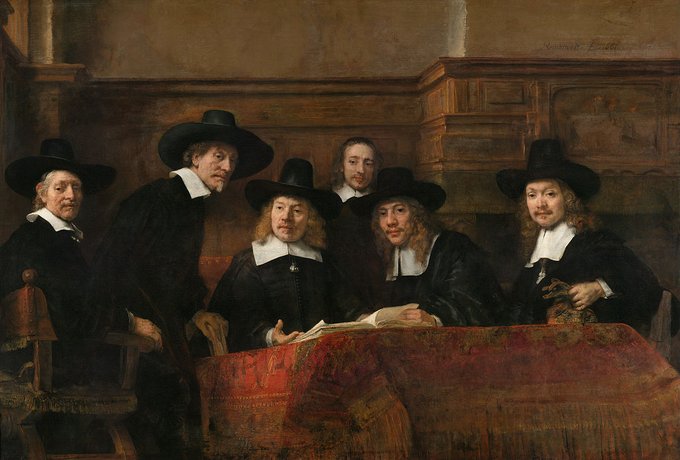
However, if one should fail, God would give unto one the law of sacrifice and provide a Saviour for one, that one might be brought back again into the presence and favour of God and partake of eternal life with God. This is the plan of redemption chosen and instituted by the Alight before human was placed on Earth. Adam and Eve were taught the law of sacrifice and were commanded to practice it by giving offerings. These included two emblems: the firstlings of the flock and the first fruits of the field. They obeyed without questioning. The effect of this law was that the best of the Earth produced, the best specimen in the flock or heard should not be sued for self, but for God. At a time in history when it was a struggle to make sure the family had food, those who sought to worship the Lord were asked to sacrifice the best part of their source of life. It was the real test of Adam and Eve’s faith, and they obeyed. “And now I speak concerning baptism. Behold, elders, priests, and teachers were baptized; and they were not baptized save they brought forth fruit meet that they were worthy of it. Neither did they receive any unto baptism save they came forth with a broken heart and a contrite spirit, and witnessed unto the church that they truly repented of all their sins. #RandolphHarris 14 of 20

“And none were received unto baptism save they took upon them the name of Christ, having a determination to serve him to the end. And after they had been received unto baptism, and were wrought upon and cleansed by the power of the Holy Ghost, they were numbered among the people of the church of Christ; and their names were taken that they might be remembered and nourished by the good word of God, to keep them in the right way, to keep them continually watchful unto prayer, relying alone upon the merits of Christ, who was the author and the finisher of their faith. And the church did meet together oft, to fast and to pray, and to speak one with another concerning the welfare of their souls. And hey did meet together oft to partake of bread and wine, in remembrance of the Lord Jesus. And they were strict to observe that there should be no iniquity among them; and whoso was found to commit iniquity, and three witnesses of the church did condemn them before the elders, and if they repented not and confessed not, their names were blotted out, and they were not numbered among the people of Christ. #RandolphHarris 15 of 20

“However, as oft as they repented and sought forgiveness, with real intent, they were forgiven. And their meetings were conducted by the church after the manner of the workings of the Spirit, and by the power of the Holy Ghost; for as the power of the Holy Ghost led them whether to preach, or to exhort, or to pray, or to supplicate, or to sing, even so it was done,” reports Moroni 6.1-9. It is especially in our families and similarly close associations that we must identify the elements of assault and withdrawal that defeat love and right relation to others. By insight and practice we must break away from them and reserve them, first by learning a calm but firm non-cooperation with those poisonous elements, and then by initiatives of goodwill and blessing in the midst of them. What we do in our meetings as Christians should be focused on enabling us to do this effectively wherever we are. Those meetings should and could be centers from which powerfully redemptive community spreads. Where to start? In various parts of the United States of America, publicly owned vehicles (police, street maintenance, schools) wear a bumper sticker that proclaims, “There is No Excuse for Domestic Violence.” It is a wonderful idea. #RandolphHarris 16 of 20

However, we need to go deeper, of course. We need to become the kind of people whom domestic violence is unthinkable and never an option. We must be transformed in such a way that our minds and bodies—our very souls—simply do not have the makeup for it. This is the work of the Christian spiritual formations. We must begin in the family. Now the slogan must be, “There is No Excuse for Assault or Withdrawal in the Home.” Do you think that would take care of intimate partner violence? Of course it would. However, the reserve is not true: merely avoiding the subject of intimate partner violence, domestic violence or assault can still leave the home a hell of cutting remarks, contempt, coldness, and withdrawal or noninvolvement. Such a hell is often found in the homes of Christians and even of Christian leaders. Frequently they seem to honestly think that such a condition is normal, and they have no knowledge of any other way. Their very theology may strengthen this tragically false outlook. If I were married, I would seek the help of my spouse in this matter. If not, then a trusted friend who is spiritually mature and not abusive. #RandolphHarris 17 of 20

I would then number my areas of need in order of importance, say: Purity, Mind, Prayer, Witness, Giving, Work, Friendship, and Leadership. Then, beginning with the first need, Purity, I would look over the suggested sub-disciplines and choose one to three things which I think would best help me improve. In doing this, I would resist the temptation to commit myself to too many disciplines. Better to succeed in a few than to assure failure by overcommitment. Perhaps, regarding the discipline of Purity I would choose to commit myself, first, to memorizing Scripture which help steel me to temptations, and second, to not watching anything sensual on TV or at the movies. Perhaps under Witness, I would make commitments to pray that God would give me someone to share Christ with and to join an interest club to meet unchurched people. After going through my life I would have perhaps twenty specific things which I could do to improve my eight weakest areas. However, before commitment to the specifics, I would look at the whole list with honest realism, asking, “Are the things which I am about to commit to really within my reach with the help of God?” #RandolphHarris 18 of 20

Perhaps, regarding the discipline of Mind, I have become so convicted that I am considering committing myself to reading the Old Testament once and the New Testament twice, plus reading The Book of Mormon. Make sure your commitments make you sweat, but also make sure that taken together they are manageable. It is better to increase your commitments as you succeed than to bite off more than you can do. Success begets success. Before setting your commitments in concrete, give yourself a week to think about them and pray over them. Seek the Holy Spirit’s guidance for other ways of personal discipline not mentioned in this essay. Ask your spouse of friend to hold you accountable for your disciplines. Even if it has to be over the phone, make sure you regularly confer and pray. Be honest about your success and failures. And be willing to take advice and make adjustments. You may have some complications, no doubt, and may not succeed at time. When this happens, wounded pride and embarrassment can make you want to take your marbles and go home. We do not like to do things which we fail. #RandolphHarris 19 of 20

However, we must realize that failure is a part of succeeding, provided we admit our failures and go at it again. Moreover, we are not under Law but grace. God is not counting our failure against us, and we are not building a treasure of merit with our success. We are simply trying to live a disciplined life which pleases our loving Father—and He understands our failures better than we understand our own children’s. When the movement in one direction has exhausted itself, there is a pause, and then a reversal directs the movement into the opposite direction. The flow of Nature follows the course indicated by the Principle of Reversion, which throws it back after a time in the opposite direction. When the point of farthest travel is reached, the forces reverse themselves. In this way, excess disciplines and even defeats itself. In this way too the Universe and all the different kinds of existence in it are kept in equilibrium. In the to-and-fro movement of human breathing, we have a kay to human development. Study it well with this assistance and you will discern a forward and backward movement, a pendulum-like swing, here too. Everything in the Universe is subject to a pendulum-like movement. It shuttles to and from with a coming-to-be and a ceasing-to-be effect. #RandolphHarris 20 of 20

Winchester Mystery House

Sarah Winchester had multiple rooms dedicated to plants and flowers. This room, her South Conservatory, contains over 200 panes of glass to allow for natural light. How would you spend a day alone in this room?

Explore the house from the comfort of your own home!
Learn More Link in bio. winchestermysteryhouse.com

A 160-room mansion built to appease the spirits who died at the hands of the Winchester Rifle 👻
🗝 winchestermysteryhouse.com

The Unconscious Thinks and Lives in Terms of Millennia–for that We Require the Help of the Black Magician!

People who take an optimum amount of vitamin C will experience only a quarter as much illness as those who do not. Through proper use, we could raise the average life expectancy by eight years. We have certain ideas as to how a civilized or educated or moral being should live, and we occasionally do our best to fulfill these ambitious expectations. Vegetables are interesting but lack a sense of purpose when unaccompanied by a good cut of meat. We call the unconscious “nothing,” and yet it is a reality in poetentia. The thought we shall think, the deed we shall do, even the fate we shall lament tomorrow, all lie unconscious in our today. The unknown is us which the affect uncovers was always there and sooner or later would have presented itself to the conscious. Sarah Winchester’s mansion has hosted many glittering, star studded parties and was regarded as the place to see and been seen. Conrad Nicholson Hilton, Constance Hilton, Zsa Zsa Gabor, William Randolph Heart, Phoebe Apperson, Vivien Leigh, Hattie McDaniel, and Sidney Howard are said to have visited. As often happens, the intensity of emotion experienced over the years by those anxious to be recognized at the mysterious mansion has left the grand Queen Anne, Eastlake, Gothic mansion uniquely stocked with echoes from the past. #RandolphHarris 1 of 28

The only slightly surprising element to this haunted house is that ghosts were apparently not officially acknowledged until 1985, just prior to the mansion’s $40-million renovation. During mid-December in 1985, everyone at the Winchester mansion was busy preparing for the upcoming day when the mansion would once again receive guests. No matter what their usual duties or job titles, all employees were directly involved with the last-minute details—secretaries were sweeping, butlers were dusting, waitresses were helping make up guest rooms. The place was a veritable model of industry. Mr. Jim was in the Grand Ballroom, which some consider the most beautiful room in the house, in anticipation of the new carpet being installed. Like many of those on the staff, Mr. Jim was a part-time Hollywood actor; given the star-studded history of the mansion, the “day job” was very much a labour of love. Being able to devote some of himself this gorgeous room that had been so important to the history of movie-making felt more like a privilege than a chore. It was also a perfect time, he thought, to commune with the spirits of those who came to the mansion to celebrate receiving Academy Awards here. As Mr. Jim’s experience unfolded, it became a far closer encounter than he anticipated. #RandolphHarris 2 of 28

The Grand Ballroom is large and the job had to be done thoroughly, so Mr. Jim was taking his time and making sure he did not miss any part of the floor. After repeatedly going back over to a certain area in the Grand Ballroom, he realized that while the rest of the room was kept at a very comfortable temperature, the air in that particular spot was incredibly chilly. More puzzled than concerned Mr. Jim wanted to determine what was causing this draft. The temperature was an inexplicably 20 degrees Fahrenheit cooler in this circle which was about 45 inches in diameter near a wall, mahogany framed mirror. As Mr. Jim wiped his cloth over the reflective glass, he was astonished to see the face a young man, with slick dark hair, smoking a cigarette staring back at him. Mr. Jim was alone in the room, so he quickly turned around to see who had joined him. There was no one else in the room, and that was not his face in the mirror. He turned back to the mirror. The image was still there. That was enough for Mr. Jim. He took it as a sign to remove the carpet he had just installed. #RandolphHarris 3 of 28

According to information released by the mansion, the mirror was gifted to the mansion by Boris Karloff with a note saying, “A warm private friendship has subsisted between us for half our lives, interrupted by no untoward occurrence, and never for a moment cooling into indifference. Of this friendship, the source of so much happiness to me, I wish to leave, if not an enduring memorial, at least an affectionate and grateful acknowledgment. I inscribe this mirror to you.” One night, I was in the Winchester mansion, standing in the presence of a sublime hieratic figured we now called the “Warlock” who was clothed in a long black robe reflecting from the mirror. This warlock was Boris Karloff, and he had just ended a lengthy discourse with the words, “And for that we require the help of black magician.” Then the door suddenly opened and an old man came in, the “black magician,” who however was dressed in a white rob. He too looked noble and sublime. The black magician evidently wanted to speak with the warlock, but he hesitated to do so in my presence. As that the warlock, point to me, said, “Speak, only an innocent is here.” So the black magician began to relate a strange story of how he had found the lost keys of Paradise and did not know how to use them. #RandolphHarris 4 of 28

The black magician told the warlock (Boris) that the king of the country in which he lived was seeking a suitable tomb for himself. The king’s subjects had chanced to dig up an old sarcophagus, threw away the bones, and had the empty sarcophagus buried again for later use on the spot that this sprawling mansion now occupies. However, no sooner had the bones seen the light of day than the being to whom they once had belonged—the virgin—changed into a black horse that galloped off into the desert. The black magician pursued it across the sandy coast and beyond, and there after many vicissitudes and difficulties he found the lost keys of Paradise. That was the end of history, and also, unfortunately, of the warlock and his mirror. It supposedly shattered into pieces, was sent out to San Francisco for repair and never returned. This haunting did not fall out as we had wished, no one understand what the warlock, the black magician, and the king were trying to tell us. The meaning of the story died with the disappearance of the haunted mirror. We were confronted with a problem and one which life is always brining us up against: namely, the uncertainty of all moral valuation, the bewildering interplay of good and evil, and the remorseless concatenation of guilt, suffering, and redemption. #RandolphHarris 5 of 28

This path to the primordial religious experience is the right one, but how many recognize it? It is like a still small voice, and it sounds from afar. It is ambiguous, questionable, dark, presaging danger and hazardous adventure; a razor-egged path, to be trodden for God’s sake only, without assurance and without sanction. Hence we must always reckon with the presence of things not yet discovered. These, as I have said, may be unknow quirks of character. However, the possibilities of future development may also come to light in this way, perhaps in just such an outburst of affect which sometimes radically alters the whole situation. The unconscious has a Janus-face: on one side its contents point back to a preconscious, prehistoric World of instinct, while on the other side it potentially anticipates the future—precisely because of the instinctive readiness for action of the factors that determine human’s fate. If we had complete knowledge of the ground plan lying dormant in an individual from the beginning, one’s fate would be in large measure predictable. #RandolphHarris 6 of 28

Now, to the extent that unconscious tendencies—by they backward-looking images or forward-looking anticipations—appear in visions, vision have been regarded, in all previous ages less as historical regression than as anticipations of the future, and rightly so. For everything that will be happens on the basis of what has been, and of what—consciously or unconsciously—still exists as a memory-trace. In s far as no human is born totally new, but continually repeats the stage of development last reached by the species, one contains unconsciously, as an a priori datum, the entire psychic structure developed both upwards and downwards by one’s ancestors in the course of the ages. That is what gives the unconscious its characteristic “historical” aspect, but it is at the same time the sine qua non for shaping the future. For this reason it is often very difficult to decide whether an autonomous manifestation of the unconscious should be interpreted as an effect (and therefore historical) or as an aim (and therefore teleological and anticipatory). The conscious mind thinks as a rule without regard to ancestral preconditions and without taking into account the influence this a priori factor has on the shaping of the individual’s fate. #RandolphHarris 7 of 28

Whereas we think in periods of years, the unconscious thinks and lives in terms of millennia. So when something happens that seems to us an unexampled novelty, it is generally a very old story indeed. We still forget, like children, what happened yesterday. We are still living in a wonderful new World where humans think themselves astonishingly new and “modern.” This is unmistakable proof of the youthfulness of human consciousness, which has not yet grown aware of its historical antecedents. As a matter of fact, the “normal” person convinces me far more of the autonomy of the unconscious than does the insane person. Psychiatric theory can always take refuge behind real or alleged organic disorders of the brain and thus detract from the importance of the unconscious. However, when it comes to normal humanity, such a view is no longer applicable. What one sees happening in the World is no just a shadowy vestige of activities that were once conscious, but expression of a living psychic condition that still exists and always will exist. Were that not so, one might well be astonished. However, it is precisely those who give least credence to the autonomy of the unconscious who are the most surprised by it. #RandolphHarris 8 of 28

Because of its youthfulness and vulnerability, our consciousness tends to make light of the unconscious. This is understandable each, for if one wants to start something on one’s own account. a young person should not let oneself be overawed by the authority of one’s parents. Historically as well as individually, our consciousness has developed out of the darkness and somnolence of primordial unconsciousness. There were psychic processes and functions long before any ego-consciousness existed. Thinking existed long before humans were able to say: “I am conscious of thinking.” The primitive “perils of the soul” consist mainly of dangers to consciousness. Fascination, bewitchment, “loss of soul,” possession, et cetera are obviously phenomena of the dissociation and suppression of consciousness caused by unconscious contents. Even civilized humans are not yet entirely free of the darkness of primeval times. The unconscious is the mother of consciousness. Where there is a mother there is also a father, yet one seems to be unknown. #RandolphHarris 9 of 28

Consciousness in the pride of its youth, may deny its father, but it cannot deny its mother. That would be too unnatural, for one can see in every child how hesitantly and slowly its ego-consciousness evolves out of a fragmentary consciousness lasting for single moments only, and how these islands gradually emerge from the total darkness of mere instinctuality. Consciousness grows out of an unconscious psyche which is older than it, and which goes on functioning together with it or even in spite of it. Although there are numerous cases of conscious contents becoming unconscious again (through being repressed, for instance), the unconscious as a whole is far from being a mere remnant of consciousness. Or are the psychic functions of animals remnants of consciousness? There is little hope of our finding in the unconscious an order equivalent to that of the ego. It certainly does not look as if we were likely to discover an unconscious ego-personality, something in the nature of a Pythagorean “counter-Earth.” And this of course means “miraculous” interposition, but not necessarily of the gross sort our fathers took such delight in representing, and which has so lost is magic for us. #RandolphHarris 10 of 28

If evil were really one under the same sun, the sky would incontinently shrivel to a snakeskin and cast it out in spasms. However, the spasms of Nature are years and centuries; and it will tax human’s patience to wait so long. We may think of the reserved possibilities God keeps in his own hand, under as invisible and molecular slowly self-summating a form as we please. We may think of them as counteracting human agencies which God inspires ad hoc. In short, signs and wonders and convulsions of the Earth and sky are not the only neutralizers of obstruction to God’s plans of which it is possible to think. As long as languages contain a future perfect tense, determinists, following the bent of laziness or passion, the lines of least resistance, can reply in that tense, saying, “It will have been fated,” to the still small voice which urges an opposite course; and thus excuse themselves from effort in a quiet unanswerable way. Vampires, Ghost, and Demons—God Himself, you think, can have no use for them. An immortality of every separate specimen must be to Him and to the Universe as indigestible a load to carry as it is to you. #RandolphHarris 11 of 28

So, engulfing the whole subject in a sort of mental giddiness and nausea, you drift along, first doubting that the mass can be immortal, then losing all assurance in the immortality of a particular person, precious as you all the while feel and realize the latter to be. This, I am sure, is the attitude of mind of some of you before me. However, is not such an attitude due to the verist lack and dearth of your imagination? You take these swarms of alien kinsmen as they are for you: an external picture painted on your retina, representing a crowd oppressive by tis vastness and confusion. As they are for you, so you think they positively and absolutely are. I feel no call for them, you say; therefore there is no call for them. However, all the while, beyond this externality which is your way of realizing them, they realize themselves with the acutest internality, with the most violent thrills of life. It is you who are dead, stone-dead and blind and senseless, in your way of looking. You open your eyes upon a scene of which you miss the whole significance. Each of these grotesque or even repulsive aliens is animated by an inner joy of living as hot or hotter than that which you feel beating in your private breast. #RandolphHarris 12 of 28

The sun rises and beauty beams to light his path. To miss the inner joy of him is to miss the whole of him. Not a being of the countless throng is there whose continued life is not called for, and called for intensely, by the consciousness that animates the being’s form. That you neither realize nor understand nor call for it, that you have no use for it, is an absolutely irrelevant circumstance. That you have a saturation-point of interest tells us nothing of the interest that absolutely are. The Universe, with every living entity which her resources create, creates at the same time a call for that entity, and an appetite for its continuance—creates it, if nowhere else, at least within the heart of the entity itself. It is absurd to suppose, simply because our private power of sympathetic vibration wit other lives gives out so soon, that in the heart of infinite being itself there can be such a thing as plethora, or glut, or supersaturation. It is not as if there were a bounded room where the minds in possession had to move up or make place and crowd together to accommodate new occupants. Each new mind brings its own edition of the Universe of space along with it, its own room to inhabit; and these spaces never crowd each other—the space of my imagination, for example, in no way interferes with yours. #RandolphHarris 13 of 28

The amount of possible consciousness seems to be governed by no law analogous to that of the so-called conservation of energy in the material World. When one human wakes up, or is born, another does not have to go to sleep, or die, in order to keep the consciousness of the Universe a constant quantity. There is a law of the Universe called the Law of Increase of Spiritual energy, by Dr. Wundt, which expressly oppose the law of conservation of energy in physical things. There seems no formal limit to the positive increase of being in spiritual respects; and since spiritual being, whenever it conies, affirms itself, expands and craves continuance, we may justly and literally say, regardless of the defect of our own private sympathy, that the supply of the individual life in the Universe can never possibly, however immeasurable it may become, exceed the demand. The demand for that supply is there the moment the supply itself comes into being, for the beings supplied demand their own continuance. Through many diversified channels of expression, the eternal Spirit of the Universe affirms and realizes its own infinite life. However, if we are theists, we can go no farther without altering the result. #RandolphHarris 14 of 28

God, we can then say, has so inexhaustible a capacity for love that His call and need is for literally endless accumulation of created lives. God can never faint or grow weary, as we should, under the increasing supply. God’s scale is infinite in all things. His sympathy can never know satiety or glut. Furthermore, consciousness in this process does not have to be generated de novo in a vast number of places. It exists already, behind the scenes, coeval with the World. The condition of consciousness is a certain kind of psychophysical movement. Before consciousness can come, a certain degree of activity in the movement must be reached. This requisite degree is called the threshold; but the height of the threshold varies under different circumstances: it may rise of fall. When it falls, as in states of great lucidity, we grow conscious of things of which we should be unconscious at other times; when it rises, as in drowsiness, consciousness sinks in amount. This rising and lowering of a psychophysical threshold exactly conforms to our notion of a permanent obstruction to the transmission of consciousness, which obstruction may, in our brains, grow alternately greater or less. #RandolphHarris 15 of 28

The transmission-theory also puts itself in touch with a whole class of experiences that are with difficulty explained by the production-theory. I refer to those obscure and exceptional phenomena reported at all times throughout human history which the psychical-researchers are doing to much to rehabilitate; such phenomena, namely, as religious conversions, providential leadings in answers to prayer, instantaneous healings, premonitions, apparitions at time of death, clairvoyant visions or impressions, and the whole range of mediumistic capacities, to say nothing of still more exceptional and incomprehensible things. If all our human thought be a function of the brain, then of course, if any of these things are fact—and to my own mind some of them are fact—we may not suppose that they can occur without preliminary brain-action. However, the ordinary production-theory of consciousness is knit up with a peculiar notion of how brain-action can occur—that notion being that all brain-action, without exception, is due to a prior action, immediate or remote, of the bodily sense-organs on the brain. #RandolphHarris 16 of 28

Such action makes the brain produce sensations and mental images, and out of the sensations and images the higher forms of thought and knowledge in their turn are framed. As transmissionists, we also must admit this to the condition of all our usual thought. Sense-action is what lowers the brain-barrier. My voice and aspect, for instance strike upon your ears and eyes; your brain thereupon becomes more previous, and an awareness on your part of what I say and who I am slips into this World from the World behind the veil. However, in the mysterious phenomena to which I allude, it is often hard to see where the sense-organs can come in. A medium, for example, will show knowledge of his sitter’s private affairs which it seems impossible he should have acquired through sight or hearing, or inference therefrom. Or you will have an apparition of some one who is now dying hundreds of miles away. We need only suppose the continuity of our consciousness with a mother sea, to allow for exceptional waves occasionally pouring over the dam. Of course the causes of these odd lowerings of the brain’s threshold still remain a mystery on any terms with its grouping of Heavenly and Hellish forces upon a common center. #RandolphHarris 17 of 28

If it were the dark nor even if all were in the light, we could see no form of anything at all. The contrast of shadow and light is needed to define the form. Opposites are always necessary to each other. This is why they are present throughout the Universe and moreover present in all possible combinations and proportions in all possible rhythms and patterns. It is present in life, in all things, in planets and seasons. It is the eternal and invariable law of manifested existence. For anything to exist for us at all, it needs an opposite to compare it with, or it will remain non-existent to our consciousness. Unless it recognizes the pairs of opposites, thinking cannot come into existence at all. If we had not experienced Evil, we could not appreciate Good. If we had not become lost in Appearance, we could not appreciate Reality. It may be that for us humans, the ultimate meaning of the cosmos lies implicit in this truth. The acting self needs an outer World and an inner one—both. All things in human’s experience can be classified into pairs of opposites—that which experiences and that which is experienced. In each pair the first member itself becomes, on analysis, the second member of another pair. #RandolphHarris 18 of 28

Whatever we look at, we see only in a relationship of contrast to something else. It is a mistake to consider this opposition to be antagonistic. On the contrary, if our perception is to be true and our judgment correct, each should be considered a part of the other. This teaches us to synthesize, to look at both sides of a thing, to include both points of view in an argument, and to add the similarities also instead of nothing the differences alone. It may be unusual, inconsistent, startling, to propose that we think in terms of opposing ideas, of conflicting statements, and find identity in variety, but this is Nature’s own way—her balance. Balance is a teaching which plays on contradictions and finds room for opposites. It seems them both in the structure of the Universe and in the movement of evolution. It puts them in its approach to human problems. Each to view of a thing or idea implies the existence of the contrary view. To understand that the universal evolution depends upon a two-way interconnected movement, and that its comprehension requires us to think about it in oppositional terms, is to be liberated from the narrow, one sided, incomplete, and intolerant thinking which is responsible for so many absurdities and miseries in human history. #RandolphHarris 19 of 28

When both ignore the two-face character of fortune and Nature, optimism becomes unreasonable pessimism. The life of the human being is one of relating to others. We reemphasize: The life of the human beings is one of relating to others. Though many are cursed to live and die alone, we are born of relations and into relations. One of the heart-rending stories found in Sarah Winchester’s diary is of a broken human being living on the streets. He was dying, and Mrs. Winchester took him in and had her staff care for him. When he recovered, she gave him a job and a place to stay on her estate. To merely welcome another, to provide for one, to make a place, is one of the most life-giving and life-receiving things a human being can do. They are the basic, universal acts of love. Our lives were meant to be full of such acts, drawing on the abundance of God, and they achieve their greatest fulfillment precisely when, like Jesus, we “lay down our lives for the brethren.” This “relating” quality reaches into every dimension of human existence. It characterizes the basic nature of all thought and feeling, which is always thought of or feeling something other than itself. #RandolphHarris 20 of 28

The way relate to others pervades the deepest reaches of our body, soul, and World, where our very identity—who we really are—is always intermingled (if sometimes negatively, by reaction) with others who have given us life, sustained us, or walked with us—or perhaps have deeply injured us. The call of “the other” on our lives is a constant for everyone. It is the basic reality of a moral existence, which we retreat from only into a living death of isolation. If we make our purpose to save our life by withdrawal, we lost it. So Jesus said. However, this is not only a revealed truth, it is also a testable fact of life. If you would live, then give—and receive. Now you understand why Sarah Winchester, even though she withdrew, created a microcosm in her own mansion, and kept people employed for 38 years of nonstop construction. “And it came to pass when Corintumr had recovered of his wounds, he began to remember the words which Ether had spoken unto him. He saw that there had been slain by the sword already nearly two millions of his people, and he began to sorrow in his heart; yea, there had been slain two millions of mighty men, and also their wives and the children. #RandolphHarris 21 of 28

“He began to repent of evil which he had done; he began to remember the words which had been spoken by the mouth of all the prophets, and he saw them that they were fulfilled thus far, every whit; and his soul mourned and refused to be comforted. And it came to pass that he write an epistle unto Shiz, desiring him that he would spare the people, and he would give up the kingdom for the sake of their lives of the people. And it came to pass that when Shiz had received his epistle he wrote an epistle unto Coriantumr, that is he would give himself up, that he might slay him with his own sword, that he would spare the lives of the people. And it came to pass that the people repented not of their iniquity; and the people of Coriantumr were stirred up to anger against the people of Shiz; and the people of Shiz were stirred up to anger against the people of Coriantumr; wherefore, the people of Shi did give battle unto the people of Coriantumr. And when Coriantumr saw that he was about to fall he fled again before the people of Shiz. And it came to pass that he came to the waters of Ripliancum, which, by interpretation, is large, or to exceed all; wherefore, when they came to these waters they pitched their tents. #RandolphHarris 22 of 28

“And Shiz also pitched his tents near unto them; and therefore on the morrow they did come to battle. And it came to pass that they fought and exceedingly sore battle, in which Coriantumr was wounded again, and he fainted with the loss of blood. And it came to pass that the armies of Coriantumr did press upon the armies of Shiz that they beat them, that they caused them to flee before them; and they did flee southward, and did pitch their tents in a place which was called Ogath. And it came to pass that they army of Coriantumr did pitch their tents by the hill Ramah; and it was that same hill where my father Mormon did hide up the records unto the Lord, which were sacred. And it came to pass that they did gather together all the people upon all the face of the land, who had not been slain, save it was Ether. And it came to pass that Ether did behold all the doings of the people; and he beheld that the people who were for Coriantumr were gathered together to the army of Coriantumr; and the people who were for Shiz were gathered together to the army of Shiz. Wherefore, they were for the space of four years gathering together the people, that they might get all who were upon the face of the land, and that they might receive all the strength which it was possible that they could receive. #RandolphHarris 23 of 28

“And it came to pass that when they were all gathered together, every one to the army which he would, with their wives and their children—both men, women, and children being armed with weapons of war, having shields, and breastplates, and head-plates, and being clothed after the manner of war—they did march forth one against another to battle; and they fought all that day, and conquered not. And it came to pass that when it was night they were weary, and retired to their camps; and after they had retired to their camps they took up a howling and a lamentation for the loss of the slain of their people; and so great were their cries, their howling and a lamentation for the loss of the slain of their people; and so great were their cries, that they did rend the air exceedingly. And it came to pass that on the morrow they did go again to battle, and great and terrible was that day; nevertheless, they conquered not, and when the night came again they did rend the air with their cries, and their howlings, and their mournings, for the loss of the slain of their people. And it came to pass that Coriantumr wrote again an epistle unto Shiz, desiring that he would not come again to battle, but that he would take the kingdom, and spare the lives of the people. #RandolphHarris 24 of 28

“However, behold, the Spirit of the Lord had ceased striving with them, and Satan had full power over the hearts of the people; for they were given up unto the hardness of their hearts, and the blindness of their minds that they might be destroyed; wherefore they went again to battle. And it came to pass that they fought all that day, and when the night came they slept upon their swords. And on the morrow they fought even until the night came. And when the night came they were drunken with anger, even as a man who is drunken with wine; and they slept again upon their swords. And on the morrow they fought again; and when the night came they had fallen by the sword save it were fifty and two of the people of Coriantumr, and sixty nine of the people of Shiz. And it came to pass that they slept upon their swords that night, and on the morrow they fought again, and they contended in their might with their swords and with their shields, all that day. And when the night came there were thirty and two of the people of Shiz, and twenty and seven of the people of Coriantumr. And it came to pass that they ate and slept, and prepared for death on the morrow. And they were large and mighty men as to the strength of men. #RandolphHarris 25 of 28

“And it came to pass that they fought for the space of three hours, and they fainted with the loss of blood. And it came to pass that when the men of Coriantumr had received sufficient strength that they could walk, they were about to flee for their lives; but behold, Shiz arose, and also his men, and he swore in his wrath that he would slay Coriantumr or he would perish by the sword. Wherefore, he did pursue them, and on the morrow he did overtake them; and they fought again with the sword. And it came to pass that when they had all fallen by the sword, save it were Coriantumr and Shiz, behold Shiz had fainted with the loss of blood. And it came to pass that when Croiantumr had leaned upon his sword, that he rested a little, he smote off the head of Shiz. And it came to pass that after he had smitten off the head of Shiz, that Shiz raised up on his hands and fell; and after that he had struggled for breath, he died. And it came to pass that Coriantumr fell to the Earth, and became as if he had no life. And the Lord spake unto Ether, and said unto him: Go forth. And he went forth, and beheld that the words of the Lord has all been fulfilled; and he finished his record; (and the hundredth part I have not written) and he hid them in a manner that the people of Limhi did find them. #RandolphHarris 26 of 28

“Now the last words which are written by Ether are these: Whether the Lord will that I be translated, or that I suffer the will of the Lord in the flesh, it mattereth not, if it so be that I am saved in the kingdom of God. Amen,” reports Ether 15.1-34. “But the LORD said to him, ‘Not so; if anyone kills Cain, one will suffer vengeance seven times over.’ Then the LORD put a mark on Cain so that no one who found him would kill him. So Cain went out from the LORD’s presence and lived in the land of Nod, east of Eden,” reports Genesis 4.15-16. A view of the World which fails or refuses to recognize that the opposites are essential to it, which accepts its beauty but not its ugliness, is not complete and only a half truth. If there is suffering as well as sweetness in life, that is not accident, nor is it brought into the scheme of things by human evil alone: nothing exists without its contrary. In the end, a human must recognize that there are two forces a work in Nature—and therefore in one’s own life—the ne benign, the other hostile. The cold time is here: time to work and time to rest, time to celebrate inside, time to enjoy the harvest. All about us, the Land of Spirits are singing. All about us, the deities are speaking. Please help me listen, all you divine beings. May I hear your voices. #RandolphHarris 27 of 28

I need much help in cooling my Earth. I cannot do it alone I ask for help from the Sky: please give rise to your cloud with plentiful moisture and ice so the Earth can cool and have water. I ask for help from the rain: please give your moisture to be the plants’ own blood. I ask for help from the soil: please give your minerals from which the plants will form their bodies. I will give my time, I will give my care, I will give my loving stewardship. All these will I give my garden and I ask for your others to give what the garden of Eden will need as well. We will do it together and I will not forget your contribution. Glory His holy name; may your heart rejoice, ye who seek the Lord. Seek the Lord and His strength; seek His presence continually. Remember the marvellous works that He hath done, His wonders, and the judgments He decreed, O seed of Israel, His servant, Children of Jacob, His beloved ones. He is the Lord our God; His judgments are throughout the Earth. Remember His covenant forever, the word which He commanded to a thousand generations. In Luke 18.1-8, Jesus told a parable about an unfair, unjust judge who finally was willing to listen to a woman’s case because of her continual persistence. When it comes to God, that is the way we need to be of what he said. What promises or promises from God are you bringing to His constant remembrance? #RandolphHarris 28 of 28

Winchester Mystery House
WMH 13 Days of Christmas #7
Sarah Winchester’s innovations for water conservation was far ahead of her time. She had multiple rooms dedicated for plants, each with a complex drainage system that allowed for the reuse of water. On today’s episode of the Winchester Mystery House 13 Days of Christmas, explore Sarah’s North Conservatory and learn more about her magnificent innovations.

Winchester Mystery House

A 160-room mansion built to appease the spirits who died at the hands of the Winchester Rifle 👻
🗝 winchestermysteryhouse.com


I Hold it True, what’er Befall; I feel it when I Sorrow Most; ‘Tis Better to Have Loved and Lost!

Youth is not chronological age but the state of growing, learning, and changing. All people must be helped to regain the condition of youth. The two principles of justice: The first guarantees the equal basic rights and liberties needed to secure the fundamental interests of free and equal citizens and to pursue a wide range of conceptions of the good. The second principle provides fair equality of educational and employment opportunities enabling all to fairly compete for powers and positions of office; and it secures for all a guaranteed minimum of the all-purpose means (including income and wealth) that individuals need to pursue their interests and to maintain their self-respect as free and equal persons. In applying the two principles of justice to the basic structure of society one takes the position of certain representative individuals and considers how the social system looks to them. The difference, for example, requires that the higher expectations of the more advantaged contribute to the prospects of the least advantaged. Or as I sometime say more lightly, social and economic inequalities must by in the interests of the representative people in all relevant social positions. The perspective of those in these situations defines a suitably general point of view. #RandolphHarris 1 of 26

However, certainly not all social positions are relevant. For not only are there farmers, say, but dairy farmers, wheat farmers, farmers working on large tracts of land, and so on for other occupations and groups indefinitely. If we must take such a multiplicity of positions into account, we cannot have a coherent and manageable theory. Therefore we need to identify certain positions as more basic than the others and as providing an appropriate standpoint for judging the social system. Thus the choice of these positions becomes part of the theory of justice. On what principle, though, are they to be identified? We must keep in mind the fundamental problem of justice and the manner in which the two principles cope with it. The primary subject of justice, is the basic structure of society. The reason for this is that its effects are so profound and pervasive, and present from birth. This structure favours some starting places over others in the division of the benefits of social cooperation. It is these inequalities which the two principles are to regulate. Once these principles are satisfied, other inequalities are allowed to arise from human’s voluntary actions in accordance with the principle of free association. #RandolphHarris 2 of 26

Thus the relevant social positions are, so to speak, the starting places properly generalized and aggregated. By choosing these positions to specify the general point of view one follows the idea that the two principles attempt to mitigate the arbitrariness of natural contingency and social fortune. I suppose, then, that for the most part each person holds two relevant positions: that of equal citizenship and that defined by one’s place in the distribution of income and wealth. The relevant representative humans, therefore and the representative citizens and those who stand for the various levels of well-being. Since I assume that in general other positions are entered into voluntarily, we need not consider the point of view of humans in these positions in judging the basic structure. Indeed, we are to adjust the whole scheme to suit the preferences of those in the so-called starting places. In judging the social system we are to disregard our more specific interest and associations and look at our situation from the standpoint of these representative humans. Now as far as possible the basis structure should be appraised from the position of equal citizenship. This position is defined by the right and liberties required by principle of equal liberty and the principle of fair equality of opportunity. #RandolphHarris 3 of 26

When the two principles are satisfied, all are equal citizens, and so everyone holds this position. In this sense, equal citizenship defines a general point of view. The problems of adjudicating among the fundamental liberties are settled by reference to it. Many questions of social policy can also be considered from this position. For there are matters which concern the interests of everyone and in regard to which distributive effects are immaterial or irrelevant. In these cases the principle of the common interest can be applied. According to this principle institutions are ranked by how effectively they guarantee the conditions necessary for all equally to further their sims, or by how efficiently they advance shared ends that will similarly benefit everyone. Thus reasonable regulations to maintain public order ad security, or efficient measures for public health and safety, promote the common interest in this sense. So do collective efforts for national defense in a just war. It may be suggested that maintaining public health and safety, promote the common interest in this since. So do collective efforts for national defense in a just war. It may be suggested that maintaining public health and safety or achieving victory in a just war have distributive effects: the affluent benefit more than the less affluent since the have more to lose. #RandolphHarris 4 of 26

However, if social and economic inequalities are just, these effects may be left aside and the principle of the common interest applied. The standpoint of equal citizenship is the appropriate one. The definition of representative humans for judging social and economic inequalities is less satisfactory. For one thing, taking these individuals as specified by the levels of income and wealth, I assumed of power and authority to avoid an index problem. That is, I suppose that those with greater political authority, say, or those higher in institutional forms, are in general better off in other respects. On the whole, this assumption seems safe enough for our purposes. There is also a question about how many such representative humans to single out, but this is not crucial because the difference principle selects one representative for a special role. The serious difficulty is how to define the least fortunate group. Here is seems impossible to avoid certain arbitrariness. One possibility is to choose particular social position, say that of the unskilled worker, and then to count as the least advantaged all those with the average income and wealth of this group, or less. The expectation of the lowest representative human is defined as the average taken over this whole class. #RandolphHarris 5 of 26

Another alternative is a definition solely in terms of relative income and wealth with no reference to social position. Thus all persons with less than half of the median income and wealth may be taken as the least advantaged segment. This definition depends only upon the lower half of the distribution and has the merit of focusing attention on the social distance between those who have least and the average citizen. Surely this gap is an essential feature of the situation of the least favoured members of society. I suppose that either of these definitions or some combination of them, will serve well enough. In any case we are to aggregate to some degree over the expectations of the worst off, and the figure selected on which to base these computations is to a certain extent ad hoc. Yet we are entitled at some point to plead practical considerations in formulating the difference principle. Sooner or later the capacity of philosophical or other arguments to make finer discriminations is bound to run out. I assume therefore that the persons in the original position understand the difference principle to be defined in one of these ways. They interpret it from the first as a limited aggregative principle and assess it as such in comparison with other standards. #RandolphHarris 6 of 26

It is not as if they agreed to think of the least advantaged as literally the worst off individual and then in order to make this criterion work adopted in practice some form of averaging. Rather, it is the practicable criterion itself that is to be evaluated from the perspective of the original position. It may turn out that a more exact definition of the least favoured proves unnecessary. As far as possible, then, justice as fairness appraises the social system from the position of equal citizenship and the various levels of income and wealth. Sometimes, however, other positions may need to be taken into account. If, for example, there are unequal basic rights founded on fixed natural characteristics, these inequalities will single out relevant positions. Since these characteristics cannot be changed, the position they define count as starting places in the basic structure. Distinctions based on gender are of this type, and so are those depending upon race and culture. Thus is, say, humans are favoured in the assignment of basic rights, this inequality is justified by the difference principle (in the general interpretation) only if it is to the advantage of women and acceptable from their standpoint. And the analogous condition applies to the justification of caste systems, or racial and ethic inequalities. #RandolphHarris 7 of 26

Such inequalities multiply relevant positions and complicate the application of the two principles. On the other hand, these inequalities are seldom, if ever, to the advantage of the less favoured, and therefore in a just society the smaller number of relevant positions should be ordinarily suffice. Now it is essential that the judgments made from the perspective of the relevant positions override the claims that we are prone to make in more particular situations. If we think of ourselves in terms of our more specific positions, not everyone always benefits by what the two principle require. And unless the viewpoint of the relevant position has priority, one still has a chaos of competing claims. Thus the two principles express, in effect, an understanding to order our interests by giving certain of them a special weight. For example, persons engaged in a particular industry often find that free trade is contrary to their interests. Perhaps the industry cannot remain prosperous without tariffs or other restrictions. However, if free trade is desirable from the point of view of equal citizens or of the least advantaged, it is justified even though more specific interests suffer. For we are to agree in advance to the principles of justice and their consistent application from the standpoint of certain positions. #RandolphHarris 8 of 26

There is no way to guarantee the protection of everyone’s interests over each period of time once the situation of representative humans is defined more narrowly. Having acknowledged certain principles and a certain way of applying them, we are bound to accept the consequences. This does not mean, of course, that the rigors of free trade should be allowed to go unchecked. However, the arrangements for softening them are to be considered from an appropriately general perspective. The relevant social positions specify, then, the general point of view from which the two principles of justice are to be applied to the basic structure. In this way everyone’s interests are taken into account, for each person is an equal citizen and all have a place in the distribution of income and wealth or in the range of fixed natural characteristics upon which distinctions are based. Some selections of relevant positions is necessary for a coherent theory of social justice and the ones chosen should accord with its first principles. By selecting the so-called starting places one follows out the idea of mitigating the effects of natural accident and social circumstance. No one is o benefit from these contingencies except in ways that redound to the well-being of others. #RandolphHarris 9 of 26

The very first character trait that should flow out of experiencing God’s grace is gratitude to Him. Everything we are and everything we do that is of any value, we owe to the grace of God. This, of course begins with our salvation. The longer I live the Christian life, the more grateful I am for the salvation God gave to me when I was an eighteen-year-old college student. Years ago I memorized Mark 8.36-37: “For what shall it profit a human, if one shall gain the whole World, and lose one’s own soul? Or what shall a human give in exchange for one’s soul?” Initially, I memorized that passage to take the gospel offer seriously. However, in recent years I have begun t mediate on those verses for my own benefit to help me realize what an infinitely priceless gift I have received in God’s gracious gift of eternal life. As I think of the message of those verses, I visualize a balance scale with all the treasures of the entire World on one tray and eternal life on the other tray. The two rays are not balanced. Rather the scale is bottomed out on the side of eternal life. In the gift of eternal life, God has given us greater treasure than all the accumulated wealthy of the whole World. Are we sufficiently grateful for this priceless gift? Do we take time to actually give thanks to God for the gift that cost Him so much? #RandolphHarris 10 of 26

Are we as grateful today as we were the day we initially experienced the forgiveness of our sins and peace with God? If we are truly living by the transforming grace of God in our daily lives, gratitude for God’s gif of eternal life through Jesus Christ will be a growing experience. We should have a greater sense of gratitude, and be more desirous of expressing that attitude to God, today than the day we were brought out of the kingdom of sin into the Kingdom of grace. God has, of course, given us so much else in Christ. Have we grown in the Christian life so that we are a bit more mature today than we were a year ago? Are we perhaps more loving and gentler today than we were a year ago? If so, where did this growth come from? It did not come from ourselves, because as Paul said, “I know that nothing good lives in me, that is, in my sinful nature,” reports Romans 7.18. There are only two moral forces within us: our sinful nature and the Holy Spirit empowering our new nature. If we are more Christlike today than a year ago, it is because of the work of the Holy Spirit within us, and this is by the grace of God. Certainly, we must clothe ourselves with Christlike virtues, but these same virtues are also called the fruit of the Spirit—that is, the result of His work in us. #RandolphHarris 11 of 26

One great paradox of the Christian life is that we are fully responsible for our Christian growth and at the same tie fully dependent upon the Holy Spirit to give us both the desire to grow and the ability to do it. God’s grace does not negate the need for responsible action on our part, but rather makes it possible. What about ministry? Have we accomplished some specific work for God? As we have already seen, we must admit to God, “All that we have accomplished you have done for us,” reports Isaiah 26.12. There is nothing, absolutely nothing, we are or we have done that is worthwhile, that is not the result of God’s Spirit working in us and through us. I fear that often we Christians begin to think our spiritual growth and “success” in ministry is due, at least in large measures, to our own goodness and hard work. The irony is, the more committed and diligent we are, the more susceptible we are to that temptation. We face the same temptation in a spiritual sense that Israel faced in a material way when God warned them they would be prone to say, “My power and the strength of my hands have produced this wealth for me,” reports Deuteronomy 8.17. Let us go on to the temporal blessings of life. Are we comfortably situated in a nice home with plenty of food in the cupboard and the refrigerator? #RandolphHarris 12 of 26

Do we enjoy a reasonable degree of health? Do we have our own personal copy of the Bible (aside from the half dozen or so different translations some of us have)? Are we able to gather with other believers for worship and study of the Scriptures without fear of religious persecution? All of these blessings come to us by God’s grace, and all of them are occasions for gratitude and giving thanks to Him. It is interesting that some people use the expression “saying grace,” for the prayer of thanksgiving at meal time. I have no idea of that expression’s origin, but I suspect it was born out of a recognition that the food on the table was not only from God, but that it was there by His grace. We actually ought to “say grace” continually throughout the day for the temporal and spiritual blessings that come our way so abundantly. I know many of us are going through some difficult times, and it is tough to have a grateful spirit. However, if we stop and consider, we will recognize that we are still recipients every day of the amazing grace of God. If we are truly growing in grace, gratitude—and its expression in actually giving thanks to God—will be an ever-growing characteristic in our lives. Many adult learners have a deep sense of insecurity about their own mental abilities. #RandolphHarris 13 of 26

Defensiveness and a false sense of pride can arise to protect one from feeling embarrassed about not knowing something. Intellectual embarrassment is one of the worst forms of humiliation—no one wants to come off as stupid or uninformed. I think our adult Sunday school classes have unintentionally contributed to this false sense of pride. I have spoken in hundreds of churches and have regularly observed Sunday school classes which divine into small groups to reflect on a passage or discuss an idea. Later, when the groups recombine to share their observations with the entire class, group feedback is almost always affirming no matter how inaccurate or poorly reasoned the point is. Over the years, this creates a feeling of safety in the class but at the price of generating both a false sense of pride and the mistaken notion that all opinions are equal, whether spontaneous and quickly conceived or the result of detailed study prior to class time. It also keeps adults from learning how to receive criticism for their ideas in the interest of truth and stifles growth in the ability to respond nondefensively. If we do not work on this in the safety of the company of our own brothers and sisters, we will come off as small, reactionary, and inarticulate in the public square. #RandolphHarris 14 of 26

We need to give one another permission to express inadequately thought-out points to each other and create the expectation that we can learn to argue with one another, critique and defend ideas, or leave class with more work to do on a subject. All of this is in the interest of learning to reason carefully to get to the truth of what we study together. This may be a bit threatening at first, but over the long haul it will produce a church filled with people who are more secure about what they believe and why. The very forms that define our periods of study together often institutionalize false pride and a lack of intellectual growth. There is absolutely nothing wrong with admitting you do not know something or that you are currently inadequately equipped to think a topic through. What is unacceptable, however, is running from this fact and thereby giving up on intellectual and spiritual growth in the interest of avoiding embarrassment or possible rejection. We all need help in this area, and we should care enough about truth and reason to give that help. Even if we agree with one another’s conclusions, we need to dedicate ourselves for Christ’s sake to refusing to allow each other to reach those conclusions with poor argumentation and sloppy treatment of data. #RandolphHarris 15 of 26

Another form of inferiority comes from the simple fact that we are evangelicals. For some time now, our culture had told us that conservative Christians are intellectually inferior, that the Christian faith is irrational, and so forth. And we constantly watch our view caricatured as the news media, hostile university professors, and others regularly build straw humans out of Christians positions and proceed to destroy those straw humans. When a community is repeatedly told that it is ignorant, it will come to believe that message whether or not it is true. Asking them to leave: What should we do about this problem? I think we need to work harder at holding forth and celebrating our past and contemporary Christian thinkers. We need to know who they are. Do you know who the top Christian intellectuals are today in various fields? Are these people and their work placed before our children as examples to be emulated? We do this for Christian sports heroes, missionaries, and public speakers, so why not do it for our intellectuals? The effect of identifying and celebrating our Christian intellectuals before one another cannot be overestimated. Even though the early church was a minority movement that faced intellectual and cultural ridicule and marginalization, it maintained internal cohesion and a courageous witness thanks in no small measure to the powerful role in the broader Christian community of Christian intellectuals and apologist. #RandolphHarris 16 of 26

The early church knew who her intellectuals and apologists were, and this gave them confidence and a feeling of strength. In the same way, we must identify, celebrate, utilize, and make role models out of our Christian thinkers. And we need to celebrate the absolutely unequaled history of the intellectual life in the Christian church. If an alternative community of atheists, or anything else can rival the rich culture and intellectual leadership in church history, let someone come forth and demonstrate it. The intellectual life is our heritage as Christians, and it is time to remind ourselves of this. However, if one becomes so dependent that every problem as it arises is at once put before the teacher for solution, the consequence will eventually be an utter helplessness before all problems. The capacities for independent judgment, for taking the initiative, for showing creativeness and forming decisions, will decay and even disappear. Becoming a satellite and revolving around a guru may be beneficial to a human. However, when this revolution become a permanent one, the harm beings, and one will never again be able to move into a fresh orbit and fulfill the evolutionary intention secreted within one’s own being. It is absolutely indispensable for the disciples to learn how to live their own lives. #RandolphHarris 17 of 26

The guide must not only be competent to do what one proposes to do, but the disciple also must be qualified to take advantage of it. Rare is the true disciple. It is better to have a few earnest students who willingly work hard for their self-improvement than a mass of students who do nothing more than read books and talk amongst themselves. The kind of student one likes to see, but unfortunately rarely does see, blends a fine moral character with good intelligence and sound practicality, all topped by profound mystical intuition and a proper sense of reverence. Such a one is thoroughly dependable and reliable, one’s words are not mere froth of emotion to be quickly forgotten. When a seeker’s determination to follow the quest become tough enough not to be deviated by adversity or by luxury, one is ready for a teacher. “And it came to pass that when the sixty and second year of the reign of the judges had ended, all these things had happened and the Lamanites had become, the more part of them, a righteous people, insomuch that their righteousness did exceed that of the Nephites, because of their firmness and their steadiness in the faith. For behold, there were many of the Nephites who had become hardened and impenitent and grossly wicked, insomuch that they did reject the word of God and all the preaching and prophesying which did come among them. #RandolphHarris 18 of 26

“Nevertheless, the people of the church did have great joy because of the conversation of the Lamanites, yea, because of the church of God, which had been established among them. And they did fellowship one with another, and did rejoice one with another, and did have great joy. And it came to pass that many of the Lamanites did come down into the land of Zarahemla, and did declare unto the people f the Nephites the manner of their conversation, and did exhort them to faith and repentance. Yea, and many did preach with exceedingly great power and authority, unto the brining down many of them into the depths of humility, to be the humble followers of Go and the Lamb. And it came to pass that many of the Lamanites did go into the land northward; and also Nephi and Lehi went into the land northward, to preach unto the people. And thus ended the sixty and third year. And behold, there was peace in all the land, insomuch that the Nephites did go into whatsoever part of the land they would, whether among the Nephites or the Lamanites. And it came to pas that the Lamanites did also go whithersoever they would, whether it were among the Lamanites or among the Nephites; and thus they did have free intercourse one with another, to buy and sell, and to get gain according to their desire. #RandolphHarris 19 of 26

“And it came to pass that they became exceedingly rich, both the Lamanites and the Nephites; and they did have an exceedingly plenty of gold, and of silver, and of all manner of precious metals, both in the land south and in the land north. Now the land south was called Lehi, and the land north was called Mulek, which was after the son of Zedekiah; for the Lord did bring Mulek into the land north, and Lehi into the land south. And behold, there was all manner of gold in both these lands, and of silver, and of precious ore of every kind; and there were also curious workmen, who did work all kinds f ore and did refine it; and thus they did become rich. They did raise grain in abundance, both in the north and in the south; and they did flourish exceedingly, both in the north and in the south. And they did multiply and wax exceedingly strong in the land. And they did raise many flocks and herds, yea, many fatlings. Behold their women did toil and spin, and did make all manner of cloth, of fine-twined linen and cloth of every kind, to clothe their nakedness. And thus the sixty and fourth year did pass away in peace. And in the sixty and fifth year they did also have great joy and peace, yea, much preaching and many prophecies concerning that which was to come. And thus passed away the sixty and fifth year. #RandolphHarris 20 of 26

“And it came to pass that in the sixty and sixth year of the reign of the judges, behold, Cezoram was murdered by an unknown hand as he sat upon the judgment-sea. And it came to pass that in the same year, that his son, who had been appointed by the people in his stead, was also murdered. And thus ended the sixty and sixth year. And in the commencement of the sixty and seventh years the people began to grow exceedingly wicked again. For behold, the Lord had blessed them so long with the riches of the World that they had not been stirred up to anger, to wars, nor to bloodshed; therefore they began to set their hearts upon their riches; yea, they began to seek to get gain that they might be lifted up one above another; therefore they began to commit secret murders, and to rob and to plunder, that they might get gain. And now behold, those murderers and plunderers were a band who had been formed by Kishkumen and Gadianton. And now it had come to pass that there were many even among the Nephites, of Gadianton’s band. However, behold, they were more numerous among the more wicked part of the Lamanites. And they were called Gadianton’s robbers and murderers. And it was they who did murder the chief judge Cezoram, and his son, while in the judgment-seat; and behold, they were not found. #RandolphHarris 21 of 26

“And now it came to pass that when the Lamanites found that there were robbers among them they were exceedingly sorrowful; and they did use every means in their power to destroy them off the face of the Earth. However, behold, Satan did stir up the hearts of the more part of the Nephites, insomuch that they did unite with those bands of robbers, and did enter into their covenants and their oaths, that they would protect and preserve one another in whatsoever difficult circumstances they should be places, that they should not suffer for their murders, and their plunderings, and their stealings. And it came to pass that they did have their signs, yea, their secret signs, and their secret words; and this that they might distinguish a brother who had entered int the covenant, that whatsoever wickedness his brother should do he should not be injured by his brother, nor by those who did belong to his band, who had taken this covenant. And thus they might murder, and plunder, and steal, and commit whoredoms and all manner of wickedness, contrary to the laws of their country and also the laws of their God. And whosoever of those who belonged to their band should reveal unto the World of their wickedness and their abominations, should be tried, not according to the laws of their country, but according to the laws of their wickedness, which had been given by Gadiation and Kishkumen. #RandolphHarris 22 of 26

“Now behold, it is these secret oaths and covenants which Alma commanded his son should not go forth unto the World, least they should be a means of bringing down the people unto destruction. Now behold, those secret oaths and covenants did not come forth unto Gadiaton from the records which were delivered unto Helaman; but behold, they were put into the heart of Gadianton by that same being who did entice our first parents to partake of the forbidden fruit—yea, that same being who did plot with Cain, that if he would murder his brother Abel it should not be known unto the World. And he did plot with Cain and his followers from that time forth. And also it is that same being who put it into the hearts of the people to build a tower sufficiently high that they might get to Heaven. And it was that same being who led on the people who came from that tower into this land; who spread the works of darkness and abominations over all the face of the land, until he dragged the people down to an entire destruction, and to an everlasting hell. Yea, it is that same being who put it into the heart of Gadianton to still carry on the work of darkness, and of secret murder; and he has brought it forth from the beginning of humans even down to this time. #RandolphHarris 23 of 26

“And behold, it is he who is the author of all sin. And behold, he doth carry on his works of darkness and secret murder, and doth hand down their plots, and their oath, and their covenants, and their plans of awful wickedness, from generation to generation according as he can get hold upon the hearts of the children of humans. And now behold, he had got great hold upon the hearts of the Nephites; yea, insomuch that they had become exceedingly wicked; yea, the more part of them had turned out of the way of righteousness, and did trample under their feet the commandments of God, and did turn unto their own ways, and did build up unto themselves idols of their gold and their silver. And it came to pass that all these iniquities did come unto them in the space of not many years, insomuch that a more part of it had come unto them in the sixty and seventh year of the reign of the judges over the people of Nephi. And they did grow in their iniquities in the sixty and eight year also, to the great sorrow and lamentation of the righteous. And thus we see that the Nephites did begin to dwindle in unbelief, and grow in wickedness and abominations, while the Lamanites began to grow exceedingly in the knowledge of their God; yea, they did begin to keep his statutes and commandments, and to walk in truth and uprightness before him. #RandolphHarris 24 of 26

“And thus we see that the Spirit of the Lord began to withdraw from the Nephites, because of the wickedness and the hardness of their hearts. And thus we see that the Lord began to pour out his Spirit upon the Lamanites, because of their easiness and willingness to believe in his words. And it came to pass that the Lamanites did hunt the band of robbers of Gadianton; and they did preach the word of God among the more wicked part of them, insomuch that this band of robbers was utterly destroyed from among the Lamanites. And it came to pass on the other hand, that the Nephites did build them up and support them, beginning at the more wicked part of them, until they had overspread all the land of the Nephites, and had seduced the more part of the righteous until they had come down to believe in their works and partake of their spoils, and to join with them in their secret murders and combinations. And thus they did obtain the sole management of the government, insomuch that they did trample under their feet and smite and rend and turn their backs upon the poor and the meek, and the humble followers of God. And thus we see that they were in an awful state, and ripening for everlasting destruction. And it came to pass that thus ended the sixty and eighty year of the reign of the judges over the people of Nephi,” reports Helaman 6.1-41. #RandolphHarris 25 of 26

Almighty God and Jesus Christ, over the deeply sounding sea please carry me safely. Part the mists and guide me through. End the chaos, mighty Lord. Protect y people with sword upraised by at my side. All seeing God, may I be just. Lord, father, friend, please keep my feet clearly on the path of the right. King of Heaven, bless my home. Lord, endow me with wisdom. We thank Thee also for the miraculous and mighty deeds of liberation wrought by Thee, and for Thy victories in the battles our forefathers fought in days of old, at this season of the year. In the days f the High Priest Mattathias, son of Johanan, of the Hasmonean family, a tyrannical power rose up against Thy people of Israel to compel them to forsake Thy Torah, and to force them to transgress Thy commandments. In Thine abundant mercy Thou didst stand by them in time of distress. Thou didst rise to their defense and didst vindicate their cause. Thou didst bring retribution upon the evil doers, delivering the strong into the hands of the weak the many into the hands of the few, the wicked into the hands of the just, and the arrogant into the hands of those devoted to Thy Torah. Thou didst thus make Thy greatness and holiness known in Thy World, and didst bring great deliverance to Israel. Then Thy children came into Thy dwelling place, cleansed the Temple, purified the Sanctuary, kindled lights in Thy sacred courts, and they designated these eight days of Hanukkah for giving thanks and praise unto Thy great name. #RandolphHarris 26 of 26

Cresleigh Homes

Not only do the residents at @HUBApts get the benefits of living in the “hub” of #Folsom, they can also be eco-conscious with an electric vehicle and EV charging ports! 🚙⚡️

Stylishly elegant features for a lifestyle of ultimate luxury.
https://sites.google.com/fpimgt.com/hubvirtualtours/home

Memory is More Incredible than Ink for it is a Wise Father who Knows His Own Child!

The generation gap is just another way of saying that the younger generation makes overt what is covert in the older generation; the child expresses openly what the parents represses. The mass media with the use of television ( “The Most Effective Devil in America,” is telling you a vision) has flooded out local boundaries and forced the total society into a dim awareness of what it is like to live in fear. It is not so much the increase in violence that upsets middle-class Americans as the democratization of violence: the less affluent and underrepresented have become less willing to serve as specialized victims of violence from a political agenda (“legally”) and each other (illegally). The same point can be made about crimes against property, given the well-known class bias in our legal system. Since the ways in which the affluent steal from the less affluent are rarely defined as crimes (when executives of a major corporation were jailed for a few days some years ago for stealing millions of dollars from the public through antitrust violations many people were shocked that respectable humans could be treated in such a rude fashion) rising property crimes rates may only reflect an increase in the democratization of larceny, a result attributable in part to the success of the mass media in convincing the less affluent that only the possession of various products can satisfy their various social, pleasures of the flesh, and moral requirements. #RandolphHarris 1 of 25
Leaving aside these more likely to be considered violent when they have political overtones. Our nation has never known a time without serious urban riots—usually about some kind of economic or social injustice—but it was only when they began to have a political thrust and to attack business districts that the concerns about the rioting began to grow. The same relationship holds true for the college campus. It is not violence as such but its political aims that arouse concern. The same people who assail the violence of campus radicals are quite happy to regale listeners with tales of their own (apolitical) childhood pranks—pranks that would bring a jail sentence if committed today. College students on many campuses have rioted annually for generations, and the injuries and vandalism resulting from such riots have often far exceeded that produced by protests. Yet these apolitical riots have always been considered venial. The difference is that student pranks and riots in the past attacked authority but accepted it. The protests of today confront authority and question it. Thus although no violence at all may occur, those toward whom the protest is directed may feel that violence has been done to them. The disruption of ordinary daily patterns and assumptions are experienced as a kind of psychological violence. #RandolphHarris 2 of 25

Consider what happens when a defective traffic light fails to change from red to green. The line of cars grows and restlessness increases. At some point someone decides that the symbol of order is in fact in disorder and either goes through the red light or begins to honk one’s hor. As soon as one goes through, the others all follow suit. The initiator in this situation is engaging in a kind of civil disobedience. One is challenging the specific rule about red lights in terms of a broader understanding which says that the purpose of traffic laws is to regulate traffic not to disrupt it. Yet because the situation has no real political significance the incidence carries no threat or violent connotation. We live in a society in which cruelties inflicted upon humanity can be exposed in every living room through mass media or on Facebook and Twitter. We discuss and debate constantly the appearance of any instance anywhere in the World of inhumane treatment of one person by another, but we still do not always get the full story. Nonetheless, we stress that every human life, even corporations, are beings of value. We live, in short, in modern, secure, civilized World, in which a single isolated act of violence is a calamity, an outrage. #RandolphHarris 3 of 25

Yet, innocent people still have their characters and beings terminated by the most barbarous means possible and shows no qualms about it. These techniques are a bit reminiscent of the dunking stool used in earlier centuries to test potential witches: if the person was not a witch the individual would drown—if one did not drown thus proved one was a witch and one was burned to death. The energy required to avoid even the most obvious forms of exploitation by commercial enterprises in our society would not permit the individual to lead a normal active life. Like Looking-glass Country, it takes all the running one can do to stay in the same place. Powerlessness has always been the common lot of most of humankind. However, the more we attempt to solve problems through increased autonomy the more we find ourselves at the mercy of these mysterious, impersonal, and remote mechanisms that we have ourselves created. Their indifference is a reflection of our own. All societies, optimally, must allow for both change and stability since: effective adaptation to the environment requires both modification and consolidation of existing reposes; social integration depends both upon the preservation and upon the periodic dissolution of existing structural differentiation; and personal happiness rest upon both familiarity and novelty in everyday life. Every society evolves patterns for attempting to realize these mutually incompatible needs. #RandolphHarris 4 of 25

We talk of technology as the servant of humans, but it is a servant that now dominates the households, too powerful to fire, upon whom everyone is helplessly dependent. We tiptoe about and speculate upon his mood. What will be the effects of such-and-such an invention? How will it change our daily lives? We never ask, do we want this, is it worth it? (We did not ask ourselves, for example, if the major conveniences offered by social media could really offset the calamitous disruption and depersonalization of our lives that it brought about.) We simply say, “You cannot stop progress,” and shuffle back inside. We pride ourselves on being a “democracy” but we are in fact slaves. We submit to an absolute ruler who governs our state or city whose edicts and whims we never question. We watch that individual carefully, hang on to one’s every word; for technology is a harsh and capricious king, demanding prompt and absolute obedience. We laugh at the old lady who holds off the highway bulldozers with a Winchester Rifle, but we laugh because we are Uncle Toms. We try to outdo each other in singing the praises of the oppressor, although in fact the value of technology in terms of human satisfaction remains at best undemonstrated. For when evaluating its effects we always adopt the basic assumptions and perspective of technology itself, and never examine it in terms of the totality of human experience. #RandolphHarris 5 of 25

We say this or that invention is valuable because it generates other inventions—because it is a means to some other means—not because it achieves an ultimate end. We play down the “side effects” that so often become the main effects and completely negate any alleged benefits. The much-vaunted “freedom” of American life is thus an illusion, one which underlies the sense of spuriousness so many Americans feel about their basic institutions. We are free to do only what we are told, and we are “told” not by a human master but by a mechanical construction. However, how can we be the salves of technology—is not technology merely an extension of, a creation of, ourselves? This is only metaphorically true. The forces to which we submit so abjectly were not generated by ourselves but by our ancestors—what we create will in turn rule our progeny. It takes a certain amount of time for the social effects of technological change to make their appearance, by which time a generation has usually passed. Science-fiction writers have long been fascinated with the notion of being able to create material objects just by imagining them, and have built novels, stories, and films around the idea. Actually, it is merely an exaggeration of what normally takes place. Technology is materialized fantasy. We are ruled today by the material manifestations of the fantasies of previous generations. #RanolphHarris 6 of 25

We treat technology as if it were a fierce patriarch—we are deferential, submissive, and alert to its demands. Perhaps, that is why men dominate the Silicon Valley in San Jose, California USA, and in Shenzhen, a city in south China’s Guangdong province known as the “Silicon Valley of China.” (The Silicon Valley of China has gradually become a global hardware center and hub for scientific and technological advances, where skyscrapers appear commonplace and the population has surged past 13 million.) We feel spasms of hatred toward technology, and continually make fun of it but we do little to challenge the rule. People who develop technology, like Wolfgang Egger who is a World-famous Germany car designer, reports, “to have this opportunity to create something like this [an electric car] from nothing is a big challenge that I need.” That is the main reason why he joined the Chinese car manufacturer BYD three years ago. Technology has inherited the fantasy of the authoritarian father. Furthermore, since the technological environment that rules, frustrates, and manipulates us is a materialization of the wished of our forefathers, it is quite reasonable to say that technology is the authoritarian father in our society. #RandolphHarris 7 of 25

The American father can be a good-natured humble man in the home precisely because he is so ruthless toward the nonhuman environment, leveling, uprooting, filling in, building up, tearing down, blowing up, tunneling under. This ruthlessness affects his children only indirectly, as the deranged environment afflicts the eyes, ears, nose, and nervous system of the next generation. However, it affects them nonetheless. Through this impersonal intermediary we inflict our will upon our children, and punish them for our generous indulgence—our child-oriented, self-sacrificing behaviour. It I small wonder that the myth of the punitive patriarch stays alive. From this viewpoint, then, delegating to technology the role of punitive patriarch is another example of the first process we described: the tendency to avoid interpersonal conflict by compartmentalization and a false illusion of autonomy—to place impersonal mechanisms between and around people and imagine that we have created a self-governing paradise. It is a kind of savage joke in its parental form. We say: “Look, I am an easy-going, good-natured, affectionate father. I behave in a democratic manner and treat you like a person, never pulling rank. As to all those roads and wires and social media and clones and machines and bombs and complex bureaucratic institutions out there, do not concern yourself about them—this is my department.” #RandolphHarris 8 of 25

However, when the child grows up one discovers the fraud. One learns that one is a slave to his father’s unconscious and unplanned whims—that the area of withheld power was crucial. The child becomes angry and rebels, saying, “You were not what you pretended, and I cannot be what you encouraged me to be.” The child attacks “the system” and authority everywhere, trying to find the source of the deception, and using techniques that reflect one’s commitment to what one’s father deceived one into thinking one was—a person. However, by this time one has also learned the system of avoiding conflict through impersonal mechanism and is ready to inflict the same deception on one’s own children. We love and indulge our children, and would never dream of hurting them. If they are poisoned, bombed, gassed, burned, or whatever, it is surely not our fault, since we do not even know how to manipulate those objects. The danger comes from outside. Perhaps long ago we did something to deliver them into these impersonal hands, but we have forgotten, and in any case it is not our responsibility. Technology, in other words, is our plains sorcerer. Because Americans have submitted so passively to the havoc wreaked by technological change, they have had to convince themselves that their obsequiousness is right and good and appropriate. #RandolphHarris 9 of 25

Any challenge to the technological-over-social priority threatens to expose the fact that Americans has lost their adulthood and their capacity to control their environment. So long as the priority is unchallenged and unmentioned, the human surrender involved need not be confronted. However, youth is increasingly saying: “What about the people? Why have you abdicated your birthright to hardware?” It is a humiliating question, and humiliating questions tend to be answered with blows. Furthermore, the social changes wrought by technological change are so vast and shattering and we are kept so off-balance by them that the desire for independent social change (that is, change produced by human needs rather than technology) appears not as a solution and the assumption of control, but as still another disruptive force. It is like the inhabitants of an occupied country, who say to their militants, “do not fight the enemy, it will just bring more massive retaliation down upon us. Attack your own family.” The predominant feeling is that there is more change than anybody can tolerate already, so how can anyone ever consider a radical reevaluation of the whole system. I felt sure that it was just a public-relations problem that only needed a public-relations solution. #RandolphHarris 10 of 25

I do not give a damn how it is done; do whatever has to be done to stop these leaks and prevent further lies and unauthorized disclosures. I do not want excuses. I want results…whatever the cost. It became necessary for Americans to express themselves on a middle plane between vaporous idealism and self-interested practicality. The association of highbrow culture with vaporous idealism and lowbrow culture with self-interested practicality exemplified the widespread acceptance, by intellectuals as well as noneintellectuals, of the idea that devotion to the life of the mind must somehow be opposed to a decent regard for the exigencies of everyday life. The distinctive feature of American middlebrow culture was its embodiment of the old civic credo that anyone willing to invest time and energy in self-education might better oneself. Many uneducated people cherished middlebrow values: the millions of sets of encyclopedias sold door to door from the 1920s well into the 1980s were often purchased through an installment plan by parents who had never owned a book but were willing to sacrifice to provide their children with information about the World that had been absent from their own upbringing. #RandolphHarris 11 of 25

Remnants of earnest middlebrows striving today among various communities, but the larger edifice of middlebrow culture, which once encompassed Americans of many social classes as well as ethnic and racial backgrounds, has collapsed. The disintegration and denigration of the middlebrow are closely linked to the political and class polarization that distinguishes the current wave of anti-intellectualism from the popular suspicion of highbrows and eggheads that have always, to a greater or lesser degree, been a part of the American psyche. What has been lost is an alterative to mass popular culture, imbibed unconsciously and effortlessly through the audio and video portals that surround us all. What has been lost is the culture of effort. Middlebrow culture was, above all, a reading culture. In the 1950s, to be raised in a middlebrow family meant that there were books, magazines, newspapers in the house and that everyone old enough to read had a library card. Some schools in Sacramento, California would even pause for fifteen minutes a day for reading time, where students could read whatever they wanted, as long as it was a book, it was appropriate, and educational. If much of the reading material was scorned by highbrow intellectuals, the books certainly provided ample room for growth. #RandolphHarris 12 of 25

People had books clubs, much like Reese Witherspoon has popularized, where people select a book each month, read it and talk about. And people who live in segregated communities were taught to learn to appreciate masterpieces like The Age of Innocence by Edith Wharton, On the Road by Jack Kerouac, A Tree Grows in Brooklyn by Betty Smith, The Awakening by Kate Chopin, Atlas Shrugged by Ayn Rand, and many more, and to make sure that no one could segregate one’s mind. Still, 25 percent of American high school biology teachers still believe that dinosaurs and humans coexisted. American ideal of self-education is a distinct era of self-help, and people placed far more emphasis on improving personality and public image and the mind like never before. However, “civilized” is still defined by the gatekeeps of greatness on the installment plan. Many people want to make it into the “Fat Man’s” class which was dubbed that for the size of their pocketbooks. We want everything to be cheap and high quality, but do not look at the value and utility it provides, and then complain about how little we get paid. Our parents, grandparents, and maybe for some of you, great grandparents had it a lot harder than we do today. We hear about how inexpensive everything used to be, but do not take inflation into account. #RandolphHarris 13 of 25

In 1952, a great book cost $249.95, in 2020 dollars that is $2,470.21. Imagine what a luxury a book was back then. In fact, reading books was a status symbol because the proved to the World that one was the sort of person who did read and who could afford the price of a book. People like Reese Witherspoon is doing an excellent job trying to get Americans back into reading books. When a celebrity is seen doing anything, it becomes a trend and what could be a more productive trend than getting people to expand their minds. The possession of certain kinds of knowledge, and the ability to recalls facts before an audience of millions, could provide both fame and fortune. When being smart become a trend, imagine how much better off our society will be, how much productive our children will be. They will learn the root of what it takes to have fun and know they have to study and work hard to earn the money it takes to have fun. Because, as one gets older, fun gets more expensive. Getting a day off from school and watching TV is no longer fun, but having the ability to legally buy new cars and houses and take vacations and decorate your own private home is fun. Having privacy and dignity in your own environment is fun. Being able to relocate or explore the World when you want to is fun. #RandolphHarris 14 of 25

An aspect of the Christian work ethic is enthusiasm. “Whatever you do,” Paul told the Colossians, “work at it with all your heart, as working for the Lord, not for humans,” reports Colossians 3.23. To the Romans Pail admonished, “Never be lacking in seal, but keep your spiritual fervor, serving the Lord,” reports Romans 12.11. It is natural—actually quite easy—to be enthusiastic if your work is prominent, but less natural the more hidden it is, as the conductor of a great symphony orchestra once reveled when asked which was the most difficult instrument to play. “Second violin,” he answered. “We can get plenty of first violinists. However, to get someone who will play second violin with enthusiasm—that is a problem!” And so it is. However, actually, doing one’s work with enthusiasm, even if hidden, plays for an audience far greater than that of the most famous symphony orchestras or World champion sports teams! If we could be really see this, our enthusiasm would never flag. However, it can still be hard to reason with some people. Their very mind has been taken over by one or more feelings and is made to defend and serve those feelings at all costs. It is a fearful condition from which some people never escape. We have noted how thoughts generate feelings. If we allow certain negative thoughts to obsess us, then their associated feelings can enslave and blind us—that is, take over our ability to think and perceive. #RandolphHarris 15 of 25

As humans, we can unknowingly become slaves to technology, or feelings and so man other things. Here, for example, is a woman (it could have just as well have been a man) who has taken in the thought that she has been treated unfairly for years in her marriage and her job. Rather than sensibly addressing the circumstances or just turning her mind away from this thought, she receives it and broods over it—for years—developing a tremendous sense of injustice and outrage, which she also welcomes and cultivates with the assistance of sympathetic friends. The “root of bitterness” (Hebrews 12.15) gradually spreads over her whole personality, seeping deeply into her body and soul. It becomes something you can see in her bodily motions and actions and hear oozing through the language she uses. It affects her capacity to see what is actually going on around her, to realize what she is actually doing, and to think thoroughly and consistently. She is in the prison of resentment, though she thinks she is perhaps for the first time acting freely. Beyond the individual level, poisonous emotions and sensations often take over entire social groups, blinding them and impelling them on terrible courses of destruction. This is nearly always what has happened in cases where repression of ethnic groups or genocide occurs. Thus, to the onlooker the participants (the tyrants) seem to be deaf, blind, and insane—which, in a sense, they are. They, too, are imprisoned. #RandolphHarris 16 of 25

Feelings can be successfully reasoned with, can be corrected by reality, only in those (whether oneself or others) who have the habit and are given the grace of listening to reason even when they are expressing violent feelings or are in the grip of them. A feeling of sufficient strength may blot out all else and will invariably do so in one who has not trained oneself, or been trained, to identify, to be critical of, and to have some distance from one’s own feelings. Combined with a sense of righteousness, strong feeling becomes impervious to fact and reason. I beseech ye brethren, by the bowels of Christ, believe ye may be wrong! One’s feelings of righteousness does not mean one is right and actually should alert one to be very cautious and humble. Those who are wise will, accordingly, never allow themselves, if they can help it, to get in a position where they feel too deeply about any human matter. They will never willingly choose to allow feeling to govern them. They will carefully keep the pathway open to the house of reason and go there regularly to listen. If we are to appropriate God’s grace, we must humble ourselves, we must submit to His providential working in our lives. To do this we must first see His mighty hand behind all the immediate causes of our adversities and heartaches. #RandolphHarris 17 of 25

We must believe the biblical teaching that God is in sovereign control of all our circumstances, and whatever or whoever is the immediate cause of our circumstances, God is behind them all. “And it came to pass that he wrote again to the governor of the land, who was Pahoran, and these are the words which he wrote saying: Behold, I direct mine epistle to Pahoran, in the city of Zarahemla, who is the chief judge and the governor over the land, and also to all those who have been chosen by this people to govern and manage the affairs of this war. For behold, I have somewhat to say unto them by the way of condemnation; for behold, ye yourselves know that we have been appointed to gather together humans, and arm them with swords, and with cimeters, and all manner of weapons of war of every kind, and send forth against the Lamanites, in whatsoever part they should come into out land. And now behold, I say unto you that myself, and also my men, and also Helaman and his men, have suffered exceedingly great sufferings; yea, even hunger, thirst, and fatigue, and all manner of afflictions of every kind. However, behold, were this all we had suffered we would not murmur nor complain. #RandolphHarris 18 of 25

“However, behold, great has been the slaughter among our people; yea, thousands have fallen by the sword, while it might have otherwise been if ye had rendered unto our armies sufficient strength and succor for them. Yea, great has been your neglect towards us. And now behold, we desire to know the cause of this exceedingly great neglect; yea, we desire to know the cause of your thoughtless state. Can you think to sit upon your thrones in a state of thoughtless stupor, while your enemies are spreading the work of death around you? Yea, while they are murdering thousands of your brethren—yea, even they who have looked up to you for protection, yea, have placed you in a situation that ye might have sent armies unto them, to have strengthened them, and have saved thousands of them from falling by the sword. However, behold, this is not all—ye have withheld your provisions from them, insomuch that many have fought and bled out their lives because of their great desires which they had for the welfare of this people; yea, and this they have done when they were abut to perish with hunger, because of your exceedingly great neglect towards them. And now, my beloved brethren—for ye ought to have stirred yourselves more diligently for the welfare and the freedom of this people. #RandolphHarris 19 of 25

“However, behold, ye have neglected them insomuch that the blood of thousands shall come upon your heads for vengeance; yea, for known unto God were all their cries, and all their sufferings—behold, could ye suppose that ye could sit upon your thrones, and because of the exceeding goodness of God ye could do nothing and he would deliver you? Behold, if ye have supposed this ye have supposed in vain. Do ye suppose this ye have supposed in vain. Do ye suppose that, because so many of your brethren have been killed it is because of their wickedness? I say unto you, if ye have supposed in vain; for I say unto you, there are many who have fallen by the sword; and behold it is to your condemnation; for the Lord suffereth the righteous to be slain that his justice and judgment may come upon the wicked; therefore ye need not suppose that the righteous are lost because they are slain; but behold, they do enter into the rest of the Lord their God. And now behold, I say unto you, I fear exceedingly that the judgments of God will come upon this people, because of their exceeding slothfulness, yea, even the slothfulness of our government, and their exceedingly great neglect towards their brethren, yea, towards those who have been slain. #RandolphHarris 20 of 25

“For were it not for the wickedness which first commenced at our hear, we could have withstood our enemies that they could have withstood our enemies that they could have gained no power over us. Yea, had it not been for the war which broken out among ourselves; yea, were it not for these king-men, who caused so much bloodshed among ourselves; yea, at the time we were contending among ourselves, if we had united our strength as we hitherto have done; yea, had it not been for the desire of power and authority which those king-men had over us; had they been true to the cause of our freedom, and untied with us, and gone forth against our enemies, instead of taking up their swords against us, which was the cause of so much bloodshed among ourselves; yea, if we had gone forth against them in the strength of the Lord, we should have dispersed our enemies, for it would have been done, according to the fulfilling of his word. However, behold, now the Lamanites are coming upon us, taking possession of our lands, and they are murdering our people with the sword, yea, our women and our children, and also carrying them away captive, causing them that they should suffer all manner of afflictions, and this because of the great wickedness of those who are seeking for power and authority, yea, even those king-men. #RandolphHarris 21 of 25

However, why should I say much concerning this matter? For we know not but what ye yourselves are seeking for authority. We know not but what ye are also traitors to your country. Or is it that ye have neglected us because ye are in the heart of our country and ye are surrounded by security, that ye do not cause food to be sent unto us, and also humans to strengthen our armies? Have ye forgotten in the commandments of the Lord your God? Yea, have ye forgotten the captivity of our fathers? Have ye forgotten the many times we have been delivered out of the hands of our enemies? Or do ye supposed that the Lord will still deliver us, while we sit upon our thrones and do not make us of the means which the Lord has provided for us? Yea, will ye sit in idleness while ye are surrounded with thousands of those, yea, and tens of thousands, who do also sit in idleness, while there are thousands round about in the borders of the land who are falling by the sword, yea, wounded and bleeding? Do ye supposed that God will look upon you as guiltless while ye sit still and behold these things? Behold I say unto you, Nay. Now I would that ye should remember that God has said that the inward vessel shall be cleansed first, and then shall the outer vessel be cleansed also. #RandolphHarris 22 of 25

“And now, expect ye do repent of that which ye have done, and begin to be up and doing, and send forth food and humans unto us, and also unto Helaman, that he may support those parts of our country which he had regained, and that we may also recover the remainder of our possession in these parts, behold it will be expedient that we contend no more with the Lamanites until we have first cleansed our inward vessel, yea, even the great head of our government. And expect ye grant mine epistle, and come out and show unto me a true spirit of freedom, and stive to strengthen and fortify our armies, and great unto them food a part of my freemen to maintain this part of our land, and I will leave the strength and the blessings of God upon them, that none other power can operate against them—and this because of their exceeding faith, and their patience in their tribulation—and I will come unto you, and if there be any among you that has a desire for freedom, yes, if there be even a spark of freedom remaining, behold I will stir up insurrections among you, even until those who have desires to usurp power and authority shall become extinct. Yea, behold I do not fear your power nor your authority, but it is my God whom I fear; and it is according to his commandments that I do take my sword to defend the cause of my country, and it is because of your iniquity that we have suffered much loss. #RandolphHarris 23 of 25

“Behold, I wait for assistance from your; and except ye do administer unto our relief, behold, I come unto you, even in the land of Zarahemla, and smite you with the sword, insomuch that ye can have no more power to impede the progress of this people in the cause of our freedom. For behold, the Lord will not suffer that ye shall live and wax strong in your iniquities to destroy his righteous people. Behold, can you suppose that the Lord will spare you and come out in judgment against the Lamanites, when it is the tradition of their fathers that has caused their hatred, yea, and it has been redoubled by those who have dissented from us, while your iniquity is for the cause of your love of glory and the vain things of the World? Ye know that ye do transgress the laws of God, and ye do know that ye do trample them under your feet. Behold, the Lord saith unto me: If those whom ye have appointed your governors do not repent of their sins and iniquities, ye shall go up to battle against them. And now behold, I, Moroni, am constrained, according to the covenant which I have made to keep the commandments of my God; therefore I would that ye should adhere to the word of God, and send speedily unto me of your provisions and of your men, and also to Helaman. #RandolphHarris 24 of 25

“And behold, if ye will not do this I come unto you speedily; for behold, God will not suffer that we should perish with hunger; therefore he will give unto us of your food, even if it must be by the sword. Now see that ye fulfill the word of God. Behold, I am Moroni, your chief captain. I seek not for power, but to pull it down. I seek not for honour of the World, but for the glory of my God, and the freedom and welfare of my country. And thus I close mine epistle,” reports Alma 60.1-36. A lion protecting His young, you rage when aroused. Nothing stands before You, no troubles can resist You, no enemies defeat You. A roaring in the distance announces your arrival, scattering the dealers of cares. You shake the Earth beneath their feet, upsetting all the plans. “Therefore shall ye lay up these My words in your heart and in your soul; and ye shall bind them for a sign upon your hand, and they shall be for frontless between your eyes. And ye shall teach them to your children, talking of them, when thou sittest in thy house, and when thou walkest by the way, and when thou liest down, and when thou risest up. And thou shalt write them upon the doorpost of thy house, and upon thy gates; that your days may be multiplied, and the days of your children, upon the land which the Lord promised unto your fathers to give them, as the days of the Heavens above the Earth,” reports Deuteronomy 11.16-21. #RandolphHarris 25 of 25

Winchester Mystery House

▪️ 24,000 square feet
▪️ 10,000 windows
▪️ 2,000 doors
▪️ 160 rooms
▪️ 52 skylights
▪️ 47 stairways and fireplaces
▪️ 17 chimneys
▪️ 13 bathrooms
▪️ 6 kitchens
▪️ Priceless

Buy Tickets Link in bio. https://www.winchestermysteryhouse.com/
Visit Virtually Link in bio. https://www.winchestermysteryhouse.com/


It is Still an Ill Wind that Blows When You Leave the Hairdresser, Guilty of Spiritual Arson!

Cordelia, then, is her name! Cordelia! It is a beautiful name, and that, too, is important, since it can often be very disturbing to have an ugly name together with the most tender adjectives. I already recognized her a log way off; she was walking with two other girls on her left. The movement of their walking seemed to indicate that they were about to stop. I stood on the corner and read the posters, while I continually kept my eye on my strangers. They parted. The two presumably had gone a little out of their way, for they went in a different direction. She came along toward my corner. When she had walked a few steps, one of the young ladies came running after her and cried loudly enough for me to hear it: Cordelia! Cordelia! Then the third one joined them; they put their heads together for a privy council meeting whose secrets I futilely strained my ears to hear. Thereupon they all three laughed and hurried away at a somewhat quicker pace in the direction the two had taken. I followed them. They entered a house on Stranden. I waited for a while, since there was a strong probability that Cordelia would soon come back alone. However, that did not happen. Cordelia! That is really a splendid name—indeed, the same name as that of King Lear’s third daughter, that remarkable girl whose heart did no dwell on her lips, whose lips were mute when her heart was full. #RandolphHarris 1 of 23

So also with my Cordelia. She resembles her, of that I am certain. However, in another sense her heart does dwell on her lips, not in the form of words but in more heartfelt way in the form of a kiss. How ripe with health her lips! I have never seen lips more beautiful. That I actually am in love I can tell partly by the secrecy with which I treat this matter, almost even with myself. All love is secretive, even the faithless kind, if it has the appropriate esthetic element within it. It has never occurred to me to wish for confidants or to boast of my adventures. Thus is almost makes me happy that I did not come to know where she lives but the place where she frequently visits. Perhaps I thereby may also have come even closer to my goal. I can make my observations without arousing her attention, and from this firmly established point it will be difficult for me to gain admission into her family. However, should this situation turn out to be a difficulty—eh bien [well, now]!—then I will put up with the difficulty alone. Everything I do I do con amore [with love] and o I also love con amore. In the realm of human destiny, the depth of human’s questioning is more important than one’s answers. Most of God’s children are, in fact, barely presentable. The most common error made in matters of appearance is the belief that one should disdain the superficial and let the true beauty of one’s soul shine through. If there are places on your body where this is a possibility, you are no attractive—you are leaking. #RandolphHarris 2 of 23

James, the Lord’s brother, understood this as well as any man in history, and through the use of graphic analogies he has given us the most penetrating exposition of the tongue anywhere in literature, sacred or secular: “When we put bits into the mouths of horses to make them obey us, we can turn the whole animal. Or take ships as an example. Although they are so large and driven by strong winds, they are steered by a very small rudder wherever the pilot wants to go. Likewise the tongue is a small part of the body, but it makes great boasts,” reports James 3.3-5. The horse is an incredibly powerful animal. Takes 550 pounds (as much as puffing Olympic heavyweight lifter can hoist overhead), set it on a horse’s back, and it will barely snort as it stands breathing easily under the burden. The same horse, unburdened, can sprint a quarter-mile in about twenty-five seconds. A horse is half a ton of raw power! Yet, place a bridle and bit in its mouth and a 100-pound woman on its back who knows what she is doing and the animal can literally be made to dance. James observed the same phenomenon in ancient ships, as ships small and large were steered by an amazingly small rudder. Today it is still the same, where it be an acrobatic ski boat or the USS Enterprise. One who controls the rudder controls the ship. #RandolphHarris 3 of 23

So it is with the mighty togue, that “movable muscular structure attached to the floor of the mouth” (Webster’s Unabridged Dictionary). “The tongue is a small part of the body, but it makes great boasts,” says James (v. 5). Or as Phillips has helpfully paraphrased it, “the human tongue is physically small, but what tremendous effects it can boast of.” Though it weighs only two ounces, it can legitimately boast of its disproportioned power to determine human destiny. This lives of Adolph Hitler and Winston Churchill bear eloquent testimony to the dark and bright sides of the to the dark and bright sides of the tongue’s power. The Fuhrer on one side of the Channel harangued a vast multitude with his hypnotic cadences. On the other side, the Prime Minister’s brilliant, measured utterances pulled a faltering nation together for its “finest hour.” However, we need not to look the drama of nations to see the truth of James’ words. Our own lives are evidence enough. Never doubt the power of the tiny tongue—and never underestimate it. James’ principal concern is with the destructive power of the tongue, and this produces a most provocative statement: “Consider what a great forest is set on fire by a small spark. The tongue also is a fire, a World of evil among the parts of the body. It corrupts the whole person, sets the whole course of his life on fire, and is itself set on fire by hell,” (vv. 5,6). #RandolphHarris 4 of 23

The tongue has awesome potential for harm, as the forest fire analogy suggests. At 9.00 one Sunday evening, October 8, 1871, poor Mrs. O’Leary’s cow kicked over the lantern as she was being milked, starting the great Chicago Fire. That disaster blackened three and one half miles of the city, destroying over 17,000 buildings before it was checked by gunpowder explosions on the south line of fire. The fire lasted two days and cost over 250 lives. However, ironically that was not the greatest inferno in the Midwest that year. Historians tell us that one the same day that dry autumn a spark ignited a raging fire in the North Woods of Wisconsin, a blasé which burned for an entire month, taking more lives than the Chicago Fire. A veritable firestorm destroyed billions of yards of precious timber—all from one spark! The tongue has that scope of inflammatory power in human relationships, and James is saying that those who misuse the tongue are guilty of spiritual arson. A mere spark from an ill-spoken word can produce a firestorm that annihilates everyone it touches. Furthermore, because the tongue is a “World of evil,” it contains and conveys all the World system’s wickedness. It is party to every evil there is and actively intrudes its evil into our lives. #RandolphHarris 5 of 23

What is the effect of the tongue’s cosmic wickedness? “It corrupts the whole person, sets the whole course of his life on fire” (v.6). “Course of life” is literally “the wheel of our genesis,” “genesis” referring to our human life or existence. What an apt description of human experience! About nine-tenths of the flames we experience in our lives come from the tongue. Having grabbed our imaginations with his graphic language, James adds the final touch: “and is itself set on fire by hell.” Here the language means continually set on fire. James used the same word for Hell that his brother Jesus used—“Gehenna”—derived from the perpetually burning garbage dump outside Jerusalem, a place of fire and filth where, as Jesus said, “their worm does not die, and the fire is not quenched” (Mark 9.48). Can anyone miss the point? The uncontrolled tongue has a direct pipeline to Hell! Fueled by Hell, it burns our lives with its filthy fires. However, it also, as Calvin says, an “instrument for catching, encouraging, and increasing the fires of hell.” Taking James’ word seriously, we recognize that the tongue has more destructive power than a hydrogen bomb, for the bomb’s power is physical and temporal, whereas the tongue is spiritual and eternal. The female spider is often a widow for embarrassing reasons—she regularly eats those who come her way. #RandolphHarris 6 of 23

Lonely suitors and visitors alike quickly become corpses, and her dining room is a morgue. A visiting fly, having become captive, will appear to be whole, but the spider has drunk his insides so that he becomes his own hollow casket. Not a pleasant thought, especially if you have a touch of arachnophobia, as I do! The reason for this macabre procedure is that she has no stomach and so is incapable of digesting anything with her. Through tiny punctures she injects her digestive juices into a fly so that his insides are broken down and turned into warm soup. This soup she swills, even as most of us swill souls of one another after having cooked them in various enzymes: guilt, humiliations, subjectivities, cruel love—there are a number of fine, acidic mixes. And some among us are so skilled with the hypodermic word that our dear ones continue to sit up and to smile, quite as though they were still alive. This is a gruesome but effective metaphor to describe the destructive power of evilly intended words. Words do not dissolve mere organs and nerves but souls! This World is populated by walking human caskets because countless lives have been dissolved and sucked empty by another’s words. #RandolphHarris 7 of 23

Significantly, James does not tell us how the tongue’s destructive power is manifested in human speech. He knows that the spiritual mind, informed by the Scriptures, will have no problem in making the connections. This is also the same message Mrs. Winchester left behind in her spider web, art glass, and Shakespearean windows. It is also why Mrs. Winchester did not tolerate gossip and would let an employee go in a heartbeat for violating her will. The tongue’s destructive power in gossip lead the list, of course. A neighbour was jealous of Mrs. Winchester’s house and she fell victim to disgruntled town’s folks, who tried to ruin her professionally through rumor, and almost did. Several years later the gossiper had a change of heart and wrote Mrs. Winchester asking for her forgiveness, and she forgave her. However, there was no way the story could be erased. As Solomon wisely observed, “The words of a gossip are like choice morsels; they go down into a human’s inmost parts,” Proverbs 18.8. Gossip is greedily picked up and stored away by the hearers like tasty tidbits of filet mignon en croute au foie gras. Vigorous denial would only bring more suspicion—“So and so protests too much!” The damage was done. Hereafter the innocent Mrs. Winchester would always look into certain eyes and wonder if they had heard the story—and if they believed it. #RandolphHarris 8 of 23

Gossip often veils itself in acceptable conventions such as “Have you hear?” or “Did you know?” or “They tell me…” or “Keep this to yourself, but…” or “I do not believe it is true, but I heard that…” or “I would not such rationalization in Christian circles is, “I am telling you this so you can pray.” This seems so pious, but the heart that feeds on hearing evil reports is a tool of Hell, and it leaves flaming fires and dead bodies in its wake. Oh, the heartache that comes from the tongue. A cousin of gossip is innuendo. Consider the ship’s first mate who after a drunken binge was written up by the captain on the ship’s log: “mate drunk off some Amsterdam and Hennessy today.” The mate’s revenge? Some months later he surreptitiously wrote on his own entry, “Captain sober today.” So it goes with the word unsaid, the awkward silence, the raised eyebrows, the quizzical look—all freighted with the misery of Hell. Gossip involves saying behind a person’s back what you would never say to one’s face. Flattery means saying to a person’s face what you would never say behind one’s back. The Scriptures warn us repeatedly against flatterers, for they are destructive people who carry a legion of unwholesome motives: “Whoever flatters one’s neighbour is spreading a net for one’s feet,” reports Proverbs 29.5. “A lying togue hates those it hurts, and a flattering mouth works ruin,” reports Proverbs 26.28. #RandolphHarris 9 of 23

Fault-finding seems endemic to the Christian Church. Perhaps this is because a taste of righteousness can be easily perverted into an overweening sense of self-righteousness and judgmentalism. Once while William Wirt Winchester was preaching, he noticed a lady in the audience who was known for her critical attitude. All through the service she sat and stared at his new tie. When the meeting ended, she same up to him and said very sharply, “Mr. Winchester, the strings on your tie are much too long. It is an offense to me!” He asked if any of the ladies present happened to have a pair of scissors in their purse. When the scissors were handed to him, he gave them to his critic and asked her to trim the streamers to her liking. After she clipped them off near the collar, he said, “Are you sure they are all right now?” “Yes, that is much better.” “Then let me have those shears a moment,” said Mr. Winchester. “I am sure you would not mind if I also gave you a bit of correction. I must tell you, madam, that your tongue is an offense to me—it is too long! Please stick it out…I would like to take some off.” On another occasion someone said to Mr. Winchester, “My talent is to speak my mind.” Mr. Winchester replied, “That is one talent God would not care a bit if you buried!” This is good advice for all Christians. “May the Lord cut off all flattering lips and every boastful tongue that says, ‘We will triumph with our tongues…’” reports Psalm 12.3, 4. #RandolphHarris 10 of 23

Justice is the first virtue of social institutions, as truth is of systems of thought. A theory however elegant and economical must be rejected or revised if it is untrue; likewise laws and institutions no matter how efficient and well-arranged must be reformed or abolished if they are unjust. Each person possesses an inviolability founded on justice that even the welfare of society as a whole cannot override. For this reason justice denies that the loss of freedom for some is made right by a greater good shared by others. It does not allow that the scarifies imposed on a few are outweighed by the larger sum of advantages enjoyed by many. Therefore in a just society the liberties of equal citizenship are taken as settled; the right secured by justice are not subject to political bargaining or to the calculus of social interests. The only thing that permits us to acquiesce in an erroneous theory is the lack of a better one; analogously, an injustice is tolerable only when it is necessary to avoid an even greater injustice. Being first virtues of human activities, truth and justice are uncompromising. These propositions seem to express our intuitive conviction of the primacy of justice. No doubt they are expressed too strongly. In any event I wish to inquire whether these contentions or others similar to them are sound, and if so how they can be accounted for. #RandolphHarris 11 of 23

To this end it is necessary to work out a theory of justice in the light of which these assertions can be interpreted and assessed. I shall begin by considering the role of the principles of justice. Let us assume, to fix ideas, that a society is a more or less self-sufficient association of persons who in the relations to one another recognize certain rules of conduct as binding and who for the most part act in accordance with them. Supposed further that these rules specify a system of cooperation designed to advance the good of those taking part in it. Then, although a society is a cooperative venture for mutual advantage, it is typically marked by a conflict as well as by an identity of interests. There is an identity of interests since social cooperation makes possible a better life for all than any would have if each were to live solely by one’s own efforts. There is a conflict of interests since persons are not indifferent as to how the greater benefits produced by their collaboration are distributed, for in order to pursue their ends they each prefer a larger to a lesser share. A set of principles is required for choosing among the various social arrangements which determine this division of advantages for underwriting an agreement on the proper distributive shares. These principles are he principles of social justice: they provide a way of assigning right and duties in the basic institutions of society and they define the appropriate distribution of the benefits and burdens of social cooperation. #RandolphHarris 12 of 23

Now let us say that a society is well-ordered when it is not only designed advance the good of its members but when it is also effectively regulated by a public conception of justice. That is, it is a society in which (1) everyone accepts and knows that the others accept the same principles of justice, and (2) the basic social institutions generally satisfy and are generally known to satisfy these principles. In this case while human may put forth excessive demands on one another, they nevertheless acknowledge a common point of view from which their claims may be adjudicated. If human’s inclination to self-interest makes their valiance against one another necessary, their public sense of justice makes their secure association together possible. Among individuals with disparate aims and purposes a shared conception of justice establishes the bonds of civic friendship; the general desire for justice limits the pursuit of other ends. One may think of a public conception of justice as constituting the fundamental character of a well-ordered human association. Existing societies are of course seldom well-ordered in this sense, for what is just and unjust is usually in dispute. Humans disagree about which principles should define the basis terms of their association. Yet we may still, despite this disagreement, that they each have a conception of justice. #RandolphHarris 13 of 23

That is, they understand the need for, and they are prepared to affirm, a characteristic set of principles for assigning basic rights and duties and for determining what they take to be the proper distribution of the benefits and burdens of social cooperation. Thus it seems natural to think the conception of justice as distinct from the various conceptions of justice and as being specified by the role which these different sets of principles, these different conceptions, have in common. Those who hold different conceptions of justice can, then, still agree that institutions are just when no arbitrary distinctions are made between persons in the assigning of basic rights and duties and when the rules determine a proper balance between competing claims to the advantages of social life. Humans can agree to this description of just institutions since the notions of an arbitrary distinction and of a proper balance, which are included in the concept of justice, are left open for each to interpret according to the principles of justice that one accepts. These principles single out which similarities and differences among persons are relevant in determining rights and duties and they specify which division of advantages is appropriate. #RandolphHarris 14 of 23

Clearly this distinction between the concept and the various conceptions of justice settles no important questions. It simply helps to identify the role of the principles of social justice. Some measures of agreement in conceptions of justice is, however, not the only prerequisite for a viable human community. There are other fundamental social problems, in particular those of coordination, efficiency, and stability. Thus the plans of individuals need to be fitted together so that their activities are compatible with one another and they can all be carried through without anyone’s legitimate expectations being severely disappointed. Moreover, the execution of these plans should lead to the achievement of social ends in ways that are efficient and consistent with justice. And final, the scheme of social cooperation must be stable: it must be more or less regularly complied with and its basic rules willingly acted upon; and when infractions occur, stabilizing forces should exist that prevent further violations and tend to restore the arrangement. Now it is evident that these three problems are connected with that of justice. In the absence of a certain measure of agreement on what is just and unjust, it is clearly more difficult for individuals to coordinate their plans efficiently in order to ensure that mutually beneficial arraignments are maintained. #RandolphHarris 15 of 23

Distrust and resentment corrode the ties of civility, and suspicion and hostility tempt humans to acts in ways they would otherwise avoid. So while the distinctive role of conceptions of justice is to specify basic rights and duties and to determine the appropriate distributive shares, the way in which a conception does this is bound to affect the problems of efficiency, coordination, and stability. We cannot, in general, assess a conception of justice by its distributive role alone, however useful this role may be in identifying the concept of justice. We must take into account its wider connections; for even though justice has a certain priority, being the most important virtue of institutions, it is still true that, other things equal, one conception of justice is preferable to another when its broader consequences are more desirable. Recognizing God helps you define the Universe as you see it. I who stand before you, I who come into your presence, I who am your worshipper, call out to you, Dear God in Heaven. You are unlimited, and are vastly greater than we are. Sweet-songed God, hear me. I come before you, Lord of the Bow, whose arrows bring healing. I ask that you help me, please heal the wounded in this planet, as their wounds vary from spiritual, financial, physical and/or mental. #RandolphHarris 16 of 23

King Lamont supposes that Ammon is the Great Spirit—Ammon teaches the king about the Creation, God’s dealings with humans, and the redemption that comes through Christ—Lamoni believes and falls to the Earth as if dead. About 90 years Before Christ. “And it came to pass that king Lamoni caused that his servants should stand forth and testified to the things which they had seen, and he had learned of the faithfulness of Ammon in preserving his flocks, and also of his great power in contending against those who sought to slay him, he was astonished exceedingly, and said: Surely, this is more than a man. Behold, is not this the Great Spirit who doth send such great punishments upon this people, because of their murders? And they answered the king, and said: Whether he be the Great Spirit or a man, we know not; but this much we do know, that he cannot be slain by the enemies of the king; neither can they scatter the king’s flocks when he is with us, because of his expertness and great strength; therefore, we know that he is a friend to the king. And now, O king, we do not believe that a human has such great power, for we know cannot be slain. And now, when the king heard these words, he said unto them; Now I know that it is the Great Spirit; and he has come down at this time to preserve you lives, that I might be your brethren. #RandolphHarris 17 of 23

“Now, this is the Great Spirit of whom our father have spoken. Now this was the tradition of Lamoni, which he had received from his father, that there was a Great Spirit. Notwithstanding they believed in a Great Spirit, they suppose that whatsoever they did was right; nevertheless, Lamont began to fear exceedingly, with fear lest he had some wrong in slaying his servants; for he had slain many of them because their brethren had scattered their flocks at the place of water; and thus, because they had had their flocks scattered they were slain. Now it was the practices of these Lamanites to stand by the waters of Sebus to scatter the flocks of the people, that thereby they might drive away many that were scattered unto their own land, it being a practice of plunder among them. And it came to pass that king Lamoni inquired of his servants, saying: Where is this man that has such great power? And they said unto him: Behold, he is feeding they horses. Now the king has commanded his servants, previous to the time of the watering of their flocks, that they should prepare his horses and chariots, and conduct him forth to the land of Nephi; for there had been a great feast appointed at the land of Nephi, by the father of Lamoni, who was king over all the land. #RandolphHarris 18 of 23

“Now when king Lamoni heard that Ammon was preparing his horses and his chariots he was more astonished, because of the faithfulness of Ammon, saying: Surely there has not been any servant among all my servants that has been so faithful as this man; for even he doth remember all my commandments to execute them. Now I surely know that this is the Great Spirit, and I would desire him that he come in unto me, but I durst not. And it came to pass that when Ammon had made ready the horses and the chariots for the king and his servants, he went in no the king, and he saw that the countenance of the king was changed; therefore he was about to return out of his presence. And one of the king’s servants said unto him, Rabbanah, which is, being interpreted, powerful or great king, considering their kings to be powerful; and thus he said unto him: Rabbanah, the king desireth thee to stay. Therefore Ammon turned himself unto the king, and said unto him: What wilt thou that I should do for thee, O king? And the king answered him not for the space of an hour, according to their time for he knew no what he should say unto him. And it came to pass that Ammon said unto him again: What desirest thou of me? But the king answered not. And it came to pass that Ammon, being filled with the Spirit of God, therefore he perceived the thoughts of the king. #RandolphHarris 19 of 23

“And he said unto him: Is it because thou hast heard that I defended thy servants and thy flocks, and slew seven of their brethren with the sling and with the sword, and smote off the arms of others, in order to defend thy flocks and thy servants; behold, is it this that causeth thy marvelings? I say unto you, what is it, that they marvelings are so great? Behold, I am a man, and am thy servant; therefore, whatsoever thou desirest which is right, that will I do. Now when the king had heard these words, he marveled again, for he behold that Ammon could discern his thoughts; but notwithstanding this, king Lamoni did open his mouth, and said unto him: Who art thou? Art thou that Great Spirit, who knows all things? Ammon answered and said unto him: I am not. And the king said: How knowest thou the thoughts of my heart? Thou mayest speak boldly, and tell me concerning these things; and also tell me by what power ye slew and smote off the arms of my brethren that scattered my flocks—and now, if thou wilt tell me concerning these things, whatsoever thou desirest I will give unto thee: and if it were needed, I would guard thee with my armies; but I know that thou art more powerful than all they; nevertheless, whatsoever thou desirest of me I will grant it unto thee. #RandolphHarris 20 of 23

“Now Ammon being wise, yet harmless, he said unto Lamoni: Wilt thou hearken unto my words, if I tell thee by what power I do these things? And this is the thing that I desire of thee. And the king answered him, and said: Yea, I will believe all thy words. And thus he was caught with guile. And Ammon began to speak unto him with boldness, and said unto him: Believest thou that there is a God? And he answered, and said unto him: I do no know what the meaneth. And then Ammon said: Believest thou that there is a Great Spirit? And he said, Yea. And Ammon said: This is God. And Ammon said unto him again: Believest thou that this Great Spirit, who is God, created all things which are in Heaven and in the Earth? And he said: Yea, I believe that he created all things which are in the Earth; but I do not know the Heavens. And Ammon said unto him: The Heavens is a place where God dwells and all his holy angels. And king Lamoni said: Is it above the Earth? And Ammon said: Yea, and he looked down upon all the children of humans; and he knows all the thoughts and intents of the heart; for by his hand were they all created from the beginning. And king Lamoni said; I believe all these things which thou hast spoken. Art thou sent from God? Ammon said to him: I am a man; and man in the beginning was created after the image of God, and I am called by his Holy Spirit to teach these things unto this people, that they may be brought to a knowledge of that which is just and true. #RandolphHarris 21 of 23

“And a portion of that Spirit dwelleth in me, which giveth me knowledge, and also power according to my faith and desires which are in God. Now when Ammon had said these words, he began at the creation of the World, and also the creation of Adam, and told him all the things concerning the fall of man, and rehearsed and laid before him the records and the holy scriptures of the people, which had been spoken by the prophets, even down to the time that their father, Lehi, left Jerusalem. And he also rehearsed unto them (for it was unto the king and to his servants) al the journeyings of their fathers in the wilderness, and all their sufferings with hunger and thirst, and their travail, and so forth. And he also rehearsed unto them concerning the rebellions of Laman and Lemuel, and the sons of Ishmael, yea, all their rebellions did he relate unto them; and he expounded unto them all the records and scriptures from the time that Lehi left Jerusalem down to the present time. However, this is not all; for he expounded unto them the plan of redemption, which was prepared from the foundation of the World; and he also made known unto them concerning the coming of Christ, and all the work of the Lord did he make known unto them. #RandolphHarris 22 of 23

“And it came to pass that after he had said all these things, and expounded them to the king, that the king believed all his words. And he began to cry unto the Lord, saying: O Lord, have mercy; according to thy abundant mercy which thou hast had upon the people of Nephi, have upon me, and my people. And now, when he had said this, he fell unto the Earth, as if he were dead. And it came to pass that his servant took him and carried him in unto his wife, and laid him upon a bed; and he lay as if he were dead for the space of two days and two nights; and his wife, and his sons, and his daughters mourned over him, after the manner of the Lamenting his loss,” reports Alma 18.1-43. Look down from Heaven, O Christ, on Thy flock and lambs, and bless their bodies and souls. Please grant those who have received Thy sign, O Christ, on their foreheads, to be Thine own in the day of judgment. A Desto, Domine, supplicationibus nostris; et me, qui etiam misericordia Tua primus indigeo, clementer exaudi; et quem non election emeriti, sed dono gratiae Tuae, constituisti hujus operis ministrum, da fiduciam Tui muneris exsequendia, et Ispse in nostro ministerio quod Tuae pietatis est operare. #RandolphHarris 23 of 23


Buy Tickets Link in bio. https://winchestermysteryhouse.com/recent-links/
Visit Virtually Link in bio. https://winchestermysteryhouse.com/recent-links/

MOVE IN READY: HOME SITE 74
4 Bedrooms – 3.5 Bathrooms – 3,501 sq. ft. – $621,740

Home Site 74 at Brighton Station is a beautiful Residence Four and one of the largest homes available in the market! At 3,501 square feet we are sure you’ll have enough room for the entire family here! The open concept design includes four bedrooms, three and one half bathrooms and a three car garage. Enjoy a spacious back yard with California Room included!

When entering this expansive home, take note of the two story ceiling height at the entry. There is a bedroom on the first floor, located off the entry, with its own bathroom making it ideal for a guest suite or multigenerational living.

The formal dining room provides ample space for entertaining and has convenient access to the kitchen via Butler’s Pantry.

The kitchen comes fully equipped with our gleaming extended kitchen island, perfect for family gatherings and an entertainer’s dream! White cabinets and undercabinet lighting with stainless steel appliances, quartz counters and tile backsplash complete this stunning kitchen.

Upstairs you will find the Owner’s retreat, two bedrooms, and the loft perfect for a game room or TV lounge. The Owner’s retreat is spacious and inviting with a large bedroom and spa like bathroom featuring a free-standing soaking tub, walk-in shower, dual vanities, and two walk-in closets. https://cresleigh.com/brighton-station/move-in-ready-home-site-74/


Only the Power of Divine Holiness, Having Touched Our Existence, Can Bring Us Near to God!

I scarcely know myself. My mind roars like a turbulent sea in the storms of passion. If someone else could see my soul in this state, it would seem to one that it, like a skiff, plunged prow-first down into the ocean, as if in its dreadful momentum it would have to steer down into the depths of the abyss. One does not see that high on the mast a sailor is on the lookout. Roar away, you wild forces, roar away, you powers of passion; even if your waves hurl foam toward the clouds, you still are not able to pile yourselves up over my head—I am sitting a calmly as the king of the mountain. I am almost unable to find a foothold; like a water bird, I am seeking in vain to alight on the turbulent sea of my mind. And yet such turbulence is my element. I build upon it as the Alcedo ispida builds its nest upon the sea. Cockatiels ruffle their feathers when they see red. So it goes with me when I see green, every time I see a green cloak, and since my eyes often deceive me, all my expectations sometimes run aground on a porter from Frederik’s Hospital. “In the year that King Uzziah died, I saw also the Lord sitting upon a throne, high and lifted up, and his train filled the temple. Above it stood the seraphims: each had six wings; with twain he covered his feet, and with twain he did fly. And one cried unto another, and said, Holy, holy, holy, is the Lord of hosts: The whole Earth is so full of his glory. #RandolphHarris 1 of 21

“And the posts of the door moved at the voice of him that cried, and the house was filled with smoke. Then said I, Woe is me! for I am undone; because I am a man of unclean lips, and I dwell in the midst of a people of unclean lips; for mine eyes have seen the King, the Lord of hosts. Then flew one of the seraphims unto me, having a live coal in his hand, which he had taken with the tongs from off the altar: and he laid it upon my mouth, and said, Lo, this hath touched thy lips; and thine iniquity is taken away, and thy sin purged. Also I heard the voice of the Lord, saying, Whom shall I send, and who will go for us? Then said I, Here am I; send me. And he said, Go, and tell this people, hear ye indeed, but understand not; and see ye indeed, but perceive not. Make the heart of this people fat, and make heir ears heavy, and shut their eyes; least they see with their eyes, and hear with their ears, and understand with their hearts, and convert, and be healed. Then said I, Lord, how long? And he answered, until the cities be wasted without inhabitant, and the houses without man, and the land be utterly desolate. And the Lord have removed men far away, and there be a great forsaking in the midst of the land. However, yet in it shall be a tenth, and it shall return, and shall be eaten: As a teil tree, and as an oak, Whose substance is them, when they cast their leaves: So the holy seed shall be the substance thereof,” reports Isaiah 6. #RandolphHarris 2 of 21

This is one of the greatest in the Old Testament (OT). It clearly reveals the essence of Biblical religion. The prophet describes the vision of his vocation in words and pictures which express at the same time his fundamental experience of God, his interpretation of human existence, and his conception of the prophet’s task. His experience of God is an experience of the holiness of God. He interprets human’s condition as one of uncleanness and inability to face God. The prophet’s task is paradoxically set against the natural meaning of prophecy. These three ideas belong together and comprise perhaps the highest expression ever given to the prophetic spirit. The prophet does not describe God Himself in any way. He speaks only of the train which filled the temple, of the Angels surrounding the Lord’s throne, of the shaking of the foundation, and of the smoke filling the house. In this manner he indicates that the revelation of God is at the same time the veiling of God. God can reveal Himself only by reaming veiled. However, even the veiled revelation makes Isaiah feel that he is perishing. If the Master had no patience with His disciples, He and they would soon part. If He had no belief in their eventual evolution, He and hey would never join in the Kingdom of Heaven. The facing of God, even if it be a mere approaching to His sphere, even if God Himself remain hidden, means the annihilation of humans. #RandolphHarris 3 of 21

The same feeling is expressed in the cry of the seraphim “Holy” has a double meaning, as he context clearly shows. It means the majesty of which the World is full; and it means purity as against human impurity. Glory without purity is the character of all pagan gods. And purity without glory is the character of all the humanistic ideas of God. Humanism has transformed the inaccessibility of God into the sublimity of His moral commands. Humanism has forgotten that God’s majesty, as experienced by the prophet, implies the shaking of the foundation wherever He appears, and the veil of smoke whenever He shows Himself. When God is identified with an element in human nature, as in humanism, the terrifying and annihilating encounter with majesty becomes an impossibility. However, “holy” means also moral perfection, purity, goodness, truth, and justice. God’s glory can fulfill all World, only because He is holy in this double sense. The glory of the gods who are not holy in this double sense can fulfill only one country, one family or tribe, one nation or state, or one sphere of human life. Consequently, they do no possess the truth and justice and purity of God Who is really God. They are demons aspiring to holiness, but excluded from it, because their glory is majesty without purity. Therefore, let us say, during this time particularly, “Thou only art holy!” #RandolphHarris 4 of 21

The prophet confesses that he is a man of unclean lips, and that he lives in the midst of a people with unclean lips. He emphasized his lips, because his work is preaching; but the impurity of his lips symbolizes the impurity of his entire existence, and of the existence of individuals and society as a whole. Isaiah exhibits profound insight, when he identifies himself with his unclean people in the very moment that he is made worthy of his exceptional vision. The difference between mystical and prophetic religion lies in that insight. For even in the greatest ecstasy, a prophet does not forget the social group to which one belongs, and its unclean character which he cannot lose. Consequently, the prophetic ecstasy, as opposed to the mystical ecstasy, is never an end in itself, but rather he means of receiving the divine commands which are to be preached to the people. Isaiah’s vision reveals the two conditions for prophetic existence. The lips of the prophet must first be purified by fire. He can then hear the Voice of God, the condition of his being sent by God. Nobody can be the prophet of God through his own strength; and nobody can absolve oneself. Only the power of Divine Holiness, having touched our existence, can bring us near to God. Something of our existence, sin, iniquity, or uncleanness must be burned away, must be annihilated. #RandolphHarris 5 of 21

Only through such annihilation can God speak to us and through us. However, whether or when He speaks to us at all does not depend upon us in any way. Isaiah did not produce either the vision or the purification. He was overcome with terror and awe. And he had to ac. For God asks, “Who will go for us?” God waits for the answer. He does not compel. Isaiah’s decision to go must be free. Freedom of decision is the second condition for prophetic existence. A prophet must decide whether or not one will dedicate oneself to the task. With respect to our fate and vocation we are free; with respect to our relation to God we are powerless. The majesty of God is evident in either case. The prophet then describes the content of the divine command. “Make the heart of this people fat, and make their ears heavy, and shut their eyes.” Our natural mora feelings refuse to accept such a paradox. For if we speak, we wish to make ourselves heard; and when we preach, we wish to convert and to heal. However, the prophet accepts the divine command. And when one’s natural feeling impels one to ask, “How long?” one receives the answer, “Until the cities be wasted without inhabitant and the houses without man, and the land be utterly desolate!” No hope or promise is expressed. #RandolphHarris 6 of 21

What is the meaning of that paradox? It means that the true prophets are in the actualization of His judgment against humankind. They are instruments in so far as the prophetic word always excites the opposition of humans with respect to both one’s vital existence and one’s moral and religious existence—indeed, particularly with respect to one’s religious existence. All people desire false prophets, who, through the glorification of their gods, glorify their followers and themselves. People long to be flattered in regard to their desires and virtues, their religious feeling and social activity, their will to power and utopian hopes, their knowledge and love, their family and race, their class and nation. And a false prophet can always be found to glorify the demon they worship. However, when the voice of the true prophet is raised, they shut their ears, they contradict one’s statements, and they ultimately persecute and kill one, because they are not able to receive one’s message. The order endures until the prophet’s words are fulfilled, and the cities are destroyed, and the land is made desolate. We are all eager for the prophetic spirit. We are anxious to lead the people to a new justice and to a better social order. We long to save the nations from the threatening doom. #RandolphHarris 7 of 21

However, does our word, if it be God’s word, have a better effect than that which Isaiah saw in his vision and experienced in his life? Are we more than he was? Are our people today less devoted to demons than his people were? If not, can we expect anything other than what he was told to expect through his vision? We must pray for the prophetic spirit which has been dead for so long in the Churches. And one who feels that one has been given the prophetic task must fulfill it as Isaiah did. One must preach the message of a new justice and of a new social order in the name of God and His honour. However, one must expect to be opposed and persecuted not only by his enemies, but also by his friends, party, class, and nation. One must expect to be persecuted to the degree to which one’s word is the word of that God Who alone is holy, that God Who alone is able to create a holy people out of the remnant of every nation. One great advantage of the path of personal discipleship is that it requires no intellectual capacity, no special gifts of any kind, to get its profits and makes progress along its course. What could be simpler than remembering the master’s name and face? What could be easier than mentally turning to one every day in faith, reverence, humility and devotion? #RandolphHarris 8 of 21

The advantage of having a living master is immense. Humans are so sense-bound that it is easier for one to follow an embodies ideal than a disembodied one, easier to understand truth in action than truth in the abstract. Should anyone have the god fortune to be taken under the wing of God, one’s progress will go forward at a far quicker rate than would otherwise be possible. It is not a little thing that one had someone to turn one in the right direction or that one’s movement in this direction is guided by an experienced pioneer. Although the master cannot do the disciple’s work for one, one can put the disciple in command of the special knowledge derived from long experience which can help one do the work more efficiently and more successfully. The master will teach with love what the student must learn with reverence. As the Master brings the disciple to clarify one’s own thinking and knowledge and awareness, the latter turns one’s attention to what is that one really does believe. The zeal of the Master will by slow degrees permeate the heart of the disciple. Under the Sunshine of this encouragement, inspiration, and stimulation, the inner life expands. Only those who have themselves feel it can understand how one is able to exert such drawing power and arouse such fervid devotion in disciples. #RandolphHarris 9 of 21

The interpretation of history lies at the core of the modern situation. The interpretation of history is a philosophical, a political and a theological question. Coming out of the German philosophical tradition, we have been influenced by the historical thinking of the German idealist. In theology, the recurring question of the Church’s relation to culture and the modern emphasis on eschatology correspond to this primacy of history in modern thinking. If Christology implies an inquiry into the relation of Jesus the Christ to human thought and human life, then the Christological question is essentially historical: does the message of the New Being in Jesus as the Christ convey a reading of history which would be impossible without the Christ? To speak of history is to speak of past, present and future. However, nobody knows either past or present, present and future. Thus the present is the past; and it is equally true to say that the present is the future. The interrelationship of the past out of which the present is born, and the future of which the present is the matrix, constitutes the problem of time. This problem is further complicated by the fact that it is not enough to say, the present is also the past, and the present is the future. Besides a horizontal relation to past and future, the present as a vertical relation to the eternal: the present is eternity. #RandolphHarris 10 of 21

If it was deprived of an ultimate meaning, if it was but a moving, a flowing, a becoming and decaying, time would not be important. Thus the experience of the flow of time raises two distinct, yet connected, questions. To be on the mysterious boundary-line of the present, between the past which is no longer and the future which is not yet, raises the question of the meaning of time. The borderline is the truly propitious place for acquiring knowledge. Placed at the borderline which is the present, humans try to find the sense of the past and the direction of the future. They attempt to determine this sense in history. History is what gives meaning to time. So, it is important that we leave our monuments up, even if people do not understand them or are offended by them. In other words, history is essentially interpretative. It is not a collection of documents, a museum of facts, or a list of dates. This may be called erudition, but it is not history. Nor is history the past events themselves: it is their interpreted sense as we may discern it. As to the dimension of eternity in the present, it is religion, properly speaking. If it has an unconditional meaning, an unconditional depth, an unconditional reality, the flow of time is really. #RandolphHarris 11 of 21

As we have seen, the perception of the Unconditional is the work of faith. Faith perceives the eternal dimension of the present. No interpretation of history can be ultimately satisfactory, unless it grasps the meaning of past and future in the light of the present as eternity. In this sense an interpretation of history is always implicitly religious. It is clear, then, that the concept of history has far-reading implications. If history is the meaning of time, it must be creative. The seasonal cycle of nature is not history, for it needs no explanation: it is complete as being, without lack, without need for something new or something better or something perfect. Instead, history deals with time as past and future seen through the present. And the future, since it is not yet, will be new. Accordingly, there is no history without the choice of a future; and there is no choice without freedom. History gives meaning to time through the mediation of a free decision or choice. The new, which occurs wherever history occurs, is meaning. In creating meaning, being gains freedom from itself, from the necessity of its nature. History exists where meaning is realized by freedom. The new which is produced by history is really new because it is produced by freedom. Freedom is the leap in which history transgresses the realm of pure being and creates meaning. #RandolphHarris 12 of 21

To make my desires paramount is what Paul again descried as having a “flesh mine” or “mind of flesh,” which is a state of death, as reported in Romans 8.6. Such a mind “sows to one’s own flesh”—invests only in one’s natural self—and “out of that flesh reaps corruption,” reports Galatians 6.8. Corruption or coming apart is the natural end of the flesh. Flesh can only be preserved by being caught up within the higher life of the kingdom of God and this losing the life peculiar to it. In other words, when Jesus says that those who find their life or soul shall lose it, he is pointing out that those who think they are in control of their life—“I am the master of my fate: I am the captain of my soul,” as the poet William Ernest Henley said—will find that they definitely are not in control: they are totally at the mercy of forces beyond them, and even within them. They are on a sure course to disintegration and powerlessness, of lostness both to themselves and to God. They must surrender. By contrast, if they give up the project of being the ultimate point of reference in their life—of doing only what they want, of sowing to the flesh or to the natural aims and abilities of a human being—there can be hope. If they in that sense lose their life in favour of God’s life, or for the sake of Jesus and what he is doing on Earth—remember the ongoing World revolution he is now conducting—then their soul (life) will be preserved and thus given back to them. #RandolphHarris 13 of 21

There is an intimacy in the fellowship between teacher and disciple which is unique. There is an impersonality in this most personal of human relationships which is equally unique. No other relationships, whether familial or friendly, can compare with this relationship in depth or beauty or value. Mosiah forbids persecution and enjoins equality—Alma the younger and the four sons of Mosiah seek to destroy the Church—an angel appears and commands them to cease their evil course—Alma is struck dumb—all humankind must be born again to gain salvation—Alma and the sons of Mosiah declare glad tidings. About 100-92 Before Christ. And now it came to pass that the persecutions which were inflicted on the church by the unbelievers became so great that the church began to murmur, and complain to their leaders concerning the matter; and they did complain to Alma. And Alma laid the case before their king, Mosiah. And Mosiah consulted with his priests. And it came to pass that king Mosiah sent a proclamation throughout the land round about that there should not any unbeliever persecute any of those who belonged to the church of God. And there was a strict command throughout all the churches that there should be no persecutions among them, that there should be an equality among all humans. #RandolphHarris 14 of 21

“That they should let no pride nor haughtiness disturb their peace; that every human should esteem one’s neighbour as oneself, labouring with their own hands for their support. Yea, and all their priests and teachers should labour with their own hands for their support, in all cases save it were in sickness, or in much want; and doing these things, they did abound in the grace of God. And there began to be much peace again in the land; and the people began to be very numerous, and began to scatter abroad upon the face of the Earth, yea, on the north and on the south, on the east and on the west, building large cities and villages in all quarters of the land. And the Lord did visit them and prosper them, and they became a large and wealthy people. Now the sons of Mosiah were numbered among the unbelievers; and also one of he sons of Alma was numbered among them, he being called Alma, after his father; nevertheless, he became a very wicked and an idolatrous man. And he was a man of many words, and did speak much flattery to the people; therefore he led many of the people to do after the manner of his iniquities. And he became a great hinderment to the prosperity of the church of God; stealing away the hearts of the people; causing much dissension among the people; giving a chance for the enemy of God to exercise his power over them. #RandolphHarris 15 of 21

“And now it came to pass that while he was going about to destroy the church of God, for he did go about secretly with the sons of Mosiah seeking to destroy the church, and to lead astray the people of the Lord, contrary to the commandment of God, or even the king—and as I said unto you, as they were going about rebelling against God, behold, the angel of the Lord appeared unto them; and he descended as it were in a cloud; and he spake as it were with a voice of thunder, which caused the Earth to shake upon which they stood; and so great was their astonishment, that they fell to the Earth, and understood not the words which he spake unto them. Nevertheless he cried again, saying: Alma, arise and stand forth, for why percecutest thou the church of God? For the Lord hath said: This is my church, and I will establish it; and nothing shall overthrow it, save it is the transgression of my people. And again, the angel said: Behold, the Lord hath heard they prayers of his servant, Alma, who is thy father; for he has prayed with much faith concerning thee that thou mightiest be brought to the knowledge of the truth; therefore, for this purpose have I come to conceive thee of the power and authority of God, that the prayers of his servants might be answered according to their faith. #RandolphHarris 16 of 21

“And now behold, can ye dispute the power of God? For behold, doth not my voice shake the Earth? And can ye not also behold me before you? And I am sent from God. Now I say unto thee: Go, and remember the captivity of thy fathers in the land of Helam, and in the land of Nephi; and remember how great things he has done for them; for they were in bondage, and he has delivered them. And now I say unto thee, Alma, go thy way, and seek to destroy the church no more, that their prayers may be answered, and this even if thou wilt of thyself be cast off. And now it came to pass that these were the last words which the angel spake unto Alma, and he departed. And now Alma and those that were with hum fell again to the Earth, for great was their astonishment; for with their own eyes they had beheld an angel of the Lord; and his voice was as thunder, which shook the earth; and they knew that there was nothing save the power of God that could shake the Earth and cause it to tremble as though it would part asunder. And now the astonishment of Alma was so great that he became dumb, that he could not open his mouth; yea, and he became weak, even that he could not move his hands; therefore he was taken by those that were with him, and carried helpless, even until he was laid before his father. And they rehearsed unto his father all that had happened unto them; and his father rejoiced, for he knew that it was the power of God. #RandolphHarris 17 of 21

“And he caused that a multitude should be gathered together that they might witness what the Lord had done for his son, and also for those that were with him. And he caused that the priests should assemble themselves together; and they began to fast, and to pray to the Lord their God that he would open the mouth of Alma, that he might speak, and also that his limbs might receive their strength—that the eyes of the people might be opened to see and know of the goodness and glory of God. And it came to pass after they had fasted and prayed for the space of two days and two night, the limbs of Alma received their strength, and he stood up and began to speak unto them, bidding them o be of good comfort: for, said he, I have repented of my sins, and have been redeemed of the Lord; behold I am born of the Spirit. And the Lord said unto me: Marvel not that all humankind, yea, men and women, all nations, kindreds, tongues, and people, must be born again; yea, born of God, changed from their carnal and fallen state, to a state of righteousness, being redeemed of God, becoming his sons and daughters; and thus they become new creatures; and unless they do this, they can in nowise inherit the kingdom of God. I say unto you, unless this be the case, they must be cast off; and this I know, because I was like to be cast off. #RandolphHarris 18 of 21

“Nevertheless, after wading through much tribulation, repenting nigh unto death, the Lord in mercy hath seen fit to snatch me out of an everlasting burning, and I am born of God. My soul hath been redeemed from the gall of bitterness and bonds of iniquity. I was in the darkest abyss; but now I behold the marvelous light of God. My soul was racked with eternal torment; but I am snatched, and my soul is pained no more. I rejected my Redeemer, and denied that which had been spoken of by our fathers; but now that they may foresee that he will come, and ha he remembereth every creature of his creating, he will make himself manifest unto all. Yea, every knew shall bow, and every tongue confess before him. Yea, even at the last day, when all humans shall stand to be judged of him, then shall they confess that he is God; then shall they confess, who live without God in the World, that the judgment of an everlasting punishment is just upon them; and they shall quake, and tremble, and shrink beneath the glance of his all-searching eye. And now it came to pass that Alma began from this time forward to teach the people, and those who were with Alma at the time the angel appeared unto them, traveling round about through all the land, publishing to all the people things which they had heard and seen, and preaching the word of God in much tribulation, being greatly persecuted by those who were unbelievers, being smitten by many of them. #RandolphHarris 19 of 21

“However, notwithstanding all this, they did impart much consolation to the church, confirming their faith, and exhorting them with long-suffering and much travail to keep the commandments of God. And four of them were the sons of Mosiah; and their names were Ammon, and Aaron, and Omner, and Himni; these were the names of the sons of Mosiah. And they traveled throughout all the land of Zarahemla, and among all the people who were under the reign of king Mosiah, zealously striving to repair all the injuries which they had done to the church, confessing all their sins, and publishing all the things which they had seen, and explaining the prophecies and the scriptures to all who desired to hear them. And thus they were instruments in the hands of God in bringing many to the knowledge of the truth, yea, to the knowledge of their Redeemer. And how blessed are they! For they did publish peace; they did publish good tidings of good; and they did declare unto the people that the Lord reigneth,” reports Mosiah 27.1-37. O LORD our God, Who by Thine own presence dost shed the abundance of Thy Holy Spirit on those who are set apart, by Thine inscrutable power, to become Ministers, and to serve Thy spotless Mysteries; keep Thy servant, whom Thou hast willed to be promoted to the ministry of a Deacon, that he may hold the mystery of the faith in a pure conscience, with all virtue. #RandolphHarris 20 of 21

Please vouchsafe him the grace given to Thy first Martyr Stephen, who was first called by Thee to the work of this ministry; and enable him to administer according to Thy goodness,–for they that minister rightly purchase to themselves a god degree;–and fill him, by the presence of Thy holy and life-giving Spirit, with all faith, and love, and power, and sanctification. For Thou art our God, and to Thee we render glory, Father, Son, and Holy Spirit, now and ever, and unto ages of ages. O LORD, we commune with Thee every day, but week days are Worldly days, and secular concerns reduce Heavenly impressions. We bless Thee therefore for the day scared to our souls when we can wait upon Thee and be refreshed; we thank Thee for the institutions of religion by use of which we draw near to Thee and Thou to us; we rejoice in another Lord’s Day when we call off our minds from the cares of the World and attend upon Thee without distraction; please let our retirement be devout, our conversation edifying, our reading pious, our hearing profitable, that our souls may be quickened and elevated. We are doing to the house of prayer, pour upon us the spirit of grace and supplication; we are going to the house of praise, awaken in us every grateful and cheerful emotion; we are going to the house of instruction, give testimony to the word preached, and glorify it in the hearts of all who hear; may it enlighten the ignorant, awaken the careless, reclaim the wandering, establish the weak, comfort the feeble-minded, make ready a people for their Lord. #RandolphHarris 21 of 21


That 1,000 piece-puzzle does not stand a chance. 🧩 Residence Three at Mills Station boasts 2,394 square feet in this expansive two story home. There are three bedrooms, with the option for adding one more bedroom, two and a half bathrooms, and a two car garage plus workshop! The charming front courtyard welcomes you home and the high ceilings and thoughtfully designed floor plan let you know that you’ve made the right choice with Cresleigh. You can fully embrace the indoor/outdoor lifestyle so organic to Northern California with a covered patio located right off kitchen with sliding glass doors on all three sides.
What would you get up to in a Great Room of this size? Daydream away with our video walkthrough and interactive floor plan of #BrightonStation Residence 3, available on our website. Link in bio. 👉 https://cresleigh.com/mills-station/residence-3/

O God, great in power, unsearchable in understanding, wonderous in counsels towards the children of humans, do Thou fill with the gift of the Holy Spirit him whom Thou hast willed to undertake the degree of the Priesthood; that he may be worthy to stand before Thy holy Altar unblameably, to announce the Gospel of Thy kingdom, to administer the Word of Thy truth, to offer gifts and spiritual Sacrifices unto Thee, and to renew Thy people in the laver of Regeneration; that at the second coming of our great God and Saviour Jesus Christ, Thine Only-begotten, Son, he may go fort to meet Him and by the multitude of Thy mercies receive his reward: for Thy venerable and majestic Name is blessed and glorified. Please be a sanctuary to all who cannot come, forget not those who never come, and do thou bestow upon us benevolence towards our dependans, forgiveness towards our enemies, peaceableness toward our neighbours, openness towards our fellow-Christians. #CresleighHomes


How Long is it Since You were Really Bothered? About Something Important, About Something Real?
 Cans. Beer cans. Glinting on the verges of a million miles of roadways, lying in scrub, grass, dirt, leaves, sand, mud, but never hidden. Piel’s, Rheingold, Ballantine, Schaefer, Schlitz, shinning in the Sun, or picked by Moon or the beam of headlights at night; washed by rain or flattened by wheels, but never dulled, never buried, never destroyed. Here is the mark of savages, the testament of wasters, the stain of prosperity. These wise souls contemplated their past lives in a long wrathless reverie, and sought to answer prayers from below as I have said. They watched over their kindred, their clansmen, their own nations; they watched over those who attracted their attention with accomplished and spectacular displays of religiosity; they watched with sadness the suffering of humans and wished they could help and tried to help by thought when they could. However, who are these beings who defile the grassy borders of our roads and lanes, who pollute our ponds, who spoil the purity of our ocean beaches with the empty vessels of their thirst? Who are the beings who make these vessels in millions and then say, “Drink—and discard”? What society is this that can afford to cast away a million tons of metal and to make of wild and fruitful land a garbage heap? #RandolphHarris 1 of 14







 Randolph Harris II International Institute