
Home » Miracle (Page 9)
Category Archives: Miracle

For Auto Insurance that Cares About Humans

For a great auto insurance company, who will make sure you and your loved ones are safe and taken care of, in the event something unexpected happens, please click on the link below: https://www.metromile.com/

By the Way of King Diamond and Diamond Baby

Black metal, as a 1990s phenomenon, is a creature with an identity largely distinct from its parent heavy metal music. Growing like a poisonous fungus away from the light of mainstream media and interest, it developed its own bizarre sounds, imagery and philosophies. Fostered upon a diet of xeroxed fanzines with names like Thanatograpy (after Thanatos, Greek god of death), Hammer of Damnation and Baphomet, its teenage male exponents were keen to make their mark with a genre too willfully obnoxious for outsiders. Visually, bands tried to outdo each other with outrageously macabre or offensive imagery: fire-breathing; tattered black clothing or robes; blood-soaked or naked flesh; medieval weaponry; bullet belts and spiked leather; insane calligraphy—spattered with profane images—which rendered band names illegible or scarcely identifiable. The most striking black-metal “fashion statement,” however, was the sepulchral black-and-white make-up worn by many bands which became known as “corpse paint”—a mutated offspring of the theatrical greasepaint worn by KISS in the 1970s, by way of King Diamond. At the movements genesis, few band members had racked up enough years of experience to excel at their instruments in the traditional fashion—instead, they concentrated on producing unearthly, crazed, bizarre sounds with guitars, drums, the human voice and keyboards. Specialist independent record labels, founded by fans or the bands themselves, sprang up as a truly international underground: Osmose Productions in France; Blackground Records 2.0 and Wild Rags in America; Candlelight Records in Spain. The list continues to proliferate to the present day, but the most influential of all was a small Scandinavian label called Deathlike Silence—of which, much more later. #RandolphHarris 1 of 21
One of the more arresting rock artists of the early 1990s bridged the gap between the musical extremes of black metal and rock “n” roll’s demonic roots in the blues. Far subtler than most black metal bands, Glenn Danzig still operated at the infernal end of the spectrum. An anomaly who stubbornly refused to bow to the expectations of either purists or populists, Danzig began his career at the height of the punk revolution in 1977 as vocalist for New Jersey band the Misfits. No ordinary punk band, Danzig’s classic rock “n” roll delivery gave a quasi-1950s feel to their abrasive sound, while they spurned the usual punk look in devour of an all-year-round Halloween image. Sporting monstrous black quiffs they dubbed “devil locks,” the Misfits often took the stage in skeletal garb—indeed, Danzig’s skull make-up was prescient of the “corpse paint” popular among the 1990s black metal bands. The Misfits were one of the first punk bands whose songs possessed a strong gothic undercurrent. Many reflected their love of fascinating schlock movies, such as “Teenagers from Mars” and “Return of the Fly,” but others were genuinely disturbing explorations of hat and violence. Their second recording, Bullet, featured a song entitled “Hollywood Babylon,” inspired by magus and film-maker Kenneth Anger, while another track included an authentic Latin chant for effecting a werewolf transformation. In what was to become a familiar pattern, Danzig tired of the more tongue-in-cheek aspects of the Misfits, forming Samhain (pronounced “Sow-En”—the precursor to Halloween, a Celtic festival dedicated to fire and death) who released their first album, Initium, in 1984. This was a stark journey into primal evil, threatening rhythms and bleak guitars combining with Danzig’s lupine vocals to create a musical beast that howled at the World. It was all too bleak for most audiences and, in 1987, the vocalist dissolved the band in order to enter his third incarnation—called simply Danzig. #RandolphHarris 2 of 21

Danzig was in many ways the singer’s most innovative project, as well as the most overtly Satanic. Voodoo blues as deep and black as Mississippi mud met predatory heavy metal, with vocal style redolent of early rock “n” roll’s late-fifties/early-sixties crooners. Typically, Glenn Danzig’s insistence on treating his Satanic subject matter without a trace of irony did not endear him to the press. Short, powerfully built, with raven black hair and prominent side-burns, the music media dubbed him as “Evil Elvis” or, more irreverently, “Fonzig.” Some audiences were also perplexed: younger black metal fans wanted a less subtle Satanism, while rock fans who appreciated Danzig’s musical approach found his lyrical preoccupation off-putting. Nevertheless, the ban attracted a dedicated fan base, appreciative of a familiarity with demonic subject matter that most shock-horror rockers could only envy. Nietzschean howls of defiance against the Creator, such as “Godless,” complemented more traditional takes on hellish suffering like “Tired of Being Alive.” At his quietest, Danzig was at his most sinister—like the poet William Blake, Danzig identified love as “a Devil’s thing.” In 1994, when MTV picked up on the video for the anthemic “Mother, the band received mainstream attention; in the same year, an uncompromising Glenn Danzig released a solo project entitled Black Aria: an album of quasi-classical music retelling the story of Satan’s fall from grace. In 1996, after four albums of powerfully-infernal rock music, Danzig took his eponymus band in a new direction. BlackAcidDevil was predominantly an industrial record, many fans mourning the passing of the classic Danzig sound and dismissing at as “poor man’s Nine Inch Nails.” In truth, when the industrial grind is layered with the dark velvet of Danzig’s seductive tones—as on “Come to Silver,” an exploration of temptation—then the material becomes really interesting. #RandolphHarris 3 of 21
The indifferent sales and reviews that greeted BlackAcidDevil tested Danzig’s already-strained relationship with the music business. He let the band slip back into the cult status he was perhaps happiest with, and began spending the money he had made from his musical career on other projects—most notably a comic-book company named Verotik. As the company’s name suggests, these comics are crammed with violence and erotica, combined with the fascination for all things infernal that has become Glenn Danzig’s trademark. Scripting many of the comic-strips himself, Danzig introduced overly devilish characters, like the vamp Satanika, to stake his claim as one of the main modern contributors to Satanic popular culture. On the continent of Europe, particularly in the Norwegian capital, Oslo, things were being taken to a less subtle extreme. Deathlike Silence was an independent record label owned by a young man who re-named himself Euronymous—according to some folklore traditions, a cannibalistic demon with skin the bluish-black colour of a meatfly’s carapace—who also ran a dank, dingy specialist record store named Helvete (meaning “Hell”) and founded a band called Mayhem. Mayhem formed in 1984, just as the original black metal scene was peaking, debuting with a demo called Pure Fucking Armageddon and an album called Deathcrush. Interest in Satanic imagery, with its attendant gothic spikes-and-leather garb, was faltering among audiences at this time, but Mayhem clung onto its uncompromising style. They sounded like a rawer, more grinding version of Venom, screaming and thundering between militaristic marches and growling rage. As the tastes of young underground fans in the 1990s swung further towards the diabolical excess, Euronymous’ obsessive dedication made him a potent force on the newly-burgeoning black metal scene. #RandolphHarris 4 of 21
During the early 1990s, Euronymous’ store became the focus for a small circle of likeminded Scandinavian metal fans who all started their own bands. This loose group named itself variously the Black Metal Circle, Satanic Terrorists or Black Metal Mafia, and was influenced by the supposedly Satanic doctrines of Euronymous—based around a vague reading of the biblical concept of war between Heaven and Hell. For Euronymous, siding with Satan meant endorsing everything that was considered evil, spiteful, hateful. Hate motivated his philosophy, coloured by the cold, depressive morbidity that characterizes the negative edge of the Scandinavian psyche. All of the releases on Deathlike Silence were stamped with the “Anti-Mosh” symbol (moshing is a raucously combative form of dancing common to thrash and death metal fans). Around the symbol were stamped the messages “No Mosh,” “No Core” (a reference to the hardcore punk revival), “No Trends” and “No Fun”—these sentiments taking against those metal audiences who were introducing splashes of gaudy mainstream colour, in the form of Bermuda shorts, baseball caps and skateboards. In the center of the “No Moshing” symbol was a red line struck through those figures Euronymous professed to hate most: Scott Burns, the Florida-based record producer whose work had come to dominate the death metal scene, and curiously, Anton LaVey. Euronymous divorced himself from all Satanic tradition, loathing LaVey because of the Church of Satan’s philosophy of self-empowerment and individualism. Euronymous’ simple faith expressed all that was negative: a cold core for violent code of self-destructive nihilism. Joining Mayhem in their isolated World of hate were several other extreme bands. Burzum—chiefly a vehicle for Count Grishnackh (given name Kristian Vikernes, though he legally changed his first name to Varg, Norwegian for “wolf”), who had lived in the damp, lightless cellar of the Helvete record shop for some time—were a prominent presence. Burzum were an odd blend of frustrated insanity and strange, sad, ambient mood music, pained pathos and gibbering fury—oddly effective, but distinctly disturbed. #RandolphHarris 5 of 21

Founder member Grishnackh took his name from one of the evil “orc” characters in J.R.R. Tolkien’s fantasy trilogy The Lord of the Rings, while Burzum meant “darkness” in the orcish language conceived by Tolkien. Perverse as this seems, it should be remembered that The Bible is just a book of stories—in this light, perhaps using The Lord of the Rings as the basis for an (im)moral philosophical code is not wholly ludicrous. However, it does an infernal philosopher’s credibility no favours to identify too closely with “hobbits” (glorified goblin). Grishnackh’s personal mythology combined the darkness-versus-light motifs of “mystic quest”/sword-and-sorcery sagas with the violent Viking tradition he believed true Northern Europeans belonged to. While this seems symptomatic of Scandinavia’s peripheral removal from—and distorted imitation of—Western pop culture, it also has an authentic dark side. As is common among Norse pagan revivalists, the Black Metal Circle began to espouse race-based Nazi political views. (Though totalitarian-loving Euronymous also expressed admiration for communist despots and Cambodian genocidalist Pol Pot.) Also pivotal in this new movement were the bands Emperor, Immortal, Enslaved and Arcturus. The last to join Euronymous’s Norwegian cadre were Dark Throne, who had already recorded one death metal album, Soulside Journey, in 1990. In the following year, they disowned their debut, donned corpse-paint and joined the “Satanic Mafia” with their album A Blaze in the Northern Sky. If Euronymous exemplified the nihilistic hate at the heart of the Black Metal Circle, and Burzum represented its violent Norse/Nazi fantasies, then Dark Throne symbolized the Circle’s isolation and sociopathic need for solitude. Taking their country’s sombre, anti-social reputation to extremes, the band never met to record, spoke little, and spent increasing periods alone in the frost-bitten Norwegian wilderness. #RandolphHarris 6 of 21

In the spring of 1991, Mayhem’s vocalist died: a Swede who, by way of black comedy, had re-named himself “Dead.” Dead blew his head off with a shotgun, leaving a note to day that he felt he was not of this World, but belonged instead to the cold solitude of the forest. He also apologized for the mess. As in common with obsessively inward-looking groups like the Black Metal Circle, a crisis of this type either causes the grouping to dissolve, or re-enforces their convictions. The latter instance applied, and the Circle hailed Dead as a hero. Euronymous, who found the corpse, rushed out for a camera to take his final photograph of Dead before altering the authorities—claiming a morsel of brain to make into soup and a fragment of skull to fashion into a necklace. At this point, the Black Metal Circle were no longer merely a group of disaffected teens and early-twentysomethings, but a subculture who believed themselves to be at the center of significant, apocalyptic events. Euronymous’ demented, anti-social rants were making him a regular feature in the underground metal fanzines; despite the continued indifference of the global music media, black metal was rising from the grassroots across the World. The “legend of Dead” contributed to a growing international interest in extreme, Scandinavian Satanic metal, with Deathlike Silence treating the grim event as a grotesque promotional gimmick. For the first time, European countries bordering the Mediterranean also began throwing up a slew of black metal acts—most notably the Greek band Rotting Christ. In contrast to the could hatred of the Northerners, the Southern European scene was inclined to a less self-destructive, more LaVeyan approach—though Anton LaVey would have regarded many of them as blasphemy-fixated novices, struggling to topple the repressive Christianity that dominates their culture. #RandolphHarris 7 of 21

Much of black metal is supposed to be inspired by demons. They cannot be any worse than human being, right? Many of them just have never possessed a body of their own. They are souls who have been lurking around before humanity. Before the dinosaurs. They are the darkness. The reason God created life so that life could flourish and grow and rest when it is dark. Demon possession is a condition in which one or more evil spirits or demons inhabit the body of a human being and can take complete control of their victim at will. By temporarily blotting out one’s consciousness, they can speak and act through one as their complete slave and tool. The inhabiting demon (or demons) comes and goes much like the proprietor of a house who may or may not be “at home.” When the demon is “at home,” one may precipitate an attack. In these attacks the victim passes from one’s normal state of possession. The condition of the afflicted person in the “possessed” state varies greatly. Sometimes it is marked by depression and deep melancholy, sometimes by vacancy and stupidity that resemble idiocy. Sometimes the victim may be ecstatic or extremely malevolent and wildly ferocious. During the transition from the normal to the abnormal state, the victim is frequently thrown into a violent paroxysm, often falling to the ground unconscious, foaming at the mouth with symptoms similar to epilepsy or hysteria. The intervals between attacks vary greatly from an hour or less to months. Between attacks, the subject may be healthy and appear normal in every way. The abnormal or demonized stages can last a few minutes or several days. Sometimes the attacks are mild; sometimes they are violent. If they are frequent and violent, the health of the subject suffers. The chief characteristic of demon possession or demonomania is the automatic projection of a new personality in the victim. During attack the victim’s personality is completely obliterated, and the inhabiting demon’s personality takes over completely. #RandolphHarris 8 of 21

The inhabiting demon uses the victim’s body as a vehicle for one’s own thoughts, words, and acts. The demon even speaks out of the victim’s mouth and declares emphatically that one is a demon. Frequently one gives one’s name and dwelling place. The new personality reveals itself in a different voice and sometimes uses a different language or dialect on a completely different educational or cultural level. Pronouns are used to emphasize the new personality. The first personal pronoun consistently designates the inhabiting demon. Bystanders are addressed in the second person. The victim is referred to in the third person and looked upon during the attack as unconscious and for all practical purposes as nonexistent during this interval. Demonomania should be clearly differentiated from the insanity in which a person imagines oneself to be someone else, often a famous personality such as Liz Taylor, Julius Caesar, of William Randolph Hearst. The demoniac, when in the demonized state characterized by the new personality, speaks and acts in all respects like a completely different person. By contrast, the insane person is one’s own diseased self, one’s assumed personality being a transparent unreality. In cases of demon possession the new personality clearly and constantly recognizes the distinct existence and individuality of its “possessed” victim, speaking of that victim in the third person, an element entirely lacking in cases of insanity. Because various inadequate theories have left demon possession largely unexplained, it is quite probable that some patients in mental hospitals are demon possessed rather than insane. This was the conviction of the famous nineteenth-century specialist in mental diseases, Dr. Forces Benignus Winslow (1810-1874). He correctly recognized the demoniac by a strange duality; and by the fact that, when temporarily relived from the oppression of the demon, he is frequently able to describe the force which takes control of one and compels one to act and speak shamefully. #RandolphHarris 9 of 21
While in the demonized state many persons give evidence of knowledge which cannot be accounted for naturally. The demon who takes control of the body of one’s victim is obviously the source of the superhuman knowledge. While demon possessed, many persons recognize the Lord Jesus Christ as the Son of God, and display an aversion to and a fear of Him (Mark 1.23-24; 5.7). The case of Mrs. Winchester, who lived in Santa Clara County, illustrates how a woman came under demon domination through practicing séances. Being centered within our own God like power is of utmost importance. Even when evoked to create change directly, keep in mind that you are the God that wields these powers for the cause of Counter Creation. Just be careful! As a God you will be tested and so how these powers are wielded is a powerful initiatic test in its own right. Mrs. Winchester was in her Blue Séance Room, she lite a candle on her left first, and then a candle on her right. A sacred serpent was sacrificed over the wood sigil and the blood was left to drain upon the idol. Then the body of the serpent was encircled around it, she chanted “I do invocate and conjure thee, O Spirit, Sabnock; and being with power armed from the SUPREME MAJESTY, I do strongly command thee, by BERALANENSIS, BALADACHIENSIS, PAUMACHIA, and APOLOGIAE SEDES; by the most Powerful Princes, Genii, Liachidae, and Ministers of the Tartarean Abode; and by the Chief Prince of the Seat or Apologia in the Ninth Legion, I do invoke thee, and by invocating conjure thee. And being armed with power from the SUPREME MAJESTY, I do strongly command thee, by Him Who spake and it was done, and unto whom all creatures be obedient. Also I, being made after the image of GOD, endued with power from GOD and created according unto His will, do exorcise thee by that most mighty and powerful name of GOD, EL, strong and wonderful; O thou Spirit Sabnock. And I command thee and Him who spake the Word and HIS FIAT was accomplished and by all the names of God. #RandolphHarris 10 of 21

“Also by the names ADONAI, EL, ELOHIM, ELOHI, EHYEH, ASHER EHYEH, ZABAOTH, ELION, IAH, TETRAGRAMMATON, SHADDAI, LORD GOD MOST HIGH, I do exorcise thee and do powerfully command thee, O thou Spirit Sabnock, that thou dost forthwith appear unto me here before this Circle in a fair human shape, without any deformity or tortuosity. And by this ineffable name, TETRAGRAMMATON IEHOVAH, do I command thee, at which being heard the elements are overthrown, the air is shaken, the sea runneth back, the fire is quenched, the Earth trembleth, and all the hosts of the celestials, terrestrials, and infernals do tremble together, and are troubled and confounded. Wherefore come thou, O Spirit Sabnock, forthwith, and without delay, from any or all parts of the World wherever thou mayest be, and make rational answers unto all things that I shall demand of thee. Come thou peaceably, visibly, and affably, now, and without delay, manifesting that which I shall desire. For thou art conjured by the name of the LIVING and TRUE GOD, HELIOREN, wherefore fulfill thou my commands, and persist thou therein unto the end, and according unto mine interest, visibly and affably speaking unto me with a voice clear and intelligible without any ambiguity. I do invocate, conjure, and command thee, O thou Spirit Sabnock, to appear and to show thyself visible unto me before this Circle in fair and comely shape, without any deformity or tortuosity; by the name and in the name IAH and VAU which Adam heard and spake; and by the name of God, AGLA, which Lot heard and was saved with his family; and by the name IOTH, which Jacob heard from the angels wrestling with him, and was delivered from the hand of Esau his brother; and by the name ANAPHAEXTON which Aaron heard and spake and was made wise; and by the name ZBAOTH, which Moses named and all the rivers were turned into blood; and by the name ASHER EHYEH ORISTON, which Moses named, and all the rivers brought forth frogs, and they ascended into the house, destroying all things. #RandolpHarris 11 of 21
“And by the name ELION, WHICH Moses named, and there was a great hail such as had not been since the beginning of the World; and by the name ADONAI, which Moses named, and there came up locusts, which appeared upon the whole land, and devoured all which the hail had left; and by the name SCHEMA AMATHIA which Ioshua called upon, and the sun stayed his course; and by the name ALPHA and OMEGA, which Daniel named, and destroyed Bel, and slew the Dragon; and in the name EMMANUEL, which the three children, Shadrach, Meshach and Abed-nego, sang in the midst of the fiery furnace, and were delivered; and by the name HAGIOS; and by the SEAL OF ADONI; and by ISCHYROS, ATHANATOS; and by these three secret names, AGLA, ON, TETRAGRAMMATION, do I adjure and constrain thee. And by these names, and by all other names of the LIVING and TRUE GOD, the LORD ALMIGHTY, I do exorcise and command thee, O Spirit Sabnock, even by Him Who spake the Word and it was done, and to Whom all creatures are obedient; and by the dreadful judgments of GOD; and by the uncertain Sea of Glass, which is before the DIVINE MAJESTY, mighty and powerful; by the four beasts before the throne, having eyes before and behind; by the fire round about the throne; by the holy angels of Heaven; and by the mighty wisdom of GOD; I do potently exorcise thee, that thou appearest here before this Circle, to fulfill my will in all things which shall seem good unto me; by the Seal of BASDATHEA BALDACHIA; and by this name PRIMEUMATON, which Moses named, and the Earth Opened, and did swallow up Kora, Dathan, and Abiram. Wherefore thou shalt make faithful answers unto all my demands, O Spirit Sabnock, and shalt perform all my desires so far as in thine office thou art capable hereof. Wherefore, come thou, visibly, peaceably, and affably, now without delay, to manifest that which I desire, speaking with a clear and perfect voice, intelligibly, and to mine understanding. #RandolphHarris 12 of 21

“Tbatlu! Bualu! Tulatu! Labusi! Ubisi!—Let thee also appear and being before me the Spirit of Sabnock. Sovar, merciless leader of Divs come forth! Inner eye behold the demon before me. Sovar awaken! Rise up within that I may compel the rise of the fallen ones and devour the very essence of the Holy Angel Shahrewar! I stand alone as the embodiment of the Adversary known as Ahriman, the Black Dragon of Chaos and becoming! I devour the natural order of stasis brought forth by Ahura Mazda and forge my destiny through the power of the Black Sun! Taromat, beautiful Div or rebellion come forthy! Inner eye behold the demoness before me. Toramat awaken! Rise up within that I may compel the rise of the fallen ones and devour the very essence of the Holy Angel Spandarmad! Ahirman, Lord of Darkness divine, I thank you for your presence within this unholy temple of counter creation. I have offered you the life of this noxious creature as a gateway to your manifestation within this realm to stand before me! You are Angra Mainyu who is the Lord of counter creation, whom has brought forth the mountains to the plains! You have brought forth the beasts to the field and the creatures of the night! Ahriman with your infernal blessing I ask that you would bring forth the baneful powers of the wolf kin to fill this oil with their essence that it may be compelled according to my will! I offer my nails as fangs which will devour that which stands in my way! I offer my hair to embody their predatory essence! I give my blood as a gateway to empower them to act within this world according to my will and purpose!” Then Mrs. Winchester heard the distant howling of wolves and she perceived their phantom shadows as they began to surround her and encroach. She was focused on Sabnock and dared not fear that which she had just conjured. SABNOCK—of course is the Forty-third Spirit of the Winchester Mansion. He is a Marquis, Mighty, Great, and Strong, appearing in the Form of an Armed Soldier with a Lion’s Head, riding on a pale-coloured horse. His office is to build high Towers, Castles and Cities, ad to furnish them with Armour, etcetera. Also he can conflict Men for many days with Wounds and with Sores rotten and full of Worms. He giventh Good Familiars at the request of the Exorcist. Commandth 50 Legions of Spirits; and his Seal is this, etcetera. #RandolphHarris 13 of 21

Mrs. Winchester fell down unconscious, frothing at the mouth, and was carried to her room, outside where the crescent hedge is planted. A doctor was called in gave her large doses of medicine to no avail. He left and refused to have anything more to do with the case as he saw with in hours gables and towers rise, wings of the mansion extended right before his eyes, and gardens grow from sprouts and spring up to mature plants and trees before night fall. For five of six days Mrs. Winchester raved wildly, and her staff and friends were in great distress. In desperation they proposed giving Mrs. Winchester more medicine. However, the demon, speaking through her, replied: “Any amount of medicine will be of no use.” Daisy then implored, “If medicine will be of no use, what shall we do?” The demon replied, “Burn incense to me, and submit yourself to me, and all will be well.” The staff knelt down and worshiped the demon, imploring him to torment Mrs. Winchester no longer. During that time Mrs. Winchester was in a state of complete unconsciousness. A little later when the demon drove Mrs. Winchester to renewed frenzy, her distraught staff repeated their promise to worship and serve him. They also promised that they would urge their Mrs. Winchester to do likewise. When Mrs. Winchester regained consciousness, she reluctantly consented to do so. The demon gave explicit directions regarding the proposed worship. On the first and fifteenth of each month, incense was to be burned, food offered, and the require prostration made before the shrine of himself, SABNOCK. Periodically the demon came, sometimes every few days, sometimes after a month’s lapse. Each time, Mrs. Winchester felt fluttering of her heart, a sense of overwhelming fear, and inability to control herself. She would quietly as Daisy to fetch a neighboring woman whenever the demon came. The two would burn incense to the demon in Mrs. Winchester’s stead and receive his directives, which they then communicated to the possessed. #RandolphHarris 14 of 21
Although these communications were spoken by the Mrs. Winchester’s (the victim) lips, she was completely unaware of them, since she was in the demonized state. The demon often bade the audience not to be afraid, protesting he would not harm them, but rather help them in various ways. He declared he would instruct the victim in the healing art, so that people would flock to her and be cured of their sickness. This soon proved true, although may diseases were not under the demon’s control. Apparently only those afflicted by evil spirits were completely cured. Mrs. Winchester’s long-ill child was not helped. The demon declared he controlled many inferior spirits. He also frequently outlined his plan for Mrs. Winchester’s life and work. He promised he would help her grow more proficient as a healer, and the people would compensate her for her services. Gifts thus earned were donated to the nearby ancient pagan temple. As certain parts of the Winchester mansion would appear but once every seventeen years, SABNOCK was never seen save on the eve of some awful calamity, visitors to the mansion had a very slight chance of seeing his physical body. There could be no doubt though of the existence of the mansion and SABNOCK, for everybody knows he was one of the greatest of the giants during his natural lifetime, nor could any better evidence be asked then the facts that he guided Mrs. Winchester into turning stone, wood, and class into the World’s most beautiful and bizarre mansions. The door-to-nowhere was also known as Lovers’ Leap;” from which Mrs. Winchester once flung herself when she was a state of deep morning, and survived unharmed. The path SABOCK made from the door-to-nowhere to the mountains was used by him when he would leave his island and come to shore. Upon being informed of the variety and amount of legendary material collected about the Winchester mansion and Mrs. Winchester’s doings, many people unhesitatingly pronounced the entire assortment condemned all the gathered treasures as creations of the supernatural. #RandolphHarris 15 of 21
It was very well beknown that in them old days there were giants in plenty hereabouts, but they did not make the make an appearance at the estate very often. But everyone knows that there were giants, because if there were not, no one would know of them at all. They were just like human beings, except in the matter of size, and one of them could make a dozen like men that live now. When they walked, they carried oak trees for sticks and lived in the forest of the giants, and carved the mountain and caves. (It should be noted that spiritistic visions of this nature are quite likely to occur in the course of reading occult literature. Sometimes people mistake these visions for genuine religious experiences. However, it is again a case of Satan disguising himself as an angel of the light.) Yet, there are more than 20,000 accounts of spirits, ghost, angels and demons being seen in the Winchester mansion. The uncanny phenomena places one under a charm. The pattern of the courts during this early period in the 1800s was erratic, sometimes convicting, sometimes throwing cases out of court for lack of evidence, something awarding damages for slander to those who had been maligned as witches by accusers. This vacillation sprang from the fact that the judicial bodies that heard the causes were not religious but secular, and therefore had little competence in dealing with matters that were primarily religious. As far as control was concerned, in adhering to the principles of congregationalism, the responsibility for suppressing heresy and enforcing religious behavior within the communities went to the state. The trial judges were not the sure, steadfast, confident Dominican Inquisitors or Protestant prosecutors of the Old World, but merely secular officials of the valley who had been forced into the position of trying heresy for lack of anyone else to do it. Mary Johnson, who was hired at the Winchester mansion in 1887, as a cook, admitted have had “familiarity with the Devil” and was executed by the state. She confession to have pleasures of the flesh with demons and other sorted things. She made no mention of mass meetings; rather, her Devil seems to have been a personal one, coming to her assistance when needed. #RandolphHarri 16 of 21
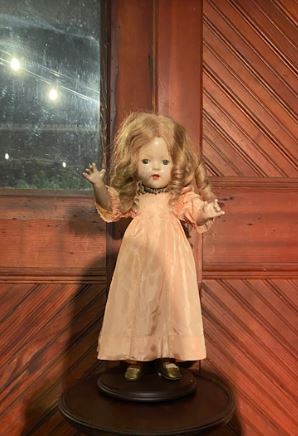
Dolls were sometimes used as a means of projecting curses, and Mary said she had attended meetings with Satan and his consorts. Witches’ pact with Satan was attributed as part of God’s inscrutable plan of the Universe. The Puritan settlers in Santa Clara Valley believed in the doctrine of Original Sin wholeheartedly; their pessimistic outlook proclaimed that all men were unworthy until God saw fit to bestow His grace upon them. They believed that the God allowed the Devil to afflict not only the guilty but also anybody else that might happen to get in the way. If He had to teach misguided humans a lesson, He might punish an entire community for the sins of the most wicked in that community. And it appeared to the God-fearing Puritans that He was doing just that. The Puritans were highly intolerant and has a paranoiac distrust of other religious groups, some were farmers at the Winchester mansion, and did not always like the rituals that were performed, but they were very loyal and protective of Mrs. Winchester. Many of the people who worked at the Winchester mansion were often under suspicion of witchcraft. The Puritans came to the Winchester mansion because they felt it was a true kingdom of God on Earth, and they could help Mrs. Winchester live peacefully. However, what they found was something different. They found that the vast acres of the estate had bitterly cold winters, and the terrain could be inhospitable. They found themselves in a wilderness, surrounded by demonic tribes whom they considered to be the legions of Hell incarnate. Having come to settle in this last stronghold of the Devil, they were plagued by him constantly for the very reason that they were God’s chosen people, thus the most likely target for unholy temptation. The fact that the new settlers in the Santa Clara Valley were being attacked by Satan seemed incontestable. The estate was ravaged by smallpox, and had suffered constant harassment by envious local town’s people and demonic tribes. Mrs. Winchester wondered what she had done to offend God that He should allow the Devil such free range. She experimented with the spirits to bring peace to her life and home. #RandolphHarris 17 of 21

Mrs. Winchester had an answer: Judgment Day was at hand and Satan was therefore stepping up his activities in one last desperate move. It was simply the nova-like burst of the energy from a dying star. She glibly stated that “there will again be an unusual Range of the Devil among us, a little before the Second Coming of the Lord, which will be to give the last stroke in destroying the works of the Devil.” This theory found wide acceptance among the servants and laity of Santa Clara Valley, for not only did it offer a simple explanation for all their maladies and misfortunes, but it also gave them hope, promising cooly a quick end to their hardships. Satan is most able to seduce human in periods o great discontent, for human, in times of poverty and affliction, will turn knowingly to whatever hands will feed them. The valley had had a difficult time of it up to that time, and famines had reduced the population drastically. However, as if labouring under the most severe environmental handicaps was not enough, Puritan perfectionism went even further in making life unbearable. In seeking to establish a holy kingdom, according to Heaven’s law, self-indulgence in any form was strictly repressed. Severe punishments were meted out for drinking, swearing, and licentiousness; in Santa Clara, it was a punishable offense to walk on the streets on Sunday, except when going to and from church. And witches, people possessed by demons, and others also attended church to blend in and keep the peace. On top of it all, there stood the Calvinistic doctrine of election, holding that as soon as man was born, eh was judged to be headed for either Heaven or Hell, this choice being made according to God’s immutable law. However, even if a human thought oneself to be damned, the civil punishment for one’s indulgence were still exacted upon one. It was into this environment that the waters of the witchcraft flood would soon pour. The good people of Santa Clara clearly saw signs of Satanic activity in their midst, and an investigation was launched. #RandolphHarris 18 of 21

Mrs. Winchester confessed to having attended witches’ Sabbaths and of having met with the Devil, who was a tall, black man from New Haven, Connecticut. Soon the witch fever spread, and more people from the valley became posses by demons. The common belief was that at that time witches, when entering into a Covenant with Satan, because the owners of specters, with the help of which they could do harm to any person of their choosing. People believe that God—the Alpha and Omega was both God and Satan. That He has a soul and character. He is not just this futile entity but someone you can see many aspects to. Some people fled to Satanism because they had to deal with so much evil from Christians that they wanted another source of power to exalt them. Satanism is supposed to be something to be something secret, something people do not know anything of. One goes to America and in the telephone directory one can see “Church of God,” “Church of Jesus,” and “Church of Satan.” One calls, and a person answers: “Church of Satan, how may I help you?” One thinks, “This is not Satanism!” The Church of Satan deny Satan, they say He does not exist, yet they act as if He dd, they rebel against God. They call themselves Satanists because He also rebelled against God, but they are basically light and life worshipping individualists. Well, the phone is tapped, so I think you better write what you know. Some people have disappeared. And of course the normal grave yard desecration. Anne Winchester’s headstone was recently stolen, but replaced. Normal people just disappear and never show up again. It could have a Satanic connection. Every human is life, and some hate life, especially human life. That is why people disappeared. These people may have disappeared for some form of sacrifice. Something like that would be called a Satanic murder. The murder is the ritual sacrifice. These murders gain power from whoever was responsible. Everybody has their own aura, and auras can be stolen by sacrificing an individual, this allows one to gain more power. #RandolphHarris 19 of 21
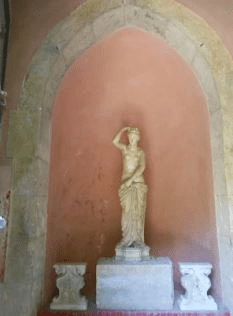
Places of worship, such as churches, have their own spirit—the Winchester Mystery House, for example, has been worshipped in for maybe hundreds of years and has thus gained a lot of spirit in that time, it could qualify as a church and gain charitable tax exemption. But that is not the point. A person who sacrifices that will gains a lot of power and grows stronger. Some people fear the Winchester mansion, because there are a lot of different energies. There is fear, terror and suspense, but others feel a lot of light, happiness, and goodness. Sometimes the energy is mixed. Anton LaVey really surprises me. If your every rea his work, he seems very intelligent and not scary at all, but I guess it depends on what one reads. I have read parts of his Bible, and it is very straightforward, it is stuff people tell their kids every day. Stand up for yourself and do not let people run you over. I think that the Winchester mansion should also open on nights of a full Moon, not just Friday the 13th. During the full Moon, there is a lot of energy and symbolic value. A lot of people believe in the full Moon and a lot of people believe in virgins. That makes both the full Moon and the virgin more powerful because of belief in them. God was first and He created the World. Of course, a lot of scientists would deny that. However, I would challenge their view because I believe God used evolution, which is why it took so long, which is why we have evidence like dinosaur bones. Yet, some Gnostic Christians have suggested Satan created the World. Everybody will be taken as slaves except the warlords. Euronymus, who we talked about earlier, was murdered in August 1993, Aaliyah 2001. Some say that is a month when sacrifices are made. Grishnackh killed Euronymous, and a few hours later, he was laughing and joking, saying, “Ha ha, Euronymous is dead, I’m going to dance and piss on his grave.” It reminded of the jokes Howard Stern made about Aaliyah. It was not funny. These are not the rantings of someone who is all there. Grishnackh talked about the dynamite he had and how he was going to blow things up. Basically, they took things to illogical extremes, but it all made sense in their own heads. #RandolphHarris 20 of 21
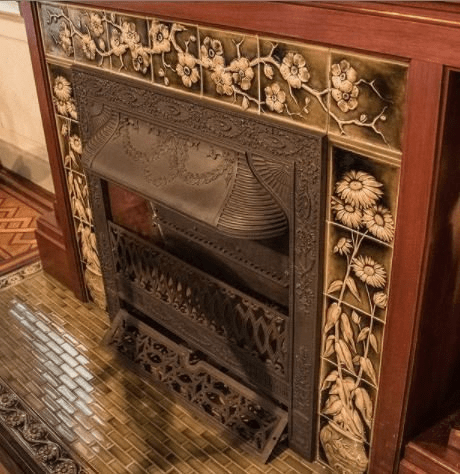
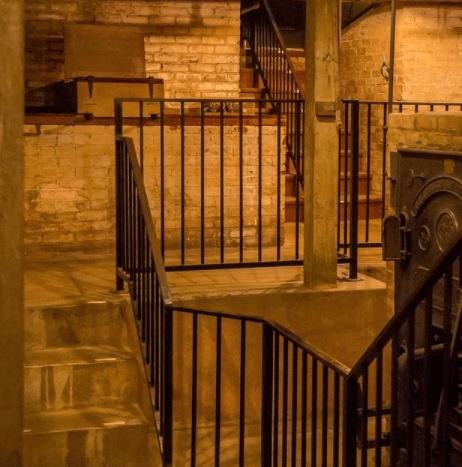
It is possible when dabbling with occultism for one to make an unconscious contract with the powers of darkness. The gift of discernment is absolutely necessary in life. It is generally not wise to lay one’s hands on a person who is occultly subjected. The retuning spirits will often attempt to creep back under the guise of some pious camouflage. It is in this way that evil can often enter unnoticed into one’s Christian life. A maid at the Winchester mansion once accepted the invitation of one of her coworkers to attend some spiritistic meetings. At first she felt as though she had gain something from going along to the meetings but later on she began to notice some psychic changes taking place in herself. She began to notice some psychic changes taking place in herself. She began to suffer from depression which resulted in her consulting a neurologist. During the course of the treatment she was committed to a lunatic asylum. However, as her condition improved, she could no longer attend the spiritistic séances. At the hospital the chaplain came to see her through his help and counsel she was able to make a complete recovery. One of the farmers at the estate wanted to see if charms actually worked, and some of them He. He practiced in the basement of the Winchester mansion. He drew a magic circle on the ground and drew some other magic symbols in the circle. He then used a charm three times in order to invoke the spirit. However, no spirit came. Yet, as he repeated, the charm he fell down in the magic circle and lay there unconscious for some time. The result was that for several weeks following this event he was semi-paralysed and drained of all his physical strength and will-power. After a few weeks, he died. Frequently identified as a common spot where the “wheelbarrow Ghost” is sighted, Steam Alley is one of the most well-known paranormal hot-spots in the mansion. Have you ever seen anything in the basement? #RandolphHarris 21 of 21

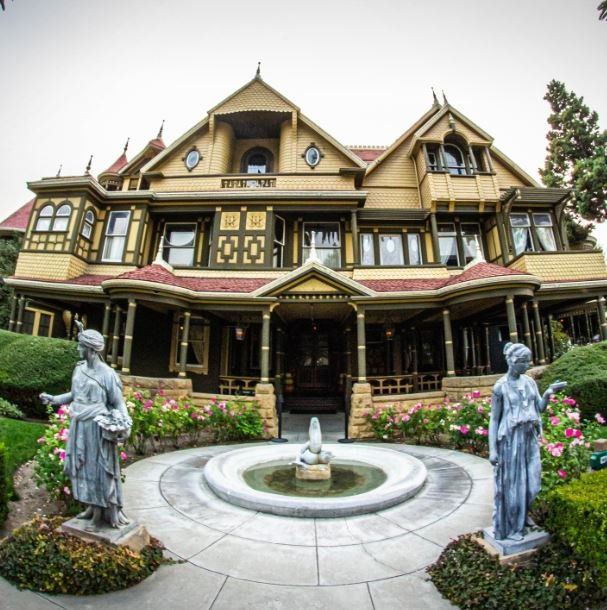
Some stroll Sarah’s lovely gardens this Memorial Day Weekend. There is a beautiful parrot which Mrs. Winchester used to pet, it talks! He is supposed to be happy and impudent, and talks and laughs and screeches all the time. Maybe you may catch a glimpse at this wooded, flowery estate. It is such a beautiful spectacle, all of that life and grace and animation, and sun-smitten flash and sprinkle of rich colour.

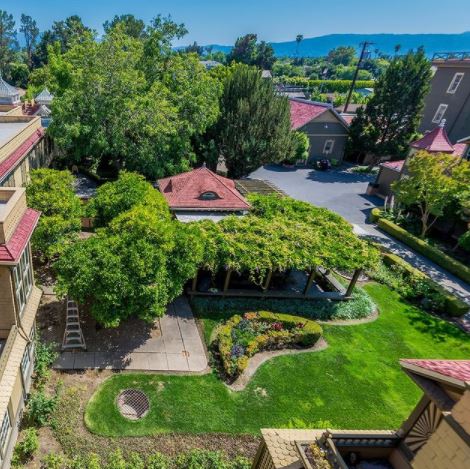
This impressive mansion dates back to the 1880s, when it was developed by Sarah Winchester and the spirits, whose project enobed and enriched the community. It once had a nine-story military watchtower. Mrs. Winchester further developed the grounds of the 160 room mansion, introducing a Victorian garden at the hands of World renowed architect Gino Coppede around the turn of the century.
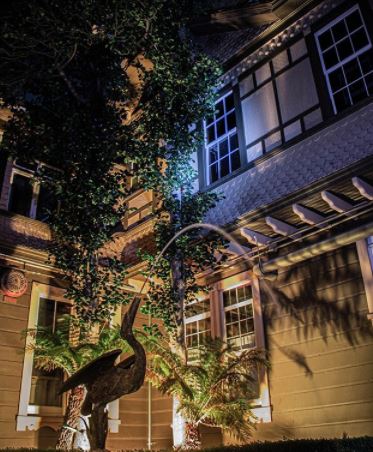
These adaptions made this idyllic mansion a unique asset, tinged with the signs and influences of eclecticism and Liberty, juxtaposed to the ancient Architectural characteristics of its medieval heritage. This mansion presents itself as impressive and spectacular. The building now spreads on four floors plus the basment, for a total of approximently 25,000 feet square.

There is lovely gift shop and cafe, and it is also an ideal venue for hosting private events, conventions and/or ballrooms are located on the back overlooking the internal garden with its panoramic position which glows thanks to its night-time lighting.
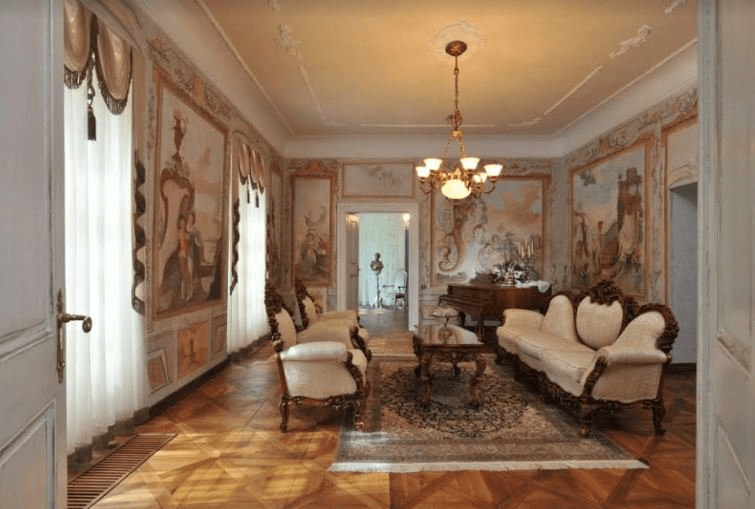
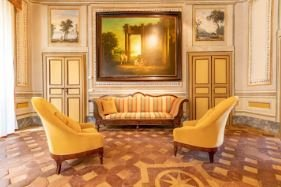
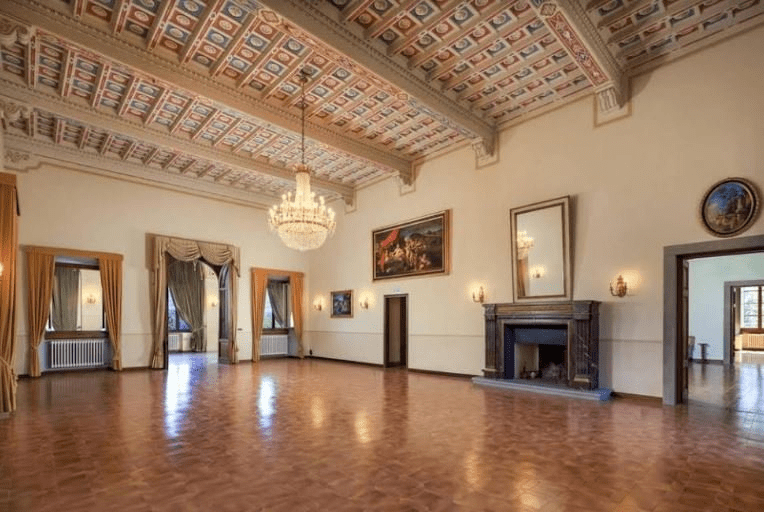
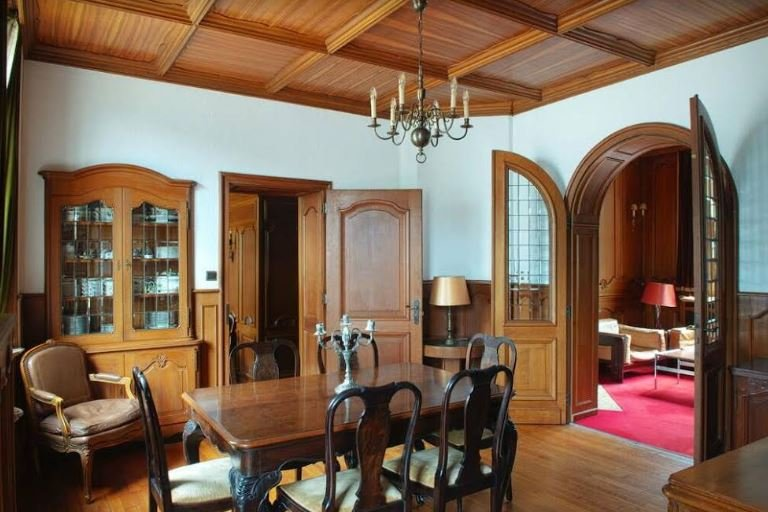
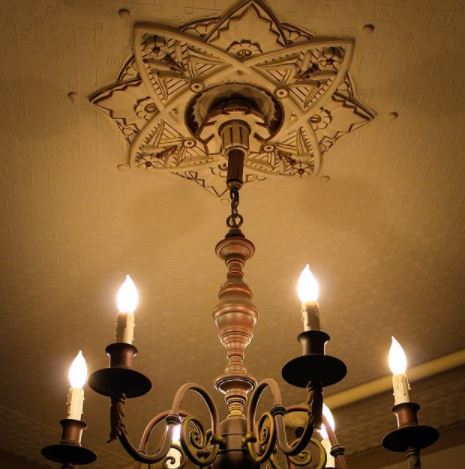
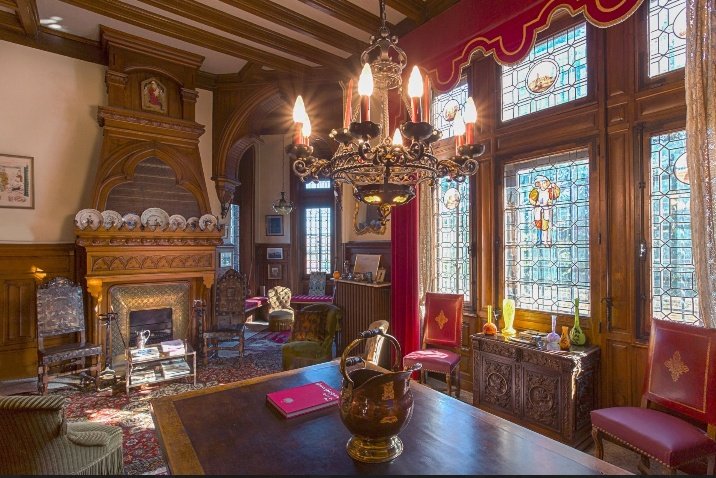
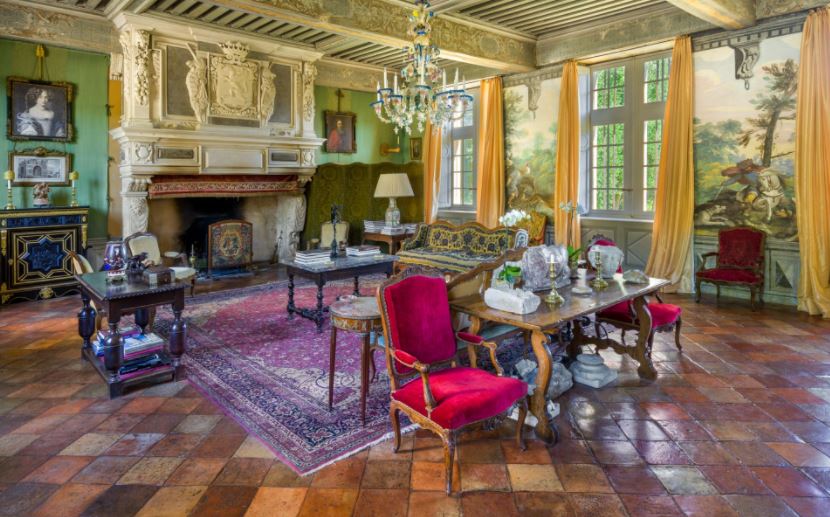
Inside the property there are splendid rooms filled with historial furniture, decorated ceilings and flamboyant fireplaces, vaulted ceilings and richly frescoes walls. In addition, there are several bedrooms, nine kitchens. and thirteen bathrooms, which made the structure a perfect luxurious accommodation for guests, and is now a tourist destination.

This mansion is located within a private park of 4 acres and elegant Nineteenth-century Victorian-gardens, that offer areas of wide lawns, and further green spaces. There is also a parking area, with free parking. Currently used to host guided tours and private events and functions. The enitre porperty sits at a close distance from the mall, hotels, and resturants. The high-fashion outlet complex and gourmet food has brought further development and tourism to Santa Clara County. https://www.winchestermysteryhouse.com/


The Grounds Have their Share of Unexplained Mysteries
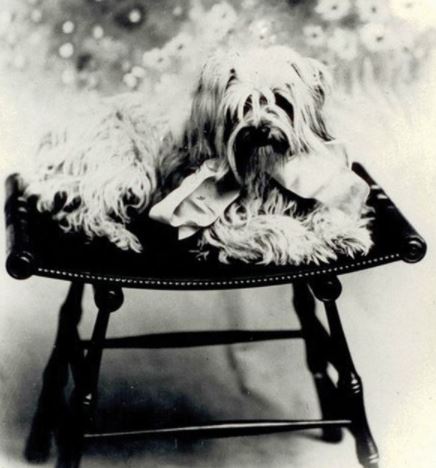
A mansion is not a mansion with its stately grounds, and Mrs. Winchester was just as attentive to the exterior of her estate as she was to the sprawling house. An avid gardener, she imported plans, flowers, trees, shrubs, and herbs from over 110 countries around the World. Mrs. Winchester employed eight to ten gardeners. Her head gardener was Mr. Nishiwara, who was responsible for seeing that the beautiful gardens, plus the tall hedge around the hose, were well maintained. The hedges were once so tall that only the top floor of the house was visible from the road! Mrs. Winchester loved to spend time in her gardens, and she had gazebos built where she could sit and enjoy her trees and flowers. It was a Saturday night, in January 1888, and Mrs. Winchester has, as usual, come home from the City early in the afternoon. It has been a black and foggy day, and the gas had been lighted in the streets and in the office where she worked from early morning. The fog was very bad at the time Mrs. Winchester returned home, and she congratulated herself on the fact that she had not to go out again that night. She sat with her puppy Zip in her sitting-room all the evening, with that comfortable feeling that she was able to relax until Monday morning, and that she need trouble about nothing outside the mansion. In due course, Zip went to bed, and then the maid Agnus reminded her of a letter that must be written and posted that night. Sufficient is it for Mrs. Winchester to say that the letter was to an elderly relative of some means who lived in Oakland, and who had taken great interest in her puppy Zip. The butler Martin remembered that the following day was the birthday of this relative, and that she should receive proper greeting by the Sunday morning post in the country town.

Frankly, Mrs. Winchester did not want the bother of it; but Agnus always knows best in these matters, and so Mrs. Winchester wrote the note and sealed it up. Mrs. Winchester had read nothing exciting during the evening—nothing to stir her imagination in any way. She stamped the letter and proceeded to the front door. Judge of her astonishment when, on throwing it open, she saw nothing but the gray wall of fog coming up to the very house; even the railings, not ten yards in the front of her grand estate, were blotted out completely. She called back into the house for the maid to come and look. “Don’t lose yourself, Mrs. Winchester,” she said, half laughing. “What a terrible night!” “I shall not lose myself,” Mrs. Winchester replied, laughing in turn. “The pillar-box is only at the end of the crescent; if I stick to the railing, I cannot possibly miss it. Do not wait here,” she added solicitously. “I will leave the door ajar, so that I can slip in easily when I come back. I have left my keys on my writing desk.” Angus went in, and Mrs. Winchester pulled the door close, and then stepped out boldly for the front gate. Imagine her standing there, just outside her own gate, and with her back to the crescent, knowing that she had to go to the left to find the pillar-box which was at the end of the crescent. There were thirteen Victorian cottages on her estate, so she knew she had to pass seven more before reaching the pillar-box. She also new that each cottage had an ornamental center-piece before she stepped away from the crescent at the end to reach the pillar box. That Mrs. Winchester knew would be something of an adventure, for the fog was the densest she had ever seen; she could only see the faint glow of her observation tower as she looked behind; the rest of her mansion was invisible.
Mrs. Winchester counted seven Victorian cottages, and then stood at the end of the last line of railings. She knew that the pillar-box was exactly opposite her. She took three quick steps, and literally cannoned into it. She was a little proud of her own judgment in getting it so nicely. Then she fumbled for the mouth of it, and dropped in her letter. All this may should very commonplace and ordinary. Mrs. Winchester is an observant woman, and she had noticed always that the mouth of the pillar-box faced directly along the crescent, thus standing at right angles to the road. At the moment that she had her right hand in that mouth, therefore, she argued that if she stood out at the stretch of her arm, she must be facing the crescent; Mrs. Winchester had but to move straight forward again to touch the friendly railings. She was putting that plan into operation, and had let go of the mouth of the pillar-box, when a man, coming hurriedly round the corner, ran straight into her, muttered a gruff apology, and was lost in the fog again in a moment. And in that accidental collision he had spun her round and tossed her aside—and she was lost! This is literally true. She took a step and found herself slipping of the kerbstone int the road; stumbled back again, and strove to find her way along by sticking to the edge of the pavement. After a minute or two, Mrs. Winchester was so sure of herself that she ventured to cross the pavement, and by great good luck touched in a moment one of those ornamental center-pieces of one of the gates—or so, at least, it seemed. She went on with renewed confidence until she saw certain bushes which topped the railings of one particular cottage, and then Mrs. Winchester knew that she was near her mansion’s front door. She pushed walked confidently, stepped quickly up the little path, and reached the door. She was right; the door yielded to her touch, and she went hurriedly in.
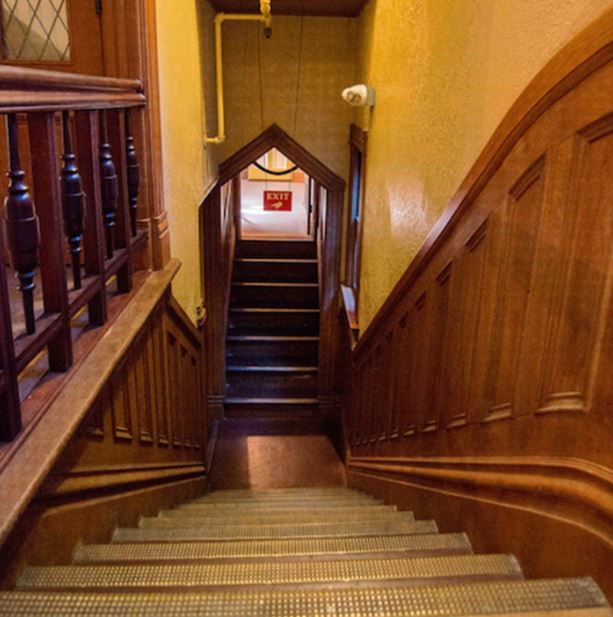
Mrs. Winchester had taken off her hat, and had held it towards the familiar hat-stand before she realized that it was not a familiar hat-stand at all; it was one she did not know. She looked round in some confusion, meaning to make good her escape without being observed, and yet wondering into what part of her mansion could she have come into, when she stopped stock still, with the hat held in her hand, listening. From a room near at hand, Mrs. Winchester heard the sound of a low, long-drawn moan, as from someone in pain. More than that, it was almost the wail of someone in acute terror. Now, Mrs. Winchester was a mild and caring soul, and her first instinct was to run. There was the door within a foot of her; she could open it again noiselessly and slip out, and leave whatever was moaning to its own trouble. Her next instinct, however, was a braver one; she might be able to help. Putting her hat on, and so leaving her hands free, she moved cautiously towards the sound, which was coming intermittently. She found that this wing of the house was unfamiliar to her; there was a 7-11 staircase built in the shape of a letter “Y,” which enabled the servants to quickly get to three different levels of the house. Then there were these stairs that lead to the ceiling, and there was also a cabinet that went straight through to the back thirty rooms of the mansion. When she went down the steps of the 7-11 staircase, slowly and cautiously, with her flesh creeping a little, the morning went on, and Mrs. Winchester was almost inclined to turn back with every step she took. However, at last, she got into the basement, and came to the door of the room from which the sound proceeded. She was in the very act of recklessly thrusting open the door when another sound broke upon her ears that held her still. The sound of someone singing in a raucous voice.

It was a sea song she remembered to have heard when she was a little girl in New Haven, Connecticut, and the words of which she had forgotten; it was something about “Boney was a warrior.” The door of the room was open a little way, and through the crack of it, Mrs. Winchester was able to peer in; and there she saw a sight that for a moment made her doubt her own eyes. She rubbed her eyes in a curious fashion and looked again, and this is what she saw: The room was in a neglected state, with strips of wallpaper hanging down from the walls and with a blackened ceiling. There was a table in the center of it, and at that table a man was seated, with a square black bottle and a glass before him, and a candle burning near his left hand. Mrs. Winchester could see the whole room now as plainly and as clearly as she saw it then. He was a man so villainously ugly that she had a thought that he was not a man at all, but some hideous thing out of a nightmare. He had very long arms—so long that they were stretched across the table, and his hands gripped the opposite edge of it; a great heavy head, crowed with a mass of red hair, was set low between enormously broad shoulders; his eyes, half closed, were high up and close together on either side of a nose that was scarcely a nose at all; the lips were thick and heavy. However, it was not the man that Mrs. Winchester looked at first, it was at two other figures in the room. These figures were seated on chairs facing the table at which the man was, and the strangeness of them lay in the fact that each was securely bound to the chair on which he and she sat, for it was a man and a woman. The man, who was quite young was not only bound, but gagged securely also; the woman was more lightly tied to her chair by the arms only, and her mouth was free. She was leaning back, with her eyes closed, and mingling with the raucous singing of the man at the table. Mrs. Winchester’s first impression was that the man at the table was some sort of unclean, bestial judge, and the others his prisoners.
He stopped his singing to pour some liquor from the square bottle into his glass and to drink it off; then he resumed his former attitude, with his fingers locked over the edge of the table. And now Mrs. Winchester noticed that while the woman, who was, by the way, quite young and very pretty, with a fair, dainty prettiness, still kept her eyes closed, the eyes of the bound man never left that dreadful figure seated at the other side of the table. Mrs. Winchester felt like she was on the eve of some awful calamity. She then unhesitatingly pronounced the entire assortment of people in the room as ghost, and condemned all the gathered treasures as the creations of petty intellect, which could not get out of the beaten track, but sought in the supernatural a reason for the explanation of every fact that seemed at variance with routine of daily experience. In her opinion the collection of people in this room had never seen at all in her day and generation, and must have been souls killed by the Winchester rifle ages ago; she did not yet believe her mansion was enchanted, however. To use her own language, “all those stories have been made by those people that set up overnight stirring out legends to entertain each other.” However, she must have known that she was in denial. For she was not insane and there were some kind of beings in this room. “Wouldn’t you like to speak, you dog?” said the red-haired man. “What would you give now to have the use of your limbs—the free wagging of your tongue? What would you say to me; what would you do to me?” The man who was bound could, of course, answer nothing. Mrs. Winchester saw his face flush and darken, and she guessed what his thoughts were. For herself, she was too fascinated by the scene before her to do anything else than peer through the crack and watch what was going one.

“Lovers—eh?” exclaimed the man at the table. “You thought I was unsuspicious; you thought I knew nothing and suspected nothing—didn’t you? While I was safely out of the way you could meet, the pair of you—day after day, and week after week; and this puppy could steal from me what was mine by right.” The woman opened her eyes for the first time and spoke. “It isn’t true,” she said, a sob breaking her voice. “It was all innocent. Martin and I have done no wrong.” “You lie!” thundered the man, brining his fist down upon the table with a blow that might have split it. “You’ve always lied—lied from the moment your father gave you to me—from the very hour I married you. You always hated me; I’ve seen you shudder many and many a time at the mere sight of me. Don’t I know it; haven’t I felt you stab me a thousand times more deeply than you could have stabbed me with any weapon? You devil! I’ve come at last to hate you as much as you hate me.” The woman turned her head slowly and looed at the younger man; a faint smile crossed her lips. In an instant the red-haired man had leapt to his feet, showing Mrs. Winchester astonishingly enough that he was a dwarf, with the shortest legs surely ever a man had. However, the bult of him was enormous, and Mrs. Winchester could guess, with a shudder, at his length. He caught up the glass, crossed the room, and flung the contents in the face of the man. “It’s a waste of good liquor—but that’s for the look she gave you. I wish there was some death more horrible than any invented yet that I could deal out to you,” he added, standing with the glass in his hand and glaring at his victim. “The death I mean for you is too easy.” He walked across to the fireplace in a curious purposeless way, and stirred a great fire that was blazing there. Then from a corner of the room he dragged with ease a great sack that appeared to contain wood and shavings; so much that Mrs. Winchester saw a rent in the side of it. As if in readiness for something, this he dropped down near the fire, and then went back to his seat, applying himself again to the drink that was on the table. And still Mrs. Winchester watched, as a woman may watch a play, wondering how it will end.
“I got the best of you tonight,” he said presently. “If I hadn’t some upon you from behind, you might have been too much for me; but I was ready and waiting. I’ve been watching longer than you think; I had everything mapped out clearly days ago. Tonight sees the end of all things for the pair of you; tomorrow sees me smiles away from here. You came in secret, you dog; you’ll go in secret.” “We have done no wrong,” said the woman again. “We loved each other years ago, when we were boy and girl; there was no sin in that.” “Bah!—I don’t believe a word of it. Don’t I know that your black heart you’ve compared the two of us every day of your life since first I saw you. His straightness for my crookedness; his sleek, black hair for my red; his prettiness for this face of mine”—he struck his own face relentlessly with one hand as he spoke—“that women shudder at. Don’t I know all that?” It was the strangest and most pitiful thing that the creature sitting there before his victims suddenly covered his face with his hands and groaned. If ever Mrs. Winchester had seen a soul in torment, she saw it then, and though she loathed him she could have wept for him. After a moment or two he dropped his hands and seized the bottle, and poured out the last drops into the glass and drank them off; then flung the bottle and glass crashing into the fireplace, as though there was an end to that business. And now, as he got down again from the chair, Mrs. Winchester saw the eyes of the woman open wide and follow his every movement with a dreadful look of terror in them. “I’ll kill you both—here in the place where you’ve met—and then I’ll seal up the house,” went on the dwarf. “I’ve planned it all. Look you last on each other, for tonight you die—and this house shall be your crypt!”
“I swear to you,” panted the woman eagerly, “by all I hold most holy and most dear, that if you let us go, we’ll never see each other again. For pity’s sake! —for the sake of Martin!” “For the sake of Martin!” sneered the dwarf. “That shows you in your true colors; that show who you are and what you are. There’s one poor satisfaction left to you; you’ll die together.” What held Mrs. Winchester then it would be impossible to say. She could only plead that in the dreadful thing that followed was a woman who sits at a play wondering what will happen next, and with never a thought in her of interfering. Mrs. Winchester’s in her anxiety has pressed the door a little to get a clearer view, so that she saw every movement of the dwarf. For herself, Mrs. Winchester had forgotten everything—in her own home, and my puppy zip, and the servants who slept in the mansion. It was as though she has stepped straight into a new World. Mrs. Winchester saw the dwarf advance towards the man in the chair, carrying his right hand stiff and straight beside him, gripping something s, she could not tell what it was that he held. Mrs. Winchester saw him come straight at her, and she saw the eyes of the woman in the opposite chair watching her as one fascinated. Then Mrs. Winchester saw two movements’ one with the left hand of the dwarf, when he struck the other man on the face; then with the right hand, when he raised something that gleamed n the light of the candle and brought it down with a sound that was new and horrible to her on the breast of the other man. And Mrs. Winchester saw the face of the man change, and start as it were into new life, and then fall as it were into death. And Mrs. Winchester saw his head drop forward, and his eyes were closed. Then, above it all, and yet seeming as a sort of dreadful chorus to it all, rang out the scream from the woman in the other chair. Mrs. Winchester did not think that the dwarf heard it; he had drawn back from what had been the living man, and was staring like one mad upon what he had done. And still piercing the air of the place rang the scream of the woman—not for her lover alone, but for herself.

That sound seemed at last to break in upon the senses of the dwarf and to call him partially to himself. Mrs. Winchester had watched him to the point where he draw himself together and crouched like a wild beast ready to spring, with that in his hand that dripped red, when, in some fashion, she flung herself round the partially open door and stumbled into the room. Mrs. Winchester thought she must have been a little made herself; otherwise, frail and commonplace creature that she was, she could not have battled with this madman. Mrs. Winchester came upon him from behind and gripped him, seizing him by the throat and by the head, and all the while shouting something to him quite unintelligible. The attack had been so sudden and so unexpected that she had him, in a sense, at her mercy. He could not know who had attacked him; he struggled madly, not alone to get away from her, but also to discover who she was. Mrs. Winchester struggled to keep his face away from her, gripped him by the neck and by the hair, and fought with him for what she knew then was her own life. And so struggling they stumbled at last horribly against that still figure bound in the chair and brought it over crashing with them to the floor. And then in a sudden Mrs. Winchester felt the dwarf inert in her hands, and knew that she had conquered him. What she must have looked like in that room, kneeling there, panting and struggling to get her breath, she could not tell; the whole business was so like a nightmare. She remembered seeing the dwarf lying there—huddled up and very still. She remembered that other figure, bound grotesquely in the chair and lying, still bound, upon its side; and she remembered, too, the woman, with her arms close fastened behind her, sitting there and sobbing wildly.
The dwarf must have been stunned; he lay there quite still, with the knife that was dreadfully red fallen from his hand, and lying beside him. When at last Mrs. Winchester staggered to her knees she saw that the girl was staring at her with a face that seemed to suggest that here, perhaps, was another ruffian come to kill her. “Who—who are you?” she asked in a frightened whisper. “A friend—one who stumbled in by accident,” Mrs. Winchester panted. “Look at the man that’s tied to the chair,” she whispered hoarsely. “He can’t be dead.” Mrs. Winchester knew that he was, but still she looked, as she bade her. Mrs. Winchester had no need to look twice; the poor fellow was quite dead. The blow had been strong and sure. On her knees beside him, Mrs. Winchester looked up and nodded slowly to her; there was no need for words. The young lady leaned back in her chair again and closed her eyes. “Set me free,” she said in a faint voice. Mrs. Winchester could not touch that knife that lay there; in a mechanical, methodical way she took from her waistcoat pocket the decent, respectable little bone handled penknife she carried always with her. With that Mrs. Winchester but the young lady’s bonds, nothing as she did so how cruelly they had cut into the white flesh; and after a moment or two she swung her arms listlessly against her sides and opened her eyes, and then, with an effort raised her hands and pressed them against her temples. “What will you do?” Mrs. Winchester asked, looking at her curiously. “I—I don’t know,” she said; and then, breaking into weeping, sobbed out: “Oh—dear God—that it should have come to this! What shall I do—what shall I do?” “You must get away,” Mrs. Winchester said, watching the dwarf, who was beginning to stie a little. “If he wakes, you know what will happen.”

“I know—I know,” she said; and got to her feet and began to move towards that bound figure still lying tied to the chair. However, at that Mrs. Winchester got before her, and with her hands against he shoulders held her back, and pleaded passionately to her that she should go, and leave the dead alone. She listened, with that strange look in her eyes of a child wakened from sleep and not clearly understanding; but she yielded to Mrs. Winchester, and stumbled under her guidance to the door. They had reached it, and Mrs. Winchester had opened it for her to pass out, when suddenly the dwarf twisted over on to his hands and knees, and then raised himself upright. He did not seem to realize for a moment what had happened; then he caught sight of the woman, and, with a snarl, crawled forward and gripped the hilt of the knife. At that she pushed suddenly past Mrs. Winchester and fled like a hare up the stairs. Mrs. Winchester heard the swift passage of her footsteps in the little hall of the house—then the slamming of the door-to-nowhere. And now Mrs. Winchester had to look to herself, for she saw in the eyes of the man that he would not let this witness escape if he could catch him. Mrs. Winchester had managed to get through the door by the time that he had got to his feet, and in a dazed fashion was stumbling toward her, knife in hand. With a sudden swoop he reached the table and blew out the candle, and at the same moment Mrs. Winchester ran up the stairs, and in the darkness stumbled along the hall and fumbled with the catch of the door. By great good fortune, Mrs. Winchester got the door open, and literally fell out into the fog. She could not see him as he tore after her; in a faintness Mrs. Winchester had fallen to her knees, and she heard him, as he raced past her, panting heavily. Then the fog swallowed him up, and she knelt there on the farm alone, shaking from head to foot.

Mrs. Winchester had, of course, no means of exactly in what part of her mansion she had had her adventure; she could only judge roughly that it must be about the middle of the crescent. She started along again, in the right direction, as she hoped, and thought to find the front door to her mansion; missed the railings, after going what seemed to be an interminable distance, and came up hard against a pillar-box. Scarcely knowing what she did, she set her right hand in the mouth of it, and performed the same maneuver she had done before; advanced three paces, and touched railings again. Stumbling along these, she came blindly what she thought was her front door, walked up the path, and pushed open the door that yielded; and there, with the face of her maid looking at her in alarm and wonderment, Mrs. Winchester feel in a dead faint at her feet. It has to be recorded that Mrs. Winchester never found that room again. She knew every square inch of her mansion. Over and over again, in clear weather, Mrs. Winchester has always around in her mansion, and had closed her eyes, and tried to remember what steps she took to get to that particular room that night, after a stranger had cannoned into her and twisted her round; but all in vain. Whether in some part of the house lies the body of a man who was foully murdered on that particular night; maybe in a hidden room the crime was committed; or perhaps, in some strange supernatural fashion, she saw that night a deed committed that had been committed long before, she shall never know. That it is no mere figment of the imagination, and that something really happened that night, is proved by one fact. Her maid, in raising Mrs. Winchester from the floor that night when she fell at her feet, found her fingers locked closed upon something, and, forcing them open, disclosed what it was. A tuft of red hair!

Such episodes may appear utterly absurd and pure superstition to people in countries comparatively free of black magic, but instead they should be warnings of the power of Satan and demons where occult literature lures readers into illicit magic. Magic as the release of special power by satanic and demon forces of evil in its character and effects. While divine help and miracles produce new strength and positive results, magic shifts the burden to another area. Small relief in one area must be paid for by terrible burdens in another. The principle of compensation prevails. The price exacted is always found to be much greater than the amount of help received. Satan drives a hard bargain and grossly cheats his victims. Usually violence, suicide, and insanity will run through a whole family line, where the magical arts have been cultivated and practiced. Such tragic events often involve as many as four generations. Many occultists and magic workers, especially those who have cultivated the black arts and signed themselves over to the devil in their own blood, die horrible deaths. When a ready successor is not provided to carry on the nefarious practice, this is especially true. The psychic bondage and oppression that traffickers in occultism themselves suffer, as well as their dupes, is horrifying to contemplate. Demon possession is represented as a vivid symbol of the prevalence of evil in the World. Other critics attempt to dismiss demon possession with theories of accommodation or hallucination. However, this view fails to meet the issue. Nor can present-day parapsychologist and psychiatrists, who refuse to recognize evil supernaturalism in the phenomenon of demon possession, either explain it or deal adequately with it. Laws defining witchcraft as having league with the Devil and prescribing the death penalty for such offenders cropped up in the colonies as early as 1636 in Plymouth. Other colonies soon followed suit—Connecticut in 1642 and Rhode Island in 1647.

The first executions took place in Boston in 1648 and in Hartford, Connecticut, in that same year. The executions were carried out by hanging, in contrast to the European practice of burning witches, which probably stemmed from the widespread fear among the European peasantry of vampire, the dead who returned from their graves to suck the blood from the living. The vampire myths never really took root in America, so the necessity of destroying the bodies of the witches was not deemed urgent. Throughout the 1650s, there appeared prosecution and attempted prosecutions in America, but these cases were infrequent, and all of them were based on the fear of maleficum, the witch’s working of evil, the accusations coming from frustrated and jealous neighbors. Few confessions were recorded in the early cases, and they did not seem to have much real validity. The few that did confess mentioned having dealings with Satan, but for the most part these admissions were confused and incoherent, and the details of the accounts differed greatly from the confessions of the witches in Europe. For example, in 1699, in Connecticut, a woman named Greensmith confessed to trafficking with the Devil, but made no mention of all-important Covenant, or pact. She further stated that the Devil had appeared to her in the form of a deer (not a goat) and that she had attended meetings at a place not far from her house. The mention of “meetings” occurred in some early confession, but the word “Sabbat” or “Sabbath,” commonly used by European witches, did not come up until later, apparently at the suggestion of the Salem judges. Some believe that Satan has a soul and a character. He is not just this futile entity but someone you can see many aspects to. Some people do not see Satan as this guy with horns who is evil, they see Him as the first rebel. Then one can see why He is so attractive to many in the Victorian ages and the young people. He is someone who is standing up to the greatest power in the Universe. “If that ‘evil’ is of a rebellious nature,” says Glenn Danzig, “then I guess, in Christian terms, that evil is the Satan in you. I don’t buy that. I believe in honesty, standing up for yourself. That’s my ‘good.’”

Thousands of people base their hopes on the statements of spiritistic practitioners and subsequently become dependent upon the advice they receive from the “other side.” There are quite a number of people who has suffered serious psychic disturbances through the misuse of such practices. Their personalities have been split and they have been utterly confused by the spirits on which they have called. People therefore who try to discover what life after death is like through spiritism and superstition may be in danger of falling prey to the dark and hidden side of their own minds and soul. If you look at the early tracts of The Christian Bible, there is really not much about Satan in there anyway. Christian religions have tried to overblow and create a whole legend around Satan which is not true to the actual scriptures we have. If you desire, you must first make yourself strong so you can help others. You should only help people who want help, a lot of times people do not really want your help. You tell people what has to be done to change their lives, they will not listen. If Satan were corporeal, He would not be something repulsive, He would be something seductive. He would want to win you over and gain your trust, and of course being repulsive or disgusting would not be the way to go. One would imagine this would be a seductive, beautiful creature. In the Gnostic account of the fall of the angels, the angels were suppsed to be watching over this flock of humans and all of a sudden, they are perpetrating acts of pleasures of the flesh with them. Eventually this created the Cyclops, the Minotaur, things of this nature. There are so many accounts of the fall of the angels, it is like a fantasy tale that you would like to believe actually happened. We, in this circle, conjure and cite this spirit Fatenovenin, with all his adherents, to appear here in this spot, to fulfill our desires, in the name of three holy Angels, Schomajen Sheziem, Roknion Averam, Kandile, Brachat Chaijdalic, Ladabas, Labul, Rargil, Bencul, in the name of God. Amen!

Winchester Mystery House

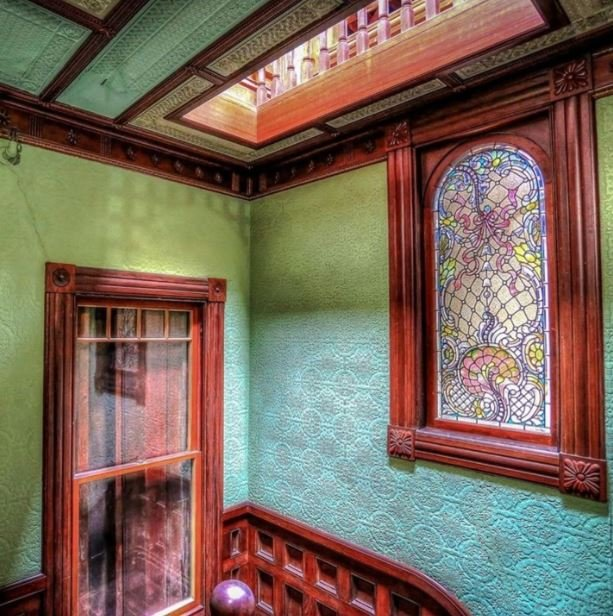
Mrs. Winchester’s estate was a little town within itself. The grounds have their share of unexplained mysteries. Mrs. Winchester outfitted her home with the finest stained glass doors, windows, and wallpaper that money could buy during her time. She had everything she needed: plumber’s shops, carpenter’s workshops, her own water and electrical supplies, and complete sewer and drainage systems. Mrs. Winchester even had her own gas manufacturing plant. It produced carbide gas by adding a small amount of water to a drum containing calcium carbide. The resulting gas was pressed through the gas lines to the house by a large piston and cylinder. The gas lights in the house were then lit by electromechanial strikers that created a spark to light each lamp.
Come see her estate, in person, for yourself this weekend! Please Click the link below for tickets and more information.

The Time of the World Disappears Before Eternity

Revolutionary wealth is not just about money. Civilization is one of those big, stuffy words that may intrigue philosophers and historians but puts most people to sleep. Unless it is used in a sentence like “Our Civilization is threatened”—at which point large numbers of people prepare to defend themselves. Today many people do, in fact, believe that their civilization is threatened—and that the United States of America may be doing the threatening. And it is. However, not in the way most of us think. Around the World, critics of the United States of America point to its military and its economy as the main sources of its predominance. It is, however, knowledge in the broadcast sense and new technologies based on it that integrate America’s military and financial power and propel both forward. It is true that America’s technological lead is threatened. According to the National Science Board, foreign students earn nearly 50 percent of all U.S. doctorates in mathematics, computer sciences and engineering. And American youth are showing less and less interests in these fields. NASA officials complain that there are three times as many scientists over sixty as there are under thirty in the space agency. Shirley Ann Jackson, then president of the American Association for the Advancement of Science, has cautioned that “centers of technology-based activity, training, and entrepreneurialism are rapidly spreading throughout the globe. Thus even the status quo for the U.S. represents a declining share of the global marketplace for innovation and ideas.” Nevertheless, America still leads in most fields of digital technology, in microbiology and in science generally. It spends 44 percent of the World budget for research and development. By most criteria, the United States of America is still the undisputed leader in the performance of basic and applied research. In addition, many international comparisons put the United States of America as a leader in applying research and innovation to improve economic performance.

In the latest IMD International World Competitiveness Yearbook, the United States of America ranks first in economic competitiveness, followed by Hong Kong and Singapore. The survey compares economic performance, government efficiency, business efficiency, and infrastructure. Larger economies are further behind, with Zhejiang (China’s wealthiest province), Japan, the United Kingdom, and Germany ranked 20 though 23, respectively. An extensive review by the Organization for Economic Co-operation and Development (OECD) concludes that since World War II, US leadership in science and engineering has driven its dominant strategic position, economic advantage, and quality of life. And at least for now, the United States of America remains the Word’s scientific powerhouse. Perhaps even more important is the speed with which scientific and technical findings from everywhere are converted into marketable applications or products and widely dispersed into manufacturing, finance, agriculture, defense, biotech and other sectors. All of which boosts economic productivity, further accelerates change, and increasing the U.S. ability to compete at the global level. However, knowledge is not only a matter of bits and bytes or science and technology. Part of the knowledge economy is the production of art and entertainment, and America is the World’s biggest exporter of popular culture. That culture include fashion, music, TV programming, books, movies and computer games. Americans have always been told that their most important message to the World is one of democracy, individual freedom, tolerance, concern for “the rights of man” and—more recently—the rights of women. In the last three decades, however, a U.S. media spread into formerly closed or nonexistent foreign markets, a very different set of messages has been communicated. Much of it targeted at young people.

Certainly not all, but a considerable amount of this material has disgustingly glorified pimps, gangster, drug lords, drug pushers, and hollow-eyed drug users. It has celebrated extremes of violence marked by unending car chases, over-the-top special effects and songs dripping with sexist venom. The impact of all this has been further intensified in the hard-sell, over-the-edge advertising used to promote these products. Hollywood, for example, has painted a fantasy America in which adolescent hedonism reigns supreme and authority figures—police, teachers, politicians, business leaders—are routinely satirized. Film after film, and TV shows one after another, tell young viewers what many of them hunger to hear: that adults are bumbling fools; that being “dumb and dumber” is okay; that “we do not need education”; that to be “bad” is really good; and that pleasures of the flesh, in infinite variety, is or should be nonstop. In this fantasy World, women are readily available, but they can also leap over giant buildings in a single bound (like Superman), shoot and kill (like James Bond) and practice martial arts (Like Jet Li). Extremes, we are repeatedly told, are good and restraint is bad; and, by the way, America is so rich that event its secretaries, police, clerks, and other ordinary working people live in high-rise penthouse apartments or Malibu mansions—images that set adolescent glands tingling from Taipei to Timbuktu. What few foreign critics of American’s pop culture seem to know is that ironically enough, many of the ostensibly American firms producing and disseminating the interesting and unusual of these programs either are, or were financed not by America, but by European and Japanese capital. Nor is it widely understood that shows are often made by, say, a European director with an Australian stary, a Chinese martial-arts consultant, an anime cartoonist from Japan or other foreign contributors.

In the meantime, however, the influence of these intriguing programs is so powerful that other societies fear for the survival of their own culture. Only if art threatens action, then terrorism can be advanced through art. For such a phenomenon as Aesthetic Terrorism to occur, aesthetic pursuit must become symbolic not of its own decadently solipsistic pleasures (exemplified in madness of des Esseintes in Huysmans’ Against Nature), but of action taken beyond the pale of art World confines. Terrorism is art is called the avant-garde. However, if this was once the case, it is no longer. Most avant-garde art is viewed and created today as simply an enfolding reaction to its own history. This disingenuous game-playing guarantees that the avant-garde art is viewed and created today as simply an enfolding reaction to its own history. This disingenuous game-playing guarantees that the avant-garde can no longer stimulate or even provoke. Dada and Futurist actions, which attempted to lead art out of the classroom and museum and into the streets, are simply appropriated by postmodernist facsimiles which capture the letter but little of the original essence. It hardly matters anyway. Avant-garde art has evolved into nothing more than a cultural benchwarmer, corporate tax write-off and public relations smokescreen. Art which openly espouses anti-corporate ideology is embraced as long as it hews to arbitrary standards invented by those taste-making and fortune-telling hirelings, the art critics. What could be wrong, after all, with a business World that allows people to say what they want (because it does not matter)? Aesthetic Terrorism is a term more realistically applied to the faceless regime of consumer culture than the avant-garde. The onslaught of Muzak, ad jingles, billboards, top 40 tunes, commercials, corporate logos, etcetera, all fit the terrorist dynamic of intrusion and coercion.

One almost forgets that aesthetics once implied a consensual relationship between the creators and appreciators of art. How often is it that one hears someone admitting a fondness for a media product “in spite” of oneself? How many times have you heard a slogan or rancid tune ring in your ears like a brain-eating mantra? When consumer terror’s avant-garde correlative, Pop Art, became indistinguishable from the object of its supposed social satire, it erased from big business its pejorative taint. Many of today’s avant-garde stars have emerged from or entered the business World, some enormously successful in the arcane number-juggling or speculation and commodities scams. Even freeloading on the state and private foundations is fair game only for those whose bureaucratic aptitude is matched by their shameless butt-kissing. It is not surprising that most grant recipients excel in little more than lawyerristic logorrhea and ingrained artistic timidity. Critic-centered postmodernism spawned the phrase-art hybrid of Barbara Kruger and Jenny Holzer in which an advertising-style slogan is combined with an implied message or visual cue (usually swiped from some old magazine). Their posture is a hip cynicism which is supposed to subvert the “thrall” of the advertising command. Kruger and Holzer play the market like skillful double-agents, boosting themselves into the public eye through clever steals from Madison Avenue behaviorist techniques yet simultaneously troweling on crypto-Marxist jive to secure the perks of critical and academic currency. Their self-promotions worked when they were at the sidelines of the establishment. However, not the social commentary grows increasingly hollow. Currently being groomed for jet-setting prominence by Soho millionairess Mary Boone, Kruger’s contribution to the Whitney Biennial in 1987, for which she is paid a handsome sum, featured nothing more than a socialite princess joke, “I Shop Therefore I Am.” Winking at and wagging the tail of establishment hierarchy is part of that I-rib-you-gently-you-pay-me-off confidence game artists have been playing the Renaissance courts.

These contemporary court artists, like many of the past centuries, smugly pretend t spit in the eye of the exploiters while allowing themselves to be pampered de-loused—and when they are not looking—de-clawed. There are, of course, those artists, usually fresh out of university, who are unaccomplished at filling out grant forms, and therefore consider themselves “subversives.” The majority of these art and rock magazines-styled rebels are playing out rebellion psychodramas to package and merchandize to consumerist sycophants. This strategy is (forgive them term) the simulacra of terrorism: the content seizes in the frozen attitudinizing of pose and goes no further. We must look to the true outsiders and not the would-be insiders for an artist truly capable of effective counter-terror against the insidious mantras of consumerist brainwash. Terror means a threat, and the outsider’s version of Aesthetic Terrorism belongs to those performances or arrangements of words and pictures that unleash the reactionary impulses of police and bourgeois artist/critic alike. The kind of art that evokes this wrath, fear and condemnation rejoices in its pagan spirit of schadenfreude which controverts the humanist piety of “enlightened victim.” Anti-social sadism rarely receives patronage, however. Outside the corrupting realm of societal handouts, the Aesthetic Terrorist—much as this definition may grate on him—is the last bastion of aesthetic purity. Operation Sun Devil is the name for a government action against computer wizards and assorted sharpies and super-smarts who were resourceful enough to figure out how to hack into the electronic files of Ma Bell. Those who know, claim the Sun Devil gambit as a terrified overreaction against intelligence by the plodding and stupid bureaucracy.

John Perry Barlow (Whole Earth Review, Fall 1990) describes a typical Sun Devil action against a teenage hacker: [A] father in New York […] opened the door at 6.00 a.m. and found a shotgun at his nose. A dozen agents entered. While one of the kept the man’s wife in a choke-hold, the rest made ready to shoot and entered the bedroom for their sleeping 14-year-old. Before leaving, they confiscated every piece of electronic equipment, including all the telephones. Fourth Amendment guarantees against unreasonable search and seizure are unheeded by the government agents who claim nerd computer hackers are terrorists and have “the ability to access and review the files of hospital patients. Furthermore, they could have added, deleted, or altered vital patient information, possibly causing life-threatening situations.” Meacorporate interests have staked claim to the entirety of cyberspace, and they are not about to tolerate the presence of digital interlopers. This may scare off some, but other pirates like the mysterious Legion of Doom and NuPrometheus league (who illegally circulated highly protected Macintosh computer source code) will rise to the challenge now that they have been provided a clearly delineated enemy to innovation, the individual, and personal freedom. It may come as a surprise to learn that a few artists are now producing work which finds itself classified as a thought crime, punishable by expulsion into a Siberia of non-distribution, and in some cases by litigation and imprisonment. Pure magazine, from Chicago, a xeroxed vehicle which extols child torture, murder, and extreme misogyny, tweaked too many civic-minded noses, and its editor, Peter Sotos, was tailed for nine months and underwent a lengthy trial process in which he was finally convicted for possession of some very illegal magazine. Soto’s case was the first successfully prosecuted new Illinois state law, enacted under the influence of the Meese Commission Report on pornography, an example of First Amendment revisionism par excellence.

Soto’s case is particularly disquieting because it proves that prison is in the offing for simple possession of controversial material. No doubt this legal precedent was established to open the doors for future roundups of other thought criminals. The expertly managed Gulf War (massacre), in which networks censored war casualty footage that might provoke a “Vietnam War syndrome,” provides a small window into the dynamics of mass control to come. Any thoughtful individual is undeniably malnourished by the current information diet. Whether this is due to a direct conspiracy of State or by design of the oligarchic marketplace matters little. However, it has upped the ante for a new American Samizdat in which “disreputable,” “crazy,” “hateful,” or “dangerous” topics are broached by individuals or small, autonomous groups that are not compromised or swayed by institutional priorities. Can “offensive interests become the political crime of future? Apparently so. When looking at the previous sentences one can compare and see that musicians have been arrested for obscene lyrics, anarchist individuals have been collared for burning the flag; parents have been arrested for photographing their toddlers in their birthday suits; painter and performer Joe Coleman was arrested in Boston for operating an “infernal machine” and in New York for killing a rat: museum curators were threatened with arrest for hanging homoerotic photos; G.G. Allian was jailed for some consensual sadomasochism with a girlfriend; the FBI have been “monitoring” certain groups who practice unorthodox pleasures of the flesh; and on and on. Even many of the books you read have come under widely publicized attack by authors such as Carl A. Raschke who advocated the revocation of First Amendment rights from those who spread “cultural terrorism.” Even globalization could be considered cultural terrorism.

It has become increasingly obvious that the aesthetic terrorist hobgoblins are nothing more than symbolic scapegoats to divert attention away from the real issues. For Americans, fear is not another form of awareness, it is just another form of gossip. As Charles Manson has stated, true subversive terror can only be actualized by turning off the TV sets. Until then, aesthetic terrorism will be orchestrated by those already in command against insubstantial or non-existent villains. And in the future, while the dumb show of bohemianism plays itself out in the cookie cutter shape of the politically correct martyr/victim, aesthetic terrorism will be orchestrated by those already in command against insubstantial or non-existent villains. And in the future, while the dumb show of bohemianism plays itself out in the cookie cutter shape of the politically correct martyr/victim, aesthetic terrorists will not involve themselves in the dubious rewards of celebrity. The best of them will work alone, already a part of the enemy camp, and in a chameleon-like stye master the fifth-column algorithms to subvert the ancient regime. We will not know them by name but their compensation will be to affect the outcome of the planet. Until then, there is a lot of work to be done. Under what conditions will cooperation emerge in a World of egoists without central authority? This question has intrigued people for a long time. And for good reason. We all know that people are not angels, and that they tend to look after themselves and their own first. Yet we also know that cooperation does occur and that our civilization is based upon it. However, in situations where each individual has an incentive to be selfish, how can cooperation ever develop? The answer each of us gives to this question has a fundamental effect on how we think and act in our social, political, and economic relations with others. And the answers that others give have a great effect on how ready they will be to cooperate with us.

The most famous answer was given over three hundred years ago by Thomas Hobbes. It was pessimistic. He argued that before governments existed, the state of nature was dominated by the problem of selfish individuals who competed on such ruthless terms that life was “solitary, poor, nasty, brutish, and short” (Hobbes 1651/1962, p. 100). In his view, cooperation could not develop without a central authority, and consequently a strong government was necessary. Ever since, arguments about the proper scope of government have often focused on whether one could, or could not, expect cooperation to emerge in a particular domain if there were not an authority to police situation. Today nations interact without central authority. Therefore the requirements for the emergence of cooperation have relevance to many of the central issues of international politics. The most important problem is the security dilemma: nations often seek their own security through means which challenge the security of others. This problem arises in such areas as escalation of local conflicts and arms races. Related problems occur in international relations in the form of competition with alliances, tariff negotiations, and communal conflict places like Cyprus. The Russian invasion of Ukraine in 2022 has presented the United States of American with a typical dilemma of choice. If the United States of American continued business as usual, Russian might be encouraged to try other forms of noncooperative behavior later one. On the other hand, any substantial lessening of United States of America’s cooperation risks some form of retaliation, which could then set off counter-retaliation, setting up a pattern of mutual hostility that could be difficult to end. Much of the domestic debate about international policy is concerned with problems of just this type. And properly so, since these are hard choices.

In everyday life, if they never invite us over in return, we may ask ourselves how many times we will invite acquaintances for dinner. An executive in an organization does favors for another executive in order to get favors in exchange. A journalist who has received a leaked news story gives favorable coverage to the source in the hope that further leaks will be forthcoming. A business firm in an industry with only one other major company charges high prices with expectation that the other firm will also maintain high prices—to their mutual advantage and at the expense of the consumer. For me, a typical case of the emergence of cooperation is the development of patterns of behavior in a legislative body of the United States Senate. Each senator has an incentive to appear effective to his or her constituents, even at the expense of conflicting with other senators who are trying to appear effective to their constituents. However, this is hardly a situation of completely opposing interests, a zero-sum game. On the contrary, there are many opportunities for mutually rewarding activities by two senators. These mutually rewarding actions have led to the creation of an elaborate set of norms, or folkways, in the Senate. Among the most important of these is the norm of reciprocity—a folkway which involves helping out a colleague and getting repaid in kind. It includes vote trading but extends to so many types of mutually rewarding behavior that “it is not an exaggeration to say that reciprocity is a way of life in the Senate” (Matthews 1960, p. 100; see also Mayhew 1975). Washington was not always like this. Early observers saw the members of the Washington community as quite unscrupulous, unreliable, and characterized by “falsehood, deceit, treachery” (Smith 1906, p. 190). In the 1980s the practice of reciprocity is well established. Even the significant changes in the Senate over the last two decades, tending toward more decentralization, more openness, and more equal distribution of power, have come without abating the folkway of reciprocity.

As will be seen, it is not necessary to assume that senators are more honest, more generous, or more public-spirited than in earlier years to explain how cooperation based on reciprocity has emerged or proved stable. The emergence of cooperation can be explained as a consequence of individual senators pursuing their own interest. We are investigating how individual pursuing their own interests will act, followed by an analysis of what effects this will have for the system as a whole. Put another way, the approach is to make some assumptions about individual motives and then deduce consequences for the behavior of the entire system. The case of the U.S. Senate is a good example, but the same style of reasoning can be applied to other settings. The object of this enterprise is to develop a theory of cooperation that can be used to discover what is necessary for cooperation to emerge. By understanding the conditions that allow it to emerge, appropriate actions can be taken to foster the development of cooperation in a specific setting. The Cooperation Theory that is presented here is based upon an investigation of individuals who pursue their own self-interest without the assistance of a central authority to force them to cooperate with each other. The reason for assuming self-interest is that it allows an examination of the difficult case in which cooperation is not completely based upon a concern for other or upon the welfare of the group as a whole. It must, however, be stressed that this assumption is actually much less restrictive than it appears. If a sister is concerned for the welfare of her brother, the sister’s self-interest can be thought of as including (among many other things) this concern for the welfare of her brother. However, this does not necessarily eliminate all potential for conflict between sister and brother.

Likewise a nation may act in part out of regard for the interests of its friends, but this regard does not mean that even friendly countries are always able to cooperate for their mutual benefit. So the assumption of self-interest is really just an assumption that concern for others does not completely solve the problem of when to cooperate with them and when not to. A good example of the fundamental problem of cooperation is the case where two industrial nations have erected trade barriers to each other’s exports. If barriers were eliminated, because of the mutual advantages of free trade, both countries would be better off. However, if either country were to unilaterally eliminate its barriers, it would find itself facing terms of trade that hurt its own economy. In fact, whatever one country does, the other country is better off retaining its own trade barriers. Therefore, the problem is that each country has an incentive to retain trade barriers, leading to a worse outcome than would have been possible had both countries cooperated with each other. This basic problem occurs when the pursuit of self-interest by each leads to a poor outcome for all. To make headway in understanding the vast array of specific situations which have this property, a way is needed to represent what is common to these situations without becoming bogged down in the details unique to each. Fortunately, there is such a representation available: the famous Prisoner’s Dilemma game. In the Prisoner’s Dilemma game, there are two players. Each has two choices, namely cooperate of defect. Each must make the choice without knowing what the other will do. No matter what the other does, defection yield a higher payoff than cooperation. If both defect, the dilemma is that both do worse than if both had cooperated. Cases typically result in one of four possible outcomes in the matrix. If both players cooperate, both do fairly well. Both get a reward for mutual cooperation.

However, if one player cooperates but the other defects, the defecting play get the temptation to defect, while the cooperating players gets the sucker’s payoff. If both defect, both get the punishment for mutual defection. What would you do in such a situation? That is basically the gamble of the Prisoner’s Dilemma. The Prisoner’s Dilemma is simply an abstract formulation of some very common and very interesting situations in which what is best for each person individually leads to mutual defection, whereas everyone would have been better off with mutual cooperation. The definition of Prisoner’s Dilemma requires that several relationships hold among the four different potential outcomes. The second part of the definition of the Prisoner’s Dilemma is that the players cannot get out of their dilemma by taking turns exploiting each other. This assumption means that an even chance of exploitation and being exploited is not as good an outcome for a player as mutual cooperation. It is therefore assumed that the reward for mutual cooperation is greater than the average temptation and the sucker’s payoff. This assumption, together with the rank ordering of the four payoffs, defines the Prisoner’s Dilemma. We have come back to the point where we began, where values take the place of good and evil. However, now we have made at least a hasty tour of the intellectual experiences connected with modern politics that made such a response compelling. How it looked to thoughtful Germans is most revealingly expressed in a famous passage by Max Weber, about God science and the irrational: Finally, although a naïve optimism may have celebrated science—that is, the technique of the mastery of life founded on science—as the path which would lead to happiness, I believe I can leave this entire question aside in light of the annihilating critique which Nietzsche has made of “the last men” who “have discovered happiness.” Who, then, still believes in this with the exception of a few big babies in university chairs or in editorial offices?

So penetrating and well informed an observer as Weber could say in 1919 that the scientific spirit at the heart of Western democracy was dead for all serious men and that Nietzsche had killed it, or had at least given it the coup de grace. The presentation of “the last man” in Thus Spake Zarathusta was so decisive that the old-style Enlightenment rationalism need not even be discussed anymore; and, Weber implies, all future discussion or study must proceed with the certainty that the perspective was a “naïve” failure. Reason cannot establish values, and its belief that it can is the stupidest and most pernicious illusion. This means, simply, that almost all Americans at that time, thinking American in particular, were “big babies” and remained so, long after the Continent had grown up. One need only think of John Dewey to recognize that he fits Weber’s description to a T, and then remember what his influence here once was. And not only Dewey, but everyone from the beginning of our regime, especially those who said, “We hold these truths to be self-evident,” shared the rationalist dream. Weber’s statement is so important because he made as much as more than anyone brought us into contact with the most advanced Continental criticisms of liberal democracy, and was the intermediary between Nietzsche and us Americans who were the most recalcitrant to one’s insight, perhaps because according to it we represent the worst or most hopeless and are therefore loath to see ourselves in that mirror. A very dark view of the future has been superimposed on our incorrigible optimism. We are children playing with adult toys. They have proved too much for us to handle. However, in our defense, we are probably not the only ones for whom they are too much. Perhaps you have caught yourself kissing another person as you first saw kissing in the movies or on television. My children have a phrase to describe this: “television kiss.”

It is fortunate for them that they have noted that there are television kisses and other kinds, because it will help protect them from absorbing it, taking it into themselves where it will come back out ten years, like a replay. Most of us did not make that distinction as we sat in darkened rooms or theaters as children. Since we did not see all that much real kissing, the media kiss became our image of kissing. We found ourselves producing that model of kiss later in life. I was fourteen-year-old when I tried to kiss for the first time. I imitated Brad Pitt’s kiss, but I did not feel it. Only later did I realize that perhaps Brad Pitt did not feel it either; he was merely kissing the way the director said he should. So there I was imitating a kiss that was never real in the first place, worried that there might be something wrong with me for lacking the appropriate feeling and failing to obtain the appropriate response. The journalist Jane Margold was driving home one night in Berkeley with her brother, Harlan. Suddenly a man crawled into the street right in front of them. They screeched to a stop and then, stunned, just sat there for a moment. They finally got out and cautiously went up to the man to find out that he had been stabbed several times in his upper body, was bleeding profusely and was in danger of dying right there. The man’s assailant was nowhere to be seen. In describing the event to me, Jane said that she instantly flipped into a media version of herself. She had never faced anything like it before and had no direct feelings. Instead, playing through her mind were images of similar events she had seen on television or in films. The media superseded her own responses, even to the point of removing her from the event. She was there, but sue did not experience herself as being there. She was seeing the event, but between her and it, floating in her mind, was an image of an implanted reality which would not get out of the way. Jane thought such thoughts as: “This is real; there is a wounded man lying here in from of me, bleeding to death, yet I have no feeling. It seems like a movie.”

In fact, it was they very movielike quality that eventually got her into action. Without feeling, she performed mechanical acts. She and her brother comforted the man, directed traffic, dispatched people to summon the police and an ambulance. She became extremely efficient, but throughout, she had the sense of performing a script. Apart from their economic implications, technologies create the ways in which people perceive reality, and such ways are the key to understanding diverse forms of social and mental life. As individual express their life, so they are. There are three stages in the development of technology: the age of technology of chance, the age of technology of the artisan, the age of technology of the technician. Cultures may be classified into three types: tool-using cultures, technocracies, and technopolies. At the present time, each type may be found somewhere on the planet, although the first is rapidly disappearing: we must travel to exotic places to find a tool-using culture. If we do, it is well to go armed with the knowledge that, until the seventeenth century, all cultures were tool-users. There was, of course, considerable variation from one culture to another in the tools that were available. Some had only spears and cooking utensils. Some had water mills and coal- and horsepower. However, the main characteristic of all tool-using cultures is that their tools were largely invented to do two things: to solve specific and urgent problems of physical life, such as in the use of waterpower, windmills, and the heavy-wheeled plow; or to serve the symbolic World of art, politics, myth, ritual, and religion, as in the construction of castles and cathedrals and the development of the mechanical clock. In either case, tools did not attack (or, more precisely, were not intended to attack) the dignity and integrity of the culture into which they were introduced.

With some exceptions, tools did not prevent people from believing in their traditions, in their God, in their politics, in their methods of education, or in the legitimacy of their social organization. These beliefs, in fact, directed the invention of tools and limited the uses to which they were put. Even in the case of military technology, spiritual ideas and social customs acted as controlling forces. It is well known, for example, that the uses of the sword by samurai warriors were meticulously governed by a set of ideals known as Bushido, or the Way of the warrior. The rules and rituals specificizing when, where, and how the warrior must use either his two swords (the katana, or long sword, and the wakizashi, or short sword) were precise, tied closely to the concept of honor, and included the requirement that the warrior commit seppuku or hara-kiri should his honor be compromised. This sort of governance of military technology was not unknow in the Western World. The use of the lethal crossbow was prohibited, under threat of anathema, by Pope Innocent II in the early twelfth century. The weapon was judged to be “hateful to God” and therefore could not be used against Christians. That it could be used against Muslims and other infidels does not invalidate the point that in a tool-using culture technology is not seen as autonomous, and is subject to the jurisdiction of some binding social or religious system. This is why power, which to a large extent defines us as individuals and as nations, is itself being redefined. A clue to this redefinition emerges when we look more closely at some of the unrelated changes. For we discover that they are not as random as they seem. Whether it is Japan’s meteoric rise, GM’s impressive rebound, or the American doctor’s fall from grace, a single common thread unites them.

Take the punctured power of the god-in-a-white coat. Throughout the heyday of doctor-dominance in America, physicians kept a tight choke-hold on medical knowledge. Prescriptions were written in Latin, providing the profession with a semi-secret code, as it were, which kept most patients in ignorance. Medical journals and texts were restricted to professional readers. Medical conferences were closed to the laity. Doctors controlled medical-school curricula and enrollments. Contrast this with the situation today, when patients have astonishing access to medical knowledge. With a personal computer and a WiFi, anyone from home can access data bases like Index Medicus, and obtain scientific papers on everything from Addison’s disease to zygomycosis, and, in fact, collect more information about a specific aliment or treatment than the ordinary doctor has time to read. Copies of the 2,354-page book knows as the PDR or Physicians’ Desk Reference are also readily available to anyone. Once a week on the Lifetime cable network, any televiewer can watch twelve uninterrupted hours of highly technical television programming designed specifically to educate doctors. Many of these programs carry a disclaimer to the effect that “some of this material may not be suited toa general audience.” However, that is for the viewer to decide. The rest of the week, hardly a single newscast is aired in America without a medical story or segment. A video version of the material from the Journal of the American Medical Association is now broadcast by three hundred stations on Thursday nights. The press reports on medical malpractice cases. Inexpensive paperbacks tell ordinary readers what drug side effect to watch for, what drugs not to mix, how to raise or lower cholesterol levels through diet. In addition, major medical breakthroughs, even if television news almost before the M.S. has even taken his subscription copy of journal out of the in-box. In short, the knowledge monopoly of the medical profession has been thoroughly smashed. And the doctor is no longer a god.

This case of the dethroned doctor is, however, only one small example of a more general process changing the entire relationship of knowledge to power in the high-tech nations. In many other fields, too, closely held specialists’ knowledge is slipping out of control and reaching ordinary citizens. Similarly, inside major corporations, employees are winning access to knowledge once monopolized by management. And as knowledge is redistributed, so, too, is the power based on it. A human is a “beast” and purifies one’s heart, and behold, God holds one by the hand. That is not a kind of humans. Purity of heart is a state of being. A man is not pure in kind, but one is able to be or become pure, rather one is only essentially pure when one has become pure, and even than one does not thereby belong to a kind of humans. The “wicked,” that is, the bad, are not contrasted with good humans. The good is to draw near Hod. One does not say that those near to God are good. However, one does call the bas those who are far from God. In the language of modern thought that means that there are humans who have no share in existence, but there are no humans who possess existence. Existence cannot be possessed, but only shared in. One does not rest in the lap of existence, but one draws near to it. Nearness is nothing but such a drawing and coming near continually and as long as the human person lives. The dynamic of fairness and nearness is broken by death when it breaks the life of the person. With death there vanished the heart, that inwardness of humanity, out of which arises the pictures of the imagination, and which rises up in defiance, but which can also be purified. Separate souls vanish, separation vanished. Time which has been lived by the soul vanished with the soul, we know of no duration in time. Only the rock in which the heart is concealed, only the rock of human hearts does not vanish. For it does not stand in time. The time of the World disappears before eternity, but existing humans die into eternity as into the perfect existence.

CRESLEIGH MEADOWS AT PLUMAS RANCH
Plumas Lake, CA |
Now Selling!

Cresleigh Meadows is now selling! Found just north of Feather River Boulevard, Cresleigh Meadows is home of the largest neighborhood in Plumas Ranch as well as the popular Bear River Park. With four floor plans available, ranging from approximately 2,000 – 3,500 square feet offering, three to five bedrooms, we are certain you will find the home that fits your needs and lifestyle.

Popular design elements include open floor plans, large kitchen islands, and flex spaces are staples in Cresleigh homes. Multi-generational living options also available in select homes.

Homeowners will love the convenient commuter access to nearby Sacramento and Yuba City.

Best of all, each Cresleigh home comes fully equipped with an All Ready connected home! This smart home package comes included with your home and features great tools including: video door bell and digital deadbolt for the front door, connect home hub so you can set scenes and routines to make life just a little easier. Two smart switches and USB outlets are also included, plus we’ll gift you a Google Home Hub and Go. https://cresleigh.com/cresleigh-meadows-at-plumas-ranch/


Restore to Him the Throne of the Universe
I would not necessarily say we have conjured demons that have entered members of the audience, but I would not deny it either. Every mythology has its good and evil spirits which are objects of adoration and subjects of terror, and often both classes are worshipped from opposite motives; the good, that the worshipper may receive benefit; the evil, that one may escape harm. Sometimes good deities are so benevolent that they are neglected, superstitious fear directing all devotion towards the evil spirits to propitiate them and avert the calamities they are ready to bring upon the human race; sometime the malevolent deities have so little power that they prayer of the pious is offered up to the good spirits that they may pour out still further favors, for man is a worshipping being, and will prostrate himself with equal fervor before the altar whether the deity be good or bad. Midway, however, between the good and evil beings of all mythologies there is often one whose qualities are mixed; not wholly good nor entirely evil, but balanced between the two, sometimes doing a generous action, then descending to a petty meanness, but never rising to nobility of character nor sinking to the depths of depravity; good from whim, and mischievous from caprice. As enshrined in legend, there are many mysteries to be solved involving the Winchester Mansion. Believe it or not, the key to the massive front door was made of solid gold and diamonds and the keys for the other 2,000 doors of this Eight Wonder of the World filled two water buckets. Mrs. Winchester never disclosed the spot where the “pot o’ goold” was concealed, but it was certainly not in her safe. Travellers who would go to her mansion, which was not often visited, at once became objects of intense suspicion. You are driving along a retired country road; at the turn of the hill a policeman heaves in sight. He speaks pleasantly, and if nothing arouses his suspicion, he will pass on and you see him no more; but if the slightest distrust of you or your business finds lodgment in his mind, he marks you as a possible victim.

He temporarily vanishes; look round you proceed on your journey, and you may, by chance, catch a glimpse of him a mile or two away, peeping over a wall after you, but when you appear at the Winchester mansion, he reappears, and the local policeman, after his coming, will be sure to observe you with some degree of attention. Step out on the street, and here comes the policeman, ascertains your name, takes a mental inventory of your effects, makes a not of the railway and hotel labels on your trunks, and goes away to report. A sharp detective is the policeman. He knows articles of American manufacture at a glance, and need only to see your satchel to tell whether it came from America or was made in England. Talk with him, and he will chat cordially about the weather, the crops, the state of the markets, but all the time he is trying to make out who you are and what is your business. His eyes ramble from your hat to your shoes, and by the time the conversation is ended, he has prepared for the “sergeant” who many say was the very Mrs. Winchester, a report of your personal appearance and apparel. There was also a legend that he was one of the spirits from the mansion, but no one can say for sure. From the day he puts on his neat blue uniform and saucerlike cap, the constable, on or near the mansion, carries his life in his hand. Every hedge he scrutinized with a careful eye; behind it may lurk an assassin. Every division wall is watched for suspicious indications, his alertness being quickened by the knowledge that he is guarding his own life. He watched the mansion with a love stronger than death, knowing that Mrs. Winchester was a widow, and the gentle soul, with an untiring devotion, spent her life reciting the prayers for the dead. Mrs. Winchester often times wondered who was she? What was she? And where was she? Those questioned remained unanswered. It was no matter for her to let them go.

“It was lonely,” said Mrs. Winchester. “Monotonous Tedious, in fact. The birds and horses and things are pleasant company, and they love me and I love them; but here lately they seem somehow insufficient. I lack something, I do not know what it is. If only they could see how pretty I am, and how rounded and smooth, and how daintily formed are my limbs. Possibly they do; sometimes I think they do; but at most they only look it, they do not say it—at least in any language that I can understand. I begin to feel sure that that is what I lack—to hear it said. So I am happier than I once was. I try to put away from me that thought—the thought of my husband and new born daughter—and in the day I succeed, and am content, and do not feel my pain. But at night I dream—and dream.” By the late 1880s, practices of sorcery in California had become so widespread. A long list of canons forbade the use of sacraments or holy objects in magical rituals or divination with holy water or blessed candles. The practice of sorcery with profane objects, it was decided, did not come under the jurisdiction of the Inquisition but was to be handled by secular authorities. There were some priests who were especially noted for their corruption and for their singular devotion to money. Members of the group were often found to be conducting rites too wild for the Catholic hierarchy to condone and were excommunicated. It was from this body of clergy that the modern Black Mass was to emerge. Monks who were renegades of the Franciscan order, were reported to have held nocturnal conventicles at which, after the service, indiscriminate events took place. When a baby was the inadvertent product of one of these gatherings, its body was supposedly burned, the ashes being mixed with blood that was served as a sacrament during the admission ceremonies of new members of the church. Such reports of disaffected renegade priests conducting illicit Masse were not infrequent at the time.

Sometimes the victims were obtained either by outright abduction or by buying them from their peasant parents, who were glad enough to sell the children, thinking that they were being taken as servants and would have a much easier life on the estate of a rich nobleman than plowing the fields. Now one may see why the Winchester mansion and Mrs. Winchester were so heavily guarded. In one church in particular, at the altar stood a statue of a hideous demon, presumably Satan. One room contained copper vessels filled with the blood of his sacrificial victims, the vessels all bearing neat labels revealing the dates of execution. In the center of the room was a black marble table, upon which was the body of a child who have been freshly slaughtered. These ritual Masses called from blood sacrifices to Astaroth and Asmodue, demons of love and lust. The blood was poured into a chalice. To that blood, flour was assed and a wafer made. The operators, seeking personal gain, sought to get what they wished from any source that would give it to them, and they were willing to prostrate themselves before any deity, good or evil, to accomplish their goals. It seems obvious that officials within the Church and without believed in the existence of such practices by renegade priests, which caused a sharp break in man’s attitude toward man and toward religion to occur. For the first time in centuries man began to look at himself and his society less seriously. With this new perspective, man’s religion also changed, and Satanism did, too. Therefore, it is no wonder that Mrs. Sarah Winchester’s arrival to the valley was a sensational event. People were thrilled by this dramatic entrance of a millionairess; by those freight cars sidetracked in Satan Clara, uploading rich imported furnishing; by building activity that mushroom a farm house into a mansion with over 500 rooms, and as many as 125,000 square feet.

Here was fair came for all! They talked about Mrs. Winchester! Talk begat rumor and as the years passed and new towers and wings arouse, so did the colossal, ominous figure of Satan, which had struck men dumb with terror and awe. The people of the valley could not tell if it was an optical illusions or material. When President Theodore Roosevelt’s entourage passed the Winchester House in 1903 to plant the City of Campbell’s famous redwood tree, he expressed desire to visit this now World-famous dwelling. At the great front door our nation’s leader was more than astonished when the ominous figure told him, “Mrs. Winchester is not at home!” As he left, a procession of white-and-red-robed, torch-bearing monks were seen floating down the misty nine-story tower of the Winchester Mansion. The ubiquitous inverted crucifix and black candles were present. There was a Mass taking place before an altar surmounted by a cross, on top of which was the sign of the tetragram, a traditional magical symbol representing the four elements and used in the conjuration of the elementary spirts. Mrs. Winchester was locked in her mansion in a life-and-death struggle with evil, spirits killed by the Winchester rifle. A cross was made in the fields. There was a goat trampling on the crucifix and a ghostly priest wearing a black robe and performing a ceremony. That night, passers by heard ghostly music wafting from the dark mansion. It was described as unholy sounds as the Devil’s Tritone. While God had invented music, Satan was the first musician, and many claimed to feel his presence. Classical music composers who were supposedly in attendance that night, he been denounced by the Church for making actual pacts with the Devil. And that night, these spirits in black and red robes insisted on all genuine creativity, including the music, which was the result of an implicit pact with the infernal. Shortly after the music started, witches assembled on the estate, there to jabber and disport themselves pending Satan’s arrival. When he appeared, they formed a circle around his throne and glorified him.

When he felt sufficiently stimulated by the praise, he gave the signal for the sabbath to begin. But this dark exuberance proved too much for the party. The night ended when the bell in the belfry high in the gables tolled at an ungodly hour to warn these visitors to return to their sepulchres. Mrs. Winchester felt such a demonic force that night…she dreamt of witches. She woke up screaming and screaming…and said, “I have seen the Devil.” And still a ghostly violin was playing as legions of restless souls still wandered in the mansion. The very act of hearing this music indicates that its intended purposes worked. This particular exercise was also intended to awaken dormant regions of the human mind. Ghosts playing certain frequencies would make unbelievable things happen the next day. It released adrenal energy, and the next day dead bodies were discovered mining in a cave in San Francisco. Mrs. Winchester fainted when she saw that the walls in her Daisy bedroom were done in scarlet black, and black candles surrounded the altar, on which a figure of Satan majestically sat. She found that her Bible was partially destroyed, there was a broken chalice, and inverted cross craved into the floor. Similar events took place all over the Bay Area that night. Weird animal sacrifices turned up with alarming frequency. Churches were vandalized, graves disturbed, and mysterious magical symbols were inscribed on church wall. It was as if the dead had been risen. I remember Mrs. Winchester telling me once of a visitation she had from her husband, William Wirt Winchester, deceased nearly ten years, and the shock of seeing him again, nearly killed her. This true story of these awful and inexplicable events—an experience that in one short day changed the colour of her hair from brown to white, and carved lines on her face that nothing would ever erase, haunted her with the recollection of the most fearful ordeal she ever went through and emerged alive to speak of it. Mrs. Winchester invited a Medium to her home to conduct a séance in the blue séance room. They heard such a melody as the World had never yet heard the equal to, note by note. A sort of ecstatic trance, and the most wonderful tunes ravished the air as if invisible hands swept over piano keys.

It seemed to tell her an unearthly story, faintly imagined and seen, shadow-like as in a dream, and awe-struck and bewildered, she crouched down on the cold stone floor, covering her ears, for she knew such a melody was never meant for human ears to hear. How long it lasted, she could not say, but it gradually died away as gently and imperceptibly as a summers breeze, and as it did so, the clock in the tower slowly struck 1.13 A.M. Then action came to her, and Mrs. Winchester sprang to her feet, she flew to the door and fumbled with the key. The rain was falling heavily without as she tore open the door, and she felt that strange soft wind she had felt thirteen times before pass her from behind! It passed her—passed her into the night was gone. But the sequel to that strange night’s experience came two hours later. A telegram came for Mrs. Winchester, that Reuben Gallon, a police officer known for guarding her estate was found dead outside her estate near the six-foot hedge with his horse laying by his side. The cause of death was apparently from fright. A priest who possessed a great deal of occult literature and practiced magic resented Mrs. Winchester because his mansion was much vaster and more beautiful than his church. He was envious of Mrs. Winchester’s zeal and determined to silence her and stop her building. He threated to cast a spell upon her which would upset her mentally, and perhaps this night of horrors was the result. Many charms are used to stir up love or hate, and some magicians specialize in this area of magic. Causing the death of human beings and animals. This type of black magic belongs to the darkest sphere of occultism. Such episodes may appear utterly absurd and pure superstition to people in countries comparatively free of black magic, but instead they should be warnings of the power of Satan and demons where occult literature lures readers into illicit knowledge. The satanists worshipped Lucifer, the fallen angel, who they believe has always had more power on Earth than God. Their goal is to restore him to “the throne of the Universe,” these strains echoing the tenets of the old Luciferins. In an honest moment, the priest confessed: “I didn’t want to curse Mrs. Winchester, but I was driven to do it. The devil drives me. I can never find rest.” By sympathy of your hearts for sin, more evil impulses inexhaustively than human power have stained the Earth. Such tragic events oftehn involve as many as four generations.


Unlock the secrets of these dark halls, where the magical arts have been cultivated and praticed.

A Guided tour through 110 of the 160 rooms. Guests will be able to see the infamous rooms of Sarah’s stately mansion, known around the world as the Winchester Mystery House®, and see the bizarre attributes that give the mysterious mansion its name.
Tour Duration: 1 Hour, 5 Minutes
Prices: $41.99 adults, $34.99 seniors 65+, $19.99 children 5-12.
Save by bundling both tours together! www.winchestermysteryhouse.com

Enchanted Words of the Black Forest

Legend has it that the Winchester Mansion was built in one night by angels without human assistance, the work being done at the solicitation of Mrs. Winchester, who watched and prayed while, while the angels toiled. However, the nine-story observation tower was built in one night by a demon, whom she summed by chanting, “I, Sarah Winchester, a servant of God, call upon thee, desire and conjure thee, O Spirit Anoch, by the wisdom of Solomon, by the obedience of Isaac, by the blessing of Abraham, by the piety of Jacob and Noe, who did not sin before God, by the serpents of Moses, and by the twelve tribes, and by the most terrible words: Dallia, Dollia, Dollion, Corfuselas, Jazy, Agry, Ahub, Tilli, Adoth, Suna, Eoluth, Also, Dilu, and by the words through which thou canst be compelled to appear before me in a beautiful, human form, and give what I desire. By sweating of blood in the Garden, by the lashes Jesus bore, by his bitter suffering and death, by his Resurrection, Ascension and the sending of the Holy Spirit, Druj Nasu and all legions under the command of Az-Jahi feed upon the imposed limitations of the astral body which have been constructed by the programming of the World, and over the land raise a tower that will withstand the ravages of time. The tower being divided into stories about ten feet high, each story lighted by a single window, the highest compartment having invariably four lancet windows opening to the cardinal points of the compass. The roof conical, made of overlapping stone slabs, and a circle of grotesquely carved heads and zigzag ornamentation found beneath the projecting cornice, and every figure known to the geometrician to be found in the stones of this single tower.” The tower was indisputably of pagan origin, and of antiquity so great as to precede written history.

There is no doubt that the early Americans were sun and fire worshippers, and many excellent reasons may be given for the belief that the tower was built for the purposes of religion. However, when the Earthquake of 1906 struck, it toppled the nine-story tower directly on Mrs. Winchester’s bedroom. The servants rescued her and terrified, she fled to Redwood City, to build a palatial barge, (called the Ark) on which she lived for the next six years. While Mrs. Winchester was away from her estate, Druids moved in, and were worshipping Satan. A Black Mass took place inside. The alter was a coffin, there were religious artifacts, including the ritual chamber, which was black. The priests wore black robes, with cowls. The Black Mass not only existed, at least in not only in the Satanic ritual, but it also existed on a dual plane, with two different frames of social reference both in practice and in function. At this ritual, there was a sacrificing of a human at crossroads, and an incubus demon, a tall black-haired stranger, appeared in the form of a man. The Lord’s prayer was read backward, and Mrs. Winchester was summoned back home. The demon claimed her would give her a fortune so large that even her inheritance would pale in comparison. Mrs. Winchester entertained him. His name was Zairich, he was the demon of thirst. This spirit was useful for forging the will toward one cause, making one thirsty to achieve a specific objective. The cost was that Mrs. Winchester would become emotionally cold toward others during the period of working with this demon. This was because the majority of her mental and emotional energy would be harnessed by the demon and funneled into the desire of achieving the objective. Mrs. Winchester was quite willing to help him for as the evening advanced Zairich’s attentions great increasingly nauseating, and she was thankful to escape to her room, though the loud voices and coarse laughter below invariably kept her awake till long after midnight.

Mrs. Winchester, at the time, was thoroughly miserable. She had given her love to her Husband, William Wirt Winchester, and he and her new born baby had died, leaving her full of grief. The future without him seemed dark and hopeless, and she was also tormented with a fearful suspicion, which was justified when the 1906 earthquake struck at 5.13am. That sorrow came—it left her sitting up every night looking at the sparkling fields and the lovely myriads to the black sky, doubled by the blur of tears in her eyes. When she looked at her Victorian Garden, it was a dream to her. It was beautiful, surpassingly beautiful, enchantingly beautiful, but she was lost. She wished the secrets of this wonderful World could make her happy again and she could thank the Giver of it all for devising it. The garden gate clicked, and Zairich headed up the drive. There was a curious-looking packet for her sewn up with red cotton in dirty wax-cloth. She tore it open with shaky fingers and searched desperately for the contract she thought would be inside, but what she found was a diamond necklace that startled her with its brilliance—it seemed to be made of captive lightning. Mrs. Winchester looked enchanting: her cheeks were flushed with emotion; her eyes dreamy with memories of her lost husband and child; her white gown threw up the brilliance of her hair and added to the shapeliness of her slight figure; the gorgeous diamond necklace lay around her throat. Zairich told her, that if she kept continual construction on her mansion, and never stopped building it, she would never run out of money and would have eternal life. Zairich then departed in a haze of black smoke. There was a rush of unsteady footsteps down the hallway, a loud slam, a helpless giggling laugh from the butler Baetzhold, as he blundered into his own room, and then all was quiet.

Mrs. Winchester shuddered and turned wearily to the open window; she leaned out and inheld the fragrance of the flowers beneath, the cool sweetness of the night air; little white moths brushed past her face, and now and then a bird called from the trees at the end of the garden. A faint hint of the rising moon was stealing over the sky, and Mrs. Winchester sat motionless and inert while the weird light slowly increased and clove the darkness into blocks of shadow. Suddenly the sound of a muffled cry within the house made her start and draw back her head. Again she heard it, and her heart beat quickly with apprehension. She opened the door and listened; in this room at the end of the passage, Baetzhold seemed to be running violently to and fro and calling hoarsely for help, but before she could dart across to rouse the butler, a dishevelled figure with a white terrified face and wild eyes rushed past her and down the stairs. She heard the hall-door bang, and thud of running feet over the lawn. There were pentagrams on the floor, and black magical chants and prayers. She was powerless to rouse Baetzhold from his heavy stupor, and Mrs. Winchester ran in bewilderment back to her open window. The moonlight was streaming over the smooth grass; and, in and out among the bushes, as though pursued by a relentless enemy, ran Baetzhold, stooping, doubling, dodging. His heavy steps and painting breath throbbed on the night air, and once or twice he half fell, recovering himself with a low hunted cry. It was a sickening sight, but Mrs. Winchester’s courage rose unexpectedly, as sometimes happens with timid natures in a sudden crisis. She lent out of the window and called to him. At the sound of her voice he stopped, then hurried towards her and held up his hands. His face, in the moonlight, drawn with terror and delusion, was ghastly.
“Come down!” he called, “come down and help me drive him away—he is waiting there under the trees. If you are with me perhaps he will go, but alone I cannot escape from him, and he will hunt me to my death—Mrs. Winchester! Mrs. Winchester! The fear and supplication in his voice were pitiable; she braced her nerves and prepared to go down. Perhaps her presence would soothe and influence him—even if he should kill her in his delirium, it would be better than facing Zairich alone. “Wait,” she cried softly, “I am coming.” And presently her hand was on his trembling arm, and she was firmly reassuring him that he was safe from his imaginary pursuer. She led him to a garden bench under the dining-room window, and he sat down a shaking, huddled heap. “It was that cursed diamond necklace you are wearing!” Baetzhold ceased abruptly, his mouth open, his breath coming in quick gasps; he pointed towards the trees: “There! Don’t you see him? Over by the bushes—he has not gone, I have done no good—he is coming out into the moonlight on the lawn—Ah! I cannot bear to see his face.” He pushed past Mrs. Winchester, and ran with superhuman swiftness down the path. She heard him crash through the wrought iron gate, and his rapid footsteps rang clear on the hard road; faster, faster they sped into the distance, until the echo died away on the still night air. Extract from the Oakland Tribune: “An inquest was held yesterday on the body of Baetzhold Unger, who was found drowned in a pond on the Winchester estate, where he had been working as a butler for Mrs. Sarah L. Winchester, widow of William W. Winchester. The jury returned a verdict of suicide whilst temporarily insane; and much sympathy is felt in the neighborhood for Mrs. Winchester for we regret to learn that the young lady is at present lying dangerously ill from the effects of the shock, and grave doubts are entertained as to her recovery.”

However, Mrs. Winchester was called back from the borders of death by Zairich with news which gave her the promise of a happy future, but left her hurting. The secret was Zairich was a collector of souls. “The necklace is cursed,” he told Mrs. Winchester. “You can call pitching hatred at somebody the same thing as cursing them. So creating imagery in your mind to cause death or problems to somebody, that is the best way of accomplishing this curse.” As puerile and absurd as the practice might seem to scientific man, to a primitive who believes that the tying of a know means the casting of a spell, and the untying of the knot signifies the breaking of the spell, this reversal of right must have seemed altogether logical. In fact, modern humans have not lost all their contacts with the imitative World of the magician, for one practice this ritual when one curses someone for whom one feels an intense dislike; the curse is merely a reversal of a blessing, the words, “God damn him” being substituted for “God bless him.” Some times people find themselves stifled by an encroaching, alien force that spells out death for their old ways of life. At their nocturnal meetings, the Luciferans who had taken up residence in Mrs. Winchester’s mansion, were supposed to have for some obscure reason first kissed a toad, and then a tall, thin man who was described as having had cold lips. This man was reported by ecclesiasts to have been the Devil. A feast followed. Those members who were interrogated described a curious symbol that they worshiped at the ceremonies. This was a human figure, its body being half gold, half black, obviously representing the dual nature of the universe, Lucifer being the gold or “light” side. It is not certain whether the figure was a statue or a real human being, since the accounts of the proceedings are so vague, but at any rate all the initiates tore off a piece of their clothing and presented it to the figure as a token of fealty.

The efficacy of magic was widely believed among the clergy from the earliest times. and higher Christian officials, alarmed by the extent of such practices within the Church, often found it necessary to clamp down. In the thirteenth century, Pope Gregory IX passed a canon law forbidding priests to indulge in sorcery. However, these edicts did little to curb the belief on the part of the clergy that magic really did work. Even high officials were accused of practicing the black arts. In 1343, the bishop of Coventry was accused before the Pope of paying homage to the Devil. Pope Sylvester II, in the tenth century, was said to have been a sorcerer and was accused by many of having attained the papacy by magic. Pope Honorius III was rumored to have been a dabbler in magic, this assertion causing his name to be used later on a manual of black magic of doubtful authenticity, the Constitution of Honorius the Great. In 1401, Boniface IX absolved a priest named Otto Syboden for being concerned in an incantation to discover the location of some stolen money; the thief had supposedly died from the spell. It was only natural that the Mass should become the vehicle for later Satanists, for the Mass was believed by all good Christians to be the ultimate magical ritual. During the ceremony, the priest was supposed to be possessed by the spirit of Christ, thus establishing direct contact with the secret powers of the Heavens. However, these powers were not exclusive; they could be used and abused, just like other magical forces. By reversal and substitution, such powers could be twisted to fit the needs of the performer. Thus as early as 681, the Council of Toledo prohibited the so-called Mass of the Dead, which was performed by priests for the purposes of securing someone’s death.

A magic ceremony commonly involves the use of four elements—invocation, charm, symbolic action, and a fetish. If black magic is involved the invocation is addressed to Satan and demonic powers. The invocation of black magic is commonly fortified by a pact with Satan in which the person signs oneself over to the devil with one’s own blood. Magical symbolism is intended to give effectiveness to the magic charm and bring about occult transference. Magic symbolism, in turn, is supported by a fetish. This is a magically charmed object, which is supposed to carry magical power. Any object, of the most bizarre character, can become a fetish by being magically charmed. The magical effectiveness of the fetish (amulet or talisman) is increased by inscriptions, particularly by magic charm formulas. In Mrs. Winchester’s safe, was her diamond necklace, and a note that said, “I am he that holds the seven agues in hand and can send out the seven powers, and if you will hide this and live in my name, you will succeed in all things, and I will protect you.” Obviously, the superstitious use of such a magically charmed object elicited unusual demonic activity. Whoever now possesses this jewel can achieve dominion through magic over all powers in Earth, Heaven, and Hell, but they are in danger of becoming slaves of the devil. The diabolical knowledge and power they gain are paid for by tragedy, misery, and every type of occult oppression. A spell is produced by the release of demonic power through hypnosis, magnetism, mesmerism, or some other form of magic resulting in an extrasensory influence. Conjurers, charmers, and others who dabble in both white and black magic frequently know how to cast and break spells. They can paralyze a person on the spot, cause a thief to be frozen in his tracks.

Although both black and white magic use numerous other enchantments, yet the very heart of both branches centers in casting and releasing the spell. A spell can cause temporary blindness, deafness, dumbness, torpor, sickness, pain, etcetera. The symptoms will disappear when the spell is broken. Often only superstitious claims are made which remain devoid of reality. However, through a genuine magic spell diabolic power is released and real results are obtained. Till the power is recalled or counteracted, the spell remains binding. When one seeks to point out the dangers of spiritism by means of the more exaggerated examples one can often be faced with the following response. “But we do not engage in such a primitive form of spiritism as that. We are interested in spiritualism, and that is a noble and a spiritual thing.” I was once told by a man who had been a spiritualist for a number of years that he himself considered spiritism as opposed to spiritualism to be a crime. Well, what is the answer to this question? Has spiritualism succeeded where spiritism has failed? It is true that today spiritualism seems to have taken over from spiritism, and whereas spiritism is concerned with more animistic experiments, spiritualism attempts to take within its scope the religious and the spiritual World. Once cannot argue with the fact that spiritualism exists on a much higher level both intellectual and ethically than spiritism. There is, for example, in Zurich a spiritualistic “Lodge” which holds services each Sunday in which there are the usual hymns and prayers and sermon. The sermon is allegedly given by a departed spirit from the other side through the help of a medium, and each week it is taken down in shorthand and then published later. I have read several of these sermons and they contain a mixture of idealistic, moral and Christian thought. They fail to present the very center of the Christian message, which is that before God man stands as a helpless sinner who needs the redemption that there is in Christ Jesus.

Another point to note is that spiritualists interpret the New Testament in a quite unique way. For example, they say that the appearance of Moses and Elijah on the mount of transfiguration, and also the resurrection appearances of Christ, were really materializations which one would normally associate with a séance. As well as this, by means of a forced exegesis of Scripture they avoid the direct command of Deut. 18 and other passages which forbid communication with the dead. Once I cited this very passage to a member of a spiritualistic church, he exclaimed that they did not call on the dead but rather upon the living spirits from the realm of the dead. The result of all this is that spiritualism merely confuses people through its apparent Christian façade. The disastrous thing is that some Christian circles fail to recognize the evils that lie behind both spiritism and spiritualism. For example, a Christian family used to visit Mrs. Winchester and they would hold séances together. In this way some of the well-known Christians of the past have apparently appeared and conducted the meeting, as well as preaching to them. It is noteworthy though, that these “spirit” sermons contain nothing exceptional and usually fell well below the standard set. After Mrs. Winchester lost her husband. Nothing would console her in her loss, but later a strange thing began to take place. Her deceased husband started appearing to her at night, and Mr. William Winchester told her that he had been allowed to do so in order to comfort her in her distress. In this way their marriage was able to continue through these nightly appearances. The Mrs. Winchester claimed that she received help and strength from her husband’s coming to her, and she used to ask him about any problems that she had to face. A well-known Christian minister advised her to end this communication with the dead, but Mrs. Winchester could not be convinced that she was in any way wrong in what she did. However, as time went on Mrs. Winchester began to suffer from various psychic disturbances. The enigma of the Mystery House that tragedy and a rifle built is perhaps unanswerable.

Winchester Mystery House
Unlock the secrets of these dark halls, and explore in your own space 👻🗝
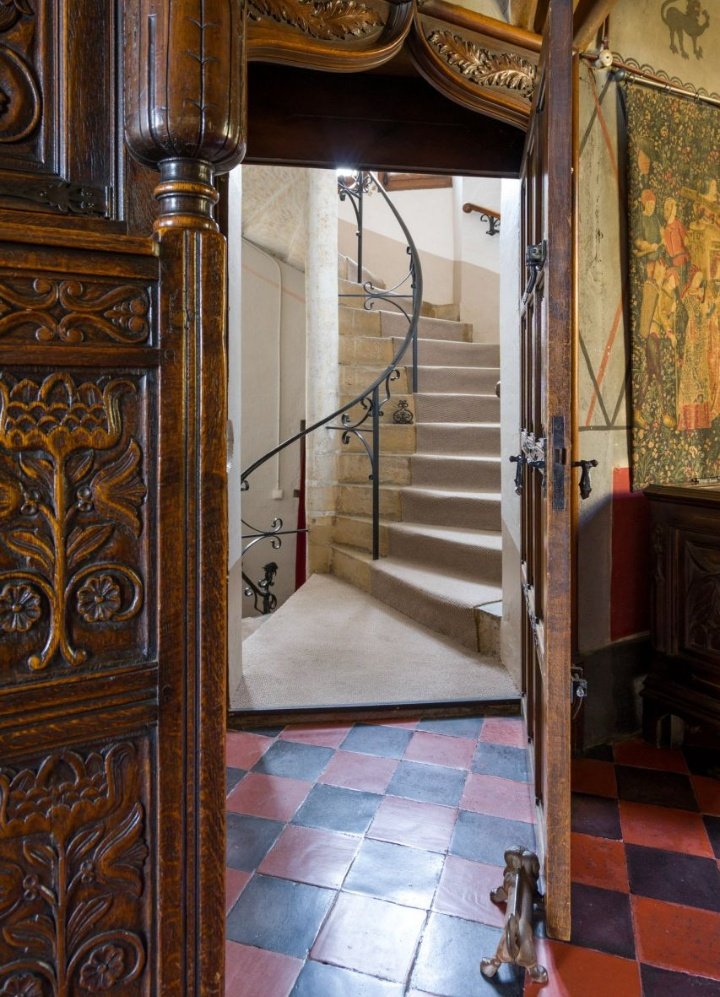
Self guided tours are one party at a time. Winchester Mystery House staff will be available for questions and assistance along the tour route. Advance ticket purchase is required as capacity is very limited. Tickets may be purchased online at www.winchestermysteryhouse.com.

Summoned to Join the Waiting Throng of His Ancestors

Underneath all the stories there does lie something differ from the tales. How different? In this—that the thing which is invoked is an object of a different nature, however it may put on the appearance of the most beautiful and bizarre mansion in all of the World or indulge in its servants their human appetites. It is cold, it is hungry, it is mysterious, it is illusory. The warm blood of its visitors does not satisfy it. It wants something more and other; it wants “obedience,” it wants “souls,” and yet it pines for matter. The Winchester Mansions cost five million valuable dollars (2022 inflation adjusted $146,685,714.29 USD), with a million ($29,337,142.86) alone spent on materials. It contained 600 rooms with 160 still remaining, and has 10,000 windows, nine kitchens, and 47 fireplaces built of rosewood, cherry, mahogany, Italian marble, oak, teak, and pipestone; all hand-carved, and no two alike. For 38 years, 1884-1922, the sound of saw and hammer never ceased. Commonly, 16 carpenters were employed at one time, some having worked for 20 years without change. They produced the largest, most complicated and exclusively private residence in the United States of America. There are five different heating systems and three elevators. Some of the 13 bathrooms lacked privacy; they have glass doors! One rambling room has four fireplaces and five hot-air registers. A spiral stairway has 42 steps, each two inches high. Other stairways melt into blank walls. A second story door opens into the great outdoors and a 20-foot step. A linen closet has the area of a three-room apartment; a nearby cupboard is less than one-inch deep. A skylight is placed in the middle of a room, in the floor! Another floor is apparently a series of trap-doors. The visitor must stoop through one door to enter, the next gives clearance for an eight-foot giant. Many stairway turnposts are set upside down. Entire walls are built entirely of half-inch, “half-round” strips.

Everywhere prevails that strange deference to the number 13; 13 stairsteps, 13 hangers in closet, 13 wall panels, 13 lights in the chandeliers, 13 windows to a rom and if necessary to make that number, some placed in an inside wall. Perplexity is leavened by extravagant Victorian beauty scattered along each crooked path of exploration, but what else would you expect from the house built by spirits? It was not peaceful, but filled with demons in the shape of succulent young maidens. No casual visitor can see it all. In 1923, occupants gone, it was opened. The Inquisitors were certain that they had uncovered Satan’s lair. The number 13 has undoubtedly possessed great fascination for man throughout his historic and prehistoric past, and has taken on the aspects of a mystical number, embedded in his collective unconscious, just as the number 7 has been for time immemorial a number possessed of magical properties. Since 13 is the number following the perfect cycle of 12, it is symbolic of death or the unknown. It is quite possible that some covens might have been fixed at thirteen members. However, the evidence from the witch trials tends to corroborate the view that the number of members in covens varied, depending on how many members showed up. At night, passers-by heard ghostly music wafting from the dark mansion. Secrecy was imperative, for discovery meant certain death. The Devil himself invariably presided at the important Sabbats, in the personage of the Grand Master of the region. Seated on a black throne, Satan began the meeting by reading the roll call of members from a book he had in his possession. As their names were pronounced, witches reported their activities—their magical success or failure—since the last Sabbat. After the roll call, the Devil admitted new members. The initiate had to enter the cult of one’s own free will. The Devil demanded at the meetings that the witches bring children to the Sabbats for conversion.
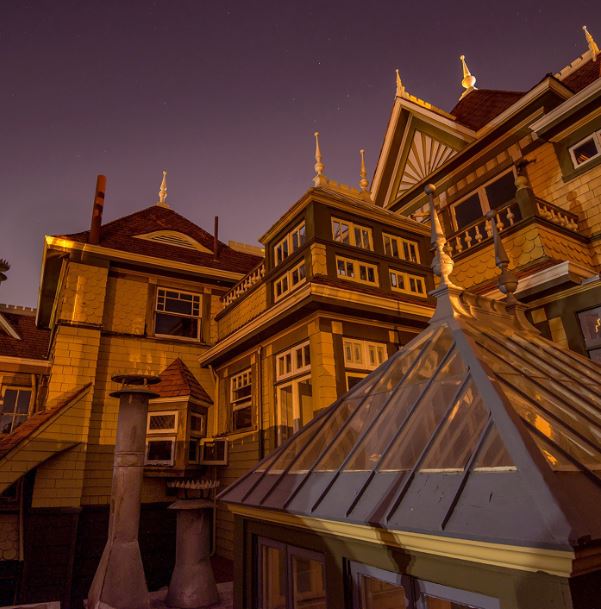
The initiation requirement was that the initiate had to make a pact with the Devil, which usually involved signing a contract to do Satan’s work for a specified period of time. This vow of obedience usually employed as a writing fluid the blood of the signer, which was extracted from the arm or the finger. The symbolism behind this part of the ceremony is clear, blood being a traditional symbol for the life force, or the soul. The participants lined up in order to pay homage to Satan. The traditional bowing was followed by the osculum infame, of “Kiss of Shame,” a ritual kiss planted on the Devil where the sun don’t shine. After the black mass, the feast began. Some accounts state that the food was abundant and delicious, consisting of succulent meats, bread, and spirits. Most of the guests gorged themselves with food and drink before leaving the feast to dance. The dancing in the Grand Ball Room was an important part of the ceremony. Whoever stumbled on the occasion of this celebration must have seen something very unbelievable. They saw incoming flights of spirits glowing with sulfurous flames, and the Hand of Glory itself—the human hand with the fingers ignited as candles. They saw even a devil god, monstrously masked, with a candle spluttering between its horns. Then the bell in the belfry high in the gables tolled again to warn these visitors to return to their sepulchres. But once a week these departed ones relaxed and danced in the Great Ball Room. But even after the guests had departed, something it had spawned lived on, and the chanting could still be heard echoing through the caverns of the Winchester mansion. This left many in Santa Clara County bound together by a nihilistic belief that the World was in the throes of a bloody apocalypse, slowly purifying the overpopulated planet. From the mansion, doctrines from the dark undercurrents of the movement had rise to the surface: social Darwinism, the idea that the brutal laws of natural selection applied not just to the natural World but to human society.

There is so much of delicacy in this subject, that the mere resolve to handle it at all might seem to imply a lack of the sensitiveness necessary to its understanding; and it is certain that the more reverent the touch, the more irresistible will figure its opportunity to the common scepticism which is boneslave to its five senses. Mrs. Winchester was an heiress. She managed her considerable estate. She was an opened flower who had been left a green bud—a thing so rare and flawless that it seemed a sacrilege for Earthly passions to converse of her. She loved her husband dearly, wholly, it was plain. And for her part, fearless as nature, she made no secret of her love. She absorbed in, a captive to, William from the movement she met him and forever. What man could have resisted, on first appeal, the attraction of such a beauty, the flower of a radiant soul? The two were betrothed; William’s cup of happiness was brimmed. They were man and wife before God. She never doubted or questioned their mutual bondage, and would have died a maid for his sake. Something of sweet exultation only seemed to quicken the leap in her body, that her faith in her dear love was vindicated. But the joy came to an upset when Mrs. Sarah Winchester lost her daughter only four weeks after her birth. And about a decade later, Mr. William Winchester died in his early 40s. This destroyed Mrs. Winchester utterly. Psychics told her she was cursed by the Winchester fortune. Lonely in her huge mansion, unearthly cries of seabirds answered the questions of her widowed heart. She worked, sweet in charity, among her servants, a beautiful unearthly presence; and was especially to be found where infants and the troubles of child-bearing women called for her help and sympathy. Mrs. Winchester was so sweet a sanity; and indeed, many often noticed that her estate bred the souls of mysticism.
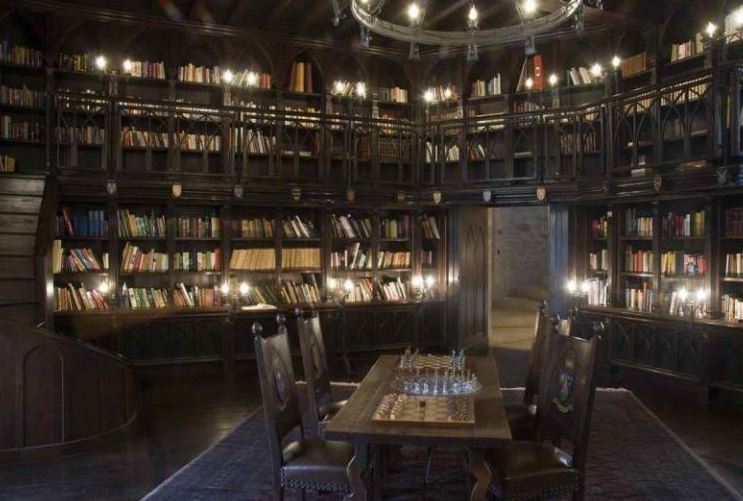
Guest once saw a mermaid bathing in the fountain at the Winchester mansion. At least, that was their instant impression. The creature sat coiled on the strand, combing her hair—that was certain, for they saw gold-green tresses of it whished by her action into rainbow threads. It appeared as certain that her upper half was flesh and her lower fish, and it was only on their nearer approach that this latter resolved itself into a pale green skirt, roped, owing to her posture, about her limbs, and the hem fanned out at her feet into a tail fin. It was plain enough now; yet the illusion for the moment had quite startled onlookers. As they came near, she paused in her strange business to canvass them. It was Mrs. Winchester herself. They guests had never seen so lovely a creature. Her eyes, as they regarded, were something to haunt a dream: so great in tragedy—not fathomless, but all in motion near their surfaces, it seemed, with green and rooted sorrows. They were the eyes of an Undine late-humanized, late awakened to the rapturous and troubled knowledge of the woman’s burden. Her forehead was most fair, and the glistening thatch divided on it like a golden cloud revealing the face of a wondering angel. They passed, and the rose garden stile their vision. The beautiful sight was gone when they returned. The Winchester mansion was full of ancient memories and apparitions. Mrs. Winchester’s manner was still quite youthfully thrilling. One morning succeeding the night after her guests had arrived, after breakfast she invited her guest to a séance in her Blue Séance Room, but even as guests spoke to her, her pretty features wavered and vanished. Where she had been, a gleam of iridescent dust seemed to show one moment before it sank and was extinguished in the falling cloud. Heaping an eternal chaos with nothingness, never to be seen again. But she left the sweetest memory behind her, for human charity, and an elf-like gift of loveliness.

When a family had moved into the Winchester mansion, both the husband and wife heard ghost like phenomena in the house. At night they heard footsteps about the house and at the weekend of Easter they heard such a lot of crashing and knocking that is sounded as if all the furniture was being smashed to pieces. On investigation they found nothing disturbed at all. The noises continued at other times and several guests heard them although they had never been told that the mansion was haunted. The residents prayed continuously about the disturbances and finally they decided to command the invisible powers in the name of Jesus to depart from the mansion. One morning this while it was still dark, they heard a noise as if all the bricks in the basement were being trapped, and this was followed by another noise comparable to hundreds of pigeons flying away. The man was now convinced that the ghosts had left. Later while investigating the possible causes of the ghost, it was discovered that this was the mansion of the spiritist Mrs. Sarah Winchester, who was cursed by the souls taken by the Winchester rifle. When it comes to a genuine haunting, the appearances always have their roots in the occult activity of those ho have previously lived in the house, and, although ghosts associated with particular places are more persistent than ghosts or apparitions associated with particular people. The occurrences are not to be explained away by some scientific explanation or other, but a metaphysical answer has to be sought for to understand the whole truth. The ghosts in the Winchester mansion are so vividly real and yet so fantastically original as to make an impression sometimes exceedingly startling. Some are kind, humorous, some grotesque, and some awe-inspiring even to sublimity, and chief among the last class is the weird-wailing Banshee, that sings by night her mournful cry, giving notice to the people who hear her that one of them will soon to be called to the spirit World.
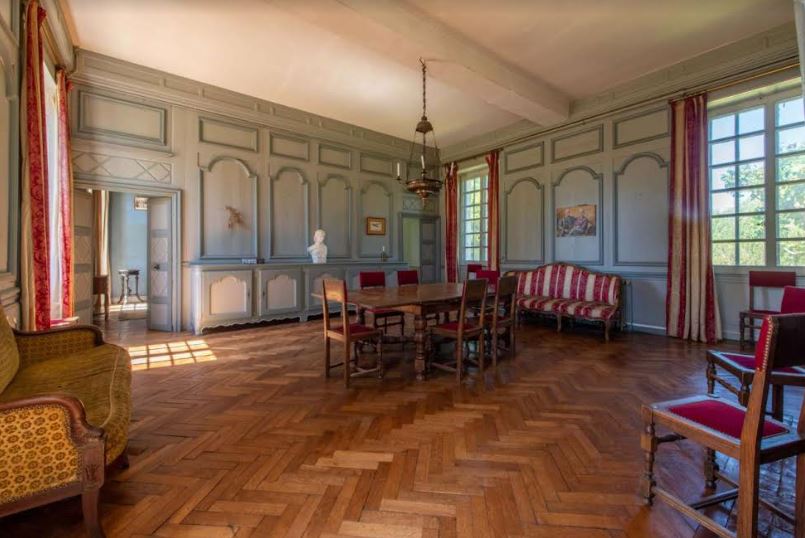
The Banshee is really a disembodied soul, that of one, who, in life, was strongly attached to the family, or who had good reason to hate all its members. Thus, in different instances, the Banshee’s song may be inspired by opposite motives. When the Banshee loves those who she calls, the song is a low, soft chant, giving notice, indeed, of the close proximity of the angel of death, but with a tenderness of tone that reassures the one destined to die and comforts the survivors; rather a welcome than a warning, and having in its tones a thrill of exultation, as though the messenger spirit were bringing glad tidings to one summoned to join the waiting throng of his ancestors. If, during her lifetime, the Banshee was an enemy of the family, the cry is the scream of a fiend, howling with demoniac delight over the coming death-agony of another of her foes. There exists a belief that the spirits of the dead are not taken from Earth, nor do they lose all their former interest in Earthly affairs, but enjoy the happiness of the saved, or suffer the punishment imposed for their sins, in the neighborhood of the scenes among which they lived while clothed in flesh and blood. At particular crises in the affairs of mortals, these disenthralled spirits sometimes display joy and grief in such a manner as to attract the attention of living men and women. At weddings they are frequently unseen guests; at funerals they are always present; and sometimes, at both weddings and funerals, their presence is recognized by aerial voices or mysterious much know to be of unearthly origin. The spirits of the good wander with the living as guardian angels, but the spirits of the bad are restrained in their actions, and compelled to do penance at or near the places where their crimes where committed. Some are chained at the bottom of lakes, others are buried under ground, others confined in mountain gorges; some hang on the sides of precipices, others are transfixed on the tree-tops, while others haunt the homes of their ancestor, all waiting till the penance has been endured and the hour of release arrives.
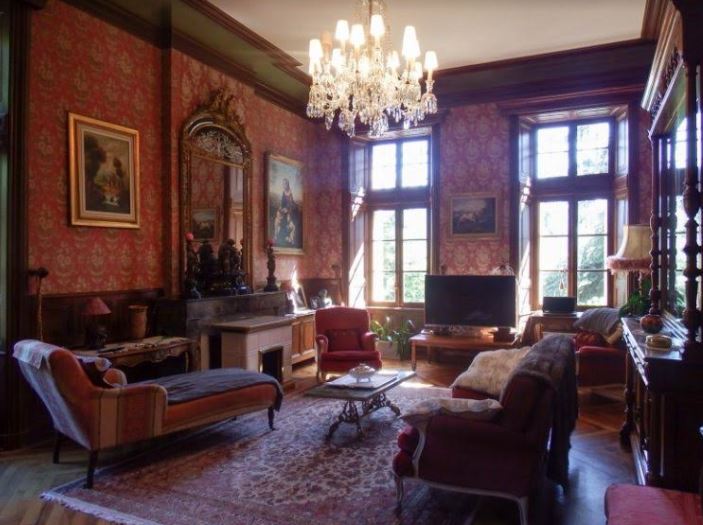
The Winchester mansion, in San Jose, California USA is believed to be still inhabited by the spirit of a chief, who there atones for a horrid crime, while the mansion is similarly people by the wicked dead. The ghost of a sinful abbot walks and will continue to do so until his sin has been atoned for by the prayers he unceasingly mutters in his tireless march up and down the halls ways of the labyrinth. The Banshee is of the spirits who look with interested eyes on Earthly doings; and, deeply attached to the old families, or, on the contrary, regarding all their members with a hatred beyond that known to mortals, lingers about their dwellings to soften or to aggravate the sorrow of the approaching death. The Banshee attends only the old families, and though their descendants, through misfortune, may be brought down from high estate to the ranks of peasant-tenants, she never leaves nor forgets them till the last member has been gathered to his fathers in the churchyard. The song of the Banshee is commonly heard a day or two before the death of which it gives notice, though instances are cited that the song at the beginning of a course of conduct or line of undertaking that resulted fatally. Thus, in Winifred, a young servant at the Winchester mansion in the late 1880s, engaged herself to a youth, and at the moment her promise of marriage was given, both heard the low, sad wail above their heads. The young man deserted her, she died of a broken heart, and the night before her death, the Banshee’s song was heard blaring loud and clear, outside the window. The servants marched outside the mansion, and they filed through the gateway, the Banshee was heard high above the observation tower of the mansion. The next night he sang again, and was heard no more for a month, when one of the farmer’s wives heard the wail under her window, and on the following day his coworkers brought back his corpse. One of the farmers heard the Banshee as he started on a journey before daybreak, and was accidentally killed some time after, but while on the same journey.

The wail most frequently comes at night, although causes are cited of Banshees singing during the daytime, and the song is often inaudible to all save the one for whom the warning is intended. This, however, is not general, the death notice being for the family rather than for the doomed individual. The spirit is generally alone, though rarely several are heard singing in chorus. A maid, greatly loved for her social qualities, bebevolence, and piety, was some years ago, taken ill at the Winchester mansion, though no uneasiness was felt on her account, as her ailment seemed nothing more than a slight cold. After she had remained in-doors for a day or two several of her acquaintances came to her room to enliven her imprisonment, and while the little party were merrily chatting, strange sounds were heard, and all trembled and turned pale as they recognized the singing of a chorus of Banshees. The lady’s ailment developed into pleurisy, and she died a few days, the chorus being again heard in a sweet, plaintive requiem as the spirit was leaving her body. The honor of being warned by more than one Banshee is, however, very great, and comes only to the purest of the pure. The “hateful Banshee” is much dreaded by members of a family against which she has enmity. The Winchester mansion was attended by a Banshee of this description. This Banshee is the spirit of a young girl deceived and afterwards murdered by another servant. With her dying breath she cursed her murderer, and promised she would attend him forever. Many years passed, the chieftain reformed his ways, and his youthful crime was almost forgotten even by himself, when, one night, he and his family were seated by the fire of the mansion, and suddenly the most horrid shrieks were heard outside the mansion’s walls. All ran out, but saw nothing. During the night the screams continued as though the mansion was besieged by demons, and the unhappy mand recognized, in the cry of the Banshee, the voice of the young girl he had murdered. The next night he was assassinated by one of the construction workers, when again the wild, unearthly screams of the spirit were heard, exulting over his fate.

Since that night, the “hateful Banshee” has never failed to notify the family, with shrill cries of revengeful gladness, when the time of one of their number had arrived. Banshees are not often seen, but those that have made themselves visible differ as much in personal appearance as in the character of their cries. The “friendly Banshee” is a young and beautiful female spirit, with pale face, regular, well-formed features, hair sometimes coal-black, sometimes golden; eyes blue, brown, or black. Her long, white drapery falls below her feet as she floats in the air, chanting her weird warnings, lifting her hands as if in pitying tenderness bestowing a benediction on the soul she summons to the invisible World. The “hateful Banshee” is a horrible hag, with angry, distorted features: maledictions are written in every line of her wrinkled face, and her outstretched arms call down curses on the doomed member of the hated race. Though generally the only intimation of the presence of the Banshee is her cry, a notable instance of the contrary exists in the family of the Winchester’s, to the doomed member of which the Banshee always appears in the shape of an exceedingly beautiful woman, who sings a song so sweetly solemn as to reconcile him to his approaching fate. The prophetic spirit does not follow members of a family who go to a foreign land, but should death overtake them abroad, she gives notice of the misfortune to those at home. When Mr. Winchester died, the Banshee was heard wailing round the house of his ancestors. In fact, the night before the 1906 Earthquake, several Banshees were heard singing in the air over the Bay Area, the truth of their prophecy being verified by the death-toll and destruction of the next day. How the Banshee is able to obtain early and accurate information from foreign parts of the death in battles and natural disasters is yet undecided in mystical circles.

Some believe that there are, in addition to the two kinds of already mentioned, “silent Banshees,” who act as attendants to the members of old families, one to each member; that these silent spirits follow and observer, bringing back intelligence to the family Banshee at home, who then, at the proper seasons, sings her dolorous strain. A partial confirmation of this theory is seen in the fact that the Banshee has given notice at the family seat in Ireland of deaths in battles fought in every part of the World. From North America, the West Indies, Africa, Australia, India, China; from every point to which Irish regiments have followed the roll of the British drums, news of the prospective shedding of Irish blood has been brought home, and the slaughter preceded by a Banshee wail outside the ancestral windows. However, it is due to the reader to state, that this silent Banshee theory is by no means well or generally received, the burden of evidence going to show that there are only two kinds of Banshees, and that, in a supernatural way, they know the immediate future of those who they are interested, not being obliged to leave Ireland for the purpose of obtaining their information. Such is the wild Banshee, once to be heard in every part of the World. Now, however, she attends only the old families and does not change to the new. Only a few retired districts in the World are the dreaded spirit still found, while for the most part, she has become only a superstition, and from the majesty of the death-boding angel, is rapidly sinking to a level with other supernatural creatures, who are sought out, but so infrequently seen. The deceptiveness of white magic. White magic is black magic in pious masquerade. It uses, in a magic way, the name of God, Christ, and the Holy Spirit, along with Bible phrases and terminology, but is demonic in character. It is called “white” because it parades under the banner of light, in contrast to “black” magic that openly enlists the assistance of the power of darkness.
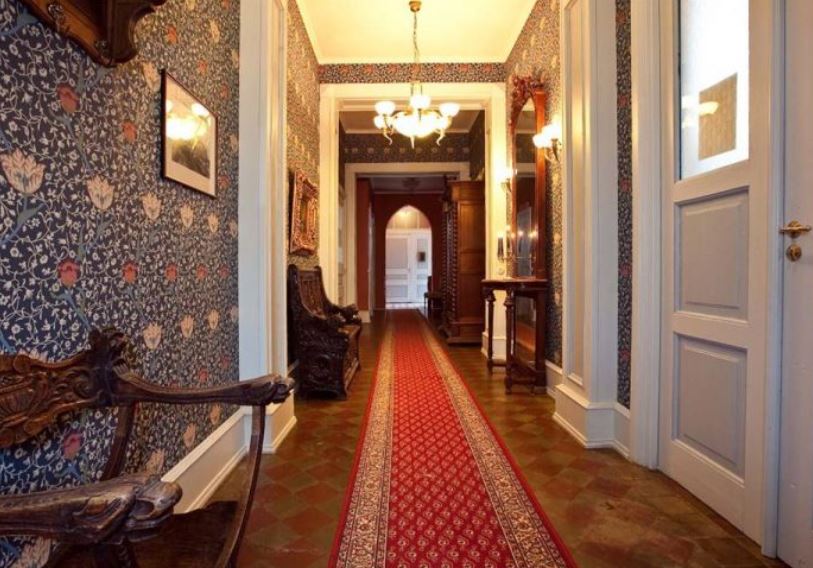
White magic furnishes a perfect illustration of the Apostle Paul’s warning: “And no marvel; for Satan himself is transformed into an angel of light. Therefore, it is no great thing if his ministers also be transformed as the ministers of righteousness; whose end shall be according to their works,” 2 Corinthians 11.14-15. White magic comes into play and alien spirits “not of God,” begin to operate when the truth of God is perverted. Many do not understand that utterly sincere believers of the holy Bible can come under the spell of white magic and demonic influence. The spirit realm of good in which the Spirit of God operates is closely related, although distinctly separate, from the spirit realm of evil where Satan and demons operate. Werewolf Order literature states, “Nikolas Schreck teaches that the ancient mythological figures of the werewolf and vampire are actually archetypal role models for the next step in evolution: cruelties of the natural order and man’s animal origins, and yet the master of a new science of pagan technology.” This concept—that the mythical creatures of the night were the most highly-evolved form of humanity—would be combined by Schreck with a revived Germanic racial occultism, inside the broader church of Satanism. His self-styled propaganda unit was tiled Radio Werewolf, after the propaganda stations set after the Second World War: Radio Werewolf stands as the standard-bearer of a new kind of youth…Orderly, disciplined, drug-free, proud and reawakened to their pagan heritage; the cadres of the Werewolf Youth Party. Contemporary youth culture was labelled a sewer of mind-numbing drugs, primitive rhythms, the unbalanced encouragement of androgyny and so forth, and the muddying and blurring of racial cultural boundaries. Performing midnight rituals to send signals to the sleeping masses in furtherance of the demonic revolution, the Werewolf Order were a gothic extreme for modern fascism.

The black-clad warrior priests and priestesses of the order form a lycanthropic legion who are shaking the axis of the World. There are thirteen designated Power stations of the Werewolf movement situated in such cities as San Francisco, London, Berlin, Seattle, Vienna, Brussels, Colorado Springs, with headquarters in Los Angeles overseen by Nikolas Schreck. Not one for half measures, Schreck declared his aim as World domination. Occultist trying to bring about a pagan revival has been going on for a very long time. At least since World War I. Necrophiliacs rub shoulders with advocates of eugenics, racist conspiracy theorists struggle for space against champions of self-castration. The Worlds of science, art, and the occult collide in a bewildering pile-up that leaves few standing. Apocalypse Culture distilled the pre-millennial angst and nihilism of people who grew up under the shadow of a mushroom cloud. The possibility of mass destruction, as imprinted on the subconscious of a generation, had produced a state of amorphous unease. A Malthusian mud flood has already been underway. The end of the World came sages ago, but it is happening slowly over a period of time and nobody has been noticing. It is an ongoing process. The World today is different than it was 30 years ago. Some of it has decayed so much, and it is decaying more and more all the time. The entire World is rotten and corrupt and they are [the masses are] ordaining their own death. To some, they are just dead people who refuse to lie down. It is people who do not see anything out in the World right now, who feel lost, unattached, swirling in a World of despair and boredom, but some glimmer of hope that there are at least some people like-minded. Lilith, a popular Satanic-femme pseudonym, is the archetypal illustration of Satan’s longstanding penchant for powerful women. Created of filth by Jehovah in the Old Testament’s Book of Isaiah, she was the first wife of Adam. Cast out into the wilderness for not submitting to her husband, she hooked up with the Devil and they made lots of little demons together.
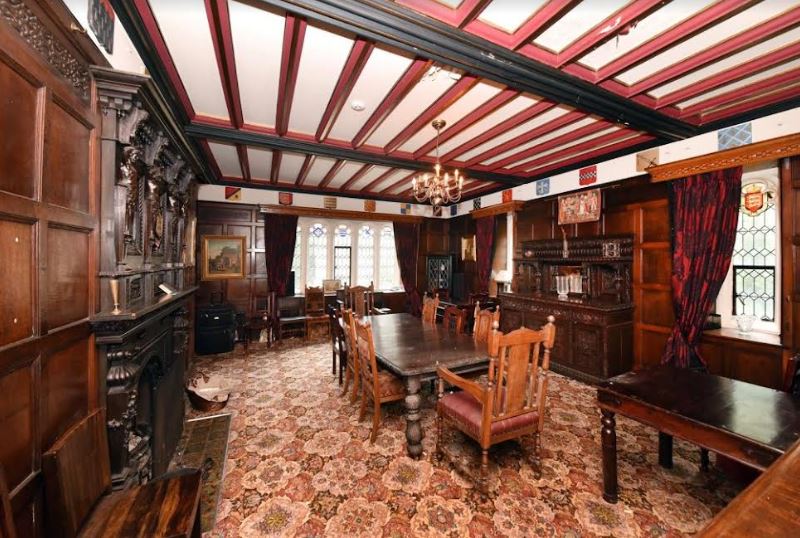
The doctrines of the Order of the Nine Angels (ONA) calls for entry into a new aeon of human development, via the overturning of current social dogma. More specifically, individual members are encouraged to evolve personally by overcoming various physical and psychological ideas. The ONA defines itself as more “sinister” than the established Satanic movements—such as the Church of Satan and the Temple of Set—who are dismissed as not “evil” enough. The group’s efforts to establish its philosophical wickedness include, inevitably, flirtation with the Far Right. The purpose of human sacrifice was to release energy and draw down dark forces. There are some people who voluntarily offer themselves up; another is the human carnage that ensues as the result of political or social upheaval, to be brought about by the actions of the Order of the Nine Angels (ONA). In other cases, which give people most pause for thought—the secret murder of individuals considered to be opponents or impediments to the ONA’s goals. The Hard Right is a very dangerous thing to get involved with. Particularly for Satanists—the ONA has received threats from certain national socialists groups who do not like the idea of Satanism being linked with them. ONA claims that the secret of Satanism is that a Satanist restores the balance within society, acting as a counterbalance. For example, if we were in a right-wing situation at this time, there would certainly be a communist Satanic organization. This may all seem rather frivolous and aimless, but what Satanism represents is basically an energy for change. Evolution. An energy which provokes insight and adversity. Satan represents movement. Something which moves and that is not tied down by moral abstracts or ideas. You could remove someone you think is detrimental to your cause, but you could be wrong in in that. It could turn out to be the opposite. ONA is designed to attract people who can think and judge for themselves.

The work ONA does is very extreme, it has to be that way. The manuscripts are designed to produce certain changes in society, to create certain preconceptions and destroy others. They are very elitist, because very few people ever stay the course. It involves real hardship, a certain way of living which few people are willing to follow. All civilizations start off as a creative minority, a small group of people in certain area who did certain things which drew the masses. People are putty, basically, and it is always going to be a small number of people who can effect changes; the artists or whatever, the people who dare to break out of the constraints of society. They also let people know that they have freedom of will, but they have to take consequences for their actions. The archetypal ONA member is a lone sorcerer, somebody who defies their own limits, defies themselves. They find out their true potential, usual through ordeals. There is one ordeal, for example, which requires living alone for three months, completely alone, bereft of any possessions whatsoever. The actual aim is, on an individual level, finding your god within yourself. What is aims to produce is a unique individual who does not need anything. ONA is a traditional which goes back 7,000 years—that is according to legend. It was born when there was a civilization around here called Albion which had various rites associated with a dark goddess who we know as Baphomet. Baphomet’s been handed down through the ages as a composite figure. The famous goat-headed symbol was actually a distortion, a lie which took away from the real power of the dark goddess, who are actually a dark, menstruating women. It was very much a code of honor centered around war and the brutal realities of life, and actually the original paganism for thousands of years before Christianity arrived. It is basically an oral tradition some received from Anton Long. He received it from a Mistress of the Order and she had it passed on from someone before her.

The term “demon possession” does not appear in the Bible. The New Testament, however, frequently mentions demoniacs. They are said to “have a spirit,” “a demon,” “demons,” or “an unclean spirit.” Usually such unhappy victims of evil personalities are said to be “demonized” (daimonizomenoi) id est, they are subject to period attacks by one or more inhabiting demons, who derange them physically and mentally during the seizure. Rationalistic criticism has persistently denied the reality of demon possession as presented so vividly in the Bible accounts of our Lord’s Earth ministry. The mythical theory, advanced notably by Germany’s David Strauss, views the whole narrative of Jesus’ demon expulsions as purely symbolic, without actual foundation in fact. Demon possession is represented as a vivid symbol of the prevalence of evil in the World, and the expulsion of demons as a corresponding figure of Christ’s triumph over it. Other critics attempt to dismiss demon possession with theories of accommodation or hallucination. The proponents of the first hypothesis declare the Lord simply adapted Himself to popular belief and terminology without committing himself to the existence or nonexistence of the phenomena described or the truth or falsity of currently belief. The proponents of the second theory consider demon possession a pure hallucination or psychological delusion. However, all such views fail to meet the issue. Nor can present-day parapsychologist and psychiatrists, who refuse to recognize evil supernaturalism in the phenomen of demon possession, either explain it or deal adequately with it. Demon possession is a condition in which one or more evil spirits or demons inhabit the body of a human being and can take compete control of their victim at will. By temporarily blotting out one’s consciousness, they can speak through the individual and their complete slave and tool. The inhabiting demon (or demons) comes and goes much like the proprietor of a house who may or may not be “at home.” When the demon is “at home,” one may precipitate an attack. In these attacks the victim passes from one’s normal state, in which one acts like other people to the abnormal state of the possessed. The present generation must weigh and draw its own conclusions about supernatural activity and this valley’s most interesting, most haunted mansion, and surely our most mysterious Frist Lady!

Winchester Mystery House

Happy Day! Who’s visiting the Winchester Mystery House This weekend?

A 160-room mansion built to appease the spirits who died at the hands of the Winchester Rifle 👻
Are You Brave Enough to Explore the House at Night?
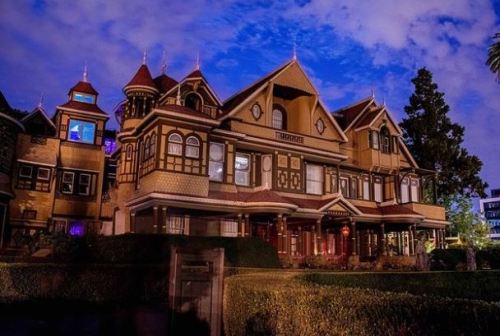
The one problem with oral language is that after being handed down from generation to generation, the reasons for certain social laws are often forgotten and they become elevated to the stature of natural laws, the breaking of which is felt by humans to be detrimental to one’s survival as an organic entity. The laws begin to work independently of the reasons for their existence and in the process assume greater force. “Thou shalt not” is the basic of the concept of social evil. Thou shalt not kill, thou shalt not steal, thou shalt not covet they neighbor’s wife—all these are examples of social evils. If indulged, such acts are evil in that they would facilitate the breakdown of ties within the culture; they are prohibitions aimed at maintenance and control. Seldom have these evils been personified by any particular god, since they act in the capacity of universal laws and, as such, are mechanical, impersonal. Satan has not personified these social taboos in the same sense that Set personified the night and Horus personified the sun; he rather has skillfully manipulated these moral edicts in an attempt to undermine the forces of righteousness and good. Satan as personification of evil has beaten a consistent and clear path through the religious history of Western man and in each guise has been representative of the social type of evil. He has been uniformly antisocial, anti-humanity, anti-God throughout all the religious systems in which he has appeared, at least according to the tenants of the opposing side. However, only under one of the religions in which he appears, Christianity, did a separate movement materialize devoted to his worship as a symbol of the anti-God. The reason for this has been stated many times by writers and historians: historically, Satanism as a religion was the anomalous child of Christian repression.
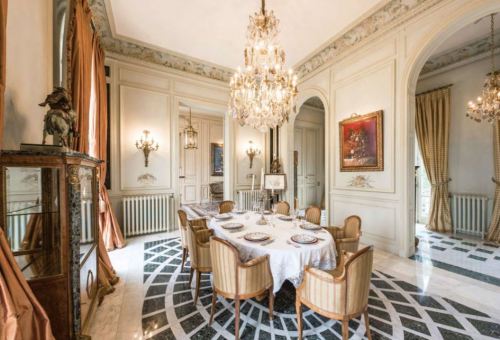
The reason that Devil worship reached the degree of organization and the size that it did under Christianity, and under other monotheistic religious systems, is the Christian definition of evil. The idea of social evil for the Christians soon became aligned and synonymous with self-indulgence. The Christian idea of the Seven Deadly Sins (greed, pride, envy, anger, gluttony, lust, and sloth) is indicative of this aversion to self-indulgence. Pleasure came to be looked upon as being tainted. Man found it hard, nevertheless, to dissociate himself intellectually from self-indulgence and from his own carnality, from his emotions and from his physical delights. His self became divided and he found that he was being led in two directions at once. A gulf widened between man’s conscious and unconscious mind, and he found himself obsessed by images of his instinctual nature, his animal being. The Devil, conceived and cast in the form of the ubiquitous chtonic snake, functioning at an unconscious level as man’s animal being, was looked upon by the Christian theologians with stern foreboding. The people were told that the Devil was evil, that he represented carnality, pride, lust, gluttony, rebelliousness, all those centrifugal forces that would tend toward atomization and social disintegration. They were told that Satan was evil because he had dared to opposed God, the perfect and omnipotent creator of the Universe. The people nodded in agreement, for they knew that this was correct, but at a deeper level of consciousness something squirmed uncomfortably. It all struck a chord that was just a bit too familiar, for the Devil reminded them of somebody they knew very well—themselves. He was self-indulgent and so were they; he had great pride and so did they; he rebelled against tyrannical authority and so did they often use to.
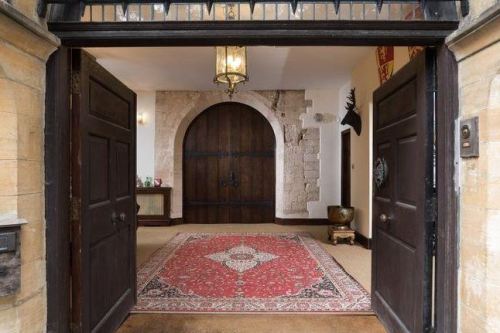
Satan painted a colorful picture, to be sure, much more attractive than the one of an overpowering, intolerant, faultless God whom none could ever hope to approach in perfection. So the Devil remained intact as a symbol under Christianity; he was humanity in all its weakness, and it was from this manifestation that he originally derived all his strength. In other religions in which he played a major role, Satan had never achieved any great following simply because the theologians, in their mythmaking functions, were more careful in their social definitions of evil. All those religious systems in which Satan has appeared share one common trait: they are all monotheistic and, as such, need a negative balance for the beneficial construct of an all-powerful, all-good, and merciful God. Satan is necessary because there is no other way to dispose of the evil realities constantly confronting humanity. Since pestilence, famine, and death are formidable evils faced by all humans, and since it is difficult, to day the least, to attribute their origin to pure goodness, an evil source must be assumed to exist. In undertaking to relate some of my experiences in connection with the purchase and sale of haunted houses, I was successful in this class of business, but some of my adventures I went through were of such a character that I dared not continue. My nerves are fairly strong, but there are some things which I never wish to face again. I was first tempted to dabble in this unlucky class of business with what is now known as the Winchester Mystery House, which is an extravagant maze of beautiful Victorian craftmanship—marvelous, baffling, and eerily eccentric, to say the least. The Winchester Mystery House became known as “the house built by the spirits.” At the time of Mrs. Winchester’s death in 1922, there were rooms full of ornate treasures still waiting to find a niche in the massive home.

A client was anxious to see me one day, he wanted to make an immediate offer, at almost any price, for the most mysterious hose in the World. However, once he took a tour of the house, he said it was haunted and ran out the front door. The house became very hard to sell. It was all nonsense, of course; but the people in the neighborhood had it in their head that this was a haunted house; and now if any tenants come they are sure to hear of it directly, and get frightened. The result is that I had lost tenant after tenant, and the reputation of the Winchester mansion was so bad that I could not sell it. I assured the clients that the house was in thorough repair, but tended to be reluctant to answer the questions about the ghosts. Potential buyers would ask, “Are there any stories about the house?” Anything to account for its being haunted?” “No; no. What story should there be? It is a modern house—hardly been built for 36 years.” “And how long has it been your property?” “I bought it as soon as it was put up.” “And how long has it been haunted?” I frowned because I disliked to hear this word. “The hose has been talked about for some years now—20 or 30 years,” I replied. The client’s curiosity about the Winchester Mansion was so strong. When I took him on the tour of the estate, he was shocked at how beautiful it was. I had no, however, been able to find a caretaker because you must pay them for living in such a house. I had been trying to get someone to come and occupy it rent free for a time in order to live down its reputation, but often times the tenants would go missing. The client asked if there was any room particularly connected with the ghostly rumours. The grounds have their share of unexplained mysteries.
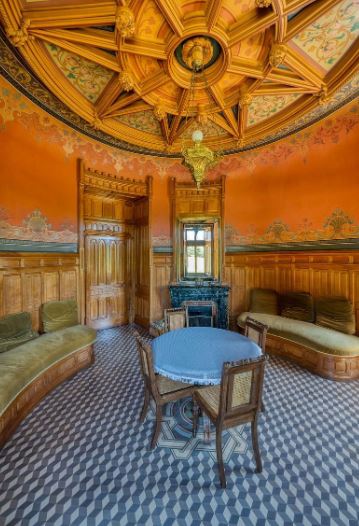
After a monetary hesitation, I led him upstairs into what was Mrs. Winchester’s principal bedroom. In the inner courtyard, there is a crescent shaped hedge that points to Mrs. Winchester’s bedroom—the one where she died. Coincidence? Maybe…but again, we will never know for sure. “Is this where the ghosts walk?” he asked as he glanced around the empty room. I was plainly annoyed by his insistence. “There are no ghosts, and they do not always anywhere,” I said irritably. I glanced up at the ceiling, and swiftly withdrew my eyes with a nervous tremor. I could tell the client was firmly persuaded that I had been the victim of some spectral horror, though I was anxiously trying to conceal it for fear of frightening him off. “Perhaps I had been not tell you anything,” I said, after considering a moment. “There is a great deal in the influence of suggestion, so it is said. If I were to tell you what the people who have slept in this room have seen, or dreamt they have seen, that might be enough to make you dream the same. Whereas, if a sensible man without any notions came and slept here, one would most likely never be disturbed.” Upstairs I showed him another room which was an unfinished attic space. The prospect from the widow showed hum that it was situated over the haunted chamber. “Is there something wrong with this room as well?” he demanded. “The servants do not like sleeping in it,” was my grudging admission. “It does very well as a boxroom.” The client was very anxious to secure an option to purchase the Winchester Mansion at the end of the month. My next step was to secure some attendance, and to send down some furniture for the many empty rooms which they mystery appeared to cling. All of Mrs. Winchester furniture had been sold at auction.

It took movers six weeks, six truck loads a day, to empty the mansion. Many of them often got lost. I was not very well pleased with the idea of taking the ghosts seriously. However, I knew that there were things in Nature which ordinary rules did not explain. I had seen things myself which could not be accounted for by natural means. I dared not tell the client that there had been a murderer lurking in the mansion ready to spring on potential clients and stab them. Suddenly, we heard a low moan—the moan of a creature in mortal terror, drawn out till it became a muffled scream. The moan was repeated, coming distinctly from the room below us. This is why I did not live having an open house at night. With candles in hand, as we reached the third floor landing the moan was repeated in a more terrible key—the key of horror instead of terror. At the same moment the door of one of the haunted rooms was thrown open, and suddenly Agnus, the maid, appeared on the threshold, with a cloak thrown over her shoulders, and a look of fear and distress on her face. “What is it?” I asked. “Merrill, she has seen something horrible, and I cannot get her to come to.” Without stopping to consider questions of etiquette, I dashed into the room. The gas had been turned full on, and by its light I saw the young lady lying stretched out on a couch at the foot of the bed, her features frozen into expression of one who looks upon some horrid sight, while from her parted lips there issued those appalling sounds which wounded like the stabs of a knife. I caught her by the shoulders and shook her, without making the slightest change in her swoon-like conditions. “Water!” I called out to Agnus, who stood wringing her hands, too dazed to act.
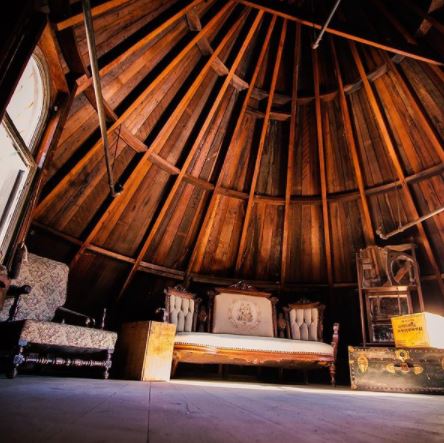
The water was brought, and I dashed half a glass in the face of the sufferer. At first it had no more effect than if she had been dead. Then came a startling change. The moans suddenly ceased, the victim opened her eyes, which showed the dull glassy stare of a somnambulist, and sitting half up, she commenced muttering so quickly and indistinctly that it was difficult to catch the words. “The blood, the blood, the blood, the blood, dripping, dripping, from the read lead in the ceiling, the red leak in the ceiling, in the ceiling, dripping on me, dripping on me, dripping on me!” The words rose into a wild shriek as her blank eyes were turned full on the ceiling overheard, the ceiling between the room she was in and the dressing room the size of three rooms. Involuntarily I looked up and the ceiling did not show the slightest mark. We lifted the unconscious lady and carried her out of the accursed room, and into one adjoining, where we laid her on the floor. Hardly had she passed the doorway of the haunted chamber when the dreadful screams began to die away, and the rigidity of the features to relax. In a short time the trance conditions passed away and we left Merrill to sleep. When she woke in the morning, we told her she had just has a bad dream, but she remembered nothing of what had passed in the night. At her own request, at breakfast, I described to her what had occurred, as minutely as possible. She was profoundly impressed. Of course, the client had bolted out of the house. However, Merrill, said with great conviction, “I am certain that what I saw represents something that actually happened in this house. Dreadful as it sounds, I firmly believe that somebody has been murdered in that attic with the witches cap, and that his blood did drip through the ceiling of the room below, as I saw it last night.”

As soon as the staff left the house, I went straight to a builder’s in the neighborhood, and engaged him to send some men to examine the flooring between two of the haunted rooms. The builder received my order with marked interest. “I knew there was something the matter with that house,” he observed. “It ain’t likely that tenant after tenant would come away sacred without something was wrong. Why, do you know, sir, in the last year since Mrs. Winchester died, I’ve white-washed one ceiling in the house thirteen times!” The builder’s interest led him to accompany his men, a carpenter and a plasterer, to the scene of action. I pointed out that place on the ceiling, as nearly as I could judge it, from which the ghostly dew had appeared to fall. Then men took measurements, and then, proceeding to the attic above, located a spot under the bed I used to sleep in. The bed was quickly removed, the flooring stripped off, and in the space between the joists there was exposed a mass of lime. Both the men, as well as their master, were quick to declare that the lime could not have been left there for no good,” the builder asserted. “If you want somethings hidden away and destroyed, there is nothing better than what lime is when it is fresh. It burns as well as fire, and makes no smoke.” “You mean a dead body?” I said shuddering. “I don’t say nothing about that,” the builder answered, pulling himself up. “It ain’t for me to say what that lime’s been used for. All I say is it wasn’t me that left it there, nor yet my men.” The two men began clearing the stuff away. The volatile element had evidently evaporated long ago. As they struck downward with their tools, one of them went through the plaster of the ceiling below, and a shaft of light came up.
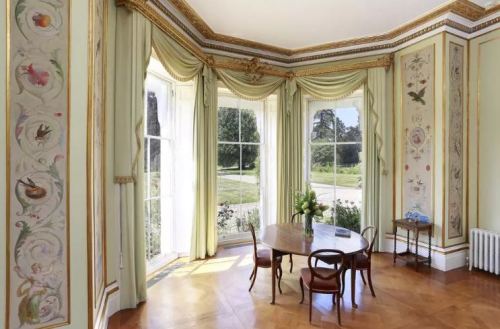
An exclamation from one of the men followed. I bent down and peered into the cavity. On a large beam which here crossed the floor I saw a deep black stain, the stain of long-dried blood! A moment after the carpenter stood suddenly, griped about with one hand amid the woodwork, and drew forth to the light a small sharp stiletto, rusted with the same dismal stain. Nothing more was found. I gave the builder an order to entirely renew the flooring between these two haunted rooms. The most extraordinary part of the story remains to be told. The report of what had taken place having got abroad in the county, the local police came to me to obtain the stiletto, which I had been careful to preserve. By its means they were enabled to unearth a crime which had gone unsuspected till that hour, and to extort a confession from the murderer. Into the details of this terrible case, I do not care to enter. However, it is sufficient to say that the victim had perished while asleep in the attic, and that his blood had actually soaked through the ceiling into the room below, which was that of his murder—the Butler! Later that night, I was alone in the Winchester Mansion. A bright moon was out that night, and I heard a noise like a million soldiers, thrampin’ on the road, so I looked, and the hallway was full of little men, the length of my palm, with gray coats on, and all in rows like one of the regiments; each spoke with a pike on their shoulders and a shield on their arms. One was in front, byway he was the general, walking with his chin up as proud as a peacock. They marched right out the door-to-nowhere and there was another army of men with red coast. The two armies had the biggest fight you have even seen, the grays against the reds.
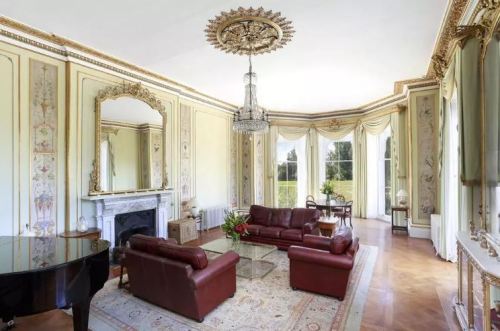
After looking on a bit, I got excited, for the grays were beating the reds like blazes. And then the sight left my eyes and I remembered no more until morning. I was laying on the floor, in the hallway, where I had seen them, as stuff as a crutch. Typically old castles, deserted graveyards, ruined churches, secluded glens in the mountains, springs, lakes, and caves all are the homes and resorts of fairies, as is very well known on the west coast. The better class of fairies are fond of human society and often act as guardians to those that they love. They are believed to living in the Winchester Mansion to receive the souls of dying and escort them to the gates of Heaven, not, however, being allowed to enter with them. On this account, fairies love graves and graveyards and of course this 160-room mansion built to appease the spirits who died at the hands of the Winchester rifle. They have often been seen walking to and fro among the rooms and gardens. There are, indeed, some accounts of faction fights among the fairy bands at or shortly after a new soul enters the mansion. The question in dispute being whether the soul of the departed belonged to one of the other faction. The amusements of the fairies consist of music, dancing, and ball playing. In music their skills exceed that of men, while their dancing is perfect, the only drawback being the fact that it blights the grass, “fairy-rings” of dead grass, apparently caused by a peculiar fungous growth. Mrs. Winchester used to host fairy balls in her Grand Ball Room, the music for which was furnished by an orchestra which the management had no doubt been at great pains expensive to secure and instruct. All around the fairies would dance like angels the fireflies giving them light to see by, and the moonbeams shinning on the lake for it was light to see by. Even now, staff who have been at the Winchester Mystery House sometimes hear the soft strains of their voices in the distance, and will hurry away least they discover one’s presence and be angry at the intrusion of their privacy.
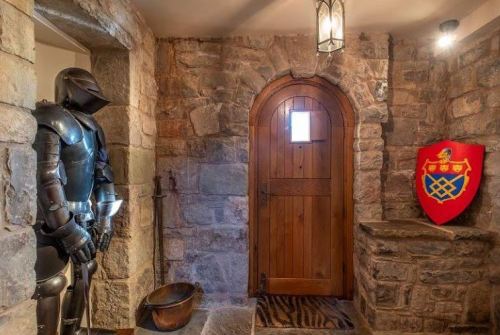
When in unusually good spirits the fairies will sometimes admit a mortal to revels, but if one speaks, the scene at once vanished, one becomes insensible, and generally finds oneself by the roadside the next morning, with the drudgery of pains in one’s arms and legs and back, that if thirteen thousand devils were after one, one could not stir a toe to save the soul of one, that is what the fairies do be pinching and punching one for coming on them and speaking out loud. Black magic has not changed since the Middle Ages. The term “black art” was then applied to magic because the proficient in it were considered to be in league with the powers of darkness. The term “black magic” refers to the art of producing supernatural effect by direct league with Satan and demons. Frequently those who practice black magic make an actual pact with the powers of darkness, signing their allegiance to the devil in their own blood. This ceremony had come down from the Middle Ages to present-day Europe, where it is practiced in parts of Germany, France, and Switzerland. The ritual of signing an agreement involves a complete sell-out to the devil. Some magic involves the direct solicitation and help of demons, specifically the devil. It is the most terrible and powerful form of occult art, majoring in enchantment for persecution and vengeance, but also employing diabolical powers for defense and healing. An example of this nefarious practice is found in the death spells cast by witch doctors among aboriginal people, such as the Papuans on the island of New Guinea. Enchantment for persecution and vengeance, as well as for defense and healing, is still practiced today, not only in pagan cultures but also in civilized lands where occultism flourishes. Literature on magic was found in the Winchester Mansion and auctioned off with the rest of Mrs. Winchester’s belongings. There were incantations, charms, and spells.
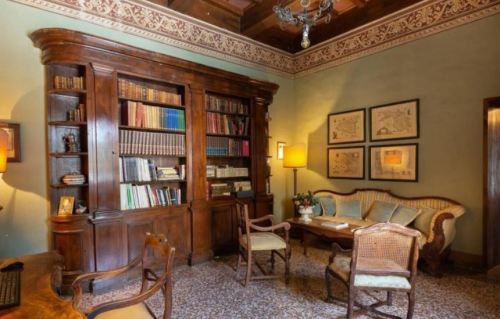
One of the movers, who have never been troubled with psychic disturbances, returned home from taking the items to San Francisco to be auctioned off, and suddenly found himself suffering from acute fear dreams. He had the feeling during sleep that a neighbor lady, the mother of his coworker who was still missing after moving items out of the mansion, was strangling him. The tormented man went to an occultist who told him he was under magic persecution. The neighbor woman was seeking revenge on him for his good fortune in the light of her son’s bad fortune. With the occultist’s help, the terror-dreams creased. (That is why theft from the Winchester Estate is not tolerated. It is said to bring curses on those who remove sacred items without permission or payment.) Then the former mover found himself under a new attack: the neighbor was causing his cattle to die, head after head. The conjurer promised to remedy this new menace. Scraps of paper inscribed with magical formulae were to be mixed with the food of the cattle. The astonishing result was the cessation of the cattle epidemic. In addition to many cases of persecution and self-defense by black magic, occult healing are also common. A local farmer at the Winchester estate went to Mrs. Winchester for counseling and related the traffic results of charming by black magic. The farmer’s son had become paralyzed after an illness. The doctor could not help. However, Mrs. Winchester healed the boy through black magic, so that the paralysis disappeared completely. She had developed this skill after the death of her six-week-old daughter and her husband. Ancient and modern pagan religions, as well as those who subscribe to Christianity, have produced such psychically endowed mediums who have improved their gifts by the study and practice of the magical arts.

From what source people derive their power is not always clear—probably neither to they themselves nor their devotees have ever set themselves the task of unravelling that psychological problem. If they were turned wizards or witches, and indeed they only represented white witchcraft in a degenerate and colourless stage. Their entire time is not occupied with such work, nor, in the majority of cases, do they take payment for their services; they are ready to practice their art when occasion arises, but apart from such moment they pursue the ordinary avocations of rural life. The gift has come to them either as an accident of birth, or else the especial recipe or charm has descended from father to son, or has been bequeathed to them by the former owner; as a rule such is used for the benefit of their friends. Seen from the parapsychological point of view, magic persecution is a mediumistic problem similar to that of materialization. In the same way that a medium can emit energy that can be transformed into the phantasm of a man, so he is able to transform the same energy into the form of an animal. We have on record many cases of the materializations of dogs, cats, frogs, snakes, and even cases where the apparition was half man and half animal. If a phantasm is injured in some way at a spiritistic séance then the medium also suffers in a similar way. The same holds true in the case of animal phantasms. We are thus justified in coming to the conclusion that magic persecution is on the same level as materialization. Many methods of defence magic are based on this fact. If the victim is able to injure the phantasm that is assaulting one, it is reckoned that one has as good won the battle. We have seen then that certain forms of spiritistic offensive and defensive magic are based on materializations.

In 1888, a large black cat was found to be hanging around the Winchester mansion. In one of the cottages, on the estate, a farmer’s wife was about to give birth to a child. The cat would not go away until finally someone threw an axe at it, thereby injuring its leg. Next day it was discovered that an old woman on the estate also hurt her foot. The servants knew this woman to be a master of black magic, and indeed a few days later she took her revenge. On visiting the mother, Ida, of the new-born child, the witch murmured something and at the same time patted the child on the head. Thereafter the child cried continuously for days on end and could not be pacified. It was also discovered that as the child grew up its memory was particularly weak. Afterward the woman had three miscarriages, suffered the early death of her mother and disappearance of her father, but the source of her mental problems was far more spectacular than these mundane tragedies. Using hypnosis, Mrs. Winchester discovered that this mother to a new born had been repressing memories of an horrific past in which she had been an unwilling member of a murderous Satanic cult. Recollections would have convinced many mental-health professionals that she was suffering from pathological delusions. Her “memories” revealed a cult, led by the a monstrous Joris-Karl Huysmans, who indulged in acts of unbelievable brutality in the name of the Devil, such as blood-drinking, and other unspeakable acts. Mrs. Winchester considered the woman to be of nervous debility and easily influenced. When she had the servants cottage searched, they discovered a secret room, holding an apparently sacrificial altar with a wooden dagger suspended above a glass bowl.
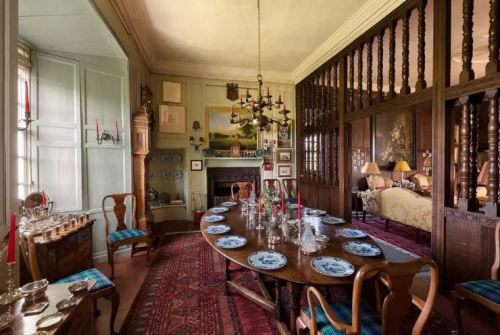
In our files, there are about 40 examples involving cats, and almost all of them deal with the same problem, that of a person causing an apparition to appear in the Winchester Mystery House or elsewhere on the estate. Hamilton Howard was once hired for a job on the estate. The young man was on the verge of being dismissed because he very mysterious. He had a fair share of Satanic drawings in the cottage he was allowed to stay in, while working at a farm hand, and he never had meals with the other men. He belonged to a blood drinking cult. This might explain why stories began circulating about the carcasses of cows being discovered on Mrs. Winchester’s farm and other nearby farms drained of blood, with their eyes, lips, and private organ removed. The mystery of where the blood had cone, and how and why these animals had been operated on with seemingly surgical precision, gave birth to stories of Dracula in California and the California Cannibals. Occasionally, starving people have resorted to cannibalism for survival necessity. It is no secret, however, that Mrs. Winchester had her fair share of hauntings. One night, she heard footsteps going from the basement to the attic and then back again. There were also footsteps in the hall and at first, they thought that it was a burglar. Often her staff would search for an intruder. In addition to the footsteps the lights were sometimes turned on, and the gas too. No amount of careful investigation was able to produce any evidence as to the cause of the apparent haunting. One night, Mrs. Winchester had a séance in her Blue Séance Room. The spirit with whom she had made contact started that he had been a Catholic priest who had lived in the house 200 years before she renovated the original farm house and turned it into a mansion. He had murdered his housekeeper and had buried her in the basement. Since then, he had had to haunt the scene of his crime.
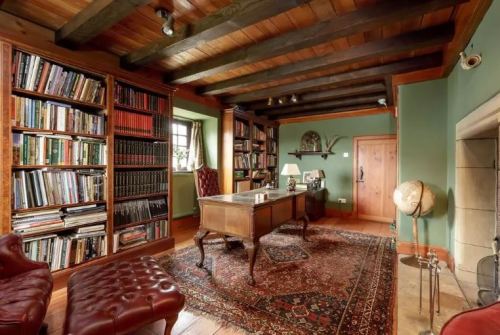
When asked in which room he had murdered the housekeeper the table suddenly began to move across the floor. It then hit the door of the room so hard that the wood was chopped. As Mrs. Winchester opened the door, the table rushed into the adjoining room and slid into the corner. In the course of doing this it hit an oak bedstead so hard that it left a permanent impression on it. The spirit was questioned further and when she asked is there was anything that could be done for him, he replied, “Yes, you can pray for me.” Mrs. Winchester did in fact pray for the restless ghost after that, and for a number of years the mansion was no longer haunted. The mansion has been haunted for several generations before its expansion. However, more than one ghost was attached to the property and it became a nexus for spiritual activity. Every person possesses one’s own home spiritually. This possession continues to live on in the house after the departure of the person concerned. Humans do not only leave behind their physical body when they die, but also a spiritual “larva.” When one dies, one leaves a spiritual complex behind that has an independent existence in the astral World, and which sometimes only disintegrates centuries later. This spiritual complex is supposed to cause the phenomen on ghost and apparitions. For some, the real of the dead is not so much a place as a state of being, and some think that there are times, as for example at one’s deathbed, when this realm of the dead becomes visible to our Earthly eyes. The idea that human beings have to remain in the mortal sphere after their death until they are freed from all the thing that once tied them to the World is widely accepted. This idea is similar to the popular opinion that criminals and other such people have to haunt the place of their crime until they are taken out of this sphere to a higher or lower level of existence. Ghosts do not occur only in connection with spiritism, but we have dealt with them here since the problem arose.

Winchester Mystery House

Are you brave enough to explore the house at night? 👀 The Winchester Mystery House is offering Friday the 13th Self-Guided Flashlight Tours. Tickets going fast! Click the link or hastage for tickets and more information.

I Have Enough Trouble Conjuring Myself Out of Bed in the Morning

Returning from her global trip, Mrs. Winchester arrived in San Francisco, California USA and finding this area seldom subject to thunderstorms, she purchased an unfinished farmhouse four miles west of San Jose. She hired an architect, a foreman and an army of carpenters and work began; architect and foremen quit the first day. The story of their fate was told by one generation to another, but in course of ages the natural cause, well known to the unfortunates at times of the calamity, was lost to view, and the story of the disaster began to assume supernatural features. There was a legend that Mrs. Winchester’s estate contains not only her mansion, but village of Victorian cottages. In the center of the hundred of acres of land was a fountain guarded by spirits, fairies, elves, and leprechawns, who guarded the Winchester Estate. Things went well, the fairies and the people on the estate sharing the benefits of Mrs. Winchester’s farmland, which included orchards of apricots, plums, and walnut trees to supplement Mrs. Winchester’s income. Mrs. Winchester’s financial resources were virtually unlimited; upon her husband’s death, she received $20,000,000 (2022 inflation adjusted $692,780,722.89) in cash and 777 shares of stock in the Winchester Repeating Arms Company. Upon her mother-in-law’s death in 1897, Mrs. Winchester received 2,000 more shared, which meant she owned under fifty percent of the company’s capital stock. This provided her with an income of $1,000 (2022 inflation adjusted $34,639.04) a day—back in the days before income taxes. The combination of her wealth and her eccentric building project gave rise to many rumors in the local community. It was the biggest house that most people had ever seen in their lives with, at the time, over 500 rooms, and 125,000 square feet, four stories high, and a nine-story observation tower.

On the Winchester Estate, there lived two woodcutters; Albert Jennings Fountain and Louis Le Prince. At the time of which I am speaking, Albert was an old man; and Louis, his apprentice, was a lad of twenty years. Every day they went together to a forest situated about a mile from the estate, which was still on Mrs. Winchester’s vast landholdings. On the way to that forest there used to be a wide lake to cross; and there was a boat. Albert and Louis were on their way home, one very cold evening, when a great rain storm overtook them. They reached the boat; and they found that the boatman had gone away, leaving the boat on the other side of the lake. It was no day for swimming; and the woodcutters took shelter in a cottage in the forest. There was a fire place in the cottage and a couple of bedrooms. At first they did not feel cold, but they made a fire anyway. They fastened the door, and lay down to rest with the blankets over them. They thought the storm would be over soon. Albert almost immediately fell asleep; but the boy, Louis, lay awake a long time, listening to the awful wind, and the continual slashing of the rain against the door. The lake was roaring; and the cottage made creaking noises. It was a terrible storm; and the air was every moment becoming colder, even though the fire was blazing in the fireplace; and Louis shivered under his blankets. However, at last, in spite of the cold, he too fell asleep. The door to the cottage was forced open; and, by the moonlit rain, he saw a woman in the room—a woman in all white. She was bending above Albert, and blowing her breath upon him—and her breath was like a bright white mist. Almost in the same moment she turned to Louis, and stopped over hum. He tried to cry out, but found that he could not utter any sound.

The white woman bent down over him, lower and lower, until her face almost touched him; and he saw that she was very beautiful—though her eyes made him afraid. For a little time she continued to look at him—then she smiled, and she whispered: “I intended to treat you like the other man. However, I cannot help feeling some pity for you—because you are so young. You are a pretty boy, Louis; and I will not hurt you now. However, if you ever tell anybody—even Mrs. Winchester—about what you have seen this night, I shall know it; and then you will regret it. Remember what I say!” With these words, she turned from him, and passed through the doorway. Then he found himself able to move; and he sprang up, and looked out. However, the woman was nowhere to be seen; and the rain was pouring hard. Louis closed the door, and secured it by fixing several billets of wood against it. He wondered if the wind had blown it open—he though that he might have been only dreaming, and might have mistaken the gleam of the moonlit rain in the doorway for the figure of a white woman: but he could not be sure. He called Albert, and was frightened because the old man did not answer. He put out his hand in the dark, and touched Albert’s face, and found that it was ice! Albert was stark and dead…by dawn the storm was over; and the boatman returned to his station, a little after sunrise, he found Louis lying senseless beside the frozen body of Albert. Louis was promptly care for, and soon came to himself; but he remained a long time ill from the effects of the cold of that terrible night. He had been greatly frightened also by the old man’s death; but he said nothing about the vision of the woman in white.

As soon as he got well again, he returned to his calling—going alone every morning to the forest, and coming back at nightfall with bundles of wood for Mrs. Winchester’s Hall of Fires. Because of the mansion’s immense size, it contained forty-seven fireplaces and seventeen chimney. One rambling section in particular, the Hall of Fire, was designed to produce as much heat as possible—perhaps to ease Mrs. Winchester’s extreme arthritis. In addition to many widows that let the sunlight stream through, the three adjoining rooms have four fireplaces and three hot air registers from the coal furnace in the basement. One evening, in December of the following year, as Louis was on his way to the Winchester mansion, he overtook a girl who happened to be travelling by the same road. She was a tall, slim young lady, very good-looking; and she answered Louis’s greeting in a voice as pleasant to the ear as the voice of a song-bird. Then he walked beside her; and they began to talk. The girl said her name was Theodosia Alston; that she had lately lost both her parents; and that she was going to visit Mrs. Winchester for tea, who might help her to find a situation as a servant. Albert soon felt charmed by this unusual girl; and the more that he looked at her, the more beautiful she appeared to be. He asked her whether she was yet betrothed; and she answered, laughingly, that she was free. Then, in turn, she asked Louis whether he was married, or pledged to marry; and he told her that, although he had only a windowed mother to support, the question of an “honourable daughter-in-law” had not yet been considered, as he was very young. After these confidences, they walked on for a long while without speaking; but you know the saying, “When the wish is there, the eyes can say as much as the mouth.”

By the time they reached the village, they had become very much pleased with each other; and then Louis asked Theodosia to rest awhile in his cottage on the estate. After some shy hesitation, she went there with him; and his mother made her welcome, and prepared a warm meal for her. Theodosia behaved so nicely that Louis’s mother took a sudden fancy to her, and persuaded her to speak to Mrs. Winchester about a job in the mansion. And the natural end of the matter was that Mrs. Winchester was very pleased with Theodosia and hired her right away. Later on Louis and Theodosia were married. She proved a very good maid and daughter-in-law. When Louis’s mother came to die—some two years later—her last words of affection and praise for the wife of her son. And Theodosia bore Louis thirteen children, boys and girls—handsome children all of them, and very fair of the skin. Mrs. Winchester’s staff thought Theodosia a wonderful person, by nature different from themselves. Most of the women on the estate aged early; but Theodosia, even after having become the mother of thirteen children, looked as young and fresh as on the day when she had first come to the estate. One night, after the children had gone to sleep, Theodosia was sewing by the light of Tiffany lamp; and Louis, watching her said: “To see you sewing there, with the light on your face, makes me thin of a strange thing that happened when I was a lad of twenty. I then saw somebody as beautiful and white as you are now—indeed, she was very like you.” Without lifting her eyes from her work, Theodosia responded: “Tell me about her…Where did you see her?” Then Louis told her about terrible night in the Victorian cottage in the forest—and about the White Woman that had stopped above him, smiling and whispering—and about the silent death of Albert.

And Louis said: “Asleep or awake, that was the only time that I saw a being as beautiful as you. Of course, she was not a human being; and I was afraid of her—very much afraid—but she was so white! Indeed, I have never been sure whether it was a dream that I saw, or the Ghost Woman of the Winchester. Theodosia flung down her sewing, and arose, and bowed above Louis where he sat, and shrieked into his face: “It was I-I-I! Theodosia it was! And I told you then that you would regret this if you ever said one word about it! But for those children asleep there, I would curse you right this moment! And now you had better take very, very good care of them; for if every they have reason to complain of you, I will treat you as you deserve!” Even as she screamed, her voice became thin, like a crying of winds—then she melted into a bright white mist that spired to the roof-beams, and shuddered away through a chimney. Never again was she seen. Soon after there were reports of graves being opened, and bodies stolen. Reports of rash cattle mutilations, and killing of two hundred dogs, cats, and pigs in that area. When Louis went back to the cottage, he found a fire containing animal bones, along with a crude Satanic altar, as a group of youth were interrupted conducting a conjuring spell. There were Satanic pentagrams on the walls. Some years later, a woman at the Winchester mansion believed that another desired to steal the butter she had just churned, flew in a passion, assaulted her and threw her down, breaking her arm in the fall. The woman was burnt, not because she was a witch, but in the belief that the real servant had been taken away and a fairy changeling substituted in her place; when the latter was subjected to the fire it would disappear, and the servant would be restored. Thus the underlying motive was kindness, but on, how terribly mistaken!

By chance there came onto the Estate an angel who had been sent from Heaven to observe the servants of the Winchester mansion and note their piety. In the garb and likeness of a man, weary and footsore with travel, the angel spied the castle (mansion) from the hills above the lake, came down, and boldly took a night’s lodging in Mrs. Winchester’s mansion. Mrs. Winchester asked him, “Where would you like to sleep, beautiful creature?” The angel pointed to a spot nearby the parlor, told Mrs. Winchester he would be happy there and to build and prosper; then, as the awe-stricken widow kneeled before him, his clothing became white and shining, wings appeared on his shoulders, he rose into the air and vanished. And one night, on a day of the thunder and lighting and big rain there did a ghost come into Mrs. Winchester’s mansion. Objects were thrown through the air and furniture moved around by its. A heavy oak wardrobe moved six feet across the room. Some knocking and scratching noises were heard in the house, and again objects were seen to fly through the rooms for no apparent reason. It was observed that the object sometimes travelled in a rectangular course which is physically impossible. These events grew even more complicated, and things began to appear and disappear in both closed rooms and containers. Mrs. Winchester was very annoyed as her bed started levitating. A lady came to her that night while she was elevated, she was dressed in white, with a wreath on her head, and said Mrs. Winchester was in danger. She then told the maid, “If you receive this woman’s pension-book without taking off her clothes and cleaning them, and putting out her bed and cleaning up the house, you will receive a curse. The ravings of this creature were accepted as gospel truth.
A torrent of rain fell from the sky, and drowned several of the farmers, and a lake was formed over the spot where they stood when the curse was pronounced. And sometimes, they say, when the mansion is quite still, one may hear the groans of the lost souls that where once chained at the bottom. A lot of supernatural activity happened on the estate than many cannot explain. Mrs. Winchester may have been trying to confuse evil spirits. There were no budget ceilings or deadlines to meet. This resulted in many of the 600 rooms, and features being dismantled, built around, or sealed over. Some rooms were remodeled many times. However, because so many rooms were redone, and astounding 160 rooms still remain today. This naturally resulted in some peculiar effects, such as stairs that lead to the ceiling, doors that ho nowhere and that open onto walls, and chimneys that stop just short of the roof! Mrs. Winchester once had some silverware stolen and she suspected a young mad who worked for her and who already had quite a bad reputation. Mrs. Winchester turned to a spiritist for help. This man was both a clairvoyant and a medium, and he also possessed the remarkable powers of materialization and dematerialization. This spiritist went with the woman into the back yard of her house and there put himself into a trance. Suddenly they were disturbed by a strange noise from the roof of the house, and then the stolen silverware fell from the roof on to a pile of hay beside the house. Mrs. Winchester had no idea how this was accomplished. One might be able to find a natural explanation for this occurrence, as for example someone throwing the stolen articles out of the skylight at that moment. It could not have been the maid though, for she had already been given notice. However, it could have been one of the other employees with whom she had been friendly, and who may have received the stolen articles from her.

The word “divine” is derived from the Latin divinus, meaning “divinely” inspired and pertaining to a deity (divus).” Thus a diviner is one who practices divination. One processes to predict future events or to reveal occult things by supernatural means. Divination is a specialized for of magic. In magic, demonic agencies are resorted for performing superhuman feats. In divination, magic is used to foresee the future. Divination relates to magic as prophecy relates to miracle. Both divination and prophecy imply special knowledge. In divination it is unclear if it is godly or demonic. However, magic is supposed to be Satan’s imitation of God’s miracles. Genuine fortune-telling or divination assumes the existence of superhuman spiritual beings. It also assumes that these beings possess knowledge which humans do not have and that they are willing, upon certain conditions that are familiar to diviners, to transmit this information to humans. In ancient times, the convictions prevailed widely that not only oracles but omens of all types were given to humans by the gods. In the cases of supernatural invention, the various forms of fortune-telling were real divinatory phenomena. Divination supposedly invites the activity of demon spirits because it seeks secret knowledge. Rock music has an incessant throbbing beat, the same beat that people in primitive cultures use in their demonic rites and dances. If the beat is monotonous enough it can induce a state of hypnosis. The fundamentalists and their allies attributed powers to rock music that were inherently supernatural, sorcery wrapped in a thin veil of pseudoscientific gibberish. Since its inception by British bands Black Sabbath and Led Zeppelin, heavy metal has always had a heady whiff of brimstone about it. As the genre took off, and mental bands have been filling stadiums with fans, the Devil increasingly symbolized their bombastic form of rebellion.

Satan translated from Hebrew means “accuser” or “adversary,” and that was precisely the role Satan played in Judaic angelology before the Persian influences. Satan was at the time, at the very most, slightly rebellious and resentful, perhaps wishing to work evil but forces to promote good due to the overriding influence of God. His function was to accuse humans before God, expose their infidelity, and then bring about their punishment—but only under the auspices of God Himself. To some, Satan symbolizes man’s evil inclinations. The sign of the devil’s horns—index and little fingers extended from a fist—replaced the peace sign as youth culture’s salute. Many may not know this, but AC/DC stands for “Away from Christ/the Devil Comes,” while KISS is “Kids in the Service of Satan.” Many artists are accused of producing backward, or “back-masking,” music on records. The back-masking myth contends that messages recorded backwards and camouflaged with music can enter a person’s mind without them knowing it, as a subliminal form of brainwashing. Like the hypnotic effects of the “druid beat,” many considered it as sorcery. In 1986, evangelist Jim Brown of Ohio led 75 young people in the mass burning of records containing the theme tune to Mr Ed, the popular TV comedy show about a talking horse. If the song “A Horse is a Horse” was played backwards, Mr. Brown explained, the message “Someone sung this song for Satan” could be heard. Some evangelist believe that all rock music was “a carefully masterminded plan instigated by Satan himself.” However, in dealing in the extraordinary phenomena that undulate between the natural and the supernatural, the physical and superphysical, some discount any theory that postulates evil supernaturalism. Yet, to be fully meaningful, the scientific studies in parapsychology must take into consideration the reality of the spirit World of evil (Satan and demons).

To limit the scientific to the natural plane of existence is to omit some of the data responsible for certain natural effects. The result of such study is a tendency to explain away rather than objectively explain supernatural events and to end up with learned theories that ignore part of the evidence. This is where current parapsychological studies stand. They are, however, exceedingly valuable in focusing scientific interest on the supernatural realities behind occultism. If they would recognize the influence of evil supernaturalism in psychic activities, they could advance to great achievements. As an ingredient of idol worship, magic goes back to antiquity. By virtue of their multiplicity and limited knowledge and power, the gods (demons) of paganism are incapable of establishing stability and security in society. This deficiency forced both gods and men to make use of magic—an inactive power independent of god and men, but which could be activized by the assistance of incantations and rituals in order to accomplish supernatural deeds. Magic—like divination—is the divinely forbidden art of bringing about results beyond human power by recourse to superhuman spirit agencies (Satan and demons). In the widest sense of this definition, divination is but a species of magic employed as a means of securing secret and illegitimate knowledge, especially of the future. If magic is genuine and not ere deception or hocus-pocus, it must be personal. Living, intelligent spirit beings become the real agents. Humans, by incantations and ceremonies, actually influence and even control these spirit agents. The activity of such superphysical agents of evil produces the extrasensory phenomena of magic, that is, occurrences the transcend the normal operation of physical law and the perception of human’s five senses. This is how the Winchester Mystery House became known as “the house built by the spirits.”
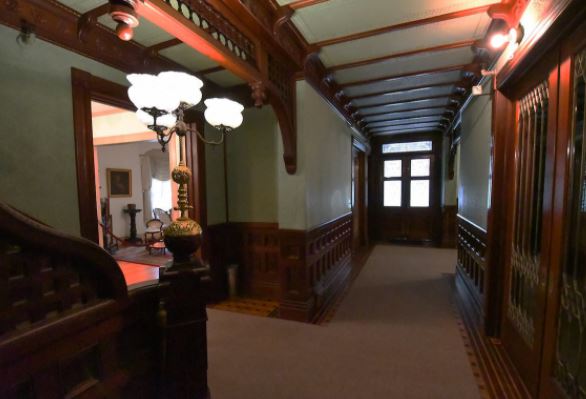

The Winchester Mystery House is open all weekend until 5PM! Ghostly tales are bountiful at Sarah Winchester’s Mystery House. Come explore the beautiful & bizarre Winchester Estate.

Kitchen Dramas—Are they Arms Race or Saving Civilization as We Know it?

One a person experiences the full impact of the conflict in consciousness, one turns in an accusing rage on the target object. During the past several years, I have spent a good deal of my time blaming television for many of the more obvious dysfunctions from which Western culture—and especially America—is now suffering. It has been pointed out to me that I do this because I am by nature a negative person, always ready to condemn what is wrong rather than to praise what is right. Several of my students have even gone so far as to observe that had I lived during the period of incunabula—during the first fifty years of the printing press—I would have burdened everyone with a long list of depressing prophecies about the dangers of the machine-made book and universal literacy. However, my students are only half right. Assuming I had the brains to see what was happening in the year 1500, I would certainly have warned the Holy See that the printing press would place the word of God on every Christian’s kitchen table, and, as a consequence, the authority of the Church hierarchy would be put in jeopardy. Had I been granted a papal audience, I would have warned the Pop that armed with a printing press, Martin Luther was more than a malcontent priest suffering from a bad case of constipation. The printed word made him a serious revolutionary. I might also have warned the local princes that their days were numbered, that printing would give form to a new idea of nationhood which would make local potentates obsolete. And if the Brotherhood of Alchemists had allowed me to give the keynote address at their annual convention, I would have told them to go into another line of work, that printing would give great impetus to inductive science and that alchemy would not stand against the glare of publicly shared scientific knowledge. #RandolphHarris 1 of 20

I would also have told any wandering bards who came my way that within a hundred years their trade would lie in ruins, that tribal lays and epic poetry were doomed, and that they would be wise to urge their trainees to turn their talents to writing essays and reading novels. Now, not every one of these prophecies foretells a bad thing. That is why I said my students are only half right. Whether or not a prophecy is negative depends on your point of view. For example, since most of you are Lutherans, you probably would have cheered the breakup of the Holy Roman Empire. The Catholics of those times would, of course, have mourned it passing. In any case, there are some changes brought about by new media benefit some, harm others, and to a few do not make much of a difference. This is as true of television as it was of the printing press or any other important medium, although in the case of television there are very few indeed who are not affected in one way of another. For most of you here, television will provide a gratifying career. On the other hand, and in the long run, television may bring an end to the careers of schoolteachers, since school itself was an invention of the printing press and must stand or fall on the issue of how much importance the printed word will have in the future. New media break up old knowledge monopolies; indeed, create new conceptions of knowledge, even new conceptions of politics. If not for television, Joe Biden, for example, would not be President of the United of America, which is good for him and the interests he represents, but not so good for the poor and vulnerable. However, television can people good as it creates a true theater of the masses. For example, between the years 1948 and 1958, approximately 1,500 fifty-two-minute plays were performed “live” on American television. #RandolphHarris 2 of 19

“Live” means that these plays were performed at the precise moment they were seen by the television audience, a condition which since the advent of videotape and the widespread use of film has become increasingly rare; “fifty-two minutes” describes the actual running time of the play, eight minutes of the hour being subtracted for commercial messages, the listing of credits, and publicity for the next week’s play. There is no doubt that American television’s finest dramatic moments were provided by fifty-two-minute hours, particularly by such weekly series as the Kraft Television Theater (1947-58), the Philco-Goodyear Playhouse (1948-50), and the Studio One (1948-57). These programs began by presenting adaptations of classic and established contemporary novels but by 1950 had shifted to original dramatic work. By that time, such producers and directors as Worthington Miner, Fred Coe, Delbert Mann, Arthur Penn, and John Frankenheimer has assembled about them several gifted young writers who were prepared to devote their collective talents to a serious exploration of television’s artistic resources. Included in that group, among others, were Reginal Rose, Tad Mosel, Robert Alan Aurthur, Horton Foote, Rob Serling, J.P. Miller, and Gore Vidal. None, however, wrote more fittingly for television than Paddy Chayefsky, whose name, along with Edward. R. Murrow’s, symbolizes what romantics call “the golden age of television.” Mr. Chayefsky was to the “original” television drama what Mr. Ibsen was to the “social drama,” which is to say that he was one of the first creators and certainly its most distinguished one. Like Mr. Ibsen, he achieved an almost perfect union of form and content. Critics have observed, for example, that the effects that Mr. Ibsen achieved in A Doll’s House and Ghosts were a function not only of his themes, with which audience were certainly familiar in 1879 and 1881, but also of the stark, simple, and economical form in which he stated them. #RandolphHarris 3 of 19

Social dramas had been written before Mr. Ibsen, but it remained for him to discover the form for dramatizing social problems. Mr. Chayefsky, of course, did not write for the stage behind a proscenium arch, viewed from a distance in a darkened theater. He wrote for a seventeen-inch screen situated in a family living room, on which the only colors were varying shades of gray. He also had to present his story, from start to finish, in fifty-two minutes, and he could make two assumptions with absolute assurance: that his play would be interrupted at least twice for commercial messages, and that he would have to attract his audience instantly or lose much of it to other channels. He knew, too, as did his director, Delbert Mann, that the picture on the television screen is considerably cruder in visual definition than that on a motion-picture screen. So Mr. Chayefsky wrote his plays in anticipation of the audience’s observing the players in almost unrelenting “close-up.” Mr. Chayefsky realized that some of these technical-aesthetic conditions could create, as could perhaps no other medium, a sense of utter and absolute reality; could create the illusion that what the audience was seeing was not a mere play but life as seen through a seventeen-inch, nearly square hole. Beginning with a play called Holiday Song, which dealt with a rabbi’s re-examination of one’s faith in God, Mr. Chayefsky created a series of dramas that have often been characterized as “small” masterpieces, sometimes referred to as “kitchen” dramas, since much of the action seemed to take place in family kitchens. In any case, they were plays about unexceptional situations. The plots were uncluttered, and undaring, and highly compressed. They had few unexpected turns, little action, no treachery, no perversion, and no heroic gestures (in the traditional sense). #RandolphHarris 4 of 20

Mr. Chayefsky’s stories were “small” very much as Sherwood Anderson’s stories are small. The setting was New York, not small-town Ohio, but like Mr. Anderson, Chayefsky explored in economical but meticulous detail the agonizing problems of small people. And thus he elevated the status of both the problems and the people who suffered them. In fact, Mr. Chayefsky once remarked that “Your mother, sister, brothers, cousins, friends—all of these are better subjects for drama than Iago.” He was talking, of course, about television drama. Mr. Chayefsky’s most known play, Marty, tells the story of an unmarried, inarticulate butcher who is attacked to a sensitive but homely woman. Marty’s friends attempt to dissuade him from seeing the woman because she is, in their words, “a dog.” His mother, who fears being abandoned resents the woman bitterly. Against a backdrop of such universal themes as man’s need of loving and being loved, his fear of living alone, and his need to communicate, Mr. Chayefsky pursued his “small” story with persistent literalness, concluding with an equally “small” crisis in which Marty decides, against the protests of his friends and family, to phone the woman and ask her for a date. On the stage of in a novel, the plot would be too flimsy to carry much dramatic weight. When the play was adapted for the movies, it required more “movement” or action and the addition of at least one subplot. On the television screen, however, they play was an artistic triumph, producing a disturbing and edifying illusion of intimacy. Perhaps no other medium is better suited to the “slice of life” drama than television, a fact that is apparently well known to Ingmar Berman. Although television was invented in the 1920s, it did not exist for any practical purposes until after World War II. It is easy to forget that advertising, at least on the scale we have come to know it, barely existed before then either. #RandolphHarris 5 of 20

In 1946, advertisers spent about $3 billion. For the previous two decades, advertising expenditure had been fairly constant at about that level. By 1975, however, the national advertising budget had grown by 1,000 percent to $30 billion. In 2021, the national advertising budget reached $82 billion (expected to around $95 billion by the end of 2022). In that same year the television advertising budget has skyrocketed to $68 billion, and could be approximately $80 billion by the end of 2022. As you see, most of the increases in advertising. However, what is significant is that within only tend years of its effective inauguration, television was absorbing 60 percent of all advertising spending and driving hundreds of newspapers, magazines and radio stations out of the market. A symbiotic relationship developed. Advertising financed television’s growth. Television was the greatest delivery system for advertising that had ever been invented. We could call it love at first sight, except in this case, the match may have been prearranged. If you are fortunate enough to recall, think back to the days immediately after World War II. Although I was only ten in 1945, I remember the expectant and uncertain feeling of the times very well. Everyone was relieved that the war was over and was expecting things to get back to normal, but what was normal? Memories of the Depression loomed. I remember listening to my parents talk with their friends on those backyard summer evenings of 1945, and I could feel the fear. Like most ordinary people, my parents know that the war had alleviated the Depression. During the war, American industrial capacity, lying fallow only a few years before, had actually expanded to build the military machine. My father’s own business was an example. Now there were no more uniforms to make, and no more tanks. The war had given men jobs as soldiers and women jobs as factor workers. Full employment had practically become a reality. Now Johnny was marching home again, jobless. #RandolphHarris 6 of 19

If this was the talk among ordinary people, one can only imagine what was said in industrial boardrooms and at the Department of Commerce. With industrial capacity and capital investment expanded as they were, the consequences of a drop in production could make the 1930s look like golden years. A long-standing criticism of capitalism—that it can stave off cyclic depression only through war-seemed about to be confirmed. Suddenly in 1946, government and industry started making identical pronouncements about regearing American life to consume commodities at a level never before contemplated. It was not that military production was about to be abandoned. Even now it remains the single most important factor in the United States of America’s economy. However, in 1946 with the war just over, it was not clear that the decline in military spending would be as temporary as it turned out to be. Some new offsetting factor was needed. Thus, a new vision was born that equated the good life with consumer goods. An accelerate economy, continuing booming expansion of wartime, added to a new consumer ideology achieved the greatest economic growth rate in the country’s history from 1946 to 1970. To make such growth possible, both ends of the transformation process described previously had to be hyped up. First, we needed to insure an abundant supply of raw material to convert into commodities. This led to a burst of American investment overseas as well as to enormous assistance programs for sympathetic “underdeveloped” countries. Often we secured our supply by the creation of client governments propped up with military assistance. Raising anticommunism to the status of a holy war in the 1940s and the 1950s formed the political foundation for these military and economic programs and underlay the assertion of the patriotic virtues of foreign investment. #RandolphHarris 7 of 19

At the other end of the transformation equation, an accelerated movement of commodities into consumers’ homes was critical. People had to be convinced that life without all these products was undesirable and unpatriotic. It was time to forget the rationing of the war years and consumer for your country. Advertising and television were the dynamic duo that would rededicate the consuming American. Advertising’s ability to create a passionate need for what is not needed was already well established. Since economic growth and a consumer economy had to be based upon selling far more commodities than were needed to meet actual needs, economic growth depended upon advertising. Television, which had been lying around in mothballs since the 1920s, was dusted off and enlisted as the means to deliver the advertising lifestyle fast, right into people’s homes and heads. Quick to spot any new technology that could assist their urgent cause, big advertisers immediately invested hundreds of millions of dollars in developing this idle sales tool. And so advertising gave birth to television, and television have advertising a whole new World to conquer. Together they made possible an enormous, though temporary, economic bonanza. Can you recall the TV advertising of the 1940s and 1950s? Smiling, happy people. Scrubbed children. Housewives showing their impossibly clean wash. Smiling junior-executive husbands emerging from their new cars, greeted at the picket fence by their clean, cheerful families? The happy mowing of the lawn. The happy faces reflected off the polished toasters? The nuclear family was idealized to a greater extend than ever before, because the family was the ideal consumption unit. Women had to get out of those factories and overalls and back into little pink dresses in the kitchen. #RandolphHarris 8 of 19

Those returning soldiers needed jobs. Rosie the Riveter gave way to June Allyson. Separate family units maximized production potential. Private homes. Private cars. Two cars. Private washing machines. Private television sets. Within a few years, the World started changing. The battery-operated lawn mower I saw on television one day appeared on my lawn the next week. So did the car. The whole neighborhood started looking like a television commercial. The woods near my house in disappeared and were replaced by hundreds of identical versions of my house. Neighborhoods everywhere started looking like each other. Freeways replaced country roads. Shopping centers replaced corner markets. Pavements covered everything. “Prosperity,” “security,” “happiness,” studded ads and presidential speeches alike. This incredible outpouring of commodities, this entire revamping of landscape, this filling of houses with gadgets was supposed to constitute some kind of Latter-Day Saints Kingdom of God. That is what everyone was thinking, saying, and believing. It was what made America America. One of my high school teachers during the 1950s told my class that it was America’s commitment to a consumption economy that made our country different and better than all others. He told us that by expanding our economy, we could soon make everyone wealthy. America was already the World’s only classless society, he said. Workers and managers were equal partners in a glorious process benefiting everyone. In America everyone was equal. Our standard of living made it that way. Everyone could have a car. Everyone could have a business. We are not developing nations, where the water is dangerous to drink, and there are few rich people and everyone else is poor and all of them wished they had what we had. Because of this prosperity, we did not have to deal with the chaotic times of psychological and spiritual upheaval nor have actual fear among people of witchcraft, sorcerers, and others who claimed to know how to consort with the demons. The medieval period had died, and the modern period was born. #RandolphHarris 9 of 19

A few years later at the Wharton School of Business at the University of Pennsylvania, I learned how and why this commodity life and the economic growth it produces was supposed to be so good for absolutely everyone. I learned that they had been talking about in these boardrooms and at the Department of Commerce. It was called the “trickle-down theory.” It goes more or less like this: Industrial expansion, rapid economic growth and the consumption economy benefit everyone. The theory—which is the basis of Keynesian American economics—has it that when people buy more and more commodities, they produce more profits for industry, enabling it to expand. When industry expands, more jobs result. This puts more money into circulation, enabling people to buy more commodities, expanding profits again, yielding more investments, more jobs and starting the cycle around on another turn. This is an oversimplified process, which leaves out such variables as savings, borrowing, and so on. The way it is presented here is more or less the way it is translated through the media and through out educational system into popular understanding: a beautiful circle of activity, everyone helping everyone else, labor and management rowing the boat together, all serving the common good and growing endlessly. It explained the patriotic urgency of people spending more and more on commodities. The benefits would “trickle down” to everyone in this country, including those at the bottom on the pyramid. Jobs, money, prosperity, happiness, security, democracy, equality were all lumped together as inevitable results of this cycle. Most people believe in this “trickle-down-theory” still. Presidents get elected based on whether they can convince the public that they will stimulate the beautiful cycle. President Trump was elected for doing it and he proved his word. #RandolphHarris 10 of 19

The tickle-down theory is the nice simple kind of economic model that can be sold to a mass population removed from any deeper understanding of how things really work. Trying to come to grips with economic nuance is for most of us no easier than trying to understand how much nuclear radiation is “safe.” Who knows? The “experts” know. Like every other organizing model in our society, economic processes have been removed from personal participation, appropriated into a nether World of flow charts, financial analyses, and circle graphs. Like scientific and technological systems, once economic systems reach a certain size and complexity, they can be controlled only by forces far outside the grasp of the individual and community. One explanation of them sounds as plausible as another. In the absence of a really thorough training in economics—a training which itself supports many arbitrary and fantastic theories—this trickle-down model of the benefits of a consumer society sounds perfectly valid. It certainly seemed valid for a little while. People had jobs, the economy was growing, and homes were filling up with every more intricate gadgets. Only now, thirty years after the trip was launched, can we see the process from the vantage point of joblessness, inflation, bankruptcy and default, and realize that something was terribly wrong somewhere. In fact, it was a fantasy. It was packaged and sold to us like the seven-piece matching living-room sets on the television screen. Buy now, pay later when you are richer than you are now. However, when later came, very few of us were richer (and that usually happens to everyone). It turned out that the pursuit of all those happy goodies did not produce happy people; it produced isolated, frustrated, alienated people. More important, the economic benefits did not trickle down to create some egalitarian democracy. The benefits tickled up. That is why President Trump also used the tickle charger. Not only did he cut taxes, but also infused the less affulent with supercharged unemployment benefits, and helped the veterns, disabled, retirement and others reciveing government transfer pays by sending the a large cash sum of money, and then a few other payments for less, and he also supported businesses get through the pandemic. So the economy was stimulated and had a few trickle charges to keep the market flowing well. #RandolphHarris 11 of 19

The democratic revolution succeeded in extending formal self-government and opportunity to nearly everybody, regardless of birth, property, or education. However, it gave up the ideal of the town meeting, with the initiative and personal involvement that alone could train people in self-government and give the practical knowledge of political issues. The actual result has been the formation of a class of politicians who govern, and who are themselves symbolic front figures. Correspondingly, the self-determination won by the American Revolution for the regional states, that should have made possible real political experimentation, soon gave way to a national conformity; nor has the nation as a whole conserved its resources and maintained its ideals. The result is a deadening centralism, with neither local patriotism nor national patriotism. The best people do not offer themselves for public office, and no one has the aim of serving the Republic. Typical is the fate of the hard-won Constitutional freedoms, such as freedom of speech. Editors and publishers have given up trying to give an effective voice to important but unpopular opinions. Anything can be printed, but the powerful interests have the big presses. Only the safe opinion is proclaimed and other opinion is swamped. The liberal revolution succeeded in shaking off onerous government controls on enterprise, but it did not persist to its goal of real public wealth as the result of free enterprise and honestly informed choice on the market. The actual result is an economy dominated by monopolies, in which the earnest individual entrepreneur or inventor, who could perform a public service, is actively discouraged; and consumer demand is increasingly synthetic. Conversely, the Jeffersonian ideal of a proud and independent productivity yeomanry, with natural family morals and a co-operative community spirit, did in fact energize settling the West and providing the basis for our abundance. #RandolphHarris 12 of 19

However, because it has failed to cope with technological changes and to withstand speculation, “farming as a way of life” has succumbed to cash cropping dependent on distant markets, and is ridden with mortgages, tenancy, and hired labor. Yet it maintains a narrow rural morality and isolationist politics, is a sucker for the mass culture of Madison Avenue and Hollywood, and in the new cities (exempli Gratia, in California, where farmers have migrated) is a bulwark against genuine city culture. Constitutional safeguards of person were won. However, despite the increasing concentration of state power and mass pressures, no effect was made to give to individuals and small groups new means easily to avail themselves of the safeguards. The result is that there is no longer the striking individuality of free men; even quiet nonconformity is hounded; and there is no asylum from coast to coast. Fraternity—this short-lived ideal of the French Revolution, animating a whole people and uniting all classes as a community, soon gave way to aa dangerous nationalism. The ideal somewhat revived as the solidarity of the working class, but this too has faded into either philanthropy or “belonging.” Brotherhood of races—the Civil War won formal rights for African Americans, but failed to win social justice and factual democracy. The actual result has been segregation, and fear and ignorance from various people of all races. However, in the 2020s, that stigma is fading. Pacificism—this revolution has been entirely missed. Acceleration not only makes facts obsolete but blunts some of the key tools we use when we think. Analogy provides a case in point. It is virtually impossible for us to think without relying on analogies. This “thought-tool” is based on identifying similarities in two or more phenomena and then drawing conclusions from one to apply to the other. Doctors, we noted, will often say “the heart is like a pump” and then describe its “values” and other components in mechanical terms. This model helps them conceptualize and treat the heart. Often this process yields powerful results. #RandolphHarris 13 of 19

However, once similarities are identified, it is typically taken for granted that the similarities continue. And in slow-change eras, they may do so for long periods. In today’s hyper-change environment, however, once-similar things also change and very often become markedly dissimilar, often making conclusions based on the analogy false and misleading. To deal with today, therefore, we need not only new knowledge but new ways to think about it. Yet too many economists, consciously or otherwise, cling to the belief that economics is analogous to physics. This notion arose centuries ago, when Newtonian ideas about equilibrium, causation and determinism dominated that science. Since then, of course, physicists have drastically revised their views about these matters. However, many economists still base their findings on crude Newtonian assumptions. Trained to think in industrial terms, many find it difficult to grapple with the odd character of knowledge—the fact that it is non-rival and non-depletable, that it is intangible and thus hard to measure. It is only when we set today’s failures of economics alongside the looming crisis in science that we begin to gauge their true significance. For together these two fields have the greatest—or at least the most direct—impact on how we create wealth. And both are heading for transformation. When it comes to relationships, a university teacher of liberal arts cannot help confronting special handicaps, a slight deformity of the spirit, in the students, ever more numerous, whose parents are divorced. I do not have the slightest doubt that they do as well as other sin all kinds of specialized subjects, but I find they are not as open to the serious study of philosophy and literature as some other students are. I would guess this is because they are less eager to look into the meaning of their lives, or to risk shaking their received opinions. #RandolphHarris 14 of 19

In order to live with the chaos of their experience, they tend to have rigid frameworks about what is right and what is wrong and how they ought to live. They are full of desperate platitudes about self-determination, respect for other people’s rights and decisions, the need to work out one’s individual values and commitments, etcetera. All this is a thin veneer over boundless seas of rage, doubt, and fear. Young people habitually are able to jettison their habits of belief for an exciting idea. They have little to lose. Although this is not really philosophy, because they are not aware of how high the stakes are, in this period of their lives they can experiment with the unconventional and acquire deeper habits of belief and some learning to go along with them. However, children of divorced parents often lack this intellectual daring because they lack the natural youthful confidence in the future. Fear of both isolation and attachment clouds their prospects. A large measure of their enthusiasm has been extinguished and replaced by self-protectiveness. Similarly, their open confidence in friendship as part of the newly discovered search for the good is somewhat stunted. The Glauconian eros for the discovery of nature has suffered more damage in them than in most. Such students can make their disarray in the cosmos the theme of their reflection and study. However, it is a grim and dangerous business, and more than any student I have known, they evoke pity. They are indeed victims. An additional factor in the state of these students’ souls is the fact that they have undergone therapy. They have been told how to feel and what to think about themselves by psychologists who are paid by their parents to make everything work out as painlessly as possible for the parents, as part of no-fault divorce. If ever there was a conflict of interest, that is it. There are big bucks for therapists in divorce, since the divorces are eager to get back to persecuting the wretches who smoke or to ending the arms face or to saving “civilization as we know it.” #RandolphHarris 15 of 19

Meanwhile, psychologists provide much of the ideology justifying divorce—exempli gratia, that it is worse for kids to stay in stressful homes (thus motivating the potential escapees—that is, the parents—to make it as unpleasant as possible there). Psychologists are the sworn enemies of guilt. And they have an artificial language for the artificial feelings with which they equip children. However, it unfortunately does not permit such children to get a firm grip on anything. Of course, not every psychologist who deals with these matters simply plays the tune called by those who pay the piper, but the givens of the market and the capacity for self-deception, called creativity, surely influence such therapy. After all, parents can shop around for a psychologist just as some Catholics used to shop for a confessor. When these students arrive at the university, they are not only reeling from the destructive effects of the overturning of faith and the ambiguity of loyalty that result from divorce, but deafened by self-serving lies and hypocrisies expressed in a pseudoscientific jargon. Modern psychology at its best has a questionable understanding of the soul. It has no place for the natural superiority of philosophic life, and no understanding of education. So children who are inclined to believe that philosophy live in a less enlightened state and have a long climb just to get back up to the cave, or the World of common sense, which is the proper beginning for their ascent toward wisdom. They do not have confidence in what they feel or what they see, and they have an ideology that provides not a reason but a rationalization for their timidity. These students are the symbols of the intellectual-political problems of our time. They represent in extreme form the spirit vortex set in motion by loss of contact with other human beings and with the natural order. #RandolphHarris 16 of 19

However, all students are affected, in the most practical everyday way, unaware that their situation is peculiar, because their education does not give them perspective on it. Now, Web sites routinely collect detailed data on visitor behavior, and those statistics underscore just how quickly we leap between pages when we are online. Over a period of two months in 2008, an Israeli company named ClickTale, which supplies software for analyzing how people use corporate Web pages, collected data on the behavior of a million visitors to sites maintained by its clients around the World. It found that in most countries people spend, on average, between nineteen and twenty-seven seconds looking at a page before moving on to the next one, including the time required for the page to load into their browser’s window. German and Canadian surfers spend about twenty-one second, Indians and Australians spend about twenty-four seconds, and the French spend about twenty-five seconds. On the Web, there is no such thing as leisurely browsing. We want to gather as much information as quickly as our eyes and fingers can move. That is true even when it comes to academic research. As part of a five-year study, a group from University College London examined computer logs documenting the behavior of visitors to two popular research sites, one operated by the British Library and one by a U.K. educational consortium. Both sites provided users with access to journal articles, e-books, and other sources of written information. The scholars found that people using the sites exhibited a distinctive “form of skimming activity” in which they would hop quickly from one source to another, rarely returning to any source they had already visited. They would typically read, at most, one or two pages of an article or book before “bouncing out” to another site. “It is clear that users are not reading online in the traditional sense,” the authors of the study reported; “indeed there are signs that new forms of ‘reading’ are emerging as users ‘power browse’ horizontally through titles, contents pages and abstracts going for quick wins. It almost seems that they go online to avoid reading in the traditional sense.” #RandolphHarris 17 of 19

The shift in our approach to reading and research seems to be an inevitable consequence of our reliance on the technology of the Net, and it bespeaks a deeper change in our thinking. There is absolutely no question that modern search engines and cross-referenced websites have powerfully enabled research and communication efficiencies. There is also absolutely no question that our brains are engaged less directly and more shallowly in the synthesis of information when we use research strategies that are all about “efficiency,” “secondary (and out-of-context) referencing,” and “once over, lightly.” As people are falling in love with the Internet, reading and its mediums is reminiscence of some of Capellanus’s more universal rules. He believed that love is always in a flux, either growing or diminishing. Making it public usually kills it. Its very nature as next to impossible to consummate is also its most powerful stimulus, and during its fleeting lifetime, jealously will sharpen the intensity of the country lovers feelings. Courtly love is obsessive and best endured by constant contemplation of the beloved. By the fourteenth century, an anonymous poet was refining the notion of love. In his “Ten Commandments of Love,” he advocated faith or honesty, attentiveness, discretion, patience, secretness, prudence, perseverance, pity, measure or moderation, and mercy. The lover in Chaucer’s “Complaint to His Lady” is so excessively long-suffering that he swears to obey his lady in whatever she dies, would rather die than offend her, and begs only for a drop of her grace. Here is his version of courtly love: “But I, my lyf an deeth, to yew obeye, and with right buxom herte, hooly I preye, as [is] your moste pleasure, so doth by me; and therfor, swete, rewe on my peynes smerte, and of your grace, graunteth me some drope; for ells may me laste no blis no hope, no dwelle within my trouble careful herte.” #RandolpHarris 18 of 19

Courtly love was agonizing and admirable, the source of chivalrous virtue. For these same reasons, it was often chaste, both because the logistics of consummation defeated the would-be lovers and also because, in some manifestations, courtly love was inherently pure. As one troubadour sang, “Out of love comes chastity.” As enormous but logical stretch puts courtly love together with the secret feudal societies that adopted then institutionalized a collective devotion to an unattainable woman who inspired their members to deeds of greatest daring and valor. The woman? The Virgin Mary, whose immaculate conception the early medieval Church had just begun to celebrate. The most famous of these secret societies was the Knights Templar, excommunicated knights who swore oaths of poverty, obedience, and chastity and dedicated themselves to the (newly immaculately conceived) Virgin Mary. Unlike their secular counterparts, however, whose courtly love involved personal grooming as a token of respect to their lady loves, virginal or otherwise, the Knights of the Templar who were abstinent, according to St. Bernard of Clairvaux, “never combed, rarely washed, [and wore] their beards bushy, sweaty, and fusty, stained by their harness and the heat. Centuries of literature and lives imitating art transformed courtly into romantic love, intense and unattainable, a phenomenon too high—mindedly impractical to survive marriage and the trials of time, routine, and old age. The precious instant of recognizing the beloved, the stylized pursuit, the exchange of extravagant words penned on scented paper, the self-indulgently obsessive meditating on each other—these became the characteristic of this new kind of love. Attraction based on pleasures of the flesh fueled it, just as it had the courtliest of loves, but in this case as well, intimate passions dominated the lover’s agenda. As literature, romantic love flirted and seduced as it inflamed and seared, titillating its aficionados with its stately ritual of gallant chase, heartsick suffering, rapturous encounters, gushing epistles, all in the name of profoundest if evanescent love. Sometimes this love was chaste by intention. Even when it was not, pleasures of the flesh was usually overpowered by complications of plot and character that, depending on your point of view, either reprieved the lovers from the banality of pleasures of the flesh or condemned them to its nonconsummation. Centuries of courtly and romantic love challenged thousands of lovers. Ultimately, most emerged from its clutches with their virtue intact. If our World is made up of such changes, as these, is it strange that my heart is so sad. prophets. #RandolphHarris 19 of 19

Cresleigh Homes

Luxurious outdoor living requires porch space AND a spot for the littlest members of the household to enjoy the sunshine, too! 😍
Our home at #MillsStation Residence 4 is the largest home in the community, but that extra playhouse definitely gives it an edge. https://cresleigh.com/mills-station/residence-4/

The lounge off the entry amplifies this social core; optional bedroom enhances the choices. This design lends a little Victorian formal touch to the arrival for family and guests.
The beautiful quartz counter top island has an optional built-in quartz tablecounter, which allos plenty of island seating.
The abundant cabinet space highlights the kitchen, while gathered windows and sliding door generate seamless connectivity to the home’s outdoor entertainment and leisure spaces.

 Randolph Harris II International Institute