Home » Mental health (Page 49)
Category Archives: Mental health
Angels in the Early Morning Stand at Your Gate
 When you do not get everything you need, the deprivation can help you become very resourceful by learning some great survival skills, like not passively waiting for someone else to provide for you. Generalization of a sentiment allows a person to make sense out of a new relationship by analogy to a more familiar one. Compassion, liking, shame, and other sentiments in adulthood are generalized from childhood primary group relations. Religious sentiments are generalized from family clan relationships, so that a deity (God) may be imputed moral authority, perpetual dependence by worshippers, and will be visualized as exacting but benevolent, like elders to a child. No person can be saved, accord to the words of God, save they shall have faith in his name; wherefore, if these things have ceased, then has faith ceased also; and awful is the state of humanity, for they are as though there had been no redemption made. However, if a person has faith one must also have faith; for without faith there cannot be any hope. Pray unto the Father with all the energy of heart, that you may be filled with this love, which he has bestowed upon all who are true. So, when God shall appear we shall be like him, for we shall see him as he is; that we may have this hope; that we may be purified even as he is pure. Amen. #RandolphHarris 1 of 6
 When individuals are pushed into a place where one has to keep oneself alert to avoid being hurt, one often develops excellent observation skills and survival instincts. These individuals tend to see what is going on around them faster then those who grew up protected by the adults in their lives. If one has witnessed a lot of dysfunctional behavior, it may have helped the individual learn how to avoid potentially harmful situations and people. If one’s parents were harsh and not protective, it may cause individuals to have strengthened their determination to be healthier in one’s own adult life. The selective combination of person symbols into a sentiment may cumulate across many relationships. Romantic love, for instance, may incorporate a selection of emotional reactions from previous relationship. As a composite of previous loves, romantic attraction is felt when a partner is found who reintegrates favorite aspects of family members, friends, and earlier romantic lovers. Romance’s intensity is increased by the sudden discovery in one person of these formerly separate, desired qualities associated with previous lovers. This discovery evokes the set of earlier love responses simultaneously. Religious feeling may develop similarly through summation of different sensations, memories, and other affective elements into a sentiment. #RandolphHarris 2 of 6
 Religious sentiment builds from a merger of feelings experiences in collective singing, esthetic responses to music and religious adornments, emulations of the service leader’s example, the facial and gestural expression of other worshippers, and other sensations and impressions across many episodes of worship. “Pray for those who are lost that repentance may come unto them. However, behold, I fear lest the Spirit has ceased striving with them; and in this part of the land they are also seeking to put own all power and authority which comes from God; and they are denying the Holy Ghost (Moroni 8.28).” You may have many more strengths that you are not aware of because of having been less fortunate than other children in how you were nurtured and raised. Keep in mind that within our vulnerabilities is structure that has been erected by the architect of consummate skill and fidelity; its foundations are solid, its compartments are beautiful, as well as useful; its arrangements are full of wisdom and order and its defenses are impregnable from without. It has been reared for immortality, if the individual may greatly aspire to such a title. #RandolphHarris 3 of 6
 In addition to consistency and personal symbols of sentiments, a child learns to apply a sentiment as an interactional technique and resource. The strategic effect of its expression become part of the sentiment’s social meaning. For example, shame or guilt are often learned as defensive tactics that deter punishment when they are displayed. Sentiments are learned not only as ideals, but also as practical resources for interaction, depending on how others respond to the child’s various attempts at strategic expression. Children’s humor is initially a private enjoyment of incongruous symbolic relations among familiar objects. If people are responsive and socially rewarding, children learn to initiate joking and clowning as a social affective resource. Sentiments are socialized to some degree outside the primary group, through impersonal media such as books, films, and music. A content analysis of manners books found that books addressed to the youngest children stressed polite overt behavior and the ideal outcomes of friendships. Greetings, honesty, and other overt, ideals means to build friendships were described. In contrast, books for adolescents emphasized social techniques and less ideal outcomes. Selfishness and jealousy were portrayed as facts of human nature. The books recommended pretenses, concealment of eagerness, skillful avoidance of undesired friends, and other strategies as effective for friendship and romance. #RandolphHarris 4 of 6
 The best love is the kind that awakens the soul; that makes us reach for more, that plants fire in our hearts and bring peace to our minds. It is fairly common to react to old memories by lapsing into old, dysfunctional forms of trying to protect yourself. When you were a vulnerable little child, you may have tired to protect yourself from your pain, fear, or stress by one of the universal, instinctive responses to danger; that is, to become defensive, try to escape, or become numb. Now that you are an adult, your tactics of self-protection many not be as obvious as your childhood responses were. Impersonal media are especially influential in a complex, literate society such as ours, but are not a new socialization process. The influential love films, Love Triangle (a Markiss McFadden film), Home Again, Romeo Must Die, and Queen of the Damned, Stuck in Love, Fear and Legally Blonde socialized audiences into turbulent suffering and ecstasy to be experienced in courtly love that is compressed into two hours on the screen. Stages of love—hesitation, pleading, acceptance, and love service—were described. A list of love’s rules was followed by case studies of happy and ill-fated love affairs. These films have become the paradigm for modern romantic love. #RandolphHarris 5 of 6
 Impersonal media socialize a diversity of sentiments. Lovelorn advice columns, religious tracts, guides to living, and other media are directed to shape our definition and expression of sentiments. Popular psychology books instruct us how to open up to grief, overcome shyness, read others’ body language for erotic attraction, and how to say no without feeling guilty. Most popular songs like I Refuse by Aaliyah, Unusual You by Britney Spears, Stars are Blind by Paris Hilton, Halo by Beyonce, Faking It by Calvin Harris, Cry for You by Marilyn Manson and Korn, Number One by Dev, We’re All We Need by Above and Beyond featuring Zoe Johnston, Angel by Anita Baker, If Only You Knew by Pattie Labelle and Moonlight Serenade by Glenn Miller are just a few examples of the many popular songs about love. Their lyrics provide love’s vocabulary and the symbols through which it can be recognized. Music arouses appropriate moods as one hears how falling in love feels and what course love follows. Novels like House of Mirth by Edith Wharton and So You Call Yourself a Man by Carl Weber depicts vividly how sentiments begin, develop, and end in a relationship. “My love, do you know that your eyes are like stars brightly beaming? I bring your and sing you a moonlight serenade (Midnight Serenade by Glenn Miller).” #RandolphHarris 6 of 6


Stop Running from Maturity

It is curious that common people so thoroughly enjoy such smutty talk, and that it is a never-lacking activity of cheerful humor. Shame, sorrow, and other sentiments in a cultural vocabulary become abilities and resources of individuals through socialization processes. How do people learn to interpret sensations and gestures as a sentiment, as a socialized feeling which has been raised by thought and intercourse out of its merely instinctive state and become properly human? Affective socialization had been neglected by sociology and psychology. Empathy is not only the simple emotional contagion, but also a self-conscious effort to share and accurately comprehend another person’s feelings, thoughts, and their causes. Because family and friendship groups promote entering into sharing the minds of others, sentiments are socialized within primary groups. Intimacy, self-disclosure, small size, and enduring interaction facilitate empathy among members. A rudimentary empathy can be observed in newborn infants who will cry upon hearing another baby crying. An emotional contagion of crying often sweeps through maternity wards and nurseries. This arousal is an unself-conscious empathy. Infants have not differentiated self from other people; therefore, they respond to crying as though they themselves were in distress. #RandolphHarris 1 of 6
Newborn infants hearing tape-recorded crying were most likely to cry when the recording resembled their own cry. This developing empathy is important in the emotional contagion, and probably also is a basis for spontaneous feeling within enduring sentiments. By one year of age, the child is cognitively aware of other people as distinct physical entities, but self remains merged with others affectively. The toddler who encounters a crying child may seek to be comforted by his or her own mother instead of trying to help. If the toddler does help, he or she egocentrically offers whatever he or she oneself finds most comforting, such as a favorite toy or bringing over his or her own mother. The toddler’s interest in the other child is transitory and inconsistent. Children express their growing self-control by climbing, touching, exploring, and trying to do things for themselves. Parents can foster a sense of autonomy by encouraging children to try new skills. However, the child’s first efforts can be made crude. Often, they result in spilling, falling, wetting, and other accidents. Wetting the bed might be normal for a child, but as an adult it is considered a dishonorable discharge. Thus, parents who ridicule or overprotect their children may cause them to doubt their abilities and feel shameful about their actions. #RandolphHarris 2 of 6

The looking-glass self includes the imagination of our appearance to the other person, the imagination of the child’s judgment of that appearance, and some sort of self-feeling, such as pride or mortification. Leo, who just turned one a few months ago brushes his own hair on occasion. In addition, the vestiges of guilt first appear at four or five years of age when children use speech—first aloud, then covertly—to discuss and regulate their own actions. A child’s first fears are over darkness, loud noises, and other material threats, but these are supplanted by social fears, such as shame and embarrassment. Self-feeling becomes extended to objects as a sense of appropriation organized around concepts of mine and my. This sense of possession is basic to the development of jealousy and envy as self-related sentiments. As children view themselves as someone who arouses definite feelings and thought in other people, the child reflects upon one’s impulses and thoughts. The child considers how others would react to them when expressed, and shapes them so as to arouse a desired response from the other. Introspection develops from this selective communication with a view to the other’s response, while also reacting one’s own impulses and thoughts from the other’s standpoint. #RandolphHarris 3 of 6

The child gradually learns to take into account the relations that other people have with one another. This occurs by playing organized games, in which the child has to keep in mind the roles of all other players, including their potential responses toward one another. The parallel affective development is the awareness that the other person has sentiments in life circumstances that transcend the immediate situation and that may differ from the child’s own sentiment. Thus, the child can understand that two of his or her best friends dislike each other, or that his or her sibling is jealous about a new romantic relationship. Heightened capacities for imagination and reasoning allow the adolescent to feel sentiments toward abstract objects, such as patriotism for nation, reverence for a deity, or compassion for the plight of a class of people. Children may also feel sentiments for persons with whom they have not interacted. However, young children cannot comprehend the irreversible permanence of death, or the special tragedy of permanence, reversibility, and contingency. Persons who fail to develop a sense of identity suffer from role confusion, an uncertainty about who they are and where they are going. #RandolphHarris 4 of 6

A child learns sentiments be learning to see them as social objects from the standpoint of other person in the family or friendship groups. One process is a complex type of learning in which one aspect of a sentiment (such as a gesture or feeling) is learned as being consistent with other aspects (such as a situation or the sentiment’s name). To be told “You do not sound like you are sorry,” or “Now that is acting more like a friend” can be gradually inferred. We know our own emotions by observations of our gestures and actions, but more importantly, perhaps, by what other people observe and report to us, directly or indirectly by their responses and gestures to the gestures we have made. There is a quality called generativity, which is expressed by caring about oneself, one’s children, and future generations. Generativity may be achieved by guiding one’s own children or by helping other children (as a teacher, clergy member, or coach, for instance). Language allows us to convert the brute quality of feelings into conscious emotions. Only as emotions are presented through some symbol system do they become communicable and hence social. #RandolphHarris 5 of 6

Childhood amnesia, our lack of memory about many early experiences, may result from our lack of language in our earliest years. For want of categories, affective and other experiences are soon filtered out of memory. A person who has lived fully and responsibly develops a sense of integrity (self-respect). This allows people to age with dignity. No one wants to regret previous life events because they will experience despair (heartache and remorse). Life is not supposed to feel like failure nor a sense of knowing it is too late to reverse what has been done. Aging should not become a source of fear and depression. That is why people who are not able to do what they want in life, at the moment, find things to focus on so they are being productive and can look back over their time and see it as a period of enrichment. If we follow the Holy Spirit, we will become humble, meek, agreeable, patient, full of love and able to endure suffering. Having faith on the Lord; having a hope that you shall receive eternal life; having the love of God always in our hearts, that we may be lifted up on the last day and enter into his rest. And may the Lord grant unto you repentance, that you may not bring down his wrath upon you, that you may not be bound down by the chains of hell, that you may not suffer the second death (Alma 13.29-30).” #RandolphHarris 6 of 6
Dare You See a Soul at the White Heat?
 If you were coming in the Spring, I would brush the Winter by with half a smile and half a spurn, as love does fly. If I could see you in a year, I would wind the months in balls, and put them each in separate drawers, until their time befalls. If only centuries delayed, I would count them on my hand, subtracting till my fingers dropped. If certain, when this life was out, that yours and mine should be, I would toss it yonder like a rind, and taste eternity. However, not, all ignorant of the length of time’s uncertain wing, it goads me, like the goblin bee, that will not state its sting. Anticipation of a relationship can stimulate arousal. An individual awaiting a loved one’s return may work up a feeling for a spontaneously intimate reunion. Imaginative rehearsals stir anxiety, muscular tension, and ready gestures for the forthcoming interaction. Anticipatory arousal is functionally important when immediate, full enactment of a sentiment is required. Parental love cannot be left to a gradual, haphazard acquisition. Parents-to-be are primed for the infant’s arrival by anticipatory socialization and by the anxiety cued by the mother’s pregnancy. The newborn’s amorphous personality serves as the perfect screen for the projection of parental emotions, as sentiments long held in abeyance are released like coiled springs by the baby’s birth. #RandolphHarris 1 of 6
 A death-blow is a life-blow to some who, till they died, did not alive become; who, had they lived, and died, but when they died, vitality begun. Anticipation of tragic events, or worry work, focuses attention on possible dangers and allows planning. Anticipatory grief precedes the death of a loved one. This anticipatory sentiment sensitizes survivors to the impending change of relationship, and allows them to experience part of the emotion appropriate to the disaster before it occurs. The right to perish might be thought an undisputed right, attempt it, and the Universe upon the opposite will concentrate its officers—you cannot even die, but nature and humankind must pause to pay you scrutiny. Memories of past interactions and relationships evoke heightened feeling within the extended time frame of sentiments. Reminiscent arousal often develops when members of an enduring group, such as a family, recall shared sentiments from their collective past. Reference to some symbol that designates the whole event triggers an in-group meaning, including the corresponding sentiment. Through collective worship, faith is created and periodically recreated through rites, as a result of which people are more confident because they feel themselves stronger, and they really are stronger, because forces which were languishing are now reawakened in the consciousness. #RandolphHarris 2 of 6
 As people experiment with deepening their awareness in family and social influences, one will find that one can be creative and playful in learning more about oneself. This is also an area where one can invite their partner, or someone an individual is getting to know, to join in awareness skills of curiosity and mindfulness. Group membership provides the reference points and categories in which memories reside. Individual memories become assimilated to collectively defined and revised memories, which in enduring groups are partial to optimistic, bonding sentiments. New feet within my garden go, new fingers stir the sod; a troubadour upon the elm betrays the solitude. New children play upon the green, new weary sleep below; and still the pensive Winter returns, and still the punctual snow! Take care, for God is here, that is all. The breaking of the day addeth to my degree; if any ask me how, artist, who drew me so, must tell! Arousal may be stimulated by observing another person’s situation or that person’s effective expressions, conventional or innate. Perhaps the important sociological questions about gestures is not their origin, but whether natural ones have different social effects than conventional ones. #RandolphHarris 3 of 6
 A picture of deep connection and happiness for one person can be another person’s nightmare of disconnection and dissatisfaction. The point is to keep talking about it and see where the conversation takes you. Rapid transmission and intensification of collective feelings occur when people respond directly to innate gestures instead of interpreting them. This unites people on the most primitive level to overcome problems and occurs in groups where people are sensitizing to one another’s reactions. Asserting that the basic communicative expressions in rituals are innate signals, people are vulnerable to control by elites who gain power over ritual resources that excite our natural affectivity. Our innate responsiveness to gestures like crying, jeering, and laughter leaves us susceptible to political and emotional manipulation. However, the Spirit of the Lord is Omnipotent, which has wrought a mighty change in us, or in our hearts, that we have no disposition to do evil, but to do good continually. And we, ourselves, also, through the infinite goodness of God, and the manifestation of his Spirit, have great view of that which is to come; and were it expedient, we could prophesy of all things. And it is the faith which we have had on the things which our king has spoken unto us that has brought us to this great knowledge, whereby we do rejoice with such exceedingly great joy. #RandolphHarris 4 of 6
 And we are willing to enter into a covenant with our God to do his will, and to be obedient to his commandments in all things that he shall command us, all the remainder of our days, that we may not bring upon ourselves a never-ending torment, as has been spoken by the angel, that we may not drink out of the cup of the wrath of God. We have a choice, we do not have to be the victims of loneliness. Remembering and understanding the lessons of the past will give one much more control over how we choose to act in the present. Emotional arousal is generated by the singing, dancing, chanting, and other ritual actions of people in collective assembly, which awakens religious sentiments upon reaching a certain level of intensity. This social effervescence changes the conditions of psychic activity: vital energies are overexcited, passions are active, sensations stronger. This arousal is socially interpreted. Excitement becomes generalized to religious symbols and meanings, which are imbued with a sacred character as extraordinary as the feeling generated by collective ritual. The person feels oneself transformed and consequently transforms the environment one finds oneself in. #RandolphHarris 5 of 6
 Not knowing when the dawn will come I opened every door. Arousal may result from emotional contagion, but soon becomes interpreted according to social meanings Sentiments are finely discriminated for aspects of relationships and personality that are highly valued and strongly regulated. This is see more easily in cross-cultural studies. Traditionally, people in the British Colombian Village of Kelowna live in a manner which strongly enforces gentleness, mildness, honesty, and even-tempered restraint in expressing affection and disagreement. Respect for kin, age, gender, and other status differences in the central them in Kelowna, where the vocabulary makes fine distinctions among feeling states associated with respectful behavior. There is generally a feeling of respectful politeness in the community in which one displays kind impulses so as not to disturb the emotional equanimity of a spiritually superior person. These people made s covenant with God, and they are called the children of God, his sons and daughters; for behold this day he has spiritually begotten them; for he says that their hearts are changed through faith on his name; therefore, they are born of him and have become his sons and daughters. #RandolphHarris 6 of 6

Life is but a Walking Shadow
 Beauty is no quality in things themselves: It exists merely in the mind which contemplates them; and each mind perceives a different beauty. One person may even perceive deformity, where another is sensible of beauty; and every individual ought to acquiesce in one’s own sentiment, without pretending to regulate those of others. One will notice that the psychological state of a person in an attitude of reflection is entirely different from that of a person who is observing one’s psychic process. In reflection there is a greater play of psychic activity than in the most attentive self-observation; this is shown even by the tense attitude and the wrinkled brow of the person observing himself or herself. Facial, gestural, and postural expressions of certain emotions are universal and biologically determined, the product of human evolution. These expressive acts formerly had functional utility as internal adjustments needed in emergencies and as signals to one’s own species, enemies, and prey. For example, clenching one’s jaw in anger is a preparation for, and a warning of, biting. Emotional expressions are basically continuous between human beings and lower animals, but have lost their functional utility for humans and survive as remnants of evolution. #RandolphHarris 1 of 7
 An emotion is a sequence of cognitive appraisal, feeling, impulses to act, and overt behavior that has evolved to cope with the environmental stimulus that triggers the emotion. Destruction of barriers is enhanced by anger, for example, and the avoidance of harmful substances s promoted by disgust. All species have the same basic emotions behaviorally, but the subjective element increases in higher species. Basic emotions combine into mixed emotions. Thus, contempt is a mixture of anger and disgust. Embarrassment also protects social norms. Wen norms conflict, a person’s embarrassment draws blame onto oneself and away from the norms. This temporary sacrifice of identity shows that one is perturbed about one’s current performance, promises to improve, and recognizes the norms. Sentiments should be analyzed for the adaptive functions they serve for groups and for individuals within a group. An emotion is the outcome and not the cause of bodily reactions. Bodily changes directly follow the perception of the exciting fact, and our feeling of the same changes as they occur is the emotion. This is the spirit that beauty must every induce: wonderment and a delicious trouble, longing and love and a trembling that is all delight. #RandolphHarris 2 of 8
 Each emotion is distinguished in our awareness by its unique physiological correlate, a distinctive pattern of change in the heart, lungs, tear ducts, and other organs. We do not tremble because we are afraid; rather, we are afraid because we tremble. Visceral changes do contribute to emotional intensity. The face not only expresses emotion, but also stimulates a corresponding feeling. Unlike the viscera, facial expressions could therefore stimulate differentiated and immediate emotions. Evidence currently suggests that facial expression can influence emotional intensity, but, as with the viscera, discrete qualities of emotion are not produces. Facial expressions also have been studied for evidence of an innate, universal set of human emotions. In a typical study, photographs of posed facial expression representing selected emotions are shown to subjects in different cultures. Subjects agree substantially in matching each photograph with a label chosen from a short list of emotions. There are distinctive facial expressions for anger, disgust, fear, sadness, happiness, surprise, and possibly other emotions, researchers conclude, and each emotion is expressed the same universally. #RandolphHarris 3 of 8
 Is Heaven a physician? They say that God can heal; but medicine posthumous is unavailable. Is Heaven an exchequer? They speak of what we owe; but that negotiation I am not a party to. There is not one special kind of purposive activity in which we expect a person to engage just because the individual is overjoyed or embarrassed. There are typical overt expressions of these emotions such as broad expansive movements and squirming, respectively. However, it seems that American society is becoming to loose and relaxed, and even mature adults in some industries are not as professional as they used to be. With the globalization, it is important that we try to be more careful with the messages that we send out. We should encourage peace and dialogue. Also, the cartoon faces in electronic messages is concerning. Certain hand gestures or contorted faces might be offensive to some cultures, as they are not necessarily universal. Also, in kindergarten, it might have been normal to give a student a simile face sticker or a star sticker on an assignment they did well on, but that might be considered condescending to do the same thing when sending a message to an adult. When we doubt whether the intensity or quality of our emotion is situationally appropriate, we define it by comparing ourselves with how others in a similar situation are reacting. #RandolphHarris 4 of 8
 As often happens, it is small things—small yet significant—which enables us to grasp the reality of change. It is the minute points which fascinate us, for they enable us to realize profound differences in the attitude of other people compared with our own. When people lack an explanation for their sensations, these subjects tend to feel and behave emotionally according to emotional cues displayed by another person in the situation. We interpret our emotion reactions not only be seeing how other react, but also by observing our own behavior. However, with collective behavior, a group of people can come together, who are misfits because they have deviant behaviors, and become the norm, and the people who fit (with the national goal) end up becoming minorities because a counterculture has taken over. Competitive relationships, where each person or group poses an obstacle to others’ goal attainment, often generate disjunctive sentiments such as a strong dislike. Sometimes when people communicate and define social unrest, which develops over disturbances in their usual form of living or from events that cannot be explained by existing cultural definitions, sentiment take on greater significance in guiding behavior. When a family’s task bonds are ineffective, love rises into mutual awareness, often sustaining the relationship until other bonds can once again stabilize the attachment. #RandolphHarris 5 of 8
 Relationship beginnings are characterized by high levels of stimulation. We are highly conscious of the other person and the sentiment that is developing toward him or her. Beginnings of romances, for example, pose a choice among alternative love partners. Anxious tension accompanies each new romantic involvement, contributing to passion. In order to infer that I am jealous, I must perceive that I feel aroused, attribute this feeling to someone’s threat to my love relationship (and not to some internal cause or other external cause), and decide that a twinge of jealousy is normal and appropriate in this situation. All human activities lead to personal growth and creativity are accompanied by a type of tension or excitement. Physiological studies have revealed certain disturbances in normal bodily functioning as regular features of emotional states. These include increased adrenalin secretion, increased heartbeat, alteration of the distribution of blood to various parts of the body, changes in patters of respiration, suspension of digestive activities, and increases in red corpuscles in the blood. It is these changes which are manifested in the involuntary overt expressions of emotion which have long been noted—paling, blushings, panting, trembling, and so on. And it is the sensation of these changes or some of their results which constitutes the felt disturbance or perturbation characteristic of emotion. #RandolphHarris 6 of 8
 Because the ideology surrounding romance describes anxious tension as part of the experience, the sentiment is recognized when these sensations occur. Passionate feelings can be stimulated by sources other than direct attraction, such as guilt, loneliness, and sharply lowered self-esteem. These increase arousal which is attributed to the potential romantic partner in the same setting. Arousal may be interpreted as undeniable evidence for the continued vitality of a sentiment. We learn that romantic love requires frequent reiteration of its intensity to self and the partner. This testing for latent feeling may also occur in other passionate sentiments such as hatred, jealousy, and religious feeling. Heightened self-monitoring may itself generate or intensify arousal, as an anxious tension accompanying the repeated search for spontaneous feeling, but mainly when one expects to find heightened arousal. Love may be validated by shared excitement, quarrels and reconciliations, intimacy, and other episodes of intense feeling. Parental opposition to their college-age children’s love affairs was found to be associated with more intense attachment between the lovers. Emotional turmoil may have contributed to the lovers’ passion. Jealousy may be interpreted as evidence of a partner’s continued love. #RandolphHarris 7 of 8
 A study found that woman were told to avoid situations which might make her husband jealous, but to interpret his small expression of jealousy as evidence of his love. Arousal is not simply the source of a sentiment, then, but also a criterion by which its continuity can be validated. Dear Lord in Heaven, please wrap us in your love. Snuggle up tight, warm with forgiveness, safe in your light. Draw near to us and hold safe in your arms, melt any resentment, protect us from harm. Refining these impatient ores with hammer and with blaze, until the designated light repudiates the forge. How many Legions overcome? God, please completely take us under your wing, come and transform us and teach us unending love, pure truth, and sweet promise. Please heal all the hurt and pain until we become soft in your presence again so that we may give love and find love and freedom again. Dear God, loving essence of all there is. Please fill us with your sacred presence. Grant us your love and guidance and blessing as we explore the deep reaches of our hearts. We ask for your assistance in releasing that which stands in the way of true love. Our hearts our pure, our intentions are clear. Please bring us to our perfect partners. “And also, the Lord will remember the prayers of the righteous, which have been put up onto him for them (Mormon 5.21).” #RandolphHarris 8 of 8

The Culture of Poverty—It Tends to Perpetuate itself from Generation to Generation!
 Loneliness and the feeling of being unwanted is the most terrible poverty. The social structural conditions to which the poor are exposed (chronic unemployment and under-employment, low income, lack of property ownership, absence of saving and chronic shortage of food, money, medical care, and other necessities of life) give rise to distinctive patterns of community and family disorganization. These, in turn, produce a distinctive set of beliefs, attitudes, and values (that is, strong feelings of marginality, of helplessness, of dependence, and of inferiority, weak ego structure; confusion of sexual identification; lack of impulse control; strong present-time orientation, with relatively little ability to defer gratification and plan for the future. The cultural of poverty, however, is not only an adaptation to a set of objective conditions of the larger society. Once it comes into existence, it tends to perpetuate itself from generation to generation because of its effect on the children. By the time underprivileged children are age six or seven they have usually absorbed the basic values and attitudes of their subcultural and are not psychologically geared to take full advantage of the changing conditions or increased opportunities that may occur in their lifetimes. #RandolphHarris 1 of 6
 Where justice is denied, where poverty is enforced, where ignorance prevails, and where any one class is made to feel that society is an organized conspiracy to oppress, rob, and degrade them, neither persons nor property will be safe. Initially (time/generation I) structural conditions of poverty give rise to subcultural patterns (that is, family and community disorganization), and both of these create in children and adults the patterns of individual personality and behavior characteristic of the poor (for example, weak ego structure, inability to delay gratification). For persons who first become poor as adults (for example, as a result of migration, economic depression, drought, and so forth), this personality and behavior pattern is an adaptation to changed structural conditions. However, their children know nothing else and tend to recreate the same subcultural patterns and to pass on these same personality and behavior patterns to their children. And so on for succeeding generations—a shared set of individual beliefs, values, and attitudes (cultural of poverty) become self-perpetuating and may persist in spite of changes in the larger structural conditions. Saving our planet, lifting people out of poverty, advancing economic growth, these are one and the same challenge. #RandolphHarris 2 of 6
 New generations resemble preceding ones because they confront the same structural conditions and hardships. A housing crisis is increasing poverty levels in California. As of now, 51 percent of adults live in middle-income households, and 29 percent live in lower-income households, while only 20 percent live in upper-income households. The lack of affordable housing, and apartments for middle class, and lower-income families is the reason so many people are struggling to make it. The median cost of a house is now $500,000.00, which is twice the national cost, and homelessness is rapidly increasing across the state. While the region’s median household income is $61,320.00 and the nationwide median is $53,291.00. In contrast the poor are bring in between $14,000.00 to $24,000.00 a year, and there is no place less than $1,000.00 a year for rent. As long as poverty, injustice and gross inequality persist in our World, none of us can truly rest. Poverty, including rates of unemployment, crime, school dropout rates, and drug use, are assumed to be the result of behavior preferred by individuals living within conditions of poverty. The culture of poverty theory presumes the development of a set of deviant norms, whereby behaviors like drug use and gang participation are viewed as the standard (normative) and even desired behaviors of those living in low-income neighborhoods. #RandolphHarris 3 of 6
 Alternatively, individuals behave in ways that are nominally illegal, like participation in the underground economy or participation in gangs, not because they wish to do so or are following cultural norms, but because they have no choice, given the lack of educational and job opportunities available in their neighborhoods. In other words, individual living in poverty may see themselves as forced to turn to illegal methods of getting money, for example by selling drugs, simply to survive within the conditions of the hot economy. Poor children generally share the values, beliefs, and attitudes of the larger society, but as they experience the same lack of socioeconomic opportunity as their parents, they adopt the peculiar social and individual modes of response that characterize the culture of poverty. Also, some people who turn to selling drugs, for instance, to make a living, after they get started, they are not willing to turn to conventional means of earning a living because some of them can make $10,000.00 in a weekend, others have reported making $60,000.00 a month, and they are not willing to give that up to make $10 an hour, as they are making more than a lot of doctors. Hard core drug users spend approximately $60 billion a year on drugs. #RandolphHarris 4 of 6
 Although the dealers are putting their lives and freedom in danger with every transaction they make, and many do get shot and beat up, they feel it is worth it because the money gives them something to live for. They can buy brand new cars, houses, and where there is money, there are a lot of beautiful women. If the set of structural conditions persist, they will recreate the same sociocultural and personality patterns in the new generation. Living in poverty and being unable to participate in the economy is oppressive. People are walking on eggshells. If they are accepted for affordable housing, it is a blessing, because most of the waiting lists in most cities are 20,000 people long. Then affordable housing is no way to live. The people are usually the undesirable people like criminals, uneducated, prostitutes, and drug attics. Also, because most people in affordable housing are on government assistance, they do not work due to physical disability or serious mental problems and tend to be dirty, loud, rude, and violent. They also attract a lot of homeless people and that is why people do not want affordable housing in their communities. The solution would be to give people vouchers, like a supplement to their rent, so they could spread out the undesirables, and they are not segregated to one apartment building or neighborhood. #RandolphHarris 5 of 6
 When affordable housing is erected in high-income areas, the strong housing prices drop very locally and then it radiates outward over time. The new low-income building can lead to a loss of approximately $17 million, as the poverty values individual decrease by 15 percent. That is why education is to important. Education promotes equality and lifts people out of poverty. It teaches children how to become good citizens, how to work for a living, and the righteous values. Education is not just for the privileged few, it is for everyone. It is a fundamental human right. When people are educated it changes their culturally patterned ways of thinking, feeling, and behaving that will be passed on from one generation to the next. That is why a lot of people in the early 19th and 20th century enlisted in the armed services, it taught them discipline and provided education benefits, and helped them learn to deal with society. “The poor and the needy search for water, but there is none; their tongues are parched with thirst. However, if I the Lord will answer them; I, the God, will not forsake them. I will make rivers flow on barren heights, and springs within the valleys. I will turn the desert into pools of water, and the parched grounds into springs.” (Isaiah 41.17-18) #RandolpHarris 6 of 6

That was the Straw that Broke the Camel’s Neck!
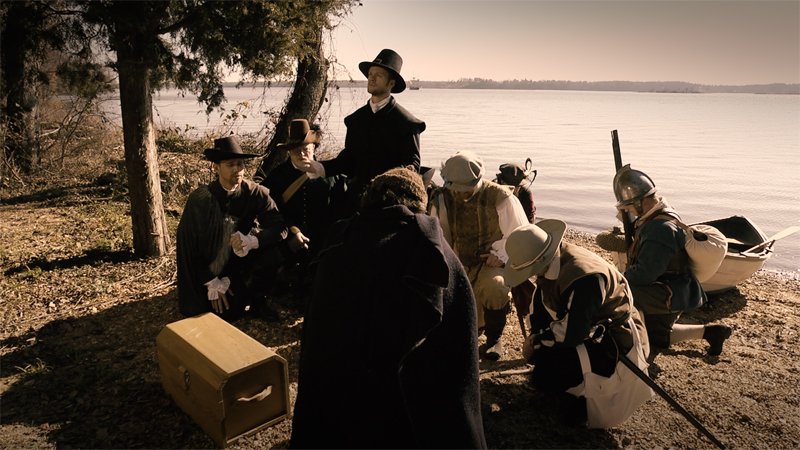 Newcomers may have been prodded by dreams of self-betterment. They did not always provide for others or for the justice necessary between persona and peoples. Social movements are organized collective manifestations of issues for which people have considerable concern. Movements deliberately attempt to promote or resist change in a group, society, or World order of which they are a part. They do so through a variety of means, not excluding violence, revolution, or withdrawal into Utopian communities. Depending upon the degree of correspondence between the goals of a movement and the value orientation of the observers, a movement can be heroic or despicable, on the side of the angels or in the league with the devil. Some movements are more dramatic than others; some are more successful than others; and some are more significant than others in terms of the range and depth of their consequences. However, seldom are they bland or without controversy. Rarely do they not reflect the ongoing dialectic between the individual and society. Hardly ever do they not demonstrate the relativity of belief systems and the importance of human agency or social action in the ebb and flow of social life. Social movements can function as an important bridge for understanding the relation between the individual and society, between structure and process, and between psychology and sociology. #RandolphHarris 1 of 7
 People power is one of the most important resources movements need in order to advance their interests. If a movement is to make headway in its goal attainment efforts, it must reach out, make contact with, and secure potential participants, and then transform at least some of the new recruits into committed members or devotees. Father gives meaning to the environment in which they (the participants) live. Complexity, confusion, hopelessness, and purposelessness are changed into simple understanding, peace, happiness, and a faith in the abstract principles embodied in the person of Father. (He thus) provides an escape from a tortuous mental confusion caused by complex, conflicting circumstances. He gives meaning to the individual life and to the World. However, Individuals who are seen as being especially susceptible to the appeals of movements on the radical right and left are usually dogmatic, highly prejudice, and insecure. The submission to an external cause or authority compensates for the feelings of self-inadequacy, and the desire to escape from an unwanted self. The permanent misfits can find salvation only in complete separation from the self; and they usually find it by losing themselves in the compact collectivity of a mass movement. #RandolphHarris 2 of 7
 By renouncing individual will, judgement, and ambition, and dedicating all their powers to the service of an external cause, people involved with movements are lifted off the restless treadmill which can never lead them to fulfillment. Their moral failing often stems from their own wounded vanity, and perhaps from their well-grounded fear that someone or something has indeed successfully unmasked their pretensions. The underlying participation in various contemporary movements is a collective search for identity. It is a search symptomatic of mass society’s failure to generate and sustain meaningful symbols and anchorages, which are seen as the functions of rituals. These people are demanding that society guarantee each individual a sense of personal worth and dignity. Movement participants are seen as those individuals who lack a series of institutional affiliations and group loyalties. In contrast, those people who are well integrated into kinship groups, cohesive local communities, and various intermediate associations are less susceptible to the appeals of social movements. Readiness to participate thus comes from an absence of those conditions that integrate people into the system and constrain them from involvement. Participants in such movements hypothetically meets the previously isolated participants’ needs for social affiliation, a sense of belongingness, and group identity. #RandolphHarris 3 of 7
 The belief that one’s life situation is largely a matter of fate or destiny has also been discussed in relation to movement participation. It is hypothesized that subjective powerlessness or little internal control renders the person susceptible to movement appeals and participation. It has also been hypothesized that a strong sense of personal control or system blame, is more likely to lead to movement participation, particularly when the movement is political in orientation. A riotous husband, or a loose wife, has an easy opportunity, assisted by means of the persecution, to rid themselves of one who is a check to their vices. When the inquisitors have taken umbrage against an innocent person, all expedients are used to facilitate one’s condemnation; false oaths and testimonies are employed to prove the accused to be worthy of torture and sacrificed to the bigoted revenge. When making a martyr, people involved in the movement pretend to wish the individual well and act like they are advising one well; and pretended kind hints. If the individual is mute, they will shut that individual up without light, or some other necessity to cause harm; and if that individual declares innocence, they torment one till one either dies with pain or confess oneself guilty. #RandolphHarris 4 of 7
 As an important determinant of movement susceptibility is the frustration or tension that supposedly results from status dissonance or inconsistency. The more frequently acute status inconsistencies occur within a population, the greater will be the proportion of that population willing to support programs of social change, even if it is harms innocent people. Some people are, as odd as this sounds, still seeking retribution for the Iberian Conquest of America. From 1492 to 1518, Spanish and Portuguese explores opened up vast parts of Asia and the Americas to European knowledge. In some of the bloodiest chapters in recorded history, the Spanish nearly exterminated the native peoples of the Caribbean islands, toppled and plundered the great inland empires of the Aztec and Incas in Mexico and Peru. Within a single generation of Christopher Columbus’s death in 1506, Spanish conquistadores explored, claimed, and conquered most of South America (except Brazil), Central America, and Southern parts of North America from Florida to California. Led by audacious explorers and military leaders, and usually accompanied by enslaved Africans, they established the authority of Spain and Catholicism over an area that dwarfed their homeland in size and population. #RandolphHarris 5 of 7
 They were motivated by religion, growing pride of nation, and dreams of personal enrichment. “We came here,” explained one Spanish foot soldier in Cortes’s legion, “to serve God and the king, and also to get rich.” In two bold and bloody strokes, the Spanish overwhelmed the ancient civilizations of the Aztec and Incas. In two bloody strokes, the Spanish overwhelmed the ancient civilizations of the Aztecs and Incas. In 1519, Hernando Cortes set out with 600 soldiers from coastal Veracruz and marched over rugged mountains to attack Tenochtitlan (modern-day Mexico City), the capital of Montezuma’s Aztec empire. At its height, centuries before, the ancient city in the Valley of Mexico had contained perhaps 200,000 people, but in 1521, following two years of tense relations between the Spanish and the Aztecs, it fell before Cortes’s assault. The Spanish use of horses and firearms provided an important advantage; so did a murderous smallpox epidemic in 1520 that felled thousands of Aztecs. Of course, Puritan Protestantism forcefully shaped much of early America and indirectly influences it still, but millions do not recognize the ethos and many reject it. God exists within and also beyond our World. #RandolphHarris 6 of 7
 The past is done. We are supposed to learn from it so not to repeat it. Trying to make one individual pay for the sins of many is insane. Also, if you do not like your own country, you are welcome to leave. “Bear with each other and forgive one another if any of you has a grievance against someone. Forgive as the Lord forgave you” (Colossians 3.13). Thanksgiving is a day that should be celebrated. It is a day of giving thanks to God for his goodness and his enduring love. It is also a day that we can take time from our busy lives to come together with our families and have a meal. The federal government gives people time off school, and sometimes work so they can go home, eat and bond with their families. Family, gratitude, and thankfulness are the true meaning of Thanksgiving. Put aside differences. Families can be wonderful and enjoyable, focus on the aspects of your family which you are grateful. Have some fun. Maybe you can start a new tradition like baking a cake together, or sharing happy stories. And eat some turkey, but “No legs for me, you can never tell where a bird’s been walkin’” says Archie Bunker. You are children of God, “I covenant with thee that thou shalt have eternal life; and thou shalt serve me and go forth in my name, and shalt gather together my people” (Mosiah 26.20). #RandolphHarris 7 of 7

That there is an Invasion of my Privates
 A new high in lowness. Prejudice is a social attitude propagated among the public by exploiting class for the purpose of stigmatizing some group as inferior so that the exploitation of either the group itself or its resources or both may be justified. People are generally exploited in hard economic times or competitive economic situations or in periods of major socioeconomic change—bringing special trouble; and corporations or individuals may have profited (commercially, agriculturally, economically, legally, and so on) at the expense of an underrepresented group or individual. The structure would produce the kind of alienation from human identity (alienation of human from human) that is expressed not only in economic terms and not only among the subjugated classes. The person is also estranged from the essential source of identity and if purpose for the human species by making one concerned for their safety and unable to trust former connections or new ones, as they tend to be frustrating and unsatisfying. Scapegoating (the practice of singling out any party for unmerited negative treatment or blame) is used to explain the flow of hostility toward the underrepresented individual under conditions of economic stress. #RandolphHarris 1 of 6
 A wishing of misfortune upon an individual, is one step short of hating them. Ill will can manifest emotions like contempt, jealousy, envy, and schadenfreude (the emotion of taking pleasure in others’ suffering). When one is carrying ill will toward another, they may not look aggressive, but feel it and emanate it (however subtly), reducing the target to something less than human. Relative deprivation is another oppressive method used by oppressors. They make sure the person has a lack of resources to sustain the diet, lifestyle, activities and amenities that the individual is accustomed to or that is widely encouraged or approved in the society to which they belong. That makes the person not only feel alienated, but as if they not worthy because no matter what they do the individual cannot seem to advance in life. So, an individual is not only enduring poverty, but also facing social exclusions. Relative deprivation has important consequences for both behavior and attitudes, including fear, stress, political attitudes, and participation in collective action. People generally operate so as to maximize their own self-esteem. The individual’s sense of personal mastery over life circumstances is one important ingredient for the achiever. #RandolphHarris 2 of 6
 The sense of low self-control is generated by extensive prejudice and discrimination and is a significant element in mobility behavior. One can have control over themselves and gain empowerment by having faith in God, and putting actions behind what one believes in. Demonstrate your faith by knowing that you are a child of God and no matter what circumstances you are facing, you are still worthy of life and worthy of achieving your dreams. God will open doors and create new opportunities and you will have the strength to do what you could not always do. God will show you his favor in unusual ways. Find the dreams in your heart, and keep them in mind every day knowing that they will become a reality. Know that God will comfort your souls, and give unto you success and also those who are with you will experience success. God will grant the strength to bear afflictions, whether they be internal or social. Our souls are precious to God and many people have things in common with us and we will eventually be encouraged and empowered in society. There is a natural power that comes from being a human being. Find your voice and authority to exercise the empowerment that you naturally have. #RandolphHarris 3 of 6
 Keep a healthy attitude about life so that you have the requisite competence and clarity to make successful decisions. As we exercise our faith in God, he will lift us up and carry us through all our trials and, ultimately, save us in the celestial kingdom. Do not be sidetracked from achieving your new goals. Harness your faith in God and adopt a healthy lifestyle. The human mind is an exception to otherwise Universal natural laws, as a thing that is conscious, that is capable of good and evil, or that can be an uncaused cause of action. Humans strive to experience their desires, human freedom, and the expressions of the power of God. Patience preserves pace of the mind in the face of injury, suffering, and sadness. It prevents us from being discouraged—from losing courage. The patient person, therefore, possess a great freedom. One is free to stay in course with one’s life and fulfill one’s responsibility, even when things are difficult. Courage enables us to persist firmly against difficulties. The power of the subconscious mind, when it becomes aware of one’s goal, it provides the means to reject a particular characteristic or adopt it, if it is consistent with our goal attainment. #RandolphHarris 4 of 6
 Our natural drive to achieve, along with our urge to move forward and be out front on the issues, tends to appeal to those who are leaders and bearing responsibility for their own visions, goals, objectives, and expected outcomes. Have a willing commitment, communicate with confidence, courage, and obvious intelligence characterized by determination and resilience. People are born with traits that can be cultivated in the direction of leadership. However, there is no doubt that leadership can be cultivated. The characteristics of leadership, necessarily has to have certain decisiveness and confidence comes from knowledge based on studies and training. The fundamental thing is your basic knowledge, the development of your mind, and your ability to apply this knowledge as you go along in life. There are no mistakes in life; there are only lessons. Great people are those who make others feel that they, too, can become great. With internal discipline there goes together a whole set of moral traits, among others perseverance, conscientiousness, and planning one’s actions. Perseverance enables one to reflect—at length strenuously, and patiently—on some selected issues. This reflection helps to overcome discouragement, apathy, self-indulgence, or laziness. #RandolphHarris 5 of 6
 Be mentally awake! Every work – and especially a scholarly one—calls for a rationally thought-out regularity, planned action, correctness, order and harmony, to avoid sliding into chaos. Exactness and conscientiousness is important so one can finish all details without leaving any gaps or bundling, and as such is the opposite of superficiality. Dear God, thank you for all of our blessings and help us to welcome challenges in our lives. Please give us the strength to persevere in them. When we are feeling weak, tired or discouraged, please help us to remember we depend on you, God. God, also please bless this great nation, for its people and government as well. Bless humanity and the beautiful creatures and environment you have created. May we take better care of ourselves and our planet. We ask for forgiveness for any disobedience, laziness of spirit and lack of faith. God remembers the dreams he placed in our heart. Get your passion back and know that things will work out to your favor. God is going to finish what he started. Forgiveness is the economy of the heart. Forgiveness saves the expense of anger, the cost of hatred, the waste of spirits. Bless it be. #RandolphHarris 6 of 6

The Unconscious Does Not Lie
 Particular attention has been directed toward determining the consequences of various types of communication on the attitudes of those receiving messages since social psychology has begun to treat attitudes as dependent variables. For some, powerful propaganda is seen as having the capability of molding opinion. An interpretive problem was introduced by a significant number of studies reporting that some subjects changed toward the position advocated while other subjects altered their attitudinal positions in the opposite direction. There is no question, according to the theory of social judgment, that after engaging in certain actions we may behave in a certain fashion, the behavior is a part of the totality upon which we can reflect. For example, a prospective patient, who had corresponded with me relative to treatment, finally wrote for an appointment for a certain day. Instead of keeping his appointment, he sent regrets which began as follows: “Owing to foreseen circumstances, I am unable to keep my appointment.” He naturally meant to write unforeseen. He finally came to me months later, and in the course of the analysis, I discovered that my suspicious at the time were justified; there were no unforeseen circumstances to prevent his coming at that time; he was advised not to come to me. The unconscious does not lie. #RandolphHarris 1 of 9
 Attitudes are constantly shifting and changing as people interact with the attitude object and with their social environment. Attitudes flow from social interaction and evolve in the course of it. In turn, attitudes feed into social interaction and help to guide the interaction process. Attitudes are links between individuals and the various collectivities to which they belong. The formation, expression, and functioning of attitudes simultaneously represents both individual and collective process. The suppression and inversion of affects is useful even in social life. If I am conversing with a person to whom I must show consideration while I should like to address him or her as an enemy, it is almost more important that I should conceal the expression of my affection from that individual than that I should modify the verbal expression of my thoughts. If I address this individual in courteous terms, but accompany them by looks or gestures of hatred and disdain, the effect which I produce upon the person is not very different from what it would have been had I cast my unmitigated contempt into that individual’s face. Above all, then, the censorship bids me suppress my affects, and if I am a master of the art of dissimulation I can hypocritically display the opposite affect—smiling where I should like to be angry, and pretending affection where I should like to destroy. #RandolphHarris 2 of 9
 Attitude-behavior relations can be distinguished from most other formulations in terms of the attention one devotes to the concept of action. Behaviors differ in the degree to which they have the character of action. Action is overt behavior that produced some change for the actor. The more public, irreversible, active, and committing the behavior is, the greater the change in produces in the environment and the more real-life consequences it has for the actor. An elderly gentleman was awakened at night by his wife, who was frightened because he laughed so loudly and uncontrollably in his sleep. The man afterwards related that he had the following dream: I lay in my bed, a gentleman known to me came in, I wanted to turn on the light, but I could not; I attempted to do so repeatedly, but in vain. Thereupon my wife got out of bed, in order to help me, but she, too, was unable to manage it; being ashamed of her negligée in the presence of the gentleman, she finally gave it up and went back to her bed; all this was so comical that I had to laugh terribly. My wife said: ‘What are you laughing at, what are you laughing at?’ but I continued to laugh until I woke. The following day the man was extremely depressed, and suffered from a headache: ‘From too much laughter, which shook me up,’ he thought. It is non-trivial actions characterized by active participation, public commitment, and important real-life consequences—that I have in mind as the usual context for significant attitude change. #RandolphHarris 3 of 9
 Analytically considered, the dream looks less comical. In the latent dream-thoughts the gentleman known to him came into the room is the image of death as the great unknown, which was awakened in his mind on the previous day. The old gentleman, who suffers from arteriosclerosis, had good reason to think of death on the day before the dream. The uncontrollable laughter takes the place of the weeping and sobbing at the idea that he has to die. It is the light of life that he is no longer able to turn on. This mournful thought may have associated itself with a failure to effect adult night time intimacy, which he had attempted shortly before this, and in which the assistance of his wife en neglige was of no avail; he realized that he was already on the decline. The dream-work knew how to transform the sad idea of impotence and death into a comic scene and sobbing into laughter. One point may appear obvious: some behaviors are of greater consequence than others for a range of individual dispositions, including attitudes. Nevertheless, if the impact of behavior on attitudes is to be clarified, greater conceptual attention to behavior is to required. #RandolphHarris 4 of 9
 If attitudes are constantly shifting during the course of action, then the determination of the magnitude of the relationships between the attitude and behavior becomes problematic. I began the psychoanalytic treatment of a boy of fourteen who was suffering from tic convulsive, hysterical vomiting, headache, et cetera, by assuring him that after closing his eyes he would see pictures or idea would occur to him, which he was to communicate to me. He replied by describing pictures. The last impression he had received before coming to me was revived visually in his memory. He had been playing a game of checkers with his uncle, and now he saw the checkerboard before him. He commented on various positions that were favourable or unfavourable, on moves he was not safe to make. He then saw a dagger lying on the checker-board—an object belonging to his father, but which his phantasy laid on the checker-board. Then a sickle was lying on the board; a scythe was added; and finally, he saw the image of an old peasant mowing the grass in front of his father’s house far away. This attitude-action problem was very insightful. Viewing the connection between attitudes and behavior as a dynamic interactional relationship introduces vexing complexities into the design of appropriate research. #RandolphHarris 5 of 9
 The boy’s conceptualizations seemed closer to reality than the linear determinism that characterizes many alternative formulations. This lead me to discover the meaning of this series of pictures. Disagreeable family circumstances had made the boy excited and nervous. Here was a case of a harsh, irascible father, who had lived unhappily with the boy’s mother, and whose educational methods consisted of reprimands; he had divorced his gentle and delicate wife, and remarried; one day he brought back to the house a young woman as the boy’s new mother. If attitudes change in the course of social action, then we should expect important social events to have an impact on the attitude distributions of those involved in such events. The illness of the four-teen-year-old boy developed a few days later after the substitute mother was brought back to the house. There is no question that the immediate changes in attitude produced by this event were large and significant. The illness was the result of the suppressed rage against his father that had combined these images into intelligible allusions. The material was furnished by a mythological reminiscence. The sickle was that with which Zeus castrated his father; the scythe and the image of the peasant represented Kronos, the violent old man who devours children, and upon whom Zeus wreaks his vengeance is so unfilial a manner. #RandolphHarris 6 of 9
 Such an analysis reflects a general concern with social change at a micro- or familial level, and the use of attitudinal data in the effort to monitor or assess such change. The level of concerns shifts. The problem now becomes that of determining the interrelationships between aggregated measures of attitude and indices of the behavior of collectivities. The father’s marriage gave the boy an opportunity of returning the reproaches and punishments which the child had once heard his father utter because he played with his genitals (the draught-board; the prohibited moves; the dagger with which could kill one). Masturbation is supposed to be a sin and not to be indulged in, much like pornography. We have here long-impressed memories and their unconscious derivatives which, under the guise of meaningless pictures, have slipped into consciousness by the devious paths opened to them. However, we cannot take dreams literally in a sense that would cause of to take unlawful and adverse reactions, but they can be used as warnings to be more vigilant or show more attention and concern for others. For instance, the Roman Emperor was in the wrong in ordering one of his subjects to be executed because the latter had dreamt that he killed the Emperor. He should have first of all have endeavoured to discover the significance of the man’s dream; most probably it was not what it seemed to be. #RandolphHarris 7 of 9
 And even if a dream of a different content had actually had this treacherous meaning, it would have still been well to recall the words of Plato—that the virtuous person contents oneself with dreaming of that which the wicked individual does in actual life. I am therefore of the opinion that dreams should be acquitted of evil. Whether any reality is to be attributed to the unconscious wishes, I cannot say. Reality must, of course, be denied to all transitory and intermediate thoughts. If we had before us the unconscious wishes, brought to their final and truest expressions, we should still do well to remember that psychic reality is a special form of existence which must not be confounded with material reality. It seems, therefore, unnecessary that people should refuse to accept the responsibility for the immorality of their dreams. With an appreciation of the mode of functioning of the psychic apparatus, and an insight into the relations between conscious and unconscious, all that is ethically offensive in our dream-life and the life of phantasy for the most part disappears. However, if possible, I still encourage people to try and control their impulses in their dreams because they seem so real that it is possible that one could do things they dream about in real life and discover that one is not dreaming. #RandolphHarris 8 of 9
 Nonetheless, for all practical purposes in judging human character, an individual’s actions and conscious expressions of thought are in most cases sufficient. Actions, above all, deserve to be placed in the front rank; for many impulses which penetrate into consciousness are neutralized by real forces in the psychic life before they find issue in action. Indeed, the reason why they frequently do not encounter any psychic obstacle on their path is because the unconscious is certain of their meeting with resistances later. In any case, it is highly instructive to learn something of the intensively tilled soil from which our virtues proudly emerge. For the complexity of the human character, dynamically moved in all directions, very rarely accommodates itself to the arbitrament of simple alternative, as our antiquated moral philosophy would have it. “My son, do not let us be slothful because of the easiness of the way; for so was it prepared for them, that if they would look they might live; even so it is with us. The way is prepared, and if we will look we may live forever. And now, my son, see that you take care of these sacred things, yeah, see that you look to God and live. Go unto this people and declare the word, and be sober. My son, farewell (Alma 37.46-47).” #RandolphHarris 9 of 9


The Prisoner’s Dilemma is the Best-Known Game of Strategy

The World is incredible and there are so many amazing opportunities available to a large percentage of people. Keep your dreams alive. Understand to achieve anything requires faith and belief in yourself, vision, hard work, determination, and dedication. This may perhaps be surprising, for most people—at least those in the Christian cultural tradition—are likely to think that beliefs in God and in immortality must go together. They are inclined to take it for granted that the main if not the only point of immortality—and sometimes perhaps of God, too—is to provide inordinate rewards and punishments. People tend to resist accepting evidence that contradicts their beliefs. Sometimes however, they have no choice. Eventually, people admit that Ariel the Little Mermaid does not exist. Belief perseverance, the persistence of notions people already accept, is a powerful thing. Motivated to protect self-esteem and avoid feeling foolish for believing incorrectly, people can ignore inconsistencies, make up rational-seeming explanations, reject new evidence, or otherwise justify sticking to their original beliefs. They might be right to do so. The new evidence might be wrong. Beliefs can be wrong, too, though. #RandolphHarris 1 of 9

A belief is a probability judgment that links some object or concept to some attribute. The terms object and attribute are used in a generic sense and both terms may refer to any discriminable aspect of an individual’s World. For example, I may believe that cigarettes (an object) are harmful to health (an attribute) or that my quitting smoking (an object) will reduce my capacity to work (an attribute). The content of the belief is defined by the object and attribute in question, and the strength of the belief is defined by the person’s subjective probability that the object-attribute relationship exists (or is true). An attitude is a bipolar evaluative judgement of the object. It is essentially a subjective judgment that I like or dislike the object, that it is good or bad, that I am favorable or unfavorable toward it. Once again, the term object is used in a generic sense. Thus, I may have attitudes toward people (exempli gratia, smokers), institutions (exempli gratia, the Federal Trade Commission), events (exempli gratia, the release of the Surgeon General’s report on smoking), behaviors (exempli gratia, my quitting smoking), outcomes (exempli gratia gaining status in the eyes of my friends), and so on. #RandolphHarris 2 of 9

An intention is a probability judgment that links the individual to some action. An intention is also an impulse for an action which has already found approbation, but whose execution is postponed for a suitable occasion. An intention can be viewed as a person’s belief about his or her own performance of a given behavior. Intentions can be general (exempli gratia, I will quit smoking) or specific (exempli gratia, I will not smoke any cigarettes at John’s party tonight), and they vary in intensity. Like other beliefs, intentions are usually measured by obtaining some index of the individual’s subjective probability that he or she will perform the behavior in question. Now, in the interval thus created, sufficient change may take pace in the motive to prevent the intention from coming to execution. It is not, however, forgotten, it is simply revised and omitted. For the case in which a specific behavior is to be predicted, the individual has certain beliefs about the probable consequences of the specific act that are the determinants of the attitude toward that act. In addition, the actor attributes specific behavioral expectations to references groups, individuals, or other social agents. #RandolphHarris 3 of 9

The totality of these expectations as perceived by the individual constitute the subjective norm concerning the behavior in question. Thus, a person’s behavior and one’s subjective norm. It is important to emphasize norms and attitudes are predictive of behavioral intentions. Thus, the ability of attitudes to predict behavior is dependent upon the strength of the link between behavioral intentions and behavior. One variable that can have an effect on the strength of the relation between behavioral intentions and behaviors is the time that has elapsed between the measurements of the intentions and the observations of the behaviors. Among the problems involved are the stability of the independent variable (intentions) and the operation of unanticipated situational factors that reduce the relationship between the variables of immediate concern. If I resolve in the morning to carry out a certain intention in the evening, I may be reminded of it several times in the course of the day, but it is not at all necessary that it should become conscious throughout the day. As the time for its execution approaches, it suddenly occurs to me and induces me to make the necessary preparation for the intended actions. #RandolphHarris 4 of 9

If I go walking and take a letter with me to be posted, it is not at all necessary that I, as a normal, not nervous individual, should carry it in my hand and continually look for a letter-box. As a matter of fact, I am accustomed to put it in my pocket and give my thoughts free rein on my way, feeling confident that the first letter-box will attract my attention and cause me to put my hand in my pocket and draw out the letter. This normal behavior is a formed intention corresponds perfectly with the experimentally produced conduct of a persons who are under a so-called post-hypnotic suggestion to perform something after a certain time. The suggested intension slumbers in the person concerned until the time for its execution approaches. Then it awakes and excites the action. However, other variables can effect the strength of the link between intentions and behavior. First, an individual has to have a high degree of correspondence in the levels of specificity at which both behavioral intention and behavior are measured. Second, this relationship depends upon the degree to which the individual’s behavior is under volitional control. Contextual variables do limit the choices available to the actor. #RandolphHarris 5 of 9

There is some evidence that the incorporation of measures of personal normative beliefs (that is, the degree to which individuals feel that they personally should perform the behavior in question) would improve the predictive power of the model. The situational variables may alter the individual’s beliefs about the consequences of the behavior which, in turn, will result in a change in attitude. The situational variables may alter the individual’s normative beliefs which, in turn, will result in a change in the subjective norm. The situational variables reduce the association between behavioral intentions and behavior. Therefore, if the link between behavioral intentions and behavior is tenuous, then a mode that predicts behavioral intentions may be of limited interest to those still concerned with the prediction of behavior. That is why staging a crime and predicting how an individual will respond, then by passing a jury trial and sentencing an individual based on a likelihood that they will respond as predicted is unlawful. People often base predicted behavior on how they would respond and it may not be an accurate prediction for the target because there may be other variables at play which have not be considered. #RandolphHarris 6 of 9

Dispositional factors are combined measures of attitudes with measures of personality traits, values, beliefs, or perceived norms in the attempt to explain additional variance in behavioral criteria. Also, the probability of attitudinal change is greater when the individual is unfamiliar and not highly involved with the attitudinal object. Such results suggest that predicting the behavior of the uncertain, uninvolved, and uninformed may require knowledge of more variables than are needed to predict the behavior of those who are certain, involved, and informed. Behavior can be more predictable when one considers attitudes toward the particular act toward a particular object. Situational variables prove that even if attitudes are highly stable, salient, personal characteristics, we should not expect high correlation between attitudes and behaviors under all conditions. Attitudes have predictable relationships with behavior to the extent that the actor has reliable expectations of the behavioral situation. However, it is hard to imagine anyone playing Prisoner’s Dilemma outside the laboratory. Two completely rational individuals might not cooperate, even if it appears that it is in their best interest to do so. There could be underlying factors, such as moral, values, logic, finances, and health that would act as inhibitors. #RandolphHarris 7 of 9

Even when situational variables also have been manipulated by a number of investigators in an effort to explore the impact of such variables on attitudinal-behavioral consistency, there could still be some strong inhibition to reacting as predicted. Even though, consistency can be influenced by direct interpersonal pressures and apparently by anticipated behavioral visibility or disclosure. Individuals who are informed and involved are resistant to attitudinal change. Therefore, staging crime and treating the victim’s response as a geometrical proof is not only illegal so you can convict them based on algorithms and predictions, can lead to a criminal conspiracy because it is an abuse of justice and it is not what the criminal justice system is about. No one should be able to abuse the law in such a matter just to seek revenge. In addition, such an act would take several parties to produce and would leave behind a lot of evidence as to what actually occurred and once the conspiracy is unraveled, all of the participants will be punished. We have seen cases where a criminal seeks revenge on the victim and spends years plotting the perfect take down and gets others involved. #RandolphHarris 8 of 9

People in high positions of authority and in prominent positions may help to facilitate the criminal in getting revenge on one’s target, but in doing so they are aiding and abetting a criminal in the commission of a crime, which means not only are they supporting the criminal and deeming his or her criminal act as acceptable, but they are now also an accessory to the crime itself. An accessory is a person usually not present when the crime itself is committed, but he or she has knowledge of the crime before or after the fact, and may assist in its commission through advice, actions, or financial support. Someone aids and abets a crime if he or she knows of the perpetrator’s unlawful purpose and he or she specially intents to, and does in fact, assist, facilitate, promote, encourage, or instigates the perpetrator’s commission of the crime. At some point, the group involved in the conspiracy has to admit they are wrong, but more than likely, they will keep playing the game, which has become a criminal conspiracy until they are arrested. “All who rage against you will surely be ashamed and disgraced; those who oppose you will be as nothing and perish (Isaiah 41.11).” #RandolphHarris 9 of 9

When You Write with a Wright Pen You Will Always be Right
 Although it is usually difficult to find the person responsible for printers’ errors, the psychologic mechanisms underlying them are the same as in other mistakes. Typographical errors also well demonstrate the fact that people are not at all indifferent to such trivialities as mistakes, and, judging by the indignant reactions of the parties concerned, one is forced to the conclusion that mistakes are not treated by the public at large as accidents. An attitude is the disposition to behave in particular ways toward specific objects, and the degree of optimistic or pessimistic affect associated with some psychological object. Attitude can also be a predisposition to evaluate some symbol or objects, and a delimited totality of behavior with respect to something. A typesetter was imprisoned because instead of ending an article with the official formula ‘Heil Hitler,’ he inadvertently permitted a ‘t’ to attach itself to ‘Heil’ so that it read ‘Heilt Hitler,’ meaning ‘Heal Hitler’ instead of ‘Heil Hitler.’ His pleading that it was a mistake was of no avail. It seems that the Nazis who burned Dr. Freud’s works, nevertheless, recognize the truth of Dr. Freud’s teachings. This mistake plainly showed the typesetter’s view of Adolph Hitler’s personality. His mistake was unconsciously expressed his wish that the Lord may heal Hitler of his perceived tyranny. #RandolphHarris 1 of 5
 Ordinarily, we should not have noticed one of the expected inevitable slips in writing. In fact, William Randolph Hearst said, “Do not be afraid to make a mistake, your readers might like it.” All writes for the press know what pits they are liable to fall into any day. Why does a mistake that glares and gibbers at you in print hide itself so successfully in the copy or the proof? How do you come to set down Rudolf when you mean Randolph? Some students of demonology believe firmly in the constant presence and maleficence of the writer’s devil. We venture to doubt the editor’s assumption of demonological influences. Examination of a great many typographical errors clearly shows that they are based on the mechanisms of a certain kind of situation. Psychologist believe that contributions of typographical and spoken errors sometimes provides evidence to support the postulated existence of stable, underlying attitudes within the individual which influences both his or her verbal expressions and actions. Adolph Hitler was the only person to hold the position of Fuhrer, which is a German word meaning leader or guide. Attitudes are alive and well and gainfully employed in the sphere of action. Despite the confusion, pessimism, and negative evidence some social psychologist refuse to give on their commitment to the belief that attitudes and behaviors must be related. #RandolphHarris 2 of 5
 However, even those who are nearest to the Fuhrer and constantly sing his praises to the Germans, do not really believe what they say, as shown by the wireless from Berlin to the New York Times (12 November 1936), congratulating eighteen hundred boys and girls of the Hitler Youth for taking part in the mightiest Freiheitsbewegung (movement of liberty) in German History. Rudolf Hess, the vice-leader of the Nazi party, used instead the word Freiheitsberaubung (robbery of liberty). The last word appeared in the Lokalanzeiger and caused the publishers no small amount of annoyance. Abstract statements of a highly moral content are not seldom changed erotically through a typographical mistake. Though, the correlations that do occur are large enough to indicate that important causal forces are involved, whatever one’s model of the underlying causal process may be. Evidence must conclude that attitudes and behaviors are related under a variety of conditions and over a range of substantive areas. There is something to this relationship that is sufficient to suggest the operation of causal forces. To establish a pattern or a motive, measures of attitudes that range from a single survey, personal letters, multi-item scales, field observation, task performances, archival records, and self-reports of daily activities must be analyzed. Again, interpretations often vary. #RandolphHarris 3 of 5
 When modest relations between variables are found repeatedly, social scientists frequently recite a litany of reasons that might explain the results. The measures of the variables are unreliable. The measures of the variables are unreliable. The measures are inappropriate or invalid. The independent variable is only one of several determinants of the dependent variable. If time elapses between the measurement of the independent and dependent variable, other variables intervene to mask the relationship or alter the variables under investigation. In one way or another, social psychologist have involved all of the above explanations for their findings regarding the relationship between attitude measures and behavioral criteria. A woman wrote to her sister, felicitating her on the occasion taking possession of a new spacious residence. A friend who was present noticed that the writer put the wrong address on the letter, and what was still more remarkable was the fact that she did not address it to the previous residence, but to one long ago given up, but which her sister had occupied when she first married. #RandolphHarris 4 of 5
 When the friend called her attention to the incorrect address, the writer remarked, “You are right; but what in the World made me do this?”, to which her friend replied: “Perhaps you begrudge her the nice big apartment into which she has just moved because you yourself are cramped for space, and for that reason you put her back into her first residence, where she was no better off than yourself.” “Of course, I begrudge her new apartment,” she honestly admitted. As an afterthought she added, “It is a pity that one is so mean in such matters.” The growth of the mind is the widening of consciousness and each step forward has been a most painful and laborious achievement. If anyone should be inclined to overrate the state of our present knowledge of mental life, all that would be needed to force one to assume a modest attitude would be to remind one of the function of memory. Ego development inevitably entails the rejection of some parts of the person that are threatening a relatively painless experience of living. The unconscious mind often represents the individual’s discordant desires, instincts, or shortcomings. Because the conscious ego can only know itself, the contents of the Persona and the hidden messages reside in the unconscious. Father in Heaven, may we all learn to love unconditionally and treat each other with respect and workout or own problems instead of taking them out on innocent beings. Bless it be. #RandolphHarris 5 of 5