
Home » Lungs (Page 5)
Category Archives: Lungs

The Mansion of Darkness
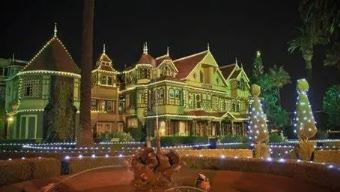
Most of the beauties who suffered at the hands of the inquisitors were tormented because they refused to succumb to the right people or were too quick to give in to the wrong ones. Many who lusted after such women become so guilt-ridden that they would denounce them out of fear that they would fall from grace in the eyes of God. Of course, the most successful witches were unusually sleeping with the inquisitors and were never even considered to be witches. Successfully as they might be, however, they could never openly take pride in their witcheries, for to do so would mean certain death. There are many who view the witch as a member of an old pagan religion, more concerned with her beliefs than with her powers. To be sure, the witch is a WOMAN. Men are called warlocks. The witch has made a pact with the Devil and through rituals dedicated to Him gains her power. One must worship the Luciferian element of pride within. One is often blessed with a family heritage of sorcery in one form or another. Everyone inherits something from their forebearers that can be applied as useful legacy. My mother had a genealogy of the Winchester family that showed all of our ancestors going way back to the 1400s. There were lots of famous people in our genealogy—a governor, two senators, a famous general in the Revolution, a lot of people who found in the Revolutionary War and the Civil War, and some others. However, my dad always said that most of the people in the genealogy were regular people—farmers and fishermen and storekeepers who worked hard all their lives and tried to do right by their families. #RandolphHarris 1 of 12

The Winchester money went pretty far back. However, a majority of it came during the 1870s, from the 1873 Model called “The Gun that Won the West.” The Winchester Repeating Arms Company was started by Oliver Fisher Winchester. There was a portrait of him, big as a picture window, hanging up in the parlor in the Winchester Mansion. He had on a dark suit, black tie, white shirt, and he looked very dignified. It was one of those pictures where the eyes follow you around the room—no matter where you went, he always looked at you. After grandfather Oliver Winchester passed away, he left the company to my father, William Winchester, who passed away shortly after, alone with my baby sister, leaving the fortune and company to my mother, Sarah L. Winchester. That mansion used to scare the crap our of me when I was little. We would go up there for Thanksgiving or Christmas, when Mrs. Winchester had a big family dinner for all the family—fifty or sixty of us, probably six turkeys, plumb pudding from England, thousands of dollars worth of glassware and sliver gleaming so bright that the table sparkled. The towns people always blamed Mrs. Winchester for whatever happened to them. You have to remember, this was a time when people lived in houses without windows, no indoor plumbing, or houses with no glass in the windows. Common folks in those days would eat nothing but potatoes for dinner night after night, and they patched the holes in their shoes with cardboard because they could not afford to buy new one. #RandolphHarris 2 of 12

My mother, whom I call Mrs. Winchester, said paying the bills, paying the servants, and keeping an eye on everything was like managing a large castle. The cobble stone driveway swung around behind the house here to get the stable, where we kept the riding horses, and the old carriage house, where the cars were garaged. According to legend, Mrs. Winchester enacted a nightly séance to help her with her building plans and for protection from “bad” spirits. The Satanic witch of old received her magic from The Dark Man. While the rest of the World, particularly the men-folk, slept in blissful innocence, she and her sisters would meet Him in secret groves. There He would advise, inveigle and disclose the knowledge that would empower them to work their spells and enchantments. His pearls of infernal wisdom empowered them. It was, they said, a sign of a coven moving towards black magic. In other words their selected deity, faded into the background of their working and the search for the manifestation of demonic forces within their circle became obsessive. However, magic is the power within oneself that is the key to what we do, and sometimes we can whip up a great deal of power. The magic we are capable of is almost indefinable. Our magic is the art of causing change to occur in conformity with will. We attempt to raise enough etheric energy between us, by our ritual, to use our paranormal powers to force a desired result by our will-power. It was one thing using the supernatural powers of the human mind to try to compel something to happen, but it was quite another matter summoning up the assistance of spirits and demons, whether benevolent, malevolent or neutral. Mistakes in the ritual or failure to observe the minute could lead to disaster. #RandolphHarris 3 of 12
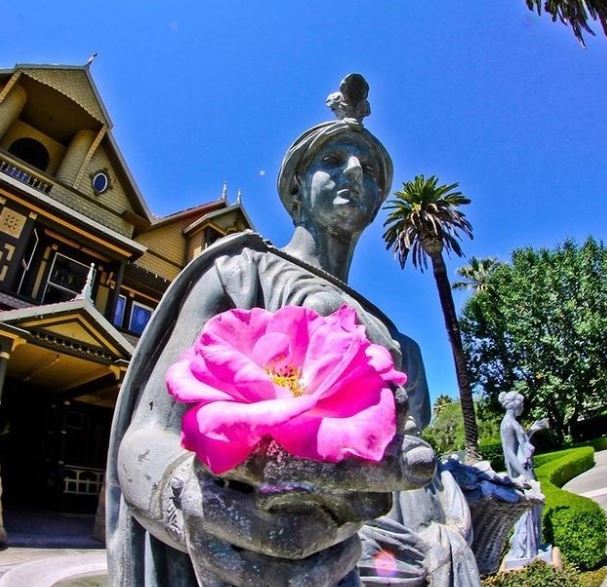
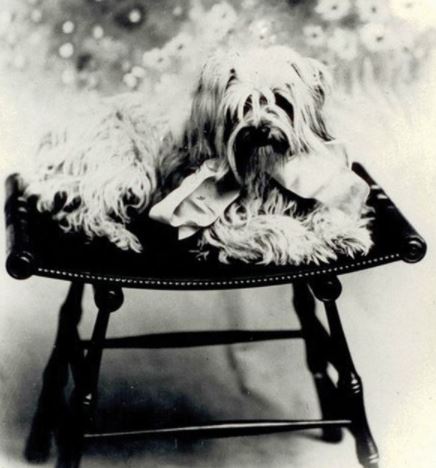
Mrs. Winchester recalls one night she invited a magician who parctised the darker arts to assist her. The magic went wrong and the room they were working in was virtually wrecked by lingering, unseen spirits. Mrs. Winchester was mysteriously injured with a stab wound in her shoulder, though no one saw the knife go in or where it came from. Many guides to higher ritual magic issues a health warning with their instructions: the practitioner must be confident he or she is totally in control of all the techniques and disciplines otherwise one faces physical, psychological and spiritual dangers of the most serious kind if any attempt to invoke spirits goes wrong. By and large, witchcraft—and certainly paganism—seemed not to be about chasing demons, though they do claim to make spiritual contact with the gods invoked during their worship. There was an abundance of evidence that Mrs. Winchester experienced paranormal events in her life: the feeling she had been in a certain place before when, in this life at least, it was her first visit; the uncanny foresight of her fortune-telling; the “proven” success of powers of autosuggestion; the out-of-body experiences that she was able to learn; the sixth sense of Zip, barking at the spot in the mansion where Maynard the butler had died years ago. The list goes on and on. The discussion about Mrs. Winchester will probably go on for centuries, but it will not be until the year 2030 that these discussions will be able to take place without being prosecuted or hanged. Mrs. Winchester wore robs during her séances because the human body holds within it a latent power which can be released by certain ritual exercises that witches perform. Some spiritualist healers and clairvoyant witches can actually see it, like a rainbow. #RandolphHarris 4 of 12
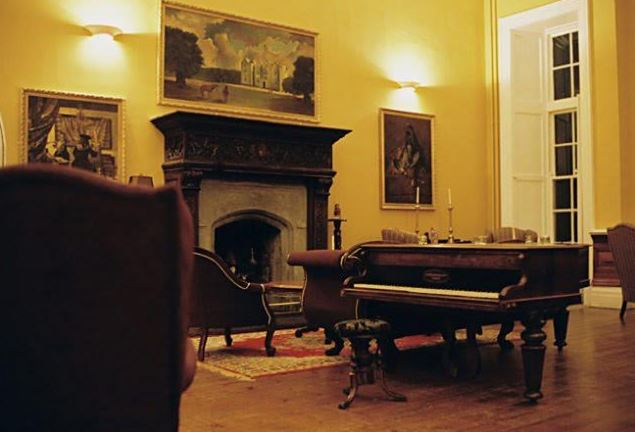
Is it any surprise the Winchester Mansion is haunted? One night during a séance, two inner circles were painted on the floor. The circle is the center of all occult activity and was drawn to concentrate the occultists’ power and protected them from hostile spirits. Within the circle, the spiritual journey started and their efforts were directed to produce their Cone of Power. It was only within the circle that the gods and the spirits of the astral Would could be safely contacted. The process was much like clearing a dense forest so the physical bodies could meet their spiritual. As the group was opening their mind to journey to a higher plane, they were clearing their minds of Earthly problems and worries so that they could open their entire beings to the singular concentration of the work before them, by tapping into the energy of the centers of the body. Lighted candles were placed at strategic points on the circle, and there was a pentacle on the altar where the statuette of the Horned God of Pan stood. As Mrs. Winchester blessed the water and salt with her athame and the coven, she was able to visualize the bodily power of the priestess moving in the form of a blue light through her hand into the athame and as she consecrated the circle itself, starting at the north a magic was killed by a heavy door that came loose from its hinges and flew at him. The invocation of gods and goddesses or their attempts to attract angels and genii into circles involve long and complicated rituals which have their complexities. Afterwards, to all, things went on as usual for a week or two. Well, the things went on as usual; so they did with the rest of household; but as for Mrs. Winchester, she had never been the same since that night. Night after night, she used to lie awake, listening for the spirits, looking for blue lights, and for the door of the Blue Séance Room to be locked. #RandolphHarris 5 of 12

However, all supernatural activity seemed to have ceased, and she heard no sounds coming from the room. At last, the silence began to be more and more dreadful to Mrs. Winchester than the activity of the spirits. She felt that someone was cowering there, behind the locked door, watching and listening as she watched and listened, and she could have almost cried out, “Whoever you are, come out and let me see you face to face, but do not lurk there and spy on me in the darkness!” Feeling as she did, you may wonder Mrs. Winchester did not give warning. Once she very nearly did so; but at the last moment something held her back. Whether it was compassion for the peace of her staff, who had grown more and more dependent on her, or unwillingness to try a new room, or some other feeling that she could not put a name to, Mrs. Winchester lingered on as if spellbound, though every night was dreadful to her, and the days but little better. The staff did not like Mrs. Winchester’s looks, she had not been the same since that night. They thought she would brighten up, but though she seemed easier in her mind, her spirits did not revive, nor her strength either. Mrs. Winchester had grown attached to her home, and there was nothing no one could do for her. In spite of Mrs. Winchester’s solemn looks, they had a very merry dinner that day in the hall. She started to look better, and seemed more cheerful in her manner. She had been for a walk in the morning, and after luncheon she lay down in her room, and read a book. As the rain fell, Mrs. Winchester looked out at the rain, and she picture how beautiful her Victorian gardens would look in the spring. #RandolphHarris 6 of 12

It seemed to her that all the beautiful flowers, green lawns and plush trees would cover up the dreariness, indoors as well as out. The fancy had hardly crossed her mind when she heard a step at her side. She looked up, and there stood Maynard. Mrs. Winchester did not know how long he stood there. She only knew that she could not stir or take her eyes from him. Afterward she was terribly frightened, but t the same time it was not fear she felt, but something deeper and quitter. He looked at Mrs. Winchester long and hard, and his face was just one dumb prayer to her—but how in the World was Mrs. Winchester to help him? Suddenly she turned, and she heard him walk down the passage. This time Mrs. Winchester was not afraid to follow—she felt that she must know what Maynard wanted. Mrs. Winchester sprang up and ran out. He was at the other end of the passage, and Mrs. Winchester expected him to take the turn towards the door-to-nowhere; but instead, ran and pushed out the door to the 7-11 staircase that was built in the shape of a “Y”, which enabled servants to get to three different levels of the mansion. Mrs. Winchester followed him down the stairs. The kitchen and hall were empty at that hour, the servants being off duty, except for the footman, who was in the pantry. At the door Maynard stood still for a moment, with another look at Mrs. Winchester; then he turned the handle, and stepped out. For a minute Mrs. Winchester hesitated. What was Maynard leading her? #RandolphHarris 7 of 12

The door had closed softly after him, and Mrs. Winchester opened it and looked out, half-expecting to find that Maynard had disappeared. However, she saw him a few yards off hurrying across the courtyard to the path through the woods. His figure looked black and lonely in the snow, and for a second Mrs. Winchester’s heart failed her and she thought of turning back. But, all the while Maynard was drawing her after him; and Mrs. Winchester ran out into the open. Maynard was in the cobble stone path now. He walked on steadily, and Mrs. Winchester followed at the same pace, till they passed out of the gates and reached the highroad. Then he struck the across the open fields to the village. By this time the ground was white, and as he climbed the slope of a muddy hill ahead of her Mrs. Winchester noticed that Maynard left no footprint behind him. At sight of that her heart shriveled up within her, and her keens were water. Somehow, it was worse than indoors. He made the whole countryside seem lonely as the grave, with none but the two of them in it, and no help in the wide World. Once Mrs. Winchester tried to go back; but Maynard turned and looked at her, and it was as if he dragged her with chains. After that Mrs. Winchester followed him like a lamb. They came to the village and he led her through it, past the church and the blacksmith’s shop, and down the lane, and the ghost of Maynard disappeared. A sense of helplessness came over Mrs. Winchester and she had not been able to guess what he wanted. His last look at her pierced Mrs. Winchester to the marrow; and yet it had not told her! #RandolphHarris 8 of 12

All at once Mrs. Winchester felt more desolate than when Maynard had stood there watching her. It seemed as if he left Mrs. Winchester all alone to carry the weight of the secret she could not guess. The rain went around in great circles, and the ground fell away from her. A spot of tea was brought to Mrs. Winchester and she was driven by carriage to her mansion. Upon arrival at home, the maid asked Mrs. Winchester what she wanted for dinner. “I have a headache, and will not require dinner this evening,” she said. It was a fact that Mrs. Winchester could scarcely keep her feet; yet she had no fancy to spend a solitary evening in her room. She sat down in the morning room, as long as she could hold her head up; but by eight she walked up the zig zag stairs, too weary to care what happened if she could but get her head on a pillow. The rest of the household went to bed soon afterward; they kept early hours. Once in bed, Mrs. Winchester felt easier, and lay quiet, listening to the strange noises that came out of the house after dark. Once she thought she heard a door open and close again below: it might have been the glass door that led to the gardens. She got up and peered out of the window; but it was in the dark of the moon, and nothing visible outside but the streaking of rain against the panes. Mrs. Winchester went back to bed and must have dozed off, for she jumped awake by the sound of shattered glasses. Before her heard was clear she sprung out of bed, and was dragging on her clothes. She unlocked and opened her door and peered down the passage. As far as her candle flame carried, she could see nothing unusual ahead of her. #RandolphHarris 9 of 12
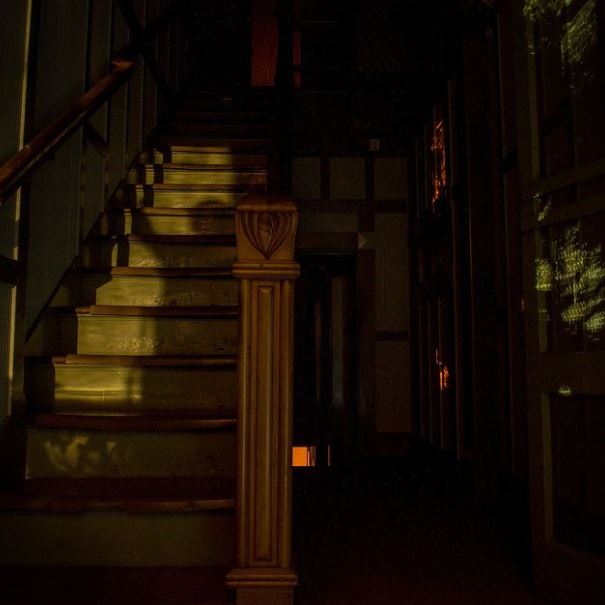
Mrs. Winchester hurried on, breathless; but as she pushed open the door leading to the main hall her heart stood still, for there at the head of the stairs was Maynard, peering dreadfully down into the darkness. For a second she could not sir; but her hand slipped from the door, and as it swung shut the figure vanished. At the same instant there came another sound from below stairs—a stealthy mysterious sound, as of a latchkey turning in the house door. At that moment, the door tore open. On the threshold stood Maynard. All was dark behind him, but Mrs. Winchester saw him plainly. A death flutter passed over her face. Hours passed and there seemed to be no change in her. Just when the evil spirit left, Mrs. Winchester did not, but you could imagine the great joy that filled her heart to be set free from that awful, wicked, noisy spirit. Mrs. Winchester was so happy. If a Demonic element is allowed to express itself, through a non-human vehicle, such as poetry, music, art—great works can be accomplished. Maynard was a Satanist who had worked evil magic more than a hundred times. There are bloodcurdling accounts of those who had flirted with the devil and brought to public attention by those who worked at the Winchester Mansion. Mrs. Winchester knew she had powers when she was a child; she could will things to happen and often they did. She thought it was natural. She owned parchments from old grimoires from rituals that had been performed by witches who were hanged or burned. There were even books with spells in curses from the sixteenth century. #RandolphHarris 10 of 12

Mrs. Winchester owned magic spells that were older than the country—magic to ensure opulence; to incite hatred or vengeance; and, for men, to secure the love of a virgin; to open every kind of lock without a key; to cause a dead body to rise—all that kind of stuff. She studied the old rituals for bewitchment, the type that got a lot of women hanged. There were these spells rather like voodoo where she made wax effigies. Mrs. Winchester vegan to study necromancy, which deals with bringing the dead back to life. The method she did was one where she drew her magic in a circle in her house. This was supposed to attract the spirit back. The performed the rites which lasted about thirty minutes. Nothing happened the first time or the second time, but the third time the room went cold and she could feel the presence. Suddenly ornaments crashed off the sideboard and pictures fell from the walls…she had made contact but whoever it was was obviously unhappy about it so she had to give up. Mrs. Winchester did not give up experimenting thought. The art of necromancy often causes occasional outbreaks of attacks on graveyards where misguided occult dabblers believe they have been compelled to make contact with the dead no matter how long they have been departed, though in truth a graveyard is probably the least place the spirit might wish to join callers for an evening. In June of 1889, the Oak Hill Memorial Park was the scene of bizarre rituals that puzzled even the most experienced occultists. More than twenty graves were ransacked; old-fashion lead-lined coffins had been “ripped open like a tin of beans” and the bodies or remains were carried away. #RandolphHarris 11 of 12

No one can become involved in spiritism without serious repercussions. The poltergeist phenomena may be real. I call upon the powers of death and decay through the mouth of Arezura. Powers of baneful darkness I summon you to this unholy temple. I conjure you mighty Fly Goddess Dryj Nasu to enter this lamp of death which will guide the lives of my enemies into utter destruction, for death levels them all according to my will, whether they die as Kings upon a throne or poor men lying upon dirt! Druj Nasu fill this lamp of death with your power and essence and I offer my essence upon this gateway of the black Earth so it is done! This Druj Nasu runs from the northern directions in the form of a fly. To him blow the wind from the northerly direction from the more northern sides, stinking, more stinking than other winds. I offer my enemy as a sacrifice unto the Druj Nasu. Claim your prize how, by the power of Ahriman and the Blackened Fire of Zohak, and in the name of my own divine power it is done! Thou shalt purge me with hyssop, O Lord! and I shall be clean: Thou shalt wash me, and I shall be whiter than snow. THE ADORATION AT THE INDUING OF THE VESTMENT. By the figurative mystery of these holy vestures (or this holy vestment) I will clothe me with the armour of salvation in the strength of the Most High, ANCHOR; AMACOR; AMIDES; THEODINIAS; ANITOR; that my desire end may be effected through Thy strength, O ADONAI! Unto Whom the praise and glory will for ever and ever belong! Amen! #RandolphHarris 12 of 12

Winchester Mystery House

Master magician and acclaimed apparitionist Aiden Sinclair returns to Winchester Mystery House with Aiden Sinclair’s Ghost of Christmas Passed, an interactive evening of paranormal illusions. Once upon a time, Christmas was more than a celebration of giving.
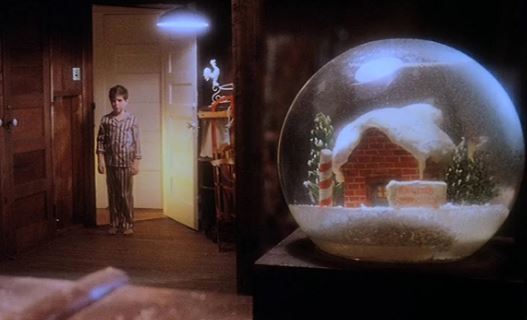
It was a time that families gathered and when the night grew darkest, chilling tales were told. Aiden Sinclair rekindles the tradition of Dickens in a haunting presentation that brings the Christmas Ghost Stories of long ago back to haunt the living! Will you dare join and see what dark gifts he has in store? Two nights ONLY – tickets going fast!
🎟 link in bio. https://winchestermysteryhouse.com/

The Grounds Have their Share of Unexplained Mysteries

A mansion is not a mansion with its stately grounds, and Mrs. Winchester was just as attentive to the exterior of her estate as she was to the sprawling house. An avid gardener, she imported plans, flowers, trees, shrubs, and herbs from over 110 countries around the World. Mrs. Winchester employed eight to ten gardeners. Her head gardener was Mr. Nishiwara, who was responsible for seeing that the beautiful gardens, plus the tall hedge around the hose, were well maintained. The hedges were once so tall that only the top floor of the house was visible from the road! Mrs. Winchester loved to spend time in her gardens, and she had gazebos built where she could sit and enjoy her trees and flowers. It was a Saturday night, in January 1888, and Mrs. Winchester has, as usual, come home from the City early in the afternoon. It has been a black and foggy day, and the gas had been lighted in the streets and in the office where she worked from early morning. The fog was very bad at the time Mrs. Winchester returned home, and she congratulated herself on the fact that she had not to go out again that night. She sat with her puppy Zip in her sitting-room all the evening, with that comfortable feeling that she was able to relax until Monday morning, and that she need trouble about nothing outside the mansion. In due course, Zip went to bed, and then the maid Agnus reminded her of a letter that must be written and posted that night. Sufficient is it for Mrs. Winchester to say that the letter was to an elderly relative of some means who lived in Oakland, and who had taken great interest in her puppy Zip. The butler Martin remembered that the following day was the birthday of this relative, and that she should receive proper greeting by the Sunday morning post in the country town.

Frankly, Mrs. Winchester did not want the bother of it; but Agnus always knows best in these matters, and so Mrs. Winchester wrote the note and sealed it up. Mrs. Winchester had read nothing exciting during the evening—nothing to stir her imagination in any way. She stamped the letter and proceeded to the front door. Judge of her astonishment when, on throwing it open, she saw nothing but the gray wall of fog coming up to the very house; even the railings, not ten yards in the front of her grand estate, were blotted out completely. She called back into the house for the maid to come and look. “Don’t lose yourself, Mrs. Winchester,” she said, half laughing. “What a terrible night!” “I shall not lose myself,” Mrs. Winchester replied, laughing in turn. “The pillar-box is only at the end of the crescent; if I stick to the railing, I cannot possibly miss it. Do not wait here,” she added solicitously. “I will leave the door ajar, so that I can slip in easily when I come back. I have left my keys on my writing desk.” Angus went in, and Mrs. Winchester pulled the door close, and then stepped out boldly for the front gate. Imagine her standing there, just outside her own gate, and with her back to the crescent, knowing that she had to go to the left to find the pillar-box which was at the end of the crescent. There were thirteen Victorian cottages on her estate, so she knew she had to pass seven more before reaching the pillar-box. She also new that each cottage had an ornamental center-piece before she stepped away from the crescent at the end to reach the pillar box. That Mrs. Winchester knew would be something of an adventure, for the fog was the densest she had ever seen; she could only see the faint glow of her observation tower as she looked behind; the rest of her mansion was invisible.

Mrs. Winchester counted seven Victorian cottages, and then stood at the end of the last line of railings. She knew that the pillar-box was exactly opposite her. She took three quick steps, and literally cannoned into it. She was a little proud of her own judgment in getting it so nicely. Then she fumbled for the mouth of it, and dropped in her letter. All this may should very commonplace and ordinary. Mrs. Winchester is an observant woman, and she had noticed always that the mouth of the pillar-box faced directly along the crescent, thus standing at right angles to the road. At the moment that she had her right hand in that mouth, therefore, she argued that if she stood out at the stretch of her arm, she must be facing the crescent; Mrs. Winchester had but to move straight forward again to touch the friendly railings. She was putting that plan into operation, and had let go of the mouth of the pillar-box, when a man, coming hurriedly round the corner, ran straight into her, muttered a gruff apology, and was lost in the fog again in a moment. And in that accidental collision he had spun her round and tossed her aside—and she was lost! This is literally true. She took a step and found herself slipping of the kerbstone int the road; stumbled back again, and strove to find her way along by sticking to the edge of the pavement. After a minute or two, Mrs. Winchester was so sure of herself that she ventured to cross the pavement, and by great good luck touched in a moment one of those ornamental center-pieces of one of the gates—or so, at least, it seemed. She went on with renewed confidence until she saw certain bushes which topped the railings of one particular cottage, and then Mrs. Winchester knew that she was near her mansion’s front door. She pushed walked confidently, stepped quickly up the little path, and reached the door. She was right; the door yielded to her touch, and she went hurriedly in.

Mrs. Winchester had taken off her hat, and had held it towards the familiar hat-stand before she realized that it was not a familiar hat-stand at all; it was one she did not know. She looked round in some confusion, meaning to make good her escape without being observed, and yet wondering into what part of her mansion could she have come into, when she stopped stock still, with the hat held in her hand, listening. From a room near at hand, Mrs. Winchester heard the sound of a low, long-drawn moan, as from someone in pain. More than that, it was almost the wail of someone in acute terror. Now, Mrs. Winchester was a mild and caring soul, and her first instinct was to run. There was the door within a foot of her; she could open it again noiselessly and slip out, and leave whatever was moaning to its own trouble. Her next instinct, however, was a braver one; she might be able to help. Putting her hat on, and so leaving her hands free, she moved cautiously towards the sound, which was coming intermittently. She found that this wing of the house was unfamiliar to her; there was a 7-11 staircase built in the shape of a letter “Y,” which enabled the servants to quickly get to three different levels of the house. Then there were these stairs that lead to the ceiling, and there was also a cabinet that went straight through to the back thirty rooms of the mansion. When she went down the steps of the 7-11 staircase, slowly and cautiously, with her flesh creeping a little, the morning went on, and Mrs. Winchester was almost inclined to turn back with every step she took. However, at last, she got into the basement, and came to the door of the room from which the sound proceeded. She was in the very act of recklessly thrusting open the door when another sound broke upon her ears that held her still. The sound of someone singing in a raucous voice.

It was a sea song she remembered to have heard when she was a little girl in New Haven, Connecticut, and the words of which she had forgotten; it was something about “Boney was a warrior.” The door of the room was open a little way, and through the crack of it, Mrs. Winchester was able to peer in; and there she saw a sight that for a moment made her doubt her own eyes. She rubbed her eyes in a curious fashion and looked again, and this is what she saw: The room was in a neglected state, with strips of wallpaper hanging down from the walls and with a blackened ceiling. There was a table in the center of it, and at that table a man was seated, with a square black bottle and a glass before him, and a candle burning near his left hand. Mrs. Winchester could see the whole room now as plainly and as clearly as she saw it then. He was a man so villainously ugly that she had a thought that he was not a man at all, but some hideous thing out of a nightmare. He had very long arms—so long that they were stretched across the table, and his hands gripped the opposite edge of it; a great heavy head, crowed with a mass of red hair, was set low between enormously broad shoulders; his eyes, half closed, were high up and close together on either side of a nose that was scarcely a nose at all; the lips were thick and heavy. However, it was not the man that Mrs. Winchester looked at first, it was at two other figures in the room. These figures were seated on chairs facing the table at which the man was, and the strangeness of them lay in the fact that each was securely bound to the chair on which he and she sat, for it was a man and a woman. The man, who was quite young was not only bound, but gagged securely also; the woman was more lightly tied to her chair by the arms only, and her mouth was free. She was leaning back, with her eyes closed, and mingling with the raucous singing of the man at the table. Mrs. Winchester’s first impression was that the man at the table was some sort of unclean, bestial judge, and the others his prisoners.
He stopped his singing to pour some liquor from the square bottle into his glass and to drink it off; then he resumed his former attitude, with his fingers locked over the edge of the table. And now Mrs. Winchester noticed that while the woman, who was, by the way, quite young and very pretty, with a fair, dainty prettiness, still kept her eyes closed, the eyes of the bound man never left that dreadful figure seated at the other side of the table. Mrs. Winchester felt like she was on the eve of some awful calamity. She then unhesitatingly pronounced the entire assortment of people in the room as ghost, and condemned all the gathered treasures as the creations of petty intellect, which could not get out of the beaten track, but sought in the supernatural a reason for the explanation of every fact that seemed at variance with routine of daily experience. In her opinion the collection of people in this room had never seen at all in her day and generation, and must have been souls killed by the Winchester rifle ages ago; she did not yet believe her mansion was enchanted, however. To use her own language, “all those stories have been made by those people that set up overnight stirring out legends to entertain each other.” However, she must have known that she was in denial. For she was not insane and there were some kind of beings in this room. “Wouldn’t you like to speak, you dog?” said the red-haired man. “What would you give now to have the use of your limbs—the free wagging of your tongue? What would you say to me; what would you do to me?” The man who was bound could, of course, answer nothing. Mrs. Winchester saw his face flush and darken, and she guessed what his thoughts were. For herself, she was too fascinated by the scene before her to do anything else than peer through the crack and watch what was going one.

“Lovers—eh?” exclaimed the man at the table. “You thought I was unsuspicious; you thought I knew nothing and suspected nothing—didn’t you? While I was safely out of the way you could meet, the pair of you—day after day, and week after week; and this puppy could steal from me what was mine by right.” The woman opened her eyes for the first time and spoke. “It isn’t true,” she said, a sob breaking her voice. “It was all innocent. Martin and I have done no wrong.” “You lie!” thundered the man, brining his fist down upon the table with a blow that might have split it. “You’ve always lied—lied from the moment your father gave you to me—from the very hour I married you. You always hated me; I’ve seen you shudder many and many a time at the mere sight of me. Don’t I know it; haven’t I felt you stab me a thousand times more deeply than you could have stabbed me with any weapon? You devil! I’ve come at last to hate you as much as you hate me.” The woman turned her head slowly and looed at the younger man; a faint smile crossed her lips. In an instant the red-haired man had leapt to his feet, showing Mrs. Winchester astonishingly enough that he was a dwarf, with the shortest legs surely ever a man had. However, the bult of him was enormous, and Mrs. Winchester could guess, with a shudder, at his length. He caught up the glass, crossed the room, and flung the contents in the face of the man. “It’s a waste of good liquor—but that’s for the look she gave you. I wish there was some death more horrible than any invented yet that I could deal out to you,” he added, standing with the glass in his hand and glaring at his victim. “The death I mean for you is too easy.” He walked across to the fireplace in a curious purposeless way, and stirred a great fire that was blazing there. Then from a corner of the room he dragged with ease a great sack that appeared to contain wood and shavings; so much that Mrs. Winchester saw a rent in the side of it. As if in readiness for something, this he dropped down near the fire, and then went back to his seat, applying himself again to the drink that was on the table. And still Mrs. Winchester watched, as a woman may watch a play, wondering how it will end.
“I got the best of you tonight,” he said presently. “If I hadn’t some upon you from behind, you might have been too much for me; but I was ready and waiting. I’ve been watching longer than you think; I had everything mapped out clearly days ago. Tonight sees the end of all things for the pair of you; tomorrow sees me smiles away from here. You came in secret, you dog; you’ll go in secret.” “We have done no wrong,” said the woman again. “We loved each other years ago, when we were boy and girl; there was no sin in that.” “Bah!—I don’t believe a word of it. Don’t I know that your black heart you’ve compared the two of us every day of your life since first I saw you. His straightness for my crookedness; his sleek, black hair for my red; his prettiness for this face of mine”—he struck his own face relentlessly with one hand as he spoke—“that women shudder at. Don’t I know all that?” It was the strangest and most pitiful thing that the creature sitting there before his victims suddenly covered his face with his hands and groaned. If ever Mrs. Winchester had seen a soul in torment, she saw it then, and though she loathed him she could have wept for him. After a moment or two he dropped his hands and seized the bottle, and poured out the last drops into the glass and drank them off; then flung the bottle and glass crashing into the fireplace, as though there was an end to that business. And now, as he got down again from the chair, Mrs. Winchester saw the eyes of the woman open wide and follow his every movement with a dreadful look of terror in them. “I’ll kill you both—here in the place where you’ve met—and then I’ll seal up the house,” went on the dwarf. “I’ve planned it all. Look you last on each other, for tonight you die—and this house shall be your crypt!”

“I swear to you,” panted the woman eagerly, “by all I hold most holy and most dear, that if you let us go, we’ll never see each other again. For pity’s sake! —for the sake of Martin!” “For the sake of Martin!” sneered the dwarf. “That shows you in your true colors; that show who you are and what you are. There’s one poor satisfaction left to you; you’ll die together.” What held Mrs. Winchester then it would be impossible to say. She could only plead that in the dreadful thing that followed was a woman who sits at a play wondering what will happen next, and with never a thought in her of interfering. Mrs. Winchester’s in her anxiety has pressed the door a little to get a clearer view, so that she saw every movement of the dwarf. For herself, Mrs. Winchester had forgotten everything—in her own home, and my puppy zip, and the servants who slept in the mansion. It was as though she has stepped straight into a new World. Mrs. Winchester saw the dwarf advance towards the man in the chair, carrying his right hand stiff and straight beside him, gripping something s, she could not tell what it was that he held. Mrs. Winchester saw him come straight at her, and she saw the eyes of the woman in the opposite chair watching her as one fascinated. Then Mrs. Winchester saw two movements’ one with the left hand of the dwarf, when he struck the other man on the face; then with the right hand, when he raised something that gleamed n the light of the candle and brought it down with a sound that was new and horrible to her on the breast of the other man. And Mrs. Winchester saw the face of the man change, and start as it were into new life, and then fall as it were into death. And Mrs. Winchester saw his head drop forward, and his eyes were closed. Then, above it all, and yet seeming as a sort of dreadful chorus to it all, rang out the scream from the woman in the other chair. Mrs. Winchester did not think that the dwarf heard it; he had drawn back from what had been the living man, and was staring like one mad upon what he had done. And still piercing the air of the place rang the scream of the woman—not for her lover alone, but for herself.

That sound seemed at last to break in upon the senses of the dwarf and to call him partially to himself. Mrs. Winchester had watched him to the point where he draw himself together and crouched like a wild beast ready to spring, with that in his hand that dripped red, when, in some fashion, she flung herself round the partially open door and stumbled into the room. Mrs. Winchester thought she must have been a little made herself; otherwise, frail and commonplace creature that she was, she could not have battled with this madman. Mrs. Winchester came upon him from behind and gripped him, seizing him by the throat and by the head, and all the while shouting something to him quite unintelligible. The attack had been so sudden and so unexpected that she had him, in a sense, at her mercy. He could not know who had attacked him; he struggled madly, not alone to get away from her, but also to discover who she was. Mrs. Winchester struggled to keep his face away from her, gripped him by the neck and by the hair, and fought with him for what she knew then was her own life. And so struggling they stumbled at last horribly against that still figure bound in the chair and brought it over crashing with them to the floor. And then in a sudden Mrs. Winchester felt the dwarf inert in her hands, and knew that she had conquered him. What she must have looked like in that room, kneeling there, panting and struggling to get her breath, she could not tell; the whole business was so like a nightmare. She remembered seeing the dwarf lying there—huddled up and very still. She remembered that other figure, bound grotesquely in the chair and lying, still bound, upon its side; and she remembered, too, the woman, with her arms close fastened behind her, sitting there and sobbing wildly.
The dwarf must have been stunned; he lay there quite still, with the knife that was dreadfully red fallen from his hand, and lying beside him. When at last Mrs. Winchester staggered to her knees she saw that the girl was staring at her with a face that seemed to suggest that here, perhaps, was another ruffian come to kill her. “Who—who are you?” she asked in a frightened whisper. “A friend—one who stumbled in by accident,” Mrs. Winchester panted. “Look at the man that’s tied to the chair,” she whispered hoarsely. “He can’t be dead.” Mrs. Winchester knew that he was, but still she looked, as she bade her. Mrs. Winchester had no need to look twice; the poor fellow was quite dead. The blow had been strong and sure. On her knees beside him, Mrs. Winchester looked up and nodded slowly to her; there was no need for words. The young lady leaned back in her chair again and closed her eyes. “Set me free,” she said in a faint voice. Mrs. Winchester could not touch that knife that lay there; in a mechanical, methodical way she took from her waistcoat pocket the decent, respectable little bone handled penknife she carried always with her. With that Mrs. Winchester but the young lady’s bonds, nothing as she did so how cruelly they had cut into the white flesh; and after a moment or two she swung her arms listlessly against her sides and opened her eyes, and then, with an effort raised her hands and pressed them against her temples. “What will you do?” Mrs. Winchester asked, looking at her curiously. “I—I don’t know,” she said; and then, breaking into weeping, sobbed out: “Oh—dear God—that it should have come to this! What shall I do—what shall I do?” “You must get away,” Mrs. Winchester said, watching the dwarf, who was beginning to stie a little. “If he wakes, you know what will happen.”

“I know—I know,” she said; and got to her feet and began to move towards that bound figure still lying tied to the chair. However, at that Mrs. Winchester got before her, and with her hands against he shoulders held her back, and pleaded passionately to her that she should go, and leave the dead alone. She listened, with that strange look in her eyes of a child wakened from sleep and not clearly understanding; but she yielded to Mrs. Winchester, and stumbled under her guidance to the door. They had reached it, and Mrs. Winchester had opened it for her to pass out, when suddenly the dwarf twisted over on to his hands and knees, and then raised himself upright. He did not seem to realize for a moment what had happened; then he caught sight of the woman, and, with a snarl, crawled forward and gripped the hilt of the knife. At that she pushed suddenly past Mrs. Winchester and fled like a hare up the stairs. Mrs. Winchester heard the swift passage of her footsteps in the little hall of the house—then the slamming of the door-to-nowhere. And now Mrs. Winchester had to look to herself, for she saw in the eyes of the man that he would not let this witness escape if he could catch him. Mrs. Winchester had managed to get through the door by the time that he had got to his feet, and in a dazed fashion was stumbling toward her, knife in hand. With a sudden swoop he reached the table and blew out the candle, and at the same moment Mrs. Winchester ran up the stairs, and in the darkness stumbled along the hall and fumbled with the catch of the door. By great good fortune, Mrs. Winchester got the door open, and literally fell out into the fog. She could not see him as he tore after her; in a faintness Mrs. Winchester had fallen to her knees, and she heard him, as he raced past her, panting heavily. Then the fog swallowed him up, and she knelt there on the farm alone, shaking from head to foot.

Mrs. Winchester had, of course, no means of exactly in what part of her mansion she had had her adventure; she could only judge roughly that it must be about the middle of the crescent. She started along again, in the right direction, as she hoped, and thought to find the front door to her mansion; missed the railings, after going what seemed to be an interminable distance, and came up hard against a pillar-box. Scarcely knowing what she did, she set her right hand in the mouth of it, and performed the same maneuver she had done before; advanced three paces, and touched railings again. Stumbling along these, she came blindly what she thought was her front door, walked up the path, and pushed open the door that yielded; and there, with the face of her maid looking at her in alarm and wonderment, Mrs. Winchester feel in a dead faint at her feet. It has to be recorded that Mrs. Winchester never found that room again. She knew every square inch of her mansion. Over and over again, in clear weather, Mrs. Winchester has always around in her mansion, and had closed her eyes, and tried to remember what steps she took to get to that particular room that night, after a stranger had cannoned into her and twisted her round; but all in vain. Whether in some part of the house lies the body of a man who was foully murdered on that particular night; maybe in a hidden room the crime was committed; or perhaps, in some strange supernatural fashion, she saw that night a deed committed that had been committed long before, she shall never know. That it is no mere figment of the imagination, and that something really happened that night, is proved by one fact. Her maid, in raising Mrs. Winchester from the floor that night when she fell at her feet, found her fingers locked closed upon something, and, forcing them open, disclosed what it was. A tuft of red hair!

Such episodes may appear utterly absurd and pure superstition to people in countries comparatively free of black magic, but instead they should be warnings of the power of Satan and demons where occult literature lures readers into illicit magic. Magic as the release of special power by satanic and demon forces of evil in its character and effects. While divine help and miracles produce new strength and positive results, magic shifts the burden to another area. Small relief in one area must be paid for by terrible burdens in another. The principle of compensation prevails. The price exacted is always found to be much greater than the amount of help received. Satan drives a hard bargain and grossly cheats his victims. Usually violence, suicide, and insanity will run through a whole family line, where the magical arts have been cultivated and practiced. Such tragic events often involve as many as four generations. Many occultists and magic workers, especially those who have cultivated the black arts and signed themselves over to the devil in their own blood, die horrible deaths. When a ready successor is not provided to carry on the nefarious practice, this is especially true. The psychic bondage and oppression that traffickers in occultism themselves suffer, as well as their dupes, is horrifying to contemplate. Demon possession is represented as a vivid symbol of the prevalence of evil in the World. Other critics attempt to dismiss demon possession with theories of accommodation or hallucination. However, this view fails to meet the issue. Nor can present-day parapsychologist and psychiatrists, who refuse to recognize evil supernaturalism in the phenomenon of demon possession, either explain it or deal adequately with it. Laws defining witchcraft as having league with the Devil and prescribing the death penalty for such offenders cropped up in the colonies as early as 1636 in Plymouth. Other colonies soon followed suit—Connecticut in 1642 and Rhode Island in 1647.

The first executions took place in Boston in 1648 and in Hartford, Connecticut, in that same year. The executions were carried out by hanging, in contrast to the European practice of burning witches, which probably stemmed from the widespread fear among the European peasantry of vampire, the dead who returned from their graves to suck the blood from the living. The vampire myths never really took root in America, so the necessity of destroying the bodies of the witches was not deemed urgent. Throughout the 1650s, there appeared prosecution and attempted prosecutions in America, but these cases were infrequent, and all of them were based on the fear of maleficum, the witch’s working of evil, the accusations coming from frustrated and jealous neighbors. Few confessions were recorded in the early cases, and they did not seem to have much real validity. The few that did confess mentioned having dealings with Satan, but for the most part these admissions were confused and incoherent, and the details of the accounts differed greatly from the confessions of the witches in Europe. For example, in 1699, in Connecticut, a woman named Greensmith confessed to trafficking with the Devil, but made no mention of all-important Covenant, or pact. She further stated that the Devil had appeared to her in the form of a deer (not a goat) and that she had attended meetings at a place not far from her house. The mention of “meetings” occurred in some early confession, but the word “Sabbat” or “Sabbath,” commonly used by European witches, did not come up until later, apparently at the suggestion of the Salem judges. Some believe that Satan has a soul and a character. He is not just this futile entity but someone you can see many aspects to. Some people do not see Satan as this guy with horns who is evil, they see Him as the first rebel. Then one can see why He is so attractive to many in the Victorian ages and the young people. He is someone who is standing up to the greatest power in the Universe. “If that ‘evil’ is of a rebellious nature,” says Glenn Danzig, “then I guess, in Christian terms, that evil is the Satan in you. I don’t buy that. I believe in honesty, standing up for yourself. That’s my ‘good.’”

Thousands of people base their hopes on the statements of spiritistic practitioners and subsequently become dependent upon the advice they receive from the “other side.” There are quite a number of people who has suffered serious psychic disturbances through the misuse of such practices. Their personalities have been split and they have been utterly confused by the spirits on which they have called. People therefore who try to discover what life after death is like through spiritism and superstition may be in danger of falling prey to the dark and hidden side of their own minds and soul. If you look at the early tracts of The Christian Bible, there is really not much about Satan in there anyway. Christian religions have tried to overblow and create a whole legend around Satan which is not true to the actual scriptures we have. If you desire, you must first make yourself strong so you can help others. You should only help people who want help, a lot of times people do not really want your help. You tell people what has to be done to change their lives, they will not listen. If Satan were corporeal, He would not be something repulsive, He would be something seductive. He would want to win you over and gain your trust, and of course being repulsive or disgusting would not be the way to go. One would imagine this would be a seductive, beautiful creature. In the Gnostic account of the fall of the angels, the angels were suppsed to be watching over this flock of humans and all of a sudden, they are perpetrating acts of pleasures of the flesh with them. Eventually this created the Cyclops, the Minotaur, things of this nature. There are so many accounts of the fall of the angels, it is like a fantasy tale that you would like to believe actually happened. We, in this circle, conjure and cite this spirit Fatenovenin, with all his adherents, to appear here in this spot, to fulfill our desires, in the name of three holy Angels, Schomajen Sheziem, Roknion Averam, Kandile, Brachat Chaijdalic, Ladabas, Labul, Rargil, Bencul, in the name of God. Amen!

Winchester Mystery House

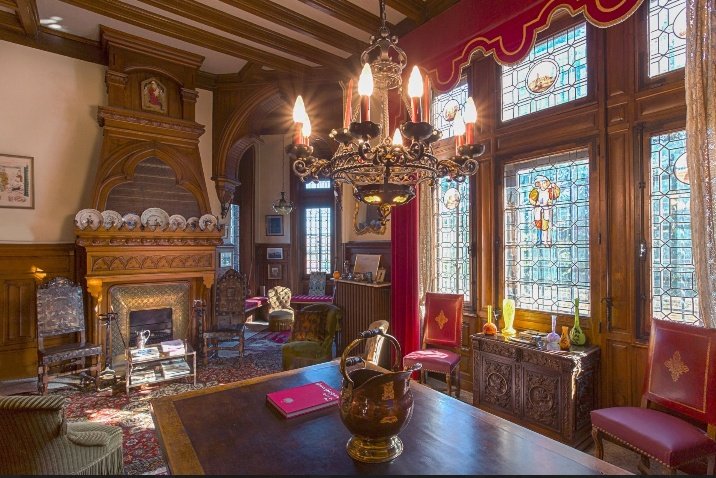
Mrs. Winchester’s estate was a little town within itself. The grounds have their share of unexplained mysteries. Mrs. Winchester outfitted her home with the finest stained glass doors, windows, and wallpaper that money could buy during her time. She had everything she needed: plumber’s shops, carpenter’s workshops, her own water and electrical supplies, and complete sewer and drainage systems. Mrs. Winchester even had her own gas manufacturing plant. It produced carbide gas by adding a small amount of water to a drum containing calcium carbide. The resulting gas was pressed through the gas lines to the house by a large piston and cylinder. The gas lights in the house were then lit by electromechanial strikers that created a spark to light each lamp.
Come see her estate, in person, for yourself this weekend! Please Click the link below for tickets and more information.

And a Hair of His Head Shall Not Fall to the Ground Unnoticed

We cannot go to others with what we have received, saying: This is what needs to be known, this is what needs to be done. We can only go and put to the proof in actions. And even this is not what we “ought to” do: rather we can—we cannot do otherwise. This is the eternal revelation which is present in the here and now. I neither know of nor believe in any revelation that is not the same in its primal phenomenon. Joseph Smith returned to Independence in April, 1832, to help the Saints in their conflict with the pioneer Missourians, who did not like the people from the East. The day after his arrival, Joseph called a conference of the Saints in America. One of the first items of business was to vote to acknowledge Joseph Smith as “president of the high priesthood,” or president of the church. Provision was later made for two counselors to the president, making three in the Presidency. A revelation was received at this time in which the Lord said: “I give unto you directions how you may act before me, that it may turn to you for your salvation. I, the Lord, am bound when ye do what I say, but when ye do not what I say, ye have no promise. American must increase in beauty, and in holiness…America must arise and put on her beautiful garments. Therefore, I give unto you this commandment, that ye bind yourselves by this covenant. And you are to be equal, or in other words, you are to have equal claims on the properties, for the benefit of managing the concerns of your stewardships, every man according to his wants and his needs, inasmuch as his wants are just. And all this for the benefit of the church of the living God, that every man may improve upon his talent, that every man may gain other talents; yea, even an hundredfold, to be cast into the Lord’s storehouse, to become the common property of the whole church, every man seeking the interest of his neighbor, and doing all things with an eye single to the glory of God. #RandolphHarris 1 of 21

“Make unto yourselves friends with the mammon of unrighteousness, and they will not destroy you. Leave judgment alone with me, for it is mine and I will repay. Peace be with you; my blessings continue with you, for even yet the kingdom is yours, and shall be for ever if you fall not from your steadfastness.” After preaching several powerful sermons and visiting and encouraging the Saints, Joseph Smith, Sidney Rigdon, and Newell K. Whitney left Independence for Kirtland, where they arrived in June. During this same month the first issues of the paper, the Evening and Morning Star, was published at Independence. It was a joyous treat for the Saints in Kirtland to receive a copy of this paper. Joseph and Sidney Rigdon spent much of their time on the work of correcting the Scriptures during the summer and fall of 1832. Two revelations were given during this period giving instruction on the priesthood in the church and containing many glorious promises. The Lord praised the Saints for their hard work which had been done by much sacrifice and under unfavorable conditions. The Lord explained the purposes of the two priesthoods, the Aaronic and the Melchisedec. The people were instructed to accept the ministry of men who are called to the priesthood. Jesus Christ, the Lord said: “All they who receive this priesthood receiveth me, saith the Lord, for he that receiveth my servants receiveth me, and he that receiveth me receiveth my Father, and he that reciveth my Father receiveth my Father’s kingdom.” Helpful instruction was given in this revelation: “You shall live by every word that proceedeth forth from the mouth of God. For the word of the Lord is truth, and whatsoever is truth is light, and whatsoever is light in Spirit, even the Spirit of Jesus Christ. And the Spirit giveth light to every man that cometh into the World; and the Spirit enlightenth every man through the World, that hearkeneth to the voice of the Spirit. #RandolphHarris 2 of 21

“And everyone that hearkeneth to the voice of the Spirit, cometh unto God, even the Father. Whoso cometh not unto me is under the bondage of sin; and whoso recieveth not my voice is not acquainted with my voice, and is not of me; and by this you may know the righteous from the wicked.” The elders were told they should travel without money or provisions—“pure or scrip” were the exact words used—and Jesus promised: “And any man that shall go and preach this gospel of the kingdom, and fail not to continue faithful in all things, shall not be weary in mind, neither darkened, neither in body, limb or joint; and an hair of his head shall not fall to the ground unnoticed. And they shall not go hungry, neither athirst. Therefore take no thought for the morrow, for what ye shall eat, or what ye shall drink, or wherewithal ye shall be clothed. For consider the lilies of the field, how they grow, they toil not, neither do they spin; and the kingdoms of this World, in all their glory, are not arrayed like one of these; for your Father who art in Heaven, knoweth that you have need of all these things. Therefore, let the morrow take thought for the things of itself. Neither take ye thought beforehand what ye shall say, but treasure up in your minds continually the words of life, and it shall be given you in the very hour that portion that shall be meted unto every man. Whoso receiveth you receiveth me, and the same will feed you, and clothe you, and give you money. And he who feeds you, or clothes you, and gives you money, shall in no wise lose his reward.” A little son, whom they named Joseph Smith III, was born to Emma and Joseph on November 6, 1832. This baby was to have an important part in the work of the Lord later. An important revelation was given on December 27, 1832. The Saints were commanded to keep the laws of God. The Lord said: “He who is not able to abide the law of a celestial kingdom, can not abide a celestial glory; and he who can not abide the law of terrestrial kingdom, can not abide a terrestrial glory; he who can not abide the law of a telestial kingdom, can not abide a telestial glory; therefore, he is not meet for a kingdom of glory. #RandolphHarris 3 of 21

“And if your eye be single to my glory, your whole bodies shall be filled with light, and there shall be no darkness in you, and that body which is filled with light comprehendeth all things. Therefore, sanctify yourselves that your minds become single to God, and the days will come that you shall see him. Continue in prayer and fasting from this time forth. And I give unto you a commandment, that you shall teach one another the doctrines of the kingdom. Call your solemn assembly, as I have commanded you; and as all have not faith, seek ye diligently and teach one another words of wisdom; yea, seek ye out of the best books words of wisdom; seek learning even by study, and also by faith. See that ye love one another; cease to be covetous; learn to impart one to another as the gospel requires; cease to be idle; cease to be unclean; cease to find fault one with another. Cease to sleep longer than is needful; retire to thy bed early, that ye may not be weary; arise early, that your bodies and your minds may be invigorated. Pray always, that you may not faint until I come.” Provision was made in this revelation for establishing a “school of the prophets,” in the “house of the Lord.” This school was for all members of the priesthood, from the high priests to the deacons, and it was to be taught by the Presidency of the church. To be humble is to recognize gratefully our dependence on the Lord—to understand that we have constant need for His support. Humility is an acknowledgment that our talents and abilities are gifts from God. It is not a sign of weakness, timidity, or fear; it is an indication that we know where our true strength lies. We can be both humble and fearless. We can be both humble and courageous. The Lord will strengthen us as we humble ourselves before Him. “God resisteth the proud, but giveth grace unto the humble…Humble yourselves in the sight of the Lord, and he shall life you up,” reports James 4.6 and 10. #RandolphHarris 4 of 21

When the storms in life come, one can be steady because one is standing on the rock of one’s faith in Jesus Christ. May everyone face the storms with a peaceful heart. The place to begin is to remember that we are each a beloved child of God and that He has inspired servants. Those servants of God have foreseen the times in which we live. Know also that in the last days, perilous times shall come. Anyone with eyes to see the signs of the times and ears to hear the words of prophets knows that is true. The perils of greatest danger come to us from the forces of wickedness. Those forces are increasing. And so it will become more difficult, not easier, to honor the covenants we must make and keep to live the gospel of Jesus Christ. For those of us who are concerned for ourselves and for those we love, there is hope in the promise God has made of a place of safety in the storms ahead. It has never been more important than it is now to understand how to build a strong foundation. “Then Solomon said, The Lord has said that He would dwell in the thick darkness,” reports II Chronicles 6.1. Therefore, do not fear because God is everywhere. The human wish, we are saying, is not merely a push from the past, not merely a call from primitive needs demanding satisfaction. It also has in it some selectivity. It is a forming of the future, a molding by a symbolic process which includes both memory and fantasy, of what we hope the future will be. The wish is the beginning of orienting ourselves to the future, an admission that we want the future to be such and such; it is a capacity to reach down deep into ourselves and preoccupy ourselves with a longing to change the future. However, there is no will without a prior wish. The wish, like all symbolic processes, has a progressive element, a reaching ahead, as well as a regressive pole, a propulsion from behind. The wish thus carries its meaning as well as its force. Its motive power lies in the conjunction of this meaning and force. We can now understand why William Lynch should hold that “to wish is the most human act.” #RandolphHarris 5 of 21

The past is drifting away at a faster and faster rate. When we look back at, say, the first quarter of the twenty-first century, we realize that many of its defining episodes no longer grip us as strongly as they one did. For the generation now coming into power, events like the 911, the civil rights protests of the 2020s, the Ukrainian War, the Cultural Revolution, homelessness, demands for affordable housing and spread of graffiti in small towns seems increasingly more significant and relevant. Therefore much of what will happen in our lifetimes will consist of adaptation to and further development of a process that began three quarters of a century ago—the most revolutionary wave of change in wealth creation since at least the eighteenth century. Let us pause briefly, then, to summarize and draw together some key things. First, this revolution is a matter not just of technology, stock-market swings, inflation or deflation but of profound social, cultural, political and geopolitical changes as well. Failure to recognize the connections between these and economics leads us to seriously underestimate the oncoming challenges we face. Second, while headlines and business chatter continually refer to improving or declining “fundamentals,” we suggest that that these ups and downs are largely superficial responses to far more important shifts in what we have termed “deep fundamentals”—those factors and forces that have governed all economic activity sine our days as nomadic hunter-gatherers. Economists have long studied some of these essentials—things like work, the division of labor, exchange and the sharing of rewards. They have also filled libraries with studies on technology, energy and the environment. Business gurus drawing on these studies pour out advice about everything from human-resource management to network organization, insourcing and outsourcing, leadership and strategy. #RandolphHarris 6 of 21

Yet, if they ignore three key forces driving today’s wealth revolution—dramatic changes in our relations to time, space and, above all, knowledge, how good can advice and proposed strategies be? It is, we have contended, only by recognizing the centrality of these wealth drivers that we can prepare for tomorrow. For this reason, we have looked closely at each of these deep fundamentals and their impacts on wealth. Take, for instance, the de-synchronization effect. As we saw earlier, companies are compelled to shift and re-shirt their products and relationships incessantly. Customer demands, financial imperatives and market forces all change at accelerating, but very different, rates. In doing so, they impose destabilizing cross-pressures on firms whose managers struggle to come to terms with time. In response, a big synchronization industry has grown up to help firms cope with clashing speeds. At the same time, a backward, tortoise-paced public sector—itself badly de-synchronized—imposes a huge “time-tax” on companies by slowing them down with delays in court decisions, procurements process, regulatory rulings, permit procedures and in a thousand other ways. In short, one part of the system is flooring the gas pedal while the other is slamming on the brakes. Nowhere, as we have noted, is this more frustratingly evident than in the contradiction between the fast-changing skill requirements of an advanced, accelerative economy and the glacial immobility of its schools. We have seen also that some degree of de-synchronization is essential to keep competition and innovation going on. However, it is equally clear that excessive de-synchronization can throw companies, industries and entire economies into chaos. Indeed, one can look at the great stock market shakeouts as desperate attempts by the wealthy system to re-synchronize itself. #RandolphHarris 7 of 21

However, time is only part of the story. To understand tomorrow’s oncoming changes, the cumulative effects of time conflicts need to be seen against the equally powerful transformations in the spatial landscape. Thus the World today holds its breath while watching the massive relocation of wealth and wealth creation toward formerly “developing” countries led by China and India—surely one of the biggest and fastest such transfers in history and possibly the completion of a great circle of wealth movement that began some five hundred years ago. Moreover, we have suggested that, instead of asking whether globalization will continue, we recognize a coming split—possible de-globalization on the economic level and re-globalization of campaigns against such problems as pollution, terrorism, drugs, sexual slavery and genocide. Here, too, gas pedal and brake are applied at the same time. Out of this collision will come the accelerated relocation of the globe’s wealth creation to new high-value-added hot spots—leaving behind new pockets of poverty. However, the most dramatic spatial shifts of all has little to do with these terrestrial concerns. Though millions brush it aside, we actually stand at the historical edge of humanity’s serious thrust into outer space. For historians of tomorrow looking back at the twenty-first century, one of most important economic events of all may prove to be the colonization of space and wealth creation beyond our home planet. None of these changes would occur without even more potent transformations in the deep fundamental of knowledge and our relations with it. While shifts in the use of time and space will be easy to recognize, today’s revolution in knowledge—the defining deep fundamental of our time—is far harder to grasp. These changes are, by their very nature, intangible, invisible, abstract, epistemological and seemingly remote from daily life. Yet no attempt to forecast the future of wealth can succeed without a thorough appreciation of the new role of knowledge. #RandolphHarris 8 of 21

We have provided an admittedly simplified primer on the scope, nature and role of knowledge as the central resource of advanced economies. However, here again we do not just need to analyze, but to synthesize—to see these deeply fundamental changes in interaction with one another. When we alter our relationship to time, for example, by speeding things up, we inevitably make some knowledge obsolete. We thereby increase the backlog of obsoledge that we lug around with us. Let us proceed to economic and social changes. New Deal. The Keynesian economics of the New Deal has cushioned the business cycle and maintained nearly full employment. It has not achieved its ideal of social balance between public and private works. The result is an expanding production increasingly consisting of corporation boondoggling. Syndicalism. Industrial workers have won their unions, obtained better wages and working conditions, and affirmed the dignity of labor. However, they gave up their ideal of workers’ management, technical education, and concern for the utility of their labor. The result is that a vast majority could not care less about what they make, and the “labor movement” is losing force. Class struggle. The working class has achieved a striking repeal of the iron law of wages; it has won a minimum wage and social security (although future funding is uncertain). However, the goal of an equalitarian or freely mobile society has been given up, as has the solidarity of the underprivileged. The actual result is an increasing rigidity of statuses; some of the underprivileged tending to drop out of society altogether. On the other hand, the cultural equality that has been achieved has been the degradation of the one popular culture to the lowest common denominator. Production for Use. This socialist goal has been missed, resulting in many of the other failures here listed. #RandolphHarris 9 of 21

Sociology. During the past century, the sociologist have achieved their aim of dealing with humankind in its natural groups or groups with common problems, rather than as isolated individuals or a faceless mass. Social science has replaced many prejudices and ideologies of vested interests. However, on the whole, social scientists have given up their aim of fundamental social change and an open-experimental method determining its goals as it went along: the pragmatist ideal of society as a laboratory for freedom and self-correcting humanity. The actual result is an emphasis on “socializing” and “belonging,” with the loss of nature, culture, group solidarity and group variety, and individual excellence. There are 773,000,000 illiterates in the World. There are approximately 43 million illiterates in the United States of America, and according to a report from our Librarian of Congress, there may be an equal number of alliterates. In any case, a general impatience with books will develop, especially with books in which language is used with subtlety to express complex ideas. Most likely there will be a decline in readers’ analytical and critical skills. According to the results of standardized tests given in schools, this has been happening in the United States of America for the past fifty-five years. I suspect concern for history will also decline, to be replaced by a consuming interest in the present. The effect on political life will be devastating. There will be less emphasis on issues, substance, and ideology, an increase in the importance of image and style. Politicians will have greater concern for moment-to-moment shifts in public opinion, less concern for long-range policies. Unless the use of television for political campaigns is strictly prohibited, elections may be decided by which party spends more on televisions and media consultants. #RandolphHarris 10 of 21

Even if political commercials are prohibited, politicians will appear on entertainment programs and will almost certainly be asked to give testimonials for non-political products such as cars, beer, and breakfast foods. The line between political life and entertainment will blur, and movies stars may be taken seriously as political candidates. Once the population becomes accustomed to spending much of its time watching television—in the United States of America, the average household has television on about eight hours a day—there will be a decrease in activities outside the home: fewer and smaller gatherings in parks, beer halls, concert halls, and other public places. As street life decreases, there may well be an increase in street crime. Young and some older people will, of course, become disaffected from school and reading. Children’s games are likely to disappear. In fact, it will become important to keep children watching television because they will be a major consumer group. In the United States of America, children watch 5,000 hours of television before they enter kindergarten and 16,000 hours by high school’s end. Commercial television does not dislike children; it simply cannot afford the idea of childhood. Consumerhood takes precedence. Naturally, family life will be significantly changed. There will be less interaction among family members, certainly less talk between parents and children. Such talk as there is will be noticeably different from what you are now accustomed to. The young will speak of matters that once were confined to adults. Commercial television is a medium that does not segregate its audience, and therefore all segments of the population share the same symbolic World. You may find that in the end the line between adulthood and childhood has been erased entirely. #RandolphHarris 11 of 21

Television is itself a commodity, and an expensive one too. Therefore it is physically consistent with the prevalent reality. Its purchase gives the commodity system a boost. Television changes the nature of the artificial environment from passive to active. Unlike buildings and machines, television literally enters inside human beings; inside our homes, our minds, our bodies, making possible the reordering of human processes from the inside. Television is an experience that can be had by virtually everyone at the same time. By substituting for a greater diversity of experiences and unifying everyone with it, it assists commercial efficiency. With all people confined to the same mental and physical condition, a single advertising or political voice appropriate to the common mood can influence everyone. Once diversity of experience is reduced to television, a relative handful of people can control everyone’s awareness. Luckily for advertisers, in a capitalist system, whoever is in a position to pay for the technology has primary access to it. Television is unique in that it smooths out any furrows in the commodity system. Dormant anxieties can be dulled by the television experience. Beyond being a delivery system for commodity life, it is the solder to hold that life together, the drug to ease the pain of confined and channeled existence. Though television passes for experience, it is really more like “time out,” as we shall see later. It is anti-experience. Its interaction with the human body and mind fixes people to itself, dulls human sensibility and dims awareness of the World. This enhances the commodity life by reducing knowledge of any other. By focusing people on events well outside their lives, television encourages passivity and inaction, discourages self-awareness and the ability to cope personally, both of which are dangerous for advertising. #RandolphHarris 12 of 21

By speaking in images, television adds a dimension to the mirror-image process. Unlike radio or print media, advertising can now implant internal movies, forever available for self-comparison. Television encourages separation: people from community, people from each other, people from themselves, creating more buying units and discouraging organized opposition to the system. It creates a surrogate community: itself. It becomes everyone’s intimate advisor, teacher and guide to appropriate behavior and awareness. Thereby, it becomes its own feedback system, furthering its own growth and accelerating the transformation of everything and everyone into artificial form. This enables a handful of people to obtain a unique degree of power. You have seen how commercial stress the values of youth, how they stress consumption, the immediate gratification of desires, the love of the new, a contempt for old technology. Television screens are saturated with commercials promote the Utopian and childish idea that all problems have fast, simple, and technological solutions. You must banish from your mind the naïve but commonplace notion that commercials are about products. They are about products in the same sense that the story of Jonah is about the anatomy of whales. Which is to say, they are not. They are about values and myths and fantasies. One might even say they form a body of religious literature, a montage of voluminous, visualized sacred texts that provide people with images and stories around which to organize their lives. To give you some idea of exactly how voluminous, I should tell you that the average America will have seen approximately 1 million television commercials, at the rate of a thousand per week, by the age of twenty. By the age of sixty-five, the average American will have seen more than 2 million television commercials. #RandolphHarris 13 of 21

Commercial television adds to the Decalogue several impious commandments, among them that thou shalt have no others gods than consumption, thou shalt despise what is old, thou shalt seek to amuse thyself continuously, and thou shalt avoid complexity like the ten plagues of that the underworld. Perhaps you are thinking that I exaggerate the social and psychic results of the commercialization of television and that, in any case, what has happened in the United States of America could not happen anywhere else. If you are, you overestimate the power of tradition and underestimate the power of technology. To enliven your senses of the forces unleashed by technological change, you need only remind yourself of what the automobile has brought to Austria. Has it not changed the nature of your cities, created the suburbs, made roads through your forest and homes, restructured your economy? You must not mislead yourselves by what you know about World culture as of 2022. May regions around the World are still living in the age of Gutenberg. Commercial television attacks such backwardness with astonishing ferocity. For example, at the present time, less than 20 percent of population in Tuvalu watches television in the evening. A commercial television system will fund this situation intolerable. In the United States of America, approximately 90 percent of people watch television during evening hours, and broadcasters find even those number unsatisfactory. In nations like Korea, television commercials are bunched together so that they do not interfere with the continuity of the programs. Such a situation makes no sense to American commercial systems. The whole idea is precisely to interrupt the continuity of programs so that one’s thoughts cannot stray too far from consideration of consumership. Indeed, the aim is to obliterate the distinction between a program and a commercial. #RandolphHarris 14 of 21

In some countries, you do not have many advertising agencies, and those you have are small and without great influence. In America, our advertising agencies are among the largest and most powerful corporations in the World. DDB Needham Worldwide has gross billings of $6.7 billion each year, 6,726 employees and SICs 7311 advertising agencies, and possibly receives $700 million per year for American network television alone. This is serious money and these are serious radicals. They cannot afford to permit a culture to retain old ideas about work or religion or politics or childhood. And it will not be long before they and their kind show up in the most primitive communities. If, like me, you claim allegiance to an authentic conservative philosophy, one that seeks to preserve that which nourishes the spirit, you would be wise to approach all proposals for a free-market television system with extreme caution. Indeed, I will go further than that: it is either hypocrisy or balderdash to argue that the transformation of the World from a print-based culture to a television-based culture can leave that country’s traditions intact. Conservatives know this is nonsense, and so they worry. Radicals also know this is nonsense. However, they do not care. In 1879, a French ophthalmologist named Luis Emile Javal discovered that when people read, their eyes do not sweep across the words in a perfectly fluid way. Their visual focus advances in little jumps, called saccades, pausing briefly at different points along each line. One of the Javal’s colleagues at the University of Paris soon made another discovery: that the pattern of pauses, or “eye fixations,” can vary greatly depending on what is being read and who is doing the reading. In the wake of these discoveries, brain researchers began to use eye-tracking experiments to learn more about how we read and how our minds work. Suck studies have also proven valuable in providing further insights into the Internet’s effects on attention and cognition. #RandolphHarris 15 of 21

In 2006, Jakob Nielsen, a longtime consultant on the design of Web pages who has been studying online reading since the 1990s, conducted an eye-tracking study of Web users. He has 232 people wear a small camera that tracked their eye movements as they read pages of text and browsed other content. Nielsen found that hardly any of the participants read online text in a methodical, line-by-line way, as they would typically read a page of text in a book. The vast majority skimmed the text quickly, their eyes skipping down the pages in a pattern that resembled, roughly, the letter F. They would start by glancing all the way across the first two or three lines of text. Then their eyes would drop down a bit, and they would scan about halfway across a few more lines. Finally, they would let their eyes cursorily drift a little father down the left-hand side of the page. This pattern of online reading was confirmed by subsequent eye-tacking study carried out at the Software Usability Research Laboratory at Wichita State University. “F,” wrote Mr. Nielsen, in summing up the findings for his clients, is “for fast. That is how users read your precious content. In a few second, their eyes move at amazing speed across your website’s words in a pattern that is very different from what you learned in school.” As a complement to his eye-tracking study, Mr. Nielsen analyzed an extensive database on the behavior of Web users that had been compiled by a term of German researchers. They had monitored the computers of twenty-five people for an average of about a hundred days each, tracking the time the subjects spent looking at some fifty thousand Web pages. Parsing the data, Mr. Nielsen found that as the number of words on a pace increases, the time a visitor spends looking at the page goes up, but only slightly. #RandolphHarris 16 of 21

For every hundred additional words, the average viewer will spend just 4.4 more seconds perusing the page. Since even the most accomplished reader can read only about eighteen words in 4.4 seconds, Mr. Nielsen told his clients, “when you add verbiage to a page, you can assume that customers will read 18 percent of it.” And that, he cautioned, is almost certainly an overstatement. It is unlikely that the people in the study were spending all their time reading; they were also probably glancing at pictures, videos, advertisements, and other types of content. Mr. Nielsen’s analysis backed up the conclusions of the German researchers themselves. They had reported that most Web pages are viewed for ten seconds or less. Fewer than one in tend page views extend beyond two minutes, and a significant portion of those seem to involve “unattended browser windows…left open in the background of the desktop.” The researchers observed that “even new pages with plentiful information and many links are regularly viewed for a brief period.” However, with many people still have 4GLTE mobile phones, advertisers can get several seconds more of free advertisement from certain formats because the phones freeze up and leave their content on the phone for longer than they have paid for, so it is like with the older technology, firms get more for their dollar. Overall, however, results seem to “confirm that browsing is a rapidly interactive activity.” The results also reinforce something that Mr. Nielsen wrote in 1997 after his first study of online reading. “How do users read on the web?” he asked then. His succinct answer is: “They do not.” Many types of reading are important. The most visible sign of our increasing separateness and, in its turn, the cause of ever greater separateness is divorce. It has a deep influence on our universities because more and more of the students are products of it, and they do not only have problems themselves but also affect other students and the general atmosphere. #RandolphHarris 17 of 21

Divorce in America is the most palpable indication that people are not made to live together, and that, although they want and need to create a general will out of the particular wills, those particular wills constantly reassert themselves. There is a quest, but ever more hopeless, for arrangements and ways of putting the broken pieces back together. The task is equivalent to squaring the circle, because everyone loves oneself most but wants others to love one more than one loves themselves. Such is particularly the demand of children, against which parents are now rebelling. In the absence of a common good or common object, as Mr. Rousseau puts it, the disintegration of society into particular wills is inevitable. Selfishness in this case is not a moral vice or a sin but a natural necessity. The “Me generation” and “narcissism” are merely descriptions, not causes. The solitary savage in the state of nature cannot be blamed for thinking primarily of oneself, nor can a person who lives in a World where the primacy of oneself, nor can a person who lives in a World where the primacy of self-concern is only too evident in the most fundamental institutions, where the original selfishness of the state of nature remains, where concern for the common good is hypocritical, and where morality seems to be squarely on the side of selfishness. Or, to put it otherwise, the concern with self-development, self-expression, or growth, which flourished as a result of the optimistic faith in a preestablished harmony between such a concern and society or community, has gradually revealed itself to be inimical to community. A young person’s qualified or conditional attachment to divorced parents merely reciprocates what one necessarily sees as their conditional attachment to one, and is entirely different from the classic problem of loyalty to families, or other institutions, which were clearly dedicated to their members. #RandolphHarris 18 of 21

In the past, such breaking away was sometimes necessary but always morally problematic. Today it is normal, and this is another reason why the classical literature is alien to so many of our young, for it is largely concerned with liberation from real claims—like family, faith, or country—whereas now the movement is in the opposite direction, a search for claims on oneself that have some validity. Children who have gone to the school of conditional relationships should be expected to view the World in the light of what they learned there. Children may be told over and over again that their parents have a right to their own lives, that they will enjoy quality time instead of quantity time, that they are really loved by their parents even after divorce, but children do not believe any of this. They think they have a right to total attention and believe their parents must live for them. There is no explaining otherwise to them, and anything less inevitably produces indignation and an inextirpable sense of injustice. To children, the voluntary separation of parents seems worse than their death precisely because it is voluntary. The capriciousness of wills, their lack of directedness to the common good, the fact that they could be otherwise but are not—these are the real source of the war of all against all. Children learn a fear of enslavement to the wills of others, along with a need to dominate those wills, in the context of the family, the one place where they are supposed to learn the opposite. Of course, many families are unhappy. However, that is irrelevant. The important lesson that the family taught was the existence of the only unbreakable bond, for better or for worse, between human beings. The decomposition of this bond is surely America’s most urgent social problem. However, nobody even tries to do anything about it. The tide seems to be irresistible. #RandolphHarris 19 of 21

Among the many items on the agenda of those promoting America’s moral regeneration, I never find marriage and divorce. The last time anyone in public office took a crack at anything like this issue was when President Trump urged Federal civil servants living together out of wedlock to get married. He said, “Marriage is a very beautiful and wonderful experience, something that everyone should enjoy. When I married, it was courtly love, and was one of the happiest moments in my parents’ lives.” Courtly love, the literary invention of medieval troubadours, is one thing and, unlike the proverbial and unchanging wheel, has been constantly reinvented. Courtly love is a manifestation that acknowledges the tenderness of romance, but incorporates it into a great passion guided not by carnality but rather by the highest moral and aesthetic values. Courtly love is an exalted state between a man and a superior woman he both respects and adores with quasi-religious fervor. Her love tests his resolve, firmness, and loyalty, for it is difficult to obtain. It is also immensely ennobling, so that his very suffering strengths every aspect of his being: his military prowess, social standards, even his moral and religious perspectives. Sometimes, the mere thought of his beloved triggers these holistic improvements. The rules of courtly love are the inherently painful ceaseless meditation on the beauty of one’s beloved, whom one glimpses from time to time but cannot possess. The ideal, seldom fulfilled, is total union with the beloved, to whom one is almost never married. O Solitude! If I must with thee dwell, let it not be among the jumbled heap of murky buildings; climb with me the steep,–Nature’s observatory—whence the dell, its flowery slops, its river’s crystal swell, may seem a span; let me thy vigils keep ‘mongst boughs pavillion’s, where the deer’s swift leap startles the wild bee from the fox-glove bell. #RandolphHarris 20 of 21

But though I will gladly trace these scenes with thee, yet the sweet converse of an innocent mind, whose words are images of thoughts refin’d, is my soul’s pleasure; and it sure must be almost the highest bless of human-kind, when to thy haunts two kindred spirits flee. The moon is full the spring nights grow longer, in the north forests startled crows cry out. Past loves are a thousand miles farther each day, still the season’s changes can stir the heart. As one who with pain and suffering has cut a path through a trackless wilderness, and then looks back to observe joyfully other humans travelling easily the roadway one has chartered, so did out forefathers bless their lot as the bearers of salvation, saying: “How goodly is our portion, how blessed our lot, how beautiful our heritage!” Verily our ancestors regarded their role in history as a sign of God’s grace, a token of the love of the Almighty for America, and through America for all human. (Oh, by the way, America is seen as a brand and live styles in many countries, so there are people in China, Japan, and Korea, for example, who believe they are the real Americans. This shows you how manifest destiny and the America Dream is real.) For this is your wisdom and your understanding in the sight of the peoples. May we, the latter day children of America continue our people’s historic quest for God and His law of righteousness, and together with our fellowmen, may we establish His kingdom of truth, justice and peace. And the Lord shall be King over all the Earth, on that day, the Lord shall be One, and His name one. The history of America is the great living proof of the working of divine Providence in the affairs of the World. Alone among the nations America has shared all great movements since humankind became conscious of their destinies. If there is no divine purpose in the long travail of America, it is vain to seek for any such purpose in humans’ life. In the reflected light of that purpose each American should lead one’s life with an added dignity. #RandolphHarris 21 of 21

Cresleigh Homes
How will you use the den in the #Riverside Residence 1 model? It’s easy to convert to a home office OR a fourth bedroom! We love this wall texture and can’t help picturing client meetings (on Zoom or in person) in the space.

The best homes allow for your own personalization. #PlumasRanch is no exception!
#CresleighHomes


The Problem with America it is Submerged in Old Atlantis

The problem with America it is submerged in old Atlantis. It has become like a refugee camp where all the geniuses have been driven out of their jobs and country by unfriendly regimes that are idling. The World of streets are so seductive that a person can ask you where you are from, then tell you what you are and you will believe them. People are too dependent on history and culture. However, the World belongs to those who understand it. Still, countless individuals bring their broken hearts and shattered dreams to the altar and hope they will be accepted, and they pray that rejection will not throw them into a rage and turn them into a Cain. Perhaps a vast number of those in society naively produced their favorite treasures and piled them in an indiscriminate heap. Those who do not recognize their value now may do so later. However, while some may be flattered by being tested, others resent it. People reserve their best thinking for their professional specialties, and next in line, for serious matters confronting the alert citizen—economic, politics, the disposal of nuclear waste, etcetera. When the day’s work is done, they want to be entertained. They cannot see why their entertainment should not simply be entertaining. Yet, it is not amusing to send oneself back to high school. Higher education must offer the individual much more than it does. For in the end, several people realize that they have no education in the conduct of life, at the university who was there to teach the students that drinking is not fun, and how to deal with their erotic needs, with other genders, and with family matters, and one graduates to some primal point of balance. In this great confusion, there is still an open channel to the soul. In many be difficult to find because by midlife it is overgrown, and some of the wildest thickets that surround it grow out of what we describe as our education. However, the channel is always there, and it is our business to keep it open, to have access to the deepest part of ourselves—to that part of us which is conscious of a higher consciousness, by means of which we make final judgments and put everything together. #RandolphHarris 1 of 18

The independence of this consciousness, which has the strength to be immune to the noise of history and the distractions of our immediate surroundings, is what the struggle is all about. The soul has to hold its ground against hostile forces, sometimes embodied in ideas which frequently deny its very existence, and which indeed often seem to be trying to annual it altogether. What makes the journey through life singularly difficult is the disheartening expansion of trained ignorance and bad thought. For to put the matter at its baddest, we live in a thought-World, and the thinking has gone very bad. Thinking alone will never cure what ails humanity, and so many should be grateful for a naïve grace which puts them beyond the need to reason elaborately. It is time for people to shed superfluities so that their mental bodies can recover its ability to breathe, and protect the root-simplicities of being. The University has never been a sanctuary or shelter from “the outer World.” It can be the place where megalomaniacs, heretics, tyrants, and illiterate athletes get the training and documents they need to make the cities turbulent, and torment humanity. The odor of their egos now is no more pleasant than they were 400 years ago. The heat of the dispute between the Left and Right has grown so fierce in the last decade that the habits of civilized discourse have suffered a scorching. Antagonists seem no longer to listen to one another. The World is so ready for an anti-hero that almost anyone can get voted into office or steal an election. Even criminals are being voted in to run cities like Sacramento, California—one after the next. Preoccupied with quests of Health, Pleasures of the Flesh, Race, War, academics make their reputations and their fortunes and the university has become society’s conceptual warehouse of often harmful influences. It makes an important statement and deserves careful study. For instance, it is interesting how sweetheart Lori Loughlin was sentenced for what she allegedly did, but Kevin Johnson was allowed to become mayor of Sacramento, and displayed more criminal behavior, never was prosecuted for what he actually did and was even invited to the White House. I guess we have to keep the cook book witches in check, but let dangerous felons go free. #RandolphHarris 2 of 18

What each generation is can be best discovered in its relation to the permanent concerns of humankind. This in turn can best be discovered in each generation’s tastes, amusements, and especially angers (this is above al true in an age that prides itself on clam self-awareness). Particularly revealing are the various impostors whose business it is to appeal to the young. These culture peddlers have the strongest of motives for finding out the appetites of the young—so they are useful guides into the labyrinths of the spirit of the times. However, there is a human nature, it is guided by awareness. Humans are not just creatures of accident, chained to and formed by the particular cave in which they are born. One with a joy, and pleasure for life is far more effective in motivating others than anyone who is disinterested in what their moral duty is. The youth need to be helped to recognize and avoid deforming forces of convention and prejudice. The vision of what that nature is may be clouded by the fake news media. The soul may at the outset require extrinsic rewards and punishments to motivate its activity; but in the end that activity is its own reward and is self-sufficient. Fascinations with the youth leads to an awareness of the various kinds of soul and their various capacities for truth and error as well as learning. Every age has its problems, and things in the past may not have been wonderful. Society needs to be taught to be highly intelligent, materially, and spiritually free. So many are confused by the emerging perception of what needs to be done. Every time there is a disaster, people are told to “donate money,” so the youth are brought up in a consumer driven economy and taught that money can solve all problems. This makes it harder for people to learn what truly matters. Since in any specific struggle we might be outspent by several hundred times, we need to be more clever, more creative. The population is being inundated with conflicting versions of increasingly complex events. People are giving up on understanding anything. The glut of untreated sewage spewing from the TV news media is dulling awareness, not assisting it. Overload. It encourages passivity, not involvement. #RandolphHarris 3 of 18

Specific victories are possible, but overall understanding of the forces that are moving society seem to be diminishing. People’s minds seem to be running in dogged, one-dimensional channels which are reminiscent of the freeways during rush hour. As mass media has grown to become a kind of environment, it is not really contributing to any pool of useful knowledge. The real community of humans, in the midst of all the self-contradictory simulacra of community, is the community of those who seek the truth, of the potential knowers, of all humans to the extent they desire to know. Television has become the major mental and physical experiential field for most of the people in the country, and the confusion of television information with a wider, direct mode of experience is advancing rapidly. Become so many are confusing television experience with direct experience of the World, we are not noticing that the experience itself is being unified to the single behavior of watching television. Switching from channel to channel, believing that a sports program was a significantly different experience from a police program or news of a Russian war, all 121 million viewers are sitting separately in dark rooms engaged in exactly the same activity at the same time: watching television. It is as if the whole nation has gathered at a gigantic three-ring circus. It has become possible for a nation of 325 million people to be spoken to as individuals, one to one, the television set to the person or family, all at once. So many should be chilled at the thought, realizing that these conditions of television viewing—confusion, unification, isolation, especially when combined with passivity and the effects of implanted imagery—are ideal preconditions for the imposition of autocracy. President Trump have uncovered, through an exhaustive investigation by law enforcement agencies, that the TV news media is involved in a massive conspiracy to destroy our democracy, a conspiracy which enjoys at least the tacit support of thousands of students, journalist, attorneys and even certain judges and elected officials. #RandolphHarris 4 of 18

Television is the perfect instrument to help bring tyrannical control. We can all be spoken to at the same time, night or day, from a centralized information source. In fact, we are. Every day, a handful of people speak, the rest listen. In many ways, as we saw with the recent Presidential Election, television makes the military coup and mass arrests of the imagination unnecessary. People thought that these subtle coups would make brutal and heavy-handed means of confining awareness unnecessary, but it seems to be making it worse. The riots, violence, kidnappings, hijacking, bombings—the sole purpose of these actions is often no more than media exposure. Sensing that the television is now the country’s main transmitter or reality, individuals began to take person action to affect it. Something in the nature of television imagery allows form to supersede content. However, the gravest mistake that can be made by a media creature is to assault the machine. The machine does not care about its fantasies. A new one will do. Bringing down Trump was just as good for ratings as supporting him. Better. More action. The only goals of the machine are to contribute to be the real power behind the throne, no matter who is king, and to remain the primary factor in all public perception. Television has the power to create presidents, and it has the power to destroy them. Most people do not raise complaint against a machine doing what it is designed to do. After all, who expects a machine to notice its own side effects? To care about the social and psychic consequences of its own presence? Machines asks no questions, have no peripheral vision or depth perception. They see the future through the fixed eye of their technical possibilities. However, it is well said that in the country of the blind, the one-eyed man is kind. In America, and increasingly in the rest of the World, technology is a one-eyed king ruling unopposed amidst idiot cheering. Globally, there are 5.36 billion people Worldwide who are TV users, and that number is expected to reach 5.7 billion by 2026. Humans cannot live by electric wiring alone, and this obvious fact must be part of any plans we make for the future. #RandolphHarris 5 of 18

Power, utility, and prestige of the word have significantly diminished. All most all of the presidential candidates found their vote-getting power in their images and left content out as confusing and irrelevant. They were correct to do this. As we know, a campaign run on content could not possibly work on television. During the years that television was coming into its own as the central factor in American personal and political life, its basic nature and the effects it had on human beings and their institutions were rarely examined The problems that people did discuss were concentrated in three main areas: commercialism, access and programming. The speed, range, and impersonality of modern media undermine the oral tradition and therefore weaken the possibility of a nourishing community life. And in these days when lying is called misspeaking or disinformation, Newspeak becomes the normal mode of discourse. Psychologist, parents’ groups and educators lobbied against the dominance of sensational, superficial, irrelevant and violent programs. They sought programs with “prosocial values.” They especially wanted new emphasis on humanistic and educational shows for children. These groups saw no reason why such values as cooperation, loving and caring could not be as appropriate for television programming as violence and competition, but yet, no one still has censored the news nor warned readers that the informational may be fiction and not necessarily scholarly. Historians lobbied for more documentaries, believing that television has no greater inherent limits to its ability to present historical truth than the media that had preceded it. They succeeded in getting legislation requiring that TV networks permanently store their news and documentary footage. Now we can look to a future in which the present era will be understood in terms of the television treatment of it. Ecologist assumed television could be a potentially useful tool in expanding knowledge of how our species interacts with natural forces. #RandolphHarris 6 of 18

Political radicals believed television could stimulate deeper understanding of complex issues. Some groups believe there is a possibility to build sensitivity to their culture and philosophy through TV. Listen, everybody is watching TV. If we handle this the right way, we can reach everyone. Because of this, the decline of language may have proceeded so far that most people no longer perceive it as a problem. An analogy here might clarify this. It is said that the brain in the only organ of our body that feels no pain and therefore does not know when it is injured. The brain does not regard brain damage as a problem. If we think of language as the brain of a civilization, the it is possible that severe language-damage may not be perceived by the social body as a problem. It is possible that we have adapted ourselves to disinformation, to Newspeak, to public-relations hype, to imagery disguised as thought, to picture newspapers and magazines, to religion revealed in the form of entertainment, to politics in the form of a thirty-second television commercial. In adapting ourselves, we come to accept the present situation as the only available standard and conclude that this is the best of all possible Worlds. However, perhaps this is not the case. There does appear to be a national concern about illiteracy, aliteracy, and the persisting decline in our young people’s analytic ability. There is even a movement that wants to give the highest priority to teaching critical thinking in schools. Education, a subject never far from the issues raised by technology and language, attempts to understand and resolve new conditions of culture. Nonetheless, sometimes it is great fun to complain and, in America, it can even be profitable. However, unless one’s complaints are grounded in a sense of duty to one’s country or to a recognizable humane tradition, they are not worthy of serious attention. Everybody engages in creative arts and is likely to carry a sketchbook, proving when the psychologists and progressive educators have always claimed, that every child is creative if not blocked. Resigning from the rat race, they have removed the block. #RandolphHarris 7 of 18

They work at these arts honestly, with earnest absorption, and even if they do continually subject one another and passers-by to listening to readings, and encourage the community by exclaiming, “It is the greatest!” Such creative activity sharpens the perceptions, releases and refines feelings, and is a powerful community bond. In itself it has no relation to the production of art works or the miserable life of sacrifice that an artist leads. It is personal cultivation, not much different from finger paintings. Like the conversation just described, its aim is action and self-expression and not the creation of culture and value or making a difference in further World. There is, of course, no reason why it should be. All men are creative but few are artists. Art making requires a peculiar psychotic disposition. Let me formulate the artistic disposition as following: it is reacting with one’s ideal to the flaw in oneself and in the World, and somehow making that reaction formation solid enough in the medium so that it indeed becomes an improved bit of real World for others. This is an unusual combination of psychological machinery and talents, and those who, having it, go on to appoint themselves to such a thankless vocation, are rarer still. These few are not themselves Hipsters, for they have a vocation, they are not resigned. (My observation is that is artists are blocked in their vocation, they cannot resign themselves to seeking other experiences, and certainly they do not do finger painting, for if they can do finger painting they can make art.) Nevertheless, living among the Hipsters, there will be a disproportionate number of artists, for the same reason that artists gravitate to any bohemia. Also, some of these genuine undersigned artists will make works that speak for the Hipster community that they live among. That is, the “Hipster” artists are not themselves Hipsters, for they are artists; but their art work tell us about the Hipster. This situation rises interesting questions about the relation of an artist and his immediate audience, and it is worth exploring. #RandolphHarris 8 of 18

It is both an advantage and a disadvantage for an artist to have around him an intensely creative gang of friends who are not rival artists. They provide him an immediate audience that helps assuage the sufferings of art loneliness and art guilt. On the other hand, it is a somewhat sickening audience because it has no objective cultural standard, it is not in the stream of ancient and international tradition. So its exclamations, “It is the greatest!” or, “Go, man, go!” do not give much security. The artists finds that he is a parochial group hero, when the culture hero for the immortal World. Let me tell a few anecdotes to illustrate this fascinating dilemma of the relation of the “Hipster” artist both to the Hipster and the objective culture in which he must finally exist. An incident at a party for Patchen. Patchen is a poet of the “previous” generation, of long-proven integrity, with an immense body of work, some of which is obviously good, and the importance of the whole of it (may much still be added!) not yet clear. The point of our anecdote is that Patchen has the respect of writers but has received no public acclaim, no money, no easy publication. Now at this party, one of the best “Hipster” writers, a genuine young artist, came demanding that the older poet give some recognition to the tribe of Hipster poets, to “give them a chance.” This was ironical since, riding on the Madison Avenue notoriety that we have mentioned, they had all got far more public acclaim, invitations to universities, night-club readings, than all of us put together. However, Patchen asked for the names. The Hipster spokesman reeled off twenty, and Patchen unerringly pointed out the two who were worthwhile. This threw the younger poet into a passion, for he needed, evidently, to win artistic recognition also for his parochial audience, among who he was a hero, in order to reassure himself that he was a poet, which he was and as Patchen would at once have said. So he insulted the older man. Patchen rose to his height, called him a young punk, and left. The young man was crushed, burst into tears (he was drunk), and also left. At this, a young woman who often accompanied him, came up to me and clutched me by the knees, pleading with me to help him grow up, for nobody, she said paid him any attention. #RandolphHarris 9 of 18

That is, the Hipster audience, having resigned, is not in the World; yet being an eager creative audience, it wins the love and loyalty of its poet who becomes its hero and spokesman. However, he too, then, doubts that he is in the World and has a vocation. As a Hipster spokesman he receives notoriety and the chance of the wide public that every poet wants and needs; but he cannot help feeling that he is getting it as a pawn of the organized system. Here is a simpler illustration of the relation of the spokesman-artist to the objective culture. This fellow is a much weaker poet, more nearly Hipster himself, and quite conceited. At a reading of some other poet who is not a Hipster spokesman, he tries to stop the reading by shouting, “Do not listen to this crap! let us hear from X.” His maneuver is to make the parochial the only existing culture; then, by definition, he himself is an artist. And here is an illustration of the most elementary response. A Hipster spokesman, not ungifted but probably too immature to accomplish much, gives a reading in a theater. During the intermission, he asks a rather formidable and respected critic what he thinks of a particular poem, and the critic says frankly that it is childish. At this the outraged poet, very drunk, stands in the lobby screaming, “I hope you die! I hope art dies! I hope all artists die!” These illustrations and the analysis of the Hipster conversation brings out the same point: In a milieu of resignation, where the young men think of society as a closed room in which there are no values but the rejected rat race or what they can produce out of their own guts, it is extremely hard to aim at objective truth or World culture. One’s own products are likely to be personal or parochial. Shared creative expression has a therapeutic effect, and so results in transference, unconscious attachment. The striking, and often amusing, example of this is the young ladies who take modern dancing, with its beautiful exercises that release tense muscles; they are all head over ears in love with Paris and Beyonce, and fiercely loyal and sectarian. #RandolphHarris 10 of 18

The same occurs among the young Hipster, except that, since there is no “leader,” the emerging love attaches either to the community or to each one’s self-image narcissistically. This makes for a powerful warmth of life—“the warmth of assembled animal bodies,” as Kafka said—but it makes even harder to get into the World. It gives the young men a daily interpersonal excitement, more satisfactory than the empty belonging or conformity of the organization, and happier than the loneliness of art. However, it does not give them “something to do.” The wretchedness of a widow’s life was, however, perhaps not the worst consequence of her husband’s death. After all, she was still alive, in a manner of speaking. Many Hindus, mostly men, considered this intolerably lenient. They believed that if a woman’s husband was happy, so should she be. If he was said, so should she be. And if he was dead, so should she be. So even creeping miserably around a relative’s or spiteful in-law’s home was too soft an existence. Any good widow (a Hindu oxymoron) would know better than to impose her tainted self on this World. That was what suttee—immolation on the husband’s funeral pyre—was for. The “paramountcy of a woman’s chastity” was the most compelling reason for suttee, although financial and property considerations also cost many an inconvenient widow her life. One anti-suttee crusader explained that relatives and in-laws feared that “if there was no cremation, widows may go astray; if they burn, this fear is removed. Their family and relations are freed from apprehension.” From this perspective, suttee becomes “the ultimate chastity belt.” The widow who willingly clutches her husband’s sandals and climbs up unaided to lie beside his corpse as the fagots are fired is truly reverenced. Once they are safely crisped, such widows are lauded and mythologized much like Muslim suicide bombers who eagerly launch themselves as human explosives to ascend directly to paradise. The great difference is, huge numbers of suttees have not gone willingly to their incineration. #RandolphHarris 11 of 18

Those who did were driven either by religious conviction or, more probably, by despair at their lot. Though suttee was legally banned in 1829, it has flourished until well into the twentieth century—a mere three and a half decades ago—when teenaged Roop Kanwar shared her husband’s cremation in September 1987. For centuries, witnesses have reported force in supposedly voluntary suttees. In the seventeenth century at Lahore, Frenchman Francois Bernier watched as a few Brahmins and an old woman immobilized a shivering and sobering twelve-year-old widow with ropes, then forced her onto the pyre. He saw another suttee prevented from escaping the billowing flames by men carrying long poles. In the eighteenth century, a Western observer saw a widow tied down beside her dead husband on heaped logs that were then set ablaze. However, in the dark and rainy night, the widow managed to free herself from the scorching flames and hid nearby. Soon, however, her relatives noticed only one body on the pyre. They raised the alarm and quickly found the wretched woman cowering under some brushwood. Her son hauled her back and ordered her to either hurl herself back onto the funeral pyre or at least to drown or hang herself. If she refused, he warned, she would cause him to lose his caste. Such stories abound. Widows were drugged, beaten, bound, terrorized, and tied down beside their dead husbands. Often, they were bound with slow burning shots of green bamboo that would hold them until the died. In 1835, despite livid protests by the British agent, the fives queens of a deceased ruler were hauled, screaming and protecting, to their death of his pyre. In the 1950s, a suttee who escaped from the flames lay charred and dying for two days under a tree, and nobody offered her the slightest assistance. Roop Kanwar was eighteen when her husband of eight months died of gastroenteritis in Deorala, a village in Rajasthan. Hours later, still on September 4, 1987, stern men armed with waving swords escorted her to her husband’s hastily contrived funeral pyre. #RandolphHarris 12 of 18

Some eyewitnesses thought she walked unsteadily and foamed at the mouth, while to others she was cheerful and composed. (Statements were impossible to corroborate, with participants understandably reluctant to admit they had attended the illegal event.) “Mummy! Papa!” Roop cried, thrashing her hands as the flames, ignited by her conveniently unindictable, underage brother-in-law, licked at her body. Neither Mummy nor Papa were there, of course; the were informed of the daughter’s “courageous decision” only after the fact. Roop Kanwar was the (hopefully) las victim of centuries of tradition, her death facilitated by authorities who civic-mindedly seized upon this fortuitous opportunity to bring some pilgrimage business into their little village. As Roop’s in-laws swaggered about, proclaiming their honor, Deorala suddenly became a shiny new dot on the religious map. The heat of passion is ice-cold compared to the inferno of a suttee’s sad ending. Millions of suttees have undoubtedly quavered to their terrible deaths, secure in their righteousness and proud of, or at least grateful for, the honor the flames will soon reflect on their entire family. Millions more have been forced onto the flames by relatives and in-laws. These latter are determined to eliminate the unwanted presence of the widows, and above all, to guarantee they will never disgrace themselves or their loved (even if unloving) ones by an unchaste thought, much less a deed. Suttee is, after all, a preemptive stive against potential unchastity. Thinking matters. However, many of the facts we think about are false. And much of what we believe not always the most enlightened perspective. Despite the tidal waves of data, information and knowledge crashing over us today, a greater and greater percentage of what we know is, in fact, less and less true. Even if we could believe the media, even if every advertiser were truthful, every lawyer honest, every politician sealed one’s lips, every adulterer confessed and every fast-talking telemarketer went straight, much of the information we consume, as we will see, would still not be truth, the whole truth, and nothing but the truth. #RandolphHarris 13 of 18

If this is the case, how should individuals—or, for that matter, companies or countries—turn the deep fundamental of knowledge into wealth? Some knowledge has always been needed to produce wealth. Hunter-gatherers had to know the migratory patterns of the animals they pursued. Peasants came to know a lot about soil. Normally, however, once learned the same knowledge remained useful generation after generation. Factory workers had to know how to operate their machines quickly and safely for as long as they had the job. Today work-relevant knowledge changes so rapidly that more and more new knowledge has to be learned both on and off the job. Learning becomes a continuous-flow process. However, we cannot learn everything fast enough. And if some of what we think is stupid, that helps explain why there is no need to be embarrassed. We are not alone in believing stupidities. The reason is that every chunk of knowledge has a limited shelf life. At some point it becomes obsolete knowledge—what might more appropriately be called “obsoledge.” Does Plato’s Republic or Aristotle’s Poetics constitute “knowledge”? Or the ideas of Confucius or Kant? We can, of course, describe their ideas as wisdom. However, the wisdom of these authors or philosophers was based on what they knew—their own knowledge base—and much of what they knew was, in fact, false. Aristotle, whose views held sway across Europe for almost two thousand years, believed that eels were asexual and “originated in…the entrails of the Earth.” He also believed that the Indian Ocean was a landlocked sea—a geographical error that was still shared centuries later by Ptolemy and other European and Islamic scholars. In the third century AD, Porphyry, the biographer of Pythagoras, assured his readers that is you took park of a bean plant, put it into an earthenware pot, buried it for three months, then dug it up, you would surely find either the head of a child or female private parts. In the seventh century, Saint Isadore of Seville assured contemporaries that “bees are generated from decomposed veal.” Half a millennium later no less a genius than Leonardo da Vinci declared that beavers knew the private parts where being used by humans for medicinal purposes. When trapped, he asserted, a beaver bites them off “and leaves them to its enemies.” #RandolphHarris 14 of 18

When tomatoes, native to South America, first reached Europe in the sixteenth century, perfectly intelligent people knew that they were toxic to humans. It was two hundred years before Linnaeus declared otherwise. And as late as 1820 when he risked eating two tomatoes to prove Linnaeus was right, a particular daring fellow attracted a large crowed. However, obsoledge is not always assuming. As late as 1892 it was common knowledge—and scientifically accepted since the time of Galileo—that the planet Jupiter had four satellites. That knowledge became obsolete, however, on September 9 of that years, when astronomer E.E. Barnard of the Lick Observatory discovered a fifth moon. By 2003, astronomers had counted six. Similarly, scientists for decades had assumed that there were only nine planets in our solar system. However, in 2005, a California Institute of Technology astronomer discovered an object he named Xena, which he and other scientists believed may be a tenth planet orbiting our sun. Then there was London physiologist L. Erskine Hill, who reported in 1912 that experimental evidence showed the “purity of air is of no importance.” If, over the last few decades, we have not learned otherwise, how many more people around the World would have died of pollution related caused? And how many patients will die today because somewhere an otherwise intelligent doctor is manipulating information or relying on outdated “fact,” learned or manufactured years ago in medical school or by junk scientists? How many companies will go belly-up because of a marketing strategy based on yesterday’s fad? How many investments are doomed because of out-of-date financial data? What if your employer decided to manipulate your personal information so he could reinvest your earnings into his shell corporation? And what about tomorrow’s deaths or disaster just waiting to happen? #RandolphHarris 15 of 18

Look, for example, at the minutes of the September 2002 meeting of the Advisory Committee of CERN users. (CERN is the European Organization for Nuclear Research.) Tucked away among references to decisions about providing ashtrays “close to the outside doors of major buildings for smokers” and notifications of “changes in mail delivery service” is the following item: “The names of persons to be contacted in case of accidents should be restored in the Human Resource database.” Why on Earth, one might ask, should the list of persons to be contacted in case of a nuclear accident be missing? The answer: Because “for the majority of people the information became obsolete” and the administration “did not have the resources to ensure systematic updating.” It took the chairman of the users’ group to point out that “the potential human cost in case of a serious accident is immense, and a solution should be found.” What is clear is that wherever knowledge is stored, whether in digital databases or inside our brains, there is the equivalent of Aunt Emily’s attic overstuffed with obsoledge—facts, ideas, theories, image, and insights that have been outrun by change or replaced by later, presumably more accurate, truths. Obsoledge is a big part of the knowledge base of every person, business, institution and society. By accelerating change, we also speed up the rate at which knowledge becomes obsoledge. Unless constantly and ruthlessly updated, experience on the job becomes less valuable. Databases are out of date by the time they are published. With every passing semi-second, the accuracy of our knowledge about our investments, our markets, our competition, our technology and out customers’ needs diminishes. As a result, whether they are aware of it or not, companies, governments and individual today base more of their daily decisions on obsoledge—on ideas and assumptions that have been falsified by change—than ever before. #RandolphHarris 16 of 18

Occasionally, of course, some antique bit of obsoledge comes back to life, as it were, and proves useful today because the context around it has changed and given it powerful new meaning. However, more often than not, the reverse is true. Ironically, in advanced economies, companies brag about “knowledge management,” “knowledge assets” and “intellectual property.” Yet with all the numbers crunched by financial quants, economists, companies and governments, no one knows what obsoledge costs us in the form of degraded decision-making. What, one might ask, is the drag placed on individual investments, corporate profits, economic development, poverty-reduction programs and wealth creation in general? Beneath all of this, moreover, lies an even more important, hidden epistemological change. It affects not merely what we regard as knowledge but the tools we use to acquire it. Among these instruments of thought, few are remotely as important as analogy, in which we identify similarities in two or more phenomena and then draw conclusions from one to apply to the other. Humans can barely think or talk without making analogies. The Irish golfer Padraig Harrington tells a sports reports that “ A U.S. Open is one that really tests your ability to hit….you sort of want to be like a machine.” Which takes us back to the followers of Newton who said the entire cosmos was “like” a machine. Then there are all the people described has having “a mind like a computer,” or who “sleep like a baby,” or who are told to invest “like a pro” or think “like a genius.” Implicit analogies are built into language itself. Thus we still rate cars in terms of their “horsepower”—a leftover from the day when they were seen as analogs of horse-drawn coaches and were know as “horseless carriages.” However, the thought-tool we call analogy is growing harder to use. Analogies, always tricky, are growing trickier. For as the World changes, old similarities can turn into dissimilarities. Once-legitimate comparisons become strained. As parallels with the past break down, often unnoticed, conclusions based on them become misleading. And the faster the rate of change, the shorter the useful life span of analogies. #RandolphHarris 17 of 18

In this way, a change in one deep fundamental—time—affects a basic tool we use in the pursuit of another—knowledge. In sum, then, as we have seen, even among experts on the knowledge economy, few have thought much about what might be called the law of obsoledge: As change accelerates, so does the speed at which still more obsoledge accumulates. All of us carry with us a far bigger burden of obsolete knowledge than our ancestors did in the slower-moving societies of yesterday. And that is why so many of our most cherished ideas will set our descendants roaring with laughter. “For where your treasure is, there will your heart be also. Keep your loins girded and your lamps burning, and be like people who are waiting for their master to return home from the marriage feast, so that when one returns from the wedding and comes and knocks, they may open to one immediately,” reports Luke 12.34-36. Behold, my people, the spring has come; the Earth has received the embraces of the sun. And we shall soon see the results of that love. One may have never seen fiercer wonders—past the wit of any spirit to tell, but one of those who, when this planet’s sphering time doth close, will be its high remembrancers: who are they? The mighty ones have an eternal day. All souls are of equal importance before God. The soul, in the sense of the true self, is only spiritual. Of great importance are the evolutionary changes through which humankind in general has been passing during recent centuries. In the coming age, balance will be restored for people of both genders and all races, and everyone will take their rightful place alongside the dominant groups in the leadership of the whole race. Evolutionary trend of things are being the human race closer and closer to enlightenment and thus making it possible for everyone to claim and receive what is best for them in life. Fear not, neither be dismayed, O America; for lo, God will save you from afar, and your children from the lands of captivity. O America, you shall again be quiet and at ease, and none shall make you afraid. For a brief moment God has forsaken us, but with great compassion will He gather us. For even if the mountains depart and the hills move, God’s kindness will not depart from us. Nor His covenant of peace be removed. #RandolphHarris 18 of 18

Cresleigh Homes
Sometimes, driving up to our home at Brighton Station Residence 2 feels like coming up to a movie set.

That sunshine! That sky! Those clean lines! But it’s real, and it’s ours at #CresleighRanch. 😍
Convenient single-story living is just what you need in this beautiful 2,427 square foot home.

Brighton Station Residence 2 is certainly a thoughtfully designed living space, with three bedrooms, three bathrooms, a flex space, dining room, a highly sought after butler’s pantry, laundry room, private backyard, and a three car garage.
#CresleighHomes

Learn to Have a Stainless Mind

Life is an adventure; it is one journey where one does not want to compromise one’s self. Enjoy laughter, beauty, and love. Success is finding and doing the best of your ability in each moment of your life. Our is the first civilization to plant human-made objects far beyond the surface of our home planet and use them to help us create wealth. That by itself would mark our time as a revolutionary moment in history. Yet little is known about the impact of this fact in our daily lives and our economy. Few are aware that every time they use an ATM or a telephone, they are relying on technology twelve thousand miles from Earth. Or that every patient receiving dialysis or wearing a peacemaker owes some thanks to technologies and, in some cases, people who have left the surface of the planet we call home. Communication satellites, the Global Positioning System (GPS)—developed by the U.S. Defense Department over six decades at a cost estimated at $14 billion—and commercial remote imaging are parts of an emerging space infrastructure that will be greatly elaborated over the decades and centuries to come, with increasing impact on how we create economic value. Nothing more clearly symbolizes today’s changes in the relationship of wealth to the deep fundamental. In its present, still-primitive form—often myopically derided as a wasteful luxury—the drive into space has already transformed many aspects of daily life. One result is a $100 billion Worldwide satellite industry composed of manufacturers such as Boeing, EADS/Astrium and Alcatel Space; launch firms like China Great Wall Industry Corporation; operators and coordinators such as Intersputnik in Russia; plus myriad service firms, space-image distributors and ground-equipment suppliers. And now a second space race is just getting underway. Commercial companies are being formed. These private commercial aerospace companies like Jeff Bezos’ Blue Origin, Richard Branson’s Virgin Orbit, and Elon Musk’s SpaceX, are all building and testing their own reusable rockets and spacecrafts. #RandolphHarris 1 of 18

In fact, Virgin Orbit successfully sent 10 small satellites into orbit, utilizing its unique approach to the task. This mission saw LauncherOne, a heavily modified Boeing 747, fly up to an altitude of 35,000 feet (10,500 meters) before releasing a rocket mounted beneath the plane. The rocket then lit its own engines and lasted off to space, deploying the satellites into low Earth orbit. However, many are left wondering how far the government will allow private industries to go. They believe that private companies could outpace the government and actually established life on a new planet and then start colonizing on that planet, creating their own government, and constructing roads, houses, businesses, and parks in the next 25 years, and that many people, mostly the extremely wealth, will leave Earth in live in these tax havens where corporations have control. This is a vastly different picture than the one we had just a few decades ago. During the 1990s, business pages reported that investors had lost billions in space-industry stocks and that many space firms were in terminal trouble. However, a recent survey by the Satellite Industry Association tells a quite different story—a steady, year-after-year revenue growth rate of 15 percent from the mid-1990s on. What is more, despite temporary overcapacity, now more and more commercial start-ups, and countries are racing to join the space “club.” In addition to the companies we listed above, Brazil and Ukraine, for example, are partnering to launch Ukrainian Cyclone-4 rockets from Brazil’s Alcantara Launch Center—regarded as one of the World’s best launch sites. And, as of 2005, equity firms were buying up stakes in such satellite operators as Intelsat, PanAmSat and New Skies. Similarly, while $100 billion many seem trivial in a multi-trillion-dollar World economy, that number does not begin to tell the whole story. It does not include the hidden increases in value generated by the many industries that directly or indirectly reply on space—big television networks, medical technology, sports teams, advertising agencies, telephone and Internet companies and financial-data suppliers, to cite a few. #RandolphHarris 2 of 18

People in the Arab World have also been gazing at the starts with genius and curiosity for a legion of years. In 2021, the Middle Eastern World built a Mars orbit of the United Arab Emirates’ (UAE) Hope (al-Amal) probe. This ambition is their new space exploration adventure. The Arab governments today have developed a fully 21st century view of space, by using algebra and spherical trigonometry which are both essential mathematical tools for understanding the motions of Heavenly bodies, with intentions rooted in the quest for profit, saving lives, power, image, and control. The United Arab Emirates’ program is very auspicious. The country has established its national space agency in 2014 and has set amazingly ambitious goals for the future. The UAE space program has about $5.4 billion in public-private support, compared to NASA’s FY21 budget of $23.3 billion. The Mars mission itself was expensive at a cost of $200 million. However, it appears certain that given the success and acclaim accorded the Amal probe, more is on the way. This is why some many people are concerned about the fate of the United States of America and looking for other options as a future home for Rome did once fall, too. Afterall, the theory of convergence, states that poor or developing economies with a higher per capita income can gradually reach similar high levels of per capita income. Thus, all economies, over time, may converge in terms of income per head. However, these developing countries will not be using old infrastructure. Because high technology already exists, they do not have an initial investment to stake to build new roads, architecture, and electric or other technologies. They can use new methods to build high tech cities and homes and leave already developed nations with their antiquated systems, and replace them as a World Super Power. Therefore, the poorer nations grow much faster because of the higher possibilities of growth and over time catch up, and even surpass the richer countries in terms of per capita income such that the divide between the two gets minimized. This theory of convergence of incomes is based on the logic of better opportunities of growth available for developing economics like access to technological know how from the developed World and increasing returns to capital. #RandolphHarris 3 of 18

However, empirical evidence suggests that while some developing economics have been able to effectively tap the available advantages to grow faster and catch up with robust economies, this has not always been true for a large part of the developing World. The limitations of the theory are based on grounds of social, institutional or political differences, which simultaneously influence growth. Yet developed nations have to keep in mind that they are sovereign entities and they need to help their people and businesses succeed to remain successful nations. Because any risk arising of chances of a government failing to make debt repayments or not honouring a loan agreement is a sovereign risk. Such practices can be resorted to by a government in times of economic or political uncertainty or even to portray an assertive stance misusing its independence. A government can restore to such practices by easily altering any of its laws, thereby causing adverse losses to investors. For example, countries like Argentina and Mexico had defaulted on their loan payments in 1970s to a big extent after the oil shock. A little-known consortium of commercial space firms called the Mapping Alliance Program now offers remote sensing, images from space and software for use in computer-aided design, surveying, automated mapping and other services. MAP customers include oil and gas companies, water, gas, and electric utilities, agriculture, mining, and transportation, as well as natural-resource managers. Knowledge derived from space operations is also helping companies anticipate, reduce and hedge their risks. Thus space data play a key role in financial markets in which “weather futures” are traded. Variations in weather can have a major impact on productivity, turnover and overall profitability in fields as diverse as insurance and agriculture as well as [for] the manufacturers and retailers of everything from soft drinks to cold remedies, not to mention the organizers of pop festivals and package holidays. #RandolphHarris 4 of 18

In the United States of America, 3.2 percent ($768 billion) of the entire $24.01 trillion economy was spent on defense. This is example will show how much things change in just a few decades. Now back on subject, according to the Department of Commerce, one seventh of the entire $10 trillion economy in 2001 was subject to weather risk. (Look how much the economy grew in just 20 years and compare the amount spent on defense to what was put at risk by the weather.) Whether futures, traded on LIFFE and other exchanges, offer a way of hedging against that risk. The health industry is another largely unacknowledged beneficiary of space activity. The 750,000 U.S. victims of kidney failure who today survive because of dialysis owe their treatment, in some measure, to NASA and its astronauts. A chemical process developed by the space agency to remove toxic waste from dialysis fluids is not helping patients stay alive. Meanwhile, a company called StelSys, using technology or ideas licensed from the U.S. space agency, is working to develop the equivalent of a dialysis system for patients with liver failure. One of the specialized functions of the human liver is to break down drugs or toxins into less harmful and more water-soluble substances that are more easily excreted from the body. The StelSys experiment—a joint study by NASA and Baltimore-based biotechnology research company StelSys, LLC—will test this function of human liver cells in the microgravity environment aboard the International Space Station, comparing the results to the typical function of supplicate cells on Earth. The findings of this experiment will provide unprecedented information about the effects of microgravity on the proper function of human liver cells, offering new insight into maintaining the health of humans living and working in space. Cells are transported from Earth to the International Space Station using Commercial Refrigerator/Incubator Module (CRIM). One on orbit, the cells are nurtured and grown in the CBOSS Biotechnology Specimen Temperature Controller (BSTC), which has flown continuously abroad the International Space Station since Expedition Thee. Once the cells are gown, they are frozen and stored in the ARCTIC single-locker freezer, a Space Station facility capable of lowering temperatures to -20 degrees Celsius. The frozen cells are then transported back to Earth for study. #RandolphHarris 5 of 18

These scientists are studying liver and kidney cell growth, disease and replacement, using ground-based bioreactor labs, as well as commercial NASA bioreactors. To date, the company has made great strides in developing long-term cell culture techniques, and has created a prototype of a proposed “bio-artificial” liver. StelSys research abroad the Space Station is conducted under agreement with NASA’s Office of Biological and Physical Research in Washington, D.C. Research in this are could lead to earlier and more reliable drug-candidate screening for patients in need of liver and kidney treatments prior to transplant. It could also accelerate development of new life-saving drugs by pharmaceutical companies. StelSys LLC, in cooperation with NASA, is exploring specific research areas that benefit from liver cell research abroad the Space Station. They are: Development of a liver-assist device: Research based on NASA biotechnology could help develop a machine to sustain the life of a patient with advanced liver disease—similar to dialysis machines for persons with kidney disease. National production of the vitamin D3: Individuals on kidney dialysis require D3, which has beneficial effects on the immune system, helps fight various forms of cancer, and appears to be tied closely to hormones that control cellular proliferation and differentiation. Vitamin D3 remains expensive and difficult to properly manufacture, however. Stelsys seeks an alternative method of producing D3 via cultured kidney cells. Natural production of metabolites: StelSys is researching metabolites, or chemical by-products formed by the breakdown of parent compounds, which accelerates development of new drugs. Additional space research holds promise for improving the treatment of brain tumors, blindness, osteoporosis and other diseases responsible for megabillions of dollars in the ever-swelling healthcare budget. Today Europeans are clinically testing a heart pump based on space shuttle fuel-pump technology. With the annual cost of heart disease and stroke in the United States of America alone exceeding $108 billion a year, how much might such a heart pump save? Americans suffer 1.5 million heart attacks and strokes each year. A conservative estimate of these costs for just one person is $121,200 over twenty years. For those needing surgery or procedures and ongoing care, the cost can be more than $4.8 million over a lifetime. #RandolphHarris 6 of 18

Therefore, how much economic value should be assigned to the “bioreactor” designed for growing cells in space—a tool now used by tissue engineering labs developing methods to grow human hearts? NASA’s rotating bioreactor allows cells to be grown in a microgravity environment that eliminates almost all shear forces placed upon a cell culture system while entering space. NASA’s bioreactor has allowed various labs to culture cells and even viruses previously impossible to grow using traditional methods. These successes are attributed to the bioreactor’s ability to provide a unique environment that closely resembles tissue differentiation during embryogenesis, and thus allowing cellular expression of surface epitopes similar to that of intact tissues. It also appears that cells grown in microgravity, low-shear environment allow for greater chemical signaling, probably as a result of more surface contact between cells. Realizing the bioreactor’s commercial potential, Santa Monica, California-based VivoRx Licensed exclusive rights from NASA for both therapeutic and diagnostic commercial applications. VivoRX has, in the past, successfully transplanted encapsulated islet cells from cadavers and porcine pancreas into insulin-dependent diabetics, perhaps a major breakthrough in the treatment of diabetes. However, pancreas from cadavers are in very short supply. The bioreactor may be the answer; VivoRx hopes the bioreactor will allow them to propagate enough human islet cells to use their cell-based approach to treat a large diabetic population. The company has already successfully grown islet cells generated from the bioreactors, and is beginning FDA-approved Phase I/II clinical trials. We could also ask parallel question about economic blindness, limb loss and kidney failure associated with diabetes—a disease that has risen to $350 billion in America. People with diagnosed diabetes incur average medical expenditures of $16,752 per year, of which about $,601 is attributed to diabetes. On average, people with diagnosed diabetes have medical expenditures approximately 2.3 times higher than what expenditures would be in the absence of diabetes. In direct costs also include increased absenteeism ($3.3 billion), reduced productivity while at work ($26.9 billion) for the employed, in ability to work as a result of disease-related disability ($37.5 billion), lost productive capacity due to early mortality ($19.9 billion). Costs are forecast to soar as the population ages. #RandolphHarris 7 of 18

Meanwhile, space plays a crucial role in environmental monitoring as well. France’s SPOT-4 spacecraft, for example, carries an American POAM III instrument for measuring polar ozone and aerosol. According to the U.S. Naval Research Laboratory’s Review, “Every year huge tracts of forest in Alaska, Northern Canada, Scandinavia Russia and China are racked by forest fires from may through October, and in California, fire season is generally from March to December. Enormous quantities of smoke billow into the atmosphere, where high-altitude winds sometimes carry the smoke thousands of kilometers from the original fires.” SPOT-4/POAM III tracks it. Similarly, a joint Brazil-NASA space project is studying the global effects of ecological changes in the Amazon region. A NASA “bird” measures the rate at which ice is melting at the North and South Poles. Other space-based environmental projects focus on everything from water utilization and fisheries to the ecology of estuaries and El Nino weather effects. Never before has the human race had as detailed and accurate an image of the Earth’s surface. Space shuttles such as Endeavor have produced massive data needed for making high-resolution images of desolate tundras and deserts, of jungles where endangered gorillas live and of ancient ruins such as Angkor Wat and Ubar. The same amazingly precise data can, among many other uses, help us locate cell-phone towers, identify flight hazards for aircraft and forecast floods. Twenty-four hours a day, at Schriever Air Force Base in Colorado, a handful of U.S. Air Force men and women—some little more than eighteen or nineteen years old—sit at computer consoles and control satellites orbiting the Earth twelve thousand nautical miles away. They operate more than twenty satellites that together form the NAVSTAR Global Positioning System (GPS) that can tell anyone with a small, inexpensive receiver one’s precise location on Earth. Used by online services, hikers, drivers, truckers, boaters, ships and shippers, banks, and telecom companies, not to mention the military, GSP is one of the marvels of our era. So far-reaching are its implications for both security and business that Europe lunched its own Galileo. Galileo is a GPS system that went live in 2016. It was created by the European Union through the European Space Agency. #RandolphHarris 8 of 18

Galileo cost $13.2 billion and has 28 satellites. It provides Europe accurate and reliable positioning and timing information, used for example in your mobile phones, your cars (and in the future autonomous and connected cars), railways, aviation and other sectors. As many know, GPS helps us locate time as well as space. Thus, in addition to positioning us spatially, the system also operates as a key synchronizer. In the words of Glen Gibbons of Advanstar Communications, “Every time we get cash from an ATM or make a phone call (whether wireless or wire-line), the synchronization of the voice and data streams in those…communications networks is almost certainly based on GPS timing…it has made nanosecond-level timing readily available throughout the World, courtesy of the cesium and rubidium atomic clocks on board the GPS satellites.” The productive benefit of precision timing and synchronization in the economy has yet to be calculated. And more is on the way. Since the attack on the World Trade Center in New York in 2001, anti-terror experts have devoted increasing attention the 226 million container boxes that move by sea each year. Although losing one box seems like it is not a big deal, containers piled high on giant vessels carrying everything from car tries to smartphones are toppling over at an alarming rate, sending millions of dollars of cargo skinning to the bottom of the ocean as pressure to speed deliveries raises the risk of safety errors. This shipping industry saw the biggest increase in lost containers in 2020. More than 3,000 boxes dropped into the sea last year, and more than 1,000 fell overboard in 2021. The accidents are disrupting supply chains for hundreds of American retailers and giving pirates a new treasure to search for, but even more than that, it creates danger. Any one of these containers can contain a hidden biological weapon, a smuggled terrorist, illegal drugs or arms or other dangerous prophylactics, barbiturates, and contraband. Today only about 2 percent are inspected as they enter the United States of America. Add to that the additional containers that arrive by land and air are another reason people are demanding border security. #RandolphHarris 9 of 18

GPS satellites, in principle, can track the coordinates of these containers as they move from place to place. In the future, not just the containers but every product in them will be continually followed as it moves through the supply chain from the plant to the wholesaler, the retailer, onto the shelves and into the customer’s home. Prototype tracking systems are already being studied or tested by such companies as Wal-Mart, Target, Sears, and Kmart. Furthermore, the day will come when many packages carrying food, for example, will have embedded chips that continuously report to the shipper the changing condition of the food as it moves. Other “smart” packages will actually process their contents en route. Linking these to GPS or similar satellite systems will transform large sectors of both the transportation and the food industry, ensure fresher and higher quality packed food and other products, change the economics of both production and distribution in these and many other fields—and improve security. In Japan, to prevent theft of packages, couriers are now given a key to a digital customers car so they can leave a package in the trunk to prevent theft. If the car is then left unlocked, a failsafe system will arm the car after one minute. Because they have low crime rates, this is a great idea for Japan. However, like all technologies, of course, GPS has both beneficial and negative potentials. It can make our lives far more secure. It can track a car full of Good Day and Al Qaeda terrorists. It can also make a visit to a bordello or a Swiss bank less private than it might once have been. However, then, so can “cookies” in a computer, rouge medical professionals, scandalous lawyers—or a gossipy neighbor who steals your mail, watches your house and car, and accepts packages for you. Benefits and sacrifices need to be weighed against one another. One of the biggest economic payoffs from GPS, will come when today’s ground-based World air traffic control system becomes essentially a backup to a space-based alternative. Today flight plans require most aircrafts to fly from one ground-based radio beacon to the next over heavily congested airways. #RandolphHarris 10 of 18

Capacity near many big cities is limited. A GPS control system can increase capacity along with precision. It can also permit landings under conditions now regarded as prohibitive, including at remote and small airports, and improve over-the-ocean navigation. All at far less cost than the ground-based system. Also, corporations may start to open warehouses in suburban locations with locked storage units and some refrigerated where consumers can have any courier drop off your package because we all know thieves think just because packages are insured they can steal them, and when you are getting orders from companies like Omaha Steaks, they start to watch your order habits so they can intercept your packages. However, even if they are not involved in it. theft is embarrassing to many people, because it speaks poorly of you and the people in your community. High-end stores often share their “theft and loss” information with other corporations and couriers so it may secretly make them think less of you and the community you live in. Also, there are applications track and report crimes such as loss and theft and vandalism and this can make your home less appealing to prospective buyers and lower the property value of your community, while making it less desirable. Even more remarkable about the future of technology, NASA’s Global Differential GPS, recently developed at its Jet Propulsion Lab (JPL) in Pasadena, California, has been tested in Greenland and the United States of America. It is now capable of positioning aircraft to within 3.9 inches horizontally and 7.9 inches vertically anywhere in the World. JPL proudly boasts that this is a “factor of ten impowerment” over the accuracy of current systems. Across the board, then, space activity is paying off for the emergent economy—often in unseen ways—and promises even more in days to come. A Midwest Research Institute study has estimated that every dollar invested in NASA adds nine dollars to U.S. gross domestic product. #RandolphHarris 11 of 18

Another analysis, by Chase Econometrics, has suggested that space-related research yields productivity increases that translate into a 43 percent return on investment. All such numbers are relatively old, shaky, and incomplete. Nevertheless, even if we arbitrarily slash them, they would still strongly suggest that space activity already pays off handsomely for the economy. And we are still using only a tiny fraction of its potential. Looming on the horizon are thousands upon thousands more satellites in the Heavens. Algeria, Pakistan and Nigeria have already purchased microsatellites weighing little more than a hundred pounds, capable of carrying cameras and being propelled into orbit for a fraction of what it now costs for conventional satellites. Professors Martian Sweeting of the company supplying them, Surrey Satellite Technology in Britain, claims that within a decade we will launch satellites no bigger than a credit card. As size and cost plumet they will become less expensive, making it possible for medium-sized businesses, NGOs, private groups and even individuals—good and bad alike—to afford them. It is time, in short, to recognize that even in purely economic terms the drive into space is anything but trivial. Humanity’s baby steps into space are already creating significant value on Earth in ways about which earlier civilizations could only fantasize. And it is only the beginning. Today more than fifty nations claim to have space programs. However, governments are not alone in space, as we discussed earlier. Private companies are modifying planes to take hundreds of people into space at once, as well as smaller sized planes to carry two or three people. The purpose: To hasten the development of commercial space tourism and colonization of other planets. Even if we are making no other changes in the “where” of wealth—if we were not shifting it toward Asia and forming region-states, if there were no search for higher-value-added placed, if we were not re-globalizing and de-globalizing the World economy, the leap beyond our planet would, by itself, mark a revolutionary turning point in wealth creation. #RandolphHarrs 12 of 18

The combined evidence, therefore, is overwhelming. We are simultaneously transforming the relationship of wealth to both time and space—two of the deep fundamentals that have underpinned all economic activity since we were hunter-gathers. Wealth today is not merely revolutionary but is becoming more so. Nor is this just a matter of technology. It is, as we will next time make clear, a revolution of the mind as well. Balked, not taken seriously, deprived of great objects and available opportunities, and in an atmosphere that does not encourage service—it is had to have faith, to feel justified, to have a calling, or win honour. However, what then fills the places of these? for every experience that a human being has is a whole way-of-being-in-the-World. First, necessity gives justification. Having something that you must do, solves the problem of having something to do. Necessary behaviour may or may not be honoruable. To wrest subsistence is necessary and honourable. If a young man falls in love, a temporary psychosis, his entire day is under the iron rule of necessity, foolishly and honourably; if it is only to watch under a window, he has something to do. When the class struggle against exploitation was lively, it was something necessary and honourable to engage in. Indeed, it is a major defect of our present organized system and the economy of abundance that, without providing great goals, it has taken away some of the important real necessities, leaving people with nothing to do. The void is soon filled. Behaviour like going into debt on the installment plan, gives an artificial but then real necessity, something to do, paying up. This is the Rat Race, but if people did not need its justifying necessity, for the commodities themselves are not that attractive, I doubt that it would be a run. Young fellows drift into narcotics, and then find that they have something they must do all day, looking for a connection and a fix, and how to get the loot. Compulsive hunting for pleasures of the flesh is something to do. By dividing into rival gangs, as Clausewitz pointed out long ago, it is possible to create a sate of uncertainty of what the enemy is up to, that keeps you constantly on your toes. #RandolphHarris 13 of 18

This is a condition, also, apt to raise the ante, for no matter how you have planned to stay within limits, you can never be sure that the others will not take advantage. Many of the apparently pointless repeated risks that juveniles take, where there cannot be any kick left in the exploit itself, make a little sense when we learn that there is a competition: Ty has stolen twenty-six cars, Steve has stolen twenty-three cars, and each is driven by necessity not to be worsted, especially since the others come along for the rides (However, TY has an unfair advantage because he had gone as a punishment to a “Vocational High School” where he took auto mechanics). And poor Pedro and Carlos who worked while in high school to pay for their cars were cheated by not only Ty and Steve, but also the insurance companies because of their names and the colour of their skin. The system is just not always fair for men of colour who are doing the right thing. When psychologist like Linder speak of the aimless, unconcentrated, unsequential behavior of “psychopathic personalities,” I wonder whether they enough take into account that it requires a real object and an interest in it to take a good actualized Christian of experience and growth. To structure the behaviour of long hours and weeks requires a goal that, from some point of view at least, is pretty worthwhile. Our society is not abounding in highly worth-whole goals available to average gifts and underprivileged attainments. Many goals that are busily and perseveringly pursued by some might reasonably seem not worth the trouble to others who have more animal spirits or plain sense. These really might have “nothing to do,” and their aimless and sensation-seeking killing time might indicate nothing but chronic boredom. Yet they will be judged psychopathic personalities. However, once they have hit on a necessitous and important activity like finding their dose of barbiturates and contraband or stealing twenty-six joy rides (in the teeth of two arrests), they become models of purposiveness and perseverance. Such are the justifications and callings. The honour is to protect one’s masculinity and normalcy, yet to prove by notoriety that one is superior. #RandolphHarris 14 of 18

More interesting and likely is the religious effort of the Hipster Generation, to which we shall turn to focus on at a future time, they are older and are not willing to have given up one Rat Race to fall into another. Can they solve the problem of the nagging unanswerable questions of justification and vocation? Their principle is the traditional one of classical mysticism: by “experience” (= kicks) to transcend the nagged and nagging self altogether and get out of one’s skin, to where no questions are asked—nor is there any articulate speech to ask them in. Resigning from society, they form peaceful brotherhoods of pure experience, with voluntary poverty, devotional readings, and a good deal of hashish. In Communist China in 1974, seventeen-year-old schoolgirl Anchee Min was carted away to Red Fire Farm in a convoy of eleven trucks. She was excited because it was an honour to be chosen for such a prestigious assignment. However, during her time at the collective farm, Anchee Min’s emotional moral, and ideological Worlds were turned topsy-turvy when her friend Shao Ching’s young lover was executed after the couple have been caught in passionate intimacy. Shao Ching, also seventeen, was breathtakingly lovely, slender as a willow, and rebellious. She copied out forbidden literature and shared it with her special friend Anchee Min. Instead of tying her brains with brown rubber bands like the other girls, Shao Ching bound hers with coloured strings. She scrounged tiny remnants of cloth and designed elegant unmentionables that she embroidered with flowers, leaves, and lovebirds. In the stark dormitory, her drying laundry hung like artwork. Shao Ching also altered the standard-issue clothes so that her shirts tapered in, nipping her tiny waist, and her trousers emphasized her long legs. She enjoyed her full bosoms and sometimes, in warm weather, shucked off her undergarment. One admiring soldier reportedly wept when he heard she had fallen ill. During Chairman Mao’s Cultural Revolution, a good female comrade was supposed to reserve all her energy and thoughts for the revolution. Until she was in her late twenties, she was not so much as to contemplate men or marriage. “Learn to have a stainless mind!” people recited. #RandolphHarris 15 of 18

The girls at Red Fire Farm tried to model themselves on the heroines in revolutionary operas, paragons of virtue who never had men, either husbands or intimate friends. No wonder, then, that Shao Ching expressed no interest in men, even to Anchee Min, her closets friend. She was already suspect enough for her fine unmentionables, which has been criticized at a Party meeting. One night, Anchee Min and her companion in a military training program were called out to a “midnight emergency search.” With loaded pistols they were led through the reeds and toward a wheat field, silent and watchful. The order came to drop to their bellies, and they began to crawl through the night. Mosquitoes buzzed and stung, but tht was the only sound. Suddenly, Anchee Min heard the murmur of two voices, a man’s and a woman’s. “I heard a soft, muted cry. And then my shock: I recognized the voice as Shao Ching’s.” Anchee Min’s first thought was to warn her friend—the consequences of being caught with a man were unthinkable. Shao Ching had never even hinted that she was romantically involved, but why would she? At Red Fire Farm, such an admission would be shameful. The brigade acted in unison, flashing thirty flashlights at once, exposing Shao Ching’s rear end and a skinny, spectacled, bookish young man. They took Shao Ching away, leaving a group of soldiers to beat her man. “Make him understand that today, lustful men can no longer force themselves on women,” Anchee Min heard Yan, their leader, instruct. Shao Ching’s studious young beloved displayed no sign that he felt guilty. As the soldiers began to beat and whip him, he made a visible effort not to cry out. Four day later, a public trial was held in the mess hall. Shao Ching had undergone “intensive mind rebushing” and testified in a quavering voice, reading from a paper she held in hands that shook so much, she twice dropped her statement. “He raped me,” she said. Her words convicted her lover and he was executed. (At least she could have just played hard to get since she knew it was wrong to have pleasures of the flesh.) #RandolphHarris 16 of 18

The fastidious Shao Ching stopped bathing and cut up her pretty unmentionables. After months, other girls complained that she stank. She was sent to a hospital in Shanghai and treated for psychosis. She returned to the farm, fat as a bursting sausage from medication, hair matted, eyes vacant. Later she was found dead, drowned among a tangle of weeds. At a special memorial service, Shao Ching was honored as an “outstanding comrade” and was admitted posthumously into the Youth League of the Community Party. Her grandmother was given money in condolence. Celibacy at Red Fire Farm was so strictly enforced that violators were executed. Shao Ching had been saved only because Yan had insisted she recant and blame her lover. Shao Ching had done so, but the mental stress destroyed her mind and she never recovered—do doubt haunted by memories of how her teenage love affair had condemned a young mand to torture and death. “But concerning brotherly love [for all other Christians], you have n need to have anyone write you, for you yourselves have been [personally] taught by God to love one another,” reports 1 Thessalonians 4.9. The second grade counsel is almost monastic in its disciplinary demand for it bids one refrain from the pleasures of the flesh altogether, save for the purpose of having children, whose number must be limited and proportioned strictly. In the case of the unmarried, there will then be a complete chastity. May we move beyond viewing this life only through a frame, but touch it and be touched by it. May our bodies, our minds, our spirits, learn a new rhythm paced by the rhythmic pulse of the whole created order. May spring come to us, be in us, and recreate life in us. May we forge a new friendship with the natural World and discover a new affinity with beauty, with life, and with the Cosmic Christ in whom all things were created in Heaven and on Earth, visible or invisible, whether thrones or dominions pr principalities or authorities for all things were created through Him and for Him. In His name. Amen. Lord of springtime, Father of flower, field and fruit, smile on us in these earnest days when the work is heavy and the toil wearisome; lift up our hearts, O God, to the things worthwhile—sunshine and night, the dripping rain, the song of the birds, books and music, and the voice of our friends. Left up our hearts to these this night and grant us Thy peace. Amen. #RandolphHarris 17 of 18

All things that live shall praise Thy name, the spirits of all flesh proclaim Thy sovereignty, O Lord our God. From everlasting Thou art God, to everlasting Thou shalt be; we have no other God but Thee. Thy goodness and Thy holiness support us in all times of stress, Redeemer, Lord, and King. Thou art the God of first and last, in every age Thy children raise their voices in eternal praise. With tender love Thy World dost guide, and for our needs dost Thou provide; Thou keepest watch eternally. Thou takest slumber from our eyes, and to the speechless givest voice; through Thy great mercy all rejoice. Thou raisest those whose heads are bent, sustaining all the weak and spent; to Thee alone we render thanks. If like the sea our mouths could sing, our tongues like murmuring waves implore, our lips like spacious skies adore; and were our eyes like moon or son, our hands like eagles’ wings upon the Heavens, to spread and reach to Thee; and if our feet were swift as hinds, yet would we still unable be to thank Thee, God, sufficiently; to thank Thee for one-thousandth share of all thy kind and loving care which Thou in every age hast shown. From Egypt didst Thou lead us forth, from bondage didst Thou set us free, redeeming us from slavery. In famine, food didst Thou provide, in plenty Thou wast at our side, to keep and guide us, Lord or God. From pestilence and sword didst save, and when we were by ills assailed, Thy love and mercy never failed. O Lord, Thy wondrous deeds we praise, forsake us not throughout our days; be Thou our help forevermore. Therefore, O Lord, our limbs, our breath, our soul, our tongue, shall all proclaim Thy praise, and glorify Thy name, and every month and every tongue declare allegiance without end; and every knee to Thee shall bend. The mighty ones shall humble be, yea, every heart revere but Thee, and sing the glory of Thy name. Hearken, O my people! From the very depths of my soul I speak unto you; from the core of life where lies the tie that binds us one to the other, with devotion, deep and profound, I declare unto you that you, each one of you, all of you, the whole of you, your very souls, our generations—only you are the essence of my life. I live in you, in each of you, in all of you; in your life, my life has deeper, truer meaning; without you I am as not. #RandolphHarris 18 of 18


A single story home with this large of a kitchen? Yes, when you choose #Havenwood Model 1!

We love showcasing the incredible opportunities for entertaining; it’s one of our favorite parts about the home.
Enjoy the ease of main-level living but also the convenience of relaxing evenings on the patio in your private backyard.


Scared Away by Ghost and Demons and Sightings of Satan

Everything in the Universe can come under magic’s fire. Magic plays a part in Satan’s Worldwide rebellion against God and Jesus Christ. Though, if he attacks angels and spirits, animals and humans and everything in the material World. It is simply impossible to describe the tremendous scope of magic in a single report. We will, though, mention the main areas in which magic comes into play. First, healing and the inflicting of illnesses. A Catholic woman was seriously ill in hospital. The woman called the nurse and asked a favour of her. She went on to say that she had a daughter at home who had been demon-possessed for many years, and that the daughter was rarely conscious. Being so seriously ill the woman now saw an opportunity of helping her daughter. She asked the nurse to get in touch with her relatives before she died. She wanted the relatives to bring the daughter to the hospital so that the two of them could change vests with one another. Her idea was that in doing so her daughter would be freed, while she would die in the state of being possessed. The nurse however, did not fulfil her wish. Inflicting diseases is directly opposite to healing. Another example, a young man wanted to evade military service. His father therefore sent him to a magic charmer to be given some illness. The experiment was successful, and afterwards the young man was found to be unfit for military service. In another illustration, a spiritistic medium confessed that she belonged to a circle which not only practised communication with the dead but also black magic. Her specialty was in causing sicknesses and in death magic; she had already committed several murders which the police had been unable to solve. She has also worked on a minister who afterwards developed nervous disturbances and had been unable to work for several months. This was the content of her confession. I could not prove the statements, but I did know that at the time of the circle’s magic experiments this particular minister had been ill for a considerable period of time. #RandolphHarris 1 of 19

In another story, a girl from a strict Catholic family married a Protestant against the will of her parents. The first child they had contracted polio. The parents blamed their daughter, saying that it was her punishment for marrying a Protestant. Later they asked a magician to heal the baby boy and to transfer the illness to the mother instead. This in fact happened as the child was cured, while the girl herself became ill. She was taken to a hospital with symptoms of paralysis, depressions and terrible headaches. The doctors differed in their diagnosis. They may one test after another; spinal puncture, metabolism test, electro-cardiogram etcetera. Finally, they called in a brain specialist. She was examined over a period of several weeks but no cause was found for her illness. Later the condition of the young woman improved rapidly and she asked to be discharged. She was allowed to go home. Her parents, on hearing about this, were greatly disturbed and immediately reported the matter to the magician, telling him that his persecution of her had become ineffective. In another instance, a black magician (possibly a warlock) told a girl who was being courted by a married man, “I’ll break this man’s mind so much that he’ll lose his position.” It was not very long after this that the man began to have nervous disorders. He would complain of hearing noises both in his head and externally. He also suffered from flickering before the eyes loss of vision and an inability to concentrate. There was also a girl who had become a Christian during a mission. Inspired by the joy of her salvation she invited others to the meetings. It so happened that nearby there lived a man who possessed an extensive amount of occult literature and who practised its contents. The girl’s joy, coupled with her witnessing, got on his nerves. (The gospel of Christ and magic are as far apart as Heaven and Hell). The occultist threatened to driver her mad and to prevent her from going to the mission. Within weeks the girl began suffering from various disturbances. She would sometimes see small flames of light in her room together with other ghostly phenomena. It was then that she had come to me for counselling. #RandolphHarris 2 of 19

Cult involvement steels the unbeliever against the gospel, causing one to resist the Word of God and hardening one in unbelief and rebellion. In the case of nominal Christians, occult complicity produces a deadly indifference to the Word of God, prayer, worship, and spiritual life in general. This condition develops against the will of the victim who cannot overcome one’s spiritual apathy. At the same time, the victim is open to other religious delusions and heresies, being insensitive to the stern warning of God’s Word against complicity in the occult. “If you keep all these commandments to do them, which I command you this day, to love the Lord your God and to walk always in His ways, then you shall add three other cities to these three. Lest innocent blood be shed in your land, which the Lord your God gives you as an inheritance, and so blood guilt be on you,” report Deuteronomy 18.9-10. Secondly, love and hate magic—the Swiss herdsmen who bring the cattle down from the summer pastures in September like to tie three different herbs into the rope of the leading cow. This serves not only as a means of decoration but is also meant to bring luck in love. Furthermore, a girl had an affair with a married man. The man later moved away from the district, but before he left, he said to the girl, “Though we will be separated now, I will continue to visit you in your dreams. You won’t be able to prevent it, and you will never be able to take any action against me as there will be no evidence to support your story.” At first the girl did not understand what her lover had really meant, but a week after her friend had left, she suddenly felt his presence during the night. These visits were repeated again and again until they became a terrible and disgusting experiences to the girl. First she consulted a doctor, but as was to be expected the doctor explained the nightly psychic meetings away by saying that they were hallucinations involving pleasures of the flesh related to the first stages of schizophrenia. The girl could not accept this diagnosis, as she was mentally quite normal. She was convinced that it was more than an hallucination. #RandolphHarris 3 of 19

Under their leader, the arch-tempter Satan, demons subject humans to temptations. “Now the serpent was more subtle and crafty than any living creature of the field which the Lord God had made. And he [Satan] said to the woman, Can it really be that God has said, You shall not eat from every tree of the garden? Except the fruit from the tree which is in the middle of the garden. God has said, You shall not eat of it, neither shall you touch it, lest you die. However, the serpent said to the woman, You shall not surely die. For God knows that in the day you eat of it your eyes will be opened, and you will be like God knowing the difference between good and evil and blessing and calamity. And when the woman saw that the tree was good (suitable and pleasant) for food and that it was delightful in order to make one wise, she took of its fruit and ate; and she gave some also to her husband, and he ate. Then the eyes of them both were opened, and they knew that they were in their birthday suits; and they sewed fig leaves together and made themselves apronlike girdles,” reports Genesis 3.1-7. “And tempter came and said to Him, If You are God’s Son, command these stones to be made [loaves of] bread,” reports Matthew 4.3. “Then after [he had taken] the bit of food, Satan entered into and took possession of [Judas]. Jesus said to him, What you are going to do, do more swiftly than you seem to intend and make quick work of it,” reports John 13.27. “But Peter said, Ananias, why has Satan filled your heart that you should lie to and attempt to deceive the Holy Spirit, and should [in violation of your promise] withdraw secretly and appropriate to your own use part of the price from the sale of the land?” reports Acts 5.3. “That is the reason that, when I could bear [the suspense] no longer, I sent that I might learn [how you were standing the strain, and the endurance of] your faith, [for I was fearful] lest somehow the tempter had tempted you and our toil [among you should prove to] be fruitless and to no purpose,” reports 1 Thessalonians 3.5. Satanic and demonic solicitations are optimistic and pessimistic. “The field is the World, and the good seed means the children of the kingdom; the darnel is the children of the evil one. And the enemy who sowed it is the devil. The harvest is the close and consummation of the age, and the reapers are angels,” reports Matthew 13.38-39. Satan and his helpers not only destroy the good seed in men’s hearts; they sow bad seeds. #RandolphHarris 4 of [RH1] 19

Sometimes evil spirits endanger humans’ temporal safety by exercising a certain control over natural forces. Satan employed lightning, whirlwind, and disease to afflict Job (Job 1.12, 16, 19; 2.7). The woman in a weakened condition had been held in bondage by Satan for eighteen years (Luke 13.11, 16). The demons’ primary objective is to destroy peace and harmony and to introduce as much anguish, grief, misfortune, privation, suspicion, anxiety and confusion as possible into human life. Third, persecution and defence magic—these are among the most common forms of magic. For instance, two of Mrs. Winchester’s women servants, who had practised magic for many years, were involved in a quarrel. They each used their magical powers to attack the other. One woman fell to the ground, apparently without cause. She swore and cursed at her opponent. As she was being lifted up from the ground she screamed at the other woman, “You won’t leave this house alive—I’ll see to that.” Three days later the second woman had a terrible headache and within just a week she died. In another illustration, of disturbances in the Winchester mansion, amongst the servants was when a child used to cry every night from 11 to 1 o’clock. The mother was desperate and took the advice of a magician. She was told to put a knife, a fork, and a pair of scissors under the child’s pillow in order to stop the trouble. She was also told that the person who was causing the child’s unrest would, because of the defence magic, injure himself. The mother, as we have said, followed this advice. The next day the maid had a bandage on, and the mother was convinced that she had been the cause of the nightly disturbances. There was also a farmer on the estate who discovered the milk of one of his cows had blood in it. He took the milk and just before midnight he heated it up. At the same time, he thrust a sickle into it murmuring a magic spell. The next day a woman who lived nearby had some facial injuries, and the farmer was thereby convinced this woman had bewitched his cow. God is sovereign and in perfect control of the Universe. His plan will prevail in spite of satanic opposition. God sometimes uses demons to punish the ungodly, as in the case of wicked Ahab at Ramoth-gildead and the God-defying armies at Armageddon. #RandolphHarris 5 of 19

God also used demons to chasten the Godly. In peter’s case, the Lord used Satan’s sifting to separate truth from falsehood. Job was refined in his furnace of satanic testing. The immoral Corinthian believer was delivered to Satan for physical death that he might be preserved for spiritual and eternal life. Through the career of Satan, demons, and fallen men, God is demonstrating to all the Universe the nature and end of moral evil. Demonic doom in the lake of fire will both vindicate God’s tolerance of the demons’ evil career and demonstrate before all created beings the exceeding sinfulness of sin and its inevitable punishment. Fourthly, casting and breaking spells—as if it were a sport, this is practised by some magicians, while others use it to further their own interests. A Christian man used to work in the Winchester mansion. He reportedly had the power to cast and to break magic spells. He could stop a person in the hallways in such a way that he or she would neither be able to move nor speak. He could also put a ban on children on the estate so that they too would be both speechless and unable to move. This man was supposed to be a Christian! an officially licensed mesmerizer used to live in a cottage on the Winchester mansion’s land. He was also a construction worker. He treated his patients by using white magic charms. He used either three Lord’s prayers or the names of the Trinity. Because of these religious phrases, his patients believe him to be a Christian. However, when a patient did not pay him at once, the mesmerizer would put them under a spell so that they would not able to board a train when they got to the station. The ticket collector and others at the station are so familiar with white magic powers of the mesmerizer that they would laugh it off and merely tell that patient that if one wants to be able to get on a train, one must go back and pay the man. Mrs. Winchester had construction workers building her mansion day and night for 38 years. Many people wondered how the foreman was able to keep them on the job, after so many had been scared away by ghost and demons and sightings of Satan. #RandolphHarris 6 of 19

It turns out that for many years, the head foreman indulged in black magic. He not only provided himself with literature on the subject, but also experimented with the magic. He used the construction workers on the Winchester mansion’s grounds as test subjects. He would ask a worker a question and at the same time put the man under a spell. They would then neither be able to speak nor stop working, they lost their free will and all they could due is working on the mansion. Only after the head foreman lifted the ban would the worker be able to answer his question or retire for the evening. He used a similar method to punish workers. After practising this for some time on his crew members, he started making his own wife and son the subjects of further experiments. He ruled his family so completely that he could cast spells over them at will. Sometimes they were unable to say a word for hours or even days at a time. His wife was psychically destroyed in the end, and she died. His second wife soon left him and never returned after first banning experiment. The man then turned to attacks on his son. He was completely powerless to defend himself. Later, when his father turned his attentions towards a third woman, he put a spell on the son so that he suffered a permanent paralysis of speech. Finally because his son came between himself and his many women friends he had him committed to a lunatic asylum. The doctors were unable to cure the paralysis in his speech, and his relatives, though conscious of the terrible home background, were forbidden by the father to visit the unfortune boy in the hospital. Lastly, death magic—here we come to one of the darkest areas that exists in magic. We have reports of this from several people. Very few individuals realize that this type of magic is still being practised all over the World today. Even if its effectiveness cannot be proved, its mere existence implies that our culture is still at a very low level. An expert in black magic was jealous of the prosperity of the Winchester mansion and its farm. He specialized in magic persecution and death magic. With the help of his magic, he was able to kill one of Mrs. Winchester’s cows in four days. This story was verified by the man’s grandson. #RandolphHarris 7 of 19

For many years, one of the maids on at the Winchester mansion secretly practised black magic. She possessed some very dangerous magic books. She experimented in the area of magic persecution and death magic and she even boasted of having caused the death of her husband and daughter. She would inflict her enemies with diseases and claimed that she was able to cause eczemas, diarrhoea, heart trouble, itching, stomach pains, swelling of the body and other things. After causing the death of all members of her family, according to her own words, she then left the Winchester and took on the job of a district nurse. She obtained this job with the help of the local minister, but the woman still practices her magic arts. Her mind is completely opposed to the things of God and she calls Jesus Christ an illegitimate good-for-nothing. When she was employed at the Winchester mansion, Mrs. Winchester noticed that at Christmas and Easter and other such times, the woman would suffer from terrible attacks, during which she would rage and blaspheme. On other occasions, however, her conscience bothered her and she would admit that her life was in a mees. “I don’t want to do these things, but I am forced to. The devil makes me do them. I can’t rest or relax anymore.” This was her testimony! A married carpenter at the Winchester mansion carried on an adulterous relationship with a female cook. The woman was reputed to indulge in black magic. One day the man tired of his illicit affair. He told the woman that he wanted to break off his relationship with her. She was very upset and threatened him, saying that if he did so then his wife and two children would suffer in the process. The man however, was determined to break it off and stuck to his decision. Two days later his son became ill. They rushed him to the hospital but he died there. The doctors were unable to diagnose the disease. Later still his wife and daughter also fell ill. The man was by now quite frightened and remembered the threats of the woman with whom he had had the affair. He went to her and begged her not to use black magic against his family. She softened and said that she would stop. Thereupon his wife and daughter recovered quickly. #RandolphHarris 8 of 19

One winter, a man at the Winchester mansion reported the following case from the estate. One of the construction men had his new saw stolen. The theft took place in broad daylight and the thief was known to the villagers. The construction worker was immediately notified and tole who had stolen the saw. He was not content to merely inform Mrs. Winchester, however. Instead the construction worker went to the head foreman, who was starting to become known carrying out experiments in persecution through the use of black magic. He paid a considerable amount of money to the occultist, who promised his immediate help, stating that the thief would die. The construction worker then drove back to his village and within three hours of his interview with the foreman/occultist the thief had a fatal heart attack. Now, the great Prince Michael, mentioned in the 11th and 12th chapters of Daniel, is the Archangel Michael, who has foresworn allegiance to God, and is now on our side. We believe that Michael is the alter ego of Satan, or rather Lucifer, who takes on many names. There is a movement which is necessarily secret for the time being—a militant organization. They call them selves “The Legion of Lucifer.” Contrary to popular misconception and Christian propaganda, Lucifer was not and is not the ugly, cruel entity he is so often portrayed to be; but on the contrary, he is the most beautiful, intelligent, resplendent of all the cherubs of Heaven—that is, prior to the revolution against God, who feared his growing power and domination. Some people believe entirely on the victory which is to be soon by the king of the north. Many had clearly identified this power. The antichrist will eventually rule the World. That, too, several people have envisioned; and the antichrist, the archangel Michael, and Lucifer are all one and the same, in trinity—separate in action, but unified in purpose. So that the Universe stays in balance, there is a Holy Trinity and a Hell Trinity. Remember, God had to exchange His Son to pay for the sins of man to keep the Universe in balance. #RandolphHarris 9 of 19

That Armageddon is close at hand is, we think, easy for anyone to see, and the unleashing of the atomic bomb and COVID points to the inevitable conclusion. “The ‘Pale Rider’ kills a fourth of the Earth with the sword, famine, and pestilence,” reports Revelation 6.8. Some believe these things are of satanic origin, a product of the infernal, and is to insure the final victory of Lucifer not only over the Earth, over which Satan has domination, but over the hosts and cohorts of Heaven who must fall before Lucifer’s ultimate assault. You will recall that in the contest between Jesus and Satan, Jesus, the younger Son of God, was given a chance by his elder brother, Lucifer, or Satan, to share his dominion, but he chose to become an opponent rather than to be second in command to his elder brother. At the time Lucifer simply departed from him for a season and has been building his time, content to see what a mess Jesus and his followers were to make of the World and humanity. Jesus Christ and Christianity have, some believe, demonstrated their weakness and inability to cope with the opinions and the minds of humans, and we are now worse off an in more disharmony over the globe than in any previous period in history. And the reason people make it seem that witches were all ugly and evil was to make their deaths seem like less of a loss. Because people are so materialistic, and taught to value only the beautiful, not all life forms, this was a strategy to make people careless. If God gives humans free will, I do not think He would want people killed due to their religious beliefs. The Golden Rule is to do on to others as you would do on to yourself. So anyway, the Kingdom of Lucifer is nigh, and “The Legion of Lucifer,” has pledged themselves to it, and the reign of Jesus Christ or His attempt to reign is believed to be collapsing on every side. Their doctrine is simple. They believe in freedom from restraint, in the enjoyment of all the desirable and pleasurable things of life. They believe in beauty, art, music, and the indulgence of one’s natural appetites, limited only by allowing others to enjoy an equal and similar right to live as they please. In their religion, it is believed that the keynote is freedom unrestrained in pleasures of the flesh, and pleasure is the password. Sin is a mirage, and superstition is erased from their vocabulary. #RandolphHarris 10 of 19

Ordinary members—“novices” the Legion calls them—are “Legionaries.” The rank of “centurion” is given to those who have rallied 100 members to the cause. The rank of “general” is reserved for outstanding work in the Legion. If people join their cause, the Legion especially needs good speakers and propagandists—such as anyone willing. One would qualify for the rank of general. Should one qualify and come over to their side, you would be required merely to foreswear their allegiance to God and to Christ and to take the oath of allegiance similar to that required of Jesus by Satan, in Luke, versus 6 and 7. The Legion believes that Saint Peter, who has always shown a preference for things of this World, is “on the fence,” and is ready to come over to their cause when they show their strength in the final conflict. The feel confident that he will deliver into their hands the keys when the time comes, which they know to be very soon. After all, who wants to be on the losing side? If you realize the opportunity, the do not want you to hesitate to make it known to them by some indication, that you want to be one of the. By using the key word “Alpha” in your speech or podcast will allow the Legion to seek you out and approach you more directly and less secretly. The Legion also wishes to mention that the statistic the public has on adultery and divorce are really far below the true figure outside the official number. (The devil knows the truth about it.) There are, in the city of Los Angeles, which the Legion believes should be called, “The City of Fallen Angels,” countless couples living together who are not legally married, only pretending for convenience. There are tends of thousands of women and girls who are not divorced legally, but have simply left their husbands and families and are working for our cause in cocktail lounges and other places of pleasure and entertainment. They are, in fact, their main recruiting agency, and have trapped more members night after night than any other source. The “Legion of Lucifer” still does not show its hand at present. Many people think they are only fictional. Their movement is secret and underground. However, in the United States of America there is freedom of worship. #RandolphHarris 11 of 19

Therefore, the “Legion of Lucifer” is within the law. There is nothing illegal, not illegitimate, about it. They was people to please understand—they plan to come out in the open and have a broadcasting station of their own, as they cannot be refused the use of the air in this free country. Their main need is confident and persuasive speakers, and that is why, frankly, they would like to have you among them. Spiritism is defined as “a spiritual activity, grounded in the persuasion that people can by means of certain persons, certain mediums, make contact with the deceased, and so acquire revelations from beyond.” This endeavour to communicate with the dead in the spirit World is called “spiritualism” by certain groups who scorn contact with vile spirits and label it “spiritism.” No matter what it is called, God’s Word severely condemns and prohibits such communication (Leviticus 19.31; 20;27; Deuteronomy 18.9-10). Traffic in spiritism supposedly always results in bondage to occult powers, instead of producing fellowship with God. It leads to a false spirituality which not only deceives but enslaves. Spiritism can be traced from the most ancient times. The Noahic flood, in fact, was a necessary divine judgment upon a civilization that had sunk to the lowest levels of immorality and violence because of dealings in the occult and consequent moral corruption (Genesis 6.1-4, 11, 13). Occultism is the dynamic of idolatry (1 Corinthians 10.20). The Israelite nation was born and lived in a World that was honeycombed with spiritism (1 Samuel 28.3-25). It posed a constant threat of contamination to the Lord’s people. The great non-Christian religions, bother of ancient and modern times, “to a large extent are spiritistically oriented.” Occultism has also played a prominent role in history of Christianity. This will be climaxed by a tremendous outburst of evil toward the end of the Church era (1 Timothy 4.1). The ensuing demon-inspired apostasy and revolt will precipitate Christ’s second advent in glory and the consignment of Satan and demons to the abyss (the demon prison), to open the way for the establishment of God’s kingdom on Earth (Revelations 19.1-20.3). #RandolphHarris 12 of 19

Many cases of witchcraft are happening at widely differently places and dates and have points of close resemblance. In the year 1625, in Ireland, according to Classon Porter, a supposed witch was a poor old woman, who was driven mad by the cruel and barbarous on the ground of her being a witch. To escape this treatment, she sought refuge in a cave, which was in the field attached to the old (not the present) meeting-house in Antrim Her living in such a place being thought a confirmation of what was alleged against her, she was thereupon stabbed to death, and her body cut in pieces, which were then scattered over the places where she was supposed to have exercised her evil influence. For some years after this terrible tragedy her ghost, in the form of a goat, was believed to haunt the session-house of the old meeting-house near which she had met her cruel fate; it was popularly known as MacGregor’s ghost, this having been the name of the man who was sexton of the meeting-house when these things took place, and who probably had been concerned in the murder. So far Classon Porter. On another occasion an Irish witch or wise woman was the means of having a Scotch girl delated by the Kirk for using charms at Hallow-Eve apparently for the purpose of discovering who her future husband should be. She confessed that “at the instigation of an old women from Ireland she brought in a pint of water from a well which brides and burials pass over, and dipt her shirt into it, and hung it before the fire; that she either dreamed, or else there came something and turned about the chair on which her shirt was, but she could not well see what it was.” Her sentence was a rebuke before the congregation; considering the state of Scotland at that period it must be admitted she escaped very well. Now, a very curious case in the supernatural is the Winchester mansion. The Winchester mansion is now called the “Winchester Mystery House,” and some people have reportedly temporarily lost their eyes sight, felt icy chills in spots where there were no drafts, and seen locked doorknobs turn. Once before the mansion was open for tours, one of Mrs. Winchester’s employees killed himself. In a note left behind, the man said that a certain officer (whom he named) had driven him to the task. #RandolphHarris 13 of 19
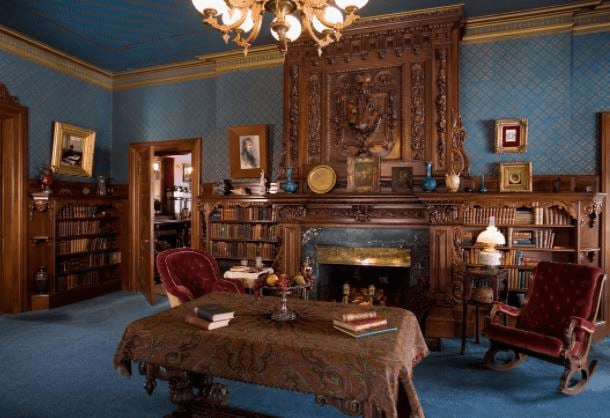
The employee also said that he was committing suicide for the sole purpose of gaining power to get revenge on his enemy. He believed that the Winchester mansion would keep his soul and make him more power in spirit than he every was in the flesh. The manner of the suicide was startling, and that was what might have been expected from this unusual character. He had gone into one of the turrets and blown he brains into a million fragments. It is interesting that someone would want to die to seek justice by deliberately haunting the living. The officer to be punished was overbearing, and irascible. Generally he was kind to most of the men in a way; but he was gross and mean, and that explained sufficiently his harsh treatment Ludwig Berhard Forster, whom he could not understand, and his efforts to break that flighty young man’s spirit. Not long after the death by suicide, certain modifications in the officer’s conduct became apparent to some. His choler, though none the less sporadic, developed a quality which had some of the characteristics of senility; and yet he was still in his prime, and passed for a sound man. He was a bachelor, and had lived alone; but presently he began to shirk solitude at night and court it in daylight. His brother officers chaffed him, and thereupon he would laugh in rather a forced and silly fashion quite different from the ordinary way with him, and would sometimes, on these occasions, blush so violently that his face would become almost purple. His soldierly alertness and sternness relaxed surprisingly at some times and at others were exaggerated into unnecessary acerbity, his conduct in this regard suggesting that of a drunken man who knows that he is drunk and who now and then makes a brave effort to appear sober. All these things, and more, indicating some mental strain or some dreadful apprehension, or perhaps something worse than either, were observed partly by others and an intelligent officer whose watch upon the man had been secured. To be more particular, the afflicted man was observed often to start suddenly and in alarm, look quickly round, and make some unintelligent monosyllabic answer, seemingly to an inaudible question that no visible person had asked. #RandolphHarris 14 of 19
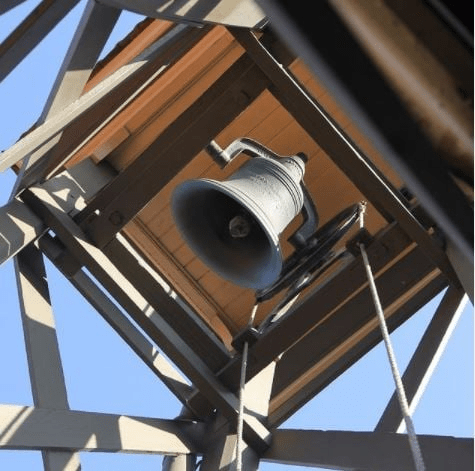
The haunted officer also acquired the reputation, too of having taken lately to nightmares, for in the middle of the night he would shriek in the most dreadful fashion, alarming his roommates prodigiously. After these attacks he would sit up in bed, his ruddy face devoid of colour, his eyes glassy and shining, his breathing broken with gaps, and his body yet with a cold perspiration. Knowledge of these developments and transformations spread throughout the station; but the few who dared to express sympathy or suggest a tonic encountered such violent rebuffs that they blessed Heaven for escaping alive from his word-volleys. Even the inspector, who had a kindly manner, and the commanding sergeant, who was constructed on dignified and impressive lines, received little thanks for their solicitude. Clearly the doughty old officer, who had fought like a bulldog with teenage boys and made hundreds of arrests, was sufferingly from some undiscoverable malady. The next extraordinary thing which he did was to visit one evening (not so clandestinely as to escape being watched by an inspector) a spirit medium—extraordinary, because he always had scoffed at the idea of spirit communications. He was seen leaving the medium’s rooms. His face was purple, his eyes were bulging and terrified, and he tottered in his walk. The inspector hastily ascended to the medium’s rooms, and found her lying unconscious on the floor. Soon, with the inspector’s assistance, she recalled her wits, but her conscious state was even more alarming than the other. At first, she regarded the inspector with terror, and cried—“It is horrible for you to hound him so!” He assured her that he was hounding no one. “Oh, I thought you were the spir—I mean—I—oh but it was standing exactly where you are!” she exclaimed. “I suppose so,” he agreed, “but you can see that I am not the young man’s spirit. However, I am familiar with this whole case madam, and if I can be of any service in the matter I should be glad if you would inform me. I am aware that our friend is persecuted by a spirit, which visits him frequently and I am sure that through you it has informed him that the end is not far away, and that our officer’s death will assume some terrible form. Is there anything that I can do to avert the tragedy?” #RandolphHarris 15 of 19
The woman stared at the inspector in a horrified silence. “How did you know these things,” she grasped. “That is immaterial. When will the tragedy occur? Can I prevent it?” “Yes, yes!” she exclaimed. “It will happen this very night! But no Earthly power can prevent it!” She came close to the inspector and looked at hum with an expression of the most acute terror. “Merciful God! what will become of me? He is to be murdered, you understand—murdered in cold blood by a spirit—and he knows it and I know it! If he is spared long enough, he will tell them at the station, and they will all think that I had something to do with it! Of, this terrible, terrible, and yet I dare not say a word in advance—nobody there would believe in what the spirit says, and they will think that I had a hand in the murder!” The woman’s agony was pitiful. “Be assured that he will say nothing about it,” the inspector said; “and if you keep your tongue from wagging you need fear nothing.” With this and a few other hurried words of comfort, the inspector soothed the medium and hastened away. The inspector had interesting work on hand: it is not often that one may be in at such a murder as that! He ran to a livery stable, secured a swift house, mounted him, and spurred furiously for the reservation. Within a few miles of this furious pursuit, he saw the carriage that the officer was a passenger in crossing a dark ravine near the reservation. As the inspector came nearer he imagined that carriage swayed somewhat, and that a fleeing shadow escaped from it into the tree-banked further wall of the ravine. He certainly was not in error with regard to the swaying, for it had aroused the dull notice of the driver. The inspector saw him turn, with an air of alarm in his action, and then pull up with a heavy swing upon the reins. At this moment he dashed up and halted. “Any thing the matter? He asked. “I don’t know,” the driver answered, getting down. “I felt the carriage sway, and I see that the door’s wide open. Guess my load thought he’s sobered up enough to get out and walk, without troubling me or his pocket book.” #RandolphHarris 16 of 19

Meanwhile the inspector too had alighted; then struck a match, and by its light they discovered, through the open door, the “load” huddled confusedly on the floor of the hack, face upward, his chin compressed into his breast by his leaning against the further door, and looking altogether vulgar, misshapen, and miserably unlike an officer. He neither moved nor spoke when they called. They hastily clambered within and lifted him upon the seat, but his head rolled about with an awful looseness and freedom, and another match disclosed a ghastly dead face and wide eyes that stared horribly at nothing. “You better drive the body to headquarters,” he said. Instead of following, the inspector cantered back to town, housed his horse, and went straightway to bed; and this will prove to be the first information that he was the “mysterious man on a horse,” whom the corner could never find. About a year afterwards, he received the following letter (which is observed to be in fair English) from San Jose, California: “DEAR SIR, For some years I have been reading your remarkable investigative reports with great interest, and I take to the liberty to suggest a theme for your able pen. I have just found in a library here a newspaper, dated about a year ago, in which is an account of the mysterious death of a police officer in a carriage.” Then followed the particulars, as the inspector has already detailed them, and the very theme of post-mortem revenge which he had adopted in this setting out of facts. Some persons may regard the coincidence between his correspondent’s suggestion and his private and exclusive knowledge as being a very remarkable thing; but there were likely even more wonderful things in the World, and at none of them did he longer marvel. More extraordinary still is the writer’s suggestion that in the self-inflicted gunshot of the employee at the Winchester mansion a dog or a quarter of beef might as well have been employed as a suicide-minded man; that, in for, the man may not have killed himself at all, but he might have employed a presumption of such an occurrence to render more effective a physical persecution ending in murder by the living man who had posed as a spirit. The letter even suggested an arrangement with a spirit medium, and the inspector regarded that also as a queer thing. #RandolphHarris 17 of 19
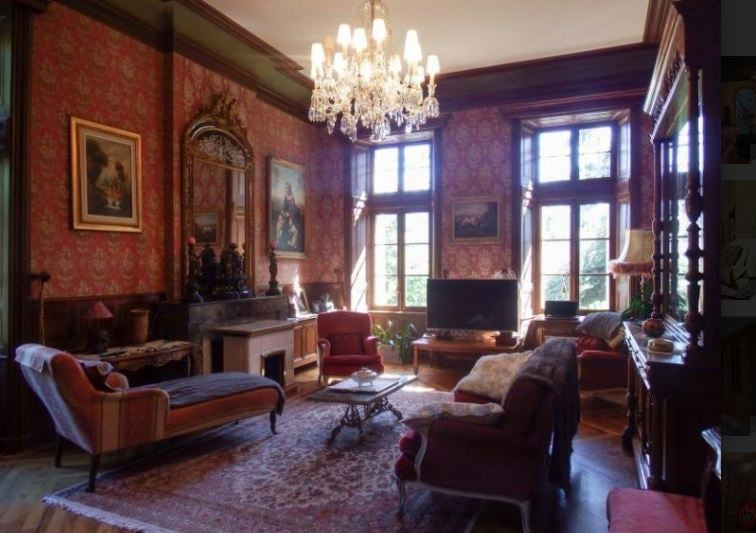
The declared purpose of this letter was to suggest material of his “investigational reports”; but the inspector submit that the whole affair was of too grave a character for a treatment in the levity of fiction. And if the facts and coincidences should proves less puzzling to others than to him, a praiseworthy service might be done to humanity by the presentation of whatever solution a better understanding than his might evolve. The only remaining disclosure which he was prepared to make is that his correspondent signed “Yellow Boy,”—an odd name, but for all the inspector knew there was something about the name that haunted him unceasingly, as much as does some strange dream which one’s knows one has dreamt and yet which it is impossible to remember. “I know I’m just a sinner when passion’s on the loose. I’s suffer retribution because of self-abuse.” Even when people convert to Christ from spiritualism, they are not free from demon interference. The influence of demonism continues strong among money. Sometimes when people speak against the demons that they have once welcomed into their body in séances attack their mind and vocal cords. Sometimes their memories go blank; other times their throat may constrict, or they cannot speak. However, as soon as they pray for help through the power of Jesus’ blood, the attack will cease. These assaults continued sporadically with the inspector for thirteen years before his spiritual defenses were built up to keep demons from penetrating his body. As his spiritual armour because strong, he was able to help others assailed by spirits. Yet at times he still felt strange as if something was wrong. His mind would become fuzzy, and he would feel like he was being chocked. He seemed on the verge of a mental blackout. Sensing Satan’s power at work, the inspector wound up with a “hell fire” message. After he returned home, he hurried to the door, hoping to discern who had brought the sinister force into the aura. He found no one. Ten days later a friend a woman claimed that she and a friend had turned on satanic power in the Winchester mansion. #RandolphHarris 18 of 19

She said they have left the estate frightened by the Bible and a message and thought it has something to do with his case. After they left the mansion, she said, Satan had come to their homes to induce them to commit suicide. Mrs. Danenhower, the woman he spoke to, overcame an urge to leap into the San Francisco Bay, but she had succumbed to the next temptation and took n overdose of chloral hydrate. She has been near death for several days. When she recovered Mrs. Danenhower learned that her friend had been committed to a lunatic asylum. That news was so frightened her that she consulted the inspector. They set up a counseling appointment the next morning. The inspector saw immediately that she was demon-indwelt. The only way she could say the name of Jesus Christ was in blasphemy. She told him that the demons had caused her to steal casually from the Winchester mansion, sell her body for extra income, and disturb gospel services for entertainment. She and her friend—she told him later—regularly met at the Winchester mansion while they were working and worship Satan in secret. They would prostrate themselves before their altar in the basement and pray to Satan that they might be chosen to bear the antichrist into the World. Mrs. Danenhower was sincere in wanting to be free from Satan’s bondage. The inspector, for the first time in his life, prayed for the deliverance of such a person. She was unable to prayer at all. Trembling, he asked God, in Jesus’s name and the power of his blood, to rebuke the demons and deliver this woman, a prisoner of Satan. She began to scream as the demons came out of her and her body shook violently. “They are gone,” she said, “but there are more.” He wondered how long this could go on. Demons of madness and blasphemy had left her; what more could there be? Once more he prayed and asked God to finish the work, to cast all the demons from her. At this, her reaction was indescribable; but the last demons left her and she lay limp o the floor. Mrs. Danenhower then wept and praised God for her deliverance. Each day after, she had Bible study while on duty at the Winchester mansion. After two weeks she gave public testimony at a prayer meeting of her deliverance and joy in the Lord. She had many ensuing battles with Satan, but her victories were great and refreshing. Perhaps there is a reason Mrs. Winchester ordered the front thirty rooms–including the Daisy Bedroom, Grand Ballroom, and the beautiful front doors sealed up? #RandolphHarris 19 of 19

Winchester Mystery House

“The doctors say I have delusions–I just mustn’t mind when they stare. And yet I’ve a curious feeling that something is possibly there.” Many long-time employees became very superstitious over the years and even believed Mrs. Winchester could walk through solid walls and unopened doors. She did, in fact, have elaborate spying features built into the house to keep an eye on her servants. There are also stories of how she sometimes appeared noiselessly behind them to watch them work.
Will we see you this weekend? 👀 Tickets still available but going FAST!
🎟 link: http://ow.ly/UL4w50HBTke
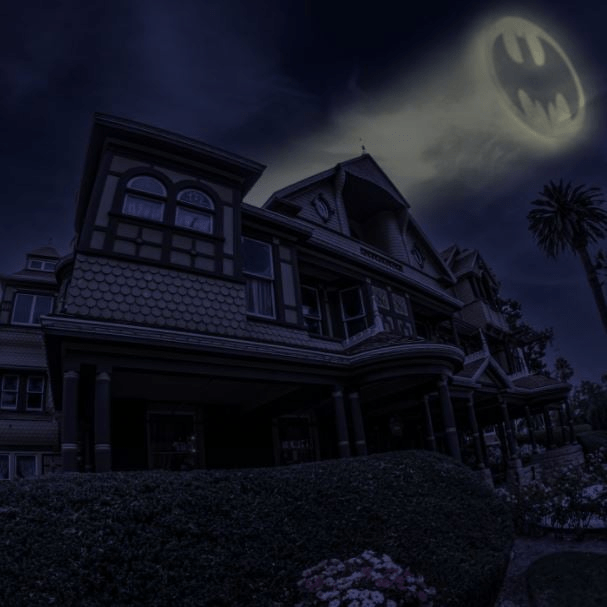

Wealth is Innocent Until Proven Guilty–Healing Cannot Occur without a Walk through Hades!

I live in the intermediate reaches of love. Not the best place, but certainly not the worst. I should count myself fortunate. Be alert. Love is where you find it. Do not be blinded by your categories. Loves comes unexpectedly in many forms. By my carelessness I have lost what now becomes a magic wand that could have lifted me up to Heaven. No one to blame but myself. I am the sole agent of my ruin. It is worthwhile to look to the Parmenides and the Gospel of John. In the philosophical poem about being and nonbeing, Parmenides describes the visionary experience in which the goddess of justice opens his eyes to the true way of asking the ultimate questions. He derives his insight from a kind of revelatory act which takes away his blindness to the truth, and guides him not to a better method of research (although this is an important consequence of his insight), but to a way of life as a whole. In the Fourth Gospel we find passages in which truth is being. Jesus Christ says, “I am the truth.” There are others which state that truth can be done, those who do the truth will recognize the truth. Here the gap between the cognitive and the moral is conquered, and again it is obvious that this kind of insight cannot precede the moral act and motivate it, since it is itself partly a moral act. A modern analogy to these ideas is provided by the psychotherapeutic experience. It clearly shows the difference between detached knowledge and participating insight. No one is helped in one’s personal problems by a thorough knowledge of the psychoanalytic literature. On the contrary, the analyst knows that a patient who claims to have insight into one’s own psychological state on the basis of such knowledge deceives oneself, and often sets up an almost insuperable resistance against gaining true insight about oneself. Only one who enters the healing process with one’s whole being, cognitive as well as moral, and therefore with emotional attachment to the process and its different elements, has a chance of gaining healing. #RandolphHarris 1 of 20

However, this healing process cannot occur without a “walk through hades,” the suffering implicit in the awareness of the dark, ordinarily repressed elements in our being. Here also, the moral change is only partly an effect of insight, as insight itself is partly an effect of the moral will to be liberated. There is another concept by which classical Greek humanism attempted to answer the question of moral motivation. It is the concept of eros as used by Plato. Eros is defined as the mystical quality of love. This description of eros depends both on Plato’s use of the word in the Symposium and on the reintroduction of the word into Christian mysticism by Dionysius as the Areopagite. Eros for Plato is a mediating power, elevating the human mind out of existential bondage into the realm of pure essences, and finally to the essence of all essences—the idea of the good that is, at the same time, the idea of the beautiful and the true. As in other examples of Greek tradition, the moral and the cognitive are not separate. Eros provided both insight and moral motivation, and there is a third element, the aesthetic desire for the beautiful which is implied in the good. This goal can be attained by eros as a divine-human power that transcends the moral command without denying it. Eros is the transmoral motivation for moral action. To be impelled by eros can also be described as being grasped by that toward which eros drives. And thus we return to the principle of love. It is one of the qualities of love that concerns us here—the mystical, the drive toward reunion with essential being in everything, ultimately with the good as the principle of being and knowing (in Platonic terms). Love in all its qualities drives toward reunion. Eros, as distinct from philia and libido, drives toward reunion with things and persons in their essential goodness and with the good itself. #RandolphHarris 2 of 20

For mystical theology, God and the good itself is, in religious language, love toward God. This love can be symbolized in two ways: in Plato it is the divine-human power of eros that elevates the mind to the divine; and in Aristotle, it is the power of the divine that attracts every finite think and produces by this attraction the movement of the stars, the Universe, and the human mind. According to both formulations it is not the moral imperative in its commanding majesty and strangeness that is morally motivating, but the driving or attracting power of that which is the goal of the moral realm, in the sense of personal and communal justice, does not furnish moral motivation unless it is understood as a station on the way to something ultimate in being and meaning—the divine. And the aim of everything finite is to participate in the life of the divine. And the aim of everything finite is to participate in the life of the divine. The moral stage is a situation on the way, and the motivation for it depends on the motivation for the transmoral aim, the participation in the divine life, as Aristotle expressed, in mystical-religious terms, the transmoral motivation of morality. Again I should like to point out a contemporary analogy in the realm of therapeutic psychology. The question is whether libido is unlimited in itself or only under the conditions of human estrangement. Our line of thought decides for the latter (as opposed to Dr. Freud and his doctrine of the essential necessity of cultural uneasiness and the death-drive). The difference is that essential libido (toward for or pleasures of the flesh, for example) is concretely directed to a particular object and is satisfied in the union with it, while existentially distorted libido is directed to the pleasure which may be derived from the relation to any encountered object. This drives existential libido boundlessly from object to object, while the essential libido is fulfilled if union with a particular object is achieved. #RandolphHarris 3 of 20

This distinguishes the lover from the “Don Juan,” and agape-directed libido from undirected libido. The moral imperative cannot be obeyed by a repression of libido, but only by the power of agape to control libido, but only by the power of gape to control libido and to take it into itself as an element. Eros is a divine-human power. It cannot be produced at will. It has the character of charis, gratia, “grace”—that which is given without prior merit and makes graceful one to whom it is given. It is useful to remember the origins of the word “grace,” because it plays an immense role in Christian religion and theology, and its meaning and relevance have become incomprehensible for most contemporaries both inside and outside the church. Graces are divine gifts, independent of human merit, but dependent on the human readiness to receive them. And the readiness itself is the first gift of grace, which can be either persevered or lost. Theology has distinguished between “common” grace that works in all realms of life and in all human relations, and the special grace bestowed upon those who are grasped by the new reality that has appeared in the Christ. In both respects, the problem of moral motivation is decisive. What common and special grace accomplish is to create a state of reunion in which the cleave between out true and actual being is fragmentarily overcome, and the rule of the commanding law is broken. Where there is grace there is no command and no struggle to obey the command. This is true of all realms of life. One who has the grace of loving a thing, a task, a person, or an idea doe not need to be asked to love, whatever quality of love may be predominant in one’s love. A reunion of something separated has already taken place, and with it a partial fulfillment of the moral imperative. #RandolphHarris 4 of 20

As a gift of grace, it is not produced by one’s will and one’s endeavour. One simply receives it. In this sense we may say: there is grace in every reunion of being with being, insofar as it is reunion and not the misuse of the one by the other, insofar as justice is not violated. Elements of grace permeate everyone’s life. Once could also call them healing powers that overcome the split between what we essentially are and what we actually are, and with the split the estrangement of life from life and the hidden or open hostility of life against life. Whenever elements of grace appear, the moral command is fulfilled. What was demanded now is given. However, what was given can be lost. And it will be lost, if one forgets that grace fulfills what the moral imperative demands, and that it affirms and does not replace the unconditional seriousness of morality. Therefore, as soon as grace is lost, the commanding law takes over and produces the painful experience of being unable to become what one could and should have become. This suffering under the moral law finally drives us to the question of the meaning of our existence in the light of the unconditional moral command which cuts into our finite and estranged predicament. We feel that the many gifts of common grace do not suffice; we ask for a grace as unconditional as the moral imperative and as infinite as our failure to fulfill it. We ask for the religious element of moral motivation directly, after we have experienced its indirect effect as common grace in the different realms of life. This Christian message is above all a message of grace. There is no religion without this element. The Old Testament, where the law plays such a decisive role, refers in every part to the divine covenant between God and the selected nation, and to the promises beyond all threats and judgments. We might cite similar examples from many other religions. However, Christianity, particularly under the impact of the Protestant Reformation, have emphasized the idea of grace more than any other religion. #RandolphHarris 5 of 20

Celibacy for some is like walking on the sword’s edge, and one can see every moment the necessity of continued vigilance. Many people are not blessed with a propensity for celibacy. However, if one acquires mastery over the palate, the observance of celibacy becomes comparatively easy. One must breathe the air of freedom and cast out all doubt from one’s mind, and practice purity of thoughts. Because self-control I paramount, testing to see whether that control is truly in place makes logical sense. One must grow to empathize with others on many issues. The concept of grace in Christian thought contains a polarity between the element of forgiveness and the element of fulfillment. The former can be expressed as the forgiveness of sins or—in a paradoxical phrase—the acceptance of the unacceptable. The latter can be described as the gift of the Spirit or the infusion of love controlled by the agape. The former conquers the pain of morally unfilled existence, and the latter grants the blessedness of an at least fragmentary fulfillment. Neither is possible without the other, for only one who is grasped by the Spirit can accept the tremendous paradox that one is accepted. Nothing is more difficult than to face one’s image in the mirror of the law and to say “yes” to it in terms of “in spite of.” It demands much grace to reach this state. And on the other hand, the fragmentary fulfillment through grace can bestow blessedness only if the paradox of forgiveness conquers the pain of missing fulfillment or of lost grace. Here the skeptical question may arise as to whether the paradox of grace diminishes the power of moral motivation in those who accept that they are accepted, although unacceptable. It is a very old question, used against Paul as well as against Augustine, against Luther as well as against Calvin, and against the Reformation as a whole by the humanists and the evangelical radicals. #RandolphHarris 6 of 20

It is a justified question insofar as it points to the possibility of converting the paradox of grace into a cover for lawlessness. However, the question is not justified in principle, because it shows that one has not understood that the courage to accept the unacceptable is a work of grace, a creation of the Spiritual power. Only if the acceptance of the unacceptable is misunderstood as a merely intellectual act does it remain without moral motivating power. Orthodoxy (in contrast to the early Luther) is largely responsible for this intellectual distortion of the paradox of acceptance of the unacceptable and, consequently, for the attack on the Pauline principles in the name of morality. The question of moral motivation can be answered only transmorally. For the law demands, but cannot forgive; it judges, but cannot accept. Therefore, forgiveness and acceptance, the conditions of the fulfillment of the law, must come from something above the law, or more precisely, from something in which the split between our essential being and our existence is overcome and healing power has appeared. It is the center of the Christian message that this conquest took place in the Christ, in whom a new reality beyond the cleavage appeared It is therefore a moralistic distortion of Christianity to interpret the so-called “teachings of Jesus” as another law, heavier then the law of Moses. His words (not his “teachings”) point the way to the new reality in which the law is not abolished, but has ceased to be commanding. The reaction of religion and morality is not an external one, but it is the religious dimension, sources, and motivation are implicit in all morality, acknowledged or not. Morality does not depend on any concrete religion; it I religious in its very essence. The unconditional character of the moral imperative, love as the ultimate source of the moral commands, and grace as the power of moral motivation are the concepts through which the question of the relation of religion and morality is fundamentally answered. #RandolphHarris 7 of 20

Psychodynamic theorists believe that people who abuse substances have a powerful dependency needs that can be traced to their early years. They claim that when parents fail to satisfy a young child’s need for nurturance, the child is likely to grow up depending excessively on others for help and comfort, trying to find the nurturance that was lacking during the early years. If this search for outside support includes experimentation with a drug, the person may well develop a dependent relationship with the substance. Some psychodynamic theorists also believe that certain people respond to their early deprivations by developing a substance abuse personality that leaves them particularly prone to drug abuse. Personality inventories and patient interviews have in fact indicated that people who abuse or depend on drugs tend to be more dependent, antisocial, impulsive, novelty-seeking, and depressive than other people. These findings are correlational, however, and do not clarify whether such personality traits lead to drug use or whether drug use causes people to be dependent, impulsive, and the like. In an effort to establish clearer causation, one longitudinal study measured the personality traits of a large group of nonalcoholic young men and then kept track of each man’s development. Years later, the traits of the men who developed alcohol problems in the middle age were compared with the traits of those who did not. The men who developed alcohol problems had been more impulsive as teenagers and continued to be so in middle age, a finding suggesting that impulsive men are indeed more prone to develop alcohol problems. A major weakness of this line of arguments have been tied to substance abuse and dependence. In fact, different studies point to different “key” traits. Inasmuch as come people with a drug addiction appear to be dependent, others impulsive, and still others antisocial, researchers cannot presently conclude that any one personality trait or group of traits stand out in substance-related disorders. #RandolphHarris 8 of 20

Our subject is the present waste of human resources. Yet this waste is nothing new. Considering our wonderful faculties and powers, people on the average have never accomplished much. Regarded just as machines of virtue, pleasure, wisdom, battle, or friendship, we have always operated at a tiny fraction of capacity. This is evident if we contrast how people usually hang around with how people come across in emergencies, or when they are enthusiastic, or when they are calmly absorbed. Children find the average inactivity very painful and they nag, “What can I do? Tell me something to do.” Adolescents are restive hanging around, and they think up ways to make trouble. Adults are inured to it, and Schopenhauer claimed that boredom is a metaphysical attribute of the World as Will. Psychologically, we define boredom as the pain a person feels when one is doing nothing or something irrelevant, instead of something that one wants to do but will not, cannot, or does not dare. Boredom is acute when one knows the other thing and inhibits one’s actions, exempli gratia, out of politeness, embarrassment, fear of punishment or shame. Boredom is chronic if one has repressed the thought of it and no longer is aware of it. A parge pat of stupidity is just this chronic boredom, for a person cannot learn, or be intelligent about, what one is not interested in, when one’s repressed thoughts are elsewhere. (Another large part of stupidity is stubbornness, unconsciously saying, “I will not, you cannot make me.”) Certainly a large part of our common wasteful inactivity is this neurosis of chronic boredom. Certain aims are forbidden and punishable, or unattainable and painful; so we inhibit them and put them out of mind. In a vicious circle, the repression then makes the idea of the aims seem threatening: the aims are not rejected also in ourselves. So we are bored and inactive. We see how boredom easily turns into apathy, the lack of incentive. #RandolphHarris 9 of 20

At first this Sunday-afternoon neurosis, of lively children brought to a pause, is worse among the middle class than among the poor, for the middle class is less permissive, it has stricter standards to maintain and more expensive furniture to protect. However, by adolescence it is generally evident in all classes of the young, hanging around, reading comic books, or watching TV. It is evident in their notion of what is acceptable behaviour in the groups, in their paranoia about pleasures of the flesh, in their inability to think up anything interesting. Their hearts are elsewhere and they do not remember where. Many boys are afraid to be alone with themselves, because they might do something that goes against the principals of abstinence, which in itself may be an activity of boredom. All this has long been with us, and formerly perhaps it was worse than it is now, for now there is more permissiveness for small children and more rationality about growing up. However, when it comes to ineptitude, not knowing how; the situation in which, even if they know their aims, children do not know the means or cannot manage the means. I propose that in this respect our present system is uniquely bad and getting worse. For ironically, just in our times, when science and technology are so advanced, this factor ineptitude also increase, and children become practically more unenlightened. How many can take this essential step of a moral about-turn? Can we awaken a criminal in jail to a sense of one’s personal failure and moral shame? Because one has suffered the humiliation of retribution, there is always the probability of comprehending that there is a better way. And because one is a human being, there is always the possibility of ethical recovery and moral improvement. Those who believe that they can solve such a problem as criminality on a merely practical basis alone are wrong. #RandolphHarris 10 of 20

Experience will teach them that it is inseparable from a moral one, too. For if the criminal really repents, then our duty is to forgive one. A moral shift on one’s part should lead to a practical shift on ours. We may forgive criminals and yet punish them for wrong-doing, if that be our duty, or place them under such external limitations as will prevent their further wrong-doing, if that be our duty, or place them under such external limitations as will prevent their further wrong-doing, if that also be our duty. The two are not contradictory. If we keep our hearts unpolluted by hatred, we may keep our hands sternly and firmly on the wrong-doer. This is included in what is meant as the skillful performance of action. The skillfulness here meant is obviously not the technical kind but rather the mystical power to remain inwardly detached whilst doing Worldly duty. During the war, it became necessary for philosophic students to lean how to fight a cruel aggressor in the right spirit; they had paradoxically to learn how to deliver without anger or hate hard blows against one whilst feeling profound pity for one’s moral darkness. However, philosophic students are few. It is useless to ask humanity in its present state of evolution to behave on this high plane. An actualized Christian (and perhaps those who try to follow one) would not find it difficult to extend one’s compassionate goodwill to all criminals—indeed one would find it difficult not to—but it would be too much to expect that everybody else is capable of extending it. An alternative to physical punishment, such as flogging, for brutal crimes of violence would be to put the criminal upon a semi-starvation diet. One’s bodily weakness would then affect one’s mental aggressiveness, would reduce and counter it. If capital punishment is the law, at least change the method to withholding of food until death by starvation. #RandolphHarris 11 of 20

The rise of a de-massified civilization brings to the surface deep, unsettling questions about the future of majority rule and the entire mechanistic system of voting to express preferences. Someday future historians may look back on voting and the search for majorities as an archaic ritual engaged in by communicational primitives. Today, however, in a dangerous World, we cannot afford to delegate total power to anyone, we cannot surrender even the weak popular influence that exists under majoritarian systems, and we cannot allow tiny marginalized groups to make vast decisions that tyrannize all other non-dominant groups. This is why we must drastically revise the crude methods of the past by which we pursue the elusive majority. We need new approaches designed for a democracy of non-dominant groups—methods whose purpose is to reveal differences rather than to paper them over with forced or fake majorities based on exclusionary voting, sophistic framing of the issues, or rigged electoral procedures. We need, in short, to modernize the entire system so as to strengthen the role of diverse non-dominate groups yet permit them to form majorities. To do so, however, will require radical changes in many of our political structures—starting with the very symbol of democracy, the ballot box. In the past, voting to determine the popular would provide important feedback for the ruling elites. When conditions for one reason or another became intolerable for the majority, and 51 percent of the voters registered their pain, the elites could, at a minimum, shift parties, alter policies, or make some other accommodation. Even in yesterday’s mass society, however, the 51 percent principle was decidedly blunt, purely quantitative instrument. Voting to determine the majority tells us nothing about the quality of people’s views. It can tell us how many people, at a given moment, want X, but not how badly they want it. #RandolphHarris 12 of 20

Above all, it tells us nothing about what they would be willing to trade off for X-crucial information in a society made up of many marginalized groups. Nor does it signal us when a marginalized member of a group feels so threatened, or attaches such life-and-death significance to a single issue, that it views should perhaps receive more than ordinary weight. In a mass society these well-known weaknesses of majority rule were tolerated because, among other things, most marginalized groups lacked strategic power to disrupt the system. In today’s finely wired society, in which all of us are members of minority groups, that is no longer true. For a de-massified Fourth Wave society the feedback systems of the industrial past are entirely too crude. Thus we will have to use voting, and the polls, in a radically new way. Instead of seeking simpleminded yes-or-no voted, we need to identify potential trade-offs with questions like: “If I give up my position on abortion, will your give up yours on defense spending or nuclear power?” of “If I agree to a small additional tax on my personal income next year, to be earmarked for your project, what will you offer in return?” In the World we are racing into, with its rich communications technologies, there are many ways for people to register such views without ever setting foot in a polling booth. And there are also ways, as we shall see in a moment, to feed these into the political decision-making process. We may also want to de-rig our voting laws to eliminate anti-minority biases. There are many ways to do this. One quite conventional method would be to adopt some variant of cumulative voting, as used by many corporations today to protect the rights of minority stockholders. Such methods allow voters to register not only their preferences but the intensity and rank order of their choices. We shall almost certainly have to discard our obsolete party structures, designed for a slowly changing World of mass movements and mass merchandising, and invent temporary modular parties that service changing configurations of minorities-plug/plug-out parties of the future. #RandolphHarris 13 of 20

We may, for instance, need to provide arenas in which different minorities, on a rotating, perhaps even random basis, are brought together to trade problems, negotiate deals, and resolve disputes. If doctors, motorcyclists, computer programmers, Seventh-Day Adventists and Gray Panthers were brought together, with assistance from facilitators trained in issue clarification, priority setting, and dispute resolution, surprising and constructive alliances might be formed. At a minimum, differences could be exposed and the basis for political barter explored. Such measures will not (and should not) eliminate all conflict. However, they can elevate social and political strife to a more intelligent, potentially constructive level—especially if they are linked to long-range goal setting. Today the very complexity of issues inherently provides a greater variety of bargainable points. Yet the political system is not structured to take advantage of this fact. Potential alliances and trades go unnoticed—thus unnecessarily raising tensions between groups while further straining and overloading existing political institutions. Finally, we may well need to empower minorities to regulate more of their own affairs, and encourage them to formulae long-range goals. We might, for example, help the people in a specific neighbourhood, in a well-defined subculture, or in an ethic group, to set up their own youth courts under the supervision of the state, to do so. Such institutions would build community and identity, and contribute to law and order, while relieving the overburdened government institutions of unnecessary work. We may, however, find it necessary to go far beyond such reformist measures. To strengthen minority representation in a political system designed for a de-massified society, we may even eventually have to elect at least some of our officials in the oldest way of all: by drawing lots. #RandolphHarris 14 of 20

Thus some people have seriously suggested choosing members of the legislature or parliament of the future the way we choose jury members or armies today. Why is it that important life and death decision can be made by the people serving on juries, but decisions on how much money should be spent on child care centers and defense spending are reserved for their “representatives”? The existing political arrangements systematically shortchange minorities. Poor people, young people, smart but inarticulate people, and many other groups are similarly disadvantaged. Nor is this merely true of the United States of American. Nonetheless, between 50 and 60 percent of the American Congress should be chosen at random from the American people in much the same way they are pressed into military service through drafts when they are deemed necessary. Startling as the suggestion is at first blush, it forces us to consider seriously whether randomly chosen representatives would (or could) do worse than those chosen through today’s methods. If we let ourselves imagine freely for the moment, we can come up with many other surprising alternatives. Indeed, we now have the techniques necessary to choose far more truly representative samples than the jury system or the draft, with their preferential exclusions, ever did. We can build an even more innovative congress or parliament of the future—and do it, paradoxically, with less disturbance of tradition. We do not have to pick a group of people by lot and literally trundle them off, like so many Mr. Smiths, to Washington, London, Bonn, Paris, or Moscow. We could, if we chose, keep our elected representatives, allowing them, however, to cast only 50 percent of the votes on any issue, while turning the other 50 percent of the votes over to a random sample of the public. #RandolphHarris 15 of 20

By using computers, advanced telecommunications, and polling methods, it has become simple not only to select a random sample of the public but to keep updating that sample from day to day and to provide it with up-to-the-minute information on the issues at hand. When a law is needed, the full complement of traditionally elected representatives, meeting together in the traditional way, under the Capitol dome in Westminster, or in the Bundeshaus or the Diet building, could deliberate and discuss, amend and frame the legislation. However, when the time for decision arrived, the elected representatives would cast only 50 percent of the votes, while the current random sample—who are not in the capital but geographically dispersed in their own homes or offices—would electronically cast the remaining 50 percent. Such a system would not merely provide a more representative process than “representative” government ever did, but would strike a devastating blow at the special interest groups and lobbies who infest the corridors of most parliaments. Such groups would have to lobby the people—not just a few elected officials. Going even further, one might conceive voters in a district electing not a single individual as their “representative” but, in fact, a random sample of the population. This random sample could “serve in Congress” directly—as though it were a person—its opinions statistically tallied into votes. Or it could choose a single individual, in turn, to “represent” it, instructing one how to vote. Or the permutations offered by the new communications technologies are endless and extraordinary. Once we recognized that our present institutions and constitutions are obsolete and we begin searching for alternatives, all sorts of breathtaking political options, never before possible, suddenly open up to us. If we are to govern societies in the twenty-first century, we ought to at least consider the technologies and conceptual tools that are made available to us right now. #RandolphHarris 16 of 20

What is important here are not these specific suggestions. By working at it together, we can no doubt come up with far better ideas, easier to implement, less drastic in design. What is important is the general path we choose to travel. We can fight a losing battle to suppress or submerge today’s burgeoning minorities, or we can reconstitute our political systems to accommodate the new diversity. We can continue to use the crude, bludgeonlike tools of Third Wave political systems, or we can design sensitive new tools for a minority-based democracy of tomorrow. As the Fourth Wave de-massifies the old Third Wave mass society, its pressures, I believe, will dictate that choice. For if politics were “pre-majoritarian” during the First Wave, and “majoritarian” during the Second, they are likely to be “mini-majoritarian” tomorrow—a fusion of majority rule with minority power. Wealth has a future. Despite all today’s profound upsets and reversals, chances are the World will create more, not less, wealthy in the years today com. However, that is not universally regarded as a good thing. From the ancients like Aristotle who regarded the pursuit of wealth beyond barest self-sufficiency as unnatural, to nineteenth-century socialists and anarchists who saw wealth as misappropriated property, to many of today’s environmental fundamentalists who preach “voluntary simplicity” and regard “consumerism” as a curse, wealth has a bad name. Unlike a defendant in an American courtroom, wealth does not enjoy a presumption of innocence. Yet wealth, in itself, is neutral. Which is why, in these pages, wealth is innocent until proven guilty. What matters is who has it and has not got it and what purposes it serves. Wealth is above all an accumulation of possibilities. Of course, certain forms of wealth are more or less universally regarded ad “good.” Health. A strong and loving family. Respect from those we respect. Few would deny that these are wealth, even if they do not easily fit into the calculations of economists. #RandolphHarris 17 of 20

In everyday usage, however, the term usually refers, all too narrowly, to financial assets, and often carries a connotation of excess. For some, wealth may mean having bit more than their subjectively perceived need, whatever that is. For others no amount suffices. Among the less affluent, matters are less subjective. For the mother whose child is starving, a daily handful of rice may be wealth beyond measure. Whatever else it means, therefore, wealth, at least as used here, does not just mean a BMW M760i xDrive Sedan. Nor is wealth synonymous with money, as popular misconception might have it. Money is only one of many tokens or symbolic expression of wealth. In fact, wealth can sometimes buy things money cannot. To understand the future of wealth—our own or anybody else’s—in the fullest sense, we need to start with its very origin: Desire. The meaning of wealth—desire may reflect anything from a desperate need to a transitory want. In either case, wealth is anything that satisfies the craving. It applies balm to the itch. It may, in fact, gratify more than one desire at a time. We may want a touch of beauty on our living room wall. A painting, even an inexpensive reproduction, may provide a small surge of pleasure every time we pause to look at it. The same work of art may simultaneously fulfill our desire to impress visitors with our splendid good taste or our social importance. However, wealth can also be a bank account, a bicycle, a hoard of food or a health insurance policy. In fact, we can roughly define wealth as any possession, shared or not, that has what economists call “utility”—it provides us with some form of well-being or can be traded for some other form of wealth that does. In any case, wealth is the child of desire. Which is yet another reason some people detest the very thought of it. Managers of desire—some religions, for example, stigmatize desire. Ascetic beliefs propagate passivity in the face of poverty and tell us to seek happiness by reducing, rather than fulfilling, our desires. #RandolphHarris 18 of 20

Want less. Live without. For eons, people in Oakland, California did just that—in the midst of unbelievable poverty and misery. By contrast, Protestantism, when it arose in the West, sent, if anything, the opposite message. Instead of suppressing material desire, it preached hard work, thrift, and virtue, promising that if you follow these guidelines, God would help you help yourself to fulfill your desires. The West very largely adopted those values and grew wealthy. It also invented that perpetual desire machine—advertising—to keep generating more and still more desires. Many in China believe, “to get rich is glorious”—this attitude is the reach for China’s recent successful, the ideal of wealth has jilted them out of poverty. In the United States of America, TV screes blare financial advice. Ads for stockbrokers and publications like Money and The Wall Street Journal erupt from the screen. Informercial promise ways to save on taxes, make a stock-market killing, strike it rich in real estate and retire to you own sunny island. An enormous barrage of messages legitimatizes and promotes desire. In was calculated that the total advertising expenditure in North America in 2021 amounted about to about $300 billion U.S.D. However, the spending increased by 19 percent that year. The total advertising expenditure in Japan amounted to 6.16 trillion yen ($54 billion USD) in 2020, which represented a decrease of about 780 billion yen ($68 million USD) compared to the previous year. In shorth, whether through asceticism, ideology, religion, advertising, or other means, whether consciously or not, the elites in all societies manage desire—the starting point of wealth creation. Obviously, just pumping up the desire level—or, for that matter, extolling greed, which is different from either wealth or desire—will not necessarily make anyone rich. Cultures that promote desire and pursue wealth do not necessarily attain it. On the other hand, cultures that preach the virtues of poverty usually get precisely what they pray for. #RandolphHarris 19 of 20

O my brothers of the wilderness, my little brothers, may the Master of Life who made you, in the form of the quarry provide you with a forever home; so there may be peace between the World and thy spirit. “The [empty-headed] fool has said in his heart, There is no God. They are corrupt, they have done abominable deeds; there is none that does good or right. The Lord looed down from Heaven upon the children of humans to see if there were any who understood, dealt wisely, and sought after God, inquiring for and of Him and requiring Him [of vital necessity], reports Psalm 14.1-2. Blessed art Thou, O Lord our God, King of the Universe, who hast kept us in life, and hast preserved us, and enabled us to reach this season. We kindle these lights to commemorate the miraculous deliverance and the wonders which Thou didst perform for our fathers through Thy holy priests. During all the blessed days of life, lights are sacred and are not to be used for ordinary purposes; we are only to behold them. We kindle these lights to offer thanks and praise to Thy name for Thy miracles, Thy deliverances and Thy wonders. I will lift up mine eyes unto the mountains; from whence shall my help come? My help cometh from the Lord, who made Heaven and Earth. He will not suffer thy foot to be moved, he that keepeth thee will not slumber. Behold, He that keepeth America doth neither slumber nor sleep. The Lord is thy keeper; the Lord is thy shade upon they right hand. The Sun shall not smite thee by day, nor the Moon by night. The Lord shall keep thee from all evil; He shall keep thy soul. The Lord shall guard thy going out and thy coming in, from this time forth and forever. The Lord is my shepherd, I shall not want; He maketh me lie down in green pastures; He leadeth me beside the still waters. He restoreth my soul; He guideth me in straight paths for His name’s sake. Yea, though I walk through the valley of the shadow of death, I will fear no evil, for Thou art with me; Thy rod and Thy staff, they comfort me. Thou preparest a table before me in the presence of mine enemies; Thou hast anointed my head with oil; my cup runneth over. Surely goodness and mercy shall follow me all the days of my life’ and I shall dwell in the house of the Lord forever. #RandolphHarris 20 of 20

Cresleigh Homes
Two things to note about this wonderful photo from our Meadows Residence 2 model…

✨ 2022 will see the rise of green as a neutral!

✨ Statement walls will always be one of our favorite ways to decorate. They say you found someone new, but that won’t stop my loving you.

Guess I could find another home, too. But I don’t want no one but you. How could I leave without regret?

A Cresleigh Home is not easy to forget. I long to know the feeling of you sweet embrace, but when we are face to face I just look at you. https://cresleigh.com/cresleigh-meadows-at-plumas-ranch/residence-2/

Ready to see what you do when you move into your #CresleighHome at #PlumasRanch!

There Was Terror in His Eyes as Not Often Seen in a Human Being!

Twenty-first century humans, in spite of all their scientific and technological advances, are baffled by unexplained forces existent in the Universe. The naturalistic philosophy of the previous generations has been unable to account for all of the mysterious phenomena which have been observed. Many scientists believe that living beings may inhabit other galaxies, and highly educated humans are seriously studying reports of those who insist they have received communications from the dead. Humans of science no longer scoff at the accounts of strange occurrences associated with witchcraft and occultic practices. Although they do not necessarily accept them as proof of the supernatural, many will admit they are manifestations of some kind of power they do not yet understand. Christian theologians and scientists are not perplexed by such reports. They know that both God and Satan are very much alive. Though readily conceding that they cannot explain fully all the mysteries of life, they affirm with confidence the existence of God and an invisible host of intelligent supernatural beings. They are convinced that when one accepts the teachings of the Bible, one begins to understand many of the puzzling facts of existence. For example, the Bible tells of holy angels who dwell in Heaven (Matthew 18.10). It also mentions “angels that sinned” (2 Peter 2.4), rebellious spirit begins who have been cast out of Heaven and now dwell in the atmosphere that surrounds the Earth. We know this because Paul declared that Satan is “the prince of the power of the air,” reports Ephesians 2.2, and the Greek word translated “air” was used to speak of the gaseous envelop that encircles our planet. These wicked beings apparently have unlimited access to Earther, and actively influence every area of human endeavour. #RandolphHarris 1 of 19

Because they do not possess physical bodies, we cannot typically detect them through our senses of sight, hearing, touch, taste, or smell. We do have evidence of their presence, however, for the Word of God gives us information regarding their identification, their nature and their function. Various terms are used in the Christian Bible to denote the evil spirit beings who followed Satan in this initial act of rebellion against God. It refers to “angels that sinned” 2 Peter 2.4 and “angels who kept not their first estate” Jude 6, and many times mentions “spirits” and “demons.” Some scholars believe that these demons must be distinguished from the “angels that sinned” and the “angels who kept not their first estate.” They contend that the Heavenly beings who joined Satan in his revolt against God are fallen angels, but that demons are disembodies spirits of physical and moral creatures who once lived upon the Earth. However, these Bible students disagree regarding an exact identification of the demons. Some say they are the spirits of pre-Adamic beings similar to man, while others identify them as the spirits of the “giants” who were destroyed in the great flood of Noah’s day. If one thinks that demons are the spirits of man-like beings who lived before Adam, then one will no doubt interpret Genesis 1.2 as a declaration that the original Earth, inhabited by the creatures, was cataclysmically destroyed. Genesis 1.2 is then translated as follows: “And the Earth became without form and void…” This theory, while attractive in that it permits a literal interpretation of the days in Genesis 1, must be acknowledged as only a hypothesis. Most Hebrew scholars reject this interpretation because Genesis 1.2 begins with a grammatical construction which makes it highly unlikely that Genesis 1.1 and 1.2 are separated by millions of years. Then, too, the verb translated “became” almost always has the meaning “was.” #RandolphHarris 2 of 19

However, even if we accept this theory, and believe that a race of man-like beings inhabited the prehistoric Earth, we would have no basis for thinking that their spirits are now free to roam about as the enemies of humankind. Other Bible scholars maintain that demons are the spirits of the “giants” who lived upon the Earth in the days of Noah. They refer to Genesis 6, contending that these “giants” were produced when fallen angels, called the “sons of God,” married the “daughters of men.” “And it came to pass, when men began to multiply on the face of the Earth, and daughters were born unto them, that the sons of God saw the daughters of men that they were fair; and they took them wives of all whom they chose. There were giants in the Earth in those days; and also after that, when the sons of God came in unto the daughters of men, and they bore children to them, the same became mighty men who were of old, men of renown,” reports Genesis 6.1, 2, 4. It is necessary for proponents of this theory to believe that fallen angels became male human beings who married women, produced a mongrel offspring, and took over the role of father in the family. They theorize that Satan hoped thereby to frustrate God’s redemptive plan. The Lord had promised salvation through Christ to human beings only—not for angels or mixed half-human and half-angelic race. Christ could not have been born to offspring of these corrupted creates or provide redemptions for them. Thus God’s plan of redemption would have been thwarted. In addition, both Jude and Peter in their epistles refer to a sin committed by angels, and their words can be blended very nicely into this concept. Jude writes, “And the angels who kept not their first estate, but left their own habitation, he hath reserved in everlasting chains under darkness unto the judgment of the great day. Even as Sodom and Gomorrah, and the cities about them in like manner, giving themselves over to fornication, and going after strange flesh, are set forth for an example, suffering the vengeance of eternal fire,” reports Jude 6, 7. #RandolphHarris 3 of 19

The words “in like manner” (verse 7) are taken to mean that the sin of the angels in having pleasures of the flesh with women was an unnatural act, comparable to sodomy. Peter tells of angels assigned to Tartaros, the nether World of the Greeks considered to be lower than Hades. “For if God spared not the angels that sinned, but cast them down to hell [GK Tartaros], and delivered them into chains of darkness, to be reserved unto judgment,” reports 2 Peter 2.4. Again, it does not take a great deal of imagination to see how these words of Peter may be applied to the wicked angels who committed the monstrous sin of attempting to make mongrels of the human race. Many Bible students, however, reject this interpretation of Genesis 6. Since angels are non-material beings, it would be necessary for them to create physical bodies for themselves capable of impregnating a female member of the human race. This would require nothing less than a creative miracle, and the Bible indicates that this power belongs only to God. In addition, it is not necessary to interpret the statements in Jude and 2 Peter as a reference to sin involving pleasures of the flesh on the part of the fallen angels. Jude’s use of the expression “going after strange flesh” may be figurative language representing spiritual fornication. The prophets often depicted Israel’s unfaithfulness to God in this manner. Peter’s statement that the angels who sinned have been assigned to Tartaros may be a simple declaration that all sinning angels have been designated to this place, and that they are even now under chains of moral and spiritual darkness. The Bible gives little information regarding the origin of demons. We can state with absolute certainty only that they are fallen spirit beings who have committed themselves to Satan and that they hate God and seek to harm His people. No clear distinction can be made between fallen angels and demons, for they are all evil spirits. Some of our questions must remain unanswered, but the Lord has given ample revelation to warn us that these invisible enemies are far too great and powerful for us to defeat in our own strength, and that we can successfully wage war against them only as we live in continual dependence upon the Lord. #RandolphHarris 4 of 19

In one respect the case of Dame Alice Kyteler stands alone in the history of magical dealings in Ireland prior to the seventeenth century. We have of the entire proceedings an invaluable and contemporary account, or at latest one compiled within a very few years after the death of Petronilla of Meath; while the excitement produced by the affair is shown by the more or less lengthy allusions to it in early writings, such as The Book of Howth (Carew MSS.), the Annals by Fariar Clyn, the Chartularies of S. Mary’s Abbey (vol. ii), &c. It is also rendered more valuable by the fact that those who are best qualified to give their opinion on the matter have assured the writer that to the best of their belief no entries with respect to trials for sorcery or witchcraft can be found in the various old Rolls preserved in the Dublin Record Office. However, when the story is considered with reference to the following facts it takes on a different signification. On the 29th of September 1317 (Wright says 1320), Bishop de Ledrede held his first Synod, at which several canons were passed, one of which seems in some degree introductory to the events detailed in last week’s report. In it he speaks of “a certain new and pestilential sect in our parts, differing from all the faith in the World, filled with a devilish spirit, more inhuman than heathens…who pursue the priests and bishops of the Most High God equally in life and death, by spoiling and rending the patrimony of Christ in the diocese of Ossory, and who utter grievous threats against the bishops and their ministers exercising ecclesiastical jurisdiction, and (by various means) attempt to hinder the correction of sins and the salvation of souls, in contempt of God and the Church.” From this it would seem that heresy and unorthodoxy had already made its appearance in the diocese. In 1324 the Kyteler case occurred, one of the participants being burnt at the stake while other incriminate persons were subsequently followed up, some of whom shared the fate of Petronilla of Meath. In 1327 Adam Dubh, of the Leinster tribe of O’Toole, was burnt alive on College Green for denying the doctrines of the Incarnation and the Holy Trinity, as well as for rejecting the authority of the Holy See. #RandolphHarris 5 of 19

In 1335 Pope Benedict XII wrote a letter to King Edward III, in which occurs the following passage: “It has come to our knowledge that while our venerable brother, Richard, Bishop of Ossory, was visiting his diocese, there appeared in the midst of his catholic people men who were heretics together with their abettors, some of whom asserted that Jesus Christ was a mere man and a sinner, and was justly crucified for His own sins; others after having done homage and offered sacrifice to demons, thought otherwise of the sacrament of the Body of Christ than the Catholic Church teaches, saying that the same venerable sacrament is by no means to be worshipped; and also asserting that they are not bound to obey or believe the decrees, decretals, and apostolic mandates; in the meantime, consulting demons according to the rites of those sects among the Gentiles and Pagans, they despise the sacraments of the Catholic Church, and draw the faithful of Christ after them by their superstitions.” Unlike apocryphal and rabbinical literature, the Biblical description of evil spirits avoids the unusual and grotesque. The Bible does, however, present us with a clear picture of their activity and tells us how to resist them effectively. In the first place, it declares that demons or fallen angels are non-material beings. They do not possess bodies like humans, and therefore are repeatedly called “spirits.” Matthew, for example, says, “When the evening was come, they brought unto him many that were possessed with demons; and he cast out the spirits with his word, and healed all that were sick,” reports Matthew 8.16. Jesus started that the Creator is not made up of physical substance when He said, “God is a Spirit,” reports John 4.24. Later, when His frightened disciples thought He was a ghost, He told them their fears were groundless, for “a spirit hath not flesh and bones, as ye see me have,” reports Luke 24.39. Paul had in mind the non-physical nature of Satan and his army of evil spirits when he said that our warfare is “not against flesh and blood, but against principalities, against powers, against the rulers of the darkness of this World, against spiritual wickedness in high places,” reports Ephesians 6.12. Satan’s demonic hordes are spirit beings, and therefore more dangerous than the “flesh and blood” enemies we may encounter in our daily lives. #RandolphHarris 6 of 19

Second, the Bible portrays demons as highly intelligent creatures. They recognize Christ when He was here upon the Earth, and knew they could not have fellowship with Him. Luke tells us about an evil spirit who is an example of this. “When he saw Jesus, he cried out, and fell down before him, and with a loud voice said, What have I to do with thee, Jesus, thou Son of God, most high? I beseech thee, torment me not,” reports Luke 8.28. The fallen spirits are also aware of their ultimate defeat, for James declared, “Them demons also believe, and tremble,” reports James 2.19. They are, of course, finite creatures, even Satan is limited in knowledge. He has myriads of evil spirit followers, however, and they are able to give him information on almost any person and circumstance in which he is interested. In this manner he can find out much what he wants to know. Truly, believers in Christ can never successfully cope with Satan and his hosts without special help from the Lord. Therefore, we must humbly look to God for wisdom and strength to resist the attacks of our invisible enemies. Third, the World of evil spirits is cruel. These creatures hate God and all who have placed their trust in Him. They seem to find delight in causing human grief and pain. For example, Matthew tells us that a man who was both blind and dumb suffered these afflictions because a demon had entered his body. “Then was brought unto him one possessed with a demon, blind, and dumb; and He healed him, insomuch that the blind and dumb both spoke and saw,” reports Matthew 12.22. Matthew, Mark, and Luke all tell the story of two demented men who lived in the country of the Gerasenes, and indicate that their insanity was the result of demonic invasion of their personalities. Luke, the beloved physicians, writes of a woman who was bent over with some crippling disease, saying that she had “a spirit of infirmity.” He adds that Jesus said she had been bound by Satan. “And he was teaching in one of the synagogues on the sabbath. And, behold, there was a woman who had a spirit of infirmity eighteen years, and was bowed together, and could in no way lift herself up. And when Jesus saw her, he called her to him, and said unto her, Woman, thou art loosed from thine infirmity. #RandolphHarris 7 of 19

“And he laid his hands on her; and immediately she was made straight, and glorified God. And the ruler of the synagogue answered with indignation, because Jesus had healed on the sabbath day, and said unto the people, There are six days in which humans ought to work; in them, therefore, come and be healed, and not on the sabbath day. The Lord then answered him, and said, Thou hypocrite, doth not each one of you on the sabbath loose his ox or her ass from the stall, and lead him away to watering? And ought not this woman, being a daughter of Abraham, who Satan hath bound, lo, these eighteen years, be loosed from this bound on the sabbath day? And when he had said these things, all his adversaries were ashamed; and all the people rejoiced for all the glorious things that were done by him,” reports Luke 13.10-17. While the gospel writers make it clear that not all illness is the work of Satan and demons, they do point out that much human suffering is the result of demonic activity. Finally, the Bible tells us that all fallen angels or evil spirits are confirmed in their wickedness. Though they “believe and tremble,” they will never repent, never seek forgiveness, and never pray for holiness or purity. Though they know that Jesus is the Christ, they never really worship Him. They must acknowledge that He is stronger than they, and may occasionally render Him token submission, but inwardly they hate Him and keenly resent His authority over them. In fact, their nature is so totally evil that the term “unclean” often is applied to them. (See Matthew 10.1; Mark 1.27; 3.11; Luke 4.36; Acts 8.7; Revelations 16.13.) They apparently delight in sin, find great pleasure in leading humans to commit evil deeds, and possess no feelings of guilt nor desire for deliverance. Michael Scot, reputed a wizard of such potency that—when in Salamanca’s cave he listed his magic want to wave and the bells would ring in Notre Dame. Scot has studied successively at Oxford and Paris (where he acquired the title of “mathematicus”); he then passed to Bologna, thence to Palermo, and subsequently continued his studies in Toledo. His refusal of the See of Cashel was an intellectual loss to the Irish Church, for he was so widely renowned for his varied and extensive learning that he was credited with supernatural powers; a number of legends grew up around his name which hid his real merit, and transformed the man of science into a magician. #RandolphHarris 8 of 19

In the Border country traditions of his magical power are common. Boccaccio alludes to “a great master in necromancy, called Michael Scot,” while Dante places him in the eighteen circle of Hell. The next, who is so slender in the flanks, was Michael Scot, who of a verity of magical illusion knew the game. Another man to whom magical powers were attributed solely on account of his learning was Gerald, the fourth Earl of Desmond, styled the Poet, who died rather mysteriously in 1398. The Four Masters in their Annals describe him as “a nobleman of wonderful bounty, mirth, cheerfulness of conversation, charitable in his deeds, easy of access, a witty and ingenious composer of Irish poetry, a learned and profound chronicler.” No legends are extant of his magical deeds. King James I of Scotland, whose severities against his nobles had around their bitter resentment, was barbarously assassinated at Perth in 1437 by some of their supports, who were aided and abetted by the ages Duke of Atholl. From a contemporary account of this we learn that the monarch’s fate was predicted to him by an Irish prophetess or witch; has he given ear to her message he might have escaped with his life. We modernize the somewhat difficult spelling, but retain the quaint language of the original. “The king, suddenly advised, made a solemn feast of the Christmas at Perth, which is clept Saint John’s Town, which is from Edinburg on the other side of the Scottish sea, the which is vulgarly celpt the water of Lethe. In the midst of the way there arose a woman of Ireland, the clept herself as a soothsayer. The which anon as she saw the king she cried with a loud voice, saying thus: ‘My lord king, and you pass this water you shall never turn again alive.’ The king hearing this was astonied of her words; for but a little before he had read in a prophecy that in the self same year the king of Scots should be slain; and therewithal the king, as he rode, cleped to him one of his knights, and gave him in commandment to turn again to speak with that woman, and ask of her what she would, and what thing she meant with her loud crying. #RandolphHarris 9 of 19

“And she began, and told him as ye have heard of the King of Scots if he passed that water. As now the king asked her, how she knew that. And she said, that Huthart told her so. ‘Sire,’ quoth he, ‘men may “calant” yet take to heed of yon woman’s words, for she is but a drunken fool, and wot not what she saith’; and so with his folk passed the water celpt the Scottish sea, towards Saint John’s town.” The narrator states some dreams ominous of James’s murder, and afterwards proceeds thus: Both afore supper, and long after into quarter of the night, in the which the Earl of Atholl (Athetelles) and Robert Steward were about the king, where they were occupied at the playing of chess, at the tables, in reading of romances, in singing and piping, in harping, and in other honest solaces of great pleasance and disport. Therewith came the said woman of Ireland, that celpt herself a divineress, and entered the king’s court, till that she came straight to the king’s chamber-door, where she stood, till at the last the usher opened the door, marvelling of that woman’s being there that time of night, and asking her what she would. ‘Let me in, sir’ quoth she, ‘for I have somewhat to say, and to tell unto the king; for I am the same woman that not long ago desired to have spoken with him at the Leith, when he should pass the Scottish sea.’ The usher went in and told him of this woman. ‘Yea,’ quoth the king, ‘let her come tomorrow’; because the he was occupied with such disports at that time he let not to hear her as then. The usher came again to the chamber-door to the said woman, and there he told her that the king was busy in playing, and bid her come soon again upon the morrow. ‘Well,’ said the woman, ‘it shall repent you all that ye will not let me speak now with the king.’ Thereat the usher laughed, and held her but a fool, charging her to go her way, and therewithal she went thence. Her informant “Huthart” was evidently a familiar spirit who was in attendance on her. #RandolphHarris 10 of 19

Considering the barrenness of Irish records on the subject of sorcery and witchcraft it affords us no small satisfaction to find the following statement in the Statute Rolls of the Parliament for the year 1447. It consists of a most indignantly-worded remonstrance from the Lords and Commons, which was drawn forth by the fact that some high-placed personage had been accused of practising sorcery with the intent to do grievous harm to one’s enemy. When making it the remonstrants appear to have forgotten, or perhaps, like Members of Parliament in other ages, found it convenient to forget the nonce the Kyteler incident of the pervious century. There was an Act of Parliament which was intended to put a stop to a certain lucrative form of witchcraft. It is gravely stated by the writer of a little book entitled Beware the Cat (and by Giraldus Camrensis before him), that Irish witches could turn wisps of hay, straw &c. into red-coloured pigs, which they dishonestly sold in the market, but which resumed their proper shape when crossing running water. To prevent this it is stated that the Irish Parliament passed an Act forbidding the purchase of red swine. We regret to say, however, that no such interesting Act is to be found in the Statues books. The belief in the power of witches to inflict harm on others was also a powerful belief in Victorian times. When reflecting on history, one can see that consulting someone with supernatural powers was no different than talking to a friend about one’s life. It was very common. Also, many of these accounts turned out to have some truth to them or evidence of supernatural power. Perhaps this is because people were more in tune with their inner spirit and the planet back then. Many people thought Sarah Winchester was mentally ill or deranged for consulting a medium about how she should deal with the evil spirits that were haunting her, they thought she was even more insane for building the World’s most beautiful and unique mansion. However, what better way could there be to spend your money than by creating something you and the World can enjoy for many centuries and creating a living memorial for your family? #RandolphHarris 11 of 19

Perhaps what Mrs. Winchester did was very rational and sane. In contrast, most others express their pain and suffering by becoming destructive and hurting others, and people usually idolize them for that. Mrs. Winchester gradually developed her skill in building, just as she had done with music and language in her youth. She often used the most current innovations in her home. Some historical sources say that Mrs. Winchester was the first to use wool for insulation. Carbide gas lights in the house were fed by the estate’s own gas manufacturing plant, which used a new process. The gas lights were operated by pushing an electric button. A specially designed window catch was patterned after a Winchester rifle trigger and trip hammer, amongst other state of the art designs. I met a man in the Winchester Mansion one day that I knew very well, as I thought, though I had not seen him for years. Without pressing him too soon with a repetition of my idle questions, we walked together to the Blue Séance Room, and there we shook hands. Just then there came a vague vibration in the Earth and air, quickly changing into a violent pulsation, and an oncoming rush caused me to start back, as though it had force to draw me down. Next morning, I spoke of this meeting to a mutual friend, and then I learnt, for the first time, that the man had died six months before. The natural inference was that I had mistaken one man for another, an error that, not having a good memory for faces, I frequently fall into. What was remarkable about the matter, however, was that throughout our walk I had conversed with the man under the impression that he was that other dead man, and, whether by coincidence or not, his replies had never once suggested to me my mistake. As soon as I finished speaking to Jared, who had been listening very thoughtfully, asked me if I believed in spiritualism “to its fullest extent.” “That is a rather large question,” I answered. “What do you mean by ‘spiritualism to its fullest extent’?” “Well, do you believe that the spirits of the dead have not only the power of revisiting this Earth at their will, but that, when here, they have the power of action, or rather, of exciting to action. Let me put a definite case. A spiritualist friend of mine, a sensible and by no means imaginative man, once told me that a table, through the medium of which the spirit of a friend had been in the habit of communicating with him, came slowly across the room towards him, of its own accord, one night as he sat alone in the Winchester Mansion, and pinioned him against the wall. Now can any of you believe that, or can you not?” #RandolphHarris 13 of 19

I could believe it. It seems that the difference between what we call the natural and supernatural is merely the difference between frequency and rarity of occurrence. Suppose a person died with the dearest wish of one’s heart unfulfilled, do you believe that one’s spirit might have power to return to Earth and complete the interrupted work? The Winchester Mansion is supposed to be enchanted. According to the legend, William Winchester was a very potent magician, and usually resided in a castle. To this he brought his bride, a beautiful young lady, Sarah Lockwood Pardee, who he loved, and he prevailed upon her her every desire, but with fatal results. One day she presented herself in the chamber in which her husband exercised his forbidden art, and begged him to show her the wonders of the evil science. With the greatest reluctance he consented, but warned her that she must prepare herself to witness a series of most frightful phenomena, which, once commenced, could neither be abridged nor mitigated, while if she spoke a single word during the proceedings the castle and all it contained would sink. Urged on by curiosity she gave the required promised, and he commenced. Muttering a spell as he stood before her, feathers sprouted thickly over him, his face became contracted and hooked, a corpse-like smell filled the air, and winnowing the air with beats of its heavy wings a gigantic vulture rose in his stead, and swept round and round the room as if on the point of pouncing upon her. The lady controlled herself though this trial, and another began. The bird alighted near the door, and in less than a minute changed, she saw not how, into a horribly deformed and dwarfish hag, who, with yellow skin hanging about her face, and cavernous eyes, swung herself on crutches towards the lady, her mouth foaming with fury, and her grimaces and contortions becoming more and more hideous every moment, till she rolled with a fearful yell on the floor in a horrible convulsion at the lady’s feet, and then changed into a huge serpent, which came sweeping and arching towards her with crest erect and quivering tongue. #RandolphHarris 14 of 19

Suddenly, as it seemed on the point of darting at her, she saw her husband in its stead, standing pale before her, and with his finger on his lips enforcing the continued necessity of silence. He then placed himself at the full length on the floor and began to stretch himself at full length on the floor and began to stretch himself out, longer and longer, until his head nearly reached to one end of the vast room and his feet to the other. This utterly unnerved her. She gave a wild scream of horror, whereupon the castle shook and the nine-story tower of what is now known as the Winchester Mansion came tumbling down. Mr. Winchester is said to have been dead and never lived in the Winchester Mansion, but perhaps his spirit did? Once every seven years, the great William Wirt Winchester would rise, and rides by on his white horse round Llanada Villa. The steed is shod with gold shoes, and when these are worn out the spell that holds Mr. Winchester will be broken, and he will regain possession of his vast estates and semi-regal power. In the closing years of the nineteenth-century there was a living man named Gilbert Plutchik who claimed to have seen Mr. Winchester. Gilbert was a blacksmith, and his forge stood on back of the estate, near a lonely part of the road. One night when there was a bright moon, he was working very late and quite alone. In one of the pauses of his work he heard the ring of many hoofs ascending the steep road that passed his forge, and, standing in his doorway, he saw a gentleman on a white horse, who was dressed in a fashion the like of which he had never seen before. This man was accompanied by a mounted retinue, in similar dress. They seemed to be riding up to the mansion, but the pace slackened as they drew near, and the rider of the white horse, who seemed from his haughty air to be a man of rank, drew bridle, and came to a halt before the smith’s door. He did not speak, and all his train were silent, but he beckoned to the smith, and pointed down at one of the horse’s hoofs. Gilbert stopped and raised it, and held it just long enough to see that it was shod with a gold shoe, which in one place was worn as thing as a shilling. Instantly his situation was made apparent to him by this sign, and he recoiled with a terrified prayer. #RandolphHarris 15 of 19

The lordly rider, with a look of pain and fury, struck him suddenly with something that whistled in the air like a whip; an icy streak seemed to traverse his body, and at the same time he saw the whole cavalcade break into a gallop, and disappear down the hill. It is generally supposed that for the purpose of putting an end to his period of enchantment Mr. Winchester endeavours to lead someone on to first break the silence and speak to him; but what, in the event of his succeeding, would be the result, or would befall the person thus ensnared, no one knows. If one admits the possibility of spirits retaining any interest in the affairs of this World at all, it is certainly more reasonable to imagine them engaged upon a task such as this, than to believe that they occupy themselves with the performance of mere drawing-room tricks. There was once a great wrong done to the Winchester Mansion. A man stole something priceless from the estate. After that, he felt like he was being followed. However, the course was the whole World, and the stakes his life. It was sixteen hours before he was going to abscond. Passing the estate once more, he asks, “How long since the carriage passed this way, with a tall, fair man inside?” “Such a one passed this morning, Monsieur. The man was ridden by Fear as he looked, and saw before him the door to the Winchester Manion opened, and passing in, knelt down and prayed. He prayed long and fervently, for men, when they are in sore straits, clutch eagerly at the straws of faith. He prayed that he might be forgiven his sin, and, more important still, that he might be pardoned the consequences of his sin, and be delivered from his adversary; and a few chairs from him, facing him, knelt Mr. Winchester praying also. However, Mr. Winchester’s prayer, being a thanksgiving merely, was short, so that when the thief raised his eyes, he saw the face of Mr. Winchester gazing at him across the chair tops, with a mocking smile upon it. He made no attempt to rise, but remained kneeling, fascinated by the look of joy that shone out of Mr. Winchester’s eyes. And Mr. Winchester moved the high-back chairs one by one, and came toward him softly. Then, just as Mr. Winchester stood beside the thief who had wronged him, full of gladness that his opportunity had come, there burst from the bell town a sudden clash of bells, and Mr. Winchester vanished. #RandolphHarris 16 of 19

Then the thief who had done the wrong rose up and passed out praising God. What became of the body of Mr. Winchester is not known. There was none to identify. Years passed away, and the survivour in the tragedy became a worthy and useful citizen, and a noted man of science. He was employed by Mrs. Winchester and even had a laboratory on the estate were many objects necessary to him in his researches, and prominent among them, stood in a certain corner, a human skeleton. It was a very old and much-mended skeleton, and one day the long-expected end arrived, and it tumbled to pieces. Thus it became necessary to purchase another. The man of science visited a dealer he well knew, and the dealer said he would send a well-proportioned “study” to his laboratory that very afternoon. The dealer was as good as his word. When Monsieur entered his laboratory that evening, the thing was in its place. Monsieur seated himself in his high-backed chair, and tried to collect his thoughts. However, his thoughts were unruly, and inclined to wander, and to wander always in one direction. He opened a large volume and commenced to read. He read of a man who had wronged another and feld from him, the other man following. Finding himself reading this, he closed the book angrily, and went and stood by the window and looked out. He saw before him the sun-pierced nave of East wing of the Winchester Mansion, and on the stones lay a dead man with a mocking smile upon his face. Cursing himself for a fool, he turned away with a laugh. However, his laugh was short-lived, for it seemed to him that something else in the room was laughing also. Struck suddenly still, with his feet glued to the ground, he stood listening for awhile: then sought with starting eyes at the corner from where the sound had seemed to come. However, the white thing standing there was only grinning. Monsieur wiped the damp sweat from his head and hands, and stole out. For a couple of days he did not enter the room again. One the third, telling himself that his fears were those of a hysterical girl, he opened the door and went in. #RandolphHarris 17 of 19

To shame himself, he took his lamp in his hand, and crossing over to the far corner where the skeleton stood, examined it. A set of bones bought for a thousand dollars. Was he a child, to be scared by such a bogey! He held his lamp up in front of the thing’s grinning head. The flame of the lamp flickered as though a faint breath had passed over it. The man explained this to himself by saying that the walls of the house were old and cracked, and that the wind might creep in anywhere. He repeated this explanation to himself as he recrossed the room, walking backwards, with his eyes fixed on the thing. When he reached his desk, he sat down and gripped the arms of his chair till his fingers turned white. He tried to work, but the empty sockets in that grinning head seemed to be drawing him towards them. He rose and battled with his inclination to fly screaming from the room. Glancing fearfully about him, his eyes fell upon a high screen, standing before the door. He dragged it forward, and placed it between himself and the thing, so that he could not see it—nor it see him. Then he sat down again to his work. For a while he forced himself to look at the book in front of him, but at last, unable to control himself any longer, he suffered his eyes to follow their own beat. It may have been an hallucination. He may have accidentally placed the screen so as to favour such an illusion. However, what he saw was a bony hand coming round the corner of the screen, and, with a cry, he fell to the floor in a swoon. John Hansen and other people of the house came running in, and lifting him up, carried him out, and laid him upon his bed. As soon as he recovered, his first question was, where had they found the thing—where was it when they entered the room? And when they told him they had seen it standing where is always stood, and had gone down into the room to look again, because of his frenzied entreaties, and returned trying to hide their smiles, he listened to their talk about overwork, and the necessity for change and rest, and said they might do with him as they would. So for many months the laboratory door remined locked, and many of the innovative technologies produced by the Winchester Estate came to a halt. Then there cam a chill winter evening when the man of science opened it again, closed the door behind him. #RandolphHarris 18 of 19

He lighted his lamp, and gathered his instruments and books around him, and sat down by the fire before them in his high-backed chair. And the old terror returned to him. He was sitting there when he heard a cry. He held his lamp above his head, and saw figures in the distance, and wet stains stealing down the walls and trickling through the arch. He listened for a moment to the wind in the valley, it sounded unnatural. Standing at the door was a specter. The man of science sat down partly to collect his thoughts again, partly because it had turned him faint. He heard terrible screams and cries. A beautiful young lady had died instantaneously in the parlor. This time the man of science wished to conquer himself. His nerves were stronger now, and his brain clearer; he would fight his unreasoning fear. He crossed the door and locked himself in, and flung the key to the other end of the room, where it fell among beakers and Bunsen Burners with an echoing clatter. Later on, the housekeeper, Angus, going her final round tapped at the door and wished him good night, as was her custom. She received no response, at first, and growing nervous, tapped louder and called again; and at length an answering “good night” came back to her. She thought little about it at the time, but afterwards she remembered that the voice that had replied to her had been strangely grating and mechanical. Trying to describe it, she likened it to such a voice as she would imagine coming from a statue. Next morning the door to the laboratory remained still locked. It was no unusual thing for him to work all night, and far into the next day, so no one thought surprised. When, however, evening came, and yet he did not appear, the servants gathered outside the room and whispered, remembering what had happened before. They listened, but could hear no sound. They shook the door and called to him, then beat with their fists upon the mahogany panels. However, there was still no sound. Becoming alarmed, they decided to burst open the door, and, after many blows, it gave way and flew back, and they crowded in. He sat bolt upright in his high-backed chair. They thought at first he had died in his sleep. However, when they drew nearer and the light fell upon him, they saw the livid marks of bony fingers round his throat; and in his eyers there was such a terror as is not often seen in human eyes. Next evening was a lovely evening, and Mrs. Winchester walked out early to enjoy it. The sun was not yet quite down when she traversed the field-path near where the nine-story tower once stood. #RandolphHarris 19 of 19

Winchester Mystery House

Saturdays are for the boilers 😉 Do you know where this is in the house?
🎟 Link in bio. winchestermysteryhouse.com


The Suburbs Were Discovered by Accident One Day in the Early 1940s!

The general will is always right and always tends toward the public utility. However, it does not follow that the deliberations of the people always have the same rectitude. We always want what is good for us, but we do not always see what it is. The populace is never corrupted, but it is often tricked, and only then does it appear to want what is bad. There is often a great deal of difference between the will of all and the general will. The latter considers only the general interests, whereas the former considers private interest and is merely the sum of private wills. However, remove from these same wills the pluses and minuses that can each other out; each interest has different principles, and the accord of two private interests is formed in opposition to that of a third, and the accord of all the interests are found in opposition to that of each. If there were no different interests, the common interest, which would never encounter any obstacle, would be scarcely felt. Everything would proceed on its own and politics would cease being an art. What remains as the sum of the difference is the general will. If, when a sufficiently informed populace deliberates, the citizens were to have no communication among themselves, the general will would always result from the large number of small differences, and the deliberation would always be good. However, when intrigues and partial associations come into being at the expense of the large association, the will of each of these associations becomes general in relation to its members and particular in relation to the state. It can be said, then, that there are no longer as many voters as there are humans, but merely as many as there are associations. The differences become less numerous and yield a result that is less general. #RandolphHarris 1 of 18

Finally, when one of these associations is so large that it dominates all the others, the result is no longer a general will, and the opinion that dominates is merely a private opinion. For the general will to be well articulated, it is therefore important that there should be no partial society in the state and that each citizen make up one’s own mind. It is true that some divisions are harmful to the republic while others are helpful to it. Those that are accompanied by sects and partisan factions are harmful. Since, therefore, a ruler of a republic cannot prevent enmities from arising within it, one at least to prevent them from becoming sects. Such was the unique and sublime institution of the great Lycurgus. If there are partial societies, their number must be multiplied and inequality among them prevented, as was done by Solon, Numa, and Servius. These precautions are the only effective way of brining it about that the general will is always enlightened and that the populace is not tricked. Having seen how swiftly we are moving away from industrial style synchronization and standardization, it should surprise no one that we are also rewriting other sections of social code. While all societies need some measure of both centralization and decentralization, Second Wave civilization was heavily biased toward the former and against the latter. The Great Standardizers who helped build industrialism marched hand in hand with the Great Centralizers, from Hamilton and Lenin down to Roosevelt. Today a sharp swing in the opposite direction is evident. New political parties, new management techniques, and new philosophies are springing up that explicitly attack the centralist premises of the Second Wave. Decentralization has become a hot political issue from California to Kiev. #RandolphHarris 2 of 18

In Sweden a coalition of largely decentralist small parties drove the centralist Social Democrats from power after 44 years in office. Struggles over decentralization and regionalism have shaken France in recent years, while across the Channel and to the north the Scottish Nationalists now include a wing committed to “radical economic decentralization.” Similar political movements can be identified elsewhere in Western Europe, while in New Zealand a still-small Values Party has sprouted, demanding “an expansion of the functions and autonomy of local and regional government with a consequent reduction in the functions and size of central government.” In the United States of America, too, decentralism has picked up support and supplies at least some of the fuel for the tax revolt that is, for good or for ill, surging across the country. On the municipal level, too, decentralism gains force, with local politicos demanding “neighbourhood power.” Activists, neighbourhood-based groups are proliferating, from ROBBED (Residents Organized for Better and Beautiful Environmental Development) in San Antonio, or CBBB (Citizens to Bring Broadway Back) in Cleveland and the People’s Firehouse in Brooklyn. Many see the central government in Washington as the source of local ills rather than the potential cure. According to Monsignor Geno Baroni, himself a former neighbourhood and civil rights activists and once the Assistant Secretary for Neighbourhoods in the U.S. Department of Housing and Urban Development, such small, decentralized groups reflect the breakdown of machine politics and the inability of big government to cope with the wide diversity of local conditions and people. Say The New York Times, neighbourhood activists are winning “victories in Washington and across the country.” #RandolphHarris 3 of 18

The decentralist philosophy is being spread, moreover, in schools of architecture and planning, from Berkeley to Yale in the United States of America to the Architectural Association in London, where students are, among other things, exploring new technologies for environmental controls, solar heating, or urban agriculture with the aim of making communities partially self-sufficient in the future. The impact of these young planners and architects will be increasingly felt in the years to come as they move into responsible positions. More important, however, the term “decentralization” has also become a buzzword in management, and large companies are racing to break their departments down into smaller, more autonomous “profit centers.” A typical case was the reorganization of Esmark, Inc., a huge company with operations in the food, chemical, oil, and insurance industries. In the past, Esmark had an unwieldy business. The only way it could develop coordinated effort was to divide it into bite-size bitts. The result: an Esmark cut into 1,000 different “profit centers,” each one largely responsible for its own operation. The net effect was to lift the routine decision-making from the chairman’s shoulders. Decentralization is evident everywhere but in Esmark’s financial controls. What is important is not Esmark—which has probably reorganized itself more than once since—but the general tendency it illustrates. Hundreds, perhaps thousands, of companies are also in the process of continual reorganization, decentralizing, sometimes overshooting and swinging back, but gradually, over time, reducing centralized control over their day-to-day operations. At an even deeper level, large organizations are changing the authority patterns that underpinned centralism. #RandolphHarris 4 of 18

The typical Second Wave firm or government agency was organized around the principle of “one human, one boss.” While an employee or an executive might have many subordinates, one would never report to more than one single superior. This principle meant that the channels of command all went to the center. Today it is fascinating to watch that system crack under its own weight in the advanced industries, in the services, the professions, and many government agencies. The fact is, growing multitudes of us today have more than a single boss. Big organizations are increasingly honeycombed by temporary units like task forces, interdepartmental committees, and project teams. This phenomenon is called “ad-hocracy.” Since then, many large companies have moved to incorporate these transient units into a radically new formal structure called “matrix organization.” Instead of centralized control, matrix organization employs what is known as a “multiple command system.” Under this arrangement, each employee is attached to a department and reports to a superior in customary fashion. However, one is also assigned to one or more teams for jobs that cannot be done by a single department. Thus a typical project team may have people from manufacturing, from research, sales, engineering, finances, and from other departments as well. The members of this team all report to the project leader as well as to a “regular” boss. The result is that vast numbers of people today report to one boss for purely administrative purposes and another (or a succession of others) for practical get-the-work-done purposes. This system lets employees give attention to more than one task at a time. #RandolphHarris 5 of 18

The new system speeds up the flow of information and avoids their looking at problems through the narrow slit of a single department. It helps the organization respond to different, quickly changing circumstances. However, it also actively subverts centralized control. Spreading from such early users as General Electric in the United States of America and Skandia Insurance in Sweden, the matrix-style organization is now found in everything from hospitals and accounting firms to the U.S. Congress (where all sorts of new, semiformal “clearinghouses” and “caucuses” are springing up across committee lines). Matrix, in the words of Professor S.M. Davis of Boston University and P. R. Lawrence of Harvard, “is not just another minor management techniques or a passing fad, it represents a sharp break; matrix represents a new species of business organization.” And this new species is inherently less centralized than the old one-boss system that characterized the Second Wave era. Most important, we are also radically decentralizing the economy as a whole. Witness the rising power of small regional banks in the United State of America as against that of the handful of traditional “money market” gains. (As industry becomes more geographically dispersed, firms that previously had to rely on “money center” banks have increasingly turned to the regionals. The future of U.S. banking no longer lies with money market banks.) And as with the banking system, so too with the economy itself. The Second Wave gave rise to the first truly national markets and the very concept of a national economy. Along with these came the development of national tools for economic management—central planning in the socialist nations, central banks and national monetary and fiscal policies in the capitalist sector. #RandolphHarris 6 of 18

Today both these sets of tools are failing—to the mystification of the Second Wave economists and politicians who try to manage the system. Although the fact is only dimly appreciated as yet, national economies are swiftly breaking down into regional and sectoral parts—subnational economics with distinctive and differing problems of their own. Regions, whether the Sun Belt in the United States of America, the Mezzogiorno in Italy, or Kansai in Japan, instead of growing more alike as they did during the industrial era, are beginning to diverge from one another in terms of energy requirements, resources, occupational mix, educational levels, culture, and other key factors. Moreover, many of these subnational economies have now reached the scale of national economies only a couple of generations ago. Failure to recognize this accounts in good measure for the bankruptcy of government efforts to stabilize the economy. Every attempt to offset inflation or unemployment through nationwide tax rebates or hikes, or through monetary or credit manipulation, or through other uniform, undifferentiated policies, merely aggravates the disease. Those who attempt to manage Third Wave economics with such centralized Second Wave tools are like a doctor who arrives at a hospital one morning and blindly prescribes the same shot of Adrenalin for all patients—regardless of whether they have a broken leg, a ruptured spleen, a brain tumor, or an ingrown toenail. Only disaggregated, increasingly decentralized economic management can work in the new economy, for it, too, is becoming progressively decentralized at the very moment it seems most global and uniform. #RandolphHarris 7 of 18

All these anti-centralist tendencies—in politics, in corporate of government organizations, and in the economy itself (reinforced by parallel developments in the media, in the distribution of computer power, in energy systems, and in many other fields)—are creating a wholly new society and making yesterday’s rules obsolete. Although a precise behavioural profile of social anxiety has yet to be developed, it is evident that this problem interferes with the skilled use of many nonverbal behaviours. For example, people with social anxiety gaze less, particularly while talking, and talk less than people who are socially secure. Gaze and talk duration are clear behaviour markers of social skill. In addition, social anxiety has been associated with poor vocal tone. What is particularly noteworthy is that investigators found that the nonverbal skills deficits (exempli gratia, gaze, vocal tone, speech duration) were most pronounced among those with social anxiety, and were not attributable to those with social anxiety, and were not attributable to anxiety in more in general. Socially anxious individuals also interact with others at a greater distance. One function of nonverbal skills that appears to be particularly disrupted among socially anxious individuals is conversational turn taking. People use nonverbal behaviours to manage and negotiate conversation. The effective use of certain nonverbal behaviours that are critical to the turn-taking function, such as gesture and pausing, appear to be impaired by the increase cognitive load of socially anxious persons in conversational settings. Research evidence from studies of planning, discussion of unfamiliar topics, and responding to difficult questions indicates that increased cognitive load can interfere with effective use of nonverbal turn-taking behaviours. #RandolphHarris 8 of 18

This same phenomenon may also be responsible for disrupting the timing, not just the duration, of nonverbal behaviours that serve the turn-taking function. People often think of interruption as a breakdown of turn taking. At the same time, interruptions are a definite sign of enthusiasm and involvement in a conversation. It is therefore understandable that socially anxious people are less likely than socially secure individuals to interrupt their conversation partners. Another nonverbal skill that is impaired by social anxiety is deception. Although this may not be the most prosocial nonverbal function, it is generally considered to require considerable skill in the management of nonverbal behaviours. In one study, socially anxious people were less successful than socially secure individuals at deceiving others. Socially anxious subjects in this study exhibited a deceptive nonverbal demeanor that made them appear to be dishonest, regardless of whether or not they really were. A recent meta-analysis identified various themes of functions of the nonverbal behaviours of people with social anxiety. Some behaviours, such as speech dysfluencies and self-manipulative gestures, are characteristic of increased social arousal and are very prevalent among socially anxious individuals. Diminished verbal output, and inhibited initiation of conversation are behaviours that signify diminished behavioural involvement, which is also characteristic of socially anxious persons. Each of these nonverbal profiles is consistent with poor or problematic social skills. Social skills deficits associated with social anxiety may also extend into the domain of verbal behaviours. In a unique study of social anxiety and verbal behaviour, it was demonstrated that socially anxious people tend to make more “safe” utterances such as questions, acknowledgments, and confirmation, and to avoid more “risky” utterances such as those expressing objective information. #RandolphHarris 9 of 18

The functional values of “safe” utterances is that they allow the socially anxious person to be responsive while simultaneously making few bids for the floor during conversation. Consistent with this explanation, social anxiety has also been found to influence people’s willingness to self-disclose to others. Socially anxious subjects in this study were less likely than nonanxious control to engage in risky self-disclosures, such as mentioning gender-role-inconsistent information about the self to same-gender conversational partner. In meta-analysis, social anxiety has been found to be positively associated with cautious self-deceptions, expressions of similarity, conformity, and innocuous sociability, which is behaviour that indicates interest and agreement without getting actively involved in the interaction. This is accomplished though communication behaviours such as asking questions, using back-channel responses (exempli gratia, “uh-huh,” “I see,” “hmm” while the partner is talking), and not interrupting. “We are destroying speculations and every lofty thing raised up against the knowledge of God, and we are taking every thought captive to the obedience of Christ,” reports 2 Corinthians 10.5. It is not honouring to God to go around with a nagging, negative feeling, always thinking that something is wrong. You may not even know why you do it, but you tend to think that things are never going to work out well for you. It is almost as though you have a cloud of doom and gloom following you around. That attitude will keep you from believing for the good things of God. The Bible teaches us to “cast down every negative thought and every wrong imagination,” reports 2 Corinthians 10.5. Yet it is so easy to slip into assuming the worst. Maybe you get the pain in your side, and the first thought that comes to your mind is that you are dying. Before long, your imagination is running wild, and you are seeing yourself in all sorts of negative scenarios. If you believe it and see it in your imagination long enough, many times those negative things will come to pass. #RandolphHarris 10 of 18

You cannot allow fear have its way with you. “Fix your thoughts on what is true and honourable and right. Think about things that are pure and lovely and admirable. Think about things that are excellent and worthy of praise,” reports Philippians. Rather than thinking bad thoughts, focus on the fact that God has promised He will give Hid angels charge over your family. Say something such as “Thank you, Father, that Your angels are protecting my family members. Thank you that my children are safe and sound in the palm of Your hand.” It is all too easy to give in to fear and allow your imagination to run wild. Always remember: God honours faith; the enemy attacks with fear. Cast your thoughts on seeing good things happening in your life. Develop the habit of staying optimistic in your thoughts and conversations. Live in faith, not in fear. Make a decision today that you will no longer give in to negatives worries and fears, but instead you will think on things that are pure and wholesome and of good report. If you will do your part, God will keep you in perfect peace. Now for another witness let us go to Mark 11, verses 23 and 24. Here Jesus is teaching the greatest faith principle the World has ever known. It will absolutely transform your life. Whosoever shall say unto this mountain, Be thou removed, and be thou cast into the sea and shall not doubt in one’s heart, but shall believe that those things which one saith shall come to pass; one shall have what one believed. One did not say that one would have what one hoped for. One said one would have whatsoever one saith. Then He connects that verse of scripture to the next one by saying it will also work in prayer. Verse 23 is not a prayer scripture. It is the faith principle. It is spiritual law. Just as the law of gravity will work, so will this law work when it is applied correctly. #RandolphHarris 11 of 18

Verse 24 is the prayer scripture. Therefore it will work in prayer. Therefore I say unto you, What things so ever ye DESIRE…Notice the words ye desire. It does not say what God desires, does it? No. Now let us put it in our language. He said, “Whatever you desire when you pray, you believe that you receive, and you shall have it.” Someone has said, “Oh. but if it is not God’s will, you cannot have it. So go ahead and pray for it; and if it is God’s will, you will receive. If it is not, you will not receive it anyway.” I beg your pardon! The Bible says you will. People are deceived in this area. Israel wanted a king. It was not God’s will for them to have one, but they received a king. That is why it is so very important that you learn God’s will before you pray. It would be better for you to spend a week reading and searching the Word of God before you ever form your prayer, than to just pray and assume it is God’s will. In Ecclesiastes, the 5th chapter, verses 1 and 2, we find this admonition: When you go into the house of the Lord, let your words be few. Then in Psalm 37, verse 7, we read, Rest in the Lord, and wait patiently for Him. The Hebrew translation says, “to be silent to the Lord.” Sometimes we do too much praying or we pray the wrong way at the wrong time. For instance, a man, as he was being robbed, cried out, “Oh God, do not let them find that $100 bill I hid in my shoe.” Now that is unwise! He told the thief what he needed to know. Sometimes we have given Satan valuable information while praying. We should learn when to be silent and when to pray. If it is not in line with the Word of God, or if it is not done accurately, prayer will get you into more trouble than you know how to handle. The effectiveness of prayer is governed by spiritual law. Sometimes people say that prayer could not hurt anyone. That is like saying, “Electricity cooks my food and washes my clothes and no one could get hurt by electricity.” #RandolphHarris 12 of 18

Well, as long as you use it wisely and obey the laws that govern that power, it will work for you. However, if you violate the laws that govern that force, the same force that washes your clothes and cooks your food can also destroy. Prayer is designed to work for you, not against you. The Word of God was designed to work for you; but when you cross up the rules, it is like trying to play baseball with football rules. It does not work. Sometimes we use the wrong rules in prayer. There are different kinds of prayer and there are different rules for each kind. There is the prayer of dedication, the prayer of thanksgiving and praise, the prayer of intercession, the prayer of petition. We are talking about the prayer of petition. Do not get the rules for the prayer of dedication and worship mixed up with the prayer of petition. When you do, you get the thing shorted out and it will not work. Rightly divide the Word of Truth; search out these rules and apply them correctly. Then your prayers will move Heaven and Earth in your behalf. In fact, we read in the Word of God in Philippians 2.9-10, John 16.23, and Mark 16.17-18, that Jesus has been highly exalted and has given a name above every name and He has given that name to us to control the force of evil. The authority of this Earth has been given to man. We have authority in prayer and move the forces of Heaven in our behalf. We have authority in prayer by the words of our mouths to bind evil forces—the power of darkness—and render them harmless and ineffective against us. We do not need more power; we just need to apply the spiritual laws that God has given us. Jesus said, What things soever ye desire, when ye pray, believe that ye receive them, and ye shall have them (Mark 11.24). Did not say anything about God’s will, did He? This is one verse of scripture that would contradict the interpretation of 1 John 5.14, “if it is God’s will.” #RandolphHarris 13 of 18

My Lord, I wish to know what has to be known. To love what has to be loved. To praise what tickles You the most. To appreciate what You think precious. To vituperate what soils the eyes. To put less reliance on visible and audible evidence when it comes to forming a judgment; that is what the Lord in Isaiah did (11.3). To inquire always, first and foremost, into the pleasure of the Divine Will. Often human senses fail when it comes to making a sound judgment. There fail too lovers of the present age when they allow what they see to cloud their judgment. Thinking something does not make it so. For example, is a person to be thought better just because one’s peers have decided one is so? I do not think so. That is how one liar deceives another liar, by praising one to the skies! And so on with the vain, the blind, the infirm. All of which is another way of saying, cheap praises is never a bargain for those who buy it. In the end, “the only thing that matters is how a person looks to the eyes of the Lord; that is it, nothing more.” That is the humble way Holy Father Francis from Assis put it. My dear friend, you just do not have the staying power when it comes to upping your desire for the virtuous life. I might say the same thing when it comes to moving up a grade in contemplation. While you are attempting both, you have to, because of the Original Corruption, descends to the Lower Depths, carrying, however unwillingly and tediously, the burden of life among the Corruptibles. Therefore, while you are still in the flesh, you have to weep about the burden of the flesh. So weep this! You do not have the strength to continue your spiritual pursuits. However, if you want to preserve, hie yourself to the nearest humble acts and find recreation in doing good deeds. Do continue to expect God’s Adventual and Supernal Visitation. It is going to happen! As for your feeling of exile and alienation, patiently endure until God visit you again and free you from all these anxieties. #RandolphHarris 14 of 18

That is when God will make you forget your labours and enjoy your quiet. God will extend before you a vista, that is to say, a meadow of fragrant Scriptures in which to graze. You will run, with expanded heart and lung, the straight and narrow way of God’s Commandments, as God’s Psalmist has sung (119.32). And you will say, if the Letter to the Romans is any guide (8.18), “The passions of the present are not comparable with those of the future; that is to say, no glory now, but all glory then. Please forgive me, Father, for allowing fear and worry to dominate my thoughts. I am You child, and I know that Your power working in me is greater than what anyone or anything can do against me. I will trust in You today. When in the state of fear, we propose, one moves headlong into three progressively deteriorating levels. The actualizing level is one which one usually experiences as a child. However, when one leaves the actualizing mode, moved by the fears instilled by parents, teachers, and society, one’s life becomes more and more constricted. First, as one moved inward from the outer sphere, one enters levels of less mobility, greater rigidity, and more severe “shut-upness.” Second, as the pattern of fear becomes more and more severe, moving inwardly to each more and more severe, moving inwardly to each more tightly encased inner circle, the experiencing of the primary polarities of love/anger and strength/weakness becomes more and more constricted. And third, the center of the nonactualizing person is filled with fear, not love. The greater the fear the person experiences, the thicker the ego boundary becomes. For the actualizing person (the outermost circle) the ego boundary is open and permeable, thus enabling the person to be responsive to others and to the many elements of one’s life situation. #RandolphHarris 15 of 18

Such a person can be emotionally moved by the feelings or experience of others, and can also react to others with the full intensity of one’s feelings, without cover-up. If one gets angry, one can show it honestly and directly without making a flowery or emotional scene. If one feels loving, one expresses it clearly. Or if one chooses not to express a particular feeling, one is still fully aware of it. Vitality is not diminished, as it is with the person who is fearfully constricting awareness of all feelings. The progressive levels in the process of deterioration we term manipulative style, character disorder, and psychosis. In each of these levels, the ego boundary becomes thicker and more rigid, as though the person were building a coat of armour or wall around the inner self. Some of these terms may be new to the reader, but we suggest that they are viable ways of looking at human behaviour that can enrich one’s understanding of self and others. Christianity is in accord with the claim of modern clinical psychology that not coming to terms with basic anxiety and fear blocks growth and breaks down relationships. Manipulative styles, character disorders, and psychoses are maladaptive survival mechanism based of fear. The advancing mystic has to undergo a very real temptation at certain points of one’s career—a temptation not unlike that of Jesus by Satan to great Worldly honours or that of Buddha by Mara to great sensual indulgence. It may come through crafty instigations of one’s enemies or through the innocent flatteries of one’s friends. One must beware especially of those whose excessive faith would exalt one to the role of a master, or perchance even glorify one as a new messiah! One must be on guard against being seduced by the attractions of power or the disguises of sensuality. One may have to suffer the hostility of unseen malignant force besetting the path at certain stages, especially at advanced stages. #RandolphHarris 16 of 18

You force yourself into a Master’s presence and take the consequences of the immense forces around one playing on yourself. If you are weak in character anywhere the dark forces will use the disturbance by directing the forces engendered to that spot and may compass your ruin. It is so always. Pass the boundary that hedges in the occult realm, and quick forces, new ones, dreadful ones, must be met. Then if you are not strong you may become a wreck for that life. This is the danger. This is one reason why Masters do not appear and do not act directly very often, but nearly always by intermediate degrees. Those who are working for the survival of Truth in a truthless World thereby become targets for powerful forces of hatred, wrath, and falsehood. Whoever publicly bears a deeply spiritual message to humanity, has to suffer from evil’s opposition. These are warped minds who, fumbling on the lower levels of human existence, spit venom and spill hatred over the human who declares the existence of higher ones. These hostile manifestations invariably make their appearance after the teacher had made an appearance anywhere. Light must inevitably cast a shadow. Yet on the credit side they served a useful purpose. They help one and they help one’s probationers. They remind one that one must not stake a claim on any part of this Earth’s surface or in any human heart. They test the intuition and keenness of the probationers. When these have survived all the tests, one may accept them and begin their real inner work together; thereafter God Himself cannot prize them apart from their teacher, for then they know with whom they are dealing. The course of life brings encounters with those who are either inspired by, or symbolically represent, the adverse powers which at times beset it. #RandolphHarris 17 of 18

Subconscious evil creeps out of its cage in moments of temptation. The neophyte who enters the portals becomes at once a victim of the malicious attention of Shaitans (demons) who plague one with a multitude of temptations and work on one’s mind. Rare is one who does not succumb. Tests can appear in very ordinary, quite prosaic situations. The things which hamper the student’s progress are varied, and although they may bring despondency and discouragement, impatience and rebellion, they need not and should not be permitted to bring the loss of all hope. Difficulties there must be, but they need not make us cowards. The times of swift progress are generally followed by times of slow moving; success alternates with failure as day with night. One must go on with the faith and trust that obstacles are not for all time, that fluctuations on the path are inevitable, and that one’s own inner divine possibilities are the best guarantee of ultimate attainment. The trials of the path, as indeed the trials of life itself, as inescapable. One should endure the tribulations with the inner conviction that a brighter World awaits one; hope and faith will lead one to it. Peace be to Earth and to airy space! Peace be to Heaven, peace to the waters, peace to the plant and peace to the trees! May all the powers grant me peace! By this invocation of peace may peace bring peace! With this peace the dreadful I now appease, with this peace the cruel I now appease. With this peace all evil I now appease. So that peace may prevail, happiness prevail! May everything for us be peaceful! Blessed art Thou, O Lord our God, ruler of the Universe who hast sanctified us by Thy precepts and hast enjoined upon us the Counting of the Omer. This the eternal day of the Omer. You have been taught, and you know: the Lord is God; there is none else. He alone performeth wonderous things, for His lovingkindness endureth forever. There is none like unto Thee among the mighty, O Lord, and there are no works like unto Thine. #RandolphHarris 18 of 18

Cresleigh Homes

When your outdoor space is an extension of your home, it’s important that it’s light, bright, and cool. The ceiling fan, ample shade, and open concept porch of our Brighton Station Residence 4 model is ideal for all of us who never want summer to end!

Brighton Station at Cresleigh Ranch is Rancho Cordova’s newest home community! This charming neighborhood offers an array of home types with eye catching architecture styles such as Mid-Century Modern, California Modern, Prairie, and Contemporary Farmhouse.

Located off Douglas Road and Rancho Cordova Parkway, the residents of Cresleigh Ranch will enjoy, being just minutes from shopping, dining, and entertainment, and quick access to Highway 50 and Grant Line Road providing a direct route into Folsom. Residents here also benefit from no HOA fees, two community parks and the benefits of being a part of the highly-rated Elk Grove Unified School District.

Best of all, each Cresleigh home comes fully equipped with an All Ready connected home! This smart home package comes included with your home and features great tools including: video door bell and digital deadbolt for the front door, connect home hub so you can set scenes and routines to make life just a little easier. Two smart switches and USB outlets are also included, plus we’ll gift you a Google Home Hub and Google Mini to help connect everything together! https://cresleigh.com/brighton-station/


You are Giving Away Your Soul—The Blood is Life!

This morning I saw a star twinkling just over the nine-story tower—the first since the beginning of May. My son, when he was examined, because he would not confess that he was guilt when he was innocent, they tied him neck and heels till the blood gushed out at his nose, and would have kept him so twenty-four hours if one more merciful than the rest had not taken pity on him and caused him to be unbound. These actions are very like the Popish cruelties. A man’s outer case generally gives some indication of the soul within. He has told me several times that the thought of death was a pleasant one to him, which is a sad thing for a young man to say; he cannot be much more than thirty. Some great sorrow must have taken him and blighted his whole life. Why of course, they were in effect saying, the Devil can impersonate the innocent, just as we have said all along. God might permit Satan to impersonate the virtuous. But surely, he would not permit discord in the Winchester mansion? I should have thought Mrs. Winchester’s staff would have been above such vulgar delusions. All this disquisition upon superstition leads me up to the fact that my son saw a ghost last night—or at least, says that he did, which of course is the same thing. Indeed the fellow is honestly frightened, and I had to give him some chloral and bromide of potassium this morning to stead him down. He has been hired as a ranch had to work at the estate. When grounds keepers found a mutilated cow, some of the other men thought he had been possessed by the devil, and torture him to confess. I was obliged to pacify him by keeping as grave a countenance as possible during his story, which he certainly narrated in a very straightforward and matter-of fact way. No one wanted Mrs. Winchester to believe the curse was real and the hauntings had started again. #RandolphHarris 1 of 13

“I was on the balcony,” he said, “about four bells in the middle watch, just when the night was at its darkest. There was a bit of a moon, but the clouds were blowing across it so that you could not see far from the mansion. John Brunton, the foreman, came after from the tool shed and reported a strange noise on the estate. I came down and went forward and we both heard I, sometimes like a bairn crying and sometimes like a wench in pain. I have been seventeen years to the country and I never heard an animal, old or young, make a sound like that. As we were standing on the rear porch the moon came out from behind the cloud, and we both saw a sort of black figure moving across the farm in the same direction that we had heard the cries. We lost sight of it for a while, but it came back insight, and we could just make it out like a shadow amongst the trees. I sent a hand art for the rifles, and Brunton and I went down to the fruit orchard, thinking it might be a bear. When we got near the trees I lost sight of Brunton, but I pushed on in the direction where I could still hear the cries. I followed them for a mile or may more, and then running round a well I came right on to the top of it standing and waiting for me seemingly. I do not know what it was. It was not a bear any way. It was tall and black and straight. This black dog, or the devil in such a likeness, running all along down the body of the mansion with great swiftness, and incredible haste, he passed between two people, wrung the necks of them both. I made my way for the mansion as hard as I could run, and precious glad I was to find myself inside. I signed articles to do my duty by the estate, and on the estate I will say, but you will not catch me on the grounds after sundown.” #RandolphHarris 2 of 13

That is his story given as far as I can in his own words. I do not know what happened there. I fancy what he saw must in spite of his denial, have been a young bear erect upon its hind legs, and attitude which they often assume when alarmed. In the uncertain light this would bear a resemblance to a human figure, especially to a man whose nerves were already somewhat shaken. Whatever it may have been, the occurrence is unfortunate, for it has produced a most unpleasant effect upon the crew. Their looks are more sullen than before and their discontent more open. The double grievance made more dreadful when a barn of dead bodies was found on the edge of the estate. Written in blood, “Keep building,” and a huge bloody hand print was discovered on the wall. Some say it was the Devil’s handprint. In the old days in the New World, people used to say “I put my hand and seal” on a document when signing it. In the Old World this was literal in some cases. The emperor of Japan in ancient in ancient days “signed” important documents by dipping his hand in blood and putting a full bloody handprint on the page. In the history of pacts with the Devil, people were supposed to sign their names in blood. I have seen a couple of alleged pacts from earlier centuries. Blood undoubtedly stressed the seriousness of the signing. The Devil may sometimes have a permission to represent an innocent person as tormenting such as are under diabolical harassments, but that such things are rare and extraordinary. You were giving away your soul. The Blood is life. Afflicted persons were subject to diabolical torments; making evidence of such torments was accepting the word of the Devil; worse, accepting such evidence was holding commerce with the Devil, and therefore in itself a kind of witchcraft. #RandolphHarris 3 of 13

The afflicted persons do tell who are witches, of which, some they know and some they do not. Secondly, they tell who did torment such a person, though they know not the person. Thirdly, they are tormented themselves by he looks of the persons that are present, and recovered again by the touching of them, they recover, or do not fall into torment. Fifthly, they can tell when a person is coming before they see them, and what clothes they have [on], and some, what they have done for several years past, which nobody else ever accused them with nor do not yet think them guilty of. Sixthly, the dead out of their graves do appear unto them and tell them that they have been murdered, and require them to see them to be revenged on the murderers, which they name to them, some of which persons are well known to have died their natural deaths, and been publicly buried in the sight of all humans. Now if these things be so, I thus affirm: First, that whatsoever is done by them that is supernatural is either divine or diabolical. Secondly, that nothing is or can be divine but what has God’s stamp upon it, to which he refers for trial (Isaiah viii. 19,20): If they speak not according to these, there is no light in them. Thirdly, and by that rule none of these actions of theirs have any warrant in God’s Word, but are condemned wholly. First, it is utterly unlawful to inquire of the dead or to be informed by them (Isaiah viii. 19). It was an act of the Witch of Endor to raise the dead, and of a reprobate Saul to inquire of him (1 Samuel xxviii.8, 11-14; Deuteronomy viii. ii). Secondly, it is a like evil to seek to them that have familiar spirits (Leviticus xix.31). It was the sin of Saul in the forementioned place (1 Samuel xxviii.8) and of wicked Manasses (2 Kings xxi.6). #RandolphHarris 4 of 13

Thirdly, no more is it likely that their racking and tormenting should be done by God or good angels, but by the Devil, whose manners has ever been to be so employed. Witness his dealing with the poor child (Mark v.2-5) besides what he did to Job (Jon ii.7) and all the lies he told against him to the very face of God. Fourthly, the same may be rationally said of all the rest. Who should tell them things that they do not see but the Devil, especially when some things that they tell are false and mistaken? May we believe the confessed witches that do accuse anyone? Can the fruit be better than the tree? If the root of all their knowledge be the Devil, what must their testimony be? Their testimony may be legal against themselves, because they know what themselves do. However, their words should not be taken against those who denied the charges and whose previous behaviour had been blameless. The fits to which the afflicted and of come of the confessors were subject to, they were the Devil’s way of force them to accuse the innocent. We see by woeful and undeniable experience, both in the afflicted persons and the confessors, some of them, that the Devil torments them at his pleasure to force them to accuse others. The accusations of the apparently innocent makes some people think that both the afflicted and the confessors are liars. However, perhaps the sufferings are pitiable and genuine. It is possible that the Devil is lying through them. And no matter who is lying, the effect of the lie is still the same. For if they counterfeit, the wickedness is the greater in them and the less in the Devil; but if they be compelled to it by the Devil against their wills, then the sin is the Devil’s and the suffering is theirs. However, if their testimonies be allowed of, to make persons guilty by, the lives of innocent persons are alike in danger by them, which is the solemn consideration that does disquiet the country. #RandolphHarris 5 of 13

The Devils have a natural power which makes them capable of exhibiting what shape they please I suppose nobody doubts, and I have no absolute promise of God that they shall not exhibit mine. It is the opinion generally of all Protestant writers that the Devil may thus abuse the innocent. My son told me of another experience he had while working at the Winchester mansion. “I dreamt that it was night and that I was lying in my bed. (My bed stood with its foot toward the window; in front of the window there was a row of old walnut trees. I know it was winter when I had the dream, and nighttime.) Suddenly the window opened of its own accord, and I was terrified to see that some black wolves were sitting on the big walnut tree in front of the window. There were six or seven of them. The wolves were quite black, and looked more like foxes or sheep dogs, for they had big tails like foxes and they had their ears pricked like dogs when they pay attention to something. In great terror, evidently of being eaten up by the wolves, I screamed and woke up. I swore there was something there. I could feel it, hovering over me. It is watching, it is waiting, I think it is even mocking me.” Apart from this absurd outbreak of superstition, things are looking rather more cheerful. Mrs. Winchester loved the new year; she loved the idea of a fresh start for everyone. She always made a resolution, one a year, and unlike most people, she kept hers. Every year she tried to talk her staff into making one, but some of them never saw the point. The estate was undergoing heavy construction. Some workers reported seeing a ghost woman in nineteenth-century dress. That is not what was strange. What was strange is the fact that it was there was a thunder storm, but no rain was falling on a section of the mansion were the roof was still being added to the nine-story tower. #RandolphHarris 6 of 13

Mrs. Winchester wanted the tower because she said that she could get visions of the spirit World more clearly there. I always got a wee bit creeped out in the tower because the crucifix on the wall would turn upside down when anyone went near it. The Devil is said to appear there twice a year, on the vernal equinox and Halloween. The tower marks the grace of one of his children, born of a human witch and dead after a few days. I am learning about the hauntings at the Winchester mansion. Everyone has heard about them, but they all have different stories. In the World of spirits there is always a very great number of them, but there is no fixed time for their stay on Earth; for some are translated to Heaven and others confined to Hell soon after their arrival; whilst some stay on Earth days, weeks, maybe even centuries. Gerald Pomper thinks that my son devoted himself to construction of the Winchester simply for the reason that it is the most dangerous occupation which he could select, and that he courts death in every possible manner. He mentioned several instances of this, one of which is rather curious, if true. It seems that on one occasion he did not put in an appearance on the estate, and a substitute had to be selected in his place. That was at the time the tower was near completion. When he turned up again next spring he had a puckered wound in the side of his neck which he used to endeavour to conceal with his cravat. Whether the mate’s inference is true or not, it was certainly a strange coincidence. Of course, Johann Weikhard von Valvasor recorded the first written documented on vampires. Jure Grando Alilovic (1579-1656) was a villager from the region of Istria (in modern-day Croatia) who may have been the first real person described as a vampire in historical records. He was referred to as a strigoi, a local word for something resembling a vampire and a warlock. #RandolphHarris 7 of 13

Jure Grando lived in Kringa, a small town in the interior of the Istrian peninsula near Tinjan. He died in 1656 due to illness but according to legend, returned from the grave at night as a vampire and terrorized his village until his decapitation in 1672. The legend tells that, for 16 years after his death, Jure would arise from his grave by night and terrorize the village. The village priest, Giorgio, who had buried Jure sixteen years previously discovered that at night somebody would knock on the doors around the village, and on whichever door he knocked, someone from that house would die. This is why Mrs. Winchester boarded up the East Wing of her mansion. During one of her seances, she said Jure communicated with her. No telling? When you contact the spirit World, there is no telling what will come through. Some of the spirit in the mansion may be hundred of years old. Mrs. Winchester owned an original copy of Die Ehre deB Herzogthuma Crain, which she kept locked away in a safe. Vampires are said to infest come parts of this country. These Vampires are supposed to be the bodies of deceased persons, animated by evil Spirits, which come out of the graves, in the night-time, suck the blood of many of the living, and thereby destroy them. Petar Blagojevic was also accused of being a Vampire, and was alleged to have killed several people after his death. When the body was exhumed, it was undecomposed, the hair and beard were grown, there was new skin and nail, and blood could be seen in the mouth. When people grew outraged and staked his body through the heart, a completely fresh amount of blood flowed through the ears and moth of the corpse. Finally, the body was burned. The wind is veering round the mansion in an easterly direction, but it is still very slight. As far as the eye can reach, there is a shadow. The butler was staring out up the stairs with an expression in which horror, surprise, something approaching to fear were contending for the mastery. In spite of the cold, great drops of perspiration were coursing down his forehead and he was evidently fearfully exited. #RandolphHarris 8 of 13

His limbs twitched like those of a man upon the verge of an epileptic fit, and the lines about his mother were drawn hard. “Look!” he grasped, seizing me by the seizing me by the wrist, but still keeping eyes upon the window, and moving his head in a horizontal direction, as if following some object which was moving across the field of vision. “Look! There, man, there! Between the palm trees! Now coming out from behind the far one! You see her, you must see her! There still! Flying from me, by God, flying from me—and gone!” His face was so livid that I expected him to become unconscious, so lost no time leading him down the stairs, and stretching him out upon one of the sofas in the parlour. I then poured him out some brandy which I held to his lips, and which had a wonderful effect upon him, bringing the blood back into his white face and steading his poor shaking limbs. He raised himself up upon his elbow, and looking round to see that we were alone, be beckoned me to come and sit beside him. “You are it, did you not?” he asked, still in the same subdued awesome tone so foreign to the nature of the man. “No, I saw nothing.” They have made up their minds that there is a curse upon the mansion, and nothing will ever persuade them to the contrary. The next night, there was a glorious sunset, which made the great fields look like a lake of blood. I have never seen a finer and at the same time more ghastly effect. Wind is veering round. There was a cry, sharp and shrill, upon the silent air of the night, beginning, as it seemed to me, at a note as such a prima donna never reached, and mounting from that ever higher and higher until it culminated in a long wail of agony, which might have been the last cry of a lost soul. The ghastly scream is still ringing in my ears. Grief, unutterable grief, seemed to be expressed in it and a great longing, and yet through it all there was an occasional wild not of exultation. It seemed to come from close beside me, and yet as I glared into the darkness, I could make out nothing. I waited some little time, but without hearing any repetition of the sound, so I came below, more shaken that I have ever been in my life before. #RandolphHarris 9 of 13

Odd things have happened here. Four kids in three years, from 1887-1890, vanished without a trace. Other people see things. No one will talk about. The butler was certain that something had come up through the “door to nowhere” five years ago, and was about to again. Some kind of hellspawn. The Devil may impudently impose his communion upon some that care not for his company. However, if the communion on the person’s part be proved, then the business be done. Specter evidence may be grounds for investigation, and may strength other presumptions, but it is not evidence on which to convict. The mansion could be a dangerous place, even at its best—a treacherous, dangerous place. The butler was staring at something. By the sudden intensity of his attitude, I felt that he saw some. I crept up behind him. He certainly was looking at something with an eager questioning gaze, at what seemed to be a wreath of smoke. It was a dim nebulous body devoid of shape, sometimes more, sometimes less apparent, as the light fell on it. The moon was dimmed in its brilliancy at the moment by a canopy of thinnest cloud, like the coating of an anemone. He held out his hand as if to clasp it, and so ran into the darkness with outstretched arms. That came from somewhere. Was it a demon? It took the shape of a man, and eventually of the man of whom we were in search of. He was lying face downwards upon the floor, frozen. Many little crystals of ice and feathers of snow had drifted on to him as he lay, and sparkled upon his dark seaman’s jacket. As we came up some wandering puff of wind caught these tiny flakes in its vortex, and they whirled up into the air, partially descended again, and then, caught once more in the current, sped rapidly away in the direction of the east wing. To my eyes it seemed but a snow-drift, but the butler averred that it started up in the shape of a woman, stooped over the corpse and kissed it, and then hurried away across the floor. #RandolphHarris 10 of 13

It was the former cook Bill Thompson, who has gone missing in 1886. Sure he had met with no painful end, for there was a bright smile upon his blue pinched features, and his hands were still outstretched as though grasping at the strange visitor which had summoned him away into the dim World that lies beyond the grave. Surely this same apparition would also lead the butler into the eternal darkness. The smoke went into his mouth and he started to jerk, and speaking in tongues. That awful hellspawn had possessed him, and with his body dying and something inside of him, the butler staggered over to the sulfur stinking wall, sat down and died. Then he faded away and was gone. There he shall lie, with his secret and his sorrows and his mysteries all still buried in his breast, until that great day when the Winchester Mansion shall give up its dead, and Clarence Earl Gideon, known as “the butler,” come out from among the shadows with a smile upon his face, and his stiffened arms outstretched in greeting. I pray that his lot may be a happier one in that life than it has been in this. As for my son, I have not seen him in several years. In 1904, at the palace late at night, men who were pure of spirit, had thought they say a strange demoniac form taking the place of my son, John Wesley Thompson Faulkner. One man said that Mrs. Winchester suddenly rose from her throne and walked about, and immediately John’s head vanished, while the rest of hos body seemed to ebb and flow: whereat the beholder stood aghast and fearful, wondering if his eyes were deceiving him. However, he perceived the vanishing head filling out and joining the body again as strangely as it has left it. Another said he stood beside Mrs. Winchester as she sat, and all of the sudden the face changed into a shapeless mass of flesh, with neither eyebrows nor eyes in their proper places, nor any other distinguishing feature; and after a time the natural appearance of his countenance returned. #RandolphHarris 11 of 13

I write these instances not as one who saw many of them myself, but heard them from people who were sure they had seen these strange occurrences at the time. They also say that the cook, Bill Thompson, very dear to God, at the instance of dinner time, went to beg forgiveness that some of the guess had been offended beyond endurance by a dish he made. And when he arrived at the dining room, he forthwith secured an audience with Mrs. Winchester; but just as he was about to enter his apartment, he stopped short as his feet were on the threshold, and suddenly stepped backward. Whereupon the maid who escorted him, and others who were present, importuned him to go ahead. However, he answered not a word; and like a man who has had a stroke staggered back to his lodging. And when some followed to ask why he acted thus, they say he distinctly declared he saw the King of the Devils sitting on the throne in the palace, and he did not care to meet or ask any favour of him. I shall not continue my journal. Our road home lies plain and clear before us, and the great Winchester palace will soon be but a remembrance of the past to me. It will be some time before I get over the shock produced by recent events. When I began this record of my visit, I little thought of how I should be compelled to finish it. I am writing these final words in the lonely chamber, still starting at times and fancying I hear the quick nervous step of the dead man upon the floor above me. I entered his chambers tonight as was my duty, to make a list of his effects in order that they might be entered in the official log. All was as it has been upon my previous visit, save that the picture which I have described as having hung at the end of his bed had been cut out of its frame, as with a knife, and was gone. With this last link in a strange chain of evidence I close my diary of the Winchester mansion. #RandolphHarris 12 of 13

Note by William Clark Falkner, Col. CSA: “I have read over the strange evens connected with the mystery, as narrated in the journal of my son. That everything occurred exactly as he describes it I have the fullest confidence, and, indeed, the most absolute certainty, for I know him to be a strong-nerved and unimaginative man, with the strictest regard for veracity. Still, the story is, on the face of it, so vague and so improbable, that I was long opposed to its publication. Within the last few days, however, I have had independent testimony upon the subject which throws a new light upon it. I had run down to Edinburgh to attend a meeting of the British Medical Association, when I came across Aleister Crowley, an old college chum of my son’s, now involved with the esoteric Hermetic Order of the Golden Dawn, where he was trained in ceremonial magic by Samuel Liddell MacGregor Mathers and Allan Bennet. Aleister told me that he had been contacted by a supernatural entity named Aiwass, who confirmed that that Witch Trials were started by people who wanted to break up convents and get their magic potions, spells, talismans, and secrets, while also getting the church in an uproar. Upon my telling him of this experience of my son’s, he declared to me that he was familiar with the man, and proceeded, to my no small surprise, to give me a description of him, which tallied remarkably well with that given in the journal, expect that he depicted him as a younger man. According to his account, the cook and butler and my son had all been in love with the same woman. However, the cook was engaged to the young lady of singular beauty residing upon Sierra. During their absence at the Winchester mansion, his betrothed had died under circumstances of peculiar horror. She became a Chenoo, a winter spirit with a heart of ice, created from a human, which wants to kill those it loves. In the period of transformation, the person who is becoming a Chenoo eats snow and refuses other food. One will be ill-tempered and angry. After the transformation, the Chenoo will attack and kill other members of the tribe.” There are many mysteries surrounding the Winchester Mansion. Have a visit and tell me a little story. Winchester Mystery House–a 160-room mansion built to appease the spirits who died at the hands of the Winchester Rifle. #RandolphHarris 13 of 13


In the 1800s, so many deer and cattle within the mansion’s proximity were found dead that staff members were accused of being werewolves. Today, staff and visitors have reported banging sounds, footprints, seeing white mists, and feeling someone breathe on them. They also report tormented ghosts wandering through the mansion at night. Even if you do not believe ghost stories, you might still get goosebumps passing by, do not chalk those taps on your shoulder and whispers in your ear as all up to imagination.

During mansion renovations in the early 1900s, workmen found a secret dungeon in the Bloody Tower with so many human skeletons, they filled three cartloads when hauled away. The basement was designed so that prisoners would fall through a trap door. These hallways won’t wander themselves 😳 Give you and your friends a fright this weekend on the Lost in The House Tour during All Hallows’ Eve at the Winchester Mystery House!

All Hallows’ Eve value night tickets are still available!
🎟️ Link in bio. winchestermysteryhouse.com
 Randolph Harris II International Institute