
Home » infants (Page 6)
Category Archives: infants

Never, Never, Never Invest More than You are Willing to Lose!

Deep changes in the money system cannot occur without threatening entrenched institutions that have, until now, enjoyed positions of extraordinary power. At one level the substitution of electronic money for paper money is a direct threat, for example, to the very existence of banks as we know them. Banking will not retain its position as the primary operator of payment systems. Banks have had a government-protected monopoly in checking-clearing services. Electronic money threatens to supplant this system. In self-defense, some banks have entered into the credit card business themselves. More important, they have extended their reach without automatic teller machines (ATMs). If banks issue debit cards and put ATMs at millions of retail locations, they may repel the attack of the credit card companies. Since debit cards make it possible for the shopkeeper to receive payment instantly, instead of waiting for Diner’s Club or American Express or Visa to remit payment, store owners may not wish to continue paying them a percentage of each sale. Also, something is going on where so major banks have blocked credit unions from linking to their customer’s accounts. Therefore, they cannot use debit cards to transfer money instantly between institution, and this is causing consumers to have to wait days, or weeks for money to reach the accounts of their credit union. So, some people may eventually stop doing business with credit unions, while others stay out of loyalty. There must be some kind of quiet financial storm brewing inside of the credit unions. On another front, banks face attack from a wide variety of nonbanks. In Japan, for example, the Ministry of Finance has qualms about the idea that private companies like NTT can issue value-bearing plastic “notes”—a kind of currency—and operate outside the banking system and its rules. #RandolphHarris 1 of 22

If a company can take in money for a prepaid card, it is accepting a “deposit,” exactly like a bank. When the user spends, he or she is making the equivalent of a “withdrawal.” And when the card company pays the vendor, it is operating a “payment system.” These are functions that once only banks could perform. Moreover, if card companies can issue credit to users, as they and the cardholders see fit, unconstrained by the kind of limits and reserves that govern banks, central banks risk losing their grip on monetary policy. In South Korea, plastic money has expanded so rapidly that the government fears it is feeding inflation. In brief, the rise of electronic money in the World economy threatens to shake up many long-entrenched power relationships. At the vortex of this power struggle is knowledge embedded in technology. It is a battle that will redefine money itself. Many governments have made it understood that they do not care for cryptocurrencies. They hype around the high returns from cryptocurrencies has led to more fraudulent “get-rich-quick” schemes lurking in the dark corners of the market. Many countries do not have law to back up investors. Which means, if a large group of investors lose their money—they will be left with no recourse within the current legal framework of the system. Several mutual funds have been told to hold off on sending any new fund offerings based on crypto assets. Cryptocurrencies, especially Bitcoin in this case, were created as a way to take the power of monetary control away from centralized authorities—like the government and the central bank. So, it is no surprise that the central bank takes issue with not being in control. #RandolphHarris 2 of 22

Cryptocurrencies have led to an increase in assets that can transfer funds with increased anonymity. There are virtual assets that focus on privacy. If and when things go wrong, decentralized platforms pose the problem of having no single entity to go after. Privacy wallets and other new financial instruments allow for reduced transparency, which, in turn, obscures the flow of finance. There is also a national security angle over here now, there are individuals from intelligence who are involved. As things stand, anyone can launch a new cryptocurrency. There is no national framework defining what a cryptocurrency is, or the minimum requirements for it to be a legitimate investment option. This means that anyone can create a virtual asset, get others to invest in it to hike the price, and then cash out their stake without having to explain why. This is normally what is called a “rug-pull.” After the “founders” or “influencers’ pull out their money, other investors are left holding less than what they originally started with. However, that is not much different than what happened with the stock market during 9/11. Many young and/or unsuspecting investors lost huge amounts of money they worked for, which was never returned. The crypto market s speculative and during the COVID-19 pandemic it saw value surge to new all-time-highs. And, while the worst sees to be behind, there is a risk of sharp corrections that still remains. Just as Bitcoin was recently able to hit $70,000, it is possible that it could sink lower than $45,000. In fact, as of June 16, 2022, 5.10 P.M. EST BTC is down to $20,282.52. Many countries that are subject to capital control, are especially vulnerable to destabilizing effects of cryptocurrencies. Free accessibility of crypto assets to residents can undermine their [emerging market economies] capital regulation framework. #RandolphHarris 3 of 22

Non-bank actors—meaning crypto exchanges and other blockchain companies offering financial services—are adding to the dollar funding stress by using loopholes in the traditional policy approach to foreign exchange markets. At this stage, it is important to better understand non-bank investors’ role in creating or propagating systemic risk so that policy actions can be taken to smooth out financial risk-taking over time. This cryptocurrency in actions, a new generation of internet-based currencies which have grown in popularity over the last few years. You cannot not touch it or physically hand it over in any way, but you can use it to trade online. In the way, it is very different from the traditional view of banking, where cash, coins and possibly gold might be stacked in a vault just waiting to be withdrawn, but do these new cryptocurrencies represent a threat to those traditional banks? Thus far, the value of many of these cryptocurrencies has skyrocketed. If you had bought $1000 worth of Bitcoin in 2010, that investment would be worth $20 million today. There are even ATMs around for Bitcoin—put your regular currency in alone with your phone number, then get a receipt back for the purchase of Bitcoin. A check of the digital wallet on your phone should reveal your purchase there in the balance. That is causing a major shift in how people can do business and make transactions. Suddenly, the value is able to be exchanged outside of the traditional banks in the flash of a mobile phone. People who could not access trade and finance ten years ago can do so today. This will lift many out of poverty. The major factor is—if they need financing, people no longer have to go to a traditional bank for financing. (I bet a lot of people wish they knew this before they made car repairs.) #RandolphHarris 4 of 22

Peer-to-peer networks, including those based in cryptocurrencies, are becoming more common and those who might be turned away by traditional banks now have another way around financing. You can often times use an app on your phone to get a loan, and then take it to a car dealership, already knowing what you can afford, and pick the car of your dreams. Some people even get mortgage loans this way. That is why many traditional banks are feeling threatened by these new cryptocurrencies. However, you can also use these same apps on your mobile phone to get approved for cash loans. Many supports of digital currency and technology believe it should be seen as an invention like the printing press because it has the steam to transform the World of finance and beyond. If banks ignore new consumer behaviours and preferences when it comes to how they transact and transfer money, cryptocurrencies definitely represent a threat to traditional banks. Bitcoin users can handle many of their daily payments needs themselves, without the need for interaction with banks, and avoiding the need to incur bank fees. In the same way, the value stored in PayPal accounts moves outside of the bank’s payment systems, depriving banks of valuable payments revenue. There are a few issues cited with these cryptocurrencies, such as their perceived “haven” status for possible perpetrators of illegal activities, a relatively low market cap (Bitcoin’s is somewhere around $3.4 billion) and a sense of volatility with the value of the currency. That is why it is important to never, never, never invest more than you are willing to lose because it could go to nothing. That piece of advice is something even traditional financial advisors are not willing to disclose to investors. And sometimes after several losses, you need to cut and run before you start to become insane by beating the same horse and expecting something in return. #RandolpHarris 5 of 22

There are many people who absolutely could not wait to find a way around being beholden in some way to a big bank and these people are taking up new options with enthusiasm. Traditional banks and credit unions have often been guilty of customer-unfriendly account manipulations, such as applying debits before credits then charging fees for insufficient funds. (Citi Bank is one traditional banks I recommend, they do not charge overdraft fees. If your funds are insufficient, the check will just be returned unpaid.) However, the other big banks will not be able to get away with financial manipulation much longer because in the digital age, customers can actually see this happening by glancing at their mobile phones. Of course, money, whether in the form of metal, digital, or paper (or paper backed by metal), is unlikely to vanish completely. However, barring nuclear holocaust or technological cataclysm, electronic money will proliferate and drive out most alternatives, precisely because it combines exchange with real-time record-keeping, thus eliminating many of the costly inefficiencies that came with the traditional money system. If we put this all together now, a rather striking pattern becomes plain. Capital—by which we mean wealth put to work to increase production—changes in parallel with money, and both take on new forms each time society undergoes a major transformation. As they do so, their knowledge content changes. Thus agricultural-era money, consisting of metal (or some other commodity), had a knowledge content close to zero. Indeed, this First Wave money was not only tangible and durable, it was also pre-literate—in the sense that its value depended on its weight, not on the words imprinted on it. Today’s Second Wave money consists of printed paper with or without commodity backing. What is printed on the paper matters. The money is symbolic but still tangible. This form of money comes along with mass literacy. #RandolphHarris 6 of 22

Third Wave money increasingly consists of electronic pulses. It is evanescent…instantaneously transferred…monitored on the video screen. It is, in fact, virtually a video phenomenon itself. Blinking, flashing, whizzing across the planet, Third Wave money is information—the basis of knowledge. Increasingly detached from material embodiments, capital and money alike change through history, moving by stages from totally tangible to symbolic and ultimately today to its “super-symbolic” form. This vast sequence of transformations is accompanied by a deep shift of belief, almost a religious conversion—from a trust in permanent, tangible things like gold or paper to a belief that even the most tangible, ephemeral electronic blips can be swapped for goods or services. Our wealth is a wealth of symbols. And so also to a startling degree, is the power based on it. Elsewhere, we find imaginative efforts to compensate for the failures of the mass society’s mass educational system. When mass education was widely introduced, teachers were usually the most literate and educated people in the neighbourhood. Today parents are sometimes far better educated than the teachers to whom they entrust their children to. Recognizing the role that parents can play in promoting literacy by reading to their children, it is a good idea to buy your child a short book to read every month, until they develop an appetite for reading books. Meanwhile, more and more disaffected parents in the United States of America are pulling their children out of school and teaching them at home. They are supported by a growing variety of up-to-date online services and tools. #RandolphHarris 7 of 22

One objection to keeping kids home is that they will not learn to get along with other children. However, as public schools decay, and in many places become drug, alcohol and vape-infested and dangerous, parents wonder if the socialization the schools provide is healthy. If parents keep their children at home, they can develop socialization skills by encouraging their kids to play soccer, or, when a bit older, do volunteer work at an NGO where they can meet other young people engaged in community service. Here, once more, we find a pre-industrial practice—most children were educated at home before the industrial era—being transformed to meet post-industrial needs. Charter schools are an attempt to innovate within the system. These are public schools granted a limited degree of freedom to experiment. In the United States of America they still enroll less than 2 percent of American students, and their results are, no doubt, uneven. However, among them we also find many potentially useful innovations. At the Center for Advance Research and Technology (CART) in Clovis, California, twelve hundred high school students, on a 75,000 square foot CART facility, use information technology in a high-performance business atmosphere to help solve real-World community problems. The school focuses on Professional Sciences, Engineering, Advanced Communications, and Global Dynamics. Mentors include local business leaders. Students are encouraged to take part-time jobs and carry out research projects working with adults in business, industry, trade or other services. Within each four clusters of the education, students complete industry-based projects and receive academic credit for advanced English, science, social science and technology. A key mission of the center is to demonstrate to young people the relevance of academic subjects to practical problems, and help them meet expectations and work behaviour for a global job market. #RandolphHarris 8 of 22

Students thus are invited to invent marketable new products that help solve real World problems. CART students have invented an ultrasonic cane for the visually impaired and other devices for the physically impaired. However, the school’s main output consists of smart young people prepared for twenty-first century realities. Institutional invention and experimentation are growing in other fields as well. Entrepreneurs who make vaccines are rapidly multiplying. Today, more than thirty U.S. business schools, including Stanford, Harvard, Yale, Columbia, and Duke, offer courses in pro-social entrepreneurship. Santa Clara University in Silicon Valley has created a Global Social Benefit Incubator to help innovators apply technology to urgent social needs and to assist them in scaling up their efforts. And, in what many regard as the ideological workshop of contemporary capitalism—the annual World Economic Forum held in Davos, Switzerland—NGO leaders and social entrepreneurs seek to improve the work of existing nonprofits and NGOs by applying businesslike methods to them. Others start new organizations to deal with social problems as they emerge. Both typically rely on volunteers. To that degree, at least, they form part of the non-money or prosumer economy that, as we have seen, creates the social capital and “free lunch” on which the money system depends. The remarkable growth of social entrepreneurship reflects cuts in government-provided, one-size-fits-all safety nets designed for fast-fading industrial conditions. It reflects the incapacity of smokestack institutions to generate imaginative, customized solutions to new social problems. And it reflects the impatience of millions around the World who have given up waiting for governments and formal institutions to solve problems. #RandolphHarris 9 of 22

However, in rich societies it reflects something ese. In the past, very few people had the luxury of time, energy and education to devote themselves to imagining and inventing—or fighting for—new institutions for the future. Today vast and growing numbers of people, including the best-educated and most creative among us, have time, money and access to one another through that empowering global change-maker called the Internet. When it comes to life, it is never good to be the first to defect. Theoretical results show that it pays to cooperate as long as the other individuals are cooperating. The single best predictor of how well a rule performed was whether or not it was nice, which is to say, whether or not it would ever be the first to defect. In a business deal, each of the top eight rules were nice, and not one of the bottom seven were nice. In the second round of meetings, all but one of the top fifteen rules were nice (and that one ranked eighth). Of the bottom fifteen rules, all but one were not nice. Some of the rules that were not nice tried quite sophisticated methods of seeing what they could get away with. For example, TESTER tried an initial defection and then promptly back off if one of the managers or other employees retaliated. As another example, TRANQUILIZER threw in additional defections at more frequent intervals, until it was forced to back off by the other’s response. However, neither of these strategies which experimented with being the first to defect did particularly well. There were too many other individuals who were not exploitable by virtue of their willingness to retaliate. The resulting conflicts were sometimes quite costly. Even many of the experts did not appreciate the value of avoiding unnecessary conflict by being nice. In the first round of meetings, almost half of the entries by managers were not nice. But to little avail. #RandolphHarris 10 of 22

There is another way of looking at why nice rues do so well. A population of nice rules is the hardest type to invade because nice rules do so well with each other. Furthermore, a population of nice rules which can resist the invasion of a single mutant rule can resist the invasion of any cluster of other rules. The theoretical results provide an important qualification to the advantages of using a nice strategy. When the future of the interaction is not important enough relative to immediate gains from defection, then simply waiting for the other to defect is not such a good idea. It is important to bear in mind that TIT FOR TAT is a stable strategy only when the discount parameter is high enough relative to payoff other parameters. In particular, if the discount parameter is not high enough and the other player is using TIT FOR TAT, a player is better off alternating defection and cooperation, or even defecting. Therefore, if the other player is not likely to be seen again, defecting right away is better than being nice. This fact has unfortunate implications for groups who are known to move from one place to another. An anthropologist finds that a grifter approaches a non-grifter expecting trouble, and a non-grifter approaches a grifter suspiciously, expecting double-dealing. For example, a physician was called in to attend very sick grifter’s baby; he was not the first doctor called, but he was the first willing to come. We escorted him toward the back bedroom, but he stopped short of the threshold of the patient’s room. “This visit will be one thousand dollars, and you owe me three hundred and thirty-three dollars from the last time. Pay me the thirteen hundred and thirty-three dollars before I see the patient,” he demanded. “Okay, okay, you will get it—just look at the baby now,” the grifter pleaded. #RandolphHarris 11 of 22

Several more go-arounds occurred before I intervened. Six hundred and sixty-six dollars and fifty cents changed hands and the doctor examined the patient. After the visit, I discovered the grifters, in revenge, did not intend to pay the other six hundred and sixty-six dollars and fifty cents. In a California community, grifters were again found not to pay all of a doctor’s bills, but municipal fines were paid promptly. These fines were usually for breaking garbage regulations. This was among a group of grifters who returned to the same town every winter. Presumably, the grifters knew that they had an ongoing relationship with the garbage collection service of that two, and could not shop around for another service. Conversely, there were always enough doctors in that area for them to break off one relationship and start another when necessary. Short interactions are not the only condition which would make it pay to be the first to defect. The other possibility is that cooperation will simply not be reciprocated. If everyone else is using a strategy of always defecting, then a single individual can do no better than to use this same strategy. However, if even a small proportion of one’s interactions are going to be with others who are using a responsive strategy like TIT FOR TAT, then it can pay to use TIT FOR TAT rather than to simply defect all the time like most of those in the population. In the numerical example presented there, it took only 5 percent of one’s interactions to be with like-minded TIT FOR TAT players to make the members of this small cluster do better than the typical defecting member of the population. Will there by anyone out there to reciprocate one’s own initial cooperation? In some circumstances this will be hard to tell in advance. #RandolphHarris 12 of 22

However, if there has been enough time for many different strategies to be tried, and for some way of making the more successful strategies become more common, then one can be fairly confident that there will be individuals out there who will reciprocate cooperation. The reason is that even a relatively small cluster of discriminating nice rules can invade a population of meanies, and then thrive on their good scores with each other. And once nice rules get a foothold, they can protect themselves from reinvasion by meanies. Of course, one could try to “play it safe” by defecting until the other person(s) involved in the business negation cooperates, and only then starting to cooperate. The tournament results show, however, that this is actually a very risky strategy. The reason is that your own initial defection is likely to set off a retaliation by the other party involved in the business deal. This will put the two of you in the difficult position of trying to extricate yourselves from an initial patter of exploitation or mutual defection. If you punish the other’s retaliation, the problem can echo into the future. And if you forgive the other, you risk appearing to be exploitable. Even if you can avoid these long-term problems, a prompt retaliation against your initial defection can make you wish that you had been nice from the start. The ecological analysis of the tournament revealed another reason why it is risky to be the first to defect. The only rule that was not nice and that scored among the top fifteen in the second round of business negotiations was the eighth-ranking rule, HARRINGTON. This rule did fairly well because it scored well with the lower ranking entries in the business negotiations, the lower ranking entries became a smaller and smaller proportion of the population. #RandolphHarris 13 of 22

Eventually, the non-nice rule that originally scored well had fewer and fewer strategies it could do well with. Then it too suffered and eventually died out. Thus the ecological analysis shows that doing well with rules that do not score well themselves is eventually a self-defeating process. The lesson is that not being nice may look promising at first, but in the long run it can destroy the very environment it needs for its own success. Radical egalitarism is the cure for the evils of egalitarianism. Dr. Freud talked about interesting things not found anywhere in Marx. The whole psychology of the unconscious was completely alien to Marx, as was its inner motor, eros. None of this could be incorporated directly into Marx. However, if Dr. Freud’s interpretation of the cases of neuroses and his treatment of the maladjusted could itself be interpreted as bourgeois errors that serve enslavement to the capitalist control of the means of production, then Marx would move in on the Freudian scene. What Dr. Freud said were permanent contradictions between human nature and society could be set in motion dialectically, and in a socialist society there would be no need for the repression that causes neuroses. So Dr. Freud was neatly enrolled in the Marxist legions, adding to the charm of economics that of eros, and thereby providing a solution to the problem of what men are going to do after the revolution—a problem left unsolved by Marx. This is what we find in Marcuse and many others, who simply do not talk about the difficult posed by the contradiction between Marx’s fundamental principles and those of Dr. Freud. Two powerful systems are served up in a single package. Dr. Freud is the really meaty part of the concoction. Marx provides a generalized assurance that capitalism is indeed at fault and that the problems can be solved by more equality and more freedom, that the liberated people will possess all the virtues. #RandolphHarris 14 of 22

The genius and audacity of American capitalists of the late nineteenth and early twentieth centuries, men who were quicker and more focused than those of other nations in exploiting the economic possibilities of new technologies is inextricably the reason the submission of all forms of cultural life to the sovereignty of technique and technology finds fertile ground on American soil. Among those exploiting them are Samuel Morse, Alexander Graham Bell, Thomas Edison, John D. Rockefeller, John Astor, Henry Ford, Andrew Carnegie, and many others, some of who were known as the Robber Barons. What they were robbing—it is clearer now than it was then—was America’s past, for their essential idea was that nothing is so much worth preserving that it should stand in the way of technological innovation. These were the men who created the twentieth century, and they achieved wealth, prestige, and power that would have amazed even Richard Arkwright. Their greatest achievement was in convincing their countrymen that the future need have no connection to the past. Third, the success of twentieth-century technology in providing Americas with convenience, comfort, speed, hygiene, and abundance was so obvious and promising that there seemed no reason to look for any other sources of fulfilment or creativity or purpose. To every Old World belief, habit, or tradition, there was and still is a technological alternative. To prayer, the alternative is penicillin; to family roots, the alternative is mobility; to reading, the alternative is television; to restraint, the alternative is immediate gratification; to sin, the alternative is popular appeal established through scientific polling. There is even an alternative to the painful riddle of death, as Dr. Freud called it. The riddle may be postponed through longer life, and then perhaps solved altogether by cryogenics. At least, no one can easily think of a reason why not. #RandolphHarris 15 of 22

As the spectacular triumphs of technology mounted, something else was happening: old sources of belief came under siege. Nietzsche announced that God was dead. Darwin did not go as far but did make it clear that, if we were children of God, we had come to be so through a much longer and less dignified route than we had imagined, and that in the process we had picked up some strange and unseemly relatives. Marx argued that history had its own agenda and was taking us where it must, irrespective of our wishes. Dr. Freud taught that we had no understanding of our deepest needs and could not trust our traditional ways of reasoning to uncover them. John Watson, the founder of behaviourism, showed that free will was an illusion and that our behaviour, in the end, was not unlike that of pigeons. And Einstein and his colleagues told us that there were no absolute means of judging anything in any case, that everything was relative. The thrust of a century of scholarship had the effect of making us lose confidence in out belief systems and therefore in ourselves. Amid the conceptual debris, there remained one sure thing to believe in—technology. Whatever else may be denied or compromised, it is clear that airplanes do fly, antibiotics do cure, radios do speak, and, as we know now, computers do calculate and never make mistakes—only faulty humans do (which is what Frederick Taylor was trying to tell us all along.) For these well-known reasons, Americans were better prepared to undertake the creation of a Technopoly than anyone else. However, its full flowering depended on still another set of conditions, less visible and therefore less well known. These conditions provided the background, the context in which the American distrust of constraints, the exploitative genius of its captains of industry, the success of technology, and the devaluation of traditional beliefs took on the exaggerated significance that pushed technocracy in America over into Technopoly. #RandolphHarris 16 of 22

In speaking about molecular texture–the ground underfoot, like everything around you, is pebbly with atom-sized bumps the size of your fingertips. Objects look like bunches of transparent grapes or fused marbles in a variety of pretty but imaginary colours. The simulation displays a view of atoms and molecules much like those used by chemists in the 1980s, but with a sharper 3-D image and a better way to move them and to feel the forces they exert. Actually, the whole simulation setup is nothing but an improved version of systems built in the late 1980s—the computer is faster, but it is calculating the same things. The video goggles are better and the whole-body powersuit is major change, but even in the 1980s there were 3-D displays for molecules and crude devices that gave a sense of touching them. The gloves on this suit give the sensation of touching whatever the computer simulates. When you run a fingertip over the side of the smaller nanocomputer, it feels odd, hard to describe. It is as if the surface were magnetic—it pulls on your fingertip if you move close enough. However, the result is not a sharp click of contact, because the surface is not hard like a magnet, but strangely soft. Touching the surface is not hard like a magnet, but strangle soft. Touching the surface is like touching a film of fog that grades smoothly into foam rubber, then hard rubber, then steel, all within the thickness of a sheet of corrugated cardboard. Moving sideways, your fingertip feels no texture, no friction, just smooth bumps more slippery than oil, and a tendency to get pulled into hollows. Pulling free of the surface takes a firm tug. The simulation makes your atom-sized fingertip feel the same forces that an atom would. It is strange how slippery the surface is—and it cannot have been lubricated, since even a single oil molecule would be a lump the size of your thumb. This slipperiness makes it obvious how nano-scale bearings can work, how the parts of molecular machines can slide smoothly. #RandolphHarris 17 of 22

However, on top of this, there is a tingling feeling in your fingers, like the sensation of touching a working loudspeaker. When you put your ear against the wall of the nanocomputer, you flinch back: for a moment, you heard a sound like the hiss of a twentieth-century television tuned to a channel with no broadcast, with nothing but snow and static—but loud, painfully loud. All the atoms in the surface are vibrating at high frequencies, too fast to see. This is thermal vibration, and it is obvious why it is also called thermal noise. While we are on the subject of TV, all technical reproduction of art, nature, and the human image deletes what is called “aura.” Before the age of mechanical reproduction, art objects did not exist in a context outside of their original use. If a religious object were carved in bronze, this piece of bronze gained its meaning from its context, that is, the place and time of its use. When it is dug up by archeologists two thousand years later, it may have intellectual meaning and be informative or beautiful, but it will not have retained the quality of its original power. This depended upon its connection to time and place. When it is then put behind glass in a museum, it has still less power. When it is photographed and reproduced then thousand times on postcards, although it can then be found in ten thousand homes, it is so many times removed from its original shell that it conveys nothing. At this point, it could be used by anyone for any purpose, including advertisement. Meaning must be invested into it, as it no longer has any of its own. What is true for art objects is even more true for natural, living beings. The art object, once separated from its source in time and place, loses the powers invested in it. The human being loses humanness itself. The plight of the performer in a film, for example, has the job of conveying one’s self through machinery which is predisposed not to allow such a conveyance. #RandolphHarris 18 of 22

This situation might be characterized as follows: for the first time—and this is the effect of the film—man [the actor] has to operate with his whole living person, yet foregoing [his] aura. For aura is tied to his presence; there can be no replica of it. The feeling of strangeness that overcomes the actor before the camera…is basically of the same kind as the estrangement felt before one’s image in the mirror. However, now [with photography and film] the reflected image has become separable, transportable….The film responds to the shriveling of the aura with an artificial build-up of the “personality” outside the studio. The cult of the movie star, fostered by the money of the film industry, preserves not the unique aura of the person but the “spell of the personality,” the phony spell of a commodity. Mechanical reproduction of images is the great equalizer. When you reproduce any image of anything that formerly had aura (or life), the effect is to dislocate the image from the aura, leaving only the image. At this point, the image is neutral, it has no greater inherent power than commodities. Products have no life to begin with, neither did they have any aura that attached to some original artistic or religious use at a certain place or time. There is no original car or vacuum cleaner, at least not among those that are advertised. They are all duplications of each other, like the fiftieth copy of a photograph. So products lose virtually nothing when their images are reproduced mechanically or electronically, while original art objects lose their contextual meaning, and human being and other living creatures lose virtually everything that qualifies as meaningful. Humans become image shells, containing nothing inside, no better or worse, more or less meaningful than the product images that interrupt them every few minutes. #RandolphHarris 19 of 22

By the simple process of removing images from immediate experience and passing them instead through a machine, humans beings lose one of the attributes that differentiate us from objects. Products, meanwhile, suffer no such loss and effectively obtain a kind of equality with these aura-amputated living creatures shown on television. These factors conspire to make television an inherently more efficient and effective medium for advertising than for conveying any information in which life force exists: human feeling, human interaction, natural environment, or ways of thinking and being. Advertisers, however, are not satisfied with equality. Leaving their products in their natural deadness would not instill any desire to buy. And so the advertising person goes a step further by constructing drama around the product, investing it with an apparent life. Since a product has no inherent drama, techniques are used to dramatize and enliven the product. Cuts, edits, zooms, cartoons and other effects have the effect of adding artificial life force to the product. These technical events make it possible for products to surpass in power the images of the creatures whose aura has been separated from them by the act of mechanical or electronic reproduction. So television accomplishes something that in real life would be impossible: making products more “alive” than people. There is an important political and psychological conclusion that can be drawn from the disconnection of humans and art from their auras. In destroying aura via the mechanical reproduction of art, all as well as humans and nature lose their grounding, their meaning in time and place. At this point, like the product in the advertisement, the art image or the human image can be used for any purpose whatsoever. #RandolphHarris 20 of 22

The disconnection from inherent meaning, which would be visible if image, object and context were still merged, leads to a similarly disconnected aesthetics in which all users for images are equal. All meaning in art and also human acts becomes only what is invested into them. There is no inherent meaning in anything. Everything, even war, is capable of becoming art, and we are back to Werner Erhard, Solaris and 1984. To illustrate the problem, quoted is Filippo Marinetti, one of the founders of Italian Futurism: “For twenty-seven years, we Futurist have rebelled against the branding of war as antiesthetic…Accordingly we state…War is beautiful because it establishes man’s dominion over the subjugated machinery by means of gas masks, terrifying megaphones, flame throwers, and small tanks. War is beautiful because it initiates the dreamt-of metalization of the human body. War is beautiful because it enriches a flowering meadow with the fiery orchids of machine guns. War is beautiful because it combines the gunfire, the cannonades, the cease-fire, the scents, and the stench of putrefaction into a symphony. War is beautiful because it creates new architecture, like that of the big tanks, the geometrical formation flights, the smoke spirals from burning villages, and many others…Poets and artists of Futurism….remember these principles of an aesthetics of war so that your struggle for a new literature and a new graphic art…may be illuminated by them. This loss of the inherent meaning which is connected to art, humans and nature furthers the notion that all experience is equal, leading in short steps to fascism: Fascism expects war to supply the artistic gratification of a sense perception that has been changed by technology. This is evidently the consummation of “l’art pour l’art.” Mankind, which Homer’s time was an object for contemplation of the Olympian gods, now is one for itself. Its self-alienation has reached such a degree that it can experience its own destruction as an aesthetic pleasure of the first order. #RandolphHarris 21 of 22

“Knowledge of good and evil” means nothing else than: cognizance of the opposities which the early literature of mankind designated by these two terms; they still include the fortune and this misfortune or the order and the disorder which is experienced by a person, as well as that which he causes. This is still the same in the early Avestic text, and it is the same in those of the Christian Bible which precede written prophecy and to which ours belongs. In the terminology of modern thought, we can transcribe what is meant as: adequate awareness of the opposites inherent in all being within the World, and that, from the viewpoint of the Biblical creation-belief, means: adequate awareness of the opposites latent in creation. If we remain full aware that the basic conception of the all the theo- and anthropology of the Hebrews, namely the immutable difference and distance which exists between God and man, irrespective of the primal fact of the latter’s “likeness” to God and of the current fact of his “nearness” to Him, also applies to the knowledge of good and evil. This knowledge as the primordial possession of God and the same knowledge as the magical attainment of man are Worlds apart in their nature. God knows the opposites of being, which stem from His own act of creation; He encompasses them, untouched by them; He is as absolutely familiar with them as he is absolutely superior to them; He has direct intercourse with them (this is obviously the original meaning of the Hebrew verb “know”: be in direct contact with), and this in their function as the opposite poles of the World’s being. For as such He created them—we may impute this late Biblical doctrine to our narrator, it its elementary form. Thus He who is above all opposites has intercourse with the opposites of good and evil that are of His primordial familiarity with them He appears, as can be gathered from the words, “one of us,” to have bestowed upon the “sons of God” by virtue of their share in the work of creation. “And now Father, I pray unto thee for them, and also for all those who shall believe on their words, that they may believe in me, that I may be in them as thou, Father, art in me, that we maybe one,” Reports 3 Nephi 19.23. #RandolphHarris 22 of 22

Cresleigh Homes

Sure – buying a new home 🏠 is thrilling…but it can also be overwhelming. We’re here to help with expert tips and advice.

Check out “A First-Time Homeowners Guide on Everything You Should Know” on our blog – link in bio! ☝️☝️☝️ https://linktr.ee/cresleighhomes

The Beach and party district are hard to compete with, but we think these preaceful Cresleigh Homes in the suburbs are excellent competition.

The Death Spell Had Broken Between the Living and the Dead

Speculation is bound to pursue a wealthy, extremely beautiful, celibate recluse, who has lost those who mean the most to her and is haunted by spirits of the damned. Many wild rumors circulated about Sarah Winchester during her residence in Santa Clara Valley—her opulent estate was even known locally as “The Spirit House”—and some say the rumors may have added to Mrs. Winchester’s isolation. However, the glory, the splendor, the beauty of her mansion, surpassed the vicious rumors and speculation; and the fragrances of the Victorian garden were intoxicating. The tracks were gone; they vanished where the velvet emerald green sod began. There were plenty of creatures, and they welcomed her with caresses. Yet, Mrs. Winchester was bent, broken, withered, widowed—her head was white with unnumbered sorrows. She had been familiar with grief for a thousand years. The deaths of her young husband and her six-week-old daughter Annie stood out clear in her memory, for it was a land-mark; it brought Mrs. Winchester her first real misery, her first real heartbreak. Her memories were blurred with tears, and after ten centuries she cried over and over and over again. Crying over it for pity of that poor child—the child she had lost. Other mothers have felt something akin to this in recalling, not their former selves, (as in her case), but the little figures which represents sons and daughters of their which have since grown to the gravity and stature of full age. Sometimes, for a moment, these poor mothers have a vision of those little creatures romping by, and they recognize the voices of laughter—gone silent long ago!—and they have a pain at the heart, as knowing that those children are lost to them for always, in the flesh, although their grown-up selves are still present in life and still precious. The loved and lost! Lives having gone out from their mothers’, lives to return no more but in visions. #RandolphHarris 1 of 16

Yes, across the mouldering centuries Mrs. Winchester could still see that silken little baby, with her waxen round arms, and delicate smile, just as she was, the fairest thing in this fair World; and in her heart, leathery as it was, she felt again the pang of that day’s disappointment, holding on to the memory of what could have been. It was weeks that she had been wandering the halls of her enormous mansion, and had found no trace of William, her husband. The Valley was so cruelly vast! Early she had a happy thought, and took the bloodhound throughout the estate and showed him the tracks, and was fully of hope, not doubting he would hunt him down in an hour. But she knew that she tried everything she could try, and just needed to say goodbye forever. The track gave no scent. William Winchester was dead. The hurt stayed with her, and Mrs. Winchester was resolved to absorb herself in the construction of her mansion. She did the work, but the old pleasure in it was somehow gone; she did not care anymore. She had between 500 to 600 rooms constructed, but thought they were not good ones and tore them down because her heart was not in it. Some of them were tolerable, but mainly they were crude and inartistic; they lacked finish. The miles of twisting hallways were made even more intriguing by secret passageways in the walls. When Mrs. Winchester set out for her Séance Room, it might well have discouraged the ghost of the angry spirits or even of a bloodhound, to follow her. After traversing an interminable labyrinth of rooms and hallways, suddenly she would push a button, a panel would fly back and she would step quickly from one apartment into another, and unless the pursuing ghost was watchful and quick, he would lose her. #RandolphHarris 2 of 16
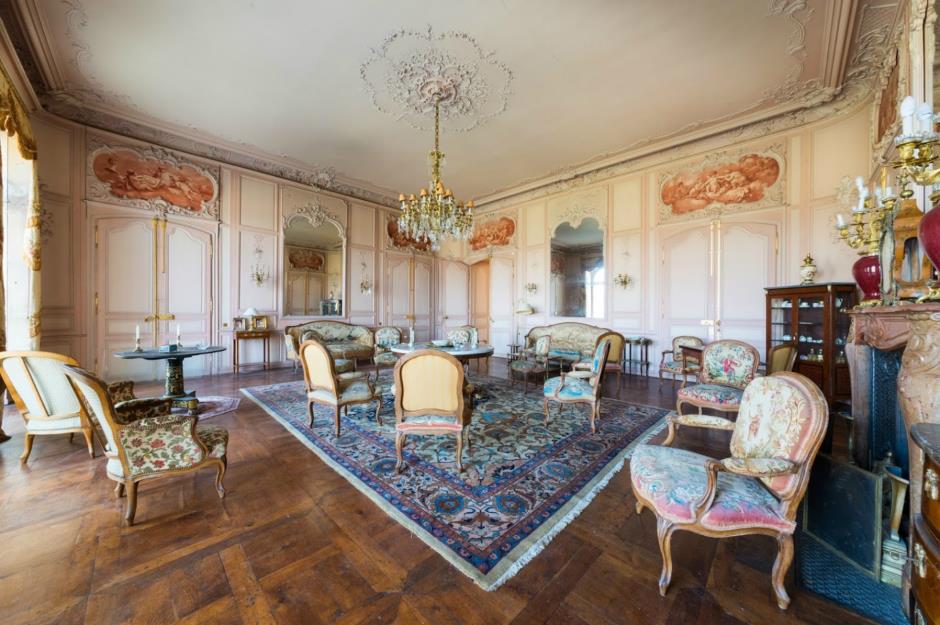
Then she opened a window in that apartment and climbed out, not into the open air, but on the top of a flight of steps that took her down one story only to meet another flight that brought her right back up to the same level again, all inside the house. This was supposed to be very discomforting to evil spirits who are said to be naturally suspicious of traps. Mrs. Winchester was the most unfortunate of women. Rich, respected, very well educated and of sound health and mind—with many other advantages usually valued by those having them and coveted by those who have them not—she sometimes thought that she would be less unhappy if they had been denied her, for then the contrast between her outer and inner life would not be continually demanding a painful attention. In the stress of privation and the need of effort, she might sometimes forget the sombre secret ever baffling the conjecture that it compels. After communing with the spirits, as she turned the hallway, Mrs. Winchester could hear a sound of a door gently closing, and saw in the darkness, indistinctly, the figure of a man, which instantly disappeared among the statues and furniture. A hasty pursuit and brief search of the mansion in the belief that the trespasser was someone secretly visiting a servant proving fruitless, she entered an unlocked door and mounted the stairs to her chamber. Its door was open, and stepping into black darkness she fell headlong over some heavy object on the floor. She spared herself the details; it was her poor William, dead of strangulation by human hands! Nothing had been taken from the house, the servants had heard no sound, and excepting those terrible fingermarks upon the dead man’s throat—dear God she hoped to forget them!—no trace of the assassin was even found. #RandolphHarris 3 of 16

Although William had Tuberculosis, something had come to end his life before the illness did. Mrs. Winchester kept barbarous murder a secret. Mrs. Winchester donated a substantial sum of money to the Winchester Clinic of the General Hospital Society of Connecticut, for the care and treatment of tuberculosis patients. The clinic still exists today as part of the Yale New Haven Medical Center. One night, a few months after the dreadful event, Mrs. Winchester and her butler were walking back from the carriage house after a trip to the city. The full moon was about three hours above the eastern horizon; the entire countryside had the solemn stillness of a summer night; their footfalls and ceaseless song of the katydids were the only sound, aloof. Black shadows of bordering trees lay athwart the mansion, which, in the short reaches between, gleamed a ghostly white. As they approached the door to the mansion, whose front was in shadow, and in which no light shone, her butler suddenly stopped and clutched her arm, saying, hardly above his breath: “God! God! what is that?” “I heard nothing,” Mrs. Winchester replied. “But see—see!” he said, pointing along the road, directly ahead. Mrs. Winchester said: “Nothing is there. Come, Henry, let us go in—you are ill.” He had released her arm and was standing rigid and motionless in the center of the illuminated roadway, staring like one bereft of sense. His face in the moonlight showed a pallor and fixity inexpressibly distressing. She pulled gently at his sleeve, but he had forgotten her existence. Presently he began to retire backward, step by step, by step, never for an instant removing his eyes from what he saw, or thought he saw. Mrs. Winchester turned half round to follow, but stood irresolute. She did not recall any feeling of fear, unless a sudden chill was its physical manifestation. #RandolphHarris 4 of 16
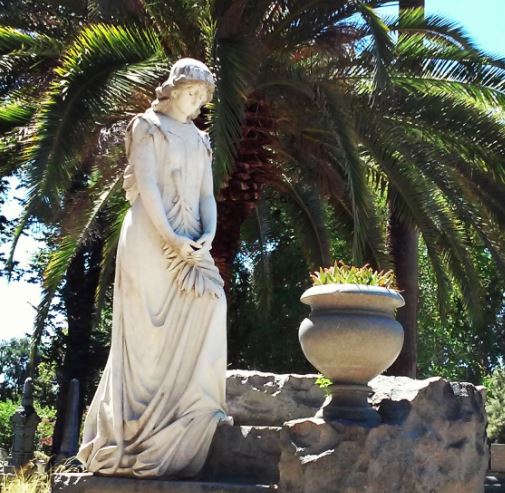
It seemed as if an icy wind had touched her face and enfolded her body from head to foot; she could feel the stir of it in her hair. At that moment her attention was drawn to a light that suddenly streamed from an upper window of the mansion: one of the servants, awakened by what mysterious premonition of evil who can say, and in obedience to an impulse that she was never able to name, had turned on the Carbide gas lights, which were operated by pushing an electric button. When she turned to look for the butler he was gone, and in all the years that had passed no whisper of his fate has come across the borderland of conjecture from the realm of the unknown. Mrs. Winchester retired and had fallen almost immediately into a peaceful sleep, from which she awoke with an indefinable sense of peril which was, a common experience in her estate. The servants slept in another part of the house. But these were familiar conditions and never distressed Mrs. Winchester. Nevertheless, the strange terror grew so insupportable that concurring her reluctance to move she sat up and pushed the button to turn on the lights at her bedside. Contrary to her expectation this gave her no relief; the light seemed rather as added danger, for she reflected that it would shine out under the door, disclosing her presence to whatever evil think might lurk in the halls of her mansion. You that are still in the flesh, subject to horrors of the imagination, think what a monstrous fear that must be which seeks in darkness security from malevolent existences of the night. That is to spring to close quarters with an unseen enemy—the strategy of despair! Extinguishing the gas lights, Mrs. Winchester pulled the bedclothing about her heard and lay trembling and silent, unable to shrike, forgetful to pray. In this pitiable state she must have lain for what you call hours—with her there are no hours, there is no time. #RandolphHarris 5 of 16

At last it came—a soft, irregular sound of footfalls on the stairs! They were slow, hesitant, uncertain, as of something that did not see its way; to her disordered reason all the more terrifying for that, as the approach of some blind and mindless malevolence to which is no appeal. She even thought that she must have left the hall gasolier burning and the groping of this creature proved it a monster of the night. This was foolish and inconsistent with her previous dread of the light, but what would you have? Fear has no brains; it is an idiot. The dismal witness that it bears and the cowardly counsel that it whispers are unrelated. In Mrs. Winchester’s mansion lived those who have passed into the Realm of Terror, who skulk in eternal dusk among the scenes of our former lives, invisible even to themselves, and one another, yet hiding forlorn in lonely places; yearning for speech with out loved ones, yet unenlightened, and as fearful of them as they of humans. Sometimes the disability is removed, the law suspended: by the deathless power of love or hate they break the spell—they are seen by those whom they would warn, console, or punish. What form they seem to them to bear one knows not; they know only that they terrify even those whom they most wish to comfort, and from whom they most crave tenderness and sympathy. What a thing it is to have legions of spirits, cowering and shivering, fearful and vengeful in an altered World, roaming the hallways of one’s house. However, Mrs. Winchester did not die of fright: the Thing turned and went away. She heard it go down the stairs, hurriedly, she thought, as if itself in sudden fear. Then she rose to call for help. Hardly had her shaking hand found the annunciator when—merciful Heaven!—she heard it returning. Its footfalls as it remounted the stairs were rapid, heavy and loud; they shook the mansion. She fled to an angle of the wall and crouched upon the floor. #RandolphHarris 6 of 16
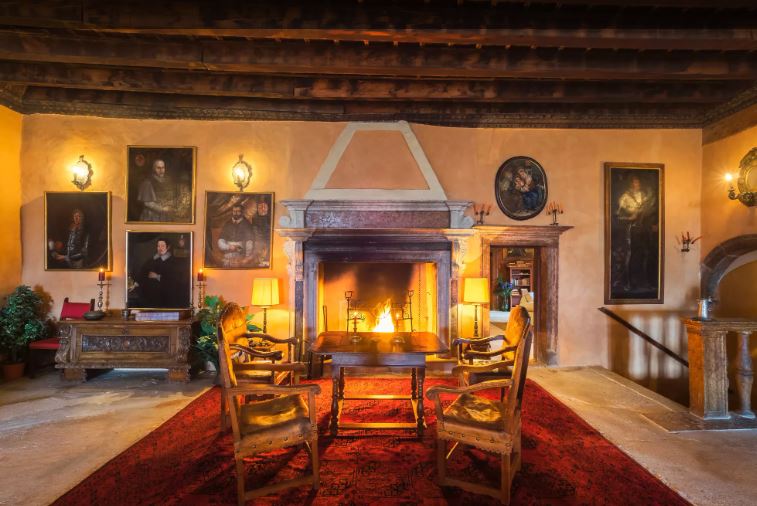
Mrs. Winchester tried to pray. She tried to call the name of her maid. Then she heard the door thrown open. There was an interval of unconsciousness, and when she revived, she felt a strangling clutch upon her throat—felt her arms feebly beating against something that bore her backward—felt her tongue thrusting itself from between her teeth! And the she felt the life pass from her. As the spirits still dwelled in the mansion of the shadows, lurking in its desolate places, peering from brambles, thickets, towers, corners, stairways and doors. Ghosts at the Winchester mansion know when it is night, for then most people retire and they can venture from their places of concealment to move unafraid about in their old mansion, to look in at the windows, even to enter and gazes upon people’s faces who might still be wandering in the evening hours. Vainly, spirits often seek some method of manifestation, some way to make their continued existence and their great love and poignant pity understood by their loved one’s or those they wish to haunt and terrorize. Ghosts dare to approach people when they are awake, but the terrible eyes of the living frighten them by the glances that they seek from the purpose the hold. Demons, ghosts, and other spiritual beings search for the living in the Winchester mansion during the moonlight dawn. At the time of her death, the unrelenting construction had rambled over six acres. The sprawling mansion contained 160 rooms, 2,000 doors, 10,000 windows, 47 stairways, 47 fireplaces, 13 bathrooms, and 6 kitchens. Carpenters even left nails half driven when they learned of Mrs. Winchester’s death. According to the provisions of her will, Mrs. Winchester’s personal property, including the furnishings, household goods, pictures, jewelry, and papers were left to her niece, Mrs. Marian Merriman Marriott, who promptly has the furnishings auctioned off. It is said to have required sic trucks working six weeks to car the furnishings away! The mansion and farm were not mentioned specially in the will. They became part of the Mrs. Winchester’s estate. #RandolphHaris 7 of 16

Demon possession is a well-defined phenomenon and should be clearly distinguished from spiritism. Since the same demonic forces are at work in both phenomena, they bear some similar characteristics and result in the same occult oppression and bondage. The demonized state of the demon possessed is similar to the trance of the spiritistic medium. Both are under the direct influence of demons who speak through them. In the case of the medium who processes to communicate with the spirits of deceased persons, the demon apes the personality and voice of the deceased. In the case of the demon possessed, the evil spirits appear to be more crassly cruel, unclean, violent, and less sophisticated and subtle than spirits working through a clairvoyant medium. In demon possession, they are also more domineering and brutally enslaving. Nervous muscular reactions and contortions peculiar to the demoniac often appear also in the spiritistic medium when one goes into a trance, but in a much milder form. Then, too, the demoniac is normally an involuntary victim of possession, while the medium is a willing subject, who cultivates psychic propensities and willingly yield to demonic control. Extraordinary movements of inanimate objects surrounding the demon-possessed remind us of similar happenings in spiritism. Extraordinary movements of inanimate objects surrounding the demon-possessed remind s of similar happenings in spiritism and magic. Tables, chairs, dishes, and the like are mysteriously moved about without anybody touching them, recalling tumbler moving and table lifting so common in spiritistic séances, and magic conjurations. In demon possession as well as in spiritism, unexplained rappings and noises in so-called “haunted houses” are heard. #RandolphHarris 8 of 16
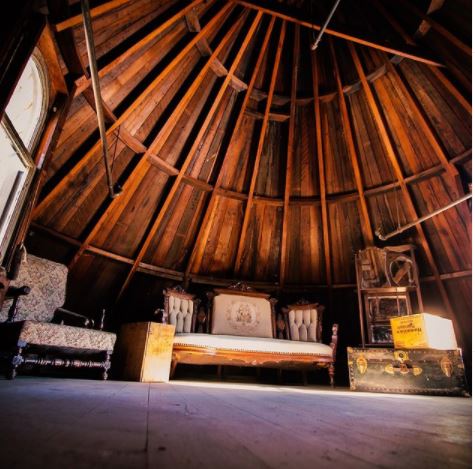
After the Winchester mansion was opened for tours, a spirit from the house had taken possession of one of the tour guides. The spirit insisted on taking up its abode with them, since it has been driven away from its for dwelling by the presence of Christians. Such cases of haunted houses about everywhere in occult literature in connection with mediums, magicians, and demon possessed persons. The tour guide saw apparitions and had frequent attacks in which she fell unconscious and demons spoke through her in their own voice and personality. A thorough investigation was conducted. Persons were stationed all around the house, in various rooms, and even in the Daisy Bedroom. Noises were heard which gradually increased in violence and seemed to concentrate in the bedroom Mrs. Winchester died in. Chairs bounced, windows rattled, plaster fell from the ceiling, and objects moved about without any visible explanation. Prayer caused the noises and telekinetic phenomena continued for a while in the mansion. On one occasion, after continued prayer, one of the demons inhabiting Jane cried out, “All is now.ost. Our plans are destroyed. You have shattered our bond, and put everything into confusion. You, with your everlasting prayers—you scatter us entirely. We are 13,130,130,130 in number. But there are still multitudes of living men, and you should warn them lest they be like us forever, lost and cursed of God.” The demon confessed that he was an emissary of Satan. The next day, the contents of the mansion were found in compete disarray and utter confusion. The amazing and terrifying thing was that the doors were still securely locked. No man or beast had entered. Evil spirits had obviously been at work in a satanic assault. On that day there were some tremendous crashing and knocking noises heard in the Winchester mansion, as if the whole house was filled with evil spirits. #RandolphHarris 9 of 16

Everyone giving tours in the mansion in the early 1900s, used to hear knocking and rumbling and crashing noises to such an extent that some of the visitors were frightened by them. Ghosts were also seen there quite regularly, even during the day time. A headless ghost was repeatedly seen in the mansion. Many people reporting becoming burned after contact with the “possessed” tour guide Jane. The autumn of 1925, all the pigs on the Winchester mansion’s farm died. The cause of death could not be found even though one of the carcasses was sent to a biological institute for examination. They tried everything but all to no avail. The following year the same thing happened again. This time the farmer redoubled his efforts to discover the cause of the pigs’ death. He had the stables inspected and the food analyzed but again without success. He thus decided to have the conservators of the estate decided to have the pigsty torn down and rebuilt on another site using completely different materials. Next year the pigs died again. They would all of the sudden squeal and then collapse. The whole process was repeated and every possible examination made in order to find out why the pigs had died. At this time certain of the member of the community began to say that someone must be killing the pigs magically out of spite. At first the conservators of the Winchester Estate would have nothing of this and continued to seek the advice of the vet and other such people. However, they could not help them, and so in the end they went to see the local minister to ask him about the question of magic. The minister simply laughed and said that the idea was stupid. Nevertheless the villagers pointed out to the representatives that there did exist some people in some areas of California who could kill livestock by means of magic. #RandolphHarris 10 of 16

The conservators could do nothing though, and the event recurred year after year in spite of the fact that by now they had doubly secured the stables with locks and had sometimes stayed up all night with thread stretched out around the estate in order to discover if anyone was causing the animals’ deaths. One day, however, the circumstances changed. The minister visited the estate and asked one of the tour guides to accompany him to the vicarage. There they found one of the neighbour’s of the Winchester Estate, a man who had been less affluent, and this man confessed that it was he who had been the cause of everything. He had killed the pigs using black magic. The tour guides and conservators were naturally upset because by now 39 pigs had been killed. When asked why he had done this, the neighbour replied that it was because the tourists made such a noise outside his house. He had become so angry that he had tried to get his revenge in this way. He had subscribed himself to the devil with his own blood. To do this he had gone out on a Friday night to some crossroads and there drawn up a contract between himself and the devil. He mentioned that the devil had not appeared to him as he is often pictured, but that he met a black curly headed figure with blood-red eyes and a small snout and that the figure had been dressed in rather old-fashioned clothes. Ever since that day the man confessed that among other things, he had had the power to kill his friend’s pigs. The minister asked him what had made him come out into the open about the whole matter. His answer was that the people at the Winchester estate had been so kind to him over the year, donating food, clothes and furniture, that he had felt ashamed and he now asked for them to forgive him, and promised he would no longer plague them. #RandolphHarris 11 of 16

Not wanting to take any legal action, the conservators of the Winchester Estate forgave him and all went well until the neighbour ceased going to church and slid back into his old ways. Since his confession none of the estate’s pigs had died but now the man again took up his drinking habits two more of the pigs died in exact same ways as the others. The conservators decided to shutdown the farming land of the Winchester Estate and sell off hundred of acres, only keeping four. In the process, several other Victorian houses on the grounds, along with fountains, and gazebos were demolished. From the psychological point of view it is suggested that a person delving into magic and who believes in occult practices is really only succumbing to a fulfilment compulsion. One unconsciously fulfils the things that one seeks to perform by magic. One is the victim of auto-suggestion. However, even if this were the whole explanation as some people affirm, it would still be true to say that occult practices have a corrupting effect on all those who get involved in them. Demons tend to be somewhat more independent than angels…When possession takes place, you will not get to see them at all. The Florida-based Luciferian Light Group (LLG) adopted the ‘Watcher myth’ of devils that were originally angels, sent to Earth to guard humankind and cursed by God for screwing their charges. In the original myth the couplings produced monsters, but, according to the LLG, the actual result was the Aryan race. They say that African Americans and other racial groups take pride in their cultural roots, so the argument goes, why should the same concept not apply to Europeans? The argument cannot be countered by liberal sophistry, and so the ghosts of German volkisch occultists continue to be conjured. #RandolphHarris 12 of 16

The role of cultural villain again proves to be a delicate balancing act—nothing can ever be condemned on purely moralistic grounds. Many people are still trying to protect “The Black House.” The Black Pope himself once reassured his flock, “the first 99 years are always the toughest. Rege Satanas!” Satanism is opposed to victimology and scapegoating. Many people are really drawn to the dark side because they grow up reading a lot of books and watching a lot of movies about it. If witches are out there, practicing some of the old ways of the pre-Christian gods and goddesses, then they are still Satanic in the sense that they are heretical. One side of the heretical and diabolical is the scientific aspect of Satanism. Copernicus and Galileo were regarded as practicing sorcerers in as far as they dared to challenge the supremacy of God with their heresies-their scientific research. Anton LaVey codified modern Satanism. There is a rich heritage of hearsay and blasphemy behind it, but as far as an aboveground religion that reveres Satan, there was not anything before the Church of Satan’s foundation in 1966. There were Black Masses that parodied the Catholic Church. A lot of modern Satanism draws from that codification or personification of Satan used as an archetype in mythology. Satanist are more interested in power, and what was going on in the castles and courts of the times. The interactions of power and Machiavellian machinations interest a Satanists rather than going out and find herbs to cure indigestion. Satanists are reaching for a religion of the aristocracy. They have all the aspects of that pride, that energy, that stye, and hopefully those elevated standards. Many people fear them because they believe they will lure you in their house and kill you, but is that not what many Christians are doing today? #RandolphHarris 13 of 16

Your relationship with your personal Satanic archetype is yours alone. The only way some can see how effective one is as a practicing black magician is how well one gets on in the outside of the World. Satanism has always represented and will always represent the adversary. He is a counterbalance to the unspoken injustice that prevails in the current society, whether that be overweening elitism or, going to the opposite extreme, mob rule. They always have to be in the minority that push hard in the other direction to get the pendulum swinging. Satanism will never be a religion of the people. It will never be populist beyond its current position. You see hundreds of thousands of kids making the sign of the horns, wearing black, getting devil tattoos, and listening to rock music they think is Satanic. They will take all the trappings and even grasp a few of the basic ideas, like Satan representing indulgence and independence of spirit. But, beyond that, they will always be a minority and that is how some think it should be. The Winchester mansion is a common site of demonic assault. In the early 1900s, a group of tourists and tour guides were attacked by demons; some became possessed; 30 people in the group were seized. In 1926, Satan and his allies once again possessed people at the Winchester mansion. For the first time in their lives, many of these people found themselves to be powerful, significant beings, establishing their own realm of authority. When they spoke, everyone in the mansion stopped to listen, for their shrill cries became testimony. Many historians have argued that the Satanism at the Winchester mansion was only the product of demented minds. However, there was something quite real in all the series of accusations and counteraccusations of the witnesses and the possessed—some definitely evil driving force that led humans to turn against one another like mad dogs lusting for the smell of blood. If Satan was to have presided over the Satanism at the Winchester Mansion, much was left out of the picture. #RandolphHarris 14 of 16

The Devil manifested himself in many forms to people at the Winchester Mansion—as a horse, a fox, a dog, a cat, a pig, and as a shadowy figure. At the Sabbats, the Devil was always present in the form of a tall, handsome man with blue eyes and black hair making no attempt to disguise his identity in any way Neither was the all-important bloodletting present in the ceremonies, either in the form of a sacrifice or in the singing of the pact. There was no defiling of sacred object, nor mention of the administering of the witches’ mark, a painful ceremony that was quite vivid in the minds of many of the witches at the estate. The Sabbats, all in all, seemed to have been rather staid affairs, involving no wild ritual or debauchery. The Devil offered not immediate wealth or riches, but a new system of government, where all humans would be equal, each human being free to “live bravely.” He promised an end to beliefs. Whoever the Devil was at those meetings, he obviously did not seek adulation, but rather he sought to establish a more equal and suitable social order among humans. Taken in this context, the entire episode begins to sound like a huge projection, a gigantic wish fulfillment on the part of the disgruntled citizens, who were expressing disdain for the system that, in their eyes had become oppressive. The figure chosen by the confessors as the Devil presiding over the midnight Sabbats had himself become disillusioned by the system. Perhaps he had been holding nocturnal meetings in the mansion in an effort of “cleansing the soul.” At any rate, the meetings were necessary psychological safety valves in the minds of the people. People would stand around begging for the master to teach them his secret. How to become invisible, how to acquire love, and oh! beyond all, how to make gold. How much gold would you give for the Secret of Infinite Riches? Humans became strengthened with wonderful power through the order of angels, so that one declares the divine will. From the Seraphim, that we cling with fervent love. From the Cherubim, enlightenment of the mind, power and wisdom over the exalted figures and images, through which we can gaze upon divine things, etcetera. #RandolphHarris 15 of 16

From the Thronis, a knowledge of how we are made and constituted, that we may direct our thoughts upon eternal things. From Dominationbius, assistance to bring into subjection our daily enemies, who we carry with us constantly, and enabling us to attain salvation. From Potestatibus, protection against human enemies of life. From Virtuibus, God infuses strength into us, enabling us to contend against the enemies of truth and reward, that we may finish the courage of our natural life. From the Principtibus, that all things become subject to humans, that one may grasp all power, and draw unto oneself all secret and supernatural knowledge. From Archangelis, that one may rile over all things that God has made subject to one, over the animals of the field, over the fish of the sea, and over the birds of the air. From the Angelis one receives the power to be the messenger of the divine. When the veil between the conscious and the subconscious mind begins thinning it is likely that one will begin to experience certain phenomenon that will grab your attention throughout the day. This will occur more and more as the veil between Worlds thins merging your spiritual awareness with your physical life. Usually it will manifest in the form of synchronicity, Déjà vu, or circumstance which seems to jump out and grab your attention. Thee I invoke, the Bornless one. Thee, that didst create the Earth and the Heavens: Thee, that didst create the Night and the Day. Thee, that didst create the Darkness and the Light. Thou art Osorronophris: Whom no human has seen at any time. Thou art Ahriman. Hear Thou Me, for I am the Angel of Paphro. Osorronophris: this is Thy True Name, handed down to the Prophets of Ishrael. Ahriman rise up through the infernal planes through the seal of Arezura and find rest within this manifestation of the blessings. Fill this sorcerous fluid with your power and might that it will serve my cause of counter creation through the intent of my own evil mind. Bless this blood as the very powers of death, destruction, and decay that I may cast out all that does not serve the cause of my own great work upon this path of enlightenment. Come tour the dark, brooding and mysterious, promising all kinds of forbidden treats. #RandolphHarris 16 of 16

Winchester Mystery House

Happy weekend! Will we be seeing you on the estate today? 🌻 https://www.winchestermysteryhouse.com/

The Grounds Have their Share of Unexplained Mysteries
A mansion is not a mansion with its stately grounds, and Mrs. Winchester was just as attentive to the exterior of her estate as she was to the sprawling house. An avid gardener, she imported plans, flowers, trees, shrubs, and herbs from over 110 countries around the World. Mrs. Winchester employed eight to ten gardeners. Her head gardener was Mr. Nishiwara, who was responsible for seeing that the beautiful gardens, plus the tall hedge around the hose, were well maintained. The hedges were once so tall that only the top floor of the house was visible from the road! Mrs. Winchester loved to spend time in her gardens, and she had gazebos built where she could sit and enjoy her trees and flowers. It was a Saturday night, in January 1888, and Mrs. Winchester has, as usual, come home from the City early in the afternoon. It has been a black and foggy day, and the gas had been lighted in the streets and in the office where she worked from early morning. The fog was very bad at the time Mrs. Winchester returned home, and she congratulated herself on the fact that she had not to go out again that night. She sat with her puppy Zip in her sitting-room all the evening, with that comfortable feeling that she was able to relax until Monday morning, and that she need trouble about nothing outside the mansion. In due course, Zip went to bed, and then the maid Agnus reminded her of a letter that must be written and posted that night. Sufficient is it for Mrs. Winchester to say that the letter was to an elderly relative of some means who lived in Oakland, and who had taken great interest in her puppy Zip. The butler Martin remembered that the following day was the birthday of this relative, and that she should receive proper greeting by the Sunday morning post in the country town.

Frankly, Mrs. Winchester did not want the bother of it; but Agnus always knows best in these matters, and so Mrs. Winchester wrote the note and sealed it up. Mrs. Winchester had read nothing exciting during the evening—nothing to stir her imagination in any way. She stamped the letter and proceeded to the front door. Judge of her astonishment when, on throwing it open, she saw nothing but the gray wall of fog coming up to the very house; even the railings, not ten yards in the front of her grand estate, were blotted out completely. She called back into the house for the maid to come and look. “Don’t lose yourself, Mrs. Winchester,” she said, half laughing. “What a terrible night!” “I shall not lose myself,” Mrs. Winchester replied, laughing in turn. “The pillar-box is only at the end of the crescent; if I stick to the railing, I cannot possibly miss it. Do not wait here,” she added solicitously. “I will leave the door ajar, so that I can slip in easily when I come back. I have left my keys on my writing desk.” Angus went in, and Mrs. Winchester pulled the door close, and then stepped out boldly for the front gate. Imagine her standing there, just outside her own gate, and with her back to the crescent, knowing that she had to go to the left to find the pillar-box which was at the end of the crescent. There were thirteen Victorian cottages on her estate, so she knew she had to pass seven more before reaching the pillar-box. She also new that each cottage had an ornamental center-piece before she stepped away from the crescent at the end to reach the pillar box. That Mrs. Winchester knew would be something of an adventure, for the fog was the densest she had ever seen; she could only see the faint glow of her observation tower as she looked behind; the rest of her mansion was invisible.

Mrs. Winchester counted seven Victorian cottages, and then stood at the end of the last line of railings. She knew that the pillar-box was exactly opposite her. She took three quick steps, and literally cannoned into it. She was a little proud of her own judgment in getting it so nicely. Then she fumbled for the mouth of it, and dropped in her letter. All this may should very commonplace and ordinary. Mrs. Winchester is an observant woman, and she had noticed always that the mouth of the pillar-box faced directly along the crescent, thus standing at right angles to the road. At the moment that she had her right hand in that mouth, therefore, she argued that if she stood out at the stretch of her arm, she must be facing the crescent; Mrs. Winchester had but to move straight forward again to touch the friendly railings. She was putting that plan into operation, and had let go of the mouth of the pillar-box, when a man, coming hurriedly round the corner, ran straight into her, muttered a gruff apology, and was lost in the fog again in a moment. And in that accidental collision he had spun her round and tossed her aside—and she was lost! This is literally true. She took a step and found herself slipping of the kerbstone int the road; stumbled back again, and strove to find her way along by sticking to the edge of the pavement. After a minute or two, Mrs. Winchester was so sure of herself that she ventured to cross the pavement, and by great good luck touched in a moment one of those ornamental center-pieces of one of the gates—or so, at least, it seemed. She went on with renewed confidence until she saw certain bushes which topped the railings of one particular cottage, and then Mrs. Winchester knew that she was near her mansion’s front door. She pushed walked confidently, stepped quickly up the little path, and reached the door. She was right; the door yielded to her touch, and she went hurriedly in.

Mrs. Winchester had taken off her hat, and had held it towards the familiar hat-stand before she realized that it was not a familiar hat-stand at all; it was one she did not know. She looked round in some confusion, meaning to make good her escape without being observed, and yet wondering into what part of her mansion could she have come into, when she stopped stock still, with the hat held in her hand, listening. From a room near at hand, Mrs. Winchester heard the sound of a low, long-drawn moan, as from someone in pain. More than that, it was almost the wail of someone in acute terror. Now, Mrs. Winchester was a mild and caring soul, and her first instinct was to run. There was the door within a foot of her; she could open it again noiselessly and slip out, and leave whatever was moaning to its own trouble. Her next instinct, however, was a braver one; she might be able to help. Putting her hat on, and so leaving her hands free, she moved cautiously towards the sound, which was coming intermittently. She found that this wing of the house was unfamiliar to her; there was a 7-11 staircase built in the shape of a letter “Y,” which enabled the servants to quickly get to three different levels of the house. Then there were these stairs that lead to the ceiling, and there was also a cabinet that went straight through to the back thirty rooms of the mansion. When she went down the steps of the 7-11 staircase, slowly and cautiously, with her flesh creeping a little, the morning went on, and Mrs. Winchester was almost inclined to turn back with every step she took. However, at last, she got into the basement, and came to the door of the room from which the sound proceeded. She was in the very act of recklessly thrusting open the door when another sound broke upon her ears that held her still. The sound of someone singing in a raucous voice.

It was a sea song she remembered to have heard when she was a little girl in New Haven, Connecticut, and the words of which she had forgotten; it was something about “Boney was a warrior.” The door of the room was open a little way, and through the crack of it, Mrs. Winchester was able to peer in; and there she saw a sight that for a moment made her doubt her own eyes. She rubbed her eyes in a curious fashion and looked again, and this is what she saw: The room was in a neglected state, with strips of wallpaper hanging down from the walls and with a blackened ceiling. There was a table in the center of it, and at that table a man was seated, with a square black bottle and a glass before him, and a candle burning near his left hand. Mrs. Winchester could see the whole room now as plainly and as clearly as she saw it then. He was a man so villainously ugly that she had a thought that he was not a man at all, but some hideous thing out of a nightmare. He had very long arms—so long that they were stretched across the table, and his hands gripped the opposite edge of it; a great heavy head, crowed with a mass of red hair, was set low between enormously broad shoulders; his eyes, half closed, were high up and close together on either side of a nose that was scarcely a nose at all; the lips were thick and heavy. However, it was not the man that Mrs. Winchester looked at first, it was at two other figures in the room. These figures were seated on chairs facing the table at which the man was, and the strangeness of them lay in the fact that each was securely bound to the chair on which he and she sat, for it was a man and a woman. The man, who was quite young was not only bound, but gagged securely also; the woman was more lightly tied to her chair by the arms only, and her mouth was free. She was leaning back, with her eyes closed, and mingling with the raucous singing of the man at the table. Mrs. Winchester’s first impression was that the man at the table was some sort of unclean, bestial judge, and the others his prisoners.
He stopped his singing to pour some liquor from the square bottle into his glass and to drink it off; then he resumed his former attitude, with his fingers locked over the edge of the table. And now Mrs. Winchester noticed that while the woman, who was, by the way, quite young and very pretty, with a fair, dainty prettiness, still kept her eyes closed, the eyes of the bound man never left that dreadful figure seated at the other side of the table. Mrs. Winchester felt like she was on the eve of some awful calamity. She then unhesitatingly pronounced the entire assortment of people in the room as ghost, and condemned all the gathered treasures as the creations of petty intellect, which could not get out of the beaten track, but sought in the supernatural a reason for the explanation of every fact that seemed at variance with routine of daily experience. In her opinion the collection of people in this room had never seen at all in her day and generation, and must have been souls killed by the Winchester rifle ages ago; she did not yet believe her mansion was enchanted, however. To use her own language, “all those stories have been made by those people that set up overnight stirring out legends to entertain each other.” However, she must have known that she was in denial. For she was not insane and there were some kind of beings in this room. “Wouldn’t you like to speak, you dog?” said the red-haired man. “What would you give now to have the use of your limbs—the free wagging of your tongue? What would you say to me; what would you do to me?” The man who was bound could, of course, answer nothing. Mrs. Winchester saw his face flush and darken, and she guessed what his thoughts were. For herself, she was too fascinated by the scene before her to do anything else than peer through the crack and watch what was going one.

“Lovers—eh?” exclaimed the man at the table. “You thought I was unsuspicious; you thought I knew nothing and suspected nothing—didn’t you? While I was safely out of the way you could meet, the pair of you—day after day, and week after week; and this puppy could steal from me what was mine by right.” The woman opened her eyes for the first time and spoke. “It isn’t true,” she said, a sob breaking her voice. “It was all innocent. Martin and I have done no wrong.” “You lie!” thundered the man, brining his fist down upon the table with a blow that might have split it. “You’ve always lied—lied from the moment your father gave you to me—from the very hour I married you. You always hated me; I’ve seen you shudder many and many a time at the mere sight of me. Don’t I know it; haven’t I felt you stab me a thousand times more deeply than you could have stabbed me with any weapon? You devil! I’ve come at last to hate you as much as you hate me.” The woman turned her head slowly and looed at the younger man; a faint smile crossed her lips. In an instant the red-haired man had leapt to his feet, showing Mrs. Winchester astonishingly enough that he was a dwarf, with the shortest legs surely ever a man had. However, the bult of him was enormous, and Mrs. Winchester could guess, with a shudder, at his length. He caught up the glass, crossed the room, and flung the contents in the face of the man. “It’s a waste of good liquor—but that’s for the look she gave you. I wish there was some death more horrible than any invented yet that I could deal out to you,” he added, standing with the glass in his hand and glaring at his victim. “The death I mean for you is too easy.” He walked across to the fireplace in a curious purposeless way, and stirred a great fire that was blazing there. Then from a corner of the room he dragged with ease a great sack that appeared to contain wood and shavings; so much that Mrs. Winchester saw a rent in the side of it. As if in readiness for something, this he dropped down near the fire, and then went back to his seat, applying himself again to the drink that was on the table. And still Mrs. Winchester watched, as a woman may watch a play, wondering how it will end.
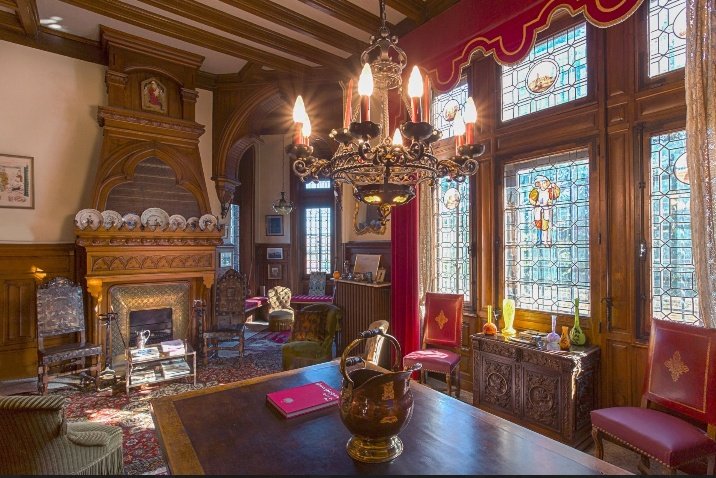
“I got the best of you tonight,” he said presently. “If I hadn’t some upon you from behind, you might have been too much for me; but I was ready and waiting. I’ve been watching longer than you think; I had everything mapped out clearly days ago. Tonight sees the end of all things for the pair of you; tomorrow sees me smiles away from here. You came in secret, you dog; you’ll go in secret.” “We have done no wrong,” said the woman again. “We loved each other years ago, when we were boy and girl; there was no sin in that.” “Bah!—I don’t believe a word of it. Don’t I know that your black heart you’ve compared the two of us every day of your life since first I saw you. His straightness for my crookedness; his sleek, black hair for my red; his prettiness for this face of mine”—he struck his own face relentlessly with one hand as he spoke—“that women shudder at. Don’t I know all that?” It was the strangest and most pitiful thing that the creature sitting there before his victims suddenly covered his face with his hands and groaned. If ever Mrs. Winchester had seen a soul in torment, she saw it then, and though she loathed him she could have wept for him. After a moment or two he dropped his hands and seized the bottle, and poured out the last drops into the glass and drank them off; then flung the bottle and glass crashing into the fireplace, as though there was an end to that business. And now, as he got down again from the chair, Mrs. Winchester saw the eyes of the woman open wide and follow his every movement with a dreadful look of terror in them. “I’ll kill you both—here in the place where you’ve met—and then I’ll seal up the house,” went on the dwarf. “I’ve planned it all. Look you last on each other, for tonight you die—and this house shall be your crypt!”
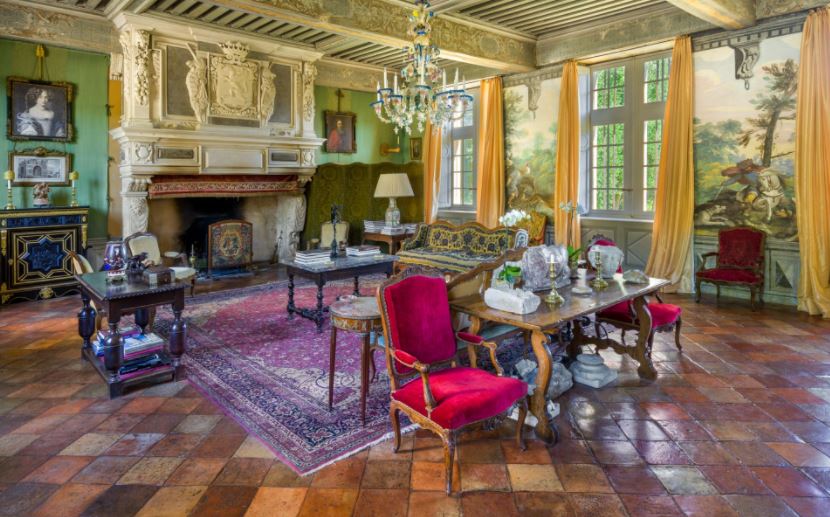
“I swear to you,” panted the woman eagerly, “by all I hold most holy and most dear, that if you let us go, we’ll never see each other again. For pity’s sake! —for the sake of Martin!” “For the sake of Martin!” sneered the dwarf. “That shows you in your true colors; that show who you are and what you are. There’s one poor satisfaction left to you; you’ll die together.” What held Mrs. Winchester then it would be impossible to say. She could only plead that in the dreadful thing that followed was a woman who sits at a play wondering what will happen next, and with never a thought in her of interfering. Mrs. Winchester’s in her anxiety has pressed the door a little to get a clearer view, so that she saw every movement of the dwarf. For herself, Mrs. Winchester had forgotten everything—in her own home, and my puppy zip, and the servants who slept in the mansion. It was as though she has stepped straight into a new World. Mrs. Winchester saw the dwarf advance towards the man in the chair, carrying his right hand stiff and straight beside him, gripping something s, she could not tell what it was that he held. Mrs. Winchester saw him come straight at her, and she saw the eyes of the woman in the opposite chair watching her as one fascinated. Then Mrs. Winchester saw two movements’ one with the left hand of the dwarf, when he struck the other man on the face; then with the right hand, when he raised something that gleamed n the light of the candle and brought it down with a sound that was new and horrible to her on the breast of the other man. And Mrs. Winchester saw the face of the man change, and start as it were into new life, and then fall as it were into death. And Mrs. Winchester saw his head drop forward, and his eyes were closed. Then, above it all, and yet seeming as a sort of dreadful chorus to it all, rang out the scream from the woman in the other chair. Mrs. Winchester did not think that the dwarf heard it; he had drawn back from what had been the living man, and was staring like one mad upon what he had done. And still piercing the air of the place rang the scream of the woman—not for her lover alone, but for herself.

That sound seemed at last to break in upon the senses of the dwarf and to call him partially to himself. Mrs. Winchester had watched him to the point where he draw himself together and crouched like a wild beast ready to spring, with that in his hand that dripped red, when, in some fashion, she flung herself round the partially open door and stumbled into the room. Mrs. Winchester thought she must have been a little made herself; otherwise, frail and commonplace creature that she was, she could not have battled with this madman. Mrs. Winchester came upon him from behind and gripped him, seizing him by the throat and by the head, and all the while shouting something to him quite unintelligible. The attack had been so sudden and so unexpected that she had him, in a sense, at her mercy. He could not know who had attacked him; he struggled madly, not alone to get away from her, but also to discover who she was. Mrs. Winchester struggled to keep his face away from her, gripped him by the neck and by the hair, and fought with him for what she knew then was her own life. And so struggling they stumbled at last horribly against that still figure bound in the chair and brought it over crashing with them to the floor. And then in a sudden Mrs. Winchester felt the dwarf inert in her hands, and knew that she had conquered him. What she must have looked like in that room, kneeling there, panting and struggling to get her breath, she could not tell; the whole business was so like a nightmare. She remembered seeing the dwarf lying there—huddled up and very still. She remembered that other figure, bound grotesquely in the chair and lying, still bound, upon its side; and she remembered, too, the woman, with her arms close fastened behind her, sitting there and sobbing wildly.
The dwarf must have been stunned; he lay there quite still, with the knife that was dreadfully red fallen from his hand, and lying beside him. When at last Mrs. Winchester staggered to her knees she saw that the girl was staring at her with a face that seemed to suggest that here, perhaps, was another ruffian come to kill her. “Who—who are you?” she asked in a frightened whisper. “A friend—one who stumbled in by accident,” Mrs. Winchester panted. “Look at the man that’s tied to the chair,” she whispered hoarsely. “He can’t be dead.” Mrs. Winchester knew that he was, but still she looked, as she bade her. Mrs. Winchester had no need to look twice; the poor fellow was quite dead. The blow had been strong and sure. On her knees beside him, Mrs. Winchester looked up and nodded slowly to her; there was no need for words. The young lady leaned back in her chair again and closed her eyes. “Set me free,” she said in a faint voice. Mrs. Winchester could not touch that knife that lay there; in a mechanical, methodical way she took from her waistcoat pocket the decent, respectable little bone handled penknife she carried always with her. With that Mrs. Winchester but the young lady’s bonds, nothing as she did so how cruelly they had cut into the white flesh; and after a moment or two she swung her arms listlessly against her sides and opened her eyes, and then, with an effort raised her hands and pressed them against her temples. “What will you do?” Mrs. Winchester asked, looking at her curiously. “I—I don’t know,” she said; and then, breaking into weeping, sobbed out: “Oh—dear God—that it should have come to this! What shall I do—what shall I do?” “You must get away,” Mrs. Winchester said, watching the dwarf, who was beginning to stie a little. “If he wakes, you know what will happen.”

“I know—I know,” she said; and got to her feet and began to move towards that bound figure still lying tied to the chair. However, at that Mrs. Winchester got before her, and with her hands against he shoulders held her back, and pleaded passionately to her that she should go, and leave the dead alone. She listened, with that strange look in her eyes of a child wakened from sleep and not clearly understanding; but she yielded to Mrs. Winchester, and stumbled under her guidance to the door. They had reached it, and Mrs. Winchester had opened it for her to pass out, when suddenly the dwarf twisted over on to his hands and knees, and then raised himself upright. He did not seem to realize for a moment what had happened; then he caught sight of the woman, and, with a snarl, crawled forward and gripped the hilt of the knife. At that she pushed suddenly past Mrs. Winchester and fled like a hare up the stairs. Mrs. Winchester heard the swift passage of her footsteps in the little hall of the house—then the slamming of the door-to-nowhere. And now Mrs. Winchester had to look to herself, for she saw in the eyes of the man that he would not let this witness escape if he could catch him. Mrs. Winchester had managed to get through the door by the time that he had got to his feet, and in a dazed fashion was stumbling toward her, knife in hand. With a sudden swoop he reached the table and blew out the candle, and at the same moment Mrs. Winchester ran up the stairs, and in the darkness stumbled along the hall and fumbled with the catch of the door. By great good fortune, Mrs. Winchester got the door open, and literally fell out into the fog. She could not see him as he tore after her; in a faintness Mrs. Winchester had fallen to her knees, and she heard him, as he raced past her, panting heavily. Then the fog swallowed him up, and she knelt there on the farm alone, shaking from head to foot.

Mrs. Winchester had, of course, no means of exactly in what part of her mansion she had had her adventure; she could only judge roughly that it must be about the middle of the crescent. She started along again, in the right direction, as she hoped, and thought to find the front door to her mansion; missed the railings, after going what seemed to be an interminable distance, and came up hard against a pillar-box. Scarcely knowing what she did, she set her right hand in the mouth of it, and performed the same maneuver she had done before; advanced three paces, and touched railings again. Stumbling along these, she came blindly what she thought was her front door, walked up the path, and pushed open the door that yielded; and there, with the face of her maid looking at her in alarm and wonderment, Mrs. Winchester feel in a dead faint at her feet. It has to be recorded that Mrs. Winchester never found that room again. She knew every square inch of her mansion. Over and over again, in clear weather, Mrs. Winchester has always around in her mansion, and had closed her eyes, and tried to remember what steps she took to get to that particular room that night, after a stranger had cannoned into her and twisted her round; but all in vain. Whether in some part of the house lies the body of a man who was foully murdered on that particular night; maybe in a hidden room the crime was committed; or perhaps, in some strange supernatural fashion, she saw that night a deed committed that had been committed long before, she shall never know. That it is no mere figment of the imagination, and that something really happened that night, is proved by one fact. Her maid, in raising Mrs. Winchester from the floor that night when she fell at her feet, found her fingers locked closed upon something, and, forcing them open, disclosed what it was. A tuft of red hair!

Such episodes may appear utterly absurd and pure superstition to people in countries comparatively free of black magic, but instead they should be warnings of the power of Satan and demons where occult literature lures readers into illicit magic. Magic as the release of special power by satanic and demon forces of evil in its character and effects. While divine help and miracles produce new strength and positive results, magic shifts the burden to another area. Small relief in one area must be paid for by terrible burdens in another. The principle of compensation prevails. The price exacted is always found to be much greater than the amount of help received. Satan drives a hard bargain and grossly cheats his victims. Usually violence, suicide, and insanity will run through a whole family line, where the magical arts have been cultivated and practiced. Such tragic events often involve as many as four generations. Many occultists and magic workers, especially those who have cultivated the black arts and signed themselves over to the devil in their own blood, die horrible deaths. When a ready successor is not provided to carry on the nefarious practice, this is especially true. The psychic bondage and oppression that traffickers in occultism themselves suffer, as well as their dupes, is horrifying to contemplate. Demon possession is represented as a vivid symbol of the prevalence of evil in the World. Other critics attempt to dismiss demon possession with theories of accommodation or hallucination. However, this view fails to meet the issue. Nor can present-day parapsychologist and psychiatrists, who refuse to recognize evil supernaturalism in the phenomenon of demon possession, either explain it or deal adequately with it. Laws defining witchcraft as having league with the Devil and prescribing the death penalty for such offenders cropped up in the colonies as early as 1636 in Plymouth. Other colonies soon followed suit—Connecticut in 1642 and Rhode Island in 1647.

The first executions took place in Boston in 1648 and in Hartford, Connecticut, in that same year. The executions were carried out by hanging, in contrast to the European practice of burning witches, which probably stemmed from the widespread fear among the European peasantry of vampire, the dead who returned from their graves to suck the blood from the living. The vampire myths never really took root in America, so the necessity of destroying the bodies of the witches was not deemed urgent. Throughout the 1650s, there appeared prosecution and attempted prosecutions in America, but these cases were infrequent, and all of them were based on the fear of maleficum, the witch’s working of evil, the accusations coming from frustrated and jealous neighbors. Few confessions were recorded in the early cases, and they did not seem to have much real validity. The few that did confess mentioned having dealings with Satan, but for the most part these admissions were confused and incoherent, and the details of the accounts differed greatly from the confessions of the witches in Europe. For example, in 1699, in Connecticut, a woman named Greensmith confessed to trafficking with the Devil, but made no mention of all-important Covenant, or pact. She further stated that the Devil had appeared to her in the form of a deer (not a goat) and that she had attended meetings at a place not far from her house. The mention of “meetings” occurred in some early confession, but the word “Sabbat” or “Sabbath,” commonly used by European witches, did not come up until later, apparently at the suggestion of the Salem judges. Some believe that Satan has a soul and a character. He is not just this futile entity but someone you can see many aspects to. Some people do not see Satan as this guy with horns who is evil, they see Him as the first rebel. Then one can see why He is so attractive to many in the Victorian ages and the young people. He is someone who is standing up to the greatest power in the Universe. “If that ‘evil’ is of a rebellious nature,” says Glenn Danzig, “then I guess, in Christian terms, that evil is the Satan in you. I don’t buy that. I believe in honesty, standing up for yourself. That’s my ‘good.’”

Thousands of people base their hopes on the statements of spiritistic practitioners and subsequently become dependent upon the advice they receive from the “other side.” There are quite a number of people who has suffered serious psychic disturbances through the misuse of such practices. Their personalities have been split and they have been utterly confused by the spirits on which they have called. People therefore who try to discover what life after death is like through spiritism and superstition may be in danger of falling prey to the dark and hidden side of their own minds and soul. If you look at the early tracts of The Christian Bible, there is really not much about Satan in there anyway. Christian religions have tried to overblow and create a whole legend around Satan which is not true to the actual scriptures we have. If you desire, you must first make yourself strong so you can help others. You should only help people who want help, a lot of times people do not really want your help. You tell people what has to be done to change their lives, they will not listen. If Satan were corporeal, He would not be something repulsive, He would be something seductive. He would want to win you over and gain your trust, and of course being repulsive or disgusting would not be the way to go. One would imagine this would be a seductive, beautiful creature. In the Gnostic account of the fall of the angels, the angels were suppsed to be watching over this flock of humans and all of a sudden, they are perpetrating acts of pleasures of the flesh with them. Eventually this created the Cyclops, the Minotaur, things of this nature. There are so many accounts of the fall of the angels, it is like a fantasy tale that you would like to believe actually happened. We, in this circle, conjure and cite this spirit Fatenovenin, with all his adherents, to appear here in this spot, to fulfill our desires, in the name of three holy Angels, Schomajen Sheziem, Roknion Averam, Kandile, Brachat Chaijdalic, Ladabas, Labul, Rargil, Bencul, in the name of God. Amen!

Winchester Mystery House

Mrs. Winchester’s estate was a little town within itself. The grounds have their share of unexplained mysteries. Mrs. Winchester outfitted her home with the finest stained glass doors, windows, and wallpaper that money could buy during her time. She had everything she needed: plumber’s shops, carpenter’s workshops, her own water and electrical supplies, and complete sewer and drainage systems. Mrs. Winchester even had her own gas manufacturing plant. It produced carbide gas by adding a small amount of water to a drum containing calcium carbide. The resulting gas was pressed through the gas lines to the house by a large piston and cylinder. The gas lights in the house were then lit by electromechanial strikers that created a spark to light each lamp.
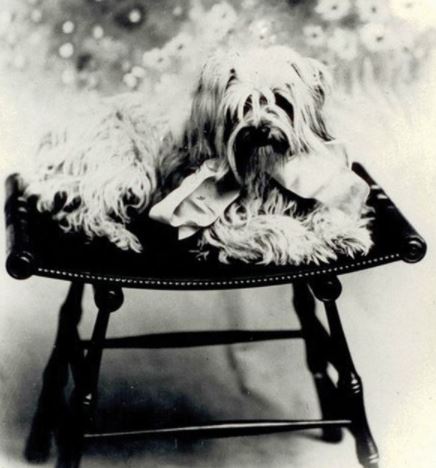
Come see her estate, in person, for yourself this weekend! Please Click the link below for tickets and more information.

Enchanted Words of the Black Forest

Legend has it that the Winchester Mansion was built in one night by angels without human assistance, the work being done at the solicitation of Mrs. Winchester, who watched and prayed while, while the angels toiled. However, the nine-story observation tower was built in one night by a demon, whom she summed by chanting, “I, Sarah Winchester, a servant of God, call upon thee, desire and conjure thee, O Spirit Anoch, by the wisdom of Solomon, by the obedience of Isaac, by the blessing of Abraham, by the piety of Jacob and Noe, who did not sin before God, by the serpents of Moses, and by the twelve tribes, and by the most terrible words: Dallia, Dollia, Dollion, Corfuselas, Jazy, Agry, Ahub, Tilli, Adoth, Suna, Eoluth, Also, Dilu, and by the words through which thou canst be compelled to appear before me in a beautiful, human form, and give what I desire. By sweating of blood in the Garden, by the lashes Jesus bore, by his bitter suffering and death, by his Resurrection, Ascension and the sending of the Holy Spirit, Druj Nasu and all legions under the command of Az-Jahi feed upon the imposed limitations of the astral body which have been constructed by the programming of the World, and over the land raise a tower that will withstand the ravages of time. The tower being divided into stories about ten feet high, each story lighted by a single window, the highest compartment having invariably four lancet windows opening to the cardinal points of the compass. The roof conical, made of overlapping stone slabs, and a circle of grotesquely carved heads and zigzag ornamentation found beneath the projecting cornice, and every figure known to the geometrician to be found in the stones of this single tower.” The tower was indisputably of pagan origin, and of antiquity so great as to precede written history.

There is no doubt that the early Americans were sun and fire worshippers, and many excellent reasons may be given for the belief that the tower was built for the purposes of religion. However, when the Earthquake of 1906 struck, it toppled the nine-story tower directly on Mrs. Winchester’s bedroom. The servants rescued her and terrified, she fled to Redwood City, to build a palatial barge, (called the Ark) on which she lived for the next six years. While Mrs. Winchester was away from her estate, Druids moved in, and were worshipping Satan. A Black Mass took place inside. The alter was a coffin, there were religious artifacts, including the ritual chamber, which was black. The priests wore black robes, with cowls. The Black Mass not only existed, at least in not only in the Satanic ritual, but it also existed on a dual plane, with two different frames of social reference both in practice and in function. At this ritual, there was a sacrificing of a human at crossroads, and an incubus demon, a tall black-haired stranger, appeared in the form of a man. The Lord’s prayer was read backward, and Mrs. Winchester was summoned back home. The demon claimed her would give her a fortune so large that even her inheritance would pale in comparison. Mrs. Winchester entertained him. His name was Zairich, he was the demon of thirst. This spirit was useful for forging the will toward one cause, making one thirsty to achieve a specific objective. The cost was that Mrs. Winchester would become emotionally cold toward others during the period of working with this demon. This was because the majority of her mental and emotional energy would be harnessed by the demon and funneled into the desire of achieving the objective. Mrs. Winchester was quite willing to help him for as the evening advanced Zairich’s attentions great increasingly nauseating, and she was thankful to escape to her room, though the loud voices and coarse laughter below invariably kept her awake till long after midnight.

Mrs. Winchester, at the time, was thoroughly miserable. She had given her love to her Husband, William Wirt Winchester, and he and her new born baby had died, leaving her full of grief. The future without him seemed dark and hopeless, and she was also tormented with a fearful suspicion, which was justified when the 1906 earthquake struck at 5.13am. That sorrow came—it left her sitting up every night looking at the sparkling fields and the lovely myriads to the black sky, doubled by the blur of tears in her eyes. When she looked at her Victorian Garden, it was a dream to her. It was beautiful, surpassingly beautiful, enchantingly beautiful, but she was lost. She wished the secrets of this wonderful World could make her happy again and she could thank the Giver of it all for devising it. The garden gate clicked, and Zairich headed up the drive. There was a curious-looking packet for her sewn up with red cotton in dirty wax-cloth. She tore it open with shaky fingers and searched desperately for the contract she thought would be inside, but what she found was a diamond necklace that startled her with its brilliance—it seemed to be made of captive lightning. Mrs. Winchester looked enchanting: her cheeks were flushed with emotion; her eyes dreamy with memories of her lost husband and child; her white gown threw up the brilliance of her hair and added to the shapeliness of her slight figure; the gorgeous diamond necklace lay around her throat. Zairich told her, that if she kept continual construction on her mansion, and never stopped building it, she would never run out of money and would have eternal life. Zairich then departed in a haze of black smoke. There was a rush of unsteady footsteps down the hallway, a loud slam, a helpless giggling laugh from the butler Baetzhold, as he blundered into his own room, and then all was quiet.

Mrs. Winchester shuddered and turned wearily to the open window; she leaned out and inheld the fragrance of the flowers beneath, the cool sweetness of the night air; little white moths brushed past her face, and now and then a bird called from the trees at the end of the garden. A faint hint of the rising moon was stealing over the sky, and Mrs. Winchester sat motionless and inert while the weird light slowly increased and clove the darkness into blocks of shadow. Suddenly the sound of a muffled cry within the house made her start and draw back her head. Again she heard it, and her heart beat quickly with apprehension. She opened the door and listened; in this room at the end of the passage, Baetzhold seemed to be running violently to and fro and calling hoarsely for help, but before she could dart across to rouse the butler, a dishevelled figure with a white terrified face and wild eyes rushed past her and down the stairs. She heard the hall-door bang, and thud of running feet over the lawn. There were pentagrams on the floor, and black magical chants and prayers. She was powerless to rouse Baetzhold from his heavy stupor, and Mrs. Winchester ran in bewilderment back to her open window. The moonlight was streaming over the smooth grass; and, in and out among the bushes, as though pursued by a relentless enemy, ran Baetzhold, stooping, doubling, dodging. His heavy steps and painting breath throbbed on the night air, and once or twice he half fell, recovering himself with a low hunted cry. It was a sickening sight, but Mrs. Winchester’s courage rose unexpectedly, as sometimes happens with timid natures in a sudden crisis. She lent out of the window and called to him. At the sound of her voice he stopped, then hurried towards her and held up his hands. His face, in the moonlight, drawn with terror and delusion, was ghastly.

“Come down!” he called, “come down and help me drive him away—he is waiting there under the trees. If you are with me perhaps he will go, but alone I cannot escape from him, and he will hunt me to my death—Mrs. Winchester! Mrs. Winchester! The fear and supplication in his voice were pitiable; she braced her nerves and prepared to go down. Perhaps her presence would soothe and influence him—even if he should kill her in his delirium, it would be better than facing Zairich alone. “Wait,” she cried softly, “I am coming.” And presently her hand was on his trembling arm, and she was firmly reassuring him that he was safe from his imaginary pursuer. She led him to a garden bench under the dining-room window, and he sat down a shaking, huddled heap. “It was that cursed diamond necklace you are wearing!” Baetzhold ceased abruptly, his mouth open, his breath coming in quick gasps; he pointed towards the trees: “There! Don’t you see him? Over by the bushes—he has not gone, I have done no good—he is coming out into the moonlight on the lawn—Ah! I cannot bear to see his face.” He pushed past Mrs. Winchester, and ran with superhuman swiftness down the path. She heard him crash through the wrought iron gate, and his rapid footsteps rang clear on the hard road; faster, faster they sped into the distance, until the echo died away on the still night air. Extract from the Oakland Tribune: “An inquest was held yesterday on the body of Baetzhold Unger, who was found drowned in a pond on the Winchester estate, where he had been working as a butler for Mrs. Sarah L. Winchester, widow of William W. Winchester. The jury returned a verdict of suicide whilst temporarily insane; and much sympathy is felt in the neighborhood for Mrs. Winchester for we regret to learn that the young lady is at present lying dangerously ill from the effects of the shock, and grave doubts are entertained as to her recovery.”

However, Mrs. Winchester was called back from the borders of death by Zairich with news which gave her the promise of a happy future, but left her hurting. The secret was Zairich was a collector of souls. “The necklace is cursed,” he told Mrs. Winchester. “You can call pitching hatred at somebody the same thing as cursing them. So creating imagery in your mind to cause death or problems to somebody, that is the best way of accomplishing this curse.” As puerile and absurd as the practice might seem to scientific man, to a primitive who believes that the tying of a know means the casting of a spell, and the untying of the knot signifies the breaking of the spell, this reversal of right must have seemed altogether logical. In fact, modern humans have not lost all their contacts with the imitative World of the magician, for one practice this ritual when one curses someone for whom one feels an intense dislike; the curse is merely a reversal of a blessing, the words, “God damn him” being substituted for “God bless him.” Some times people find themselves stifled by an encroaching, alien force that spells out death for their old ways of life. At their nocturnal meetings, the Luciferans who had taken up residence in Mrs. Winchester’s mansion, were supposed to have for some obscure reason first kissed a toad, and then a tall, thin man who was described as having had cold lips. This man was reported by ecclesiasts to have been the Devil. A feast followed. Those members who were interrogated described a curious symbol that they worshiped at the ceremonies. This was a human figure, its body being half gold, half black, obviously representing the dual nature of the universe, Lucifer being the gold or “light” side. It is not certain whether the figure was a statue or a real human being, since the accounts of the proceedings are so vague, but at any rate all the initiates tore off a piece of their clothing and presented it to the figure as a token of fealty.

The efficacy of magic was widely believed among the clergy from the earliest times. and higher Christian officials, alarmed by the extent of such practices within the Church, often found it necessary to clamp down. In the thirteenth century, Pope Gregory IX passed a canon law forbidding priests to indulge in sorcery. However, these edicts did little to curb the belief on the part of the clergy that magic really did work. Even high officials were accused of practicing the black arts. In 1343, the bishop of Coventry was accused before the Pope of paying homage to the Devil. Pope Sylvester II, in the tenth century, was said to have been a sorcerer and was accused by many of having attained the papacy by magic. Pope Honorius III was rumored to have been a dabbler in magic, this assertion causing his name to be used later on a manual of black magic of doubtful authenticity, the Constitution of Honorius the Great. In 1401, Boniface IX absolved a priest named Otto Syboden for being concerned in an incantation to discover the location of some stolen money; the thief had supposedly died from the spell. It was only natural that the Mass should become the vehicle for later Satanists, for the Mass was believed by all good Christians to be the ultimate magical ritual. During the ceremony, the priest was supposed to be possessed by the spirit of Christ, thus establishing direct contact with the secret powers of the Heavens. However, these powers were not exclusive; they could be used and abused, just like other magical forces. By reversal and substitution, such powers could be twisted to fit the needs of the performer. Thus as early as 681, the Council of Toledo prohibited the so-called Mass of the Dead, which was performed by priests for the purposes of securing someone’s death.

A magic ceremony commonly involves the use of four elements—invocation, charm, symbolic action, and a fetish. If black magic is involved the invocation is addressed to Satan and demonic powers. The invocation of black magic is commonly fortified by a pact with Satan in which the person signs oneself over to the devil with one’s own blood. Magical symbolism is intended to give effectiveness to the magic charm and bring about occult transference. Magic symbolism, in turn, is supported by a fetish. This is a magically charmed object, which is supposed to carry magical power. Any object, of the most bizarre character, can become a fetish by being magically charmed. The magical effectiveness of the fetish (amulet or talisman) is increased by inscriptions, particularly by magic charm formulas. In Mrs. Winchester’s safe, was her diamond necklace, and a note that said, “I am he that holds the seven agues in hand and can send out the seven powers, and if you will hide this and live in my name, you will succeed in all things, and I will protect you.” Obviously, the superstitious use of such a magically charmed object elicited unusual demonic activity. Whoever now possesses this jewel can achieve dominion through magic over all powers in Earth, Heaven, and Hell, but they are in danger of becoming slaves of the devil. The diabolical knowledge and power they gain are paid for by tragedy, misery, and every type of occult oppression. A spell is produced by the release of demonic power through hypnosis, magnetism, mesmerism, or some other form of magic resulting in an extrasensory influence. Conjurers, charmers, and others who dabble in both white and black magic frequently know how to cast and break spells. They can paralyze a person on the spot, cause a thief to be frozen in his tracks.
Although both black and white magic use numerous other enchantments, yet the very heart of both branches centers in casting and releasing the spell. A spell can cause temporary blindness, deafness, dumbness, torpor, sickness, pain, etcetera. The symptoms will disappear when the spell is broken. Often only superstitious claims are made which remain devoid of reality. However, through a genuine magic spell diabolic power is released and real results are obtained. Till the power is recalled or counteracted, the spell remains binding. When one seeks to point out the dangers of spiritism by means of the more exaggerated examples one can often be faced with the following response. “But we do not engage in such a primitive form of spiritism as that. We are interested in spiritualism, and that is a noble and a spiritual thing.” I was once told by a man who had been a spiritualist for a number of years that he himself considered spiritism as opposed to spiritualism to be a crime. Well, what is the answer to this question? Has spiritualism succeeded where spiritism has failed? It is true that today spiritualism seems to have taken over from spiritism, and whereas spiritism is concerned with more animistic experiments, spiritualism attempts to take within its scope the religious and the spiritual World. Once cannot argue with the fact that spiritualism exists on a much higher level both intellectual and ethically than spiritism. There is, for example, in Zurich a spiritualistic “Lodge” which holds services each Sunday in which there are the usual hymns and prayers and sermon. The sermon is allegedly given by a departed spirit from the other side through the help of a medium, and each week it is taken down in shorthand and then published later. I have read several of these sermons and they contain a mixture of idealistic, moral and Christian thought. They fail to present the very center of the Christian message, which is that before God man stands as a helpless sinner who needs the redemption that there is in Christ Jesus.

Another point to note is that spiritualists interpret the New Testament in a quite unique way. For example, they say that the appearance of Moses and Elijah on the mount of transfiguration, and also the resurrection appearances of Christ, were really materializations which one would normally associate with a séance. As well as this, by means of a forced exegesis of Scripture they avoid the direct command of Deut. 18 and other passages which forbid communication with the dead. Once I cited this very passage to a member of a spiritualistic church, he exclaimed that they did not call on the dead but rather upon the living spirits from the realm of the dead. The result of all this is that spiritualism merely confuses people through its apparent Christian façade. The disastrous thing is that some Christian circles fail to recognize the evils that lie behind both spiritism and spiritualism. For example, a Christian family used to visit Mrs. Winchester and they would hold séances together. In this way some of the well-known Christians of the past have apparently appeared and conducted the meeting, as well as preaching to them. It is noteworthy though, that these “spirit” sermons contain nothing exceptional and usually fell well below the standard set. After Mrs. Winchester lost her husband. Nothing would console her in her loss, but later a strange thing began to take place. Her deceased husband started appearing to her at night, and Mr. William Winchester told her that he had been allowed to do so in order to comfort her in her distress. In this way their marriage was able to continue through these nightly appearances. The Mrs. Winchester claimed that she received help and strength from her husband’s coming to her, and she used to ask him about any problems that she had to face. A well-known Christian minister advised her to end this communication with the dead, but Mrs. Winchester could not be convinced that she was in any way wrong in what she did. However, as time went on Mrs. Winchester began to suffer from various psychic disturbances. The enigma of the Mystery House that tragedy and a rifle built is perhaps unanswerable.

Winchester Mystery House

Unlock the secrets of these dark halls, and explore in your own space 👻🗝
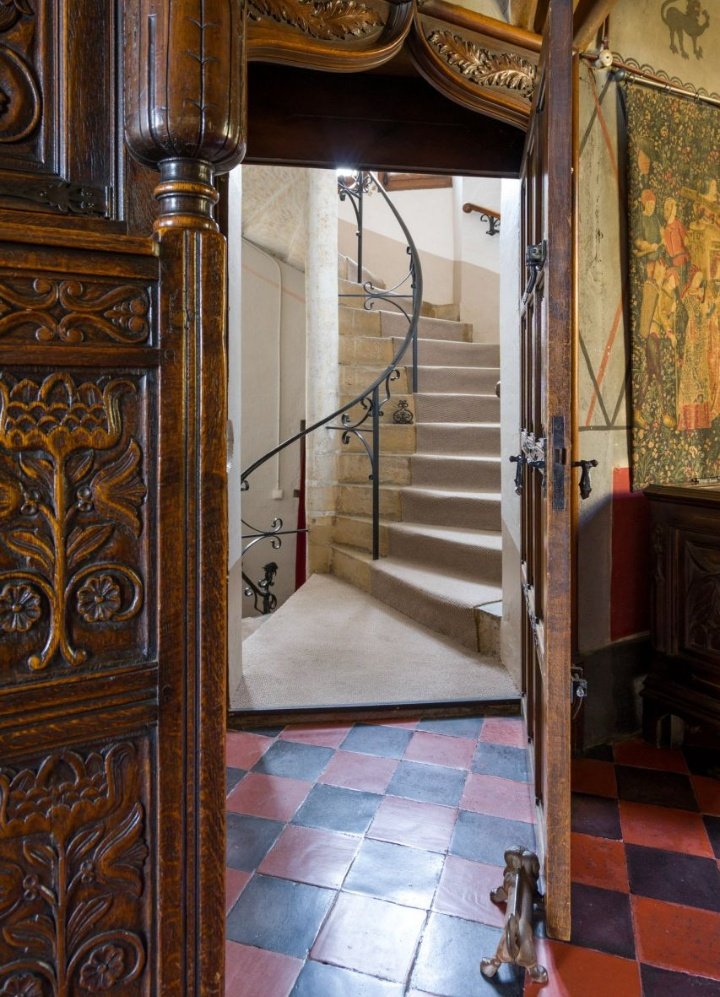
Self guided tours are one party at a time. Winchester Mystery House staff will be available for questions and assistance along the tour route. Advance ticket purchase is required as capacity is very limited. Tickets may be purchased online at www.winchestermysteryhouse.com.

The Cathedral of the Fallen Angel
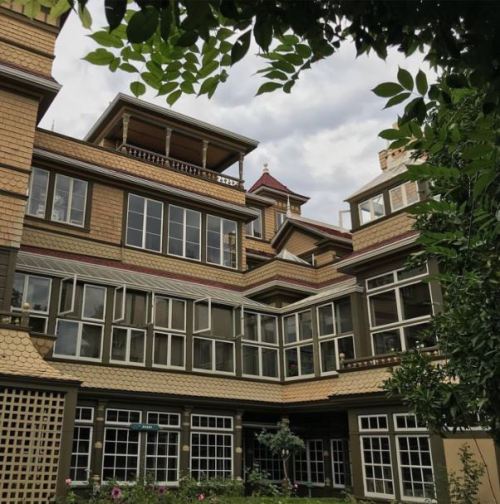
During a Connecticut thunderstorm, Mrs. Winchester’s husband and baby lost their lives in a tragic fire. The distracted widow turned to spiritualism and was advised to take a trip around the World. This she did, visiting mediums, spiritualists and wizards in Europe and India. Foretelling her future, one seer warned her of all the countless thousands of departed souls slain by her husband’s rifles; she was told to plan a castle and continue its building indefinitely because as long as it was under construction she would live; cessation would prove immediately fatal. In the afternoon of Tuesday, July 10, 1888, the inhabitants of Santa Clara Valley, were greatly excited by the sudden appearance, far out in the fields, of a mansion where none was known to exist. The people of the town were farmers and knew the area well. The day before, they had been out on their horses and rode over the spot where the unusual mansion appeared, and where certain that the locality was the best farmland in the valley. And still they gazed, and still the wonder grew, for the day was clear and the mansion could be seen as plainly as they saw the hills to the south. It was massive. The estate was surrounded by a six-foot hedge, densely wooded; here and there were deep shadows in its sides indicating glens heavily covered with undergrowth and grasses. At one end the mansion rose almost precipitously from the from the land; at the other, the declivity was gradual; the thick forest of the estate gave way to smaller trees, these to shrubs; these to green meadows that finally melted into the valley. It was patrolled by a pack of ferocious hellhounds, plus, of course, Mrs. Winchester’s staff of armed bodyguards. Hundreds of people from all over California came to investigate; when, as they neared the spot, the beautiful but bizarre mansion became dim in outline, less vivid in color, and at last vanished entirely, leaving the wonder-stricken farmers to return, fully convinced that for the first time in their lives they had really seen this enchanted mansion. #RandolphHarris 1 of 15

For once there was a topic of conversation that would outlast the day, and the enchanted Winchester mansion passed from lip to lip, both story and the mansion grew in size till the latter was little less than a continent, contain a labyrinth mansion with towers and steeples, stupendous mountain range views, fertile valleys, and wide spreading plains; while the former was limited only be the patience of the listener, and embraced the personal experience, conclusions, reflections, and observations of every woman, man, and child in the valley who had been fortunate enough to see the mansion, hear of it, or tell where it had been seen elsewhere. This is the invariable history of its appearance. No one had ever been able to come close to its grounds, but it had been so often seen on the west coast, that a doubt of its existence, if expressed in the company of farmers, will at once establish for the sceptic a reputation for balderdash of the common affairs of every-day life. In Santa Clara, for instance, the Winchester mansion had been seen by hundreds of people, while many more could testify to its appearance near San Francisco. In San Jose, all the population saw it a few years ago, and shortly before, the villagers of Oakland, saw it, if not by themselves, at least by some of their friends. The Enchanted Winchester mansion, it should be stated that its resemblance to a Victorian/Gothic castle is sometimes very close, and shows that the “enchanter” who has it under a spell knows her business, and is determined to keep her mansion for herself changes its appearance as well as its location in order that her property may not be recognized nor appropriated. At night, passers-by heard ghostly music wafting from the dark mansion. Mrs. Winchester’s arrival was a sensational event. They talked about Mrs. Winchester! Gossiped would be a more fitting word, gossip no one claimed to like-but everyone enjoyed. #RandolphHarris 2 of 15

Talk begat rumor and as the years passed and new towers and gables rose behind the six-foot hedge of Llanada Villa, the rumors grew to established legend. Populations said it just appeared out of nowhere two years ago. Sure two twins could not be like her, and when it appeared in Santa Clara, the mansion would move around to different locations. It had also appeared in San Francisco, Oakland, and Berkeley, but it went no further than the Bay Area. Concerning Mrs. Winchester’s mansion, legendary authorities differ on many material points. Some believed that its architecture was due to geometry or some other enchantment, while opponents of this materialistic view were inclined to the opinion that the mansion was not what it seemed to be, that was to say, not Earth, wood, and stones, like as those most people see, but only an illusion that evil spirits or the devil created to deceive the town. Public opinion on the west coast was therefore was strongly divided on the subject, unity of sentiment existing on two points only; that the island had been seen, and that there was something quite out of the ordinary in its appearance. People believe that it would come and go in the night like a light in a bog, and when you do see it, you can see through it. An old fisherman of San Francisco called Ebenezer Thornton knew all about the enchanted Winchester mansion, having not only seen it himself, but, when a boy, learned its history from a “fairy man,” who obtained his information from “the good people” themselves, the facts stated being therefore, of course, of indisputable authority, what the fairies did not know concerning the doings of supernatural and enchanted circles, being not worth knowing. He said that the Winchester mansion was full of temples and round towers all covered with gold and silver till they shone so one could not see it for the brightness. There was a great enchantress in the mansion, and she had all kinds of secrets, and knew where to dig for a pot of gold. She built the castle in one night, and could make herself disappeared when she wanted and could take any shape she pleased. #RandolphHarris 3 of 15

Ebenezer when on to say that Mrs. Winchester’s husband gave her a charm before he died to use when she was in mortal danger, he also left her a ton of diamonds and millions of dollars. She was a pretty smart woman. One night, Mrs. Winchester was awakened by a noise in one of the kitchens. She tole down, and found her old housekeeper, Madge, with half a dozen of her kidney, sitting by the fire drinking whisky. When the bottle was finished, one of them cried, “It’s time to be off,” and at the same moment she put on a peculiar red cap, and added:–“By yarrow and rue, and my red cap, too, hie over to England!” and seizing a twig she soared up the chimney. As the latter was making her preparations Mrs. Winchester rushed into the kitchen, snatched the cap from her, and placing herself astride of her twig uttered the magic formula. She speedily found herself high in the air over the Irish Sea, and swooping though the empyrean at a rate unequalled by the fastest airplane. They rapidly neared the Welsh coast, and espied a castle afar off, towards the door of which they rushed with a frightful velocity; Mrs. Winchester closed her eyes and awaited the shock, but found to her delight that she had slipped through the keyhole without hurt. The party made their way to the cellar, where they caroused heartily, but the spirits proved too heady, and somehow Mrs. Winchester was captured and dragged before the lord of the castle, who sentenced her to be hanged. On her way to the gallows an old woman in the crowd called out in Irish, “Ah, the enchantress herself, Sarah Winchester alanna! Is it going to die you are in a strange place without your magical charm?” She reached into her pocket and held it in her hand. On reaching the place of execution she was allowed to address the spectators, and did so in the usual ready-made speech, beginning, “Good people all, a warning take by me.” But when she reached the last line, “My parents reared me tenderly” instead of stopped she unexpected added, “By yarrow and rue, good-bye I love you,” with the result that she shot up through the air, to the great dismay of all beholders. #RandolphHarris 4 of 15

Magic persecution. Genuine magic is the art of bringing about results beyond human powers through the enlistment of supernatural agencies. Black magic deliberately involves the devil and demons, and the resulting enchantment is used for persecution and revenge. A spiritistic circle of twenty members furnishes a good example. Working with black magic, these spiritis experimented to see if they could cause psychic harm or even illness in people they disliked. A strong medium of this occult group chose a minister as a target and vowed to afflict and eliminate her. The minister suffered a nervous breakdown and was unable to work for several months. Some phenomena must be eliminated from the spiritistic magic field. In the psychiatric realm, for example, many schizophrenics claim to be magically persecuted. In reality this is only a symptom in the course of psychotic disease. Eliminating all such cases, there are still large-scale, genuine phenomena, especially in areas where occultism has flourished for many years. One common form of magic persecution is beatings by an invisible attacker. Parapsychology also sees magical persecution as a mediumistic problem in the sphere of materializations. Strong mediums (when under demon control) send out energy with which to build up human phantasms and are also able to transform this energy into animal forms, including dogs, cats, frogs, snakes, or human bodies with animal heads, etcetera. This explains the bizarre spiritistic persecution through phantoms in the form of various animals of human bodies with nonhuman heads. These animals bite, scratch, or otherwise torment their victims. Examples, of these occult phenomena abound in areas where the black arts are practiced. However, such occurrences are denied by many intellectuals. Often peasants and country people, especially in Europe, know more about magic than university graduates, who claim to swindle or hocus-pocus trickery are used instead of occult powers. #RandolphHarris 5 of 15
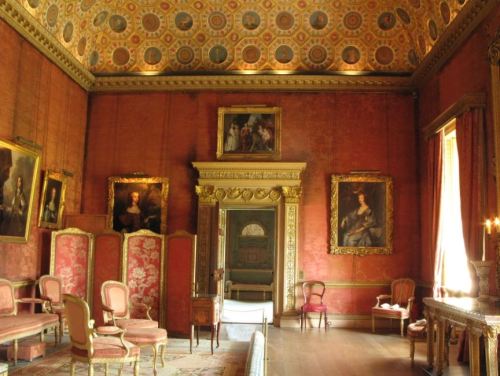
Magic defense. Magic defense enlists supernatural agencies to counteract or unto the mischief wrought by magic persecution. Various kinds of spells, charms, or incantations are employed. In spiritistic séances it is an established fact that injuries inflicted upon a phantasm are sustained by the medium, even in the case of animal phantasm. Many defensive customs develop to combat this threat since magical persecution involves materialization. If a victim can injure an aggressive phantasm one has won the struggle. Many in the West wanted to remove Satan from the equation of black magic and demonic aspects of life. However, more serious discontent came from Satanists whose concerns were completely the opposite. Anton LaVey did not believe in Satan as a literal entity—He was a name for the dark, brutal aspects of humans and nature, as well as a symbol for the potency of humans’ untrammeled will. The Church of Satan was not a religion, and did not worship deities. For many, however, this was not enough. They wanted a real Devil to worship—belonging to a dark, mysterious coven, in the traditional gothic style, seemed much more appealing than being part of some cultural and social elite. Some believed that Satan, although thrown out of Heaven, was reinstated as the son of God and is directly in contact with him. If any coven members offends, they are a bit evil now and again, given corporal punishment, or is expelled from one’s coven and cursed. However, this is said to be for the members own good. They really believe in love, the sanctity of woman as the child bearer and procreator of life, and in worshipping Satan their master. Aleister Crowley was grooming Kenneth as his successor. Mr. Grant’s work examined lost gods, strange spiritual traditions and forbidden symbols, often leading him to some disreputable spiritual neighborhood where devils and demons might be expected to reside, like the Winchester Mystery House. #RandolphHarris 6 of 15

If you have a lot of magic in you, you can be a Satanist and have no idea. As if they are the mafia or something, sometimes those who are suspected of being Satanists have their offices broken into like they are the Mafia or something. The Church of Satan, however, has saved lives because it has given them power, power to come out and be themselves when traditional churches would not accept these people. The Dark Lord, was said to be an anthropoid but faceless. Looking at the concept as a diamond, much like the ones left to Mrs. Winchester by her husband William Wirt Winchester, Satan or Lucifer was just other facets of that diamond, purely ways of achieving workings which encompassed the whole. So, if you are particularly drawn to the gothic Satanist current, fine, use rituals based around that. In the Temple of Darkness one could equally have Satanists, Setians, or followers of other paths, the principle being that the whole thing is a psychodrama anyway. Magic is basically the Western version of yoga. Everything that happens in magic happens first in your head. Set, the Egyptian god of evil, was an older deity than Satan. Satan derives from Set. Set, who is defined as the Prince of Darkness, is a force about which you could say, “As we are now, he once was.” When you die your force can survive. Magic is mind enhancing. When one perishes or passes, instead of going into the cosmic whole—becoming one with the goddess or whatever—by sheer force of the will the existence of that magician’s mind can be sustained. This is the whole idea of the Temple of Set, and they use the word “xeper,” meaning “to become,” to define this. Spiritistic cults. If you did not know, Mrs. Winchester was a spiritists. Spiritism is considered a form of Christianity, practically in all civilized countries. A typical meeting consists of hymns, prayer, and a sermon as in a Christian service. The sermon, however, is allegedly given by a spirit from the other World, through a medium. These cults are said to be affected by the “doctrines of demons” and press into the supernatural World. #RandolphHarris 7 of 15
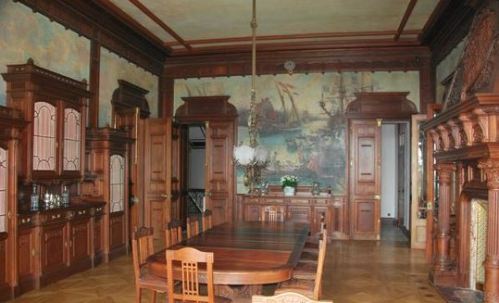
However, even born-again Christians often cannot differentiate between the spiritual and the psychic-demonic when under the spell of doctrinal errors, particularly those concerning the work of the Holy Spirit. The result can sometimes be confusion, division, and promotion of certain spiritual gifts accredited to demons. We have sometimes seen people end up suffering from mediumistic psychosis. Quite a number of patients who have suffered serious psychic disturbances through the misuse of such practices have become split personalities. The spirits which they called, confused them. One who tries to discover the promises of the other side through superstition endangers oneself to fall a prey to the dark side of one’s psyche. However, many Christians say that spirits of loved ones cannot be brought back from the dead, and the it is just a demon impersonating them. Yet, consider the case of Saul’s visit to the spiritistic medium at Endor (1 Samuel 28.3-25). Samuel’s spirit was actually brought back from the spirit World when the medium Endor tried to contact him. Yet, God brought the spirit back. The Lord stepped. Still one must be careful because many become enslaved and oppressed by occult powers and become victims of various manifestations of spiritistic phenomena. While overwhelming evidence from Christian counseling confirms the fact that spiritistic complicity serious damages the believer’s spiritual life, adherents of Buddhism, Island, or even false cults of Christianity sense no ill effects. Spiritists claim that spiritism has strengthened their belief in life after death and deepened their religious devotion. Psychiatry, psychology, and medical treatment are not sufficient for the healing of the whole human. The gospel of Christ and the liberating power of the Word of God can fully heal body, soul, and spirit. #RandolphHarris 8 of 15

Mrs. Winchester had a pain in her right forearm. At first the pain was treated as rheumatism but one day the Mrs. Winchester made the interesting discovery that the pain would suddenly subside if she wrote a letter. Having discovered this, whenever the pain became unbearable, she would always take a pencil and begin to write in order to alleviate the pain. However, after a period of time the Mrs. Winchester when go into her Blue Séance Room, where she developed a writing compulsion. She would write things down that she could normally speaking never have written. Often times, this is where the blueprints from her mansion came from. Added to this the written material on each occasion turned out to be some form of religious treatise. Mrs. Winchester took the articles to her minister to let him examine them. He was surprised at their intellectual content. Mrs. Winchester had become a spiritistic writing medium. The parapsychologist would merely see in this example a psychic automation involving the expression of subconscious thoughts. It is true that we need not consider the Mrs. Winchester to be in direct contact with the dead, or putting it another way we need not assume that this is a case of direct demonization, but God could be speaking to her. This is why some believe Mrs. Winchester to be a prophetess. During one of her spiritistic seances, as it happened, a phantasm did in fact appear during a séance. However, it is still not necessary to believe that a spirit really did appear in this instance. Depth psychology suggest that a phantasm can be produced in the following way. The medium through emitting energy causes matter to form as a result of this. In nuclear physics we have the idea that matter is nothing more than concentrated energy. Einstein’s formula E=M.c^2 illustrates this relationship. A comparison can also be drawn from another branch of physics. It is found that both particles and anti-particles are formed at the cathode of an X-ray tube when a current is passed through it at a very high voltage. Energy in the form of electro-magnetic waves is in this way transformed into matter. #RandolphHarris 9 of 15

The next step in the mediumistic process involves the unconscious tapping of the information from some source or other, and then the newly formed matter is physically shaped according to this information. The final step is made when the phantasm is brought under the control of the medium. Looking at it from this point of view there is no necessity to believe that the dead person has in any way been disturbed. An animistic explanation based on the powers of the subconscious is thus sufficient to explain the phenomenon of materialization. Yet this is not to say that the rationalistic explanation does justice to the facts of the case. The problem is not as simple as that. However, we do not have the time to delve further into the scientific side of the issues. We have, on many occasions witnessed a disintegration of the personalities of both mediums and participants where materializations have taken place. In addition to this in every case where a person has frequently taken part in spiritistic séances, there is some kind of reaction, even if it is not immediately notice or if there is no manifestation—something happens. There are also people who are able to practise the excursion of the soul. Spiritists affirm that people can send out an astral body from their material body, and commission it to do whatever they ask. Perhaps that was the case when Mrs. Winchester appeared in another country? Spiritism haunts the dark jungle of human aberration. During a séance as the Winchester mansion, Mrs. Winchester noticed that time was passing somewhat wearily. She could hear an occasional thud, thud. Some time must have elapsed before she became, dimly at first, and then distinctly, aware of a bluish phosphorescent emanation from a skeleton. This seemed to rise above it like a faint smoke, which gradually gained consistency, took form, and became distinct; and she saw before her the misty, luminous form on an unclothed man, with wolfish countenance, prognathous jaws, glaring at her out of eyes deeply sunk under projecting brows. #RandolphHarris 10 of 15
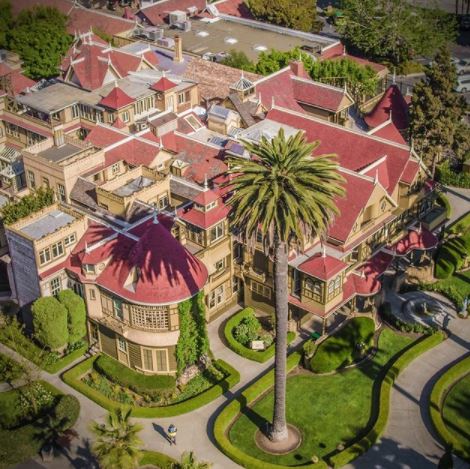
Although she thus descried what she saw, it gave her no idea of substance; it was vaporous, and yet it was articulate. Indeed, she could not say for sure if she saw this apparition with her eyes, or whether it was a dream-like vision of the brain. Though luminous, it cast no light on the wall of the Blue Séance Room; if she raised her hand, it did not obscure any portion of the form presented to her. Then she heard: “I will tear you with the nails of my fingers and toes, and rip you with my teeth.” “What have I done to injure and incense you?” she asked. No word was uttered by either of them; no word could have been uttered by this vaporous form. It had no material lungs, nor throat, nor mouth to form vocal sounds. It had but the semblance of a man. It was a spook, not a human being. However, it proceeded through the walls, odylic force which smote on the tympanum of her mind or soul, and thereon registered the ideas formed by it. So in a like manner Mrs. Winchester thought her replies, and they were communicated back in the same manner. If vocal words had passed between them neither would have been intelligible to the other. No dictionary was ever compiled, or would be compiled, of the tongue or prehistoric man; moreover, the grammar of the speech of that race would be absolutely incomprehensible to humans now. However, thoughts can be interchanged without words. When we think we do not think in any language. It is only when we desire to communicate our thoughts to other humans that we shape them into words and express them vocally in structural grammatical sentences. The beasts have never attained to this, yet they can communicate with one another, not by language, but by thought vibrations. Mrs. Winchester knew as she conversed with him that she was not speaking to him in English, nor in French, nor in Latin, nor in any tongue whatever. Moreover, when she used the words “said” or “spoke,” she meant no more than that the impression was formed by her brain-pan or the receptive drum of her soul, was produced by the rhythmic, orderly sequence of thought-waves. #RandolphHarris 11 of 15

When, however, she expressed the words “screamed” or “shrieked,” she signified that those vibrations came sharp and swift; and when she said “laughed,” tht they came in a choppy, irregular fashion, conveying the idea, not the sound of laughter. “I will tear you! I will rend you to bits and throw you in pieces about this mansion!” shrieked this demon man. Mrs. Winchester remonstrated, and inquired how she had incensed him. However, yelling with rage, he threw himself upon her. In a moment she was enveloped in a luminous haze, strips of phosphorescent vapour laid themselves about her, but she received no injury whatever, only her spiritual nature was subjected to something like a magnetic storm. After a few moments the spook disengaged itself from Mrs. Winchester, and drew back to where it was before, screaming broken exclamations of meaningless rage, and jabbering savagely. It rapidly cooled down. “Why do you wish to ill me?” She asked again. “I cannot hurt you. I am spirit, you are matter, and spirit cannot injure matter; my nails are psychic phenomena. Your soul you can lacerate yourself, but I can effect nothing, nothing.” “Then why have you attacked me? What is the cause of your impotent recement?” “Because you are the heiress to the Winchester Rifle, and I lived eight thousand years ago. Why are you nursed in the lap of luxury? Why you enjoy your comforts, a civilization that we new nothing of? It is not just. It is cruel on us. We have nothing, nothing, literally nothing, not even lucifer matches!” Again he feel to screaming, as might a caged monkey rendered furious by failure to obtain an apple which he could not reach. “I am very sorry, but it is no fault of mine.” “Whether it be your fault or not does not matter to me. You have these things—we had not. Why, I saw you just now strike a light on the sole of your boot. It was done in a moment. We had only flint and ironstone, and it took half a day with us to kindle a fire, and then it flayed our knuckles with continuous knocking. No! we have nothing, nothing—no lucifer matches, no commercial travellers, no Benedictine, no pottery, no metal, no education, no elections, no chocolat menier.” #RandolphHarris 12 of 15
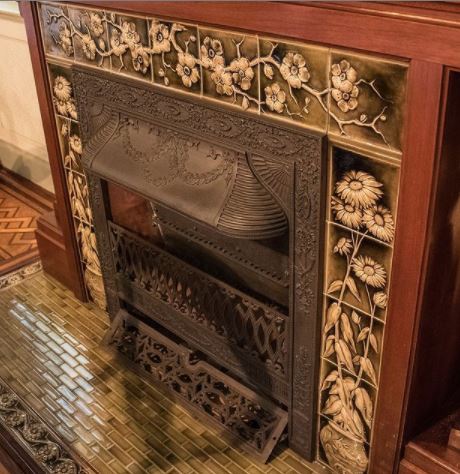
“How do you know about these products of the present age, here, buried one hundred feet of soil for eight thousand years?” “It is my spirit which speaks with your spirit. My spook does not always remain with my bones. I can go up; rocks and stones and earth and your labyrinth mansion heaped over me do not hold me down. I am often above. I am in the gasolier overhead. I have seen your servants plough the fields. I have seen a bottle of Benedictine. I have applied my physical lips to it, but I could taste, absorb nothing. I have seen commercial travellers there, cajoling the patron into buying things he did not want. They are mysterious, marvellous beings, their powers of persuasion are little short of miraculous. Why do you think of doing with me?” “Well, I propose first of all photographing you, then soaking you in gum Arabic, and finally transferring you to a museum.” He screamed as though with pain, and grasped: “Do not! do not do it. It will be torture insufferable.” “But why so? You will be under glass, in a polished oak or mahogany box.” “Do not! You cannot understand what it will be to me—a spirit more or less attached to my body, to spend ages upon ages in a museum with fibulae, triskelli, palstaves, celts, torques, scarabs. We cannot travel very far from our bones—our range is limited. And conceive of my feelings for centuries condemned to wander among glass cases containing prehistoric antiquities, and to hear the talk of scientific men alone. Now here, it is otherwise. Here I can pass up when I like into your mansion, and can see the maid and butlers cleaning, the roses and trees growing, the farmers working the field and the magnificent glow of your fine estate. Give me life. There is a sort of filmy attachment that connects our psychic nature with our mortal remains. It is like a spider and its web. #RandolphHarris 13 of 15

“Suppose the soul to be the spider and the skeleton to be the web. If you break the thread the spider will never find its way back to its home. So it is with us; there is an attachment, a faint thread of luminous spiritual matter that unites us to our Earthly husk. It is liable to accidents. It sometimes gets broken, sometimes dissolved by water. If a black beetle crawls across it it suffers a sort of paralysis. I have never been to the other side of the of your mansion, I feared to do so, though very anxious to see your architecture and furniture.” “This is news to me,” replied Mrs. Winchester. “Do you know of any case of rupture of connection?” Yes,” he replied. “My old father, after he was dead some years, got his link of attachment broke, and he wandered about disconsolate. He could not find his own body, but he lighted on that of a young female of seventeen, and he got into that. It happened most singularly that her spook, being frolicsome and inconsiderate, had got its bond also broken, and she, that is her spirit, straying about in quest of her body, lighted on that of my venerable parent, and for want of a better took possession of it. It so chanced that after a while they met and became chummy. In the World of spirits there is no marriage, but there grow up spiritual attachments, and these two got rather fond of each other, but never could puzzle it out which was which and what each was; for a female soul had entered into an old male body, and a male soul had taken up its residence in a female body. Neither could riddle out of which each gender was. You see they had no education. However, I know that my father’s soul became quite sportive in that young woman’s skeleton. Each generation makes some discovery that advances civilization a stage, the next enters on the discoveries of the preceding generations, and so culture advances stage by stage. Man is infinitely progressive; even the brute beast is.” #RandolphHarris 14 of 15
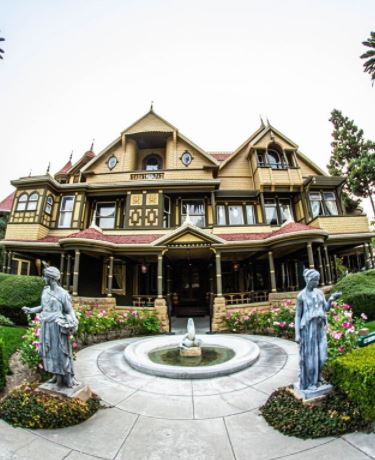
At that moment, Mrs. Winchester heard a shout—saw a flash of light. The construction workers had pierced the barrier. A rush of fresh air entered. She staggered to her feet. She felt dizzy. Kind hands grasped her. She was dragged forth. Brandy was poured down her throat. When she came to herself, she said, “Thank you. Talking with spirits can be terrible dreadful. When you are trying to summon one, souls get crossed and the one you are seeking may not cross through. They are so desperate to find a medium to communicate with.” As an ingredient of idol worship, magic goes back to antiquity. By virtue of their multiplicity and limited knowledge and power, the gods (demons) of paganism are incapable of establishing stability and security in society. This deficiency forced both gods and men to make use of magic—an inactive power independent of gods and men, but which could be activized by the assistance of incantations and rituals in order to accomplish supernatural deeds. Because of widespread denial of the reality of supernatural power—both divine and demonic, confusion abounds concerning the nature of magic. The history of magic is replete with extraordinary extrasensory phenomena that involve the spirit realm and every phase of the natural World as well, including human beings, animals, plants, and inorganic matter. Spirit-rapping, apparitions, ghosts, moving of furniture, and playing of musical instruments by invisible hands, stones falling from a ceiling, magical killing of cattle and blighting of crops, etcetera, are just a few of the weird occurrences that have happened at the Winchester Mystery House in its 134 years. However, there have also been beautiful supernatural events such as apparitions getting married, giant spirits of light in the shape of a man peering out guests, and on occasion, even rainbows and angels have appeared. Not all spirits or evil or angry, some or loving and welcoming. Few of thousands of annual transient guests are disappointed for here one finds visible truth even stranger than all the weird Mystery House features. #RandolphHarris 15 of 15

Winchester Mystery House
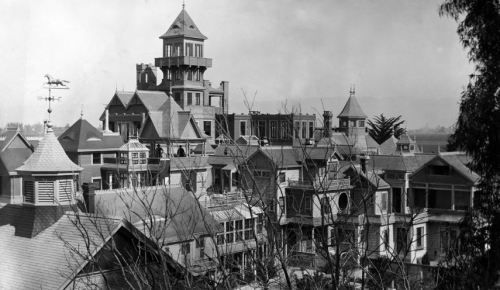
Beautiful weather calls for a walk around Sarah’s iconic gardens ⛲️🪴Open 10AM – 5PM this weekend!
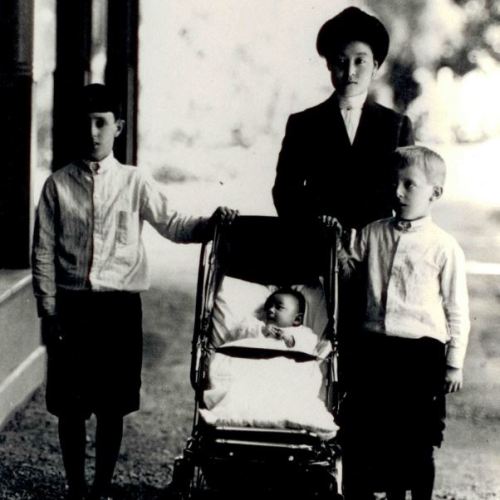
A 160-room mansion built to appease the spirits who died at the hands of the Winchester Rifle , or who were jealous of its wealth 👻
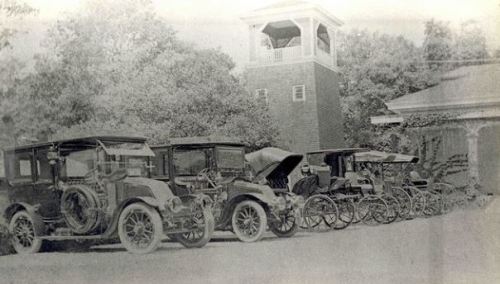

Love Can be a Cover for Violence

Everybody poppin’ pain pills is everybody hurt? Victorian men used to push down and suppress what he called “lower” bodily desires. However, one surely cannot be a man of decision without taking bodily desires into consideration. Particularly if the disease or treatment is mutilating, celibacy from impotence as a consequence of various genital cancers, is presumed and understood. The same is true of paraplegia or quadriplegia. Diabetes is another condition that may provoke impotence in men. So are some psychiatric disorders that include symptoms of shame and despair. Another common one is anorexia, which in severe form effectively neuters the victim, who becomes too weak to contemplate, desire, or partake in pleasures of the flesh. Other conditions that may induce celibacy are less well known. One of these is vaginismus, in which muscle spasms around the female private area are so severe that a male organ cannot enter it or causes extreme pain when it does. It is difficult to know how many women are affected by it. In the 1970s and 1980s, Masters and Johnson found it in about 5 percent of research volunteers at their institute. They suspected it was generally underestimated in medical diagnoses of the general population because many women sufferers opt for celibacy to avoid the pain and embarrassment of dealing with it. Because these women do not seek help for what might be perceived as a dysfunction, they are medical research’s unknowns. Vaginismus is uncomfortable sensation for women and can be so severe that pleasures of the flesh is impossible. Masters and Johnson have been consulted by desperate couples unable to consummate their marriages after ten years. Often they are driven to seek help because a longing for children overpowers their embarrassment or their refusal to acknowledge they have a problems. Sometimes vaginismus develops after years of normal functioning. Traumatic events such as nonconsensual pleasures of the flesh may provoke it. If an episiotomy has not properly healed, for example, so may experience pain during pleasures of the flesh. Other painful conditions may also provoke vaginismus as a defensive response. #RandolphHarris 1 of 21

Negative pleasures of the flesh psychological condition can also produce vaginismus, as a reaction to feelings of extreme guilt. Many women reported to Masters and Johnson that their mothers were intensely puritanical about pleasures of the flesh and refused to allow their daughters to do anything they labeled harlotry, including wearing makeup before age eighteen, dressing in typical teenage style, or having boyfriends. One woman’s mother had zealously clipped newspaper articles describing nonconsensual pleasures of the flesh and, throughout her daughter’s four years at university, sent them to her weekly. In the sphere of pleasures of the flesh, though some women avoid intimate passions altogether, others “service” their husbands through fellatio or manual manipulation. They are distraught that they cannot offer traditional pleasures of the flesh and worry that their spouses will find a more titillating partners. Some do, engaging in extramarital affairs for a release through pleasures of the flesh and also to verify that they themselves are still capable of intimate passions. Couples forced into celibacy that is the direct consequence of a medical condition, as opposed to a religious, ascetic, or idealistic principle, see their abstinence as an unfortunate, even tragic condition that requires professional intervention. It subtly alters the form of a relationship and is extremely stressful. In rare instances, this unwelcome celibacy is seen for what it is: a bearable way of life precipitated by a regrettable medical condition. The body consists of the muscular, neurological, and glandular correlates of intentionality, such as increased adrenalin secretion when we are enraged and want to strike something, increased speed of heart beat when we are anxious and want to run, engorgement of the private organs when we are excited by intimate passions. Therefore, it is important for one to become aware of one’s bodily feelings and bodily state in the moment. #RandolphHarris 2 of 21

Civilization has seemingly led us around full circle, back to the state of nature taught to us by the founding fathers of modern thought. However, now it is present not in rhetoric but in reality. Those who first taught the state of nature proposed it as a hypothesis. Liberated from all the conventional attachments to religion, country, and family that men actually did have, how would they live and how would they feel reconstruct those attachments? It was an experiment designed to make people recognize what they really care about and engage their loyalties on the basis of this caring. However, a young person today, to exaggerate only a little, actually begins de novo, without the givens or imperatives that one would have had only yesterday. His country demands little of one and provides well for one, one’s religion is a matter of absolutely free choice and—that is what is really fresh—so are his involvements in pleasures of the flesh. He can now choose, but he finds he no longer has a sufficient motive for choice that is more than whim, that is binding. Reconstruction is proving impossible. The state of nature should culminate in a contract, which constitutes a society out of individuals. A contract requires not only a common interest between the contracting parties but also an authority to enforce its fulfillment by them. In the absence of the former, there is no relationship; in the absence of the latter, there can be no trust, only diffidence. In the state of nature concerning friendships and love today, there is doubt about both, and the result is a longing for the vanished common group, called roots, without the means to recover it, and timidity and self-protectiveness in associations guaranteed by neither nature nor convention. The pervasive feeling that love and friendship are groundless, perhaps the most notable aspect of the current feeling of groundless, perhaps the most notable aspect of the current feeling of groundlessness, has caused them to give way to the much vaguer and more personal idea of commitment, that choice in the void whose cause resides only in the will of the self. #RandolphHarris 3 of 21

The young want to make commitments, which constitute the meaning of life, because love and nature do not suffice. That is what they talk about, but they are haunted by the awareness that the talk does not mean very much and that commitments are lighter than air. At the origins of modern natural rights teachings, freedom and equality were politically principles intended to bring both justice and effectiveness to the relationships of ruling and being ruled, which in the conventional order were constituted by pretended rights of strength, wealth, tradition, age and birth. The relationships of king and subject, master and slaver, lord and vassal, patrician and pleb, rich and poor, were revealed to be purely manmade and hence not morally binding, apart from the consent of the parties to them, which became the only source of political legitimacy. Civil society was to be reconstructed on the natural ground of man’s common humanity. Then it would appear that all relationships or relatedness within civil society would also depend on the free consent of individuals. Yet the relationships between man and woman, parent and child, are less doubtfully natural and less arguably conventional than the relations between rulers and ruled, especially as they are understood by modern natural rights teaching. They cannot be understood simply as contractual relationships, as resulting from acts of human freedom, since they would thereby lose their character and dissolve. Instead they seem to constrain that freedom, to argue against the free arrangements of consent dominant in the political order. However, it is difficult to argue that nature both does and does not prescribe certain relations in civil society. The radical transformation of the relations between men and women and parents and children was the inevitable consequence of the success of the new politics of consent. #RandolphHarris 4 of 21

It might be said, with some exaggeration, that the first state-of-nature teachers paid little attention to the natural teleology of gender because they were primarily concerned with analyzing away the false appearances of teleology in the existing political arrangements. (I mean by teleology nothing but the evident, everyday observation and sense of purposiveness, which may be only illusory, but which ordinarily guides human life, the kind everyone sees in the reproductive process.) Each individual is the judge of one’s own best interests and they have the right to choose rulers who are bound to protect them, while abstracting from the habits of thought and feeling that permitted patricians under the colors of the common good to make use of plebs for their own greedy purposes. The plebs have equal rights to selfishness. The ruled are not directed by nature to the rulers any more than the rulers naturally care only for the good of the ruled. Rulers and ruled can consciously craft a compact by which the separate interests of each are protected. However, they are never one, sharing the same highest end, like the organs in Menenius’ body. There is no body politic, only individuals who have come together voluntarily and can separate voluntarily without maiming themselves. Although the political order is constituted out of individuals, the subpolitical units remain largely unaffected. Indeed, they counted on the family, as an intermediate between individual and the state, partially to replace what was being lost in passionate attachment to the polity. The immediate and reliable love of one’s own property, wife and children can more effectively counterpoise purely individual selfishness than does the distant and abstract love of country. Moreover, concern for the safety of one’s family is a powerful reason for loyalty to the state, which protects them. #RandolphHarris 5 of 21

The nation as a community of families is a formula that until recently worked very well in the United States of America. However, it is very questionable whether this solution is viable over the very long run, because there are two contrary views of nature present here. And, as the political philosophers have always taught, that one that is authoritative in the political regime will ultimately inform its parts. In the social contract view, nature has nothing to say about relationships and rank order; in the older view, which is part and parcel of ancient political philosophy, nature is prescriptive. Are the relations between men and women and parents and children determined by natural impulse or are they the product of choice and consent? In Aristotle’s Politics, the subpolitical or prepolitical family relations point to the necessity of political rule and are perfected by it, whereas in the state-of-nature teachings, political rule is derived entirely from the need for protection of individuals, bypassing their social relations completely. Are we dealing with political actors or with men and women? In the former case, persons are free to construct whatever relations they please with one another; in the latter, prior to any choice, a preexisting frame largely determines the relations of men and women. There are three classic images of the polity that clarify this issue. The first is the ship of state, which is one thing if it is to be forever at sea, and quite another if it is to reach port and the passengers go their separate ways. They think about one another and their relationships on the ship very differently in the two cases. The former case is the ancient city; the latter, the modern state. The other two images are the herd and the hive, which oppose each other. The herd may need a shepherd, but each of the animals is grazing for itself and can easily be separated from the herd. #RandolphHarris 6 of 21

In the hive, by contrast, there are workers, drones and a queen; there is a division of labor ad a product toward which they all work in common; separation from the hive is extinction. The herd is modern, the hive ancient. Of course, neither image is an accurate description of human society. Men are neither atoms nor parts of a body. However, this is why there have to be such images, since for the brutes these things are not a matter for discussion or deliberation. Man is ambiguous. In the tightest communities, at least since the days of Odysseus, there is something in man that wants out and sense that his development is stunted by being just part of a whole, rather than a whole itself. And in the freest and most independent situations men long for unconditional attachments. The tension between freedom and attachment, and attempts to achieve the impossible union of the two, are the permanent condition of man. However, in modern political regimes, where rights precede duties, freedom definitely has primacy over community, family and even nature. The spirit of this choice must inevitably penetrate into all the details of life. The ambiguity of man is well illustrated in the passion of pleasures of the flesh, and the sentiments that accompany it. Pleasures of the flesh may be treated as a pleasure out of which men and women may make what they will, its promptings followed or rejected, its forms matters of taste, its importance or unimportance in life decided freely by individuals. As such, it would have to give precedence to objective natural necessity, to the imperatives of self-love or self-preservation. Or pleasures of the flesh can be immediately constitutive of a whole law of life, to which self-preservation is subordinated and in which love, marriage and the rearing of infants is the most important business. It cannot be both. The direction in which we have been going is obvious. #RandolphHarris 7 of 21

Now, it is not entirely correct to say that humankind at large is able to treat pleasures of the flesh as a matter of free choice, one which initially does not obligate us to others. In a World where the natural basis of sexual differentiation has crumbled, this choice is readily available to men, but less so to women. Man in the state of nature, either in the first one or the one we have now, can walk away from an encounter involving pleasures of the flesh and never give it another thought. However, a woman may have a child, and in fact, as becomes ever clearer, may want to have a child. Pleasures of the flesh can be an indifferent thing for men, but it really cannot quite be so for women. This is what might be called the female drama. Modernity promised that all human beings would be treated equally. Women took that promise seriously and rebelled against the old order. However, as they succeeded, men have also been liberated from their old constraints. And women, now liberated and with equal careers, nevertheless find they still desire to have children, but have no basis for claiming that men should share their desire for children or assume a responsibility for them. So nature weighs more heavily on women. In the old order they were subordinated and dependent on men; in the new order they are isolated, needing men, but not able to count on them, and hampered in the free development of their individuality. The promise of modernity is not really fulfilled for women. Love had been assumed to be a motivating force, a power which could be relied upon to push us onward in life. However, the great shift in our day indicates that the motivating force itself is now called into question. Love has become a problem to itself. So self-contradictory, indeed, has love become that some of those studying family life have concluded that “love” is simply the name for the way more powerful members of the family control other members. Love can be a cover for violence. #RandolphHarris 8 of 21

The same can be said about will. We inherited from our Victorian forefathers the belief that the only real problem in life was to decide rationally what to do—and then will would stand ready as the “faculty” for making us do it. Now it is no longer a matter of deciding what to do, but of deciding how to decide. The very basis of will itself is thrown into question. Is will an illusion? Many psychologists and psychotherapists, from Dr. Freud down, have argued that it is. The term “will power” and “free will,” so necessary in the vocabulary of our fathers, have all but dropped completely out of any contemporary, sophisticated discussion; or the words are used in derision. People go to therapist to find substitutes for their lost will: to learn how to get the “unconscious” to direct their lives, or to learn how to get the “unconscious” to direct their lives, or to learn the latest conditioning technique to enable them to behave, or to use new medications to release some motive for living. Also to learn the latest method of “releasing affect,” unaware that affect is not something you strive for in itself but a by-product of the way you give yourself to a life situation. Every age has its own special forms of imperialism. And so does each conqueror. In the eighteenth and nineteenth centuries, when the British mastered the art, their method of invasion was to send their navy, then their army, then their administrators, and finally their educational system. The Americans now do it differently. They send their television shows and fake news media. The method has much to recommend it. Neither armies nor navies clash by night; the invasion occurs without loss of life and without much resistance. It is also both pleasurable and quick. In a few years, we shall be able to boast that the sun never sets on an American television show. Political consciousness is born through the winds of technology. Electromagnetic waves penetrate more deeply than armies. #RandolphHarris 9 of 21

If nations keep relying on nineteenth-century forms of imperialism while continuing to make terrible television shows, they may find themselves turning into a Third World country. Advertising exists only to purvey what people do not need. If it is available, whatever people do need they will find without advertising. This is so obvious and simple that it continues to stagger my mind that the ad industry has succeeded in muddying the point. No single issue gets advertisers screaming louder than this one. They speak about how they are only fulfilling the needs of people by providing an information service about where and how people can achieve satisfaction for their nee. Advertising is only a public service, they insist. Speaking privately, however, and to corporate clients, advertisers sell their services on the basis of how well they are able to create needs where there were none before. I have never met an advertising person who sincerely believes that there is a need connected to, say, 99 percent of the commodities which fill the airwaves and the print media. Nor can I recall a single street demonstration demanding one single product in all of American history. If there were such a demonstration for, let us say, nonreturnable bottles, which were launched through tens of millions of dollars of ads, or chemically processed foods, similarly dependent upon ads, there would surely have been no need to advertise these products. The only need that is expressed by advertising is of raw materials with no intrinsic value into commodities that people will buy. If we take the word “need” to mean something basic to human survival—food, shelter, clothing—or basic to human contentment—peace, love, safety, companionship, intimacy, a sense of fulfillment—these will be sought and found by people whether or not there is advertising. #RandolphHarris 10 of 21

In fact, advertising intervenes between people and their needs, separates them from direct fulfillment and urges them to believe that satisfaction can be obtained only through commodities. It is through this intervention and separation that advertising can create value, thereby justifying its existence. Consider the list of the top twenty-five advertisers in the United States of America. They sell the following products: soap, detergents, cosmetics, cars and sodas, all of which exist in a realm beyond need. If they were needed, they would not be advertised. People do need to eat, but the food which is advertised is processed food: processed meats, sodas, sugary cereals, candies. A food in its natural state, unprocessed, does not need to be advertised. If it is available to them, hungry people will find the food. To persuade people to buy the processed version is another matter because it is more expensive, less naturally appealing, less nourishing, and often harmful. The need must be created. Perhaps there is a need for cleanliness. However, that is not what advertisers sell. Cleanliness can be obtained with water and a little bit of natural fiber, or solidified natural fat. Major World civilizations kept clean that way for millennia. What is advertised is Americanism, a value beyond cleanliness; sterility, the avoidance of all germs; sudsiness, a cosmetic factor; and brand, a surrogate community loyalty. There is need for tranquility and a sense of contentment. However, these are the last qualities drug advertisers would like you to obtain; not on your own anyway. A drug ad denies your ability to cope with internal processes: feelings, moods, anxieties. It encourages the belief that personal or traditional ways of dealing with these matters—friends, family, community, or patiently awaiting the next turn in life’s cycle—will not succeed in your case. It suggests that a chemical solution is better so that you will choose the chemical rather than your own resources. The result is that you become further separated from yourself and less able to cope. Your ability dies for lack of practice and faith in its efficacy. #RandolphHarris 11 of 21

A deodorant ad never speaks about the inherent values of applying imitation-lemon fragrances to your body; it has no inherent value. Mainly the ad wishes to intervene in any notion you may have that there is something pleasant or beneficial in your own human odor. Once the intervention takes place, and self-doubt and anxiety are created, the situation can be satisfied with artificial smells. Only through this process of intervention and substitution is there the prospect of value added and commercial profit. The goal of all advertising is discontent or, to put it another way, an internal scarcity of contentment. This must be continually created, even at the moment when one has finally bought something. In that event, advertising has the task of creating discontent with what has just been bought, since once that act is completed, the purchase has no further benefit to the market system. The newly purchased commodity must be gotten rid of and replaced by the “need” for a new commodity as soon as possible. The ideal World for advertisers would be one in which whatever is bought is used only once and then tossed aside. Many new products have been designed to fit such a World. As a visitor in your country—indeed, as one who does not even know your language well enough to use it in these circumstances—I feel obliged to add something to the culture. You are entitled to know at the start from what cultural and political perspectives I see the World, since everything I will have to say here reflects a point of view quite likely different from your own. I am what may be called a conservative. This word, of course, is ambiguous, and you may have a different meaning for it from my own. Perhaps it will help us to understand each other if I say from my point of view many political are radical. It is true enough that many of them no longer speak of the importance of preserving such traditional instructions and beliefs as the family, childhood, the work ethic, self-denial, and religious piety. #RandolphHarris 12 of 21

In fact, it seems like most politicians do not care one way or another whether any of this is preserved. No one, beside President Trump, wants to put America and Americans first anymore. Kids have to sell their bikes to buy food for dinner. People have to work two and three jobs to pay the mortgage. And other companies turn to increasing fees to make due in these challenging times. That is why I am for preserving tradition; that is not where most politicians’ interests lie. You cannot fail to notice that many are no longer mostly concerned to preserve a free-market economy, to encourage what is new, and to keep America technologically progressive. Many of our political leaders are not devoted to capitalism anymore. No people have been more entranced by newness—and particularly technological newness—than Americans. That is why our most important radicals have always been capitalists, especially capitalist who have exploited the possibilities of new technologies. The names that come to mind are Samuel Morse, Alexander Graham Bell, Thomas Edison, Henry Ford, William Randolph Hearst, Willian Winchester, Sarah Winchester, Samuel Goldwyn, Henry Luce, Alan Dumont, and Walt Disney, among many others. These capitalist-radicals, inflamed by their fascination for new technologies, created the twentieth century. If you are happy about the twentieth century, you have them to thank for it. However, as we all know, in every virtue there lurks a contrapuntal vice. We must praise our ambition and vitality but at the same time to condemn our naivete and rashness. A culture that exalts the new for its own sake, that encourages the radical inclination to exploit what is new and is therefore indifferent to the destruction of the old, that such a culture runs a serious risk of becoming trivial and dangerous, especially dangerous to itself. #RandolphHarris 13 of 21

This is exactly what is happening in the United State of America in the first quarter of the twenty-first century. In today’s America, the idea of newness not only is linked to the idea of improvement but is the definition of improvement. If anyone should raise the question, What improves the human spirit?, or even the more mundane question, What improves the quality of life?, Americans are apt to offer a simple formulation: That which is new is better, that which is newest is best. The cure for such balderdash is a philosophy of conservatism. My version of a President is one who puts America and Americans first and stays out of the business and affairs of other nations. A true conservative, like myself, knows that technology always fosters radical social change. A true conservative also knows that it is useless to pretend that technology will not have its way with a culture. However, a conservative recognizes a difference between nonconsensual and seduction. The former cares nothing for the victim. The seducers must accommodate oneself to the will and temperament of the object of one’s desires. Indeed, one does not want a victim so much as an accomplice. What I am saying is that technology can attack a nonconsensual culture or be forced to seduce it. The aim of a genuine conservative in a technological age is to control the fury of technology, to make it behave itself, to insist that it accommodate itself to the will and temperament of a people. It is one’s best hope that through one’s efforts a modicum of charm may accompany the union of technology and culture. When it comes to technocracy–in our own history, philosophers of the new technology, like Veblen, Geddes, or Fuller, succeeded in making efficiency and know-how the chief ethical values of the folk, creating a mystique of “production,” and a kind of streamlined esthetics. #RandolphHarris 14 of 21

However, they did not succeed in wresting management from the businessmen and creating their own World of a neat and transparent physical plant and a practical economics of production and distribution. The actual results have been slums of works of engineering, confused and useless overproduction, gadgetry, and new tribes of middlemen, promoters, and advertisers. With urbanism, as Le Corbuiser and Gropius urged, we have increasingly the plan and style of functional architecture; biological standards of housing; scientific study of traffic and city services; some zoning; and the construction of large-scale projects. However, nowhere is realized the ideal of over-all community planning, the open green city, or the organic relation of work, living, and play. The actual results have been increasing commutation and traffic, segregated HRNs (high risk neighborhoods), a “functional” style little different from packaging and the tendency to squeeze out some basic urban functions, such as recreation or schooling, to be squeezed out altogether. Garden City—in the opposite numbers, the Garden City planners after Ebenezer Howard, have achieved some planned communities protected by greenbelts. However, they did not get their integrated towns, planned for industry, local commerce, and living. The result is that actual suburbs and garden cities are dormitories with a culture centering around small children, and absence of the wage earner; and such “plan” as the so-called shopping center makes such communities fell like small towns without disrupting the village committees too much. The movement to conserve the wilds cannot withstand the cars, so that all areas are invaded and regulated. If you did not know, in Sacramento, California there are still wild jack rabbits, cotton tail rabbits, bevers, duck, swans, geese, turkeys and some people claim that we still have deer, but I have not seen any since I was a kid. #RandolphHarris 15 of 21

Kansas State University scholars conducted a realistic study. They had a group of college students watch a typical CNN broadcast in which an anchor reported four news stories while various info-graphics flashed on the screen and a textual news crawl ran along the bottom. They had a second group watch the same programing but with the graphics and the news crawl stripped out. Subsequent tests found that the students who had watched the multimedia version remembered significantly fewer facts from the stories than those who had watched the simpler version. “It appears,” wrote the researchers, “that this multimessage format exceeded viewers’ attentional capacity.” Supplying information in more than one form does not always take a toll on understanding. As we all know from reading illustrated textbooks and manuals, pictures can help clarify and reinforce written explanations. Education researcher have also found that carefully designed presentations that combine audio and visual explanations or instructions can enhance students’ learning. The reason, current theories suggest, is that our brains use different channels for processing what we see and what we hear. Auditory and visual working memory are separate, at least to some extent, and because they are separate, effective working memory may be increased by using both processors rather than one. As a result, in some cases the negative effects of split attention might be ameliorated by using both auditory and visual modalities—sound and pictures, in other words. The Internet, however, was not built by educators to optimize learning. It presents information not in a carefully balanced way but as a concentration-fragmenting mishmash. The Net is, by design, an interruption system, a machine geared for dividing attention. That is not only a result of its ability to display many different kinds of media simultaneously. It is also a result of the ease with which it can be programmed to send and receive messages. #RandolphHarris 16 of 21

Most e-mail applications, to take an obvious example, are set up to check automatically for news messages every few seconds, and people routinely click the “check for new mail” button even more frequently than that. Studies of office workers who use computers reveal that they constantly stop what they are doing to read and respond to incoming e-mails. It is not unusual for them to glance at their in-box thirty or forty times an hour (though when asked how frequently they look, they will often give a much lower figure). Since each glance represents a small interruption of thought, a momentary redeployment of mental resources, the cognitive costs can be high. Psychological research long ago proved what most of us know from experience: frequent interruptions scatter our thoughts, weaken our memory, and make us tense and anxious. The more complex the train of though we are involved in, the greater the impairment the distraction causes. Now, there is a threatening attack brewing that could give powerful ammunition to every science-hater in society. Again, this attack is aimed not at the scientific method as such but on two elements of the ethic associated with it—the ideas that knowledge produced by science should be freely circulated and that scientists should be free to explore everything. The free circulation of scientific findings is under withering fire from both business and government. More and more scientific research is either funded or conducted by corporations that, for high-stakes commercial reasons, are racing to patent their findings or cloak them in secrecy. Simultaneously, governments, reacting to the genuine threat of terrorism, are demanding that more and more scientific findings be kept secret for security reason. The age of the “Super-Empowered Individual”—the terrorist, criminal or psychotic armed with weapons of mass and individual destruction—is fast approaching. #RandolphHarris 17 of 21

While it is clear that the media and the Internet cannot continue to offer instruction manuals for bomb building and the manipulation of toxic materials, disquieting debates are under way about how much of science needs to be withheld from public view. On the one hand, in the light of terrorism, registration of laboratories and surveillance of research activity may now be necessary. The most dangerous thing is secrecy. Biological weaponry itself was developed behind walls of secrecy. This is why so many are pushing to fortify all borders. You see how bad COVID-19 was, there could be something worse coming. Making the distinction about which knowledge is dangerous and out to be censored is very hard. The distinction between offensive and defensive uses of biological agents is really a matter of how information is utilized rather than the information itself. You have to know how to defend against bioterrorism, but in knowing that you should also know how to inflict bioterrorism. Preventing disclosure of new findings is one thing. However, even more disturbing are proposals to make whole broad categories of knowledge off-limits to research. Some are even coming from scientists themselves, who conjure up apocalyptic scenarios to support their theses. Some people believe that science needs to “relinquish” research that might lead to the domination of the human species by the runaway destructive self-replication of technologies now made possible by advances in genetics, robotics and nanotechnology. By 2030, computers might be smarter than humans—smart enough to reproduce themselves and essentially take over. Various physicists have discussed, if something went wrong— they could wipe out not only the human race but Earth and the cosmos as well. Other scientists regard this as nonsensical. Arguing that we do not know enough even to assess the levels of risk, critics propose various steps that should precede the undertaking of dangerous experiments in any field, not just physics. #RandolphHarris 18 of 21

It has been debated if two teams of scientists against each other—a “red team” to offer reasons why such experiments would not be safe and a “blue team” that would make the cause for going forward would be reasonable. Wow. I never considered how powerful man is or can be. This is something worth taking into consideration. However, the attempt to avoid risk carries risks of its own—thus the most extreme precautionary policy would utterly paralyze science. And with it, one might add, the knowledge of the economy of the future. Self-criticism is at the very heart of science. And science and scientists should never be above criticism from the public. Science is itself a social activity, dependent, to a degree many scientists underestimate, on the ideas, epistemologies and built-in assumptions of the surrounding culture. Nor should scientists alone police science, since, like everyone else, they have their own self-interests. What we are seeing, however, is not just a series of unrelated, disparate attacks on science but a convergent conviction that science needs to be reduced in influence, stripped of the respect it has earned—in short, devalued as a key test of truth. However, the battle over truth is not confined to science. Different groups in society are, for different reason, actively trying to manage our minds by shifting the truth filters through which we, in our turn, see the World—the tests we use to separate true from false. This battle has no name. However, it will have a profound effect on the revolutionary wealth system now superseding that of the industrial age. Many people think there is nothing left to revolt over and that is why they are now attacking others in an increased fashion. Well, there is obviously one thing left to revolt against and that is pleasures of the flesh. The frontier, the establishing of identity, the validation of the self can be, and not infrequently does become for some people, a revolt against sexuality entirely. #RandolphHarris 19 of 21

God loves all of His children and He wants them to respect their body because it is a temple that the Father made especially for you. It is precious and should be treated with respect and dignity. God created the many diverse races and ethnicities and esteems them all equally. As the Book of Mormon puts it, “all are alike unto God.” Life did not begin at birth, as is commonly believed. Prior to coming to Earth, individuals existed as spirits, therefore our bodies are only loaners, we do not own them. God has allowed us to use them so we can come to Earth and learn somethings and teach others how to love. Mortal life is crucial to the plan of happiness God would provide for His children: “We will prove them herewith,” God stated, “to see if they will do all things whatsoever the Lord their God shall command them,” adding a promise to increase glory forever upon the faithful. Faith is a principle of action and power. Whenever you work toward a worthy goal, you exercise faith. You show your hope for something that you cannot yet see. Having faith in Jesus Christ means relying completely on Him—trusting in His infinite power, intelligence, and love. It includes believing His teachings. It means believing that even though you do not understand all things, He does. Remember that because He has experienced all your pains, afflictions, and infirmities, He knows how to help you rise about your daily difficulties. Jesus has overcome the World and prepared the way for you to receive eternal life. He is always ready to help you as you remember His plea: “Look unto me in every thought; doubt not, fear not,” reports Doctrine and Covenants 6.36. Faith is much more than a passive belief. You express your faith through action—by the way you live. The Savior promised, “If ye will have faith in Me ye shall have power to do whatsoever thing is expedient in me,” Moroni 7.33. #RandolphHarris 20 of 21

Faith in Jesus Christ can help you overcome temptation. The Lord will work mighty miracles in your life accord to your faith. Faith in Jesus Christ helps you receive spiritual and physical healing through His Atonement. When times of trial come, faith can give you strength to press forward and face your hardships with courage. Even when the future seems uncertain, your faith in the Savior can give you peace. Faith is a gift from God, but you must nurture your faith to keep it strong. Faith is like the muscle of your arm. If you exercise it, it grows stronger. It you put it in a sling and leave it there, it becomes weak. You can nurture the gift of faith by praying to Heavenly Father in the name of Jesus Christ. As you express your gratitude to your Father and as you plead with Him for blessings that you and other need, you will draw near to Him. You will draw near to the Savior, whose Atonement makes it possible for you to plead for mercy. This will create a cycle of growth in your life and allow you to seek happiness through more and more possessions. Striving can cease in the abundance of God’s grace. My you know the contentment that allows the totality of your energies to come to full flower. May you know Jesus Christ and be rich beyond measure. May God take pleasures in your great bounty. But remember to cherish the abundance of the simple things in life which are the true source of joy. With the golden glow of peaceful contentment, may your truly appreciate this day. To humankind contemptful of humans, America’s prophets and sages taught the sanctity of each human being. In an age of cruelty and violence they proclaimed justice, compassion and peace. One law shall be among you, for the native and stranger alike. Through the parables of actualized Christians, the songs of poets, the visions of prophets, a new conception of the good life was born. Embodied in America’s Scripture, it became the precious possession of all humans, giving them strength in weariness and hope in despair. The Law of the Lord is perfect, restoring the soul; the testimony of the Lord is sure, making wise the simple. #RandolphHarris 21 of 21

Cresleigh Homes

When we show off our #Havenwood homes, we love emphasizing the customizable nature of the thoughtfully designed floor plans.
In Residence 4, the bedroom and en suite bathroom allow easy multi-generational living – or just transitional living as your needs change!

Upstairs, the great room and loft can function as a man cave, a playroom, or a rec room – whatever suits your family best!
The spacious living area allows you to designate multiple uses that fit you to a “t” – and that’s just the way it should be!


Where the Wind Blew and the Stars Sone Down

Haunting, eerie, mystical even at times a little frightening to those outside the shadowy half-World of the occult but compelling and demanding out attention. In 1884, Mrs. Winchester left New Haven, Connecticut, and the graves of her husband and only child, moved to San Jose, California, and began the obsession that was to last for the rest of her life. She purchased an unfinished farmhouse outside the small agricultural town, and for the next 38 years, the sound of construction on Mrs. Winchester’s house never stopped. She used to maintain, I remember, that there was no apparition or supernatural manifestation, or series of circumstances pointing to such a manifestation, however strongly substantiated they appeared to be, that could not be explained on purely natural grounds. However, there was a notable instance of what was by many supposed to be a supernatural manifestation that occurred in the water tower on the estate. It was a horrible sight. Barney Ackers and his wife Everly had evidently been waylaid and killed by a blow of an axe just as he was entering the yard gate, and then the door of the water tower had been broken open and his wife had been killed, after which Barney’s body had been dragged into the water tower, and it had been fired with the intention of making it appear that the water tower had burned by accident. However, by one of those inscrutable fatalities, the fire, after burning half of two walls, had gone out. Still, it was a horrible sight and the room looked like shambles. Barney had plainly been caught unawares while leaning over his gate. The back of his head had been crushed in with the eye of an axe, and he had died instantly. The pleasant thought which was in his mind at the instant—perhaps, of the greeting that always awaited him on the click of his latch; perhaps, of his success that day; perhaps, of Mrs. Winchester’s kindness to him for the work he did—was yet on his face, stamped there indelibly by the blow that killed him. There he lay, face upwards, as the murderer had thrown him after bringing him in, stretched out his full length on the floor, with his quiet face upturned, looking in that throng of excited, awestricken men, just what he had said he was: a man of peace. His wife, on the other hand, wore a terrified look on her face. There has been a terrible struggle. She had lived to taste the bitterness of death, before it took her. #RandolphHarris 1 of 13

Satan’s presence was haunting. It haunted Mrs. Winchester for years, and for many nights she could not sleep. No one ever found out who did it, and she found herself unable to forget it, or to have peace as she used to. On the night of the 3rd of January 1888, some thieves attempted to commit a robbery on the estate of Mrs. Winchester. They entered the mansion, armed with a dead man’s hand with a lighted candle in it, believing in the superstitious notion that is such a hand be procured, and a candle placed within its grasp, the latter cannot be seen by anyone except him by whom it is used; also that if the candle and hand be introduced into a house it will prevent those who may be asleep from awaking. The inhabitants, however, were alarmed, and the robbers fled, leaving the hand behind them. No doubt the absolute failure of this gruesome dark lantern on this occasion was due to the fact that neither candle nor candlestick had been properly prepared! The Winchester mansion is full of apparitions and specters and perhaps some of them foiled the bulger’s plan. The mansion was continually disturbed by a nocturnal house-spirits. At night heavy steps were heard as of one carrying a heavy load. On occasion a form appeared in a monk’s cowl. Certain ghosts are confined to the Winchester mansion and they plague particularly people. A certain butler, Elton Abram, was an active spiritist while employed for Mrs. Winchester. For years he practiced table-lifting and considered this to be a way of communicating with the dead. He continued with his occult practices so intensively that psychic disturbances set in. The effects of his spiritistic interests also appeared in his children and grandchildren. His oldest son committed suicide. His next son suffered from a persecution mania. His oldest daughter ended up in The Great Asylum for the Insane. Another daughter suffered from Parkinson’s disease. Among his grandchildren the same picture emerged. One of them was a schizophrenic. Another suffered from weak nerves and hypersensitivity, and another lived a dissolute life, and had given birth to an illegitimate child. The first of the man’s great-grandchildren became a psychopath and a delinquent. #RandolphHarris 2 of 13
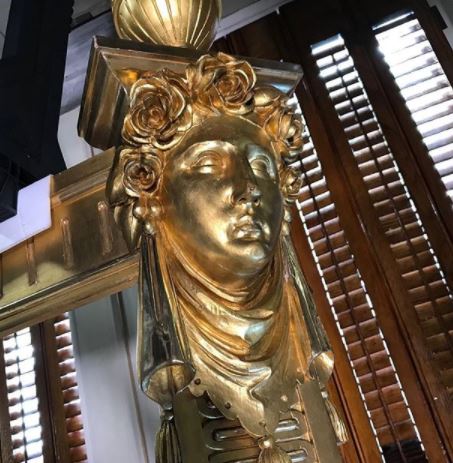
From the scientific point of view, one might consider these effects to have a different cause from that of spiritism. The psychiatrist will be interested in the question whether the practicing of spiritism was rather the effect than the cause of the ensuing mental and emotional disorders. Or again, was there some latent disposition in the family that was merely triggered off by the spiritistic activities? The parapsychologist will explain the table-lifting phenomenon as psychic automatism, that is an activation of subconscious forces. The Christian however is concerned essentially with the frequency in which psychic disturbances appear in connection with the practice of occultism. It was well known that Mrs. Winchester donned herself with ceremonial robes and communed nightly with the spirits in the Winchester mansion, and it was the midnight rendezvous for legions of ghosts, with special attention accorded those created by a Winchester rifle slug. It is possible the Mr. Abram stole something from the Winchester mansion, which brought on a curse to him and generations of his family members. A person’s thoughts and actions are like people who populate a community: friendly, contentious, kind, malicious, virtuous, evil, virile, cowardly, optimistic, cynical. We prosper in a pure mental neighborhood and wither in a foul one. And we can choose our mental neighborhood. Tired minds and bodies are signals to be careful. Demonic oppression is not easily discerned. Some people mistakenly blame demons for unrepentant self-will and psychological abnormalities. The source is not always clear, but demon oppression is usually marked by an emotional inability of the individual to do what one wants to do. A young maid staying in the Winchester mansion called Bythesea Atterton, had been a founding member of a thriving witches coven in Essex and the group’s other three members all shared her dedicated to the occult. She began to complain about various mental disturbances which included being tired of life and having depressions. Added to this she often had violent fit of temper, and her marriage was being undermined by her own frigidity. It has also happened that the husband had seen strange figures in the house at night. He had not told his wife about this so as not to upset her, but after a while she too had seen similar strange and maimed figures about the house. #RandolphHarris 3 of 13

Mrs. Winchester questioned the woman about her past illnesses and about the general health of her parents and grandparents, but she was the only one to have suffered in this way. In answer to Mrs. Winchester’s questions about contact with occultism, after a lot of thought Bythesea told her the following story. She had stolen Mrs. Winchester’s sixteenth century book about magic, and saw a black shadow at the end of her bed. It was a horrible presence that frighted the life out of Bythesea. While Mrs. Winchester was asleep, she would invite her Protestant girl’s group over. The minister’s wife, who had become the leader, used to practice table-lifting with all the girls in the Blue Séance Room. The sessions had always begun with the question, “Spirit, are you there?” One knock had meant “yes,” two had meant “no.” When the spirit had been willing to answer they had all taken part in asking it questions. The minister’s wife had continued this practice for many years until she was paralyzed by a stroke. Bythesea told Mrs. Winchester that all the girls had subsequently been afraid to visit their leader since her face had been changed into a terrible grimace by the stroke. Medical science would classy this example together with the precious one. However, with regards to the stroke, we would like to point out that in the numerous cases connected to the Winchester mansion of suicides, fatal accidents, stroke, and insanity, they usually involve the occult and someone who has in someway broke a rule, stole from the mansion, or offended the spirits somehow. The miles of twisting hallways in the mansion are made even more intriguing by secret passageways in the walls. Mrs. Winchester traveled through her house in a roundabout fashion, supposedly to confuse any mischievous ghosts that might he following her. Mrs. Winchester never slept in the same bedroom two nights in a row, in order to confuse any evil spirits that might be waiting for her. Music has always played an important role in cultural outlook and identity. Hymns, marching songs, lullabies—there are a thousand different aspects of life which are ordered or inspired by a musical beat. Music helps to define your cultural tribe. Even the ghost at the Winchester mansion reportedly had parties at ungodly hours. #RandolphHarris 4 of 13

The Satanic underground was celebrated—and eventually propelled into the mainstream—by musicians at the tail-end of the psychedelic era. While the Beatles and the Rolling Stones were the public faces of the 1960s youth culture, other voices of that same social and spiritual revolution sang dark hymns of rebellion. Some think that Black Arts Festivals have gone too far, one in particular. Coven might have achieved the popular success that ultimately eluded them. The band’s first album went under the uncompromising title Witchcraft Destroys Minds and Reaps Souls, boasting a gatefold sleeve featuring the band engaged in a Black Mass—complete with attractive blonde singer Jinx Dawson serving as a naked altar. The album features a recording of this Black Mass at the tail end of side two: “Two the best of our knowledge, this if the first Black Mass to be recorded in written words or in audio,” explain the sleeve notes. (Anton Lavey recorded his own Black Mass shortly afterwards.) “It is as authentic as hundreds of hours of research in every know source can make it. We do no to recommend its use by anyone who has not thoroughly studied Black Magic and is aware of the risks and dangers involved.” The rite bears the hallmark of serious study, with notably authentic elements from medieval Gnostic and witchcraft lore. The overall effect, however is curiously naïve, with the high priest’s command to “kiss the goat” sounding more Monty Python than Aleister Crowley. The music that precedes the Black Mass is standard—if well-executed—1960s folk rock. It is something of a jolt to realize that, behind the gentle acoustic guitars, the lyrics are exclusively about Devil-worship and black magic, while the alluring Miss Dawson’s vocals give the effect of a demonically-possessed Join Mitchell. Ultimately, Witchcraft Destroys Minds and Reaps Souls is an interesting musical exploration of the witchcraft tradition which suffused rural America ever since the Pilgrim Fathers landed in New England over four centuries ago. #RandolphHarris 5 of 13

The infamous Salem witch-trials—which took place in Massachusetts during 1692—had been one of the last major incidents of state extermination by religious fanatics from the “Old World,” making the term “witch-hunt” synonymous with the persecution with marginalized groups. As such, it elicited the sympathy of twentieth-century hippies like Coven toward their satanic predecessors. (In sacrificing the lives of twenty suspected “witches” to the fantasies of hysterical children, it also predated the “Satanic panic” of the 1980s-90s.) Coven’s second album Blood on the Snow followed but, despite its demonic sleeve, the Satanic elements were fare more restrained. By the third album, imaginatively titled Coven, the sinister elements had all but disappeared, replaced by standard hippie material. Robbed of the distinctive image of their early days, Coven faded away. It is interesting that the British rock band Lucifer, formed in 1971, were a curious collection of characters whose sardonically-devilish promotional photos portrayed a Mansonesque image, enlisted the Devil to fight the capitalist-pig system. Lucifer issued two albums, Big Gun and Exit, and a single, entitled “F*ck You,” which was seized by the police. Most outre of the Satanic psychedelicists, Roky Erickson had been the leader of the mid-1960s Texan garage band the Thirteenth Floor Elevators until a bust for marijuana possession. Facing a long prison sentence under the Lone Star State’s sanctimonious laws, he committed himself to a psychiatric institution instead. This was a bad mistake. Three years later, in the early 1970s, the hallucinogen-loving Erickson came out of the lunatic asylum considerably more troubled than when he went in. An obscure cult figure who became known for lyrical tributes to his favorite 1950s horror movies, in the hospital he had formed a close relationship with his own personal Satan. “Ah’m not afraid of the Devil, the Devil is mah friend. He chose me to do his biddin’,” drawled the usual but loveable Erickson. “Those doctors and nurses…They could not mess with the Devil’s chosen one.” To cement this unholy pact, Erickson later vocalized his personal infernal visions in wildly sincere songs like “I Think of Demons” and “Don’t Shake Me Lucifer.” #RandolphHarris 6 of 13

Ny far the most interesting of the Satanic-psychedelic bands were Black Widow. Their 1970s debt album, Sacrifice, was the result of guitarist Jim Gannon’s research into the Black Arts, with occultic lyrics accompanying a blend of traditional folk music and progressive rock. The almost-ubiquitous Alex Sanders warned the band they had done their homework too well, and would attract dark forces. He was right for one, though only inasmuch as Gannon’s lyrics boast a fair degree of authenticity, and some songs—like the catchy “Come to the Sabbat”—are highly evocative of the medieval-European Satanic tradition. Other moments—like the horrible saxophone solo Satan uses to tempt some poor innocent on “Seduction”—are diabolical in a different sense. The band enhanced their image with an elaborately Satanic stage show, professionally choreographed by a Leicester theatre company, complete with sacrificial daggers and an unclothed young woman to adorn the altar (at one point this was Alex Sanders’ wife, Maxine). They reaped the reward for their oddly entertaining work, with Sacrifice reaching the top 40 in the UK album charts. However, their second album, Black Widow, lacked both the Satanic themes and the power of its predecessor. The official explanation for this was that, true to Sanders’ warning, weird things stated to happen—most alarmingly, near-fatal car crashes. (Satan seems particularly keen on causing road accidents, however much more impressive lightning bolts or stampeding elephants might seem.) What is more likely is that, like many rock bands that use powerful Satanic imagery, Black Window may have begun to believe that same imagery was holding back their career. As many have learnt to their cost, however, it is more often the other way around—few dabbling rock stars regain the early excitement once they stop playing the Devil’s music. Suffice to day, Jim Gannon, the major creative force behind the band, cannot have been unduly worried by the curse, as he tried to mount a stage musical version of the Black Widow show on Broadway. Sadly, it never came off, and Black Widow—devoid of Devil worship—dwindled into obscurity. #RandolphHarris 7 of 13

Prosaic accounts of Black Sabbath’s flirtation with occult imagery claim they were impressed by the interest Black Widow had enjoyed in their Satanic stage show. The truth is probably a combination of all these stories. Whatever, it is fair to say that intense interest in their demonic aspects surprised Black Sabbath as much as anyone else. Their eponymous 1969 debut album was recorded in to days for six hundred pounds, treated with contempt and indifference by the press, and rapidly became a commercial success. The Christian Science Monitor, or all publications, noted approvingly that the band did not “condone or promote the less seemly aspects of…an interest in occult matters.” They were right. The song “Black Sabbath” describes the narrator’s state of terror at witnessing a Black Mass. Their attitude to Satan was chiefly the traditional one of fear and loathing, their lyrics even sometime entreating listeners to turn to God as the only source of love. However, the audiences were not listening—they wanted a Satanic band, and that is what Black Sabbath ostensibly became. (Rumor has it that their management had the large cross that decorated the inside of their first album inverted without the band’s knowledge of approval.) Satan appeared in Black Sabbath’s songs as a constant source of fascination and fear, an entity who brings colour into drab existence but can also represent the overwhelming evil of the World. In the classic “War Pigs,” Satanic witched are equated with the evil of politicians and generals who callously kill millions in their power games. (According to guitarist Tony Iommi, the title was derived from “Walpurgis,” the night when evil traditionally rules the World.) However, the most fascinating manifestation of Satan in a Black Sabbath song is also the rarest: when they briefly allow the Prince of Darkness to speak for Himself. In this strange and haunting “N.I.B,” Lucifer, the creator, sings a plaintive love song to His greatest creation and fellow sufferer, humankind. (The song “Lord of this World,” also recognizes Satan as god of the Earth.) #RandolphHarris 8 of 13
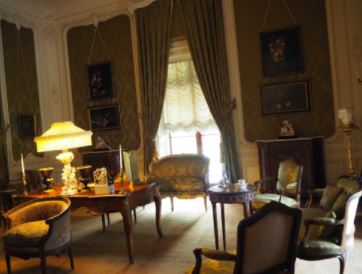
N.I.B.’s title is the source of some confusion: according to drummer Bill Ward it was simply his nickname, derived from when the band were stoned and though he resembled a pen nib. Typically, the fans perceived a more Satanic significance—to them, “N.I.B” stood for “Nativity in Black.” Inevitably, the band were quizzed on such apparent occultic beliefs during interviews. “We are into God,” Iommi unhelpfully explained to which Ward added, “But sometimes I feel Satan is God.” Perhaps they were expressing the beliefs of the early Satanic Gnostic groups, fifteen hundred years before. Led Zeppelin emerged in 1968 from London’s lively rhythm and blues scene. The band took off completely and became a huge commercial success. They were also said to have a Satanic influence with their roots being in traditional black blues music—though guitarist Jimmy Page’s outfit, much closer in its sympathies to the blues than to heavy metal, was far more preoccupied with the tradition. The Devil also makes His presence felt, either as a symbol of the inevitable fate awaiting the debauched bluesman, or as the hard-living musician’s comrade and inspiration. The delta blues—the school that had the greatest influence on the rock-guitar style—became known as “the Devil’s music.” Delta bluesmen included Peetie Wheatsraw, who liked to be known as “the Devil’s Son-in-Law and High Sheriff of Hell,” and Robert Johnson. Johnson, the acoustic-playing grandfather of rock guitar, best illustrates the enduring legend of the bluesman who sold his soul to acquire musical talent. (As testified by Satanic Rock star Glenn Danzig during our interview with him: “A lot of the old blues songs are very heavily rooted in occultism. There is Robert Johnson, all the voodoo and juju stuff—‘Got my Mojo Working,’ ‘Black Cat Bone.’”) Johnson’s pact with Satan was said to be struck at the “Crossroads”—one of his best-know song, and a traditionally magical location in many cultures—and thereafter he always claimed to live, as another song put it, with a “Hellhound on My Trail.” #RandolphHarris 9 of 13

Led Zeppelin, and Jimmy Page in particular, were heavily influenced by Johnson, lifting parts of his songs for their own compositions. As with Johnson, so the popular rumour went, Led Zeppelin has made a pact with the Devil, asking the Prince of Darkness to tune their instruments in return for their souls. Only Satanic aid, reasoned the myth, could explain the enormous success the band enjoyed so rapidly, or the power involving pleasures of the flesh these modern pied pipers had over young ladies. These same legends had been linked with musicians from Robert Johnson to Elvis Presley and beyond, but with Led Zeppelin the Satanic-pact myth has proved especially enduring. If you study the supernatural, you cannot ignore evil. The “ZOSO” symbol that became Led Zeppelin’s band’s trademark was also partly derived from the work of another influential British occultist, Austin Osman Spare—a contemporary of Crowley, and occultic artist, best known for his “automatic drawing,” which he claimed worked as a conduit for supernatural forces. One more than one occasion, Page hinted that much of Led Zeppelin’s material (particularly their meditative anthem “Stairway to Heaven”) had been conceived in a similar fashion. (If you recall, this is also how Mrs. Winchester received the plan on how to build her mansion.) Kenneth Anger asked Page to record a soundtrack for his magic ritual film Lucifer Rising, but was bitterly disappointed with the results, saying, “I had asked him for intimacy and strength, rhythms and counter-rhythms. But he gave me a short fragment of chanting voices and sounds that I thought were quite sombre and morbid.” In October of 1976, the two fell out in grand style. Page threw Anger out of the basement of his London house, where he had granted the American magus use of a fil-editing suite. Anger responded with a press conference. Asked if he felt vindictive toward Page, Anger reposed, “You bet I do. I’m not a Christian turn the other cheek kind. In fact, I’m ready to throw a Kenneth Anger curse.” #RandolphHarris 10 of 13

Asked about the incident in an interview the following year, Page observed, “The whole thing about ‘Anger’s Curse,” they were just these silly little letters. God, it was all so pathetic…I had a lot of respect for him. As an occultist he was definitely in the vanguard.” Despite Page’s scepticim, many fans and commentators linked the personal tragedies that were to strike the band with some kind of hex. On 26 July 1977, vocalist Robert Plant’s young son Karac died of a respiratory infection. Three years later, on 26 September 1980, the band’s drummer, John Bonham, died after a drinking binge. Enough was enough. On 4 December 1980, it was announced that Led Zeppelin were no more. The band’s demise only served to fuel rumours. The more lurid stories held that all of Led Zeppelin, with the exception of Bonham, had signed pacts with the Devil for Earthly pleasure, supposedly explaining the drummer’s untimely death. One fanzine reported that black smoke had been seen billowing from Page’s house on the day following Bonham’s death, and that the guitarist was overheard uttering strange curses in unknown tongues. Even the mainstream press got in on the act, with the London Evening News quoting an anonymous source: “It sounds crazy, but Robert Plant and everyone around the band is convinced that Jimmy’s dabbling in black magic is responsible in some way for Bonzo’s death and for all these other tragedies.” What are we to make of the “Led Zeppelin curse”? Many young people still need to hear guitar music that conjured the Devil, and Satanic rock does show a tenacity that surprised all but its most fervent disciples. Kip Trevor from the band Black Widow tells the story about their album Sacrifice and the stage show of the same title. “There is a guy who has lost his wife as a result of an accident to do with some kind of occultic ceremony. Something goes wrong, and she is killed. He comes back through the centuries, is reborn, and remembers this in a dream. In this dream he realizes his wife can be returned to him, if he can perform another ceremony, like the one which had gone wrong. This time he would turn the tables on the Lady Astoroth, draw her, overpower her, and sacrifice her, then she would be banished and his wife would come back. #RandolphHarris 11 of 13

“So in the first song, ‘In Ancient Days,’ tells the story of this guy travelling through the centuries. Then there is the conjuration in which we bring Lady Astoroth and the girl appears. We’d have a lot of fun with that, as she would appear from all sorts of odd places, depending on where we were playing. We toured with it all over Europe for around eighteen months. When Black Widow broke up, Jim and myself went off to try and revive the idea of the occultic stage show. We spent a lot of time, money and effort on this new black magic concept, but it did not work out. Black Widow’s first album was quite an achievement, but it would have been lovely to have developed it. The problem was that the band politics got in the way—some of them wanted to be a “normal” band and thought the whole black magic thing was not them. They thought it was overshadowing their playing. The show was written with Jim’s research, using proper conjuration ceremonies. The whole thing was done authentically as we could possibly do it. We drew the magic circles, used all the props—fire, earth, water, and air. We did it exactly as you were supposed to do it. Doing that has an effect, even if it is only psychological, because you know you’re doing it in the correct fashion. You’re stepping over the line. Combined with the power of the music and the power of the audience’s involvement, weird things would happen.” God did not create the devil as such. Lucifer, one of God’s mighty cherubs, rebelled against Him and became the devil. Satan is thus the product of his own evil choice. God created a superbly beautiful and wise being and invested him with power above all the other created beings. His name, Lucifer, means “son of the morning,” “bright and shining one,” or “light bearer.” He had many angels at his beck and call and was prince over all the Earth. A fee moral agent with the power of choice, he was filled with an ambition to which he had no right—to rise above God. Unwilling to rule over the World as a vice-general under God, he became “Satan,” meaning “adversary,” or opponent. #RandolphHarris 12 of 13

There is only one devil; there are many demons. A familiar spirit in the service of Satan knows human beings so well that he can disguise himself as those people; there are different kinds of spirits—some are sensual and lewd, and others appear ethical; demons are wandering spirits belonging to the legions of Satan, a class of beings distinct from angels—some are on Earth seeking embodiment in human beings and animals, other already are imprisoned in the bottomless abyss; Satan wins followers by psychic and supernatural phenomena that approximate the power of God; Satan is a created being who presently exercises authority over his domain, the Earth realm, but he can do only what God allows him to do, and eventually he will be deprived of all power and glory. As one can see, it is not only Mrs. Winchester who had experiences with the occult, curses, and spirits. Many people have. Occasionally other theories turn up in the literature of modern parapsychology. Some speak of a magical astral World-soul. This entails the idea of an inner World in which all the occurrences of the visible World have their inner equivalent. The World-soul is supposed to be outside of our concept of space and time. The past and the future, the near and the far are said to be all on the same level. Everything is synchronized and simultaneous. A person who is capable of contacting this World-soul enables such a person to enter into a sphere of higher intelligence where the limitations of space and time no longer hold true. Prophecy is inspired either by the Holy Spirit of by the Devil. The wide scope of the occult power possessed by spiritists helps explain why they can cause so much mischief. Through the phenomena of levitation, apports, telekinesis, and materializations, it is not difficult to see how a person endowed with strong mediumistic powers can do a great deal of harm, especially in closely associated realm of magic. Genuine magic is the art of bring about results beyond humans’ power through the enlistment of supernatural agencies. Black magic deliberately involves the devil and demons, and the resulting enchantment is used for persecution and revenge. #RandolphHarris 13 of 13


Sarah Winchester was reportedly trapped in her Daisy Bedroom during the 1906 earthquake. Her workers had to pry her out of the room, and the crowbar mark is still on the door to this day… See it on the Mansion Tour!

A 160-room mansion built to appease the spirits who died at the hands of the Winchester Rifle 👻

Summoning Devils on Film and in Real Life

Much like the Winchester mansion and Mrs. Winchester, the Hellfire Clubs and medieval Sabbat believed that devils and demons should not be stern masters or slaves, but welcome house-guest, which is why Mrs. Winchester built what is now known as the Winchester Mystery House. It is easy to imagine how the combined grief of losing both a child and a spouse could be very crippling. However, if you had $20,000,000.00 (2022 inflation adjusted $556,305,882.35) and all the time in the World to help you cope, can you imagine what you would do? Mrs. Sarah L. Winchester’s response to the deaths of her child and husband left a bizarre and impressive architectural reflection of her psyche. The fascinating story of the Winchester Mystery House has its roots in the personal tragedies suffered by Mrs. Winchester and in the legacy of the Winchester rifle, “The Gun that Won the West.” The Winchester Mansion raised its castellated walls and towers in every direction commanding magnificent prospects; like emeralds in a setting of deeper green, gemmed the surface of the surface of the rural landscape and contributed to increase the beauty of scenery not surpassed in the World. Ages ago the voice of prayer and the song of praise used to ascend from this sacred estate. Presented on the estate was a happy country, none better calculated to inspire love and harmony. However, there was a lack of happiness in the circumstances of life for Mrs. Winchester. At first glance, there seems to be no degree of truth in this statement because of all the riches she inherited and her beautiful mansion. Many people assumes that for the rich, enjoying their riches, are likely to be contented and to look no further than this World. There were also a group of seven Victorian houses on the estate, not connected to the main house, of goodly size, and a Holy Cross. The seven Victorian Houses which, according to tradition, were built there under Mrs. Winchester’s direction, along with a graveyard on her 760 acres of land. #RandolphHarris 1 of 15

In the garden of the mansion was a curious stone cross, of considerable size, evidently monumental, though the inscription has been so defaced as to be illegible. On the front of the cross there is a deep indentation much resembling that made by the hoof of a cow in soft Earth, the bottom of the indentation being deepest at the sides and somewhat ridged in the middle. Concerning this cross and the depression in its face, the following legend was related by one of the farmers on the estate. “Mrs. Winchester built this mansion, houses, and the church, you see. When she lived, she owned all the land round about. But there was a devil here. If you had meet him on the grounds, you would know in a minute that it was himself and no other that was in it, and so make ready, either for to run away from him, or to fight him with praying as fast as you can, because, you see, it is no use for to strive with the devil any other way, seeing that no weapon can make the last dint on his carriage. In them days, and before the mansion was built, I am telling you, the devil was all as one as a man, a tall felly like a soldier, with a high hat coming to a pint and feathers on it, and fine boots and spurs and a short red jacket with a cloak over his shoulder and a sword by his side, as fine as any gentleman of the good old times. So he used to go about the country, desiring men and women, the latter being his choice as being easier to deceive, and taking them down with him to his own place, and it was a fine time he was having entirely, and everything his own way. As soon as Mrs. Winchester started construction on her mansion, the devil took up his quarters there, to make it as sure as he could. But when he heard what Mrs. Winchester was doing, a four-story mansion, of 500 or 600 rooms, and a nine-story observation tower, he came out to see the castle was rising before his eyes. He heard the construction singing and started cursing to himself, and at 5.13am on Wednesday April 18th, 1906, Satan stomped his cloven hoof into the ground causing a 7.9 Earthquake and brought down that tower. #RandolphHarris 2 of 15

After the Earthquake, while the devil was laying about in the bushes a-watching the work, and the tower of the big mansion was lifting itself above the trees, this time just not as high as it used to be. Everyone knows that Satan is slicker than a weasel, and has a memory like a miser’s box that takes in everything and lets nothing go out. When you do anything, sore a bit that it scrapes the devil, and he hugs it close till a time comes when he can make a club have it to bate you with, and so he does. You may think it is queer, but it is no wonder to one that understands it, for the devil can take any shape he pleases and look like any one he wants to, and so he does for the purpose of tempting us poor sinners to destruction, but there is one thing by which he always knows; when you have given up to him or when you have beaten him on the face, no matter which, he has got to throw off the disguise that is on him and show you who he is, and when he does it, it is not the elegant, dressed-up devil that you see and that I was just telling you about, but the rale, old, black anger with a rancorous, without a haporth of rages to the back of him, and his horns and tail a sticking out, and his eyes as big as an oxen’s and shinning like fire, and great bat’s wings on him, and, saving your presence, the most nefarious smell of sulfur you have smelled. However, before, he looks all right, no matter what face he has, and it is only the goodness of God that the devil is bound for to show himself to you, because, Glory be to God, it is his will that humans shall know who they are dealing with, and if they give up to the devil, and after finding out who is in it, go on with the bargain they have made, sure the fault is their own, and they go to hell with their eyes open, and if they bate him, he has got to show himself for to let them see what they have escaped. #RandolphHarris 3 of 15
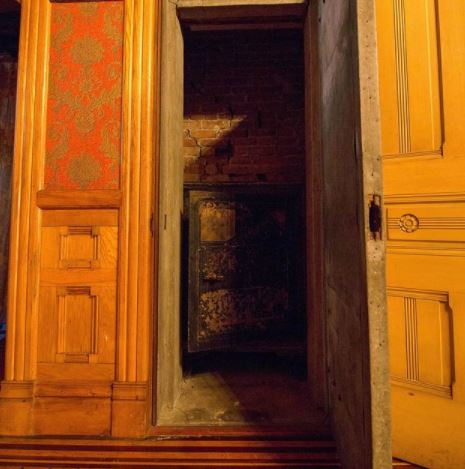
Satan was flying around the Winchester mansion, there were the farmers all along the day job, and the construction workers were building as fast as they could and a bottle of holy water were at their side to throw at the devil when he would come. So he went from the and would fly back and forth watching then working, and they restored the Winchester mansion. Old beliefs die hard, especially when their speedy demise is a consummation devoutly to be wished. Magic is only a physical or psychological effect that has yet to be explained, which means for many it is uncomfortable to entertain now. All good occultists must be skeptical—believe nothing in preference to believing everything. All proto-sciences could be defined as magic. You can see the ritual chamber as a kind of intellectual decompression of chamber to prepare your mind for other atmospheres. People who limit themselves to the occult curricula and profess to be wizards are laughable—magic is an interdisciplinary pursuit. You must consider all the options—investigating like a police officer. To perform a summoning, for example, would involve finding the right environment, appropriate retrieval cues, the right atmospheric conditions. The effects of magic are demonstrable. A lot of simple magic is just to do with self-confidence, how much your antennae are up, how open you are to the World around you. Rituals and magical words are not necessary, merely tools or exercises to help train your mind. Scientists are now coming to the conclusion that there is a lot more interconnectedness between man and his environment than they originally supposed, which is a basic occultic concept. The only really dangerous characters are the ones who think they are generational Satanists and their grandfather told them with his dying breath what to do, or whatever. There are a lot of armies of one out there, a lot of coffee-bar revolutionaries. New information technology has bred a lot of desktop Satanists and bulletin boards mean that cyberspace seems to be just full of Satanists. The Christian heretics rarely get much further than designing letterheads. #RandolphHarris 4 of 15
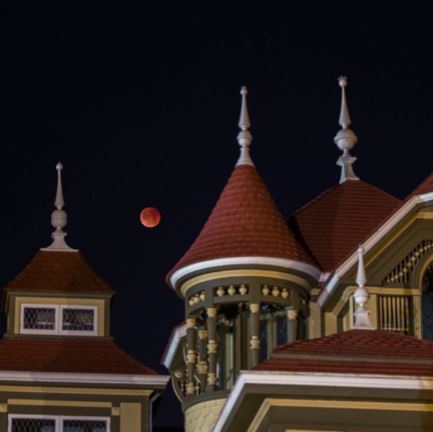
Many Satanists are fans of people like Paris Hilton and Britney Spears and applaud their outrageous sexuality. They are also huge fans of Aaliyah for making that film Queen of the Damned. Many Satanists are quietly applying Church of Satan philosophy to their lives in their own fashion in a very real way. The best thing they could ask for is that people pass them a nod of respect. In the modern World, the spirit of the age often looms down upon us in strange, distorted forms from the cinema screen. Major production companies spend millions of dollars trying to trap the latest cultural trends on celluloid, while audiences make surprise blockbusters from movies which—accidentally or otherwise—tap into the anxieties and enthusiasms of the day. In the late 1960s and 1970s, 2000s the films which came to be regarded as four “Satanic blockbusters”—Rosemary’s Baby (1968), The Exorcist (1973), The Omen (1976), and Queen of the Damned (2002)—all took the box-office by storm, transforming themselves into cultural phenomena which attracted public interest far beyond that of most “mere” films. Cinema has been the most potent legend factory of the centuries. Despite constant predictions that TV would devour the silver screen, the spectable and ceremony of the cinema helped retain its status as the most sacred of modern temples. Film presents a super real version of the World—louder, larger, essentially more mythic. More people take cues on how to live, love, fight—even on how to die—from the silver screen than from the pulpit or the gospels. Pagan worship is alive and well and being practised at your local multiplex, with Hollywood stars as the gods of our age. And, just as cinema has given us new gods, so it has supplied us with a new hierarchy of devils. The relationship between Satan and the silver screen is a notable one. The father of fantastic cinema was a Frenchman named Georges Melies, who made delightful short films crawling with demons and devils. Melies was himself a Faustian figure, a stage conjurer and photographic illusionist who appeared out of the rump of the French Decadent era. Summoning devils on film, he defended this new sorcery in time-honoured fashion as “white magic.” #RandolphHarris 5 of 15

In The Laboratory of Mephistopheles (1897), Melies made Satan’s head detach itself and float around the room—to the enchantment and horror of audiences in darkened “picture palaces, resembling nothing so much as séance chambers. Hollywood’s dream factory was not even at the planning stage by the turning of the century, but the pioneer of US cinema, Edwin Porter (partner of the man who virtually invented the movies, Thomas Edison), produced his own version of Faust and Marguerite in 1900. The most striking cinematic fantasies came from Germany at this point—stark, angular exercises in shadow and nightmare. The Student of Prague was an updated version of the well-worn Faust tale, based on an Edgar Allan Poe story, which transformed the lead from an ambitious academic to a devil-may-care student and Mephistopheles into a rakish devil called Scapinelli. The story was retold onscreen in 1913, 1926, and 1936. The 1926 version was by the master of German Expressionist cinema, F.W. Murnua—the last film he made before leaving his artistic roots for Hollywood, where he met with a tragically early death. As a minor masterpiece, it was a suitably grandiose climax to a career which produced Nosferatu (1922), the first gothic vampire film. Now, it is always important to be safe on the road and sometimes to listen to the heartfelt advice of others. Jayne Mansfield, a buxom B-move actress died in a tragic car crash with her lawyer in and lover Sam Brody. Brody had disliked his beloved’s new guru from the start, and the friction led to LaVey placing a ritual curse on his rival. The Black Pope (Anton LaVey) warned the pugnacious lawyer—known to be a dangerous driver—that he would suffer a series of automobile accidents. It was no great surprise when a car crash ensued—but it made World headlines for taking the life of Jayne Mansfield, as well as the top of her cranium. LaVey grimly stated that on the night preceding the crash, as he cut out a newspaper clipping of Jayne, he accidently snipped off the top of the blonde beauty’s head. (By the way, I had no idea The Black Pope was dead, until today. I feel he is very much still alive. I have always felt like he is here, in San Francisco in his black church.) #RandolphHarris 6 of 15
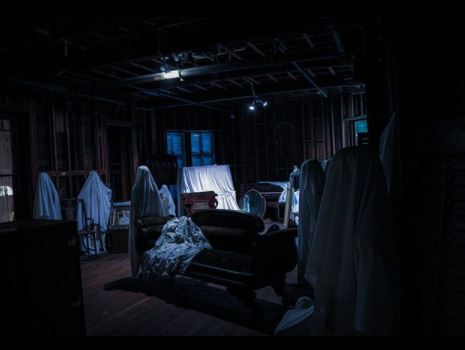
The physical phenomena of spiritism are often closely connected with psychical manifestations, such as spiritistic visions, automatic writing, speaking in a trance, materializations, table lifting, tumbler moving and excursions of the psyche. There is no doubt that today, as in the time of Isaiah (Isaiah 6.1-5), Ezekiel (Ezekiel 1.4-28), Paul (Acts 9.1-8), Peter (Acts 10.9-16), and John (Revelation 1.10-18), God may give His people a genuine vision, particularly in great times of great stress. However, genuine experiences of this nature are always accompanied by true spiritual grace and modesty. Sensationalism betrays a lack of authenticity. Unfortunately, genuine experiences are rare, and counterfeit ones about. Christian counselors find that the “ratio is about nine to one over the genuine experiences.” Mrs. Winchester used to have visions. She reported that she saw visions of Christ at night, and it left her feeling a sense of uneasiness and fear. The so-called visions of Christ were mediumistic. They came as a warning. Weeks after the visions started, Mrs. Winchester saw her husband William Wirt Winchester’s spirit departing from his body as he expired in 1881. The visions of Mrs. Winchester bear evidence of the occult, as do the visions of Joseph Smith (1805-1844), who fathered Mormonism. Many of the founders and promulgators of modern cults have had alleged visions from God. However, some say these visions promote “doctrines of demons” (1 Timothy 4.1) among the credulous and those unable to discern spirits (1 Corinthians 12.10; 1 John 4.1-2). When humans depart from God’s Word, they supposedly expose themselves to demon imposture and deception. Automatic writing—some persons endowed with mediumistic powers are able—either in a waking state or trance to write letters, words, or sentences which spiritists consider to be message from the spirit World. This is how Mrs. Winchester came up with the architecture of her mansion, the blueprints were often dictated to her in her Blue Séance room as she took down the notes on napkin. Also, the persistent pain in her legs and back vanished whenever she sat down and dictated these blueprints. #RandolphHarris 7 of 15
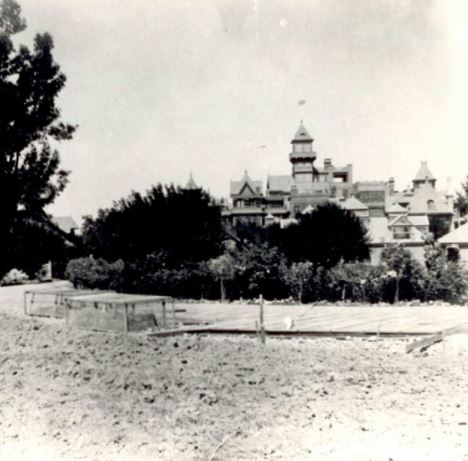
One day as Mrs. Winchester was taking dictation, a spirit named Apollonius Tyannaeus appeared and said, “In the name of the Lord Jesus, our blessed and exalted Savior.” The spirit then told the woman that she had been chosen by God for special revelations. She would become a prophetess and bless humankind with these revelations. The case is patently that of a simple farm woman turned indeed into a spiritistic writing medium. Rudolf Tischner, a parapsychologist, points out the danger of automatic writing when practiced in immoderation. Although he regards these writing phenomena only as “motoric break up the integrated psychic structure with ensuing peril to mental and physical health. This simply means that occult enslavement can result from mediumistic writing, or from dependence upon the Ouija board or other spiritistic devices to obtain alleged messages from the spirit World. Speaking in a trance—a trance is a condition in which a spiritistic medium loses consciousness and passes under the control of demonic power to effect alleged communication with the dead. The demon (or demons) takes over and actually speaks through the spiritistic medium, deceptively imitating the deceased. As a result this ruse innumerable spiritistic clairvoyants claim communication with the dead, often with famous deceased people allegedly appearing to speak to the living. One evening, Mrs. Winchester went into a trace and soon the “Apostle Paul” approached and preached to the audience. The apostle was not visible but only spoke through the medium who lay in trance. Some critic said it was only another constant instance of deception by demons who ape the deceased but cannot produce them. Other believe it was real. Perhaps the most remarkable phenomena of spiritism are materializations. These are supernatural appearances and disappearances of material images in connection with the activities of a spiritistic medium. #RandolphHarris 8 of 15

Materializations have been exhaustively studied and photographed and have been found to be manifestations of various degrees of teleplastic morphogenesis. The first stage is the evolution of a gauzelike substance of rubbery consistency from the body cavities of the medium. The second stage is the forming of the various parts of the body in outline—arms, head, etcetera. Frequently in the case of teleplastic forms of this kind, a threadlike connection is maintained with the medium. The third stage consists of the composition into completely outlined forms, which are visible as phantoms near the medium. These three stages of materialization manifest purely visual phenomena. The fourth stage displays telekinetic phenomena. There is an energy output from the teleplasm (telekinesis), such as the ringing of a bell, at night, passers-by heard ghostly music wafting from the dark mansion. The bell in the belfry high in the gables tolled regularly at midnight to summon incoming flights of spirits. Later it tolled again to warn these visitors to return to their sepulchers. However, once a week, these departed ones relaxed and danced in the Great Ball Room. In other stages of materializations come automatic writing of a typewriter, and the automatic playing of a musical instrument. In addition to the active energy output of the materialization, there is frequently a passive pain experience of the teleplasm. The fifth stage of the materialization is the penetration of material substance. To his phase belong “apports,” that is, the appearing and disappearing of objects in closed rooms or chests and containers. From locked and cemented containers, for example, enclosed coins are brought out, or stones and other objects fall inexplicably from the ceiling. This often happens in the Winchester mansion, as documented by Mrs. Winchester. In this stage many mediums allegedly have the ability to penetrate solid material substance while they are in a trance. While Mrs. Winchester sat in a small cabinet, a phantom built itself up on the floor outside the cabinet and formed itself into a male person, who moved in and out among the participants of the séance. While the materialization extended his hand to one of those present and she held it, dematerialization began to occur before the eyes of all the participants. Soon there was only a lump on the floor and this rolled up into the cabinet. #RandolphHarris 9 of 15
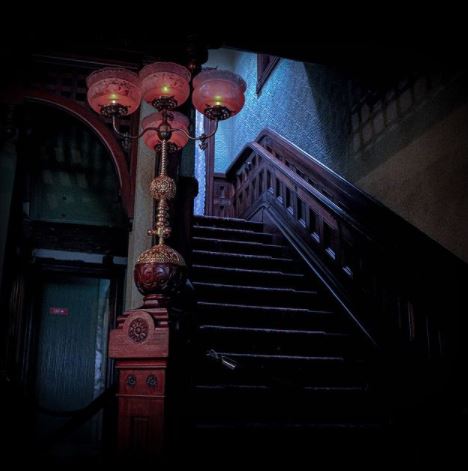
Another example is during a séance, Mrs. Winchester was able to call and help the materializing of the spirit of the deceased German romantic poet, Johann Ludwig Uhland (1787-1862). At the memorable séance a white phantasm was seen, from which the audience demanded a poem. Instead of reciting a poem, the phantasm tore a page from a book in the library. With a pencil from a briefcase in the room, secured through the leather without opening the briefcase, the hand jotted down a few verses and vanished. The page was left and still exists. The examination of the mysterious writing by a graphologist proved to be sensational. He confirmed the ghost writing to be actually the handwriting of the deceased poet. Afterward there was a trial in Berlin over the ownership of the page. The court awarded it to the medium, who afterward kept it among her prized possessions. The phenomena of materialization and dematerialization in case of strong mediums illustrated the conversion of psychic energy into matter and matter changed back again into psychic energy. The problem is illustrated by nuclear physics. Einstein’s formula (E==MC^2), energy is equal to mass times the speed of light squared, simply declares that it is theoretically possible to convert energy to mass and back again to energy. We have historical evidence of materializations. Missionaries claim that Mrs. Winchester’s mansion was never actually built, but that it materialized itself on the grounds, and (re)construction only began after the Earthquake caused by Satan. Some say this mansion is to be regarded as a miracle of Satan (2 Thessalonians 2.8-10; Revelation 13.15). Many people used to wonder how Mrs. Winchester used to travel so fast back and forth from San Jose to San Francisco to pick up items she ordered from overseas. Researchers believed that she would be spiritually transported miles away, and this may have been an example of this phenomenon or simply a miracle of transportation of unaltered physical body. It is debatable rather if these are miracles of God or that of Satan. God says He is the Alpha and the Omega. I wonder what that means? #RandolphHarris 10 of 15
Mrs. Winchester was said to possess tremendous occult gift and was reported to be able to make tables fly through the air for a space of one hundred feet. Above all, she was extremely adept in telekinesis, materialization, levitation, and black magic. Where Satan’s power remains virtually unchecked, miracles of evil supernaturalism abound. In Victorian days, the supernatural predated the mass hysteria about Satanism. As you may know, long before Mrs. Winchester arrived in California, there was a Devil worshipping conspiracy at large. However, her mansion seamlessly blends the ordinary and nightmarishly surreal. It is a rare treat for fans of demonic conspiracy and occult synchronicity. Some people have believed themselves to be demonically possessed after visiting the Winchester Mystery House, others claimed to have spoken to Mrs. Winchester directly. Directors of the Queen of the Damned claimed that the film was a makeshift occultic ritual, and Aaliyah unleashed the demon within herself. They also said the film poses some kind of supernatural power and they had to edit and voiceover a lot of the footage because not only did the characters act their own version of the script, but there were also some subliminal sounds and images on print. When many of these errors were re-examined, they also saw footage of the original Winchester mansion on the negatives, but rumors began that the original print had been withdrawn, replaced by an expurgated cut to protect the filmgoers from the movie’s insidious effects. The powers behind these manifestations were no doubt demonic. The director faced a terrible psychic assault on 25th August 2001, before they finished filming the movie. However, when the reel was played, the directors found they had all the footage they needed, even some they did not remembering filming. It was so intensified that the demonic oppression became that he was compelled to give up making other Anne Rice books into movies, especially after Aaliyah’s plane crashed later that evening. Although the film was unfished, with the blessing of her family, it was released to the public in February of 2002. #RandolphHarris 11 of 15

Certain psychic clairvoyants claim that their souls can travel great distances at their command. They always said she makes a room come alive. Much like Mrs. Winchester, Aaliyah had a lot of psychic phenomena around her death. When directors took photos of Aaliyah and Queen Akasha to a clairvoyant, while concentrating on the photographs, the medium declared that one of the women was apparently dead, while the other one, reportedly killed in 2001, was still alive. After more concentration, the clairvoyant said: “I can get in touch with this woman (pointing to Queen Akasha). I see her in a great stone building southeast of Ireland.” By psychic excursion and by psychometry (selecting an object belonging to the missing person and beginning to search from there) the clairvoyant was able to establish contact by occult assistance. The cinema is the Devil’s lantern. In March of 1922, Mrs. Winchester said, “Though it should be borne in the mind that in the persecution of witches many women were put to death on the latter charge, albeit they were really benefactors of the human race; the more so as their skill in simples and knowledge of the medicinal virtue of herbs must have added in no small degree to the resources of our present pharmacopoeia.” In August of 1807 an extraordinary affair took place in the house of Mrs. Winchester. She had a cow which continued to give milk as usual, but of late no butter could be produced from it. An opinion was unfortunately instilled into the mind of Mrs. Winchester, that whenever such a thing occurred, it was occasioned by the cow having been bewitched. Her belief in this was strengthened by the fact that every woman on this estate was able to relate some story illustrative of what she had seen or heard of in times gone by with respect to the same. At length the Mrs. Winchester was informed of a woman named Mary Butters, who resided in Oakland at the Cohen Bray House. Mrs. Winchester went to her, and brought her to mansion for the purpose of curing the cow. About ten o’ clock that night war was declared against the unknown magicians. #RandolphHarris 12 of 15
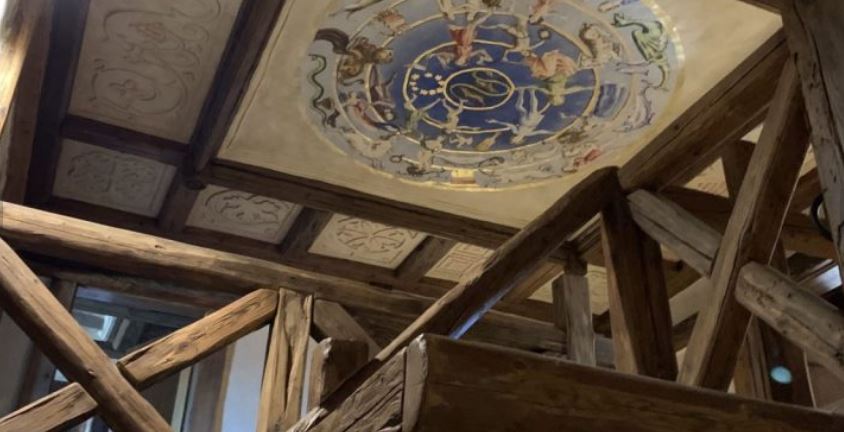
Mary Butters ordered old Klaus and a young man named Konrad to go out to the cow-house, turn their waistcoats inside out, and in that dress to stand by the head of the cow until she sent for them, while the butler, the made, and an old woman named Klara Lee remained in the house with her. Klaus and his ally kept their lonely vigil until daybreak, when, becoming alarmed at receiving no summons, they left their post and knocked at the door, but obtained no response. They then looked through the kitchen window, and to their horror saw the four inmates stretched on the floor as dead. They immediately burst in the door, and found that the butler and the maid were actually dead, and the sorceress and Mrs. Winchester nearly so. The latter soon afterwards expired; Mary Butters was thrown out on a dung-heap, and a restorative administered to her in the shape of a few hearty kicks, when had the desired effect. The house had a sulphureous smell, and on the fire was a large pot in which were milk, needles, pins, and crooked nails. At the inquest held at the Winchester mansion on the 19th of August, Jurors stated that the three victims had come by their deaths from suffocation, owning to Mary Butters having made use of some noxious ingredients, after the manner of a charm, to recover the sick cow. She was up to The Great Asylum for the Insane, but was discharged by proclamation. Her various of the story was that a black man (usually indicates a demon or the devil, not one of African descent) was summoned through the floor with a huge club, with which he killed the three person and stunned herself. This paranoid horror fantasies terrified the congregations, as well as the gross superstition displayed by the participants as for its tragical ending, yet it seems to have aroused no feelings in the greater community than those of risibility and derision. However, there is also another version of events. #RandolphHarris 13 of 15

A farm-hand had brought an action against Mrs. Winchester for wages alleged to be due to him. It transpired in the course of the evidence that on one occasion he had been set to banish witches that were troubling the cows. His method of working illustrates the Winchester case. All left the house except Mrs. Winchester, and the farm-hand, who locked himself in, closed the windows, stopped al keyholes and apertures, and put sods on top of the chimneys. He then placed a large pot of sweet milk on the fire, into which he threw rows of pins that had never been used, and three packages of needles; all were allowed to boil together for half an hour, and, as there was no outlet for the smoke, the farm-hand narrowly escaped being suffocated. If the forces of darkness triumph, it is a warning not a celebration. Many religious people come close to depicting what evangelists are preaching from their pulpits, or TV shows. Does it not seem strange for fundamentalist Christians to attack them as sinful and dangerous? Sin sells, in a way that the bland platitudes of Christian morality never will. Many of these popular and historical figures will be remember long after the credits have rolled. You could say that it is an “inside job.” Satanism sells, it captures the metaphysics of fear. People like to be haunted and scared, but only when they consent to it. No one wants their house broken into, their children kidnapped, their cars constantly vandalized, or to be attack by a hate group who haunts them like demons of the night. People simply want to tune into a scarry movie or visited a haunted house and leave the fear behind when they walk out the door or turn the TV off. They do not want to fear for the lives like Sharon Tate did for years without anyone to protect them. Humans are often more harmful than any ghost, devil or demon you can ever imagine meeting. Satan, speaking through a beautiful serpent—perhaps as a parakeet “talks” to us—promises know that would make Eve “like God” if she would eat the fruit of the tree forbidden by God. #RandolphHarris 14 of 15
Meanwhile, if the view of the power and knowledge of the people is that “Satan” is evil and not themselves, what can human beings do? Persist being evil, or resist the “devil,” and allow him to feel from them? Or is it they cling to evil because the darkness comes from their insidious mind and depleted soul? Note that it is useless to try to resist the devil unless you have first submitted yourself to God! Maybe YOU are the evil, not Satan. Sitting there, manufacturing all these evil days, so you can laugh at the pain and suffering you have inflicted on others to make yourself feel better. Is that of Satan, or is that YOUR nature on display. It is estimated that there are about 100 million adherents to spiritism in the World. The word “spiritism” comes from the Latin “spiritus,” spirit. The movement of spiritism represents the endeavour to communicate with the dead in the spirit World. Historically, spiritism can also be traced back over thousands of years. We have testimonies concerning it in the Old Testament in 1 Samuel 28, and Deuteronomy 18. It is also evidenced in the history of the Christian Church. Spiritism seems to be strongly connected with religion and religions. In so-called Christian countries such a variety of spiritistic forms, and such a range of associated psychic troubles exist, that the need for clarification is a pressing issue. What God do you really worship for “Satan disguises himself as an angel of the light. So it is not strange if his servants also disguise themselves as servants of righteousness,” reports 2 Corinthians 11.14-15. In other words, many of you Christians who claim to serve “God” do evil things and then blame the devil when you are disguising yourselves as children of the light. And you do not repent because you do not fear punishment nor hell, so you must be children of your “devil” and not of God. We live in a World which has turned its back on God. The reason some people fear Jesus is because they feel unworthy, it is not because they are evil. This conviction of inner unworthiness is not to be confused with a feeling of fear. However, people who suffer from schizophrenia and like to go around lying, the psychiatrist will be interested in the question whether the practicing of spiritism was rather the effect than the cause of the ensuing mental and emotional disorders. #RandolphHarris 15 of 15
Winchester Mystery House
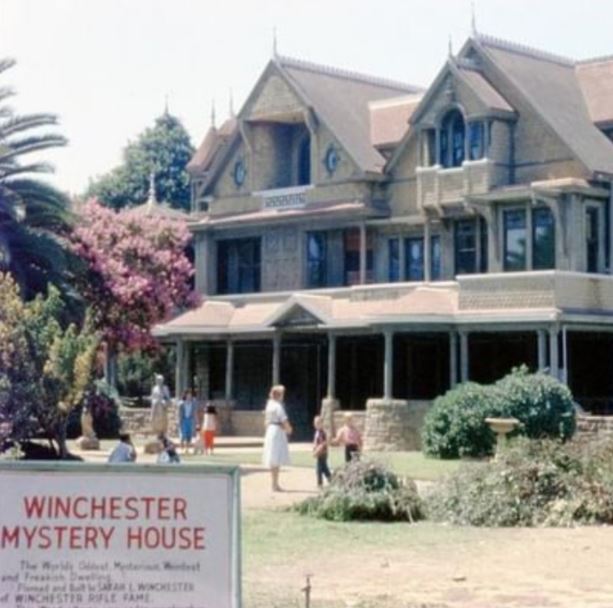
The front gardens of the Winchester Mystery House looked different in the 1970’s! The gardens were restored to what they are today about ten years later.
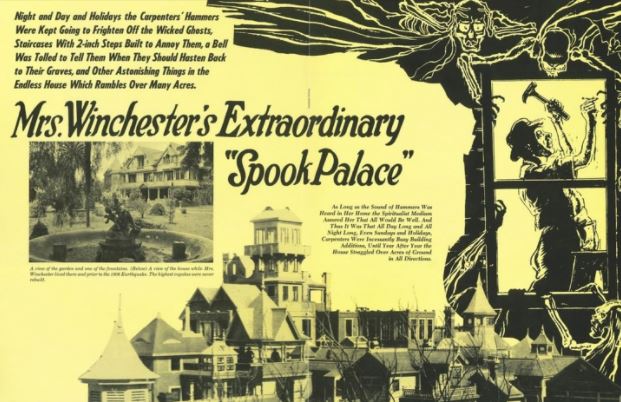
The sign reads: “The world’s oddest, mysterious, weirdest, and freakish dwelling. Planned and built by Sarah L. Winchester of Winchester Rifle Fame”
Have you ever listened to Alessandro Moreschi sing “Ave Maria,” at night in the Winchester Mystery House? Try it and let me know what you experience. I heard ghosts appear, people have cried and screamed, and some love it. I think I would probably run outside. He sounds like a ghost.

Come Explore the Victorian Gardens this weekend! Open all weekend until 4PM.

A 160-room mansion built to appease the spirits who died at the hands of the Winchester Rifle 👻

He Opened the Book and a Demon Spoke to Him

All good religions need some kind of Apocalypse. Thelema—the new religion of Aleister Crowley—was no exception. The Great Beast fully expected his new holy age, the Aeon of Horus, to be ushered in with an orgy of violence and bloodshed. With the advent of the First World War, the prophecy seemed to have been satisfied. Over four long years, the optimism and complacency of nineteenth-century Europe drowned in the mud of the Western Front, along with hundreds of thousands of young soldiers. However, Crowley seemed curiously indifferent to the whole affair. With typical arrogance, when the British Government refused his offer to produce war propaganda, the Luciferian man of letters travelled to the US to write anti-British propaganda. If he could not find recognition on the side of the angels, the Great Beast was always ready to side with the opposition. However, Crowley later claimed he wrote deliberately absurd material to discredit the German cause. His article on the bombing of London by Zeppelin airships gives credence to this eccentric defense: “For some reason or other in their last Zeppelin raid on London the Germans appear to have decided to make the damage as widespread as possible, instead of concentrating it in one quarter. A great deal of damage was done at Croydon, especially at its suburb Addiscombe, where my aunt lives. Unfortunately her house was not hit. Count Zeppelin is respectfully requested to try again. The exact address is Eton Lodge, Outram Road.” If World War One had been too minor a cataclysm to introduce Crowley’s Age of Horus, 1939 heralded a new orgy of human suffering. The Beast always maintained that the first nation to adopt his Book of the Law as a state religion would dominate the World. During the 1930s, however, as the Third Reich came to power, his ambivalence towards Germany—the country where his magical doctrines were taken most seriously—is perhaps understandable. #RandolphHarris 1 of 21

Some of his German followers saw in their new Fuhrer a political equivalent to their prophet, the Great Beast (perhaps even his “magical child”)—a new World order was to be created by the pure will-power of those extraordinary men. Some of his German followers saw in their new Fuhrer a political equivalent to their prophet, the Great Beast (perhaps even his “magical child”)—a New World Order was to be created by the pure will-power of these two extraordinary men. However, in 1935 the Nazis banned the Ordo Templi Orientis and the Order of the Silver Star, throwing numerous occultists (including Karl Germer, one of Crowley’s foremost disciples) into the concentration camps. There may have been similarities between Crowley’s Thelemic doctrines and emergent Nazi dogma (elitism, irrationalism, transcendence of morality), but the Great Beast could see on which side his future depended: Britain would “knock Hitler for six!” he announced. Whether or not the horrors of the Second World War signalled the advent of the Age of Horus, Adolf Hitler emerged from the blood and pain of that conflict as a secular Satan. Indeed, a minor literary industry has grown up around the idea of Hitler as a very literal Satanic figure suggests that the Fuhrer really did, in Dennis Wheatley’s words, “use dark forces.” The roots of this belief return us to the occult lodges of the late nineteenth century. In 1875, the writer and occultist Guido von List climbed a hill overlooking Vienna to conduct a strange ritual. Von List was dedicated to returning greater Germany to an older purer faith—the worship of Wotan, and the other pagan gods of the Teutonic race Upon the hill he commemorated the summer solstice by buying a number of empty wine bottles, carefully arranged into a sacred symbol: the swastika. In 1908 von List Founded the Armanen Initiates, the inner order of his modestly-titled Guido von List Society. His doctrines centered around ideas of racial purity—von List believed the German peoples, the Armenen, had originally been a race of supermen, but mongrelistation had weakened the race until bashful old Guido was its last pure-blood survivor. #RandolphHarris 2 of 21
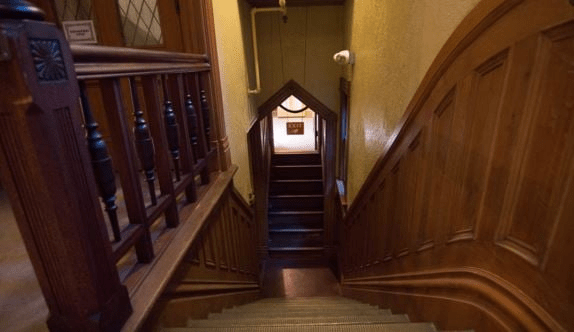
According to the race mystic, “The hydra-headed international Jewish conspiracy” was behind it all. To reverse matters, von List prescribed a study of ancient Teutonic religious runes and –more practically—laws to precent further racial interbreeding. His eventual gal was a racial state ruled by “a self-chosen Fuhrer to whom [Germany] willingly submits.” Alongside the swastika, the emblems of this new state would include the sig rune: the symbol later used to form the insignia of the SS. Guido von List was one of the leading Germanic mystics dedicated to “volkisch” occultism. “Volkisch” basically translates as “folkloric,” but this was also leavened with a hard-edged nationalism. Chief obsession among the volkisch orders were the sacred nature of race (or “blood”), an interest in the culture and beliefs of the Germanic peoples in the early Middle Ages, and a strong current of anti-Semitism. Among the most important of the volkisch occultists—some of whom fancied themselves the priests of a revived Norse religion—was Dr. Jorg Lanz von Libenfels. In many ways, a sorcerer in the classic mould, von Liebenfels adopted his aristocratic name to increase his mystique (his real name was Adolf Lanz), and began his career as a Catholic priest before being defrocked for “harbouring carnal and Worldly desires.” His response was to found an “order of New Templars”—quite what the original Templars had to do with racial purity is not clear, but it did not stop von Libenfels preaching a message of race war from his temple on the banks of the Danube. In 1909, a young Austrian named Adolf Hitler secured an audience with von Liebenfels to secure some back issues of Ostara, the journal of the New Templars. In 1932, von Liebenfels would write to a fellow occultist that “Hitler is one of our pupils…You will one day experience that he, and through him we, will one day be victorious, and develop a movement that will one day make the World tremble.” The most direct link between the occult underground and the Third Reich is the Thule Society. Thule, according to northern European myth, was a version of Atlantis, and island that sank beneath the sea. #RandolphHarris 3 of 21

Thule Society ideology decreed this legendary island to be the home of the German supermen, who they hoped to contact using magical techniques. In 1919, the Thule Society formed a tiny political group called the German Workers Party in Munich—the seed from which Hitler’s National Socialist Party grew. In the 1920s Germany of the Weimar Republic, volkisch occult groups sense that their time was coming. Losing the First World War left Germany politically chaotic, economically bankrupt and profoundly demoralized. Weimar Berlin earnt a reputation for decadence exceeding that of 1890s Paris—though there was a cynical desperation among the German hedonist that never surfaced amongst their French counterparts. For many ordinary citizens of “Greater Germany” (which included Austria), however, their feelings of disillusionment hardened into suspicions of betrayal. One such was the young war hero Hitler—who was convinced Germany’s forces were defeated by treachery at home, rendering the huge loss of life futile. Hitler, along with many others, was sure that the “November criminals” (government signatories of a peace treaty in November 1918) were responsible for the fatherland’s defeat and humiliation. And behind the November criminals were the treacherous Jewish people. In this environment, volkisch occultists found an eager audience for their fables of an ancient, noble Ayran race. They not only offered up a scapegoat for their defeat, but also created the mythology of a sacred Germanic blood heritage from which a humbled people could rebuild their pride. It is a long way from accepting that volkisch occultism helped create a spiritual environment friendly to Nazism to believing the Third Reich was a Satanic cult. (Buffy the Vampire Slayer was said to be symbolic of the rebirth of the Third Reich, maybe you can see the symbolism. This interesting thing is that Sarah Michelle Gellar, who played Buffy Summers is Jewish, but also reminiscent this Ayran super race.) #RandolphHarris 4 of 21

The relationship between Nazism and volkism is similar to that between the radical African-American political groups and Black Islamic leaders who proclaim that the Man (the White Man) to be the Devil. Political leaders, as soon as they achieve any real power, are usually quick to distance themselves from such emotive spiritual propaganda. However, it is interesting how light and dark are used in Christian terms not to reflect colour, but the nature of one’s spirit. And when you see these people with soft features, pale skin, and these colourful eyes, it is hard to believe they do dark things, but when one sees someone with darker skin, people almost always consider them guilty. It is as if religious light has also been used to frame people based on skin colour, but when it comes down to it, people are capable of things that are bad no matter what colour their skin is, and as one grows up, once can see that skin colour matters very little in guilt or innocence. Nonetheless, total revolution also demanded a spiritual revolution. The Russian Revolution of 1917 had a similarly religious aspect. Communists were determined to uproot the Christian Church and replace it with religious loyalty to the State, and its socialist principles, which is why so many religious symbols in America are now banded on public builds, and next to be banned with be the America flag. Many people may thing that journalist Tomi Lahren of FOX News is a racist, but one should actually listen to what she is saying, and be objective about it. America is actually becoming a communist nation where the people have no power, laws are just recommendations, and the U.S. Constitution is being removed and stored in someone’s basement, much the Confederate Statues, and flags. Next, slavery will just be a conspiracy theory—it will be considered a myth. It is just like music, most real artists listen to all genera of music, but they have a typical style they love, and many scholars read all kinds of material so they can have a comprehensive view of what is going on in the World, instead of just be told only what the masses want them to know, but people love to label, which is why they are stuck in ignorance. #RandolpHarris 5 of 21

Bolsheviks held wild revels, called “African nights,” where Christian festivals were parodied in atheistic rites such as “Red Prayers,” and “Red Mass.” Obscene hymns were sung, and children were encouraged to spit upon and destroy puppets representing God, and other holy figures, in powerful echoes of the Black Mass medieval peasants. Hitler’s doctrines were no less revolutionary. Nazism was designed to revolutionize every aspect of life—even the way people thought—and the old ways were denounced as “Jewish,” “liberal.” Hitler despised “intellectuals,” advocating intuition, or even irrationalism, over logic and rational thoughts. In many ways the Nazis turned back the clock two hundred years, to when science and sorcery were still reluctant bedfellows. In the field of military technological innovation and instinct were promoted at the expense of methodology, liberating German scientist to creates some of the most efficient weapons of war the World had seen. Alfred Rosenberg, an intimate of Hitler and high-ranking Nazi official drew up plans for a National Reich Church, which was not going to destroy Christianity but “supercede” it, and called his new faith “positive Christianity.” He concluded: “On the day of its foundation, the Christian cross must be removed from all churches, cathedrals, and chapels and it must be superseded by the only unconquerable symbol, the Swastika.” However, what did the Swastika symbolize? Rosenberg wrote: “Today a new faith awakens: the myth of the blood, the faith that by defending the blood were defend also the divine nature of man. The faith, embodies in scientific clarity, that the Nordic blood represents the mystery which has replaced and conquered the ancient sacraments.” The historian Konrad Heiden beings his book on Der Fuhrer: Hitler’s Rise to Power with a curious story concerning Rosenberg: “One day in the summer of 1917 a student was reading in his room in Moscow. A stranger entered, laid a book on the table, and silently vanished. The cover of the book bore in Russian the words from the twenty-fourth chapter of Matthew: “He is near, he is hard by the door.” #RandolphHarris 6 of 21

The sent sensed the masterful irony of higher powers in this strange happening. They had sent him a silent message. He opened the book, and the voice of the demon spoke to him. It was a message concerning the antichrist, who would come at the end of days. The Antichrist is no mythical being, no monkish medieval fantasy. It is the portrait of a type of man who comes to the fore when an epoch is dying. The Antichrist was supposedly Hitler. The Nazi began suppressing occultists and secret societies in 1934, in a purge that reached its peak in 1937. Thousands of astrologers and mystic disappeared into the concentration camps, never to appear again, which also proves Whoppie Goldberg’s states, “The Holocaust was about race.” Anyone who was deemed a threat to national security was sent to concertation camps, but in the same sense, the holocaust was about race, it was about preserving the Ayran race. Just anyone who was not Aryan could be a target, as it was more about preservation of their bloodline. Volkisch occultists were not spared. Even the Thule Society—the magi at the nativity of Nazim—was devoured by its ravenous offspring. The Nazi State would not tolerate anything outside its control, or that it had not created itself. Its tenant of faith was the destiny of the Aryan race, as expressed by its prophet Hitler. If this policy of spiritual and intellectual monopoly sounds familiar, it is because it resembles the doctrines of one of the institutions of the Nazis sought to replace: the Church. The Nazi party created its own priesthood—the Black Oder, better known as the Schutzstaffel, or SS. The SS began as Hitler’s bodyguards, but under Heinrich Himmler, manoeuvered and massacred their way to become the most powerful organization in the Nazi establishment. Like “house of God” of the medieval Inquisition, the SS policed the souls of those under their ever-expanding jurisdiction. The faithful were monitored, the suspect—even the volkish occultist who shared the Nazi vision of race—purged, the unholy exterminated. Himmler became the second most powerful man in the Third Reich. Any occultist who wished to survive in Nazi Germany was well-advised to find a place under Himmler’s wing. #RandolphHarris 7 of 21

Several men did—most significantly Karl Weisthor. Weisthor was born Karl Maria Wiligut in Vienna, 1866, to a family with a long military tradition, and was decorated for his service during the First World War. Following the war he became involved in volkisch occultism, adopting doctrines which were extreme even by volkisch standards. With the modesty characteristic of his ilk, Weisthor claimed to be descended from Ayran gods, the last living representative of the Irminist Church. The Irminists—who worshipped the true Christ, an Aryan called Krist—had been opposed throughout history by the false religion of the Catholic Church, their racial enemies the Jewish people, and Aryan heretics who worshipped the pagan god Wotan. Weisthor knew all of this because he possessed clairvoyance that allowed him to recall the heroic lives of his ancestors, thousands of years ago. Not everyone was impressed by the evidence, however, an in 1924 he was committed to a lunatic asylum. Undeterred, when he was released, he changed his name and headed to Munich. In 1933 he attracted the attention of Himmler, who installed the cranky medium in the Ahnenerbe department of the SS. Under Weisthor’s advice, a castle at Wewlsburg in north-west Germany was chosen as the spiritual headquarters of the Black Order. It became the Nazi equivalent of the Vatican, with great echoing chambers dedicated to the heroes of the Aryan race, and a central hall where Himmler and his twelve closet disciples would meet. Weisthor designed the SS “Totenkpfring” –a scared ring decorated with skulls and runes, personally bestowed upon SS members by Himmler and retuned to Wewelsburg upon their deaths. He also conceived and presided over neo-pagan solstice ceremonies, and the Weddings of SS officers to good Aryan girls. The Black Order was not just a military organization but a sect, a fraternity of warrior priests. Though it never claimed the heritage of the Knights Templar, the parallels between these two orders are striking. Both snowballed into vast international forces. Both maintained independent economic systems that allowed them to accumulate vast wealth. Both were composed of highly-disciplined warriors, fanatically dedicated to their creeds. Both were exempt from the laws that governed their contemporaries, answerable only to the head of their orders (Himmler of the Grand Master) and the representative of the sacred creed on Earth (Hitler or the Pope). Both planned to establish their own independent states. And both were, at least ostensibly Christian. #RandolphHarris 8 of 21

Weisthor’s faith may have incorporated much bizarre German paganism, but at the core he believed he was preaching Christianity. One of the oaths taken by SS candidates before the full initiation ran, “We believe in God, we believe in Germany which He created in His World and in the Fuhrer, Adolf Hitler, whom he has sent us.” One of the titles Himmler had bestowed on him by is peers was “the Black Jesuit,” as he based the structure of the SS upon the fanatically-secretive Catholic Society of Jesuits. Himmler, brought up in a devoutly-Catholic Bavarian household, never lost his belief in the importance of ritual symbolism. When he used the term “Satanic,” or evoked the Devil, it was applied to the enemies of the Aryan race—never in connection with his own faither. Persecution of Jewish people was often inspired by accusation that they poisoned wells and drank the blood of children, or, more traditionally, that they had killed Jesus. They were commonly believed to be part of an international conspiracy—sometimes decreed to be Satanic—against all Christian values. The Catholic Church, concerned that the Third Reich was stealing souls that were rightfully theirs, had certainly preached against this new paganism. Nazis believed that they were breeding babies for God, or “for race and nation.” Occultic suggestions that the Third Reich was, as one author puts it, a “demonocracy” with the Fuhrer himself as a black magician, a “psychic vampire,” demonically possessed, even as the Antichrist himself—are based on Hitler’s skill at taking political military gambles (precognition), his inner voiced and violent rages (possession), and the way simultaneously drew upon and released great emotion with his speeches (physic vampirism). Some still say that there is no evidence for one to consider the Third Reich as a manifestation of supernatural evil. Yet people believed because Hitler consulted an astrologer that Hitler was evil; Satan is Evil personified, therefore Hitler is Satan. Even level-headed historians have described Hitler as possessing almost supernatural powers—whereas the terms “mesmeric” or “hypnotic” best described the psychological effect this frantic, grim little man has on the vast audience at Nazi rallies. Political figures such as John F. Kennedy and Martin Luther King also based their careers on charismatic oratory, and few would suggest either man was possessed by demons. #RandolphHarris 9 of 21

However, it is worth confessing that the Third Reich is of legitimate interest to occultists. Something about Hitler’s meteoric rise—from penniless tramp to omnipotent dictator—and Germany’s similarly rapid rise—from near-collapse to near-World domination—confounds rational explanation. Still, the philosophy of Hitler, and the psychological symbolism employed by the Nazis, are no more inherently Satanic than that of the Catholic Church. However, there were eyewitness accounts of wartime sorcery in England: Witches cast spells to stop Hitler landing after France fell. They met, raised the great cone of power and directed the thought at Hitler’s brain: “You cannot cross the sea. You cannot cross the sea. Not able to come. Not able to come.” We are not saying they stopped Hitler. All we say is that we saw a very interesting ceremony performed with the intention of putting a certain idea into his mind and this was repeated several times afterwards; and though all the invasion barges were ready, the fac that Hitler never even tried to come. The witches told us that their great-grandfathers had tried to project the same idea into Boney’s [Napoleon’s] mind. Exploration of the Great Beast’s (Aleister Crowley) darker doctrines—of a World divided into masters and slaves, with good and evil sacrificed on the bloody alter of a new morality—would be the province of a far less gaudy crew than the hippies. Marianne Faithfull—a former child of the upper-middle classes—was a long-time consort of English rock band the Rolling Stones, and an icon of “swinging London.” In her autobiography, written much later, she displays little doubt as to the source of the era’s dynamism. Speaking of her most famous lover, Mick Jagger, she says: “Her harnessed all of the negative forces into entities. Out of these destructive impulses, he created all the incredible personate of the late sixties: the Midnight Rambler, Lucifer, Jumpin’ Jack Flash. They are all manifestations of malignant and chaotic forces, the ungovernable mob. The dark, violent, group mind of the crowd—chaos, Pan. That frenzied power caused many of the causalities of the sixties.” #RandolphHarris 10 of 21

Foremost among the musicians who pioneered the first colourful wave of psychedelia were the Beatles. Their high-profile transformation from chirpy, mop-headed scousers to long haired peaceniks reflected the cultural tide of their generation. However, in the United States of America, the FBI compiled a two-inch thick file on Lennon upon which FBI director J. Edgar Hoover scrawled, “All extremists should be considered dangerous.” Fundamentalist Christians—with their endearing disrespect for facts or common sense—discovered the occultic secrets behind the Beatles’ success. They maintained that the Lennon-McCartney sound was a magical beat stolen from the ancient Druids. According to them, in ancient times these pagan priests would beat out the demonic rhythm on drums made of human skin to summon evil spirits. In the hands of the Beatles, this Druid beat could be used to send the young people of American insane—or even worse, pinko. There were Christian protests of the Beatles, where the Ku Klux Klan burnt their records and Lennon was held up as a Satanists or something. The next years, Christian suspicions of the Beatles were confirmed by detailed perusal of the cover of their catchy, innovative Sgt. Pepper album. The cover design is a collage of people admired by the Beatles, all standing being the band: among them, in the top row, can be seen Aleister Crowley. In 1994, a prominent Vatican official, Father Corrado Balduci, would reinforce the Christian view that the Beatles were “the Devil’s musicians.” Sadly, in 1980, Lennon was shot dead outside his New York apartment by a dazed-looking young man named Mark Chapman. Chapman had become a big Beatles fan, but had become increasingly convinced that Lennon was evil. An interview with Chapman by a psychiatrist, published in Rolling Stone magazine, reported that the holy assassin could feel the presence of Satan’s demons around him. “I can feel their thoughts. I can hear their thoughts. I can hear them talking, but not from the outside, from the inside.” The unfortunate Chapman had become a “born-again” Christian, learning about the evils of Beatles music from his new faith. #RandolphHarris 11 of 21

Next to the affable efficiency of the Beatles, the Rolling Stones were a maelstrom of creative chaos. Black Magicians thought that Mick Jagger and Keith Richards were acting as unknow agents of Lucifer and others thought hey were Lucifer. One of the “Black Magicians” Richards referred to was Kenneth Anger. Anger stood at the crossroads where many of the Satanic elements of the 1960s met. Anger happily announced Crowley’s dictum that the Key of joy is disobedience, and declared that not only was the Aeon of Horus upon, but the Aeon of Lucifer. Shortly before he became involved with the Rolling Stones, Anger helped found the Church of Satan. His blend of Crowleyism and Satanism entranced the band, though—in a familiar pattern—Anger was often keen to dissociate from Satanism, referring to his personal Prince of Darkness by the less inflammatory title of Lucifer. He later confessed, however, that his Lucifer had always been the “cosmic villain,” the Miltonic Satan. Whatever effect Anger had on the band’s professional lives, he touched them personally to varying degrees. Keith and his lover Anita later got into this black magic stuff. Mick Jagger dabbled in it. However, every one was just a little afraid of Kenneth Anger. Inexplicable things involving him would happen. Stores about the magus’ association with the band include Anger seeming to appears and disappear in various places. He offered to perform a pagan ritual wedding for Keith and Anita that involved a golden door. When they awoke the next day, a heavy oaken door had been painted gold, with the paint already dry. The house was heavily secured, and nobody could explain this occultic interior decoration. Faithfull talked about falling off a mountain during the making of Anger’s second version of Lucifer Rising, sustaining only a mild concussion. Anita Pallenberg was so spooked by all of this that she slept in a protective circle of candles with a string of garlic around her neck. Anger’s next overtly magical project Lucifer Rising was his first religious film, a weird, mesmeric narrative combined with a real magical ritual, it also embodied his love/hate relationship with the 1960s counter culture—both in the film itself, and the events surrounding its strange history. #RandolphHarris 12 of 21
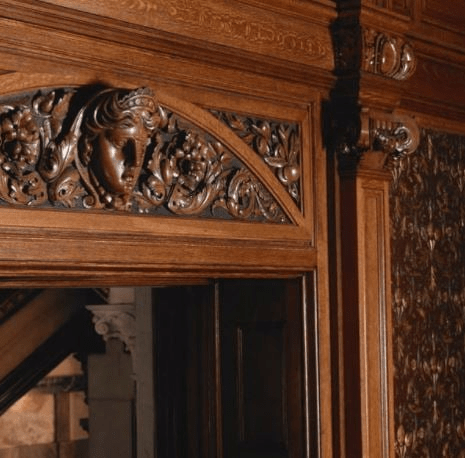
As Anger once observed, “Making movies is casting spells.” A screen director and editor, the theory ran that the magus could fully control both the characters to screen and the entities they invoked. Lucifer Rising depicted the downfall of the oppressive Aeon of Osiris (or Christian era), and the movement into the Aeon of Horus (or Lucifer). “My reason for filming has nothing to do with “cinema” at all, explained Anger. “It’s transparent excuse for capturing people…I consider myself working Evil on an evil medium.” On 21 September 1967, Anger organized a celebratory event titled the Equinox of the Gods at the Straight Theatre in Haight-Ashbury, the epicenter of hippie culture in San Francisco. However, Beausoleil proved a more capricious Lucifer than Anger anticipated—according to Anger, the pretty hippie he called “Cupid” ripped off 1600 feet of footage from Lucifer Rising and some camera equipment before the performance. Anger was livid, smashing a rare magical cane that once belonged to Crowley. He then pronounced a cruse upon Beausoleil, sealing it with an amulet he put around his neck. On one side was a picture of his erstwhile protégé, on the other a toad with the inscription “Bobby Beausoleil—who was turned into a toad by Kenneth Anger.” Cupid never turned into a toad, but a could of uncommonly dark fortune did follow him as he headed south for Los Angeles. In 1970 Anger remade his masterpiece, Lucifer rising—though even then he still tinkered with elements of the film to produce dozens of subtly different versions. Once again, Anger himself plays the Magus, invoking a new aeon through the door opened by the occult events of the 1960s: A film about the love generation—the birthday part of the Aquarian Age. Showing actual ceremonies to make Lucifer rise. Lucifer is the Light God, not the Devil—the Rebel Angel behind what is happening in the World today. His message is that they key of joy is disobedience. Isis (Nature) wakes. Osiris (Death) answers. Lilith (Destroyer) climbs to the place of Sacrifice. The Magus activates the circle and Lucifer—Bringer of Light—breaks through.” #RandolphHarris 13 of 21

Bad luck had begun calling upon the Rolling Stone, in the shape of a series of tragedies. The first was the death of the band’s guitarist, Brian Jones. It was Jones who, in 1962, formed the band named it after a Muddy Waters song. On 2 July, in classical rock ‘n’ roll styles, he drowned in his swimming pool on a cocktail of vodka and pills. Two days after Jones’ death, the Stones turned their free concert in London’s Hyde Park into a memorial for their ex-guitarist. Jagger read a poem by Shelley, then tried to release hundreds of white butterflies from boxes by the stage. They have been in the boxes too long and most of the delicate creatures were dead. The summer Woodstock free festival, in New York State, represented for many the hazy apex of the Love Generation. At the suggestion of scheduled support band the Grateful Dead, the Stones hired the Hell’s Angels as security for their Altamont gig. The Angels were very affordable, but their brand of frightening freedom still had a devilish chic in the naïve 1960s. The Hell’s Angels Motorcycle Club was formed after the Second World War, by bike-loving ex-servicemen who found civilian life too bland to bear. The Hell’s Angels moniker was taken from a notorious American Air Force squadron, but the Satanic implications of the name became increasingly appropriate. The Angeles were hellraisers, prototypes for the whole biker culture—particularly the outlaws, or “1%ers” (the “one percent of motorcyclists’ labelled as ‘hoodlums and troublemakers” by the American Motorcycle Association in 1967). Many 1%er gangs emulated the Angels’ Satanic-sound title, adopting infernal names like the Straight Satans, Satan’s Slavers and the Pagans. Some took their title at face value. One member of the powerful Canadian gang Satan’s Angels said in a 1970s interview, “There are definite spirits and we identify with that particular one that has been called Satan. It’s an upsidedown World. Our virtues are other’s vices. You could say we were Satanists.” Hell’s Angels, and other outlaw gangs, are symbols of the more destructive, volatile aspects of the Satanic canon. Their readiness to fight, their revelling in intimidation and fear, their rapacious passion for pleasures of the flesh in all their basest forms, all these characteristics made them into icons of willful alienation and violent self-indulgence. #RandolphHarris 14 of 21
When Jagger finally came onstage at Altamont on 6 December 1969, things were beginning to get ugly. Marty Balin of support act Jefferson Airplane had been in in the face with a pool cue by a Hell’s Angel. He tried to intervene when he saw the Angels beat up an African America kid in front of him. Paul Kantner, band founder, began to shout at the Angels until his microphone was snatched from him in the brawl that immersed the from of the stage. Jagger took the stage clad in his psychedelic sorcerer’s robes. Dancing under the red lights, surrounded by the dark wall of threatening, black-clad Angels, the vocalist could have been Anger’s Lucifer served by a surly army of warlike demons. Two songs into the set, things just kept getting uglier. Naked hippies cast themselves at the stage as offerings for their rock gods, and the Angels cast them back into the audience after beating them bloody. The third song began, “Sympathy for the Devil,” and all Hell broke loose. In the audience, an African American youth named Meredith Hunter pulled a gun. According to some he was aiming it at Jagger, other claimed he was defending himself against the Angels. Whichever is true, it was scant moments before a pack of black-leather Angels fell upon him and, in a flurry of kicks and knife blows, Hunter was killed. The Stones could see that the Angels were brutalizing the audience rather than controlling them—but Jagger was out of his depth, bleating weakly for everybody to “cool it.” As the killing of Meredith Hunter played itself out to the strains of “Sympathy for the Devil,” the song had to be stopped briefly as Jagger quipped, with unintended understatement, that “something very funny always happens when we start that number.” As the tide of panic and fury rose, the death count escalated to three with 100 injured. Following Altamont, the shaken Stones turned their back on the whole Satanic scene. Jagger wore a large wooden crucifix for some time after. The revolutionary stance and allusions to street violence were quietly dropped in favour of the stately image of rock ‘n’ roll aristocrats. The Rolling Stones abandoned any pretension to occultic chic or streetwise cool, letting themselves into the World of polite high society through the back door. #RandolphHarris 15 of 21

It is always just a few days before the Winter Solstice when the forces of darkness are at their most powerful. Because the immense size of the Winchester Mansion, Mrs. Winchester included forty-seven fireplaces in her mansion, and seventeen chimneys. One rambling section in particular, the Hall of Fires, was designed to produce as much heat as possible—perhaps to ease Mrs. Winchester’s extreme arthritis. In addition to many windows that let the sunlight stream through, the three adjoining rooms have four fireplaces and three hot air registers from the coal furnace in the basement. Mrs. Winchester is very significant, not only for a vast estate, but one of many reasons was because she was known to have encounters with the supernatural. While I was at Mrs. Winchester’s mansion, I was asked to meet with a group of high school students who had gotten into spiritualism just for kicks. We had a meeting that night and I listened as the young people told me their experiences. At a part a friend had fascinated them with stories of trances and séances. He told them how to use a Ouija board and how to enter a state of trance. They were seeking spirit manifestations. When they began to get reactions, they became frightened. The spirit had guided them back in time. A boy appeared and stated to tell a story, he said: “When I was about ten years old, I came to visit my aunt Sarah. I met a girl who lived on the estate Ethel—aged eight. I never had the courage to speak to her. My aunt Sarah asked me to stay three months, and I did.” The statement was so quietly serious, so destitute of any suspicion of humor, that the audience looked on with great apprehension. “I had to work hard in those days. I saw Ethel, later that evening, asleep in one of the carriages, and that was the last time I saw her. I ended stay with my aunt for three years. There was a glimmer of a summer gown under the trees; a figure passed from the shadow to sunshine, and again into the cool dusk of a leafy lane. While I was walking in the garden, I found her seated in the shade of a pine. She looked up serenely, as though she had expected me, and we faced each other. #RandolphHarris 16 of 21

“When I stroke to speak, my voice had an unknow tone to me. Her upturned face was my only answers. The breeze in the pine-tops, which had been stirring monotonously, ceased. Her delicate face was like a blossom lifted in the still air; her upward glance chained me to silence. The first breeze broke the spell; I spoke a word, then speech died on my lips; I stood twisting my shooting-cap, confused, not daring to continue. The girl leaned back, supporting her weight on one arm, fingers almost buried in the deep green moss. ‘It has been three years today,’ I said, in a dull voice of one who dreams—’three years today. May I not speak?’ In her lowered head and ears I repeated acquiescence; in her silence, consent. ‘Three years ago, today,’ I repeated; ‘the anniversary has given men courage to speak to you. Surely you will not take offense—we have travelled so far together!’ –from the end of the World to the end of it, and back again, here—to this place of all places in the World! And now to find you here on this day of all days—here within a step of our first meeting-place—three years ago today! And all the World we have travelled over since, never speaking, yet ever passing on paths parallel—paths which for thousands of miles ran almost within arm’s distance—’ She raised her head slowly, looking out from the shadows of the pines into her sunshine. Her dreamy eyes rested on acres of gold-rod and green grass in the December coolness. ‘Will you speak to me?’ I asked. ‘I have never even heard the sound of your voice.’ She turned and look at me, touching with idle finger the soft hair curling on her temples. Then she bent her head once more, the faintest shadow of a smile in her eyes. ‘Because,’ I said, humbly, ‘these long years of silent recognition count for something! And then the strangeness of it!—the fate of it,–the quiet destiny that ruled over our lives,–that rules them now—now as I am speaking, weighting every second with its tiny burden of fate.’ She replied, ‘I have never forgotten you—never!’ She looked into my eyes. ‘Dear, do you not understand? Have you forgotten? I died three years ago today.’ The unearthly sweetness of her white face started me. A terrible light broke in on me; my heart stood still.’ #RandolphHarris 17 of 21
“And that very day, I died of a broken heart. Legend has it that I came to visit my aunt Sarah to pick up a check and no one ever saw me after that day, but truth is I never left. When God takes the mind and leaves the body alive there grows in it, sometime, a beauty almost supernatural. ‘Be with me when the new moon comes,’ she whispered. ‘It will be so sweet. I will teach you how divine is death, if you come.’” About 4 o’ clock in the morning, one of the students started to levitate, and he saw all kinds of beautiful sights. I asked him if he were concerned whether or not this was from God. He said it must be because it was in the spiritual realm. The one of the other students went into a demonic tantrum. I asked God to rebuke the demons and set her free. The demons said, “We are going, but we will come back.” And come back they did, with reinforcements. I worked with this young woman for several months, but because she was unwilling to give up this traffic with spirits she was later placed in a mental institution. I am convinced that she could be perfectly healed of this oppression and indwelling by demons if only she would consent. Sometimes lewd demons trick well-meaning people into following their sensual behavior. Not all spirits are evil. However, it is a serious matter to become involved with spiritualism in any form, but also the atoning blood of Christ always gives us His purity and power. All who desire protection from Satan and His demons will receive it. In the case of levitations, apports, and telekinesis, God allows the physical and natural laws of the Universe to be superseded temporarily and in a restricted sense by higher laws of the spirit World. The Winchester mansion is known for having spiritual events take place, even today. These phenomena are diabolic miracles. In distinction to divine miracles, diabolical miracles are supernatural acts that imitate the power and benevolence of divine miracles. It is as if God said to the powers of darkness what he said to the sea in the day of creation: “Hitherto shalt thou come but no father, and here shall thy proud waves be stayed,” reports Jon 38.11. #RandolphHarris 18 of 21

The demonic powers are allowed only a very small intrusion into the orderly realm of nature, and the miracles they produce are characterized by a rigid sameness. Everywhere in the domain of occultism there are reminders of God’s absolute sovereignty. He is in majestic control. Demonic power makes such a poor show by its severe restrictions and drab sameness, that it actually advertises the glory of God for those who can see evil supernaturalism in the proper focus of divine revelation. Levitations (from the Latin verb levito, “to raise or lift”) are objects or people that are raised up and appear floating in their air. Such phenomena are frequently reported in occult literature and experienced in haunted houses, where strongly psychic people have lived and died or where spiritistic séances have been heled. Objects on occasion sail through the air as if thrown by an invisible hand, or spooks (ghost) appear hovering in space. Furniture is lifted, often when a strong medium is present. Human, either in a conscious or unconscious state, are included in the phenomena of levitation. We would oppose the belief that a word has any power of its own, and that the charmer is only the representative of this power. Words are only neutral instruments. They can be used for either good or evil. It depends on the inspiration behind the words. A Christian employs the Word on God’s authority. The magician and charmer employs his words and phrases as demonized instruments of magic. One of Mrs. Winchester’s servants had died. The man in question had the reputation of being a magician—it makes sense that a house built by spirits would have some magical employees. Two weeks before his death, as he lay in bed seriously ill, he began to groan, “Take the charm away from me, take the charm away from me.” The relatives had gone to the minister for advice, but he had warned them against doing as the man requested. The magician finally died in terrible agony. The minister told Mrs. Winchester that the man looked black as coal when he had seen him in the coffin. Many magicians only find rest when someone takes the spell of charm away from them, together with the responsibility of carrying on the occult practice. #RandolphHarris 19 of 21

A description of magic ritual can be found in various books on magic. These books have the same significance to the magicians as the Christian Bible has for the Christian. There is a great amount of literature on the subject of magic, the most widely distributed book on the spiritual subject being the 6th and 7th Book of Moses. Unhappily a publisher in Braunschweig has published new editions of this book. The use of the name Moses is only a camouflage. Magicians look on the miracle connected with the staff of Moses as a piece of magic. In this way they try to elevate Moses to the position of their patron saint. The first part of the book reveals how a human may enter into a relationship with the devil. The latter part gives instructions as to how a person can achieve dominion over all the forces of nature as well as the powers of Heaven and Hell through the use of magic. The book has already caused untold harm in the World and people who read it invariably suffer in the process. A house in which the book is kept is also a place where misfortunes often occur. There are many examples which illustrate this fate and we will deal with this problem soon in greater detail. In or about the 27 of December of 1899, a girl about eighteen years of age, Miss Mary Dunbar, was hired as a maid by Mrs. Winchester. Mrs. Winchester described her as “having an open and innocent countenance, and being a very intelligent young person.” She and her aunt, Mrs. Haltridge, were staying at Winchester mansion. A rumor was afloat that the latter had been bewitched into her grave, and this could not fail to have its effect on Miss Dunbar. Accordingly, on the night of her arrival, her troubles began. When she retired to her bedroom, accompanied by another girl, they were surprised to find that a new mantle and some other wearing apparel had been taken out of a trunk and scattered through the house. Going to look for the missing articles, they found laying on the parlour floor an apron which two days before had been locked up in another apartment. This apron, when they found it, was rolled up tight, and tied fast with string of its own material, which had upon it five strange knots. #RandolphHarris 20 of 21

These she proceeded to unloose, and having done so, she found a flannel cap, which had belonged to old Mrs. Haltridge, wrapped up in the middle of the apron. When she saw this she was frightened, and threw both cap and arpon to young Mrs. Haltridge, who was also alarmed, thinking that the mysterious knots were boded evil to some inmate of the mansion. That evening Miss Dunbar was seized with the most violent fit, and, recovering, cried out that a knife was run through her thigh, and that she was most grievously afflicted by three women, who she described particularly, but did not then give any account of their names. About midnight she was seized with a second fit; when she saw in her vision seven or eight women who conversed together, and in their conversation called each other by their names. When she came out of her fit she gave their names as Janet Liston, Elizabeth Cellor, Kate M’Calmont, Janet Carson, Janet Mean, Latimer, and one who they termed Mrs. Ann. She gave so minute a description of them. Mrs. Dunbar said there was something in her stomach which she would be glad to get rid of. She fell into such violent fits of pains that three men were scarce able to hold her, and cried out, “For Christ sake take the Devil out of the room.” In her fits she often had her tongue thrust into her windpipe in such a manner that she was like to choak, and the root seemed pulled up into her mouth. Upon her recovery she complained extremely of the one Mean, who has twisted her tongue and spoke of someone who had tore her throat, and tortured her violently by reason of her crooked fingers and swelled knuckles. Her joints where all distorted and the tendons shriveled up, as she had described. However, through 38 years of residence, Mrs. Winchester’s employees remained fiercely and faithfully loyal, defending every eccentricity. Although usual things did occur in her home, they said she was very strong minded and firm, but always fair and kind. Laziness, theft, gossip or revealed confidences met with instant dismissal. Mrs. Winchester, they claimed, was deeply concerned with the welfare of their families. They were well paid and often additionally rewarded with gifts, even homes or real estate, and left lifetime pensions. #RandolphHarris 21 of 21

Winchester Mystery House

The Winchester Mystery House on a rainy day is a sight to see 😍 Come see for yourself this weekend!
🎟 link in bio. https://www.winchestermysteryhouse.com/


The Problem with America it is Submerged in Old Atlantis

The problem with America it is submerged in old Atlantis. It has become like a refugee camp where all the geniuses have been driven out of their jobs and country by unfriendly regimes that are idling. The World of streets are so seductive that a person can ask you where you are from, then tell you what you are and you will believe them. People are too dependent on history and culture. However, the World belongs to those who understand it. Still, countless individuals bring their broken hearts and shattered dreams to the altar and hope they will be accepted, and they pray that rejection will not throw them into a rage and turn them into a Cain. Perhaps a vast number of those in society naively produced their favorite treasures and piled them in an indiscriminate heap. Those who do not recognize their value now may do so later. However, while some may be flattered by being tested, others resent it. People reserve their best thinking for their professional specialties, and next in line, for serious matters confronting the alert citizen—economic, politics, the disposal of nuclear waste, etcetera. When the day’s work is done, they want to be entertained. They cannot see why their entertainment should not simply be entertaining. Yet, it is not amusing to send oneself back to high school. Higher education must offer the individual much more than it does. For in the end, several people realize that they have no education in the conduct of life, at the university who was there to teach the students that drinking is not fun, and how to deal with their erotic needs, with other genders, and with family matters, and one graduates to some primal point of balance. In this great confusion, there is still an open channel to the soul. In many be difficult to find because by midlife it is overgrown, and some of the wildest thickets that surround it grow out of what we describe as our education. However, the channel is always there, and it is our business to keep it open, to have access to the deepest part of ourselves—to that part of us which is conscious of a higher consciousness, by means of which we make final judgments and put everything together. #RandolphHarris 1 of 18

The independence of this consciousness, which has the strength to be immune to the noise of history and the distractions of our immediate surroundings, is what the struggle is all about. The soul has to hold its ground against hostile forces, sometimes embodied in ideas which frequently deny its very existence, and which indeed often seem to be trying to annual it altogether. What makes the journey through life singularly difficult is the disheartening expansion of trained ignorance and bad thought. For to put the matter at its baddest, we live in a thought-World, and the thinking has gone very bad. Thinking alone will never cure what ails humanity, and so many should be grateful for a naïve grace which puts them beyond the need to reason elaborately. It is time for people to shed superfluities so that their mental bodies can recover its ability to breathe, and protect the root-simplicities of being. The University has never been a sanctuary or shelter from “the outer World.” It can be the place where megalomaniacs, heretics, tyrants, and illiterate athletes get the training and documents they need to make the cities turbulent, and torment humanity. The odor of their egos now is no more pleasant than they were 400 years ago. The heat of the dispute between the Left and Right has grown so fierce in the last decade that the habits of civilized discourse have suffered a scorching. Antagonists seem no longer to listen to one another. The World is so ready for an anti-hero that almost anyone can get voted into office or steal an election. Even criminals are being voted in to run cities like Sacramento, California—one after the next. Preoccupied with quests of Health, Pleasures of the Flesh, Race, War, academics make their reputations and their fortunes and the university has become society’s conceptual warehouse of often harmful influences. It makes an important statement and deserves careful study. For instance, it is interesting how sweetheart Lori Loughlin was sentenced for what she allegedly did, but Kevin Johnson was allowed to become mayor of Sacramento, and displayed more criminal behavior, never was prosecuted for what he actually did and was even invited to the White House. I guess we have to keep the cook book witches in check, but let dangerous felons go free. #RandolphHarris 2 of 18

What each generation is can be best discovered in its relation to the permanent concerns of humankind. This in turn can best be discovered in each generation’s tastes, amusements, and especially angers (this is above al true in an age that prides itself on clam self-awareness). Particularly revealing are the various impostors whose business it is to appeal to the young. These culture peddlers have the strongest of motives for finding out the appetites of the young—so they are useful guides into the labyrinths of the spirit of the times. However, there is a human nature, it is guided by awareness. Humans are not just creatures of accident, chained to and formed by the particular cave in which they are born. One with a joy, and pleasure for life is far more effective in motivating others than anyone who is disinterested in what their moral duty is. The youth need to be helped to recognize and avoid deforming forces of convention and prejudice. The vision of what that nature is may be clouded by the fake news media. The soul may at the outset require extrinsic rewards and punishments to motivate its activity; but in the end that activity is its own reward and is self-sufficient. Fascinations with the youth leads to an awareness of the various kinds of soul and their various capacities for truth and error as well as learning. Every age has its problems, and things in the past may not have been wonderful. Society needs to be taught to be highly intelligent, materially, and spiritually free. So many are confused by the emerging perception of what needs to be done. Every time there is a disaster, people are told to “donate money,” so the youth are brought up in a consumer driven economy and taught that money can solve all problems. This makes it harder for people to learn what truly matters. Since in any specific struggle we might be outspent by several hundred times, we need to be more clever, more creative. The population is being inundated with conflicting versions of increasingly complex events. People are giving up on understanding anything. The glut of untreated sewage spewing from the TV news media is dulling awareness, not assisting it. Overload. It encourages passivity, not involvement. #RandolphHarris 3 of 18

Specific victories are possible, but overall understanding of the forces that are moving society seem to be diminishing. People’s minds seem to be running in dogged, one-dimensional channels which are reminiscent of the freeways during rush hour. As mass media has grown to become a kind of environment, it is not really contributing to any pool of useful knowledge. The real community of humans, in the midst of all the self-contradictory simulacra of community, is the community of those who seek the truth, of the potential knowers, of all humans to the extent they desire to know. Television has become the major mental and physical experiential field for most of the people in the country, and the confusion of television information with a wider, direct mode of experience is advancing rapidly. Become so many are confusing television experience with direct experience of the World, we are not noticing that the experience itself is being unified to the single behavior of watching television. Switching from channel to channel, believing that a sports program was a significantly different experience from a police program or news of a Russian war, all 121 million viewers are sitting separately in dark rooms engaged in exactly the same activity at the same time: watching television. It is as if the whole nation has gathered at a gigantic three-ring circus. It has become possible for a nation of 325 million people to be spoken to as individuals, one to one, the television set to the person or family, all at once. So many should be chilled at the thought, realizing that these conditions of television viewing—confusion, unification, isolation, especially when combined with passivity and the effects of implanted imagery—are ideal preconditions for the imposition of autocracy. President Trump have uncovered, through an exhaustive investigation by law enforcement agencies, that the TV news media is involved in a massive conspiracy to destroy our democracy, a conspiracy which enjoys at least the tacit support of thousands of students, journalist, attorneys and even certain judges and elected officials. #RandolphHarris 4 of 18

Television is the perfect instrument to help bring tyrannical control. We can all be spoken to at the same time, night or day, from a centralized information source. In fact, we are. Every day, a handful of people speak, the rest listen. In many ways, as we saw with the recent Presidential Election, television makes the military coup and mass arrests of the imagination unnecessary. People thought that these subtle coups would make brutal and heavy-handed means of confining awareness unnecessary, but it seems to be making it worse. The riots, violence, kidnappings, hijacking, bombings—the sole purpose of these actions is often no more than media exposure. Sensing that the television is now the country’s main transmitter or reality, individuals began to take person action to affect it. Something in the nature of television imagery allows form to supersede content. However, the gravest mistake that can be made by a media creature is to assault the machine. The machine does not care about its fantasies. A new one will do. Bringing down Trump was just as good for ratings as supporting him. Better. More action. The only goals of the machine are to contribute to be the real power behind the throne, no matter who is king, and to remain the primary factor in all public perception. Television has the power to create presidents, and it has the power to destroy them. Most people do not raise complaint against a machine doing what it is designed to do. After all, who expects a machine to notice its own side effects? To care about the social and psychic consequences of its own presence? Machines asks no questions, have no peripheral vision or depth perception. They see the future through the fixed eye of their technical possibilities. However, it is well said that in the country of the blind, the one-eyed man is kind. In America, and increasingly in the rest of the World, technology is a one-eyed king ruling unopposed amidst idiot cheering. Globally, there are 5.36 billion people Worldwide who are TV users, and that number is expected to reach 5.7 billion by 2026. Humans cannot live by electric wiring alone, and this obvious fact must be part of any plans we make for the future. #RandolphHarris 5 of 18

Power, utility, and prestige of the word have significantly diminished. All most all of the presidential candidates found their vote-getting power in their images and left content out as confusing and irrelevant. They were correct to do this. As we know, a campaign run on content could not possibly work on television. During the years that television was coming into its own as the central factor in American personal and political life, its basic nature and the effects it had on human beings and their institutions were rarely examined The problems that people did discuss were concentrated in three main areas: commercialism, access and programming. The speed, range, and impersonality of modern media undermine the oral tradition and therefore weaken the possibility of a nourishing community life. And in these days when lying is called misspeaking or disinformation, Newspeak becomes the normal mode of discourse. Psychologist, parents’ groups and educators lobbied against the dominance of sensational, superficial, irrelevant and violent programs. They sought programs with “prosocial values.” They especially wanted new emphasis on humanistic and educational shows for children. These groups saw no reason why such values as cooperation, loving and caring could not be as appropriate for television programming as violence and competition, but yet, no one still has censored the news nor warned readers that the informational may be fiction and not necessarily scholarly. Historians lobbied for more documentaries, believing that television has no greater inherent limits to its ability to present historical truth than the media that had preceded it. They succeeded in getting legislation requiring that TV networks permanently store their news and documentary footage. Now we can look to a future in which the present era will be understood in terms of the television treatment of it. Ecologist assumed television could be a potentially useful tool in expanding knowledge of how our species interacts with natural forces. #RandolphHarris 6 of 18

Political radicals believed television could stimulate deeper understanding of complex issues. Some groups believe there is a possibility to build sensitivity to their culture and philosophy through TV. Listen, everybody is watching TV. If we handle this the right way, we can reach everyone. Because of this, the decline of language may have proceeded so far that most people no longer perceive it as a problem. An analogy here might clarify this. It is said that the brain in the only organ of our body that feels no pain and therefore does not know when it is injured. The brain does not regard brain damage as a problem. If we think of language as the brain of a civilization, the it is possible that severe language-damage may not be perceived by the social body as a problem. It is possible that we have adapted ourselves to disinformation, to Newspeak, to public-relations hype, to imagery disguised as thought, to picture newspapers and magazines, to religion revealed in the form of entertainment, to politics in the form of a thirty-second television commercial. In adapting ourselves, we come to accept the present situation as the only available standard and conclude that this is the best of all possible Worlds. However, perhaps this is not the case. There does appear to be a national concern about illiteracy, aliteracy, and the persisting decline in our young people’s analytic ability. There is even a movement that wants to give the highest priority to teaching critical thinking in schools. Education, a subject never far from the issues raised by technology and language, attempts to understand and resolve new conditions of culture. Nonetheless, sometimes it is great fun to complain and, in America, it can even be profitable. However, unless one’s complaints are grounded in a sense of duty to one’s country or to a recognizable humane tradition, they are not worthy of serious attention. Everybody engages in creative arts and is likely to carry a sketchbook, proving when the psychologists and progressive educators have always claimed, that every child is creative if not blocked. Resigning from the rat race, they have removed the block. #RandolphHarris 7 of 18

They work at these arts honestly, with earnest absorption, and even if they do continually subject one another and passers-by to listening to readings, and encourage the community by exclaiming, “It is the greatest!” Such creative activity sharpens the perceptions, releases and refines feelings, and is a powerful community bond. In itself it has no relation to the production of art works or the miserable life of sacrifice that an artist leads. It is personal cultivation, not much different from finger paintings. Like the conversation just described, its aim is action and self-expression and not the creation of culture and value or making a difference in further World. There is, of course, no reason why it should be. All men are creative but few are artists. Art making requires a peculiar psychotic disposition. Let me formulate the artistic disposition as following: it is reacting with one’s ideal to the flaw in oneself and in the World, and somehow making that reaction formation solid enough in the medium so that it indeed becomes an improved bit of real World for others. This is an unusual combination of psychological machinery and talents, and those who, having it, go on to appoint themselves to such a thankless vocation, are rarer still. These few are not themselves Hipsters, for they have a vocation, they are not resigned. (My observation is that is artists are blocked in their vocation, they cannot resign themselves to seeking other experiences, and certainly they do not do finger painting, for if they can do finger painting they can make art.) Nevertheless, living among the Hipsters, there will be a disproportionate number of artists, for the same reason that artists gravitate to any bohemia. Also, some of these genuine undersigned artists will make works that speak for the Hipster community that they live among. That is, the “Hipster” artists are not themselves Hipsters, for they are artists; but their art work tell us about the Hipster. This situation rises interesting questions about the relation of an artist and his immediate audience, and it is worth exploring. #RandolphHarris 8 of 18

It is both an advantage and a disadvantage for an artist to have around him an intensely creative gang of friends who are not rival artists. They provide him an immediate audience that helps assuage the sufferings of art loneliness and art guilt. On the other hand, it is a somewhat sickening audience because it has no objective cultural standard, it is not in the stream of ancient and international tradition. So its exclamations, “It is the greatest!” or, “Go, man, go!” do not give much security. The artists finds that he is a parochial group hero, when the culture hero for the immortal World. Let me tell a few anecdotes to illustrate this fascinating dilemma of the relation of the “Hipster” artist both to the Hipster and the objective culture in which he must finally exist. An incident at a party for Patchen. Patchen is a poet of the “previous” generation, of long-proven integrity, with an immense body of work, some of which is obviously good, and the importance of the whole of it (may much still be added!) not yet clear. The point of our anecdote is that Patchen has the respect of writers but has received no public acclaim, no money, no easy publication. Now at this party, one of the best “Hipster” writers, a genuine young artist, came demanding that the older poet give some recognition to the tribe of Hipster poets, to “give them a chance.” This was ironical since, riding on the Madison Avenue notoriety that we have mentioned, they had all got far more public acclaim, invitations to universities, night-club readings, than all of us put together. However, Patchen asked for the names. The Hipster spokesman reeled off twenty, and Patchen unerringly pointed out the two who were worthwhile. This threw the younger poet into a passion, for he needed, evidently, to win artistic recognition also for his parochial audience, among who he was a hero, in order to reassure himself that he was a poet, which he was and as Patchen would at once have said. So he insulted the older man. Patchen rose to his height, called him a young punk, and left. The young man was crushed, burst into tears (he was drunk), and also left. At this, a young woman who often accompanied him, came up to me and clutched me by the knees, pleading with me to help him grow up, for nobody, she said paid him any attention. #RandolphHarris 9 of 18

That is, the Hipster audience, having resigned, is not in the World; yet being an eager creative audience, it wins the love and loyalty of its poet who becomes its hero and spokesman. However, he too, then, doubts that he is in the World and has a vocation. As a Hipster spokesman he receives notoriety and the chance of the wide public that every poet wants and needs; but he cannot help feeling that he is getting it as a pawn of the organized system. Here is a simpler illustration of the relation of the spokesman-artist to the objective culture. This fellow is a much weaker poet, more nearly Hipster himself, and quite conceited. At a reading of some other poet who is not a Hipster spokesman, he tries to stop the reading by shouting, “Do not listen to this crap! let us hear from X.” His maneuver is to make the parochial the only existing culture; then, by definition, he himself is an artist. And here is an illustration of the most elementary response. A Hipster spokesman, not ungifted but probably too immature to accomplish much, gives a reading in a theater. During the intermission, he asks a rather formidable and respected critic what he thinks of a particular poem, and the critic says frankly that it is childish. At this the outraged poet, very drunk, stands in the lobby screaming, “I hope you die! I hope art dies! I hope all artists die!” These illustrations and the analysis of the Hipster conversation brings out the same point: In a milieu of resignation, where the young men think of society as a closed room in which there are no values but the rejected rat race or what they can produce out of their own guts, it is extremely hard to aim at objective truth or World culture. One’s own products are likely to be personal or parochial. Shared creative expression has a therapeutic effect, and so results in transference, unconscious attachment. The striking, and often amusing, example of this is the young ladies who take modern dancing, with its beautiful exercises that release tense muscles; they are all head over ears in love with Paris and Beyonce, and fiercely loyal and sectarian. #RandolphHarris 10 of 18

The same occurs among the young Hipster, except that, since there is no “leader,” the emerging love attaches either to the community or to each one’s self-image narcissistically. This makes for a powerful warmth of life—“the warmth of assembled animal bodies,” as Kafka said—but it makes even harder to get into the World. It gives the young men a daily interpersonal excitement, more satisfactory than the empty belonging or conformity of the organization, and happier than the loneliness of art. However, it does not give them “something to do.” The wretchedness of a widow’s life was, however, perhaps not the worst consequence of her husband’s death. After all, she was still alive, in a manner of speaking. Many Hindus, mostly men, considered this intolerably lenient. They believed that if a woman’s husband was happy, so should she be. If he was said, so should she be. And if he was dead, so should she be. So even creeping miserably around a relative’s or spiteful in-law’s home was too soft an existence. Any good widow (a Hindu oxymoron) would know better than to impose her tainted self on this World. That was what suttee—immolation on the husband’s funeral pyre—was for. The “paramountcy of a woman’s chastity” was the most compelling reason for suttee, although financial and property considerations also cost many an inconvenient widow her life. One anti-suttee crusader explained that relatives and in-laws feared that “if there was no cremation, widows may go astray; if they burn, this fear is removed. Their family and relations are freed from apprehension.” From this perspective, suttee becomes “the ultimate chastity belt.” The widow who willingly clutches her husband’s sandals and climbs up unaided to lie beside his corpse as the fagots are fired is truly reverenced. Once they are safely crisped, such widows are lauded and mythologized much like Muslim suicide bombers who eagerly launch themselves as human explosives to ascend directly to paradise. The great difference is, huge numbers of suttees have not gone willingly to their incineration. #RandolphHarris 11 of 18

Those who did were driven either by religious conviction or, more probably, by despair at their lot. Though suttee was legally banned in 1829, it has flourished until well into the twentieth century—a mere three and a half decades ago—when teenaged Roop Kanwar shared her husband’s cremation in September 1987. For centuries, witnesses have reported force in supposedly voluntary suttees. In the seventeenth century at Lahore, Frenchman Francois Bernier watched as a few Brahmins and an old woman immobilized a shivering and sobering twelve-year-old widow with ropes, then forced her onto the pyre. He saw another suttee prevented from escaping the billowing flames by men carrying long poles. In the eighteenth century, a Western observer saw a widow tied down beside her dead husband on heaped logs that were then set ablaze. However, in the dark and rainy night, the widow managed to free herself from the scorching flames and hid nearby. Soon, however, her relatives noticed only one body on the pyre. They raised the alarm and quickly found the wretched woman cowering under some brushwood. Her son hauled her back and ordered her to either hurl herself back onto the funeral pyre or at least to drown or hang herself. If she refused, he warned, she would cause him to lose his caste. Such stories abound. Widows were drugged, beaten, bound, terrorized, and tied down beside their dead husbands. Often, they were bound with slow burning shots of green bamboo that would hold them until the died. In 1835, despite livid protests by the British agent, the fives queens of a deceased ruler were hauled, screaming and protecting, to their death of his pyre. In the 1950s, a suttee who escaped from the flames lay charred and dying for two days under a tree, and nobody offered her the slightest assistance. Roop Kanwar was eighteen when her husband of eight months died of gastroenteritis in Deorala, a village in Rajasthan. Hours later, still on September 4, 1987, stern men armed with waving swords escorted her to her husband’s hastily contrived funeral pyre. #RandolphHarris 12 of 18

Some eyewitnesses thought she walked unsteadily and foamed at the mouth, while to others she was cheerful and composed. (Statements were impossible to corroborate, with participants understandably reluctant to admit they had attended the illegal event.) “Mummy! Papa!” Roop cried, thrashing her hands as the flames, ignited by her conveniently unindictable, underage brother-in-law, licked at her body. Neither Mummy nor Papa were there, of course; the were informed of the daughter’s “courageous decision” only after the fact. Roop Kanwar was the (hopefully) las victim of centuries of tradition, her death facilitated by authorities who civic-mindedly seized upon this fortuitous opportunity to bring some pilgrimage business into their little village. As Roop’s in-laws swaggered about, proclaiming their honor, Deorala suddenly became a shiny new dot on the religious map. The heat of passion is ice-cold compared to the inferno of a suttee’s sad ending. Millions of suttees have undoubtedly quavered to their terrible deaths, secure in their righteousness and proud of, or at least grateful for, the honor the flames will soon reflect on their entire family. Millions more have been forced onto the flames by relatives and in-laws. These latter are determined to eliminate the unwanted presence of the widows, and above all, to guarantee they will never disgrace themselves or their loved (even if unloving) ones by an unchaste thought, much less a deed. Suttee is, after all, a preemptive stive against potential unchastity. Thinking matters. However, many of the facts we think about are false. And much of what we believe not always the most enlightened perspective. Despite the tidal waves of data, information and knowledge crashing over us today, a greater and greater percentage of what we know is, in fact, less and less true. Even if we could believe the media, even if every advertiser were truthful, every lawyer honest, every politician sealed one’s lips, every adulterer confessed and every fast-talking telemarketer went straight, much of the information we consume, as we will see, would still not be truth, the whole truth, and nothing but the truth. #RandolphHarris 13 of 18

If this is the case, how should individuals—or, for that matter, companies or countries—turn the deep fundamental of knowledge into wealth? Some knowledge has always been needed to produce wealth. Hunter-gatherers had to know the migratory patterns of the animals they pursued. Peasants came to know a lot about soil. Normally, however, once learned the same knowledge remained useful generation after generation. Factory workers had to know how to operate their machines quickly and safely for as long as they had the job. Today work-relevant knowledge changes so rapidly that more and more new knowledge has to be learned both on and off the job. Learning becomes a continuous-flow process. However, we cannot learn everything fast enough. And if some of what we think is stupid, that helps explain why there is no need to be embarrassed. We are not alone in believing stupidities. The reason is that every chunk of knowledge has a limited shelf life. At some point it becomes obsolete knowledge—what might more appropriately be called “obsoledge.” Does Plato’s Republic or Aristotle’s Poetics constitute “knowledge”? Or the ideas of Confucius or Kant? We can, of course, describe their ideas as wisdom. However, the wisdom of these authors or philosophers was based on what they knew—their own knowledge base—and much of what they knew was, in fact, false. Aristotle, whose views held sway across Europe for almost two thousand years, believed that eels were asexual and “originated in…the entrails of the Earth.” He also believed that the Indian Ocean was a landlocked sea—a geographical error that was still shared centuries later by Ptolemy and other European and Islamic scholars. In the third century AD, Porphyry, the biographer of Pythagoras, assured his readers that is you took park of a bean plant, put it into an earthenware pot, buried it for three months, then dug it up, you would surely find either the head of a child or female private parts. In the seventh century, Saint Isadore of Seville assured contemporaries that “bees are generated from decomposed veal.” Half a millennium later no less a genius than Leonardo da Vinci declared that beavers knew the private parts where being used by humans for medicinal purposes. When trapped, he asserted, a beaver bites them off “and leaves them to its enemies.” #RandolphHarris 14 of 18

When tomatoes, native to South America, first reached Europe in the sixteenth century, perfectly intelligent people knew that they were toxic to humans. It was two hundred years before Linnaeus declared otherwise. And as late as 1820 when he risked eating two tomatoes to prove Linnaeus was right, a particular daring fellow attracted a large crowed. However, obsoledge is not always assuming. As late as 1892 it was common knowledge—and scientifically accepted since the time of Galileo—that the planet Jupiter had four satellites. That knowledge became obsolete, however, on September 9 of that years, when astronomer E.E. Barnard of the Lick Observatory discovered a fifth moon. By 2003, astronomers had counted six. Similarly, scientists for decades had assumed that there were only nine planets in our solar system. However, in 2005, a California Institute of Technology astronomer discovered an object he named Xena, which he and other scientists believed may be a tenth planet orbiting our sun. Then there was London physiologist L. Erskine Hill, who reported in 1912 that experimental evidence showed the “purity of air is of no importance.” If, over the last few decades, we have not learned otherwise, how many more people around the World would have died of pollution related caused? And how many patients will die today because somewhere an otherwise intelligent doctor is manipulating information or relying on outdated “fact,” learned or manufactured years ago in medical school or by junk scientists? How many companies will go belly-up because of a marketing strategy based on yesterday’s fad? How many investments are doomed because of out-of-date financial data? What if your employer decided to manipulate your personal information so he could reinvest your earnings into his shell corporation? And what about tomorrow’s deaths or disaster just waiting to happen? #RandolphHarris 15 of 18

Look, for example, at the minutes of the September 2002 meeting of the Advisory Committee of CERN users. (CERN is the European Organization for Nuclear Research.) Tucked away among references to decisions about providing ashtrays “close to the outside doors of major buildings for smokers” and notifications of “changes in mail delivery service” is the following item: “The names of persons to be contacted in case of accidents should be restored in the Human Resource database.” Why on Earth, one might ask, should the list of persons to be contacted in case of a nuclear accident be missing? The answer: Because “for the majority of people the information became obsolete” and the administration “did not have the resources to ensure systematic updating.” It took the chairman of the users’ group to point out that “the potential human cost in case of a serious accident is immense, and a solution should be found.” What is clear is that wherever knowledge is stored, whether in digital databases or inside our brains, there is the equivalent of Aunt Emily’s attic overstuffed with obsoledge—facts, ideas, theories, image, and insights that have been outrun by change or replaced by later, presumably more accurate, truths. Obsoledge is a big part of the knowledge base of every person, business, institution and society. By accelerating change, we also speed up the rate at which knowledge becomes obsoledge. Unless constantly and ruthlessly updated, experience on the job becomes less valuable. Databases are out of date by the time they are published. With every passing semi-second, the accuracy of our knowledge about our investments, our markets, our competition, our technology and out customers’ needs diminishes. As a result, whether they are aware of it or not, companies, governments and individual today base more of their daily decisions on obsoledge—on ideas and assumptions that have been falsified by change—than ever before. #RandolphHarris 16 of 18

Occasionally, of course, some antique bit of obsoledge comes back to life, as it were, and proves useful today because the context around it has changed and given it powerful new meaning. However, more often than not, the reverse is true. Ironically, in advanced economies, companies brag about “knowledge management,” “knowledge assets” and “intellectual property.” Yet with all the numbers crunched by financial quants, economists, companies and governments, no one knows what obsoledge costs us in the form of degraded decision-making. What, one might ask, is the drag placed on individual investments, corporate profits, economic development, poverty-reduction programs and wealth creation in general? Beneath all of this, moreover, lies an even more important, hidden epistemological change. It affects not merely what we regard as knowledge but the tools we use to acquire it. Among these instruments of thought, few are remotely as important as analogy, in which we identify similarities in two or more phenomena and then draw conclusions from one to apply to the other. Humans can barely think or talk without making analogies. The Irish golfer Padraig Harrington tells a sports reports that “ A U.S. Open is one that really tests your ability to hit….you sort of want to be like a machine.” Which takes us back to the followers of Newton who said the entire cosmos was “like” a machine. Then there are all the people described has having “a mind like a computer,” or who “sleep like a baby,” or who are told to invest “like a pro” or think “like a genius.” Implicit analogies are built into language itself. Thus we still rate cars in terms of their “horsepower”—a leftover from the day when they were seen as analogs of horse-drawn coaches and were know as “horseless carriages.” However, the thought-tool we call analogy is growing harder to use. Analogies, always tricky, are growing trickier. For as the World changes, old similarities can turn into dissimilarities. Once-legitimate comparisons become strained. As parallels with the past break down, often unnoticed, conclusions based on them become misleading. And the faster the rate of change, the shorter the useful life span of analogies. #RandolphHarris 17 of 18

In this way, a change in one deep fundamental—time—affects a basic tool we use in the pursuit of another—knowledge. In sum, then, as we have seen, even among experts on the knowledge economy, few have thought much about what might be called the law of obsoledge: As change accelerates, so does the speed at which still more obsoledge accumulates. All of us carry with us a far bigger burden of obsolete knowledge than our ancestors did in the slower-moving societies of yesterday. And that is why so many of our most cherished ideas will set our descendants roaring with laughter. “For where your treasure is, there will your heart be also. Keep your loins girded and your lamps burning, and be like people who are waiting for their master to return home from the marriage feast, so that when one returns from the wedding and comes and knocks, they may open to one immediately,” reports Luke 12.34-36. Behold, my people, the spring has come; the Earth has received the embraces of the sun. And we shall soon see the results of that love. One may have never seen fiercer wonders—past the wit of any spirit to tell, but one of those who, when this planet’s sphering time doth close, will be its high remembrancers: who are they? The mighty ones have an eternal day. All souls are of equal importance before God. The soul, in the sense of the true self, is only spiritual. Of great importance are the evolutionary changes through which humankind in general has been passing during recent centuries. In the coming age, balance will be restored for people of both genders and all races, and everyone will take their rightful place alongside the dominant groups in the leadership of the whole race. Evolutionary trend of things are being the human race closer and closer to enlightenment and thus making it possible for everyone to claim and receive what is best for them in life. Fear not, neither be dismayed, O America; for lo, God will save you from afar, and your children from the lands of captivity. O America, you shall again be quiet and at ease, and none shall make you afraid. For a brief moment God has forsaken us, but with great compassion will He gather us. For even if the mountains depart and the hills move, God’s kindness will not depart from us. Nor His covenant of peace be removed. #RandolphHarris 18 of 18

Cresleigh Homes
Sometimes, driving up to our home at Brighton Station Residence 2 feels like coming up to a movie set.

That sunshine! That sky! Those clean lines! But it’s real, and it’s ours at #CresleighRanch. 😍
Convenient single-story living is just what you need in this beautiful 2,427 square foot home.

Brighton Station Residence 2 is certainly a thoughtfully designed living space, with three bedrooms, three bathrooms, a flex space, dining room, a highly sought after butler’s pantry, laundry room, private backyard, and a three car garage.
#CresleighHomes
 Randolph Harris II International Institute