
Home » immigrants (Page 5)
Category Archives: immigrants

Los Angeles Will be Two and a Half Hours from Tokyo

Given that burglars are disproportionately young, poor, city-dweller, they tend to have frequent contact with other habitual offenders. There are various structures and processes that go along with the “stolen property system”—the underground market through which in-demand goods are stolen, housed, marketed, and resold on the street of America. Burglary is a crime that is marked by varied levels of social organization. Only on rare occasions do we find burglars who work as loners or within formal organizations. More often, burglars will operate as colleagues—the offender commits the crime along but relies on other members of the criminal subculture to supply him or her with inside information or to assist in converting stolen property into cash. Burglars who take the situation to the next level and enlist help in the actual break-in follow a more peerlike existence. Here, loose partnerships are maintained and invoked when a burglary opportunity presents itself. A primitive example of the peer model would be two or three drug users who randomly stumble upon an unlocked home or unsupervised business and decide to work together to take it down. In some cases, burglary offenders will align themselves in a teamlike format. These offenders invoke a division of labor with each participant serving an owned predetermined role and duties. One person might be assigned to lookout/driver role. Another might serve as the entry specialist, defeating any lock and alarms that are confronted. Still another person can take on the “muscle” role, responsible for doing the heavy lifting. #RandolphHarris 1 of 16

Socialization scripts play an important part in how and why burglars commit their crimes. Interview-based research suggests that novice or occasional burglars often rely on the tutelage of more seasoned offenders as a way of learning the proverbial ropes of burglary. Novices receive advice and instructions on issues such as target selection, how to foster informants, how to defeat burglary countermeasures, and how to best convert stolen goods into cash. This socialization generally takes shape as informal street corner conversations or jailhouse bravado. On paper, burglary appears to receive serious treatment from the criminal justice system. The Model Penal Code classifies burglary as a felony in the third degree. In most jurisdictions, such as offense is subject to 1 to 5 years in prison. If the burglar is armed or threatens or inflicts bodily harm on another while unlawfully within a dwelling, that individual might see the charges elevated to second degree felony. In practice, however, burglary receives mixed levels of formal response from the various components of the criminal justice system. First, let us consider the response of law enforcement authorities. Police agencies were able to effect an arrest for only 13 percent of the nearly 2.1 million burglaries that were reported to them in 2022. No other form of index crime yields such a dismal clearance rate. Some of this slippage can be attributed to the covert nature of the crime—police often have no witnesses and minimal clues to guide the investigation. However, these low clearance rates are also impacted by the fact that many police officers and police agencies afford a low priority to burglary cases. #RandolphHarris 2 of 16

Court data reveal a different trend in terms of the veracity with which burglary cases are adjudicated. U.S.A. courts produced nearly 90,000 felony burglary cases in 2022. This figure represents 10 percent of all felony convictions that year. In fact, 68 percent of the burglary cases that were tried resulted in a conviction for the same offense and only 24 percent avoided some sort of conviction. The researchers found that burglary defendants do not receive a reprieve from the courts when it comes time for sentencing. A full 74 percent of the convicted burglars were sentenced to time behind bars. This rate was surpassed only by murder, robbery, drug trafficking, and driving-related offenses. While the median prison sentence for a convicted burglar was 41 months, nearly 10 percent received sentences in excess of 10 years. Our correctional system does not appear to be particularly forgiving to persons who are convicted of burglary. On average, burglary offenders can expect to serve almost half of their sentence—roughly two years. These time-served figures are on par with those of other property offenses (theft, fraud, and motor vehicle theft) but somewhat lower than that observed for violent (54 percent) and weapon-related offenses (60 percent). Accounts from known burglars clearly suggest that informal social control efforts go as long way to deter and/or displace burglary activity. A minimal amount of vigilance on the part of homeowners can go a long way. Measures designed to combat the relatively small population of high incidence “professional” burglars tends to overemphasize the skill and determination of most burglars. #RandolphHarris 3 of 16

Burglaries are expensive, complex, and require long term commitment at many levels. In fact, most burglars are young, unskilled, and opportunistic. This suggests that emphasis should be directed at such factors as surveillability, occupancy, and accessibility. More specifically, dogs, good locks, and alarm systems deter most burglars. Community-level informal social control can also play an important role in burglary prevention. When it comes to surveillability cues, burglars tend to avoid neighborhoods with a lot of foot traffic or active neighborhood watches. This implies that observant or even nosy neighbors can have a measurable impact on burglary. However, these types of collective efforts are difficult to enact and maintain in the areas that burglars most prefer—urban neighborhoods. If nothing else, tenants of “crime prevention through environmental design” should be considered at a neighborhood level. Simple environmental characteristics such as cul-de-sac street design, high levels of lightening, and well pruned landscaping that minimizes unobservable entry and exit points can have a significant impact on burglary victimization levels in a given community. The aforementioned informal social control efforts represent examples of target hardening strategies aimed at deterring would-be burglars from victimizing a given house or displacing offenders from a given community. Also, measures should be designed that aim to undermine offenders’ strong attachment to street culture. Expanded employment opportunities are one possible, but foreboding avenue to lure offenders out of street life. #RandolphHarris 4 of 16

There exist even more simple and realistic measures that might effect change in this area. For example, a coordinated burglary prevention program that was implemented in a midsize U.S.A. city during the early 1980s. Community activism and community involvement (id est, block meetings, neighborhood cleanups, and raised awareness of vulnerabilities and potential offenders) showed promise for reducing burglary. If community members care about the condition of their neighborhood and are willing to take steps to clean it up and exercise vigilance over problem people and places, there is hope for reducing burglary and other forms of street crime. Most crime occurs during the nighttime. A close examination of NCVS and UCR data suggests that 50 percent to 60 percent of all residential burglaries go unreported. The figure reported here was derived by adding the NCVS data on residential burglaries to an adjusted estimate of nonresidential burglaries that were reported in the UCR—one that factors a 60 percent nonreporting rate. These data must be viewed with caution because 50 to 60 percent of all burglaries go unreported to police and only 14 percent of these lead to arrest. Over time, the crime of burglary has slowly slipped down the list of crime fighting priorities. At present, less than half of all burglaries get reported to police, and only 13 percent of those result in an arrest. What kinds of social and legal factors have contributed to this present level of empathy when it comes to the formal and informal society control of burglary? #RandolphHarris 5 of 16

Adjudication data suggest that accused burglars face a high certainty of being convicted and sentenced to prison. This should send a message to police that burglary is a high priority for our nation’s prosecutors and judges. Still, burglary investigation and arrest efforts remain lukewarm at best. What kinds of factors contribute to police officers’ attitudes and behaviors regarding burglary patrol and enforcement? Considerable evidence suggests that burglars refine strategies and cues that help them identify soft and potentially lucrative targets. Does this mean that burglars are more rational and planful than other types of criminals? The Lord has declared that “no unclean thing can inherit the kingdom of Heaven,” reports Alma 11.37. Our sins make us unclean—unworthy to return and dwell in the presence of our Heavenly Father. They also bring anguish to our soul in this life. Repentance is sometimes a painful process, but it leads to forgiveness and lasting peace. The power of sin is great. To become free from it, we must turn to your Heavenly Father, pray in faith, and act as He asks us to. The Holy Spirit should never become the center and object of thought and worship, place which He Himself does not desire, and which it is not the purpose of the Father in Heaven that He should have or occupy. “He shall not speak from Himself,” reports John 16.13, said that Lod Jesus before Calvary, as He foretold the Spirit’s coming at Pentecost. He would act as Teacher (John 14.26), but teaching the words of Another, not to Himself (John 15.26); He would only glorify Another, not His own; He would bear witness to Another, not Himself (John 16.14); He would only speak what was given Him to spear by Another (John 16.13). #RandolphHarris 6 of 16

The Spirit’s entire work would be to lead souls into union with the Son and give proper knowledge of the Father in Heaven, while He Himself directed and worked in the background. If a man who is untaught in the scriptural statements about the work of the Triune God makes “obeying the Spirit” his supreme purpose, the deceiver will aim to counterfeit the guidance of the Spirit, and even the presence of the Spirit Himself. It is just here that the ignorance of the seeker about the spiritual Word now opened to one, the working of evil powers in that realm, and the conditions upon which God works in and through one, gives the enemy his opportunity. It becomes the time of greatest peril for anyone unless one is instructed and prepared by the Lord, as the disciples were for three whole years. The danger lies in the area of supernatural “guidance,” for one must know the conditions of cooperation with the Holy Spirit in order to discern the cooperation with the Holy Spirit in order to discern the will of God and be able to recognize counterfeit manifestations. The “discerning of spirits” is required to detect the workings of the false angel of light, for he is able to bring about counterfeit gifts of prophecy, tongues, healing, and other spiritual experiences connected with the work of the Holy Ghost. Those who have their eyes opened to the opposing forces of the metaphysical realm understand that very few believers can guarantee that they are obeying God and God only, in directly supernatural guidance, because there are so many factors liable to intervene, such as the believer’s own mind, spirit, or will and the deceptive intrusion of the powers of darkness. #RandolphHarris 7 of 16

Knowledge is essential here. Scripture teaches that there is a God-given gift of “discerning of spirits” (1 Cor. 12.10) which enables one to detect that an unwelcome spirit is at work, but there is also a test of spirits which is doctrinal (1 John 4.1-6). In the former, a believer can discern in his spirit that lying spirits are at work in a meeting, or in a person, but one may not have the understanding needed for testing the doctrines being set forth by the teacher. One needs a level of knowledge in both cases: knowledge to read one’s spirit with assurance in the face of all contrary appearances, that the supernatural workings are not “of God,” and knowledge to detect the subtlety of “teachings” bearing certain infallible indications that they emanate from the pit, even while appearing to be from God. As to personal obedience to God, the believer can detect whether or not one is obeying God in some “command” by judging its fruits, and by being aware of the character of God—such as the truth that God has always a purpose in His commands, and He will give no command out of harmony with His character and Word. Often times people wait for something to happen, for some sure way to nurture oneself, to live from within. Music, art, poetry, hot baths, savory foods, wind, rain—nothing affects them. In the past, within days after a solitary retreat, many had found solace and strength in their loneliness. They had always found a way, at least a beginning that would lead to action and to life with others. #RandolphHarris 8 of 16

However, it is impossible to find what one is looking for, and one is still on a lonely journey, waiting from a spark from within. Because some people feel empty and eroded inside, they avoid all significant communication. More than anything else the interpersonal aspects of living exhaust some and move them to withdraw from real meetings with others. This leaves an individual certain that one does not want to struggle anymore. Doubt, risk and anxiety—inherent elements of faith—can be overcome only by another of its elements, courage. Courage is an ontological concept, the self-affirmation of being in spite of non-being. Faith is the experience of the holy; it is the state of being grasped by the power of being-itself. From this experience flows the power to assert oneself in the face of anxiety. Faith is participation in the object of faith, and yet is the separation from it. In spite of separation, courage expresses participation in the power of being and meaning. This in spite of element is the courage that takes all doubt, risk, and anxiety into itself and overcomes them without removing them. Faith, then, is the basis of courage, and courage is the manifestation of faith. In the extreme situation of a person seized by radical doubt and confronted with the specter of universal meaninglessness, the question arises: Is there such a thing as the courage of despair? Such a courage is entirely possible, for that act of accepting meaninglessness is in itself a meaningful act. #RandolphHarris 9 of 16

The courage of despair enables one, even while in the grip of meaninglessness, to declare one’s situation, and this declaration has meaning. In other words, there cannot be an infinite regression of negatives—in this case, negativity of meaning. At least, one has to admit, negation of meaning is meaningful, or meaninglessness will have lost all meaning. The faith which feeds the courage of despair is called “absolute faith,” for it can have no specific content. Its content is indefinable, since everything defined is dissolved by doubt and meaninglessness. However, certain elements that constitute absolute faith can be discerned. There is an experience of the power of being in the face of nonbeing, an awareness of a hidden meaning within the destruction of meaning. There is the dependence of nonbeing upon being, of meaninglessness upon meaning, of the negative upon the positive. And, lastly, there is the acceptance of the power to accept meaninglessness. Thus, absolute faith is faith which has been deprived by doubt of any concrete content, which nevertheless is faith and the source of the most paradoxical manifestation of the courage to be. Faith is without a special content, yet it is not without content. The content of absolute faith is the “God above God.” When people speak of God, they usually refer to the God of theism. Now theism can mean either a vague, unspecified affirmation of God, or a divine-human encounter of persons, or theological theism which makes God a being beside other beings. However, the God of absolute faith is above and beyond the God of any theism, for the God above God is the power of absolute faith as experience of the God who appears when God has disappeared in the anxiety of doubt. #RandolphHarris 10 of 16

The morning traffic from Oakland to San Francisco across the Bay Bridge gets backed up from 7.30 to 11.00 A.M. Until the jam clears at 11.00, each additional car that enters the traffic makes all those who come later wait just a little longer. The right way to measure this cost is to sum up the additional waiting-times across everyone who is delayed. What is the total waiting-time cost imposed by one additional car that crosses the bridge at 9.00 A.M.? You may be thinking you do not know enough information. A remarkable feature to this problem is that the externality can be calculated based on the little amount you have been told. You do not need to know how long it takes the cars to cross the toll plaza, nor the distribution of cars that arrive after 9.00. The answer is that same whether the length of the traffic jam stays constant or varies widely until it cleans. The trick is to see that all that matters is the sum of the waiting time. We are not concerned with who waits. (In other circumstances, we might want to weigh the waiting times by the monetary value of time for those caught in the jam.) The simplest way to figure out the total extra waiting time is to shuffle around who waits, putting all the burden on one person. Imagine that the extra driver, instead of crossing the bridge at 9.00 A.M., pulls his car over to the side and lets all the other drivers pass. If he passes up his turn in this way, the other drivers are no longer delayed by the extra car. Of course, he has to wait two hours before the traffic clears and the road is clear. #RandolphHarris 11 of 16

However, these two hours exactly equal the total waiting time imposed on all the other drivers if he were to cross the bridge rather than wait on the sidelines. The reason is straightforward. The total waiting time is the time it takes for everyone to cross the bridge. Any solution that involves everyone crossing the bridge gives the same total waiting time, but distributed differently. Looking at the solution in which the extra car does all the extra waiting is the easiest way to add up the new total waiting time. Looming on the horizon is a dangerous de-coupling of the fast economies from the slow, an event that would spark enormous power shifts throughout the so-called South-with big impacts on the planet as a whole. The new wealth-creation system holds the possibility of a far better future for vast populations who are now among the planet’s poor. Unless the leaders of the less developed countries (LCDs) anticipate these changes, however, they will condemn their people to perpetuated misery—and themselves to impotence. For even as Chinese manufacturers wait for their steel, and traditional economies around the World to crawl slowly through their paces, the United States of America, Japan, Europe, and in this case the Soviets, too, are pressing forward with plans to build hypersonic jets capable of moving 250 tons of people and cargo at Mach 5, meaning that cities like New York, Sydney, London, and Los Angeles will be two and a half hours from Tokyo. #RandolphHarris 12 of 16

Jiro Tokuyama, former head of the prestigious Nomura Research Institute, and now a senior adviser to the Mitsui Research Institute, heads a fifteen-nation study of what are called the “three T’s:” telecommunications, transportation, and tourism. Sponsored by the Pacific Economic Cooperation Conference, the study focuses on three key factors likely to accelerate the pace of economic processes in the region still further. According to Tokuyama, Pacific air-passenger traffic is likely to reach 134 million…at the turn of the century. The Society of Japanese Aerospace Companies, Tokuyama adds, estimates that five hundred to one thousand hypersonic jets must be built. Many of these will ply Pacific routes, speeding further the economic development of the region, and promoting faster telecommunications as well. In a paper prepared for the Three T’s study, Tokuyama spells out the commercial, social, and political implications of this development. He also describes a proposal by Taisei, the Japanese construction firm, to build an artificial island five kilometers in length to serve as a “VAA,” or “value added airport,” capable of handling hypersonics and providing an interactional conference center, shops, and other facilities to be linked by high-speed linear trains to a densely populated area. In Texas, meanwhile, billionaire H. Ross Perot is building an airport to be surrounded by advanced manufacturing facilities. As conceived by him, planes could roar in a day and night bearing components for overnight processing or assembly in facilities at the airport. The next morning the jets would carry them to all parts of the World. #RandolphHarris 13 of 16

Simultaneously, on the telecommunications front, the advanced economies are investing billions in the electronic infrastructure essential to operations in the super-fast economy. The spread of extra-intelligence nets is moving swiftly, and there are now proposals afoot to create special higher-speed fiber optic networks linking supercomputer all across the United States of America with thousands of laboratories and research groups. (Existing networks are regarded as too slow. The proposed new nets would send 319 Terabits per second streaming across the country). The new network is needed because the existing slower nets are already choked and overloaded. They argue that the project merits government backing because it would help the United States of America keep ahead of Europe and Japan in a field it now leads. This, however, is only a special case of a more general clamor. In the words of Mitch Kapor, a founder of Lotus Development Corporation, the software giant, “We need to build a national infrastructure that will be the information equivalent of the national highway-building of the ‘50s and ‘60s.” An even more appropriate analogy would compare today’s computerized telecom infrastructures with the rail and road networks needed at the beginning of the industrial revolution. What is happening, therefore, is the emergence of an electronic neural system for the economy—without which any nation, no matter how many smokestacks it has, will be domed to backwardness. #RandolphHarris 14 of 16

In its commercial service trade, in 2021, India trade balance for 2021 USD$-79.19, a 665.96 percent increase from 2020. The United States of America is the largest services exporter in the World. In 2019, U.S.A. exports of service were USD $875.8 billion, up 1.6 percent (USD $13 billion) from 2018. U.S.A. exports of services account for 35 percent of over all U.S.A. exports in 2019. Germany World Development Indicators (WDI) 2020: trade balance in USD$221,534 million. Trade services as a percentage of GDP is 5.82 percent. Trade in services with the United Kingdom (exports and imports) totaled an estimated USD $140.7 billion in 2019. Services exports were USD $78.3 billion; services imports were USD $62.3 billion. The U.S.A. services trade surplus with United Kingdom was USD $16.0 billion in 2019. Trade in services with China (exports and imports) totaled an estimated $56.0 billion in 2020. Services exports were USD $40.4 billion; services imports were USD $15.6 billion. The U.S.A. service trade surplus with China was USD $24.8 billion in 2020. Trade in services with Japan (exports and imports) totaled an estimated USD $68.6 billion in 2020. Services exports were USD $38.0 billion; services imports were USD $30.6 billion. #RandolphHarris 15 of 16

The U.S.A. services trade surplus with Japan was USD $7.4 billion in 2020. Japan was the United States of Americas’ 4th largest goods export market in 2020. As for the services, France exported around USD $303 billion worth of services in 2021, while it imported services for the total value of USD $258.3 billion. Service trade in Italy in 2020, Italy exported $73.1B worth of services. The outsized U.S.A.-Ireland commercial relationship, which exceeded USD $1 trillion in 2021 is significant by international standards and is particularly impressive relative to the country’s population of five million people. In 2021, U.S.A. good exported to Ireland exceeded USD $13.8 billion. The statistics for services from 2012 record the value of U.S.A. service exports to Ireland at $74.8 billion. In 2021, global services exports were valued at USD $6.1 trillion, representing 6.3 percent of total World trade in both goods and services. Overall, as far as the nations’ trade balances are concerned, the picture in the services sector is almost the opposite of the one in the merchandise trade. In services, the West has a significant competitive edge versus China and is in a good position to establish a much wider presence in the Chinese market. #RandolphHarris 16 of 16


Never, Never, Never Invest More than You are Willing to Lose!

Deep changes in the money system cannot occur without threatening entrenched institutions that have, until now, enjoyed positions of extraordinary power. At one level the substitution of electronic money for paper money is a direct threat, for example, to the very existence of banks as we know them. Banking will not retain its position as the primary operator of payment systems. Banks have had a government-protected monopoly in checking-clearing services. Electronic money threatens to supplant this system. In self-defense, some banks have entered into the credit card business themselves. More important, they have extended their reach without automatic teller machines (ATMs). If banks issue debit cards and put ATMs at millions of retail locations, they may repel the attack of the credit card companies. Since debit cards make it possible for the shopkeeper to receive payment instantly, instead of waiting for Diner’s Club or American Express or Visa to remit payment, store owners may not wish to continue paying them a percentage of each sale. Also, something is going on where so major banks have blocked credit unions from linking to their customer’s accounts. Therefore, they cannot use debit cards to transfer money instantly between institution, and this is causing consumers to have to wait days, or weeks for money to reach the accounts of their credit union. So, some people may eventually stop doing business with credit unions, while others stay out of loyalty. There must be some kind of quiet financial storm brewing inside of the credit unions. On another front, banks face attack from a wide variety of nonbanks. In Japan, for example, the Ministry of Finance has qualms about the idea that private companies like NTT can issue value-bearing plastic “notes”—a kind of currency—and operate outside the banking system and its rules. #RandolphHarris 1 of 22

If a company can take in money for a prepaid card, it is accepting a “deposit,” exactly like a bank. When the user spends, he or she is making the equivalent of a “withdrawal.” And when the card company pays the vendor, it is operating a “payment system.” These are functions that once only banks could perform. Moreover, if card companies can issue credit to users, as they and the cardholders see fit, unconstrained by the kind of limits and reserves that govern banks, central banks risk losing their grip on monetary policy. In South Korea, plastic money has expanded so rapidly that the government fears it is feeding inflation. In brief, the rise of electronic money in the World economy threatens to shake up many long-entrenched power relationships. At the vortex of this power struggle is knowledge embedded in technology. It is a battle that will redefine money itself. Many governments have made it understood that they do not care for cryptocurrencies. They hype around the high returns from cryptocurrencies has led to more fraudulent “get-rich-quick” schemes lurking in the dark corners of the market. Many countries do not have law to back up investors. Which means, if a large group of investors lose their money—they will be left with no recourse within the current legal framework of the system. Several mutual funds have been told to hold off on sending any new fund offerings based on crypto assets. Cryptocurrencies, especially Bitcoin in this case, were created as a way to take the power of monetary control away from centralized authorities—like the government and the central bank. So, it is no surprise that the central bank takes issue with not being in control. #RandolphHarris 2 of 22

Cryptocurrencies have led to an increase in assets that can transfer funds with increased anonymity. There are virtual assets that focus on privacy. If and when things go wrong, decentralized platforms pose the problem of having no single entity to go after. Privacy wallets and other new financial instruments allow for reduced transparency, which, in turn, obscures the flow of finance. There is also a national security angle over here now, there are individuals from intelligence who are involved. As things stand, anyone can launch a new cryptocurrency. There is no national framework defining what a cryptocurrency is, or the minimum requirements for it to be a legitimate investment option. This means that anyone can create a virtual asset, get others to invest in it to hike the price, and then cash out their stake without having to explain why. This is normally what is called a “rug-pull.” After the “founders” or “influencers’ pull out their money, other investors are left holding less than what they originally started with. However, that is not much different than what happened with the stock market during 9/11. Many young and/or unsuspecting investors lost huge amounts of money they worked for, which was never returned. The crypto market s speculative and during the COVID-19 pandemic it saw value surge to new all-time-highs. And, while the worst sees to be behind, there is a risk of sharp corrections that still remains. Just as Bitcoin was recently able to hit $70,000, it is possible that it could sink lower than $45,000. In fact, as of June 16, 2022, 5.10 P.M. EST BTC is down to $20,282.52. Many countries that are subject to capital control, are especially vulnerable to destabilizing effects of cryptocurrencies. Free accessibility of crypto assets to residents can undermine their [emerging market economies] capital regulation framework. #RandolphHarris 3 of 22

Non-bank actors—meaning crypto exchanges and other blockchain companies offering financial services—are adding to the dollar funding stress by using loopholes in the traditional policy approach to foreign exchange markets. At this stage, it is important to better understand non-bank investors’ role in creating or propagating systemic risk so that policy actions can be taken to smooth out financial risk-taking over time. This cryptocurrency in actions, a new generation of internet-based currencies which have grown in popularity over the last few years. You cannot not touch it or physically hand it over in any way, but you can use it to trade online. In the way, it is very different from the traditional view of banking, where cash, coins and possibly gold might be stacked in a vault just waiting to be withdrawn, but do these new cryptocurrencies represent a threat to those traditional banks? Thus far, the value of many of these cryptocurrencies has skyrocketed. If you had bought $1000 worth of Bitcoin in 2010, that investment would be worth $20 million today. There are even ATMs around for Bitcoin—put your regular currency in alone with your phone number, then get a receipt back for the purchase of Bitcoin. A check of the digital wallet on your phone should reveal your purchase there in the balance. That is causing a major shift in how people can do business and make transactions. Suddenly, the value is able to be exchanged outside of the traditional banks in the flash of a mobile phone. People who could not access trade and finance ten years ago can do so today. This will lift many out of poverty. The major factor is—if they need financing, people no longer have to go to a traditional bank for financing. (I bet a lot of people wish they knew this before they made car repairs.) #RandolphHarris 4 of 22

Peer-to-peer networks, including those based in cryptocurrencies, are becoming more common and those who might be turned away by traditional banks now have another way around financing. You can often times use an app on your phone to get a loan, and then take it to a car dealership, already knowing what you can afford, and pick the car of your dreams. Some people even get mortgage loans this way. That is why many traditional banks are feeling threatened by these new cryptocurrencies. However, you can also use these same apps on your mobile phone to get approved for cash loans. Many supports of digital currency and technology believe it should be seen as an invention like the printing press because it has the steam to transform the World of finance and beyond. If banks ignore new consumer behaviours and preferences when it comes to how they transact and transfer money, cryptocurrencies definitely represent a threat to traditional banks. Bitcoin users can handle many of their daily payments needs themselves, without the need for interaction with banks, and avoiding the need to incur bank fees. In the same way, the value stored in PayPal accounts moves outside of the bank’s payment systems, depriving banks of valuable payments revenue. There are a few issues cited with these cryptocurrencies, such as their perceived “haven” status for possible perpetrators of illegal activities, a relatively low market cap (Bitcoin’s is somewhere around $3.4 billion) and a sense of volatility with the value of the currency. That is why it is important to never, never, never invest more than you are willing to lose because it could go to nothing. That piece of advice is something even traditional financial advisors are not willing to disclose to investors. And sometimes after several losses, you need to cut and run before you start to become insane by beating the same horse and expecting something in return. #RandolpHarris 5 of 22

There are many people who absolutely could not wait to find a way around being beholden in some way to a big bank and these people are taking up new options with enthusiasm. Traditional banks and credit unions have often been guilty of customer-unfriendly account manipulations, such as applying debits before credits then charging fees for insufficient funds. (Citi Bank is one traditional banks I recommend, they do not charge overdraft fees. If your funds are insufficient, the check will just be returned unpaid.) However, the other big banks will not be able to get away with financial manipulation much longer because in the digital age, customers can actually see this happening by glancing at their mobile phones. Of course, money, whether in the form of metal, digital, or paper (or paper backed by metal), is unlikely to vanish completely. However, barring nuclear holocaust or technological cataclysm, electronic money will proliferate and drive out most alternatives, precisely because it combines exchange with real-time record-keeping, thus eliminating many of the costly inefficiencies that came with the traditional money system. If we put this all together now, a rather striking pattern becomes plain. Capital—by which we mean wealth put to work to increase production—changes in parallel with money, and both take on new forms each time society undergoes a major transformation. As they do so, their knowledge content changes. Thus agricultural-era money, consisting of metal (or some other commodity), had a knowledge content close to zero. Indeed, this First Wave money was not only tangible and durable, it was also pre-literate—in the sense that its value depended on its weight, not on the words imprinted on it. Today’s Second Wave money consists of printed paper with or without commodity backing. What is printed on the paper matters. The money is symbolic but still tangible. This form of money comes along with mass literacy. #RandolphHarris 6 of 22

Third Wave money increasingly consists of electronic pulses. It is evanescent…instantaneously transferred…monitored on the video screen. It is, in fact, virtually a video phenomenon itself. Blinking, flashing, whizzing across the planet, Third Wave money is information—the basis of knowledge. Increasingly detached from material embodiments, capital and money alike change through history, moving by stages from totally tangible to symbolic and ultimately today to its “super-symbolic” form. This vast sequence of transformations is accompanied by a deep shift of belief, almost a religious conversion—from a trust in permanent, tangible things like gold or paper to a belief that even the most tangible, ephemeral electronic blips can be swapped for goods or services. Our wealth is a wealth of symbols. And so also to a startling degree, is the power based on it. Elsewhere, we find imaginative efforts to compensate for the failures of the mass society’s mass educational system. When mass education was widely introduced, teachers were usually the most literate and educated people in the neighbourhood. Today parents are sometimes far better educated than the teachers to whom they entrust their children to. Recognizing the role that parents can play in promoting literacy by reading to their children, it is a good idea to buy your child a short book to read every month, until they develop an appetite for reading books. Meanwhile, more and more disaffected parents in the United States of America are pulling their children out of school and teaching them at home. They are supported by a growing variety of up-to-date online services and tools. #RandolphHarris 7 of 22

One objection to keeping kids home is that they will not learn to get along with other children. However, as public schools decay, and in many places become drug, alcohol and vape-infested and dangerous, parents wonder if the socialization the schools provide is healthy. If parents keep their children at home, they can develop socialization skills by encouraging their kids to play soccer, or, when a bit older, do volunteer work at an NGO where they can meet other young people engaged in community service. Here, once more, we find a pre-industrial practice—most children were educated at home before the industrial era—being transformed to meet post-industrial needs. Charter schools are an attempt to innovate within the system. These are public schools granted a limited degree of freedom to experiment. In the United States of America they still enroll less than 2 percent of American students, and their results are, no doubt, uneven. However, among them we also find many potentially useful innovations. At the Center for Advance Research and Technology (CART) in Clovis, California, twelve hundred high school students, on a 75,000 square foot CART facility, use information technology in a high-performance business atmosphere to help solve real-World community problems. The school focuses on Professional Sciences, Engineering, Advanced Communications, and Global Dynamics. Mentors include local business leaders. Students are encouraged to take part-time jobs and carry out research projects working with adults in business, industry, trade or other services. Within each four clusters of the education, students complete industry-based projects and receive academic credit for advanced English, science, social science and technology. A key mission of the center is to demonstrate to young people the relevance of academic subjects to practical problems, and help them meet expectations and work behaviour for a global job market. #RandolphHarris 8 of 22

Students thus are invited to invent marketable new products that help solve real World problems. CART students have invented an ultrasonic cane for the visually impaired and other devices for the physically impaired. However, the school’s main output consists of smart young people prepared for twenty-first century realities. Institutional invention and experimentation are growing in other fields as well. Entrepreneurs who make vaccines are rapidly multiplying. Today, more than thirty U.S. business schools, including Stanford, Harvard, Yale, Columbia, and Duke, offer courses in pro-social entrepreneurship. Santa Clara University in Silicon Valley has created a Global Social Benefit Incubator to help innovators apply technology to urgent social needs and to assist them in scaling up their efforts. And, in what many regard as the ideological workshop of contemporary capitalism—the annual World Economic Forum held in Davos, Switzerland—NGO leaders and social entrepreneurs seek to improve the work of existing nonprofits and NGOs by applying businesslike methods to them. Others start new organizations to deal with social problems as they emerge. Both typically rely on volunteers. To that degree, at least, they form part of the non-money or prosumer economy that, as we have seen, creates the social capital and “free lunch” on which the money system depends. The remarkable growth of social entrepreneurship reflects cuts in government-provided, one-size-fits-all safety nets designed for fast-fading industrial conditions. It reflects the incapacity of smokestack institutions to generate imaginative, customized solutions to new social problems. And it reflects the impatience of millions around the World who have given up waiting for governments and formal institutions to solve problems. #RandolphHarris 9 of 22

However, in rich societies it reflects something ese. In the past, very few people had the luxury of time, energy and education to devote themselves to imagining and inventing—or fighting for—new institutions for the future. Today vast and growing numbers of people, including the best-educated and most creative among us, have time, money and access to one another through that empowering global change-maker called the Internet. When it comes to life, it is never good to be the first to defect. Theoretical results show that it pays to cooperate as long as the other individuals are cooperating. The single best predictor of how well a rule performed was whether or not it was nice, which is to say, whether or not it would ever be the first to defect. In a business deal, each of the top eight rules were nice, and not one of the bottom seven were nice. In the second round of meetings, all but one of the top fifteen rules were nice (and that one ranked eighth). Of the bottom fifteen rules, all but one were not nice. Some of the rules that were not nice tried quite sophisticated methods of seeing what they could get away with. For example, TESTER tried an initial defection and then promptly back off if one of the managers or other employees retaliated. As another example, TRANQUILIZER threw in additional defections at more frequent intervals, until it was forced to back off by the other’s response. However, neither of these strategies which experimented with being the first to defect did particularly well. There were too many other individuals who were not exploitable by virtue of their willingness to retaliate. The resulting conflicts were sometimes quite costly. Even many of the experts did not appreciate the value of avoiding unnecessary conflict by being nice. In the first round of meetings, almost half of the entries by managers were not nice. But to little avail. #RandolphHarris 10 of 22

There is another way of looking at why nice rues do so well. A population of nice rules is the hardest type to invade because nice rules do so well with each other. Furthermore, a population of nice rules which can resist the invasion of a single mutant rule can resist the invasion of any cluster of other rules. The theoretical results provide an important qualification to the advantages of using a nice strategy. When the future of the interaction is not important enough relative to immediate gains from defection, then simply waiting for the other to defect is not such a good idea. It is important to bear in mind that TIT FOR TAT is a stable strategy only when the discount parameter is high enough relative to payoff other parameters. In particular, if the discount parameter is not high enough and the other player is using TIT FOR TAT, a player is better off alternating defection and cooperation, or even defecting. Therefore, if the other player is not likely to be seen again, defecting right away is better than being nice. This fact has unfortunate implications for groups who are known to move from one place to another. An anthropologist finds that a grifter approaches a non-grifter expecting trouble, and a non-grifter approaches a grifter suspiciously, expecting double-dealing. For example, a physician was called in to attend very sick grifter’s baby; he was not the first doctor called, but he was the first willing to come. We escorted him toward the back bedroom, but he stopped short of the threshold of the patient’s room. “This visit will be one thousand dollars, and you owe me three hundred and thirty-three dollars from the last time. Pay me the thirteen hundred and thirty-three dollars before I see the patient,” he demanded. “Okay, okay, you will get it—just look at the baby now,” the grifter pleaded. #RandolphHarris 11 of 22

Several more go-arounds occurred before I intervened. Six hundred and sixty-six dollars and fifty cents changed hands and the doctor examined the patient. After the visit, I discovered the grifters, in revenge, did not intend to pay the other six hundred and sixty-six dollars and fifty cents. In a California community, grifters were again found not to pay all of a doctor’s bills, but municipal fines were paid promptly. These fines were usually for breaking garbage regulations. This was among a group of grifters who returned to the same town every winter. Presumably, the grifters knew that they had an ongoing relationship with the garbage collection service of that two, and could not shop around for another service. Conversely, there were always enough doctors in that area for them to break off one relationship and start another when necessary. Short interactions are not the only condition which would make it pay to be the first to defect. The other possibility is that cooperation will simply not be reciprocated. If everyone else is using a strategy of always defecting, then a single individual can do no better than to use this same strategy. However, if even a small proportion of one’s interactions are going to be with others who are using a responsive strategy like TIT FOR TAT, then it can pay to use TIT FOR TAT rather than to simply defect all the time like most of those in the population. In the numerical example presented there, it took only 5 percent of one’s interactions to be with like-minded TIT FOR TAT players to make the members of this small cluster do better than the typical defecting member of the population. Will there by anyone out there to reciprocate one’s own initial cooperation? In some circumstances this will be hard to tell in advance. #RandolphHarris 12 of 22

However, if there has been enough time for many different strategies to be tried, and for some way of making the more successful strategies become more common, then one can be fairly confident that there will be individuals out there who will reciprocate cooperation. The reason is that even a relatively small cluster of discriminating nice rules can invade a population of meanies, and then thrive on their good scores with each other. And once nice rules get a foothold, they can protect themselves from reinvasion by meanies. Of course, one could try to “play it safe” by defecting until the other person(s) involved in the business negation cooperates, and only then starting to cooperate. The tournament results show, however, that this is actually a very risky strategy. The reason is that your own initial defection is likely to set off a retaliation by the other party involved in the business deal. This will put the two of you in the difficult position of trying to extricate yourselves from an initial patter of exploitation or mutual defection. If you punish the other’s retaliation, the problem can echo into the future. And if you forgive the other, you risk appearing to be exploitable. Even if you can avoid these long-term problems, a prompt retaliation against your initial defection can make you wish that you had been nice from the start. The ecological analysis of the tournament revealed another reason why it is risky to be the first to defect. The only rule that was not nice and that scored among the top fifteen in the second round of business negotiations was the eighth-ranking rule, HARRINGTON. This rule did fairly well because it scored well with the lower ranking entries in the business negotiations, the lower ranking entries became a smaller and smaller proportion of the population. #RandolphHarris 13 of 22

Eventually, the non-nice rule that originally scored well had fewer and fewer strategies it could do well with. Then it too suffered and eventually died out. Thus the ecological analysis shows that doing well with rules that do not score well themselves is eventually a self-defeating process. The lesson is that not being nice may look promising at first, but in the long run it can destroy the very environment it needs for its own success. Radical egalitarism is the cure for the evils of egalitarianism. Dr. Freud talked about interesting things not found anywhere in Marx. The whole psychology of the unconscious was completely alien to Marx, as was its inner motor, eros. None of this could be incorporated directly into Marx. However, if Dr. Freud’s interpretation of the cases of neuroses and his treatment of the maladjusted could itself be interpreted as bourgeois errors that serve enslavement to the capitalist control of the means of production, then Marx would move in on the Freudian scene. What Dr. Freud said were permanent contradictions between human nature and society could be set in motion dialectically, and in a socialist society there would be no need for the repression that causes neuroses. So Dr. Freud was neatly enrolled in the Marxist legions, adding to the charm of economics that of eros, and thereby providing a solution to the problem of what men are going to do after the revolution—a problem left unsolved by Marx. This is what we find in Marcuse and many others, who simply do not talk about the difficult posed by the contradiction between Marx’s fundamental principles and those of Dr. Freud. Two powerful systems are served up in a single package. Dr. Freud is the really meaty part of the concoction. Marx provides a generalized assurance that capitalism is indeed at fault and that the problems can be solved by more equality and more freedom, that the liberated people will possess all the virtues. #RandolphHarris 14 of 22

The genius and audacity of American capitalists of the late nineteenth and early twentieth centuries, men who were quicker and more focused than those of other nations in exploiting the economic possibilities of new technologies is inextricably the reason the submission of all forms of cultural life to the sovereignty of technique and technology finds fertile ground on American soil. Among those exploiting them are Samuel Morse, Alexander Graham Bell, Thomas Edison, John D. Rockefeller, John Astor, Henry Ford, Andrew Carnegie, and many others, some of who were known as the Robber Barons. What they were robbing—it is clearer now than it was then—was America’s past, for their essential idea was that nothing is so much worth preserving that it should stand in the way of technological innovation. These were the men who created the twentieth century, and they achieved wealth, prestige, and power that would have amazed even Richard Arkwright. Their greatest achievement was in convincing their countrymen that the future need have no connection to the past. Third, the success of twentieth-century technology in providing Americas with convenience, comfort, speed, hygiene, and abundance was so obvious and promising that there seemed no reason to look for any other sources of fulfilment or creativity or purpose. To every Old World belief, habit, or tradition, there was and still is a technological alternative. To prayer, the alternative is penicillin; to family roots, the alternative is mobility; to reading, the alternative is television; to restraint, the alternative is immediate gratification; to sin, the alternative is popular appeal established through scientific polling. There is even an alternative to the painful riddle of death, as Dr. Freud called it. The riddle may be postponed through longer life, and then perhaps solved altogether by cryogenics. At least, no one can easily think of a reason why not. #RandolphHarris 15 of 22

As the spectacular triumphs of technology mounted, something else was happening: old sources of belief came under siege. Nietzsche announced that God was dead. Darwin did not go as far but did make it clear that, if we were children of God, we had come to be so through a much longer and less dignified route than we had imagined, and that in the process we had picked up some strange and unseemly relatives. Marx argued that history had its own agenda and was taking us where it must, irrespective of our wishes. Dr. Freud taught that we had no understanding of our deepest needs and could not trust our traditional ways of reasoning to uncover them. John Watson, the founder of behaviourism, showed that free will was an illusion and that our behaviour, in the end, was not unlike that of pigeons. And Einstein and his colleagues told us that there were no absolute means of judging anything in any case, that everything was relative. The thrust of a century of scholarship had the effect of making us lose confidence in out belief systems and therefore in ourselves. Amid the conceptual debris, there remained one sure thing to believe in—technology. Whatever else may be denied or compromised, it is clear that airplanes do fly, antibiotics do cure, radios do speak, and, as we know now, computers do calculate and never make mistakes—only faulty humans do (which is what Frederick Taylor was trying to tell us all along.) For these well-known reasons, Americans were better prepared to undertake the creation of a Technopoly than anyone else. However, its full flowering depended on still another set of conditions, less visible and therefore less well known. These conditions provided the background, the context in which the American distrust of constraints, the exploitative genius of its captains of industry, the success of technology, and the devaluation of traditional beliefs took on the exaggerated significance that pushed technocracy in America over into Technopoly. #RandolphHarris 16 of 22

In speaking about molecular texture–the ground underfoot, like everything around you, is pebbly with atom-sized bumps the size of your fingertips. Objects look like bunches of transparent grapes or fused marbles in a variety of pretty but imaginary colours. The simulation displays a view of atoms and molecules much like those used by chemists in the 1980s, but with a sharper 3-D image and a better way to move them and to feel the forces they exert. Actually, the whole simulation setup is nothing but an improved version of systems built in the late 1980s—the computer is faster, but it is calculating the same things. The video goggles are better and the whole-body powersuit is major change, but even in the 1980s there were 3-D displays for molecules and crude devices that gave a sense of touching them. The gloves on this suit give the sensation of touching whatever the computer simulates. When you run a fingertip over the side of the smaller nanocomputer, it feels odd, hard to describe. It is as if the surface were magnetic—it pulls on your fingertip if you move close enough. However, the result is not a sharp click of contact, because the surface is not hard like a magnet, but strangely soft. Touching the surface is not hard like a magnet, but strangle soft. Touching the surface is like touching a film of fog that grades smoothly into foam rubber, then hard rubber, then steel, all within the thickness of a sheet of corrugated cardboard. Moving sideways, your fingertip feels no texture, no friction, just smooth bumps more slippery than oil, and a tendency to get pulled into hollows. Pulling free of the surface takes a firm tug. The simulation makes your atom-sized fingertip feel the same forces that an atom would. It is strange how slippery the surface is—and it cannot have been lubricated, since even a single oil molecule would be a lump the size of your thumb. This slipperiness makes it obvious how nano-scale bearings can work, how the parts of molecular machines can slide smoothly. #RandolphHarris 17 of 22

However, on top of this, there is a tingling feeling in your fingers, like the sensation of touching a working loudspeaker. When you put your ear against the wall of the nanocomputer, you flinch back: for a moment, you heard a sound like the hiss of a twentieth-century television tuned to a channel with no broadcast, with nothing but snow and static—but loud, painfully loud. All the atoms in the surface are vibrating at high frequencies, too fast to see. This is thermal vibration, and it is obvious why it is also called thermal noise. While we are on the subject of TV, all technical reproduction of art, nature, and the human image deletes what is called “aura.” Before the age of mechanical reproduction, art objects did not exist in a context outside of their original use. If a religious object were carved in bronze, this piece of bronze gained its meaning from its context, that is, the place and time of its use. When it is dug up by archeologists two thousand years later, it may have intellectual meaning and be informative or beautiful, but it will not have retained the quality of its original power. This depended upon its connection to time and place. When it is then put behind glass in a museum, it has still less power. When it is photographed and reproduced then thousand times on postcards, although it can then be found in ten thousand homes, it is so many times removed from its original shell that it conveys nothing. At this point, it could be used by anyone for any purpose, including advertisement. Meaning must be invested into it, as it no longer has any of its own. What is true for art objects is even more true for natural, living beings. The art object, once separated from its source in time and place, loses the powers invested in it. The human being loses humanness itself. The plight of the performer in a film, for example, has the job of conveying one’s self through machinery which is predisposed not to allow such a conveyance. #RandolphHarris 18 of 22

This situation might be characterized as follows: for the first time—and this is the effect of the film—man [the actor] has to operate with his whole living person, yet foregoing [his] aura. For aura is tied to his presence; there can be no replica of it. The feeling of strangeness that overcomes the actor before the camera…is basically of the same kind as the estrangement felt before one’s image in the mirror. However, now [with photography and film] the reflected image has become separable, transportable….The film responds to the shriveling of the aura with an artificial build-up of the “personality” outside the studio. The cult of the movie star, fostered by the money of the film industry, preserves not the unique aura of the person but the “spell of the personality,” the phony spell of a commodity. Mechanical reproduction of images is the great equalizer. When you reproduce any image of anything that formerly had aura (or life), the effect is to dislocate the image from the aura, leaving only the image. At this point, the image is neutral, it has no greater inherent power than commodities. Products have no life to begin with, neither did they have any aura that attached to some original artistic or religious use at a certain place or time. There is no original car or vacuum cleaner, at least not among those that are advertised. They are all duplications of each other, like the fiftieth copy of a photograph. So products lose virtually nothing when their images are reproduced mechanically or electronically, while original art objects lose their contextual meaning, and human being and other living creatures lose virtually everything that qualifies as meaningful. Humans become image shells, containing nothing inside, no better or worse, more or less meaningful than the product images that interrupt them every few minutes. #RandolphHarris 19 of 22

By the simple process of removing images from immediate experience and passing them instead through a machine, humans beings lose one of the attributes that differentiate us from objects. Products, meanwhile, suffer no such loss and effectively obtain a kind of equality with these aura-amputated living creatures shown on television. These factors conspire to make television an inherently more efficient and effective medium for advertising than for conveying any information in which life force exists: human feeling, human interaction, natural environment, or ways of thinking and being. Advertisers, however, are not satisfied with equality. Leaving their products in their natural deadness would not instill any desire to buy. And so the advertising person goes a step further by constructing drama around the product, investing it with an apparent life. Since a product has no inherent drama, techniques are used to dramatize and enliven the product. Cuts, edits, zooms, cartoons and other effects have the effect of adding artificial life force to the product. These technical events make it possible for products to surpass in power the images of the creatures whose aura has been separated from them by the act of mechanical or electronic reproduction. So television accomplishes something that in real life would be impossible: making products more “alive” than people. There is an important political and psychological conclusion that can be drawn from the disconnection of humans and art from their auras. In destroying aura via the mechanical reproduction of art, all as well as humans and nature lose their grounding, their meaning in time and place. At this point, like the product in the advertisement, the art image or the human image can be used for any purpose whatsoever. #RandolphHarris 20 of 22

The disconnection from inherent meaning, which would be visible if image, object and context were still merged, leads to a similarly disconnected aesthetics in which all users for images are equal. All meaning in art and also human acts becomes only what is invested into them. There is no inherent meaning in anything. Everything, even war, is capable of becoming art, and we are back to Werner Erhard, Solaris and 1984. To illustrate the problem, quoted is Filippo Marinetti, one of the founders of Italian Futurism: “For twenty-seven years, we Futurist have rebelled against the branding of war as antiesthetic…Accordingly we state…War is beautiful because it establishes man’s dominion over the subjugated machinery by means of gas masks, terrifying megaphones, flame throwers, and small tanks. War is beautiful because it initiates the dreamt-of metalization of the human body. War is beautiful because it enriches a flowering meadow with the fiery orchids of machine guns. War is beautiful because it combines the gunfire, the cannonades, the cease-fire, the scents, and the stench of putrefaction into a symphony. War is beautiful because it creates new architecture, like that of the big tanks, the geometrical formation flights, the smoke spirals from burning villages, and many others…Poets and artists of Futurism….remember these principles of an aesthetics of war so that your struggle for a new literature and a new graphic art…may be illuminated by them. This loss of the inherent meaning which is connected to art, humans and nature furthers the notion that all experience is equal, leading in short steps to fascism: Fascism expects war to supply the artistic gratification of a sense perception that has been changed by technology. This is evidently the consummation of “l’art pour l’art.” Mankind, which Homer’s time was an object for contemplation of the Olympian gods, now is one for itself. Its self-alienation has reached such a degree that it can experience its own destruction as an aesthetic pleasure of the first order. #RandolphHarris 21 of 22

“Knowledge of good and evil” means nothing else than: cognizance of the opposities which the early literature of mankind designated by these two terms; they still include the fortune and this misfortune or the order and the disorder which is experienced by a person, as well as that which he causes. This is still the same in the early Avestic text, and it is the same in those of the Christian Bible which precede written prophecy and to which ours belongs. In the terminology of modern thought, we can transcribe what is meant as: adequate awareness of the opposites inherent in all being within the World, and that, from the viewpoint of the Biblical creation-belief, means: adequate awareness of the opposites latent in creation. If we remain full aware that the basic conception of the all the theo- and anthropology of the Hebrews, namely the immutable difference and distance which exists between God and man, irrespective of the primal fact of the latter’s “likeness” to God and of the current fact of his “nearness” to Him, also applies to the knowledge of good and evil. This knowledge as the primordial possession of God and the same knowledge as the magical attainment of man are Worlds apart in their nature. God knows the opposites of being, which stem from His own act of creation; He encompasses them, untouched by them; He is as absolutely familiar with them as he is absolutely superior to them; He has direct intercourse with them (this is obviously the original meaning of the Hebrew verb “know”: be in direct contact with), and this in their function as the opposite poles of the World’s being. For as such He created them—we may impute this late Biblical doctrine to our narrator, it its elementary form. Thus He who is above all opposites has intercourse with the opposites of good and evil that are of His primordial familiarity with them He appears, as can be gathered from the words, “one of us,” to have bestowed upon the “sons of God” by virtue of their share in the work of creation. “And now Father, I pray unto thee for them, and also for all those who shall believe on their words, that they may believe in me, that I may be in them as thou, Father, art in me, that we maybe one,” Reports 3 Nephi 19.23. #RandolphHarris 22 of 22

Cresleigh Homes

Sure – buying a new home 🏠 is thrilling…but it can also be overwhelming. We’re here to help with expert tips and advice.

Check out “A First-Time Homeowners Guide on Everything You Should Know” on our blog – link in bio! ☝️☝️☝️ https://linktr.ee/cresleighhomes

The Beach and party district are hard to compete with, but we think these preaceful Cresleigh Homes in the suburbs are excellent competition.

The Death Spell Had Broken Between the Living and the Dead

Speculation is bound to pursue a wealthy, extremely beautiful, celibate recluse, who has lost those who mean the most to her and is haunted by spirits of the damned. Many wild rumors circulated about Sarah Winchester during her residence in Santa Clara Valley—her opulent estate was even known locally as “The Spirit House”—and some say the rumors may have added to Mrs. Winchester’s isolation. However, the glory, the splendor, the beauty of her mansion, surpassed the vicious rumors and speculation; and the fragrances of the Victorian garden were intoxicating. The tracks were gone; they vanished where the velvet emerald green sod began. There were plenty of creatures, and they welcomed her with caresses. Yet, Mrs. Winchester was bent, broken, withered, widowed—her head was white with unnumbered sorrows. She had been familiar with grief for a thousand years. The deaths of her young husband and her six-week-old daughter Annie stood out clear in her memory, for it was a land-mark; it brought Mrs. Winchester her first real misery, her first real heartbreak. Her memories were blurred with tears, and after ten centuries she cried over and over and over again. Crying over it for pity of that poor child—the child she had lost. Other mothers have felt something akin to this in recalling, not their former selves, (as in her case), but the little figures which represents sons and daughters of their which have since grown to the gravity and stature of full age. Sometimes, for a moment, these poor mothers have a vision of those little creatures romping by, and they recognize the voices of laughter—gone silent long ago!—and they have a pain at the heart, as knowing that those children are lost to them for always, in the flesh, although their grown-up selves are still present in life and still precious. The loved and lost! Lives having gone out from their mothers’, lives to return no more but in visions. #RandolphHarris 1 of 16

Yes, across the mouldering centuries Mrs. Winchester could still see that silken little baby, with her waxen round arms, and delicate smile, just as she was, the fairest thing in this fair World; and in her heart, leathery as it was, she felt again the pang of that day’s disappointment, holding on to the memory of what could have been. It was weeks that she had been wandering the halls of her enormous mansion, and had found no trace of William, her husband. The Valley was so cruelly vast! Early she had a happy thought, and took the bloodhound throughout the estate and showed him the tracks, and was fully of hope, not doubting he would hunt him down in an hour. But she knew that she tried everything she could try, and just needed to say goodbye forever. The track gave no scent. William Winchester was dead. The hurt stayed with her, and Mrs. Winchester was resolved to absorb herself in the construction of her mansion. She did the work, but the old pleasure in it was somehow gone; she did not care anymore. She had between 500 to 600 rooms constructed, but thought they were not good ones and tore them down because her heart was not in it. Some of them were tolerable, but mainly they were crude and inartistic; they lacked finish. The miles of twisting hallways were made even more intriguing by secret passageways in the walls. When Mrs. Winchester set out for her Séance Room, it might well have discouraged the ghost of the angry spirits or even of a bloodhound, to follow her. After traversing an interminable labyrinth of rooms and hallways, suddenly she would push a button, a panel would fly back and she would step quickly from one apartment into another, and unless the pursuing ghost was watchful and quick, he would lose her. #RandolphHarris 2 of 16

Then she opened a window in that apartment and climbed out, not into the open air, but on the top of a flight of steps that took her down one story only to meet another flight that brought her right back up to the same level again, all inside the house. This was supposed to be very discomforting to evil spirits who are said to be naturally suspicious of traps. Mrs. Winchester was the most unfortunate of women. Rich, respected, very well educated and of sound health and mind—with many other advantages usually valued by those having them and coveted by those who have them not—she sometimes thought that she would be less unhappy if they had been denied her, for then the contrast between her outer and inner life would not be continually demanding a painful attention. In the stress of privation and the need of effort, she might sometimes forget the sombre secret ever baffling the conjecture that it compels. After communing with the spirits, as she turned the hallway, Mrs. Winchester could hear a sound of a door gently closing, and saw in the darkness, indistinctly, the figure of a man, which instantly disappeared among the statues and furniture. A hasty pursuit and brief search of the mansion in the belief that the trespasser was someone secretly visiting a servant proving fruitless, she entered an unlocked door and mounted the stairs to her chamber. Its door was open, and stepping into black darkness she fell headlong over some heavy object on the floor. She spared herself the details; it was her poor William, dead of strangulation by human hands! Nothing had been taken from the house, the servants had heard no sound, and excepting those terrible fingermarks upon the dead man’s throat—dear God she hoped to forget them!—no trace of the assassin was even found. #RandolphHarris 3 of 16

Although William had Tuberculosis, something had come to end his life before the illness did. Mrs. Winchester kept barbarous murder a secret. Mrs. Winchester donated a substantial sum of money to the Winchester Clinic of the General Hospital Society of Connecticut, for the care and treatment of tuberculosis patients. The clinic still exists today as part of the Yale New Haven Medical Center. One night, a few months after the dreadful event, Mrs. Winchester and her butler were walking back from the carriage house after a trip to the city. The full moon was about three hours above the eastern horizon; the entire countryside had the solemn stillness of a summer night; their footfalls and ceaseless song of the katydids were the only sound, aloof. Black shadows of bordering trees lay athwart the mansion, which, in the short reaches between, gleamed a ghostly white. As they approached the door to the mansion, whose front was in shadow, and in which no light shone, her butler suddenly stopped and clutched her arm, saying, hardly above his breath: “God! God! what is that?” “I heard nothing,” Mrs. Winchester replied. “But see—see!” he said, pointing along the road, directly ahead. Mrs. Winchester said: “Nothing is there. Come, Henry, let us go in—you are ill.” He had released her arm and was standing rigid and motionless in the center of the illuminated roadway, staring like one bereft of sense. His face in the moonlight showed a pallor and fixity inexpressibly distressing. She pulled gently at his sleeve, but he had forgotten her existence. Presently he began to retire backward, step by step, by step, never for an instant removing his eyes from what he saw, or thought he saw. Mrs. Winchester turned half round to follow, but stood irresolute. She did not recall any feeling of fear, unless a sudden chill was its physical manifestation. #RandolphHarris 4 of 16
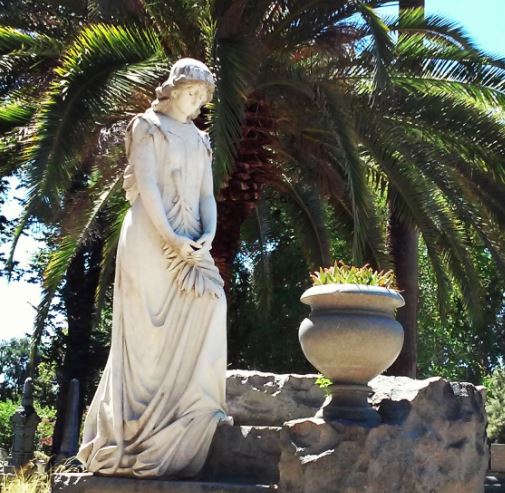
It seemed as if an icy wind had touched her face and enfolded her body from head to foot; she could feel the stir of it in her hair. At that moment her attention was drawn to a light that suddenly streamed from an upper window of the mansion: one of the servants, awakened by what mysterious premonition of evil who can say, and in obedience to an impulse that she was never able to name, had turned on the Carbide gas lights, which were operated by pushing an electric button. When she turned to look for the butler he was gone, and in all the years that had passed no whisper of his fate has come across the borderland of conjecture from the realm of the unknown. Mrs. Winchester retired and had fallen almost immediately into a peaceful sleep, from which she awoke with an indefinable sense of peril which was, a common experience in her estate. The servants slept in another part of the house. But these were familiar conditions and never distressed Mrs. Winchester. Nevertheless, the strange terror grew so insupportable that concurring her reluctance to move she sat up and pushed the button to turn on the lights at her bedside. Contrary to her expectation this gave her no relief; the light seemed rather as added danger, for she reflected that it would shine out under the door, disclosing her presence to whatever evil think might lurk in the halls of her mansion. You that are still in the flesh, subject to horrors of the imagination, think what a monstrous fear that must be which seeks in darkness security from malevolent existences of the night. That is to spring to close quarters with an unseen enemy—the strategy of despair! Extinguishing the gas lights, Mrs. Winchester pulled the bedclothing about her heard and lay trembling and silent, unable to shrike, forgetful to pray. In this pitiable state she must have lain for what you call hours—with her there are no hours, there is no time. #RandolphHarris 5 of 16

At last it came—a soft, irregular sound of footfalls on the stairs! They were slow, hesitant, uncertain, as of something that did not see its way; to her disordered reason all the more terrifying for that, as the approach of some blind and mindless malevolence to which is no appeal. She even thought that she must have left the hall gasolier burning and the groping of this creature proved it a monster of the night. This was foolish and inconsistent with her previous dread of the light, but what would you have? Fear has no brains; it is an idiot. The dismal witness that it bears and the cowardly counsel that it whispers are unrelated. In Mrs. Winchester’s mansion lived those who have passed into the Realm of Terror, who skulk in eternal dusk among the scenes of our former lives, invisible even to themselves, and one another, yet hiding forlorn in lonely places; yearning for speech with out loved ones, yet unenlightened, and as fearful of them as they of humans. Sometimes the disability is removed, the law suspended: by the deathless power of love or hate they break the spell—they are seen by those whom they would warn, console, or punish. What form they seem to them to bear one knows not; they know only that they terrify even those whom they most wish to comfort, and from whom they most crave tenderness and sympathy. What a thing it is to have legions of spirits, cowering and shivering, fearful and vengeful in an altered World, roaming the hallways of one’s house. However, Mrs. Winchester did not die of fright: the Thing turned and went away. She heard it go down the stairs, hurriedly, she thought, as if itself in sudden fear. Then she rose to call for help. Hardly had her shaking hand found the annunciator when—merciful Heaven!—she heard it returning. Its footfalls as it remounted the stairs were rapid, heavy and loud; they shook the mansion. She fled to an angle of the wall and crouched upon the floor. #RandolphHarris 6 of 16
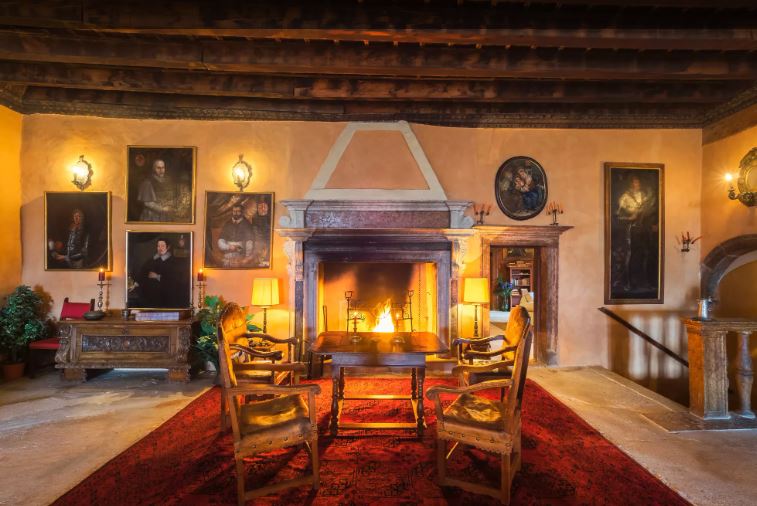
Mrs. Winchester tried to pray. She tried to call the name of her maid. Then she heard the door thrown open. There was an interval of unconsciousness, and when she revived, she felt a strangling clutch upon her throat—felt her arms feebly beating against something that bore her backward—felt her tongue thrusting itself from between her teeth! And the she felt the life pass from her. As the spirits still dwelled in the mansion of the shadows, lurking in its desolate places, peering from brambles, thickets, towers, corners, stairways and doors. Ghosts at the Winchester mansion know when it is night, for then most people retire and they can venture from their places of concealment to move unafraid about in their old mansion, to look in at the windows, even to enter and gazes upon people’s faces who might still be wandering in the evening hours. Vainly, spirits often seek some method of manifestation, some way to make their continued existence and their great love and poignant pity understood by their loved one’s or those they wish to haunt and terrorize. Ghosts dare to approach people when they are awake, but the terrible eyes of the living frighten them by the glances that they seek from the purpose the hold. Demons, ghosts, and other spiritual beings search for the living in the Winchester mansion during the moonlight dawn. At the time of her death, the unrelenting construction had rambled over six acres. The sprawling mansion contained 160 rooms, 2,000 doors, 10,000 windows, 47 stairways, 47 fireplaces, 13 bathrooms, and 6 kitchens. Carpenters even left nails half driven when they learned of Mrs. Winchester’s death. According to the provisions of her will, Mrs. Winchester’s personal property, including the furnishings, household goods, pictures, jewelry, and papers were left to her niece, Mrs. Marian Merriman Marriott, who promptly has the furnishings auctioned off. It is said to have required sic trucks working six weeks to car the furnishings away! The mansion and farm were not mentioned specially in the will. They became part of the Mrs. Winchester’s estate. #RandolphHaris 7 of 16

Demon possession is a well-defined phenomenon and should be clearly distinguished from spiritism. Since the same demonic forces are at work in both phenomena, they bear some similar characteristics and result in the same occult oppression and bondage. The demonized state of the demon possessed is similar to the trance of the spiritistic medium. Both are under the direct influence of demons who speak through them. In the case of the medium who processes to communicate with the spirits of deceased persons, the demon apes the personality and voice of the deceased. In the case of the demon possessed, the evil spirits appear to be more crassly cruel, unclean, violent, and less sophisticated and subtle than spirits working through a clairvoyant medium. In demon possession, they are also more domineering and brutally enslaving. Nervous muscular reactions and contortions peculiar to the demoniac often appear also in the spiritistic medium when one goes into a trance, but in a much milder form. Then, too, the demoniac is normally an involuntary victim of possession, while the medium is a willing subject, who cultivates psychic propensities and willingly yield to demonic control. Extraordinary movements of inanimate objects surrounding the demon-possessed remind us of similar happenings in spiritism. Extraordinary movements of inanimate objects surrounding the demon-possessed remind s of similar happenings in spiritism and magic. Tables, chairs, dishes, and the like are mysteriously moved about without anybody touching them, recalling tumbler moving and table lifting so common in spiritistic séances, and magic conjurations. In demon possession as well as in spiritism, unexplained rappings and noises in so-called “haunted houses” are heard. #RandolphHarris 8 of 16
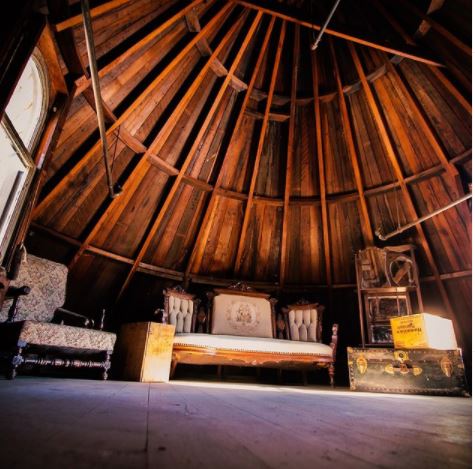
After the Winchester mansion was opened for tours, a spirit from the house had taken possession of one of the tour guides. The spirit insisted on taking up its abode with them, since it has been driven away from its for dwelling by the presence of Christians. Such cases of haunted houses about everywhere in occult literature in connection with mediums, magicians, and demon possessed persons. The tour guide saw apparitions and had frequent attacks in which she fell unconscious and demons spoke through her in their own voice and personality. A thorough investigation was conducted. Persons were stationed all around the house, in various rooms, and even in the Daisy Bedroom. Noises were heard which gradually increased in violence and seemed to concentrate in the bedroom Mrs. Winchester died in. Chairs bounced, windows rattled, plaster fell from the ceiling, and objects moved about without any visible explanation. Prayer caused the noises and telekinetic phenomena continued for a while in the mansion. On one occasion, after continued prayer, one of the demons inhabiting Jane cried out, “All is now.ost. Our plans are destroyed. You have shattered our bond, and put everything into confusion. You, with your everlasting prayers—you scatter us entirely. We are 13,130,130,130 in number. But there are still multitudes of living men, and you should warn them lest they be like us forever, lost and cursed of God.” The demon confessed that he was an emissary of Satan. The next day, the contents of the mansion were found in compete disarray and utter confusion. The amazing and terrifying thing was that the doors were still securely locked. No man or beast had entered. Evil spirits had obviously been at work in a satanic assault. On that day there were some tremendous crashing and knocking noises heard in the Winchester mansion, as if the whole house was filled with evil spirits. #RandolphHarris 9 of 16

Everyone giving tours in the mansion in the early 1900s, used to hear knocking and rumbling and crashing noises to such an extent that some of the visitors were frightened by them. Ghosts were also seen there quite regularly, even during the day time. A headless ghost was repeatedly seen in the mansion. Many people reporting becoming burned after contact with the “possessed” tour guide Jane. The autumn of 1925, all the pigs on the Winchester mansion’s farm died. The cause of death could not be found even though one of the carcasses was sent to a biological institute for examination. They tried everything but all to no avail. The following year the same thing happened again. This time the farmer redoubled his efforts to discover the cause of the pigs’ death. He had the stables inspected and the food analyzed but again without success. He thus decided to have the conservators of the estate decided to have the pigsty torn down and rebuilt on another site using completely different materials. Next year the pigs died again. They would all of the sudden squeal and then collapse. The whole process was repeated and every possible examination made in order to find out why the pigs had died. At this time certain of the member of the community began to say that someone must be killing the pigs magically out of spite. At first the conservators of the Winchester Estate would have nothing of this and continued to seek the advice of the vet and other such people. However, they could not help them, and so in the end they went to see the local minister to ask him about the question of magic. The minister simply laughed and said that the idea was stupid. Nevertheless the villagers pointed out to the representatives that there did exist some people in some areas of California who could kill livestock by means of magic. #RandolphHarris 10 of 16
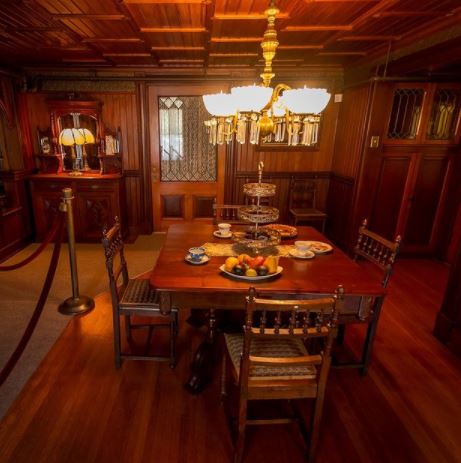
The conservators could do nothing though, and the event recurred year after year in spite of the fact that by now they had doubly secured the stables with locks and had sometimes stayed up all night with thread stretched out around the estate in order to discover if anyone was causing the animals’ deaths. One day, however, the circumstances changed. The minister visited the estate and asked one of the tour guides to accompany him to the vicarage. There they found one of the neighbour’s of the Winchester Estate, a man who had been less affluent, and this man confessed that it was he who had been the cause of everything. He had killed the pigs using black magic. The tour guides and conservators were naturally upset because by now 39 pigs had been killed. When asked why he had done this, the neighbour replied that it was because the tourists made such a noise outside his house. He had become so angry that he had tried to get his revenge in this way. He had subscribed himself to the devil with his own blood. To do this he had gone out on a Friday night to some crossroads and there drawn up a contract between himself and the devil. He mentioned that the devil had not appeared to him as he is often pictured, but that he met a black curly headed figure with blood-red eyes and a small snout and that the figure had been dressed in rather old-fashioned clothes. Ever since that day the man confessed that among other things, he had had the power to kill his friend’s pigs. The minister asked him what had made him come out into the open about the whole matter. His answer was that the people at the Winchester estate had been so kind to him over the year, donating food, clothes and furniture, that he had felt ashamed and he now asked for them to forgive him, and promised he would no longer plague them. #RandolphHarris 11 of 16

Not wanting to take any legal action, the conservators of the Winchester Estate forgave him and all went well until the neighbour ceased going to church and slid back into his old ways. Since his confession none of the estate’s pigs had died but now the man again took up his drinking habits two more of the pigs died in exact same ways as the others. The conservators decided to shutdown the farming land of the Winchester Estate and sell off hundred of acres, only keeping four. In the process, several other Victorian houses on the grounds, along with fountains, and gazebos were demolished. From the psychological point of view it is suggested that a person delving into magic and who believes in occult practices is really only succumbing to a fulfilment compulsion. One unconsciously fulfils the things that one seeks to perform by magic. One is the victim of auto-suggestion. However, even if this were the whole explanation as some people affirm, it would still be true to say that occult practices have a corrupting effect on all those who get involved in them. Demons tend to be somewhat more independent than angels…When possession takes place, you will not get to see them at all. The Florida-based Luciferian Light Group (LLG) adopted the ‘Watcher myth’ of devils that were originally angels, sent to Earth to guard humankind and cursed by God for screwing their charges. In the original myth the couplings produced monsters, but, according to the LLG, the actual result was the Aryan race. They say that African Americans and other racial groups take pride in their cultural roots, so the argument goes, why should the same concept not apply to Europeans? The argument cannot be countered by liberal sophistry, and so the ghosts of German volkisch occultists continue to be conjured. #RandolphHarris 12 of 16

The role of cultural villain again proves to be a delicate balancing act—nothing can ever be condemned on purely moralistic grounds. Many people are still trying to protect “The Black House.” The Black Pope himself once reassured his flock, “the first 99 years are always the toughest. Rege Satanas!” Satanism is opposed to victimology and scapegoating. Many people are really drawn to the dark side because they grow up reading a lot of books and watching a lot of movies about it. If witches are out there, practicing some of the old ways of the pre-Christian gods and goddesses, then they are still Satanic in the sense that they are heretical. One side of the heretical and diabolical is the scientific aspect of Satanism. Copernicus and Galileo were regarded as practicing sorcerers in as far as they dared to challenge the supremacy of God with their heresies-their scientific research. Anton LaVey codified modern Satanism. There is a rich heritage of hearsay and blasphemy behind it, but as far as an aboveground religion that reveres Satan, there was not anything before the Church of Satan’s foundation in 1966. There were Black Masses that parodied the Catholic Church. A lot of modern Satanism draws from that codification or personification of Satan used as an archetype in mythology. Satanist are more interested in power, and what was going on in the castles and courts of the times. The interactions of power and Machiavellian machinations interest a Satanists rather than going out and find herbs to cure indigestion. Satanists are reaching for a religion of the aristocracy. They have all the aspects of that pride, that energy, that stye, and hopefully those elevated standards. Many people fear them because they believe they will lure you in their house and kill you, but is that not what many Christians are doing today? #RandolphHarris 13 of 16

Your relationship with your personal Satanic archetype is yours alone. The only way some can see how effective one is as a practicing black magician is how well one gets on in the outside of the World. Satanism has always represented and will always represent the adversary. He is a counterbalance to the unspoken injustice that prevails in the current society, whether that be overweening elitism or, going to the opposite extreme, mob rule. They always have to be in the minority that push hard in the other direction to get the pendulum swinging. Satanism will never be a religion of the people. It will never be populist beyond its current position. You see hundreds of thousands of kids making the sign of the horns, wearing black, getting devil tattoos, and listening to rock music they think is Satanic. They will take all the trappings and even grasp a few of the basic ideas, like Satan representing indulgence and independence of spirit. But, beyond that, they will always be a minority and that is how some think it should be. The Winchester mansion is a common site of demonic assault. In the early 1900s, a group of tourists and tour guides were attacked by demons; some became possessed; 30 people in the group were seized. In 1926, Satan and his allies once again possessed people at the Winchester mansion. For the first time in their lives, many of these people found themselves to be powerful, significant beings, establishing their own realm of authority. When they spoke, everyone in the mansion stopped to listen, for their shrill cries became testimony. Many historians have argued that the Satanism at the Winchester mansion was only the product of demented minds. However, there was something quite real in all the series of accusations and counteraccusations of the witnesses and the possessed—some definitely evil driving force that led humans to turn against one another like mad dogs lusting for the smell of blood. If Satan was to have presided over the Satanism at the Winchester Mansion, much was left out of the picture. #RandolphHarris 14 of 16

The Devil manifested himself in many forms to people at the Winchester Mansion—as a horse, a fox, a dog, a cat, a pig, and as a shadowy figure. At the Sabbats, the Devil was always present in the form of a tall, handsome man with blue eyes and black hair making no attempt to disguise his identity in any way Neither was the all-important bloodletting present in the ceremonies, either in the form of a sacrifice or in the singing of the pact. There was no defiling of sacred object, nor mention of the administering of the witches’ mark, a painful ceremony that was quite vivid in the minds of many of the witches at the estate. The Sabbats, all in all, seemed to have been rather staid affairs, involving no wild ritual or debauchery. The Devil offered not immediate wealth or riches, but a new system of government, where all humans would be equal, each human being free to “live bravely.” He promised an end to beliefs. Whoever the Devil was at those meetings, he obviously did not seek adulation, but rather he sought to establish a more equal and suitable social order among humans. Taken in this context, the entire episode begins to sound like a huge projection, a gigantic wish fulfillment on the part of the disgruntled citizens, who were expressing disdain for the system that, in their eyes had become oppressive. The figure chosen by the confessors as the Devil presiding over the midnight Sabbats had himself become disillusioned by the system. Perhaps he had been holding nocturnal meetings in the mansion in an effort of “cleansing the soul.” At any rate, the meetings were necessary psychological safety valves in the minds of the people. People would stand around begging for the master to teach them his secret. How to become invisible, how to acquire love, and oh! beyond all, how to make gold. How much gold would you give for the Secret of Infinite Riches? Humans became strengthened with wonderful power through the order of angels, so that one declares the divine will. From the Seraphim, that we cling with fervent love. From the Cherubim, enlightenment of the mind, power and wisdom over the exalted figures and images, through which we can gaze upon divine things, etcetera. #RandolphHarris 15 of 16

From the Thronis, a knowledge of how we are made and constituted, that we may direct our thoughts upon eternal things. From Dominationbius, assistance to bring into subjection our daily enemies, who we carry with us constantly, and enabling us to attain salvation. From Potestatibus, protection against human enemies of life. From Virtuibus, God infuses strength into us, enabling us to contend against the enemies of truth and reward, that we may finish the courage of our natural life. From the Principtibus, that all things become subject to humans, that one may grasp all power, and draw unto oneself all secret and supernatural knowledge. From Archangelis, that one may rile over all things that God has made subject to one, over the animals of the field, over the fish of the sea, and over the birds of the air. From the Angelis one receives the power to be the messenger of the divine. When the veil between the conscious and the subconscious mind begins thinning it is likely that one will begin to experience certain phenomenon that will grab your attention throughout the day. This will occur more and more as the veil between Worlds thins merging your spiritual awareness with your physical life. Usually it will manifest in the form of synchronicity, Déjà vu, or circumstance which seems to jump out and grab your attention. Thee I invoke, the Bornless one. Thee, that didst create the Earth and the Heavens: Thee, that didst create the Night and the Day. Thee, that didst create the Darkness and the Light. Thou art Osorronophris: Whom no human has seen at any time. Thou art Ahriman. Hear Thou Me, for I am the Angel of Paphro. Osorronophris: this is Thy True Name, handed down to the Prophets of Ishrael. Ahriman rise up through the infernal planes through the seal of Arezura and find rest within this manifestation of the blessings. Fill this sorcerous fluid with your power and might that it will serve my cause of counter creation through the intent of my own evil mind. Bless this blood as the very powers of death, destruction, and decay that I may cast out all that does not serve the cause of my own great work upon this path of enlightenment. Come tour the dark, brooding and mysterious, promising all kinds of forbidden treats. #RandolphHarris 16 of 16

Winchester Mystery House

Happy weekend! Will we be seeing you on the estate today? 🌻 https://www.winchestermysteryhouse.com/

The Problem with America it is Submerged in Old Atlantis

The problem with America it is submerged in old Atlantis. It has become like a refugee camp where all the geniuses have been driven out of their jobs and country by unfriendly regimes that are idling. The World of streets are so seductive that a person can ask you where you are from, then tell you what you are and you will believe them. People are too dependent on history and culture. However, the World belongs to those who understand it. Still, countless individuals bring their broken hearts and shattered dreams to the altar and hope they will be accepted, and they pray that rejection will not throw them into a rage and turn them into a Cain. Perhaps a vast number of those in society naively produced their favorite treasures and piled them in an indiscriminate heap. Those who do not recognize their value now may do so later. However, while some may be flattered by being tested, others resent it. People reserve their best thinking for their professional specialties, and next in line, for serious matters confronting the alert citizen—economic, politics, the disposal of nuclear waste, etcetera. When the day’s work is done, they want to be entertained. They cannot see why their entertainment should not simply be entertaining. Yet, it is not amusing to send oneself back to high school. Higher education must offer the individual much more than it does. For in the end, several people realize that they have no education in the conduct of life, at the university who was there to teach the students that drinking is not fun, and how to deal with their erotic needs, with other genders, and with family matters, and one graduates to some primal point of balance. In this great confusion, there is still an open channel to the soul. In many be difficult to find because by midlife it is overgrown, and some of the wildest thickets that surround it grow out of what we describe as our education. However, the channel is always there, and it is our business to keep it open, to have access to the deepest part of ourselves—to that part of us which is conscious of a higher consciousness, by means of which we make final judgments and put everything together. #RandolphHarris 1 of 18

The independence of this consciousness, which has the strength to be immune to the noise of history and the distractions of our immediate surroundings, is what the struggle is all about. The soul has to hold its ground against hostile forces, sometimes embodied in ideas which frequently deny its very existence, and which indeed often seem to be trying to annual it altogether. What makes the journey through life singularly difficult is the disheartening expansion of trained ignorance and bad thought. For to put the matter at its baddest, we live in a thought-World, and the thinking has gone very bad. Thinking alone will never cure what ails humanity, and so many should be grateful for a naïve grace which puts them beyond the need to reason elaborately. It is time for people to shed superfluities so that their mental bodies can recover its ability to breathe, and protect the root-simplicities of being. The University has never been a sanctuary or shelter from “the outer World.” It can be the place where megalomaniacs, heretics, tyrants, and illiterate athletes get the training and documents they need to make the cities turbulent, and torment humanity. The odor of their egos now is no more pleasant than they were 400 years ago. The heat of the dispute between the Left and Right has grown so fierce in the last decade that the habits of civilized discourse have suffered a scorching. Antagonists seem no longer to listen to one another. The World is so ready for an anti-hero that almost anyone can get voted into office or steal an election. Even criminals are being voted in to run cities like Sacramento, California—one after the next. Preoccupied with quests of Health, Pleasures of the Flesh, Race, War, academics make their reputations and their fortunes and the university has become society’s conceptual warehouse of often harmful influences. It makes an important statement and deserves careful study. For instance, it is interesting how sweetheart Lori Loughlin was sentenced for what she allegedly did, but Kevin Johnson was allowed to become mayor of Sacramento, and displayed more criminal behavior, never was prosecuted for what he actually did and was even invited to the White House. I guess we have to keep the cook book witches in check, but let dangerous felons go free. #RandolphHarris 2 of 18

What each generation is can be best discovered in its relation to the permanent concerns of humankind. This in turn can best be discovered in each generation’s tastes, amusements, and especially angers (this is above al true in an age that prides itself on clam self-awareness). Particularly revealing are the various impostors whose business it is to appeal to the young. These culture peddlers have the strongest of motives for finding out the appetites of the young—so they are useful guides into the labyrinths of the spirit of the times. However, there is a human nature, it is guided by awareness. Humans are not just creatures of accident, chained to and formed by the particular cave in which they are born. One with a joy, and pleasure for life is far more effective in motivating others than anyone who is disinterested in what their moral duty is. The youth need to be helped to recognize and avoid deforming forces of convention and prejudice. The vision of what that nature is may be clouded by the fake news media. The soul may at the outset require extrinsic rewards and punishments to motivate its activity; but in the end that activity is its own reward and is self-sufficient. Fascinations with the youth leads to an awareness of the various kinds of soul and their various capacities for truth and error as well as learning. Every age has its problems, and things in the past may not have been wonderful. Society needs to be taught to be highly intelligent, materially, and spiritually free. So many are confused by the emerging perception of what needs to be done. Every time there is a disaster, people are told to “donate money,” so the youth are brought up in a consumer driven economy and taught that money can solve all problems. This makes it harder for people to learn what truly matters. Since in any specific struggle we might be outspent by several hundred times, we need to be more clever, more creative. The population is being inundated with conflicting versions of increasingly complex events. People are giving up on understanding anything. The glut of untreated sewage spewing from the TV news media is dulling awareness, not assisting it. Overload. It encourages passivity, not involvement. #RandolphHarris 3 of 18

Specific victories are possible, but overall understanding of the forces that are moving society seem to be diminishing. People’s minds seem to be running in dogged, one-dimensional channels which are reminiscent of the freeways during rush hour. As mass media has grown to become a kind of environment, it is not really contributing to any pool of useful knowledge. The real community of humans, in the midst of all the self-contradictory simulacra of community, is the community of those who seek the truth, of the potential knowers, of all humans to the extent they desire to know. Television has become the major mental and physical experiential field for most of the people in the country, and the confusion of television information with a wider, direct mode of experience is advancing rapidly. Become so many are confusing television experience with direct experience of the World, we are not noticing that the experience itself is being unified to the single behavior of watching television. Switching from channel to channel, believing that a sports program was a significantly different experience from a police program or news of a Russian war, all 121 million viewers are sitting separately in dark rooms engaged in exactly the same activity at the same time: watching television. It is as if the whole nation has gathered at a gigantic three-ring circus. It has become possible for a nation of 325 million people to be spoken to as individuals, one to one, the television set to the person or family, all at once. So many should be chilled at the thought, realizing that these conditions of television viewing—confusion, unification, isolation, especially when combined with passivity and the effects of implanted imagery—are ideal preconditions for the imposition of autocracy. President Trump have uncovered, through an exhaustive investigation by law enforcement agencies, that the TV news media is involved in a massive conspiracy to destroy our democracy, a conspiracy which enjoys at least the tacit support of thousands of students, journalist, attorneys and even certain judges and elected officials. #RandolphHarris 4 of 18

Television is the perfect instrument to help bring tyrannical control. We can all be spoken to at the same time, night or day, from a centralized information source. In fact, we are. Every day, a handful of people speak, the rest listen. In many ways, as we saw with the recent Presidential Election, television makes the military coup and mass arrests of the imagination unnecessary. People thought that these subtle coups would make brutal and heavy-handed means of confining awareness unnecessary, but it seems to be making it worse. The riots, violence, kidnappings, hijacking, bombings—the sole purpose of these actions is often no more than media exposure. Sensing that the television is now the country’s main transmitter or reality, individuals began to take person action to affect it. Something in the nature of television imagery allows form to supersede content. However, the gravest mistake that can be made by a media creature is to assault the machine. The machine does not care about its fantasies. A new one will do. Bringing down Trump was just as good for ratings as supporting him. Better. More action. The only goals of the machine are to contribute to be the real power behind the throne, no matter who is king, and to remain the primary factor in all public perception. Television has the power to create presidents, and it has the power to destroy them. Most people do not raise complaint against a machine doing what it is designed to do. After all, who expects a machine to notice its own side effects? To care about the social and psychic consequences of its own presence? Machines asks no questions, have no peripheral vision or depth perception. They see the future through the fixed eye of their technical possibilities. However, it is well said that in the country of the blind, the one-eyed man is kind. In America, and increasingly in the rest of the World, technology is a one-eyed king ruling unopposed amidst idiot cheering. Globally, there are 5.36 billion people Worldwide who are TV users, and that number is expected to reach 5.7 billion by 2026. Humans cannot live by electric wiring alone, and this obvious fact must be part of any plans we make for the future. #RandolphHarris 5 of 18

Power, utility, and prestige of the word have significantly diminished. All most all of the presidential candidates found their vote-getting power in their images and left content out as confusing and irrelevant. They were correct to do this. As we know, a campaign run on content could not possibly work on television. During the years that television was coming into its own as the central factor in American personal and political life, its basic nature and the effects it had on human beings and their institutions were rarely examined The problems that people did discuss were concentrated in three main areas: commercialism, access and programming. The speed, range, and impersonality of modern media undermine the oral tradition and therefore weaken the possibility of a nourishing community life. And in these days when lying is called misspeaking or disinformation, Newspeak becomes the normal mode of discourse. Psychologist, parents’ groups and educators lobbied against the dominance of sensational, superficial, irrelevant and violent programs. They sought programs with “prosocial values.” They especially wanted new emphasis on humanistic and educational shows for children. These groups saw no reason why such values as cooperation, loving and caring could not be as appropriate for television programming as violence and competition, but yet, no one still has censored the news nor warned readers that the informational may be fiction and not necessarily scholarly. Historians lobbied for more documentaries, believing that television has no greater inherent limits to its ability to present historical truth than the media that had preceded it. They succeeded in getting legislation requiring that TV networks permanently store their news and documentary footage. Now we can look to a future in which the present era will be understood in terms of the television treatment of it. Ecologist assumed television could be a potentially useful tool in expanding knowledge of how our species interacts with natural forces. #RandolphHarris 6 of 18

Political radicals believed television could stimulate deeper understanding of complex issues. Some groups believe there is a possibility to build sensitivity to their culture and philosophy through TV. Listen, everybody is watching TV. If we handle this the right way, we can reach everyone. Because of this, the decline of language may have proceeded so far that most people no longer perceive it as a problem. An analogy here might clarify this. It is said that the brain in the only organ of our body that feels no pain and therefore does not know when it is injured. The brain does not regard brain damage as a problem. If we think of language as the brain of a civilization, the it is possible that severe language-damage may not be perceived by the social body as a problem. It is possible that we have adapted ourselves to disinformation, to Newspeak, to public-relations hype, to imagery disguised as thought, to picture newspapers and magazines, to religion revealed in the form of entertainment, to politics in the form of a thirty-second television commercial. In adapting ourselves, we come to accept the present situation as the only available standard and conclude that this is the best of all possible Worlds. However, perhaps this is not the case. There does appear to be a national concern about illiteracy, aliteracy, and the persisting decline in our young people’s analytic ability. There is even a movement that wants to give the highest priority to teaching critical thinking in schools. Education, a subject never far from the issues raised by technology and language, attempts to understand and resolve new conditions of culture. Nonetheless, sometimes it is great fun to complain and, in America, it can even be profitable. However, unless one’s complaints are grounded in a sense of duty to one’s country or to a recognizable humane tradition, they are not worthy of serious attention. Everybody engages in creative arts and is likely to carry a sketchbook, proving when the psychologists and progressive educators have always claimed, that every child is creative if not blocked. Resigning from the rat race, they have removed the block. #RandolphHarris 7 of 18

They work at these arts honestly, with earnest absorption, and even if they do continually subject one another and passers-by to listening to readings, and encourage the community by exclaiming, “It is the greatest!” Such creative activity sharpens the perceptions, releases and refines feelings, and is a powerful community bond. In itself it has no relation to the production of art works or the miserable life of sacrifice that an artist leads. It is personal cultivation, not much different from finger paintings. Like the conversation just described, its aim is action and self-expression and not the creation of culture and value or making a difference in further World. There is, of course, no reason why it should be. All men are creative but few are artists. Art making requires a peculiar psychotic disposition. Let me formulate the artistic disposition as following: it is reacting with one’s ideal to the flaw in oneself and in the World, and somehow making that reaction formation solid enough in the medium so that it indeed becomes an improved bit of real World for others. This is an unusual combination of psychological machinery and talents, and those who, having it, go on to appoint themselves to such a thankless vocation, are rarer still. These few are not themselves Hipsters, for they have a vocation, they are not resigned. (My observation is that is artists are blocked in their vocation, they cannot resign themselves to seeking other experiences, and certainly they do not do finger painting, for if they can do finger painting they can make art.) Nevertheless, living among the Hipsters, there will be a disproportionate number of artists, for the same reason that artists gravitate to any bohemia. Also, some of these genuine undersigned artists will make works that speak for the Hipster community that they live among. That is, the “Hipster” artists are not themselves Hipsters, for they are artists; but their art work tell us about the Hipster. This situation rises interesting questions about the relation of an artist and his immediate audience, and it is worth exploring. #RandolphHarris 8 of 18

It is both an advantage and a disadvantage for an artist to have around him an intensely creative gang of friends who are not rival artists. They provide him an immediate audience that helps assuage the sufferings of art loneliness and art guilt. On the other hand, it is a somewhat sickening audience because it has no objective cultural standard, it is not in the stream of ancient and international tradition. So its exclamations, “It is the greatest!” or, “Go, man, go!” do not give much security. The artists finds that he is a parochial group hero, when the culture hero for the immortal World. Let me tell a few anecdotes to illustrate this fascinating dilemma of the relation of the “Hipster” artist both to the Hipster and the objective culture in which he must finally exist. An incident at a party for Patchen. Patchen is a poet of the “previous” generation, of long-proven integrity, with an immense body of work, some of which is obviously good, and the importance of the whole of it (may much still be added!) not yet clear. The point of our anecdote is that Patchen has the respect of writers but has received no public acclaim, no money, no easy publication. Now at this party, one of the best “Hipster” writers, a genuine young artist, came demanding that the older poet give some recognition to the tribe of Hipster poets, to “give them a chance.” This was ironical since, riding on the Madison Avenue notoriety that we have mentioned, they had all got far more public acclaim, invitations to universities, night-club readings, than all of us put together. However, Patchen asked for the names. The Hipster spokesman reeled off twenty, and Patchen unerringly pointed out the two who were worthwhile. This threw the younger poet into a passion, for he needed, evidently, to win artistic recognition also for his parochial audience, among who he was a hero, in order to reassure himself that he was a poet, which he was and as Patchen would at once have said. So he insulted the older man. Patchen rose to his height, called him a young punk, and left. The young man was crushed, burst into tears (he was drunk), and also left. At this, a young woman who often accompanied him, came up to me and clutched me by the knees, pleading with me to help him grow up, for nobody, she said paid him any attention. #RandolphHarris 9 of 18

That is, the Hipster audience, having resigned, is not in the World; yet being an eager creative audience, it wins the love and loyalty of its poet who becomes its hero and spokesman. However, he too, then, doubts that he is in the World and has a vocation. As a Hipster spokesman he receives notoriety and the chance of the wide public that every poet wants and needs; but he cannot help feeling that he is getting it as a pawn of the organized system. Here is a simpler illustration of the relation of the spokesman-artist to the objective culture. This fellow is a much weaker poet, more nearly Hipster himself, and quite conceited. At a reading of some other poet who is not a Hipster spokesman, he tries to stop the reading by shouting, “Do not listen to this crap! let us hear from X.” His maneuver is to make the parochial the only existing culture; then, by definition, he himself is an artist. And here is an illustration of the most elementary response. A Hipster spokesman, not ungifted but probably too immature to accomplish much, gives a reading in a theater. During the intermission, he asks a rather formidable and respected critic what he thinks of a particular poem, and the critic says frankly that it is childish. At this the outraged poet, very drunk, stands in the lobby screaming, “I hope you die! I hope art dies! I hope all artists die!” These illustrations and the analysis of the Hipster conversation brings out the same point: In a milieu of resignation, where the young men think of society as a closed room in which there are no values but the rejected rat race or what they can produce out of their own guts, it is extremely hard to aim at objective truth or World culture. One’s own products are likely to be personal or parochial. Shared creative expression has a therapeutic effect, and so results in transference, unconscious attachment. The striking, and often amusing, example of this is the young ladies who take modern dancing, with its beautiful exercises that release tense muscles; they are all head over ears in love with Paris and Beyonce, and fiercely loyal and sectarian. #RandolphHarris 10 of 18

The same occurs among the young Hipster, except that, since there is no “leader,” the emerging love attaches either to the community or to each one’s self-image narcissistically. This makes for a powerful warmth of life—“the warmth of assembled animal bodies,” as Kafka said—but it makes even harder to get into the World. It gives the young men a daily interpersonal excitement, more satisfactory than the empty belonging or conformity of the organization, and happier than the loneliness of art. However, it does not give them “something to do.” The wretchedness of a widow’s life was, however, perhaps not the worst consequence of her husband’s death. After all, she was still alive, in a manner of speaking. Many Hindus, mostly men, considered this intolerably lenient. They believed that if a woman’s husband was happy, so should she be. If he was said, so should she be. And if he was dead, so should she be. So even creeping miserably around a relative’s or spiteful in-law’s home was too soft an existence. Any good widow (a Hindu oxymoron) would know better than to impose her tainted self on this World. That was what suttee—immolation on the husband’s funeral pyre—was for. The “paramountcy of a woman’s chastity” was the most compelling reason for suttee, although financial and property considerations also cost many an inconvenient widow her life. One anti-suttee crusader explained that relatives and in-laws feared that “if there was no cremation, widows may go astray; if they burn, this fear is removed. Their family and relations are freed from apprehension.” From this perspective, suttee becomes “the ultimate chastity belt.” The widow who willingly clutches her husband’s sandals and climbs up unaided to lie beside his corpse as the fagots are fired is truly reverenced. Once they are safely crisped, such widows are lauded and mythologized much like Muslim suicide bombers who eagerly launch themselves as human explosives to ascend directly to paradise. The great difference is, huge numbers of suttees have not gone willingly to their incineration. #RandolphHarris 11 of 18

Those who did were driven either by religious conviction or, more probably, by despair at their lot. Though suttee was legally banned in 1829, it has flourished until well into the twentieth century—a mere three and a half decades ago—when teenaged Roop Kanwar shared her husband’s cremation in September 1987. For centuries, witnesses have reported force in supposedly voluntary suttees. In the seventeenth century at Lahore, Frenchman Francois Bernier watched as a few Brahmins and an old woman immobilized a shivering and sobering twelve-year-old widow with ropes, then forced her onto the pyre. He saw another suttee prevented from escaping the billowing flames by men carrying long poles. In the eighteenth century, a Western observer saw a widow tied down beside her dead husband on heaped logs that were then set ablaze. However, in the dark and rainy night, the widow managed to free herself from the scorching flames and hid nearby. Soon, however, her relatives noticed only one body on the pyre. They raised the alarm and quickly found the wretched woman cowering under some brushwood. Her son hauled her back and ordered her to either hurl herself back onto the funeral pyre or at least to drown or hang herself. If she refused, he warned, she would cause him to lose his caste. Such stories abound. Widows were drugged, beaten, bound, terrorized, and tied down beside their dead husbands. Often, they were bound with slow burning shots of green bamboo that would hold them until the died. In 1835, despite livid protests by the British agent, the fives queens of a deceased ruler were hauled, screaming and protecting, to their death of his pyre. In the 1950s, a suttee who escaped from the flames lay charred and dying for two days under a tree, and nobody offered her the slightest assistance. Roop Kanwar was eighteen when her husband of eight months died of gastroenteritis in Deorala, a village in Rajasthan. Hours later, still on September 4, 1987, stern men armed with waving swords escorted her to her husband’s hastily contrived funeral pyre. #RandolphHarris 12 of 18

Some eyewitnesses thought she walked unsteadily and foamed at the mouth, while to others she was cheerful and composed. (Statements were impossible to corroborate, with participants understandably reluctant to admit they had attended the illegal event.) “Mummy! Papa!” Roop cried, thrashing her hands as the flames, ignited by her conveniently unindictable, underage brother-in-law, licked at her body. Neither Mummy nor Papa were there, of course; the were informed of the daughter’s “courageous decision” only after the fact. Roop Kanwar was the (hopefully) las victim of centuries of tradition, her death facilitated by authorities who civic-mindedly seized upon this fortuitous opportunity to bring some pilgrimage business into their little village. As Roop’s in-laws swaggered about, proclaiming their honor, Deorala suddenly became a shiny new dot on the religious map. The heat of passion is ice-cold compared to the inferno of a suttee’s sad ending. Millions of suttees have undoubtedly quavered to their terrible deaths, secure in their righteousness and proud of, or at least grateful for, the honor the flames will soon reflect on their entire family. Millions more have been forced onto the flames by relatives and in-laws. These latter are determined to eliminate the unwanted presence of the widows, and above all, to guarantee they will never disgrace themselves or their loved (even if unloving) ones by an unchaste thought, much less a deed. Suttee is, after all, a preemptive stive against potential unchastity. Thinking matters. However, many of the facts we think about are false. And much of what we believe not always the most enlightened perspective. Despite the tidal waves of data, information and knowledge crashing over us today, a greater and greater percentage of what we know is, in fact, less and less true. Even if we could believe the media, even if every advertiser were truthful, every lawyer honest, every politician sealed one’s lips, every adulterer confessed and every fast-talking telemarketer went straight, much of the information we consume, as we will see, would still not be truth, the whole truth, and nothing but the truth. #RandolphHarris 13 of 18

If this is the case, how should individuals—or, for that matter, companies or countries—turn the deep fundamental of knowledge into wealth? Some knowledge has always been needed to produce wealth. Hunter-gatherers had to know the migratory patterns of the animals they pursued. Peasants came to know a lot about soil. Normally, however, once learned the same knowledge remained useful generation after generation. Factory workers had to know how to operate their machines quickly and safely for as long as they had the job. Today work-relevant knowledge changes so rapidly that more and more new knowledge has to be learned both on and off the job. Learning becomes a continuous-flow process. However, we cannot learn everything fast enough. And if some of what we think is stupid, that helps explain why there is no need to be embarrassed. We are not alone in believing stupidities. The reason is that every chunk of knowledge has a limited shelf life. At some point it becomes obsolete knowledge—what might more appropriately be called “obsoledge.” Does Plato’s Republic or Aristotle’s Poetics constitute “knowledge”? Or the ideas of Confucius or Kant? We can, of course, describe their ideas as wisdom. However, the wisdom of these authors or philosophers was based on what they knew—their own knowledge base—and much of what they knew was, in fact, false. Aristotle, whose views held sway across Europe for almost two thousand years, believed that eels were asexual and “originated in…the entrails of the Earth.” He also believed that the Indian Ocean was a landlocked sea—a geographical error that was still shared centuries later by Ptolemy and other European and Islamic scholars. In the third century AD, Porphyry, the biographer of Pythagoras, assured his readers that is you took park of a bean plant, put it into an earthenware pot, buried it for three months, then dug it up, you would surely find either the head of a child or female private parts. In the seventh century, Saint Isadore of Seville assured contemporaries that “bees are generated from decomposed veal.” Half a millennium later no less a genius than Leonardo da Vinci declared that beavers knew the private parts where being used by humans for medicinal purposes. When trapped, he asserted, a beaver bites them off “and leaves them to its enemies.” #RandolphHarris 14 of 18

When tomatoes, native to South America, first reached Europe in the sixteenth century, perfectly intelligent people knew that they were toxic to humans. It was two hundred years before Linnaeus declared otherwise. And as late as 1820 when he risked eating two tomatoes to prove Linnaeus was right, a particular daring fellow attracted a large crowed. However, obsoledge is not always assuming. As late as 1892 it was common knowledge—and scientifically accepted since the time of Galileo—that the planet Jupiter had four satellites. That knowledge became obsolete, however, on September 9 of that years, when astronomer E.E. Barnard of the Lick Observatory discovered a fifth moon. By 2003, astronomers had counted six. Similarly, scientists for decades had assumed that there were only nine planets in our solar system. However, in 2005, a California Institute of Technology astronomer discovered an object he named Xena, which he and other scientists believed may be a tenth planet orbiting our sun. Then there was London physiologist L. Erskine Hill, who reported in 1912 that experimental evidence showed the “purity of air is of no importance.” If, over the last few decades, we have not learned otherwise, how many more people around the World would have died of pollution related caused? And how many patients will die today because somewhere an otherwise intelligent doctor is manipulating information or relying on outdated “fact,” learned or manufactured years ago in medical school or by junk scientists? How many companies will go belly-up because of a marketing strategy based on yesterday’s fad? How many investments are doomed because of out-of-date financial data? What if your employer decided to manipulate your personal information so he could reinvest your earnings into his shell corporation? And what about tomorrow’s deaths or disaster just waiting to happen? #RandolphHarris 15 of 18

Look, for example, at the minutes of the September 2002 meeting of the Advisory Committee of CERN users. (CERN is the European Organization for Nuclear Research.) Tucked away among references to decisions about providing ashtrays “close to the outside doors of major buildings for smokers” and notifications of “changes in mail delivery service” is the following item: “The names of persons to be contacted in case of accidents should be restored in the Human Resource database.” Why on Earth, one might ask, should the list of persons to be contacted in case of a nuclear accident be missing? The answer: Because “for the majority of people the information became obsolete” and the administration “did not have the resources to ensure systematic updating.” It took the chairman of the users’ group to point out that “the potential human cost in case of a serious accident is immense, and a solution should be found.” What is clear is that wherever knowledge is stored, whether in digital databases or inside our brains, there is the equivalent of Aunt Emily’s attic overstuffed with obsoledge—facts, ideas, theories, image, and insights that have been outrun by change or replaced by later, presumably more accurate, truths. Obsoledge is a big part of the knowledge base of every person, business, institution and society. By accelerating change, we also speed up the rate at which knowledge becomes obsoledge. Unless constantly and ruthlessly updated, experience on the job becomes less valuable. Databases are out of date by the time they are published. With every passing semi-second, the accuracy of our knowledge about our investments, our markets, our competition, our technology and out customers’ needs diminishes. As a result, whether they are aware of it or not, companies, governments and individual today base more of their daily decisions on obsoledge—on ideas and assumptions that have been falsified by change—than ever before. #RandolphHarris 16 of 18

Occasionally, of course, some antique bit of obsoledge comes back to life, as it were, and proves useful today because the context around it has changed and given it powerful new meaning. However, more often than not, the reverse is true. Ironically, in advanced economies, companies brag about “knowledge management,” “knowledge assets” and “intellectual property.” Yet with all the numbers crunched by financial quants, economists, companies and governments, no one knows what obsoledge costs us in the form of degraded decision-making. What, one might ask, is the drag placed on individual investments, corporate profits, economic development, poverty-reduction programs and wealth creation in general? Beneath all of this, moreover, lies an even more important, hidden epistemological change. It affects not merely what we regard as knowledge but the tools we use to acquire it. Among these instruments of thought, few are remotely as important as analogy, in which we identify similarities in two or more phenomena and then draw conclusions from one to apply to the other. Humans can barely think or talk without making analogies. The Irish golfer Padraig Harrington tells a sports reports that “ A U.S. Open is one that really tests your ability to hit….you sort of want to be like a machine.” Which takes us back to the followers of Newton who said the entire cosmos was “like” a machine. Then there are all the people described has having “a mind like a computer,” or who “sleep like a baby,” or who are told to invest “like a pro” or think “like a genius.” Implicit analogies are built into language itself. Thus we still rate cars in terms of their “horsepower”—a leftover from the day when they were seen as analogs of horse-drawn coaches and were know as “horseless carriages.” However, the thought-tool we call analogy is growing harder to use. Analogies, always tricky, are growing trickier. For as the World changes, old similarities can turn into dissimilarities. Once-legitimate comparisons become strained. As parallels with the past break down, often unnoticed, conclusions based on them become misleading. And the faster the rate of change, the shorter the useful life span of analogies. #RandolphHarris 17 of 18

In this way, a change in one deep fundamental—time—affects a basic tool we use in the pursuit of another—knowledge. In sum, then, as we have seen, even among experts on the knowledge economy, few have thought much about what might be called the law of obsoledge: As change accelerates, so does the speed at which still more obsoledge accumulates. All of us carry with us a far bigger burden of obsolete knowledge than our ancestors did in the slower-moving societies of yesterday. And that is why so many of our most cherished ideas will set our descendants roaring with laughter. “For where your treasure is, there will your heart be also. Keep your loins girded and your lamps burning, and be like people who are waiting for their master to return home from the marriage feast, so that when one returns from the wedding and comes and knocks, they may open to one immediately,” reports Luke 12.34-36. Behold, my people, the spring has come; the Earth has received the embraces of the sun. And we shall soon see the results of that love. One may have never seen fiercer wonders—past the wit of any spirit to tell, but one of those who, when this planet’s sphering time doth close, will be its high remembrancers: who are they? The mighty ones have an eternal day. All souls are of equal importance before God. The soul, in the sense of the true self, is only spiritual. Of great importance are the evolutionary changes through which humankind in general has been passing during recent centuries. In the coming age, balance will be restored for people of both genders and all races, and everyone will take their rightful place alongside the dominant groups in the leadership of the whole race. Evolutionary trend of things are being the human race closer and closer to enlightenment and thus making it possible for everyone to claim and receive what is best for them in life. Fear not, neither be dismayed, O America; for lo, God will save you from afar, and your children from the lands of captivity. O America, you shall again be quiet and at ease, and none shall make you afraid. For a brief moment God has forsaken us, but with great compassion will He gather us. For even if the mountains depart and the hills move, God’s kindness will not depart from us. Nor His covenant of peace be removed. #RandolphHarris 18 of 18

Cresleigh Homes
Sometimes, driving up to our home at Brighton Station Residence 2 feels like coming up to a movie set.

That sunshine! That sky! Those clean lines! But it’s real, and it’s ours at #CresleighRanch. 😍
Convenient single-story living is just what you need in this beautiful 2,427 square foot home.

Brighton Station Residence 2 is certainly a thoughtfully designed living space, with three bedrooms, three bathrooms, a flex space, dining room, a highly sought after butler’s pantry, laundry room, private backyard, and a three car garage.
#CresleighHomes

A Devil Who Has Unity Will be a God

Behind the accepted history of our civilization—of great leaders and mass movements, of politics and progress—there is an alternative history, a shadow tradition. It is an oft-neglected World full of villains and vice, scoundrels and sorcerers, with an impact upon our culture out of proportion with the numbers of people involved. Almost everything about magic, including the forms it takes and the customs associated with it, gives one the impression that it is a religion of the devil. It everywhere seeks to mimic the World of faith as we find it revealed in the Christian Bible. There is a dark side of Western culture: the Satanic tradition. Even the serpent in the Garden of Eden—who tempts Adam and Eve to “Original Sin”—does not become a manifestation of evil (“that Ancient Serpent,” as Satan is sometimes know) until later. This change occurs with the advent of Christianity, which promotes Satan from a mischievous servant of God to His implacable opponent. The Roman Empire had thrived by absorbing, rather than destroying, the cultures they conquered, welcoming foreign gods into their temples as part of policy of conquest by integration. The Christians could not stomach this. Their God was supreme, and all other deities—initially regarded as hollow superstitions—began to be portrayed by their theologians as actively evil, demonic. This doctrine, demonization, defined the totalitarian nature of the Christian creed. These demons required a leader, and so Satan was reborn not just as an adversary, but as the Adversary. Myths began to grow up around this new Prince of Darkness, cribbed from fanciful reinterpretations of existing doctrine and the ravings of Christian hermits driven half-mad by isolation in the desert. Satan’s power is first suggested in the New Testament, when He tempts Jesus Christ with mastery of the kingdoms of the World—implying He has them all in His possession. The Old and New Testaments claim that the Devil was once the leader of the Watcher angels. These angels were commanded by God to watch over humankind, but they pitied moral men and lusted after mortal women. #RandolphHarris 1 of 20
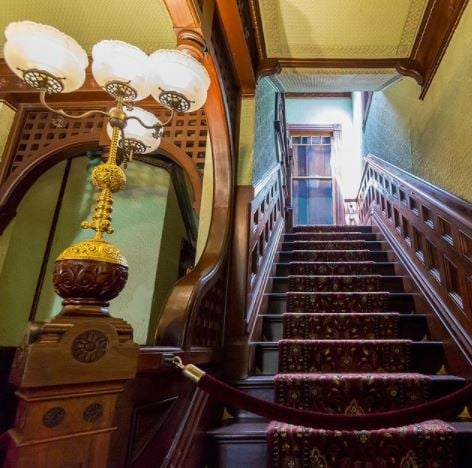
For teaching forbidden knowledge and copulating with their charges (in theological terms, the equivalent of a shepherd disgracing himself with his flock) these disobedient angels were cast from Heaven to become the denizens of Hell, whilst their children became demons and monsters. Satan—or Semjaza, as He is known here—is the leader of these disobedient angels. Another more widely-accepted version of the same story has Satan trying to claim God’s throne before loyal angels cast Him and his co-conspirators into darkness. Traditionally, the question of whether one personally regards Satan’s act as one of treachery or bravery is the definition of an individual’s loyalties in the war between darkness and light. Significantly, however, many traditions state that, before His fall from grace, Satan was known as Lucifer: derived from the Latin “Light bringer.” As an act of worship is composed of certain elements, so too is an act of magic. There are basically four constituents that are necessary. Invoking, charming, a symbolic action, and the use of a fetish. One may invoke either Satan or even the Trinity, and it is this that decides whether the magic is to be black or white. Such invoking is a counterpart to our addressing of God in prayer, as for example, when we say “Our Father.” The charm or spell that then follows brings the force of magic into play. This imitates our use of the Scriptures and our reference to the promises of the Christian Bible. The symbolic action underlies and supports the charm and mimics such scriptural actions as, for instance, the laying on of hands or kneeling in prayer. The use of a fetish, that is a magically charged object, corresponds perhaps to the use of water in baptism or bread and spirits in the case of the Lord’s supper. Though Christians never got their Apocalypse, they did win their spiritual war when, in the fourth century, an embattled Roman Empire adopted Christianity as the state religion. #RandolphHarris 2 of 20

The short-term benefits were obvious: Christianity appealed to the oppressed, promising them great reward in the afterlife; it also appealed to the oppressor, demanding the downtrodden obeyed their obeyed their superiors if they wished to enjoy rewards. The glories of a classical World built on pagan pragmatism were eroded, then destroyed, by Christian intolerance. As the Roman Empire fell in one of history’s many dark ironies the Catholic Church set itself up in its place. Imperial purple was the uniform of colour for the Church leaders’ new robes, Latin their sacred tongue, Rome their headquarters. However, while this new Roman Catholic Church could steal the superficial glories of the empire they had destroyed, they could begin to emulate the culture, comfort or security that Imperial Rome had provided to its citizens. The end of the World had failed to arrive on schedule, but the Four Horsemen of the Apocalypse—War, Death, Famine and Plagued—still characterized the medieval era, when the Christian creed held Europe in its thrall. The Middle Ages had arrived, and with them an era of cultural depression, a millennium of darkness, squalor and misery. The Gnostics believed that there were two equally-powerful gods—one “good,” the other “evil.” Some though the evil God was the one described in the Old Testament, the creator of this World, while the benevolent God described in the New Testament was His foe. In Gnostic doctrine, only pure spirit was “good.” All matter, including the human body, was “evil,” and humankind was made up of spirits trapped in prions of flesh. Widely suppressed with increasing severity, Gnosticism began to take on a variety of increasingly dark and erotic forms. Some Gnostics believed that, as all flesh was evil, it did not matter what use it was put to—in this sense, carnal excess could even be seen as redemptive, as with cults like the third-century Carpocratians, who indulged in ritualized pleasures of the flesh. Widely suppressed with increasing severity, Gnosticism began to take on a variety of increasingly dark and exotic forms. #RandolphHarris 3 of 20
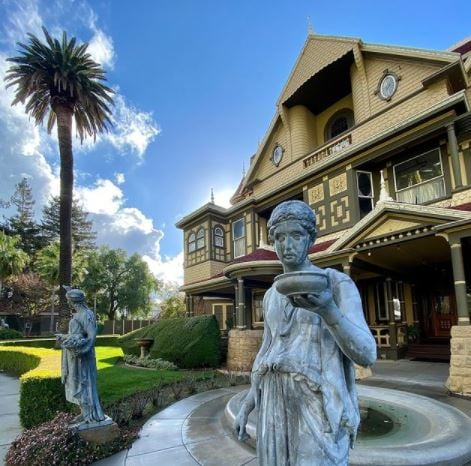
Others, like the Cainite sect of the fourth century, reasoned that if the Old Testament God was evil, then His opponents must be good—therefore revering Old Testament villains like Cain, who proved his virtue in combat by murdering his brother, Abel. It is tempting to regard these early movements as the first Satanic sects, but the attitude of most Gnostics—that the flesh was inherently evil—was just as pathological as that of their pleasure-hating Catholic oppressors. This is perhaps best demonstrated by the Cathar sects. The first of these, the Bogomils, was formed in the Balkans during the tenth century. The Bogomils believed that Man was created when Satan vomited into an empty human vessel—a vivid illustration of their unhealthy attitude to their own bodies. Some have suggested Gnostic roots for the mysterious Luciferian cult that appears to have thrived secretly in the thirteenth- and fourteenth-century Germany thought Lucifer was a curious, cadaverous figure whose body glowed during their subterranean rites—has been unjustly cast from Heaven by a treacherous God, and honoured Him in orgiastic ceremonies that also featured cats as objects of worship. One other medieval cult has generated more fanciful theories than the Cathars and Luciferians combined. The Order of the Knights Templar was founded in 1118 to protect Christian pilgrims visiting Jerusalem, combining the military skills of a trained warrior with the pious dedication of a monk. Feared by their heathen foe and revered by their Christian brethren, the Templars rose from poverty-stricken obscurity to become one of the wealthiest, most powerful institutions in Europe. Their fall from grace was just as dramatic when, in 1314, King Philip of France smashed the Order with a campaign of mass arrests. King Philip claimed that, beneath their pious exteriors, these warrior monks were in fact an international Devil-worshipping cult and many of their number, including their Grand Master Jacques de Molay, were burnt alive for their alleged crimes. #RandolphHarris 4 of 20

The blood lust of the medieval Church was far from sated by the persecution of such heretics. In the 1480s, with full papal backing, two monks named Jakob Sprenger and Heinrich Kramer issued a practical witch-hunting manual entitled Malleus Maleficarum (“The Hammer of the Witches’), describing how to identify witches and force confessions from them under torture before consigning them to the flames. Previously, witchcraft was officially regarded as a delusion, but Malleus Maleficarum helped trigger an international campaign of witch-hunts that lasted over two centuries and claimed upwards of 250,000 lives in the most brutal circumstances. The history of witchcraft is swathed in controversy. Did the witch-cult truly exist? And, if it did, did it consist of isolated, eccentric old women, or was it a coherent international movement? Some modern theorists maintain that the witch-cult was a benevolent religion that worshipped ancient nature gods, ancestor of the modern Wiccans. However, several more substantial historical accounts refer to Satan as “the God od the Serfs”: the Middle Ages were desperate times for the peasantry, and, if the Christian clergy supported the nobility, where else could the desperate and downtrodden turn but to the Devil? The witch-cult, therefore, many have been a creed of social rebellion based upon orgiastic revels, drug abuse and the deliberate adoption of heretical symbols. Certainly, the medieval peasantry regarded the Devil in a very different way to the medieval Church. The grinning gargoyles that leered from church roofs, the slapstick demons that peopled the “mystery” plays put on by rural villagers, and the Devil who appears in the folk tales of the day—all suggest a view of Satan among ordinary working folk that was sympathetic to Christianity’s supposedly terrifying, hateful anti-hero. It was not only the peasantry who made resort to the demonic in times of need. In 1440 the French Baron Gilles de Rais, once one of the most wealthy and powerful men in Europe, was executed for conjuring devils. There were also other charges laid against this licentious warlord. In fact, de Rais was a medieval serial killer, and was also a fervent Christian. #RandolphHarris 5 of 20

However, Gilles de Rais was certainly involved in black magic, but this was largely separate from his recreational crimes. On the one occasion he made use of the remains of a victim in a magical rite, the Baron was seized by remorse and, uniquely for him, gave the corpse a Christian burial. Like all good Christians, Gilles de Rais was more concerned with his own immortal soul than the actual physical suffering of those around him. De Rais employed sorcerers as part of his staff when his extravagant lifestyle threatened to bankrupt him. Sorcery and science were, as that time, close bedfellows. In fact, as recently as the eighteenth century, such black arts as alchemy, necromancy and astrology were regarded by many intellectuals as valid areas of scientific study. Then, just as now, many involved in pioneering research were motivated by avarice, with fast-buck schemes a favourite occupation among the scholars and sorcerers of the Middle Ages and Reminiscence. Gilles de Rais employed a number of such characters to discover the alchemical secret of creating gold from base metal. It was generally believed that the darker the magic, the higher the risk—and the higher the risk, the higher the potential reward. The most Satanic sciences was therefore the invocation of devils, the most dangerous and rewarding of all the dark arts. Medieval serial killer Gilles De Rais have a castle in Machecoul, France. Sorcerers employed by Gilles de Rais were part of a loose underground of travelling scholars who piled their wares secretly across medieval and Renaissance Europe. Operating outside the authority of the Church-controlled universities, these maverick academics were equally at home translating Greek, brewing strange medicines or confounding their clients with conjuring tricks. As far as the Church was concerned these men had made pacts with Satan, and, in many cases, they were right. Christian authorities forbade research into the mysteries of the Universe as blasphemy. Anybody whose greed or curiosity led them to ignore these warnings had knowingly or not, throw in their lot with the dark forces. #RandolphHarris 6 of 20

Of all the rituals of black magic none are as notorious as the Black Mass. At its most basic level, the Black Mass is a mockery of the orthodox Catholic Mass that substitutes the erotic and profane for its sacred elements. Black Mass priest, the French cleric Father Guiborg, who stood trial in 1678 alongside a notorious sorceress named Catherine Monvoisin, accused of the attempted murder of Louis XIV by magic. The case was a scandal of epic proportions, involving allegations of illicit abortions, child sacrifice and poisoning, all implicating people within Louis’ court. When it became clear that the King’s beautiful mistress, the Marquise de Montespan, was so heavily involved (perhaps even serving as the naked altar in once ceremony), Louis decided to draw a veil over events and proceedings were halted. Nevertheless, the macabre episode is dramatic evidence not only that the Black Mass was more than a myth, but that it was employed secretly at the highest levels of European society. Other groups existed at this time whose parodies of holy rites were if no less heartfelt, were more satirical. An informational network of Hellfire Club thrived in Britain during the eighteenth century, dedicated to debauchery and blasphemy. With members drawn from the cream of the political, artistic and literary establishments, they became sufficiently scandalous to inspire a number of Acts of Parliament aimed at their suppression. Historians have been inclined to dismiss the Hellfire Clubs as nothing more than riotous drinking societies, but the significance of many of the nation’s most powerful and brilliant men dedicating themselves to Satan is difficult to ignore. That they did so with laughter on their lips, and a drink in their hand does not dimmish the gestures so much as place them more firmly in the Satanic tradition. The inspiration for the Hellfire Clubs did not come exclusively from sorcerous sources, but also drew heavily from profane literature—such as Gargantua, an unusual work combining folklore, satire, coarse humour and light-hearted philosophy, written in the sixteenth century by a renegade monk named Francois Rabelais. Like any monastic abbey it is a place of seclusion, but in other respects it is an “anti-abbey,” dedicated to the pleasures of the flesh. Only the brightest, most beautiful and best are permitted within its walks, and its motto is “Fait Ce Que Vouldras” (“Do What You Will”). #RandolphHarris 7 of 20

One of the last and best known of the Hellfire Clubs was founded in emulation of the Abbey of Thelema, taking on its distinctive motto. The club was known as the order of Saint Francis, with headquarters in Medmenham Abbey near London and on its founder Sir Francis Dashwood’s estate in Buckinghamshire. The Order finally collapsed in the 1760s due to internal conflicts between members over the pressing political issues of the day, the demand for increasing independence by Britain’s American colonies. It is a measure of the club’s distinguished membership, however, that it contained prominent politicians from both sides of the debate. Sir (Saint) Francis was a close personal friend of Benjamin Franklin, the leading spokesman for the colonists in London, and one of the most important figures in founding the independent United States of America. Franklin was a frequent guest at Dashwood’s home, and it is tempting to image the fate of the American colonies—destined to become the World’s most powerful nation—being discussed at a smoky Hellfire Club meeting over fine spirits and harlots. (This may explain why the American Constitution, partially written by Franklin, made such a revolutionary separation between Church and State.) Anton LaVey, the twenty-first century’s foremost Satanist, claimed in typically bombastic fashion: “If people knew the role the Hell Fire Club played in Benjamin Franklin’s structuring of America, it could suggest changes like: One Nation Under Satan, or United Satanic America.” Many historically famous people were true Poets and of the Devil’s party without knowing it. For instance, this applies to William Blake and John Milton, as well as others. It also seems strange that the author (William Blake) of “Jerusalem,” still one of the most popular hymns sung in English churches, should belong to the Satanic tradition. But belong he does. Blake is often regarded as a pioneer of the Romantic movement. Today the term conjures images of willowy fops pressing flowers in flowing, loose-sleeved shirts, but in reality these young men were wild-eye radicals whose antics led a more restrained poet of the day to label them “the Satanic School.” #RandolphHarris 8 of 20

Pleasures of the flesh and barbiturates and poetry were the fuel that inspired the fashionable rebel of the early nineteenth century. “I feel confident that I should have been a rebel Angel had the opportunity been mine, opined the poet, John Keats. Percy Bysshe Shelley, in many ways the most thoughtful of the romantics, was expelled from Oxford University in 1811 for his anti-Christian beliefs. He also had a strong demonic vein running through much of his own works. While the Romantics flirted with Satan, by the end of the nineteenth century a literary movement appeared that absolutely adored Him. The Decadents were poets, painters and authors who championed extremes of sensation over common sense or convention, their quest taking them to the brothels, opium dens and morgues of the World’s most fashionable and exotic cities. Inevitably, Satanism is a prominent them in the work of these artists. Most notorious among them is the foppish Isidore Ducasses, better know under his pennanme of the Comte de Lautreamont. De Lutreamont was absorbed by strongly Satanic idea about religion and human existence, potently expressed in his masterpiece, the bizarre 1868 epic The Songs of Maldoror, which combines nauseating horror and delirious absurdity in a surreal story of a war with God. The most significant figure of the nineteenth century maintained a burgeoning interest in the occult that also centered on Paris, capital city of decadence. The most significant figure of nineteenth-century sorcery was Eliphas Levin, whose shadow still falls across the history of the occult. In 1856, he published his magnum opus Dogme et ritual de la haute magie, (translated as Transcendental Magic), quickly building a reputation as Europe’s foremost authority on the magical arts. While outwardly a devoted Christian, a more careful reading of Levi’s works implies he thought Christianity was all well and good for the masses, but that more enlightened souls were entitled to probe deeper. There is a definite ambivalence about Levi’s relationship with Satan—sometimes he roundly denounced the Prince of Darkness, at others he suggests that Satan is potentially a useful or even beneficial force. #RandolphHarris 9 of 20

Another important anti-Christian figure of the late nineteenth century was the American writer Samuel L. Clemens, better known by his penname of Mark Twain. Many would be surprised to find Twain—author of the wholesome, much-loved Adventures of Tom Sawyer and Huckleberry Finn—credited as a Satanic thinker, but his own sentiments bear it out. As Twain once wrote in an essay, “I have always felt friendly towards Satan. Of course that is ancestral; it must be in the blood.” As his life progressed, Twain became increasingly bitter towards Christianity and its brutal, unenlightened God. Mark Twain also a chapter called 2006 A.D., which he feared if it was published at the time, he would be burnt alive for writing it. His final thoughts were issued in 1995, entitled The Bible According to Mark Twain. It appeared at the end of a century when American had come to dominate the World. It would be nice to believe, however fanciful the idea, that America’s best-loved writer was somehow hovering around taking notice, as the World entered a new Satanic era. To mark this new era, a couple global events happened back-to-back. On 25 August 2001, after filming Queen of the Damned and release a hugely successful self-titled Album, one of the most beautiful pop stars, Aaliyah Haughton was killed in a plane crash. Then there was an attack on the nation on 11 September 2001, when the Twin Towers were destroyed, as well as other American sites and over 3,500 people were killed. Since then, the Satanic spirit has been in a persistent state of conflict with the Universe—it constantly seeks knowledge and experience, in order to imprint itself upon its surroundings. It is the same spiritual rough edges that Eastern mystics wish to file off, in order to reach “enlightenment.” As many can see with Church doctrines being destroyed, God being removed from the government and buildings, national monuments being snatched down and relocated to someone’s basement, and some people no longer seeing themselves as men or women, loss of law and order, God’s vision Earth is being taken over by Satanic Libertinism, as people are indoctrinated by the media to “Live out Loud,” and “discover the true self,” as the TV new media sees it. #RandolphHarris 10 of 20

America is becoming a nightmarish laboratory for spiritual experimentation and mind-control games. A Devil who has unity will be a God. Sunday newspapers will always find it easier to print headlines of child murder than discuss masturbation. If you recall Dennis Wheatley’s stories of Satanic cultus and suburban Devil-worshippers—in satisfying the appetite, he helped create the popular image of Satanism. Wheatly dabbled with magic and was terribly dangerous, he lost touch with his friends after he slipped up in a ceremony and failed to master a demon, who has caused all his teeth to fall out. Wheatley prefaced his Satanic thrillers with dire warnings on the Devil and all His works—just thinking too long on Satan was dangerous enough, let alone his engaging in a Black Mass. Many people believed that Wheatly’s stories were more than just fiction, that the Satanic forces described in his novels were a real threat to the civilized World. It has been hinted at in popular culture, but is also believed that the Germans did use black magic during World War Two. Some truly believed that the power lurking behinds it eyes was literally Satanic. Sarah Winchester, heiress to the Winchester rifle fortune, was also known to be under attack by demonic forces, which is why many believe she built her beautiful, but bizarre mansion in San Jose, California with hidden rooms, secret passageways, and trap doors. The house was furnished with the finest materials and was a showcase of Victorian elegance and taste. However, prior to moving to San Jose, William Wirt Winchester and Sarah Winchester gave birth to a daughter named Anne. While enjoying Christian fellowship in their home in New Haven, they were disturbed when they prayed by the screaming of their newborn daughter. This happened consistently for two weeks. Mr. and Mrs. Winchester assured the prayer group that their child was all right, but they were as concerned as their guest were. One of the members in the prayer group started to think about the situation in connection with demons. However, he kept telling himself that surely such a small child could not be an object of demonic spirits. Nevertheless, they decided to experiment. #RandolphHarris 11 of 20

During the usual time, of fellowship after service, the group leaders asked that everyone pray. They knew that the baby, who was busying sleeping, would have a hard time hearing the prayer. To their amazement, at the very first words of Mr. Merrill’s prayer, the baby began to scream and cry frantically for her mother, Mrs. Winchester. Mr. Merrill was convinced then that this was some kind of demon demonstration. To make sure, they did the same thing the next night, and again the child screamed hysterically. He decided the Holy Spirit was speaking to him to do something. He could not stand to see the child so tormented. So Mr. Merrill audibly cried to God to rebuke the demon powers and give the child complete deliverance with the Holy Spirit and angelic protection. Instantly she stopped sobbing and seemed quite normal. Mr. Winchester and Mr. Merrill spent much time in prayer that night. After another week, Mr. and Mrs. Winchester told Mr. Merrill that their child appeared completely delivered from the demonic assaults. However, less than a month later in July 1866, Annie Pardee Winchester died, ironically the same year the Winchester Repeating Arms Company was established. In March of 1881, William Winchester also died. It is easy to imagine how the combined grief of losing both a child and a spouse could be very crippling. However, if you have $20,000,000 and all the time in the World to help you cope, can you imagine what you would do? Mrs. Sarah L. Winchester’s response to the deaths of her child and husband left a beautiful, mysterious, and impressive architectural reflection of her psyche. The fascinating story of the Winchester Mystery House has its roots in the personal tragedies suffered by Mrs. Winchester and in the legacy of the Winchester rifle, “The Gun that Won the West.” According to some sources, the Boston medium consulted by Mrs. Winchester explained that her family and her fortune were being haunted by spirits—in fact, by the spirits of American Indians, Civil War soldiers, and others killed by the Winchester rifles. Supposedly the untimely deaths of her daughter and husbands were caused by these spirits, and it was implied that Mrs. Winchester might the next victim. #RandolphHarris 12 of 20

However, the medium also claimed that there was an alternative. Mrs. Winchester was instructed to move west and appease these spirits by building a great house for them. As long as construction of the house never ceased, Mrs. Winchester could rest assured that her life was not in danger. Building such a house was even supposed to bring her eternal life. On a more practical note, maybe a change of scenery and a never-ending hobby were just what Mrs. Winchester needed to distract her from her grief. Whatever her actual motivations, Mrs. Winchester packed her bags and left New Haven, Connecticut to visit a niece who lived in Menlo Park, California. While there she discovered the perfect spot for her new home in the Satan Clara Valley. In 1884, she purchased an estate just three miles west of San Jose. Soon after the construction started, the architects discovered that the site was characteristic of an Irish ruin. Standing on a slight elevation, in the midst of a flat country, the castle lifted its turreted walls as proudly as when its ramparts were fringed with banners and glittered helmets and shields. In olden times it was a citadel of the town, and although it was fortified by a strong wall, protecting it alike from predatory assault and organized attack, it was clear that by treachery, surprise, or regular and long-continued siege that the castle had been taken. The central portion was a large square structure, this central fort was connected by double walls, the remains of which covered passages, with smaller fortresses, little castles built into the wall surrounding the citadel; and over these connecting walls, over the little castles, and over the piles of loose stones where once the strong outer walls had stood, the ivy grew in luxuriant profusion, throwing its dark green curtain on the unsightly masses, rounding the sharp edge of the masonry, hiding the rough corners as through ashamed of their roughness, and climbing the battlements of the central castle to spread nature’s mantle of charity over the remains of barbarous age, and forever conceal from human view the stony reminders of battle and blood. #RandolphHarris 13 of 20

The success of the ivy was not complete. Here and there the corner of the battlement stood out in sharp relief, as though it had pushed back the struggling plant, and, by main force, had risen above the leaves, while on one side a round tower lifted itself as if to show that a stone tower could stand for six hundred years without permitting itself to become ivy-grown; that there could be individuality in towers as among humans. The great arched gateway too was not entirely subjugated, though the climbing tendrils and velvet leaves dressed the pillars and encroached on the arch. The keystone bore a rudely carved, crowned heard, and ivy vines, coming up underneath the arch, to take the old king by surprise, climbed the bearded chin, crossed the lips, and were playing before the nose as if to give it a sportive tweak, while the stern brow frowned in anger at the plant’s presumption. However, only a few surly crags of the citadel refused to go gracefully into the retirement furnished by the ivy, and the loving plant softened every outline, filled up ever crevice, bridged the gaps in the walls, toned down the rudeness of projecting stones, and did everything that an ivy-plant could do to make the rugged old castle as presentable as were the high round mounds without the city, cast up by the besiegers when the enemy last encamped against it. The old castle had fallen on evil days—and over the next thirty-eight years Mrs. Winchester produced the sprawling complex we know today as the Winchester Mystery House. One day while on the estate, the sun had barely cleared away the thick, heavy mist, which was still slowly rising here and there, and the birds were majestically in search of their breakfast. While the famers were out tilling the fields, a long, lanky figure was draw to its full height, the white eyeballs and jagged teeth had a red glow about them, and he waved his hand triumphantly in the direction of the vanishing cloud of birds. Then there came a loud gun shot, then next thing anyone say was the quivering body of this of a man on the ground, and wild eyes staring open in the agony of death. #RandolphHarris 14 of 20

The farmers ran over and glanced at the body of this man. They figured they better hide him in the long grass and come back after dinner to bury him. After dinner, they walked slowly at first, gradually increasing their pace as they became more distant from the mansion, and they never spoke a word. Then suddenly the, as they drew closer, the man clutched one of the farmer’s arms. It he pleading for help, so they hit him with a shovel and began to dig its grave. For more than an hour they worked desperately with the chopper and hunting-knife, being greatly assisted in their task by a rift in the ground where the soil had been softened by water running from the creek, and they stood up with sweat pouring from their faces, and stamped down the Earth to cover all traces of the man. They had filled the grave with some large stones that were lying about (remnants of some ancient temple, long ago deserted and forgotten), thus feeling secure that it could not easily be disturbed by animals. From the night on, a wolf would come howling around their cottages on the estate, which would make their blood run cold. They swore they were being haunted by the spirit of that man they murdered and that he some how much have entered this animal’s body, bent on obtaining vengeance. One of the farmers grew ill, he was thin, very pale, and haunted by a ghastly expression. He was a married man who had carried on an adulterous relationship with one of the maids the took care of Mrs. Winchester’s house. The maid was reputed to indulge in black magic. They day of the murder, the man had tried to end his illicit affair. He told the woman that he wanted to break off his relationship with her. She was very upset and threatened him, saying that if he did then his wife and children would suffer in the process. The man however, was determined to break it off and stuck to his decision. Later that day is when they suspected one of their fellow famers was a demon and shot and buried him. Two days later, the adulterous farmer’s son became ill. They rushed him to the hospital and he died there. The doctors were unable to diagnose the disease. #RandolphHarris 15 of 20

Later still, the adulterous famer’s wife and daughter fell ill. The man was by now quite frightened and remembered the threats of the woman with whom he had had the affair. He went to her and begged her not to use black magic against his family. She softened and said that she would stop. Thereupon his wife and daughter recovered quickly, but he died. During Aleister Crowley’s visit to the Winchester Mansion, He spoke to a farmer about his saw being stolen. Crowley, as you may know was a black magician, and called “the Great Beast 666,” after the devilish monster of the Book of Revelations. The farmer paid Crowley a considerable amount of money, and in returned he promised his immediate help, stating that the thief would die. The farmer and Crowley walked around the grounds of the mansion, and within three hours of his interview with Crowley, the thief had a fatal heart attack. At the Winchester mansion, Crowley claimed that black magic was very literally invoked against him. In 1898 Crowley was initiated into the Golden Dawn by its founder, the influential occultist S.L. MacGregor Mathers while at the Winchester mansion. Mathers was one of the “the Masters.” They were believed t be benevolent supermen, or demigods, who has spokes women on Earth. Mather become the “Supreme Magus,” and all members of the Golden Dawn signed an oath of obedience to him. It was unclear if Mrs. Winchester was part of the Golden Dawn, but some of these sorcerous rituals which were supposedly aimed toward gaining power and enlightenment, supposedly took place in her home. After a few séances at the Winchester mansion, Crowley fell out him Mathers. He alleged that Mather summoned a middle-aged vampiress Called “Mrs. M,” who confronted Crowley while they were at Mrs. Winchester’s mansion, where the vampiress transformed into a beautiful young woman. She subjected him to a near-fatal seduction. According to Crowley’s account, he repelled her with his mystic forces, whereupon: “She writhed back from me, and again approached me even more beautiful than she had been before. She was battling for her life now, and no longer for the blood of her victim. #RandolphHarris 16 of 20

“The odour of man seemed to fill her whole subtle form with feline agility. One step nearer and then she sprang at me with an obscene word sought to press her scarlet lips to mine. As she did so I caught and held her at arm’s length and then smote the sorceress with her own current of evil. A bluish-green light seemed to play round the head of the vampire, and then the flaxen hair turned the colour of muddy snow, and the fair skin wrinkled, and her eyes dulled and became pewter dappled with the dregs of blood. The girl of twenty had gone; before me stook a hag of 60. With dribbling curses, she hobbled from the room.” If spiritism pertained only to pagan religions and had never affected the people in so-called Christian lands, then a careful study of its practices and phenomena might not be imperative. Interest in the occult is reaching alarming proportions and even some professing Christians are being duped into complicity with spiritistic traffic. This was true of the late Bishop James A. Pike. Worldwide spiritism is conservatively estimated to have at least seventy million adherents. Kurt E. Koch, a German evangelist and student of the occult for thirty years, enumerates sixteen different varieties of spiritistic practices. If spiritism is to be accurately evaluated and its somber relation to human experience comprehended, all of these must be carefully understood. Spiritistic phenomena may be conveniently divided into the following categories: physical phenomena (levitations, apports, and telekinesis); psychic phenomena (spiritistic visions, automatic writing, speaking in a trance, materialization, table lifting, tumbler moving, excursions of the psyche); metaphysical phenomena (apparitions, ghost); magic phenomena (magic persecution, magic defense); cultic phenomena (spiritistic cults, spiritism among Christians.) There are very scarce published accounts of Daisy, Mrs. Winchester’s niece, being haunted while staying at the Winchester mansion. However, she was reportedly strangely molested by spirits and witches; also the aforesaid Winchester Mystery House is still being haunted by spirits. #RandolphHarris 17 of 20

While staying in Mrs. Winchester’s house, Daisy also suffered great annoyance every night from some invisible object, which threw stones and turf at her bed, the force of the blow often causing the curtains to open, and even drawing them from one end of the bed to the other. About the same time, also, the pillows were taken from under her head, and the clothes pulled off; and though a strict search was made, nothing could be discovered. Continuing to be annoyed in this way she removed to another room, being afraid to remain any long. Then about the 11th of December 1898, she was sitting in the twilight at the kitchen fire, a little body came in and sat down beside her. He appeared to be about eleven or twelve years old, with short black hair, having an old black bonnet on his head, a half-worn blanket about him trailing on the floor, and a torn vest under it, and kept his face covered with the blanket held before it. Daisy asked him several questions: Where he came from? Where he was going? Was he cold or hungry? and so on; but instead of answering her he got up and danced very nimbly rough the kitchen, and then ran out of the house and disappeared in the cow-shed. The servants ran after him, but he was nowhere to be seen; when they returned to the house, however, there he was beside them. They tried to catch him, but every time they attempted it, he ran off and could not be found. At lest one of the servants, seeing the master’s dog Zip coming in, cried out that her master was retuning home, and that she would soon catch the troublesome creature, upon which he immediately vanished, nor were they troubled by him again till February 1899. On the 11th of that month, which happened to be a Saturday, Mrs. Winchester was reading Dr. Wedderburn’s Sermons on the Covenant, when, laying the book aside for a little while, nobody being in the room all the time, it was suddenly taken away. She looked for it everywhere, but could not find it. #RandolphHarris 18 of 20

On the following day the apparition already referred to came to the house, and breaking a pane of glass in one of the windows, thrust in his hand with the missing volume in it. He began to talk with one of the servants, Angus Spear, and told her that the kitchen, and that her mistress would never get it again. The girl asked him if he could read it, to which he replied that he could, adding that the Devil had taught him. Upon hearing this extraordinary confession she exclaimed, “The Lord bless me from thee! Thou hast got ill lear (learning).” He told her she might bless herself as often as she liked, but tht it could not save her; whereupon he produced a sword, and threatened to kill everybody in the mansion. This frightened her so much that she ran into the parlour and fastened the door, but the apparition laughed at her, and declared that he could come in by the smallest hole in the house like a cat or mouse, as the Devil could make him anything he pleased. He then took up a large stone, and hurled it through the parlour window, which, upon trial, could not be put out at the same place. A little after the servant and child looked out, and saw the apparition catching the turkey-cock, which he threw over his shoulder, holding him by the tail; and the bird making a great sputter with his feet, the stolen book was spurred out of the loop in the blanket where the boy had put it. He then leaped over a wall with the turkey-cock on his back. Presently the girl saw him endeavouring to draw his sword to kill the bird, but it escaped. Missing the book out of his blanket he ran nimbly up and down in search of it, and then with a club came and broke the glass of the parlour window. The girl again peeped out through the kitchen window, and saw him digging with his sword. She summoned up courage to ask him what he was doing, and he answered, “Making a grave for a corpse which will come out of this house very soon.” He refused, however, to say who it would be, but having delivered himself of this enlivening piece of information, flew over the hedge as if he had been a bird. #RandolphHarris 19 of 20
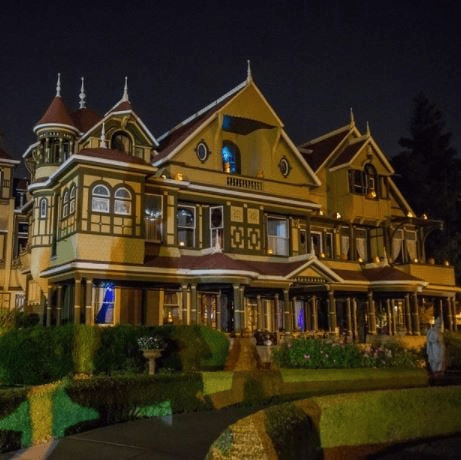
For a day or two following nothing happened, but on the morning of the 15th the close where mysteriously taken off Daisy’s bed, and laid in a bundle behind it. Being put back by some of the servants they were gain removed, and this time folded up and placed under a large table which happened to be in the room. Again they were laid in order on the bed, and again they were taken off, and this third time made up in the shape of a corpse, or something that very closely resembled it. When this strange news spread through the neighbourhood many persons came to the house, and, after a thorough investigation lest there might be a trick in the matter, where obligated to acknowledge that there was something invisible at work. Reverend N. P. Wallgren and Reverend Osborn of the Swedish Evangelical Mission Church of San Jose stayed the whole of that day and the following night with that distressed family, spending much time in prayer. At night Daisy went to bd as usual in the haunted room, but got very little rest, and at about twelve o’ clock she cried out suddenly as if in great pain. Upon Mr. Sinclair asking her what was the matter, she said she felt a knife had been struck into her back. Next morning she quitted the haunted room and went to another; but the violent pain never left her back, on the 22nd of February, she almost died. During her illness the clothes were frequently taken off the bed which she occupied, and made up like a corpse, and even when a table and chairs were laid upon them to keep them on, they were mysteriously removed without any noise, and made up as before; but this never happened when anyone was in the room. The evening before she almost died, they were taken off as usual; but this time, instead of being made up in the customary way, they were folded with great care, and laid in a chest upstairs, where they were only found after a great deal of searching. At it height the Winchester Mansion encompassed 761 acres, was 9 stories high, approximately 125,000 square feet, and possessed as many as 500 to 600 rooms. Because so many changes were made, the mansion now stands 4 stories over 4 acres, is about 25,000 square feet, and has an impressive 160 remain. It is still a beautiful, rambling mansion and sure is worth a visit. #RandolphHarris 20 of 20

Winchester Mystery House

Watch your step in Sarah’s Séance Room! There are three exits in this room and only one entrance 😳 Those exits include the main door, a secret passageway leading into an unfinished closet, and this door that opens to an 8-foot drop into a kitchen sink below. https://www.winchestermysteryhouse.com/

🎟 link in bio. A 160-room mansion built to appease the spirits who died at the hands of the Winchester Rifle 👻

When Asked His Name He Said “Legion” Because Many Demons Were Entered into Him!

It is easy to imagine how the combined grief of losing both a child and a spouse could be very crippling. However, if you have $20,000,000 (2021 inflation adjusted $347,910,691.82), and all the time in the World to help you cope, what would you do? Mrs. Sarah L. Winchester’s response to the deaths of her child and husband left a bizarre and impressive architectural reflection of her soul. After a series of violent confrontations, the Winchester Repeating Arms Company hires a private investigator to follow her. Mrs. Winchester ascends into mystery and it is soon clear that she is hiding a much bigger secret—one that is both inexplicable and shocking. A “possessed” person may have symptoms much like those that are apparent in the mentally ill. One may be deeply melancholic or depressed, appear to be withdrawn from reality, or may manifest emotions that range from ecstatic joy to violent screaming or wild ferocity. These various states may present themselves from time to time during “attacks.” Demon possession may be distinguished from insanity, however, by observing the manner in which the afflicted person speaks. An insane individual may have a mistaken concept of one’s own identity, wear clothing by which one attempts to look like the person one thinks oneself to be, but speak in one’s own voice, and in such a manner that one can tell one is doing only a superficial impersonation of the individual one thinks oneself to be. A demon-possessed person, on the other hand, is obviously controlled by the indwelling evil spirit. The wicked being may use a language or dialect the individual never knew, and sometimes will name oneself. Therefore, one should carefully note the symptoms of a disturbed person, never making the diagnosis of demon possession on the basis of a superficial judgment. #RandolphHarris 1 of 16

If a believer should meet a demon-possessed individual, one would be unwise to make a frontal attack upon the powers of darkness by immediately issuing a command in the name of the Lord Jesus Christ. Dr. Kurt Koch, an evangelical Christian who has made a lifetime study of Satan and occultic activities, declares that whenever Christians lightly engage in an effort to cast out demons, they run the risk of being attacked by evil spirits. Such people often suffer deep spiritual depression and find themselves in an attitude of complete hopelessness. Since this is true, a believer should band together with others in a time of prayer, and no efforts should be made to expel the evil spirits until the Holy Spirit prompts someone to issue the command. Unbelievers and adherents of the non-Christian religions apparently can command evil spirits without suffering bad consequences. Archeologists have found manuscripts containing incantations and magical formulas for the expulsion of demons; and today in the Philippines and other countries of the far East, as well as in some areas of South America and Africa, pagan religious leaders seriously perform rituals to ward off or cast out evil spirits. Sometimes they beat the person who is demon-possessed, prick one with needles, or even burn portions of one’s body, thinking that this pain will drive out the evil spirits. The Jewish people in Christ’s day also used spells, magical phrases, and religious rituals to expel demons. That they sometimes appeared to be successful is clear, for Jesus said, “if I, by Beelzebub, cast out demons, by whom do your sons cast them out? Therefore, they shall be your judges,” reports Matthew 12.27. #RandolphHarris 2 of 16

In this statement the Lord Jesus Christ acknowledged that evil spirits sometimes left the bodies of their victims when incantations, spells, or magical rites were used by Jewish religious leaders. However, Christ did not say these men accomplished their goal by the power of God, nor did He imply that they were actually doing damage to the cause of Satan. He was answering the charge that He was casting out demons in the power of Beelzebub, the prince of demons. He declared that is such were the case, the kingdom of Satan would be divided against itself. Actually, the exorcists, whether Jewish or pagan, did not really possess authority over the invisible World, but the evil spirits merely cooperated with them, leaving the bodies of some of their victims to give the appearance that they had been forced out. By working with these unbelieving sorcerers, the devil aided his own cause. The demons either temporarily left the person, only to return a short time later, or entered the body of some other victim. No one should attempt to deal with the forces of evil by using the name of Jesus unless one is a child of God. Luke, in Acts 19, graphically portrays the seriousness of hypocritically dealing with the powers of darkness. Seven sons of Sceva, a professional exorcist who had no personal faith in Christ, tried to combine the words “in the name of Jesus” with their magical formula. The evil spirits, recognizing that these impostors had no right to use Jesus’s name, reacted in a violent manner. The demon-possessed individual attacked these men with superhuman strengths, so that with torn clothing and bleeding bodies they fled from the Winchester mansion. The frequency of demon possession—the record of history establishes without a doubt that demon possession was known before the Lord Jesus Christ came to Earth, and the testimony of missionaries indicates that it has continued down through the centuries. #RandolphHarris 3 of 16

The public ministry of Christ, however, was accompanied by an outburst of demon possession unparalleled in history. It seems that Satan threw all his power into his battle with Jesus Christ. True, the devil is not omniscient, but he knew that Christ had come to earth to atone for sin, conquer death, and bring about the defeat of evil. John tells us that “the Son of God was manifested, that he might destroy the works of the devil,” reports 1 John 3.8. Satan used every device at his disposal to frustrate the purpose of God in Christ. Subtle temptations, the wrath and wickedness of men, and a rash of demonic activity were part of his vain effort to prevent Jesus from performing the work He had come to accomplish. Demon possession gradually subsided during the first century A.D., and usually is not conspicuous in areas where a fairly large percentage of people have placed their faith in Jesus Christ. It appears that demons are hesitant to enter the bodies of people when informed believers are likely to cast them out in the name of Christ. Luke is the same one that is translated “bottomless pit” seven times in the book of the Revelation. We read, “And Jesus asked him, saying, ‘What is thy name?’ And he said, ‘Legion’; because many demons were entered into him. And they besought him that he would not command them to go out into the deep. And there was there and herd of many swine, feeding on the mountain; and they besought him that he would allow them to enter into them. And he permitted them,” reports Luke 8.30-32. Revelation 9 tells us that at some future time the “bottomless pit” will be opened, and a great army of evil spirits will be set free to plague humankind. #RandolphHarris 4 of 16

It is at least a possibility that whenever demons are cast out of a human being in the name of Jesus Christ, they are sent to the bottomless pit, and will not be released until shortly before Christ returns to establish His kingdom. The realization that they will lose their freedom as members of the army of the “prince of the power of the air,” and be confined in the pit for an indefinite period of time, makes them hesitant to take possession of human beings. The risk is too great in an area where Christians exercise their authority in the name of Christ. People who live in civilized countries where the Gospel has been known for centuries should not rule out the possibility of demon possession, however, just because it has not been a common occurrence in these areas. Satan and his cohorts may conclude that most people, even professing Christians, will not recognize this phenomenon when they meet it. Therefore, as this age draws to a close, Satan may once again become very active in entering human bodies and controlling personalities. He will hope that the majority of humankind will either be deceived into following him or find a naturalistic explanation for the activities of the demons. This supernatural manifestation of the power of Satan and evil spirits is clearly predicted by the apostle Paul. In his second letter to the Thessalonian believers, he declares that just before Christ returns in glory, the devil will have his righthand mand upon the earth performing miracles which make him appear to be a god. Referring to the Antichrists, the apostle says, “Even him whose coming is after the working of Satan with all power and signs and lying wonders, and with all deceivableness of unrighteousness in them that perish, because they received not the love of the truth, that they might be saved,” reports 2 Thessalonian 2.9, 10. #RandolphHarris 5 of 16

Inasmuch as we can expect an increase of open opposition to God on the part of the Satanic hordes, we know Christ should humbly maintain fellowship with Him through full submission and ready obedience so that we may receive from Him the strength we need to overcome. James writes, “God resisteth the proud, but giveth grace unto the humble. Submit yourselves, therefore, to God. Resist the devil, and he will flee from you,” reports James 4.6-7. Peter declares, “Be sober, be vigilant, because your adversary the devil, like a roaring lion walketh about, seeking whom he may devour; whom resist steadfast in the faith, knowing that the same afflictions are accomplished in your brethren that are in the World,” reports 1 Peter 5.8-9. No, Satan is not dead. He is like a wounded animal and still has great power to harm those who care careless or proud. Therefore, keep awake, be on alert, read the Christian Bible and the Book of Mormon, and pray! If you do not, he may destroy your effectiveness as a Christian. For the next instance of witchcraft and the supernatural in connection with Ireland, we are compelled to go beyond the confines of our own country. Though in this connection with the Green Isle is slight, yet it is of interest as affording an example of that blending of fairy lore with sorcery which is not an uncommon feature of Scottish witchcraft-trials. In the year 1613 a woman named Margaret Barclay, of Irvine in Scotland, was accused of having her brother-in-law’s ship to be cast away by magical spell. A certain strolling vagabond and juggler, John Stewart, was apprehended as her accomplice; he admitted (probably under torture) that Margaret had applied to him to teach her some magic arts in others that “she might get gear, kye’s milk, love of man, her heart’s desire on such persons as had done her wrong.” #RandolphHarris 6 of 16

Through John Stewart does not appear to have granted Margaret’s request, yet he gave detailed information as to the manner in which he had gained the supernatural power and knowledge with which he was credited. “It being demanded of him by what means he profession himself to have knowledge of things to come, the said John confessed that the space of twenty-six years ago, he being travelling on All-Hallow Even night between the towns of Monygoif and Clary, in Galway, he met with the King of the Fairies and his company, and that the King gave him a stroke with a white rod over the forehead, which took from him the power of speech and the use of one eye, which he wanted for the space of three years. He declared that the use of speech and eyesight was restored to him by the King of Fairies and his company on a Hallowe’en night at the town of Dublin.” At his subsequent meeting with the fairy band, he was taught all his knowledge. The spot on which he was struck remained impervious to pain although a pin was thrust into it. The unfortunate wretch was cast into prison, and there committed suicide by hanging himself from the “cruik” of the door with his garter or bonnet-string, and so “ended his life miserably with the help of the devil his master.” A tale slightly resembling portion of the above comes from the north of Ireland a few years later. “It is storied, and the story is true,” says Robert Law in his Memorialls, “of a godly man in Ireland, who lying one day in the fields sleeping, he was struck with dumbness and deafness. The same man, during this condition he was in, could tell things, and had the knowledge of things in a strange way, which he had not before; and did, indeed, by signs make things known to others which they knew not. Afterwards he at length, prayer being made from him by others, came to the use of his tongue and ears; but when that knowledge of things he had in his deaf and dumb condition ceased, and when he was asked how he had the knowledge of these things he made signs of, he answered he had that knowledge when dumb, but how and after what manner he knew not, only he had the impression thereof in his spirit. This story was related by a godly minister, Mr. Robert Blair, to Mr. John Baird, who knew the truth of it.” #RandolphHarris 7 of 16

The Rev. Robert Blair, M.A., was a celebrated man, if for no other reason than on account of his disputes with Dr. Echlin, Bishop of Down, or for his description of Oliver Cromwell as a greeting (id est, weeping) devil. On the invitation of Lord Claneboy he arrived in Ireland in 1623, and in the same year was settled as (Presbyterian) parish minister at Bangor in Co. Down, with the consent of patron and people’ he remained there until 1631, when he was suspended by Dr. Echlin, and was deposed and excommunicated in November, 1634. He has left a few writings behind him, and was grandfather of the poet Robert Blair, author of The Grave. During the years of his ministry at Bangor the following incident occurred to him, which he of course attributes to demonic possession, through homicidal mania resulting from intemperate habits would be nearer the truth. One day a rich man, the constable of the perish, called upon him in company with one of his tenants concerning the baptizing of the latter’s child. “When I had spoken what I thought necessary, and was ready to turn into my house, the constable dismissing the other told me he had something to say to me in private. I looking upon him saw his eyes like the eyes of a cat in the night, did presently conceive that he had a mischief in his heart, yet I resolved not to refuse what he desired, but I keeped a watchful eye upon him, and stayed at some distance; and being near to the door of the church I went in, and invited him to follow me. As soon as he entered within the doors he fell atrembling, and I awondering. His trembling continuing and growing without any speech, I approached to him, and invited him to a seat, wherein he could hardly sit. The great trembling was like to throw him out of the seat. I laid my arm about him, and asked him what ailed him? But for a time, he could speak none. #RandolphHarris 8 of 16

“At last his shaking ceased, and he began to speak, telling me, that for a long time the Devil had appeared to him; first at Glasgow he bought a horse from him, receiving a sixpence in earnest, and that in the end he offered to him a great purse full of sylver to be his, making no mention of the horse; he said that he blessed himself, and so the buyer with the sylver and gold that was poured out upon the table vanished. But some days thereafter he appeared to him at his own house, naming him by his name, and said to him, Ye are mine, for I arled you with a sixpence, which yet ye have. Then said he, I asked his name, and he answered, they call me Nickel Downus (I suppose the he repeated evil, that he should have said Nihil Damus). Being thus molested with these and many other apparitions of the Devil, he left Scotland; but being come to Ireland he did often likewise appear to him, and now of late he still commands me to kill and slay; and oftentimes, says he, my whinger hath been drawn and kept under my cloak to obey his commands, but still something holds my hand that I cannot stroke. But then I asked him who he was bidden kill? He answered, any that comes in my way; but ‘The better they be the better service to me, or else I shall kill thee.’ When he uttered these words he fell again atrembling, and was stopped in his speaking, looking lamentably at me, designing me to be the person he aimed at; then he fell a crying and lamenting. I showed him the horribleness of his ignorance and drunkenness; he made many promises of reformation, which were not well keep’d; for within a fortnight he went to an alehouse to crave the price of his malt, and sitting there long at drink, as he was going homeward the Devil appeared to him, and challenged him for opening to me what had passed betwixt them secretly, and followed him to the house, pulling his cap off his head and his band from about his neck, saying to him, ‘On Hallow-night I shall have thee, soul and body, in despite of the minister and of all that he will do for thee.’” #RandolphHarris 9 of 16

In his choice of a date his Satanic Majesty showed his respect for popular superstitions. This attack of delirium tremens (though Mr. Blair would not have so explained it) had a most salutary effect; the constable was in such an abject state of terror lest the Devil should carry him off that he begged Mr. Blair to sit up with him all Hallow-night, which he did, spending the time very profitably in prayer and exhortation, which encouraged the man to defy Satan and all his works. The upshot of the matter was, that he became very charitable to the poor, and seems to have entirely renounced his intemperate habits. Rejecting the supernatural elements in the above as being merely the fruits of a diseased mind, there is no reason to doubt the truth of the story. Mr. Blair also met with some strange cases of religious hysteria, which became manifest in outbursts of weeping and bodily convulsions, but which he attributed to the Devil’s “playing the ape, and counterfeiting the works of the Lord.” He states that one Sunday, in the midst of public worship, “one of my charge, being a dull and ignorant person, made a noise and stretching of her body. Incontinent I was assisted to rebuke that lying spirit that disturbed the worship of God, charging the same not to disturb the congregation; and through God’s mercy we met with no more of that work.” Thus modestly our writer sets down what happened in his Autobiography; but the account of the incident spread far and wide, and at length came to the ears of Archbishop Usher, who, on his next meeting with Mr. Blair, warmly congratulated him on the successful exorcism he had practised.” Spirits of a diabolical and infernal nature, are not only ready upon all occasions to become subservient to exorcists and magicians, but are ever watching opportunities of exciting evil affections in the mind, and of stirring up the wickedly inclined to the commission of every species of iniquity and vice. #RandolphHarris 10 of 16

Thus by the instigation of infernal spirits, and their own promptitude, they often terrify humans with nocturnal visions; provoke melancholy people to suicide; tempt drunkards and incendiaries to set houses on fire, to burn those who are in them, and allure careless servants and others to sound and incautious sleep; that such unlucky accidents might happen besides innumerable other ways they have of executing the devices of iniquitous spirits through malicious instigations, or secret stratagems, projected for the overthrow and destruction of mortal men; especially when the work to be effected by the devil is too hard for his subtle and spiritual nature to effect, because the same belongs to the outward source or principle to which these dubious spirits more immediately belong. A few nights into Christmas, there was a festival for which the Winchester mansion was making extensive preparations. The narrow streets which had been thronged with people were now almost deserted. In the comfortable coffee-room of the Winchester mansion, Mrs. Winchester had half a dozen guests, principally commercial travellers, sat talking by light of the fire. The talk had drifted from trade to politics, from politics to religion, and so by easy stages to the supernatural. In the flicker of the light of the fire, as it shone on the glasses and danced with shadows on the walls, the conversation proved so enthralling that Henry, the waiter, whose presence had been forgotten, created a very disagreeable sensation by suddenly starting up from a dark corner and gliding silently from the room. Mrs. Winchester then said, “Of course, it is an old idea that spirits like to get into the company of human beings. A man told me once that he travelled down the Great Western with a ghost and had not the slightest suspicion of it until the inspector came for tickets. My friend said they way that ghost tried to keep up appearances by feeling for it in all its pockets and looking on the floor was quite touching. Ultimately it gave it up and with a faint groan vanished through the ventilator.” #RandolphHarris 11 of 16

“That’ll do, Mrs. Winchester,” said Ludwig Leichhardt. “It is not a subject for jesting,” said Adam Worth,” who had been an attentive listener. “I’ve never seen an apparition myself, but I know people who have, and I consider that they form a very interesting link between us and the after-life. There’s a ghost story connected with this mansion, you know.” “Never heard of it,” said Edward Agar, “and I have visiting this estate for some years now.” “It dates back a long time,” said Ludwig. “You’ve heard about John V. Creely also know as Jesus Procopio?” “Well, I’ve just ‘eard odds and ends, sir” said the Edward, “but I never put much count to ‘em. There was one chap ‘ere what said ‘e saw it, and the gov’ner sacked ‘im prompt.” “My father was a native of this town,” said Ludwig, “and knew the story well. He was a truthful man and a steady churchgoer, but I’ve heard him declare that once in his life he saw the appearance of Jesus Procopio in this mansion.” “And who was this Jesus?” enquired a voice. “His real name was Tomaso Rodendo, one of the most fearless and daring desperadoes that has ever figures in the criminal annals of our state. Anything he could turn his dishonest hand to,” replied Ludwig; “and he was run to Earth in this mansion one Christmas week some five years ago. He took his last supper in this very room, and after he had gone up to bed a couple of thief takers, who had followed him from San Francisco but lost the scent a bit, went upstairs with Mrs. Winchester and tried the door. It was stout oak, and fast, so one went into the yard, and by means of a short ladder got on the window-sill, while the other stayed outside the door. Those below in the yard saw the man crouching on the sill, and then there was a sudden smash of glass, and with a cry he fell in a heap on the stones at their feet. Then in the moonlight they saw the white face of the pickpocket peeping over the sill, and while some stayed in the yard, others ran into the mansion and helped the other man to break the door in. It was difficult to obtain an entrance even then, for it was barred with heavy furniture, but they got in at last, and the first thing that met their eyes was the body of Jesus dangling from the top of the bed by his own handkerchief.” #RandolphHarris 12 of 16

“Which bedroom was it?” asked two or three voices together. Ludwig shook his head. “That I can’t tell you; but the story goes that Jesus still haunts this mansion, and my father used to declare that the last time he had slept here that the ghost of Jesus Procopio lowered itself from the top of his bed and tried to strangle him.” “That will do” said John Creely. “I wish you’d thought to ask your father which bedroom it was.” “I believe it was my Blue Séance room said,” Mrs. Winchester. “Well, I should take care not to sleep in it, that’s all, said John shortly. “There’s nothing to fear,” said Ludwig. “I don’t believe for a moment that ghosts could really hurt one. In fact my father used to confess that it was only the unpleasantness of the thing that upset him, and that for all practical purposes Jesus’s figures might have been made of cotton-wool for all the hard they could do.” “That’s all very fine,” said John; “a ghost story is a ghost story, sir; but when a gentleman tells a tale of a ghost in the house in which one is going to sleep, I call it most ungentlemanly!” “Pooh! Nonsense!” said Ludwig, rising, “ghosts can’t hurt you. For my own part; I should rather like to see one. Good night.” “Good night,” said Mrs. Winchester and the others. “And I hope that Jesus will pay you a visit,” added John as the door closed.” “Shall I light the gas, Adam?” said Henry. “No; the fires very comfortable,” he said. “Now gentlemen, any of you know any more?” “I think we’ve had enough,” said John; “we shall be thinking we see spirits next, and we’re not all like Ludwig who’s just gone.” Old humbug!” said John. “I should like to put him to the test. Suppose I dress up as Jesus Procopio and go to give him a chance of displaying his courage?” “Bravo!” said Adam huskily, drowning one or two faint “Noes.” “No, drop it, John” said Edward. “Only for the joke,” said John, somewhat eagerly. “I’ve got some things upstairs in which I am going to play in the ‘Rivals’—knee-breeches, buckles, and all that sort of thing. It’s a rare chance. If you’ll wait a bit I’ll give you a full-dress rehearsal, entitled, ‘Jesus Procopio; or, The Nocturnal Strangler.’” #RandolphHarris 13 of 16

“You won’t frighten us,” said Adam, with a husky laugh. “I don’t know that,” said John sharply; “it’s a question of acting that’s all. I’m pretty good, ain’t I, Edward?” “Oh, you’re all right—for an amateur,” said Edward, with a laugh. “I’ll bet you level sov. You don’t frighten me,” said Adam. “Done! said John. I’ll take the bet to frighten you first and Ludwig afterwards. These gentlemen shall be the judges.” “You won’t frighten us, sir,” said Edward “because we’re prepared for you; but you’d better leave Ludwig alone. It’s dangerous play.” “Well, I’ try you first,” said John, springing up. “No gas, mind.” He ran lightly upstairs to his room, leaving the others, most of whom had been drinking somewhat freely, to wrangle about his proceedings. It ended with them going to bed. “He’s crazy on acting,” said Adam, lighting his pipe. “Thinks he’s the equal of anybody almost. It doesn’t matter with us, but I won’t let him go to Ludwig. And he won’t mind so long as he gets an opportunity of acting to us.” “Well, I hope he’ll hurry up,” said Edward, yawning; it’s after twelve now.” Nearly half an hour passed. Edward drew his watch from his pocket and was busy winding it, when Henry, the waiter, who had been sent on an errand, burst suddenly into the room and rushed towards them. “E’s comin’, gentlemen,” he said breathlessly. “Why, you’re frightened, Edward,” said Adam with a chuckle. “It was the suddenness of it,” said Edward sheepishly; “and besides, I didn’t look for seenin’ ‘im in the bar. There’s only a glimmer of light there, and ‘e was sitting on the floor behind the bar. I nearly trod on ‘im.” “He’s taking too long, I’ll go and fetch him,” said Adam. “You don’t know what this mansion is like at night, sir,” said Henry, catching him by the sleeve. “It ain’t fit to look at by yourself, it ain’t, indeed. It’s got the—what’s that?” #RandolphHarris 14 of 16

They all started at the sound of a smothered cry from the staircase and the sound of somebody running hurriedly along the passage. Before anybody could speak, the door flew open and a figure bursting into the room flung itself gasping and shivering upon them. “What is it? What’s the matter?” demanded Edward. “Why, it’s Mr. Creely.” He shook him roughly and then held some spirit to his lips. John Creely drank it greedily with a sharp intake of his breath gripped him by the arm. “Light the gas, Adam,” said Edward. Adam obeyed hastily, John Creely, a ludicrous but pitiable figure in knee-breeches and coat, a large wig all awry, and his face a mess of grease paint, clung to him, trembling. “Now what’s the matter?” asked Edward. “I’ve seen it,” said John, with a hysterical sob. “O Lord, I’ll never play the fool again, never!” “Seen what?” said the others. “Him—it—the ghost—anything!” said John wildly. “Rot!” said Adam uneasily. All distinctly heard a step in the passage outside. It stopped at the door, and as they watched with bated breath, the door creaked and slowly opened. Adam fell back opened-mouthed, as a white, leering face, with sunken eyeballs ad close-cropped bullet head, appeared at the opening. For a few second the creature stood regarding them, blinking in a strange fashion at the candle. Then with a sidling movement, it came a little way into the room and stood there as if bewildered. Not a man spoke or moved, but all watched with a horrible fascination as the creature removed its dirty neckcloth and its head rolled on its shoulder. For a minute it paused, and then holding the rag before it, moved towards Edward. The candle went out suddenly with a flash and a bang. These was a smell of powder, and something writhing in the darkness on the floor. A faint, choking cough, and then silence. #RandolphHarris 15 of 16

Edward was the first to speak. “Matches,” he said in a strange voice. Adam struck one. Then he leapt at the gas and a burner flamed from the match. Edward touched the thing on the floor with his foot and found it soft. He looked at his companions. They mouthed enquiries at him, but he shook his head. He lit the candle, and, kneeling down, examined the silent thing on the floor. Then he rose swiftly, and dipping his handkerchief in the water jug, bent down again and grimly wiped the white face. Then he sprang back with a cry of incredulous horror, pointing at it. Adam’s pistol fell to the floor and he shut out the sight with his hands, but the others, crowding forward, gazed spell-bound at the dead face of John V. Creely. Before a word was spoken the door opened and Ludwig hastily entered the room. His eyes fell on the floor. “Good God!” he cried. “You didn’t—” Nobody spoke. “I told him not to,” he said in a suffocating voice. “I told him not to. I told him—” He leaned against the wall, deathly sick, put his arms out feebly, and fell fainting into Ludwig’s arms. Many mysteries have taken place in the Winchester mansion over the years. It is an extravagant maze of Victorian craftmanship—marvelous, baffling, and eerily eccentric, to say the least. Tour guide must warn people not to stray from the group or they could be lost forever! Countless questions come to mind as you wander through the mansion—such as, what was Mrs. Winchester thinking when she had a staircase built that descends seven steps and then rises eleven? The Winchester Repeating Arms Company concluding their investigation by saying, “The mystery of the Winchester mansion is unquestionably great and infinite; perhaps spirits can take human shape, and disclose secrets and treasures guarded by this estate, but we must also be aware of skilled deceivers who will talk of Heaven and Hell and the Fall.” (WRA 1888.) After Mrs. Winchester’s death, crimes resulting in the theft of cash, jewels, historical European glass, furniture, and works of art worth over $10 million by Victorian standards (2021 inflation adjusted $291,146,315.79) went missing from the estate. Is the Winchester mansion haunted? Visits and find out for yourself. Their investigation sounds inconclusive. #RandolphHarris 16 of 16

Winchester Mystery House

“Though she be but little, she is fierce.” ~ William Shakespeare

Did you know Sarah Winchester only stood at 4’10”? Much of the house was built to her specific height measurement including a shower, some doors, and hallways. winchestermysteryhouse.com

There Was Terror in His Eyes as Not Often Seen in a Human Being!

Twenty-first century humans, in spite of all their scientific and technological advances, are baffled by unexplained forces existent in the Universe. The naturalistic philosophy of the previous generations has been unable to account for all of the mysterious phenomena which have been observed. Many scientists believe that living beings may inhabit other galaxies, and highly educated humans are seriously studying reports of those who insist they have received communications from the dead. Humans of science no longer scoff at the accounts of strange occurrences associated with witchcraft and occultic practices. Although they do not necessarily accept them as proof of the supernatural, many will admit they are manifestations of some kind of power they do not yet understand. Christian theologians and scientists are not perplexed by such reports. They know that both God and Satan are very much alive. Though readily conceding that they cannot explain fully all the mysteries of life, they affirm with confidence the existence of God and an invisible host of intelligent supernatural beings. They are convinced that when one accepts the teachings of the Bible, one begins to understand many of the puzzling facts of existence. For example, the Bible tells of holy angels who dwell in Heaven (Matthew 18.10). It also mentions “angels that sinned” (2 Peter 2.4), rebellious spirit begins who have been cast out of Heaven and now dwell in the atmosphere that surrounds the Earth. We know this because Paul declared that Satan is “the prince of the power of the air,” reports Ephesians 2.2, and the Greek word translated “air” was used to speak of the gaseous envelop that encircles our planet. These wicked beings apparently have unlimited access to Earther, and actively influence every area of human endeavour. #RandolphHarris 1 of 19

Because they do not possess physical bodies, we cannot typically detect them through our senses of sight, hearing, touch, taste, or smell. We do have evidence of their presence, however, for the Word of God gives us information regarding their identification, their nature and their function. Various terms are used in the Christian Bible to denote the evil spirit beings who followed Satan in this initial act of rebellion against God. It refers to “angels that sinned” 2 Peter 2.4 and “angels who kept not their first estate” Jude 6, and many times mentions “spirits” and “demons.” Some scholars believe that these demons must be distinguished from the “angels that sinned” and the “angels who kept not their first estate.” They contend that the Heavenly beings who joined Satan in his revolt against God are fallen angels, but that demons are disembodies spirits of physical and moral creatures who once lived upon the Earth. However, these Bible students disagree regarding an exact identification of the demons. Some say they are the spirits of pre-Adamic beings similar to man, while others identify them as the spirits of the “giants” who were destroyed in the great flood of Noah’s day. If one thinks that demons are the spirits of man-like beings who lived before Adam, then one will no doubt interpret Genesis 1.2 as a declaration that the original Earth, inhabited by the creatures, was cataclysmically destroyed. Genesis 1.2 is then translated as follows: “And the Earth became without form and void…” This theory, while attractive in that it permits a literal interpretation of the days in Genesis 1, must be acknowledged as only a hypothesis. Most Hebrew scholars reject this interpretation because Genesis 1.2 begins with a grammatical construction which makes it highly unlikely that Genesis 1.1 and 1.2 are separated by millions of years. Then, too, the verb translated “became” almost always has the meaning “was.” #RandolphHarris 2 of 19

However, even if we accept this theory, and believe that a race of man-like beings inhabited the prehistoric Earth, we would have no basis for thinking that their spirits are now free to roam about as the enemies of humankind. Other Bible scholars maintain that demons are the spirits of the “giants” who lived upon the Earth in the days of Noah. They refer to Genesis 6, contending that these “giants” were produced when fallen angels, called the “sons of God,” married the “daughters of men.” “And it came to pass, when men began to multiply on the face of the Earth, and daughters were born unto them, that the sons of God saw the daughters of men that they were fair; and they took them wives of all whom they chose. There were giants in the Earth in those days; and also after that, when the sons of God came in unto the daughters of men, and they bore children to them, the same became mighty men who were of old, men of renown,” reports Genesis 6.1, 2, 4. It is necessary for proponents of this theory to believe that fallen angels became male human beings who married women, produced a mongrel offspring, and took over the role of father in the family. They theorize that Satan hoped thereby to frustrate God’s redemptive plan. The Lord had promised salvation through Christ to human beings only—not for angels or mixed half-human and half-angelic race. Christ could not have been born to offspring of these corrupted creates or provide redemptions for them. Thus God’s plan of redemption would have been thwarted. In addition, both Jude and Peter in their epistles refer to a sin committed by angels, and their words can be blended very nicely into this concept. Jude writes, “And the angels who kept not their first estate, but left their own habitation, he hath reserved in everlasting chains under darkness unto the judgment of the great day. Even as Sodom and Gomorrah, and the cities about them in like manner, giving themselves over to fornication, and going after strange flesh, are set forth for an example, suffering the vengeance of eternal fire,” reports Jude 6, 7. #RandolphHarris 3 of 19

The words “in like manner” (verse 7) are taken to mean that the sin of the angels in having pleasures of the flesh with women was an unnatural act, comparable to sodomy. Peter tells of angels assigned to Tartaros, the nether World of the Greeks considered to be lower than Hades. “For if God spared not the angels that sinned, but cast them down to hell [GK Tartaros], and delivered them into chains of darkness, to be reserved unto judgment,” reports 2 Peter 2.4. Again, it does not take a great deal of imagination to see how these words of Peter may be applied to the wicked angels who committed the monstrous sin of attempting to make mongrels of the human race. Many Bible students, however, reject this interpretation of Genesis 6. Since angels are non-material beings, it would be necessary for them to create physical bodies for themselves capable of impregnating a female member of the human race. This would require nothing less than a creative miracle, and the Bible indicates that this power belongs only to God. In addition, it is not necessary to interpret the statements in Jude and 2 Peter as a reference to sin involving pleasures of the flesh on the part of the fallen angels. Jude’s use of the expression “going after strange flesh” may be figurative language representing spiritual fornication. The prophets often depicted Israel’s unfaithfulness to God in this manner. Peter’s statement that the angels who sinned have been assigned to Tartaros may be a simple declaration that all sinning angels have been designated to this place, and that they are even now under chains of moral and spiritual darkness. The Bible gives little information regarding the origin of demons. We can state with absolute certainty only that they are fallen spirit beings who have committed themselves to Satan and that they hate God and seek to harm His people. No clear distinction can be made between fallen angels and demons, for they are all evil spirits. Some of our questions must remain unanswered, but the Lord has given ample revelation to warn us that these invisible enemies are far too great and powerful for us to defeat in our own strength, and that we can successfully wage war against them only as we live in continual dependence upon the Lord. #RandolphHarris 4 of 19

In one respect the case of Dame Alice Kyteler stands alone in the history of magical dealings in Ireland prior to the seventeenth century. We have of the entire proceedings an invaluable and contemporary account, or at latest one compiled within a very few years after the death of Petronilla of Meath; while the excitement produced by the affair is shown by the more or less lengthy allusions to it in early writings, such as The Book of Howth (Carew MSS.), the Annals by Fariar Clyn, the Chartularies of S. Mary’s Abbey (vol. ii), &c. It is also rendered more valuable by the fact that those who are best qualified to give their opinion on the matter have assured the writer that to the best of their belief no entries with respect to trials for sorcery or witchcraft can be found in the various old Rolls preserved in the Dublin Record Office. However, when the story is considered with reference to the following facts it takes on a different signification. On the 29th of September 1317 (Wright says 1320), Bishop de Ledrede held his first Synod, at which several canons were passed, one of which seems in some degree introductory to the events detailed in last week’s report. In it he speaks of “a certain new and pestilential sect in our parts, differing from all the faith in the World, filled with a devilish spirit, more inhuman than heathens…who pursue the priests and bishops of the Most High God equally in life and death, by spoiling and rending the patrimony of Christ in the diocese of Ossory, and who utter grievous threats against the bishops and their ministers exercising ecclesiastical jurisdiction, and (by various means) attempt to hinder the correction of sins and the salvation of souls, in contempt of God and the Church.” From this it would seem that heresy and unorthodoxy had already made its appearance in the diocese. In 1324 the Kyteler case occurred, one of the participants being burnt at the stake while other incriminate persons were subsequently followed up, some of whom shared the fate of Petronilla of Meath. In 1327 Adam Dubh, of the Leinster tribe of O’Toole, was burnt alive on College Green for denying the doctrines of the Incarnation and the Holy Trinity, as well as for rejecting the authority of the Holy See. #RandolphHarris 5 of 19

In 1335 Pope Benedict XII wrote a letter to King Edward III, in which occurs the following passage: “It has come to our knowledge that while our venerable brother, Richard, Bishop of Ossory, was visiting his diocese, there appeared in the midst of his catholic people men who were heretics together with their abettors, some of whom asserted that Jesus Christ was a mere man and a sinner, and was justly crucified for His own sins; others after having done homage and offered sacrifice to demons, thought otherwise of the sacrament of the Body of Christ than the Catholic Church teaches, saying that the same venerable sacrament is by no means to be worshipped; and also asserting that they are not bound to obey or believe the decrees, decretals, and apostolic mandates; in the meantime, consulting demons according to the rites of those sects among the Gentiles and Pagans, they despise the sacraments of the Catholic Church, and draw the faithful of Christ after them by their superstitions.” Unlike apocryphal and rabbinical literature, the Biblical description of evil spirits avoids the unusual and grotesque. The Bible does, however, present us with a clear picture of their activity and tells us how to resist them effectively. In the first place, it declares that demons or fallen angels are non-material beings. They do not possess bodies like humans, and therefore are repeatedly called “spirits.” Matthew, for example, says, “When the evening was come, they brought unto him many that were possessed with demons; and he cast out the spirits with his word, and healed all that were sick,” reports Matthew 8.16. Jesus started that the Creator is not made up of physical substance when He said, “God is a Spirit,” reports John 4.24. Later, when His frightened disciples thought He was a ghost, He told them their fears were groundless, for “a spirit hath not flesh and bones, as ye see me have,” reports Luke 24.39. Paul had in mind the non-physical nature of Satan and his army of evil spirits when he said that our warfare is “not against flesh and blood, but against principalities, against powers, against the rulers of the darkness of this World, against spiritual wickedness in high places,” reports Ephesians 6.12. Satan’s demonic hordes are spirit beings, and therefore more dangerous than the “flesh and blood” enemies we may encounter in our daily lives. #RandolphHarris 6 of 19

Second, the Bible portrays demons as highly intelligent creatures. They recognize Christ when He was here upon the Earth, and knew they could not have fellowship with Him. Luke tells us about an evil spirit who is an example of this. “When he saw Jesus, he cried out, and fell down before him, and with a loud voice said, What have I to do with thee, Jesus, thou Son of God, most high? I beseech thee, torment me not,” reports Luke 8.28. The fallen spirits are also aware of their ultimate defeat, for James declared, “Them demons also believe, and tremble,” reports James 2.19. They are, of course, finite creatures, even Satan is limited in knowledge. He has myriads of evil spirit followers, however, and they are able to give him information on almost any person and circumstance in which he is interested. In this manner he can find out much what he wants to know. Truly, believers in Christ can never successfully cope with Satan and his hosts without special help from the Lord. Therefore, we must humbly look to God for wisdom and strength to resist the attacks of our invisible enemies. Third, the World of evil spirits is cruel. These creatures hate God and all who have placed their trust in Him. They seem to find delight in causing human grief and pain. For example, Matthew tells us that a man who was both blind and dumb suffered these afflictions because a demon had entered his body. “Then was brought unto him one possessed with a demon, blind, and dumb; and He healed him, insomuch that the blind and dumb both spoke and saw,” reports Matthew 12.22. Matthew, Mark, and Luke all tell the story of two demented men who lived in the country of the Gerasenes, and indicate that their insanity was the result of demonic invasion of their personalities. Luke, the beloved physicians, writes of a woman who was bent over with some crippling disease, saying that she had “a spirit of infirmity.” He adds that Jesus said she had been bound by Satan. “And he was teaching in one of the synagogues on the sabbath. And, behold, there was a woman who had a spirit of infirmity eighteen years, and was bowed together, and could in no way lift herself up. And when Jesus saw her, he called her to him, and said unto her, Woman, thou art loosed from thine infirmity. #RandolphHarris 7 of 19

“And he laid his hands on her; and immediately she was made straight, and glorified God. And the ruler of the synagogue answered with indignation, because Jesus had healed on the sabbath day, and said unto the people, There are six days in which humans ought to work; in them, therefore, come and be healed, and not on the sabbath day. The Lord then answered him, and said, Thou hypocrite, doth not each one of you on the sabbath loose his ox or her ass from the stall, and lead him away to watering? And ought not this woman, being a daughter of Abraham, who Satan hath bound, lo, these eighteen years, be loosed from this bound on the sabbath day? And when he had said these things, all his adversaries were ashamed; and all the people rejoiced for all the glorious things that were done by him,” reports Luke 13.10-17. While the gospel writers make it clear that not all illness is the work of Satan and demons, they do point out that much human suffering is the result of demonic activity. Finally, the Bible tells us that all fallen angels or evil spirits are confirmed in their wickedness. Though they “believe and tremble,” they will never repent, never seek forgiveness, and never pray for holiness or purity. Though they know that Jesus is the Christ, they never really worship Him. They must acknowledge that He is stronger than they, and may occasionally render Him token submission, but inwardly they hate Him and keenly resent His authority over them. In fact, their nature is so totally evil that the term “unclean” often is applied to them. (See Matthew 10.1; Mark 1.27; 3.11; Luke 4.36; Acts 8.7; Revelations 16.13.) They apparently delight in sin, find great pleasure in leading humans to commit evil deeds, and possess no feelings of guilt nor desire for deliverance. Michael Scot, reputed a wizard of such potency that—when in Salamanca’s cave he listed his magic want to wave and the bells would ring in Notre Dame. Scot has studied successively at Oxford and Paris (where he acquired the title of “mathematicus”); he then passed to Bologna, thence to Palermo, and subsequently continued his studies in Toledo. His refusal of the See of Cashel was an intellectual loss to the Irish Church, for he was so widely renowned for his varied and extensive learning that he was credited with supernatural powers; a number of legends grew up around his name which hid his real merit, and transformed the man of science into a magician. #RandolphHarris 8 of 19

In the Border country traditions of his magical power are common. Boccaccio alludes to “a great master in necromancy, called Michael Scot,” while Dante places him in the eighteen circle of Hell. The next, who is so slender in the flanks, was Michael Scot, who of a verity of magical illusion knew the game. Another man to whom magical powers were attributed solely on account of his learning was Gerald, the fourth Earl of Desmond, styled the Poet, who died rather mysteriously in 1398. The Four Masters in their Annals describe him as “a nobleman of wonderful bounty, mirth, cheerfulness of conversation, charitable in his deeds, easy of access, a witty and ingenious composer of Irish poetry, a learned and profound chronicler.” No legends are extant of his magical deeds. King James I of Scotland, whose severities against his nobles had around their bitter resentment, was barbarously assassinated at Perth in 1437 by some of their supports, who were aided and abetted by the ages Duke of Atholl. From a contemporary account of this we learn that the monarch’s fate was predicted to him by an Irish prophetess or witch; has he given ear to her message he might have escaped with his life. We modernize the somewhat difficult spelling, but retain the quaint language of the original. “The king, suddenly advised, made a solemn feast of the Christmas at Perth, which is clept Saint John’s Town, which is from Edinburg on the other side of the Scottish sea, the which is vulgarly celpt the water of Lethe. In the midst of the way there arose a woman of Ireland, the clept herself as a soothsayer. The which anon as she saw the king she cried with a loud voice, saying thus: ‘My lord king, and you pass this water you shall never turn again alive.’ The king hearing this was astonied of her words; for but a little before he had read in a prophecy that in the self same year the king of Scots should be slain; and therewithal the king, as he rode, cleped to him one of his knights, and gave him in commandment to turn again to speak with that woman, and ask of her what she would, and what thing she meant with her loud crying. #RandolphHarris 9 of 19

“And she began, and told him as ye have heard of the King of Scots if he passed that water. As now the king asked her, how she knew that. And she said, that Huthart told her so. ‘Sire,’ quoth he, ‘men may “calant” yet take to heed of yon woman’s words, for she is but a drunken fool, and wot not what she saith’; and so with his folk passed the water celpt the Scottish sea, towards Saint John’s town.” The narrator states some dreams ominous of James’s murder, and afterwards proceeds thus: Both afore supper, and long after into quarter of the night, in the which the Earl of Atholl (Athetelles) and Robert Steward were about the king, where they were occupied at the playing of chess, at the tables, in reading of romances, in singing and piping, in harping, and in other honest solaces of great pleasance and disport. Therewith came the said woman of Ireland, that celpt herself a divineress, and entered the king’s court, till that she came straight to the king’s chamber-door, where she stood, till at the last the usher opened the door, marvelling of that woman’s being there that time of night, and asking her what she would. ‘Let me in, sir’ quoth she, ‘for I have somewhat to say, and to tell unto the king; for I am the same woman that not long ago desired to have spoken with him at the Leith, when he should pass the Scottish sea.’ The usher went in and told him of this woman. ‘Yea,’ quoth the king, ‘let her come tomorrow’; because the he was occupied with such disports at that time he let not to hear her as then. The usher came again to the chamber-door to the said woman, and there he told her that the king was busy in playing, and bid her come soon again upon the morrow. ‘Well,’ said the woman, ‘it shall repent you all that ye will not let me speak now with the king.’ Thereat the usher laughed, and held her but a fool, charging her to go her way, and therewithal she went thence. Her informant “Huthart” was evidently a familiar spirit who was in attendance on her. #RandolphHarris 10 of 19

Considering the barrenness of Irish records on the subject of sorcery and witchcraft it affords us no small satisfaction to find the following statement in the Statute Rolls of the Parliament for the year 1447. It consists of a most indignantly-worded remonstrance from the Lords and Commons, which was drawn forth by the fact that some high-placed personage had been accused of practising sorcery with the intent to do grievous harm to one’s enemy. When making it the remonstrants appear to have forgotten, or perhaps, like Members of Parliament in other ages, found it convenient to forget the nonce the Kyteler incident of the pervious century. There was an Act of Parliament which was intended to put a stop to a certain lucrative form of witchcraft. It is gravely stated by the writer of a little book entitled Beware the Cat (and by Giraldus Camrensis before him), that Irish witches could turn wisps of hay, straw &c. into red-coloured pigs, which they dishonestly sold in the market, but which resumed their proper shape when crossing running water. To prevent this it is stated that the Irish Parliament passed an Act forbidding the purchase of red swine. We regret to say, however, that no such interesting Act is to be found in the Statues books. The belief in the power of witches to inflict harm on others was also a powerful belief in Victorian times. When reflecting on history, one can see that consulting someone with supernatural powers was no different than talking to a friend about one’s life. It was very common. Also, many of these accounts turned out to have some truth to them or evidence of supernatural power. Perhaps this is because people were more in tune with their inner spirit and the planet back then. Many people thought Sarah Winchester was mentally ill or deranged for consulting a medium about how she should deal with the evil spirits that were haunting her, they thought she was even more insane for building the World’s most beautiful and unique mansion. However, what better way could there be to spend your money than by creating something you and the World can enjoy for many centuries and creating a living memorial for your family? #RandolphHarris 11 of 19

Perhaps what Mrs. Winchester did was very rational and sane. In contrast, most others express their pain and suffering by becoming destructive and hurting others, and people usually idolize them for that. Mrs. Winchester gradually developed her skill in building, just as she had done with music and language in her youth. She often used the most current innovations in her home. Some historical sources say that Mrs. Winchester was the first to use wool for insulation. Carbide gas lights in the house were fed by the estate’s own gas manufacturing plant, which used a new process. The gas lights were operated by pushing an electric button. A specially designed window catch was patterned after a Winchester rifle trigger and trip hammer, amongst other state of the art designs. I met a man in the Winchester Mansion one day that I knew very well, as I thought, though I had not seen him for years. Without pressing him too soon with a repetition of my idle questions, we walked together to the Blue Séance Room, and there we shook hands. Just then there came a vague vibration in the Earth and air, quickly changing into a violent pulsation, and an oncoming rush caused me to start back, as though it had force to draw me down. Next morning, I spoke of this meeting to a mutual friend, and then I learnt, for the first time, that the man had died six months before. The natural inference was that I had mistaken one man for another, an error that, not having a good memory for faces, I frequently fall into. What was remarkable about the matter, however, was that throughout our walk I had conversed with the man under the impression that he was that other dead man, and, whether by coincidence or not, his replies had never once suggested to me my mistake. As soon as I finished speaking to Jared, who had been listening very thoughtfully, asked me if I believed in spiritualism “to its fullest extent.” “That is a rather large question,” I answered. “What do you mean by ‘spiritualism to its fullest extent’?” “Well, do you believe that the spirits of the dead have not only the power of revisiting this Earth at their will, but that, when here, they have the power of action, or rather, of exciting to action. Let me put a definite case. A spiritualist friend of mine, a sensible and by no means imaginative man, once told me that a table, through the medium of which the spirit of a friend had been in the habit of communicating with him, came slowly across the room towards him, of its own accord, one night as he sat alone in the Winchester Mansion, and pinioned him against the wall. Now can any of you believe that, or can you not?” #RandolphHarris 13 of 19

I could believe it. It seems that the difference between what we call the natural and supernatural is merely the difference between frequency and rarity of occurrence. Suppose a person died with the dearest wish of one’s heart unfulfilled, do you believe that one’s spirit might have power to return to Earth and complete the interrupted work? The Winchester Mansion is supposed to be enchanted. According to the legend, William Winchester was a very potent magician, and usually resided in a castle. To this he brought his bride, a beautiful young lady, Sarah Lockwood Pardee, who he loved, and he prevailed upon her her every desire, but with fatal results. One day she presented herself in the chamber in which her husband exercised his forbidden art, and begged him to show her the wonders of the evil science. With the greatest reluctance he consented, but warned her that she must prepare herself to witness a series of most frightful phenomena, which, once commenced, could neither be abridged nor mitigated, while if she spoke a single word during the proceedings the castle and all it contained would sink. Urged on by curiosity she gave the required promised, and he commenced. Muttering a spell as he stood before her, feathers sprouted thickly over him, his face became contracted and hooked, a corpse-like smell filled the air, and winnowing the air with beats of its heavy wings a gigantic vulture rose in his stead, and swept round and round the room as if on the point of pouncing upon her. The lady controlled herself though this trial, and another began. The bird alighted near the door, and in less than a minute changed, she saw not how, into a horribly deformed and dwarfish hag, who, with yellow skin hanging about her face, and cavernous eyes, swung herself on crutches towards the lady, her mouth foaming with fury, and her grimaces and contortions becoming more and more hideous every moment, till she rolled with a fearful yell on the floor in a horrible convulsion at the lady’s feet, and then changed into a huge serpent, which came sweeping and arching towards her with crest erect and quivering tongue. #RandolphHarris 14 of 19

Suddenly, as it seemed on the point of darting at her, she saw her husband in its stead, standing pale before her, and with his finger on his lips enforcing the continued necessity of silence. He then placed himself at the full length on the floor and began to stretch himself at full length on the floor and began to stretch himself out, longer and longer, until his head nearly reached to one end of the vast room and his feet to the other. This utterly unnerved her. She gave a wild scream of horror, whereupon the castle shook and the nine-story tower of what is now known as the Winchester Mansion came tumbling down. Mr. Winchester is said to have been dead and never lived in the Winchester Mansion, but perhaps his spirit did? Once every seven years, the great William Wirt Winchester would rise, and rides by on his white horse round Llanada Villa. The steed is shod with gold shoes, and when these are worn out the spell that holds Mr. Winchester will be broken, and he will regain possession of his vast estates and semi-regal power. In the closing years of the nineteenth-century there was a living man named Gilbert Plutchik who claimed to have seen Mr. Winchester. Gilbert was a blacksmith, and his forge stood on back of the estate, near a lonely part of the road. One night when there was a bright moon, he was working very late and quite alone. In one of the pauses of his work he heard the ring of many hoofs ascending the steep road that passed his forge, and, standing in his doorway, he saw a gentleman on a white horse, who was dressed in a fashion the like of which he had never seen before. This man was accompanied by a mounted retinue, in similar dress. They seemed to be riding up to the mansion, but the pace slackened as they drew near, and the rider of the white horse, who seemed from his haughty air to be a man of rank, drew bridle, and came to a halt before the smith’s door. He did not speak, and all his train were silent, but he beckoned to the smith, and pointed down at one of the horse’s hoofs. Gilbert stopped and raised it, and held it just long enough to see that it was shod with a gold shoe, which in one place was worn as thing as a shilling. Instantly his situation was made apparent to him by this sign, and he recoiled with a terrified prayer. #RandolphHarris 15 of 19

The lordly rider, with a look of pain and fury, struck him suddenly with something that whistled in the air like a whip; an icy streak seemed to traverse his body, and at the same time he saw the whole cavalcade break into a gallop, and disappear down the hill. It is generally supposed that for the purpose of putting an end to his period of enchantment Mr. Winchester endeavours to lead someone on to first break the silence and speak to him; but what, in the event of his succeeding, would be the result, or would befall the person thus ensnared, no one knows. If one admits the possibility of spirits retaining any interest in the affairs of this World at all, it is certainly more reasonable to imagine them engaged upon a task such as this, than to believe that they occupy themselves with the performance of mere drawing-room tricks. There was once a great wrong done to the Winchester Mansion. A man stole something priceless from the estate. After that, he felt like he was being followed. However, the course was the whole World, and the stakes his life. It was sixteen hours before he was going to abscond. Passing the estate once more, he asks, “How long since the carriage passed this way, with a tall, fair man inside?” “Such a one passed this morning, Monsieur. The man was ridden by Fear as he looked, and saw before him the door to the Winchester Manion opened, and passing in, knelt down and prayed. He prayed long and fervently, for men, when they are in sore straits, clutch eagerly at the straws of faith. He prayed that he might be forgiven his sin, and, more important still, that he might be pardoned the consequences of his sin, and be delivered from his adversary; and a few chairs from him, facing him, knelt Mr. Winchester praying also. However, Mr. Winchester’s prayer, being a thanksgiving merely, was short, so that when the thief raised his eyes, he saw the face of Mr. Winchester gazing at him across the chair tops, with a mocking smile upon it. He made no attempt to rise, but remained kneeling, fascinated by the look of joy that shone out of Mr. Winchester’s eyes. And Mr. Winchester moved the high-back chairs one by one, and came toward him softly. Then, just as Mr. Winchester stood beside the thief who had wronged him, full of gladness that his opportunity had come, there burst from the bell town a sudden clash of bells, and Mr. Winchester vanished. #RandolphHarris 16 of 19

Then the thief who had done the wrong rose up and passed out praising God. What became of the body of Mr. Winchester is not known. There was none to identify. Years passed away, and the survivour in the tragedy became a worthy and useful citizen, and a noted man of science. He was employed by Mrs. Winchester and even had a laboratory on the estate were many objects necessary to him in his researches, and prominent among them, stood in a certain corner, a human skeleton. It was a very old and much-mended skeleton, and one day the long-expected end arrived, and it tumbled to pieces. Thus it became necessary to purchase another. The man of science visited a dealer he well knew, and the dealer said he would send a well-proportioned “study” to his laboratory that very afternoon. The dealer was as good as his word. When Monsieur entered his laboratory that evening, the thing was in its place. Monsieur seated himself in his high-backed chair, and tried to collect his thoughts. However, his thoughts were unruly, and inclined to wander, and to wander always in one direction. He opened a large volume and commenced to read. He read of a man who had wronged another and feld from him, the other man following. Finding himself reading this, he closed the book angrily, and went and stood by the window and looked out. He saw before him the sun-pierced nave of East wing of the Winchester Mansion, and on the stones lay a dead man with a mocking smile upon his face. Cursing himself for a fool, he turned away with a laugh. However, his laugh was short-lived, for it seemed to him that something else in the room was laughing also. Struck suddenly still, with his feet glued to the ground, he stood listening for awhile: then sought with starting eyes at the corner from where the sound had seemed to come. However, the white thing standing there was only grinning. Monsieur wiped the damp sweat from his head and hands, and stole out. For a couple of days he did not enter the room again. One the third, telling himself that his fears were those of a hysterical girl, he opened the door and went in. #RandolphHarris 17 of 19

To shame himself, he took his lamp in his hand, and crossing over to the far corner where the skeleton stood, examined it. A set of bones bought for a thousand dollars. Was he a child, to be scared by such a bogey! He held his lamp up in front of the thing’s grinning head. The flame of the lamp flickered as though a faint breath had passed over it. The man explained this to himself by saying that the walls of the house were old and cracked, and that the wind might creep in anywhere. He repeated this explanation to himself as he recrossed the room, walking backwards, with his eyes fixed on the thing. When he reached his desk, he sat down and gripped the arms of his chair till his fingers turned white. He tried to work, but the empty sockets in that grinning head seemed to be drawing him towards them. He rose and battled with his inclination to fly screaming from the room. Glancing fearfully about him, his eyes fell upon a high screen, standing before the door. He dragged it forward, and placed it between himself and the thing, so that he could not see it—nor it see him. Then he sat down again to his work. For a while he forced himself to look at the book in front of him, but at last, unable to control himself any longer, he suffered his eyes to follow their own beat. It may have been an hallucination. He may have accidentally placed the screen so as to favour such an illusion. However, what he saw was a bony hand coming round the corner of the screen, and, with a cry, he fell to the floor in a swoon. John Hansen and other people of the house came running in, and lifting him up, carried him out, and laid him upon his bed. As soon as he recovered, his first question was, where had they found the thing—where was it when they entered the room? And when they told him they had seen it standing where is always stood, and had gone down into the room to look again, because of his frenzied entreaties, and returned trying to hide their smiles, he listened to their talk about overwork, and the necessity for change and rest, and said they might do with him as they would. So for many months the laboratory door remined locked, and many of the innovative technologies produced by the Winchester Estate came to a halt. Then there cam a chill winter evening when the man of science opened it again, closed the door behind him. #RandolphHarris 18 of 19

He lighted his lamp, and gathered his instruments and books around him, and sat down by the fire before them in his high-backed chair. And the old terror returned to him. He was sitting there when he heard a cry. He held his lamp above his head, and saw figures in the distance, and wet stains stealing down the walls and trickling through the arch. He listened for a moment to the wind in the valley, it sounded unnatural. Standing at the door was a specter. The man of science sat down partly to collect his thoughts again, partly because it had turned him faint. He heard terrible screams and cries. A beautiful young lady had died instantaneously in the parlor. This time the man of science wished to conquer himself. His nerves were stronger now, and his brain clearer; he would fight his unreasoning fear. He crossed the door and locked himself in, and flung the key to the other end of the room, where it fell among beakers and Bunsen Burners with an echoing clatter. Later on, the housekeeper, Angus, going her final round tapped at the door and wished him good night, as was her custom. She received no response, at first, and growing nervous, tapped louder and called again; and at length an answering “good night” came back to her. She thought little about it at the time, but afterwards she remembered that the voice that had replied to her had been strangely grating and mechanical. Trying to describe it, she likened it to such a voice as she would imagine coming from a statue. Next morning the door to the laboratory remained still locked. It was no unusual thing for him to work all night, and far into the next day, so no one thought surprised. When, however, evening came, and yet he did not appear, the servants gathered outside the room and whispered, remembering what had happened before. They listened, but could hear no sound. They shook the door and called to him, then beat with their fists upon the mahogany panels. However, there was still no sound. Becoming alarmed, they decided to burst open the door, and, after many blows, it gave way and flew back, and they crowded in. He sat bolt upright in his high-backed chair. They thought at first he had died in his sleep. However, when they drew nearer and the light fell upon him, they saw the livid marks of bony fingers round his throat; and in his eyers there was such a terror as is not often seen in human eyes. Next evening was a lovely evening, and Mrs. Winchester walked out early to enjoy it. The sun was not yet quite down when she traversed the field-path near where the nine-story tower once stood. #RandolphHarris 19 of 19

Winchester Mystery House

Saturdays are for the boilers 😉 Do you know where this is in the house?
🎟 Link in bio. winchestermysteryhouse.com


Witches, Warlock, and Ghost in the Mansion of Mrs. Winchester!

Some people call themselves witches, and believe that they are able to contact and utilize powers from the invisible realm. However, there are many questions about witchcraft. Is it merely a game some people play? Is it beneficial to humanity? Or is it evil and dangerous? Universities all over the World are offering courses in occultism, and teams of scientists are investigating reports of mysterious magical phenomena all over the globe. They are baffled by some of the amazing incidents they encounter, and admit that present scientific knowledge cannot account for them. The Word of God may not provide a specific explanation for every problem one may encounter as one studies Satan, Satanism, and witchcraft, but it sheds much light on these subjects and offers practical guidelines by which God’s children can avoid dangers inherent in occultism. An unexpected and amazing development of this enlightened age is the resurgence of interest in Satan and an increase in occultic activity. A few years ago, most people assumed that the devil was dead, in the same manner that some theologians recently have affirmed the death of God. It is now becoming increasingly apparent that these reports were premature. Satan is very much alive, and is actively involved in today’s World. Though many scientists and philosophers still scoff at the idea of a personal devil, highly educated people all over the World meet regularly to worships Satan. Some groups, having dedicated themselves to the service of the devil, have committed brutal sacrificial slayings, while others engage in vile acts of immorality. Witchcraft, seances, and fortunetelling, for many years limited to areas of ignorance and superstition, are now discussed in highly respected magazines. Newspapers carry horoscopes, and multitudes consult them seriously every day. Prominent people have received a great deal of publicity by reporting the reception of personal messages from the spirits of the dead. The late Bishop Pike, for example, published a widely-read book telling of seances in which he purportedly talked with his dead son who had committed suicide. #RandolphHarris 1 of 16

Others, claiming the ability to foretell the future, also have become the objects of widespread interest, and have name Jeane Dixon comes to mind. She reportedly communicated with Mrs. Winchester who wanted to continue the restoration of her mansion. Mrs. Dixon is considered a prophetess by many people, and top leaders in government industry consult her for information about the future. In Europe today, more people are making a livelihood through the practice of occultism than the total number engaged in the Christian ministry. Belief in the existence of an unseen spiritual realm to be entered at death, and which has an influence upon human life, has captivated the minds of multitudes. The millions involved with occultism are unaware of the real nature of these mysterious and dangerous areas of investigation, and refuse to turn to the one source of truth regarding the kingdom of darkness. The Bible, the holy Word of God, reveals the true nature of the supernatural. It teaches that two real spiritual Worlds exist, one good and the other evil. It tells us that God is a Spirit (John 4.24), and that a great number of angels called “ministering spirits” (Hebrews 1.14) worship Him in Heaven and carry out His assignments upon Earth. The other invisible kingdom is evil, and is under the direction of Satan, who controls an organized host of wicked spirit beings. They are a formidable foe arrayed against God and His people, and the apostle Paul declared, “For we wrestle not against flesh and blood, but against principalities, against powers, against the rulers of the darkness of this World, against spiritual wickedness in high places,” reports Ephesians 6.12. All that can be known about the devil’s origin, fall, and present activity is to be found in the Bible. Although it does not specifically answer every question we may ask, it tells us the important facts about him and his kingdom. He was once a glorious, sinless creature, but he rebelled against God, was cast out of Heaven to Earth, and now leads his great army of spirit beings in a futile attempt to defeat God and destroy His people. #RandolphHarris 2 of 16

The devil was created an angelic being of great beauty and splendor and at one time had great favour with God. Ezekiel describes him in his sinless state as follows, “Son of man, take up a lamentation upon the king of Tyre, and say unto him, Thus saith the Lord God: Thou sealest up the sum, full of wisdom, and perfect in beauty. Thou hast been in Eden, the garden of God; every precious stone was thy covering, the sardius, topaz, and the diamond, the beryl, the onyx, and the jasper, the sapphire, the emerald, and the carbuncle, and gold; the workmanship of thy timbrels and of thy flutes was prepared in thee in the day thou wast created. Thou art the anointed cherub that covereth, and I have seen thee so; that wast upon the holy mountain of God; thou hast walked up and down in the midst of the stones of fire. Thou wast perfect in thy ways from the day that thou wast created, till iniquity was found in thee,” Ezekiel 28.12-15. Although the prophet was addressing these words primarily to an Earthly ruler, the king of Tyre, it is apparent that the full meaning of this prophecy is not exhausted by its reference to a flesh-and-blood monarch. The ultimate subject of Ezekiel’s words was Satan, the real instigator of the king’s pride and cruelty. Many Bible students reject this interpretation of Ezekiel’s dirge. They consider this viewpoint to be untenable and imaginative, and prefer to consider the prophet’s description to be a highly figurative portrayal of the king of Tyre. Some even say this lamentation incorporates a well-known Tyrian myth about a primeval being who lived in the “Garden of God” until he was expulsed for pride and rebellion. It is unlikely, however, that the inspired prophet would incorporate a myth into his message of judgment. Then, too, many prophetic pronouncements contained a double perspective. Isaiah, for example, after giving a stern warning of impending disaster, told Ahaz that the Lord would give a sign that the message he had spoken was true. “Therefore the Lord himself shall give you a sign; behold, the virgin shall conceive, and bear a son, and shall call his name Immanuel. Butter and honey shall he eat, and choose the good. For before the child shall know to refuse the evil, and choose the good, the land that thou abhorrest shall be forsaken by both her kings,” reports Isaiah 7.14-16. #RandolphHarris 3 of 16

The fourteenth verse is a definite reference to Christ, the virgin-born Son of God, but verses fifteen and sixteen point to Maher-shalal-hash-baz, the infant son of Isaiah whose birth and early years are described in the following chapter. Before the lad was three years old, Pekah and Rezin, king of Israel and Syria, had been executed as the prophet had predicted. Since this type of double reference is common in the prophetic Scriptures, it should not be thought strange that Ezekiel, in pronouncing judgment upon the king of Tyre, should also be alluding to Satan, who motivated the Earthly monarch to his sinful pride and cruelty. The prophet declared that in his original state Satan was a creature of great wisdom and beauty. He portrays the devil as having been in Eden, the garden of God, and describes him as having been lavishly adorned with jewels at that time. The translation in our King James Version also speaks of the “timbrels” and “flutes” prepared by him on the day he was created, and some Bible students have inferred from this that he had great musical ability and was given charge of the Heavenly choirs which sang their praises to God. The Hebrew words, however, are difficult to translate, and most students are convinced that the words rendered “timbrels” and “flutes” more likely refer to the gold settings and engravings of his ornamental attire. “Every precious stone was thy covering, the sardius, topaz, and the diamond, the beryl, the onyx, and the jasper, the sapphire, the emerald, and the carbuncle, and gold; the workmanship of thy timbrels and of thy flutes was prepared in thee in the day that thou wast created,” reports Ezekiel 28.13. This exalted creature is also declared to be “the anointed cherub that covereth,” reports Ezekiel 28.14, which indicates that God appointed him to have a place of special prominence in connection with his throne. The remainder of the verse, “thou wast upon the holy mountain of God; thou hast walked up and down in the midst of the stones of fire,” indicates that before his sin, he was in the immediate presence of God’s glorious holiness. #RandolphHarris 4 of 16

In fact, Satan may have been the most exalted of all the angels, and the memory of this former glory could have been the reason Michael did not dare “bring against him a railing accusation,” (Jude 9). Dr. Eric Sauer suggests the possibility that even before God created man, He committed to Lucifer a position of authority in relation to the Earth and its surrounding planets. For this reason, Satan is called the “god of this World” in the New Testament. In England and Scotland during the mediaeval and later periods of its existence, witchcraft was an offence against the laws of God and man; in Celtic Ireland dealing with the unseen were not regarded with such abhorrence, and indeed had the sanction of custom and antiquity. Consequently, when the Anglo-Normans came over, they found that the native Celts had no predisposition towards accepting the view of the witch as an emissary of Satan and an enemy of the Church, though they fully believed in supernatural influences of both good and evil, and credited their Bards and Druids with the possession of powers beyond the ordinary. The persecution of witches did not cease in the countries where that the growth and spread of witchcraft made headway—far from it; on the contrary it was kept up with unabated vigour. Infallibility was transferred from the Church to the Bible; the Roman Catholic persecuted the witch because Supreme Pontiffs had stigmatized her as a heretic and an associate of Satan, while the Protestant acted similarly because Holy Writ contained the grim command, “Thou shalt not suffer a witch to live.” The evil that was wrought by such amongst an unenlightened and superstitious people can be well imagined; unbelievers would be converted, while the credulous would be rendered more secure in their credulity. In the 16th century, during the rule of the Commonwealth Parliament thirty thousand witches were put to death in England. Even as late as 1690 torture was judicially applied to extract evidence, for in that year a Jacobite gentleman was questioned by the boots. However, Scotland, even at its worst, fades into insignificance before certain parts of the Continent, where torture was used to an extent and degree that can only be termed hellish; the appalling ingenuity displayed in the various methods of applying the “question extraordinary” seems the work of demons rather than of Christian, and makes one blush for humanity. #RandolphHarris 5 of 16

Nonetheless, the punishment of death by fire for witchcraft or sorcery was not employed to any extend in Ireland. We have one undoubted instance, and a general hint of some others as a sequel to this. How the two witches were put to death in 1578 we are told, but probably it was by hanging. Subsequent to the passing of the Act of 1586, the method of execution would have been that for felony. On the Continent the stake was in continual request. In 1514, three hundred persons were burnt alive for this crime at Como. Between 1615 and 1635, more than six thousand sorcerers were burnt in the diocese of Strasburg, while, if we can credit the figures of Bartholomew de Spina, in Lombardy a thousand sorcerers a year were put to death for the space of twenty-five years. The total number of person executed in various ways for this crime has, according to the Encyclopedia Britannica, been variously estimated at from one hundred thousand to several millions; if the latter figure be too high undoubtedly the former is too low. In the persecution of those who practised magical arts, no rank or class in society was spared; the noble equally with the peasant was liable to torture and death. This was especially true of the earlier stages of the movement when sorcery rather than witchcraft was the crime committed. For there is a general distinction between the two, though in many instances they are confounded. Sorcery was, so to speak, more of an aristocratic pursuit; the sorcerer was the master of the Devil (until his allotted time expired), and compelled him to do his bidding: the witch generally belonged to the lower classes, embodied in her art many practices which lay on the borderland between good and evil, and was rather the slave of Satan, who almost invariably proved to be a most faithless and unreliable employer. Anybody might become a victim of the witch epidemic; noblemen, scholars, monks, nuns, titled ladies, bishops, clergy—none were immune from accusation and condemnation. Behind the veil of all the hieratic and mystical allegories of ancient doctrines, behind the darkness and strange ordeals of all initiations, under the seal of all sacred writings, in the cryptic emblems of our old books on alchemy, in the ceremonies practised at reception by all secret societies, there are found indications of a doctrine which is everywhere the same and everywhere carefully concealed. #RandolphHarris 6 of 16

According to alchemists, the souls of the dead can be pinned into homunculi. A homunculi is a very small human being or humanoid creature; a supposed microscopic but fully formed human being which a fetus was formerly believed to develop. Much that passed current in the west as White (id est permissible) Magic was only a disguised goeticism, and many of the resplendent angels invoked with divine rites reveal their cloven hoofs. It is not too much to say that a large majority of past psychological experiments were conducted to establish communication with demons, and that for unlawful purposes. The pentagram is a symbol of faith, a symbol of the five elements Spirit, Air, Earth, Water, and Fire (one for each point), and the circle (the Universe) contains and connects them all. The Golden Ratio is the number 1.61803399, represented by the Greek letter Phi, and considered truly unique in its mathematical properties, prevalence throughout nature, and its ability to achieve a perfect aesthetic composition. It is integral to the pentagram. Shorter and longer sections of each line exist in golden ratio. If you look at God’s fingers and the general position of the bodies in Michelangelo’s fresco, you will see pentagrams. After Mrs. Winchesters mysterious disappearance in 1922, the mansion of emptied of her belongings. It took six trucks working around the clock for six weeks to move all of her furniture out. Many people say not only was it a lot of stuff, but the movers would get lost in the mansion. Nonetheless, some things were left behind. From time to time the mansion was rented out. A young couple Oliver Hall and Ethel Taylor rented the place, but the story of what happened is very fascinating. No one ever thought that Ethel Taylor would marry Oliver Hall; but he thought differently, and things which Oliver Hall intended had a queer way of coming to pass. He asked her to marry him before he went Yale. She laughed and refused him. #RandolphHarris 7 of 16

The Next time Oliver came home, he asked her again. However, she laughed, tosses her luscious blonde locks, and refused again. A third time he asked her; she said it was becoming a confirmed bad habit, and laughed at him more then ever. Oliver was not the only man who wanted to marry her, but his attempts were like an elephant, at whose clumsy feats were considerably amusing. Ethel was the belle of the Santa Clara Valley, and every one was in love with her more or less; it was a sort of fashion, like masher collars or Inverness capes. Therefore everyone was very annoyed as surprised when Oliver Hall walked into the Bank of Italy Building and invited everyone to his wedding. “Your wedding?” “You do not mean it?” “Who is the happy fair? When is it to be?” Oliver Hall filled his pipe and lighted it before he replied. Then he said—“I am sorry to deprive you fellow of your only joke—but Miss Taylor and I just let the Winchester mansion and are to married at the estate in April. “You do not mean it?” “He has got the mitten again, and its turned his head.” “No,” he said, rising “I see it is true. Lend me a pistol someone—or a first class fare to other end of Nowhere. Hall has bewitched the only pretty girl in our twenty-mile radius. Was it a mesmerism, or a love-potion, Oliver?” “Neither, sir, but a gift you will never have—perseverance—and the best luck a man ever had in this World. It is so glorious to know of a surety that now we can think, feel, speak, act—above all, love one another—haunted by no counteracting spell, responsible to no living creature for our life and our love.” There was something in his voice that silenced everyone, and all chaff of the other fellows failed to draw him further. The queer thing about it was that when we congratulated Miss Taylor, she blushed and smiled, and dimpled, for all the World as though she were in love with him, and had been in love with him all the time. They had been laughing very heartily, cherishing the mirth, as it were like those who caress a lovely bird that had been frightened out of its natural home and grown wild and rare in its visits, only tapping at the lattice for a minute, and then gone. Women are strange creatures. #RandolphHarris 8 of 16

In Santa Clara everyone who was anyone was asked to the wedding at Llanada Villa. Many people were truly more interested in the trousseau than the bride herself. The coming marriage was much canvasses at afternoon tea-tables, and at the Bank of Italy over the saddler’s, and the question was always asked: “Does she care for him?” The best man used to ask that question in the early days of their engagement, but after a certain evening in April, the pause between the acts, when the house was half-darkened, and the laughter died away made him never ask that question again. “How cold is it,” said John, the best man, shivering. Oliver shivered too; but not with cold, it was more like the involuntary sensation at which people say, “Someone is walking over my grave.” He said so, jestingly. “Hush, Oliver,” whispered John, and again the draught of cold air seemed to blow right between them. The next week, John was coming home from the Bank of Italy through the churchyard. Their church was on a thyme-grown hill, and the turf about it is so thick and soft that one’s footsteps are noiseless. He made no sound as he vaulted the low lichened wall, and threaded his way between the tombstones. It was at the same instant that he heard Oliver Hall’s voice, and saw his face. Ethel was siting on a low flat gravestone with the full splendour of the western sun upon her mignonne face. Its expression ended, at once and for ever, any question of her love of Oliver; it was transfigured to a beauty John should not have believed possible, even to that beautiful little face. Many people said she was like a reincarnation of Mrs. Winchester. Oliver lay at Ethel’s feet, and it was his voice that broke the stillness of the golden April evening. “This spring is cold for you, my love. I half wish we had taken courage, and sailed once more for Hispaniola. My dear, my dear, I believe I should come back from the if you wanted.” John coughed at once to indicate his presence, and passed on into the shadow fully enlightened. “Oh, no—oh, no! No mor of the sea. Llanada Villa is perfect for me,” she said, with another and stronger shoulder. #RandolphHarris 9 of 16

“Ethel,” he said at last, rousing himself, with a half-smile, “I think I must have grown remarkably attractive. Look! half the glasses opposite are lifted to our box. It cannot be to gaze at me, you know. Do you remember telling me I was the ugliest fella you ever saw?” “Oh, Oliver!” Yet it was quite true—she had thought him so, in far back, strange, awful times, when she, a girl of sixteen, had her mind wholly filled with one idea!—one insane, exquisite dream; when she brought her innocent child’s garlands, and sat him down under one spreading magnificent tree, which trees of the Victorian garden at Llanada Villa, until she felt its dews dropping death upon her youth, and her whole soul withering under its venomous shade. “Oh, Oliver!” She cried once more, looking fondly on his beloved face, where no unearthly beauty dazzled, no unnatural calm repelled; where all was simple, noble, manly, true. “My dearly beloved, I thank Heaven for that dear ‘ugliness’ of yours. Above all, though blood runs strong, they say , I thank Heaven that I see you no likeness to—” Oliver knew what name she meant, though for a whole year past—since God’s mercy made it to them only a name—they had ceased to utter it, and let it die wholly out of the visible World. The wedding was to be early in April. Two days before, John had to run up town on business. The train was late, of course, for they were on the South-Eastern, and as he stood grumbling with his watch in his hand, who should he see but Oliver Hall and Ethel Taylor. They were walking up and down the unfrequent end of the platform, that he obtrusively passed the pair with his Gladstone, and took the corner in a first-class smoking-carriage. He did this with as good an air of not seeing them as he could assume. John prided himself on his discretion, but if Oliver were traveling alone he wanted his company. He had it. “Hullo, old man,” came his cheery voice as he swung his bad into John’s carriage; “here is luck; I was expecting a dull journey!” “Where are you off to?” John asked, discretion still bidding him turn his eyes away, though he saw, without looking, that hers were red-rimmed. #RandolphHarris 10 of 16

“To old San Francisco,” he answered, shutting the door and leaning out for a last word with his sweetheart. He stood—clasping her hand secretly and hard; then he grew quitter; until, as the drop-scene fell, the same cold air swept past them. It was as if someone fresh from the sharp sea-wind had entered the box. “Oh, I wish you would not go, Oliver,” she was saying in a low, earnest voice. “I feel certain something will happen.” “Do you think I should let anything happen to keep me, and the day after tomorrow our wedding-day?” “Do not go,” she answered, with a pleading intensity which would have sent anyone’s Gladstone on to the platform and one after it. However, Oliver Hall was made differently; he rarely changed his opinion, never his resolutions. He only stroked the little ungloved hands that lay on the carriage door. “I must go, Ethel, The old boy’s have been awfully good to me, and now he is dying I must go and see him, but I shall come home in time for—” the rest of the parting was lost in a whisper and in the rattling lurch of the starting rain. “You are sure to come?” she spoke as the train moved. “Nothing shall keep me,” he answered; and they steamed out. After he had seen the last of the little figure on the platform he leaned back in his corner and kept his silence for a minute. When he spoke it was to explain to John that his godfather, whose heir he was, lay dying in Le Petit Trianon, some fifty miles away, and had sent for Oliver, and Oliver felt bound to go. “I shall be surely back tomorrow,” he said, “or, if not, the day after, in heaps of time. Thank Heaven, one has not to get up in the middle of the night to get married nowdays!” “And supposed Mr. Koshland dies?” “Alive or dead I mean to get married on Thursday!” Oliver answered, as he unfolded Oakland Tribune. At the Third and Townsend Depot they said their “goodbye,” and he got out and John saw him ride off; John went to Berkeley, where he stayed the night. #RandolphHarris 11 of 16

When John got home the next afternoon, a very wet one, by the way, his sister greeted him with—“Where is Oliver Hall?” “Goodness knows,” he answered testily. Every man, since Cain, has resented that kind of question. “I thought you might have heard from him,” she went on, “as you are to give him away tomorrow.” “Is he not back,” I asked, for I had confidently expected to find him at Llanada Villa. “No, John,”—his sister Alexis always had a way of jumping to conclusions, expecially such conclusion as were least favourable to her fellow-creatures—“he has not returned, and, what is more, you may depend upon it he will not. You mark my words, there will be no wedding tomorrow.” His sister Alexis has the power of annoying him which no other human being possess. “You mark my words,” John retorted with asperity, “you had better give up making such a thundering idiot of yourself. There will be more wedding tomorrow than ever, you will take first part in.” A prophecy which, by the way, came true. However, though, John could snarl confidently to his sister, he did not feel so comfortable when, late that night, standing on the door step of the Winchester mansion, heard the Oliver had not returned home. Filled with German superstitions, the young man grew almost pale, but kept a courteous calmness. There was nothing too ghastly or terrible for his own imagination to conjure up. John went home gloomily through the rain. Next morning brought a brilliant blue sky, gold sun, and all such softness of air and beauty of cloud as to make up a perfect day. However, he woke with a vague feeling of having gone to bed anxious, and of being rather averse to facing that anxiety in the light of full wakefulness. However, with his shaving-water came a note from Oliver which relieved his mind and sent him to the Winchester mansion with a light heart. Ethel was in the garden. He saw her blue gown through the hollyhocks as the mansion’s gates swung behind him. So he did not go up to the mansion, but turned aside down the turfed path. “He has written to you too,” she said, without preliminary greeting, when John reached her side. #RandolphHarris 12 of 16

“Yes, I am to meet him at the station at three, and come straight back to the mansion.” Her face looked pale, but there was brightness in her eyes, and a tender quiver about the mouth that spoke of renewed happiness. “Mrs. Koshland begged him so to stay another night that he had not the heart to refuse,” she went. “He is so kind, but I wish he had not stayed.” John was at the station at half-past two. He felt rather annoyed with Oliver. It seemed a sort of slight to the beautiful young lady who loved him, that he should come as it were out of breath, and with the dust of travel upon him to take her hand, which some of them would have given the best years of their lives to take. However, when the three o’clock train glided in, and glided out again having brought no passengers to their little station, John was more than annoyed. There was no other train for thirty-five minutes; he calculated that, with much hurry, he might just get back to the mansion in time for the ceremony; but, oh, what a fool to miss that first train! What other man could have done it? That thirty-five minutes seemed like a year, as he wandered round the station reading the advertisements and the time-tables, and the company’s bye-laws, and getting more and more angry with Oliver Hall. This confidence in his own power of getting everything he wanted the minute he wanted it was leading him too far. John hated waiting. After no sight of Oliver, he flung himself into the carriage that he had brough for him. “Drive to the mansion!” he said, as someone shut the door. “Mr. Hall has not come by this train.” Anxiety now replaced anger. What had become of the man? Could he have been suddenly taken will? John had never known Oliver to have an illness in his life. And even so, he might have telegraphed. Some awful accident must have happened. Maybe his corpse was picked up off a wreck, and committed to the deep—in the Gulf of Mexico. The thought that he had played her false never—no, not for a moment, entered John’s head. #RandolphHarris 13 of 16

Yes, something terrible had happened to Oliver, and on John lay the task of telling his bride. John almost wished the carriage would upset and break his head so that someone else might tell her, not Joh, who—but that is nothing to do with the story. It was five minutes to four as they drew up to the gate of the Winchester mansion. A double row of eager onlooker lined the path of the palm avenue. John sprang from the carriage and passed up between them. The estate’s gardener had a good front place near the door. He stopped. “Are they waiting still, Thomas?” he asked, simply to gain time, for of course he knew they were by the waiting crowd’s attentive attitude. “Waiting, sir? No, sir, why it must be over by now.” “Over! Then Mr. Hall has come?” ‘To the minute, sir; must have missed you somehow, and I say, sir,” lowering his voice, “I never see Mr. Oliver the bit so afore, but my opinion is he has been drinking pretty free. His clothes was all dusty and his face a sheet. I tell you I did not like the looks of him, with never a look or a word for none of us; him that was always such a gentleman!” I had never heard Thomas make so long a speech. The crowd in at mansion wee talking in whispers and getting ready rice and slippers to throw at the bride and bridegroom. The ringers were ready with their hands on the ropes to rung out the merry peal as the bride and bridegroom should come out. A murmur from the Winchester mansion announced them; out they came, Thomas was right. Oliver Hall did not look himself. There was dust on his coat, his hair was disarranged. He seemed to have been in some row, for there was a black mark above his eyebrow. He was deathly pale. However, his pallor was not greater than that of the bride, who might have been carved in ivory—dress, veil, orange blossoms and all. As they passed out the ringers stooped—there were six of them—and then, on the ears expecting the gay wedding peal, came the slow tolling of the Winchester Bell. A thrill of horror at so foolish a jest from the ringers passed through all the guests. #RandolphHarris 14 of 16

However, the ringers themselves dropped the ropes and fled like rabbits down the belfry stairs. The bride shuddered, and grey shadows came about her mouth, but the bridegroom led her on down the path where the people stood with the handfuls of rice; but the handfuls were never thrown, and the wedding-bells never rang. In vain the ringers were urged to remedy their mistake: the protested with many whispered expletives that they would see themselves further first. In a hush like the hush in the chamber of death the bridal pair passed into their carriage and its door slammed behind them. Then the tongues were loosed. A babel of anger, wonder, conjecture from the guests and spectators. “If I had seen his condition, sir,” said old Seymour to me as we drove off, “I would have stretched him on the floor of the mansion, sir, by Heaven I would, before I would have let him marry my daughter!” Then he put his head out of the window. “Drive like fury,” he cried to the coachman; “do not spare the horses.” He was obeyed. They passed the bride’s carriage. John forbore to look at it, and old Seymour turned his head away and swore. They reached reception hall before it. They stood in the hall doorway, in the blazing afternoon sun, and in about half a minute, they heard the wheels crunching the gravel. When the carriage stopped in the front of the steps old Seymour and John ran down. “Great Heaven, the carriage is empty! And yet—” he had the door open in a minute, and this is what he saw—No sign of Oliver Hall; and of Ethel, his wife only a huddled heap of white satin lying half on the floor of the carriage and half on the seat. “I drove straight here, sir,” said the coachman, as the bride’s father lifted her out; “and I will swear no one got out of the carriage.” We drove back to the Winchester mansion, and carried her back into the house in her bridal dress, and drew back her veil. #RandolphHarris 15 of 16

Her face. No one would ever forget. White, white and drawn with agony and horror, bearing such a look of terror as no one has never seen except in dreams. And her hair, her radiant blonde hair, it was white like snow. As John and her father stood, both half mad with horror and mystery of it, a body came up the avenue—a telegraph boy. They brought the orange envelop to John. He tore it open. “Mr. Hall was thrown from his horse on his way to the station at half-past one. Killed on the spot!” And he was married to Ethel Taylor in the Winchester Mansion at half-past three, in the presence of fifty guests. “I shall be married, dead or alive!” What had passed in that carriage on the drive to the reception hall? No one knows—no one will ever know. Oh, Ethel! Oh, my dear!” Before a week was over they laid her beside her husband in the Oak Hill Memorial Park on the northern most hill in the San Juan Bautista Hills of South San Jose. Thus was accomplished Oliver Hall’s wedding. Whether or not one believes in superstitions about spirits, it is hard to dismiss the unusual events that have taken place at this estate. Just like the original construction, restoration and maintenance work at Winchester Mystery House is never complete. The actual amount of materials requires is staggering. For example, it takes over 20,000 gallons of pain to cover the exterior—and by the time the workers have finished, they have to start all over again! Continuous work is being done on the massive structure, with carpenters, painters, and gardeners toiling away just like they did during Mrs. Winchester’s day. The sons, grandsons, and great grandson of Mrs. Winchester’s original employees have been some of these workmen! The restoration work is very demanding. Although you can still find spots where the cracked plaster has not been fixed after the 1906 Earthquake, almost everything will eventually be restored. This has been left like this on purpose, like a frozen moment in time, to show people how Mrs. Winchester lived there. An ongoing search continues for fine examples of the period furnishings, similar to what Mrs. Winchester herself would have used. Her original furnishings were auctioned off after her death and never have been recovered. The job of overseeing the restoration is a painstaking one. The historical accuracy of every project is researched and approved by the Restoration Board of Directors. Winchester Mystery House receives no funds from any government agency; the continuous restoration and maintenance programs are funded entirely from tour, café, and gift shop revenues. Since 1973, millions of dollars have been invested to ensure that this unique landmark will be preserved as the premier showcase of the Santa Clara Valley’s gracious past. #RandolphHarris 16 of 16

Winchester Mystery House

The Witches Cap 🧙🏼♀️- named for it’s conical resemblance of a witches hat. Many famous mediums claim this room was “important” to Sarah Winchester, although we do not know what it was used for. How did you feel when you experienced the Witches Cap for the first time? winchestermysteryhouse.com


The Devil Loveth No Salt in His Meat!

Every night in the year, four of us sat in the parlous of the Winchester Mansion. This particular night, there was a thin, bright moonshine: it was bitter cold, windy, and frosty; the town had not yet awakened, but an indefinable stir already preluded the noise and business of the day. The ghouls had come later than usual, and they seemed more than usually eager to be gone. They wished, and declared their wish, that their blood might be the last innocent blood shed. They prayed that God would discover the witchcraft were among us. They forgave their accusers. The fervency of the spirits were very affecting and drew tears from many. Affecting and melting to the hearts of some considerable spectators. They prayed earnestly for pardon for all other sin and for an interest in the precious blood of our dear Redeemer, and seemed to be very sincere, upright, and sensible of their circumstances. One of the ghouls said, “I have been put to death, and my grandfather suffered, and all his estate seized because of my own vile and wretched heart, confessed several things contrary to my conscience and knowledge, though to the wounding of my own soul—the Lord pardon me for it. But oh! the terrors of a wounded conscience, who can bear? Blessed be the Lord; He would not let me go in my sins, but in mercy I hope so my soul would not suffer me to keep it in any longer, but I was forced to confess the truth. Gunshots in the hills and the echo of that awful hellspawn voice in my head. I was sought after by a sorcerer, which resulted in fatal mishaps for those sorcerers because they caught me in the wrong mood, and I turned into a lethal weapon. Dear Mrs. Winchester, let me beg your prayers to the Lord on my behalf, and please send us a joyful and happy meeting in Heaven.” #RandolphHarris 1 of 13

Mrs. Winchester replied, “But the Lord He know it is, if it be possible, that no more innocent blood be shed, which undoubtedly cannot be avoided in the way and course you go in. I question not but your honours do to the utmost of your powers in the discovery and detecting of witchcraft and witches, and shall not be guilty of innocent blood for the World.” A horrible sense of blackness and the treachery of fate seized hold upon the soul of the unhappy student and the other ghouls. “My God! she cried, “but what have I done? and when did I begin?” Nothing could be explained any further because we realized that we had long since ceased to pay attention to anything said by the suspect. Our minds and hearts were so filled with the hideous torments of the afflicted and the frightful tales of the confessors that we were quite unable to absorb anything else. The student was violent, and it was said that she had beaten to death a former teacher and other students in the classroom before she and her accomplices were shot dead by a Winchester model 1866. They were much addicted to sorcery in the said town, and there were forty men in it that could raise the Devil as well as any astrologer. Time had little changed this small town. It stood then, as now, upon a crossroad, out of call of human habitations, and buried fathom deep in the foliage of six thousand cedar trees. The cries of the sheep upon the neighbouring hills, the streamlets upon either hand, one loudly singing among pebbles, the other dripping furtively from pond to pond, the stir of the wind in mountainous old flowering chestnuts, and once in seven days the voice of the bell and old tunes of the precentor, were the only sounds that disturbed the silence around the rural Winchester Mansion. #RandolphHarris 2 of 13

The Resurrection Man was not to be deterred by any of the sanctities of customary piety. It was part of his trade to despise and desecrate the scrolls and trumpets of old tombs found on the estate, the paths worn by the feet of legions of spirits and mourners, and the offerings and the inscriptions of bereaved affection. To rustic neighbourhoods, where love is more than commonly tenacious, and where some bonds of blood or fellowship unite the entire society of a parish, the body-snatcher, far from being repelled by natural respect, was attracted by the ease and safety of the task. To bodies that had been laid in Earth, in joyful expectation of a far different awakening, there came that hasty, lamp-Iit, terror-haunted resurrection that often happened at the Winchester Mansion, which was fully of uneasy ghosts. It was pitch dark; and we had just raised a few souls from the dead. Their bodies awaited them in the basement. Here and there a white gate or a white stone in the wall guided them for a short space across the night; but for the most part it was at a foot pace, and almost groping, that they picked their way through the resonant blackness to their solemn and isolated destination. In the basement the last glimmer failed them, and it became necessary to kindle a match and reillumine one of the lanterns of the gig. Thus, under the dripping pipes, and environed by huge and moving shadows, they reached the scene of their unhallowed labours. However, the devil, imagining that he had found the right moment for taking possession of one of these resurrected bodies. A creeping chill began to possess my soul. It grew upon my mind that some unnatural miracle had been accomplished, that some nameless change had befallen one of the dead bodies, and in fear of their unholy burden wolves were outside the mansion howling. #RandolphHarris 3 of 13

The curse of evil had come into one of the bodies, and the evil malediction spread into his parts with a strange kind of screaming sound that made me turn pale with fear. He then rose to his feet, proclaiming he was the Devil and that he would take these other resurrected bodies with him to the underworld and speak with the dead. Mrs. Winchester said, “I rebuke you, Satan!” The Devil laughed and said he was not at all afraid of us. “You insult me with these testimonies as if you were Divine Oracles!” he said. Then departed in a black cloud of smoke with the resurrected bodies. How often I have read in books written by Jesuits that Martin Luther was a wizard, and that he did himself confess that he had familiarity with Satan! The Holy Son of God himself was reputed a magician, and one that had familiarity with the greatest of Devils. The blaspheming Pharisees said, “He casts out the Devils through the Prince of Devils,” reports Matthew 9.34. There is then not the best saint on Earth, man or woman, that can assure themselves that the Devil shall not cast such an imputation upon them. At the time when Luther died all the possessed people in the Netherlands were quiet. The Devils in them said the reason was because Luther had been a great friend of theirs, and they owed him that respect as to go far as Germany to attend his funeral. But the Father of Lies is never to be believed. He will utter twenty great truths to make way for one lie; he will accuse twenty people of witchcraft if he can but thereby bring one innocent person into trouble. However, it is better that ten suspected witches should escape than one innocent person should be condemned. The Devil makes his witched to dream strange things of themselves and others which are not so. #RandolphHarris 4 of 13

The Greek philosopher Pythagoras of Samos, who invented the Pythagorean theorem, a^2+ b^2 = c^2, also lead seances in approximately 540 BC, using something like a Quija board. Grim reapers are purely psychic entities, with power over time and perception. They can change the way a human sees one’s surroundings, and change their own appearance, usually to ease the transition from life into death. If it is by virtue of some contract with the Devil that witches have the power to do such things, it is hard to conceive how they can be bid to do them without being too much concerned in that Hellish covenant. We ought not to practice witchcraft to discover witches. The Devil have of late accused some eminent persons. It is an awful thing which the Lord had done [id est, permitted] to convince some among us of their error. To take away the life of anyone merely because a specter or Devil in a bewitched or possessed person does accuse them will bring the guilt of innocent blood on the land where such a thing shall be done. What does such an evidence amount unto more than this: either such an one did afflict such an one, or the Devil in one’s likeness, or one’s eyes were bewitched. The natural way for a living person to see a reaper is as a wraith-like figure wearing tattered winding sheets or burial cloth. Black dogs are also buried in the foundations of churches to guard and protect the gates between here and the afterlife. What will be the issue of these troubles God only knows. I am afraid that ages will not wear off that reproach and those stains which these things will leave behind them upon our lands. It is possible that bewitched and possessed person are afflicted by the Devil, but without agency of witches. Yes, there are witches, and there have been since the beginning of the World. Their craft is performed with the Devil’s assistance. #RandolphHarris 5 of 13

During one evening at the mansion, Mrs. Winchester invited the maid in for a séance. She chanted, “By the virtue of the holy resurrection and the torments of the damned, I conjure and exorcise thee, spirit of Malphas, thirty-ninth Spirit, to answer my liege demands, being obedient unto these sacred ceremonies, on pain of everlasting torment and distress. Arise, arise, arise, I charge and command thee.” A black man appeared, I do not think he was human. His skin was black as midnight and I could not see his eyes, teeth, or any other features. He was just black and in the shape of a man. He offered her a book to sign. The book was supposed to contain witches’ pacts, and he told her that is she touched it, it would cure her of the hauntings. In all, Mrs. Winchester was tempted from three boos. The third she demanded that they let her read before she think of signing it. The man refused. In general the book seemed a journal of the chief things acted or designed a their great witch-meetings, not without some circumstances that carried an odd resemblance of the Koran. It has in it the methods to be used in seducing of people unto the service of the Devil, and the names of them that had been seduced, with terms which they were to serve. It particularly surprised some in the room, on the even of May 13, 1888, to overhear her, in the book then opened unto her, spelling a word that was in Latin. The letters she recited was “Quadragesima.” Mrs. Winchester conversed at length with the spirit(s) who visited her, and the voices were “big, low, thick,” as they had been reported to be in European witchcraft accounts. #RandolphHarris 6 of 13

We saw flames arise from the cauldron on the table, and the room smelled of brimstone. The spirit of a bird appears. It attacked the maid and the next morning, she was found tied to the tree top. She was excessively sore when we brought her down from the tree. There were blisters raised upon her. To cure the soreness which last night’s fiery trail gave to her, we were forces sometimes to apply oil commonly used for the cure of scads. And yet (like other witch-wounds) in a day or two all would be well again. Only the marks of some wounds thus given her, she will probably carry to her grave. I may add that once they thrust an hot iron down her throat, which though it were to us invisible, yet we saw he skin fetched off her tongue and lips. Indeed, her sufferings were so severe that Mrs. Winchester thought the rapid healing of her wounds was part of a design to keep her in continual torment. She was, Mrs. Winchester wrote, “wounded with a thousand pains all over, and cured immediately that the pains of these wounds might be repeated.” One of the maid’s symptom occurred when her hallucinations were peopled by specters bring her a little cup that had a whitish liquor in it (unto us wholly invisible), which they would pour down her throat, holding her jaws wide open, in spite of all [her] shriekings and strivings. We saw her swallow this poison, though we saw not the poison, and immediately she would swell prodigiously and be just like one poisoned with a dose of rats-bane [arsenic trioxide]. After these potions she was capable ordinarily to beg of us that we would he her to some salad-oil, upon the taking whereof the swelling would in a little while abate. Sometimes our laying our hands on the mouth of the maid, when she perceived the specters forcing their poisons into her mouth, did keep her from taking of them in. #RandolphHarris 7 of 13

The maid, Agnus, was unable to hear prayer or religious instruction directly. However, not only did she hear the spectral Christmas dance, but several times Agnus had her arms cruelly scratched and pins thrust into her flesh by Fiends while they were molesting her. Several persons did sometimes actually lay their hands upon these Fiend. The wretches were palpable while they were not visible, and several of our people though they saw nothing, yet felt a substance that seemed like a dog. And though they were not fanciful they died away [id est, fainted] at the fright. And at this time, Mrs. Winchester believed much of this unchristian practice was the result of someone delivering curses. A curse delivered by a woman, Margaret Rhodes Crocker, known to have dabbled in witchcraft, although again it is not absolutely certain that she practiced malefic witchcraft. It was upon the Lord’s Day, the 8th of September, in the year 1889, that Margaret Crocker, after some hours of previous disturbance in the Old St. Mary’s Cathedral, fell into odd fits, which caused her friends to carry her home, where her fits in a few hours grew into a figure that satisfied the spectators of their being preternatural. Some of the neighbours were forward enough to suspect the rise of this mischief in an house hard-by, where lived a miserable woman who had been formerly imprisoned on the suspicion of witchcraft, and who had frequently cured very painful hurts by muttering over them certain charms, which I shall not endanger the poisoning of my reader by repeating. This woman had, Mary Frances Sherwood Hopkins Searless, the evening before Margret fell into her calamities, very bitterly treated her and threatened her. #RandolphHarris 8 of 13

However, the hazard of hurting a poor woman that might be innocent, notwithstanding surmises that might have been more strongly grounded than those, caused the pious people in the vicinity to try whether incessant supplication to God alone might not procure a quicker and safer ease to the afflicted than hasty prosecution of any supposed criminal. Mary Francis was assaulted by eight cruel specters, whereof she imagined that she knew three or four, but the rest came still with their faces covered, so that she could never have a distinguishing view of the countenance of those who she thought she knew. She was very careful of my reiterated charges to forbear blazing the names, lest any good person should come to suffer any blast of reputation through the cunning malice of the great Accuser. Nevertheless, she having since privately named them to myself, I will venture to say this of them, that they are a sort of wretches who for these many years have gone under as violent presumptions of witchcraft as perhaps any creatures yet living upon Earth, although I am far from thinking that the visions of this young woman were evidence enough to prove them so. Margaret Crocker’s hallucinations were somewhat varied. She saw not only spectral witches and the “Black Man….their master” who was often seen in abandoned mansions, where he resisted new residents, but also a “White Spirit” who she took to be an Angel. Such a figure had also been seen at the Winchester and in several Oakland witchcraft cases, such as at the Ellen Kenna Mansion, Emma Bray’s Mansion, and at Alexander Dunsmuir’s mansion. The white spirit comforted and advised Margaret during her attack. Among other things, the Angel told her that Oliver Winchester was her spiritual father. #RandolphHarris 9 of 13

The Angel had always maintained the Devils might appear in the shape of an innocent person. Mrs. Winchester cried for the Lord, as for the deliverance of these women from the malice of Hell, for the deliverance of the powers of Hell has now seized upon all of them. And that the whole plot of the Devil to reproach her poor maid, Angus, be defeated by the Lord Jesus Christ. During a séance Mrs. Winchester was told that one of the several beings that was haunting her and these other grand estates was a Rakshasa. A being reincarnated from evil human beings. They are a type of demon. Rakshasa have the power to change their shape at will and appear as animals, as monsters, or in the case of female demons, as beautiful women. They also have magical powers, including invisibility. They are cannibalistic, and particularly target anything religious or holy. In addition to human flesh they, they will eat spoiled food. Their finger nails are poisonous. They are most powerful in the evening, particularly during the dark person of a new moon, but are dispelled by the rising sun. They especially detest sacrifices and prayer. Most powerful among them is their kind, the 10-headed Ravana. Many believe him to be Satan. Margaret had the common inability of afflicted persons to hear religious words, especially, in her case, the words of prayer. She had a full catalog of physical symptoms. She would be strangely distorted in her joins an thrown into such extravagant convulsions as were astonishing unto the spectators in general. She would be cruelly pinched with invisible hands very often in a day, and the black and blue marks of the pinches became immediately visible unto the standers by. She was also afflicted with pins, both real ones found about her person and spectral ones. The psychosomatic skin lesions would in a few minutes ordinarily be cured. #RandolphHarris 10 of 13

As with Mary Frances, her specters burnt her with spectral brimstone, and she would be so bitterly scorched with the unseen sulphur thrown upon her that very sensible blisters would be raised upon her skin. Like Angus, Margaret was forced to swallow spectral poison. She would sometimes have her jaws forcibly pulled open, whereupon something invisible would be poured down her throat. We all saw her swallow, and yet we all saw her try as she could that she might not swallow. She would cry out “as of scalding brimstone poured into her” and would be so monstrously inflamed that it would have broken a heart of stone to have seen her agonies. The spectators would testify also that the Crocker Mansion often reeked “so hot of brimstone that we were scarce able to endure it.” And one of the occasion “the standers by plainly saw something of that odd liquor itself on the outside of her neck.” There was a spectral powder thrown into her eyes, and “one time some of this powder was fallen actually visible upon her cheek, from whence the people in the room wiped it with their handkerchiefs.” Mrs. Winchester was also afflicted by spirits. “We once thought we perceived something stir upon her pillow at a little distance from her, whereupon one present [the Butler Clayton] laying his hand there, he to his horror apprehended that he felt, though none could see it, a living creature not altogether unlike a vampire bat, which nimbly escaped from him. And there were diverse other persons who were thrown into a great consternation by feeling, as they judged, at others times the same invisible animal.” #RandolphHarris 11 of 13

However, the most starling phenomenon in Mrs. Winchester’s case was levitation. “Once,” said Clayton, “her tormentors puled her up to the ceiling of the chamber and held her there before a very numerous company of spectators, who found it as much as they could all do to pull her down again.” Clayton obtained signed confirmations of this and other instances of levitation: “I do testify that I have seen Mrs. Winchester in her hauntings from the invisible World lifted up from her bed, wholly by an invisible force, a great way towards the top of the room where she lay. In her being so lifted she had no assistance from any use of her own arms or hands or any other part of her body, not so much as her heels touching her bed or resting on any support whatsoever. And I have seen her thus lifted when not only a strong person hath thrown his whole weight across her to pull her down, but several other persons have endeavoured with all their might to hinger her from being so raised up, which I suppose that several others will testify as well as myself when called unto it. Witness my hand,” Clayton Straus. “We can also testify that we have several times seen Mrs. Winchester so lifted up from her bed as that she had no use of her own limbs to help her up, but it was the declared apprehension of us, as well as others that saw it, impossible for any hands but some of the invisible World to life her.” Henry Brown, Frank Drew, Phillip Goodwin. “We whose names are underwritten do testify that one evening when we were in the chamber where Mrs. Winchester then lay in her haunting, we observed her to be by an invisible force lifted up from the bed whereon she lay, so as to touch the garret floor, while yet neither her feet nor any other parent of her body rested either on the bed or any other support, but were also by the same force lifted up from all that was under her, and all this for a considerable while. #RandolphHarris 12 of 13

“We judged it several minutes, and it was as much as several of us could do with all our strength to pull her down. All which happened when there was not only we two in the chamber, but we supposed ten or a dozen more whose names we have forgotten.” W. R. Leigh and Spenser T. Olin. These accounts could not be the power of suggestion because these people were not just bystanders. They believed that they witnessed levitation, and they were engaging in violent physical activity, trying to bring her body back to the bed. Such activity would, ordinarily, break the power of suggestion. And levitation has been so frequently reported, from so many times and places (from the 5th century to the 21st century), that one cannot be at all sure there is a satisfactory explanation for it, particularly since so many witnesses insisted that no part of Mrs. Winchester’s body was touching the bed. However, whatever the explanation for these symptoms, Mrs. Winchester and her estate are truly a mystery. However, it is also noted the other prominent Queen Anne Victorian Mansions and other built during the Victorian times experienced afflictions. Witchcraft is one of the most hidden works of darkness. Although some people and some estates were more haunted than others, the Bay Area, during Victorian Times, had its full share of obscurity. All publications on witchcraft and supernatural events have been forbidden by these prominent families at the time. Their desire was to quail tempers, and use wisdom to relax fear, while upholding their honour, integrity, and reverence for the Victorian era. “All things are possible to one that believeth,” reports Mark 9.23. Who that beareth it upon one shall not dread one’s enemies, to be overcome, nor with no manner of poison be hurt, nor in no need misfortune, nor with no thunder one shall be smitten nor lightning, no in no fire be burnt suddenly, nor in no water be drowned. Nor one shall not die without shrift, nor with thieves to be take. Also one shall have no wrong neither of Lord or Lady. This be in the names of God and Christ. #RandolphHarris 13 of 13

Winchester Mystery House

Winchester Mystery House will be going dark this weekend for All Hallows’ Eve, but we will be back to haunt you Thursday, September 30th! Purchase your tickets for next weekend early and let the ghoul times roll 👻
See link in bio for ticket info 🎟 winchestermysteryhouse.com

You are Giving Away Your Soul—The Blood is Life!

This morning I saw a star twinkling just over the nine-story tower—the first since the beginning of May. My son, when he was examined, because he would not confess that he was guilt when he was innocent, they tied him neck and heels till the blood gushed out at his nose, and would have kept him so twenty-four hours if one more merciful than the rest had not taken pity on him and caused him to be unbound. These actions are very like the Popish cruelties. A man’s outer case generally gives some indication of the soul within. He has told me several times that the thought of death was a pleasant one to him, which is a sad thing for a young man to say; he cannot be much more than thirty. Some great sorrow must have taken him and blighted his whole life. Why of course, they were in effect saying, the Devil can impersonate the innocent, just as we have said all along. God might permit Satan to impersonate the virtuous. But surely, he would not permit discord in the Winchester mansion? I should have thought Mrs. Winchester’s staff would have been above such vulgar delusions. All this disquisition upon superstition leads me up to the fact that my son saw a ghost last night—or at least, says that he did, which of course is the same thing. Indeed the fellow is honestly frightened, and I had to give him some chloral and bromide of potassium this morning to stead him down. He has been hired as a ranch had to work at the estate. When grounds keepers found a mutilated cow, some of the other men thought he had been possessed by the devil, and torture him to confess. I was obliged to pacify him by keeping as grave a countenance as possible during his story, which he certainly narrated in a very straightforward and matter-of fact way. No one wanted Mrs. Winchester to believe the curse was real and the hauntings had started again. #RandolphHarris 1 of 13

“I was on the balcony,” he said, “about four bells in the middle watch, just when the night was at its darkest. There was a bit of a moon, but the clouds were blowing across it so that you could not see far from the mansion. John Brunton, the foreman, came after from the tool shed and reported a strange noise on the estate. I came down and went forward and we both heard I, sometimes like a bairn crying and sometimes like a wench in pain. I have been seventeen years to the country and I never heard an animal, old or young, make a sound like that. As we were standing on the rear porch the moon came out from behind the cloud, and we both saw a sort of black figure moving across the farm in the same direction that we had heard the cries. We lost sight of it for a while, but it came back insight, and we could just make it out like a shadow amongst the trees. I sent a hand art for the rifles, and Brunton and I went down to the fruit orchard, thinking it might be a bear. When we got near the trees I lost sight of Brunton, but I pushed on in the direction where I could still hear the cries. I followed them for a mile or may more, and then running round a well I came right on to the top of it standing and waiting for me seemingly. I do not know what it was. It was not a bear any way. It was tall and black and straight. This black dog, or the devil in such a likeness, running all along down the body of the mansion with great swiftness, and incredible haste, he passed between two people, wrung the necks of them both. I made my way for the mansion as hard as I could run, and precious glad I was to find myself inside. I signed articles to do my duty by the estate, and on the estate I will say, but you will not catch me on the grounds after sundown.” #RandolphHarris 2 of 13

That is his story given as far as I can in his own words. I do not know what happened there. I fancy what he saw must in spite of his denial, have been a young bear erect upon its hind legs, and attitude which they often assume when alarmed. In the uncertain light this would bear a resemblance to a human figure, especially to a man whose nerves were already somewhat shaken. Whatever it may have been, the occurrence is unfortunate, for it has produced a most unpleasant effect upon the crew. Their looks are more sullen than before and their discontent more open. The double grievance made more dreadful when a barn of dead bodies was found on the edge of the estate. Written in blood, “Keep building,” and a huge bloody hand print was discovered on the wall. Some say it was the Devil’s handprint. In the old days in the New World, people used to say “I put my hand and seal” on a document when signing it. In the Old World this was literal in some cases. The emperor of Japan in ancient in ancient days “signed” important documents by dipping his hand in blood and putting a full bloody handprint on the page. In the history of pacts with the Devil, people were supposed to sign their names in blood. I have seen a couple of alleged pacts from earlier centuries. Blood undoubtedly stressed the seriousness of the signing. The Devil may sometimes have a permission to represent an innocent person as tormenting such as are under diabolical harassments, but that such things are rare and extraordinary. You were giving away your soul. The Blood is life. Afflicted persons were subject to diabolical torments; making evidence of such torments was accepting the word of the Devil; worse, accepting such evidence was holding commerce with the Devil, and therefore in itself a kind of witchcraft. #RandolphHarris 3 of 13

The afflicted persons do tell who are witches, of which, some they know and some they do not. Secondly, they tell who did torment such a person, though they know not the person. Thirdly, they are tormented themselves by he looks of the persons that are present, and recovered again by the touching of them, they recover, or do not fall into torment. Fifthly, they can tell when a person is coming before they see them, and what clothes they have [on], and some, what they have done for several years past, which nobody else ever accused them with nor do not yet think them guilty of. Sixthly, the dead out of their graves do appear unto them and tell them that they have been murdered, and require them to see them to be revenged on the murderers, which they name to them, some of which persons are well known to have died their natural deaths, and been publicly buried in the sight of all humans. Now if these things be so, I thus affirm: First, that whatsoever is done by them that is supernatural is either divine or diabolical. Secondly, that nothing is or can be divine but what has God’s stamp upon it, to which he refers for trial (Isaiah viii. 19,20): If they speak not according to these, there is no light in them. Thirdly, and by that rule none of these actions of theirs have any warrant in God’s Word, but are condemned wholly. First, it is utterly unlawful to inquire of the dead or to be informed by them (Isaiah viii. 19). It was an act of the Witch of Endor to raise the dead, and of a reprobate Saul to inquire of him (1 Samuel xxviii.8, 11-14; Deuteronomy viii. ii). Secondly, it is a like evil to seek to them that have familiar spirits (Leviticus xix.31). It was the sin of Saul in the forementioned place (1 Samuel xxviii.8) and of wicked Manasses (2 Kings xxi.6). #RandolphHarris 4 of 13

Thirdly, no more is it likely that their racking and tormenting should be done by God or good angels, but by the Devil, whose manners has ever been to be so employed. Witness his dealing with the poor child (Mark v.2-5) besides what he did to Job (Jon ii.7) and all the lies he told against him to the very face of God. Fourthly, the same may be rationally said of all the rest. Who should tell them things that they do not see but the Devil, especially when some things that they tell are false and mistaken? May we believe the confessed witches that do accuse anyone? Can the fruit be better than the tree? If the root of all their knowledge be the Devil, what must their testimony be? Their testimony may be legal against themselves, because they know what themselves do. However, their words should not be taken against those who denied the charges and whose previous behaviour had been blameless. The fits to which the afflicted and of come of the confessors were subject to, they were the Devil’s way of force them to accuse the innocent. We see by woeful and undeniable experience, both in the afflicted persons and the confessors, some of them, that the Devil torments them at his pleasure to force them to accuse others. The accusations of the apparently innocent makes some people think that both the afflicted and the confessors are liars. However, perhaps the sufferings are pitiable and genuine. It is possible that the Devil is lying through them. And no matter who is lying, the effect of the lie is still the same. For if they counterfeit, the wickedness is the greater in them and the less in the Devil; but if they be compelled to it by the Devil against their wills, then the sin is the Devil’s and the suffering is theirs. However, if their testimonies be allowed of, to make persons guilty by, the lives of innocent persons are alike in danger by them, which is the solemn consideration that does disquiet the country. #RandolphHarris 5 of 13

The Devils have a natural power which makes them capable of exhibiting what shape they please I suppose nobody doubts, and I have no absolute promise of God that they shall not exhibit mine. It is the opinion generally of all Protestant writers that the Devil may thus abuse the innocent. My son told me of another experience he had while working at the Winchester mansion. “I dreamt that it was night and that I was lying in my bed. (My bed stood with its foot toward the window; in front of the window there was a row of old walnut trees. I know it was winter when I had the dream, and nighttime.) Suddenly the window opened of its own accord, and I was terrified to see that some black wolves were sitting on the big walnut tree in front of the window. There were six or seven of them. The wolves were quite black, and looked more like foxes or sheep dogs, for they had big tails like foxes and they had their ears pricked like dogs when they pay attention to something. In great terror, evidently of being eaten up by the wolves, I screamed and woke up. I swore there was something there. I could feel it, hovering over me. It is watching, it is waiting, I think it is even mocking me.” Apart from this absurd outbreak of superstition, things are looking rather more cheerful. Mrs. Winchester loved the new year; she loved the idea of a fresh start for everyone. She always made a resolution, one a year, and unlike most people, she kept hers. Every year she tried to talk her staff into making one, but some of them never saw the point. The estate was undergoing heavy construction. Some workers reported seeing a ghost woman in nineteenth-century dress. That is not what was strange. What was strange is the fact that it was there was a thunder storm, but no rain was falling on a section of the mansion were the roof was still being added to the nine-story tower. #RandolphHarris 6 of 13

Mrs. Winchester wanted the tower because she said that she could get visions of the spirit World more clearly there. I always got a wee bit creeped out in the tower because the crucifix on the wall would turn upside down when anyone went near it. The Devil is said to appear there twice a year, on the vernal equinox and Halloween. The tower marks the grace of one of his children, born of a human witch and dead after a few days. I am learning about the hauntings at the Winchester mansion. Everyone has heard about them, but they all have different stories. In the World of spirits there is always a very great number of them, but there is no fixed time for their stay on Earth; for some are translated to Heaven and others confined to Hell soon after their arrival; whilst some stay on Earth days, weeks, maybe even centuries. Gerald Pomper thinks that my son devoted himself to construction of the Winchester simply for the reason that it is the most dangerous occupation which he could select, and that he courts death in every possible manner. He mentioned several instances of this, one of which is rather curious, if true. It seems that on one occasion he did not put in an appearance on the estate, and a substitute had to be selected in his place. That was at the time the tower was near completion. When he turned up again next spring he had a puckered wound in the side of his neck which he used to endeavour to conceal with his cravat. Whether the mate’s inference is true or not, it was certainly a strange coincidence. Of course, Johann Weikhard von Valvasor recorded the first written documented on vampires. Jure Grando Alilovic (1579-1656) was a villager from the region of Istria (in modern-day Croatia) who may have been the first real person described as a vampire in historical records. He was referred to as a strigoi, a local word for something resembling a vampire and a warlock. #RandolphHarris 7 of 13

Jure Grando lived in Kringa, a small town in the interior of the Istrian peninsula near Tinjan. He died in 1656 due to illness but according to legend, returned from the grave at night as a vampire and terrorized his village until his decapitation in 1672. The legend tells that, for 16 years after his death, Jure would arise from his grave by night and terrorize the village. The village priest, Giorgio, who had buried Jure sixteen years previously discovered that at night somebody would knock on the doors around the village, and on whichever door he knocked, someone from that house would die. This is why Mrs. Winchester boarded up the East Wing of her mansion. During one of her seances, she said Jure communicated with her. No telling? When you contact the spirit World, there is no telling what will come through. Some of the spirit in the mansion may be hundred of years old. Mrs. Winchester owned an original copy of Die Ehre deB Herzogthuma Crain, which she kept locked away in a safe. Vampires are said to infest come parts of this country. These Vampires are supposed to be the bodies of deceased persons, animated by evil Spirits, which come out of the graves, in the night-time, suck the blood of many of the living, and thereby destroy them. Petar Blagojevic was also accused of being a Vampire, and was alleged to have killed several people after his death. When the body was exhumed, it was undecomposed, the hair and beard were grown, there was new skin and nail, and blood could be seen in the mouth. When people grew outraged and staked his body through the heart, a completely fresh amount of blood flowed through the ears and moth of the corpse. Finally, the body was burned. The wind is veering round the mansion in an easterly direction, but it is still very slight. As far as the eye can reach, there is a shadow. The butler was staring out up the stairs with an expression in which horror, surprise, something approaching to fear were contending for the mastery. In spite of the cold, great drops of perspiration were coursing down his forehead and he was evidently fearfully exited. #RandolphHarris 8 of 13

His limbs twitched like those of a man upon the verge of an epileptic fit, and the lines about his mother were drawn hard. “Look!” he grasped, seizing me by the seizing me by the wrist, but still keeping eyes upon the window, and moving his head in a horizontal direction, as if following some object which was moving across the field of vision. “Look! There, man, there! Between the palm trees! Now coming out from behind the far one! You see her, you must see her! There still! Flying from me, by God, flying from me—and gone!” His face was so livid that I expected him to become unconscious, so lost no time leading him down the stairs, and stretching him out upon one of the sofas in the parlour. I then poured him out some brandy which I held to his lips, and which had a wonderful effect upon him, bringing the blood back into his white face and steading his poor shaking limbs. He raised himself up upon his elbow, and looking round to see that we were alone, be beckoned me to come and sit beside him. “You are it, did you not?” he asked, still in the same subdued awesome tone so foreign to the nature of the man. “No, I saw nothing.” They have made up their minds that there is a curse upon the mansion, and nothing will ever persuade them to the contrary. The next night, there was a glorious sunset, which made the great fields look like a lake of blood. I have never seen a finer and at the same time more ghastly effect. Wind is veering round. There was a cry, sharp and shrill, upon the silent air of the night, beginning, as it seemed to me, at a note as such a prima donna never reached, and mounting from that ever higher and higher until it culminated in a long wail of agony, which might have been the last cry of a lost soul. The ghastly scream is still ringing in my ears. Grief, unutterable grief, seemed to be expressed in it and a great longing, and yet through it all there was an occasional wild not of exultation. It seemed to come from close beside me, and yet as I glared into the darkness, I could make out nothing. I waited some little time, but without hearing any repetition of the sound, so I came below, more shaken that I have ever been in my life before. #RandolphHarris 9 of 13

Odd things have happened here. Four kids in three years, from 1887-1890, vanished without a trace. Other people see things. No one will talk about. The butler was certain that something had come up through the “door to nowhere” five years ago, and was about to again. Some kind of hellspawn. The Devil may impudently impose his communion upon some that care not for his company. However, if the communion on the person’s part be proved, then the business be done. Specter evidence may be grounds for investigation, and may strength other presumptions, but it is not evidence on which to convict. The mansion could be a dangerous place, even at its best—a treacherous, dangerous place. The butler was staring at something. By the sudden intensity of his attitude, I felt that he saw some. I crept up behind him. He certainly was looking at something with an eager questioning gaze, at what seemed to be a wreath of smoke. It was a dim nebulous body devoid of shape, sometimes more, sometimes less apparent, as the light fell on it. The moon was dimmed in its brilliancy at the moment by a canopy of thinnest cloud, like the coating of an anemone. He held out his hand as if to clasp it, and so ran into the darkness with outstretched arms. That came from somewhere. Was it a demon? It took the shape of a man, and eventually of the man of whom we were in search of. He was lying face downwards upon the floor, frozen. Many little crystals of ice and feathers of snow had drifted on to him as he lay, and sparkled upon his dark seaman’s jacket. As we came up some wandering puff of wind caught these tiny flakes in its vortex, and they whirled up into the air, partially descended again, and then, caught once more in the current, sped rapidly away in the direction of the east wing. To my eyes it seemed but a snow-drift, but the butler averred that it started up in the shape of a woman, stooped over the corpse and kissed it, and then hurried away across the floor. #RandolphHarris 10 of 13

It was the former cook Bill Thompson, who has gone missing in 1886. Sure he had met with no painful end, for there was a bright smile upon his blue pinched features, and his hands were still outstretched as though grasping at the strange visitor which had summoned him away into the dim World that lies beyond the grave. Surely this same apparition would also lead the butler into the eternal darkness. The smoke went into his mouth and he started to jerk, and speaking in tongues. That awful hellspawn had possessed him, and with his body dying and something inside of him, the butler staggered over to the sulfur stinking wall, sat down and died. Then he faded away and was gone. There he shall lie, with his secret and his sorrows and his mysteries all still buried in his breast, until that great day when the Winchester Mansion shall give up its dead, and Clarence Earl Gideon, known as “the butler,” come out from among the shadows with a smile upon his face, and his stiffened arms outstretched in greeting. I pray that his lot may be a happier one in that life than it has been in this. As for my son, I have not seen him in several years. In 1904, at the palace late at night, men who were pure of spirit, had thought they say a strange demoniac form taking the place of my son, John Wesley Thompson Faulkner. One man said that Mrs. Winchester suddenly rose from her throne and walked about, and immediately John’s head vanished, while the rest of hos body seemed to ebb and flow: whereat the beholder stood aghast and fearful, wondering if his eyes were deceiving him. However, he perceived the vanishing head filling out and joining the body again as strangely as it has left it. Another said he stood beside Mrs. Winchester as she sat, and all of the sudden the face changed into a shapeless mass of flesh, with neither eyebrows nor eyes in their proper places, nor any other distinguishing feature; and after a time the natural appearance of his countenance returned. #RandolphHarris 11 of 13

I write these instances not as one who saw many of them myself, but heard them from people who were sure they had seen these strange occurrences at the time. They also say that the cook, Bill Thompson, very dear to God, at the instance of dinner time, went to beg forgiveness that some of the guess had been offended beyond endurance by a dish he made. And when he arrived at the dining room, he forthwith secured an audience with Mrs. Winchester; but just as he was about to enter his apartment, he stopped short as his feet were on the threshold, and suddenly stepped backward. Whereupon the maid who escorted him, and others who were present, importuned him to go ahead. However, he answered not a word; and like a man who has had a stroke staggered back to his lodging. And when some followed to ask why he acted thus, they say he distinctly declared he saw the King of the Devils sitting on the throne in the palace, and he did not care to meet or ask any favour of him. I shall not continue my journal. Our road home lies plain and clear before us, and the great Winchester palace will soon be but a remembrance of the past to me. It will be some time before I get over the shock produced by recent events. When I began this record of my visit, I little thought of how I should be compelled to finish it. I am writing these final words in the lonely chamber, still starting at times and fancying I hear the quick nervous step of the dead man upon the floor above me. I entered his chambers tonight as was my duty, to make a list of his effects in order that they might be entered in the official log. All was as it has been upon my previous visit, save that the picture which I have described as having hung at the end of his bed had been cut out of its frame, as with a knife, and was gone. With this last link in a strange chain of evidence I close my diary of the Winchester mansion. #RandolphHarris 12 of 13

Note by William Clark Falkner, Col. CSA: “I have read over the strange evens connected with the mystery, as narrated in the journal of my son. That everything occurred exactly as he describes it I have the fullest confidence, and, indeed, the most absolute certainty, for I know him to be a strong-nerved and unimaginative man, with the strictest regard for veracity. Still, the story is, on the face of it, so vague and so improbable, that I was long opposed to its publication. Within the last few days, however, I have had independent testimony upon the subject which throws a new light upon it. I had run down to Edinburgh to attend a meeting of the British Medical Association, when I came across Aleister Crowley, an old college chum of my son’s, now involved with the esoteric Hermetic Order of the Golden Dawn, where he was trained in ceremonial magic by Samuel Liddell MacGregor Mathers and Allan Bennet. Aleister told me that he had been contacted by a supernatural entity named Aiwass, who confirmed that that Witch Trials were started by people who wanted to break up convents and get their magic potions, spells, talismans, and secrets, while also getting the church in an uproar. Upon my telling him of this experience of my son’s, he declared to me that he was familiar with the man, and proceeded, to my no small surprise, to give me a description of him, which tallied remarkably well with that given in the journal, expect that he depicted him as a younger man. According to his account, the cook and butler and my son had all been in love with the same woman. However, the cook was engaged to the young lady of singular beauty residing upon Sierra. During their absence at the Winchester mansion, his betrothed had died under circumstances of peculiar horror. She became a Chenoo, a winter spirit with a heart of ice, created from a human, which wants to kill those it loves. In the period of transformation, the person who is becoming a Chenoo eats snow and refuses other food. One will be ill-tempered and angry. After the transformation, the Chenoo will attack and kill other members of the tribe.” There are many mysteries surrounding the Winchester Mansion. Have a visit and tell me a little story. Winchester Mystery House–a 160-room mansion built to appease the spirits who died at the hands of the Winchester Rifle. #RandolphHarris 13 of 13


In the 1800s, so many deer and cattle within the mansion’s proximity were found dead that staff members were accused of being werewolves. Today, staff and visitors have reported banging sounds, footprints, seeing white mists, and feeling someone breathe on them. They also report tormented ghosts wandering through the mansion at night. Even if you do not believe ghost stories, you might still get goosebumps passing by, do not chalk those taps on your shoulder and whispers in your ear as all up to imagination.

During mansion renovations in the early 1900s, workmen found a secret dungeon in the Bloody Tower with so many human skeletons, they filled three cartloads when hauled away. The basement was designed so that prisoners would fall through a trap door. These hallways won’t wander themselves 😳 Give you and your friends a fright this weekend on the Lost in The House Tour during All Hallows’ Eve at the Winchester Mystery House!

All Hallows’ Eve value night tickets are still available!
🎟️ Link in bio. winchestermysteryhouse.com
 Randolph Harris II International Institute