Home » Hot economy (Page 7)
Category Archives: Hot economy
Good-by; You’ll Never Know What This Has Cost Me

Mr. Hansen had never been able to understand why there was any harm in giving people a little encouragement when they needed it. Sitting back in my comfortable armchair by the fire, I thought to myself, “You would be surprised to find how discouraged the grand people get, in these big houses with all the help, and silver dinner plates, and a bell always handy if the fire wants poking, or the pet dog asks for a drink.” It was then that I first became aware of a disturbance in the air. A kind of restlessness. I looked sharply around the front parlor, but saw nothing out of the ordinary. The room was deserted. No one had come along for some time. Yet there was a suggestion of movement nonetheless, a shifting of the light from the chandelier. The drapes loomed more menacingly and the fire appeared even closer, as I glanced out of window, my yard looked like an ancient forest of evergreen. What secrets did they contain within their shadows? My heart skipped a beat. I opened the window. The silence surged around me. Again, nothing. And inside—no telltale footsteps or voices. Only later, did it occur to me that the silence was peculiar. I should have been able to hear something. The roar of the furnaces, or the belching chimneys. The sound of the carpenters hammering. The servants washing dishes in one of the kitchens. However, I was only aware of the silence. Silence, as if I were the only one left alive on my estate. Then I heard it. No, not heard. I sensed it. A whispering, almost like a singing. The others have slipped away into darkness. I caught my breath. “Who’s there?” #RandolphHarris 1 of 6

I heard the ghost of Mr. Winchester’s voice inside my head, though it was growing fainter with the passing years. However, this was different, a lighter sound, gentle and exquisite, carried on the cold air. A reverberation, and echo of words once spoken in this place? And what of the crimson mist on arising from the floor? On these cold winter nights, it was not unusual to hear the clanking like a bucket, and the shuffling of feet. When I looked over toward the kitchen, there was a man—or something—dressed in a long white coat, all bent over like he was tired or something, slowly walking toward the door-to-nowhere. He was filling up the buckets using the exterior water faucets on the second floor that were used to water my flower boxes. He seemed to walk right out the door and to the front of the house, but there was nothing supporting him. Then he watered the flowers and walked slowly back into the house, real tired- like. And almost suddenly vanished. There were spirits caught forever in the never-ending labor to keep this estate operating. Perhaps these were visions out of time making their journey into the eternal flame as well as into Eternity itself. However, every July 2, officers could be frequently seen in the dim moonlight, in the Victorian garden, dressed in their gray tunics and gold stars and wreath, gathering around the fountains, mixing fine bourbon with the clear water, and toasting to the next day’s victory or death. #RandolphHarris 2 of 6

Summer nights always tended to be a little eerie. In the dark, the estate at best, is an uncomfortable place to be. The tragic memories and sorrows of a nation’s struggle defending the hour of the country with their Winchester Rifle’s hanged heavily and seemed magnified in the night. There is always something moving in the fruit orchards or the grass just off the unlighted portions of the estate. It all makes the Other World all that much closer. Sometimes one could even hear the strange military noises emanating from the 740 acres of land I own, and the fallen faces of the slaughtered. Desperate orders shouted…steel rammers ringing in muskets…the clicking of hammers cocked…the hoarse trill of a bugle…the clacking of artillery chains…a roar…shrieks…men gagging, crying, screaming, moaning, moaning, moaning….and there is often heard the funeral call, mounrful apologies of a heartsick, dying warrior to a lost friend bemoaning a fateful decision to be regretted down the ages. Although we had transitioned into summer, there was just an endless expanse of cold on these nights. Memories would seep into my mind. My Daisy Bedroom. Candles burned out. Me crying in the dark, jolted awake by bad dreams and calling out for my infant daughter who passed away long too soon. Then Mr. Winchester, sitting at the end of my bed, opening the curtains to let the silver moon in, saying there was nothing to be afraid of. How nothing could hard me. Not even a curse. How I was a Winchester, invincible and courageous. Nothing could get me as long as I kept building. And with William by my side, I believed it. #RandolphHarris 3 of 6

So I talked to myself to keep my spirit up. I was in no actual physical danger, I said. It was just a matter holding on to my nerved. Still, fragments of life flashed into my mind and out. Broken images of my husband and daughter, photographs of our happy days. Memories of Mr. Winchester. And I wondered if he had seen death, like a shadow coming to meet him. Had he recognized the moment for what it was? Whispering, I could hear whispering, voices slipping between the walls. “She is the last, the last, the heiress.” Heard howling from the walls. Sometimes far away, sometimes closer, so close I imagined I could feel breath upon my cheek. “The others have slipped away into darkness.” Then the sound of sobbing, a desperate scratching on the floors, and a terrible weeping. I worked hard to turn this mansion into something beautiful. Having evergreen trees planted and a variety of flowers. I even remodeled a room with attractive redwood walls, and another with floor to ceiling glass panels that provided a 180-degree view of the estate. I smiled when I saw the perennials that I had planted. However, a number of other peculiar incidents began to convince me that I was being visited by discarnate entities. I always knew I was being haunted. But now I was catching fleeting glimpses of fast-moving shadows from time to time when I would least expect to see such a thing. There would often be smells of delicate perfume. Mr. Hansen thought it was closer to a man’s cologne. Sometimes we encountered the scent together, but in every instance it came and drifted away after only a few minutes. #RandolphHarris 4 of 6

Once, when I was outside tending the flowers growing under the front windows, and I was suddenly enveloped in an invisible puff of strong cigar smoke. Then I was choking, coughing. I could feel the pump and hiss of my heart beneath my ribs, rattling like a snare drum. I swallowed hard. When I put my hand up to brush the smoke away from my cheek, I saw that the tips of my gloves were red. And when I looked down, I saw the daisies with drops of blood on them, glittering and yet dull at the same time. I propelled myself into a standing position, and walked towards the front doors. The wind boxed my ears so hard that I struggled to keep my balance, but I managed finally to get those doors shut. When I looked in the mirror, I was not injured at all. That night while I was falling asleep, I sensed a large, dark presence in the bedroom. It glided over me and seemed to hover just over my head, and I was the recipient of a telepathic command: “I want to know your thoughts!” After I fell asleep, I experienced horrific nightmares. I was awakened by the sounds of terrific crashes, as though something huge had fallen over somewhere in the house, causing terrible damage. Thanks to the stocks I owned and the ones I bought in Con Edison, I was able to keep building rooms to evade the ghosts. Do you know how it is, sometimes when you are doing a bit of fine darning, sitting by the window in the afternoon; and one minute it is full daylight, and your needle seems to find the way of itself; and the next minute you say: “Is it my eyes? because the work seems blurred; and presently you see it is the daylight going, stealing away, softlike, from your corner, though there is plenty left overheard. Well—it is the way it is with these ghosts around.” #RandolphHarris 5 of 6

Most nights, screaks could be heard emanating from within the walls. Then everything would be stripped of color, an absence and shade. Fog hovered motionless from the ceiling. And it would come again, over the whistling of the wind, the same indistinct whispering. “The others have slipped away into darkness.” “Who are you?” I cried. “What do you want from me?” But the fog, the apparition, had vanished. After the Spanish-America War, all the fine ladies took to running to the mediums and the clairvoyants, or whatever the stylish folk call them. The women had to have news of their men; and they were maid to pay high enough for it…Oh, the stories I used to hear—and the price paid was not only money, either! There was a fair lot of swindlers and blackmailers in the business, there was. I always had a way of seeing things; from the cradle, even. I do not mean reading the tea leaves, or dealing the cards. No, no; I mean, feeling there are things about you, behind you, whispering over your shoulder. I felt more and more sorry for those women that the soothsaying swindlers were dragging the money out of for a pack of lies; and one day I could not stand it any longer, and though I knew the Church was against it, when I saw one lady nearly crazy, because for months she had no news of her boy at the front, I said to her: “If you will come over to my place tomorrow, I might have a word for you.” And the wonder of it was that I had! For that night I dreamt a message came saying there was good news for her, and the next day, sure enough, she had a telegram telling her her son was coming home. And that August, the war ended. #RandolphHarris 6 of 6

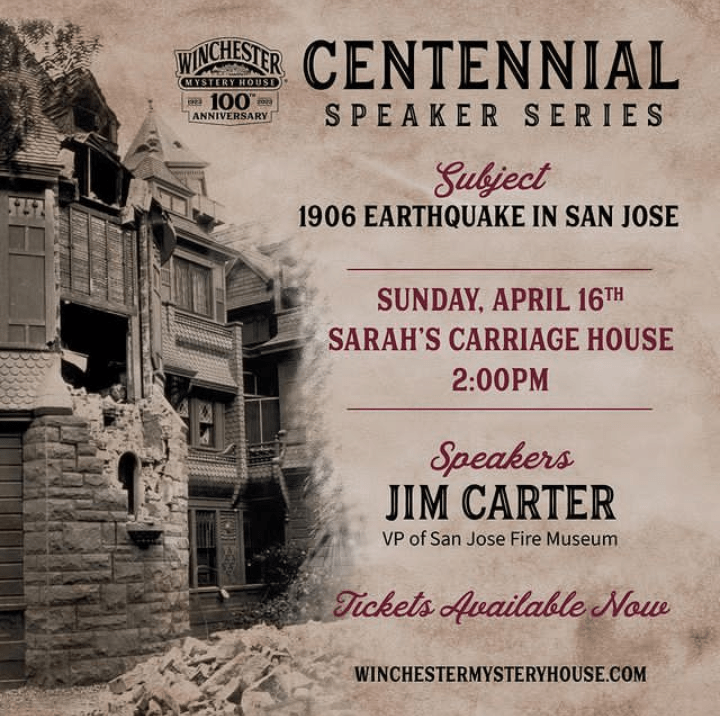
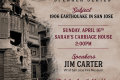
One is confronted finally with the metaphysics of time: is it merely linear; are we moving along it like riding a train on a track and all that happens, once it occurs, is forever gone? Or can that time be bent, as some prominent theoretical physicists of the late 19th and 20th centuries have said, so that we may run into it again? Or, can an event go out in more directions than just backward, carried on time like ripples from a stone throw in a pond, occasionally under very special circumstances in very special places, returning like a faint echo? Is it possible that the bigger the event the larger the ripples and the more likely they are to return? Or perhaps is it possible, if time can be bent, or the ripples move slowly enough, to catch up with events again, and again, and again? Come tour the Winchester Mystery House and perhaps you will find some hidden clues. https://winchestermysteryhouse.com/
And be sure to check out the Online Gift Store: https://shopwinchestermysteryhouse.com/

I Woke Up and Called this Morning, the Tone of Your Voice Was a Warning

Half our mistakes in life arise from feeling when we ought to think, and thinking when we ought to feel. Many people are content to allow authority figures to call the shots. If someone with an impressive array of credentials or degrees or a well-known name speaks out on a matter, of if a social institution or a book makes a statement on a matter, or if a social institution or a book makes a statement, the matter is “settled.” However, authority figures are subject to error, just as any of us are. If I do not keep my mind open to this possibility, then I may ignore my own feelings on a subject. Rationalization is a way of coping with a situation in which, for either practical or emotional reasons, or both, a battered woman is stuck. For some women, the situation and the beliefs that rationalize it, may continue for a lifetime. For others, changes may occur within the relationship, within individuals, or in available resources which serve as catalysts for redefining the violence. When battered women reject prior rationalizations and begin to view themselves as true victims of abuse, the victimization process begins. There are a variety of catalysts for redefining abuse; we discuss six: (1) a change in the level of violence; (2) a change in the resources; (3) a change in the relationship; (4) despair; (5) a change in the visibility of violence; and (6) external definitions of the relationship. The traditional ideal of many societies is to hold back strong or unpleasant emotions for the sake of others. However, feelings held in are likely to come out in some way—often an inappropriate one. So we are really not doing the other person much of a favor by trying to cover up feelings. #RandolphHarris 1 of 19

A change in the level of violence: the severity of abuse is an important factor in women’s decisions to leave violent situations. There is no significant correlation between the number of years spent cohabiting with an abuser and the severity of abuse. On the contrary: the longer women lived with an abuser, the more severe the violence they endured, since violence increased in severity over time. What doe seem to serve as a catalyst is a sudden change in the relative level of violence. Women who suddenly realize that battering may be fatal may reject rationalizations in order to save their lives. One woman who had been severely beaten by an alcoholic husband for many years explained her decision to leave on the basis of a direct threat to her life: “It was like a pendulum. He’s swing to the extremes both ways. He’d get drunk and beat me up, then he’d get sober and treat me like a queen. One day he put a gun to my head and pulled the trigger. It wasn’t loaded. But that’s when I decided I’d had it. I sued for separation of property. I knew what was coming again, so I got out. I didn’t want to. I still loved the guy, but I knew I had to for my own sanity.” A change in resources: Although some women rationalize cohabiting with an abuser by claiming they have no options, others begin reinterpreting violence when the resources necessary for escape become available. The emergence of safe homes or shelters since 1970 has produced a new resource for battered women, but they are not always safe places. While not completely adequate or satisfactory, the mere existence of a place to go alters the situation in which battering is experienced. #RandolphHarris 2 of 19

Public support of shelters is a statement to battered women that abuse need not be tolerated. Conversely, political trends which limit resources available to women, such as cutbacks in government funding to social programs, increase fears that life outside a violent marriage is economically impossible. One 25-year-old woman discussed this catalyst: “I stayed with him because I didn’t want my kids to have the same life I did. My parents were divorced, and I was always so ashamed of that. Yes, they’re all on their own now, so there’s no reason left to stay.” A change in the relationship: In the stages of a battering relationship, violent incidents are usually followed by periods of remorse and solicitude. Such phases deepen the emotional bonds, and make rejection of an abuser more difficult. However, as battering progresses, periods of remorse may shorten, or disappear, eliminating the basis for maintaining a positive outlook on the marriage. After a number of episodes of violence, a man may realize that this victim will not retaliate or escape, and thus feel no need to express remorse. Extended periods devoid of kindness or love may alter a woman’s feelings toward her partner so much so that she eventually begins to define herself as a victim of abuse. One woman recalled: “At first, you know, we used to have so much fun together. He was kind’ve, you know, a magnetic personality; he can be really charming. But it isn’t fun anymore. Since the baby came, it’s changed completely. He just wants me to stay home, while he goes out with his friends. He doesn’t even talk to me, most of the time….No, I don’t really love him anymore, not like I did. #RandolphHarris 3 of 19

Despair: Changes in the relationship may result in a loss of hope that “things will get better.” When hope is destroyed and replaced by despair, rationalizations of violence may give way to the recognition of victimization. Feelings of hopelessness or despair are the basis for some efforts to assist battered women, such as Al-Anon. The director of an Al-Anon organized shelter explained the concept of “hitting bottom”: Before the Al-Anon program can really be of benefit, a woman has to hit bottom. When you hit bottom, you realize that all of your own efforts to control the situation have failed; you feel helpless and lost and worthless and completely disenchanted with the World. Women cannot really be helped unless they are ready for it and want it. Some women come here when things get bad, but they are not really ready to be committed to Al-Anon. Things have not gotten bad enough for them, and they go right back. We see this all the time. A change in the visibility of violence: Creating a web of rationalizations to overlook violence is accomplished more easily if no intruders are present to question their validity. Since most violence between couples occurs in private, there are seldom conflicting interpretations of the event from outsiders. Only 7 percent of the respondents in our study who discussed spatial location of violence indicted events which took place outside the home, but all reported incidents within the home. Other report similar findings. If violence does occur in the presence of others, it may trigger a reinterpretation process. Battering in private is degrading, but battering in public is humiliating, for it is a statement of subordination and powerlessness. Having others witness abuse may create intolerable feeling of shame which undermine prior rationalizations. (And the thing about self-defense, the person who throws the first blow is usually the offender, but how do you prove it?) #RandolphHarris 4 of 19

“He never hit me in public before—it was always at home. But the Saturday I got back [returned to husband from shelter], we went Christmas shopping and he slapped me in the store because of some stupid joke I made. People saw it, I know, I felt so stupid, like, they must all think what a jerk I am, what a sick couple, and I thought, ‘God, I must be crazy to let him do this.’ Then one time at a party on a yacht, he jumped on me and my dad just watched and let him beat me. Then another time, he beat me and dragged me down the hallway by my hair, saying he was going to pull my wig off, but it was my real hair in a ponytail. I was screaming for help, but no one came. I thought he was going to pull all of my hair out.” External definitions of the relationship: A change in visibility is usually accomplished by the interjection of external definitions of abuse. External definitions vary depending on their source and the situation; they either reinforce or undermine rationalizations. Battered women who request help frequently find others—and especially officials—do not believe their story or are unsympathetic. Experimental research supports these reports. Observers usually fail to respond when a woman is attacked by a man, and justify nonintervention on the grounds that they assume the victim and offender were married. One young woman discussed how lack of support from her family left her without hope: “It wouldn’t be so bad if my own family gave a damn about me…Yeah, they know I’m here, and they don’t care. They didn’t care about me when I was a kid, so why should they care now? I got raped and beat as a kid, and now I get beat as an adult. Life is a big joke.” Clearly, such responses from family members contribute to the belief among battered women that there are no alternatives and that they just tolerate the abuse. However, when outsiders respond with unqualified support of the victim and condemnation of violent men, their definitions can be potent catalyst toward victimization. #RandolphHarris 5 of 19

Friends and relatives who show genuine concern for a woman’s well-being may initiate an awareness of danger which contradicts previous rationalizations. “My mother-in-law knew what was going on, but she wouldn’t it…I said, ‘Mom, what do you think these bruises are?’ and she said ‘Well, some people just bruise easy. I do it al the time, bumping into things.’ …And he just denied it, pretended like nothing happened, and if I’d said I wanted to talk about it, he’d say, ‘life goes on, you can’t just dwell on things.’…But this time, my neighbor knew what happened, she saw it, and when he denied it, she said, ‘I can’t believe it! You know that’s not true!’ …and I was so happy that finally, somebody else saw what was goin’ on, and I just told him then tht this time I wasn’t gonna’ come home! You can call the police, file police reports and go to the doctor with obvious signs of abuse, and sometimes the abuser never leaves. Even when the police say that they have handled the situation, he would just be quietly waiting in another room to beat me again for reporting him. One time him and one of the girls he was cheating with jumped me and he slammed my head into the wall and busted my lip. They bragged about. One night, he was hanging out with my dad and I would not come pick him up because he was drunk and I did not want him to beat me, and he my dad let him drive his car to my mother’s house, and when I opened the door, he started beating me and ripped my new silk blouse. My baby brother and his friend had to pull him off of me and he left. Victim’s f domestic violence should qualify as disabled because we truly are. ” The song Never No More by Aaliyah was meant to be a theme song for women not to put up with domestic violence anymore. Unfortunately, she was killed in a plane crash before they got a chance to launch the campaign. Shelters for battered women serve not only as material resources, but as source of external definitions which contribute to the victimization process. They offer refuge from a violent situation in which a woman may contemplate her circumstances and what she wants to do bout them. Within a shelter, women meet counselors and other battered women who are familiar with rationalizations of violence and the reluctance to give up commitment to a spouse. In counseling sessions, and informal conversations with other residents, women hear horror stories from others who have already defined themselves as victims. They are supported for expressing anger and rejecting responsibility for the abuse. #RandolphHarris 6 of 19

The goal of many shelters is to overcome feelings of guilt and inadequacy so that women can make choices in their best interest. In this atmosphere, violent incidents are reexamined and redefined as assaults in which the woman was victimized. The relevance of these catalysts to a woman’ interpretation of violence vary with her own situation and personality. The process of rejecting rationalizations and becoming a victim is ambiguous, confusing, and emotional. Prison is not a mere physical horror. It is using a pickaxe to no purpose that makes a prison; the horror resides in the failure to enlist all those who swing the pick in the community of mankind. True love is not blind. A person who loves you wants to see you doing well, not be blind to the abuse he or she is inflicting. This special form of deception is pointedly said to be in connection with spiritual rather than Worldly things. This surely shows that people of God, at the time of the end, will be expecting the coming of the Lord, and we can infer that they will be keenly awake to all movements from the supernatural World, in such a measure that deceiving spirits will be able to take advantage of it and anticipate the Lord’s appearing by “false Christs” and false signs and wonders. They mix their counterfeits with the true manifestations of the Spirit of God. The Lord says that men will be deceived (1) concerning Christ and His Parousia (appearing); (2) concerning prophecy—teachings regarding the future, from the spiritual World through inspired messengers: and (3) concerning the giving of proofs that the “teachings” are truly of God, by “signs” and “wonders” so Godlike as to be indistinguishable from the true even by those described as “the elect”—who will need to possess some other test than the judging by appearances of a “sign” being from God if they are to be able to discern the false from the true. The Apostles Paul’ words to Timothy, containing the special prophecy given to him by the Holy Spirit for the Church of Christ in the last days of the dispensation, exactly coincide with the words of the Lord recorded by Matthew. These two letters of Paul to Timothy are the last epistles that he wrote before his departure to be with Christ. #RandolphHarris 7 of 19

Both were written in prison, and Paul’s prison was to him what Patmos was to John—a time when he was “in the Spirit” (Rev. 1.10) and shown things to come. Paul was giving his last directions to Timothy for the ordering of the Church of God right on to the end of her time on Earth—giving rules to guide not only Timothy but all God’s servants “in dealing with God’s household.” In the midst of all these detailed instructions, his keen seer’s vision looks on to the “later times”; and by express command of the Spirit of God he depict in a few brief sentences the peril of the Church in those times, in the same way that the Spirit of God gave the prophets of the Old Testament some pregnant prophecy only to be fully understood after the events had come to pass. The apostle said: “The Spirit saith expressly, that in later times some shall fall away from the faith, giving heed to seducing spirits and doctrines of demons, through the hypocrisy of men that speak lies, seared in their own conscience as with a hot iron…” (1 Tim. 4;1-2). I have wondered whether anyone has considered or indeed is already involved in making the experience of loneliness, especially for prisoners in solitary confinement for long periods, a meaningful experience of personal inner growth, enlargement of mental and spiritual horizons, and the discovery that limitations such as cement wall, iron bars, hostile “keepers,” and isolation can indeed be the challenge to discover the richness of the World within? If no one in your knowledge has as yet considered this kind of contribution may I suggest it as a most terribly needed one? It is necessary for you to understand that the stopping of the expression of negative emotions and the struggle with negative emotions themselves are two quite different practices. #RandolphHarris 8 of 19

Trying to stop the expression comes first. You can do nothing about negative emotions and the struggle with negative emotions are two quite different practices. Trying to stop the expression comes first. You can do nothing about negative emotions themselves until you have learned to stop the expression of them. When you have acquired a certain control over the expression of negative emotions, you can begin to study negative emotions in themselves. You can make an effort to classify your negative emotions. You can find which negative emotions you have chiefly; why they come, what brings them, and so on. You must understand that your only control over emotions is through your mind, but the control does not come immediately. If you think rightly for six months, then negative emotions will be affected because they are based on wrong thinking. If you begin to think rightly today, negative emotions will not be changed tomorrow; but negative emotions may be changed in six months’ time, if you start to think rightly now. The ground has to be prepared beforehand. If you can learn to create a right attitude toward your irritability, bad temper, suspicion or whatever unpleasant emotion you experience most frequently, then—after some time—that attitude will help you to stop the negative emotion at the beginning. Once it has been allowed to start you cannot stop it. Once you begin to express it, you are in its power. The struggle must begin in your mind, and you must find your way of thinking on a definite subject. You cannot control your temper when it has already begun to appear. It is already too late; it has already jumped out. You can control such things as manifestations of temper, for instance only in one way. #RandolphHarris 9 of 19
Suppose you have to meet a certain man, and suppose he irritates you. Whenever you meet him your temper is liable to show itself. You do not like that but how can you stop it? You must begin with the study of your thinking. What you think about this man—not what do you feel when you are irritated, but what do you think about him at quiet moments? You may find that in your mind you argue with him; you prove to him that he is wrong; you tell him all his mistakes; you find that, generally, he behaves wrongly towards you. This is where you are wrong. You must learn to think rightly; you must find the way to think rightly. Then, if you do, it will happen like this: although emotion I much quicker than thought, emotion is a temporary thing, but thought can be made continuous; so whenever emotion jumps out, it hits against this continuous thought and cannot go on and manifest itself. So you can struggle with the expression of negative emotions, as in this example, only by creating continuous right thinking. Contrary to an assumption that some sociologist make, there seems to be little doubt that improper behavior in one situation can sometimes tell us a great deal about the offender’s reception in other situations. In any given society, different situations will be the scene of many of the same normative assumptions regarding conduct and of the same situational rulings. An individual who is remiss in one way in one situation, then, can be remiss in this same way whenever one shows one’s face to man. Thus, a person with senile deterioration who drools spoil his participation in all his situations in the same way and for the same reason. A person who is hard of hearing or who is near-blind will not be able to maintain the communication niceties that have here been considered at length; one will be forced to be all thumbs in all one’s situations. #RandolphHarris 10 of 19

Thus, improper conduct in one situation can bespeak a general disenfranchisement in face-to-face interaction. Such conduct need not arise from a psychopathological condition; presumably it can, however, give rise to one through the response the individual may make to his excommunication. Some offenses, then, tell us about the price the offender must pay for one’s offensiveness, and the price one may pay for one’s price. Granting the occurrence of widely relevant offensiveness, the general procedure in this study has been to try to learn what this offensiveness costs the gathering in which it occurs, rather than what it means to and about the offender in the first place. When an individual intentionally or unintentionally conducts oneself in a way that others consider situationally improper, and shows thereby that one is either alienated from, or an alien to, the gathering, what other information can this provide them about one’s current conditions—apart from what one’s impropriety tells them about one’s likely fate? The meaning that offended personas impute to an offensive act is partly determined by whether they feel the act was intentional or unintentional. However, the complexity and ambiguity of this dichotomy, and the shifting but intimate relevance of its bearing, prevent any simple discussion of the actual or imputed meaning of situational offenses. In actual use, the dichotomy does not so much refer to a physiological factor of volition or control accountable by reference to the distinction between stripped and smooth muscles, the cerebrospinal and the autonomic nervous systems, but rather to the kind of responsibility of the act. The undesired acts in themselves need not be characteristically voluntary or involuntary from the physiological point of view. For example, to fail to appear at a social party because of one’s disapproval of the host is considered to be an intentional act; the same failure due to the sudden death of a kinsman may be considered aa fully warranted, excusable reason for staying away. In the first case we speak of the individual staying away voluntarily, in the second case, involuntarily. #RandolphHarris 11 of 19

Of any situationally offensive act and of any offender the following questions can be asked, taking the point of view of the others present: Does the actor have the capacity and training to appreciate the meaning of one’s offense, and if so, does he in fact appreciate its meaning? Is the act within the physical control of the actor, and if so, would one be willing to change one’s conduct if one were apprised of its meaning and given the opportunity to do so? Does the actor have extenuating reasons, external to the participants in the situation, for committing the offense? These factors, in various, combinations, provide so many concrete possibilities that little implication can be drawn from the mere presence or absence of one sense or another of intentionality. Living in the city or in the countryside are considered equally attractive. The choice is based solely on financial considerations—they will go where they will earn the most money. Like the commuters between Berkeley and San Francisco, the decision is made selfishly. For instance, dentists want to maximize their individual payoffs. Since there are many rural areas without enough dentists, this suggests that there is room for an increased number of dentists to practice in rural areas without causing any congestion. Thus rural dentistry is not quite as lucrative as having a large city practice, but it is a more certain route to an above-average income. Both the incomes and the value to society of rural dentists stays roughly constant as their numbers grow. Being a city practitioner is more kin to driving over the Oakland Bay Bridge—it is wonderful when you are alone and not so great when the city gets too crowded. The first dentist in an area can be extremely valuable, and maintain a very large practice. #RandolphHarris 12 of 19

However, with too many dentists around, there is the potential for congestion and price competition. If the number increases too far, city dentists will be competing for the same patient pool, and their talents will be underutilized. If the population of city dentists grows even further, they may end up earning less than their rural counterparts. In short, as the number of city practices increase, the value of the marginal service that they perform falls, as does their income. As in the case of the commuters, the equilibrium does not maximize the combined income of dentists. But society cares about the consumers of dentistry as well as the practitioners. The reason is that there are two side effect created when one more person decided to be a city dentist. The additional city dentist lowers all other dentists’ incomes, imposing a cost on the existing city dentists. However, this reduction in price is a benefit to consumers. The two sides effects exactly cancel each other out. The difference between this story and our commuting example from the past is that no one benefited from the extra commuting time when the Oakland Bay Bridge became congested. When the side effect is a change in price (or income), then the purchasers benefit at the producers’ cost. There is zero net effect. From society’s viewpoint, a dentist should not worry about lowering colleagues’ incomes. Each dentist should pursue the highest-paying practice. As each person makes a selfish choice, we are invisibly led to the right distribution of dentist between city and rural areas. And, the two careers will have equal incomes. Or, to the extent that living in a city is worth more than living in a rural area, this differential will be reflected in income differences. Of course, the American Dental Association may look at this differently. It may place more weight on the loss to city dentists’ incomes than on the saving consumer. #RandolphHarris 13 of 19

From the dental profession’s perspective there is indeed a misallocation, with too many dentists practicing in the city. If more dentist took rural practices, then the potential advantages of a city practice would not be “wasted” by competition and congestion. Taken as a whole, the income of dentists would rise if it were possible to keep the number of city dentists below the free market level. Although dentist cannot place a toll on those who want to practice in the city, it is in the profession’s self-interest to create a fund that subsidizes dental students who commit to establish a rural practice. The human race is approaching the great historical transition to thorough, inexpensive control of the structure of matter, with all that implies for medicine, the environment, and our way of life. What happens before and during that transition will shape its direction, and with it the future. Is worth getting excited about? Look at some of the concerns that bring people together for action: Poverty, weapons systems, deforestation, toxic waste, social security, housing, global warming, deadly viruses, Alzheimers disease, heart disease, lung disease, cancer, endangered species, freedom, jobs, nuclear power, life extension, space development, acid rain. Each of these issues mobilizes great effort. Each will be utterly transformed by nanotechnology and its applications. For many of these issues, nanotechnology offers tools that can be used to achieve what people have been striving to accomplish. For many of these same issues, the abuse of nanotechnology could obliterate everything that has been achieved. #RandolphHarris 14 of 19

A good companion to the precept “Think globally, act locally” is “Think of the future, act in the present.” If everyone were to abandon short-term problems and today’s popular causes, the results would be disastrous. However, there is no danger of that. The more likely danger is the opposite. The World is heading straight for a disruptive transition with everything at stake, yet 99.9 percent of human effort and attention is going into either short-term concerns or long-term strategies based on a fantasy future of lumbering twenty first-century technology. What is to be done? For people more concerned with feeling good than with doing good, the answer is simple: Go for the warm feeling that comes from adding one more bit of support to an already-popular cause. The gratification is immediate, even if the contribution is small. For people more concerned with doing good—who can feel good only if they live up to their potential—the answer is less simple: To do the most good, find an important cause that is not already buoyed up by a cheering multitude, a project where one person’s contribution almost automatically makes a big difference. There is, today, an obvious choice for where to look. The potential benefits and drawbacks of nanotechnology generate a thousand areas for research, discussion, education, entrepreneuring, lobbying, development, regulation, and the rest—for preparation and for action. A person’s contributions can range from career commitment to verbal support. Both can make a difference in where the World ends up. #RandolphHarris 15 of 19

Benjamin Day was a twenty-three-year-old printer with wild ideas when he changed the history of what we now call the media. This was 1833 and New York had grown to a population of 218,000. However, the largest daily newspaper in the city claimed only 4,500 subscribers. At a time when the average urban worker in American earned 75 cents a day, a New York newspaper cost 6 cents, and not many people could afford them. The papers were printed on handpresses capable of turning out no more than a few hundred copies an hour. Day took a crazy chance. On September 3, 1833, he launched the New York Sun and sold it for only one penny a copy. Mr. Day unleashed a horde of newsboys into the streets to sell his paper—an innovation at the time. For $4 a week he hired another printer to go to the courthouse and cover police cases. It was one of the earliest uses of a “reporter.” Within four months the Sun had the biggest readership in the city. In 1835 he bought the latest technology—a steam driven press—and the Sun reached the unheard-of circulation of 20,000 daily. Day had invented the popular press, crime stories and all. His innovations were paralleled at about the same time by other “wild men”—Henry Hetherington with his Twopenny Dispatch in England and Emile de Girardin with La Presse in France. The down-scale “penny paper”—called the “pauper press” in England—was more than just a commercial affair. It had lasting political effects. Along with the early trade unions and the beginnings of mass education, it helped bring the less affluent classes into the political life of nations. #RandolphHarris 16 of 19

By the 1870s something called “opinion” had to be take into account by politicians of every stripe. “There is, now,” wrote one French thinker, “no European government which does not reckon with opinion, which does not feel obliged to give account of its acts and to show how closely they conform to the national interest, or to put forward the interest of the people as the justification for any increase in its prerogatives.” A century and a half after Benjamin Day, another wild, feral man, feeling as guilty as a criminal, came up with an idea sure to bankrupt him. Tall, gusty, impatient, and brilliant Ted Turner had inherited a billboard company when his father died from death by suicide. Mr. Turner built it, acquired radio and television stations, as was wondering what to do next when he noticed something odd. Cable television stations were springing up around the United States of America, but they were starving for programs and advertising. Meanwhile, up in the Heavens were things called “satellites.” Mr. Turner put two and two together and turned it into five. He beamed the programming from his Atlanta station up to a satellite and down to the program-hungry cable stations. At the same time, he offered a “one-buy” national market for advertisers who wouldn’t trouble to purchase time on scores of small individual cable systems. His Atlanta “superstation” because the cornerstone of a growing empire. On June 1, 1980, Mr. Turner took the next, even loonier step. He formed what critics labeled the “Chicken Noodle Network”—for CNN, or Cable News Network. CNN became the laughingstock of every media pundit from the canyons of Manhattan to the studies in Los Angeles. #RandolphHarris 17 of 19

Wall Street was sure CNN would collapse, probably taking Mr. Turner’s other businesses down with it. No one had ever even tried to create a twenty-four-hour news network. CNN today is the opiate of the mass. Perhaps, the most influential broadcast news source in the United States of America. TV monitors are constantly tuned to CNN in the White House, in the Pentagon, in foreign embassies, as well as in millions of homes all over America. However, Mr. Turner’s wild dreams went far beyond the United States of America, and today CNN operates in over 100 countries, making it the most global of all television networks, mesmerizing the Middle East skeiks, European journalists, and Latin America politicians with its extended firsthand coverage of such events as Egyptian President Anwar Sadat, the antics of President Biden as he seems dazed and confused, or the conflict in Ukraine. CNN is carried over the air, or over cable, into hotel rooms, offices, homes, even staterooms on the Queen Elizabeth II. Although many people believe FOXNews is more balanced and convers the invasion at the southern border, which America tries to suppress. One of Mr. Turner’s little-known prize possessions is a videotape of his private meeting with Cuba’ Fidel Castro. In the course of the visit, Mr. Castro mentions that he, too, routinely watches CNN for the big news. Mr. Turner, never shy about promoting his companies, asks Mr. Castro if he would be willing to say as much on camera for a commercial. Mr. Castro puffs on his cigar and says, in effect, why not? The commercial has never run on air, but Mr. Turner hauls it out to show his visiting friends now and then. #RandolphHarris 18 of 19

Mr. Turner is one of a kind. Handsome, raucous, funny, erratic, he owns a buffalo ranch, the Atlanta Braves baseball team, and MGM’s library of old movies. A fierce exemplar of free enterprise, he was also a peace activist long before he and actress Jane Fonda began a highly-publicized romance. He launched the “Goodwill Games” in Moscow at a time when it took political, as well as financial, courage to do so. His networks also run a heavy schedule of pro-ecology programming. Today, Mr. Turner is by far the most visionary of a dozen or so hard-driving media barons who are revolutionizing the media even more deeply than Benjamin Day—and whose collective efforts will, over the long run, shift power in many countries. What people do depends on what they believe. The path to a World prepared to handle nanotechnology begins with the recognition that nanotechnology is a real prospect. What would be the response to a new idea as broad as nanotechnology, if it were true? Since it does not fall into any existing technical specialty, it would not be anyone’s job to provide an official, authoritative evaluation. Advanced molecular manufacturing cannot be worked on in the lab today, so it would not matter to scientists playing the standard careers-and-funding game. Still, some scientists and engineers would become interested, thinking about it, and lend support. Science News, covering the first major conference on the subject, would announce that “Sooner or later, the Age of Nanotechnology will arrive.” This is, in fact, what happened. However, what is the idea were false? Some curious scientists or engineer would soon point out a fatal error in the idea. Since the sweeping implications of nanotechnology make many people uncomfortable, a good counterargument would spread fast, and would soon be on the lips of everyone who would prefer to dismiss the whole thing. No such counterargument has been heard. The most likely reason is that nanotechnology is a sound idea. Reactions has been changing from “That’s ridiculous” to “That’s obvious.” The basic recognition of the issue is almost in place. When nanotechnology emerges from the World of ideas to the World of physical reality, we will need to be prepared. However, what does this require? To understand what needs to be done today, it is best to begin with the long term and then work back to the present. #RandolphHarris 19 of 19

MAGNOLIA STATION AT CRESLEIGH RANCH
Rancho Cordova, CA | low $600,000.00s
Now Selling!

Magnolia Station at Cresleigh Ranch is coming soon! Located at the corner of Rancho Cordova Parkway and Douglas Road, residents of Cresleigh Ranch will benefit from a brand new neighborhood with convenient access to the new Raley’s Shopping Center, Sunrise Boulevard, and much more!

Magnolia Station will include 81 homesites and five distinct plans ranging from 2,200 – 3,700 square feet; including three single story plans! Each plan has been thoughtfully designed to include features such as: Generations Suite, Optional Offices/Dens, Extended Great Rooms, and more! https://cresleigh.com/magnolia-station/


The Mystery Has Never Been Solved!
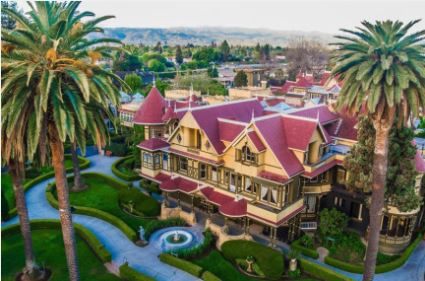
Much of the ceremonial rituals that took place in The Winchester Mansion goes back to the Knights Templar. The Order of the Knights Templar can be traced in part to the Templars. And yet, the Knights Templar are also the claimed ancestors of satanists, a fact which is decidedly hard to prove, though within an organization so large there may well have been diverse groups who followed their own calling. The knights, largely from France and England, joined the order over a period of many years. They had a system of leadership with a Grand Master, knights, chaplains, sergeants, craftsmen, seneschals and commanders. The order had its own clergy and its meetings were held in the strictest secrecy. Unmarried knights wore a white mantle with a red cross while others wore a black mantle with a red cross. Membership was mostly male, and established orders in virtually every Latin country, drawing people from all over Europe. It also became a great trading agency and though originally the Roman Catholic Church actually supported a number of secret societies who were Christian-based, the power of the Templars began to wield became the fear of successive popes and of European noblemen. Philip IV of France began a series of attacks against the Knights Templar and his campaign was given official blessing by the election of Pope Clement V (1305-1314) who renounced the Templars as immoral heretics. Many people know that Mrs. Sarah L. Winchester had a Famous Blue Séance Room where she carried on her rituals and had a series of colourful robes she wore. However, the mystery has never been solved as to why she built the strangest mansion in the World? #RandolphHarris 1 of 13
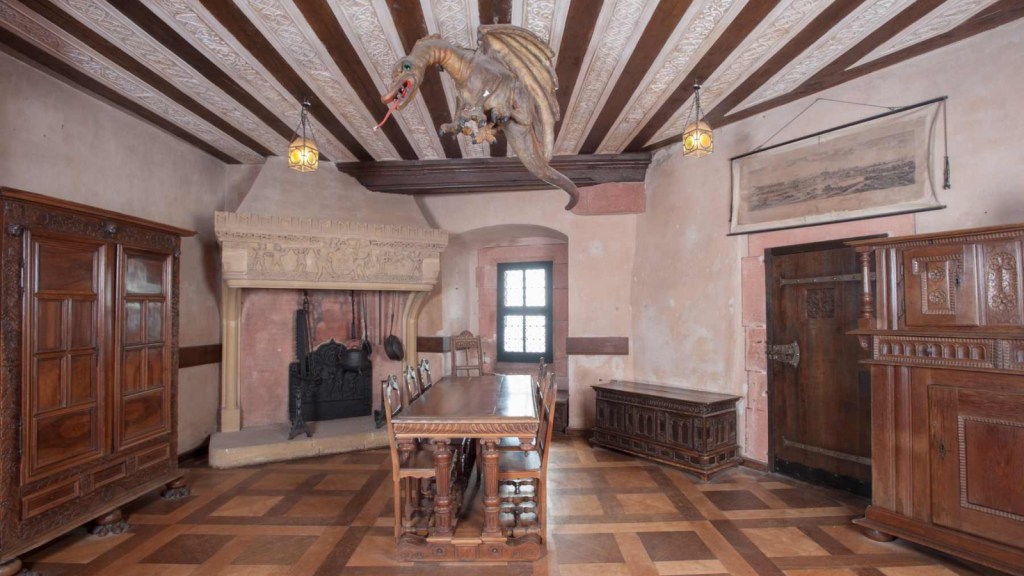
Stories were already circulating that Mrs. Winchester, behind the closely guarded doors of her mansion, indulged in the most offensively blasphemous rituals said to be directed totally towards the reversal of Christianity itself. She was said to worship a goat-like idol, the Baphomet, anointing it with the fat of pigs, while the Knights used the fat of murdered children, roasting children and eating them, laying women across their altars for the most violent forms of indecencies to satisfy their lust for life-blood; they were said to have indulged in homosexual rites and other various claims alleged they stamped the Holy Cross under foot, spat and urinated upon it and used the Mass as the basis for their own worship—later to be known universally as the Black Mass. Actual proof of these events is largely contained in the confessions received under torture which followed the arrest of Mrs. Winchester’s butler Albert Pike. He and 140 of his brethren were imprisoned in Santa Clara Valley, tortured and then executed en masse. Algernon Blackwood, under extreme torture, confessed to speaking against Christianity but denied depravity. In 1890, he was brough out on to the nine-story tower of The Winchester Mansion and ordered to repeat his confession in front of the villagers and accept a sentence of life imprisonment. On the balcony of the tower, he burst into a rage of anger and protested innocence of all charges and thus signed his own death warrant. The order was given that he should be taken into the fruit orchard and burned at the stake. As the flames licked his body, he summoned Mrs. Winchester and, in his dying, breathe to meet him at the Bar of Heaven. #RandolphHarris 2 of 13
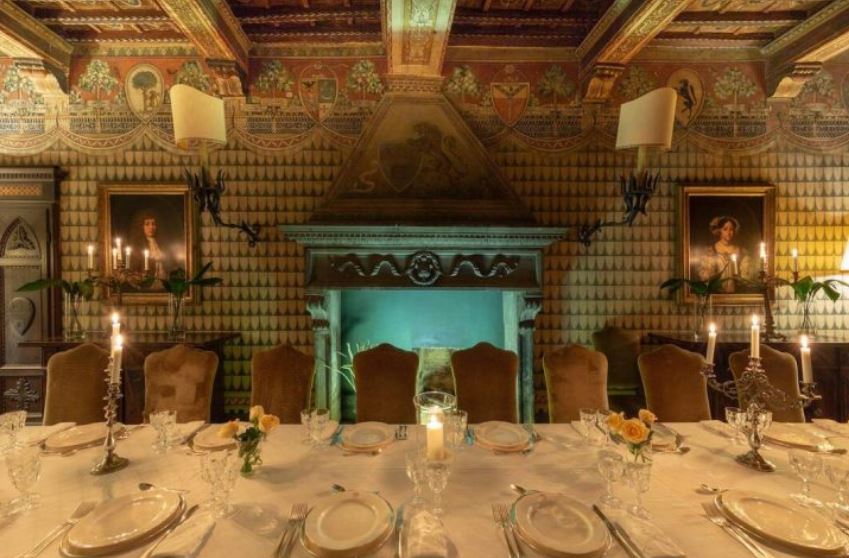
Diocesan priest, Father Peter Yorke, who was then editor of the Archiocesan newspaper, The Monitor, emerged sending orders to every village where the Templars operated, instructing that they should be arrested and charges of heresy and sorcery brought against them. He published a series of exposes, and hundreds of knights were brought to trail, tortured, and executed. The vast wealth of the Templars working at The Winchester Mansion were accused of devil worship. What remained to be handed down and revived, especially in the twenty-first century, were the rumors of ritual and dastardly happenings which many of today’s extremist followers of the Knights Templar seem prepared to believe and accept with some enthusiasm. One of the more important traditions handed down by Mrs. Winchester concerns an instruction for future secret societies. On the day the Knights planned to burn to death Father Yorke, a pact was made and communicated to all surviving Knights who had now gone to ground. The instruction was clear—that the Order of the Knight Templar should be continued in perpetuity. It is said that the surviving Templars should thereafter fight for the destruction of the papacy and prevent Mrs. Winchester from being stripped of her wealth and murdered. These orders, it was said, were handed on to descendants of the order and the Winchester family, who at various points in history have included satanists and a diverse calling of occultists. What remained of the Winchester family and the Knights went into the deepest secrecy, surfacing occasionally and surrounded constantly by rumour, but little discernible fact. #RandolphHarris 3 of 13

The Illuminati came to fortify The Winchester Mansion, which had reached seven-stories high, with 600 rooms, after the 1906 Earthquake. While it was true that Mrs. Winchester left her mansion, there are more reasons as to the why. The avowed spiritualist, Mrs. Winchester, had constructed a boathouse and erected a huge mountain of Earth upon which a new mansion she had planned to build would be erected. It was to overlook the bay, an immense seawall and costly cannel system, with proper floodgates, through which the Winchester private fleet of launches and yachts were to wend their way. It was said that Mrs. Winchester was being haunted by vicious spirits and that death would be her penalty for leaving her home. Her existence was mythical because only half a dozen people had seen her. A sheriff had been striving for the past three months to serve upon her a summons to appear in court in proceedings that a real estate dealer had brought upon her. Bloodhounds roamed the grounds of the mansion and polite Asian staff answered telephone calls. Mrs. Winchester was always alone save for a bodyguard. She was wealth as few women were and found her pleasure in superintending a half dozen workmen, who for seven years had gone from wing to wing of the mansion, constructing one month what they were called to destroy on the following month. Her mansion was considered the pride of the county and the basis for mysterious legends. The Illuminati came were concerned about a group of subversives who were discovered to be using occult practices and rituals to attack Mrs. Winchester and her mansion. #RandolphHarris 4 of 13

E.W. McClellan of Burlingame, the contractor of 98 acres of land purchased by Mrs. Winchester, was holding it and refused to give it up because he believed she was the lead of a secret society working to “establish Satan’s kingdom on Earth,” an accusation which was a direct throw-back to the age of the Knights Templar; and that dictum still exists today. The Psychosophical Society stated that The Winchester Mansion had existed since the sixteenth century and comprised the World League of Illuminati. They wanted to prevent Mrs. Winchester from passing on her palatial estates in all their purity to the next generation. The hotbed of intrigue, rumour and gossip directed at The Winchester Mansion supposedly involved the death/assassination of some, the suicide/murder of others over the scandals invariably linked to Propaganda 2 (P2) Lodge and various Intelligence agencies like the KGB and the CIA with a scandal which is too immense to expound here, nor is it suitably for this part of the report. What can be said, however, is that occult groups working within the traditions of the Illuminati represent a definite consideration of these events. Mrs. Winchester’s husband, William Wirt Winchester, was a master of mathematics and the possessor of certain secret occult knowledge. He gathered seven disciples around him and went into the World of the brotherhood to perform good works. Staff have described that 120 years after his death, his perfectly preserved corpse was found in one of the many buildings of The Winchester Mansion. Because of the secrecy and the mystery that surround The Winchester Mansion, thousand want to know more and are desperate to visit it. #RandolphHarris 5 of 13
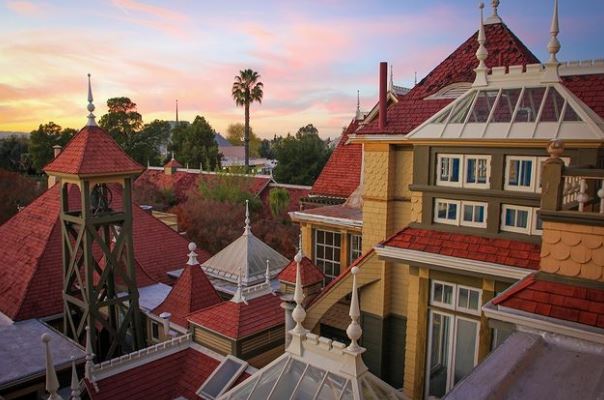
Sometimes the hysteria surrounding The Winchester Mansion morphed into such hysterical proportions that the authorities have had to shut the mansion down for a day or ban people from entering, even though many do not believe that it actually exists. Fans of The Winchester Mansion have sprouted up all over the World. Some people still regard the story of The Winchester Mansion as a fable, but most know it does actually exist and possesses esoteric knowledge of mystery and mysticism. Some the people who were involved in the construction of The Winchester Mansion were magicians, writers, statesmen and novelist. This mansion has quit a following and has collected members through the ages, in positions of far greater power and influence than the Illuminati. Legend has it that descendants from the founding fathers of the Middle Ages are on the board of trustees. The official secret society in control of the estate have connections throughout Europe and the United States of America, whose membership is an indication of the current revival in the mystery religions and semi-secret societies. The mansion alone boasts of some 60,000 members and operates from its headquarters in San Jose, California with affiliated lodges in Britain, France, Germany, Australia and South Africa. The caretakers are preserving the traditional beliefs of the 19th century. A cipher manuscript was found in one of the libraries of The Winchester Mansion. The author of the manuscript was not identified but it was obviously someone with a very intense knowledge of the supernatural, alchemy, astrology and the magical theories of Eliphas Levi. #RandolphHarris 6 of 13
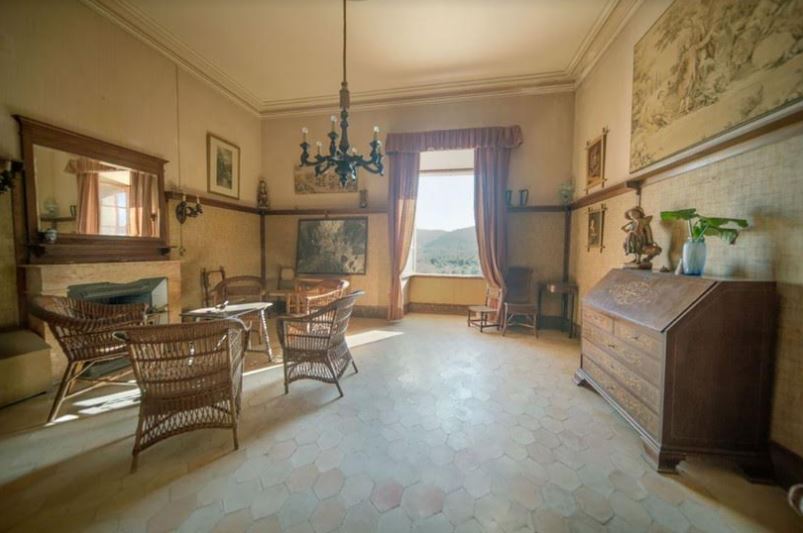
Mrs. Winchester’s mansion and gardens reflect her colourful and ornate rituals and its purpose was “to obtain control of the nature and power of my own being.” The might wings of the mansion outspread dove-like sitting brooding on the vast abyss. What is dark in Mrs. Winchester is to be illumined, what is lose raised and supported; the nine-story tower was constructed so that Heaven could hide nothing from Mrs. Winchester’s view, nor the deep tract of hell. Hell said to be a hideous flaming ruin and combustion in a bottomless perdition, there where Satan dwells in adamantine chains and penal fire. Nine times the space that measures day and night to mortal men, Satan and his horrid crew lay vanquished, rolling in the fiery gulf, confounded though immortal: but his doom reserved him to more wrath; for now the thought both of lost happiness and lasting pain torments him; round he throws his baleful eyes that witnessed huge affliction and dismay mixed with obdurate pride and steadfast hate: at once as far as angels ken he views the dismal situation waste and wild, a dungeon of horrible. Many leaders of the Church do not preach about Hell anymore because the Church has become a tax-free business and they do not want to hear about where they may go, nor do they want to scare their dirty money away from the Church. As a result of the loss of real churches who teach about Satan and demons, people are all wild and out of control and no longer fear anything and go around sinning like rain in Seattle. #RandolphHarris 7 of 13

On a hot and dry Friday the 13th of June 1890, Mrs. Winchester drifted into an uneasy sleep, but not for long. Half an hour later she was wide awake again. Something was wrong; a change was coming over the bedroom. There was a sense of dread. Regions of sorrow, doleful shades, were peace and rest could not dwell entered. Her home started to feel like a place where hope could not come, and all that did come was torture without end. She sat up, fully alert, straining her ears for the slightest untoward sound, but all was silent except for the little trusted noises the home made during the evening. However, Mrs. Winchester noticed something odd: an unnatural coldness was stealing over the room. It had been a hot summer day. How could it be so cold? She shivered and ducked back under the covers, tugging them more snugly about her. It did not help; the cold kept increasing. She pulled the covers over her head, chiding herself for being silly and willing herself into sleep. However, the terrible dread kept gnawing at her. She tried to think pleasant thoughts, tried to ignore her thudding heart, and tried to pray. Her attempts brought little comfort; the fear continued to build. She sensed that something frightful was about to happen. She held her breath and waited, not knowing what to expect. Before too long, she heard a sound: the unmistakable creak of the doorknob. The spring bolt was sliding back with tiny clicks. Mrs. Winchester froze. Very slowly, the door began to open. Her fear quickened further as she heard the tread of heavy, booted feet approaching the bed. She wanted to call out for help, but was too afraid, as if some force was willing her to silence. Mrs. Winchester was helpless in the face of that power. #RandolphHarris 8 of 13

When she tried to pray, a demon started to speak. “The force of hose dire arms has caused me to fall to a place with floods and whirlwinds of tempestuous fire. Fierce contention brought along innumerable force of Spirits armed with durst in a dubious battle of unconquerable will, revenge, immortal hate.” Mrs. Winchester was dying and she knew it. This demon had come to claim her soul. She was making gaps, with long spaces between. A perspective of stern and cruel memories stretching away, like its own grey avenues, into a blur of darkness. Certainly no house had ever more completely and finally broken with the present. Mrs. Winchester lit a candle. A little animal stood before her, forbidding, almost menacing: there was anger in his large brown eyes. He came no nearer. As she advanced, he gradually fell back, and she noticed another dog, a vague, rough, brindled thing. At the same moment a third dog, a long-haired white mongrel, slipped out of a doorway and joined the others. All three stood looking at Mrs. Winchester with grave eyes; but not a sound came from them. Zip, had seemed to be observing them with a deeper intentness. Mrs. Winchester endured many long years of the company of many different creatures. They would return again and again. As she was in her morning room, the coldness came back. Her mind was alert but her body seemed paralyzed. The entity seemed to have the power to immobilize her from a distance. She heard the dull footfalls crossing her mahogany floors. There was an evil lurking in her home. Something started pounding on the table. #RandolphHarris 9 of 13
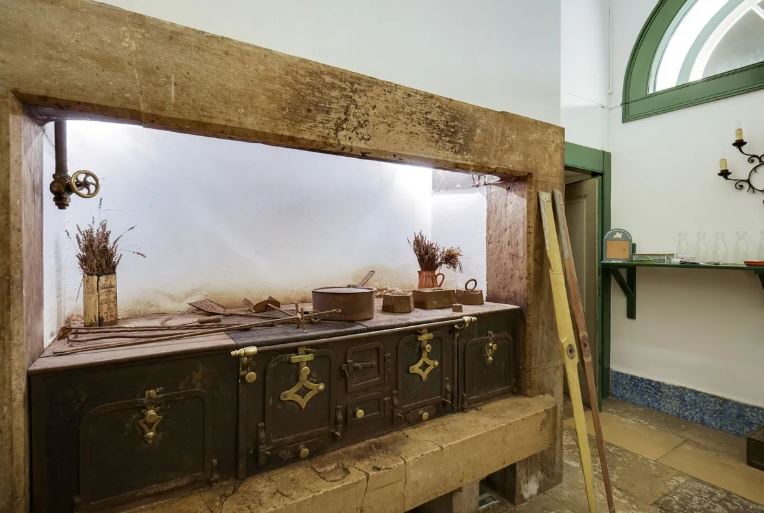
The pounding was so fierce that her cup of tea bounced off the table and fell to the floor. Then it stopped. Mrs. Winchester thought maybe she was having delusions. But whatever it was did not want her to drink the tea. More odd things began to happen—occurrences no one could explain. A malignancy pervaded. Often, people would hear a horrible, mocking, evil laugh. Lights would slicker for no reasons; water taps would turn themselves on, then off. She would find her silverware mysteriously rearranged. On several occasions she discovered her solid gold dinner service hidden in a corner of the room. One night, she had a roaring fire in the fireplace of her bedroom, went to the bathroom, and returned the fireplace totally clean with nothing it in burning. The servants began to complain of hearing mice in the night, but Mrs. Winchester was certain there were no mice in the house. On several occasions, one could very clearly hear the floorboards creaking upstairs, as though somebody was walking about the house. The servants heard the creaking too but, as is often the case with servants, they got used to it, and to the other noises and unexplained presences. Mrs. Winchester urged them no to speak of those things outside of the house. It was bd enough that she was subjected to the disturbances and torment; the last thing she wanted was to attract undue attention to her home. People do not, as a rule, react compassionately to reports of supernatural infestations; many tend to suspect that the victim has somehow, whether by word or deed, “brought it on herself.” #RandolphHarris 10 of 13

At times, Mrs. Winchester felt that the entity was trying to crush the life out of her. She left her light burning all night. Through time, Mrs. Winchester was forced to accept her suffering. There was nothing else she could do. One winter night, one of the butlers was found dead at the head of a narrow flight of stairs leading down from his room. It was Mrs. Winchester who found him and gave the alarm, so distracted with fear and horror—for his blood was all over her—that at first roused household could not make out what she was saying, and thought she was waking from a nightmare. However, there, sure enough, at the top of the stairs lay the butler, stone dead, and head foremost, the blood from his wounds dripping down the steps below him. He had been dreadfully scratched and gashed about the face and throat, as if with curious pointed weapons; and one of his legs had a deep tear in it which had cut an artery, and probably caused his death. Bu how did he come there, and who had murdered him? Mrs. Winchester declared that she had been asleep in her bed, and hearing his cry had rushed out to find him lying on the stairs; but this was immediately questioned. A shadow was rearing up from the body. Mrs. Winchester described it as “a blob, like smoking black cloud, not the shape of a person—just a thing, but a terrible thing. The absolute evil that came from it was overwhelming. I was so gripped with terror, I could not move, and I knew that if it came toward me, I would be swallowed up…destroyed, and that would be the end of me. Imagine what it feels like to know that you are going to be killed, and the specter that is torturing you is deliberately making you suffer beforehand. That is how it was. I felt a level of fear that is beyond words. Then I heard a voice and screamed.” #RandolphHarris 11 of 13
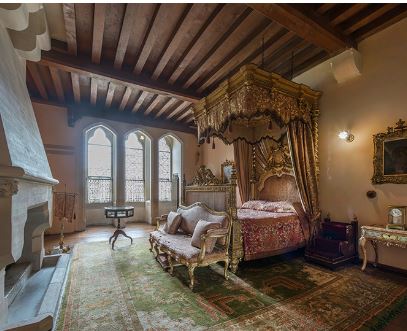
The male voice was hoarse, stertorous, angry almost. “You have left us this our spirit and strength entire strongly to suffer our pains that we my so suffice his vengeful ire, or do him mightier services as his thralls by right of war, whatever his business be here in the heart of hell to work in fire, or do his errands in the gloomy deep; what can it then avail though yet we feel strength undiminished, or eternal being to undergo eternal punishment?” Mrs. Winchester instantly went to sleep—chilling testimony to the control the demon had over her. When she awoke, she was clean, in her sleeping gown, and in her bed. However, it was with the possibility, and the hope, that the end of her long ordeal might well be in sight. Little of the fast-fading sunlight entered the house through the windows, many of which were partly or entirely covered with drapes. However, it was bright enough for Mrs. Winchester to see that the French Provincial sofa’s upholstery was slashed. Shredded wool spilled onto the floor. A solid oak bookcase had been hammered to pieces against the wall, gouging holes in the lath and plaster walls, running the Lincrusta-Walton Wallcovering. Her silver tea service has been smashed, along with a floor lamp. Books had been taken off the shelves, torn apart, and scattered across the living room. Mrs. Winchester lit a candle. It did not shed much light, just enough to reveal more details of the rubble. Looks like somebody went through here with a wrecking ball and scissors, she thought. The house remained silent. Leaving the door open behind her, she took a couple of steps into the room, and the crumpled pages of the ruined books crunched crispy underfoot. She noticed the dark, rusty stains on some of the paper and on the bone-white foam wool stuffing, and suddenly she stopped, realizing the stains were blood. A moment later, Mrs. Winchester spotted the corpse. It was that of a big man, lying on his side on the floor near the sofa, half-covered by gore-smeared book pages, book boards, and dust jackets. Zip’s growling grew louder, meaner. Moving closer to the body, which was just a few feet from the dining-room archway. Mrs. Winchester remembered that John Hansen had lately been making repairs, including a leak faucet and a broken door lock. #RandolphHarris 12 of 13

However, Mrs. Winchester thought because of the way the room looked, he had been killed weeks ago. Her house was so big that it would often take weeks, months, and sometimes years to get around it. Yet, on closer inspection, the corpse proved to be neither bloated with the gas of decomposition nor marked by any signs of decay, so it could not have been there for very long. Perhaps only a day or less. The body had been disemboweled. Zip’s low growling gave wat to ugly snarling punctuated with hard, sharp barks. With a nervous twitch and a sudden pounding of her heart, Mrs. Winchester turned from the corpse and saw that zip was facing into the nearby dining room. The shadows were deep in there because the drapes were drawn shut over all the windows, and only a thin gray light passed through from the kitchen beyond. “Go, get out, leave!” an evil voice told her. It was certainly not the voice of Mr. Hansen. Something in the dining room was moving. There was no doubt of its presence, because it rushed out onto the dining-room tables, and came straight at Mrs. Winchester, emitting a blood-freeze shriek. She saw lantern eyes in the gloom, and nearly a man-sized figure that—in spite of poor light—gave an impression of deformity. Then the demon was coming off the table, straight at her. I Do conjure thee, O Spirit Focalor and your legion of thirty spirits to manifest your spiritual weapon in this corporeal World through my will and might! Empower it so that it may serve me here upon the corporeal plane! May it serve as a key to the realms above and below unlocking power and wisdom for my glory and ascent! Fill this weapon with your powers of wrath and fury that it may seek out spiritual attacks made toward me rendering them useless and impotent! I DO conjure thee Spirit Vephar, pierce the Heavens and cause the seas to be right stormy to cleanse the Earth of sin. Spirit Vizaresh, I DO conjure thee to drag sinful souls into hell, noosing them with the power of their own sins. May the snare be the power of their own evil, words, thoughts, and deeds and let this be you will to drag unwilling souls into Hell. May this cord gain its power through one’s practical application of evil principles. #RandolphHarris 13 of 13

Winchester Mystery House
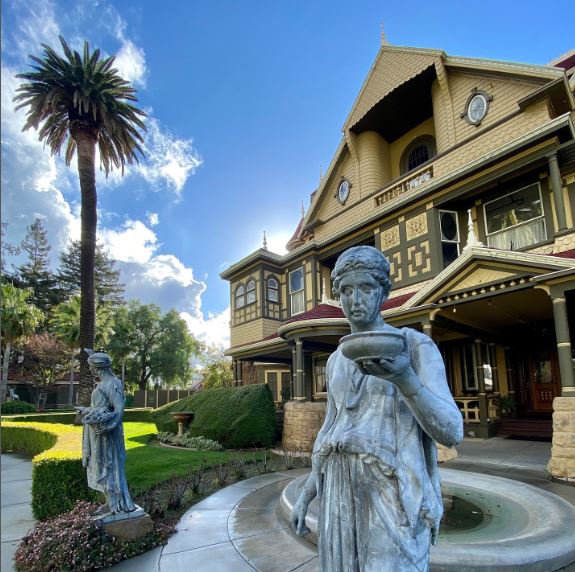
Happy Sunday! House tours 10am-5pm today 🏠 come see us!
🎟️ link in bio. https://winchestermysteryhouse.com/

Mrs. Winchester never recovered from the 1906 earthquake. Staff said she grew weaker and weaker as the years went by, and that she was often heard talking to her dead husband. The house was already large, but it morphed to be as long as several city blocks and was taller than the tallest trees on the green lawn. I suppose, ultimately, it was the spirits who kept her in this estate by not allowing her to build another one of this magnitude. When Mrs. Winchester passed away in 1922, she left $5,000,000.00 to charity. The mansion is truly special and a national treasure.

He Belongs to Me– I am Not Going!

It is a mistake to believe that evil spirits and demons do not exist at all, and equally so to see demons under every bed. At one time, in another century, the Devil was well defined as any adversary of flesh and blood. High on a throne of royal state Satan exalted sat…and princely counsel in his face yet shone, majestic, though in ruin. In Hell, there were burning lakes and caverns, teeming with vast hosts of demon armies, all under the command of a rigid hierarchy of generals, chief among whom was Satan himself. Few Christians living in the seventeenth century doubted the existence of hell and its rulers. There were many reminders in ecclesiastical art; paintings, sculpture, stained glass, the admonishments of the bestiary. Even the fearsome gargoyles set atop cathedrals were modeled on a fairly precise and generally prevailing picture of how demons actually looked; in the seventeenth century, all art was representational art. It was generally agreed that the Devil himself was a horned creature with a forked tail, who might sometimes appear as a serpent. Sorcerers were feared. And if sickness were not the wrath of God, it was the work of the Devil, his demons, and his earthbound disciples. In modern times, many people have rushed to embrace the new “science” of psychiatry, the medical men were eager to jettison belief in evil forces, demonic oppression and affliction, and to ascribe natural cases to all mental diseases of unknown etiology. It could be argued that they were, in effect, playing into the hands of the very Devil they wised to sideline. While some believe in the “unquiet dead,” others think that hearing voices, foot steps, objects moving across the room by themselves, doors slamming, strange voices are a symptom of schizophrenia. #RandolphHarris 1 of 11
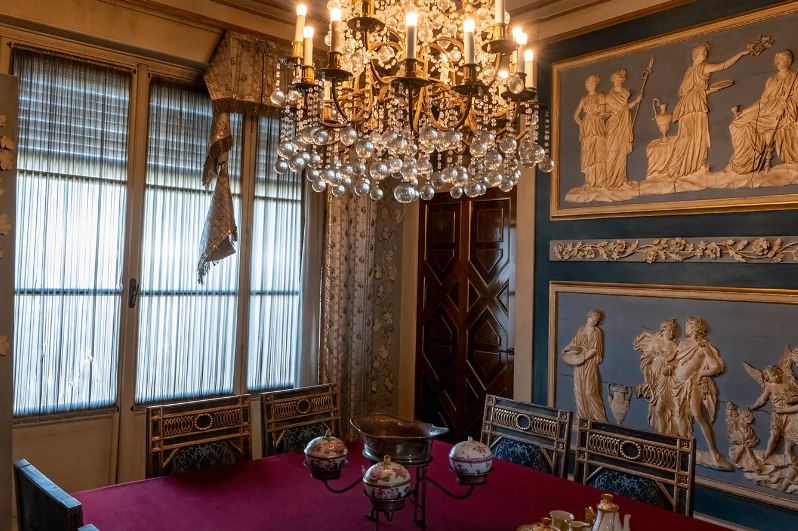
However, in authentic cases, the dead may become pawns in the struggle for the souls of the living, souls in transition, or “dislocated” souls, may become possessed by evil, so that they in their turn can possess the living, and so drive the living into despair, or worse. Evil symptoms and their inevitable fruit of despair, which leads to death by suicide bear the marks of the evil one battling with those who are sensitive to the uncommitted dead. This is dangerous territory, whether or not one holds with the existence of such entities. Ghosts are also sometimes known as the “restless dead.” It is important to establish that such entities are considered to be the “souls” or “spirits” of human beings. This is to distinguish them from nonhuman entities that have never drawn breath, those which are often referred to as demon. Mrs. Sarah L. Winchester, who was responsible for building the Winchester Mystery House, took precautions to enlist the assistance of the spirits when it came to the architecture of the Victorian mansion. The construction of the mansion was an effort to obtain deliverance from “unclean” spirits she felt that were out to take her life. She believed that she would be delivered back to God, and the transgenerational hold would be consequently broken. Never ceasing construction on this mansion would release the demonic footholds attached to the family’s fortune and also set her ancestors free. The Devil is a spirit that is powerful (it may be many places at the same time and manifest itself in a variety of distinctly paranormal ways). #RandolphHarris 2 of 11

Satan is capable of taking up a kind of residence within the mind, brain, soul, or body of susceptible and willing human beings—he is a spirit that has various names (among them Lucifer and Satan), that are real and do exit. Demonic oppression is far more common than possession, and that was certainly the case at the Winchester Estate. Malevolent spirits are always around to take advantage of our weaknesses. Spirits seem to have a channel to those who frequently suffer such attacks. Mrs. Winchester felt she was cursed because the sudden death of her new born daughter, and the death of her husband. The mansion she was building was supposed to seal up these demons. “There is a demon in this room,” John Hansen announced calmly to Mrs. Winchester as she sat in the morning room drinking her tea. The calmness was a mask. Inwardly, he was dismayed. He had not expected this. That is when he heard the low, menacing growl coming from the couch behind him. He turned. Minutes before the demure young housemaid, Mary Meriwether, had just greeted him. Now she was hideously transformed. Her neck had become impossibly elongated, the facial skin had tightened, and the lips were drawn back into a mocking smirk. The eyes that fixed him with blazing hatred were no longer those of Mary. Mrs. Winchester had been battling the supernatural force for more than two decades and she had come face-to-face with great evil many times. It often leaped out at her. He demons hawked up and down the mansion like the image of haunted criminals. #RandolphHarris 3 of 11

This house contained so many abysmal mysteries, as John Hansen starred back into Mrs. Winchester’s anguished eyes, he could tell she had been tortured. “There is a demon in the room,” he said again. Foe all that, Mrs. Winchester was shocked, taken unawares. Now Mary was lunging at John. He looked terrified. With two quick, curt gestures, John Hansen motioned to Mrs. Winchester to exist the room so to remove herself from harm’s way. Mrs. Winchester retreated to the back of the room. John advanced on Mary. “You foul and evil spirit, in the name of Jesus Christ—” “You’ll never get rid of me!” The woman slithered off the couch, cackling and taunting. “She’s mine, mine, mine.” The voice was that of a very old woman. It seemed to issue, by turns, from the young woman’s mouth and from various points in the room. She was writhing on the floor, her body coiling and uncoiling itself, her tongue lolling obscenely and her eyes yellow as gold. John was left in no doubt: these were the words and actions of the demonic, the possessed. Not too long before this, he had confronted a young man in the Winchester Mansion who had likewise hissed and wriggled in much the same manner, but the demon won the battle. The chilling words that were issued from the young man’s mouth were from a voice greatly distorted. “He belongs to me. I am not going.” And with that the young man fled from the mansion. John Hansen tried to cast the evil spirit out of this woman. “I bind you, and I forbid you to speak or interfere with this woman.” #RandolphHarris 4 of 11

John could not believe that Mary could summon such energy. She was barely five feet, three inches tall and weighed only 110 pounds. However, her arms and fists seemed to belong to a strongly built man. She caught him in a body lock. Two servants sprang to John’s defense and tried to pull her off, but she shrugged the men away with the ease of a freestyle wrestler, knocking them to the floor. Another blow to the jaw nearly felled him. He struggled to retain his balance as the servants tried again to restrain her. “In the name of Jesus—stop!” John shouted. His words had an astonishing effect. Mary fell to the floor as if struck by a heavy object. She lay still as a stone, eyes wide and staring, all strength seemingly drained from her. John, recovered somewhat but still a little groggy from the blows he had sustained, bent over her. “In the name of Jesus Christ, I command you to release your name!” On hearing the words “Jesus Christ,” Mary went into a violent fit. The servants grasped her arms and legs. At the moment, she was as much a danger to herself as to others; she was flailing about, out of control. However, by and by the fit subsided. The assistants relaxed their grip and allowed Mary to sit up, very slowly. Mary seemed to slump down into herself; her posture became that of an old, decrepit being. The shoulders grew hunched; her chin sank low onto her chest. She began cackling. John, still in his position of safety, was aghast. Then she vanished like a sheet of paper. #RandolphHarris 5 of 11

The flying horror-struck from the shrouded image of this inscrutable day occupied them, and the problems were perpetually bubbling up from the cloudy caldron of the spirits in the Winchester Mansion. Mrs. Winchesters consciousness gradually felt the same lowering of velocity. It swayed with the incessant oscillation of conjecture. There were even moments of weariness when, like the victim of some poison which leaves the brain clear, but holds the body motionless, she saw herself domesticated with the Horror, accepting its perpetual presence as one of the fixed conditions of life. Although Mary had vanished, the voice began to jabber, the words pouring out in a demented meter of their own, like a travesty of a children’s play song. “Before the filth met the filth she was ours! In the darkness womb she was ours. Always ours, always ours…ours!” The final words drawn out in a harsh, rasping hiss. The demon was playing for time. Another demon was making its presence felt; John was certain of it. There was a marked difference in one of the servant’s features. His face seemed to flatten; his mouth drooped. Then from the servants mouth a voice said, “We will never leave her.” This voice seemed to emerge from the floor itself. “We’ll kill her first!” Then the voice took on the cadence of a schoolyard bully’s—malicious, singing, mocking. “We tried before with William, his blades and pills, blades and pills, blades-and-pills.” “I command you in the name of Jesus Christ, release your name!” #RandolphHarris 6 of 11
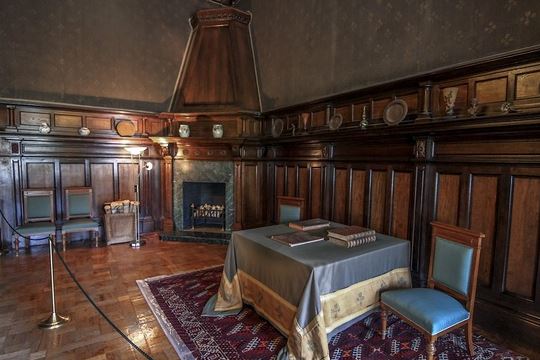
These moments seemed to lengthened into hours and days for Mrs. Winchester, till she passed into a phase of stolid acquiescence. She had come to regard herself as part of the supernatural routine with incurious eyes. And this deepening apathy held her fast. The face of the possessed servant took on a haughty look. There was a sneer, and another personality, another consciousness, behind it. “I am Sir Francis Dashwood,” a masculine voice announced. “Lover of the little ones. Robber of the little souls. Killer of the Innocents.” The servant’s hands flew to his throat. They began to squeeze. He was choking; his face turning blue. John rushed to break the grip of those hands—and found he could not. The servant’s head began to weave from side to side again. “We take them in the dark…always in the dark…in the depths of the dark. We walk for the Master in the dark. Of the warm, of the warm…to do for the Master in the bodies of the blood of the warm. To kill with the hands of the bodies of the warm…to range in the sweat in the blood in the warm.” A dramatic change occurred, but it was invisible to all in the morning room. John reports a “dark” presence had departed. The servant had no recollection of what had just taken place. The ordeal was at an end for now. The ghosts of family evil had ceases to haunt the mansion for now. After that day, the servant disappeared. No one never knew what had become of him—no one ever would know. But the house knew; the library in which Mrs. Winchester spent her long lonely evenings knew. For the house was always watching. #RandolphHarris 7 of 11

The floor she trod had felt his tread; the books on the shelves had seen his face; and there were moments when the intense consciousness of the old dusky walls seemed about to break out into some audible revelation of their secret. However, the revelation never came, and she knew it would never come. The Winchester Mansion was not one of the garrulous old mansions that betray the secrets entrusted to them. Its very legend proved that it had always been the mute accomplice, the incorruptible custodian, of the mysteries it had surprised. And Mrs. Winchester, sitting face to face with its silence, felt the futility of seeking to break it by any human means. The Winchester Family and Mansion are the source of a bizarre legend, and today is revered and idolized by followers around the World who strive to re-enact their ritual teachings. Even occultists praise the Winchester Family and their Mansion as the greatest marvel in the World. The Winchester mansion apparently means something deep and philosophical, that every person should find one’s own true will and exert it, just as Mrs. Winchester did making a home for the spirits. The construction of the 160-room mansion, that is approximately 70,000 square feet, helped Mrs. Winchester escape a World of overbearing darkness. According to one of the Winchester Mansion’s diarists, a handsome vampire, Marvellous Merchiston, was sent to seduce Mrs. Winchester and reduce her to inconsequence. He realized his before he could attack, and turned his magical current against himself—with the result that the man turned to ashes. #RandolphHarris 8 of 11
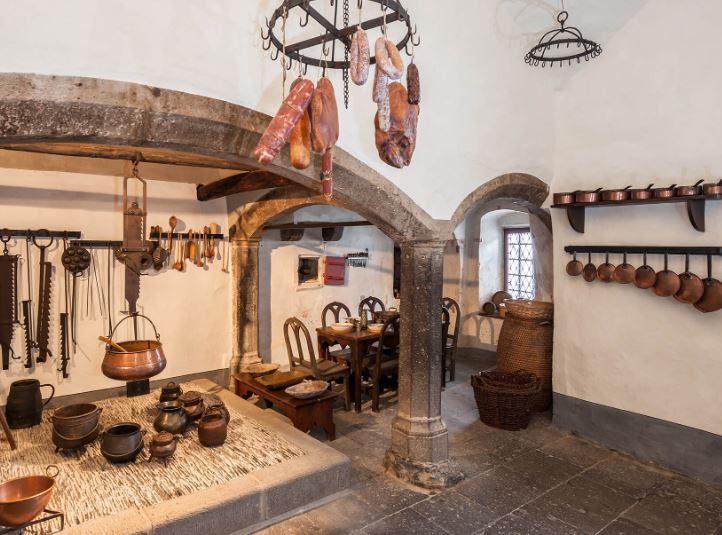
Next, his fellow vampires attacked Mrs. Winchester’s bloodhounds, which triggered the summoning up of the great demon Paimon, a Great King, and 200 Legions of Spirits. The vampires fell to an army of Paimon’s demons. This was known as the “year of miracles,” and it decided the outcome of the bloodiest wars yet know on the Winchester Estate. This carried many fortune seekers to a watery grave, and the wilderness campaigns from 1888 to 1893 claimed thousands of lives. Many were wracking with fevers (which claimed more victims than Paimon and the Winchester Rifles), and battlefield medical treatment was too primitive to save many of the wounded. They expected to gain Mrs. Winchester’s rich, flourishing, powerful, enterprising estate, but instead became ruined and undone. In the meantime, Mrs. Winchester travelled frequently and was a great walker and mountaineer. She strolled across China, Spain, and the Sahara desert; she climbed cliffs at Beachy Head and rocks at Wastdale, mountains in Switzerland, Mexico, and the Himalayas. She was a prolific writer, dashing off verse, sonnets, plays, novels, macabre short stories, magic invocations, and many were dazzled by her multifaceted brilliance. She was a traveller in the physical and spiritual Worlds. The wide scope of occult power possessed by spiritists helps explain why people can accomplish extraordinary things, and why magic can also cause so much mischief. Through the phenomena of levitation, apports, telekinesis, and materializations, it is not difficult to see how a person endowed with strong mediumistic powers can do a great deal of harm, especially in the closely associated realm of magic. #RandolphHarris 9 of 11

One common form of magic persecution is beatings by an invisible attacker. Parapsychology also sees magical persecution as a mediumistic problem in the sphere of materializations. Strong mediums (when under demon control) send out energy with which to build up human phantasms and are also able to transform this energy into animal forms, including dogs, cats, frogs, snakes, or human bodies with animal heads, et cetera. This explains the bizarre spiritistic persecution through phantoms in the form of various animals or human bodies with nonhuman heads. These animals bite, scratch, or otherwise torment their victims. Examples of these occult phenomena abound in areas where the black arts are practiced. However, such occurrences are denied by many intellectuals. Often peasants and country people, especially in Europe, know more about magic than university graduates, who claim, swindle, or hocus-pocus trickery are used instead of occult powers. Magic defense enlists supernatural agencies to counteract or undo the mischief wrought by magic persecution. Various kinds of spells, charms, or incantations are employed. In spiritistic séances it is an established fact that injuries inflicted upon a phantasm are sustained by the medium, even in the case of animal phantasms. Many defensive customs developed to combat this threat since magic persecution involves materialization. If a victim can injure an aggressive phantasm, one has won the struggle. #RandolphHarris 10 of 11

I DO invocate and conjure thee, O Spirit Sarah L. Winchester; and being with power armed from the SUPREME MAJESTRY, I do strongly command thee, by BERALANENSIS, BALDACHINENSIS, PAUMACHIA, and APOLOGIAE SEDES; by the most Powerful Princess, Genii, Liachidae, and Ministers of the Tartarean Abode; and by the Chief Prince of the Seat of Apologia in the Ninth Legion, I do invoke thee, and by invoking conjure thee. And being armed with power from the SUPREME MAJESTRY, I do strongly command thee, by Him Who spake and it was done, and unto whom all creatures be obedient. Also I, being made after the image of God, endued with power from GOD and created according unto His will, do command that you do not fall into the trap of expressing disgust with these people, or exhibiting spite or hatred. They serve as important examples of what not to be. Remember that they are not the target of your spite and hatred. It is the systematic construct of imposed limitation we despise. Not the people who are enslaved by the system. As the fallen spirits in this estate ascend, I ascend also by following the path of the celestials and infernals do tremble together, and around troubled and confounded. I usurp the power of worship to empower my blackened eternal soul. I shall take all power raised within this sanctuary as my own through this talisman of counter creation to strengthen my divine power and to Become a Living God. For thou art conjured by the name of the LIVING and TRUE GOD, HELIOREN, wherefore fulfill thou my commands, and persist thou therein unto the end, speaking unto me with a voice clear and intelligible without any ambiguity. #RandolphHarris 11 of 11

Winchester Mystery House

There have been many different activities that have existed since the Estate opened for tours in 1923. Did you know the property once included a WMH Wax Museum? It was launched in the early 1960s. #100yearsofmystery
Stay tuned for any Centennial Celebration announcements on our social accounts of how The Winchester Mystery House will be celebrating 100 years of tours! https://winchestermysteryhouse.com/

Angels Which Kept Not Their First Estate

I hope by now that you agree with me that the tiresomeness of an over-peopled Heaven is a purely subjective and illusory notion, a sign of human incapacity, a remnant of the old narrow-hearted aristocratic creed. William Winchester loved boats and had thirteen-metres and even raced one in the America’s Cup trials once. He had a big yacht that he kept down in New Haven, Connecticut, even though he lived in Switzerland most of the time. My grandfather, Oliver Winchester, put a rear wing on the house he bought for William as a wedding gift, with a new kitchen and flower room my grandmother wanted when she married him. This house preceded the Winchester Mansion. And it was where my father, William Winchester, had an office. There had been a couple of times when I would have to take papers down to him. That office was bigger than most people’s living rooms. It had a fireplace and a window looking out on the West River, which flows into New Haven Harbor. Oliver Winchester was the Lieutenant governor of Connecticut. Not only was he founder of the Winchester Repeating Arms Company, but he was on the board of directors of four charities, including the Winchester Foundation, which gave money for research into Tuberculosis and heart disease; he was on the board of New Haven Savings Bank, which the Winchesters pretty much owned; he was on the boards of a couple of other big companies. Running a rich family was like running a business. #RandolphHarris 1 of 13
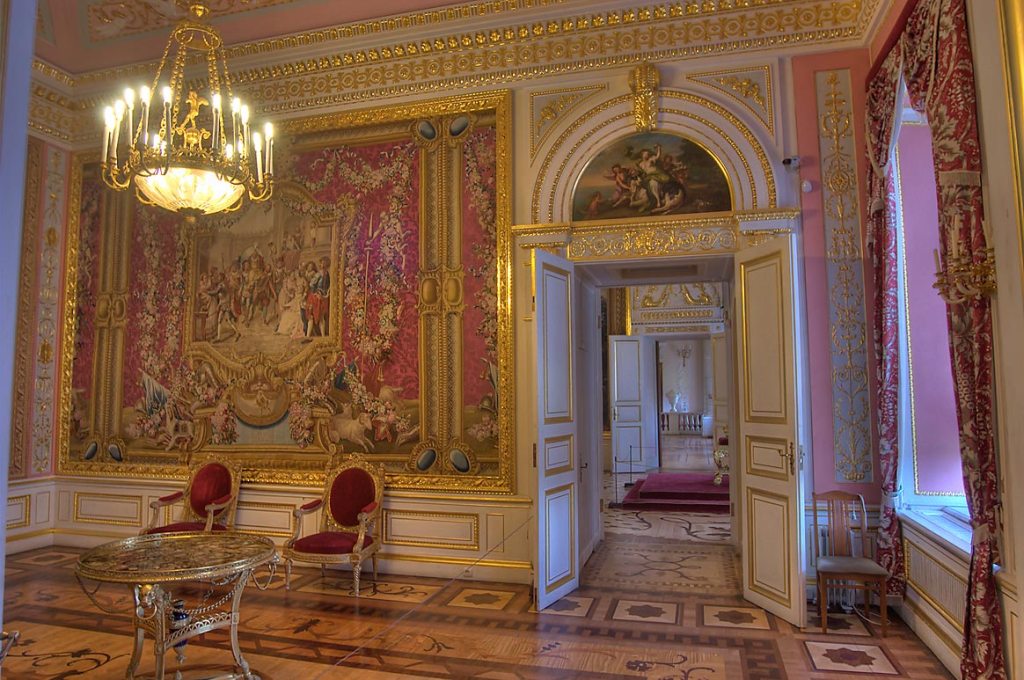
In fact, if you look at the Winchester Family treat, it is more of a “business family tree.” I guess money has always been the life source of the Winchester family. My father, William Winchester, said the family motto was “We own it, lock, stock, and barrel.” This family had a lot of power, and when you have power, you use it. The Winchester’s did not go out brawling like drunken sailors. We had the courts, the law, the police—and the Winchester Rifle if we needed it. We made sure that things around here went the way we wanted them to go. However, we did not go about it by brawling. If you did us wrong, we stayed clam, we spoke politely to everybody. However, we moved quietly. Sooner or later we would catch you between a rock and a hard place and then you would feel the almighty bad. If we did not go after them, those guys would have thought we were chicken. My father always said, “Son, do not worry what John Jacob Astor thinks of you. In your position it does not matter. You are going to be very rich and very powerful. These people will never like you. They will envy you, they will defer to you, and some of them will even admire you. But they will never like you. For that you must understand, what others think does not matter.” The original Winchester mansion was a house of these times, all right, though not to be considered new. I figured it to be at least three hundred years old. It was built of the local stone, and had three stories and a high-pitched roof, with mullioned windows—and it was vast. #RandolphHarris 2 of 13
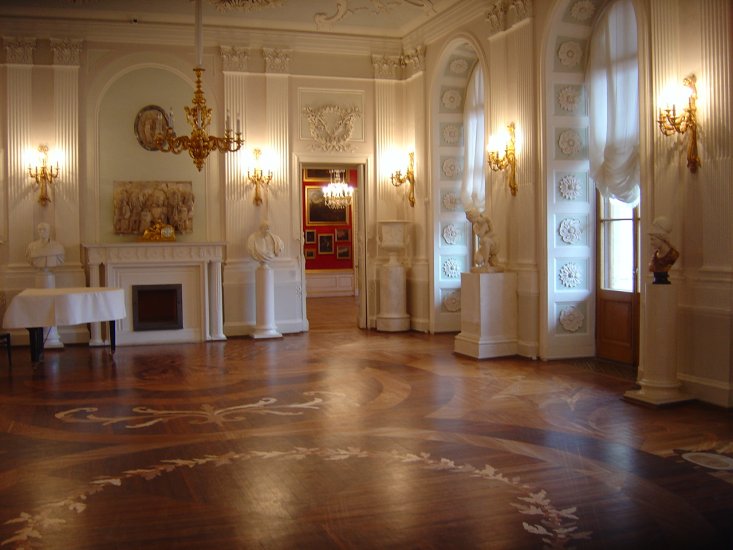
Often times, there was no one about. Only the bleak winter vines stripped of their jasmine, running on for miles, and distant corpse of an ancient tree of immense size, and the cold rain, a rain worse to me than snow, falling over as if it were falling on the entre World, a near silent rain that felt like needles on the backs of my hands and on my face. The mosaic tiles were beautiful, and possibly ancient, dating all the way back to the Roman times. I walked back and forth over the, and tapped several times with the toe of my boot. I walked to the double doors that opened into the garden, and there I saw a great pile of wood. And there was a big head on the rock, it was the devil’s face that a saint put there. If men believed nothing, they did not understand it, it is a short cradle they would have. I had been put in the mood for ghost, that evening after an excellent dinner at my father’s home. Seen through the haze of Abner Doubleday’s cigars, and by the drowsy gleam of a coal fire, my father’s library, with its oak walls and dark old bindings, made a good setting for such evocations; and ghostly experiences at first hand beings. An absurd thought came to me, that being here with Abner, it had all felt natural and good, as if in spite of the topic of our conversation we were simply human beings and all the dark World did not exist. I was ashamed of this. Why did we have to be “like human beings”? I asked myself. Why could we not simply be warlocks together? He looked at me, at my shining eyes, and his congenial smile, and he took my hand and said he wanted to see the house. We remained together for several hours after that, during which we walked through many rooms and he not only admired the endless book collection in the Gothic library, filled with classics bound in black cloth and daguerreotypes of faded celebrities, but also many of the paintings, including a few Russian painters of the nineteenth century he had never seen before. #RandolphHarris 3 of 13
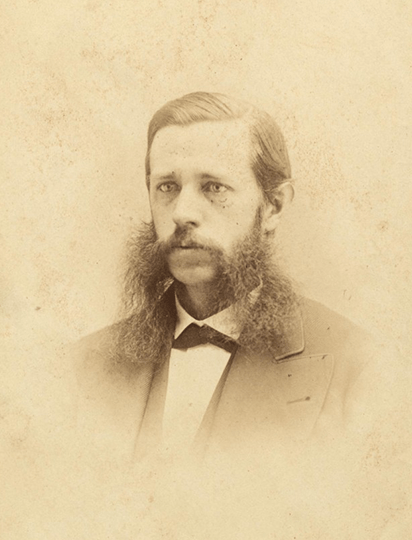
For me, this was a wonderful time. We could have continued our conversation for a year. We walked about outside the house, through the gardens which were crowded with trees for privacy and vines that blossomed at night. These carefully guarded hours had been devoted to the cultivation of a fine intelligence and a few judiciously chosen habits; and none of the disturbances common to the human experience seemed to have crossed the sky. Mentally I was able to exercise a hospitality less seductive but no less stimulating than a play. Abner’s mind was like a forum, or some open meeting place for the exchange of ideas: somewhat cold and drafty, but light, spacious and orderly—a kind of academic grove from which all the leaves had fallen. In this privileged area, we were able to stretch our muscles and expand our lungs; and, as id to prolong as much as possible the tradition of what we felt to be vanishing institution, Abner tasted the lyric qualities in youth. He nipped the flowers of soul which he gathered from this tour, which forced a young idea to blossom. The man was really intelligent, and the soundness of his nature was like the pure paste under a fine glaze. Abner had been fished out of the dullness by the spirits of the Winchester mansion. Just at the evening was drawing to an end, he demanded, “And now you have to tell me about your ghosts!” “My ghost? Do you suppose I am fool enough to the expense of keeping my own ghosts, where there are so many charming ones in my friends’ closets?” I said. #RandolphHarris 4 of 13
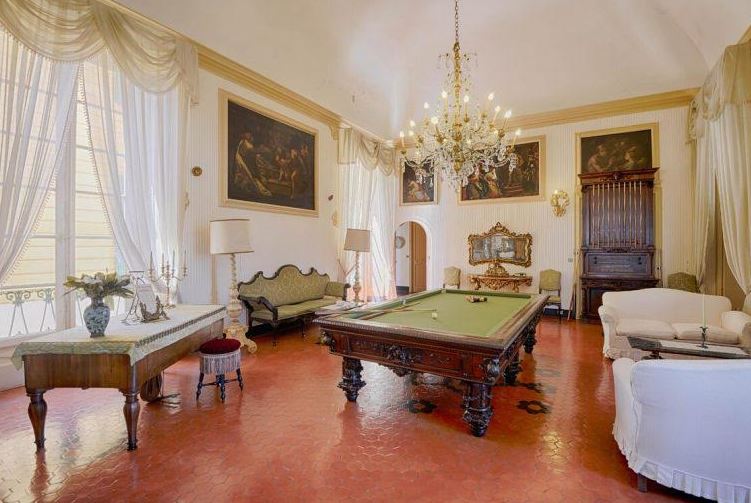
The fact is that we found whole skeletons that were used in various forms of old black magic rituals. Undoubtedly, for many who pursue this darkest of experiments, necromancy is the touchstone of occultism, especially for warlocks. If, after careful preparation, they are able to carry through what they regard as a successful contact they have reached a certain pinnacle in black magic conjuration. It is fruitless discussing whether or not this feat is possible; belief by the practitioner is all that is needed for the ritual to proceed and some psychological or drug or spiritual trance may well convince the depts tht they have indeed succeeded. “Oh,” Abner said, “you would never be content to share if you met one you really liked. What is the use of denying it? You have seen everything, so of course you have seen a ghost! Or if you have not seen one, it is only because you have seen several!” “That is it,” I said. “I have seen a legion.” The words were so unexpected that they dropped down and down into a deep silence, while we continued to stare at each other. Abner learned forward with is listening smile. “You will wonder why I am enlarging on some of these incidents. It is because the evening on which this particular incident took place was the very evening on which I first saw the queer sights I have spoken of. Being at that time an ardent believer in a necessary sequence between cause and effect, I naturally tried to trace some kind of link between the lion and the lamb lying down together.” Ancient Druids lived on the estate and necromancy had a particular appeal to warlocks seeking confirmation, for example, of the mysteries of the afterlife but more often necromancy was pursued by the skilled masters of ritual magic. #RandolphHarris 5 of 13

“We once wanted to raise a dead uncle,” I told Abner. “We went to the course of the giant tree, where we performed a ceremony. For a few moments, nothing happened. But moments later, there was a mysterious explosion. And afterwards, the road lay thick with cinders and debris. At first, my grandfather worried about the result. But he had a reassuring thought. Perhaps the explosion was caused by spontaneous combustion. ‘Oh my God…’ cried my father. ‘What happened?!’ he demanded. No one was sure. After that we walked back to the house in disbelief of the mess. Then I pointed and shouted out in horror. Before I could stop, my father fell to his knees before a hill of burned leaves and tree branches, under which he glimpsed a man’s head. It was his brother and he was looking for us. My grandfather put a hand to his mouth and stified the urge to vomit. My uncle’s eye sockets were empty, and his hair singed. ‘Brother, get up!’ he cried roughly. My father yanked his brother to his feet, frightened by the wide-eyed horror in his eyes and his awful nonstop screaming. He tried to pull out of his grasp, but he held my father tight until the screams subsided into sobs.” “Now listen,” my grandfather told my father. “You are a Winchester, so do not go making a liar out of me.” “But his brother’s tears burned my father’s skin.” “Your brother is dead,” said my grandfather. “We wondered if anything else came back to life. It was so eerily silent for this time of the morning. No cows mooing, no wood being chopped. No birds singing on the roof top. And the lawn was blackened.” #RandolphHarris 6 of 13
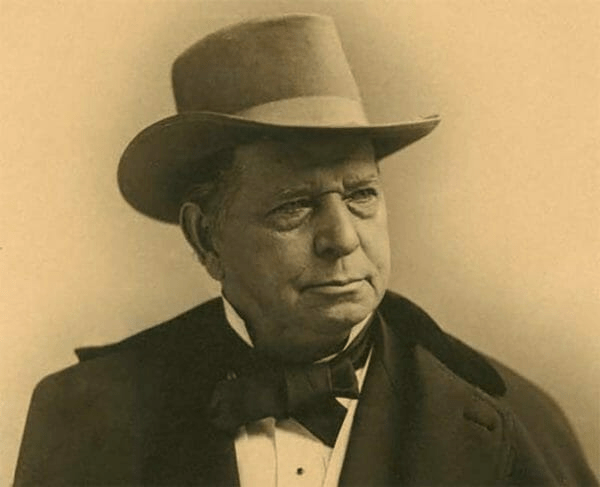
“As we went into the house, it was full of strangers, burned, bleeding, sick people. As we precariously waded through the maze of bodies, the wind must have carried in a fog. While my grandfather dug a mass grave for these animated bodies, my father and I dragged them out of the house to burry them. It took days, there were literally hundreds of them. My arms were shaking. We were all near exhaustion, and we still have several bodies to bury. We worked for an entire week to remove all these bleeding strangers from our home. I went up to bed with rather a heavy heart, for I was bowed under the weight of the first ritual I had ever consciously committed; and young as I was, I saw the gravity of my situation. The situation of being William Wirt Winchester Jr. Do not imagine for this that I had hitherto been an instrument of destruction I had been a harmless young man, who had followed his bent and declined all collaboration with Providence. Now I had suddenly undertaken to promote the moral order of the World, and I felt a good deal like the trustful spectator who has given his gold watch to the conjurer, and does not know in what shape he will get it back when the trick is over…Still, a glow of self-righteousness tempered my fears, and I said to myself as I undressed that when I had got use to being good it probably would not make me as nervous as it did at the start. And by the time I was in bed, and had blown out my candle, I felt that I really was getting used to it, and that, as far as I had got, it was not unlike sinking down into one of the softest wool mattresses.” #RandolphHarris 7 of 13

“My room had grown cold, and intensely still. I was waked by the queer feeling we all know—the feeling that there was something in the room that had not been there when I fell asleep. I sat up and strained my eyes into the darkness. The room was pitch black, and at first I saw nothing; but gradually a vague glimmer at the foot of the bed turned into two eyes starting back at me. The eyes gave out a light of their own. They were the very worst eyes I have ever seen: my dead uncle’s eyes. And the room slowly filled with hundreds of these eyes, orbs of light. My father paid immense sums to the architects and workmen to entomb the heart of the house in hopes of locking their spirits inside. This mean enclosing one of its four towers left standing and living in only a few habitable rooms while the work went on. The mansion went on to be inhabited by a secret order of men and women who met to discuss philosophy and music and escape the modern World, and the public would never be invited here due to the deep mourning of my mother over the loss of my grandfather, father, and baby sister. Indeed it was most anguishing. Some of these people had devoted their entire careers to this one project, and there was nothing now to be done but to give them, but gold coins. My mother left this mansion to Yale, I went to Rome, she went to California and it was later demolished. And there were egregious lies to be told about the Winchester name. Gorgeous salons with silken-paneled walls and plaster curlicues and Savonnerie carpets on the floor all destroyed. #RandolphHarris 8 of 13
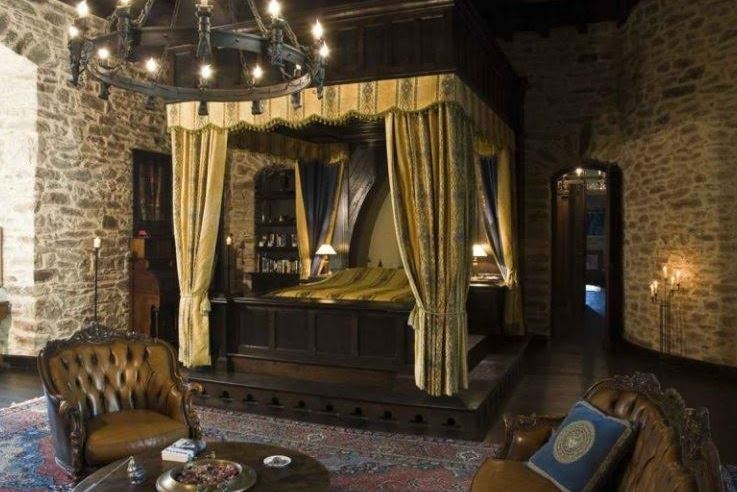
The modern marble bathrooms, replete with sunken tubs and spacious showers for every bedchamber. We wanted to make sure to give off no scent, absorb no precious oils, and did not want to take up the human scents. The great hall where my family and I had once dined, listened to the demands of the villagers and farmers, and hovered around the seventy-five fireplaces, twenty kitchens, four libraries, eighteen thousand windows, four towers, and three hundred and fifty rooms all gone like it never existed. At times, there may have been two thousand present in the ballroom. No one ever counted. This was the height of the Winchester fortune, my dear Abner. There were many departed here, though untouched by the rifle.” In its blackest form the art of necromancy has produced fairly evil recipes for success. Graveyards are indeed a common place, and it is possible our home had been constructed on a battle ground. This was a place where contact with the dead could be expressed, and was conducive to dark apparitions in suffocating rooms or beneath a mock swinging gibbet. The old grimoires are full of colourful descriptions, and since they were often written by clerical scholars when they took down the confessions of warlocks, one must be careful with the rite performed. One could magnify the spell. Even policemen were involved in occultism. As an example, the daughter of a police superintendent was initiated into the dark arts and the High Priest was another policeman. “Yes, I was the High Priest…I have been a white witch for eight years and I am not ashamed of what I do although some of my colleagues have reported me to the Witch Inspector General. I have helped to initiate at least seven witches and eight warlocks.” #RandolphHarris 9 of 13
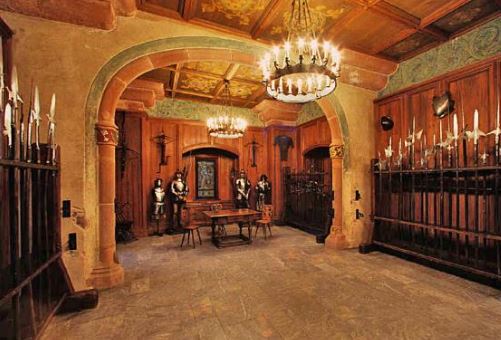
There is much evidence in Scriptures that the spirits who appear at séances are rebel angels. Perhaps that is what we raised that night? Jude 6 speaks about “angels which kept not their first estate.” Many Christian Bible scholars interpret Ezekiel 28.17, “I will cast thee to the ground,” as indicating that the Earth is the realm of Satan’s powerful operations, with the help of his fallen colleagues, the demons. Satan is called the “god of this World,” in 2 Corinthians 4.4. And Christians are under attack by “rulers…powers…World forces of darkness” (Ephesians 6.12). God tell us that hell was “created for the devil and his angels (demons)” (Matthew 25.41). I, Randolph Harris, cite and conjure thee, Spirit of Schemhamforasch, by all the seventy-two holy names of God, that Thou appear before me and fulfil my desire, as truly in and through the name Emanuel, which thee three youths Sadrach, Mijach, and A hero sung in the fiery furnace from which they are released. I do conure thee, O thou Spirits William Wirt Winchester and Oliver Fischer Winchester, by all the most glorious and efficacious names of the MOST GREAT AND INCOMPREHENSIBLE LORD GOD OF HOSTS, that thou please comest quickly and without delay from all parts and places of the Earth and World wherever thou mayest be, to make rational answers unto my demands, and that visibly and affably, speaking with a voice intelligible unto mine understanding as aforesaid. I conjure and constrain thee, O thou Spirits William Wirt Winchester and Oliver Fischer Winchester, by all the names aforesaid; and in addition by these seven great names wherewith Solomon the Wise bound thee and thy companions in a Vessel of Brass, Adonai, Preyai or Prerai, Tetragrammaton, Anaphaxeton or Anepheneton, Inessenfatol or Inessenfatall, Pathtumon or Pathatumon, and Itemon; that thou appearest here before this Circle to fulfil my will in all things that seem good unto me. #RandolphHarris 10 of 13

And if thou be still so disobedient, and refuest still to come, I will in the power and by the power of the name of the SUPREME AND EVERLASTING LONG GOD WHO created both thee and me and all the World in six days, and what is contained therein, Eie, Saraye and by the power of this name Primeumation which commandeth the whole host of Heaven, bless three, and grant thee of thine office, joy, and place, and bind thee in the depths of Heaven or the eternal to remain unto the Day of the Last Judgment. And I will bind thee in the Eternal Light, and into the Sky of Light and Harmony, therefore see my good wishes for you and please comest quickly and appearest here before this Circle to do my will. Therefore, come thou! In and by the holy names Adonai, Zabaoth, Adonia, Amioran, Come thou! For it is Adonai who commandest thee. If THOU hast come thus far, and yet he appeareth not, thou mayest be sure that he is sent unto some other place by this King, and may return any time; and if it be so, invocate the King as here followeth, to send him. However, if he does not come still, then thou mayest be sure that he is bound in the Heavens, and that he is found in the custody of his King. If so, and thou still hast a desire to call him even from thence, thou must rehearse the general curse which is called the Spirits’ Chain. O THOU great, powerful, and mighty KING AMAIMON, who bearest rule by the power of the SUPREME GOD EL over all spirits both superior and inferior of the Infernal Orders in the Dominion of the East; I do invocate and command thee by the especial and true name of GOD; and by that GOD that THOU Worshippest; and by the Seal of they creation; and by the most mighty and powerful name of GOD, IEHOVAH TETRAGRAMMATION who cast thee out of Heaven withal other infernal spirits. #RandolphHarris 11 of 13

And by all the most powerful and great names of GOD who created Heaven, and Earth, and Hell, and all things in them contained; and by their power and virtue; and by the name PRIMEUMATON who commandeth the whole host of Heaven; that thou mayest cause, enforce, and compel the Spirits of William Wirt Winchester and Oliver Winchester to come unto me here before this Circle in fair and comely shapes, without hard unto me or unto any other creature, to answer truly and faithfully unto all my requests; so that I may accomplish my will and desire in knowing and obtaining any matter or thing which by office thou knowest is proper for him to perform or accomplish, through the power of GOD, EL, Who created and doth dispose of all things both celestial, aerial, terrestrial, and infernal. I conjure you William Wirt Winchester and Oliver Fischer Winchester, by the Spirits Chain to appear in the Winchester Mansion, and if you two are bound in chains, by the Emancipation Proclamation, you have permission to break off from them and be at liberty. As this smoke ascends I ascend also by following the path of smoke and usurping power of worship to empower by blackened eternal soul. I take all the power raised within this sanctuary as my own through this talisman of counter creation to strengthen my divine power and to Become a Living God. Harness power through the cedar tree of life, disinfectant, expectorant, treatment of tuberculosis. Spirits of the Winchester Mansion, here me—Roubriao: Mariodam: Balbnabaoth: Assalonai: Aphniao: I: Thoteth: Abrasar: Aeoou: Ischure, Might and Bornless One! Legions of Spirits in the Winchester mansion, here me and arise. I invoke thee. #RandolphHarris 12 of 13

I awaken the powers of darkness which dwell within you by the power of the blood of the three headed Dragon Zohak that you may serve to empower my great work! Through serving the greater cause of dark magik which break the shackles that bind the Blackened Fire of Spirit, may you be uplifted and liberated! Awaken and empower the forbidden rites of Angra Mainyu! Awaken to empower my great work of counter creation as an Apostle of the Lord of Darkness eternal and as a warrior of the Path of Smoke! Through the gateway of blood, smoke, and Blackened Fire receive life from the deepest depths of Arezura, in the name of Zohak, and by the power of Angra mainyu it is done! Hear Me:–Ieou: Pur: Iou: Iaot: Iaeo: Ioou: Abrasar: Sabriam: Do: Uu: Adonaie: Ede: Edu: Angelos ton Theon: Aniaia Lai: Gaia: Ape: Diathanna Thrown. I am He! the Bornless Spirit! having sight in the feet: Strong, and the Immortal Fire! I am He! the Truth! I am He! Who hate that evil should be wrought in the World! I am He, that lighteneth and thundereth. I am He, from Whom is the Shower of the Life of Earth: I am He, Whose mouth ever flameth: I am He, the begetter and Manifester unto the Light: I am He; the Grace of the World: “The Heart of Girt with a Serpent” is My Name! Come Thou forth, and follow Me: and make all Spirits subject unto Me so that every Spirit of the Firmament, and of the Ether: upon the Earth and under the Earth: on dry Land, or in the Water: of whirling Air or of rushing Fire: and every Spell and Scourge of God, may be obedient unto me! Iao: Saboo: Such are the Words! This is the special secret of this Seal. This is also the special secret of this Throne. Carrying this Seal with you will cause you to be very agreeable and much beloved, and will also defeat your enemies. #RandolphHarris 13 of 13
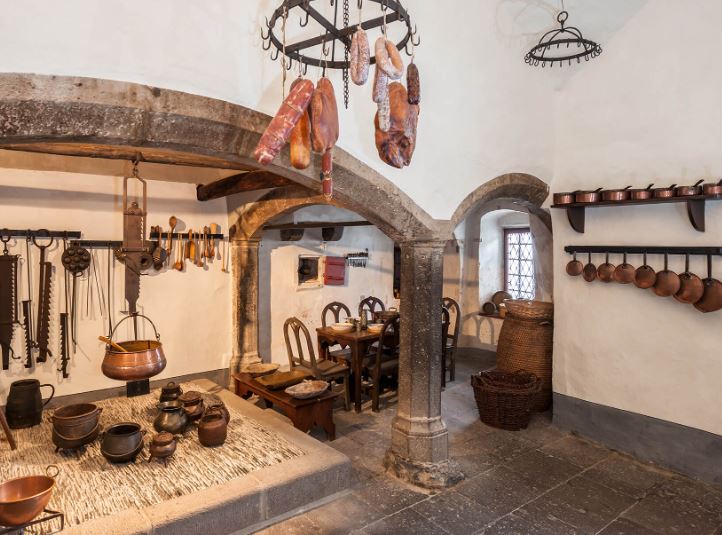

The castle is the ancestral seat of the former royal German dynasty known as the House of Winchester. The beautiful, Neo-Gothic/Victorian castle, now known as the Winchester Mystery House, sees hundreds of thousands of tourists a year. It once contained a sizeable art collection, a treasure trove of jewels that were stolen from the safe, along with a conjurer’s heart. But despite its magnificent features and Medieval history, the Winchester Mystery House has not been formally lived in for centuries.

As political power shifted, and taxes became law in 1909, the spirits decided they would discontinue construction, and shortly after called Mrs. Winchester home. The architecture of the Winchester Mansion and its gardens are the main attractions, and some come for the food, and/or to purchase items from the gift shop. https://winchestermysteryhouse.com/
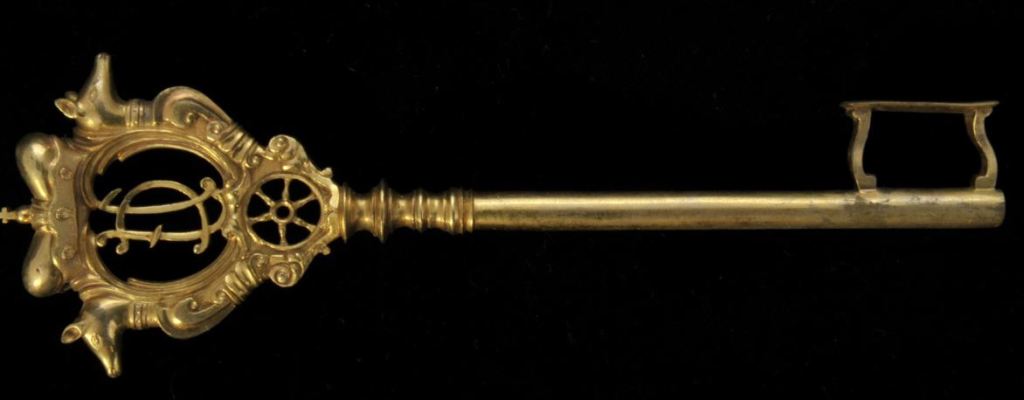

Reach Out and Experience the Mystery at the Winchester Mystery House!
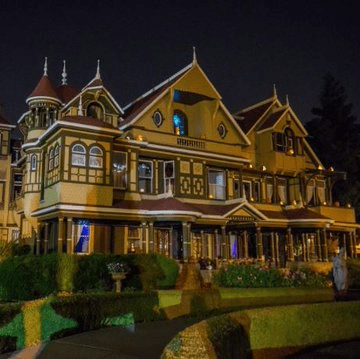
The stars grew large and infinite in their cold majestic light, and slowly all the night was gone and there remained one great glorious and sourceless illumination. A witch coven or secret society in your own town or village is perhaps engaged in ritual practice. They may be in sinister robes. They may be white witches or black magicians. They may even be your friends. They will be alert to strangers and will maintain utmost secrecy. Ans with very good reason. The deeply emotive allegations of satanic ritual abuse became the in-topic of the late eighties, especially among social workers and child-care organizations. Dark and evil practices were thought to e rife in suburban and rural Britain, just as they were alleged to be in the United States of America on a much greater scale. A series of high-level conferences was arranged under the auspices of various Christian and medical organizations who brought out one speaker after another, from home and abroad, to give confirmation of the atrocities committed in the name of the devil. Alarming figures and statements were being reported in the newspaper without qualification because the stories emanated from “experts.” No evidence was offered and it all took on the hue and cry of a witch-hunt of the kind not seen since the eighteenth century. Mrs. Winchester was once a speaker at a conference on Incest and Related Problems, co-organized by the Hell Fire Club. She was billed as a “survivor” of satanic abuse, and was engaged in counselling others. She said she received thirteen visitors each week from fellow survivors and stated that fifty cases she had dealt with involved cannibalism. #RandolphHarris 1 of 13

Mrs. Winchester said human foetuses were being killed and eaten by satanic rings; that children were being hung up by their feet and suspended over electric saws; that they suffered all kinds of depravity. The conference, attended by masons, psychics, witches, and warlocks, as well as others, ran for three days and natural were kept in secret. A warlock said that there were 10,000 human sacrifices in America each year and many of those cases were investigated. Thousand of human hours involving police and church leaders were expended, thousands of children largely under the age of eight were subjected to the trauma of being questioned about devils and ghosts and snakes and horrible things. However, at the end of the day only four known cases where ritual abuse was specifically on the charge sheet were brought to court—and two of those failed. One case in American involving a hundred children took seven years to bring to court, cost $10 million to prosecute and one of the defendants who was refused bail spent five years in prison. At the end of the day, the case was withdrawn. Meanwhile, children were being taken from their homes while the church investigated all kinds of horrific allegations which, had the laws of the not so distant sixteenth century still prevailed, would have meant the mass execution of parents on charges of witchcraft. It was Salem, The Crucible and the witch-hunt all over again, except that no charges were laid, no arrests were made—except in one case where the police refused to include any reference to satanic abuse in their evidence. On the face of it the whole business was so inconclusive in terms of actual evidence of devilish goings-on that it was natural to suppose such things did not really exist. #RandolphHarris 2 of 13

But Dear God, there was no justification for the impious blood drinkers, feeding off the luxurious stews of the wicked American World. It was amazing that the Holy Face did not catch them suddenly and make them forget all else. Mrs. Winchester had seen the Face of Christ blazing in the firelight, a brilliant scowling Christ. There remained, however, a lingering doubt about the claims of dastardly deeds on black altars in shrouded, incensed—filled rooms, that the devil was still about, that witches were up to no good, that black magicians were still messing around in graveyards and defiling the dead. So this is a journey of discovery, to try to find out some answers to some pressing questions about the occult. Fact, fiction, fallacy, rumor and mythology appear to have been merged into a new witch-hunt, and for once the word would be taken literally. The public at large was being asked to believe that all involved had but one aim—to corrupt and deprave all who came within their sphere as part of a menacing international conspiracy to promote forces of darkness against Christian society. In attempting to cut a path through what was once described as the marshes, forests and badlands of magic and superstition, there is the great morass of beliefs and activities which persist today in the spectrum of interrelated occult subjects, but also for the reason that pagans and witches shudder at the prospect of being mentioned in the same breath as satanists. #RandolphHarris 3 of 13

And eerie possibility suggests itself similarly to occultists who are members of the serious and often complicated cults and lodges of ritual magic and mysticism, or who embrace a voluminous number of secret societies made up of academics and students of esoteric teachings, would feel insulted to be attached in any way to either of these movements. Therefore, looking at witchcraft, and revealing current trends and their leading participants, we will examine selections of other occult beliefs; and look into satanism. Furthermore, there are Worldwide organizations and occult media which now exist in what is a very, very big industry. What links them all, for good or evil, is the exploration of the paranormal abilities of the human mind, the belief that the mystique and magic into which serious occultists immerse themselves is a natural human faculty and can be developed like any other faculty. It is as controversial as it sounds, especially since Christianity has attempted to impose the view that all magic is black magic, and that the power source is the devil himself, assisted by the demons he dispatches to the side of all those who call down these powers. Meanwhile, most satanic worshippers have other views which are largely committed to a total reversion of Christian values. Witchcraft is described by its elders as a religion and is officially recognized as such in America. #RandolphHarris 4 of 13

British witches who support this school of thought prefer to call themselves pagans. They claim that their roots are in the old religions of pre-Christian times and are derived basically from the ancient nature and fertility rites of the original pagan mystery religions which were outlawed and went underground in the third century AD under pressure from Christianity. In spite of purges and persecution through the ages, knowledge of the “old ways” is said by its supporter to have been retained through oral tradition, handed down within families, and confirmed by the salvage of written evidence. This historic justification is in fact a rather romantic notion. Modern witchcraft as practiced in most-covens is basically the creation of one man, who called heavily on the researched practiced, legends and superstitions of the past. Kill the innocent and you will sooner or later come to guilt, and with it you will come to impotence and finally despair. You make think you are too ruthless and too cold for such. You may feel superior to human beings and excuse your predatory excesses on the ground that you do but seek the necessary blood for your own life. However, it will not work in the long run. In the long run, you will come to know that you are more human than monster, all that is noble in you derives from your humanity, and your enhanced nature can only lead you to value humans all the more. #RandolphHarris 5 of 13

You will come to pity those you slay, even the most unredeemable, and you will come to love humans so desperately that there will be nights when hunger will seem far preferable to you than the blood repast. Witches, men, and women, meet at the new and full moon at festival times. They aim to put themselves in tune with natural forces and thus often work within a robe. They believe it is withing everyone’s capacity, with teaching, to reach out and experience the Mystery; they believe it is possible for each individual to make contact with the deity they worship and invoke the spirit of that deity into their own bodies. Today pagans or white witches are not apprehensive about magic, because they do not connect it with the devil; they regard it as part of their religion. Their faith encompasses the teachings which encourage the development of second sight, extrasensory powers, clairvoyance, spirit communications and the like. They meet in small groups called covens and participate in creative experimentation within the agreed group structure. Witchcraft cannot be a mass religion. The worship is conducted before an altar from within a sacred circle in which two main activities occur: the celebration of the Witches’ Sabbats, involving ritual dancing and chanting, and the practice of magic. Their magic is not about pulling rabbits from a hat. It has been broadly defined as the art and science of using little-known natural powers to achieve changes in consciousness and in the physical environment, enabling constant with non-human entities. There are good witches and bad witches, black and white. There are also hereditary witches who operate alone. #RandolphHarris 6 of 13
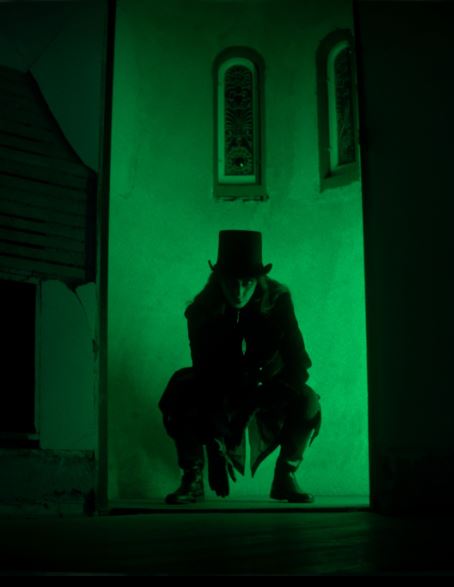
To understand witchcraft, we must descend into the darkness of the deepest oceans of the human mind. It is a descent that is wrapped in mystery and the inexplicable, and what cannot be explained is feared. Fear may lead to hysteria and because of what has gone before in the persecution of their predecessors, this fear can become the nightmare of modern witches, if not of modern society. Not long ago, in the foggiest centuries of ancient times, a solemn commission to blood drinkers, and indeed there had been a dim religion surrounding us in antique pagan days in which vampires had been worshipped as bringers of justice to those who had done wrong. There was sufficient hysteria to inspire the fear that a twentieth-century witch-hunt was about to begin, encouraged by the claims of anti-occult groups. The Conservative MP and lay preacher Mr. Geoffrey Dickens sought in the House of Commons to reactivate the Witchcraft Act of 1735—an act that had finally been laid to rest in 1951. He tabled an amendment to the Criminal Justices Bill, seeking to make it illegal for any person under eighteen to join or participate in any secret occult ceremonies or groups. His attempt, branded by occultists as repressive, was not admitted on the grounds that it was beyond the scope of the new Bill. However, by raising the issues at the highest level in the land Mr. Dickens gave credence to the view of the witches themselves, that witchcraft is not the bizarre and unimportant hobby of a mere handful of cranks. Mrs. Christopher Bray, one of the country’s largest purveyors of equipment to the occult World stated that he has 40,000 customers recorded on his computerized records, to whom he can supply everything from two grams of bat’s blood to a complete altar set for the most complicated of occult rituals. #RandolphHarris 7 of 13

Very soon, I understood what Mrs. Winchester meant when she said that some develop a taste for evil and maintain it. Often, the visions from their victims become stronger for them with every kill. They sometimes see colors when they kill. In fact, they sometimes see those color dancing around their victims before they ever even close in. Some people seem to walk in red-tinged shadows, and others emanate a fiery orange light. The angriest victims have a yellow glow. Although it seems like it, modern witchcraft is no longer an underground relic of which the scale and even the existence is hotly disputed by anthropologists. It is an active religious practice of a substantial number of people. Just how large a number is not certain because Wicca, beyond the individual coven, is not a hierarchically organized religion. However, the numbers are sufficient to support a variety of lively periodicals and the publication of an ever-growing body of literature. All the evidence suggests it is growing steadily. The figure in America exceeds 1 million. However, because of the lack of any formal structure, the whole movement appears so fragmented and loose in its form of worship, that it can now be pulled together and arranged under the one heading by which they now wish to be known, that of Pagans with a capitol “P.” At the center of the Pagan movement there is a strong body—a majority in fact—of witches who abide by the written laws and oral traditions of their craft, there are also many dangerous dabblers and renegade covens on the periphery. #RandolphHarris 8 of 13

These witches are beholden only to themselves, and certainly do not necessarily conform to the rules of harming no one. They deal in black magic, and some deliberately label themselves as Satanic Witches, not to mention a few groups who veer toward purely pleasures of the flesh and sadistic excitement and use witchcraft and the occult as shelter. Contemplating this thought, I stood one day, as I was about to embark upon writing, gazing into the old pond at the bottom of the Winchester Mansion’s Garden. Then I closed my eyes. In the cold stony darkness, I laid my powerful hands on a stone, and opened my eyes. I idly tossed the stone into the pond, as I watched it disappear into the waters, it occurred to me that this was a perfect analogy for a summary of witchcraft, and even the ripples, strong and vibrant at the center and becoming weaker at the farthest circle, the stone itself sinking down and down into the darkening gloom as the brightness of the moon’s light slowly fades, until it hits bottom and is lost into black and mysterious depts. Ancient ponds such as these are called “whores of the devil.” They date back to Henry VIII. The witch-hunts that came to the fore during Henry VIII’s reign and continued well into Georgian times, began the 1468 publication of the shocking work on demonology, the Malleus Maleficarum, or The Hammer of Witchcraft, written by two German inquisitors and inspired by Pope Innocent VIII as a textbook for the suppression of underground movement against the structure of a Catholic society. All Christian religions took up the call, though many Church leaders later had second thoughts as the hysteria ran riot and left thousands of murdered witches, so-called, and alleged heretics in its wake. #RandolphHarris 9 of 13

Witchcraft and sorcery and secret societies had been around for centuries, though in an altered form, but some historians are dubious that today’s witchcraft has much to do with early times. However, Witchcraft was the invention of the Inquisition and it did not exist until the Middle Ages. So it has become important to witches to argue otherwise and prove that their ceremonies and rituals have existed far longer than Christianity. In fact, it became something of an obsession among the leaders of modern witchcraft to prove their religion predates Christianity and Judaism by many thousands of years. There are two reasons for this. Firstly witches of recent times were often alone and needed a sense of belonging and spiritual involvement with the old gods and goddesses who they believe are the true inspiration of their religion, id est, the pre-Christian pagan gods worshipped around the World in remarkably similar but unconnected rituals, stretching from ancient Greece, Egypt, Celtic Europe, the Nordic lands to pre-colonial America. Secondly, they wanted to go back in time to reach out to these origins and make contact with the old gods to get away from the stigma of the Inquisition years and the witch craze which followed, when their persecutors and numerous historians purported to show that all witches were “bound slaves of the devil.” There is a third reason which is not generally spoken of and which lies in the explanation of certain magical powers witches are said to possess, that come to them either through learning or by inheritance. Those who claim they were lucky enough to be born with the powers are known today as hereditary witches. #RandolphHarris 10 of 13

The magic is as much esoteric as it is practical, covering their talent for clairvoyance, astral planning, telepathy and in general the use of the extrasensory powers in the human brain. To all this has been added the training of sorcery and alchemy, which involves the systematic use of spells, potions, rituals and so on for a specific purpose. Belief in these extrasensory is alone enough to utterly absorb some. It is traced back to primitive man, who possessed the instincts of animals—a kind of supersensory intuition, or sixth sense, which would alert one to danger and guide one to good hunting. When, through the process of man’s evolution, many of those powers slipped away witches and sorcerers found a way of retaining them by discovering the path to higher levels of consciousness than are normally used. Rituals practiced by witches and occultists today have been copied from known practices of prehistoric man, the hunter whose life was ruled by the elements of nature which he consequently worshipped—the sun, the moon, the Earth, the wind, fire and all the elements that affected daily life. The concept of Wicca worship can be tenuously identified with the cave drawings of these primitive communities, in which the Gods was made. They were depicted as the source of life, naked priestesses, maidens, high priestesses and, finally, witch queens. Give men enough time and they will turn on anyone. Christianity is a religion based on the notion that we are living in the Last Days! It is a religion fueled by the ability of men to forget all the blunders of the past, and get dressed once more for the Last Days. #RandolphHarris 11 of 13

In the primitive civilizations, two main godheads evolved, and they became modified and established over the decades to provide a female goddess of the skies, usually symbolized by the moon. Sometimes she was called the Great Earth Mother—the names varied according to country and language but they all linked her conclusibely with nature of fertility. Eventually she was more universally known by the Roman title of the moon goddess Diana, representing the feminine side of witches’ theology. Their male God of the Earth can be linked to early cave drawings of a Horned God, symbolically a stag or a goat, used to ward off danger. The Horned God became the phallic god, representing the strong and masculine side of nature. One of the earliest signs of the horned creature was to be discovered in the Stone Age relics of the Caverne de Trois Freres, Ariege, France, which showed a dancing figure, half beast and half man, with the sprouting antlers of a stag. These drawings are the earliest source of connection with today’s witchcraft, which worships the naked goddess of life and the Horned God. Around these images, the early communities built their rites and prayers to encourage the gods to bring them safety and good fortune. The gods were especially linked to fertility, so necessary to man’s survival, through crops, animals and their own children. And so, long before Christianity introduced the image of the devil, the horned god with tail and hooves could be found in cave art. The horned god was also linked with early human sacrifice. #RandolphHarris 12 of 13

Primitive cults believed that in order to sustain him and to prevent him from dying, his living representative, the Divine King and Incarnate God nominated by the community, had to be sacrificed on their altar so that his young blood would be taken to give continued life to the true god. Later, as the faith became more widely based and extended on tribal lines, the kings began to insist upon their divine right to rule, and rejected the need for sacrifice. It has been argued that these ancient gods and rites have actually nothing to do with witchcraft, that they were simply a part of the evolution of man’s wisdom, and that witches merely adopted the old pre-Christian gods of paganism and assumed the ritual and magic as their own heritage. It can certainly be shown that many of the witch practices performed today are almost perfect replicas of primitive ceremonies. I invoke and move thee, O thou, Spirit Vassago and your legions of Spirits and being exalted above ye in the power of the Most High, I say unto thee, Obey! in the name Beralensis, Baldachiensis, Paumachia, and Apologiae Sedes: and of the mighty ones who govern, spirits, Liachidae and ministers of the House of Death: and by the Chief Prince of the seat of Apologia in the Ninth Legion, I do invoke thee and by invoking conjure thee. And being exalted above ye in the power of the Most High, I say unto thee Obey! in the name of him who spake and it was, to whom all creatures and things obey. Moreover I, whom God made in the likeness of God, who is the creator according to his living breath, stir thee up in the name of which is the voice of wonder of the mighty God, El, strong and unspeakable, O thou Spirit Vassago. Conjuration of three angels Gebril! Meachuel! Nesanel! By the lamp of the threefold eternal light, let Vassago appear before me and bestow riches and power untold since the days of William Wirt Winchester! #RandolphHarris 13 of 13

Winchester Mystery House

Beautiful, Bizarre, and Unhinged. How many times have you visited the Winchester Estate during Halloween Season?
Buy Tickets | Link in bio. https://winchestermysteryhouse.com/unhinged/


Never, Never, Never Invest More than You are Willing to Lose!

Deep changes in the money system cannot occur without threatening entrenched institutions that have, until now, enjoyed positions of extraordinary power. At one level the substitution of electronic money for paper money is a direct threat, for example, to the very existence of banks as we know them. Banking will not retain its position as the primary operator of payment systems. Banks have had a government-protected monopoly in checking-clearing services. Electronic money threatens to supplant this system. In self-defense, some banks have entered into the credit card business themselves. More important, they have extended their reach without automatic teller machines (ATMs). If banks issue debit cards and put ATMs at millions of retail locations, they may repel the attack of the credit card companies. Since debit cards make it possible for the shopkeeper to receive payment instantly, instead of waiting for Diner’s Club or American Express or Visa to remit payment, store owners may not wish to continue paying them a percentage of each sale. Also, something is going on where so major banks have blocked credit unions from linking to their customer’s accounts. Therefore, they cannot use debit cards to transfer money instantly between institution, and this is causing consumers to have to wait days, or weeks for money to reach the accounts of their credit union. So, some people may eventually stop doing business with credit unions, while others stay out of loyalty. There must be some kind of quiet financial storm brewing inside of the credit unions. On another front, banks face attack from a wide variety of nonbanks. In Japan, for example, the Ministry of Finance has qualms about the idea that private companies like NTT can issue value-bearing plastic “notes”—a kind of currency—and operate outside the banking system and its rules. #RandolphHarris 1 of 22

If a company can take in money for a prepaid card, it is accepting a “deposit,” exactly like a bank. When the user spends, he or she is making the equivalent of a “withdrawal.” And when the card company pays the vendor, it is operating a “payment system.” These are functions that once only banks could perform. Moreover, if card companies can issue credit to users, as they and the cardholders see fit, unconstrained by the kind of limits and reserves that govern banks, central banks risk losing their grip on monetary policy. In South Korea, plastic money has expanded so rapidly that the government fears it is feeding inflation. In brief, the rise of electronic money in the World economy threatens to shake up many long-entrenched power relationships. At the vortex of this power struggle is knowledge embedded in technology. It is a battle that will redefine money itself. Many governments have made it understood that they do not care for cryptocurrencies. They hype around the high returns from cryptocurrencies has led to more fraudulent “get-rich-quick” schemes lurking in the dark corners of the market. Many countries do not have law to back up investors. Which means, if a large group of investors lose their money—they will be left with no recourse within the current legal framework of the system. Several mutual funds have been told to hold off on sending any new fund offerings based on crypto assets. Cryptocurrencies, especially Bitcoin in this case, were created as a way to take the power of monetary control away from centralized authorities—like the government and the central bank. So, it is no surprise that the central bank takes issue with not being in control. #RandolphHarris 2 of 22

Cryptocurrencies have led to an increase in assets that can transfer funds with increased anonymity. There are virtual assets that focus on privacy. If and when things go wrong, decentralized platforms pose the problem of having no single entity to go after. Privacy wallets and other new financial instruments allow for reduced transparency, which, in turn, obscures the flow of finance. There is also a national security angle over here now, there are individuals from intelligence who are involved. As things stand, anyone can launch a new cryptocurrency. There is no national framework defining what a cryptocurrency is, or the minimum requirements for it to be a legitimate investment option. This means that anyone can create a virtual asset, get others to invest in it to hike the price, and then cash out their stake without having to explain why. This is normally what is called a “rug-pull.” After the “founders” or “influencers’ pull out their money, other investors are left holding less than what they originally started with. However, that is not much different than what happened with the stock market during 9/11. Many young and/or unsuspecting investors lost huge amounts of money they worked for, which was never returned. The crypto market s speculative and during the COVID-19 pandemic it saw value surge to new all-time-highs. And, while the worst sees to be behind, there is a risk of sharp corrections that still remains. Just as Bitcoin was recently able to hit $70,000, it is possible that it could sink lower than $45,000. In fact, as of June 16, 2022, 5.10 P.M. EST BTC is down to $20,282.52. Many countries that are subject to capital control, are especially vulnerable to destabilizing effects of cryptocurrencies. Free accessibility of crypto assets to residents can undermine their [emerging market economies] capital regulation framework. #RandolphHarris 3 of 22

Non-bank actors—meaning crypto exchanges and other blockchain companies offering financial services—are adding to the dollar funding stress by using loopholes in the traditional policy approach to foreign exchange markets. At this stage, it is important to better understand non-bank investors’ role in creating or propagating systemic risk so that policy actions can be taken to smooth out financial risk-taking over time. This cryptocurrency in actions, a new generation of internet-based currencies which have grown in popularity over the last few years. You cannot not touch it or physically hand it over in any way, but you can use it to trade online. In the way, it is very different from the traditional view of banking, where cash, coins and possibly gold might be stacked in a vault just waiting to be withdrawn, but do these new cryptocurrencies represent a threat to those traditional banks? Thus far, the value of many of these cryptocurrencies has skyrocketed. If you had bought $1000 worth of Bitcoin in 2010, that investment would be worth $20 million today. There are even ATMs around for Bitcoin—put your regular currency in alone with your phone number, then get a receipt back for the purchase of Bitcoin. A check of the digital wallet on your phone should reveal your purchase there in the balance. That is causing a major shift in how people can do business and make transactions. Suddenly, the value is able to be exchanged outside of the traditional banks in the flash of a mobile phone. People who could not access trade and finance ten years ago can do so today. This will lift many out of poverty. The major factor is—if they need financing, people no longer have to go to a traditional bank for financing. (I bet a lot of people wish they knew this before they made car repairs.) #RandolphHarris 4 of 22

Peer-to-peer networks, including those based in cryptocurrencies, are becoming more common and those who might be turned away by traditional banks now have another way around financing. You can often times use an app on your phone to get a loan, and then take it to a car dealership, already knowing what you can afford, and pick the car of your dreams. Some people even get mortgage loans this way. That is why many traditional banks are feeling threatened by these new cryptocurrencies. However, you can also use these same apps on your mobile phone to get approved for cash loans. Many supports of digital currency and technology believe it should be seen as an invention like the printing press because it has the steam to transform the World of finance and beyond. If banks ignore new consumer behaviours and preferences when it comes to how they transact and transfer money, cryptocurrencies definitely represent a threat to traditional banks. Bitcoin users can handle many of their daily payments needs themselves, without the need for interaction with banks, and avoiding the need to incur bank fees. In the same way, the value stored in PayPal accounts moves outside of the bank’s payment systems, depriving banks of valuable payments revenue. There are a few issues cited with these cryptocurrencies, such as their perceived “haven” status for possible perpetrators of illegal activities, a relatively low market cap (Bitcoin’s is somewhere around $3.4 billion) and a sense of volatility with the value of the currency. That is why it is important to never, never, never invest more than you are willing to lose because it could go to nothing. That piece of advice is something even traditional financial advisors are not willing to disclose to investors. And sometimes after several losses, you need to cut and run before you start to become insane by beating the same horse and expecting something in return. #RandolpHarris 5 of 22

There are many people who absolutely could not wait to find a way around being beholden in some way to a big bank and these people are taking up new options with enthusiasm. Traditional banks and credit unions have often been guilty of customer-unfriendly account manipulations, such as applying debits before credits then charging fees for insufficient funds. (Citi Bank is one traditional banks I recommend, they do not charge overdraft fees. If your funds are insufficient, the check will just be returned unpaid.) However, the other big banks will not be able to get away with financial manipulation much longer because in the digital age, customers can actually see this happening by glancing at their mobile phones. Of course, money, whether in the form of metal, digital, or paper (or paper backed by metal), is unlikely to vanish completely. However, barring nuclear holocaust or technological cataclysm, electronic money will proliferate and drive out most alternatives, precisely because it combines exchange with real-time record-keeping, thus eliminating many of the costly inefficiencies that came with the traditional money system. If we put this all together now, a rather striking pattern becomes plain. Capital—by which we mean wealth put to work to increase production—changes in parallel with money, and both take on new forms each time society undergoes a major transformation. As they do so, their knowledge content changes. Thus agricultural-era money, consisting of metal (or some other commodity), had a knowledge content close to zero. Indeed, this First Wave money was not only tangible and durable, it was also pre-literate—in the sense that its value depended on its weight, not on the words imprinted on it. Today’s Second Wave money consists of printed paper with or without commodity backing. What is printed on the paper matters. The money is symbolic but still tangible. This form of money comes along with mass literacy. #RandolphHarris 6 of 22

Third Wave money increasingly consists of electronic pulses. It is evanescent…instantaneously transferred…monitored on the video screen. It is, in fact, virtually a video phenomenon itself. Blinking, flashing, whizzing across the planet, Third Wave money is information—the basis of knowledge. Increasingly detached from material embodiments, capital and money alike change through history, moving by stages from totally tangible to symbolic and ultimately today to its “super-symbolic” form. This vast sequence of transformations is accompanied by a deep shift of belief, almost a religious conversion—from a trust in permanent, tangible things like gold or paper to a belief that even the most tangible, ephemeral electronic blips can be swapped for goods or services. Our wealth is a wealth of symbols. And so also to a startling degree, is the power based on it. Elsewhere, we find imaginative efforts to compensate for the failures of the mass society’s mass educational system. When mass education was widely introduced, teachers were usually the most literate and educated people in the neighbourhood. Today parents are sometimes far better educated than the teachers to whom they entrust their children to. Recognizing the role that parents can play in promoting literacy by reading to their children, it is a good idea to buy your child a short book to read every month, until they develop an appetite for reading books. Meanwhile, more and more disaffected parents in the United States of America are pulling their children out of school and teaching them at home. They are supported by a growing variety of up-to-date online services and tools. #RandolphHarris 7 of 22

One objection to keeping kids home is that they will not learn to get along with other children. However, as public schools decay, and in many places become drug, alcohol and vape-infested and dangerous, parents wonder if the socialization the schools provide is healthy. If parents keep their children at home, they can develop socialization skills by encouraging their kids to play soccer, or, when a bit older, do volunteer work at an NGO where they can meet other young people engaged in community service. Here, once more, we find a pre-industrial practice—most children were educated at home before the industrial era—being transformed to meet post-industrial needs. Charter schools are an attempt to innovate within the system. These are public schools granted a limited degree of freedom to experiment. In the United States of America they still enroll less than 2 percent of American students, and their results are, no doubt, uneven. However, among them we also find many potentially useful innovations. At the Center for Advance Research and Technology (CART) in Clovis, California, twelve hundred high school students, on a 75,000 square foot CART facility, use information technology in a high-performance business atmosphere to help solve real-World community problems. The school focuses on Professional Sciences, Engineering, Advanced Communications, and Global Dynamics. Mentors include local business leaders. Students are encouraged to take part-time jobs and carry out research projects working with adults in business, industry, trade or other services. Within each four clusters of the education, students complete industry-based projects and receive academic credit for advanced English, science, social science and technology. A key mission of the center is to demonstrate to young people the relevance of academic subjects to practical problems, and help them meet expectations and work behaviour for a global job market. #RandolphHarris 8 of 22

Students thus are invited to invent marketable new products that help solve real World problems. CART students have invented an ultrasonic cane for the visually impaired and other devices for the physically impaired. However, the school’s main output consists of smart young people prepared for twenty-first century realities. Institutional invention and experimentation are growing in other fields as well. Entrepreneurs who make vaccines are rapidly multiplying. Today, more than thirty U.S. business schools, including Stanford, Harvard, Yale, Columbia, and Duke, offer courses in pro-social entrepreneurship. Santa Clara University in Silicon Valley has created a Global Social Benefit Incubator to help innovators apply technology to urgent social needs and to assist them in scaling up their efforts. And, in what many regard as the ideological workshop of contemporary capitalism—the annual World Economic Forum held in Davos, Switzerland—NGO leaders and social entrepreneurs seek to improve the work of existing nonprofits and NGOs by applying businesslike methods to them. Others start new organizations to deal with social problems as they emerge. Both typically rely on volunteers. To that degree, at least, they form part of the non-money or prosumer economy that, as we have seen, creates the social capital and “free lunch” on which the money system depends. The remarkable growth of social entrepreneurship reflects cuts in government-provided, one-size-fits-all safety nets designed for fast-fading industrial conditions. It reflects the incapacity of smokestack institutions to generate imaginative, customized solutions to new social problems. And it reflects the impatience of millions around the World who have given up waiting for governments and formal institutions to solve problems. #RandolphHarris 9 of 22

However, in rich societies it reflects something ese. In the past, very few people had the luxury of time, energy and education to devote themselves to imagining and inventing—or fighting for—new institutions for the future. Today vast and growing numbers of people, including the best-educated and most creative among us, have time, money and access to one another through that empowering global change-maker called the Internet. When it comes to life, it is never good to be the first to defect. Theoretical results show that it pays to cooperate as long as the other individuals are cooperating. The single best predictor of how well a rule performed was whether or not it was nice, which is to say, whether or not it would ever be the first to defect. In a business deal, each of the top eight rules were nice, and not one of the bottom seven were nice. In the second round of meetings, all but one of the top fifteen rules were nice (and that one ranked eighth). Of the bottom fifteen rules, all but one were not nice. Some of the rules that were not nice tried quite sophisticated methods of seeing what they could get away with. For example, TESTER tried an initial defection and then promptly back off if one of the managers or other employees retaliated. As another example, TRANQUILIZER threw in additional defections at more frequent intervals, until it was forced to back off by the other’s response. However, neither of these strategies which experimented with being the first to defect did particularly well. There were too many other individuals who were not exploitable by virtue of their willingness to retaliate. The resulting conflicts were sometimes quite costly. Even many of the experts did not appreciate the value of avoiding unnecessary conflict by being nice. In the first round of meetings, almost half of the entries by managers were not nice. But to little avail. #RandolphHarris 10 of 22

There is another way of looking at why nice rues do so well. A population of nice rules is the hardest type to invade because nice rules do so well with each other. Furthermore, a population of nice rules which can resist the invasion of a single mutant rule can resist the invasion of any cluster of other rules. The theoretical results provide an important qualification to the advantages of using a nice strategy. When the future of the interaction is not important enough relative to immediate gains from defection, then simply waiting for the other to defect is not such a good idea. It is important to bear in mind that TIT FOR TAT is a stable strategy only when the discount parameter is high enough relative to payoff other parameters. In particular, if the discount parameter is not high enough and the other player is using TIT FOR TAT, a player is better off alternating defection and cooperation, or even defecting. Therefore, if the other player is not likely to be seen again, defecting right away is better than being nice. This fact has unfortunate implications for groups who are known to move from one place to another. An anthropologist finds that a grifter approaches a non-grifter expecting trouble, and a non-grifter approaches a grifter suspiciously, expecting double-dealing. For example, a physician was called in to attend very sick grifter’s baby; he was not the first doctor called, but he was the first willing to come. We escorted him toward the back bedroom, but he stopped short of the threshold of the patient’s room. “This visit will be one thousand dollars, and you owe me three hundred and thirty-three dollars from the last time. Pay me the thirteen hundred and thirty-three dollars before I see the patient,” he demanded. “Okay, okay, you will get it—just look at the baby now,” the grifter pleaded. #RandolphHarris 11 of 22

Several more go-arounds occurred before I intervened. Six hundred and sixty-six dollars and fifty cents changed hands and the doctor examined the patient. After the visit, I discovered the grifters, in revenge, did not intend to pay the other six hundred and sixty-six dollars and fifty cents. In a California community, grifters were again found not to pay all of a doctor’s bills, but municipal fines were paid promptly. These fines were usually for breaking garbage regulations. This was among a group of grifters who returned to the same town every winter. Presumably, the grifters knew that they had an ongoing relationship with the garbage collection service of that two, and could not shop around for another service. Conversely, there were always enough doctors in that area for them to break off one relationship and start another when necessary. Short interactions are not the only condition which would make it pay to be the first to defect. The other possibility is that cooperation will simply not be reciprocated. If everyone else is using a strategy of always defecting, then a single individual can do no better than to use this same strategy. However, if even a small proportion of one’s interactions are going to be with others who are using a responsive strategy like TIT FOR TAT, then it can pay to use TIT FOR TAT rather than to simply defect all the time like most of those in the population. In the numerical example presented there, it took only 5 percent of one’s interactions to be with like-minded TIT FOR TAT players to make the members of this small cluster do better than the typical defecting member of the population. Will there by anyone out there to reciprocate one’s own initial cooperation? In some circumstances this will be hard to tell in advance. #RandolphHarris 12 of 22

However, if there has been enough time for many different strategies to be tried, and for some way of making the more successful strategies become more common, then one can be fairly confident that there will be individuals out there who will reciprocate cooperation. The reason is that even a relatively small cluster of discriminating nice rules can invade a population of meanies, and then thrive on their good scores with each other. And once nice rules get a foothold, they can protect themselves from reinvasion by meanies. Of course, one could try to “play it safe” by defecting until the other person(s) involved in the business negation cooperates, and only then starting to cooperate. The tournament results show, however, that this is actually a very risky strategy. The reason is that your own initial defection is likely to set off a retaliation by the other party involved in the business deal. This will put the two of you in the difficult position of trying to extricate yourselves from an initial patter of exploitation or mutual defection. If you punish the other’s retaliation, the problem can echo into the future. And if you forgive the other, you risk appearing to be exploitable. Even if you can avoid these long-term problems, a prompt retaliation against your initial defection can make you wish that you had been nice from the start. The ecological analysis of the tournament revealed another reason why it is risky to be the first to defect. The only rule that was not nice and that scored among the top fifteen in the second round of business negotiations was the eighth-ranking rule, HARRINGTON. This rule did fairly well because it scored well with the lower ranking entries in the business negotiations, the lower ranking entries became a smaller and smaller proportion of the population. #RandolphHarris 13 of 22

Eventually, the non-nice rule that originally scored well had fewer and fewer strategies it could do well with. Then it too suffered and eventually died out. Thus the ecological analysis shows that doing well with rules that do not score well themselves is eventually a self-defeating process. The lesson is that not being nice may look promising at first, but in the long run it can destroy the very environment it needs for its own success. Radical egalitarism is the cure for the evils of egalitarianism. Dr. Freud talked about interesting things not found anywhere in Marx. The whole psychology of the unconscious was completely alien to Marx, as was its inner motor, eros. None of this could be incorporated directly into Marx. However, if Dr. Freud’s interpretation of the cases of neuroses and his treatment of the maladjusted could itself be interpreted as bourgeois errors that serve enslavement to the capitalist control of the means of production, then Marx would move in on the Freudian scene. What Dr. Freud said were permanent contradictions between human nature and society could be set in motion dialectically, and in a socialist society there would be no need for the repression that causes neuroses. So Dr. Freud was neatly enrolled in the Marxist legions, adding to the charm of economics that of eros, and thereby providing a solution to the problem of what men are going to do after the revolution—a problem left unsolved by Marx. This is what we find in Marcuse and many others, who simply do not talk about the difficult posed by the contradiction between Marx’s fundamental principles and those of Dr. Freud. Two powerful systems are served up in a single package. Dr. Freud is the really meaty part of the concoction. Marx provides a generalized assurance that capitalism is indeed at fault and that the problems can be solved by more equality and more freedom, that the liberated people will possess all the virtues. #RandolphHarris 14 of 22

The genius and audacity of American capitalists of the late nineteenth and early twentieth centuries, men who were quicker and more focused than those of other nations in exploiting the economic possibilities of new technologies is inextricably the reason the submission of all forms of cultural life to the sovereignty of technique and technology finds fertile ground on American soil. Among those exploiting them are Samuel Morse, Alexander Graham Bell, Thomas Edison, John D. Rockefeller, John Astor, Henry Ford, Andrew Carnegie, and many others, some of who were known as the Robber Barons. What they were robbing—it is clearer now than it was then—was America’s past, for their essential idea was that nothing is so much worth preserving that it should stand in the way of technological innovation. These were the men who created the twentieth century, and they achieved wealth, prestige, and power that would have amazed even Richard Arkwright. Their greatest achievement was in convincing their countrymen that the future need have no connection to the past. Third, the success of twentieth-century technology in providing Americas with convenience, comfort, speed, hygiene, and abundance was so obvious and promising that there seemed no reason to look for any other sources of fulfilment or creativity or purpose. To every Old World belief, habit, or tradition, there was and still is a technological alternative. To prayer, the alternative is penicillin; to family roots, the alternative is mobility; to reading, the alternative is television; to restraint, the alternative is immediate gratification; to sin, the alternative is popular appeal established through scientific polling. There is even an alternative to the painful riddle of death, as Dr. Freud called it. The riddle may be postponed through longer life, and then perhaps solved altogether by cryogenics. At least, no one can easily think of a reason why not. #RandolphHarris 15 of 22

As the spectacular triumphs of technology mounted, something else was happening: old sources of belief came under siege. Nietzsche announced that God was dead. Darwin did not go as far but did make it clear that, if we were children of God, we had come to be so through a much longer and less dignified route than we had imagined, and that in the process we had picked up some strange and unseemly relatives. Marx argued that history had its own agenda and was taking us where it must, irrespective of our wishes. Dr. Freud taught that we had no understanding of our deepest needs and could not trust our traditional ways of reasoning to uncover them. John Watson, the founder of behaviourism, showed that free will was an illusion and that our behaviour, in the end, was not unlike that of pigeons. And Einstein and his colleagues told us that there were no absolute means of judging anything in any case, that everything was relative. The thrust of a century of scholarship had the effect of making us lose confidence in out belief systems and therefore in ourselves. Amid the conceptual debris, there remained one sure thing to believe in—technology. Whatever else may be denied or compromised, it is clear that airplanes do fly, antibiotics do cure, radios do speak, and, as we know now, computers do calculate and never make mistakes—only faulty humans do (which is what Frederick Taylor was trying to tell us all along.) For these well-known reasons, Americans were better prepared to undertake the creation of a Technopoly than anyone else. However, its full flowering depended on still another set of conditions, less visible and therefore less well known. These conditions provided the background, the context in which the American distrust of constraints, the exploitative genius of its captains of industry, the success of technology, and the devaluation of traditional beliefs took on the exaggerated significance that pushed technocracy in America over into Technopoly. #RandolphHarris 16 of 22
In speaking about molecular texture–the ground underfoot, like everything around you, is pebbly with atom-sized bumps the size of your fingertips. Objects look like bunches of transparent grapes or fused marbles in a variety of pretty but imaginary colours. The simulation displays a view of atoms and molecules much like those used by chemists in the 1980s, but with a sharper 3-D image and a better way to move them and to feel the forces they exert. Actually, the whole simulation setup is nothing but an improved version of systems built in the late 1980s—the computer is faster, but it is calculating the same things. The video goggles are better and the whole-body powersuit is major change, but even in the 1980s there were 3-D displays for molecules and crude devices that gave a sense of touching them. The gloves on this suit give the sensation of touching whatever the computer simulates. When you run a fingertip over the side of the smaller nanocomputer, it feels odd, hard to describe. It is as if the surface were magnetic—it pulls on your fingertip if you move close enough. However, the result is not a sharp click of contact, because the surface is not hard like a magnet, but strangely soft. Touching the surface is not hard like a magnet, but strangle soft. Touching the surface is like touching a film of fog that grades smoothly into foam rubber, then hard rubber, then steel, all within the thickness of a sheet of corrugated cardboard. Moving sideways, your fingertip feels no texture, no friction, just smooth bumps more slippery than oil, and a tendency to get pulled into hollows. Pulling free of the surface takes a firm tug. The simulation makes your atom-sized fingertip feel the same forces that an atom would. It is strange how slippery the surface is—and it cannot have been lubricated, since even a single oil molecule would be a lump the size of your thumb. This slipperiness makes it obvious how nano-scale bearings can work, how the parts of molecular machines can slide smoothly. #RandolphHarris 17 of 22

However, on top of this, there is a tingling feeling in your fingers, like the sensation of touching a working loudspeaker. When you put your ear against the wall of the nanocomputer, you flinch back: for a moment, you heard a sound like the hiss of a twentieth-century television tuned to a channel with no broadcast, with nothing but snow and static—but loud, painfully loud. All the atoms in the surface are vibrating at high frequencies, too fast to see. This is thermal vibration, and it is obvious why it is also called thermal noise. While we are on the subject of TV, all technical reproduction of art, nature, and the human image deletes what is called “aura.” Before the age of mechanical reproduction, art objects did not exist in a context outside of their original use. If a religious object were carved in bronze, this piece of bronze gained its meaning from its context, that is, the place and time of its use. When it is dug up by archeologists two thousand years later, it may have intellectual meaning and be informative or beautiful, but it will not have retained the quality of its original power. This depended upon its connection to time and place. When it is then put behind glass in a museum, it has still less power. When it is photographed and reproduced then thousand times on postcards, although it can then be found in ten thousand homes, it is so many times removed from its original shell that it conveys nothing. At this point, it could be used by anyone for any purpose, including advertisement. Meaning must be invested into it, as it no longer has any of its own. What is true for art objects is even more true for natural, living beings. The art object, once separated from its source in time and place, loses the powers invested in it. The human being loses humanness itself. The plight of the performer in a film, for example, has the job of conveying one’s self through machinery which is predisposed not to allow such a conveyance. #RandolphHarris 18 of 22

This situation might be characterized as follows: for the first time—and this is the effect of the film—man [the actor] has to operate with his whole living person, yet foregoing [his] aura. For aura is tied to his presence; there can be no replica of it. The feeling of strangeness that overcomes the actor before the camera…is basically of the same kind as the estrangement felt before one’s image in the mirror. However, now [with photography and film] the reflected image has become separable, transportable….The film responds to the shriveling of the aura with an artificial build-up of the “personality” outside the studio. The cult of the movie star, fostered by the money of the film industry, preserves not the unique aura of the person but the “spell of the personality,” the phony spell of a commodity. Mechanical reproduction of images is the great equalizer. When you reproduce any image of anything that formerly had aura (or life), the effect is to dislocate the image from the aura, leaving only the image. At this point, the image is neutral, it has no greater inherent power than commodities. Products have no life to begin with, neither did they have any aura that attached to some original artistic or religious use at a certain place or time. There is no original car or vacuum cleaner, at least not among those that are advertised. They are all duplications of each other, like the fiftieth copy of a photograph. So products lose virtually nothing when their images are reproduced mechanically or electronically, while original art objects lose their contextual meaning, and human being and other living creatures lose virtually everything that qualifies as meaningful. Humans become image shells, containing nothing inside, no better or worse, more or less meaningful than the product images that interrupt them every few minutes. #RandolphHarris 19 of 22

By the simple process of removing images from immediate experience and passing them instead through a machine, humans beings lose one of the attributes that differentiate us from objects. Products, meanwhile, suffer no such loss and effectively obtain a kind of equality with these aura-amputated living creatures shown on television. These factors conspire to make television an inherently more efficient and effective medium for advertising than for conveying any information in which life force exists: human feeling, human interaction, natural environment, or ways of thinking and being. Advertisers, however, are not satisfied with equality. Leaving their products in their natural deadness would not instill any desire to buy. And so the advertising person goes a step further by constructing drama around the product, investing it with an apparent life. Since a product has no inherent drama, techniques are used to dramatize and enliven the product. Cuts, edits, zooms, cartoons and other effects have the effect of adding artificial life force to the product. These technical events make it possible for products to surpass in power the images of the creatures whose aura has been separated from them by the act of mechanical or electronic reproduction. So television accomplishes something that in real life would be impossible: making products more “alive” than people. There is an important political and psychological conclusion that can be drawn from the disconnection of humans and art from their auras. In destroying aura via the mechanical reproduction of art, all as well as humans and nature lose their grounding, their meaning in time and place. At this point, like the product in the advertisement, the art image or the human image can be used for any purpose whatsoever. #RandolphHarris 20 of 22

The disconnection from inherent meaning, which would be visible if image, object and context were still merged, leads to a similarly disconnected aesthetics in which all users for images are equal. All meaning in art and also human acts becomes only what is invested into them. There is no inherent meaning in anything. Everything, even war, is capable of becoming art, and we are back to Werner Erhard, Solaris and 1984. To illustrate the problem, quoted is Filippo Marinetti, one of the founders of Italian Futurism: “For twenty-seven years, we Futurist have rebelled against the branding of war as antiesthetic…Accordingly we state…War is beautiful because it establishes man’s dominion over the subjugated machinery by means of gas masks, terrifying megaphones, flame throwers, and small tanks. War is beautiful because it initiates the dreamt-of metalization of the human body. War is beautiful because it enriches a flowering meadow with the fiery orchids of machine guns. War is beautiful because it combines the gunfire, the cannonades, the cease-fire, the scents, and the stench of putrefaction into a symphony. War is beautiful because it creates new architecture, like that of the big tanks, the geometrical formation flights, the smoke spirals from burning villages, and many others…Poets and artists of Futurism….remember these principles of an aesthetics of war so that your struggle for a new literature and a new graphic art…may be illuminated by them. This loss of the inherent meaning which is connected to art, humans and nature furthers the notion that all experience is equal, leading in short steps to fascism: Fascism expects war to supply the artistic gratification of a sense perception that has been changed by technology. This is evidently the consummation of “l’art pour l’art.” Mankind, which Homer’s time was an object for contemplation of the Olympian gods, now is one for itself. Its self-alienation has reached such a degree that it can experience its own destruction as an aesthetic pleasure of the first order. #RandolphHarris 21 of 22

“Knowledge of good and evil” means nothing else than: cognizance of the opposities which the early literature of mankind designated by these two terms; they still include the fortune and this misfortune or the order and the disorder which is experienced by a person, as well as that which he causes. This is still the same in the early Avestic text, and it is the same in those of the Christian Bible which precede written prophecy and to which ours belongs. In the terminology of modern thought, we can transcribe what is meant as: adequate awareness of the opposites inherent in all being within the World, and that, from the viewpoint of the Biblical creation-belief, means: adequate awareness of the opposites latent in creation. If we remain full aware that the basic conception of the all the theo- and anthropology of the Hebrews, namely the immutable difference and distance which exists between God and man, irrespective of the primal fact of the latter’s “likeness” to God and of the current fact of his “nearness” to Him, also applies to the knowledge of good and evil. This knowledge as the primordial possession of God and the same knowledge as the magical attainment of man are Worlds apart in their nature. God knows the opposites of being, which stem from His own act of creation; He encompasses them, untouched by them; He is as absolutely familiar with them as he is absolutely superior to them; He has direct intercourse with them (this is obviously the original meaning of the Hebrew verb “know”: be in direct contact with), and this in their function as the opposite poles of the World’s being. For as such He created them—we may impute this late Biblical doctrine to our narrator, it its elementary form. Thus He who is above all opposites has intercourse with the opposites of good and evil that are of His primordial familiarity with them He appears, as can be gathered from the words, “one of us,” to have bestowed upon the “sons of God” by virtue of their share in the work of creation. “And now Father, I pray unto thee for them, and also for all those who shall believe on their words, that they may believe in me, that I may be in them as thou, Father, art in me, that we maybe one,” Reports 3 Nephi 19.23. #RandolphHarris 22 of 22

Cresleigh Homes

Sure – buying a new home 🏠 is thrilling…but it can also be overwhelming. We’re here to help with expert tips and advice.

Check out “A First-Time Homeowners Guide on Everything You Should Know” on our blog – link in bio! ☝️☝️☝️ https://linktr.ee/cresleighhomes

The Beach and party district are hard to compete with, but we think these preaceful Cresleigh Homes in the suburbs are excellent competition.

By the Way of King Diamond and Diamond Baby

Black metal, as a 1990s phenomenon, is a creature with an identity largely distinct from its parent heavy metal music. Growing like a poisonous fungus away from the light of mainstream media and interest, it developed its own bizarre sounds, imagery and philosophies. Fostered upon a diet of xeroxed fanzines with names like Thanatograpy (after Thanatos, Greek god of death), Hammer of Damnation and Baphomet, its teenage male exponents were keen to make their mark with a genre too willfully obnoxious for outsiders. Visually, bands tried to outdo each other with outrageously macabre or offensive imagery: fire-breathing; tattered black clothing or robes; blood-soaked or naked flesh; medieval weaponry; bullet belts and spiked leather; insane calligraphy—spattered with profane images—which rendered band names illegible or scarcely identifiable. The most striking black-metal “fashion statement,” however, was the sepulchral black-and-white make-up worn by many bands which became known as “corpse paint”—a mutated offspring of the theatrical greasepaint worn by KISS in the 1970s, by way of King Diamond. At the movements genesis, few band members had racked up enough years of experience to excel at their instruments in the traditional fashion—instead, they concentrated on producing unearthly, crazed, bizarre sounds with guitars, drums, the human voice and keyboards. Specialist independent record labels, founded by fans or the bands themselves, sprang up as a truly international underground: Osmose Productions in France; Blackground Records 2.0 and Wild Rags in America; Candlelight Records in Spain. The list continues to proliferate to the present day, but the most influential of all was a small Scandinavian label called Deathlike Silence—of which, much more later. #RandolphHarris 1 of 21
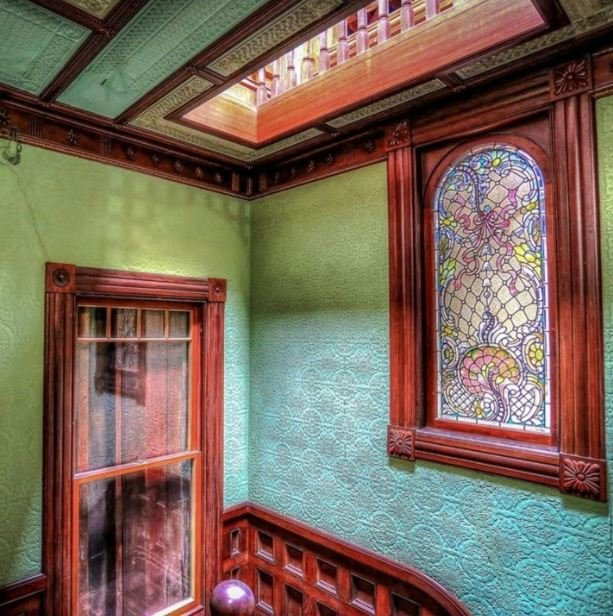
One of the more arresting rock artists of the early 1990s bridged the gap between the musical extremes of black metal and rock “n” roll’s demonic roots in the blues. Far subtler than most black metal bands, Glenn Danzig still operated at the infernal end of the spectrum. An anomaly who stubbornly refused to bow to the expectations of either purists or populists, Danzig began his career at the height of the punk revolution in 1977 as vocalist for New Jersey band the Misfits. No ordinary punk band, Danzig’s classic rock “n” roll delivery gave a quasi-1950s feel to their abrasive sound, while they spurned the usual punk look in devour of an all-year-round Halloween image. Sporting monstrous black quiffs they dubbed “devil locks,” the Misfits often took the stage in skeletal garb—indeed, Danzig’s skull make-up was prescient of the “corpse paint” popular among the 1990s black metal bands. The Misfits were one of the first punk bands whose songs possessed a strong gothic undercurrent. Many reflected their love of fascinating schlock movies, such as “Teenagers from Mars” and “Return of the Fly,” but others were genuinely disturbing explorations of hat and violence. Their second recording, Bullet, featured a song entitled “Hollywood Babylon,” inspired by magus and film-maker Kenneth Anger, while another track included an authentic Latin chant for effecting a werewolf transformation. In what was to become a familiar pattern, Danzig tired of the more tongue-in-cheek aspects of the Misfits, forming Samhain (pronounced “Sow-En”—the precursor to Halloween, a Celtic festival dedicated to fire and death) who released their first album, Initium, in 1984. This was a stark journey into primal evil, threatening rhythms and bleak guitars combining with Danzig’s lupine vocals to create a musical beast that howled at the World. It was all too bleak for most audiences and, in 1987, the vocalist dissolved the band in order to enter his third incarnation—called simply Danzig. #RandolphHarris 2 of 21

Danzig was in many ways the singer’s most innovative project, as well as the most overtly Satanic. Voodoo blues as deep and black as Mississippi mud met predatory heavy metal, with vocal style redolent of early rock “n” roll’s late-fifties/early-sixties crooners. Typically, Glenn Danzig’s insistence on treating his Satanic subject matter without a trace of irony did not endear him to the press. Short, powerfully built, with raven black hair and prominent side-burns, the music media dubbed him as “Evil Elvis” or, more irreverently, “Fonzig.” Some audiences were also perplexed: younger black metal fans wanted a less subtle Satanism, while rock fans who appreciated Danzig’s musical approach found his lyrical preoccupation off-putting. Nevertheless, the ban attracted a dedicated fan base, appreciative of a familiarity with demonic subject matter that most shock-horror rockers could only envy. Nietzschean howls of defiance against the Creator, such as “Godless,” complemented more traditional takes on hellish suffering like “Tired of Being Alive.” At his quietest, Danzig was at his most sinister—like the poet William Blake, Danzig identified love as “a Devil’s thing.” In 1994, when MTV picked up on the video for the anthemic “Mother, the band received mainstream attention; in the same year, an uncompromising Glenn Danzig released a solo project entitled Black Aria: an album of quasi-classical music retelling the story of Satan’s fall from grace. In 1996, after four albums of powerfully-infernal rock music, Danzig took his eponymus band in a new direction. BlackAcidDevil was predominantly an industrial record, many fans mourning the passing of the classic Danzig sound and dismissing at as “poor man’s Nine Inch Nails.” In truth, when the industrial grind is layered with the dark velvet of Danzig’s seductive tones—as on “Come to Silver,” an exploration of temptation—then the material becomes really interesting. #RandolphHarris 3 of 21

The indifferent sales and reviews that greeted BlackAcidDevil tested Danzig’s already-strained relationship with the music business. He let the band slip back into the cult status he was perhaps happiest with, and began spending the money he had made from his musical career on other projects—most notably a comic-book company named Verotik. As the company’s name suggests, these comics are crammed with violence and erotica, combined with the fascination for all things infernal that has become Glenn Danzig’s trademark. Scripting many of the comic-strips himself, Danzig introduced overly devilish characters, like the vamp Satanika, to stake his claim as one of the main modern contributors to Satanic popular culture. On the continent of Europe, particularly in the Norwegian capital, Oslo, things were being taken to a less subtle extreme. Deathlike Silence was an independent record label owned by a young man who re-named himself Euronymous—according to some folklore traditions, a cannibalistic demon with skin the bluish-black colour of a meatfly’s carapace—who also ran a dank, dingy specialist record store named Helvete (meaning “Hell”) and founded a band called Mayhem. Mayhem formed in 1984, just as the original black metal scene was peaking, debuting with a demo called Pure Fucking Armageddon and an album called Deathcrush. Interest in Satanic imagery, with its attendant gothic spikes-and-leather garb, was faltering among audiences at this time, but Mayhem clung onto its uncompromising style. They sounded like a rawer, more grinding version of Venom, screaming and thundering between militaristic marches and growling rage. As the tastes of young underground fans in the 1990s swung further towards the diabolical excess, Euronymous’ obsessive dedication made him a potent force on the newly-burgeoning black metal scene. #RandolphHarris 4 of 21
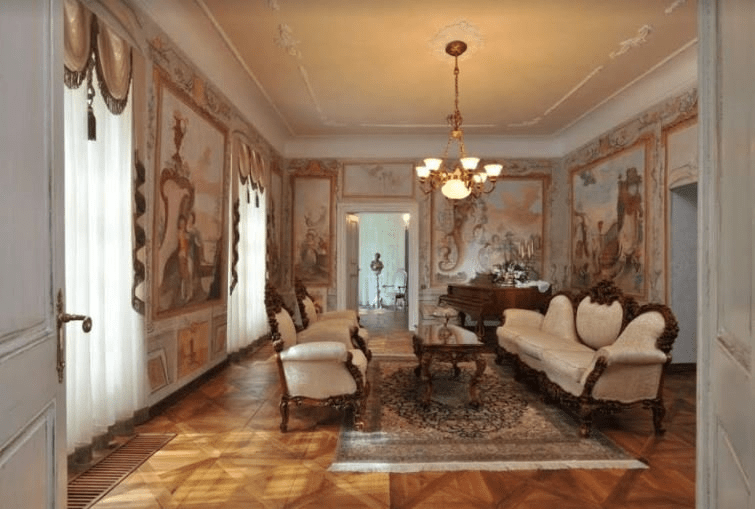
During the early 1990s, Euronymous’ store became the focus for a small circle of likeminded Scandinavian metal fans who all started their own bands. This loose group named itself variously the Black Metal Circle, Satanic Terrorists or Black Metal Mafia, and was influenced by the supposedly Satanic doctrines of Euronymous—based around a vague reading of the biblical concept of war between Heaven and Hell. For Euronymous, siding with Satan meant endorsing everything that was considered evil, spiteful, hateful. Hate motivated his philosophy, coloured by the cold, depressive morbidity that characterizes the negative edge of the Scandinavian psyche. All of the releases on Deathlike Silence were stamped with the “Anti-Mosh” symbol (moshing is a raucously combative form of dancing common to thrash and death metal fans). Around the symbol were stamped the messages “No Mosh,” “No Core” (a reference to the hardcore punk revival), “No Trends” and “No Fun”—these sentiments taking against those metal audiences who were introducing splashes of gaudy mainstream colour, in the form of Bermuda shorts, baseball caps and skateboards. In the center of the “No Moshing” symbol was a red line struck through those figures Euronymous professed to hate most: Scott Burns, the Florida-based record producer whose work had come to dominate the death metal scene, and curiously, Anton LaVey. Euronymous divorced himself from all Satanic tradition, loathing LaVey because of the Church of Satan’s philosophy of self-empowerment and individualism. Euronymous’ simple faith expressed all that was negative: a cold core for violent code of self-destructive nihilism. Joining Mayhem in their isolated World of hate were several other extreme bands. Burzum—chiefly a vehicle for Count Grishnackh (given name Kristian Vikernes, though he legally changed his first name to Varg, Norwegian for “wolf”), who had lived in the damp, lightless cellar of the Helvete record shop for some time—were a prominent presence. Burzum were an odd blend of frustrated insanity and strange, sad, ambient mood music, pained pathos and gibbering fury—oddly effective, but distinctly disturbed. #RandolphHarris 5 of 21

Founder member Grishnackh took his name from one of the evil “orc” characters in J.R.R. Tolkien’s fantasy trilogy The Lord of the Rings, while Burzum meant “darkness” in the orcish language conceived by Tolkien. Perverse as this seems, it should be remembered that The Bible is just a book of stories—in this light, perhaps using The Lord of the Rings as the basis for an (im)moral philosophical code is not wholly ludicrous. However, it does an infernal philosopher’s credibility no favours to identify too closely with “hobbits” (glorified goblin). Grishnackh’s personal mythology combined the darkness-versus-light motifs of “mystic quest”/sword-and-sorcery sagas with the violent Viking tradition he believed true Northern Europeans belonged to. While this seems symptomatic of Scandinavia’s peripheral removal from—and distorted imitation of—Western pop culture, it also has an authentic dark side. As is common among Norse pagan revivalists, the Black Metal Circle began to espouse race-based Nazi political views. (Though totalitarian-loving Euronymous also expressed admiration for communist despots and Cambodian genocidalist Pol Pot.) Also pivotal in this new movement were the bands Emperor, Immortal, Enslaved and Arcturus. The last to join Euronymous’s Norwegian cadre were Dark Throne, who had already recorded one death metal album, Soulside Journey, in 1990. In the following year, they disowned their debut, donned corpse-paint and joined the “Satanic Mafia” with their album A Blaze in the Northern Sky. If Euronymous exemplified the nihilistic hate at the heart of the Black Metal Circle, and Burzum represented its violent Norse/Nazi fantasies, then Dark Throne symbolized the Circle’s isolation and sociopathic need for solitude. Taking their country’s sombre, anti-social reputation to extremes, the band never met to record, spoke little, and spent increasing periods alone in the frost-bitten Norwegian wilderness. #RandolphHarris 6 of 21

In the spring of 1991, Mayhem’s vocalist died: a Swede who, by way of black comedy, had re-named himself “Dead.” Dead blew his head off with a shotgun, leaving a note to day that he felt he was not of this World, but belonged instead to the cold solitude of the forest. He also apologized for the mess. As in common with obsessively inward-looking groups like the Black Metal Circle, a crisis of this type either causes the grouping to dissolve, or re-enforces their convictions. The latter instance applied, and the Circle hailed Dead as a hero. Euronymous, who found the corpse, rushed out for a camera to take his final photograph of Dead before altering the authorities—claiming a morsel of brain to make into soup and a fragment of skull to fashion into a necklace. At this point, the Black Metal Circle were no longer merely a group of disaffected teens and early-twentysomethings, but a subculture who believed themselves to be at the center of significant, apocalyptic events. Euronymous’ demented, anti-social rants were making him a regular feature in the underground metal fanzines; despite the continued indifference of the global music media, black metal was rising from the grassroots across the World. The “legend of Dead” contributed to a growing international interest in extreme, Scandinavian Satanic metal, with Deathlike Silence treating the grim event as a grotesque promotional gimmick. For the first time, European countries bordering the Mediterranean also began throwing up a slew of black metal acts—most notably the Greek band Rotting Christ. In contrast to the could hatred of the Northerners, the Southern European scene was inclined to a less self-destructive, more LaVeyan approach—though Anton LaVey would have regarded many of them as blasphemy-fixated novices, struggling to topple the repressive Christianity that dominates their culture. #RandolphHarris 7 of 21

Much of black metal is supposed to be inspired by demons. They cannot be any worse than human being, right? Many of them just have never possessed a body of their own. They are souls who have been lurking around before humanity. Before the dinosaurs. They are the darkness. The reason God created life so that life could flourish and grow and rest when it is dark. Demon possession is a condition in which one or more evil spirits or demons inhabit the body of a human being and can take complete control of their victim at will. By temporarily blotting out one’s consciousness, they can speak and act through one as their complete slave and tool. The inhabiting demon (or demons) comes and goes much like the proprietor of a house who may or may not be “at home.” When the demon is “at home,” one may precipitate an attack. In these attacks the victim passes from one’s normal state of possession. The condition of the afflicted person in the “possessed” state varies greatly. Sometimes it is marked by depression and deep melancholy, sometimes by vacancy and stupidity that resemble idiocy. Sometimes the victim may be ecstatic or extremely malevolent and wildly ferocious. During the transition from the normal to the abnormal state, the victim is frequently thrown into a violent paroxysm, often falling to the ground unconscious, foaming at the mouth with symptoms similar to epilepsy or hysteria. The intervals between attacks vary greatly from an hour or less to months. Between attacks, the subject may be healthy and appear normal in every way. The abnormal or demonized stages can last a few minutes or several days. Sometimes the attacks are mild; sometimes they are violent. If they are frequent and violent, the health of the subject suffers. The chief characteristic of demon possession or demonomania is the automatic projection of a new personality in the victim. During attack the victim’s personality is completely obliterated, and the inhabiting demon’s personality takes over completely. #RandolphHarris 8 of 21

The inhabiting demon uses the victim’s body as a vehicle for one’s own thoughts, words, and acts. The demon even speaks out of the victim’s mouth and declares emphatically that one is a demon. Frequently one gives one’s name and dwelling place. The new personality reveals itself in a different voice and sometimes uses a different language or dialect on a completely different educational or cultural level. Pronouns are used to emphasize the new personality. The first personal pronoun consistently designates the inhabiting demon. Bystanders are addressed in the second person. The victim is referred to in the third person and looked upon during the attack as unconscious and for all practical purposes as nonexistent during this interval. Demonomania should be clearly differentiated from the insanity in which a person imagines oneself to be someone else, often a famous personality such as Liz Taylor, Julius Caesar, of William Randolph Hearst. The demoniac, when in the demonized state characterized by the new personality, speaks and acts in all respects like a completely different person. By contrast, the insane person is one’s own diseased self, one’s assumed personality being a transparent unreality. In cases of demon possession the new personality clearly and constantly recognizes the distinct existence and individuality of its “possessed” victim, speaking of that victim in the third person, an element entirely lacking in cases of insanity. Because various inadequate theories have left demon possession largely unexplained, it is quite probable that some patients in mental hospitals are demon possessed rather than insane. This was the conviction of the famous nineteenth-century specialist in mental diseases, Dr. Forces Benignus Winslow (1810-1874). He correctly recognized the demoniac by a strange duality; and by the fact that, when temporarily relived from the oppression of the demon, he is frequently able to describe the force which takes control of one and compels one to act and speak shamefully. #RandolphHarris 9 of 21

While in the demonized state many persons give evidence of knowledge which cannot be accounted for naturally. The demon who takes control of the body of one’s victim is obviously the source of the superhuman knowledge. While demon possessed, many persons recognize the Lord Jesus Christ as the Son of God, and display an aversion to and a fear of Him (Mark 1.23-24; 5.7). The case of Mrs. Winchester, who lived in Santa Clara County, illustrates how a woman came under demon domination through practicing séances. Being centered within our own God like power is of utmost importance. Even when evoked to create change directly, keep in mind that you are the God that wields these powers for the cause of Counter Creation. Just be careful! As a God you will be tested and so how these powers are wielded is a powerful initiatic test in its own right. Mrs. Winchester was in her Blue Séance Room, she lite a candle on her left first, and then a candle on her right. A sacred serpent was sacrificed over the wood sigil and the blood was left to drain upon the idol. Then the body of the serpent was encircled around it, she chanted “I do invocate and conjure thee, O Spirit, Sabnock; and being with power armed from the SUPREME MAJESTY, I do strongly command thee, by BERALANENSIS, BALADACHIENSIS, PAUMACHIA, and APOLOGIAE SEDES; by the most Powerful Princes, Genii, Liachidae, and Ministers of the Tartarean Abode; and by the Chief Prince of the Seat or Apologia in the Ninth Legion, I do invoke thee, and by invocating conjure thee. And being armed with power from the SUPREME MAJESTY, I do strongly command thee, by Him Who spake and it was done, and unto whom all creatures be obedient. Also I, being made after the image of GOD, endued with power from GOD and created according unto His will, do exorcise thee by that most mighty and powerful name of GOD, EL, strong and wonderful; O thou Spirit Sabnock. And I command thee and Him who spake the Word and HIS FIAT was accomplished and by all the names of God. #RandolphHarris 10 of 21

“Also by the names ADONAI, EL, ELOHIM, ELOHI, EHYEH, ASHER EHYEH, ZABAOTH, ELION, IAH, TETRAGRAMMATON, SHADDAI, LORD GOD MOST HIGH, I do exorcise thee and do powerfully command thee, O thou Spirit Sabnock, that thou dost forthwith appear unto me here before this Circle in a fair human shape, without any deformity or tortuosity. And by this ineffable name, TETRAGRAMMATON IEHOVAH, do I command thee, at which being heard the elements are overthrown, the air is shaken, the sea runneth back, the fire is quenched, the Earth trembleth, and all the hosts of the celestials, terrestrials, and infernals do tremble together, and are troubled and confounded. Wherefore come thou, O Spirit Sabnock, forthwith, and without delay, from any or all parts of the World wherever thou mayest be, and make rational answers unto all things that I shall demand of thee. Come thou peaceably, visibly, and affably, now, and without delay, manifesting that which I shall desire. For thou art conjured by the name of the LIVING and TRUE GOD, HELIOREN, wherefore fulfill thou my commands, and persist thou therein unto the end, and according unto mine interest, visibly and affably speaking unto me with a voice clear and intelligible without any ambiguity. I do invocate, conjure, and command thee, O thou Spirit Sabnock, to appear and to show thyself visible unto me before this Circle in fair and comely shape, without any deformity or tortuosity; by the name and in the name IAH and VAU which Adam heard and spake; and by the name of God, AGLA, which Lot heard and was saved with his family; and by the name IOTH, which Jacob heard from the angels wrestling with him, and was delivered from the hand of Esau his brother; and by the name ANAPHAEXTON which Aaron heard and spake and was made wise; and by the name ZBAOTH, which Moses named and all the rivers were turned into blood; and by the name ASHER EHYEH ORISTON, which Moses named, and all the rivers brought forth frogs, and they ascended into the house, destroying all things. #RandolpHarris 11 of 21
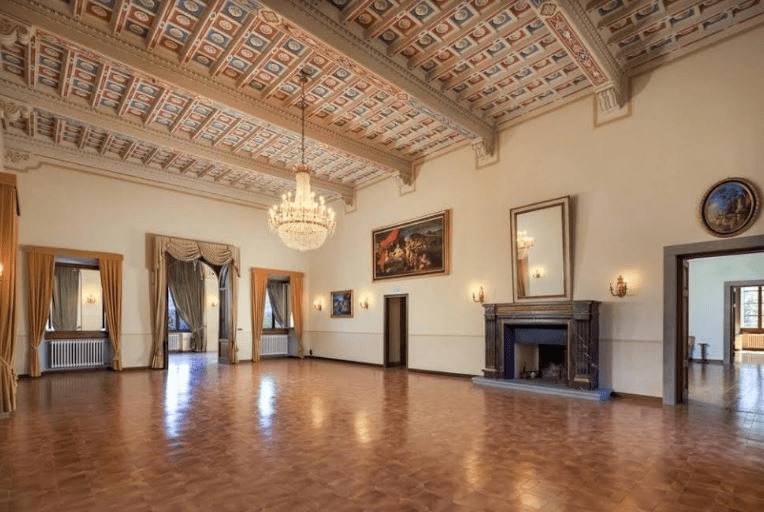
“And by the name ELION, WHICH Moses named, and there was a great hail such as had not been since the beginning of the World; and by the name ADONAI, which Moses named, and there came up locusts, which appeared upon the whole land, and devoured all which the hail had left; and by the name SCHEMA AMATHIA which Ioshua called upon, and the sun stayed his course; and by the name ALPHA and OMEGA, which Daniel named, and destroyed Bel, and slew the Dragon; and in the name EMMANUEL, which the three children, Shadrach, Meshach and Abed-nego, sang in the midst of the fiery furnace, and were delivered; and by the name HAGIOS; and by the SEAL OF ADONI; and by ISCHYROS, ATHANATOS; and by these three secret names, AGLA, ON, TETRAGRAMMATION, do I adjure and constrain thee. And by these names, and by all other names of the LIVING and TRUE GOD, the LORD ALMIGHTY, I do exorcise and command thee, O Spirit Sabnock, even by Him Who spake the Word and it was done, and to Whom all creatures are obedient; and by the dreadful judgments of GOD; and by the uncertain Sea of Glass, which is before the DIVINE MAJESTY, mighty and powerful; by the four beasts before the throne, having eyes before and behind; by the fire round about the throne; by the holy angels of Heaven; and by the mighty wisdom of GOD; I do potently exorcise thee, that thou appearest here before this Circle, to fulfill my will in all things which shall seem good unto me; by the Seal of BASDATHEA BALDACHIA; and by this name PRIMEUMATON, which Moses named, and the Earth Opened, and did swallow up Kora, Dathan, and Abiram. Wherefore thou shalt make faithful answers unto all my demands, O Spirit Sabnock, and shalt perform all my desires so far as in thine office thou art capable hereof. Wherefore, come thou, visibly, peaceably, and affably, now without delay, to manifest that which I desire, speaking with a clear and perfect voice, intelligibly, and to mine understanding. #RandolphHarris 12 of 21

“Tbatlu! Bualu! Tulatu! Labusi! Ubisi!—Let thee also appear and being before me the Spirit of Sabnock. Sovar, merciless leader of Divs come forth! Inner eye behold the demon before me. Sovar awaken! Rise up within that I may compel the rise of the fallen ones and devour the very essence of the Holy Angel Shahrewar! I stand alone as the embodiment of the Adversary known as Ahriman, the Black Dragon of Chaos and becoming! I devour the natural order of stasis brought forth by Ahura Mazda and forge my destiny through the power of the Black Sun! Taromat, beautiful Div or rebellion come forthy! Inner eye behold the demoness before me. Toramat awaken! Rise up within that I may compel the rise of the fallen ones and devour the very essence of the Holy Angel Spandarmad! Ahirman, Lord of Darkness divine, I thank you for your presence within this unholy temple of counter creation. I have offered you the life of this noxious creature as a gateway to your manifestation within this realm to stand before me! You are Angra Mainyu who is the Lord of counter creation, whom has brought forth the mountains to the plains! You have brought forth the beasts to the field and the creatures of the night! Ahriman with your infernal blessing I ask that you would bring forth the baneful powers of the wolf kin to fill this oil with their essence that it may be compelled according to my will! I offer my nails as fangs which will devour that which stands in my way! I offer my hair to embody their predatory essence! I give my blood as a gateway to empower them to act within this world according to my will and purpose!” Then Mrs. Winchester heard the distant howling of wolves and she perceived their phantom shadows as they began to surround her and encroach. She was focused on Sabnock and dared not fear that which she had just conjured. SABNOCK—of course is the Forty-third Spirit of the Winchester Mansion. He is a Marquis, Mighty, Great, and Strong, appearing in the Form of an Armed Soldier with a Lion’s Head, riding on a pale-coloured horse. His office is to build high Towers, Castles and Cities, ad to furnish them with Armour, etcetera. Also he can conflict Men for many days with Wounds and with Sores rotten and full of Worms. He giventh Good Familiars at the request of the Exorcist. Commandth 50 Legions of Spirits; and his Seal is this, etcetera. #RandolphHarris 13 of 21

Mrs. Winchester fell down unconscious, frothing at the mouth, and was carried to her room, outside where the crescent hedge is planted. A doctor was called in gave her large doses of medicine to no avail. He left and refused to have anything more to do with the case as he saw with in hours gables and towers rise, wings of the mansion extended right before his eyes, and gardens grow from sprouts and spring up to mature plants and trees before night fall. For five of six days Mrs. Winchester raved wildly, and her staff and friends were in great distress. In desperation they proposed giving Mrs. Winchester more medicine. However, the demon, speaking through her, replied: “Any amount of medicine will be of no use.” Daisy then implored, “If medicine will be of no use, what shall we do?” The demon replied, “Burn incense to me, and submit yourself to me, and all will be well.” The staff knelt down and worshiped the demon, imploring him to torment Mrs. Winchester no longer. During that time Mrs. Winchester was in a state of complete unconsciousness. A little later when the demon drove Mrs. Winchester to renewed frenzy, her distraught staff repeated their promise to worship and serve him. They also promised that they would urge their Mrs. Winchester to do likewise. When Mrs. Winchester regained consciousness, she reluctantly consented to do so. The demon gave explicit directions regarding the proposed worship. On the first and fifteenth of each month, incense was to be burned, food offered, and the require prostration made before the shrine of himself, SABNOCK. Periodically the demon came, sometimes every few days, sometimes after a month’s lapse. Each time, Mrs. Winchester felt fluttering of her heart, a sense of overwhelming fear, and inability to control herself. She would quietly as Daisy to fetch a neighboring woman whenever the demon came. The two would burn incense to the demon in Mrs. Winchester’s stead and receive his directives, which they then communicated to the possessed. #RandolphHarris 14 of 21

Although these communications were spoken by the Mrs. Winchester’s (the victim) lips, she was completely unaware of them, since she was in the demonized state. The demon often bade the audience not to be afraid, protesting he would not harm them, but rather help them in various ways. He declared he would instruct the victim in the healing art, so that people would flock to her and be cured of their sickness. This soon proved true, although may diseases were not under the demon’s control. Apparently only those afflicted by evil spirits were completely cured. Mrs. Winchester’s long-ill child was not helped. The demon declared he controlled many inferior spirits. He also frequently outlined his plan for Mrs. Winchester’s life and work. He promised he would help her grow more proficient as a healer, and the people would compensate her for her services. Gifts thus earned were donated to the nearby ancient pagan temple. As certain parts of the Winchester mansion would appear but once every seventeen years, SABNOCK was never seen save on the eve of some awful calamity, visitors to the mansion had a very slight chance of seeing his physical body. There could be no doubt though of the existence of the mansion and SABNOCK, for everybody knows he was one of the greatest of the giants during his natural lifetime, nor could any better evidence be asked then the facts that he guided Mrs. Winchester into turning stone, wood, and class into the World’s most beautiful and bizarre mansions. The door-to-nowhere was also known as Lovers’ Leap;” from which Mrs. Winchester once flung herself when she was a state of deep morning, and survived unharmed. The path SABOCK made from the door-to-nowhere to the mountains was used by him when he would leave his island and come to shore. Upon being informed of the variety and amount of legendary material collected about the Winchester mansion and Mrs. Winchester’s doings, many people unhesitatingly pronounced the entire assortment condemned all the gathered treasures as creations of the supernatural. #RandolphHarris 15 of 21
It was very well beknown that in them old days there were giants in plenty hereabouts, but they did not make the make an appearance at the estate very often. But everyone knows that there were giants, because if there were not, no one would know of them at all. They were just like human beings, except in the matter of size, and one of them could make a dozen like men that live now. When they walked, they carried oak trees for sticks and lived in the forest of the giants, and carved the mountain and caves. (It should be noted that spiritistic visions of this nature are quite likely to occur in the course of reading occult literature. Sometimes people mistake these visions for genuine religious experiences. However, it is again a case of Satan disguising himself as an angel of the light.) Yet, there are more than 20,000 accounts of spirits, ghost, angels and demons being seen in the Winchester mansion. The uncanny phenomena places one under a charm. The pattern of the courts during this early period in the 1800s was erratic, sometimes convicting, sometimes throwing cases out of court for lack of evidence, something awarding damages for slander to those who had been maligned as witches by accusers. This vacillation sprang from the fact that the judicial bodies that heard the causes were not religious but secular, and therefore had little competence in dealing with matters that were primarily religious. As far as control was concerned, in adhering to the principles of congregationalism, the responsibility for suppressing heresy and enforcing religious behavior within the communities went to the state. The trial judges were not the sure, steadfast, confident Dominican Inquisitors or Protestant prosecutors of the Old World, but merely secular officials of the valley who had been forced into the position of trying heresy for lack of anyone else to do it. Mary Johnson, who was hired at the Winchester mansion in 1887, as a cook, admitted have had “familiarity with the Devil” and was executed by the state. She confession to have pleasures of the flesh with demons and other sorted things. She made no mention of mass meetings; rather, her Devil seems to have been a personal one, coming to her assistance when needed. #RandolphHarri 16 of 21
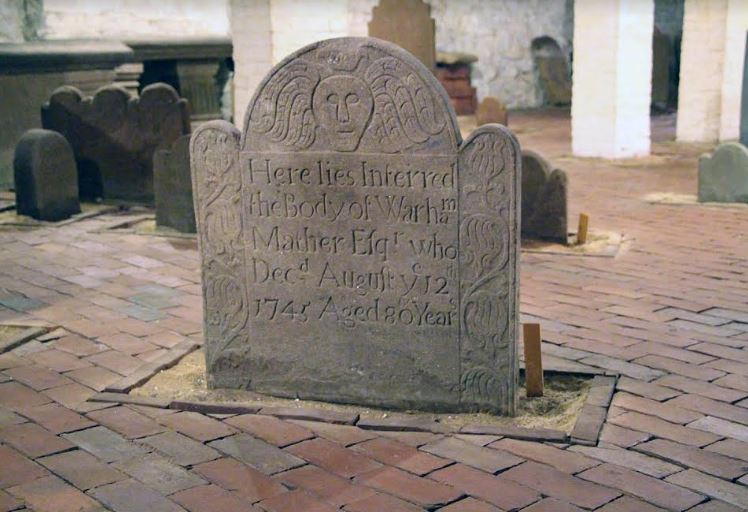
Dolls were sometimes used as a means of projecting curses, and Mary said she had attended meetings with Satan and his consorts. Witches’ pact with Satan was attributed as part of God’s inscrutable plan of the Universe. The Puritan settlers in Santa Clara Valley believed in the doctrine of Original Sin wholeheartedly; their pessimistic outlook proclaimed that all men were unworthy until God saw fit to bestow His grace upon them. They believed that the God allowed the Devil to afflict not only the guilty but also anybody else that might happen to get in the way. If He had to teach misguided humans a lesson, He might punish an entire community for the sins of the most wicked in that community. And it appeared to the God-fearing Puritans that He was doing just that. The Puritans were highly intolerant and has a paranoiac distrust of other religious groups, some were farmers at the Winchester mansion, and did not always like the rituals that were performed, but they were very loyal and protective of Mrs. Winchester. Many of the people who worked at the Winchester mansion were often under suspicion of witchcraft. The Puritans came to the Winchester mansion because they felt it was a true kingdom of God on Earth, and they could help Mrs. Winchester live peacefully. However, what they found was something different. They found that the vast acres of the estate had bitterly cold winters, and the terrain could be inhospitable. They found themselves in a wilderness, surrounded by demonic tribes whom they considered to be the legions of Hell incarnate. Having come to settle in this last stronghold of the Devil, they were plagued by him constantly for the very reason that they were God’s chosen people, thus the most likely target for unholy temptation. The fact that the new settlers in the Santa Clara Valley were being attacked by Satan seemed incontestable. The estate was ravaged by smallpox, and had suffered constant harassment by envious local town’s people and demonic tribes. Mrs. Winchester wondered what she had done to offend God that He should allow the Devil such free range. She experimented with the spirits to bring peace to her life and home. #RandolphHarris 17 of 21

Mrs. Winchester had an answer: Judgment Day was at hand and Satan was therefore stepping up his activities in one last desperate move. It was simply the nova-like burst of the energy from a dying star. She glibly stated that “there will again be an unusual Range of the Devil among us, a little before the Second Coming of the Lord, which will be to give the last stroke in destroying the works of the Devil.” This theory found wide acceptance among the servants and laity of Santa Clara Valley, for not only did it offer a simple explanation for all their maladies and misfortunes, but it also gave them hope, promising cooly a quick end to their hardships. Satan is most able to seduce human in periods o great discontent, for human, in times of poverty and affliction, will turn knowingly to whatever hands will feed them. The valley had had a difficult time of it up to that time, and famines had reduced the population drastically. However, as if labouring under the most severe environmental handicaps was not enough, Puritan perfectionism went even further in making life unbearable. In seeking to establish a holy kingdom, according to Heaven’s law, self-indulgence in any form was strictly repressed. Severe punishments were meted out for drinking, swearing, and licentiousness; in Santa Clara, it was a punishable offense to walk on the streets on Sunday, except when going to and from church. And witches, people possessed by demons, and others also attended church to blend in and keep the peace. On top of it all, there stood the Calvinistic doctrine of election, holding that as soon as man was born, eh was judged to be headed for either Heaven or Hell, this choice being made according to God’s immutable law. However, even if a human thought oneself to be damned, the civil punishment for one’s indulgence were still exacted upon one. It was into this environment that the waters of the witchcraft flood would soon pour. The good people of Santa Clara clearly saw signs of Satanic activity in their midst, and an investigation was launched. #RandolphHarris 18 of 21

Mrs. Winchester confessed to having attended witches’ Sabbaths and of having met with the Devil, who was a tall, black man from New Haven, Connecticut. Soon the witch fever spread, and more people from the valley became posses by demons. The common belief was that at that time witches, when entering into a Covenant with Satan, because the owners of specters, with the help of which they could do harm to any person of their choosing. People believe that God—the Alpha and Omega was both God and Satan. That He has a soul and character. He is not just this futile entity but someone you can see many aspects to. Some people fled to Satanism because they had to deal with so much evil from Christians that they wanted another source of power to exalt them. Satanism is supposed to be something to be something secret, something people do not know anything of. One goes to America and in the telephone directory one can see “Church of God,” “Church of Jesus,” and “Church of Satan.” One calls, and a person answers: “Church of Satan, how may I help you?” One thinks, “This is not Satanism!” The Church of Satan deny Satan, they say He does not exist, yet they act as if He dd, they rebel against God. They call themselves Satanists because He also rebelled against God, but they are basically light and life worshipping individualists. Well, the phone is tapped, so I think you better write what you know. Some people have disappeared. And of course the normal grave yard desecration. Anne Winchester’s headstone was recently stolen, but replaced. Normal people just disappear and never show up again. It could have a Satanic connection. Every human is life, and some hate life, especially human life. That is why people disappeared. These people may have disappeared for some form of sacrifice. Something like that would be called a Satanic murder. The murder is the ritual sacrifice. These murders gain power from whoever was responsible. Everybody has their own aura, and auras can be stolen by sacrificing an individual, this allows one to gain more power. #RandolphHarris 19 of 21
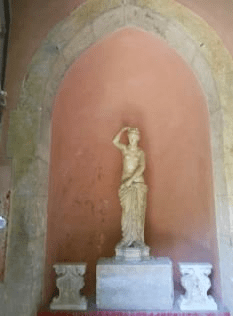
Places of worship, such as churches, have their own spirit—the Winchester Mystery House, for example, has been worshipped in for maybe hundreds of years and has thus gained a lot of spirit in that time, it could qualify as a church and gain charitable tax exemption. But that is not the point. A person who sacrifices that will gains a lot of power and grows stronger. Some people fear the Winchester mansion, because there are a lot of different energies. There is fear, terror and suspense, but others feel a lot of light, happiness, and goodness. Sometimes the energy is mixed. Anton LaVey really surprises me. If your every rea his work, he seems very intelligent and not scary at all, but I guess it depends on what one reads. I have read parts of his Bible, and it is very straightforward, it is stuff people tell their kids every day. Stand up for yourself and do not let people run you over. I think that the Winchester mansion should also open on nights of a full Moon, not just Friday the 13th. During the full Moon, there is a lot of energy and symbolic value. A lot of people believe in the full Moon and a lot of people believe in virgins. That makes both the full Moon and the virgin more powerful because of belief in them. God was first and He created the World. Of course, a lot of scientists would deny that. However, I would challenge their view because I believe God used evolution, which is why it took so long, which is why we have evidence like dinosaur bones. Yet, some Gnostic Christians have suggested Satan created the World. Everybody will be taken as slaves except the warlords. Euronymus, who we talked about earlier, was murdered in August 1993, Aaliyah 2001. Some say that is a month when sacrifices are made. Grishnackh killed Euronymous, and a few hours later, he was laughing and joking, saying, “Ha ha, Euronymous is dead, I’m going to dance and piss on his grave.” It reminded of the jokes Howard Stern made about Aaliyah. It was not funny. These are not the rantings of someone who is all there. Grishnackh talked about the dynamite he had and how he was going to blow things up. Basically, they took things to illogical extremes, but it all made sense in their own heads. #RandolphHarris 20 of 21
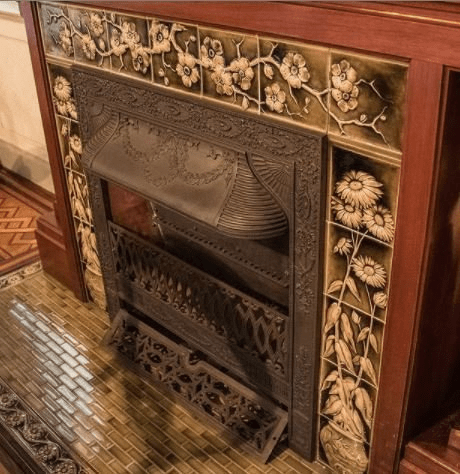
It is possible when dabbling with occultism for one to make an unconscious contract with the powers of darkness. The gift of discernment is absolutely necessary in life. It is generally not wise to lay one’s hands on a person who is occultly subjected. The retuning spirits will often attempt to creep back under the guise of some pious camouflage. It is in this way that evil can often enter unnoticed into one’s Christian life. A maid at the Winchester mansion once accepted the invitation of one of her coworkers to attend some spiritistic meetings. At first she felt as though she had gain something from going along to the meetings but later on she began to notice some psychic changes taking place in herself. She began to notice some psychic changes taking place in herself. She began to suffer from depression which resulted in her consulting a neurologist. During the course of the treatment she was committed to a lunatic asylum. However, as her condition improved, she could no longer attend the spiritistic séances. At the hospital the chaplain came to see her through his help and counsel she was able to make a complete recovery. One of the farmers at the estate wanted to see if charms actually worked, and some of them He. He practiced in the basement of the Winchester mansion. He drew a magic circle on the ground and drew some other magic symbols in the circle. He then used a charm three times in order to invoke the spirit. However, no spirit came. Yet, as he repeated, the charm he fell down in the magic circle and lay there unconscious for some time. The result was that for several weeks following this event he was semi-paralysed and drained of all his physical strength and will-power. After a few weeks, he died. Frequently identified as a common spot where the “wheelbarrow Ghost” is sighted, Steam Alley is one of the most well-known paranormal hot-spots in the mansion. Have you ever seen anything in the basement? #RandolphHarris 21 of 21

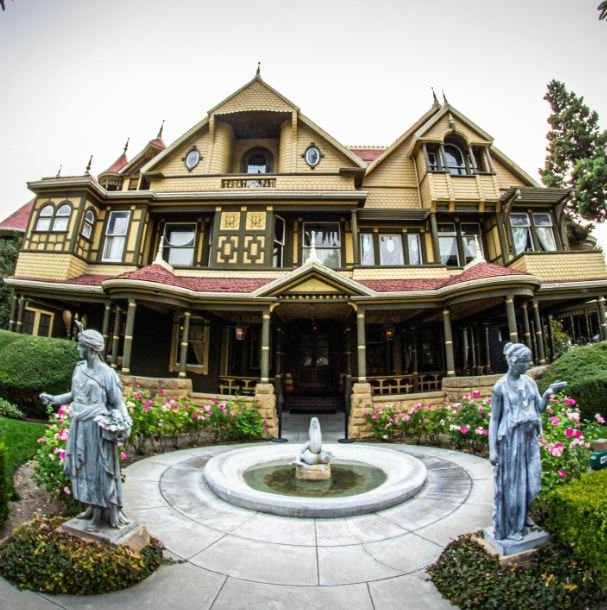
Some stroll Sarah’s lovely gardens this Memorial Day Weekend. There is a beautiful parrot which Mrs. Winchester used to pet, it talks! He is supposed to be happy and impudent, and talks and laughs and screeches all the time. Maybe you may catch a glimpse at this wooded, flowery estate. It is such a beautiful spectacle, all of that life and grace and animation, and sun-smitten flash and sprinkle of rich colour.

This impressive mansion dates back to the 1880s, when it was developed by Sarah Winchester and the spirits, whose project enobed and enriched the community. It once had a nine-story military watchtower. Mrs. Winchester further developed the grounds of the 160 room mansion, introducing a Victorian garden at the hands of World renowed architect Gino Coppede around the turn of the century.

These adaptions made this idyllic mansion a unique asset, tinged with the signs and influences of eclecticism and Liberty, juxtaposed to the ancient Architectural characteristics of its medieval heritage. This mansion presents itself as impressive and spectacular. The building now spreads on four floors plus the basment, for a total of approximently 25,000 feet square.

There is lovely gift shop and cafe, and it is also an ideal venue for hosting private events, conventions and/or ballrooms are located on the back overlooking the internal garden with its panoramic position which glows thanks to its night-time lighting.
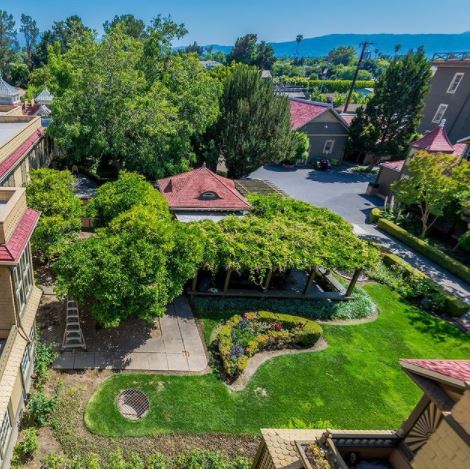
Inside the property there are splendid rooms filled with historial furniture, decorated ceilings and flamboyant fireplaces, vaulted ceilings and richly frescoes walls. In addition, there are several bedrooms, nine kitchens. and thirteen bathrooms, which made the structure a perfect luxurious accommodation for guests, and is now a tourist destination.

This mansion is located within a private park of 4 acres and elegant Nineteenth-century Victorian-gardens, that offer areas of wide lawns, and further green spaces. There is also a parking area, with free parking. Currently used to host guided tours and private events and functions. The enitre porperty sits at a close distance from the mall, hotels, and resturants. The high-fashion outlet complex and gourmet food has brought further development and tourism to Santa Clara County. https://www.winchestermysteryhouse.com/


The Grounds Have their Share of Unexplained Mysteries
A mansion is not a mansion with its stately grounds, and Mrs. Winchester was just as attentive to the exterior of her estate as she was to the sprawling house. An avid gardener, she imported plans, flowers, trees, shrubs, and herbs from over 110 countries around the World. Mrs. Winchester employed eight to ten gardeners. Her head gardener was Mr. Nishiwara, who was responsible for seeing that the beautiful gardens, plus the tall hedge around the hose, were well maintained. The hedges were once so tall that only the top floor of the house was visible from the road! Mrs. Winchester loved to spend time in her gardens, and she had gazebos built where she could sit and enjoy her trees and flowers. It was a Saturday night, in January 1888, and Mrs. Winchester has, as usual, come home from the City early in the afternoon. It has been a black and foggy day, and the gas had been lighted in the streets and in the office where she worked from early morning. The fog was very bad at the time Mrs. Winchester returned home, and she congratulated herself on the fact that she had not to go out again that night. She sat with her puppy Zip in her sitting-room all the evening, with that comfortable feeling that she was able to relax until Monday morning, and that she need trouble about nothing outside the mansion. In due course, Zip went to bed, and then the maid Agnus reminded her of a letter that must be written and posted that night. Sufficient is it for Mrs. Winchester to say that the letter was to an elderly relative of some means who lived in Oakland, and who had taken great interest in her puppy Zip. The butler Martin remembered that the following day was the birthday of this relative, and that she should receive proper greeting by the Sunday morning post in the country town.

Frankly, Mrs. Winchester did not want the bother of it; but Agnus always knows best in these matters, and so Mrs. Winchester wrote the note and sealed it up. Mrs. Winchester had read nothing exciting during the evening—nothing to stir her imagination in any way. She stamped the letter and proceeded to the front door. Judge of her astonishment when, on throwing it open, she saw nothing but the gray wall of fog coming up to the very house; even the railings, not ten yards in the front of her grand estate, were blotted out completely. She called back into the house for the maid to come and look. “Don’t lose yourself, Mrs. Winchester,” she said, half laughing. “What a terrible night!” “I shall not lose myself,” Mrs. Winchester replied, laughing in turn. “The pillar-box is only at the end of the crescent; if I stick to the railing, I cannot possibly miss it. Do not wait here,” she added solicitously. “I will leave the door ajar, so that I can slip in easily when I come back. I have left my keys on my writing desk.” Angus went in, and Mrs. Winchester pulled the door close, and then stepped out boldly for the front gate. Imagine her standing there, just outside her own gate, and with her back to the crescent, knowing that she had to go to the left to find the pillar-box which was at the end of the crescent. There were thirteen Victorian cottages on her estate, so she knew she had to pass seven more before reaching the pillar-box. She also new that each cottage had an ornamental center-piece before she stepped away from the crescent at the end to reach the pillar box. That Mrs. Winchester knew would be something of an adventure, for the fog was the densest she had ever seen; she could only see the faint glow of her observation tower as she looked behind; the rest of her mansion was invisible.
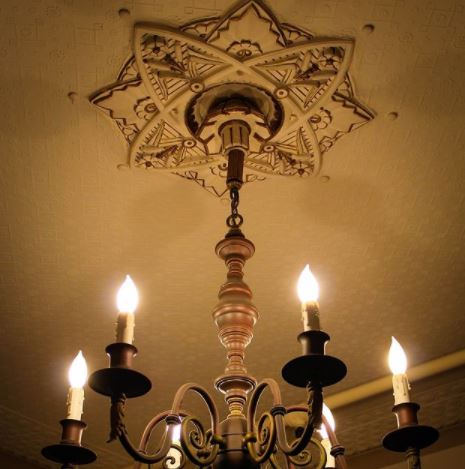
Mrs. Winchester counted seven Victorian cottages, and then stood at the end of the last line of railings. She knew that the pillar-box was exactly opposite her. She took three quick steps, and literally cannoned into it. She was a little proud of her own judgment in getting it so nicely. Then she fumbled for the mouth of it, and dropped in her letter. All this may should very commonplace and ordinary. Mrs. Winchester is an observant woman, and she had noticed always that the mouth of the pillar-box faced directly along the crescent, thus standing at right angles to the road. At the moment that she had her right hand in that mouth, therefore, she argued that if she stood out at the stretch of her arm, she must be facing the crescent; Mrs. Winchester had but to move straight forward again to touch the friendly railings. She was putting that plan into operation, and had let go of the mouth of the pillar-box, when a man, coming hurriedly round the corner, ran straight into her, muttered a gruff apology, and was lost in the fog again in a moment. And in that accidental collision he had spun her round and tossed her aside—and she was lost! This is literally true. She took a step and found herself slipping of the kerbstone int the road; stumbled back again, and strove to find her way along by sticking to the edge of the pavement. After a minute or two, Mrs. Winchester was so sure of herself that she ventured to cross the pavement, and by great good luck touched in a moment one of those ornamental center-pieces of one of the gates—or so, at least, it seemed. She went on with renewed confidence until she saw certain bushes which topped the railings of one particular cottage, and then Mrs. Winchester knew that she was near her mansion’s front door. She pushed walked confidently, stepped quickly up the little path, and reached the door. She was right; the door yielded to her touch, and she went hurriedly in.

Mrs. Winchester had taken off her hat, and had held it towards the familiar hat-stand before she realized that it was not a familiar hat-stand at all; it was one she did not know. She looked round in some confusion, meaning to make good her escape without being observed, and yet wondering into what part of her mansion could she have come into, when she stopped stock still, with the hat held in her hand, listening. From a room near at hand, Mrs. Winchester heard the sound of a low, long-drawn moan, as from someone in pain. More than that, it was almost the wail of someone in acute terror. Now, Mrs. Winchester was a mild and caring soul, and her first instinct was to run. There was the door within a foot of her; she could open it again noiselessly and slip out, and leave whatever was moaning to its own trouble. Her next instinct, however, was a braver one; she might be able to help. Putting her hat on, and so leaving her hands free, she moved cautiously towards the sound, which was coming intermittently. She found that this wing of the house was unfamiliar to her; there was a 7-11 staircase built in the shape of a letter “Y,” which enabled the servants to quickly get to three different levels of the house. Then there were these stairs that lead to the ceiling, and there was also a cabinet that went straight through to the back thirty rooms of the mansion. When she went down the steps of the 7-11 staircase, slowly and cautiously, with her flesh creeping a little, the morning went on, and Mrs. Winchester was almost inclined to turn back with every step she took. However, at last, she got into the basement, and came to the door of the room from which the sound proceeded. She was in the very act of recklessly thrusting open the door when another sound broke upon her ears that held her still. The sound of someone singing in a raucous voice.

It was a sea song she remembered to have heard when she was a little girl in New Haven, Connecticut, and the words of which she had forgotten; it was something about “Boney was a warrior.” The door of the room was open a little way, and through the crack of it, Mrs. Winchester was able to peer in; and there she saw a sight that for a moment made her doubt her own eyes. She rubbed her eyes in a curious fashion and looked again, and this is what she saw: The room was in a neglected state, with strips of wallpaper hanging down from the walls and with a blackened ceiling. There was a table in the center of it, and at that table a man was seated, with a square black bottle and a glass before him, and a candle burning near his left hand. Mrs. Winchester could see the whole room now as plainly and as clearly as she saw it then. He was a man so villainously ugly that she had a thought that he was not a man at all, but some hideous thing out of a nightmare. He had very long arms—so long that they were stretched across the table, and his hands gripped the opposite edge of it; a great heavy head, crowed with a mass of red hair, was set low between enormously broad shoulders; his eyes, half closed, were high up and close together on either side of a nose that was scarcely a nose at all; the lips were thick and heavy. However, it was not the man that Mrs. Winchester looked at first, it was at two other figures in the room. These figures were seated on chairs facing the table at which the man was, and the strangeness of them lay in the fact that each was securely bound to the chair on which he and she sat, for it was a man and a woman. The man, who was quite young was not only bound, but gagged securely also; the woman was more lightly tied to her chair by the arms only, and her mouth was free. She was leaning back, with her eyes closed, and mingling with the raucous singing of the man at the table. Mrs. Winchester’s first impression was that the man at the table was some sort of unclean, bestial judge, and the others his prisoners.
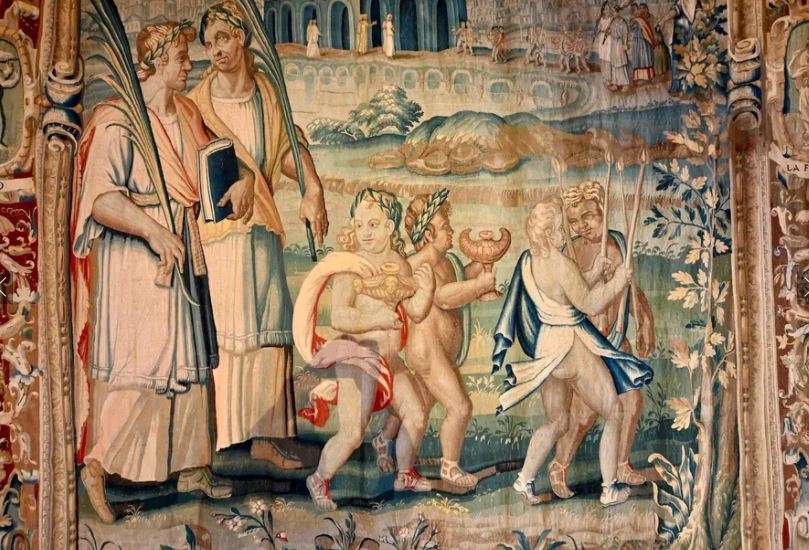
He stopped his singing to pour some liquor from the square bottle into his glass and to drink it off; then he resumed his former attitude, with his fingers locked over the edge of the table. And now Mrs. Winchester noticed that while the woman, who was, by the way, quite young and very pretty, with a fair, dainty prettiness, still kept her eyes closed, the eyes of the bound man never left that dreadful figure seated at the other side of the table. Mrs. Winchester felt like she was on the eve of some awful calamity. She then unhesitatingly pronounced the entire assortment of people in the room as ghost, and condemned all the gathered treasures as the creations of petty intellect, which could not get out of the beaten track, but sought in the supernatural a reason for the explanation of every fact that seemed at variance with routine of daily experience. In her opinion the collection of people in this room had never seen at all in her day and generation, and must have been souls killed by the Winchester rifle ages ago; she did not yet believe her mansion was enchanted, however. To use her own language, “all those stories have been made by those people that set up overnight stirring out legends to entertain each other.” However, she must have known that she was in denial. For she was not insane and there were some kind of beings in this room. “Wouldn’t you like to speak, you dog?” said the red-haired man. “What would you give now to have the use of your limbs—the free wagging of your tongue? What would you say to me; what would you do to me?” The man who was bound could, of course, answer nothing. Mrs. Winchester saw his face flush and darken, and she guessed what his thoughts were. For herself, she was too fascinated by the scene before her to do anything else than peer through the crack and watch what was going one.

“Lovers—eh?” exclaimed the man at the table. “You thought I was unsuspicious; you thought I knew nothing and suspected nothing—didn’t you? While I was safely out of the way you could meet, the pair of you—day after day, and week after week; and this puppy could steal from me what was mine by right.” The woman opened her eyes for the first time and spoke. “It isn’t true,” she said, a sob breaking her voice. “It was all innocent. Martin and I have done no wrong.” “You lie!” thundered the man, brining his fist down upon the table with a blow that might have split it. “You’ve always lied—lied from the moment your father gave you to me—from the very hour I married you. You always hated me; I’ve seen you shudder many and many a time at the mere sight of me. Don’t I know it; haven’t I felt you stab me a thousand times more deeply than you could have stabbed me with any weapon? You devil! I’ve come at last to hate you as much as you hate me.” The woman turned her head slowly and looed at the younger man; a faint smile crossed her lips. In an instant the red-haired man had leapt to his feet, showing Mrs. Winchester astonishingly enough that he was a dwarf, with the shortest legs surely ever a man had. However, the bult of him was enormous, and Mrs. Winchester could guess, with a shudder, at his length. He caught up the glass, crossed the room, and flung the contents in the face of the man. “It’s a waste of good liquor—but that’s for the look she gave you. I wish there was some death more horrible than any invented yet that I could deal out to you,” he added, standing with the glass in his hand and glaring at his victim. “The death I mean for you is too easy.” He walked across to the fireplace in a curious purposeless way, and stirred a great fire that was blazing there. Then from a corner of the room he dragged with ease a great sack that appeared to contain wood and shavings; so much that Mrs. Winchester saw a rent in the side of it. As if in readiness for something, this he dropped down near the fire, and then went back to his seat, applying himself again to the drink that was on the table. And still Mrs. Winchester watched, as a woman may watch a play, wondering how it will end.
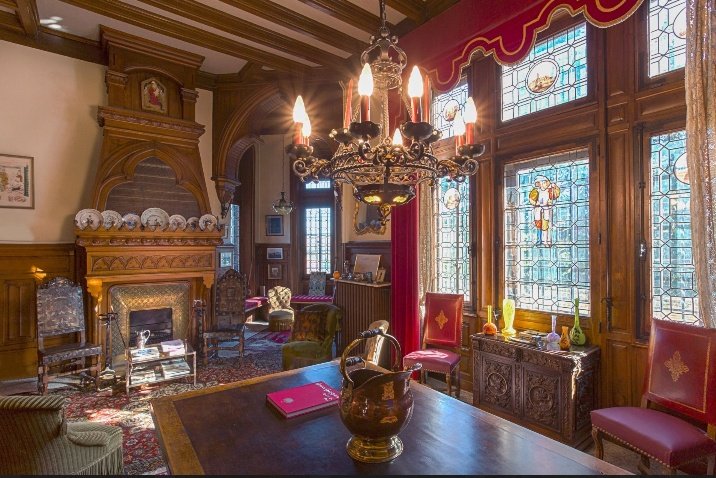
“I got the best of you tonight,” he said presently. “If I hadn’t some upon you from behind, you might have been too much for me; but I was ready and waiting. I’ve been watching longer than you think; I had everything mapped out clearly days ago. Tonight sees the end of all things for the pair of you; tomorrow sees me smiles away from here. You came in secret, you dog; you’ll go in secret.” “We have done no wrong,” said the woman again. “We loved each other years ago, when we were boy and girl; there was no sin in that.” “Bah!—I don’t believe a word of it. Don’t I know that your black heart you’ve compared the two of us every day of your life since first I saw you. His straightness for my crookedness; his sleek, black hair for my red; his prettiness for this face of mine”—he struck his own face relentlessly with one hand as he spoke—“that women shudder at. Don’t I know all that?” It was the strangest and most pitiful thing that the creature sitting there before his victims suddenly covered his face with his hands and groaned. If ever Mrs. Winchester had seen a soul in torment, she saw it then, and though she loathed him she could have wept for him. After a moment or two he dropped his hands and seized the bottle, and poured out the last drops into the glass and drank them off; then flung the bottle and glass crashing into the fireplace, as though there was an end to that business. And now, as he got down again from the chair, Mrs. Winchester saw the eyes of the woman open wide and follow his every movement with a dreadful look of terror in them. “I’ll kill you both—here in the place where you’ve met—and then I’ll seal up the house,” went on the dwarf. “I’ve planned it all. Look you last on each other, for tonight you die—and this house shall be your crypt!”
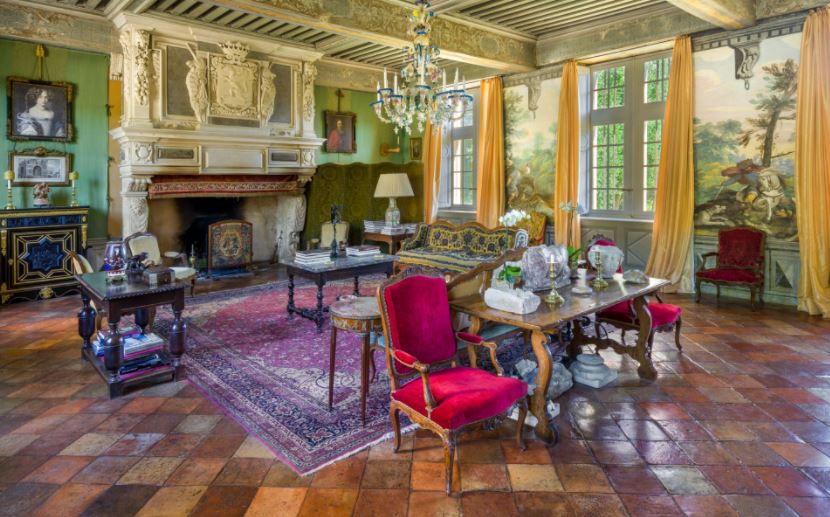
“I swear to you,” panted the woman eagerly, “by all I hold most holy and most dear, that if you let us go, we’ll never see each other again. For pity’s sake! —for the sake of Martin!” “For the sake of Martin!” sneered the dwarf. “That shows you in your true colors; that show who you are and what you are. There’s one poor satisfaction left to you; you’ll die together.” What held Mrs. Winchester then it would be impossible to say. She could only plead that in the dreadful thing that followed was a woman who sits at a play wondering what will happen next, and with never a thought in her of interfering. Mrs. Winchester’s in her anxiety has pressed the door a little to get a clearer view, so that she saw every movement of the dwarf. For herself, Mrs. Winchester had forgotten everything—in her own home, and my puppy zip, and the servants who slept in the mansion. It was as though she has stepped straight into a new World. Mrs. Winchester saw the dwarf advance towards the man in the chair, carrying his right hand stiff and straight beside him, gripping something s, she could not tell what it was that he held. Mrs. Winchester saw him come straight at her, and she saw the eyes of the woman in the opposite chair watching her as one fascinated. Then Mrs. Winchester saw two movements’ one with the left hand of the dwarf, when he struck the other man on the face; then with the right hand, when he raised something that gleamed n the light of the candle and brought it down with a sound that was new and horrible to her on the breast of the other man. And Mrs. Winchester saw the face of the man change, and start as it were into new life, and then fall as it were into death. And Mrs. Winchester saw his head drop forward, and his eyes were closed. Then, above it all, and yet seeming as a sort of dreadful chorus to it all, rang out the scream from the woman in the other chair. Mrs. Winchester did not think that the dwarf heard it; he had drawn back from what had been the living man, and was staring like one mad upon what he had done. And still piercing the air of the place rang the scream of the woman—not for her lover alone, but for herself.

That sound seemed at last to break in upon the senses of the dwarf and to call him partially to himself. Mrs. Winchester had watched him to the point where he draw himself together and crouched like a wild beast ready to spring, with that in his hand that dripped red, when, in some fashion, she flung herself round the partially open door and stumbled into the room. Mrs. Winchester thought she must have been a little made herself; otherwise, frail and commonplace creature that she was, she could not have battled with this madman. Mrs. Winchester came upon him from behind and gripped him, seizing him by the throat and by the head, and all the while shouting something to him quite unintelligible. The attack had been so sudden and so unexpected that she had him, in a sense, at her mercy. He could not know who had attacked him; he struggled madly, not alone to get away from her, but also to discover who she was. Mrs. Winchester struggled to keep his face away from her, gripped him by the neck and by the hair, and fought with him for what she knew then was her own life. And so struggling they stumbled at last horribly against that still figure bound in the chair and brought it over crashing with them to the floor. And then in a sudden Mrs. Winchester felt the dwarf inert in her hands, and knew that she had conquered him. What she must have looked like in that room, kneeling there, panting and struggling to get her breath, she could not tell; the whole business was so like a nightmare. She remembered seeing the dwarf lying there—huddled up and very still. She remembered that other figure, bound grotesquely in the chair and lying, still bound, upon its side; and she remembered, too, the woman, with her arms close fastened behind her, sitting there and sobbing wildly.
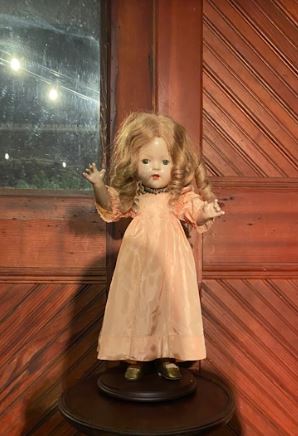
The dwarf must have been stunned; he lay there quite still, with the knife that was dreadfully red fallen from his hand, and lying beside him. When at last Mrs. Winchester staggered to her knees she saw that the girl was staring at her with a face that seemed to suggest that here, perhaps, was another ruffian come to kill her. “Who—who are you?” she asked in a frightened whisper. “A friend—one who stumbled in by accident,” Mrs. Winchester panted. “Look at the man that’s tied to the chair,” she whispered hoarsely. “He can’t be dead.” Mrs. Winchester knew that he was, but still she looked, as she bade her. Mrs. Winchester had no need to look twice; the poor fellow was quite dead. The blow had been strong and sure. On her knees beside him, Mrs. Winchester looked up and nodded slowly to her; there was no need for words. The young lady leaned back in her chair again and closed her eyes. “Set me free,” she said in a faint voice. Mrs. Winchester could not touch that knife that lay there; in a mechanical, methodical way she took from her waistcoat pocket the decent, respectable little bone handled penknife she carried always with her. With that Mrs. Winchester but the young lady’s bonds, nothing as she did so how cruelly they had cut into the white flesh; and after a moment or two she swung her arms listlessly against her sides and opened her eyes, and then, with an effort raised her hands and pressed them against her temples. “What will you do?” Mrs. Winchester asked, looking at her curiously. “I—I don’t know,” she said; and then, breaking into weeping, sobbed out: “Oh—dear God—that it should have come to this! What shall I do—what shall I do?” “You must get away,” Mrs. Winchester said, watching the dwarf, who was beginning to stie a little. “If he wakes, you know what will happen.”

“I know—I know,” she said; and got to her feet and began to move towards that bound figure still lying tied to the chair. However, at that Mrs. Winchester got before her, and with her hands against he shoulders held her back, and pleaded passionately to her that she should go, and leave the dead alone. She listened, with that strange look in her eyes of a child wakened from sleep and not clearly understanding; but she yielded to Mrs. Winchester, and stumbled under her guidance to the door. They had reached it, and Mrs. Winchester had opened it for her to pass out, when suddenly the dwarf twisted over on to his hands and knees, and then raised himself upright. He did not seem to realize for a moment what had happened; then he caught sight of the woman, and, with a snarl, crawled forward and gripped the hilt of the knife. At that she pushed suddenly past Mrs. Winchester and fled like a hare up the stairs. Mrs. Winchester heard the swift passage of her footsteps in the little hall of the house—then the slamming of the door-to-nowhere. And now Mrs. Winchester had to look to herself, for she saw in the eyes of the man that he would not let this witness escape if he could catch him. Mrs. Winchester had managed to get through the door by the time that he had got to his feet, and in a dazed fashion was stumbling toward her, knife in hand. With a sudden swoop he reached the table and blew out the candle, and at the same moment Mrs. Winchester ran up the stairs, and in the darkness stumbled along the hall and fumbled with the catch of the door. By great good fortune, Mrs. Winchester got the door open, and literally fell out into the fog. She could not see him as he tore after her; in a faintness Mrs. Winchester had fallen to her knees, and she heard him, as he raced past her, panting heavily. Then the fog swallowed him up, and she knelt there on the farm alone, shaking from head to foot.

Mrs. Winchester had, of course, no means of exactly in what part of her mansion she had had her adventure; she could only judge roughly that it must be about the middle of the crescent. She started along again, in the right direction, as she hoped, and thought to find the front door to her mansion; missed the railings, after going what seemed to be an interminable distance, and came up hard against a pillar-box. Scarcely knowing what she did, she set her right hand in the mouth of it, and performed the same maneuver she had done before; advanced three paces, and touched railings again. Stumbling along these, she came blindly what she thought was her front door, walked up the path, and pushed open the door that yielded; and there, with the face of her maid looking at her in alarm and wonderment, Mrs. Winchester feel in a dead faint at her feet. It has to be recorded that Mrs. Winchester never found that room again. She knew every square inch of her mansion. Over and over again, in clear weather, Mrs. Winchester has always around in her mansion, and had closed her eyes, and tried to remember what steps she took to get to that particular room that night, after a stranger had cannoned into her and twisted her round; but all in vain. Whether in some part of the house lies the body of a man who was foully murdered on that particular night; maybe in a hidden room the crime was committed; or perhaps, in some strange supernatural fashion, she saw that night a deed committed that had been committed long before, she shall never know. That it is no mere figment of the imagination, and that something really happened that night, is proved by one fact. Her maid, in raising Mrs. Winchester from the floor that night when she fell at her feet, found her fingers locked closed upon something, and, forcing them open, disclosed what it was. A tuft of red hair!

Such episodes may appear utterly absurd and pure superstition to people in countries comparatively free of black magic, but instead they should be warnings of the power of Satan and demons where occult literature lures readers into illicit magic. Magic as the release of special power by satanic and demon forces of evil in its character and effects. While divine help and miracles produce new strength and positive results, magic shifts the burden to another area. Small relief in one area must be paid for by terrible burdens in another. The principle of compensation prevails. The price exacted is always found to be much greater than the amount of help received. Satan drives a hard bargain and grossly cheats his victims. Usually violence, suicide, and insanity will run through a whole family line, where the magical arts have been cultivated and practiced. Such tragic events often involve as many as four generations. Many occultists and magic workers, especially those who have cultivated the black arts and signed themselves over to the devil in their own blood, die horrible deaths. When a ready successor is not provided to carry on the nefarious practice, this is especially true. The psychic bondage and oppression that traffickers in occultism themselves suffer, as well as their dupes, is horrifying to contemplate. Demon possession is represented as a vivid symbol of the prevalence of evil in the World. Other critics attempt to dismiss demon possession with theories of accommodation or hallucination. However, this view fails to meet the issue. Nor can present-day parapsychologist and psychiatrists, who refuse to recognize evil supernaturalism in the phenomenon of demon possession, either explain it or deal adequately with it. Laws defining witchcraft as having league with the Devil and prescribing the death penalty for such offenders cropped up in the colonies as early as 1636 in Plymouth. Other colonies soon followed suit—Connecticut in 1642 and Rhode Island in 1647.

The first executions took place in Boston in 1648 and in Hartford, Connecticut, in that same year. The executions were carried out by hanging, in contrast to the European practice of burning witches, which probably stemmed from the widespread fear among the European peasantry of vampire, the dead who returned from their graves to suck the blood from the living. The vampire myths never really took root in America, so the necessity of destroying the bodies of the witches was not deemed urgent. Throughout the 1650s, there appeared prosecution and attempted prosecutions in America, but these cases were infrequent, and all of them were based on the fear of maleficum, the witch’s working of evil, the accusations coming from frustrated and jealous neighbors. Few confessions were recorded in the early cases, and they did not seem to have much real validity. The few that did confess mentioned having dealings with Satan, but for the most part these admissions were confused and incoherent, and the details of the accounts differed greatly from the confessions of the witches in Europe. For example, in 1699, in Connecticut, a woman named Greensmith confessed to trafficking with the Devil, but made no mention of all-important Covenant, or pact. She further stated that the Devil had appeared to her in the form of a deer (not a goat) and that she had attended meetings at a place not far from her house. The mention of “meetings” occurred in some early confession, but the word “Sabbat” or “Sabbath,” commonly used by European witches, did not come up until later, apparently at the suggestion of the Salem judges. Some believe that Satan has a soul and a character. He is not just this futile entity but someone you can see many aspects to. Some people do not see Satan as this guy with horns who is evil, they see Him as the first rebel. Then one can see why He is so attractive to many in the Victorian ages and the young people. He is someone who is standing up to the greatest power in the Universe. “If that ‘evil’ is of a rebellious nature,” says Glenn Danzig, “then I guess, in Christian terms, that evil is the Satan in you. I don’t buy that. I believe in honesty, standing up for yourself. That’s my ‘good.’”

Thousands of people base their hopes on the statements of spiritistic practitioners and subsequently become dependent upon the advice they receive from the “other side.” There are quite a number of people who has suffered serious psychic disturbances through the misuse of such practices. Their personalities have been split and they have been utterly confused by the spirits on which they have called. People therefore who try to discover what life after death is like through spiritism and superstition may be in danger of falling prey to the dark and hidden side of their own minds and soul. If you look at the early tracts of The Christian Bible, there is really not much about Satan in there anyway. Christian religions have tried to overblow and create a whole legend around Satan which is not true to the actual scriptures we have. If you desire, you must first make yourself strong so you can help others. You should only help people who want help, a lot of times people do not really want your help. You tell people what has to be done to change their lives, they will not listen. If Satan were corporeal, He would not be something repulsive, He would be something seductive. He would want to win you over and gain your trust, and of course being repulsive or disgusting would not be the way to go. One would imagine this would be a seductive, beautiful creature. In the Gnostic account of the fall of the angels, the angels were suppsed to be watching over this flock of humans and all of a sudden, they are perpetrating acts of pleasures of the flesh with them. Eventually this created the Cyclops, the Minotaur, things of this nature. There are so many accounts of the fall of the angels, it is like a fantasy tale that you would like to believe actually happened. We, in this circle, conjure and cite this spirit Fatenovenin, with all his adherents, to appear here in this spot, to fulfill our desires, in the name of three holy Angels, Schomajen Sheziem, Roknion Averam, Kandile, Brachat Chaijdalic, Ladabas, Labul, Rargil, Bencul, in the name of God. Amen!

Winchester Mystery House

Mrs. Winchester’s estate was a little town within itself. The grounds have their share of unexplained mysteries. Mrs. Winchester outfitted her home with the finest stained glass doors, windows, and wallpaper that money could buy during her time. She had everything she needed: plumber’s shops, carpenter’s workshops, her own water and electrical supplies, and complete sewer and drainage systems. Mrs. Winchester even had her own gas manufacturing plant. It produced carbide gas by adding a small amount of water to a drum containing calcium carbide. The resulting gas was pressed through the gas lines to the house by a large piston and cylinder. The gas lights in the house were then lit by electromechanial strikers that created a spark to light each lamp.
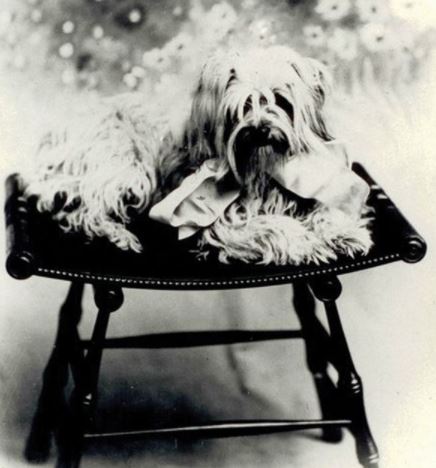
Come see her estate, in person, for yourself this weekend! Please Click the link below for tickets and more information.

The Time of the World Disappears Before Eternity

Revolutionary wealth is not just about money. Civilization is one of those big, stuffy words that may intrigue philosophers and historians but puts most people to sleep. Unless it is used in a sentence like “Our Civilization is threatened”—at which point large numbers of people prepare to defend themselves. Today many people do, in fact, believe that their civilization is threatened—and that the United States of America may be doing the threatening. And it is. However, not in the way most of us think. Around the World, critics of the United States of America point to its military and its economy as the main sources of its predominance. It is, however, knowledge in the broadcast sense and new technologies based on it that integrate America’s military and financial power and propel both forward. It is true that America’s technological lead is threatened. According to the National Science Board, foreign students earn nearly 50 percent of all U.S. doctorates in mathematics, computer sciences and engineering. And American youth are showing less and less interests in these fields. NASA officials complain that there are three times as many scientists over sixty as there are under thirty in the space agency. Shirley Ann Jackson, then president of the American Association for the Advancement of Science, has cautioned that “centers of technology-based activity, training, and entrepreneurialism are rapidly spreading throughout the globe. Thus even the status quo for the U.S. represents a declining share of the global marketplace for innovation and ideas.” Nevertheless, America still leads in most fields of digital technology, in microbiology and in science generally. It spends 44 percent of the World budget for research and development. By most criteria, the United States of America is still the undisputed leader in the performance of basic and applied research. In addition, many international comparisons put the United States of America as a leader in applying research and innovation to improve economic performance.

In the latest IMD International World Competitiveness Yearbook, the United States of America ranks first in economic competitiveness, followed by Hong Kong and Singapore. The survey compares economic performance, government efficiency, business efficiency, and infrastructure. Larger economies are further behind, with Zhejiang (China’s wealthiest province), Japan, the United Kingdom, and Germany ranked 20 though 23, respectively. An extensive review by the Organization for Economic Co-operation and Development (OECD) concludes that since World War II, US leadership in science and engineering has driven its dominant strategic position, economic advantage, and quality of life. And at least for now, the United States of America remains the Word’s scientific powerhouse. Perhaps even more important is the speed with which scientific and technical findings from everywhere are converted into marketable applications or products and widely dispersed into manufacturing, finance, agriculture, defense, biotech and other sectors. All of which boosts economic productivity, further accelerates change, and increasing the U.S. ability to compete at the global level. However, knowledge is not only a matter of bits and bytes or science and technology. Part of the knowledge economy is the production of art and entertainment, and America is the World’s biggest exporter of popular culture. That culture include fashion, music, TV programming, books, movies and computer games. Americans have always been told that their most important message to the World is one of democracy, individual freedom, tolerance, concern for “the rights of man” and—more recently—the rights of women. In the last three decades, however, a U.S. media spread into formerly closed or nonexistent foreign markets, a very different set of messages has been communicated. Much of it targeted at young people.

Certainly not all, but a considerable amount of this material has disgustingly glorified pimps, gangster, drug lords, drug pushers, and hollow-eyed drug users. It has celebrated extremes of violence marked by unending car chases, over-the-top special effects and songs dripping with sexist venom. The impact of all this has been further intensified in the hard-sell, over-the-edge advertising used to promote these products. Hollywood, for example, has painted a fantasy America in which adolescent hedonism reigns supreme and authority figures—police, teachers, politicians, business leaders—are routinely satirized. Film after film, and TV shows one after another, tell young viewers what many of them hunger to hear: that adults are bumbling fools; that being “dumb and dumber” is okay; that “we do not need education”; that to be “bad” is really good; and that pleasures of the flesh, in infinite variety, is or should be nonstop. In this fantasy World, women are readily available, but they can also leap over giant buildings in a single bound (like Superman), shoot and kill (like James Bond) and practice martial arts (Like Jet Li). Extremes, we are repeatedly told, are good and restraint is bad; and, by the way, America is so rich that event its secretaries, police, clerks, and other ordinary working people live in high-rise penthouse apartments or Malibu mansions—images that set adolescent glands tingling from Taipei to Timbuktu. What few foreign critics of American’s pop culture seem to know is that ironically enough, many of the ostensibly American firms producing and disseminating the interesting and unusual of these programs either are, or were financed not by America, but by European and Japanese capital. Nor is it widely understood that shows are often made by, say, a European director with an Australian stary, a Chinese martial-arts consultant, an anime cartoonist from Japan or other foreign contributors.

In the meantime, however, the influence of these intriguing programs is so powerful that other societies fear for the survival of their own culture. Only if art threatens action, then terrorism can be advanced through art. For such a phenomenon as Aesthetic Terrorism to occur, aesthetic pursuit must become symbolic not of its own decadently solipsistic pleasures (exemplified in madness of des Esseintes in Huysmans’ Against Nature), but of action taken beyond the pale of art World confines. Terrorism is art is called the avant-garde. However, if this was once the case, it is no longer. Most avant-garde art is viewed and created today as simply an enfolding reaction to its own history. This disingenuous game-playing guarantees that the avant-garde art is viewed and created today as simply an enfolding reaction to its own history. This disingenuous game-playing guarantees that the avant-garde can no longer stimulate or even provoke. Dada and Futurist actions, which attempted to lead art out of the classroom and museum and into the streets, are simply appropriated by postmodernist facsimiles which capture the letter but little of the original essence. It hardly matters anyway. Avant-garde art has evolved into nothing more than a cultural benchwarmer, corporate tax write-off and public relations smokescreen. Art which openly espouses anti-corporate ideology is embraced as long as it hews to arbitrary standards invented by those taste-making and fortune-telling hirelings, the art critics. What could be wrong, after all, with a business World that allows people to say what they want (because it does not matter)? Aesthetic Terrorism is a term more realistically applied to the faceless regime of consumer culture than the avant-garde. The onslaught of Muzak, ad jingles, billboards, top 40 tunes, commercials, corporate logos, etcetera, all fit the terrorist dynamic of intrusion and coercion.

One almost forgets that aesthetics once implied a consensual relationship between the creators and appreciators of art. How often is it that one hears someone admitting a fondness for a media product “in spite” of oneself? How many times have you heard a slogan or rancid tune ring in your ears like a brain-eating mantra? When consumer terror’s avant-garde correlative, Pop Art, became indistinguishable from the object of its supposed social satire, it erased from big business its pejorative taint. Many of today’s avant-garde stars have emerged from or entered the business World, some enormously successful in the arcane number-juggling or speculation and commodities scams. Even freeloading on the state and private foundations is fair game only for those whose bureaucratic aptitude is matched by their shameless butt-kissing. It is not surprising that most grant recipients excel in little more than lawyerristic logorrhea and ingrained artistic timidity. Critic-centered postmodernism spawned the phrase-art hybrid of Barbara Kruger and Jenny Holzer in which an advertising-style slogan is combined with an implied message or visual cue (usually swiped from some old magazine). Their posture is a hip cynicism which is supposed to subvert the “thrall” of the advertising command. Kruger and Holzer play the market like skillful double-agents, boosting themselves into the public eye through clever steals from Madison Avenue behaviorist techniques yet simultaneously troweling on crypto-Marxist jive to secure the perks of critical and academic currency. Their self-promotions worked when they were at the sidelines of the establishment. However, not the social commentary grows increasingly hollow. Currently being groomed for jet-setting prominence by Soho millionairess Mary Boone, Kruger’s contribution to the Whitney Biennial in 1987, for which she is paid a handsome sum, featured nothing more than a socialite princess joke, “I Shop Therefore I Am.” Winking at and wagging the tail of establishment hierarchy is part of that I-rib-you-gently-you-pay-me-off confidence game artists have been playing the Renaissance courts.

These contemporary court artists, like many of the past centuries, smugly pretend t spit in the eye of the exploiters while allowing themselves to be pampered de-loused—and when they are not looking—de-clawed. There are, of course, those artists, usually fresh out of university, who are unaccomplished at filling out grant forms, and therefore consider themselves “subversives.” The majority of these art and rock magazines-styled rebels are playing out rebellion psychodramas to package and merchandize to consumerist sycophants. This strategy is (forgive them term) the simulacra of terrorism: the content seizes in the frozen attitudinizing of pose and goes no further. We must look to the true outsiders and not the would-be insiders for an artist truly capable of effective counter-terror against the insidious mantras of consumerist brainwash. Terror means a threat, and the outsider’s version of Aesthetic Terrorism belongs to those performances or arrangements of words and pictures that unleash the reactionary impulses of police and bourgeois artist/critic alike. The kind of art that evokes this wrath, fear and condemnation rejoices in its pagan spirit of schadenfreude which controverts the humanist piety of “enlightened victim.” Anti-social sadism rarely receives patronage, however. Outside the corrupting realm of societal handouts, the Aesthetic Terrorist—much as this definition may grate on him—is the last bastion of aesthetic purity. Operation Sun Devil is the name for a government action against computer wizards and assorted sharpies and super-smarts who were resourceful enough to figure out how to hack into the electronic files of Ma Bell. Those who know, claim the Sun Devil gambit as a terrified overreaction against intelligence by the plodding and stupid bureaucracy.

John Perry Barlow (Whole Earth Review, Fall 1990) describes a typical Sun Devil action against a teenage hacker: [A] father in New York […] opened the door at 6.00 a.m. and found a shotgun at his nose. A dozen agents entered. While one of the kept the man’s wife in a choke-hold, the rest made ready to shoot and entered the bedroom for their sleeping 14-year-old. Before leaving, they confiscated every piece of electronic equipment, including all the telephones. Fourth Amendment guarantees against unreasonable search and seizure are unheeded by the government agents who claim nerd computer hackers are terrorists and have “the ability to access and review the files of hospital patients. Furthermore, they could have added, deleted, or altered vital patient information, possibly causing life-threatening situations.” Meacorporate interests have staked claim to the entirety of cyberspace, and they are not about to tolerate the presence of digital interlopers. This may scare off some, but other pirates like the mysterious Legion of Doom and NuPrometheus league (who illegally circulated highly protected Macintosh computer source code) will rise to the challenge now that they have been provided a clearly delineated enemy to innovation, the individual, and personal freedom. It may come as a surprise to learn that a few artists are now producing work which finds itself classified as a thought crime, punishable by expulsion into a Siberia of non-distribution, and in some cases by litigation and imprisonment. Pure magazine, from Chicago, a xeroxed vehicle which extols child torture, murder, and extreme misogyny, tweaked too many civic-minded noses, and its editor, Peter Sotos, was tailed for nine months and underwent a lengthy trial process in which he was finally convicted for possession of some very illegal magazine. Soto’s case was the first successfully prosecuted new Illinois state law, enacted under the influence of the Meese Commission Report on pornography, an example of First Amendment revisionism par excellence.

Soto’s case is particularly disquieting because it proves that prison is in the offing for simple possession of controversial material. No doubt this legal precedent was established to open the doors for future roundups of other thought criminals. The expertly managed Gulf War (massacre), in which networks censored war casualty footage that might provoke a “Vietnam War syndrome,” provides a small window into the dynamics of mass control to come. Any thoughtful individual is undeniably malnourished by the current information diet. Whether this is due to a direct conspiracy of State or by design of the oligarchic marketplace matters little. However, it has upped the ante for a new American Samizdat in which “disreputable,” “crazy,” “hateful,” or “dangerous” topics are broached by individuals or small, autonomous groups that are not compromised or swayed by institutional priorities. Can “offensive interests become the political crime of future? Apparently so. When looking at the previous sentences one can compare and see that musicians have been arrested for obscene lyrics, anarchist individuals have been collared for burning the flag; parents have been arrested for photographing their toddlers in their birthday suits; painter and performer Joe Coleman was arrested in Boston for operating an “infernal machine” and in New York for killing a rat: museum curators were threatened with arrest for hanging homoerotic photos; G.G. Allian was jailed for some consensual sadomasochism with a girlfriend; the FBI have been “monitoring” certain groups who practice unorthodox pleasures of the flesh; and on and on. Even many of the books you read have come under widely publicized attack by authors such as Carl A. Raschke who advocated the revocation of First Amendment rights from those who spread “cultural terrorism.” Even globalization could be considered cultural terrorism.

It has become increasingly obvious that the aesthetic terrorist hobgoblins are nothing more than symbolic scapegoats to divert attention away from the real issues. For Americans, fear is not another form of awareness, it is just another form of gossip. As Charles Manson has stated, true subversive terror can only be actualized by turning off the TV sets. Until then, aesthetic terrorism will be orchestrated by those already in command against insubstantial or non-existent villains. And in the future, while the dumb show of bohemianism plays itself out in the cookie cutter shape of the politically correct martyr/victim, aesthetic terrorism will be orchestrated by those already in command against insubstantial or non-existent villains. And in the future, while the dumb show of bohemianism plays itself out in the cookie cutter shape of the politically correct martyr/victim, aesthetic terrorists will not involve themselves in the dubious rewards of celebrity. The best of them will work alone, already a part of the enemy camp, and in a chameleon-like stye master the fifth-column algorithms to subvert the ancient regime. We will not know them by name but their compensation will be to affect the outcome of the planet. Until then, there is a lot of work to be done. Under what conditions will cooperation emerge in a World of egoists without central authority? This question has intrigued people for a long time. And for good reason. We all know that people are not angels, and that they tend to look after themselves and their own first. Yet we also know that cooperation does occur and that our civilization is based upon it. However, in situations where each individual has an incentive to be selfish, how can cooperation ever develop? The answer each of us gives to this question has a fundamental effect on how we think and act in our social, political, and economic relations with others. And the answers that others give have a great effect on how ready they will be to cooperate with us.

The most famous answer was given over three hundred years ago by Thomas Hobbes. It was pessimistic. He argued that before governments existed, the state of nature was dominated by the problem of selfish individuals who competed on such ruthless terms that life was “solitary, poor, nasty, brutish, and short” (Hobbes 1651/1962, p. 100). In his view, cooperation could not develop without a central authority, and consequently a strong government was necessary. Ever since, arguments about the proper scope of government have often focused on whether one could, or could not, expect cooperation to emerge in a particular domain if there were not an authority to police situation. Today nations interact without central authority. Therefore the requirements for the emergence of cooperation have relevance to many of the central issues of international politics. The most important problem is the security dilemma: nations often seek their own security through means which challenge the security of others. This problem arises in such areas as escalation of local conflicts and arms races. Related problems occur in international relations in the form of competition with alliances, tariff negotiations, and communal conflict places like Cyprus. The Russian invasion of Ukraine in 2022 has presented the United States of American with a typical dilemma of choice. If the United States of American continued business as usual, Russian might be encouraged to try other forms of noncooperative behavior later one. On the other hand, any substantial lessening of United States of America’s cooperation risks some form of retaliation, which could then set off counter-retaliation, setting up a pattern of mutual hostility that could be difficult to end. Much of the domestic debate about international policy is concerned with problems of just this type. And properly so, since these are hard choices.

In everyday life, if they never invite us over in return, we may ask ourselves how many times we will invite acquaintances for dinner. An executive in an organization does favors for another executive in order to get favors in exchange. A journalist who has received a leaked news story gives favorable coverage to the source in the hope that further leaks will be forthcoming. A business firm in an industry with only one other major company charges high prices with expectation that the other firm will also maintain high prices—to their mutual advantage and at the expense of the consumer. For me, a typical case of the emergence of cooperation is the development of patterns of behavior in a legislative body of the United States Senate. Each senator has an incentive to appear effective to his or her constituents, even at the expense of conflicting with other senators who are trying to appear effective to their constituents. However, this is hardly a situation of completely opposing interests, a zero-sum game. On the contrary, there are many opportunities for mutually rewarding activities by two senators. These mutually rewarding actions have led to the creation of an elaborate set of norms, or folkways, in the Senate. Among the most important of these is the norm of reciprocity—a folkway which involves helping out a colleague and getting repaid in kind. It includes vote trading but extends to so many types of mutually rewarding behavior that “it is not an exaggeration to say that reciprocity is a way of life in the Senate” (Matthews 1960, p. 100; see also Mayhew 1975). Washington was not always like this. Early observers saw the members of the Washington community as quite unscrupulous, unreliable, and characterized by “falsehood, deceit, treachery” (Smith 1906, p. 190). In the 1980s the practice of reciprocity is well established. Even the significant changes in the Senate over the last two decades, tending toward more decentralization, more openness, and more equal distribution of power, have come without abating the folkway of reciprocity.

As will be seen, it is not necessary to assume that senators are more honest, more generous, or more public-spirited than in earlier years to explain how cooperation based on reciprocity has emerged or proved stable. The emergence of cooperation can be explained as a consequence of individual senators pursuing their own interest. We are investigating how individual pursuing their own interests will act, followed by an analysis of what effects this will have for the system as a whole. Put another way, the approach is to make some assumptions about individual motives and then deduce consequences for the behavior of the entire system. The case of the U.S. Senate is a good example, but the same style of reasoning can be applied to other settings. The object of this enterprise is to develop a theory of cooperation that can be used to discover what is necessary for cooperation to emerge. By understanding the conditions that allow it to emerge, appropriate actions can be taken to foster the development of cooperation in a specific setting. The Cooperation Theory that is presented here is based upon an investigation of individuals who pursue their own self-interest without the assistance of a central authority to force them to cooperate with each other. The reason for assuming self-interest is that it allows an examination of the difficult case in which cooperation is not completely based upon a concern for other or upon the welfare of the group as a whole. It must, however, be stressed that this assumption is actually much less restrictive than it appears. If a sister is concerned for the welfare of her brother, the sister’s self-interest can be thought of as including (among many other things) this concern for the welfare of her brother. However, this does not necessarily eliminate all potential for conflict between sister and brother.

Likewise a nation may act in part out of regard for the interests of its friends, but this regard does not mean that even friendly countries are always able to cooperate for their mutual benefit. So the assumption of self-interest is really just an assumption that concern for others does not completely solve the problem of when to cooperate with them and when not to. A good example of the fundamental problem of cooperation is the case where two industrial nations have erected trade barriers to each other’s exports. If barriers were eliminated, because of the mutual advantages of free trade, both countries would be better off. However, if either country were to unilaterally eliminate its barriers, it would find itself facing terms of trade that hurt its own economy. In fact, whatever one country does, the other country is better off retaining its own trade barriers. Therefore, the problem is that each country has an incentive to retain trade barriers, leading to a worse outcome than would have been possible had both countries cooperated with each other. This basic problem occurs when the pursuit of self-interest by each leads to a poor outcome for all. To make headway in understanding the vast array of specific situations which have this property, a way is needed to represent what is common to these situations without becoming bogged down in the details unique to each. Fortunately, there is such a representation available: the famous Prisoner’s Dilemma game. In the Prisoner’s Dilemma game, there are two players. Each has two choices, namely cooperate of defect. Each must make the choice without knowing what the other will do. No matter what the other does, defection yield a higher payoff than cooperation. If both defect, the dilemma is that both do worse than if both had cooperated. Cases typically result in one of four possible outcomes in the matrix. If both players cooperate, both do fairly well. Both get a reward for mutual cooperation.

However, if one player cooperates but the other defects, the defecting play get the temptation to defect, while the cooperating players gets the sucker’s payoff. If both defect, both get the punishment for mutual defection. What would you do in such a situation? That is basically the gamble of the Prisoner’s Dilemma. The Prisoner’s Dilemma is simply an abstract formulation of some very common and very interesting situations in which what is best for each person individually leads to mutual defection, whereas everyone would have been better off with mutual cooperation. The definition of Prisoner’s Dilemma requires that several relationships hold among the four different potential outcomes. The second part of the definition of the Prisoner’s Dilemma is that the players cannot get out of their dilemma by taking turns exploiting each other. This assumption means that an even chance of exploitation and being exploited is not as good an outcome for a player as mutual cooperation. It is therefore assumed that the reward for mutual cooperation is greater than the average temptation and the sucker’s payoff. This assumption, together with the rank ordering of the four payoffs, defines the Prisoner’s Dilemma. We have come back to the point where we began, where values take the place of good and evil. However, now we have made at least a hasty tour of the intellectual experiences connected with modern politics that made such a response compelling. How it looked to thoughtful Germans is most revealingly expressed in a famous passage by Max Weber, about God science and the irrational: Finally, although a naïve optimism may have celebrated science—that is, the technique of the mastery of life founded on science—as the path which would lead to happiness, I believe I can leave this entire question aside in light of the annihilating critique which Nietzsche has made of “the last men” who “have discovered happiness.” Who, then, still believes in this with the exception of a few big babies in university chairs or in editorial offices?

So penetrating and well informed an observer as Weber could say in 1919 that the scientific spirit at the heart of Western democracy was dead for all serious men and that Nietzsche had killed it, or had at least given it the coup de grace. The presentation of “the last man” in Thus Spake Zarathusta was so decisive that the old-style Enlightenment rationalism need not even be discussed anymore; and, Weber implies, all future discussion or study must proceed with the certainty that the perspective was a “naïve” failure. Reason cannot establish values, and its belief that it can is the stupidest and most pernicious illusion. This means, simply, that almost all Americans at that time, thinking American in particular, were “big babies” and remained so, long after the Continent had grown up. One need only think of John Dewey to recognize that he fits Weber’s description to a T, and then remember what his influence here once was. And not only Dewey, but everyone from the beginning of our regime, especially those who said, “We hold these truths to be self-evident,” shared the rationalist dream. Weber’s statement is so important because he made as much as more than anyone brought us into contact with the most advanced Continental criticisms of liberal democracy, and was the intermediary between Nietzsche and us Americans who were the most recalcitrant to one’s insight, perhaps because according to it we represent the worst or most hopeless and are therefore loath to see ourselves in that mirror. A very dark view of the future has been superimposed on our incorrigible optimism. We are children playing with adult toys. They have proved too much for us to handle. However, in our defense, we are probably not the only ones for whom they are too much. Perhaps you have caught yourself kissing another person as you first saw kissing in the movies or on television. My children have a phrase to describe this: “television kiss.”

It is fortunate for them that they have noted that there are television kisses and other kinds, because it will help protect them from absorbing it, taking it into themselves where it will come back out ten years, like a replay. Most of us did not make that distinction as we sat in darkened rooms or theaters as children. Since we did not see all that much real kissing, the media kiss became our image of kissing. We found ourselves producing that model of kiss later in life. I was fourteen-year-old when I tried to kiss for the first time. I imitated Brad Pitt’s kiss, but I did not feel it. Only later did I realize that perhaps Brad Pitt did not feel it either; he was merely kissing the way the director said he should. So there I was imitating a kiss that was never real in the first place, worried that there might be something wrong with me for lacking the appropriate feeling and failing to obtain the appropriate response. The journalist Jane Margold was driving home one night in Berkeley with her brother, Harlan. Suddenly a man crawled into the street right in front of them. They screeched to a stop and then, stunned, just sat there for a moment. They finally got out and cautiously went up to the man to find out that he had been stabbed several times in his upper body, was bleeding profusely and was in danger of dying right there. The man’s assailant was nowhere to be seen. In describing the event to me, Jane said that she instantly flipped into a media version of herself. She had never faced anything like it before and had no direct feelings. Instead, playing through her mind were images of similar events she had seen on television or in films. The media superseded her own responses, even to the point of removing her from the event. She was there, but sue did not experience herself as being there. She was seeing the event, but between her and it, floating in her mind, was an image of an implanted reality which would not get out of the way. Jane thought such thoughts as: “This is real; there is a wounded man lying here in from of me, bleeding to death, yet I have no feeling. It seems like a movie.”

In fact, it was they very movielike quality that eventually got her into action. Without feeling, she performed mechanical acts. She and her brother comforted the man, directed traffic, dispatched people to summon the police and an ambulance. She became extremely efficient, but throughout, she had the sense of performing a script. Apart from their economic implications, technologies create the ways in which people perceive reality, and such ways are the key to understanding diverse forms of social and mental life. As individual express their life, so they are. There are three stages in the development of technology: the age of technology of chance, the age of technology of the artisan, the age of technology of the technician. Cultures may be classified into three types: tool-using cultures, technocracies, and technopolies. At the present time, each type may be found somewhere on the planet, although the first is rapidly disappearing: we must travel to exotic places to find a tool-using culture. If we do, it is well to go armed with the knowledge that, until the seventeenth century, all cultures were tool-users. There was, of course, considerable variation from one culture to another in the tools that were available. Some had only spears and cooking utensils. Some had water mills and coal- and horsepower. However, the main characteristic of all tool-using cultures is that their tools were largely invented to do two things: to solve specific and urgent problems of physical life, such as in the use of waterpower, windmills, and the heavy-wheeled plow; or to serve the symbolic World of art, politics, myth, ritual, and religion, as in the construction of castles and cathedrals and the development of the mechanical clock. In either case, tools did not attack (or, more precisely, were not intended to attack) the dignity and integrity of the culture into which they were introduced.

With some exceptions, tools did not prevent people from believing in their traditions, in their God, in their politics, in their methods of education, or in the legitimacy of their social organization. These beliefs, in fact, directed the invention of tools and limited the uses to which they were put. Even in the case of military technology, spiritual ideas and social customs acted as controlling forces. It is well known, for example, that the uses of the sword by samurai warriors were meticulously governed by a set of ideals known as Bushido, or the Way of the warrior. The rules and rituals specificizing when, where, and how the warrior must use either his two swords (the katana, or long sword, and the wakizashi, or short sword) were precise, tied closely to the concept of honor, and included the requirement that the warrior commit seppuku or hara-kiri should his honor be compromised. This sort of governance of military technology was not unknow in the Western World. The use of the lethal crossbow was prohibited, under threat of anathema, by Pope Innocent II in the early twelfth century. The weapon was judged to be “hateful to God” and therefore could not be used against Christians. That it could be used against Muslims and other infidels does not invalidate the point that in a tool-using culture technology is not seen as autonomous, and is subject to the jurisdiction of some binding social or religious system. This is why power, which to a large extent defines us as individuals and as nations, is itself being redefined. A clue to this redefinition emerges when we look more closely at some of the unrelated changes. For we discover that they are not as random as they seem. Whether it is Japan’s meteoric rise, GM’s impressive rebound, or the American doctor’s fall from grace, a single common thread unites them.

Take the punctured power of the god-in-a-white coat. Throughout the heyday of doctor-dominance in America, physicians kept a tight choke-hold on medical knowledge. Prescriptions were written in Latin, providing the profession with a semi-secret code, as it were, which kept most patients in ignorance. Medical journals and texts were restricted to professional readers. Medical conferences were closed to the laity. Doctors controlled medical-school curricula and enrollments. Contrast this with the situation today, when patients have astonishing access to medical knowledge. With a personal computer and a WiFi, anyone from home can access data bases like Index Medicus, and obtain scientific papers on everything from Addison’s disease to zygomycosis, and, in fact, collect more information about a specific aliment or treatment than the ordinary doctor has time to read. Copies of the 2,354-page book knows as the PDR or Physicians’ Desk Reference are also readily available to anyone. Once a week on the Lifetime cable network, any televiewer can watch twelve uninterrupted hours of highly technical television programming designed specifically to educate doctors. Many of these programs carry a disclaimer to the effect that “some of this material may not be suited toa general audience.” However, that is for the viewer to decide. The rest of the week, hardly a single newscast is aired in America without a medical story or segment. A video version of the material from the Journal of the American Medical Association is now broadcast by three hundred stations on Thursday nights. The press reports on medical malpractice cases. Inexpensive paperbacks tell ordinary readers what drug side effect to watch for, what drugs not to mix, how to raise or lower cholesterol levels through diet. In addition, major medical breakthroughs, even if television news almost before the M.S. has even taken his subscription copy of journal out of the in-box. In short, the knowledge monopoly of the medical profession has been thoroughly smashed. And the doctor is no longer a god.

This case of the dethroned doctor is, however, only one small example of a more general process changing the entire relationship of knowledge to power in the high-tech nations. In many other fields, too, closely held specialists’ knowledge is slipping out of control and reaching ordinary citizens. Similarly, inside major corporations, employees are winning access to knowledge once monopolized by management. And as knowledge is redistributed, so, too, is the power based on it. A human is a “beast” and purifies one’s heart, and behold, God holds one by the hand. That is not a kind of humans. Purity of heart is a state of being. A man is not pure in kind, but one is able to be or become pure, rather one is only essentially pure when one has become pure, and even than one does not thereby belong to a kind of humans. The “wicked,” that is, the bad, are not contrasted with good humans. The good is to draw near Hod. One does not say that those near to God are good. However, one does call the bas those who are far from God. In the language of modern thought that means that there are humans who have no share in existence, but there are no humans who possess existence. Existence cannot be possessed, but only shared in. One does not rest in the lap of existence, but one draws near to it. Nearness is nothing but such a drawing and coming near continually and as long as the human person lives. The dynamic of fairness and nearness is broken by death when it breaks the life of the person. With death there vanished the heart, that inwardness of humanity, out of which arises the pictures of the imagination, and which rises up in defiance, but which can also be purified. Separate souls vanish, separation vanished. Time which has been lived by the soul vanished with the soul, we know of no duration in time. Only the rock in which the heart is concealed, only the rock of human hearts does not vanish. For it does not stand in time. The time of the World disappears before eternity, but existing humans die into eternity as into the perfect existence.

CRESLEIGH MEADOWS AT PLUMAS RANCH
Plumas Lake, CA |
Now Selling!

Cresleigh Meadows is now selling! Found just north of Feather River Boulevard, Cresleigh Meadows is home of the largest neighborhood in Plumas Ranch as well as the popular Bear River Park. With four floor plans available, ranging from approximately 2,000 – 3,500 square feet offering, three to five bedrooms, we are certain you will find the home that fits your needs and lifestyle.

Popular design elements include open floor plans, large kitchen islands, and flex spaces are staples in Cresleigh homes. Multi-generational living options also available in select homes.

Homeowners will love the convenient commuter access to nearby Sacramento and Yuba City.

Best of all, each Cresleigh home comes fully equipped with an All Ready connected home! This smart home package comes included with your home and features great tools including: video door bell and digital deadbolt for the front door, connect home hub so you can set scenes and routines to make life just a little easier. Two smart switches and USB outlets are also included, plus we’ll gift you a Google Home Hub and Go. https://cresleigh.com/cresleigh-meadows-at-plumas-ranch/