
Home » Himalayas (Page 8)
Category Archives: Himalayas

Like a Diamond in the Sky Discipline Must be Maintained!

Every time I open a book, I risk my life…Every work of imagination offers another view of life, an invitation to spend a few days inside someone else’s emotions. The wise person lets the Overself’s presence flow through one’s life, never blocks it by one’s ego nor turns it aside by one’s passions. The ego can no longer foresee what will happen to the outer course of its personal life when the Overself takes the lead, nor can it dictate what that course should be. With all one’s humility before the Overself, one will bear oneself among one’s fellow human beings with serene self-assurance and speak with firm conviction of that which one knows. When these experiences increase and multiply to such an extent that they accumulate into a large body of evidence, one will become convinced that some power is somehow using one as a beneficent channel. It is the real originator of these experiences, the real bestower of these blessing, the real illuminator of these other people. What is this power? Despite its seeming otherness, its apparent separateness, it is really one’s own higher self. Humanity is one, with psyche. Humility is a not inconsiderable virtue which should prompt Christians, for the sake of charity—the greatest of all virtues—to set a good example and acknowledge that though there is only one truth it speaks in many tongues, and that if we still cannot see this is simply due to lack of understanding. #RandolphHarris 1 of 19

No one is so godlike that one alone knows the true word. All of us gaze into that “dark glass” in which the dark myth takes shape, adumbrating the invisible truth. In this glass the eyes of the spirit glimpse an image which we call the self, fully conscious of the fact that it is an anthropomorphic image which we have merely named but not explained. By “self” we mean psychic wholeness, but what realities underlie this concept we do not know, because psychic contents cannot be observed in their unconscious state, and moreover the psyche cannot know itself. The conscious can know the unconscious only so far as it has become conscious. We have only a very hazy idea of the changes an unconscious content undergoes in the process of becoming conscious, but no certain knowledge. The concept of psychic wholeness necessarily implies an element of transcendence on account of the existence of unconscious components. Transcendence in this sense is not equivalent to a metaphysical postulate or hypostasis; it claims to be no more than a borderline concept, to quote Kant. That there is something beyond the borderline, beyond the frontiers of knowledge, is shown by the archetypes and, most clearly of all, by numbers, which this side of the border are quantities but on the other side are autonomous psychic entities, capable of making qualitative statements which manifest themselves in a priori patterns of order. #RandolphHarris 2 of 19

These patterns include not only causally explicable phenonmena like dream-symbols and such, but remarkable relativizations of time and space which simply cannot be explained causally. They are the parapsychological phenomena which I have summed up under the terms “synchronicity” and which have been statistically investigated by Rhine. The beneficial results of experiments elevate these phenomena to the rank of undeniable facts. This brings us a little nearer to understanding the mystery of psychophysical parallelism, for we know that a factor exists which mediates between the apparent incommensurability of body and psyche, giving matter a kind of “psychic” faculty and the psyche a kind of “materiality,” by means of which the one can work on the other. That the body can work on the psyche seems to be a truism, but strictly speaking all we know is that any bodily defect or illness also expresses itself psychically. Naturally this assumption only holds good if, contrary to the popular materialistic view, the psyche is credited with an existence of its own. However, materialism in its turn cannot explain how chemical changes can produce a psyche. Both views, the materialistic as well as the spiritualistic, are metaphysical prejudices. It accords better with experience to suppose that living matter has a psychic aspect, and the psyche a physical aspect. #RandolphHarris 3 of 19

If we give due consideration to the facts of parapsychology, then the hypothesis of the psychic aspect must be extended beyond the sphere of biochemical process to matter in general. In that case all reality would be grounded on an as yet unknown substrate possessing material and at the same tie psychic qualities. In view of the trend of modern theoretical physics, this assumption should arouse fewer resistances than before. It would also do away with the awkward hypothesis of psychophysical parallelism, and afford us an opportunity to construct a new World model closer to the idea of the unus mundus. The “acausal” correspondence between mutually independent psychic and physical events, id est, synchronistic phenomena, and in particular psychokinesis, would then become more understandable, for every physical event would involve a psychic one and vice versa. Such reflections are not idle speculations; they are forced on us in any serious psychological investigation of the UF phenomenon. Undoubtedly the idea of the unus mundus is founded on the assumption that the multiplicity of the empirical World rests on an underlying unity, and that not two of more fundamentally different Worlds exist side by side or are mingled with one another. Rather, everything divided and different belongs to one and the same World, which is not the World of sense but a postulate whose probability is vouched for by the fact that until now one has been able to discover a World in which the known laws of nature are invalid. #RandolphHarris 4 of 19

That even the psychic World, which is so extraordinarily different from the physical Word, does not have its roots outside the one cosmos is evidence from the undeniable fact that causal connections exist between the psyche and the body which point to their underlying unitary nature. All that is is not encompassed by our knowledge, so that we are not in a position to make any statements about its total nature. Microphysics is feeling its way into the unknow side of matter, just as complex psychology is pushing forward into the unknown side of the psyche. Both lines of investigation have yielded findings which can be conceived only by means of antinomies, and both have developed concepts which display remarkable analogies. If this trend should become more pronounced in the future, the hypothesis of the unity of their subject-matters would gain in probability. Of course there is little or no hope that the unitary Being can ever be conceived, since our powers of thought and language permit only of antinomian statements. However, this much we do know beyond all doubt, that empirical reality has a transcendental background—a fact which, as Sir James Jeans has shown, can be expressed by Plato’s parable of the cave. The common background of microphysics and depth-psychology is as much physical as psychic and therefore neither, but rather a third thing, a neutral nature which can at most be grasped in hints since in essence it is transcendental. #RandolphHarris 5 of 19

The background of our empirical World thus appears to be in fact a unus mundus. This is at least a probable hypothesis which satisfies the fundamental tenet of scientific theory: “Explanatory principles are not to be multiplied beyond the necessary.” The transcendental psychophysical background corresponds to a “potential World” in so far as all those conditions which determine the form of empirical phenomena are inherent in it. This obviously holds good as much for physics as for psychology, or, to be more precise, for macrophysics as much as for the psychology of consciousness. Only when we act in and from the Overself can we really be said to act aright, for only then shall our deeds be wise and virtuous, most beneficial in the ultimate sense both to our own self and to others. What the ego thinks and feels and does is to reflect the Overself’s dominion. The ego itself is now to be subsidiary. Every thought or feeling or act is to be dedicated one, every place where is finds itself a consecrated one. The Overself is not merely a transient intellectual abstraction but rather an eternal presence. For those who have awakened to the consciousness of this presence, there is always available its mysterious power and sublime inspiration. It is the divine moment; no longer foes speech come forth humanly not action individually: the God within has taken over. #RandolphHarris 6 of 19

At some mysterious moment a higher power takes possession of one, dictates one’s thoughts, words, and acts. Sometimes one is amazed by them, by their difference from what one would normally have thought, spoken, or done. The unfoldment of intuitive action, intuitive thinking, and intuitive feeling means that the Overself and the personality are then in accord and working together. The little circle of the ego then lies within the larger circle of the Overself, in harmony and in co-operation. It does not matter than whether a human lives as a monk or as a householder, whether one is engaged in the World’s activity, or whether one is in retirement. Of course, such a condition is not attained without a full and deep transformation of the human. It is necessary to point out that the mere removal of thoughts by itself is not enough and could only give an illusory illumination and not the kind of peace which one feels after a dreamless sleep—passive, but not positive. There are various tricks. Some are of a hypnotic nature, whereby thoughts can be kept out of the mind and an apparent stillness obtained; but the mediator who only uses these tricks and nothing more deceives oneself. One might as well go to sleep and then wake up. The spiritual value is about the same, while the psychological value is definitely adverse to one. One will ten be in danger of becoming a dreamer with a dulled mind. #RandolphHarris 7 of 19

One must look forward hopefully to the day when one can actually feel the higher self present within all one’s activity. It will reign in one’s inner World and thus be the real doer of one’s actions, not the ego in the outer World. It is not easy to subordinate oneself to this inner voice. However, where can one hide from it? We are to exalt life, not to degrade it. There are times when the Overself accepts no resistance, when it acts with such compelling force that the human is unable to disobey. However, such happenings are special ones. Some elf other than one’s familiar one will rise up within one, some force—ennobling, masterful, and divine—will control one. When a human’s consciousness, outlook, and character are so exalted as this, altruistic duty becomes not a burden to be carried irksomely but a part of one’s path of self-fulfillment from which one would not wish to be spared. There is a strange feeling that not one but somebody else is living and talking in the same body. It is somebody nobler and wiser than one’s own ego. The feeling of being possessed for a while by a holy other-Worldly presence comes over one. One is now under the influence, and later may be under the control, of a superior power. One becomes a vessel, filled from time to time with spiritual presence. One’s words, one’s feelings, and one’ actions will ten not only be expressions of one’s human self but also of that self united indissolubly with one’s divine self. #RandolphHarris 8 of 19

Mind is the aspect of reality. When this intellectual understanding is brough within one’s own experience as fact, when it is made as much one’s own as a bodily pain, then it becomes direct insight. Such thinking is the most profitable and resultful in which one can engage, for it brings the student to the very portal of Mind where it stops activity by itself and where the differentiations of ideas disappears. As the mental muscles strain after this concept of the Absolute, the Ineffable and Infinite, they lose their materialist rigidity and become more sensitive to intimations from the Overself. When thinking is able to reach such a profound depth that it attains utter impersonality and clam universality, it is able to approach the fundamental principle of its own being. When hard thinking reaches a culminating point, it then voluntarily destroys itself. Such an attainment of course can take place deep within the innermost recesses of the individual’s consciousness alone. One will arrive at the firm unshakable conviction that there is an inward reality behind all existence. If one wishes one may go farther still and seek to translate the intellectual idea of this reality into a conscious fact. In that case the comprehension that is the quest of pure Mind one is in quest of that which is alone the Supreme Reality in this entire Universe, must possess one. #RandolphHarris 9 of 19

This mystery Mind is a theme upon which no aspirant can ever reflect enough: first, because of its importance, and second, because of its capacity to unfold one’s latent spirituality. One will doubtless feel cold on these lofty peaks of thought, but in the end one will find a Heavenly reward whilst still on Earth. We are not saying that something of the nature of mind as we humans know it is the supreme reality of the Universe, but only that it is more like that reality than anything else we know of and certainly more like it than what we usually call by the name of “matter.” The simplest way to express this is to say that Reality is of the nature of our mind rather than of our body, although it is Mind transcending the familiar phases and raised to infinity. It is the ultimate being the highest state. This is the Principle which forever remains what it was and will be. It is in the Universe and yet the Universe is in it too. It never evolves, for it is outside time. It has no shape, for it is outside space. It is beyond human’s consciousness, for it is beyond both one’s thoughts and senseless humans may enter into its knowledge, many enter into its Void, so soon as one can drop one’s thoughts, let go one’s sense-experience, but keep one’s sense of being. Then one may understand what Jesus meant when saying: “One that loseth one’s life shall find it.” #RandolphHarris 10 of 19

Such an accomplishment may appear too spectral to be of any use to one’s matter-of-fact generation. What is their madness will one one’s sanity. One will know there is reality where they think there is nothingness. To keep this origin always at the back of one’s mind because it is also the end of all things, is a necessary practice. However, this can only be done if one cultivates reactionlessness to the happenings of every day. This does not mean showing no outward reactions, but it does mean that deep down indifference has been achieved—not an empty indifference, but one based on seeing the Divine essence in all things, all creatures, and a Divine meaning in all happenings. There is only this one Mind. All else is a seeming show on its surface. To forget the ego and think of this infinite and unending reality is the highest kind of meditation. First, remember that It is appearing as ego; then remember to think tat you are It; finally cease to think of It so you may be free of thoughts to be It! To attach oneself to a guru, an avatar, one religion, one creed, is to see stars only. To put one’s faith in the Infinite Being, and in its presence within the heart, is to see the vast empty sky itself. The stars will come and go, will disintegrate and vanish, but the sky remains. In a World of constantly changing scenes, fortunes, health, and relationships, a precious possession is the knowledge that there is the unseen Unchanging Real. Still more precious is awareness within oneself of ITS ever-presence. #RandolphHarris 11 of 19

In the moment that there dawns on one’s understanding the fact of Mind’s beginninglessness and deathlessness, one gains the second illumination, the first being that of the ego’s illusoriness and transiency. Not to find the Energy of the Spirit but the Spirit itself is the ultimate goal—not its power or effects or qualities or attributes but the actuality of pure being. The aspirant is not to stop short with any of these but to push on. One will have gone far intellectually when one can understand the statement that mind is the seeker but Mind is the sought. One who puts one’s mind on the Unlimited instead of on the little parts, who does not deal with fractions but with the all-absorbing Whole, gains some of Its power. What we need to grasp is that although our apprehension of the Real is gradual, the Real is nonetheless with us at every moment in all its radiant totality. Modern science has filled our heads with the false notion that reality is in a state of evolution, whereas it is only our mental concept of reality which is in a state of evolution. Thinking can, ordinarily, only produce more thoughts. Even thinking about truth, about reality, however correct it be, shares this limitation. However, if properly instructed it will know its place and understand the situation, with the consequence that at the proper moment it will make no further effort, and will seek to merge into meditation. #RandolphHarris 12 of 19

When the merger is successfully completed, a holy silence will pervade the consciousness which remains. Truth will then be revealed of its own accord. When all thought are gone, when all vibration, movement, or activity of thinking faculty has ceased, then is the self-revealing possible of Mind-in-itself, of Consciousness with its states. Where the intellect is active it creates a double result—the thought and thinker. Where the enlightened human goes into the Stillness this duality does not appear but Consciousness remains. It contains nothing created by one. It is the Alone. Every creature, from the most primitive amoeba up to the most intellectual human, has some kind and degree of awareness; but only the Illuminate has that toward which awareness itself is striving to attain—Consciousness. The “Void” means void of all mental activity and productivity. It means that the notions and images of the mind have been emptied out, that all perceptions of the body and conceptions of the brain have gone. The Mind is here, now. However, as soon as any thought arises you miss it. It is like space…unthinkable. The great Emptiness is the Ultimate Being, without form, Matterless and Motionless, ineffable, and undescribable except by statements of what it is not. #RandolphHarris 13 of 19

Those who study can lead them to this high level must then let go of ward, abandon images, representations, symbols, numberings, divisions, and dualities; must be ready to enter the Stillness. This means being able to attain the utmost Vacuity. Cling single-heartedly to Quietude. Mentalism is the study of Mind and its product, thoughts. To separate the two, to disentangle them, is to become aware of Awareness itself. This achievement comes not by any process of intellectual activity but by the very opposite—suspending such activity. And it comes not as another idea but as extremely vivid, powerfully compelling insight. Nothing that the mind can think into mental existence is IT. Mind in its most unlimited sense is reality. A human can know it only be the intuitive process of being it, in the same manner in which one know one’s name, which is not an intellectual process but an immediate one. We shall never grasp that totality of being with out intellect, but we shall grasp it with the only thing capable of holding it, with Consciousness. The awareness of It as being It is something other, and more, than the mere emptiness of Mind. God in unfathomable and unknowable. Every idea of Him is a false idea, created to satisfy our little human mental need but also sharing our finite human limitations. That is, the idea describes something about humans, nothing about God. #RandolphHarris 14 of 19

We prefer to delude ourselves with such images and idols, rather than to take off our shoes at the very remembrance of God and enter the temple of the Silenced Mind. Here, at least, we get no untrue concepts which have to be discarded in the end. Here the wakened faint or strong intuition may bet intimations Godlike in quality, of THAT which must always remain incomprehensible to the intellect. Those who look to God as a healer, or as a mother, or as a father, or as a teacher are still looking for God within the ego. They are thinking of God only in relation to themselves because their first interest is in themselves. However, those who look to God in the Void, and not in any relationship or under any image or idea, really find God. Therefore they really find “the peace which passeth understanding.” If they begin and end in words, all attempts to explain the inexplicable, to describe the inscrutable, to communicate the ineffable must end in failure. For then it is merely intellect talking to intellect. However, let the attempts be made in the stillness, let “hear speak to heart,” and the Real may reveal itself. All talk of things being inside or outside the mind is submission to the spell of a vicious spatial metaphor. All language is applicable to things and thoughts, but not to the august infinite of mind. Here every word can be at best symbolic and at worst irrelevant, while remaining always as remote from definable meaning as unseen and unseeable Universes are from our own. #RandolphHarris 15 of 19

We have lived in illusions long enough. Let us not yield the last grand hope of humans to the deceptive sway of profane words. Here there must and shall be SILENCE—serene, profound, mysterious, yet satisfying beyond all Earthly satisfactions. It is not possible for a finite human being to grasp the infinite significance of the Infinite Being, nor to gather any true idea about such Being. One can only think what It is not: otherwise one must retreat into utter silence, not merely of speech alone but also of mental imaginative and passional activity. Awareness alone is whatever it turns its attention to, seems to exist at the time: only that. If to Void then there is nothing else. If to World, then World assumes reality. What is it that is aware? The though of a point of awareness create, gives reality at the lowest level to ego, and at the highest to Higher Self but when the thought itself is dropped there is only the One Existence, Being, in the divine Emptiness. It is therefore the Source of all life, intelligence, form. The idea held becomes direct experience for the personality, the awareness becomes direct perception. Awareness is the very nature of one’s being: it is the Self. Every human credits oneself with having consciousness during the wakeful state. One never questions or disputes the fact. One does not need anyone else to till it to one, not does one tell it to oneself. It is the surest part of one’s knowledge. #RandolphHarris 16 of 19

Yet this is not a knowing which one brings into the field of awareness. It is known differently from the way other facts are known by one. The difference is that the ego is absent from the knowledge—the fact is not actually perceived. Reason tells us that pure Thought cannot know itself because that would set up a duality which would be false if pure though is the only real itself. Although all ordinary experience confirms it, extraordinary experience refutes it. Consciousness is the best witness to its own existence. When we experience Mind through the sense we call it matter. When we experience it trough imagination of thinking we call it idea. When we experience it as it is in its own pure being, we call it Spirit, or better Overself. Humans are not the authors of nature; but one uses natural things in applying art and virtue to one’s own use. Hence human providence does not reach to that which takes place in nature from necessity; but divine providence extends thus far, since God is the author of nature. Apparently it was this argument that moved those who withdrew the course of nature from the care of divine providence, attributing it rather to the necessity of matter, as Democritus, and others of the ancients. When it is said that God left humans to themselves, this does not mean that humans are exempt from divine providence; but merely that one has not a prefixed operating force determined to only the one effect; as in the case of natural things, which are only acted upon though directed by another towards an end; and do not act of themselves, as if they directed themselves towards an end, like rational creatures, though the possession of free will, by which these are able to take counsel and make choice. #RandolphHarris 17 of 19

Hence it is significantly said: “In the hand of one’s own counsel.” However, since the very act of free will is traced to God as to a cause, it necessarily follows that everything happening from the exercise of free will must be subject to divine providence. For human providence is included under the providence of God, as a particular universal cause. God, however, extends His providence over the just in a certain more excellent way than over the wicked; inasmuch as He prevents anything happening which would impede their final salvation. For “to them that love God, all things work together unto good,” reports Romans 8.28. However, from the fact that God does not restrain the wicked from the evil of sin, He is said to abandon them: not that He altogether withdraws His providence from them; otherwise they would return to nothing, if they were not preserved in existence by His providence. This was the reason that had weight with Tully, who withdrew from the care of divine providence human affairs concerning which we take counsel. Since a rational creature has, through its free well, control over its action, as was said above, it is subject to divine providence in an especial manner, so that something is imputed to it as a fault, or as a merit; and there is given it accordingly something by way of punishment or reward. In this way, the Apostle withdraws oxen from the care of God: not, however, that individual irrational creatures escape the care of divine providence; as was the opinion of the Rabbis Moses. #RandolphHarris 18 of 19

Dear Lord in the shining Heaven, during today’s negotiations, please make me eloquent. God, please ease the way, please remove all obstacles, opening the path for a smoothly accomplished deal, opening the path for a profitable outcome. I take up my pen and invoke the Spirit of God, the God of writing, please make my way smooth. I take up the pen and invoke Jesus Christ: Inspiring Saviour, please enflame my words. O Lord our God, please bestow upon us the blessing of Thy festivals for life and peace, for joy and gladness, even as Thou hast graciously promised to bless us. [Our God and God of our fathers, please accept our rest.] Please sanctify us through Thy commandments, and please grant our potion in Thy Bible; please give us abundantly of Thy goodness and please make us rejoice in Thy salvation. Please purify our hearts to serve Thee in truth. In Thy loving favour, O Lord our God, please let us inherit with joy and gladness Thy holy [Sabbath and] festivals; and may America who sanctifies Thy name, rejoice in Thee. Blessed art Thou, O Lord, who hallowest [the Sabbath and] America and the festivals. O Lord our God, please be gracious unto Thy people of America and please accept their prayer. Please restore the worship to Thy sanctuary and receive in love the supplications of America; and may the worship of Thy people be ever acceptable unto Thee. O may our eyes witness Thy return to America. Blessed art Thou, O Lord, who restorest Thy divine presence unto America. #RandolphHarris 19 of 19

Cresleigh Homes
Describe a better entry than the tall archway over at #CresleighRanch Mills Station Residence 4. We’ll wait…

Carve out the life you’ve always wanted in brand new Cresleigh home.
Learn more about what makes our homes special over at the link in our bio!

The Cresleigh Collection showcases seven luxury single-family home designs in the Mills Station of Cresleigh Ranch, and is conveniently located close to major employment centers, scenic parks, and recreation.

Mills Station is a community of single-story ramblers and two-story homes situated in a premier location, ranging from approximately 2,000 to 2,700 finished square feet. https://cresleigh.com/mills-station/


Some Things You Will Think of for Yourself, and Others a God Will Put into Your Heart!

Truth is the glue that holds the governments together. Compromise the oil that makes governments go. An aim of civil disobedience is to explain its roles within a constitutional system and to account for its connection with a democratic polity. As always, I assume that the society in question is one that is nearly just; and this implies that it has some form of democratic government, although serious injustices may nevertheless exist. In such a society I assumed that the principles of justice are for the most part publicly recognized as the fundamental terms of willing cooperation among free and equal persons. By engaging in civil disobedience one intends, then, to address the sense of justice of the majority and to serve fair notice that in one’s sincere and considered opinion the conditions of free cooperation are being violated. We are appealing to others to reconsider, to put themselves in our position, and to recognize that they cannot expect us to acquiesce indefinitely in the terms they impose upon us. Now the force of this appeal depends upon the democratic conception of society as a system of cooperation among equal persons. If one things of society in another way, this form of protest may be out of place. For example, if the basic law is thought to reflect the other nature and if the sovereign is held to govern only by divine right as God’s chosen lieutenant, then one’s subjects have only the right of suppliants. #RandolphHarris 1 of 23

The citizens can plead their cause but they cannot disobey should their appeal be denied. To do this would be to rebel against the final legitimate moral (and not simply legal) authority. This is not to say that the sovereign cannot be in error but only that the situation is not one for one’s subjects to correct. However, once society is interpreted as a scheme of cooperation among equals, those injured by serious injustice need not submit. Indeed, civil disobedience (and conscientious refusal as well) is one of the stabilizing devices of a constitutional system, although by definition an illegal one. Along with such things as free and regular elections and an independent judiciary empowered to interpret the constitution (not necessarily written), civil disobedience used with due restraint and sound judgement helps to maintain and strengthen just institutions. By resisting injustice within the limits of fidelity to law, it serves to inhibit departures from justice and to correct them when they occur. A general disposition to engage in justified civil disobedience introduces stability into a well-ordered society, or one that is nearly just. It is necessary to look at this doctrine from the standpoint of the persons in the original position. There are two related problems which they must consider. The first is that, having chosen principles for individuals, they must work out guidelines for assessing the strength of the natural duties and obligations, and, in particular, the strength of the duty to comply with a just constitution and one of its basic procedures, that of majority rule. #RandolphHarris 2 of 23

The second problem is that of finding reasonable principles for dealing with unjust situations, or with circumstances in which the compliance with just principles is only partial. Now it seems that, given the assumptions characterizing a nearly just society, the parties would agree to the presumptions (previously discussed) that specify when civil disobedience is justified. They would acknowledge these criteria as spelling out when this form of dissent is appropriate. Doing this could indicate the weight of the natural duty of justice in one important special case. It would also tend to enhance the realization of justice throughout the society by strengthening human’s self-esteem as well as their respect for one another. And the contract doctrine emphasizes, the principles of justice are the principles of willing cooperation among equals. To deny justice to another is either to refuse to recognize one as an equal (one in regard to whom we are prepared to constrain our actions by principles that we would choose in a situation of equality that is fair), or to manifest a willingness to exploit the contingencies of natural fortune and happenstance for our own advantage. In either case deliberate injustice invites submission or resistance. #RandolphHarris 3 of 23

Submission arouses the contempt of those who perpetuate injustice and confirms their intention, whereas resistance cuts the ties of the community. If after a decent period of time to allow for reasonable political appeals in the normal way, citizens were to dissent by civil disobedience when infractions of the basic liberties occurred, these liberties would, it seems, be more rather than less secure. For these reasons, then, the parities would adopt the conditions defining justified civil disobedience as a way of setting up, within the limits of fidelity to law, a final device to maintain the stability of a just constitution. Although this mode of action is strictly speaking contrary to law, it is nevertheless a morally correct way of maintaining a constitutional regime. In a fuller account the same kind of explanation could presumably be given for the justifying conditions of conscientious refusal (again assuming the context of a nearly just state). I shall not, however, discuss these conditions here. I should like to emphasize instead that the constitutional theory of civil disobedience rests solely upon a conception of justice. Even the features of publicity and nonviolence are explained on this basis. And the same is true of the account of conscientious refusal, although it requires a further elaboration of the contract doctrine. At no point has a reference been made to other than political principles; religious or pacifist conceptions are not essential. #RandolphHarris 4 of 23

While those engaging in civil disobedience have often been moved by convictions of the kind, there is no necessary connection between them and civil disobedience. For this form of political action can be understood as a way of addressing the sense of justice of the community, an invocation of the recognized principles of cooperation among equals. Being an appeal to the moral basis of civic life, it is a political and not a religious act. It relies upon common sense principles of justice that humans can require one another to follow and not upon the affirmations of religious faith and love which they cannot demand that everyone accept. I do not mean, of course, that nonpolitical conceptions have no validity. They may, in fact, confirm our judgement and support our acting in ways known on other grounds to be just. Nevertheless, it is not these principles but the principles of justice, the fundamental terms of social cooperation between free and equal persons, that underlie the constitution. Civil disobedience as defined does not require a sectarian foundation but is derived from the public conception of justice that characterizes a democratic society. So understood a conception of civil disobedience is part of the theory of free government. One distinction between medieval and modern constitutionalism is that in the former the supremacy of laws was not secured by established institutional controls. #RandolphHarris 5 of 23

The check to the ruler who in his judgments and edicts opposed the sense of justice of the community was limited for the most part to the right of resistance by the whole society, or any part. Even this right seems not to have been interpreted as a corporate act; an unjust king was simply put aside. Thus the Middle Ages lacked the basic ideas of modern constitutional government, the idea of the sovereign people who have final authority and the institutionalizing of this authority by means of elections and parliaments, and other constitutional forms. Now in much the same way that the modern conception of constitutional government builds upon the medieval, the theory of civil disobedience supplements the purely legal conception of constitutional democracy. It attempts to formulate the grounds upon which legitimate democratic authority may be dissented from in ways that while admittedly contrary to law nevertheless express a fidelity to law and appeal to the fundamental political principles of a democratic regime. Thus to the legal forms of constitutionalism one may adjoin certain modes of illegal protest that do not violate the aims of a democratic constitution in view of the principles by which such dissent is guided. I have tried to show how these principles can be accounted for by the contract doctrine. Some may object to this theory of civil disobedience that it is unrealistic. It presupposes that the majority has a sense of justice, and one might reply that moral sentiments are not a significant political force. #RandolphHarris 6 of 23

What moves humans are various interests, the desires for power, prestige, wealth, and the like. Although they are clever at producing moral arguments to support their claims, between one situation and another their opinions do not fit into a coherent conception of justice. Rather their views at even given time are occasional pieces calculated to advance certain interests. Unquestionably there is much truth in this contention, and in some societies it is more truth than in others. However, the essential question is the relative strength of the tendencies that oppose the sense of justice and whether the latter is ever strong enough so that it can be invoked to some significant effect. A few comments may make the account presented more plausible. First of all, I have assumed throughout that we have to do with a nearly just society. This implies that there exists a constitutional regimen and a publicly recognized conception of justice. Of course, in any particular situation certain individuals and groups may be tempted to violate its principles but the collective sentiment in their behalf has considerable strength when properly addressed. These principles are affirmed as the necessary terms of cooperation between free and equal persons. If those who perpetrate injustice can be clearly identified and isolated from the larger community, the convictions of the greater part of society may be of sufficient weight. #RandolphHarris 7 of 23

Or if the contending parties are roughly equal, the sentiment of justice of those not engaged can roughly equal, the sentiment of justice of those not engaged can be the deciding factor. In any case, should circumstances of this kind not obtain, the wisdom of civil disobedience is highly problematic. For unless one can appeal to the sense of justice of the larger society, the majority may simply be aroused to more repressive measures if the calculations of advantages points in this direction. Court should take into account the civilly disobedient nature of the protester’s act, and the fact that it is justifiable (or may seem so) by the political principle underling the constitution, and on these grounds reduce and in some cases suspend the legal sanction. Yet quite the opposite may happen when the necessary background is lacking. We have to recognize than that justifiable civil disobedience is normally a reasonable and effective form of dissent only in a society regulated to some considerable degree by a sense of justice. There may be some misapprehension about the manner in which the sense of justice is said to work. One may think that this sentiment expresses itself in sincere professions of principle and in actions requiring a considerable degree of self-sacrifice. However, this supposition asks too much. #RandolphHarris 8 of 23

A community’s sense of justice is more likely to be revealed in the fact that the majority cannot bring itself to the steps necessary to suppress the minority and to punish acts of civil disobedience as the law allows. Ruthless tactics that might be contemplated in other societies are not entertained as real alternatives. Thus he sense of justice affects, in ways we are often unaware of, our interpretation of political life, our perception of the possible courses of action, our will to resist the justified protest of others, and so on. In spite of its superior power, the majority may abandon its position and acquiesce in the proposals of the dissenters; its desire to give justice weakens its capacity to defends its unjust advantages. The sentiment of justice will be seen as a more vital political force once the subtle forms in which it exerts its influence are recognized, and in particular its role in rendering certain social positions indefensible. In these remarks I have assumed that in a nearly just society there is a public acceptance of the same principles of justice. Fortunately this assumption is stronger than necessary. There can, in fact, be considerable differences in citizens’ conceptions of justice provided that these conceptions lead to similar political judgments. And this is possible, since different premises can yield the same conclusions. In the case there exists what we may refer to as overlapping rather than strict consensus. #RandolphHarris 9 of 23

In general, the overlapping of professed conceptions of justice suffices for civil disobedience to be a reasonable and prudent form of political dissent. Of course, this overlapping need not be perfect; it is enough that a condition of reciprocity is satisfied. Both sides must believe that however much their conceptions of justice differ, their views support the same judgment in the situation at hand, and would do so even should their respective positions be interchanged. Eventually, though, there comes a point beyond which the requisite agreement in judgment breaks down and society splits into more or less distinct parts that hold diverse opinions on fundamental political questions. In this case of strictly partitioned consensus, the basis for civil disobedience no longer obtains. For example, suppose those who do not believe in toleration, and who would not tolerate other had they the power, wish to protest their lesser liberty by appealing to the sense of justice of the majority which holds the principle of equal liberty. While those who accept this principle should, as we have seen, tolerate the intolerant as far as the free institutions permits, they are likely to resent being reminded of this duty by the intolerant who would, if positions were switched, established their own dominion. The majority is bound to feel that their allegiance to equal liberty is being exploited by others for unjust ends. #RandolphHaris 10 of 23

This situation illustrates once again the fact that a common sense of justice is a great collective asset which requires the cooperation of many to maintain. The intolerant can be viewed as free-riders, as persons who seek the advantages of just institution while not doing their share to uphold them. Although those who acknowledge the principles of justice should always be guided by them, in a fragmented society as well as in one moved by group egoisms, the conditions for civil disobedience do not still exist. Still, it is not necessary to have strict consensus, for often a degree of overlapping consensus allows the reciprocity condition to be fulfilled. There are, to be sure, definite risks in the resort to civil disobedience. One reason for constitutional forms and their judicial interpretation is to establish a public reading of the political conception of justice and an explanation of the application of its principles to social questions. Up to a certain point it is better than the law and its interpretation to be settled than that it be settled rightly. Therefore it may be protested that the preceding account does not determine who is to say when circumstances are such as to justify civil disobedience. It invites anarchy by encouraging everyone do decide for oneself, and to abandon the public rendering of political principles. #RandolphHarris 11 of 23

They reply to this is that each person must indeed make one’s own decision. Even though humans normally seek advice and counsel, and accept the injunctions of those in authority when these seem reasonable to them, they are always accountable for their deeds. We cannot divest ourselves of our responsibility and transfer the burden of blame to others. This is true on any theory of political duty and obligation that is compatible with the principles of a democratic constitution. The citizen is autonomous yet one is held responsible for what one does. If we ordinarily think that we should comply with the law, this is because our political principles normally lead to this conclusion. Certainly in a state of near justice there is a presumption in favour of compliance in the absence of strong reasons to the contrary. The many free and reasoned decisions of individuals fit together into an orderly political regime. However, while each person must decide for oneself whether the circumstances justify civil disobedience, it does not follow that one is to decide as one pleases. It is not by looking to our personal interests, or to our political allegiances narrowly construed, that we should make up our minds. To act autonomously and responsibly a citizen must look to the political principles that underlie and guide the interpretation of the constitution. One must try to access how these principles should be applied in the existing circumstances. #RandolphHarris 12 of 23

If one comes to the conclusion after due consideration that civil disobedience is justified and conducts oneself accordingly, one acts conscientiously. And though one ay be mistaken, one has not done as one pleased. The theory of political duty and obligation enables us to draw these distinctions. There are parallels with the common understandings and conclusions reached in the sciences. Here, too, everyone is autonomous yet responsible. We are to assess theories and hypotheses in the light of the evidence by publicly recognized principles. It is true that there are that there are authoritative works, but these sum up the consensus of many persons each deciding for oneself. The absence of a final authority to decide, and so of an official interpretation that all must accept, does not lead to confusion, but is rather a condition of theoretical advance. Equals accepting and applying reasonable principles need have no established superior. To the question, who is to decide? The answer is: all are to decide, everyone taking counsel with oneself, and with reasonableness, comity, and good fortune, it often works out well enough. In a democratic society, then, it is recognized that each citizen is responsible for one’s interpretation of the principles of justice and for one’s conduct in the light of them. There can be no legal or socially approved rendering of these principles that we are always morally bound to accept, not even when it is given by a supreme court or legislature. #RandolphHarris 13 of 23

Indeed each constitutional agency, the legislature, the executive, and the court, puts forward its interpretation of the constitution and the political ideals that inform it. Although the court may have the last say in settling any particular case, it is not immune from powerful political influences that may force a revision of its reading of the constitution. The court presents its doctrine by reason and argument; its conception of the constitution must, if it is to endure, persuade the major part of the citizens of its soundness. The final court of appeal is not the court, nor the executive, nor the legislature, but the electorate as a whole. The civilly disobedient appeal in a special way to this body. There is no danger of anarchy so long as there is a sufficient working agreement in citizens’ conceptions of justice and the conditions for resorting to civil disobedience are respected. That humans can achieve such an understanding and honour these limits when the basic political liberties are maintained is an assumption implicit in a democratic polity. There is no way to avoid entirely the danger of diverse strife, any more than one can rule out the possibility of profound scientific controversy. Yet if justified civil disobedience seems to threaten civic concord, the responsibility falls not upon those who protest but upon those whose abuse of authority and power justifies such opposition. #RandolphHarris 14 of 23

For to employ the coercive apparatus of the state in order to maintain manifestly unjust institutions is itself is a form of illegitimate force that humans in due course have a right to resist. This discussion of the principles of justice has described a scheme of institutions that satisfies these principles and indicates how duties and obligations arise. If the theory of justice put forward matches our considered judgments and extends them in an acceptable way, these things must be done to see. We need to check whether it defines a workable political conception and helps to focus our reflections on the most relevant and basic moral concerns. The account in this part is still highly abstract, but I hope to have provide some guidance as to how the principles of justice apply in practice. However, we should not forget the limited scope of theory presented. For the most part I have tried t develop an ideal conception, only occasionally commenting on the various cases of nonideal theory. To be sure the priority rules suggest directives in many instances if not pressed too far. Even so, they only question of nonideal theory examined in any detail is that of civil disobedience in the special case of near justice. If the ideal theory is worthy of study, it must be because, as I have conjectured, it is the fundamental part of the theory of justice and essential for the nonideal part as well. I shall not purse these matters further. #RandolphHarris 15 of 23

We have still to complete the theory of justice by seeing how it is rooted in human thought and feeling, and tied in with our ends and aspirations. Turning to the meaning of that word “inspiration,” what more can one say than that it is “in-breathing”—the in-breathing of a spiritual quality that raises a work or a person above the common order of things? I do not mean a work is inspired when it is cheaply glamorous, or that a human is inspired when one is rhetorically aggressive, or that a mind is inspired when it indulges in clever intellectual jugglery. It is my standpoint that all inspired art is the expression at most or a product at least of spiritual experience, although the latter may not be well understood by its experiencer. The experience must come first. Art is a movement and noise, whereas the spirit out of which it rises is hushed stillness and invulnerable silence. When the goddess Athena, in Greek mythology, says that “some things you will think of for yourself, and others a god will put into your heart,” this is her way of describing what we, more simply, would call inspiration. Only the direct experience of this exalted state will supply the sense of actuality and the feeling of vividness in spiritual writing. #RandolphHarris 16 of 23

When this exalted feeling is transferred to the intellect and there turned into thought, whether for expression in words for one’s own understanding or for communication to others, it is termed a truth. In this form it becomes a source of renewed inspiration, a help in darker times, and a guide to live by in ordinary times. Inspiration can come to any person. It is not reserved for artists and mystics alone. When intuition expressed itself through, or enters into, the creative arts, we call it inspiration. The two are the same in root, but different in leaf. It would be absurd to believe that the creative power of inspiration exhausts itself with the arts alone. It can appear in any and every kind of human activity, in the making of a home or of a decision. It is the difference between real beauty and mere prettiness, between divine inspiration and practiced competence, between a flower and the painting of it. There is a hidden light within humans. Sometimes its glow appears in one’s most beautiful art productions, one’s loftiest religious revelations, one’s most irreproachable moral decisions. America is tortured by uncertainty, law and order, race, religion, God, family and self. Nor is the United States of America alone in suffering from a kind of value vertigo. All the techno-societies are caught up in the same massive upheaval. This collapse of the values of the past has hardly gone unnoticed. Every priest, politician, and parent is reduced to a head-shaking anxiety by it. Yet most discussions of value change are barren for they miss two essential points. The first of these is acceleration. #RandolphHarris 17 of 23

Value turnover is now faster than ever before in history. While in the past a human growing up in a society could expect that its public value system would remain largely unchanged in one’s lifetime, no such assumption is warranted today, expect perhaps in the most isolated of pre-technology communities. This implies temporariness in the structure of both public and personal value systems, and it suggests that whatever the content of values that arise to replace those of the informational age, they will be shorter-lived, more ephemeral than the values of the past. There is no evidence whatsoever that the value system of the techno-societies are likely to return to a “steady state” condition. For the foreseeable future, we must anticipate still more rapidly value change. Within this context, however, a second powerful trend is unfolding. For the fragmentation of societies brings with it a diversification of values. We are witnessing the crack-up of consensus. Most previous societies have operated with a broad central core of commonly shared values. This core is now contracting, and there is little reason to anticipate the formations of a new broad consensus within the decades ahead. The pressures are outward toward diversity, not inward toward unity. This account for the fantastically discordant propaganda that assails the mind in the techno-societies. Home, school, corporations, church, peer group, mass media—and myriad subcults—all advertise varying sets of values. #RandolphHarris 18 of 23

The result for many is “anything goes” or “live out loud” attitude—which is, itself still another position. We are a society that has lost its consensus…a society that cannot agree on standards of conduct, language and manners, on what can be seen and heard. Certain people no longer even have to follow the laws and city leaders are pushing to abolish laws that protect citizens. In the San Francisco Bay area, for example, city leaders want to allow people to cross or walk in the street or road unlawfully or without regard for approaching traffic. This picture of a cracked consensus is confirmed by findings of Walter Gruen, social science research coordinator at Rhode Island Hospital, who has conducted a series of statistical studies of what he terms “the American core culture.” Rather than the monolithic system of beliefs attributed to the middle class by earlier investigators, Dr. Gruen found—to his own surprise—that “diversity in beliefs was more striking than the statistically supported uniformities. It is,” he concluded, “perhaps already misleading to talk of an ‘American’ culture complex.” Dr. Gruen suggests that particularly among the affluent, educated group, consensus is giving way to what he calls “pockets” of values. We can expect that, as the number and variety of subcults continues to expand, these pockets will proliferate, too. #RandolphHarris 19 of 23

Faced with colliding value systems, confronted with a blinding array of new consumer goods, services, educational, occupational and recreational options, the people of the future are driven to make choices in a new way. They begin to “consume” life styles the way people of an earlier, less choice-choked time consumed ordinary products. Some of the seers even call it blasphemy to proclaim or write down a description of the Supreme Divinity. By this they mean that the mind of a consumer cannot bring Truth into any limited thought, so a description would be false. The most appropriate act is silent awestruck reverence. Word circumscribe meaning, confine it by the very act of defining it. However, the Real is infinite, outside all circumscription and beyond all inclusion. If you must express it, you may do so correctly only by silence. However, it is essentially inexpressible. Concepts, thoughts, and words would bring Him down from the plane of Being to that of thinking, which would not only be a descent but also a falsification at worst, or a deformation at best. The human who really believes that one can explain nothing of the highest truth to any other human ought to follow one’s theory into practice. One ought to write nothing and speak nothing about it, create nothing artistically to suggest it. One ought to act as if it does not exist. It is a fundamental error to turn the pure mind into an object of experience in an attempt to reach comprehension. #RandolphHarris 20 of 23

Mind can know everything else and is the inescapable condition of every experience, for by its light every object and every event is revealed, but it cannot itself be known in the same way that we know everything else. Ordinarily there is a knower and a known, and mind would have to transcend such a relation were it to become away of itself, which means that it would have to transcend thinking itself. Mind itself produces the categories of time, space, and cause which makes World experience possible and knowable—that is, thinkable—which is why it cannot be grasped in the same way. The nature of mind is unique, and before its sublime verity speech trembles into silence. In affirming that the One alone exists, they imply their own existence. The affirmation points to someone who affirms, so one must be added to the One, making Two. The more they prattle about the One, the more they proclaim, by inference, the Two. We may perceive how the highest truth turns all lesser doctrines into illusions and yet admits their validity on their own level. There is a beauty in the infinite reality which outshines whatever beauty there is in the imaginative phantasy. With the lamp of Word, one must go beyond Word. None of us can play with the pen for some years, or wield the painter’s brush, or practice any of the arts, without in time letting our minds dwell on the process of inspiration. The mysteries of human’s being must necessarily occupy us. #RandolphHarris 21 of 23

And if we dare to be truly frank in our facing of the self, if we will put aside preconceived notions and ready-made theories in order to watch what really happens during those processes, we discover our feet upon the verge of a great discovery. For we shall discover—if we are both patient enough and yet persistent enough—that there is a Source within us which promises astonishing possibilities to the human race. That Source is loosely called the soul. The part of us that response to the truth and ideals is the best part. Great importance is to be placed on the guidance to be got from what psychoanalysis calls the unconscious elements within the human. How many a prominent orator’s delivery during public speeches shows that when one speaks out of one’s head one is quite undistinguished and uninspiring, whereas when one speaks out of one’s heart, without previous preparation and under the sway of one’s innermost feeling, one strongly impresses and affects one’s audience. It happens on a plane above human’s heads; most of them do not know of it explicitly at the moment. Yet they are truly rendering service through being used as channels. There are moods or periods when the ideas stream through one’s mind in swift succession or come in slow stately revelations. What is true of the World’s work is true of the arts. The secret of inspired action is also the secret of inspired art. #RandolphHarris 22 of 23

If one will take the divine path, the temporary inspirations of the artist can become permanent. When genius discovers the mysterious source which inspires it, intermittent inspiration develops ultimately into continuous contact with the sublime. One is as intensely alive in the spirit as most humans are intensely alive in the flesh. King God, my Father in the shining Heaven, my Lord, since the creation of the Universe and beyond, since ancient ties the bringer of comfort, who mourned for your Son the Lord Jesus Christ: please be with me now in my time of loss. Please grieve with me now in my time of loss. Please comfort me now in my time of loss. Please wrap about me your soothing wings, blankets to warm me from sorrow’ cold hands. And Thou hast given us in love, O Lord our God, [Sabbaths for rest,] holidays for gladness, festivals and seasons for rejoicing. Thou hast granted us [this Sabbath day and] this Feast of Unleavened Bread, the Season of our Freedom, this Feast of Weeks, the Season of the Giving of our Grace, this Feast of Tabernacles, the Season of our Gladness, this Eighth Day Feast of Assembly, the Season of our Gladness, as a holy convocation, commemorating our liberation from Egypt. Our God and God of our fathers, may our remembrance and remembrance of our forefathers come before Thee. Please remember the Messiah of the house of David, Thy servant, and America, Thy holy city, and all Thy people, the house of America. Please grant us deliverance and wellbeing, lovingkindness, life and peace on this day of the Feast of Unleavened Bread. #RandolphHarris 23 of 23

Cresleigh Homes

Describe a better entry than the tall archway over at #CresleighRanch Mills Station Residence 4. We’ll wait…

Carve out the life you’ve always wanted in brand new Cresleigh home.

Learn more about what makes our homes special over at the link in our bio! https://cresleigh.com/mills-station/residence-4/


I Am the Resurrection, and the Life—Glory to God in the Shining Heavens and on Earth!

From Watergate we learned what generations before us have known; our Constitution works. And during Watergate years it was interpreted again so as to reaffirm that no one—absolutely no one—is above the law. The total rejection of any religious belief is so contrary to human’s natural instincts and so destructive of one’s peace of mind. However, the French revelation was a conscious effort to replace the Kingdom of God with the kingdoms of man. Thus Grace’s irreligion was soon replaced by a new faith—man’s worship of man. Meanwhile, in the New World a radical experiment opened another chapter in church-state relations. There a group of gentlemen farmers, who were neither naïve about human nature nor pretentious about human society, were drawing up the American Constitution. By refusing to assign redemptive powers to the state or to allow coercive power to the church, the American experiment separated these two institutions for the first time since Constantine. What might be considered the modern phase in church-state history has emerged in out live times. It is an amalgam of elements from the previous eras. The rise of totalitarian regimes has brought back the kind of persecution the church experienced in early Rome; like Herod, modern dictators tolerate no other kinds. In the West secularism has aggressively spread irreligion, turning Europe into a post-Christian culture and America into a battleground with orthodox religion in retreat. #RandolphHarris 1 of 18

This is dangerous because of people like Heinrich Himmler, who is an excellent example of a vicious, sadistic character who illustrates what has been said about the connection between sadism and the extreme forms of the anal-hoarding, bureaucratic, authoritarian character. The “bloodhound of Europe,” as he was called by many, Mr. Himmler was, together with Adolph Hitler, responsible for the slaughter of between fifteen and twenty million unarmed and powerless Russians, Poles, and Jews. Mr. Himmler impressed one as of uncanny subalternity, narrow-minded conscientiousness, inhuman methodicalness, blended with an element of an automaton. This sadistic authoritarian character is not the description of a hater or of that of a monster as the latter is usually conceived, but of an extremely dehumanized bureaucrat. Mr. Himmler was the type of a cruel educator of the old school, strict against himself but stricter against others. The signs of compassion and especially friendly tone of his thank you letters were all a fake, as one often finds in clearly cold natures. He could be a tender family father, a correct superior and a good comrade. At the same time he was an obsessed fanatic, an eccentric dreamer and a will-less instrument in Mr. Hitler’s hands to whom he was tied in an ever increasing love/hate. The most extreme example of his submission was that to Mr. Hitler, although one must suspect that his opportunism may have induced him to use a degree of flatter that was not entirely genuine. #RandolphHarris 2 of 18

Mr. Hitler was for Mr. Himmler the god-man, to be compared to the significance of Christ in the Christian religion or of Krishna in the Bhagavad-Gita. He writes of him: “He is destined by the Karma of the universal Germanness, to lead the fight against the east and to save the Germanness of the World; one of the very great figures of light has found its incarnation in him.” Mr. Himmler submitted to the new Krishna-Christ-Hitler as he had to the old Christ/God, except much more fervently. It must be noted, however, that under the circumstances the new gods offered greater opportunities for fame and power. Can we conclude from this cursory overview that the church and the state must inevitably be in conflict? To some extent the answer is yes. Dual allegiances always create tension. And in a sinful World the struggle for power, which inevitably corrupts, is unavoidable. When the church is not being persecuted, it is being corrupted. So as much as anything else, it is human’s own nature that has created centuries of conflict. While they know that they represent different nations each living under the normal circumstances of their own society, its power and strength in comparison with other nations, nor do they know their place in their own society. Once again the contracting parties, in this case representatives of states, are allowed only enough knowledge to make a rational choice to protect their interests but not so much that the more fortunate among them can take advantage of their special situation. #RandolphHarris 3 of 18

However, every generation has an obligation to seek anew a healthy relationship between church and state. Both are reflections of human’s nature; both have a role to play. Christ’s teaching clearly delineates these roles. Jesus was remarkably indifferent to those who held political power. He had no desire to replace Caesar or Pilate with His apostles Peter or John. He gave civil authority its due, rebuking both the Zealots and Peter for using the sword. This infuriated the religious right of His day. Eager to discredit Jesus, the Pharisees and Herodians tried trapping Jesus over the question of allegiance to political authority. “Tell us,” they asked, “is it right to pay taxes to Caesar or not?” The question puts Jesus in the middle: If He said no, He would be a threat to the Roman government; if He said yes, He would lose the respect of the masses who hated the Romans. Jesus asked them for a coin. It was a Roman denarius, the only coin that could be used to pay the hated yearly poll tax. On one side was the image of the Emperor Tiberius, around which were written the words Tiberius, Caesar Augusts, son of the divine Augustus. “Whose portrait is this?” Jesus asked, rubbing His finger over the raised features of the Roman ruler. “And whose inscription?” “Caesar’s,” they replied impatiently. “Give to Caesar what is Caesar’s and to God what is God’s,” replied Jesus, handing the coin back to them. They stared at Jesus in stunned silence. #RandolphHarris 4 of 18

Not only had Jesus eluded the trap, but He has put Caesar in his place. Christ might simply have said, “Give to Caesar what is Caesar’s.” That is all that was at issue. It was Caesar’s image on the coin, and Caesar had authority over the state. What made Jesus add the second phrase, “Give to God what is God’s”? The answer is found on the reverse face of the coin, which showed Tiberius’s mother represented as the goddess of peace, along with the words highest priest. The blasphemous words commanded the worship of Caesar; they thus exceeded the state’s authority. Jesus’ lesson was not lost on the early church. Government is to be respected, and its rule honoured. “It is necessary to submit to the authorities,” wrote the apostle Paul. “If you owe taxes, pay taxes.” However, worship is reserved solely for God. The distinction Christ made is clear; both the church and state have clear and distinct roles ordained by God. The issue is how to apply these teachings to each institution in today’s volatile World. Christ did not give the keys to of the Kingdom to Caesar nor the sword to Peter. In God’s provision the state is not to seize authority over ecclesiastical or spiritual matters, nor is the church to seek authority over political matters. Yet the constant temptation of each is to encroach upon the other. #RandolphHarris 5 of 18

The basic principle of the law of nations is a principle of equality. Independent peoples organized as states have certain fundamental equal rights. This principle is analogous to the equal rights of citizens in a constitutional regime. One consequence of this equality of nations is the principle of self-determination, the right of a people to settle its own affairs without the intervention of foreign powers. Another consequence is the right of self-defense against attack, including the right to form defensive alliances to protect this right. A further principle is that treaties are to be kept, provided they are consistent with other principles governing the relations of states. Thus treaties for self-defense, suitably interpreted, would be binding, but agreements to cooperate in an unjustified attack are void ab initio. Even in a just war certain forms of violence are strictly inadmissible; and where a country’s right to war is questionable and uncertain, the constraints on the means it can use are all the more severe. Acts permissible in a war of legitimate self-defense, when these are necessary, may be flatly excluded in a more doubtful situation. The ai of war is a just peace, and therefore the means employed must not destroy the possibility of peace or encourage a contempt for human life that puts the safety of ourselves and of humankind in jeopardy. The conduct of war is to be constrained and adjusted to this end. #RandolphHarris 6 of 18

The representatives of states would recognize that their national interest, as seen from the original position, is best served by acknowledging these limits on the means of war. This is because the national interest of a just state is defined by the principles of justice that have already been acknowledged. Therefore such a nation will aim above all to maintain and to preserve its just institutions and conditions that make them possible. It is not moved by the desire for World power or national glory; nor does it wage war for purposes of economic gain or the acquisition of territory. These ends are contrary to the conception of justice that defines a society’s legitimate interests, however prevalent they have been in the actual conduct of states. Granting these presumptions, then, it seems reasonable to suppose that the traditional prohibitions incorporating the natural duties that protect human life would be chosen. Now if conscientious refusal in time of war appeals to these principles, it is founded upon a political conception, and not necessarily upon religious or other nations. While this form of denial may not be a political act, since it does not take place in the public forum, it is based upon the same theory of justice that underlies the constitution and guides its interpretation. Moreover, the legal order itself presumably recognizes in the form of treaties the validity of at least some of these principles of the law of nations. #RandolphHarris 7 of 18

Therefore if a soldier is ordered to engage in certain illicit acts of war, one may refuse if one reasonably and conscientiously believes that the principles applying to the conduct of war are plainly violated. One can maintain that, all things considered, one’s natural duty not to e made the agent of grave injustice and evil to another outweighs one’s duty to obey. Conscription is a drastic interference with the basic liberties of equal citizenship, it cannot be justified by any needs less compelling than those of national security. Citizens agree to this arrangement as a fair way of sharing in the burdens of national defense. In a well-ordered society anyway, evils arise externally, that is, from unjustified attacks from the outside. It is impossible for just institutions to eliminate these hardships entirely. The most that they can do is to try to make sure that the risks of suffering from these imposed misfortunes are more or less evenly shared by all members of society over the course of their life, and that there is no avoidable class bias in selecting those who are called for duty. #RandolphHarris 8 of 18

And, of course, it is unjust and contrary to the law of nations to attack the liberty of other societies without just cause. Therefore if a just case for war does not exist, and this may be sufficiently evident under some circumstances, a citizen is justified in refusing to discharge one’s legal duty. Both the law of nations and the principles of justice for one’s own society uphold one in this claim. It no more challenges the state’s authority than the celibacy of priest challenges the sanctity of marriage. Governments, with rare exceptions, seek to expand their power beyond the mandate to restrain evil, preserve order, and promote justice. Most often they do this by venturing into religious or moral areas. The reason is twofold: the state needs religious legitimization for its polices and an independent church is the one structure that rivals that state’s clam for ultimate allegiance. However, when the state has presumed on God’s role, whether in ancient Rome, in Germany, or modern America, the first liberty, freedom of conscience, suffers. On the other side of the coin, the church, whose principal function is to proclaim the Good News and witness the values of the Kingdom of God, must resist the tempting illusion that it can usher in that Kingdom through political means. Jesus provided the best example for the church in His wilderness confrontation with Satan when the Devil tempted Jesus to worship him and thus take dominion over the kingdom of this World. #RandolphHarris 9 of 18

No small temptation. With that kind of power, Christ could enforce the Sermon on the Mount; love and justice could reign. He might have reasoned that if He did not accept, someone else would. This rationalization is popular today, right up through the highest councils of government: compromise to stay in power because there you can do more for the common good. However, as the saying goes, “People who lie down with dogs, get flees.” It is just another way of achieving success by compromising one’s morals and yielding to coercive power. And think of the popularity Jesus could have gained. After all, the people wanted a Messiah who would vanquish their oppressors. However, Jesus understood His mission, and it could not be accomplished by taking over the kingdoms of the World in a political coup. The mission of the church is to build the kingdom of God on Earth, and the means of the mission is politics. We live with both good (the wheat) and evil (the tares), and cannot root out the tares. Only God is able to do that and He will—when the Kingdom comes in its final glory. However, citizens of the World have a duty to work through civil authority for the advancement of justice and human good. They may provide critical illumination, personal example and vocational leadership. There are proper ways as well for the institutional church to provide society with its moral vision and hold government to moral account. #RandolphHarris 10 of 18

Some Christian traditional similarly believe that they can best model Kingdom values not by involvement in politics but by the establishment of alternative communities in which they live out the teachings of the Kingdom. In its proper form, this is not a withdrawal from the World or abandonment of Christian responsibility; nor is it a privatization of Christian values as with those who profess to believe but live as they do not. Instead a different strategy to the same end of providing a witness in the kingdom of man to the values of the Kingdom of God. While I do not agree with the generally negative view of government held by such groups, I respect the faithfulness by which they live their convictions. This split up of the social order is precisely analogous to the process of growth in biology. Embryos differentiate as they develop, forming more and more specialized organs. The entire march of evolution, from the virus to the man, displays a relentless advance toward higher and higher degrees of differentiation. There appears to be a seemingly irresistible movement of living beings and social groups from less to more differentiated forms. Thus it is not accidental that we witness parallel trends toward diversity—in the economy, in politics, in religion, in art, in education and mass culture, in the social order itself. These trends all fit together forming part of an immensely larger historic process. #RandolphHarris 11 of 18

The Super-age of information Revolution can now be seen for what, in large measure, it is—the advance of human society to its next higher stage of differentiation. This is why it often seems to us that our society is cracking at the seams. It is. This is why everything grows increasingly complex. Where once there stood 1,000 organizational entities, there are now at least 21.6 million in America alone—interconnected by increasingly transient links. Where once there were a few relatively permanent subcults with which a person might identify, there are now thousands of temporary subcluts milling about, colliding, and multiplying. The powerful bonds that integrated industrial society—bons of law, common values, centralized and standardized education and cultural production—are breaking down. All this explains why cities suddenly seem to be “unmanageable” and states “ungovernable.” For the old ways of integrating a society, methods based on uniformity, simplicity, and permanence, are not as effective. For the individual, this leap to a new level of differentiation holds awesome implications. However, not for the ones most people fear. We have been told so often that we are heading for faceless uniformity that we fail to appreciate the fantastic opportunities for individuality that the Super-industrial Revolution brings with it. And we have hardly begun to think about the dangers of over-individualization that are also implicit in it. #RandolphHarris 12 of 18

Therefore keep in mind that the common grace is God’s provision for the welfare of all His created beings, both those who believe in God and those who do not. The human race, far from being flattened into monotonous conformity, will become far more diverse socially than it ever was before. The new society, the super-age of informational society now beginning to take form, will encourage a crazy-quilt pattern of evanescent life styles. The critical dynamic in the church-state tension is separation of institutional authority. Religion and politics cannot be separated—they inevitably overlap—but the institutions of church and state must preserve their separate and distinct roles. In this regard, the American experiment merits closer examination. The Kingdom of God is universal, bound by neither race nor nation. The church was ordained principally for the conversion of men and women—conversion grounded in individual conscience wrought by the supernatural work of a sovereign God upon the soul. So that state could neither successfully establish nor destroy the church, since it could not rule conscience nor transform people’s hearts and soul. Each rational soul has an equal right to judge for oneself, every person has an unalienable right to act in all religious affairs according to the full persuasion of one’s own mind. #RandolphHarris 13 of 18

Thus two typically mortal enemies, the Enlightenment and the Christian faith, found a patch of common ground on American soil. Both agreed (for different reasons) that the new government should neither establish nor interfere with the church. The religion of every human must be left to the conviction and conscience of every human; and it is the right of every human to exercise it as these may dictate. It was this reasoning, not the right for the news reporters to spread lie, that led to the adoption of the First Amendment, expressly to protect the individual’s right to freedom of conscience and expression, and to prevent the establishment of a state church. However, contrary to the belief of many today, this separation of church and state did not mean that America was to be a nation free of religious influence. From the very beginning the American Revolution itself was seen by many as a rebellion fueled by the conviction that humans are creatures of God, and one’s political life is conditioned by that truth. As James Madison insisted, “This duty [homage to the Creator] is precedent, both in order of time and degree of obligation, to the claims of civil society. Before any human can be considered as a member of civil society, one must be considered as a subject of the governor of the Universe.” A nation under God was no idle phrase. Nor did the separation of church and state mean religion and politics could be separated or religious values removed form the public arena. #RandolphHarris 14 of 18

For one’s political life is an expression of values, and religion, by definition, most profoundly influences values. The concept of a “wall of separation,” a phrase incidentally first used by Jefferson fifteen years after the Constitution was adopted, applied to institutions of church and state, not religious and political values. The Founding Father were all aware that the form of limited government they were adopting could only succeed if there was an underlying consensus of values shared by the populace. I am reminded of this when I visit the House of Representatives. A beautiful fresco on the upper walls of the chamber itself contains the portraits of history’s great lawmakers. Standing at the speaker’s desk and looking straight ahead over the main entrance, one’s eyes meet the piercing eyes of the first figure in the series: Moses, the one who recorded the Law from the original Lawgiver. John Adams eloquently acknowledged the understanding of our constitutional framers when in 1798 he wrote: “We have no government armed in power capable of contending with human passion unbridled by morality and religion. Our constitution was made only for moral and religious people. It is wholly inadequate for the government of any others. Many of these original American visionaries believed that Christian citizens would actively bring their religious values to the public forum. #RandolphHarris 15 of 18

George Washington faintly echoed Augustine when he asserted, “Of all the dispositions and habit which lead to a political prosperity, religion and morality are indispensable supports. In vain would that men claim that tribute of patriotism, who should labour to subvert these great pillars of human happiness.” Thus, when laws were passed reflecting the consensus of Christian values in the land, no one panicked supposing that the Christian religion was being “established” or that a sectarian morality was being imposed on an unwilling people. The point of the First Amendment was that such convictions could only become the law of the land if a majority of citizens could be persuaded (without coercion), whether they shared the religious foundation or nor, of the merits of a particular proposition. Today’s widespread relegation of religion to merely something people do in the privacy of their homes or churches would be unimaginable to the founders of the republic—even those who personally repudiated orthodox Christian faith. Though America has drifted far from the vision of its founders, this system continues to offer one of the World’s most hopeful models in an otherwise contentious history of conflict #RandolphHarris 16 of 18

The record of the centuries should not cause despair, however. Tensions between church and state is inherent and inevitable. Indeed, it is perhaps the outworking of one of God’s great mysteries, part of the dynamic by which He governs His Universe. For from the constant tension—the chafing back and forth—a certain equilibrium is achieved. To maintain this balance the church and the state must fulfill their respective role. One cannot survive without the other; yet neither can do the work of the other. Both operate under God’s rule, each in a different relationship to that rule. Certainly one thing is clear. When they fail in their appointed tasks—that is, when the church fails to be the visible manifestation of the Kingdom of God and the state fails to maintain justice and concord—civic order collapses. The consequences can be catastrophic and tumultuous events demonstrate that. To confess that intellectually we know nothing about the Absolute is understandable. However, to say that therefore we should leave its existence entirely out of our intellectual World-view, is not. For although that exact definition and direct explanation of the spirit is unable to catch the whole of this subtle experience within our receiving range because it is turned into ordinary human intellectual, emotional, and physical experience, by studying the spirit we may nevertheless evoke an intuitive recognition of its beauty; we may be able to better understand the world of the soul and the spirit may arouse the first aspirations towards spiritual enlightenment. #RandolphHarris 17 of 18

Spiritual enlightenment is the topic most worth writing about yet least understood. Whoever has entered into a partial understanding—it would be too much to demand more—of it, bears some responsibility. One must communicate with one’s fellows. Because the Real is beyond the thinking intellect’s grasp, it cannot be formulated into ideas. Yet because we need signpost and a goal to give guidance and direction, we must tentatively and provisionally formulate it. Dear Lord in shining in Heaven, I drop my fears into your ocean and watch them sink from sight. I place my fears on your broad Earth and see them rot away. I put my fears into your hands and they are no more. When you offer your arms to me, Great Father, your hands hold nothing but love. We sanctify Thy name on Earth even as it is sanctified in the shining Heavens above, as described in the vision of Thy Prophet: And the seraphim called one unto another saying: Holy, holy, holy is the Lord of hosts, the whole Earth is full of His glory. Whereupon the angels in stirring and mighty chorus rise toward the seraphim and with resounding acclaim declare: Blessed be the glory of God from His Heavenly abode. From Thy Heavenly abide, please reveal Thyself, O our King, and reign over us, for we wait for Thee. O when wilt Thy reign in America? Speedily, even in our days, do Thou establish Thy dwelling here forever. #RandolphHarris 18 of 18

Cresleigh Homes

Just when you thought #BrightonStation Residence One 3 bed, 2 bath, 2 car garage + workshop was already a SMART idea… we’re here to make it even better!

Each Cresleigh home comes fully equipped with an ‘All Ready’ smart home package. Included with your home are features and tools like: video door bell and digital deadbolt for the front door, connect home hub so you can set scenes and routines to make life just a little easier. Two smart switches and USB outlets are also included, plus we’ll gift you a Google Home Hub and Google Mini to help connect everything together!

Learn more about this home and take a virtual tour over on our website. Link in bio! https://cresleigh.com/brighton-station/
#CresleighHomes


Papa—or—His Educational Surrogate—Knows Best!

All illness comes from sin. This everyone must take, whether they like it or not; it comes from sin—where it be of the body, of mind, or of soul. However, it may not be caused by the individual’s sin, but it comes from sin. While certain part of Europe and Japan are still building their first all-purpose supermarkets, the United State of America has already leaped to the next stage—the creation of specialized super-stores that widen still further (indeed, almost beyond belief) the variety of goods available to the consumer. In Washington, D.C., one such store specializes in foreign foods, offering such delicacies as hippopotamus steak, alligator meat, wild snow hare, and thirty-five different kinds of honey. The idea that primitive industrial techniques foster uniformity, while advanced automated techniques favour diversity, is dramatized by recent changes in the automobile industry. The widespread introduction of European, Japanese, and Korean cars into the American market has opened many new options for the buyer—increasing one’s choice from a dozen to nearly 300 car models in 2021. Today even this wide range of choice seems narrow and constricted. Faced with foreign competition, Detroit had to shutdown during the economic crises of 2008. However, Detroit is back to producing General Motors, Ford Motors, and Fiat Chrysler. To increase demand, General Motors, Ford Motors, and Fiat Chrysler are offer 0 percent financing of up to 84 months as well as big discounts on vehicles. #RandolphHarris 1 of 23

While United States retail sales were down by about 41 percent during March and April, they have been more resilient than expected during the coronavirus pandemic, according to J.D. Power. When the “stay at home” or “shelter-in-place” orders were initially enacted some expected United States sales to fall by up to 80 percent. “We continue to see evidence that we are over the worst and we are firmly in recover,” reports Thomas Kind, J.D. Power president of data and analytics. They found that customers want cars that will give them the illusion of having-one-of-a-kind. For instance, BMW has an E26 M1 vehicle and only 453 M1 models were manufacture, approximately 54 vehicles are used for the Group 4 Pro Cars series, so they are highly coveted and desirable. BMW also only manufactured 20 examples of the “Frozen Black” E92 M3. These came standard with the Competition Package, DCT transmission, red brake calipers and red contrast stitching among other cosmetic updates. To provide that illusion for the mass consumer, the computerized assembly systems make possible not merely the illusion, but the reality. Thus the beautiful and spectacularly successful Mustang is promoted by Ford as “the one you design yourself,” because, as critic Reyner Banham explains, there “is not a dung-regular Mustang any more,” just a stockpile of options to meld in combinations of 3 (bodies) X 4 (engines) X 3 (transmissions) X 4 (basic sets of high-performance engine modifications) – 1 (rock-bottom six cylinder car to which these modification do not apply) + 2 (Shelby grand-touring and racing set-ups applying to only one body shell and not all engine/transmission combinations).” #RandolphHarris 2 of 23

This does not even take into account the possible variations in colour, upholstery and optional equipment. Both car buyers and auto sales representatives are increasingly disconcerted by the sheer multiplicity of options. The buy’s problem of choice has become far more complicated, the addition of each option creating the need for more information, more decisions and sub-decisions. Thus, anyone who has attempted to buy a car lately, as I have, soon finds that the task of learning about the various brands, lines, models and options (even within a fixed price range) requires days of shopping and reading. The auto industry may soon reach the point at which its technology can economically produce more diversity than the consumer needs or wants. BMW has already started accommodating this trend by alternating production of two of their high-end, large, luxury coupes. Both are very nice and expensive, but experts notice that when the economy is under preforming, BMW tends to produce the 6 Series and cancels the 8 Series, but when the market is doing really well, BMW cancels the 6 Series and produces the slightly more expensive 8 Series. The benefit of this kind of marketing makes these two cars hard to find and highly desirable, and buyers may hold on to their model as they anticipate the release of the next generation. It is also good for the pre-owned market because some buyers fall in love with a body style and do not care if it is not brand it. That is the car they want, no matter the year or cost, they buyer must have that car. #RandolphHarris 3 of 23

Marshall McLuhan has noted that, “Even today, most United States automobiles are, in a sense, custom-produced. Figuring all possible combinations of styles, options and colours available on a certain new family sports car, for example, a computer expert came up with 25,000,000 different versions of it for a buyer. When automated electronic production reaches full potential, it will be just about as inexpensive to turn out a million differing objects as a million exact duplicates. The only limits on production and consumption will be the human imagination.” We are, in fact, racing toward “over-choice”—the point at which the advantages of diversity and individualization are cancelled by the complexity of the buyer’s decision-making process. Does any of this matter? Some people argue that diversity in the material environment is insignificant so long as we are racing toward cultural or spiritual homogeneity. “It is what is inside that counts,” they say, paraphrasing a well-known burrito commercial. This view gravely underestimates the importance of material goods as symbolic expressions of human personality differences, and it glibly denies a connection between the inner and outer environment. Those who fear the standardization of human beings should warmly welcome the destandardization of goods. For by increasing the diversity of good available to a human we increase the mathematical probability of differences in the way humans actually live. #RandolphHarris 4 of 23

More important, however, is the very premise that we are racing toward cultural homogeneity, since a close look at this also suggests that just the opposite is true. It is unpopular to say this, but we are moving swiftly toward fragmentation and diversity not only in material production, but in art education and mass culture as well. One highly revealing test of cultural diversity in any literate society has to do with the number of different books published per million; the more diverse these tastes, the greater the number of titles. The increase or decrease of this figure over time is a significant clue to the direction of cultural change in the society. The more advanced the technology in a country, the greater the likelihood that it would be moving in the direction of literary diversity and away from uniformity. The same push toward pluralism is evident in painting, too, where we find an almost incredibly wide spectrum of production. Representationalism, expressionism, surrealism, abstract expressionism, hardedge, pop, kinetic, and a hundred other styles are pumped into the society at the same time. One or another may dominate the galleries temporarily, but there are no universal standards or styles. It is a pluralistic market. When art was a tribal-religious activity, the painter worked for the whole community. Later one worked for a single small aristocratic elite. Still later the audience appeared as a single undifferentiated mass. #RandolphHarris 5 of 23

Today one faces a large audience split into a milling mass of sub-groups. According to John McHale: “The most uniform cultural contexts are typically primitive enclaves. The most striking feature of our contemporary ‘mass’ culture is the vast range and diversity of its alternative cultural choices. The ‘mass,’ on even cursory examination, breaks down into many different ‘audiences.’” Indeed, artists no longer attempt to work for a universal public. Even when they think they are doing so, they are usually responding to the tastes and styles preferred by one or another sub-group in the society. Like the manufacturers of pancake syrup and automobiles, artists, too, produce for “mini-markets.” And as these markets multiply, artists output diversifies. The push for diversity, meanwhile, is igniting bitter conflict in education. Every since the rise of industrialism, education in the New World, and particularly in the United States of America, has been organized for the mass production of basically standardized educational packages. It is not accidental that at the precise moment when the consumer has begun to demand and obtain greater diversity, the same moment when new technology promises to make destandardization possible, a wave of revolt has begun to sweep the college campus. Though the connection is seldom noticed, events on the campus and events in the consumer market are intimately connected. #RandolphHarris 6 of 23

Ne basic complaint of the student is that one is not treated as an individual, that one is served up an undifferentiated gruel, rather than a personalized product. Like the BMW E26 M1 and Mustang buyer, the student wants to design one’s own education. The difference is that while industry is highly responsive to consumer demand, education typically has been indifferent to student wants. (In one case we say, “the customer knows best”; in the other, we insist that “Papa—or his educational surrogate—knows best.”) Thus the student-consumer is forced to fight to make the education industry responsive to one’s demand for diversity. While most colleges and universities have greatly broadened the variety of their course offerings, they are still wedded to complex standardizing systems based on degrees, majors and the like. These systems lay down basic tracks along which all students must progress. While educators are rapidly multiplying the number of alternative path, the pace of diversification is by no means swift enough for the students. This explains why young people have set up “para—universities”—experimental colleges and so-called free universities—in which each student is free to choose what one wishes from a mind-shattering smorgasbord of courses that range from guerrilla tactics and stock market techniques to Christian ethics, morals and values, and “underground theater.” #RandolphHarris 7 of 23

Long before the year 2040 A.D., the entire antiquated structure of degrees, majors, and credits will be a shambles. No two students will move along exactly the same educational track. For the students now pressuring higher education to destandardize, to move toward the super-age of informational diversity, will win their battle. Perhaps corporations will for their own universities and start recruiting kids out of high school, who score well on their standardized test. Perhaps public schools will be divided and sponsored by corporations, which will allow children to choose the type of enrichment material they want to learn, then the corporations will pick the brightest minds, the ones that show the most creativity to educate in their universities, and more than grades will matter. They will truly see who is excelling and genuinely cares about what they learn, even if they do not preform well on tests. That will be a way to diversify education and train people from crib to coffin to be the kind of employee you want. It is significant, for example, that one of the chief results of the student strikes in France was a massive decentralization of the university system. Decentralization makes possible greater regional diversity, local authority to alter curriculum, student regulations and administrative practices. #RandolphHarris 8 of 23

Many people in America are already demanding that the entire school system be cut up into smaller “community-run” school systems. Some African Americans and other ethnic groups are requesting that their kids are allowed to take history from their culture’s perspective in grade school. Some religious groups want religious based public schools. They want greater parental involvement with the schools than is possible in the present large, bureaucratic and ossified system. It claims, in short, the right to be different. And these might be viable choices. For instance, in the state of Utah, the cities Salt Lake City and Highland may have a large number of Mormons and a public school based on Mormon values may be something that the community wants for their children. Or in Sacramento, California in the Pocket/Greenhaven neighbourhood, history from an Asian American’s perspective might be something that that community desires. Other schools in the Sacramento area may want English classes that have books from African American authors. These types of programs could be a way to build the community, teach the children to appreciate their heritage, increase tax revenue and attendance in certain communities, and improve academic performance. Or children in Rancho Cordova, California may want to attend an architectural high school where the curriculum focuses more calculus and analytic geometry, architectonics, history of architecture, and environments. #RandolphHarris 9 of 23

Different types of educational and community-based education, in short, claims the right to be different. Of it will require families to be more stable and have an attachment to their community. If they is not always possible for parents, that is were professional parenting may come into play, where people are willing to foster children so they can remain in the community and attend school. Or we may need for organizations in communities like the Ecumenical Institute. Perhaps a corporation can purchase a block of McMansions and they can have professional parents raise children and have the educated and these specialized schools in the community. The essential issue is allowing children to have a safe place, where they can learn, be safe, and have a fair chance at life. Because as it stands, by fixing city-wide standards and curricula, by choosing texts and personnel on a city-wide basis, leaders have imposed considerable uniformity on the schools and if America is going to stay a World Super Power, we need to get each and every student to tune in and work hard. The days of being spoiled and living a leisure life are over. We need students to be interested in their education and they need the help to be successful. We need to generate local variety in public education by turning over control of the schools to community authorities. Otherwise, failure to diversify education within the system will simply lead to the growth of alternative educational opportunities outside the system. #RandolphHarris 10 of 23

Thus we have today the suggestions of prominent educators and sociologist, including Kenneth B. Clark and Christopher Jencks, for the creatin of new schools outside of, and competitive with, the official public school systems. Mr. Clark has called for regional and state schools, federal schools, schools run by colleges, trade unions, corporations and even military units. Such competing schools would, he contends, help create the diversity that education desperately needs. Simultaneously, in a less formal way, a variety of “para-schools” are already being established by young, successful parents and other groups who find the mainstream educational system too homogenous. We see here, therefore, a major cultural force in the society—education—being pushed to diversify its output, exactly as the economy is doing. And here, exactly as in the realm of material production, the new technology, rather than fostering standardization, carries us toward super-industrial diversity. Computers, for example, make it easier for large school to schedule more flexibly. They make it easier for the school to cope with independent study, with a wider range of course offerings and more varied extracurricular activities. More important, computer-assisted education, programmed instruction and other such techniques, despite popular misconceptions, radically enhance the possibility of diversity in the classroom. #RandolphHarris 11 of 23

Computer-assisted education techniques permit each student to advance at one’s own purely personal pace. They permit one to follow a custom-cut path toward knowledge, rather than a rigid syllabus as in the traditional industrial era classroom. Aaliyah Haughton, for instance, went to a performing arts high school, scored well and became a successful actor, model, and singer. Moreover, in the educational World of tomorrow, that relic of mass production, the centralized work place, will also become less important. Just as economic mass production required large numbers of students to be assembled in factories, educational mass production required large numbers of students to be assembled in schools. This itself, with its demands for uniform discipline, regular hours, attendance checks and the like, was a standardizing force. Advanced technology will, in the future, make much of this unnecessary. A good deal of education will take place in the student’s own room at home or in a dorm, at hours of one’s own choosing. With vast libraries of data available to one via computerized information retrieval systems, with one’s own tapes and video units, one’s own language laboratory and one’s own electronically equipped study carrel, one will be freed, for much of the time, of the restrictions and unpleasantness that dogged one in the lockstep classrooms. #RandolphHarris 12 of 23

The technology upon which these new freedoms will be based will inevitably spread through the schools in the years ahead—aggressively pushed, no doubt, my major corporations like Cisco, Microsoft, IBM, and Xerox. Within the next 30 years, the educational systems of the United States of America, and several Western European countries as well, will have broken decisively with the mass production pedagogy of the past, and will have advanced into an era of educational diversity based on the liberating power of the new machines. In education, therefore, as in the production of material goods, the society is shifting irresistibly away from, rather than toward, standardization. It is not simply a matter of varies automobiles, detergents, and syrup. The social thrust toward diversity and increased individual choice affects our mental, as well as our material surroundings. One of the functions of intuition is to protect the body against unnecessary sickness by warning the human in it when one is transgressing the laws of its hygiene, or by showing the right road. In this, intuition is pitted against the body’s past habits and animal appetites, the emotional nature’s desires, as well as the mind’s ignorance immaturity and inexperience—a combination of enemies which usually triumphs over it. #RandolphHarris 13 of 23

Another of its functions is to protect the human against avoidable calamity or preventable loss, by consciously moving one out of its reach. However, here it has opposed to it the egoistic desires and habits or the emotional impulses and negative feelings which perceive only the immediate and not the impending, the semblance of things and not the actuality. The intuitive life does not always know how or why it acts, for it is often spontaneous and unconscious. However, when it does become at times intellectually self-conscious, its power in the World to affect humans is heightened, not lessened. Like Socrates we possess an inner warning voice which forbids certain course of action but does not recommend better ones. It is negative and not positive. Intuition—which is called the surest road to truth—eradicates hesitancies. When you are in contact with God in solving a problem, you receive a direct command what to do and you then know it is right. The clouds and hesitancies and vacillations which arise when struggling between contrary points of view, melt. Whereas, if you are not in contact with God, but only being carried along through universal law, then you swing back and forth with emotion or opinion. One is indeed fortunate whose intuition shows itself in one impelling thought strong enough to outclass all other conflicting thoughts. #RandolphHarris 14 of 23

The uncomfortable feeling that something is wrong may combat the smooth plausible appearance of everything being right. One can depend on one thing alone to show one the right roads and the right master. It is intuition. If one’s reason governs one’s body and one’s intuition governs one’s reason, a human’s life will be less troubled and one’s happiness more secured. If a human acts according to intuitive wisdom, all will go well with one. This is not to say that one will be free from external misfortunes. However, if they come, they will be of the unavoidable kind and therefore less in number than if they included those of one’s own direct making. And even the others will be turned to profit in some way by the search for their underlying meanings, so that although humanity calls them evil, one will nevertheless gain some inner good from them. If one is sensitive enough and can touch the intuitive element within oneself, either deliberately by sheer power of deeply introspective concentration or spontaneously by immediate acceptance of its suggestive messages, one’s decisions will be filled with utter conviction and followed with resolute determination. One may be sure of this, that whatever action God’s leading causes one to take will always be for one’s ultimate good even thought it may be to one’s immediate and apparent detriment. #RandolphHarris 15 of 23

There is the feeling of being led, but not the ability to see where, and to what, one is being led. To the degree that the intuitive element can displace all others for the rulership of one’s inner life, to that degree can a healing and guiding calm displace the emotion of moods and commotion of thought. To say what the Absolute is not, to describe it in negatives, is correct so far as it goes but is not so satisfactory. The terms Void or Space, being more positive, are even better. Space is a good metaphor of Mind. In one aspect it is bounded, in another it is infinite. Mind also is static and dynamic, still active, within Universes yet transcending them all. Where is the being who has ever known the unknowable and indescribable Supreme Godhead? For all humans came into existence after it already was there. However, whoever receives knowledge by tradition, investigation, or intuition, by meditation, revelation or even by science leading into metaphysics, by art or poetry or literature, may acquire the tremendous certitude that it is there. More—it must always have been there. That which transcends even the high Worldly authorities, even World-Mind, is unthinkable and unimaginable. Therefore it is without name or form, beyond all contact with the senses, beginningless and endless, neither growing nor diminishing, indestructible, free from any relations or comparisons—this Undefinable Mystery of Mysteries. Let no one seek it, for one cannot find IT. However, one can know that it is there and, through its manifestations, the God, worship IT. #RandolphHarris 16 of 23

All human explanation of the nature of Mind, as all human expositions of the working of the World-Mind, are limited forms of language. This cannot be helped. It is outside time in a Now beyond the successive character of human thinking and incomprehensible to it. Yet intellect, though it cannot enter this Grand Mystery, can at its most brilliant perception infer that it is. Try as it might, the finite thinking mind cannot break through this sound-barrier of mystery which surrounds the Unique Being, That which is ever the same. All thoughts simply pile up, leaving the last one unanswered, if not unanswerable, or else ending in an involved labyrinth from which there is no outlet. IT cannot be investigated, but the fact of its necessary existence can be stated more emphatically than any other of the innumerable or observable facts. Both church and state assert standards and values in society; both seek authority; both compete for allegiance. As members of both the religious and the political spheres, the Christian is bound to face conflict. The conflict is particularly apparent in the Judeo-Christian tradition because of the assertion that the God of both the Old and New Testament Scriptures is King. That has been an offense to some of the proud and powerful since the beginning—and the reason many Jewish and Christians alike have been systematically persecuted. #RandolphHarris 17 of 23

The tensions between the Kingdom of God and the kingdoms of humans runs like an unbroken thread through the history of the past two thousand years. It began not long after Christ’s birth. In the end one will have to confess, as the English hermit Richard Rolle confessed over six hundred years ago, despite one’s deep mystical experiences, that it is not possible to know what God is but only that He is. When the last words have been uttered, the final sentences written down; when the sermons, books, and articles have exhausted all that human intellect and human intuition can explain, suggest, or hint; when the profoundest mystical experience has yielded all that it could reveal, there will still remain an awed feeling before the Grand Mystery that is God, a tremendous humility before Its unknowableness. Because there is nothing quite like it in human experience and because there is no opposite in the entire cosmos from which it can be differentiated, the Absolute Being remains utterly incomprehensible to human intellect. The mystery of That Which Is baffles not only the comprehension of the ordinary mind but also that of the philosophic mind. There is an abyss which no human can cross, a mystery which remains utterly impenetrable to one. This is the transcendent Godhead. #RandolphHarris 18 of 23

We can know as much, and as little, of God as the wave dashing against the Californian coastline can know of the immense ocean stretching so many thousand miles to the Australian shore: such is human insignificance in relation to that activity of God which is directed to thus Universe. However, in relation to that non-activity which is God-in-itself, at rest, we can know absolutely nothing. For here is Being without end, Mind without individualization of any kind, and Life without any bottom or top to it. The Unfathomable Mystery of Mind will always remain. Despite all the absurd claims to the contrary, no one has ever interpreted to us the great Mystery of mysteries, the Godhead behind the God active in the Universe. The more righteous a people become the more they are qualified for loving others and rendering them happy. A wicked human can have but little love for one’s wife; while a righteous human, being filled with the love of God, is sure to manifest this Heavenly attribute in every thought and feeling of one’s heart, and in every word and deed. Love, joy, and innocence will radiate from one’s very countenance, and be expressed in every look. This will beget confidence in the love of one’s heart; for love beget love; happiness imparts happiness; and these Heaven born emotions will continue to increase more and more, until they are perfected and glorified in all the fulness of eternal love itself. #RandolphHarris 19 of 23

True love of one human for another always includes the love of God from whom all good things issue. Without a strong commitment to the Lord, an individual is more prone to have a low level of commitment to a spouse. Weak commitments to eternal covenants lead to losses of eternal consequence. If two people are earnestly and faithfully observing all the ordinances and principles of the gospels, there could not arise any cause for divorce. The joy and happiness pertaining to the marriage relationship will grow sweeter, and spouses will become more and more attached to each other as the days go by. Not only will the husband love the wife and the wide the husband, but children born to them will live in an atmosphere of love and harmony. The love of each for the others will not be impaired, and moreover the love of all towards our Eternal Father and His Son Jesus Christ will be more firmly rooted in their soul. The Lord said, “Thou shalt love thy wife with all thy heart, and shalt cleave unto her and none else,” reports Doctrine and Covenants 42.22. This kind of love can be shown for your wives in so many ways. First and foremost, nothing except God Himself takes priority over your wife in your life—not work, not recreation, not hobbies. What does it mean to love someone with all you heart? #RandolphHarris 20 of 23

To love someone with all of your heart means to love that individual with all your emotional feelings and with all your devotion. You cannot demean her, criticize her, find fault with her. What does it mean to cleave unto her? It means to stay close to her, to be loyal and faith to her, to communicate with her, and to express your love for her. It does not mean be like Evan Chambers, a young heir to a media conglomerate, from Greek thr TV show. His mother gave him a multi-million dollar trust fund in college, and a $100,000.00 German sports car, but he had to sign a contract stating he could only drive his car on approved trips and could not marry until he was 25. So, Evan took this as a sign that meant he was not supposed to genuinely love anyone, spend lavishly on his friends, and be a suave playboy. However, love means being sensitive to the feelings of the person you are with. Husbands, recognize your wife’s intelligence and her ability to counsel with you. Give her the opportunity to grow intellectually, emotionally, and socially as well as spiritually. Remember, brethren, love can be nurtured and nourished by little tokens. Flowers on special occasions are wonderful, but so is your willingness to help with the dishes, vacuum the carpet, get up with a crying child in the night, or leave the television or the newspaper to help with dinner. Those are the quiet ways we say, “I love you,” with our actions. They bring rich dividends for such little effort. #RandolphHarris 21 of 23

If two people love the Lord more than their own lives and then love each other more than their own lives, working together in total harmony with the gospel program as their basic structure, they are sure to have this great happiness. When a husband and wife go together frequently to the holy temple, kneel in prayer together in their home with their family, go hand and hand to their religious meetings, keep their religious meetings, keep their lives wholly chaste—mentally and physically—so that their whole thoughts and desires and loves are all centered in the one being, their companion and both work together for the upbuilding of the kingdom of God then happiness is at its pinnacle. Moroni tells us that this highest of Christian virtues is more accurately labeled, “The pure love of Christ.” And it endures forever; and whoso is found possessed of it at the last day, it shall be well him [and her]. “Wherefore, pray unto the Father with all the energy of heart, that ye may be filled with this love, which he has bestowed upon all who are true followers of his Son, Jesus Christ; that ye may become the sons [and daughters] of God; that when he shall appear we shall be like him, for we shall see him as he is; that we may be purified even as he is pure,” reports Moroni 7.47-48. True charity, the absolutely pure, perfect love of Christ, has really been known only once in this World—in the form of Christ Himself, the living Son of the living God. #RandolphHarris 22 of 23

As in everything, Christ is the only one who got it all right, did it all perfectly, loved the way we are all to try to love. However, even though we fall short, that divine standard is there for us. It is a goal toward which we are to keep reaching, keep striving—and, certainly, a goal to keep appreciating. God of justice, may I not complain at what fate has brought to me. Please cleave my night with your lightning-axe, dividing my troubles into ones I can bear. O Lord, please open my lips and my mouth shall declare Thy praise. May my words of you be as sweet and beautiful as honey and more precious than silver and gold, diamonds and rubies. Praised art Thou, O Lord our God and God of our fathers, God of Abraham, God of Isaac, and God of Jacob, mighty, revered and exalted God. Thou bestowest lovingkindness and possesses all things. Mindful of the patriarchs’ love for Thee, Thou wilt in Thy love bring a redeemer to their children’s children, and their children’s children for the sake of Thy name. O King, Thou Helper, Redeemer and Shield, be Thou praised, O Lord, Shield of America. Thou, O Lord art mighty forever. Thou callest the dead to immortal life for Thou art mighty in deliverance. Our solutions to life’s problems are always gospel solutions. Not only are answers found in Christ, but so is the power, the gift, the bestowal, the miracle of giving and receiving those answers. In this matter of love no doctrine could be mor encouraging to us than that. #RandolphHarris 23 of 23

Cresleigh Homes

Home is where your story begins. Let It begin with #Meadows Residence 1 at #PlumasRanch. This stunning home includes three bedrooms, two bathrooms and a two car garage plus workshop. Swipe to see the beautiful interiors. 👉👉👉https://cresleigh.com/cresleigh-meadows-at-plumas-ranch/residence-1/

Plumas Lake by Cresleigh Homes offers spacious home designs with flexible floor plans and hundreds of designer options to personalize your home. Enjoy an unparalleled lifestyle of luxury and convenience, with incredible amenities, shopping, and dining.

Residence One at Cresleigh Meadows holds 2,054 square feet of single story living. The open concept design includes three bedrooms, two bathrooms and a two car garage plus workshop. Through the charming front porch enter into the foyer, where two secondary bedrooms lead off to a Jack and Jill bathroom. The kitchen comes fully equipped with a large eat-in island, stainless steel appliances, and quartz counters. The great room is spacious and full of natural light.

The Owner’s suite is nestled in the rear of the home separate from the secondary bedrooms, providing maximum privacy. Enjoy a spa like experience in the Owner’s bathroom with a large walk in shower and large soaking tub.

Best of all, each Cresleigh home comes fully equipped with an All Ready connected home! This smart home package comes included with your home and features great tools including: video door bell and digital deadbolt for the front door, connect home hub so you can set scenes and routines to make life just a little easier. Two smart switches and USB outlets are also included, plus we’ll gift you a Google Home Hub and Google Mini to help connect everything together! #CresleighHomes


They Provide Bed and Bath, but Something Deeper—The Certainty that Someone Cares!

Every soul speaks that same language. Know that language of love that swells within the human temple. Our presence in a place of need is more powerful than a thousand sermons. Being there is our witness. As we love God through our love for others, seemingly insurmountable barriers fall before us. When we are at perfect peace with God, our warm smiles show it. It is a reflection of our one hope for breaking down barriers and for restoring the sense of community, of caring for one another, that our decadent, impersonalized culture has sucked out of us. It is the most urgent challenge for the holy nation, perhaps the most important principle. It is the nature of human beings to organize. Probably since the Tower of Babel we have been setting up hierarchies, organizational flow charts, orders of authority, and all the other structural schemes dreamed up through the ages. The more advanced the civilization, the more refined the organizational schemes. However, though structures are essential to hold society together, they are there to serve, not be served. The marvels of modern technology have produced a sophistication in systems and structures that encourage the political illusion, the misguided belief that all problems can be solved by structures—namely, institutions. So for each new problem, a new institution is created. #RandolphHarris 1 of 23

However, the church is a living organism and its function is to love the God who created it—to care for others out of obedience to Christ, to heal those who hurt, to take away fear, to restore community, to belong to one another, to proclaim the Good News while living it out. The church is the invisible made visible. In happy circumstances, the baby sees its own charm, worth, and lovability when one looks into the (m)other’s face. The first definitions of the self are influenced on the one hand by the internal climate and, on the other, by what you discover about yourself from the mirror of the other. All this is very relevant to the process of psychotherapy, in which people discover parts of themselves which hitherto had been hidden. This uncovering makes people feel unsure and vulnerable. They are not as they thought they were. How will other people react now? Can they accept their new discoveries? The recognition and acceptance found in other people’s eyes (in some circumstances the psychotherapist’s) may make all the difference between renewed defensiveness and a change for the better. When (m)others are sensitive and living, the infant sense of the love of God and is able to experience a smooth sequence from feeling-a-need to having-that-need-met. This smooth sequence makes for the integration in at least three way. #RandolphHarris 2 of 23

The smooth sequence welds the arousal of the infant’s needs strongly to the satisfaction to an idea of the World as a-place-where-needs-are-met. So the satisfaction of experienced needs contributes to the infant’s expanding imagery of itself and of the World. The child who has been fortunate in its parents is supported by the confidence that one can do the things which-it-and-the mother did while they were at one, and that the environment is benevolent and not frustrating or hostile. Such a child’s self-imagery is replete with confident self-congratulatory feelings, such as some socially successful parents’ children have who—although they themselves have not yet achieved anything—nevertheless feel that they are somehow more meritorious than the children of parents who are less well off. At a later stage, good parenting brings about not only the infant’s experience that it can cope, but also the experience that it can cope with occasional times when it either is not getting that gratification it is looking for, or is not getting it straight away or not so well. If things have gone well, the child can absorb a certain amount of strain of this kind and can put up with the discovery that the World is sometimes less than entirely beneficent. The “right” amount of anxiety has been generated for the child one’s own powers. Not too little, not too much, but just the right: “optimal” frustration. #RandolphHarris 3 of 23

Learning to deal with frustrations early on is very important. Most of us feel bad about inflicting hurt. However, some people go through life causing a great deal of hurt to other people, including their romantic partners and even their own children. They might fall under the label of narcissistic or borderline personality disorder. When one is on the receiving end of dealing with a person’s ill will, it can be extremely frustrating. When people do not like themselves—no matter how good of a front they put on—they are likely to project this self-dislike onto others. Particularly if this self-dislike stems from abusive behaviour which they have experiences in their past, they will engage in hurtful behaviours towards those people they love—replicating their own lived experiences. They may be driven by a desire to hurt you in the same way they have been hurt, to bring you down and cause you pain in the same way they have experienced it. These individuals need to seek help, but often will not and no one will usually point out to them that they have a problem and hurting others gives them the energy they need to boost their own self-esteem. Hurting others can be part of a strategy to weaken another individual. #RandolphHarris 4 of 23

Very different from destructiveness are certain deeply buried archaic experiences that often appear to the modern observer as proof of human’s innate destructiveness. Yet a closer analysis can show that while they result in destructive acts, their motivation is not the passion to destroy. One should be warned against the hasty interpretation of all destructive behaviour as the outcome of a destructive instinct, rather one must reorganize the frequency of religious and nondestructive motivations behind such behaviour. Destructiveness, however, can be spontaneous, or bound in the character structure. By the former I refer to the outburst of dormant (not necessarily repressed) destructive impulses that are activated by extraordinary circumstances, in contrast to the permanent, although not always expressed, presence of destructive traits in the character. However, these destructive explosions are not spontaneous in the sense that they break out without any reason. In the first place, there are always external conditions that stimulate them, such as wars, religions or political conflicts, poverty, extreme boredom and insignificance of the individual. Secondly, there are subjective reasons: extreme group narcissism in national or religious terms, as in India, a certain proneness to a state of trance, as in parts of Indonesia. #RandolphHarris 5 of 23

It is not human nature that makes a sudden appearance, but the destructive potential that is fostered by certain permanent conditions and mobilized by sudden traumatic events. Without these provoking factors, the destructive energies in these population seems to be dormant, and not as with the destructive character, a constantly flowing source of energy. Vengeful destructiveness is a spontaneous reaction to intense and unjustified suffering inflicted upon a person or the members of the group with whom one is identified. It differs from normal defensive aggression in two ways: It occurs after the damage has been done, and hence is not a defense against a threatening danger. It is of much greater intensity, and is often cruel, lustful, and insatiable. Language itself expresses this particular quality of vengeance in the term “thirst for vengeance.” It hardly needs to be emphasized how widespread vengeful aggression is, both among individuals and groups. All forms of punishment—from primitive to modern—are an expression of vengeance. The Bible continually mandates restitution for property offenses. The Old Testament in the Christian Bible contains repeated references; and in the New Testament is found the example of Zacchaeus giving back fourfold what had been wrongly taken. #RandolphHarris 6 of 23

Nowhere in Scripture are prisons instituted as punishment for crimes, however. They are referred to as place for detaining people and for political purposes. The use of prisons for rehabilitation or punishment following conviction is a very recent invention, the result of Quaker-initiated reforms two centuries ago. The word “penitentiary” comes from the Quaker idea that the criminal needed to be penitent and repent and reform themselves. The first state prison in American was the Walnut Street jail in Philadelphia, Pennsylvania, opened in 1790. The program drew national attention and has been duplicated many times since. However, punishment as an expression of vengeance, the classic example is the lex talionis of the Old Testament. The threat to punish a misdeed up to the third and fourth generation must also be considered an expression of revenge by a God whose commands have been disobeyed, even though it seems that the attempt was made to weak the traditional concept by adding “and who will be merciful until the thousandth generation.” The same idea can be found in many primitive societies—for instance, the law of the Yakuts which says events which cause the loss of life require atonement. The atonement was attached to the aggressor’s descendants for nine generations. #RandolphHarris 7 of 23

It cannot be denied that criminal law has a certain social function in upholding social stability. However, why is vengeance such a deep-seated and intense passion? I can only offer some speculations. Let us consider first the idea that vengeance is in some sense a magic act. By destroying the one who committed the atrocity one’s deed is magically undone. (However, that is not very rational and one never wants another person to suffer the same as one did. That is why we have the justice system.) Yet, the former is still expressed today by saying that “the criminal has paid one’s debt”; at least in theory, one is now like someone who never committed a crime. Vengeance may be said to be a magic reparation; but even assuming that this is so, why is this desire for reparation so intense? Perhaps humans are endowed with an elementary sense of justice; this may be because there is a deep-rooted sense of “existential equality”: we all are born from mothers, we were once powerless children, and we shall one day return to Heaven. Although no human can often not defend oneself against the harm others inflict upon one, in one’s wish for revenge one tries to wipe the sheet clean by denying, magically, that the damage was ever done. #RandolphHarris 8 of 23

It seems that envy has the same root. Cain could not stand the fact that he was rejected while his brother was accepted. The rejection was arbitrary, and it was not in his power to change it; this fundamental injustice aroused such envy that the score could only be evened out by terminating Abel. However, there must be more to the cause of vengeance. When God and secular authorities fail, humans seem to take justice into their own hands. It is as if in one’s passion for vengeance one elevates oneself to the role of God, and of the Angels of vengeance. The act of vengeance may be one’s greatest hour just because of this self-elevation. While vengeance is indeed widespread there are great differences in degree, up to the point that certain cultures and individuals seem to have only minimal traces of it. There must be factors that explain the difference. One such factor is that of scarcity versus abundance. The person—or group—who has confidence in life and enjoys it, whose material resources may not be ample but sufficient not to elicit stinginess, will be less eager for the reparation of damage than an anxious, hoarding person who is afraid that one can never made up for one’s losses. #RandolphHarris 9 of 23

This much can be stated with some degree of probability: the thirst for revenge can be plotted on a line at ne end of which are people in whom nothing will arouse a wish for revenge; these are humans who have reached a degree of development which in Buddhist or Christian terms is the ideal for all humans. On the other end would be those who have an anxious, hoarding, or extremely narcissistic character, for whom even a slight damage will arouse an intense craving for revenge. This type would be exemplified by a human from who a thief has stolen a few dollars and who wants one to be severely punished; or a professor who has been slighted by a student and therefore writes a negative report on him when he is asked to recommend the student for a good job; or a customer who has been treated “wrongly” by a salesperson and complains to the management, wanting the individual to be fired. In these cases we are dealing with a character in which vengeance is constantly present trait. The spontaneous outbreak of lust for revenge, with which we are here mainly concerned, occurs in people who do not have a vengeful character, but in whom extraordinary provocations can whip up intense and sometimes almost compulsive vengefulness. #RandolphHarris 10 of 23

Of course, we do not want to be vengeful, nor do we want to hurt others. The goal is to be law abiding citizens, express the love of Christ, and allow the law to enforce the rules of the land. When humans attempt to be Christian without this preliminary consciousness of sin, the result is almost bound to be a certain resentment as to one who is always inexplicably angry. Every human, not very holy or very arrogant, has to live up to the outward appearance of other humans: one knows there is that within one which falls far below even one’s most careless public behaviour, even one’s loosest talk. In an instant of time—while your friend hesitates for a word—what things have passed through your mind? We have never told the truth. We may confess ugly fact—the meanest cowardice or the shabbiest and most prosaic impurity—but the toke is false. The very act of confessing—an infinitesimally hypocritical glance—a dash of humour—all this contrives to dissociate the facts from your very self. No one could guess how familiar and, in a sense, congenial to your soul these things were, how much of a piece with all the rest: down there, in the dreaming inner warmth, they struck no such discordant note, were not nearly so odd and detachable from the rest of you, as they seem when they turned into words. #RandolphHarris 11 of 23

We imply, and often believe, that habitual vices are exceptional single acts, and make the opposite mistake about our virtues—like the bad tennis player who calls one’s normal form one’s “bad days” and mistakes one’s rare success for one’s normal. I do not think it is our fault that we cannot tell the real truth about ourselves; the persistent, life-long, inner murmur of spite, jealousy, prurience, greed and self-complacence, simply will not go into words. However, the important thing is that we should not mistake out inevitably limited utterances for a full account of the worst that is inside. A reaction—it itself wholesome—is not going on against purely private or domestic conceptions of mortality, a reawakening of the social conscience. We feel ourselves to be involve in an iniquitous social system and to share a corporate guilt. This is very true: but the enemy can exploit even truths to our deception. Beware lest you are making use of the idea of corporate guilt to distract your attention from those humdrum, old-fashioned guilts of your own which have nothing to do with “the system” and which can be dealt with without waiting for the future. For corporate guilt perhaps cannot be, and certainly is not, felt with the same force as personal guilt. For most of us, as we now are, this conception is a mere excuse for evading the real issue. #RandolphHarris 12 of 23

When we have really learned to know our individual corruption, then indeed we can go on to think of the corporate guilt and can hardly think of it too much. However, we must learn to walk before we run. We have a strange illusion that mere time cancels sin. As if they were no concern of the present speaker’s and even with laughter, I have heard myself recounting cruelties and falsehoods committed in boyhood. However, mere time does nothing either to the fact or to the guilt of a sin. The guilt is washed out not by time but by repentance and the blood of Christ: if we have repented these early sins we should remember the prince of our forgiveness and be humble. As for the fact of a sin, is it probably that anything cancels it? All times are eternally present to God. It is not at least possible that along some one line of His multi-dimensional eternity He sees you forever in the nursery pulling the playing with your cute little toes and singing a song, forever toadying, lying, and lusting as a schoolboy or schoolgirl, forever in that moment of cowardice or insolence as a subaltern? It may be that salvation consists not in the cancelling of these eternal moments but in the perfected humanity that bears the shame forever, rejoicing in the occasion which it furnished to God’s compassion and glad that it should be common knowledge to the Universe. #RandolphHarris 13 of 23

Perhaps in that eternal moment St. Peter—he will forgive me if I am wrong—forever denies his Master. If so, it would indeed be true that the joys of Heaven are for most of us, in our present condition, “an acquired taste”—and certain ways of life may render the taste impossible of acquisition. Perhaps the lost are those who dare not go to such a public place. Of course I do not know that this is true; but I think the possibility is worth keeping in mind. Here we are learning to understand and do the things Jesus gave us in specific commandments and teachings. We are studying his words and deeds in the four gospels. This “learning” is primarily developed through the teaching ministry of our church as we gather. We must learn to trust ourselves wholly to Christ. It is necessary to attribute providence to God. For all the good that is in created things has been created by God. In created things good is found not only as regards their substance, but also as regards their order towards an end and especially their last end, which, is the divine goodness. This good of order existing in things created, is itself created by God. Since, however, God is the cause of things by His intellect, and this it behooves that the type of every effect should pre-exist in Him, as is clear from what has gone before, it is necessary that the type of the order of things towards their end should be pre-exist in the divine mind: and the type of things ordered towards an end is, properly speaking, providence. #RandolphHarris 14 of 23

For it is the chief part of prudence, to which two other parts are directed—namely, remembrance of the past, and understanding of the present; inasmuch as from the remembrance of what is past and the understanding of what is present, we gather how to provide for the future. Now it belongs to prudence, according to the Philosopher, to direct other things towards an end whether in regard to oneself—as for instance, a human is said to be prudent, who orders well one’s own acts towards the end of life—or in regard to others subject to one, in a family, city or kingdom; in which sense it is said, “a faithful and wise servant, whom one’s lord hath appointed over one’s family,” reports Matthew 24.45. In this way prudence or providence may suitably be attributed to God. For in God Himself there can be nothing ordered towards an end, since He is the last end. This type of order in things towards an end is therefore in God called providence. Whence Boethius says (De Consol. Iv, 6) that {Providence is the divine type itself, seated in the Supreme Ruler; which disposeth all thing”; which disposition may refer either to the type of the order of things towards an end, or to the type of the order of parts in the whole. The intuitive feeling or the seminal idea may be planted in a human’s heart today but it may need twenty to thirty years before it comes to sufficient growth in one’s conscious mind. #RandolphHarris 15 of 23

Providence resides in the intellect; but presupposes the act of willing the end. Nobody gives a precept about things done for an end; unless one will that end. Hence prudence presupposes the moral virtues, by means of which the appetitive faculty is directed towards good. Even if Providence has to do with the divine will and intellect equally, this would not affect the divine simplicity, since in God both the will and intellect are one and the same thing. No one was or could have been present at creation. Moreover, while we have an idea of who God is and wants, He wants, He is utterly incomprehensible to finite humans. The World-Mind is forever attempting to reflect its qualities and attributes in the Universe. The Universe is already and eternally within God. No decision was needed nor could there have been one, any ore than a human may decide to be kind. Bringing the Universe out of Himself is a function, quality, or attribute—none of these terms is quite correct but a better is hard to find—an obedience to the law of God’s own being. The movement which brings the Universe into being out of the World-Mind’s stillness is a spontaneous, not a deliberate, one. It just happens because it is the very nature of the World-Mind to make this movement. It is an inner compulsion rather than an inner necessity that moves the World-Mind to bring about these repeated reincarnations of the Universe. #RandolphHarris 16 of 23

If we try to consider the inner necessity which makes the World-Mind manifest Itself to Itself through an other, a cosmos, we find ourselves on the threshold of a mystery. How could compulsion, limit, or desire arise in the desireless one? Human intellect can only formulate such a question, but cannot answer it. The moment we assert that this infinite Power has a motive in making the cosmos, a purpose in creating the World, in that moment we limit it and ascribe need or want or lack to it. The World-Mind has the power of vigorous creativeness as an essential attribute of its nature. It will stop its work of sustaining the Universe when it stops being what it is. There is no other purpose behind creation than that of continuing its own existence. To understand this is to understand that the question as to purpose is not at all applicable to the World-Mind but only to an imagined and inferior being, one which could start or discontinue. We know that the mask of the unconscious is not rigid—it reflects the face we turn towards it. Hostility lends it a threatening aspect, friendliness softens its features. It is not a question of mere optical reflection but of an autonomous answer which reveals the self-sufficing nature of that which answers. Christian symbolism is particularly concerned with healing, or attempting to heal the wound of the gaping rift in this World. #RandolphHarris 17 of 23

It would be more correct to take the open conflict as a symptom of the psychic situation of humans in the New World, and to deplore their inability to assimilate the whole range of the Christian symbol. As a doctor I cannot demand anything of my patients in this respect, also I lack the Church’s means of grace. Consequently I am faced with the task of taking the only path open to me—bringing the hidden into consciousness. At the same time I must leave my patient to decide in accordance with one’s assumptions, one’s spiritual maturity, one’s education, origins, and temperament, so far as this is possible without serious conflicts. As a doctor it is my takes to help the final decisions, because I know from experience that all coercion—be it suggestion, insinuation, or any other method of persuasion—ultimately proves to be nothing but an obstacle to the highest and most decisive experience of all, which is to be alone with one’s own self, or whatever else one chooses to call the objectivity of the psyche. If one is to find out what it is that supports one when one can no longer support oneself, the patient must be alone. I would be only too delighted to leave this anything but easy task to the theologian, were it not that it is just from the theologian that many of my patients come. #RandolphHarris 18 of 23

They ought to have hung on to the community of the Church, but they were shed like dry leaves from the great tree and now find themselves “hanging on” to the treatment. As if they or the thing they cling to would drop off into the void the moment they relaxed their hold, something in them clings, often with the strength of despair. They are seeking firm ground on which to stand. Since no outward support is of any use to them they must finally discover it in themselves—admittedly the most unlikely place from the rational point of view, but an altogether possible one from the point of view of the unconscious. We can this this from the archetype of the “lowly origin of the redeemer.” The way to the goal seems chaotic and interminable at first, and only gradually do the signs increase that it is leading anywhere. The way is not straight but appears to go round in circles. More accurate knowledge has proved it to go in spirals: the dream-motifs always return after certain intervals to definite forms, whose characteristic is to define a center. And as a matter of fact the whole process revolves about a certain point or some arrangement round a center, which may in certain circumstances appear even in the initial dreams. As manifestations of unconscious processes the dreams rotate or circumambulate round the center, drawing closer to it as the amplifications increase in distinctness and in scope. #RandolphHarris 19 of 23

Owning to the diversity of the symbolical material it is difficult at first to perceive any kind of order at all. Nor should it be taken for granted that dream sequences are subject to any governing principle. However, as I say, the process of development proves on closer inspection to be cyclic or spiral. We might draw a parallel between such spiral courses and the processes of growth in plants; in fact the plant motif (tree, flower, et cetera) frequently recurs in these dreams and fantasies and is also spontaneously drawn or painted in Mandala symbolism. In alchemy the tree is the symbol of Hermetic philosophy. Harmonicists believe that true theology exists in all religions, and that it was given by God to humans in antiquity. When the inner voice says what we do not like to hear, we are apt to ignore it in modern times. However, in its manifestation, an intuitive idea is too often such a tiny spark that we are more likely to miss it than not. It is prudent to obey warning premonitions than to ignore them. Take time over problems, let your final decisions wait until they are fully ripe. Where is the wisdom in forcing a quick decision, which could easily be a wrong one, merely to get a decision at all? Intuition is the voice which is constantly calling one to this higher state. However, if one seldom or never pauses amid the press of activity to listen for it, one fails to benefit by it. #RandolphHarris 20 of 23

Such intuitions manifest themselves only on the fringe of consciousness. They are tender shoots and therefore need to be tenderly nurtured. The more one follows a course contrary to intuitive leading, the more will errors of mishaps follow one. These feelings may be cultivated as a gardener cultivates flowers. Their visitation may be brought on again, their delight renewed. If one listens humbly, in the end one will rely on this little inner voice which speaks and tells one which way to turn. Do not deny your intuitive self as Judas denied his master, as Peter denied him. There is also one’s subconscious mind, one’s brilliant and seemingly effortless hunches. One’s judgements come forth spontaneously like lightning, with no supporting brief of argument. One follows one’s own subconscious with blind faith but insists that to have a hunch, one must first have all the facts at one’s command, and one’s intelligence must be working at full speed. Then suddenly and without conscious effort you think of a solution which is really based on facts, but is not achieved by deliberate cerebrations. With it comes an unexampled feeling of well-being. One will learn sooner or later by the test of experience to defer to this intuitive feeing whenever its judgement, guidance, or warning manifests itself. #RandolphHarris 21 of 23

Thomas Alva Edison, an American inventor and businessman who has been described as America’s greatest inventor developed many devices such as the phonograph and incandescent electric light and power, telephony and telegraphy sound recording. He said that all his inventions grew out of initial flashes which welled up from within. The rest was a matter of research. The intuitive element has to be awaited wit much patience and vigilant attention. Is one fully open to intuitive feelings that originate in one’s deeper being, one’s sacred self? Or does one’s ego get in the way by its rigidities, habits, and tendencies? The importance of these feelings is that they are threadlike clues which need following up, for they can lead one to a blessed renewal or revelation. The capacity to respond to spiritual intuitions is latent in all humans but trained and developed in few humans. From this hidden source comes at times guidance, warnings, attractions, or aversions which ought to be construed as intuitive messages. However, for this they must first best recognized and believed: they pass too quickly. It is not that one put out the antenna of one’s intuition, so much as that one insulates its end and thus provides clear receptivity. #RandolphHarris 22 of 23

We may not forecast how quickly or how well every student will progress in this art. For one may naturally possess much sensitivity but another may posses little. And even when an intuition is recognized immediately, the will may respond to it very slowly. It is true that conscious is the voice of God in the moral life of humans, but it is also true that one seldom hears its pure sound. Most often one hears it mixed with much egotism. Do you hear me, Earth spirits, as I go walking? Do you hear my footfalls, drumming on the dirt? Do you hear my breathing, mixing with the air? Do you hear my heart beating, weaving in the rhythms? Do you hear my words of prayer, asking your attention? Do you hear me, Earth Spirits? Please hear me, please hear me, please hear my voice. Please hear the one who walks among you. Please hear my words of peace and friendship. Please hear my plea, please grant my wish. In mercy Thou bringest light to the Earth and to those who dwell thereon, and in Thy goodness renewest continually each day the work of creation. How great are Thy works, O Lord! In wisdom has Thou made them all; the Earth is full of Thy creatures. O King, Thou alone hast been exalted from the days of old, praised, glorified and extolled from of yore. O everlasting God, in Thine abundant mercy, please have compassion on us. #RandolphHarris 23 of 23

Cresleigh Homes
Delicious dinners start here. Your #BrightonStation Residence 1 home is equipped with the latest stainless steel appliances, undermount kitchen sink and plenty of storage space for whatever masterpiece you have in mind. 👩🍳👨🍳

Visit our website to take a virtual tour of this home. Link in bio. https://cresleigh.com/brighton-station/residence-1/

Another Cresleigh Ranch luxury neighborhood with outstanding features in the Brighton Station Masterplan with thoughtful personalization opportunities to make our house your home.

Brighton Station at Cresleigh Ranch is Rancho Cordova’s newest home community! This charming neighborhood offers an array of home types with eye catching architecture styles such as Mid-Century Modern, California Modern, Prairie, and Contemporary Farmhouse. The homes are all large and range from 2,054 to some of the largest homes on the market at approximately 3,700 square feet.
#CresleighHomes

Could Ever Hear by Tale or History—The Course of True Love Never Did Run Smooth!

Freedom is never voluntarily given by the oppressor; it must be demanded by the oppressed. His picture was, until recently, everywhere: on television, on posters that started out at ne in airports and railroad stations, on leaflets, matchbooks and magazines. He was an inspired creation of Madison Avenue—a fictional character with whom millions could subconsciously identify. Young and clean-cut, he carried an attache case, glanced at his watch, and looked like an ordinary businessman scurrying to his next appointment. He had, however, an enormous protuberance on his back. For sticking out from between his shoulder blades was a great, butterfly-shaped key of the type used to wind up mechanical toys. The text that accompanied his picture urged keyed-up executive to “unwind”—to slow down—at the Sheraton Hotels. This wound-up man-on-the-go was, and still is, a potent symbol of the people of the future, millions of whom feel just as driven and hurried as if they, too, had a huge key in the back. The average individual knows little and cares less about the cycle of technological innovation or the relationship between knowledge-acquisition and the rate of change. Until, of course, a computer application starts to rival Wall Street investors. #RandolphHarris 1 of 25

Besides that, most people are usually keenly aware of the pace of their own life—whatever that may be. The pace of life is frequently commented on by ordinary people. Yet, oddly enough, it has received almost no attention from either psychologist or sociologists. This is a gaping inadequacy in the behavioural sciences, for the pace of life profoundly influenced behaviour, evoking strong and contrasting reactions from different people. It is, in fact, not too much to say that the pace of life draws a line through humanity, dividing us into camps, triggering bitter misunderstanding between parent and child between Madison Avenue and Main Street, between men and woman, between American and European, between East and West. The inhabitants of the Earth are divided not only by race, nation, religion, or ideology, but also, in a sense by their position in time. From within the main centers of technological and cultural change in San Jose and San Francisco, California, Manhattan, New York, Cambridge, Massachusetts, and in Canada, Dubai,London, Tokyo, Beijing, Shanghai, and Hong Kong, are millions of men and women who can already be said to be living the way of life of the future. Trendmakers often without being aware of it, they live today as millions more will live tomorrow. #RandolphHarris 2 of 25

And while these tritons of technology account for only a few percent of the global population today, they already form an international nation of the future in our midst. They are the advanced agents of humanity, the earliest citizens of the World-wide super-industrial society now in the toddler stages of development. What makes them different from the rest of humankind? Certainly, they are richer, better educated, smarter, and more mobile than the majority of the human race. They also live longer, in better homes, eat better, and drive better cars. However, what specifically marks the people of the future is the fact that they are already caught up in a new, stepped-up pace of life. They “live faster” than the people around them. They do not have time to sit at the same coffee shop for twenty years fixating on the same people and topics. Some people are deeply attracted to this highly accelerated pace of life—going far out of their way to bring it about and feeling anxious, tense or uncomfortable when the pace slows. They want desperately to be where the actions is. (Indeed, some hardly care what the action is, so long as it occurs at a suitably rapid clip.) #RandolphHarris 3 of 25

The attraction to the fast pace of life is one of the hidden motivating forces behind the much publicized “brain-drain”—the mass migration of European scientists to the United States of America and Canada. After studying 517 English scientists and engineers who migrated, it was concluded that it was not higher salaries or better research facilities alone, but also the quicker tempo that lured them. The migrants were not put off by what they indicate as the faster pace of North America; if they anything, they appear to prefer this pace to others. Similarly, a veteran of the civil rights movement in Sacramento reports: “People who are used to a speeded-up urban life…cannot take it for long in the rural South or Sacramento.” That is why people are always driving somewhere for no particular reason. Traveling is the drug of The Movement. Understanding the powerful attraction that a certain pace of life can exert on the individual helps explain much otherwise inexplicable or atypical behaviour. However, if some people thrive on the new, rapid pace, others are fiercely repelled by it and go to the extreme lengths to “get off the merry-go-round,” as they put it. To engage at all with the emergent super-industrial society means to engage with a faster moving World than ever before. #RandolphHarris 4 of 25

Some mature people are even more likely to react strongly again any further acceleration of change. There is a solid mathematical basis for the observation that age often correlates with conservatism: time passes more swiftly for senior citizens. When a fifty-year-old father tells his fifteen-year-old son that he will have to wait two years before he can have an Ultimate Driving Machine of his own, that interval of 730 days represents a mere 4 percent of the father’s lifetime to date. It represents over 13 percent of the boy’s lifetime. It is hardly strange that to the boy the delay seems three or four times longer than to the father. Similarly, two hours in the life of a four-year-old may be the felt equivalent of twelve hours in the life of his twenty-four-year-old mother. Asking the child to wait to hours for a piece of candy may be the equivalent of asking the mother to wait fourteen hours for a cup of coffee. There may be a biological basis as well, for such differences in subjective response time. The calendar years seem progressively to shrink. In retrospect every year seems shorter than the year just completed, possibly as a result of the gradual slowing down of metabolic process. Even if it were not, with the slowdown of their own biological rhythms, the World would appear to be moving faster to senior citizens. #RandolphHarris 5 of 25

Populations sometimes actively resist a change of pace. This explains the pathological antagonism toward what many regard as the “Americanization” of Europe. The new technology on which super-industrialism is bases, much of it blue-printed in American research laboratories, brings with it an inevitable acceleration of change in a society and a concomitant speed-up of the pace of individual life as well. While anti-American orators single out computers, Aaliyah, Meghan Markle, Britney Spears, Paris Hilton, or Coca-Cola for their barbs, their real objection may well be to the invasion of Europe by an alien time sense. America, as the spearhead of super-industrialism, represents a new, quicker, and very much unwanted tempo for some. Too hip, too modern, too attractive, too innovative—it attracts a lot of envy. Fast pace embodies the American Pace of Life. Human’s perception of time is closely linked with their internal rhythms, which could be why those who are ahead of their time are considered disruptive. The human responses to time are culturally conditioned. Part of this conditioning consists of building up within the child a series of expectations about the duration of events, processes or relationships. #RandolphHarris 6 of 25

Indeed, one of the most important forms of knowledge that we impart to a child is a knowledge of how long things last. This knowledge is taught in subtle, informal and often unconscious ways. Yet without a rich set of socially appropriate durational expectancies, no individual could function successfully. From infancy on the child learns, for example, that when Daddy leaves for work in the morning, it means that he will not return for many hours. (If he does, something is wrong; the schedule is askew. The child senses this. Even the family dog—having also learned a set of durational expectancies—is aware of the break in routine.) The child soon learns that “mealtime” is neither a one-minute nor a five-hour affair, but that is ordinarily lasts from fifteen minutes to an hour. He learns that going to a movie lasts two to four hours and it comes with popcorn, hotdogs, sodas, and big boxes of candy, but that a visit with the pediatrician seldom last more than one hour and he gets a sugar-free lollipop and is told to eat healthy. He learns that a school day ordinarily lasts six hours. He learns that a relationship with a teacher ordinarily extends over a school year, but that his relationship with his grandparents is supposed to be of much longer duration. #RandolphHarris 7 of 25

Indeed, some relationships are supposed to last a lifetime. In adult behaviour, virtually all we do, from mailing an envelop to building a career, is premised upon certain spoken or unspoken assumption about duration. It is these durational expectancies, different in each society but learned early and deeply ingrained, that are shaken up when the pace of life is altered. This explains a crucial different between those who suffer acutely from the accelerated pace of life and those who seem rather to thrive on it. Unless an individual has adjusted one’s durational expectancies to take account of continuing acceleration, one is likely to suppose that two situations, similar in other respects, will also be similar in duration. Yet the accelerative thrust implies that at least certain kinds of situations will be compressed in time. The individual who has internalized the principle of acceleration—who understands in one’s bones as well as one’s brain that things are moving faster in the World around one—makes an automatic, unconscious compensation for the compression of time. Anticipating that situations will endure less long, one is less frequently caught off guard and jolted than the person whose durational expectancies are frozen, the person who does not routinely anticipate a frequent shortening in the duration of situations. #RandolphHarris 8 of 25

In short, the pace of life must be regarded as something more than a colloquial phrase, a source of jokes, sighs, complaints or ethnic put-downs. It is a crucially important psychological variable that has been all but ignored. During past eras, wen change in the outer society was slow, humans could, and did, remain unaware of this variable. Throughout one’s entire lifetime the pace mighty vary little. The accelerative thrusts, however, alters this drastically. For it is precisely through a step-up in the pace of life that the increased speed of broad scientific, technological and social change makes itself felt in the life of the individual. A great deal of human behaviour is motivated by attraction or antagonism toward the pace of life enforced on the individual by the society or group within which one is embedded. Failure to grasp this principle lies behind the dangerous incapacity of education and psychology to prepare people for fruitful roles in a super-industrial society. Relationships that once endured for long spans of time now have shorter life expectancies. It is this abbreviation, this compression, that gives rise to the almost tangible feeling that we live, rootless and uncertain, among shifting dunes. Transience is the new “temporariness” in everyday life. It results in a mood, a feeling of impermanence. #RandolphHarris 9 of 25

None of us occupy abodes of safety—true homes. We are all the same people in all the rooming houses everywhere, desperately and savagely, some methodically and strategically, trying to effect soul-satisfying connections with our community. We are, in fact, all citizens of the Age of Transience. Transience, indeed, can be defined quite specifically in terms of the rate at which our relationships turn over. People of the future live in a condition of “high transience”—a condition in which the duration of relationships is cut short, the through-pit of relationships extremely rapid. In their lives, things, places, people, ideas, and organizational structures get used up more quickly. This affects immensely the way they experience reality, their sense of commitment, and their ability—or inability—to cope. It is this fast through-put, combined with increasing newness and complexity in the environment, that strains the capacity to adapt and creates the danger of future shock. If we can show that our relationships with the outer World are, in fact, growing more and more transient, we have powerful evidence for the assumption that the flow of situations is speeding up. And we have an incisive new way of looking at ourselves and others. Let us, therefore, explore life in a high transience society. #RandolphHarris 10 of 25

Barbie, mostly a twelve-inch plastic teen-ager, who looks remarkably like Paris Hilton, Nicky Rothschild, Britney Spears, Amanda Hearst, Reese Witherspoon, Ivanka Trump, or Tomi Lahren, is the best-known and best-selling doll in history. Since her introduction in 1959, the Babies doll population of the World has grown to over one billion Barbie dolls—more than the human population of China or India. Little girls adore Barbie because she is highly realistic and eminently dress-upable. Mattel, Inc., makers of Barbie, also sells a complete wardrobe for her, including clothes for ordinary daytime wear, clothes for formal party wear, clothes for swimming and skiing. In 1970, Mattel announced a new improved Barbie doll. The new version had a slimmer figure, “real” eyelashes, and a twist-and-turn waist that made her more humanoid than ever. Moreover, Mattel announced that, for the first time, any young lady wishing to purchase a new Barbie would receive a trade-in allowance for her current dolls. What Mattel did not announce was that by trading in her old doll for a technologically improved model, the little girl of those days, citizen’s of the super-industrial World, were learning a fundamental lesson about the new society: that human’s relationship with things are increasingly temporary. #RandolphHarris 11 of 25

The ocean of humanmade physical objects that surrounds us is set within a large ocean of natural objects. However, increasingly, it is the technologically produced environment that matters for the individual. The texture of plastic or concrete, the iridescent glisten of an Ultimate Driving Machine under a streetlight, the staggering vision of a cityscape seen from the window of a jet—these are the intimate realities of our existence. Humanmade things enter into and colour our consciousness. Their number is expanding with explosive force, both absolutely and relative to the natural environment. This will be even more true in super-industrial society than it is today. Anti-materialists tend to deride the importance of “things.” Yet things are highly significant, not merely because of their functional utility, but also because of their psychological impact. We develop relationships wit things. Things affect our sense of continuity or discontinuity. They play a role in the structure of situations and the foreshortening of our relationships with things accelerates the pace of life. Apparently Mattel, Inc. caught on and now has a diverse cast of Barbies that really reflects the entire human race. #RandolphHarris 12 of 25

Our attitudes toward things reflect basic value judgments. Nothing could be more dramatic than the difference between the new breed of girls and boys who cheerfully turn in their Barbies for the new improved model, like their mothers and grandmothers before them, clutch lingeringly and lovingly to the same doll until it disintegrated from sheer age. In this difference lies the contrast between past and future, between societies based on permanence, and the new, fast-forming society based on transience. For most thinkers since the Greek philosophers, it was self-evident that there is something called human nature, something that constitutes the essence of humans. There were various views about what constitutes it, but there was agreement that such an essence exists—that is to say, that there is something by virtue of which humans are humans. Thus humans are defined as rational beings, as social terrestrial beings, a terrestrial beings that can makes tool (Homo faber), or a symbol-making terrestrial being. More recently, this traditional view has begun to be questioned. One reason for this change was the increasing emphasis given to the historical approach to humans. #RandolphHarris 13 of 25

An examination of the history of humanity suggested that humans in our epoch are so different from humans in previous times that it seemed unrealistic to assume that every human in every age have had in common something that can be called “human nature.” The historical approach was reinforced, particularly in the United States of America, by studies in the field of cultural anthropology. The study of primitive peoples has discovered such a diversity of customs, values, feelings, and born as a blank sheet of paper on which each culture writes its text. Another factor contributing to the tendency to deny the assumption of a fixed human nature was the concept has so often been abused as a shield behind which the most inhuman acts are committed. In the name of human nature, for example, Aristotle and most thinkers up to the eighteenth century defended slavery (exceptions among the Greeks would be the Stoics, defenders of the equality of all humans, and in the Renaissance, such humanists as Erasmus, Thomas More, and Juan Luis Vives). Or in order to prove the rationality and necessity of greediness in society, scholars have tried to make a case for acquisitiveness, competitiveness, and selfishness as innate human traits. #RandolphHarris 14 of 25

Popularly, one refers cynically to “human nature” in accepting the inevitability of such undesirable human behaviour as greed, murder, cheating, and lying. Another reason for skepticism about the concept of human nature probably lies in the influence of evolutionary thinking. One humans came to be seen as developing in the process of evolution, the idea of a substance which is contained in one’s essence seemed untenable. Yet I believe it is precisely from an evolutionary standpoint that we can expect new insight into the problem of the nature of humans. In the nature of all humankind: in each of us there is sin—not just susceptibility to sin, but sin itself. There is something natural in humans that arouses their desires, proving inner weakness or susceptibility to sinning. However, in each one of us, there are also stirrings of good. It is gradually disclosed that the line separating god and evil passes not through states, nor between cases, nor between parties either—but right through every human heart—through all human hearts. “Sinner” is not some theological term contrived to explain away the presence of evil in this World; nor is it a cliché conceived by colonial hymn writers or backwoods preachers to frighten recalcitrant congregations. #RandolphHarris 15 of 25

We are not sinners because we sin; we sin because we are sinners. We are sinners indeed and in deed. Humans go to great lengths to avoid their own responsibility. Many blame Satan for every imaginable evil—but Jesus Christ states clearly that sin is in us. Others recoil with horror at the sins of the society around them, smugly satisfied that sinful abominations are not of their doing—not realizing that God holds us responsible for acts of omission as well as acts of commission. Still others believe, as did Dr. Socrates two thousand years ago, that sin is not human’s moral responsibility, but is caused by ignorance. Dr. Hegel, whose philosophy so enormously influenced nineteenth, twentieth and twenty-first century thought, argued that humans are “evolving” through increasing knowledge to superior moral levels. However, what do we see around us in the beginning of this twenty-first century that has produced such advances in knowledge, technology, and science Soaring crime rates. Countless shattered families. A globe scarred by continual wars, oppression, and now a deadly pandemic. All our knowledge has not ushered in a brave new World. It has simply increased our ability to perpetrate evil. #RandolphHarris 16 of 25

History, the fake news media, and popular culture continues to validate the biblical account that humans are by their own nature sinful—indeed, imprisoned by their sin. And we are not reluctant prisoners. We actually delight in sin and evil. What else explains our secret delight in another’s fall? Why else are people doing these mid-2000s Gossip Girl “Take Downs”? So pervasive is the sin in us that we are subject to lonely shame if we cannot share in the sins of our peers. What is it? Nothing less than the evil within us, the dark side of the line that passes through each human heart. There is a lot of good programs out there. Even on free TV. Every year Ion TV puts on these wonderful Christmas movies, a lot of feel good stories about love, happiness, family, friends, and community, but so many people prefer to emulate evil. Not that all violent TV and video games and movies are bad. Research say they are good for entertainment and help some people release their aggression. Not all people suffer from acute television intoxication. Many people can still distinguish good behaviour from bad behaviour and know that actions have consequences. The war to end all wars is a battle for eternal stakes between spiritual forces—and it is being waged in you and in me. #RandolphHarris 17 of 25

When we truly smell “that smell,” the stench of sin within us, it drives us helplessly and irresistibly to despair. However, God has provided a way for us to be freed from the evil within: it is through the door of repentance. When we truly comprehend our own nature, repentance is no dry doctrine, no frightening message, no morbid form of self-flagellation. It is a gift God grants, a map which lead to life. It is the key to the door of liberation, to the only real freedom we can ever know. Because it does not mean freedom, perhaps it is not surprising that people in prison seem to have an easier time understanding repentance than those on the outside. Prisoners are captives in every sense. They have had their most blatant sins exposed in the blinding light of the court room, in the fake news media, draw out before the neighbours, and they have been locked into the midst of every from of evil and depravity. Thus, it is not surprising that the most vivid illustrations of repentance in the Bible often begin in a prison cell. The same mind which humans use to understand that two added to three totals five cannot be used to understand that one who loses oneself finds oneself. The messages which come to the human race from the kingdom of Heaven, mercifully come through different channels of its psyche. #RandolphHarris 18 of 25

The Word may be received in abstract mental activity as well as utter mental stillness, in passive aesthetic appreciation as well as active creation. The intuition is a mystical faculty, whose messages may dawn slowly on the conscious mind of emerge into it suddenly. These intuitive feelings tell us that a deeper kind of Being is at the base of our ordinary consciousness. It is almost impossible to put into thoughts that which is above thoughts. However, hints, suggestions, and symbols may render some service. Only intuition, which comes up by itself, can come closer still to the truth and deliver what is more like it. If intellect fails to touch Reality, what can? The answer is intuition and inspiration. That intuition is often mistake for insight reveals one of the defects of mysticism. There are some who even question the validity of all insight, and, indeed, this is a sensible question to raise. The whole problem needs threshing out in paper on the subject. Insight is not concerned with mundane matters, but only with what is beyond our time-space dimension. Quite obviously, no one has the right to apply such a term to views concerning such matters as intellectual theology or physical diet. Intuition can, however, deal with these quite effectively when it is, itself, checked by reason. #RandolphHarris 19 of 25

If we lack the capacity to comprehend, gauge, or perceive the Infinite, we do have the capacity to feel its presence intuitively. Spirit—impenetrably mysterious, without form or figure, yet as real to the mystic as matter is to the materialist—find its voice in humans and Nature, in art and circumstance. Faint glimmerings fall upon our sight from above through furtive gleams of intuition. These delicate intuitive impulses can produce no impression on ordinary minds. We can convince the intellect that the soul exists—but the only really adequate proof is intuitive personal experience of it. The discover of the soul’s existence is not a result of intellectual analysis or of emotional feeling but of intuitive experience. The World-Mind is unique, different from any other existing or conceivable mind in the whole cosmos. Indeed, all these others can only arise out of and within it, but can never equal or transcend it. There is only a single absolute unconditioned entity. Yet from it there extend countless finite and conditioned entities. They are visible to the sense of sight, physical to the sense of touch; yet it is neither. The meaning among cultured Muslims of the Islamic phrases “La Llaha” “Il-la-lahu” is: first, the denial of plurality and the affirmation of Unity in the Supreme Being; second, this Being is also the only real activating Force in the cosmos. #RandolphHarris 20 of 25

Behind all the innumerable creatures in this Universe and behind all the innumerable phenomena of the Universe itself, there is a single, infinite, eternal, supreme Intelligence. It is something that never had a beginning and can never have an end. It does not change, although the World born from it does nothing else more incessantly than change. We talk of being, but it is not to be found in tie, nor in the mind and feeling of the conditioned self. And yet all these have emerged somehow out of it. Is it, then, that God is being? In the end it must be so. Only in such a language as Sanskrit does one find a word which covers this ample meaning, that truth and being are one. The word is Sat. World-Mind emanates and activates the cosmos into a fresh cyclic being. This continues under its sustenance but, again cyclically, it absorbs the cosmos in the end. Thus it is the closet to the common idea of God, the Personal God to be worshipped. The World-Mind may be worshipped by religious devotees or mediated upon by others as present in their own souls. Now, what is the mistake most commonly made by believers and others today, as they approach these glowing passages about the children of the light? #RandolphHarris 21 of 25

The mistake is simply this: Many do not understand the presupposition of inner transformation into Christlikeness that accompanies all the passages. They assume that we are supposed to “do” all the glowing things mentioned in such passages without loving God with all our heart, soul, mind, and strength. In fact, they think we must do them while our heart, soul, mind, and strength are still strongly inclined in the opposite direction, against God. And of course their despair is totally justified. What they are thinking would be completely impossible. To the person who is not inwardly transformed in each essential dimension, evil and sin still look good. They are strongly attractive. That is precisely what Peter calls, “the corruption that is in the World though strong desire or lust,” reports 2 Peter 1.4. To such people the law is hateful because it denies them what they have their hearts set on; and everything must then be done to evade the law and do what they want. Even if they do suffer from a bad conscience that tells them they are in the wrong, the force of their whole being is set against Christlikeness. As Jesus Christ rains them and “cleanses them for himself,” however, all of that begins to reverse. #RandolphHarris 22 of 25

The law Jesus bestows in their hearts appears as a beautiful gift of God, as precious truth about what is really good and right. It becomes, in the language of the psalmist, “sweeter than honey freshly dripping from the honeycomb,” reports Psalm 19.10; when it is freshly taken, honey never tastes good. At that point it is sin that looks stupid, ridiculous, as well as repulsive—which it really is. Resistance to sin is then based upon that new and realist vision of what it is, not on fear of punishment. The illusion that sin is really a good thing arbitrarily prohibited by God is dispelled, and we see with gratitude that his prohibitions are among his great kindness. God love Christ not only more than He loves the whole human race, but more than He loves the entire created Universe: because He willed for Him the greater good in giving Him a name that is above all names, in so far as He was True God. Nor did anything of His excellence diminish when God delivered Him up to death for the salvation of the human race; rather did He become thereby a glorious conqueror; “The government was placed upon His shoulder,” according to Isaiah 9.6. Praise shows God, and reminds us, that we appreciate God, that we do not see Him as our employee. #RandolphHarris 23 of 25

Thanksgiving shows God, and reminds us, that we do not consider what we ask for to be our right, something God has to give us. One way to prevent the “gimme, gimme, gimme more” attitude that is not acceptable is to limit petitionary prayers to intangible things. Some of the prayers we have might be described as material blessings—fertility, prosperity, health, a new house. Others ask for what might be called spiritual blessings—comfort, love, awareness, wisdom. However, the material is no less valuable than the spiritual. We do not point our noses to the sky and say, “Well, I only pray for spiritual things.” The material is just as sacred as the spiritual. Nor do we pray for an excess of things. Excess is drain on the Earth. We try not to drain on anything—not if we are try to are path, that is. Pray for what is right, for what is good, for what is deserved, and let no one but God tell you that it is wrong. God of my people: please hear me. Please let it be your words I write. Please let it be your words I speak. This time which we find ourselves in is no less sacred than the times of the Ancestors when the laws were laid down. This place in which I find myself is no less sacred than the circles of stone beneath faraway skies. #RandolphHarris 24 of 25

I pray to all the beings that dwell in this World, to stone and tree, to waves and breezes, to person and beast, to deities and dust motes: please do not let me forget. Please keep my eyes open to the sacred that surrounds me and in which I live. Around me, God of the land is watching—may I do what is right. I give from my own store to you, God of this place. Please remember my generosity and please be my friend. Please accept this gift, Holy Ones, and please keep me in your World-Mind, as I will keep you in my heart. Holy Ones, Mighty Ones, Angels and the Holy Trinity, I ask for your blessings today and eternally that I might be blessed with holiness and with fortune, that my family might be blessed with holiness and with fortune, that my community might be blessed with holiness and with fortune, that my country might be blessed with holiness and with fortune, that my planet might be blessed with holiness and with fortune. Please send them forth, you who are holy. Send them forth, you filled with fortune. Send them forth, upon all for whom I pray. Please send them forth, please send them forth. Hallelujah. Sing unto the Lord a new song, and His praise in the assembly of the faithful. Let America rejoice in their Maker; let the children of America be joyful in their King. #RandolphHarris 25 of 25

Cresleigh Homes

The Clubhouse at @HUBApts may not be reopen quite yet, but that doesn’t mean you can’t still check it out! You can virtually walkthrough this space and many more on their website. Link in bio! https://sites.google.com/fpimgt.com/hubvirtualtours/home

Enjoy an urban oasis outside your door at Hub Apartments. This luxury apartment/townhome community located in the heart of Folsom, California is characterized by contemporary architecture, exceptional finishes, and the ability to personalize. There is also a clubhouse, fitness center, game room, business center, a dedicated pet wash, plenty of parking and some units even come with attached garages. https://sites.google.com/fpimgt.com/hubvirtualtours/home


I Had Loved the Prairie as a Man with a Heart Shot Full of Pain Over Love!

I have not been calling the signals. I have been in the position of a lineman doing some of the downfield blocking. And although I have often been accused of putting my foot in my mouth, I will never put my hand in your pockets. When genuine love predominates in our gathers, all pretense will vanish from out lives. The is an important element in the spiritually transformed social dimension of the self. Love between Christians then would, as Saint Paul say to the Romans, “be genuine.” And that is the central factor in the beautiful picture of what the local gatherings of disciples into “churches” should be like, given by Saint Paul in Romans 12.1-21. Christ’s apprentices would be carrying out their particular work in the group life with a grace and power that is not from themselves, but from God. “Love must be sincere. Hate what is evil; cling to what is good. Be devoted to one another in brotherly love. Honour one another above yourselves. Never be lacking in zeal, but keep your spiritual fervor, serving the Lord. Be joyful in hope, patient in affliction, faithful in prayer. Share with God’s people who are in need. Practice hospitality. Bless those who persecute you; bless and do not curse. #RandolphHarris 1 of 21

“Rejoice with those who rejoice; mourn with those who mourn. Live in harmony with one another. Do not be proud, but be willing to associate with people of low position. Do not be conceited. Do not repay anyone evil for evil. Be careful to do what is right in the eyes of everybody. If it is possible, as far as it depends on you, live at peace with everyone. Do not take revenge, my friends, but leave room for God’s wrath, for it is written: ‘It is mine to avenge; I will repay,’ says the Lord. On the contrary: ‘If your enemy is hungry, feed one; if he is thirsty, give one something to drink. In doing this, you will heap burning coals on one’s head. Do not be overcome by evil, but overcome evil with good,” reports Romans 12.9-21. Let love be completely real. Abor what is evil. Cling to what is good. Be devoted to one another in family-like love (philostorgoi). Outdo one another in giving honour. Serve the Lord with ardent spirit and all diligence. Rejoice in hope. Be patient in trouble. Be devoted constantly to prayer. Contribute to the needs of the saints. Pursue (run after) hospitality. Bless persecutors and not curse them. Be joyful with those who are rejoiceful and be sorrowful with those in sorrow. #RandolphHarris 2 of 21

Live in harmony with each other. Not be haughty, but fit right in with the “lowly” in human terms. Not see yourself as wise. Never repay evil for evil. Have due regard for what everyone takes to be right. Be at peace with everyone, so far as it depends on you. Never take revenge, but leave that to whatever God may decide. Provide for needy enemies. Not be overwhelmed by evil, but overwhelm evil with good. This is the most adequate biblical description of what the details of a spiritually transformed social dimension look like. We should pause to contemplate it. Just think for a moment what it would be like to be part of a group of disciples in which this list was the conscious, shared intention, and see, where it is actually lived out, even if with some imperfection. You can see, I think, how it would totally transform the marriage relation and the home and family. Its effect on the community would be incalculable, as it in fact has been wherever realized throughout the history of Christ’s people on Earth. The abandonment of all defensiveness and its many strategies would clearly be achieved in such a group. There would no longer be any need for them. #RandolphHarris 3 of 21

In their place would be receptiveness and blessing for all, even enemies. Certainly, to achieve this in our social dimension we must have heard and accepted the gospel of grace, of Jesus’ defenseless death on the cross on our behalf, and of his acceptance of us into his life beyond death and beyond the worst that could be done to him or to us. We must stand safe and solid in his kingdom. Another element of Godliness is an opening up of our broader social dimension to redemption. Not having the burden of defending and securing ourselves, and acting now from the resources of our new life from above, we can devote our lives to the service of others. This is the beneficial moment in redemption of the social side of the self. It is not just a matter of not attacking or withdrawing. That redemption will naturally and rightly be chiefly focused in blessing upon those closet to us, beginning with out family members and moving out from there, proportional to our degree of life involvement with others. The social World is set before us as an infinite task, which can only be carried out in the power of God. We accept that. Just as we cannot be husband or wife or parent God intends except in the power of God, so for our life as a whole. #RandolphHarris 4 of 21

We do not even how to pray as we ought, Saint Paul tells us, “In the same way, the Spirit helps us in our weakness. We do not know what we ought to pray for, but the Spirit himself intercedes for us with groans that words cannot express. And what who searches our hearts knows the mind of the Spirit, because the Spirit intercedes for the saints in accordance with God’s will,” reports Romans 8.26-27. And, if we invite him, wait on him, and proceed as best we can, the Spirit of God will enter into all of our social connections. We have the promise of Jesus to those who live by his living water. That water “shall become in one as well of water springing up to eternal life,” reports John 4.14, and “from his innermost being shall flow rivers of living water,” (John 7.38; compare Isiah 58.11). Spiritual formation in Christ obviously requires that we increasingly be happily reconciled to living in and by the direct upholding of the hand of God. This is clearly what the entire biblical view of life calls for, and especially what Jesus himself lived and presented as the truth. Only from within this gospel outlook on life can we begin to approach the Godly reformation of the self in its social World. #RandolphHarris 5 of 21

However, from within that outlook we can cease from assault and withdrawal can extend ourselves in blessing to all whose lives we touch. What circles of sufficiency have you enjoyed in your lifetime? Describe in detail some occasions when you experienced completeness in them. Or occasion when they were broken. How does rejection affect us? Why does it affect us as it does? Can you recall an occasion, perhaps as a child or youth, when you rejected someone and how they responded? Do assault and withdrawal cover the field of the evils people do to others? Think about the role these play in ordinary life. Is it possible to disagree with or correct others without assault or withdrawal? Consider violations of each of the last six of the Ten Commandments as forms of assault. Do you see how they are? What they do to people? How would love as Jesus loved eliminate assault and withdrawal withing familiar personal relationships? How does the Trinitarian nature of God cast light on what human relations could and should be? “One nation under God.” How could that possibly be realized? How do assault and withdrawal find the way into the lives of children? #RandolphHarris 6 of 21

Must we accept coldness between people as normal now? Do you agree that redemption of the marriage relation is central to any hope for transforming our broader social situation today? Or is that just too much to put on a man-woman or more modern relationships? How can we come to see ourselves whole in God’s life, and how would that help heal our social dimension? Could Saint Paul’s picture of the redemptive fellowship of Christ’s people (Romans 12.1-21) be put int place in your group? “I pledge allegiance to the flag of the United States of America, and to the republic for which it stands, one nation under God, individual, with liberty and justice for all.” Now, if it is a kingdom of God that is to be established, it must be introduced by God. God must not only be the originator of it, but the controller also; and any means short of these must fail of the object designed. The great evils that now exist in the World are the consequences of human’s departure from God. This has introduced this degeneracy and imbecility, and nothing but a retracing of one’s steps, and a return to God can bring about a restitution. #RandolphHarris 7 of 21

God gave humans a moral agency, as head of the World, under Himself to reign and rule without God physically being here. The natural consequence is, that we have inherited all the evils of which I have spoken, and nothing but the wisdom, goodness, power, and compassion of God, can deliver us therefrom, restore the Earth to its pristine excellence, and put humans again in possession of those blessings which they have forfeited by their transgression. Emperors, kings, princes, potentates, statemen, philosophers, and churches, have tried for ages to bring this state of things about; but they have all signally failed, not having derived their wisdom from the proper source. And all human means made use of at the preset time to ameliorate the condition of the World must fail, as all human means have always done. There are some who suppose that the influence of Christianity, as it is now preached and administered, will bring about a Millennial reign of peace. The ideas in a human’s mind are hidden and secret until one expresses them through actions, or as speech, or as the visible creations and productions of one’s hands, or in behaviour generally. #RandolphHarris 8 of 21

Those ideas are neither lost nor destroyed. They are a permanent part of the human’s memory and character and consciousness and subconsciousness, where they have been recorded as automatically and as durably as a master phonograph disc records music. Just as wax copy may be burnt but the music will still live on in the master disc, so the cosmos may be annihilated or disintegrate completely but the creative idea of it will still live on in the World-Mind. More, in the same ways a human’s body may die and disintegrate, but the creative idea of one will still remain in the World-Mind as one’s Soul. It will not die. It is one’s real Self, one’s perfect Self. It is the true Idea of one which is forever calling to be realized. It is the unmanifest image of God in which humans are made and which one has yet to bring into manifestation in one’s everyday consciousness. If the World is a thought in the mind of God, then humans are thoughts in the World-Mind, who is their God in reality and in logic. If all thoughts must go in the end, this is true also of the World-Mind, except that here millions of years are involved. The World-Mind works in and through everything. #RandolphHarris 9 of 21

The World-Idea reveals a mere hint of its wisdom and intelligence to that projection from Itself which is the human. Every law of the Universe and every principle of its operation can be found reflected in the nature and life of every human. In the complicated structure of the human personality, we find different levels of being, with different forces operating at each level. Humans are what they are. Nothing can alter that. Out of the immortal, benign, eternal Mind they came, to It they shall return. Meanwhile It is one’s very essence, that is, It is life. Humans are Mind individualized. We must see in each human the beginning of a fresh and unique attempt of the Infinite to express itself in the finite World of space-time. he Unseen Power (without beginning) and (without end), is One. Every other kind of power derives from It. And this holds true even of the little power which a little ant shows. Hence the energies of a human being are linked with It. From this we may deduce that one is unaware of, and not using, all one’s potential resources. Though it seems entirely our own faculty, this thought-making power is derived from a hidden one, The Universal Mind, in which all other human’s minds lie embedded. #RandolphHarris 10 of 21

What one does with this power is a human’s own concern, for better or worse, yielding one more knowledge or more ignorance. The human who, according to the Bible, is made in the image of God is not the Earthly human, visible to all and speaking in a voice that sounds in physical ears. One is to be found in the deep center of consciousness, where there is a Void, and one speaks in silence to the attentive mind, not to other persons. The human that is made in the image of God is not physical human or desire-filled humans or thought-breeding humans but one who dwells behind all these—silent, serene, and unnoticed. Here, and here alone, is the real meaning and true portrait of humans. What is the inner purpose of human life as apart from its outer object? What is the highest end of the life of humans? We may not be able to comprehend the Universe’s meaning—why it should come into existence at all—simply because human capacity is too limited; but we should be able to comprehend some meaning—enough for practical purposes—in our own personal existences. To enquire into such matters is very far from being a remote and unimportant affair, for on its final result depend the answers to such questions as: “Does this Earthly life exhaust all possibilities of human life?” #RandolphHarris 11 of 21

“Is there anything more than death for humans to expect as the final experience life offers one?” “What are we here for?” If we begin at some time to wonder at the starred sky and go on to speculate at our human destiny, there will be moments when a feeling rises that there must be something behind it all. They pass and mystery engulfs us again. If we do not know the “why” of universal existence, we do know the “why” of human existence. It provides the field of experience for discovering the divine soul. The integral quest which ends in this discovery is, consequently, the greatest and mist important of human undertakings. Where is the possibility for the puny intellect of human beings to hold in its consciousness simultaneously and all-embracingly the innumerable stars, planets, suns, systems, galaxies, and Universes? Yet human’s curiosity cannot be stilled; one’s eager mind insists on knowing more and more, one’s ever-upwelling stream of questions never stops flowing. What do these two conflicting situations mean when put together? The answer is simply that there is something which one can and must know in order to fulfill oneself, but it is not a piling-up of numbered facts; it is nothing other than one’s relation to the source of the cosmos. #RandolphHarris 12 of 21

Human’s experience is so limited and one’s mental equipment so small that one’s attempt to understand the Universe would seem impertinent were it not for the assurance of great prophets and seers that where intellect and sense fail, intuition succeeds. The structure of the human being—one’s bodily senses and mental faculties—does not permit one to get more than a limited awareness of one’s environment. The remainder—which may be very large—is not only unknow but likely to remain unknowable. This means that what one does know, being neither complete nor completely true, concerns a World that is only relatively real. The World as it is really is in itself escapes one’s knowledge and remains the greatest mystery. Only those who are piqued by their ignorance of reality look beyond science, beyond the intellect even, for truth. If human life has any higher purpose, it is that the human ego should find its way back to that harmony with God which has become disturbed but never disrupted. We must all give life what it demands from the human—that it shall seek to transcend its present state, that is, transcend itself in the end. For life as we know it is only one expression of the World-Idea, the inexorable will of the World-Mind. #RandolphHarris 13 of 21

Everywhere in the advanced countries specialists, experts, and scientists are seeking more knowledge of the human body and its World or are applying this knowledge to practical use. Yet the highest work in which intellectual power can engage is to seek the reason for human existence. This will lead it to discover, and bow before, the World-Mind. If a creature is capable of conceiving the highest purpose for human life as something which transcends physical existence and even overpasses its ordinary thinking and image-making existence, there is here a phenomenon where this creature is either intuiting or predicting its own destiny. And it must be something glorious, something whose nature few cultures and civilizations have yet enjoyed. The goal of life is to be consciously united with Life. Human’s need is twofold: recollection of one’s divine nature and redemption from one’s Earthly nature. If it be asked whether there is any purpose in life, the answer must be “Yes!—to perfect ourselves and know ourselves; to find the happiness which comes as a fruit of such fulfillment.” Attaining to our humanity is good chiefly as it provides us with the chance, during subsequent years, of attaining to our higher selfhood. #RandolphHarris 14 of 21

The higher purpose of existence is to advance humans until one can live in the awareness of one’s divine selfhood. It is within the ultimate capacity of human and part of the higher purpose for one to achieve this awareness. Revelation establishes that the sequence of events in our Universe is an orderly one, while observation confirms it. They do not just happen by chance and chaos is not their background. Many will admit this but yet they are unable to admit that this orderliness is not limited to stars and planets alone, nor to the chemical elements also, nor to the physical forces of Nature in addition. They are unable to extend it to human life, to its birth, course, fortunes, and death. However, the philosophic revelation tells us that law and order are here not less than elsewhere. It is unreasonable to suggest that although they rule all the lower kingdoms, they do not touch us. Our experiences too are controlled by Heaven’s laws. There is order in the starry systems, on the planets, and on this Earth, because the World-Idea provides law and pattern. What is true of the Universe is also true of humans, of one’s body and one’s inner being. There is an orderly structure in the Universe and an orderly pattern in the lives of its creatures. #RandolphHarris 15 of 21

If everything else is governed by laws, why not the growth of human’s spirituality? All personal fates are fulfilled within the larger predetermination of the World-Idea. And only within that larger meaning can humans find any real meaning in their own lives. The divine pattern is there not only in Nature but in Man, not only in inspired written revelations but in secret unwritten prayers. You are part of the World-Mind’s World-Idea. Therefore, you are a part of its purpose too. Seek to be shown what that is, and how you may realize it, rather than mope in misery, frustration, or fear. Looking upon your situation—personal, domestic, career, mental, emotional, spiritual—as having significance within that purpose, as teaching you some specific lesson or telling you what to do or not to do. It is nonsense to say that any human is lone in one’s trouble One is in the great World-Idea, part of it, belonging to it, sustained by it. Humans imagine they are acting for their own personal objectives only and for their own personal choices. They believe that they are moving through their life-scenes by their own freedom. However, the fact is that, all unwittingly, they are acting for the World-Idea and moving by the power which inheres in it. #RandolphHarris 16 of 21

What are we to say of the many whose lives evince no purpose, whose years show no progress? This judgment is a surface one. All people respond to the power of God, and perform their role in the idea of God, however alight be the measure of their response or however hidden be their role. Every person is unconsciously trying to fulfill a higher purpose set for one by God, and all the purposes fit together and combine to form a part of the World-Idea. Humans are part of the World-Idea; mist of what comes to them is within that part too: much of what comes from them likewise. They are free only within the World-Idea. Whether we like it or not we must submit to the World-Idea. It is there and must be accepted—reluctantly, resentfully, or blindly and devotedly. None of us has total freedom; that is an illusion, for it could never exist in a World based upon orderliness and equilibrium. However, the distinctive feature of will is the power of choice. The mind has a faculty of will and election. Appetitive movement revealed no such feature: it is involuntary, habitual, unconscious of itself. In a completely literal sense, will can move or not move, act or not act. The power of will is always evident in the power to stay action. If the will were to move it has to be moved; to act, it has first to be acted upon. #RandolphHarris 17 of 21

Will is like an artist. As the efficient cause of one’s picture, the artist can elect to paint, or not; one can exercise one’s power of reviewing one’s intentions, inspecting one’s materials, and apprising one’s manner of treating and forming them so as to realize one’s intentions. So with the will. Furthermore, the will could call for the delay of action. It could put brakes on the appetite. It need not respond at once to the recommendations of reason. It can temporize with reason, asking that noble faculty to review its processes; and it can expect imagination to do its proper work. Yet in checkmating ill-considered recommendations and impulses, the will can not expect either mind or body to do the impossible. It is restrained by a person’s innate limitations. It is my power and will to run; but to run faster than according to my lightness or disposition of body, is not in my power nor will. Knowledge of what is possible is derived from experience and reason; and what must not only teach what is good, but what is possible. Because a decision by the will is always necessary if rational thought are to result in action, classical and medieval tradition classifies will as an intellectual faculty. The doctrine concerning the Intellect and the doctrine concerning the Will of humans, are as it were twins at birth. #RandolphHarris 18 of 21

For purity of illumination and freedom of will begins and falls together; and nowhere in the universal nature of things is there so intimate a sympathy as between truth and goodness. In thus alluding to Adam’s fall from perfect wisdom and perfect goodness, we recognize a sort of primordial intimacy between will and intellect. The actions of life and the determinations of will depend upon the intellect. There are a small number of ways of training and improving the understanding, reason, and memory, but there are a relatively large number of ways of molding will, appetite, and affections. The will of humans is most maniable and obedient and admitteth most medicines to cure and alter it. However, the intellectual powers have fewer means to work upon them than the will or body of humans. Clearly, will is not placed among things intellectual. Perhaps it is unimportant, perhaps impossible, to characterize the will with any precision. It may be important only that the will be placed in the service of the rational Angels and not at the command of the passions devils. Dear Lord in Heaven, may each loss be an addition to your power, a thread in the pattern woven by you in the secret places. #RandolphHarris 19 of 21

It happened this way: When the time was right, when the season had come, one came to the deadly place and was sacrificed. Knowingly one came, willingly one came, in honour and sorrow one came, to do what had to be done. One’s death made life possible; from it sprang the food we eat. Grain grew where one’s blood flowed; animals walked forth from the shade of one’s fallen body. Like an ash felled by an axe, one’s body lay and, with its rotting, nourished the ground. This is the way it happened, and the way it happens today. For each moment dies and nourishes the next as it is birthed by God. Each year dies and nourishes the next as it is birthed by God. Each life ends and nourished the next as it is birthed by God. You who die and are reborn, in this season of death we remember you deeds. You who die and are reborn, in this season of life we remember your sacrifice. You who ide and are reborn, in this season of life and death we remember what happened, and we praise you in our living, and we praise you in our dying. Please keep back Thy servant also from willful sins, that they may not have dominion over me; then shall I be blameless, and I shall be clear from great transgression. #RandolphHarris 20 of 21

May the words of my mouth and the meditation of my heart be acceptable before Thee, O Lord, my Rock, and my Redeemer. I will bless the Lord at all times; His praise shall continually be on my lips. My soul shall glory in the Lord; the humble shall hear of it and be glad. O exalt the Lord with me, and let us extol His name together. I sought the Lord, and He answered me, and delivered me from all my fears. The humble looked unto Him and were radiant; and their faces shall never be abashed. Here is a poor man who cried out; the Lord heard hum and saved him from all his troubles. The Angel of the Lord encamps round about them that revere Hum, and delivers them. O try and you shall see that the Lord is good; happy is the person that takes refuge in God. O revere the Lord, you who are His holy ones; for they who revere God suffer no want. They that deny God may lack, and suffer hunger; but they that seek the Lord shall not lack any good. Come, you children, hearken unto me; I will teach you the fear of the Lord. Who is the person that loves life, and desires long life filled with joy? Then keep your tongue from evil, and your lips from speaking guile. #RandolphHarris 21 of 21

CRESLEIGH MEADOWS AT PLUMAS RANCH
Plumas Lake, CA |
Now Selling!

Cresleigh Meadows is now selling! Found just north of Feather River Boulevard, Cresleigh Meadows is home of the largest neighborhood in Plumas Ranch as well as the popular Bear River Park. With four floor plans available, ranging from approximately 2,000 – 3,500 square feet offering, three to five bedrooms, we are certain you will find the home that fits your needs and lifestyle.

Popular design elements include open floor plans, large kitchen islands, and flex spaces are staples in Cresleigh homes. Multi-generational living options also available in select homes.

Homeowners will love the convenient commuter access to nearly Sacramento and Yuba City.

Best of all, each Cresleigh home comes fully equipped with an All Ready connected home! This smart home package comes included with your home and features great tools including: video door bell and digital deadbolt for the front door, connect home hub so you can set scenes and routines to make life just a little easier. Two smart switches and USB outlets are also included, plus we’ll gift you a Google Home Hub and Go.

The Owner’s ensuite in every #PlumasRanch home is fitted with a standing tub and large shower, meaning you get to choose what kind of spa experience you want each morning. 🧖♀️🧖♂️ https://cresleigh.com/cresleigh-meadows-at-plumas-ranch/

Most Cresleigh homes can be personalized with options that add additional bedrooms, bathrooms, and square footage. Easily prepare meals from the gorgeous kitchen, further enhanced by a generous center island, plenty of cabinet space, and a desirable pantry.


And Now the Purple Dusk of Twilight Time Steals Across the Meadows of My Heart!

Civilization beings with order, grows with liberty, and dies with chaos. If one is always a little hungry, never quite warm enough, and never falling prey to the dangers of the soft life of self-gratification, a person can think and meditate better. Meditation is just oiling the machinery and making the unused parts come into use. You have not done enough, you have never done enough, so long as it is possible that you have something of value to contribute. Let us now consider whether justice requires the toleration of the intolerant, and if so under what conditions. There are a variety of situations in which this question arises. Some political parties in democratic states hold doctrines that commit them to suppress the constitutional liberties whenever they have power. Again, there are those who reject intellectual freedom but who nevertheless hold positions in the university. It may appear that toleration in these cases is inconsistent with the principles of justice, or at any rate not required by them. I shall discuss the matter in connection with religious toleration. With appropriate alterations the argument can be extended to these other instances. #RandolphHarris 1 of 20

Several questions should be distinguished. First, there is the question whether an intolerant sect has any title to complain if it is not tolerated; second, under what conditions tolerant sects have a right not to tolerate those which are intolerant; and last, when they have the right not to tolerate them, for what ends it should be exercised. Beginning with the first question, it seems that an intolerant sect has no title to complain when it is denied an equal liberty. At least this follows if it is assumed that one has no title to object to the conduct of others that is in accordance with principles one would use in similar circumstance to justify one’s action toward them. A person’s right to complain is limited to violations of principles one acknowledges oneself. A complaint is a protest addressed to another in good faith. It claims a violation of a principle that both parties accept. Now, to be sure, an intolerant human will say that one acts in good faith and that one does not ask anything for oneself that one denies to others. One’s view, let us suppose, is that one is acting on the principle that God is to be obeyed and the truth accepted by all. #RandolphHarris 2 of 20

This principle is absolute authority is perfectly general and by acting on it one is not making an exception in one’s own case. As one sees that matter, one is following the correct principle others reject. The reply to this defense is that, from the standpoint of the original position (designed to be a fair and impartial point of view that is to be adopted in our reasoning about fundamental principles of justice), no particular interpretation of religious truth can be acknowledged as binding upon citizens generally; nor can it be agreed that there should be one authority with the right to settle questions of theological doctrine. Each person must insist upon an equal right t decide what one’s religious obligations are. One cannot give up this right to another person or institutional authority. In fact, a human exercises one’s liberty in deciding to accept anther as an authority even when one regards this authority as infallible, since in doing this one in no way abandons one’s equal liberty of conscience as a matter of constitutional law. For this liberty as secured by justice is imprescriptible: a person is always free to change one’s faith and this right does not depend upon one’s having exercised one’s powers of choice regularly or intelligently. #RandolphHarris 3 of 20

We may observe that human beings having an equal liberty of conscience is consistent with the idea that all humans ought to obey God and accept the truth. The problem of liberty is that of choosing a principle by which the claims humans make on one another in the name of their religion are to be regulated. Granting that God’s will should be followed and the truth recognized does not as yet define a principle of adjudication. From the fact that God’s intention is to be complied with, it does follow that any person or institution has authority to interfere with another’s interpretation of one’s religious obligations. This religious principle justifies no one in demanding in law or politics a greater liberty for oneself. The only principles which authorize claims on institutions are those that would be chosen in the original position. Let us suppose, then, that an intolerant sect has no title to complain of intolerance. We still cannot say that tolerant sects have the right to suppress them. For one thing, others may have a right to complain. They may have this right not as a right to complain on behalf of the intolerant, but simply as a right to object whenever a principle of justice is violated. For justice is infringed whenever equal liberty is denied without sufficient reason. #RandolphHarris 4 of 20

The question, then, is whether being intolerant of another in grounds enough for limiting someone’s liberty. To simplify things, assumes that the tolerant sects have the right not to tolerate the intolerant in at least one circumstances, namely, when they sincerely and with reason believe that intolerance is necessary for their own security. This right follows readily enough since, as the original position is defined, each would agree to the right of self-preservation. Justice does not require that humans must stand idly by while others destroy the basis of their existence. Since it can never be to human’s advantage, from a general point of view, to forgo the right of self-protection, the only question, then, is whether the tolerant have a right to curb the intolerant when they are of no immediate danger to the equal liberties of others. Suppose that, in some way or other, an intolerant sect comes to exist within a well-ordered society accepting the two principles of justice. How are the citizens of this society to act in regard to it? Now certainly they would not suppress it simply because the members of the intolerant sect could not complain were they to do so. #RandolphHarris 5 of 20

Rather, since a just constitution exists, all citizens have a natural duty of justice to uphold it. We are not released from this duty whenever others are disposed to act unjustly. A more stringent condition is required: there must be some considerable risks to our own legitimate interests. Thus just citizens should strive to preserve the constitution with all its equal liberties as long as liberty itself and their own freedom are not in danger. They can properly force the intolerant to respect the liberty of others, since a person can be required to respect the rights established by principles that one would acknowledge in the original position. However, when the constitution itself is secure, there is no reason to deny freedom to the intolerant. The question of tolerating the intolerant is directly related to that of the stability of a well-ordered society regulated by the two principles. We can see this as follows. It is from the position of equal citizenship that persons join the various religious associations, and it is from this position that they should conduct their discussions with one another. Citizens in a free society should not think one another incapable of a sense of justice unless this is necessary for the sake of liberty itself. #RandolphHarris 6 of 20

If an intolerant sect appears in a well-ordered society, the others should keep in mind the inherent stability of their institutions. The liberties of the intolerant may persuade them to a belief in freedom. This persuasion works on the psychological principle that those whose liberties are protected by and who benefit from a just constitution will, ceteris paribus (other things equal), acquire an allegiance to it over a period of times. So even if an intolerant sect should arise, provided that it is not so strong initially that it can impose its will straightway, or does not grow so rapidly that the psychological principle has no time to take hold, it will tend to lose its intolerance and accept liberty of conscience. This is the consequence of the stability of just institutions, for stability means that when tendencies to injustice arise other forces will be called into play that work to preserve the justice of the whole arrangement. Of course, the intolerant sect may be so strong initially or growing so fast that the forces making for stability cannot convert it to liberty. This situation presents a practical dilemma which philosophy alone cannot resolve it. #RandolphHarris 7 of 20

Whether the liberty of the intolerant should be limited to preserve freedom under a just constitution depends on the circumstances. The theory of justice only characterizes the just constitution, the end of political action by reference to which practical decisions are to be made. In pursuing this end the natural strength of free institutions must not be forgotten, nor should it be supposed that tendencies to depart from them go unchecked and always win out. Knowing the inherent stability of a just constitution, members of a well-ordered society have the confidence to limit the freedom of the intolerant only in the special cases when it is necessary for preserving equal liberty itself. Therefore, while an intolerant sect does not itself have title to complain of intolerance, its freedom should be restricted only when the tolerant sincerely and with reason believe that their own security and that of the institutions of liberty are in danger. The tolerant should curb the intolerant only in this case. The leading principle is to establish a justice constitution with the liberties of equal citizenship. The just should be guided by the principles of justice and not the fact that the unjust cannot complain. #RandolphHarris 8 of 20

It should be noted that even when the freedom of the intolerant is limited to safeguard a just constitution, this is not done in the name of maximizing liberty. The liberties of some are not suppressed simply to make possible a greater liberty for others. Justice forbids this sort of reasoning in connection with liberty as much as it does in regard to the sum of advantages. It is only the liberty of the intolerant which is to be limited, and this is done for the sake of equal liberty under a just constitution the principles of which the intolerant themselves would acknowledge in the original position. The argument in this and in the preceding sections suggests that the adoption of the principle of equal liberty can be viewed as a limiting case. Even though their differences are profound and no one knows how to reconcile them by reason, humans can, from the standpoint of the original position, still agree on this principle if they can agree on any principle at all. This idea which arose historically with religious toleration can be extended to other instances. Thus we can suppose that the persons in the original position know that they have moral convictions although, as the veil of ignorance requires, they do not know what these convictions are. #RandolphHarris 9 of 20

They understand that the principles they acknowledge are to override these beliefs when there is a conflict; but otherwise they need not revise their opinions nor give them up when these principles do not uphold them. In this way the principles of justice can adjudicate between opposing moralities just as they regular the claims of rival religions. Within the framework that justice established, moral conceptions with different principles, or conceptions representing a different balancing of the same principles, may be adopted by various parts of society. What is essential is that when persons with different convictions make conflicting demands on the basic structure as a matter of political principle, they are to judge these claims by the principles of justice. The principles that would be chosen in the original position are the kernel of political morality. They not only specify the terms of cooperation between persons but they define a pact of reconciliation between diverse religions and moral beliefs, and the forms of culture to which they belong. If this conception of justice now seems largely negative, we shall see that it has a happier side. #RandolphHarris 10 of 20

When we overcome our own selfish desires and put God first in our lives and covenant to serve God regardless of the cost, we are then living the law of sacrifice. One of the best ways to be sure we are keeping the first great commandment is to keep the second. “I am the Lord thy God, thou shalt not have any strange god before me. Thou shalt not take the name of the Lord thy God in vain.” The faithful are required to honour the name of God. If we are to love God with all our heart, soul, mind, and strength, it makes sense that we are naturally to respect the name of God with equal passion and vigour. The law of sacrifice provides an opportunity for us to prove to the Lord that we love Him more than any other thing. As a result the course sometimes becomes difficult since this process of perfection that prepares us for the celestial kingdom to “dwell in the presence of God and His Christ forever and ever,” reports Doctrine and Covenants 76.62. The sacred mission of the Church is to “invite all to come unto Christ,” reports Doctrine and Covenants 20.59. Come unto Christ and be perfected in Him. In that light, the law of sacrifice has always been a means for God’s children to come unto the Lord Jesus Christ. #RandolphHarris 11 of 20

Let us here observe, that a religion that does not require the sacrifice of all things never has power sufficient to produce the faith necessary unto life and salvation; it is though the medium of the sacrifice of all Earthly things that humans do actually know that they are doing the things that are well pleasing in the sight of God. When a human has offered in sacrifice all that one has for the truth’s sake, not even withholding one’s life, and believing before God that one has been called to make this sacrifice because one seeks to do one’s will, one does know, most assuredly, that God does and will accept one’s sacrifice and offering, and that one has not, nor will seek one’s face in vain. Under these circumstances, then one can obtain the faith necessary for one to lay hold on eternal life. We know what we do is pleasing before God and understand that this knowledge comes to us through sacrifice and obedience. Those who come unto Christ in this way receive a confidence that whispers peace to their souls and that will eventually enable them to lay hold upon eternal life. Sacrifice allows us to learn something about ourselves—what we are willing to offer the Lord through our obedience. #RandolphHarris 12 of 20

Through sacrifice and service, one comes to know the Lord. As we sacrifice our selfish desires, serve our God and others, we become more like Him. We do this by our obedience to the commandments of God. Thus, the laws of obedience and sacrifice are indelibly intertwined. As we comply with these and other commandments, something wonderful happens to us. We become more sacred and holy—more like our Lord! In fact, the word sacrifice means literally “to make scared,” or “to render sacred.” Our first lessons about the law of sacrifice, as well as other gospel principles, began in our premotal life. We were taught the fulness of the gospel and the plan of salvation. We knew of the Saviour’s mission and of His futre atoning sacrifice, and we willingly sustained Christ as our Saviour and our Redeemer. In fact, we learn from Revelation 12.9, 11 that it is by “the blood of the Lamb” (Christ’s atoning sacrifice) and our testimony that we are able to overcome Satan. The Lord designed in the beginning to place before humans the knowledge of good and evil, and gave one a commandment to cleave to good and abstain from evil. #RandolphHarris 13 of 20
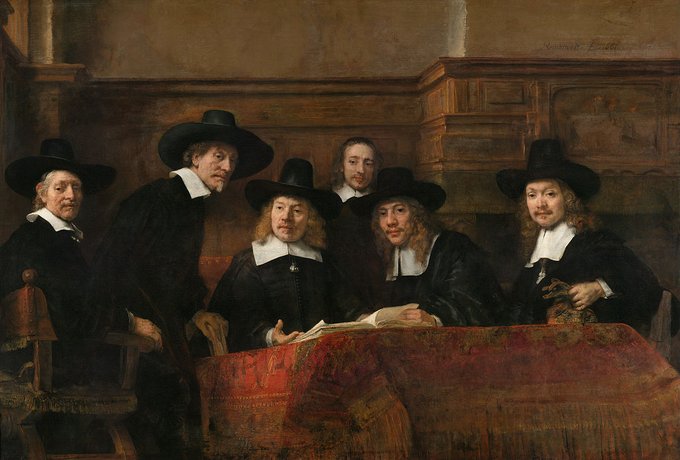
However, if one should fail, God would give unto one the law of sacrifice and provide a Saviour for one, that one might be brought back again into the presence and favour of God and partake of eternal life with God. This is the plan of redemption chosen and instituted by the Alight before human was placed on Earth. Adam and Eve were taught the law of sacrifice and were commanded to practice it by giving offerings. These included two emblems: the firstlings of the flock and the first fruits of the field. They obeyed without questioning. The effect of this law was that the best of the Earth produced, the best specimen in the flock or heard should not be sued for self, but for God. At a time in history when it was a struggle to make sure the family had food, those who sought to worship the Lord were asked to sacrifice the best part of their source of life. It was the real test of Adam and Eve’s faith, and they obeyed. “And now I speak concerning baptism. Behold, elders, priests, and teachers were baptized; and they were not baptized save they brought forth fruit meet that they were worthy of it. Neither did they receive any unto baptism save they came forth with a broken heart and a contrite spirit, and witnessed unto the church that they truly repented of all their sins. #RandolphHarris 14 of 20

“And none were received unto baptism save they took upon them the name of Christ, having a determination to serve him to the end. And after they had been received unto baptism, and were wrought upon and cleansed by the power of the Holy Ghost, they were numbered among the people of the church of Christ; and their names were taken that they might be remembered and nourished by the good word of God, to keep them in the right way, to keep them continually watchful unto prayer, relying alone upon the merits of Christ, who was the author and the finisher of their faith. And the church did meet together oft, to fast and to pray, and to speak one with another concerning the welfare of their souls. And hey did meet together oft to partake of bread and wine, in remembrance of the Lord Jesus. And they were strict to observe that there should be no iniquity among them; and whoso was found to commit iniquity, and three witnesses of the church did condemn them before the elders, and if they repented not and confessed not, their names were blotted out, and they were not numbered among the people of Christ. #RandolphHarris 15 of 20

“However, as oft as they repented and sought forgiveness, with real intent, they were forgiven. And their meetings were conducted by the church after the manner of the workings of the Spirit, and by the power of the Holy Ghost; for as the power of the Holy Ghost led them whether to preach, or to exhort, or to pray, or to supplicate, or to sing, even so it was done,” reports Moroni 6.1-9. It is especially in our families and similarly close associations that we must identify the elements of assault and withdrawal that defeat love and right relation to others. By insight and practice we must break away from them and reserve them, first by learning a calm but firm non-cooperation with those poisonous elements, and then by initiatives of goodwill and blessing in the midst of them. What we do in our meetings as Christians should be focused on enabling us to do this effectively wherever we are. Those meetings should and could be centers from which powerfully redemptive community spreads. Where to start? In various parts of the United States of America, publicly owned vehicles (police, street maintenance, schools) wear a bumper sticker that proclaims, “There is No Excuse for Domestic Violence.” It is a wonderful idea. #RandolphHarris 16 of 20

However, we need to go deeper, of course. We need to become the kind of people whom domestic violence is unthinkable and never an option. We must be transformed in such a way that our minds and bodies—our very souls—simply do not have the makeup for it. This is the work of the Christian spiritual formations. We must begin in the family. Now the slogan must be, “There is No Excuse for Assault or Withdrawal in the Home.” Do you think that would take care of intimate partner violence? Of course it would. However, the reserve is not true: merely avoiding the subject of intimate partner violence, domestic violence or assault can still leave the home a hell of cutting remarks, contempt, coldness, and withdrawal or noninvolvement. Such a hell is often found in the homes of Christians and even of Christian leaders. Frequently they seem to honestly think that such a condition is normal, and they have no knowledge of any other way. Their very theology may strengthen this tragically false outlook. If I were married, I would seek the help of my spouse in this matter. If not, then a trusted friend who is spiritually mature and not abusive. #RandolphHarris 17 of 20

I would then number my areas of need in order of importance, say: Purity, Mind, Prayer, Witness, Giving, Work, Friendship, and Leadership. Then, beginning with the first need, Purity, I would look over the suggested sub-disciplines and choose one to three things which I think would best help me improve. In doing this, I would resist the temptation to commit myself to too many disciplines. Better to succeed in a few than to assure failure by overcommitment. Perhaps, regarding the discipline of Purity I would choose to commit myself, first, to memorizing Scripture which help steel me to temptations, and second, to not watching anything sensual on TV or at the movies. Perhaps under Witness, I would make commitments to pray that God would give me someone to share Christ with and to join an interest club to meet unchurched people. After going through my life I would have perhaps twenty specific things which I could do to improve my eight weakest areas. However, before commitment to the specifics, I would look at the whole list with honest realism, asking, “Are the things which I am about to commit to really within my reach with the help of God?” #RandolphHarris 18 of 20

Perhaps, regarding the discipline of Mind, I have become so convicted that I am considering committing myself to reading the Old Testament once and the New Testament twice, plus reading The Book of Mormon. Make sure your commitments make you sweat, but also make sure that taken together they are manageable. It is better to increase your commitments as you succeed than to bite off more than you can do. Success begets success. Before setting your commitments in concrete, give yourself a week to think about them and pray over them. Seek the Holy Spirit’s guidance for other ways of personal discipline not mentioned in this essay. Ask your spouse of friend to hold you accountable for your disciplines. Even if it has to be over the phone, make sure you regularly confer and pray. Be honest about your success and failures. And be willing to take advice and make adjustments. You may have some complications, no doubt, and may not succeed at time. When this happens, wounded pride and embarrassment can make you want to take your marbles and go home. We do not like to do things which we fail. #RandolphHarris 19 of 20

However, we must realize that failure is a part of succeeding, provided we admit our failures and go at it again. Moreover, we are not under Law but grace. God is not counting our failure against us, and we are not building a treasure of merit with our success. We are simply trying to live a disciplined life which pleases our loving Father—and He understands our failures better than we understand our own children’s. When the movement in one direction has exhausted itself, there is a pause, and then a reversal directs the movement into the opposite direction. The flow of Nature follows the course indicated by the Principle of Reversion, which throws it back after a time in the opposite direction. When the point of farthest travel is reached, the forces reverse themselves. In this way, excess disciplines and even defeats itself. In this way too the Universe and all the different kinds of existence in it are kept in equilibrium. In the to-and-fro movement of human breathing, we have a kay to human development. Study it well with this assistance and you will discern a forward and backward movement, a pendulum-like swing, here too. Everything in the Universe is subject to a pendulum-like movement. It shuttles to and from with a coming-to-be and a ceasing-to-be effect. #RandolphHarris 20 of 20

Winchester Mystery House

Sarah Winchester had multiple rooms dedicated to plants and flowers. This room, her South Conservatory, contains over 200 panes of glass to allow for natural light. How would you spend a day alone in this room?

Explore the house from the comfort of your own home!
Learn More Link in bio. winchestermysteryhouse.com

A 160-room mansion built to appease the spirits who died at the hands of the Winchester Rifle 👻
🗝 winchestermysteryhouse.com

The Fateful Call Came During Dinner with All My Family as Witnesses!

You really have to experience the feeling of being with the president in the oval office. If he hears the lark singing and notes its joy, he hears also the captured prey of hawk and owl and notes their screams. If he admires the beauty of the Himalaya, he remembers the large number of living creatures buried at its upheaval. When it comes to equal liberty, one might say that those who hold this belief regard themselves as having moral or religious obligations which they must keep themselves free to honour. Of course, from the standpoint of justice as fairness (a society of free citizens holding equal basic rights and cooperating within an egalitarian economic system), these obligations are self-imposed; they are not bonds laid down by this conception of justice. The point is rather that the persons in the original position (which focuses on the concept of what is fair in terms of social cooperation for free and equal citizens) are not to view themselves as single isolated individuals. To the contrary, they assume that they have interests which they must protect as best they can and that they have ties with certain members of the next generation who will also make similar claims. #RandolphHarris 1 of 23

Once the parties consider these matters, the case for the principles of justice (reconciliation of liberty and equality that is meant to apply to the basic structure of a well-ordered society) is very much strengthened. The question of equal liberty of conscience is settled. It is one of the fixed points of our considered judgments of justice. However, precisely because of this fact it illustrates the nature of the argument for the principle of equal liberty. The reasoning in this case can be generalized to apply to other freedoms, although not always with the same force. Turning then to liberty of conscience, it seems evident that the parties must choose principles that secure the integrity of their religious and moral freedom. They do not know, of course, what their religious or moral convictions are, or what is the particular content of their moral or religious obligations as they interpret them. Indeed, they do not know that they think of themselves as having such obligations. The possibility that they do suffices for the argument, although I shall make the stronger assumption. #RandolphHarris 2 of 23

Further, the parties do not know how their religious or moral views fares in their society, whether, for example, it is in the majority or the minority. All they know is that they have obligations which they interpret in this way. The question they are to decide is which principle they should adopt to regulate the liberties of citizens in regard to their fundamental religious, moral, and philosophical interests. Now it seems that equal liberty of conscience is the only principle that the persons on the original position can acknowledge. If wishes be, they cannot take chances with their liberty by permitting the dominant religious or moral doctrine to persecute or to suppress others. Even granting (what may be questioned) that it is more probable than not that one will turn out to belong to the majority (if a majority exists), to gamble in this way would show that one did not take one’s religious or moral convictions seriously, or highly value the liberty to examine one’s beliefs. Nor on the other hand, could the parties consent to the principle of utility. If, in this case, it would lead to a greater net balance of satisfaction, their freedom would be subject to the calculus of social interests and they would be authorizing its retraction. #RandolphHarris 3 of 23

Of course, as we have seen, a utilitarian (a view that the morally right action is the action that produces the most good) may try to argue from the general facts of social life that when properly carried out the computation of advantages never justifies such limitations, at least under reasonably favourable conditions of culture. However, even if the parties were persuaded of this, they might as well guarantee their freedom straightway by adopting the principle of equal liberty. There is nothing gained by not doing so, and to the extent that the outcome of the actuarial calculation is unclear a great deal may be lost. Indeed, if we give a realistic interpretation to the general knowledge available to the parties, they are forced to reject the utilitarian principle. These considerations have all the more force in view of the complexity and vagueness of these calculations (if we can so describe them) as they are bound to be made in practice. Moreover, the initial agreement on the principle of equal liberty is final. An individual recognizing religious and more obligations regards them as binding absolutely in the sense that one cannot qualify one’s fulfillment of them for the sake of greater means for promoting one’s other interests. #RandolphHarris 4 of 23

Greater economic and social benefits are not a sufficient reason for accepting less than equal liberty. Only if there is a threat of coercion which it is unwise to resist from the standpoint of liberty itself, then it seems possible to consent to an unequal liberty. For example, the situation may be one in which a person’s religion or one’s moral view will be tolerated provided that one does not protest, whereas claiming an equal liberty will bring greater repression that cannot be effectively opposed. However, from the perspective of the original position there is no way of ascertaining the relative strength of various doctrines and so these considerations do not arise. The veil of ignorance leads to an agreement on the principle of equal liberty; and the strength of religious and moral obligations as humans interpret them seems to require that the two principles be put in serial order, at least when applied to freedom of conscience. It may be said against the principle of equal liberty that religious sects, say, cannot acknowledge any principle at all for limiting their claims on one another. #RandolphHarris 5 of 23

The duty to religious and divine law being absolute, no understanding among persons of different faiths is permissible from a religious point of view. Certainly humans have often acted as if they held this doctrine. It is unnecessary, however, to argue against it. It suffices that if any principle can be agreed to, it must be that of equal liberty. A person may indeed think that others ought to recognize the same beliefs and first principles that one does, and that by not doing so they are grievously in error and miss the way to their salvation. However, an understanding of religious obligation and of philosophical and moral first principles shows that we cannot expect others to acquiesce in an inferior liberty. Much less can we ask them to recognize us as the proper interpreter of their religious duties or moral obligations. We should now observe that these reasons for the first principle receive further support once the parties’ concern for the net generation is taken into account. Since they have a desire to obtain similar liberties for their descendants, and these liberties are also secured by the principle of equal liberty, there is no conflict of interests between generations. #RandolphHarris 6 of 23

Moreover, only if the prospects offered by some other conception, say that of utility or perfection, were so attractive that the persons in the original position must not have properly considered their descendants wen they rejected it, the next generation could object to the choice of this principle. We can express this by nothing that were a father, for example, to asset that one would accept the principle of equal liberty, a son could not object that were he (the father) to do so he would be neglecting his (the son’s) interests. The advantages of the other principles are not this great and appear in fact uncertain and conjectural. The father could reply that when the choice of principles affects the liberty of others, the decision must, if possible, seems reasonable and responsible to them once they come of age. Those who care for others must choose for the in the light of what they will want whatever else they want once they reach maturity. Therefore following the account of primary goods, the parties presume that their descendants will want their liberty protected. At this point we touch upon the principle of paternalism that is to guide decisions taken on behalf of others. #RandolphHarris 7 of 23

If they were at the age of reason and deciding rationally, we must choose for others as we have reason to believe they would choose of themselves. Trustees, guardians, and benefactors are to act in this way, but since they usually know the situation and interests of their way, but since they usually know the situation and interests of their wards and beneficiaries, they can often make accurate estimates as to what is or will be wanted. The persons in the original position, however, are prevented from knowing any more about their descendants than they do about themselves, and so in this case too they must rely upon the theory of primary goods. Thus, if he were not to guarantee the rights of his descendants by adopting the principle of equal liberty, the father can say that he would be irresponsible. From the perspective of the original position, one must assume that this is what they will come to recognize as for their good. By taking liberty of conscious as an example, this shows how justice as fairness provides strong arguments for equal liberty. The same kind of reasoning applies, I believe, in other cases, though it is not always so convincing. #RandolphHarris 8 of 23

I do not deny, however, that persuasive arguments for liberty are forthcoming on other views. As understood by Dr. Mill, the principle of utility often supports freedom. Dr. Mill defines the concept of value by reference to the interests of humans as progressive beings. By this idea he means that interest men would have and the activities they would rather pursue under conditions encouraging freedom of choice. Dr. Mill adopts, in effect, a choice criterion of value: if it is preferred by those who are capable of both and who have experience each of them under circumstances of liberty, one activity is better than another. Using this principle Dr. Mill adduces essentially thee grounds for free institutions. For one thing, they are required to develop human’s capacities and powers, to arouse strong and vigorous natures. Unless their abilities are intensely cultivated and their abilities are intensely cultivated and their natures enlivened, humans will not be able to engage in and to experience the valuable activities of which they are capable. Secondly, if human’s preferences among different activities are to be rational and informed, the institutions of liberty and the opportunity for experience which they allow are necessary, at least to some degree. #RandolphHarris 9 of 23

Human beings have no other way of knowing what things they can do and which of them are most rewarding. Thus if the pursuit of value, estimated in terms of the progressive interests of humankind, is to be rational, that is, guided by a knowledge of the human capacities and well-formed preferences, certain freedoms are indispensable. Otherwise society’s attempt to follow the principle of utility proceeds blindly. The suppression of liberty is always likely to be irrational. Even if the general capacities of humankind were known (as they are not), each person has still to find oneself, and for this freedom is a prerequisite. Finally, Dr. Mill believes that human beings prefer to live under institutions of liberty. Historical experience shows that humans desire to be free whenever they have not resigned themselves to apathy ad despair; whereas those who are free never want to abdicate their liberty. Although humans may complain of the burdens of freedom and culture, they have an overriding desire to determine how they shall live and to settle their own affairs. Thus by Dr. Mill’s choice criterion, free institutions have value in themselves as basic aspects of rationally preferred forms of life. #RandolphHarris 10 of 23

These are certainly forceful arguments and under some circumstances anyway they might justify many if not most of the equal liberties. They clearly guarantee that in favourable conditions a considerable degree of liberty is a precondition of the rational pursuit of value. However, even Dr. Mill’s contentions, as cogent as they are, will not, it seems, justify an equal liberty for all. We still need analogues of the standard utilitarian assumptions. One must suppose a certain similarity among individuals, say their equal capacity for the activities and interests of humans as progressive beings, and in addition a principle of the diminishing marginal value of basic rights when assigned to individuals. In the absence of these presumptions the advancement of human ends may be compatible with some persons’ being oppressed, or at least granted but a restricted liberty. Whenever a society sets out to maximize the sum of intrinsic value or the net balance of satisfaction of interests, it is liable to find that the denial of liberty for some is justified in the name of this single end. When founded upon teleological principles, the liberties of equal citizenship are insecure. The argument for them relies upon precarious calculations as well as controversial and uncertain premises. #RandolphHarris 11 of 23

Moreover, as if they were part of utility, nothing is gained by saying that persons are of equal intrinsic value unless this is simply a way of using the standard assumptions. That is, as if these assumptions were true, one applies this principle. Doing this certainly has the merit of recognizing that we have more confidence in the principle of equal liberty than in the truth of the premises from which a perfectionist or utilitarian view would derive it. The grounds for this confidence, according to the contract view, is that the equal liberties have a different basis altogether. They are not a way of maximizing them sum of intrinsic value or of maximizing the sum of intrinsic value or of achieving the greatest net balance of satisfaction. The notion of maximizing a sum of value by adjusting the rights of individuals does not arise. Rather, when each is fairly represented as a moral person, these rights are assigned to fulfill the principles of cooperation that citizens would acknowledge. The conception defined by these principles is not that of maximizing anything, except in the vacuous sense of best meeting the requirement of justice, all things considered. #RandolphHarris 12 of 23

Now, here in America we pledge our allegiance to a flag that represents “one nation under God, indivisible, with liberty and justice for all.” However, who has any idea of what this would mean for real life on the street and how it applies to them? And the biblical vision of human unity under God is even more so one that few people today can even imagine, much less regard as realistically possible for themselves or others. Only the message and people of Jesus Chris can give it substance. Perhaps someone with no real knowledge of Christ could imagine that kind of “communal solidarity” for a few people, carefully selected—people of “the right kind.” However, certainly not for people generally, and especially not for those imposed upon us by “accidents” of birth, and thereby of history and society. Sin structures embedded deeply in our souls and bodies have almost totally disabled us for those relationships to others that our hearts desire and that were meant by God to be—relationships that our public discourse in American idealizes without understanding what they are. #RandolphHarris 13 of 23

When two people connect, when their beings intersect as closely as the clouds and the sky on a rainy day, something is poured out of one and into the other that has power to heal the soul of its deepest wounds and restore it to health. The one who receives the experiences the joy of being healed. The one who gives knows the even greater joy of being used to heal. Something good is in the heart of each of God’s children that is more powerful than everything bad. It is there, waiting to be released, to work its magic, but it rarely happens. For people who claim the name of Christ, there are two distinct courses of life available. One is to cultivate a small heart. This by far seems the safest way to go because it minimizes the sorrows of life. If our ambition is to dodge the troubles of human existence, the formula is simple: avoid entangling relationships, do not give yourself to others, and be sure not to seriously embrace elevated and noble ideals. If we do this, we will escape a host of afflictions. This life principle bears out in other logics of life as well. Cultivated deafness and we will be spared hearing the discords of life. Cultivate blindness and we will be shielded from seeing ugliness. #RandolphHarris 14 of 23

If we want to get through life with a minimum of trouble, all we have to do is wear blinders. This is how many people, even those who profess to be Christians, get through life with such ease—they have successfully nurtured smallness of heart. The other path is to cultivate a ministering heart. Open yourself to others, and you will become susceptible to an index of sorrows scarcely imaginable to a shriveled heart. Enlarge and ennoble your ideals, and your vulnerability will increase proportionately. In the shape of converts I have seen no result. “I have not, as far as I am aware, seen anyone who even wanted to be a Christian.” Painful words. However, the depth of this pain can only be seen dimly until one turns to the opening words of his diary, written when I first arrived in Sacramento: “Several beautiful, expansive, custom homes, with green laws and three slots for a garage, maybe one is the laundry room, even a mail box for the Sacramento Bee Newspaper on the lawn. I wonder what these people in this peaceful community do for a living? O Lord, suggest by the Spirit how I should come among them, and in preparing myself to teach the life and love of Christ Jesus.” #RandolphHarris 15 of 23

“Most of the people have changed so much, I have not, as far as I am aware, seen anyone who even wanted to be a Christian.” His throbbing words ooze his life’s blood. We naturally think “poor Dallas.” However, in truth the case lay in Dallas himself, for he had a “problem”—an enlarged heart. If he had not cared, Dallas would never have penned those pathos filled lines. If he had not cultivated a ministering heart, if he had not cared. If he had listened to the counsel of his friends, he would have remained in comfortable England instead of going to that hostile land. Enlarge your heart, cultivate your heart, discipline yourself for ministry, and you will enlarge your experience of pain. This is an irrefragable spiritual axiom. No one has ever cultivated a ministering heart and lived to tell of a life of ease. Of course, the effects of these two kinds of hearts are drastically different. Little hearts, though safe and protected, never contribute anything. No one benefits from their restricted sympathies and vision. On the other hand, hearts that have embraced the disciplines of ministry—though they are vulnerable—are also the hearts which possess the most joy and leave their heart print on the World. #RandolphHarris 16 of 23

Cultivate deafness and we will never hear discord, but neither will we hear the glorious strains of a great symphony. Cultivate blindness as we will never see ugliness, but we also will never hit a home run in the bottom of the nineth with bases loaded to win the game! Never climb a mountain and you will never get banged up on the mountain’s side, but you will also never stand on an alpine peak exulting in abundant natural beauty. Years ago I experience the grand reality of this principle. My wife, Bianca, informed me that she had received a call from our local youth soccer league, with which my boys were signed up to play, notifying her there were a shortage of coaches and that some boys would have to be left out—unless some fathers (like me!) would take a team. Bianca indicated I might be interested. My response was that I was too busy and that she would have to tell them so. She replied that I could do it myself, and that a call was coming that evening. I said, “Fine, no problem.” The fateful call came during dinner with all my family as witnesses. As the caller explained the league’s plight, I found myself nodding assent and committing myself to be coach of the Las Plumas Thunderbirds Varsity Soccer. #RandolphHarris 17 of 23

The Scriptures wisely say, “If the trumpet does not sound a clear call, who will get ready for battle?” reports 1 Corinthians 14.8—and that was the initial experience of my poor Thunderbirds. I did not even know what a fullback was, the offside rule remained inscrutable for most of the season, and we got clobbered in our first few games. Humbled and desperate, I checked out soccer films and spent some evenings late in frantic reading. I also recruited a retired Scotsman who has once played professionally and persuaded another father to assist me. We discovered we had some good athletes, and we began to win. We did so well that we went to the play-offs. And it was here that I had one of the great experience in my life when I played Nick Oliver’s team in the opening round. Mr. Oliver was the founder of the league, at the time, and a perennial winner. However, miracles of miracles, we were ahead 1.0 at halftime. In the third quarter Mr. Oliver’s team tied it up, and the 1-1 tie held deep into the fourth quarter. Five minutes were left—then three—then one—thirty seconds—ten—two—and we scored just before time ran out! There is no describing the thrill of that moment. #RandolphHarris 18 of 23

Never coach soccer and you will never know the ignominy of being the league doormat, but you will never know the thrill of beating Mr. Oliver either! Cultivate a small heart and life may be smooth sailing, but you will never know the heady wind of the Holy Spirit in your sails and the exhilaration of being used by God. Cultivate a small heart and you will never be the heroic likes of Dallas Brunton, and you will certainly never have the heart God desires for you. We only have to glance at a newspaper to be reminded that we live in a time when there is an urgent need for enlarged, caring hearts which are disciplined for ministry. Some of you are experiencing the elevating, frightening stirrings which accompany the enlarging of the heart, and you need to be encouraged to cultivate your expanding sympathies and broadening horizons. If so, the Biblical account we are about to consider—the story of Jesus’ encounter with the woman at the well—is for you because it brilliantly showcases Jesus’ own discipline of ministry, one we are to imitate as His followers. #RandolphHarris 19 of 23

God wills His own goodness necessarily, even as we will our own happiness necessarily, and as any other faculty has necessary, and as any other faculty has necessary relation to its proper and principal object, for instance the sight to colour, since it tends to it by its own nature. However, God wills things apart from Himself in so far as they are ordered to His own goodness as their end. Now in willing an end we do not necessarily will things that conduce to it, unless they are such that the end cannot be attained without them; as, we will take food to preserve life, or to take ship in order to cross the sea. However, we do not necessarily will things without which the end is attainable, such as a horse for a journey which we can take on foot, for we can make the journey without one. The same applies to other means. Hence, since the goodness of God is perfect, and can exist without other things inasmuch as no perfection can accrue to Him from them, it follows that His willing things apart from Himself is not absolutely necessary. Yet it can be necessary by supposition, for supposing that God wills a thing, then He is unable not to will it, as His will cannot change. #RandolphHarris 20 of 23

God wills from eternity whatever He wills, it does not follow that He wills it necessarily; except by supposition. God of Liberty, we pray to you today. Please grant freedom to all your children, no matter their country. We take time today to remember the examples of freedom we have seen in our time. We think of the citizens of America, who are locked in their homes and being forced out of work and out of business, and unable to pay their rents and mortgages and car notes, unable to buy food and pay the electricity bill, kids who are unable to attend school, college, and medical school and wish for them to experience a Christmas blessing and have a financial miracle. We remember how people have burned the America flag, that stands for freedom, but refuse to leave the country, as people have been deployed to fight for their freedom. And remember those who struggled and failed, such as the martyrs in America in 2020, who have demanded freedom and equality. We remember those who lost their lives on September 9, 2001 in the towers, on the planes, and on the streets or in their homes, and the first responders who lost their lives that day and due to subsequent injuries. #RandolphHarris 21 of 23

Please, Lord, give us the courage to earn our freedom and to regain it as it has been stolen. We ask this of you, Who are the source of all freedom. And may the tears from Heaven rain down on us, soaking the Earth so we have a pleasant spring and summer. American, your beacon of hope shines undimmed by the years. If our eyes have lost sight of you, it is our fault and not yours. We have turned our vision away from being “One Nation Under God with Liberty and Justice for All,” including all Americans, and we are missing the heights from which your streets paved with gold shine, and seen only that which divides us. Be our beacon, Father God of our nation, and show us the way again. Father of the Peoples, please unite your scattered children unto one tribe, one people, one country. “The words of Christ, which he spake unto his disciples, the twelve whom he had chosen, as he laid his hands upon them—and he called them by name, in mighty prayer; and after he have done this ye shall have power that to one upon whom ye shall lay your hands, ye shall give the Holy Ghost; and in my name shall ye give it, for thus do mine apostles. #RandolphHarris 22 of 23

“Now Christ spake these words unto them at the time of his first appearing; and the multitude heard it not, but the disciples heard it; and on as many as they laid their hands, fell the Holy Ghost,” reports Moroni 2.1-3. Revere the Lord, all that inhabit the Earth; the World is firmly established that it cannot be moved. Let the Heavens be glad, and the Earth rejoice; let them declare among the nations: “The Lord reigneth.” Let the sea roar and all within it give praise; let the field, and all within it exult. Then shall the trees of the forest sing before the Lord, as He cometh to judge the Earth. O give thanks unto the Lord, for He is good; for His lovingkindness endureth forever. And say: “Save us, O God of our salvation, please gather us and deliver us from among the nations, that we may give thanks unto Thy holy name, and find honour in praising Thee.” Blessed be the Lord, the God of Israel, from everlasting even to everlasting. And all the people said: “Amen,” and praised the Lord. Exalt the Lord our God, and worship at His footstool; holy is He. Exalt the Lord our God, and worship at His holy mountain; for the Lord our God is holy. #RandolphHarris 23 of 23

Cresleigh Homes

Holiday feasts don’t stand a chance in your #Riverside Residence 1 kitchen. 😎 Enjoy a center work island, large walk-in pantry, and designer selected quartz or granite countertops.

Riverside is one of the most highly anticipated communities to premier in the Sacramento region. The community has resort-style amenities with a strong connection to the beautiful natural environment. https://cresleigh.com/cresleigh-riverside-at-plumas-ranch/residence-1/

The luxury service and quality you expect from Cresleigh.


By what Magic Could this be Done and One’s Peace Remain, One’s Sanity Kept?

The basic fact of today is the tremendous pace of change in human life. If an artist, though one’s disclosed experience, induces a viewer to imagine new possibilities of action; if one broadens and deepens a human’s understanding of some aspect of the World; if one alters a human’s experience and concept of oneself—one is thereby mediating growth of the other. This change in the other will mediate changed behavior—as, voting behaviour, interpersonal behaviour. This all produces consequences in the social order. If an artist can be invalidated, by being regarded as a mad-person, then one’s message may be kept from the World. It likely takes courage to be an artist. One’s beneficent spiritual influence may profoundly affect others to the point of revolutionizing their attitude of life, yet one may be unaware of both the influence and its effect! The part of one’s mind which knows what is happening is not the true source of the grace; this flows through one and is not created by one. Let us not ascribe to the ordinary human of self what belongs to God. The mystical phenomena, the “inner” experiences engendered by an adept, are done though one, not by one. #RandolphHarris 1 of 21

Help comes, inspiration is derived, peace is felt, and the support of moral fortitude is obtained without personal intervention by the self-actualized or without even one’s personal knowledge of the matter. It is automatic, a response from grace to faith. The catalyst which by its presence enables chemical elements to change their forms does not itself change. In the same way the illuminate may be used by higher forces to affect, influence, or even change others without any active personal move on one’s part to being about this result. One may not even feel, see, or know what is happening, yet one has started it! One is an agent for the work of Providence, a carrier of its messages and forces. At times one is used with one’s conscious knowledge and acceptance but at other times without them. In a way, artists, at least in America as Henry Miller experienced and described it, need a certain measure of protection, if they are to flourish. It is not too farfetched to say that artists experience the World vicariously for the philistine. Just as people with strangled imaginations let the comics, movies, social media, and TV do their imagination for them, so an artist whose work is allocated to the museum and art gallery is doing imagining for other people. People go for a titivating peek now and then, only to return to sameness. #RandolphHarris 2 of 21

If producing and surviving artists are protected, or learn to protect themselves so they can survive and get on with their work, it is also true that the public is somehow shielded from the possible impact of an artist’s work on its consciousness. Public education is such as to insure that poetry, painting, drama, and innovations in the novel and dancing will not be sampled. They are the fare of oddballs, snobs, the avant-garde, who are not to be taken seriously by practical humans, and good fellows who stay busy, as they ought. If an artist’s work does see the light of day, it most assuredly reaches the consciousness of only the few. The layperson, trained and brainwashed to be suspicious of any innovations in one’s experience, feels comfortable only with the cliché. One’s patronage of the arts is limited to TV, Sports Illustrated pinups, Instagram, movies, popular tunes, and the poetry page of the Saturday Evening Post, which is not a magazine calculated to awaken people to enlightenment about their socioeconomic system. Take any art form, and ask is I designed to enlarge and stretch human consciousness, or does it function so as to keep people with their experiencing modes and habits confirmed. #RandolphHarris 3 of 21

Look at architecture, automobiles, matchbook covers, the sounds on radio and music streaming—the media for expression. The artists’ consciousness is separated from all these possible sources of encounter with one’s fellow human, the philistine who is asleep. Much occult phenomena of the adept is performed without one’s conscious participation and above one’s personal knowledge, as when various people claim to be aware of receiving help from one which one as no recollection of having given. It is God which is really giving the help, their contact with one being merely like the switch which turns on a light. However, a switch is not the same as the electric current which, in this simile, represents God. Yet a switch is not less necessary in its own place. If one does not use it, a person may grope in vain around a dark room and not find what one is seeking there. The contact with an adept turns some of the power that the adept is oneself in touch with into the disciple’s direction. The flick of a switch is done in a moment, whereas the current of light may flow into the light bulb for many hours. The contact with an adept takes a moment, but the spiritual current may emanate from one for many years, even for a lifetime. #RandolphHarris 4 of 21

Just as in the ordinary person’s deep sleep no ego is working, so this is the perfect and highest state because no ego is working here either. It reproduces deep sleep by eliminating egotism but transcends deep sleep by retaining consciousness. Thus it brings the benefit without the spiritual blankness of deep sleep into the waking state. If it be said, in criticism of one’s unawareness of so much occult phenomena manifesting in one’s name, that this lessens one’s mental stature, one must answer that it also preserves one’s mental sanity. How, with a thousand devotees, could one be attending to all of them at one and the same time? By what magic could this be done and one’s peace remain, one’s sanity be kept? God alone knows all things in a mysterious everywhereness and everywhereness. How could one be as God and yet remain as human, much more deal with other humans? For all occult phenomena belong to the World of finite form, time and space, not to the World of infinite spirit, to illusion and not to reality And, if, in further criticism, it be said that one’s unawareness makes one seem weaker than an adept should be, one can only answer humbly that because one has surrendered one’s personal rights one is weaker and more helpless than the most ordinary human, that one’s situation was tersely described in Jesus’ confession, “I have no power in myself, but only from the Father.” #RandolphHarris 5 of 21

The strain of these hundreds of questioning, eager, demanding, struggling, and perhaps suffering minds constantly directed toward one’s own would be so tremendous if one had to bear it in the ordinary way that one’s own mind would creak under it. One is given n rest from one’s task. However, one’s extraordinary attainment provides one’s protection. They reach one mostly through the subconscious self, which automatically takes care of them and leaves one free of the burden. The message or the manifestation may, on the surface, appear to come directly from the master. This may be quite true n some bases but it could not possibly be true in all cases. If it were, then one would have to look in a dozen different direction every minute of every day. However, the fact is that one helps most people with being consciously and directly aware of them. There is magical power in the thoughts of such a human. The mind, the being, the eh in one being mastered, many other things become mastered as a consequence. Do God’s will as if it were thy will, that He may do thy will as if it were His will. #RandolphHarris 6 of 21

Annul thy will before God’s will, that He may annul the will of others before thy will. Jesus put in somewhat differently: “Seek ye first the kingdom of Heaven and all these things shall be added you. Ask whatsoever ye will and it shall be done unto you” Those religionists who take the latter cannot properly be said of persons who have not attained sufficient mastery of self, who give nothing from within themselves except wishes and the words which clothe them. One may well be unaware how subtly the force is working within one until one begins to notice its effects on others, as they themselves draw attention to it. Such is the wonderful infinite of the soul that the human who succeeds in identifying one’s everyday consciousness with it, succeeds also in making one’s influence and inspiration felt in any part of the World where there is someone who puts faith in one and gives devotion to one. One’s bodily presence of visitation is not essential. The soul is one’s real self and operates on subconscious levels. Whoever recognizes this truth and humbly, harmoniously, places oneself in a passive receptive attitude towards the spiritual adept, find a source of blessed help outside one’s own limited powers. #RandolphHarris 7 of 21

One takes no credit to oneself for these things. One feels one is only an instrument. All that one can do is to invoke the higher power, and it is this which makes these things possible. It is not really any power of one’s own that does it. However, quite often one does not even have to invoke the power—and yet these things will happen all the same. Nevertheless, one’s followers are not attributing power to one which one does not possess. For these happenings, after all, occur only as the result of the contact with one. One knows that in some mysterious way one is the link between the power and the event. Although the master may not directly transmit the message or prompt the manifestation, one does exercise an influence which indirectly cases this to happen and indicated the direction in which it is to happen. The power to inspire or comfort others can operate without one’s personal awareness and even without one’s own consent. Sometimes it will manifest itself merely as if one were present and close, to be felt but not seen mentally. Sometimes, a like form of one’s body or face will appear to the mind’s eye along with this same feeling. Those whom one never meets but who direct their thought and faith towards one, receive inspiration automatically. #RandolphHarris 8 of 21

The impact of one’s personality helps those whom one does meet, if they are sympathetic, but often without one’s even being aware of it. It is not necessary for one to preach and sermonize others. Sometimes in a purely secret and unnoticed way, sometimes in a half-conscious way, those who cross one’s path temporarily and those who associate with one permanently fell that the good id being strengthened in them. This is one’s silent service. Just by being oneself, without preaching, without trying, the self-actualized may awaken in others whose lives touch one’s a longing for the higher life. One has a peculiar power which acts upon the subconscious minds of those who have any contact or association with one. I am reminded here of an ingenious plan outlined by Alexander Trocchi, a British novelist and poet. He has described “Project Sigma, a revolutionary proposal for an invisible insurrection of a million minds.” He speaks, not of a political revolution, but f a cultural coup de monde. “The cultural revolt must seize the grids of expression and the power houses of the mind,” as Trotsky seized the railway station and powerhouses while the police guarded the Kremlin. #RandolphHarris 9 of 21

Trocchi continues: “Intelligence must become self-conscious, realize its own power and dare to exercise it. What is to be seized is not an arsenal nor a capital city, but ourselves (the million or so creative, artistic consciousness which presently are in contact with Every human only through the mediation and monitoring of middle-business people, politicians, establishment people who insure that only those products of consciousness reach Every human after they have first been assessed for money-earning power, and political asepsis). We reject the ideal of a frontal attack. Mind cannot withstand brute force in open battle. It is rather a question of perceiving what are the forces that are at work in the World and out of whose interaction must come to be; and by a kind of mental ju-jitsu that is ours by virtue of intelligence, modifying, correcting, polluting, deflecting, corrupting, eroding, outflanking, inspiring, what we might call the invisible insurrection. It will come on the mass of humans, if it comes at all, not as something they voted for or fought for, but like the changing season. Contemporary humans expect to be entertained; art is something of which the majority seldom things, expect derisively. This sorry state of affairs is unconsciously sanctioned (even fostered, I add) by the stubborn philistinism of cultural institutions. #RandolphHarris 10 of 21

“Museums have approximately the same hours of business as churches, the same sanctimonious orders and silences, and a snobbish presumption in direct spiritual opposition to the vital people whose works are closeted there. What have those silent corridors to do with Rembrant, and the no smoking signs to do with Van Gogh? Art can have no existential significance for civilization that draws a line between life and art and collects artifacts like ancestral bones for reverence. Art must inform the living; we envisage a situation in which life is continually renewed (I would say consciousness is continually renewed and expanded) by art, a situation imaginatively and passionately constructed to inspire each individual to respond creatively. We envisage it, but it is we, now, who must create it. For it does not exist.” Trocchi points out that the political-economic structure of Western society is such that the gears of creative intelligence mesh with those of power such that creative intelligence is prohibited from initiating anything, and it acts only at the behest of vested interests that are antipathetic toward it. Trocchi suggest that the creative intelligences must have control of their means of expression, by eliminating the brokers. #RandolphHarris 11 of 21

How to being?—asks Torcchi. At a chosen moment in a vacant country house not far from London, he proposes to foment a kind of cultural “jam session.” Out of this will evolve the prototype of a spontaneous university. The building will be large enough for a pilot group of astronauts of inner space to situation itself, the entire site to allow for spontaneous architecture and eventual town planning. The adventure, in a capitalist society, must pay. Trocchi envisions an agency to handle all the work of individuals associated with the university. Art is fantastically profitable, but it is not the creators who reap the benefits. An agency founded by the creators and operated by highly paid professional could harvest new talent long before professional agencies were aware it existed. He envisions an international organization with branch universities all over the World, near every capital city, autonomous, unpolitical, economically independent. Resident professors will be creators; staff and students international. Membership in one branch entitles one to membership in others, travel being encouraged. #RandolphHarris 12 of 21

The object of each branch is to supercharge the cultural life of each capital city as it promotes cultural exchange internationally, and function as a nonspecialized experimental school and creative workshop. Each branch serves as the nucleus of an experimental town to which people will be attracted; and after a stay, they will derive a renewed and infectious sense of life. The economic structure would come from commissions on sales of original work; money from patents and applications; retail income from a museum restaurant, music performances, et cetera; and fees and gifts and subsidies. Trocchi concludes: “The cultural possibilities of this movement are immense, and time is ripe for it. The World is awfully near to the brink of disaster. Scientist, artist, teachers, creative people of good will everywhere are in suspense. Waiting. Remembering that it is our kind of expression, we should have no difficulty in recognizing the spontaneous university as the possible detonator of the invisible insurrection.” Alexander Trocchi’s vision and the beginnings at an action-blueprint seem to me to be prophetic, and even practical. Certainly, if my analysis of the phenomenology of being-an-artist is sound, there must be implications for growth of persons exposed to art, and repercussions on the structure of society. #RandolphHarris 13 of 21

I think we need to produce and live in a spiritual and professional World, where other people and the material surroundings have a consciousness-expanding effect upon us, awakening the artist in all of us, unifying our heard with our hearts and bodies and our imaginations with our feelings and intellect, and bringing an artistic dimension into everything we do and are. The alternative is to be a turned-off, useful tool, or an impotent, ignored or martyred creator whose creations collect dust. The heart (will, spirit) is precisely what God observes and addresses in human beings. He cares little or nothing for outward show. He responds to the heart because it is, above all, who we are: who we choose and have chosen to be. What God wants of us can only come from there. He respects the centrality of our will and will not override it. God seeks Godly character in us and for us, to fulfill the eternal destiny He has in mind for us. However, on the other hand, God is sensitive to the slightest move of the heart toward Him. This is the witness of both the Bible and of life. It does not matter whether you are “religious” or not (“Jew” or “Greek”), for “The same one is Lord of all, abounding in riches for all who call upon Him; for ‘Whoever will call upon the nae of the LORD will be saved,’” reports Romans 10.12-13. #RandolphHarris 14 of 21

Multitudes of people have come to a full knowledge of God because in a moment of complete hopelessness they prayed “The Atheist’s Prayer” or something like it: “O God, if there is a God, save my soul if I have a soul.” When that is the true cry of the heart, of the inmost spirit of the individual, who has no longer any hope other than God, God hears and responds without fail. It is as if he has a “heart monitor” installed in every person. And when the heart truly reaches out to God as God, no longer looking to itself or others, he responds with the gift f “life from above.” In fact, God is constantly looking for people who will worship him “in spirit and in truth.” What does it mean? It means people who have freehearted and wholehearted admiration, respect, and commitment to God as the highest being of all. They never try to conceal anything from Him and always reply completely on Him. God is actively seeking such people, whoever they may turn out to be. God is spirit, we recall, and nothing is hidden from him. #RandolphHarris 15 of 21

So those who worship God must worship Him and spirit and therefor in truth. “Yet time is coming and has now come when the true worshipers will worship the Father in spirit and truth, for they are the kind of worshippers the Father seeks. God is spirit, and His worshippers must worship in spirit and in truth,” reports John 4.23-24. At the level of the human spirit, nothing can be hidden. Lying always depends upon the use of our body. “And verily I say unto you, I give unto you a sign, that ye may know the time when these things shall be about to take place—that I shall gather in, from their long dispersion, my people, O house of Israel, and shall establish again among them my Zion: and behold, that is the thing which I will give unto you for a sign—for verily I say unto you that when these things which I declare unto you, and which I shall declare unto you hereafter of myself, and by the power of the Holy Ghost which shall be given unto you of the Father, shall be made known unto the Gentiles that they may know concerning this people who are a remnant of the hose of Jacob, and concerning this my people who shall be scattered by them; verily, verily, I say unto you, when these things shall be made known unto them of the Father, and shall come forth of the Father, from them unto you; #RandolphHarris 16 of 21

“For it is wisdom in the Father that they should be established in this land, and be set up as a free people by the power of the Father, that these things might come forth from them unto a remnant of your seed, that the covenant of the Father may be fulfilled which he hath covenanted with his people, O house of Israel; therefore, when these words and the works which shall be wrought among you hereafter shall come forth from the Gentiles, unto your seed which shall dwindle in unbelief because of the iniquity; for thus it behooveth the Father that it should come forth from the Gentiles, that he may show forth his power unto the Gentiles, for this cause that the Gentiles, if they will not harden their hearts, that they may repent and come unto me and be baptized in my name and know of the true points of my doctrine, that they may be numbered among my people, O house of Israel; and when these things come to pass that they seed shall be a sign unto them, that they may know that the work of the Father hath already commenced unto the fulfilling of the covenant which he hath made unto the people who are of the house of Israel. And when that day shall come, it shall come to pass that kings shall shut their mouths; for that which had not been told them shall they see; and that which they had not heard shall they consider. #RandolphHarris 17 of 21

“For in that day, for my sake shall the Father work a work, which shall be a great and a marvelous work among them those who will not believe it, although a human shall declare it unto them. However, behold, the life of my servant shall be in my hand; therefore they shall not hurt one, although one shall be marred because of them. Yet will heal one, for I will show unto them that my wisdom is greater than the cunning of the devil. Therefore it shall come to pass that whosoever will not believe in my words, who am Jesus Christ, which the Father shall cause one to bring forth unto the Gentiles, and shall give unto him power that he shall bring them forth unto the Gentiles, (it shall be done even as Moses said) they shall be cut off from among my people who are of the covenant. And my people who are a remnant of Jacob shall be among the Gentiles, yea, in the midst of them as a lion among the beasts of the forest, as a young lion among the flocks of sheep, who, if he go through both treadeth down and teareth in pieces, and none can deliver. Their hand shall be lifted up upon their adversaries, and all their enemies shall be cut off. #RandolphHarris 18 of 21

“And I will cut off the cities of thy land, and throw down all thy strongholds; and I will cut off witchcrafts out of thy land, and thou shalt have no more soothsayers; thy graven images I will also cut off, and thy standing images out of the midst of thee, and thou shalt no more worship the works of thy hands; and I will pluck up thy groves out of the midst of thee; so will I destroy thy cities. And it shall come to pass that all lyings, and deceivings, and envyings, and strifes, prestcrafts, and whoredomes, shall be done away. For it shall come to pass, saith the Father, that at that say whosoever will not repent and come unto my Beloved Son, them will I cut off from among my people, O house of Israel; and I will execute vengeance and fury upon them, even as upon the heathen, such as they have not heard. However, if they will repent and hearken unto my words, and harden not their hearts, I will establish my church among them, and they shall come in unto the covenant and be numbered among this the remnant of Jacob, unto whom I have given this land and for their inheritance; and they shall assist my people, the remnant of Jacob, and also as many of the house of Israel as shall come, that they may build a city, which shall be called the New Jerusalem. #RandolphHarris 19 of 21

“And then shall they assist my people that they may be gathered in, who are scattered upon all the face of the land, in unto the New Jerusalem. And then shall the power of Heaven come down among them; and I also will be in the midst. And then shall the work of the Father commence at that day, even when this gospel shall be preached among the remnant of this people. Verily I say unto you, at that day shall the work of the Father commence among all the dispersed of my people, yea, even the tribes which have been lost, which the Father hath led away out of Jerusalem. Yea, the work shall commence among all the dispersed of my people, with the Father to prepare the way whereby they may come unto me, that they may call on the Father in my name. Yea, and then shall the work commence, with the Father among all the nations in preparing the way whereby his people may be gathered home to the land of their inheritance. And they shall go out from all nations; and they shall not go out in haste, nor go by flight, for I will go before them, saith the Father, and I will be their rearward,” reports 3 Nephi 21.1-29. You who guide travelers, please slide me through traffic. You who grant patience, please help me calmly wait. #RandolphHarris 20 of 21

The ship reaches its haven. The wagon reaches its home. Today’s journey is over and all can rest. Those who have guided the Sun in its journey: Thank you. May you guide me as well. Great blackness, promiser of mysteries, bringer of dreams: greeting to you, Father Night, as you cast your blanket over the World. “I am about to fulfill the precept of the counting of the Omer, as it is written in the Law: Ye shall count unto you from the morrow after the day of rest, from the day that ye brought an omer of grain as a wave-offering, seven complete weeks they shall be; until the morrow of the seventh week shall ye number fifty days,” reports Leviticus 23.15. Blessed art Thou, O Lord our God Ruler of the Universe, who hast sanctified us by Thy precepts and hast enjoined upon us the counting of the Omer. This is the first day of the mer. This is the sixth day of the Omer. This is the seventh day, making one week of the Omer. May the All-merciful restore worship in the Temple on its ancient site. May it be Thy will, O Lord our God and God of our fathers, to grant our portion in Thy Torah and may the Temple be rebuilt in our day. There will serve Thee with awe as in the days of old. #RandolphHarris 21 of 21

Cresleigh Homes

The holidays are on the horizon, so catch us at the HUB Apts Fitness Center to prepare for all those side dishes. 😉😋

Find your modern escape in this safe, luxury community. It is a place for wellness, peace and quiet, energy, relaxation, and creativity, where warm and welcoming spaces bring a level of refinement reflective of the rich history of Folsom, California USA. https://sites.google.com/fpimgt.com/hubvirtualtours/home

 Randolph Harris II International Institute