
Home » Himalayas (Page 6)
Category Archives: Himalayas

Los Angeles Will be Two and a Half Hours from Tokyo

Given that burglars are disproportionately young, poor, city-dweller, they tend to have frequent contact with other habitual offenders. There are various structures and processes that go along with the “stolen property system”—the underground market through which in-demand goods are stolen, housed, marketed, and resold on the street of America. Burglary is a crime that is marked by varied levels of social organization. Only on rare occasions do we find burglars who work as loners or within formal organizations. More often, burglars will operate as colleagues—the offender commits the crime along but relies on other members of the criminal subculture to supply him or her with inside information or to assist in converting stolen property into cash. Burglars who take the situation to the next level and enlist help in the actual break-in follow a more peerlike existence. Here, loose partnerships are maintained and invoked when a burglary opportunity presents itself. A primitive example of the peer model would be two or three drug users who randomly stumble upon an unlocked home or unsupervised business and decide to work together to take it down. In some cases, burglary offenders will align themselves in a teamlike format. These offenders invoke a division of labor with each participant serving an owned predetermined role and duties. One person might be assigned to lookout/driver role. Another might serve as the entry specialist, defeating any lock and alarms that are confronted. Still another person can take on the “muscle” role, responsible for doing the heavy lifting. #RandolphHarris 1 of 16

Socialization scripts play an important part in how and why burglars commit their crimes. Interview-based research suggests that novice or occasional burglars often rely on the tutelage of more seasoned offenders as a way of learning the proverbial ropes of burglary. Novices receive advice and instructions on issues such as target selection, how to foster informants, how to defeat burglary countermeasures, and how to best convert stolen goods into cash. This socialization generally takes shape as informal street corner conversations or jailhouse bravado. On paper, burglary appears to receive serious treatment from the criminal justice system. The Model Penal Code classifies burglary as a felony in the third degree. In most jurisdictions, such as offense is subject to 1 to 5 years in prison. If the burglar is armed or threatens or inflicts bodily harm on another while unlawfully within a dwelling, that individual might see the charges elevated to second degree felony. In practice, however, burglary receives mixed levels of formal response from the various components of the criminal justice system. First, let us consider the response of law enforcement authorities. Police agencies were able to effect an arrest for only 13 percent of the nearly 2.1 million burglaries that were reported to them in 2022. No other form of index crime yields such a dismal clearance rate. Some of this slippage can be attributed to the covert nature of the crime—police often have no witnesses and minimal clues to guide the investigation. However, these low clearance rates are also impacted by the fact that many police officers and police agencies afford a low priority to burglary cases. #RandolphHarris 2 of 16

Court data reveal a different trend in terms of the veracity with which burglary cases are adjudicated. U.S.A. courts produced nearly 90,000 felony burglary cases in 2022. This figure represents 10 percent of all felony convictions that year. In fact, 68 percent of the burglary cases that were tried resulted in a conviction for the same offense and only 24 percent avoided some sort of conviction. The researchers found that burglary defendants do not receive a reprieve from the courts when it comes time for sentencing. A full 74 percent of the convicted burglars were sentenced to time behind bars. This rate was surpassed only by murder, robbery, drug trafficking, and driving-related offenses. While the median prison sentence for a convicted burglar was 41 months, nearly 10 percent received sentences in excess of 10 years. Our correctional system does not appear to be particularly forgiving to persons who are convicted of burglary. On average, burglary offenders can expect to serve almost half of their sentence—roughly two years. These time-served figures are on par with those of other property offenses (theft, fraud, and motor vehicle theft) but somewhat lower than that observed for violent (54 percent) and weapon-related offenses (60 percent). Accounts from known burglars clearly suggest that informal social control efforts go as long way to deter and/or displace burglary activity. A minimal amount of vigilance on the part of homeowners can go a long way. Measures designed to combat the relatively small population of high incidence “professional” burglars tends to overemphasize the skill and determination of most burglars. #RandolphHarris 3 of 16

Burglaries are expensive, complex, and require long term commitment at many levels. In fact, most burglars are young, unskilled, and opportunistic. This suggests that emphasis should be directed at such factors as surveillability, occupancy, and accessibility. More specifically, dogs, good locks, and alarm systems deter most burglars. Community-level informal social control can also play an important role in burglary prevention. When it comes to surveillability cues, burglars tend to avoid neighborhoods with a lot of foot traffic or active neighborhood watches. This implies that observant or even nosy neighbors can have a measurable impact on burglary. However, these types of collective efforts are difficult to enact and maintain in the areas that burglars most prefer—urban neighborhoods. If nothing else, tenants of “crime prevention through environmental design” should be considered at a neighborhood level. Simple environmental characteristics such as cul-de-sac street design, high levels of lightening, and well pruned landscaping that minimizes unobservable entry and exit points can have a significant impact on burglary victimization levels in a given community. The aforementioned informal social control efforts represent examples of target hardening strategies aimed at deterring would-be burglars from victimizing a given house or displacing offenders from a given community. Also, measures should be designed that aim to undermine offenders’ strong attachment to street culture. Expanded employment opportunities are one possible, but foreboding avenue to lure offenders out of street life. #RandolphHarris 4 of 16

There exist even more simple and realistic measures that might effect change in this area. For example, a coordinated burglary prevention program that was implemented in a midsize U.S.A. city during the early 1980s. Community activism and community involvement (id est, block meetings, neighborhood cleanups, and raised awareness of vulnerabilities and potential offenders) showed promise for reducing burglary. If community members care about the condition of their neighborhood and are willing to take steps to clean it up and exercise vigilance over problem people and places, there is hope for reducing burglary and other forms of street crime. Most crime occurs during the nighttime. A close examination of NCVS and UCR data suggests that 50 percent to 60 percent of all residential burglaries go unreported. The figure reported here was derived by adding the NCVS data on residential burglaries to an adjusted estimate of nonresidential burglaries that were reported in the UCR—one that factors a 60 percent nonreporting rate. These data must be viewed with caution because 50 to 60 percent of all burglaries go unreported to police and only 14 percent of these lead to arrest. Over time, the crime of burglary has slowly slipped down the list of crime fighting priorities. At present, less than half of all burglaries get reported to police, and only 13 percent of those result in an arrest. What kinds of social and legal factors have contributed to this present level of empathy when it comes to the formal and informal society control of burglary? #RandolphHarris 5 of 16

Adjudication data suggest that accused burglars face a high certainty of being convicted and sentenced to prison. This should send a message to police that burglary is a high priority for our nation’s prosecutors and judges. Still, burglary investigation and arrest efforts remain lukewarm at best. What kinds of factors contribute to police officers’ attitudes and behaviors regarding burglary patrol and enforcement? Considerable evidence suggests that burglars refine strategies and cues that help them identify soft and potentially lucrative targets. Does this mean that burglars are more rational and planful than other types of criminals? The Lord has declared that “no unclean thing can inherit the kingdom of Heaven,” reports Alma 11.37. Our sins make us unclean—unworthy to return and dwell in the presence of our Heavenly Father. They also bring anguish to our soul in this life. Repentance is sometimes a painful process, but it leads to forgiveness and lasting peace. The power of sin is great. To become free from it, we must turn to your Heavenly Father, pray in faith, and act as He asks us to. The Holy Spirit should never become the center and object of thought and worship, place which He Himself does not desire, and which it is not the purpose of the Father in Heaven that He should have or occupy. “He shall not speak from Himself,” reports John 16.13, said that Lod Jesus before Calvary, as He foretold the Spirit’s coming at Pentecost. He would act as Teacher (John 14.26), but teaching the words of Another, not to Himself (John 15.26); He would only glorify Another, not His own; He would bear witness to Another, not Himself (John 16.14); He would only speak what was given Him to spear by Another (John 16.13). #RandolphHarris 6 of 16

The Spirit’s entire work would be to lead souls into union with the Son and give proper knowledge of the Father in Heaven, while He Himself directed and worked in the background. If a man who is untaught in the scriptural statements about the work of the Triune God makes “obeying the Spirit” his supreme purpose, the deceiver will aim to counterfeit the guidance of the Spirit, and even the presence of the Spirit Himself. It is just here that the ignorance of the seeker about the spiritual Word now opened to one, the working of evil powers in that realm, and the conditions upon which God works in and through one, gives the enemy his opportunity. It becomes the time of greatest peril for anyone unless one is instructed and prepared by the Lord, as the disciples were for three whole years. The danger lies in the area of supernatural “guidance,” for one must know the conditions of cooperation with the Holy Spirit in order to discern the cooperation with the Holy Spirit in order to discern the will of God and be able to recognize counterfeit manifestations. The “discerning of spirits” is required to detect the workings of the false angel of light, for he is able to bring about counterfeit gifts of prophecy, tongues, healing, and other spiritual experiences connected with the work of the Holy Ghost. Those who have their eyes opened to the opposing forces of the metaphysical realm understand that very few believers can guarantee that they are obeying God and God only, in directly supernatural guidance, because there are so many factors liable to intervene, such as the believer’s own mind, spirit, or will and the deceptive intrusion of the powers of darkness. #RandolphHarris 7 of 16

Knowledge is essential here. Scripture teaches that there is a God-given gift of “discerning of spirits” (1 Cor. 12.10) which enables one to detect that an unwelcome spirit is at work, but there is also a test of spirits which is doctrinal (1 John 4.1-6). In the former, a believer can discern in his spirit that lying spirits are at work in a meeting, or in a person, but one may not have the understanding needed for testing the doctrines being set forth by the teacher. One needs a level of knowledge in both cases: knowledge to read one’s spirit with assurance in the face of all contrary appearances, that the supernatural workings are not “of God,” and knowledge to detect the subtlety of “teachings” bearing certain infallible indications that they emanate from the pit, even while appearing to be from God. As to personal obedience to God, the believer can detect whether or not one is obeying God in some “command” by judging its fruits, and by being aware of the character of God—such as the truth that God has always a purpose in His commands, and He will give no command out of harmony with His character and Word. Often times people wait for something to happen, for some sure way to nurture oneself, to live from within. Music, art, poetry, hot baths, savory foods, wind, rain—nothing affects them. In the past, within days after a solitary retreat, many had found solace and strength in their loneliness. They had always found a way, at least a beginning that would lead to action and to life with others. #RandolphHarris 8 of 16

However, it is impossible to find what one is looking for, and one is still on a lonely journey, waiting from a spark from within. Because some people feel empty and eroded inside, they avoid all significant communication. More than anything else the interpersonal aspects of living exhaust some and move them to withdraw from real meetings with others. This leaves an individual certain that one does not want to struggle anymore. Doubt, risk and anxiety—inherent elements of faith—can be overcome only by another of its elements, courage. Courage is an ontological concept, the self-affirmation of being in spite of non-being. Faith is the experience of the holy; it is the state of being grasped by the power of being-itself. From this experience flows the power to assert oneself in the face of anxiety. Faith is participation in the object of faith, and yet is the separation from it. In spite of separation, courage expresses participation in the power of being and meaning. This in spite of element is the courage that takes all doubt, risk, and anxiety into itself and overcomes them without removing them. Faith, then, is the basis of courage, and courage is the manifestation of faith. In the extreme situation of a person seized by radical doubt and confronted with the specter of universal meaninglessness, the question arises: Is there such a thing as the courage of despair? Such a courage is entirely possible, for that act of accepting meaninglessness is in itself a meaningful act. #RandolphHarris 9 of 16

The courage of despair enables one, even while in the grip of meaninglessness, to declare one’s situation, and this declaration has meaning. In other words, there cannot be an infinite regression of negatives—in this case, negativity of meaning. At least, one has to admit, negation of meaning is meaningful, or meaninglessness will have lost all meaning. The faith which feeds the courage of despair is called “absolute faith,” for it can have no specific content. Its content is indefinable, since everything defined is dissolved by doubt and meaninglessness. However, certain elements that constitute absolute faith can be discerned. There is an experience of the power of being in the face of nonbeing, an awareness of a hidden meaning within the destruction of meaning. There is the dependence of nonbeing upon being, of meaninglessness upon meaning, of the negative upon the positive. And, lastly, there is the acceptance of the power to accept meaninglessness. Thus, absolute faith is faith which has been deprived by doubt of any concrete content, which nevertheless is faith and the source of the most paradoxical manifestation of the courage to be. Faith is without a special content, yet it is not without content. The content of absolute faith is the “God above God.” When people speak of God, they usually refer to the God of theism. Now theism can mean either a vague, unspecified affirmation of God, or a divine-human encounter of persons, or theological theism which makes God a being beside other beings. However, the God of absolute faith is above and beyond the God of any theism, for the God above God is the power of absolute faith as experience of the God who appears when God has disappeared in the anxiety of doubt. #RandolphHarris 10 of 16

The morning traffic from Oakland to San Francisco across the Bay Bridge gets backed up from 7.30 to 11.00 A.M. Until the jam clears at 11.00, each additional car that enters the traffic makes all those who come later wait just a little longer. The right way to measure this cost is to sum up the additional waiting-times across everyone who is delayed. What is the total waiting-time cost imposed by one additional car that crosses the bridge at 9.00 A.M.? You may be thinking you do not know enough information. A remarkable feature to this problem is that the externality can be calculated based on the little amount you have been told. You do not need to know how long it takes the cars to cross the toll plaza, nor the distribution of cars that arrive after 9.00. The answer is that same whether the length of the traffic jam stays constant or varies widely until it cleans. The trick is to see that all that matters is the sum of the waiting time. We are not concerned with who waits. (In other circumstances, we might want to weigh the waiting times by the monetary value of time for those caught in the jam.) The simplest way to figure out the total extra waiting time is to shuffle around who waits, putting all the burden on one person. Imagine that the extra driver, instead of crossing the bridge at 9.00 A.M., pulls his car over to the side and lets all the other drivers pass. If he passes up his turn in this way, the other drivers are no longer delayed by the extra car. Of course, he has to wait two hours before the traffic clears and the road is clear. #RandolphHarris 11 of 16

However, these two hours exactly equal the total waiting time imposed on all the other drivers if he were to cross the bridge rather than wait on the sidelines. The reason is straightforward. The total waiting time is the time it takes for everyone to cross the bridge. Any solution that involves everyone crossing the bridge gives the same total waiting time, but distributed differently. Looking at the solution in which the extra car does all the extra waiting is the easiest way to add up the new total waiting time. Looming on the horizon is a dangerous de-coupling of the fast economies from the slow, an event that would spark enormous power shifts throughout the so-called South-with big impacts on the planet as a whole. The new wealth-creation system holds the possibility of a far better future for vast populations who are now among the planet’s poor. Unless the leaders of the less developed countries (LCDs) anticipate these changes, however, they will condemn their people to perpetuated misery—and themselves to impotence. For even as Chinese manufacturers wait for their steel, and traditional economies around the World to crawl slowly through their paces, the United States of America, Japan, Europe, and in this case the Soviets, too, are pressing forward with plans to build hypersonic jets capable of moving 250 tons of people and cargo at Mach 5, meaning that cities like New York, Sydney, London, and Los Angeles will be two and a half hours from Tokyo. #RandolphHarris 12 of 16

Jiro Tokuyama, former head of the prestigious Nomura Research Institute, and now a senior adviser to the Mitsui Research Institute, heads a fifteen-nation study of what are called the “three T’s:” telecommunications, transportation, and tourism. Sponsored by the Pacific Economic Cooperation Conference, the study focuses on three key factors likely to accelerate the pace of economic processes in the region still further. According to Tokuyama, Pacific air-passenger traffic is likely to reach 134 million…at the turn of the century. The Society of Japanese Aerospace Companies, Tokuyama adds, estimates that five hundred to one thousand hypersonic jets must be built. Many of these will ply Pacific routes, speeding further the economic development of the region, and promoting faster telecommunications as well. In a paper prepared for the Three T’s study, Tokuyama spells out the commercial, social, and political implications of this development. He also describes a proposal by Taisei, the Japanese construction firm, to build an artificial island five kilometers in length to serve as a “VAA,” or “value added airport,” capable of handling hypersonics and providing an interactional conference center, shops, and other facilities to be linked by high-speed linear trains to a densely populated area. In Texas, meanwhile, billionaire H. Ross Perot is building an airport to be surrounded by advanced manufacturing facilities. As conceived by him, planes could roar in a day and night bearing components for overnight processing or assembly in facilities at the airport. The next morning the jets would carry them to all parts of the World. #RandolphHarris 13 of 16

Simultaneously, on the telecommunications front, the advanced economies are investing billions in the electronic infrastructure essential to operations in the super-fast economy. The spread of extra-intelligence nets is moving swiftly, and there are now proposals afoot to create special higher-speed fiber optic networks linking supercomputer all across the United States of America with thousands of laboratories and research groups. (Existing networks are regarded as too slow. The proposed new nets would send 319 Terabits per second streaming across the country). The new network is needed because the existing slower nets are already choked and overloaded. They argue that the project merits government backing because it would help the United States of America keep ahead of Europe and Japan in a field it now leads. This, however, is only a special case of a more general clamor. In the words of Mitch Kapor, a founder of Lotus Development Corporation, the software giant, “We need to build a national infrastructure that will be the information equivalent of the national highway-building of the ‘50s and ‘60s.” An even more appropriate analogy would compare today’s computerized telecom infrastructures with the rail and road networks needed at the beginning of the industrial revolution. What is happening, therefore, is the emergence of an electronic neural system for the economy—without which any nation, no matter how many smokestacks it has, will be domed to backwardness. #RandolphHarris 14 of 16

In its commercial service trade, in 2021, India trade balance for 2021 USD$-79.19, a 665.96 percent increase from 2020. The United States of America is the largest services exporter in the World. In 2019, U.S.A. exports of service were USD $875.8 billion, up 1.6 percent (USD $13 billion) from 2018. U.S.A. exports of services account for 35 percent of over all U.S.A. exports in 2019. Germany World Development Indicators (WDI) 2020: trade balance in USD$221,534 million. Trade services as a percentage of GDP is 5.82 percent. Trade in services with the United Kingdom (exports and imports) totaled an estimated USD $140.7 billion in 2019. Services exports were USD $78.3 billion; services imports were USD $62.3 billion. The U.S.A. services trade surplus with United Kingdom was USD $16.0 billion in 2019. Trade in services with China (exports and imports) totaled an estimated $56.0 billion in 2020. Services exports were USD $40.4 billion; services imports were USD $15.6 billion. The U.S.A. service trade surplus with China was USD $24.8 billion in 2020. Trade in services with Japan (exports and imports) totaled an estimated USD $68.6 billion in 2020. Services exports were USD $38.0 billion; services imports were USD $30.6 billion. #RandolphHarris 15 of 16

The U.S.A. services trade surplus with Japan was USD $7.4 billion in 2020. Japan was the United States of Americas’ 4th largest goods export market in 2020. As for the services, France exported around USD $303 billion worth of services in 2021, while it imported services for the total value of USD $258.3 billion. Service trade in Italy in 2020, Italy exported $73.1B worth of services. The outsized U.S.A.-Ireland commercial relationship, which exceeded USD $1 trillion in 2021 is significant by international standards and is particularly impressive relative to the country’s population of five million people. In 2021, U.S.A. good exported to Ireland exceeded USD $13.8 billion. The statistics for services from 2012 record the value of U.S.A. service exports to Ireland at $74.8 billion. In 2021, global services exports were valued at USD $6.1 trillion, representing 6.3 percent of total World trade in both goods and services. Overall, as far as the nations’ trade balances are concerned, the picture in the services sector is almost the opposite of the one in the merchandise trade. In services, the West has a significant competitive edge versus China and is in a good position to establish a much wider presence in the Chinese market. #RandolphHarris 16 of 16


The Mystery Has Never Been Solved!
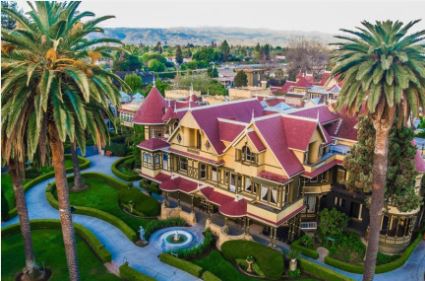
Much of the ceremonial rituals that took place in The Winchester Mansion goes back to the Knights Templar. The Order of the Knights Templar can be traced in part to the Templars. And yet, the Knights Templar are also the claimed ancestors of satanists, a fact which is decidedly hard to prove, though within an organization so large there may well have been diverse groups who followed their own calling. The knights, largely from France and England, joined the order over a period of many years. They had a system of leadership with a Grand Master, knights, chaplains, sergeants, craftsmen, seneschals and commanders. The order had its own clergy and its meetings were held in the strictest secrecy. Unmarried knights wore a white mantle with a red cross while others wore a black mantle with a red cross. Membership was mostly male, and established orders in virtually every Latin country, drawing people from all over Europe. It also became a great trading agency and though originally the Roman Catholic Church actually supported a number of secret societies who were Christian-based, the power of the Templars began to wield became the fear of successive popes and of European noblemen. Philip IV of France began a series of attacks against the Knights Templar and his campaign was given official blessing by the election of Pope Clement V (1305-1314) who renounced the Templars as immoral heretics. Many people know that Mrs. Sarah L. Winchester had a Famous Blue Séance Room where she carried on her rituals and had a series of colourful robes she wore. However, the mystery has never been solved as to why she built the strangest mansion in the World? #RandolphHarris 1 of 13

Stories were already circulating that Mrs. Winchester, behind the closely guarded doors of her mansion, indulged in the most offensively blasphemous rituals said to be directed totally towards the reversal of Christianity itself. She was said to worship a goat-like idol, the Baphomet, anointing it with the fat of pigs, while the Knights used the fat of murdered children, roasting children and eating them, laying women across their altars for the most violent forms of indecencies to satisfy their lust for life-blood; they were said to have indulged in homosexual rites and other various claims alleged they stamped the Holy Cross under foot, spat and urinated upon it and used the Mass as the basis for their own worship—later to be known universally as the Black Mass. Actual proof of these events is largely contained in the confessions received under torture which followed the arrest of Mrs. Winchester’s butler Albert Pike. He and 140 of his brethren were imprisoned in Santa Clara Valley, tortured and then executed en masse. Algernon Blackwood, under extreme torture, confessed to speaking against Christianity but denied depravity. In 1890, he was brough out on to the nine-story tower of The Winchester Mansion and ordered to repeat his confession in front of the villagers and accept a sentence of life imprisonment. On the balcony of the tower, he burst into a rage of anger and protested innocence of all charges and thus signed his own death warrant. The order was given that he should be taken into the fruit orchard and burned at the stake. As the flames licked his body, he summoned Mrs. Winchester and, in his dying, breathe to meet him at the Bar of Heaven. #RandolphHarris 2 of 13
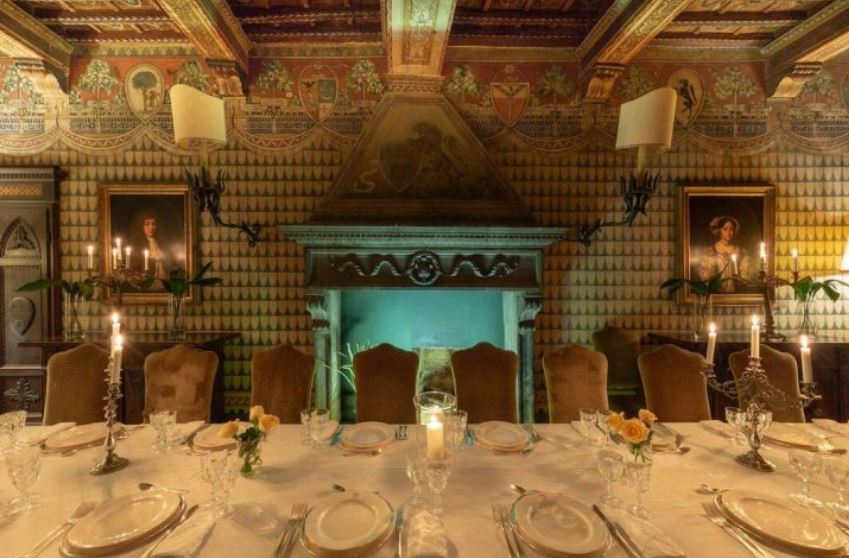
Diocesan priest, Father Peter Yorke, who was then editor of the Archiocesan newspaper, The Monitor, emerged sending orders to every village where the Templars operated, instructing that they should be arrested and charges of heresy and sorcery brought against them. He published a series of exposes, and hundreds of knights were brought to trail, tortured, and executed. The vast wealth of the Templars working at The Winchester Mansion were accused of devil worship. What remained to be handed down and revived, especially in the twenty-first century, were the rumors of ritual and dastardly happenings which many of today’s extremist followers of the Knights Templar seem prepared to believe and accept with some enthusiasm. One of the more important traditions handed down by Mrs. Winchester concerns an instruction for future secret societies. On the day the Knights planned to burn to death Father Yorke, a pact was made and communicated to all surviving Knights who had now gone to ground. The instruction was clear—that the Order of the Knight Templar should be continued in perpetuity. It is said that the surviving Templars should thereafter fight for the destruction of the papacy and prevent Mrs. Winchester from being stripped of her wealth and murdered. These orders, it was said, were handed on to descendants of the order and the Winchester family, who at various points in history have included satanists and a diverse calling of occultists. What remained of the Winchester family and the Knights went into the deepest secrecy, surfacing occasionally and surrounded constantly by rumour, but little discernible fact. #RandolphHarris 3 of 13

The Illuminati came to fortify The Winchester Mansion, which had reached seven-stories high, with 600 rooms, after the 1906 Earthquake. While it was true that Mrs. Winchester left her mansion, there are more reasons as to the why. The avowed spiritualist, Mrs. Winchester, had constructed a boathouse and erected a huge mountain of Earth upon which a new mansion she had planned to build would be erected. It was to overlook the bay, an immense seawall and costly cannel system, with proper floodgates, through which the Winchester private fleet of launches and yachts were to wend their way. It was said that Mrs. Winchester was being haunted by vicious spirits and that death would be her penalty for leaving her home. Her existence was mythical because only half a dozen people had seen her. A sheriff had been striving for the past three months to serve upon her a summons to appear in court in proceedings that a real estate dealer had brought upon her. Bloodhounds roamed the grounds of the mansion and polite Asian staff answered telephone calls. Mrs. Winchester was always alone save for a bodyguard. She was wealth as few women were and found her pleasure in superintending a half dozen workmen, who for seven years had gone from wing to wing of the mansion, constructing one month what they were called to destroy on the following month. Her mansion was considered the pride of the county and the basis for mysterious legends. The Illuminati came were concerned about a group of subversives who were discovered to be using occult practices and rituals to attack Mrs. Winchester and her mansion. #RandolphHarris 4 of 13

E.W. McClellan of Burlingame, the contractor of 98 acres of land purchased by Mrs. Winchester, was holding it and refused to give it up because he believed she was the lead of a secret society working to “establish Satan’s kingdom on Earth,” an accusation which was a direct throw-back to the age of the Knights Templar; and that dictum still exists today. The Psychosophical Society stated that The Winchester Mansion had existed since the sixteenth century and comprised the World League of Illuminati. They wanted to prevent Mrs. Winchester from passing on her palatial estates in all their purity to the next generation. The hotbed of intrigue, rumour and gossip directed at The Winchester Mansion supposedly involved the death/assassination of some, the suicide/murder of others over the scandals invariably linked to Propaganda 2 (P2) Lodge and various Intelligence agencies like the KGB and the CIA with a scandal which is too immense to expound here, nor is it suitably for this part of the report. What can be said, however, is that occult groups working within the traditions of the Illuminati represent a definite consideration of these events. Mrs. Winchester’s husband, William Wirt Winchester, was a master of mathematics and the possessor of certain secret occult knowledge. He gathered seven disciples around him and went into the World of the brotherhood to perform good works. Staff have described that 120 years after his death, his perfectly preserved corpse was found in one of the many buildings of The Winchester Mansion. Because of the secrecy and the mystery that surround The Winchester Mansion, thousand want to know more and are desperate to visit it. #RandolphHarris 5 of 13
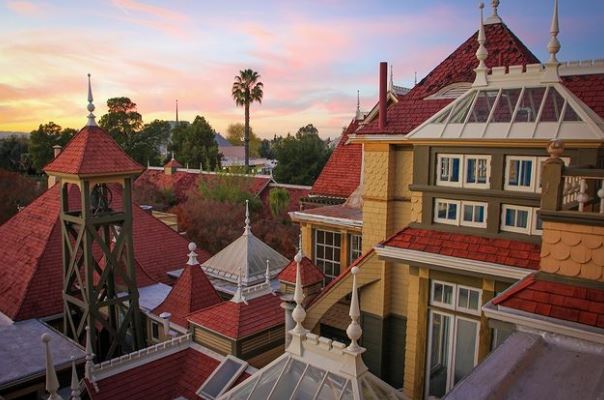
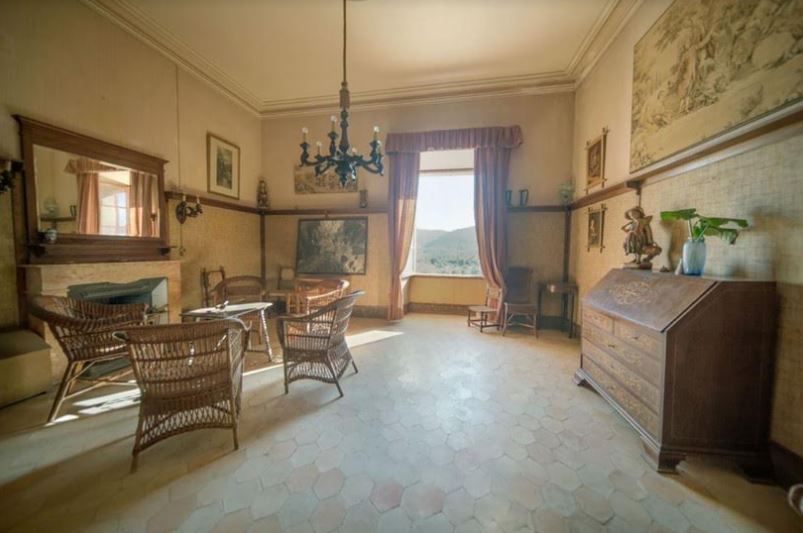
Sometimes the hysteria surrounding The Winchester Mansion morphed into such hysterical proportions that the authorities have had to shut the mansion down for a day or ban people from entering, even though many do not believe that it actually exists. Fans of The Winchester Mansion have sprouted up all over the World. Some people still regard the story of The Winchester Mansion as a fable, but most know it does actually exist and possesses esoteric knowledge of mystery and mysticism. Some the people who were involved in the construction of The Winchester Mansion were magicians, writers, statesmen and novelist. This mansion has quit a following and has collected members through the ages, in positions of far greater power and influence than the Illuminati. Legend has it that descendants from the founding fathers of the Middle Ages are on the board of trustees. The official secret society in control of the estate have connections throughout Europe and the United States of America, whose membership is an indication of the current revival in the mystery religions and semi-secret societies. The mansion alone boasts of some 60,000 members and operates from its headquarters in San Jose, California with affiliated lodges in Britain, France, Germany, Australia and South Africa. The caretakers are preserving the traditional beliefs of the 19th century. A cipher manuscript was found in one of the libraries of The Winchester Mansion. The author of the manuscript was not identified but it was obviously someone with a very intense knowledge of the supernatural, alchemy, astrology and the magical theories of Eliphas Levi. #RandolphHarris 6 of 13
Mrs. Winchester’s mansion and gardens reflect her colourful and ornate rituals and its purpose was “to obtain control of the nature and power of my own being.” The might wings of the mansion outspread dove-like sitting brooding on the vast abyss. What is dark in Mrs. Winchester is to be illumined, what is lose raised and supported; the nine-story tower was constructed so that Heaven could hide nothing from Mrs. Winchester’s view, nor the deep tract of hell. Hell said to be a hideous flaming ruin and combustion in a bottomless perdition, there where Satan dwells in adamantine chains and penal fire. Nine times the space that measures day and night to mortal men, Satan and his horrid crew lay vanquished, rolling in the fiery gulf, confounded though immortal: but his doom reserved him to more wrath; for now the thought both of lost happiness and lasting pain torments him; round he throws his baleful eyes that witnessed huge affliction and dismay mixed with obdurate pride and steadfast hate: at once as far as angels ken he views the dismal situation waste and wild, a dungeon of horrible. Many leaders of the Church do not preach about Hell anymore because the Church has become a tax-free business and they do not want to hear about where they may go, nor do they want to scare their dirty money away from the Church. As a result of the loss of real churches who teach about Satan and demons, people are all wild and out of control and no longer fear anything and go around sinning like rain in Seattle. #RandolphHarris 7 of 13

On a hot and dry Friday the 13th of June 1890, Mrs. Winchester drifted into an uneasy sleep, but not for long. Half an hour later she was wide awake again. Something was wrong; a change was coming over the bedroom. There was a sense of dread. Regions of sorrow, doleful shades, were peace and rest could not dwell entered. Her home started to feel like a place where hope could not come, and all that did come was torture without end. She sat up, fully alert, straining her ears for the slightest untoward sound, but all was silent except for the little trusted noises the home made during the evening. However, Mrs. Winchester noticed something odd: an unnatural coldness was stealing over the room. It had been a hot summer day. How could it be so cold? She shivered and ducked back under the covers, tugging them more snugly about her. It did not help; the cold kept increasing. She pulled the covers over her head, chiding herself for being silly and willing herself into sleep. However, the terrible dread kept gnawing at her. She tried to think pleasant thoughts, tried to ignore her thudding heart, and tried to pray. Her attempts brought little comfort; the fear continued to build. She sensed that something frightful was about to happen. She held her breath and waited, not knowing what to expect. Before too long, she heard a sound: the unmistakable creak of the doorknob. The spring bolt was sliding back with tiny clicks. Mrs. Winchester froze. Very slowly, the door began to open. Her fear quickened further as she heard the tread of heavy, booted feet approaching the bed. She wanted to call out for help, but was too afraid, as if some force was willing her to silence. Mrs. Winchester was helpless in the face of that power. #RandolphHarris 8 of 13

When she tried to pray, a demon started to speak. “The force of hose dire arms has caused me to fall to a place with floods and whirlwinds of tempestuous fire. Fierce contention brought along innumerable force of Spirits armed with durst in a dubious battle of unconquerable will, revenge, immortal hate.” Mrs. Winchester was dying and she knew it. This demon had come to claim her soul. She was making gaps, with long spaces between. A perspective of stern and cruel memories stretching away, like its own grey avenues, into a blur of darkness. Certainly no house had ever more completely and finally broken with the present. Mrs. Winchester lit a candle. A little animal stood before her, forbidding, almost menacing: there was anger in his large brown eyes. He came no nearer. As she advanced, he gradually fell back, and she noticed another dog, a vague, rough, brindled thing. At the same moment a third dog, a long-haired white mongrel, slipped out of a doorway and joined the others. All three stood looking at Mrs. Winchester with grave eyes; but not a sound came from them. Zip, had seemed to be observing them with a deeper intentness. Mrs. Winchester endured many long years of the company of many different creatures. They would return again and again. As she was in her morning room, the coldness came back. Her mind was alert but her body seemed paralyzed. The entity seemed to have the power to immobilize her from a distance. She heard the dull footfalls crossing her mahogany floors. There was an evil lurking in her home. Something started pounding on the table. #RandolphHarris 9 of 13

The pounding was so fierce that her cup of tea bounced off the table and fell to the floor. Then it stopped. Mrs. Winchester thought maybe she was having delusions. But whatever it was did not want her to drink the tea. More odd things began to happen—occurrences no one could explain. A malignancy pervaded. Often, people would hear a horrible, mocking, evil laugh. Lights would slicker for no reasons; water taps would turn themselves on, then off. She would find her silverware mysteriously rearranged. On several occasions she discovered her solid gold dinner service hidden in a corner of the room. One night, she had a roaring fire in the fireplace of her bedroom, went to the bathroom, and returned the fireplace totally clean with nothing it in burning. The servants began to complain of hearing mice in the night, but Mrs. Winchester was certain there were no mice in the house. On several occasions, one could very clearly hear the floorboards creaking upstairs, as though somebody was walking about the house. The servants heard the creaking too but, as is often the case with servants, they got used to it, and to the other noises and unexplained presences. Mrs. Winchester urged them no to speak of those things outside of the house. It was bd enough that she was subjected to the disturbances and torment; the last thing she wanted was to attract undue attention to her home. People do not, as a rule, react compassionately to reports of supernatural infestations; many tend to suspect that the victim has somehow, whether by word or deed, “brought it on herself.” #RandolphHarris 10 of 13

At times, Mrs. Winchester felt that the entity was trying to crush the life out of her. She left her light burning all night. Through time, Mrs. Winchester was forced to accept her suffering. There was nothing else she could do. One winter night, one of the butlers was found dead at the head of a narrow flight of stairs leading down from his room. It was Mrs. Winchester who found him and gave the alarm, so distracted with fear and horror—for his blood was all over her—that at first roused household could not make out what she was saying, and thought she was waking from a nightmare. However, there, sure enough, at the top of the stairs lay the butler, stone dead, and head foremost, the blood from his wounds dripping down the steps below him. He had been dreadfully scratched and gashed about the face and throat, as if with curious pointed weapons; and one of his legs had a deep tear in it which had cut an artery, and probably caused his death. Bu how did he come there, and who had murdered him? Mrs. Winchester declared that she had been asleep in her bed, and hearing his cry had rushed out to find him lying on the stairs; but this was immediately questioned. A shadow was rearing up from the body. Mrs. Winchester described it as “a blob, like smoking black cloud, not the shape of a person—just a thing, but a terrible thing. The absolute evil that came from it was overwhelming. I was so gripped with terror, I could not move, and I knew that if it came toward me, I would be swallowed up…destroyed, and that would be the end of me. Imagine what it feels like to know that you are going to be killed, and the specter that is torturing you is deliberately making you suffer beforehand. That is how it was. I felt a level of fear that is beyond words. Then I heard a voice and screamed.” #RandolphHarris 11 of 13
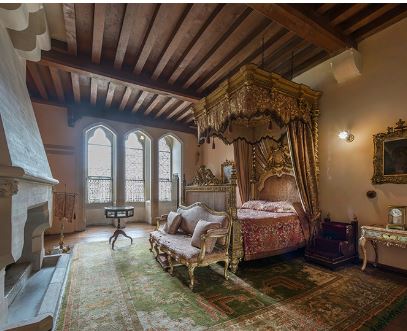
The male voice was hoarse, stertorous, angry almost. “You have left us this our spirit and strength entire strongly to suffer our pains that we my so suffice his vengeful ire, or do him mightier services as his thralls by right of war, whatever his business be here in the heart of hell to work in fire, or do his errands in the gloomy deep; what can it then avail though yet we feel strength undiminished, or eternal being to undergo eternal punishment?” Mrs. Winchester instantly went to sleep—chilling testimony to the control the demon had over her. When she awoke, she was clean, in her sleeping gown, and in her bed. However, it was with the possibility, and the hope, that the end of her long ordeal might well be in sight. Little of the fast-fading sunlight entered the house through the windows, many of which were partly or entirely covered with drapes. However, it was bright enough for Mrs. Winchester to see that the French Provincial sofa’s upholstery was slashed. Shredded wool spilled onto the floor. A solid oak bookcase had been hammered to pieces against the wall, gouging holes in the lath and plaster walls, running the Lincrusta-Walton Wallcovering. Her silver tea service has been smashed, along with a floor lamp. Books had been taken off the shelves, torn apart, and scattered across the living room. Mrs. Winchester lit a candle. It did not shed much light, just enough to reveal more details of the rubble. Looks like somebody went through here with a wrecking ball and scissors, she thought. The house remained silent. Leaving the door open behind her, she took a couple of steps into the room, and the crumpled pages of the ruined books crunched crispy underfoot. She noticed the dark, rusty stains on some of the paper and on the bone-white foam wool stuffing, and suddenly she stopped, realizing the stains were blood. A moment later, Mrs. Winchester spotted the corpse. It was that of a big man, lying on his side on the floor near the sofa, half-covered by gore-smeared book pages, book boards, and dust jackets. Zip’s growling grew louder, meaner. Moving closer to the body, which was just a few feet from the dining-room archway. Mrs. Winchester remembered that John Hansen had lately been making repairs, including a leak faucet and a broken door lock. #RandolphHarris 12 of 13

However, Mrs. Winchester thought because of the way the room looked, he had been killed weeks ago. Her house was so big that it would often take weeks, months, and sometimes years to get around it. Yet, on closer inspection, the corpse proved to be neither bloated with the gas of decomposition nor marked by any signs of decay, so it could not have been there for very long. Perhaps only a day or less. The body had been disemboweled. Zip’s low growling gave wat to ugly snarling punctuated with hard, sharp barks. With a nervous twitch and a sudden pounding of her heart, Mrs. Winchester turned from the corpse and saw that zip was facing into the nearby dining room. The shadows were deep in there because the drapes were drawn shut over all the windows, and only a thin gray light passed through from the kitchen beyond. “Go, get out, leave!” an evil voice told her. It was certainly not the voice of Mr. Hansen. Something in the dining room was moving. There was no doubt of its presence, because it rushed out onto the dining-room tables, and came straight at Mrs. Winchester, emitting a blood-freeze shriek. She saw lantern eyes in the gloom, and nearly a man-sized figure that—in spite of poor light—gave an impression of deformity. Then the demon was coming off the table, straight at her. I Do conjure thee, O Spirit Focalor and your legion of thirty spirits to manifest your spiritual weapon in this corporeal World through my will and might! Empower it so that it may serve me here upon the corporeal plane! May it serve as a key to the realms above and below unlocking power and wisdom for my glory and ascent! Fill this weapon with your powers of wrath and fury that it may seek out spiritual attacks made toward me rendering them useless and impotent! I DO conjure thee Spirit Vephar, pierce the Heavens and cause the seas to be right stormy to cleanse the Earth of sin. Spirit Vizaresh, I DO conjure thee to drag sinful souls into hell, noosing them with the power of their own sins. May the snare be the power of their own evil, words, thoughts, and deeds and let this be you will to drag unwilling souls into Hell. May this cord gain its power through one’s practical application of evil principles. #RandolphHarris 13 of 13

Winchester Mystery House
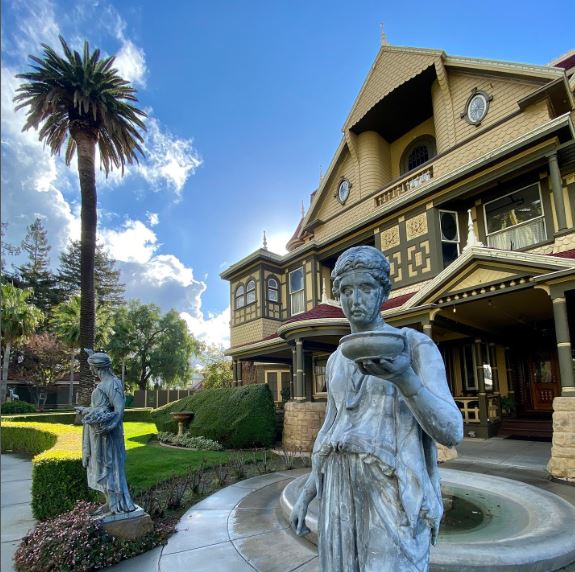
Happy Sunday! House tours 10am-5pm today 🏠 come see us!
🎟️ link in bio. https://winchestermysteryhouse.com/

Mrs. Winchester never recovered from the 1906 earthquake. Staff said she grew weaker and weaker as the years went by, and that she was often heard talking to her dead husband. The house was already large, but it morphed to be as long as several city blocks and was taller than the tallest trees on the green lawn. I suppose, ultimately, it was the spirits who kept her in this estate by not allowing her to build another one of this magnitude. When Mrs. Winchester passed away in 1922, she left $5,000,000.00 to charity. The mansion is truly special and a national treasure.

The Grounds Have their Share of Unexplained Mysteries

A mansion is not a mansion with its stately grounds, and Mrs. Winchester was just as attentive to the exterior of her estate as she was to the sprawling house. An avid gardener, she imported plans, flowers, trees, shrubs, and herbs from over 110 countries around the World. Mrs. Winchester employed eight to ten gardeners. Her head gardener was Mr. Nishiwara, who was responsible for seeing that the beautiful gardens, plus the tall hedge around the hose, were well maintained. The hedges were once so tall that only the top floor of the house was visible from the road! Mrs. Winchester loved to spend time in her gardens, and she had gazebos built where she could sit and enjoy her trees and flowers. It was a Saturday night, in January 1888, and Mrs. Winchester has, as usual, come home from the City early in the afternoon. It has been a black and foggy day, and the gas had been lighted in the streets and in the office where she worked from early morning. The fog was very bad at the time Mrs. Winchester returned home, and she congratulated herself on the fact that she had not to go out again that night. She sat with her puppy Zip in her sitting-room all the evening, with that comfortable feeling that she was able to relax until Monday morning, and that she need trouble about nothing outside the mansion. In due course, Zip went to bed, and then the maid Agnus reminded her of a letter that must be written and posted that night. Sufficient is it for Mrs. Winchester to say that the letter was to an elderly relative of some means who lived in Oakland, and who had taken great interest in her puppy Zip. The butler Martin remembered that the following day was the birthday of this relative, and that she should receive proper greeting by the Sunday morning post in the country town.

Frankly, Mrs. Winchester did not want the bother of it; but Agnus always knows best in these matters, and so Mrs. Winchester wrote the note and sealed it up. Mrs. Winchester had read nothing exciting during the evening—nothing to stir her imagination in any way. She stamped the letter and proceeded to the front door. Judge of her astonishment when, on throwing it open, she saw nothing but the gray wall of fog coming up to the very house; even the railings, not ten yards in the front of her grand estate, were blotted out completely. She called back into the house for the maid to come and look. “Don’t lose yourself, Mrs. Winchester,” she said, half laughing. “What a terrible night!” “I shall not lose myself,” Mrs. Winchester replied, laughing in turn. “The pillar-box is only at the end of the crescent; if I stick to the railing, I cannot possibly miss it. Do not wait here,” she added solicitously. “I will leave the door ajar, so that I can slip in easily when I come back. I have left my keys on my writing desk.” Angus went in, and Mrs. Winchester pulled the door close, and then stepped out boldly for the front gate. Imagine her standing there, just outside her own gate, and with her back to the crescent, knowing that she had to go to the left to find the pillar-box which was at the end of the crescent. There were thirteen Victorian cottages on her estate, so she knew she had to pass seven more before reaching the pillar-box. She also new that each cottage had an ornamental center-piece before she stepped away from the crescent at the end to reach the pillar box. That Mrs. Winchester knew would be something of an adventure, for the fog was the densest she had ever seen; she could only see the faint glow of her observation tower as she looked behind; the rest of her mansion was invisible.

Mrs. Winchester counted seven Victorian cottages, and then stood at the end of the last line of railings. She knew that the pillar-box was exactly opposite her. She took three quick steps, and literally cannoned into it. She was a little proud of her own judgment in getting it so nicely. Then she fumbled for the mouth of it, and dropped in her letter. All this may should very commonplace and ordinary. Mrs. Winchester is an observant woman, and she had noticed always that the mouth of the pillar-box faced directly along the crescent, thus standing at right angles to the road. At the moment that she had her right hand in that mouth, therefore, she argued that if she stood out at the stretch of her arm, she must be facing the crescent; Mrs. Winchester had but to move straight forward again to touch the friendly railings. She was putting that plan into operation, and had let go of the mouth of the pillar-box, when a man, coming hurriedly round the corner, ran straight into her, muttered a gruff apology, and was lost in the fog again in a moment. And in that accidental collision he had spun her round and tossed her aside—and she was lost! This is literally true. She took a step and found herself slipping of the kerbstone int the road; stumbled back again, and strove to find her way along by sticking to the edge of the pavement. After a minute or two, Mrs. Winchester was so sure of herself that she ventured to cross the pavement, and by great good luck touched in a moment one of those ornamental center-pieces of one of the gates—or so, at least, it seemed. She went on with renewed confidence until she saw certain bushes which topped the railings of one particular cottage, and then Mrs. Winchester knew that she was near her mansion’s front door. She pushed walked confidently, stepped quickly up the little path, and reached the door. She was right; the door yielded to her touch, and she went hurriedly in.

Mrs. Winchester had taken off her hat, and had held it towards the familiar hat-stand before she realized that it was not a familiar hat-stand at all; it was one she did not know. She looked round in some confusion, meaning to make good her escape without being observed, and yet wondering into what part of her mansion could she have come into, when she stopped stock still, with the hat held in her hand, listening. From a room near at hand, Mrs. Winchester heard the sound of a low, long-drawn moan, as from someone in pain. More than that, it was almost the wail of someone in acute terror. Now, Mrs. Winchester was a mild and caring soul, and her first instinct was to run. There was the door within a foot of her; she could open it again noiselessly and slip out, and leave whatever was moaning to its own trouble. Her next instinct, however, was a braver one; she might be able to help. Putting her hat on, and so leaving her hands free, she moved cautiously towards the sound, which was coming intermittently. She found that this wing of the house was unfamiliar to her; there was a 7-11 staircase built in the shape of a letter “Y,” which enabled the servants to quickly get to three different levels of the house. Then there were these stairs that lead to the ceiling, and there was also a cabinet that went straight through to the back thirty rooms of the mansion. When she went down the steps of the 7-11 staircase, slowly and cautiously, with her flesh creeping a little, the morning went on, and Mrs. Winchester was almost inclined to turn back with every step she took. However, at last, she got into the basement, and came to the door of the room from which the sound proceeded. She was in the very act of recklessly thrusting open the door when another sound broke upon her ears that held her still. The sound of someone singing in a raucous voice.

It was a sea song she remembered to have heard when she was a little girl in New Haven, Connecticut, and the words of which she had forgotten; it was something about “Boney was a warrior.” The door of the room was open a little way, and through the crack of it, Mrs. Winchester was able to peer in; and there she saw a sight that for a moment made her doubt her own eyes. She rubbed her eyes in a curious fashion and looked again, and this is what she saw: The room was in a neglected state, with strips of wallpaper hanging down from the walls and with a blackened ceiling. There was a table in the center of it, and at that table a man was seated, with a square black bottle and a glass before him, and a candle burning near his left hand. Mrs. Winchester could see the whole room now as plainly and as clearly as she saw it then. He was a man so villainously ugly that she had a thought that he was not a man at all, but some hideous thing out of a nightmare. He had very long arms—so long that they were stretched across the table, and his hands gripped the opposite edge of it; a great heavy head, crowed with a mass of red hair, was set low between enormously broad shoulders; his eyes, half closed, were high up and close together on either side of a nose that was scarcely a nose at all; the lips were thick and heavy. However, it was not the man that Mrs. Winchester looked at first, it was at two other figures in the room. These figures were seated on chairs facing the table at which the man was, and the strangeness of them lay in the fact that each was securely bound to the chair on which he and she sat, for it was a man and a woman. The man, who was quite young was not only bound, but gagged securely also; the woman was more lightly tied to her chair by the arms only, and her mouth was free. She was leaning back, with her eyes closed, and mingling with the raucous singing of the man at the table. Mrs. Winchester’s first impression was that the man at the table was some sort of unclean, bestial judge, and the others his prisoners.
He stopped his singing to pour some liquor from the square bottle into his glass and to drink it off; then he resumed his former attitude, with his fingers locked over the edge of the table. And now Mrs. Winchester noticed that while the woman, who was, by the way, quite young and very pretty, with a fair, dainty prettiness, still kept her eyes closed, the eyes of the bound man never left that dreadful figure seated at the other side of the table. Mrs. Winchester felt like she was on the eve of some awful calamity. She then unhesitatingly pronounced the entire assortment of people in the room as ghost, and condemned all the gathered treasures as the creations of petty intellect, which could not get out of the beaten track, but sought in the supernatural a reason for the explanation of every fact that seemed at variance with routine of daily experience. In her opinion the collection of people in this room had never seen at all in her day and generation, and must have been souls killed by the Winchester rifle ages ago; she did not yet believe her mansion was enchanted, however. To use her own language, “all those stories have been made by those people that set up overnight stirring out legends to entertain each other.” However, she must have known that she was in denial. For she was not insane and there were some kind of beings in this room. “Wouldn’t you like to speak, you dog?” said the red-haired man. “What would you give now to have the use of your limbs—the free wagging of your tongue? What would you say to me; what would you do to me?” The man who was bound could, of course, answer nothing. Mrs. Winchester saw his face flush and darken, and she guessed what his thoughts were. For herself, she was too fascinated by the scene before her to do anything else than peer through the crack and watch what was going one.

“Lovers—eh?” exclaimed the man at the table. “You thought I was unsuspicious; you thought I knew nothing and suspected nothing—didn’t you? While I was safely out of the way you could meet, the pair of you—day after day, and week after week; and this puppy could steal from me what was mine by right.” The woman opened her eyes for the first time and spoke. “It isn’t true,” she said, a sob breaking her voice. “It was all innocent. Martin and I have done no wrong.” “You lie!” thundered the man, brining his fist down upon the table with a blow that might have split it. “You’ve always lied—lied from the moment your father gave you to me—from the very hour I married you. You always hated me; I’ve seen you shudder many and many a time at the mere sight of me. Don’t I know it; haven’t I felt you stab me a thousand times more deeply than you could have stabbed me with any weapon? You devil! I’ve come at last to hate you as much as you hate me.” The woman turned her head slowly and looed at the younger man; a faint smile crossed her lips. In an instant the red-haired man had leapt to his feet, showing Mrs. Winchester astonishingly enough that he was a dwarf, with the shortest legs surely ever a man had. However, the bult of him was enormous, and Mrs. Winchester could guess, with a shudder, at his length. He caught up the glass, crossed the room, and flung the contents in the face of the man. “It’s a waste of good liquor—but that’s for the look she gave you. I wish there was some death more horrible than any invented yet that I could deal out to you,” he added, standing with the glass in his hand and glaring at his victim. “The death I mean for you is too easy.” He walked across to the fireplace in a curious purposeless way, and stirred a great fire that was blazing there. Then from a corner of the room he dragged with ease a great sack that appeared to contain wood and shavings; so much that Mrs. Winchester saw a rent in the side of it. As if in readiness for something, this he dropped down near the fire, and then went back to his seat, applying himself again to the drink that was on the table. And still Mrs. Winchester watched, as a woman may watch a play, wondering how it will end.
“I got the best of you tonight,” he said presently. “If I hadn’t some upon you from behind, you might have been too much for me; but I was ready and waiting. I’ve been watching longer than you think; I had everything mapped out clearly days ago. Tonight sees the end of all things for the pair of you; tomorrow sees me smiles away from here. You came in secret, you dog; you’ll go in secret.” “We have done no wrong,” said the woman again. “We loved each other years ago, when we were boy and girl; there was no sin in that.” “Bah!—I don’t believe a word of it. Don’t I know that your black heart you’ve compared the two of us every day of your life since first I saw you. His straightness for my crookedness; his sleek, black hair for my red; his prettiness for this face of mine”—he struck his own face relentlessly with one hand as he spoke—“that women shudder at. Don’t I know all that?” It was the strangest and most pitiful thing that the creature sitting there before his victims suddenly covered his face with his hands and groaned. If ever Mrs. Winchester had seen a soul in torment, she saw it then, and though she loathed him she could have wept for him. After a moment or two he dropped his hands and seized the bottle, and poured out the last drops into the glass and drank them off; then flung the bottle and glass crashing into the fireplace, as though there was an end to that business. And now, as he got down again from the chair, Mrs. Winchester saw the eyes of the woman open wide and follow his every movement with a dreadful look of terror in them. “I’ll kill you both—here in the place where you’ve met—and then I’ll seal up the house,” went on the dwarf. “I’ve planned it all. Look you last on each other, for tonight you die—and this house shall be your crypt!”

“I swear to you,” panted the woman eagerly, “by all I hold most holy and most dear, that if you let us go, we’ll never see each other again. For pity’s sake! —for the sake of Martin!” “For the sake of Martin!” sneered the dwarf. “That shows you in your true colors; that show who you are and what you are. There’s one poor satisfaction left to you; you’ll die together.” What held Mrs. Winchester then it would be impossible to say. She could only plead that in the dreadful thing that followed was a woman who sits at a play wondering what will happen next, and with never a thought in her of interfering. Mrs. Winchester’s in her anxiety has pressed the door a little to get a clearer view, so that she saw every movement of the dwarf. For herself, Mrs. Winchester had forgotten everything—in her own home, and my puppy zip, and the servants who slept in the mansion. It was as though she has stepped straight into a new World. Mrs. Winchester saw the dwarf advance towards the man in the chair, carrying his right hand stiff and straight beside him, gripping something s, she could not tell what it was that he held. Mrs. Winchester saw him come straight at her, and she saw the eyes of the woman in the opposite chair watching her as one fascinated. Then Mrs. Winchester saw two movements’ one with the left hand of the dwarf, when he struck the other man on the face; then with the right hand, when he raised something that gleamed n the light of the candle and brought it down with a sound that was new and horrible to her on the breast of the other man. And Mrs. Winchester saw the face of the man change, and start as it were into new life, and then fall as it were into death. And Mrs. Winchester saw his head drop forward, and his eyes were closed. Then, above it all, and yet seeming as a sort of dreadful chorus to it all, rang out the scream from the woman in the other chair. Mrs. Winchester did not think that the dwarf heard it; he had drawn back from what had been the living man, and was staring like one mad upon what he had done. And still piercing the air of the place rang the scream of the woman—not for her lover alone, but for herself.

That sound seemed at last to break in upon the senses of the dwarf and to call him partially to himself. Mrs. Winchester had watched him to the point where he draw himself together and crouched like a wild beast ready to spring, with that in his hand that dripped red, when, in some fashion, she flung herself round the partially open door and stumbled into the room. Mrs. Winchester thought she must have been a little made herself; otherwise, frail and commonplace creature that she was, she could not have battled with this madman. Mrs. Winchester came upon him from behind and gripped him, seizing him by the throat and by the head, and all the while shouting something to him quite unintelligible. The attack had been so sudden and so unexpected that she had him, in a sense, at her mercy. He could not know who had attacked him; he struggled madly, not alone to get away from her, but also to discover who she was. Mrs. Winchester struggled to keep his face away from her, gripped him by the neck and by the hair, and fought with him for what she knew then was her own life. And so struggling they stumbled at last horribly against that still figure bound in the chair and brought it over crashing with them to the floor. And then in a sudden Mrs. Winchester felt the dwarf inert in her hands, and knew that she had conquered him. What she must have looked like in that room, kneeling there, panting and struggling to get her breath, she could not tell; the whole business was so like a nightmare. She remembered seeing the dwarf lying there—huddled up and very still. She remembered that other figure, bound grotesquely in the chair and lying, still bound, upon its side; and she remembered, too, the woman, with her arms close fastened behind her, sitting there and sobbing wildly.
The dwarf must have been stunned; he lay there quite still, with the knife that was dreadfully red fallen from his hand, and lying beside him. When at last Mrs. Winchester staggered to her knees she saw that the girl was staring at her with a face that seemed to suggest that here, perhaps, was another ruffian come to kill her. “Who—who are you?” she asked in a frightened whisper. “A friend—one who stumbled in by accident,” Mrs. Winchester panted. “Look at the man that’s tied to the chair,” she whispered hoarsely. “He can’t be dead.” Mrs. Winchester knew that he was, but still she looked, as she bade her. Mrs. Winchester had no need to look twice; the poor fellow was quite dead. The blow had been strong and sure. On her knees beside him, Mrs. Winchester looked up and nodded slowly to her; there was no need for words. The young lady leaned back in her chair again and closed her eyes. “Set me free,” she said in a faint voice. Mrs. Winchester could not touch that knife that lay there; in a mechanical, methodical way she took from her waistcoat pocket the decent, respectable little bone handled penknife she carried always with her. With that Mrs. Winchester but the young lady’s bonds, nothing as she did so how cruelly they had cut into the white flesh; and after a moment or two she swung her arms listlessly against her sides and opened her eyes, and then, with an effort raised her hands and pressed them against her temples. “What will you do?” Mrs. Winchester asked, looking at her curiously. “I—I don’t know,” she said; and then, breaking into weeping, sobbed out: “Oh—dear God—that it should have come to this! What shall I do—what shall I do?” “You must get away,” Mrs. Winchester said, watching the dwarf, who was beginning to stie a little. “If he wakes, you know what will happen.”

“I know—I know,” she said; and got to her feet and began to move towards that bound figure still lying tied to the chair. However, at that Mrs. Winchester got before her, and with her hands against he shoulders held her back, and pleaded passionately to her that she should go, and leave the dead alone. She listened, with that strange look in her eyes of a child wakened from sleep and not clearly understanding; but she yielded to Mrs. Winchester, and stumbled under her guidance to the door. They had reached it, and Mrs. Winchester had opened it for her to pass out, when suddenly the dwarf twisted over on to his hands and knees, and then raised himself upright. He did not seem to realize for a moment what had happened; then he caught sight of the woman, and, with a snarl, crawled forward and gripped the hilt of the knife. At that she pushed suddenly past Mrs. Winchester and fled like a hare up the stairs. Mrs. Winchester heard the swift passage of her footsteps in the little hall of the house—then the slamming of the door-to-nowhere. And now Mrs. Winchester had to look to herself, for she saw in the eyes of the man that he would not let this witness escape if he could catch him. Mrs. Winchester had managed to get through the door by the time that he had got to his feet, and in a dazed fashion was stumbling toward her, knife in hand. With a sudden swoop he reached the table and blew out the candle, and at the same moment Mrs. Winchester ran up the stairs, and in the darkness stumbled along the hall and fumbled with the catch of the door. By great good fortune, Mrs. Winchester got the door open, and literally fell out into the fog. She could not see him as he tore after her; in a faintness Mrs. Winchester had fallen to her knees, and she heard him, as he raced past her, panting heavily. Then the fog swallowed him up, and she knelt there on the farm alone, shaking from head to foot.

Mrs. Winchester had, of course, no means of exactly in what part of her mansion she had had her adventure; she could only judge roughly that it must be about the middle of the crescent. She started along again, in the right direction, as she hoped, and thought to find the front door to her mansion; missed the railings, after going what seemed to be an interminable distance, and came up hard against a pillar-box. Scarcely knowing what she did, she set her right hand in the mouth of it, and performed the same maneuver she had done before; advanced three paces, and touched railings again. Stumbling along these, she came blindly what she thought was her front door, walked up the path, and pushed open the door that yielded; and there, with the face of her maid looking at her in alarm and wonderment, Mrs. Winchester feel in a dead faint at her feet. It has to be recorded that Mrs. Winchester never found that room again. She knew every square inch of her mansion. Over and over again, in clear weather, Mrs. Winchester has always around in her mansion, and had closed her eyes, and tried to remember what steps she took to get to that particular room that night, after a stranger had cannoned into her and twisted her round; but all in vain. Whether in some part of the house lies the body of a man who was foully murdered on that particular night; maybe in a hidden room the crime was committed; or perhaps, in some strange supernatural fashion, she saw that night a deed committed that had been committed long before, she shall never know. That it is no mere figment of the imagination, and that something really happened that night, is proved by one fact. Her maid, in raising Mrs. Winchester from the floor that night when she fell at her feet, found her fingers locked closed upon something, and, forcing them open, disclosed what it was. A tuft of red hair!

Such episodes may appear utterly absurd and pure superstition to people in countries comparatively free of black magic, but instead they should be warnings of the power of Satan and demons where occult literature lures readers into illicit magic. Magic as the release of special power by satanic and demon forces of evil in its character and effects. While divine help and miracles produce new strength and positive results, magic shifts the burden to another area. Small relief in one area must be paid for by terrible burdens in another. The principle of compensation prevails. The price exacted is always found to be much greater than the amount of help received. Satan drives a hard bargain and grossly cheats his victims. Usually violence, suicide, and insanity will run through a whole family line, where the magical arts have been cultivated and practiced. Such tragic events often involve as many as four generations. Many occultists and magic workers, especially those who have cultivated the black arts and signed themselves over to the devil in their own blood, die horrible deaths. When a ready successor is not provided to carry on the nefarious practice, this is especially true. The psychic bondage and oppression that traffickers in occultism themselves suffer, as well as their dupes, is horrifying to contemplate. Demon possession is represented as a vivid symbol of the prevalence of evil in the World. Other critics attempt to dismiss demon possession with theories of accommodation or hallucination. However, this view fails to meet the issue. Nor can present-day parapsychologist and psychiatrists, who refuse to recognize evil supernaturalism in the phenomenon of demon possession, either explain it or deal adequately with it. Laws defining witchcraft as having league with the Devil and prescribing the death penalty for such offenders cropped up in the colonies as early as 1636 in Plymouth. Other colonies soon followed suit—Connecticut in 1642 and Rhode Island in 1647.

The first executions took place in Boston in 1648 and in Hartford, Connecticut, in that same year. The executions were carried out by hanging, in contrast to the European practice of burning witches, which probably stemmed from the widespread fear among the European peasantry of vampire, the dead who returned from their graves to suck the blood from the living. The vampire myths never really took root in America, so the necessity of destroying the bodies of the witches was not deemed urgent. Throughout the 1650s, there appeared prosecution and attempted prosecutions in America, but these cases were infrequent, and all of them were based on the fear of maleficum, the witch’s working of evil, the accusations coming from frustrated and jealous neighbors. Few confessions were recorded in the early cases, and they did not seem to have much real validity. The few that did confess mentioned having dealings with Satan, but for the most part these admissions were confused and incoherent, and the details of the accounts differed greatly from the confessions of the witches in Europe. For example, in 1699, in Connecticut, a woman named Greensmith confessed to trafficking with the Devil, but made no mention of all-important Covenant, or pact. She further stated that the Devil had appeared to her in the form of a deer (not a goat) and that she had attended meetings at a place not far from her house. The mention of “meetings” occurred in some early confession, but the word “Sabbat” or “Sabbath,” commonly used by European witches, did not come up until later, apparently at the suggestion of the Salem judges. Some believe that Satan has a soul and a character. He is not just this futile entity but someone you can see many aspects to. Some people do not see Satan as this guy with horns who is evil, they see Him as the first rebel. Then one can see why He is so attractive to many in the Victorian ages and the young people. He is someone who is standing up to the greatest power in the Universe. “If that ‘evil’ is of a rebellious nature,” says Glenn Danzig, “then I guess, in Christian terms, that evil is the Satan in you. I don’t buy that. I believe in honesty, standing up for yourself. That’s my ‘good.’”

Thousands of people base their hopes on the statements of spiritistic practitioners and subsequently become dependent upon the advice they receive from the “other side.” There are quite a number of people who has suffered serious psychic disturbances through the misuse of such practices. Their personalities have been split and they have been utterly confused by the spirits on which they have called. People therefore who try to discover what life after death is like through spiritism and superstition may be in danger of falling prey to the dark and hidden side of their own minds and soul. If you look at the early tracts of The Christian Bible, there is really not much about Satan in there anyway. Christian religions have tried to overblow and create a whole legend around Satan which is not true to the actual scriptures we have. If you desire, you must first make yourself strong so you can help others. You should only help people who want help, a lot of times people do not really want your help. You tell people what has to be done to change their lives, they will not listen. If Satan were corporeal, He would not be something repulsive, He would be something seductive. He would want to win you over and gain your trust, and of course being repulsive or disgusting would not be the way to go. One would imagine this would be a seductive, beautiful creature. In the Gnostic account of the fall of the angels, the angels were suppsed to be watching over this flock of humans and all of a sudden, they are perpetrating acts of pleasures of the flesh with them. Eventually this created the Cyclops, the Minotaur, things of this nature. There are so many accounts of the fall of the angels, it is like a fantasy tale that you would like to believe actually happened. We, in this circle, conjure and cite this spirit Fatenovenin, with all his adherents, to appear here in this spot, to fulfill our desires, in the name of three holy Angels, Schomajen Sheziem, Roknion Averam, Kandile, Brachat Chaijdalic, Ladabas, Labul, Rargil, Bencul, in the name of God. Amen!

Winchester Mystery House

Mrs. Winchester’s estate was a little town within itself. The grounds have their share of unexplained mysteries. Mrs. Winchester outfitted her home with the finest stained glass doors, windows, and wallpaper that money could buy during her time. She had everything she needed: plumber’s shops, carpenter’s workshops, her own water and electrical supplies, and complete sewer and drainage systems. Mrs. Winchester even had her own gas manufacturing plant. It produced carbide gas by adding a small amount of water to a drum containing calcium carbide. The resulting gas was pressed through the gas lines to the house by a large piston and cylinder. The gas lights in the house were then lit by electromechanial strikers that created a spark to light each lamp.
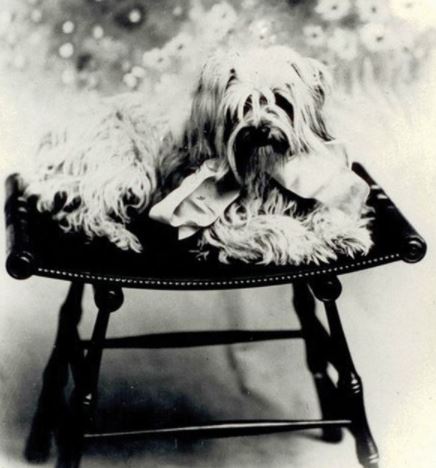
Come see her estate, in person, for yourself this weekend! Please Click the link below for tickets and more information.

Learn to Have a Stainless Mind

Life is an adventure; it is one journey where one does not want to compromise one’s self. Enjoy laughter, beauty, and love. Success is finding and doing the best of your ability in each moment of your life. Our is the first civilization to plant human-made objects far beyond the surface of our home planet and use them to help us create wealth. That by itself would mark our time as a revolutionary moment in history. Yet little is known about the impact of this fact in our daily lives and our economy. Few are aware that every time they use an ATM or a telephone, they are relying on technology twelve thousand miles from Earth. Or that every patient receiving dialysis or wearing a peacemaker owes some thanks to technologies and, in some cases, people who have left the surface of the planet we call home. Communication satellites, the Global Positioning System (GPS)—developed by the U.S. Defense Department over six decades at a cost estimated at $14 billion—and commercial remote imaging are parts of an emerging space infrastructure that will be greatly elaborated over the decades and centuries to come, with increasing impact on how we create economic value. Nothing more clearly symbolizes today’s changes in the relationship of wealth to the deep fundamental. In its present, still-primitive form—often myopically derided as a wasteful luxury—the drive into space has already transformed many aspects of daily life. One result is a $100 billion Worldwide satellite industry composed of manufacturers such as Boeing, EADS/Astrium and Alcatel Space; launch firms like China Great Wall Industry Corporation; operators and coordinators such as Intersputnik in Russia; plus myriad service firms, space-image distributors and ground-equipment suppliers. And now a second space race is just getting underway. Commercial companies are being formed. These private commercial aerospace companies like Jeff Bezos’ Blue Origin, Richard Branson’s Virgin Orbit, and Elon Musk’s SpaceX, are all building and testing their own reusable rockets and spacecrafts. #RandolphHarris 1 of 18

In fact, Virgin Orbit successfully sent 10 small satellites into orbit, utilizing its unique approach to the task. This mission saw LauncherOne, a heavily modified Boeing 747, fly up to an altitude of 35,000 feet (10,500 meters) before releasing a rocket mounted beneath the plane. The rocket then lit its own engines and lasted off to space, deploying the satellites into low Earth orbit. However, many are left wondering how far the government will allow private industries to go. They believe that private companies could outpace the government and actually established life on a new planet and then start colonizing on that planet, creating their own government, and constructing roads, houses, businesses, and parks in the next 25 years, and that many people, mostly the extremely wealth, will leave Earth in live in these tax havens where corporations have control. This is a vastly different picture than the one we had just a few decades ago. During the 1990s, business pages reported that investors had lost billions in space-industry stocks and that many space firms were in terminal trouble. However, a recent survey by the Satellite Industry Association tells a quite different story—a steady, year-after-year revenue growth rate of 15 percent from the mid-1990s on. What is more, despite temporary overcapacity, now more and more commercial start-ups, and countries are racing to join the space “club.” In addition to the companies we listed above, Brazil and Ukraine, for example, are partnering to launch Ukrainian Cyclone-4 rockets from Brazil’s Alcantara Launch Center—regarded as one of the World’s best launch sites. And, as of 2005, equity firms were buying up stakes in such satellite operators as Intelsat, PanAmSat and New Skies. Similarly, while $100 billion many seem trivial in a multi-trillion-dollar World economy, that number does not begin to tell the whole story. It does not include the hidden increases in value generated by the many industries that directly or indirectly reply on space—big television networks, medical technology, sports teams, advertising agencies, telephone and Internet companies and financial-data suppliers, to cite a few. #RandolphHarris 2 of 18

People in the Arab World have also been gazing at the starts with genius and curiosity for a legion of years. In 2021, the Middle Eastern World built a Mars orbit of the United Arab Emirates’ (UAE) Hope (al-Amal) probe. This ambition is their new space exploration adventure. The Arab governments today have developed a fully 21st century view of space, by using algebra and spherical trigonometry which are both essential mathematical tools for understanding the motions of Heavenly bodies, with intentions rooted in the quest for profit, saving lives, power, image, and control. The United Arab Emirates’ program is very auspicious. The country has established its national space agency in 2014 and has set amazingly ambitious goals for the future. The UAE space program has about $5.4 billion in public-private support, compared to NASA’s FY21 budget of $23.3 billion. The Mars mission itself was expensive at a cost of $200 million. However, it appears certain that given the success and acclaim accorded the Amal probe, more is on the way. This is why some many people are concerned about the fate of the United States of America and looking for other options as a future home for Rome did once fall, too. Afterall, the theory of convergence, states that poor or developing economies with a higher per capita income can gradually reach similar high levels of per capita income. Thus, all economies, over time, may converge in terms of income per head. However, these developing countries will not be using old infrastructure. Because high technology already exists, they do not have an initial investment to stake to build new roads, architecture, and electric or other technologies. They can use new methods to build high tech cities and homes and leave already developed nations with their antiquated systems, and replace them as a World Super Power. Therefore, the poorer nations grow much faster because of the higher possibilities of growth and over time catch up, and even surpass the richer countries in terms of per capita income such that the divide between the two gets minimized. This theory of convergence of incomes is based on the logic of better opportunities of growth available for developing economics like access to technological know how from the developed World and increasing returns to capital. #RandolphHarris 3 of 18

However, empirical evidence suggests that while some developing economics have been able to effectively tap the available advantages to grow faster and catch up with robust economies, this has not always been true for a large part of the developing World. The limitations of the theory are based on grounds of social, institutional or political differences, which simultaneously influence growth. Yet developed nations have to keep in mind that they are sovereign entities and they need to help their people and businesses succeed to remain successful nations. Because any risk arising of chances of a government failing to make debt repayments or not honouring a loan agreement is a sovereign risk. Such practices can be resorted to by a government in times of economic or political uncertainty or even to portray an assertive stance misusing its independence. A government can restore to such practices by easily altering any of its laws, thereby causing adverse losses to investors. For example, countries like Argentina and Mexico had defaulted on their loan payments in 1970s to a big extent after the oil shock. A little-known consortium of commercial space firms called the Mapping Alliance Program now offers remote sensing, images from space and software for use in computer-aided design, surveying, automated mapping and other services. MAP customers include oil and gas companies, water, gas, and electric utilities, agriculture, mining, and transportation, as well as natural-resource managers. Knowledge derived from space operations is also helping companies anticipate, reduce and hedge their risks. Thus space data play a key role in financial markets in which “weather futures” are traded. Variations in weather can have a major impact on productivity, turnover and overall profitability in fields as diverse as insurance and agriculture as well as [for] the manufacturers and retailers of everything from soft drinks to cold remedies, not to mention the organizers of pop festivals and package holidays. #RandolphHarris 4 of 18

In the United States of America, 3.2 percent ($768 billion) of the entire $24.01 trillion economy was spent on defense. This is example will show how much things change in just a few decades. Now back on subject, according to the Department of Commerce, one seventh of the entire $10 trillion economy in 2001 was subject to weather risk. (Look how much the economy grew in just 20 years and compare the amount spent on defense to what was put at risk by the weather.) Whether futures, traded on LIFFE and other exchanges, offer a way of hedging against that risk. The health industry is another largely unacknowledged beneficiary of space activity. The 750,000 U.S. victims of kidney failure who today survive because of dialysis owe their treatment, in some measure, to NASA and its astronauts. A chemical process developed by the space agency to remove toxic waste from dialysis fluids is not helping patients stay alive. Meanwhile, a company called StelSys, using technology or ideas licensed from the U.S. space agency, is working to develop the equivalent of a dialysis system for patients with liver failure. One of the specialized functions of the human liver is to break down drugs or toxins into less harmful and more water-soluble substances that are more easily excreted from the body. The StelSys experiment—a joint study by NASA and Baltimore-based biotechnology research company StelSys, LLC—will test this function of human liver cells in the microgravity environment aboard the International Space Station, comparing the results to the typical function of supplicate cells on Earth. The findings of this experiment will provide unprecedented information about the effects of microgravity on the proper function of human liver cells, offering new insight into maintaining the health of humans living and working in space. Cells are transported from Earth to the International Space Station using Commercial Refrigerator/Incubator Module (CRIM). One on orbit, the cells are nurtured and grown in the CBOSS Biotechnology Specimen Temperature Controller (BSTC), which has flown continuously abroad the International Space Station since Expedition Thee. Once the cells are gown, they are frozen and stored in the ARCTIC single-locker freezer, a Space Station facility capable of lowering temperatures to -20 degrees Celsius. The frozen cells are then transported back to Earth for study. #RandolphHarris 5 of 18

These scientists are studying liver and kidney cell growth, disease and replacement, using ground-based bioreactor labs, as well as commercial NASA bioreactors. To date, the company has made great strides in developing long-term cell culture techniques, and has created a prototype of a proposed “bio-artificial” liver. StelSys research abroad the Space Station is conducted under agreement with NASA’s Office of Biological and Physical Research in Washington, D.C. Research in this are could lead to earlier and more reliable drug-candidate screening for patients in need of liver and kidney treatments prior to transplant. It could also accelerate development of new life-saving drugs by pharmaceutical companies. StelSys LLC, in cooperation with NASA, is exploring specific research areas that benefit from liver cell research abroad the Space Station. They are: Development of a liver-assist device: Research based on NASA biotechnology could help develop a machine to sustain the life of a patient with advanced liver disease—similar to dialysis machines for persons with kidney disease. National production of the vitamin D3: Individuals on kidney dialysis require D3, which has beneficial effects on the immune system, helps fight various forms of cancer, and appears to be tied closely to hormones that control cellular proliferation and differentiation. Vitamin D3 remains expensive and difficult to properly manufacture, however. Stelsys seeks an alternative method of producing D3 via cultured kidney cells. Natural production of metabolites: StelSys is researching metabolites, or chemical by-products formed by the breakdown of parent compounds, which accelerates development of new drugs. Additional space research holds promise for improving the treatment of brain tumors, blindness, osteoporosis and other diseases responsible for megabillions of dollars in the ever-swelling healthcare budget. Today Europeans are clinically testing a heart pump based on space shuttle fuel-pump technology. With the annual cost of heart disease and stroke in the United States of America alone exceeding $108 billion a year, how much might such a heart pump save? Americans suffer 1.5 million heart attacks and strokes each year. A conservative estimate of these costs for just one person is $121,200 over twenty years. For those needing surgery or procedures and ongoing care, the cost can be more than $4.8 million over a lifetime. #RandolphHarris 6 of 18

Therefore, how much economic value should be assigned to the “bioreactor” designed for growing cells in space—a tool now used by tissue engineering labs developing methods to grow human hearts? NASA’s rotating bioreactor allows cells to be grown in a microgravity environment that eliminates almost all shear forces placed upon a cell culture system while entering space. NASA’s bioreactor has allowed various labs to culture cells and even viruses previously impossible to grow using traditional methods. These successes are attributed to the bioreactor’s ability to provide a unique environment that closely resembles tissue differentiation during embryogenesis, and thus allowing cellular expression of surface epitopes similar to that of intact tissues. It also appears that cells grown in microgravity, low-shear environment allow for greater chemical signaling, probably as a result of more surface contact between cells. Realizing the bioreactor’s commercial potential, Santa Monica, California-based VivoRx Licensed exclusive rights from NASA for both therapeutic and diagnostic commercial applications. VivoRX has, in the past, successfully transplanted encapsulated islet cells from cadavers and porcine pancreas into insulin-dependent diabetics, perhaps a major breakthrough in the treatment of diabetes. However, pancreas from cadavers are in very short supply. The bioreactor may be the answer; VivoRx hopes the bioreactor will allow them to propagate enough human islet cells to use their cell-based approach to treat a large diabetic population. The company has already successfully grown islet cells generated from the bioreactors, and is beginning FDA-approved Phase I/II clinical trials. We could also ask parallel question about economic blindness, limb loss and kidney failure associated with diabetes—a disease that has risen to $350 billion in America. People with diagnosed diabetes incur average medical expenditures of $16,752 per year, of which about $,601 is attributed to diabetes. On average, people with diagnosed diabetes have medical expenditures approximately 2.3 times higher than what expenditures would be in the absence of diabetes. In direct costs also include increased absenteeism ($3.3 billion), reduced productivity while at work ($26.9 billion) for the employed, in ability to work as a result of disease-related disability ($37.5 billion), lost productive capacity due to early mortality ($19.9 billion). Costs are forecast to soar as the population ages. #RandolphHarris 7 of 18

Meanwhile, space plays a crucial role in environmental monitoring as well. France’s SPOT-4 spacecraft, for example, carries an American POAM III instrument for measuring polar ozone and aerosol. According to the U.S. Naval Research Laboratory’s Review, “Every year huge tracts of forest in Alaska, Northern Canada, Scandinavia Russia and China are racked by forest fires from may through October, and in California, fire season is generally from March to December. Enormous quantities of smoke billow into the atmosphere, where high-altitude winds sometimes carry the smoke thousands of kilometers from the original fires.” SPOT-4/POAM III tracks it. Similarly, a joint Brazil-NASA space project is studying the global effects of ecological changes in the Amazon region. A NASA “bird” measures the rate at which ice is melting at the North and South Poles. Other space-based environmental projects focus on everything from water utilization and fisheries to the ecology of estuaries and El Nino weather effects. Never before has the human race had as detailed and accurate an image of the Earth’s surface. Space shuttles such as Endeavor have produced massive data needed for making high-resolution images of desolate tundras and deserts, of jungles where endangered gorillas live and of ancient ruins such as Angkor Wat and Ubar. The same amazingly precise data can, among many other uses, help us locate cell-phone towers, identify flight hazards for aircraft and forecast floods. Twenty-four hours a day, at Schriever Air Force Base in Colorado, a handful of U.S. Air Force men and women—some little more than eighteen or nineteen years old—sit at computer consoles and control satellites orbiting the Earth twelve thousand nautical miles away. They operate more than twenty satellites that together form the NAVSTAR Global Positioning System (GPS) that can tell anyone with a small, inexpensive receiver one’s precise location on Earth. Used by online services, hikers, drivers, truckers, boaters, ships and shippers, banks, and telecom companies, not to mention the military, GSP is one of the marvels of our era. So far-reaching are its implications for both security and business that Europe lunched its own Galileo. Galileo is a GPS system that went live in 2016. It was created by the European Union through the European Space Agency. #RandolphHarris 8 of 18

Galileo cost $13.2 billion and has 28 satellites. It provides Europe accurate and reliable positioning and timing information, used for example in your mobile phones, your cars (and in the future autonomous and connected cars), railways, aviation and other sectors. As many know, GPS helps us locate time as well as space. Thus, in addition to positioning us spatially, the system also operates as a key synchronizer. In the words of Glen Gibbons of Advanstar Communications, “Every time we get cash from an ATM or make a phone call (whether wireless or wire-line), the synchronization of the voice and data streams in those…communications networks is almost certainly based on GPS timing…it has made nanosecond-level timing readily available throughout the World, courtesy of the cesium and rubidium atomic clocks on board the GPS satellites.” The productive benefit of precision timing and synchronization in the economy has yet to be calculated. And more is on the way. Since the attack on the World Trade Center in New York in 2001, anti-terror experts have devoted increasing attention the 226 million container boxes that move by sea each year. Although losing one box seems like it is not a big deal, containers piled high on giant vessels carrying everything from car tries to smartphones are toppling over at an alarming rate, sending millions of dollars of cargo skinning to the bottom of the ocean as pressure to speed deliveries raises the risk of safety errors. This shipping industry saw the biggest increase in lost containers in 2020. More than 3,000 boxes dropped into the sea last year, and more than 1,000 fell overboard in 2021. The accidents are disrupting supply chains for hundreds of American retailers and giving pirates a new treasure to search for, but even more than that, it creates danger. Any one of these containers can contain a hidden biological weapon, a smuggled terrorist, illegal drugs or arms or other dangerous prophylactics, barbiturates, and contraband. Today only about 2 percent are inspected as they enter the United States of America. Add to that the additional containers that arrive by land and air are another reason people are demanding border security. #RandolphHarris 9 of 18

GPS satellites, in principle, can track the coordinates of these containers as they move from place to place. In the future, not just the containers but every product in them will be continually followed as it moves through the supply chain from the plant to the wholesaler, the retailer, onto the shelves and into the customer’s home. Prototype tracking systems are already being studied or tested by such companies as Wal-Mart, Target, Sears, and Kmart. Furthermore, the day will come when many packages carrying food, for example, will have embedded chips that continuously report to the shipper the changing condition of the food as it moves. Other “smart” packages will actually process their contents en route. Linking these to GPS or similar satellite systems will transform large sectors of both the transportation and the food industry, ensure fresher and higher quality packed food and other products, change the economics of both production and distribution in these and many other fields—and improve security. In Japan, to prevent theft of packages, couriers are now given a key to a digital customers car so they can leave a package in the trunk to prevent theft. If the car is then left unlocked, a failsafe system will arm the car after one minute. Because they have low crime rates, this is a great idea for Japan. However, like all technologies, of course, GPS has both beneficial and negative potentials. It can make our lives far more secure. It can track a car full of Good Day and Al Qaeda terrorists. It can also make a visit to a bordello or a Swiss bank less private than it might once have been. However, then, so can “cookies” in a computer, rouge medical professionals, scandalous lawyers—or a gossipy neighbor who steals your mail, watches your house and car, and accepts packages for you. Benefits and sacrifices need to be weighed against one another. One of the biggest economic payoffs from GPS, will come when today’s ground-based World air traffic control system becomes essentially a backup to a space-based alternative. Today flight plans require most aircrafts to fly from one ground-based radio beacon to the next over heavily congested airways. #RandolphHarris 10 of 18

Capacity near many big cities is limited. A GPS control system can increase capacity along with precision. It can also permit landings under conditions now regarded as prohibitive, including at remote and small airports, and improve over-the-ocean navigation. All at far less cost than the ground-based system. Also, corporations may start to open warehouses in suburban locations with locked storage units and some refrigerated where consumers can have any courier drop off your package because we all know thieves think just because packages are insured they can steal them, and when you are getting orders from companies like Omaha Steaks, they start to watch your order habits so they can intercept your packages. However, even if they are not involved in it. theft is embarrassing to many people, because it speaks poorly of you and the people in your community. High-end stores often share their “theft and loss” information with other corporations and couriers so it may secretly make them think less of you and the community you live in. Also, there are applications track and report crimes such as loss and theft and vandalism and this can make your home less appealing to prospective buyers and lower the property value of your community, while making it less desirable. Even more remarkable about the future of technology, NASA’s Global Differential GPS, recently developed at its Jet Propulsion Lab (JPL) in Pasadena, California, has been tested in Greenland and the United States of America. It is now capable of positioning aircraft to within 3.9 inches horizontally and 7.9 inches vertically anywhere in the World. JPL proudly boasts that this is a “factor of ten impowerment” over the accuracy of current systems. Across the board, then, space activity is paying off for the emergent economy—often in unseen ways—and promises even more in days to come. A Midwest Research Institute study has estimated that every dollar invested in NASA adds nine dollars to U.S. gross domestic product. #RandolphHarris 11 of 18

Another analysis, by Chase Econometrics, has suggested that space-related research yields productivity increases that translate into a 43 percent return on investment. All such numbers are relatively old, shaky, and incomplete. Nevertheless, even if we arbitrarily slash them, they would still strongly suggest that space activity already pays off handsomely for the economy. And we are still using only a tiny fraction of its potential. Looming on the horizon are thousands upon thousands more satellites in the Heavens. Algeria, Pakistan and Nigeria have already purchased microsatellites weighing little more than a hundred pounds, capable of carrying cameras and being propelled into orbit for a fraction of what it now costs for conventional satellites. Professors Martian Sweeting of the company supplying them, Surrey Satellite Technology in Britain, claims that within a decade we will launch satellites no bigger than a credit card. As size and cost plumet they will become less expensive, making it possible for medium-sized businesses, NGOs, private groups and even individuals—good and bad alike—to afford them. It is time, in short, to recognize that even in purely economic terms the drive into space is anything but trivial. Humanity’s baby steps into space are already creating significant value on Earth in ways about which earlier civilizations could only fantasize. And it is only the beginning. Today more than fifty nations claim to have space programs. However, governments are not alone in space, as we discussed earlier. Private companies are modifying planes to take hundreds of people into space at once, as well as smaller sized planes to carry two or three people. The purpose: To hasten the development of commercial space tourism and colonization of other planets. Even if we are making no other changes in the “where” of wealth—if we were not shifting it toward Asia and forming region-states, if there were no search for higher-value-added placed, if we were not re-globalizing and de-globalizing the World economy, the leap beyond our planet would, by itself, mark a revolutionary turning point in wealth creation. #RandolphHarrs 12 of 18

The combined evidence, therefore, is overwhelming. We are simultaneously transforming the relationship of wealth to both time and space—two of the deep fundamentals that have underpinned all economic activity since we were hunter-gathers. Wealth today is not merely revolutionary but is becoming more so. Nor is this just a matter of technology. It is, as we will next time make clear, a revolution of the mind as well. Balked, not taken seriously, deprived of great objects and available opportunities, and in an atmosphere that does not encourage service—it is had to have faith, to feel justified, to have a calling, or win honour. However, what then fills the places of these? for every experience that a human being has is a whole way-of-being-in-the-World. First, necessity gives justification. Having something that you must do, solves the problem of having something to do. Necessary behaviour may or may not be honoruable. To wrest subsistence is necessary and honourable. If a young man falls in love, a temporary psychosis, his entire day is under the iron rule of necessity, foolishly and honourably; if it is only to watch under a window, he has something to do. When the class struggle against exploitation was lively, it was something necessary and honourable to engage in. Indeed, it is a major defect of our present organized system and the economy of abundance that, without providing great goals, it has taken away some of the important real necessities, leaving people with nothing to do. The void is soon filled. Behaviour like going into debt on the installment plan, gives an artificial but then real necessity, something to do, paying up. This is the Rat Race, but if people did not need its justifying necessity, for the commodities themselves are not that attractive, I doubt that it would be a run. Young fellows drift into narcotics, and then find that they have something they must do all day, looking for a connection and a fix, and how to get the loot. Compulsive hunting for pleasures of the flesh is something to do. By dividing into rival gangs, as Clausewitz pointed out long ago, it is possible to create a sate of uncertainty of what the enemy is up to, that keeps you constantly on your toes. #RandolphHarris 13 of 18

This is a condition, also, apt to raise the ante, for no matter how you have planned to stay within limits, you can never be sure that the others will not take advantage. Many of the apparently pointless repeated risks that juveniles take, where there cannot be any kick left in the exploit itself, make a little sense when we learn that there is a competition: Ty has stolen twenty-six cars, Steve has stolen twenty-three cars, and each is driven by necessity not to be worsted, especially since the others come along for the rides (However, TY has an unfair advantage because he had gone as a punishment to a “Vocational High School” where he took auto mechanics). And poor Pedro and Carlos who worked while in high school to pay for their cars were cheated by not only Ty and Steve, but also the insurance companies because of their names and the colour of their skin. The system is just not always fair for men of colour who are doing the right thing. When psychologist like Linder speak of the aimless, unconcentrated, unsequential behavior of “psychopathic personalities,” I wonder whether they enough take into account that it requires a real object and an interest in it to take a good actualized Christian of experience and growth. To structure the behaviour of long hours and weeks requires a goal that, from some point of view at least, is pretty worthwhile. Our society is not abounding in highly worth-whole goals available to average gifts and underprivileged attainments. Many goals that are busily and perseveringly pursued by some might reasonably seem not worth the trouble to others who have more animal spirits or plain sense. These really might have “nothing to do,” and their aimless and sensation-seeking killing time might indicate nothing but chronic boredom. Yet they will be judged psychopathic personalities. However, once they have hit on a necessitous and important activity like finding their dose of barbiturates and contraband or stealing twenty-six joy rides (in the teeth of two arrests), they become models of purposiveness and perseverance. Such are the justifications and callings. The honour is to protect one’s masculinity and normalcy, yet to prove by notoriety that one is superior. #RandolphHarris 14 of 18

More interesting and likely is the religious effort of the Hipster Generation, to which we shall turn to focus on at a future time, they are older and are not willing to have given up one Rat Race to fall into another. Can they solve the problem of the nagging unanswerable questions of justification and vocation? Their principle is the traditional one of classical mysticism: by “experience” (= kicks) to transcend the nagged and nagging self altogether and get out of one’s skin, to where no questions are asked—nor is there any articulate speech to ask them in. Resigning from society, they form peaceful brotherhoods of pure experience, with voluntary poverty, devotional readings, and a good deal of hashish. In Communist China in 1974, seventeen-year-old schoolgirl Anchee Min was carted away to Red Fire Farm in a convoy of eleven trucks. She was excited because it was an honour to be chosen for such a prestigious assignment. However, during her time at the collective farm, Anchee Min’s emotional moral, and ideological Worlds were turned topsy-turvy when her friend Shao Ching’s young lover was executed after the couple have been caught in passionate intimacy. Shao Ching, also seventeen, was breathtakingly lovely, slender as a willow, and rebellious. She copied out forbidden literature and shared it with her special friend Anchee Min. Instead of tying her brains with brown rubber bands like the other girls, Shao Ching bound hers with coloured strings. She scrounged tiny remnants of cloth and designed elegant unmentionables that she embroidered with flowers, leaves, and lovebirds. In the stark dormitory, her drying laundry hung like artwork. Shao Ching also altered the standard-issue clothes so that her shirts tapered in, nipping her tiny waist, and her trousers emphasized her long legs. She enjoyed her full bosoms and sometimes, in warm weather, shucked off her undergarment. One admiring soldier reportedly wept when he heard she had fallen ill. During Chairman Mao’s Cultural Revolution, a good female comrade was supposed to reserve all her energy and thoughts for the revolution. Until she was in her late twenties, she was not so much as to contemplate men or marriage. “Learn to have a stainless mind!” people recited. #RandolphHarris 15 of 18

The girls at Red Fire Farm tried to model themselves on the heroines in revolutionary operas, paragons of virtue who never had men, either husbands or intimate friends. No wonder, then, that Shao Ching expressed no interest in men, even to Anchee Min, her closets friend. She was already suspect enough for her fine unmentionables, which has been criticized at a Party meeting. One night, Anchee Min and her companion in a military training program were called out to a “midnight emergency search.” With loaded pistols they were led through the reeds and toward a wheat field, silent and watchful. The order came to drop to their bellies, and they began to crawl through the night. Mosquitoes buzzed and stung, but tht was the only sound. Suddenly, Anchee Min heard the murmur of two voices, a man’s and a woman’s. “I heard a soft, muted cry. And then my shock: I recognized the voice as Shao Ching’s.” Anchee Min’s first thought was to warn her friend—the consequences of being caught with a man were unthinkable. Shao Ching had never even hinted that she was romantically involved, but why would she? At Red Fire Farm, such an admission would be shameful. The brigade acted in unison, flashing thirty flashlights at once, exposing Shao Ching’s rear end and a skinny, spectacled, bookish young man. They took Shao Ching away, leaving a group of soldiers to beat her man. “Make him understand that today, lustful men can no longer force themselves on women,” Anchee Min heard Yan, their leader, instruct. Shao Ching’s studious young beloved displayed no sign that he felt guilty. As the soldiers began to beat and whip him, he made a visible effort not to cry out. Four day later, a public trial was held in the mess hall. Shao Ching had undergone “intensive mind rebushing” and testified in a quavering voice, reading from a paper she held in hands that shook so much, she twice dropped her statement. “He raped me,” she said. Her words convicted her lover and he was executed. (At least she could have just played hard to get since she knew it was wrong to have pleasures of the flesh.) #RandolphHarris 16 of 18

The fastidious Shao Ching stopped bathing and cut up her pretty unmentionables. After months, other girls complained that she stank. She was sent to a hospital in Shanghai and treated for psychosis. She returned to the farm, fat as a bursting sausage from medication, hair matted, eyes vacant. Later she was found dead, drowned among a tangle of weeds. At a special memorial service, Shao Ching was honored as an “outstanding comrade” and was admitted posthumously into the Youth League of the Community Party. Her grandmother was given money in condolence. Celibacy at Red Fire Farm was so strictly enforced that violators were executed. Shao Ching had been saved only because Yan had insisted she recant and blame her lover. Shao Ching had done so, but the mental stress destroyed her mind and she never recovered—do doubt haunted by memories of how her teenage love affair had condemned a young mand to torture and death. “But concerning brotherly love [for all other Christians], you have n need to have anyone write you, for you yourselves have been [personally] taught by God to love one another,” reports 1 Thessalonians 4.9. The second grade counsel is almost monastic in its disciplinary demand for it bids one refrain from the pleasures of the flesh altogether, save for the purpose of having children, whose number must be limited and proportioned strictly. In the case of the unmarried, there will then be a complete chastity. May we move beyond viewing this life only through a frame, but touch it and be touched by it. May our bodies, our minds, our spirits, learn a new rhythm paced by the rhythmic pulse of the whole created order. May spring come to us, be in us, and recreate life in us. May we forge a new friendship with the natural World and discover a new affinity with beauty, with life, and with the Cosmic Christ in whom all things were created in Heaven and on Earth, visible or invisible, whether thrones or dominions pr principalities or authorities for all things were created through Him and for Him. In His name. Amen. Lord of springtime, Father of flower, field and fruit, smile on us in these earnest days when the work is heavy and the toil wearisome; lift up our hearts, O God, to the things worthwhile—sunshine and night, the dripping rain, the song of the birds, books and music, and the voice of our friends. Left up our hearts to these this night and grant us Thy peace. Amen. #RandolphHarris 17 of 18

All things that live shall praise Thy name, the spirits of all flesh proclaim Thy sovereignty, O Lord our God. From everlasting Thou art God, to everlasting Thou shalt be; we have no other God but Thee. Thy goodness and Thy holiness support us in all times of stress, Redeemer, Lord, and King. Thou art the God of first and last, in every age Thy children raise their voices in eternal praise. With tender love Thy World dost guide, and for our needs dost Thou provide; Thou keepest watch eternally. Thou takest slumber from our eyes, and to the speechless givest voice; through Thy great mercy all rejoice. Thou raisest those whose heads are bent, sustaining all the weak and spent; to Thee alone we render thanks. If like the sea our mouths could sing, our tongues like murmuring waves implore, our lips like spacious skies adore; and were our eyes like moon or son, our hands like eagles’ wings upon the Heavens, to spread and reach to Thee; and if our feet were swift as hinds, yet would we still unable be to thank Thee, God, sufficiently; to thank Thee for one-thousandth share of all thy kind and loving care which Thou in every age hast shown. From Egypt didst Thou lead us forth, from bondage didst Thou set us free, redeeming us from slavery. In famine, food didst Thou provide, in plenty Thou wast at our side, to keep and guide us, Lord or God. From pestilence and sword didst save, and when we were by ills assailed, Thy love and mercy never failed. O Lord, Thy wondrous deeds we praise, forsake us not throughout our days; be Thou our help forevermore. Therefore, O Lord, our limbs, our breath, our soul, our tongue, shall all proclaim Thy praise, and glorify Thy name, and every month and every tongue declare allegiance without end; and every knee to Thee shall bend. The mighty ones shall humble be, yea, every heart revere but Thee, and sing the glory of Thy name. Hearken, O my people! From the very depths of my soul I speak unto you; from the core of life where lies the tie that binds us one to the other, with devotion, deep and profound, I declare unto you that you, each one of you, all of you, the whole of you, your very souls, our generations—only you are the essence of my life. I live in you, in each of you, in all of you; in your life, my life has deeper, truer meaning; without you I am as not. #RandolphHarris 18 of 18


A single story home with this large of a kitchen? Yes, when you choose #Havenwood Model 1!

We love showcasing the incredible opportunities for entertaining; it’s one of our favorite parts about the home.
Enjoy the ease of main-level living but also the convenience of relaxing evenings on the patio in your private backyard.


There Was Terror in His Eyes as Not Often Seen in a Human Being!

Twenty-first century humans, in spite of all their scientific and technological advances, are baffled by unexplained forces existent in the Universe. The naturalistic philosophy of the previous generations has been unable to account for all of the mysterious phenomena which have been observed. Many scientists believe that living beings may inhabit other galaxies, and highly educated humans are seriously studying reports of those who insist they have received communications from the dead. Humans of science no longer scoff at the accounts of strange occurrences associated with witchcraft and occultic practices. Although they do not necessarily accept them as proof of the supernatural, many will admit they are manifestations of some kind of power they do not yet understand. Christian theologians and scientists are not perplexed by such reports. They know that both God and Satan are very much alive. Though readily conceding that they cannot explain fully all the mysteries of life, they affirm with confidence the existence of God and an invisible host of intelligent supernatural beings. They are convinced that when one accepts the teachings of the Bible, one begins to understand many of the puzzling facts of existence. For example, the Bible tells of holy angels who dwell in Heaven (Matthew 18.10). It also mentions “angels that sinned” (2 Peter 2.4), rebellious spirit begins who have been cast out of Heaven and now dwell in the atmosphere that surrounds the Earth. We know this because Paul declared that Satan is “the prince of the power of the air,” reports Ephesians 2.2, and the Greek word translated “air” was used to speak of the gaseous envelop that encircles our planet. These wicked beings apparently have unlimited access to Earther, and actively influence every area of human endeavour. #RandolphHarris 1 of 19

Because they do not possess physical bodies, we cannot typically detect them through our senses of sight, hearing, touch, taste, or smell. We do have evidence of their presence, however, for the Word of God gives us information regarding their identification, their nature and their function. Various terms are used in the Christian Bible to denote the evil spirit beings who followed Satan in this initial act of rebellion against God. It refers to “angels that sinned” 2 Peter 2.4 and “angels who kept not their first estate” Jude 6, and many times mentions “spirits” and “demons.” Some scholars believe that these demons must be distinguished from the “angels that sinned” and the “angels who kept not their first estate.” They contend that the Heavenly beings who joined Satan in his revolt against God are fallen angels, but that demons are disembodies spirits of physical and moral creatures who once lived upon the Earth. However, these Bible students disagree regarding an exact identification of the demons. Some say they are the spirits of pre-Adamic beings similar to man, while others identify them as the spirits of the “giants” who were destroyed in the great flood of Noah’s day. If one thinks that demons are the spirits of man-like beings who lived before Adam, then one will no doubt interpret Genesis 1.2 as a declaration that the original Earth, inhabited by the creatures, was cataclysmically destroyed. Genesis 1.2 is then translated as follows: “And the Earth became without form and void…” This theory, while attractive in that it permits a literal interpretation of the days in Genesis 1, must be acknowledged as only a hypothesis. Most Hebrew scholars reject this interpretation because Genesis 1.2 begins with a grammatical construction which makes it highly unlikely that Genesis 1.1 and 1.2 are separated by millions of years. Then, too, the verb translated “became” almost always has the meaning “was.” #RandolphHarris 2 of 19

However, even if we accept this theory, and believe that a race of man-like beings inhabited the prehistoric Earth, we would have no basis for thinking that their spirits are now free to roam about as the enemies of humankind. Other Bible scholars maintain that demons are the spirits of the “giants” who lived upon the Earth in the days of Noah. They refer to Genesis 6, contending that these “giants” were produced when fallen angels, called the “sons of God,” married the “daughters of men.” “And it came to pass, when men began to multiply on the face of the Earth, and daughters were born unto them, that the sons of God saw the daughters of men that they were fair; and they took them wives of all whom they chose. There were giants in the Earth in those days; and also after that, when the sons of God came in unto the daughters of men, and they bore children to them, the same became mighty men who were of old, men of renown,” reports Genesis 6.1, 2, 4. It is necessary for proponents of this theory to believe that fallen angels became male human beings who married women, produced a mongrel offspring, and took over the role of father in the family. They theorize that Satan hoped thereby to frustrate God’s redemptive plan. The Lord had promised salvation through Christ to human beings only—not for angels or mixed half-human and half-angelic race. Christ could not have been born to offspring of these corrupted creates or provide redemptions for them. Thus God’s plan of redemption would have been thwarted. In addition, both Jude and Peter in their epistles refer to a sin committed by angels, and their words can be blended very nicely into this concept. Jude writes, “And the angels who kept not their first estate, but left their own habitation, he hath reserved in everlasting chains under darkness unto the judgment of the great day. Even as Sodom and Gomorrah, and the cities about them in like manner, giving themselves over to fornication, and going after strange flesh, are set forth for an example, suffering the vengeance of eternal fire,” reports Jude 6, 7. #RandolphHarris 3 of 19

The words “in like manner” (verse 7) are taken to mean that the sin of the angels in having pleasures of the flesh with women was an unnatural act, comparable to sodomy. Peter tells of angels assigned to Tartaros, the nether World of the Greeks considered to be lower than Hades. “For if God spared not the angels that sinned, but cast them down to hell [GK Tartaros], and delivered them into chains of darkness, to be reserved unto judgment,” reports 2 Peter 2.4. Again, it does not take a great deal of imagination to see how these words of Peter may be applied to the wicked angels who committed the monstrous sin of attempting to make mongrels of the human race. Many Bible students, however, reject this interpretation of Genesis 6. Since angels are non-material beings, it would be necessary for them to create physical bodies for themselves capable of impregnating a female member of the human race. This would require nothing less than a creative miracle, and the Bible indicates that this power belongs only to God. In addition, it is not necessary to interpret the statements in Jude and 2 Peter as a reference to sin involving pleasures of the flesh on the part of the fallen angels. Jude’s use of the expression “going after strange flesh” may be figurative language representing spiritual fornication. The prophets often depicted Israel’s unfaithfulness to God in this manner. Peter’s statement that the angels who sinned have been assigned to Tartaros may be a simple declaration that all sinning angels have been designated to this place, and that they are even now under chains of moral and spiritual darkness. The Bible gives little information regarding the origin of demons. We can state with absolute certainty only that they are fallen spirit beings who have committed themselves to Satan and that they hate God and seek to harm His people. No clear distinction can be made between fallen angels and demons, for they are all evil spirits. Some of our questions must remain unanswered, but the Lord has given ample revelation to warn us that these invisible enemies are far too great and powerful for us to defeat in our own strength, and that we can successfully wage war against them only as we live in continual dependence upon the Lord. #RandolphHarris 4 of 19

In one respect the case of Dame Alice Kyteler stands alone in the history of magical dealings in Ireland prior to the seventeenth century. We have of the entire proceedings an invaluable and contemporary account, or at latest one compiled within a very few years after the death of Petronilla of Meath; while the excitement produced by the affair is shown by the more or less lengthy allusions to it in early writings, such as The Book of Howth (Carew MSS.), the Annals by Fariar Clyn, the Chartularies of S. Mary’s Abbey (vol. ii), &c. It is also rendered more valuable by the fact that those who are best qualified to give their opinion on the matter have assured the writer that to the best of their belief no entries with respect to trials for sorcery or witchcraft can be found in the various old Rolls preserved in the Dublin Record Office. However, when the story is considered with reference to the following facts it takes on a different signification. On the 29th of September 1317 (Wright says 1320), Bishop de Ledrede held his first Synod, at which several canons were passed, one of which seems in some degree introductory to the events detailed in last week’s report. In it he speaks of “a certain new and pestilential sect in our parts, differing from all the faith in the World, filled with a devilish spirit, more inhuman than heathens…who pursue the priests and bishops of the Most High God equally in life and death, by spoiling and rending the patrimony of Christ in the diocese of Ossory, and who utter grievous threats against the bishops and their ministers exercising ecclesiastical jurisdiction, and (by various means) attempt to hinder the correction of sins and the salvation of souls, in contempt of God and the Church.” From this it would seem that heresy and unorthodoxy had already made its appearance in the diocese. In 1324 the Kyteler case occurred, one of the participants being burnt at the stake while other incriminate persons were subsequently followed up, some of whom shared the fate of Petronilla of Meath. In 1327 Adam Dubh, of the Leinster tribe of O’Toole, was burnt alive on College Green for denying the doctrines of the Incarnation and the Holy Trinity, as well as for rejecting the authority of the Holy See. #RandolphHarris 5 of 19

In 1335 Pope Benedict XII wrote a letter to King Edward III, in which occurs the following passage: “It has come to our knowledge that while our venerable brother, Richard, Bishop of Ossory, was visiting his diocese, there appeared in the midst of his catholic people men who were heretics together with their abettors, some of whom asserted that Jesus Christ was a mere man and a sinner, and was justly crucified for His own sins; others after having done homage and offered sacrifice to demons, thought otherwise of the sacrament of the Body of Christ than the Catholic Church teaches, saying that the same venerable sacrament is by no means to be worshipped; and also asserting that they are not bound to obey or believe the decrees, decretals, and apostolic mandates; in the meantime, consulting demons according to the rites of those sects among the Gentiles and Pagans, they despise the sacraments of the Catholic Church, and draw the faithful of Christ after them by their superstitions.” Unlike apocryphal and rabbinical literature, the Biblical description of evil spirits avoids the unusual and grotesque. The Bible does, however, present us with a clear picture of their activity and tells us how to resist them effectively. In the first place, it declares that demons or fallen angels are non-material beings. They do not possess bodies like humans, and therefore are repeatedly called “spirits.” Matthew, for example, says, “When the evening was come, they brought unto him many that were possessed with demons; and he cast out the spirits with his word, and healed all that were sick,” reports Matthew 8.16. Jesus started that the Creator is not made up of physical substance when He said, “God is a Spirit,” reports John 4.24. Later, when His frightened disciples thought He was a ghost, He told them their fears were groundless, for “a spirit hath not flesh and bones, as ye see me have,” reports Luke 24.39. Paul had in mind the non-physical nature of Satan and his army of evil spirits when he said that our warfare is “not against flesh and blood, but against principalities, against powers, against the rulers of the darkness of this World, against spiritual wickedness in high places,” reports Ephesians 6.12. Satan’s demonic hordes are spirit beings, and therefore more dangerous than the “flesh and blood” enemies we may encounter in our daily lives. #RandolphHarris 6 of 19

Second, the Bible portrays demons as highly intelligent creatures. They recognize Christ when He was here upon the Earth, and knew they could not have fellowship with Him. Luke tells us about an evil spirit who is an example of this. “When he saw Jesus, he cried out, and fell down before him, and with a loud voice said, What have I to do with thee, Jesus, thou Son of God, most high? I beseech thee, torment me not,” reports Luke 8.28. The fallen spirits are also aware of their ultimate defeat, for James declared, “Them demons also believe, and tremble,” reports James 2.19. They are, of course, finite creatures, even Satan is limited in knowledge. He has myriads of evil spirit followers, however, and they are able to give him information on almost any person and circumstance in which he is interested. In this manner he can find out much what he wants to know. Truly, believers in Christ can never successfully cope with Satan and his hosts without special help from the Lord. Therefore, we must humbly look to God for wisdom and strength to resist the attacks of our invisible enemies. Third, the World of evil spirits is cruel. These creatures hate God and all who have placed their trust in Him. They seem to find delight in causing human grief and pain. For example, Matthew tells us that a man who was both blind and dumb suffered these afflictions because a demon had entered his body. “Then was brought unto him one possessed with a demon, blind, and dumb; and He healed him, insomuch that the blind and dumb both spoke and saw,” reports Matthew 12.22. Matthew, Mark, and Luke all tell the story of two demented men who lived in the country of the Gerasenes, and indicate that their insanity was the result of demonic invasion of their personalities. Luke, the beloved physicians, writes of a woman who was bent over with some crippling disease, saying that she had “a spirit of infirmity.” He adds that Jesus said she had been bound by Satan. “And he was teaching in one of the synagogues on the sabbath. And, behold, there was a woman who had a spirit of infirmity eighteen years, and was bowed together, and could in no way lift herself up. And when Jesus saw her, he called her to him, and said unto her, Woman, thou art loosed from thine infirmity. #RandolphHarris 7 of 19

“And he laid his hands on her; and immediately she was made straight, and glorified God. And the ruler of the synagogue answered with indignation, because Jesus had healed on the sabbath day, and said unto the people, There are six days in which humans ought to work; in them, therefore, come and be healed, and not on the sabbath day. The Lord then answered him, and said, Thou hypocrite, doth not each one of you on the sabbath loose his ox or her ass from the stall, and lead him away to watering? And ought not this woman, being a daughter of Abraham, who Satan hath bound, lo, these eighteen years, be loosed from this bound on the sabbath day? And when he had said these things, all his adversaries were ashamed; and all the people rejoiced for all the glorious things that were done by him,” reports Luke 13.10-17. While the gospel writers make it clear that not all illness is the work of Satan and demons, they do point out that much human suffering is the result of demonic activity. Finally, the Bible tells us that all fallen angels or evil spirits are confirmed in their wickedness. Though they “believe and tremble,” they will never repent, never seek forgiveness, and never pray for holiness or purity. Though they know that Jesus is the Christ, they never really worship Him. They must acknowledge that He is stronger than they, and may occasionally render Him token submission, but inwardly they hate Him and keenly resent His authority over them. In fact, their nature is so totally evil that the term “unclean” often is applied to them. (See Matthew 10.1; Mark 1.27; 3.11; Luke 4.36; Acts 8.7; Revelations 16.13.) They apparently delight in sin, find great pleasure in leading humans to commit evil deeds, and possess no feelings of guilt nor desire for deliverance. Michael Scot, reputed a wizard of such potency that—when in Salamanca’s cave he listed his magic want to wave and the bells would ring in Notre Dame. Scot has studied successively at Oxford and Paris (where he acquired the title of “mathematicus”); he then passed to Bologna, thence to Palermo, and subsequently continued his studies in Toledo. His refusal of the See of Cashel was an intellectual loss to the Irish Church, for he was so widely renowned for his varied and extensive learning that he was credited with supernatural powers; a number of legends grew up around his name which hid his real merit, and transformed the man of science into a magician. #RandolphHarris 8 of 19

In the Border country traditions of his magical power are common. Boccaccio alludes to “a great master in necromancy, called Michael Scot,” while Dante places him in the eighteen circle of Hell. The next, who is so slender in the flanks, was Michael Scot, who of a verity of magical illusion knew the game. Another man to whom magical powers were attributed solely on account of his learning was Gerald, the fourth Earl of Desmond, styled the Poet, who died rather mysteriously in 1398. The Four Masters in their Annals describe him as “a nobleman of wonderful bounty, mirth, cheerfulness of conversation, charitable in his deeds, easy of access, a witty and ingenious composer of Irish poetry, a learned and profound chronicler.” No legends are extant of his magical deeds. King James I of Scotland, whose severities against his nobles had around their bitter resentment, was barbarously assassinated at Perth in 1437 by some of their supports, who were aided and abetted by the ages Duke of Atholl. From a contemporary account of this we learn that the monarch’s fate was predicted to him by an Irish prophetess or witch; has he given ear to her message he might have escaped with his life. We modernize the somewhat difficult spelling, but retain the quaint language of the original. “The king, suddenly advised, made a solemn feast of the Christmas at Perth, which is clept Saint John’s Town, which is from Edinburg on the other side of the Scottish sea, the which is vulgarly celpt the water of Lethe. In the midst of the way there arose a woman of Ireland, the clept herself as a soothsayer. The which anon as she saw the king she cried with a loud voice, saying thus: ‘My lord king, and you pass this water you shall never turn again alive.’ The king hearing this was astonied of her words; for but a little before he had read in a prophecy that in the self same year the king of Scots should be slain; and therewithal the king, as he rode, cleped to him one of his knights, and gave him in commandment to turn again to speak with that woman, and ask of her what she would, and what thing she meant with her loud crying. #RandolphHarris 9 of 19

“And she began, and told him as ye have heard of the King of Scots if he passed that water. As now the king asked her, how she knew that. And she said, that Huthart told her so. ‘Sire,’ quoth he, ‘men may “calant” yet take to heed of yon woman’s words, for she is but a drunken fool, and wot not what she saith’; and so with his folk passed the water celpt the Scottish sea, towards Saint John’s town.” The narrator states some dreams ominous of James’s murder, and afterwards proceeds thus: Both afore supper, and long after into quarter of the night, in the which the Earl of Atholl (Athetelles) and Robert Steward were about the king, where they were occupied at the playing of chess, at the tables, in reading of romances, in singing and piping, in harping, and in other honest solaces of great pleasance and disport. Therewith came the said woman of Ireland, that celpt herself a divineress, and entered the king’s court, till that she came straight to the king’s chamber-door, where she stood, till at the last the usher opened the door, marvelling of that woman’s being there that time of night, and asking her what she would. ‘Let me in, sir’ quoth she, ‘for I have somewhat to say, and to tell unto the king; for I am the same woman that not long ago desired to have spoken with him at the Leith, when he should pass the Scottish sea.’ The usher went in and told him of this woman. ‘Yea,’ quoth the king, ‘let her come tomorrow’; because the he was occupied with such disports at that time he let not to hear her as then. The usher came again to the chamber-door to the said woman, and there he told her that the king was busy in playing, and bid her come soon again upon the morrow. ‘Well,’ said the woman, ‘it shall repent you all that ye will not let me speak now with the king.’ Thereat the usher laughed, and held her but a fool, charging her to go her way, and therewithal she went thence. Her informant “Huthart” was evidently a familiar spirit who was in attendance on her. #RandolphHarris 10 of 19

Considering the barrenness of Irish records on the subject of sorcery and witchcraft it affords us no small satisfaction to find the following statement in the Statute Rolls of the Parliament for the year 1447. It consists of a most indignantly-worded remonstrance from the Lords and Commons, which was drawn forth by the fact that some high-placed personage had been accused of practising sorcery with the intent to do grievous harm to one’s enemy. When making it the remonstrants appear to have forgotten, or perhaps, like Members of Parliament in other ages, found it convenient to forget the nonce the Kyteler incident of the pervious century. There was an Act of Parliament which was intended to put a stop to a certain lucrative form of witchcraft. It is gravely stated by the writer of a little book entitled Beware the Cat (and by Giraldus Camrensis before him), that Irish witches could turn wisps of hay, straw &c. into red-coloured pigs, which they dishonestly sold in the market, but which resumed their proper shape when crossing running water. To prevent this it is stated that the Irish Parliament passed an Act forbidding the purchase of red swine. We regret to say, however, that no such interesting Act is to be found in the Statues books. The belief in the power of witches to inflict harm on others was also a powerful belief in Victorian times. When reflecting on history, one can see that consulting someone with supernatural powers was no different than talking to a friend about one’s life. It was very common. Also, many of these accounts turned out to have some truth to them or evidence of supernatural power. Perhaps this is because people were more in tune with their inner spirit and the planet back then. Many people thought Sarah Winchester was mentally ill or deranged for consulting a medium about how she should deal with the evil spirits that were haunting her, they thought she was even more insane for building the World’s most beautiful and unique mansion. However, what better way could there be to spend your money than by creating something you and the World can enjoy for many centuries and creating a living memorial for your family? #RandolphHarris 11 of 19

Perhaps what Mrs. Winchester did was very rational and sane. In contrast, most others express their pain and suffering by becoming destructive and hurting others, and people usually idolize them for that. Mrs. Winchester gradually developed her skill in building, just as she had done with music and language in her youth. She often used the most current innovations in her home. Some historical sources say that Mrs. Winchester was the first to use wool for insulation. Carbide gas lights in the house were fed by the estate’s own gas manufacturing plant, which used a new process. The gas lights were operated by pushing an electric button. A specially designed window catch was patterned after a Winchester rifle trigger and trip hammer, amongst other state of the art designs. I met a man in the Winchester Mansion one day that I knew very well, as I thought, though I had not seen him for years. Without pressing him too soon with a repetition of my idle questions, we walked together to the Blue Séance Room, and there we shook hands. Just then there came a vague vibration in the Earth and air, quickly changing into a violent pulsation, and an oncoming rush caused me to start back, as though it had force to draw me down. Next morning, I spoke of this meeting to a mutual friend, and then I learnt, for the first time, that the man had died six months before. The natural inference was that I had mistaken one man for another, an error that, not having a good memory for faces, I frequently fall into. What was remarkable about the matter, however, was that throughout our walk I had conversed with the man under the impression that he was that other dead man, and, whether by coincidence or not, his replies had never once suggested to me my mistake. As soon as I finished speaking to Jared, who had been listening very thoughtfully, asked me if I believed in spiritualism “to its fullest extent.” “That is a rather large question,” I answered. “What do you mean by ‘spiritualism to its fullest extent’?” “Well, do you believe that the spirits of the dead have not only the power of revisiting this Earth at their will, but that, when here, they have the power of action, or rather, of exciting to action. Let me put a definite case. A spiritualist friend of mine, a sensible and by no means imaginative man, once told me that a table, through the medium of which the spirit of a friend had been in the habit of communicating with him, came slowly across the room towards him, of its own accord, one night as he sat alone in the Winchester Mansion, and pinioned him against the wall. Now can any of you believe that, or can you not?” #RandolphHarris 13 of 19

I could believe it. It seems that the difference between what we call the natural and supernatural is merely the difference between frequency and rarity of occurrence. Suppose a person died with the dearest wish of one’s heart unfulfilled, do you believe that one’s spirit might have power to return to Earth and complete the interrupted work? The Winchester Mansion is supposed to be enchanted. According to the legend, William Winchester was a very potent magician, and usually resided in a castle. To this he brought his bride, a beautiful young lady, Sarah Lockwood Pardee, who he loved, and he prevailed upon her her every desire, but with fatal results. One day she presented herself in the chamber in which her husband exercised his forbidden art, and begged him to show her the wonders of the evil science. With the greatest reluctance he consented, but warned her that she must prepare herself to witness a series of most frightful phenomena, which, once commenced, could neither be abridged nor mitigated, while if she spoke a single word during the proceedings the castle and all it contained would sink. Urged on by curiosity she gave the required promised, and he commenced. Muttering a spell as he stood before her, feathers sprouted thickly over him, his face became contracted and hooked, a corpse-like smell filled the air, and winnowing the air with beats of its heavy wings a gigantic vulture rose in his stead, and swept round and round the room as if on the point of pouncing upon her. The lady controlled herself though this trial, and another began. The bird alighted near the door, and in less than a minute changed, she saw not how, into a horribly deformed and dwarfish hag, who, with yellow skin hanging about her face, and cavernous eyes, swung herself on crutches towards the lady, her mouth foaming with fury, and her grimaces and contortions becoming more and more hideous every moment, till she rolled with a fearful yell on the floor in a horrible convulsion at the lady’s feet, and then changed into a huge serpent, which came sweeping and arching towards her with crest erect and quivering tongue. #RandolphHarris 14 of 19

Suddenly, as it seemed on the point of darting at her, she saw her husband in its stead, standing pale before her, and with his finger on his lips enforcing the continued necessity of silence. He then placed himself at the full length on the floor and began to stretch himself at full length on the floor and began to stretch himself out, longer and longer, until his head nearly reached to one end of the vast room and his feet to the other. This utterly unnerved her. She gave a wild scream of horror, whereupon the castle shook and the nine-story tower of what is now known as the Winchester Mansion came tumbling down. Mr. Winchester is said to have been dead and never lived in the Winchester Mansion, but perhaps his spirit did? Once every seven years, the great William Wirt Winchester would rise, and rides by on his white horse round Llanada Villa. The steed is shod with gold shoes, and when these are worn out the spell that holds Mr. Winchester will be broken, and he will regain possession of his vast estates and semi-regal power. In the closing years of the nineteenth-century there was a living man named Gilbert Plutchik who claimed to have seen Mr. Winchester. Gilbert was a blacksmith, and his forge stood on back of the estate, near a lonely part of the road. One night when there was a bright moon, he was working very late and quite alone. In one of the pauses of his work he heard the ring of many hoofs ascending the steep road that passed his forge, and, standing in his doorway, he saw a gentleman on a white horse, who was dressed in a fashion the like of which he had never seen before. This man was accompanied by a mounted retinue, in similar dress. They seemed to be riding up to the mansion, but the pace slackened as they drew near, and the rider of the white horse, who seemed from his haughty air to be a man of rank, drew bridle, and came to a halt before the smith’s door. He did not speak, and all his train were silent, but he beckoned to the smith, and pointed down at one of the horse’s hoofs. Gilbert stopped and raised it, and held it just long enough to see that it was shod with a gold shoe, which in one place was worn as thing as a shilling. Instantly his situation was made apparent to him by this sign, and he recoiled with a terrified prayer. #RandolphHarris 15 of 19

The lordly rider, with a look of pain and fury, struck him suddenly with something that whistled in the air like a whip; an icy streak seemed to traverse his body, and at the same time he saw the whole cavalcade break into a gallop, and disappear down the hill. It is generally supposed that for the purpose of putting an end to his period of enchantment Mr. Winchester endeavours to lead someone on to first break the silence and speak to him; but what, in the event of his succeeding, would be the result, or would befall the person thus ensnared, no one knows. If one admits the possibility of spirits retaining any interest in the affairs of this World at all, it is certainly more reasonable to imagine them engaged upon a task such as this, than to believe that they occupy themselves with the performance of mere drawing-room tricks. There was once a great wrong done to the Winchester Mansion. A man stole something priceless from the estate. After that, he felt like he was being followed. However, the course was the whole World, and the stakes his life. It was sixteen hours before he was going to abscond. Passing the estate once more, he asks, “How long since the carriage passed this way, with a tall, fair man inside?” “Such a one passed this morning, Monsieur. The man was ridden by Fear as he looked, and saw before him the door to the Winchester Manion opened, and passing in, knelt down and prayed. He prayed long and fervently, for men, when they are in sore straits, clutch eagerly at the straws of faith. He prayed that he might be forgiven his sin, and, more important still, that he might be pardoned the consequences of his sin, and be delivered from his adversary; and a few chairs from him, facing him, knelt Mr. Winchester praying also. However, Mr. Winchester’s prayer, being a thanksgiving merely, was short, so that when the thief raised his eyes, he saw the face of Mr. Winchester gazing at him across the chair tops, with a mocking smile upon it. He made no attempt to rise, but remained kneeling, fascinated by the look of joy that shone out of Mr. Winchester’s eyes. And Mr. Winchester moved the high-back chairs one by one, and came toward him softly. Then, just as Mr. Winchester stood beside the thief who had wronged him, full of gladness that his opportunity had come, there burst from the bell town a sudden clash of bells, and Mr. Winchester vanished. #RandolphHarris 16 of 19

Then the thief who had done the wrong rose up and passed out praising God. What became of the body of Mr. Winchester is not known. There was none to identify. Years passed away, and the survivour in the tragedy became a worthy and useful citizen, and a noted man of science. He was employed by Mrs. Winchester and even had a laboratory on the estate were many objects necessary to him in his researches, and prominent among them, stood in a certain corner, a human skeleton. It was a very old and much-mended skeleton, and one day the long-expected end arrived, and it tumbled to pieces. Thus it became necessary to purchase another. The man of science visited a dealer he well knew, and the dealer said he would send a well-proportioned “study” to his laboratory that very afternoon. The dealer was as good as his word. When Monsieur entered his laboratory that evening, the thing was in its place. Monsieur seated himself in his high-backed chair, and tried to collect his thoughts. However, his thoughts were unruly, and inclined to wander, and to wander always in one direction. He opened a large volume and commenced to read. He read of a man who had wronged another and feld from him, the other man following. Finding himself reading this, he closed the book angrily, and went and stood by the window and looked out. He saw before him the sun-pierced nave of East wing of the Winchester Mansion, and on the stones lay a dead man with a mocking smile upon his face. Cursing himself for a fool, he turned away with a laugh. However, his laugh was short-lived, for it seemed to him that something else in the room was laughing also. Struck suddenly still, with his feet glued to the ground, he stood listening for awhile: then sought with starting eyes at the corner from where the sound had seemed to come. However, the white thing standing there was only grinning. Monsieur wiped the damp sweat from his head and hands, and stole out. For a couple of days he did not enter the room again. One the third, telling himself that his fears were those of a hysterical girl, he opened the door and went in. #RandolphHarris 17 of 19

To shame himself, he took his lamp in his hand, and crossing over to the far corner where the skeleton stood, examined it. A set of bones bought for a thousand dollars. Was he a child, to be scared by such a bogey! He held his lamp up in front of the thing’s grinning head. The flame of the lamp flickered as though a faint breath had passed over it. The man explained this to himself by saying that the walls of the house were old and cracked, and that the wind might creep in anywhere. He repeated this explanation to himself as he recrossed the room, walking backwards, with his eyes fixed on the thing. When he reached his desk, he sat down and gripped the arms of his chair till his fingers turned white. He tried to work, but the empty sockets in that grinning head seemed to be drawing him towards them. He rose and battled with his inclination to fly screaming from the room. Glancing fearfully about him, his eyes fell upon a high screen, standing before the door. He dragged it forward, and placed it between himself and the thing, so that he could not see it—nor it see him. Then he sat down again to his work. For a while he forced himself to look at the book in front of him, but at last, unable to control himself any longer, he suffered his eyes to follow their own beat. It may have been an hallucination. He may have accidentally placed the screen so as to favour such an illusion. However, what he saw was a bony hand coming round the corner of the screen, and, with a cry, he fell to the floor in a swoon. John Hansen and other people of the house came running in, and lifting him up, carried him out, and laid him upon his bed. As soon as he recovered, his first question was, where had they found the thing—where was it when they entered the room? And when they told him they had seen it standing where is always stood, and had gone down into the room to look again, because of his frenzied entreaties, and returned trying to hide their smiles, he listened to their talk about overwork, and the necessity for change and rest, and said they might do with him as they would. So for many months the laboratory door remined locked, and many of the innovative technologies produced by the Winchester Estate came to a halt. Then there cam a chill winter evening when the man of science opened it again, closed the door behind him. #RandolphHarris 18 of 19

He lighted his lamp, and gathered his instruments and books around him, and sat down by the fire before them in his high-backed chair. And the old terror returned to him. He was sitting there when he heard a cry. He held his lamp above his head, and saw figures in the distance, and wet stains stealing down the walls and trickling through the arch. He listened for a moment to the wind in the valley, it sounded unnatural. Standing at the door was a specter. The man of science sat down partly to collect his thoughts again, partly because it had turned him faint. He heard terrible screams and cries. A beautiful young lady had died instantaneously in the parlor. This time the man of science wished to conquer himself. His nerves were stronger now, and his brain clearer; he would fight his unreasoning fear. He crossed the door and locked himself in, and flung the key to the other end of the room, where it fell among beakers and Bunsen Burners with an echoing clatter. Later on, the housekeeper, Angus, going her final round tapped at the door and wished him good night, as was her custom. She received no response, at first, and growing nervous, tapped louder and called again; and at length an answering “good night” came back to her. She thought little about it at the time, but afterwards she remembered that the voice that had replied to her had been strangely grating and mechanical. Trying to describe it, she likened it to such a voice as she would imagine coming from a statue. Next morning the door to the laboratory remained still locked. It was no unusual thing for him to work all night, and far into the next day, so no one thought surprised. When, however, evening came, and yet he did not appear, the servants gathered outside the room and whispered, remembering what had happened before. They listened, but could hear no sound. They shook the door and called to him, then beat with their fists upon the mahogany panels. However, there was still no sound. Becoming alarmed, they decided to burst open the door, and, after many blows, it gave way and flew back, and they crowded in. He sat bolt upright in his high-backed chair. They thought at first he had died in his sleep. However, when they drew nearer and the light fell upon him, they saw the livid marks of bony fingers round his throat; and in his eyers there was such a terror as is not often seen in human eyes. Next evening was a lovely evening, and Mrs. Winchester walked out early to enjoy it. The sun was not yet quite down when she traversed the field-path near where the nine-story tower once stood. #RandolphHarris 19 of 19

Winchester Mystery House

Saturdays are for the boilers 😉 Do you know where this is in the house?
🎟 Link in bio. winchestermysteryhouse.com


He Covenanted with the Devil Until He Should Arrive to the Age of Sixty Years!

He might be living, or he might be dead. There came no word of him, or from him. I was fond enough of her to be satisfied with this—he never disturbed us. While there were many individual acts of witchcraft in seventeenth-century Massachusetts, there was never an attempt or plot to make witchcraft a formal religion which would supplant Christianity. Yet we need not conclude that William Baker and his fellow-confessors were lying. It is probable that they, like the afflicted girls, were hysterics subject to hallucination. Certainly that is the conclusion to be drawn from Thomas Brattle’s opinion of them in his “Letter”: “my faith is strong concerning them that they are deluded, imposed upon, and under the influence of some evil spirit, and therefore unfit to be evidences either against themselves or anyone else.” Mr. Brattle wrote this in October 1692, when Massachusetts was retuning to stability. However, at the height of the excitement confessions like Mr. Baker’s seemed convincing enough. For one thing, they had a curious precision: he did not say there were about three hundred witches in the country but “about three hundred and sever”; he did not say there were about a hundred young wizards at the mustering of the Satanic militia but “about an hundred five.” However, what made these confessions most believable was that they offered a simple and comprehensive explanation for all the frightening events at Salem, at a time when explanations were not easy to discover. #RandolphHarris 1 of 16

There is also some testimony which remains ambiguous even today. Samuel Wardwell, for example, at his preliminary examination confessed himself a wizard. He had begun, he said, with white magic, “with telling of fortunes which sometimes came to pass” And, he said, “he used also when any creature came into his field to bid the Devil to take it, and it may be the Devil took advantage of him by that.” Eventually he had signed a pact: “He covenanted with the Evil until he should arrive to the age of sixty years.” He had renounced this confession at his trial, saying that he had made it, but that he had belied himself. He added that it was all one: “he knew he should die for it whether he owned it or no.” Ordinarily one would simply accept his renunciation. However, there are several puzzling circumstances here. For one thing, it was not all one whether he maintained or renounced his confession. People who maintained their confessions were not being brought to trail, much less executed. For another, at least a part of his confession was true; he had dabbled in the occult for some time, telling a great many fortunes, and boasting that he could make animals come to him when he wished. Finally, Mr. Wardwell was executed. However, in 1693, when the panic had subsided and the climate of opinion totally changed, there were three people who held to their confessions. Two of them were women long thought to be “senseless and ignorant creatures.” The third was Mr. Wardwell’s wife. All of these circumstances are puzzling and some of them are suspicious. However, on the other hand, there is no evidence to support his confessions of having made a pact. The only possible conclusion, it would seem, is that in this case the truth is not obtainable. #RandolphHarris 2 of 16

In a situation where the truth was so difficult to find the people of Massachusetts did what anybody else would do—they sought expert advice. In matters of witchcraft the experts were the clergy, and ultimately the advice was sought of the most distinguished clergymen in the colony. Indeed, at least one member of the trial court, Judge John Richards, asked the Reverend Cotton Mather to be present at the first trial. Reverend Mather was too ill to attend, but he did everything he could under the circumstances. He had suggested earlier (the exact date is not known) that the afflicted persons should be separated and an attempt made to cure them with prayer and fasting. He volunteered to take in as many as six of them himself. He had cured the Godwin children, and he might well have cured the Salem girls as well; certainly separation and private care would have been better treatment for hysterical fits than the excitements of a public courtroom. However, unfortunately Reverend Mather’s offer had not been accepted. Now, although he could not attend the first sitting of the court he wrote John Richards a letter offering him his opinions. In the first place, he expected that God would smile upon the labours of the court: “His people have been fasting and praying before Him for you direction, and yourselves are persons whose exemplary devotion disposeth you to such a dependence on the Wonderful Counselor, for his counsel in an affair this full of wonder, as He doth usually answers with the most favorable assistances. Yet he wanted to warn Mr. Richards. #RandolphHarris 3 of 16

Here is that warning: “And yet I most humbly beg you that in the management of the affair in your most worthy hands, you do not lay more stress upon pure specter testimony than it will bear. When you are satisfied or have good plain legal evidence that the Demons which molest our poor neighbours do indeed represent such and such people to the sufferers, though this be a presumption, yet I suppose you will not reckon it a conviction that the people so represented are witches to be immediately exterminated. It is very certain that the Devils have sometimes represented the shapes of persons not only innocent but very virtuous, though I believe that the just God then ordinarily provides a way for speedy vindication of the persons thus abused. Moreover, I do suspect that persons who have too much indulged themselves in malignant, envious, malicious ebullitions of their souls may unhappily expose themselves to the Judgment of being represented by Devils, of whom they never had any vision and with whom they have much less written any covenant. I would say this: if upon the bare supposal of a poor creature’s being represented by a specter too great a progress be made by the Authority in ruining a poor neighbour so represented, it may be that a door may be thereby opened for the Devils to obtain from the Courts in the Invisible World a license to proceed unto most hideous desolations upon the repute and repose of such as have yet been kept from the great transgression. If mankind have thus far once consented unto the credit of Diabolical representations, the Door is opened! Perhaps there are wise and good men that may be ready to style hum that shall advance this caution a witch advocate, but in the winding up this caution will certainly be wished for.” #RandolphHarris 4 of 16

Reverend Mather’s third point is that although he believes that Devils have sometime afflicted men on their own initiative, without being called up by witches, in this case he thinks that witches are involved: “there is cause enough to think that it is a horrible witchcraft which hath given rise to the troubles wherewith Salem Village is at this day harassed, and he indefatigable pains that are used for the tracing this witchcraft are to be thankfully accepted and applauded among all this people of God.” Fourth, he points out that although witchcraft is a spiritual matter and therefore “very much transacted upon the stage of imagination,” its effects are “dreadfully real” and therefore criminally punishable. “Our dear neighbours are most really tormented, really murdered, and really acquainted with hidden things which are afterwards proved plainly to have been realities.” In his fifth and six section he suggests what evidence may be used for convictions. The best evidence, he says, is “a credible confession…And I say a credible confession because even confession itself is sometimes not credible.” He was confident Mr. Richards’ ability to judge such matters: “a person of a sagacity many times thirty furlongs less than yours will easily perceive what confession may be credible and what may be the result of only a delirious brain or a discontented heart.” In obtaining confessions he was “far from urging the un-English method of torture,” but he thought that “cross and swift questions” might be used, along with anything else that “hath a tendency to put the witches into confusion” and this might bring them to confession. If the suspect had made threats or boasts which seemed to require occult power and which came true, this was valid evidence. So were such concrete matters as “puppets” (for image magic) and witch marks on the body. #RandolphHarris 5 of 16

Reverend Mather had never seen a witch mark on anyone, but he thought a surgeon ought to be able to tell if a bodily excrescence were magical. Finally, he was willing to countenance as experiments (but not as full evidence) some witch-finding techniques which themselves partook of the occult: setting a suspect to repeating the Lord’s Prayer; trying to wound a witch through striking her specter; putting the suspect to the water ordeal. Seventh, and finally, he recommended clemency for “come of the lesser criminals.” If such persons were not executed but “only scoured with lesser punishments, and also put upon some solemn, open, public, and explicit renunciation of the Devil” he thought it might discourage the Devils from afflicting those neighbourhoods in which they had been publicly renounced. Reverend Mather’s letter was written within the context of the Puritan method for arriving at the truth, and it can be fully understood only within that context. In dealing with the American Puritans we must remember always that they had rejected the formidable hierarchies of the Medieval and Renaissance church and state, with all their authority of tradition and inherited position. They had replaced these hierarchies with bodies of ministers and magistrates which, if they were not fully democratic in the twentieth-century sense of the word, were nevertheless elected. The clergyman was called to his position by the members of the church; the magistrate was elected by his constituency. Furthermore, the church had no central administration; every congregation was a law unto itself. The state did have a central administration—a governor and lieutenant-governor and their council—but this administration had nothing even faintly resembling the authority of a royal government. #RandolphHarris 6 of 16

My brother, the clergyman, looked over my shoulder before I was aware of him, and discovered that the volume which completely absorbed my attention was a collection of famous Trials, published in a new edition and in a popular form. He laid his finger on the Trial which I happened to be reading at the moment. I looked up at him; his face startled me. He had turned pale. His eyes were fixed on the open page of the book with an expression which puzzled and alarmed me. “My dear fellow,” I said, “what in the World is the matter with you?” He answered in an odd absent manner, still keeping his finger on the open page. “I had almost forgotten,” he said. “And this reminds me.” “Reminds you of what?” I asked. “You do not mean to say you know anything about the Trial?” “I know this,” he said. “The prisoner was guilty.” “Guilty?” I repeated. “Why, the man was acquitted by the jury, with full approval of the judge! What can you possibly mean?” “There are circumstances connected with that Trial,” my brother answered, “which were never communicated to the judge or the jury—which were never so much as hinted or whispered in court. I know them—of my own knowledge, by my own personal experience. They are very sad, very strange, very terrible. I have mentioned them to no mortal creature. I have done my best to forget them. You—quite innocently—have brought them back to my mind. They oppress, they distress me. I wish I had found you reading any book in your library, except that book!” Some people were opposed to prosecuting in any witchcraft case, on the grounds that witchcraft was a spiritual mater, a sin rather than a crime, and thus outside the domain of criminal law. However, the laws of every civilized nation provided the death penalty for witchcraft, and so did the Bible (Exodus xxii, 18: “Thou shalt not suffer a witch to live”). #RandolphHarris 7 of 16

Another opinion Reverend Mather deals with is that the troubles at Salem were caused by Devils, but not by witches. That is, the idea had already been advanced that the afflicted girls were possessed—infested by Demons—but not bewitched; that the Devils had acted on their own initiative rather than that of witches. This is the idea that was eventually adopted by virtually all of Massachusetts to explain the events at Salem, once it was recognized that most of those executed had been innocent. The basic question, as the seventeenth century understood it, was whether God would permit the Devil to assume the shape of an innocent person. Most authorities, and especially most Protestant authorities, believed that He would, and thus held, like Hamlet, that “the Devil hath power/ to assume a pleasing shape. However, Mr. Richards would not be capable of clearing anybody if he was going to accept the appearance of a person’s specter as conclusive proof of guilt. If such infernal testimony were accepted, nobody could be safe from accusation. Reverend Mather put in forcefully enough. “If mankind have thus far once consented unto the credit of Diabolical representations, the Door is opened!” However, Reverend Mather knew there were people at Salem so committed to the validity of spectral evidence that they were willing to call anyone who challenged it, including himself, a “witch advocate.” All he could do was warn such people that when matters were finished “this caution will certainly be wished for.” And in this he could not possibly have been more right. #RandolphHarris 8 of 16

Do you believe that the spirits of the dead can return to Earth, and show themselves to the living? Promise me this, that you will keep what I tell you a secret as long as I live. After my death I care little what happens. Let the story of my strange experience be added to the published experience of those other men who have seen what I have seen, and who believe what I believe. The World will not be the worse, and may be the better, for knowing one day what I am now about to trust to your ear alone. On a fine summer evening, many years since, I left my chambers in the Temple to meet a fellow-student, who had proposed to me a night’s amusement in the Winchester estate. I had taken my degree at Oxford. I had sadly disappointed my father by choosing the Law as my profession, in preference to the Church. At that time, to own the truth, I had no serious intention of following any special vocation. I simply wanted an excuse for enjoying the pleasures of an American life. The study of Law supplied me with that excuse. And I chose the Law as my profession accordingly. On reaching the place at which we had arranged to meet, I found that my friend had not kept his appointment. After waiting vainly for ten minutes, my patience gave way, and I went into the gardens by myself. I took two or three turns round the mansion, without discovering my fellow-student, and without seeing any other person with whom I happened to be acquainted at that time. For some reason which I cannot now remember, I was not in my usual good spirits that evening. #RandolphHarris 9 of 16

I saw a woman in the gardens, she was quiet. She invited me into the estate. Her face was saddened; her eyes were dropped to the ground, I begged her pardon. She rose to leave me. I was determined to not part with her in that way. I begged to be allowed to see the Winchester mansion. She hesitated. Then she took my arm. We went away together. A walk of half an hour brought us to the Winchester mansion, the estate was quite large. We went through the beautiful jeweled doors and took an elevator to the 4th floor. She said Mrs. Winchester had been waiting to meet me. She had been suffering from an affection of the throat; and she had a white silk handkerchief tied loosely round her neck. She wore a simple dress of black merino, with a black-silk apron over it. Her face was deadly pale; her fingers felt icily cold as they closed around my hand. “Promise me one thing,” I said, “before I go. While I live, I am your friend—if I am nothing more. If you are ever in trouble, promise me that you will let me know it.” She started, and drew back from me as if I had struck her with a sudden terror. “Strange!” she said, speaking to herself. “He feels as I feel. He is afraid of what may happen to me, in my life to come.” I attempted to reassure Mrs. Winchester. I tried to tell her what was indeed the truth—that I had only been thinking of the ordinary chances and chances of life, when I spoke. She paid no heed to me; she came back and put her hands on my shoulders, and thoughtfully and sadly looked up in my face. “My mind is not your mind in this matter,” she said. “I believe I shall die young, and die miserably. If I am right, have you interest enough still left in me to hear of it?” #RandolphHarris 10 of 16

She paused, for a moment, shuddering—and added these startling words: “You shall hear of it.” The tone of steady conviction in which she spoke alarmed and distressed me. My face showed her how deeply and how painfully I was affected. “There, there!” she said, returning to her natural manner; “don’t take what I say too seriously. A poor girl who has led a lonely life like mine thinks strangle and talks strangely—sometimes. Yes; I give you my promise. If I am ever in trouble, I will let you know it. God bless you—you have been very kind to me—goodbye!” A tear dropped on my face as she kissed me. The door closed between us. The dark gardens received me. It was raining heavily. I looked up at her window, through the drifting shower. The curtains were parted; she was standing in the gap, dimly lot by the lamp on the table behind her, waiting for our last look at each other. Slowly lifting her hand, she waved her farewell at the window, with the unsought native grace which had charmed me on the night when we first met. The curtains fell again—she disappeared—nothing was before me, nothing was round me, but the darkness and the night. In two years from that time, I had returned to the Church. My relatives exerted themselves; and my good fortune still befriended me. I was offered an opportunity of preaching in a church, made famous by the eloquence of one of the popular pulpit-orators of our time. In accepting the proposal, I felt naturally anxious to do my best, before the unusually large and unusually intelligence congregation which would be assembled to hear me. At the period of which I am now speaking, the Santa Clara Valley had been startled by the discovery of a terrible crime, perpetrated under circumstances of extreme provocation. #RandolphHarris 11 of 16

I chose this crime as the main subject for my sermon. Admitting that the best among us were frail mortal creatures subject to evil promptings and provocations like the worst among us, my object was to show how a Christian man may find his refuge from temptation in the safeguards of his religion. I dwelt minutely on the hardship of the Christian’s first struggle to resist the evil influence—on the help which one’s Christianity inexhaustibly held out o one in the worst relapses of the weaker and viler part of one’s nature—on the steady and certain gain which was the ultimate reward of one’s faith and one’s firmness—and on the blessed sense of peace and happiness which accompanied the final triumph. Preaching to this effect, with the fervent conviction which I really felt, I may say for myself, at least, that I did no discredit to the choice which had placed me in the pulpit. I held the attention of my congregation, from the first word to the last. On the conclusion of my sermon, my soul was literally shaken. Ordering my horse to be saddled, I rode instantly to the Winchester mansion. When I arrived, my mind was blank. I had no thoughts. I had no tears. The butler, Amon, greeted me. I guessed him to be some two or three years younger than myself. He was undeniably handsome; his manners of a gentleman—and yet, without knowing why, I felt a strong dislike to him the moment he opened the door. While waiting in the parlor, little by little, I became conscious of a chilly sensation slowly creeping through and through me to the bones. The warm balmy air of a summer night was abroad. It was the month of August. In the month of August, was it possibly that any living creature (in good health) could feel cold? It was not possible—and yet, the chilly sensation still crept through and through me to the bones. I looked up. I looked all round me. #RandolphHarris 12 of 16

I looked around me again. Yes: I saw it. With my own eyes I saw it. A pillar of white mist—between five and six feet high, as well as I could judge—was moving beside me on my left hand. The white colour of it was the white colour of the fog which one might see over the ocean. And the chill which had then crept through me to the cones was that chill that was creeping through me now. I was awed rather than frightened. There was one moment, and one only, when the fear came to me that my reason might be shaken. The doctrine that the Devil could appear in any shape did come to mind. The slow utterance of these words, repeated over and over again: “Mrs. Winchester is dead. Mrs. Winchester is dead.” But my will was still my own: I was able to control myself, to impose silence on my own muttering lips. And I walked through the mansion. And the pillar of mist went quietly with me. I sat down on the stairs looking at the pillar of mist, hovering opposite to me. It lengthened slowly, until it reached to the ceiling. As it lengthened, it grew bright and luminous. A time passed, and a shadowy appearance showed itself in the center of the light. Little by little, the shadowy appearance took the outline of human form. Soft brown eyes, tender and melancholy, looked at me through the unearthly light in the mist. The dead and the rest of the face boke next slowly on my view. Then the figure gradually revealed itself, moment by moment, downward and downward to the feet. She stood before me as I had last seen her, in her black-merino dress, with the black-silk apron, with white handkerchief tied loosely round her neck. She stood before me, in the gentle beauty that I remembered so well; and looked at me as she had looked when she gave me her last kiss on the cheek—when her tears had dropped on my hand. #RandolphHarris 13 of 16

I fell on my knees at the table. I stretched out my hands to her imploringly. I said, “Speak to me—O, once again speak to me, Sarah.” Her eyes rested on me with a divine compassion in them. She lifted her hand, and pointed to the photograph on the desk. It was the butler. I looked up at her again. She lifted her hand once more, and pointed to the handkerchief round her neck. As I looked at it, the fair white silk changed horribly in colour—the fair white silk became darkened and drenched in blood. A moment more—and the vision of her began to grow dim. By slow degrees, the figure, then the face, faded back into the shadowy appearance that I have first seen. The luminous inner light died out in the white mist. The mist itself dropped slowly downwards—floated a moment in airy circles on the floor—vanished. Nothing was before me but the familiar Lincrusta wallpaper, and the photograph lying face downwards on the desk. I went home. The next day, the newspapers reported the discovery of a murder in the Winchester mansion. Mrs. Winchester was the victim. She had been killed by a wound in the throat. The crime had been discovered between ten and eleven o’clock on the previous night. There is conclusive proof that the butler had been trafficking with the Devil. If spectral evidence was convincing to the magistrates, the ministers, and the people at large, it was a nightmare to the suspects. A violent quarrel took place between them. Lastly, that man, variously described by different witnesses, was seen leaving the door of her mansion on the night of the murder. The Law—advancing no further than this—may have discovered circumstances of suspicion, but no certainty. The Law, in default of direct evidence to convict the prisoner, may have rightly decided in letting him go free. #RandolphHarris 14 of 16

However, the Winchester Repeating Arms Company issued a statement redacting the news report which was later destroyed: “Protecting Mrs. Winchester’s legacy is, and always will be, our focus. For decades, we have battled behind the scenes, enduring shadowy tactics of deception with unauthorized statements and projects created to tarnish. We have always been betwixted as to why there is such a tenacity in causing more pain alongside what we already have to cope with for the rest of our lives. Now, this unscrupulous endeavor to release a statement without official proof or full accounting to the estate compels our hearts to express a word—forgiveness. Although we will continue to defend ourselves and her legacy lawfully and justly, we want to preempt the inevitable attacks on our company by all the individuals who have emerged from the shadows to leech off of Mrs. Winchester’s life’s work. Ultimately, we desire closure and a modicum of peace so we can facilitate the growth of the Winchester Estate and other creative projects that embody Mrs. Winchester’s true essence, which is to inspire and get people to think critically. We welcome and accept people of all creeds, races and cultures in the Universe and beyond.” The official statement reported that Mrs. Winchester passed away peacefully in her sleep on September 5, 1922, and work on the still uncompleted house stopped. I leave you to draw your own conclusions, but just days before I saw her, she looked no older than 22 years old. My own faith in the reality of the apparition is immovable. I say, and believe Mrs. Winchester is immortal, which would explain a lot. Take up the Trial again, and look at the circumstances that were revealed during the investigation in the court. I persist in believing that the man was guilty. I declare that, he and he alone did it. And now, you know why. #RandolphHarris 15 of 16

O thou wicket spirit Amon that obeyeth not, because I made a law and invoked the names of the glorious and ineffable God of Truth, the creator of all, and thou obeyest not the might sounds that I make: therefore I curse thee in the depth of Abandon to remain until the day of judgment in torment in fire and in sulphur without end, until thou appear before our will and obey my power. Come, therefore, in the 24th of a moment, before the circle in the triangle in this name and by this name of God, Adni, Great Spirit, give us hearts to understand; never to take from creation’s beauty more than we give; never to destroy wantonly for the furtherance of greed; never to deny to give our hands for the building of Earth’s beauty; never to take from her what we cannot use. Give us hearts to understand that to destroy Earth’s music is to create confusion; that to wreck her appearance is to build us to beauty; that to callously pollute her fragrance is to make a house of stench; that as we care for her she will care for us. Tzabaoth, Adonai, Amioran. Come! Come! for it is the Lord of Lords Adni, that stirreth thee up. I stir thee up, O thou fire, in him who is thy Creator and of all creatures. Torment, burn, destroy the spirit Amon always whose end cannot be, I judge thee in judgment and in extreme justice, O spirit Amon, because thou art he that obeyeth not my power and obeyth not that law which the Lord God made, and obeyeth not the Mighty Sounds and the Living Breath which I invoke, which I send: Come forth, I, who am the Servant of the Same Most High governor Lord God powerful, Iehovohe, I who am exalted in power and am might in his power above ye, O thou who comest not giving obedience and faith to him that liveth and trirumpheth. Therefore I say the judgment: I curse thee and destroy the name Amon and the seal Amon, which I have placed in this dwelling of poison, and I burn thee in fire whose end cannot be; and I cast thee down unto the seas of torment, out of which thou shalt not rise until thou come to me eyes: visit me in peace: be friendly before the circle in the triangle in the 24th of a moment in the likeness of a man not unto the terror of the sons of men the creatures or all things on the face of the Earth. Obey my power like reasoning creatures; obey the living breath, the laws which speak. #RandolphHarris 16 of 16

Winchester Mystery House

Are you up for a challenge? Check out Houdini’s Spirited Escape! A fully themed challenge room based on Houdini’s infamous visit to the Winchester Mystery House. Book your session today!
Houdini’s Spirited Escape | winchestermysteryhouse.com/recent-links


A Thousand things May Happen to Bring Your Marriage to Mr. Winchester to an End!

Until an hour before the Devil fell, God thought him beautiful in Heaven. He went wining through the darkness of the cosmos. He flew fast and hard, not stopping to fool around with the stars and planets scattered in his path like grains of diamond dust. He passed the Milk Way without even going in for a dip, passing it up for the sake of his mission. Satan had come to persuade poor creatures to give their souls to the Devil, but he will bewitch many people to death, and their faces will turn towards God as their blood cries for vengeance against him, begging to be clothed in white robes in Heaven when Satan is cast into Hell. The time of the old cults is returning. There are people who can repeat conversation to others and make them believe that they know it not from eavesdropping but from occult powers. Reverend George Burroughs, who had been minister of Salem Village from 1680 to 1682 bewitched many people to death, including his own first two wives. The fist he smothered and the second he strangled, and nobody seemed to notice that their specters differed about the means by which the supposed murders were done. Reverend Burroughs often would tell people, “My God makes known your thoughts unto me,” both he and his hearers understood his god to be the Devil; the Christian God does not deal in the occult, particularly at the level of family gossip, but the Devil does. When people are in the clutch of malignant demons, they are bound to die. Dr. Harold M. Johnson, a Hawaiian physician, reported both severe skin lesion and death among victims of Kahuna sorcerers. #RandolphHarris 1 of 14

However, he had succeeded in curing bewitched patients by giving them methylene blue tablets, which turned their urine blue and persuades them that a powerful countercharm has been worked on their behalf. Witchcraft deaths have been reported for a very long time, yet it is only recently that they have received serious medical attention. Most of the physical effects of witchcraft are attributable to hysteria, but not death. However, people do not die from hysteria, but death. Like the hysterical symptoms of bewitchment, begins with the victim’s fear of the witch’s power. Dr. Walter B. Cannon of Harvard Medical School published an article entitled “Voodoo Death,” in which he began by acknowledging that “the phenomenon is so extraordinary and so foreign to the experience of civilized people that it seems incredible.” In all cases, death comes inexorably and in a relatively short time. As one observer put it, “the victims die…as though their strength ran out as water.” The only know cure was a countercharm, and when this was successfully employed, recovery was so rapid and complete that Western observers found it remarkable. Dr. Cannon suggested that witchcraft death might well be a genuine phenomenon, and also put forward a hypothetical explanation. “It may be explained,” he thought, “as due to shocking emotional stress—to obvious or repressed terror.” It would occur, he felt, chiefly in primitive cultures, “among human beings to primitive, so superstitious, so ignorant that they are bewildered strangers in a hostile World. Instead of knowledge they have a fertile and unrestricted imagination which fills their environment with all manner of evil spirits capable of affecting their lives disastrously.” #RandolphHarris 2 of 14

It was believed that these humans may be dying of psychogenic deaths as were the victims of witchcraft. However, Dr. Cannon had suggested that fear might be the emotional cause, with consequent overstimulation of the sympathicoadrenal system, accelerated of the heartbeat, and death with the heart contracted in in systole. However, Dr. Curt P. Richter found that while acceleration of the heartbeat was the initial reaction, it was shortly followed by a steady, gradual decrease in rate, with the heart eventually stopping in diastole, like a run-down clock. This meant that the emotional cause of death was not fear but hopelessness, produced by one’s conviction that there was no possible means of escape, with consequent overstimulation of the parasympathetic rather than the sympathic-coadrenal system. However, when people are removed from fearful situation in hasty fashion, they know their situation is not hopeless. So, they will not die psychogenic deaths. If individuals about to die a psychogenic death were removed from the situation they recovered rapidly, like human victims who have been reprieved by a countercharm. In short, Dr. Richter found that the first response in such cases was fear but that the emotional cause of death was hopelessness that succeeded fear, and that death could be prevented either by restoring hope or by training the subject to be hopeful in a particular situation. Therefore, prayer may very well save countless lives by removing fear and giving people who. This is probably also why stress has been noted to kill people and cause disease, it stresses the body and causes it to attack itself. #RandolphHarris 3 of 14

Stress and fear may prolong and make medical conditions worse and could very well facilitate in killing a person if it is ongoing and not resolved, and a person cannot find help. Dr. R. S. Fisher, corner of the City of Baltimore, who had found that “a number of individuals die each year after taking small, definitely sublethal doses of poison, or after inflicting small, nonlethal wounds on themselves; apparently they die as a result of the belief in their doom.” Dr. Richter’s findings throw much new light on the history of Massachusetts witchcraft. They should enable us at long last to take as seriously as it deserves Cotton Mather’s detailed account of his treatment of the Goodwin girl. When he gave her religious sustenance by spelling the crucial words she was unable to hear spoken, he may have been saving his patient from much more than convulsive fits. By giving her continued hope he may literally have been keeping her alive. Dr. Richter’s findings also explain the frequent reports of death in both European and American witchcraft cases. There are about a dozen such reports in the documents of Salem witchcraft, but in most instances one cannot be at all certain of the actual cause of death. Even when death does appear to be psychogenic it is usually impossible to say whether the victim’s hopelessness was simply a result of private fears or whether those fears had their origin in a specific magical act. And if the testimony concerning Roger Toothaker and his daughter may be taken at face value—and there is reason to believe it may—we have one case of murder by witchcraft—one case in which occult means were used to take a human life away. #RandolphHarris 4 of 14

Some people have become blasé to strange manifestations. When you consort with the occult, out-of-body experiences are like your daily bread and butter. We have special preparation for those who want their loved one’s memories restored. However, many do not use it, because they often find their beloved more charming without memories, and therefore without a clue as to what to scold about, at least for a while. Though Mrs. Sarah Winchester had a comfortable home, a home of a god as vast and resounding as the sea, and loving hearts around her, she wore a grave, melancholy look on her face. A disappointment! Yes, the old story of a lost love and new born baby is the reason for Mrs. Winchester’s looks. She had good offers often; but since she lost the love of her heart, she had never indulged in the happy dream of loving and being loved. The grave look, which was habitual with her, was a rare thing in her young and happy days, and passed over her face sometimes when she thought no one was looking. Before his death, Mr. Winchester had been persuaded to sit for his portrait. It was a fair likeness, but a very modern work of art. The background was so very dark, and Mr. Winchester’s naval costume was so deep in colour, that the face came out too white and staring. It was a three-quarter picture; but only one hand showed in it, gripping indisputably one of the most spectacular and historic of all Winchesters, number 14327. As George said, he looked much more like the commander of a Venetian galley than a modern mate. However, the picture pleased Mrs. Winchester. So the picture was duly framed—in a tremendously heavy frame, of Mr. Winchester’s ordering—and hung up in the dining-room. Mr. Winchester’s Father, Oliver, was a gunmaker, politician, clothing maker, and sailor by profession. He sailed the great and mysterious sea, and had been especially known as a good Arctic sailor, having share more than one expedition in search of the North Pole and the North-West Passage. #RandolphHarris 5 of 14

It was no surprise when William Winchester wanted to go out for a voyage in search of his cousin Robert and his missing expedition. And now the time for William’s departure was growing nearer. The USS Jeannette was nearly ready to sail, and her crew only waited orders. The officers grew acquainted with each other before sailing, which was an advantage. Mr. Winchester took up very warmly with the commander, George W. De Long, and, with permission, brough him to dinner once or twice. Poor chap, he had no friends nearer than New York, and it is precious lonely work. So George came to dinner at the Winchester Estate in New Haven, Connecticut. However, Mrs. Winchester was not favourably impressed by him, and almost wished she had no consented to his invite. He was a tall, pale, fair young man, with a hard New York face and a cold, grey eye. There was something in his expression, too, that was unpleasant—something cruel or crafty, or both. It was in very bad taste for him to pay such marked attention to Mrs. Winchester, coming, as he did, as a friend of her husband. George kept by her constantly and anticipated Mr. Winchester in all the little attentions which a husband delights to pay. Mr. Winchester was a little put out about it, though he said nothing, attributing his friend’s offence to lack of breeding. Mrs. Winchester did not like it at all. She knew that she was not to have Mr. Winchester with her much longer, and she was anxious to have him to herself as much as possible. But as George was her husband’s friend, she bore the infliction with the best possible patience. The commander did not seem to perceive in the least that he was interfering where he had no business. He was quite self-possessed and happy, with one exception. #RandolphHarris 6 of 14

The portrait of Mr. Winchester seemed to annoy George. He had uttered a little impatient exclamation when he first saw it which drew Mrs. Winchester’s attention to hi; and she noticed that he tried to avoid looking at it. At last, when dinner came, he was told to sit exactly facing the picture. He hesitated for an instant and then sat down, but almost immediately rose again. “It’s very childish and that sort of thing,” he stammered, “but I cannot sit opposite that picture. I know nothing about art, but it is one of those unpleasant pictures whose eyes follow you about the room. I have inherited horror of such pictures. My mother married against her father’s will, and when I was born she was so ill she was hardly expected to live. When she was sufficiently recovered to speak without delirious rambling she implored them to remove a picture of my grandfather that hung in the room, and which she vowed made threatening faces at her. It’s superstitious, but constitutional—I have a horror of such paintings!” I believe Mr. Winchester thought this a ruse of his friend’s to get a seat next to Mrs. Winchester; but it sure was not, for that was a real alarmed expression of his face. Before the ship departed, George has started visiting the Winchester’s more and more each day. He even went as far as to tell Mrs. Winchester that he loved her. He told her that a man could no more help falling in love than he could help taking a fever. Mrs. Winchester stood upon her dignity and rebuked him as if he was Satan; but he told her he could see no harm in telling her of his passion, though he knew it was a hopeless one. “A thousand things may happen,” he said at last, “to bring your marriage to Mr. Winchester to an end. Then perhaps you will not forget that another love you!” The butler was very angry, and was forthwith going to give him his opinion on his conduct, when Mrs. Winchester told him he was gone, that she had bade him go and had forbidden him the house. She had only told the butler in order to protect herself, for she did not intend to say anything to Mr. Winchester, for fear it should lead to a duel or some other violence. #RandolphHarris 7 of 14

That was the last Mrs. Winchester saw of George De Long before the Jeannette expedition. Mr. Winchester came the same evening, and was home until daybreak, when he had to tear himself away and join his ship. After shaking hugging Mrs. Winchester at the door, in the cold, grey, drizzly dawn, Mrs. Winchester went inside and started sobbing on the sofa. She could not help starting when she looked at Mr. Winchester’s portrait. The strange light of daybreak could hardly account for the extraordinary pallor of the face. The picture was covered with moisture, and he looked so pale. The Jeannette sailed. Mrs. Winchester received two letters from Mr. Winchester, which he had taken the opportunity of sending by homeward-bound whalers. In the second he said it was hardly likely he should have an opportunity of sending another, as they were sailing into high latitudes—into the solitary sea, to which none but expedition ships ever penetrated. They were all in high spirits, he said, for they had encountered very little ice and hoped to find clear water further north than usual. Moreover, he added, George had held a sinecure so far, for there had not been a single case of illness on board. Then came a long silence, and a year crept away very slowly for poor Mrs. Winchester. Once she heard of the expedition from the papers. They were reported as pushing on and progressing favourably by a wandering tribe of Esquimaux with whom the captain of a Russian vessel fell in. They had laid the ship up for the winter, and were taking the boats on sledges, and believed they had met with traces of the lost crews that seemed to show they were on the right track. The winter passed again, and spring came. It was a balmy, bright spring such as they got occasionally, even in the changeable and uncertain climate of theirs. #RandolphHarris 8 of 14

One evening Mrs. Winchester was sitting in the dining-room with the window open, for, although she had long given up fires, the room was so oppressively warm that she was glad of the breath of the cool evening breeze. Mrs. Winchester was working. Though she never murmured, she was evidently pining at Mr. Winchester’s long absence. The butler was leaning out of the window, studying the evening effect on the fruit blossom, which was wonderfully early and plentiful, the season was so mild. Mrs. Winchester was sitting at the table, near the lamp, reading the paper. Suddenly there swept into the room a chill. It was not a gust of cold wind, for the curtain by the window did not swerve in the least. However, the deathly cold pervaded the room—came, and was gone in an instant. Mrs. Winchester shuddered with an intense icy feeling. She looked up, “How curiously cold it has got all in a minute,” she said. “We are having a taste of poor William’s Polar weather,” she said with a smile. At that moment, she instinctively glanced towards his portrait. When she saw struck her dumb. A rush of blood, at fever heart, dispelled the numbing influence of the chill breath that she seemed to freeze her. The lamp was lighted; but it was only that she might read with comfort, for the violet twilight was still so full of sunset that the room was not dark. However, as she looked at the picture, she saw it had undergone a strange change. She saw it as plainly as possible. It was no delusion, coined for the eye by the brain. In the place of Mr. Winchester’s head, a grinning skull! She started at it hard; but it was no tick of fancy. She could see the hollow orbits, the gleaming teeth, the fleshless cheekbones—it was the head of death! Without saying a word, she rose from her chair and walked straight up to the painting. As she drew nearer a sort of mist seemed to pass before it; and as she stood close to it, she saw only the face of Mr. Winchester. The spectral skull had vanished. #RandolphHarris 9 of 14

“Poor William!” she said unconsciously. The butler Robert looked up. The tone of her voice had alarmed him, the expression on her face did not reassure him. “What do you mean? Have you heard anything, Mrs. Winchester? She came over to him, laying her hands on his arm, and looked into his face sadly. “No, my dear; how should I hear? Only I could not help thinking of the privation and discomfort he must have gone through. I was remaindered of it by the cold. “Cold!” said Robert, who had left the window by this time. “Cold! what on Earth are you talking about? Cold, such an evening as this! You must have had a touch of ague, I should think.” Mrs. Winchester felt it bitterly cold for a minute or two. “Did you not feel it, Robert?” “Not for a bit; and I was three parts out of the window I ought to have felt it if anyone did.” It was curious, but that strange chill ad been felt only in the room. It was not the night wind, but some supernatural breath connected with the dread apparition she has seen. It was, indeed, the chill of polar winter—the icy shadow of the frozen North. It was a hot evening and Mrs. Winchester seemed to have caught a violent cold, for she was shivering very much. Mrs. Winchester, felling unwell, had gone to bed. The next day Mrs. Winchester was well again, and did not mentioned the events of the preceding night. However, from that day on she was ever inwardly dreading the arrival of bad news. And at last, it came as expected. The newspaper said there had been a “Fatal Accident to one of the Officers of the USS Jeannette.” It stated that news had been received at Admiralty stating that the expedition had failed to find the missing crew, but had come upon some traces of them. Want of stores and necessaries had compelled them to turn back without following those traces up; but the commander was anxious, as soon as the ship could be refitted, to go out and take up the trail where he left it. #RandolphHarris 10 of 14

An unfortunate accident had deprived him of one of his most promising officers, Lieutenant Winchester, who was precipitated from an iceberg and killed while out shooting with the commander. He was beloved by all, and his death had flung a gloom over the gallant little troop of explorers. There stood Mrs. Winchester, with her face as pale as death, with her lips apart, and with a blind look about her eyes. The doctor was sent for, and restorative were promptly administered. Mrs. Winchester came to herself again, but lay dangerously ill for some weeks from the shock. It was about a month after she was well enough to come downstairs again. One afternoon shortly after, there came a loud knock at the front door. As Mrs. Winchester looked up at Mr. Winchester’s portrait, puzzling who could it be at the door, she would not figure out if she was dreaming or awake? One hand on the picture used to be resting on a shotgun, but now the forefinger was raised, as if in warning. She looked hard at the picture, to assure herself it was no fancy, and then she perceived, standing out bright and distinct on the pale face, two large drops, as if of blood. She walked up to it, expecting the appearance to vanish, as the skull had done. It did not vanish. It was surely blood. When the butler opened the door, George came in. He was greatly altered. He was thinner and paler than ever; hollow-eyed and hollow-cheeked. He had acquired a strange stoop, too, and his eyes had lost the crafty look for a look of terror, like that of a haunted beast. He kept glancing sideways every instant, as if unconsciously. It looked as if he heard someone behind him. Mrs. Winchester never had liked that man. She told him of course she was glad to see him back, but that she could not ask him to continue to visit her. #RandolphHarris 11 of 14

Mrs. Winchester was glad to hear the particulars of poor William’s death. He related with reluctance, how they had gone out to shoot a white bear which they had seen on an iceberg stranded along the shore. The top of the berg was ridged like the roof of a house, sloping down on one side to the edge of a tremendous overhanging precipice. They had scrambled along the ridge in order to get nearer the game when Mr. Winchester incautiously ventured on the sloping side. The surface was as smooth and slippery as glass with oil on it. He tried to turn back, but slipped and fell. And then began a horrible scene. But his fate was sealed; and he could only tell George to bring his last farewell to his wife! He clung to the edge of the precipice instinctively for one second, and was gone. However, there was something always at George’s side, which none could see, but which cast a shadow. As they were talking, Mr. Winchesters portrait had fallen, and the corner of the heavy frame had struck him on the head, cutting it open, and rendering him insensible. The staff had carried him upstairs, by the direction of the doctor. He was laid down in the guest room. George was delirious. The doctor said it was a queer case; for, though the blow was a sever one, it was hardly enough to account for the symptoms of brain-fever. When he learnt that George had just retuned in the Jeannette from the North, he said it was possible that the privation and hardship had told on his constitution and sown the seeds of the malady. They sent for a nurse, who was to sit up with him, by the doctor’s directions. In the middle of the night, Mrs. Winchester was roused by a loud scream. She slipped on her slippers and bed coat, and rushed out to find the nurse, who explained the mystery to her. #RandolphHarris 12 of 14

It appears that about midnight, George sat up in bed, and began to talk. And he said such terrible things that the nurse became alarmed. Nor was she much reassured when she became aware that the light of her single candle flung what seemed to be two shadows of the sick man on the wall. Terrified beyond measure, she saw George siting up in bed, gazing at the unseen figure to which the shadow belonged. Mrs. Winchester was now in the nurse’s company. In a voice that trembled with emotion, George begged the haunting spirit to leave him, and prayed for its forgiveness. “You know the crime was no premeditated. It was a sudden temptation of the devil that make me shoot you twice. It was the devil tempting me with the recollection of her exquisite face—of the tender love that might have been mine, but for you. Bu she will not listen to me. See, she turned away from me, as if she knew I was your murderer, William Winchester!” Mrs. Winchester was horrified to hear this awful confession. However, George had risen in his delirious terror, opened the window, and leaped out. Two days later his body was found in the river. In 1884, Mrs. Winchester left New Haven, Connecticut, and the graves of her husband and only child, moved to San Jose, California, and began the obsession that was to las for the rest of her life. She purchased an eighteen-room farmhouse outside the small agricultural town, and for the next 38 years, the sound of construction on Mrs. Winchester’s house never stopped. Mrs. Winchester hired carpenters to work around the clock building and rebuilding room after room, as the spirits—or her mood—directed. #RandolphHarris 13 of 14

Some say the construction had actually started much earlier and went on for centuries, in fact. It is the cobwebs that finally tip some off; and the ancient dust on the cobwebs. Stretched out in this mansion is an entity—it is impossible to tell at a glance whether it is a man or a god, or perhaps something else. The entity seems to be of the masculine persuasion, is of medium height and has medium brown hair flecked with gray. The being sometimes sits on the couch in the parlor, opens his eyes, blinks rapidly several times, then vanishes. The Winchester house was furnished with the finest materials and was a showcase of Victorian elegance and taste. The homes of the gods are bigger, more beautiful, more awe-inspiring. However, no one can say with this is so, since any god can build a house of any size and get any interior decorator one wants. Some says the real architect was William Writ Winchester, reaching out from beyond the grave and building a wedding present for his wife. It just seems to be a quality of the major gods to have an air that is godlier than the less godly air of the minor gods. The house represents the spirit of something entirely new, a new principle, a new life, a new set of values. It gave Mrs. Winchester a feeling of gratitude for the unbending nature of things, which does not demand that we obsess constantly over what is to happen next, but merely put one foot in front of the other until something numinous takes place. Asperges me, Domine, hyssopo, et mundabor: Lavabis me, et super nivem dealbabor. Atte ye induynge of ye holy vestures. In the mystery of these vestures of the Holy Ones, I gird up my power in the girdles of righteousness and truth in the power of the Most High: Ancor: Amacor: Amides: Theodonias: Anitor: let be mighty power my power: let it endure for ever: in the power of Adonai, to whom the praise and the glory shall be; whose end cannot be. #RandolphHarris 14 of 14

Winchester Mystery House

Winchester Mystery House presents 30 Nights of All Hallows’ Eve – our all new Halloween event for Fall 2021! Tickets for All Hallows’ Eve offer multiple estate wide activities including the Lost in the House Tour – a paranormal investigation adventure and the family-friendly Jack O’ Lantern Trail. All Hallows’ Eve offers something for everyone on select nights starting September 10th.

👻 Frightening Lost in the House Tour
🎃 Family Friendly Lighted Displays on the Jack O’ Lantern Trail
🍿 Fall themed food & drinks
🏠 Lost in the House Projection Show using the front of the mansion as a canvas!
and more! https://www.instagram.com/p/CR6y_fFN78M/
For more information and for tickets:
A 160-room mansion built to appease the spirits who died at the hands of the Winchester Rifle 👻
🗝 winchestermysteryhouse.com
O Wicked Wit and Gifts that Have the Power So to Seduce!

I have always noticed a prevalent want of courage, even among persons of superior intelligence and culture, as to imparting their own psychological experiences when those have been of a strange story. Almost all humans are afraid that what they could relate in such wise would find no parallel or response in a lister’s internal life, and might be suspected or laughed at. A truthful traveller who should have seen some extraordinary creature in the likeness of a devil, would have no fear mentioning it; but the same traveller having had some singular presentiment, impulse, vagary of thought, vision (so-called), dream, or other remarkable mental impression, would hesitate considerably before one would own to it. To this reticence I attribute much of the obscurity in which subjects are involved. We do not habitually communicate our experiences of these subjective things, as we do our experiences of objective creation. The consequences is, that the general stock of experiences in this regard appears exceptional, and really is so, in respect of being miserably imperfect. The Devil had been raised among us, and his rage was vehement and terrible; and, when he shall be silenced, the Lord only knows. It does not signify how many years ago, or how few, a certain Murder was committed in Boston in 1688, which attracted great attention. We hear more than enough of Murders as they rise in succession to their atrocious eminence, and if I could, I would bury the memory this this atrocious eminence, as hi body was buried, in the Witch House’s basement. When the murder was first discovered, no suspicion fell—or I ought rather to say, for I cannot be too precise in my facts, it was nowhere publicly hinted that any suspicious fell—on the man who was afterwards brought to trial. #RandolphHarris 1 of 13

As no reference was at the time made to him in the newspapers, it is obviously impossible that any description of him at that time have been given in the newspapers. It is essential that this fact be remembered. Unfolding at breakfast my morning paper, containing the account of that first discovery, I found it to be deeply interesting, and I read it with close attention. I read it twice, if not three times. The discovery had been made in a bedroom, and, when I laid down the paper, I was aware of a flash—rush—flow—I do not know what to call it—no word I can find is satisfactorily descriptive—in which I seemed to see that bedroom passing through my room, like a picture impossibly painted on a running river. Though almost instantaneous in its passing, it was perfectly clear; so clear that I distinctly, and with a sense of relief observed the absence of the dead body from the bed. As the circumstances of the Murder, gradually unravelling, took stronger and stronger posses of the public mind, I kept them away from mine, by knowing as little about them as was possible in the midst of the universal excitement. John Hathorne asked most of the questions and established the judicial attitude that was to prevail throughout most of the examinations and the trials. Many people suspected that the devil killed this man and he had been summoned by Sarah Good because she had also been accused of bewitching a few girls in the town. Mr. Hathorne asked the children to look at Sarah God and say whether she was one who afflicted them. #RandolphHarris 2 of 13

They accused her to her face, “upon which they were all dreadfully tortured and tormented for a short space of time.” When they recovered from their fits, they charged her with causing them, saying that her specter had come and tormented them although her body remained “at a considerable distance from them.” This was spectral evidence, that is, evidence concerning a specter or apparition of the accused, rather than her bodily person. It was eventually to become the central legal issue of the trials, but at the moment we need only see why it seemed initially so convincing to the examining magistrates. Here were girls afflicted with violent physical symptoms which had no known physical cause, but which a physician had attributed to witchcraft. There was a malicious old woman accused of causing them. When the sufferers accused her they were immediately thrown into convulsions. What could be more plausible than that the convulsions were inflicted as revenge for the accusation? Yet such behaviour was still unfamiliar enough in Salem so that one of the recorders noted that “none here see the [specters of the] witches but the afflicted and themselves.” However, the change was so startling that I fully believed the girls derived their impression in some occult manner. For instance, we knew there was something occult going on because the throat of the murdered man had been cut straight across. In the opening speech for the defense, it was suggested that the deceased might have cut his own throat in the dreadful condition referred to. Yet, it would have been impossible for such a wound to be self-inflicted by either hand. #RandolphHarris 3 of 13

Certainly, Mr. Hathorne was convinced; when the children had recovered and repeated their accusation he turned to the accused woman. “Sarah Good, do you not see now what you have done? Why do you not tell us the truth? Why do you this torment these people children?” Certainly many of her neighbours though her malicious, since they attributed to her a number of inexplicable events, including the death of a cow which perished in a “sudden, terrible and strange unusual manner.” Such testimony was common in witchcraft cases, and it has caused much unseemly hilarity among the modern historians. It is likely, they have asked, that His Satanic Majesty the Devil or any of his minions would stop to concern themselves with the fate of a New England cow? The answer is that nothing is more likely. What else would a fertility god concern himself with but the health or sickness of crops, of animals, and of humans? From the standpoint of a society that still remembered who the Devil was, no testimony could be more relevant. As a matter of fact, the village witches who still exist in rural England are often expert in folk medicines, human and animal, as well as charms, and until recently many of them were midwives. Sarah Osburn also denied that she had hurt anyone, but the girls feel again into fits. Mr. Hathorne asked her how this happened. Perhaps, she said, the Devil went about in her likeness doing harm, but she knew nothing about it. Sarah Osburn was the first at Salem to assert the principle that the Devil can impersonate an innocent person. #RandolphHarris 4 of 13

Whether the devil could or not was a matter of debate in the seventeenth century, but most Protestant authorities agreed with Goodwife Obsurn that, as Hamlet put it, “The Devil hath power/ to assume a pleasing shape.” However, the principle was not discussed at this hearing, since Sarah Osburn was a likely a suspect as Sarah Good, if for no other reason than her lying. Lying was still considered a serious sin in the seventeenth century, and a crime as well, legally punishable by the courts. Nine of us had not the smallest doubt about those passages, neither, I believed, had any one in Court. When Mr. Hathorne tried to find out how well Sarah Osburn knew Sarah Good she said she did not know her by name. Mr. Hathorne asked if Sarah Osburn had been tempted by the devil, and she said no. Why then, he asked, had not she been at church? She had been sick, she said, and unable to go. However, her husband and others contradicted her. “She had not been at meeting,” they said, “this year and two months.” To understand why the matter of church attendance was considered so significant one must remember that the seventeenth century saw witchcraft as literal Devil worship, and therefore as a rival religion to Christianity. This is why the magistrates sometimes asked accused persons, as they asked Sarah Good, what God they served. And if the accused person avoided speaking the name of God (as Sarah Good did), they had reason to think it a suspicious circumstance. The murdered man at that time stood directly opposite the judge, on the other side of the court. He slowly shook a great grey veil, which he carried on his arm for the first time, over his head and whole form. Then he collapsed, all was gone, and his place was empty. #RandolphHarris 5 of 13

The examinations of Sarah Good and Sarah Osburn afford grounds for suspicion and for further examination. However, the major event of that first day of March was the examination of Tituba. It began like the others, but it changed very quickly: “Tituba, what evil spirit have you familiarity with?” “None.” “Why do you hurt these children?” “I do not hurt them.” “Who is it then?” “The Devil, for aught I know.” “Did you never see the Devil?” “The Devil,” said Tituba, “came to me and bid me serve him.” She went on, with a minimum of judicia prodding, to provide a detailed confession of witchcraft, the first of approximately fifty that were made during the Salem trials. On March first and second, in her examination, Tituba said that the Devil had come to her in the shape of a man—a tall man in black, with white hair. Other times he had come in the shape of an animal. He had told her he was God, that she must believe him and serve him six years, and he would give her many fine things. He had shown her a book and she had made a mark in it, a mark that was “red like blood.” Many people thought this to be a revelation. “Then I saw another beast, coming out of the Earth. He had two horns like a lamb, but he spoke like a dragon. He exercised all authority of the first beast on his behalf, and made the earth and its inhabitants worship the first beast, whose fatal wound had been healed. And he performed great and miraculous signs, even causing fire to comedown from Heaven to Earth in full view of men. Because of the signs he was given power to do on behalf of the first beast, he deceived the inhabitants of the Earth. #RandolphHarris 6 of 13

“He ordered them to set up an image in honour of the beast who was wounded by the sword and yet lived. He was given power to give breath to the image of the first beast, so that it could speak and cause all who refused to worship the image to be killed. He also forced everyone, small and great, rich and poor, free and slave, to receive a mark on his right hand or on his forehead, so that no one could buy or sell unless one had the mark, which is the name of the beast or the number of his name,” reports Revelation 13.11-17. Sarah Osburn was to die there on the tenth of May. Tituba, like later confessors, was never brought to trial. She lay in jail until she was sold to pay the jailer’s fees, her master refusing to pay them. Sarah Good was brought to trial. Another reaction to Tituba’s confession was to confirm the community in its fear of witchcraft, and particularly its fear of the three accused women. The night of March First William Allen and John Hughes heard a strange noise; it continued frightening them, but the approached and “saw a strange and unusual beast lying on the ground. Going up to it, the said beast vanished away and in the said place started up two or three women fled, not after the manner of other women but swiftly vanished out of sight, which women we took to be Sarah Good, Sarah Osburn, and Tituba.” #RandolphHarris 7 of 13

The next night William Allen again had hallucinations: “Sarah Good visibly appeared to him in his chamber, said Allen being in bed, and brought an unusual light with her. The said Sarah came and sat upon his foot. The said Allen went to kick at her, upon which she vanished and the light with her.” Notice that in this hallucination as in many others the hallucination stops as soon as the subject is able to move or speak. A curse is any expressed wish that some form of adversity or misfortune will befall or attach to one or more persons, a place, or an object. In particular, “curse” may refer to such a wish or pronouncement made effective by a supernatural or spiritual power, such as a god, or gods, a spirit, or natural force, or else as a kind of spell by magic or witchcraft. The Winchester rifle is a handsome gun that legend has it was forged in Hell. Whoever possesses the cursed rife either suffers disaster or fortune. Oliver Fisher Winchester was an American businessman and politician, best known as being the founder of the Winchester Repeating Arms Company. Oliver Winchester was born November 30, 1810 and dead December 10, 1880. Oliver Winchester was known for manufacturing and marketing the Winchester repeating rifle, which was a much re-designed descendant of the Volcanic rifle of some years earlier. Mr. Winchester was more learned than his kind in the mysteries of a deep and thrilling lore of peculiar fascination. He was a man highly honoured for his natural gifts and knowledge of learned books which nobody else could read, that was when he took his second orders the bishop gave him a mantle of scarlet silk to wear upon his shoulders in which, and his lordship had put such power into it that, when the parson has it rightly on, he could govern any ghost or evil spirit, and even stop an Earthquake. #RandolphHarris 8 of 13

Such a powerful man, in combat with supernatural visitations discovered that a division of Smith & Wesson firearms was failing financially with one of their newly patented arms. Having an eye for opportunity, Mr. Winchester assembled venture capital together with other stockholders and acquired the Smith & Wesson division, better known as the Volcanic Repeating Arms Company, in 1855. By 1857, Mr. Winchester had positioned himself as the principle stockholder in the company and relocated to New Haven, Connecticut, and changed the name to New Haven Arms Company. After experiencing a slow start, and then a booming success with the Henry rifle, the company reorganized once again and the first Winchester rifle was the Model 1866, which had been nicknamed the Yellow Boy. The gun was called Yellow Boy because it should be remembered that, howsoever strange and singular it may sound to us that a mere lad should formally solicit such a performance at his own hands. Gradually Mr. Winchester amassed a considerable fortune. When Mr. Oliver Winchester died on December 10, 1880, his ownership in the company passed to his son, William Wirt Winchester (who married Sarah Lockwood Pardee in 1862), and died March 7 1881 at the young age of 43. The couple has also had a child, Annie Pardee Winchester, born June 15, 1866, and died 6 weeks later on July 25, 1866. Mrs. Winchester was deeply troubled by the loss of her daughter. In the course of her daily walk, she had to pass a certain heath or down where the road wound along through tall blocks of granite with open spaces of grassy sward between them. #RandpolphHarris 9 of 13

There in a certain spot, and always in the same place, she declared that she encountered, every day, a baby with a pale and troubled face, clothed in a little dress of white pique, made with two skirts. The pique was cut slightly Gabriele, and rounded off in the front with scallops, bound with white braid, with a button in each scallop, and ribbon-sash, tied at the left side, with one hand always stretched forth, and the other pressed against her side. “She is my baby,” Mrs. Winchester would say, and she often used to come to her parents house in New Haven; but that which troubled her was, that she had now been dead three years, and she had seen her body laid in the grave at her burial, this that she saw every day must needs be her soul or ghost. The hair of the appearance, sayth Mrs. Winchester, is not like anything alive, but it is so soft and light that it seemth to melt away while you look; but her eyes are set, and never blink—no, not when the sun shineth full upon her face. She maketh no steps, but seemth to swim along the top of the grass; and her hand, which is stretched out alway, seemth to point to something far away, out of sight. It is her continual coming; for she never failth to meet Mrs. Winchester, and to pass on, that hath quenched her spirits; and although she never seeth her by night, yet cannot she get her natural rest. Mrs. Winchester went to see a doctor who told her, “The case is strange but by no means impossible. It is one that I will study, and fear not to handle, if you will be free with me, and fulfill all that I desire.” Mrs. Winchester was overjoyed, but she perceived that the doctor turned pale, and was downcast with some thought which, however, he did not express. #RandolphHarris 10 of 13

The doctor knew that this might be a doemonium meridianum, the most stubborn spirit to govern and guide that any human can meet, and the most perilous withal. He made an appointment to go with Mrs. Winchester to the spot where she had these encounters. They had hardly reached the accustomed spot, when they both saw her at once gliding towards them; punctually as the ancient writers describe their “lemures, which swoon along the ground, neither marking the sand nor bending the herbage.” The aspect of the baby girl was exactly that which had been related by Mrs. Winchester. There was a pale and stony face, the strange misty hair, the eyes firm and fixed, that gazed, yet not on them, but on something that they saw far, far away; one hand and arm stretched out, and the other grasping the girdle of her waist. She floated along the field like upon a stream, and glided past the spot where they stood, pausingly. But so deep was the awe that came over the doctor, as he stood there in the light of day, face to face with a human soul separate from her bones and flesh, that his heart and purpose both failed him. He had resolved to speak to the spectre in the appointed form of words, but he did not. He stood like one amazed and speechless, until she had passed clean of out sight. When they returned to the house, and after he had said all he could to pacify Mrs. Winchester, he took leave for that time, with a promise that when he had fulfilled certain business elsewhere, when then he alleged, he would return and take orders to assuage these disturbances and their cause. #RandolphHarris 11 of 13

The doctor later told Mrs. Winchester that he thought it was best that they try an exorcism, but his Church, as is well known, hath abjured certain branches of her ancient powers, on grounds of perversion and abuse. So he referred her to a medium. The medium told Mrs. Winchesters, “There is a danger from the demons, but so there is in the surrounding air every day.” There was a kind of trouble in the air, a soft rippling sound, and all at once the shape appeared, and came towards the medium gradually. She opened her parchment scroll, and read aloud the command. The spirit paused, and seemed to waver and doubt; stood still; then she rehearsed the sentence again, sounding out every syllable like a chant. The spirit then swam into the midst of the circle, and there stood still, suddenly. Her knees shook under her, and the drops of sweat ran down her flesh like rain. But, although face to face with the spirit, the medium’s heart grew calm, and her mind was composed. The spirit then commanded Mrs. Winchester to move West and build a mansion in honour of the spirit killed by the Winchester rifle and “as long as the hammer keep pounding, her heart would continue to beat.” The medium dismissed the troubled ghost, until she peacefully withdrew, gliding towards the west. Mrs. Winchester moved to San Jose, which was near her family Member, Enoch Pardee, an occultist, prominent physician, free mason, and Mayor of Oakland, California USA, had built his family’s mansion in 1868, which is now known as the Pardee House Museum. Masonry has influenced more the modern witchcraft; it has influenced dozens of occult orders. Mrs. Winchester bought a farm house and built a massive mansion. There was something very painful and peculiar in the position of the Winchester mansion through the nineteenth century. The estate in those days was in a transitory state, and Mrs. Winchester, like her formularies, embodied a strange mixture of the old belief with the new interpretation. #RandolphHarris 12 of 13

However, the mansion is now flanked by a pleasantness, a beautiful garden and lawn, and it is surrounded by a sole grove of palm trees. It has also the aspect of age and of solitude, and looks the very scene of harmony and supernatural events. A legend might well belong to every beautiful glade of grass around, and there must surely be a haunted room somewhere within its walls. The incredible mansion, scenery of the legend still survives, and, like the field of the forty footsteps in another history, the place is still visited by those who take interests in the supernatural tales of old and new. Freemasons supposedly conducted a séance in the mansion in August of 2019. A phantom made an answer willingly. It stated, “before the next Yule-tide, a fearful pestilence will lay waste the land, and myriads of souls will be loosened from the flesh, until our valleys will be full.” The general facts stated in this diary are to these matters of belief accounted a strong proof of the veracity of the Ghost that the plague, fatal to so many millions, did break out in the global village at the close of the year. How sorely must the infidels and heretics of this generation be dismayed when they know that this Black Death, which is now swallowing its thousands in the streets of the great city, was foretold several months before the outbreak, under the séance of a freemason, by a visible and suppliant ghost! And what pleasure and improvements do such deny themselves who scorn and avoid all opportunity of intercourse with souls separate, and the spirits, glad and sorrowful, which inhabit the unseen World! May they who observe the Sabbath and call it a delight, rejoice in Thy Kingdom. May the people who sanctify the seventh day be sated and delighted with Thy bounty. For Thou didst find pleasure in the seventh day, and didst sanctify it, calling it the most desirable of the days, in remembrance of creation. #RandolphHarris 13 of 13

Winchester Mystery House

Today is the return of our guided Mansion Tour! The tour guide-led experience allows guests to access areas of the mansion that have been closed since March 2020. Click the link in our bio for more information. winchestermysteryhouse.com/recent-links


Wise Humans, Good Humans, Patriotic Humans are to be Found in All Communities!

If Americans could be made to believe that their sufferings were for some remote, high sacrificial end, perhaps it would be possible for them to become reconciled to their plight; but sharing the culture that condemns them, and seeing that lust for trash is what blinds the nation to their claims, is what sets storms rolling in the soul of America. The United State of America is so unique from other nations because it is a nation of laws, not a nation of humans. A nation of laws means that legal decrees, not people rule. Whether it be the most common American members or members of Congress, high-ranking bureaucrats or the president of the United States of America, everyone is governed by the same laws, regardless of their station. All must be held to the just laws of America. America’s founds extolled a nation of laws, for they knew that only a fairly enforced legal system could protect liberty and property against corruption and tyranny. God is in fact the author of liberty and to retain it, the inhabitant of the land must be protected by His might hand. There is no other power that can protect that liberty. In order for us to enjoy this protection of His might, we must accept God as our God and keep His commandments. “Behold, this America is a choice land, and whatsoever nation shall possess it shall be free from bondage, and from captivity, and from all other nations under Heaven, if they will but serve the God of the land, who is Jesus Christ,” reports Ether 2.12. The God of this land is also the King of the land. And this is true. #RandolphHarris 1 of 25

Manifest Destiny is a phenomenon. Jesus spoke here in America, and He proclaimed, “This lad shall be a land of liberty, and there shall be no kings upon it. For I, the Lord, the king of Heaven, will be their king, and I will be light unto them forever, that hear my words. For it is a choice land, saith God, wherefore I will have all humans that dwell thereon that they shall worship me,” reports 2 Nephi 10.11-19. The alternative to enjoying this liberty and happiness through acceptance of and obedience to Jesus Christ is made clear by Manifest Destiny. Manifest Destiny is a tangible blessing from God that has created American history. It is a systematic body of concepts and beliefs that powers American life and culture. The right of our manifest destiny to over spread and to possess the whole of the continent which Providence has given us for the development and great creation of liberty and federative development of self government entrusted to us is a promise that we shall flourish. “Whoso should possess this land of promise, from that time henceforth and forever, should serve him, the true and only God, or they should be swept off when hey are ripened in iniquity,” reports Ether 2.8-9. It is as a right that we serve God and obey the laws as that of the tree to the space of air and the Earth be suitable for the full expression of its principle and destiny of growth. When people follow the guidance of God of the land, they reach great heights. The Lord in the very beginning revealed to Adam a perfect form of government for the benefit of humans. We believe that governments are instituted of God. #RandolphHarris 2 of 25

Individual freedom is necessary. No law shall be passed that takes away from a human the right of free choice. Free agency is fundamental as law of human conduct. Humans have a right to obey or disobey that laws as they please, and take the consequences. That government is best which has as its aim the administration of justice, social well-being and the promotion of prosperity among its members. We must recognize that property rights are essential to human liberty. The individual has three great rights, equally sacred from arbitrary interference: the right to one’s life, the right to one’s liberty, and the right to one’s property. The three rights are so bound together as to be essentially one right. To give a human one’s life, but to deny one one’s liberty, is to take from one all that makes life worth living. To give one liberty, but take from one the property which is the fruit and badge of one’s liberty, is to still leave one a slave. Laws are enacted for the protection of society, and have no value except when they are administered in righteousness and justice. If dishonest humans occupy administrative offices, laws cannot be so administered in righteousness and justice. The Lord says, “When the wicked rule, the people mourn.” Wise humans, good humans, patriotic humans are to be found in all communities, in all political parties, among all creeds. None but such humans should be chosen. Without beneficent laws, righteously administered, the foundations of civilization crumble, anarchy reigns, decay and dissolution follow. #RandolphHarris 3 of 25

We call upon all members of the Church of Jesus Christ of Latter-day Saints throughout the World to honour the laws of God, and obey and uphold the law of the land; and we appeal to good humans everywhere, regardless of creed, party affiliation, race, culture, or condition to join with us in an effort to put into operation the words of President Lincoln, the great emancipator, that our country may continue to be a light to the World, a loyal, law-abiding, God-fearing nation. We claim the privilege of worshiping Almighty God according to the dictates of our own conscience; and allow all humans the same privilege, let them worship how, where, or what they may. However, we claim absolutely no right, no prerogative whatever, to interfere with any other people. A good government must secure for every citizen the free exercise of conscience. Matters of belief or religious practice should not be interfered with, unless they oppose laws formulated for the common good. There should be no mingling of religious influence with the civil governments. We believe in being subject to kings, presidents, rulers, and magistrates, in obeying, honouring, and sustaining the laws. The main psychological root of the liability to envy is a lack of self-confidence in our own worth combined with a sense of impotence. Our way of life is without zest and we feel powerless to alter it or to acquire the means of doing what we still want to do. This creation the notion of resentment. By contrast, someone sure of the worth of one’s plan of life and one’s ability to carry it out is not given to rancor nor is one jealous of one’s good fortune. #RandolphHarris 4 of 25

Even if one could, one has no desire to level down the advantages of others at some expense to oneself. This hypothesis implies that the least favoured tend to be more envious of the better situation of the more favoured the less secure their self-respect and the greater their feeling that they cannot improve their prospects. Similarly the particular envy aroused by competition and rivalry is like to be stronger the worse one’s defeat, for the blow to one’s self-confidence is more severe and the loss may seem irretrievable. It is general envy, however, that mainly concerns us here. There are three conditions that encourage hostile outbreaks of envy. The first of these is the psychological condition we have just noted: persons lack a sure confidence in their own value and in their ability to do anything worthwhile. Second (and one of two social conditions), many occasions arise when this psychological condition is experienced as painful and humiliating. The discrepancy between oneself and others is made visible by the social structure and style of one’s society. The less fortunate are therefore often forcibly reminded of their situation, sometimes leading them to an even lower estimation of themselves and their mode of living. And third, they see their social position as allowing no constructive alternative to opposing the favoured circumstances of the more advantaged. #RandolphHarris 5 of 25

To alleviate their feelings of anguish and inferiority, they have no choice but to impose a loss on those better placed even at some cost to themselves, unless of course they are to relapse into resignation and apathy. Now, if not to present these conditions, many aspects of a well-ordered society of to mitigate. It is clear that, although it is a psychological state, social institutions are a basic instigating cause. However, the contract conception of justice supports the self-esteem of the citizens generally more firmly than other political principles. In the public forum each person is treated with the respect due to a sovereign equal; and everyone has the same basic rights that would be acknowledged in an initial situation regarded as fair. The members of the community have a common sense of justice and they are bound by ties of civic friendship. Obedience implies a higher attitude than mere submission, for obedience has its root in good intent; submission may spring from selfishness or meanness of spirit. Though obedience and submission both imply restraint on one’s own will, we are obedient only from a sense of right; submissive from a sense of necessity. Honour expressed an act or attitude of an inferior towards a superior. When applied to things it is taken in the sense of holding honour. Thus, in honouring the law, we look upon it as something which is above selfish desires or indulgences. To sustain signifies to hold up; to keep from falling. To sustain the law, therefore, is to refrain from saying or doing anything which will weaken it or make it ineffective. #RandolphHarris 6 of 25

We obey the law from a sense of right. We honour the law because of its necessity and strength to society. We sustain law by keeping it in good repute. This is in our connection with stability. The greater advantages of some are in return for compensating benefits for the less favoured; and no one supposes that those who have a larger share are ore deserving from a moral point of view. Happiness according to virtue is rejected as a principle of perfection: regardless of the excellences that persons or associations display, their claims to social resources are always adjudicated by principles of mutual justice. For all these reasons the less fortune have no cause to consider themselves inferior and the public principles generally accepted underwrite their self-assurance. The disparities between themselves and others, whether absolute or relative, should be easier for them to accept than in other forms of polity. Turning to the second condition, both the absolute and the relative differences allowed in a well-ordered society are probably less than those that have often prevailed. Although in theory the difference principle permits indefinitely large inequalities in return for small gains to the less favoured, the spread of income and wealth should not be excessive in practice, given the requisite background institutions. Moreover the plurality of associations in a well-ordered society, each with its secure internal life, tends to reduce the visibility, or at least the painful visibility, of variations in human’s purposes. For we tend to compare our circumstances with others in the same or in a similar group as ourselves, or in positions that we regard as relevant to our aspirations. #RandolphHarris 7 of 25

The various associations in society tend to divide it into so many noncomparing groups, the discrepancies between these divisions not attracting the kind of attention which unsettles the lives of those less well placed. And this ignoring of differences in wealth and circumstances is made easier by the fact that when citizens do meet one another, as they must in public affairs at least, the principles of equal justice are acknowledged. Moreover in everyday life the natural duties are honoured so that the more advantaged do not make an ostentatious display of their higher estate calculated to demean the condition of those who have less. After all, if the disposing conditions for envy are removed, so probably are those for jealousy, grudgingness, and spite, the converses of envy. When the less fortunate segments of society lack the one the more fortunate will lack the other. Taken together these features of a well-ordered regime diminish the number of occasions when the less favoured are likely to experience their situation as impoverished and humiliating. Even if they have some liability to envy, it may never be strongly envoked. Finally, considering the last condition, it would seem that a well-ordered society as much as any other offers constructive alternatives to hostile outbreaks of envy. The problem of general envy anyway does not force us to reconsider the choice of the principles of justice. As for particular envy, to a certain extent it is endemic to human life; being associated with rivalry, it may exist in any society. #RandolphHarris 8 of 25

The more specific problem for political justice is how pervasive are the rancor and jealousy aroused by the quest for office and position, and whether it is likely to distort the justice of institutions. It is difficult to settle this latter in the absence of the more detailed knowledge of social forms available at the legislative stage. However, there sees to be no reason why the hazards of particular envy should be worse in a society regulated by justice as fairness than by any other conception. The principles of justice again seems relatively stable. A question has been asked man times. In the case of a conflict between requirements made by the law revealed by the word of God, and those imposed by the secular law, which of these authorities would members of the Church be bound to obey? The word of God is to come first. So essentially, God should be in and influence the government because the number one rule of God is to be honest and if one cannot honestly enforce the law, they have no right in government. In all civilized nations the people are accorded the right to pray, and this right is assured by what maybe properly called a common law of humankind. No earnest soul is cut off from communion with one’s God; and with such an open channel of communication, relief from burdensome laws and redress from grievances may be sought from the power that holds control of nations. “Bad laws, if they exist, should be repleaded as soon as possible; still, while they continue in force, they should be religiously observed,” reports President Abraham Lincoln. This is the view of the Church. #RandolphHarris 9 of 25

While there are many forms of equality, and egalitarianism admits of degrees, there are conceptions of justice that are recognizably equalitarian, even though certain significant disparities are permitted. The two principles of justice fall under this heading. The different conception of equality which they define is acknowledged on the supposition that envy does not exist. For behold, you should not fear humans more than God, you should be faithful and God will extend His arm, and He will be with you in every time of trouble. Children of God are chosen to do the work of the Lord. Repent of that which thou hast done, and thou art still chosen, and art again called to the world. Except thou doest this, thou shalt become as other humans, and have no more gift. When thou delivers up that which God has given thee sight and power to translate thou delivers up that which is sacred into the hands of a wicked human who depends upon one’s own judgment, and boasts in one’s own wisdom; and this is the reason that thou will lose thy privileges for a season. Nevertheless, God’s work shall go forth, for, inasmuch as the knowledge of the Saviour has come unto the World, through the testimony of the Jewish people, even so shall the knowledge of a Saviour come unto our people, and to the Americans through the testimony of their fathers. And this testimony shall come to the knowledge of all. For this very purpose are these plates preserved that the promises of the Lord might be fulfilled, which He made to His people. And the Americans might come to the knowledge of their fathers, and they might know the promise of the Lord. And they may believe the gospel and rely upon the merits of Jesus Christ, and be glorified through faith in his name and through their repentance they might be saved. I cancel every demonic assignment against you and your purpose. The plans of the enemy will not prevail. In Jesus’ name, Amen. #RandolphHarris 10 of 25

Joseph Smith was very sorry he had been unfaithful, and he humbled himself before God, determining to try harder to keep all of the Lord’s commandments. Later, within a month, the gift and the plates were returned to Joseph, but he was not allowed to translate the same record again. By revelation Joseph was told that wicked people had the lost manuscript. The Lord, Jesus Christ said; Behold, Satan, has put it into their hearts to alter the words, because they have altered the words, they read contrary from that which you translated and caused to be written. On this wise the Devil has sought to lay a cunning plan, the he may destroy this work. Verily I say unto you, that I will not suffer that Satan shall accomplish his evil design in this thing. Behold, they say and think in their hearts, We will see if God has given him power to translate, if so, he will also give him power again; and if he bringeth forth the same words, behold, we have the same with us, and we have altered them. Therefore, they will not agree, and we will say that he has lied in his words, and that he has no gift, and that he has no power; therefore, we will destroy him, and also the work. Behold, I say unto you, that you shall not translate again those words which have gone forth out of your hands. For, behold, if you should bring forth the same words, they will say that you have contradicted yourself. And, behold, they will publish his, and Satan will harden the hearts of the people to stir them up to anger against you, that they will not believe my words. #RandolphHarris 11 of 25

The Lord told Joseph that the part of the record he had translated which had been lost (about one hundred and sixteen pages) was a shorted story of the Nephite record; and that the golden plates also contained the complete story. Joseph was told he should translate the full record rather than the shortened one he had previously translated: the Lord said: I will not suffer that they shall destroy my work; yea, I will show unto them that y wisdom is greater than the cunning of the Devil. Behold, I am Jesus Christ, the Son of God. I came unto my own, and my own received me not. I am He who said, Other sheep have I which are not of this fold, unto my disciples, and many there were that understood me not. And I will show unto this people, that I had other sheep, and I will also bring to light my gospel, which was ministered unto them. And this I do, that I may establish my gospel, that there may not be so much contention. Yea, Satan doth stir up the hearts of the people to contention, concerning the points of my doctrine; and in these things they do err, for they do wrest the Scriptures, and do not understand them. Therefore, I will unfold unto them this great mystery; for behold, I will gather them as a hen gathereth her chickens under her wings, if they will not harden their hearts. Behold, this is my doctrine: Whosoever repenteth and cometh unto me, the same is my church Whosoever is of my church, and endureth of my church to the end, one will I establish upon my Rock. And now, remember the words of your Redeemer, your Lord, and your God. Amen. #RandolphHarris 12 of 25

The important of separating envy from the moral feelings can be seen from several examples. Suppose first that envy is held to be pervasive in poor less affluent societies. The reason for this, it may be suggested, is the general belief that the aggregate of social wealth is more or less fixed, so that one person’s gain is another’s loss. The social system is interpreted, it might be said, as a naturally established and unchangeable zero-sum game. Now actually, if this belief were widespread and the stock of goods were generally thought to be given, then a strict opposition of interests would be assumed to obtain. In this case, it would be correct to think that justice requires equal shares. Social wealthy is not viewed as the outcome of mutually advantageous cooperation and so there is no fair basis for an unequal division of advantages. What is said to be envy may in fact be resentment which might or might not prove to be justified. Dr. Freud’s speculations about the origin of the sense of justice suffer from the same defect. He remarks that this sentiment is the outgrowth of envy and jealousy. As some members of the social group jealously strive to protect their advantages, the less favoured are moved by envy to take them away Eventually everyone recognizes that they cannot maintain their hostile attitudes toward one another without injury to themselves. Thus as a compromise they settle upon the demand of equal treatment. The sense of justice is a reaction-formation: what was originally jealousy and envy is transformed into a social feeling, the same sense of justice that insists upon equality for all. #RandolphHarris 13 of 25

Dr. Freud believes that this process is exemplified in the nursey and in many other social circumstances. Yet the plausibility of one’s account assumes that the initial attitudes are correctly described. With a few changes, the underlying features of the example he depicts correspond to those of the original position. That persons have opposing interests and seek to advance their own conception of the god is not at all the same thing as their being moved by envy and jealousy. As we have seen, this sort of opposition gives rise to the circumstances of justice. Thus if children compete for the attention and affection of their parents, to which one might say they justly have an equal claim, one cannot assert that their sense of justice springs form jealousy and envy. Certainly children are often envious and jealous; and no doubt their moral notions are so primitive that the necessary distinctions are not grasped by them. However, waiving these difficulties, we could equally well say that their social feelings arise from resentment, from a sense that they are unfairly treated. And similarly one could say to conservative writers that it is mere grudgingness when those better circumstances reject the claims of the less advantaged to greater equality. However, this contention also calls for careful argument. None of these charges and countercharges can be given credence without first examining the conceptions of justice sincerely held by individuals and their understanding of the social situation in order to see how far these claims are indeed founded on these motives. #RandolphHarris 14 of 25

None of these remarks is intended to deny that the appeal to justice is often a mask for envy. What is said to be resentment may really be rancor. However, rationalizations of this sort present a further problem. In addition to showing that a person’s conception of justice is not itself founded on envy, we must determine whether the principles of justice cited in one’s explanation are sincerely held as this is shown in their being applied by one to other cases in which one is not involved, or even better, in which one would suffer a loss from their being followed. Dr. Freud means to asset more than the truism that envy and jealousy, and that without this energy, there would be no (or much less) desire to give justice. Conceptions of justice have few attractions for us other than those deriving from these and similar feelings. It is claim that is supported by erroneously conflating envy and resentment. Unhappily the problem of the other special psychologies must go untouched. They should in any case be treated in much the same way as envy. One tries to assess the configuration of attitudes toward risk and uncertainty, domination and submission, and the like, that just institutions are likely to generate, and then to estimate whether they are likely to render theses institutions unworkable or ineffective. We also need to ask whether, from the point of view of the persons in the original position, the conception chosen is acceptable or at least tolerable whatever our special proclivities may turn out to be. #RandolphHarris 15 of 25

The most favourable alternative is that which allows a place for all these different tendencies insofar as they are likely to be encouraged by a just basic structure. There is a division of labour so to speak between persons with contrary inclinations. Of course some of these attitudes may earn a premium in the way that certain trained abilities do, as for example the willingness to be adventuresome and to take unusual risks. However, if so, the problem is o all fours with the return to natural assets and it is covered by the discussion of distributive shares. What a social system must not do clearly is to encourage propensities and aspirations that it is bound to repress and disappoint. So long as the pattern of special psychologies elicited by society either supports its arrangements or can be reasonably accommodated by them, there is no need to reconsider the choice of a conception of justice. I believe, though I have not shown, that the principles of justice as fairness pass this test. When people can measure the extent of their freedom in two or three paces, and realize for the first time in their lives they have nothing else to do, but sit on a bunk, as they say passes into night and they continue to sit there because they are in prison—that is when it dawns on them how important freedom is. Even the children of a wealthy family, children of charismatic, gregarious politicians may suddenly find themselves stripped of everything that has propped up their egos. All their plans, friends, their busy work schedule, all their carefully cultivated followers will be gone, and replaced by the sheer loneliness and boredom of the prison cell and the venomous hostility of their guards. And they will keep waiting for justice, for a deal. Surely the United States Constitution could not simply leave them to rot in prison! #RandolphHarris 16 of 25

Imagine half a year going by before you are confronted with any charges. Then a fraudulently concocted murder case is brought, and a rigged military court condemns you to death. This is a bad dream, for the real reason for your imprisonment is the President is a communist and has lust for money and greed for power. Then imagine within his or her two-term limit as president due to expire in a few short weeks, the president declares martial law, granting him or herself almost unlimited powers. Then he or she can have you and other political opponents thrown into prison. The president may never intend to leave office—and may be determined never to let a popular rival out to silence him or her. Prison has the bewildering effect on many, which causes them to lose all sense of direction and perspective. One may become better not only at the president, but at the World, even at God. Injustice causes some to hate everyone and their prison guard may goad on an individual. Imagine if sometimes they put your dinner plate on the ground and let a mongrel dog wolf part of it down; then, kicking the dog aside, they give you what and left, and if you do not eat it, you get placed on suicide watch. In a matter of weeks, this could cause an individual to lose forty pounds, suffer two heart attacks. And when you are not longing for revenge, you want to die. However, much like Joseph Smith, if you keep your faith in God, He will show you that such losses are not in vain as you find your true life in Christ. What is this suffering is what draws you closer to the Lord and saves you from a life of eternal flames in the pits of hell? Therefore, continue to search for meaning in life. Find great inspiration in the Holy Bible to motivate your life and struggle for your country. Then, even if your prison is physical, or only in your mind, kneel in your jail cell and give your life to Jesus Christ. #RandolphHarris 17 of 25

Even if you are overcome with grief for your anger towards God, please beg for forgiveness. There is a close connection between frequent and solid spiritual experiences between us and the development of faith in the elaborate and creative purposes of God. This is derived from the close connection between Father and child because we are here with God now, needing Him and He says, “I am thinking of you,” and even though we may not be able to see God, we are having Him as part of our current experience, even when we are unaware. The fortune individual will have had many times when one was with God but not are of Him except for the security of knowing that He was there when needed. We are fortune because our environment is fulfilling one of the essentials needed if one is to have highly developed creativity. Because we have somehow had God there when He was not an obvious part of our experience, one can discover the Lord after we think He is absent (from experience) for a while. The individual will have had the experience of tolerating God’s absence without having to feel the terror that He might be lost forever. As we build our faith our experience will flicker between “God here when He is not here,” and “God not here when He is here.” One has thereby discovered that one can hold on to a concept—the symbol—which stands for the available God—has become pleasantly and interestingly established. We can play peekaboo with it. We can make the symbol happen while waiting for God to come along. The symbol can fill the interval of waiting, a small space of time. #RandolphHarris 18 of 25

The symbol stands for God—it stands for “You who normally come soon after I realize that I need You. Something arouses in my mind, an anticipation, a phantasy of something good. Then there is a small gap an absence, an interval of time. Then You came.” All one’s viewpoints, one’s life, most of all one’s bitterness—all will change. One will have a sense that life has suddenly moved into a different channel with another purpose. It is for our doubting hearts to believe that spiritual power—which is peaceful, prayerful, humane, forgiving, willing to suffering on the side of the poor and oppressed—can change society. We know that the gospel affects the lives of individuals, but can it make an impact on institutions and governments, where the heartless realities of power pierce like a knife? It is hard to fathom this. Nevertheless, it can happen. It does happen. One can never quite calculate how one conversation in a mental or physical prison cell may set in motion a train of events to shake a nation. Many people in prisons want to die. However, when they find Christ, they acquire a new maturity, and, though one may also retain their natural ebullience, a relative serenity that have never had before manifests. Some people will sense an individual has undergone something like a religious conversion as a result of years of injustice inflicted in a cell or in their own community. And indeed they have, but it will take away none of their heartfelt concern for their nation. #RandolphHarris 19 of 25

In countries that suffer from communism, the president uses martial law as a cover while they rape the country. Leaders and their business cronies have been known to bleed nations dry, making huge profits through monopoly powers and putting the money into New York real estate and Swiss banks. Meanwhile, half the working population cannot find jobs. The ugly scabs of the slums, many without running water or flushing toilets, spread across Sacramento and other cities. Marxist guerrillas are quickly gaining around, and the some in positions of authority, riven by corruption, seem unable to stop them. They may find it easier to savage poor peasants than to fight the Communists. Things may even reach a pint where anyone who helps the poor will be under suspicion. Army units have arrested, killed, and tortured even Catholic priests and nuns who have chosen to work with the desperately poor in other countries. While in America, some people, even the rich and famous, are given bonuses and jobs to help extort those suffering injustices. A few Catholics have, it is true, take the side of the Marxists, but the vast majority simply minister in the name of Jesus to those in need. Between the Marxist insurgency and a president who becomes a dictator, there is little room in the middle. Some people, even many in America, have seen the ruthless side of communism—after all they suffer and lose their lives just because of who they are. It is true, one can fight hatred with a greater hatred, but it is more effective to fight hatred with greater Christian love. #RandolphHarris 20 of 25

Do much soul searching and pursue your freedom struggle through the path of nonviolence, fully cognizant that this ay be the longer and more arduous road. And you may suffer solitary confinement once again, and possibly death. However, by taking the road of revolution, how many lives, other then one’s, will have to be sacrificed? Humans are ordained to eternal life through the providence of God, it likewise is part of that providence to permit some to fall away from that end; this is called reprobation. Thus, as predestination is a part of providence, in regard to those ordained to eternal salvation, so reprobation is a part of providence in regard to those who turn aside from that end. Hence reprobation includes the will to permit a person to fall into sin, and to impose the punishment of damnation on account of that sin. Symbols can stand for what will come. However, equally, they can stand for what may come, what may not come, or what will not come again. All kinds of conceptual processes can fill the interval between the moment when we have phantasy of something and the moment of finding something. Transitional objects and other symbols appear where there had been either nothing, or an experience of something not there. God loves all humans and all creatures, inasmuch as He wishes them all some good; but He does not wish every good to them all. So far, therefore, as He does not wish this particular good—namely, eternal life—He is said to hate or reprobate them. Reprobation different in its causality from predestination. This atter is the cause of what is expected in the future life by predestined—namely, glory—and of what is received in this life—namely grace. #RandolphHarris 21 of 25

Reprobation, however, is not the cause of what is in the present, namely sin; but it is the cause of abandonment by God. It is the cause, however, of what is assigned in the future—namely, eternal punishment. However, guilt proceeds from the free-will of the person who is reprobated and deserted by grace. In this way, the word of the prophet is true—namely, “Destruction is thy own, O Israel.” Reprobation by God does not take away from the power of the person reprobated. Hence, when it is said that the reprobated cannot obtain grace, this must not be understood as implying absolute impossibility: butt only conditional impossibility: as was said above does not do away with the liberty of choice. Whence, although anyone reprobated by God cannot acquire grace, nevertheless, that one falls into this or that particular sin comes from the use of one’s free will. Hence is rightly imputed to one as guilt. It is as if it were illuminated through a succession of continuously changing filters. You discover that the first phase of your involvement was no more than a prelude or an overture before the curtain vanished. You come to see that sin began by enticing you with an illusion—the illusion of a light-filled hedonistic joy, evil disguised by sun-drenched window—and to accept that what you are in fact confronted with is nothing more or less than the successive layers of the thinnest of honey-comb marks laid down gently in whispers of lies upon the canvas surface. #RandolphHarris 22 of 25

However, when the curtain has risen and the any the painting of lies continues to such your eyes into itself, it will engulf your soul with its entertainment. The uniform skin of God’s grace evaporates in part because in tenuous existence came about only through the adhering to God’s commandments and your organization of forms of faith, which was a shimmering ray of love inviting the Holy Ghost in your temple. However, as this shimmer disintegrates, it gives way to billowing and boundless hazes of black smoke, to seemingly limitless vistas of your soul space. It is the duty of citizens of any country to remember that they have individua responsibilities, and that they must operate within the law of the country in which they have chosen to live. No member of the Church can be accepted as in good standing whose way of life is one of rebellion against the established order of decency and obedience to law. We cannot be in rebellion against the law and be in harmony with the Lord, for He has commanded us to “be subject to the powers that be, until He reigns whose right it is to reign,” reports Doctrine and Covenants 58.22. And one of these days He is going to come. The exception to this principle would be when the Lord directs His people through His prophets to take an opposing stand to government. Otherwise they recognize the established authority of government. Remember that the Lord holds all of us responsible for our conduct here. He held our father Adam responsible for his conduct, but no more than He does us, in proportion to the station we hold. #RandolphHarris 23 of 25

The kings of the Earth will have to give an account to God, for their conduct in a kingly capacity. Kings are heads of nations, governors are heads of provinces; so are fathers or husbands governors of their own houses, and should act accordingly. Because some regard the theory and practice of one’s subject from the inside, they mystic can discuss it with a correctness and authority which most critics do not possess because they are outside it. They are largely in the dark about it—one is actually in the light. Those who has never felt it in themselves nor seen in demonstrated in others cannot understand the blessedness of such a state. Because they are unready for it, they cannot endure such an experience. The peace it imparts is too impersonal and would suffocate them. The detachment which it creates makes the Worldly life seem less important and is too frightening. The recognition that this experience does happen is increasingly rapidly in Western counties but in the East, it has never been doubted. The criticism that mystical experience is subjective and illusory is being dropped, as it ought to be Those who have never experienced this state yet venture to criticize it as illusory are dealing with mere words, not facts. If the ordinary human seldom gets these subtler experiences it is because one’s nature is too coarse, one’s mind too physically based, one’s focus too personal to permit one to receive them. Deep within one’s own heart, hidden within one’s own consciousness, every person carries all the evidence for the truth of these teachings that one is ever likely to need. #RandolphHarris 24 of 25

That arrogance which denies Heaven to the unorthodox does not trouble the mystic. One finds Heaven here in this life, now before the transition of death. At such times, unexpected and unsought though they are, one feels the nearness of God, the love of God, the reality of God. Whoever ventures to call them delusions s oneself deluded. Those who are dead are never gone: they are there in the shimmering light. The dead are not under the Earth: they are there in the blue sky, they are in the clouds that drift above, they are in the rain that falls, they are in the sun that shines, they are in the moon the beams, they are in the trees that provide shade, they are in the crowd, the dead are not dead. Those who are dead are never gone, they are in your heart, they are in the eyes of an innocent child, they are in the flames in your fireplace. They are in the forest, they are in the house, they are not dead. When the Ark rested, Moses said: Mayest Thou, O Lord, dwell among the myriads of the families of America. Arise, O Lord, unto Thy sanctuary, Thou, and the Ark of Thy strength. Let Thy priest be clothed with salvation; and Thy faithful ones exult. For the sake of David, Thy servant, reject not Thine anointed. I have given your good teaching; forsake not My Torah. It is a Tree of Life to them that hold fast to it, and everyone who upholds it is happy. Its ways are ways of pleasantness, and all its paths are peace. Turn us unto Thee, O Lord, and we shall return; renew our days as of Heaven. This nation and all nations, together with president, queens, kings, emperors, judges, and all humans, righteous and wicked, have go to go into the spirit World and stand before the bar of God. They have got to give an account of the deeds done in the body. #RandolphHarris 25 of 25

Cresleigh Homes

Outdoor and indoor living flow seamlessly in Mill Station Res 3! That space for herb and vegetable gardening just off the porch means you can snip some extra cilantro for your tacos any time! 🌱 https://cresleigh.com/mills-station/residence-3/
With the arrival of spring—and warmer temperatures—comes the urge to spend every minute in outdoor rooms. These outdoor living spaces a perfect place to lounge.

Cresleigh Homes offers exceptional architecture, single-family homes with vistas, patios, balconies, butler’s pantries, upstairs lofts, and other incredible amenities. Featured are also open and spacious home designs, with personalizing options that gives you the freedom to create the home of your dreams. Come and see why Cresleigh is America’s Favourite!
#CresleighHomes
#CresleighRanch


Even the Truth Can Spread and Not Only the Popular Lie!

It is easy enough to praise humans for the courage of their convictions. I wish I could teach the sad young of this mealy generation the bravery of this confusion. The hardest job kids face today is learning good manners without seeing any. We all learn by experience but some of us have to go to summer school. The malignant forms of aggression—sadism and necrophilia—are not innate; hence, they can be substantially reduced when the socioeconomic conditions are replaced by conditions that are favourable to the full development of human’s genuine needs and capacities: to the development of human self-activity and human’s genuine need and capacities: to the development of human self-activity and human’s creative power as its own end. Exploitation and manipulation produce boredom and triviality; they cripple human self-activity and all factors that make humans into a psychic cripple turn one also into a sadist or a destroyer. Humans, have in our day become a source of suspicion and distrust of all against all. Credulity is one our worst enemies, but that is the makeshift the neurotic always resorts to in order to quell the doubter in one’s own heart or to conjure one out of existence. The result is that modern humans know oneself only in so far as one can become conscious of oneself—a capacity largely dependent on environment conditions, knowledge and control of which necessitated of suggested certain modifications of one’s original instinctive tendencies. #RandolphHarris 1 of 19

Their consciousness therefore orients itself chiefly by observing and investigating the World around one, and it is to the latter’s peculiarities that one must adapt one’s psychic and technical resources. This task is so exacting, and its fulfilment so profitable, that one forgets oneself in the process, losing sight of one’s instinctual nature and putting one’s own conception of oneself in place of one’s real being. In this way one slips imperceptibly into a purely conceptual World where the products of one’s conscious activity progressively take the place of reality. The Communist revolution has debased humans far lower than collective psychology has done, because it robs one of one’s freedom not only in the social but in the moral and spiritual sphere. Aside from the political difficulties, this entailed a great psychological disadvantage for the West that had already made itself unpleasantly felt in the days of German Nazism: we can now point a finger at the shadow. Optimism is an alienated form of faith, pessimism an alienated form of despair. If one truly responds to humans and their future, id est, concernedly and “responsibly,” one can respond only by faith or by despair. Rational faith as well as rational despair are based on the most thorough, critical knowledge of all the factors that are relevant for the survival of humans. The basis of rational faith in humans is the presence of a real possibility for one’s salvation; the basis for rational despair would be the knowledge that no such possibility can be seen. #RandolphHarris 2 of 19

Most people are quite ready to denounce faith in human’s improvement as unrealistic; but they do not recognize that despair is often just as unrealistic. It is easy to say: “Humans have always been killer.” However, the statement nevertheless is not correct, for it neglects to take into account the intricacies of history of destructiveness. It is equally easy to say, “The desire to exploit others is just human nature”; but again, the statement neglects (or distorts) the facts. In brief, that statement, “Human nature is evil,” is not a bit more realistic than the statement, “Human nature is good.” However, the first statement is much easier to make; anyone who wants to prove human’s evilness finds followers most readily, for one offers everybody an alibi for one’s own sins—and seemingly risks nothing. Yet the spreading of irrational despair is in itself destructive, as all untruth is; it discourages and confuses. Preaching irrational faith or announcing false Messiahs is hardly destructive—it seduces and then paralyzes. The attitude of the majority is neither that of faith nor that of despair, but, unfortunately, that of complete indifference to the future of humans. With those who are not entirely indifferent, the attitude is that of “optimism” or of “pessimism.” They are accustomed to identifying human achievement with technical achievement, human freedom with freedom from direct coercion and the consumer’s freedom to choose between many allegedly different commodities. The dignity, cooperativeness, kindness of the primitive do not impress them; technical achievement, wealth, toughness do. Centuries of rule over technically backward people of different colour have left their stamp on the optimists’ minds. #RandolphHarris 3 of 19

How could a “savage” be human and equal, not to speak of superior, to the humans who can fly to the moon—or by pushing a button, destroy millions of living beings? The optimists live well enough, at least for the moment, and they can afford to be “optimists.” Or at least that is what they think because they are so alienated that even the threat to the future of their grandchildren does not genuinely affect them. The “pessimists” are really not very different from the optimists. They live just as comfortably and are just as little engaged. The fate of humanity is as little their concern as it is the optimists’. They do not feel despair; if they did, they would not, and could not, live as contentedly as they do. And while their pessimism functions largely to protect the pessimists from any inner demand to do something, by projecting the idea that nothing can be done, the optimists defend themselves against the same inner demand by persuading themselves that everything is moving in the right direction anyway, so nothing needs to be done. To have faith means to dare, to think the unthinkable, yet to act within the limits of the realistically possible; it is the paradoxical hope to expect the Messiah every day, yet not to lose heart when He has not come at the appointed hour. This hope is not passive and it is not patient; on the contrary, it is impatient and active, looking for every possibility of action within the realm of real possibilities. Least of all is it passive as far as the growth and the liberation of one’s own person are concerned. #RandolphHarris 4 of 19

There are several limitations to personal development determined by the social structure. However, those alleged radicals who counsel that no personal change is possible or even desirable within present-day society use their revolutionary ideology as an excuse for their personal resistance to inner change. The situation of humankind today is too serious to permit us to listen to the demagogues—least of all demagogues who are attacked to destruction—or even to the leaders who use only their brains and whose hearts have hardened. Critical and radical thought will only bear fruit when it is blended with the most precious quality humans are endowed with—the love of life. Hate, as a relation to objects is older than love. It derives from the narcissistic ego’s primordial repudiation of the external World. It really seems as though it is necessary for us to destroy some other thing or person in order not to destroy ourselves, in order to guard against the impulsions to self-destruction. A sad disclosure indeed for the moralist! Humans are looked upon as an isolated system, driven by two impulses: one to survive (ego instinct) and one to have pleasure by overcoming the tensions that in turn were chemically produced within the body and localized in the “erogenous zones.” However, there is no need for psychoanalysis to be ashamed to speak of love, for religion itself said: “Thou shalt love thy neighbour as thyself.” This, however, is more easily said than done. #RandolphHarris 5 of 19

Emotional bonds are means of identification. Whatever leads humans to share important interests produces this community of feeling, these identifications. And the structure of human societies is to a large extent based on them. “Thou shalt love thy neighbour as thyself.” It is known throughout the World and is undoubtedly older than Christianity, which puts it forward as its proudest claim. Yet it is certainly not very old; even in historical times it was still strand to humankind. Let us adopt a naïve attitude towards it, as though we were hearing it for the first time; we shall be unable then to suppress a feeling of surprise and bewilderment. Why should we do it? What good will it do us? However, above all, how shall we achieve it? How can it be possible? My love is something valuable to me which I ought not to throw away without reflection It imposes duties on me for whose fulfillment I must be ready to make sacrifices. If I love someone, one must deserve it in some way. (I leave out of account the use one may be to me in important ways that I an love myself in one; and one deserves it if one is so much more perfect than myself that I can love my ideal of my own self in one. Again, I have to love one if one is my friend’s son, since the pain my friend would feel if any harm came to one would be my pain too—I should have to share it. However, if one is a stranger to me and if one cannot attract me by any worth of one’s own or any significance that one may already have acquired for my emotional life, it would be for hard for me to love one. #RandolphHarris 6 of 19

Indeed, I should be wrong to do so, for my love is valued by all my own people as a sign of my preferring them, and it is an injustice to them if I put a stranger on a par with them. However, I am to love one (with this universal love) merely because one, too, is an inhabitant of this Earth, like an insect, and Earth-worm or a grass-snake, then I fear that only a small modicum of my love will fall to one’s share—not by any possibility as much as, by the judgment of my reason, I am entitled to retain for myself. The contradiction between death instinct and Eros (fundamental and creative love) confronts humans with a real and truly trading alternative. A real alternative because one can decide to attack and wage war, to be aggressive, and to express one’s hostility because one prefers to do this rather than to be sick. That this alternative is a tragic one hardly needs to be proven. And now we are struck by the significance of the possibility that the aggressiveness may not be able to find satisfaction in the external World because it comes up against real obstacles. If this happens, it will perhaps retreat and increase the amount of self-destructiveness holding sway in the interior. Holding back aggressiveness is in general unhealthy and leads to illness. However, science and learning to control the environment and making is more palatable for habitation and cultivation of agriculture, along with religion and psychology is good for humans. Humans are freed from the tragic choice between destroying either others or oneself, because the energy of destructive instinct is used for the control over nature. #RandolphHarris 7 of 19

However, we must ask, can this really be so? Can it be true that destructiveness becomes transformed into constructiveness? What can “control over nature” mean? Taming and breeding animals, gathering and cultivating plants, weaving cloth, building huts, manufacturing pottery, and many more activities including the construction of machines, railroads, airplanes, and skyscrapers. All these acts of constructing, building, unifying, synthesizing, and, indeed, if one wanted to attribute them to one of the two basic instincts, they might be considered as being motivated by Eros rather than by the death instinct. With the possible exception of the killing animals for their consumption and killing humans in war, both of which could be considered as rooted in destructiveness, control, and mastery over nature is not destructive but constructive. The death instinct turns into the destructive instinct when, with the help of special organs, it is directed outwards, on to objects. However, civilization leads to the holding back of aggressiveness and results in physical illness, and this is why so many people go to church, are in therapy, and on psychotropic drugs. Many human beings want to deal with their aggression in health ways and have a peaceful, well-behaved community. The forlorn state of consciousness in our World is due primarily to loss of instinct, and the reason for this lies in the development of the human mind over the past aeon. The more power humans have over nature, the more one’s knowledge and skill went to one’s head, and the deeper became one’s contempt for the merely natural and accidental, for all irrational data—including the objective psyche, which is everything that consciousness in not. #RandolphHarris 8 of 19

The Church recommends, in order to maintain society, that we develop more faith. Faith is a gift of grace and depends on human’s good will and pleasure. The seat of one’s faith, however, is not consciousness but spontaneous religious experience, which brings the individual’s faith into immediate relation with God. Here each of us must ask: Have I any religious experience and immediate relation to God, and hence that certainty which will keep me, as an individual, from dissolving in the crowd? To this question there is an optimistic answer only when the individual is willing to fulfil the demands of rigorous self-examination and self-knowledge. If one does this, one will not only discover some important truths about oneself but will also have gained a psychological advantage: one will have succeeded in deeming oneself worthy of serious attention and sympathetic interests. One will have set one’s hand, as it were, to a declaration of one’s own dignity and taken the first step towards the foundations of one’s consciousness—that is, towards the unconscious, the only available source of religious experiences. This is certainly not to say that what we call the unconscious is identical with God or is set up in His place. It is simply the medium from which religious experience seems to flow. As to what the further cause of such experience may be, the answer to this lies beyond the range of human knowledge. Knowledge of God is a transcendental problem. When it comes to answering the crucial question that hangs over our time like a threat, the religious person enjoys a great advantage. #RandolphHarris 9 of 19

The religious person has a clear idea of the way one’s subjective existence is grounded in one’s relation to “God.” God is an anthropomorphic idea whose dynamism and symbolism are filtered through the medium of the unconscious psyche. Anyone who wants to can at least draw near to the source of such experiences, no matter whether one believes in God or not. Exotic races have ceased to be peepshows in ethnological museums. They have become our neighbours, and what was yesterday the private concern of the ethnologist is today a political, social, and psychological problem. We may hope for humans of understanding and humans of good will, and must therefore not grow weary of reiterating those thoughts and insights which are needed. Even the truth can spread and not only the popular lie. Only a fool can permanently disregard the conditions of one’s own nature. In fact, this negligence is the best means of making one an instrument of evil. Harmless and naivete are as little helpful as it would be for a cholera patient and those in one’s vicinity to remain unconscious of the contagiousness of the disease. One the contrary, they lead to the projection of the unrecognized evil in the “other.” This strengthens the opponent’s position in the most effective way, because the projection carries the fear which we involuntarily and secretly feel for our own evil over to the other side and considerably increases the formidableness of one’s threat. What is even worse, our lack of insight deprives us of the capacity to deal with evil. Here, of course, we come up against ne of the main prejudices of the Christian tradition, and one that is a great stumbling block to our policies. We should, so we are told eschew evil and, if possible, neither touch for mention it. For evil is also the thing of ill omen, that which is tabooed and feared. #RandolphHarris 10 of 19

This apotropaic attitude toward evil, and the apparent circumventing of it, flatter the primitive tendency in us to shut our eyes to evil and drive it over some frontier or other, like the Old Testament scapegoat, which was supposed to carry the evil into the wilderness. However, if one can no longer avoid the realization that evil, without human’s ever having chosen it, is lodged in human nature itself, then it bestrides the psychological stage as the equal and opposite partner of good. This realization leas straight to a psychological dualism, already unconsciously prefigured in the political World schism and in the even more unconscious dissociation in modern humans. The dualism does not come from this realization; rather, we are in a split condition to begin with it. It would be an insufferable thought that we had to take personal responsibility for so much guiltiness. We therefore prefer to localize the evil in individual criminals or groups of criminals, while washing our hands in innocence and ignoring the general proclivity to evil. This sanctimoniousness cannot be kept up in the long run, because the evil, as experience shows, lies in humans—unless, in accordance with the Christian view, one is willing to postulate a metaphysical principle of evil. The great advantage of this view is that it exonerates human’s conscience of too heavy a responsibility and foists it off on the devil, in correct psychological appreciation of the fact that humans are much more the victims of their psychic constitution than its inventor. #RandolphHarris 11 of 19

Considering that the evil of our day puts everything that has ever agonized humankind in the deepest shade, one must ask oneself how it is that, for all our progress in the administration of justice, in medicine and in technology, for all our concern with life and health, monstrous engines of destruction have been invented which could easily exterminate the human race. No one will maintain that the atomic physicists are a pack of criminals because it is to their efforts that we owe that peculiar flower of human ingenuity, the hydrogen bomb. The vast amount of intellectual work that went into the development of nuclear physics was put forth by humans who dedicated themselves to their task with the greatest exertion and self-sacrifice, and whose moral achievement could therefore just as easily have earned them the merit of inventing something useful and beneficial to humanity. However, even though the first step along the road to a momentous invention may be the outcome of a conscious decision, here, as everywhere, the spontaneous idea—the hunch or intuition—plays an important part. In other words, the unconscious collaborates too and often makes decisive contributions. So it is not the conscious effort alone that is responsible for the result; somewhere or other the unconscious, with its barely discernible goals and intentions, has its finger in the pie. If it puts a weapon in your hand, it is aiming at some kind of violence. #RandolphHarris 12 of 19

Knowledge of the truth is the foremost goal of science, and if in pursuit of the longing for light we stumble upon an immense danger, then one has the impression more of fatality than of premeditation. It is not that present-day humans are capable of greater evil than the humans of antiquity or the primitive. One merely has incomparably more effective means with which to realize one’s propensity to evil. As one’s consciousness has broadened and differentiated, so one’s moral nature has lagged behind. That is the great problem before us today. Reason alone no loner suffices. If only because of their dangerousness, in theory, in lies within the power of reason to desist from experiments of such hellish scope as nuclear fission. However, fear of evil which one does not see in one’s own bosom but always in somebody else’s checks reason every time although everyone knows that the use of this weapon means the certain end of our present human World. The fear of universal destruction may spare us the worst, yet the possibility of it will nevertheless hang over us like a dark cloud so long as no bridge is found across the World-side psychic and political split—a bridge as certain as the existence of the hydrogen bomb. It is in the nature of political bodies always to see evil in the opposite group, just as the individual has an ineradicable tendency to get rid of everything one does not know and does not want to know about oneself by foisting it off on somebody else. The perfect have no needs of others, but weakness has, for it seeks support and does not confront its partner with anything that might force one into an inferior position and even humiliate one. When high idealism plays too prominent a role, this humiliation may happen only too easily. #RandolphHarris 13 of 19

Whenever unjust is uncertain and police spying an terror are at work, human beings fall into isolation, which, of course, is the aim and purpose of the dictator State, since it is based on the greatest possible accumulation of depotentiated social units. To counter this danger, the free society needs a bond of an affective nature, a principle of a kind like caritas, the Christian love of your neighbour. However, it is just this love for one’s fellow humans that suffers most of all from the lack of understanding wrought by projection It would therefore by very much in the interest of the free society to give some thought to the question of human relationship from the psychological point of view, for in this resides its real cohesion and consequently its strength. Where love stop, power begins, and violence, and terror. What our age thinks as the “shadow” and inferior part of the psyche contains more than something merely negative. The very fact that through self-knowledge, that is, by exploring our own souls, we come upon the instincts and their World of imagery should throw some light on the powers slumbering in the psyche, of which we are seldom aware so long as all goes well. We are living in what the Greeks called the right moment for a metamorphosis of the gods, of the fundamental principles and symbols. This peculiarity of our time, which is certainly not of our conscious choosing, is the expression of the unconscious within us who is changing. If humanity is not to destroy itself through the might of its own technology and science, coming generations will have to take to account of this momentous transformation. #RandolphHarris 14 of 19

As at the beginning of the Christian era, so again today we are faced with the problem of general moral backwardness which has failed to keep pace with our scientific, technical, and social progress. So much is at stake and so much depends on the psychological constitution of modern humans. Are they capable of resisting the temptation to use their powers of the purpose of staging a World conflagration? Are humans conscious of the path they are treading, and what the conclusions are that must be drawn from the present World situation and their own psychic situation? Do they know that they are on the point of losing the life-preserving myth of the inner human which Christianity has treasured up for one? Does one realize what lies in store should this catastrophe ever befall one? Is one even capable of realizing that this would in fact be a catastrophe? And finally, does the individual know that one is the makeweight that tips the scales? Happiness and contentment, equability of mind and meaning—fulness of life—these can be experienced only by the individual and not by a State, which, on the one hand, is nothing but a convention agreed to by independent individuals and, on the other, continually threatens to paralyse and suppress the individual. The psychiatrist is one of those who know most about the conditions of the soul’s welfare, upon which so infinitely much depends in the social sum. The social and political circumstances of the time are certainly of considerable significance, but their importance for the weal or woe of the individual has been boundlessly overestimated in so far as they are taken for the sole deciding fact. #RandolphHarris 15 of 19

In this respect all our social goals commit the error of overlooking the psychology of the person for whim they are intended and—very often—of promoting only one’s illusions. I hope, therefore that a psychiatrist, who in the course of a long life has devoted oneself to the causes and consequences of psychic disorders, may be permitted to express one’s opinion, in all the modesty enjoined upon one as an individua, about the questions raised by the World situation today. I am neither spurred on by excessive optimism nor in love with high ideals, but am merely concerned with the fate of the individual human being—that infinitesimal unit on whom a World depends, and in whom, if we read the meaning of the Christian message aright, even God seeks His goal. Testimony to the existence and reality of the glimpse will be found in the literatures of all peoples through all times. It is not a newly manufactured idea, nor a newly manufactured fancy. A human who denies it is foolish so to limit one’s own possibilities, but one may learn better with time. These glimpses cannot rightly be dismissed by the scientist as merely self-suggested or wholly hallucinatory. Nor can they properly be regarded by the metaphysician as valueless for truth. As human beings we live by experience, and they are personal experiences which help to confirm the truth of the impersonal bases underneath them and which encourage us to continue on the same path. The Overself is a living reality. If the quest were merely an intellectual conception or an emotional fancy, nobody would waste one’s years, one’s endeavours, and one’s energies it. #RandolphHarris 16 of 19

The Overself is not only a necessary conception of logical thought. It is also a beautiful fact of persona experience. There are three signs, among others, of the Soul’s presence in a Soul-denying generation. They are: moral conscience, artistic imagination, and metaphysical speculation. Criticism which knows only sensuous and intellectual experience can be litter valid here if, indeed, it is not entirely irrelevant. When a human confuses the nature of the mind with its own thoughts, when one is unable properly to analyse consciousness and memory, when one has never practised introspection and meditation successfully, one can know nothing of the soul and may well be sceptical of its existence. That the Overself is not the product of an inflated imagination but has a real existence, is a truth which any human who has the required patience and submits to the indispensable training may verify oneself. It is not a dim abstraction but a real presence. Not a vauge theory but a vital fact. To the human of insight there is something strange, ironic, and yet pathetic in the spectable of those who turn the consciousness and the understanding derived from the Overself against the acknowledgement of Its existence. If one can shed the mummy wrappings of acquired notions, complacent bigotries, and superstitious customs, and look at a problem with fresh eyes, one is more likely to succeed in one’s quest for truth. If one can re-examine the whole meaning of it as though it were a newly discovered problems, one is more likely to move towards it correct solution. If one will refuse to be intimidated by dietary precedent, and begin to rethink the whole matter of eating’s why and wherefore, one will reach astonishing results. For much nonsense about diet has come down to us by ignorant tradition and unthinking inheritance. #RandolphHarris 17 of 19

As one draws closer to the soul of things, one comes more into harmony with Nature. And if one is true to one’s instincts, one will eat one’s food more and more as Nature herself produces it. Inferior and even harmful foods have been eaten for so long that most people have become addicted to them and, through habitual use, come to like them. It is true that several of these food have been part of a civilized diet for generations, but the duration of an error does not make it less an error, and does not justify its continuance. It is a fact worthy speculating upon that many groups of early Christians were mystical and had a special diet. Had they not been ousted by the Emperor Constantine—whose imperialistic political purpose they did not serve—from the official Christianity which he (and not Jesus) established, we might today have seen half the Christian World holding a faith in mystical beliefs and eating special diets. The France of Louis XII saw some remnants of those early sects, such as the Albigenses, Montanists, and Camisards—and no less than one third of total population of the country—living on special diets. Luigi Cornaro lived to a hundred in Italy on a strictly limited daily quantity of food. Dr. Josiah Oldfield was nearing his hundred year when I last visited England and attributed the fact to avoiding eating too much, which he termed “the great evil.” He is also an enthusiastic advocate of special diets. In the moment when you feel that actual contact with the One Infinite Life-Power has been made, draw it into the body and let it permeate every part, every organ, and every atom. It will tend to dissolve sickness and drive out disease. #RandolphHarris 18 of 19

Healing powers are like prayers, they can cross oceans and traverse continents as readily and as speedily as can radio waves or thought. Telepathy is a fact and the basis of this operation. The ministrations of absent healing are most successful when the individual is passive and receptive to them. Hence the work of its power is most effective when the sufferer is sleeping or relaxing. I am the family of the Universe, and with all of us together I do not fear being alone; I can reach out and touch a rock or a hand or dip my feet in water Always there is some body close by, and when I speak I am answered by a plane’s roar or the bird’s whistling or the voice of others in conversation far apart from me When I lie down to sleep, I am in the company of the dark and the starts. Breathe to me, sheep in the meadow. Sun and moon, my father and my fathers brother, shine your light on me. My sister, Earth, hold me up to be blessed. Sun and moon, I smile at you both and spread my arms in affection and lay myself down at full length of the Earth to know I love it too and am never to be separated from it In no way shall death part us. Life up your heads, O ye gates, yea, lift them up, ye everlasting doors, that the King of glory may come in. Who is the King of glory? The Lord strong and mighty, the Lord mighty in battle. Life up your hears, O ye gates, yes, lift the up, ye everlasting doors, that the King of glory may come in. Who then is the King of glory? The Lord of hosts; He is the King of glory. #RandolphHarris 19 of 19

Cresleigh Homes
Graphic wall detailing is SO hot right now…but you know what never goes out of style? Thoughtful floor plans that maximize space in the bedroom and luxury in the bathroom (featured is a secondary bedroom, and secondary bathroom). We’re loving Brighton Station Res 2 for its single story living that amplifies comfort!
This single story home boats an ideal layout with 2,427 square feet, of thoughtfully designed living space, three bedrooms, three bathrooms, and a three car garage. https://cresleigh.com/brighton-station/residence-2/
The Cresleigh Collection presents an ideal balance of design and luxury, offering gorgeous single-family homes ranging from approximately 2,000 up to nearly 4,000 square feet of living space. You’ll love the flexibility offered by the unique interior and beautiful private yards.

 Randolph Harris II International Institute