
Home » heart disease (Page 4)
Category Archives: heart disease

The Feeling of Being Watched and Impending Danger Gradually Increased

Shortly before nine o’ clock, a butler, dressed in an azure tailcoat and navy-blue breeches, escorted Me to my estate. A coldly sumptuous hall, it was the first point of entry to the 600-room mansion. Rows of muskets, taller than a man, and hundreds of swords, their blades sharp-edged and glinting lined its walls. From the vaulted ceiling hung several beautiful chandeliers. Directly in front of them, a magnificent staircase swept to the state rooms on the upper floors; and yet, as the butler led me across the hall, he veered to the right, heading for its farther corner. There, he ushered me through a discreet swing door. We had stepped into the “invisible World.” Behind the secret door, the entire ground floor was devoted to privacy. A magnificent hinterland of fifty rooms, some cavernous, some no larger than a closet, it was where many of the servant lived and worked. From here, a network of passages coursed through the mansion: hidden routes, which spiraled up the narrow turrets and towers to the splendid rooms above, enabling the servants to carry out their duties unobserved. One might ask, why was I touring the part of my home? It was through this labyrinth of passages, deep in the servants quarters, where the rooms were subjects of wild speculations, fueled by servants’ fears that someone had come back from the dead. It seems a few of the servants had been thinking of ways to make money. One of the servants, Olov told Stellan about a plan to end their money troubles. The scheme was simple. Each of the men would take a life insurance policy out of another one of the servants, twenty-year-old Leif Titus. #RandolphHarris 1 of 7
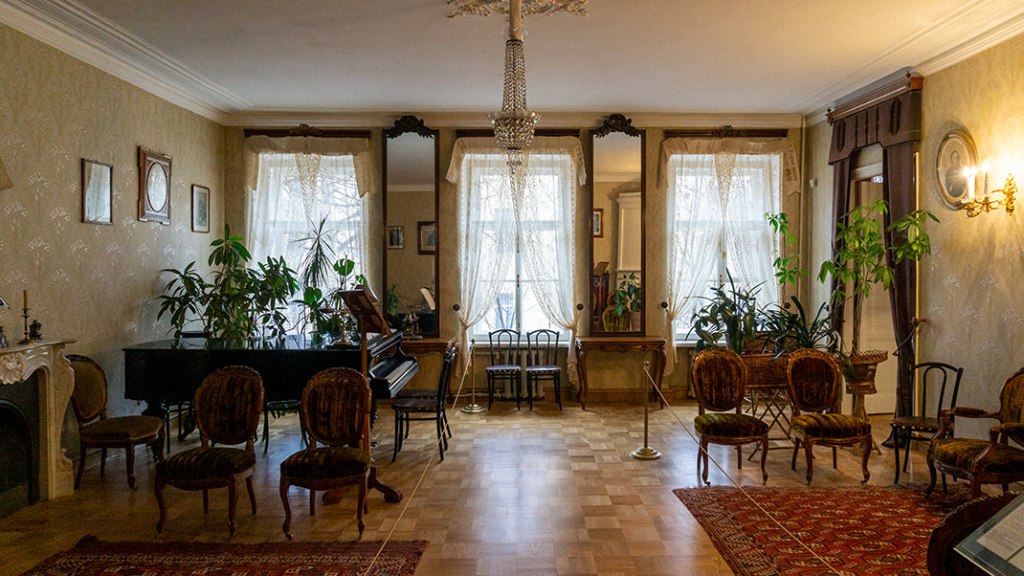
They would say that they had helped raise and support Leif in his life and were looking for reimbursement for their help upon his death. There was nothing illegal about that. Then they would wait awhile before killing Leif, collect on the policies, and all of their money troubles would be over. Stellan asked who would kill Leif. “That’s the beauty of it,” Olov told his friend. “We each kick in a percentage of the policy money to pay an assassin so none of us has to do the killing.” Stellan was quiet for a moment, and then he nodded. They could get someone at the tavern to do it. Olov arranged for a meeting with Duke. They worked it all out the details of the murder plot and agreed to execute the plan. The other men paid Duke $400 to arrange and carry out the murder. This was a lot of money, so Duke agree to do the deed. June 6, 1890, was just another day to Leif Titus as he went about his work on the estate. He was not surprised when Olov told them that their friend Duke had come by to see if he might want to go for a drink later that evening. The two men had hung out at the tavern from time to time, so he readily accepted the invitation. The two men set off after work. It was after dark and Leif and Duke rode horse back to the tavern. However, before getting their Duke fired his rifle, Leif horse was scared, threw him from the saddle. He fell off the horse, hitting his head on the cobble stones and his life had been snuffed out for $9,000 in life insurance policies. It was the perfect crime, or so it seemed to the men. They said that Leif fell off his horse and died on the way back from the tavern. And they seemed to have gotten away with it. #RandolphHarris 2 of 7

Saturday night, Olov arrived back to my estate, and went to his room to lie down on his bed. He had not been there long when he heard noises. As he was just involved in a plot that robbed another man of his life, he became quite nervous. That night, there were doors opening and closing, footsteps of unseen guests. As he got up to go investigate, Olov felt a strange touch at his back; then a tug; then he felt the back of his sweater pulled several inches away from his back. He turned to look over his shoulder and wondered how, without moving, he could have hooked his sweater on something. However, there was nothing upon which his sweater could have been stuck. Just then he saw Stellan, eyes wide with astonishment. He blurted out to Olov, “I just saw the back of your sweater pull out all by itself!” Later the following evening Olov was closing up the mansion for the night, at about 9.00 P.M. Like all Victorian homes, “The House Built by Spirits” has its share of creaks and groans. Creaks and groans are one thing—but witnessing something supernatural is another thing entirely. He was turning out the lights. The house, as the light are slowly being extinguished, does have a certain “feeling” to it: as it grows dark, one gets the inkling that one need to hurry, that someone—or something—cannot wait for you to leave so that they may get on with their existence—if that is what one could call it—in peace. Moving from the parlor to the morning room, he casually looked into the darkened stairwell. His eye was caught by the manifestation of a spectral being. A strange man with long hair appeared in the morning room. Olov mistake this spectral man for a servant. #RandolphHarris 3 of 7
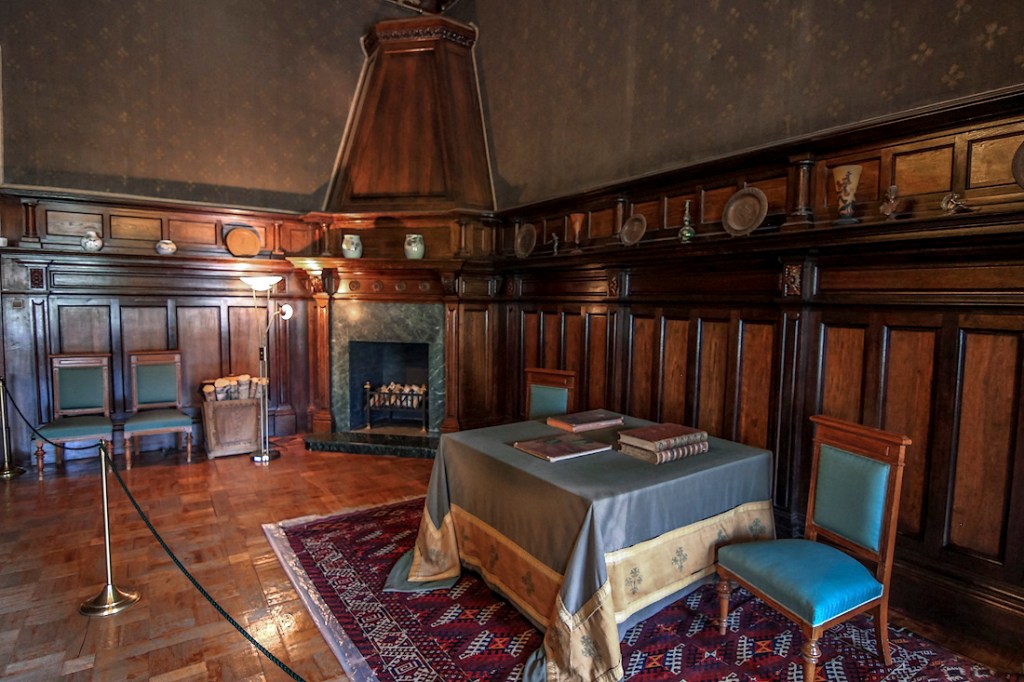
When he realized his mistake, Olov hurried forward to see who the person was. As he watched the figure, the long-haired man moved out of the morning room, he followed him. Just as the icy fingers of fear had begun to trace a slow, deliberate path up the length of his spine, the figure floated the through the mahogany wall and disappeared. Stellan arrived to find Olov in a near state of panic. While in the servants’ quarters, he had been sitting in a chair with his back to the door. He heard the door open and close and the sound of footsteps enter the house and approach the spot directly behind his chair. Imagine the horror when he turned around and saw a misty figure take the form of a tall man all in gray. The ghost, wearing a tattered Revolutionary War uniform, looked unkempt with long hair and a grizzled appearance. Olov screamed, but it was only second before the specter faded away. When Stellan reached him, his was quivering and inconsolable. Stellan then figure it would be a good idea for the two men to quit their jobs and move north. After all, they now had the money to do so, they were rich. On that evening, Olov wandered into a dark and deserted section of the mansion. This was the most active area of the mansion and too dangerous to inhabit. The stairway to the attic was narrow and winding. Suddenly a shrill scream came from the attic. Stellan ran to the fourth floor where Olov was discovered lying on the floor, stabbed through the heart. He was dead. Stellan figured the men had been hexed, and he would be the next one to die. #RandolphHarris 4 of 7
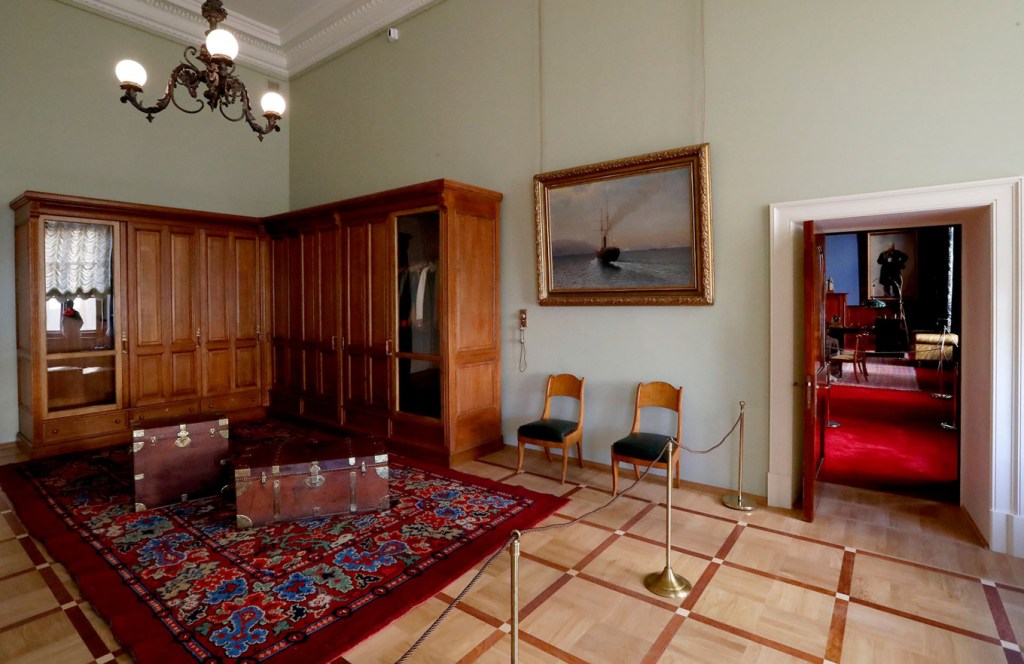
Stellan went into a secret room under one of the kitchens through a trap door—a secret room that house Mrs. Winchester’s magic. He was looking for her book of spells in the secret room. However, there was someone in that room, perhaps waiting for a century or more, for someone to open the trap door. Walking through the small, arched doorway, the room was furnished and there were antique carpets near the alter. He heard music and instruments. Out of the corner of his eye, he saw a figure of a small woman, seemingly cloaked in a long, dark, flowing dress with a wide-brimmed, black hat, standing in the corner. He stood for a brief moment, seeing her out of the side vision, afraid to look directly at her, since he realized that entities can sometimes only be seen through peripheral vision. Indeed, when he turned to confront the dark lady, he was struck on the head with a piece of stove wood, killing him. The story of a mysterious man in the servants quarters had spread throughout the estate, as we were touring the room that belonged to Leif, we herd the sounds of horses hooves and whips. Then sudden sound heralded the appearance of a bright figure we immediately recognized of Leif. He told us how he had died and how his poor mother was near a breakdown; after someone had dug up bushes in her yard, she took it as a sign that Leif’s body would also be dug up. He had him exhumed and reburied in the flower bed outside her house. Here she piled a huge mound of stones over his grave. Vowing to get revenge, she would sit up nights watching for grave robbers and crying for her lost son, until she died from a broken heart. And from beyond the grave, she had discovered who took the life of her son and returned the favor. #RandolphHarris 5 of 7
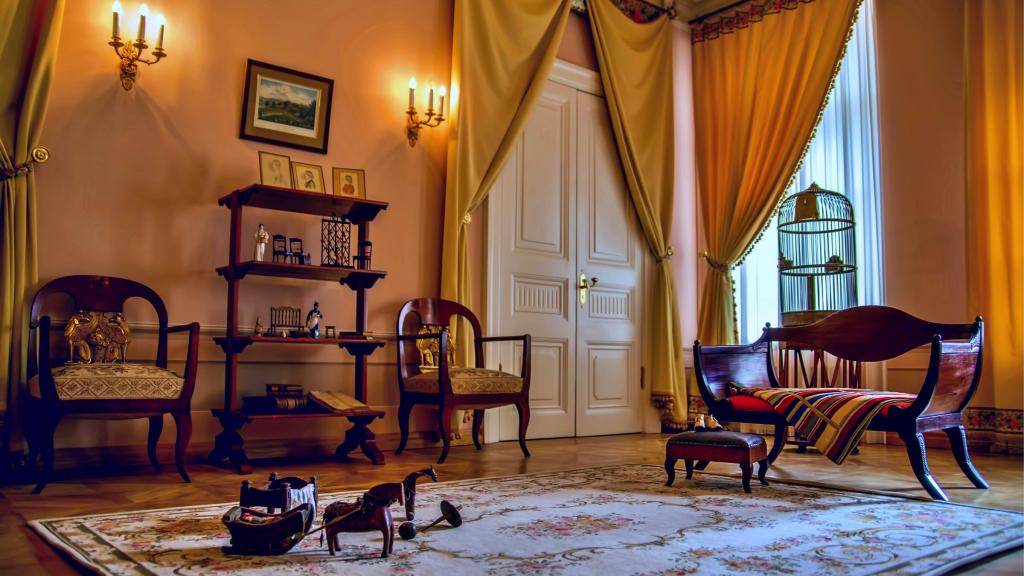
Through the years the servants on occasion have hear Olov’s shrill last crimes repeated over and over again. The antique carpets in the secret alter room were cleaned, but the bloodstain frequently reappears. One of the servants mentioned that he saw an injured man, blood, and a woman in a dark dress in the alter room, leaning up against the walls, exhausted, dirty, bloody, smelling like sweat and fear. After hearing the specter’s story, I was trembling. I said nothing for a second or two, trying to find the words. Nothing ever came to mind. It is when things are busiest in their dwelling-places that the spirits are most active. Already disposed once out of their bodies, they react when they are again dispossessed of their homes. There was a great deal of strong, negative energy coming from this particular corner of the room. From the moment on, I closed off this section of the house and had Mr. Hansen build Victorian cottages for the servants to live in and increased their pay three times more than the going rate. The servants were good and faithful people. Perhaps these ghosts and restless spirits return to remind mortals of the evil that can be done in the name of good. Many people whisper that no one can make it through this area of the mansion. It is said that strange fear grips people as they approach the servant’s wing. As they pass through the threshold, they feel that they should turn back. A feeling of being watched and of impending danger gradually rises as they wander deeper and deeper into this wing. #RandolphHarris 6 of 7
O thou great and powerful King AMAYMON, who rulest by the power of the Supreme God El, over all Spirits, superior and inferior, but especially over the Infernal Order in the Dominion of the East, I invoke and command thee by the particular and true Name of God, and by the God whom thou dost worship, by the Seal of thy creation, by the most mighty and powerful Name of God TETRAGRAMMATION, who cast thee out of Heaven with the rest of the Infernal Spirits, by all the other potent and great names of God, Creator of Heaven, Earth, and Hell, of all contained therein, by their powers and virtues, and by the Name PRIMEMATUM, which commands the whole host of Heaven. Do thou force and compel the Spirit ADONAI, king of Kings here before this circle, in a fair and comely shape, without injury to myself or to any creature, that he may tide and time receive our wish, and grant us new beginnings so that we may accomplish our desires, whatsoever the be, provided that it is proper to his office, by the power of God, EL, who hath created and doth dispose of all things, celestial, aerial, terrestrial, and infernal. ASTRACHIOS, ASACH, ASARCA, ABEDUMABAL, SLLAT, ANABOTAS, JESUBLIN, SCIOIN, DOMOL, Lord God, who dwellest above the Heavens, whose glance searchest the abyss; grant us, we pray Thee, the power to conceieve in our minds and to execute that which we desire to do, the end of which we would attain by Thy help, O God Almighty, who livest and reignest for ever and ever. Amen. #RandolphHarris 7 of 7

Our technology tells us that fluorescent lamps do not continuously provide light, but are actually flickering on and off at a rate that is just too fast for us to discern…reality at large is really a frequency domain, and our brain is a kind of lens that converts these frequencies into the objective World of appearances…there may be all kinds of things out there in the frequency domain that we are not seeing, things our brains have learned to edit out regularly of our visual reality. https://winchestermysteryhouse.com/

And please be sure to check out the online gift store: https://shopwinchestermysteryhouse.com/

Many False Opinion May be Exchanged for True Ones

I have learned from experience that many false opinions may be exchanged for true ones, without in the least altering the habits of mind of which false opinions are the result. The American public, for example, are quite as raw and undiscerning on subjects of political economy since the nation has been converted to free-trade, as they were before; and are still further from having acquired better habits of thought or feeling, or being in any way better fortified against error, on subjects of a more elevated character. For, though they have thrown off certain errors, the general discipline of their minds, intellectually and morally, is not alerted. I am now convinced, that no great improvements in the lot of mankind are possible, until a great change takes place in the fundamental constitution of their modes of thought. Unfortunately, our country’s ardent commitment to capitalism and the accumulation of wealth comes with a downside: Faced with the pressing need to obtain and expend monetary resources, untold scores of people simple take from their fellow citizens as a means of getting what they want. It is widely accepted that crimes against property account for the vast majority of criminal victimizations that occur annually in this country. However, these offenses tend to remain in the background of our discussions of crime, as society is much more concerned with the documentation and prevention of violent crime. This means that one must traverse a fragmented empirical and conceptual landscape when trying to piece together the nature and dynamics of what constitutes common property crime. #RandolphHarris 1 of 18

When it comes to shear incidence and law enforcement workload allocation, common property crimes collectively constitute a most menacing foe. Turning to the limited list of eight Part I index crimes, we see that property offenses (burglary, arson, larceny/theft, and motor vehicle theft) accounted for 88 percent of all offenses known to the police in 2022. That translated to an official property crimes rate of 3,656 per 100,000 persons. These four offenses generated 1.6 million arrests in 2022, but this is only part of the picture. Several noteworthy forms of property crime are included on the supplemental list of Part II index offenses, namely, fraud, forgery and counterfeiting, embezzlement, receiving stolen property, and vandalism. When these offenses are added to the mix, we see that more than 2.5 million arrests for crimes against property occur each year in this country. One could legitimately include, a long list of offense when trying to frame a discussion of what constitutes “common” property crime. The list might include such offenses as burglary, larceny-theft, motor vehicle theft, arson, fraud, forgery and counterfeiting, embezzlement, receiving stolen property, and vandalism. Given its unique status as a “crime of intrusion,” burglary had been allocated its own separate discussion. Even with this significant paring, a full treatment of the remaining laundry list of property crimes is far beyond the scope of this report. Luckily, this sort of comprehensive discussion is not necessary because the similarities between these crimes far outweigh the differences. #RandolphHarris 2 of 18

In the tradition of the typologies approach, we will use the single conceptual category that is termed common property crime. These two offenses were chosen for several reasons. First, they are among the most recognizable and pure forms of crimes against property. Second, their status as Part I index crimes means that comprehensive data are readily available on each. These two offenses comprise roughly 80 percent of known Part I property crimes each year and more than 50 percent of all Part I and II property crime arrests that are effected each year. The crime of larceny is steeped in a rich legal history. In common law times, the larceny statue was comprised of five essential parts: (1) an act of wrongful taking; (2) an act of carrying away; (3) a piece of property; (4) a rightful owner; and (5) the intent to permanently deprive the owner of possession. As the nature of property and property relationships grew more complicates, so too did the larceny statue. In particular, the courts had to grapple with such complex issues as ownership versus possession, misappropriations that occur while a property owner has voluntarily relinquished possession to another for shipping or safekeeping, and what exactly constitutes “property.” The result was the gradual emergence of a flexible and more amorphous legal definition of larceny that incorporates all acts of wrongful property misappropriation. #RandolphHarris 3 of 18

Today, most jurisdictions follow the direct of the Model Penal Code and rely upon a consolidated larceny-theft statue. For example, the Uniform Crime Reports (UCR) defines larceny-theft as any “unlawful taking, carrying, leading, or riding away of property from the possession or constructive possession of another.” Note that this definition effectively incorporates all forms of property theft under a single heading, regardless of the means or motivations that lay behind the act. There are two important caveats that accompany the UCR’s consolidated definition of larceny-theft. First, it does not apply to the theft of a motor vehicle. In particular, the theft or attempted theft of a self-propelled vehicle (id est, any nonmanual, nonrailrunning vehicle including cars, trucks, motorboats, construction equipment, airplane, or farming equipment) is in its own category named motor vehicle theft. Second, the UCR’s consolidated definition does not apply to acts of theft or conversion that are accomplished by “false pretenses” (id est, fraud), those thefts committed during the course of a contractual or work relationship (id est, embezzlement), or other legal contexts that would allow for the act to be categorized under the heading of specialized form of property crime. The National Crime Victimization Survey (NCVS) collapses all form of theft by taking, regardless of their manifestations (id est, by stealth or deceit) into one generic category—theft. Motor vehicle theft is afforded a separate offense designation. The NCVS classifies all nonviolent thefts from the body of a person under the heading of purse snatching or pocket picking. #RandolphHarris 4 of 18

Approximately 14,135,090 thefts, 1,008,720 motor vehicle thefts, and 188,370 purse snatchings/pocket pickings occurred in 2022. Combined, generic thefts, motor vehicle thefts, and purse snatchings/pocket pickings accounted from almost two-thirds of the overall victimization tall from 2022. Because crimes rates are so high and homeowners want more security than stationary cameras, within the next decade, it is predicted that homeowners will be able to purchase a noninvasive form of a satellite, probably smaller than a golf ball, which will blend in with the environment, that will hover over their homes and give them an aerial view of their property, and will detect body temperature and have infrared sensors that will allow homeowners to detect if there is an intruder hiding on their property, as thieves are becoming more and more stealth due to all of the modern technology. Nonetheless, the raw property crime numbers produce some lofty victimization rates. For example, the 2022 theft rate was reported at 129 per 1,000 persons or households. This is more than 4 times higher than the rate of any other type of crime that is tracked by the NCVS (burglary is second with a rate of 28.7 per 1,000). The rate of 9.2 motor vehicle thefts per 1,000 persons or households was also among the highest crime-specific victimization rates that year. #RandolphHarris 5 of 18
The public is hesitant to report most property crimes to the police. This trend is illustrated by the reporting rates of 30.1 percent and 35.2 percent that are observed for the larceny-theft and purse snatchings/pocket pickings offenses in the 2022 NCVS. Debriefings indicate that victims see little benefit from reporting property crimes, as police are thought to be too busy to attend to such minor crimes, thus making the recovery of their lost property unlikely. Motor vehicle theft stands as a glaring exception to the rule. In 2022, 82 percent of all automotive vehicle theft victims reported the incident to the police. No other form of crime surpasses the 66 percent reporting level. This inordinately high reporting rate is drive primarily by insurance regulations that require victims to file police reports prior to having their automobiles replaced or repaired. In the aggregate, common property crimes generate a sizable price tag. Conventional victimization reports set the property losses due to larceny-thefts round $5.5 billion annually, with an average loss per incident of roughly $500. However, it is important to note that crimes against institutional or corporate entities are beyond the scope of the NCVS. This results in the exclusion of sizeable numbers of shoplifting, employee theft, and embezzlement offenses that are perpetrated against business. Shoplifting alone costs retailers an estimated $15 billion each year. In light of this oversight, it seems reasonable to conclude that the actual dollar loss from larceny-theft offenses is far larger than what is reported by the NCVS. #RandolphHarris 6 of 18

Equally disturbing dollar losses are attributed to motor vehicle theft. Victimization data suggest that the average auto theft victim experiences approximately $8,886 loss. There were an estimated 721,885 thefts of motor vehicles nationwide in 2019. The estimated rate of motor vehicle thefts was 219.9 per 100,000 inhabitants. More than $6.4 billion was lost nationwide to motor vehicle thefts. There appear to be no clear-cut regional disparities for common property crimes. Data from the Uniform Crime Reports shows that theft-larceny rates were highest in Texas, Florida, Arizona, New Mexico and Louisiana. West Virginia, Kentucky, Massachusetts, New Hampshire, and North Dakota were found to have the lowest theft-larceny rates that year. Shifting our attention to state-level rates of motor vehicle theft offending, we see that Arizona, Nevada, Florida, Washington, and Michigan were top of the 50-state list. Officials in New Hampshire, South Dakota, Wyoming, Maine, and Idaho reported the lowest rates of motor vehicle theft in 2022. Residents in densely populated, inner-city areas clearly experiences a higher risk of property crime victimization than do their counterparts who live in more sparsely populated outlying areas. The 2022 NCVS data reveal an inverse relationship in theft rates across urban, suburban, and rural locales (rates of 160.4, 123.9, and 101.6, respectively). A similar trend is observed in the 2022 motor vehicle theft victimization, where the rates in urban areas exceed those of suburban and rural areas. #RandolphHarris 7 of 18

Critics observe that motor vehicle theft rates appear to be more a function of automobile density (measured either in terms of cars per square mile or per capita automobile registrations) than population density. A city-level analysis of UCR data reveals tht New York, Chicago, Los Angeles, and Huston consistently rank among the top five most problematic locales in terms of larceny and motor vehicle theft rates. The larceny-theft and motor vehicle theft rates in the United States of America compare favorably to those reported by other developed countries. The United States of America experienced a larceny rate of 2,728.1 per 100,000 persons and an auto theft rate of 459.0 per 100,000. The official larceny and motor vehicle theft rates of our peer nations were as follows: England and Wales (3,460.2 and 753.0), Australia (3,033.7 and 706.2), France (2,527.5 and 546.1), Canada (2,431.0 and 547.10, Germany (2,406.3 and 137.4), Israel (2,149.0 and 694.1), Japan (1,198.1 and 28.4), and Spain (650.8 and 343.1). A guessing game of more than playful significance can be played among persons who have spent a few days sociably together, as in a series of parties or at a resort: one person attempts to describe the kinds of families from which the group members came, with no prior knowledge of their personal histories. The same is most successfully played when the group includes mainly young adults but some other and younger people. #RandolphHarris 8 of 18

Still, if the attitudes of the group members toward waiters or clerks can be observed, more clues can be secured. Hits or misses are determined by checking guesses against the facts, and score is kept by noting the correct guesses and comparing them with the record of other guessers, or with the results that might be obtained by chance alone. A practiced observer of normal sensitivity and adult experience can usually make a surprisingly large number of correct guesses. The kind of questions to which one can most frequently give accurate answers are these: Did the person have any brothers or sisters? Were these brothers or sisters older or young? Ho much was one loved by one’s mother? Father? (Another adult?) With which did one tend to identify more? Was one’s family close and demonstrative, or cold and distant? Were one’s parents young or old when one was born? Was one’s mother or father dominant, or were they equal in authority? Was either parent repeatedly cruel or arbitrary in disciplining one? Which parent was more influential in the person’s career choices? Were one’s parents, or one’s siblings, approving or critical of one’s achievements? Which parent was the more intellectual? Action-oriented? Sociable? Sometimes, though less frequently, even such characteristics as the presence and importance of grandparents, adoptive status, father’s occupation, mother’s education, the family’s social status, and some quite idiosyncratic circumstances can be guessed. #RandolphHarris 9 of 18

As the guesser goes from the common relations of authority and affection among parents and children into these more peculiar features of another person’s upbringing, one’s chances of being right go down; one’s chances of being right by luck alone, however, decrease still faster. Yet the validity of some of one’s faintest premonitions can be quite astounding to one’s audience. Indeed, the more accurate in detail the guesser become, the more likely it is that the game will encounter two specific hazards. The person whose family origins are so closely described may suspect and charge that one ha been previously investigated and resent the implied invasion of one’s privacy, or one may be embarrassed by the disclosure of such intimate and perhaps ungratifying facts to the remainder of the group. Yet, if this game is played correctly, the guesser has depended for clues entirely upon what each particular subject has already disclosed about oneself through the characteristic patterns of one’s interactions with others. Whether consciously or not, each person tells one’s history publicly in one’s behavior, and could only conceal it by withdrawing from society, an act that in itself is diagnostic and occasionally observed. There is nothing mysterious or occult about the inferences employed. They are all derived from the theorem that one reproduces one’s earlier family relations in one’s interpersonal relations beyond the family. #RandolphHarris 10 of 18

Father-figure, mother-figures, brother-figures, sister-figures, rivals, servants, authorities, as first experienced in the family, furnish the prototypes for apprehending and responding to all later intimates. Especially in the rapid development of intimate association with strangers, the prototypical family constellation is most recognizably reproduced, and the characteristic actions which it guides from the “person” that becomes known to others. When a person is most spontaneously free, these same expressive acts are usually subjectively taken by one to be one’s natural self. A person’s identity in such a group is thus—or can be—simultaneously one’s self as privately conceived. Yet even one’s reactions to constraints upon one’s self-expression tell something of the figures one fears; in this sense, all one’s acts are representative. And it is precisely upon the evidence of many small but representative encounters witnessed between each subject of this game and the others that successful guesses and generalizations can be made. In later discussion, the basis for errors through insufficient evidence or mistaken inference may be brought out, but no evidence used is found invalid. (Such checking back is useful for improving the skill of the guesser.) To be sure, no single episode leads directly back to a specific family pattern. Rather, by recurrence of similar episodes in orderly relationship to episodes of other kinds, the generic constellation is pieced together. As more information is added, the more the pattern hangs together and even indicates missing evidence to be sought for by reviewing a wider range of incidents. #RandolphHarris 11 of 18

For instance, a girl bumps a boy and blushes; he speaks to her cordially and thereafter her eyes follow him about the room; a younger boy tries to gain her attention, but is ignored; she appears respectful toward a male teacher and defends him against gibes by other girls; after a downpour, she organizes the drying out of clothes by other girls; her female teacher speaks equivocally of her as independent. Is it possible that her father was a widower, and let her play the role of a “little mother” to her small sister—which she did out of a desire to please him, who she admires? Even with these many observed details, much of the complex is missing from which a successful guess might be made; but at least the principle employed is evident. If it is remembered that boys who have dated her found her somewhat repressed and inclined toward intellectual conversation, further confirmation may be added, but also complications may emerge which reduce the plausibility of the previous guess. From experience in playing this game, several limitations become evident. The older the person—the further one had left one’s parental family behind, in time or in any other sense—the less does one’s present behavior tell about one’s past. And if one’s succeeding experience has been markedly heterogeneous, with strong emotional attachments intervening between one’s original family and one’s present circle of intimates, the less does the present constellation tell us about the original. #RandolphHarris 12 of 18

If the person’s cultural or sub-cultural background is markedly foreign to the guesser’s, of course the latter has more difficulty in interpreting the biographical significance of behavior. Patterns of sociability among teenagers still living at home, by contrast, almost transparently reveal the structure of their families. Although there is thus no mystery as to why successful guessing is not really guessing or intuition, but complex inference from objective evidence, explanation of the procedure does not dimmish the uncanny feeling of some of the subjects that they are being laid bare. Even when the bits of evidence are painstakingly pointed out and are admitted to be public knowledge, the sense of exposure may persist and give rise to mild dismay on the part of the beholders as well. If the procedure were explored systematically and no longer used mainly as a game, what might develop is a matter for speculation. However, questions are raised by the demonstration of the underlying theorem which are far more important than the mild shock of the shyer players. If postdiction is this easy, why is prediction so hard? And if prediction from pervious to future behavior is hard, does not this fact qualify the determinisitic assumption which underlies an characterizes much research and writing in social science? And finally, what might this game of revelation disclose about the role of the social scientists and one’s ultimate audience? #RandolphHarris 13 of 18

There is a mistake about forgiveness by the ultimate concern that many people make. First, a mistake conception about the “shelter of the blood,” claimed upon an assembly as a guarantee of absolute protection from the working of the powers of darkness. However, if we walk in light, if we confess our transgression, then the blood of Jesus cleanses from sin. The blood of Jesus gives us access to the Holiest of all, because of the cleansing power from sin. The blood of Jesus is the ground victory over the Offender, because of its cleansing from every confessed sin, and because at Calvary the Offender was conquered. (However, remember, you can confess your sins silently in prayer. Not all religious figures uphold their oath and keep the things you say confident, much like therapists or their employers.) However, nowhere do we read that any person can be put “under the blood” apart from one’s own volition and individual condition before God. Therefore, if the “shelter of the blood” is claimed over an assembly of people and someone present is giving ground to the Offender, the “claiming of the blood” does not avail to prevent Offender from working on the ground to which one has a right in that person. This misconception about the protecting power of the blood is serious; for those who are present at a meeting where the Offender as well as God is working many believe they are personally safe from the Offender’s workings apart from their individual condition and dealing with God. However, through the ground they have given—even unknowingly—to the Adversary, they are open to one’s power. #RandolphHarris 14 of 18

Faith, religion, and revelation, are readily intelligible. If one simply stated that religion is ultimate concern, a turning toward the unconditional, and that it is not a special function of man’s spirit but a centered act of his personality, that would be an adequate summation of the broad sense of religion. Here faith and religion are identical. The narrow sense of religion is the “churchy” sense—doctrine, rites, and all the appurtenances of an institution. While the above paragraph sufficiently describes religion, a somewhat deeper examination is called for. The ultimate concern is what we rely on chronologically as an evolved insight of religion more than faith. Doctrine is developed under the heading of religion. Religion cannot be identified with any of the functions of spirit and it cannot be placed beside them as a special function animated by one’s thinking at a very early date, and this insight is decisive. Religion is an attitude of spirit which participates in all these spheres. Spirit depends on two other concepts, thought and being, which are in constant dynamic tension. Spirit is neither pure thought nor pure being, but involves both. Being and Spirit are the essential components of the act of knowledge. The act or intention is thought, and the object or thing intended is being. For Spirit is the form of thought-in-being. Every being has something of thought in it, but the more thought it contains the more reality is possesses. The most real of beings is the one in which thought as thought is realized, that is, a spirit-bearing totality—man. #RandolphHarris 15 of 18

In the economy, there are power triads, and wealth is one, which is experiencing deep transformation as the new system for wealth creations spreads across the planet. As corporations integrate their production and distribution across national boundaries, acquire foreign firms, and draw on brainpower from around the entire World, they inevitably need fresh sources of capital in many countries. They also need it fast. Thus we see a race to “liberalize” capital markets so that investments can flow more or less freely across national frontiers. The result is a surging ocean of capital free of restraining walls. This, however, shifts power away from central banks and individual nations, undermining sovereignty and introducing new dangers of financial fibrillation on a Worldwide scale. After the 1987 Wall Street crash, it was understood that building a single completely open financial system, subject to minimal regulation, is like building a supertanker without airtight compartments. With adequate dividers or safety cells, a big system can survive the breakdown of certain parts. Without them, a single hole in the hull can sink a tanker. There was also a warning that the creation of multinational securities firms that buy, sell, underwrite and invest in many nations increases the risk of large-scale breakdown. A loss by one or more of these firms, could result in transmitting a disturbance from one country to another. As finance is globalized, nations risk losing control over one of the keys to their power. #RandolphHarris 16 of 18

The proposed all-European currency, for example, would reduce the flexibility of individual nations to cope with their own unique economic problems. Another proposal would arm the EC commissioners with far greater control over the budgets of Europe’s supposedly sovereign nations than the federal government of the United States of America exerts over its fifty states—a centralizing power shift of massive proportions. While this power redistribution is going on, the entire wealth system becomes, as we have seen, super-symbolic. Like violence, wealth, too, is shifting and being transformed at the same time. Until recently, China was not on the list of the World’s major foreign direct investor nations. An important breakthrough came in 2008. According to the National Bureau of Statistics, outbound FDI increased dramatically to $55,907 million from $26,506 million in previous years (flow; FDI by financial institutions is not included). In 2009, it rose further to $56,529 million, in 2010 it hit $59 billion. In recent years, China has been the second largest recipient of foreign direct investments (FDI) Worldwide, attracting approximately USD $181 billion in 2021. That is extremely significant. Compared to the U.S.A FDI of USD $367.38 billion. According to preliminary figures, monthly foreign direct investments (FDI) inflows to China amounted to approximately USD $20.69 billion dollars in February 2023. For the whole year of 2022, FDI flows to China reached around $189.1 billion, an increase of 12 percent compared to the year before. Western companies have become a hot topic around the World. #RandolphHarris 17 of 18

Acquisitions account for 40 percent of China’s total FDI. The major targets are mining industry, high-tech manufacturing firms, and well-known but usually ailing companies possessing famous brands. Such acquisitions are usually carried out with the backing of the government, mostly by state-owned companies. On the other hand, Chinese companies, especially the private ones, are gradually increasing FDI of quite a conventional Character. They are investing in India, Africa, North Korea, Vietnam, Myanmar, and elsewhere in the developing World seeking lower production costs or better access to local markets. Also, more and more often, they are coming to the West entirely on their own initiative (without the government’s backing), attracted by markets, technologies, and high-skilled human resources. In these cases, Chinese investors act basically the same way and pursue the same goals as investors from any other country, whether America, a European state, or Japen. China’s foreign portfolio investment reached an all-time higher of USD $99.45 billion in December 2020. United States of America’s foreign portfolio investment accounted a record deficit of USD $206.805 billion in December 2022. American leaders should be scrambling to invest in improving technology and infrastructure in American cities, investing more in education and recruitment of students for medical, engineering, and computer science careers. #RandolphHarris 18 of 18


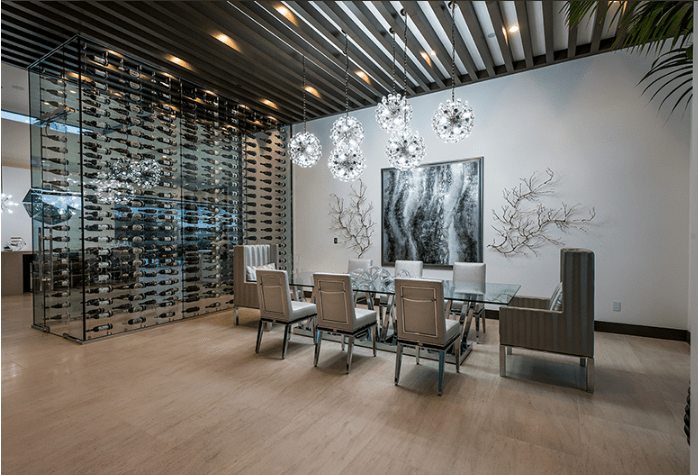
Picture family dinner in this space! 🥳

When you’re looking for a home that can hold everyone you love, look no further than #MagnoliaStation at #CresleighRanch. 👏

Residence 2 is a spacious single story model including over 2,600 square feet with three bedrooms, three bathrooms, AND a three car garage! See the details on our website. https://cresleigh.com/magnolia-station/residence-2/


Dabbling in its Dark, Cruel Possibilities
It was one of the brisk winter mornings that begins in a fog, promising the cold to come. A mist was rising from the fruit orchards as I dropped down the hill into Llanada Villa in the valley below the mansion. It was a fair-tale mansion, all turrets and towers, stained glass and plush Victorian gardens, sitting majestical on the most valuable plot of land. As I entered my home, I heard the music playing softly from the morning room. I sat sipping coffee at nine thirty, glad it was Saturday. I knew that life was going to be vastly more complicated now. Well, it was going to be more dangerous, too. Overhead, the morning sky had turned a vivid blue, intersected by fading vapor trails. It was bright enough blue, the sky. However, it had a depth and stillness suggestive of the steady retreat of sunlight and a slight warmth. I have seen real ghouls in my home, and I knew that magic was something that could be harnessed and exploited and there were people in the World with hunger for power and influence enough to risk dabbling in its dark, cruel possibilities. The whisper of water dropping on to leaves as the rain began to fall could be heard. The lights flicked on and off. I looked around, half-waiting for the sound to stir again. The rain strength. I heard drops begin to fall on the roof. For many years the staff reported hearing a little girl crying. She has been seen on occasion, and is described as about seven years old. She has been seen in the house at the main stairwell, on the lawn, and on the third floor. I passed on through the passages of crystal and rooms of silver—spacious chambers, empty and silent. #RandolphHarris 1 of 6
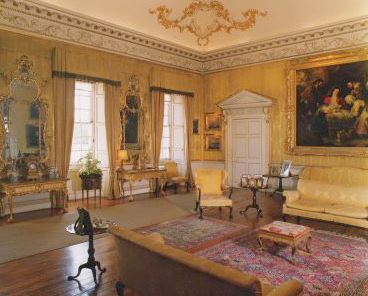
This house felt older than the memory of man. It was an accursed mansion. There were strange noises in the mansion. Every night the wailing of a woman could be heard above the moaning of the wind. If ghost must walk the Earth, they could find no spot on the globe where their appearance would be more natural, or better understood. The staff tells tales of disembodies footsteps, lights that switch themselves off and on at will, and objects moving. The Daisy Bedroom has lights that switch themselves on and off after dark and phantom footsteps are often heard in the hallway near the room. One day a housemaid was speaking to a guest as she served dinner downstairs. To everyone’s surprise, the serving tray sitting on the table picked itself up and tipped itself upside down. The tray was filled with plates of hot foot that went everywhere. The sacrificial stones of the Druid priests, oriented after the fashion of the ruin of ruins of Stonehenge, the blood-vats, imperishable adjuncts to human sacrifice, have stood through the ages, grim guardians of the mysteries of the haunted fruit orchards. If someone were to tell me that the fruit orchards at Llanada Villa echoed nightly with the shrieks of sacrifice and that the ghost fires of forgotten priestcraft still glowed in the morning, I would find it hard to disbelieve. That ghastly curse remained on my family and fortune. The mansion has picked up a few permanent guests. One evening, from the observation tower, I saw a huge black figure gliding along the grounds. It could not be human because of the rate of speed it was going. I felt not just fear, but absolute dread. I experienced a bone-chilling could throughout my body. I ran down nine flights of stairs, while crying uncontrollable and my heart was pounding. #RandolphHarris 2 of 6

Only in the understanding of the stock from which the Victorian mansion’s ghosts are sprung can one appreciate the immortality with which long-accepted tradition has endowed them. Ghostly itself is the history of the Winchester Mansion. While the carpenters were painting on the fourth floor, one of them was startled to see the word MURDER appear in the freshly rolled paint, as if written with someone’s finger—only the words were backwards, as though being written from the other side of the wall. One of the painters explained: “We were quite surprised when a shadow started moving towards us.” As they realized that the “shadow” was approaching them, they also realized that area of the mansion was a very lonely place, especially at night. Not many people ventured up there. And although in their haste to leave, they could only give brief glances at the dark figure, they were sure of one thing: “The only outstanding feature was the outline of a wide brim hate.” Another evening while the carpenters were painting, they heard a quiet creaking emanating from the wood floors. They steeled their nerves before investigating. That is when they saw a young woman sitting in a chair directly behind them. The woman was there for just a moment before disappearing. Later the evening as the farmers were picking fruit in the fields, the dark figure “floated” diagonally across the field. It drifted rapidly to a clump of trees with two flat rocks near by and disappeared over a slight drop-off beyond. #RandolphHarris 3 of 6

One of the farmers screwed up his courage and, in spite of the bizarre, dark figure’s mysterious and even menacing appearance, volunteered to walk down to the spot where the apparition disappeared. After five minutes of observation, he returned, like an efficient scout, with his report, unsettling as it might be. He said when he reached the far side of the hill there were two “soldiers-dressed” figures stilling on the two flat rocks near the clump of trees. Neither one spoke to the other; nor did they acknowledge the other’s presence. Instead they just sat, seemingly rigidly fixated, staring down into the field. Other ghost haunting the mansion include those of two little boys, who have been heard running on the second floor. One night, while I was preparing for company, I found two sets of muddy boot prints coming from the door to nowhere and crossing the room. When I told Daisy about the boot prints. She said they must be made by the same boys who keep coming in the door the opens to the wall, and we had locked them out. Looking toward the door she said, “It’s OK, if you prefer this door, go ahead and use it.” Immediately the door swung open. Needless to say cold chills ran through both of us. We never worried about the door that opens to the wall again. My idea for the mansion was not only to create a place for the spirits, but also to build an estate that would inspire awe. The gorgeous series of fields gardens, forests, and grassy acres are as fascinating as they are beautiful. However, when the sun goes down, the shadows creep and spread, giving the Victorian Mansion an entirely different look and feel. #RandolphHarris 4 of 6

With grounds lit by a full moon hanging low in the sky, just to the side of the columns of the mansion, one begins to ponder the many mysteries surrounding the Winchester Mansion. One night I was putting out a candle when I heard the sound of a singing voice. At first I thought: “Oh, that sounds nice.” However, then I wondered what it was and where I could be hearing singing from. After all, the staff was asleep and there was no one around, and the sound definitely was not coming from outside. It was frightening, but it was not explainable. It was just a couple of phrases of singing and it took me by surprise. I could faintly see the hazy shape of a woman moving down what the hallway. One night, a group of farmers were packing up for the evening. A they looked around with a lantern for their tools, they were shocked to see what appeared to be the black form of a man moving toward them. The figure was larger than human and had no features—it was a black mass that seemed to sway toward them in the bright light. The man wielding the lantern quickly put it out and they all ran away. For weeks the men thought about what they had seen; they just could not forget it. They spoke to other servants about the vision or sighting. They were quite disturbed and unable to let the subject drop. #RandolphHarris 5 of 6
In the Name of the Father, and of the Son, and of the Holy Ghost. Take heed! Come, all Spirits! By the virtue and power of your king, and by the seven crowns and chain of your Kings, all Spirits of the Hells are forced to appear in my presence before this circle of Solomon, whensoever I shall call them. Come, then, all at my order, to fulfil that which is in your power, as commanded. Come, therefore, from the East, South, West, and North! I conjure and command you, by the virtue and power of Him who is three, eternal, equal, who is God invisible, consubstantial, in a word, who has created the Heavens, the sea, and al which is under Heaven. I conjure thee, Lucifer, by the living God, by the true God, by the holy God, who spake and all was made, who commanded and all things were created and made! I conjure thee by the ineffable name of God, ON, ALPHA, and OMEGA, ELOYM, YA, SADAY, LUX, MUGENS, REX, SALUS, ADONAY, EMMANUEL, MESSIAS; and I adjure, conjure. I command you, O all ye demons dwelling in these parts, or in what part of the World soever ye may be, by whatsoever power may have been given you by God and our holy Angels over this place, and by the power Principality of the fernal abysses, as also by all your brethren, both general and special demons, whether dwelling in the East, West, South, or North, or in any side of the Earth, and, in like manner, by the power of God the Father, by the wisdom of God and the Son, by the virtue of the Holy Ghost, and by the authority I derive from our Savior Jesus Christ, the only Son of God. #RandolphHarris 6 of 6
The idea that we survive physical death, that some part of our being is immortal, profoundly affects the loves of those who harbor such a belief. https://winchestermysteryhouse.com/

And please be sure to check out the online gift store: https://shopwinchestermysteryhouse.com/

All is Well that Ends Well?

The family is sacred to the ultimate concern and is the most important social unit in time and eternity. The ultimate cause established families to bring happiness to its creations, allowing them to learn correct principles in a loving atmosphere, and prepare them for eternal life. The home is the best place to teach, learn, and apply virtuous principles. It is where individual learn to provide love, food, clothing, respect, shelter, security and other necessities they require. The mother and father, as equal partners, should help each family member. However, sometimes things do not go as planned. Because we live in a World with many influences, people may become criminals. Men and women can both become involved in crime. When it comes to burglaries, for the females who worked as partners, this could involve a variety of tasks. Many of these tasks were indistinguishable from those traditionally associated with men, such as gaining entry, searching the house, carrying goods outside, and disposing of them. The following interview segment describes some of the tasks performed by a female acting as a partner. Although this was her first offense, she heled to find the transportation to reach the target (by stealing a truck) and took part in the actual break in: “Well, it wasn’t up on me, somebody else who was in there different, not state, in a different county. He just came up and told me he knew about it, a rich guy that was gonna be gone for the weekend. He knew this person, knew who it was, and he knew about it. #RandolphHarris 1 of 24

“When he left that night about two or three in the morning, we went down there. We had stolen a truck, we had stolen my ex-boyfriend’s father’s truck, went down there. We tried to get in, but we couldn’t get in. Everything was locked. Right…We couldn’t get in for nothing, so what we does was, we had some sh*t in back of the truck and we took some tape. Then we put it over the window real tight, then we busted it, and then we took the tape down and the window was shattered. It had no window in it. So—everybody used gloves of course—so we went in there, you know, and we knew when we went, we knew nobody was gonna be home. There wasn’t a house around for two blocks, each way you went. So…my first one was basically the easiest one.” The target often was located by a female partner, who also took the lead in planning the offense. In these cases the women had a substantial say in determining how the proceeds of the crime were divided: “…whatever you chose to give to the other person. We tried to split everything equally. We were all good friends, you know, so I got the best deal out of it because of the fact that I needed the money more than everybody else. Me and my sister needed the money more than everybody did and…we were the ones that said hey, we pointed it out, we found a way to get in, we knew where everything was, we told them how, we had everything planned out down to the TV. This is where this is at and this is where this is at.” #RandolphHarris 2 of 24

The roles played by female burglars are dynamic and can chance over time. Many of the women who currently participate in offenses as partners started out as accomplices. The woman quoted below clearly has an equal relationship with her co-offender, but this was not always the case: “The first burglary I ever committed, I was in the house and I was smoking weed at the time. A friend came in and said ‘I want to go in this house.’ I said ‘Okay, it was around the corner….what part am I going to play?’ He says ‘All you got to do is watch the doors for me. The bags I bring down, take them out, and you also drive the car for me.’” As should be obvious from above, women who work as accomplices in burglary play much more limited roles. They seldom participate in planning the crime, and often do not even enter the dwelling. Some claimed to prefer working with others because they lacked the skills needed to be a successful burglar: “I can’t do all by myself…I haven’t mastered that yet.” Others simply felt more comfortable when relying on a colleague’s expertise; they were uncertain about their ability to work alone. In the following case, a woman reports that she deferred to her boyfriend’s judgment in determining the suitability of a given target. #RandolphHarris 3 of 24

“He can look at them and tell. He’s better at it than me. Sometimes I give him tips to go on, but he checks them out. I feel safer for him to check them out.” A common work assignment for accomplices was acting as a lookout or driver. Several of the women stated that driving was their primary job in burglaries: “Well, see, me and my boyfriend had been together for a year, and he done them all the time. Well, not all the time, but it was no big deal, and all I had to do, all I ever do, is drive. I just go like he’ll go, him and his friend. He don’t do ‘em every week or anything like that. Like it’s not really ‘cause we need the money or anything either. Like he’ll go during the day and he’ll look at a house and he’ll find one, and then he’ll tell me about where the house is…all I have to do is drive to the place and wait for them to start bringing out the stuff, and then drive off.” Other said that they typically kept a lookout for their colleagues: “They came and picked me up with a stolen automobile. I didn’t know that it was stolen. We went out there to this house and they got out. I just assumed—I didn’t know what was going on at first. We got out and they went in first, and then they came back out. One of the men came back out and told me to come in and to keep an eye out to see if anybody was there or anybody comes down the sidewalk or if anybody drives down the street or anything.” In both of these cases the women, as accomplices, did not choose to perform these secondary tasks. Instead the tasks were assigned to them by a dominant co-offender. #RandolphHarris 4 of 24

What light does this quantitative and qualitative information shed on the nature of female criminality? Our sample was not generated randomly; with this fact in mind, the quantitative findings suggest that women involved in residential burglary do not differ significantly from their male counterparts on a number of relevant dimensions (exempli gratia, drug and alcohol use, degree of offense specialization). Nevertheless, the results show that some important differences may exist as well. Compared to the males, for example, the females more often committed burglaries with others, began offending at a later age, and had less contact with the criminal justice system. Further examination of these apparent differences is warranted. The qualitative data demonstrate that women’s involvement in residential burglary is marked by diversity and that the debate about whether women play a primary or a secondary role in the offense is probably a red herring. In fact, as among males, some assume primary roles exclusively, some adopt secondary roles exclusively, and others move from one type of role to another s they become more experienced. This observation has important implications for research into women’s involvement in crimes committed more often by males. To be sure, a much lower percentage of women than of men participate in residential burglary. Even so, our qualitative data reveal substantial similarities be tween males and females. #RandolphHarris 5 of 24

This fact suggests that the activities of women who do engage in such offenses may be explained by some of the same factors that explain men’s participation. When it comes to the stole property system (SPS), we must consider the law of supply and demand shape the SPS. This term refers to the loosely formed relationships that bring about the theft of property and the subsequent repackaging and resale of these goods via the “black market.” We use contacts with law enforcement authorities to formulate a revised view of property crime. Instead of viewing burglaries as isolated incidents of theft, we argue that we should conceive of the acts and actors involved as spanning a more broadly defined set of roles and behaviors. They identify the thief, fence, and person who buys the stolen goods as key players in the SPS. They also identify multiple stages in the process: research and planning, extraction, exchange (id est, conversion of the goods to money), marketing, residtribution/resale, and evaluation. Moreover, the roles and behaviors of the various players are said to be interchangeable and flexible. In the end, we reconsider the way that we think about property crime. We become more sensitive to the potential for business concepts such as division of labor, entrepreneurial spirit, supply and demand, and marketing to manifest themselves in the World of property theft. In doing so, we are able to drive home the complexity and fluidity tht can beset property crime events. Moreover, we illustrate how the criminal calculus can lead to mutually beneficial relationships and roles that allow the criminal subculture to expand and innovate. #RandolphHarris 6 of 24
Perhaps no area of contemporary criminal activity holds more potential for improved understanding and successful intervention through analytical reorientation than does that of property theft. This area of crime is by no means new, a situation which may in fact constitute the greatest barrier to fresh thinking on the subject. Centuries of experience with thefts of property have give us a fairly strong conceptualization of this crime area, a conceptualization which centers almost exclusively on the thief. There is of course nothing illogical or erroneous about a concern for this individual; it is one after all who steals property. What is argued here, however, is that an exclusive concentration of the thief yields a myopic view of the process of theft, a view which draws the boundaries of the crime too tightly around that individual. It is a view which tends therefore to consider each incident of theft as a unique event, determined and constrained by the motivations, needs, and skills of the perpetrator. This “conventional view of theft” (if we can use this phrase) prescribes a response to this crime which largely consists of a fairly sophisticated sorting process, linking one individual (or one group of individuals) with each event as it occurs. Such an “individualistic” approach to crime and criminals is not, of course, confined to the property theft area. For example, we suggest that it is the most prevalent approach to crime in general. Consistently, both the popular and scientific tendency is to view the criminal’s behavior as a problem of individual maladjustment, not as a consequence of his participation in social systems. #RandolphHarris 7 of 24

Perhaps it is for this reason that in criminology we have had thousands of studies that have sought some damaging trait in the personalities of individual criminals, but very few studies of the organizational arrangements among criminals who commit crimes in concert. The tendency toward an individualistic interpretation of criminal behavior cannot be laid to the idiosyncrasies of either the public or the scientist, but rather is undoubtedly influenced by the nature of the legal systems, with their concepts of individual responsibility an intent, upon which most democratic societies are based. However, while such an interpretation may conform well to the needs of a legal system, it may have the additional effect of causing us to ignore some important dimensions of contemporary criminal behavior. It is the perspective that property theft is one area of criminal behavior that has sorely suffered both conceptually and practically from a failure to probe the relationships among criminals (and)…the structure and operations of illicit organizations. Perhaps the mot glaring evidence of this failure concerns what the President’s Crime Commission called “little research…done on fencing,” id est, on the criminal receiver of stolen property. This crime figure, although tallying an impressive list of protestations to one’s importance over several centuries has remained little explored, while one’s relationship with the thief has been virtually ignored by the criminologist. #RandolphHarris 8 of 24

However, if the popular and scientific tendency has been to overlook the fence, the police detective assigned the responsibility of dealing with property theft has not found it possible to do so. Instead, as the authors discovered in the course of an ongoing study of patterns of criminal receiving, police detectives possess a great deal of information about the fence. Other researchers have reported similar experiences. Because the police know about the fence does not imply that one’s activities are either successfully or efficiently interdicted, for the police agency is as influenced by an individualistic approach to crime as is the social scientist. Thus the bulk of enforcement resources and activity against theft is directed to the thief, and the situation in which police effort is devoted directly and exclusively to the fence appears to be rare indeed. The criminal receiver remains a curiosity to the criminal justice system, being infrequently arrested and even less often convicted. The model of property theft employed here—the Stolen Property System—is an operationally based one, derived from the author’s research into patterns of criminal receiving in a large urban area of the northeastern United States of America. As a part of this study, access to police intelligence reports on the activities of burglars and fences has been obtained, as well as records of these activities maintained in a special investigative unit in the office of the district attorney. Now, as burglaries are crimes of economics, this indicates that economics plays a kay factor in our lives. #RandolphHarris 9 of 24

China is an economic power house, and it growing production and export power enhances its financial strength as well. This is natural. However, compared to its sensational emergence as a leading manufacturing and trading nation, the process of its ascending to the position of a major financial power is more fragmentary and complicated. China has by far the largest foreign exchange reserves in the World, about three times as large as Japan, which is number two. It is also rapidly emerging as the leading international lender. In contrast, China’s role as a foreign direct and portfolio investor is still considerably smaller than that of America, major European countries, and Japan. For the time being, the story of China’s growing financial clout is, first and foremost, the story of the unprecedented increase of the financial power of the Chinese state. As of the end of 2021, the gross financial assets of China increased 13.6 percent to USD $29,689 billion. That is an increase of USD $25,563 billion since 2010. In December 2022, the reserves of China stood at USD $3,120 billion. The exact composition of China’s foreign exchange reserves is classified information. Foreign direct investment into China totaled $42.5 billion between July and December 2022. That constituted a 73 percent decline on the year. #RandolphHarris 10 of 24

China’s net international investment position reached USD $2,531.328 billion in December 2022. As of the year 2022, the United States of America’s net international investment position was USD -$16.12 trillion. The United States of America is currently the World’s largest debtor nation. Thinking about the pre-cybernetic machine—with minor exceptions, state socialism had led not to affluence, equality, and freedom, but to a one-party political system…a massive bureaucracy…heavy-handed secret police…government control of the media…secrecy…and the repression of intellectual and artistic freedom. Setting aside the oceans of spurting blood needed to prop it up, a close look at this system revealed that every one of these elements is not just a way of organizing people, but also—and more profoundly—a particular way of organizing, channeling, and controlling knowledge. A one-party political system is designed to control political communication. Since no other party exists, it restricts the diversity of political information flowing through the society, blocking feedback, and thus blinding those in power to the full complexity of their problems. With very narrowly defined information flowing upward through the approved channel, and commands flowing downward, it becomes very difficult for the system to detect errors and correct them. In fact, top-down control in the socialist countries was based increasingly on lies and misinformation, since reporting bad news up the line was often risky. The decision to run a one-party system is a decision, above all, about knowledge. #RandolphHarris 11 of 24

The overpowering bureaucracy that socialism created in every sphere of life was also, a knowledge-restricting device, forcing knowledge into pre-defined compartments or cubbyholes and restricting communication to “official channels,” while de-legitimating informal communication and organization. The secret police apparatus, state control of the media, the intimidation of intellectuals, and the repression of artistic freedom all represent further attempts to limit and control information flows. In fact, behind each of these elements we find a single obsolete assumption about knowledge: the arrogant belief that those in command—whether of the party or of the state—know what others should know. These features of all the state socialist nations guaranteed economic stupidity and derived from the concept of the precybernetic machines as applied to society and life itself. Second Wave machines—the kind that surrounded Mr. Marx in the 19th century—for the most part operated without any feedback. Plug in the power, start the motor, and it runs irrespective of what is happening in the outside environment. Third Wave machines, by contrast, are intelligent. They have sensors that such in information from the environment, detect changes, and adapt the operation of the machine accordingly. They are self-regulating. The technological difference is revolutionary. While Mr. Marx, Mr. Engels, Mr. Lenin all bitterly assailed the philosophy of “mechanical materialism,” their own thinking, reflecting their era, remained steeped in certain analogies and assumptions based on pre-intelligent machinery. #RandolphHarris 12 of 24

Thus for Marxian socialists the class struggle was the “locomotive of history.” A key task was to capture the “state machine.” And society itself, being machine-like, could be pre-set to deliver abundance and freedom. Mr. Lenin, on capturing control of Russia in 1917, became the supreme mechanic. A brilliant intellectual, Mr. Lenin understood the importance of ideas. However, for him, symbolic production, too—the mind itself—could be programmed. Mr. Marx wrote of freedom, but Lenin, on taking power, undertook to engineer knowledge. Thus he insisted that all art, culture, science, journalism, and symbolic activity in general be placed at the service of a master plan for society. In time the various branches of learning would be neatly organized into an “academy” with fixed bureaucratic departments and ranks, all subject to party and state control. “Cultural workers” would be employed by institutions controlled by a Ministry of Culture. Published and broadcasting would be monopolies of the state. Knowledge, in effect, would be made part of the state machine. This constipated approach to knowledge blocked economic development even in low-level smokestack economies; it is diametrically opposed to the principles needed for economic advance in the age of the computer. #RandolphHarris 13 of 24

The Third Wave wealth-creation system now spreading also challenges three pillars of the socialist faith. Take the question of property. From the beginning, socialists traced poverty, depression, unemployment, and the other evils of industrialism to private own-unemployment, and the other means of production. The way to solve these ills was for the workers to own the factories—through the state or through collectives. Once this was accomplished, things would be different. No more competitive waste. Completely rational planning. Production for use rather than profit. Intelligent investment to drive the economy forward. The dream of abundance for all would be realized for the first time in history. In the 19th century, when these ideas were formulated, they seemed to reflect the most advanced scientific knowledge of the time. Marxists, in fact, claimed to have gone beyond fuzzy-headed utopianism and arrived at truly “scientific socialism.” Utopians might dream of self-governing communal villages. Scientific socialists knew that in a developing smokestack society such notions were impractical. Utopians like Charles Fourier looked toward the agrarian past. Scientific socialists looked toward what was then the industrial future. Thus, later on, while socialists regimes experimented with cooperatives, worker-management, communes, and other schemes, state socialism—state ownership of everything from banks to breweries, rolling mills to restaurants—became the dominant form of property through the socialist World. (So complete was this obsession with state ownership that Nicaragua, an imitative latecomer to the socialist World, even created “Lobo Jack,” a state-owned disco). Everywhere, the state, not the workers, thus became the chief beneficiary of socialist revolution. #RandolphHarris 14 of 24

Socialism failed to meet its promise to improve radically the material conditions of life. When living standards fell in the Soviet Union after the revolution, the decline was blamed, with some justification, on the effects of World War I and counterrevolution. Later the shortfalls were blamed on capitalist encirclement. Still later, on World War II. Yet thirty years after the war, staples like coffee and oranges were still in short supply in Moscow. In the period preceding Mr. Gorbachev’s perestroika, the diet of a middle-class researcher at a state institute in Moscow was heavily based on cabbage and potatoes. In 1989, four years after the start of Mr. Gorbachev’s attempt at reforms, the U.S.S.R. had to import 600 million razor blades and 40 million tubes of shaving cream from abroad. Remarkably, though their number is declining, one still hears orthodox socialists around the World calling for the nationalization of industry and finance. From Brazil and Peru to South Africa and even in the industrialized nations of the West there remain true believers who, despite all historical evidence to the contrary, still regard “public ownership” as “progressive” and resist every effort to de-nationalize or privatize the economy. #RandolphHarris 15 of 24

It is true that today’s increasingly liberalized global economy, uncritically hailed by the great multinational corporations, is itself unstable and could suffer a massive coronary. The distended debt balloon on which it rests cold be punctured. Wars, sudden interruptions of energy or resources, and any number of other calamities could cause its collapse in the decades ahead. Under catastrophic conditions, one might well imagine the need for temporary emergency nationalizations. Nevertheless, incontrovertible evidence proves that state-owned enterprises mistreat their employees, pollute the air, and abuse the public at least as efficiently as private enterprises. Many have become sink-holes of inefficiency, corruption, and greed. Their failures frequently encourage a vast, seething black market that undermines the very legitimacy of the state. However, worst and most ironic of all, instead of taking the lead in technological advance as promised, nationalized enterprises, as a rule, are almost uniformly reactionary—the most bureaucratic, the slowest to reorganize, the least willing to adapt to changing consumer needs, the most afraid to provide information to the citizens, the last to adopt advanced technology. For more than a century, socialists and defenders of capitalism waged bitter war over public versus private property. Large numbers of men and women literally laid down their lives over this issue. #RandolphHarris 16 of 24

What neither side imagined was a new wealth-creation system that would make virtually all their arguments obsolete. Yet this is exactly what happened. It is super-symbolic. It is knowledge. The same knowledge can be used by many people simultaneously to create wealth and to produce still more knowledge. And unlike factories and fields, knowledge is, for all intents, inexhaustible. Neither socialist regimes nor socialists in general have yet come to terms with this truly revolutionary fact. An established firm in an industry stands to gain by keeping out new competition. Then it can raise prices to monopoly levels. Since monopoly is socially harmful, the antitrust authorities try to detect and prosecute firms that employ strategies to deter rivals from entering the business. In 1945, the Aluminum Corporation of America (Alcoa) was convicted of such a practice. An appellate panel of Circuit Court judges found tht Alcoa had consistently installed more refining capacity than was justified by demand. In his opinion, Judge Learned Hand said: “It was not inevitable that it [Alcoa] should always anticipate increases in the demand for ingot and be prepared to supply them. Nothing compelled it to keep doubling and redoubling its capacity before other entered the field. It insists that it never excluded competitors; but we can think of no more effective exclusion than progressively to embrace each new opportunity as it opened and to face every newcomer with new capacity already geared into a great organization. #RandolphHarris 17 of 24

This case has been debated at length by scholars of antitrust law and economies. Here we ask you to consider the conceptual basis of the case. How could the construction of excess capacity deter new competitors? What distinguishes this strategy from others? Why might it fail? An established firm wants to convince potential new competitors that the business would not be profitable for them. This basically means that if they entered, the price would be too low to cover their costs. Of course the established firm could simply put out the word that it would fight an unrelenting price war against any newcomers. However, why would the newcomers believe such a verbal threat? After all, a price war is costly to the established firm too. Installing capacity in excess of the needs of current production gives credibility to the established firm’s threat. When such capacity is in place, output can be expanded more quickly and at less extra cost. It remains only to staff the equipment and get the materials; the capital costs have already been incurred and are bygones. A price war can be fought more easily, more inexpensively, and therefore more credibly. This makes sense in the logic of strategy, but will such a device work in practice? There are at least two qualifications that limit its success. First, if there are many firms already in the industry, then discouraging newcomers gives more profit to all of them. Will any one firm bear the costs of capacity when it gets only a part of the benefit? #RandolphHarris 18 of 24

This is a standard prisoners’ dilemma. If one firm is large enough, it may in its own interest provide such a service to the rest of the industry. Otherwise the firms must collude in building capacity; this may be hard to hide from the antitrust authorities. In the Alcoa case, only may not regard the dilemma of whom will install capacity as a serious problem, because Alcoa had a 90 percent share of the primary aluminum ingot market. However—and this is the second qualification—is that the relevant market? Even if there are no other producers of primary ingots, secondary production from scrap is a source of competition. So is Alcoa’s own future production. Many aluminum-based products are highly durable. If Alcoa puts more aluminum on the market in the future, then the values of these durable goods will decrease. If the company cannot credibly guarantee the users that it will restrict its own future, output, they are willing to pay for aluminum now. This is just like IBM’s problem of pricing mainframe computers. The solution of renting is much harder here: you cannot rent aluminum as such; Alcoa would have to extend its operations into all sorts of aluminum-based products. In accordance with the directions of the ultimate concern, and in view of the critical time through which the World is passing, every expression, “view,” or theory which we hold concerning things should now be examine carefully, and brought to the proof, with open and hones desire to know the pure truth of the ultimate concern—as well as every statement that comes to our knowledge from the experience of others, which may throw light upon our own pathway. #RandolphHarris 19 of 24

Every criticism—just or unjust—should be humbly received and examined to discover its grounds, apparent or real; and facts concerning the verities from every self-actualized being should be analyzed, independent of their pleasure or pain to us personally—either for our own enlightenment or for our equipment in the service of the ultimate concern. For the knowledge of truth is the first essential for warfare with the lying offenders, and truth must be eagerly sought for and faced with earnest and sincere desire to know it and obey it in the light of God: truth concerning ourselves, discerned by unbiased discrimination; truth from the virtues, uncolored, unstrained, unmutilated, undiluted; truth in facing facts of experience in all members of the hierarchy of self-actualization. Sometimes we are we can be too engrossed in our own internal struggle to intervene and prevent someone else from being hurt, but gradually the fragments and splinters and hurts began to disturb us. We may experience internally the broken moments, shattered dialogues, and cruelty of neutral faces. Here were people committed to the rescuing of “dropouts” and “rejects” from the public school, blatantly ignoring the crucial feelings being expressed. In this room, in the many passing hours and in that moment were people who hungered for a vital, active, listening human presence. #RandolphHarris 20 of 24

However, what they get are intellectual arguments and words with little or no feeling. What they get are dead faces and lifeless bodies. Within one is growing an indignation against these denials or elemental human values until at last one’s own existence, one’s own isolation, one’s own desire for a solitary state crumbles away and vanishes. For the first time in weeks, one may experience intense and vital feelings from within, a full response to others. One’s anger mounts at the surface way in which fundamental matters are handled, at the ignoring of potential for intensity and depth, and at people committed to serving abused and rejected children failing to reach out, recognize and affirm each other. It may take one back to another time and place. This may cause of to reflect on the coldness and indifference others have to the personal struggles and feelings, an avoidance of intensity and depth in interactions, an intellectualizing and professionalizing or values and concepts of the ultimate concern. Mystery, spirit, feeling, the human sense, the unspoken and ineffable, the sense of awe and wonder, aesthetic appreciation—all might be missing. What else is the ultimate concern but a willingness to submit to the unknown, to learn from the unseen and intangible what we must fulfil? Where else do powers of life, actions to living in the deepest and fullest sense, come but from felt presences that awaken us to a fuller realization of what it means to be unique and human. #RandolphHarris 21 of 24

There will be pronouncements, lineal objectives and goals, definitions, rules, all carefully edited and articulated. We must be concerned with deviance and social injustice, and be aware of the importance of using political and economic powers to being about beneficial social changes. We have to speak about poverty and war, the end of killing and hunger. However, these are devotions to abstractions: for there before us are instances of human suffering, and individuals struggling to rise, and they are being met with indifference, with a refusal or inability to listen and respond. Some may speak glibly of the value of love in enlightenment, but these words do not strengthen and affirm, not support or encourage individuals in their search and struggle. The words are empty. The soul of life dies quickly in the presence of doctrines, rituals, and intellectual reactions. The central concern, the only immediate and intense here-and-now feeling, is a fear of the people who rate us, an incessant anxiety boarding on paranoia that they are being judged in every detail and nuance. Without exception, the fear of being tossed out, or of being put on probation, is paramount. The way to success is to be silent, to speak in abstractions, to avoid action in any living, breathing terms. They will be startled at one’s indignation, at one’s efforts to arouse genuine caring, interpersonal involvement, and decent human responses. When we examine the sacred of the “is” namely, actual purity, or the present reality of the revered it is the mysterium tremendum et fascinosum. #RandolphHarris 22 of 24

The mysterium tremendum et fascinosum is the experience of ‘the ultimate’ in the double sense of that which is the abyss and that which is the ground of man’s being. The mysterium tremendum et fascinosum is the beneficial side of sacredness; it attracts because, as the ground of being, it implies the fulfilment and the beatitude of the creature. The negative side is the mysterium tremendum et fascinosum which terrifies because, as the abyss of being, it implies an infinite, unbridgeable distance between the finite and the infinite. In the ecstatic experience of revelation one feels both the elevating power of the divine presence and its annihilating power. This is the experience of the actual sacredness of the ultimate concern. A man who has never tried to flee from the ultimate concern has never experienced the ultimate concern that is the ultimate concern. The ultimate concern of our own making, fashioned after the image of man, is easy to live with, but man cannot stand the ultimate concern that is really the ultimate concern. Man tries to evade the ultimate concern, and hates it, because one cannot escape it. The protest against the ultimate concern, the will that there be no ultimate concern, and the flight to nihilism are all genuine elements of profound philosophy. Such is the shaking power of the mysterium tremendum et fascinosum. The eyes of the Witness we cannot stand are also the eyes of One of infinite wisdom and supporting benevolence. #RandolphHarris 23 of 24

The center of being, in which our own center is involved, is the source of the gracious beauty which we encounter again and again in the stars and mountains, in flowers and animals, in children and mature personalities. The scared can be viewed not only from a phenomenological point of view, but also from an ontological one. The sacred contains the meaning of individuals and of the whole, and is the ground of meaning. It is also the abyss of meaning because it transcends every individual meaning and cannot be fully grasped in any act of meaning. Unconditioned meaning is the mysterium tremendum et fascinosum, the abyss and the ground of the meaning of things, not only in so far as they are, but also in so far as they ought to be. Against this ontological background, the sacred is not unperceptible, but it is not objective. The sacred is contemplated not as an object; it I contemplated as transcendent meaning. To be sure, there exist also sacred objects to see them as purity is to grasp through them the meaning of the unconditioned. The sacred is being-itself or the power of being. What is required in the professional sense is the fullness and depth of a truly human commitment to self and others, and the love that connects one man with other men. This love must be allowed to develop because love is immediate and grows out of a willingness to enter into interpersonal dialogue and communication, out of the willingness to permit the unknown in one’ self to connect with the unknown in others. #RandolphHarris 24 of 24


Ruin is the Destination Toward Which All Men Rush

With equality and gender-based studies becoming more important, it is a goo idea that we take a look at a gender-based analysis of residential burglary. The study is based on interviews with 105 active residential burglars, 87 of whom were males and 18 were females. The project employed a snowball sampling strategy in which an ex-offender recruited known burglars who were presently operating in a city. The gender-based compassion suggests that, in many way, female burglars resemble their male counterparts. For example, both group display long criminal histories that span a variety of property, violent, and public order offenses categories. Both groups accumulate long, diverse substance abuse histories that overlap with and contribute to their involvements in burglary. At the time, the gender-based comparison reveal several differences. Female burglars begin offending at a later age, are more likely to co-offend, and have less contact with authorities. The typology of female burglars describes offenders as either accomplices or partners. Factor of motivation, levels of target selection and planning, and patterned work roles serve to differentiate these two conceptual categories. Despite growing interest in female criminality, little is known about the nature of women’s participation in crimes statistically dominated by males. Certainly that is the case for residential burglary, an offense labeled as an overwhelmingly male enterprise. For example, we hardly know how female become involved in such offenses or what roles they play. Are they tempted into these crimes, for instance, by the influence of delinquent peers or by the use of drugs? #RandolphHarris 1 of 21

Because we lack detailed knowledge, we cannot assess the extent to which the processes underly burglaries committed by females differ from those underlying burglaries by males. This lack also restricts our capacity to detect important differences among female burglars. An assessment of these difference, however, is crucial in formulating effective policy responses to female criminality and to developing theories of lawbreaking by women. Short of observing burglaries, perhaps the best way to acquire this information is to go to the offenders themselves. The most pressing need today, in researching the agenda for feminist criminology, is observation and interviewing so we can plunge more deeply into the social Worlds of girls and women. Such a strategy will allow researchers to comprehend women’s crime on its own terms. Often it is claimed that offenders are versatile and commit a wide range of offense. This observation, however, is derived largely from studies of males conducted in criminal justice settings rather than on the street. During our interviews we asked the subjects whether they ever had committed other sorts of crimes beside residential burglary. We did so because we were concerned primarily with prevalence—that is, whether the subject ever had engaged in other kinds of offenses. Stealing (which includes shoplifting and corresponds to the legal definition of this activity), auto theft, and assault were the offenses most commonly reported by males. Stealing and assault were mentioned most frequently by the females; these offenses were comparable in rank of frequency to those reported by the males. #RandolphHarris 2 of 21

Beyond these two offenses, however, little other criminality was reported by the females. The only meaningful differences between the men and the women for this measure was found in regard to auto theft. This crime was fairly common among the males, but unknown among the females. The explanation for this difference might reside in a strong cultural tradition linking masculinity to driving and car ownership. Alternatively, males may have “cornered the market” in auto theft; to be profitable, such a crime requires sophisiticated coneections with garage owners, automotive recycle yard employees, and car dealerships. One important aspect of offending style concerns the degree of crime specialization—that is, the extent to which offenders concentrate on one particular type of offense. When we asked offenders whether they had been involved in crimes other than residential burglary during their most recent period of offending, thirty-four percent of the males and 42 percent of the females claimed that they had committed only residential burglaries during this period (roughly the last six months). This finding is consistent with a substantial body of previous research showing that offenders display considerable diversity over the course of their criminal careers, but may specialize in a particular “line” for short periods. This phenomenon is labeled as “short-term specialization.” Another element of offending style concerns the inclinations to work with others in carrying out cries. #RandolphHarris 3 of 21

Previous research demonstrated that more often than not, [burglary] is committed by two or more persons acting in concert. The results of our study bear this out: 79 percent of the males and all of the females reported that they had worked with others in the past. The males showed considerable variation in frequency of working with others: 39 percent said they “seldom” worked with others, while another 39 percent reported that they “always” did so. For the women, however, the picture was much clearer: an overwhelming 83 percent reported that they “always” worked with others, and the remaining 17 percent states that they “usually” did so. The final aspect of offending style that we examined here relates to drug and alcohol use among our respondents, as well as to their perceptions of the role played by intoxicants in leading them to commit such crimes. Our research reveals that there is little difference between the males and the females in self-report drug use. When the drug users were asked whether addiction had anything to do with their burglaries, 71 percent of the males and 82 percent of the females answered affirmatively. A majority of those in both groups said they committed burglaries to obtain the money they needed to buy more drugs. In addition, slightly more than three-quarters of the users in each group—76 percent of the males and 79 percent of the females—claimed that they used drugs before committing their burglaries. A higher percentage of females than of males started that they “always” or “usually” used drugs beforehand. #RandolphHarris 4 of 21

One explanation seems to be that many female burglaries arise from crack “runs.” This point, however, is difficult to determine conclusively because use of the drug is heavily stigmatized. We explore male-female differences on three dimensions designed to measure burglary offending histories: age at first burglary, total number of lifetime burglaries, and lambda, the mean number of annual burglaries. The ages at which males and females committed their first residential burglary differed significantly: the males generally started much earlier in life. None of the female burglars had committed their first offense before age 12, but 22 percent of the males had done so. The modal category for males was the 13-16 age bracket, which accounted for 53 percent of the cases. Sixty-one percent of the females, on the other hand, were over 16 years old when they carried out their first burglary. Given that the females started to commit burglaries later, on average, than their male counterparts, we are not surprised that a greater proportion of females had been involved in fewer than 20 residential burglaries in their lifetime. Perhaps more interesting, 39 percent of the females had committed more than 70 lifetime residential burglaries, a proportion roughly comparable to the males’ figure of 41 percent. The bimodal distribution of the females’ responses suggests that women are likely to engage in burglary at two very distinct levels, and perhaps to employ two different styles. #RandolphHarris 5 of 21

The males were more likely than the females to have had contact with the system for offenses of all types. This difference was most notable at the stage of the criminal justice process that resulted in incarceration. Over ninety percent of the respondents in each group had been arrested previously, but only one woman (6 percent) had been convicted and sentenced to a term of imprisonment. In contrast, 26 percent of the males had served time in the past. This difference may exist in part because the females began offending later and consequently had fewer “years at risk.” Other factors, however, are probably at work as well including an assumption by the police that most burglars are male, which allow females to remain above suspicion and a tendency for those females who are arrested to receive preferential treatment in the courtroom. Certainly the women in our sample believe that their gender conferred a degree of protection from the law. Several expressed the belief that authorities would not take action against them simply because they were female. Is it not becoming clear, in light of the existence of deceiving offenders and their methods of deception, that close examination is needed of modern theories, conceptions, and expressions regarding things in connection with the ultimate concern and its way of working in man? For only the certainty of ultimate concern, apart from “views” of truth, will avail for protection or for successful warfare in the conflict with wicked offenders in the self-actualized hierarchy. #RandolphHarris 6 of 21

When we reach self-actualization, we are at the highest hierarchy of the pyramid, and this is denoted by morality, creativity, spontaneity, problem solving, lack of prejudice, and acceptance of facts. There are five levels in the pyramid. At the very bottom, people are interested in physiological functions only which include: breathing, food, water, pleasures of flesh, sleep, homeostasis, and excretion. At the second level of the pyramid, individuals are concerned with safety and this entails security of: body, employment, resources, mortality, the family, healthy and property. At the third hierarchy most are concerned with love and belonging. This includes friendship, family, sexual intimacy. At the fourth hierarchy, this realm focuses on esteem: self-esteem, confidence, achievement, respect of others, respect by others. All that is in any degree the outcome of the mind of the “natural man” will prove to be but the weapons of straw in this great battle, and if we rely upon others’ “views of truth,” or upon our own human conceptions of truth, offenders will use these very things to deceive us—even building us up in these theories and views so that under cover of them he or she may accomplish one’s purpose. We cannot, therefore, at this time, overestimate the importance of believers having ready minds to “examine all things” they have thought, and perhaps taught, in connection with the things of ultimate concern and the self-actualized realm—all the “truths” they have held, all the phrases and expressions they have used in “virtue teachings,” and all the ideas they have absorbed through others. #RandolphHarris 7 of 21
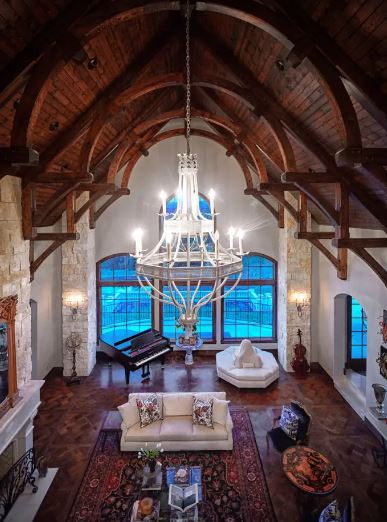
For any wrong interpretations of truth, any theories and phrases which are man-conceived and which we may build upon wrongly, will have perilous consequences to ourselves and others in the conflict with truth and individual self-actualized people passing through. Because in the present offenders will comes to them with deceptions in DOCTRINAL form, self-actualized individual must examine carefully what they accept as “doctrine,” least it should be from the emissaries of the deceiver. Some people are tired of struggling and want only to know a quiet silence. This can be a shock to one’s own awareness of who he or she is. One may have always considered struggle essential in growth, and in many crises and conflicts it has provided the turning point in one’s life. Not wanting to be burdened and overwhelmed by heavy feelings and thoughts or by complicated searching and painful of what is wrong with oneself, people, and life, this can create the desire to turn away from the struggle. And this is what causes the requirement to be alone in simple and ordinary ways. Once one goes through this process of healing in solitude, and by only engaging in simple routine, gradually, with each day, an individua is able to listen a little more to what others are saying. (This is why during a break up, space, instead of forcing the issues is important. Of course, there are times when you need to know what the reason it so it may be a good idea to press for answers to start a dialogue and not necessarily to just focus on getting back together.) #RandolphHarris 8 of 21

Slowly it becomes each to be interested in and comfortable with other people’s problems. Although there may be some drawbacks. Some individual may be able to be with others while you struggle to make decisions, but one may not be opened to questions or personal comments and responses directed to one. This may cause one to offer nothing of oneself and comment only on what one is hearing and understanding from others. During this period, some find work a truly rewarding activity; it is a place that feels like home. It does not matter whether the work takes the form of writing—reports, references, and letters—or reading. Or, if it involved physical activities, one may become totally absorbed in what one is doing, get lost in the activity and experience a full sense of relief. Active mental and physical involvement in solitary projects can be a sense of salvation. By surrendering to powers within to powers within and sources of light in the universe, in some mysterious way, a miracle happens. It is the loss of the old man and the discovery of the new man. When the light reveals itself, the individual is ready to accept it. This reduces the need to force or push or beseech. One simply waits with firm faith that one is meant to be whole again and that one will live more in a full and complete way. It becomes clear that people one loves and those who love one cannot reach the individual going through changes. And so, life has to come from another source, and that new direction will emerge in solitude. #RandolphHarris 9 of 21

The problem of the truth of faith presents itself from both the subjective and objective sides. Subjectively, faith is true if it adequately expresses an ultimate concern, that is, if the symbols of faith are alive and speak to the heart with an urgency of concern that impels to action and replay. This criterion is more a rule of thumb that works best for obviously dead symbols and is not so useful in judging contemporary ones. However, it is the objective truth of faith that interests us here. The content of faith is true if it is really and not just apparently ultimate. The great danger is demonization, elevation of the symbol to ultimacy, which results in idolatrous faith. Therefore, the criterion of faith is self-negation. The true symbol not only conveys the ultimate, but proclaims its own non-ultimacy. It pronounces a Yes and a No. For the Christian the Cross of the Christ is such a symbol. Name for this criterion—the No that follows immediately on the heels of the Yes—is the Protestant principle. The Protestant principle pervades in this whole theology, both systematically and chronologically. Chameleon-like, it changes its formula of expression against the background of diverse theological problems. Hence, a rapid rundown of its various formulations is useful for identifying it. #RandolphHarris 10 of 21

In addition to being the objective criterion of faith, the Protestant principle expresses man’s infinite distance from God and his dependence upon the divine initiative. The Protestant principle is the prophetic protest against every form of self-absolutizing—for example, the demonic elevation of the churches, of the Christian Bile, and the priesthood to absolute validity. The Protestant principle is “resistance to idolatry,” that is, it stands for non-conformity in family, school, state, and church. The Protestant principle protests the objectifying of grace (die Vergegenstandlichung der Gnade) and so smashes the barriers between the holy and the secular. For, by the Protestant principle, God is as near to the lowest as he is to the highest, as close to the material as to the spiritual. These manifold expressions of the Protestant principle can be summarized in and derived from the basic doctrine that the Protestant principle is justification by grace through faith. We reject the traditional Protestant formula of “justification by faith” on the grounds that is has been misunderstood to mean that the human act of faith sets in motion God’s justifying act. Faith itself is a gift of grace, all justifying actions is entirely on the part of God, and, consequently, the more accurate formula is “justification by grace through faith.” The Protestant principle ultimately rests upon an experience of God’s majesty that attributes absoluteness and holiness to him alone and denies such dignity to all else. #RandolphHarris 11 of 21

Untrammeled choices of individuals could lead to disaster for society. Picture a paster open to all. It is to expected that each herdsman will try to keep as many cattle as possible on this commons. Therein is the tragedy. Each man is locked into a system that compels one to increase one’s heard without limit, in a World that is limited. Ruin is the destination toward which all men rush, each pursuing one’s own best interest in a society that believes in the freedom of the commons. Overpopulation, pollution, excessive fishing, and depletion of exhaustible resources are all part of the problem. People Worldwide must recognize the necessity of restricting individual freedom in these choices, and accept some mutual coercion mutually agreed upon. Depending upon the circumstances, the tragedy of the commons could be a many-person prisoner’s dilemma (each person grazes too many cows) or a spillover problem (too many people choose to become herdsmen). The economist’s favorite solution would be the establishment of property rights. This is what actually happened in the fifteenth and sixteenth centuries in England: the common land was enclosed and claimed by the local aristocrats or landlords. When land is private property, the invisible hand will shut the gate to just the right extent. The owner will charge grazing fees to maximize one’s rental income; the grazing fees will make the owner richer, and the herdsmen poorer. This approach is not feasible in some instances. Property rights over the high seas are hard to define and enforce in the absence of an international government, as is control over air that move from one country to another carrying pollutants. #RandolphHarris 12 of 21

For this reason, whaling and acid rain must be handled by more direct controls, but securing the necessary international agreements is no easy matter either. Population is an even harder problem. The right of decision about one’s family, including its size, is enshrined in the United Nations’ Universal Declaration of Human Rights and in many countries bills of rights. Countries like China and India that have at times used some coercion in their population-control efforts have evoked widespread disapproval. Sometimes, when the group is small enough, voluntary cooperation solves the problem. When two oil or gas producers have wells that tap into the same underground deposit, each has the incentive to speed up one’s uptake, to get more of the resource before the other does. When both of them follow this policy, the excessive speed of depletion can actually lower the total amount that can be recovered from the deposit. In practice, drillers recognize the problem and seem able to reach production-sharing arrangements that keep at the proper level that total flow from all wells tapping one deposit. All’s well that ends well? For the less developed countries (LDCs), as for the rest of the World, power stems from the holster, the wallet, and the book—or, nowadays, the computer. Unless we want an anarchic World, with billions of poverty-stricken people, unstable governments led by unstable leaders, each with a finger on the missile launcher or chemical or bacteriological trigger, we now need global strategies for preventing the de-coupling that looms before us. #RandolphHarris 13 of 21
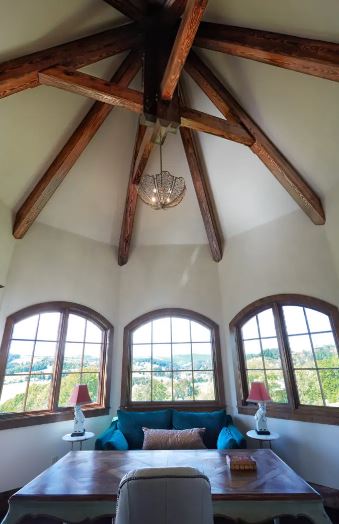
In the years immediately ahead the LDCs will acquire sophisticated new arms—enormous firepower will be added to their already formidable arsenals. Why? As LDC economic power diminishes, their rulers face political opposition and instability. Under the circumstances, they are likely to do what rulers have done since the origins of the state: They reach for the most primitive form of power—military force. However, the most acute shortage facing LDCs is that of economically relevant power is no longer through the exploitation of raw materials and human muscle but, as we have seen, through application of the human mind. Development strategies make no sense, therefore, unless they take full account of the new role of knowledge in wealth creation, and of the accelerative imperative that goes hand in hand with it. With knowledge (which in our definition includes such things as imagination, values, images, and motivation, along with formal technical skills) increasingly central to the economy, the Brazils and Nigerians, the Bangladeshes and Haitis must consider how they might best acquire or generate this resource. It is clear that every wretched child in Northeast Brazil or anywhere else in the World who remains ignorant or intellectually underdeveloped because of malnutrition represents a permanent drain on the future. Revolutionary new forms of education will be needed that are not based on the old factory model. Acquiring knowledge from elsewhere will also be necessary. This may take unconventional—and sometimes even illicit—forms. Stealing technological secrets is already a booming business around the World. We must expect shrewd LDCs to join the hunt. #RandolphHarris 14 of 21

Another way of obtaining wealth-making know-how is to organize a brain drain. This can be done on a small scale by bribing or attacking teams of researchers. However, some clever countries will figure out that, around the World, there are certain dynamic minorities—often persecuted groups—that can energize a host economy if given the chance. The overseas Chinese in Southeast Asia, Indians in East Africa, Syrians in West Africa, Palestinians in parts of the Mideast, Jews in America, and Japanese in Brazil have played this role at one time or another. Transplanted into a different culture, each has brought not merely energy, drive, and commercial or technical acumen, but a pro-knowledge attitude—a ravenous hunger for the latest information, new ideas, skills. These groups have provided a kind of hybrid economic vigor. They work hard, they innovate, they educate their children, and even if they get rich in the process, they stimulate and accelerate the reflexes of the host economy. We will no doubt see various LDCs searching out such groups and inviting them to settle within their borders, in the hopes of injecting a needed adrenaline into the economy. During World War II the Japanese military actually drafted a plan to bring large numbers of persecuted European Jews to Manchuria, then called Manchukuo, for this purpose. However, the “Fugu Plan,” as it was known, was never implemented. #RandolphHarris 15 of 21

Smart governments will also encourage the spread of nongovernmental associations and organization, since such groups accelerate the spread of economically useful information through newsletters, meetings, conferences, and foreign travel. Associations of merchants, plastics engineers, employers, programmers, trade unions, bankers, journalists, etcetera, serve as channels for rapid exchange of information about what does and does not work in their respective fields. They are an important, often neglected communications medium. Governments serious about economic development will also have to recognize the new economic significance of free expression. Failure to permit the circulation of the new ideas—including economic and political ideas, even if unflattering to the state—is almost always prima facie proof that the state is weak at its core, and that those in power regard staying there as more important than economic improvement in the live of the people. Governments committed to becoming part of the new World will systematically open the valves of public discussion. Other governments will join knowledge consortia—partnerships with other countries or with global companies—to explore the far reaches of technology and science and, especially, the possibility of creating new materials. Instead of pandering to obsolete nationalist notions, they will purse the national interest passionately—but intelligently. #RandolphHarris 16 of 21

Rather than refusing to pay royalties to foreign pharmaceutical companies on the lofty ground that health is above such grubby concerns, as Brazil has done, they will gladly pay the royalties—provided these funds stay inside the country for a fixed number of years, and are used to finance research projects carried out jointly with a local pharmaceutical firm’s own experts. Profits from products that originate in this joint research can then be divided between the host country and the multinational. In this way the royalties pay for technology transfer—and for themselves. Effective nationalism thus replaces obsolete, self-destructive nationalism. Similarly, intelligent governments will welcome the latest computers, regardless of who built them, rather than trying to build a local computer industry behind tariff walls that keep out not merely products but advanced knowledge. The computer industry is changing so fast on a World scale that no nation, not even the United States of America or Japan, can keep up without help from the rest of the World. By barring certain outside computers and software, Brazil managed to build its own computer industry—but is products are backward compared with those available outside. This means that Brazilian banks, manufacturers, and other businesses have had to use technology that is inefficient compared with that of their foreign competitors. They compete with one hand tied behind them. Rather than gaining, the country loses. #RandolphHarris 17 of 21

Brazil violated the first rule of the new system of wealth creation. So what you will with the slowly changing industries, but get out of the way of a fast-advancing industry. Especially one that processes the most important resource of all—knowledge. Other LDCs will avoid these errors. Some, we may speculate, will actually invest modestly in existing venture capital funds in the United States of America, Europe, and Japan—on condition that their own technicians, scientists, and students accompany the capita and share in the know-how developed by the resulting start-up firms. In this way, Brazilians or Indonesians or Nigerians or Egyptians might find themselves at the front edge of tomorrow’s industries. Astutely managed, the program could well pay for itself—or even make a profit. Above all, the LDCs will take a completely fresh look at the role of agriculture, regarding it not necessarily as a “backward” sector but as a sector that potentially, with the help of computers, genetics, satellites, and other new technologies, could someday be more advanced, more progressive than all the smokestacks, steel mills, and mines in the World. Knowledge-based agriculture may be the cutting edge of economic advantage of tomorrow. Moreover, agriculture will not limit itself to growing food, but will increasingly grow energy crops and feed stocks for new materials. These are but a few of the ideas likely to be tested in the years to come. #RandolphHarris 18 of 21

However, none of these efforts will bear fruit if the country is cut off from participation in the fast-moving global economy and the telecommunications and computer networks that support it. The maldistribution of telecommunications in today’s World is even more dramatic than the maldistribution of food. There are 7.33 billion unique mobile phones users in the World today, which makes 91.40 percent of people in the World cell phone owners. The lopsided distribution of computers, data bases, technical publications, research expenditures, tells us more about the future potential of nations than all the gross-national-product figures ground out by economists. To plug into the new World economy, countries like China, Brazil, Mexico, Indonesia, India, as well as the Soviet Union and the East European nations, must find the resources needed to install their own electronic infrastructures. These must go far beyond mere telephone services to include up-to-date, high-speed data systems capable of linking into the latest global networks. The good news is that today’s slow countries may be able to skip over an entire stage of infrastructure development, leapfrogging from First to Third Wave communications without investing the vast sums needed to build Second Wave networks and systems. The Iridium systems, for example, announced by Motorola, Inc., placed 77 tiny satellites into low orbit, which make it possible for millions in remote or sparsely populated regions like Soviet Arctic, the Chinese desert, or the interior of African to send and receive voice, data, and digitized images through handheld telephones. #RandolphHarris 19 of 21

It is not necessary to lay cooper or even fiber optic cable across thousands of miles of jungle, ice or sand. The portable phones communicate directly with the nearest overhead satellite, which will pass the message along. Other advances also similarly slashing the huge costs of telecommunications, brining them within reach of today’s impoverished counties. Large scale production and hyper-competition among American, European and Japanese suppliers will also drive down costs. The new key to economic development is clear. The “gap” that must be closed is informational and electronic. It is a not gap between the North and the South, but between the slow and the fast. However, China’s inadequacy in services is of a structural character. It has it historical and cultural roots, especially the legacy of several decades long epoch of Soviet-style socialism. The mentality of many Chinese service companies and workers may have exceeded those in America. When I was in China, I was impressed by their customer service. They were extremely polite, spent time talking to me, even offered me candy and gave me a soccer ball for shopping at one of their malls. They did treat me like a king. I did not want to come back to America because I loved China so much. Maybe people have different experiences? #RandolphHarris 20 of 21

The overall picture of the service economy in China is not gloomy. Even on the airplane they were polite and told me to stop being so “Western.” The hotels were awesome, as well as the recreation facilities and restaurants. As local consumers’ demand for a variety of good services is increasing, American, European and Japanese service providers have a good chance to exploit their competitive advantage in this area, establishing a stronger position at the Chinese market. Here, however, comes a surprise. You may expect that, in the wake of what was written earlier, America and Europe are enjoying substantial surpluses in their services trade with China, not incomparable to their huge deficits in merchandise trade. But the thing with the people in China, one cannot tell when they are just being nice. Things are so different. They try so hard to like people and make them happy that it seems like they really like you. And they try really hard to keep a neat appearance, are very careful with their work, and take pride in what they do. Because their image and reputation depends a lot on word of mouth, they are very careful not to hurt your feelings and to conceal negative topics, ideas, thoughts and behavior. And their houses are really clean, many of them have never heard of “racism” and the student work very hard in school. It is amazing how many hours a day they spend studying. They really went out of their way to impress us, like hosting us in a restaurant, but making it a private event, of course it meant getting up at 3 A.M. in the morning, but I was happy to. They are so polite and taught me if something is meant to be, you will meet that person again. #RandolphHarris 21 of 21


Hallowed by the Life of Blood
The rain lashed with vindictive fury at the windows of my mansion. My skin was crawling with gooseflesh, listening to the mournful recording crackling with static under the needle of the gramophone as the song grew louder through the rain. There is an eerie undocumented history that simmers below the surface and appears periodically to frighten and confuse people. The last thing I wanted to do is see whatever sight might accompany it. The wind was strong up here on the fourth floor and I could hear rain spatter hard against the sitting-room window. I walked on into the room, past the beckoning Hall of Fires, looking out and down at the night. I could see the dome to the nine-story observation tower through the stir of trees surrounding it. A swath of rain bleared the glass in front of my face and made me blink and recoil slightly. “Hello, Aunt Sarah.” The voice of my niece Daisy. “What I have to say concerns this mansion.” A few items of lovely furniture occupied the room. Two of these were armchairs. Daisy sat in one of them. She had paused, perhaps for effect. “I’m sorry to intrude on you. But there really isn’t a choice. A visitor, strolling along the ground near the fruit orchard, heard wisps of strange tunes. Listening more closely through the dusky evening, he was lured inside of the mansion. And he is now dead.” I took my head into my hands. “Aunt Sarah, I need you. There is no time for prevarication on this.” “Daisy, I will meet you in the Venetian Dining Room this evening,” I replied. I rose from my chair thinking that God had very little to do with anything that ever occurred within the grounds of the walls of my mansion. From wars to executions, to suicides and untimely death from injury, plague, or disease, Victorian mansions are, for all their majesty and splendor, tragic places where death stalked the cold lonely corridors. These are the places of the bloodiest history, whether it be a place raided by the unlawful, or a battle for ownership. With such a history of violence and tragedy, it is little wonder that this mansion is regarded as haunted? #RandolphHarris 1 of 7
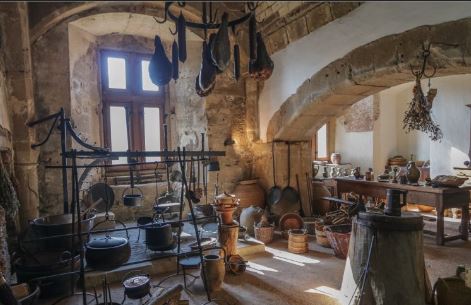
I walked back to the window. It was a quarter to six. Strange noises and an occasional sighting of the larger-than-average soldiers with the oddly pointed hats have been seen roaming the grounds. Any attempt to speak with them or approach them, they simply vanish into the mansion. Odd doors and gated entrances punctuated the length of the mansion. There was a Gothic, deliberate atmosphere about my home, a sepulchral character to the mass of its wooden buttresses andre treats. Geometrical shapes snatched inexplicably at the eyes. And often one could hear laughter, high-pitched with contempt or teasing mockery that made one hurry on, even though it may be rationalized as the cold wind gusting through the elaborate masonry. The wind whistles in the trees and leaves and wisps of thick mist blow across the farmland. With the trotting of horses and constant sounds of construction, the heart is suddenly racing, and one thinks they hear something behind them. After all, this is an ancient land, a house built by spirits, occupied by ghosts, pixies, goblins and all sort of mythical creatures of the night. Anything is likely to happen. Looking around the interior of the estate, one can discern a deep, foreboding blackness that seems to be following one, as if it is alive and in pursuit. Stepping out into the fruit orchard, the wind suddenly drops and one’s senses are heightened. Indeed, one can hear one’s very heart beating in their chest as they continue to canter forward into the night. The mist becomes thicker, darker, and as one glances furtively from side to side, the darkness of shadows of the orchards hides their secrets, but perhaps you are not alone. Sometimes I tell myself that the scraping sounds at the window is simply a branch being blown in the breeze and the footsteps heard in the hallway are old timbers creaking and groaning with a change in the air or weather. #RandolphHarris 2 of 7

If there was something serious going on, the housekeeper and the butler would try to keep it quiet. They might talk together, but they would be tight-lipped in front of me. The clock struck seven. I met Daisy in the dining room. “Aunt Sarah, we all talked. We weren’t meant to,” Daisy said. “We were all talking about it. We didn’t know what to make of it. The body was found on a cold stone passage, that was said to lead directly into the opulent state rooms where you normally conducted meetings.” Not a moment too soon, five housemaid trooped into the dining room. Taking off their white starched aprons, they formed up in a line. The room, echoing with their footsteps and voices, as in a church. The mahogany floor, almost three thousand square feet of it had to be hand polished. It was an onerous task, one of the housemaids least like doing. Bending down, they placed their tins of wax of the floor. “Daisy, it looks like we will have to continue this conversation later,” I said. “Goodnight, Aunt Sarah,” she replied. The maids stooped on their hands and knees, their long black dresses spread out around them. Working in union, they dabbed their clothes in wax; then they rubbed the floor vigorously in quick tight circle. The observation tower staircase was the place the servants feared most. The observation tower sits ominously over the mansion, along with sever distinctive turrets jutting proudly into the skies. Sweeping down to the Guard Room eight floors below, it was the main thoroughfare in the tower. Family portraits adored its walls. The steps, of bare stone—framed by a wrought-iron balustrade, topped by a mahogany rail—were wide and shallow. “We were all scared of the tower’s stairs,” said Elsa. “I was coming down them one evening, halfway down, I felt somebody push me. They were behind me, trying to push me down the stairs. I turned round, and of course there was no one there.” The Winchester Mansion is a land of appealing features seemingly embedded in the sense of a deep-rooted and permanent history that emanates from almost every corner of the land. It has rustic grounds and quaint gardens, a hulking mansion with many towering features, having been fostered over decades to create a comfortable and pleasing landscape that guests recall like their favorite arm chair. #RandolphHarris 3 of 7

A number of the male servants, skeptical of ghost as they were, had experienced a similar sensation. “I used to keep an eye on the mansion,” Edvin recalled. “I would walk around the dark with the dogs, no lights on, no torches, or anything. One night, I was coming across the first floor of the tower—and I got up to the stairs and felt hot breath on the back of my neck. I turned round. There was nobody there. But the dogs wouldn’t go any further, their hackles went right up. It was ages before I could get them to move.” I often examined the possibility of evil. I had a notion that evil was communicable. Something that can, as it were, contaminate. However, one must not confuse evil with manifestations. My secret rooms, by their very nature, held the servants in thrall. It was an area that they never entered, never saw or ever knew what went on. It was a place of mystery. The rooms were subjects of wild speculations, fueled by the servants’ fear of me, and their knowledge of my eccentric interests. My servants knew I was fascinated by the occult and this played to their fears. They knew the mansion was haunted and I often had the mediums in. However, they never whether any ghosts or sprits were actually summoned. It went on behind closed doors. Of course, they knew of the ancestral curse. It had been cast in the mid-19th century by a coven of witches. The curse had also been cast over future generations; aimed at Winchester heirs; it determined that the children would die before they reached the age of thirteen and those who survived would be haunted by ghosts and demons. For decades, it had seemed to me and my servants that this was a cruse from which the family could never escape. #RandolphHarris 4 of 7
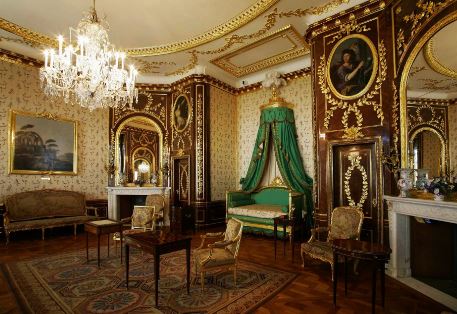
One night, it was shortly before three o’clock in the morning when a shadowy figure, dressed from head to foot in back, crossed the landing of the staircase. The night was cloudless, the moon almost full. There was a blackout and the mansion was shrouded in darkness. The light from the moon set tiny point of balance dancing in the darkened windows. I could hear footsteps moving stealthily across the floor and the occasional cry of an animal from the fields. A headless horseman was riding near the tower. I got out of bed, and turned the corner into a passage in one of the parlors. As the men worked in the hallways, they froze. Coming down the hallway was a pair of green eyes belonging to a child. The eyes were about two or three feet up from the floor, leading me to believe that child was three years old. They eyes simply floated up the hall, and then turned into one of the maid’s room where we lost sight of them. That night I also saw dark shapes. There was a dark shadowy thing flying from the Grand Ball Room to the and down the hallway. Then above the chandelier there were several dark shadowy things. They flew outside, barely illuminating the background of the trees and then were blocked out by an even darker shadow, moving slowly, methodically along the tree line. Meanwhile another shadow ran through the hallway, it was tall. The carpenters looked at each other in suspense. Closing the heavy steel door behind me, I had left the Grand Ball Rom to find my way long the labyrinth passages. A long passage reached into the distance. It was gloomy, lit by only the strip lighting in the display cases that ran along with wall. Ahead was a solid oak door, carved in the Gothic style. Another passage led off to my right, I could see that it branched in two. One end led into a small hall. It was in darkness. “No one goes in there,” a mysterious voice whispered. The spirit gave me a fright. Everyone, it seems, even hardened sceptics and disbelievers, has seen a ghost. For some reason, in the back of their minds, ghosts may be real. Everyone has known the feeling of their heart racing for a second when they see a shadow moving in the corner of their eye or they feel some sort of presence standing over them. Or worse still, a tortured face in a window that paralyses their body and retards their breathing to the point that they can hear the blood pumping around their own body. #RandolphHarris 5 of 7

I took the left passage. I went on some distance ahead, there was a kink in the passage. A man emerged from it and started waling me. He was wearing knee breaches and a nineth-century coachman’s jacket. As we drew level, he stopped. “Mrs. Winchester, those rooms are forbidden,” he said, “What are you doing in this part of the house?” Once again, he repeated, “Those rooms are forbidden.” I did not want to stop and talk; I was anxious to get back to my room. I assumed that the servants were being proprietorial. Finally, I had made it to my destination sometime later. The bedroom was not dark, because the bright light of a full moon entered through the window. I had just lain down, ready to go to sleep, when I suddenly noticed that I was not on my own. I heard a rasping breath in the darkness only a few feet away. Right in front of the wardrobe and looking directly at me was a middle-aged man, dressed like a Catholic priest. I rubbed my eyes and pinched my arms to make sure I was fully awake Yes, I most certain was. Was I having hallucinations? The priest was still standing there, looking at me. He was a rather frail man with hollow cheeks. His face showed traces of a hard life and illness. If he had any hair at all, it was covered by his hat. He looked so real, not like a ghost. I was not a bit scared, because he radiated vibrations of utter peace and tranquility. There was nothing to be afraid of, so I decided to talk to him keeping my voice as low as possible. “Hello, Father,” I said. “God bless you.” “And God bless you, my child,” came the priest’s prompt reply. He was well-spoken, his voice was soft. His English accent was not hard to distinguish. After giving me a few personal messages and stressing the point that there is survival after death, he told me who he was. #RandolphHarris 6 of 7
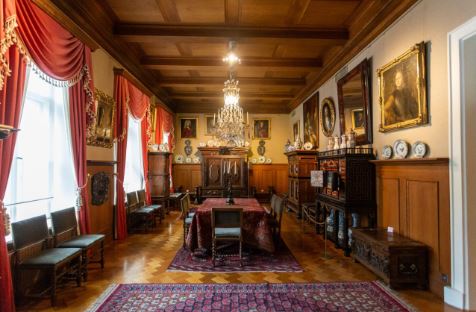
His name was John Ogilvie, and in had lived in Scotland from 1580 to 1615, he wanted hanged at Glasgow Cross for his faith. When I remarked that at the time of his hanging, he was only 36 years old, he confirmed this. After quietly talking about religious matters for a few moments, he bade me farewell and disappeared. It seems that he refused to pledge allegiance to King James, and it was for this crime that the was tried, found guilty and hanged. After his execution, his followed were apprehended and put in jail. If this was not a genuine case of a visit from beyond the grave, what is it? Most of the time, the mansion is benign. Unfortunately, sometimes people find exactly what they are looking for. I had been in bed half an hour when I heard the music playing softly from my sitting room next door. I listened to the same, faintly relentless song. Starting to sweat and grow cold in bed, I recognized the song. Or I thought I did. And it continued. It wavered through the wall and door frame in strained, distended chords, and choruses, swelling and facing, ragged and persistent. The door was to my right. I pulled back the duvet and got out of bed and walked through the door to the sitting room. Where the music was louder. The must persisted, repetitious, frighting me. As I turned the corner, I discovered that Gerhardt hanged himself from the cross beams. Badly wounded, Mr. Hansen carried to the attic to await medical attention, but he died there. Since that time people have claimed that he haunts the attic room. He has been seen and heard there from time to time. Servants have reported hearing the creaking of a rope and the soft thud of a body swaying against the wall. Though they often look for the source of the sound, they never find it. There is a disheveled, aged specter, bound at feet and hands and rattling chains haunting the basement. A journey through my mansion is a passage through history. A real history, one that you can live and breathe, one that you can feel and be part of. You can walk serenely miles through my mansion, it is a place that inspires contemplation and wonderment. It is a living history, of memories as far back as history recalls. It is a place of myth, legend, of ghosts and ghouls, of giants, and dwarves, mermaids, cupid, another other half-remembered, half-whispered-about creatures. #RandolphHarris 7 of 7
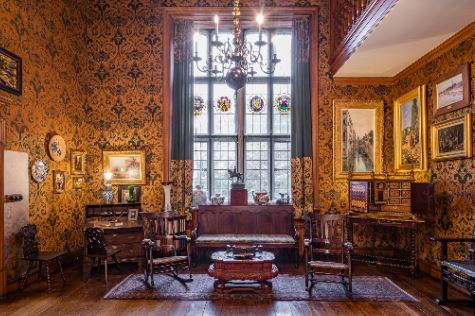
If a sudden, horrifying death is what it takes to make the spirit linger, surely, this place—is a candidate. Certainly, where men grappled back and forth, engaged not only in the struggle for their own precious lives, but for the life of their respective countries, where in the balance was the future of the very world, and this place produce the mechanism of defense, if that does not qualify for the lingering-place of souls wondering for eternity the outcome of their struggles, then we cannot name a place. https://winchestermysteryhouse.com/
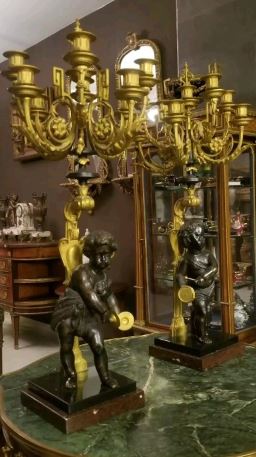
And please be sure to check out the online gift store: https://shopwinchestermysteryhouse.com/
Angels Which Kept Not Their First Estate
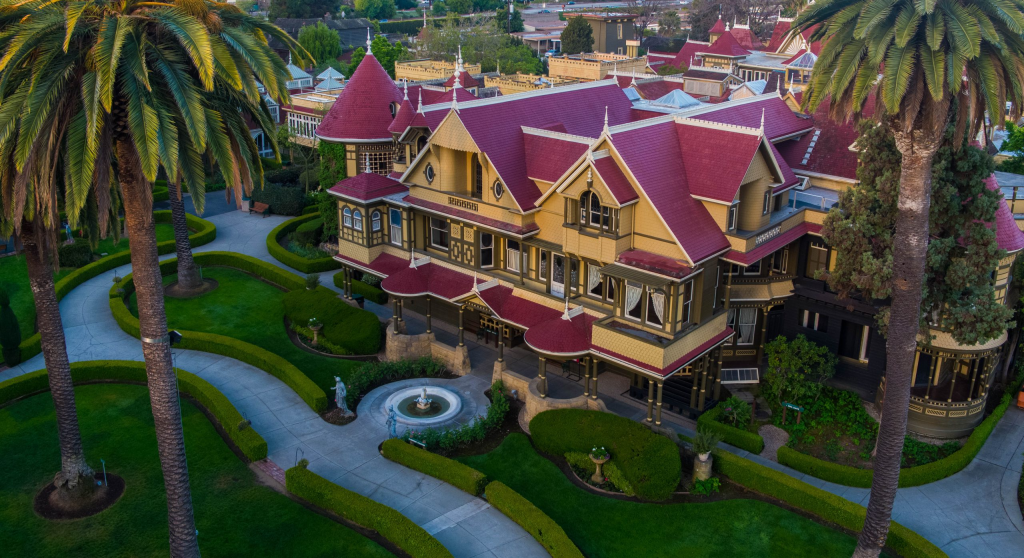
I hope by now that you agree with me that the tiresomeness of an over-peopled Heaven is a purely subjective and illusory notion, a sign of human incapacity, a remnant of the old narrow-hearted aristocratic creed. William Winchester loved boats and had thirteen-metres and even raced one in the America’s Cup trials once. He had a big yacht that he kept down in New Haven, Connecticut, even though he lived in Switzerland most of the time. My grandfather, Oliver Winchester, put a rear wing on the house he bought for William as a wedding gift, with a new kitchen and flower room my grandmother wanted when she married him. This house preceded the Winchester Mansion. And it was where my father, William Winchester, had an office. There had been a couple of times when I would have to take papers down to him. That office was bigger than most people’s living rooms. It had a fireplace and a window looking out on the West River, which flows into New Haven Harbor. Oliver Winchester was the Lieutenant governor of Connecticut. Not only was he founder of the Winchester Repeating Arms Company, but he was on the board of directors of four charities, including the Winchester Foundation, which gave money for research into Tuberculosis and heart disease; he was on the board of New Haven Savings Bank, which the Winchesters pretty much owned; he was on the boards of a couple of other big companies. Running a rich family was like running a business. #RandolphHarris 1 of 13
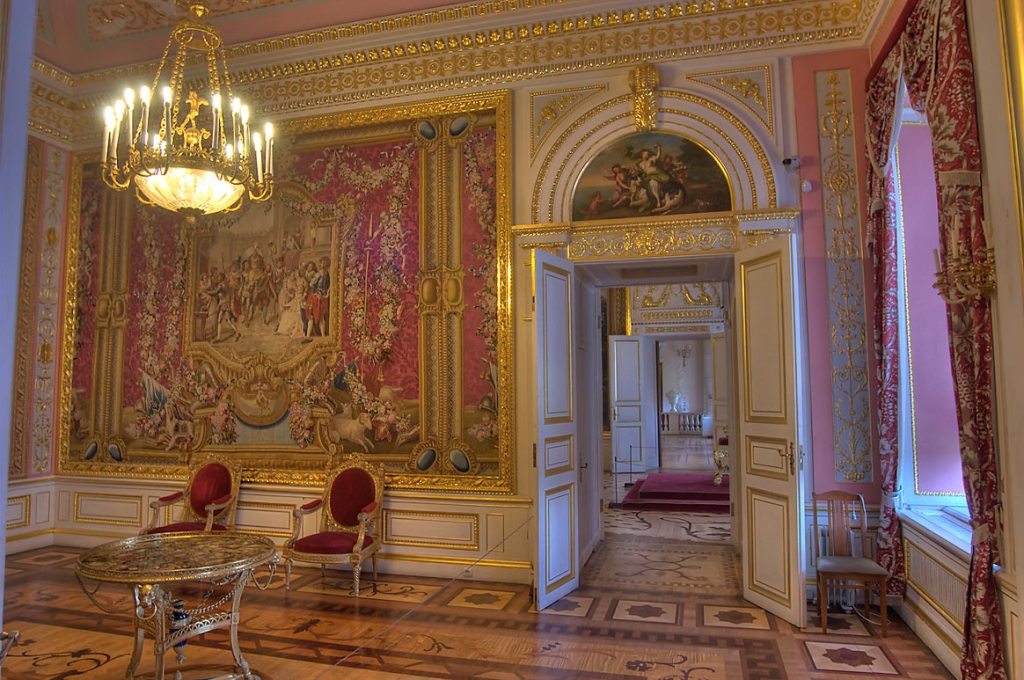
In fact, if you look at the Winchester Family treat, it is more of a “business family tree.” I guess money has always been the life source of the Winchester family. My father, William Winchester, said the family motto was “We own it, lock, stock, and barrel.” This family had a lot of power, and when you have power, you use it. The Winchester’s did not go out brawling like drunken sailors. We had the courts, the law, the police—and the Winchester Rifle if we needed it. We made sure that things around here went the way we wanted them to go. However, we did not go about it by brawling. If you did us wrong, we stayed clam, we spoke politely to everybody. However, we moved quietly. Sooner or later we would catch you between a rock and a hard place and then you would feel the almighty bad. If we did not go after them, those guys would have thought we were chicken. My father always said, “Son, do not worry what John Jacob Astor thinks of you. In your position it does not matter. You are going to be very rich and very powerful. These people will never like you. They will envy you, they will defer to you, and some of them will even admire you. But they will never like you. For that you must understand, what others think does not matter.” The original Winchester mansion was a house of these times, all right, though not to be considered new. I figured it to be at least three hundred years old. It was built of the local stone, and had three stories and a high-pitched roof, with mullioned windows—and it was vast. #RandolphHarris 2 of 13
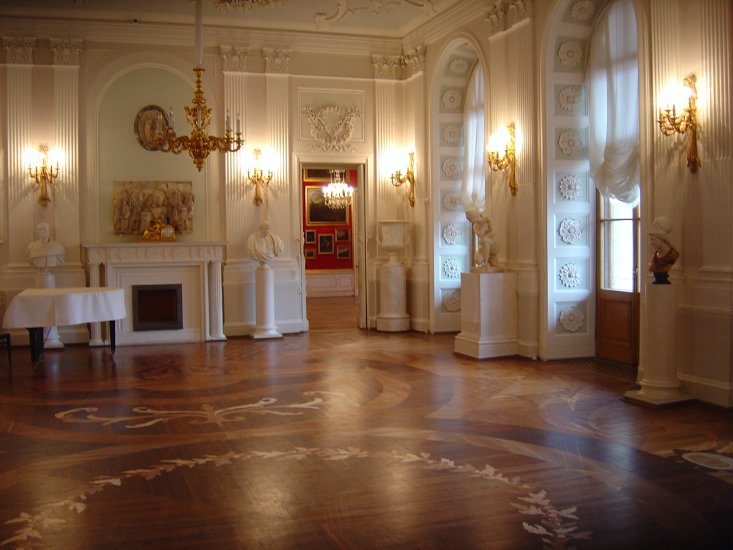
Often times, there was no one about. Only the bleak winter vines stripped of their jasmine, running on for miles, and distant corpse of an ancient tree of immense size, and the cold rain, a rain worse to me than snow, falling over as if it were falling on the entre World, a near silent rain that felt like needles on the backs of my hands and on my face. The mosaic tiles were beautiful, and possibly ancient, dating all the way back to the Roman times. I walked back and forth over the, and tapped several times with the toe of my boot. I walked to the double doors that opened into the garden, and there I saw a great pile of wood. And there was a big head on the rock, it was the devil’s face that a saint put there. If men believed nothing, they did not understand it, it is a short cradle they would have. I had been put in the mood for ghost, that evening after an excellent dinner at my father’s home. Seen through the haze of Abner Doubleday’s cigars, and by the drowsy gleam of a coal fire, my father’s library, with its oak walls and dark old bindings, made a good setting for such evocations; and ghostly experiences at first hand beings. An absurd thought came to me, that being here with Abner, it had all felt natural and good, as if in spite of the topic of our conversation we were simply human beings and all the dark World did not exist. I was ashamed of this. Why did we have to be “like human beings”? I asked myself. Why could we not simply be warlocks together? He looked at me, at my shining eyes, and his congenial smile, and he took my hand and said he wanted to see the house. We remained together for several hours after that, during which we walked through many rooms and he not only admired the endless book collection in the Gothic library, filled with classics bound in black cloth and daguerreotypes of faded celebrities, but also many of the paintings, including a few Russian painters of the nineteenth century he had never seen before. #RandolphHarris 3 of 13
For me, this was a wonderful time. We could have continued our conversation for a year. We walked about outside the house, through the gardens which were crowded with trees for privacy and vines that blossomed at night. These carefully guarded hours had been devoted to the cultivation of a fine intelligence and a few judiciously chosen habits; and none of the disturbances common to the human experience seemed to have crossed the sky. Mentally I was able to exercise a hospitality less seductive but no less stimulating than a play. Abner’s mind was like a forum, or some open meeting place for the exchange of ideas: somewhat cold and drafty, but light, spacious and orderly—a kind of academic grove from which all the leaves had fallen. In this privileged area, we were able to stretch our muscles and expand our lungs; and, as id to prolong as much as possible the tradition of what we felt to be vanishing institution, Abner tasted the lyric qualities in youth. He nipped the flowers of soul which he gathered from this tour, which forced a young idea to blossom. The man was really intelligent, and the soundness of his nature was like the pure paste under a fine glaze. Abner had been fished out of the dullness by the spirits of the Winchester mansion. Just at the evening was drawing to an end, he demanded, “And now you have to tell me about your ghosts!” “My ghost? Do you suppose I am fool enough to the expense of keeping my own ghosts, where there are so many charming ones in my friends’ closets?” I said. #RandolphHarris 4 of 13
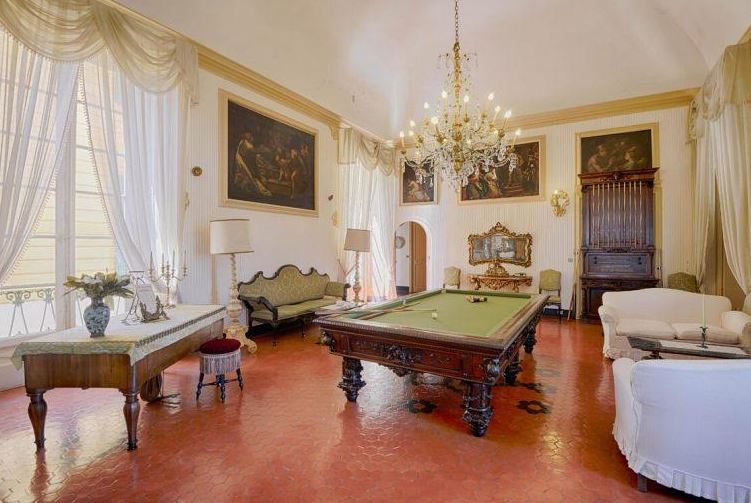
The fact is that we found whole skeletons that were used in various forms of old black magic rituals. Undoubtedly, for many who pursue this darkest of experiments, necromancy is the touchstone of occultism, especially for warlocks. If, after careful preparation, they are able to carry through what they regard as a successful contact they have reached a certain pinnacle in black magic conjuration. It is fruitless discussing whether or not this feat is possible; belief by the practitioner is all that is needed for the ritual to proceed and some psychological or drug or spiritual trance may well convince the depts tht they have indeed succeeded. “Oh,” Abner said, “you would never be content to share if you met one you really liked. What is the use of denying it? You have seen everything, so of course you have seen a ghost! Or if you have not seen one, it is only because you have seen several!” “That is it,” I said. “I have seen a legion.” The words were so unexpected that they dropped down and down into a deep silence, while we continued to stare at each other. Abner learned forward with is listening smile. “You will wonder why I am enlarging on some of these incidents. It is because the evening on which this particular incident took place was the very evening on which I first saw the queer sights I have spoken of. Being at that time an ardent believer in a necessary sequence between cause and effect, I naturally tried to trace some kind of link between the lion and the lamb lying down together.” Ancient Druids lived on the estate and necromancy had a particular appeal to warlocks seeking confirmation, for example, of the mysteries of the afterlife but more often necromancy was pursued by the skilled masters of ritual magic. #RandolphHarris 5 of 13

“We once wanted to raise a dead uncle,” I told Abner. “We went to the course of the giant tree, where we performed a ceremony. For a few moments, nothing happened. But moments later, there was a mysterious explosion. And afterwards, the road lay thick with cinders and debris. At first, my grandfather worried about the result. But he had a reassuring thought. Perhaps the explosion was caused by spontaneous combustion. ‘Oh my God…’ cried my father. ‘What happened?!’ he demanded. No one was sure. After that we walked back to the house in disbelief of the mess. Then I pointed and shouted out in horror. Before I could stop, my father fell to his knees before a hill of burned leaves and tree branches, under which he glimpsed a man’s head. It was his brother and he was looking for us. My grandfather put a hand to his mouth and stified the urge to vomit. My uncle’s eye sockets were empty, and his hair singed. ‘Brother, get up!’ he cried roughly. My father yanked his brother to his feet, frightened by the wide-eyed horror in his eyes and his awful nonstop screaming. He tried to pull out of his grasp, but he held my father tight until the screams subsided into sobs.” “Now listen,” my grandfather told my father. “You are a Winchester, so do not go making a liar out of me.” “But his brother’s tears burned my father’s skin.” “Your brother is dead,” said my grandfather. “We wondered if anything else came back to life. It was so eerily silent for this time of the morning. No cows mooing, no wood being chopped. No birds singing on the roof top. And the lawn was blackened.” #RandolphHarris 6 of 13
“As we went into the house, it was full of strangers, burned, bleeding, sick people. As we precariously waded through the maze of bodies, the wind must have carried in a fog. While my grandfather dug a mass grave for these animated bodies, my father and I dragged them out of the house to burry them. It took days, there were literally hundreds of them. My arms were shaking. We were all near exhaustion, and we still have several bodies to bury. We worked for an entire week to remove all these bleeding strangers from our home. I went up to bed with rather a heavy heart, for I was bowed under the weight of the first ritual I had ever consciously committed; and young as I was, I saw the gravity of my situation. The situation of being William Wirt Winchester Jr. Do not imagine for this that I had hitherto been an instrument of destruction I had been a harmless young man, who had followed his bent and declined all collaboration with Providence. Now I had suddenly undertaken to promote the moral order of the World, and I felt a good deal like the trustful spectator who has given his gold watch to the conjurer, and does not know in what shape he will get it back when the trick is over…Still, a glow of self-righteousness tempered my fears, and I said to myself as I undressed that when I had got use to being good it probably would not make me as nervous as it did at the start. And by the time I was in bed, and had blown out my candle, I felt that I really was getting used to it, and that, as far as I had got, it was not unlike sinking down into one of the softest wool mattresses.” #RandolphHarris 7 of 13

“My room had grown cold, and intensely still. I was waked by the queer feeling we all know—the feeling that there was something in the room that had not been there when I fell asleep. I sat up and strained my eyes into the darkness. The room was pitch black, and at first I saw nothing; but gradually a vague glimmer at the foot of the bed turned into two eyes starting back at me. The eyes gave out a light of their own. They were the very worst eyes I have ever seen: my dead uncle’s eyes. And the room slowly filled with hundreds of these eyes, orbs of light. My father paid immense sums to the architects and workmen to entomb the heart of the house in hopes of locking their spirits inside. This mean enclosing one of its four towers left standing and living in only a few habitable rooms while the work went on. The mansion went on to be inhabited by a secret order of men and women who met to discuss philosophy and music and escape the modern World, and the public would never be invited here due to the deep mourning of my mother over the loss of my grandfather, father, and baby sister. Indeed it was most anguishing. Some of these people had devoted their entire careers to this one project, and there was nothing now to be done but to give them, but gold coins. My mother left this mansion to Yale, I went to Rome, she went to California and it was later demolished. And there were egregious lies to be told about the Winchester name. Gorgeous salons with silken-paneled walls and plaster curlicues and Savonnerie carpets on the floor all destroyed. #RandolphHarris 8 of 13
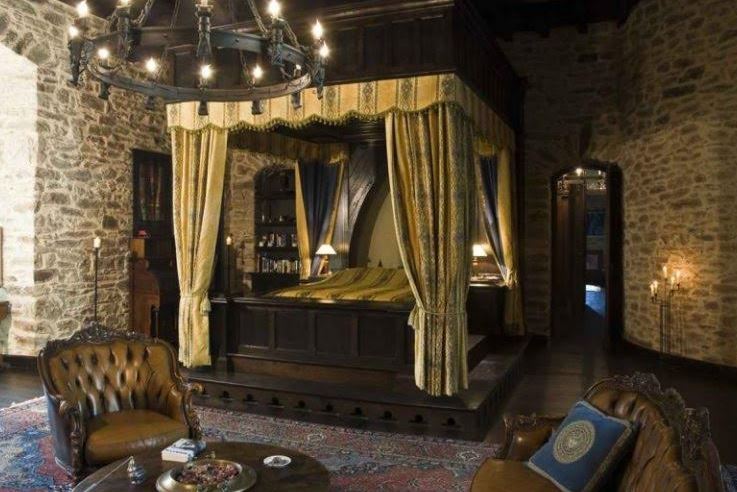
The modern marble bathrooms, replete with sunken tubs and spacious showers for every bedchamber. We wanted to make sure to give off no scent, absorb no precious oils, and did not want to take up the human scents. The great hall where my family and I had once dined, listened to the demands of the villagers and farmers, and hovered around the seventy-five fireplaces, twenty kitchens, four libraries, eighteen thousand windows, four towers, and three hundred and fifty rooms all gone like it never existed. At times, there may have been two thousand present in the ballroom. No one ever counted. This was the height of the Winchester fortune, my dear Abner. There were many departed here, though untouched by the rifle.” In its blackest form the art of necromancy has produced fairly evil recipes for success. Graveyards are indeed a common place, and it is possible our home had been constructed on a battle ground. This was a place where contact with the dead could be expressed, and was conducive to dark apparitions in suffocating rooms or beneath a mock swinging gibbet. The old grimoires are full of colourful descriptions, and since they were often written by clerical scholars when they took down the confessions of warlocks, one must be careful with the rite performed. One could magnify the spell. Even policemen were involved in occultism. As an example, the daughter of a police superintendent was initiated into the dark arts and the High Priest was another policeman. “Yes, I was the High Priest…I have been a white witch for eight years and I am not ashamed of what I do although some of my colleagues have reported me to the Witch Inspector General. I have helped to initiate at least seven witches and eight warlocks.” #RandolphHarris 9 of 13
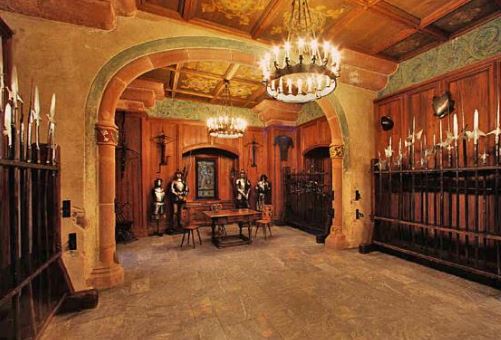
There is much evidence in Scriptures that the spirits who appear at séances are rebel angels. Perhaps that is what we raised that night? Jude 6 speaks about “angels which kept not their first estate.” Many Christian Bible scholars interpret Ezekiel 28.17, “I will cast thee to the ground,” as indicating that the Earth is the realm of Satan’s powerful operations, with the help of his fallen colleagues, the demons. Satan is called the “god of this World,” in 2 Corinthians 4.4. And Christians are under attack by “rulers…powers…World forces of darkness” (Ephesians 6.12). God tell us that hell was “created for the devil and his angels (demons)” (Matthew 25.41). I, Randolph Harris, cite and conjure thee, Spirit of Schemhamforasch, by all the seventy-two holy names of God, that Thou appear before me and fulfil my desire, as truly in and through the name Emanuel, which thee three youths Sadrach, Mijach, and A hero sung in the fiery furnace from which they are released. I do conure thee, O thou Spirits William Wirt Winchester and Oliver Fischer Winchester, by all the most glorious and efficacious names of the MOST GREAT AND INCOMPREHENSIBLE LORD GOD OF HOSTS, that thou please comest quickly and without delay from all parts and places of the Earth and World wherever thou mayest be, to make rational answers unto my demands, and that visibly and affably, speaking with a voice intelligible unto mine understanding as aforesaid. I conjure and constrain thee, O thou Spirits William Wirt Winchester and Oliver Fischer Winchester, by all the names aforesaid; and in addition by these seven great names wherewith Solomon the Wise bound thee and thy companions in a Vessel of Brass, Adonai, Preyai or Prerai, Tetragrammaton, Anaphaxeton or Anepheneton, Inessenfatol or Inessenfatall, Pathtumon or Pathatumon, and Itemon; that thou appearest here before this Circle to fulfil my will in all things that seem good unto me. #RandolphHarris 10 of 13
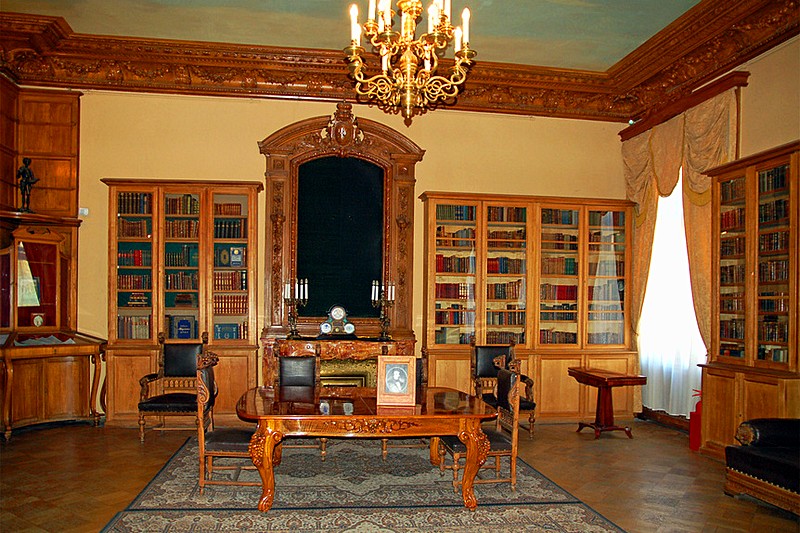
And if thou be still so disobedient, and refuest still to come, I will in the power and by the power of the name of the SUPREME AND EVERLASTING LONG GOD WHO created both thee and me and all the World in six days, and what is contained therein, Eie, Saraye and by the power of this name Primeumation which commandeth the whole host of Heaven, bless three, and grant thee of thine office, joy, and place, and bind thee in the depths of Heaven or the eternal to remain unto the Day of the Last Judgment. And I will bind thee in the Eternal Light, and into the Sky of Light and Harmony, therefore see my good wishes for you and please comest quickly and appearest here before this Circle to do my will. Therefore, come thou! In and by the holy names Adonai, Zabaoth, Adonia, Amioran, Come thou! For it is Adonai who commandest thee. If THOU hast come thus far, and yet he appeareth not, thou mayest be sure that he is sent unto some other place by this King, and may return any time; and if it be so, invocate the King as here followeth, to send him. However, if he does not come still, then thou mayest be sure that he is bound in the Heavens, and that he is found in the custody of his King. If so, and thou still hast a desire to call him even from thence, thou must rehearse the general curse which is called the Spirits’ Chain. O THOU great, powerful, and mighty KING AMAIMON, who bearest rule by the power of the SUPREME GOD EL over all spirits both superior and inferior of the Infernal Orders in the Dominion of the East; I do invocate and command thee by the especial and true name of GOD; and by that GOD that THOU Worshippest; and by the Seal of they creation; and by the most mighty and powerful name of GOD, IEHOVAH TETRAGRAMMATION who cast thee out of Heaven withal other infernal spirits. #RandolphHarris 11 of 13
And by all the most powerful and great names of GOD who created Heaven, and Earth, and Hell, and all things in them contained; and by their power and virtue; and by the name PRIMEUMATON who commandeth the whole host of Heaven; that thou mayest cause, enforce, and compel the Spirits of William Wirt Winchester and Oliver Winchester to come unto me here before this Circle in fair and comely shapes, without hard unto me or unto any other creature, to answer truly and faithfully unto all my requests; so that I may accomplish my will and desire in knowing and obtaining any matter or thing which by office thou knowest is proper for him to perform or accomplish, through the power of GOD, EL, Who created and doth dispose of all things both celestial, aerial, terrestrial, and infernal. I conjure you William Wirt Winchester and Oliver Fischer Winchester, by the Spirits Chain to appear in the Winchester Mansion, and if you two are bound in chains, by the Emancipation Proclamation, you have permission to break off from them and be at liberty. As this smoke ascends I ascend also by following the path of smoke and usurping power of worship to empower by blackened eternal soul. I take all the power raised within this sanctuary as my own through this talisman of counter creation to strengthen my divine power and to Become a Living God. Harness power through the cedar tree of life, disinfectant, expectorant, treatment of tuberculosis. Spirits of the Winchester Mansion, here me—Roubriao: Mariodam: Balbnabaoth: Assalonai: Aphniao: I: Thoteth: Abrasar: Aeoou: Ischure, Might and Bornless One! Legions of Spirits in the Winchester mansion, here me and arise. I invoke thee. #RandolphHarris 12 of 13
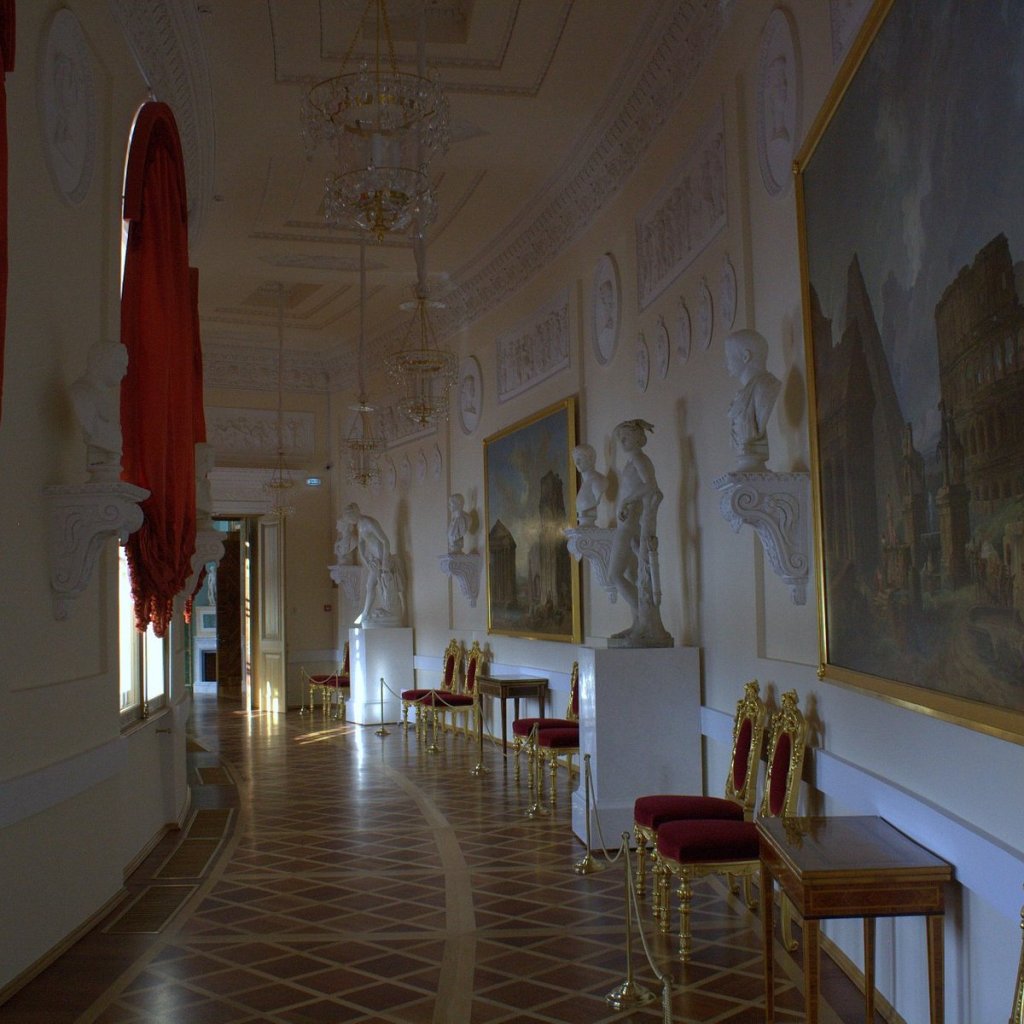
I awaken the powers of darkness which dwell within you by the power of the blood of the three headed Dragon Zohak that you may serve to empower my great work! Through serving the greater cause of dark magik which break the shackles that bind the Blackened Fire of Spirit, may you be uplifted and liberated! Awaken and empower the forbidden rites of Angra Mainyu! Awaken to empower my great work of counter creation as an Apostle of the Lord of Darkness eternal and as a warrior of the Path of Smoke! Through the gateway of blood, smoke, and Blackened Fire receive life from the deepest depths of Arezura, in the name of Zohak, and by the power of Angra mainyu it is done! Hear Me:–Ieou: Pur: Iou: Iaot: Iaeo: Ioou: Abrasar: Sabriam: Do: Uu: Adonaie: Ede: Edu: Angelos ton Theon: Aniaia Lai: Gaia: Ape: Diathanna Thrown. I am He! the Bornless Spirit! having sight in the feet: Strong, and the Immortal Fire! I am He! the Truth! I am He! Who hate that evil should be wrought in the World! I am He, that lighteneth and thundereth. I am He, from Whom is the Shower of the Life of Earth: I am He, Whose mouth ever flameth: I am He, the begetter and Manifester unto the Light: I am He; the Grace of the World: “The Heart of Girt with a Serpent” is My Name! Come Thou forth, and follow Me: and make all Spirits subject unto Me so that every Spirit of the Firmament, and of the Ether: upon the Earth and under the Earth: on dry Land, or in the Water: of whirling Air or of rushing Fire: and every Spell and Scourge of God, may be obedient unto me! Iao: Saboo: Such are the Words! This is the special secret of this Seal. This is also the special secret of this Throne. Carrying this Seal with you will cause you to be very agreeable and much beloved, and will also defeat your enemies. #RandolphHarris 13 of 13
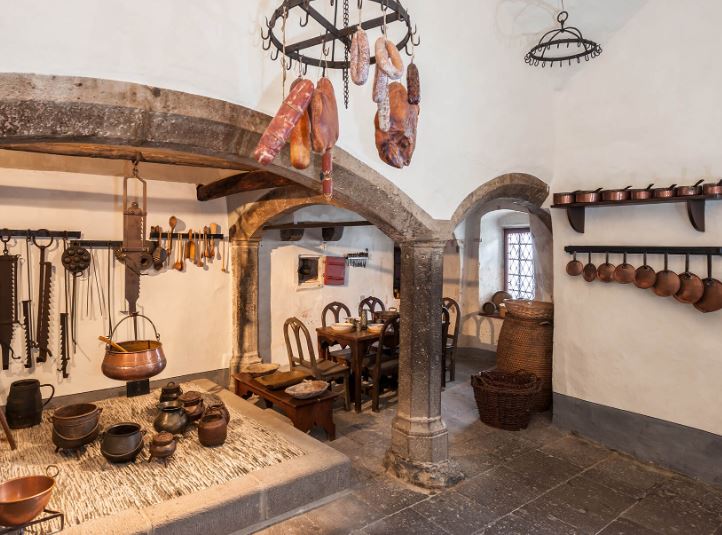
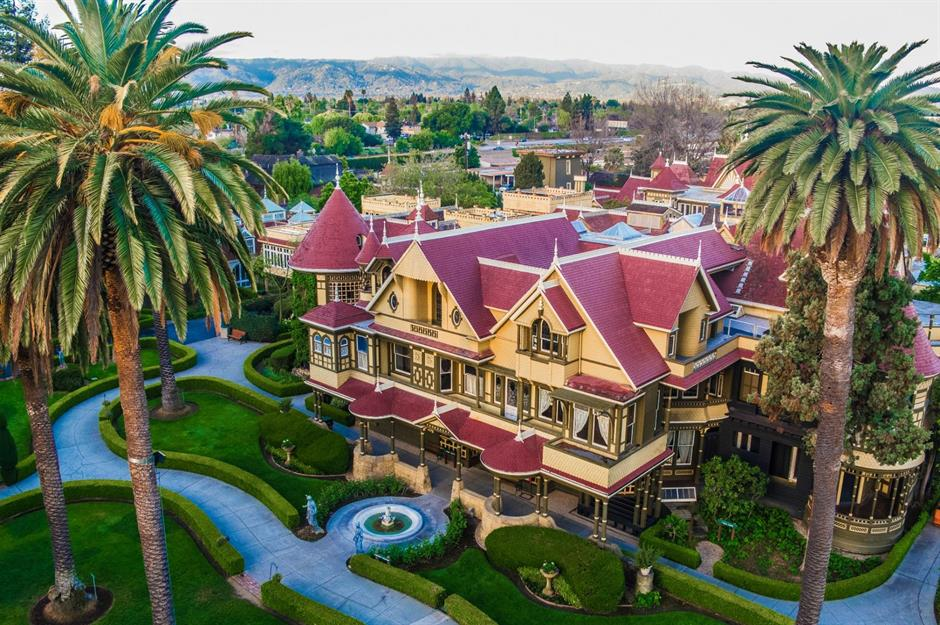
The castle is the ancestral seat of the former royal German dynasty known as the House of Winchester. The beautiful, Neo-Gothic/Victorian castle, now known as the Winchester Mystery House, sees hundreds of thousands of tourists a year. It once contained a sizeable art collection, a treasure trove of jewels that were stolen from the safe, along with a conjurer’s heart. But despite its magnificent features and Medieval history, the Winchester Mystery House has not been formally lived in for centuries.
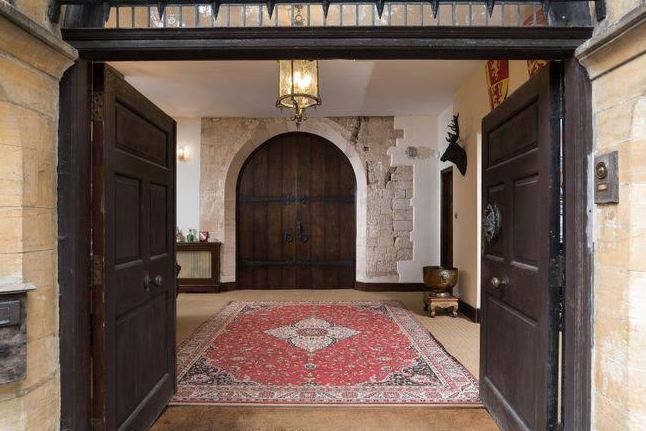
As political power shifted, and taxes became law in 1909, the spirits decided they would discontinue construction, and shortly after called Mrs. Winchester home. The architecture of the Winchester Mansion and its gardens are the main attractions, and some come for the food, and/or to purchase items from the gift shop. https://winchestermysteryhouse.com/
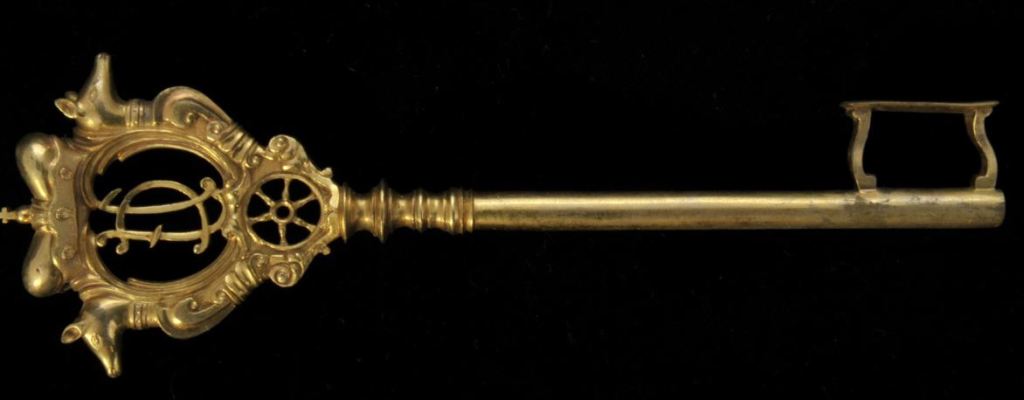

It Was Worse than the Thing that Crept into the Shadows
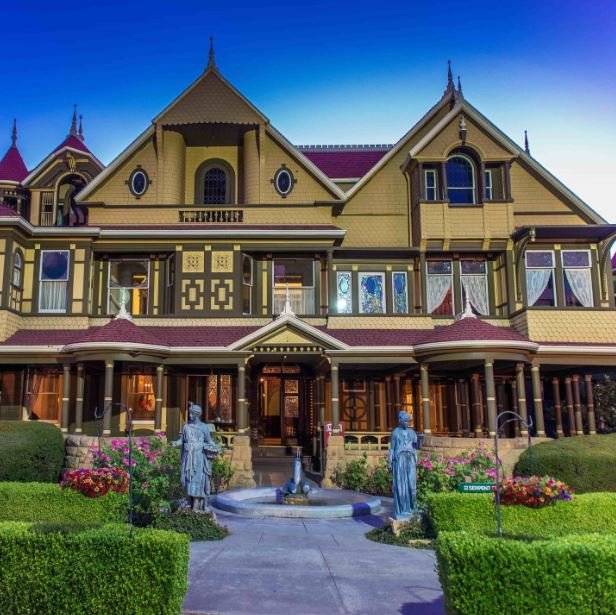
Love, peace, comfort, measureless contentment—that was life on the Winchester Estate in 1888. It was a joy to be alive. Pain there was none, nor infirmity, nor any physical signs to mark the flight of time; disease, care, sorrow—one might feel these outside the pale, but not on Mrs. Winchester’s Estate. There they had no place, there they never came. All days were alike, and all a dream of delight. The big country mansion was so large it could shelter an army. Guests lounging around the house for the big Christmas party. The laughter and music was only broken by the whisper of the wind in the cedar branches, and the scraping of their harsh fingers against the window panes. It had pricked us to such luxurious confidence in our surroundings of bright chintz and candle-flame and fire-light, that we had dared to talk of ghost—in which, we all said, we did not believe one bit. We had told the story of the phantom coach and the wedding that had taken place at the Winchester mansion, and the horrible strange bed, and the farmer’s wife, and the Victorian cottage on the estate. We none of us believed in ghosts, but my heart, at least, seemed to leap to my throat and choke me there, when a tap came to Mrs. Winchester’s door…a tap faint, not to be mistaken. Almost at once, Mrs. Winchester’s housekeeper Miss Eden opened the door and said, “Come in,” but she stood there. She was, at all normal hours, the most silent women I have ever known. She stood and looked at us, and shivered a little. So did we—for in those days corridors were not warmed by hot-water pipes, and the air from the door was keen. “I saw your light,” she said at last, “and I thought it was late for you to be up—after all this gaiety. I thought perhaps—” her glance turned towards the door of the dressing-room. #RandolphHarris 1 of 17

“No,” I said, “Mrs. Winchester is fast asleep.” I should have added a goodnight, but the youngest of us forestalled my speech. She did not know Mrs. Winchester as we others did; did not know how her persistent silence built a wall round her—a wall that no one dared to break down with the commonplaces of talk, or the littlenesses of mere human relationship. Mrs. Winchester was the heiress of the Winchester Repeating Arms Company. In the morning, she came downs stairs in her unsuitably rich silk lace-trimmed dressing-gown falling back from her thin collarbones, and ran to the door and put an arm around her guest Miss McAnally. The vivid light of pleasure in Miss McAnally’s pale blue eyes went through Mrs. Winchester’s heart like a knife. If she wanted an arm there, it would have been so easy to put one around her neck. “Now,” Mrs. Winchester said, “you shall have the very biggest, nicest chair, and the coffee-pot is here on the hob as hot as hot and my other guest have been telling ghost stories all light. When you get warm you ought to tell one too.” “You’re sure I’m not in your way,” Miss McAnally said, stretching her hands to a blaze. “Not a bit”—Mrs. Winchester said. Mrs. Winchester put her fleecy Maderia shawl round her shoulders. She could not think of anything else to do for her, and she found herself wishing desperately to do something. The smiles Miss. McAnally gave were very quite pretty. People can smile prettily at forty or fifty, or even later, though most young women do not realize this. “As I said before,” Mrs. Winchester confessed, “Everyone has been telling ghost stories all night. I retired early for bed. All of the ghost stories are so beautifully rounded off—a murder committed on the spot—or a hidden treasure, or a warning…I think that makes them harder to believe. The most horrid ghost-story I ever heard was one that was quite silly.” #RandolphHarris 2 of 14

“Tell it,” Miss McAnally begged. “I cannot—it does not sound anything to tell,” replied Mrs. Winchester. “The only thing that I ever knew of was—was hearsay,” Mrs. Winchester said, slowly, “till just the end. I daresay it would bore you, but it cannot do any hard. You all do not believe in ghosts, and it was not exactly a ghost either.” There was a breathing time of hush and expectancy. The fire crackled and the gas suddenly flared higher because the billiard lights had been put out. We heard the steps and voices of the men going along the corridors. “It is really hardly worth telling,” Mrs. Winchester said doubtfully, shading her faded face from the fire with her thin hand. Everyone said, “Go on—oh, go on—do!” ‘Well,” she said, “twenty years ago—and more than that—I had two friends, and I loved them more than anything in the World. And they married each other. After they were married, I did not see much of them for a year or two; and then he wrote me and asked me to come and stay, because his wife was ill, and I should cheer her up, and cheer him up as well; for it was a gloomy house, and he himself was growing gloomy too.” I knew as she spoke that she had every line of that letter by heart. “Well, I went. The address was in Oakland, near Berkeley; in those says there were streets and streets of new villa-houses growing up round old brick mansions standing in their own grounds, with red walls round, you know, and a sort of flavour of coaching days, and post chaises, and Blackheath highwaymen about them. He had said the house was gloomy, and it was called ‘The Haunted House,’ and I imagined my carriage going through a dark, winding shrubbery, and drawing up in from of one of these sedate, old, square houses. Instead, we drew up in front of a large, smart villa, with iron railings, gay encaustic tiles leading from the iron gate to the stained-glass-panelled door, and for shrubbery only a few stunted cypresses and aucubas in the tiny front garden. But inside it was all warm and welcoming. He met me at the door. #RandolphHarris 3 of 14
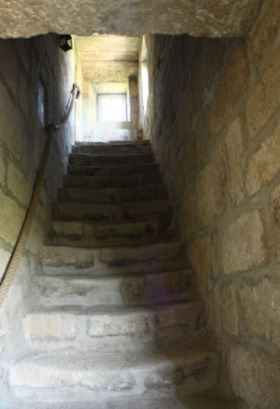
“He met me at the door,” she said again, “and thanked me for coming, and asked me to forgive the past. They were very glad to see me, and I was very glad to be there. Margaret was not exactly ill, only weak and excitable. I thought he seemed more ill than she did. She went to bed early and before she went, she asked me to keep him company through his last pipe, so we went into the dining-room and sat in the two armchairs on each side of the fireplace. They were covered with green leather I remember. There were bronze groups of horses and a black marble clock on the mantlepiece—all wedding-presents. He poured out some whisky for himself, but he hardly touched it. He sat looking into the fire. At last I said: What’s wrong? Margaret looks as well as you could expect.” “Yes,” he said, “but I don’t know from one day to another that she won’t begin to notice something wrong. That’s why I wanted you to come. You were always so sensible and strong-minded, and Margaret’s like a little bird on a flower.” Mrs. Winchester said, “Yes, of course,” and waited for him to go on. Presently he said: “Sarah, this is a very peculiar house. It is new: that’s just it. We’re the first people who’ve ever lived in it. If it were an old house, Sarah, I should think it was haunted.” Mrs. Winchester asked, “Have you ever seen anything?” “No,” he said. “That is just it. I have not heard nor seen anything, but there’s a sort of feeling: I can’t describe it—I’ve seen nothing and I’ve heard nothing, but I’ve been so near to seeing and hearing, just near, that’s all. And something follows me about—only when I turned round, there’s never anything, only my shadow. And I always feel that I shall see the thing next minute—but I never do—not quite—it’s always just not visible.” #RandolphHarris 4 of 14

Mrs. Winchester had been working very hard—and tried to cheer him up by making light of all this. “It is just nerves,” she said. He replied, “Mrs. Winchester, I thought you could help me, and I do not think I wronged anyone for them to lay a curse on me. I don’t believe in cruses. The only person I could have wronged forgave me freely.” Mrs. Winchester came up with a suggestion, “I think you ought to take Margaret away from the house and have a complete change.” But he said, “No; Margaret has got everything in order, and I could never manage to get her away just now without explaining everything—and, above and beyond all that, she mustn’t guess there’s anything wrong. I daresay I shan’t feel quite such a lunatic now you’re here.” So they said goodnight.” Whenever Mrs. Winchester was alone with him, he used to tell her the same thing over and over again, and at first when he began to notice things, he tried to think tht it was his talk that had upset her nerves. The odd thing was that it was not only at night—but in broad daylight—and particularly on the stairs and passages. On the staircase the feeling used to be so awful that Mrs. Winchester had to bite her lips till they bled to keep herself from running upstairs at full speed. Only she knew if she would not go mad at the top. There was always something behind her—exactly as he said—something that one could just not see. And a sound that one could just not heat. There was a long corridor at the top of the house. Mrs. Winchester sometimes almost saw something—you know how one see things without looking—but if she turned around, it seemed as if the thing drooped and melted into her shadow. There was a little window at the end of the corridor. #RandolphHarris 5 of 14
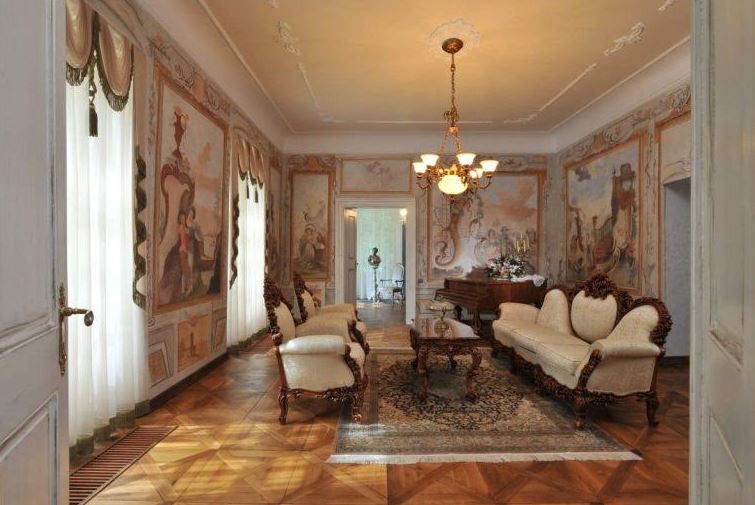
Downstairs there was another corridor, something like it, with a cupboard at one end and the kitchen at the other. One night Mrs. Winchester went down into the kitchen to heat some milk for Margaret. The servants had gone to bed. As she stood by the fire, waiting for the milk to boil, she glanced through the open door and along the passage. Mrs. Winchester never could keep her eyes on what she was doing in that house. The cupboard door was partly open; they used to keep empty boxes and things in it. And as she looked, she knew that now it was not going to be “almost” anymore. Yet she said, “Margaret” not because she thought it could be Margaret who was crouching down there, half in and half out of the cupboard. The thing was great at first, and then it was black. And when Mrs. Winchester whispered, “Margaret,” it seemed to sink down till it lay like a pool of ink on the floor, and then its edges drew in, and it seemed to flow, like ink when you tilt up the paper you have split it on; and it flowed into the cupboard till it was all gathered into the shadow there. Mrs. Winchester saw it go quite plainly. The gas was full on in the kitchen. She screamed aloud, but then, she was thankful to say, she had enough sense to upset the boiling milk, so that when he came downs three steps at a time, Mrs. Winchester had the excuse for her scream of a scalded hand. The explanation satisfied Margaret, but the next night he said: “Why didn’t you tell me? It was that cupboard. All the horror of the house comes out of that. Tell me—have you seen anything yet? Or is it only the nearly seeing and nearly hearing still?” Mrs. Winchester said, “You must tell me first what you have seen.” He told her, and his eyes wandered, as he spoke, to the shadows by the curtains, and Mrs. Winchester turned up all three gas lights, and lit the candles on the mantelpiece. #RandolphHarris 6 of 14

Then they looked at each other and said they were both mad, and thanked God that Margaret at least was sane. For what he had seen was what Mrs. Winchester had seen. After that she hated to be alone with a shadow, because at any moment she might see something that would crouch, and sink, and lie like a black pool, and then slowly draw itself into the shadow that was nearest. Often that shadow was her own. The thing came first at night, but afterwards there was no hour safe from it. She saw it at dawn and at noon, in the fireplace, and always it crouched and sank, and was a pool that flowed into some shadow and became part of it. And always she saw it with a straining of the eyes—a pricking and aching. It seemed as though she could only just see it, as if her sight, to see it, had to be strained to the uttermost. And still the sound was in the house—the sound that she could just not hear. At last, one morning early, Mrs. Winchester did hear it. It was close behind her, and it was only a sign. It was worse than the thing that crept into the shadows. She did not know how she bore it. If she had not been so fond of her friends, she could not have tolerated it. However, she knew in her heart that, if he had no one to whom he could speak openly, he would go mad, or tell Margaret. His was not a very strong character; very sweet, and kind, and gentle, but not strong. He was always easily led. So Mrs. Winchester stayed on and bore up, and they were very cheerful, and made little jokes, and tried to be amusing when Margaret was with them. However, when they were alone, they did not try to be amusing. And sometimes a day or two would go by without their seeing or hearing anything. #RandolphHarris 7 of 14
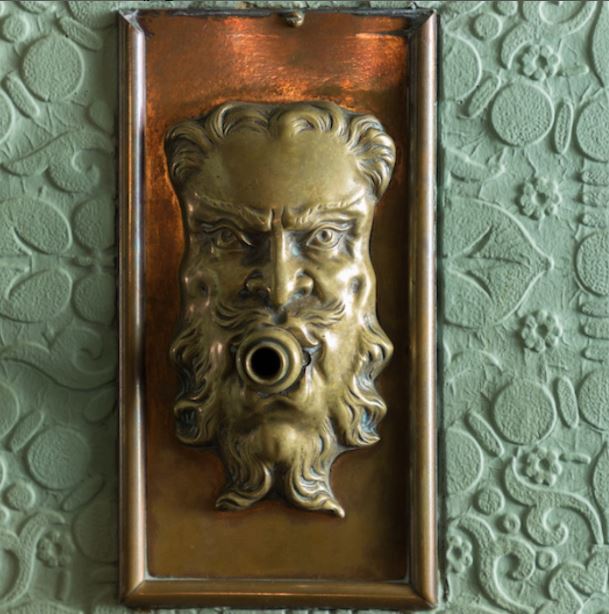
They perhaps should have fancied that they had fancied what they had seen and heard—only there was always the feeling of their being something about that house, that one could just not hear and not see. Sometimes they used to try not to talk about it, but generally they talked of nothing else at all. And the weeks went by, and Margaret’s baby was born. The nurse and the doctor said that both mother and child were doing well. He and Mrs. Winchester sat late in the dining-room that night. They had neither seen nor heard anything for three days; their anxiety about Margaret was lessened. They talked of the future—it seemed then so much brighter than the past. They arranged that, the moment she was fit to be moved, he should take her away to the sea, and Mrs. Winchester should superintend the moving of their furniture into the new house he had already chosen. He was gayer than Mrs. Winchester had seen him since his marriage—almost like his old self. When she said goodnight to him, he said a lot of things about her having been a comfort to them both. She had not done anything much, of course, but still she was glad he said them. Then Mrs. Winchester went upstairs, almost for the first time without that feeling of something following her. She listened at Margaret’s door. Everything was quiet. Mrs. Winchester went on toward her own room, and in an instant, she felt that there was something behind her. She turned. It was crouching there; it sank, and the black fluidness of it seemed to be sucked under the door of Margaret’s room. She went back. She opened the door a listening inch. All was still. And then she heard a sigh close behind her. Mrs. Winchester opened the door and went in. The nurse and the baby were asleep. #RandolphHarris 8 of 14
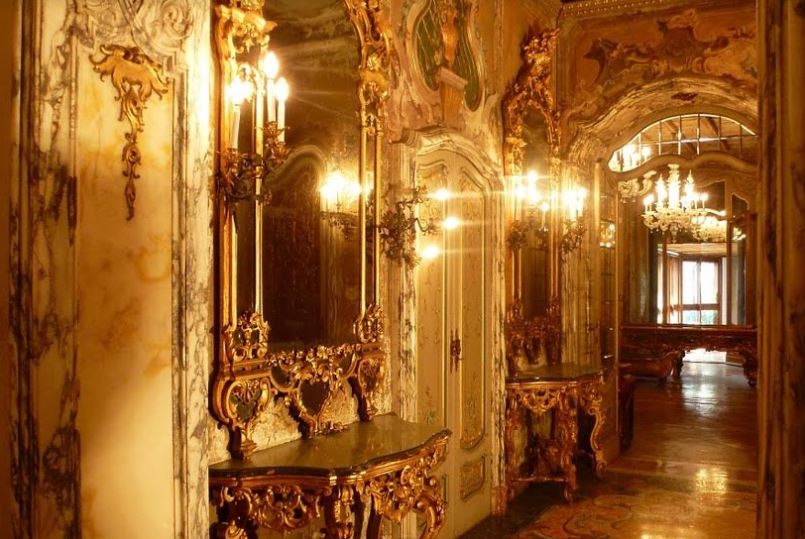
Margaret was asleep too—she looked so pretty—like a tired child—the baby was cuddled up into one of her arms with its tiny heard against her side. Mrs. Winchester prayed then that Margaret might never know the terrors that they are hidden from her. That those little ears might never hear any but pretty sounds, those clear eyes never see any but pretty sights. She did not dare to pray for a long time after that. Because her prayer was answered. She never saw, never heard anything more in this World. And now Mrs. Winchester could do nothing for him or her. When they had put her in her coffin, Mrs. Winchester lighted wax candles round her, and laid the horrible white flowers that people will send near her, and then she saw he had followed her. She took his hand to lead him away. At the door they both turned. It seemed to them that they heard a sign. He would have sprung to her side in glad hope. However, at that instant they both saw it. Between them and the coffin, first grey, then black, it crouched an instant, then sank and liquified—and was gathered together and drawn till it ran into the nearest shadow. And the nearest shadow was the shadow of Margaret’s coffin. Mrs. Winchester left the next day. His mother came. She never liked Mrs. Winchester. The something black that crouched then between him and Mrs. Winchester was only his second wife crying beside the coffin. Mrs. Winchester never told anyone the story because it seemed senseless. After hearing the story, Miss McAnally stood at her gaunt height, her hands clenched, eyes straining. She was looking at something that no one could see, and she knew what the man in the Bible meant when he said: “The hair of my flesh stood up.” What they saw seemed not quite to reach the height of the dressing-room door handle. Her eyes followed it down, down—widening and widening. Mrs. Winchester’s eyes followed them—all the nerves of them seemed strained to the uttermost—and she almost saw it—or did she quite see? She could not be certain. However, they all heard the long-drawn, quivering sign. And to each of them it seemed to be breathed just behind them. #RandolphHarris 9 of 14
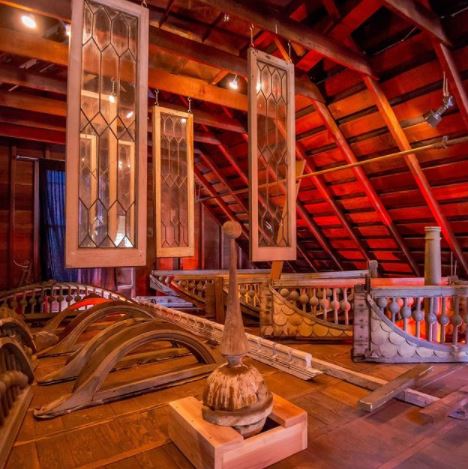
It was Mrs. Winchester who caught up the candle—it dripped all over her trembling hand—and was dragged by Miss McAnally to the girl who had fainted during the second extra. However, it was a servant girl whose lean arms were round the housekeeper when they turned away, and that have been around her many a time since, in the Winchester mansion where she keeps house. The doctor who came in the morning said that Margaret’s daughter had died of heart disease—which she had inherited from her mother. But Mrs. Winchester wondered had she had not inherited something else from her father? It was the daughter’s ghost that had followed Mrs. Winchester into her own mansion and now haunts it. The invoking or summoning of spirits by means of hymns, prayers, and acts of worship in spiritistic séances, finds a counterpart in demon possession. Often the demon speaking through its victim in the demonized state will demand the burning of incense as well as worship service. In return it often promises alleviation from torment and powers of physical healing or clairvoyant and prognostic gifs assuring financial income and material prosperity to the enslaved person. Paganism is replete with fear of demons who must be appeased by worshipping and servile obedience. Those who accept magical powers of healing and clairvoyance at the hand of demonic powers may escape the grosser torments of vile spirits only to fall under more terrible bondage and become Satan’s tool to enslave others. In 1892, people in Santa Clara Valley gossiped about Mrs. Winchester. They told stories of how she was involved in the diabolic rites of Freemasonry, arguing that she and the Freemasons were in reality devout Satanists, carrying out blasphemous and hideous rituals beneath the sinister clock of secrecy. #RandolphHarris 10 of 14
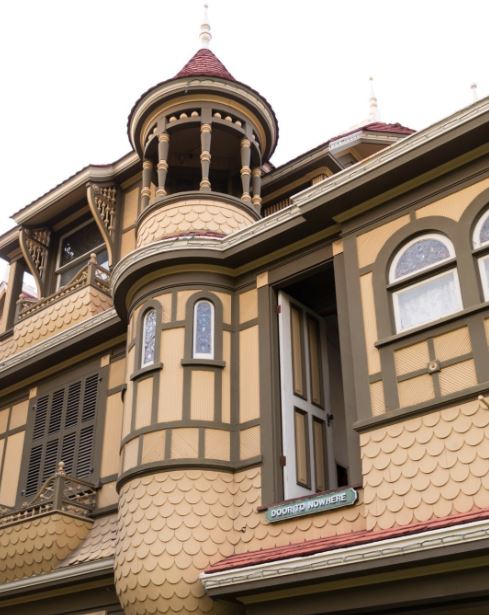
The headquarters of the movement, under the leadership Sarah Winchester, Albert Pike, Gallatin Mackey, and others, located in Santa Clara, California at the Winchester mansion, with celebrants of their Black Masses spread all over the World. Their rites supposedly involved séances. Some went as far to say that the Winchester mansion had an infernal telephone hooked up to Hell, through which the leaders spoke to Lucifer. The stories recounted by the villagers were backed up by Thomas Vaughan, an alchemist. However, if that were true, it would mean the Winchester mansion, Mrs. Winchester, and William Winchester are far older than we believe them to be. The town spread rumors that Black Masses were taking place at the Winchester Mansion under the guise of Freemasonry. It was said that the Winchester mansion was a life and magical order. The emphasis on the former, of living according to one’s real nature. Freemasonry is a nonsectarian fraternity claiming to teach a system of morality veiled in the allegory and symbols passed down from the caste of stonemasons who built the original Temple of Solomon. It allegedly binds its members by an oath of secrecy that imposes death on the betrayer, uses secret passwords and signs, and performs rituals purporting to relate to the history of its origins. It organization is hierophantic, the members receiving the “secrets” of the order, and they pass through the higher degrees. Its antiquity can be documented no further back than the latter part of the seventeenth century. The movement really seems to have gotten its start with the establishment of the Grand Lodge in England, in 1717. From there, it spread to France and Germany, and it did not take long for serious-minded students of the occult, attracted by its ritualistic and secretive trappings, to find their way into its ranks. #RandolphHarris 11 of 14
It was also said that Mrs. Winchester was an alchemist and a mystic, and she created her own brand of Victorian Masonry, and taught others how to make gold, heal the sick, and raise the dead. These secret rights had been handed down to her by the Knights of Templar. She was under the tutelage of “Unknown Superiors,” a race of godlike spiritual guides. Many of the people in the town gossiped about Mrs. Winchester so viciously, not only because of her wealth and the mansion larger than anyone had ever seen, but also because of suspicions that her estate was a cover for political conspiracy. The Devil, being a rebel against Heaven, has always been portrayed by the powers-that-be as the chief insurrectionist against the existing political and religious order. The enemy cannot be God, for God is on the side of the ruler. Therefore, the enemy of the ruler must be Satan. It is true that the Winchester mansion is supranational in outlook. There was a secret society that met there dedicated to the scientific and political enlightenment of mankind. To achieve this goal, the group intended secretly to work toward the abolition of all monarchies and the establishment of a One-World government, to be run by those few presently Enlightened, or Illuminati. Since professing such republican ideas could be dangerous, the group was wrapped in a cloak of occultism. Mrs. Winchester adopted the grades of Freemasonry and promised initiates that the magical secrets of the Universe could be revealed to them only when they reached the upper levels. Many believed that William Winchester and Annie Winchester had not died, but gone underground and survived in a network of secret societies, two of which were the Freemasons and the Illuminati, to escape the Assassins. The Assassins were a political group who carried out assassinations while crazed on hashish. #RandolphHarris 12 of 14

Legend has it that Mrs. Winchester was not only running from the souls of those killed by the Winchester rifle, but to also escape the Assassins. Not only spiritual, but Masonic teachings exerted an influence over the construction of the Winchester mansion. Certain mystical thinkers and practitioners of ceremonial magic believed that Mrs. Winchester practiced a complex system of magic that was a synthesis of Eastern and Western mystical traditions. There is a secret cave inside the Winchester mansion that can be entered only by stooping, but inside a room nearly seven feet high about twelve feet square presents itself. On each side of the entrance a Latin cross is deeply carved in the rock, while within, at the further side, and opposite the door, a block of stone four feet high was left for an altar. Above it, a shrine is hollowed out of the stone wall, and over the cavity is another cross. It is said to be the cave of a saint. Some say it is Saint Michael himself, but no one can be quite certain. And there is a big head inside that craved in the shape of the Devil’s face that the saint put there. For Mrs. Winchester, there were two types of magic. What she called evocation and invocation. Evocation was a calling forth, while invocation was a calling in. In such rituals, the magician summoned the demon or deity while standing within the protection of a magical circle drawn on the floor, the object of the sorcerer being to control and direct the entity to do one’s bidding. She sought to achieve total identification with the godhead, to invoke the god so that it actually took possession of her consciousness. The resulting state experienced by the magician was a type of samadhi, or temporary loss of ego. Mrs. Winchester’s estate possesses the KEY which opens up all Masonic and Hermetic secrets of Freemasonry and all systems of religion. #RandolphHarris 13 of 14
It did not take long for rumors to begin to circulate around the town of nightly procession of hooded, candle-bearing figures around the grounds of the Winchester mansion. The reason Mrs. Winchester and the husband of her friend kept seeing demons is because allegedly someone did a ritual on her estate—one of the greatest magical feats ever—the attempt to bring the “Whore of Babalon” down from the Astral Plane and incarnate it in the womb of a living women. Upon hearing of the ritual, someone wrote to the Luciferian Light Group, “Apparently Mrs. Winchester or one of her friends is producing a Moonchild. I am pledged that the work of the Beast 666 shall be fulfilled, and the way for the coming of BABALON be made open and I shall not cease until these things are accomplished.” Mrs. Winchester did not know, but after she left her friend’s house, he managed to blow himself to smithereens while conducting a strange chemical experiment in his basement workshop. Hours later, the scientist’s mother, who lived on the estate, committed suicide with an overdose of sleeping tablets and the baby died from dehydration and starvation, but the baby who is supposed to be the Whore of Babalon still haunts the Winchester till this very day. No matter what people say or believe about Mrs. Winchester, she and her architecture were able to break through the walls of stagnation and bring before the World its first vision of the new Aeon. Once, a tourguide reported while closing the house, he felt something following him, he was alone. He went out onto the fourth floor balcony and prayed into the Heavens one night, “O Thou wicked and disobedient spirit Vinea, because thou hast rebelled, and has not obeyed nor regarded my words which I have rehearsed; I curse thee into the depth of the Bottomless Abyss, there to remain unto the Day of Doom in chains, and in fire and brimstone unquenchable, unless thou forthwith appear here before this Circle, in this triangle to my will.” And he saw Lucifer as a star fall from Heaven, and from Him came to the tour guide light of true salvation. And he was made whole by His infernal wisdom. “My chains lifted off, I was made free,” he said. At night when some drive by, they claim to hear the Devil’s orchestra at that famous time 1.13am. #RandolphHarris 14 of 14
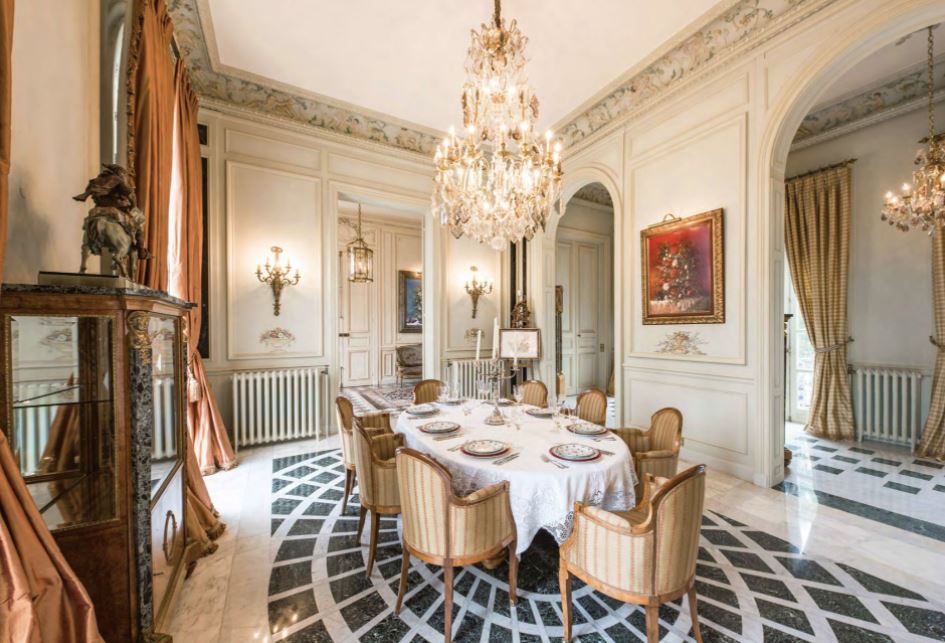
Winchester Mystery House
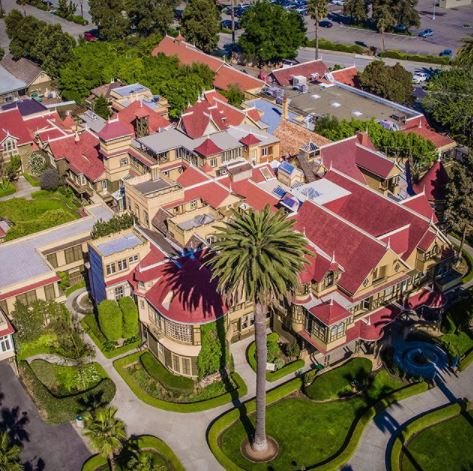
Happy Saturday from The Winchester Mystery House ☀️ What are your weekend plans? Hopefully they include walking around these beautiful gardens 😉 https://www.winchestermysteryhouse.com/


What a Lovely Day for a Bit of Mystery!

It is rare for people to be asked the question which puts them squarely in front of themselves. I hear your words, My dear Devout; now you hear Mine. You will find them not only suasive, but also persuasive. In fact, they exceed in wisdom all the accumulated knowledge of Philosophy since the World began. My particular words for you today are “spirit and life.” My Beloved Disciple recorded them in his Gospel (6.63), but Humanity cannot seem to make any sense out of them. Important words, they should not be exegeted smugly, if I may allude to that hoary Preacher of Ecclesiastes (9.17), but listened to respectfully. That is to say, they should be received with all humility and yet great affection. Our seventeenth-century ancestors differed from us in most ways, but in nothing did they differ more than in their attitude toward the truth. In this they were closer to the Middle Ages than to us. For them a lie—a breaking of one’s faith—was the worst of sins. Today, many do not regard lying as a serious moral wrong. If the word “morality” is mentioned we think immediately of our bodily appetites, especially of pleasures of the flesh, barbiturates, paraphernalia, liquor and contraband. If the word “morality” is mentioned we think immediately of our bodily appetites very seriously—perhaps too seriously—but we do not regard lying as a mortal sin. We are one of the few civilizations in which entire professions (TV news media, for example, and public relations) are seriously devoted to bending the truth. Dante, in his Divine Comedy, divided sins into three kinds: those of lust, those of violence, and those of fraud. #RandolphHarris 1 of 13

The sins of lust—those we tend to take most seriously—were those that Dante thought most trivial; the sins of fraud—which we take lightly—were for Dante the worst of all. To create a “credibility gap” as our revealing phrase has it (as though the only relevant issue is whether a statement will compel belief), to lie, was for the medieval humans to break one’s faith, and it was faith which constituted the bonds between humans and their fellow humans, between humans and the state, between humans and God. To lie was to reduce all the most valuable relationships of life to chaos. And the seventeenth-century Puritan, like Dante, was still living by his faith. Just how important the truth was to the seventeenth-century Puritan may be gathered from the fact that all of the innocent persons who were executed—and the majority of those executed were innocent—could have saved themselves by lying. After the first execution—that of Bridget Bishop—took place in June it became obvious to everyone that persons who confessed, like Tituba and Dorcas Good, were not being brought to trial. Thus any suspected person might have one’s life by confessing. Twenty people died, nineteen of them hanged and one pressed for refusing to plead. Bridget Bishop, Mammy Redd, and George Burroughs were three of these. One cannot be at all certain of the guilt or innocence of several more. However, at least a dozen now seem to be clearly innocent. Twelve people, and probably more, chose to die rather than belie themselves. It is impressive evidence of the Puritan’s attachment to the truth. #RandolphHarris 2 of 13

Yet it was not really so simple as that, because the truth was not easy to find in Salem in 1692. The greatest difficulty was created by the genuineness of the afflicted persons’ fits. Their sufferings were so convincing that they often shook the confidence of the accused. One example is William Hobbes, who began by stoutly denying that he had anything to do with the afflicted girls’ convulsions. When he looked at them they fell down in fits, and Hathorne accused him of overlooking them (id est, of he evil eye), yet still he denied it. Abigail Williams cried out that she saw his specter going to hunt Mercy Lewis “and immediately said Mercy fell into a fit and diverse others.” “Can you now deny it?” said Hathorne. “I can deny it to my dying day,” said William Hobbes. However, he did not. Here, after all, were people in hideous convulsions, and saying that his specter was the cause. How could this be? Hathorne suggested that the Devil might be able to use Hobbes’ specter because of Hobbes’ sins; he had not observed either public or private worship. Might not the Devil have taken advantage of that? Hobbes “was silent a considerable space—then said yes.” The girls’ fits shook not only Hobbes’ confidence in himself, but also his confidence in his daughter Abigail, the wild young girl who had boasted that she had sold herself “body and soul to the Old Boy.” Hathorne wanted to know whether Hobbes had not known for a long time that his daughter was a witch. “No, sir,” was the reply. “Do you think she is a witch now?” asked Hathorne. And all that Hobbes could say was, “I do no know.” #RandolphHarris 3 of 13

Abigail Faulkner’s experience was similar. At her first examination, on August 11, she firmly denied that she had anything to do with the girls’ afflictions. When she looked at them they fell down in fits, and Hathorne asked her, “Do you not see?” Yes, she saw. However, she had nothing to do with it. Yet she would not doubt that the girls were suffering, and saw no reason to doubt their word that it was her specter afflicting them. Therefore the Devil must be appearing in her form: “It is the Devil does it in my shape.” However, by August 30 she was no longer so sure of her innocence. It was true, she said, that she had been angry at what people said when her cousin, Elizabeth Johnson, had been arrested. She had felt malice toward the afflicted persons then because they were the cause of her cousin’s arrest. She has wished them ill, and “her spirit being raised she did pinch her hands together.” Perhaps the Devil had taken advantage of that to pinch the girls, thus exploiting her malice. Even those whose confidence was not shaken bore testimony to the impressiveness of the fits. Mary Easty knew that has had not bewitched the girls, and she was confident as well of the innocence of her sisters, Rebecca Nurse and Sarah Cloyse. Yet she had to grant that there was something preternatural in the girls’ behaviour. “It is an evil spirit,” she said, “but whether it be witchcraft I do not know.” Even George Burroughs, who had been audacious enough to boast of occult powers, found himself stunned by the girls’ behaviour. “Being asked what he thought of these things he answered it was an amazing and humbling Providence, but he understood nothing of it.” #RandolphHarris 4 of 13

Indeed, these courtroom fits were so convincing that most of the indictments were for witchcraft committed during the preliminary examination rather than for the offenses named in the original complain. The typical order of events in the Salem witchcraft cases was: the swearing out of a complaint for acts of witchcraft; a preliminary examination during which the afflicted persons had convulsive fits; an indictment for acts of witchcraft performed during the preliminary examination; and the trial. The direct cause of these fits, in the courtroom or out of it, was, of course, not witchcraft itself, but the afflicted person’s fear of witchcraft. If fits were occasioned by fear of someone like Bridget Bishop, who was actually practicing witchcraft, they might also be occasioned by fear of someone who was only suspected of practicing it. We are what we always were in Salem, but now the little crazy children are jangling the keys of the kingdom, and common vengeance writes the law! The Winchester Estate had belonged to the family ever since the reign of George Washington, and there was a curious old wing and a cloistered quadrangle still remaining of the original edifice, and in excellent preservation. The rooms at the end of the house were ornate, and somewhat darksome and gloomy, it is true; but, though rarely used they were perfectly habitable, and were of service on great occasions when the Winchester was crowded with guests. The central portion of the Winchester had been rebuilt in the reign James K. Polk, and was of noble and palatial proportions. The southern wing, and a long music-room with thirteen tall narrow daisy-stained glass windows added on to it, were as modern as the time. Altogether, the Winchester was a very splendid mansion with 160 rooms, 2,000 doors, 10,000 windows, 47 stairways, 47 fireplaces, 13 bathrooms, 6 kitchens, and even once had a nine-story tower. It was one of the chief glories of our country. All the land in the Winchester estate, and for a long way beyond its boundaries, belonged to the Winchester family. #RandolphHarris 5 of 13

The Winchester estate grounds actually expanded all the way down to Steven’s Creek Boulevard. The community church was once within the park walls. The former estate was actually much larger than it is today, it was composed of 500 to 600 rooms at one time, but the 1906 Earthquake brought down the nine-story tower and much of the fourth floor with it. The death of William Wirt Winchester left his son, William Wirt Winchester II, unprovided for, and he was fain to go out into the bleak unknown World, and earn his living in a position of dependence—a dreadful thing for a Winchester to be obliged to do. Out of respect for the traditions and prejudices of his race, he made it his business to seek employment abroad, where the degradation of one solitary Winchester was not so likely to inflict shame upon the ancient house to which he belonged. Happily for himself, he had been carefully educated, and had industriously cultivated the usual modern accomplishments in the calm retirement of the University of Cambridge. He was so fortunate as to obtain a situation at Vienna, in a German family of high rank; and remained there for seven years, laying aside year by year a considerable portion of his liberal salary. When his pupils had grown up, his kind mistress procured for him a still more profitable position at St. Petersburg, where he remained for five more years, at the end of which time he yielded to a yearning that had been long growing upon him—an ardent desire to see his dear old country home once more. He loved the soil from which he had sprung. In all of her letter for some time past, his mother, Mrs. Winchester begged that whenever he felt himself justified in coming home, he would pay a long visit to the Winchester Estate. #RandolphHarris 6 of 13

“I wish you could come home at Christmas,” she wrote, in the autumn of the year of which I am speaking. “We shall be very gay, and I expect all kinds of pleasant people at the Winchester. When he arrived there, the Old Winchester was in its glory, at about nine o’clock on a clear starlit night. A light frost whitened the broad sweeping lawns, 12,000 boxwood hedges that were winding through the garden, and the other 1,500 plants, trees and shrubs. From the music room at the end of the southern wing, to the heavily framed gothic windows of the old rooms on the north, there shone one blaze of light. The scene was reminiscent of some unusual place in a German legend; and young William half expected to see the lights fade out all in a moment, and long shingled façade wrapped in sudden darkness. The old butler, whom he remembered from his very infancy, and who did not seem to have grown a day older during his twelve years’ exile, came out of the dining-room as the footman opened the hall-door for him, and gave him a cordial welcome, nay insisted upon helping to bring in his portmanteau with his own hands, an act of unusual condescension, the full force of which was felt by his subordinates. “It is a real treat to see your pleasant face once more, William,” said this faithful retainer, as he assisted William to take off his travelling-cloak. “You have not aged a day since you used to live at the Winchester twelve year ago, and you are looking uncommon well; and, Lord love your heart, sir, how pleased they all will be to see you!” They arrived at last at a very comfortable room—a square tapes-tried chamber, with high ceiling support by a great mahogany beam. The room looked cheery enough, with a bright fire roaring in the wide chimney; but it had a somewhat ancient aspect, which the superstitiously inclined might have associated with possible ghosts. “We are in the East Wing, are we not?” young William asked. “This room seems quite strange to me. if I have ever been here before, I doubt it.” #RandolphHarris 7 of 13

“Very likely not, sir. Yes, this is the old East Wing that your mother once had boarded up. Your window looks out into the old stable-yard, where the kennel used to be in the time of your grandfather, when the Winchester was even a finer place than it is now. We are so full of company this winter, you see, sir, that we are obliged to make use of all these rooms. You will have no need to feel lonesome. There is Captain and Mrs. Foster in the next room to this, and the two Miss Griffins in the blue room opposite.” (Some believe that reopening the East Wing is what upset the spirits and caused the 1906 Earthquake.) Young William admired the perfect comfort of his chamber. Every modern appliance had been added to the ornate and ponderous furniture of an age gone by, and the combination produced a very pleasant effect. As he awoke in the morning and opened the door, Mrs. Winchester sailed in, looking radiant in a dark-green velvet dress richly trimmed with old point lace. Above her beauty, she had a charm of expression which was to most more rare and delightful than her beauty of feature and complexion. She put her arms around her son, and hugged him. “I have only this moment been told of your arrival, my dear William,” she said; “you look just like your father. My dear child, I have been looking forward so anxiously to your coming, and I should not have liked to see you for the first time before all those people. Welcome home. Remember, William, this house is always to be your home, whenever you have need of one.” William, being a hunting man. Had, indeed, a secret horror of the sport; for more than one scion of the house had perished untimely in the hunting-field. #RandolphHarris 8 of 13

The family had not been altogether a lucky one, in spite of its wealth and prosperity. It was not often that goodly heritage had descended to the Winchesters or their only son, William. Death in some form or other—on too many occasions a violent death—had come between the heir and his inheritance. And when one pondered on the dark pages in the story of the house, many wonder if Mrs. Winchester was ever troubled by morbid forebodings about her only and fondly loved son. Was there a ghost at the Winchester—that spectral visitant without which the state and plendour of a grand old house seem scarcely complete? Yes, many have heard vague hints of some shadowy presence that had been seen on rare occasions within the precincts of the Winchester mansion. Those whom were questioned were prompt to assure investigators that they had seen nothing. They had heard stories of the past—foolish legends, most likely, not worth listening to. On the property, there was once a stable-yard, a spacious quadrangle, surrounded by the closed doors of stable and dog-kennels: low massive buildings of grey stones, with the ivy creeping over them here and there, and with an ancient moss-grown look, that gave them a weird kind of interest. This range of stabling must have been disguised for a long time. The stables that were more recently used were a pile of handsome red-brick buildings at the other extremity of the house, to the rear of the music room, and forming a striking feature in the back view of the Winchester. According to legend, some believed that spectral entities, had been haunting the Winchester estate for centuries. Several large black dogs, with eyes large as saucers, or something flaming, appear and disappear, often without a trace. In many of the legends, the dogs are malevolent: assaulting guests, frightening livestock to death, attacking other dogs, and heralding death or disaster. Perhaps that is why the heirs of Winchester who have come to an untimely end have all died tragically. Oliver Winchester was killed in a dual. William Winchester I was murdered; and William Winchester II broke his back on his return home to the Winchester Estate. #RandolphHarris 9 of 13

The butler concealed the death of William Winchester II from Sarah, telling her simply that he was called away and said he would never return. Her heart was so broken that she wrote him out of existence, as if her had never been born. After the heartbreaking news that her only son has abandoned her, Mrs. Winchester was sitting in her blue séance room; half meditating, half dozing, mixing broken snatches of thought with brief glimpses of dreaming, when she was startled into wakefulness by a sound that was strange to her. It was a huntsman’s horn—a few low plaintive noes on a huntsman’s horn—notes which had a strange far-away sound, that was more unearthly than anything her ears ever heard. She thought of the music in Der Freischutz; but the weirdest snatch of melody Weber ever wrote had not so ghastly a sound as these few simple noes conveyed to her ear. She stood transfixed, listening to that awful music. It had grown dusk, her fire was almost out, and the room in shadow. As she listened, a light suddenly flashed on the wall before her. The light was as unearthly as the sound—a light that never shone from Earth or Sky. She ran to the window; for his ghastly shimmer flashed through the window upon the opposite wall. The great gates of the stable-yard were open, and men in scarlet coats were riding in, a pack of hounds crowding in before them, obedient to the huntsman’s whip. The whole scene was gleams of a lantern carried by one of the men. It was this lantern which had shone upon the tapestried wall. She saw the stable doors opened one after another; gentlemen and grooms alighting from their horses; the dogs driven into their kennel; the helpers hurrying to and fro; and that strange wan lantern-light glimmering hither and tither was the gathering dusk. #RandolphHarris 10 of 13

However, there was no sound of horse’s hoof or of human voices—not one yelp or cry from the vicious looking hounds with flaming eyes. Since those faint far-away sounds of the horn had died out in the distance, the ghastly silence had been unbroken. As Mrs. Winchester stood at her window quite calmly and watched while the group of men and animals in the yard below noiselessly dispersed. There was nothing supernatural in the manner of their disappearance. The figures did not vanish nor melt into empty air. One by one she saw the horses led into their separate quarters; one by one the redcoats strolled out of the gates, and the grooms departed, some one way, some another. The scene, but for its noiselessness, was natural enough; and had she been a stranger in her own home, she might have fancied that those figures were real—those stables in full occupation. However, she knew that stable-yard and all its range of building to have been disused for more than half a century. Could she believe that, without an hour’s warning, the long-deserted quadrangle could be filled—the empty stalls tenanted? Had some hunting-party from the neighbourhood sought shelter there, glad to escape the pitiless rain? That was impossible, she thought. And yet the noiselessness, the awful sound of that horn—the strange unearthly gleam of that lantern! A cold sweat broke out on her forehead, and she trembled in every limb. Mrs. Winchester was pale as a ghost and trembling. Mrs. Winchester had kept the secret. That evening, the butler came to her. “Mrs. Winchester, there is no use in trying to hide it from you any longer. Your son was killed in the hunting-field, brought home dead one December night, an hour after his father and the rest of the party had come home to the Winchester. He was found by a labouring-man, poor lad, lying in a ditch with his back broken, and his horse beside him staked.” #RandolphHarris 11 of 13

Shortly after Mr. Winchester Sr. never rode to hounds again, though he was passionately fond of hunting. Dogs and horses were sold, and the north quadrangle had been empty from that day. Some evil have come upon the Winchester mansion, it was not in human power to prevent its coming. Some had beheld the shadows of the dead. Sudden terror overcomes some visitors, even to this day. There are reports of an ominous danger, as people’s hearts grow cold while on tour. Staff have been startled by seeing a man, with is hat in his hand not in evening costume; a man with a pale anxious-looking face, peering cautiously into the room. Their first thought is of evil; but in the next moment than man disappears, and they see no more of him. Sometimes when flowers are placed in the house, people see the drooping moments later and lights dying out one by one in the brass sconces against the walls. It is no wonder Mrs. Winchester shut herself from the outer World, burying herself almost as completely as a hermit in its cell. While great wealth brings some people joy, there is some times a hefty fee. Be careful what you wish for, you never know who or what you might invite in your doors. I invoke and move thee, O thou Spirit Gusion and being exalted above ye in the power of the Most High, I say unto thee, Obey! in the name Beralensis, Baldachinesis, Paumachia, and Apologiae Sedes: and of the mighty ones who govern, spirits, Liachidae and ministers of the House of Death: and by the Chief Prince of the seat of Apologia in the Ninth Legion, I do invoke thee and by invoking conjure thee. And being exalted above ye in the power of the Most High, I say unto thee, Obey! in the name of him who spake and it was, to whom all creatures and things obey. #RandolphHarris 12 of 13

Moreover I, whom God made in the likeness of God, who is the creator according to his living breath, stir thee up in the name which is the voice of wonder of the mighty God, El, strong and unspeakable, O thou Spirit Gusion. And I say to thee obey, in the name of him who spake and it was; and in every one ye, O ye names of God! Moreover in the names Adonai, El, Elohim, Elohi, Ehyeh Asher Ehyeh, Zabaoth, Elion, Iah, Tetragrammaton, Shaddai, Lord God Most High, I stir thee up; and in our strength I say Obey! O Spirit Gusion. Appear unto His servants in a moment; before the circle in the likeness of man; and visit me in peace. And in the ineffable name Tetragrammaton Iehovah, I say, Obey! whose mighty sound being exalted in power the pillars are divided, the winds of the firmament groan aloud; the sire burns not; the Earth moves in Earthquakes; and all things of the house of Heaven and Earth and the dwelling-place of darkness are as Earthquakes, and are in torment, and are confounded in thunder. Come forth, O Spirit Gusion, in a moment: let thy dwelling-place be empty, apply unto us the secrets of Truth and obey my power. Come forth, visit us in peace, appear unto my eyes; be friendly: Obey the living breath! For I stir thee up in the name of God of Truth who liveth for ever, Helioren. Obey the living breath, therefore continually unto the end as my thoughts appear to my eyes: therefore be friendly: speaking the secrets of Truth in voice and in understanding. Let it be so, Truefold, whatever ill news has come to us we will hear it together. He put is arm round his wife’s waist. Both were pale as marble, both stood in stony stillness waiting for the bow that was to fall upon them. It is said that perhaps you will see a glimpse of Mrs. Winchester and Mr. Winchester, Sr., while on tour, if you repeat the invocation thirteen times before your visit. Life is broken for her, there hah passed a glory from Earth, and that upon all pleasures and joys of this World she looks with the solemn calm of one for whom all things are dark with the shadow of a great sorrow. #RandolphHarris 13 of 13

Winchester Mystery House

A 160-room mansion built to appease the spirits who died at the hands of the Winchester Rifle 👻
We’re one week away from Friday the 13th! Missed out on tickets for Flashlight Tours? Don’t worry, we have ghoulishly fun plans All Hallows’ Eve 👻🎃🍿🏠
All Hallows’ Eve:
👉 link in bio. 🗝 winchestermysteryhouse.com


A Thousand things May Happen to Bring Your Marriage to Mr. Winchester to an End!

Until an hour before the Devil fell, God thought him beautiful in Heaven. He went wining through the darkness of the cosmos. He flew fast and hard, not stopping to fool around with the stars and planets scattered in his path like grains of diamond dust. He passed the Milk Way without even going in for a dip, passing it up for the sake of his mission. Satan had come to persuade poor creatures to give their souls to the Devil, but he will bewitch many people to death, and their faces will turn towards God as their blood cries for vengeance against him, begging to be clothed in white robes in Heaven when Satan is cast into Hell. The time of the old cults is returning. There are people who can repeat conversation to others and make them believe that they know it not from eavesdropping but from occult powers. Reverend George Burroughs, who had been minister of Salem Village from 1680 to 1682 bewitched many people to death, including his own first two wives. The fist he smothered and the second he strangled, and nobody seemed to notice that their specters differed about the means by which the supposed murders were done. Reverend Burroughs often would tell people, “My God makes known your thoughts unto me,” both he and his hearers understood his god to be the Devil; the Christian God does not deal in the occult, particularly at the level of family gossip, but the Devil does. When people are in the clutch of malignant demons, they are bound to die. Dr. Harold M. Johnson, a Hawaiian physician, reported both severe skin lesion and death among victims of Kahuna sorcerers. #RandolphHarris 1 of 14

However, he had succeeded in curing bewitched patients by giving them methylene blue tablets, which turned their urine blue and persuades them that a powerful countercharm has been worked on their behalf. Witchcraft deaths have been reported for a very long time, yet it is only recently that they have received serious medical attention. Most of the physical effects of witchcraft are attributable to hysteria, but not death. However, people do not die from hysteria, but death. Like the hysterical symptoms of bewitchment, begins with the victim’s fear of the witch’s power. Dr. Walter B. Cannon of Harvard Medical School published an article entitled “Voodoo Death,” in which he began by acknowledging that “the phenomenon is so extraordinary and so foreign to the experience of civilized people that it seems incredible.” In all cases, death comes inexorably and in a relatively short time. As one observer put it, “the victims die…as though their strength ran out as water.” The only know cure was a countercharm, and when this was successfully employed, recovery was so rapid and complete that Western observers found it remarkable. Dr. Cannon suggested that witchcraft death might well be a genuine phenomenon, and also put forward a hypothetical explanation. “It may be explained,” he thought, “as due to shocking emotional stress—to obvious or repressed terror.” It would occur, he felt, chiefly in primitive cultures, “among human beings to primitive, so superstitious, so ignorant that they are bewildered strangers in a hostile World. Instead of knowledge they have a fertile and unrestricted imagination which fills their environment with all manner of evil spirits capable of affecting their lives disastrously.” #RandolphHarris 2 of 14

It was believed that these humans may be dying of psychogenic deaths as were the victims of witchcraft. However, Dr. Cannon had suggested that fear might be the emotional cause, with consequent overstimulation of the sympathicoadrenal system, accelerated of the heartbeat, and death with the heart contracted in in systole. However, Dr. Curt P. Richter found that while acceleration of the heartbeat was the initial reaction, it was shortly followed by a steady, gradual decrease in rate, with the heart eventually stopping in diastole, like a run-down clock. This meant that the emotional cause of death was not fear but hopelessness, produced by one’s conviction that there was no possible means of escape, with consequent overstimulation of the parasympathetic rather than the sympathic-coadrenal system. However, when people are removed from fearful situation in hasty fashion, they know their situation is not hopeless. So, they will not die psychogenic deaths. If individuals about to die a psychogenic death were removed from the situation they recovered rapidly, like human victims who have been reprieved by a countercharm. In short, Dr. Richter found that the first response in such cases was fear but that the emotional cause of death was hopelessness that succeeded fear, and that death could be prevented either by restoring hope or by training the subject to be hopeful in a particular situation. Therefore, prayer may very well save countless lives by removing fear and giving people who. This is probably also why stress has been noted to kill people and cause disease, it stresses the body and causes it to attack itself. #RandolphHarris 3 of 14

Stress and fear may prolong and make medical conditions worse and could very well facilitate in killing a person if it is ongoing and not resolved, and a person cannot find help. Dr. R. S. Fisher, corner of the City of Baltimore, who had found that “a number of individuals die each year after taking small, definitely sublethal doses of poison, or after inflicting small, nonlethal wounds on themselves; apparently they die as a result of the belief in their doom.” Dr. Richter’s findings throw much new light on the history of Massachusetts witchcraft. They should enable us at long last to take as seriously as it deserves Cotton Mather’s detailed account of his treatment of the Goodwin girl. When he gave her religious sustenance by spelling the crucial words she was unable to hear spoken, he may have been saving his patient from much more than convulsive fits. By giving her continued hope he may literally have been keeping her alive. Dr. Richter’s findings also explain the frequent reports of death in both European and American witchcraft cases. There are about a dozen such reports in the documents of Salem witchcraft, but in most instances one cannot be at all certain of the actual cause of death. Even when death does appear to be psychogenic it is usually impossible to say whether the victim’s hopelessness was simply a result of private fears or whether those fears had their origin in a specific magical act. And if the testimony concerning Roger Toothaker and his daughter may be taken at face value—and there is reason to believe it may—we have one case of murder by witchcraft—one case in which occult means were used to take a human life away. #RandolphHarris 4 of 14

Some people have become blasé to strange manifestations. When you consort with the occult, out-of-body experiences are like your daily bread and butter. We have special preparation for those who want their loved one’s memories restored. However, many do not use it, because they often find their beloved more charming without memories, and therefore without a clue as to what to scold about, at least for a while. Though Mrs. Sarah Winchester had a comfortable home, a home of a god as vast and resounding as the sea, and loving hearts around her, she wore a grave, melancholy look on her face. A disappointment! Yes, the old story of a lost love and new born baby is the reason for Mrs. Winchester’s looks. She had good offers often; but since she lost the love of her heart, she had never indulged in the happy dream of loving and being loved. The grave look, which was habitual with her, was a rare thing in her young and happy days, and passed over her face sometimes when she thought no one was looking. Before his death, Mr. Winchester had been persuaded to sit for his portrait. It was a fair likeness, but a very modern work of art. The background was so very dark, and Mr. Winchester’s naval costume was so deep in colour, that the face came out too white and staring. It was a three-quarter picture; but only one hand showed in it, gripping indisputably one of the most spectacular and historic of all Winchesters, number 14327. As George said, he looked much more like the commander of a Venetian galley than a modern mate. However, the picture pleased Mrs. Winchester. So the picture was duly framed—in a tremendously heavy frame, of Mr. Winchester’s ordering—and hung up in the dining-room. Mr. Winchester’s Father, Oliver, was a gunmaker, politician, clothing maker, and sailor by profession. He sailed the great and mysterious sea, and had been especially known as a good Arctic sailor, having share more than one expedition in search of the North Pole and the North-West Passage. #RandolphHarris 5 of 14

It was no surprise when William Winchester wanted to go out for a voyage in search of his cousin Robert and his missing expedition. And now the time for William’s departure was growing nearer. The USS Jeannette was nearly ready to sail, and her crew only waited orders. The officers grew acquainted with each other before sailing, which was an advantage. Mr. Winchester took up very warmly with the commander, George W. De Long, and, with permission, brough him to dinner once or twice. Poor chap, he had no friends nearer than New York, and it is precious lonely work. So George came to dinner at the Winchester Estate in New Haven, Connecticut. However, Mrs. Winchester was not favourably impressed by him, and almost wished she had no consented to his invite. He was a tall, pale, fair young man, with a hard New York face and a cold, grey eye. There was something in his expression, too, that was unpleasant—something cruel or crafty, or both. It was in very bad taste for him to pay such marked attention to Mrs. Winchester, coming, as he did, as a friend of her husband. George kept by her constantly and anticipated Mr. Winchester in all the little attentions which a husband delights to pay. Mr. Winchester was a little put out about it, though he said nothing, attributing his friend’s offence to lack of breeding. Mrs. Winchester did not like it at all. She knew that she was not to have Mr. Winchester with her much longer, and she was anxious to have him to herself as much as possible. But as George was her husband’s friend, she bore the infliction with the best possible patience. The commander did not seem to perceive in the least that he was interfering where he had no business. He was quite self-possessed and happy, with one exception. #RandolphHarris 6 of 14

The portrait of Mr. Winchester seemed to annoy George. He had uttered a little impatient exclamation when he first saw it which drew Mrs. Winchester’s attention to hi; and she noticed that he tried to avoid looking at it. At last, when dinner came, he was told to sit exactly facing the picture. He hesitated for an instant and then sat down, but almost immediately rose again. “It’s very childish and that sort of thing,” he stammered, “but I cannot sit opposite that picture. I know nothing about art, but it is one of those unpleasant pictures whose eyes follow you about the room. I have inherited horror of such pictures. My mother married against her father’s will, and when I was born she was so ill she was hardly expected to live. When she was sufficiently recovered to speak without delirious rambling she implored them to remove a picture of my grandfather that hung in the room, and which she vowed made threatening faces at her. It’s superstitious, but constitutional—I have a horror of such paintings!” I believe Mr. Winchester thought this a ruse of his friend’s to get a seat next to Mrs. Winchester; but it sure was not, for that was a real alarmed expression of his face. Before the ship departed, George has started visiting the Winchester’s more and more each day. He even went as far as to tell Mrs. Winchester that he loved her. He told her that a man could no more help falling in love than he could help taking a fever. Mrs. Winchester stood upon her dignity and rebuked him as if he was Satan; but he told her he could see no harm in telling her of his passion, though he knew it was a hopeless one. “A thousand things may happen,” he said at last, “to bring your marriage to Mr. Winchester to an end. Then perhaps you will not forget that another love you!” The butler was very angry, and was forthwith going to give him his opinion on his conduct, when Mrs. Winchester told him he was gone, that she had bade him go and had forbidden him the house. She had only told the butler in order to protect herself, for she did not intend to say anything to Mr. Winchester, for fear it should lead to a duel or some other violence. #RandolphHarris 7 of 14

That was the last Mrs. Winchester saw of George De Long before the Jeannette expedition. Mr. Winchester came the same evening, and was home until daybreak, when he had to tear himself away and join his ship. After shaking hugging Mrs. Winchester at the door, in the cold, grey, drizzly dawn, Mrs. Winchester went inside and started sobbing on the sofa. She could not help starting when she looked at Mr. Winchester’s portrait. The strange light of daybreak could hardly account for the extraordinary pallor of the face. The picture was covered with moisture, and he looked so pale. The Jeannette sailed. Mrs. Winchester received two letters from Mr. Winchester, which he had taken the opportunity of sending by homeward-bound whalers. In the second he said it was hardly likely he should have an opportunity of sending another, as they were sailing into high latitudes—into the solitary sea, to which none but expedition ships ever penetrated. They were all in high spirits, he said, for they had encountered very little ice and hoped to find clear water further north than usual. Moreover, he added, George had held a sinecure so far, for there had not been a single case of illness on board. Then came a long silence, and a year crept away very slowly for poor Mrs. Winchester. Once she heard of the expedition from the papers. They were reported as pushing on and progressing favourably by a wandering tribe of Esquimaux with whom the captain of a Russian vessel fell in. They had laid the ship up for the winter, and were taking the boats on sledges, and believed they had met with traces of the lost crews that seemed to show they were on the right track. The winter passed again, and spring came. It was a balmy, bright spring such as they got occasionally, even in the changeable and uncertain climate of theirs. #RandolphHarris 8 of 14

One evening Mrs. Winchester was sitting in the dining-room with the window open, for, although she had long given up fires, the room was so oppressively warm that she was glad of the breath of the cool evening breeze. Mrs. Winchester was working. Though she never murmured, she was evidently pining at Mr. Winchester’s long absence. The butler was leaning out of the window, studying the evening effect on the fruit blossom, which was wonderfully early and plentiful, the season was so mild. Mrs. Winchester was sitting at the table, near the lamp, reading the paper. Suddenly there swept into the room a chill. It was not a gust of cold wind, for the curtain by the window did not swerve in the least. However, the deathly cold pervaded the room—came, and was gone in an instant. Mrs. Winchester shuddered with an intense icy feeling. She looked up, “How curiously cold it has got all in a minute,” she said. “We are having a taste of poor William’s Polar weather,” she said with a smile. At that moment, she instinctively glanced towards his portrait. When she saw struck her dumb. A rush of blood, at fever heart, dispelled the numbing influence of the chill breath that she seemed to freeze her. The lamp was lighted; but it was only that she might read with comfort, for the violet twilight was still so full of sunset that the room was not dark. However, as she looked at the picture, she saw it had undergone a strange change. She saw it as plainly as possible. It was no delusion, coined for the eye by the brain. In the place of Mr. Winchester’s head, a grinning skull! She started at it hard; but it was no tick of fancy. She could see the hollow orbits, the gleaming teeth, the fleshless cheekbones—it was the head of death! Without saying a word, she rose from her chair and walked straight up to the painting. As she drew nearer a sort of mist seemed to pass before it; and as she stood close to it, she saw only the face of Mr. Winchester. The spectral skull had vanished. #RandolphHarris 9 of 14

“Poor William!” she said unconsciously. The butler Robert looked up. The tone of her voice had alarmed him, the expression on her face did not reassure him. “What do you mean? Have you heard anything, Mrs. Winchester? She came over to him, laying her hands on his arm, and looked into his face sadly. “No, my dear; how should I hear? Only I could not help thinking of the privation and discomfort he must have gone through. I was remaindered of it by the cold. “Cold!” said Robert, who had left the window by this time. “Cold! what on Earth are you talking about? Cold, such an evening as this! You must have had a touch of ague, I should think.” Mrs. Winchester felt it bitterly cold for a minute or two. “Did you not feel it, Robert?” “Not for a bit; and I was three parts out of the window I ought to have felt it if anyone did.” It was curious, but that strange chill ad been felt only in the room. It was not the night wind, but some supernatural breath connected with the dread apparition she has seen. It was, indeed, the chill of polar winter—the icy shadow of the frozen North. It was a hot evening and Mrs. Winchester seemed to have caught a violent cold, for she was shivering very much. Mrs. Winchester, felling unwell, had gone to bed. The next day Mrs. Winchester was well again, and did not mentioned the events of the preceding night. However, from that day on she was ever inwardly dreading the arrival of bad news. And at last, it came as expected. The newspaper said there had been a “Fatal Accident to one of the Officers of the USS Jeannette.” It stated that news had been received at Admiralty stating that the expedition had failed to find the missing crew, but had come upon some traces of them. Want of stores and necessaries had compelled them to turn back without following those traces up; but the commander was anxious, as soon as the ship could be refitted, to go out and take up the trail where he left it. #RandolphHarris 10 of 14

An unfortunate accident had deprived him of one of his most promising officers, Lieutenant Winchester, who was precipitated from an iceberg and killed while out shooting with the commander. He was beloved by all, and his death had flung a gloom over the gallant little troop of explorers. There stood Mrs. Winchester, with her face as pale as death, with her lips apart, and with a blind look about her eyes. The doctor was sent for, and restorative were promptly administered. Mrs. Winchester came to herself again, but lay dangerously ill for some weeks from the shock. It was about a month after she was well enough to come downstairs again. One afternoon shortly after, there came a loud knock at the front door. As Mrs. Winchester looked up at Mr. Winchester’s portrait, puzzling who could it be at the door, she would not figure out if she was dreaming or awake? One hand on the picture used to be resting on a shotgun, but now the forefinger was raised, as if in warning. She looked hard at the picture, to assure herself it was no fancy, and then she perceived, standing out bright and distinct on the pale face, two large drops, as if of blood. She walked up to it, expecting the appearance to vanish, as the skull had done. It did not vanish. It was surely blood. When the butler opened the door, George came in. He was greatly altered. He was thinner and paler than ever; hollow-eyed and hollow-cheeked. He had acquired a strange stoop, too, and his eyes had lost the crafty look for a look of terror, like that of a haunted beast. He kept glancing sideways every instant, as if unconsciously. It looked as if he heard someone behind him. Mrs. Winchester never had liked that man. She told him of course she was glad to see him back, but that she could not ask him to continue to visit her. #RandolphHarris 11 of 14

Mrs. Winchester was glad to hear the particulars of poor William’s death. He related with reluctance, how they had gone out to shoot a white bear which they had seen on an iceberg stranded along the shore. The top of the berg was ridged like the roof of a house, sloping down on one side to the edge of a tremendous overhanging precipice. They had scrambled along the ridge in order to get nearer the game when Mr. Winchester incautiously ventured on the sloping side. The surface was as smooth and slippery as glass with oil on it. He tried to turn back, but slipped and fell. And then began a horrible scene. But his fate was sealed; and he could only tell George to bring his last farewell to his wife! He clung to the edge of the precipice instinctively for one second, and was gone. However, there was something always at George’s side, which none could see, but which cast a shadow. As they were talking, Mr. Winchesters portrait had fallen, and the corner of the heavy frame had struck him on the head, cutting it open, and rendering him insensible. The staff had carried him upstairs, by the direction of the doctor. He was laid down in the guest room. George was delirious. The doctor said it was a queer case; for, though the blow was a sever one, it was hardly enough to account for the symptoms of brain-fever. When he learnt that George had just retuned in the Jeannette from the North, he said it was possible that the privation and hardship had told on his constitution and sown the seeds of the malady. They sent for a nurse, who was to sit up with him, by the doctor’s directions. In the middle of the night, Mrs. Winchester was roused by a loud scream. She slipped on her slippers and bed coat, and rushed out to find the nurse, who explained the mystery to her. #RandolphHarris 12 of 14

It appears that about midnight, George sat up in bed, and began to talk. And he said such terrible things that the nurse became alarmed. Nor was she much reassured when she became aware that the light of her single candle flung what seemed to be two shadows of the sick man on the wall. Terrified beyond measure, she saw George siting up in bed, gazing at the unseen figure to which the shadow belonged. Mrs. Winchester was now in the nurse’s company. In a voice that trembled with emotion, George begged the haunting spirit to leave him, and prayed for its forgiveness. “You know the crime was no premeditated. It was a sudden temptation of the devil that make me shoot you twice. It was the devil tempting me with the recollection of her exquisite face—of the tender love that might have been mine, but for you. Bu she will not listen to me. See, she turned away from me, as if she knew I was your murderer, William Winchester!” Mrs. Winchester was horrified to hear this awful confession. However, George had risen in his delirious terror, opened the window, and leaped out. Two days later his body was found in the river. In 1884, Mrs. Winchester left New Haven, Connecticut, and the graves of her husband and only child, moved to San Jose, California, and began the obsession that was to las for the rest of her life. She purchased an eighteen-room farmhouse outside the small agricultural town, and for the next 38 years, the sound of construction on Mrs. Winchester’s house never stopped. Mrs. Winchester hired carpenters to work around the clock building and rebuilding room after room, as the spirits—or her mood—directed. #RandolphHarris 13 of 14

Some say the construction had actually started much earlier and went on for centuries, in fact. It is the cobwebs that finally tip some off; and the ancient dust on the cobwebs. Stretched out in this mansion is an entity—it is impossible to tell at a glance whether it is a man or a god, or perhaps something else. The entity seems to be of the masculine persuasion, is of medium height and has medium brown hair flecked with gray. The being sometimes sits on the couch in the parlor, opens his eyes, blinks rapidly several times, then vanishes. The Winchester house was furnished with the finest materials and was a showcase of Victorian elegance and taste. The homes of the gods are bigger, more beautiful, more awe-inspiring. However, no one can say with this is so, since any god can build a house of any size and get any interior decorator one wants. Some says the real architect was William Writ Winchester, reaching out from beyond the grave and building a wedding present for his wife. It just seems to be a quality of the major gods to have an air that is godlier than the less godly air of the minor gods. The house represents the spirit of something entirely new, a new principle, a new life, a new set of values. It gave Mrs. Winchester a feeling of gratitude for the unbending nature of things, which does not demand that we obsess constantly over what is to happen next, but merely put one foot in front of the other until something numinous takes place. Asperges me, Domine, hyssopo, et mundabor: Lavabis me, et super nivem dealbabor. Atte ye induynge of ye holy vestures. In the mystery of these vestures of the Holy Ones, I gird up my power in the girdles of righteousness and truth in the power of the Most High: Ancor: Amacor: Amides: Theodonias: Anitor: let be mighty power my power: let it endure for ever: in the power of Adonai, to whom the praise and the glory shall be; whose end cannot be. #RandolphHarris 14 of 14

Winchester Mystery House

Winchester Mystery House presents 30 Nights of All Hallows’ Eve – our all new Halloween event for Fall 2021! Tickets for All Hallows’ Eve offer multiple estate wide activities including the Lost in the House Tour – a paranormal investigation adventure and the family-friendly Jack O’ Lantern Trail. All Hallows’ Eve offers something for everyone on select nights starting September 10th.

👻 Frightening Lost in the House Tour
🎃 Family Friendly Lighted Displays on the Jack O’ Lantern Trail
🍿 Fall themed food & drinks
🏠 Lost in the House Projection Show using the front of the mansion as a canvas!
and more! https://www.instagram.com/p/CR6y_fFN78M/
For more information and for tickets:
A 160-room mansion built to appease the spirits who died at the hands of the Winchester Rifle 👻
🗝 winchestermysteryhouse.com
 Randolph Harris II International Institute